Monthly
Pacific Islands Monthly
Registered at G.P.0., Sydney, for transmission by post as a newspaper.
February, 1969
News Magazine Of The South Pacific
• AUSTRALIA, 40c. • NEW ZEALAND, 45c. • U.S. PACIFIC TERRITORIES, 70c. • FRENCH PACIFIC ISLANDS, 55 FRCS. CFP. • P.N.G., FIJI AND ALL OTHER
Pacific Territories, 35C. Local Currency.
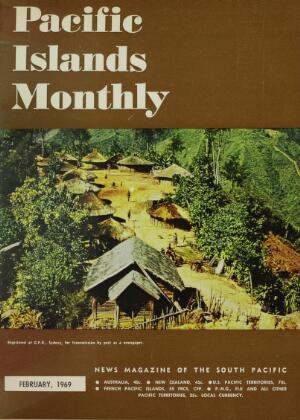
Our Cover
The Third South Pacific Games, to be held in Port Moresby in August, is expected to attract thousands of overseas visitors —especially as the spectacular Mount Hagen Show is to be held the same month. This is the kind of mountain village visitors will find fascinating. It's Watabung, near Kainantu.
Advertisements & other items, p. 2 (1 item)
Most people
fly TAA
»/ V»> m >■»
—they've got the best connections
in the Territory and Australia!
New improved TAA services. From Port Moresby to and from all main centres and through the Highlands a greater spread of services with better connections throughout the Territory. From Port Moresby, to and from Australia, fly TAA’s ‘Bird of Paradise’ T-Jet service. Contact your Travel Agent or TAA: Port Moresby 2101. Lae 2311. Madang 2478. Rabaul 2567, Goroka 8. Mt. Hagen 4. Wewak 103.
Fly TAA the Friendly Way
TAA
m
In This Issue
American Samoa
ea voyage to Pago 55 ootball competition 75
:Ook Islands
litch in jetport plans 29
Iji
he weather 5 ’-Da/ ’ 25 lew portfolios 30 ootball trials and tribulations 69 estaurateur arrives 76 lew command for Don Wendt ... 103 rayfishing in Fiji? ... 105 Hung Feng" freed from reef 105 langanese, logging developments ... 123
Rench Polynesia
ew Governor soon 35
Ilbert And Ellice Islands
ouse of Representatives meeting ... 32 ir services doubled from Fiji 32 msion between islands 33 ie causeway controversy 36 ip through the outer atolls 45 arawa's top hotel ... 53 Jucation crisis 57 lerchant scheme "too expensive" ... 101 ew deal for phosphate workers ... 107
Lord Howe Island
What's killing the cows? 34
Nauru
First year of independence ... 4, 128 New phosphate head 35 "Eigamoiya" arrives 109
New Caledonia
New swimming champion 28 Car safari 34 Attempt to free "Matipo" 107 Cyclone hits Noumea 157
New Hebrides
Bigger and better Advisory Council .. 35 Litter on beaches 115
Norfolk Island
Frantic Phil the DJ 37
Papua-New Guinea
Games progress 27 Leo Morgan on Bougainville 30 How mixed up can you get? 34 Lessons from a high school 38 Plain speaking from MHA's 40 Japanese honour their dead 85 Danish Royal blood? 93
Hubert Murray biography 97 Wilkinson's Misima yarns 91 Kuwait fishing scheme 110 Carpenter's tea to the US 123 Aid for NG timber 123 New rice price tipped 123 Competition for pyrethrum 124 Copra market report 125 Fish poachers: tougher treatment ... 125 Death of Norman Whiteley 128 Bougainville copper announcement by June? 157
Solomon Islands
Vouza's visit 5 Tourist promotion programme 58 Spirited Legco meeting 64 Rice manager in Sydney 116 Big timber operations 121 Problem for rice exports 124
Tonga
Vavau airstrip—a costly mistake 28 Protest against banana bonus 36 Peace Corps dismissals 73 New scheme for "Niuvaki" 105 Cigarette factory opened 123 Still hopeful about oil 125 Fish poachers: tough treatment 125 Death of H. W. A. Riechelmann 129
Us Trust Territory
Ponape's "Tungaru" goes south 103
Western Samoa
Potlatch, teacher crises 28 Sea voyage to Pago 55 More Peace Corpsmen 7]
DEPARTMENTS: Up Front with the Editor, 3; Letters, 5; Tropicalities, 36; To the Point with Percy Chatterton, 38; Travel, 41; Magazine Section, 85; Yesterday, 95; Book Reviews, 97; Shipping, 101; Cruising Yachts, 111; islands Press, 115; People, 116; Commerce, 121; Produce Prices, 127; Deaths of Islands People, 128; Shipping, Airways Schedules, 131; Practical Planter, 141; Index to Advertisers, 160.
Advertisements & other items, p. 4 (1 item)
Burns Phiip
THROUGHOUT THE PACIFIC
FIJI, SAMOA,TONGA,NIUE Is,NORFOLK Is.
[SOUTH SEA) COm^^H
**. \«i>
REGISTERED OFFICE: SUVA, FIJI.
TELEPHONE NO: 22661
TELEX NO: FJ1127
Code Address: "BURNSOUTH'
SHIPPING AGENCIES
The New Zealand Shipping Co. Ltd.
Shaw Savill & Albion Co. Ltd.
Port Line Ltd.
Bank Line Ltd.
General Steamship Corporation Ltd.
Blue Star Line Compagnie des Messageries Maritimes Royal Interocean Lines Daiwa Navigation Company Ltd Sitmar Line Flotta Lauro (Lauro Lines) Australasia Pty. Ltd, Tonga Shipping Agency.
EXCLUSIVE
DISTRIBUTORSHIPS
INCLUDE
Akai Taperecorders Dunlop Products Hitachi Electronics Holden Motor Vehicles Rolex Watches Revlon Cosmetics Pentax Cameras Ferguson Tractors Olympic Tyres Penfold Wines
AGENTS FOR:
Queensland Insurance Co. Ltd.
Burns Philp Trustee Co. Ltd.
Shell Company (P. 1.) Ltd.
Bureau Veritas
ASSOCIATED COMPANIES
Burns Philp {New Hebrides) Ltd.
Automotive Supplies Co. Ltd.
Corrie & Co. Ltd.
Wrought Iron and Steel Construction Co. Ltd.
Bish Ltd.
SPECIALISED SERVICES
Expert advice on Shipping; Forwarding; Customs formalities; Insurance.
COMPLETE TRAVEL
SERVICE
accredited agents for the
INTERNATIONAL AIR
TRANSPORT ASSOCIATION
OVERSEAS AGENTS: SYDNEY* LONDON*SAN FRANCISCO
Pacific Islands
Monthly
Established 1930: 39th Year of Publication.
Owned And Published By
Pacific Publications (Aust.) Pty. Ltd.,
29 Alberta St., Sydney, N.S.W.. 2000.
Postal Address: G.P.O. BOX 3408, SYDNEY,
N.S.W., 2001.
Telegraphic Address: PACPUB, Sydney.
Telephones: 61-9197, 61-7101, 61-4369.
Chief Executives: Managing Director: R. W. Robson.
Executive Director/Publisher: Judy Tudor.
Executive Director/Business Manager: Selwyn Hughes.
Executive Director/Chief Editor: Stuart Inder.
Pacific Islands Monthly
Editor: Stuart Inder.
Branch Offices
Melbourne; Newspaper House, 247 Collins St., Victoria, 3000. Tel.; 63-7053. : i|i: Pacific Publications (Fiji) Ltd., Fiji Times iuilding, 20 Gordon Street, Suva. Tel.: 25601.
Fiji Times Office, Vidilo Street, LAUTOKA.
Tel.: 60-422. *apua-New Guinea: Pacific Publications (N.G.) ’ty. Ltd. Representatives: PORT MORESBY, P.O lox 16; LAE, P.O. Box 227; RABAUL, Mr.
Steve Simpson, P.O. Box 154 (Tel.: 2547).
Representatives
lueensland: Advertising—Beale Media Services, 5 Wickham Terrace, Brisbane. Tel.: 2-3188. lew Zealand: General—J. D. Whitcombe, C.P.O ox 2229, Queen Street, Auckland. Tel.: 76056 idvertising.—John Bayldon, P.O. Box 366!
Auckland. Tel.: 31569. nited States: Mrs. A. L. Craib, 782 Neilson t., Berkeley, California, 94707, Tel.: 5273503. nited Kingdom; S. R. Warman, Park House 2 Park Street, Croydon, CR9 3NP. Tel : 01-6884177. . A. Mackenzie, 4A Bloomsbury Square London, W.C.I. Tel.: Holborn 3779.
Agents
All main trading firms and stores in the Pacific Islands. acific Publications Pty. Ltd. is the Australian agent for THE FIJI TIMES.
Subscription Rates:
Pacific Islands Monthly" is air-freighted to I subscribers and agents in the South Pacific; copies to other areas go by surface mail, ustralia (incl. Lord Howe Is., and Thursday .): 54.50 Aust.; Papua-New Guinea Norfolk Nauru, 8.5.1 G. & E. Group, ibnga and ew Hebrides: $4.00 Aust.; New Zealand: j'rtn I s -' Niue and Western Samoa: t.OO (local currency); Fiji $4.00 (local irrency); American Samoa and U.S. Pacific srritories: $B.OO (local currency); French iC'f'c Territories—New Caledonia, Tahiti, etc : >0 French Pacific francs; United States of nenca: $9.00 U.S.; United Kingdom and elsewhere: £2/15/- Stg. rmail postage to USA, UK and elsewhere is additional. opyright ©, 1969, Pacific Publications (Aust.) Pty. Ltd.
Up Front
with the Editor
I hope Australian Prime Minister Gorton’s frantic rush through Fiji in January, when he spoke to nobody, isn’t indica tive of his attitude to the South Seas. I am prepared to give him benefit of the doubt and say that he was tired after attending the Commonwealth Prime Minister’s Conference and had de cided that this was neither the time nor the place to get involved with affairs of state. Nevertheless, he could have displayed more enthusiasm than he did.
I hope soon we get some statement A° m , either „ Mr - Gorton, or the Australian Minister for External Affairs, Mr. Paul Hasluck, on what Australia s policy is to be in the South Seas after Britain’s planned withdrawal from east of Suez. w . . , r, • • , Prffish re- Who Sl in f ln Jn e , S i? Uth S T- ! hen? m ih/uMh P fi ke a t ea hr.nl/ Pacific when Britain nn/ernmll,} andS terntorles to self ‘ g .
Austraha underplays the importance of the South Pacific Islands and the effect that her policy there can have on her own future. Yet those territories are now developing very quickly, politically and economicall y-
Which direction?
In Fiji I think 1969 may be a year of political progress—but whether it will go exactly in the direction that Australia hopes for is another matter.
There has been constant, if often unf r LT?ht, le Amiri C .iln Rii ° f trols Llil nl u c ° n ' ment of a noHtt a l f w P ' Siians and P ul bet Ween to be hannenina ' VnS Britain’s withdrawal *
Mist i
political dependence oi* the . T . .
As * . sai d m this column last month, the Chief Minister, Ratu Sir Kamisese Mara, seems to have got to the point in his own progress where he suspects that too many huropean cooks in the Alliance are
more handicap than help. And that knighthood he has just got is hardly likely to change his attitude. Mr.
John Falvey’s resignation is a straw in the wind.
There appears to be an opinion abroad (you will note it in the Sydney Morning Herald editorial re ferred to on p. 31) that Britain is very shortly to pull out politically from Fiji and let the colony go it alone. I don’t know where that started and I can find nothing to sup port it, apart from some vague talk in Canberra, although I have asked questions from here to London. I don’t think London has any plan to pull out from Fiji at a certain date come-what-may. Nevertheless, the Alliance Government and the Opposition will certainly develop a united front in at least insisting that Fiji’s friends stand up and be counted. And how much of a friend is Australia? This is a question whose answer will also interest some of Fiji’s neighbouring South Pacific territories.
For instance in London at the same time as Mr. Gorton was King Taufa’ahau, of Tonga, who has asked Australia and New Zealand to sponsor the kingdom in an applica tion to join the Commonwealth fol lowing full independence, which she hopes to achieve soon. There have been many close ties between Aus tralia and Tonga over the years, but whether these can continue strong when the kingdom is finally faced with having to solve all her own problems, will depend more on how Australia behaves than how Tonsra behaves. Not the least of Tonga’s problems is finding jobs for a quickly
growing population—and that is a problem that a number of territories share.
Undoubtedly there will be pres sures on Australia’s immigration policy, and this is one aspect that Australia has to think out carefully.
My own view, which I don’t apologise for holding, is that there should be an immigration quota for South Pacific peoples who want to enter Australia permanently, and an oppor tunity for those who want work per mits.
For instance, at this time last year I had a long discussion on problems in the Gilbert and Ellice Islanlds Colony, with the GEIC’s Chief Elected Member in the House of Representatives, Reuben Uatioa, MBE, and the Rev. losia Taomia, the Ellice elected member on the Government Council.
GEIC's position
The GEIC is another territory where job opportunities are not keeping pace with the increasing population (at present 50,000). And things will be worse when Ocean Island phosphate is worked out.
There is some hope for tourism, and a real effort is being made to de velop a number of small undertakings in the hope that they will add up to something economically worthwhile.
But the two men felt that the only hope for those tiny islands was for them to export their manpower—a view that appears to be shared by the Resident Commissioner.
Reuben Uatioa pointed out that the GEIC people were competent phosphate workers, and mechanics, particularly experienced in handling machinery. TTiey proposed that GEIC islanders be invited to migrate to Australia under a quota system, or be allowed in for a term under contract, to work in the developing mining industries of Queensland and Western Australia. They pointed out that Queensland was likely to develop a phosphate industry in the next few years and that here was a great op portunity for them.
Reuben said, according to the notes I took at the time, “Australia should pay far more attention to the prob lems of the South Pacific. Many South Pacific territories are fellow members of the Commonwealth, yet Australia pays more attention to South-East Asia, and allows Asians into Australia but not Islanders”.
There was, of course, no particular encouragement I could give to these two Gilbert and Ellice Islands leaders.
There was, unfortunately, nothing
new in the principles they were put ting forward.
In several South Pacific Islands territories Islands leaders have asked me, “When will Australia let our people in to work? Australia helps to make her money by selling goods in the Islands, and don’t we all live together in this area?”
Their constant questions will give way to resentment. In fact, over the last few years of constant travel in the South Pacific, I find that this is happening. The Islanders are con scious of the differences between Australia’s immiigratiiOn policy to wards them and of the New Zealand policy.
I don’t advocate the opening of those proverbial flood gates, so that everybody can come in. Australians have rights, too. But Australia, I believe, needs to review its immigra tion policy as it affects South Pacific Islanders.
Papua-New Guinea, On Feb
ruary 1, launched its public appeal for cash to bridge the gap between what’s in kitty and what is needed to stage the Third South Pacific Games, to be held in Port Moresby in August. As I said last month, there is still a fair whack to be found and some people are a bit apprehensive.
But Sir Donald Cleland, chairman of the territory appeal, drops me a note to say “we are not just sitting on our tails”. He supplies the figures: Cash or kind received or promised as at December 31, 1968: $368,716 (which includes the Administration grant of $150,000).
Anticipated revenue from all sources, other than from the public appeal, from January 1, 1969, to the start of the Games: $55,400.
Anticipated revenue from the Games themselves (gate takings, pro grammes, etc.): $98,000.
Anticipated revenue from the terri tory appeal just launched: $lOO,OOO.
Budgeted cost of staging the Games: $825,000.
One hopes that the anticipated revenues are realistic, because as you can see, there is still a shortfall of something like $202,000 of the total amount needed. It’s as well they aren’t sitting on their tails. The public appeal is to individual citizens, and at least 34,000 of them will get letters asking for donations.
New Guinea’s South Pacific Games Association showed commendable sporting instinct in deciding to take on the Games at such cost and with such meagre government financial support, and obviously it’s not going to be easy making that final sprint.
CONFIRMATION of Bill Adams as boss of the Nauru Phosphate Corporation set up to take over the assets of the BPC and control the new republic’s economic lifeblood, means that Nauru has achieved her major aims in her first year of independence.
In that first 12 months, Nauru has become a member of the Commonwealth (in a special new “associate” category), has applied for and been promised membership of the South Pacific Commission, has set up a Presidency and established an entirely new administrative struc ture, paid for most of the BPC assets, launched a radio station and her first ship and negotiated her first big local development using overseas capital—the football pools scheme. Not a bad effort for a first year.
The negotiations between the NPC and the BPC to be held in March to discuss a new phosphate price for 1970 should be worth watching.
The current price is $ll a ton, f.o.b. but during Nauru’s first year of independence she sold 300,000 tons to the Japanese at $l4. All the noises from Nauru indicate that Aus tralia will have to take Nauruan phosphate at an increased price, for there seems no way Australia can avoid facing the hard facts of supply and demand.
An increase in the Nauruan phos phate price will leave the way open for the Ocean Island price to be upped, and both the GEIC Govern ment and the unhappy Rabi Islanders have their beady eyes on those negotiations.
Like I said, Australia underplays the effect that her policy in the South Pacific can have on her own future —yet here is an example of how policy, originating within the South Pacific Islands can affect Australia.
Stuart Inder
Advertisements & other items, p. 5 (1 item)
3
ACIFIC ISLANDS MONTHLY FEBRUARY, 1969
Letters
Fiji's Weather
Sir, —I dislike anyone to sav nasty things about California or the US (unless it’s me) and now I find I would like to defend Fiji and its weather against people like C. H. K.
Bushwell, of California. ( PIM, Nov., P- H 5.) I don’t know where in California he is from, but if its from the north —around San Francisco—it’s terrible there —cold and wet most of the time. If he is from the southern part it’s dry. In the south we very seldom get more than 10 in. of rain a year which is way below normal and since New Year it has been very hot —up in the 80’s. And, of course, there is the ever-present smog in some areas.
But if its hot, cold, wet, dry, smoggy or foggy someone always complains. It’s really stupid because vhat can anyone do about the weather? We aren’t bothered vith the smog here in Palos Verdes Estates but it can be clear elsewhere md the fog here can be like pea :oup. Anyone who complains is isually from another State and if we icar them we suggest they return.
So keep Bushwell out of Fiji. I lave been there many times, mostly n October, and I found it to be de ightful. The only place where I ound it rained a lot was in the lolomons, but if you aren’t made of ugar, and I’m sure Mr. Bushwell sn’t, it wouldn’t hurt to go out in t.
The Solomons brings up another übject. Early last year there was n article in PIM about the proposed rip of Sgt.-Major Vouza, sponsored y the Ist Marine Division Associa ion, to attend their convention in tnahiem, California, and in the east f the US.
I was in the crowd to met him at le Anahiem Heliport, and I met im again at two different functions, had met him at his village when was in the Solomons in 1963.
I heard that he had a big “welcome ome” after being in the States but haven’t read anything about it in IM. I think your readers would be iterested in his visit here and what appened on his return.
During the war, Sgt.-Major Vouza let Mr. Lowell Bulger, now of iglewood (California), and they let again at the Anahiem conven or Mr. Bulger put in a plea over >me TV stations for clothing and
school books for the Solomon Islanders—with tremendous results.
The books are being packed and sorted and now Mr. Bulger is wait ing for a ship to haul the books and clothing.
Mrs. Gertrude Baker,
Palos Verdes Estates, California, US.
Harry Murray
Sir, —By this time I am sure you are aware that Harry Murray, of Innisfail, and formerly of Kavieng, New Ireland, has passed away. While I did not know Harry Murray per sonally, 1 did get to know him through written correspondence with his wife, Mary, also through reading of Harry’s exploits in her excellent books, Escape and Hunted.
If ever a man exemplified the in domitable spirit and determination of the Australian in the face of adversity and danger, Harry Murray was that man. His struggle to safety from the Japanese at Kavieng in the early days of the war is a saga of true grit, a memorable slice of life. He and a few others had the determination to keep moving ahead against almost insurmountable odds. At that, there were others who chose to remain be hind and later paid the supreme penalty.
Many years after the war, while re searching a story of a particularly heavy bombing raid on Kavieng, by the sth Air Force, I discovered Harry Murray’s story. I wrote to Mary Murray telling her how much I had enjoyed the story of his escape, and both kindly replied to my letter.
That Harry Murray got out of Kavieng as the Japanese landed and made it to safety could only have occurred because of his bulldog spirit.
My regret is that I will never know him. I think I would have liked him very much.
Carroll R. Anderson,
Ex-fighter pilot, 475th Fighter Group, sth Air Force, Tracy, California.
Sir, —When the December issue of PIM reached me, the first thing I looked for was something about Harry Murray. However, nothing about him appeared in that issue, so I got in touch with other old hands and found that they were equally concerned that his death notice had not appeared. We all feel that you were probably not informed of his death.
Carden W. Seton,
Rochedale, Qld. • Harry Murray’s obituary was in the January issue. We did fail to hear of his death at the time.
Advertisements & other items, pp. 7-26 (8 items)
5
ACIFIC ISLANDS MONTHLY FEBRUARY, 1969
Australian Dairy Foods.
The easiest body-building
course in the world.
From the lush pastures of Australia comes the concentrated energy of Australian Butter and Cheese. They are the ideal foods for growing children who need the energy and Vitamin A goodness of Butter, and the bodybuilding protein of cheese which is rich in calcium to help promote strong bones and teeth. You need it, too!
Look for these top-quality Australian dairy foods; Butter, Cheese (processed and unprocessed), Skim Milk, Butter Oil, Clarified Butter, Malted Milk, Powdered Full Cream Milk and Butter Milk, Infants’ and Invalids’ food
AUSTRALIA
Always look for the word ‘AUSTRALIA’ on the label.
Trade enquiries to: — Your resident Australian Trade Commissioner, or AUST RALIAN DAIRY PRODUCE BOARD, G.P.O. Box 1657 N Melbourne, Victoria, 3001, Australia.
W
vo^ e
C»® sc*f* &*V*Jf co*** j
doW" \\ a n. ;, n o' ca ..V.rte. Jr daV
§S> ld
d^J ■'!& «4<0.; *°° **?«s <*&..?
J«a' (VW >ads
fJ&fs&SS.
In the last financial year, Australia’s exports topped the SA3OOO million mark a figure that put Australia high on the list of world trading nations. What does the world buy from Australia? The same kinds of products she sells to the Pacific Islands: foods, building materials, developmental equipment, automotive products, textiles and lots more.
For names and addresses of suppliers of Australian products, write, telephone or call Mr. W. R. Carney, the Australian Government Trade Commissioner, at A.N.Z.
Bank Building, Corner Pitt & Hunter Streets, Sydney. Telephone 2 0372.
AUSTRALIAN DEPARTMENT OF TRADE AND INDUSTRY \
NPPI/GE/287
m «*S IV w ~\n9 po' >s \o6 \ne« .pTO pu F^ s s iaP ro'° \N® e<X sfiC
tfog
pap datds >vP9 el '
OFFERS YOU la full range
I of hardware
No. 2258 No. 234 Padlock Padlock »of* n N0.210/211 Streamlatch No. 245 Padlock No. 201 Nightlatch No. 203 Deadbolt No. 570 Series Cylinder Mortice Locks & Latches No. 400 Door Closer No. 402 Door Closer No. 137 Locking Lever Handle No. 590 Short Back Set Cylinder Mortice Deadlocks No. 270 Coin Machine orCabinet Lock
INCLUDING
locks for
every purpose!
No. 2258 Padlock Safe, inexpensive 5-disc tumbler padlock. Solid die-cast case.
Brass shackle. 900 key changes.
No. 211 Streamlatch Solid brass cylinder and bolt.
Over 78,000 different key patterns.
Many popular durable finishes.
No. 234 Padlock 5-pin tumbler mechanism. 78,000 key changes. Solid extruded brass case, steel shackle.
No. 245 Padlock For heavy duty, top security. 5 pick-proof tumblers. 78,000 key changes. Solid extruded brass case. Shackle locks both sides.
No. 570 Series Cylinder Mortice Locks and Latches All moving parts are of solid brass, precisely machined and finished to give a lifetime of service.
No. 201 Nightlatch Solid brass bolt works on a double spring action. 78,000 key changes.
No. 400 Door Closer Pneumatic action. Specially designed for use on medium internal doors up to 70 lbs. weight.
"Hold-open” checking device holds door open at any desired angle.
No. 402 Door Closer Fast, positive pneumatic action.
Powerful internal spring. Easy to regulate closing speed. Exclusive "hold-open” feature.
No. 203 Deadbolt Ideal for back doors. 78,000 key changes.
No. 590 Short Back Set Cylinder Mortice Deadlocks For hinged or sliding metal or wooden doors.
No. 137 Locking Lever Handle 5-disc tumbler mechanism. Locks or unlocks with a 90° turn of key.
Actuating mechanism also engages or disengages with a 90° turn of lever handle when the assembly is unlocked by the key.
No. 270 Coin Machine or Cabinet Lock 5-disc tumbler mechanism. 960 key changes. Adaptable to a wide variety of applications and functions.
Manufactured kn Australia by
Ogden Industries
PTY. LIMITED
Edward Street, Huntmgdale
Victoria, Australia
\ "• - ■ m m m mott CE C> m * m m. i * * C^c V c/sr & a* o', Arnotfs Nice Biscuits Crisp and sugar-sprinkled Arnotfs Lemon Crisp Biscuits With tangy lemon centres
BIS
7/1
-cnWHEATM** 1
shredd|“s-
- Orange Slice Biscuits Tangy orange cream in biscuit sandwich Arnotfs Shredded Wheatmeal Biscuits Golden-grain goodness for morning tea.
0* ,v fameu* olsc u iit POt** Arnott’s MILK ARROWROOT Biscuits All-day energy for children a favourite with all the family. mR m.
Arnott’s SAO Biscuits Ideal for snacks, suppers or between meals. 5 Arnott's SCOTCH FINGER Biscuits Chunky and butter-rich, with the true shortbread flavour.
Arnott’s CHEESE JATZ Biscuits Crisp as could be with a fine cheesa flavour perfect for entertaining.
There is no Substitute for Quality
■ ' i >* v* v* ; •■ IS ■■ mooi 4N *“ • * ■ m m
Mmitum
■ > V<>> - ■ : :• . ' . . ■••',•> ;■'- • ■ • ■ ■ - ;. , . ■ ■ ■ ••:■- ■ ■ .■•■;■■ ■ K ' : V- ? ' *-s' \ x L 'p. : ' '. ; ''M-JsMzk. ' /■ <-■ " ; . ■ s# m- I * ■*:■; m m
Should people who like a
new interior colour scheme
every year use Dulux ‘Super-Satin’?
Why not?
Sure it’ll last for years more than that if you find you’ve fallen in love with it.
But if you’re determined to paint every year, you couldn’t have a better surface for it than Dulux* ‘Super-Satin’. It’s hard, with a semi-gloss finish, so mould has a hard time getting a hold on it.
If mould does show up, you just wipe it and it’s gone.
When painting time comes around you won’t need any difficult surface preparation at all. ‘Super-Satin’ goes on over the old surface and dries to a satin sheen that humidity can’t harm.
By the way, if you insist on repainting every year, it’ll take you hundreds of years to work your way through the ‘Super-Satin’ colour range.
We make them all right here in New Guinea. ♦Dulux is a registered trade mark of BALM PAINTS LTD.
SUPER
SATIN
CETAfp
SALAD ,
m BilS# E m mm ri m
POTATO
•SALAP
% H si
VE gETABtT J
i j Vy.» • < y .. ••■ tmi nz
ATO SAt-A^/
It takes only a few seconds to forget hot, humid weather.
Heinz Salad Varieties
They taste like you worked for hours Fresh and crisp, Heinz Salads put new life into heatjaded appetites. Take you only moments to prepare but with flavour that wins applause from the whole family.
Choose from Potato Salad, Vegetable Salad, Vegetable Salad with Chicken, Vegetable Salad with Tuna, Potato Salad with Ham, Potato Salad with Chicken and Hawaiian Rice Salad. And to make any salad special, top with Heinz Mayonnaise or Salad Cream.
Heinz Salads taste like you worked for hours.
SOLE DISTRIBUTORS IN AUSTRALIA
Ametco (Aust.) Pty, Ltd. 10 Whitehorse Road, P.O. Box 158, Ringwood Vic. 3134, Australia.
Phdne 27, 8476 Melbourne
ujm
V > .
DISTRIBUTORS IN FIJI ISLANDS
Oceanic Agencies Gumming Street, G.P.O. Box 527 Suva, Fiji Islands 68 Suva
E-l 100-GKT
\ W i
your j
/second
skin**.
/ 6.
V That perfect skin, flawless, subtly high-lighted and delicately coloured is yours with Avon Make-up. To move fast in time with today, enjoying yourself and still look your perfect best, needs the flair and care of Avon’s magnificent range of silky Powders, smooth Creams and fashionable Compacts in a host of different shades
Avon
YOUR WORLD OF NATURAL BEAUTY
ill \ \ if
AVNI6644BEN
mm ■ .
V. 'i-: ■I
Eft
A- ' ♦ ■:"
Your ears never stop working.
From the first alarm clock ring in the morning to the last dog'sbark at night, they are subjected to a range of sound as wide and diversified as the world we live in.
Sansui's 3000 A can't change that, but it can provide you with a relaxing change of pace through the world's highest standards of stereo reproduction.
As a solid state 130 watt AM/ FM Multiplex Stereo Tuner Am-
plifier, the Sansui 3000 A gives
you full control of what you hear within a wide 20 to 40,000 Hz power bandwidth. It also keeps distortion below a low 0.8% within this range.
By full control we mean that you can select the mode of music you want to hear, monaural or stereo. Then you can tailor it to your own preference by adjusting the 3000 A's Loudness, Muting, Filtering, Bass, Treble, Balance and Volume controls.
This assures the best in sound from both AM and FM radio bands as well as from other music sources such as phonograph records and tapes.
Hear the Sansui 3000Asoon at your nearest authorized dealer.
Your ears deserve a break.
Scut^uh
Fiji PRABHU BROTHERS P.O. Box 183, Nadi, Fiji Islands / SERVONNAT Rue des Poilus, Tahitiens Papeete, Tahiti Tel. 03-29 SANSUI ELECTRIC CO., LTD. 14-1, 2-chome, Izumi, Suginami-ku, Tokyo Japan
ya\\ao
toxs
\n we
a\s' nS
Taste
dried
v
sun
N V * :«a
SSP
■ ; ss * « ; S& ;;■« ■ - ; *:•::: ft: ::: ■■ - SS o o The biscuit that tastes like a cake the name’s Raisin Luncheon and the flavour’s just great! It takes raisins and raisins, to put the centre in this cake-like delight. So golden,' so good, and so full of Australian sun-dried fruit.
There’s value, variety and quality in
BROCKHOFF BISCUITS
■ •. •, • • • f.:V !► < ■ s *» I Cl r\ a 9
- B i£ SB !«•
r% I o iv «: " |l 'll II l>f; I . I
CSC
CO w Vi m o ■ ■ %mm i ■ Misfit as-' * . ...: -■■■' ' - ;- : :; :r ' : ■:: ' . a- . ■ V ' .a m m if.
Greenlites are the only matches
in the world that light when wet... they’re made for your part of the world Greenlites are tropical matches, waterproof. Ask for them.
Made in Australia by Bryant & May.
Confirms your good taste every time...
You’ll always enjoy
SEPPELT
Australias top export wines!
OUTSTANDING EXPORT ACHIEVEMENT
WINNER OF AWARD FOR
m $
ftm
SEPPELT t
sole ro
V* ? S H K fill v A5K525,
Wunderlich
factory make
your aluminium
doors & windows
to order here
in New Guinea.
The huge Wunderlich range of aluminium windows and doors offers almost limitless combinations. So many that it can be confusing.
But not to worry. Right here in town you can have your special problems solved immediately. You'll solve other building problems, too.
As a result of Wunderlich research all Wunderlich windows are "self mating". There are no hidden installation costs —no extra hardware, sills, jambs, etc.
There are Wunderlich window types made specially for brick, brick veneer or timber construction.
Natural or anodised finish; factory glazed. Wunderlich aluminium windows and doors never need painting; never warp, shrink or rattle; work smoothly, silently.
Swinging or sliding glass doors, too.
All yours —including expert advice —without leaving town.
ALUMINIUM WINDOWS
Wunderlich Limited, Head Office: 393 Cleveland Street, Redfern, N.S.W. 2016. Australia.
“ ” WUE 7435
Cheezpop & Chickpop
sMI mmv 111! r Of ■***^*mmm&.
The happiest fun-foods
Cheezpop and Chickpop are great your taste for every frosty sip. Next fun. Crisp .. . crackling .. . salty party, snacktime or barbecue, nibble and flavoursome .. . pals to drinks on Cheezpop or Chickpop. Or both. .. . waken your palate .. . sharpen They’re pop-pop-popping good fun.
For trade enquiries: Reckitt & Colman Pty. Ltd., Wharf Road, West Ryde, N.S.W., Australia. Cables; Reckitts, Sydney.
A RECKITT & COLMAN PRODUCT
H 81628
1
HAIG
«ot» u»n ■i Hu* t u u* ••f »•
raise your
standard of scotch
HAIG SCOTCH WHISKY
CONSULATE
COOL CLEAN CONSULATE
C 'l/entAr/( 'fat*'*//
I; ' F.R TiPPED CIGARETI
Come over to Consulate, enjoy the rich inviting flavour of choice Virginia tobaccos enhanced by a touch of refreshing menthol. People who know the best, insist on Consulate—the world’s first Virginia menthol cigarette. *y * SI 4 \nr * ft i
COOL CLEAN CONSULAI
For that surprising extra it gives vou
I
Sheds
THE GREAT TASTE
IN ICE CREAM!
PADDLE POP: the children's joy, in Streets rich chocolate, strawberry, vanilla and banana. :K uul i Ik HEART: Delicious, choc-coated Streets ice cream it couldn't be creamier! Try one today!
APRICOT SWISS ROLL: delicious Blue Ribbon ice cream dessert from Streets. Fluffy sponge cake spread with apricot jam, then filled with creamy Streets ice cream and golden rivers of real apricot.
Trade enquiries to Streets Ice Cream Pty. Ltd.
Box 13 P.O. Arncliffe N.S.W. 2205 Australia Cables 'Streets' Sydney, Australia or through your agent.
BEAUTY AND BRAWN
YOU'VE WAITED FOR.
A / ' & • v Beauty in the Toyota Corona Mark II / / Deluxe goes without saying. / Just look. It’s new all over. Longer, lower, wider. A / that looks good standing still or in motion. And its beauty is more deep// Under the bonnet waits a hot 1.5 liter engine that smoothly takes you throughjmy and country with easy confidence. The rugged S.O.H.C. power plant boasts 5 main bearings for performance beyond the call of duty.
A no-nonsense synchromesh transmission and carefully designed suspension take the worry out of driving.
And you can really stretch out in comfort —plenty of leg room and head room. And there’s a spacious boot for your luggage.
Safety-wise the Toyota Corona Mark II has a padded dash and steering wheel, recessed gauges, separate headlamp fuses, steering lock, and more. Plus performance you expect from a car of this calibre. Cruising speed: 80 mph. Power to spare for passing and hill-climbing. And remarkable gas mileage. The same also applies to the Toyota Corona Mark II Deluxe station wagon with its stylish convenience.
Here s the car that can satisfy your every whim for comfort, safety and motoring enjoyment. A truly exciting car from Toyota —one of the world’s top ten auto makers, with sales and service everywhere. Why wait any longer —see Toyota today.
(MTOYOTA MOTOR
vSo *o ■!
DISTRIBUTORS: NEW GUINEA & PAPUA: THE PORT MORESBY FREEZING CO., LTD., MARY ST., PORT MORESBY, PAPUA / FIJI ISLAND: AUTOMOTIVE SUPPLIES CO., LTD., P.O. BOX 143 LAUTOKA / AMERICAN SAMOA: BURNS PHILP (SOUTH SEA) CO., LTD., PAGO PAGO WESTERN SAMOA: BURNS PHILP (SOUTH SEA) CO., LTD., APIA / GUAM: RICKY’S AUTO CO., P.O. Box 1458, AGANA
What will lighting be like in 1969?
This 32-page book tells you now.
And it’s free.
What's inside? Ideas. Trends. News. Advice from one of the great Australian decorators. Colour photogTaphs of 37 pendants, 65 ceiling lights, 18 wall brackets, 13 exterior fittings. A range that will appeal to all your customers. By Leonora, the newsmakers.
Cut out and post this coupon for your free Leonora Catalogue. Or, if you prefer to keep your magazine intact, send a letter or postcard.
LEONORA DIVISION
OF PHILIPS ELECTRICAL PTY. LTD.
Douglas St., Wallsend, N.S.W. Australia. 2287.
Please send me, free and post free, the new Leonora Lighting Catalogue.
Name Address
7
PACIFIC ISLANDS MONTHLY—F E B R U A R Y , 1969
9
PWIFIC ISLANDS MONTHLY FEBRUARY, 1969
11
•ACIFIC ISLANDS MONTHLY FEBRUARY. 1969
Acific Islands Monthly February, 1969
Acific Islands Monthly February, 1969
* A C I F I C Islands Monthly— February. 1969
Smooth Changeover In Last
Fiji Catches Up
Territory To Go Decimal
From a Suva correspondent Apart from a faint air of perplexity as people grappled to think in dollars and cents instead of pounds, shillings and pence, Decimal Day in Fiji on January 13 was remarkable for its lack of fuss and bother.
But while on D-day most people rushed to dabble with the new currency, a chorus of consumer com plaints was rising by D-day + three at what can be described as “decimal diddles”.
For instance, before D-day Lorima Waqavesi could buy 12 buns for 1/-.
After D-day: ‘They say that 10c are equal to 1/-, but today when I bought my buns I gave the shop keeper 10c and he only gave me 10 buns.
“I think we should change back to £ s d because we are going to lose with decimals,” protested Lorima.
In dozens of cases the government’s appeal to traders for a square decimal conversion deal went unheeded.
Raised prices
Using the conversion as a smoke screen, cafes, cinemas and pubs raised their prices by a few cents.
The Department of Statistics said the round of increases had led to a marked rise in the cost of living.
But the department added that it had been brought about by small shopkeepers; big, mainly European owned stores had played the game and had not increased their prices at all.
D-day came after nearly two years of preparation and propaganda. Fiji was the last territory in the South Pacific to make the switch from £ s d to $ and c.
The move was made with eager ness, but in fact the decision to do so was an unavoidable one. Fiji would have been at a serious economic and social disadvantage if it had hung on to £ s d while such major trading neighbours as Australia and New Zealand, and lesser ones like Tonga, Samoa and the British Solomons were dealing in dollars.
Furthermore, the end of the manu facture of £ s d machines is due in
1971 when Britain completes its conversion to decimal currency.
Additionally, of course, there were hours of office and school learning time to be saved by calculating in decimals instead of the cumbersome £ s d system.
When in 1964 the Federation of Chambers of Commerce urged that the country should follow Australia and New Zealand in making the switch the government appointed a committee to consider the question.
The committee’s finding was an in evitable “yes” and its report was accepted by the government without reservation. One dollar was to be the equivalent of 10/- and 10 cents equal to 1/-.
Legislative Council approved the required legislation without a mur-
mur of comment. There were not even any rows about what to call the new currency or criticism of the de signs of the notes and coins when they were released only two months ago.
“Dollar” and “cent” were the names adopted without even the sug gestion that they should be Fijian-ised, as Tonga and Western Samoa re
Fiji's new decimal coins.
spective by Tonganised and Samoan ised their decimal currency names.
Fiji’s lateness in converting was to its advantage, as there was the con version experience of Australia, New Zealand and other Pacific Island territories to draw on.
The Australian Treasury sent a member of its conversion team, Mr.
E. J. Williams, to be secretary of the Fiji Decimal Currency Board, and he and other board officials were in New Zealand to watch D-day pro ceedings there at first hand.
The conversion programme closely followed the Australian pattern.
There was a Mr. Fiji Dollar, decimal jingles and slogans broad cast by Radio Fiij, a flood of educa tional booklets and pamphlets and in numerable conversion courses for shop, banking and office staff.
The board’s biggest problem was getting the decimal message to out lying islands, which were reached by only a trickle of printed material.
Schoolchildren were the board’s biggest help here.
Primary schools began teaching decimal money sums two years ago.
This meant adults in main popula tion centres, as well as remoter places, got much of their decimal gen from their thoroughly clued-up kids. First evidence that dollars and cents were really on the way came three months before D-day when motorists buying petrol found pumps registering sales in them.
A week before D-day, 50 Aus tralian and New Zealand technicians arrived to aid local counterparts with
the job of converting some 1,500 office machines of all kinds—a job to be completed in late March.
Meanwhile, under conditions sup posedly of great secrecy, the first year’s issue of the new currency— -27,000,000 coins and $5,000,000 in notes—was arriving from the Royal Mint in London.
Convoys of laden trucks rolling from Suva wharf to the Treasury were meant not to be noticed—rifle toting guards swarming all over the vehicles!
On Wednesday, January 8, all Fiji banks closed at 3 p.m. until D-day, January 13. The Treasury issued the new currency to the banks, who passed it on to the stores and busi nesses.
For thousands of people their first encounter with the new money came early in the morning of Monday, the 13th, as they rode by bus to work and received cent pieces in their change.
Dual currency
As the day progressed, reports from everywhere indicated that people were having little, if any, trouble in handling dollars and cents.
One reason for the easy change was given by Mr. H. P. Ritchie, Min ister of Finance: ‘The people of Fiji generally see more of other currencies than people in other countries.”
By June, it is planned that dollars and cents will have ousted pounds, shillings and pence from circulation.
In the meantime the country has a dual currency system operating.
By the end of the first week pound notes were rarely seen. On January 23, however, the Treasury complained that only 2,500,000 shilling and pence coins—lo per cent, of all the coins issued since 1935—had been returned.
It urged traders to stop issuing old coins as change so that their with drawal could be completed quickly.
But much of the old coinage in circulation is probably in Fiji’s outer islands, many of whose inhabitants have not yet seen a single dollar or cent.
On D-day the Decimal Board’s secretary, Mr. Williams, estimated that it would be up to four weeks before remoter islands had their local D-days, when the next ship from Suva arrived carrying some of the new currency.
Fiji is watching the departure of pounds, shillings and pence with only one real regret; the famous Fiji penny with a hole in it, a memento carried away by thousands of visitors, has been replaced by a holeless one cent piece with no character of its own.
Survival Of The Fittest!
Two Gilhertese who lost their boat off Nauru at Christmas survived after marathon swims lasting 72 hours.
The hair-raising adventure began on Saturday, December 21 at 3 p.m. when a fishing boat capsized eight miles off Anibare Bay with the two men, Tekaero ,and Biritake Kairo, both of Abaiang, GEIC. They righted the boat but lost an oar, and, hoping to drift towards Nauru, they made their boat lighter by throwing the outboard motor overboard.
By Sunday morning the two men were still drifting—but now they were 12 miles from shore. They decided to swim for it.
Meanwhile, on Saturday evening, the alarm had been raised.
Early on Sunday morning, six BPC barges (both men worked for the BPC) put to sea in search of them, and an Air Pacific Beechcraft was flown in from Fiji to join the search. It arrived at noon on Monday, December 23.
Throughout Sunday and Monday the two Gilhertese swam together.
Several times they saw the Beechcraft but were unable to attract attention.
On Tuesday they became separated.
Early on Wednesday morning (Christmas Day) Tekaero stumbled ashore in Anibare Bay, too exhausted to call for help. When he was found lying on the beach the search was renewed and a few hours later Biritake was found offshore by a local boat—still swimming.
Both men recovered quickly in hospital and were discharged in a few days.
Civilisation
Francaise
Fifty teachers from Australia and 20 from New Zealand at tended the three week Summer School in French Culture and Civilisation held in Noumea in January.
This was the 7th annual vacation course organised by the French Government to promote the French language and way of life among Pacific neighbours.
Professor Georges Mathore flew out from the Sorbonne University in Paris to direct the summer school.
Visitors were able to enjoy the modern language laboratory at the new Noumea High School, as wel,l as film evenings, literary discussions and social activities with the Caledonian population.
Gets Three
South Pacific
New Knights
Three South Pacific men received knighthoods in the New Year Honours list. They are the High Commissioner Designate for the Western Pacific High Commission, Mr. Michael Gass {he leaves Hong Kong as Colonial Secretary in March to head the WPHC), who has been made a Knight Commander of the Most Distinguished Order of St. Michael and St. George {KCMG); Fiji’s Chief Minister, Ratu K. K. T. Mara, OBE, who has been made a Knight Com mander of the Order of the British Empire ( KBE); and the Honourable Mr. Justice Bodilly, Chief Justice of the High Court of the Western Pacific High Commission, who has been made a Knight Bachelor {KB).
Fiji’s Chief Minister is now known as Ratu Sir Kamisese Mara.
Sir Michael Gass’ knighthood was expected. Western Pacific High Com missioners are always knighted, if they are not already knights when appointed. Ratu Sir Kamisese]s honour came as a surprise. He is the second Fijian to be so honoured by the Queen, and like the first, the late Ratu Sir Lala Sukuna, he has chosen to put his Fijian rank of Ratu ahead of the “Sir”. Ratu Sir Lala, like Ratu Sir Kamisese, was
Ratu Sir Kamisese Mara
a high chief of Lau.
Among other South Pacific people in the New Year Honours:
Bsip
MBE (Civil Division) —Captain James Clifford, vice-principal of the Honiara Technical Institute.
BEM—Mr. Willie Vaka, a senior carpenter with the BSIP Depart ment of Public Works.
Fiji
Cbe—Dr. C. H. Curd, Qbe,
Director of Medical Services; Justin Lewis, QC, Attorney-General.
OBE—Ratu Dr. A. R. Dovi, retired Senior Medical Officer, and the first Fijian to become a fully qualified medical practitioner.
MBE—Mr. Charles Cheng, a leader of the Chinese community; Mr.
Mohammed Ramzan, noted trade union leader.
Colonial Police Medal—Superinten dent R. H. Bateson; Inspector J.
K. Sawau.
Geic
MBE—Mr. losefa Lameko, of the GEIC Education Department.
Colonial Police Medal—Mr. Cyril Arthur Williams, Chief Police Officer of the GEIC.
Nauru
OBE William Bernard Marston, manager, BPC, Nauru.
New Hebrides
OBE—Mr. Robert Urquhart Paul, member of the New Hebrides Advisory Council, planter, com pany director and founder of New Hebrides Airways.
MBE—Mr. John Kalsakau, of the Condominium Health Service.
Png
CBE—Herbert Keith Kienzle, MBE, planter and company director.
OBE—Walter William Watkins, Sec retary for Law.
MBE—Brere Awol, president, Siau Local Government Council; Phillip Gordon Graham, air traffic con troller, Department of Civil Aviation; Wamp Wan, president.
Mount Hagen Local Government Council.
BEM—William Pi 11 o Pomutmut, local government assistant.
Queen’s Police Medal Superinten dent Brian John Holloway; Superintendent Verdun Brian McNeil; Inspector Nelson Tokiel.
Footnote: Sir David Trench, KCMG, Governor of Hong Kong and former Western Pacific High Commissioner, was given the higher honour of GCMG. Captain Stuart Middlemiss, general manager of Airlines of NSW and well-known in Pacific aviation, was awarded an
Obe.
Mixed villages for Games athletes
Games athletes
At Port Moresby in August, men and women competing in the Third South Pacific Games will be housed in the same villages. About 500 athletes will be accommodated at the Ad ministrative College at Waigani, and about 800 at the Port Moresby Teachers’ College. Both places are situated about four miles from Moresby’s airport.
The proposal to have “mixed” villages has been well received by the competing countries.
Each village will have a medical post staffed by medical assistants, and a doctor will be in attendance daily.
Other facilities at the villages indude post offices, banks, canteens, police stations, taxi ranks and laundry services, Special buses will be used to take athletes from the two villages to events and to training grounds.
Students the Administrative College and fr° m the Teachers’ i raming College will act as guides for the visiting teams.
Advice on diets
The advice of competing countries had been sought on the diets necessary for their teams. With so many people coming from so many different countries, the menus will have to offer a fair amount of variety.
The venues for 14 sports to be
held at the South Pacific Games are at 10 different locations. With the exception of judo and golf, all venues are within the Port Moresby town area - Judo will be held at Taurama Army Barracks, just outside the town, and golf will be contested at Lae.
All Port Moresby venues are within a radius of about six miles of the centre of Port Moresby, and are easily accessible. The main stadium, the Hubert Murray Re serve and the Olympic swimming pool are still under construction.
Rugby Union and soccer grounds and netball courts are now being top-dressed and construction of the basketball courts has begun.
The Papuan Rugby League ground will be available for com petitions, and the organising com mittee of the Games has decided to use the League ground as the reserve for boxing and soccer quali fying rounds.
Don Murty, director of the organising committee, says that one of the most heartening things in
The Olympic swimming pool at Boroko, Port Moresby, which is being built for the Third South Pacific Games, should be completed by March. Already construction of the dressing rooms is well advanced, and work on landscaping the area is about to begin.
connection with the preparation is the effort of the German soccer community in the construction of the Germania soccer ground and clubhouse. The latter, a two-storey building, is proceeding rapidly.
Soccer qualifying rounds will be played on the Germania Club ground as well as the League ground be cause of the number of territories who have entered teams in the soccer competitions.
The soccer finals will be played under floodlight on the main Games arena.
Some recent reports of sporting progress in the territories: FIJI: There is plenty of sporting material in the colony right now— but much of it is raw and untrained.
Some reliable sporting old hands will be representing Fiji in Port Moresby. Among them: • Usaia Sotutu. At the 1966 Games he won the 3,000 metres steeplechase in 9m. 59.25. (defeat ing former Australian title-holder Robbie Morgan-Morris, representing Nauru) and came second in the 10,000 metres event. (Morgan-Morris defeating him with 33m. 4.65.).
Last September Sotutu brought Fiji’s 5,000 metres record down from 15m. 54.65. to 15m. 35.25. (The Games record is held by Morgan- Morris at 15m. 44.8 s.) • Mrs. Toriki Varo. A sprinter and broadjumper, Mrs. Yarn is a veteran of Fijian track and field events. She was the star of the 1966 Games, and she could be a starter in August. She took in 1966 the 100 metres and 200 metres, was in the winning 4 x 100 metres relay, and was third in the long jump.
In boxing and Rugby Union Fiji is strong. The Fiji Rugby team must be rated as the shortest-priced gold medal certainty in the Games.
Watch out for this N. Caledonian mermaid
Dolores Anewy, daughter of a former French boxing champion, has emerged as a new swimming champion in New Caledonia, and she will probably prove to be one of the stars of the Third South Pacific Games in Port Moresby in August.
In championships held in Noumea in December, Dolores, then only 11 years and 10 months, broke three freestyle records established by Marie-Jose Kersaudy, the young New Caledonian who won seven gold medals at the Noumea Games in December, 1966.
Dolores swam 800 metres in 10 min. 14.7 5ec. —45,2 sec. faster than Marie-Jose’s time at the same age. It was also 9.8 sec. better than Marie-Jose’s record-setting time at the Noumea Games.
Dolores also broke records for 200 metres, with a time of 2 min. 26.7 sec.; and 400 metres, with a time of 5 min, 0.4 sec.
Marie-Jose Kersaudy, incidentally, is again training in Noumea after having represented France in the Olympic Games in Mexico last year.
harbour work delays
Potlatch unhappy at Samoan harbour work delays
Prom an Apia correspondent In January it seems that Western Samoa is facing the new year with two big problems that need disposing of quickly.
Most important is the continued delay in clearing the channel for the Asau harbour scheme, for this delay prevents the valuable Potlatch timber export deal from operating. Next is the blow-up over salary scales for New Zealand teachers work ing in Samoa.
Four officials of Potlatch Forests Incorporated conferred in Apia in mid-January with government officials over the delays in completing the Asau channel.
Potlatch has called in the Dillingham Corporation for an independent look at the messy and difficult
Asau job. Total cost of the channel work could top $W5750,000. Apia’s Samoa Times has even suggested Potlatch is “rethinking” the timber agreement it has with the Samoan Government.
Potlatch executives refused to com ment, but the company is obviously unhappy.
On the teachers’ matter, Mr. C. B.
Newenham, president of the NZ Post- Primary Teachers’ Association, said in January that future NZ educational aid to Western Samoa “appeared to be in jeopardy”.
NZ Education authorities last year “requested” NZ teachers not to accept work in Western Samoa because their salaries had decreased 20 per cent, following devaluation. (PIM, Oct., 1968, p. 63). NZ devalued, but Western Samoa didn’t.
Mr. Newenham made it clear that if NZ teachers went to Western Samoa now that Samoa had “abrogated” its co-operation with NZ over teachers, this “would be regarded almost as if they had left the pro fession”.
FIRST OF A FLEET? The Republic of Nauru's new 6,000-ton trading vessel, "Eigamoiya", just after its launching in Scotland in December. For the story, see page 109.
airfield is plain
That lovely new airfield is plain old useless
From a Vavau correspondent Some mistakes are pretty costly, especially when it is a wrongly sited airfield. So Britain is discovering these days in
Tonga.
Although the airfield completed in Vavau in October, 1967, must be one of the most scenic in the world, it has been condemned as being un safe for all but the smallest aircraft under the most favourable con ditions.
Perched along the edge of a precipitous, rocky cliff beyond the village of Leimatua, it boasted breath taking views. Unfortunately, up drafts of air rising from the sea below made inspectors from Britain condemn it.
Luckily for Tonga, the site was chosen by Mr. Joseph Furniss, the Englishman who was in charge of work on the field; so Britain will foot the bill.
Maafu Tupou, Governor of Vavau, says the airfield is 3,400 ft long and cost about ST3 0,000. A new field will be built a mile inland from the present one and roughly parallel to it, and will cost just over $90,000.
The increase in price is explained by the greater length, of just over a mile.
This will make it possible, by an easy extension, in a few years time, to fit it in with King Taufa’ahau’s plans for jetfields throughout the kingdom.
Initial surveying for the new field is over, and hopes are that work will start early this year. The man in charge has not yet been appointed, but this time a New Zealander may get a whack at it.
Vavau’s Governor, who has one son at Hawaii’s East-West Center and another at the University of Papua-New Guinea, Port Moresby, looks forward to the new airfield.
With recent increases in overseas study, many other Vavauans join him.
Vavau people seem indifferent to the new airfield, but once work has started it will be a major topic of conversation. Dreams of rich tourists will again inflame local imagination.
To fly to the islands
This new jet aircraft, the Fokker F 28 Fellowship, will soon be demonstrated in several Pacific Islands. The jet will be in Fiji on March 6 and it will carry out routine operations to Funafuti, Tarawa and, probably, Nauru. On March 11 the jet will fly from Nadi to Tonga and then on to Apia and Pago Pago. The F 28 has a range of 1,200 miles and can carry up to 65 passengers at cruising speeds of up to 530 mph. Twenty F 28's have been ordered to date, and Fokker is hopeful of interesting South Pacific airlines in the plane.
Mr. Henry insists Cooks must
have final say in air routes
If inter-government relations between the Cook Islands and NZ get much worse, NZ may not build Rarotonga’s pro posed SNZ6 million-plus jet airport after all. And that’s the air port which the Cooks are depending on to get them into the air age—for they have no regular air service.
With plans to start work in April, no air agreement between the two countries has been signed. The Cooks and NZ Governments have reached deadlock over a small, but significant, givesVz the 6 right to'sTv which lines can fly tflny sTands' n he Cooks, and not just to the main island of Rarotonga. 6 Cooks Premier, Mr. A. R. Henry, is adamant that his government should decide who will fly to other islands.
When Mr. Henry says “other islands” he means, of course, Aitutaki, which is site of an American offer to invest millions of dollars on a tourist enterprise if it can get landing rights for airlines other than Air NZ. Also,
a fear in the Cook Islands is that Air NZ could negotiate with Japan for Japanese landing rights in the Cooks —which many Cook Islanders don’t want to see.
Mr ,' Hcnr >’ seemly told the Cooks Assembly. “It is not certain at h * hls time (early December) W '“ ™ port built in Rarotonga. There will be no airport in Rarotonga unless the NZ Government agrees to change the clause we want changed”.
He said a islands’ request that the disputed clause be amended had been refused by the NZ Govern ment.
Undoubtedly the NZ Government is perfectly within its rights in insist ing that it has full control of air
services through the Cooks. The Cook Islands are a New Zealand territory and its people are full citizens of New Zealand. The Cook Islands are internally self-governing, but not independent, and there is not likely to be any changes in the Cook Islands constitutional relation ship with New Zealand.
A group of New Zealand parlia mentarians was visiting the Cooks in January.
The Cook Islands News, the Administration’s official news-sheet, quoted Mr. Henry on January 1 as saying on the airport matter: “Mr.
Henry said there has been silence on all fronts. The Cook Islands Gov ernment had stated its views and the changes it required, and the NZ Government had expressed its wishes.
The silence, the Premier averred, ap pears to be the result of both sides waiting for the other to move”.
Fiji: new portfolios
Changes have been made in Fiji ministerial posts following the resignation of the Minister without Portfolio, Mr. John Falvey.
Mr. Falvey, who has been a member of the Legislative Council for 15 years and is the senior member with the longest continuous service, will remain in Legco as Leader of the House. He said he retired from the ministry “to make way for others”.
The government changes include the creation of a new ministry—the Ministry of Labour—under Ratu Edward Cakobau, who previously was Minister for Commerce, Industry and Labour.
Former Minister for Social Services, Mr. Vijay R. Singh, is now Minister for Commerce, Industry and Co operatives. The last-named depart ment was previously part of the Ministry of Natural Resources.
Jonate Mavoa, former Assistant Minister for Natural Resources, has become Minister for Social Services and his old job has been taken by Tone Naisara.
Ratu David Tonganivalu, who was Assistant Minister for Communica tions, Works and Tourism, has been appointed Assistant Minister, Chief Minister’s Office, and Peni Naqasima has left the post of Assistant Minister for Commerce, Industry and Labour to become Assistant Minister for Communications, Works and Tourism.
Bougainville is 'going about its protests
its protests the wrong way'
By Leo Morgan
Although I am a Bougainvillian and have been involved significantly with the Bougainville breakaway movement, I do not know for sure what sparked off the move for secession.
I merely have my opinions.
It comes as a surprise even to myself that I now find that I do not support the leaders of the secessionists in what they are doing.
I don’t think they are helping Bougainville.
My opinions as to why the move ment was launched are based on two major beliefs. I think the movement is a sincere protest against gross neglect of the Bougainville people by the Administration, and rebellion against the Administration’s un enlightened policies on alienation of timber and land resources on the island.
I have nothing but respect for the honesty of the people who have led the move for a breakaway.
But now I look at the situation and I see that there are three ways that Bougainville can go: It can re main a part of Papua-New Guinea; it can attempt to join with the British Solomon Islands Protectorate; it can become independent.
The Bougainville leaders have asked for a referendum. Should this be granted, and Bougainvillians say they want their independence, how would they manage?
The Australian Government would hardly provide separate grants for Papua-New Guinea and Bougainville.
Although Bougainville is endowed with great mineral and timber resources and has rich agricultural soil, it would take time for these resources to be exploited for the benefit of 75,000 people, and a sub stantial external grant would be re quired in the meantime.
It may be very difficult for the island to get such a grant from sources outside Australia—a lot more difficult than certain members of the secessionist movement wistfully think.
I don’t discard the possibility that such a grant could be pot, but it is too much of a risk. And anyway, is the economy of Bougainville, even when fully developed, large enough
to support an independent Bougain ville? Like everything else in this breakaway issue, there are two opposite opinions.
And another point, would Papua- New Guinea co-operate with an independent Bougainville until such time as both could build up strong economies?
On the matter of joining with the Solomons, the big question that re quires an answer is, “Would Bougain ville be prepared to make economic sacrifices in uplifting the social and economic levels of the Solomons, whose economy is one of the poorest in the South Pacific?” And if it would, is Bougainville’s economy strong enough to stand the strain?
'Put up with grievances'
I now think Bougainville would be better off if it stayed with Papua- New Guinea, even if it means putting up with certain grievances for some time.
The future of P-NG looks very promising economically, if not politically. It will have the popula tion to exploit its resources—which an independent Bougainville would not have, even if it included the Solomons. And where would Bougain ville get labour?
My main contention is that if the Bougainvillians are seeking secession because they are “more sinned against than sinning”, they are adopting the wrong method of protest.
The right and sensible way to show their disapproval of the actions and unenlightened policies of the Administration is to convince the members of the House of Assembly of the strength of their complaints.
I am sure they would sympathise with the Bougainville people if they were convinced. They would then demand that the Administration improve things and make amends.
Place In The Sun For Bau
The Government of Fiji has allocated $lO,OOO “without strings attached” to give a new lease of life to the historical island of Bau.
The money was allocated following a motion in the Legisla tive Council by Opposition Leader A. D. Patel that the government provide ways and means to start the renovation of Bau and to preserve its historical relics and monuments.
Mr. Patel’s proposal was re ceived warmly by the Chief Minister, Ratu Sir Kamisese Mara (PIM, Jan.).
Sir Kamisese said that at a recent meeting of the Council of Chiefs it had been decided to help in restoring Bau, and that timber would be brought from Lau for the reconstruction of
some of the island’s pre-European landmarks.
Not far from Nausori, Bau is the traditional home of the Cakobau chiefs. It’s Fiji’s most famous island. The chief of Bau once took precedence over all the other chiefs of Fiji, and the language of Bau was to the islands of Fiji what the Latin tongue was to Europe.
The Fijian leaders hailed Mr.
Patel’s motion as a sign of under standing between the Fijians and the Indians.
Our picture shows an RNZAF helicopter (centre) landing on Bau —the first aircraft ever to do so. Aboard were Flt.-Lt. J.
Clements, Ratu Sir Kamisese Mara and Ratu George Cakobau.
A. G. Shearer took the photo.
The PM slept through Fiji
Fiji headlines ran “PM Ignores Suva: Stays in Suite ” and that, on the surface at least, seemed the rather indifferent attitude to the Pacific Islands of Australia’s Prime Minister, Mr. John Gorton.
Suntanned and quietly confident, he returned to Australia, via Hawaii and Fiji, after attending a meeting of the British Commonwealth Prime Ministers m London.
During his few hours’ stopover in Fiji to transfer from a jet to the liner Arcadia for a leisurely return to Sydney, ™* Fiji Times reported that Mr Gorton would not say a word about Fiji, and wouldn’t be interviewed. The PM stayed in his A rcadia suite. t ° n h io t tnya }, m Sydney on January 28 he said at a news conterence, in answer to a PIM ques-
tion, “I got off an aeroplane in Fiji half asleep. I boarded the boat and went to sleep.”
Mr. Gorton said he didn’t meet Fiji’s Chief Minister, Ratu Sir Kamisese Mara. Australia’s future relations with the colony were not discussed with anyone in Fiji Had the PM, we asked, met Tonga’s King Taufa’ahau during his stay in London, and, if so, had he discussed possible Australian sup port for a Tongan proposal to seek membership of the Commonwealth?
“No. I didn’t meet him,” was the firm reply.
role in the
Australia's role in the South Pacific
By R. W. Robson
In a leading article on the question of South Pacific
security, the Sydney Morning
Herald on January 21 Uiafaod the ball into Canberra’s court.
The article said that it was to be hoped that the Australian Prime Minister, Mr. Gorton, when passing through Fiji in late January, would “take the opportunity to make his own assessment of a situation with which Australia must be increasingly concerned”. This was the question of the effects on Australia’s South Pacific lines of communication that would follow from Britain’s East-of-Suez withdrawal in 1971.
It was “disturbing”, said the Herald, that no mention had so far been made of this problem, and the leader continued: “Fiji lies athwart those communica tions and is an important air staging point. Fiji’s security is the direct responsibility of the British Com mander-in-Chief Far East. In less than three years’ time there will be no Far East Command and the only British troops east of Suez will be a token force in Hong Kong.
“Who but Australia can take over the British responsibility? New Zea land’s interest in South Pacific security is as great as Australia’s, but New Zealand is too insignificant militarily to make more than a token contribution to it, as she does in South-East Asia.
“There is, of course, no question of stationing troops in Fiji. From a purely military point of view it is a matter of acknowledging responsibilty and seeing that there are the means to discharge it. But there are other considerations.
“Very soon Britain is going to pull out of Fiji and leave its peoples to paddle their own canoe. If this transition to self-rule is not to be marred by communal strife between Fijians and Indians—a situation which, because of Fiji’s strategic importance, Australia could not tolerate—now is the time for Aus tralia to give Fiji substantial help in correcting the economic disabilities which lie at the root of race anta gonisms there.
“We cannot rely on a withdrawing Britain to secure what is for us a
(Continued on p. 159)
permanent interest.”
That this leading article was written at all, and so plainly, in an influen tial newspaper, is significant.
Ever since the British Empire fell to pieces and the East-of-Suez with drawal was decided upon, articles in PIM have been pointing out that Australia must face up to the realign ments of her vital security and trade interests on her northern and eastern frontiers.
Hitherto, Australia has looked after her New Guinea territories, while the islands eastward have generally been under British administration. Who, or what, will take Britain’s place?
Australia wants no more extra territorial headaches. She has since the war refused to acknowledge her growing obligations towards her north-eastern neighbours, and in the eyes of Canberra, Fiji especially is an embarrassment. If proof is needed, let anybody ask a question of the Prime Minister or Minister for External Affairs, and note the skill with which they slide from under (note the answers to questions asked Mr. Gorton, on p. 31).
But Britain’s East-of-Suez policy means that Australia can no longer evade her responsibilities to Fiji.
Of course, Fiji could be thrown over prematurely to self-government, as was done with Mauritius and British Guiana, where conditions are similar to those in Fiji, and where, once British control was removed, a large immigrant population created political chaos and economic disaster. If that happens in Fiji, Aus tralia will suffer grievously, because over 90 per cent, of Fiji’s economic structure is owned by Australian corporations.
The problem of the future of these South Pacific archipelagoes cannot be longer ignored by Australia. Sooner or later Britain, Australia, New Zea land and Fiji must get together and seek a solution, no matter how tough the task.
If Canberra will pick up the ball that the Herald has kicked to them, and examine it, and arrange for the next move, there may be some real progress made in settling the problems of the South Pacific.
Party politics, they said,
would 'add lustre'
By staff writer KEN McGREGOR
The seven-day session of the GEIC’s fledgling House of Representatives (at Tarawa in December) was at times exciting, occasionally incomprehensible and sometimes even hilarious.
Proceedings were at times quiet, spirited, irrelevant and downright dull. Witnessing the session was—at least to a new comer like myself—a fascinating experience.
In 90 degree heat some members wore lounge suits of a mid-50’s vintage; others wore lava-lavas and looked the more comfortable for it.
When no one talked, the silence was broken by the six, softly-whir ring ceiling fans. A portrait of the Queen looked with maternal concern upon those gatherend.
The heat which causes the dreaded “Pacific malaise” (or lethargy) cut short debate on controversial subjects such as racial discrimina tion, and it brought to an abrupt end, among other things, a discussion about whether or not lagoon toilets would scare off tourists.
Often a government member would answer a question evasively, but Islands members didn’t protest: they seemed happy with the situation.
Little debate
There appears to be little debate in the GEIC’s House of Represen tatives. The meeting I attended was more a question and answer affair, with only a few curly motions.
Government-appointed members survive unruffled, with no third degree as yet from the 23 elected island members. (There are seven official members).
Normally jovial Assistant Resident Commissioner Derek Cudmore, and the tall, white-haired Finance Sec retary M. D. Allen, between them appear to run the show. They answer more questions and give out more information than all the other officials together, but are frequently helped out by R. G. Roberts, senior assistant seceretary for the GEIC.
A placid, but attentive, Res Com Val Andersen takes little part in general jawing. Separated from official and elected members of the House, who sit opposite one another, in his last few months in control of the GEIC, Mr. Andersen is very much a silent chairman of the House.
Official answers to questions were good and bad, evasive or non-answers, but all were accepted passively by elected members. Reuben Uatioa, Chief Elected Member, shone most because he asked more quesitons, leading his fellow Islanders.
But he and they often accepted official answers as gospel without inquiring further.
Anybody hoping for stormy harangues, shouts for independence or great cries of “Britain get out”, would have been disappointed with the meeting.
No cross-fire went on between elected members. Maybe it’s just as well—under the surface the two very different atoll Islanders—Gilbert and Ellice—have their prejudices against each other. Perhaps the new parlia ment could divide into two racial parties before it overcomes its im maturity.
One Ellice Islander with me in
the public benches said; “It’s a meet ing of half-talks”.
And it was.
But that doesn’t mean that nothing was accomplished.
With frightening speed, the House passed a proposal of the Mooring Socio-Economic Survey (released before the House met) that a GEIC Development Corporation be formed to take over all activities of the government-owned Wholesale Society, the Marine Department and parts of the Public Works Department. (One wonders how many members read, and understood, the survey).
With over 10 directors, the pro posed corporation would have five divisions trading, finance, trans portation, engineering and enterprises.
The aim of the corporation would be to develop the GEIC on a national and commercial footing, with cost saving, particularly where shipping is concerned, one of its chief advan tages.
Unanswered
Apart from a question (which went unanswered) on how much money it would cost to disband two government departments and the WS to set up the corporation, the proposal sparked off little discussion.
The House didn’t approve the cor poration plan in detail—details and the actual cost of it apparently will be thrashed out at a later date.
More directly, Reuben Uatioa put
Reuben Uatioa, Chief Elected Member in the GEIC.
the question of the GEIC’s future on the line when, after the House had been in session for a week, he asked: Was government contemplating another constitutional development, and, if so what was likely to be the next step?
Assistant Resident Commissioner Derek Cudmore, who semed to do more answering than anyone, was ready for it. No, was the answer.
Government was keeping constitu tional development “constantly in mind” but the current constitution had been in “working existence” only 13 months.
“It is necessary to ensure that stable and responsible government is maintained at all times, and therefore proposals for changes should be carefully examined before decisions are made,” Mr. Cudmore said. Local discussions on constitu tional change could be on at the House’s first meeting this year, he hinted.
Nothing more was said about changes until a couple of hours before the meeting ended, on Dec ember 9.
Naboua Ratieta, Member for Marakei, Northern Gilberts, said he’d like to make a statement on party politics (the GEIC has two small parties, neither strong as yet).
Mr. Ratieta said that the GEIC Government was “trying to dis courage” the growth of the two party system. No provision had been made for it, he said.
Party politics would “add lustre to debates”, encourage creative criticism and “lessen corruption” (which was the only reference to corruption made in the House, though on Tarawa a couple of fraud cases in district offices in recent years have caused quite a scandal).
Derek Cudmore replied that it was not the government’s job to provide for “party politics” this situation arose from differences of opinion over things like economics. Parties arose from the manner in which different people thought government should be run.
The GEIC could not afford cur rently to divide what little talent it had when the only major policy was the drive to economic progress, he said.
Much good debating time was wasted by innumerable questions on Mr, Allen’s 1969 Appropriation Bill, on which elected members, led by Reuben Uatioa, queried the necessity of almost every single expatriate job in the colony—with the exception of Mr. Andersen’s, and he is Resident Commissioner.
(Continued on p. 159)
Ellice Islanders were particularly tough on present and contemplated employees of the Public Works, Marine and Secretariat Departments and it was here that the questions sometimes rang home.
Why were there now five foremen needed in government departments when before there were three? Why was an electrical supervisor needed on both Betio and Bairiki? How many local officers were promoted to posts previously held by expatriates in 1968? (Answer here was a pathetic two—one in each of the police and education departments).
The Appropriation Bill held few surprises. The already-high Tarawa electricity rates were increased and school fees for government primary schools were introduced.
The fees were opposed by several members but it was pointed out that if people want education —and it’s still a battle for Islanders to take what advantage they can of what little there is to offer—they will just have to pay for it.
The fees proposal went through oy a narrow 15 to 13 vote.
The much-awaited select commit tee’s report on the adequacy of the Liquor Ordinance “and the means of enforcing it” was accepted by the House.
Drink problem
It didn’t contain the harsh reforms md criticisms many had expected but t did include one significant resolu ion—the sale of sour toddy should )e restricted. (It’s hard to say how big the sour oddy business has become but a arge proportion of the local drunks lon’t look as if they could have ifforded Victoria Bitter, even to hit )ff with).
The committee had reached four inclusions; drink problems are nainly on urban Tarawa (which weryone knew anyway); these prob ems weren’t “nationally significant”, mrrent liquor legislation was “not nadequate”, and means of enforcing he legislation were “adequate”.
The conclusions made two pro isions—liquor legislation required a few amendments” and the means ►f enforcing it required a “tighten ng-up” in the actual execution of the aw.
Debate over Australian beer, which ollowed a call that the brew be •aimed, was more colourful. Onotoa’s labera Kirata said the Aussie drops
were too strong, “the majority of people were not really interested in getting drunk”, and most needed only light beers to “drink socially”.
Mr. Kirata said if both weak and strong beers were available, “then only those who really wanted to get drunk need to do so”.
Nui’s (Ellice Group) Father Martin then piped in to add that weak beer would make it costly to get drunk, so maybe it would be best not to allow it in after all.
It was all too much for effervescent Reuben Uatioa who had then to re mark that more brands of beer should be imported.
“Then people could make a choice depending on whether they wished to get drunk or not,” he said. With tongue in cheek, presumably.
Unspoiled
Gilberts
Air services to the GEIC from Fiji doubled in January when Fiji Airways’ prop-jet HS 748’s began flying from Nadi to Tarawa weekly instead of fort nightly.
As the only air link with the GEIC, the 40-passenger aircraft will be a vital factor in getting travellers to the GEIC. It is this year, with an internal air service expected to get underway, the GEIC hopes to put itself on the South Pacific tourist map.
What’s to see in the Gilberts?
For the answer, turn to p. 41, for a long, first-hand report of an unspoiled territory.
of unification, too
Gilbertese, Ellice in need of unification, too
Says Our Roving Staff Writer
“In view of the number of Ellice Islanders now working in the office of the District Commissioner of the Gilberts, which is intended to serve the interest of the Gilbert Islands, it is recommended that the numbers be reduced to none.”
This motion, put to the GEIC’s House of Representatives in De cember by a Gilbertese, Tekinene Tetabo, the Member for Abemama, failed.
However, the very fact that it was put to the colony's parliament high lighted what is already an embarrass ment for the Tarawa government, and a potential problem for the two atoll groups—the fact that there is little love lost between islanders of the Gilberts and islanders of the Ellice Islands.
There are 44,000-odd Gilbertese, of Micronesian extraction, and 6,000odd Ellice Islanders, of Polynesian extraction. But the Ellice Islanders hold down more jobs in government departments in headquarters at Tarawa —which is Gilbertese home ground, and there is Gilbertese resentment at this.
In turn, Ellice Islanders fear that the more-numerous Gilbertese would gain overwhelming political power should Britain give the GEIC inde pendence. This would mean, say
Ellice Islanders, that the Ellice Islands would become neglected, if not oppressed.
It’s impossible to gauge exactly the extent of the resentment between the two groups, because both groups appear so friendly.
But it takes only a few cans of Victoria Bitter at Bikenibeu’s popular Otintai tavern, or a brawl at one of Tarawa’s numerous dances, to show that beneath all those kona mauris (good mornings) and gifts of coconut milk, the laughing atoll dweller has his adjustment problems.
At least 600 Ellice Islanders now hve on Tarawa—and that means Betio, Bairiki and Bikenibeu—and many of them are public servants.
More serious
One reason why the Ellice Islanders have done so well at the expense of their Micronesian cousins could be that education was disrupted in the Gilberts for about four years by World War 11, while missionary (mainly Protestant) education was not badly affected in the Ellice Group for this period.
In addition, the Ellice Islanders take life more seriously than the Gilbertese. They are politically aware, and concerned about the future of the colony, and many, in evitably, are ambitious.
Gilbertese, on the other hand, prefer to talk fishing, or to dance or drink; they’re more superstitious and many of them, particularly the older ones, won’t venture outside their huts at night for fear of spirits and ghosts.
A Gilbertese “can’t afford’ 7 his land or his copra tax, he can't pay for his children’s schooling, but he can afford 20 or 30 cents to go to the movies.
Like it or lump it, today Ellice Islanders, in relation to their num bers, have won the race for govern ment jobs and this fact has em barrassed the GEIC Government at a time when it is trying hard to unify the two groups of islanders.
Rev. losia Taomia, who speaks for the Ellice Islanders as Ellice member of the GEIC Governing Council.
How Mixed Up Can
You Get?
From a Port Moresby correspondent How mixed is “mixed race”? This has been a thorny question for years in Papua-New Guinea. And the answer to it has meant quite a lot in terms of hard cash to many people of varying pigmentation and diverse ancestry.
For most purposes a man or woman is regarded as of “mixed race” if one parent, or even a grandparent or great-grandparent, was a national of some country or territory other than P-NG. This definition has pro duced some odd results. If your grandfater came from the British Solomon Islands, you are of mixed race, but if he came from Bougain ville you are not. It could make a substantial difference to your pay: indeed in a number of cases it has done so.
Is the offspring of a coastal Papuan and a New Guinea Highlander of less mixed race than the offspring of a New Irelander and a Niuean?
The commonsense answer would appear to be “no”; but in fact the latter would have a good chance of being recognised as “mixed race” and securing “mixed race pay”, while the former woudn’t have a hope.
Hoary old problem
Now the hoary old problem has cropped up in a new form. Since 1962, mixed race residents of the territory may apply for permission to live permanently in Australia.
Many have done so, some of them not because they really wanted to go and live there but because it has been ruled that those holding such residency permits are eligible for expatriate rates of pay.
For the purpose of such permits it is expected that the applicant will be able to produce a bona-fide Aus tralian citizen in his family tree. So far, so good.
But in the Western District of Papua there are quite a number of people with Torres Strait Islanders in their family trees. And Torres Strait Islanders are Australian citizens. So what? Are they eligible for Australian residency permits and ‘expatriate” rates of pay? This is something which Mr. Sneddon, as Minister for Immigration, will have to decide.
All this, of course, shows up what nonsense the whole filing is. Papuans are “Australian citizens”, but have no automatic right to enter Australia even temporarily. New Guineans are “Australian Protected Persons”. Not that it makes the slightest difference when they want to go abroad.
Now, for those, in whichever part of the territory they were born, who can produce a dinkum Aussie in their pedigree, there will be yet another category. How silly can we get?
The only way out of the tangle is surely to establish, as soon as pos sible, a Papua-New Guinea national ity. Do we have to wait for inde pendence, or even for an amalga mation of the two territories, for this?
If a white man can be an Aus tralian citizen and British subject at the same time, there does not seem to be any reason why a brown man should not be, at one and the same time, a P-NG national and an Aus tralian citizen or Australian protected person, as the case may be. • Mr. John Greville Smith, President of the Public Service As sociation of P-NG, has complained to Australia’s Attorney-General about the “gross delay” of the Minister for External Territories, Mr. Barnes, in implementing NG’s Public Service arbitration awards announced in August 22 last year. The association threatens “legal action” if Mr. Barnes does not carry out his “statutory functions” and implement the awards.
Marathon Wipes
Them Out
Prom a Noumea correspondent Forty-one at the starting line, twenty-six at the finish —this was the official result of the rugged New Caledonian Safari for car enthusiasts , held around the island over the last weekend in December.
Visiting rally enthusiasts were exuberant over the tough 900-mile course around Caledonian mountains and nickel mines. Just over 100 miles was run on sealed road, with the rest a trial through tropical storms and floods on the East Coast, gruelling one-way passes in the central mountains and red nickel dust around the mines.
Twelve Australian teams flew oyer for the Safari, two crews entering with Caledonian partners. One metro politan French pair also participated, after competing in the London to Sydney marathon.
The two-day endurance test was won by the metropolitan French team—Jean-Claude Ogier (driver of Lucien Bianchi’s Citroen in the fate ful London-Sydney crash out of Sydney) and Miss Lucette Pointet.
They drove the luxury Citroen DS lent by Caledonian mining tycoon Edouard Pentecost.
Australians Colin Bond and Brian Hope came second in a Japanese Colt, with Caledonians Edouard Boissery and Jean-Pierre Frarhy third in a Renault Rl6.
Australian champion Bob Holden, who finished sixth in a Fiat, agreed that this second Caledonian Safari had reached international standard.
New Caledonians now hope more Pacific visitors will enter in the third Safari, which the sponsors, Total and La France Australe news paper, hope to hold next December.
What's killing
Howe's cows?
What’s killing Lord Howe Island’s cattle? About 15 head of cattle have died over the past five years, five of them late last year, all of no apparent cause.
Locals blame poisonings, but no one is sure which plant, tree or shrub is to blame.
Some people are pointing a finger at Oleander bushes, others blame lead poisoning con tracted when cattle lick old batteries in search of salt.
Whatever it is, the problem is serious on the small island, and milk stocks have been depleted. Islanders are talking of flying part of the stomach of the latest dead’un to Sydney for analysis.
Advisory Council
New Hebrides Advisory Council bigger and better
Prom a Vila correspondent Though it ended on a black day—Friday, December 13—the last session of the New Hebrides Advisory Council in Vila chalked up three notable motions.
Most important was the general approval for increasing the overall members of the council from 26 to 30 by adding four private members.
New composition will be govern ment members, six (unchanged) and private members 24 (increase of four) and the real significance of the change is that nearly 60 per cent, of the private members will be elected, whereas only 40 per cent, were previously elected.
Nominated New Hebridean mem bers will drop from six to four but elected New Hebridean members will double from four to eight; one extra French and British member will be added.
Thus the council will have six official members (including the RC’s), 10 nominated members (three British, three French and four New Hebridean) and 14 elected members (three British, three French and eight New Hebridean).
To provide for the elected New Hebridean members eight electoral districts will be set up and each will have a representative on the council.
The second approval motion was to pay more attention to the con dominium’s variable airstrips; both RC’s agreed to provide an extra $40,000 to upgrade the strips over the next five years.
This motion, which got much dis cussion, was probably enhanced by the recent news of a mishap to one of Air Melanesie’s planes at Lon gana. Something obviously needed to be done to upgrade local strips.
New Hebridean members supported a motion to “strictly control” over seas labour into the New Hebrides and this sounded a warning note to hopes in Tarawa that the numbers of Gilbertese and Ellice Islanders work ing on contract as plantation labourers in the New Hebrides could be in creased.
The motion went through, with the remark that more New Hebrideans now work overseas (in New Cale donia especially) than expatriates working in the Condominium!
Phosphate Corp.
Head Of Nauru
Named
Mr. T. A. Adams, who has been Australian representative for Nauru since its independence on January 31 last year, has been appointed man aging director of the Nauru Phosphate Corporation, which will take over the control of the phosphate industry from the British Phosphate Com mission on July 1, 1970. His appoint ment has been long expected.
Mr. L. J. Lockie has been ap pointed representative in Australia and New Zealand for Nauru, based in Melbourne.
Mr. Lockie for the past eight years has been general manager of the North Queensland Tobacco Growers Co-operative Ltd., Mareeba, one of the largest primary producer co operatives in Queensland. Before that (from 1957-1960) he was secretary of the Western Samoa Trust Estates Corporation, in Apia.
As Nauru Government representa tive in Australia, Mr. Lockie also becomes chairman of the Nauru Phosphate Royalties Trust, succeeding Mr. R. S. Leydin.
Mr. Adams, before his appoint ment by the Nauruan Government, held many senior positions with the British Phosphate Commissioners, the last as deputy general manager, in charge of the Christmas Island development.
Earlier he was assistant general
(Continued on p. 128)
Mr. T. A. Adams
manager (production) and chief engineer. He was also Ocean Island manager from 1951-1954 and had previously been on Nauru for a number of years as civil engineer and assistant Nauru manager.
Mr. Adams remains a member of the Nauru Phosphate Royalties Trust.
Other members, apart from Mr.
Lockie, are Mr. L. J. Dooling, former Victorian manager of the Common wealth Trading Bank, and Mr.
Theodore Moses, a Nauruan member of the Republic’s Melbourne office staff.
President Deßoburt, of Nauru, was to return to the republic from his overseas visit in time for the first anniversary of independence on January 31.
The principal reason for his trip was to attend the launching of Nauru's first trading vessel, the 5,700 ton general cargo and phosphate carrier, Eigamoiya (see pp. 28, 109).
President Deßoburt made his first official visit to the United States on his way home from the launching and made brief stopovers in New York and San Francisco with his wife, daughter Jeanette, and wife’s sister Winnie Harris, who attends school in Melbourne with Jeanette.
Also in the party was Mrs. Eliza Detudamo, wife of the Minister Assisting the President..
The president was to fly home via Majuro, in the Marshalls, and several official guests from the Marshalls will accompany him on the Fiji Airways charter.
New Governor
Soon For French
Polynesia
From a Papeete correspondent Mr. Jean Sicurani, Governor of French Polynesia for the past four years, left Tahiti to return to France on January 13 to take up the important post of director of the office of the President of the
National Assembly.
Mr. Sicurani, 53, has been one of French Polynesia’s most forceful and respected Governors. He travelled more widely within the territory than any of his predecessors, and saw more transformations and innovations.
Milestones of his four-year term included : the inauguration of nuclear testing in the Tuamotus; the con struction of airports on a number of outer islands; the opening of a television station in Papeete and a Gauguin museum at Papeari, Tahiti; the enlargement of Papeete’s harbour and the beautification of the Papeete waterfront; the exhaustion of the Makatea phosphate deposits; the establishment of an air service between South America and Tahiti through Easter Island; and numerous developments in the tourist industry.
Mr. Sicurani arrived in Papeete on January 21, 1965, to find himself confronted with a public servants’ strike that had virtually brought the territory’s business to a standstill. In typical fashion, he proposed an immediate conference, the result was that the strike was settled within 24 hours.
Issues warning
In his speeches, Mr. Sicurani always drew attention to the economic advantages that the nuclear testing project have brought to the territory, and he never showed any sympathy for the majority parties in the local Territorial Assembly who have been campaigning strongly for internal self-government during the last couple of years.
In a speech over Radio Tahiti on New Year’s Eve, Mr. Sicurani warned against placing the territory’s admin istration and public service under the control of the dominant parties in the Assembly.
“French Polynesia had that ex perience 10 years ago,” he said. “It was followed by trouble and an after
(Continued on p. 189)
math that are still in everyone’s memories. Despite that, some ap petites are still not satisfied and the temptation to repeat the experience is not dead.
“It is a dangerous temptation. In fact, it is the only danger that menaces this truy happy country.
“I hope that French Polynesians will always be able to see this, and will always have the will to save themselves from it.”
Mr. Sicurani’s warning came barely a week after the majority parties in the Territorial Assembly had succeeded in ridding themselves of one of their nominees in the local Council of Government (cabinet) for not doing enough to promote the cause of internal self-government.
The nominee in question is Mr.
Jean Roy Bambridge, who, with four other nominees of the pro-autonomy coalition led by Messrs. Francis Sanford and John Teariki, was elected to the Council of Government by the Territorial Assembly in November 1967 {PIM, Dec., 1967, p. 19).
After having consistently refused to espouse the causes of the Sanford- Teariki parties recently, Mr. Sanford asked Mr. Bambridge to resign. When Mr, Bambridge refused to do this, the Sanford-Teariki coalition moved a vote of no-confidence in the council at a special meeting of the Assembly, and all seats in it were declared vacant by a vote of 18-0, with eight abstentions.
At a subsequent sitting. Mr.
Romulad Allain, secretary-general of the mayor’s office at Faaa, was elected to replace Mr. Bambridge. while the other former members of the council—Messrs. Leon Assaud.
Jacques Laurey, Jean Juventin and Andre Lorfevre—were re-elected.
The manoeuvre to replace Mr.
Bambridge showed that the Sanford - Teariki parties can now count on three-fifths of the votes in the Ter ritorial Assembly.
Advertisements & other items, p. 37 (1 item)
35
PACIFIC ISLANDS MONTHLY—F E B R U A R Y . 1969
Tropicalities
For the Gilbert and Ellice Islands Colony, the 1960’s will go down as the Decade of Causeways. To link the big and small islets within the colony’s widespread atolls, men, women and children have built rock bridges which vary in width from a couple of feet to a length of almost 300 yards. And the men, women and children have worked without pay.
Many causeways have been com pleted, others have stood half done for months and look as though they will never be finished; still others have sparked heated disputes between neighbouring villages.
None, however, has started as much controversy as the proposed two-mile causeway on Tarawa atoll between the islands of Betio, the colony’s commercial heart, and Bairiki, centre of government.
No one knows if this causeway will have one or two car lanes, or if it will include a couple of bridges to allow tides to move in and out of Tarawa’s lagoon.
The Foundation for the Peoples of the South Pacific, an American based fund-raising organisation, has pledged $lOO,OOO to help build the causeway.
This money will be used to buy a dredge and to pay the wages of the Gilbertese working on the cause way. The foundation has also said it will provide an engineer for the project.
So far no one else has committed a bean, and the residents of Tarawa are sharply divided on the merits of the causeway.
Arguments for: Troublesome ferries can be scrapped; freight can be moved to Bairiki more easily and bus services on the causeway would make profits (at present the ferries are working at a loss).
Arguments against: If no allowance is made for water to flow underneath the causeway, Tarawa’s already over fished lagoon will become fishless; the causeway’s size will disrupt tides and wash away a lot of Betio’s tiny land area and the whole project will be too costly—at a time when the outer atolls are not getting any money at all from the government.
However, arguments such as these overlook one important factor: the animosity that exists between Betio and Bairiki. Fact of the matter is that the people of Betio and the
Geic's Decade
Of Causeways
people of Bairiki don’t really want to be linked.
Miss Rosme Curtis, the lively South Seas wanderer for the Founda tion of the Peoples of the South Pacific, is well aware of this animosity. She has just spent two weeks in the GEIC.
At the end of her stay, Miss Curtis wondered if it might not have been better if the foundation had com mitted itself to reclamation projects on Tarawa and Maiana rather than to have pledged a dredge. Reclama tion would have benefited everybody —without the foundation taking sides.
Moral: Giving money away is not as easy as it sounds.
Further technical investigations are now being made in Tarawa lagoon to see if the contra-arguments can be answered. But whatever happens, that causeway is going to cost at least twice as much as the generous foundation’s handout.
They protested
with kava
Tongans, like people in many parts of the world, take advantage of their democratic right to protest.
But in Tonga the protestors don’t as a rule throw sticks and stones, and they seldom hurl abuse. Instead, they pre sent themselves to the government representative (or to whomsoever has moved them to protest), they offer him a large kava root and then they stand quietly aside while he delivers a wordy explanation about the pre sent unfortunate state of affairs.
Anyway, that’s how it was in December when several hundred banana growers, led by a Tongatapu member of parliament, Vili Ahio, protested against what they took to be the meanness of the 2 cent bonus per case of bananas then being offered by the Tongan Produce Board (the bonus was 32 cents last year).
They marched on the Palace where the Prince Regent, Tuipelehake, was installed in the absence of King Taufa’ahau, and presented him with kava and a petition signed by 3,000 growers.
The petition read, in part: “We understand that the bonuses were made in recognition of the hard work we have put into the soil. Under the circumstances, we feel that we have been wrongly penalised. Can money be made available from other sources of the board to pay more equitable bonuses for the growers? Why should we have to suffer through negligence by the board?”
And as humble and loyal subjects they appealed to His Royal Highness to make an adjustment to the bonus.
Prince Tuipelehake told them that the meagre bonus was due mainly to the fact that Tongan sawmillers
Miss Rosme Curtis, travelling represen tative for the Founda tion for the Peoples of the South Pacific, with Mr. R. M. Birch (left), Australian Com missioner in Fiji, and Mr. Peter Maher, US Vice-Consul in Suva, on Betio, Tarawa, for the 25th anniversary of the Battle of Tarawa. (PIM, Dec., 1968, p. 33). See story above.
could produce only a third of the banana cases needed by the kingdom and that as a result cases had to be imported—which increased the pur chase cost of each case.
Reminding the growers that they received $1.70 per case—the highest rate in the Pacific—HßH told the growers that it was up to the gov ernment and the board to reconsider the bonus, and he would refer the matter to the board.
And that’s how things ended.
Meanwhile, there has been another blow to the banana industry, as you will see on p. 128.
Salt helps heal
the wounds
Suitable underground drinking water has now been found at the West Coast town of Poya. Inhabitants are awaiting the arrival of pipes from France to install running water through the New Caledonian town.
These developments follow a public meeting called by the Mayor last October, to protest at the Admin istration’s failure to supply an adequate water supply ( PIM, Jan., p. 73). The local well had run dry in the current drought and towns people were obliged to use their mining trucks to fetch water from a nearby river. There was quite an angry to-do about it.
In the meantime, as the hot summer continues at Poya, the high rate of water evaporation has left a thick white bed of salt near the seashore.
Villagers have made numerous trips to the site and are estimated to have collected over five tons of free salt.
Wheelbarrowed
their way to fame
A new sport may have begun in the Solomons. About 1,000 people were at Lawson Tama to watch the Guadalcanal Plains Rugby Club’s “Wheelbarrow Grand Prix”, on Boxing Day, organised to raise funds for the South Pacific Games Appeal.
Twenty-four teams took part with an assortment of decorated, painted and improvised wheelbarrows. Most of them finished the course from Lawson Tama to the Mataniko Bridge and back again through Chinatown, in spite of the heat, but at least one team found the going too hard and ended by carrying its wheelbarrow over the finishing line.
The winners were Maninili and Laufonua, one of the five P.W.D. teams, riding and racing a tastefully
painted wheelbarrow with two Nguzu Nguzu heads on the front (the customary guides for the giant war canoes of the Western District).
Second place-getter was a Marine Department entry, piloted by Mahlon Toito’ona and Ezekiel Alebua.
A “Wheelbarrow Grand Prix” might now become an annual event in Honiara—providing enough wheel barrows can be found for the contest.
lan Pardon goes
to Port Moresby
The staff of the United Church in the Port Moresby urban area was powerfully augmented when, on January 12, Rev. lan Fardon was inducted as minister of the Boroko- Ela United Churches. Mr. Fardon goes to Port Moresby from New Britain, where, after a number of years as minister of the Rabaul Memorial Church, he had been working as a missionary at Gaulim.
When at Rabaul he was notable not only for his energetic and imaginative church work but also for his keen interest in public affairs, and he will no doubt find plenty of scope for renewing this interest in Moresby.
Mr. and Mrs. Fardon will renew a number of old friendships among the Chinese community in Moresby, which includes many who came to Moresby from Rabaul.
Port Moresby's
closed open spaces
How open should open spaces be? This is a question which has provoked some heated discussion in Port Moresby of late. The Boroko Recreation Reserve has, during the past few years, been divided up among various sporting bodies for the development of their respective sports, to the virtual exclusion of open spaces where old men can sit in the sun and smoke their pipes, or mums can gossip under the trees while the kids romp about on the grass. The Lands Department thinks that a break should be put on the tendency to enclosure.
There are things to be said on both sides of the argument. Sporting bodies cannot afford to develop first class facilities for their respective sports unless they can enclose the area allotted to them, and unless they can get a legal title to that area which will enable them to raise a bank loan for its development.
On the other hand there is a con siderable number of people who are not interested in organised sport, but
want, and need, some open space in which to enjoy themselves in more informal ways. And this, of course, raises the question of whose respon sibility it is to maintain such areas, and at whose expense they are to be maintained.
Many Port Moresby people seem to feel that a 50-50 division between these two kinds of development would be reasonable, and that the problem of maintaining the “open” spaces might be solved by the provision of trustees and funds.
A lot of these problems may be easier to solve when Port Moresby gets urban local government—a goal towards which it is pressing forward at snail’s pace.
Frantic Phil socks
it to 'em
In a further step in its rise to maturity, the affairs of the Norfolk Island Administration’s radio station VL2N I will shortly be run by a Broadcasting Board. The Norfolk Island Council in January approved the formation of a body with six members, the Official Secretary, the Broadcasting Officer, a radio tech nical officer, a member of the Norfolk Island Council and one representative each of the Youth Club and the business community.
The island began the nucleus of a radio broadcasting service in the early 1950’5, when the Department of Civil Aviation’s radio station at the airport made regular broadcasts of aircraft and shipping movements.
About 1960 the Administration installed a transmitter at Kingston and from then on weather forecasts and other local news were also included in the broadcasts. Last year the broadcasting hours were extended and a part-time Broadcasting Officer appointed.
New equipment will be installed soon and transmission time extended again. No licence fees are levied on the island at present, but they may be just around the corner.
The first Norfolk announcer was “Aunt Doll” (Mrs. Doll Sanders), whose cheery voice greeted listeners five mornings a week, but she is now Norfolk’s Philatelic Officer.
The present Broadcasting Officer is a clergyman, Pastor Phil Anderson, the local Methodist minister. On the air he goes by a variety of nicknames —“Friendly Phil”, “Ferocious Phil” and “Frantic Phil”.
He broadcasts up-to-the-minute island news, his programmes of popular music are most certainly with-it and he has a large number of teenage fans.
To the Point
Lessons From A New Guinea
High School Play
The end of the year generally brings me a crop of invitations to attend school prize-givings.
I enjoy these occasions, but honesty compels me to admit that as one goes from one to another one notices a certain sameness about them—action song by Standard 1, dance by the girls of 38, and so on. So one gets quite a kick from theprize-giving which is different.
The most interesting one I attended as 1968 drew to a close was that held at the Badihagwa High School, which provides secondary schooling for the young people of Hanuabada and some other near-by villages. It is one of the very few high schools in Niugini which are day schools; most are boarding schools.
The name Badihagwa is an evocative one for Motu people. It refers to a hollow, almost an amphi theatre, in the hills about half-a-mile inland from the present beach village of Hanuabada, on the shores of Port Moresby harbour, and it was here that the forebears of the present day Hanuabada people, as well as those of some of the other Motu villages, lived, probably until not so very long before Captain John Moresby’s Basilisk sailed into the harbour in 1873.
From an earlier home
To this sheltered spot they had come from an earlier home in the vicinity of Taurama Head. On the hill slopes, and embedded in the banks of a little creek which, when it is not dry—as it generally is—runs down from the hills to an outlet in the nearby harbour, can be found potsherds and other relics of their stay.
Why, early in the nineteenth century, they moved out on to the beach we don’t know, but it may be guessed that what began as a fisher men’s camp gradually developed into a full-scale village. Anyway, move they did, and when the white man came among them and began to hedge their lives about with incom prehensible rules, it was not surprising that, forbidden the practice of burying their dead in the village, they chose as a burial ground the spot on which their forebears had lived.
The burial ground is on flat land at the foot of the hills. On the lower
To the Point with Percy Chatterton
slopes above the high school has been built; so the busy present and the eager hopes for the future look down over the silent reminder of the past.
Badihagwa High School was established two years ago after long delays due to the reluctance of the owners of the land to part with it. And at first pupils and parents gave it a somewhat reluctant welcome, feeling that the more familiar pattern of a boarding high school had more to offer than one to which the students went day by day from their village homes.
However, the first doubts and reluctances were overcome, and the school is now well established in adequate, though rather austerely functional, buildings. When I looked in there the other day, a team of builders was at work putting up additional buildings in readiness for the new school ?ear. It will probably be several years before the building programme is complete and the school adequately housed. But that’s the way things go in Niugini.
J & & Within the amphitheatre that is Badihagwa, the students have constructed a small amphitheatre of their own, with an ingeniously contrived “set” of stone walls supplementing the rocks and trees already there to make an attractive outdoor stage, From the front of this stage the ground rises in a gentle slope, just fight tor the seating of an audience.
On the occasion of the prize-giving,
the highlight of the programme was a one-act play with an Australian aboriginal theme, acted with verve and obvious enjoyment. Watching it, I fell to wondering why it was so much more successful than some attempts I have seen to dramatise Niuginian legendary themes, I think that there were perhaps two reasons. One may be that young Niuginians feel some measure of diffidence or embarrassment about enacting scenes from their own tribal past, especially in front of potentially critical parents and grandparents— a diffidence which they don’t feel in using themes from a comparable though different culture. I am not sure that this is so, but I think that it may be. , ,
Legends meander
The reason undoubtedly was £at Brolga the Dancer was a soundly constructed play with pace, P |ot a " d Punch, and a crisp climax, 'f s author calls it a quasi-legendary drama , by which I presume he means that he has taken liberties with the legend in the cause of good theatre. And quite right too. ~, . .
Tribal j e g en ds tend to meander, Th ey remind me of some sermons I have heard, of which it might be sa id the preacher passed several B°° d stoppmg places. Listening to
Bering wheThefThf
teller had reached the end of his story
or was just taking a deep breath before going on.
Sitting round a fire in the village street, with the adult audience smok ing or chewing betel nut, and the children dropping off to sleep and waking again or lying with head on mother’s lap having the curly mop of hair searched for livestock, there’s nothing wrong with these stories that go on and on and on, and often end in a minor key. But they don’t make good stage presentations.
Idea for others
This is something which might well be taken up in our high schools. If a few good one-act plays were to be taken to pieces and their structure laid bare, perhaps these young people might be able to turn some of their own Niuginian tribal themes into presentable plays—plays with crisp action, a clear plot and a recogniz able climax, and, if they are to be performed in the open air, plays in which the action can be relied on to tell the story, even if some of the words are borne away on the wind.
Conversation pieces may have their place in sophisticated indoor theatre, but not in an open-air school play.
In the meantime, congratulations to the Badihagwa students on “Brolga the Dancer”.
Badihagwa’s headmaster, Mr. C. A.
Cameron, in his end of year report, had some sensible things to say about the respective merits of boarding schools and day schools. He pointed out that while boarding schools have the advantage of ensuring that students are constantly in a learning atmosphere, they tend to become communities in themselves, with
little real contact between the students and the communities from which they come. Day schools serving a particular community, on the other provide opportunities for establishing a working relationship between the school and the com munity, and for involving parents and citizens in the functioning of the school and the orientation of its programmes towards the particular needs of the community.
It is evident that the staff of this school are keen to exploit these advantages of the day school, and I hope that they will get the full co operation of the parents which they have appealed for.
I have something of a personal interest here, as most of the Badi hagwa students’ parents received such education as was available in their youth from me. So I shall feel I deserve some share of the blame if they don’t give the school the co operation it is asking for.
In view of our sparse and scattered population, it is inevitable that most of our secondary schooling will be given in boarding schools which gather students from a fairly large area; and, in addition to the advantage mentioned by Mr. Cameron, these schools also have the merit of bring ing in young people from different tribal backgrounds to live, work and play together, and to learn to like one another. In this, some of our boarding schools have been very successful.
But the advantages of the day high school highlighted by Badihagwa’s headmaster are very real, and it is hoped that, wherever concentrations of population make it practicable, such schools will be established, and that the opportunities for local orientation which they present will be fully exploited.
Not far away from Badihagwa, and a few days later, Mr. Matthias To Liman, MHA, who hails from New Britain, is currently Ministerial Member for Education, and was formerly a teacher himself, also had some very sensible things to say at a school prize-giving.
The school was the Primary “T”
School at Lealea, a village of Motu people whose forebears also once lived at Badihagwa. Mr. To Liman
The legend of "Brolga the Dancer" is acted by Badi hagwa High School pupils in their natural concert hall.
Note extras in the background.
'Crash '-teacher course returns
told the pupils that they were lucky to be among the children of Papua- New Guinea who were able to go to school, but they must not think that because they had gone to school they knew everything. There were still many important things which they could learn from the old people of their village, who had lived a long time and learned many things.
With a characteristically Niuginian application of the principle of reciprocity, Mr. To Liman reminded the children that their parents had helped them to get a good education by providing them with food, clothes and shelter while they studied. “When you leave school”, he continued, “try to find ways in which you can help your village and the people, because when you were young they helped you”.
Well said. And by the way, I hope that one of the things which the young people of Lealea will not fail to learn from the old folk will be the art of growing those delicious long, thin yams which the soil of Lealea used to produce, and I trust still does, in such unsurpassed perfection.
IT is good news that the “E” course for primary school teachers is to be re-introduced. “E” stands for emergency, and with more than half Niugini’s children still not getting any schooling at all there is no doubt that the emergency is still with us. The “E” course is a six months’ crash course designed for people from other occupations, parti cularly those of mature age, who want to take up teaching. Its graduates have in the main gone to village schools in the bush, and many of them have done an excellent job, confounding the critics who were inclined to rubbish the idea.
The scheme was started in 1960, but was abandoned in 1965 under the baleful influence of the World Bank Report. At intervals since then there have been repeated calls, both in the House of Assembly and else where, for its re-establishment.
It has been rumoured that one of the factors which has led the Admin istration to re-introduce the “E” course has been the favourable com ments on the work of “E” course teachers made in his report by Professor Lewis, an English educa tion authority who recently made a survey of territory education.
If so, my appetite for reading the
report is whetted. But shall we be allowed to read it? It seems to have become increasingly the practice of the Administration to sit on these reports and refuse to make them public.
Recent examples of this tendency are the report on import replacement and that on the re-organisation of the Public Service. From the past there is the case of the Derham Report on the territory’s legal system, which was never made public in full, though belatedly and under pressure Professor Derham’s re commendations were tabled in the House of Assembly.
And now we hear that it will probably be an expurgated version of the Chief Electoral Officer’s report on the 1968 elections which will be tabled in the House, though surely this is a matter on which members might expect to be fully informed.
This reluctance to make reports public may be reasonable enough when they are reports which have been prepared by officers of the Administration in the course of their duties, though I think that the Chief Electoral Officer’s report is a special case.
But when public funds are ex pended in having surveys made by outside authorities, the tax-paying public and the legislators who vote the funds surely have a right to read the resulting reports, even when, as may sometimes be the case, they are critical of the Administration. • Le Col Bleu, one of Tahiti’s best-known night spots, was destroyed by fire early in January. It was the second establishment of that name in Tahiti to be burnt down—the first having been situated on the same spot.
Matthias To Liman
Third Waigani (or Vaigana?) seminar
“Waigani” is commonly accepted as the Papuan name of the area on the outskirts of Port Moresby on which the P-NG University is rising out of (very literally) the dust. Each May, a “Waigani Seminar” is organised jointly by the P-NG University, the P-NG Administrative College, the Australian National University and the Council on New Guinea Affairs.
These seminars attract a large and distinguished list of speakers, and difficulty has been found in fitting all the papers and discussions into the five days over which the seminars extend. So this year the seminar, from May 26-30, will be divided into two sections meeting concurrently. One will deal with land tenure, and the other with the problems of indigenous business enterprise.
Speakers from Polynesia, Australia, Britain, the United States and the UN will take part.
Incidentally, should “Waigani” be Waigani? Some time ago, when a young Motuan told me that it ought to be “Vaigana”, I thought that he was just being pernicketty. But the other day I found it spelt Vaigana in print, and, believe it or not, it was in the British New Guinea Annual Report for 1886-87. It would be difficult to find an earlier authority than that!
From Travelling
Plain Speaking
New Guineans
From a Port Moresby correspondent Messrs. Paulus Arek of Papua and John Maneke of New Britain have been touring Africa after representing P-NG at the United Nations General Assembly in New York, and the former has been getting into the news with some forthright utterances.
At home Paulus Arek has the reputation for being somewhat of a radical, and the conservative views he has expressed abroad have caused surprise and touched off speculation among those who know him. Both men are members of the House of Assembly.
However, on arrival back in Port Moresby, Messrs. Arek and Maneke struck rather a different note.
Criticising Mr. Barnes’ attitude on target dates, they expressed the view that target dates for, successively, home rule, self-government and independence should be set now.
They apparently still envisage, as they did in Africa, a period of 20 years or so for the attainment of inde pendence.
They pointed out that, with the changed attitude of Liberia, Russia was now the only major critic of Australian administration in P-NG, and they suggested that the best way of dealing with this situation would be to invite Russia to send a delega tion to the territory to see for itself what is going on. Russia has never been included in the membership of a visiting UN Mission.
They did some plain speaking on certain current problems, e.g., the racial segregation resulting from the creation of high-covenant and low covenant housing areas, and the tendency to create three communities in the territory—indigenous, mixed race and European. The mixed race people, they said bluntly, must make up their minds what they wanted to be, and not try to make the best of both worlds.
Altogether a welcome gust of fresh air in the current political aridity.
• See "How mixed up can you get?", p. 34, and photograph, p. 118.
travel
The Unspoiled Gilberts
A Regular Piaa Department
Reporting News Of South
Seas Tourism And Travel
From The Inside
Quiet and almost forgotten, this inlet to Abemama Lagoon, Gilbert Islands, reflects the tranquility traditionally associated with the Pacific Islands. Robert Louis Stevenson lived less than a mile from here for two months in 1890—just a stone's throw from the palace of King Binoka, ruler of the Central Gilberts from the early 1860's until 1891. A bemama will shortly become a tourist spot. An airstrip has been completed on the atoll, and the GEIC Government is at present considering applications by inter-island carriers to land there.
Above: Surrounded by towering coconut palms, High Chief Paul Tokatake of Abemama, a descendant of King Binoka's family, sits on the foundation stone of Robert Louis Stevenson's house. Perhaps when the tourist planes start to land on Abemama this stone will become one of the top attractions: certainly High Chief Paul intends to mark this and other historic monuments and landmarks. Below Gilbertese girls, ever smiling, a pretty mixture of Micronesian, Polynesian and Chinese.
Top left: If you want to travel round the Gilberts you go by ship. Here Tom Murdoch, skipper of the "Temauri", brings his ship into Abemama Lagoon. Left: Passengers on the "Temauri" take five—half in and half out of the sun.
Top: "Temauri's" sister ship, the "Tautunu". Above: Passen gers from the "Temauri" land in the ship's launch at Buariki village, South Tabiteuea.
Contrasts on North Tabiteuea. Top: The atoll is about to enter the air age. A leveller works on the atoll's airstrip (expected to be ready for small aircraft by March) as a barechested Major Bruce Bown, engineer in charge of the strip, stands by. When the strip is finished it will be covered with the white lagoon-mud seen in the right of this picture. Below left; A small boy carries a yoke of fruit. Below right: A little cutie poses in front of a pre-World War I copra house.
Roughs It-And Likes It
The Geic, Where The Tourist
By Ken Mcgregor
Travellers who don’t need a service bell on one hand and a five-course meal on the other, and who are prepared to “rough it”, will get an experience well worth their while in the outer atolls of the Gilbert and Ellice Islands.
Outside Tarawa, the Gilbert’s swinging capital, there has been so little development in 76 years of British rule it doesn’t matter.
Gilbertese and their way of life have scarcely changed since the ripsnorting days of Bully Hayes’ blackbirders and King Binoka’s rolypoly concubines.
Robert Louis Stevenson, Bob Corrie, George Murdoch and Onotoa’s cannon-owner Tom Redfern are all gone, but their centres of operation are unchanged. Parts of the White Rose, the Pacific’s last pirateer, still rest on an Abemama reef, undisturbed for over 60 years.
Kourabi’s bones, King Binoka’s pool for his 36 concubines, Murdoch’s well-preserved house on Kuria and his huge lime and coral prisons at Nonouti and North Tabiteuea, the lonely but beautiful Redfern grave yard, Grimble’s old resthouses. . . .
The Gilberts still have them!
Old personalities
And the islands still have some of the old personalities, as I found re cently when I put in a few hundred miles “roughing it” on the hardy, government-owned 71-ton vessels, Temauri and Tautunu, out of Tarawa.
Maiana boasts the irresistible Agnes Corrie, at 81, the daughter of coconut-oil trader Bob Corrie and his strikingly-attractive Maianan wife Taoniti, who has lived on Maiana since 1887 except for 10 years spent in Sydney for her education at Fort Street Girls High.
She speaks clear but quaintly phrased English and can discuss days “before government”.
Highlights of my recent trip included many dumpings in many lagoons, being nearly cooked alive by a merciless sun, eating one bizarre meal I later found included roasted rat, collecting coral scratches over most of my feet and being seasick once.
The highlights also included magnificent Islands singing and
dancing, the prettiest and friendliest girls in the Pacific, and an all-round welcome that was almost embarras sing.
Crusty Captain Tom Murdoch, direct descendant of George Murdoch, of the Temauri was my host for most of the time. There aren’t too many coral heads Tom doesn’t know about or any good spots for clam shells, for that matter, in the Gilberts. He sails his Singapore-built tub more on the lines of a well-run soccer team than a government show.
Fares first class in GEIC ships range down from about $8 a day, including meals, and when it is remembered that Maiana is only three hours sea travel from Tarawa.
Abemama only nine hours from Tarawa and Ocean Island just on 24 hours, lots of islands can be included in a two-weeks’ stay in the GEIC. (Other distances, Temauri and Tautuna times, include Abemama- Aranuka 2 hrs., Aranuka-Kuria 1 hr. 17 mins., and Kuria-Maiana 7 hrs. 12 mins.).
Aboard ship, food is unimaginative.
Fresh fruit is conspicuous by its absence and ship travellers can never expect more than a couple of leathery apples on board. Bring your own or dip out! I more than made up for this shortage by the many samples of everything available offered by surprised Islanders at atoll stops.
Things do improve if the ship’s seamen can buy a few animals on the atolls; twice, just before we headed home on the Temauri, delicious and big helpings of chicken appeared.
Gilbert ships don’t allow for snobs of any kind. At sea and after the first stop the Temauri’s deck was always full, or nearly full, of startled pigs, frightened fowls, dead fish of all descriptions and people of all shapes, sizes, religions and—it seems —languages.
That’s not to count the two or three Gilbertese canoes tied to the
railings, the four tuna lines always over the sides and the innumerable bags of personal belongings mostly included in the common Gilbertese mats. I’m sure if the mats aboard had been laid end to end they would cover the land area of the GEIC.
Cabins—first and second class—are clean, tidy and enough. Four first class are available and at least eight berths below are on hand for second class travellers.
But that’s enough introduction.
Vessels weigh their anchors at Betio, pigs squeal, Gilbertese grab their tiny guitars and you are off, to see some atolls Father Time forgot.
MAI AN A. Appears as soon as Tarawa disappears on the horizon— a quiet, long atoll with a massive half-mile wide lagoon reef that stops ships from entering the lagoon.
The drill is to change vessels six miles from shore. I found myself in a bare, 20 ft Gilbertese canoe with two grinning Maianans to spin me over the shallow reef edge and through the lagoon to Maiana’s gov ernment station at Tebangitua Village.
Hot, dry, lazy
Winds were patchy, so the canoe trip took about 90 minutes, but when the wind did pick up we went skim ming through the water at speeds of well over 20 knots. Below, huge shapes of sharks, manta rays and big rock fish reminded me to try to keep my eyes firmly on the approaching land.
Ashore, Maiana is hot, dry and lazy, like most other atolls. Besides a couple of motor bikes and numerous push-bikes, it boasts one ageing truck, owned by the Roman Catholic Mis sion. In December, this truck was the centre of a bitter controversy between the Catholics and Protestant Missions on the atoll. To make money with its goods-carrying vehicle it was in the Catholic interest to have the island’s dusty roads in good repair.
Maiana’s Protestant-run council knew
Refused to pay
this, and for the past two years had not spent a cent on the roads.
In desperation, the Catholics re paired the roads themselves with their truck and whacked the bill for this work to the council. Council refused to pay. There things stood. So much for atoll politics.
At night, in Tebangitua’s maneaba (meeting house) I saw a magnificent example of Gilbertese dancing and singing. No holds barred, winsome bare-breasted girls and their boy friends, wearing long black strands of human hair round mats, put on a show you couldn’t buy in Hawaii or Tahiti for $2O a head!
The hula, hand dances and rhythmic clapping (not to forget an uninhibited Islands Twist) all began soon after I had downed a massive feed of chicken, breadfruit and coconut milk. Villagers insisted that there be no charge whatsoever.
The timing of the clapping and singing of the show and its results leave no doubt that Maiana should attract a good share of the GEIC’s tourists-to-come.
Concubine
ABEMAMA. With two in-lagoon anchorages easily available, a wealth of long roads to travel by either push bike or motor bike, and several top historical attractions, this atoll is a must.
Robert Louis Stevenson’s homesite is there (a large foundation stone is all that’s left), King Binoka’s palace site and concubine pool are easily found, as is the king’s upraised tomb.
All are less than half a mile from a landing point at Kariatebike Village, which besides village houses, includes one store, the government station, the post office, Island Council head quarters and a court house.
Further afield are Captain Jimmie Smith’s 80-year-old house, wrecks of the White Rose and BP’s Tambo and remains of George Murdoch’s second house. High Chief Paul, descendant of Binoka and contro versial owner of huge tracts of land on Abemama, Kuria and Aranuka, is not hard to find.
The lagoon has clam shells too big to be craned to the surface and now Abemama contains the first of the GEIC’s completed white lagoon mud airstrips, capable, I was told on North Tabiteuea by its constructor, Major Bruce Bown, of accommodat ing Boeing 727 jets.
Abemama’s Gilbertese are warm,
friendly and Twist-mad. They are all too ready to turn on a dance and singsong at a moment’s notice—as did High Chief Paul’s Teiangirake N Tuangaona “choir” at Tebanga Village.
I’ll never forget flying off from the show they put on—whizzing crazily along Abemama’s dusty roads at an ungodly hour aboard an over heated Honda to catch the Temauri.
Or the breathtaking “fan” sunset over the atoll’s lagoon.
ARANUKA. It’s hardly worth the long launch trip from your ship. Hot, dry and poor, the atoll’s Etantenamo and Takaeang villages will never attract tourists, though it’s to be hoped they warrant a little attention from Tarawa.
Conked out
Tekamantoa Tebaubuki, Aranaka’s patient Island Executive Officer, said Betio’s marine office rarely had ships call there because they couldn’t get into the lagoon.
He said BPC recruiters wouldn’t call either, and several Islanders had sailed to nearby Kuria by canoe in an effort to get jobs when the BPC called there looking for phosphate workers.
Aranuka has no truck and no Europeans. The council launch’s engine has long since conked out and impromtu sails are used. A Catholic priest from Maiana called “every four or five months,” he said.
Neither Aranuka’s “hospital” nor police station were as big as a bus stand and although Tarawa was only
seven hours away by sea, its facilities were 50 years ahead, Aranuka was the Gilbert atoll that progress forgot completely.
KURIA. Deep, clear swimming water with reefs on both sides, at tractive villages with old, well-tended coconut trees and an ideal spot on Murdoch family land for a resort, all make the atoll a must for visitors.
Temauri anchored close inshore and it was less than 15 minutes before I was standing beside the atoll’s inevitable 100-ft high flagpole with its Union Jack.
A favourite place of King Binoka, Stevenson and Murdoch, Kuria has old men who can spin tales of them.
I met one old character, Bureteiti, who said he was a “boyfriend” of Binoka’s last wife, Nanomarawa, who died in 1957 in her nineties.
Bureteiti’s father was blackbirded in the 1880’s, never to be seen again, and Bureteiti himself can recall card games between Binoka and Steven son (Binoka always won because he had the choice of both hands!).
But it was the beautiful passage about a mile from the government station which impressed me. Crystal clear, deep water flowing between the site of George Murdoch’s house and grave and the islet on which Binoka had his “Kuria home”, is surely one of the GEIC’s nicest hideaways and an obvious site for a small hotel.
NONOUTI. Traditionally the base of Roman Catholic operations in the GEIC (it was their first landfall in the Gilberts—lBBB) the atoll has one of the real characters of the
Agnes Corrie, 81, is one of the Gilberts' best known personalities. A daughter of Bob Corrie, a coconut trader in the GEIC 100 years ago, she is pictured here outside her Maianan home.
Divorces easy to get
colony, the current priest in charge of Catholic operations, Father Joseph Branstett.
The missionary, with 31 years in the colony, runs the big Catholic teaching operation from a two-storey colonial house only feet from the paper-white sands of the beach and yards from a massive maneaba (“it went up in 1941 when we had nothing else to do and it’s still the biggest in the Gilberts”).
Downing Victoria Bitter, Father Branstett gets philosophical: “In my first 10 years in the Gilberts I began to learn the language and start to understand the Gilbertese. The next 10 years and I could speak Gilbertese and I knew what a Gilbertese was thinking.
“During these last 10 years I realise I know nothing. That’s what the Gilberts are like.”
Nonouti also has a marriage problem. Its very attractive young women marry too young, I was told.
Legal age is 16, but many take a husband at 11, 12 and 13.
Miss Kaennang Kirabuke, 23, a pretty Island Council teacher, told me that divorces are easy to get and cost 50 cents. This led to many of the young couples breaking up when they turned 19 or 20.
“Another problem is there are in complete birth records here so no one knows how old many of us are,” she said. “Many girls are pregnant at 13 or 14, before they are married.
It’s a great shame.”
Witchdoctors
If young misses in bother aren’t problems enough, Nonouti’s quiet medico, Dr. Eritane, in charge of the atoll’s pathetic “hospital”, said he was faced with hot competition by the atoll’s withdoctors and sorcerers.
Not that there were many sick cases, but mostly when a patient is treated by a witchdoctor he was expected to pay with food, while Dr. Eritane’s service was free. Food payments at a time when the atoll was reeling from a prolonged drought were a strain on most people, he said.
Especially when they received herbs or “massage” in return.
North Tabiteuea. Handi
capped by a dark reputation because of its numerous “toddy murders” and stabbings (all men seem to carry long copra knives under their skirts) the atoll will have a 3,800 ft long white lagoon-mud airstrip finished in
Washing the skull
March, two miles south of Utiroa landing point.
Attractive walks, roads and beaches are there, and at tiny Eita Village hangs the much-feared Kourabi’s Bones in a maneaba. Set in a big basket decorated with beautiful shells, the bones hang suspended from the maneaba roof. They include a massive and well-preserved skull, supposed to have been Kourabi’s, who was a warrior son of a long dead Queen of Beru, who conquered Tabiteuea 100 years ago. Every five years those bones and skull are ceremoniously washed by “old men” of Eita.
North Tabiteuea also includes the surviving store and house of Francis Kicking, who was a rugged trader of 80 years ago, and an enormous prison, erected by George Murdoch over 50 years ago.
Its personality is another Catholic priest, Father L. Wrenn, with 20 years in the Gilberts, who said the atoll suffered badly in two ways— there had been no developments (except the airfield) for 60 years, and district officers called far too infrequently. When they did turn up, he said, they stayed only a couple of hours.
Grass skirts
SOUTH TABITEUEA. Vivacious girls in cleverly-woven grass skirts (and nothing else) were common, and the big hope is of rock cause ways because the atoll is broken up into many islets.
One village chief insisted on a picture being taken of his illegal white and red flag (instead of the Union Jack) that his village had had made to celebrate completion of an excellent 150-yard causeway to an adjoining island.
Another local bone that is being gnawed is the forthcoming union of the North Tabiteuea and South Tabiteuea Island Councils. North Tabiteueans own plenty of valuable land in the south and don’t want to pay land taxes, which could go into southern revenues.
DC “Ren” Smith is optimistic that “peace talks” will settle the problem.
ONOTOA, An attractive atoll which boasts an ancient resthouse of Grimble’s time, complete with the late DC’s whispering ghost, Onotoa
is friendly, pretty and well worth the rather long launch trip to shore.
Traditionally the home of Tom Redfern, a colourful trader who kept the blackbirders away with three massive German cannon he got somehow, the atoll has the Redfern cemetery.
I made a three-hour seven-mile trek through swamps, rivers, over causeways by foot, bicycle, tractor and water to find it on a lonely, un inhabited coastline overlooking booming breakers on the reef.
Nearly 40 grey coral graves, mostly in disrepair, were distributed over about 40 yards. Some were upraised and broken and I found two ageing skulls taking in the sun.
Only one name was left on a well preserved granite plaque: “In memory of James Corwin, master mariner, a native of Bornoldswick, Yorkshire, England, who died at Onotea, August 11, 1900”.
A short distance away, half buried in the beach, a VSO, Dick Morris, helped me uncover the ends of two huge cannon about whose history, of course, we knew nothing.
The spot, obviously, could spin a few yarns of the old Pacific.
Onotoa’s people were friendly, its villages and maneabas clean and its big lagoon sleepy and blue. I’d like to return.
Advertisements & other items, pp. 48-54 (1 item)
.. ~t-^J*Z*
me> ~: asgs • • £V. * 3
iM^vi
■J '> - A * Another HS74B jet-prop added to the Fiji Airways fleet gives you more flights throughout most of Fiji Airways 7 South Pacific network.
Now Fiji Airways brings you; Twice weekly flights between Suva, Nadi, Vila, Santo and Honiara. • • • • Weekly flights between Suva, Nadi, Funafuti and Tarawa —with fortnightly extensions to Nauru.
Three flights weekly linking Nadi, Suva and Tonga.
Weekly flights linking Nadi, Suva and Apia.
Fly the South Pacific’s “international” airline - covering more than three million square miles.
Victoria Parade, Suva. Phone: 25-661. MCSmMS Offices also at Nadi Airport, Phone 72-488 and throughout the South West Pacific. “WINGS OF THE SOUTH PACIFIC”
SEE YOUR TRAVEL AGENT OR FIJI AIRWAYS General Sales Agent for BOAC and Qantas in East Fiji and Tonga, IP i I m
I
INFORMATION IS NOT LIKE OIL
Searching for oil is sometimes chancy— you may strike it, or you may not.
Information is not like oil, however. It is there, waiting for you.
You can get the information you require about Australia through the Commonwealth Trading Bank of Australia.
With a network of over 1,000 branches covering every part of Australia, the Commonwealth Trading Bank can provide up-to-the-minute, accurate information on Australia’s economic structure, its markets, raw materials, primary and secondary industries, trade and investment opportunities.
To tap this wealth of information write to the Chief Manager, International Division, Commonwealth Trading Bank, Box 2719, G.P.0., Sydney, N.S.W., Australia, 2001.
COMMONWEALTH TRADING BANK
of Australia
NEDLLOYD LINES
MANAGERS
NEDERLAND LINE ■ ROYAL DUTCH MAIL • AMSTERDAM
ROYAL ROTTERDAM LLOYD ROTTERDAM
REGULAR SAILINGS BY FAST, MODERN, CARGO VESSELS
from CONTINENTAL PORTS via PANAMA to
PAPEETE, APIA, SUVA, LAUTOKA, NOUMEA and NEW
ZEALAND.
other ports called at subject to sufficient inducement
heavy-lift facilities —refrigerated space—cargo deeptanks
Ets. Donald Tahiti, Papeete.
Carpenter's Fiji Ltd., Suva.
For further particulars apply to agents
O. F, Nelson & Co. Ltd., Burns Philp (South Sea) Co. Ltd., Agence Maritime Pentecost, Apia. Nukualofa. Noumea.
Russell & Somers (Wellington) Ltd., Wellington, N.Z.
KARLANDER NEW
GUINEA LINE LTD.
MILFORD HAVEN ROAD, LAE, N.G. TELEPHONE 2381
Regular cargo vessels trading between
Australia, Papua, New Guinea and
Solomon Islands
KtiCT- * • .■* ;
SPECIALISING IN CONTAINER SERVICES
Agents:
PORT MORESBY—STEAMSHIPS TRADING CO. LTD
SAMARAI—STEAMSHIPS TRADING CO. LTD
RABAUL—RABAUL TRADING CO. LTD.
WEWAK—BRECKWOLDT & CO. (N.G.) PTY. LIMITED
KIETA—BRECKWOLDT & CO. (N.G.) PTY. LIMITED
MADANG—B. J. BACK PTY. LTD.
LAE—N.G.G. TRADING CO. LTD.
HONIARA—E. V. LAWSON LTD.
Managing Agents:
F. H. STEPHENS PTY. LTD.
5 Macquarie Place, Sydney, N.S.W., 2000, Australia. Telephone; 27-8311.
MELBOURNE—F. H. Stephens Ltd., off 544 Flinders St., Melbourne, BRISBANE—F. H. Stephens Pty. Ltd., 30 Albert St., Brisbane, 4000, Australia
m What a wonderful way to see
fascinating, friendly
rui
* At fabulous KOROLEVU BEACH HOTEL—the resort that made Fiji famous—at the air-conditioned CLUB HOTEL, SUVA, or at NANDI, LAUTOKA, TAVUA, BA and SIGATOKA, wherever you travel around Viti ’.evu, the main island in the Fiji Group, you'll find a warm welcome at a NORTHERN HOTELS Hotel. Discuss your tour with your travel agent, he will be happy to make all arrangements, or if you prefer, write to us direct.
NORTHERN HOTELS LTD.,
BOX 285, SUVA, FIJI
Australian agents: Shaul International, 7th Floor, |H 291 George St., Sydney, N.S.W. Telephone: 29-2701.
Spend $l2 a day in India
and the change is all yours!
«M«i n: m \r.\ *l' 01
IBs I
» mm m ■I 'i
MME
1 Lake Palace Hotel, Udaipur 2 Sun 'n' Sand Hotel. Bombay 3 Oberoi Intercontinental. New Delhi 4 Houseboat on Lake Dal, Kashmir 5 Kovalam Palace Hotel And what a change! India, where $l2 a day puts you right in the lap of luxury in some of the finest hotels in the world, whether you choose one that was originally a Maharajah's palace, or an ultra modern hotel of international standard.
At new Delhi the OBEROI INTERCONTINENTAL. At Agra the CLARKS SHIRAZ. At Bombay the TAJ MAHAL HOTEL and the SUN'N'SAND. And at Cochin on the coast, the SEALORD and CASINO hotels. At Bangalore the BANGALORE INTERNATIONAL.
All five star Internationals offering the comforts you would expect to get anywhere in the world. Air-conditioning, swimming pools etc., plus the added charm of Indian courtesy. At Udaipur live in utter luxury upon the waters of a placid lake, in an exquisite white marble palace—the world famous LAKE PALACE HOTEL. Or a Maharajah s beach palace at Kovalam on the languid palm-fringed coastline of the warm Arabian sea. Dwell in a Maharajah's summer palace at the edge of a winding lake in the Periyar Game Sanctuary. Relax at Doty, seven thousand feet up a lush green mountainside in a true colonial hotel, the SAVOY. Complete even to shuttered doors on long cool verandahs, and turbanned servants. Or sleep in peace at night snugly housed aboard a fabulous houseboat at Kashmir. And for those who wish to spend less than $l2 a day and still enjoy modern comfort, India abounds in less expensive private hotels, beach inns and lodges, and motel-style bungalows.
And the hotel in which you stay is an exciting part of your colourful Indian holiday, for India is lavish with endless variety. Wherever your nomadic inclination leads you in this vast and dazzling land. Visit sun drenched beaches, mystic temples, majestic mountains, bustling bazaars, placid lakes. Thrill to awe inspiring architecture,
contrasting topography, generous hospitality.
Fly there soon. See your travel agent and make it easy. with BOAC and Qantas
AIRINDIA
The airline that treats you like a Maharaiah-worldwide.
Suva Office: Victoria Parade, Suva. (Tel. 25 561 and 25 646) Nadi Office: Terminal Building, Nadi Airport. (Tel. 72 344 and 72 552) 18750 A253.86.1005c
Tahiti:
Tahitians attacking the “ Dolphin " in Matavai Bay, Tahiti.
T)Maw4 ctf ivUe
ROBERT LANGDON
The only book telling the vivid history of Tahiti from its discovery by Europeans to the present day.
CRITICS' PRAISE
The author writes in a pleasantly relaxed style . . . and has captured the essence and feel of the island.— Times Literary Supplement.
Vivid and often politically complex history . . . expertly documented.—George Farwell, The Advertiser, Adelaide.
PRICE: SOFT COVER; Australia and P.-N.G., $1.95 Aust., plus 25c posted; Pacific Islands and overseas countries, $1.95 Aust., plus 33c posted; U.S.A. $2.75 U.S. posted.
HARD COVER; Australia and P.-N.6., $3.30 Aust., plus 25c posted; Pacific Islands and overseas countries, $3.30 Aust., plus 35c posted; U.S.A. $4.15 U.S. posted.
Order from the publisher, or direct from Islands or Australian booksellers. *
Pacific Publications
(Australia) Pty. Ltd.
29 Alberta Street, Sydney, 2000. (Box 3408, G.P.0., Sydney, N.S.W 2001).
QANTAS, with AIR INDIA. AIR NEW ZEALAND. BO AC. MSA and S.A.A.
Suddenly you’re off to some places Europe you don’t know and it’s nicer to go with someone you know.
Q/\NTJ\S
is someone you know
m 1 n % \ % • "W
can tempt
«*■ *-»•* *W:. you away... once you
experience
the unique
flavour and distinctive aroma of
ERINMORE
MURRAY
ERINMORE
MIXTURE
T|
FINE
TOBACCOS
m SINCE 1810
MURRAYS OF BELFAST
NORTHERN IRELAND
Apricot Pie And Gravy
At Tarawa's Top Hotel
Single men have been booked into the same room as single women; desserts have been served before soups; apricot pie has been served with gravy; bras and panties have been returned to male guests . . .
Drinkers have ordered whiskies and received pineapple juice; diners have been confronted with grinning Gilbertese who kneel to serve food.
These, and other crazy things, have happened at Otintai Hotel, on Tarawa, GEIC, and the pub’s energetic manager, Peter Barker, is quite ready to admit it. Peter explains: “Otintai wasn’t planned, it evolved”.
Today, even though the service isn’t so haphazard as in the days of apricots and gravy, the Otintai is certainly no Travelodge or Pago Pago Intercontinental. There’s no air conditioning, no running hot water, no buttons to jab for room service.
Pinball machines and cigarette machines are unheard of, and the lively, colourful Gilbertese staff don’t know what a tip is.
Guests can be tossed out of their rooms at any hour by girls wanting to clean up, and when visitors want to page a friend the best they can do is yell—there’s no better system.
Otintai is an un-professional hotel.
Peter Barker is a travel agent, not a trained hotel manager. The only member of his staff to have had any formal training is vivacious Valima Natomo, 21, of Funafuti, who spent nine months training as a cook at Hawaii’s East-West Center.
I spent more than two weeks at the Otintai and found it to be a real, and engaging, treat.
Food is excellent and varied; the rooms, less than 10 ft from Tarawa’s sleepy lagoon, are comfortable. The easy-going staff (they often strum guitars when they should be work ing) are always smiling. If food orders are wrong, it’s a great joke for a minute, and then the right order appears. I collected a mysterious pair of red socks in my laundry and a female guest collected a man’s singlet in hers.
$4.50 a day
There are 11 twin rooms at the hotel, eight of them with showers and toilets. All rooms have fans and the rate is $4.50 a day without meals —with food, the rate is probably double this.
Operated by the GEIC’s govern ment-owned Wholesale Society, the Otintai was originally used as a transit home for pilots and staff of Fiji Airways. Over a year ago, the WS refurbished the house and extended it along the foreshore of the lagoon. A bar, a lounge, a kitchen and an office were built. New rooms, modest but adequate, went up only feet from Tarawa’s high water mark.
“Most of the staff couldn’t speak much English but they wandered in from Bikenibeu Village, and have learnt from scratch,” Peter Barker told me.
“Today we’re still making mistakes and are far from perfect. But every one is happy and they feel the Otintai belongs to them, which, of course it does.”
Tarawa's modest pub, Otintai (Gilbertese for sunrise), has character, good food and lively staff who keep the guests entertained.
Advertisements & other items, p. 56 (1 item)
jet m new mam
Slfe.--
f'm. • : * ■ * m : * n ■ ' X T
THINGS HAVE CHANGED...
Take our aircraft for instance —now we're flying great, gleaming DC-8 jets.
From Los Angeles, right through the South Pacific as far as Singapore.
They're bigger, better, carry you more comfortably than the grand old flying boats we took from lagoon to lagoon all over the South Pacific. They serve you better now go to more places. Today our circuit reads like a Traveller's Guide to the romantic South Pacific Honolulu, Papeete, Pago Pago, Fiji, Noumea, Norfolk Island, Auckland, Sydney, Melbourne, Brisbane... plus the Pacific gateways Los Angeles, Hong Kong and Singapore. But some things haven't changed. Come aboard. It's the same, the all-the-way service you've known for years, informal, friendly. You like it that way, you tell us. So we'll keep it that way.
jet m new mam
THE JETLIME OF THE SOUTH PACIFIC with boac a qantas
ANZP.B.4B
By sea from Apia to Pago
in a trip to remember
By GLEN WRIGHT, in Apia
“You are going to Pago Pago by boat? At night? Are you out of your mind? Don’t you know that you can go by plane?”
Yes, I knew quite well that I could go by plane. But I wanted to make an inter-island trip on a trading schooner. It would be the pay-off for all those years of reading the adventure magazines. Ah! Those stirring tales of swash buckle and ievil-may-care in the South Seas!
So, while my papalagi (white) friends, shook their heads, I left them I T h rnnMn’t an^ h mv et l- for f the d 0( ] k ' #° r pe°p le - S a? ° an t ° f all , ages crowded around her. I wormed my jay through them Alas! The MS aS litH°p S ™Lfv™ ner ’ti, bUt a stubby little motorship with a 3 .n m th ShiP ft V Plle af oil drums on the after deck.
Wrangling, shouting
c .. . *~ , Sweating, half-naked young men vere loading her hold with burlap sacks of taro. Several truckloads vere stowed into her innards. Die .rowd interfered with them, they »mplamed, and white-helmeted 30 ice moved the onlookers back of Z IVT* 5 away on the inghtly lighted dock We were an assorted lot of adults, eenagers and babies. The oldsters
stood guard over piles of luggage: cardboard boxes, rolls of woven reed mats, fibre baskets and banana leaf hampers.
The teenagers coagulated into groups, wrangling, shouting, striking each other in what passes for play among Samoan youth, or singing to the strum of ukuleles and guitars, At last the skipper) purser and immigration officer arrived. Names on the passenger list were called out and passports and tickets (SUSS.OO) were proC essed and we were per mitted to board. P ™ gangplank? Silly question number 10109. We stepped directly from dock edge to deck—when the motion of the boat sufficiently closed The last bag of taro was squeezed into the hold, the hatch cover was battened down and its 100 square feet of surface was immediately covered with reed mats to become the communal open air stateroom for some two dozen passengers. As the Rendy pulled away from the dock children were fed and bedded down Adults sat cross-legged, literally cheek by jowel, and talked. And talked And talked A hard-bitten ship’s officer
sat on the rail and nipped at a bottle of whisky. I asked him where my berth was. He led me forward; the after portion of the wheelhouse was a small cabin containing four wooden bunks, unfurnished except for thin mats.
Pointing to the upper berth on the port side, he said “one dollar, please”. I glared at him. He then smiled, wished me good night and went back to the rail. After all, he had tried.
It was a dark night. There was no moon. But the sea around us sparkled with phosphorescence, the cloudless sky was strewn with gleaming con stellations and the milky way ap peared as a giant brush stroke of luminous white paint. The breeze was balmy and heavy with the scent of flowers around the necks and in the hair of the deck passengers. The flying spray was saltily refreshing on my face. The rise and fall of the prow was an exhilarating challenge to my sense of balance.
Turbulent waters
Then the Rendy left the quiet Apia harbour, went through the channel in the reef and headed into turbulent waters kicked up by a strong head wind. This wind and matching ocean current always prevails northwest by southeast across the 80 miles of Pacific from the islands of American Samoa to those of Western Samoa.
Navigators from days of old have called sailing against or with this wind and tide going “uphill** or “downhill”.
The 25 milligrams of Avomine I had taken prescribed an hour before sailing were proof against motion, but not the smelly fumes that wafted from the engine room.
I climbed fully clothed into my hard bunk, made a pillow of my brief case, and tried to sleep. I finally succeeded, only to be wakened at midnight by some oaf asking if I had a match.
After that I got little sleep. The passengers fed the fish with regularity.
First the youngsters, then the teen agers, and finally the oldsters; they
• A bustling wharf scene in Pago harbour. The ship is the inter-island trader "Lady Elizabeth".
They were dressed every which way
would cough, gag, and gurgle and they seldom reached the rail by the third stage. The noise of the retching and the stink of the vomit were unnerving.
As fate would have it, I slept soundly, beginning at dawn, when I should have been up to take photos of the entrance of Pago Pago harbour, justly famous for its beauty. I had especially wanted a colour shot of the Intercontinental Hotel. I wakened to see it slipping by past the port hole, bounded out onto deck in an instant, but by the time I could focus my camera the picture was no longer possible.
Thoroughly irked. I consigned the whole photograph bit to the nether most reaches of hell and went to the wheelhouse to chat with the skipper.
He is a half-caste Samoan and his English is good.
The Ready is 74 ft long and 17 ft at her widest. She was built in 1962 near Apia of native hardwoods. She is powered by three diesel engines turning three propellers. Her maximum speed is 10 knots. But we were overloaded that trip and were 12 hours on the 80 mile “up hill” journey.
No bulkheads
All the Rendy’s area from stem to stern below deck is cargo space; there are no bulkheads so freight is piled right against the hull.
In addition to the cabin I oc cupied there is another, also of four bunks, just abaft of midship. It was unoccupied, and for good reason: it is continually saturated with the oily stench from the engine-room below.
Nowhere on that boat could I find any drinking water or a basin. But there is a toilet, a little wooden shanty of a privy at the edge of the stern, its one-hole bench hung out over the sea.
The morning sun brightly limned the harbour and everything about it.
Rainmaker Mountain (Pioa) was a green tower to our right. Conical thatch roofed fales dotted the slope to the left. The gleaming white, yacht like cruise liner Mariposa was docked just before us. Our little Ready was not much bigger than two of her lifeboats.
Again the pier was a turmoil of laughing, shouting, singing Samoans
and a sprinkling of grinning whites.
They were dressed every which way: the men wore shorts, trousers, the wrap-around skirt called the lava lava with or without shirts, or formal business suits. The girls were delights to the eye in blouses and miniskirts or minidresses, chic frocks or pedal pushers; the women almost univer sally were shapeless and drab in sloppy mother hubbards or blouses and ankle-length black skirts.
The misguided misanthrope who talked the women of the South Seas out of their perfectly appropriate topless grass skirts, and into the un comfortable and ugly hanks of yardage modelled after prudish Vic torian nightgowns should have gone down in a storm at sea on his first voyage.
Where was I? On the Pago Pago pier, waiting for the immigration officers, resplendent in visored police caps with “U.S.A.” emblazened, white shirts, sharply pressed blue trousers and shiny black shoes, to
let us go ashore. A toothless old Samoan, whose flapping lava lava showed that he was tattooed in the traditional fashion from knees to waist, capered zanily about yelling “talofa!” (welcome) and mimicking the announcements of the officers.
Then I was in the village of Pago Pago. Overhead the cable car swung midway between Governor’s Hill and Mt. Alava. But down where I stood all was the squalid ugliness of wooden shanties and store buildings that look like a Hollywood studio replica of a down-at-the-heels western town for a shoot-em-up movie; harsh, black macadam streets; drab, grey concrete sidewalks; beer-can littered beach and smelly automobiles.
I went into a store. It was filled with tourists from the Mariposa.
One of them, a fat man smoking a long, odorous cigar, was looking at a pile of bright sport shirts. “How much are they?” he asked. “They are our best, sir,” replied the pretty Samoan girl clerk, “And only $9.98”.
The tourist’s voice dripped with contempt: “Too cheap. Don’t you have any good ones—you know, the kind that cost $3O or $40?”
Advertisements & other items, pp. 57-59 (2 items)
55
ACIFIC tsLANDS MONTHLY FEBRUARY 1989
Anz Bank
CHEQUE ACCOUNTS
SAVINGS ACCOUNTS
AUSTRALIA AND NEW ZEALAND BANK LIMITED - AUSTRALIA AND NEW ZEALAND SAVINGS BANK LIMITED m m m i;' ■ 4
A COMPREHENSIVE AND PROGRESSIVE SERVICE
THROUGHOUT THE SOUTH WEST PACIFIC
IS PROVIDED AT THE FOLLOWING A.N.Z. BANK BRANCHES PORT MORESBY, A.N.G. House, Hunter and Douglas Streets. BOROKO (Sub-branch), Hubert Murray Highway, Port Moresby. LAE, Cnr. Coronation Drive and 7th Street. BANZ (Agency), Highland Farmers' and Settlers' Association Clubrooms. MADANG, Kasagten Road. MOUNT HAGEN, Main Street. RABAUL, Mango Avenue LAUTOKA, Naviti Street. NADI (Agency), Queen's Road, Nadi. SUVA, Victoria Parade. HONIARA, British Solomon Islands Protectorate. A.N.Z.975
"HANDBOOK OF FIJI"
A comprehensive and authoritative reference book with a wealth of information on Fiji. Price: $2.00, plus 20 cents posted (30 cents to foreign countries) or $2.75 U.S. posted.
PACIFIC PUBLICATIONS PTY. LTD.,
29 Alberta Street (G.P.O, Box 3408), Sydney, N.S.W., Australia.
HOTEL TANOA
FIJI
Air-conditioned luxury only
minutes from Nadi
International Airport.
Coming to or passing through Fiji, your first stop should be the Tanoa.
Superb hilltop location. 24-hour meal and room service. Fresh water swimming pool. All the comforts of a modern international hotel . . . music nightly. Fijian entertainment every Saturday night.
HOTEL TANOA
NADI, FIJI
P.O. Box 211, Nadi Airport.
Cables: TANOA, Fiji. Telex: FJ 1160.
YOUR NEXT LEAVE
Modern up to the minute homes at Palm Beach, Avalon, Newport, Church Point, Mona Vale, etc., available to Island Residents for Holidays. Write for information to: —
J. T. STAPLETON PTY. LTD.
ESTATE AGENTS,
133 PITT STREET, SYDNEY, 2000. 25-5305, 25-1737 or any of the Branch Offices located at Mona Vale. Newport, Avalon. Palm Beach
FIESTA HOLIDAYS
SIXTH ANNUAL FULLY ESCORTED ORIENTAL
SPECTACULAR HOLIDAY
Depart Port Moresby March 27, 1969 for 31 exciting days visiting—DJAKARTA, BALI, SINGAPORE, BANGKOK, JAPAN, TAIWAN & HONG KONG.
Absolutely ALL-INCLUSIVE cost PORT MORESBY —PORT MORESBY: $1,299.
This is definitely the least expensive tour offering more features than any similar holiday—EXTßA BONUS JAPAN AT CHERRY BLOSSOM TIME.
BEAT THE FARE RISE.—As fares could increase in April why not travel in March and be assured of this bargin price.
Some of the highlights of your tour will be the beautiful island of Bali, duty-free shopping in both Singapore and Hong Kong, exploring the Floating Markets of Bangkok, and a voyage along Japan's Inland Sea, not to mention peaceful SUN MOON LAKE in TAIWAN.
It is not long before the tour departs so fill out the coupon below or phone for brochure. $1,294 From Sydney 30 days 28th March, 1969.
TO: FIESTA HOLIDAYS —55 Elizabeth Street, Sydney, 2000.
A division of Australian International Travelcentre.
PLEASE SEND ME BY RETURN AIRMAIL the Fiesta Holidays Sixth Annual Fully Escorted Oriental Spectacular Holiday brochure.
PLEASE TENTATIVELY HOLD/D0 NOT HOLD space on this holiday for persons.
NAME
i\DDRESS
Blueprint For
Solomons
Tourism
Are the British Solomon Islands about to embark upon a comprehensive, Government
planned tourist promotion pro
gramme—or will tourism, like Topsy, grow of its own accord in that still fairly exclusive comer of the Pacific?
The protectorate’s government is presently considering a report on the subject, prepared by the progressive young managing director of the Fiji Visitors Bureau, Mr. Rory Scott. The reactions of the Solomon Islanders themselves will help the government decide whether his recommendations are acceptable—and desirable.
Mr. Scott’s recently-released blue print for the development of tourism in the Solomons was prepared after he visited the protectorate in May, 1968, at the request of the government and the Chamber of Commerce. He makes no bones about the need for organised planning of an industry he predicts will expand anyway whether it’s considered desirable or not.
Justified
His prediction seems justified—in 1967, only 514 people visited the Solomons purely for pleasure; in 1968, according to Mr. Scott’s calculations, there would have been close to 1,400 visitors in the “pleasure” category.
During the next 12 months, he estimates that the Solomons will have a total of 2,500 visitors (pleasure and business) and by 1973, close to 5,600. He bases these predictions on a 22 per cent, growth rate.
As Mr. Scott points out in his 40-page report, the alternative to letting it happen in a haphazard, un planned fashion (with a “high pro bability of the infiltration of many social and moral evils”) would be to plan tourism at government level, thereby ensuring maximum social and economic benefit for the protec torate’s 146,000 people.
He outlined terms of reference for a statutory authority, to be called the Solomon Islands Tourism Authority, with appointments to the board to be made by the High Commissioner and to be comprised of no less than six and no more than 12 members.
These would include a Legislative Council member, a representative of the Honiara Chamber of Commerce and a representative of the Honiara Town Council.
He recommended that for its first full year of operations, the income of SITA should be derived from the following sources: 1. A basic grant of $5,000 from the government. 2. An undertaking by the govern ment to match dollar for dollar, up to a maximum of $2,500, any con tribution from commercial, industrial or individual sources.
While listing tourist attractions already available in the Solomons, Mr. Scott urged the establishment of adequate hotel rooms and related facilities, improved airstrips and air communications, improved ground transportation, better shopping and more entertainment. He stressed that a good climate, good scenery and colourful people were not enough by themselves.
During recent years, he pointed out, tourism in the Solomons had been an insignificant earner of foreign revenue.
Yet, he said: “The rate at which the tourist industry could expand during 1968-1969 can only be described as phenomenal”.
This applied particularly to the expected increase in group travel. The number of group tour travellers during the whole of 1967 totalled a mere 40 people. During the first four months of 1968 the Guadalcanal Travel Service (the only agency
handling incoming passengers) handled 143 group tour passengers.
From mid ’6B to mid ’69, a total of 1,150 people in the group tour category were expected.
“These figures are extremely con servative and take no account of unannounced plans for the Solomons by several American tour whole salers,” observed Mr. Scott.
In the event of a “go ahead” decision by the government, the Fiji Visitors Bureau would be happy to give SITA’s executive secretary a two-week training course in Suva, he said.
“Lest there be any misunderstand ing of motives, it may be as well to explain the rationale of this offer,” he added.
“Fiij has depended in the past for an increase of tourists on her strategical situation athwart the main Pacific air routes. With the likelihood of a rapid increase of American visitors in the next 3-5 years, this single asset is no longer enough.
"Best insurance"
“Therefore Fiji believes that a group of South Seas territories, each offering competing but inter-related attractions, is the best possible in surance that Americans will continue to flow into the South Seas islands at a swift rate, passing through Fiji for a few days at a time en route.
“Consequently the Fiji Visitors Bureau has a commercial interest in assisting neighbouring islands ter ritories to upgrade their tourist facilities and present their attractions in an effective and stimulating manner.
“In this way we believe that the South Seas Islands will become a must on every Pacific itinerary and that we will derive increased benefits as a result of our mutual co operation.”
Mr. Scott was enthusiastic about tourist attractions already available in the Solomons and listed among them: • Names like Guadalcanal, Tulagi, Ironbottom Sound, the Slot, New Georgia, Vella Lavella, Savo and Henderson Field—all with wartime associations for thousands of Ameri cans, Australians and other nationals in the 45-50 or more age group. • Magnificent scenery, a profusion of flowers and ferns, pleasant climate, friendly people, traditional Mela nesian dwellings and villages. • Currently unpublicised attrac tions like the pleasant, shady Botanical Gardens and Herbarium
Rory Scott
(difficult to reach at present because of the lack of any form of public transport). • Areas with historical associa tions, not necessarily associated with World War 11. These include Point Cruz, where the Spanish navigator Alvaro de Mendana landed during 1568. • The nine-mile drive from Henderson Field to Honiara, which Rory Scott described as among the most attractive airport-to-town-centre journeys in the world. • The absence of tipping, the absence of any airport departure tax, hotel room tax or any other direct levy on the visitors; the absence of mosquitoes in Honiara; good, inter national-standard accommodation at the Mendana Hotel.
The fact that two airlines flying from different directions terminated their services at Honiara placed the Solomons in a fortunate position with regard to attracting a larger share of the world travel market. However, said Mr. Scott, it was expected that by the end of 1968 both airlines— Fiji Airways and Trans-Australia Airlines—would have increased their frequencies and be providing a lift input capacity “substantially and even alarmingly” in excess of the Solomons’ hotel room capacity.
Speedy remedial measures were already overdue.
Mr. Scott’s message to the protec torate then, is that it won’t be able to avoid dipping its toes into the tourist tide for much longer. Desired or not, the tourist, with camera and tourist dollar, will come. Mr. Scott’s recommendations should have a lot to do with the kind of reception he gets.
THE number of tourists visiting New Caledonia increased 14 per cent, last year, and 141 per cent, over 1966. Of the 17,199 tourists in 1968, almost half were Australians (8,236) followed by New Zealanders (4,030), Americans (2,802) and French (1,052). These visitors stayed an average of eight days in the territory.
In addition, cruise ships brought an estimated 22,758 visitors to the island, with a record influx over 5,000 for the festive month of December.
Advertisements & other items, pp. 61-64 (1 item)
Tourist Launch For Sale
Ideal as a tourist launch, personnel transport or for private cruiser, this vessel is equipped to carry 80 passengers and was recently under Commonwealth Government Department Survey.
Dimensions: Length 60 ft., beam 14 ft. 6 in., draught 4 ft. (approx.).
Engines: Two Gardner 6LW diesel engines installed two years, twin screw. Ruston 6 h.p. auxiliary direct coupled 12 to 24 volt generator.
A good seaboat, originally built in England as a Torpedo Recovery Vessel, this launch has been practically rebuilt during the past three years and is copper sheathed.
PRICE: $28,000
Please write Owners, Box 86, P. 0., Gladesville, N.S.W. 2111.
Introducing CORRASCOPE FILMS
in Beautiful Colour!
50 ft. (8 mm.) • 100 ft. (16 mm.)
200 DIFFERENT SUBJECTS
Japan Hong Kong Philippines Vietnam Bangkok Singapore Borneo Ceylon India Teheran Greece France Italy Spain Switzerland Netherlands England U.S.A. Panama Peru Bolivia Honolulu Tahiti Fiji, Etc.
Catalogues Upon Request FILMO DEPOT 313 Marine House, Hong Kong
The most comprehensive reference book and
buyer's guide ever published for the
Australian farmer
1968/69
TECHNICAL ANNUAL
Over 570 pages of illustrations and technical data on all types of farming equipment.
Most retail prices included in the tractor section.
A comprehensive article on farm machinery finance.
Over 2,000 farm implements and machines listed.
AVAILABLE NOW!
Price: $2.75 plus 45c posted. 0
1 Power Farming
w 29 Alberta St., Sydney, N.S.W. 2000 (Postal Address: Box 1813, G.P.0., Sydney, Please send copy(ies) of the 1968/69 "POWER M
FARMING TECHNICAL ANNUAL" to: A
T
NAME U
ADDRESS 4
; I (Block Letters, Please) I N.S.W., 2001.) for which payment of is
PACIFIC ISLANDS MONTHLY GIVES YOU
A COMPLETE COVERAGE OF PACIFIC NEWS
The Pacific Islands Monthly does more than just record the South Pacific news. PlM's staff writers analyse significant events from reports received from Islands correspondents, and present the news against the background of the entire Pacific.
Fully illustrated, regular features include all the news of personalities, politics, economics and developments in the South Seas, plus views and comments, and a big section for the practical planter.
The I acific Islands Monthly also contains authoritative historical features on the Pacific's turbulent past, a bio shipping section with a complete roundup of marine news; plus cartoons and sketches on the lighter side of the Pacific.
If the best in Pacific reading and entertainment is good enough, then you must get P/M every month.
USE THE FORM OVERLEAF TO BECOME A REGULAR READER The News Magazine Of The South Pacific
■■■ Si HSI HIM* I lOJ\ to ISM ■■■% ■ I I I Australia incl. Lord Howe Is. and Thursday Is.
Papua-New Guinea, Norfolk Island, Nauru, 8.5.1. P., Ellice Is., Tonga and New Hebrides Gilbert and New Zealand Fiji, Cook Islands, Niue and Western Samoa .
American Samoa and U.S. Pac. Territories
U.S.A
French Pac. Territories —New Caledonia, Tahiti, etc.
United Kingdom and Elsewhere Please enrol me as a
Attached find payment
subscription.
* Please indicate if a renewal.
NAME
ADDRESS
subscriber
of to
(CAPITAL LETTERS)
One Year 54.50 54.00 $5.25 NZ $4.00
$B.OO
$9.00 US 660 F. 55/- Stq.
“Pacific
for
Two Years $8.25 $7.25 $9.75 NZ $7.25 (Local Currency) $15.50 (Local Currency) Three Years $12.25 $10.50 $14.50 NZ $10.50 $22.50 $25.50 US 1,850 F. 155/- Stq, $17.25 US 1,260 F. 105/- Stq.
Islands Monthly”.
vears
COUNTRY
PACIFIC ISLANDS MONTHLY
Box 3408, G.P.0., Sydney, N.S.W. 2001, Australia. (29 Alberta Street, Sydney 2000.) i I I l l l I l I I J 9
FEBRUARY, 1969—PACIFIC ISLANDS MONTHLY
Investors
Give Boost
To Islands
Stamps
By HARRY H. JACKMAN, a Port Moresby collector.
Not only collectors, but now investors, are collecting stamps from the South Pacific, and there is evidence that the Pacific stamp business will continue to boom.
This is a good thing for territories in need of money, and it can be a good thing for both collectors and investors. But there are pitfalls for all three.
Collectors fall into four main categories. They collect: (a) all Pacific territories and countries; (b) British Commonwealth in the Pacific; (c) French Community in the Pacific; and (d) Thematics.
Although Tonga, Western Samoa and Nauru are independent, their stamps are usually included in British Commonwealth collections. Many Australian collectors confine their collecting to issues of Australian territories. Thematic collectors are interested in issues dealing with a special subject, such as butterflies, birds, ships, famous paintings, Red Cross and Olympics,
Fair . . . and foul
Postal authorities in the Pacific are well aware of trends among collectors and investors, and they use every means, usually fair but sometimes foul, to gain revenue from stamp sales. The days have gone when stamps were only issued to facilitate payment for postal services. Not only commemorative issues but even definitives are now frequently issued to obtain cash from collectors and investors.
During the years 1960 to 1967, a collector would have had to spend more than $205 to buy one copy of every stamp issued, as the follow ing table shows:—
The cheapest way of buying stamps is from post offices and philatelic bureaux in the country of issue, or from philatelic agents elsewhere, appointed by the issuing
authority. Many dealers in metro politan countries and the Pacific operate “new issue services”, usually on a deposit made by the customer.
Major dealers who advertise in well known philatelic journals, such as The Australian Stamp Monthly, Lynn's Weekly (USA). L’Echo de la Timbrologie (France) and Stamp News (England), give reliable service, but this is not always the case with smaller dealers. The following table shows official points where stamps may be bought. Some will service first-day covers, special postmarks, cancel to order, etc., but others will merely sell new issues, enclosing them or affixing them to envelopes.
NOTE: London buying is for dealers only, at the Crown Agents.
Most collectors are hobbyists but some of them also speculate, and so do a growing number of investors.
A quick glance at a few items selected for the exceptional monetary appreciation shows what investment
A recently-issued 5 cent P-NG stamp showing the Conus Marmoreus.
• There are stamps and stamps in the Islands. These Tongan stamps are larger than life size—they barely leave enough room for the address.
l;krfokdf;lkSTAMPS ISSUED
Between 1960
And
1966,
Inclusive
Face Country Number Value $
Bsip
86 19.09 Cook Islands .. 59 36.26 Fiji 58 10.11 French Polynesia .. 53 12.57 Gilbert & Ellice Is. 60 12.84 Nauru 23 4.00 New Caledonia 88 15.53 New Hebrides . 70 9.38 Niue 15 5.75 Norfolk Island . .. 63 9.53 Papua & New Guinea 104 21.31 Pitcairn Island 58 8.37 Tokelau Islands 10 1.00 Tonga 75 23.28 Wallis & Futuna Is. 26 7.06 Western Samoa * * 55 903 8.92 205.00
Where New Issues
Can
BE
Bought
Aust.
Fiji London NZ
Bsip
X Cook Fiji X X Fr. Polynesia Gilbert and Ellice ..
X Nauru X New Hebrides X Niue X Norfolk X Papua & New Guinea X X Pitcairn X X Tonga Wallis & Futuna W. Samoa X New Caledonia Tokelau Is X
in stamps can sometimes, though certainly not frequently, produce:
All these stamps were regular issues sold at post offices.
The bobby-dazzler of them all dur ing the past decade was the 1960 Papua & New Guinea 6d postage due stamp, first overprint, whose catalogue value is now $237, but it was issued in error—possibly no more than 25 sheets of 36 stamps each were issued.
Then, too, there have been some errors in overprints, perforations, etc., giving the lucky collector or perhaps just someone buying a stamp to stick on an envelope, a far better return than any mining share specu lation.
Examples of genuine bonanza stamps are the 1939 BSIP 2id definitive stamp imperforated between two stamps, now catalogued at $B6O, and the 1960 Papua & New Guinea 6d postage due stamp, double over print, now catalogued at $526.
Doubtful parentage
Others, but of doubtful parentage, are the 1960 Papua & New Guinea 3d postage due, double overprint ($215), the 1962 Tonga officials, set of six with face value of £l/16/7 ($592) and the 1966 Cook Islands lOd Churchill commemorative, double overprint ($430).
I would not fork out my bawbees for them but there are some collectors and investors who would.
Lest the parents of those stamps take umbrage, let me say that the Papua & New Guinea stamp was not obtainable through normal purchase at a post office; the Tongan set could not be bought at post offices either; and the 1966 postal situation in the Cook Islands has been men tioned on occasions in PIM.
Collectors of Pacific stamps often find it difficult to obtain their wants through exchange with other collec tors, because genuine postal use, especially in the smaller islands, does not result in enough stamps to satisfy demand by collectors.
Philatelic sales will, therefore, continue to be a worthwhile money spinner for governments in our part of the world, provided that issuing authorities do not kill the goose that lays the golden egg (read: buys stamps for non-postal use).
The postal authorities of several
Pacific countries give very good service to collectors—and the New Hebrides deserves special praise.
Some postal authorities, however, need to adopt more ethical practices, and/or could do with a management consultant.
Several have become too greedy for revenue from philatelic sales and are issuing far too many and often also too expensive stamps. -r , , y . , , Qirp^?v a inft nd c^r?°° k „ Is ands bav ® r , lc ! st . some collector support and the issuing policies of several New r“ e L n °l ably Pap f ua * The ° ne f
zrussgfsjs .sirs, g
decline in value.
A change m policy by the local postal authority from moderatelypriced and infrequent issues, to a spate of expensive ones, can quickly change the market value of previous issues and leave investors high and dry. (I hope the right person on Nauru is reading this).
Secondly, catalogue values are not necessarily a useful indication of actual cash value to the investor.
Take the 1963 Papua & New Guinea £1 definitive stamp. Its present catalogue value is $12.90, but Australian dealers sell it for $4.50 and an investor would be lucky to receive more than $2.75 from a dealer.
T Investment in stamps, like investment in shares, requires sound knowledge of the commodity, its past performance and present supply/ demand situation, and an informed
guess about its future. It is definitely not a mug’s game.
Judging by their past record, Gilbert & Ellice Islands and BSIP stamps are a good bet, with the latter being in great demand by Australian as well as British collectors, Indeed, the increasing popularity °f Pacific stamps, especially those of several English-speaking countries, among American collectors, makes issues controlled by metropolitan countries a safe, though not spectacu lar investment opportunity.
The best prospect of all seems to be Norfolk Island. An Australian
lss
collectors alone assures a bright future for Norfolk Island stamps even though their past rate of monetary appreciation, unequalled by any other country in the Pacific, is unlikely to be kept up.
I personally collect the stamps of French colonies and territories in the Pacific because they are among the best desi gned and produced and there bas as ye . l b . een n ° funny business by lssum g authorities. Then, l ?°' th f y are very expensive as demai ? d b V collectors in Europe, America and elsewhere is less than that . for British Commonwealth and ass °c iated issues.
Even s °’ th ? T very early lssues are expensive. Has anyone seen the 25 centimes stamp of the 1893 Tahiti issue? It’s catalogued at s4,ooo—the most expensive stamp ever issued in the Pacific. Vive la France!
The stamps on this handsome Cook Islands first day cover are full colour reproductions of some of Gauguin's paintings.
Purchase Present Price Catalogue Stamp Value
1924 Geic .. ..
£1 $172
1925 Bsip .. ..
10/- $ 75 1932 Papua £1 $ 54 1939 New Guinea . 10/- $ 39
1958 P-Ng . ..
1/7 $ 17 1960 Norfolk Is. . 2/8 $ 22
Advertisements & other items, p. 66 (1 item)
Morris
HEDSTROM
LIMITED
HEAD OFFICE: SUVA, FIJI
• GENERAL MERCHANTS
• MEAT PROCESSING
FACTORY
• PRODUCE BUYERS
• IMPORTERS AND EXPORTERS
• PLANTATION OWNERS
• COMMISSION AND
INSURANCE AGENTS
LONDON OFFICE:
MORRIS HEDSTROM LTD.,
Park House, 22 Park Street, Croydon,
CR9 BNP
AUSTRALIAN
REPRESENTATIVE:
W. R. CARPENTER Gr CO. LTD.,
(Merchandise Division) the A. Gr N.Z. Building, 68 Pitt Street, Sydney, 2000 Registered Cable Addresses: • DEUBA-SUVA • MORRISHED-LEVUKA O CAMOHE-SYDNEY • SUVAMARK-LONDON 9 AAORRISCO-NUKU'ALOFA • DEUBA-APIA • CODES: ALL
AGENTS AND DISTRIBUTORS FOR:
• Adhesive Tapes Ltd. • Bacardi International • China Navigation Co. • John Dewar Gr Sons Ltd. • Electrolux Limited • Evinrude Outboard Motors • Ford Motor Co. • General Electric Co. Ltd. • Glaxo Laboratories • Goodyear Tyre Gr Rubber Co. • Guinness Exports Ltd. • Imperial Chemical Industries • Matson Navigation Company • Mobil Oil Australia Pty. Ltd. • Max Factor Gr Co. Inc. • Napier Bros. Ltd. • Parker Pen Company • Proctor Gr Gamble • Rootes Ltd. ® Rowntree Gr Co. Ltd. • Smiths English Clocks Ltd. • Tanqueray Gordon Gr Co. Ltd. • Taubmans Ltd. • Yorkshire Imperial Metals Ltd.
Moms Hedstrom Ltd. are LLOYD'S AGENTS in FIJI and SAMOA For friendly service and complete satisfaction it’s Morris Hedstrom Ltd. in
FIJI SAMOA - TONGA
Spirited Meeting Of Bsip
Legislative Council
Last year’s final get-together in Honiara of the BSIP’s Legislative Council produced some spirited chinwagging from Solomon Island members, particularly on a government introduced Forestry Draft White Paper. Opposition was so strong on the fixing of “forest areas” in the paper that Mr.
K. Trenaman, Conservator of Forests, had to add a significant new amendment to the paper before it was eventually carried.
Emphasising the protectorate’s bright timber prospects, the paper aimed at preserving timber reserves.
North Guadalcanal’s Baddeley Devesi, North-West’s George Siama, South Guadalcanal’s Leone Laku and North Central Malaita’s Arch deacon Peter Thompson all combined to oppose the paper.
General argument was that it was an infringement on the rights of ownership that land owners in a de clared forest area (where timber was to be preserved) should not be allowed to do what they wanted with the trees on their land.
Government answer was that timber would have to be preserved for 35 years, until newly-planted trees grew big enough for felling.
Mr. Siama complained that under the declared areas’ section of the paper, Solomon Islanders would have to get a permit to cultivate their own land.
Who wants tourists?
Mr. Devesi called for the declared forest areas of Guadalcanal to be “wiped off the map” and he said the paper would “stir up trouble” rather than promote peace and security.
And Mr. Laku said Solomon Islanders didn’t know what “forestry” was and added that they “didn’t like it”.
Finally, Mr. Trenaman came to the rescue. Declared forest areas were out, he said. Instead he intro duced a limited system of licensing the felling of trees for sale.
That was OK, said council, and the paper of forestry policy was passed.
Members also commented at length on Mr. T. Russell’s Appropriation Bill for 1969 (P/M, Jan., p. 26), and were divided on the pros and cons of tourism.
To South Malaita’s David Kausimae, tourism would “ruin the customs of the people”. A “tourist paradise” was not wanted. To Makira’s Jack Campbell, tourism brought “dangers which could not be overlooked” and to Isabel-Russells’
Willie Betu tourism was “like the goldrushes in Australia and America years ago.” Solomon Islanders must not miss chances of “getting rich from it,” even if tourism caused problems, he said.
Mr. Devesi noted that current arrangements for tourists were un satisfactory because tourists to the Solomons were currently shown Gilbertese and not Solomons dancing.
Members generally opposed the new import duties on flour and rice and asked instead that an increased import duty be imposed on luxury goods (they took a hiding last year).
Mr. R. Borrow-Wilkes, Comptroller of Customs, said that if this were done fewer luxury goods would be imported (since only a limited amount of money is available in the Solomons for luxury goods) with the result that revenue earnings from such an in crease would not be nearly high enough.
On the other hand, he pointed out, large quantities of flour and rice had to be imported and the new duties on these commodities would bring in the extra revenue needed—and spread the tax burden fairly.
The protectorate’s scant mineral prospects looked less scant after Mr.
D. H. Hibbert, Director of Geo logical Surveys, told the council that the recent aero-geophysical survey had turned up bauxite traces on the Rennells and copper deposits on Guadalcanal.
Better still, he said, mining com panies (Japan’s Mitsui Company) would investigate the copper, spend ing about $120,000 in the BSIP.
Advertisements & other items, pp. 68-70 (1 item)
Concessionaire
FIAT
AMERICAN SAMOA
Silver Star Transport Inc.,
P.O. Box CB-4,
PAGO PAGO.
AAotibhai & Co. Ltd., P.O. Box 40, BA.
NEW CALEDONIA
Agence Automobile S.A., P.O. Box 842,
NOUMEA.
NEW GUINEA
H.C. Motors, P.O. Box 431,
LAE.
Andersons (Pacific) Trading Co. Ltd., P.O. Box 223,
RABAUL.
NEW HEBRIDES
Societe Bourgeois & Cie., P.O. Box 28,
PORT VILA.
NEW ZEALAND
Torino Motors Pty. Ltd., P.O. Box 6240,
AUCKLAND.
NORFOLK ISLAND
Red Rental Ltd., P.O. Box 147,
NORFOLK ISLAND,
PAPUA
John Buchan Motors Pty. Ltd., P.O. Box 102,
PORT MORESBY.
SOLOMON ISLANDS
Chan Wing Motors Ltd., P.O. Box 820,
HONIARA.
TAHITI
Societe Poroi & Wan, P.O. Box 83,
PAPEETE.
WESTERN SAMOA
E. A. Coxon & Co. Ltd., P.O. Box 38,
APIA.
you can always
DEPEND ON FIAT
for safety and reliability
Fiat 725: 1608 cc. 90 bhp at 5,600 rpm. 4-cylinder twin overhead camshaft, toothed rubber belt.
Servo-assisted 4-wheel disc brakes. 4 wide doors. 5 seats.
Luxury finishing. 125 Remarkable road-holding Fade-free braking systems Burst-proof door locks Padded interiors Differential-yield bodyshell design Simple but elegant styling that does not age quickly All synchromeshed gears Heater-demisters Windscreen washers Day-night mirrors Minimum maintenance, easy servicing Fiat 724 7197 cc. 65 bhp Telescopic shock absorbers. 4 wheel disc brakes 4 doors. 5 seats / I
you can depend on FIAT
FIAT MOTORS OF AUSTRALIA PTY. LTD.
Don’t buy
fork lift
. until you see
a TCM
flex
it s
muscles
: ;• ■ ' • m m m m 9 : 'm Let us show you a range of fork lifts that will handle any job from 2,000 to 55,000 lbs.
Well built, easy to operate with plenty of musclepower that’s TCM. The newest most up to the minute range of dependable fork lift trucks ever to arrive from Japan (TCM superior production techniques provide a better product at competitive prices) and they're loaded with features to save your company time and money; here are just a few: — • Roller type upright mast made from high strength steel permits fast extension without lubrication.
Low centre of gravity for utmost stability backwards, forwards, left or right giving safer driving and operation even on rough sites.
Fast lifting speeds • Compact stable design with sturdy lightweight small chassis takes small difficult turns with ease • Versatile with big range of labour saving accessories • Wide range view • Easy check and care maintenance to powerful compact engine • Long wearing tyres Spare parts (if needed) readily available.
POST NOW FOR BROCHURE ETC.
I TO : WEST CO AUSTRALIA PTY. LTD., j 231 Mitchell Road. St. Peters. N.S. W. 2044
Jname
COMPANY NAME
•address -
TCM
TCM FORK LIFT TRUCKS PETROL DIESEL OR L.P. GAS MODELS.
Importers : Westco Australia Pty. ltd., St. Peters, NSW. Distributors : NSW. Westco Motors N.S.W 231 Mitchell Rd.. St. Peters 51-2881.Vic.'Westcoi Motors NSW., 97 Bertie St.. Port Melb. 64-3963. Old. Westco Motors (QLD.I. 104 Melbourne St.. South Bns. 45-921 Toowoomba Westco T^ 23-488 Townsville Westco Motors, N.Q.. Bowen Rd. 93318 W.A. Consolidated Pine Industries Pty. Ltd.. 33 Robert* Sts (N.T.) Pty. Ltd., 20 Smith St. West. Darwin. 3979. Tas. Associated Machinery Services Pty. Ltd.. 3-15 Patrick St. Hobart 34-3821 and Cnr Quee a "
Ulverstone. 1183. S.A. Enquiries to Westco Motors N S W., Melbourne. Distributor required for S.A.. replies to Westco Motors N.S.W., Sydney. Pap Guinea Area Steamships Trading Co Ltd. --
Geic's Education Crisis
Worries The Missions
By Ken Mcgregor
Education in the GEIC is facing a crisis, according to the Roman Catholic and Protestant Missions which carry most of the education burden.
Roman Catholic schools, where twice as many primary school children are educated as at gov ernment schools and which turn out almost as many secondary school children as the government, may gradually be closed down.
Roman Catholic administrators at Tarawa, faced with a pathetic $19,000 government subsidy a year for their schools and a “no policy” answer on future education costs from the government and Britain, are currently deciding if it is worthwhile to continue their extensive educa tion system in the GEIC.
The Catholic disillusionment with GEIC education follows the decision taken four years ago by the London Missionary Society to phase out its numerous primary or “village” schools (mostly in the Ellice Group) over a 10-year period.
On Tarawa late last year I talked to Bishop Pierre Guichet, in charge of Catholic operations, and the Reverend Brian Ranford, in charge of the bulk of Protestant operations.
Both expressed regret that the GEIC Government had not taken a big hand in education and had not announced any firm policy to take over schools in the future.
Bishop Guichet, who had just re turned from London where he made an abortive attempt to get Britain to recognise the GEIC’s education dilemma, said he was completely dis heartened by the GEIC Government’s attitude to taking a bigger share of education.
"Talked and talked"
“I have talked and talked to top people here and in Britain,” he said. ‘They all listen and that’s all that is done.”
He said between them the two missions educated about 11,000 primary pupils out of a total of about 13,000 school-going primary popula tion. They educated 300 secondary pupils out of a tiny total of about 500.
“Catholics and government each
have one teacher-training college. We have 49 trainees and the government 56. We each have two secondary schools, we have 180 pupils and the government 198.
“Government has 29 primary schools, we have 94. Here Catholics educate 5,979 children, government educates 2,454.”
Bishop Guichet said his mission had received $19,508 as a govern ment subsidy for its schools and teach ing in 1968, whereas $326,041 had been spent by the government on its own schools during the year.
He said the recent Education Ad visory Committee in the GEIC had no powers—decisions rested still with the Resident Commissioner, Mr. Val Andersen.
A finance scheme for construction of primary schools between his mission and the GEIC Government had been suspended, without prior notification to him, and funds that were previously distributed to the Catholics and Island councils were now going solely to the councils.
Bishop Guichet said Catholic schools cost at least $50,000 annually to maintain. His last request for an increase in his mission subsidy had been refused. Now he has to decide whether to continue shouldering the GEIC’s education or to close Catholic schools and put the money to another use, such as social welfare pro grammes.
Taken over
Rev. Brian Ranford told me the GEIC Government would just “have to” take a bigger hand in education.
“Our network of primary schools is slowly being taken over by Island councils which are financed party by local taxes and, for things like education, by money from Tarawa,” he said.
He said there were no plans to scrap the Protestant High Schools at Bern, Gilberts, or Vaitupu, Ellice, or a theological college on Tarawa.
Mr. Ranford said it was a pity gov
ement had not come in before in a bigger way. If Catholics pulled out of education, it would be nothing short of a tragedy should the gov ernment not come in to take their place, he said.
Tragedy or no tragedy, it seems likely that the GEIC Government will have to face up to spending far more than it does on education. Re commendation of the Mooring socio economic report that the percentage of current expenditure on education of a paltry 11.7 per cent, be in creased to 15 per cent. does not seem nearly enough.
A Catholic pullout would require double this amount—some $600,000.
It’s no secret that since the 1870’s missions have done far more educat ing than the government in the GEIC —and they still do. It follows, surely, that the government should not these days leave the bulk of schooling costs to the missions.
Education is a government re sponsibility. Someone in Tarawa (or is it Britain?) should face that.
GEIC'S "forgotten"
schools
Outer island schools were “forgotten” by education people on Tarawa, the GEIC’s admin istrative capital, Miss Kaennang Kirab u k e , 23, teacher at Nonouti’s Island Council school, said in December.
She said that not enough books and magazines were sent to her primary school pupils, and that the colony’s news letter, Colony Information Notes, arrived weeks, and sometimes months, late.
“Here on Nonouti the children need something more to read than just text books,” she said.
“One of our main objects is to teach them English. The brighter boys and girls learn fast but they have nothing to read other than text books to keep them active.
“It’s a shame Tarawa doesn’t send us more ClN’s. The three teachers at the school get two between them, that’s all. No ClN’s come for the children.
“Our lack of reading material is just one of many things here that make us feel that no one outside Nonouti cares whether the atoll’s many children are educated or not.”
Advertisements & other items, p. 72 (1 item)
so superior
what makes
the
DUNLITE
Brushless
Alternator
so superior
to others?
(T)Only wearing
part ONE heavy duty ball race. (2) Out-put terminals, straight from Stator Windings.
(3) “Diotran”Solid
w state regulator (4) Rotating field. (5) “Solid State” device. (6) Flexible steel coupling discs. (7) Suitable for close coupling to 10 Leading makes of engines.
BECAUSE THE MODERN DESIGN AND SAFETY FEATURES IN A DUNLITE BRUSHLESS ALTERNATOR HAS MADE ALL OTHERS COMPLETELY OUT OF DATE AND EXPENSIVE TO MAINTAIN. ■ Alternators using slip rings, commutators with associated brush gear are prone to trouble, require constant maintenance. DUNLITE BRUSHLESS selfexciting, self-regulating Alternators have only ONE wearing part which eliminates maintenance except for an annual greasing. The design is extremely simple. The alternator has a revolving field system —on the end of the shaft is mounted a small 3phase alternator exciter rotor, the out-put being connected through silicon rectifiers to the main alternator field. ■ Most imported alternators usually rely on voltage regulators of outdated design. ■ DUNLITE has an exclusive 'Diotran' solid state, encapsulated regulator. This means no moving parts —everything sealed against dust, moisture, vibration. ■ DUNLITE SPARE PARTS are readily available from Dunlite distributors and agents —No delay waiting for imported spare parts from overseas. a DUNLITE BRUSHLESS Alternators are modern ip design, made to world standards of quality engineering, yet remain extremely competitive in price.
H DUNLITE BRUSHLESS Alternators can be fitted to your own choice of ten leading engines to suit your particular generating plant requirements.
BEFORE YOU BUY, MAKE SURE IT'S A DUNLITE—IT WILL SAVE YOU MONEY! SEE YOUR LOCAL DUNLITE DISTRIBUTOR—HE KNOWS.
DUNUTE ELECTRICAL CO. PTY. LTD.
21-27 Frome Street, Adelaide, South Australia 5000.
Cables/Telegrams: "DUNLITECO", Adelaide.
Distributors: Rural Services Pty. Ltd., 65 Ipswich Road, Woolloongabba, Brisbane.
N.G.G. Trading Company Ltd., Lae.
New Britain Electrical Co., Rabaul.
Colyer Watson (N.G.) Ltd., Goroka.
Trials And Tribulations
Of Fiji Football
By Frank Tinsley, In Suva.
A stranger to Fiji, watching a Rugby match, is almost always assured of exciting entertainment, but very often he is in for some surprises that have nothing to do with the game itself.
If a player is injured and has to leave the field, he will usually strip otf his jersey and hand it to the stripped-to-the-wai&t substitute as he jogs on to the field. The “sub” wriggles into the jersey and carries on in his second-hand, sweat-soaked, and often rain-drenched, garment.
Unfortunately, this unhygienic practice is accepted without protest by Fiji players because many of them cannot afford to buy jerseys (or shorts either, for that matter), and their impecunious clubs often cannot afford to stock sufficient gear to ensure each player his own outfit.
Gratitude
With jerseys so precious, it was with great gratitude that the new Navua Rugby sub-union last year took delivery of an unexpected con signment of 19 brand-new jerseys sent as a gift by the Marist Football Club of Wellington, NZ.
The NZ club had heard that the Navua sub-union was finding it dif ficult to clothe its representative team in green jerseys (green is the sub union’s colour).
A sub-union representative hurried to the Suva Customs on hearing that a package was awaiting collection there, paid the £7 duty demanded on the contents, and hurried back to Navua. Next day the rep. team proudly appeared in their new green garments. There were enough to go round—even for the substitutes!
No boots, no points
Before a team from Fiji left to tour New Zealand, I gave a player two vests to help keep him warm in the colder clime to which he was going.
On his return, I asked the player, “And how were the vests?”
He replied, “They were fine, but as I and a club friend didn’t have jerseys of our own I gave him one and we’re now using them for Rugby training. They make fine jerseys!”
Rugby boots are also short in Fiji and often players, sometimes whole teams, play in bare feet.
The Navua sub-union ordered all club players to appear in boots by a certain date last year, or their club would be docked competition points.
This was fine for the good name of Fiji Rugby but young players from a club in the hill country suf fered as a result of the ruling. Rather than miss a game, they turned up barefoot. They won the game—and then were docked the precious points they had gained!
"Terrible"
But the sub-union’s severity had a happy outcome.
A lady, who read of the boot ruling, in The Fiji Times, declared that she thought it “terrible that keen young players should lose their points just because they had no money for boots.”
And she did something about the terrible situation. She signed a cheque for boots for the team
(and she insisted upon remaining anonymous).
If keenness is any qualification for charity, then these young players certainly had charity coming to them.
Though they have little money, they will beg, borrow or draw from their meagre savings £1 to get them to Navua and back for a game.
11-hour journey
Starting early in the morning, they tramp for four hours over rough country, then board a river boat for a ride of one-and-a-half hours to a spot near the playing field.
After 80 minutes’ Rugby, they set out on their si-hour journey back home. The boat trip cost them 10/each way.
Odds are that these days the
Fijians are very keen on Rugby—so keen that sometimes whole teams will play barefoot. The picture is of a match between Fiji and Tonga (Fiji in black shorts).
players are making their 11-hour round trip with lighter heart, for they have with them their new boots, and in their hearts kind thoughts for their anonymous “Fairy Godmother” in Suva.
Yet another kind deed connected with Fiji Rugby was revealed when a crate containing £5O worth of books arrived at Daviqele District School, Kadavu. The books were the gift of Eddy Whatarau, captain of the Whakarewarewa, NZ Rugby team which toured Fiji in March, and of his team-mates.
Promised to help
Eddy, who had toured Fiji and Tonga in 1960 with the Maori All Blacks, and who teaches school at Rotorua, had visited the Daviqele school during his tour last year, and had promised to help it. The NZ team donated £2O on the spot to the school, then returned home. But they didn’t forget Daviqele.
The books arrived mid-year with a letter from Eddy Whatarau, in which he mentioned “our unforget table memories of Nabukelevu” (where they had played). It added that the team were still talking about Kadavu and the Fijian people, and that they would remember for the rest of their lives the kindness and hospitality they enjoyed there.
It's the message
that counts
Christmas telephone calls made by people in Fiji to rela tives and friends overseas totalled 254 compared with 249 last year. (The figure is for the number of calls made between noon on Christmas Day and noon on Boxing Day).
The total included 127 calls to New Zealand; 82 to Aus tralia; 23 to Britain; 18 to the USA and four to Canada.
But there were 27 cancella tions of telephone bookings which had been made in advance.
Advertisements & other items, p. 74 (1 item)
International Accod-1820
Call it ACCO for short. Drive it long, drive it hard, anywhere!
H tin AT m
is made for men who like to make money These big International ACCOD-1820s are the toughest, most profitable trucks you'll ever lay your hands on. They'll handle any kind of load, haul up to 46,000 lb. GCW and never miss a beat. They're tough like a tank, in fact they're developed from a vehicle built to military specifications. Up front, a big 131 h.p. Perkins diesel gives you more pull on less fuel and the 5-speed synchro transmissions (with overdrive or direct in fifth) makes it a dream to drive.
There's no sweat, no strain on you or your ACCOD-1820. It's the big tough truck that makes big money for the men who own them.
Have your International dealer show you how.
INTERNATIONAL TRUCKS
INTERNATIONAL HARVESTER COMPANY OF AUSTRALIA PTY. LTD.
Full details from: SOLOMON ISLANDS: Solomon Motors Ltd., Honiara.
NEW HEBRIDES; Kerr Bros. Pty. Ltd., Sydney.
FIJI; Niranjan's Auto Port, Suva and Lautoka.
NEW CALEDONIA: Marine Agricole Electrique, Noumea.
TAHITI: Ets Bredin Freres, Papeete.
NEW GUINEA: N.G.G. Trading Co., Lae.
Steamships Trading Co. Ltd., Rabaul.
New Guinea Goldfields Ltd., Wau.
Wewak Engineers, Wewak.
Govt. Council, Mt. Hagen.
PAPUA; Steamships Trading Co. Ltd., Port Moresby. 3588/E/32
Peace Corpsmen
W. Samoa gets more Peace Corpsmen
The third group of Peace Corps workers to arrive in Western Samoa was expected to land at Apia in mid-January.
The group comprises 12 men —ll trained intermediate teachers and one accountant.
The teachers will extend the present mathematics and science curricula of local intermediate schools. They will work in con junction with the UNESCO school science programme.
Shortly after their arrival, the American teachers were to at tend a mass course of teachers.
Peace Corps workers already on Western Samoa's teaching strength were also to attend.
End the Problem of Cockroaches
Cockroaches
rie cockroach is undoubtedly one of the most detestable of house hold insect pests, and an acknow ledged carrier of the germs of typhoid, cholera, gastro-enteritis and pathogens of polio. He frequently hides near sinks, boilers and hot-water pipes, inside the motor compartments of refrig erators or in radio cabinets, be cause he favours any nook or cranny that is warm or damp.
He runs with a swiftness that sometimes defeats the human eye, can safely submerge in water and emerge unscathed from fire.
Today, as always, the roach is disconcertingly at home in the habitations of man. He thrives on a bewilderingly varied diet—paint, soap, toothpaste, newspapers, old shoes, wood, ink, book-covers— and even the skin he casts off from time to time. He has a fetid odour that is unmistakable and he invariably taints any food that he finds in his wanderings around the home.
If there is no food at all available, roaches can still exist for months on end without visible ill-effect, a fact that is not really so sur prising when you consider that they were in reality among the first of the earth’s inhabitants and have been cleverly learning the art of survival for three hundred and fifty million years.
You can’t possibly escape them —they are found from the middle stretches of the Sahara to the icy wastes of Siberia. Archaeologists, delving into the conditions pre
valent a mere two million years back, have found the fossilised re mains of cockroaches in coal veins which establish that these amazing insects actually reached a length of twelve inches in the dim and distant ages.
Although in past milleniums the world has found it impossible to be finally rid of these insect pests with their amazing ability to dodge annihilation, it is a proven fact that today cockroaches cannot withstand the death-dealing pro perties of Pea-Beu aerosol spray.
They fall easy pray to the quick, powerful killing action of this deep-penetrating insecticide and cannot build up any sort of im munity to it.
In the world-wide laboratories of A.N.I. Chemical Research, safe, fine-mist Pea-Beu spray was found to be capable of ridding homes of every type of insect pest on a pattern analogous to fumigation.
Its wide “umbrella-spreading” action is particularly invaluable and it has the ability to permeate into cracks and crevices to seek out and destroy even invisible and often unsuspected infestations.
Economically advantageous be cause of its high concentration and fine-mist distribution, Pea-Beu aerosol spray may be easily and safely used to keep kitchen, pantry, living-room, bedroom, nursery and cellar pest-free. Pea-Beu in aerosol and powder form is safe to use in the presence of children, food and pets, and is available from chemists and leading stores.
Advertisements & other items, p. 76 (1 item)
Akai
: I 11 *1 ss ■B ■ M m m ■ m r I ■ iS ■ *1 : H V ■
■ail
MB®:?
I 193 I r
WITH AN AKAI
AT HOME
YOU CAN
’GO’
ANYWHERE
The AKAI super deluxe X-1800SD is your travel ticket to pleasure. This new threein-one model will give you that get-awayfrom-it-all feeling. With XTBOOSD, you’ll take the newest possible recording journey —an AKAI first. The X-1800SD is the only machine of its type to record and also play back on open reel or cartridge. Hear the world as it really sounds with AKAI’s 8track stereo cartridge tape recorder with one micron gap head. CROSS FIELD HEAD spreads before you the widest, most selective, frequency range of any tape recorder.
K-ISOOSD
V'
AKAI
AKAI ELECTRIC CO.. LTD.
Ht<IASMtKOJtYACHO OHTA KU TOKYO JAPAN
Philp (South Sea) Co., Ltd., Nuku Alofa.
Tongans Angry
At Peace Corps
Dismissals
Tempers are still pretty high among residents of Vavau, Tonga, over the premature de parture of six popular US Peace Corps workers in early Decem ber.
The workers, five young men and one young woman, were hustled out of the kingdom following investiga tions by the Rev. Layton Zimmer, Peace Corps Director for Tonga, into rumours that the six were involved with the much-publicised drug marihuana.
Mr. Zimmer made a two-day investigation into the allegations on Vavau and he declared that he was satisfied these volunteers were not involved with the drug.
However, a week later, the six workers received cables from Nukua lofa terminating their service in Tonga and ordering them to leave Vavau.
The workers were Paul Pulati, teacher at the Wesleyan College, Stan Bissell, teacher at Tuunuku Village, Cole Walker and Robert Linden, workers with the Department of Agriculture and Robert Ranieri, teacher at Kelana Catholic High School, and his wife, Charlotte, teacher at the Neiafu primary school.
Cleared
Two days before they left Vavau the Catholic Mission gave a party for them at which many Tongan friends wept. All present expressed pride in the work they had done on Vavau, including Father George Caillet, head of the Catholic Mission, and Esau Tupou, Vavau’s acting governor.
Before they left, all were given hand-delivered letters from Mr.
Zimmer. The letters cleared them of marihuana charges, but Stan Bissell was accused of having explained to Tongan friends what marihuana was, and the Ranieris were accused of being disliked by Tongans—an accusation that was news to most Tongans.
Neither Stan Bissell nor the
Rainieris were given an opportunity to defend themselves.
Mrs. Patricia Matheson, a long time American resident of Vavau, wrote a protest letter to Mr. Zimmer over the affair and said his actions were “those of an agent of a police state”.
“The manner in which you have railroaded the six volunteers out of the country without giving them an opportunity either to settle their affairs or to present to Tongan gov ernment representatives their side of the case is contrary to democratic practices,” she said. “Every man, whatever his crime, deserves a hear ing.”
Mrs. Matheson said the Vavau people simply could not understand the US, which sent the Peace Corps to help, and now arbitrarily dis graced and dismissed the Ranieris, who had become “so loved, so valued and a part of the community”.
She said she knew the Ranieris well: they were honest, and “very clean physically, mentally and morally”, and were ideal ambassadors for the US.
She said residents of Vavau were ashamed of the whole affair.
Advertisements & other items, pp. 77-78 (1 item)
Cadbury's
When you buy chocolate
always say ‘I want Cadbury’s’
Nothing else has got that Cadbury’s taste because there is a glass-and-a-half of pure, fresh, full-cream milk in every half-pound of Cadbury’s Dairy Milk Chocolate.
Look for the famous purple and gold wrapper.
CADBURY'S
DAIRY MILK CHOCOLATE
the biggest selling block chocolate in Australia
M DBy 16/7
Lie FOR ALL
YOUR WELDING &
SPRAY PAINTING
EQUIPMENT
CIG Supply Centres throughout Papua/New Guinea LAE CIG New Guinea Pty. Ltd.
PORT MORESBY
Boroko Motors Ltd.
MT. HAGEN
Boroko Motors Ltd.
MADANG Madang Slipways Pty. Ltd.
WEWAK B & G Motors Pty. Ltd.
KAINANTU Kainantu Trading Co.
GOROKA Collins & Leahy Pty. Ltd.
KUNDIAWA
Collins & Leahy Pty. Ltd.
BANZ Kamarl Plantations
POPONDETTA
Earthworm Constructions Pty.
RABAUL
J.L. Chipper & Co.
LORENGAU
Edgell & Whiteley 1
ThANSARC
JUNIOR
m
Industrial Gases,
Comweld Gas Welding & Cutting Plants, Rods and Fluxes, Flame Cleaning, Flame Hardening and Flame Heating Equipment.
EMF Electric
Welding Equipment
Arc Welding Machines Automatic Welding Machines Automatic wires & fluxes Electrodes.
Arnold-DeVilbiss Spray
Painting Equipment
including spray guns, air filters and compressors, multi purpose units with spray booths and a full range of automatic equipment.
CG2639
"Kava Bowl" gridiron
in Am. Samoa
American Samoa’s first “Kava Bowl” gridiron football competi tion, in December, turned into a hard-fought defensive battle, after Mapusaga racked up two first-period touchdowns to defeat the Samoan High School 13-0.
The game, a climax to the first season of American foot ball played by local high schools, was played at Mapusaga field and drew several hundred spectators.
Mapusaga’s crack player, Tafai, notched up two scores —both on long end sweeps.
The first came within minutes of the opening when he ran about 50 yards to score.
Minutes later he scored on a 20-yard end run. Jackson Mapu went around left end for the extra point.
From then on the game be came a defensive challenge for both sides. There were a number of clashes and many penalties but Stan Eckert, supervisor of recreation for the Department of Education, said that generally the standard of sportsmanship was good.
Advertisements & other items, p. 79 (1 item)
(arnation
EAC
rw*Of WAM *tCISUD fo
Condensed
Ml UK
f, jll
T ENE p
c REAM
SWEE
(arnation
PRODUCT
Now you can enjoy Peacock Full Cream Sweetened Condensed Milk... a top quality condensed milk made by the producers of Carnation Evaporated Milk. It’s on sale at your local store at a value-for-money price.
Points
Pim
Palau: Do Not Touch
The recent International Biologi cal Programme meeting in Palau, in the US Trust Territory, urged the Trust Territory Government to re consider its permit to conduct phos phate prospecting in the Palau area.
In September, 1967, the Trust Territory granted a prospecting per mit to Continental Minerals, Inc., to make tests throughout the unique Rock Islands area of Palau.
The meeting’s resolution is con sistent with the idea that the area around coral reefs should not be tampered with unless it is known what the effects will be.
Although the Trust Territory has included such precautionary meas ures in its permit, the scientists pro tested against the agreement on the grounds that it may lead to mining and drastic interference with such a large area of valuable national environment before a thorough ecological (or balance of life) study has been made.
The Trust Territory, in anticipat ing a possibility of creating an ecological imbalance, insisted on safeguards written into the agree ment which give the Trust Terri tory’s Fisheries Management Biolo gist the right to suspend exploratory activities “on the spot” if he “deter mines such activities are harming the ecological balance in the lagoon areas”.
The scientific group urged that studies be made before the prospect ing begins.
Many expressed the view that the area would ultimately have more value to Palau as a tourist attraction than an area for mining the non renewable resource, phosphate.
Along similar lines, one biologist said mining might affect the coral reef and the bait fish which sup port the existing tuna industry.
Ocean Island: Poor Relations
Relations between Banabans and British Phosphate Commissioners on Ocean Island aren’t what they should be.
On a recent trip to the island, on the GEIC’s 71-toner Tautunu, a PIM staff writer found that relations be tween Mr. Len Withers, manager of Ocean’s BPC operations, and Abitiai Tabore, 37, the Banabans’ representa
tive for land matters, were, to say the least, strained.
PI M’s staff writer talked to Mr.
Withers and Abitiai in Mr. Withers’ air-conditioned BPC headquarters office. Abitiai said little, and he agreed with virtually everything Mr.
Withers said about the “good times” between the BPC and the Banabans.
At a later cocktail party, when PlM's man spoke to Abitiai alone, the thoughtful Banaban was a dif ferent man. “I am almost a prisoner of the BPC here”, he said. “Cables sometimes don’t reach me from my bosses on Rabi, Fiji, and I am not consulted on many things the BPC is doing with our land here”.
Abitiai, who arrived on Ocean mid way through last year as Banaban land representative, said there was too much “secrecy” about operations, particularly phosphate output.
“I think the BPC are stepping up production of phosphate too fast,” he said. “Because my people have been making news with calls for more money and independence, the BPC want to finish Ocean off quickly.
Then we will have nothing to bargain about—our riches will have gone.”
Whether Abitiai is right or wrong, there is certainly an atmosphere of hush-hush on Ocean Island. Aus tralian workers at the BPC office admitted that very few except those “at the top” knew what was going on. “It’s all politics now”, they shrugged.
One thing was certain: lack of unanimity between Abitiai and Mr.
Withers and the added lack of under standing between Ocean’s BPC and Tarawa’s GEIC administration make affable Tom Ainsworth’s first GEIC assignment DC, Ocean Island a difficult one.
Suva: What Next, Mr. Hendon?
New arrivals in Suva in January from Sydney were Mr. Hal Hendon and his bride-to-be Maria Resina, formerly of Rotuma.
Behind them, the couple left four months’ work operating Sydney’s first Fiji Restaurant, set in an “Island Centre” Mr. Hendon had built in the shopping heart of the plush suburb, Mosman.
When things were going well, the centre consisted of a Pacific Islands artifacts shop, a discotheque, a snack bar and a rooftop reception area decorated with Fijiana.
But the big thing was always the Fiji Restaurant decorated with turtle shells, Fiji clubs, spears and
pictures, triton shell lights and drums.
“Genuine” Fiji dishes were offered and Sydney’s Fiji Visitors Bureau lent Mr. Hendon a huge wooden figure of a Fiji warrior, which was proudly displayed outside the res taurant.
The restaurant opened with extravagent $2O-a-head charity dinners for the city’s top socialites.
Advertisements appeared in Sydney newspapers singing the praise of the Fiji dishes and the Islands decor.
Mr. Hendon was the managing director of Fiji Enterprises Ltd., owner of the $250,000 setup, Maria Resina was the restaurant’s interior decorator-cum-hostess, and Bill Matthias, a former Fiji entertainer, was the manager of the restaurant But somehow the operation didn’t click. Sydney’s Fiji Visitors Bureau received phone calls from Sydney people saying that the food was either poorly cooked, not genuinely Fijian or too dear. Other res taurateurs said that the Fiji Res taurant was too big and its prices too high.
Then the discotheque closed, the snack bar closed and the artifacts shop closed. All were rented to out siders for office space.
In December came the biggest blow of all—Mr. Hendon leased the restaurant to a Sydney caterer, Mr.
Neil Kerslake, and announced he was off to Fiji. Mr. Kerslake said that the future of the little bit of Fiji in Sydney was “undecided”. It’s doubtful if the Fiji Restaurant has long to live.
And what of Mr. Hendon’s plans for Fiji, where for some time he worked for an import-export busi ness? “I might examine the making of ferro-cement boats or even take up hotel interests”, he told PIM.
Whatever he decides on, Mr.
Hendon seems certain to make news one way or another in Suva.
Advertisements & other items, pp. 81-88 (1 item)
Jhi I
*»3 , r - \}S^. £ C fcO<V &'* VJ > [EZuHzna] kPo* ,;*»■* ★ Length sorted bundles j save tallying costs ★ Monthly deliveries
M n@ a* M iip 'i
Robert Hutchinson has a name for making the very best flours, sharps and meals Robert Hutchinson has many years of know-how in producing quality flours, sharps and meals.
These products are brought to you in jute, calico and hessian sacks, flour and meal also being available in drums. An important feature of Hutchinson flours and sharps is that they are entoleted, a process ensuring outstanding keeping qualities even under the most adverse conditions.
Write Robert Hutchinson for full details: ■ Baker’s Flour ■ Wheaten Sharps ■ Wheaten Meal ■ Biscuit Flour ■ Cake Flour ■ Hutmill Stock & Poultry Food.
Robert Hutchinson Limited
RH37 Hartington Street, Glenroy, Victoria, Australia. Telephone 308-7261. Telegraph “Hutmill”
You
pick it
f I 9 h 1 JX
well ship it
(TO ANY PORT IN THE PACIFIC)
Planter or buyer you’ve got to know your want someone to look after it. Someone business. The business of selection, with experience. You want reliability, You’ve got to be able to pick just what’s speed and safety. You want the ships of worth shipping. And when you do, you’ll THE CHINA NAVIGATION COMPANY.
For further details and all enquiries there are Agents at the following ports: Papua and New Guinea: Port Moresby, Samarai, Lae, Madang, Rabaul, Steamships Trading Co. Ltd.
Wewak: Kavieng: Burns Philp (New Guinea) Ltd.
Japan: Butterfield & Swire (Japan) Ltd., Tokyo, Yokohama, Osaka, Kobe and Nagoya.
Eastern Managers: Butterfield & Swire, 9 Connaught Rd., Central, Hong Kong.
SWIRE &YUILL PTY.LTD,
8 Spring Street, Sydney.
Phone 27-4701.
CO.
General Agents for:
THE CHINA NAVIGATION CO LTD
7660/FP
Si
liili
A': & , “ -r<iT rf! '‘f '-- r V. <>£'■ ?.w ■ • 2*V 1 * «,; -■• * & ' '. V S-;,-'':- ; <‘X •;■ X: Xf ♦: X m -v ■ <r» H : sb , &K
R W : X
i > X-,- "X V\ k m : i ■ m 'i vt . ; I ■
The Mellow
DATSUN
DATSUN’s deep dynamic power flashes you from city to field. From white collar to blue skies. Open skies. Speeds you at 100 mph from smog and soot to reeds waving in the wind.
DATSUN’s power is always there.
Always ready.
DATSUN is new now. And will remain new as only a master-crafted car can. And you will see more of the world from this exceptional sedan than from any other comparable car.
Actually, Car and Driver magazine (USA) discovered the secret behind the mellow DATSUN. They had this to say: “Seldom do we find such graphic proof that the manufacturer made the product better than it had to."
Three matured decades of automotive craftsmanship are offered you in the improved DATSUN 1600. With your acceptance, pleasure springs.
C®3NISSAN MOTOR CO., LTD.
A rather remarkable
sporty family sedan... DATSUN
by Nissan Motor
Available at:
BOROKO MOTORS LTD.
Port Moresby, Lae, Madang, Mt. Hagen.
E.D. PENTECOST
Noumea.
SUVA MOTORS LTD.
Suva, Lautoka
R.C, SYMES PTY. LTD.
Honiara.
RABAUL GARAGE LTD.
Rabaul.
PENTECOST PACIFIC S.A
Port Vila, Santo.
MORRIS HEDSTROM LTD
Apia.
B.F. KNEUBUHL
Pago Pago.
hJIMIAIS
*— m PW* i— — - OH. 145 ;
What do this fishing boat
and this refrigerated unit have in common?
Fibreglass construction
that is ideal for tropical conditions
Fibreglass is resistant to rust, rot, fatigue, weathering, or corrosion, and impervious to attacks by worms or Insects. With moulded fibreglass, there are no joints to harbour vermin, and cleaning is easy as the surface Is smooth and nonporous. Colours and designs can be cast right In so that maintenance is virtually eliminated.
George and Ashton refrigerated units: approved by N.Z. Departments of Health and Agriculture and can be used on any type of vehicle or as static storage units using their own refrigerating units. All models can be supplied complete with refrigerated units or the purchaser can arrange for a freezer unit to be Installed locally.
George and Ashton 1 Karitane 1 Fishing Boats: a new design, are proving themselves In New Zealand and enquiries and orders have already been received for these boats from Samoa. Fiji and Australia. They are built to a Lloyds moulding specification and are approved by the Marine Department. The body is very roomy and has a self-bailing cockpit of 12ft x Bft. Standard dimensions of this craft are L.O.A. 29ft; beam, 9ft; draught 2ft 7ln.
Forty foot length boats are under construction and we can manufacture up to 65 feet.
Full details and drawings are available.
All enquiries should be addressed to:
GEORGE & ASHTON LTD.
P.o. Box 2056, Dunedin New Zealand Phone:42-779
15 i I S 0 s*l ’IS S 3 §1 <o £ ... "1 '*•- £&« >»*BSr X s ?> *w >
P- -ST«V-- * ■■'—•
Flour thats
MILLED
FRESH
when called for by
your shipping agent
;„, mseon, ! ««*■;»»>!
i.< -JSSL
: W -SU & *'*i S I #»£s»*■ » -J r^?*v. ysesssas^^iotwaj^
IJ2SS*SSs SiAs
5 IT^^»
fW it
t m / h V y #s m % c- :
tfc
d sj > r 1 Milled fresh—when called for—then packed in clean, strong sacks or drums. That’s the reason why Mungo Scott’s have the largest output of any mill in Australia.
Mungo Scott’s skilled laboratory staff put to practice, every modern method to ensure you receive the finest quality entoleted flour.
Since 1894 . . . Mungo Scott “a good firm to do business with.”
We pride ourselves on documentation Bakers Flour Sharps Meals Cake Flour Biscuit Flour Sponge Flour
EG ffl
PLUG IN YOUR NEW ELECTROLUX
- AND ENJOY A BETTER LIFE!
Think of it —cold drinks and fresh food whenever you want it.
Plenty of ice cubes from the large freezing compartment, and lots of meat and vegetables in the slim, modern cabinet. You open the door to a new way of enjoying life when you open your new Electrolux electric refrigera;or.
The new all-electric refrigerators from Electrolux are built for tropical climate, and will work day and night with all the trouble-free performance that you have come to expect from an Electrolux product.
There is a size just right for your home. Call on us and see the complete range.
Ni EG
Electrolux
• Modern, slim-line design at a price you can afford. 9 Quality built into every detail. • Large capacity for ice-making. 9 All-electric operation —very low running costs.
DISTRIBUTED BY
W. R. CARPENTER & CO. LTD.
and their agents NEW GUINEA CO. LTD., Rabaul, Madang, Lae, Mt. Hagen. COMPTOIR FRANCAIS DES NOUVELLES HEBRIDES, Santo, Vila.
ISLANDS PRODUCTS LTD., Port Moresby. BURNS PHILP LTD., Vila, Santo, Norfolk Is.
MORRIS HEDSTROM LTD., Fiji, Western Samoa, Tonga. E. V. LAWSON PTY. LTD., Honiara.
Magazine Section
• Japanese are visiting P-NG in increasing numbers each year.
Many of those who make the journey have some sentimental reason for doing so, having either served there or having lost loved ones there during World War 11. This story, by "KAKATA", was prompted by the visit to Bougainville in 1966 of a party of Japanese, sponsored by the “Survivors of Bougainville Association".
The Japanese Are Returning To P-Ng
To Pay Homage To Their Dead
The Japanese who visit Bougainville Island, P-NG, do so to pay homage to the 18,300* Japanese who died there during World War 11, and to collect some of their remains for re interment in Japan.
What diverse memories must accompany those visitors, particularly those who fought on Bougainville during the War. Like all old soldiers re-visiting past battlefields, they must remember the glory they had once proclaimed. The Japanese must also remember it being smashed in Bougainville’s dank, tropical jungles.
In the critical days of the Pacific War, the fate of the Japanese home land was linked with that of distant Bougainville. “Japan will topple if Bougainville falls,” Rear-Admiral Matsuji Ijuin predicted in 1943.
Started schools
The war came to Bougainville in March, 1942, when Japanese troops landed at Buka Passage. Soon they had established themselves in many parts of the island and it seemed that Bougainville would become part of the “Greater South-East Asia Co- Prosperity Sphere.”
For the first year, the Japanese had a fairly easy time in Bougainville.
Much of it was spent consolidating their positions along the coast and patrolling the hinterland in search of the Coastwatchers who incessantly spied on their air and sea move ments.
They found time to start schools for native children. These institu tions, ex-pupils have told me,
specialised in the teaching of cal listhenics, the art of bowing, and the rudiments of the Japanese language.
The soldiers, and the non-com batant coolies who accompanied them as labourers, formed roads and neatly cobbled them with river stones. They dug gun emplacements, made aero dromes and built Shinto Shrines.
They re-named the countryside with names meaningful only to them
selves. In their leisure time they swam > fished with hand-grenades, and sang the lilting f°lk-songs of Japan, But all this was to change. By August, 1942, the Americans had
commlnced
“oodytrek akJna the ‘Wle loJi
* “ General Eichelberger so aptly de scribed it.
Along that road lay Bougainville and it was there, at Empress Augusta Bay, that the Americans landed on November 1, 1943.
A year later, in November, 1944 the Australian 11th Brigade relieved
The official Australian estimation some sources put Japanese losses on Bougainville as high as 30,000 dead
The waste of war . These Japanese were killed at the battle of Alligator Creek in the BSIP: many thousands of others died throughout the Pacific. Today the Japanese are returning to the old battlefields—and in particular to the battlefields of P-NG —to honour their dead.
Skulls for 50 cents
the Americans who were by that time committed to the island hopping thrust towards the Japanese main land.
It was the Australians, supported by Allied specialist units and echelons of the Papuan Infantry, who maintained the offensive against the invaders until Japan finally toppled in August, 1945. By then only 23,571 of the estimated 65,000 Japanese troops on Bougainville at the time of die American invasion remained.
The “Survivors of Bougainville Association” party, which visited Bougainville in 1966, was able to collect a number of skeletons, and parts of others* They paid the natives 50 cents for each skull they were able to find and deliver to them.
They brought with them maps and charts showing where their dead had been buried, and with the help of these they were able to locate a number of war cemetries and in dividual graves.
But they collected an infinitesimal number of skeletons compared with the thousands which lie buried throughout the island.
I wonder if that party visited Slaters Knoll where 292 of their comrades were buried after that fateful weekend in April, 1945, when elements of the Japanese 6th Division attacked the Australian 25th Infantry Battalion which was entrenched on the knoll.
If they did they would have been disappointed upon finding that the mass graves there had long since eroded and collapsed into the Puriata River. Nevertheless, if they had raked over the sand on the river bank they would have found many relics of these men. When I visited the knoll some years ago there were belt buckles, tobacco tins, cartridges, grenades, and the skeletons of per haps 10 men, protruding from the earth.
Marked the grave
Perhaps they recovered the re mains of the soldier lying next to the Jaba Road between Morotona Mission and the west coast. A road gang uncovered his bones some years ago. It is possible that this man once owned the corroding water bottle which lay nearby in a native garden. Someone had jabbed a garden fork through it but this had not disfigured the owner’s name which was still discernible, scratched in Japanese characters through the faded brown paint.
They may also have exhumed the
two skeletons buried near the Boku Road. These were unearthed in 1962 by a road gang repairing that section of the road known as the “Hatai Track” to the Australians who fought along it during the war. The natives had carefully re-buried them and marked each grave by placing a rust ing helmet on a stick above it.
A young marine
If they had visited Watagu Plant ation near the Buka Passage they may have been searching for the remains of a young marine whose bones had rested on a mantle of leaves all those years.
He had been a machine-gunner.
Near the bones of his outstretched arm lay a loaded magazine, and from his belt hung a leather pouch containing a machine-gun breech block.
Where one of his pockets had been lay a small glass phial witjh a medicated powder in it. Most of it had been used, undoubtedly to dis infect the cuts and scratches which become the plague of the jungle fighter.
However, the last wound he re ceived was beyond attention so the little phial, and the accroutrements nearby, lay over the years in mute
testimony to one man’s struggle to fight—and to survive.
The “Survivors” would no doubt have visited the war cemetery behind Patupatuai Mission at Buin where the Chief of the Combined Fleet, Admiral Isoroku Yamamoto, was once buried.
Yamamoto was shot down over South Bougainville in April, 1943, during a flight from Rabaul to Kahili. His remains were cremated and placed under a concrete obelisk until being returned to Japan in 1955.
Ashamed . . . and proud
So the reminiscences could con tinue—each a tragedy with a human life lost, each bearing witness to the futility of military aggrandisement.
The “Survivors of Bougainville” might well feel ashamed of the horror and suffering which they once brought to the native inhabitants of the island, and to those settlers who lived peacefully amongst them. On the other hand, they might feel justifiably proud that as soldiers, fighting in a far-off land, they had acquitted themselves well: for the “jungle road to Tokyo” was opened —but only after a lot of hard-felt opposition.
The American Marines landing on the west coast of Bougainville in November, 1943.
Advertisements & other items, pp. 90-91 (2 items)
Plastic Products Limited
"Xr
SERVES THE PACIFIC THROUGH
FREQUENT SHIPPING
PROMPT ATTENTION
REGULAR SERVICE CALLS
Contact New Zealand's
leading Plastics
manufacturer now for full information. mm B n
lIP
POLYTWIST
Tie it, close it, seal it, save it with "Polytwist"! Lengths of ■ light wire enclosed in strong colourful plastic. jj
Bath, Sink and
Basin Wastes.
All new plastic plug-and-waste units • Low cost • Attractive appearance • No corrosion. Variety of sizes and complete with plug, backing nut & washer.
OLYSTRAP
The modern way to bind together cartons and containers.
The cheap, safe and easy way to bind or bundle anything from cartons to palletised containers, from sheeted materials to cases or sacks. Enhances appearance and different colours allow colour coding. Available with simple dispenser and sealer/tensioner. [ee
P.V.C.
STRETCHWRAP
Strong, wrinkle-free stretch P.V.C. film that "breathes” to keep contents fresh and crisp for long periods. A low cost revolution in meat and produce packaging.
Inexpensive, fast dispenser-applicators available.
BUILDING AND
AGRICULTURAL FILMS
A wide range of films in different weights for varied uses moisture barriers, damp courses, mulching, etc. Full details available on request.
' Bottles,
Jerricans
Jars
Versatile, economical. Over 50 different shapes, sizes, capacities and types, from the five-gallon jerrycan to a tiny 20 c.c. flask and including collapsible, disposable types to cut freight costs to you. Opaque or new clear P.V.C. Coloured or plain. All are low-cost, tough and quickly available. (Can be printed in up to 4 colours.)
Polythene
J Bags
Strong, hygienic and readily available in the size and quantity you want, from small to extra-large. We will design and print your own sales message in any language on these attractive bags. Your sales go up. Your costs go down.
Trade inquiries from anywhere in the Pacific area welcomed and answered by retain mail.
PLASTIC PRODUCTS LIMITED
Please write to: Export Department, Plastic Products Ltd., P.O. Box 14-027, Panmure, Auckland, New Zealand.
Cables: APEX, Auckland, New Zealand. PP.EP.S4
87
PACIFIC ISLANDS MONTHLY-P E B R U A R Y , 1969
The Bell Of
The "Salamis"
Starts A Hunt
Into History
By W. H. WATSON, in Rarotonga.
The world is a small place, they say. And “they” know what they are talking about, as I discovered on a trip with my wife from Cairns to Hong Kong on the Francis Drake. The world was reduced considerably in size on that voyage—almost, you might say, to the size of a captain’s table. For my wife and I were seated at the captain’s table and this small fact triggered off a series of coincidences and opened some doors on Islands shipping history.
The captain turned out to be G. O.
Gatehouse and it didn’t take me very long to recognise him. I’d met him 38 years previously in the Cook Islands when he was a cadet on the Union Company’s Waipahi, and I was a passenger.
During an evening of Islands re miniscences he told me of how many years earlier he had gone ashore on Atiu, in the Cook Islands, and had noticed that one of the churches used an old ship’s bell. To his surprise—and delight—the inscription on the bell read: “ Salamis, 1875, Aberdeen. Walter Hood and Co., Aberdeen”. The wool clipper Salamis was the ship that his grandfather had served on as an apprentice, and over the years he had often wished that he owned the bell. He told me that he was prepared to exchange it for a larger and better bell. I said that I would help him..
I wrote to Mr. O. A. Dare, then Resident Commissioner of the Cook Islands (1961-1965), and told him the story. He wrote to me and said that although some of the older Atiu residents remembered the bell, it had been missing for many years.
A month after writing to me, Mr.
Dare visited Atiu with the Cook Islands’ Executive Committee. On the island, the committee was billeted in the Sunday School, but one member, who had his fingers crushed coming ashore, was allocated a small unused room to himself.
Mr. Dare called to see the injured man, and, while talking to him, noticed some silver cups and other bits and pieces lying in the corner.
“Having a natural curiosity,” Mr.
Dare later wrote to me, “I wandered over to see what the cups were for.
I picked up a very nice bell . . . and lo and behold there was the name — ‘Salamis , 1875, Aberdeen’.”
Interest roused
Mr. Dare consulted church leaders and they agreed to exchange their Salamis bell for the one offered by Captain Gatehouse. The exchange has since taken place.
This happy ending might have been the finish of the story but for the fact that my interest in the Salamis had been roused. I was determined to learn more about the old ship.
So I wrote to friends in Scotland
to make inquiries about her early history and they came up with some interesting news. Firstly, the builders of the Salamis, Walter Hood and Company, had been incorporated in the Hall Russells shipbuilding firm.
My friends were told by Hall Russells to see an issue of Compass, the house journal of the Mobil Oil Company, in which there was a two-page article on the Salamis, plus a wonderful colour print of the ship reproduced from the original painting by A. I.
Sparling.
My friends sent me the story from which I discovered that the Salamis had been built by Walter Hood for the Aberdeen White Star Line.
Measuring 221.6 ft long, by 36 ft wide, by 21.7 ft deep, she weighed 1,130 gross tons.
Her owners had intended her for the same round as the Thermopylae —out to Melbourne with general cargo, across to China with coal and then back to England with tea.
"Cutty Sark"
But by 1875 the steamers had got a firm hold on the tea trade and the clippers were either being driven away into other trades or else had to content themselves with loading at a cut rate during the north-east monsoon. The Cutty Sark and the Thermopylae were among the very few clippers still loading tea in 1875. [The only time the Salamis took a tea cargo home was on her second voyage when she returned to England from Hong Kong in 110 days. After
• The Salamis' bell photographed with the painting by A. I. Sparling of the famous clipper.
that she was kept steadily in the Melbourne to London wool trade].
On her maiden voyage, Salamis left London on July 6, 1875. She had strong winds to the Equator which she crossed on August 2. The best speed she made on this journey was 304 knots, and she entered Port Philip Heads, Melbourne, on Sep tember 16—just 72 days out of London.
As a wool clipper, Salamis set up a wonderful record. Her average for 13 consecutive runs to Melbourne was 75 days, pilot to pilot, and from 1875 to 1895 her average was 77 days for the London to Melbourne run.
Homeward with wool—generally about 5,500 bales of it—she oc casionally got held up (like all iron ships) and in these cases the run could take her more than 100 days.
Nevertheless on the homeward run she had the best average for an iron ship—of 87 days for 18 consecutive wool passages from Melbourne to London.
Her best run from London to the Equator was 181 days. Twice she ran from the Equator to Cape Meridian in 21 days; twice she ran her east ing down from the Cape Meridian to Cape Otway in 22i days.
From 1875 to 1894, the Salamis had only two masters. They were Captains Phillips—senior and junior.
The clipper was a regular home for the Phillips’ family: at one time, when Captain Phillips, senior, was com mander, one son was chief mate and another was third made.
Captain Phillips, senior, gave up command of the Harlaw to take the Salamis from the stocks. After com manding the ship for 13 years, he was asked, on arrival in Port Philip, to hand the Salamis over to his son. the first mate, and take command of the Pericles.
Wrecked
In 1894, Captain Phillips, junior, handed the Salamis over to Captain R. B. B. McKilliam.
When the Aberdeen White Star Line sold its sailing ships in 1899, the Salamis was bought by L.
Gunderson, of Porsgrund, Norway, who stripped the yards off her mizen mast and turned her into a barque to ply the guano trade in the South Pacific.
After several weary years at this work, the once-handsome clipper was wrecked on Malden Island, 400 miles north of Penrhyn Island in the Line Islands, on May 20, 1905.
Cook Islanders were at that time working on the guano deposits on Malden, and, on their return to Atiu, one of them brought with him the Salamis ’ bell and presented it to the church.
They went big game fishing
and caught a mackerel
By a staff writer
The Englishman, rocking back on his heels, a pipe clenched between his teeth, said: “Got to get up early. That’s the trick.” His wife, a tall, hearty lady in bell-bottom pants, agreed enthusiastically. I also agreed, though less enthusiastic ally. It was 5.20 a.m.
We were about to go big game fishing, and we were waiting on the jetty at the Fijian Hotel, the luxury hideaway on Yanuca Island, Viti Levu, to be rowed to launches, some 100 yards from where we stood.
As we waited, we talked about this and that, and I learned from the English lady (she had to be prompted) that she was something of a champ ion fisherwoman. Actually, as she explained, an ex-champion. Some years ago she’d caught a record sawfish, and then some chap in Panama had gone and caught a bigger one.
The English couple were to fish in the Fleet Lady and I was to fish (or rather, to watch the fishing) on board the Susan Jane 11.
I was rowed to Susan Jane II by a deck hand, and I was welcomed on board by Harry Dutfield, owner/ skipper of the launch (and managing director of the UK’s Axminster Carpets and one of the directors of the Fijian). There were six others besides myself and Mr. Dutfield on board.
Blown up
The Susan Jane II was built in Cornwall in 1967 to Mr. Outfield’s specifications, and freighted to Fiji.
Her predecessor, Susan Jane I, fishes in the English Channel and she must be one of the hardiest launches in those waters. Some years ago she hit a German torpedo. She was blown into the air and her steering mechanism and engine were blown off their bearings. But the only repair needed to her hull was a little caulk ing, and within weeks she was back in service.
The only annoying thing about the torpedo was that the owners couldn’t get any insurance money for the damage it caused. The insurance company said that the accident wasn’t an accident but an Act of War, and Susan Jane I wasn’t insured against Acts of War.
Anyway, as soon as the introduc
tions were over, we made for the entrance of the reef and we were soon out on the open sea..
A crackling news bulletin was turned on and the weatherman said that the seas would become in creasingly rough.
The weatherman was right on the mark. Minute by minute the seas rose, and Susan Jane II began to pitch and toss, and salt spray stung our faces.
We rode against the seas for some time and then turned to ride with the seas (thereby reducing the pitch and toss). Shortly after we had turned to ride with the seas there was a strike on one of the four lines.
Hopes dashed
For a moment, great excitement!
All of us, except Mr. Dutfield and the fisherman with the strike, fled the fishing area—just as we had been instructed to do in such an emergency. We peered at what was going on from amidships, hoping for a record marlin and some spectacular pictures.
Our hopes were dashed. Whatever it was had managed to shake off the hook soon after it had taken it.
For a couple of hours or so we cruised this way and that (sometimes with the sea and sometimes against it), and then, as the seas grew larger, we made for home.
It was then that we had a real strike. Again everybody, save Mr.
Dutfield and the fisherman in the hot seat, fled the fishing area. For a moment or two the rod swung about in the fisherman’s grasp. Then he began to wind in the line.
And there it was! All 30 inches of it. A Fijian mackerel.
“Make good bait,” murmured Harry Dutfield.
By the time we reached the Fijian, we all had huge appetites, salt tans and a feeling of well-being (after all, the trip hadn’t been completely abortive).
Advertisements & other items, p. 94 (1 item)
Foods
HAMRICH
INTERNATIONAL
“Just across the Golden Gate from San Francisco”
FIREFLY FIRE STARTER!
Sturdy, high-impact styrene case. Easy to operate. Just turn handle for desired air flow.
No other power required. Starts charcoal fires fast. Revives dying fires safely. Perfect for indoor and outdoor uses. Light weight: Self-contained.
Surface postage prepaid: SUS6.SO
PFlrofia
LIGHT
and
HEAT!
from
P/attner Industries
Inc.
UNI-FLOAT LANTERN!
Powerful 9-volt circuit uses six penlite cells.
Watertight, rustproof all-weather case. Remains lighted floating in water. Main beam plus bright red safety flasher. 4-position switch.
Complete with bulbs and mounting bracket.
Batteries not included.
Surface postage prepaid: SUSB.SO The Uni-Float Lantern and Firefly Fire Starter may be obtained only from Hamrich International. We shall be pleased to ship promptly via surface post upon receipt of payment, or you may wish to ask your favourite shop to write us for special export quotations. We are seeking qualified importers and distributors throughout the Pacific.
HAMRICH INTERNATIONAL, Dept. P-2, Box 916, Belvedere-Tiburon, Calif. 94920, U.S.A. D e»t.
GENERAL
FOODS
...bring you the goodthings in life!
ICE CEE
AT> Good things like creamy smooth Tip Top ice cream. A whole range of flavours in take-home packs, in novelties, and in bulk. Tip Top another quality General Foods product.
Trade enquiries to General Foods Corporation (N.Z.) Ltd., P.O Box 722, Auckland, N.Z.
A425f
the good
A mule took command of the good ship "Musa"
LANCE H. WILKINSON, in Samarai, remembers.
What with Land-Rovers, aeroplanes and helicopters, gold prospectors are faced with few transport difficulties there days.
In fact, much of the “trudgery” of gold prospecting has been done away with. But things were very different in the old days —in the days for instance, when Gold Mines of Papua took over Mount Sisa on Misima.
Mount Sisa is some seven miles from the coast of Misima and all supplies in the early days of the mine’s operation had to be taken in by native carrier. A road existed as far as Umuna but from there on there was only a goat track.
Now goat tracks are all very well if you have the goats to do the tracking, but when Gold Mines of Papua came to Misima there were no goats available.
So the people in charge of opera tions decided that the mules would be a good substitute for goats, and the people who ran the Doini planta tion near Samarai agreed to sell Gold Mines two mules. So far so good, but then a problem arose.
How to get the mules from Samarai to Misima—after all it’s some dis tance by sea.
After some persuasive negotiating by anxious Gold Mines’ representa tives, Steamships Trading Company agreed to transport the mules from Samarai to Misima on the MV Nusa.
Mutiny!
I happened to be doing that trip on the Nusa with a mate, Gerry Polini. When we anchored at Doini, the Nusa’s master, Captain Anderson, asked Gerry and me whether we knew anything about mules. Neither of us did but we knew horses, so we agreed to assist in loading the two
mules. We didn’t know what we were letting ourselves in for!
Every time we approached one of the mules, it turned its kicking end towards us—and in the end we found ourselves flying through the air!
Finally the native muleteer arrived.
He smacked the mules on their rumps, put halters on them and they went peacefully to the waiting ship.
The first mule was slung aboard without any difficulty, but the second one was dropped from the sling to the deck from a height of six feet.
It promptly decided to get its revenge on the deck and proceeded to kick it —and everything in sight— to pieces.
Crew fled
Quick as a flash, Captain Anderson made for the safety of the bridge; the engineer Bill Johnson, beat all records in his haste to get to the engine room; and the crew made for the whale boat—or went over the side.
The mule was master of the ship.
It had been a bloodless mutiny.
The underground manager of Gold Mines of Papua, Ted Gallon, was at Misima wharf to meet the cargo of mules. Having not visited the bright lights of Misima for six dry months, he had consumed quite a lot of Burns Philp “toothpaste” at 1/9 a bottle. (In those days, it was against the law to buy beer by the single
bottle so bottles were marked in stores’ accounts as toothpaste. It’s surprising how much toothpaste BP’s sold.) The mules were saddled with two bags of rice each. Ted inspected them, pronounced them fit and re turned to the “toothpaste”. Half an hour later he inspected them again.
This time one of the creatures moved its head slightly as Ted walked past.
The movement threw Ted off his balance and he crashed to the ground.
Not very happy
Ted wasn’t very happy about this.
He declared the beast to be flighty and ordered another bag of rice to be put on its back. Then both mules began to annoy Ted, and he ordered more and more bags to be loaded on their backs.
As the sun went down, Ted and his mules set off for Mount Sisa.
The next morning on the coast road I saw Ted’s mules, minus Ted.
One had no pack saddle and the other had a pack saddle dangling from its belly. Naturally I was a little worried about Ted, knowing the pitfalls of the mountain road.
However all was well. On going through Bwagaoia village I met a rather forlorn Ted who asked me if I had seen anything of his mules.
I told him that I had.
Ted never spoke to the mules again, though the two animals did some sturdy work for Gold Mines of Papua for several years.
And Ted never visited the coast again. These days Ted is a strict abstainer and the idol of his grand children. But I doubt very much whether he has ever told them the story of those mules. It might be an animal story, but it’s not for kids.
• Rugged Misima Island—where two mules once caused quite a stir.
Advertisements & other items, p. 96 (1 item)
Radio Australia's
5* DICK WILLIAMS, compere of Radio Australia's breakfast session Wake Up With Williams, heard Monday to Friday at 10.15 a.m. (NZ, Fiji time) on 11.84 megacycles (25.34 metres) and 15.18 megacycles (19.76 metres), and in Hit Parade each Saturday at 8.10 a.m. on 9.54 megacycles (31.45 metres), 11.81 megacycles (25.40 metres), 11.84 megacycles (25.34 metres) and 15.18 megacycles (19,76 metres) and repeated at 1.00 p.m. on 15.18 megacycles (19.76 metres).
PACIFIC LISTENERS!
You can now hear us for hours
12 minutes a day
DAILY BROADCASTS FROM 6 a.m.
to 12.12 a.m. (New Zealand and
Fiji Time)
Here are the frequencies and
wavelengths:
6.00 a.m. to 12.30 p.m. 11.84 mc/s 6.00 a.m. to 10.00 a.m. 11.81 6.00 a.m. to 10.00 a.m. 9.54 8.00 a.m. to 8.30 p.m. 15.18 2.00 p.m. to 8.00 p.m. 15.24 6.45 p.m. to 9.15 p.m. 9.56 6.45 p.m. to 9.15 p.m. 11.71 8.30 p.m. to 12.12 a.m. 7.19 Write for our free PROGRAMME GUIDE to: Radio Australia,
Melbourne 3000, Australia
25.34 metres 25.40 31.45 19.76 19.69 31.38 25.62 41.72
When the best beer is called for, New Zealand’s favourite lager ..
STEIN LAGER
The Royal Blood Of
Denmark In P-Ng?
By R. W. Robson
Because a book, Queen Emma, which I wrote a few years ago, came by chance into the hands of Mr. Arthur Vaag, of Mando 6760, Ribe, Denmark, there has come to light some Danish-German history of particular interest to the many descendants of Richard and Phoebe Parkinson, pioneer trader and planter in former German New Guinea.
Phoebe Coe, a sister of “Queen Emma” Forsayth (formerly Coe), married Richard H. R. Parkinson in Western Samoa about 1879, and they joined Emma in New Britain in 1882. Parkinson was a scholar and a brilliant botanist. (He will remain in New Guinea history because he was the first man to plant coconuts on a commercial scale in that great archipelago).
Hitherto, Parkinson has been described merely as the son of an Englishman who took German nationality after he became the coach man of a German noble. Now, we have a much more interesting story.
Mr. Vaag read my various references to Parkinson in Queen Emma and he has kindly written to give me the Parkinson history. He says it was told to him by his wife, who is a native of Augustenberg, in Schleswig, now a part of Denmark.
Mrs. Vaag, as a girl, knew Mrs..
Parkinson, the mother of Richard Parkinson. She was a very old lady when she died, about 1905.
Mrs. Vaag says that it was generally believed that Mrs. Parkin son, as a very young woman, was a member of the staff of the Duke of Augustenberg, a nephew of the
Danish Queen, and that she had a love affair with him. When she became pregnant, the Duke protected her.
The young woman was hurriedly married to an Englishman, Parkinson, who was the master of the Duke’s famous stud farm. The newly married couple then left Augustenberg, for either Germany or England; and Mrs.
Vaag’s grandfather followed Parkin son as manager of the Duke’s stud farm—that is how she learned of the incidents now recounted.
“That marriage was about 1844” writes Mr. Vaag. “The Duke took care of the child. In 1848 the Duke made insurrection against his near relative, the King of Denmark. The war lasted until 1850; the Duke fled to Altona and later to Silesia; and so he lost eyerything —if he had not rebelled against the King he would himself have become King of Denmark.”
This summary of the rebellion is borne out by the Chambers’ Encyclo paedia.
It says that Count Reventlow and Prince Frederick of Augustenberg rose against the King of Denmark in 1848; that Austria intervened and established peace; that Frederick made certain claims affecting the
throne when the Danish King died in 1863; that Austria and Prussia came into the picture and chased Frederick away; and that Schleswig and Holstein thence forward were a province of Prussia until after World War I.
Mr. Vaag’s story is further sup ported by the facts that Richard Parkinson was very well educated, and was fluent in English as well as German. Letters written by Parkin son to NSW Governor le Hunte, and now in the Mitchell Library, in Sydney, show a mastery of col loquial English.
Parkinson was over 30, and a qualified surveyor, when he was sent out from Hamburg to the Goddeffroy firm in Western Samoa, where the Germans had founded their first Pacific colony. It was in Apia that he met and about 1879, married Phoebe Coe, then in her teens.
Great fortune
In New Britain, between 1882 and 1907, Parkinson was closely as sociated with “Queen Emma”, and the coconut plantations he established for her behind Ralum, near Kokopo, contributed much to her great fortune.
Mr. and Mrs. Parkinson had 12 children, and their descendants are numerous and are scattered widely over New Guinea and Australia.
Parkinson died in 1907, and was buried in the Parkinson private cemetery (Kuradua), a mile north of Kokopo. When I found the little mat-mat, some time after World War 11, the place was thickly over grown with kunai, and the monuments —including Parkinson’s—were fallen and scattered. I believe that members of the New Britain Historical Society now are caring for the Parkinson and Emma Forsayth mat-mats. They are worth preserving—much valuable history is inscribed on those tomb stones.
Mrs. Phoebe Parkinson, a woman of fine character, lived in New Guinea for 37 years after her distinguished husband. Up until World War I, she was the owner of valuable property; but she lost it all in tragic fashion in the Australian takeover in 1920.
She was greatly esteemed; but the last 20 years of her life were lived in poverty. She died miserably in a New Ireland village in 1944, during the Japanese occupation, and was buried there. I always have said that our failure to do anything to honour the memory of Mr. and Mrs. R. H. R.
Parkinson is a blot on the Australian Administration.
Richard Parkinson's monument pictured in 1959 lying on the ground in four pieces.
The monument is in the Parkinson family cemetery at Kuradua, New Britain.
Advertisements & other items, p. 98 (1 item)
measure master
nil r f i r •4±±M C Made especially for those who value top craftsmanship and accuracy above everything, the Rabone Chesterman 2 and 3 feet folding boxwood rules are an object lesson in how good all rules should be. Built to last a lifetime, they'll measure up to anything.
Available from Ironmongers and Tool Dealers. §0 ms $ m
Rabone
Chesterman
Rabone Chesterman Ltd.
Birmingham 18, England,
Wherever you g 0... keep in CONSTANT TOUCH m m
CRAMMOND
CTR 66 TRANSCEIVER
POWERFUL
RELIABLE
MODERN
SIZE: 13” x 17" x 8". WEIGHT: 30 lbs. 12 or 24 VOLT DC. -K For all Marine and Land Based services where reliable long distance communication is essential.
MODELS:
CTR 66: 5 Transmitter and 5 Receiver locked frequencies.
CTR66A: 10 Transmitter and 10 Receiver locked frequencies.
CTR66L: Power output restricted to 25 watts for land based services.
Transmitter input power 70 watts. Silicon transistors. Tuning meter, plus tuning light for ease of transmitter tuning. Five transmitter channels —Receiver tunable 2-10 Megacycles and Broadcast Band with Crystal locking provision on five channels. Automatic noise Limiter. Full reverse polarity protection. Low battery drain.
Two-tone baked enamel finish. Gimbal Mounting Bracket. Fibreglass Whip Aerials and bases.
CRAMMOND RADIO Mnfg. Co. Pty. Ltd.
463 VULTURE STREET. EAST BRISBANE
QUEENSLAND, AUSTRALIA.
ALL ENQUIRIES DIRECT OR SEE YOUR LOCAL CRAMMOND DEALER
Yesterday
Strange things happen in the “silly season” and the “silly season” of 20 years ago was no exception in the Islands. PIM , of February, 1949, reported that Spain had laid claim to three central Pacific coaling stations—Yap, Koror and Saipan—all of which were held by the US under trusteeship conditions. The claim, made in the General Franco-founded magazine, Africa, was based on discoveries by Spanish navigators in the 16th century and on the protocol of a treaty concluded between Germany and Spain at Rome in 1885 and at Madrid in 1889.
Spain’s claims, of course, came to nothing. Yap, Koror and Saipan are still in the US Trust Territory.
Other news in PIM 20 years ago included: Trouble was reported in NG’s Upper Markham Valley. Assistant DO, Morobe, Mr. G. O’Donnell, was on his way from Lae to investigate reports that New Guineans armed with Japanese rifles had killed several villagers.
Sir Howard Ellis, who lived in Fiji for nearly 30 years (he was ap pointed one of the two unofficial members of the colony’s fledgling Executive Council in 1941) died in Auckland on January 19, 1949. His widow, Lady Ellis, was a member of the old Fiji Joske family whose trading business was taken over many years ago by W. R. Carpenter.
PIM criticised the new US name for Micronesia—The US Trust Ter ritory of the Pacific Islands—as “un fortunate and confusing”. PlM’s suggestion: “The Trust Territory of Micronesia”.
Bounty relics were in the news.
Lieutenant William Bligh’s soup tureen had turned up in Suva in the hands of Mr. R. M. D. Towner, the bible of the HMS Bounty was to be returned to Pitcairn and the Bounty's barometer was still being tapped and read every morning—by Ray Nobbs, of Norfolk Island.
A PIM advertisement for a gov erness to teach two children on a coconut plantation on Papua’s isolated Fly River. Salary: “two pounds a week”.
Rabaui remembered January 23, 1942 (anniversary of the fall of the New Britain town to the Japanese) with two ceremonies one near
Vulcan Island, where the invaders landed, and the other at the Colyer Watson wharf, where the ill-fated Montevideo Maru sailed for Japan with hundreds of civilian internees and AIF soldiers captured in the Rabaui area. (The Montevideo Maru was lost, with all on board, on the way to Japan).
The Union Manufacturing and Export Company of Wellington, NZ, started a shipping run to NG in January when the company sent the 5,000-ton motor vessel Wairata to Lae.
NZ’s new High Commissioner for Western Samoa, Mr. G. R. Powles, his wife and their children, had all arrived in Apia to take up residence, at, of course, Vailima—Robert Louis Stevenson’s old home.
Australia’s Air Force Association had proposed to erect a bronze symbolic statue 30 ft high in Suva to commemorate the landing in Fiji by Sir Charles Kingsford Smith on the first trans-Pacific crossing by air.
The proposal came to nothing but 10 years later a monument to mark the landing was erected at the corner of Albert Park Drive and Victoria Parade.
The London Missionary Society’s proud cruiser, John Williams VI, made her first appearance in the South Pacific when she berthed at her base, Suva, on January 15. She had been named by Princess Margaret in a ceremony in London on August 5, 1948.
Islands cocoa prices took a beating.
NG prices came down from over £2OO a ton to £l6l, New Hebrides prices came down from an even higher amount to £165 a ton and Samoan cocoa, which fetched £230 a ton in 1948, was near the £2OO a ton mark. Sydney buyers couldn’t give a good reason for the falls; they said there was still a world shortage of the beans.
Thought to be one of the last relics of Marquis de Rays' abortive scheme to settle the NG islands in the early 1880's, this old millstone at Rabaui, inscribed by the Japanese during World War II, was featured in PIM 20 years ago.
Advertisements & other items, p. 100 (2 items)
96
FEBRUARY, 1969 PACIFIC ISLANDS MONIDLY
Some Of The Firms
WE REPRESENT ARE:
A. W. Allens (Confectionery) Sunshine Biscuits Sunrise (Confectionery) Flamenco (Instant Coffee) Cremota (Quaker Oats, Jets Pet Foods) Merchants (Canned Soft Drinks) Lunchtime (Honey) South Pacific Canneries (Scallops, Abalone) Safcol (Canned Tuna, Salmon) Hancock's (Spaghetti, Cereals) Melbourne Canning (Jams, Bleach) Water Wheel (Flour, Sharps, Wheat) General Food Corporation (Twisties, Twirlies) Edward Zorn (Margarine, Cooking Fats) Robert Timms (New Guinea Gold Coffees, Teas) Rodd (Cutlery) Palm (Mattresses) Esteel (Cookware) Vendolux (Cafe Bars) Mitchell's (Abrasives) Regent (Swiss Watches) Gainsborough (Furniture) Tamco (Melanie Crockery, Nylon Hardware) Elm a c o (Plastic Household Goods, Electrical Fittings) Brownbuilt (Pre-Fabricated Houses) Ryline (Fluorescent Lights) Jex (Steel Wool) Austramax (Pressure Lamps) Preservene (Soap Products) Charles Tims (School Requisites) Ascow and Philadelphian (Shirts) Lawn Chair and Tubco (Garden Furniture) Sunrise Lustretone (S.S. Sinks, Plumbers' Supplies) Electronic Industries (Electrical Household Appliances)
S. E. TATHAM
& Co. Pty. Ltd.
MELBOURNE, AUSTRALIA
G.P.O. Box 8, Cables “SET"
Telephone 60-1125 %
EXPORT AGENTS
PACIFIC ISLANDS
AGENTS
Australian buying and shipping agents gil for the Gilbert and Ellice Islands Colony yyjk. Wholesale Society
DIRECT ENQUIRIES WELCOMED
Associate Company
S. E. TATHAM (FIJI
Suva, G.P.O. Box 671.
Lautoka, P.O. 366.
SINCE 1924
1 1 1 i
LTD
Book Reviews
Hubert Murray Of Papua:
The Best Analysis Yet
It is an example of the irony of modem socio-political development that another book on Sir Hubert Murray should be published just when Australia’s stumbling planners are wondering what on earth they really are going to do with Papua-New Guinea.
It is further irony that I should be asked by the editor of PIM to review this book.
In the decade before Sir Hubert died in Samarai “with his boots on”, in February, 1940, I saw the Lieut.- Govemor on many occasions, and listened for hours to his biting com ments on Australian politicians, on world trends in “colonialism”, and on the efforts being made by “those fellows next door”—a succession of bespangled military officers from World War I who probably had never seen a Melanesian village until they became “Administrators” of New Guinea—to introduce an effective Administration into the widely scat tered, wholly disunited “Mandated Territory”.
"A nightmare"
I can imagine Sir Hubert in these days, sitting on the edge of a pink cloud somewhere above the Owen Stanley Range, grimly examining the dual territory after Australia’s politi cians and planners have spent 25 years, and hundreds of millions of Australian dollars, on “development and modernisation”; and their appar ently serious claim that they now have a united nation ready for self government and independence. His comments would be worth hearing.
If you would like to know the nature of those comments, read Hubert Murray, by Dr. Francis T. West, of the Australian National University. It is a good book the best analysis I have seen of the Murray regime, and of the man who created the legend of Murray’s Papua.
There must have been a dozen books about the Hubert Murray regime published since World War IT and the Japanese invasion threw
the Australian territory of Papua and the ex-German colony of New Guinea into a political melting-pot, to emerge as this ragged and non descript “Trust Territory of New Guinea”. Actually, it is half of the world’s biggest island, plus the very large islands of New Britain, New Ireland, Bouganville, and a score of little ones, containing over two mil lion mostly primitive people, speak ing about 700 separate languages— an Administrator’s nightmare.
Seeking guidance concerning the trust territory, conscientious Admin istration officials must have gone back again and again to the records of the Murray rule in Papua, and must often have been baffled.
Most of those books were good only in parts: none I think pre sented a completely true picture.
That is not surprising.
Murray himself, especially to wards the end of his 36 years in Papua, often was baffled and con fused, and especially after a wrestle with one or other of the various types of Territories Minister thrown into office in Canberra by the vagar ies of Australian politics.
What was his policy?
Francis West never knew Mur ray. West is an English scholar who came to Australia in the early ’Fifties, and has established himself as an ardent and painstaking re searcher. This record of the life and work of Hubert Murray is as com plete, well-balanced and accurate as a first-grade historian could make it, and it will, I think, become the standard reference work on Papua, up to the time when Papua was thrown to the eager wolves of the United Nations which time is
nearly coincidental with the death of Murray in 1940.
What was Murray’s “native pol icy”? That is what all these plan ners ask, sooner or later. With Dr.
West’s new book for reference, together with my own memories of many talks with the old man, I think I can answer that one.
Pacification
In the beginning, Murray simply sought pacification of the tribes, so that European control could be introduced. He went out personally among the primitive people, and later he always had some of his devoted young men far out on patrol, striving ceaselessly to persuade these folk to abandon their ages-old cus tom of an-eye-for-an-eye, and accept rule by law and justice, represented by “resident magistrates” in the main centres, and by selected native con stables in the villages.
Papua was desperately poor; Aus tralia’s grant was rarely over £30,000 p.a. Gold and copper mining had flared up, occasionally, but otherwise there was little produce to sell over seas, to provide an economy that could be taxed. So, naturally, Mur ray did everything within his power to promote development of primary industry by Europeans.
European enterprise, of course, sought two things, land and labour.
From the beginning, Murray instinc tively protected the rights of the indigenes in both respects; but his policy definitely was one of encour
Sir Hubert Murray about 1925.
aging Europeans to come in and exploit the territory’s natural re sources.
Francis West’s book shows that in those early days Murray accepted the thesis representing quite a sound policy, if properly controlled —that the establishment of Euro pean planters, traders and miners in native communities, by employing the natives, assisted the government materially in making necessary adjustments between native or primi tive life, and the living standards of the in-thrusting Europeans.
Another viewpoint
But, as the decades passed, Mur ray’s viewpoint shifted considerably.
That is discernible in Dr. West’s history. I myself noticed it first in the ’Thirties, after the dis covery of the rich Morobe goldfields had brought a flood of European miners, traders, transporters and hangers-on into Papua, as well as New Guinea; and after hundreds of tough Australians had settled in as coconut planters in both territories.
A primary factor in this process of “development” was the availability of cheap native labour. Miners, planters, schoonermen, could get hundreds of young native workmen, bound to them under an indenture system, for 5/- to 10/- per month.
True, they had to feed and house them, give them medical care, and train them to work intelligently, and return them in due course to their villages; but it was extremely cheap labour.
From the Administration stand point, the outstanding factor in this arrangement was that thousands of time-expired labourers were return ing each year to their villages in the Thirties, with a practical knowledge of the ways of the white men, which they passed on to their less sophisticated fellows. They carried with them their wages, in “marks” (perforated shillings), tied up in strings. They sometimes buried their little hoard, but usually they spent it quickly in the Chinese-run stores which appeared as soon as the villages came under “control”.
For good or ill this process of Europeanisation worked far more rapidly than did all the devoted efforts of Administration patrols and Christian missionaries.
The process, of course, was far more marked in New Guinea (there were no roaring gold townships and no Chinese traders at all in Papua), but it soon had an effect on native
social life in Papua; and Murray watched it with growing disfavour.
It was during this period (late Twenties, early ’Thirties) that the Murray policy became more and more concerned with the protection of the natives.
Hated New Guinea
In fact, Hubert Murray hated New Guinea and everything con nected with it. His feelings pro bably were based as much on pique as on wisdom. Dr. West’s book gives some interesting angles on this.
In February, 1919, when it seemed possible that the mandate to govern German New Guinea would go to Australia, Murray asked that he be allowed to govern both territories.
Instead, Canberra set up a Com mission, of which Murray was chair man, to evaluate the whole position.
Murray’s Commission colleagues were Atlee Hunt (who had been Mur ray’s departmental head) and Walter H. Lucas, a Burns Philp director and powerful head of Australia’s Ex propriation Board which ran ex- German plantations and property in New Guinea and eventually disposed
of them to Australians. Murray heartily disliked both men. In a private letter to his brother, the famous Sir Gilbert Murray, Hubert said he was finding “every difficulty in not killing them. We differ on every imaginable point, and as they are 2 to 1, I suppose their opinion will be adopted.”
It was, indeed. And the manner of it, and all that followed, is admir ably told by Dr, West in a lively chapter, “Public and Private War”.
Extracts: Murray on Billy Hughes : “Impos sible . . . simpy screams . . . the worst administrator . . . this hysteri cal little maniac.”
Billy Hughes on Murray : “Quite impossible ... I had better things to do than bother with a man who was usurping the role of God Almighty, so I left him to be God Almighty among his blackfellows, if that was the way he wanted it.”
Murray was prejudiced against the Australian Administrators of the trust territory from the beginning, and could see no merit in their work. Few could blame him.
Although he was Australia’s most experienced Administrator, the extra
ordinarily stupid clique which ruled the Department of Territories in Canberra from 1921 to 1942 gave him no part in the trust territory administration.
I was one who wrote frequently about that bureaucratic pheno menon: although the department ruled continguous and almost exact ly similar tropical countries, Papua and New Guinea were kept in strict ly watertight compartments — no interchange of officers, no com munication between them except through Canberra, not even an ex change of ideas and experiences.
"Honour and dispair"
Murray was acutely sensitive to all this. Little wonder that West’s heading for the last chapter of his book, in which he describes Murray’s last unhappy decade in Papua, is “Honour and Despair”!
Many of we old-timers thought that Hubert Murray, a great Aus tralian and a brilliant member of a distinguished family, died of a broken heart. That belief seems to be proven by the new material in this book about Murray’s relations with Canberra, and the details of his lonely personal life.
I wish that West had inquired more about Murray’s attitude to wards education of the natives.
"Blind spot"
As a journalist and editor, from 1930 to 1965, I observed the Aus tralian Administration in P-NG. Its greatest weakness, and the root cause of much of Australia’s embar rassment there today, was its total failure to introduce, in the beginning, an education system which might have opened the door to rapid social development and early nationhood.
As it is, the lack of an adequate education system still is the blind spot in Australia’s administration there.
Australia has recently spent huge sums on the establishment there of a university. P-NG does not need graduates so much as it needs effec tive village schools, and secondary and technical schools—and it needs these urgently. It is my estimate that more than 60 per cent, of the people whom Australia’s planners are try ing to thrust into independent nation hood still are completely illiterate.—
R. W. Robson.
(HUBERT MURRAY. Published by Oxford University Press, Melbourne. $7.50.)
"Norfolk Island Sketch Book"
This sketch of Government House, Norfolk Island, which was completed in 1829 for the Commandant of the penal colony of that time, Major Morisset, is one of a number of fine drawings by Unk White in Norfolk Island Sketch Book (Rigby Ltd., $1.95). White is well known for his sketch books on Australian cities, particularly Sydney. The text of this little book is by Sydney journalist Ruth Scriber, and gives a brief history of Norfolk Island, which is the second British settlement in the South Seas. A nice gift book.
Islands history by an Islander who was there
Islander who was there
Almost all published work about the history of the Pacific to date has been written either by, or using the files of, foreign governments, missionaries, businesses, and travellers. The Works of Ta’unga, however, has been compiled from the surviv ing journals and letters of Ta’unga, a Rarotongan who was a pastor and teacher of the London Missionary Society during most of the 19th century. Compiled as a labour of love by Marjorie Crocombe, herself a Rarotongan, and her husband, a former colonial official and now a prominent academic, the book provides a valuable and fascinating insight into the work of pioneering missionaries.
The vital role played by Pacific Islanders in spreading the gospel throughout the Pacific has received belated recognition during recent years: this book is the first to record the inside story.
Allowing for some contradictions and inaccuracies between various journal extracts and letters written over a period from 1833 to 1896, and keeping in mind that Ta’unga, viewed his times and the people then living in the Pacific through the eyes of a zealous missionary, we are nevertheless left with a most remark able and moving record of courage, Christian faith, humility and humanity.
This book has something for everyone: the ordinary reader will be enthralled by tales of perilous ocean voyages in sailing ships and other small craft, massacres, human frailties and aspirations; the anthropo logist will find much interest in descriptions of indigenous society and mores; and missionaries and other Christians, especially those in West ern countries, will better understand how the Good Word was brought to New Caledonia and other Islands.
Even the most convinced agnostic will accept Ta’unga as more than a run-of-the-mill man when reading: “We were filled with sadness by the news (of the massacres of Euro peans and islanders) . . . The chief of the Isle of Pines soon arrived with all his people in twenty canoes.
They came to kill us . . . When they were quite near to our village, Uadota came to us saying, ‘Flee to the mountains or you’ll die. The chief of the Isles of Pines has come to kill you’. But I said to him, “We shall not run away to the mountains.
Jesus is the highest mountain of all!
When He leaves us then will we die.’ . . . We had got all dressed up
while we waited for our doom, having placed our souls in the hands of God. It was in order that our bodies would be clothed before we met death.”
A legend
After many years of perilous LMS pioneering among Melanesians, Ta’unga spent a period among Samoans, experiencing the dislike of, and feeling of superiority towards, other Pacific Islanders, like himself, which was then part of the Samoans’ makeup. Even so, he steadfastly pursued his calling and has become a legend, not only among Cook Islanders but also among Samoans.
His son, Tamuera Terei, was also an outstanding man and perhaps the most voluminous writer Rarotonga has yet produced.
Now that literacy is widespread throughout the Pacific and a growing number of Islanders have attained tertiary educational qualifications, we receive more written information about all aspects of life in the Pacific, past and present. The com petent work of the Crocombes, with most valuable annotations by experts such as Gunson, Guiart and Shine berg, will, however, remain a mile stone in Pacific writing by someone “who was there”.
While many of the books in the Pacific History Series of the Aus tralian National University Press will appeal to a limited audience only, The Works of Ta’unga should find a wide audience. I certainly cannot think of a better and more suitable gift for Divinity students and other young people interested in the Pacific —and this includes Pacific Islanders, of course.—Hl. (THE WORKS OP TA’UNGA. Australian National University Press. $6.)
Advertisements & other items, pp. 104-106 (1 item)
Fast, Barge
OUT OF DARWIN
s* 2f i f V- ■ 5 :■
diesel powered
by CUMMINS*
the new 500-ton Fourcroy,
biggest modern barge built in Australia
Where Fourcroy operates, her engine's have got to be better than good.
Fully loaded with supplies, she makes more than 10 knots out of Darwin to Gove, Groote Eylandt, Weipa and other project areas to Australia's north —barging in strongly through shoals and shallows to land her cargo right on the beach.
Fourcroy's owners specified Cummins to ensure a tough, dependable engine for a tough, critical job—and because the full weight of Cummins service is right there to back it.
Cummins parts and maintenance service reaches right round Australia's coastline and beyond, keeping every Cummins-powered workboat permanently and profitably on the job. * These fast, modern landing barges now opening up important new shipping lanes around Australia and New Guinea are 80% Cummins-powered.
DESIGNERS: Ekon & Doherty BUILDERS: Carrington Slipway OWNERS: S . hl PP'^ a POWER: Two Cummins VI2-525-M diesels with two Cummins C-105-BIM 41.5KVA auxiliaries. f Distributor
CUMMINS DIESEL SALES
& SERVICE (AUST.) PTY. LTD.
Head Office: 164-170 Hume Highway, Lansvale, N.S.W., 72-6211. Telegrams "CUMTORO Grafton ; South Grafton 255 • Melbourne; 546-8699 • Brisbane: 68-2146 . Townsville : 93287 elaide: 62-1936 • Perth; 65-1144 • Hobart: Bridgewater 381 • Darwin: 2744 • Lae. 2692 Factory
CUMMINS DIESEL
AUSTRALIA
(Cummins Diesel Sales Corporation, incorporated in U.S.A. with Limited Liability) Ringwood, Victoria C(J
How a primitive frontier was tamed
by one of the men who tamed it
DISTRICT OFFICER
G. W. L. TOWNSEND
“Fascinating . . . slice of detailed history of early colonisation in New Guinea—“ Adelaide Advertiser”.
This is New Guinea of between-the-wars, as different from modern New Guinea as Dickens' England was from that of .he Beatles. It was a period when the Territory was expected to pay its own way without Australian help and when young Patrol Officers, on £3OO a year and no leave privileges, tried, almost single-handed, to bring peace and civilisation to vast areas of primitive country, inhabited by warring Stone-Age head-hunters. m m ft T V r 3 YA ?,i.4 Against this background G. W. L. Townsend, one of the men who helped tame the frontier and put in the foundations of modern New Guinea, tells his own story, from his arrival in Rabaul in 1921 to when he departed for the United Nations in New York in 1946, as a Pacific specialist. 270 pages, cloth bound; illustrated.
USE THE FORM OVERLEAF WHEN ORDERING
■n-i- ORDER FORM
"DISTRICT OFFICER" sells for: Australia and P.-N.G., $4.50 Aust., plus 20c posted; Pacific Islands and overseas countries, $4.50 Aust., plus 55c posted; U.S.A., $5.75 U S. posted.
Please send copy(ies) of “DISTRICT OFFICER'’
to:
NAME '
ADDRESS
(BLOCK LETTERS, PLEASE)
is enclosed. for which payment of
Pacific Publications (Australia) Pty. Ltd.
* 29 Alberta Street, Sydney, N.S.W. 2000 (Postal address; Box 3408, G.P.0., Sydney, N.S.W. 2001) When ordering ask for our Pacific book catalogue
FEBRUARY, 1969—PACIFIC ISLANDS MONTHLY
Pacific Shipping
Merchant
Scheme "Too
Expensive"
The GEIC's popular merchant training scheme, the colony’s only major labour venture in recent years, is “too expensive’' and the whole scheme should be “reviewed” as soon as possible to decide whether or not to continue with it.
So said the colony’s Mooring Socio-Economic Survey, released late last year. However, the recom mendation hardly caused a stir at the GEIC’s House of Representatives December session.
The House resolved to take a look at the economics of the scheme about early 1971, “in the light of experience.”
Has cost $426,200
The survey team said the scheme which began in 1967 with Islanders being trained aboard the Teraka, had so far cost $426,200 (mainly for the purchase of this vessel) and the annual operating tab was $165,000.
Presumably included in this was a 59°,000 repair bill for the Teraka chalked up while on a recent trip to Hong Kong.
Footing most of the bill are Com monwealth Development and Wel fare funds, colony revenue and the United Nations. Despite much publicity, two shipping lines, China Navigation and Columbus Lines, are financing only about 2 per cent, be tween them.
However, these two companies undertaking—but not guaranteeing to employ Islanders trained by the scheme on their ships may prove
more valuable than bigger cash con tributions now.
The Mooring report pointed out that the annual cost of training a sea cadet was far too high at $2,000, and proposed measures for putting the scheme on a more economical basis.
It suggested: • That courses should be reduced to six months, or that pre-vocational courses of three to six months should be established. • That classes should be increased in strength from 15 to up to 20 cadets. • That the quality of training equipment should be lowered to a standard that “the colony can and should afford.”
One other solution, the report said,
was to charge fees to potential sea men.
There is no chance that the GEIC will turn around and scrap the scheme. It's so far been a success.
Practically every able-bodied Islander from the Ellice, Gilberts or even Nauru who can beg, borrow or steal a canoe to get himself to Tarawa has applied to join up to “see the world’'.
On board the Teraka, usually anchored off Betio, a full-time secretary plus an interviewer sup plied by China Navigation screen hundreds of hopeful applicants.
Officials have been careful to select Islanders from as many atolls as possible, and potential seamen have been accepted from Fanning Island, the Phoenix Group, Ocean Island, Nauru, Arorae, Nui as well as the major Gilbert and Ellice atolls.
So far 70 Islanders have been placed as crews of overseas freighters.
Of these only three have been sacked.
Islanders aboard German ships are getting the same pay as German sea men—a veritable fortune to the Islanders.
70 placed
Much of the pay of GEIC sea men is sent home to relatives or saved up.
It is impossible to say exactly how much money is already flowing home but many believe this factor wasn’t taken fully into account by the
The GEIC's merchant training ship, the "Teraka", off Betio.
Mooring team when it said the scheme was too dear.
Islanders of the GEIC make ex cellent seamen a PIM staff writer was told on Tarawa. Their only two pitfalls—many as yet drink too much at times and others don’t give enough thought for personal safety while working aboard ships.
"Tui Lau's" Ex-Master
Off To Us Trust Territory
Fiji skipper, Captain Don Wendt, who has had his Certificate of Competency cancelled by a Fiji marine court of inquiry into the stranding of the Tui Lau last October, flew to Nauru in January to take command of the 208-ton Carolines trader Tungaru.
Owned by Ponape’s old-time trader, Carlos Etscheit, 68, Tungaru is these days associated with MILI, the US Trust Territory’s new shipper.
Tungaru, with many calls in Rabaul and Fiji behind her, will operate a service out of the Trust Territory with Captain Wendt to the Solomons, Nauru and Fiji.
Her new route is significant, be cause it will be MILI’s first run south of the Marshalls. The company’s aim is to set up its own shipping links with the South Pacific southwards to Sydney. Tungaru is pointed in that direction.
Master Troubles Hold
Up "Aoniu"
Tempers were rising in Fiji and Tonga in January over the month long impounding by Fiji Marine Department officials of the Tongan Government vessel Aoniu in Suva.
In mid-January Captain Hill Willis, Tonga’s only holder of a Board of Trade Master’s Certificate, flew to Suva to master the Aoniu, when she was finally released by Fiji. Mean time, government-level negotiations between the two territories went on.
Trouble started when Fiji’s marine officials didn’t give Aoniu a clearance to sail from Suva for a trip to Rotuma on December 7. They said her master, Captain P. Taulupe, “did not have the qualifications” to take her to Rotuma.
Suva master mariner Captain J.
E. Hills was then signed on Aoniu to comply with regulations. How ever, just before he was to take Aoniu away, a cable was received from the Tongan Government in structing Aoniu to stay put and Captain Hills to be “signed off”.
Captain Taulupe has sailed under Captain Willis 12 times as chief
officer from Tonga to Fiji and Rotuma and once as master-in-train ing. Captain Hills said the Tongan has passed examinations to a standard set by the British Ministry of Trans port for a master’s certificate issued by the Tongan Government.
Crayfishing Extends
To Fiji
Sydney businessman Peter Warner’s efforts to get a crayfishing industry going are expanding in Tonga and extending to Fiji’s Lau Group. His operations are also diversifying into exporting clams, fish and shark.
His 90 ft crayfisher Ata has been joined in Fiji by another ship, the 45 ft launch Just David, and he will set up in Tonga four 10-ton capacity freezing holding plants (Nukualofa, Haapai (2) and Vavau).
His Fiji company, Fathom Fisheries, has joined Continental Meats Ltd. of Suva to can crayfish and clams as lobster soup and clam chowder. Fathom Fisheries have also recently sent consignments of snapper to Sydney, Suva and Japan, and shark to Melbourne.
Mr. Warner recently described crayfish yields from Tonga as “not rich, but reasonable and steady”. If Lau yields were similar, three freez ing plants would be built there, he said.
Ata will remain his “mother ship” and Just David is expected to be joined by two Tongan ships, Vaomapa and Taufale, early this year.
"Hung Feng" Freed From Suva
Reef After 14 Weeks
The 220-ton Nationalist Chinese fishing boat Hung Feng No. 2 was freed from Namuka Reef, seven miles west of Suva, on January 16.
She had been on the reef for 14 weeks.
Hung Feng No. 2, a Pago Pago based 100-ft ship owned by the Taiwan Fishing Company, was driven onto the reef in heavy seas in early October after her engine failed.
Her salvagers, Bish Ltd., of Suva, had the choice of pulling her a few yards back into the ocean or of dragging her hundreds of yards forward over the reef into Namuka Harbour.
Three attempts by local ships failed to pull her off the reef because of continual heavy seas.
Bish then decided to drag her 2,000 ft across the reef on steel
rollers welded to her hull. A pulling system with a power of 100 tons was arranged. Hung Feng's fuel was pumped out and she was moved slowly—sometimes no more than 12 ft a day—in one or two feet of water.
After the first 400 ft, buoyancy tanks were welded onto the ship’s hull to give her flotation. Her final 500 ft was a virtual rush—it took only three hours.
Hung Feng was towed to Suva where she was found in good con dition. Hopes were she would be back at sea by March.
New Schedule For
Tonga's "Niuvakai"
The Tongan Copra Board, in an attempt to operate the Niuvakai profitably, has rearranged the ship’s schedule to take in two more trips a year between Tonga and Australia, via Fiji and Western Samoa.
On her new route she will leave Sydney direct for Nukualofa, thence Vavau, Apia, Suva and Lautoka.
After Lautoka the Niuvakai will sail for Malau (Labasa) to pick up timber for Australia.
The new route eliminates Pago
Pago from the Niuvakai schedule, except for the voyage which left Sydney on January 11.
In the past, the Niuvakai, after leaving Sydney, called at Suva and Lautoka, then Apia and Pago Pago, before going on to Tonga. She then called at Fiji again before going on to Australia.
Under the old schedule a voyage from Nukualofa to Australia and back took seven and a half weeks.
Under the new one the voyage will take about six weeks.
Meanwhile, the USS Co. plans to increase its services from Australia to Islands ports with the Waimate.
Starting with the January voyage out of Sydney, two ports, Pago Pago and Malau (for timber) were added to the existing schedule of Apia, Nukualofa, Suva and Lautoka.
New Deal For Geic
Phosphate Workers
The GEIC’s $469,000 passenger vessel, the Ninikoria, which travels between Fiji and the New Hebrides and the colony, will call at many of the colony’s atolls several times a year, instead of at Tarawa once a year as did her predecessors.
This means that there is an equal opportunity for all Gilbert and Ellice Islanders to get work on the phos phate deposits on Ocean and Nauru.
Another factor which is making fairer the recruitment of labour for the phosphate deposits is the establish ment of Tarawa-trained executive officers to handle applications to work on Ocean and Nauru. (Previously, elected Islands councillors were responsible for granting such applica tions—and they sometimes showed favouritism).
Now people in the GEIC wishing to work for the British Phosphate
Commission fill in forms and send them to the managers of the BPC.
Islands labourers are paid about $100 a month for working the phosphate deposits.
Another Attempt To
Free The "Matip0"
After an unscheduled stopover on a New Caledonian reef of about eight months, Captain Athol Rusden’s 397-ton trader Matipo was expected to be made mobile again in late January when efforts to free her were renewed.
The New Hebrides-based ship
Tonga will operate the "Niuvakai" on a revamped schedule out of Nukualofa to Sydney in an effort to make her pay. In future calls at Pago Pago will be skipped.
owner’s latest acquisition, a 75 ft coastal vessel Onewa, was to try to free her with salvage gear—and the aid of abnormally high tides.
The Matipo was grounded on the reef, 30 miles off Noumea, on May 7. 1968 ( PIM, June, 1968, p. 97) shortly after Captain Rusden had set up a NZ-New Caledonia-New Hebrides shipping service with her.
Efforts at the time failed to free her, though much equipment and cargo were salvaged.
The NZ - New Caledonia - New Hebrides service is now being run by a NZ subsidiary of Columbus Lines which beat the Holm Shipping Company of NZ for the run in a bitter fight ( PIM, July, 1968, p. 97).
Nauru's New "Eigamoiya"
To Arrive In April
Although described as a bulk phosphate carrier, Nauru’s first ship, the MV Eigamoiya, has a lot more glamour than the description indicates.
Eigamoiya, 5,700 tons dw, was launched at Leith, on December 19 —the first ship to go into the water from Robb Caledon Shipbuilders Ltd., since this new group was formed in October. The vessel will sail on its delivery voyage towards the end of March and is expected to arrive in Nauru at the end of April, carry ing general cargo from the UK.
President Deßoburt, who attended the launching by his wife, was return ing home in January via the Marshalls,, where he was to supervise recruitment of an additional seven crew members for the vessel. Two Nauruan youths are already in Leith, training as navigation officers.
Eigamoiya is, Nauru hopes, the first tonnage of a regular Nauruan mercantile fleet. Her details: Length overall, 368 ft 6 in.; breadth moulded, 55 ft; draft, 24 ft 6 in.; bale capacity, 235,000 cu. ft; insulated cargo, 11,000 cu ft; service speed 15 knots; powered by two Mirrlees National KDMR6 engines geared to a single screw, 2,520 bhp each, and direct reversing.
Decks over the accommodation and cargo holds are sheathed with 2i in. Oregon pine and careful at tention has been paid to sound insulation around the engine casings.
The ship can lift, overhaul and lay her own moorings, using a special electrically-driven mooring winch/ windlass on the forecastle.
She is fitted to a high standard to carry prosphate, general cargo, some refrigerated cargo, and passengers in deluxe accommodation. The ship has two decks with a short forecastle and a raked stem soft-nosed bow, cruiser stern, four cargo holds and
tween decks. No. 1 hold can carry cased petroleum and part of No. 4 is for refrigerated cargo. She is clas sed 100A1 with Lloyds. Three holds are forward of the engine and one aft.
Fresh water is carried in part of the double bottom, tunnel side tanks and tanks over the aft peak. Cargo handling equipment consists of two 10-ton ASEA cranes for Nos. 2 and 3 holds and two five-ton derricks for holds 1 and 4. Portable steel hopper sides are arranged in wings of the holds for handling phosphate.
The complement of 34 is comfort ably accommodated in single cabins.
There are seven well-fitted cabins for passengers, two of them being deluxe
suites. All but two of the passenger cabins have toilet and bath, and shower facilites. All accommodation is air conditioned and television is installed.
Public rooms include a dining saloon to seat 26 at five tables, and a lounge and bar. Suites, cabins and passageways are carpeted.
The master’s and deluxe passenger suites are lined with Eucalyptus veneer and have furniture in Sycamore. There are two fully-equip ped laundries and drying rooms.
There are twelve individual refri gerated cabinets in cabins and public rooms, plus an ice-making machine and a beer cooler.
Kuwait Fishing Scheme
For Papuan Gulf
A $3 million 20-vessel trawling and fish processing operation financed by the tiny Arabian oil-rich state of Kuwait got underway in the Gulf of Papua in January.
Twelve of the 62 ft to 102 ft trawlers and a 225 ft “mother ship”
Failaka 20 arrived at Port Moresby in late December to take on 150 New Guinean crew and to change over to Papuan registry.
Soon after, Failaka 20 sailed out of Moresby to begin fishing and surveying for fish and prawns. She was equipped with underwater elec tronic search gear.
The trawlers were to follow soon after. Each can trace and catch both fish and prawns. Catches are cleaned, headed and snap frozen on Failaka 20, and then transhipped to cargo vessels at sea for export.
In charge of operations locally is Gulf Fisheries (NG) Pty. Ltd., a subsidiary of Gulf Fisheries Co., of Kuwait, a world-wide tropical fishing complex specialising in investing in underdeveloped countries to get fish ing industries going.
Holm Charter W.
German Vessel
Holm and Co. Ltd. has chartered the West German vessel, Pagensand, to run its monthly service between New Zealand and Tahiti. The Pagensand will also call at the Cook Islands and Tonga as required.
Holm says the charter of the ship is an interim measure until it can use a NZ ship manned by New Zealanders. Pagensand was due to arrive in NZ in late December.
Shipping Roundup
• Burns Philp has assumed the agency for the Norwegian-owned Jo- Tor, which services New Guinea ports from Sydney.
The Jo-Tor, which is under charter to Queensland Papua Line, operates a four-weekly service from Sydney and Brisbane to Wewak, Lombrum, Lorengau and Kavieng. About 1,100 tons gross, she has large refrigerated holds able to take up to 400 tons of cargo. • China Navigation’s passenger cargo vessel Kuala Lumpur is to carry a “trade fair” of NZ goods to Tonga, both Samoas, Fiji and New Caledonia in June. An Auckland firm, Export Business Afloat Ltd., hopes to use two decks of the Kuala Lumpur to display goods from up to 50 NZ firms.
In The News This Month
Adi Betty Analani Aoniu Apogee Ata Benina Black Rose Braine USS Califia Carousin II Cythera Degei II Doubloon Eigamoiya Failaka 20 Helly Hi’ng Feng No. 2 Iris Jo-Tor
Just David Kittiwake Kuala Lumpur La Belle Sole Mar Quesa Matipo Mistral II Narhval Ninikoria Pandora 111 Ra Marama Snoris Taurangi Teraka Tui Lau Tungaru Wanderer Waimate West Wind V
Advertisements & other items, pp. 108-116 (1 item)
IKHILWDKI diesel
MANY OF THE WORLD’S NEWEST
AND MOST
EFFICIENT BOATS
I : Ai , M- '"U*: #- % • • * 4 \ % rr II ¥ Illustrated are Top: 'EASTERN MAHIGIR', built in England for prawn fishing in the Bay of Bengal; powered by Kelvin Diesel TB, 240 s.h.p. with reduction gear.
Below: 'KIARA', research boat at Lagos owned by The Nigerian Federal Fisheries Service; powered by two Kelvin Diesel 120 s.h.p. engines.
ME POWERED BI
wry'
POWER
RANGE
10 s.h.p. to 320 s.h.p.
IKHILWDKI diesel
Kelvin Diesel are the leading power units within their power range in new British fishing boats up to 80 ft. long—this confirmed over the last two years by the statistical account compiled by 'World Fishing'.
Despite the home demand 75% of Kelvin engines are exported to the world's markets and the pictures show two of the fine modern vessels in which they are installed.
Our close association with fishing interests ensures that every Kelvin engine is designed to meet fishing requirements and, in the larger engines of the T range, to provide many extra advantages such as multiple ancillary drives, hydraulic reverse/reduction gear, a special highly developed cooling system, all of this combined with extremely robust construction, ease of access, and compact size.
KELVIN
Marine
IICIAn 254 Dobbie's Loan, VIOIUI I Glasgow, C. 4.
ENGLISH ELECTRIC
DIESELS LIMITED
FOR ALL WHO DESIRE BETTER COATINGS
AND SURFACES
prmineu
(WEB*
r V
brilliant
gloss
FORMINEX POLYURETHANE COATINGS:
Give a luxurious finish to all types of surface interiors, timber floors, furniture, kitchen cupboards, cement floors, fibreglass, etc.
FORMARINE: For boats, swimming pools, skis, homes, etc SPECIAL INDUSTRIAL COATINGS: For all industries. In clear and 20 attractive colours.
FORMINEX FORLINYL: For vinyl and lino floors—never needs polishing. Also available in complete floorcare packs.
FORMINEX PAINT STRIPPER: 100% effective on any paint surface.
FORMINEX BRUSH KLEEN: Removes all paint from any brush.
FORMINEX DEWAXER: Floor cleanser and concentrated dewaxer.
FORMINEX THINNERS: Specially formulated and recommended for use with Forminex coatings.
FORMARINE VARNISH: In clear and timber shades.
Available throughout the South Pacific from:
BROWN & WOOD LTD., BURNS PHILP & CO. LTD., NELSON & ROBERTSON PTY. LTD., STEAMSHIPS TRADING CO. LTD., W. R. CARPENTER & CO LTD ISLAND PRODUCTS PTY. LTD., NEW GUINEA CO. LTD., MORRIS HEDSTROM LTD, THEO. THOMAS & CO. PTY. LTD., W.S.T. (SALES) PTY LTD
N *S
SOUTHWIND , BLUFF
NUI TAKI , FIJI TUG
CONCHITA", WHANGAMATA
low cost
low maintenance
high performance
Proven at sea, the "Cecon" hulls of the commercial boats shown besides being low cost and economical to maintain, have proven themselves as being more steady and sea kindly under all conditions. .
hulls
FERRO CEMENT CONSTRUCTION
FERRO-CEMENT LTD,
Madeira Place, Auckland, P.O. Box 3004, 'Phone 78-602. 1265 J
We can arrange SALE • PURCHASE • DEUVERY • CHARTERING of Most Types of Vessels We have a consultancy department and we invite shipowners and operators to approach us when considering any items appertaining to the purchase of new or second hand tonnage. We can investigate, develop and operate all forms of shipping projects on an international basis and work is already being undertaken by us in this field.
We Specialise in the Delivery of Ships.
CHARTS • HYDROGRAPHIC PUBLICATIONS
We are principal agents for the sale of British Admiralty, New Zealand and R.A.N. charts and Hydrographic Publications. We carry large stocks and will airmail your orders.
NAVIGATION FOR
YACHTSMEN
This correspondence course by Captain G.
W. Dunsford, M.I.N. (Master Mariner— Square Rigged) has been completely revised. It teaches Ocean and Coastal navigation. Quick, accurate and simple methods, an interesting course beautifully bound and complete with chart instruments, etc. Special Australian Supplement on local coastal navigation.
TRANS PACIFIC MARINE LTD.
P.O. Box 3269, Auckland, 1. N.Z.
Cables: "PACMARINE", Auckland.
K \ m r % I m mi m
NOW UNDER
CONSTRUCTION AT
MILLERS
BOATYARD SUVA
54ft. reef viewing
tourist boat
Wooden framed, to be plywood sheathed. Note the inserts for the glass panels. Shown behind is an almost completed 27 ft. game fishing launch constructed in plywood and fibre glassed.
Also just completed and delivered to its owner Crawford Marine.
STEEL DRILLING BARGE
Complete with Drilling Rig for Sea Bed Exploration.
DESIGNED, BUILT AND DELIVERED
Within 6 weeks of ordering—by P.O. Box 296,
SUVA, FIJI
FOR FIRE, MARINE
ACCIDENT INSURANCE
Queensland
Insurance
Company Limited
(INCORPORATED 1886 IN AUSTRALIA)
HEAD OFFICE: 82 Pitt Street, Sydney FlJl—Branch Office, Suva, Manager for Fiji: K. Galloway LAUTOKA, BA, LEVUKA, LABASA—Burns Philp (South Sea) Co.
Limited. Resident Officer at Lautoka: U. Singh PAPUA & NEW GUlNEA—Branch Office, Port Moresby: Manager for Papua & New Guinea: D. J. Granter
PORT MORESBY, SAMARAI, LAE, MADANG, RABAUL,
KAVIENG—Burns Philp (New Guinea) Limited. Resident Officer at Rabaul: A. Leong. Resident Officer at Lae: J. D. Maclean.
HONIARA (8.5.1. P.) —Breckwoldt & Company (5.1.) Pty. Limited NOUMEA—W. Johnston VlLA—Burns Philp (New Hebrides) Limited.
SANTO—Burns Philp (New Hebrides) Limited NORFOLK ISLAND—Burns Philp (South Sea) Co. Limited OTHER SOUTH SEA ISLANDS—Burns Philp (South Sea) Co.
Limited Assets exceed $A50,000,000 F 317
IN GOOD COMPANY-
mom scomn fU mms
uMBUIOS
mu scorn Motor Vessel
"TURRAMA"
Owner:
A. McMaster, Tuncurry,
N.S.W.
m SB m m Well equipped TURRAMA is fitted with the world famous Gardner 6LX Marine Diesel Engine
ARlmpu
In company with fishing craft in waters throughout the world, "TURRAMA" enjoys the economy, reliability a.id high power-to-weight, power-to-space design of Gardner Marine Diesel Engines. For over 60 years fishing vessels in all waters have been proving the superiority and outstanding performance of Gardner. Engines installed over 30 years age are still performing well in many instances. Models from 28 to 260 B.H.P. offer a range for every size and type of boat. Sales, Service and Technical assistance.
DIESEL
POWER
Gardner 6LX marine diesel engines with alternative settings up to 144 B.H.P. can be supplied, depending on application.
Other engines in the Gardner range offer ratings from 28 to 260 B.H.P. — aM with the same world-wide record of reliability and long service.
Gardner offers a range of engines virtually custom built for every type of craft —new or old. Full specifications are available from: Sole Agents for N.S.W., Papua, New Guinea and South West Pacific Islands
FERRIER & DICKENSON
PTY. LTD.
Telegrams: "FERREOUS", Sydney
SALES SERVICE SPARE PARTS:
Herbert Street, Artarmon, N.S.W., 2064, Australia Telephone: 43-1215
POSTAL ADDRESS;
P.O. Box 21, Artarmon. N.S.W., 2064, Australia
c e m
HELLABY’S
CANNED MEATS
" CROWN "
Tf
PACIFIC
*RO fT
ARROW
ytm m tn =, nf* --"(i
CORRtD Vf&
Advertisement
Make Your Complexion
Lovelier Day By Day
A 11 you really need to bring out a wonderful, youthful bloom on your skin is the resolution to nurture and protect it every day of your life. Try some of these suggestions and incorporate them in your regular skin-improving programme to achieve remarkable beauty results that will stay with you always.
Anoint Your Complexion With
Beauty
/Contribute to the youthful loveliness of your skin by anointing it every day with a tropical moist oil which will remain the natural oil and moisture balance in the basal cells and counteract the gradual loss suffered due to temperature extremes, sun, wind and time itself. Stroke the moist oil of Ulan in an upward direction from the neck until the entire complexion is covered with a soft, dewlike film. Used as a base for make-up, you will find that Ulan oil not only beautifies and protects the skin against drying, wrinkle-making effects of the weather but ensures that your cosmetics smooth on evenly and have a remarkably finer finish.
Radiance And Sparkle
T>evive your skin at least once a day by lightly patting it with a pad soaked in lemon Delph freshener. Nothing is more effective or rewarding in getting the circulation moving and bringing fresh colour to the surface. Pat the skin in an upward direction from the base of the neck to the chin, and from the cheeks to nose and hairline. Be gentle around the eyes, but use a firm, slapping movement all along the jawline. Lemon Delph has all the natural toning, invigorating and refining properties of special beauty lemons and gives the skin a lovely sparkle.
Cruising Yachts
• WANDERER, Eugene and Mary Herrin's 42 ft ketch, with the Herrins’ son, Sheldon, and crewman Guy Halferty, spent Christmas on Kusaie, Eastern Carolines. They later left for Ponape and other Caroline Islands. Frank Grossman, a resident of Kusaie, told PIM in a note that the Hervins visited Kusaie’s ancient Lelu ruins, hiked in mountain gorges and were guests at Christmas Day singing and marching competitions. • BLACK ROSE, the Goodhue’s 39 ft NZ ketch, was in Durban late last year with plans to push on to Cape Town and Rio. The ketch, known in Fiji and NG waters, was in PIM last June at Darwin (PIM, Mar., 1968, p. 112). • ANALANI, Wilf and Di O’Kell’s 50 ft ferro-cement yacht, was at Rabaul, New Britain, in January after a trip from Queens land, via Port Moresby, Samarai and the Trobriands. Wilf tells us Analani is up for sale and when she is sold he and Di will return to NZ where they intend to build a bigger yacht. • SNORIS, Robert and Claire Haymoz’s 34 ft ketch was at Vila, New Hebrides, in January after a trip from Fiji. News of the Snoris at Vila put an end to NZ reports that she was missing. Snoris, a Swiss ketch on a circumnavigation, was last reported in PIM just over a year ago (PIM, Dec., 1967, p. 117). • HELLY, Ken Grant and Ben Kajer’s sloop left Samarai, Papua, in late December for Bougainville and then Tarawa, GEIC. Earlier in Port Moresby, the boys took on two girl crewmembers. • CALIFIA, 43 ft American sloop was to leave Tahiti in January for Majuro, Marshalls. Her five-man crew, with skipper Tom Morgan, left Balboa, California, last August and made calls at the Galapagos Islands, Easter and Pitcairn Islands before reaching Papeete on December 11.
Tom, 27, a doctor, had visited Tahiti before as a crewman on Omar Darr’s Wanderer.
At Pitcairn, Califia stayed a week and Dr. Morgan and crew, Dr. John Hibbs, Lin Batten, Tim Hansel and Bob Dahl, all of the US, had a ball.
climbing the island’s cliffs, visiting Tedside and “Christian’s Cave” and watching special picture nights.
The two doctors were welcome on Pitcairn and local nurse, Mrs. Ferris, was glad of their help. Our corres pondent said Pitcairners were sorry to see them leave late in the after noon of November 29. • IRIS, Zigurds and Virginia Freilands’ sloop, which has visited various Ellice and Gilbertese atolls since early December, paid a second stop at Betio, Tarawa, in January.
Plans were to carry out repair work and then head for the Marshalls in February. • BENINA, which has made stops in the Tuamotus and Bora Bora after leaving the US last year, was at Christmas Island in late December. Aboard were four people. • NARHVAL, David Erlenkotter’s American cutter well-known in many S-.th Pacific and Indian Ocean ports, was heading for Hawaii recently to complete a circumnavigation after several months’ excursions around the Caribbean ( PIM, Oct., 1968, p. 111).
O APOGEE, singlehander Alan Eddy’s tiny American ketch was to reach Miami, Florida, in January
from St. Thomas, West Indies. Alan, who made many friends on his Pacific jaunts in 1966-67, was to sell Apogee in Miami.
CYTHFRA the Fenton’s sft ft
A u* rSian kftch/ was St
West Indies, in December. The ketch, which has been in the Caribbean since October last year, was in Port Moresby in May, 1967 (PIM, June, 1967, p. 113).
• Belle Sole, The
Franson’s luxury yacht which cruised the South Pacific in 1967, was to leave Durban about February for Rio and Europe. Aboard were Roger, Anne and Keith Franson,
Zigurd Freidlands' sloop, "Iris", leaving North Tabiteuea, Gilberts, in December.
Allan Hare, Mike Miller and Teppy Angermeyer, of the Galapagos Islands well-known family. • TAURANGI, Frank Melhop’s 23 ft NZ “tri” was at Durban, South Africa, late last year after three years spent in South-East Asia and the Pacific Islands. Her last men tion: PIM, Nov., 1968, p. 111. • KITTIWAKE, Ed Boden’s small sloop, will be at Seeadler Harbour, Manus, NG, until later this year. Ed says he’s doing some local surveying work. He recently un covered an unexploded 500 lb bomb on Salami Plantation, Los Negros Island, which was later exploded by RAN experts, leaving a crater seven feet deep by 20 feet wide.
“It went off with one helluva bang and startled people for miles around,” Ed says in a note. “One fair-sized tree was uprooted which fell across the crater upon descent, a coconut palm was cut in two by a flying piece of casing and most of the small trees nearby were stripped and shredded of their leaves.
“It gives one an idea of what many of the islands must have looked like after some of the World War II invasions.” • WEST WIND V, with Sandy and Muriel Lowe and their sons Jim and John, all of NZ, was expected in Hobart and later Perth, Australia, in January out of Sydney. The ketch visited Norfolk Island in April last year.
"La Belle Sole"
• KISMET, Sadun and Oda Boro’s 34 ft ketch which made a circumnavigation in 1965-1968, call ing at many Pacific Islands, has been featured on a Turkish stamp because she was the first Turkish yacht to travel the world. She re turned to Turkey in June last year {PIM, July, 1968, p. 109). • PANDORA 111, with Ed and Ann Forcien, James Good and Sandra Wright, left Rarotonga on December 16 for Pago Pago and Suva. The 60 ft clipper yacht had reached Rarotonga three days pre viously, after a sail from Papeete, via Raiatea and Bora Bora. • CAROUSIN 11, Mike Kane’s trimaran, was expected in Mexico from Durban, South Africa, late last year to complete Mike’s circum navigation. On hand was Genoveva Durand van Wijk, his seventh female crewmember. • MAR QUESA, Harold Whill din’s ketch which sailed the South Pacific in 1965-67, has been sold in California—but Harold and his wife Pat are in Guam. In a note, Mr.
Whilldin said: “We are saving money for some new venture”.
He said Guam’s motor traffic
problem was far more serious than in Fiji. “We have traffic that makes Suva streets look deserted, but we have a lonely picturesque island, plus, of course, the military”. Mr.
Whilldin said he would like to hear from the many friends Mar Quesa
had made in the Pacific Islands. His address: PO Box 726, Agana, Guam, 96910. • DOUBLOON, John and Elizabeth Littler’s 41 ft yacht, is these days working out of Korolevu, Viti Levu, as a tourist charter boat.
Elizabeth reports that chartering “is so much fun it seems wrong to do it for money”. She said Doubloon was on charter to the Fiji Govern ment nearly three years ago. • MISTRAL 11, 47-year-old stay sail schooner, which got only as far as Lord Howe Island out of Sydney on a proposed circumnavigation late last year, is up for sale at $35,000.
The 65-ft schooner was damaged by heavy seas before reaching Lord Howe (PIM, Sept., 1968, p. 103) and she took in a lot of water. However, the nine young Australians aboard got her back to Sydney.
Her four young owners paid about $41,000 for her. • KELEA, Charles and Leiv Kennedy’s yacht, will be up for sale when she reaches San Diego from Acapulco in late February. Kelea was in French Polynesia last year (PIM, Oct., 1968, p. 111).
"Mar Quesa"
Advertisements & other items, pp. 117-120 (1 item)
Captain W. L Kennedy Pty. Limited
(Established 1931)
SHIPBROKERS, BUSINESS Cr REAL ESTATE
32-34 Bridge Street, Sydney, 2000
’Phone: 27 3797. Cables: “CAPKEN”, Sydney.
CARGO VESSEL, 633 tons dwt., built 1949, diesel, one hold, 2 hatches, derricks 2x3 tons, 1 x 7.5 tons, Lloyds Classification, well maintained. $115,000 or offer.
CARGO VESSEL, 600 tons dwt., built 1946, 2 holds, hatches, tween decks, derricks 2x2 tons, 2x3 tons, Lloyds Classification, well maintained. $70,000 or offer.
CARGO VESSEL, 87 ft x 22 ft, carry about 100 tons, 6LW Gardner diesel.
$lB,OOO.
STEEL WORK VESSEL, 75 ft x 20 ft, built 1966, lift about 80 tons. In full survey. $llO,OOO.
REFRIGERATED CARGO VESSEL, 71 ft x 19 ft, built 1965, 240 h.p. diesel, excellent accommodation, a well maintained unit. $BO,OOO, FIBREGLASS WORK BOAT, 40 ft x 13.6 ft, 140 h.p. diesel, 5 years old. In excellent condition. $15,000.
WORKBOAT, 45 ft x 15 ft, hold amidships, Gardner diesel well found. $17,500.
WORK LAUNCH, 30 ft x 10.6 ft, diesel, $6,500 or offer.
We shall be pleased to obtain independent surveys of any craft we offer and subsequently arrange delivery either on ship’s deck or sea as desired.
11
BRAYBON" PORTABLE POWER
240 VOLT 50 CYCLE A.C.
! i \ i+ m m □ m m ★ POWER TOOLS ★ WELDING ★ APPLIANCES, ETC
MOBILE
OR STATIONARY
✓ i 1 K.V.A. to 5 K.V.A. from $250 Ex Stock
Braybon Bros. Pty. Ltd,
ELECTRICAL ENGINEERS
27-33 WASHINGTON ST.,SYDNEY 2000
• To Islands Cordial-makers . . . Pastrycooks
FOLLOW THE EXAMPLE OF
AUSTRALIA'S LEADING FOOD PROCESSORS
Confectioners . . .Canners WHO FOR 30 YEARS HAVE CONSISTENTLY USED
GOLD BADGE
FINE QUALITY
ESSENCES and EDIBLE COLOURS
BRAND
AND
CO
LTD.
Samples are available for manufacturers We are Flavouring Specialists producing highly concentrated soluble essences for the food industries and invite your enquiries, either direct or through your usual buying channels.
KEITH HARRIS & CO. LTD.
Sefton Road, Thornleigh, N.S.W.
Cables: Kehar, Sydney 1015 Ann Street, Valley N.l, Qld.
Cables: Keharbris, Brisbane
THE BANK LINE
MONTHLY SERVICES
UNITED KINGDOM AND CONTINENT
TO AND FROM
PAPUA, NEW GUINEA AND THE SOLOMON ISLANDS
ALSO :
FIJI, TONGA, SAMOA AND TARAWA TO UNITED KINGDOM AND CONTINENT ☆
U.S. GULF/AUSTRALASIA SERVICE VESSELS CALLING AT
FIJI, ETC., WHEN SUFFICIENT INDUCEMENT OFFERS FROM U.S. GULF PORTS &
FOR PARTICULARS APPLY;
BANK LINE (AUSTRALASIA) PTY. LTD., SYDNEY, N.S.W.
SOUTHERN CROSS-NORTHERN STAR
Linking the
PACIFIC ISLANDS with . . .
England, West Indies, New Zealand,
Australia and South Africa • One Class liners, Southern Cross (20,000 tons) and Northern Star (24,000 tons) —airconditioned with the latest in amenities.
Regular sailings approximately every six weeks via Panama Canal and South Africa, calling at a selection of the following ports: Fiji, Rarotonga, Tahiti, Acapulco, Balboa, Curacao, Trinidad, Barbados, Miami (Pt. Everglades), Bermuda, Lisbon, Southampton, Las Palmas, Cape Town, Durban, Fremantle, Melbourne, Sydney, Wellington, Auckland.
For full particulars apply: — Fiji—Any branch or agency of Burns Philp (South Sea Co. Ltd.).
Cable Address: Burphil.
Tahiti. Messageries Maritimes, Papeete.
Cable Address: Messagerie Papeete.
SHAW SAVILL LINE
From the Islands Press
M M TOURING the past few
Mm Mm U weeks, especially,
I though throughout the year to a lesser degree, it has been almost impossible to go to the palatial con fines of the Butiraoi Cinema, Bike nibeu, and expect to see the advertised film through to the end in comfort, with both clarity of sound and picture.
Either the projector does not arrive, or the film, or both; the projector arrives but does not work; the film is not as advertised; or there is no sound, or it is so distorted as to be unintelligible; or the picture jumps so much that it is impossible
MANY of the more popular beaches in the islands—Pango, for instance, near Vila, are being spoiled by litter and broken bottles.
We appeal to all beach-goers and picnickers not to leave litter on the beaches. And particularly, please don’t throw empty bottles into the sea. They only re-appear a few days later as razor-sharp bits of glass on the beaches.— ltem in the “British Newsletter”, Vila.
SIR, —On revisiting Fiji after a lapse of many years, may I make the following observations. Much of the old attractiveness remains to charm the visitor. Suva seems to be a much healthier and cleaner place than it used to be.
One small area of the city is mak ing rapid advances in modernisation.
But why spend vast sums on this tiny secfion, while remote villages still struggle on with inadequate schools, medical facilities and roads? . . .
Why spend money constructing lavish buildings and converting banks into huge refrigerators when many of the counters remain unmanned, and queues of 10 stretch out onto the footpath?
Tourists do not come here to see imitations of buildings they have left behind. What they do look for is service and that is something that neither they nor the local people are getting.
Where are the traffic police? . . .
Are reckless taxi and bus drivers not
to watch, or the print has been used so often that it breaks continually.
If government is going to continue to take the licensing fees, then it must exercise adequate controls in compliance with the law; if exhibitors are going to continue to show films to the public, and make a tidy profit from so doing, then they must recognise their responsibilities, and not take advantage of a tolerant public, which has no alternative except to be without films.
You can’t have your cake and eat it.— Letter from Frustrated Film goer” in “Colony Information Noted, Tarawa.
subject to the road code? When was a driver last fined for failing to dip his lights?
In Hawaii, people will rebuke you publicly if you laugh and talk in the streets late at night or early in the morning. But what of Suva? . . .
Radios, dogs, drunken youths, violent husbands, beaten wives, all play their part (in creating noise). . . . Families can be taught that it is bad manners to let the noises of people, animals and radios go any further than the walls of their own houses.— Extract from a letter from Mrs. ]. Hughes in “The Fiji Times”.
ON Thursday, December 5, the Senior Magistrate, Mr. D. W.
Walsh, gave judgment in the case of Te Maerere Bauro, of Makin, who had been charged with doing a negligent act likely to cause harm to another person. , . . The accused was alleged to have given medical treatment on October 4, 1968, at Bikenibeu to Poongo Petueli, whom he had undertaken to treat.
In delivering his judgment, the Senior Magistrate said he found that the prosecution had proved that the accused had massaged the abdomen of the complainant causing extensive bruising. He was satisfied that the massage was being applied as a form of medical treatment to rid the complainant of a ghost believed by her to be causing her pain.
The Senior Magistrate was further satisfied that the accused was
negligent in the manner in which he applied the massage. He said that Dr. T. Flood had given evidence that massage causing bruising was likely to cause harm, which, in fact, was caused to the complainant in the form of trauma to the superficial abdominal wall.
The Senior Magistrate found Te Maerere guilty as charged and imposed a fine of $3O to be paid in seven days in default of six weeks imprisonment. Te Maerere has, how ever, appealed against both conviction and sentence to the High Court— News item in “Colony and Informa tion Notes”, Tarawa, GEIC.
“XT’S the greatest achievement of -i- Tongan industry since home brew . . .”—Tomasi Kamea, 52, a Queen Salote Wharf labourer, com menting in the Tongan Chronicle on the new, Tongan-manufactured tobacco.
A FIJI custom of marking a new year by throwing water at motor vehicles has been strongly con demned by the Minister for Com munications, Works and Tourism, Mr. C. A. Stinson. He was comment ing on the report of the first fatal accident of 1969—in which a woman and an eight-year-old child were killed and other people injured after water had been thrown over the windscreen of a Land-Rover in Taveuni.— ltem in “Government News Sheet”, Suva.
THE greatly improved situation in Samoa has not been unsuspected.
The surprising thing is that the economy is as buoyant as it is, despite the stultifying influence of many of Samoa’s politicians and the totally inadequate credit facilities of the Bank of Western Samoa.
Things could have been very much better than they are. With less apathy, and a good deal more effort and imagination, Potlatch could already have started on its mill, the Casino Hotel would have been well on the way to completion as another link of the Travelodge chain through out the Pacific, and Western and American Samoa would be linked by modern aircraft run by an airline able to adequately serve the travel ling public.
To top things off the Prime Minister bans pisupo completely. One wonders whether this is a Machiavel lian gesture aimed at diverting public attention from the fact that the Auditor-General, who found corrup tion and so much inefficiency in the government, and who resigned rix months ago, has not yet ■■ ■ been replaced.— Editorial in wM wm the “Apia Advertised. M M
People
Captain J. D. Campbell, Mbe,
is Commissioner of Scouts for the Cook Islands and has been re sident in Rarotonga for over 40 years.
He led the Cook Islands contingent of scouts to the National Jamboree at Christchurch, NZ, in January. In the early days of scouting, he was awarded the Silver Wolf for services “of an exceptional character” by his personal friend, Lord Baden-Powell.
In 1968, he was awarded New Zea land’s highest scouting honour, the Silver Tui.
'Hie Cook Islands takes scouting seriously and most of its prominent citizens, including Premier Albert Henry, were scouts at some time in their lives. The NZ Jamboree was regarded as an opportunity for the Cook Islands to issue another new set of stamps—seven of them, all in five-colour photogravure and all with scouting motifs.
O One of the chief hopes this year of Mr. Robert Goodrich, who runs the Gilberts’ Church of God from his mission centre at Eita, Tarawa, is to set up a small school on Abaiang and extend his mission’s operations on Nonouti. Mr. Goodrich, with this attractive wife, Barbara and their two daughters, Melody and Joy, arrived at Eita in February, 1968, for a four-year term. • Paul Brown, manager of Guadal canal Plains Ltd., paid a three-week visit to Sydney in January talking Solomon developments to Australian businessmen. A director of the BSIP’s new airline, Solair, he re turned to Honiara in late January with Mr. Ken Dalrymple-Hay, chair man of GPL, who has been in Syd ney for about 12 months recovering from several operations. • Mr. Ray Harberd, the GEIC’s senior agricultural officer, who spends most of his time these days ponder ing what will grow in the colony besides coconuts, has come across some information which is bugging him. Apparently, in the cattleless colony a wild herd of cows flourished on Niulakita, a tiny Ellice atoll, until a few years ago, when they vanished.
Can any readers explain? • The Rev. J. B. H. Robson,
who arrived in Fiji from Australia in 1952, has left the colony to take up a new Australian appointment with the Methodist Church in the Western District of the Victorian and Tasmanian Conference. • The District Medical Officer for the West Sepik District of P-NG, Dr. Tom Gaunede, was to leave the territory in January to study leprosy in Burma, India and the Philippines on a WHO fellowship. Dr. Gaunede, a graduate of Fiji School of Medicine, was expected to be away from the territory for three months. • Mr. J. Jones has been appointed Chief of Division for Secondary Education in P-NG. He replaces Miss Barbara McLachlan who retired re cently. Mr. Jones, who arrived in the territory as a teacher 11 years ago, was previously Inspector of Secondary Schools with the P-NG Department of Education. • Rev. Rex Matthews, associate Minister of the Nauruan Protestant Church since November, 1965, has returned to Sydney. He is taking up a new post in the field of education.
The Matthews are happy to be reunited with three of their four children who are in school in Sydney.
The fourth, Rhondda, 4, was with them in Nauru. • Tebanga Village “choir” of Abemama, Gilbert Islands, recently made a week-long stay at nearby Kuria atoll. Led by Abemama’s High Chief, Paul Tekinaite Tokatake, the “choir”, consisting of about 30 Tebangan Village singers and dancers, travelled to Kuria by Gilbertese canoes. At Kuria, all stayed with
Bingatake, a former DC of the Phoenix Islands. Both Paul and Bingatake are descendants of Abe mama’s Binoka royal family. 9 Mr. Per J. D. Tobiesen, a United Nation’s economist, has joined the staff of the Central Planning Office of Fiji’s Ministry of Finance as a project evaluation specialist. Mr.
Tobiesen, 46, obtained his Master’s Degree in Economics at Oslo Uni versity in 1947. His wife and three children accompanied him to Fiji. • The Rev. Brian Ranford, who, with his wife Margaret, put in eight years’ service with the-then London Missionary Society in the Ellice Islands before being transferred to Tarawa just over a year ago, admits he’s never found his sealegs.
Mr. Ranford travelled to all the atolls of Ellice many times in the mission ship John Williams VII and really copped some “blows”. These days he’s far happier—when there is time—working on the grammar of the Ellice language that’s occupied him for the past five years. • Two new members have been appointed to the BSIP Executive Council by the High Commissioner.
They are Mr. David Kausimae, Legislative Council member for South Malaita, and Mr. Jack Campbell, LegCo member for Makira-Ulawa.
These two new appointments are to replace Mr. M. Kelesi (North East Malaita) and Mr. B. Devesi (North Guadalcanal), who have resigned from Exco. Mr. W. D. Ramsay (Honiara) and Mr. G. Siama (North Western Solomons) have been re appointed to the Executive Council for 1969. Mr. W. A. Wright, The Acting Secretary for Protectorate Affairs, has been appointed a tem porary public service member of LegCo and a temporary member of the Executive Council during the absence on leave of Mr. Roy Davies. • Nauru has two new university graduates. Miss Margaret Jacob has graduated in Arts from the Austra lian National University and Mr.
Kinza Clodumar has graduated in Economics at the same university. • Mr. R. G. (Robby) Roberts, now a top hand in the GEIC’s Secretariat at Bairiki, Tarawa, likes nothing better than a good swim off one of the atoll's reefside beaches or a yap about the colony's old traders or Gilbertese kings. A con firmed bachelor, NZ-born Robby has put in 22-odd years in the GEIC; he now can churn out more historical anecdotes than any other resident.
Captain Campbell
• Gilbertese will sing, dance or strum a guitar at the drop of a hat.
As a result it didn't take a lot of persuading to get Misses Terebeih Kaiaman, 20 (left), and Tiroko Nawaia, 23, of Tarawa's Otintai Hotel, to grab, respectively, a Ukelele and a guitar to pose for a PIM staff writer who happened to be passing.
Above; Paulus Arek (bearded) and John Maneke, members of the P-NG House of Assembly, in Canberra in January on their way home from the UN and Africa. Above right: Wife of P-NG's Ministerial Member for Labour, Mrs. Toua Kapena, about to cut a ribbon to launch, in Port Moresby, Steamships Trading Co.'s latest coastal trader, the "Simon Ruiero". Below: Two students from W. Samoa, Fa'avaefou Malo (left) and Vasa Fa'amoe, smile after receiving English Language diplomas from the English Language Institute, Wellington, NZ. With them is Miss J.
Stewart, student officer, NZ Department of External Affairs. Below right: B. Chan, his wife (Rabaul) and Mrs. G. Seeto (Wewak) in Port Moresby. Mr. Chan recently organised a package tour to South-East Asia of 25 territory Chinese residents (photo: Chin H. Meen).
Above; NZ MP's in Rarotonga in December, left to right—Chief Judge Fraser (with umbrella), Mr. Pickering, Mrs. Fraser, Mr. A. R. Henry, Premier of the Cooks, Mr. Douglas, Mrs. Henry. Photo: Van Eijk and Meers. Below left: Mikaio Rorobuaka, a teacher from Tarawa, who has spent a year at the Teachers' Training College, Claremont, WA. With him is F. Davies, his course supervisor. Below; Sir Robert Foster, in one of his last functions as Western Pacific High Commissioner, accepts in Honiara 595 radios presented to the Solomons on behalf of the Founda tion of the Peoples of the South Pacific by Dr. J. McNamara (at left).
Above: Three newly-engaged couples celebrate at the Three-Mile Club, Port Moresby. They are, left to right—Steven Tam and Maree Mowley, Michael Sharkey and Tip Yin Ling, Jackie Freeman and Willie Luk. Below left: A recent wedding in Sydney between former New Guinea resident Martin Kerr, of Lowry Bay, Wellington, NZ, and Miss Marie Rugg, of Devon, England (left). The bridesmaid was Miss Anna McGlaughlan, of England, and the best man was New Guinea identity John Pasquarelli (right). Below right: At a recent Islanders' Association of Sydney social night, Ben Chandler of Suva, with Carol Day.
Business and Development
There Is $150,000,000 Worth Of
Timber In The Bsip's Forests
From GLEN WRIGHT, in Honiara The biggest single natural resource asset in the British Solomons is merchantable timber. Administration calculates its present worth at $A 150,000,000. Taking a long look into the future, it is setting up the infrastructure for forest exploitation on an increased, sustained-yield basis.
Present interest in the industry is such that four major logging and ten sawmilling companies are vigorously engaged in forestry opera tions, with the product going mainly to Japan, some to Australia.
First in, and the largest of the loggers, is Lever’s Pacific Timbers, a subsidiary of United Africa Com pany (Unilever). After a trial run on Gizo Island starting in 1964, it transferred to Ringi Cove, Kolom bangara, where it has a 20 year supply of trees. There it has built a community of housing and other amenities for 300 personnel. Produc tion started last June, at the rate of 2,000 hardwood logs a month. The staff came from Ghana, Africa, where Unilever has long been engaged in timbering. Foremen are native Ghanians, who will return to Africa after training Solomon Islanders as counterparts.
Five mobile mills
Next in size is Kalena Timber Company, Viru Harbor, New Georgia, branch of a Philippines company owned by United States’ interests. It was initiated in 1967.
Others are: Allardyce Lumber Company, an Australian venture, on Santa Isabel Island (1965) and Shortlands Development Company, Shortland Islands (1966). Private enterprise sawmills are BSI Timbers, Tenaru, Guadalcanal and Mounga Sawmill, Kolombangara. Christian mission sawmills are Catholic and South Seas Evangelical on Malaita
Island and Seventh-day Adventist on Vangunu. Five small mobile mills are scattered about the protectorate.
Log production has doubled each year. It was a million cubic feet in 1966, two and three fourths million in 1967, four and a half million in 1968, and target for 1969 is six mil lion.
Total area of forest land is 1,325 square miles containing 345,000,000 cubic feet of merchantable timber of which 165,000,000 cubic feet are
being worked or committed to ex ploitation. Some 180,000,000 cubic feet are unexploited.
Before 1964 only a small quantity of hardwood logs from Guadalcanal, and Kauri pine from Vanikoro Island, had been exported. The supply of Kauri ran out in that year.
By 1972 timber production should be 10,000,000 cubic feet and con servation practices are aimed at main taining this optimum production an nually.
Says Forest Conservator Keith Trenaman, “Our aim is in advance of the central concept of sustained yield.
We envisage enhanced productivity by planting trees on unused land.
Timber can be our most important crop”.
Trenaman’s basic philosophy and theory of procedure is contained in
An electric crane at Lever's Pacific Timbers, Kolombangara, lifts logs from a truck (right) for workers to cut, measure and mark and then place on the stockpile.
his Forestry Draft White Paper, introduced recently in the BSIP Legislative Council. It proposed the establishment of Forest Areas wherein supplies of trees would be preserved for the next 35 years or until newly planted trees have grown big enough to be felled.
This proposal was strongly op posed by Melanesian members of the legislature who saw it as an in fringement on rights of ownership. (PIM, Oct, 1968, p. 53). After debate, a solution was achieved: all Forest Areas will be cancelled as soon as alternative controls over im ported timber resources can be en forced. One form will be a system of licensing the felling of trees; another will be government purchase or lease of forest lands. Also all timber cutting operations will be licensed to ensure control over their number and distribution.
Long-term marketing
To implement local effort, United Nations Food and Agriculture Administration consultant A. J.
Browning is now in the protectorate to advise the government on long term marketing prospects. His re commendations are expected to form the basis for the government’s ultimate choice of reafforestation methods.
Meanwhile the BSIP Forestry Department is actively engaged in research and experimentation. Seventy species of trees—4o introduced and 30 indigenous—are being studied.
Rates of growth in experimental plots have been favourable—very
fast—in early stages. For example, a species of Eucalyptus that produces good general purpose timber as well as pulp grew 100 feet high and four feet in girth in 10 years.
Especially promising has been the performance in the past four years of a strain of Norfolk Island pine from Hawaii. It is a prime, fine grained, white softwood, free from knots. The trunk grows tall and straight. The only significant indi genous conifer is the Kauri pine which occurs only in the Santa Cruz Islands in small stands, now depleted of mature trees.
Reafforestation began in 1966.
Local, fast-growth hardwoods were replanted on logged-off land. The technique is “uniform system” line planting, whereby seedlings are set
at intervals of seven to 10 feet in cleared lines nine feet wide, 66 feet apart throughout a cutover area, and given intense care for the first three years.
Big trees are poisoned to prevent competition with the seedlings. Re planting is begun three months after felling. Some of the seedlings are nursery stock but most are “wildings'’ gathered from the forest at large which are bedded in the nursery before being planted. About 1,000 acres had been replanted by the end of 1968. The program for the next four years: 9,000 acres.
This method of reafforestation was decided upon because selective cutting (harvesting of only mature trees) is not feasible on account of high log ging costs.
Problems that beset forestry administration elsewhere, especially the Americas, as result of logging, such as disposal of waste, disease, pollution of streams, and erosion of the land, are not yet present in the protectorate. Limbs, leaves and other slash left on the ground rot into valuable humus in two or three years.
Streams clear themselves by frequent flooding. However, erosion is a potential problem on the steep hill sides because of heavy rainfall. This is successfully counteracted by fast growth ground cover on flatter ter rain.
Marketing, says Conservator Trena man, is the key to forestry practice problems. Which are and will be the most saleable types of timber? From whence will come needed finance?
He is seeking guidance from the UN and successful timbering com panies and money from private enter prise and the World Bank. Funda mental to all, he declares, is public ownership of forest lands. At present the productive Forest Estate con sists of 225 square miles. A further 100 square miles should become available by transfer of privately held land. He favours outright purchase with 99-year lease and option of renewal as the less desirable alternative.
Future policy will be that of the controlled forest in water catchment areas; that is, all other agricultural cultivation will be prohibited.
A graduate of Oxford with a Forestry degree, Trenaman was born and reared in Devonshire. He served in the RAF as a pilot during World War 11, and from 1949 to 1956, when he assumed his present post, as gov ernment forester in Uganda, Africa.
He has a staff of eight senior officers, 20 junior technicians and local labor as needed, or about 150 in all. • "Timber slump only temporary ”.
See “Aid for NG timber”, p. 123.
The camp site at lever's Pacific Timbers, Kolombangara. The pre-fabricated aluminium houses accommodate 300 personnel (a quarter of them with families), offices, a school, a workshop, a store (with postal and banking agencies) and a first-aid post. The camp boasts a 24-hour electricity supply, a soccer pitch, a tennis court and a swimming pool.
BSIP Forest Conservator Keith Trenaman.
Carpenter's NG
tea goes to U.S.
Carpenter Holdings have made the first sale of New Guinea tea to the United States and Canada. The tea sold was part of the first commercial production from the group’s Kudjip estate factory, which was commis sioned in November, 1968.
In all, the shipment totalled about 10,000 lb of tea, and the prices obtained were “within the range currently being paid for quality teas on the London market,” said Mr.
C. H. V. Carpenter, the group’s chairman.
Rice price lower?
New prices for Australian rice— tipped to be lower than current prices —will be announced in NG soon, a couple of weeks before the present yearly rice agreement with NSW growers ends. They will be for three years.
A new three-year contract to supply NG with rice was recently agreed to by NG Trade and Industry Department officials, the NSW Rice Marketing Board and the Rice- Growers’ Co-operative Mills Ltd. of NSW. Current prices are brown rice, dried, $136 a ton and white rice, $153 a ton.
Aid for NG timber
The NG Administration has de cided to help NG timber exporters, currently reeling under a slump in the industry because their major market, Japan, is offering poor prices.
Mr. D. Mclntosh, Director of Forests, recently told the NG Timber Industries Association that logging concerns could have their cases for assistance examined by his depart ment. He predicted the slump would be “temporary” and said signs of re covery were evident because more buyers were becoming interested in territory logs.
Manganese, logging
developments in Fiji
More and more Australian money is going into Fiji. Two recent Aus tralian investments are a $750,000 deal to get exports of high-grade manganese started from a 1,200-acre mining area near Lautoka, and a massive logging operation on 130,000 acres of Vanua Levu bushland.
Southland Mining Ltd., registered in Sydney, recently issued a pros pectus offering 2,152,000 25 cent shares to exercise options held by a wholly-owned Fiji subsidiary, Man ganex Ltd., over mining and pros pecting tenements held by Mr. Hari Akhil and Akhil Holdings Ltd. Mr.
Akhil is a Lautoka businessman with Australian horse-racing interests.
The Sydney company also hopes to buy and develop nickel leases in New Caledonia.
Westralian Plywoods Pty. Ltd. has taken out a 30-year timber lease on Vanua Levu and plans to step up log output. Plans are to increase pro
duction from 3J million log feet annually to a level of 20 million log feet by the mid-1970’5. Plywood, veneer and sawn timber mills will go up.
Tonga has its own
tobacco factory
Three hundred pounds of ready rubbed “Friendly Cut” cigarette tobacco is coming out daily from the Polynesian Tobacco Company’s factory, opened recently in Nukua lofa, Tonga.
It’s made from leaf imported from
the US, Africa and North Queens land, Manufacturers say quality is up to the best overseas standards of fine-cut tobacco. A two-ounce pack sells for 5 seniti cheaper than the imported brand.
PTC, with registered offices in Brisbane and a $lOO,OOO capital, has several Tongan shareholders but the real owner is Mr. John Nelson, a Brisbane businessman. He was one of the last individual tobacco manu facturers in Brisbane before he sold to Rothmans of Pall Mall (Austra lia). His son, Michael, is Tongan manager.
Aims are to grow tobacco in Tonga, and hopes have switched from the too-rich Tongatapu soil to Ha’apai and Vavau.
Under Michael Nelson, Tongan labour is employed and staff training includes the processes of tobacco manufacturing and blending.
Machines from Britain are installed and they are capable of cutting up to 3,000 lb per day.
Marketing goes through local wholesalers, and there are prospects for cigarette making and exporting.
There is no reason why the venture should fail.
Competition soon
for NG pyrethrum?
Experts differ on how long newly developed synthetic pyrethrum will take to compete with NG’s infant Highlands pyrethrum industry.
NG’s acting Director of Agri culture, Stock and Fisheries, Mr. G.
K. Graham, says it may be “several years”, but British chemists at the Rothamsted Experimental Station, who have developed the synthetic pyrethrum, say it will go on the world market late this year.
News that a substitute had been developed came in January a little over a week after Stafford Allen (NG) Ltd. of Mt Hagen, announced prices from February would be in creased from 15 to 17 cents a lb for dried pyrethrum flowers, Stafford Allen said the price rise was to “stimulate production”.
Pyrethrum currently earns NG about $400,000 in exports. All ex ports go to Britain,
Problems for BSIP
rice export
Guadalcanal’s rice production next year should exceed 4,000 tons from planned planting of 4,500 acres, fully meeting the Protectorate’s need and providing a 1,000 ton surplus for ex port, according to J. Holsheimer, BSIP Agricultural Officer for rice ex periment.
This acreage is about double that for the 1968 crop, which produced about 2,000 tons of processed rice and fell short of local consumption by about 1,000 tons.
Guadalcanal Plains Ltd. reports in creased interest from overseas in locally grown rice and samples are currently being dispatched in response to inquiries from Indonesia, New Caledonia and Guam for bulk sup plies of 2,000 to 4,000 tons.
Mr, Holsheimer is recommending that the Agricultural Department re sume irrigation experiments.
Bright prospects apart, the next six months will tell if GPL’s ambiti ous plans for rice exports will work.
There is a big problem to be over come yet—the right rice for the right markets has not been developed.
Some interested buyers overseas want short-grain rice and others want long-grain; other customers are loath to commit themselves to a new pro ducer until he can prove by perform ance he can supply regularly.
An export trial of five tons of GPL rice to the Gilberts was a flop
—the Gilbertese wouldn’t eat the rice.
GPL may have started exporting too early before it had really ex amined the market it was aiming at.
Problem now is to come up with rice a Gilbertese, Fijian, New Hebridean and New Caledonian will eat. Un fortunately, at present they aren’t all interested in the same variety.
January's world
copra market report
Mr. lan McDonald, chairman of the P-NG Copra Marketing Board, reported on January 23: The firm upward trend in copra prices is still in evidence, and it seems likely that the average Philippine price this month will be as much as SAS or more above December’s price.
Probably the dock strike in the US has been the main reason for the firming in copra and most other edible oil prices. This strike has now been on for more than a month and could continue much longer.
Another matter which has affected the edible oil market is the subsidy of 2c per lb on shipments of lard to the UK, imposed by the US Gov ernment. However, this is not ex pected to have any major bearing on the price of laurics, but has served to create some reticence on the part of all oil seed buyers.
There has been a further decline in Malayan copra production, and combined with a lack of rain in the Philippines, it is not expected that the copra supply position will im prove very greatly over the next few months.
Fish oil production has fallen away sizeably over the past six months, and although expanding supplies of palm oil and possibly ground nuts are becoming available, it is expected that the general firmness in food oil prices will continue for some time.
Papua and New Guinea production reached 134,500 tons in 1968, 10 per cent, .higher than for the previous record year of 1965, and 19,000 tons, or almost 17 per cent, higher than 1967.
At present, production is well be low peak levels, but could reach over the 130,000 tons mark this year. • In 1968, P-NG’s Development Bank lent s3i-million to 609 borrowers, 471 of whom were New Guineans. As from January of this year, the bank also takes over 289 loans totalling nearly $7-million from the Ex-Servicemen’s Credit Board.
Advertisements & other items, pp. 129-130 (1 item)
“What can B.P. Trustee
do for me?”
Regardless of where you live or what you do, you have important obligations to others, especially if you are married. That's where B.P.
Trustee should come into the picture. Executor, Administrator, Trustee, Attorney, Agent . . . these are tasks for professional Trust Executives, never for inexperienced, reluctant amateurs. It's easy to find out exactly what B.P. Trustee can do for you.
Contact your nearest B.P. Branch for a free B.P. Trustee brochure.
Then you will be in a position to take full advantage of the professional services offered to you and your family.
Executive Officers at Head Office are responsible for the business affairs of Islands clients. Senior Trust Executives visit Papua-New Guinea and Fiji as required. If you need urgent advice, write to Head Office at once. You will not place yourself under any obligation.
BURNS PHILP TRUSTEE COMPANY LIMITED
Executor: Administrator: Trustee: Attorney: Agent Directors: J. D. O. Burns. P. T. W. Black. E. P. Lee. L. N. Stanford.
Manager: A. H. E. Furze.
Assistant Manager: J. H. L. Bathgate.
Secretary: J. M. MacCallum.
Head Office: 7 Bridge Street, SYDNEY. Box 543, G.P.O. 2001.
Telegrams: BURNSTRUST", Sydney. Also Registered Offices at Melbourne, Brisbane, Port Moresby (Papua), Suva (Fiji) and Vila (New Hebrides).
Canberra Agents: BURNS PHILP TRUSTEE COMPANY (CANBERRA) LIMITED, Suite 601, C.M.L Building, University Avenue, CANBERRA CITY, A.C.T. 2601. — 9.613
KWAN HOW YUAN PTY. LTD.
Importers Exporters, Shipowners, Plantation Proprietors, Manufacturers' Representatives, Biscuit Manufacturers, Retail and Wholesale Merchants.
HEAD OFFICE
P.O. Box C. 7
HONIARA,
8.5.1. P.
AUSTRALIA
H. Y. Kwan (Aust.) Pty. Ltd. 636-638 George Street, Sydney, N.S.W. 2000
BRANCH OFFICES
Gizo i Yandina [ 8.5.1. P.
Teulu '
OVERSEAS AGENTS:
HONG KONG
H. Y. Kwan Co. (H.K.) Ltd. 14 St. Francis Yard, Hong Kong
CABLE ADDRESS
"KHYCO"
HONIARA
UNITED KINGDOM
Alimex Co.
Allmex House, 36 Canning Place, Liverpool 1, England
AGENTS FOR:
Royal Exchange Assurance
British Seagull Outboard Motor Renault Motor Company Hitachi Radios and Appliances
Vespa Scooters
Hill's Coffee Exporters of Biscuits, Trochus Shell and other Sea Shells and other Island Commodities.
Our Motto: QUALITY INTEGRITY SERVICE
Tougher Treatment For Fish Poachers
The grounding on a Tongan reef in December of the Pago-based, Korean fishing vessel, the Nam Hae No. 225, ( PIM, Jan., p. 133) has caused a stir in Tonga about territorial fishing rights. An inquiry to decide what to do with the equipment salvaged from the vessel is to be held.
Though the vessel broke up not long after hitting the reef, the crew of 19 escaped and most of the vessel’s equipment was salvaged.
The Tongan Minister for Customs, as Receiver of Wreck, is holding the salvaged material.
In 1966, Tonga announced that foreign fishing vessels found fishing in her territorial waters would have their catch confiscated. But there has been no action since then—even though foreign vessels have been reported in these waters. The inquiry may mean the beginning of a tougher attitude.
Meanwhile, New Guinea is making no bones about allowing foreign vessels into her waters. After January 31, foreign vessels can’t enter a 12-mile declared fishing zone around P-NG. Entry to territory ports will only be permitted in cases of “real or unforseen emergency” or where prior permission had been obtained for entry of vessels engaged in fisheries or oceanographic research.
Tonga still hopeful that oil
fever will pay off
From a Nukualofa correspondent “We have genuine oil seepages; geologists have studied the formation of the Tongan Group and they think the prospects warrant further investigation, I think indications are promising because they have attracted oil companies prepared to search— a good start.
“Much time and expense will be incurred, geological and geophysical surveys, complicated and sophistocated methods will all have to be done first before drilling starts, and only after drilling and oil has been found in economic accumulations will we know. Now it is gratifying to realise our seepages have attracted many companies to apply for prospecting rights.”
This was the not unreasonable summing-up of Tonga’s oil potential by Mr. Inoke Faletau, Assistant Secretary to Government, before he left with the Minister of Lands and Health, Laufilitonga Tuita, for Britain on January 8
clo^F'on*January W
S T ,anuary 6 ’ “d Mr Tuita applications.
The pair took the applications to Britain where they would be discussed by technical and legal experts in the presence of King Taufa’ahau,
currently visiting Britain.
In London in late January the King was quoted as saying the oil samples had proved to be of high quality.
Commenting on his earlier visit to Australia last year with the Crown Solicitor, Mr. Daniel Tufui, when soil seepages first were discovered, Mr. Faletau said they had gleaned much information on the legal and administrative side of prospecting.
Britain had had one of her experts check legislation and this expert had also redrafted most of the Tongan Petroleum Act.
Now legislation encompassed off shore drilling and drilling beyond a depth of six feet as well as land drilling. The new act gave all over seas companies equal opportunity to apply for prospecting rights, provided they are registered within British territory.
It is possible that Tonga will have the services of an overseas oil advisor throughout the period of exploration but this will be decided finally at the meeting in London.
Advertisements & other items, p. 132 (1 item)
quality
World
m m & T* & Only the world’s finest Virginia tobaccos are blended to produce ...
PLAYER’S
GOLD
LEAF
one of the great cigarettes
0671-5/67
Produce Prices
(Unless otherwise stated, quotations are in Australian currency. Australian dollar equals $l.OO New Zealand; 98-99 cents Fiji; 98 French Pacific francs; 80 cents Western Samoa; $l.OO Tonga; 9/3 sterling and $1.12 USA).
Copra
PAPUA-NEW GUINEA:—AII production is delivered to Copra Marketing Board, controlled by six members, including three planter's repre sentatives. The board directs distribution and sales, and makes payments to the producers.
Production goes mainly to (a) Unilever, in UK, (b) Australia for local consumption, (c) crushing-mill in Rabaul, and (d) Japan (surplus as available).
P-NG prices for copra delivered main ports in Jan. were hot-air dried, $l5l per ton; FMS $l4B per ton; smoke-dried, $146 per ton.
FlJl:—Fiji's Coconut Industry Board fixes prices to be paid for copra on a formula based on Philippines copra, taking into account freight, taxes, selling costs, shrinkage, etc.
Copra must be graded at centres in Suva, Levuka, Lautoka, Savusavu and Taveuni. Prices in Suva until early Feb. were: Ist grade, SFI36; 2nd grade, SFI26; CAS, $F108.25. A scale of deductions has been established for copra delivered to grading centres other than Suva.
WESTERN SAMOA:—AII production is sold to the Copra Board of Western Samoa at fixed prices. The board makes payments to pro ducers through its agents—local firms—and sells the copra on the open market with a portion of Abels Ltd., NZ. Prices in Jan. were SWSIO4 for Ist grade, SWSIO4 for Ist grade sun dried, and SWS9I for 2nd grade.
TONGA: —All copra is sold to the Tonga Copra Board which sends it to Europe and the open market. Jan. prices to growers were $T94.75 Ist grade and $T82.75 2nd grade.
SOLOMON IS.:—All production marketed through official Copra Board at prices based on Philippines rates. Output goes to Unilever, UK; to Australian crushers; and the rest to the open market. Prices in Jan. were; Ist grade, $140; 2nd grade, $136; 3rd grade, $126 per ton, BSIP ports (Honiara, Yandina and Gizo).
Exchange Rates
FlJl.—Through Bank of NSW, ANZ Bank, Bank of NZ, Bank of Baroda. Sterling dollar on Fiji dollar, buying £Stg.l = $F2.085; selling $2.11.
WESTERN SAMOA.—Through Bank of Western Samoa, controlled from NZ, seller SAI to SWS Tala 1.2470.
Norfolk Is., Papua-New Guinea. Aus
tralian currency used: no exchange payable in transactions with Australia.
FRENCH PACIFIC COLONIES.—Pacific francs (CFP) are used in New Caledonia, New Hebrides (jointly with Australian dollars), Wallis and Futuna Islands and Fr. Polynesia. French Bank, Sydney, on Jan. 24, quoted: Selling, Noumea and Papeete, 98 Pac. francs to $ Aust.; approx. 90 Pac. francs to US $; Noumea 18 Pac. francs to 1 French franc (conversion rate: 1 Pac. franc equals 0.055 French franc). Paris- London: Buying 11.83 francs to £Stg. Also, £Stg. equals 215.50 Pac. francs.
GILBERT AND ELLlCE;—Production marketed in Europe and Australia through official Copra Board, at prices based on Philippines rates less freight, etc. The board subsidises the price at $67.20 per ton for Ist grade.
NEW HEBRIDES:—Copra sold direct by planters to France and Japan. Official market price in Jan. was $9O (9,000 Pac. francs).
French price was 1,050 francs per metric ton, c.i.f. Marseilles.
COOK IS.:—Copra goes to Abels, Ltd., of Auckland, who operates NZ's copra crushing mill. Price paid is average London price for previous three months, less handling charges.
Prices for Jan., Feb. and Mar. have been fixed, subject to freight adjustment, at $NZ157.41 Ist grade, hot air dried; $NZ155.32 Ist grade, sun dried, and $NZ153.76 standard grade, all per ton packed f.o.b.
AMERICAN SAMOA:—Copra Board buys all copra, for export to the US; Dec. price was US64 cents per pound, dry.
Other Produce
BECHE-DE-MER: Chang Sing Loong Co., Suva, quoted F2oc (4 in. to 7 in.) to F3oc (9 in. to 11 in.) Ib for "Sucuwalu" and "Loaloa" varieties.
Honiara.—Live slugs, over six Inches, black six for 10c, other colours—l2 for 10c.
COCOA;—lslands rates are based on Ghana prices. Ghana price on Jan. 23 was £Stg.42o per ton, c.i.f., UK Spot.
On Jan. 24, Quote No. 1; In store Rabaul, export quality $BOO per ton, ex-wharf Sydney, $B7O, and steady. Quote No. 2: Best quality, ex-wharf Sydney, $B3O, in store NG ports $759 (for UK, Continent and USA shipments).
W. Samoa.—Latest price quoted in Sydney on Jan. 16, was Ist grade, £Stg.4ls; 2nd grade, £Stg.3Bs, f.o.b.
New Hebrides.—beach, Vila, Santo, $250 per ton.
Solomons.—s cents a Ib delivered to a fermentary, 4 cents a Ib at buying points.
COFFEE.—P-NG: Jan. 23, Quote No. 1, good quality A grade 38c to 41c per Ib; B grade 36£c to 40£c; C grade 32£c to 35c; X grade 36c to 39c and native X grade 34c to 35£c (ex-store Sydney).
CROCODILE SKINS.—On Jan. 24, Sydney buyers quoted for 12 in. and over, Ist grade quality as follows: P-NG—s2.9o per in., f.o.b. main ports, small scale (salt water); large scale (fresh water) $1.90 per in. 8.5.1., Honiara: $1.89 to $2.10 per in.; Gizo: $2.10 per in.
Green Snail Shell.—On Jan: 24 Aus
tralian buyers report very little demand from Japan, Europe and the US. Prices not quoted: Honiara: 16c Ib.
PAPUAN GUM: New Guinea graded gum $lB5 per ton, f.0.b., Samarai, ungraded gum $174, f.0.b., NG.
PEANUTS.—P-NG: Sydney agents reported Jan. 24, f.0.b., Lae; Kernels—white Spanish 15c Ib.
PEARL SHELL.—Torres Strait Pearlshellers' Assn, recently quoted these prices for MOP: AA grade, $A1,250 per ton; A $1,450; B, $1,800; C, $1,900; D, $1,220; E, $B4O and EE, $6OO f.o.b. Thurs. Is.
Solomons.—Honiara, mother of pearl black lip 15c Ib, goldlip 20c Ib.
Cook Islands.—Penrhyn Island, SNZ7OO a ton (approx.), f.0.b., Rarotonga.
PYRETHRUM. —NG growers, 17c Ib, flowers.
RICE (Aust.): Prices, until Mar. 31, 1969, are—P-NG: Dried brown rice, 112 Ib bags, $136 per ton, f.o.w. Sydney or 56 Ib bags, $153 per ton, f.o.w. Brown, Melbourne.
Vitamin-enriched white rice, 40 Ib bags $146 per ton. Other Pacific Islands: Polished white (56 Ib bags) or dried brown rice (112 Ib bags), $l6l per ton, f.o.w.
Solomons.—sls6 per ton (orders under 2 tons), $l4B per ton (over 2 tons), f.o.b.
Honiara.
RUBBER.—P-NG price is based on Singapore rates, which on Jan. 22 were: Prompt nominal shipment 59| Malayan cents per lb; Feb., M6O cents per lb and Mar., 60J cents per lb (all about 18J Aust. cents per lb).
SANDALWOOD;—New Hebrides, landed on the beach, Vila and Santo, $3OO a ton.
SHARK FINS: Chang Sing Loong Co., Suva, offers F4sc per lb for well-dried fins of commercial quality. ICEP Pty. Ltd., 22 Taylor St., North Curl Curl, Sydney, quote 65c to 85c lb., ex-store Sydney, according to quality.
TROCHUS.—A Sydney buyer indicated the following prices; Jan. 23—Papua—$140-$l5O per ton —Honiara —$140-$! 45 per ton, f.o.b.
Islands ports—direct shipment overseas.
TURTLE SHELL.—BSI: First grade unmarked 60c to $1.50 a (b at Gizo.
VANILLA BEANS.—Victor Karp Tulk & Co., Sydney, buy mainly from Tahiti for Sydney and Melbourne essence makers. Prices on Jan. 24 were: White and yellow label processed, standard packs, $5.80; green label $5.70, c.i.f., Sydney. Tonga.—sT4.2o, f.0.b., Nukua lofa; $T4.50, Melbourne.
Uk, Us Quotes
COPRA: LONDON, Jan. 22, Philippines, in bulk, SUS2O6 per long ton, c.i.f. UK/Nth.
European ports; US Pacific coast SUSIBO per short ton.
Coconut Oil: London, Jan. 20, Ceylon,
1% in bulk, £Stg,l62 per ton, c.i.f. UK/Nth.
European ports.
RUBBER: LONDON, Jan. 22, Spot 21 fd Stg.
Ib; Feb. 21-l/16d Stg. Ib, Apr. 21 Jd Stg. lb.
Blow to Tongon
banana industry
Last year it was Western Samoa.
This year it's Tonga. In mid-January a hurricane struck the major banana producing districts of Tongatapu and caused widespread damage to fruit bearing trees. Officials estimate that Tonga's banana exports will be drastically reduced during the next six or seven months as a result of the hurricane.
One source said that shipments of bananas between February and July, previously expected at 50,000 to 60,000 cases, are now expected to fall as low as 5,000 cases.
According to Agriculture Depart ment officials, who toured the stricken areas the morning after the hurricane, approximately 75 per cent, of the Tongatapu’s Eastern District bananas and 50 per cent, of the Western District bananas were blown down.
Haapai also suffered badly during the hurricane. It was pretty certain that she would not be able to fill her banana quotas for the next six or seven months.
At Nomuka, within the Haapai group, most banana trees were blown down by the hurricane, cancelling any possibility of February or March packing.
Wales Appointments. Mr. G. J.
Heidtman (above) who was with the Suva branch of the Bank of New South Wales from 1955-56 and from 1959-60, has been appointed chief manager of the Bank in P-NG and manager of the Port Moresby branch. He took up his position in January. In other Wales' appointments recently, Mr. Alan D. Long has been made manager at Mount Hagen, NG, and Mr.
V. N. Weller has been named manager of a branch to be opened for the first time on Norfolk Island in February.
Mr. L. J. Lockie
Stock Market
Sydney stock exchange share price index for ordinaries on Jan. 23 was 619.02. On Dec. 20 it was 584.22.
Last Sales Sydney
Dec. 20 Jan. 23 A. Lemon ,50 ... . .95 .92 ANG Hold. 1.00 . . . .90 .87 Bali Plantations .50 1.00 .97 Burns Philp 1.00 . . . 6.12 4.96 Burns Philp (SS) 2.05 . 4.20 4.30 Camelec .50 .68 .66 Carpenter .50 ... . 2.90 2.98 Choiseul Plntn. 1.00 . 3.85 4.20
C.S.R. 1.00
5.94 6.30 Dylup Plntn. .50 . . . .98 .90 Fiji Industries 1.02 . . 2.50 2.70 Kerema Rubber .50 . . .25 .20 Koitaki Rubber .50 . . .90 .89 Lolorua Rubber .50 . . .30 .26 Makurapau Plntn. .50 . .64 .60 Mariboi Rubber .50 . . .30 .26 Plantation Hldgs. .50 . .58 .56 Queensland Ins. 1.00 . 5.70 5.90 Rubberlands .50 . . . .25 .20 Sogeri Rubber .50 . . .60 .60 Sth. Pac. Ins, .50 . . 2.00 2.00 Steamships Tdg. .50 . .80 .83 Watkins Cons. .50 . . 1.40 1.50
Oil And Mining Shares
C.R.A. .50
22.00 19.40 Cultus Pacific .25 , . .40 .55 Emperor .10 2.85 3.80 NG Gold Ltd. .35 . . .76 .75 Oil Search .50 ... . .58 .66 Pacific 1. Mines .25 . .24 .37 Papuan Apin. .50 . . . .38 .50 Placer Dev.* . . . . * No par value 34.00 35.00
Guinea's
Death Of New
Norman Whiteley
A tribute by B. G. EDGELL
Planters who were in New Guinea 40 years ago—and there aren’t many of them left—will be sorry to learn of the death of Norman Lane Whiteley, who died in Sydney in January,
aged 74.
Norman Whiteley went to the terri tory in 1921, became manager for the Expropriation Board, and con trolled various properties in the New Ireland and Manus districts.
In 1927, he acquired the Buke group plantations and Inrim planta tion, both in the Manus district. Three years later he went into partnership with me, and together we controlled most of the properties in and around Manus.
After World War II the partner ship became a company and, though Norman retired in 1955, he remained a director to the end.
He served with the Australians in the Field Artillery during World War I, and was wounded.
During the Japanese occupation in World War II, he escaped from Manus in the plantation schooner, and reached the mainland of New Guinea. He assisted in evacuating other planters and was eventually flown out of Mount Hagen, where he had trekked from Madang—a pretty hefty walk for a man minus half a foot (he lost part of his foot during World War I).
After the war, he re-opened the Edgell and Whiteley properties where plantation houses, stores, wharves and facilities had been destroyed by enemy action and/or “scorched earth” policy.
The success of the Edgell and Whiteley Ltd. operation over the years had been largely due to Norman’s sterling qualities.
Our partnership was certainly tried by the trials of adversity. In the depression years, when copra brought as little as £5 a ton “on the beach”, we eked out an existence by exploit ing trochus shell and beche de mer, timber and anything else to keep the pot boiling.
Somehow, in those years, we were able to feed our 500 indentured native labour, while maintaining properties
Deaths Of Islands People
on Manus and 30 or more islands dotted north, south, east and west around the main Manus island, and as far afield as the lonely Purdy islands, 70 miles south of Manus.
Norman was a good book man, and at night he would write up our partnership books by Tilley lamp.
Even in the early days, we always knew how we were going because Norman got out his regular balance sheets in a form that many a better endowed organisation would have been proud of.
He is survived by his wife, Nita, and his sister, Mrs. Le Fanu. Nita nursed him through the illnesses.
Norman Whiteley was a credit to England, his place of birth, a credit to Australia, for whom he fought and bled, and an outstanding example of tolerance, understanding and in tegrity in New Guinea, the land of his adoption.
Mr. 0. K. Von Schill Mr. Oswald Kevin Von Schill, chairman of the P-NG Land Board, died on January 15 when the light aircraft he was in crashed on take off at Unea Island, Witu Group, north New Britain. The pilot and three other passengers escaped un hurt.
Mr. Von Schill, 41, served in the
RAN from 1945 to 1947. He went to New Guinea as a draftsman in the Lands Department in 1955 from the New South Wales Lands Depart ment.
In 13 years in NG’s Lands Depart ment Mr. Von Schill was executive officer of the Land Board, Principal Lands Officer, Acting Chief of Division and chairman of the board from September, 1968.
His wife and four children, aged from eight to 16, live in Port Moresby.
In the absence of the Director of Lands, the Chief of Division of the Lands Department, Mr. N. Logan, said that the department was deeply shocked by Mr. Von Schill’s untimely death. He said that Mr, Von Schill was highly regarded as an efficient, loyal and pleasant officer who was popular with his colleagues. His death was a serious blow to the department.
At the time of the accident, the Land Board was touring the territory, interviewing applicants for leases in the West New Britain oil palm scheme.
Mr. R. J. Woolbridge The death occurred at Papakura, New Zealand, on November 28, of Mr. Robert John Woolbridge.
For many years he was Collector of Customs and Postmaster in Tonga —first at Vavau and later at Nukualofa.
He married Dorothy Whitcombe, the daughter of Mr. J. D. Whitcombe, once of Tonga and now resident in Auckland.
Mr. Woolbridge is survived by his wife, his sons David and Robert, and daughter Elizabeth (Mrs. Graham Coles), all of Papakura.
Mr. Abela Fred Williams Mr. Abela Fred Williams, longtime businessman and civil servant in the Cook Islands, died recently at his Rarotonga home. He was 77.
Seven times clerk-in-charge for Rakahanga and Manihiki he was made Commissioner of the High Court for the Northern Cooks in 1955. His business activities included copra dealing, pearl shell buying and operating cinemas.
He is survived by his wife and their two adopted children.
Mr. H. W. A. Riechelmann Mr. Henry William August Riechel mann, a longtime Tongan merchant,
died in January in hospital at Glendowie, NZ.
Born in Nukualofa in 1890, Mr.
Riechelmann was educated in Tas mania and NZ. After his schooling, he joined his father who owned coconut plantations and a general store (now know as Riechelmann Brothers).
Mr. Riechelmann retired to NZ 11 years ago but he remained a director of the family firm and made frequent trips to Tonga.
Mr. Riechelmann’s family has long been connected with Tonga. His grandfather, Mr. William Cocker, was appointed first British Consul of Tonga during the reign of King George Tupou I, and it is believed that his mother, Charlotte Cocker, was the first white girl to be born in Tonga. Mr. Riechelmann himself often went fishing with King George Tupou 11.
Mr. Riechelmann is survived by his wife, his son, Cliff, his daughter, Mrs. Joy Mcßobie, and three grand sons.
Mr. Miramande Mr. Miramande, French Resident Commissioner in the New Hebrides from 1913 to 1921, died recently in Agen, France, aged 100.
Mrs. May Paisley
Mrs. May Paisley, widow of the late Sidney Paisley, a longtime planter in NG, died recently at Ballina, NSW.
Sidney Paisley had gone to NG in the thirties. They married during World War II and the couple lived on Burns Philp or Carpenter planta tions on Bougainville, New Britain and the mainland.
Mr. G. J. Danielson George John Danielson, a car penter for the US Navy in Pago Pago for 40 years, died at Aua, American Samoa, in early January.
He was 79.
Educated at Levuka, Fiji, and Napier, NZ, he became an apprentice carpenter and moved to Pago Pago in 1928. His wife died in 1946 and 13 of his 15 children survive him. • Each year the P-NG Admin istration provides approximately 20 scholarships to enable primary school pupils to receive secondary schooling in Australia, mainly in boarding schools in Queensland and New South Wales. This year 18 pupils have been selected from 98 applicants. They are drawn from Administration and mission schools all over the territory.
Mr. Norman Whiteley
Advertisements & other items, pp. 134-136 (2 items)
Nauru Posts
128
(Continued from p. 35)
FEBRUARY, 1969 PACIFIC ISLANDS MONTHLY
A.Wrl
PAPUA/NEW GUINEA CARGO-
90URS?
ALL DRESSED UP
AND
SOMEWHERE
TO G 0...
SAFELY WITH
AWPv
* *wp rr
AWPL
AWpl m K m
A.WRL
Australia-West Pacific Line is geared to the most advanced cargo handling techniques.
Take advantage of A.W.P.L.’s terminal facilities at Sydney, Melbourne and Lae.
Ship A.W.P.L. —Your cargo will like it!
For further information please contact: Wilh. Wilhelmsen Agency Pty. Ltd.— Sydney, Melbourne, Brisbane Australia-West Pacific Line (N.G.) Pty. Ltd.— Lae New Guinea Company Ltd.— Port Moresby, Rabaul, Madang
Shipping
& Airways Information
Shipping Timetables
AUSTRALIA • FIJI - USA - CANADA Pacific-Australia Direct Line, owned by the ransatlantic Steamship Co. Ltd., of Sweden, operates a fast cargo service, departing idelaide, Melbourne, Sydney and Brisbane very three to four weeks for Lautoka and uva en route to West Coast, USA, and Canada.
Details from Trans-Austral Shipping Pty. td„ 275 George Street, Sydney (29-2551).
Orient Overseas Line, with four cargo vessels, perates a monthly service from Adelaide, \elbourne, Sydney and Brisbane to Suva, autoka, San Francisco, Puget Sound and ancouver.
Details from H. C. Sleigh Ltd., 115 York treet, Sydney (2-0253).
BRISBANE - SYDNEY - WEST IRIAN -
Indonesia
The P.N. Djakarta Lloyd Shipping Company perates a monthly cargo service from Indo esia to Brisbane, Sydney and Melbourne, alls are also made every 8-10 weeks at ukarnapura.
Details from John Manners and Co. (Aust.) ty. Ltd., general agents, 4 Bridge Street, ydney (27-9164).
Sydney - Fiji
CSR operates a passenger/cargo run with the IV Rona, departing Sydney every three to >ur weeks for Suva and Lautoka and return.
Details from Colonial Sugar Refining Co.
Id., 1 O'Connell Street, Sydney (2-0515).
SYDNEY - FIJI - TONGA - SAMOA Union Steam Ship Co. maintains a six-weekly irgo service with the Waimate from Sydney i Lautoka, Suva (including transhipments for avau and Niue), Nukualofa and Apia with ■turn to Sydney via Auckland. The return trip :casional!y takes in Malua (Fiji) and Tauranga IZ) for timber.
Details from Union Steam Ship Co. of NZ, <7 George Street, Sydney (2-0528).
SYDNEY - NZ - FIJI/TAHITI - UK Chandris liners Australis and Ellinis maintain two-monthly passenger service from Sydney a NZ, Suva (Australis only), Papeete (Ellinis ily) to Southampton, returning via South Frica.
Details from Chandris Line, 135 King Street fdney (28-2451).
Sitmar Line, with four liners, operates a onthly passenger service from Sydney, Mel >urne or Brisbane to Southampton, UK via alboa, Panama, via NZ, Fiji or Papeete.
Details from Sitmar Line, 22 Bridge Street rdney (27-4521).
Sydney - Geic - Honolulu
Columbus Lines of New York, operate approximately monthly passenger-cargo sailings from West Coast, USA (with occasional calls at Papeete or Pago Pago) to Australia and New Zealand, returning via Tarawa, GEIC (with transhipments to Majuro in the Marshall Islands) and Honolulu to Los Angeles or Vancouver.
Details from Shiptraco Sea Transport Services Pty. Ltd., 19 Bridge Street, Sydney (27-4149).
SYDNEY - LORD HOWE - NORFOLK IS. -
New Caledonia
Jacques del Mar II (owned by Societe Maritime Caledonienne, Noumea), makes a regular three weekly passenger-cargo voyage from Sydney or Melbourne to Lord Howe, Norfolk and Noumea.
Details from F. H. Stephens Pty. Ltd., 5 Macquarie Place, Sydney (27-8311).
Sydney - New Caledonia ■ New
Hebrides - Fr. Polynesia
Messageries Maritimes Line passenger-cargo vessels, Tahitien and Caledonien from Marseilles, via West Indies and Panama, call regularly at Papeete, Taiohae (Marquesas Group), Vila, Noumea and Sydney, and return by same route.
Polynesie maintains three-weekly passenger sailings between Sydney, Noumea, Vila and Santo.
Details from Messageries Maritimes, 2 Young Street, Sydney (27-2654), SYDNEY - NZ - FIJI - HAWAII -
Canada - Usa
P. and 0. Lines passenger vessels call approximately monthly at Auckland, Suva and Honolulu on eastbound and westbound voyages between Sydney and Vancouver, San Francisco, Los Angeles, with occasional calls at Pago Pago and Tonga.
Details from P. and 0. Lines of Aust. Pty.
Ltd., 55 Hunter Street, Sydney (2-0317).
SYDNEY - NZ - FIJI/COOKS - TAHITI -
Panama - Uk
Southern Cross, Northern Star and Akaroa passenger vessels each make four round-the world voyages per year, from Southampton, UK, alternatively via South Africa and Panama, calling at Sydney, Wellington, Auckland, Raro tonga, Suva, and Papeete.
Details from Shaw Savill Line, 8a Castlereagh Street, Sydney (28-1828).
SYDNEY - NZ - TAHITI - PANAMA - USA Holland-America Line passenger vessel Maasdam leaves Sydney twice a year for Panama and USA, calling at Wellington and Papeete.
Details from Holland-America Line, cnr.
Bridge and Pitt Streets, Sydney (27-6432).
SYDNEY - NORFOLK IS. - NEW HEBRIDES -
Bsi
MV Tulagi (passenger-cargo) leaves Sydney about every six weeks for Norfolk Is., Vila, Santo, Honiara and BSI ports.
Details from Burns, Philp and Co. Ltd., 7 Bridge Street, Sydney (2-0547).
Australia • P-Ng
Australia-West Pacific Line operates a regu lar cargo/passenger service from Melbourne, Sydney and Brisbane to Port Moresby, Lae, Madang and Rabaul.
Details from Wilh. Wilhelmsen Agency Pty.
Ltd., 13 Bridge Street, Sydney (27-6301).
Burns Phi Ip passenger/cargo vessels main tain regular services from the Australian East Coast to New Guinea ports.
Braeside sails every seven weeks from Mel bourne and Sydney to Pt. Moresby, Samarai, Rabaul, Madang, Lae, Pt. Moresby, Sydney, Melbourne.
Moresby maintains a service from Sydney and Brisbane to Lae, Madang, Rabaul and return to Brisbane and Sydney.
Montoro sails every four weeks from Sydney to Brisbane, Pt. Moresby, Samarai and return.
BP, as agents for Queensland Papua Line, run a five-weekly service with Jo-Tor to Brisbane, Wewak, Lombrum, Lorengau and Kavieng.
Details from Burns, Philp and Co. Ltd., 7 Bridge Street, Sydney (2-0547).
China Navigation vessel Papuan Chief runs a service every 17/18 days from Sydney to Brisbane and Pt. Moresby. China Navigation's Island Chief runs a service every 21 days from Sydney to Brisbane, Lae, Madang and Rabaul.
Details from Swire and Yuill Pty. Ltd., 2 Spring Street, Sydney (27-4701).
Karlander New Guinea Line's six cargo vessels leave Sydney approx, weekly for P-NG ports, calling at Brisbane, Pt. Moresby, Samarai, Rabaul, Lae, Madang, Wewak, Kieta, Fulleborn, Gizo, Honiara, Buka and Vanimo.
Details from F. H. Stephens Pty. Ltd., 5 Macquarie Place, Sydney (27-8311).
Amplex NG Lines, with the freighter Jette Bue, operates a three-weekly service from Sydney to Rabaul, Lae and Fulleborn, and re turn.
Details from Auscan Shipping Pty. Ltd., 68 Pitt Street, Sydney (27-9886).
Messrs. Keith Holland Shipping Company uses a small motor vessel Jardine to operate fortnightly services from Cairns, Queensland, to Pt. Moresby and Daru, and return.
Details from Herbert S. Craig, Box 12, Port Moresby (2728).
SYDNEY - P NG - FAR EAST Austasia Line's passenger/cargo vessels Australasia and Malaysia run monthly between Australian ports (turn round at Melbourne) and Singapore, via Pt. Moresby and Djakarta.
Details from Blue Star Line (Aust.) Pty. Ltd., 32-34 Bridge Street, Sydney (27-1271).
China Navigation Co. Ltd. vessels Changsha and Taiyuan provide a monthly passenger-cargo service calling at Pt. Moresby when north bound between Australia, Manila, Keelung and Hong Kong.
Details from Swire and Yuill Pty. Ltd., 8 Spring Street, Sydney (27-4701).
Dominion Far East Line vessels Francis Drake and George Anson maintain monthly passenger cargo services between Sydney and Japan (via Manila, Hong Kong and Formosa), return via Guam, Details from H. C. Sleigh Ltd., 115 York Street, Sydney (2-0253).
EUROPE - TAHITI - W. SAMOA -
Tonga - Fiji - N. Caledonia
Nederland Line Royal Dutch Mail and Royal Rotterdam Lloyd operate a regular passenger/ cargo service from the Continent and UK every three weeks via Panama to Tahiti, Western Samoa, Fiji and New Caledonia, and every alternate month from Panama to Tahiti, New Caledonia and New Zealand. Transhipments for Tonga, Am. Samoa, Niue and Fiji ports are off-loaded at Suva (Fiji) and Apia (Western Samoa).
Details from Royal Interocean Lines, 261 George Street, Sydney (2-0573).
Far East - Fiji
China Navigation Co. Ltd. four "K" vessels operate a monthly cargo service from Japan and Hong Kong southwards to Fiji direct, returning to Japan via NZ and the Far East.
CTetails from Swire and Yuill Pty. Ltd., 8 Spring Street, Sydney (27-4701).
SYDNEY - NZ - NEW CALEDONIA - NEW
Hebrides ■ Fr. Polynesia - Fiji
Messageries Maritimes operates a six-weekly service from Sydney to Melbourne, Auckland, Noumea, Vila or Santo, Papeete, Suva, and return.
Details from Messageries Maritimes, 2 Young Street, Sydney (27-2654).
EUROPE - TAHITI ■ NEW CALEDONIA -
Australia
Messageries Maritimes vessels Marquisien, Malais, Mauricien and Maori, run monthly between France and New Zealand or Australia via Panama Canal, calling at Papeete and Noumea.
Messageries Maritimes passenger-cargo vessels Vivarais, Vanoise, Velay, Ventoux and Vosges run monthly between France and Noumea via South Africa and Australia. From Sydney, vessels go to Noumea; return to France via Brisbane and southern Australian coastal ports.
Details from Messageries Maritimes, 2 Young Street, Sydney (27-2654).
Far East - Fiji - Nz
Royal Interocean Lines operate a monthly return service with the Straat Torres, Straat Madura and Houtman from Hong Kong, Bangkok (opt.), Pt. Swettenham and Singapore to Fiji and NZ, calling at Suva and Lautoka, and returning via the Philippines.
Details from Royal Interocean Lines, 261 George Street, Sydney (2-0573).
FAR EAST - P-NG - BSI - NEW HEBRIDES -
New Caledonia - Tahiti - Am.
Samoa - Fiji
China Navigation vessels Chengtu and Chekiang maintain a monthly cargo service from Japan and Hong Kong to Rabaul, Kavieng, Madang, Lae, Samarai, Pt. Moresby, with regu lar calls at Wewak, Honiara, Santo, Papeete, Pago Pago, Apia, Suva, Lautoka and Noumea returning to Japan direct.
Details from Swire and Yuill Pty. Ltd., 8 Spring Street, Sydney (27-4701).
Geic - Sydney
The GEIC Wholesale Society operates a seven-weekly cargo service between Tarawa and Sydney, using Moanaraoi.
Details from Kerr Bros. Pty. Ltd., 4 O'Connell Street, Sydney (28-1474).
Japan - New Guinea
Mitsui Osk Lines of Japan, with six cargo vessels, operate a monthly service from major Japanese cities to major NG ports, and return.
Details from Mcllwraith McEacharn Ltd., 247 George Street, Sydney (27-1481).
JAPAN - SAMOA - FIJI - N. CALEDONIA •
N. Hebrides - Bsi
Daiwa Line runs a monthly passenger/cargo service from Japan via Guam to Apia, Pago Pago, Suva, Labasa, Lautoka, Noumea, Vila, Santo and Honiara.
Details from Burns Philp (SS), Suva.
New Zealand - Cook Is.
NZGS Moana Roa (40 passengers) makes monthly trips from Auckland to Rarotonga, with calls at Niue and other Cook Islands when cargo warrants.
Details from NZ Department of Island Territories, Wellington (71-846) or any office of Union SS Co. of NZ, Ltd.
NZ - FIJI - TONGA - SAMOAS Union Steam Ship passenger-cargo vessels Tofua and Taveuni (cargo only) leave Auckland alternately every two weeks. Tofua calls at Suva, Niue, Pago Pago, Apia, Vavau, Nukua lofa, Suva and Auckland. Taveuni calls at Lautoka, Suva, Pago Pago, Apia, Haapai, Nukua lofa, Suva and Auckland.
Details from USS, Quay and Commerce Streets, Auckland (379450).
Nz - Cook Islands - Tahiti
Holm and Co. Ltd. vessels Luhesand and Fahrmannsand maintain a 28-day service from Auckland, NZ, to Rarotonga and Papeete, with other Island calls when cargoes warrant.
Details from Holm and Co. Ltd., Customs Street East, Auckland (49930).
Nz - Tahiti ■ Uk
New Zealand Shipping Co. Ltd.'s vessel Rangitoto, operating between NZ and UK, via Panama, makes an occasional call at Tahiti, Northbound and southbound.
Details from NZ Shipping Co. Ltd., Custom house Quay, Wellington, NZ, or P and 0, Sydney (2-0317).
NZ • N. CALEDONIA - NG - NORFOLK
Island
NZ Export Line operates a 28-day service from Auckland to Noumea, Pt. Moresby, Lae, Rabaul, Norfolk Island, and return.
Details from Maritimes Service Ltd., 22 Kitchener Street, Auckland, or Shiptraco, Sydney (27-4149).
NZ - NORFOLK IS. - NEW CALEDONIA • NEW HEBRIDES - WALLIS IS. - FIJI Reef Shipping Company, Suva, operates a three-weekly service from NZ ports to Norfolk Is., Noumea, Vila, Wallis Is. and Suva, and return to Auckland.
Details from Trans Pacific Marine, 29-31 Fort Street, Auckland (41-873).
NTH AMERICA - TAHITI - AM. SAMOA Polynesia Line vessel Graziella Zeta main tains a regular seven-week cargo route (with limited passenger space) from Los Angeles, San Francisco, Coos Bay (British Columbia) to Papeete and Pago Pago and return the same way.
Details from Marine Chartering (Aust.) Pty.
Ltd., Box 1631, GPO, Sydney (26-6701).
Tonga ■ Fiji - Australia
Tonga Copra Board vessel Niuvakai operates a 49-day passenger-cargo service from Mel bourne and Sydney to Lautoka, Suva, Apia, Pago Pago and Nukualofa.
Details from Burns Philp and Co. Ltd., 7 Bridge Street, Sydney (2-0547).
Tonga - Fiji - Samoa
Tonga Shipping Agency operates a cargo passenger run from Nukualofa and Fiji (Suva, Lautoka, Ellington, Rotuma) with MV Aoniu.
Calls are also made as required at Apia and Pago Pago.
Details from Burns Philp (SS), Suva.
UK ■ PANAMA - SAMOA - FIJI The Fiji Direct Service is maintained by Conference vessels, sailing at regular monthly intervals out of London, via Panama, for Apia, Suva and Lautoka. Bethel), Gwyn and Co. Ltd., act as Loading Brokers in London.
Details from Burns Philp (SS), Suva.
UK - PAPUA - NG - BSi Bank Line operates a monthly direct service from Europe via South Africa to Pt. Moresby, Samarai, Lae, Madang, Wewak, Kavieng, Rabaul and Honiara, occasionally extending to Tarawa, GEIC, or Vila and Santo, New Hebrides.
Details from Bank Line (A/asia.) Pty. Ltd., 269 George Street, Sydney (27-2041).
UK - TAHITI - NZ - AUSTRALIA Cogedar Line vessel Flavia, operates a passenger service four times a year from Southampton, via Panama, Papeete and Auck land, to Sydney.
Details from agents: H. C. Sleigh, 115 York Street, Sydney (2-0253).
USA ■ AM. SAMOA ■ HAWAII ■
Australia
Matson-Oceanic Line operates a monthly passenger-cargo service from Los Angeles with the Sonoma, Sierra and Ventura. Regular calls include Sydney, Brisbane, Melbourne, Adelaide, Burnie, Pago Pago and Honolulu.
Details from Matson Lines, 50 Young Street, Sydney (27-4272).
USA - PACIFIC PORTS - NZ ■ AUSTRALIA -
Usa
Bank Line Ltd., operates regular services from US Gulf ports to Australia and NZ.
Frequency of sailings offering fortnightly availability for calls at Suva and Lautoka on demand.
Details from Bank Line (A/asia.) Pty. Ltd., 269 George Street, Sydney (27-2041).
Matson Line liners Mariposa and Monterey maintain a regular passenger/cargo service every three weeks from San Francisco and Los Angeles to Bora Bora, Papeete, Rarotonga, Auckland, Sydney, and return via Noumea, Suva, Niuafoou, Pago Pago and Honolulu to San Francisco.
Details from Matson Lines, 50 Younq Street Sydney (27-4272).
Usa ■ Tahiti - Australia
Farrell Lines passenger-cargo ships on US Atlantic Coast-Panama-Sydney service makes three-weekly calls at Tahiti on southbound voyages.
Details from Wilh. Wilhelmsen Agency, 13 Bridge Street, Sydney (27-6301).
USA - TAHITI - SAMOA ■ FIJI ■ NEW
Caledonia
Pacific Islands Transport Line's vessels Thorsgaard and Thor I maintain approximately monthly services from West Coast Nth. Ameri can ports to Papeete, Pago Pago, Apia, Suva, Noumea, occasionally Pago, Apia, Suva, Noumea, and occasionally Lautoka, Vila, Lae, Rabaul, and return.
Details from Trans-Austral Shipping Pty.
Ltd., 275 George Street, Sydney (29-2551).
Advertisements & other items, pp. 137-139 (2 items)
131
ACIFIC ISLANDS MONTHLY FEBRUARY. 1969
Union Steam Ship Co. Of N.Z.
LIMITED
Serving the Pacific for nearly 100 years.
Regular Sailings by Modem Vessels
From Sydney to Lautoka, Suva (including transhipments for Vavau and Niue), Nukualofa and Apia.
Also from Auckland to Lautoka, Suva, Pago Pago, Apia, Niue, Vavau, Nukualofa.
Ship your cargo by a Union Company Vessel.
BRANCHES AT ALL MAIN AUSTRALIAN, NEW ZEALAND AND ISLAND PORTS.
PACIFIC ISLANDS TRANSPORT LINE
Owners: Thor Dahls Hvalfangerselskap A/S —Sandefjord, Norway.
Motor Vessels "THORSGAARD" and "THOR I"
Regular Freight and Passenger Services between Pacific
Coast Ports of U.S.A. and Canada
and
TAHITI - SAMOA - TONGA - FIJI - NEW CALEDONIA
NEW HEBRIDES
GENERAL STEAMSHIP CORPORATION LTD.
General Agents
400 California Street, San Francisco, California, U.S.A.
APlA—Burns Philp (South Sea) Company, Ltd.
PAPEETE Agence Maritime Internationale Tahiti.
PAGO PAGO—G. H. C. Reid & Co.
NOUMEA—Etablissements Ballande.
SYDNEY—Trans-Austral Shipping Pty. Ltd.
SUVA—Burns Philp (South Sea) Company, Ltd.
LAE/RABAUL—Burns Philp (New Guinea) Ltd.
PORT VILA Comptoirs Francais da Nouvelles Hebrides.
LIHS
BAIWA LINE
JAPAN/HONGKONG/PHILIPPINES/ WEST NEW GUINEA SERVICE
JAPAN/SOUTH PACIFIC SERVICE
DIRECT MONTHLY SERVICE
JAPAH GUAM & SOUTH PACIFIC
M.V "TOKAI MARU // Voy . 9 Guam March 5/6 Tarawa March 14/14 Pago Pago March 18 Suva March 22/23 Noumea March 29/30 Santo April 13 Apia March 19/20 Lautoka March 26/27 Vila April 9 ★Subject to cargo inducement.
Heavy Lift Available.
Subject to alteration with or without notice.
Next Sailing — M.V.“SAMOA MARlT’Voy.ll, End March.
liiin
THE DAIWA NAVIGATION CO., LTD.
OSAKA 'DAILINE" TOKYO 'FUNEDAILINE"
AGENTS:
GUAM; Atkins, Kroll (Guam) Ltd.
APIA: Burns Philp (South Sea) Company, Ltd.
V PAGO PAGO: B. F. Kneubuhl., Inc.
NUKUALOFA: Tonga Shipping Agency.
SUVA: Burns Philp (South Sea) Co., Ltd.
LAUTOKA; Burns Philp (South Sea) Co., Ltd.
NOUMEA: Agence Maritime pentecost.
SANTO; South Pacific Fishing Co. (N.H.) Pty. Ltd.
VILA: Burns Philp (New Hebrides) Ltd.
HONIARA: British Solomons Trading Company Ltd.
PAPEETE; Etablissements Baldwin.
Airways Timetables
Trans Pacific Services
SYDNEY - BRISBANE - HAWAII - US Qantas, with 707's, operates weekly services from Sydney and San Francisco, departing on Thurs.
SYDNEY - FIJI - HAWAII - USA Qantas, with 707's, operates daily services, except on Thurs., from Sydney to San Francisco, and from San Francisco daily, except Thurs.
Sat. flights by-pass Fiji.
BOAC, with 707's, operates services on lues., Thurs. and Sun. out of Sydney and Tues., Thurs. and Sat. out of San Francisco.
SYDNEY - FIJI - TAHITI - MEXICO Qantas, with 707's, operates weekly services out of Sydney on Wed, and return out of Mexico City on Sat. Stops are made en route at Acapulco.
SYDNEY or AUCKLAND - FIJI - HAWAII -
Canada
Canadian Pacific, with DCB's, operates weekly services out of Sydney and Vancouver on Fri., and fornightly services out of Auckland on alternate Wed.
SYDNEY - NZ - HAWAII or TAHITI - USA Air-NZ, with DCB's, operates services out of Sydney and Los Angeles on Wed., Fri. and Sun.
SYDNEY - USA (VIA N. CAL., NZ, FIJI,
Am. Samoa Or Hawaii)
PanAm, with 707's, operates nine return trans-Pacific services a week out of Sydney and Los Angeles. Planes connect with through services to the Far East, London and New York. Two services operate out of Sydney on Mon. and Wed., and two services operate out of Los Angeles on Sat. and Mon.; other services daily.
Jets fly Sydney-Hawaii non-stop both ways Mon., Tues., Thurs. and Sat.
SYDNEY or NOUMEA - USA (via FIJI,
Nz Or Tahiti)
UTA, with DCB's, operates out of Sydney on Fri., and Noumea on Mon. and Thurs.
Mon., Thurs. and Fri. services operate from Los Angeles.
NZ - AM. SAMOA - TAHITI OR HAWAII ■
Usa
PanAm, with 707's, operates services out of Auckland on Mon., Wed., Thurs., Fri,, and out of San Francisco on Tues., Wed. and Sat.
Mon. flights departs Honolulu for Auckland, via Pago Pago.
Indonesia Or Malaya - Usa (Via
Darwin, Noumea, Nz Or Tahiti)
UTA, with DCB's, operates a weekly service out of Djakarta to Los Angeles on Wed. and return on Mon. A non-stop Noumea-Singapore flight operates on Thurs.
Australia-Far East
Sydney ■ P-Ng ■ Far East
Qantas, with 707's, operates services out of Sydney on Thurs. and Sun. to Pt. Moresby, Manila and Hong Kong, and return from Hong Kong on Fri. and Sun.
Australia-New Zealand
Qantas, Air-NZ, BOAC and PanAm operate regular trans-Tasman services. The Qantas and Air-NZ services link major NZ cities with Australian east coast cities.
Australia-Pacific Islands
(For other schedules touching these islands see also trans-Pacific services.)
Sydney - Fiji
Air-lndia, with 707's, operates weekly services to Nadi on Tues., returning to Sydney on Wed. Qantas, with 707's, will operate a weekly service from Feb. 22, on Sat., to Nadi, returning to Sydney the same day.
Sydney ■ Lord Howe Is.
Airlines of NSW, with flying-boats, operates twice weekly, return services from Rose Bay,
Sydney, to Lord Howe. More frequently as traffic demands.
Sydney - New Caledonia
Qantas/UTA, with 707's and DOS's, operate return services on Mon., lues., Thurs. and Sun.
Qantas operates Mon. and Thurs., UTA on Tues. and Sun.
Sydney - New Zealand - Fiji
BOAC, with 707's, operates services out of Sydney on Mon. and Sat., and out of Nadi on Tues. and Sun. NZ call is at Auckland.
Sydney - Norfolk Is.
Qantas, with DC4's, operates at least two return services a week. More in holiday periods.
Australia - P-Ng
TAA and Ansett, with 727'5, each operate five times a week from Sydney or Melbourne to Pt. Moresby. Ansett doesn't operate on Tues. or Thurs., TAA doesn't operate on Mon.
Fri. and Sat. and Sydney on all other day; Both airlines operate a weekly DC4 with carge to NG.
Queensland - Papua
TAA and Ansett, with Fokkers, operate weekly services. TAA leaves Townsville, via Cairns, for Pt. Moresby on Tues. and returns on Thurs, Ansett leaves Cairns on Thurs. for Moresby and returns on Fri.
New Zealand-Pacific Is.
(For other schedules touching these islands see also trans-Pacific services.)
Nz - Am. Samoa
PanAm, with 707's, operates from Auckland to Pago Pago on Wed. and Thurs., and returns on Mon. and Wed.
Nz ■ Fiji
Air-NZ, with DCB's, operates daily return services from Auckland to Nadi; there are extra Auckland-Nadi services Thurs. and Sat.
Nz - Fiji - Am. Samoa
Air-NZ, with DCB's, operates services out of Auckland on Thurs. and Sat. and from Pago Pago on Wed. and Fri.
Nz - New Caledonia
Air-NZ/UTA, with DCB's, operate twice weekly services from Auckland on Wed. and Sun.
Nz - Norfolk Is.
Air-NZ, with chartered Qantas DC4's, operates a weekly service, leaving Nl on Sat. and Auckland on Sun.
Nz - Tahiti
UTA, with DCB's, operates from Auckland on Thurs. and from Papeete on Tues.
Air-NZ, with DCB's, operates from Auckland on Sun. and from Papeete on Sat.
Inter - Territory Services
Chile - Easter Is. • Tahiti
Lan-Chile, with DC6-B's, operates fortnightly services, leaving Santiago on alternate Tues. and Papeete on alternate Sun. Trips include a 24-hour stopover at Easter Island. Schedules are subject to frequent change. Details from Mr. J. Federer (31-4366), Sydney, or Tahiti Tours, Papeete.
Fiji - Geic • Nauru
Fiji Airways, with 748's, operates weekly return services to Tarawa, leaving Nadi on Sun. and making a stop at Funafuti, Ellice Islands. Planes return from Tarawa on Mon.
On alternate Sun. planes operate to Nauru, and return on the following Mon.
FIJI • NEW HEBRIDES • BSIP . NG Fiji Airways, with 748's, operates from Nadi on Thurs. and Sun., via Vila and Santo, to Honiara. Planes leave Honiara on Fri. and Sun. On Sun. 748's fly direct to Pt. Moresby.
Fiji - Tonga
Fiji Airways, with 748's, operates to Nukua lofa from Suva on Tues., Thurs. and Sat. and returns to Suva on the same day,
Fiji - Western Samoa
Fiji Airways, with 748's, operates from Suva or Wed. Planes leave Melbourne on Mon., to Apia on Wed. and returns the same day.
Hawaii - Am. Samoa
PanAm, with 707's, operates from Honolulu on Mon., Wed., Thurs., Sat., and Sun. and operates from Pago Pago on Mon., Thurs., Fri. and Sat.
Hawaii - Am. Samoa - Tahiti
PanAm, with 707's, operates from Honolulu on Thurs. and Sat. and from Papeete on Thurs.
A Sun. flight from Papeete overflies Pago.
Hawaii - Micronesia - Saipan
Air Micronesia, with 727'5, operates from Honolulu on Wed. and Sun., via Johnston Is., Majuro, Kwajalein, Truk, Guam and Saipan, and returns on Thurs. and Sat.
New Caledonia - New Hebrides
UTA, with DC4's, operates two return services a week, out of Noumea on Tues. and Fri., making calls at Santo and Vila.
NEW CAL. - WALLIS IS. - NEW CAL.
UTA, with DC4's, operates a fortnightly service, leaving Noumea on the second Wed. of the month.
New Guinea - West Irian
TAA, with DC3's, leaves Lae fortnightly on Mon. and returns from Sukarnapura on Tues.
P-Ng . Solomons
TAA, with Fokkers and DC3's, operates weekly services out of Moresby on Tues., via Lae, Buka and Munda. The planes return from Honiara to Moresby on Wed.
Tahiti - Usa
UTA, with DCB's, operates on Mon. and Thurs. from Papeete to Los Angeles, and return, the same day. The same flight on Sat. out of Papeete makes an extra call, at Honolulu.
PanAm, with 707's, operates to Los Angeles from Papeete on Mon., Thurs., Fri. and Sun.
The Thurs, flight takes in Pago Pago and Honolulu; the Sun. flight is via Honolulu.
Planes return from San Francisco on Wed., Thurs., Sat. and Sun.; Thurs. flight takes in Honolulu and the Sat. flight includes Honolulu and Pago Pago.
Air-NZ, with DCB's, flies to Los Angeles from Papeete on Sun., leaves Los Angeles on Fri.
W. Samoa - Am. Samoa
Polynesian Airlines, with DC4's, operates from Apia to Pago Pago three times a day.
Wed., Fri., and twice a day, Tues., Sun.; once Sat. Pago Pago to Apia services operate on the same frequency (all flights, 45 min.).
W. Samoa - Tonga
Polynesian Airlines, with DC4's, DC3's, operates a weekly service from Apia, leaving on Sun. and returning to Apia from Nukualofa on Mon.
W. SAMOA - WALLIS IS. - FIJI Polynesian Airlines, with DC4's, DC3's, operates from Apia on Thurs., and on Fri. planes return from Nadi.
Internal Services
Fiji
Fiji Airways, with Herons, DC3's and a HS74B operates regular services to Labasa, Matei, Nadi, Nausori and Savusavu.
Details from Fiji Airways, Victoria Parade, Suva.
Air Pacific, with Beech Baron aircraft, operate regular services to Ba, Bureta, Korolevu, Nadi and Nausori.
Details from Air Pacific Ltd., Suva (Phone 25137).
French Polynesia
RAI, with DC4's, Twin Otters and a Bermuda flying-boat, operates regular services to Bora Bora, Huahine, Moorea, Papeete, Raiatea and Rangiroa.
Details from RAI, Quai Bir Hakeim, Papeete, or any UTA office.
Guam - Us Trust Territory
Air Micronesia, with 727'5, DC6's and Grumman SA-16 flying-boats, operates regular Ponape, Rota, Saipan and Yap. services to Guam, Koror, Kwajalein, Majuro, Details from Continental Airlines, Inter national Airport, Los Angeles, California.
Papua - New Guinea
TAA, operates regular services to Baimuru, Baiyer R., Balimo, Banz, Buin, Bulolo, Buka, Cape Gloucester, Cape Hoskins, (Thimbu, Daru, Finschhafen, Garaina, Goroka, Gurney (Samarai), Jacquinot Bay, Kainantu, Kandrian, Kavieng, Kerema, Kieta, Kikori, Lae, Madang, Malalau, Manus, Minj, Misima, Mt. Hagen, Munda, Nanatanai, Nissan Is., Popondetta, Pt. Moresby, Rabaul, Talasea, Valimo, Wabag, Wakunai, Wau, Wapenamanda and Wewak.
Ansett-MAL, with Fokker Friendships, DC3's and Piaggios, operates regular services to
Aitape, Ambunti, Angoram, Banz, Bulolo, Erave, Goroka, Mayfield, lalibu, Kainantu, Kagua, Kavieng, Kundiawa, Lae, Lumi, Madang, Mendi, Minj, Mt. Hagen, Momote, Nuku, Pt. Moresby, Rabaul, Tari, Telefomin, Vanimo, Wabag, Wapenamanda, Wau, Wewak and Yangoru.
Papuan Airlines Pty. Ltd., with a variety of aircraft, operates regular services to Aroa, Balimo, Bereina, Cape Rodney, Daru, Gurney, Kairuku, Kokoda, Losuia, Mendi, Mt. Hagen, Paili, Popondetta, Pt. Moresby, Rorona, Tapini, Vivigani, Wanigela and Woitape.
New Caledonia
Air Caledonie, with Twin Otters, Herons and Aztecs operates regular services to Hienghene, Houailou, Isle of Pines, Isle Ouen, Kone, Kouaoua, Koumac, Lifou, Mare, Noumea, Ouvea, Poindimie, Touho, Voh.
Details from Air Caledonie, Noumea.
New Hebrides
Air Melanesia, with Drovers, operates regu lar services to Aneityum, Epi, Erromanga, Lamap, Longana, Norsup, Santo, Tanna, Tongoa and Vila.
Details from Air Melanesia, Vila.
Solomon Islands
Solomons Islands Airways, with Dove and Beech Baron aircraft, operates regular services to Auki, Avu Avu, Barakoma, Honiara, Kira Kira, Marau, Mono, Munda, Sege and Yandina.
Details from Solomon Islands Airways Ltd., Box C 25, Honiara, BSIP.
Scientists will
meet in Moresby
After many efforts to attract it over many years, a congress of the Australian and New Zealand As sociation for the Advancement of Science is to be held in Port Moresby.
It will be the 42nd Congress of ANZAAS, to be held from August 17-21, 1970.
More than 1,000 people are ex pected to attend, and the P-NG Administration has provided $lO,OOO to assist in its organisation. Emphasis will be placed on problems of the New Guinea and Pacific area. The congress is being planned by a com mittee under the guidance, as sec retary, of Professor D. Drover, of the Papua-New Guinea University.
Advertisements & other items, pp. 140-146 (2 items)
Small & Shattell Pty. Ltd.
SINGLE POCKET DIVIDER
This unit is used in the bread trade for dividing bulk dough into scaled pieces of 6 ozs to 48 ozs.
The feature of this machine is that it does not knock the dough about but divides the dough very gently.
The unit is driven by a 1 H.P. 3 Phase motor with a chain drive to the machine, all being enclosed underneath the machine.
The output of the unit is 22? to 40 pieces per minute.
L r
SMALL & SHATTELL PTY. LTD.
BAKERY ENGINEERS
41-49 Johnston Street, Fitzroy, Victoria, Australia 3065. Phone: 41 2167, 41 2168.
Students of Motu in the Terriory of Papua-New Guinea will be interested to know Pacific Publications Pty. ltd. has recently published a revised edition of
A PRIMER OF
POLICE
MOTU
by Percy Chatterton, LCP, MHA.
Price is 60c, plus 5c postage within P-NG, 10c airmail to Australia.
Sole distributor: Percy Chatterton, P.O. Box 572, Port Moresby, Papua.
DIRECT
SERVICE
The cargo link with the U.K
Sailings every four weeks
LONDON
To APIA (W. SAMOA) SUVA & LAUTOKA Also cargo at through rates with transhipment in Suva for Levuka, Labasa, Nukualofa, Vavau, Niue and Pago Pago. >
BETHELL, GWYN & CO. LTD.,
Beaufort House, Gravel Lane, London, E.l, England.
BURNS PHILP
(SOUTH SEA) CO. LTD.,
Suva, Fiji.
Direct freight and passenger services to
THE TRUST TERRITORY OF THE PACIFIC ISLANDS from U.S. PACIFIC PORTS-HAWAII and also from JAPAN General Agents: Interocean Steamship Corp., 680 Beach Street, San Francisco, California 94109, 'phone 415-771 -6400
TWX 910-372-7388 RCA 27-337
Cables: 'lnterco' Marine Chartering Australia Pty. Hawaii Agents: Ltd., Box 1631, G.P.O. Sydney, Hawaii Freight Lines. Inc., N.S.W. 2001, Australia. 711 Nimitz Highway, 'phone 27 5483, Cables: 'Explorer' Honolulu 6, Hawaii 9 6806 Sydney. 'phone 567-031 Telex: 723-407 Japan—Okinawa—Taiwan: Interocean Shipping Corporation, Tokyo, Japan.
Telex: 781-2335 Cables: 'Oceaninter'
POLYNESIA LINE LTD.
Regular freight and passenger service between
U.S. PACIFIC PORTS-CANADA-TAHITI-SAMOA
(OTHER PORTS ON INDUCEMENT)
General Agents: Marine Chartering Australia Pty. Ltd., Box 1631, Port Agents; Interocean Steamship Corp., 680 Beach Street, G.P.O. Sydney, N.S.W. 2001, Australia. Papeete, Maison Morgan-Vernex, San Francisco, California 94109, 'phone 27 5483, Cables: 'Explorer' Sydney. Cables: 'Morex 'phone 415-771-6400 £ a ?o P a ?°, B F Kneubuhl, TWX 910-372-7388 RCA 27-337 Cables: 'lnterco' Cables: Kneubuhlmc
vegemite, Tomato and honest-to-goodness kraft Cheddar Cheese
The sandwich
Vitamin C, the vegemite* yeast extract supplies the precious B group Vitamins for healthy vitality, and the kraft Cheddar Cheese is packed with strengthening protein and calcium, kraft Cheddar has the fresh taste the whole family goes forand they thrive on it!
After all, it takes 8 pints of fresh, creamy milk to make every pound of kraft Cheddar Cheese-that’s why you can rely on its purity and nourishment.
You couldn’t eat better or enjoy lunch more!
The bread and butter supply energy and Vitamin A, pply energy and Vitamin A. The tomato adds
KRAFT
80Z.NET
PROCESSED
CHEDDAR CHEESE
for good food and good food ideas
REGD.TRADE MARK
KRAFT
/S t* V Ai « HZ4895. Wonderful Philips ~swivel-top” vacuum cleaner. Unique three-in-one nozzle. Dust capacity: 6 litres.
HSIO4O. Automatic iron.
Central position of flex for right and lefthand use, sole plate bevelled for easy ironing around buttons.
Philips
for a really
comfortable
home
For modern comfort in the home, turn to Philips.
Philips home comfort appliances are easy to operate and perfectly safe.
Mini-fridge. This compact 2.3 cu. ft. (65 Itr.) refrigerator will match almost any interior.
HZ5170. Two-speed personal fan. Small dimensions. Can be used everywhere.
Displaces 210 cu. ft. of air per minute.
PHILIPS
PHILIPS
for lasting value
(jilleApie J
MC
HOR
ANCHOR
FLOUR
MAINTOP HIGH PROTEIN
BISCUIT FLOURS AND WHEATMEALS
Gillespie flours are milled from selected high quality Australian wheats and are entoleted for purity. Their consistent high quality has made them the best-known, most asked-for, brands of flour in the Islands. (Entoletion is a special purification process which reduces the risk of insect infection.)
GILLESPIE BROS. PTY. LTD
HEAD OFFICE:
52 Union St., Pyrmont, Sydney, NS W (G.P.O. Box 2518, Sydney, 2001 Phone 68-4931
CABLE ADDRESS
''GILLESPIE",
Sydney and Brisbane
BRISBANE OFFICE
Albion, Brisbane, Queensland (P.O Box 8, Albion, Brisbane, 4010).
Phone: 6-1121
Jg-M
t' / zp'S's it* > J?A ' : **' V i \ - « t 4*s* mm •*%£ jiao* 4 i w '■\ When only the best will d 0... and isn't that all the time?
137
ACIFIC ISLANDS MONTHLY FEBRUARY, 1969
The Practical Planter
Good Vegetables Can Be Grown
In The Islands-Here's How
■ There is a lack of vegetables in the Islands of the South Pacific —which means that there is a market for vegetables in the Islands. This article explains how to grow vegetables in the tropics.
Diets in the Islands are generally poor in fresh vegetables, particularly in the green and leafy types valuable for their high vitamin and mineral content. However, most kinds of vegetable can be, and are, grown in the Islands. The following is an extract from a report on vegetables pro duced by the US Trust Territory of Micronesia and printed by the South Pacific Commission.
As well as describing various vegetables and explaining how they can be grown in the tropics, the report also indicates that, although at present limited, commercial production of vegetables in the Islands will become more widespread—given more effort, more equipment, more materials and better-trained labour.
Vegetables should have rich, sandy,
19am soil for good growth. However,
since such soil is rarely found in the tropics, it is necessary to make Th?n f nlhTif°, f ** aVailable * soils can & be f vppp r £ a *L be KT t 0 f roduce ve S®" of orgamc thF romnmt nr -? m °r ZS TSe S r b a y nd a f , :e e use by ot i^C n |uUivtiofn“hod b s y The outlined below Tor paring an area for vegetable production will increase thfchances for higher crop yields: a i • Apply manure, compost, or sea animals at a rate of 1 lb per square foot at least three to four, weeks before planting time. Chicken manure, pig manure, and sea slugs are best—in that order. , . • u B j ore the manure is spaded m, broadcast an application of commercial fertiliser at the rate of 2 lb per 100 square feet. Use a com-
thC S'
W • , ?*. *r 1 °" 8, u °r 10 ' brpab rW« ei tn Ca fertl hsers help to break down the manure, aid in mamand 1 n?nv;L 0 fn ani f C of the S( ? ik a fair sunnlv nf Wlth • Spade in the mini,t . p oe m the manure, compost,
or sea animals together with the commercial fertiliser to a depth of about 6 in. Do not work the soil with a spade or plough the garden with a tractor when the soil is wet * If weeds a PPear, hoe them every seven to ten days. By far the best time t 0 S erminate the weed seeds and kll l the y° un g weeds is before ,h * ac o“r he area - Do not work in the area if the 8011 18 wet enou 8 h to “pack” wherever one • Level the surface with a rake.
Remove anv rough debris and stnnps that ma y stmT present ot the sur! j Make sure that the soil is not in r iLrv condftion and tha? it has not pSked and hecomp u i * *SZtJ I Ju bec ° me hard. Large clods must be broken up or the seedbed will not be satisfactory for sowing small seeds.
ThfKP ran hp nrnwn
1 nese ca n De grown Here are descriptions of some of the vegetables that can be grown in Micronesia and other Islands territories.
Asparagus: Asparagus is grown seed in the tropics are dlfficu,t ship The seed is sown in rows in a seedbed and grown
for several months until the seedlings are about 1 ft high. Thev are then transplanted to a well-drained sandv loam soil high in organic matter The seedlings are set if the bottom of a ditch about 14 in. wide and 6 m. deep, and well-rotted manure is added from time to time until the ditch is completely full. Nitrogen and «° ma’nure and can be ?.PP 1 ‘ ed e;ther before or after the cut *'ng season, which may be within a n bo , u ‘ ‘ w ° kears af f transplanting make the plant go mto its rest period, water should be Wlthheld for two to three months at tbe beginning of the cool, dry season, The tO P s are then cut off, and the area hoed or disced and irrigated regularly.
Spears may be harvested when 6 to 8 in. long over a period of three to six weeks. The cut is made about 1 hi. below- the ground. The lower ends of harvested spears should be placed in a pan of water under refrigeration to maintain quality until cooked, After harvest the top should be allowed to develop for several months to store food in the fleshy roots for the next crop.
Beans: Results with lima beans in Micronesia have been fair during the
:00l season, though pod borers and jafhoppers do considerable damage.
Fruit set will be reduced during the Iry season with temperatures above . , The pod borer is effectively conrolled by dusting or spraying with DDT is ineffective against jod borers, but effective on leafloppers. Lima beans can be harvested iver a longer period than green beans; mder good conditions they will >ear for several years. For best looking quality they should be larvested before the beans reach the vhite stage.
Throughout the year
D , , \ Foie beans (green beans) can be ;rown throughout the year, but best production is obtained when rainfall s not heavy. The beating rains reluce the crop by causing favourable onditions for disease, by interfering /ith pollination and by knocking off ome of the blossoms Rust-resistant Kentucky Wonder and Yardlong are rie only pole varieties showing conistently good yield m the tropics. lean seeds should be planted about i in. deep and spaced 3 to 4 in. part in the row for bush beans, and a e varieties.
A heavy application of well-rotted ompost should be mixed with the Dil during seedbed preparation, and complete fertiliser high in phoshorus added in furrows on either ide of the seed furrow at planting me ’ u° r i b6St P roc uctiai ?’ beans lould be kept growing vigorously ) develop a good-sized plant before owenng begins. A side dressing of
ammonium sulphate is recommended when the first pods are setting. Fertilisation at this time should prolong the harvesting season and increase the s * ze °f pods.
The pods should be harvested while young and tender, before they become lumpy—which is an indication of maturity and toughness. Picking every three or four days keeps the plants producing freely; vines are weakened by allowing pods to hang on to maturity.
Bush beans have a harvest period lasting for two to three weeks, and bear a week or so earlier than pole varieties, which bear for a further two or three weeks - Although bush beans are easier to plant and manage in home gardens, pole varieties usually bear better per unit of ground and do not need to be planted so often.
Broccoli: It is not hard to grow broccoli, which withstands heat and dry conditions better than its close relative—the cauliflower. The large. edible, centre cluster of buds develops first and is harvested just before the yellow flowers begin to open. About the time the centre head is harvested, it is advisable to give a side dressing of ammonium phosphate. This stimulates development of the edible side shoots, which may be harvested over a period of two months.
As the stems below the flower clusters are highly nutritious, stems 4 to 6 in. long should be cut with the main flower head, and stems 2 to 4 in. long with the side shoots.
The top of the centre stem may rot after harvest if rainfall is heavy.
Rotting may be prevented by plac-
ing a moisture-proof paper cap over the cut surface on the stalk or by making a slanting cut at harvest Cabbage: Several varieties *of cabbage in Micronesia have produced heads weighing 2 to 4 lb during the warm season, and 4 to 6 lb during the cool months. There are exceptions of 7 to 9 lb heads produced under good soil conditions and in cool weather.
Apart from the usual preparation of the soil and addition of manure and complete fertiliser before plant ing, it is wise to apply a side dress ing of ammonium sulphate or a corn plete fertiliser shortly after the heads begin to form. A side dressing of nitrogen is particularly important when the cabbage begins to head or when the leaves show yellowing. One tablespoon per plant should be enough T ' .
IremenClOUS difference A combination planting of Golden Acre for early maturity and Succession or Copenhagen Market for later harvest is suggested for the Islands, Varieties having small heads, such as Copenhagen Market and Suc cession, should be spaced about 18 in. apart. It is very important to keep the young seedling strong and vigorous both before and after trans planting. A good start with these seedlings makes a tremendous differ ence in the size of the heads, Chinese cabbage; Chinese cabbage is one of the easiest and most pro ductive vegetables grown in Micro nesia: returns are among the highest for the labour and garden space in volved. Where greens, celery, and
Left: Cabbage from Rota, Micronesia, in a plastic shipping container. Right: A well-spaced planting of Chinese cabbage with pole beans in the background.
head cabbage are scarce, this vege table is popular, particularly in chopped salads. It can be grown all the year round at all elevations pro vided watering is done during the dry spells and enough organic fertiliser is applied.
During the warm season, when Chinese cabbage tends to form loose heads, the young leaves are used for salads or as cooked greens. Generally the Chinese cabbage seed is planted directly in the field, and later thinned to plants 10 to 20 in. apart. Chinese cabbage should be kept growing rapidly with a side dressing of nitrogen or complete fertiliser. Harvesting can begin when the leaves are 3 to 4 in. long.
Excellent
Sweet corn: Excellent roasting ears can be grown throughout the year by succession plantings. USDA-34 and Hawaiian Sugar perform very well throughout Micronesia. Com plete fertiliser and manure, where available, should be mixed with the soil before planting. During the rainy season the seed should be planted on ridges 6 to 8 in. high, in rows spaced 2 to 3 ft apart. A kernel or two is dropped at intervals of 8 to 10 in. in the row. One or two side dressings of ammonium sulphate or a complete fertiliser are advisable at about four-week intervals, beginning when the corn is knee high.
The USDA-34 and the Hawaiian Sugar variety should produce from one to two ears per plant. When ready for harvest the ears should be of good size and firm, and should show dry, brown silks at the tips.
The kernels should be at the milk
or soft-dough stage, which can be determined by pulling back the shuck at the tip of the ear and breaking one or two kernels with the thumb nail. Ears should be checked often because the ideal stage for harvest lasts for only a day or two before the kernels become toughened.
Cucumber: Cucumbers are widely grown in Micronesia both for export and local marketing. Straight Eight, Palomar, and Burpee Hybrid are the popular varieties for export from Rota, Tinian, and Saipan to Guam.
For domestic purposes, the introduc tion of Oriental varieties such as Four Leaf, Yamaki, Kyoto FI, and Kurume FI are adapted to the higher rainfall areas of Micronesia.
Production of the Oriental varieties is heavy when compost or manure is applied in large quantities with light side dressings of chemical fertilisers.
Cucumbers can be harvested at any size, but before they turn yellow they should be gathered at two to three days’ intervals.
Eggplant: Eggplant is a popular warm-season (70 deg. to 80 deg. Fahr.) crop in the tropics. It grows well throughout the year in Micronesia and gives fair to good yields. Seeds are soaked overnight to improve germ ination before planting in a seedbed.
The seedlings are grown to three or four-leaf size, transplanted to another seedbed, and eventually set in the field at a height of 5 to 7 in.
To keep young plants growing vigorously it is important, when neces sary, to irrigate regularly. Spraying with DDT helps keep the foliage free from flea beetles and lacebugs.
An early setback to the young plants will reduce yields. Side dressings of a
complete fertiliser at monthly in tervals when the plants begin to pro duce should help maintain produc tion over many months.
Fruits should be harvested regularly when they are a good size and when the skin shows a slick lustre. Fruits allowed to become mature on the plants will reduce future yields.
Lettuce: Head lettuce varieties such as Imperial 44 and Great Lakes pro duce moderately firm heads weighing about H- lb on the Sabana in Rota.
Mignonette is more heat-resistant than most head-type varieties. It can be grown as a leaf lettuce during the summer, but should be harvested when young because of the possible development of bitterness.
Lettuce can either be transplanted to the garden or planted in place. If planted in place, it may be thinned out slowly; the thinnings may be used for greens even though no heads have been formed. Thinned plants can also be used for transplants.
Mignonette or Manoa may be planted closely, while double rows 6 to 8 in. apart should be used when space is at a premium.
Withstands shading
Lettuce is a good crop to interplant among other plants. It is small and will withstand considerable shading.
In hot weather, overhead shading of lettuce during the warmest part of the day prevents wilting and improves quality. Quick growth of lettuce re sults in crisp, sweet foliage; there fore, good fertility and plenty of water are important during all stages of growth.
A commercial fertiliser such as
Left: A Chinese cabbage—one of the easiest vegetables to grow in the tropics. Right: Yardlong beans picked at right stage of ripeness.
6-9-6, 8-12-6, or 16-20 ammonium phosphate, or 11-48 ammonium sul phate should be applied as a side dressing two to three weeks after plants are up. Lettuce does not do well on highly acid soils. If the soil is acid, lime should be applied at about 15 lb per sq. ft.
Okra: Okra is well adapted to the hot humid tropics. It grows well in all the high islands of Micronesia.
A few plants are enough for the average home garden as they will tend to bear for several months.
Germination can be improved by soaking the seeds for a day before planting—unswollen seeds should be discarded.
The seeds are planted in hills 18 to 24 in. apart, in rows 36 to 40 in. apart. Plants are thinned there after to one or two good plants per hill. The plants should be kept grow ing rapidly by side dressings of a complete fertiliser at four to six weeks’ intervals. The pods must be harvested at intervals of every two to three days when the tips are still tender and break with a snap. If pods are left to mature, they become tough and are not edible.
Okra may be boiled and used in soups, or it may also be combined in a salad with tomatoes and other vegetables.
Popular
Radish: Radishes are widely grown in the tropics, and are one of the easiest short-period vegetables to raise.
Nearly all the varieties perform well.
Early Scarlet Button is a very popular variety, and is excellent when grown at the higher altitudes in winter on the Sabana on Rota. At sea-level, when the temperature is high, and particularly when a drought occurs one or two weeks before maturity, all radishes are likely to be tough, pithy, and very “hot”. The roots may also become elongated rather than enlarge normally.
This can be prevented to some extent by enriching the soil with manure and commercial fertilisers and applying irrigation water regularly when needed. Palm leaf shade is of some help in lowering the tem perature.
As radishes are a short-season crop (three to six weeks), they can be readily intercropped in the row or between the rows of many long season crops. A row 3 to 4 in. wide can be sown and later thinned out so that the plants are spaced about 1 or 2 in. apart and stand three abreast in the row.
Tomatoes; From a nutritional standpoint and for general use in cooking and preparing meals, the
tomato is one of the most desirable home-garden vegetables.
The varieties, Pearl Harbor, County Prechard, Victor, and Homestead are all popular in Micronesia. The small fruited pear-, plum-, and cherry shaped tomato varieties do better in most areas of Micronesia when the temperature, humidity, and rainfall are high.
Fruits should be picked when full size. Green tomatoes of good size can be picked and placed on the window-sill or in a sunny place for ripening. Commercial tomatoes should be picked when of good size but green. They are graded and uniformly packed in medium and large sizes. Extreme care in handling commercial tomatoes is essential at all times to reduce bruising and sub sequent rotting.
Advertisements & other items, pp. 148-154 (1 item)
The right toolbar for the job:
£ m »»? /tr
life
SM tm. > v ESv-,..v
j£/ij
ilte
..rvv’a
the right tractor for the toolbar
(MFS6O toolbar and MFI3S tractor) The MFS6O is strong and versatile. It’s a fullymounted toolbar that’s easy to build-up for any job. Aerating, weeding and general cultivating.
Choose the straight bar from 5' 6" to 12' or the arched bar for rowcrop work—from 5' 6" to 7' 6".
The MFI3S is the world’s top selling tractor because it’s best in value and performance. It’s got power in the forties and full Ferguson System Hydraulics for greater lift and precise implement control. It’s economical to run and comfortable to drive. And it has automatic weight transfer for more traction with 3 point mounted implements.
And you can have Multi-Power transmission for 12 forward speeds and change-on-the-move.
Put the MFS6O and the MFI3S together and you’ve got a great job-matched team.
MASSEY-FERGCSON
See your Massey-Ferguson Distributor now New Hebrides Fiji, Tonga, Condominium: Western Samoa Pentecost Pacific S.A., and other South Pacific Santo and Vila. territories: Burns Philp (South Sea) Co. Ltd.
New Caiedonia: Pacific Motors S.A., Noumea.
Tahiti: Ets. Donald, Papeete.
Papua and New Guinea; Burns Philp (New Guinea) Ltd.
British Solomon Islands: R. C. Symes Pty. Ltd., Honiara, Guadalcanal.
MF549/R
i ... s
tropic-proof
low-maintenance homes
Plus modern styling with Hardie’s Sheets and Panels Designers everywhere are using Hardie’s Sheets and Panels as the best materials for elevated, lightweight construction techniques. They’re also taking advantage of the scope these materials provide for modern, functional design.
Hardie’s Sheets and Panels cannot rot, rust or deteriorate.
Termites can’t attack them.
They are completely weatherproof and unaffected by climatic extremes —require minimum maintenance.
There’s a wide range to choose from: Flat Sheets and Thick Compressed Sheets, Weatherboard, Log Cabin, Coverline and Shadowline Panels, Corrugated Roofing, Tilux, Versilux and Colorbord.
Hardie’s unique Housing Report for 1968 —“Designers on the Move "•— shows you in dozens of photographs (many in colour) homes incorporating new ideas. Write for your FREE copy today.
SHEETS 8 PANELS
JAMES HARDIE & COY. PTY. LIMITED, Sole Territory Distributors BURNS PHILP (N.G.) LIMITED
BMB4O
wnen
quality
counts:
■HBHjn 0 I- :
NAPIER ROTARY SLASHER
f fa j n fa <-K)ppW As well as being capable of clearing light scrub, ti-tree, I iiyi I ofjeuU manuka, etc. .with ease,the NapierßotarySlasheris unrivalled for pasture topping, stubble mulching and stubble shaving clearina or niowino Of all types of grain crops and cane. The extra ruggedness of the Napier Slasher allows high speed to be maintained . I , in anything from pasture to brush. The implement is at IOW COSt available as a mounted or trail model and has a full 5'6" cut.
you can
count on
SMMMR
NAPIER BROS. LIMITED. HyOfflce; OALBY, QLD. B/Office: ALBURY, N.S.W.
A JL
GAS SUPPLY (New Guinea)
PTY. LTD.
HEAD OFFICE; P.O. BOX 1468, BOROKO
GUINEA-GAS for all your bottled and bulk gas |f| I contact our dealers throughout the Territory for Guinea Gas.
Bulk Terminals and cylinder refilling facilities at: PORT MORESBY • LAE • WEWAK • RABAUL for
COOKING • HOT WATER • REFRIGERATION
Territory Distributors: W. R. CARPENTER & CO. LTD. GEORGE PAGE PTY. LTD.
NEW GUINEA CO. LTD. BURNS PHILP (N.G.) LTD.
THE
YORKSHIRE INSURANCE
CO. LTD.
(Incorporated in England)
Australian Control Office: 20 Queen St., Melbourne, 3000. Manager for Australia: H. N. Crawley.
ALL CLASSES OF INSURANCE
Including FIRE • ACCIDENT • GUARANTEE • MOTOR • WORKERS • MARINE PAPUA AND NEW GUINEA BRANCH: James Arcade, Cuthbertson Street, Port Moresby.
Manager, J. L. Walters.
CHIEF ISLAND REPRESENTATIVES
Port Moresby, James Services Pty. Ltd.,- Rabaul, A.S.P. (N.G.) Ltd.; Lae, New Guinea Industries Pty, Ltd.; Madang, C. Sidaway; Manus, Edgell & Whiteley Ltd., Honiara, 8.5.1. P., E. V. Lawson, Ltd.; Suva, Williams & Gosling Ltd.; Noumea, R. Laubreaux; Norfolk Island, Martin's Agencies; Apia, E. A. Coxon & Co.
CATTLE
FEEDS
• PELLETS
• CRUMBLE
• MASH
New low prices
mean bigger dairy
profits for YOU.
Crest Caif replacer milk is scientifically fortified to give your calves all the vital health elements they need.
C*ES>
FE
CREST MILLS
KINGS RD., NAUSORI,
FIJI. PHONE: 188.
STEWARTS AND LLOYDS
IN THE PACIFIC ISLANDS
PIPES FOR TROPICAL CONDITIONS
• Steel Pipe—Galvanised, Ungalvanised, Screwed and Socketed or Plain End for pressure and structural applications • Steel and Malleable Screwed Pipe Fittings • Linepipe and Buttwelding Fittings for welded pipeline installations • Steel Piling Tubes • Cast Iron Pipes • Electric Conduit—Steel and P.V.C. • Light-Gauge Precision Steel Tube • Plastic Pipes—P.V.C. and Low and High-Density Polythene.
For enquiries and supplies contact the following merchants: — Burns Philp (New Guinea) Company Ltd.
Burns Philp (South Sea) Company ltd.
Morris Hedstrom Ltd.
W. R. Carpenter (Suva) Ltd.
Millers Ltd.
I. H. Carruthers Ltd. 0. F. Nelson & Co. Ltd.
Steamship Trading Co.
Island Products Ltd.
The New Guinea Company Ltd.
Rabaul Metal Industries ltd.
STEWARTS AND LLOYDS (DISTRIBUTORS) PTY. LIMITED
Herbert Street, St. Leonards, N.S.W. 2065.
S&LS6IOA
Felling, cutting,
parting, carpentering
DOLMAR
solves your problems Distributors:
BRECKWOLDT & CO. (N.G.) PTY. LTD
P.O. Box 222, RABAUL.
P.O. Box 1549, Boroko, PORT MORESBY.
P.O. Box 185, MADANG.
P.O. Box 557, LAE.
P.O. Box 72, KIETA.
P.O. Box 237, MT. HAGEN.
P.O. Box 178, WEWAK.
BRECKWOLDT & CO.,
P.O. Box 47, APIA.
BRECKWOLDT & CO. (5.1.) LTD.,
P.O. Box C 5, HONIARA.
DOLMAR
Hamburg/Germany Guide Bar Saw Type CL.
Ripping Saw Type S 150/200 C For big trunks of tropical hard wood with diameter up to 80"
Pigs for profit
in P-NG
Until P-NG’s Animal Industry Centre —or “the pig farm”—was established near Goroka, little thought had been given to farm ing pigs commercially in the territory. Today, however, the idea of pig farming for profit is catching on and pigs are be ing penned and bred with some care.
The centre imports pure-bred pigs with high meat-producing characteristics and crosses them with the local pigs. The new strain has the productive char acteristics of the imported aristo crats and the endurance of the unpampered indigenous pig.
Each year, the centre distributes some 600 young pigs to 25 Ad ministration agricultural stations throughout the Highlands. The agricultural stations distribute pigs to the farmers.
The centre plans to increase its distribution to 700 a year with in the next few years. It has a pig population of about 240, which includes the breeding stock—Canadian Berkshires im ported from Australia, New Zea land Berkshires, New Zealand Large Blacks and New Zealand Tam worths.
Covering 55 acres, the centre is at an altitude of 4,900 ft and has an average annual rainfall of 77 in. It is managed by Mr.
Norman Clark, an Australian, and a staff of 32 New Guineans.
Advertisements & other items, pp. 155-163 (2 items)
Uicta
o
t Vtcia J
5 Ume! 3
77/M£ 70 7M/V
GRASS
INTO LAWN!
UICTA
A model available to suit all conditions and every purpose.
Obtainable from:
SUVA MOTORS LTD.
Suva, Lautoka.
ISLAND PRODUCTS LTD.
Port Moresby.
NEW GUINEA CO. LTD.
Rabaul, Madang, Lae, Mount Hagen, Minj, Goroka.
The ideal book for the Pacific Planter 1968/69
Power Farming Technical Annual
The most comprehensive farm and plantation machinery guide ever published.
PRICE: $2.75 Aust. plus 45c posted.
Available from: Pacific Publications (Aust.) Pty. Ltd., 29 Alberta Street, Sydney, N.S.W. 2000, Australia. (Postal address: Box 1813, G.P.0., Sydney, N.S.W., 2001, Australia.)
SWIBO
THE NEW LONGER-LIFE
KNIVES THAT HAVE THE EDGE
OVER ALL OTHERS
Swiss design and manufacture
OBTAINABLE
FROM THE
LEADING
BUTCHER
SUPPLIERS
Sole Importers:
PETER FISHER
TRADING PTY.LTD.
88 Liverpool Street
SYDNEY
Telephone 26 1109
REDUCED
PRICES
SOUTHERN CROSS
Exclusively Australian
AIR-COOLED
DIESEL ENGINES
Mk. EF-D 3i HP $378
Mk. EF-E 6 HP $477
Mk. EF-H 12 HP $745
Mk. ED-E 24 HP $1,092
Mk. ED-GSOHP $1,981
F. 0.8. SYDNEY
Write for Catalogue and price list of comprehensive range of Diesel Engine Driven Machines including pumps and Electric Generators.
SOUTHERN CROSS
MACHINERY PTY. LTD.
Post Office Box 420, Parramatta, N.S.W. 2150.
TURNERS & GROWERS LTD.
AUCTIONEERS FRUIT & PRODUCE MERCHANTS
AUCKLAND, NEW ZEALAND
WE SPECIALISE IN THE EXPORT TO THE TROPICS
OF NEW ZEALAND PRODUCE, POTATOES, ONIONS,
APPLES AND FRUITS IN SEASON
AU Inquiries to our Export Organisation:
Turners Supply Company Limited
Box, 1370 Cables Auckland, N.Z. “Tusco”, Auckland
Specialising in Pacific Islands
Insurances
FIRE • MOTOR VEHICLE • MARINE • HULLS AND CARGO
• EMPLOYER'S LIABILITY.
Bonds—in accordance with Administration Ordinances—COPßA insured from drier to buyer—and all other classes arranged at lowest current rates.
Established Agencies throughout the Territory of Papua and New Guinea RABAUL, T.N.G. —Managing Agents: New Guinea Co., Ltd. Island Representative: J. T. Ray, Rabaul Branch.
SUVA, FlJl —Colony of Fiji Branch Office: McGowan's Building, Margaret Street, Suva. Branch Manager: L. M. Rolls.
SOUTHERN PACIFIC INSURANCE CO., LTD.
Head Office: The Wales House, 66 Pitt Street, Sydney 2000.
AIRVIEWS OF
NEW ZEALAND
Photographs of every district . . . also pictorial ground scenes. Representative views of South Pacific Islands.
Pictures supplied for use in books or feature articles —send for price list.
WHITES AVIATION LTD.
C.P.O. Box 2040, Auckland, New Zealand.
AUSTRALIAN SADDLERY AND
RIDING EQUIPMENT
JOHN CHARLTON
& CO. PTY. LTD,
168/170 Pacific Highway, St. Leonards, N.S.W., 2065, Australia.
Established Cable Address:
1870 "WEYSEAS, SYDNEY ”
Place yourselves in the hands of Specialists for your requirements in
FRESH FRUIT & VEGETABLES
POTATOES & ONIONS
★ We invite your enquiries WEYMARK & SON (Overseas) Pty. Ltd.
14-18 STEAMMILL STREET, SYDNEY, N.S.W. 2000
For an up-to-date coverage of new and current plantation equipment. 1968-69
"POWER FARMING
TECHNICAL ANNUAL"
Price: $2.75 plus 45c posted.
Available from:
"POWER FARMING" Box 1813,
G.P.0., Sydney, N.S.W. 2001, Aust.
RAMBLER'S GUIDE TO
NORFOLK ISLAND
$l.OO at bookstalls or from Pacific Publications (Aust.) Pty. Ltd., Box 3408, G.P.0., Sydney (plus 15c postage).
ojkljm
tLAIISIUIii
111001 m Renewed
WITHOUT OPERATION
If you feel old before your time or suffer from nerves, brain and physical weakness, you will find new happiness and health in an American medical discovery which restores youthful vim and vigour quicker than gland operation. It is a simple home treatment in tablet form, discovered by an American doctor. Absolutely harmless and easy to take, but the newest and most powerful invigorator known to science. It acts directly on your glands, nerves and vital organs, builds new, pure blood, and works so fast that you can see and feel new body power and vigour in 24 to 48 hours. Because of its natural action on glands and nerves, your power and memory often improve amazingly.
And this amazing new gland and vigour restorer, called Vi- Stim, has been tested and proved by thousands in America, and is now available at all chemists here. Get Vi-Stim from your chemist to-day. Put it to the test. See the big improvement in 24 hours. Take the full bottle under the guarantee that it must make you full of vim, vigour and energy, and feel 10 to 20 years younger, or money back.
Vi-Stim
To restore Vim and Vigour
One of the best books published on Pacific shells
Walter O. Cernohorsky's
MARINE SHELLS OF THE PACIFIC
Fine plates of all shells described; numerous diagrams; over 240 pages.
PRICE; Australia and P-NG, $6.50 Aust., plus 17c posted; Pacific Islands and overseas countries, $6.50, plus 49c posted; USA. $B.OO U.S. posted.
E
Pacific Publications Pty. Ltd
29 Alberta Street, Sydney, N.S.W. 2000, Australia. (Postal address: Box 3408, G.P.0., Sydney, N.S.W., 2001, Australia.)
★ SULLIVAN EXPORT SERVICE *
C. SULLIVAN (EXPORT) PTY. LTD.
4th Floor, Kemblo Building,
60 MARGARET STREET, SYDNEY, 2000, N.S.W.
Telephone: 29-8144 (6 lines). Telegrams and Cables: CHASULL, Sydney.
C. SULLIVAN (Q'LAND) PTY. LTD.
Empire House, cnr. Queen & Wharf Sts., Brisbane. 4000 (G.P.0., Box 1697 V, Brisbane, 4001.) Telephone: 24958. Cables and Telegrams: CHASULL, Brisbane.
C. SULLIVAN (N.Z.) LTD.
Windsor House, Queen Street, Auckland Telephone: 43-307. Telegrams and Cables: CHASULL, Auckland.
Offices at: LONDON, SAN FRANCISCO,
AND AT SUVA AND LAUTOKA, FIJI;
RABAUL AND LAE, NEW GUINEA.
LANTERN !
He'd do better with a
HAND!
KERO-PET
Stormproof
Twice as bright as electric light!
Don't put up with dim, eye-straining light get a HANOI Pressure Lantern for brilliant 300 candle-power lighting in your home, caravan for fishing, boating ANYWHERE! gives you approximately 12 hours of brilliant lighting.
The HANOI is completely stormproof, easy, safe to use and one filling Beautifully finished, rustproofed. You can pay a lot more for a lantern, but you can't buy better.
Other HANOI quality products include: The HANOI Portable Twin- Burner Stovette and the HANOI Pumpless Petrol Iron. Ask for HANOI!
AVAILABLE IN KEROSENE AND PETROL MODELS
Compo Rd., Salisbury North, Ph. 47 2121
ffy.Ud. BRISBANE, QUEENSLAND, AUSTRALIA
RidKidneysof
Poisons&Adds
If you suffer from Rheumatism, Sleepless Nights, Leg Pains, Backache, Lumbago, Nervousness, Headaches and Colds, Dizziness, Circles Under Eyes, Swollen Ankles, Loss of Appetite or Energy, you should know that your system Is being poisoned because germs are impairing the vital process of your kidneys.
Ordinary medicines can’t help much, because you must kill the germs which cause these troubles, and blood can’t be pure till kidneys function normally.
Stop troubles by attacking cause with Cystex—the new scientific discovery which starts benefit In 2 hours. Cystex must prove entirely satisfactory and be exactly the medicine you need or money back is guaranteed. Get Cystex from your chemist or store today.
Complete—on the spot—
printing and stationery service
• All Types Commercial Job Printing and Paper Ruling • Stationery Requirements • Rubber Stamp Suppliers • Mail Orders Invited.
D apua new guinea printing co. ply. ltd.
P.O. Box 633, Cables & Telegrams: Port Moresby Printer Port Moresby
MIWU
Mutt
If you cough, wheeze, can’t breathe or sleep well due to Asthma, Catarrh or Bronchitis attacks, get MENDACO from your chemist or store today.
MENDACO works through the blood and bronchial tubes to dissolve and remove offending phlegm congestion. Then your cough is curbed, you can breathe freely, sleep like a baby, and regain natural energy.
Satisfaction or money back is guaranteed. Save this notice.
The most comprehensive book ever
published on the Pacific Islands.
1 Oth EDITION
PACIFIC ISLANDS YEAR BOOK
PRICE: Australia and P.-N.G., $7.80 Aust., plus 50c posted; Pacific Islands and overseas countries, $7.80 Aust., plus 90c posted; U.S.A., $lO U.S. posted.
PACIFIC PUBLICATIONS (AUST.) PTY. LTD.
29 Alberta Street, Sydney, N.S.W. 2000, Australia. (Postal address: Box 3408, G.P.0., Sydney, N.S.W., 2001, Australia.)
r. it £t*s a better Rum you re
wtin tiny
suy ft it’s blended Overproofj underproof, in quarts, pints & 5 oz. flasks.
AND BOTTLED BY JOHN WALKER AND SONS LTD 3222222222 <3 •3C &
Fiery Eczema
OuicklyCurbed
Don’t let ugly, disfiguring Pimples, Eczema, Acne, Ringworm, Psoriasis, Blackheads or Itching, Cracking, Peeling, Burning Skin Troubles make llfo miserable and spoil your fun.
Don’t be embarrassed and feel inferior because of a bad skin.
Now every chemist has a new American Hospital Discovery called Nixoderm that stops the itch in 7 minutes, kills germs and fungus and in 24 hours begins to heal the skin clear, soft and smooth. No matter how long Sou have suffered or what you ave tried, get Nixoderm from your chemist to-day under positive guarantee to return your money if not entirely satisfied.
SPECIALISING IN All EX ARMY 6 x 6 AND 4 x 4
VEHICLES AND SPARE PARTS:
G.AA.C. Banjo and split diff. Studebaker and KBF. International Diamond T-6x6. Chev., Ford, Dodge Weapon Carrier. International F.W.D. Jeep/L. Rover 4x4. Large stocks of new and used parts.
NEW PARTS
Eaton 2-speed crown and pinions—fit all American and English trucks.
Universal to fit any vehicle. Bearings—ball and taper and engine bearings, pistons and rings, valves, gasket kits, oil seals, sealed beams, spot and fog lights, tools.
SPECIALISED SERVICE—NEW OR RE-CONDITIONED:
All automobile electrical starters, generators, regulators, carburettors, fuel pumps. Exchange units on hand.
Waukesha diesel 110 and 240 volt, 60 cycle—first class order $1,500.00 JlO diesel air-cooled lighting plant, 240 volt, 6 K.V.A. (Brand New) $1,350.00 Deutz diesel power and lighting plant. Air-cooled mains to plant automatic 240 and 415 volt, 26 K.V.A., 50 cycle—as new $2,790.00 Diesel engines—good condition 40 to 225 h.p.
Sand and water pump—Mars.
all enquiries promptly attended to
GABBA WRECKING PTY. LTD.
16-26 Balaclava Street-, Woolloongabba.
Telephone: Brisbane 91-4154. Telegrams: Gabwreck, Brisbane
FACTORIES, HOSPITALS, HOTELS, CLUBS:
for hygiene
& permanence,
Dickson & Johnson
Stainless Steel
DICKSON & JOHNSON PTY. LTD.
327-341 Chisholm Road, Auburn, N.S.W.
Telephone 644-2811.
In all kinds of equipment you need the famous qualities of stainless steel: easy maintenance, hygiene, lifetime service, lustrous beauty (in a word, 'Beautility').
But just as important as the metal itself is its fabrication. To increase the usefulness and enhance the design, you need the mastery of Dickson & Johnson fabrication. Precise, experienced, versatile. Enquire now send for the Dickson & Johnson catalogue that shows every way you can benefit from fine stainless steel products.
Sole Representative: Consolidated Agencies, 69 Gumming St., Suva, Fiji. G.P.O. Box 88, Phone 22 589. Telegrams and cables 'Consoldate, Suva'.
DJIIB
GROVE
KUUHKCS
W. H. GROVE
& SONS LTD.
Established 1896
P.O. BOX 490, AUCKLAND,
NEW ZEALAND.
ISLAND
MERCHANTS
REPRESENTING
MANUFACTURERS
THROUGHOUT THE
PACIFIC ISLANDS
In Fiji as
W. H. GROVE & SONS
(FIJI) LTD.
‘3 I m %1 ’ V :,P m
KEEP YOUR COPIES OF
“PIM" INTACT
Folder is neat and
handy
A folder in which you can bind 12 copies of “Pacific Islands Monthly” yourself. The folder—similar to the illustration alongside—has a dark green plastic cloth cover with “Pacific Islands Monthly” in gold letters on the back. It will keep your copies of “P.1.M.” in their original condition and make a handy reference library of Pacific Islands affairs. A handsome addition to any library Price: $2.00 Aust. $3.00 U.S. post free.
Pacific Publications (Aust.) Pty. Ltd.,
29 Alberta Street, Sydney, N.S.W. 2000, Australia (Box 3408, G.P.0., Sydney, N.S.W. 2001.)
Rambler's
Guide to
Norfolk Island
A visitor's guide to historic Norfolk Island by an island resident, Mrs.
Merval Hoare, who takes the reader with maps and charts on a stimulating tour of every point of interest on this second-oldest British settlement in the South Seas. Price $l.OO Aust., plus 15c postage, or $1.40 U.S. posted.
Available from:
Pacific Publications (Aust.)
Pty. Ltd.
29 Alberta Street (G.P.O. Box 3408), Sydney.
WE ARE BUYING AGENTS
W. S. TAIT & Co. Pty. Ltd.
Since 1890
31 Macquarie Place, Sydney, N.S.W., 2000
POSTAL ADDRESS: Box 5315, G.P.0., Sydney 2001.
TELEGRAPHIC ADDRESS: "Success", Sydney.
FOR PROMPT, CAREFUL AND
EXPERT ATTENTION TO
REQUIREMENTS OF
MERCHANTS IN
THE PACIFIC
& iLhiumi'] rs racmc of: A.
REGARDLESS OF THE
PRODUCT, OR THE
ORIGIN, WE
CAN SUPPLY
YOUR
NEEDS.
CANNED FISH
BISCUITS
GROCERIES
DRIED PRAWNS
STOVES
TORCHES
TOOLS
EDIBLE OILS
PAPER PRODUCTS
"FULDA" Tyres r '"AAYNOR" Cordials "ROWCO" Scrubcutters "SEBEL" Steel Furniture "RIVIERA" Casual Shoes
MISS AAUFFET" Jams
"NOBEL" Intercom Phones "HOADLEYS" Confectionery "FAIRWAY" Fibreglass, Lifebuoys, Rafts, etc.
PLASTEVIC" Vinyl Antifouling Paint
AND
STAINLESS STEEL SINKS
KEROSENE IRONS
KEROSENE REFRIGERATORS
OREGON TIMBER
TOYS
TEXTILES
BLANKETS
SACKS
CIGARETTES
WE SELL ON WORLD MARKETS
Coffee • Cocoa • Shell • Copra, etc.
SPECIALISTS IN ALL FAR EAST GOODS
W. £ 7. (£def) Pty. S&.
31 Macquarie Place, Sydney, N.S.W. 2000 POSTAL ADDRESS: Box 5315, G.P.0., Sydney 2001.
TELEGRAPHIC ADDRESS: "Taitco", Sydney.
WE ARE SELLING AGENTS
In At
Nutshell
A CYCLONE with 100 mph winds caused desolation to parts of New Caledonia early in February.
No deaths were reported, but roofs were torn off houses in Noumea, roads were blocked by landslides and water and electricity supplies were cut.
Dozens of people were left home less. Tugs were torn loose from their moorings and small craft were sunk in Noumea harbour. Three planes were smashed at the airport when a 12-ton hangar door caved in.
Broken trees and roof tiles were strewn in the centre of Noumea, and huge waves swept across the roadway along Noumea’s beach front. • An American scientific ex pedition from the Philadelphia Academy of Natural Science, in early January recovered off Endeavour Reef, 37 miles north of Cooktown, North Queensland, six cannon from Captain Cook’s ship Endeavour.
Cook had had the cannon thrown overboard on June 11, 1770, when his ship was grounded for 24 hours.
They were in 60 ft of water. No decision has been made as to where the historic cannon will find a per manent home. • Suva and Nausori bus transport workers returned to work in late January after a two-day strike which at one stage provoked angry scenes among workers, union officials and bus owners. The workers received a pay rise, and a log of claims is to be negotiated. • After much speculation (during which the NSW Police Commissioner was wrongly tipped for the job) it was announced in Canberra in January that Mr. R. W. Whitrod will be Papua-New Guinea’s next Com missioner of Police, replacing Mr.
R. R. Cole, who is retiring.
Mr. Whitrod has been Com missioner, Commonwealth Police Force, since 1960, and before that he was Director of the Common wealth Investigation Service. He is an economics graduate and has a Diploma in Criminology from Cam bridge University. He is 53, and takes up his new job on April 21.
• Hong Kong flu made its appearance in Honiara in January and special clinics were set up to treat patients so that pressure could be relieved on the outpatients’ department of the Central Hospital.
In the first week 100 cases a day were being treated by the hospital. • Suva reports say an offer by other hotel and tourist interests has been made for the Trade winds resort hotel, on the Bay of Islands, just outside of Suva. In another big deal, this one confirmed, American business broker Robert Hunter, who specialises in buying and selling island properties, bought on behalf of unnamed interests Wakaya Island from the Fijian Affairs Board for $340,000. The island is one of Fiji’s Lomaiviti group. • Mr. Julius Patching, prominent Australian sporting official, who was general manager of the Australian team at the Olympic Games in Mexico, has agreed to act as con sultant to the organising committee of the Third South Pacific Games in Port Moresby in August.
O Shares in both Conzinc Riotinto of Australia Ltd. and Riotinto-Zinc Corporation Ltd. made upward bursts in London and Sydney in late January after Sir Maurice Mawby, chairman of CRA, had said that he was “optimistic” that an announce ment to go-ahead with the $250 million Bougainville copper project would be made by June. Sir Maurice said that although no announcement was “imminent”, he “would like to
see something start yesterday”. CRA had previously indicated the big de cision would come late this year. • Lord Howe Island residents Messrs. A. Innes, C. Lament and H.
Nichols and Mrs. J. Brearley will have their houses removed for the island’s proposed 4,000 ft airstrip, between Blinky Beach and Windy Point. The houses will be rebuilt on other island sites. The island’s board in January decided to ask the Aus tralian Government for money to build the strip. • Prominent West Irian rebel leader Lodewijk Mandatjan sur rendered himself to the Indonesian Army in the Monokwari area of West Irian in January. He was ill when he surrendered. Military com mander in West Irian, Brig.-General Sarwo Edhie, said with this surrender security in West Irian had “almost been restored”. Meanwhile, Brig.- Gen. Edhie, following a recent goodwill tour of Papua-New Guinea, has told the Press that “good prospects exist” for economic co operation between the two New Guinea territories. • Twenty Pacific Islanders from many territories began a six weeks’ course in co-operative practice and business methods in Suva on January 20. The course has been arranged by the South Pacific Commission in co-operation with the Fiji Govern ment. It is one of a series of courses to be held in various territories in 1969. They will include retail sell ing, business management, farm economics and elementary economics for small businessmen. • Niue Island now has its first taxi service. In the past it has been possible to hire only a truck or a bus. • Majuro airfield, Marshall Islands, said to be the key to an aerial link-up from the South Pacific to the US Trust Territory, will be upgraded at a cost of at least SUSI. 4 million if US Congress approves the territory’s SUS4I million budget for 1970.
Also, the former atom bomb test ing site, Bikini Atoll, may receive a similar amount of funds for cleaning-up purposes and construc tion in 1970.
O Two recent plantation sales on New Britain were 234-acre Myuna plantation, near Kokopo, to a Chinese syndicate, Wonga Investments Pty.
Ltd., for $46,200 and 312-acre Illalangi plantation, Warangoi Valley, to Mr. G. Morris, for $22,000.
anniversary
BSIP Methodist's anniversary
A special service to com memorate the 40th anniversary of the arrival of the first Methodist missionaries at Luvunabule, Village, Aola, Guadalcanal, was held by the villagers on Christmas Day. The service was taken by the Rev.
Robert Stringer, of Wesley United Church, Honiara.
It was followed by custom dancing, a feast attended by more than 600 people from 46 villages, and a re-enactment of the arrival of Cornelius Tuza, the missionary who arrived from Choiseul in 1928.
Today there is a mission school at Luvunabule and another at Kolosulu. a United Church village, 12 miles inland.
Advertisements & other items, pp. 164-165 (2 items)
Collectors!
Classified Advertisements
Per line, 75c Aust.; Minimum rate. 4 lines.
PROFESSIONAL
HEALTH MANAGEMENT SERVICES
offering specialised consultation to those with environmental management problems.
Lloyd Smith, Palm Cove P. 0., via Cairns, Queensland, 4870, Australia.
WANTED
COINS WANTED, New Hebrides, 100 Francs. We pay $2OO cash for each mint sealed bag of 150 coins. Suppliers write: Taylor’s Coin Service, Shops 12 x 13, Mayfair Arcade, 126 Adelaide Street, Brisbane, 4000, Qld., Aust.
TROPICAL sea shells for collection.
Specimen shells (actual and fossils), fossils fishes, for sale. Write for free list: Tahiti Shells, P.K. 19,500, Paea.
Tahiti.
SEA SHELLS. We buy quality sea shells.
K. Mijts, Agronomy Department, University of New England, Armidale, N.S.W.. 2351. Aust.
WE would like to purchase; any perfect specimen sea shells in quantity, good native carvings, tapa cloth, and coins of former German Pacific Colonies. Contact: P. & S. Dressier, 7/17 Holbrook Ave., Kirribilli, Sydney, until 28/2/1969.
AGENTS WANTED
FOR Nauru, Fiji, New Hebrides and Solomons, to introduce selected profitable Australian land investment, available on monthly instalment. Every assistance and generous commission offered. Write with particulars of age, nationality and background to; The Manager, P.O. Box 15, Red Hill, Brisbane, 4059.
TRADE ENQUIRIES
MAIL ORDER. Whatever you might warn from Hong Kong (Photographic and Cine Equipment, Transistor Radios, Household Appliances, Chinese Brocades, Plastic Flowers, Cultured Pearls, etc.) we can supply you. Right prices and personal care assured. Please write us for quotations. Filmo Depot Ltd., 313 Marina House, Hong Kong, Established In Hong Kong since 1936.
EXPORT Perlon fish net. Please submit nylon size, mesh eye, depth, length, right price supply. Other requirements welcome.
The Mercantile Trading Co., Box 131, Hong Kong.
STAMPS Cr COINS
TOP PRICES PAID FOR ISLAND
STAMPS. Current issues, old accumulations (used or unused), covers, collections.
Seven Seas Stamps Pty. Ltd., Sterling Street, Dubbo, N.S.W., 2830, Aust.
STAMP COLLECTORS. Send 5c stamp for postage and receive free bargain bulletin of exciting stamp offers. Interpbil (Q’ld), 513 Queen St., Brisbane, Q’ld. 4000.
STAMP COLLECTORS in 100 countries are members of the Concorde Correspondence Club. Details: 38 Parkside Drive, Edgware, Mddx., England.
BOOKS, MAGAZINES, ETC.
ALL BOOKS AND JOURNALS ON AUS-
TRALASIA AND THE PACIFIC BOUGHT
AND SOLD. Catalogues issued and sent free on application. Correspondence invited. Berkelouw, 114 King St., Sydney. 2000. Telephone: 28-7874.
FOR SALE
BODEN’S BOAT DESIGNS PTY. LTD.,
695 George Street, Sydney, 2000. Get your New Boden’s Boat Building Books from Newagents and Booksellers everywhere. Posted direct $3.40, $3.95 airmail.
CONCRETE BLOCK MACHINE. Makes
blocks, flags, edgings, screen-blocks, garden stools—up to 8 at once and 96 an hour.
SAB3 c.i.f. main ports. Send for leaflets.
Forest Farm Research, Londonderry,
N.S.W., 2753.
FLEETS. 42 ft carvel workboat, professionally built 1962, 120 h.p. Caterpillar marine diesel, 4:1 reduction, approx. 300 cu. ft freezer space, 2 way radio, sounder. $14,000. Fleets, Rowe’s Bldg., Edward St., Brisbane. Cable; Fleets, Brisbane.
"SAMOAN SONGS OF LOVE AND
DANCING”. 33-1/3 LP record containing 14 of the most melodic Samoan songs— recorded in Apia. £2/10/- Samoan currency, post paid. Samoa Records, P.O.
Box 139, Apia. Western Samoa.
IDENTITY Bracelets. Lady’s and Gent’s styles available $2.00. Engraved FREE.
Print details. Hame Specialties, Box 5058, G.P.0., Sydney, 2001. Satisfaction guaranteed. 70 FT Heavy Duty Workboat (fishing cargo or tug) GMC repowered in 1968; ideal for inter-island trade; cruising range 2,500 miles; SUS2O,OOO firm. Ala Wai Marine Ltd., 1650 Ala Moana, Honolulu, Hawaii.
ACCOMMODATION
SUN, SURF. HOLIDAY. New 8 store? luxury home units. Ocean front, one block from shops. large pool, full service optional, covered car park. elevator realistic tariffs, Sahara Court, Surfers Paradise, Q’ld., 4217.
"TINGIRANA”, Burleigh Heads. Luxury, mod. brick s.c. 2 b.r. units. T.V. inc., excellent view. Handy bowls, golf, shops.
From $24.00 p.w. (off season). Brochure available; Apply: Box 6, P. 0., Burleigh Heads, Q’ld., 4220.
ATTENTION
LIBRARIES AND
COLLECTORS!
Are your files of the
“PACIFIC ISLANDS
MONTHLY”
complete?
We can still supply most back issues from January, 1950, to date. But stocks are limited.
Write to us promptly for any back copies you need Prices, including surface postage, are; 1950-1959 issues: 40c Aust„ or 80 US cents each. 1960 to date: 30c Aust., or 70 US cents each.
PACIFIC PUBLICATIONS
(AUST.) PTY. LTD.
Box 3408, G.P.0., Sydney
N.S.W.
MANUFACTURING FRANCHISE
An unusual opportunity exists for an existing manufacturer or distributor or for an energetic man to establish his own business in the fast developing fibreglass field.
We are manufacturers of pre-fabricated fountains, waterfalls, ponds, pumps and fibreglass furniture.
We are established in all States of Australia and are now ready to expand to the Territories.
Distribution is made through Department Stores, Hardware stores, Garden and Nursery centres. Aquarium distributors and swimming-pool manufacturers, etc., to be filled by the successful buyer.
Premises needed would be a factory or garage of about 700-1,000 square feet. We will supply all moulds, dies, patterns, etc., and give full training (Preferably in Sydney) and give the rights to manufacture under licence of all patented products.
The only investment necessary is $5,000 for the initial plant and rights plus a small Royalty based on turnover of patented products.
Please write to: Australian Fountain & Waterfall Co., 144 Whale Beach Rd., Whale Beach-Sydney, 2107. Tel.: 9195104.
Governor Leaves
159
AUSTRALIA'S ROLE
(Continued from p. 31)
GOVERNOR LEAVES
(Continued from p. 35)
* A C I F I C ISLANDS MONTHLY FEBRUARY, 1969
GEICs HOUSE
(Continued from p. 33)
Index to Advertisers
Adams National Industries 71,110 Air India 50 Air New Zealand 54 Akai Electric Co. Ltd. . 72 ANZ Bank Ltd 56 Arnott, Wm. Pty. Ltd. . 8, 9 Australian International Travel Centre 57 Avon Cosmetics Ltd 13 BALM Paints 10 Bank Line (Australasia) Pty.
Ltd., The 114 Bethel I, Gwyn & Co. Ltd. .. 136 Braybon Bros. Pty. Ltd. .. 112 Breckwoldt & Co. Wm. .. 148 Brittenden & Co 92 Brockhoff Biscuits Pty. Ltd. 15 Brunton & Co 151 B.P cov. iii, 2, 123 Bryant & May 16 Cadbury-Fry-Pascall Pty. Ltd. 73 Carnation Company Pty.
Ltd 75, insert Carpenter, W. R. & Co. Ltd. 84, cov. iv Charlton, John & Co. Pty.
Ltd 151 Commonwealth Industrial Gases 74 Commonwealth Trading Bank
of Australia 48 Crammond Radio Co 94 Crest Mills Ltd 147 Cystex 153 Daiwa Shipping Line .. .. 133 Dickson & Johnson Pty. Ltd. 154 Dunlite Electrical Co. Ltd. . 68 English Electric Diesels Ltd. 102 Ferrier & Dickinson Pty.
Ltd 108 Ferro-Cement Ltd 104 Fiat Motors of Australia 64, 65 Fiji Airways Ltd 46 Filmo Depot Ltd 59 Fisher, Peter, Trading Pty.
Ltd 150 Forminex Pty. Ltd 103 Frigate Rum 153 Gabba Wrecking 154 Gas Supply (New Guinea) Pty. Ltd 147 General Foods Corporation N.Z. Ltd 90 George & Ashton Ltd. . .. 82 Gillespie Bros. Pty. Ltd. .. 139 Grove, W. H. & Sons Ltd. 155 Haig, John & Co 20 Hamrich International 90 Handi Works Pty. Ltd. . . 152
Hardie, James & Co. Pty.
Ltd 144 Harris, Keith & Co. Ltd. .. 113 Hedstrom, Morris Ltd. . .. 62 Heinz, H. J. & Co. (Aust.) Ltd 11 Hellaby, R. & W„ Ltd. .. 109 Hotel Tanoa 56 Hutchinson, Robert Ltd. .. 78 Internationa! Harvester Co. . 70 Karlander New Guinea Line 49 Kennedy, Capt. W. L 11l Kraft Foods Limited .. .. 137 Kwan How Yuan Pty. Ltd. . 124 Massey-Ferguson (Aust.) Ltd. 142 Mendaco 153
Mgm 160
Millers Ltd 106 Mungo Scott Pty. Ltd. .. 22 Murray, Sons & Co. Pty.
Ltd 52 Napier Bros 146 N.G. Aust. Line 79 Nissan Motor Co. Ltd. . 80, 81 Nixoderm 153 Northern Hotels Ltd 49 N.Z. Forest Service .. .. 77 Ogden Industries Pty. Ltd. . 7 Ohsawa Manufacturing Co.
Ltd 12 Pacific Islands Transport Line 132 Plastics Products Ltd. . .. 86 Philips, N.V 24, 138 Polynesia Line Ltd 136
Qantas 52 Qld. Insurance Co. Ltd. .. 107 Radio Australia 92 Reckitt & Colman Pty.
Ltd 19 Sansui Electric Co 14 Seppelt, B. & Sons Pty. Ltd. 17 Shaw Savill & Albion Co.
Ltd 114 Small & Shattell Pty. Ltd. .. 134 Southern Pacific Insurance Co. Ltd 150 Stapleton, J. 1., Pty. Ltd. . 56 Stewarts & Lloyds (Dist.) Pty. Ltd 148 Sullivan (Export) Ltd. . .. 152 T.A.A cov. ii Tait, W. S. & Co. P/L ..156 Tatham, S. E., & Co. P/L 96 Toyota Motor Sales Co.
Ltd 23 Trans Pacific Marine Ltd. .. 105 Turners Supply Co. Ltd. .. 150 Unilever Aust. Pty, Ltd. 22 Union Steam Ship Co. of N.Z. Ltd 132 Vi eta Mowers 149 Vi-stim 151 Westco Aust. Pty. Ltd. . . . 66 Weymark Pty. Ltd 151 Wilhelmsen, W., Agency P/L 130 Wunderlich Ltd 18 Yorkshire Insurance Co. Ltd. 147
Advertisements & other items, pp. 166-168 (3 items)
Published by PACIFIC PUBLICATIONS (AUST.) PTY. LTD., 29 Alberta Street, Sydney, 2000. (Telephone: 61-9197). Wholly set up
and printed in Australia by The Sydney and Melbourne Publishing Co. Pty. Ltd., 29 Alberta Street, Sydney, 2000.
Screen Triumphs Inul
1
Keep pace with. the
Entertainment WoM!
MGM’S LATEST 5 GREATEST
SCREEN TRIUMPHS inUL
♦ONTACT our agents listed below and hear the whole exciting story! Current triumphs ; io the entertainment centres of the world are now available to YOU!
PAPUA & NEW GUINEA
Mr. Geo. Page, Territory Film Distributors, P.O. Pox 25,
PORT MORESBY.
Tel. 2258, 5086
FIJI
Stinsons Limited, G.P.O. Box 240,
SUVA.
Tel.: 22841
TONGA
Mr. R. Vea, P.O. Box 41,
NUKUALOFA.
Tel. 457
WESTERN SAMOA
Mr. R. H. Carruthers, P.O. Box 578,
APIA.
Tel. 88 Our Agents are continually supplied with the latest releases . If it is not convenient to call write to your nearest agent for the latest MGM catalogue.
I
Head Office; PO RT MO RESB Y/PAPU A Cable;BU RPHIL agents for Burns Philp Trustee Co. Ltd.
Queensland Insurance Co. Ltd.
Lloyds of London Stewarts & Lloyds Distributors Pty. Ltd.
Shell Company (Pacific Islands) Ltd. overseas agents Burns Philp & Co., all Australian States Burns Philp & Co. Ltd., London Burns Philp Co. of San Francisco Inc.
TRADE INQUIRIES INVITED
shipping agents for Austasia Line Bank Line Ltd.
Burns Philp & Co. Ltd.
Cogedar Line Campagnie Des Messageries Maritimes Chandris Line Cunard Steamships Co. Ltd.
Nederland Line Royal Dutch Mail P.&O. Orient Line Royal Rotterdam Lloyd The Indo-China Steam Navigation Co. Ltd.
Union Steamship Co. of N.Z. Ltd. air line agents for Ansett-A.N.A.
Trans-Australia Airlines Qantas Empire Airways International Air Transport Representatives travel department Consult our experienced personnel for planning world wide travel 15 distributorships include Beresford Pumps Briggs & Stratton Engines British Paints Buckingham and Carnatic Textiles Citizen Watches “Cecoco” Machinery Conditionaire Air Curtain Doors Hardie’s Building Products International Majora Paints "John” Valves Joseph Lucas Electrical & C.A.V. Equipment Massey-Ferguson Tractors and Equipment Mikimoto Pearls National Radios & Appliances Noritake Chinaware Rover Power Mowers Sunbeam Appliances Tempair Air Conditioners Vauxhall Cars & Bedford Trucks exporters of Coffee & Cocoa Beans, Peanuts, Rubber & Trochus Shell branches and shopping centres PAPUA: Port Moresby, Boroko, Samarai, Popondetta and Daru NEW GUINEA: Rabaul, Kokopo, Kavieng, Lae, Wewak, Madang, Goroka, Wau, Bulolo, Kainantu and Mt. Hagen
BURIMSPHILP (New Guinea) LTD.
Head Office Port Moresby Telex PM 116 Telegrams all centres Burphil
WS.GAIIFGNTEReCO.LTII
K \ m
GENERAL MERCHANTS
For more than 50 years the W. R, Carpenter Group has brought progress and service to the Pacific Islands-as wholesalers and retailers; as buyers of island produce such as copra, coffee and cocoa beans; and by creating industries and facilities which have contributed to the econoi menf of the area.
Associated companies of tf Group in the Pacific (slant include: The Group is a buyer of merchandise fro and holds many valuable agencies. These incl • ELECTROLUX 8 NISSAN/DATSUN 8 DEWARS WHI 8 FORD 8 GORDON'S GIN 8 VICTA MOWERS
8 EVINRUDE OUTBOARD MOTORS 8 CHRYSLER
\BRARY
Pa v V lA niarkets. (SV a
PAPUA/NEW GUINEA
Island Products Limited ew Guinea Company Limited nut Products Limited oroko Motors Limited 3b /I
FIJI
Carpenters Fiji Ltd.
Morris Hedstrom Limited Island Industries Limited Suva Motors Limited
W. R. CARPENTER & CO. LT
HEAD OFFICE: 68 PITT STREET, SYDNEY, N.S.W., AUSTRALIA
CABLE ADDRESS:
"C AMO HE"
TELEPHONE:
25-5421.
U.K. OFFICE:
22 PARK ST., CROYDON, CR9 3NP.
Acific Islands Monthly February. 1969
Page scans (168)
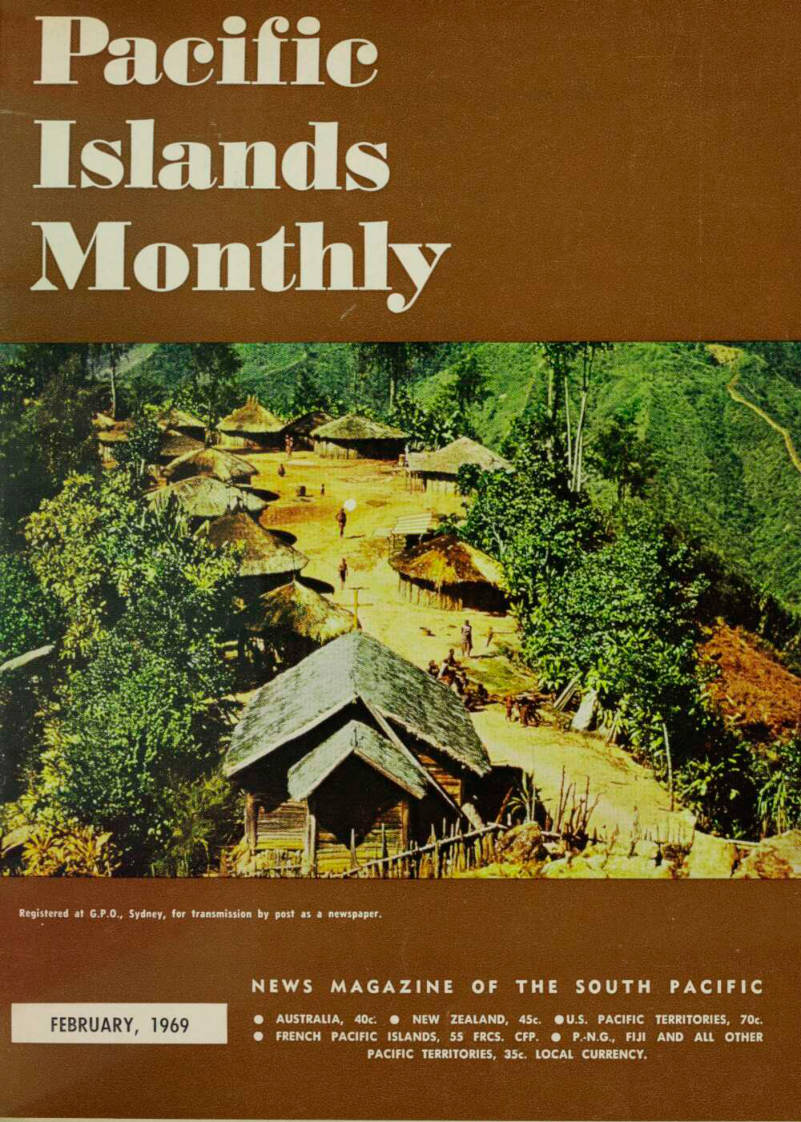 1
1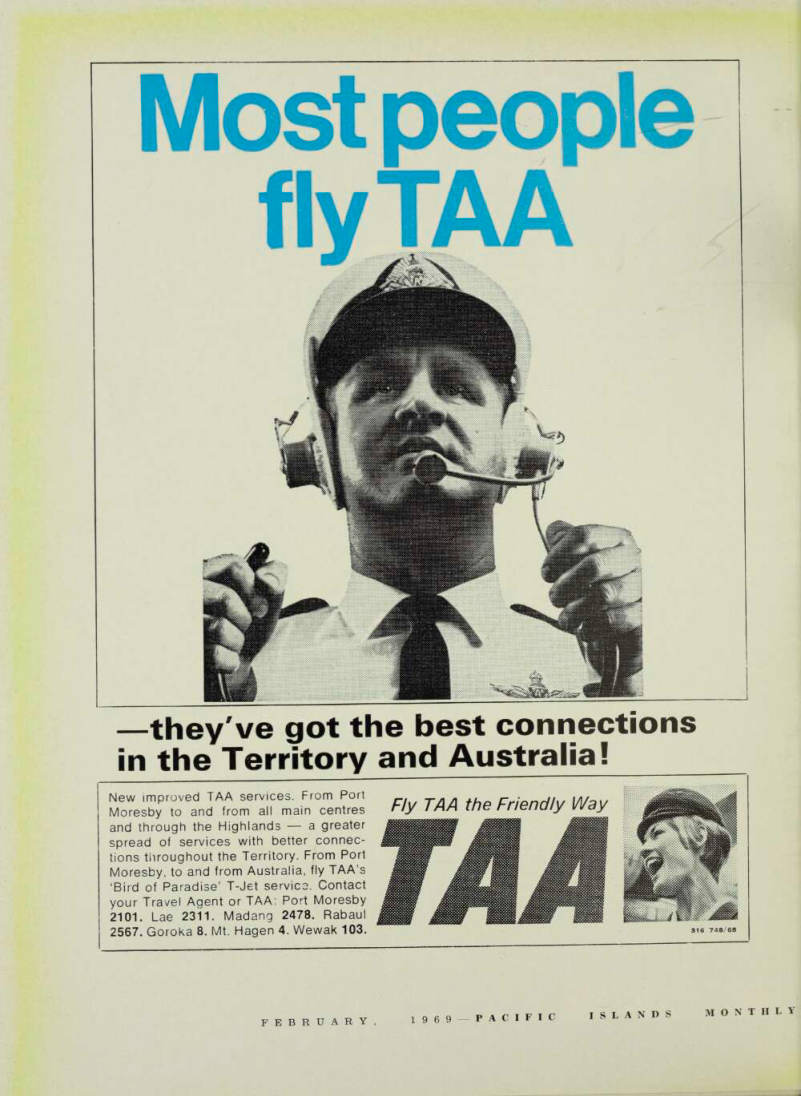 2
2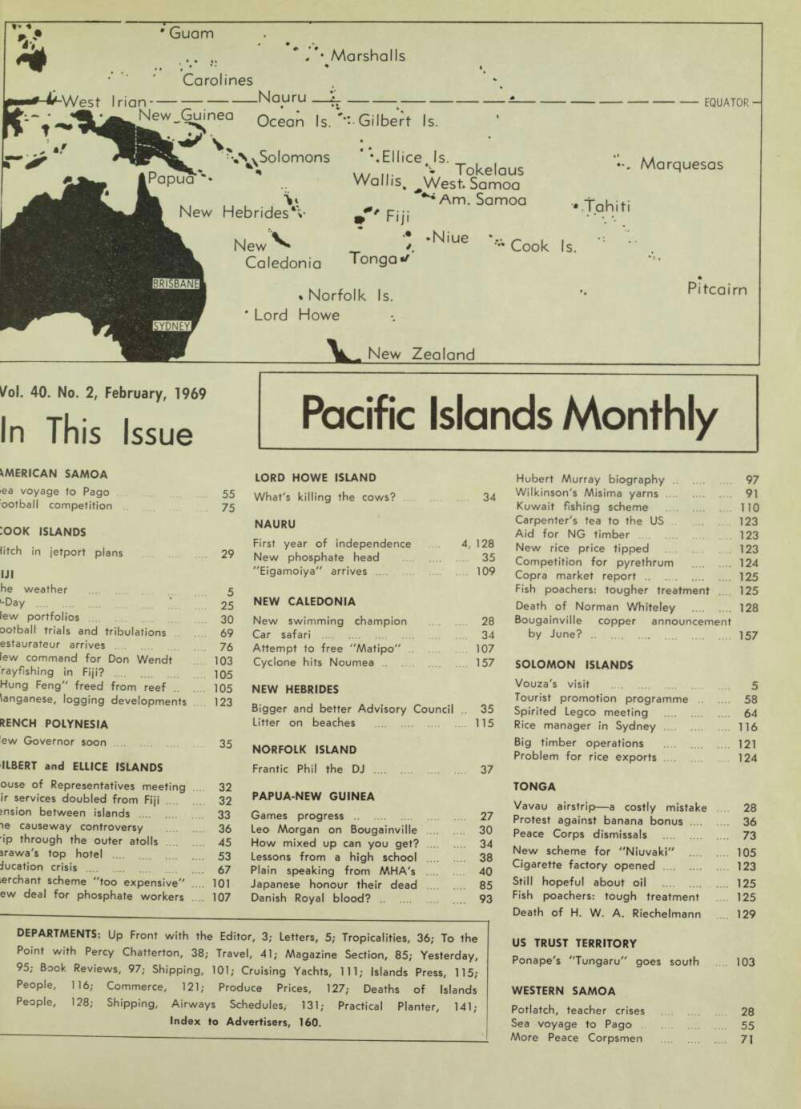 3
3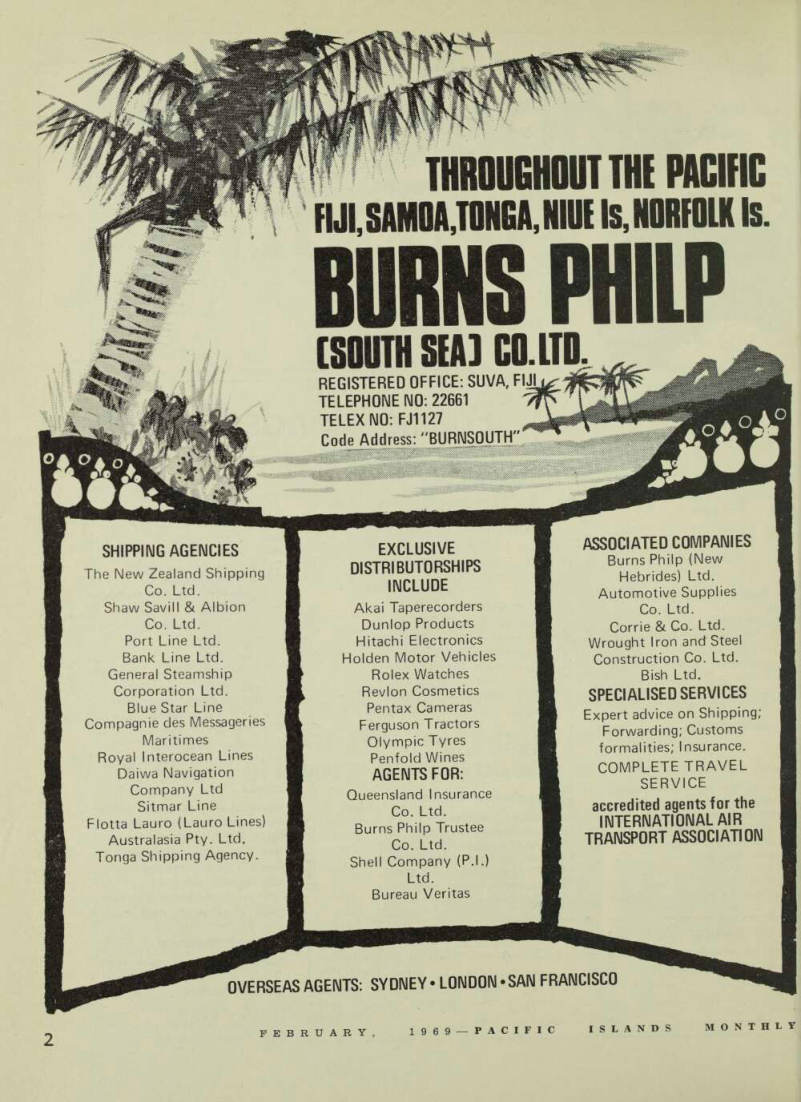 4
4 5
5 6
6 7
7 8
8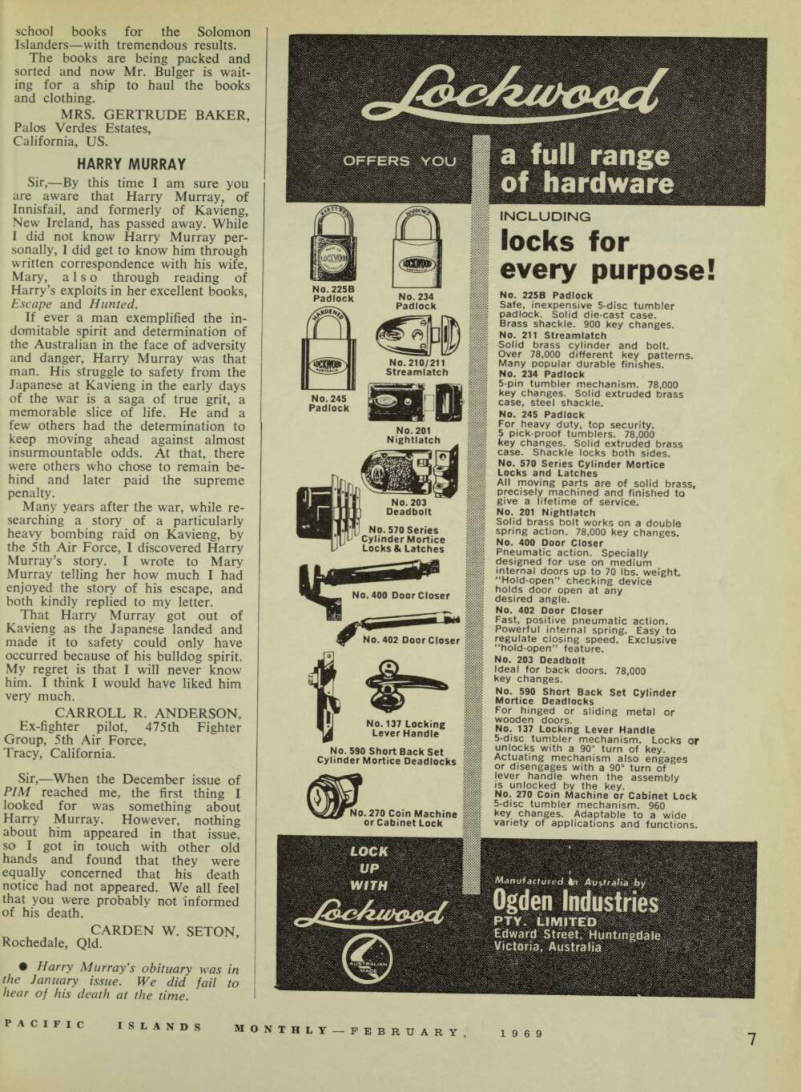 9
9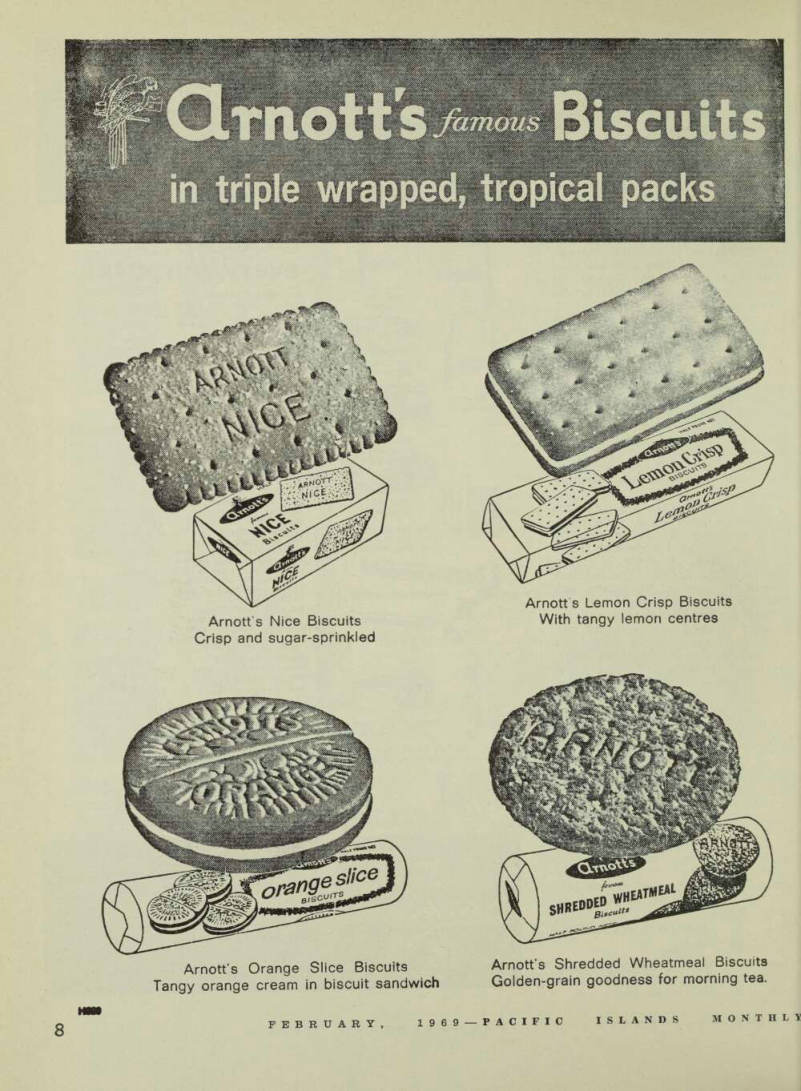 10
10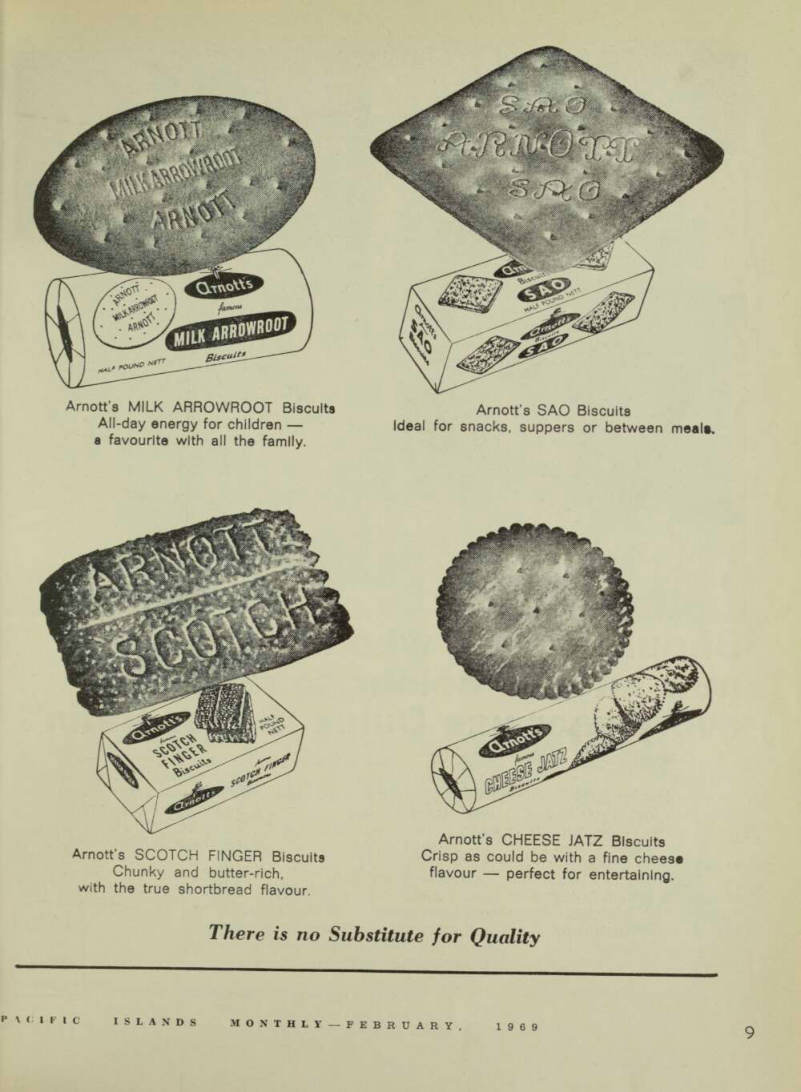 11
11 12
12 13
13 14
14 15
15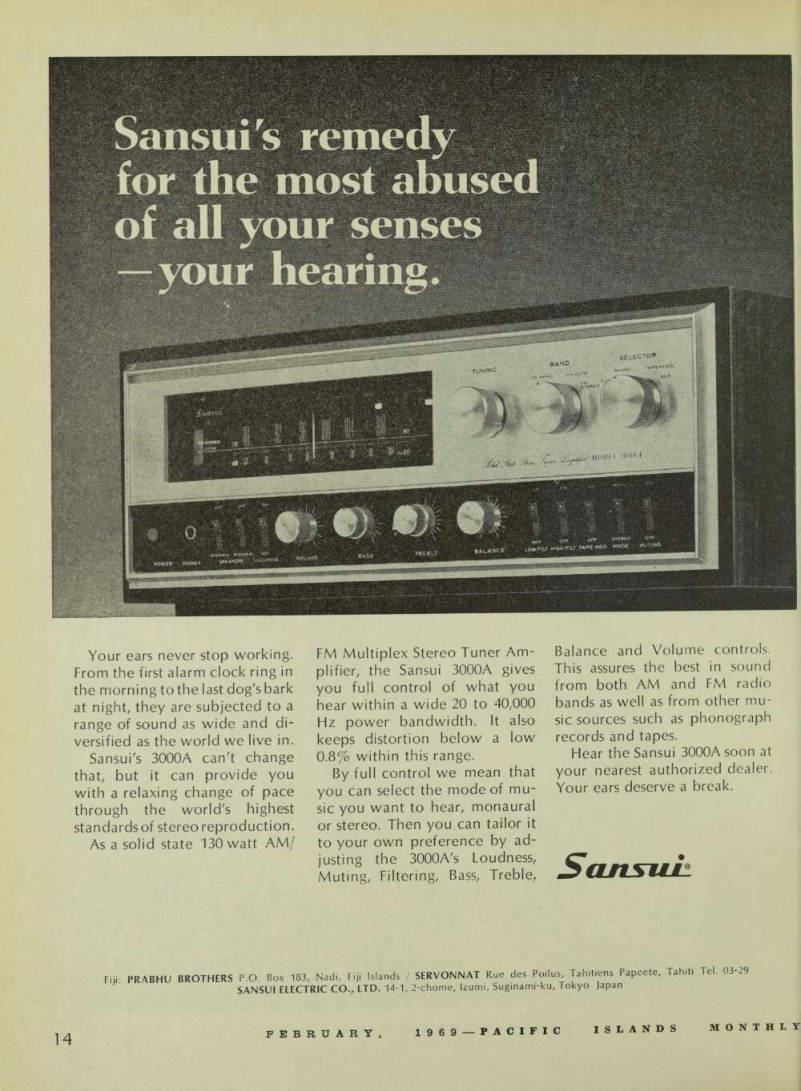 16
16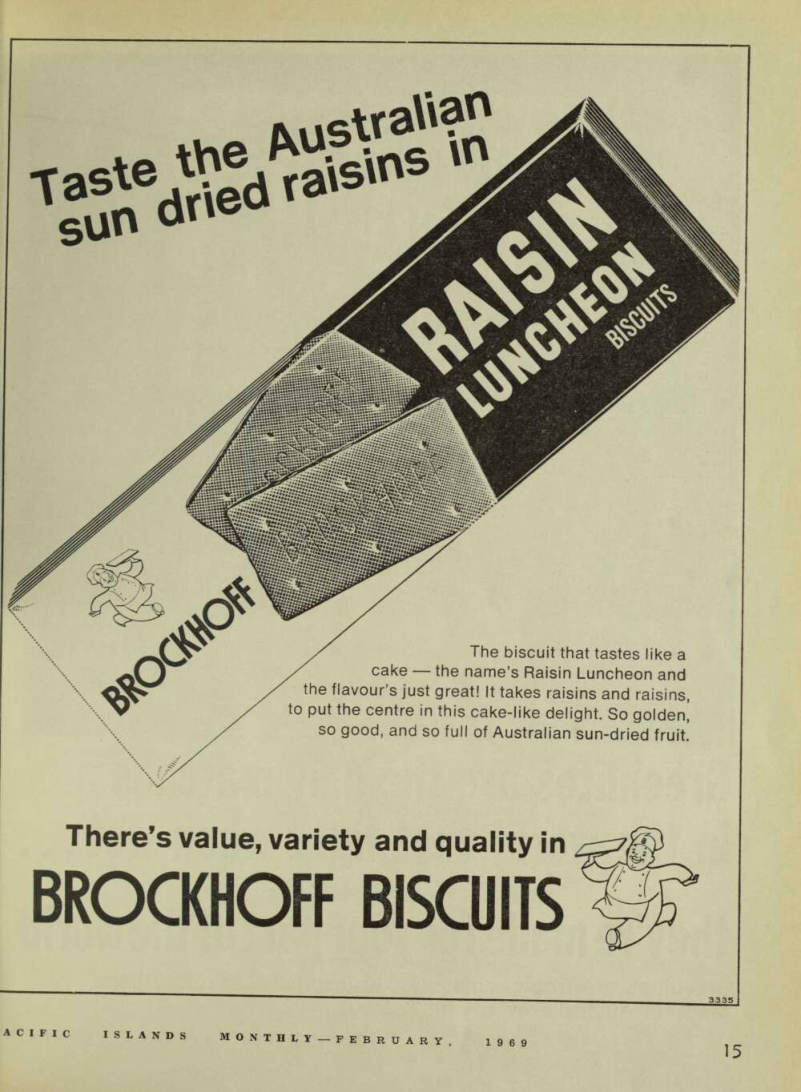 17
17 18
18 19
19 20
20 21
21 22
22 23
23 24
24 25
25 26
26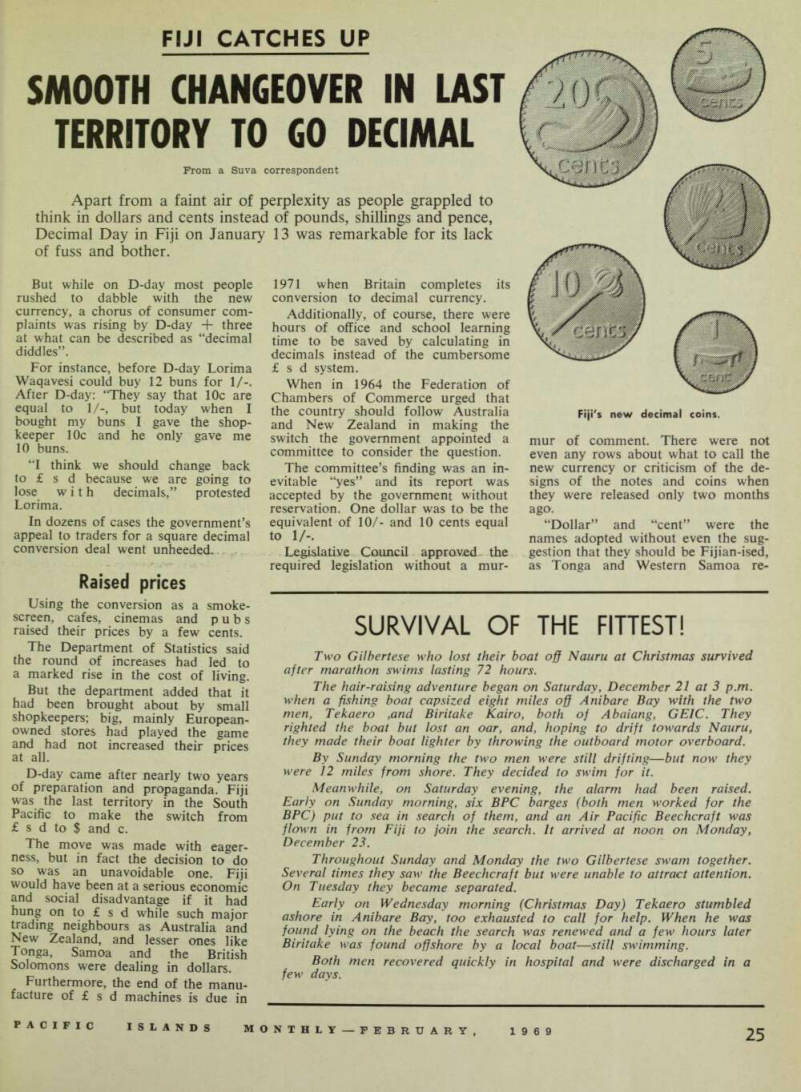 27
27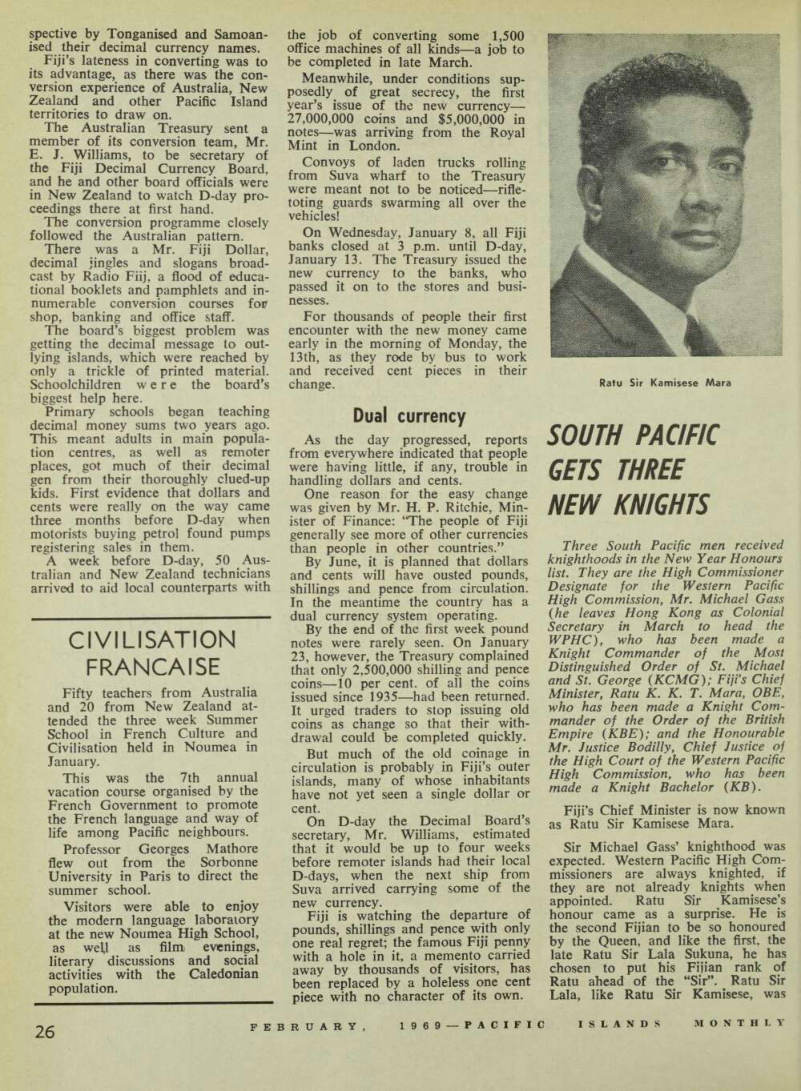 28
28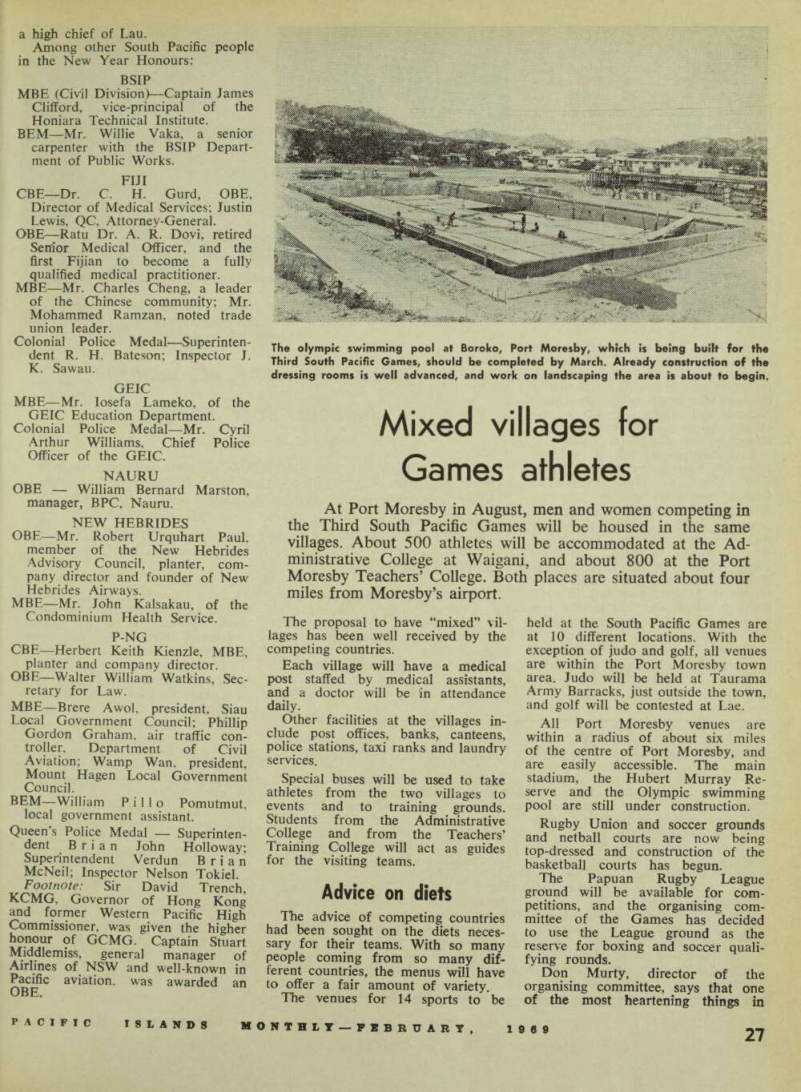 29
29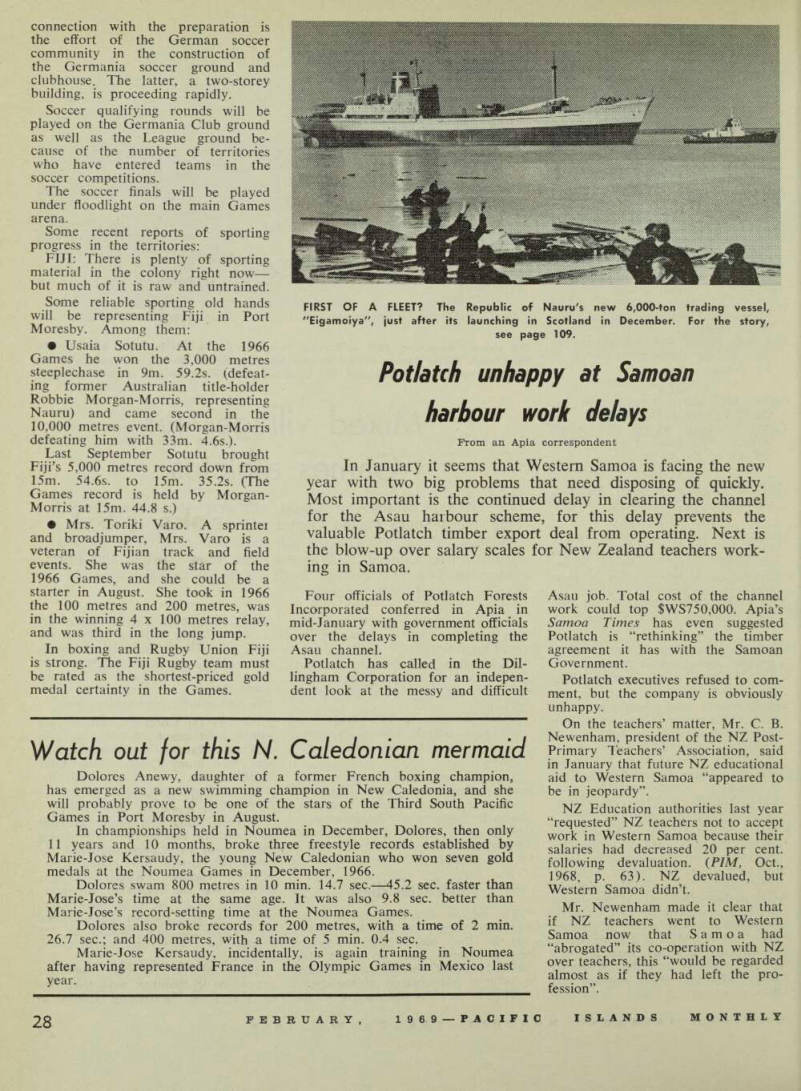 30
30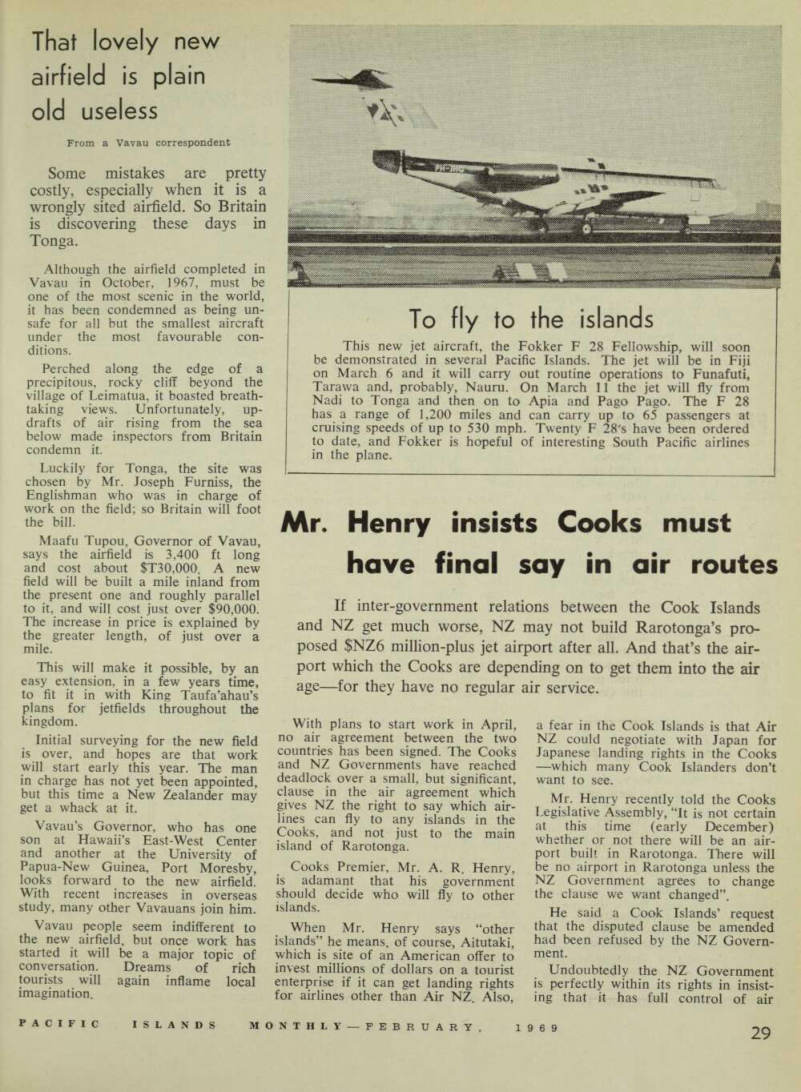 31
31 32
32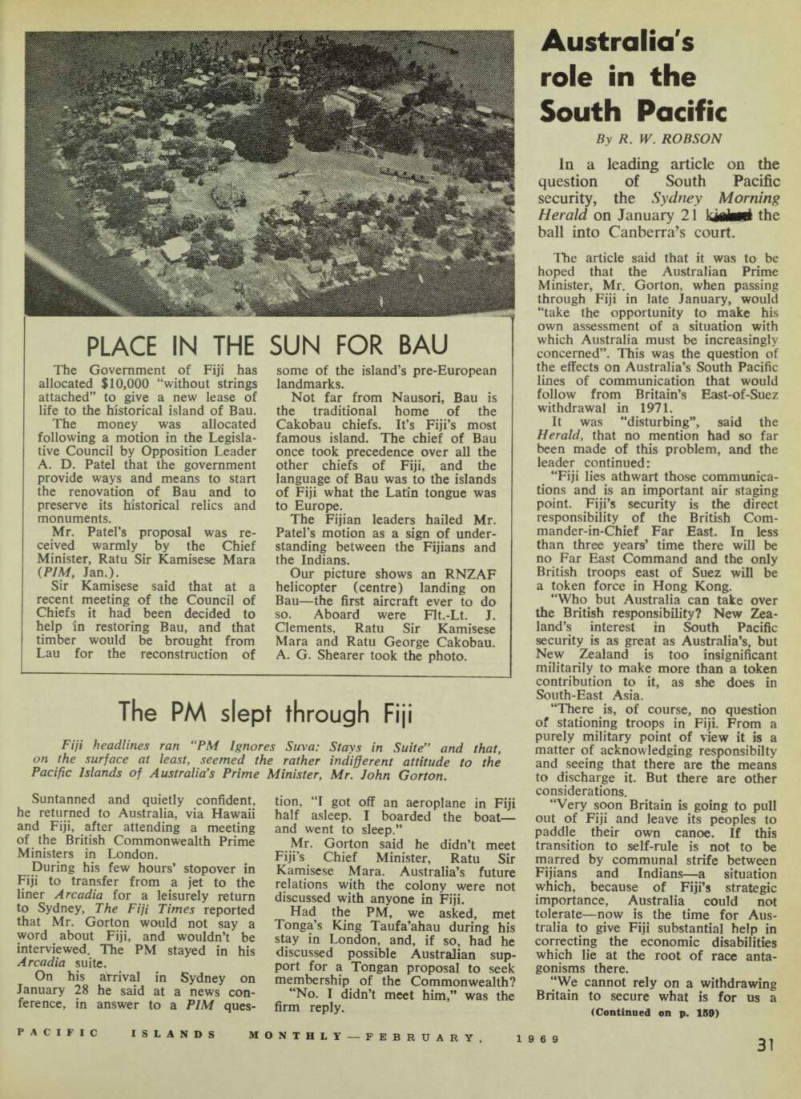 33
33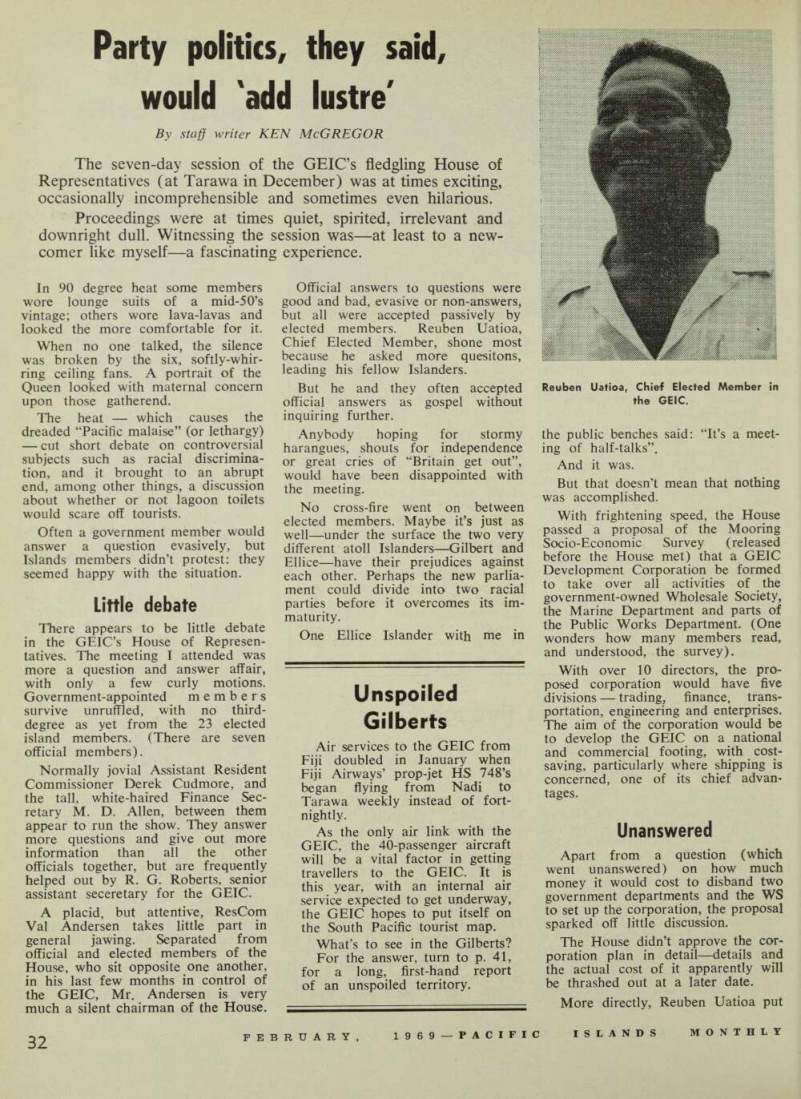 34
34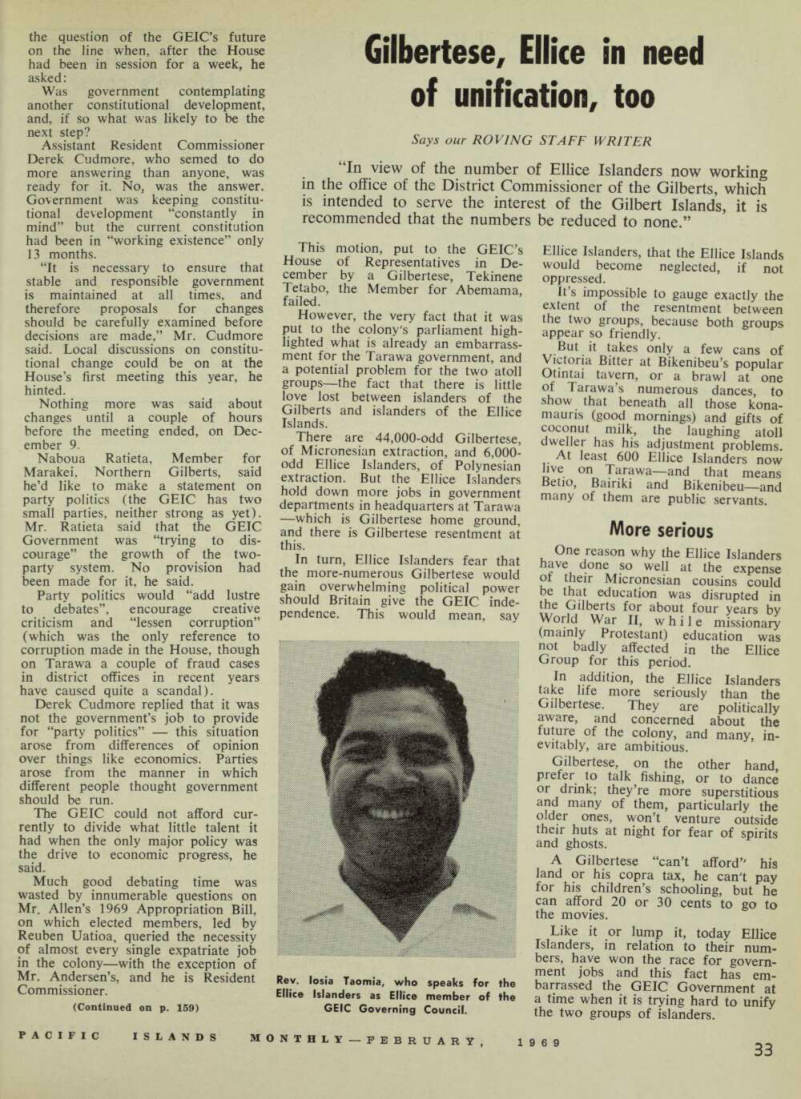 35
35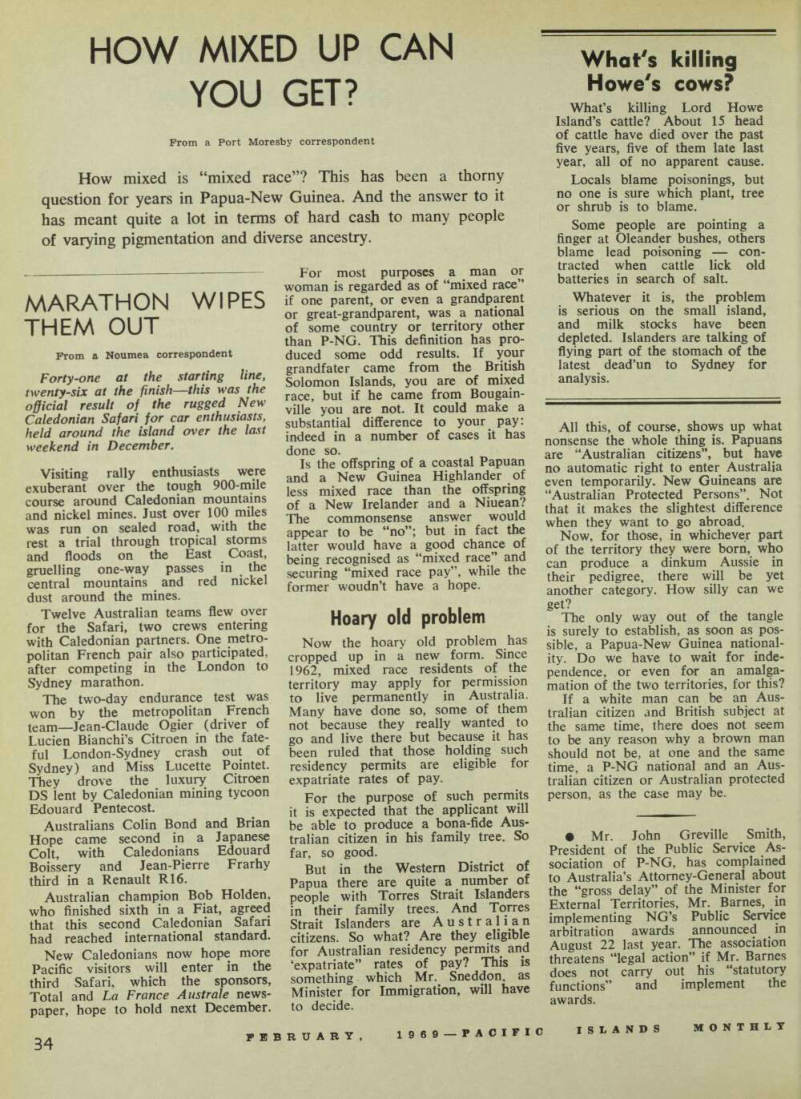 36
36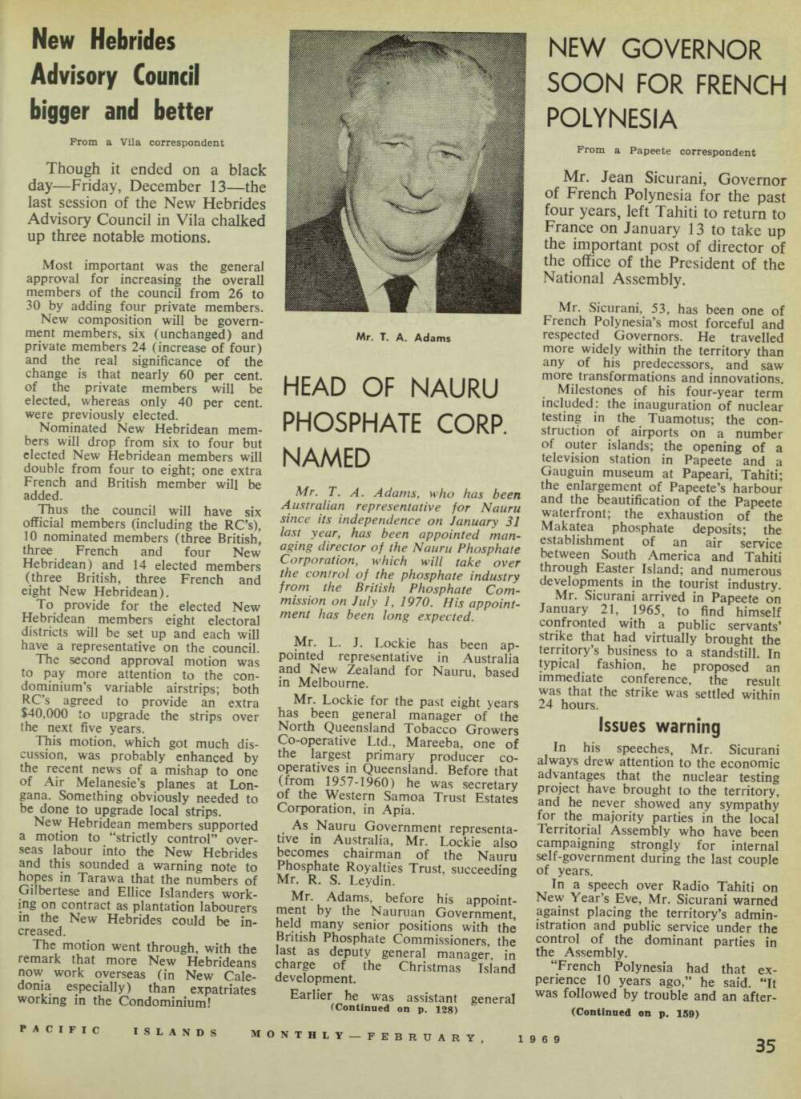 37
37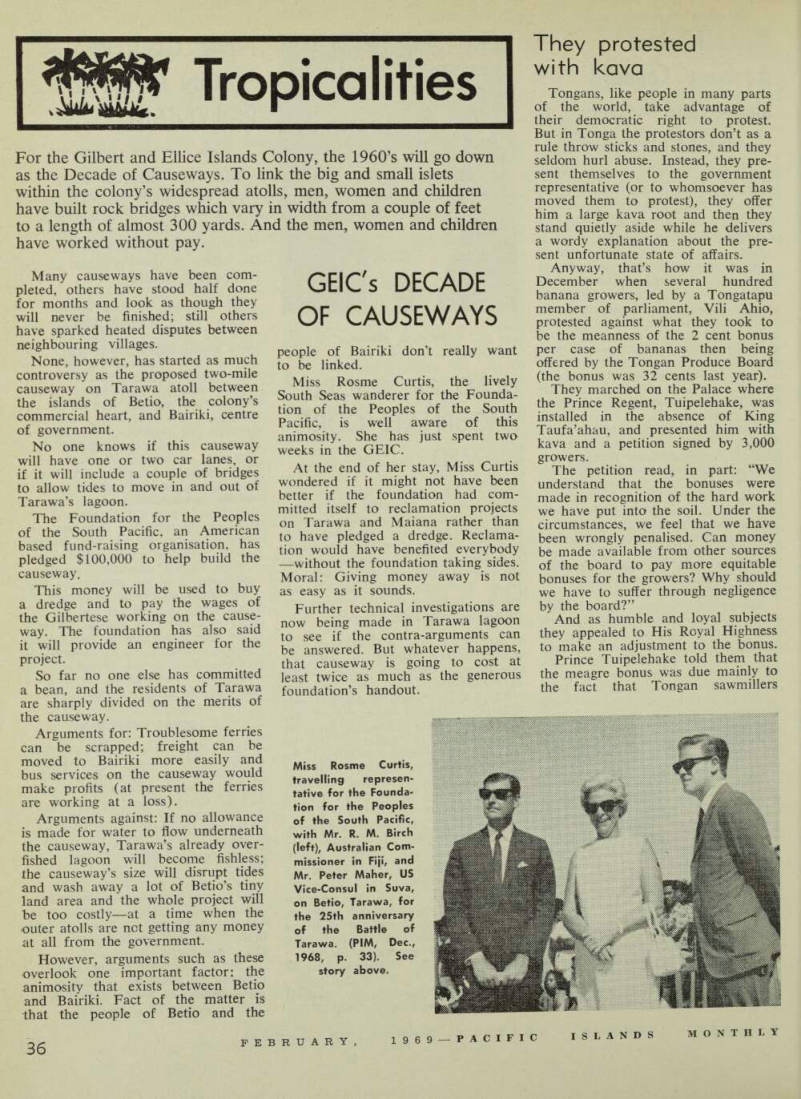 38
38 39
39 40
40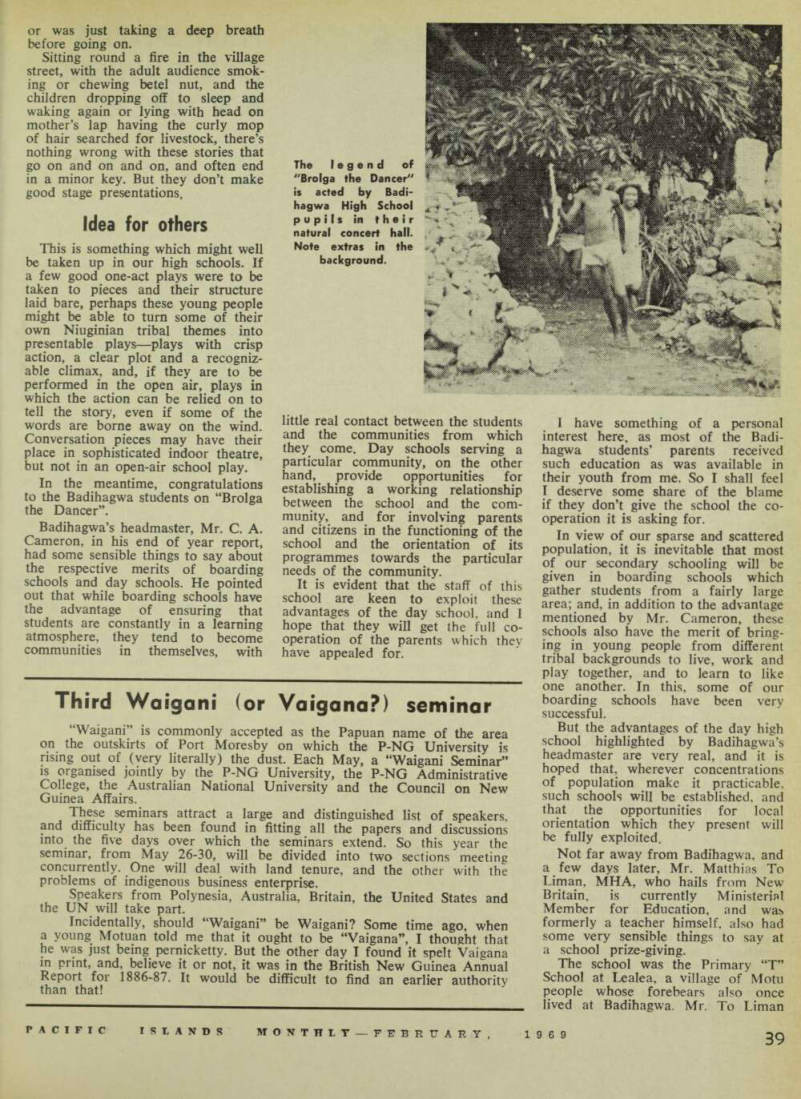 41
41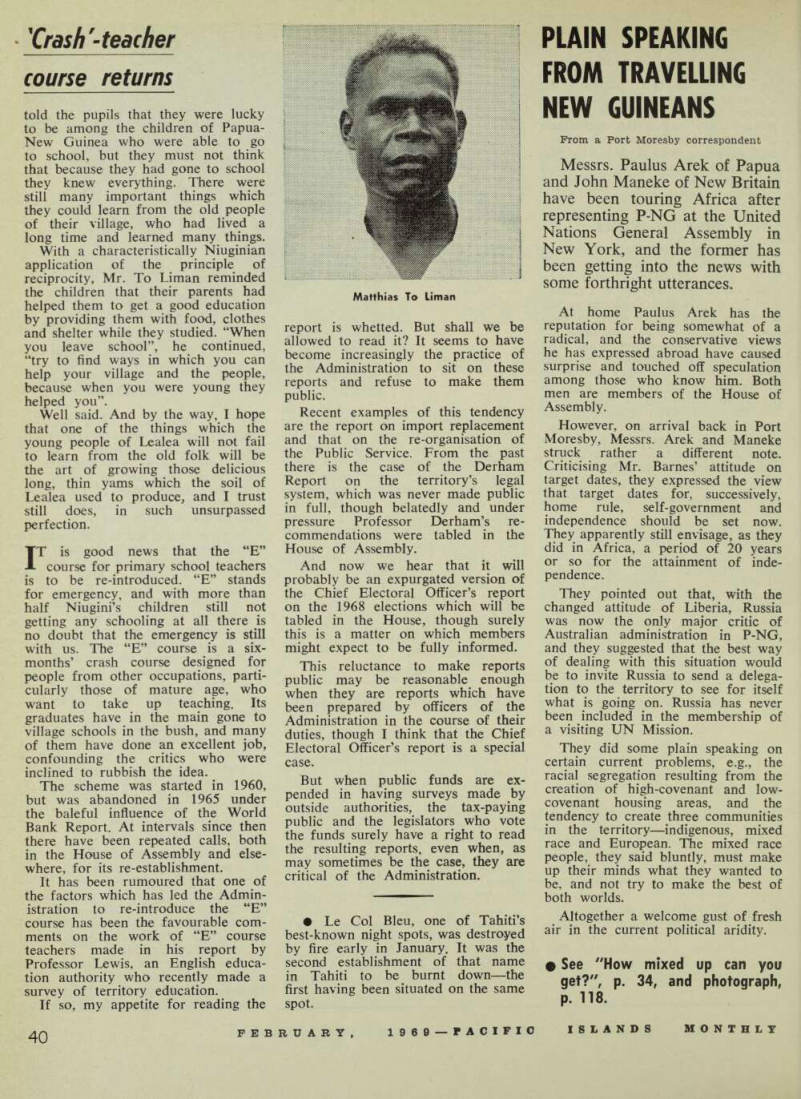 42
42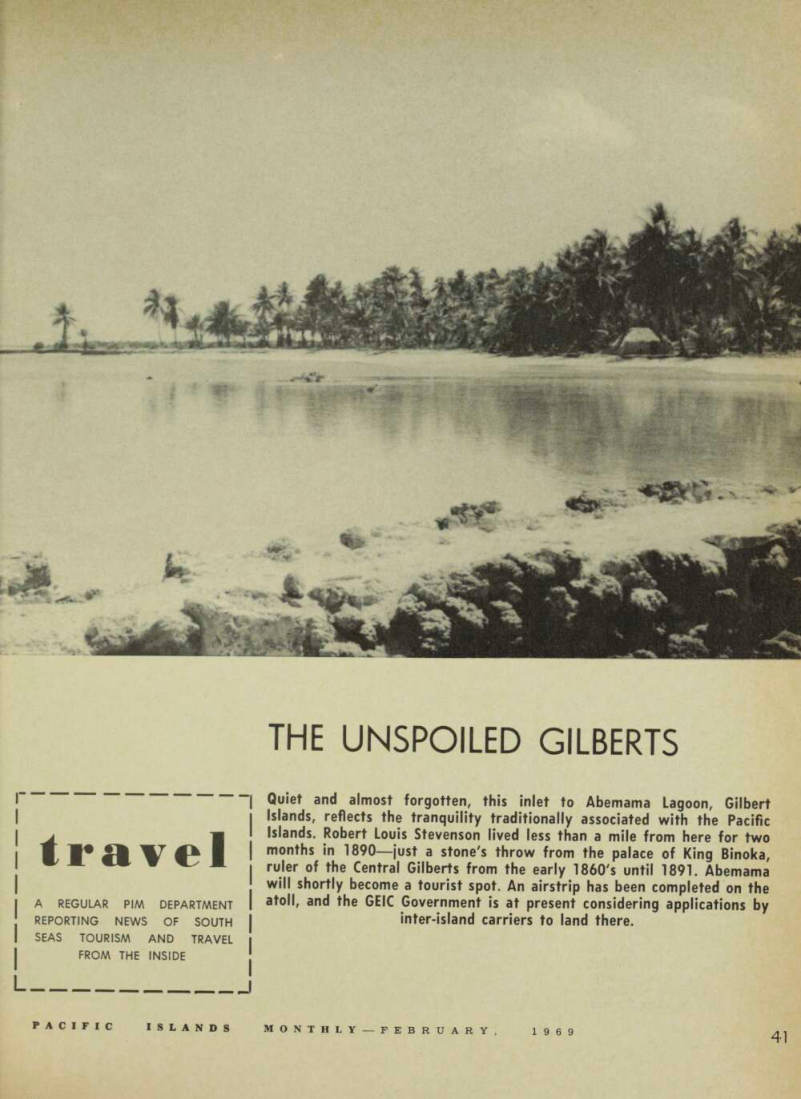 43
43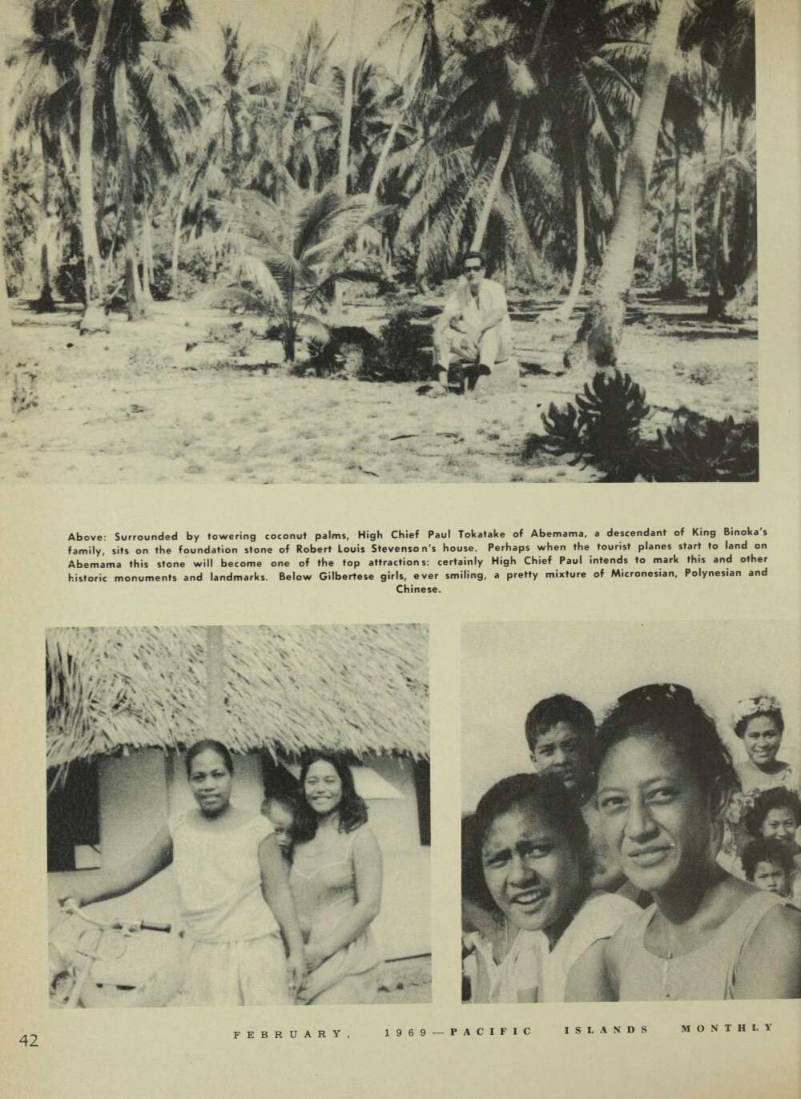 44
44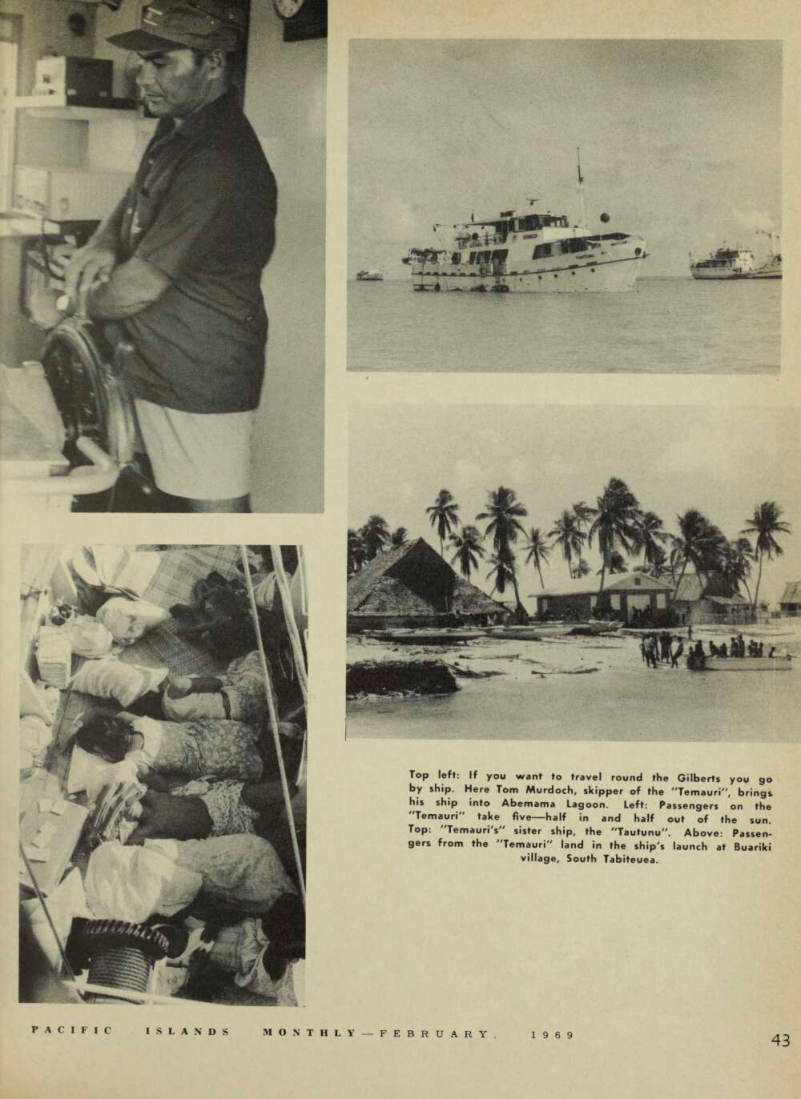 45
45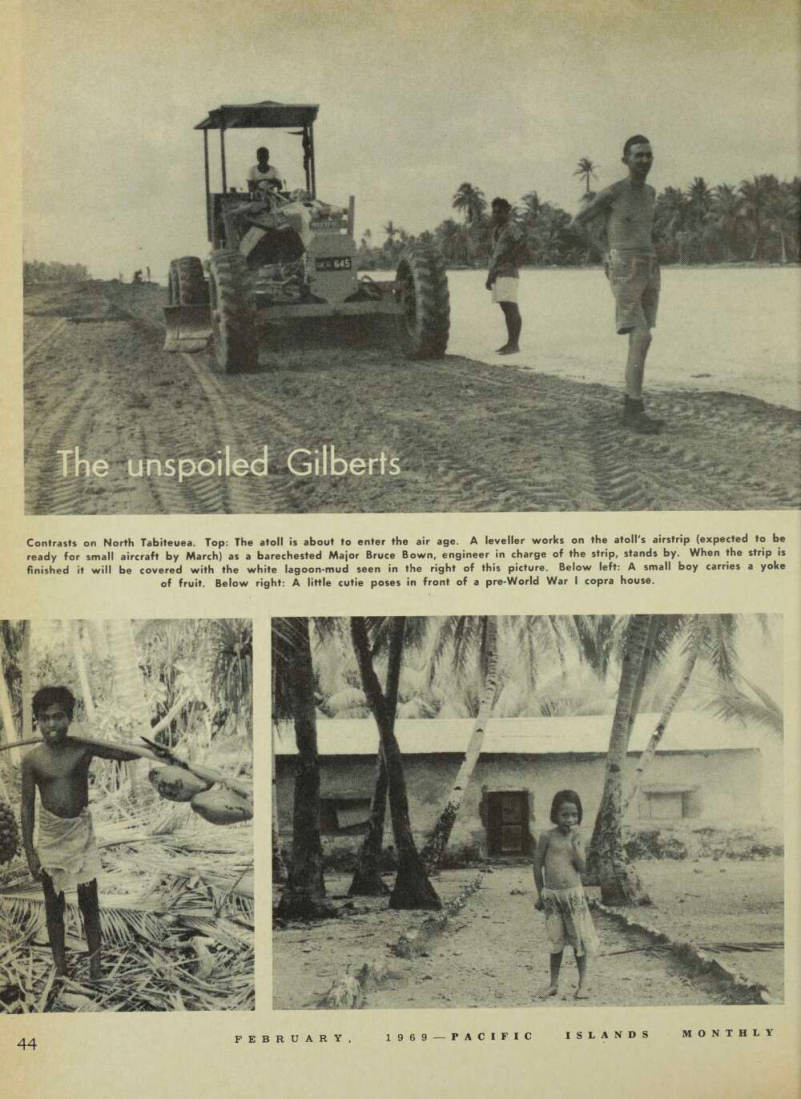 46
46 47
47 48
48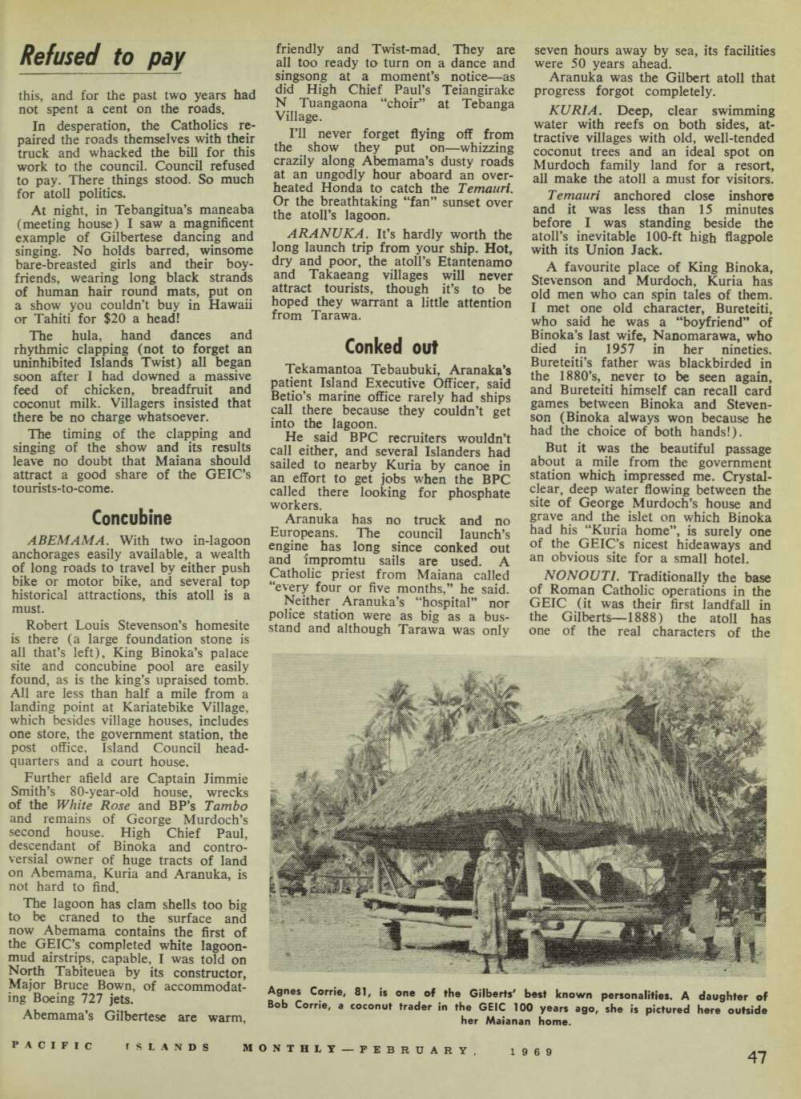 49
49 50
50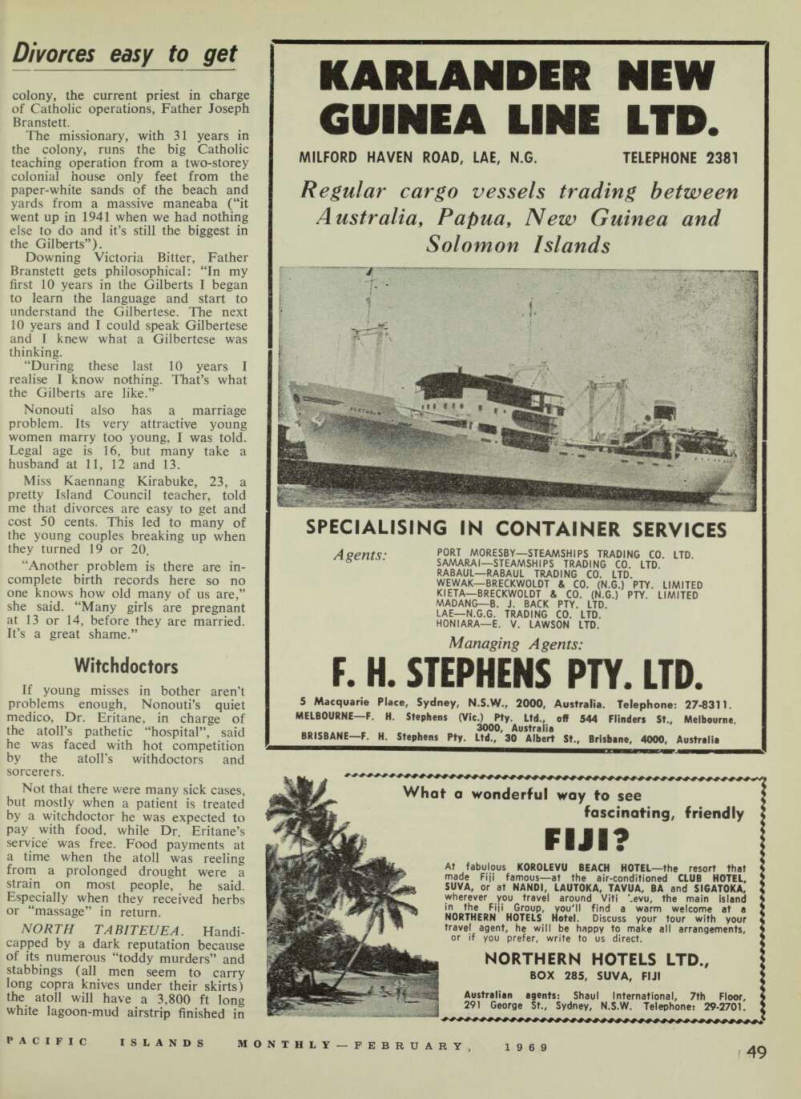 51
51 52
52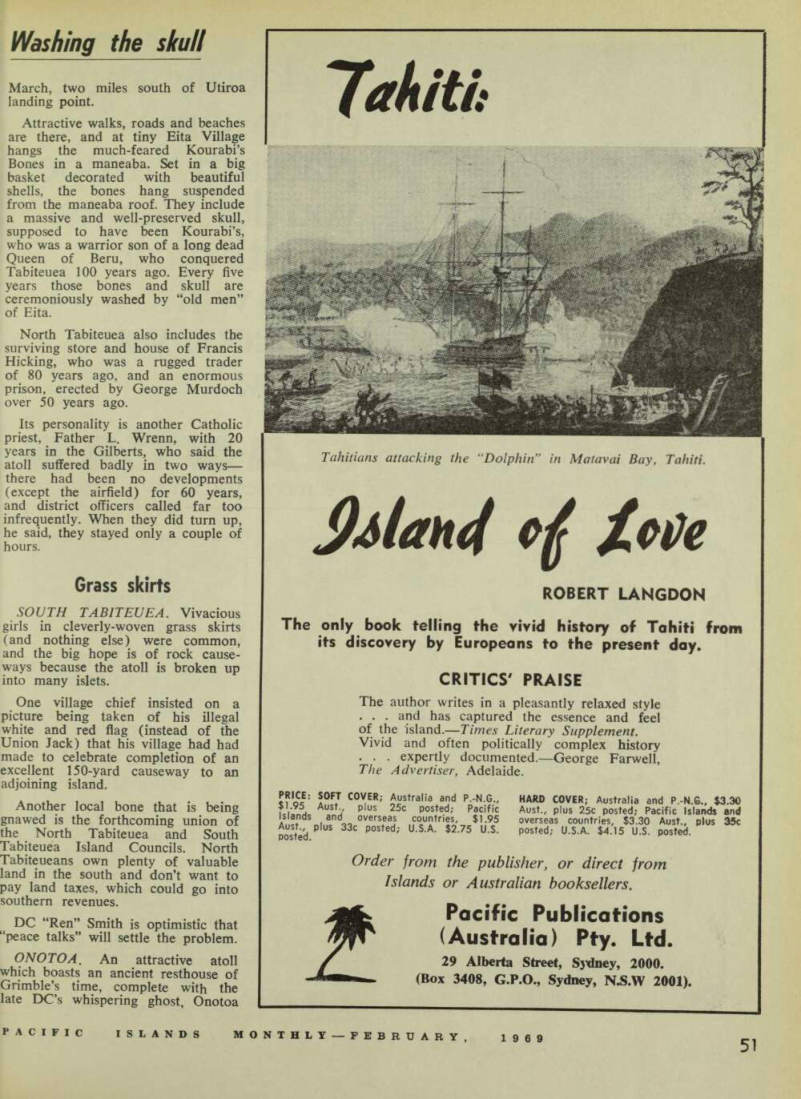 53
53 54
54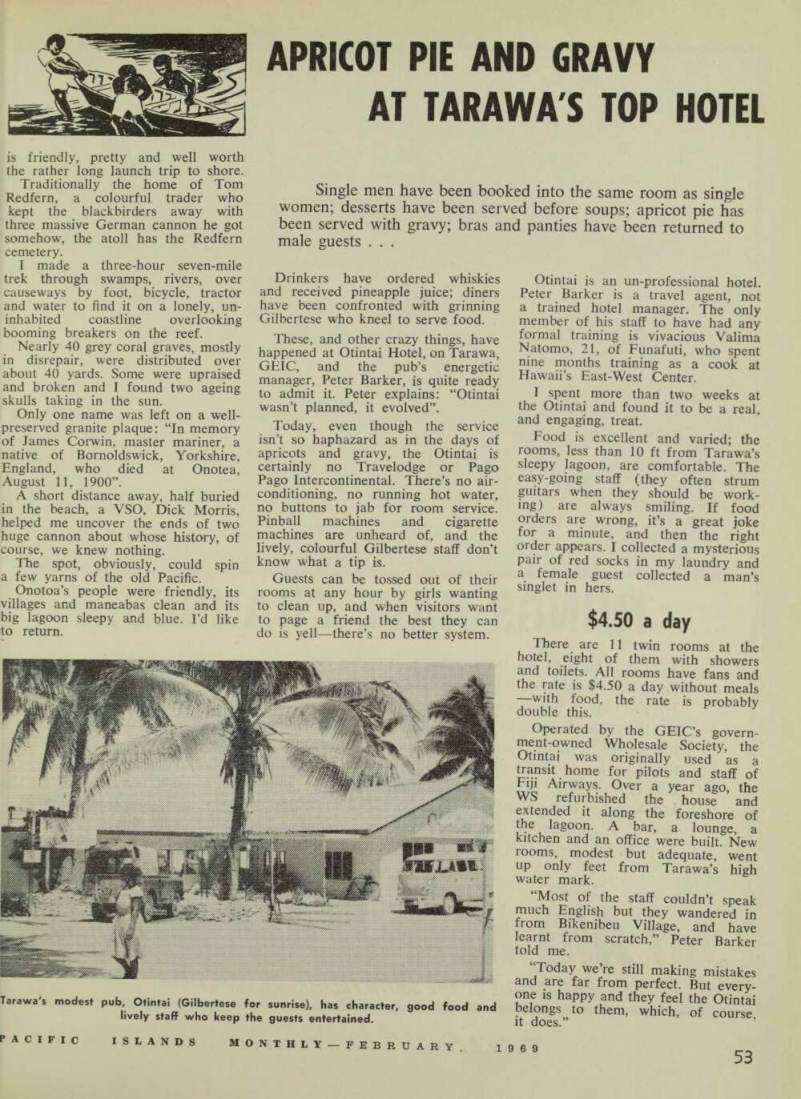 55
55 56
56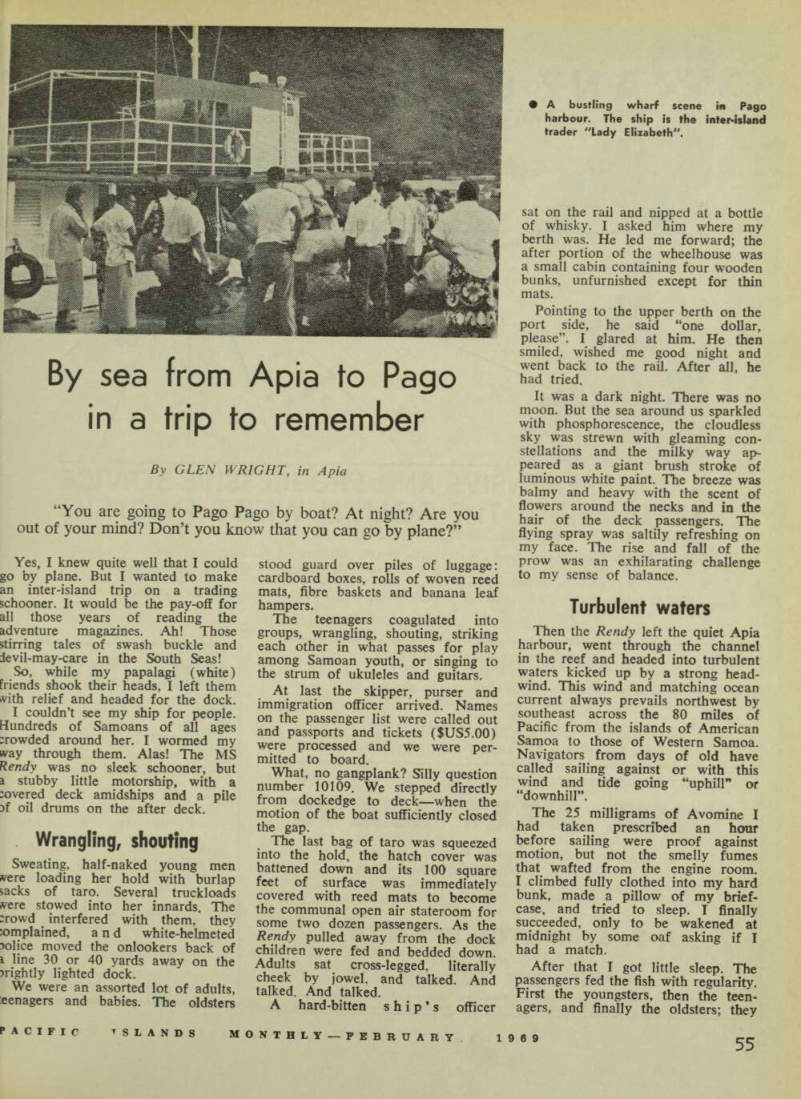 57
57 58
58 59
59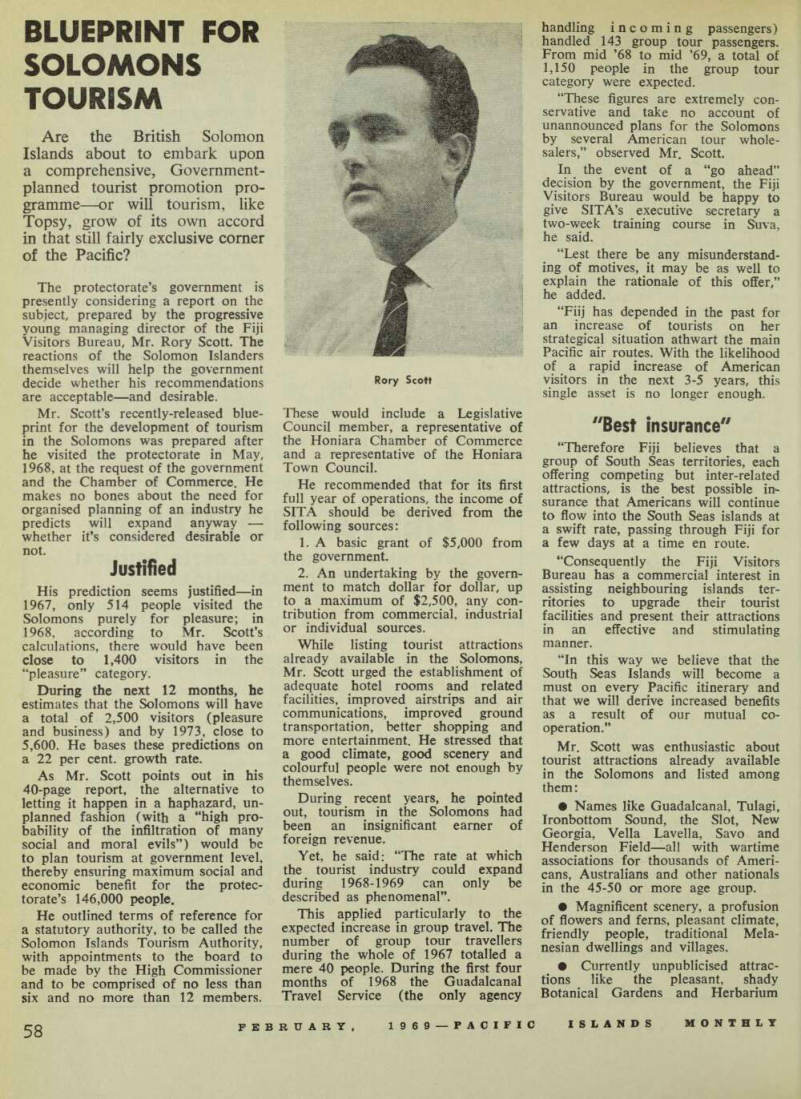 60
60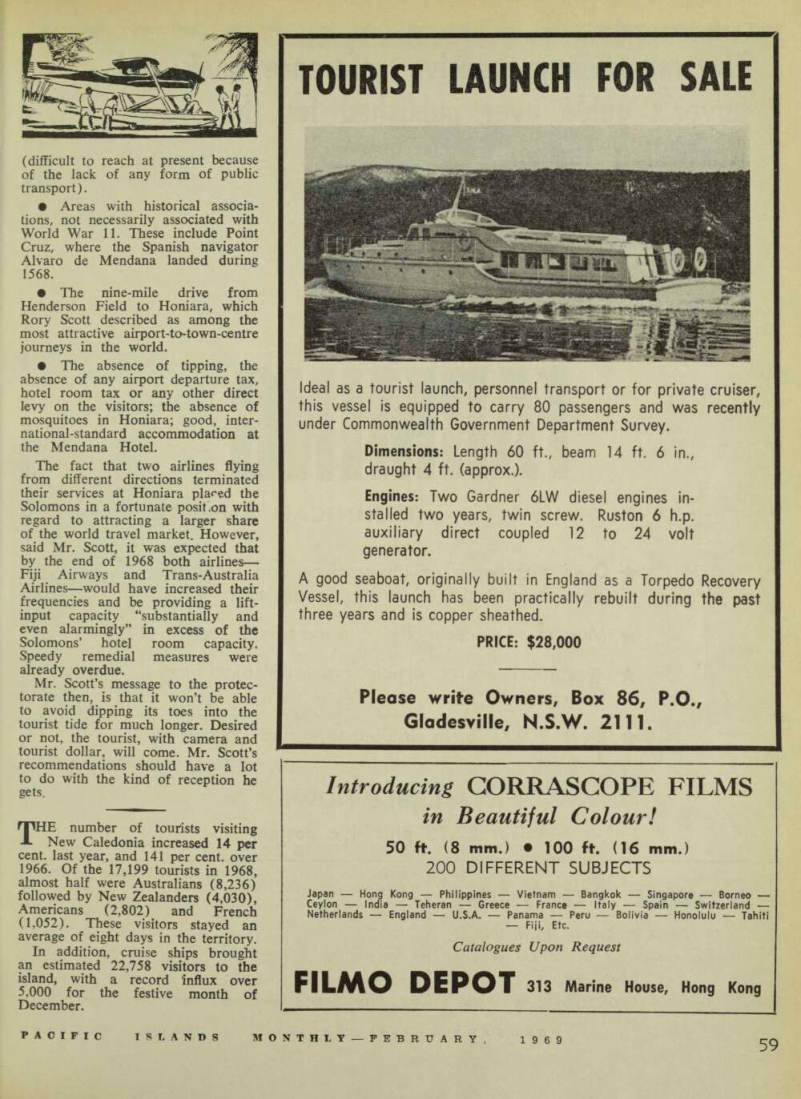 61
61 62
62 63
63 64
64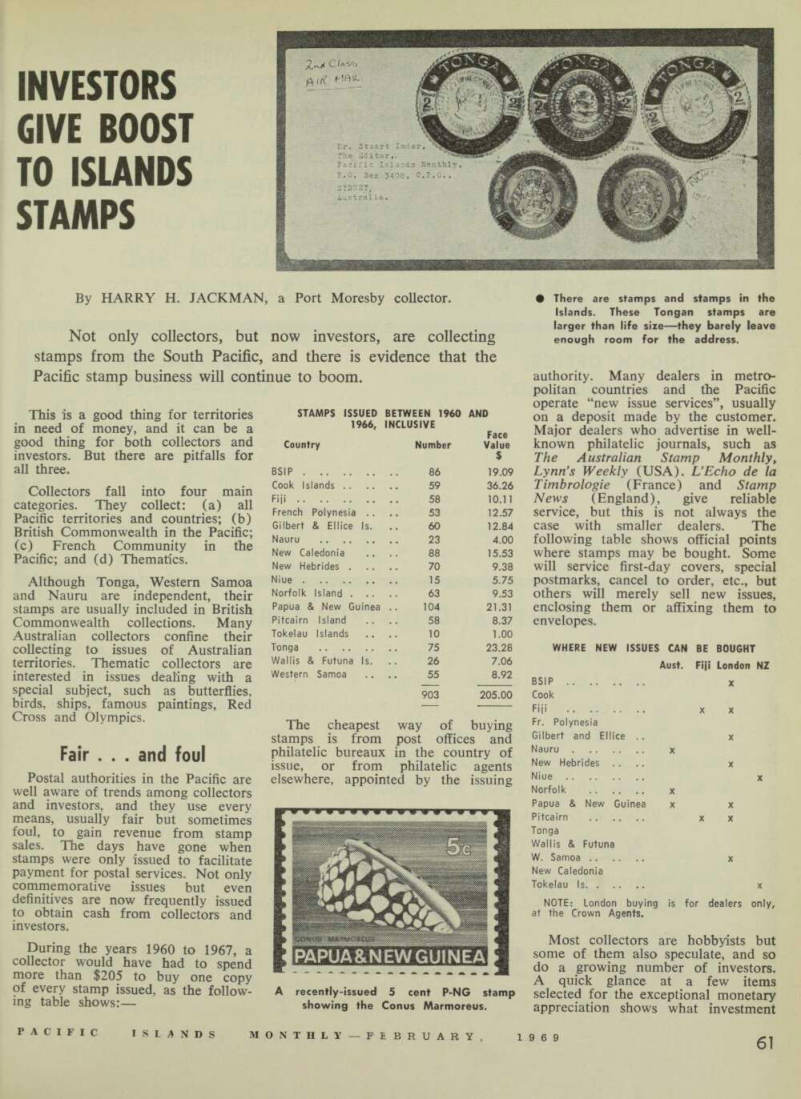 65
65 66
66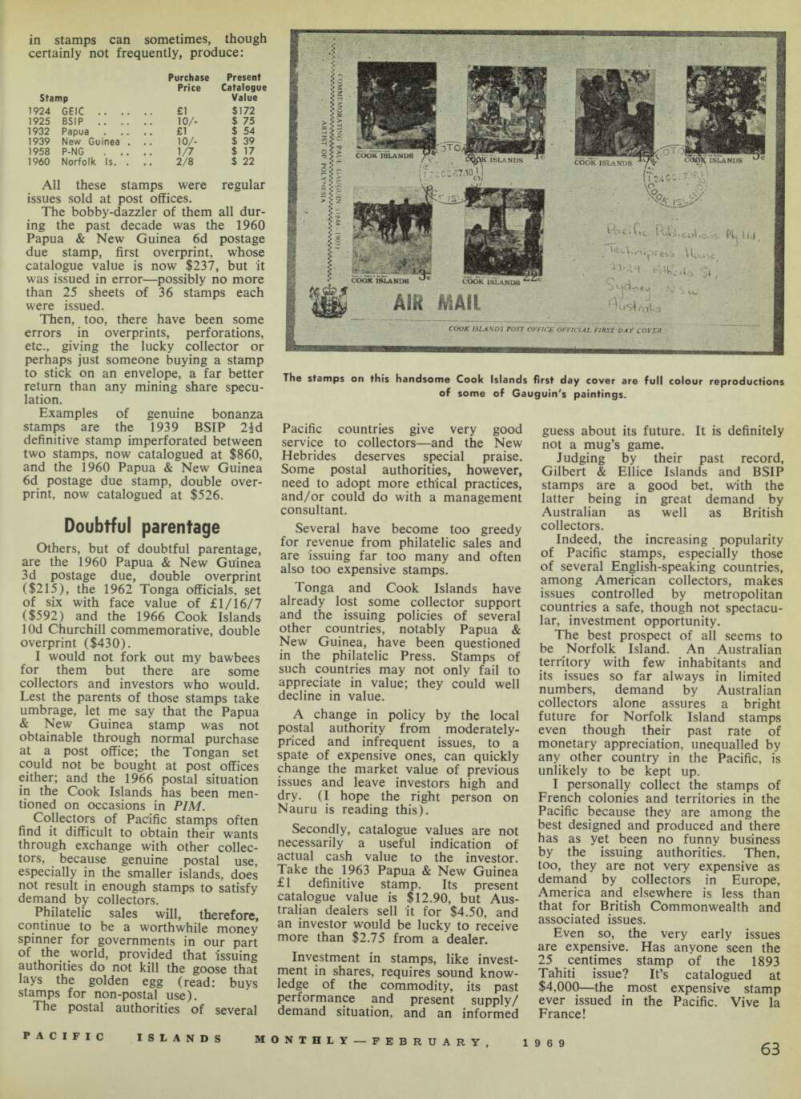 67
67 68
68 69
69 70
70 71
71 72
72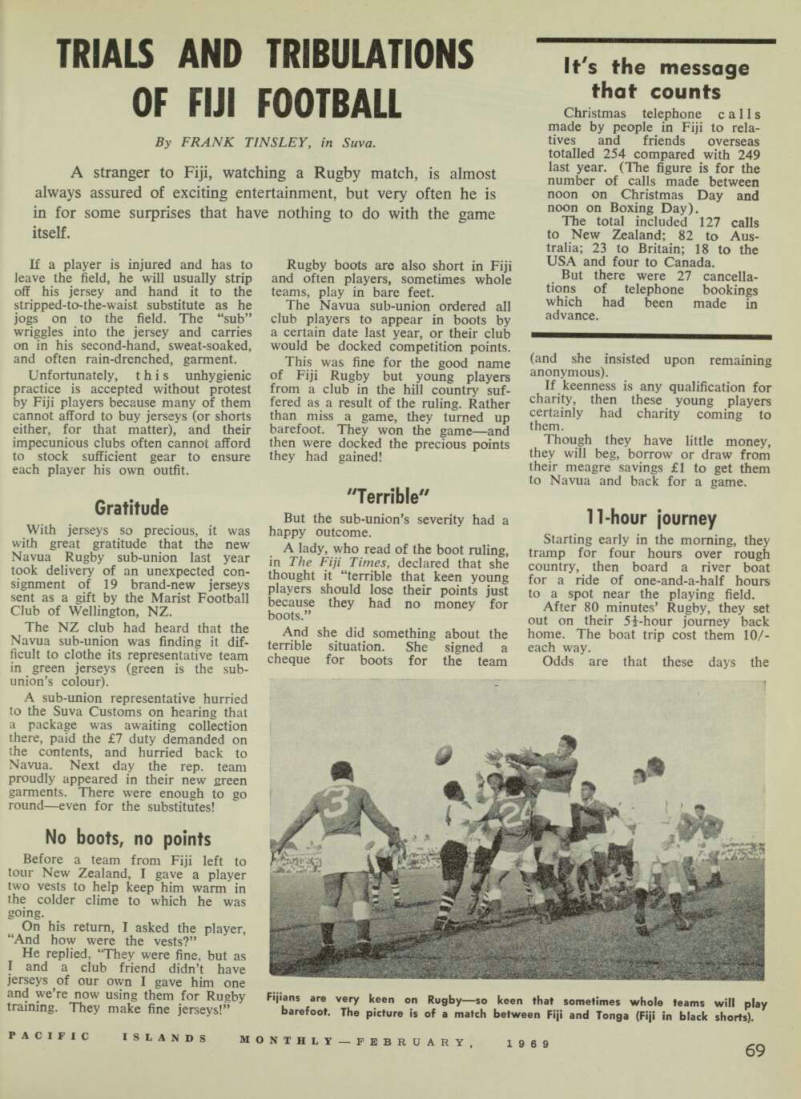 73
73 74
74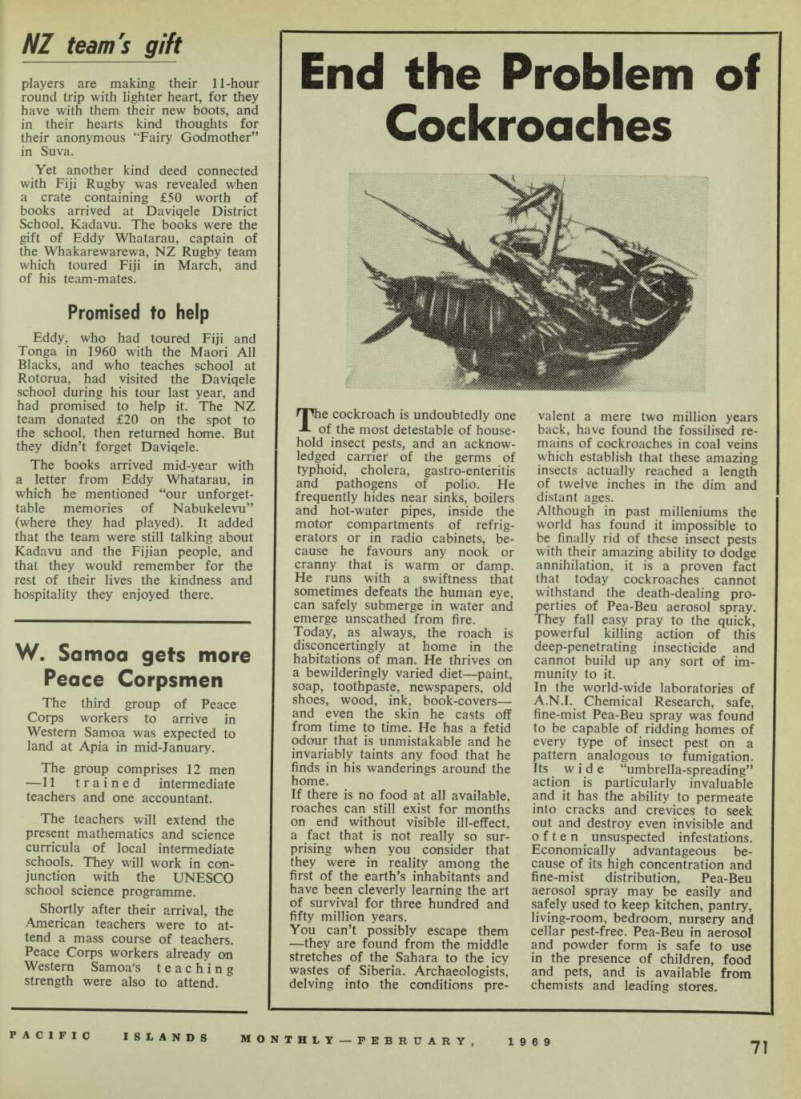 75
75 76
76 77
77 78
78 79
79 80
80 81
81 82
82 83
83 84
84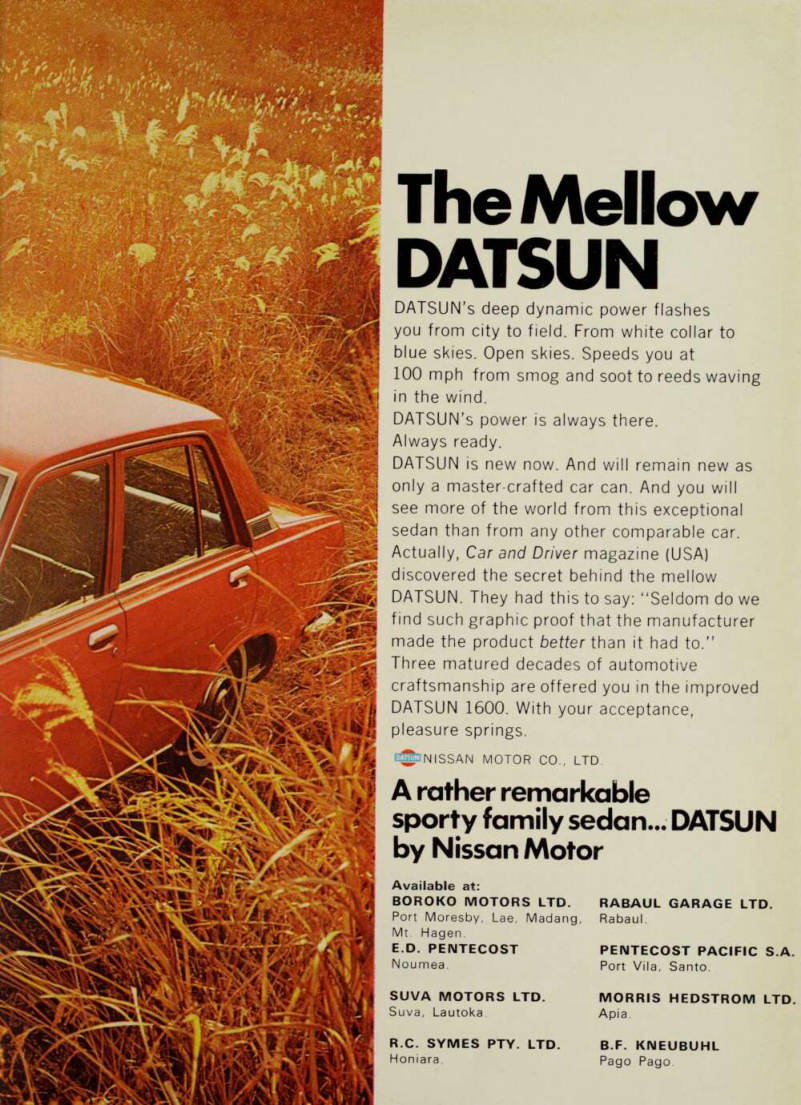 85
85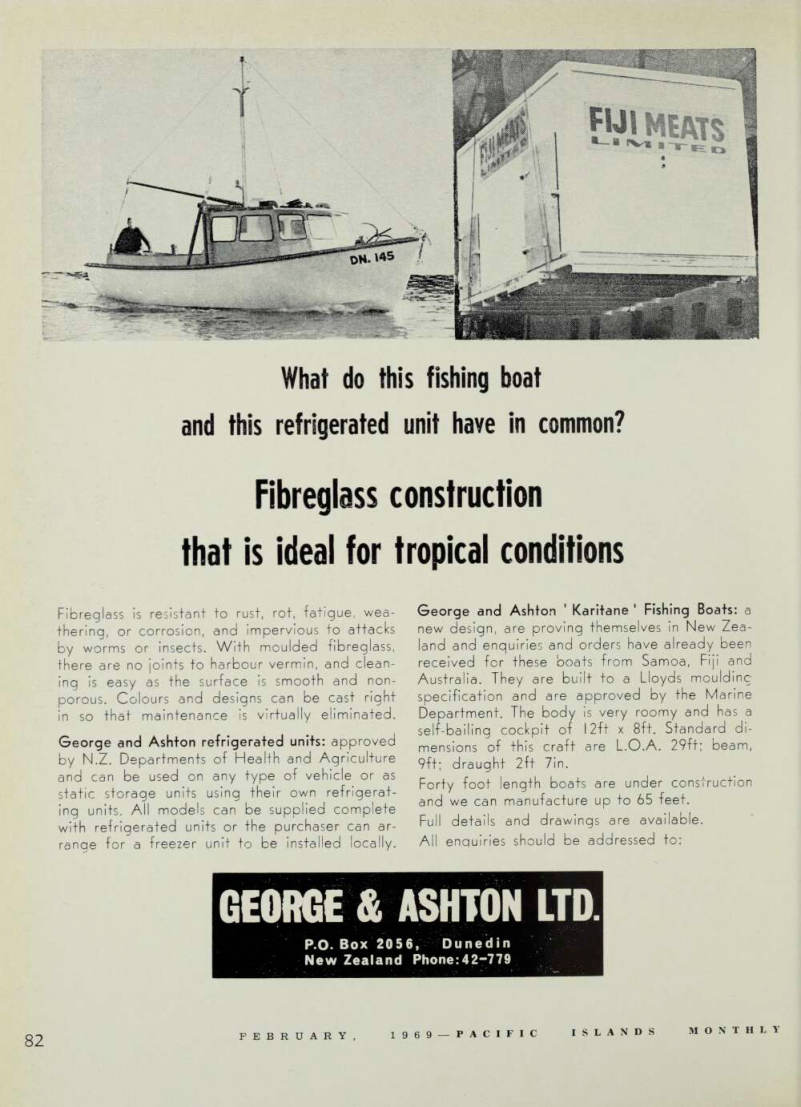 86
86 87
87 88
88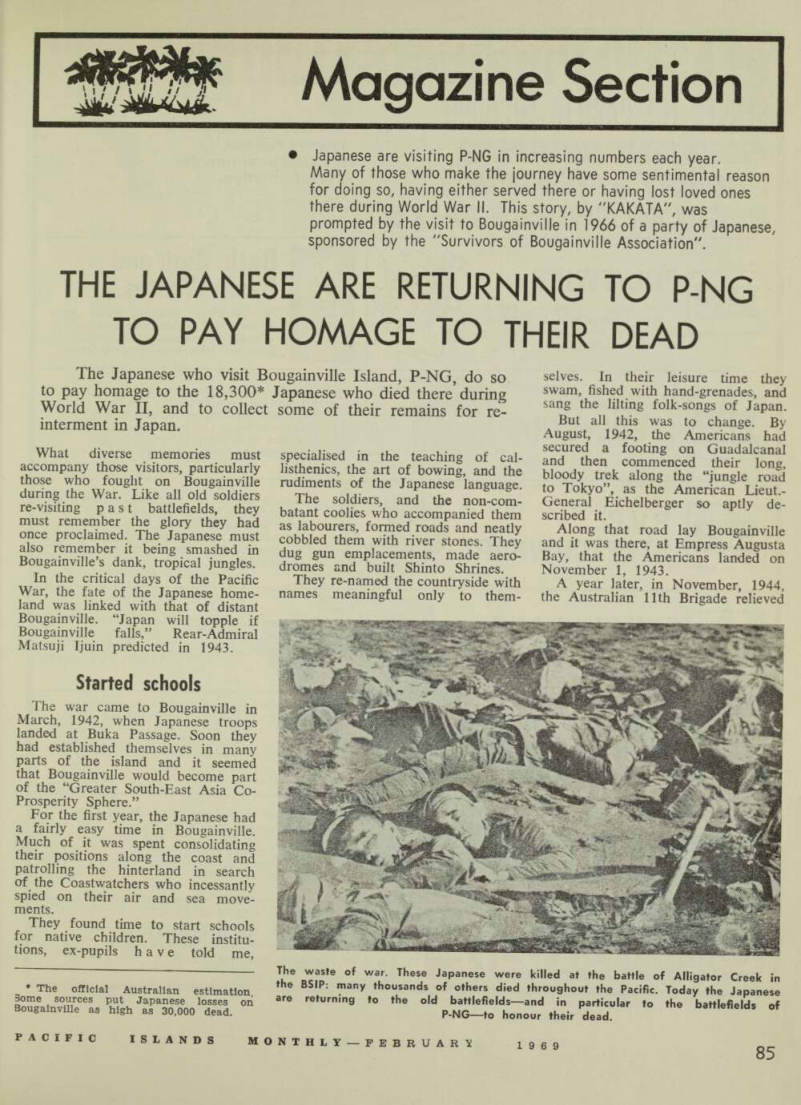 89
89 90
90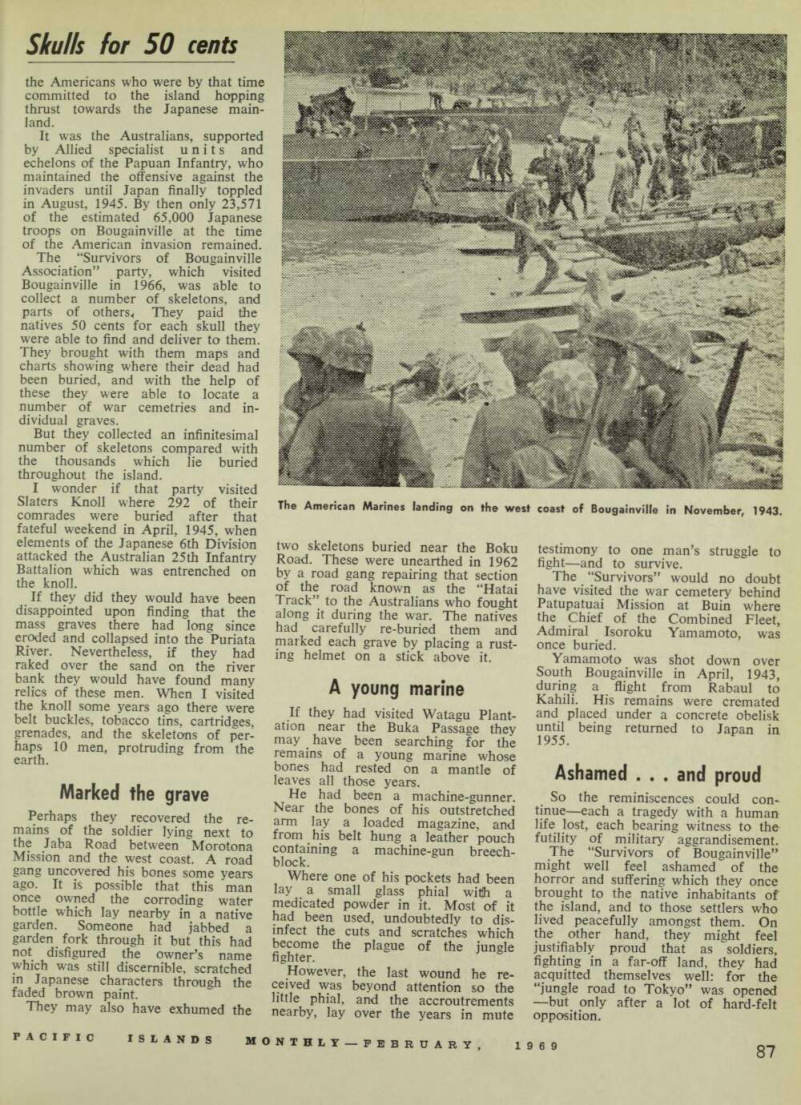 91
91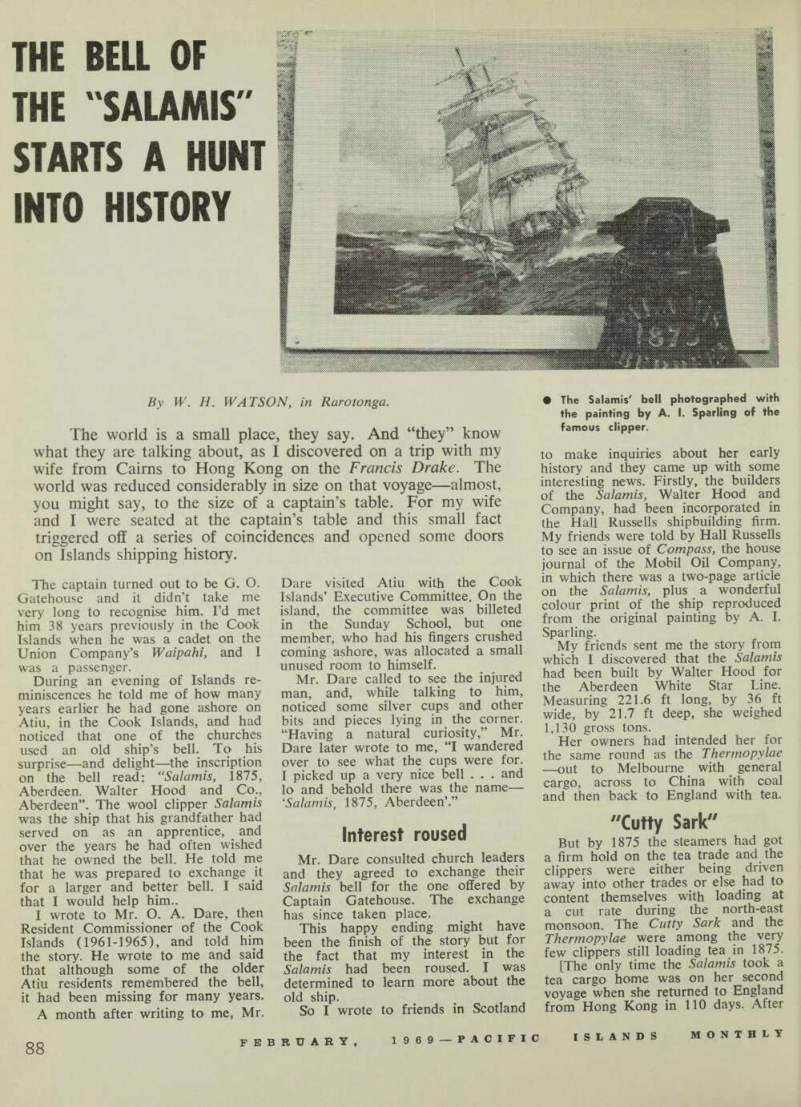 92
92 93
93 94
94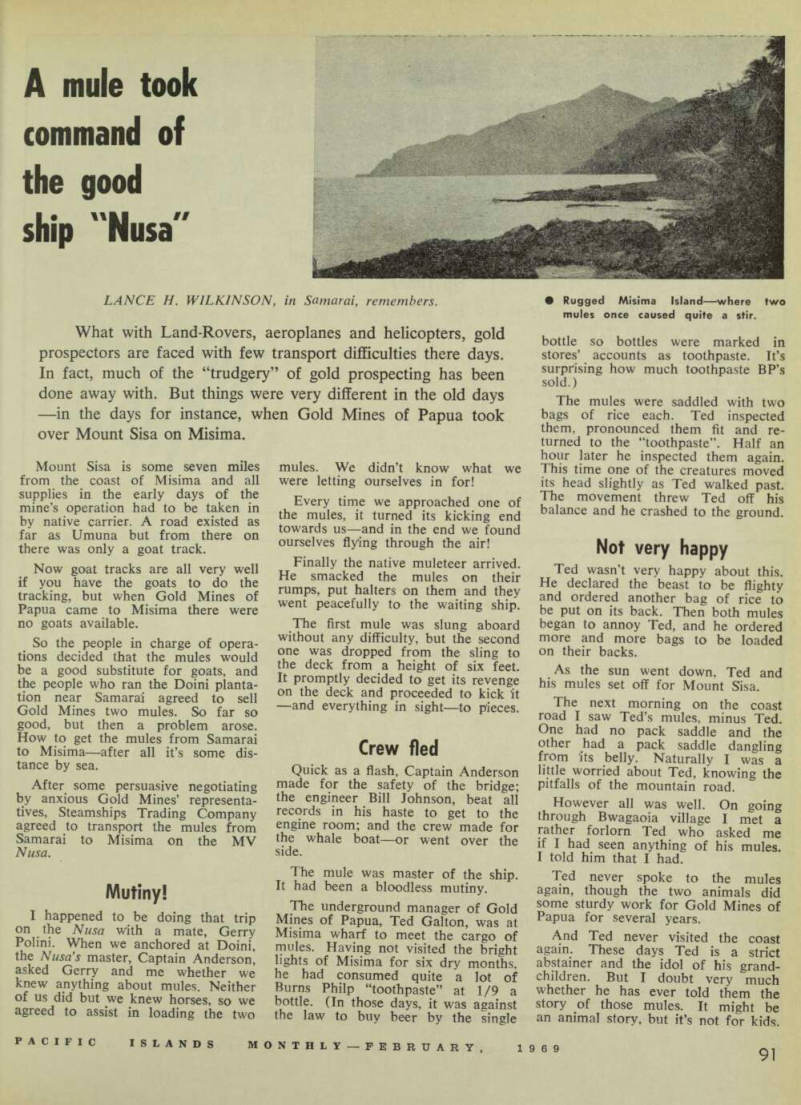 95
95 96
96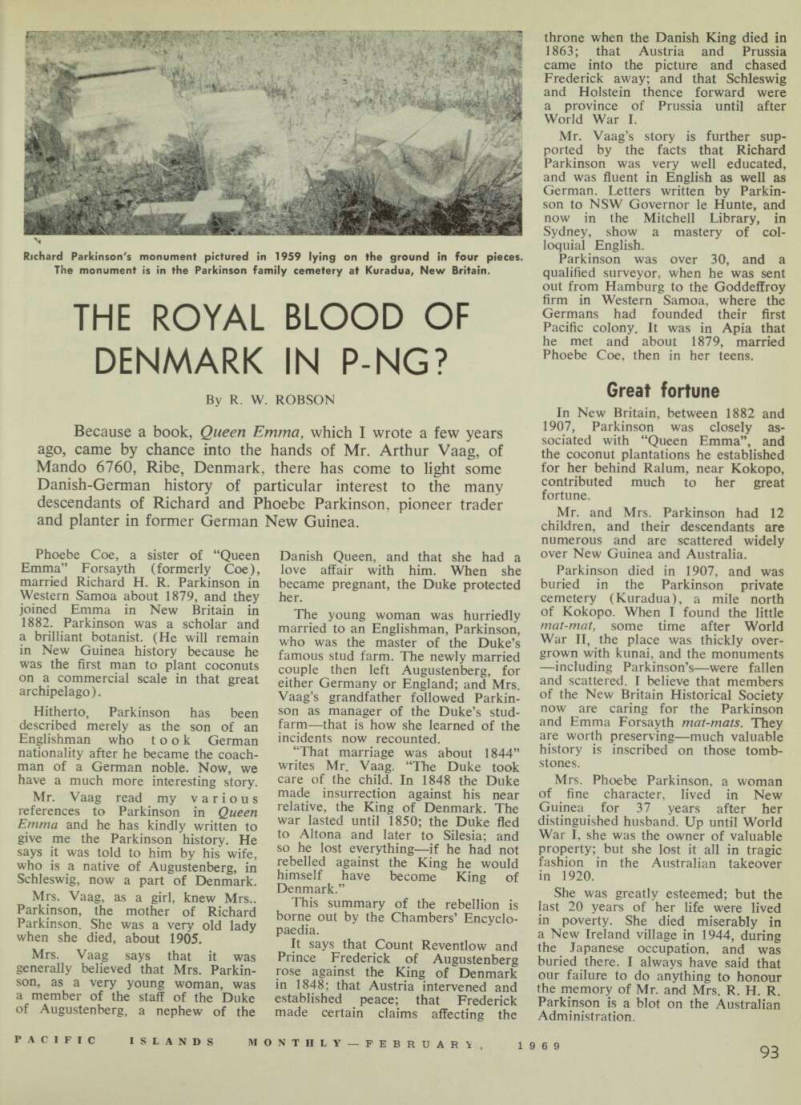 97
97 98
98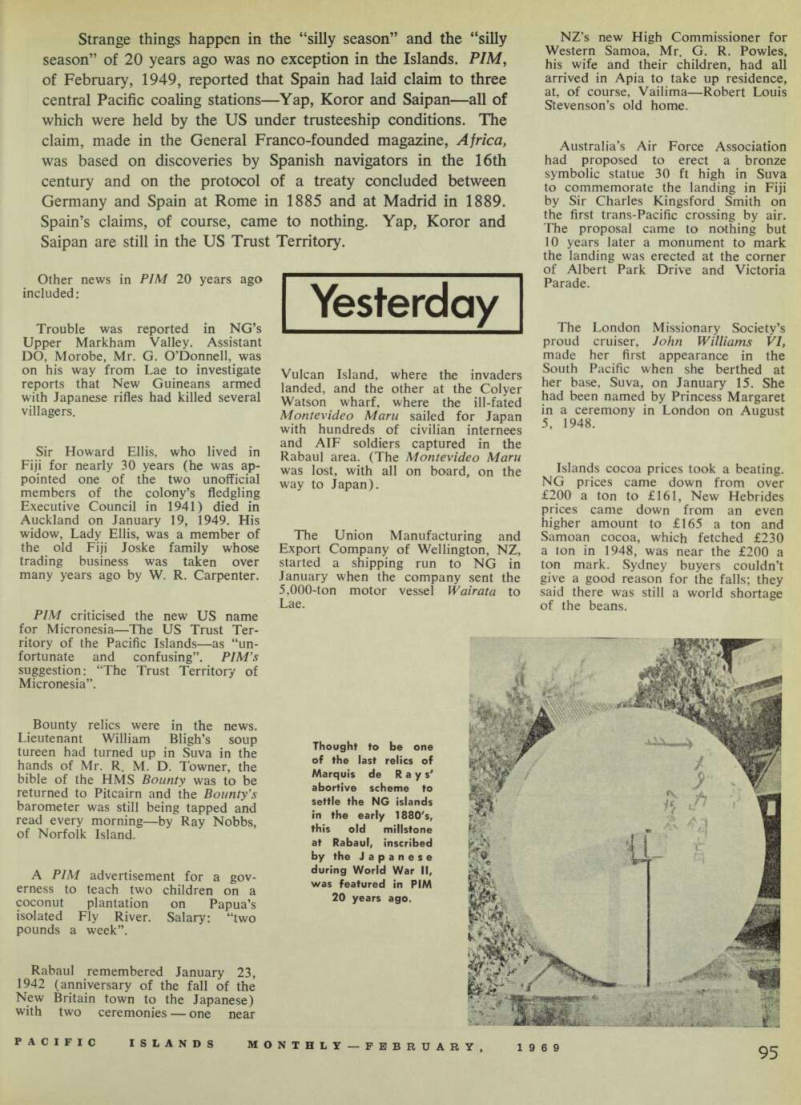 99
99 100
100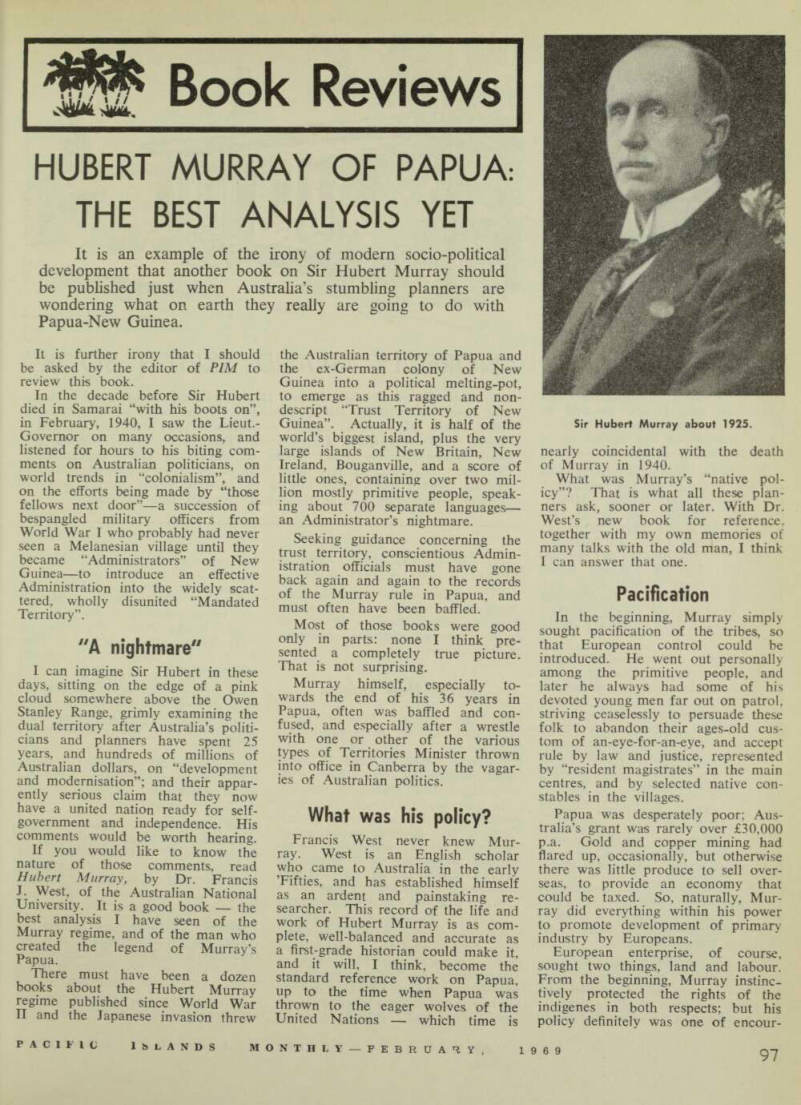 101
101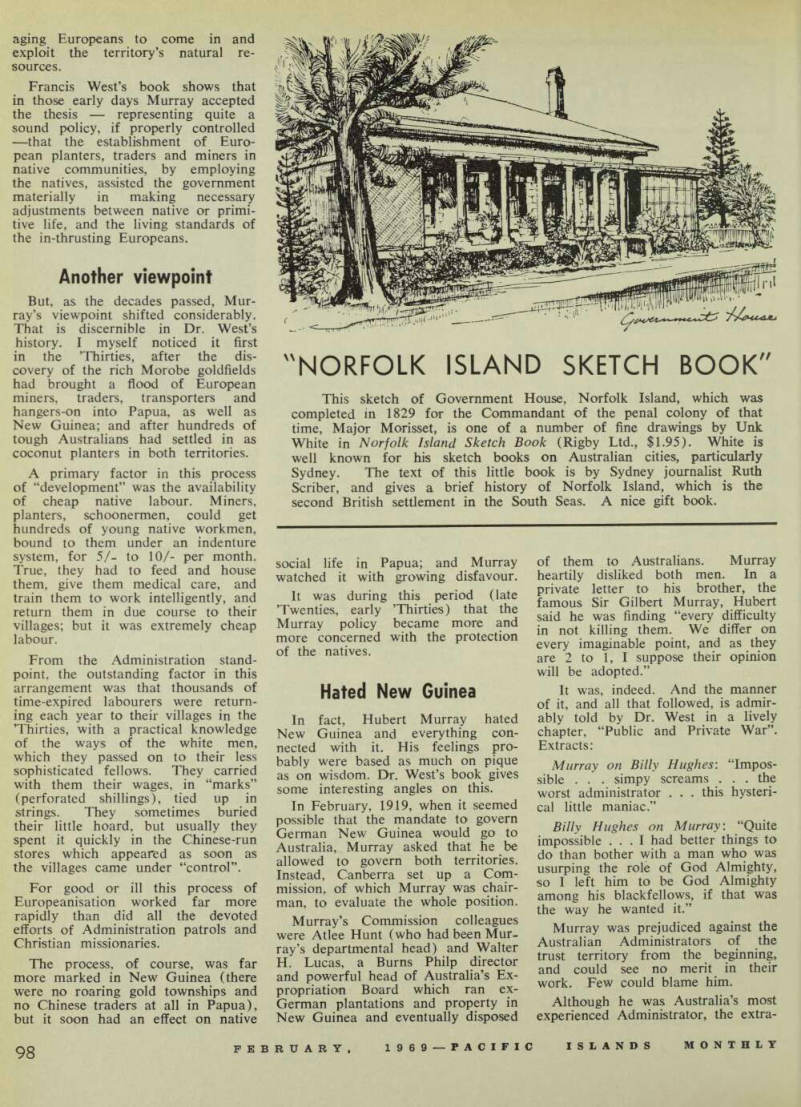 102
102 103
103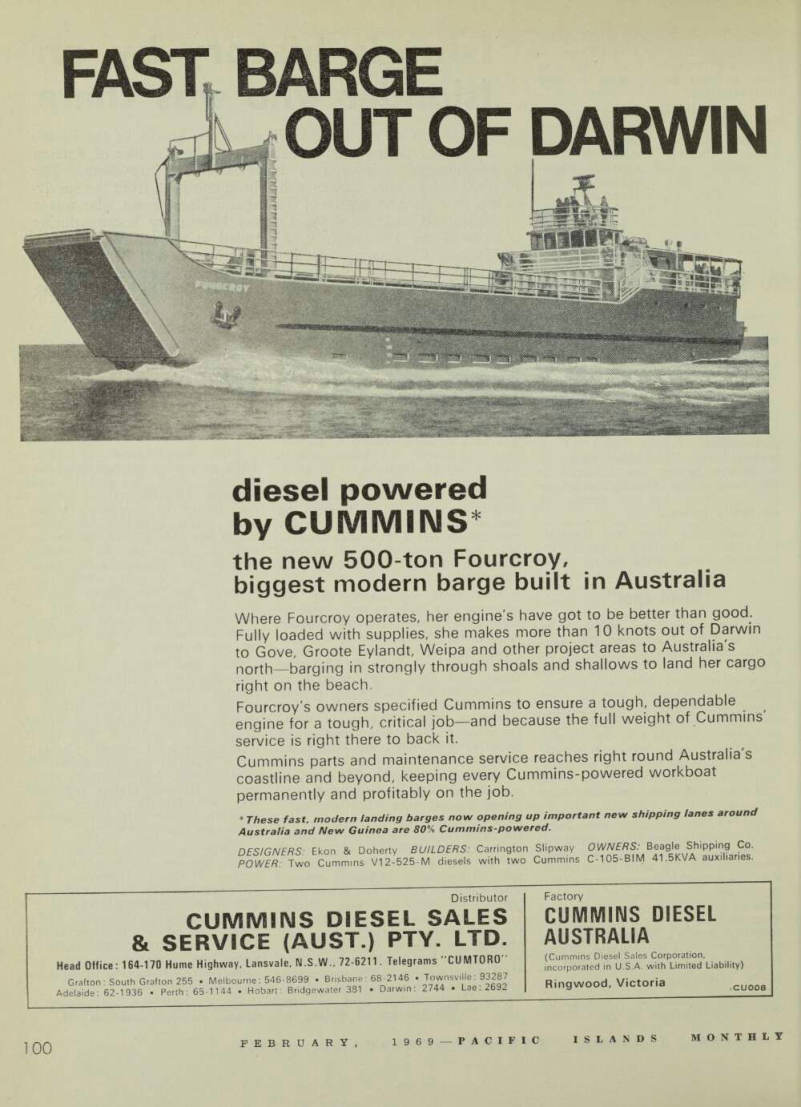 104
104 105
105 106
106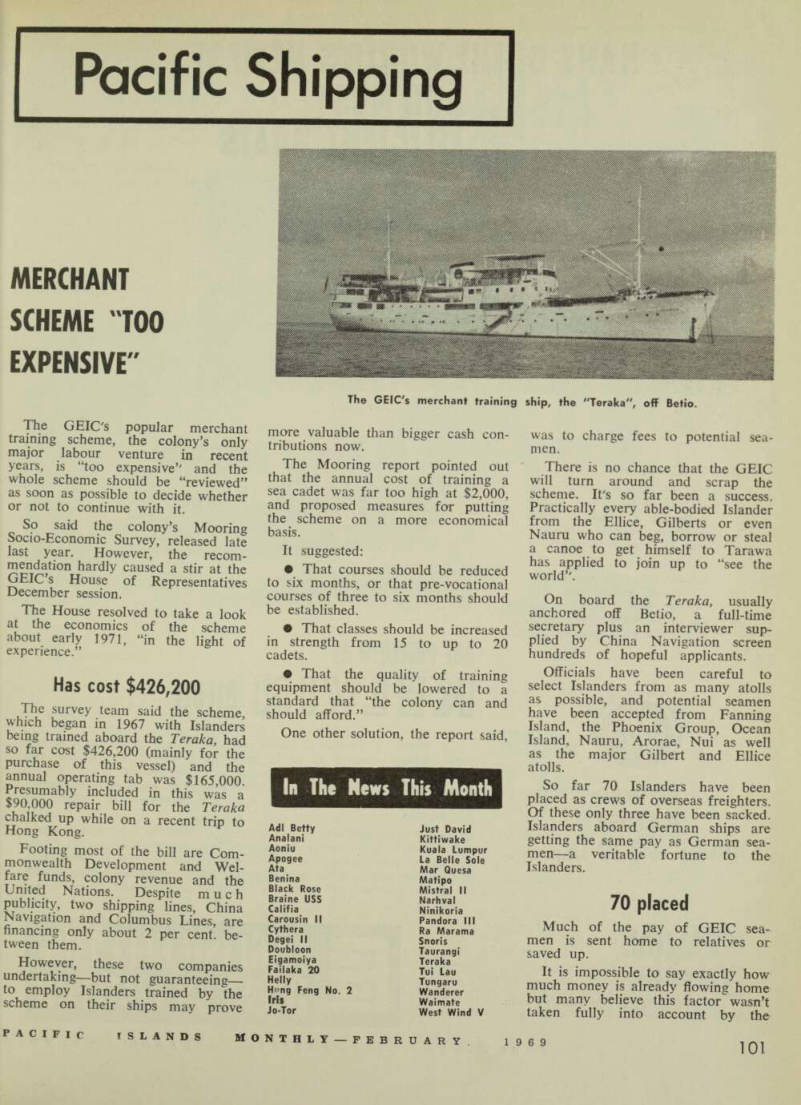 107
107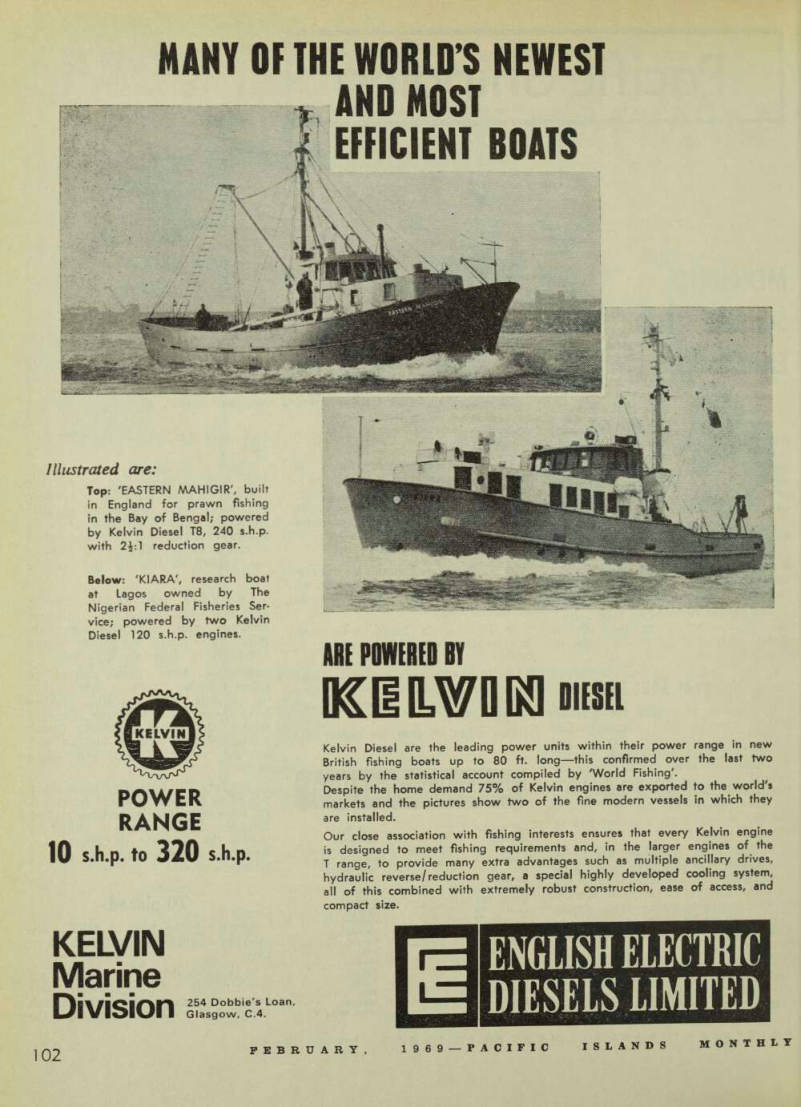 108
108 109
109 110
110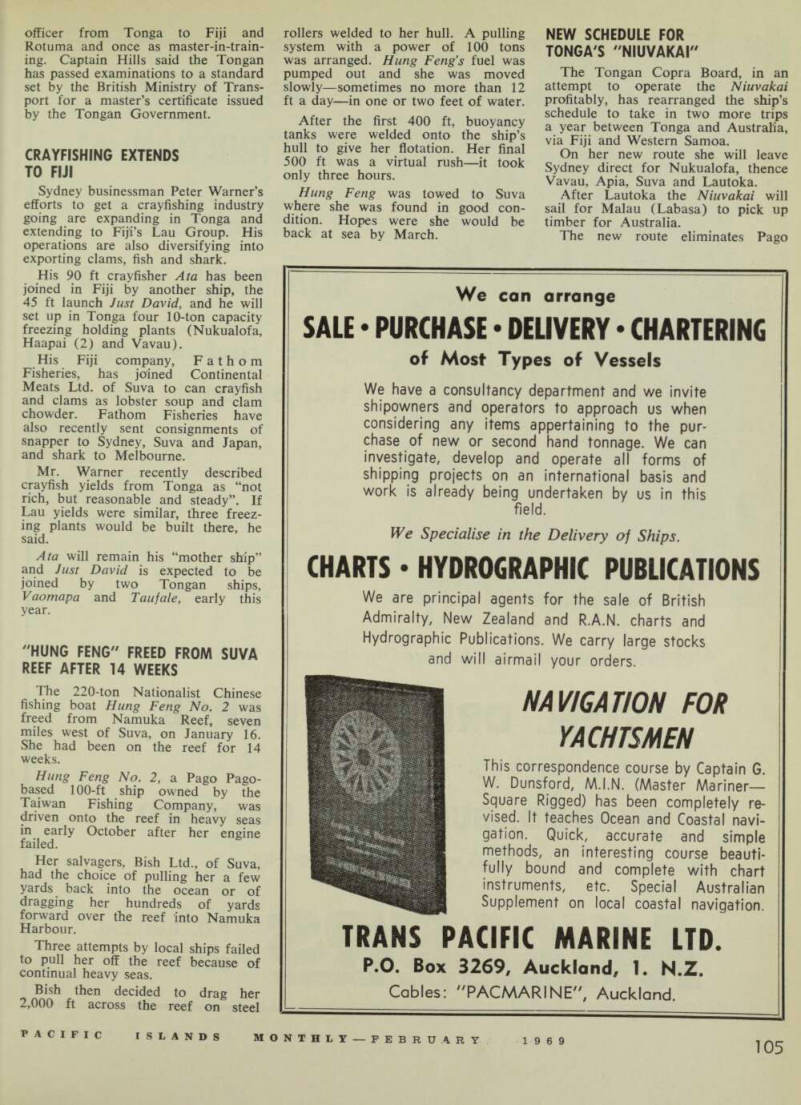 111
111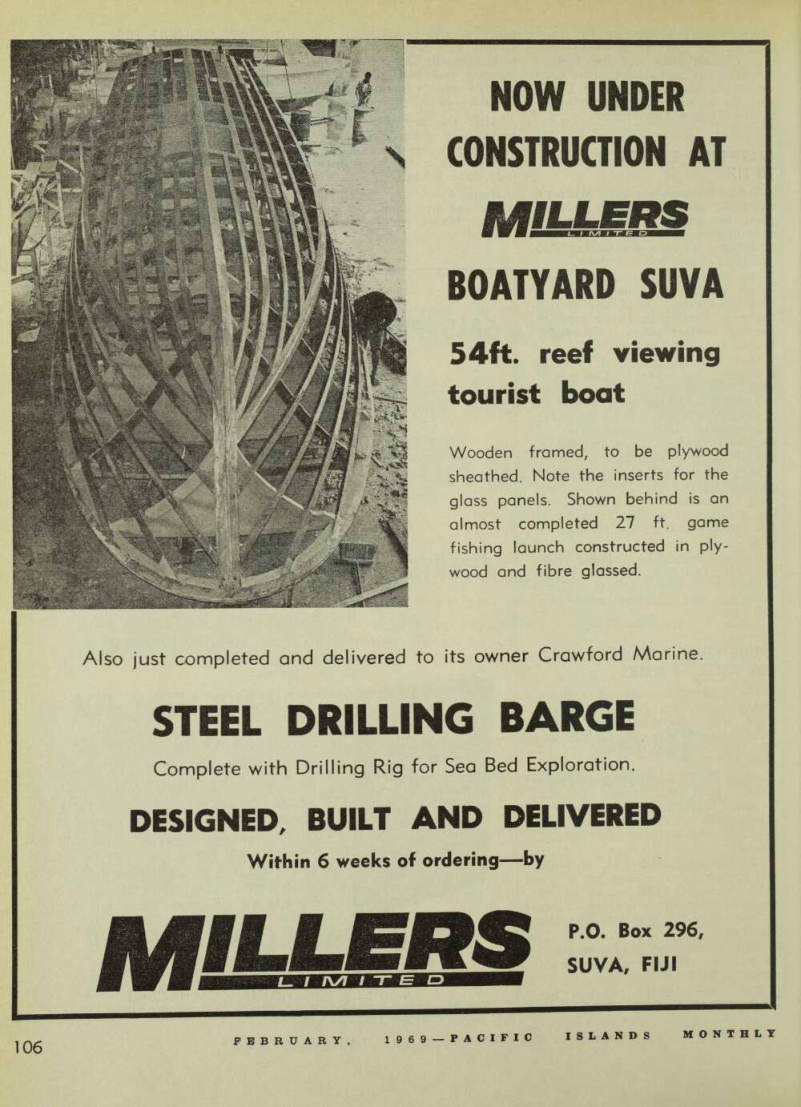 112
112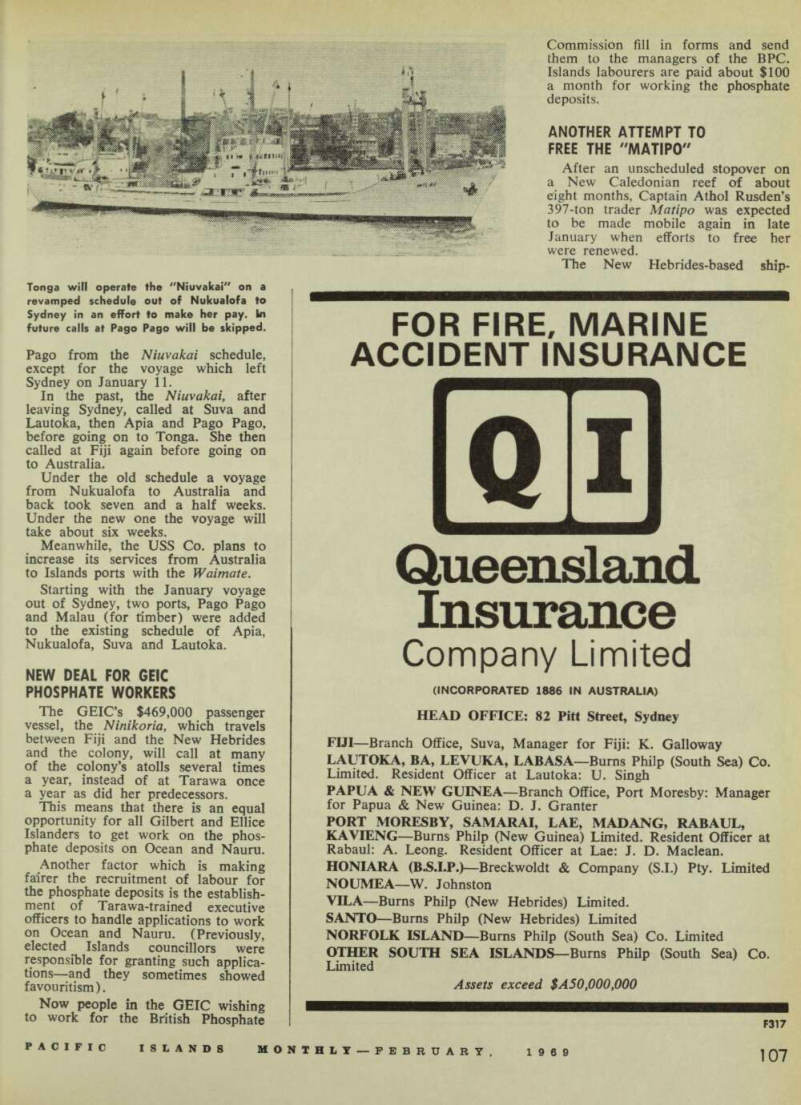 113
113 114
114 115
115 116
116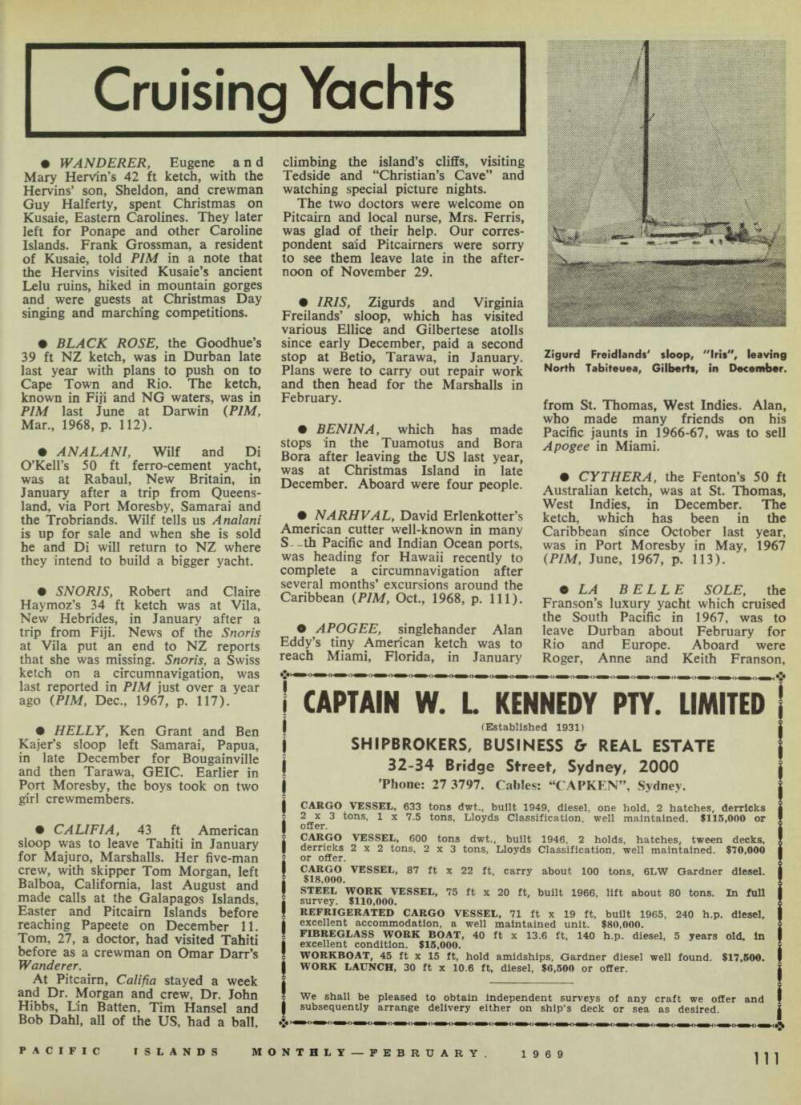 117
117 118
118 119
119 120
120 121
121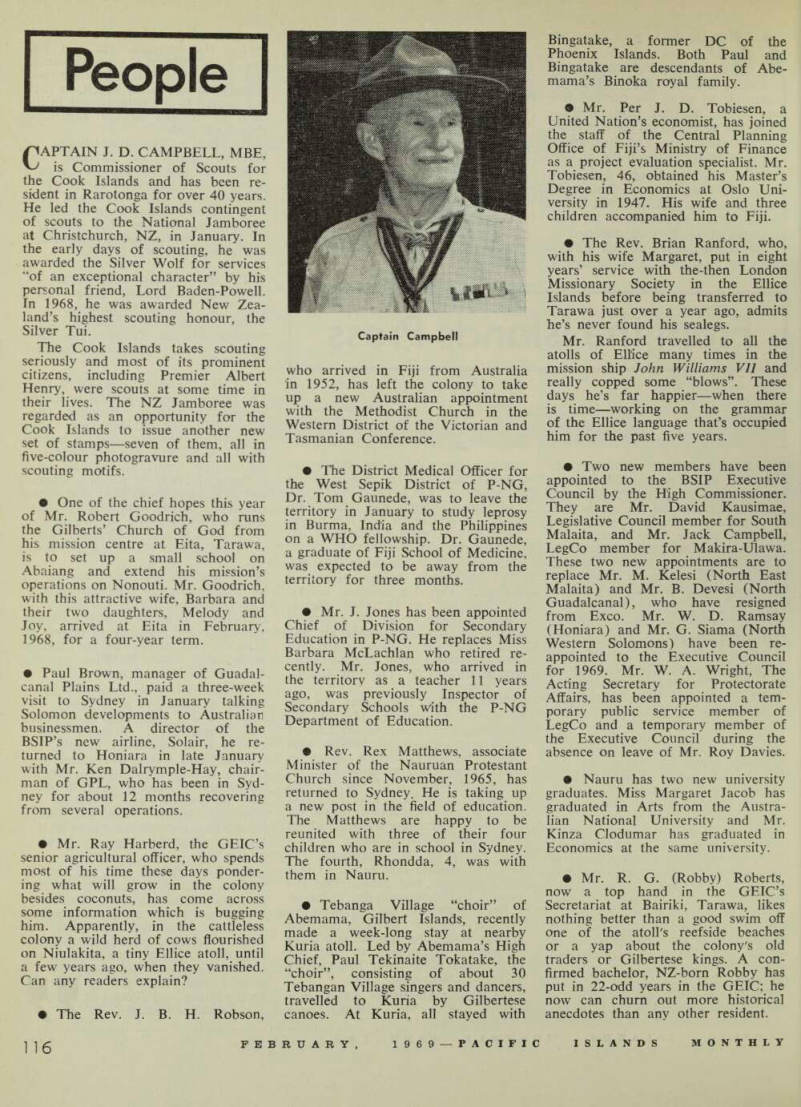 122
122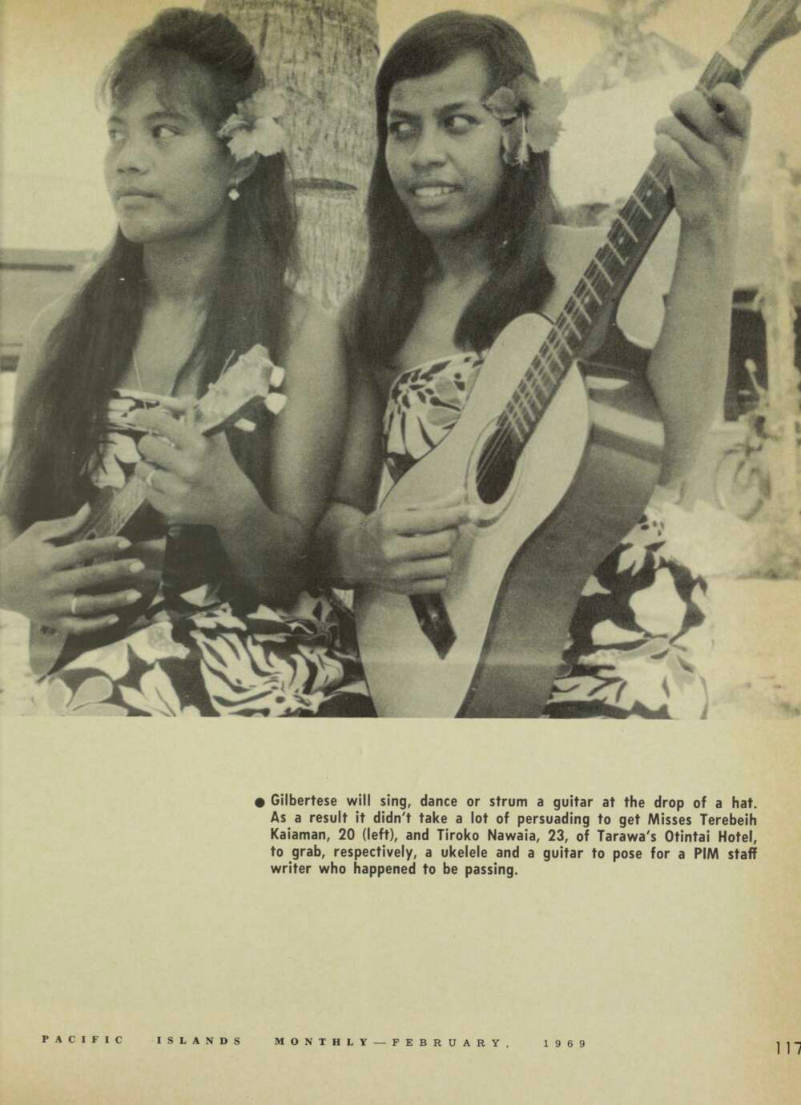 123
123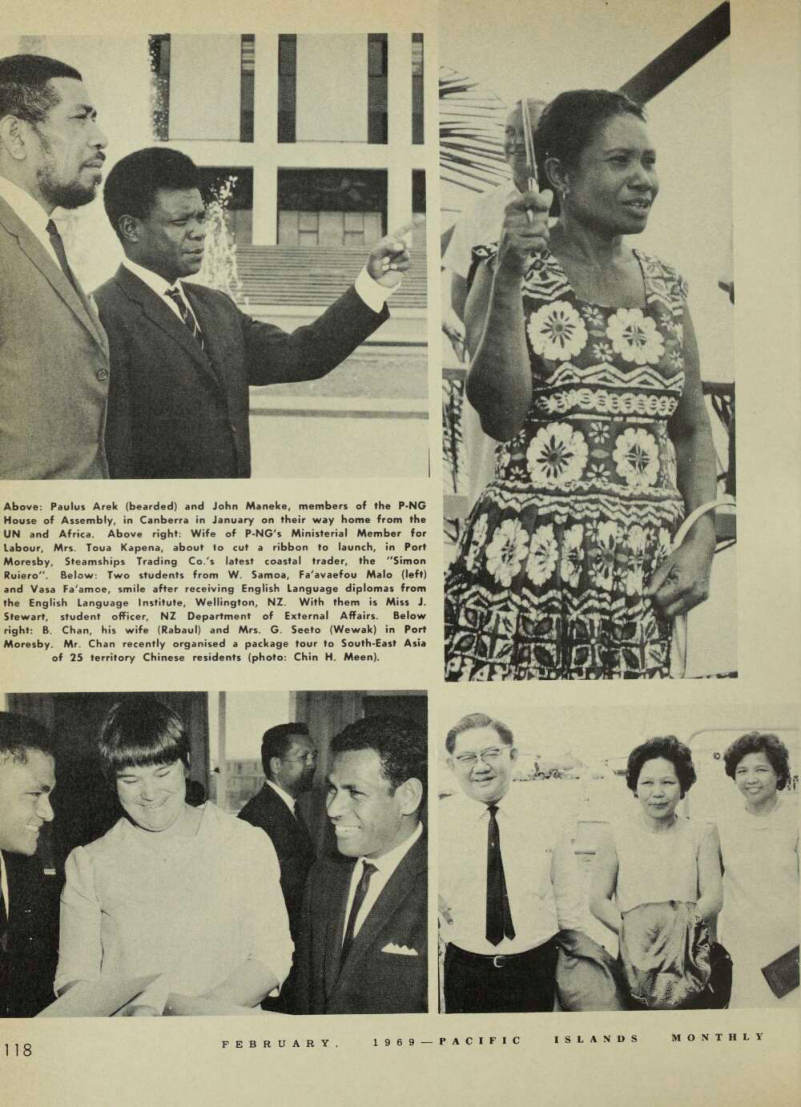 124
124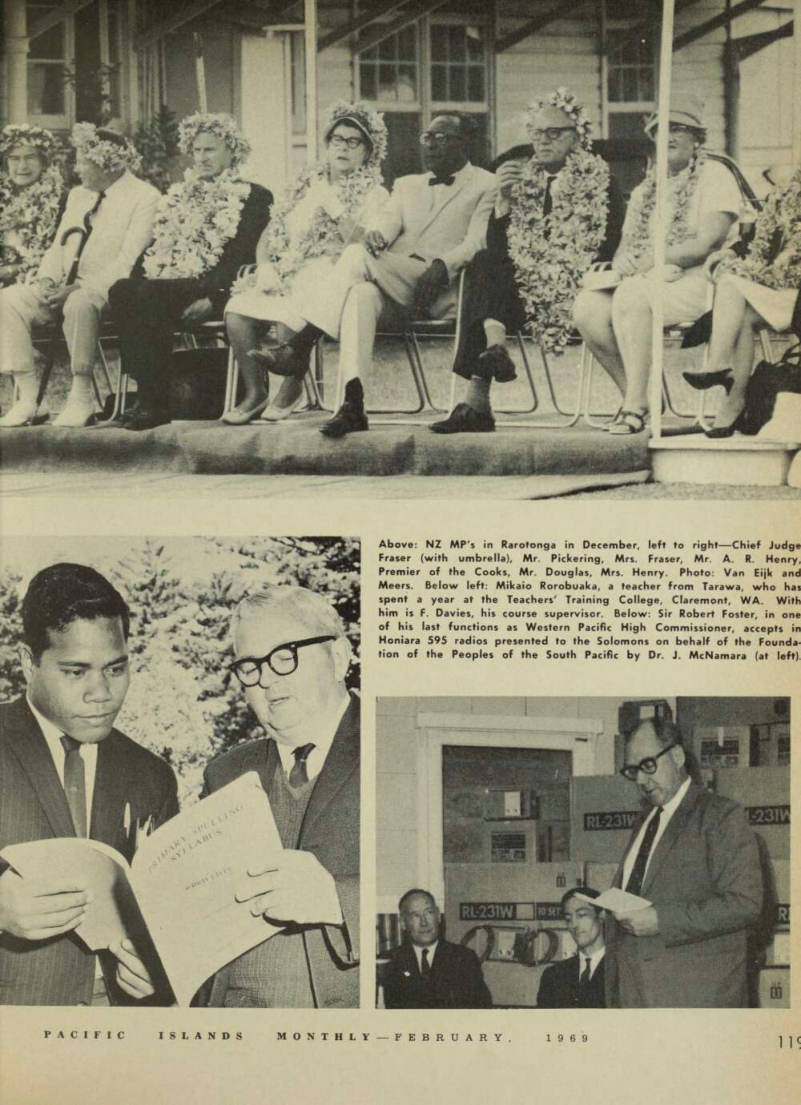 125
125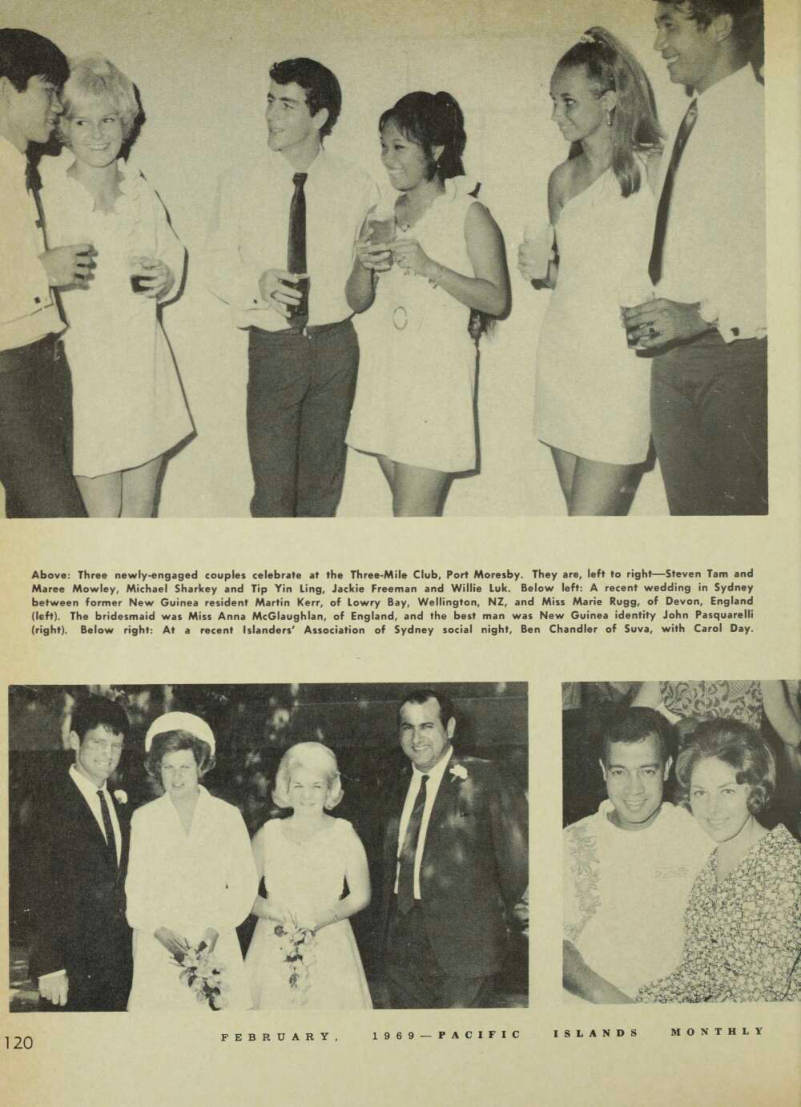 126
126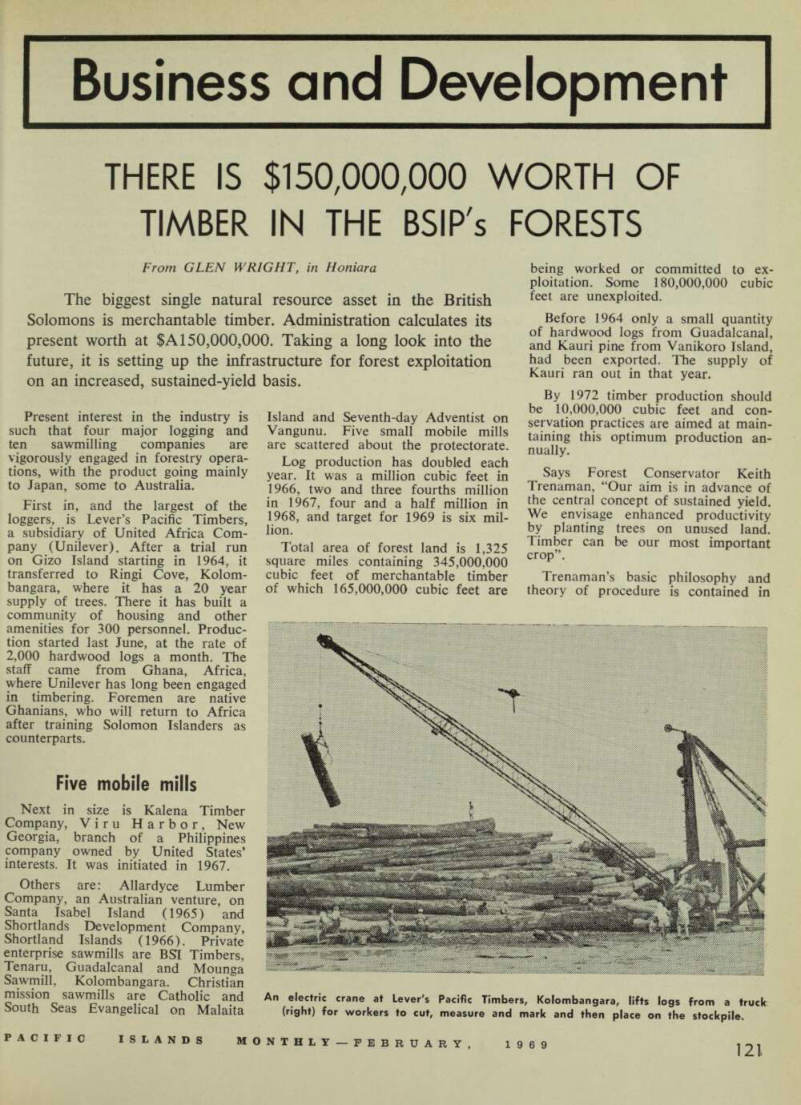 127
127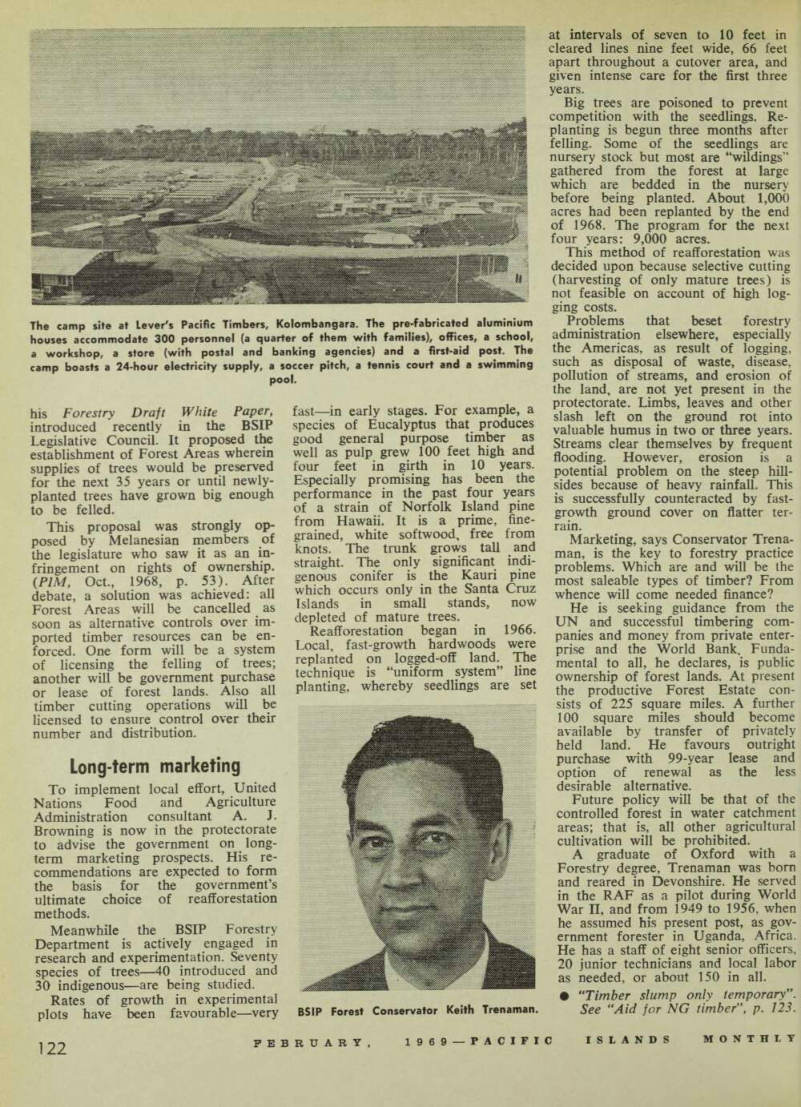 128
128 129
129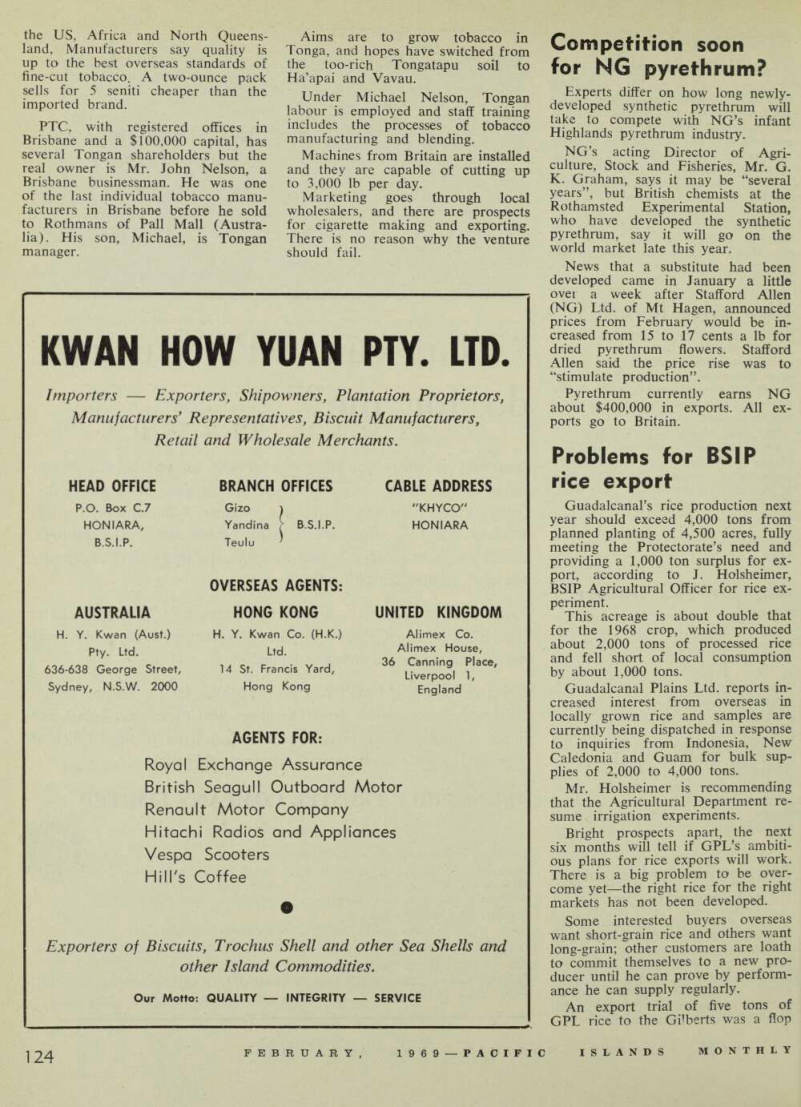 130
130 131
131 132
132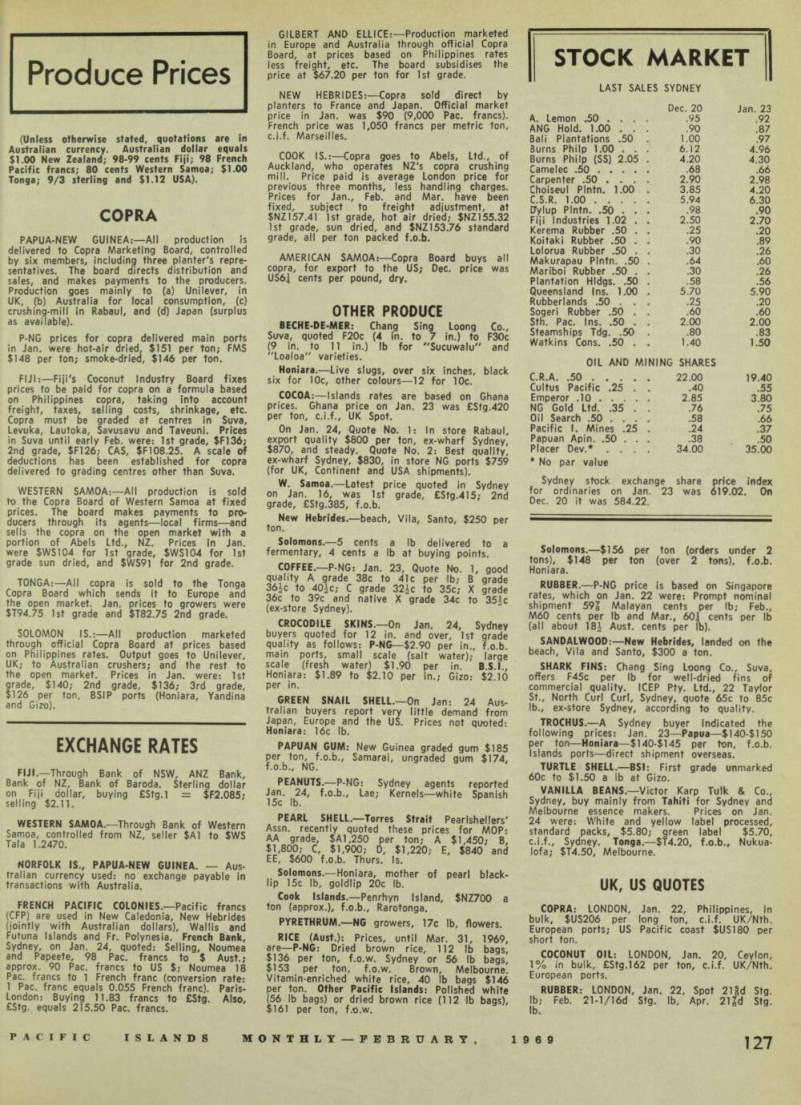 133
133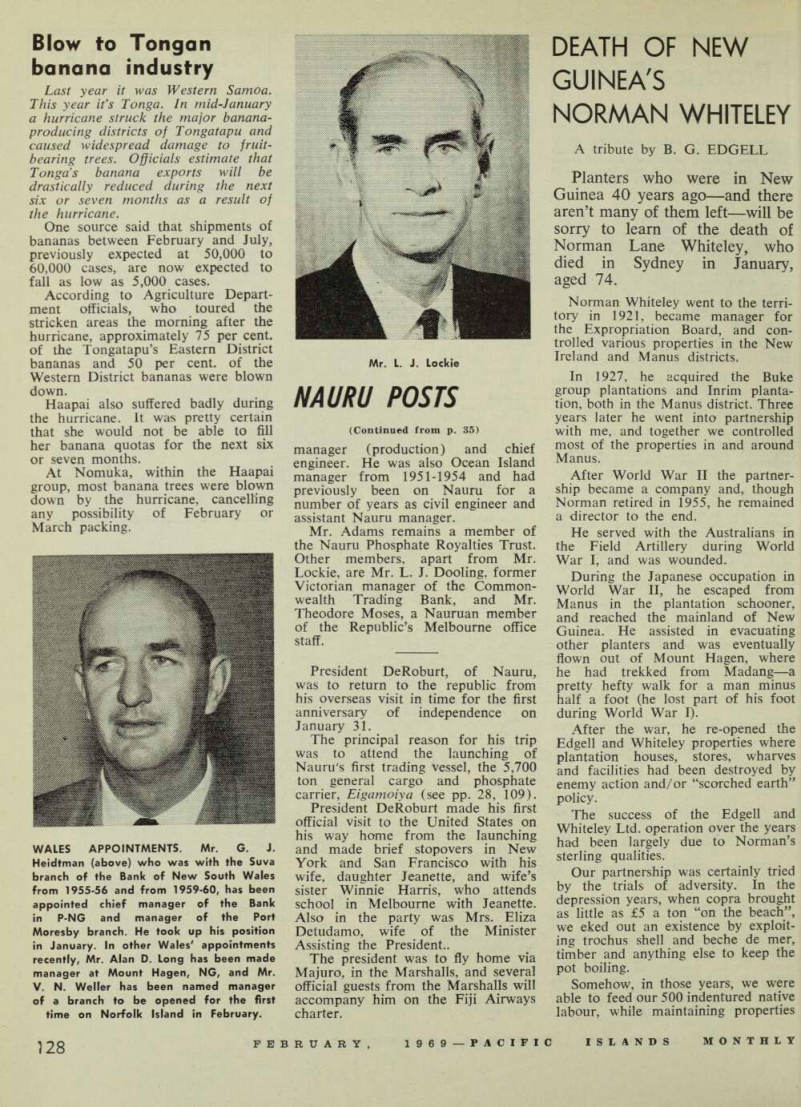 134
134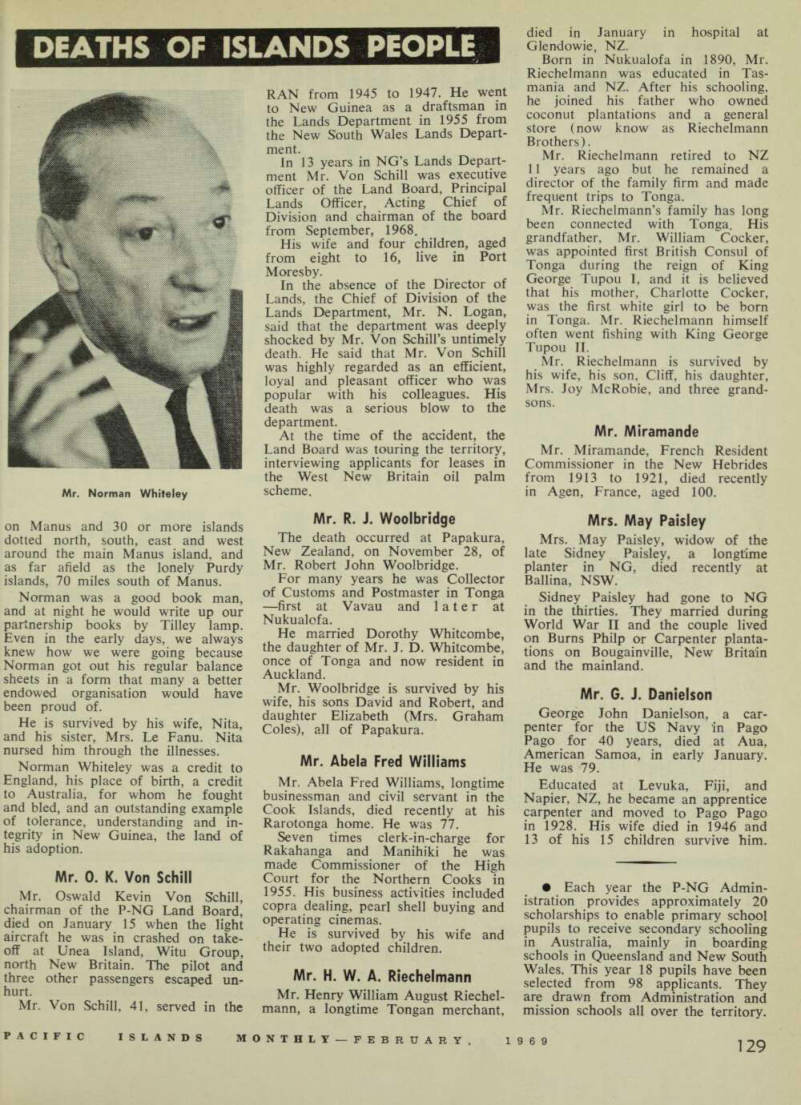 135
135 136
136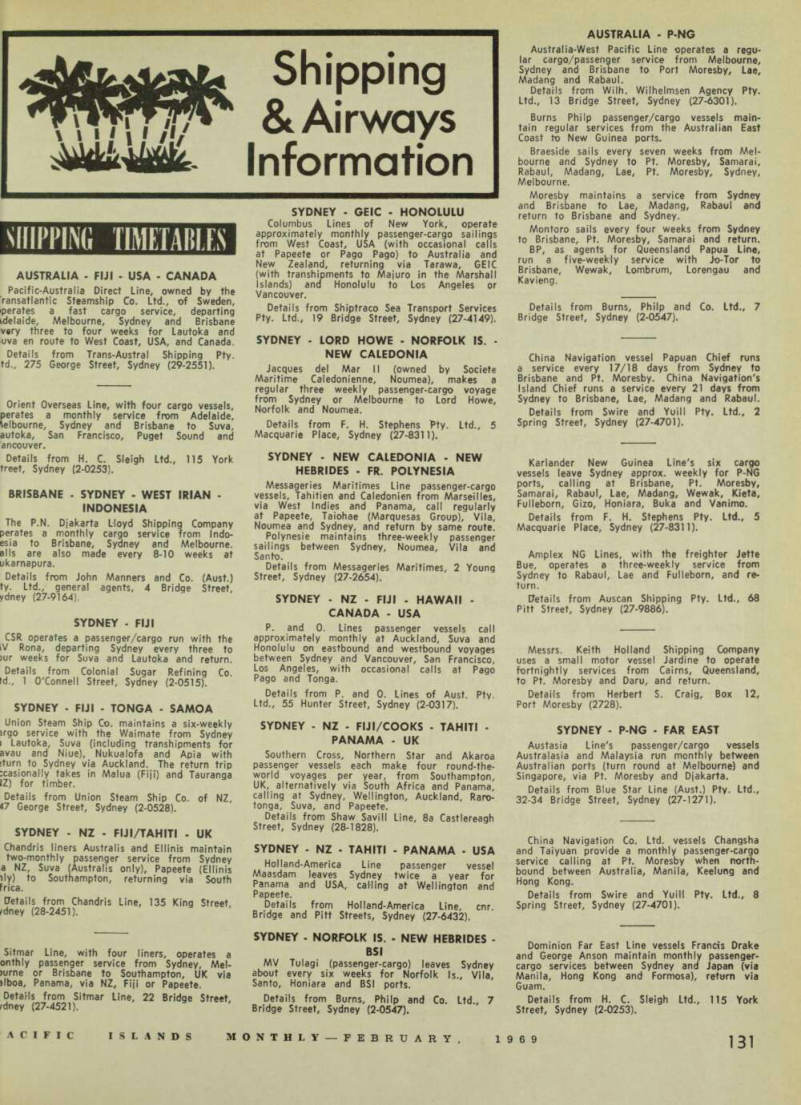 137
137 138
138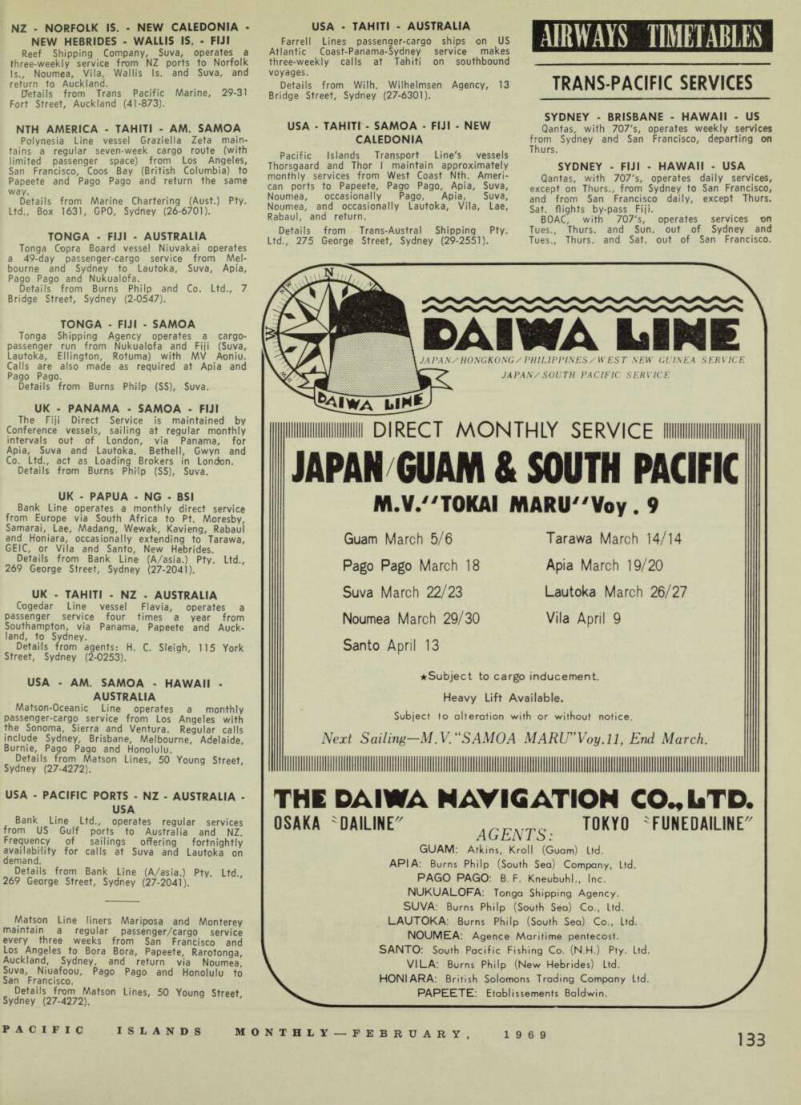 139
139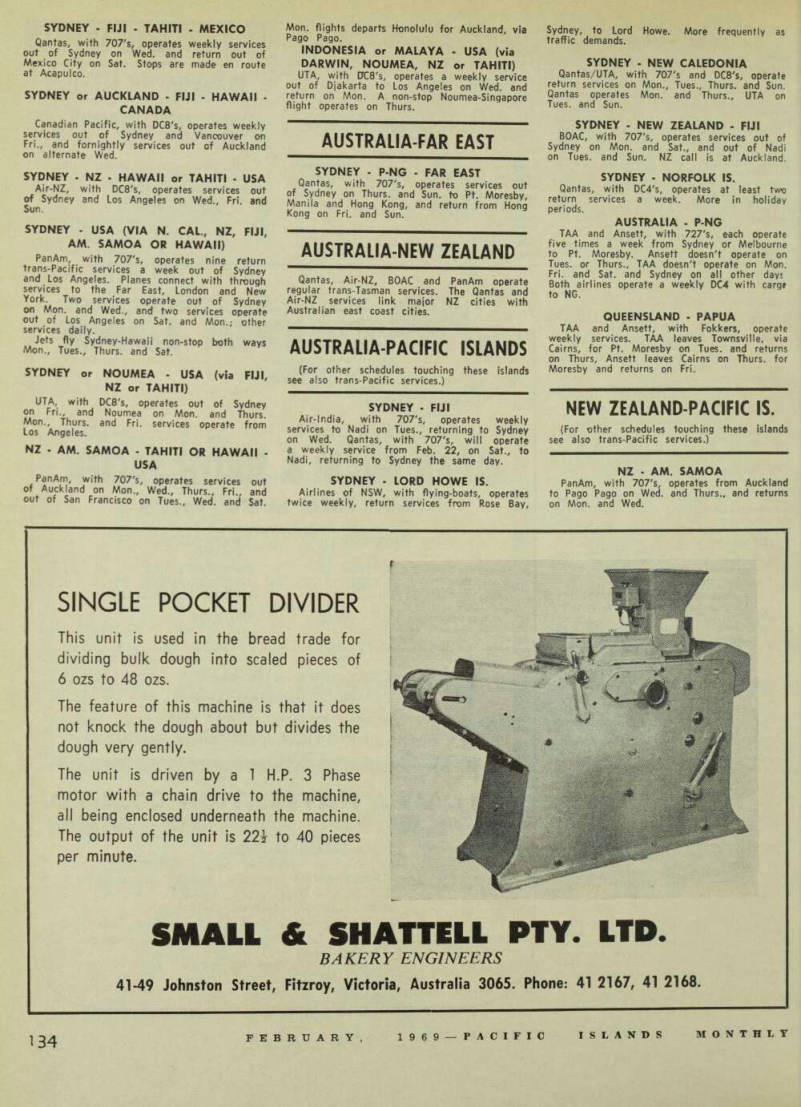 140
140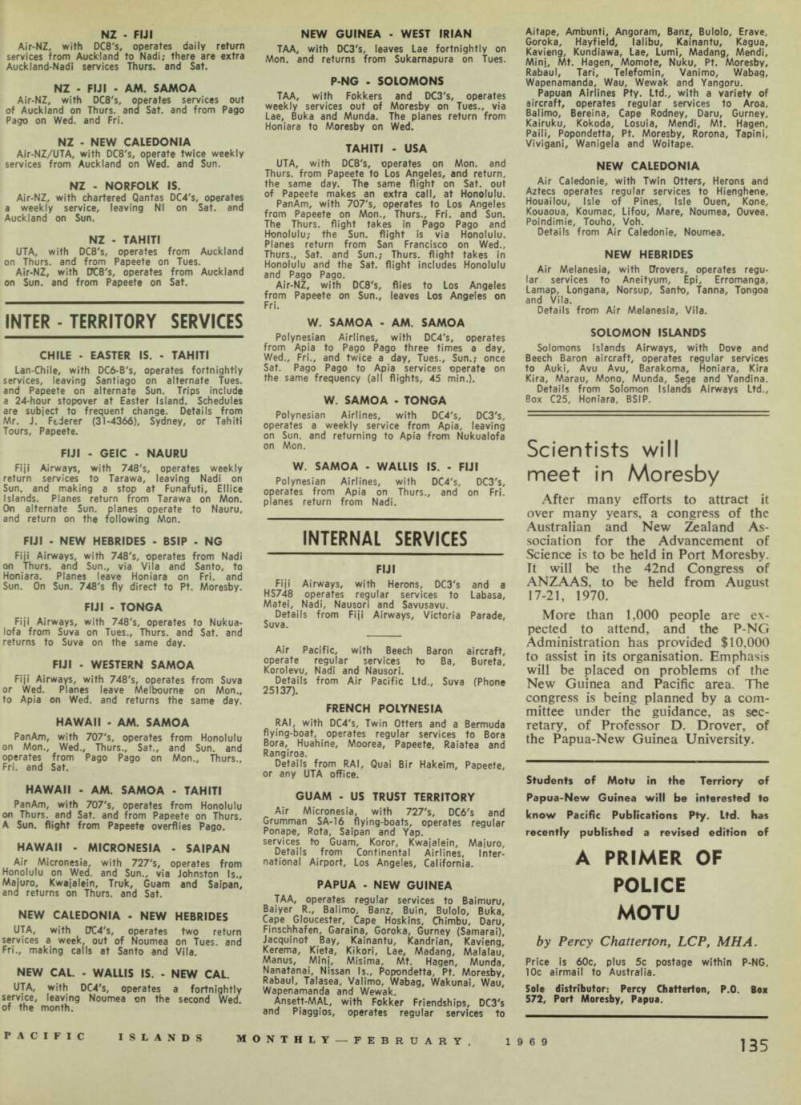 141
141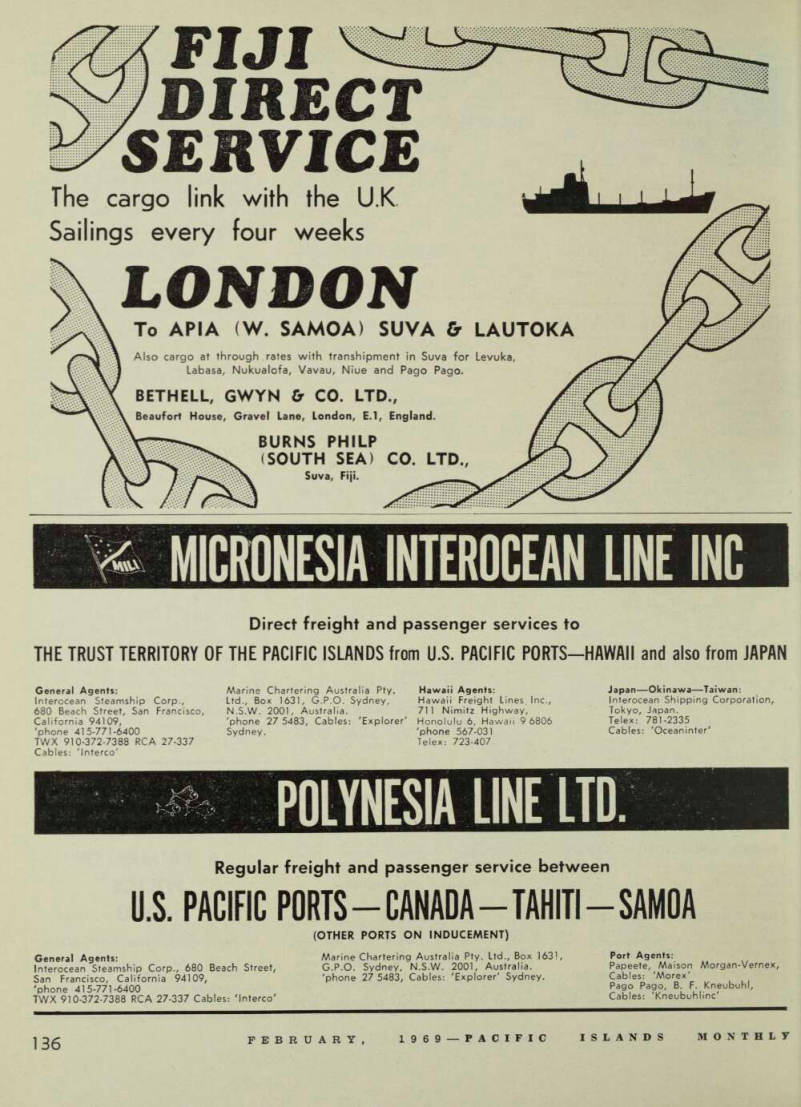 142
142 143
143 144
144 145
145 146
146 147
147 148
148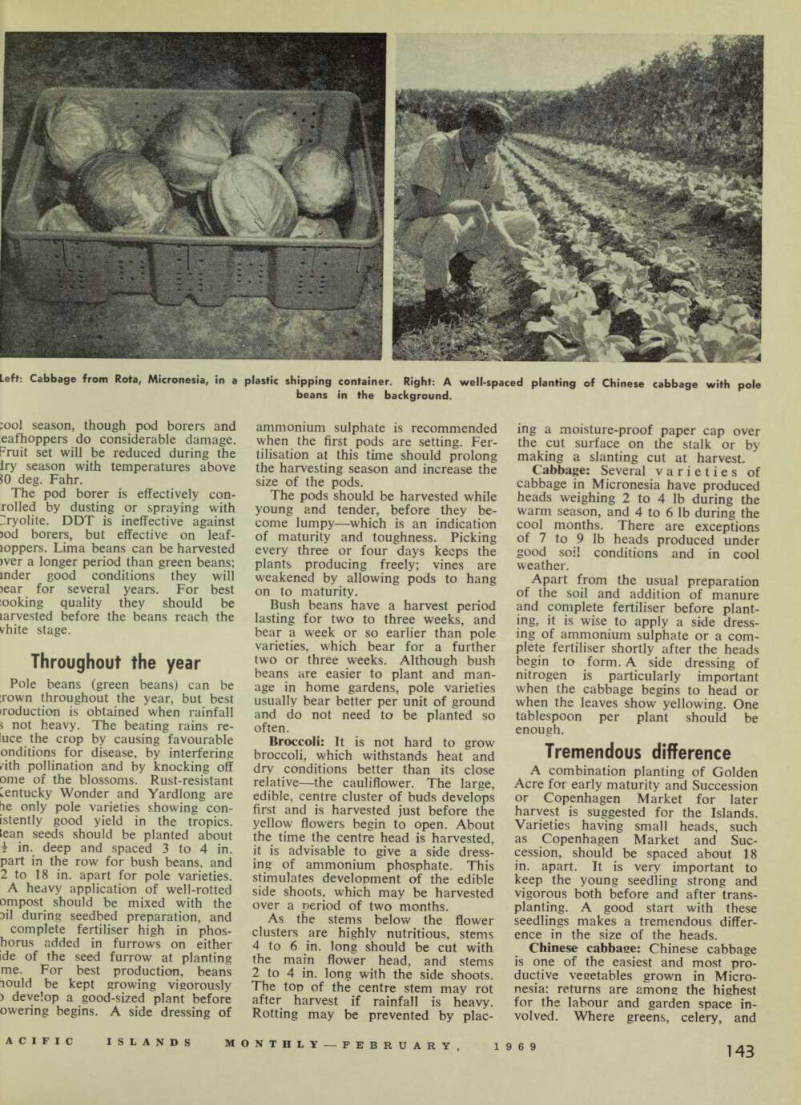 149
149 150
150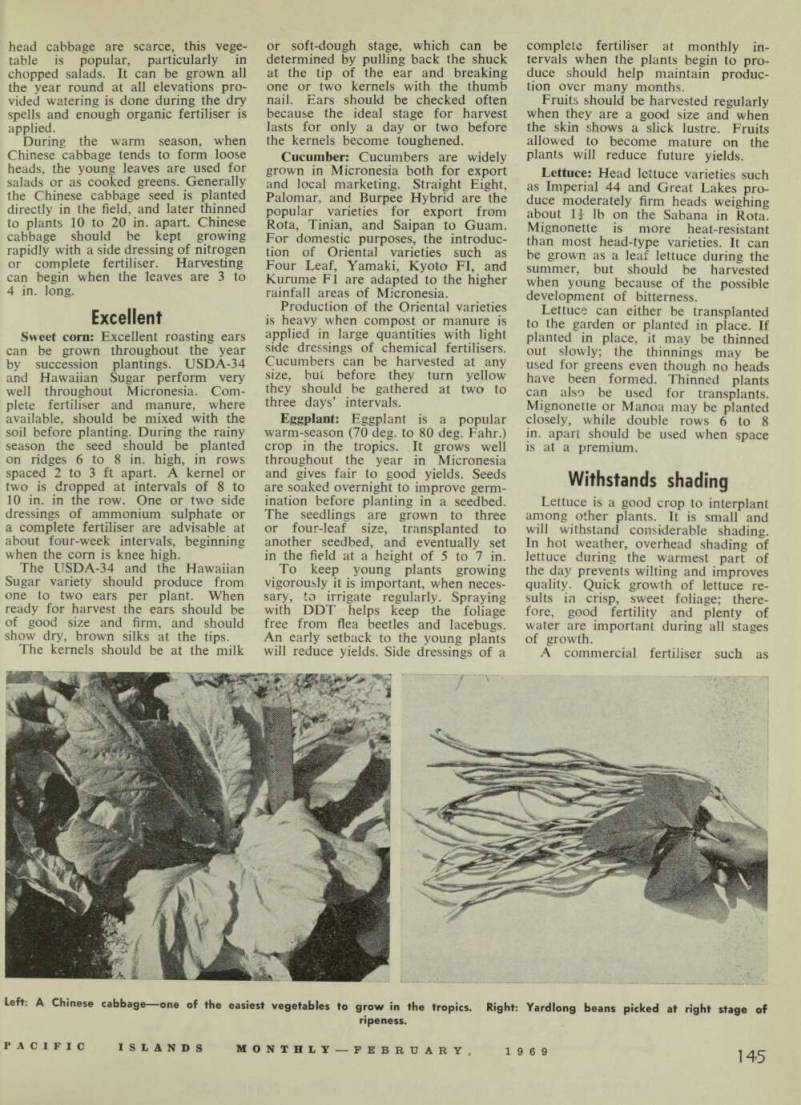 151
151 152
152 153
153 154
154 155
155 156
156 157
157 158
158 159
159 160
160 161
161 162
162 163
163 164
164 165
165 166
166 167
167 168
168