Monthly
Pacific Islands Monthly
The Cruel Sea, P. 4
Registered at G.P.0., Sydney, for transmission by post as a newspaper.
January, 1969
News Magazine Of The South Pacific
• AUSTRALIA, 40c. • NEW ZEALAND, 45c. #U.S. PACIFIC TERRITORIES, 70c. • FRENCH PACIFIC ISLANDS, 55 FRCS. CFP. • P.-N.G., FIJI AND ALL OTHER
Pacific Territories, 35C. Local Currency.
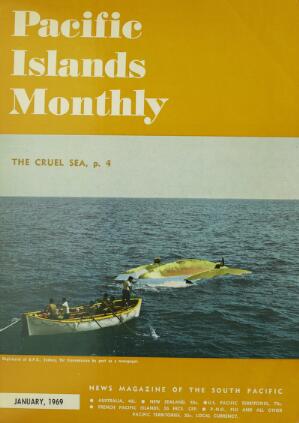
Our Cover
The cruel sea makes another claim.
In an expanse of loneliness, where vast ocean meets vast sky, the broken and lifeless trimaran "'Waka Toru" drifts hulls up, as the "Moanaraoi's" crash boat moves towards it shortly after sighting her. The trimaran, with eight aboard, had been missing for three months when she was dis covered by the Gilbert and Ellice Islands Colony vessel north of Lord Howe Island. This photograph was taken from the bridge by "Moanaraoi's" master, Captain Peter King, whose comments on the finding are to be found in our report on p. 28. Trimarans are popular sailing craft in the Islands, but a criticism of them is that they can overturn — and stay that way.
Advertisements & other items, p. 2 (2 items)
January, 1969 Pacific Islands Month
One flight...
M
1823 miles off extra care
Between Papua/New Guinea and Australia, everyone gets extra care when they fly TAA ‘Bird of Pa adise’. Business or holiday travel, family travel or sentimental journey whatever your reason to fly, you’ll relax and enjoy TAA’s international standards of service with five hostesses to pamper your every need. Drinks are free first class. Meals are culinary masterpieces from canapes right through to cheese, coffee and mints. Everyone gets extra care on a ‘Bird of Paradise’ flight especially the youngsters, who’ll really enjoy their games and books. So take care to book TAA, and we’ll take extra care of you. Call your Travel Agent or TAA now.
Port Moresby 2101, Lae 2311, Madang 2478, Rabaul 2567, Goroka 8, Mt. Hagen 4, Wewak 103.
Fly TAA the Friendly Way
In This Issue
General
The "Waka Toru" tragedy 28 Islands rosy future: Skinner 33 New Bishop of Polynesia 71 Boost for Islands trade assn 119 BP's shipping losses may drop 112 New Pacific airline 155
American Samoa
A controversial year 34 Litterbugs 113
Cook Islands
Pastors remembered 36 Farewell to Ronald Powell 38 "Energy's" bad luck 103 Avarua's new wharf 103 Chief Judge Morgan retires ... 114 Copra records ... 120, 123
Fiji
Politics for 1969 4 Details of Cpt. R. Kane wanted ... 17 Findings on the "Tui Lau" 30 TV prospects 31 The political scene 32 Travel film hurts feelings 35 Theological College's chapel ... 37 Tourist developments ... 45 Fiji Airways' schedules ... 51 Divorce figures drop 55 Swinging to a new tempo 59
They're living longer 61
Pacific Fishing Co's operation 99 Charter vessel launched 105
New fishing boats for Rabi 107 Miss Fiji, 1968 115 Happy with sugar agreement 122
French Polynesia
Pouvanaa a Oopa returns 24 Pouvanaa a Oopa's political struggle 62 NZ's increased trade 122
Gilbert And Ellice Islands Colony
How to avoid seasickness 38 Honouring Japanese dead 71 Problems with "Nei Auti's" service ... 113 Sir John Field visits Tarawa 114
Lord Howe Island
The "Waka Toru" tragedy 28 Plane forced to land 87 "Pacific Chieftain" lost 107
Nauru
The President ... 4 New Commonwealth status 27
New Caledonia
General survey 73 NZ's increased trade 122 French rein on nickel industry 124
New Hebrides
Cyclone Becky strikes ... 33 Passports for Melanesians .. 36 Vila in pictures 40 Death of "Tulagi" officer 105 Mineral search 122 The budget 134
Niue
Life on the island 83 Nolarae's "poor taste" 113
Norfolk Island
Mysteries, solved and unsolved 88 Historic anchor? 89 Skeleton and anchor puzzle 89 Prouds to open branch 123
Papua-New Guinea
South Pacific Games 4 Niuginians and happiness 19 Lieut. Pilsbury goes home 20 House of Assembly meeting 23 First Assembly of new church 33 Tufi—for tourists 43 Solair for Bougainville? 51 Aircraft restoration 56 NGVR names 57 "Bev" inquiry 107 Kieta wharf contract 109
Solomon Islands
Challenging budget ... 26
Cyclone Becky strikes 33
New plans for Solair 51 Exporting rice 123 Sir Robert Foster leaves ... 155
Tonga
Title fight 25 Korean ship on reef 133
Us Trust Territory
Political future 32 Mr. Skinner's views 33 Continental airlines ... 155
Western Samoa
Optimistic budget 25 Peace Corps H 3 Hydro-power appointment 114
DEPARTMENTS: Up Front with the Editor, 3; Letters, 17; Tropicalities, 35; Travel, 39; To the Point with Percy Chatterton, 52; Magazine Section, 83; Yesterday, 91; Book Reviews, 93; Shipping, 99; Cruising Yachts, 110; Islands Press, 113; People, 114; Commerce, 125; Produce Prices, 125; Shipping, Airways Schedules, 127; Deaths of Islands People, 132; Practical Planter, 137; Index to Advertisers, 156.
Advertisements & other items, p. 4 (1 item)
Biscuits
r
rno
famous
Biscuits
S
TRIPLE
c * mm
WRAPPED
PACKS
% i & li WssS®
simply
with
• • • There is no Substitute for Quality
Pacific Islands
Monthly
Established 1930; 39th Year of Publication.
Owned And Published By
Pacific Publications (Aust.) Pty. Ltd.,
29 Alberta St., Sydney, N.S.W., 2000
Postal Address: G.P.O. BOX 3408, SYDNEY
N.S.W., 2001.
Telegraphic Address: PACPUB, Sydney.
Telephones: 61-9197, 61-7101, 61-4369.
Chief Executives; Managing Director: R. W. Robson.
Executive Director/Publisher; Judy Tudor.
Executive Director/Business Manager: Selwyn Hughes.
Executive Director/Chief Editor: Stuart Inder.
Pacific Islands Monthly
Editor: Stuart Inder.
Branch Offices
Melbourne: Newspaper House, 247 Collins St Victoria, 3000. Tel.: 63-7053.
Fiji: Pacific Publications (Fiji) Ltd., Fiji Times Building, 20 Gordon Street, Suva Tel • 25601 Fiji Times Office, Vidilo Street, LAUTOKA Tel.; 60-422.
Papua-New Guinea: Pacific Publications (N.G ) Pty. Ltd. Representatives: PORT MORESBY P 0 Box 16; LAE, P.O. Box 227; RABAUL, Mr Steve Simpson. P.O. Box 154 (Tel.: 2547).
Representatives
Queensfand; Advertising—Beale Media Services. 45 Wickham Terrace, Brisbane. Tel.: 2-3188. d ew A e « a i an J? : General.—J. U. Whitcombe, C.P.O.
Box 2229, Queen Street, Auckland. Tel.: 76056 Advertising.—John Bayldon, P.O. Box 366' Auckland. Tel.: 31569.
United States: Mrs. A. L. Craib, 782 Neilson St., Berkeley, California, 94707. Tel.: 5273503.
Umted Kingdom; S. R. Warman, Park House, 22 Park Street, Croydon, CR9 3NP. Tel - 01-6884177.
H. A Mackenzie, 4A Bloomsbury Square London, W.C.I. Tel.: Holborn 3779.
Agents
All main trading firms and stores in the Pacific Islands.
Pacific Publications Pty. Ltd. is the Australian agent for THE FIJI TIMES.
Subscription Rates:
"Pacific Islands Monthly" is air-freighted to all subscribers and agents in the South Pacific; copies to other areas go by surface mail.
Australia (ind. Lord Howe Is., and Thursday S.): $4.50 Aust.; Papua-New Guinea. Norfolk Npw N H U h U,^ B ’ S ‘ tA'n & E ‘ Group, Tonga and " e 7 bndes = . $4 -°? Aust -; New Zealand: 15/™I 5 /™ N „ ; C ? ok ls " Nlue and Western Samoa: $4.00 (local currency); Fiji $4.00 (local currency); American Samoa and U.S. Pacific Territories: $B.OO (local currency); French Paaf.c Territories—New Caledonia, Tahiti, etc.: 660 French Pacific francs; United States of America: $9.00 U.S.; United Kingdom and elsewhere: £2/15/- Stg.
Airmail postage to USA, UK and elsewhere is additional.
Copyright ©, 1969, Pacific Publications (Aust.) Pty. Ltd.
Up Front
with the Editor
I’ve got a hopeful feeling that 1969 will be a much more rewarding year for Fiji politically than 1968 was.
Fiji doesn’t want another year like 1968, when the Government and Opposition weren’t playing speaks, when Ratu Mara and A, D. Patel were involved in a personal hate session, when naked racism whipped up during bitter elections brought the 300 islands in the sun almost to the brink of anarchy.
That may now seem like an exaggerated review of the situation, but I can assure you that at the time a lot of people in high places were biting their nails with apprehension.
And yet the year had started well enough.
True, Mr. Patel’s Opposition was boycotting the Legislative Council, demanding a new constitution and one-man-one-vote. But about March it looked as if things would settle; that the way would be paved for the Opposition’s return to the Legislative Council without either side losing face.
Fijian anger
But the paving didn’t get done and there were recriminations on both sides about the circumstances, result ing in the rancour between the Chief Minister and the Leader of the Opposition. This, in turn, led to a lot of the bitterness of the elections.
There were two main results from the Federation’s electoral win: (a) Ratu Mara and the Alliance were staggered at the support for the Opposition, Ratu Mara’s pride being deeply hurt; (b) the Fijian anger which suddenly erupted at the Federation’s electoral abuse of Fijian leaders and Fijian institutions and at the party’s claim that its landslide support from Indian voters gave it a mandate to seek independence, staggered the Federation leaders.
They saw with a shock that if you play with fire you may get burnt.
But for 1969, as I said, I have a hopeful feeling. Obviously the Alliance and the Opposition have to
get together if there is to be sane political development, and if you read between the lines our report on p. 32 you will see the first steps were taken behind scenes at the December budget session of Legco.
Both sides suddenly are older and wiser.
I think that the Government and Opposition will manage to work out, jointly, Fiji’s submissions to be put to a new constitutional conference, to be held probably towards the end of this year.
I do believe that Mr. Patel is not now so insistent on pushing the common roll camel through the needle’s eye, realising there are other methods of working towards his aim.
An extensive use of the cross-voting system for instance.
And Ratu Mara, I believe, may have got to the point in his own progress where he suspects that too many European cooks in the Alliance can be more handicap than help.
Thus 1969 may be the year that a successful Fiji-Indian partnership develops.
Official visit?
This is the year, too, when Ratu Mara may make his first official visit to Australia. There appears to be something on the slate already.
Australia has wanted to get the Chief Minister here for some time, and there is an interesting back ground to his previous reluctance to say when. Some years ago, before he became Chief Minister, he landed at Sydney by air, en route to London, and asked to have his bags trans ferred to the London plane unopened, as a transit passenger. But an officious Customs officer not only inspected them but literally turned them inside out.
Fiji’s present Chief Minister has never forgotten the rude way he was treated. Wars have started over less. (Over)
PRESIDENT Hammer Deßoburt, of Nauru, is no stranger to Melbourne. He lived not far away, at Geelong, for two years before World War 11, and he spent more time in Melbourne than on Nauru in 1966-67, when he was fighting for a better phosphate deal and for independence.
He has in recent months spent most of his time in Melbourne on business, or using it as a staging camp between trips to Noumea and Scotland (calling on Djakarta and President Soeharto en route).
In Melbourne President Deßoburt lives quietly. He occupies, with his wife, one of two flats in suburban Middle Park, which the Nauru Local Government Council bought before independence to save the continual expense of hotels. The two flats, in one block, are normally occupied by visiting, or convalescing Nauruans.
Deßoburt gets to Nauru’s Mel bourne office in the city usually by about 9.30 a.m., mostly prefers a sandwich lunch, and gets home about 5.30. Sometimes he will stay in the flat all day, working at his portable typewriter.
He doesn’t keep a personal car in Melbourne, and usually uses taxis.
At night he likes to relax with other Nauruans in the flat (getting together is an old Nauruan custom) and perhaps have a look at the telly.
He may watch a show until the finish of transmission, for like many Nauruans he doesn’t think about bed until after midnight.
Saturday and Sunday are rest days. On Saturday he may sleep in until 10 a.m. or 11 a.m. and then work about the flat. On Sundays he goes to church —usually the Middle Park Methodist, but perhaps the Collins Street Independent.
In Melbourne, or when travelling, the President has no entourage — merely his ADC—lnspector John Olsson, of the Nauruan Police Force.
He doesn't become involved in the Melbourne diplomatic round, and is left to get on with Nauru’s affairs the way he wants.
As of old, he works hard—and makes it even harder by insisting on informing himself on everything and in making many of the decisions himself. Twelve months after in dependence there is a growing body of opinion on Nauru which thinks that President Deßoburt ought to delegate more authority. On his absences from Nauru too many decisions get held over until he can be consulted, and there is growing exasperation.
This is a vital year for Nauru.
Important phosphate market decisions have to be made soon. Already the delay in establishing the Nauru Phosphate Commission has lost Nauru much of the goodwill of the present BPC staff. . .
This should be a year of decision, legislation and planning, and no one man can do it all. The President ought to sit down and take stock.
NOW that the Duke and Duchess of Kent have been named as the VlP’s who will officially open the Third South Pacific Games m Port Moresby in August, I hope that the territory organisers will have been given incentive enough to do some stocktaking of their own.
There was a busy burst of organis ing and fund-raising activity at the beginning of 1968, but a number of people I have been talking to lately fear that the territory is running out of steam. There is still a large sum of money to be raised and many loose ends to be tied up.
Early last year the Games organisers conceived the excellent plan of publishing a regular news letter in English and French, for overseas distribution from Port Moresby, as a way of getting publicity and of informing other Islands terri tories of progress. The first one was first-rate, but only two more have followed, erratically—the last one filled with advertisements. All have been poorly distributed. For heavens sake, someone, start off 1969 by getting this newsletter to do the job planned for it.
On the VIP side, the Duke and Duchess are a happy choice. They are young and attractive and not in any way stuffy. She (who was once a schoolteacher, by the way) is a charmer who took all hearts during their visit to Tonga, the
Cooks, Samoa and Fiji m 1967.
They represented the Queen at King Taufa’ahau’s coronation. At a reception on that occasion which 1 attended, the Duke and Duchess made their way around a large circle of guests from opposite directions, chatting as they went. So engrossed were they in their various conversa tions that they were genuinely surprised when they finally found themselves confronting each other.
Said the Duke: “We’ve met before?” And they went off laughing, arm-in-arm.
ALTHOUGH South Pacific com munications have speeded up considerably in recent years, odd items still come our way months after the events. As for instance the story that Alan Williams, of Lord Howe Island, tells about some of the 11 Chinese castaways who survived 70U mile drifts lasting up to three months when their vessel, the Hsienchm foundered near Fiji last June. We reported the drifts in September.
In August, Alan happened to be in the Santa Cruz group aboard his vessel the Alena, when three of the Chinese were washed ashore on £ raft of drums after 45 days at sea One man had died, the survivors were in a pitiful state.
Continues Alan, who immediately afterwards went on a world tour “The Chinese could not keep th< native food down and couldn’t ge anything else. They had US dollar with them, but the native storekeepe had not seen US money before, s< no business was done.
“One of our crew changed som of the US money for Australian do! lars, and the Chinese were then abl to buy rice and tinned fish- We gav them some canned food.”
Moral: Next time you are adni in Melanesia, see you have the locs
currency.
Stuart Inde[?]
Advertisements & other items, pp. 7-18 (2 items)
5
PACIFIC ISLANDS M O N T H L T J A N U A R Y , 1969
family toothpaste?
Should your
dentures share the
Not any more.
New Steradent Denture Cream
is specially made to care for
dentures properly.
Although your dentures look exactly like natural teeth they do need special care. Every day a film caused by saliva builds up on dentures, and this can become stained by food, coffee and tobacco. To clean these stains you need daily brushing and the special formulation of new Steradent Denture Cream.
And if you’re a partial denture wearer use Steradent Denture Cream confidently on your natural teeth too.
It cleans them perfectly and you’ll enjoy its fresh new taste. mm mi
memraJm.
cneAm i&ey&vets; xsr»is> swrnKva For Trade Enqumes; Reckitt & Colman Pty. Limited, Wharf Road, West Ryde, N.S.W., Australia. Cables; Reckitts Sydney.
Steradent a Reckitt & Colman Product, is also available in powder and tablet form.
HP736
Everything Remploy
makes has one thing
in common-quality
m tm * is
BSS
Easy armchair — one item in our range of Metal Furniture.
The spacious Gladstone Bag. One of many fine Remploy Travel Bags Luxurious Divan Sets and Spring Interior Mattresses. Deep, durable comfort.
Remploy also make a wide range
of Industrial protective clothing,
and such commercial and household products as Domestic Furniture, School Satchels, Brief Cases,
Shopping Bags, Ironing Tables.
Remploy are represented in the South Pacific by
DEMKA PTY. LTD
Ihell House, 2-12 Carrington Street, lydney. New South Wales, Australia
i *# * ;*V * R n i p seppelt seppelt iim moyston
CLARET
*» ' . X ... »y
Confirms your good taste every time...
You’ll always enjoy
SEPPELT
Australia’s top export wines!
WINNER OF AWARD FOR OUTSTANDING EXPORT ACHIEVEMENT A5K523.
HIGH SP£fO
♦s%r . . . that’s ICI Sporting Ammunition.
Tops for accuracy tops for reliability tops for hard hitting power and all round peak performance.
There’s an ICI cartridge for every shooter, whether it be ICI shotgun cartridges for dense, even patterns and economy, ICI rimfires for hard hitting accuracy and reliability. ICI centrefire for heavier gam* or ICI slugs and pellets for lots of fun at low cost Get with the top shooters load up with the top ammo
SPORTING
AMMUNITION
✓ Zo*
DECORATOR STYLED
INTERCOM SYSTEMS
HAWAII
GUAM
THAILAND
WAKE
FIJI
SAIPAN
communication throughout the Pacific and around the World fast working, hard hitting, the 20th century moves into the 21st. The world grows larger as it grows smaller, Communication the key of today and tomorrow the reason Intelect and DuKane, Communication plus.
Your reason for growth as the world moves in.
Serving all from offices in Hawaii, Guam and Thailand. ML J
DuKa
B
SPEAKERS AND BAFFLES
PRIVATE AUTOMATIC
TELEPHONE SYSTEMS
DUKANE j MONITOR
AUDIO LEARNING LABORATORIES
INTELECT, INC
COMMUNICATIONS and POWER SYSTEMS
818 Kapiolani Blvd. Honolulu, Hawaii 96813 Phone: 531-6855 Guam, GMH Drive Tamuning P. O. Box Q, Agana, Guam, M. I. Phone; 721-134
THE WHOLE WORLD IS BUYING MISHNIDE
K W A\M« «"°S&
iXOtW®
rO\i *« daS Ads co t)Vl' c' eS 10 v/ed' dvaV'a \\/e^ and acf s % 0 o
e*P°^Jo^ e S^ s ?rs Eliot'S
cats- v c °eves, P®mc\es c0 od" ir\®S lot kUS u# rr\o co' »** \M*\^ S I'd®" ,ads W& rO ods
VooA
\\ao >jet ita a\' \d® \\ed RO® via W l 6 Vv o< ?«e >®°y » cds \ S \a In the last financial year, Australia’s exports topped the SA3OOO million mark a figure that put Australia high on the list of world trading nations. What does the world buy from Australia? The same kinds of products she sells to the Pacific Islands: foods, building materials, developmental equipment, automotive products, textiles and lots more.
For names and addresses of suppliers of Australian products, write, telephone or call Mr. W. R. Carney, the Australian Government T rade Commissioner, at A.N.Z.
Bank Building, Corner Pitt & Hunter Streets, Sydney. Telephone 2 0372.
AUSTRALIAN DEPARTMENT OF TRADE AND INDUSTRY
NPPI/GE/287
lT7t tr m ev\* W p u vMe 9 e 10 ew
657 'I
Polaroid
Sunglasses
Illustrated is a selection from
the Polaroid Sunglass 1968-9
International Collection
When the sun’s OUT Polaroid sunglasses are IN. The new face-flattering shapes, new shades and new frames combine glamour and high fashion with the eye comfort for which Polaroid sunglass lenses are renowned. 916 Smartset, Sunliters, High Society, wraparounds, soft ovals and hexagonals.
These are just some of the alluring shapes and styles in this year’s international collection designed to appeal to the elegant woman, the smart man.
Polaroid sunglasses are made for the discriminating, the fashion-conscious. But they do much more than flatter. The unique polarized lenses cut out harmful reflected glare and help you see the brighter side of life.
POLAROID AUSTRALIA PTY. LTD.
P.O. BOX 335, BROADWAY
NEW SOUTH WALES, AUSTRALIA
• Polaroid Sunglasses
...they wipe out glare
Polaroid is a registered Trade Mark of Polaroid Corporation. Cambridge. Mass , U.S.A.
All the best
from Australia
Phoenix Biscuits! Best for goodness.
Best for flavour. Best for freshness. Silver foil wrapped to arrive as fresh as the day they were baked. 9 m w * s & m 0 mm I**
CREAM CRACKERS
Flavoursome and filling! A light, creamy cracker that’s a low calorie favourite. Ideal for diet control.
Contains health-giving yeast.
H '.'•a*
COCONUT CREAMS
Wonderful flavour! Baked with the finest quality tropical coconut and crammed full with coconut flavoured cream.
The professionals.
AU-555 AU- 222 * i I Choose either the Sansui AU-555 or AU-222 solid state Control Amplifier to power your stereo system and discover a whole new world of sound realism ... the professional world of Sansui stereo.
Both amplifiers incorporate every advancement made in audio engineering to date.
Wider bandwidths. Lower distortion. Wider, frequency response ranges and higher stereo separation figures.
At 60 watts, the AU-555 is designed to deliver top performance when used with medium to higher powered speaker systems.
In addition to independent preand main amplifier sections, it has terminals for two speaker systems, plus four outputs and seven inputs.
At A 6 watts, the Sansui's AU- -222 offers most of the features of the larger AU-555 and is the first really compact control amplifier capable of professional performance.
If you're looking for an amplifier capable of getting the best your components are capable of delivering, look to the professionals. As close as your nearest Sansui dealer.
Sansruii
RjK PRABHU BROTHERS P.O. Box 183, Nadi, Fiji Islands / SERVONNAT Rue des Poilus, Tahitiens Papeete, Tahiti Tel. 03-29 SANSUI ELECTRIC CO., LTD. 14-1 2-chome, Jzumi, Suginami-ku, Tokyo japan
pilfllllllllliyilllllllUlllllllllllllliyyilllllllllllllllllllllllllllllllllllllllllllllH
BURNS PHILP (SOUTH SEA) CO. LTD.
GENERAL MERCHANTS AND SHIPOWNERS
SHIPPING, CUSTOMS AND FORWARDING AGENTS
I Fij
• • • i:
BRANCHES
Samoa:
SUVA
LEVUKA.
LAUTOKA.
LABASA.
SAVU SAVU.
BA.
SIGATOKA.
TAVUA.
TAVEUNI.
Tonga:
APIA.
PAGO PAGO.
NUKUALOFA.
HAAPAI.
VAVUA.
NORFOLK ISLAND.
NIUE ISLAND.
AGENTS FOR:
QUEENSLAND INSURANCE CO. LTD.
BURNS PHILP TRUSTEE CO. LTD.
SHELL COMPANY (P. 1.) LTD.
OVERSEAS AGENTS
BURNS, PHILP Cr CO. LTD., Sydney.
BURNS, PHILP & CO. LTD., London.
BURNS PHILP CO. OF SAN FRANCISCO.
SHIPPING AGENCIES
• The New Zealand Shipping Co. Ltd. • Shaw Savill & Albion Co. Ltd. • Port Line Ltd. • Bank Line Ltd. • General Steamship Corporation Ltd. • Blue Star Line • Cunard Line • Compagnie des Messageries Maritlmes • British India Steam Navigation Co. Ltd. • Royal interocean Lines • Nederland Line Royal Dutch Mail/Royal Rotterdam Lloyd.
EXCLUSIVE DISTRIBUTORSHIPS INCLUDE
• AKAI TAPERECORDERS
• DUNLOP PRODUCTS
• EPIGLA3S PRODUCTS
• FERGUSON TRACTORS
HELENA RUBENSTEIN
HITACHI ELECTRONICS
HOLDEN VEHICLES
JOHNSON'S WAXES
ROLEX WATCHES
REVLON COSMETICS
PENTAX CAMERAS
SUNBEAM APPLIANCES
INTERNATIONAL AIR TRANSPORT ASSOCIATION REPRESENTATIVES for
QANTAS EMPIRE AIRWAYS LTD. AIR NEW ZEALAND UNION DE TRANSPORTS AERIENS ALITALIA PAN AMERICAN AIRWAYS
ASSOCIATED COMPANIES
BURNS PHILP (NEW HEBRIDES) LTD.
AUTOMOTIVE SUPPLIES CO. LTD.
CORRIE & CO. LTD. • WROUGHT IRON AND STEEL
CONSTRUCTION CO. LTD. • BISH LTD.
SPECIALISED SERVICES
EXPERT ADVICE ON WORLD AND LOCAL TOURS
TRAVEL SHIPPING FORWARDING CUSTOMS
FORMALITIES INSURANCE.
REGISTERED OFFICE: SUVA, FIJI
Code Address: "BURNSOUTH'
Get
the best shine,
the brightest shine
with NUGGET
Nugget shoe polish gives your shoes extra brilliance plus extra protection because it is water-repellent. A You know how important m it is to everyone's ■ appearance to have clean, ■ shiny shoes. Nugget gives 1| them the best shine, and * covers scuffs perfectly. I Protect your shoes against wear and weather and give them the brightest shine of all with Nugget shoe polish.
N NUGGET Shoe Polish
A RECKITT & COLMAN PRODUCT
For Trade Enquiries: Reckitt & Colman Pty. Limited, Wharf Road, West Ryde, N.S.W., Australia. Cables: Reckitts Sydney.
teETAg^
im** •r H£ pp
*E6ET
SAL
r*
POTATO
SALAO
CHI
m :.#««^ : :v.v. * iT mmiNz
HE! NZm
Ve S>ETABt- e ,|
i ii
Vx-» • *■*•>.•;■ ;<•
mosAi^
It takes only a few seconds to forget hot, humid weather.
Heinz Salad Varieties
They taste like you worked for hours Fresh and crisp, Heinz Salads put new life into heatjaded appetites. Take you only moments to prepare but with flavour that wins applause from the whole family.
Choose from Potato Salad, Vegetable Salad, Vegetable Salad with Chicken, Vegetable Salad with Tuna, Potato Salad with Ham, Potato Salad with Chicken and Hawaiian Rice Salad. And to make any salad special, top with Heinz Mayonnaise or Salad Cream.
Heinz Salads taste like you worked for hours.
Letters
Family History
Sir, —There is Milne Bay in the southeast tip of Papua—made famous during the war.
A Niugini (using Chatterton’s nemenclature) candidate in this year’s P-NG elections bore the name Milne. Ken McGregor in his August article on George Murdoch mentions a Mrs. Ellen Milne, of Brewster Road, Suva. And I have somewhere read— could it have been Lambert’s Doctor in Paradise? —of a part-European family of Milne in either the GEIC or the Solomons.
Can anyone tell me why Milne Bay was so named; and throw any light on the origin of the Milnes in the Pacific?
Incidentally, articles of the type written by Mr. McGregor about George Murdoch are most interesting.
As well as knowing the origin of the Murdochs in the GEIC area, I now know also the origin of the Hoeflichs in Apia, where I lived for three years.
How about articles tracing such names as the McDonalds, Nelsons, Bethams and Annandales in Samoa, and the Guises, Dihms and Tabuas in Papua?
Do you know that there is an old part-Gilbertese, parMrish lady living at the Moa Moa Catholic Mission in Apia who remembers Robert Louis Stevenson? Crippled with filariasis for a number of years, Mrs. Mary Palu is still quite mentally alert. She may be one of the few still living who remembers RLS, who died in Apia in 1894. In 1965 I wrote a letter to the then Samoana, relating the memories that Mrs. Palu had of RLS and his family. She was about 10years-old in Stevenson’s time.
John Milne.
“Bangkok Post”, Bangkok, Thailand.
• Milne Bay was discovered by Captain John Moresby, RN, in the “Basilisk” in April, 1873, and he named it after the then Senior Naval Lord of the Admiralty .
Sir, —My full name is Richard Rutledge Kane, and I am the eldest son of the late Capt. R. R. Kane, MC and Bar. He was Chief Commis sioner of Fiji and Resident Commis sioner of the British Solomon Islands.
Can you give me any details of his career in the Islands?
Our family has a three-generation history of connections with the
Islands. My great-uncle, Sir John Thurston, was second Governor of Fiji. Father, my two brothers and I were born there.
We are distant family connections of old “Bully” Hayes, the buccaneer, through relatives in the Gilbert and Ellice Islands.
D , Mcu; R. R- Kane.
Ryde, NSW.
Niuginians And Happiness
Sir, —As usual, my old friend Percy Chatterton (whom I have not seen in 30 years) is right “to the point” in his rebuttal of the suggestion at tributed (I hope wrongly) to Dr.
Gunther that Niuginians were un happy without the gift of white man’s education. [See Chatterton’s “To the Point” column, PIM, Oct., p. 32].
Like a lot of others of those days, I was the first white man many Niuginians ever saw, and very early on I realised that the raw Niuginians and the indentured labourers in the early transition years were indeed happier as a race than were the in truding Europeans. Sure they had non-controlled diseases, primitive housing, little clothing, no gadgets, non-balanced diets, but I never knew a hungry Niuginian (except on poorly planned European expeditions). They laughed more, sang more in the evening, they looked nice with well placed hibiscus or shell decorations, and were more content in heart.
I went among them, well-vested with university laurels and diplomas, but even before the language barriers were lowered, I learnt from them, and learnt, and learnt, and they could still teach me more the longer I tarried, and their lessons went beyond mere knowledge into the realms of ethics and behaviour.
Erudition is far apart from culture, and wisdom, as I learnt again when I picked up a gem in a Tananarive bookshop, Contes et Legends du Madagascar, which bared to me the hearts of another primitive race.
Percy is also right in his choice of Niugini (the coconuts will still raise their crowns to the sun after we are all dead); and he is also right about the separatist feeling in Bougainville. This was impressed on me when I shared a Goroka hotel table for some days with a Bougainvillian several years ago. As does Percy, I felt then that a valu able heritage we declining expatri ates should strive to leave would be a pan-Niuginian consciousness. This is still a long way off. But I do believe that in the long run all Niuginians would thank us for it.
Even more important is to leave
in them a faith in processes of justice, the belief and confidence that even though the courts may at times be mistaken, the integrity and fairness of police, public servants, magis trates, and judges can be taken for granted.
In this I think we will probably succeed, thanks to men like Hubert Murray, Dinkum Eve, “Kassa”
Townsend, Ivan Champion, Uto Boroma, Keith McCarthy, and a very long list of others who rank with them.
Finally back to Percy. He is no longer a boy. But PIM must never pension him off. So long as his mind remains coherent, Percy’s comments will be true to his label—to the point, and a gem in PlM’s casket.
A fuzzy haired lad once said to me of Percy, “Tau namo herea ia diba momo”. How right he was.
S. Warren Carey.
Geology Dept., University of Tasmania, Hobart. • Translated from the Motu, Pro fessor Carey’s tribute means, “A very good man—he knows a lof’.
Lieut. Pilsbury Goes Home
Sir, —May I be permitted to clarify a matter raised in a letter by Harry B. Ogilvy (P/M, Sept., p. 51). Father O’Sullivan, an ex-Army chaplain and with over 30 years’ missionary service in Bougainville, at no stage claimed to be the first to discover the Ameri can wartime plane in question.
But when he did he acted effectively.
The wreck was only then officially ex amined, with the result that the re mains of the pilot were discovered underneath.
The Buin office reports that there is no record of any official notifica tion of the finding of the plane.
Several people had removed souvenirs from it and passed on. Mr. Ogilvy admits to having removed a Bren gun and live ammunition many months before Father O’Sullivan’s report to the RAAF at Canberra. As a Patrol Officer, Mr. Ogilvy could have been the first to make an official report.
(Rev.) W. P. Fingleton, Sm.
Tobago Mission, Bougainville.
More letters on p. 56.
Advertisements & other items, pp. 19-24 (2 items)
& want Cbu(6mtfA
& want Cad6u/ufA
o It’s worth saying over and over again because there’s a glass-and-a-half of pure, fresh, full-cream milk in every half-pound of Cadbury’s Dairy Milk Chocolate. No other chocolate can possibly give you that creamy, creamy Cadbury taste. Look for the famous purple and gold wrapper.
CADBURY'S
DAIRY MILK CHOCOLATE
the biggest selling block chocolate in Australia M 07/16/7
SOLE D STRIBUTORS IN AUSTRALIA
Ametcn (Aust.) Pty, Ltd. 10 Whitehorse Road, P.O. Box 158, Ringwood Vic. 3134, Australia.
Phone 27, 8476 Melbourne
I DISTRIBUTORS IN FIJI ISLANDS
Oceanic Agencies Gumming Street, G.P.O. Box 527 Suva, Fiji Islands 23 168 Suva
For Elegance," it’s got to beWIN!
ALL GAS REFILLS ON THE
MARKET FIT “WIN” LIGHTERS
OHSAWA MANUFACTURING CO.. LTD.
MANUFACTURERS
48, 1-chome, Toshin-cho, Itabashi-ku, Tokyo, Japan
Cable: OHSAWALITE-TOKYO
Telex; 272-2171 Tel: (956) 1171, 1172, 1173, 1174, 1175
Europe Branch: OHSAWA MANUFACTURING S.P.R.L.
283, Ave. Charles Quint, Brussels 8, Belgium Cable: OHSAWAEUROP-Brussels. Telex. 23810 Tel. 283138, 283139
G-100GE
G-1100GD
GI2OOCDC
ihmiv
THE FBCIFICS FINEST
ICECREAM
BULK ICE CREAM
In assorted flavours and fruited
HOME PACKS
In pints, quarts and 3 pints.
Assorted flavours and fruited.
STICK LINES
Chocolate coated. In assorted flavours
STROLLAWAY SUNDAES
Assorted flavours in large round cartons
CHILLYCHUNKS
Assorted Ice lollies. Milk Ices and Fruit Juices
JOLLI LOLLIES
Assorted flavours: Iced lollies in Polythene Bags
ORDERS THROUGH
YOUR NORMAL AGENTS
DISTRIBUTORS: R. & W. HELLABY LTD
CABLES ‘HELLABYS* P.O. BOX 2193 AUCKLAND.
The easiest body-building
course in the world.
Australian Dairy Foods.
From the lush pastures of Australia comes the concentrated energy of Australian Butter and Cheese. They are the ideal foods for growing children who need the energy and Vitamin A goodness of Butter, and the bodybuilding protein of cheese which is rich in calcium to help promote strong bones and teeth. You need it, too!
Look for these top-quality Australian dairy foods: Butter, Cheese (processed and unprocessed), Skim Milk, Butter Oil, Clarified Butter, Malted Milk, Powdered Full Cream Milk and Butter Milk, Infants’ and Invalids’ food.
Always look for Trade enquiries to: — Your resident Australian Trade Commissioner , or AUSTRALIAN DAIRY PRODUCE BOARD, G.P.O. Box 1657 N, Melbourne, Victoria, 3001, Australia. the word ‘AUSTRALIA’ on the label.
AUSTRALIA
4SBOC
All over the world, on six continents, in 160 countries, on 100 airlines and 150 shipping lines, the swing is to Rothmans, the world’s largest-selling King Size Virginia. Rothmans choice mild tobaccos and finer filter are known throughout the world for the cooler, smoother, more satisfying taste they give. Try them now and you’ll agree, Rothmans King Size really satisfies.
••n •V *
39 a. 9 S 3 ss
' I ‘ , Q£o) *%
Flour that's
MILLED
FRESH
when called for by
your shipping agent
-rtlSr- * -■A' ■«,. - ? ... ® ,*a s i § iwrv -n aRSjm $1 Ml serai' W: o s « £ / % J Il> 13\\ , I X * Milled fresh—when called for—then packed in clean, strong sacks or drums. That’s the reason why Mungo Scott’s have the largest output of any mill in Australia.
Mungo Scott's skilled laboratory staff put to practice, every modern method to ensure you receive the finest quality entoleted flour.
Since 1894 . . . Mungo Scott “a good firm to do business with.”
We pride ourselves on documentation Bakers Flour Sharps Meals Cake Flour Biscuit Flour Sponge Flour
19
PACIFIC ISLANDS M O N T H L Y J A N U A R Y , 1969
Party Without A Platform
Makes Itself Felt
From a Port Moresby correspondent In the second week of the November meeting of P-NG’s House of Assembly, legislation occupied only a small part of the sitting time and aroused little interest. It wasn’t very interest ing legislation. Nevertheless the House displayed its allergy towards hurried law-making by postponing consideration of a few bills to its next meeting, which will probably be held in February.
An exception to the general lack of interest was provided by the Coffee Marketing (Appointment of Inspectors) Bill. The subject of coffee can always be relied upon to open the flood-gates of oratory; and at the committtee stage Chimbu Regional’s Eric Pyne, who is in the coffee marketing business himself, came up with some amendments which won both approval and praise from the Government benches.
But the main interest centred on motions—Michael Somare’s motion on West Irianese refugees, Jason Garrett’s motion on education allowances and subsidies, and the motion to “take note of” the Five Year Plan for economic develop ment.
Strong criticism
Michael Somare’s motion was mild enough in itself: “That this House expresses its sympathy with the plight of the West Irianese refugees in the territory and urges the Administration to treat them with every consideration”.
His speech, however, was far from mild. He strongly criticised the handling of the refugee problem by the Administration, and particularly the sudden evacuation to Manus Island of those West Irianese who had been granted permissive residence and had settled down in the Wewak area.
Percy Chatterton reminded the House that about 1,500 West Irianese had crossed the border since the Indonesian take-over. Of these a few hundred had been granted per missive residence, one had been deported under a deportation order, and the remaining thousand or so had, according to the official account, agreed to return voluntarily to West Irian after being interviewed at border posts.
He was sceptical about the adequacy of the interviewing and of the voluntary nature of 'their return to West Irian. He thought it reason able that those granted permissive residence should be required to move away from the border, but de precated any arrangement that re motely resembled a concentration camp.
Senior Official Member Frank Henderson opposed the motion with unexpected vehemence. He claimed that its wording implied that the Administration had not been treating the refugees with consideration and he denied that this was so.
The House seemed set for a lively debate, but at this point Ron Neville (Southern Highlands Regional) moved the closure, which was agreed to by 62 votes to 20. It looked as if Neville was co-operating with the Government to avoid a debate which might prove embarras sing to it; however, when the motion was put, he himself was among those who rose to support it. Nevertheless it was defeated by 56 votes to 24.
Percy Chatterton doesn’t easily give up, and a couple of days later he asked at question time whether the West Irianese at Manus were free to leave for other parts of the territory (excluding the border areas) provided they had an as surance of jobs and accommodation.
Mr. Henderson, not wanting any more cracks about concentration camps, replied with a firm “yes”.
Jason Garrett’s motion on educa tion allowance and subsidies had as its background a recent decision of the Public Service Arbitrator which granted an increased subsidy to public servants whose children are at school in Australia. There had been no flow-on to parents working in the private sector, who continue
to receive subsidy at the old and lower rate.
Mr. Garrett’s motion requested that “an equal allowance and subsidy be provided to all people of the territory who are desirous of educat ing their children in Australia”, and considered that “the equalisation of educational allowances and sub sidies is a government responsibility”.
The Government opposed the motion, but was defeated on a division by 49 votes to 36, its second major defeat at this meeting.
On the face of it, the terms of Mr. Garrett’s motion would include New Guineans who wanted to have their children educated in Australia.
However, this is not a very live issue. Each year about 20 selected indigenous pupils are awarded scholarships covering the full cost of secondary schooling in Australia.
Few other New Guinean parents would be likely to want to have their children educated in Australia, and still fewer would be sufficiently affluent to be able to bridge the gap between subsidy and actual cost.
The dullest
In the first week of the meeting, the longest debate, that on national unity, had also been the dullest. This pattern was repeated in the second week during the interminable debate on the Five Year Plan. Pangu Pati did its best to inject a little liveliness into it by opposing the plan on the ground that most of its benefits would accrue to expatriate com mercial and industrial enterprises and few of them to New Guineans.
But most of those who took part in
Michael Somare, whose Pangu Pati had temporary alliance with "the group".
the debate had little to say and took a long time saying it.
The general trend was that if Australia was prepared to spend a lot of money on developing the ter ritory’s economy she should be en couraged to do so. On the motion to “take note of the paper”, Pangu Pati managed to rally a few indepen dents to its side for a “No” vote of 12; 68 voted “Aye”.
A motion by Wally Lussick (Manus and New Ireland) pledging the support of the House in the implementation of the plan was carried on the voices, after an un successful attempt by Percy Chat terton to insert a proviso to the effect that the pledge should not be regarded as committing the House in advance to approval of any specific piece of legislation.
Trustful mood
The House, in a trustful mood, felt that it would be ungracious to look a gift horse in the mouth. Time will show whether or not it was right.
Of the remainder of the House’s business perhaps the most important and far-reaching was a request to the Administrator to appoint a com mission of inquiry into P-NG’s elec toral system. This was passed with out debate or opposition, in spite of the fact that it was sponsored by Pangu Pati.
The need for such an inquiry has since been underlined by the re velation that the long delay in making public the Chief Electoral Officer’s report on the 1968 Elections has been due to the fact that it con tained some forthright comments, particularly in relation to the voting age (21 as against 18 for local gov-
ernment council elections), which the Administration has been re luctant to publicise.
Vis-a-vis the ineptitude of the tactics alike of the Government and of Pangu Pati, the so-called “inde pendent group”—the party without a platform—did not have to try very hard in order to take the tricks.
Significantly, on the two major issues on which the Government suffered defeat, it was defeated by a temporary alliance between the “group” and Pangu.
Just how long will it be before the “independent group” finds a platform and becomes a party?
Question of time
Opinions differ, but most observers, and the leaders of the “group” them selves, seem to regard it as only a question of time. The “group” claims to number 57, but it is not likely that all of these will be pre pared to subscribe to a party plat form.
It looks as if we may end up with three parties—the new party, Pangu and the Government party (i.e. the official and ministerial members), any two of which will be able to combine to defeat the third, though with a sufficient floating vote of un committed members to ensure that the result will never be entirely pre dictable. An entertaining prospect!
Whether it will be conducive to good government or not is another matter. But at least it will be an improvement on the situation in the first House, in which the permuta tions and combinations of 53 elected members, all independents, produced division lists which were the despair of the trend hounds.
Eric Pyne . . . approval and praise from the Government benches.
Jason Garrett ... an equal educa tional allowance for all.
And They Gave Me
"I Asked For Bread,
Stones," He Says
A crowd of more than 2,500 people was at Tahiti’s inter national airport at Faaa on Saturday, November 30, to wel come nationalist politician Pou vanaa a Oopa on his return to his homeland.
Pouvanaa reached Tahiti by the French airline UTA, via Los Angeles, after having served nine years of a 15-year term of exile in France, including three years in prison.
He was accompanied on his flight home by his sister and by Mr.
Francis Sanford, French Polynesia’s deputy in the French Parliament, who has battled hard in recent times for Pouvanaa’s release.
Pouvanaa, a 73-year-old veteran of World War I, was convicted in 1958 of having attempted to set fire to the town of Papeete (see p. 62 for details) after campaigning for a Tahitian republic.
He was pardoned by President de Gaulle in November on the 50th an niversary of the World War I armistice.
Pouvanaa, who suffered a stroke in January, looked old and tired after his long flight from France, and was restrained in a speech he made at the airport.
However, in a Press interview in Paris 24 hours before beginning his flight, Pouvanaa showed that he was still as outspoken and vivid in his turn of phrase as of old.
Asked about President de Gaulle’s decision to set him free, Pouvanaa said: “I have still not obtained what I want. I want the case against me to be reopened, but T have only been pardoned.
“I asked for bread, and they gave me stones.
“My affair is still not finished...”
Pouvanaa added that he still did not know whether he had been “rehabilitated” as nothing had ap peared in the Journal Officiel on that subject.
Footnote: The “rehabilitation” of a convicted person is a rarely-used device of the French legal system whereby such a person can have bis record “wiped clean” after paying what the authorities consider an ap propriate debt to society. No stigma attaches to such a person after his “rehabilitation”.
"Dramatic resurgence" tipped
for W. Samoa's 1969 exports
From an Apia correspondent
Despite last February’s near-crippling hurricane, Western
Samoa now has a narrowing trade gap and a favourable balance of payments. The State has made such a good recovery from the hurricane (agricultural exports have been climbing steadily since February) that a “dramatic resurgence” in the country’s exports is more than probable in 1969, according to the Minister for Finance, Mr. G. F. D. Betham, delivering his budget address on November 19.
Mr. Betham again budgeted for a 1969 deficit, but at $33,050 it was well below the revised 1968 deficit of $160,380.
Estimates for 1969 are for a total expenditure of $5,494,515, made up of $4,872,060 recurrent expenditure, $219,375 capital appropriations, and development appropriations of $403,080.
Over half of the development ap propriations will go to the Depart ment of Agriculture and will be spent on continuing projects of the Department’s five-year programme, including coconut replanting and the beef cattle project. Other develop mental projects were electricity extensions, west coast water supply, bridge and road building, and tourism.
Reserves healthy
Receipts for 1969 are estimated to be $5,461,465, including a $120,000 grant from New Zealand; $40,000 from the Western Samoa Trust Estates Corporation; and $40,000 from the Copra Board.
Western Samoa’s reserves through its banking system were maintained at a satisfactory level and probably will show an increase by December 31, 1968. Overseas funds at Dec ember 31, 1967 stood at $1,143,620.
It is estimated that the figure could be up by almost $400,000 by the end of 1968.
Western Samoa’s invisible exports, in the way of tourist spending, transfer of funds, etc., have helped to maintain the reserves in reason able shape. So too, no doubt, has the fact that Western Samoa did not devalue its currency at the end of 1967 and the Samoan tala is now worth approximately 25 per cent, more than the New Zealand dollar.
Western Samoan trade figures are
calculated on a calendar year but figures given by Mr. Betham showed that exports, up to the end of October, were valued at $3,095,306 —over $555,096 more than at the same period last year. This was due largely to the high prices paid for copra and cocoa.
The state was still importing far more than it exported, however. For the period up to the end of October imports were valued at $4,557,361, leaving a trade gap of $1,462,055.
It was hoped to keep imports at a reasonable level and finish the year in a far better position than in 1967 when the excess of imports over exports was $2,395,560.
The principal departmental votes in 1969 are as follows: Public Works, $1,192,740; Education, $895,000; Health, $654,825; Treasury, $438,025; Customs, $375,180; Agriculture, $286,815; Prime Minister’s Depart ment, $218,805; Police and Prisons, $211,500.
Local reaction was that the educa tion vote was a little disappointing, coming at a time when Western Samoa is suffering from a shortage of teachers.
Review of 1968
Reviewing the year, Mr. Betham said that the agricultural production recovery was highlighted in October by the largest exports of copra (2,128 tons) and cocoa (542 tons) for several years.
In 1967, he said, copra exports had been only 7,405 tons, worth $27,996, but in 1968 they were likely to exceed 12,000 tons and be worth almost $2 million. The figure could be 13,000 tons in 1969.
Exports of cocoa, he predicted, should exceed 2,500 tons by the end of the year and be worth $1,300,000.
Bananas had made a less dramatic recovery from the hurricane. Never theless the Minister looked forward to an export of 300,000 cases in 1969. Although West Samoa has at times produced twice this amount of bananas, it is a dramatic jump from recent years, (62,000 cases in 1966; 95,500 cases in 1967; and an estimated 96,000 cases in 1968).
Mr. Betham said that there was a strong possibility that in 1969 Western Samoa would receive a loan from the Asian Development Bank. A further project likely for implementation in 1969 was under negotiation between the government and the United Nations Special Fund.
The project—for agricultural re search, surveys and demonstrations over a period of three years—would be undertaken by the government and the UN in selected parts of the country. The government would contribute financially.
The Minister said that it had been hoped to introduce a pay-as-you-earn taxation system by January 1, 1969, but this had proved impossible. The proposed implementation is now January 1, 1970. • Tonga’s Maulupe Taufoou be came the new South Seas light heavy weight boxing champion when he outpointed the defending champion Iliave Bose of Fiji in a bustling 15round bout at the Tungi Arcade, Nukualofa, in mid-November, Tau foou never allowed the harder-hitting Fijian to settle down and the Tongan kept plugging away shorter and lighter jabs. He chalked up points while the Fijian waited for his big chance for a knock-out. Unfortunately for him, it didn’t come.
G. F. D. Betham . . . high hopes for exports.
challenging note of reality"
BSIP's 1969 budget: "A new and challenging note of reality"
From a Honiara correspondent The infant BSIP rice industry—which will be able to supply the whole of the Solomons with rice this year—has been pro tected by a duty on imported rice which makes the local pro duct significantly cheaper than the overseas product. This was announced by Mr. T. Russell, Financial Secretary of the BSIP, when he brought down his budget for 1969, a budget which, he said, introduced a “new and challenging note of reality into public spending in the BSIP”.
The budget provides for the ap propriation of $9,038,854 which is an increase of $836,440 over the amount appropriated in 1968, but only $336,764 more than the 1968 expenditure after the restoration of money cut on account of devaluation.
True recurrent expenditure ignoring contributions to capital ac count, will absorb $5,786,914.
Capital expenditure will be $3,161,940.
Grant-in-aid to the recurrent budget is included at $2,331,584 compared with the revised grant-in aid of $2,181,574 for 1968.
Mr. Russell said that the BSIP would meet 60.3 per cent, of recur rent expenditure from local revenue and the British Government would meet 58.9 per cent, of the total ex penditure.
Tax increases
The budget includes a 25 per cent, company tax increase. However the present restrictions on dividends of resident shareholders will be abolished. This will mean that any differences between the levy of personal tax and company tax on locally distributed dividends will be refunded.
Mr. Russell also announced that there would be a maximum personal tax of 35 cents in the $ for people with incomes above $B,lOO, but that no one would be obliged to pay more than 25 per cent, gross income in tax.
Of these tax moves, Mr. Russell said: “I believe that the new tax structure, despite criticisms, strike a balance between the harsh realities of the country’s expenditure needs, the ability of the individual tax payer to pay a reasonable impost, and the need to preserve a climate
which is still favourable to invest ment”.
Mr. Russell said that there was to be no increase in the import duties on liquor and tobacco, but there was to be an increase on the import duties on flour and rice—l cent a lb on flour and 2 cents a lb on rice.
This would bring in approximately $50,000.
The duty on rice will mean that 56 lb bags of local rice will sell for $2 less than 56 lb bags of imported rice.
Speaking of the budget generally, Mr. Russell said: “Budgeting in a grant-aided territory is not simply a process of including what expenditure is desirable, totting up the revenue available and asking Great Britain to make up the balance: “We must plan, and indeed may be required, to restrict increases in expenditure to increases in local revenue if the country is ever to stand upon its own feet financially.
“We have to restrict recurrent ex penditure this year but have been given development funds in generous measure for capital development.”
Notable achievements
Looking back over 1968, Mr.
Russell said that the most notable achievements had been the dogged, hard-won development of the timber industry; the establishment of a ship ping link with New Zealand; the overcoming of any remaining dif ficulties in growing, harvesting, dry ing and milling rice to meet the national level of consumption; and several smaller-scale ventures —such as the bus service in Honiara and the expansion of motel-type accom modation.
One of the government’s major projects for the year had been the
remaking of Henderson airfield. This field should be open for service by the end of June and be completed to DC6 standard by August.
During the year an economic mis sion of the World Bank had visited the protectorate to decide whether it should lend money to the BSIP and if so for which sectors of the economy.
Mr. Russell said he was still waiting to hear what the World Bank had decided. If the bank did decide to lend money, the BSIP would like to spend it on the Lunga River hydro electric project which was the subject of a detailed feasibi lity study by William Halcrow in 1964.
On the agricultural front, Mr.
Russell said that he expected copra production to be 20,500 tons in 1968 compared with 23,517 tons in 1967.
The drop was in part caused by the 1966-1967 cyclones. The BSIP’s copra-production target for 1969 was 26,000 tons.
Cocoa production for 1968 was expected to reach 110 tons, but the number of cocoa farmers in the BSIP had fallen from 1,344 in 1967 to 1,260 in 1968. It was clear, said Mr. Russell, that cocoa pro duction would not reach significant levels until the research station at Dela isolates strains of cocoa more suited to conditions in the Solomons than those at present being used.
During 1968, 4,500 acres of rice were sown and 6,700 tons of paddi harvested. Soyabean had been abandoned for the present.
The cattle population of the Solomons was estimated at 10,000 and beasts were being slaughtered regularly.
Despite marketing difficulties, timber production in November was
(Continued on p. 134)
T. Russell . . . striking a balance
Funds available for tourist authority
ahead of target by \ million cu. ft and it was expected to reach 41 mil lion cu. ft by the end of the year.
The target for 1969 was 6 million cu. ft.
Outlining the BSIPs pattern of trade, Mr. Russell said that Britain’s share of exports increased from 42.8 per cent, in 1967 to 47.4 per cent, in 1968, while Japan’s dropped from 40 per cent, in 1967 to 30.2 per cent, in 1968. Australia’s share of BSIP exports increased marginally from 15.1 per cent, to 17.5 per cent.
Australia (42.4 per cent.), Britain (21.4 per cent.) and the US (10.6 per cent.) remained the chief countries from which the BSIP im ported, said Mr. Russell.
Less than expected
In 1966, said Mr. Russell, there was an overprinted definitive issue revenue from stamps amounting to $293,400, and it had been hoped to realise $420,000 from stamps this year. Crown Agents’ sales however, had been less than expected and this target could not be achieved.
Like every other island group in the South Seas, the BSIP has its eye on the tourist trade. It was estimated that by the end of 1968 some 1,850 tourists would have visited the BSIP—a huge improve ment on the figure of 813 in 1967.
Mr. Russell reported that the Fiji Visitors Bureau had advised the BSIP to set up a tourist authority so that the industry could be developed along the right lines. Funds had been made available in the 1969 estimates for setting up such an authority, he said. • Work is almost completed on the BSIP’s first comprehensive, pre fabricated housing estate, which will have houses and amenities for 78 families. The estate is at Tuvaruhu, Honiara, about a mile upstream from the Mataniko Bridge, and near the water pumping station.
Intended for local government employees, the estate will include a shopping site with car park, a recreation ground, a community hall, a church and a four-classroom primary school with playing field.
The 78 homes will comprise an equal number of two-bedroom and four-bedroom houses, built of timber and asbestos on a concrete base.
Nauru's new
status means a lot to Pacific
By J. W. DAVIDSON , in Canberra
It was announced in London at the end of November that the Republic of Nauru had been admitted to “associate membership” of the Commonwealth of Nations.
This decision solves a problem that has worried a number of people in the Pacific area for some years. The consequences are of immediate im portance to Nauru. They may prove important, too, to other small countries in the Pacific and elsewhere.
Broadly, Nauru will receive all the benefits enjoyed by full members of the Commonwealth, such as Australia and New Zealand, except member ship of the Prime Ministers’ Con ference.
The Government of Nauru will receive the full range of confidential documents produced by the Common wealth Secretariat in London, Nauru will have the right to send representa tives to the technical and functional meetings held by the members of the Commonwealth each year. These deal with subjects such as finance, educa tion and health.
Realistic
Nauru Will also qualify for membership of bodies such as the Commonwealth Parliamentary As sociation, where eligibility depends on a country’s link with the Com monwealth.
The Prime Ministers’ Conference mainly concerns itself with major issues of world politics. Small countries like Nauru are realistic enough to recognise that their views on these issues would carry little weight. Exclusion from the con ference is thus both sensible and unobjectionable.
Previously, when a country as sociated with the Commonwealth was
approaching independence, it faced a dilemma. It could retain its associa tion in one of two ways, jf j{ decided that the Queen should be i ts Head of State, this decision preserved the link. If it decided to have a president (or king) of its own, it could seek membership of the Prime Ministers’ Conference. If it took neither of these courses, it eventually ceased to be a Common wealth country, This problem was discussed in Western Samoa in 1960. Since the Samoans intended to have their own Head of State the question was: shou ld Western Samoa ask for membership of the Prime Ministers’
Conference 7 A ,• , , e earlier, some Common w,®as? members had opposed an ap plication by Cyprus on the ground that admission of so small a country would set a precedent and eventually make the conference so big that it would lose its special value * The Samoans decided not to risk a rebuff. The Commonwealth has since treated Western Samoa as a country that is still considering its position. It is treated “as if” it were a member and receives a number of benefits.
I have, myself, always regarded the Western Samoan position as un satisfactory, and when I was in London in 1967 with Nauru’s Head Chief (now President) Hammer Deßoburt, I had talks with Mr.
Arnold Smith, the secretary-general of the Commonwealth Secretariat, and his officers.
We worked out together the solution that has now been adopted; and, after independence the Republic of Nauru submitted an application in these terms.
This solution was possible in 1968 because of the existence of the Commonwealth Secretariat. It was not possible before the secretariat had been formed.
Western Samoa would have been content with the form of membership now granted to Nauru. But she would have had to raise the proposal of “associate member” through an exist ing Commonwealth member. And some were opposed to the idea.
In British Government circles, in particular, the old form of Com monwealth structure has been used as a means of persuading small ter ritories, such as those in the Carib bean, to settle for something short of full independence. By accepting this limitation they have been able to retain a Commonwealth association through their connections with Britain.
Now that a precedent has been established in respect of Nauru, I hope that other small countries will follow it. Associate membership of the Commonwealth would well serve the interests of Tonga and Western Samoa.
It would serve those of other small countries as they approach independence—both in the Pacific and in other parts of the world.
• Prof. Davidson to advise Miconesia.
See p. 32.
• Nauru is more than Nauruans. The population of 6,000 comprises only about 3,000 Nauruans, and the re mainder are Gilbert and Ellice, Chinese and European. This group was photographed at the Indepen dence Day celebrations 12 months ago this month.
grim fate?
What are the lessons from the "Waka Toru's" grim fate?
By Ken Mcgregor
“Comfort! Waka Tom has all the com forts of home. It has a full-size gas stove, gas refrigerator and hot water for the shower . .
So said a Sydney newspaper in July last year, a couple of weeks before the $12,000 home-made, 46 ft trimaran sailed out of Sydney on an indefinite leisurely cruise to most of the choice yachting stopovers throughout the world. Aboard were an ex cited English family of five and three attrac tive young Sydney girls.
Waka Torn left on a burst of publicity in Australian and New Zealand newspapers because its owner and builder, Mr. William Shute, 48, an economist, had advertised widely beforehand for “four non-smoking girls” to accompany himself, his wife, Mary, 45, and his children, Joanne, 16, Rosamund, 12, and Richard, seven, on the cruise.
Eager novices and experienced sailors from Australia and even NZ applied, and Mr. Shute had the happy job of picking his crew-women from over 40 girls. The “lucky ones” were Misses Valerie Quirk, 32, Diane McNeill, 22, and Mrs. Sally Scales, 28. All were non-smokers, non-drinkers and knew nothing about sailing. All entered contracts to pay him $l,OOO for their passage to the West Indies.
What went wrong?
Waka Torn left Sydney on August 18. First call on the world tour was to be Lord Howe Island, and then Noumea, Fiji and New Zealand.
Waka Torn didn’t even make its first landfall. No one will probably ever know exactly what went wrong, but it seems likely that somewhere }lf Lord Howe in late August Waka Font was caught in a bad storm.
A fruitless air and sea search was made in September. General alerts were given to regional shipping and port authorities on the Australian
east coast and island ports in the South-West Pacific.
Relatives and friends for the next three months had no definite evidence whether the trimaran had foundered, drifted or, hopefully, been washed on some lonely shore. A big trimaran and eight people, including an entire family, had disappeared.
Until late November, when the GEIC’s 800-ton trader Moanaraoi located the Waka Torn 320 miles north-north-east of Lord Howe (PIM, Dec., p. 30).
Moanaraoi’s master. Captain Peter King, tells of the discovery: “Second officer Paueli Sione sighted the capsized wreck at 2.48 p.m. on November 19 one mile away on the port beam,” Captain King said. “Moanaraoi was brought around and manoeuvred into a position upwind of the wreck, and the crash boat was sent away under Mr. Joe Kum Kee, third officer, to pass a warping line across the wreck.
“The wreck answered the descrip tion of the missing trimaran Waka Torn and once she had been warped alongside, her stern was lifted clear of the water and the name read on her stem.
“A rope was found wrapped around her propeller, possibly washed there, and her starboard bow was broken off as far back as the leading
edge of the sponson. This was the only apparent underwater damage.
“Sails and masts could be seen drifting about under the wreck. It was not possible to carry out an underwater search on account of sharks cruising around close by.
No life
“Attempts were made to right the craft, but these were all frustrated by the rope slings cutting through the hulls like a knife through cheese.
“It was therefore decided to cut open the bottom of the hulls, and a party under the chief officer, Edward Lysons, boarded the upturned sponson, and set about opening the bottoms with axes, saws and crow bars. „ ’
“No trace of life was found, but items of equipment passed on board
• Officers and crew of the GEIC Whole sale Society's "Moanaraoi" use axes to break into the upturned hulls of the trimaran, in a search for bodies.
The trimaran has been warped along side the vessel. This photograph and the one on p. 29 were taken by "Moanaraoi's" master, Captain Peter King. They are the first pictures published of the wreck.
Tried to sink her
included an inflatable liferaft, which showed signs of having been opened inside the yacht, and an emergency radio transceiver with no battery fitted.
“There were some children’s toys which had a profoundly saddening effect.
“I made a final personal inspection of the yacht, and then gave orders for its destruction, that it might not constitute a danger to navigation.
“Attempts to fire it proved un successful, and I therefore smashed the hulls by ramming. The trimaran was left in a shattered condition, and a search of the area was con ducted until darkness.
“Marine growth on the submerged hull topsides and leading edge of the sponson indicated that the trimaran had been capsized for a considerable period.”
Think twice
“I might add a cautionary note to those reckless people in the yachting fraternity who set off on ocean voyages without the necessary experience and skill. They might think twice if they had witnessed my crew operating under conditions that were at times extremely dangerous, working furiously in a vain cause, not knowing what the next axe cut might reveal.”
Captain King said that before Moanaraoi left Sydney on her trip to Tarawa, he was visited in Sydney by a sister of one of the crew members of the Waka Toru (Aileen Quirk). “This young lady has never given up hope for the crew of the trimaran, and has visited the masters of many of the ships passing through the area”, he said.
“Her perseverance impressed me, and I issued orders for an especially good lookout to be maintained while Moanaraoi passed through the search area. Whether this had any bearing on the eventual sighting is a matter of conjecture.”
Shortly after the Moanaraoi left the crippled trimaran a US-bound freighter sighted the wreck, still drifting about 300 miles north of Lord Howe. The freighter reported the wreck to Sydney and continued her voyage.
The Waka Toru tragedy started controversies in Australian and NZ yachting circles and newspapers. It was pointed out that at least 20 lives had been lost with trimarans in the South Pacific in recent years.
The two big questions: Are trimarans safe for ocean cruising?
Should any Tom, Dick, or Harry, who has built his own craft and who has no sailing experience, be allowed to put to sea, particularly with passengers?
Biggest argument against the trimarans was that if the craft capsized in heavy seas, it was impossible to right them again.
Single-hulled yachts with keels can be righted, but the prospect of turn ing over three hulls in heavy seas by several hapless sailors is not good.
Nor is there anything to hold on to on an upturned hull.
Trimaran sailors and enthusiasts hastened to defend their craft, point ing out that a badly-sailed ketch or sloop can just as easily be lost as a better-balanced tri’. Others called for a full-scale look into the adventures or misadventures of the tri’s.
The fiercest controversy was on the second question. Many people these days are building yachts, on all coasts of the Pacific, and heading out to sea with little or no ocean experience behind them.
If they go alone, with their own money and boat, maybe it’s their own business. However, when other people go along, the owner or skipper of the yacht is involving other lives.
Waka Toru was a tragic example.
The girl crew were all paying passage money to Mr. Shute.
There are no plans for a marine inquiry into the loss of the Waka Toru. No court is likely to get involved in the tragedy until relatives seek leave to declare any or all of those on board legally dead. They are merely listed as missing.
There is nothing at the moment to stop other craft going the same way as the Waka Toru, as there are no regulations to stop craft leaving Australia.
Anyone, with any sort of boat under 100 ft, can sail off from Melbourne, Sydney or Brisbane, with as many people as he likes. No forms, no qualifications, no rules.
Little co-operation
One of the most caustic critics of the system, or non-system, has been Mrs. Mary Quirk, of Caringbah, Sydney, mother of one of the missing crew of the Waka Toru.
Mrs. Quirk said she received little co-operation from regional shipping authorities and police in NSW in efforts to have searches for the Waka Toru extended or continued.
“I continually hit a red tape or ‘nothing can be done’ attitude from the shipping or police people who were supposed to be looking for the trimaran,” she told PIM.
“We had asked earlier for the air
The upturned hulls of the trimaran "Waka Toru" alongside the "Moanaraoi" in late November about 320 miles north of Lord Howe Island. Efforts to get the wreck righted failed when ropes cut through the hulls. Note bow broken off (right).
Mo ve to introduce safety regulations
search to be more to the north of Lord Howe, and this is where the trimaran was found. If planes had found it earlier perhaps some traces of the people might have been there or we might have been able to see what really happened. Even now, I don’t know exactly what was in the overturned trimaran when found, but I suspect that clothes and another inflatable raft were missing. Perhaps they all got off, and drifted some where, but if the officials have any facts which might solve this matter they haven’t told me.
“Shortly before Captain King found the trimaran a New Hebrides boat reported a yacht sailing strongly northwards towards the New Heb rides.
Still hoping
“It’s still a mystery to me and I still keep the hope that they did survive and were washed up on some lonely coast,”
Mrs. Quirk is one of a number of Sydney people who are asking their members of parliament to support a bill to introduce regulations that would-be cruising yachties must comply with before they put to sea from Australia, and regulations affect ing the seaworthiness of their craft for ocean voyaging.
They hope the bill will be passed this year and in a large way prevent other Waka Torus. Something, obviously, needs to be done.
Findings on the "Tui Lau"
The court of investigation into the stranding of the Tui Lau on October 25 has cancelled the Certificate of Competency of the Master, Captain Donald Wendt.
Giving the court’s decision on December 20, the Senior Magistrate, Mr. Clifford H. Grant, said the court found that the stranding and loss of the ship was caused by the in competency of Captain Wendt “fail ing to comply with elementary pro cedures of navigation and in plotting a course from Kabara dangerously close to the reef of Totoya Island; to the wrongful default of Captain Wendt in leaving an unsupervised, uncertified person as officer of the watch in Fiji coastal waters at night, and the wrongful default of Captain Wendt in not posting a lookout in Fiji coastal waters at night”.
Mr. Grant said: “The court was informed that is was the custom not to post a lookout in Fiji coastal waters at night. If such a manifestly dangerous custom exists it is to be deplored”.
“The court rejects the submission that a lower standard of seamanship should be accepted for Fiji than that which applies to more sophisticated territories. The value of human life is no less in Fiji than anywhere else.
Had it not been for the timely intervention of HMS Fife the con sequence of this stranding could have been very much more serious, and the ready and able assistance which was offered by Fife was commendable and praiseworthy.”
"Erased marks"
The “uncertified, unsupervised person” referred to by the court was 18-year-old Cadet Officer Frederick Smith who alleged during the hearing that Captain Wendt had set a course of 260 degrees to Totoya from Kabara, not 265 degrees as Wendt had said. Smith alleged that Wendt had erased marks on the chart just before the ship had struck.
In its findings, the court said it was satisfied that Wendt had laid a compass course of 260 degrees and written it in pencil on the chart, and that Smith had followed this calcula tion.
“That this calculation was not a figment of the imagination of Frederick George Smith is borne out
(Continued on p. 133)
Shortly before the "Moanaraoi" left Sydney in November and discovered the "Waka Toru", "Moanaraoi's" master, Captain Peter King (foreground), and a fellow officer put finishing touches to the GEIC coat-of arms which graces the bow of the ship.
The mermaid at right is another example of Captain King's brushwork.
The "Tui Lau" in happier days.
by the fact that a close scrutiny of the chart reveals that an identical calculation has at some time been written in nencil on the rhnrt anrt subsequently erased ” the court
found ’
In giving its decision it was com
course, Wendf 'w'comtfy
with elementary procedures of navigation.
It was satisfied that the calcula minus’ 13 decrees error* 265 decrees
standard? Seemed the comse
i a j d bv Cantain Wendt and was false The the owne^ to ensure in future that the bridge log hook is effectively kept. j n Tonea the 160-ton Korean fishing vessel No 255 Nam Mai badly dam aged when shT hh a ree f 250 miles from Nukualofa in December Nukualofa December.
The crew of 19 managed to struggle ashore on Tongatapu’s south coast.
Fiji should have TV ('but
not the commercial kind')
From a Suva correspondent It took more than 12 months to come to light, but Mr.
Humphrey Fisher’s television feasibility survey and report on the future of Fiji radio was finally tabled on the second last day of the December Legislative Council session.
The progressive Mr. Fisher—he proved to be on the “with it” side during his term as BBC representa tive in Australia—spent a regret tably brief 11 days in Fiji during September, 1967.
But it was enough time for him to produce a 24-page report, in which he recommended that tele vision, using English as the basic language, be introduced to Fiji; that plans to do so should not interfere with the immediate development of a first-class radio system; that the television service should not be a commercial concern; and that educational television should not be the prime reason for introducing the medium.
Save a vast sum, but...
He emphasised that a “decision to proceed” must be taken before any overseas experts were called in for further investigation. Once this decision was made, it would pro bably take three years before a TV service actually started.
Although commercial develop ment of TV “would save the colony a vast sum, it would not be in the best interests of the colony,” he said. He recommended that the Fiji Broacasting Commission should be entrusted with the task.
He argued that a commercial tele vision service would be mounted on a pinch-penny scale; that expansion to the less remunerative areas would be slower; equipment might not be of the highest and most expensive quality; that the prime consideration would be profit, not public service; and that the FBC would probably suffer damage in terms of ratings and revenue.
If, however, a commercial opera tion was decided upon, Mr Fisher advised that terms of reference should be devised, specifying Fiji’s requirements as to technical stan dards, advertising standards and limitations and, above all, the quality of programmes.
In the event of a commercial operation, a contract of the kind and severity used in Rhodesia should be drawn. The responsibility of overseeing the operaton of such a contract—and therefore of super vising in general terms the com mercial concern—should lie with the
Fbc.
It would cost between 5F500,000 -$600,000 to establish a TV sta tion, he said, but added that an initial coverage of up to 75 per cent, of the population could be achieved with comparative ease.
“It seems inevitabe to me that television will come to Fiji before too many years have elapsed—if not through popular demand, then through the inexorable processes of time,” observed Mr. Fisher. “If this is so, it seems better to me that it should be introduced while the political life of the country is ordered and while this new medium could be established on a firm and sensible basis.
“For these reasons I tend to think that television should be introduced with reasonable celerity so far as finance permits.”
In terms of priorities, Mr. Fisher stressed that the need for a first class radio coverage was more immediate than the need for TV.
He commented that the overall image of the FBC’s output lacked “pres ence, vitality, force”, due to lifeless programming and methods of pre sentation which “lacked the friend liness that radio should have”. (In fairness to the FBC, it should be noted that Mr. Fisher’s observa tions were made 15 months ago and that determined efforts have been made to project “personality” into the air-waves since then.) Mr. Fisher’s recommendations re lating to radio included: • Reinforcing the FBC’s inde pendence by amending the Broad casting Ordinance where it refers to the obligation to broadcast, or not broadcast, certain information at
the order of the government, (An interesting suggestion, in view of the government’s concern last July over the FBC’s refusal to broad cast a series of government re leases while the by-elections were on.) • Commissioning a survey of audience potentials and characteris tics and of the effectiveness of FBC output. • Establishing two medium-wave networks. • Making Network 1 a multi racial “pop music” programme, run ning without interruption through out the day; and making Network 2 a channel for broadcasts in the three main languages. • Opening regional studios, start ing at Lautoka. • Providing additional spending capacity to enable the FBC to develop as it should—keeping in mind the limit to which the com munity could and would pay for its radio services.
Mr. Fisher envisaged Network 1 —the network now devoted to Eng lish language programmes—as hav ing “a staple and almost exclusive diet of popular music . . . heavily weighted towards Western ‘pop’ music but including the generally acceptable forms of Indian, Fijian and South Pacific popular music”.
In the Legislative Council, the Acting Chief Secretary, Mr. H.
Halstead, said that as a result of the report a committee of local people, probably under the chairmanship of an overseas expert, would be appointed in the near future to examine broadcasting.
One wonders how those who con sider that the FBC already places too much emphasis on “pop” music will feel about Mr. Fisher’s Network 1 suggestion.
In the July session of Legco, Mr.
W. M. Barrett claimed that “eternal pop music is a tragic misuse of the opportunity radio provides in Fiji to build one people, one nation and democracy”.
Progress, of course, means many things to many people. . .
Our reader survey
If you can use some pin money, fill in the reader-survey form op posite page 45 in the December issue and return it to us. If yours is one of the first three letters opened you wlil win $2O. And if you can’t use some pin money, then still fill in the form.
We need your help. All forms should be returned to PIM by February 3.
among Fiji policymakers
New spirit of reasonableness among Fiji policymakers
From a Suva correspondent
“The tone of the debate has been higher than at any other time in this House in my experience. It has been of very high quality and I think it augurs well for the future.”
This was the Fiji Legislative Council Speaker, Mr. R. G.
Kermode’s summing up of the council’s December proceedings, which wound up after only 10 days of debate on the budget.
Everybody, particularly the Gov ernment, remarked on the “new spirit” which prevailed in the council chamber. There was an air of reasonableness and decorum over the majority of matters discussed, with only an occasional caustic comment and flash of belligerence.
With over 30 bills on the order paper, it looked as though the December session might extend into January, or even February—but an agreement between the Chief Minister, Ratu K. K. T. Mara, and the Leader of the Opposition, Mr. A.
D. Patel, resulted in the Government withdrawing seven bills. They will be re-introduced during the next meeting of council, expected to be in January.
Not to be outdone, the Opposition withdrew its resolution calling for the nationalisation of the gold mining industry. Much more will be heard on this matter, but for the time being the Opposition was content to play along with the general atmos phere of goodwill and good intent.
As Mr. Kermode observed, the standard of debate during this crucial session (the first time the Opposition had been in attendance since its walkout in September, 1967) was high, with the Opposition quite clearly taking the initiative. Govern ment members were obviously pleased to have an Opposition at all, particularly one which was ostensibly prepared to be agreeable.
There was much more at stake, naturally, than the superficial “image” of the recent Legco proceedings.
With a constitutional conference pending in future months, there’s an underlying need for both the Gov ernment and its Opposition to prove that common grounds of co-operation can be achieved.
Striking evidence of both parties’ aim to please was Mr. Patel’s pro posal that in view of the historical importance of the chiefly island of Bau, Fiji should find ways and means of preserving it as a historical monu ment.
Ratu Mara hailed it as a sign of understanding between the races and said: “The Government bows to the Opposition”.
Mr. Patel thanked Ratu Mara for his remarks on the proposal and commented: “I feel this motion has drawn the two sides of the House much closer together than they were before”.
Amid cries of “Hear, hear”, Mr.
Patel added: “I hope and trust that this spirit will continue”.
As to be expected—and desired— there were points of disagreement during the budget debate. And on one occasion the new member of the Opposition, Mr. U. Singh, showed personal rancour, when be expressed the opinion that the Minister for Social Services, Mr. Vijay Singh, might be referred to as the Horrible Minister. Rebuked by the Speaker, the Opposition member withdrew his remark about the Honourable Minister.
Mr. A. D. Patel claimed that the 1969 budget had been “emascula-
ted” by the phasing-out of certain vital projects in the 1965-70 develop ment scheme.
The most important schemes which had been phased out, he said, had been those which were most important to the economic develop ment of the country. The budget put Fiji’s economic development five years behind.
He criticised lack of development of the scheme for “middle” and technical schools, saying Fiji had a problem of untrained, unskilled and semi-educated people who had no liking for manual labour and no qualifications for anything else.
At the same time, Fiji had to look abroad for people with practical knowledge, experience and techniques —and this was done in the name of economic development.
Mr. Patel described cuts in certain aspects of education expenditure as “a crime against the children who would have benefited from middle schools and technical schools”.
Mr. A. D. Patel.
Advertisements & other items, p. 34 (1 item)
Is It Micronesia's Turn Next?
Professor J. W. Davidson, Professor of Pacific History at the Australian National University, Canberra, has been invited to become constitutional adviser to the Future Political Status Commission of the Congress of Micronesia. He expects to fly to Saipan in late January to take part in a series of meetings by the commission which will discuss (a) alternative forms of political status open to Micronesia on the termination of the UN trusteeship agreement; (b) the requirements needed by the UN to terminate the agreement; (c) changes that need to be made in the present Micronesian political system if the territory is to plan for internal self-government or independence.
Professor Davidson has in recent years acted as constitutional adviser to Western Samoa and Nauru, which are now independent, and to the Cook Islands which are now internally self-governing.
(Pacific) Happiness
Life, Liberty And
The Pursuit Of
The people of the Pacific Islands are wiser, more tolerant, more considerate than peoples of other regions. They have not burned libraries, shouted ob scenities, stoned officials of foreign lands or denied represen tation to any significant view
point. Therefore, the region gives
promise of achieving and retain
ing greater political and social
progress than that prevailing in any other.
This is the considered opinion of Mr. Carlton Skinner, Senior Com missioner for the United States on the South Pacific Commission.
Mr. Skinner was, between 1949 and 1953, Governor of Guam, and it was as guest speaker at the Charter Day ceremonies of the University of Guam that he delivered his long, prepared speech in which he took a look into the future governments of the Pacific Islands. Charter Day was December 17.
Although he did not see the march toward democratic independence altogether as roses, roses all the way, he did not see any insurmountable difficulties either.
Although he hinted that there were still Pacific problems to be overcome he did not expand on them —although some people outside his captive audience feel they are con siderable.
“My thesis,” he said, “is that democracy can live, grow and bring forth the fruit of public good and freedom, only in a soil of four elements. No one of these can be absent and permit democracy to live.”
His four elements are: Universal franchise; the secret ballot; two or more political parties; and a judiciary independent of the excutive and legislative branches of government.
He went on to outline how the various Pacific Island territories could embrace these principles and still bend them to local traditions. He believed that territories might follow the patterns of the nations under whose tutelage they had been for so long and emerge as an Australian type democracy, French type, British or United States.
He could foresee the day, too,
when the common interests of Guam, the US Trust Territory of Micronesia and American Samoa might con stitute the proud and self-reliant 51st State of the United States.
Yet, he felt, with all these “dif fering forms of government for different political and cultural traditions, there is an underlying unity among the Pacific Islands people”.
“It is not ethnic. The differences between Micronesian, Melanesian and Polynesian in cultural patterns, social organisation, land tenure, etc., are substantial. The presence in these islands of native-born per manent residents who are of Cauca sian or Oriental ancestry adds another difference.
“The unity will not be of creed or colour. It will be a unity found among free men and women, govern ing themselves with freedom and justice and with the power to change their governments to adapt to chang ing problems—a freedom not univer sally found in any other definable geographic region of the world.”
First Assembly For
New Church
The United Church in Papua, New Guinea and the Solomon Islands, established in January, 1968, held its first Assembly at Malmaluan, near Rabaul, in December, and took important steps towards getting itself organised.
The head of the new church will be styled Moderator, and the first occupant of this office is to be Rev. Jack Sharp, an Aus tralian who has been in New Guinea for 8 years and who, before the union of churches took place, was chairman of the Methodist Church in the New Guinea Islands.
Under the Moderator there will be six bishops, one in each of the church’s six regions, and one assistant bishop. They com prise two Papuans, one New Guinean, one Solomon Islander, two Australians and one New Zealander.
They are: Rev, Ravu Henao (Papua Mainland), Rev. Robert Budiara (Papuan Islands), Rev.
Frank Butler (Urban), Rev.
Graham Smith (Highlands), Rev. Saimon Gaius (New Guinea Islands), Rev. Leslie Bosito (Solomon Islands) and Rev. Brian Sides (Assistant Bishop for Bougainville).
Death, Destruction
From Coral Sea
Cyclone
Cyclone Becky hit the Solo mons in the second week of De
cember, killing one woman,
critically injuring another and
causing widespread damage to
Malaita and other parts of the Central District.
Most of Malaita was affected, with Sinarango on the central north east coast the worst hit. San Cristobal suffered extensive damage.
Cyclone Becky started as a tropical depression between Malaita and Sikaiana, deepening into a cyclone as it gathered force, moving across Malaita towards Guadalcanal and south eastwards to San Cristobal.
At its height, winds of up to 80 miles an hour were reported in Auki, Malaita’s capital, and communica tion with Honiara was cut off.
Honiara itself was unaffected, but air services to there were interrupted.
Fiji Airways’ normal flight was delayed overnight at Vila and Solair’s services were curtailed as the cyclone moved from Malaita to San Cristobal. Preliminary warnings gave small ships time to take shelter and no shipping was damaged.
In Sinarango an estimated 180 leaf houses were destroyed and the damage was also bad at Atoifi in the north and Manawa'i in the south.
At Kira Kira, the government store’s roof was blown off and the market house destroyed.
Seven school buildings were destroyed at Alanguala School, Ugi Island, much general damage was reported from Pawa School, and half the church roof was blown off at Wainoni Mission.
The new Pue Pue bridge, opened a few months ago to provide the first vehicle bridge on San Cristobal, was badly damaged.
Flooding was an added hazard and in the Maka area, Malaita, one village had 200 people homeless, due to flood waters 12 ft high.
Becky left on December 13 towards the New Hebrides.
Two casualties in the New Hebrides were the sinking of the 60 ft Chinese trader Hong Kong and damage to the Burns Philp trader Manutai (formerly John Williams VI).
Manutai lost her deck cargo and shipped 400 tons of water before safely reaching port.
1968 A Controversial Year
In American Samoa
The year of 1968 was one when the political pot in the increasingly industrialised territory of American Samoa reached boiling point. The fire was lit in June when the American Samoan Democratic Party affiliated with the US mainland party, and it continued to burn as the year drew to an end with the general elections in November. Glen Wright, in a dispatch from Pago Pago, reports:
The village chiefs are alarmed at the deterioration of their traditional powers and privileges; charges and counter charges fly back and forth between conservatives and liberals; the Legislature is at odds with the US Administration; and the people, 85 per cent, of whom voted in favor of US citizenship 10 years ago, are wondering when the enabling act will be passed.
And all this amid a hustle and bustle of auto traffic and commercial activity in a debris-littered, architec turally ugly landscape that would have broken the hearts of Somerset Maugham and his contemporaries who once upon a time knew this isle as one of the loveliest in the Pacific.
“Don’t force citizenship upon us”, plead the Chiefs, and Governor Owen Aspinall replies (blithely ignoring the 1959 plebiscite): “Of course, not—an organic act would be passed by the US Congress only if the majority of the people wanted it”. Big problem of an organic act, he says, is land.
If Samoa becomes part of the US, Americans would be free to buy island real estate, which is now exclusive to native Samoans except in rare instances. And, he points out, if the Samoan were to become an American citizen, he surely would be unfairly exploited, because he has no knowledge of land values.
The political hassle started in June when the Democratic Party of American Samoa affiliated with the US mainland party. In August it hosted a ball featuring Democratic congressman from Hawaii, Spark Matsunaga.
Guiding lights
Eight hundred people were invited —at $lO per head. Two hundred at tended. Trumpeted Pago Pago Democratic leader Ivi Pele to the banqueters: “Government should be guided by public opinion and public opinion should be guided by political parties”.
A couple of weeks later the party conducted a debate over elective
governorship and US citizenship.
Majority of the members favoured both.
While this was going on, Governor Aspinall vetoed bills providing for a constitutional amendment which would give the American Samoa Legislature power over money ap propriations and job appointments.
Incensed, the Legislature protested to US Secretary of Interior Stewart Udall, pointing out that the territory of Hawaii had been permitted to do this in 1910.
Under-Secretary of Interior David Black replied that the Governor had the right to veto the bill because that body should not have made its pro posal in the form of a bill but rather as a “concurrent resolution for a Constitutional Amendment”, about which the Governor has no say.
Surplus plus
However, he said, this was un necessary since the Legislature already has power to appropriate local revenues. But it must keep its hands off US taxpayer grants. (Aspinall argues that the money in question—there was a surplus of some Sl.l million in the 1968 budget —is made up of US grants).
Disregarding the Legislature, the Governor went right ahead and spent $624,000 of that $l.l million surplus and announced plans for disposing of the rest of it—and more.
Budget for 1970 was adopted in late September: $14.1 millions, which is $3.8 millions more than 1969.
Partisan politics were burgeoning apace throughout 1968. In August,
(Continued on p. 153)
• The busy main street in Pago Pago, capital of American Samoa.
tribal chiefs and orators, concerned that the activities of the Democratic Party would result in loss of Ameri can voice in Washington, formed the American Samoa Party (ASP).
The party’s objectives: ‘To protect the interests and the property of our people from encroachment and ex ploitation by outsiders and modern civilisation”.
One hundred members pledged to promote and protect the chief and communal land ownership systems from “foreign invasion”.
The chiefs, scared out of their lethargy at the prospect of oblivion, are reacting violently at every little thing.
Furious
One of them, President of the Senate, got irked because Governor Aspinall referred to the election of a high chief to the Senate as an “appointment”. They were furious when Speaker of the Assembly urged US citizenship for American Samoans in mid-August.
The Speaker said that the US Congress should pass an organic act in three years, and that the question of statehood could come up later.
Why hadn’t the Legislature acted on the popular mandate of 1959? he wanted to know.
“The Constitution must be revised to permit this once and for all,” he declared. “Each time it has been revised in the past, ‘faults’ have been discovered”. In such a manner, he accused, the chiefs of the Legislature had contravened the wishes of their people for 10 years.
Governor Aspinall poured some oil on the troubled waters by saying that he was prepared to give more authority to the village councils, and that he intended to incorporate chiefs and orators into the govern ment structure. The chiefs countered by advocating that American Samoa become a US protectorate such as Puerto Rico.
As of September, two political parties were going strong. The in evitable then happened. A third group, the Republicans, was organised and became affiliated with its main land counterpart. Prime mover was Pete Sunia.
It declared itself against both enforced US citizenship and the chief system; the people should decide
(ignoring, like the Governor, that the people had already decided). The party also came out against educational television, urging that more classroom teachers be hired.
Changing mood
When the people went to the polls in early November to vote for 20 members of the House of Repre sentatives, only five previous members of the legislature were returned. The other 15 were new—and this, surely, is an indication of the mood of :hange in the territory.
Last reports from American Samoa showed that the House would contain fine Democrats, five Republicans, : our independents and two ASP men. however, various parties were claim ng more supporters. The ASP, for nstance, claimed that it could count )n 13 supporters in the House.
Ng Women's Club For 1969
The first meeting in 1969 of the "Jew Guinea Women’s Club will be eld on Wednesday, February 5, at 0.30 a.m. at the Lyceum Club, th Floor, 77 King Street, Sydney.
The second meeting will take lace at the new address on Wed nesday, February 19, after which le club will meet on the FIRST nd THIRD Wednesday of each lonth. The Feminist Club rooms re not available to the NG Women’s Club in 1969.
Tropicalies
Who’d have thought the latest Fiji travel film, called “Fiji . . . Fiji” and previewed in Suva on December 18, would cause Fiji MLC Mr. Wes Barrett so much concern? And who’d have thought that Mr. Barrett’s concern would have resulted in the Legislative Council having the film cut? Not many people— and certainly not Fiji Visitors Bureau’s manager Rory Scott but that’s what appears to have happened after a screening of the film for the Legco on December 19.
“Fiji . . . Fiji” is a good film, a very good film. So it should be —it cost the Fiji Visitors Bureau over $20,000 to commission from Cinesound. It breaks away from the ordinary travelogue image, has no dialogue, no commentary, no free plugs, and no stiffly posed models.
It’s interesting in fact, and should do much to stimulate an ordinary viewing public’s interest in visiting Fiji.
But, according to an affronted Mr.
Barrett, who is also on the board of the Fiji Visitors Bureau, the 30minute film has an “offensive” section.
He was adamant about the fact and he told the Minister for Tourism, Mr. Stinson, what he thought. At the same time Bureau manager, Mr.
Rory Scott was equally adamant about the fact that he didn’t intend to allow “one single frame to be cut”.
Mr. Barrett’s “offensive” section is one which sends up the Europeans in a highly satirical, though not particularly cruel, manner.
We see long-time tourism identity Barry Philp, reclining in boozy splendour in a chaise-longe, while his Indian house-boy pours him another stiff whisky, A local Euro pean businessman scurries down the street, comical in shorts and long socks, umbrella and briefcase.
But Mr. Barrett was most offended by a scene which showed District Officer Don Malcolm riding on horseback, looking fraightfully disdainful, and followed bv a Fijian, also on horseback but juggling an enormous suitcase. In another, Mr.
Malcolm is being punted down the river while a Fijian boy shields him from the sun with a large black umbrella.
And to add to the mad dogs and Englishmen atmosphere is a specially composed background theme to this segment, going something like “We’re
Satirical travel film treads on Fiji toes
aaall guardians of the Empah!”
This part would obviously need some doctoring, Mr. Barrett said.
It showed local people acting as lackeys to Europeans and there was no point in introducing politics into tourism ... it was offensive to local people.
All members of the Legislative Council saw “Fiji . . . Fiji” and they felt that the offending sequence was out of place since Fiji is no longer the sort of colony it depicts.
Someone pointed out that the world outside Fiji was used to being sent up and satire was usually far more biting than that in “Fiji . . .
Fiji”.
“It looks like we’re old hat here,” said Mr. David Ragg, chairman of the FVB—with some justification.
Not what he
bargained for
A lot of conscience money is spent at Nadi airport’s duty free shop. Mostly by businessmen who have promised their wives riches (i.e., a muumuu or two) and have per suaded themselves, as shopping time runs out, “Well, there’s always the duty free shop at Nadi.”
But usually they are in such a hurry at the airport that they don’t get the bargains they bargained for. Far from it.
Take the case of a friend of ours.
He’d bought some dress material, a sulu and a conch shell in Suva, but had failed to buy the straw basket he’d promised his wife. So he de cided to make amends at Nadi before he climbed aboard the Qantas jet.
He queued at the duty free shop— for 20 minutes.
It apparently takes a long time to get served at the duty free shop at 4 a.m.—because there are only two girls serving at that time and they have to handwrite an invoice for every item sold.
When our friend’s turn came to be served, he pointed to a basket on the wall and asked how much.
Three dollars Australian, sir.
He’d take it.
His wife was very pleased with the material and the sulu when she saw them some four hours later, and she nodded at the basket. It was a very small basket and the nicest thing you could do to it was nod, but our friend was pretty hurt about that nod. After all, he’d queued 20 minutes for the thing.
He demanded to know what was wrong with the bag.
Well, nothing really, his wife as sured him. And then she told him.
It was small and full of cobwebs
Fiji is no longer THAT sort of colony, say members of the colony's Legco con demning a Fiji travel film which depicts a fraightfully pukka sort of place. Our picture shows the then Governor, Sir Kenneth Maddocks, in colonial, plumed hat, greeting the Queen on her 1963 tour of Fiji. They still wear those hats.
and you couldn’t fit anything into it and it had cost $3 and anybody in his right mind would have left it well alone.
She showed him a straw basket that she’d bought while he was away in Fiji (why she had bought a basket while she had one on order in Fiji, our friend doesn’t know; perhaps his wife is shrewder than he dare admit).
It was a large basket, a useful basket, a basket into which you could fit a joint, several nappies, a purse, a loaf of bread, cat food and other domestic necessities. A real basket, in fact.
And it cost 39 cents at Woolies.
There are bargains galore in Fiji and at the duty free shop, too. But not always for the last minute spender.
New vistas from
Opportunity Village
For 22 years, former Marist Brother, Guy Davis, dreamed of establishing a unique opportunity centre for boys in Fiji. Last year he asked to be released from his vows in order to get his five-year, $40,000 project underway—and in January his Opportunity Village will open.
Mr. Davis aimed to create a community in which young men from 10 villages in the Tunuloa district on Vanua Levu could be given op portunities for further education and the learning of trades and skills. He set up a charitable trust for the purpose.
School friends and former pupils in Suva helped him raise enough money to buy a second-hand lorry— for carrying copra from Tunuloa to Savusavu and for collecting guavas to be sold to a Suva exporter.
Proceeds will go to the trust fund.
More than 2,000 acres of land belonging to the Mataqali Valelevu was set aside for the venture and local villagers set-to to help build bures, a pigsty and a pond for fish breeding.
Mr. Davis has selected two boys from each of the 10 surrounding villages to be his first pupils at Op portunity Village. The purpose of it all, he explains, is to keep village boys from drifting into the towns— a problem prevalent in all develop ing countries.
As in many other comparatively isolated districts in Fiji, there’s a strong need for supervised educa tion in the Tunuloa area. According to Mr. Davis, there are 364 children of school age not attending schools— and some have never seen a teacher in action.
Now, for the 20 initiates, Op portunity Village will provide new possibilities and incentive. It’s well named.
Non-citizens get
their passports
The first batch of passports designed for use by the native Mela nesians of the New Hebrides when travelling abroad arrived in Vila at the beginning of December. This was exactly two years after the New Hebrides Advisory Council was first told that such passports had been devised ( PIM , Jan., 1967, p. 7).
The new passports are unlike any other passports in use elsewhere in the world because: • The covers bear the coats of arms of two nations—Great Britain and France—which administer the New Hebrides jointly, • All details are in both English and French. • The passports will enable their holders to claim the assistance and protection of either British or French officials abroad or both at the same time.
Until now, New Hebrideans travel ling abroad have carried only identity cards. These have sometimes landed them in bother with officials outside the Anglo-French world who have never heard of the Anglo-French Condominium of the New Hebrides.
The major difficulty hitherto in providing the New Hebrideans with
passports has been that, under the Protocol governing their country, they cannot become citizens of either Britain or France, and there fore they could not use the ordinary passports of those countries.
The New Hebrideans are, in fact, stateless persons and non-citizens of everywhere; although their new pass ports can be regarded as establishing the status for them of “Anglo-French protected persons”—at least while they are abroad.
Cook Is. pastors
remembered
A recent ceremony at the village of Boera, near Port Moresby, re called the earliest missionary contacts with the southern coast of what is now the Territory of Papua.
In November, 1872, 12 years be fore the declaration of the Protector ate of British New Guinea, a group of six Cook Islands pastors with their wives were landed at Manu manu, on the shores of Galley Reach, 7 40 miles north-west of Port Moresby. The people were friendly and co-operative, but the location proved to be an unhealthy one, and within a few months three of the party, one man and two women, were dead and the rest were suffer ing badly from malaria. In May, 1873, the survivors were withdrawn to Cape York, then the base for the projected LMS mission to New Guinea.
In the meantime, Captain John Moresby had discovered the harbour which now bears his name, and with it the village of Hanuabada which stands on its shores, and in Novem ber, 1873, four of the surviving pastors, Ruatoka, Rau, Anederea and Eneri, were resettled at Hanuabada, A year later they were joined by Rev. W. G. Lawes, and not long after this Pastor Piri, the fifth survivor of the Manumanu episode, settled at Boera, a beach village 10 miles from Hanuabada.
These pastors had actually been in contact with the Hanuabada people before the discovery of that village by Moresby, as a party of Hanuabadans had visited Manumanu while the Cook Islanders were there.
The latter had also been visited while at Manumanu by a party from Boera, and this no doubt accounts for that village being chosen as the first, after Hanuabada, for the loca tion of a pastor.
Piri lost no time in getting a church built, and at the ceremony held at Boera on October 12 a memorial stone commemorating the
Memorial stone at Boera, near Port Moresby, which commemorates the build ing of Boera's first church in 1876. See story at right.
building of Boera’s first church in 1876 was dedicated. Of the three officiating ministers one was a Papuan, one a Samoan, and the third a New Zealander. . . . and a chapel to
remember them all
Meanwhile, a new octagonal chapel for the Pacific Theological College in Suva was dedicated by Dr. John Havea of Tonga on December 9.
About half the £6,200 cost of the chapel has been provided by local congregations of Pacific Islands churches. The new chapel is known as the Islander Missionaries Memorial Chapel, in recognition of Pacific Islanders who in the past 100 years or more have gone out as missionaries to other territories in the Pacific.
Two years ago, at the first Assembly of the Conference of Pacific Churches at Lifou, New Caledonia, members were reminded that we know the story of all the European missionaries in the Pacific last century but that the names of the many Islander missionaries were in danger of being lost.
Churches were asked to search their records. When lists were com piled, thanksgiving services in all con gregations, of every denomination, were held and at these there was an offering for a chapel for The Pacific Theological College. In this way the Islands churches raised more than half the sum required.
During the same week that the chapel was opened the college held its first graduation ceremony with six students emerging with a Bachelor of Divinity Degree and a further nine receiving Diplomas in Theology. This is the first time students have ever reached degree level in any field of study in a Pacific institution.
A private eye
on the public
There was some initial amuse ment at the November board meet ing of the Fiji Vivitors Bureau, when it was heard that Fiji’s only private detective, Mr. Nanka Singh, had offered his services to the bureau.
The offer gave interesting food for thought. Was Mr. Singh pro posing to track down erring tourists?
Was he out to ensure that they kept to the straight and narrow while visiting those fair shores? Was Fiji’s tourist industry wicked enough to warrant the services of a private eye?
His intentions proved to be less spectacular—he was proposing to act for the bureau on a year’s trial basis, investigating complaints against taxi drivers, curio vendors, hotel staff and others.
The general feeling was that the volume of complaints had not reached the stage where Mr. Singh’s services were required. They could be handled by the bureau or by chambers of commerce.
Mr. Wes Barrett said that the general standard of trading practices in Fiji was good. “I don’t think we need to hire a snooper to investigate letters of complaint,” he remarked.
The board merely recorded ap preciation of Mr. Singh’s offer.
In P-NG, they're
fencing themselves in
If the P-NG Administration is really serious about import replace ment, one of the industries most worth encouraging is surely the manufacture of chain-wire fencing.
It all started with the Army fencing itself in behind a 6 ft chain wire fence. The sporting clubs followed suit. Then the Sir Hubert Murray Reserve (currently reserved for the South Pacific Games) was fenced in.
And now the Department of the Administrator at Konedobu has thrown a chain-wire fence round itself. The top officials need more privacy, they say. Fair enough, but a bit inconsistent perhaps with Mr.
Hay’s declaration, when he took office as Administrator, of an “open door” policy of easier access by the public to the public servants.
How long will it be before the private citizenry starts to fence itself in? Shall we finish up with a town in which the man in the street moves from place to place between towering fences of chain-mesh wire?
Does the ghost of Sir Hubert Murray still amble round the town on a ghostly horse on moonlit nights?
And if so, what does he think of the fences, too high to put even a ghost horse at?
Now Fiji's got
the oil bug
The reefs and beaches around Fiji are becoming a mite crowded just now with amateur geologists and conchologists. The former are look ing for oil seepages—following the advice of Mr. J. C. Grover and the example of Tonga—and the latter are hopefully seeking golden cowries.
Mr. Grover, Fiji’s Director of Geological Surveys, appealed to the locals last month to keep their eyes peeled for mysterious bubbles appearing on the surface.
He said that the Tongan seepage didn’t necessarily mean there was an economic accumulation of oil nearby. The oil could have travelled for many miles by passing through the pores of the bedrock or by fol lowing a crack in the earth’s crust.
So it wasn’t impossible that Fiji might have its own supply of sub terranean black gold.
The shell-searchers are inspired by the extraordinary luck in October of a Sydney couple, Mr. and Mrs.
Greenwell, of Avalon, who found a 3.8 in. golden cowrie (actually a deep orange-red in colour) lying in an inch of water near The Fijian Hotel at Yanuca.
They were hunting for shells in the early morning at Vosailagi Point when they discovered the cowrie lying on a high, flat piece of coral.
It must have been washed there, said the locals, by the recent rough seas in the Yanuca area.
One of the hotel guests immedi ately offered Mr. Greenwell £5O for
The Pacific Theological College, Suva, and on the right the newly-opened octagonal chapel.
the shell—but the guest was out of luck. Perfect golden cowries can fetch a higher price than that.
From the Cooks
to the Carolines
The Cook Islands said good-by to another long-time resident in mid- December when Mr. Ronald Powell left Rarotonga to become Fisheries Officer with the United States Peace Corps in Truk, Caroline Islands.
He was one of the best known “fish men” in the South Pacific although after he arrived in the Cooks in 1939 he was, at various times, boat-builder, island curios manufacturer and photographer.
He began life as a shipwright and from there developed a lasting interest in all aspects of the sea.
He became Fisheries Officer for the Cook Islands in 1956 and did a lot of valuable work in transplanting pearl trochus shell. On numerous occasions he was seconded as fisheries officer to South Pacific Commission projects in other Pacific Territories.
It was Mr. Powell who shared a tree with the Frisbie family during the famous hurricane of 1942 which almost blew Suwarrow atoll out to sea.
He was temporarily marooned on Suwarrow with the Frisbies when the hurricane struck and sent the sea lashing right across the islet where they were camped. They were saved by lashing themselves to the tops of the highest tamanu trees. When the storm abated, the trees were the only things left standing. The late Robert Dean Frisbie wrote about the incident in one of his books, Island of Desire.
A matter of
currying favour
In a country like Fiji where Indians predominate it is odd there is not a lot more Indian food available.
Most hotels offer a curry or two — and that’s about it.
We asked one Fiji hotel executive —a self-confessed curry man—why there were so few Indian dishes on Fiji hotel menus. He told us that most of the people who visit Fiji wouldn’t know a good curry if it burnt them. So why bother?
The fact that the people who visit Fiji don’t care for curry isn’t im portant. What has to be established is whether they would buy curry, and that fact can’t be established, presumably, until curry is plugged.
We’re pretty sure that people
would buy it. After all, the people in the darkest corners of London’s East End are not the sort of people you’d expect to see wolfing curry.
And they weren”t until they were presented with the stuff. Now Indian restaurants flourish in the East End of London—and all over London— just as Chinese restaurants flourish in Australia.
Curry, of course, is not the be-all and end-all of existence—not even of a curry man’s existence—but it would do Fiji”s tourist image no harm if the colony became known as the only place outside India or, say, London’s East End, where you could get a good plate of Madras Beef.
Hotel training scheme
for Fiji—soon
Fiji may get its hotel and catering training school before Papua-New Guinea does after all. In December we said that while Papua-New Guinea had decided to establish a school, Fiji was still discussing the need for one.
It seems that the Fiji decision was already made. First news of it was at the December Legislative Council session, when it came out in a written reply to a question from Mr, W.
Barrett (Eastern and Central).
Mr. E. J. Beckley is to arrive on February 4, when he will help to establish and head, a School of Hotel and Catering Services, attached to the Derrick Technical Institute. A possible site for the school has been earmarked in the Samabula area and building is expected to begin in 1970.
The Fiji Government appears to have anticipated the recommendations of the United Nations International Labour Office expert, who studied the situation in Fiji last year. His report
has not yet been received—but it was expected to recommend that the government go ahead and establish the training school.
Eric Beckley certainly sounds qualified for the job, both from a practical and teaching viewpoint. His most recent posting has been as catering and training officer for the Cunard Steamship Company in England, involving on-the-job train ing throughout the fleet. He was also commissioned to set up catering administration for the new Queen Elizabeth II liner.
He is a member of the Hotel and Catering Institute of London; the Cooking and Food Association; the Guild of Sommeliers; the Catering Teachers’ Association and the As sociation of Hotel and Catering Training Executives. At one stage, he was also assistant manager of the Whitehall Court Hotel, London— and he served in 1961 as senior lecturer in hotel subjects at Ealing Technical College.
Mr. Beckley will be accompanied to Fiji by his wife, Helen, who has qualifications as a hotel bookkeeper and receptionist. They have a 12month-old daughter.
What shall we do with
the seasick sailor?
What can the amateur sea traveller do when he’s in a small inter-island vessel caught in heavy seas? Take pills? Strap himself to his bunk and hope for the best? Well some people may opt for these remedies, but not the Gilbert Islands’ District Com missioner R. E. N. Smith. “Ren”, as he is known to friends, has his own
solution—whisky.
On a recent blow off South Tabi teuea in the 71-ton Temauri, “Ren” was the only one, bar a couple of the ship’s 50-odd passengers and crew, to survive the four-hour blow without being sick.
Temauri, which rides high out of the water, pitched, tossed and heaved.
Few were present for dinner that night as most were praying from their bunks or the deck.
“Ren” dined almost alone and produced his hardy bottle of whisky.
A couple of glasses did the trick.
Out came his inevitable Playboy magazines and “Ren” read on through hell and high water, unflapped and insisting that the seas were “nothing”.
The morning after (the blow) — seas calm—“Ren” protested that in his six-odd years in the New Hebrides he had weathered storms far more severe and in poorer boats. And he swears that whisky is the sure remedy for seasickness.
Ronald Powell. See story at left.
Photo: Marie's Photography.
Under this banyan tree on Tanna, New Hebrides, hundreds of pigs were slaughtered for the last "toka" celebrations. "Toka"-a time of feasting singing and dancing and a time when traditional Tannese roles are reversed (the women order and the man obey)-is a Tannese version of oneup m anshi p in which one important chief tries to outdo all other local chiefs in the lavishiness of his entertainment. Tanna's "toka"‘ is a tourist attraction , with Air Melanesia running charter flights. But Tanna is only part of the New Hebrides; a different aspect is shown on the next two pages.
Photo: Coral Tours
Modern
Vila
Vila, once one of the untidiest towns in the South Pacific, has been given a face-lift recently, as these pictures of some fine new buildings show. In Vila French, British, New Hebridean and Vietnamese live happily together and as a result Vila is one of the unique places of the South Pacific. Though the closure of the manganese mine at Forrari is now being felt in Vila, especially by the stores and taxi operators, it hasn't stopped the spate of building.
Above, a block of flats and shops that cost $56,000. Right, the new Condominium offices (in the fore ground) and BP store have revolutionised that end of Vila which formerly was given over to unsightly weeds and old tin sheds.
Left, the new French school, on a hill over looking Vila, which was completed in 1968 and which offers full secondary education to French-speaking students. Not to be outdone, the British are now building stage three of their secondary establishment.
Right, a bakery-tearoom which was completed in 1967 at a cost of $36,000.
Above, the new Condominiuoffices, completed at a cost of $260,000, were opened towards the end of last year in true Condominium fashion—the two High Commissioners for the Pacific, French and British, cut a ribbon simultaneously. At the right of the Condominium office is part of the new store of Burns Philp (S.S.) Co. Ltd. The old store and office, which has occupied a quonset type building since the end of the war, is being pulled down. Left, the substantial-looking Vila Club, centre for local social activities.
A fascinating and little visited, part of Papua is Tufi, on the coast of the Northern District. It's famed for its natural fiords like the one above. The guest house is on a point overlooking a fiord (at right). See story opposite page.
Advertisements & other items, p. 41 (1 item)
39
PACIFIC ISLANDS MoNTHLY- J A N U A R Y . 1 969
Meanwhile, back at Wewak
WHERE YOU CAN GAZE AT P-NG's NATURAL
Beauty-Without Suffering
Visitors to Papua-New Guinea no longer have to confine themselves to the old beaten path—that quick look at Port Moresby and then off to the Highlands. Enterprising Territorians with a new slant on tourism are making it possible to see un spoiled beauty spots without either roughing it or having to force yourself on some long-suffering resident.
Tufi, for instance. It’s on the most scenic of the fiords in the Cape Nelson area of north-eastern Papua, just over 100 miles from Port Moresby by air and 60 miles from Popondetta, the inland headquarters town of Northern District.
Tufi has its own airsrtip and now has Mirigina Lodge, run by Mr. and Mrs. Milne who went to the station in a government job, fell in love with the place and decided to stay permanently.
The lodge has accommodation for 10, in small thatched bungalows in a garden setting, and each with modern bathroom. Dining and lounge facilities are in the main house which was converted from an old government residency (Tufi is still a sub-district HQ). In Nov ember, a swimming pool was being built and the Milne couple expected to get a liquor licence.
The lodge is called after the Mirigina waterfall nearby, and the waterfall is named for the early Papuan government vessel Merrie England which, Papuanised, comes out as Mirigina. Tariff at the lodge is only $lO a day, covering acccom modation, meals, tours and use of dinghys.
He shot first
Tufi, in addition to providing re laxation, spectacular scenery, hiking, boating, swimming from white sand beaches, skindiving, snorkling and exploring, has some interesting history.
There has been a government station in Cape Nelson area since the early 1900’s when it was established by the late C. A. W, Monckton, who has left behind several books of reminiscences about patrolling in Papua. Monckton today, of course, is remembered as a guy inclined to shoot first and ask questions afterwards. It was one way of bringing government to primitive
people but even in 1907 it didn’t find favour with Port Moresby authorities and his career in Papua was brief.
The present Tufi station is built on a cliff and looks down the fiord.
Goodenough Island can be seen in the distance and, in the background, are the old volcanoes of Mt. Victory (6,300 ft), Mt. Trafalga and Mt.
Hall.
There are many villages within easy walking distance and the people still are unspoiled and unsophistic ated.
Mr. Eric Blount, of Port Moresby, who supplied the photographs op posite after a recent visit to Tufi’s Mirigina Lodge, described something
of the simple charm of the place: “If the visitor happens to be at Tufi on a Sunday and doesn’t mind a three-mile hike or sitting on a split-log bench, he can hear a church service delivered in three languages and watch a heap of fruit and vegetables grow as the church members file in quietly and deposit their vegetarian offerings on the earth floor. His own few silver coins will look incongruous and in adequate among these better-under stood products of the soil.
“After the service, on reaching the doorway, he will be greeted by a double line-up of worshippers in various states of dress or undress, all anxiously waiting to shake his hand. The line-up finally ends under a shady tree where pineapples have been sliced in readiness for his re freshment.
“To sit here awhile and partake of this simple hospitality can give the stranger an insight into native behaviour that can be easily over looked in the busier, commercialised towns of the territory.”
Meanwhile, back at Wewak
Right at the other end of the territory, at Wewak, two other young generation Territorians, Len and Cathy Peterson, opened the Windjammer Motel last August. It’s at Mission Point, about a mile from the main town on Wewak headland.
The motel is on a 500 ft frontage to the beach, which is one of the few in the territory suitable for surfing. Twelve of the 26 self contained units face the beach and the rest inland. None is more than a few yards from the water’s edge.
The Windjammer offers accom modation on a bed-and-breakfast basis at $7 per night. Other meals can be taken in the Melanesian Room restaurant. The motel is licensed.
Although a great deal of tourist attention has been focused on the Highlands, Wewak has a great deal to offer those who want to see a different sort of New Guinea.
The town is a pleasant spot in its own right; but it is also a good base for expeditions further afield
into the 14,000 square miles of East and West Sepik Districts.
The Sepik River runs for 700 miles through the districts, and for those who are prepared to rough it, trawlers sail regularly from Wewak along the coast and 300 miles up-river. Those who are determined to see the rest of it can do so by canoe, powered or un powered, and probably shoot a few crocodiles on the way.
Those not so tough can make sorties out of Wewak by air to Vanimo, HQ town of West Sepik and only a few miles from the West Irian border; to Ambunti or Angoram on the river; or to Maprik or adjacent Mayfield which was named over 20 years ago, after the present Administrator of Papua-
New Guinea, Mr. David Hay, at a time when he was a young Army lieutenant pursuing Japanese across the Sepik’s grass plains.
It was the Sepik that put New Guinea primitive art on the world map. Tons of carvings and other artifacts have been shipped out to the United States and elsewhere and small fortunes have been made from the trade. Although some carvings are now manufactured with tourists in mind, it is still possi ble to get pieces that reek of antiquity and authenticity.
The Sepik is the home of “spirit houses”. The Haus Tambarans near Maprik and at Angoram are in different styles but are undoubt edly the most photographed build ings in all Papua-New Guinea.
Although Wewak is a hustling and bustling town, a great deal of its growth is generated by govern ment enterprises the fact that a battalion of the Pacific Islands Regi ment is stationed at nearby Moem Barracks has something to do with it. There have, to date, been few basic private enterprise industries to keep the districts moving. For this reason, tourism could be a Godsend to this large and fascinating area.
New Hotel Approved
For Western Samoa
The Western Samoan Government has approved the construction of a 40-room hotel on the south coast of Upolu, at Mulivai in Safata, at a cost of about 5W5147,000. The prime movers in the enterprise— H. and J. Retzlaff Ltd., Mr. Trevor Kyle, of Australia, and the Retzlaff Tour and Travel Office—say that they will invite local and overseas interests to invest in the hotel.
The hotel’s backers hope to have completed 20 bungalows and a central block within the year, and a further 20 units within five years.
Under Western Samoa’s Enterprises Incentives Act, the hotel’s backers will be allowed to import free of duty such major installations as lighting plants, refrigerators, stoves, fans and a truck.
The hotel will give employment to people in what is at present a depressed area. There will be in direct employment for local people who will be able to supply vegetables and meat to the hotel, as well as direct employment (as hotel staff) for 21. After five years the hotel will employ a staff of up to 47 local people.
Advertisements & other items, p. 46 (1 item)
Jet Air New 11/Umo
y n , '■ < > sW
THINGS HAVE CHANGED...
Take our aircraft, for instance —now we're flying great, gleaming DC-8 jets.
From Los Angeles, right through the South Pacific as far as Singapore.
They're bigger, better, carry you more comfortably than the grand old flying boats we took from lagoon to lagoon all over the South Pacific. They serve you better now go to more places. Today our circuit reads like a Traveller's Guide to the romantic South Pacific —Honolulu, Papeete, Pago Pago, Fiji, Noumea, Norfolk Island, Auckland, Sydney, Melbourne, Brisbane .. . plus the Pacific gateways Los Angeles, Hong Kong and Singapore. But some things haven't changed. Come aboard. It's the same, the all-the-way service you've known for years, informal, friendly. You like it that way, you tell us. So we'll keep it that way.
Jet AIR NEW 11/UMO
10, THE JEW HE OF THE SOUTH PA C/FIC with boac & qantas
Fiji's Got It Made Despite
Pockets Of Pessimism
By STUART REID, after a visit to Fiji.
Fiji, most people who have been there chorus, has it made as far as tourism is concerned. After all, with those mountains, those bays, those lagoons, those beaches, and those ever-smiling people (not to mention duty-free shopping) how can she lose?
It seems she cannot. Yet one senses that some people in the Fiji travel business are not exactly bouncing with confidence.
A feeling of pessimism is evident when they go into group therapy—as, for instance, at the eighth annual tourist convention in Suva last October.
And to an extent their pessimism is understandable, R. S. Odell’s report (stating that there are too many hotel rooms in Suva and recommending that the government curb hotel deth , e fity until 1971)
tww. pat*’. ‘p/. ii u"
though FATA s Marvin Flake, who knows his tourists at least as well as Odell, said “hooey” to the report and pointed out that capacity must always stand ahead of demand.
But, despite the pessimism, there is some pretty impressive development and optimistic talk of development in the colony. First, hotel development.
The plush, air-conditioned, musakpermeated Travelodge was opened in October amid good cheer and cold beer. The place is quite as smart as
the latest Australian hotels, the food is good and the most demanding tourist will get what he wants in terms of creature comfort (and you can turn the musak off in your room!).
A few miles from Suva there is the Tradewinds Hotel. With its fantastic • r .. , r T „, , , . . . ...-• t . . f
*“£.f.ht hfe
d s 8111 mc ‘ Then there’s the Fijian Resort Hotel, new a little over a year old and doing well, where people smoke kingsize cigarettes, flash toothpaste smiles and drink long cocktails. One expects at any moment the musak system to break into martial musak and to hear a mid-Atlantic accent vow: “All over the world people are
Suva's magnificent new Travelodge with, background, the Government Buildings.— Photo: A. G. Shearer.
The development talkers
smoking P. . . . S . . . .”).
The Fijian is the last word in James Bond sophistication—even though a lady has been known to wear curlers to (snack) lunch—and in two years it will have a nine hole golf course.
The Fijian, like the older—and cheaper—Korolevu Hotel, lies on the Coral Coast. Both hotels have magnificent beaches and offer swim ming (pool and sea) and fishing . . . and a time to relax.
And then, of course, there is a rash of hotels around Nadi. Latest hotel in the area is the aptly-named Gateway. It is three minutes from the airport and it is large and clean and air-conditioned.
There are quite a few others in the area—and not all of them reek with confidence. Some look as though they were put up by people who were not quite convinced of the tourist potential of Fiji, with the result that these hotels have a makeshift look.
"Another Travelodge"
Then there’s the Man Friday de velopment plan. Man Friday, a magnificently-sited holiday spot on the Coral Coast, has taken the first step in its SAIOO,OOO extension pro gramme with the completion of the new 2i mile (access) road from Queen’s Road to the resort.
All those are among the latest de velopments. What about the talk?
Perhaps the most impressive develop ment talk at the moment comes from the Hooker Corporation ( PIM, Dec., p. 127).
A top executive with Hooker told me in December that he had been to Fiji three times in 1968 sounding out real estate and tourist possibilities.
He said that he knew that Odell had recommended that the government curb hotel development in Suva until 1971. His conclusion: “I think it likely that Suva will need another Travelodge by the end of 1969.”
He also told me that he was keen for Hooker’s to set up a resort hotel along the Coral Coast (with other organisations if necessary)—and a resort hotel is something that the Hooker organisation has never built anywhere.
That the Hooker organisation is in terested in developing tourist attrac tions in Fiji is an encouraging sign for the Fiji tourist people and one that should lessen the pessimism caused by Carpenter’s decision not to go ahead with hotel ventures in the colony.
Fiji, then, as far as tourism is con cerned, is a place of first-class hotels, of good hotels and of hotels that haven’t quite made it, and Fiji is a place of unlimited potential and talk of potential. Soon, no doubt, develop ment will get into full swing and the people who live in Fiji will take con fidence in themselves, and tourism will replace sugar as the colony’s main money earner.
In other words, the place may soon become another Hawaii—that is, a place that offers tourists what they want for a price, a place where a good standard of living is enjoyed by the whole population and where there is no racialism because the people need to work together to keep the tourist business afloat.
Hawaii-phobia
Not everyone, of course, jumps for joy at the prospect—although it would be hard to find an ordinary Fijian or Indian who would not like the idea. Many Europeans regard the prospect of Fiji becoming another Hawaii with the same horror that members of the Melbourne Club re gard a poker machine.
The people with the Hawaii-phobia have it because they fear that an Hawaiianised Fiji would, one, lose its “authentic Islands atmosphere” and, two, become inundated by that monster, the American tourist (a creature, it is unfairly alleged, in a screaming shirt, bedecked with cameras, who is ignorant of every point of mildly good manners, who is rude to waiters and bears an un
speakable name—like Elmer).
First Point. Fiji has already lost its “authentic Islands atmosphere”—or at any rate very nearly.
What’s authentic about a group of Fijian villagers, floodlit, in gear that looks as though it has come straight from a wardrobe department, singing the Isa Lei next to a swimming pool?
What’s authentic about the village chief’s hut where pictures of every English monarch since Edward VII stare accusingly at you from every wall.
And what’s authentic about gar landing jetsetters with leis at Nadi air port?
The answer: Nothing. But the sing ing and the garlanding and the chief’s open hut are pleasant and harmless and the tourists enjoy them.
Point two. Even if the ugly Ameri can does exist (and if he does he is certainly—from my experience in the hotel business—no more ugly than the Englishman or Australian; just richer and, often, more generous) why should that wori7 the Fijian?
No man should object to serving a bald pate and a fat cigar if in return he gets a fistful of dollars?
If Fiji becomes another Hawaii, good for Fiji—in particular, good for the Fijians.
The danger, however, is not that Fiji will become another Hawaii but that it will become another Queens land Gold Coast. The Gold Coast is a mixture of everything that is abominable in American and English architecture. If anything like Main Street, Surfers Paradise, went up in Fiji, it would be a tragedy.
Nadi s latest hotel, the Gateway, a few minutes from the airport. Photo: A. G.
Shearer.
Advertisements & other items, pp. 48-50 (1 item)
The Bank Line
MONTHLY SERVICES
UNITED KINGDOM AND CONTINENT
TO AND FROM
PAPUA, NEW GUINEA AND THE SOLOMON ISLANDS
ALSO :
FIJI, TONGA, SAMOA AND TARAWA TO UNITED KINGDOM AND CONTINENT ☆
U.S. GULF/AUSTRALASIA SERVICE VESSELS CALLING AT
FIJI, ETC., WHEN SUFFICIENT INDUCEMENT OFFERS FROM U.S. GULF PORTS \N
FOR PARTICULARS APPLY;
THE BANK LINE (AUSTRALASIA) PTY. LTD., SYDNEY, N.S.W.
SOUTHERN CROSS-NORTHERN STAR
Linking the
PACIFIC ISLANDS with . . .
England, West Indies, New Zealand,
Australia and South Africa
• One Class liners, Southern Cross (20,000 tons) and Northern Star (24,000 tons) —airconditioned with the latest in amenities.
Regular sailings approximately every six weeks via Panama Canal and South Africa, calling at a selection of the following ports: Fiji, Rarotonga, Tahiti, Acapulco, Balboa, Curacao, Trinidad, Barbados, Miami (Pt. Everglades), Bermuda, Lisbon, Southampton, Las Palmas, Cape Town, Durban, Fremantle, Melbourne, Sydney, Wellington, Auckland.
For full particularg apply: — Fiji—Any branch or agency of Burns Philp (South Sea Co. Ltd.).
Cable Address: Burphil.
Tahiti. Messageries Maritimes, Papeete.
Cable Address: Messageric Papeete.
SHAW SAVILL LINE
w
TRAVEL
LET US BOOK YOU
ANYWHERE
ANY WAY
ANY TIME
FOR ALL TRAVEL ARRANGEMENTS
Contact Mr. Walker or Miss Pope
NELSON & ROBERTSON TRAVEL SERVICE
197 CLARENCE STREET,
SYDNEY, N.S.W. 2000
Rhone: 29-2871. Cables: “IVAN", Sydney.
New Guinea Representatives:
RABAUL TRADING CO. PTY. LIMITED
MADANG, LAE, RABAUL.
What a wonderful way to see
fascinating, friendly
FIJI?
At fabulous KOROLEVU BEACH HOTEL— the resort that made Fiji famous—at the air-conditioned CLUB HOTEL, SUVA, or at NANDI, LAUTOKA, TAVUA, BA and SIGATOKA, wherever you travel around Viti ’.evu, the main island in the Fiji Group, you'll find a warm welcome at a NORTHERN HOTELS Hotel. Discuss your tour with your travel agent, he will be happy to make all arrangements, or if you prefer, write to us direct.
NORTHERN HOTELS LTD.,
BOX 285, SUVA, FIJI
Australian agents: Shaul International, 7th Floor, 291 George St., Sydney, N.S.W. Telephone: 29-2701.
“Who’s sari now?”
(sorry!)
If enough passengers would stop raving about our sari-clad hostesses and start talking about the things they do, we’d be able to stop raving about saris too, and start talking about the airline!
We get a lot of questions asked about saris. Like these: “How do you get into one?” “Isn’t it gorgeous!” “What’s it made of?” “Is it cool?” “Light?” “From Saks?”
However we’ve been pleasing passengers for thirty-six years now, and we know what they really want to know about.
Her.
So this gives us a chance to rave a little! To start with it’s a very big thing for a girl to be chosen to represent our country worldwide in thirty cities in twenty-five countries on five continents. To travel to Rome, Zurich, Geneva, London, New York - anywhere. Many intelligent and beautiful women apply each year to join us. Basic requirements are so exacting and selection standards so high that frankly, we wonder how we have any girls at all to fill these marvellous saris!
She must speak two languages, be charming, warm, kind, gentle. She must possess a radiant smile, gorgeous eyes and have completed a university graduate course. And outside all this, she must know how to wear and look glamorous in her sari! How to soften the pillow behind your head, gently adjust the tilt of your comfortable armchair. When to bring a softly scented towel to soothe your face, when to turn your light down low. The difference between cold and ice-cold. A martini, a dry martini and a good martini. How to soothe a tired businessman, a nervous poet, a distraught lover, a fretting child.
But she comes of course from a country cherished through the ages for its traditional courtesy, warm hospitality. So it’s very natural to her. This gracious angel of beauty. The girl of yours in a soft silk sari. \ BO AC and Qanua * M AIR INDIA FLIES BOEING JETS TO ADEN, BAHRAIN, BEIRUT, BOMBAY, BRUSSELS, CAIRO. CALCUTTA, FRANKFURT, GENEVA, HONG KONG, JAKARTA, KUALA LUMPUR, KUWAIT. LONDON, MADRAS, MAURITIUS, MOSCOW. NAIROBI. NANDI. NEW DELHI, NEW YORK. PARIS, PERTH, PRAGUE, ROME, SINGAPORE, SYDNEY, TEHERAN. TOKYO. ZURICH.
See your travel agent and make it easy.
1 1 AIR-INDIA
The airline that treats you like a Maharajah worldwide Suva Office: Victoria Parade, Suva. (Te 1.25561 and 25 646 ) Nadi Office: Terminal Building, Nadi Airport. (Tel. 72 344 and 72 552) A 257 S 6
From 16Th Century
Pub To Nadi's
Latest Hotel
About two years ago George and Edna Cathcart were running a 16th century pub at Henly in Arden in England’s Midlands.
The pub had bags of atmosphere
and, of course, a ghost.
Today George and Edna are run ning the latest Nadi area hotel, The Gateway (a stone’s throw from the airport). It also has bags of atmos phere-injected by the ebullient George and Edna—though, not, as yet, a ghost.
George Cathcart became manager of The Gateway when it opened in August. However, he and his wife are not newcomers to Fiji.
From 1957 to 1964, the Cathcarts were managing Fiji hotels for the Northern Hotels and Cathay chains.
Then, four years ago, they made a sentimental journey to England.
During their stay they leased three pubs (the 16th century one was called Ye Olde Red Lion). They had to move about a bit to keep warm.
As George puts it: “We’d hear that it was warmer in another part of the country, so we’d move. And it was warmer. Two degrees warmer.”
Taxes too much
Their sentimental journey back fired, though. The Cathcarts found that they couldn’t get sentimental about high taxes and rain, and it wasn’t long before they started get ting sentimental about Fiji. So, early last year, they returned.
George says that although The Gateway (58 air-conditioned twin rooms, at £5 for double occupancy) is basically a transit pub, he is con fident that he can manage to get people to stay longer than the usual one or two nights of the transit guest.
After all—as George points out— there’s a lot to see around Nadi, and the Beachcomber cruise from nearby Lautoka is excellent value.
Though Fiji is now home to George and Edna, they still have a bit of England in them—or, more accurately, in their flat. The place is chock-a-block with pikes, duelling pieces and antique chairs. Taking pride of place on an ancient side
board is a decanter container with a prudent Victorian lock (‘To stop the servants getting at the port,” says Edna.) There will always be an England, but George and Edna took theirs to Fiji.
New Plans For Solair
Solair, the BSIP’s internal airline, may go international—an applica tion has been made by the company to operate a weekly air service to Kieta, Bougainville.
The airline is proposing a Friday service from Honiara to Kieta, call ing at Munda, and has also asked for permission to call at Gizo when the airfield there becomes opera tional.
Under the proposals, passengers would leave Honiara at 8 a.m. and be in Kieta by 10 a.m. The return times would be 11.30 a.m. and 2 p.m.
Capt. J. Seaton, of Solair, said that it was planned to link up with the existing internal services in P-NG operating to and from Rabaul.
The licence application is subject to objections and representations.
If it is approved, it will be subject to further consideration by British and Australian authorities, since the proposed service is on an inter national route.
Fiji Airways Flight
Plans For 1969
Fiji Airways’ flight schedules for 1969 include a once-a-week flight to Tarawa, twice-a-week flights to Honiara, and a weekly flight to Port Moresby, via Honiara, which is due to start on April 1.
From February 1, Fiji Airways’ re vised schedules will be: • Three flights a week to Tonga, departing Nadi on Tuesdays, Thurs days and Saturdays. • Once a week to Apia, depart ing Nadi on Wednesdays. • Twice a week to Honiara, de parting from Nadi on Thursdays and Saturdays and returning on Fridays and Sundays. After April 1, the Saturday service from Fiji will be returning on Mondays. • Once a week to Tarawa, de parting on Sundays and returning on Mondays. Every second Sunday, the service will extend to take in Nauru.
The proposed Port Moresby flight is expected to depart Nadi on Satur days, stop over at Honiara that night, arrive in Port Moresby on Sundays.
The return flight will leave Port Moresby on the same Sunday, spend the night at Honiara and return to Fiji on Monday.
Advertisements & other items, pp. 52-53 (1 item)
When you’re off
: H When you’re off to London to see your married sister again after seventeen years, it’s nice to go with someone you know. is someone you know QANTAS. with AIR INDIA. AIR NEW ZEALAND. BOAC, MSA and S.A.A 8Q5.46.88
Planning a trip to Honiara, Solomon Islands?
CONTACT BLUMS HOMETEL
Self contained modern flats with private toilet, shower, refrigerator and all modern facilities in each room. Low dally, weekly and monthly rates.
Cable or write: Blum's, Honiara, far bookings. Tours arranged.
ROBERT LANGDON'S
TAHITI—ISLAND OF LOVE
CRITICS PRAISE
The author writes in a pleasantly relaxed style . . . and has captured the essence and feel of the island. —Times Literary Supplement.
Vivid and often politically complex history . . . expertly documented.—George Farwell, The Advertiser, Adelaide.
PRICE: SOFT COVER; Australia and P.-N.G., $1.95 Aust., plus 25c posted; Pacific Islands and overseas countries, $1.95 Aust., plus 33c posted; U.S.A. $2.75 U.S. posted.
HARD COVER; Australia and P.-N.G., $3.30 Aust., plus 25c posted; Pacific Islands and overseas countries, $3.30 Aust., plus 35c posted; U.S.A. $4.15 U.S. posted. * Available from:
PACIFIC PUBLICATIONS
PTY. LTD.
29 Alberta Street, Sydney, N.S.W. 2000, Australia. (Box 3408, G.P.0., Sydney, N.S.W., 2001.)
The Pacific Islands Society
Box 2434, G.P.0., Sydney, 2001.
Phone: 56-3926 (Hon. Secretary).
A social and cultural centre for those Interested in the Pacific Islands.
Regular meetings and social gatherings, with lectures, are held at the Feminist Club Rooms, 7th Floor, 77 King St., Sydney, on the last Thursday of each month at 8 p.m.
An indispensable and comprehensive tourist guide
RAMBLER'S GUIDE to NORFOLK ISLAND
Available from: SAI.OO plus 15c posted.
PACIFIC PUBLICATIONS PTY. LTD., 29 Alberta St., Sydney, N.S.W. 2000.
s
Fight Glare Strain
and Eye Strain
with ZEISS UMBRAL
ZEISS SUNGLASSES
ZEISS UMBRAL" sunglasses absorb irritating rays (infrared and ultraviolet).
They protect and soothe the eyes in conditions of extreme glare strain.
Their sherry-like lens tint goes particularly well with sun tan. They do not distort colour values. They increase the visual sharpness of the eyes in glare conditions. Latest style Ladies' and Gents' Frames.
Ask for “ZEISS UMBRAL”
Suncastle Brand
□ijssj
Distributing Agents for CARL ZEISS PTY. LTD., Sydney.
BRECKWOLDT & CO. PTY. LIMITED
RABAUL
SYDNEY • KIETA •
• LAE • MADANG
WEWAK • Wu'RT MORESBY
• HONIARA
PROUDS (FIJI) LIMITED
The Triangle, Suva, Fiji
YOUR NEXT LEAVE
Modern up to the minute homes at Palm Beach, Avalon, Newport, Church Point, Mona Vale, etc., available to Island Residents for Holidays. Write for information to:
J. T. STAPLETON PTY. LTD.
ESTATE AGENTS,
133 PITT STREET, SYDNEY, 2000. 25-5305, 25-1737 or any of the Branch Offices located at Mona Vale. Newport, Avalon, Palm Beach
To the Point
Has The Concept Of Attracting Overseas
SKILLS TO P-NG GOT OUT OF HAND?
Niugini as a national name did not win acceptance by the P-NG House of Assembly at its November meeting. There was a variety of reasons for this, and its non-adoption should not be in terpreted as a rejection. Anyway, until someone comes up with a better idea or until a new national name wins official acceptance, I propose for the purpose of this column to use “Niugini” as a convenient shorthand for “Papua and New Guinea” and “Niuginian” for Papuan and/or New Guinean.
During the last few years I have been roped in with increasing fre quency to speak at a variety of functions school prize givings, annual meetings and so on. I have even figured as an after-dinner speaker. People seem to have decided that I can be relied on to be reasonably brief and not too dull.
The occasions which have taken me furthest off my “beat”, but which I have nevertheless found to be among the most interesting and stimulating, have been those on which I have been invited to talk to groups of people involved in the training of Niuginians for advance ment in the fields of commerce, in dustry and public utilities.
My assignment has been to talk about the cultural backgrounds from which the trainees come, and the implications of those backgrounds for training programmes. Not only have I enjoyed these assignments, but I have been most impressed with the keenness of the people engaged in this kind of work.
This represents a major revolution in thinking. For decades private
To the Point with Percy Chatterton
enterprise in Papua, and the Admini stration too for that matter, was bogged down in what might be called the “tea-boy” era. The function of the Papuan in an office was to go round to the Post Office to collect the mail, and then to make cups of tea or coffee and carry them round to the Europeans at their desks. (In earlier days it was always tea; with the advent of “instant” coffee, habits have changed).
At other times he might be called on to bring a needed file from the filing cabinet to the desk at which
it was needed and later to return it to its place. That, and the running of sundry messages, was about as far as he went.
If he worked in a retail store his principal task was to reach for items from shelves and hand them to the European salesman or saleswoman, to tie up parcels, and perhaps to carry them out to the customer’s car.
In the bulk store he man-handled the bulkier and heavier items. In the workshop he handed the right, or perhaps more often the wrong, tool to the European mechanic.
Nothing wrong in all this. Many English and Australian school-leavers have started their careers in such jobs. But these Papuan lads were liable to find themselves doing them for the rest of their working lives with little chance of advancement.
Menial tasks
It is fair to say that this situation was in part due to the very rudi mentary education which most Papuans received in those days. But in part it was due to a mental attitude which regarded it as unfitting that Papuans should be allotted any but menial tasks. As a result even the small advances towards know how and responsibility which they might have made were not made.
In the last few paragraphs I have written “Papuan” because my own experience has been of Papua. But from my contact with ex-New
Second year survey students at the Institute of Higher Education, Lae, Andrew Tagamasuu, left (from Wewak), and Cairo Wai (Marshall Lagoon) using theodolites.
Will there be good jobs, at the right pay, for young men like these?
Guinea types during the war years I should think that what I have written would be at least as applic able to New Guinea as it was to Papua. 1 still remember, almost with incredulity, the tight-lipped gentle man who would not allow Papuans to speak to him in English. It was impertinent, he said. If they couldn’t talk pidgin they must speak to him through an interpreter.
"Impressive"
How things have changed! Even if localisation of the Public Service has not gone ahead as quickly as some would have liked, the figure of 600 Niuginians in the second division, given at a recent graduation ceremony at the Administrative College, is quite impressive. The figure of 13,000 Niuginians in the third division, given on the same occasion, is perhaps a bit misleading.
Nearly half of these are former administration servants who had already been working for the govern ment for years and who, when they were transferred to the Public Service, just went on doing the same jobs under a new umbrella.
In private enterprise there is an alertness, at least as great as that in the public sector, to the need for providing training which will enable Niuginians to advance themselves to positions of expertise and respon sibility.
Recently I expressed the view that firms which are doing this sort of thing should get more than just a pat on the back. They should re ceive a recognition of current effort, and an encouragement to further effort in the form of a tax rebate based on the percentage of their total payroll paid to indigenous staff. The bigger the percentage, the more generous the rebate should be.
As far as I know, no one has taken the slightest notice of this suggestion, which I still think to be a good one.
Putting ideas across
Perhaps this is partly my own fault, because at the same time that I made it I also put forward another suggestion which had better news value. I pointed out that while there were many areas of economic development in which overseas know how and capital were essential, there were already a few areas (and would presently be more) in which Niuginians could go it alone, and in those areas it might be desirable to give them some measure of protec tion from unfair competition by
expatriate enterpreneurs.
To this idea I incautiously applied the tag “Black New Guinea Policy”, which of course hit the headlines and brought down all sorts of recriminations on my head. I was accused of being a stirrer-up of racial hatred and goodness knows W t '• It is difficult to see why the phrase “Black New Guinea Policy” should be more provocative of racial hatred than the phrase “White Australia Policy”.
It is also difficult to see in what essential way my proposal, which suggested as a modest beginning giving indigenes preference over expatriates in obtaining licences to operate village trade stores, differs from the established policy of giving preference to indigenous applicants for positions in the Public Service if their qualifications are as good as those of expatriate applicants. Yet, so far as I am aware, no one has accused Public Service Commissioner Somers of being a stirrer-up of racial hatred.
My only regret at having made this suggestion is that it distracted attention from the less news-worthy but perhaps more considerationworthy one of granting tax concessions to companies which are
pulling their weight by involving indigenes in their operations at all levels.
But let us look a little more closely at this matter of racial “hatred”. I know very few Papuans (I can’t speak for New Guineans though I hope that what I am saying is true for them too) who hate white men for being white. ni i r Problems 0T race J know rather more Europeans uate, or at any rate despise, br .9, wn me n for being brown—but not ar^e num bers of them, TboBe ™ ho do 80 are mainly men ° f low . level skills who realise that they Wlll be amon g the first to be come redundant as Niuginians take over . . Jobs - The l ess . the real superiority, the more strident the efforts to assert it.
Basically the problem of race relations is one of economics, not of skin colour. The real tension is not between white and brown but be tween have and have-not. Unfor tunately the present situation in Niugini is that nearly all the have’s have white skins and nearly all the have-not’s have brown ones, Nearly all, not quite. A few of
Once New Guineans were hewers of wood and drawers of water but these days they are learn ing other skills such a these being taught at the P-NG Electricity Commis sion's training centre in Port Moresby. So problems arise, which are discussed by Percy Chatterton in this month's column.
Basically, race relations are economic
the best paid Papuans are better paid than the lowest paid Europeans, and I am told that there are some quite wealthy New Guinean agri culturists. But not many. The resultant differences in living stan dards form an ever-present irritant.
As I see it, the way to avoid these tensions hardening into real racial “hatred” is not to waffle about our being all brothers under the skin or about a partnership of white and brown in developing the territory, but to increase as rapidly as possible the area of overlap in which whites and browns are receiving roughly the same sort of remuneration and en joying roughly the same standard of living.
This can be tackled from both ends: first, by increasing the number of Niuginians who are worth, and receive, higher pay levels; second by increasing the number of Euro peans willing to accept lower pay levels, in other words—volunteers.
I am not starry-eyed about volunteers. I recognise their limita tions. But most, if not all, of those limitations are shared by short-term overseas employees at any pay level.
And I feel quite sure that the value, during the next few critical years, of having substantial numbers of Europeans in the “overlap” group could be very great indeed.
I wonder whether the time has not come to take a hard look at some of the demands made by some ex patriates as the price of their par ticipation in the development of the territory.
Since the period of post-war reconstruction and development be gan, we have constantly been told
that to attract from overseas the skills we need to develop the terri tory we must offer inducements in the form of generous salaries and liberal working conditions. At the start this seemed fair enough, and was accepted by most Niuginians as a price which must be paid for the development of their country.
Has the concept got out of hand?
Has it become a racket, even a species of blackmail?
Demands for more pay and more perks come in a steady stream; and with them what sound rather like threats. “If you don’t give us what we’re asking for we’ll pack up and go”. “You must make it worth our while to stay”. “We can do as well for ourselves, if not better, in Aus tralia”.
I wonder how true that last one is. It probably is true of those with the top level skills. But is it true of those a bit further down the scale of skills? If so, why are some of them so touchy about the possibility of having their present jobs taken over by Niuginians? Why are they clamouring for a golden handshake as the price of their departure? (I am not against a golden hand shake for those who have served the territory faithfully and well. I am merely concerned with pointing out
the discrepancy between two lines of argument.) At the same time that these claims are being made and acceded to, Niuginians are being told that their pay and perks must be kept at a level which, blessed phrase, “the economy of the country can afford”.
Patient people
Niuginians are among the most patient and tolerant of people. I never cease to be glad that I have spent my life among them. But don’t let us strain their patience and their tolerance too far. Above all, let us be sure that the arguments we use, especially the arguments we use to maintain a favourable situa tion for ourselves, are arguments which will stand up to critical examination.
No, I am not trying to stir up racial hatred.
I am simply pointing out that economic tensions could develop into racial hatred, and suggesting how this may be averted. Perhaps my suggestions are not very good ones.
Perhaps someone else can come up with better ones.
If so, let us hear them. But don’t let us just adjust our blinkers and hope for the best.
In big towns like Port Moresby, New Guineans and Europeans work side by side, often at the same jobs with different levels of pay. The resultant differences in living standards form an ever-present irritant, says Percy Chatterton, who lives in Port Moresby. This aerial picture shows the main commercial centre, with the 12-storey ANG building dominating the hill in the centre background.
Advertisements & other items, p. 56 (1 item)
Urn /ifAMo
* ;:% w a i • - -•v>:- ... •••.**•
TJK
• • Ji * Fiji Airways is greatly increasing the number of flights it makes throughout its South Pacific network. Another HS74B jet-prop airliner has been added to the Fiji Airways fleet. The additional HS74B jet-prop aircraft means extra flights, more convenient schedules and improved connections with international flights - more service all round for the people of the South Pacific territories. Now you will be able to call around the South Pacific more often than ever before with Fiji Airways - the “Wings of the South Pacific”. From Suva and Nadi, Fiji Airways flies to Tonga, Apia, Vila, Santo, Honiara, Funafuti, Tarawa and Nauru.
Fly the South Pacific’s “international” airline - covering more than three million square miles.
Victoria Parade, Suva. Phone: 25-661.
Offices also at Nadi Airport, Phone 72-488 and throughout the South West Pacific.
SEE YOUR TRAVEL AGENT OR FIJI AIRWAYS General Sales Agent for BOAC and Qantas in East Fiji and Tonga.
Urn /ifAMo
WINGS OF THE SOUTH PACIFIC"
Fiji divorce figures
on the wane
DIVORCE petitions were on the wane in Fiji in 1967, and so were offences connected with morality, liquor and public health.
But criminal cases dealt with in Fiji magistrate’s courts went up 37 per cent, and civil cases rose by 25 per cent.
The number of juveniles charged with criminal offences rose from 189 to 210.
There was an enormous increase in the number of applications to enforce maintenance orders—from 462 to 1,110.
The Editor's Mailbag
Aircraft Restoration
Sir, —After reading letters to PIM over the past few issues dealing with the recovery and restoration of war time aircraft in Papua-New Guinea, as well as the north British Solomons, I feel I should clarify some of the misconceptions about aircraft finding their way to Port Moresby, apparently to the annoyance of persons in other parts of this territory.
As chairman of the Air Museum of Papua and New Guinea, I want to point out—from bitter experience —that the lifetime of discovered air craft is directly in proportion to the number of persons who gain access to them, to strip them for souvenirs or because of pure vandalism. Our air museum, though based in Port Moresby, is devoted to the recovery and full restoration of as many of these valuable relics as possible, no matter where they may be.
Two years ago we obtained salvage rights to the Kavieng Zero mentioned by Mr. Victor Chapman {PIM, Dec., p. 11) and considered that its con dition at Kavieng was such that with in a short time the aircraft would be little more than scrap. However, in Melbourne, a young man with an almost superhuman ability to restore aircraft, had offered to exchange a rare CAC “Wirraway” (A2O-13) for this machine. Now, whereas we have a number of Zeros left, a valuable wartime relic has been obtained for the territory (NOT Port Moresby, Mr. Chapman) and will take its place alongside other historic aircraft, such as the P47D Thunderbolt and the Lockheed Lighting. By 1970 the air museum will have a Ford Trimotor, a P 39 Airacobra, a Zero, a Tiger Moth, as well as civilian aircraft such as the DH Dragon, and a replica of the Curtis “Seagull”—the first aircraft to fly in the territory.
The Canadian, Mr. Robert Diemert, whom we have materially assisted in the recovery of a “Val” divebomber and three Zeros, obtained these machines because he has proved him self capable of turning a pile of wreckage into a flying relic. If he had been only interested in the planes for monetary gain, he would not have received our co-operation.
The Air Museum of Papua and New Guinea has at no time received one cent from the Administration to help in recovery, restoration and ex hibition costs. We are not a profit
making organisation and have borne every cost for our past work, and will probably continue to pay for all our future efforts.
The reason the group operates in Port Moresby is primarily because the people capable of such an im mense undertaking live in Port Moresby. If we lived elsewhere we would do the same thing there. We have tried to avoid friction with other centres as much as possible by first determining if any other organ isation could attempt a similar scheme in its own locality. Where it is obvious that no restoration can be under taken on the spot, every effort is made to bring the planes to Moresby, where we can guarantee them a home.
This sometimes means we exchange duplicate aircraft for unprocurable relics elsewhere.
We are NOT a “bureaucracy”, as was suggested by my namesake in his letter, but a collection of dedicated individuals who are determined to keep those aircraft in the territory, and find a “happy home” for those we cannot restore and display.
We have land, we own our own building and equipment, we have rapidly acquired skills and a tremend ous fund of knowledge of restora tion, and we have worked hard over two years with no thanks or personal reward. If anyone wants to know just how hard we’ve worked they may like to send for our newsletter, which devotes a lot of space to re covery and restoration projects. We pay for the postage and printing costs!
I feel that it is much easier to complain about the motivations of others in this world than it is to roll up the sleeves and get stuck into the job of remedying the complaint.
Our little air museum in Port Moresbv could be duplicated else where in Papua and New Guinea, if only the talkers could get off their posteriors, race into the hills, islands and swamps, and start working. Then we may sympathise with their com plaints.
Until then we will continue to work, quietly preserving our aviation heritage.
Bill Chapman.
Chairman, Air Museum of Papua and New Guinea.
Box 844, Port Moresby.
Kavieng's Zero
Sir, —I refer to your photograph of a Japanese Zero aircraft at Kavieng {PIM, Oct., p. 36) and to a letter {PIM, Dec., p. 11) from Mr, Victor Chapman. Mr. Chap man and other readers may be interested in the following informa tion regarding this or another Zero aeroplane from Kavieng.
In June, 1968, 1 was a passenger aboard Bank Lines MV Crestbank.
We arrived at Kavieng to load copra on June 11, and while loading pro ceeded, members of the crew and myself had a good look around the area.
One thing that attracted our attention was a damaged, but still in reasonably good condition, Zero aeroplane stored behind some sheds belonging to the CWD.
On June 18 this very same plane arrived wharfside and was loaded onto No. 3 hatch of the Crestbank.
Unfortunately I left the ship on the afternoon of the 18th but I be lieve the plane was destined for Melbourne for restoration.
The above information conflicts somewhat with Mr. Chapman’s account of the movements of this plane from Kavieng, but some other reader may be able to clarify the subsequent movements of this plane after off-loading from the Crestbank.
John O’Brien.
Pennant Hills,
Nsw.
Deportation Of Kanakas
Sir, —Readers of PIM may have read an “eyewitness” account in the Sydney Morning Herald, November 2, of the deportation of “shackled”
Kanakas from Cairns in 1907, and also the subsequent letters in the Herald denying the accuracy of this account. As another eyewitness, 1 would like to add my voice to those who have denied that the Kanakas left Australia in shackles.
As a supercargo with Burns Philp from 1902 to 1915 I accompanied many a shipload of Kanakas from Queensland, and I can fairly say that I never saw a happier lot of people.
On one trip on the Titus we had on board a full Salvation Army band.
We landed them at Mai, in the New Hebrides.
The writer of the Herald article mentioned hearing a siren blow as the steamer with the Kanakas on board went down the bay and headed for open sea, yet none of the BP vessels (which handled the repatria tion of Kanakas) had sirens.
The writer also goes on to state
that as the Kanakas boarded the vessels in irons one bystander referred to them as “black bastards”.
The only bastard I ever saw in irons was not black but white. He was a pirate named Joseph Mortelmans who murdered the captain and the mate of the schooner Nuevo Tigre in 1907 (PIM, August, p. 81).
I have made investigations to back up my sure recollection that the Kanakas deported from Queensland were not in irons. I recently wrote to Mr. David Burns, chairman of Burns Philp and Company Ltd., to see if he could provide me with further information on this matter from his Cairns branch. Mr. Burns wrote to the manager of his Cairns office, Mr. Taylor, who sent him a report which bears out what I have said.
Mr. Taylor’s report is based on an examination of Cairns newspaper files for early 1907. He writes: “No less than four articles appeared during the period January 21 and mid-February, 1907, specifically re ferring to the deportation of Kanaka labour and referring in particular to the party of 256 which travelled by Malaita, leaving Cairns on January 25.
“None of the articles gives any indication that the movements of the Kanakas was in any way restricted.
In fact it is to be construed from one of the articles . , . that they were permitted to walk about at will awaiting deportation.”
The article to which Mr. Taylor refers (from the Morning Post, now the Cairns Post, of January 25, 1907) described the attempted as sault on a nursing sister, and con cluded with the following: “There are a large number of Kanakas camping in the vicinity of Parramatta and the Soap Works awaiting deportation and while they are there a special patrol should be in the vicinity at night”.
Thus the Morning Post implied that the Kanakas were so free to walk about that one of them could have been responsible for the as sault. The newspaper could hardly have made such an implication had the Kanakas been in irons!
Incidentally, the Morning Post of February 1, 1907 reported: “No apprehension is felt by the officers of the Department of External Affairs (says Tuesday’s Argus) that the deportation of Kanakas from Queensland will be attended by bloodshed when the returned “boys” meet the stay-at home natives of the Pacific Islands.
It is pointed out that on some islands
there is always more or less fighting but the Kanakas who are being deported will adopt the usual means well known to them of testing the probable nature of their reception before they land at any of the islands.
In some cases it is true that there are long-standing scores to be adjusted against the men who are being returned and that the in habitants of the islands who have long memories on these matters will take steps to avenge old wrongs. As to these and other possibilities the officials say that the natives have so far lodged no complaints and they have not in the past shown any dis position to accept their grievances ‘lying down’,”
Neville Chatfield.
Killara, Sydney. • Many thanks to Mr. Chatfield, who in earlier days wrote for PIM under the name of “Supercargo”.
He is now 84.
Ngvr Names
Sir, —With reference to the pic ture (above) taken from PIM (Nov., p. 38), and in response to your request of names please? I submit the following names.
This picture was checked over by several ex-NGVR chaps here and we agree with most of the names with just a couple of exceptions.
Probably this will be one of many letters on this subject but I trust that it will help to fill the gaps.
A. E. Lee.
Ex-N.G.V.R.
Bulolo,
New Guinea. • Although the matter isn’t quite cleared up — it’s a question of one double indentity and one triple identity—ns far as we can make out, with the help of the names (marked
with asterisks) supplied by Mr. Lee, the members of the NGVR pictured are: Front row (left to right), Doug Clark or Bob Jenkins*, Les Hardacre, Reg Plumb, Tom Zoffman and Alan Dunwoodie. Back row (left to right), Albert Pawley, Fred Halford, Les Kissick, Fred Still, Ray Walker*, Erik Gaude *, Col Hodgson*, or Fred Blakey or Dick Ashwell.
If anybody can help, it’s the NGVR-ANGAU Association of Syd ney that is inquiring.
Miserable Islanders
Sir, —I enclose a clipping from our local newspaper which quotes a mission report from New Guinea that a mission ship from the Jones Missionary College calls at isolated villages along New Britain’s coast to give medical aid “to hundreds who are terribly ridden with disease,” and that malnutrition, pneumonia, skin complaints, etc., “ravage the people” there. The report also says that a fleet of 12 mission ships now ply the South Seas, bringing medical help to people “about whom the world thinks in romantic terms, but who in actuality lead a miserable existence.”
The headline reads, “Miserable exist ence in the South Seas.”
Having visited New Guinea and the Solomons in 1966, and again in June, 1968, I doubt that conditions are as outlined. I happened to see a lot of happy, healthy people on my last trip in June, at which I travelled from Vanimo to Rabaul and then down the islands to Fiji, and I find it hard to credit the quoted statements in their entirety. I feel you may be interested to know about the local newspaper report.
“Surprised.”
Vacaville, California, USA.
Advertisements & other items, p. 60 (1 item)
Nauru
BANK OF NEW SOUTH WALES
new branch
at
NAURU
The Bank of New South Wales in Nauru is now open. f-‘ ... .
BANK OF NEW SOUTH WALES
OFFICIAL BANKERS TO THE REPUBLIC OF NAURU
New Tempo
Fiji Dances
To A Frantic
From a Suva correspondent With leggy enthusiasm, a youthful chorus line high-steps to the strains of that old Maurice Chevalier favourite “Thank Heavens for Little Girls” ... In the glare of the spotlight, a Fijian boy—not long from the village—belts out num bers with all the verve of a young Ray Charles ... An Indian girl, self-assured and exotic, exer cises allure with a graceful Eastern folk-dance, then switches to grass skirt and lei for a hip swinging tamure . . .
The entertainment scene in Fiji these days offers amazing, and some times amusing, diversity. There are groups of Tongans and Gilbertese to present songs and dances from every part of the South Pacific; frenetic bands with names like The Insex, Maroc 5, Blue Beats, The Ducks, The Falcons to sate the ear-splitting demands of the young; delicate skinned Chinese girls to softly step out the Dance of the Lotus; muscular young men in mini-sarongs to per form, with an air of high drama, the heart-stopping Samoan knife and fire dances.
There are pretty girls, dozens of them, to do the “dance of love”— whether Tahitian, Hawaiian or Samoan —at the drop of a Fijian sulu sulu.
An incongruous crew
In addition, during the past few months, there have been a number of overseas acts. They include— somewhat incongruously —an Aus tralian singer adept at Johnny Ray tear-jerkers and an assortment of Country and Western numbers; a father-and-son’s acrobatic act; a “fabulous . . . fantastic . . . fascinat ing” hypnotist, reputedly of inter national fame and, of all people, Irish tenor Patrick O’Hagan.
In December, there was Negro soul and blues singer Junior Wells, a slight 33-year-old who belts out numbers like a man possessed. Songs like “Shout It Out! I’m Black and
I’m Proud”, had his audience clapping and stamping in frenzied rapport.
The Chicago singer and his band were presented in Fiji by the American Consulate, in co-operation with the Fiji Arts Council.
The boom in entertainment is a by-product of Fiji’s tourist and hotel
development. Dozens of new young singers, dancers and musicians have emerged, hopeful of cashing in on the demand for fresh faces. Most are unschooled but many of them show promise.
Fijian mekes and a handful of bands playing a mixture of Islands music and Western-style “pop” gleaned from borrowed recordings are no longer both backbone and body of Fiji show-biz.
Seemingly overnight, the number of places offering comprehensive entertainment has trebled. With new outlets, the number of aspiring young stars has trebled, too. It’s not exactly an industry yet—and it certainly has its growing pains—but entertainment in Fiji is going places.
Local entrepreneurs have their problems though. Visitors must be offered a show they’ll consider reason ably “indigenous”—but it mustn’t seem makeshift. American tourists in particular demand rather more than Fiji has been capable of offering
But there are some traditionalists, like little Angline Kamali, who at seven is an expert at the Tamure and hula.
Photo: Stinsons.
• Energetic Manoa Rasigatale, winner of a recent Fiji talent quest, re presents the changing face of enter tainment in the Islands. Teamed with long hair, psychedelic shirt and gold rimmed sunglasses, even his traditional lei manages to look like a hippie-style adornment. Manoa, known, as Nicky, won a trip to Noumea, where he made several stage and cabaret appearances with an Australian pop group.
Photo: Nitin Lal.
in the past. A Fijian meke is a spectacular sight and well worth seeing—but in a nightclub atmosphere, visitors demand sophistication, even if it’s a bit on the homespun side.
Lack of discipline, and what might be considered “artistic inspiration”, is another problem. Since Fiji’s musicians have been used to relying on natural talent—they play by ear and their singing, unschooled though it is, can be pure delight—there’s a certain apathy regarding hard work and competition.
Having always considered musicmaking a matter of mutual enjoyment, between audience and artist, it’s an entirely new concept now to regard it as a competitive, demanding field which can yield big money.
And the need for rehearsal and new technique is a strange—and not entirely welcome—innovation. liict nnt Pthiral JUSI llui eiintdi It’s difficult, too, for nightclub operators to impress on local artists that if they’re paid to appear in one spot, it’s not ethical to pop into a rival haunt and perform for free— just because they enjoy it.
One or two attempts have been made to stabilise the situation by starting up performers’ associations, but they met with only half-hearted interest. Why pay an agent’s percentage—even a small one—asked local entertainers, when jobs are on the increase? If one is dropped from a show without warning or promised payment, so what? There’s always another day and another job.
Some day soon, these talented
locals will realise that £6 a week can become £6O. But they need organisation in the ranks and the realisation that Fiji’s entertainers— with self-discipline, perseverence and know-how—can make an infinitely better impression on visitors than a second-rate act from overseas. They need unity and identity,
N&W local disc
Speaking of the Fiji musical world, Dr. Rusiate Nayacakalau, a pro minent Fijian who has been lectur ing in Anthropology at the University of Sydney since 1965, goes back to Fiji in January—at the same time that he releases a long playing record of traditional Fijian music. For re laxation Rusiate plays the steel guitar and he has privately produced this record of 14 songs composed by Eremasi Tamanisau, and played by the Way Siliva There are among other things love songs, fare wells, a meke, a song written for the South Pacific Games—all-in-all a fascinating mixture of Fijian music, The record sells for £2/5/- in Fiji, and in Sydney buyers should inquire through the Fiji Visitors Bureau office. Dr. Nayacakalau is to become manager of the Native Lands Trust Board; but he won’t give away his guitar, • In 10 years to the end of 1967 the number of vehicles registered in Fiji more than doubled—from 7,100 to 14,700. And for most of 1968 new vehicles were being registered at an average rate of 150 a month.
Tevita Cinavi, Sevinia Koroi and Rupeni Davui are three local musicians who prefer the frenetic beat of overseas "pop" to the more restrained tempo of Island music.
Advertisements & other items, p. 62 (1 item)
Hedstrom
MORRIS
LIMITED
HEAD OFFICE: SUVA, FIJI
LONDON OFFICE
Morris Hedstrom Limited Candlewick House, 116/126 Cannon St.,
LONDON, E.C.4.
AUSTRALIAN REPRESENTATIVE
W. R. Carpenter & Co. Ltd. (Merchandise Division) the A.&N.Z. Building 68 Pitt Street, Sydney 2000
REGISTERED CABLE ADDRESS:
DEUBA—SUVA, MORRISHED—LEVUKA, CAMOHE-
SYDNEY, SUVAAAARK—LONDON, AAORRISCO
NUKUALOFA, DEUBA—APIA, CODES: ALL
For Friendly Service and complete satisfaction it's Morris Hedstrom Ltd. in
General Merchants
Produce Buyers
Importers and Exporters
Plantation Owners Commission and Insurance Agents
AGENTS & DISTRIBUTORS FOR:
Adhesive Tapes, Ltd.
Bush Radios, Ltd.
Bowater—Scott Corporation, Ltd.
China Navigation Co.
John Dewar £r Sons, Ltd.
Electrolux Limited.
Evinrude Outboard Motors.
Ford Motor Co.
General Electric Co. Ltd.
Goodyear Tyre Gr Rubber Co.
Guinness Exports, Ltd.
Medley, Thomas £r Co. Ltd.
Imperial Chemical Industries, Ltd.
Matson Navigation Company.
Mobil Oil Australia Pty. Ltd.
Max Factor & Co. Inc.
Napier Bros. Ltd.
Parker Pen Company Ransomes, Simms Gr Jefferies, Ltd.
Rootes, Ltd.
Smiths English Clocks, Ltd.
Tanqueray Gordon Gr Co. Ltd.
Taubmans, Ltd.
Yorkshire Imperial Metals Ltd.
Morris Hedstrom Limited are
LLOYD'S AGENTS
in Fiji and Samoa
FIJI - SAMOA - TONGA
Living Longer
People Are
In Fiji
From a Suva correspondent
Although the Fijian and
Indian birth rates for 1967 were slightly less than the average for the previous 10 years (28.35 per thousand compared with 32.6) the Government Medical Depart ment reports that life expectation for people in Fiji has increased by 4i years since 1956.
In a review of the Department’s work, the Minister for Social Ser vices, Mr. Vijay R. Singh, said that Fiji had one of the lowest infant mortality rates and one of the world’s lowest death rates.
He pointed out that with nearly £ll million being spent this year on health services, Fiji was spend ing more in this field per head of population than most other develop ing countries. This expenditure represented nearly 10 per cent, of the government’s total annual bud get.
Emphasising the government’s vigorous drive to provide more and improved hospital services, the Min ister said Fiji could expect to have six new hospitals during the next two or three years.
A feature of all the new hospitals will be specialised maternity accom modation, in keeping with the govern ment’s increased concentration on improved pre-natal and post-natal services.
Mr. Singh said that comprehensive immunisation services against various diseases, provided free for children, had considerably reduced and, in some cases, eradicated the incidence of poliomyelitis, diptheria, typhoid, tetanus, whooping cough and tuber culosis.
He emphasised the necessity for a reduction in Fiji’s birthrate.
“In this good health of the popula tion—the improvement of maternity and child welfare services, the elim ination or reduction of childhood diseases, the control of once wide spread diseases, the low death rate and the prolongation of life—lies a danger. It is the danger of over population,” he said.
“To make sure that the number of mouths to feed does not outstrip the food supplies available, volun tary family limitation is essential.”
Tahiti's David May Yet Sway
Struggle With Goliath
By Robert Langdon
Although he is now 73 and has been partially paralysed since suffering a stroke in January, Pouvanaa a Oopa, the Tahitian nationalist leader, may yet exert considerable influence on the movement towards internal self-government in French Polynesia.
Pouvanaa, who has been described as a “Tahitian David fighting the Goliath of French rule”, was par doned by President de Gaulle in November after serving more than nine years of a 15-year term of exile in France. He had spent three of his nine years of banishment in prison ( PIM, Dec., p. 37).
In French Polynesia, to which territory he has now returned (see front pages, this issue), Pouvanaa is known among the islanders as Te Metua (parent, or father) and is looked upon by many as an oracle.
He is a persuasive orator of fiercely radical views, and has been a thorn in the side of the French Administra tion in Tahiti for more than 20 years.
Pouvanaa’s long period of exile began in October, 1959, when he was sentenced to eight years’ imprisonment and 15 years’ banishment from Tahiti for having attempted to burn down the town of Papeete.
Arrested
He had been arrested a year earlier following a lively referendum on whether Tahiti and its dependencies should remain part of the French Union or become independent.
Pouvanaa had campaigned— almost successfully—on a platform of “Tahiti for the Tahitians, and the French into the sea”. At that time, he had been French Polynesia’s repre sentative in the French Chamber of Deputies for nearly 10 years.
Many Tahitians believe that Pouvanaa was not guilty of the charge of arson that was brought against him that he was the victim of a plot organised by his enemies to remove him from the Tahiti political scene.
Over the last couple of years, Tahiti’s current political leaders made numerous efforts to secure his return to his homeland; and they were in creasingly outspoken in expressing the view that he was not a criminal, but merely a political prisoner.
In recent months, the French Government was warned several times that serious repercussions might follow in Tahiti if Pouvanaa should die in exile.
Pouvanaa has served three terms of imprisonment and exile for his political activities, the last one being by far the longest.
His nationalist ideas for Tahiti seem to have developed after he served in the French Army in World War I. However, it was not until 1942 that he fell foul of the authori ties.
Accounts differ as to the cause of the trouble on that occasion. But the upshot was that he was exiled to a reef islet of his native Huahine.
Eventually he contrived to escape in a canoe to Bora Bora* then a major American base. There Pou vanaa seems to have expected the Americans to be sympathetic to his cause; but the Americans promptly handed him back to the French authorities in Tahiti, who saw to it that he did not get loose again until the war was over.
Pouvanaa, who then spoke only Tahitian (liberally sprinkled with Biblical allusions) was soon preach ing his nationalist ideas again.
Opposed landing
In February, 1947, he and a band of followers formed a Comite Pou vanaa, which soon began publishing a regular journal, Te Ara’tai. In this, the committee proclaimed that its aim was “to conduct Tahiti and its archipelagoes towards more political, economic, administrative and cultural freedom”’.
In June, 1947, the Pouvanaa com mittee led a huge crowd of demon strators to the Papeete waterfront to oppose the landing of three new French officials who had arrived from France in the liner Ville d’Amiens.
After succeeding in their objective
(Continued on p. 65)
Held in custody
for several days, Pouvanaa and his followers were outmanoeuvred by the Administration and arrested.
They were held in custody for five months before being brought to trial on charges involving a challenge to governmental authority. The trial took place in November, 1947, and ended after a week with Pouvanaa and his men being found innocent by the jury and acquitted.
By this time, Pouvanaa, in the eyes of many Tahitians, had become a martyred hero; and when elections were held in 1949 to choose a deputy to represent the territory in the French Parliament, Pouvanaa stood and had an easy victory. He was re-elected with impressive margins at two subsequent elections in 1951 and 1956.
Meanwhile, the Comite Pouvanaa had developed into a fully-fledged political party called Rassemblement Democratique d e s Populations Tahitiennes (RDPT), meaning Tahitian People’s Democratic Assembly.
The RDPT sponsored candidates in elections for the local Territorial Assembly in 1953 and 1957 and won a majority of seats each time. One of the successful candidates in 1957 was Pouvanaa himself, who thus entered the Assembly for the first time.
New constitution
A few months earlier, French Polynesia had been given a new con stitution which provided for a cabinet form of government in which local people were given ministerial posts.
Pouvanaa became Leader of Gov ernment Business in this new cabinet, which promptly introduced an income tax bill and announced plans to secede from France.
The conservative members of the Assembly, who were only slightly outnumbered by Pouvanaa’s ad herents, protested vigorously against the income tax plan and organised a shopkeepers’ demonstration against it.
Having mustered a mob which bombarded the Assembly building with stones, the conservatives were able to force the RDPT to back down on the tax bill; but the secession proposal was still unresolved when the French Government collapsed and General de Gaulle came out of retirement to take over the Presi dency.
One of President de Gaulle’s first
They didn't back him
acts was to announce referendums for the French territories throughout the world to see if those territories wished to remain French or become independent.
Pouvanaa, as Tahiti’s leading nationalist, campaigned fervently for independence. However, even some of his closest associates—who would have been happy with internal self government—did not back him in this, and Pouvanaa persuaded only 36 per cent, of the people to vote his way.
The referendum took place on September 27, 1958. Fourteen days later, Pouvanaa and a number of his followers were arrested on a variety of charges, including having thrown “Molotov cocktails” in the streets of Papeete, and of having attempted to burn the town down.
Pouvanaa’s house, the government claimed, was found to be defended like a blockhouse and to contain a large stock of “Molotov cocktails” and other weapons.
Pouvanaa was held in gaol for just over a year before being brought to trial. After proceedings lasting three days, he received his sentence of eight years’ imprisonment and 15 years’ banishment from Tahiti, A short time later, Pouvanaa was spirited out of gaol in the dead of night, placed aboard a small French warship, and secretly transferred from there to a passenger liner bound for France.
"Ogre" lived on
However, the French had by no means killed the ogre of Pouvanaa.
When elections were held in June, 1960, to elect a replacement for him in the Chamber of Deputies, the RDPT sponsored his son Marcel as its candidate—and Tahitians who felt convinced that Pouvanaa had been “framed”, voted his son in with a comfortable majority.
After Marcel Pouvanaa died in Paris just over a year later following an operation, Tahiti’s torch in the French Parliament was taken over by John Teariki, a chief of Moorea, who proved almost as outspokenly pro-Tahitian as Pouvanaa.
It was while Teariki was in office that Pouvanaa, then an ailing man, was released from prison after hav ing served only three years of his eight-year term.
However, the French Government still feared the power of his political influence, for it immediately issued a proclamation forbidding him from
Unity among radicals
landing in any French territory in the Pacific—in addition to French Poly nesia.
Although Pouvanaa’s RDPT had lost a lot of its fire by this time and was split into two factions, all the members of it were united in urging that Pouvanaa should be allowed to return home.
This unity continued among the territory’s radical politicians even after President de Gaulle outlawed the RDPT in 1963 for protesting against the invasion of Tahiti by French troops to prepare the way for the nuclear tests in the Tuamotus.
One of the most vehement pleas ever made on Pouvanaa’s behalf was that submitted by John Teariki to de Gaulle in September, 1966, when the President visited Tahiti.
“The fate of our former deputy, Pouvanaa a Oopa, . . . still weighs heavily and bitterly in the hearts of Tahitians,” Teariki said. “Since his conviction, the events which have followed here—and elsewhere—have underlined the political character of the ‘affair’ which placed him in prison and exile.
“Pouvanaa a Oopa was no more an arsonist than Maurice Lenormand, deputy of New Caledonia [who was convicted of a charge involving sabotage] was a saboteur. Defenders of democratic freedom and territorial rights, both fell in the same way and in the same cause . .
Lack of courtesy
Teariki’s outspokenness no doubt made it impossible for the French Government to do anything about pardoning Pouvanaa for the time being, even if it had wished to do 60.
However, early this year, when Mr.
Francis Sanford (Teariki’s successor in the Chamber of Deputies) made yet another plea on Pouvanaa’s be half, the French Government showed an astonishing lack of courtesy, under standing and humanitarianism in deal ing with this matter.
In a letter to Prime Minister Pompidou, Mr. Sanford drew atten tion to the fact that Pouvanaa had just suffered a stroke and politely asked that he should be allowed to return to Tahiti.
This letter produced no reply; nor did a second letter from one of San ford’s political allies in the French Parliament.
In these circumstances, French Polynesia’s Territorial Assembly de cided to send a four-man mission to
Kept up pressure
Paris (a) to discuss internal self government with the Government, and (b) to seek Pouvanaa’s return home.
The mission, however, was treated with utter contempt —the then French Minister for Overseas Territories, General Billotte, refusing even to re ceive it.
Despite this rebuff, Tahiti’s poli ticians kept up the pressure for Pou vanaa’s release, and it seems likely that de Gaulle’s decision to allow him to return to Tahiti was influenced by a report from Mr. Michel Inchauspe, the present Minister for Overseas Territories, who visited Tahiti in Sep tember and could not have helped but notice the strong current of feel ing there on the Pouvanaa case.
In the nine years since he last saw his homeland, even the most radical of Tahiti’s political leaders have abandoned the idea of breaking com pletely from France and forming a Tahitian republic. Nowadays, they feel that their territory is too small and economically poor to become independent, and that the most they should aim for is internal self government of the Cook Islands variety.
It is in their struggle for this that Pouvanaa, despite his age and state of health, may yet play a significant role as a living symbol of martyrdom.
THE Rt. Rev. John Tristram Holland, Bishop of Waikato in New Zealand, has accepted the office of Bishop in Polynesia, succeeding Bishop John Charles Vockler, who resigned to enter a religious order.
Bishop Holland expects to arrive in Fiji, where he will be enthroned in Holy Trinity Cathedral, Suva, some time before Easter. He will be accompanied by his wife.
Born at Newcastle-on-Tyne, Eng land, in 1912, he attended University College, Oxford, where he gained his BA and MA. He went to Westcott House, Cambridge, to study theology and was ordained deacon in 1935 and priest in 1936. After a curacy in Huddersfield, he became com missary to the Bishop of Wellington and during World War II served as a chaplain with the New Zealand Expeditionary Force.
He was Vicar of St. Peter’s, Upper Riccarton and Vicar of St. Mary’s, New Plymouth, before being con secrated Bishop of Waikato in St.
Peter’s Cathedral, Hamilton, on May 1. 1951
Advertisements & other items, pp. 64-72 (2 items)
Concessionaire
FIAT
AMERICAN SAMOA
Silver Star Transport Inc.,
P.O. Box CB-4,
PAGO PAGO.
AAotibhai & Co. Ltd., P.O. Box 40, BA.
NEW CALEDONIA
Agence Automobile S.A., P.O. Box 842,
NOUMEA.
NEW GUINEA
H.C. Motors, P.O. Box 431,
LAE.
Andersons (Pacific) Trading Co. Ltd., P.O. Box 223,
RABAUL.
NEW HEBRIDES
Societe Bourgeois & Cie., P.O. Box 28,
PORT VILA.
NEW ZEALAND
Torino Motors Pty. Ltd., P.O. Box 6240,
AUCKLAND.
NORFOLK ISLAND
Red Rental Ltd., P.O. Box 147,
NORFOLK ISLAND.
PAPUA
John Buchan Motors Pty. Ltd., P.O. Box 102,
PORT MORESBY.
SOLOMON ISLANDS
Chan Wing Motors Ltd., P.O. Box 820,
HONIARA.
TAHITI
Societe Poroi & Wan, P.O. Box 83,
PAPEETE.
WESTERN SAMOA
E. A. Coxon & Co. Ltd., P.O. Box 38,
APIA.
you can always
DEPEND ON FIAT
for safety and reliability
Fiat 125: 1 608 cc. 90 bhp at 5,600 rpm. 4-cylinder twin overhead camshaft, toothed rubber belt.
Servo-assisted 4-wheel disc brakes 4 wide doors. 5 seats.
L uxury finishing 125 Remarkable road-holding Fade-free braking systems Burst-proof door locks Padded interiors Differential-yield bodyshell design Simple but elegant styling that does not age quickly All synchromeshed gears Heater-demisters Windscreen washers Day-night mirrors Minimum maintenance, easy servicing 124 Fiat 124 1197 cc. 65 bhp Telescopic shock absorbers 4 - wheel disc brakes. 4 doors. 5 seats / A %
you can depend on FIAT
FIAT MOTORS OF AUSTRALIA PTY. LTD .
The
"LONDON''
CONSOLE CANDY FLOSS MACHINE
by JAHN
Designed for operation in full view of the consumer, featuring: ★ Attractive modern design. ★ Fully mobile on casters. ★ Of substantial but light construction. ★ Heavy duty motor drive. ★ Variable resistance heating control. ★ Single lead for motor and heater. ★ Polished heavy gauge spun aluminium bowl. ★ Special long life, accessible heating elements.
JAHN "LONDON" CANDY FLOSS machines are giving satisfactory service in many parts of the world and are operating under full load for long periods with absolute reliability. They are simple to operate and maintain, and require only pure Cane Sugar with added colour and flavour to produce a light Floss of maximum volume.
Power required for motor and heater approximately 2 Kw.
Now available for immediate delivery from the Sole Australian Agents:
SMALL & SHATTELL PTY. LTD.
41-49 Johnsfon Street, Fitzroy, Victoria, 3065.
Phone: 41-2167, 41-2168.
OFFERS YOU
• v : No. 2258 No. 234 Padlock Padlock »OE* n N0.210/211 Streamlatch NO. 245 Padlock No. 201 Nightlatch No. 203 Deadbolt No. 570 Series Cylinder Mortice Locks & Latches No. 400 Door Closer No. 402 Door Closer No. 137 Locking Lever Handle No. 590 Short Back Set Cylinder Mortice Deadlocks No. 270 Coin Machine or Cabinet Lock
INCLUDING
locks for
every purpose!
No. 2258 Padlock Safe, inexpensive 5-disc tumbler padlock. Solid die-cast case.
Brass shackle. 900 key changes.
No. 211 Streamlatch Solid brass cylinder and bolt.
Over 78,000 different key patterns.
Many popular durable finishes.
No. 234 Padlock 5-pin tumbler mechanism. 78,000 key changes. Solid extruded brass case, steel shackle.
No. 245 Padlock For heavy duty, top security. 5 pick-proof tumblers. 78,000 key changes. Solid extruded brass case. Shackle locks both sides.
No. 570 Series Cylinder Mortice Locks and Latches All moving parts are of solid brass, precisely machined and finished to give a lifetime of service.
No. 201 Nightlatch Solid brass bolt works on a double spring action. 78,000 key changes.
No. 400 Door Closer Pneumatic action. Specially designed for use on medium internal doors up to 70 lbs. weight.
"Hold-open” checking device holds door open at any desired angle.
No. 402 Door Closer Fast, positive pneumatic action.
Powerful internal spring. Easy to regulate closing speed. Exclusive "hold-open” feature.
No. 203 Deadbolt Ideal for back doors. 78,000 key changes.
No. 590 Short Back Set Cylinder Mortice Deadlocks For hinged or sliding metal or wooden doors.
No. 137 Locking Lever Handle 5-disc tumbler mechanism. Locks or unlocks with a 90° turn of key.
Actuating mechanism also engages or disengages with a 90° turn of lever handle when the assembly r is unlocked by the key.
No. 270 Coin Machine or Cabinet Lock 5-disc tumbler mechanism. 960 key changes. Adaptable to a wide variety of applications and functions. ■ ■, A . I '■ ■ Manufactured in Australia by
f Ogden Industries
' PTY. LIMITED v
Edward Street, Huntmgdale
Victoria, Australia
SOME OF THE FIRMS
WE REPRESENT ARE:
A. W. Allens (Confectionery) Sunshine Biscuits Sunrise (Confectionery) Flamenco (Instant Coffee) Cremota (Quaker Oats, Jets Pet Foods) Merchants (Canned Soft Drinks) Lunchtime (Honey) South Pacific Canneries (Scallops, Abalone) Safcol (Canned Tuna, Salmon) Hancock's (Spaghetti, Cereals) Melbourne Canning (Jams, Bleach) Water Wheel (Flour, Sharps, Wheat) General Food Corporation (Twisties, Twirlies) Edward Zorn (Margarine, Cooking Fats) Robert Timms (New Guinea Gold Coffees, Teas) Rodd (Cutlery) Palm (Mattresses) Nylon Esteel (Cookware) Vendolux (Cafe Bars) Mitchell's (Abrasives) Regent (Swiss Watches) Gainsborough (Furniture) Tamco (Melanie Crockery, Hardware) Elm a c o (Plastic Household Goods, Electrical Fittings) Brown b u i 11 (Pre-Fabricated Houses) Ryline (Fluorescent Lights) Jex (Steel Wool) Austramax (Pressure Lamps) Preservene (Soap Products) Charles Tims (School Requisites) Ascow and Philadelphian (Shirts) Lawn Chair and Tubco (Garden Furniture) Sunrise Lustretone (S.S. Sinks, Plumbers' Supplies) Electronic Industries (Electrical Household Appliances)
DIRECT ENQUIRIES WELCOMED
Associate Company
S. E. TATHAM (FIJI
Suva, G.P.O. Box 671.
Lautoka, P.O. Btu 366.
S. E. TATHAM
& Co. Ply. Lta.
MELBOURNE, AUSTRALIA
G.P.O. Box 8, Cables “SET”
Sfc Telephone 60-1125
EXPORT AGENTS
PACIFIC ISLANDS
AGENTS
Australian buying and shipping agents for the Gilbert and Ellice Islands Colony Wholesale Society at \ £ i
LTD
SINCE 1924
Keep your family safe
from mosquitoes
Tt is of the utmost importance to keep your family A safe from mosquitoes. The spread of malaria, directly attributable to the bite of the female mosquito, is still one of the costliest diseases known to man, killing a million people a year.
Today malaria is fought on a global scale at its source— with the eradication of the mosquito itself. Programmes for control are made easier by the fact that the insects must breed in water. The elimination of any possible breeding sites near the home, such as old tins and bottles, roof gutters, flower pots, fire buckets and drains, is a natural precaution to observe.
The mosquito is also a carrier of such serious diseases as yellow fever, dengue, encephalitis and filariasis.
There is no need, however, for you or your family to run formidable risks. Tremendous scientific advances made by A.N.I, Chemical Research now place the powerful effects of high-potency Pea-Beu aerosol insecticide at your disposal, an ideal means for eliminating the mosquito menace and for rapidly killing all insect pests on a pattern similar to fumigation.
As mosquitoes prefer shadowed and darkened areas, always spray the Pea-Beu fine mist spray towards pelmets, curtaining, the shadowed sides of furniture and dark room corners where mosquitoes lurk. The wide “umbrella-spreading” action of this concentrated insecticide will keep all your home and family safe from these disease-carrying pests and ensure that every mosquito is killed off. Pea-Beu is pleasantly perfumed, and can be sprayed freely with safety throughout the home.
BRAHMANS BUILD BEEF
* V*
Y'Jm
V? r'l w At the annual Rockhampton (Q)
BRAHMAN WEEK
sales
NOVEMBER 26/30,
1968, 664 bulls and females sold to LAE and
PORT MORESBY,
New Guinea, and all mainland Australian States.
For breed information contact the secretary, Peter Ward.
AUSTRALIAN BRAHMAN
BREEDERS' ASSOCIATION
P.O. Box 796, Rockhampton, Queensland 4700, Australia.
W. H. GROVE & SONS LTD.
Established 1896
Island Merchants
16-18 FANSHAWE STREET, AUCKLAND
Telegraphic and Cable Address: “Grove”, Auckland. P.O. Box 490, Auckland, New Zealand Entrust your requirements to the firm with more than 70 years' practical experience in the Island trade.
REPRESENTING MANUFACTURERS
THROUGHOUT FIJI, SAMOA, TONGA, NEW HEBRIDES, NEW CALEDONIA, SOLOMON ISLANDS, SOCIETY ISLANDS, COOK ISLANDS, NIUE, PAPUA,
NEW GUINEA, ETC.
SHIPPERS OF ALL CLASSES OF NEW ZEALAND MANUFACTURES AND PRODUCE SPECIALLY PREPARED FOR THE ISLAND TRADE IN FIJI as; W. H. GROVE & SONS (FIJI) LIMITED
Cheds are in great shape
* f :# m
A new slender look and a
m m
BROCKHOFF
m . : /
CHEDS
SAVOURY CHEESE
CRACKERS
8 OZ.NET
new “better protection” pack
That’s right. Cheds. The savoury cracker topped with grilled continental type cheese. Cheds. Cheesier than ever.
With a new slim line. Biteable. Crisp. Crunchy.
Tasty. Cheds. Eat them neat. Or added to.
Long and slim - in a new pack that gives better protection. Look for the new pack now.
Cheds - baked oven-crisp by
BROCKHOFF
3224
winning tape
That’s the Rabone Chesterman Handyline. The neatest measuring tape you've ever seen. In a light plastic case that's extra strong, this white steel tape has clearest ever markings, and accurate hook-end for those single handed jobs. Super quick wind-in is a feature on every size, 33, 50, 66 and 100 feet. They really measure up to everything !
Available from Ironmongers and Tool Dealers.
Rabone BBS
Chesterman
Rabone Chesterman Ltd.
Birmingham 18 • England
.3 o A,
""Mmni
DICK WILLIAMS, compere of Radio Australia's breakfast session Wake Up With Williams, heard Monday to Friday at 10.15 a.m. (NZ, Fiji time) on 11.84 megacycles (25.34 metres) and 15.18 megacycles (19.76 metres), and in Hit Parade each Saturday at 8.10 a.m. on 9.54 megacycles (31.45 metres), 11.81 megacycles (25.40 metres), 11.84 megacycles (25.34 metres) and 15.18 megacycles (19.76 metres) and repeated at 1.00 p.m. on 15.18 megacycles (19.76 metres).
RADIO AUSTRALIA'S
PACIFIC LISTENERS!
You can now hear us for 18 hours
12 minutes a day
DAILY BROADCASTS FROM 6 a.m.
to 12.12 a.m. (New Zealand and
Fiji Time)
Here are the frequencies and
wavelengths:
6.00 a.m. to 12.30 p.m. 11.84 mc/s 25.34 metres 6.00 a.m. to 10.00 a.m. 11.81 „ 25.40 6.00 a.m. to 10.00 a.m. 9.54 „ 31.45 „ 8.00 a.m. to 8.30 p.m. 15.18 „ 19.76 „ 2.00 p.m. to 8.00 p.m. 15.24 „ 19.69 „ 6.45 p.m. to 9.15 p.m. 9.56 „ 31.38 „ 6.45 p.m. to 9.15 p.m. 11.71 „ 25.62 „ 8.30 p.m. to 12.12 a.m. 7.19 „ 41.72 „ Write for our free PROGRAMME GUIDE to: Radio Australia,
Melbourne 3000, Australia
65
PACIFIC ISLANDS M O N T H L Y J A N U A R Y , 196
Like wraiths in the night
They came like wraiths in the night to honour their dead, Japanese dead. They came to Betio on Tarawa where, in 1943, the Americans won a victory that cheered the spirits of the Allies and which was later made famous by John Wayne and other tough guys.
They came to Betio where 4,690 Japanese died, and they stuck a post in the ground and wrote on it and left.
Nobody on Tarawa knew what the Japanese symbols meant. But with the 25th anniversary of the Battle of Tarawa coming up someone thought it would be a good idea to find out about the post and perhaps honour it in some way.
So they took the post and stuck it in the old Japanese gun turret which lies in the triangle by the Club at Betio, they copied the Japanese symbols and sent them to the BBC’s Japanese Service, which is in London.
From London came this translation: “Memorial for the Spirits of the Japanese who died in the fighting on the Islands and Atolls.
Erected by the Association of Relatives of the Dead, July 22, 1967.”
Brick On Suva's
Doctor Drops A
Water Problem
From a Suva correspondent With their average annual rainfall of 120 in., Suva residents
frequently feel depressingly damp
—but they weren’t damp in De cember.
While weather forecasters searched anxiously for rain clouds, water was being consumed at a voracious rate of more than four million gallons a day—considerably more than the daily amount received in the water treatment plant from the catchment area at Suva.
Suggested solutions ranged from shutting off Suva’s water supply for a number of hours each day to Dr.
W. L. Verrier’s “brick in the cistern” proposal.
The latter brought more amuse ment than approval, despite the fact that the Duke of Edinburgh was once reported to have made a similar sug gestion when England was experienc ing water problems.
As Dr. Verrier pointed out, after failing in his attempt to have the matter discussed at the Legislative Council session, toilet cisterns use a great deal of water.
He estimated that the Suva water supply served about 8,500 “water closets”. If each was flushed 10 times daily, he said, that was about 210,000 gallons down the drain.
A brick or a bag of small stones in the cistern, amounting to about one third of a gallon, would effect a water saving of up to 30,000 gal lons a day!
He urged the Minister for Com munications, Works and Tourism, Mr.
C. A. Stinson, to begin a “Put a Brick in the Cistern” campaign.
A more lasting solution was the government’s announcement that Suva would have a new $240,000 pumping station operating by Dec ember, 1969, capable of pumping six million gallons of water a day from the Waimanu River.
This will be in addition to the water available from the high-level areas of the existing catchment at Savura.
The pumping station, for which pumps and engines will be delivered from the UK next July, is being built on the banks of the Waimanu River, about U miles upsteam from the Adi Cakobau School.
In addition to the cost of build ing and the purchase of pumps and engines, new pumping mains will cost $lBO,OOO.
During Suva’s last bad drought— in December, 1965—water consump tion was at the rate of 3i million gallons a day.
It was estimated that if the water had been available during last month’s hot dry spell, householders would have happily used about five million gallons a day.
To prevent this, water pressure was reduced at certain times and residents urged to be as parsimonious as possible with the precious fluid.
Even visiting liners were requested to take on as little water as pos sible.
Advertisements & other items, p. 74 (1 item)
in plantations
WeedazolTL Phis
gets rid of
paspahim conjugatum
and other weeds
in plantations
Weedazol ® m ii w Tough perennial grasses . . . particularly Paspalum Conjugatum can be a big problem in plantations. Weedazol TL Plus kills it . . . economically.
Can be applied by the spray gang without the need for protective clothing. Gives true, long-term control.
AVAILABLE
FROM YOUR
LOCAL GEIGY DEALER
OR ISLAND MERCHANT
IN T.P.N.G. AND B.S.i.P.
Geigy
Geigy Australia Pty. Ltd. 140 Bungaree Road, Pendle Hill, N.S.W. 2145. Aust Registered Trade Mark AG7654/68
Prosperous New Caledonia is happy to he
French (but it has some gripes)
From KATHLEEN HANCOCK, in Noumea Rumours kept cropping up all during 1968 about unrest in New Caledonia. The landing of 300 paratroopers in Noumea was publicised in Australia as a move to quell incipient “rebellion”.
Visits of French warships have been termed a “show of force”. A demonstration in a West Coast hamlet against government tardiness in installing a water system was blown up into a call for “independence”.
It’s all a little silly. France has been a naval power in the Pacific these hundred years and more. What is so surprising in a visit to Noumea of French warships on their way to Tahiti’s big naval base? As for para troopers—or any other troops that might be landed in New Caledonia— there aren’t many other French colonies these days where young Frenchmen can put in their 18 months of compulsory military service. Tahiti, Martinique, New Caledonia—you’ve just about named the lot.
"Take it as it conies"
On New Caledonia’s West Coast the Poya district had been petition ing for a water supply for 20 years.
But in this mineral-rich country, any thing not directly to do with mining tends to be overlooked—indefinitely.
However, the necessary funds were requisitioned by government two years ago. Time passed, still the good citizens of Poya had no water supply. So the local gentry staged a demonstration. It was hardly the harbinger of bloody revolution!
The man in the street in Noumea —European, Melanesian, Tahitian, Martiniquais, Vietnamese, Soamli, Arab—responds to rumours of this sort with little more than a shrug of the shoulders. He certainly has
his gripes about local affairs. But from the political left to the political right—and the distance in New Cale donia isn’t very great—all parties want to remain within the French Union.
Among the discontent to be found in New Caledonia is dissatisfaction with the French Government’s failure to encourage exploitation of low grade nickel deposits. But the permission recently granted foreign concerns to enter this field has done a lot to allay this. Up-country farmers and planters erupt periodic ally over government’s failure to improve roads and install essential services (such as that water incident), and they have a genuine grievance in this wealthy country.
There is grumbling about the
neglect of agriculture. But both the country’s great mineral resources and the Melanesian system of com munal land tenure work against any encouragement the government might give to agricultural development.
You have to look very hard indeed in New Caledonia to find a farmer who relies solely on farming for a living or does anything to improve his property or his stock. His at tention is always diverted from farm ing to mining, where the return averages about 30 per cent, on the investment. And all you need is a bulldozer and a few trucks.
"Sensible fellows"
It’s not hard to see how the hard graft of agriculture might come off second best in a situation like this, which is compounded by the difficulty of getting casual labour away from mining or the sweet life of communal living.
Time was when the gendarmerie, those hard-eyed cops-cum-soldiers who are sent from France to keep
• Among the discontent to be found in New Caledonia is dissatisfaction with the government's failure to encourage exploitation of low grade nickel deposits. Nickel is New Cale donia's life blood, and the heart is here at the smelters in Noumea.
order in the New Caledonian countryside, were detested by all right-thinking “colons”. But your New Caledonian is a sensible fellow, really. It didn't take him long to realise that in a country where everyone is somebody’s cousin, or uncle, or brother-in-law, a non-in volved peace-keeping body is an es sential part of law and order. And even the working-class Union Cale donienne party has a kind word to say for the gendarmerie these days.
Social security
There’s no income tax on this carefree island—the fruits of your labour are for the most part all yours. There are, of course, indirect taxes and heavy duties on imported goods, but social security is largely provided for by a pay-roll tax paid by employers. So it’s not surprising that the lone socialist Assemblyman, Mr. Alain Bernut, finds that his call for this hardly revolutionary form of taxation falls on deaf ears.
Even the rank and file of the European-Melanesian Union Cale donienne cannot get excited over this idea. They probably have a weather eye on some day not too far in the future when they, too, might have to fork out income tax themselves.
New Caledonians have quite a comprehensive system of social security and their family allowance is a fine, fat sum. Parents receive 5A5.25 per child—that is, all parents who are neither employers nor self employed. Neither of the two latter classes is eligible for any other kind of social security either, so it’s easy to see why the New Caledonian wage-earner can’t get particularly wrought up over Mr. Bernut’s cry for social justice. He’s got a goodly portion of it already. In fact, any
revolution likely to erupt in this comfortable country would seem to have more chance of originating within the capitalist classes than among the wage-earning section of the community.
All New Caledonians, of whatever race, in whatever income bracket, have got it good these days—with high wages, no income tax, social security, workers’ housing schemes, and the magnificent sports facilities that the South Pacific Games brought to Noumea.
Tourism is booming—nickel prices are good. But in spite of all this material prosperity, these French colonials would like to get their hands on more of the rich profits being harvested from their mountains by the big nickel companies.
However, they’re in a difficult spot. As French citizens, with universal franchise and the right to elect their own representative to the French parliament, they don’t really have a leg to stand on. Through their elected representatives in Paris, they already have as much say in con trolling their own affairs as any citizen of metropolitain France has in controlling his.
New Caledonians of all parties turn their faces against closer ties with France—they don’t want any more “departmentalisation”. But they don’t want independence either. They are happy for the most part with the judiciary, the gendarmerie and the strong defence force that pro tects their small but rich island.
But they’d like to have more con trol over local affairs and more say in matters like the nature and extent of secondary education in the ter ritory. They want to be protected by the mother country but they want to do their own taxing and spending.
They want to have their cake and eat it. In a word—they’re human.
New Caledonians don't want closer ties with France, but they don't want independence either. They are happy enough to be French—and they gave a warm welcome to General de Gaulle when in September, 1966, he became the first French President to visit the South Pacific while in office—but they would like more control over local affairs, and their own budget. Here, the President is in Noumea talking to some of the local veterans. Below is one of the fine beaches of Noumea which help keep tourism booming. New Caledonians, with high wages, no income tax, increasing numbers of tourists and better nickel prices, are "having it good".
Advertisements & other items, pp. 77-84 (1 item)
Robert Hutchinson Limited
X.. m I.
Robert Hutchinson has a name for making the very best flours, sharps and meals Robert Hutchinson has many years of know-how in producing quality flours, sharps and meals.
These products are brought to you in jute, calico and hessian sacks, flour and meal also being Write Robert Hutchinson for full details: available in drums. An important feature of Hutchinson flours and sharps is that they are entoleted, a process ensuring outstanding keeping qualities even under the most adverse conditions.
Baker’s Flour Wheaten Sharps ■ Wheaten Meal ■ Biscuit Flour ■ Cake Flour b Hutmill Stock & Poultry Food.
Robert Hutchinson Limited
■ RH3T
Hartmgton Street, Glenroy, Victoria, Australia. Telephone 303-7261. Telegraph “Hutmill’
CLEAN modern SAFETY
's YOURS with LP. GAS
HI
Electrolux
REFRIGERATORS
DISTRIBUTED BY
NOW not only do you get ELECTROLUX'S economical new cooling unit and the most modern storage providing an abundance of clean, fresh food, and a steady supply of ice cubes and cool drinks.
YOU get safety. YES the
ELECTROLUX L.P. Gas re-
frigerator has incorporated in the burner equipment a proven safety cut-off device which prevents gas escaping if the burner is accidentally extinguished.
Only ELECTROLUX
is Good Enough for You
W. R. CARPENTER & CO. LTD.
and their agents NEW GUINEA CO. LTD., Rabaul, Madang, Lae, Mt. Hagen COMPTOIR FRANCAIS DES NOUVELLES HEBRIDES, Santo, Vila ISLAND PRODUCTS LTD., Port Moresby. BURNS PHILP LTD., Vila, Santo, Norfolk Island.
MORRIS HEDSTROM LTD., Fiji, Western Samoa, Tonga. E. V. LAWSON PTY. LTD., Honiara.
CO y eA * S
(jilleApie A
m
HOR
ANCHOR
FLOUR
MAINTOP HIGH PROTEIN
BISCUIT FLOURS AND WHEATMEALS
Gillespie flours are milled from selected high quality Australian wheats and are entoleted for purity. Their consistent high quality has made them the best-known, most asked-for, brands of flour in the Islands. (Entoletion is a special purification process which reduces the risk of insect infection.)
GILLESPIE BROS. PTY. LTD
HEAD OFFICE:
52 Union St., Pyrmont, Sydney N.S.W (G.P.O. Box 2518, Sydney, 2001).
Phone: 68-4931
CABLE ADDRESS:
"GILLESPIE",
Sydney and Brisbane
BRISBANE OFFICE
Albion. Brisbane, Queensland. (P.O. Box 8 Albion, Brisbane, 4010).
Phone: 6-1121
.■x' -. - ■; v .-«* r*:! *- v v -■ *k -,€
lip
mm mb 'V- ; «** r ifeK :*v-V:.,- »-•*. - ./«*•, <rS •» ■4' M 'V •r* ?iS*5* MB f' - ••;■- ■•v r-A « • >» s. i EN * ’K yh *ri* at v »r r» BS v sk » y . rsz >« -■• **C; - k„ . a -w-c •>* x*rV*<<zr -v ■ ■ ...crv:^,<■-„.;. •'«<• .• y.:&\ :?•£&& ■ ' : .
' ■ "* .:>. :C.f- i :^;' i^:i-- ' -.4 ■ Uw *-- \,;:. -• - , >4. •■■;; 5r*c ■ • ■■ * , >/ „ -v '- *» '- -■^sA' , 1 -'-'V ««*• ■ ... .■''■■•£ «Av <y? , ... , ... - *•£*&»«*• JT, " i.' >~ - ' ; C 1 *®
v.Civ
% . -.., _s . -- ■ ■ . v r
'.^.vvr^ : ',-.. A (Sj5x'i
t ’ ■ :r. i '?* : ,.’^ t! ;'>ViS' •C:^i&.s a f£fe : . t ■-/■■ ' ;' '■ .\ "V, ; v . : -r. •>. 'v - %-.; ; - ■<'£'■■■>; tuf» 4 / ■ - ■ ,: y , Vi - v ;^r>- . . ... .. g ■A y ?* t fe 1^. : i m .Jit.? ? ,
Love at
first sight!
A “U Ik, k, k- , .k, k,, , A cheery “hello" in a sunny forest glade.
A conversation that’s not really so accidental.
After all, people who’ve been around know who's right for them pretty quickly. They can tell by the car a person drives, for example. Anyone who drives a DATSUN has a sense for style. A sense for performance with a flair! Likes the power of swift acceleration 96 horses give! Enjoys sports car speeds of 100 mph! Nothing commonplace about people who drive DATSUN! Nothing tame. Nothing gaudy.
Nothing cheap. With DATSUN, everything’s exceptionally well-made. Expensive OHC engine.
Full-view side window. Independent suspension up front and rear. Plus a host of standard extras you'd expect to be costly options. No wonder people fall in love with the DATSUN 1600 at first sight.
We’ve given every single part thousands of good hard looks! That makes your romances so much safer.
c® 3 NISSAN MOTOR CO., LTD.
A rather remarkable
sporty family sedan... DATSUN
by Nissan Motor
Available at:
BOROKO MOTORS LTD. RABAUL GARAGE LTD.
Port Moresby, Lae, Madang, Rabaul.
Mt. Hagen.
E.D. PENTECOST
Noumea.
PENTECOST PACIFIC S.A.
Port Vila, Santo.
SUVA MOTORS LTD.
Suva, Lautoka
MORRIS HEDSTROM LTD.
Apia.
R-C. SYMES PTY. LTD. B.F. KNEUBUHL
Honiara. Pago Pago.
i He wants his goods delivered on time.
But that’s no trouble. The ships of The China Navigation Company will get his consignment to its destination on schedule.
And they’ll do the same for you, too! Whatever your consignment or whatever its destination. The China Navigation Company will get it there quicker and safer.
They have an extensive fleet connecting Japan, Hong Kong and the Pacific Islands —plus the unitised vessels ‘Papuan Chief’ and ‘lsland Chief’ providing fast, regular services from Sydney and Brisbane
to Papua/New Guinea ports.
For further details and all enquiries there are Agents at the following ports:- Papua and New Guinea; Steamships Trading Co. Ltd.
Port Moresby, Samarai, Lae, Madang, Rabaul.
Wewak: Burns Philp (New Guinea) Ltd.
Kavieng: Burns Philp (New Guinea) Ltd. m CN co New Caledonia Etablissements Ballande, Noumea. 8.5.1. P.: British Solomons Trading Co. Ltd., Honiara.
New Hebrides: Les Comptoirs Francais des Nouvelles-Hebrides, Vila and Santo.
Fiji: Morris Hedstrom Ltd., Suva, Lautoka, etc.
Western Samoa: Morris Hedstrom Ltd., Apia.
Tonga; Morris Hedstrom Ltd.
Nukualofa and Vava’u.
Tahiti: Etablissements Donald, Papeete.
Japan: Butterfield & Swire (Japan) Ltd., Tokyo, Yokohama, Osaka, Kobe and Nagoya.
Eastern Managers: Butterfield & Swire, 9 Connaught Rd., Central, Hong Kong.
8 Spring Stre3t, Sydney.
Phone 27-4701.
SWIRE &YUILL PTY. LTD.
General Agents for:
THE CHINA NAVIGATION CO LTD
Philips
for pleasant
entertainment
Whether you prefer Bach or the Beatles, there is a Philips gramophone just right for you. Take your choice from Philips’ extensive range of mono and stereo, battery and mains, portable and table gramophones. All have powerful, crystal-clear
sound, and are fully tropicalized.
EL3587. All transistor, battery operated reel to reel tape recorder.
Light-weight.
Maximum playing time: 3 hours.
Easy to operate.
EL3302. All-transistor, battery-operated, highly versatile cassette recorder.
Output 500 mW, sufficient for external speaker enclosure to provide excellent sound quality. Sockets for radio/amplifier, mains supply, headphone, microphone. Max. playing time per cassette: 2 hours .. $ ■■■Hi GA23O Hi-Fi transcription unit, built for a life-time. Precisionbalanced tone arm and turntable (2’/* lbs). Adjustable side-thrust compensation. MD pick-up system.
Hydraulic pu lift.
GH9I9 Hi-Fi/Stereo amplifier, 2x20 W undistorted stabilized power output. Solid state circuitry for maximum reliability.
GF227 Four-speed all-transistor battery operated gramophone.
Powerful undistorted 1.5 W output.
Large highly efficient loudspeaker for excellent sound reproduction. I
■—'’'imi mrl
PHILIPS
PHILIPS
for lasting value
How would you
like your
Slimway fluorescent,
with or without ?
Slimway are not only the best fluorescents you can buy, they’re also the most versatile. Slimway fluorescents come with or without reflector, with or without diffuser, with or without lamp. All Slimways give off clear, expansive light that’s soothing on busy eyes. So don’t ask for any old fluorescent. Because that’s what you might get.
Specify Slimway. Slimway fluorescents come in single and double fittings in different lengths. For office, industry and homes.
See your agent now about the Siimway range.
Papua and New Guinea Agent: Fiji Agent: Electrical Engineering Supplies Pty. Ltd., Philips Electrical (Fiji) Ltd., P.O. Box 125, Port Moresby. G.P.O. Box 1362, Suva. rs/i o r lit M 54072
Magazine Section
WHERE HOUSEGIRLS READ THE "TIMES LIT SUP"
And You Play Golf On Sawdust
By J. Edward Brown
We went to the local Film Society show the other night, and when we came home our housegirl, acting as a baby-sitter, had dozed off to sleep on the floor with the Times Literary Supplement open beside her.
A few short years ago, no house girl would have been able to read the Times Literary Supplement, nor would any housegirl even have thought of reading it. And perhaps this one didn’t understand the Sup plement, but it shows the sweeping changes in Niuean education and ideas.
But housegirls are now almost a dying race on Niue. The age of the “cheap” (how cheap has always been debatable) servant is over. Wages are higher than they have ever been, but girls dont want to be housegirls anymore.
And perhaps because of this, the new houses being built by the Administration on Niue don’t have housegirl quarters—a radical depar ture from previous housing.
However, the new houses are easier run than the old ones. They are smaller, they have solar water heaters and bottled gas stoves. The elimination of the wood stove, which was general in Administration houses, is a move to be approved, because the wood stove almost requires a housegirl of its own to attend it, as well as a garden boy to keep enough wood chopped to feed its hungry fire-box.
Lucky to find one
Everybody used to have two house girls, and I remember a few years ago a worried woman wondering what she was going to do because, tem porarily, she had only one housegirl instead of her usual two. Now she’d be lucky to find one wanting a job.
TTiough housegirls were never very efficient, they had their uses—looking after children for instance.
And because of housegirls our
daughter, Fiona, speaks three languages English, Niuean and housegirl’s English (this last is a mixture of broken English and Niuean).
Many of the girls who work as housegirls do so because there’s nothing else for them to do, or be cause they want to escape from their parents, or because they come from outer villages far from Alofi and a job as a housegirl gives them a place to live in town close to the pictures and the dances. And many of them have been educated at the Niue High School and speak excellent English, so that housegirl English is disappearing.
The new housegirls, then, are different to the old time girls. One can look back with nostalgia on the old girls, though to call them girls is hardly accurate. Some “girls” were old women, but an old housegirl is a rarity today.
The old girls never worried. They’d doze by the stove half the night, waiting for you to come home, and then produce a hot dinner.
The old time girl, when she was not working, would perhaps pick prickles out of golf socks, or sew or do needlework. She would spend hours doing embroidery on cheap calico to make pillowcases worked with phrases like Manners Maketh Man, Goodnight Sweetheart Sweet Dreams, Red Roses I Love You.
And that wasn’t unskilled work.
There is a certain amount of ability needed in selecting a motto for a
"The housegirl has very little to do, really!"
Cartoon by Nolarae, on Niue
They thought us mad!
pillowcase. It has to be pithy, mean something, perferably something about love—and fit on a pillowcase.
In addition, the embroidered pillow case shouldn’t be lumpy when you lay your head on it.
All housegirls made those pillow cases, and our children have them on their beds, even though have resisted them. Some households on wash days have embroidered pillow cases waving like signal flags in the breeze—a touching hoist of love messages.
SATURDAY afternoons on Niue are golf afternoons for the ex patriate Europeans. Only a few years ago, when the European community was smaller—so small that it was possible to have a party and invite every European on the island—if you didn’t play golf you were considered almost odd.
In those days, no social function would be scheduled on Saturday afternoon if Europeans were to be invited, because everybody knew the Europeans played golf then.
And they probably then thought— and probably still think—that any body who walks around in the hot tropical sun with a heavy bag of golf clubs, just for pleasure, is mad.
The golf course is on the Fonua kula Prison Farm. Lost balls are retrieved by prisoners who place them on the stone fence by the chief warder’s house for sale back to their owners at 5 cents each. On Niue all players initial their balls with finger nail polish.
The golf course is a par 64, and, by other standards, some of the holes are a little short, but there are hidden hazards.
For instance you do a beautiful drive, high and long, the ball falls gently towards the ground—l pur posely refrain from using the word earth—and it lands on an outcrop of coral and zooms skyward again with increased impetus but at an acute angle and curves over the wall, out of bounds, which of course means a penalty and having to play another ball.
Expensive soft cover, balls don’t last very long; one good hit which happens to land the ball on an out crop of coral and the ball is gashed and unplayable. So cheap balls are the most popular.
Much of the Niue’s golf course is made up from rotted down saw dust and wood shavings, which only
just cover the coral underneath, and golfers are always allowed a “foot place” when hitting off the fairways, which means you can shift the ball a foot in any direction except nearer the hole.
So before people play a shot there is much tapping of the ground to make sure that there is no coral concealed beneath the ball—actions which might horrify purists, but many broken golf clubs testify to the fact that the Niue coral is very hard.
The bunkers are pure sawdust because sand is a very rare com modity on Niue, and also the sand available sets like concrete in bunkers.
Natural golfers
But middle-aged desk men, many of whom didn’t play golf before they arrived in Niue, are no match for the Niueans who play. The Niueans appear to be natural golfers, with beautiful easy swings which send the ball for hundreds of yards. If they started young enough, and were coached, they’d be championship players.
I’ve theorised that their beautiful swings, which in vain I’ve tried to emulate, might be the result of the Niuean’s constant use of the kini, which is a curious implement for cut ting grass. It consists of a long wooden handle on which a piece of steel, often a piece of a strap off a bale of copra sacks, is tied firmly.
The piece of steel is sharpened on
both sides and is bent so that it is parallel with the ground. In use, the grass cutter stands upright and swings the kini backwards and for wards in a rhythmic golf stroke movement that lops the tops off the grass and weeds.
I’ve got a couple of kirns, the blades made from copra sack strap, and they’re ideal for a few idle minutes of effortless grass cutting, though the use of a kini hasn’t im proved my golf at all.
But I’ve often thought there’d be a good market anywhere for kinis, if they were factory made, because they are unlike any gardening tool I’ve seen anywhere else.
I could probably play better golf if I used a kini instead of a club. a brief period on Niue I used to go to work in a truck. Litaio would call for me in a lumbering old yellow Bedford.
I think it was the oldest truck on Niue. It had a warrant of fitness— I’d seen it—but confidence in it; was not engendered when I saw Litaio one day calmly bolting down the steering box at the end of the steering wheel shaft. It had come adrift from the chassis and was floating free.
“Don’t you think you should let the mechanics at the Public Works have a look at it?” I asked.
“Oh no, this is always happening,” he said casually.
I never enjoyed the ride to work
No this isn't Niue golf course—the golf course isn't quite this bad. Our picture shows the site for Niue's new airstrip and it will give you some idea of the kind of "earth" found on this uplifted coral island. The airstrip will bring in the tourists and the hoteliers. Will it spoil the charm of Niue as described in these stories by J. Edward Brown?
through the hordes of school childer 611 . going to Tufukia village school.
Litaio weaved in and out, acceleratmg to reach a top speed (all of 20 mph though it seemed a lot more in the unlined cab of the truck).
The seat was wooden and hard, and though it had once been padded, the cover had long since been torn, and the green foam rubber had escaped m sticky strips which stuck to the passengers clothes like some tr °? l( T p , • And as Litaio sometimes parked the vehicle at home, out in the open, h was sometimes covered in dew, and the only section of the windscreen which could be seen through
the drived “was leaned b°v
the erratic motion'of The etctrically-
in front of the olass nl h rtLfl th n B r’“ f ? it, so mat 1, m the passenger seat, couldn’t see where we were going.
At times, in moments of horror (at some sudden lurch, for instance), I would poke my head out the side window to check that we hadn’t run
over somebody.
Id always thought that Litaio seemed to drive rather fast, but it was hard to judge because the noise from the engine and the rattle of the body tended to cloud judgment.
The speedometer certainly never indicated that we were speeding.
But one day, when Umu, Litaio’s assistant, was coming back from Makefu village after a morning of cutting trees away from the telephone line, he was stopped by the Chief of Police who told him that he was doing 50 mph when the speed limit was 35 mph. Umu protested that he was only doing 35 mph, because that’s what his speedometer said.
The tmck was decked at the Publi c Works Department, and found
Stsdfisd E-Vjtss
on the speedometer equalled 25 m ph for driving through villages. r 6 6 B . 1 told Litaio not to call for me “ the mornings in future, though the condition of the truck wasn’t the reason for this.
One reason was that he always called two or three minute before
I could finish my breakfast in corn fort so that I had to bolt it when the truck roared up to the house, And that was too much like having to hurry to catch the train or bus in some civilised city. And that sort of pressure shouldn’t exist on Niue, But the main reason was that I like to ride my bicycle to work in the mornings.
The early mornings are the best part of the day on Niue. The air is cool and clean, wood smoke curls from early morning cooking fires the Pacific beats lazily on the coral reef below the road, and just off the reef you can see a motionless canoe with a fisherman. that was lost in the bone- Bedford ear - shattenn " ride in the The only disadvantage is that the bicycle had to be ridden home again for lunch at midday. And I usually went back to work in ofWn in my C ar because it’s hot then If orily Y there had been some wav T C Q UId get the bicvcle back h^e without riding it!
As you can see, even on Niue life has its complications.
Lord Howe's Other Forced Landing
PIM's story some months ago about the forced landing of a Fletcher light aircraft on Lord Howe Island brought to light an interesting picture of the only other recorded successful forced landing on Lord Howe —by a Belgian monoplane 18 years ago. It was turned up by Mr. J. McBean, former superintendent of the island, now living in Sydney, and it shows locals surrounding the monoplane on Lord Howe's lagoon beach with Rabbit Island in the background. Our other picture shows the Fletcher making a forced landing in March last year. Lord Howe, of course, has no airstrip—the island is regularly serviced by flying-boats out of Sydney.
Advertisements & other items, pp. 86-88 (2 items)
othmg
-v»V -7T
■ can tempt you away... once you
experience
the unique
flavour and distinctive aroma of
ERINMORE
mm
MURRAY
ERINMORE
MIXTURE
Il'V
mk TOBACCOS
SINCE 1810
MURRAYS OF BELFAST
DtLrAbl (
IRELAND J
NORTHERN
MAIL ORDER THE BEST OF COUNTRY AND WESTERN RELEASES *** GREATEST HITS. Kitty Wells Mono DL-32955. $5.75 Stereo SDL-932955. $5.75
PTY. LTD.
437-9 George $C Sydney, N.S.W. 2000
COUNTRY AND WESTERN MILLION SELLERS
Reg Lindsay Mono FL-32033. $5.75 Stereo SFL 932033. $5.75 -)c Many more Country and Western records available.
Hie Latest pamphlets dispatched free at your request, -fc Prompt service and safe arrival guaranteed.
Most records available in
MONO or STEREO.
Please state when ordering. -K Postage charge up to <3 ik ic arv
ROAD SIDE MAIL BOX
Reg Lindsay Truck Driving Man / One Heart / Boy From The Country / Wonder Drug / If Teardrops Were Pennies / Bowden River Rodeo / Little Sweet Heart / No Work On The Farm / If I Could Just Go Back / Highway Hobo / Highwayman.
FL-32979. MONO. $5.75.
COOL WATER . . . Slim Whitman Roll River Roll / Cool Water / Poor Little Angeline / Wherever You Are / Too Tired To Care / Once In A Lifetime / Twilla Lee / The Letter Edged In Black / River Of Tears / A Lonesome Heart / When I Call On You. SIRL-932959.
MONO IRL-32959. $5.75.
COUNTRY BOY—COUNTRY HITS
Jimmy Little Oh, Lonesome Me / Green Green Grass Of Home / Bye Bye Love / Streets Of Laredo / He'll Have To Go / I Love You Because / High Noon / Singin' The Blues / Release Me / Hey Good Lookin'.
SFL-932783. MONO IRL FL-32783.
$5.75.
THAT COUNTRY FEELING
Mills Brothers The End Of The World / You Are My Sunshine / He'll Have To Go / My Mary / Cold Cold Heart / Singin' The Blues / El Paso / Dark Moon / Anytime / Are You Lonesome Tonight / Bouquet Of Roses. ZL-32081. MONO. $5.75.
** *" is » tractor f
" of 9»rac/o, ? f
111 ■ m *r < - .
'’" % * ■". y V-r Road building, dam construction, land clearing, back filling, firebreak clearing, earth moving ... a few of the many tasks simplified with a Napier Dozer Blade. Easily fitted to tractors with remote control equipment, the 7’ 6” blade is hydraulically operated from the tractor seat. The blade is constructed of heavy pressed steel and has a reversible cutting edge. A stick rake attachment is an optional extra.
For tractors without remote control equipment a hydraulic kit can be supplied.
85
PACIFIC ISLANDS M O N T H L Y J A N U A R Y , 1969
Of Norfolk
Solved And
Unsolved
Mysteries
Of Norfolk
Island
By Merval Hoare
Norfolk Island, which is as rich in history as any other island in the South Pacific, has its share of minor mysteries. Recently one mystery was solved and another partially solved, but there are plenty of others left. A newly-formed body is the Norfolk Island Historical Society, whose members plan to investigate some of these mysteries.
The puzzle solved concerns the whereabouts —on Norfolk Island—of the birthplace of the Australian statesman William Charles Went worth, who is generally believed to have been born on the island around 1790. . L Some say that he was born m the small oblong stone building adjoining the civilian hospital near the Kings ton pier. Others say he was born in the large square building now occupied by the Lions Club, which is immediately in front of the small stone building.
But Professor Manning Clark, in his recently-published book, A History of Australia, volume 2, states that William Charles Wentworth arrived
on Norfolk with his mother Catherine Crowley and his father D’Arcy Wentworth in the Surprise on August 7, 1790. So it appears that Wentworth was not born on Norfolk after all! . .
Next mystery. Residents, and visi tors too, have for many years specu lated about the “Arches” at Long ridge. These are the remains of a convict-built stone structure and consist of some broken walls with a facade of 10 well-preserved arches.
The arches are the only structure of their kind on the island and they have been variously described as the ruins of stables, barracks or a com pany house for one of the com mandants.
Recent research by Mr. David Saunders, of Sydney University, has revealed that they were probably part of a barracks and that the “real” stables were located beside the ancient Moreton Bay fig tree at the junction of New Farm Road and Rocky Point Road.
Mass grave
Still waiting to be solved are these: • According to tradition the mound outside the fence at the sea ward end of the Kingston Cemetery is the mass grave of 12 prisoners who were executed on October 13, 1846, for mutiny and were buried beyond the boundary fence. This mound was formerly known as Murderer’s Mound and although early photos show that it had no headstone to identify it there is one standing there today.
A mass-grave of 12 persons would no doubt contain a well-defined layer of bones, but some excavation would be necessary to confirm the wide spread belief that this is the burial place mentioned in history. Dare we disturb the dead to confirm or dis prove tradition? • The whereabouts of the journal of Midshipman Edward Young, of
Norfolk's famous "Arches"-probably part of a barracks and not, as thought previously, some stables.
Is this why Young joined the mutineers?
the Bounty, if indeed this document is still in existence, is unknown today.
The journal was last reported seen by Captain Beechey when he visited Pitcairn Island in 1825. But it is just possible that one of the Pitcairners brought it to Norfolk when the islanders moved from Pitcairn in 1856. This might have been the document seen by Lieutenant Herbert Meade, RN, who visited Norfolk in HMS Curacoa in 1865. In his book, A Ride through the Disturbed Districts of New Zealand, together with some Account of the South Sea Islands, published in 1871, Lieutenant Meade mentioned that John Adams, a grandson of the original John Adams, had offered him a desk which had been brought from Pitcairn.
Lieutenant Meade declined this gift.
Missing document
“I took, however,” he wrote, “a leaf from Midshipman Young’s ‘day’s-work’ book, on one side of which is a prayer written by Adams the mutineer, when teaching himself to write at Pitcairn’s Island, and on the other some very wild navigation by Young. I wonder whether punish ment incurred for his faulty ‘day’s work’ had anything to do with his joining the mutineers.” (Here we have an interesting
theory on Young’s reason for joining the mutineers which apparently has not yet been dealt with by any Bounty writer.) Lieutenant Meade also spent some time “dipping into John Adams Journal”. The John Adams referred to was evidently his host, the grand son of the mutineer. Edward Young’s ‘day’s-work’ book and John Adams Journal may still be on Norfolk; they may be carefully preserved with family papers or lying forgotten in some old box. • The precise spot where Lieutenant Philip Gidley King and his pioneers landed on March 6, 1788, has still to be pin-pointed, though it is believed to be somewhere near the Kingston Pier. Likewise the exact sites of the old convict settlements of Queenborough (Long ridge) and Phillipsburgh (Cascade) have yet to be defined.
It is difficult today to say which of the Kingston bridges Ensign Best referred to in 1838 when he wrote in his journal that he had walked to “Pampaluna Bridge”. And where exactly was the stock-station called “Cheeses Gully” which James Back house visited in 1835?
With 180 years of virtually un explored history behind it, the Nor folk Island Historical Society is cer tainly in for a busy time.
• This is the mound outside the fence at Kingston Cemetery, formerly known as Murderer's Mound. Note the head stone. Opposite page, top, is an early picture of the ruins at Kingston. The small stone building in the left fore ground is, some people claim, where W. C. Wentworth was born. But this now seems to be just another exploded tradition.
Historic anchor?
Some time over the Christmas- New Year holidays some Nor folk Islanders plan to uplift an anchor stuck in the coral reef at Kingston. Local belief is that the anchor belongs to the “Sirius”, one of the vessels of the first fleet to Australia, which was wrecked at Kingston in 1790. It would thus be of great historical interest.
The Historians
Something Else
To Puzzle
T\ISCOVERY of a 138-year-old anchor and a mysterious skeleton are among the items recorded in an old diary which came to light on Norfolk Island recently. The diary is for the year 1936. It was kept by Carty Christian, who died in 1956, aged 62.
On January 26, 1936, Mr. Christian recorded finding the anchor, dated 1829, off Kingston.
The anchor was brought across from Kingston by the Morinda yesterday,” he wrote. “It got foul of hers when she lifted her own anchor.
We lashed it between two boats of the Lighterage Coy. and the Govern ment launch towed it to Ball Bay and to try tow the Ho-Ho off the rocks. (The Norwegian vessel Ho-Ho was wrecked at Ball Bay late the previous year).
“Ben Christian, Tom Quintal, Jack Albert Christian, Cob Robinson, Jack and Spencer Clapp, Tom Atkins Quintal, Bobo Yager, Edgar Young and two of the Ho-Ho crew all lent a hand,” the diary records. vr Th ® J Ho-Ho was eventually freed.
Mr. Christian says on June 21 she was launched and left for Auckland a week later.
What ship the anchor came from is not known but although no one has been down lately to check, the anchor still lies—unsung— at the bottom of Ball Bay. skeleton. ‘ bere W3S ' he ma “ er of the Two huge downpours on Norfolk on May 21-22, 1936, brought 15 inches of ram and also washed a mans skeleton out of its grave at Emily Bay, Torrents rushing to the sea almost carried the skelton away.
Carty Christian said the skeleton was re-buried in the Kingston cemetery on June 5.
After lunch Ben Christian, Jack Clapp and I conveyed the skelton bones to the cemetery. The box was Alf xr n uu? e L fr ° nt WCSt side Of Alfred Nobb s headstone. • a stam P e< J lead on it tti inscri Ption—‘No. 608 IHS 1936 Unknown.’ ”
Interesting? Certainly, but a little annoying—just which ship was the owner of the sunken anchor and also, which early visitor (enforced or otherwise) had the rare distinction of being buried twice?
Advertisements & other items, p. 92 (1 item)
Steinlager
When the best beer is called for, New Zealand’s favourite lager..
aTa
Good things like Bluebird Potato Chips. American processed, salted, greaseless. The crisp, crunchie potato chips. Bluebird another quality General Foods product.
Trade enquiries to General Foods Corporation (N.Z.) Ltd:, P.O Box 722, Auckland, N.Z.
A 4216
Yesterday
The infant South Pacific Commission was getting ready to move from Mosman, Sydney, to its new address in Noumea, New Caledonia, 20 years ago this month. During December, ’4B, and January ’49, members of the Secretariat and the Re search Council of the SPC began to assemble in Sydney from overseas to make ready for the move. Among them were Mr. H.
E. Ward, formerly Resident Commissioner of the GEIC, and then Deputy Secretary General of the SPC; Professor L. G. M.
Baas Becking (Holland), Deputy Chairman of the SPC’s Re search Council; and Major E. Massal (France), Research Council Officer in charge of health. PIM reported that good progress had been made in Noumea to meet the official and residential requirements of the SPC’s staff.
Among other items for January, 1949: In early February, 1949, a work force of 5,000 Javanese was expected to arrive in France’s Melanesian territories —3,000 for New Caledonia and 2,000 for the condominium of the New Hebrides. The Messageries Maritimes Company was arranging transport.
It was reported from Lae that Koranga Gold, which operated sluic ing claims in the upper Bulolo Valley, took £25,000 gold out of a new patch in four days. That was good going —but it hardly compares with the possibilities for the territory if CRA decides to go ahead with mining gold and copper on Bougainville. It could bring Si2o million a year in exports.
PIM was urging the formation of a Pacific Union, run along the lines of the Atlantic Defence Union, to defend the European countries of the Pacific Basin against communist inspired aggression from mainland Asia. An editorial said that Asia held more than half the world’s popula tion, and predicted: “The day is com ing rapidly when the European nations, in and around the Pacific, will have to defend themselves against Asia; and their only sure and certain defence is a sharp sword.”
Tongans were drinking too much, wrote our Nukualofa correspondent; but so, too, were the Europeans in Tonga, he said, and they were sup posed to give an example. Nukualofa’s famous annual club dance had re cently been marred because Tonga’s crack jazz band had arrived “all more or less intoxicated.”
“The announcement, early in De
cember, that the international air authority had recommended the selection of Suva Point, only two miles from the town of Suva, to be the site of Fiji’s great international airport (in preference to Nadi) came as a complete surprise,” announced PIM in January, 1949. Readers to day will be equally surprised. Why didn’t the authorities continue with plans to build an airport within a few minutes of the centre of Suva?
Answer, in a nutshell, is that further
investigations showed that the weather isn’t suitable. Therefore, Nadi, 130 miles from Suva in the dry north-west of Viti Levu, remained the site for Fiji’s international airport.
NG Administration officer Alf Robinson, who survived World War II as a coastwatcher and soldier (he was a survivor of the dreadful Tol massacre), was murdered at Pooaing village, New Britain, in mid-December.
Eight native labourers who were with him were also killed. This was the first incident of the kind in the terri tory for many years.
Due largely to increased expendi ture on public works, the Tongan Government estimates for 1948-1949 showed an increase of over 100 per cent, on the actual expenditure of 1946-47. The Estimates for 1948-49 provided for a small surplus, with revenue calculated at £224,000 and expenditure at £222,242. It was en visaged that Queen Salote and her establishment would receive £5,646 for that current year, the Premier and his establishment, £6,712; the Legislative Assembly, £7,076; and Governors of provinces £1,258.
• The Western Samoan flag has become well known since independence in 1962, but when the flag was pictured in PIM of January, 1949, it was quite
a novelty.
Advertisements & other items, p. 94 (1 item)
Akai
If: • ■a 1 ;l;t % tm if ::a : P N I m ■ n m m & MB
WITH AN AKAI
AT HOME
YOU CAN
'GO’
ANYWHERE
The AKAI super deluxe X-1800SD is your travel ticket to pleasure. This new threein-one model will give you that get-awayfrom-it-all feeling. With X-IBOOSD, you'll take the newest possible recording journey —an AKAI first. The X-1800SD is the only machine of its type to record and also play back on open reel or cartridge, Hear the world as it really sounds with AKAI’s 8* track stereo cartridge tape recorder with one micron gap head. CROSS FIELD HEAD spreads before you the widest, most selective, frequency range of any tape recorder.
X.ISOOSI,
I\ ■ V
AKAI
AKAI ELECTRIC CO.. LTD.
HIGASHIKOJIYACHO QHTAKU TOKYO JAPAN
AUSTRALIA: Magnecord Sales & Service, 210 Clarence Street Sydney. N.S.W NEI *6- Samoa.
SSS phiip lISS lea} co.; St: ** ***■ -«
Fill ISLAND:
Borns Phllp (New Hebrides. Ltd., Porf Vila. Borns Phiip (New Hebridesl Lid. San.o. £^SS^SLISSS:°cfi I&S:NX AXSS!
Ko D nb Me T.r^ n S iS ci S m O S°?,i Sla B n o d ; & 508, Port Moresby, TONS.: - Phiip (South Sea) Co., Ltd., Nuku Alofa.
Burns
Book Reviews
Islands History And The
Men Who Made It
The first modem migration experiment in the Pacific was the transfer of an initial 700 people from the overcrowded Gilbert and Ellice Islands to three of the uninhabited atolls of the Phoenix Group in 1939. The scheme was called the Phoenix Islands Settlement Scheme and, for obvious reasons, was one of the few enterprises of recent times not known by its initials.
It was, however, an interesting ex periment and although it ultimately failed (for meterological reasons and not until the 1960’5) it provided a great deal of basic information about transplanting islanders from one part of the Pacific to another.
The story of the scheme and how it was put into effect is the only modern, first-person account in a book of Pacific studies entitled Of Islands and Men, by H. E. Maude.
Maude, then a District Officer in the GEIC, was the architect of the scheme and he physically saw it through until the people had estab lished themselves and had increased in numbers.
Probably no person was better qualified for the job. In a foreword he tells how, as a youngster, he slept with a copy of Stewart’s Handbook of the Pacific under his pillow and had cut his teeth on The Swiss Family Robinson and other romantic tales of the South Seas.
When he joined the Overseas Civil Service (or whatever it was called then) he asked specifically to be sent to the Gilbert and Ellice Islands Colony.
Got his wish
HMOCS was happy to oblige. All the African colonies were in full working order, at that time. There were also the West Indies and, possibly as a last resort, Fiji. Appli cations to go to the Gilberts were few and Maude got his wish.
Apparently he was pleased with what he saw and, reading between the lines, we may presume that the
GEIC has remained his first Pacific love to this day.
After the Pacific War, H. E. Maude became Executive Officer for Social Development in the South Pacific Commission. He is now Professorial Fellow in the Research School of Pacific Studies of the Australian National University, Canberra.
His book is a rare old mixture of Islands history and the men who made it. If, on the first glance, the people and events that he writes about seem completely unrelated incidents in 300 years of history, the view is superficial. Taken together they present something basic in the pattern of development in the Pacific area, binding Australia and the Islands together in a way that can’t be undone by politicians newly be lieving that Australia is now just a part of Asia.
Invaluable material
The whole book is excellent; it is also academic and because it is academic it contains invaluable source material for not-quite-so-academic writers who may come afterwards.
For anyone with an eye for a Pacific story, there is the germ of at least 20 novels and a dozen other books in its 370-odd pages.
Several books could come out of the long chapter on “Beachcombers and Castaways”, upon whom the author seems to look with an in dulgent and non-academic eye; and several more out of the sections on traders—both the pork-traders who, for some 30 years after the founding of the New South Wales colony, supplied it with salt pork from Tahiti;
and the coconut oil traders who paved the way for the copra industry.
“The particular position of the beachcomber,” says the author, “in and out of the indigenous society made him an excellent mediator . . . and in performing this function he probably made his major contribution to the ultimate welfare of the people among whom he lived, cushioning by explanation the inevitable onset of culture change.”
Beachcombers, when they had attached themselves to some chief or community (and there was no other way in which they could exist), were expected to expound on the white man’s country, his habits and the way he thought. They were also the first European artisans in the islands and as such were the first in structors in Western techniques.
Beachcomber literature
The majority of the early beach combers were seamen, but pretty versatile seamen, who could build anything from boxes to houses, and who could use firearms and maintain them. As far as the islanders were concerned these were all valuable accomplishments.
But possibly their most valuable
The young William Mariner, in Tongan dress—one of the many excellent illustrations in H. E. Maude's book, which deals, among other things, with the early beachcombers and castaways of the Pacific. Mariner was probably the most famous castaway, and certainly produced an account of his experiences more valuable than any.
But oh the footnotes!
contribution was beachcomber literature which they left behind and which covers the 70 years of the beachcombing era from about 1780-1850.
Maude lists 21 of these works, written either by the beachomber or castaway, or by someone who had access to him. /7 - ■ .
A Ciassic
The best known, of course, is the two-volume work now generally called Mariner’s Tonga. Of it Mr Maude says: “With Mariner producing the facts and Dr. [John] Martin thl editorial expertise, a classic eventuated which include; a history of the islands, a narrative of the political and other events which Occurred during Mariner’s stay, an epitome of Tongan society, including the social structure, material culture, economy and cusiomary observances and a grammar and vocabulary.” 6 Other chapters in Maude's book deal with the Bounty mutineers’ search for a home; the unsuccessful attempt to resettle the Pitcairners on Tahiti in 1831; Spanish and post- Spanish discoveries in the Pacific; and the discovery of Rarotonga by
traders searching for non-existent sandalwood.
The book is illustrated with black and white prints of historical interest and naturally it has a multiplicity of footnotes. One presumes that pub lishers like Oxford University Press would not consider a manuscript that had no footnotes and that academic types for whom they are primarily published are used to their eyes doing a yo-yo dance up and down pages.
This reviewer, however, can tolerate footnotes only when they tell her something extra. For the most part those in this book say merely: “Smith 1844:203-4”; or “Earnshaw 1959:26” and refer to the biblio graphy at the back. If the references had been put at the end of each chapter it might have served the same purpose and at the same time not created a visual distraction.
There is an extensive and valuable bibliography but a curious omission —no index.
A friend of mine who writes travel guide-books refuses to put in an index because, he says, he wants people to read all the book. I’ve read all of Mr. Maude’s book and I know that I’ll want to dip into it for infor mation in the future. But I’d still like
an index to help me to do it.-
JT.
(Of Islands And Men. Oxford Uni
versity Press. $8.75.)
Aborigines, Polynesians in colour
Two new coffee table books by the active New Zealand pub lishers A. H. and A. W. Reed Pty. Ltd., vary in standard but not in price.
The Australian Aboriginal in Colour, with photography by Douglass Baglin and text by Roland Robinson, does more for its subject than Polynesia in Colour, pictures and text by James Siers, does for the South Seas. Both sell for 54.50, and at that price both are good value.
The aboriginal book is simply better value of the two.
Australian Aboriginal gives us a detailed look at aboriginal life, and the superb colour pictures illustrate intelligent, informative text. Both men understand their aborigines, and they have produced a book in which that fact shines through, James Siers has given us a superficial account of life in the Samoas, Tonga, the Cooks, Tahiti, New Caledonia and Fiji. It’s the kind of thing sponsored by the airlines, and quite satisfactory as an introduction to the South Seas.
Most of the colour pictures are excellent in themselves, and yet one sets the impression of unevenness. This may be due to the layout putting colours into conflict.
T7___ t * c u T r tn F ™“ Pf v op ' e *? flsh ; If you want to go rock fishing it would be a
good idea to get hold of Frank Marshall’s Let's Go Rock Fishing (Angus and Robertson, $3.25). This well-illustrated book tells in simple terms which fish to look for and where to look for them, what gear to use, how to tie knots and bait hooks (the drawings make these last two temper-fraying jobs look quite eas V) •• • and > importantly, how to . Prepare the fish for the table, Th * s a b °ok for Australian fishing, but tbe principles are the same, and often the fish (but the names may u- u . r- Tv5 Skl l! 8 ii Ca u 1 e - an § er ’ o^s ’ a nd Ma £shall has included in this .comments f in brackets, a list of do s and don ts tor rock fishermen prepared by the NSW Amateur Fishermen’s Associa tion.
Advertisements & other items, p. 96 (1 item)
having the
It's just like
Wunderlich
factory make
your aluminium
doors & windows
to order here
in New Guinea.
gn The huge Wunderlich range of aluminium windows and doors offers almost limitless combinations. So many that it can be confusing.
But not to worry. Right here in town you can have your special problems solved immediately. You'll solve other building problems, too.
As a result of Wunderlich research all Wunderlich windows are "self mating". There are no hidden installation costs —no extra hardware, sills, jambs, etc.
There are Wunderlich window types made specially for brick, brick veneer or timber construction.
Natural or anodised finish; factory glazed. Wunderlich aluminium windows and doors never need painting; never warp, shrink or rattle; work smoothly, silently.
Swinging or sliding glass doors, too.
All yours —including expert advice —without leaving town.
ALUMINIUM WINDOWS
Wunderlich Limited, Head Office: 393 Cleveland Street, Redfern, N.S.W. 2016. Australia
WUE 7435
Of The Cattle
In The Tracks
Most people at some time or another want to become cow boys. And some people actually do become cowboys—especially in Australia. Except that in Aus tralia they are called drovers or overlanders.
Australia is one of the last frontiers for cattlemen. Texas has been fenced in, but there is still wild country in Queensland, the Northern Territory, Western Australia and South Australia, where men live free in the saddle and muster huge herds.
This country and these men are brought vividly to life in Jeff Carter’s In the Tracks of the Cattle. This 128-page book contains scores of Carter’s superb photographs and is accompanied by his most read able text. There are also some fine drawings of cattle pioneers by Julie Mattox.
The book tells the story of Australia’s great cattle migra tion—from 11 head at Farm Cove in 1788 to 19 million throughout Australia today.
Carter’s pictures are as authentic as the flies and dust in the drover’s life, yet many of them look like stills from a John Ford Western. This gives his book a double attraction—it’s real and glamorous (at least it’s glamorous to the city reader).
To gather material for his book. Carter travelled Australia’s droving tracks—in a Land- Rover, though, not on a horse— and his book rings with historic cattle-country names. Names like Charleville. Birdsville, Alice Springs, Wave Hill, Glencoe Station. Victoria River Downs and many more.
In the Tracks of the Cattle is a handsome picturebook and the printing is good (although the colour work is just a little dis
appointing) .-
SR.
(In The Tracks Of The
CATTLE. Angus and Robertson. $5.25.)
Advertisements & other items, p. 98 (1 item)
destroyer
the pest
SWING FOG SNB
SWINGFOG SNB FOGGING MACHINE—THE IDEAL APPLICATOR FOR INSECTICIDES...PRODUCES A FOG OF INSECTICIDE WHICH FILTERS THROUGH BRANCHES, BUSHES & EVEN ENTERS CRACKS, CREVICES □ Completely portable only 37 lbs. when filled. □ Very rapid action. □ Small—goes where other machines can’t. □ Easy operation. □ Easy maintenance only two moving parts. □ Instant starting without batteries □ Economical performance low fuel consumption.
A product of
WeHdiJM
DIVISION
Agserv Division of Geigy Australia Pty. Ltd Sydney, Maitland (N.S.W.), Melbourne, Brisbane, Launceston.
AG6283/68 FOR A DEMONSTRATION SEE YOUR AGSERV DEALER
heading north
Swansong of a Territorian heading north
Geography notwithstanding, there is little community of interest between Australia’s Northern Territory and Australia’s Territory of Papua. But Port Moresby has recently inherited from Darwin one of Australia’s best-known journalists. He is Douglas Lockwood who represented the Melbourne <( Herald” group there from 1941 until recently and who, while he was about it, managed to write about a dozen books.
HE will now take over control of the Melbourne company’s inter ests in Papua-New Guinea (South Pacific Post, etc.).
His swan-song as far as the Northern Territory is concerned is another book, The Front Door, which covers Darwin’s first 100 years.
Australia’s Top End has always at tracted the odd and the eccentric— people probably had to be that way to stand it in the early days. Ec centricity when mixed with a liberal dose of Australian-type trade union principles produced some extra ordinary kafuffles.
Lockwood describes them with gusto and is probably at his best when writing about the four news papers that have delighted and enraged Darwin people in its 100 years of existence.
It will be interesting to see how Papua-New Guinea affects Mr. Lock wood. Possibly Territorians (P-NG variety) will seem tame by com parison with those from the Top End.
(The Front Door. Rigby. $4.25).
COLIN SIMPSON, once best know for his several books on Papua-New Guinea, now travels much further afield for raw material.
His latest book, which was just in time for Christmas, is Greece — The Unclouded Eye. It is in the now expected giant-sized Simpson’s format, with lashings of illustrations, many of them in colour, and with about 400 pages of text which cover past history, present experience and what to do and see.
It would be appreciated by a ship traveller who was on his way to tour Greece. Air travellers with weight problems might take a different view.
(Greece—The Unclouded Eye
Angus & Robertson. $6.95).
PEOPLE who buy books by the square yard and like to look as much as read will be interested in a new coffee-table specimen, Port folio of Australian Birds. The plates, from original paintings, are by William T. Cooper who is recognised as one of the most accomplished
painters of birds in Australia. The text is by Keith Hindwood, who already has a number of books on ornithology to his credit.
While being scientifically accurate the illustrations are delightful to look at and each one of the plates is worthy of framing—if anyone cares to cut up a $lO book.
To go with the plates there are detailed and interesting descriptions of the 25 Australian birds that are in the book. The book was produced in Japan and is of top quality.
Fa Portfolio Op Australian
BIRDS. Reed. $9.95),
Advertisements & other items, pp. 99-100 (1 item)
All Souls' School
Capitalism, Primitive and Modern
Some Aspects ofTolai Economic Growth
T. SCARLETT EPSTEIN
An illustrated account of a remarkable New Guinea tribe with a flexible social system and monetised economy which existed long before contact with Europeans. 182 pages. 56.50 From all good booksellers
Charters Towers, North Queensland Church of England boarding school for boys from Grade 3 to Matriculation.
ALL SOULS' SCHOOL
Under the control of the Brotherhood of St. Barnabas.
Individual attention: classes average 25.
Modern brick classrooms opened 1964, Science Block 1965, Dining Hall 1967.
Spacious grounds: 5 ovals, 4 tennis courts, gymnasium and swimming pool.
Healthy climate; 1,000 feet above sea-level.
Br. M. A. P. Mattingley, M.A. (Tas.), Dip.lnst.Ed. (Lond.), M.A.C.E.
First Term begins 28th January, 1969; boarders return by 27th.
Particulars may be had from the Headmaster.
IN GOOD COMPANY-
Motor Vessel
"GIPSY"
Owner;
N. Bucklond, Eden, N.S.W.
mom sS. mm i ms loie moms uu scorn In company with continuous working craft throughout the world, “GIPSY' operates under reliable Gipsy is fitted with the heavy duty Gardner 6LX Marine Diesel Engine, set to develop 110 B.H.P. at 1300 R.P.M. (this is a continuous rating). The 6LX is designed for fresh water-cooling with an engine-mounted header tank. Remote control arrangements for reverse gear and engine speed are available including hydraulic single lever controls.
DIESEL
POWER
Gardner 6LX marine diesel engines with alternative settings up to 144 B.H.P. can be supplied, depending on application.
Other engines in the Gardner range offer ratings from 28 to 260 B.H.P.— all with the same world wide record of reliability and long service.
Generations of operators have, and still do, place their faith in Gardner diesel engine design, performance and trouble-free economy.
Prompt Service and Spare Parts Gardner offers a range of engines virtually custom built for every type of craft —new or old. Full specifications are available from: Sole Agents for N.S.W., Papua, New Guinea and South West Pacific Islands
FERRIER & DICKINSON
PTY. LTD.
Telegrams: "FERREOUS", Sydney
SALES SERVICE SPARE PARTS:
Herbert Street, Artarmon, N.S.W,, Australia.
Telephone: 43-1215
POSTAL ADDRESS:
Pacific Shipping
Fijians will crew Levuka's life-giving fishing fleet
By A. F. TINSLEY , in Suva
In Arctic sub-zero temperatures of minus 30 degrees, at Levuka, Fiji, is stored an almost constant supply of from 800 to 1,000 tons of fish in the huge deep-freeze storage plant of one of Fiji’s more recent commercial enterprises, the Pacific Fishing Company, jointly owned by Japanese and Fiji interests.
Stacked high in their rock-hard icy shrouds are thousands of tuna and other South Pacific fish, caught for the firm by Japanese, Formosan and Korean fishing-boats for trans portation to American, Japanese and other overseas markets, and for con sumption in the colony itself.
All the fishing vessels have been under charter to the firm, but re cently, with the arrival at Suva of the first ship of its own, the Neptune 1, it’s been announced that the com pany is to operate its own fishing vessels and crew them exclusively with Fijians, whom the Japanese regard as natural fishermen and seamen.
Neptune 1, came to Suva to have her bunks altered so that she could accommodate the Fijians, who are more bulkily built than Asians.
Fascinating
The story of the firm is fascinat ing. It began in 1960. At that time, Leyuka, former capital of Fiji, was dying. Its copra industry had disintegrated with the removal of the copra to Suva for processing and shipment, and the sun was fast setting on the historic site of the 1874 sign ing of the Deed which ceded Fiji to Great Britain.
Levuka had no other industries worthy of the name, tourist visitors were rarely seen at Ovalau Island on which Levuka stands, and it could not live on history alone.
Today, the lovely old town is slowly rising from its economic ashes,
thanks primarily to the wisdom and acumen of certain Fiji and Japanese interests in forming the Pacific Fishing Company, A n actllto .. ]at Mr A r Mrro«;n man ’ g* “ r ; sug i es . te(^
when we'Je castin'g
around for an ideal South Pacific base for a fishing industry.
Ever y week these days, white- Neptune hulled little fishing craft |eaye Leyuka to range distant fishing grounds and return weeks later, holds crammed with 50 tons of fish each, either re frigerated, or packed in crushed ice manufactured ashore by the firm, ... , , All the unloading, and the stacking and storing of the fish carcases in the sub-zero rooms is done by Fijians, of whom the company employs more than 70.
In the deep-freeze rooms so intense is the cold—it can kill quickly—that one hour at a time is the limit allowed for a man to remain, swaddled in special warm clothing. For protection against head injuries, perhaps from some giant frozen fish falling upon them, the labourers wear steel crash-helmets.
Outside the storage rooms, in the tropical sun, they are a cheerful lot, these young Fijians, laughing and joking while they transform them selves into the appearance of Eskimos, before disappearing into Polar surroundings.
1,000-lb. tuna
With great hooks and their strong hands and arms, they handle fish of prodigious size and weight, though rarely anything quite approaching the 1,000-lb. giant tuna once caught, the largest fish the company has so far brought back from the deep.
In my “winter woollies”, though they were not the full regalia neces sary for an hour inside the rooms, I was taken on a tour of the factory by a most knowledgeable young Fijian employee. The deep freeze so intensely chilled me that I was glad to beat a retreat after only a few minutes.
Stacked carcase upon carcase in
"Neptune I", first ship to be owned by the Pacific Fish ing Company, has an all-Fijian crew.
their frigid coatings of ice, I saw great hulks more resembling Egyptian mummies or hunks of hard grey iron, than fish that not long before had swum the warm South Pacific.
In the large ice-making section I saw hundreds of tons of ice being made into huge blocks, and then crushed for consignment to the holds.
Particularly striking was the spot less condition of the whole factory, where one might have expected it to be a rather messy, smelly one.
There was very little odour.
Each fishing craft carries 35 miles of stout rope which is paid out over areas chosen by the skipper to be fished, and is kept floating by numerous small buoys spaced out along its length. From the master line, dangling far down into the depths, are 2,000 perpendicular lines with baited hooks at their extrem ities.
Handling the great fish coming aboard is a man-sized, risky job, as the deck becomes a wildly-animated scene of frantically leaping, slithering, lashing giants whose tails can kill with one strike, and whose bites can inflict painful or serious injuries.
But the fishermen are experts, and the fish are quickly clubbed to death with special instruments handled by highly-skilled operators.
Welcomed
International friendship has devel oped between the Japanese and the local Levukans. Most people have welcomed them and like them.
Mr. H. Morita, a Japanese, and director of the firm in Fiji, was sent to Levuka long before the firm began operating in 1964, to super vise the building of the factory and otherwise prepare for business. He and his wife have been most happy in Levuka, and one only has to mention their names around town to find how well liked they are and how much they have become a part of Levuka life.
Other Japanese have settled down well and the children of one or two of their administrative staff attend the local Levuka Public School, where they are popular and have made great strides with their studies, especially English. The story is told of a Japanese brother and sister who, when reduced to quarrelling, now do so in English so that mother,
who does not speak the language, is kept out of the argument.
If an occasional spot of bother breaks out, perhaps when fishing crews return from long spells at sea and celebrate over-boisterously, the company can be a tough employer.
Speedy banishment home is one way used of punishing those who bring discredit upon the company and their country.
An especially harmonious relationship exists in local sports. Many Japanese have learned snooker and billiards from the Levukans, and
pleasant games are enjoyed on tables at the Royal Hotel. In Nasau Park, the township’s beautiful public play shining Pacific on one , lde '. " Ith a ° f mo “ n ‘ ai " s dominating the fields from behind apa , n f e bas f^ a " ‘f am ? pla >', wlt , h ! ocal eams ;, At the ’IT 1 ' m « clu^ s ,‘ he membership includes . men of . the . flshm « . company - A Ja pa nese is also rap am of one of the local Rugby XV s.
Mr. Morita, who comes from a land where bowling on the green is little known, has become a bowling “addict”, and finds in a game at
the Levuka Bowling Club relaxation from the world of fish.
The Royal Hotel’s two motor launches take international parties to nearby islands for picnics, and Fijians in Ovalau villages invite the Japanese fishermen and others out for magitis (feasts) and mekes (dancing) in the evenings. There are regular “Kimono Evenings” at the Royal.
During the last Cession Day observances in October, Ovalau schools staged colourful mekes in Nasau Park, and among her school mates from Levuka Public School was the small daughter of Mr.
Kurihara, an official of the fishing company, looking a dream in her ancient Fijian costume, singing in Fijian and performing all the symbolic gestures as if she had lived all her life in Fiji.
The Japanese and Levukans have much in common in their happy out look on life, and inherent politeness.
The locals found Japanese politeness catching. Said one, “We found their habit of bowing a bit strange at first, but after a while found we were doing it ourselves”.
The Japanese presence there, as today’s harbingers of a better Levuka tomorow, is a tonic for the town ship,
Fishing Boats Two
Drift Voyages
The latest drift voyage story to come out of the South Pacific con cerns not the usual blown-away fishing canoe, but a motor fishing vessel which made two drift voyages in succession.
The first was from Panama to Bora Bora, and the second from Bora Bora to Rarotonga.
Early in August, 1968, the 48 ft MFV Energy was ten days out of Panama on a delivery voyage to New Zealand when the generator power ing the ship’s radio broke down and could not be repaired.
Four days later, the 88 hp Kelvin diesel stopped working owing to badly corroded injectors. There was only one spare injector on board and the engine could not be started again.
With Captain John Moorhouse, were Colin Kennedy, Michael Blong, Mathias Nilsson, and Tony James, who acted as engineer.
Captain Moorhouse is a deck officer in the mercantile marine, and neither he nor his crew are qualified engineers. He took delivery of Energy in Gilbraltar and was sail ing the vessel to Wellington, NZ, for her new owners. Capt. Moorhouse advertised for a qualified engineer in
London and Gibraltar, but there were no takers.
Energy left Balboa on July 27 and was halfway to the Tuamotus when the engine died. Capt. Moor house then used jib, gaff-mainsail and mizzen to keep on course. But a fishing boat under sail does not perform like a yacht, and progress was slow. The average daily log was only 32 miles, but occasionally this was increased to 90 miles when winds and currents were favourable and when two extra “sails”, made from tent covers, were used.
During the fortnight before the engine broke down they had sighted only one vessel, and that was hull down on the horizon. No more ships were sighted until they sighted the Tuamotus 65 days later and spotted three other vessels.
They attempted to signal two of them by flashlight, but the ships did not read them well and sailed on into the darkness without understanding the urgency of the Energy's position.
The third craft was a small fishing boat several miles distant, and com munication was not established.
“We had ample supplies of drink ing water,” Captain Moorhouse said on arrival at Rarotonga, “but three weeks before we arrived at Bora Bora food had to be rationed.”
When the Enegy lay becalmed fish rested in the shade of the hull and the hungry crew waited at the gun wales with fish spears. When the fish swam lazily upwards, they were easily speared by the half-starved men.
“We caught a total of 16 fish with spears and handlines,” Captain Moorhouse said. “The biggest was a dorado which measured 4 ft, 6 inches.
But during the last three days before we reached Bora Bora the food situation was getting grim. We were down to eating a mixture of jam,
mayonnaise, and old stocks of dried, and very hard peas.”
The fishing boat with its bearded and half-starved crew reached Bora Bora on September 30 and was towed to an anchorage by a local launch.
Mr. Tony James, the Australian member of the crew, returned home from Bora Bora and six weeks after arrival at Bora Bora the fishing boat left for Rarotonga, Fifteen hours out of Bora Bora the engine failed again, but they pressed on for Rarotonga under sail.
They would have drifted past the island altogether except for the alertness of a local resident who possessed a high-powered telescope.
Mr. lan Forbes, chief of Raro tonga’s Philatelic Bureau, was re laxing on his verandah that Sunday evening when he spotted the vessel drifting, although under sail. He brought his telescope to bear and found that she was flying a flag which he could not understand. He also observed that the ship was drifting far to the west and required immediate assistance if it was to reach Rarotonga, He telephoned the Union Steam Ship Co. manager who told him that the unusual flag meant “assistance required”, A launch crew was found and Energy was towed into Avatiu harbour at 9.30 p.m. on December 1. She had taken 18 days from Bora Bora instead of the estimated three.
Both radio and engine were repaired at Rarotonga and she sailed direct for Wellington on December 11.
Avarua's New Wharf
Open For Business
After only seven weeks’ work, the new wharf at Avarua, Rarotonga, was completed in late November. It extends 60 feet into the harbour and is solidly constructed with sheet pil
"Energy" at Avatiu Harbour, Rarotonga, in December after a five-month drift-and sail voyage from Gibraltar.
mg, solid fill, and a capping of rein forced concrete. It includes a small boat pen capable of holding one lighter.
The old wooden wharf, badly damaged by a storm in 1966, and again by the December 1967 hurri cane, has been demolished. The new wharf was built with an $lB,OOO grant from the New Zealand Govern ment.
The wharf was used for the first time on November 27 when passen gers from the Matson vessel Monterey landed there. Cargo from the Moana Roa was brought ashore in early December, the first time incoming and outgoing cargo has been handled direct from Avarua for about a year.
After the old wharf was damaged by the hurricane, cargo had to be dis charged at Avatiu harbour one mile away.
This meant a slower turn round of the Moana Roa, and increased costs for cartage, electricity, and a higher wage bill for lighter crews and night watchmen. These extra costs, where the Moana Roa was concerned, were carried by the Union Steam Ship Company for a year.
During the past 12 months, and as a direct result of the December 1967 hurricane, sea walls of coral rocks cemented together have been built along the Ruatonga waterfront —from Avatiu harbour and extending towards Awarua harbour—and at
Ngatangiia. The walls had to be built to protect the coastal road, houses and other buildings which lie close to the inland verge of the road.
In effect this was land reclamation as the empty areas behind the sea walls were filled in with, in the case of the Ruatonga wall, spoil obtained by dredging Avarua harbour during the building of the new wharf; and in the case of Ngatangiia sand and soil obtained from other areas. Grass and trees will be planted on these reclaimed areas.
Retaining walls of similar construc tion have been built along the banks of the Avatiu and Takuvaine streams which empty into Avatiu and Avarua harbours.
Death Of "Tulagi"
Officer In Santo
John Merrit, 26-year-old assistant purser on the Burns Philp motor vessel Tulagi, died as a result of head injuries received in Santo in December—despite a mercy dash by an RAAF Hercules from Australia to the New Hebrides to save him.
Merrit was admitted to Santo hos pital after receiving the injuries, and hospital authorities made an emerg ency call to Australia for specialist aid.
Flight-Lieutenant Hyland flew his Hercules, with a medical team on board, the 3,000 miles from Rich mond, NSW, RAAF base to Santo.
After examining the patient, the team’s surgeon, Squadron-Leader G.
Nelson, and the anaesthetist. Flight- Lieutenant P. Degotardi, realised that Merrit needed immediate surgery.
With nurses M. Gale and O. Hines and Medical Orderly LAC J. Drew, they performed a two-hour operation.
In an operating theatre, with the temperature at 110 degrees, two holes were bored in Merrit‘s skull to re lieve pressure on his brain. On the return flight to Sydney an oxygen re suscitator was used to keep Merrit breathing.
On arrival in Sydney he was rushed to Prince Henry Hospital, where he died some 12 hours later.
In Sydney in late December, the City Coroner’s Court was awaiting a police report from Santo before de ciding whether an inquest would be held.
Charter Vessel
Launched In Suva
Fiji’s latest charter boat is the 46 ft Rangi 111, built by Mr. Hector Harman and launched at Charles Whippy’s boatyard in Suva in late November. Mr. Harman, a retired civil servant, will base her in Suva for charter as a game-fishing,
pleasure-cruising and day excusion vessel.
The Rangi 111, which has a 14 ft 6 in. beam and 4 ft draft, has sleep ing capacity for 10 people and fuel and water capacity allowing a wide range. She is built from well-seasoned timber from a Harman property at Wainunu and lined throughout with Formica.
Two 120 h.p. Perkins diesels give her a cruising speed of nine knots.
She will enter the fishing charter and tourist field when the fitting out process has been completed towards the end of January.
"Pacific Chieftain"
A Total Loss
Pacific Chieftain, owned by Mr.
Clive Wilson of Lord Howe Island, was a total loss after striking “Flat Rock” off Lord Howe during bad conditions in November.
Mr. Wilson, his party (Mr. and Mrs. I Packer, Mr. and Mrs. R.
Shaw, Mr. and Mrs. S. Grimmond, Mr and Mrs. P. Rayner, Mr. and Mrs. L. Holmes and Miss T.
Waldram) and two crew, all of whom escaped the wreck in an inflated raft, were picked up near the Admiralty Islets two-an-a-half hours after striking the rock by Mr.
Carl Dignam in his vessel Centauri.
Mr. Clive Wilson, who received a bad wound under the chin, and several passengers with minor injuries were later treated at Lord Howe’s hospital,
Findings Of Inquiry
Into Loss Of "Bev"
The Administrator of P-NG, Mr.
D. O. Hay, in late November ap proved the report of the findings of the Marine Board of Inquiry held in Samarai in July into the loss of
the 39-ton coastal trading vessel Bev in November, 1967. Nine people died.
The Board of Inquiry found that the Bev was properly manned, equip ped and seaworthy as required by law and that she had adequate stability at the time of her loss.
The probable cause of the loss was the rolling effect of the wave which caused the vessel to broach to, coupled with the force of the wind under unsual cyclonic conditions on the superstructure, which held the vessel in a position of extreme heel.
The loss was not attributable to error or neglect and nothing ad
ditional could have been done to save life on the vessel.
The Bev, a 62 ft single-screw wooden motor vessel departed from Samarai on November 11, 1967, on a voyage to Misima and anchored off Gubagabatau Island in the Con flict Group the next day. In the evening of the same day the wind velocity began to increase and soon had reached such force that the anchor cable parted.
Although by this time the main engine had been started, the weather made the vessel unmanagable. An attempt was made to run before the wind but at about midnight the vessel broached to and lay on her beam end. The engine room filled with water and she eventually sank by the stern.
The vessel carried a master and a crew of nine and also had on board six passengers.
All but one passenger were able to get away on two life-rafts and two lifebuoys. Seven people, in cluding the master managed to make Bunora Island, although one Euro pean passenger died. They were found on the island by searching aircraft and subsequently picked up by FRY Tagida. A further survivor was sighted by searching aircraft on November 16, 1968, and picked up later on the same day by the MV Yelangili. No trace was found of the remaining eight people.
The "Teirambi", the first of several fish ing boats planned by the Ra b i Island Council, was launch ed at Miller's boat yard, Suva, in October. She will be used, with a crew of four, for com mercial deep-sea fish ing ventures. The 26 ft "Teirambi's" sail is intended as a
steadying device,
with the main source of propulsion being a diesel engine. A spokesman for Millers said the Rabi Island Council in tended to have a further two or three fishing boats built this year.
Flying a 150 ft pay ing off pennant BPs "Malekula" leaves Port Moresby on her last voyage. In late December BP was still negotiating with buyers for her sale.
New On The
Fiji Registry
The former New Zealand coastal vessel Onehunga was re-registered in Suva as the Jean Philippe in November. The owners are a Fiji company, Reef Shipping Ltd.
Another ship expected to go on the Fiji registry before long is the Australian crayfish vessel Ata, which operates in Tonga.
The Ata is also owned by a Fiji company, Fathom Fisheries, but she was originally registered in Sydney, where she was built last year.
Captain, Crew Of "Chin
Ching Fwu" Fined In P-Ng
The captain of a Formosan fishing vessel, the Chin Ching Fwu, was fined a total of $435 on three charges, and 13 of his crew members were each fined $2O on one charge, after a hearing in the Milne Bay District Court, P-NG.
The captain, Hscu Liang, was fined S4OO in default of two months im prisonment on a charge of having entered the territory other than at a port. This charge was laid under the Migration Ordinance.
He was fined $l5 in default of one month imprisonment on a charge laid under the Criminal Code, of having in his possession copper to the value of SUSIOO unlawfully taken from a wrecked vessel on Rossel Spit.
He and 13 crew members were each fined $2O in default of two months imprisonment, on a charge, laid under the Migration Ordinance, of having entered the territory with out being holders of an entry permit.
The Reserve Magistrate, Mr, E. R.
Johnson, gave them one month to pay the total fines of $695.
Charges against two of the crew members of having entered the ter ritory without a permit, were dismis sed by the Magistrate when the interpreter was unable to com municate with the men. All gaol sentences, if they were to be executed, were to be concurrent, the magistrate ruled.
Contract Won For
Kieta Wharf Facilities
The P-NG Ministerial Member for Works, Mr. O. I. Ashton, has announced that a tender has been accepted from Dowsett Engineering (New Guinea) Pty. Ltd. to con struct facilities at Kicta Wharf The contract, which is worth $133,518, is expected to be completed by July.
Included in the facilities to be built are a customs shed, a fertiliser store, a Copra Marketing Board
shed, a stevedores’ mess with an ablution block, a gatehouse and toilets.
Associated site services such as water supply, sewerage, drainage, paving and sealing, fencing, floodlights and a fire alarm system are
a,S^T ClU ?l-
When complete, the wharf and facilities will have cost the Administration approximately $400,000. 3 ’ // dciaiuia // uci dc in .AOAMrrr
Salvage Japanese Sub
The Solomons’ biggest ship, the motor vessel Belama, has recently been taking a big hand in current efforts to salvage a Japanese sub-
marine in about 90 ft of water off Komimbo Bay, Guadalcanal, Belama was used to try to raise a 19-ft-long gun from the submarine, She was a bi e recover the gun’s 6-in. barrel, breech lock and some Q f its pivoting mechanism.
The submarine was said to be one r.•. ■ T „ . ?/ “ th , e Q A P ," e „ Ft was k ~' n , 94 v, 7 dl 8 „ n engagement with two NZ corvettes, Kiwi and Moa; 150 Japanese died.
Mr. Cyril Ashton, in charge of salvage operations, plans to give the gun to a NZ frigate expected in the Solomons early this year. It will be carried back to NZ and displayed in a museum.
Advertisements & other items, pp. 101-111 (4 items)
In The News This Month
Aireymouse Brane Energy Havaiki Hoana Kelasa Malaguena I Moana Roa Monterey
Neptune I Pacific Chieftain Rang! Ill Robyne Lee Teirambi Thekla-Christine Tulagi Simon Ruiero West Wind V
high performance
• i
SOUTHWIND". BLUFF
NUI TAKI ”, FIJI TUG
low cost
low maintenance
high performance
Proven at sea, the "Cecon” hulls of the commercial boats shown besides being low cost and economical to maintain, have proven themselves as being more steady and sea kindly under all conditions.
‘CONCHITA”, WHANGAMATA
hulls
FERRO CEMENT CONSTRUCTION
FERRO-CEMENT LTD,
Madeira Place, Auckland, P.O. Box 3004, 'Phone 78-602. 1265
We can arrange SALE • PURCHASE • DELIVERY • CHARTERING of Most Types of Vessels We have a consultancy department and we invite shipowners and operators to approach us when considering any items appertaining to the purchase of new or second hand tonnage. We can investigate, develop and operate all forms of shipping projects on an international basis and work is already being undertaken by us in this field.
We Specialise in the Delivery of Ships.
CHARTS • HYDROGRAPHIC PUBLICATIONS
We are principal agents for the sale of British Admiralty, New Zealand and R.A.N. charts and Hydrographic Publications. We carry large stocks and will airmail your orders.
NAVIGATION FOR
YACHTSMEN
This correspondence course by Captain G.
W. Dunsford, AA.I.N. (Master Mariner— Square Rigged) has been completely revised. It teaches Ocean and Coastal navigation. Quick, accurate and simple methods, an interesting course beautifully bound and complete with chart instruments, etc. Special Australian Supplement on local coastal navigation.
TRANS PACIFIC MARINE LTD.
P.O. Box 3269, Auckland, 1. N.Z.
Cables; "PACMARINE", Auckland.
MILLERS LIMITED
MARINE & GENERAL ENGINEERS
BOILERMAKERS
BOAT-BUILDERS
FOUNDRYMEN
SHIP-REPAIRERS
3U mm ♦ VESSELS UP TO 500 TONS GROSS CAN BE OVERHAULED AND FITTED OUT AT OUR WHARF. SLIPPING FACILITIES FOR VESSELS UP 1,000 TONS GROSS CAN BE HANDLED AT THE GOVERNMENT SLIPWAY, WHICH IS AVAILABLE TO US.
Modern Machinery Largest Work Shops in Colony Providing Efficient Service
I I\SII
p.o. BOX 296, SUVA, FIJI
■ “Nr
FUI
mis
E m 0U.^45
What do this fishing boat
and this refrigerated unit have in common?
Fibreglass construction
that is ideal for tropical conditions
Fibreglass is resistant to rust, rot, fatigue, weathering, or corrosion, and Impervious to attacks by worms or insects. With moulded fibreglass, there are no joints to harbour vermin, and cleaning is easy as the surface is smooth and nonporous. Colours and designs can be cast right in so that maintenance Is virtually eliminated.
George and Ashton refrigerated units: approved by N.Z. Departments of Health and Agriculture and can be used on any type of vehicle or as static storage units using their own refrigerating units. All models can be supplied complete with refrigerated units or the purchaser can arrange for a freezer unit to be installed locally.
George and Ashton ' Karitane ' Fishing Boats: a new design, are proving themselves in New Zealand and enquiries and orders have already been received for these boats from Samoa, Fiji and Australia. They are built to a Lloyds moulding specification and are approved by the Marine Department. The body is very roomy and has a self-bailing cockpit of 12ft x Bft. Standard dimensions of this craft are L.O.A. 29ft: beam, 9ft; draught 2ft 7in.
Forty foot length boats are under construction and we can manufacture up to 65 feet.
Full details and drawings are available.
All enquiries should be addressed to:
GEORGE & ASHTON LTD.
P.O. Box 2056, Dunedin New Zealand Phone:42-779
€ m
Jmw /573
HELLABY’S
CANNED MEATS
" CROWN ”
" PACIFIC"
"ARROW ”
*KO %v m th
HELLAS
nf* i M
CORHtDB***
:iG FOR ALL
VOUR WELDING &
SPRAY PAINTING
EQUIPMENT
CIG Supply Centres throughout Papua/New Guinea
Industrial
Comweld
Gases,
Gas Welding & Cutting Plants, Rods and Fluxes, Flame Cleaning, Flame Hardening and Flame Heating Equipment.
LAE CIG New Guinea Pty. Ltd.
PORT MORESBY
Boroko Motors Ltd.
MT. HAGEN
Boroko Motors Ltd.
MADANG Madang Slipways Pty. Ltd.
WEWAK B & G Motors Pty. Ltd.
KAINANTU Kainantu Trading Co.
GOROKA Collins & Leahy Pty. Ltd.
KUNDIAWA
Collins & Leahy Pty. Ltd.
BANZ Kamarl Plantations
POPONDETTA
Earthworm Constructions Pty. L
RABAUL
J.L. Chipper & Co.
LORENGAU
Edgell & Whiteley L
TRANSARC
JUNIOR
1 m
EMF Electric
Welding Equipment
Arc Welding Machines Automatic Welding Machines Automatic wires & fluxes Electrodes.
Arnold-DeVilbiss Spray
Painting Equipment
including spray guns, air filters and compressors, multi purpose units with spray booths and a full range of automatic equipment.
CG2639
o o o O a O Hi ■IS m it *
International Paints can take it
For homes and buildings there is a complete range of Majora Paints.
For surfaces needing a matt P.V.A. finish use Majora “FRESH.” inside or outside use Majora “BRITE” all purpose full gloss enamel — why buy 2 when 1 will do?
REGISTERED
... because “International” have the skills to make paints for tough going. The new “Ninsa II,” has been given the “International’ treatment for island service. For every type of vessel, from the largest to the smallest, “International” have developed the best primers, topside finishes, varnishes, and the world’s strongest anti-fouling—whatever the coating, “International” can supply it.
“Ninsa II” was constructed by the Ballina Slipway and Engineering Company, Ballina, N.S.W.
INTERNATIONAL MAJORA PAINTS PTY. LTD.
ucar nccirc PAPTHRY- PHII LIPS STREET. CONCORD. N.S.W. 73 1201
TRADE MARK
HEAD OFFICE and FACTORY: PHILLIPS STREET, CONCORD, N.S.W. 73 ALSO AT • MELBOURNE 30 4831 • BRISBANE 56 4565 • ADELAIDE 4 3435 • FREMANTLE 5 3291
NEWCASTLE 2 5669
FOR FIRE, MARINE
ACCIDENT INSURANCE
Queensland
Insurance
Company Limited
(INCORPORATED 1886 IN AUSTRALIA)
HEAD OFFICE: 82 Pitt Street, Sydney FlJl—Branch Office, Suva, Manager for Fiji: K. Galloway LAUTOKA, BA, LEVUKA, LABASA—Burns Philp (South Sea) Co.
Limited. Resident Officer at Lautoka: U. Singh PAPUA & NEW GUlNEA—Branch Office, Port Moresby: Manager for Papua & New Guinea: D. J. Granter
PORT MORESBY, SAMARAI, LAE, MADANG, RABAUL,
KAVIENG—Burns Philp (New Guinea) Limited. Resident Officer at Rabaul: A. Leong. Resident Officer at Lae: J. D. Maclean.
HONIARA (8.5.1. P.) —Breckwoldt & Company (S.L) Pty. Limited NOUMEA—W. Johnston VlLA—Burns Philp (New Hebrides) Limited.
SANTO—Burns Philp (New Hebrides) Limited NORFOLK ISLAND—Burns Philp (South Sea) Co. Limited OTHER SOUTH SEA ISLANDS—Burns Philp (South Sea) Co.
Limited Assets exceed $A50,000,000
F 317
103
PACIFIC ISLANDS MONTHLY— J A N U A R Y , 1969
107
PACIFIC ISLANDS M O N T H L Y J A N U A R Y , 1969
Cruising Yachts
• WEST WIND V, 47 ft auxil iary ketch, with New Zealanders Sandy and Muriel Lowe and their two sons, Jim, 12, and John, 10, Brisbane. The Lowes planned to Brisbane. The Lowe’s planned to see the start of the Sydney to Hobart yacht race before sailing to Tas mania and then on to Perth.
The West Wind V left NZ in April and sailed to Brisbane via Norfolk Island. She then took a five-month cruise from Brisbane to Caims and bacjk visiting almost every resort and island on the way. • AIREYMOUSE, 33 ft yawl, with Allan and Jean Batham, was expected to leave Suva in December for Auckland. The Bathams, who have a home in the West Indies, left Tahiti in July (where they had been since April awaiting delivery of a new engine) and made their way to Suva via the Windward Isles, Penrhyn, Suwarrow and Pago Pago.
Aireymouse was last mentioned in PIM in June, 1968, p. 109.
• Thekla -Christine, 60 Ft
all-steel ocean racing cutter, arrived at Rarotonga from Tahiti and Bora Bora in November. She was pre viously in Rarotonga in June and July. On board were owner-captain E. G. Eggers, Wolfgang Eggers, and two Americans. The yacht is equip ped with a depth sounder, an auto matic pilot, hydraulic steering gear, a deep freeze, a refrigerator, a showerbath and central gas heating.
Thekla-Christine, which has taken part in three Sydney-Hobart ocean races, left Rarotonga in December for Sydney with calls scheduled for Tonga, Fiji, Samoa and the New Hebrides. • ROBYNE LEE, Australian owned sloop, reached Rarotonga in November with owner-captain Edward W. Smith and Terrence J.
Corridan on board. She left for New Zealand in December. • HAVAIKI, 20 ft fibreglass yawl, with owner-captain Dr. Rockne
Johnson, his Hawaiian wife, Ruby Kawena, their four children and Dr.
Johnson’s niece, left Rarotonga for NZ in October. Dr. Johnson, family and crew, who left Honolulu in July and had sailed to the Cooks via Maui Island, Fanning and Penrhyn, planned to spend three months in NZ. Dr.
Johnson is on leave from his post as a geophysicist with the University of Hawaii.
"Sylvia", with Bob and Sylvia Welles of Los Angeles and their three sons, in Russell Harbour, NZ, recently.
• MALAGUENA I, 26 ft sloop with singlehander Dave Thomas of Wellington, NZ, left Rarotonga, Cook Islands, for NZ in October via Niue, Tonga and Samoa. Before arriving in Rarotonga, the sloop had called at Aitutaki. • HO AN A, Australian sloop, with Captain Joseph Adams and his wife, Anne, left Rarotonga for Sydney in October. The Adams had arrived in Rarotonga earlier in the month from Tahiti and Moorea. • KELASA, with Harry Gilbert and his attractive fiancee Adrienne Matzenik, was in Rabaul, New Britain, in December en route for Singapore. The cutter had previously been in Suva and Honiara (BSIP).
Adrienne tells us in a letter that the visibility between Honiara and Rabaul was shocking, “due to, of all things, smoke haze from Aussie bush fires!” Also in Rabaul in December were the 50 ft steel yawl, Nomad, with the Williams family, and the 25 ft sloop, Kittiwake, with singlehander Ed Boden.
Outsize Catamaran
Almost Finished
Mr. Roy Jackson’s giant catamaran —he believes it may be the biggest in the Southern Hemisphere—is ex pected to be ready for its first long cruise by May, 1969.
The former cattle-man has been building the super-size craft—7s ft long and 28 ft wide—at Kadavu, Fiji, for the past nine months.
“My Fijian builders appear to be very much at home with double hulled boats—and they have great expectations regarding its potential
speed,” Mr. Jackson said during a recent visit to Suva.
“When she’s finished, we’ll make a few long cruises to see how she goes and then return to Fiji waters.
“I’m very pleased with the work men on Kadavu—l hope my cata maran will be the forerunner of a village boat-building industry for them.”
Mr. Jackson said building would be completed by May next year, providing his supplies of hardwood from Vanua Levu high country were maintained.
The catamaran will have a fibre
glass finish, and Scottish terylene sails are being imported.
Accommodation will provide for a crew of four, with bunks for a total of 20 people—although Mr.
Jackson said he didn’t expect to be carrying large numbers of passengers.
Headroom would be 7 ft, he said, and the galley would be quite as large as the kitchen of any medium sized house.
Mr. Jackson’s catamaran may be the largest in the Southern Hemi sphere but Mr. Ray Paton, of Rotorua, NZ, will launch in March or April a 75 ft steel-hulled trimaran, Laron, which, he says, is the world’s largest.
"Nightingale", the Bennetts' 36 ft ketch, in Russell Harbour, NZ, recently.
Advertisements & other items, pp. 112-114 (1 item)
Nedlloyd Lines
mama re d c NEDERLAND LINE • ROYAL DUTCH MAIL • AMSTERDAM
MANAubKb • ROYAL ROTTERDAM LLOYD ROTTERDAM
REGULAR SAILINGS BY FAST, MODERN, CARGO VESSELS
from CONTINENTAL PORTS vio PANAMA to
PAPEETE, APIA, SUVA, LAUTOKA, NOUMEA and NEW
ZEALAND.
other ports called at subject to sufficient inducement
heavy-lift facilities—refrigerated space—cargo deeptanks
For further particulars apply to agents
Ets. Donald Tahiti, Papeete.
Carpenter's Fiji Ltd., Suva.
O. F. Nelson & Co. Ltd., Burns Philp (South Sea) Co. Ltd., Apia. Nukualofa.
Wm. Breckwoldt & Co. (8.5.1. P.) Burns Philp (New Guinea) Ltd., Pty. Limited. Port Moresby & Lae.
Agence Maritime Pentecost, Noumea.
New Guinea Company Ltd., Rabaul & Madang.
e
Gillespie Bros. & Company Limited
Ling House, Dominion Street, London EC2 Tel 01-606 6431 Telex 2-2595 Cables Gillespie London EC2
WORLD-WIDE IMPORT AND EXPORT
MERCHANTS AND CONFIRMERS
IMPORTS: UK. and Inter-Continental trade in all forms of Island Produce.
EXPORTS: Buying and Confirming of all types of merchandise against clients' instructions irrespective of country of origin.
end Vale. T<°* 'o^
le *nts of
The most comprehensive reference book and
buyer's guide ever published for the
Australian farmer
1968/69
POWER
FIRMING
TECHNICAL ANNUAL
A' Over 570 pages of illustrations and technical data on all types of farming equipment.
Most retail prices included in the tractor section.
A comprehensive article on farm machinery finance.
Over 2,000 farm implements and machines listed.
AVAILABLE NOW!
Price: $2.75 plus 45c posted.
Power Farming
29 Alberta St., Sydney, N.S.W. 2000 (Postal Address: Box 1813, G.P.0., Sydney,
N.S.W., 2001.)
Please send copy(ies) of the 1968/69 "POWER
FARMING TECHNICAL ANNUAL" to:
NAME
ADDRESS
(Block Letters, Please) for which payment of is enclosed.
PFTA6B/9
From the Islands Press
M JOEING a vendor in the £ £ -t# Suva Market, on many occasions I have seen people fighting, stealing or selling stuff in front of other vendors stalls, y neVer P This means that the holder of the stall is losing his business.
It has happened to me on many occasions and when I have gone to see the Market Master or the staff, I can’t find them easily and by the time I come back to my stall everything is over.
I would be very pleased if the Suva City Council would give the matter some consideration. Letter from R. Newal in “The Fiji Times”, Suva.
1 ENTER a plea for the lives of porpoises which may be killed in the proposed “Porpoise Hunt” in the next year’s “Festival of the Solomon Seas”.
I hope that the porpoise hunt is not adopted. Porpoises are loved and respected by seamen around the world and rank next to man as a big brained mammal. These engaging creatures have an extensive language and a lively and friendly sense of humour.
I suggest that to make a spectac ular sport out of their killing seems to be something straight from the pages of Gibbon. Perhaps a shark hunt would be a suitable substitute?— Letter from J. H. Page, New Georgia, in the “BSIP News Sheet”.
ON the first day of service of the GEIC ferry Nei Auti, I was at Betio and I was proudly planning to return on the 3.30 service. . . . Un fortunately, the service failed.
Worse, the great crowd was harmed by the great heat of the sun. . . .
While the crowd was waiting ... an old man gave a speech publicly. The people were laughing at him, taking it as a joke. But I did not, for in his complaining speach there was much truth. To summarise ... he firstly mentioned the failure of this service.
He took an example of the babies present who were crying of hunger, thirst and the great heat during that long interval. Secondly, he mentioned the separation of the first and second classes in the ferry.
Let us think back to the second
complaining fact. . . Isn’t it a true step to that of the African Apartheid? . . . Unlike the African Apartheid, it j s the separation of rich and poor, . . . The separation of rich and poor »" the can echo the “Colony Apartheid'.The poor °' d man and the P° or old wldow cou,d not afford the 20 cents for the first class - The y could not rush to get seats for the tremendous amount of second class passengers. As a result they were standing at the back of the new ferry under the great heat of the Tarawa sun until Bairiki, even though there were empty seats on the launch.— Letter from Eti Kine (Student at Tangintahu) in the “Colony Inform ation Notes”, GEIC.
IN the latest issue of PIM, I noticed a cartoon which came from Nolarae of Niue. I am glad to know that Nolarae has a sense of humour—but I really think that the cartoon was in very poor taste. Very poor taste indeed, I for one am not denying that the cartoon in question is not applicable to Niue—but must we advertise the fact to the whole world?— Letter from Miriam Campbell in “Tohi Tala Niue”. [The cartoon in question showed a Niuean girl saying to another who is nursing a bably: “It’s a nice baby . . . but I’m holding out for marriage”.] SERGEANT Riley has informed us that in view of the number of persons not adhering to the speed limit on Norfolk Island (30 mph), no warning in future will be given.
Offenders will be taken before the court. Item in “The Norfolk Islander”.
THE Peace Corps has now been in Western Samoa one year.
This is perhaps far too soon to evaluate the intangible effect on human relationships and attitudes with which the corps is largely con cerned. But the Samoans were not thinking of improved human relation ships when they asked for the Peace Corps—they were thinking of ways and means of improving their standards of living. In this respect, the Peace Corps, as U Thant might say, has not realised fondest hopes.
No one would deny that the volunteers are among the finest types of Americans highly motivated,
generally hard working, pleasant and well liked. They have improved the American image in Samoan eyes, no mean thing in the days of Texan brashness and the brutalities of Vietnam. But in Samoan eyes they have not occomplished much. . . .
This of course is largely because too much was expected. But the fact is, not considering the dubious standards of much American educa tion, many of the volunteers are less qualified than the Samoan themselves when it comes to solving Samoan problems.
The Peace Corps is of undoubted value. It has contributed much towards human relationships, many individual volunteers have done much in their various fields, economically they have provided some boost from the money they bring in (meagre as it is) and their very presence has forced the government to effective action instead of talk, especially in the field of rural health. But the Peace Corps is only substitute for what the country really needs—highly trained experts and development.
Until America, and even NZ and Australia, place a greater premium on peace it looks as though Samoa will have to continue to rely on the goodwill of volunteers, and loans from the Asian Bank at over 6 per cent.— Editorial in the “Advertiser”, Apia.
SEVENTEEN persons have been arrested on charges of littering a public place since a five-man detail in plain clothes was ordered to crack down on littering earlier this week.
Police Chief Larry Tu’ufuli said yesterday the detail will be considered permanent and the drive against littering will continue on a full time basis. Citations are not being issued.
Anyone who is seen littering is physically arrested and taken to the gaol for booking. They are being released on their own recognizance but will have to make court appear ances. Maximum fine for littering is S2OO. —News item in the official daily “News Bulletin”', Pago Pago, Ameri can Samoa.
THE Office of Parks and Recrea tion today issued a reminder that all sportsmen and sportswomen must keep their monthly fees paid to the Amateur Athletic Association. The fee is only 10 cents a month and it may be paid in advance at the Parks and Recreation Office. Players also are required to carry a passport sized photograph of themselves.
Players who do not meet the require ments will be barred.— News item in the same issue Hi |H of the “News Bulletin”, Pago Pago. w m
People
Rarotonga won’t seem quite the same without Chief Judge H. J.
Morgan, OBE, who retired to New Zealand in December. He had spent over 32 years in the Cook Islands and was regarded as something of an institution.
He closely identified himself with the Cooks and took a practical part in the social and cultural life of the people. He held office, at one time or another, in most of the service organisations in Rarotonga.
His active interest in the pre servation of Cook Islands Maori culture was a vital factor in the establishment of the Cook Islands Library and Museum in 1963, He remained president of the Library and Museum Society until his retirement. A considerable amount of his own money plus his valuable collection of books and marine shells, went into the establishment of the project.
He was patron of almost every sporting body in Rarotonga and was the donor of a miscellaneous assort ment of cups, shields and other trophies.
Over 200 people attended the fare well function at the Hotel Rarotonga on December 10. Parting gifts pre sented to Judge Morgan included a carved figure of a Polynesian god (presented by Premier Albert Henry on behalf of the government); a gold watch from the Library and Museum Society; and a pearl-shell ornament on behalf of local school teachers and their pupils. • Mr. Peter Brooks, formerly on the staff of Fairfield College, Hamil ton, New Zealand, was due to arrive in the New Hebrides at the beginning of this year to become headmaster of the Onesua High School. He was to be accompanied by his wife and family. • Solomon Toma, of Walaha, Aoba, New Hebrides, at present studying Education at the Institute of Education, Dundee, Scotland, has written home to say that he is happy, strong and well, and that he is en joying the course. Only one com plaint: it’s so cold, says Solomon, that he wears two layers of clothing and sleeps under four blankets with two hot water bottles.
• A school teacher from Milne Bay, P-NG, believes he is the first New Guinean to climb Ayers Rock, Central Australia. He is Mr. Israel Sabbath who returned to the ter ritory in December after teaching woodwork and metal work for almost five months at the James Ruse Agri cultural College in Parramatta, Syd ney. His trip was sponsored by the Parramatta Rotary Club.
Mr. Sabbath said that he and a group of students from the school visited Central Australia during the second term holidays. While in Aus tralia, Mr. Sabbath was guest speaker at a number of Sydney Rotary Clubs. • Mrs. I. M. Bowden, who was born in Lautoka, Fiji, in 1875 celebrated her 93rd birthday in Auckland, NZ, in November. She was guest of honour at a “Fiji after noon” given by Air New Zealand.
Mrs. Bowden spent her first 16 years in Fiji and was educated at local primary and convent schools. She still has vivid memories of early Fiji. She can remember shaking hands with the last of the cannibal kings, King Cakobau; and recalls a German woman’s attempt to kidnap her in a schooner. In 1885 a hurricane demolished her father’s warehouses and the family sub sequently moved to New Zealand. • Saiad Anwar Shah, managing director of Amalgalmated Transport Co. Ltd. in Suva, returned to Fiji in December after a three-month tour of South-East Asia. • Mr. Ulrich G. Pawlitzki arrived in Apia from West Germany in late November on a four month appoint ment as civil engineer (hydro-power projects) in Western Samoa under the United Nations Development Programme. He is carrying out an engineering study on the technical feasibility of the proposed Afulilo Falls hydro-power project. • Sir John Field, KBE, CMG, staff liaison officer for HM Over seas Civil Service, spent 13 days in Tarawa in December, visiting government departments. • Mr, K. R. S. Miller has been appointed Nauru’s Secretary for In dustry and Island Development. Mr.
Miller, with his wife Judith and four of their five children, is already a resident of Nauru, having been Senior Administrative Officer both under the former Administration and the Re public. For a time following In
dependence Day this year, Mr. Miller acted as Principal Executive Officer pending the arrival of Mr. Q. V. L.
Weston as Chief Secretary.
The new Secretary will be re sponsible for liason with the Nauruan Phosphate Corporation when it takes over control of the phosphate in dustry, and for the development of new industries.
Mr. Miller is well known and re spected in Naqru. With Mr. Ivan Dedogi, he has been engaged recently on a complete overhaul of the Nauruan Public Service, and early in October, they both flew to Fiji to examine the public service there for comparable problems and pro cedures. • One of the keenest fishermen off Betio Islet, Tarawa, at the weekends is Captain Willie Schultz, a top boy in the GEICs big marine department. Willie likes taking his family reef fishing of a Sunday and usually the happy result is that his favourite dish, raw fish in oils, is available during the rest of the week.
Now in his forties, Willie is one of the handful of Pacific Islanders with Master Mariner Certificates— he has behind him many years service on inter-island vessels in the GEIC, and one time worked his way around the world in ships. • Peter Barker, the affable 26-year old manager of Tarawa’s Otintai Hotel, is similar to Rudy Ritcher, manager of Pago Pago’s Intercon tinental Hotel in one way—they both delight in taking guests out for sailing trips. Peter likes sailing, Gilbertese style, and regularly “cons” guests into trying out a Gilbertese “flying” canoe he has hidden near the hotel. Guests can expect at least a drenching, with perhaps an en forced swim thrown in, but they will get one of the fastest —and most thrilling—sails in the Pacific Islands. • One of the GEICs inter-island masters, Captain Tom Murdoch, ex pects to put in a few weeks in Sydney later this year to study for advanced navigational certificates. Tom, the regular master of the 71-ton Temauri, has two favourites on his regular stops in the Gilberts —Abemama and Kuria. Kuria was where Tom was born 30-odd years ago and Abemama is one of the best spots for catching the colony’s giant clam shells. On a recent Abemama stop Tom and his crew found some massive clams, several of which were too heavy to bring to the surface of the lagoon.
Miss Fiji 1968 steadies her new headpiece after the crowning ceremony per formed by the Minister for Communications, Works and Tourism, Mr. Charles Stinson, at Nadi on December 7. The tall beauty is Miss Agnes Thomas, ledger machinist from Lautoka. She will represent Fiji at the Pacific Quest held in con junction with Melbourne's Moomba Festival this March.
Many old Fiji families were represented at the November wedding of Faye Kennedy and David Broome at Mosman, NSW. The newlyweds are shown with the bride's parents, Mr. and Mrs. Freeman Kennedy, who are former residents of Suva. The Kennedy family settled in Fiji pre-Cession and had large land holdings including part of the present Nadi international airport.
A group of en-Fiji-ites at a recent Islanders' Association of Sydney social night, left to right: Messrs. J. Minslow, J. Merle and B. Mason (standing); M.sdames Minslow, Merle and Mason (sitting).
George Vae'au clocked up another West Samoa "first" when he became the only Samoan fully-qualified commercial pilot in November.
He will stay another year in New Zealand to study aviation administration before returning to Apia.
High Talking Chief Pita Alilima created a lot of interest in Bangkok, Thailand, recently when he appeared in Samoan dress. He was attending a special seminar
in agricultural development planning.
Top: Captain Tom Boraga, shown here wearing his Long Service Medal which he received in 1959, has retired after spending 44 years in the Papua-New Guinea coastal trade.
Top Right; After 32 years of Administration field service District Commissioner J. J. Murphy will retire to Australia in March. He went to New Guinea in 1936 as a Patrol Officer and became a DC in 1957.
He has spent most of the years since in the still largely undeveloped Western and Gulf Districts. Mr. Murphy is author of "The Book of Pidgin English".
Miss A. S. Chandulal, from Lautoka, Fiji, graduated from the New Zealand Post-Graduate Nurses' School, Wellington, NZ, recently. She is seen here after receiving her diploma.
Another NG retirement is that of Mr. L. F.
Butler, Senior Public Service Inspector, after 39 years as a public servant, 17 of them in the territory. He and his family will live in Sydney.
When the Queen of Tonga's brother, the Hon. 'Ahome'e, recently wed Miss Lavinia Veiongo, sister of the Hon. Kalanieuvalu Fitofili, in Nukualofa, it was with full Tongan ceremonial. The bride and groom are shown here in traditional Tongan wedding dress.
Photo: Hettig.
A party of banana growers from Tonga, Fiji and Western Samoa toured three countries under the sponsor ship of the Pacific Islands Producers' Assn., in October-November. The photo here shows them ready to leave Suva for Western Samoa. SEE
Story Opposite.
BELOW, a recent aerial photograph of some of the swamp timber to be felled in the $4 million project announced for McFarlane Harbour, Marshall Lagoon, Papua, in October (PIM, Nov., p. 121). Partners in the project are ANG Holdings, Jardine Matheson & Co. (Aust.) Pty. Ltd. and several Australian finance houses.
The aim is to export logs and sawn timber to Australia and Japan; and wood chips to Japan.
Business and Development
New boost for inter-territory trade organisation
From a Suva correspondent Although still feeling its way in the field of inter-territorial trade co-operation, the future looks promising for the potentially powerful Pacific Islands Producers’ Association, presently based in Suva.
In December its members—Fiji, Western Samoa, Niue and the Cook Islands—were eagerly awaiting news of a permanent secretary, to be pro vided by the UK Ministry of Over seas Development.
Once the secretary is installed— hopefully, within the next month or two —and a constitution drawn up, real progress can be made towards expanding PIPA’s functions beyond that of protecting the banana-market ing interests of member-countries.
The possibilities for inter-island trade are numerous, since there’s currently a great imbalance. Fiji’s exports to Tonga, for instance, far outweigh its Tongan imports. There is scope for increased shipments of Tongan vegetables—and corn, for Fiji’s livestock food mill. The Cook Islands could supply citrus juice— and purchase cement.
Exchange of information
The desirability of centralising all copra-processing activities at the Suva oil mill has also been discussed— with members envisaging a time when the marketing of all copra and coconut oil may be handled by PIPA.
But those plans are for the future.
For the time being, PIPA’s business is bananas.
In October-November a party of 36 banana growers and government officials from Tonga, Fiji and Western Samoa toured those three territories as part of the association’s scheme to step-up exchange of information, ideas and technical developments in the banana-producing areas.
The tour organiser, Mr. John Deering, who is information officer for the Fiji Department of Agri culture, described the 2i week tour —the first to be undertaken by the
growers themselves—as “completely successful, well worth doing again.”
The growers—who were selected, according to John Deering, because they were men of considerable experi ence and influence within their own communities—visited plantations and inspected cultural methods, watched banana cutting and packing and studied inspection methods in each territory.
The long-term benefits of such a tour were hard to define, Mr. Deering felt, but it was obvious that growers who made the trip came to appreci ate each other’s problems. And the problems of the New Zealand fruit importing body, Fruit Distributors Ltd.
“The growers were quick to appreciate the company’s complaints that Islands fruit tends to be bruised, that Fijian packs are slack, that Tongan fruit is shorter than the market requires and the stem-end rot disease is frequently present in bananas from Western Samoa,” he said.
“During the visit to Fiji packing stations, the group discussed the problem of slack packs with those doing the packing and members made some suggestions.
“It may be of significance that the Fiji Produce Inspector, Mr. A. L.
Hazelman, commented at the sub sequent banana shipment that he noticed an impressive improvement.
"Impressed"
“The Tongan growers on tour were impressed by the size of fruit com monly packed in both Fiji and Western Samoa—and they were the first to criticise packs shown to the group in Tonga.
“It was felt that the problem of
stem-end rot in Western Samoa was not so simple but growers and officials discussed possible techniques to reduce it to reasonable proportions.
“Tongan packing sheds and the various layouts designed to suit local conditions were of particular interest to the Fijian and Western Samoan growers.”
In Fiji, the group visited the key banana-producing centres of Waidina, Wainibuka and Lomaivuna. They spent five days inspecting banana growing villages on Upolu Island, Western Samoa and a further five days in Tonga.
"Inadequate"
Mr. Deering said tour members had agreed that in all three terri tories visited, the washing of fruit prior to packing was inadequate— and New Zealand’s complaints of sap stain generally justified.
Fijian and Tongan growers showed considerable interest in the clean weeding of Samoan plantations—and Tongans and Samoans were sympa thetic when they saw Fiji’s hill plantations. One large Tongan grower was heard to remark that if he had land like that, he wouldn’t be grow ing bananas at all.
Whatever the immediate benefits
Fiji's Chief Minister Ratu Mara, He's invited to become PIPA's first president.
of the recent banana growers’ tour, it’s evident that future tours, in other spheres and under the auspices of PIPA, will do much to strengthen the desire for common quality standards and a united approach to marketing among the member countries.
The beginnings of PIPA go back to late 1964, when a Fiji delegation led by the Chief Minister, Ratu Mara, visited New Zealand to negotiate on quotas and prices for Fiji bananas supplied to New Zealand.
It was evident then that closer co operation was needed between the island territories supplying bananas to the New Zealand market. Early in 1965, the Fiji delegation visited
Western Samoa, where it was decided to set up a Pacific Islands Producers’
Secretariat (PIPS). Tonga was in vited to join.
The first official meeting was held in Western Samoa in 1965, with delegations from the three initial member countries. Representatives from the Cook Islands also attended as observers and the Cooks later be came a full member. Some time later, Niue also joined the fraternity, As a result of the first meeting, the Secretariat commissioned a sur vey of the New Zealand banana market by the Economist Intelligence Unit. At the second meeting—held in Suva in February, 1967—it was
resolved that all future negotiations concerning bananas should be con ducted jointly on behalf of all PIPS members.
It was agreed that the bananas im ported from Ecuador and Costa Rica to New Zealand to make up the short fall from the Islands had shown the housewife a completely new standard in presentation. Though Islands bananas were probably preferable in flavour, it was clear that if they failed in quality and quantity, there were very ready substitutes.
It was obviously desirable—in view of the vulnerability of the Pacific area to climatic disturbances and the haphazard incidence of disease—to plan for a surplus in each territory.
In this way, shortfalls to New Zea land from one South Pacific country could be taken up by another —rather than by South America.
And, looking towards new future markets, the meeting agreed that only by aggregating surpluses from all the territories could a significant quantity be realised.
Recommendations
This second meeting also set up a technical sub-committee, consisting of the Directors of Agriculture from the countries represented by PIPS.
The committee undertook tours to Fiji, Tonga and Western Samoa in 1967 and 1968 —and produced re ports on the existing methods of banana production, with recommenda tions for improvements and the exchange of technical information.
At the third meeting, held this year at Nukualofa, it was decided that the organisation should assume a more dynamic role, that it should have a permanent office and executive staff and that it should become known as the Pacific Islands Producers’ Asso ciation.
Application was made in July to the UK Ministry of Overseas Develop ment, requesting the appointment of a permanent secretary to be based in Suva.
Fiji’s Chief Minister, Ratu Mara, was invited to become PIPA’s first president —an office he’ll hold for two years from the acceptance of a constitution. Until the permanent secretary is appointed, the office of the Fiji Minister for Natural Re sources is handling PIPA’s affairs.
All-time high
in Cook Is. copra
In late November Cook Islands’
Copra Officer, Mr. R. W. F. Thomson, estimated that 2,000 tons of copra would have been exported from the Cook Islands before Christmas and
that this would bring an income to producers and traders of SNZ3OO,OOO, less the 5 per cent, copra levy.
Spurred on by high prices, Cook Islanders produced a total of 1,650 tons of copra between January and November, with the atolls of the northern group providing three quarters of it.
During the July-September, 1968, period, Cook Islands’ copra producers received around $lBO per ton, the highest ever price. Although the price fell to between $l2O to $125 per ton during the latter part of the year, copra production was still con sidered lucrative; 1968 should be a record year for copra revenue.
The Cooks exported 2,440 tons of copra in 1925, plus 100,000 coconuts, but prices then did not compare with those of 1968.
Copra exports rose sharply again in 1965 when the Cooks exported 1,750 tons.
In recent years, exports have been as low as 1,000 tons. In common with most Islands territories where copra is indigenously produced, there is a great variation in exports from year to year. When the price is high, the people will cut copra; when it is low, they won’t be bothered. As far as the Cooks are concerned, the avail ability of shipping also has a lot to do with exports. Some of the northern islands, where the bulk of the copra comes from, are completely isolated for long periods.
Considerable thought has been given to overcoming these stop-go practices; and efforts have also been made to produce better quality copra.
Mr. Thomson has designed a small, prefabricated hot-air copra drier which has done much to improve quality. The driers are inexpensive, easy to install and copra producers may buy them with loans from the Economic Development Fund.
Six or seven years ago most Cook Islands copra was sun-dried and often of poor quality. Over 100 hot air driers are now in use, including four at Palmerston Atoll, and more recently, four at Nassau.
The December, 1967, hurricane did considerable damage to the coconut palms of the southern group islands with the result that copra output from there was low in 1968.
Aitutaki and Manuae could have produced another 300 tons in 1968 but for hurricane damage.
The people of Atiu are showing interest in clearing and planting Takutea, a small, uninhabited atoll which belongs to the Atiuans and lies 15 miles from Atiu.
Copra officers have been appointed for Atiu, Mauke, Aitutaki. Penrhyn, Manihiki, and Rakahanga. One officer
is responsible for Pukapuka and Nassau, and two others are employed, on a casual basis, one at Palmerston and the other at Mitiaro.
Thinning out coconut palms on the northern group islands is planned for 1969, and this is expected to double copra production. Owing to its high cost, and the percentage of wastage, fertiliser is used on young coconut palms only in the northern atolls.
Other methods to boost production include: Injection of coconut palms in fected with chlorosis; ground clear an c e and planting leguminous creepers as cover crops; and plant selection designed to produce vigor ous palms in future years.
BP'S shipping losses
may tumble this year
The sale of the Bulolo and the proposed sale of the Malekula could reduce Burns Philp’s shipping losses by 50 per cent, in the current year.
This was stated by Mr. J. D. Burns, chairman of BPs, at the company’s annual meeting in Sydney in Dec ember.
He said that other economies, such as re-routing the more ex pensive shipping services and adopt ing improved cargo-handing facilities in some vessels, should make it pos sible to reduce shipping losses even further in 1969-1970. However, he warned that it was not advisable to hope for profits for at least two years.
The Burns phil P group turnover was revealed for the first time at the meeting. Mr. Burns said that in 1967-1968 turnover was about $110,737,000 for Australian, New Zealand and Islands operations. This shows a profit-to-sales ratio of 4.89 P er cent, in the latest year, Islands trading subsidiaries were reported to be enjoying buoyant trading conditions and merchandising results for the year were “up to expectations”.
However, he warned of lower production from cocoa and copra plantations due to irregular rainfall in some districts. Costs were ex pected to continue to rise, and Mr.
Burns said that plantation results would depend on world prices.
Mr. J. D. Burns, chairman of Burns Philp.
BP's shipping losses may be cut by 50 per cent.
Fiji happy with new
sugar agreement
The conditions under which Fiji sells under the Commonwealth Sugar Agreement will be maintained until 1977—subject to a provision concerning Britain’s application to join the European Common Market.
Announcing this in Suva in December, the managing director of South Pacific Sugar Mills Ltd., Mr.
A. S. Hermes, said the outcome of 1968’s CSA talks in London were “a tribute to the far-sightedness of forces in Britain which still strive to strengthen Commonwealth re lations”.
“Fiji’s negotiated price quota of 140,000 tons is maintained and there will be no change in the negotiated price during the next three years,” he said.
The basic price is £43/10/- sterling a ton, plus a special supplement of between £l/10/- and £4, depending on the level of the world price.
“The agreement is now one of indefinite duration, continuous in nature but subject to periodic review, the first of which will take place in the autumn of 1971,” Mr. Hermes said.
“The vitally important provisions of the agreement dealing with negotiated price quotas at a reason
ably remunerative price are subject to six years’ notice for the develop ing countries—in effect, these pro visions, subject to a provision regard ing the UK’s application to join the EEC, will now continue for Fiji until the end of 1977.”
In the event of Britain joining the Common Market, there is a clause covering Britain’s obligations under the CSA from 1975 onwards.
“Although the UK cannot be committed now to continuing con tractual obligations under the agree ment after December 31, 1974, we have been given satisfactory as surances that, in this event, they will consult with the other parties to the Commonwealth Sugar Agreement with a view to seeking other ways of achieving the agreed objectives of the agreement,” he said.
Mr. B. Dowling, who represented Fiji during the London talks, has commented from London that the satisfactory outcome means Fiji can look forward to reasonable income stability in the years ahead.
“A strong, efficient industry must strengthen our negotiating position at the next triennial review, in 1971,” he said.
NZ increases
Pacific trade
Good and regular shipping runs between NZ and New Caledonia and Tahiti are helping NZ exporters to increase their share of those rich markets. This view was put forward by the NZ Trade Commissioner for the Pacific, Mr. G. M. McLaren, on his return from a fortnight’s tour of the two French territories.
Between 1967 and 1968 NZ’s trade with Tahiti jumped 71 per cent. NZ exports to Tahiti in 1968 were worth 53.6 million plus, compared with $2.1 million in 1967.
Mr. McLaren told reporters that while Tahiti has global exchange control duties, NZ would continue to increase its share of the Tahitian market.
Mineral search
Two companies—Le Bureau de Recherches Geologiques et Minieres, of France, and Rio Tinto, of Britain —have been granted permits to look for several types of minerals on Santo and Malekula, New Hebrides.
The French company will search on Santo and the British group on Malekula. Minerals mentioned include nickel, bauxite, manganese, phosphate, zinc, chrome and iron ore.
Hopes for practical
Islands fisheries
Over $BOO,OOO will be spent over the next three years to help Pacific Islanders fully exploit the fish life of their reefs and lagoons—if the United Nations agrees to contribute half the funds to finance the project.
The UN Development Programme Division is expected to allocate funds in January, and things could get moving by May or June.
The project was approved by the South Pacific Commission at its meeting in Noumea in September and member governments of the SPC are ready to put up $409,300 in cash, technical assistance and equip ment.
A body called the South Pacific Islands Fisheries Development Agency (SPIFDA) based in Noumea, would run the project and, in theory, conduct 10 schemes.
They would be: • A survey of marine turtles, found in most low-lying atolls and islands; • Scad mackerel fishing methods demonstrated to Islanders; • Tahitian pearl-shell lure methods demonstrated to Islanders; • Information to be made avail able on handling, marketing and distribution of fish; • Encouragement of beche-de-mer fishing and processing; • Edible oysters examined as potential industries in selected areas; • Trials of improved methods of mother-of-pearl and pearl production; • Intensified research into fish poisoning; • Investigation of fish farms; • Investigation of coastal and lagoon fisheries resources, including bait fishes.
Mr. Val Hinds, Fisheries Program Officer for the SPC, is hopeful that the project would have practical results and not be confined to academic findings.
“Pacific Islanders are sick to the teeth of experts doing surveys,” he told PIM. “They’ve had surveys.
They want practical help and some one who can come down and show them how to do things instead of putting their turtles or crabs under the microscope inside the concrete walls of an institute.
“SPIFDA won’t be an institute or a convenient study centre for over seas personnel. Noumea will merely be a base from which practical ex perts can go to places like the Gilberts or the Carolines and actually help Islanders get fishing projects going,” declared Mr. Hinds.
“Fish resources have been neglected
by Pacific Islands territories. There are only seven fisheries officers in the Islands and only New Guinea is doing something to train Islanders as officers. Islanders as assistants are no good,” he said.
Mr. Hinds said the SPC, in Sep tember, had also approved a project for tuna fisheries. This plan differed from one that was rejected by the SPC in 1967, because it featured short-time offshore operations, similiar to current day-long operations out of Papeete.
He said this project, like the reef and lagoon scheme, was dependent on the UN contributing funds on a dollar-for-dollar basis.
Record copra exports
for Penrhyn atoll
Penrhyn atoll, in the northern Cooks, exported a record 430 tons of copra from January to September.
The islanders produced between 12 and 15 tons a week.
Manihiki produced 300 tons of copra during the same period when the high price of $lBO per ton encouraged copra producers to extra efforts.
Penrhyn’s former rahui, a period when coconuts are not allowed to be taken from the motus, lasted six months, and this caused the loss of many nuts. The rahui has now been reduced to two months with greatly improved results.
Copra production in the southern group islands was poor last year due to damage to coconut palms caused by last December’s hurricane and it may take another year before pro duction is back to normal.
BSIP is now
exporting rice
Guadalcanal Plains Ltd., which harvested rice commercially for the first time in 1968 in the Solomons, has begun exporting rice and sorghum to two overseas markets and has received inquiries from nearly 10 other countries interested in buying Solomons rice.
The company has sent five tons of rice on the Solomons trader Belama to Tarawa, GEIC, for sale to the Wholesale Society and is now hope ful it can supply a big share of the 1,225 tons of rice the GEIC imports from Australia at a cost of $176,000 a year.
In late October it shipped 300 tons of grain sorghum on the China Navigation vessel Chengtu for sale to Mitsui and Company, of Japan.
Future exports of sorghum are likely to depend on prices offered and the
yield per acre sorghum can be grown.
Mr. Paul Brown, the company’s general manager, told PIM that GPL was examining rice exports prospects in the New Hebrides and New Caledonia.
C. Sullivan (Export) Pty. Ltd., of Sydney, has been appointed overseas agents for GPL’s rice, and the com pany has received inquiries for Solomons rice from Fiji, New Zea land, Hong Kong, Britain and Nationalist China.
“There is little doubt that if the Solomons can produce the rice, buyers will easily be found overseas,” a company officer said.
GPL is growing rice at Tetere, east of Honiara, on Guadalcanal (PIM, June, p. 33). In August it installed a rice processing mill at Okea, 14 miles outside Honiara, which will be able to process two tons of polished rice an hour.
The mill came from the Japanese firm of Sataka.
In mid-January the first of three big rice drying machines for GPL is expected to arrive in Honiara.
Ordered from Norlin Products Pty.
Ltd., of Sydney, it is worth about $7,000 and is the biggest ever ex ported from Australia.
The machine will dry 110 tons of rice a day in storing sheds which are 216 ft long by 30 ft wide (much larger than the storing sheds normally used).
Prouds for
Norfolk Is.
Sydney jewellers, Prouds Pty. Ltd., which already operate a branch of the business in Suva, in December were to open on Norfolk Island.
Manager will be Mr. Ron Orphin, of Sydney.
Undersea mineral
search in Fiji
If there is any gold, copper, lead or zinc to be found at the bottom of the sea around Fiji’s two main islands, a team of American scientists —from Crawford Marine Specialists Inc., of California—hopes to bring it to light.
Following similar programmes in many countries, Crawford Marine Specialists has obtained off-shore prospecting and mineral concessions all around Vanua Levu and in parts of Viti Levu.
The scientists began their undersea probe in mid-October in the belief that gold and other heavy minerals may have been washed out of the soil and deposited on the seabed centuries ago. (Over)
A team of five, headed by geologist Dale Y. Anderson, spent the early part of October in the Tavua area, conducting a mapping survey to enable boundaries to be fixed for underwater exploration.
Copra market
should remain firm
Mr. lan McDonald, chairman of the P-NG Copra Marketing Board, gave the following report on P-NG and world copra market trends on December 26: Market prices of practically all edible oils and oilseeds advanced slightly during December. Philippine copra moved from SUS2OO at the beginning of December to SUS2OB by mid-December. At these levels, the average Philippine copra price, on which the board’s contracts are based, will be around SUSI 77 for the three months period, October/ December.
There are several factors currently bearing on the edible oil market.
The possibility of a longshoremen’s strike in US ports could affect exports of soyabean and soyabean oil.
Other factors which have con tributed to uncertainty in the oil seed market include the very much reduced offerings of sunflower seeds, the uncertainty of effects of typhoon damage to the coconut growing areas in the Philippines, the unrest in world money markets and the con tinuing civil war in Nigeria, which has restricted exports of nutkernels and oil from that country.
Indications are that over the next few months a general firmness will continue in edible oils.
An interesting development in the Philippines is the installation of a coconut plant which will absorb about 7 per cent, of the total Philippines’ copra production.
The plant will produce about 7,000 tons of plasticizer, some 400 tons of glycerine as well as coconut oil, fatty acids and fatty alcohols.
Later the plant is expected to produce detergents and margarine and the plant will probably have some effect on the European market as far as copra is concerned—though perhaps not a very serious effect.
The year 1968 has been a record production year for P-NG, Copra receivals for the 11 month period from January to November reached about 123,000 tons. December re ceivals were expected to be well up on the average of 8,500 tons. There fore an overall receival of 130,000 tons was assured—7 per cent, better that the previous record year in 1965.
Advertisements & other items, pp. 122-124 (1 item)
When a “Compliment”
Turns to Tragedy
The honouring of a trusted, devoted friend by appointing him your Executor may well turn out to be tragedy for your family, and heartache for your friend. The management and planning of an Estate places on him a burden which he—however well-meaning—may not be equipped to handle. To ensure that your family's future is guarded with understanding and wisdom, it is essential that it be entrusted to people trained to do just that.
The first step is to ask for the Burns Philp Trustee brochure at any B.P. Branch. It explains why practical men and women appoint a professional Executor and so place full resonsibility where it belongs in the capable hands of Burns Philp Trustee.
Executive Officers at Head Office handle the business affairs of all Islands clients. A senior Executive of Burns Philp Trustee visits Papua- New Guinea every few months. Should you need urgent advice, write to the Head Office at once. You will not place yourself under any obligation.
BURNS PHILP TRUSTEE COMPANY LIMITED
thatrut Executor: Administrator: Trustee: Attorney: Agent Directors: J. D. O. Burns. P. T. W. Black. E. P. Lee. L. N. Stanford.
Manager: A. H. E. Furze.
Assistant Manager: J. H. L. Bathgate.
Secretary: J. M. MacCallum.
Head Office: 7 Bridge Street, SYDNEY. Box 543, G.P.O. 2001.
Telegrams: ,/ BURNSTRUST ,, , Sydney. Also Registered Offices at Melbourne, Brisbane, Port Moresby (Papua), Suva (Fiji) and Vila (New H*kride»X Canberra Agent: BURNS PHILP TRUSTEE COMPANY (CANBERRA) LIMITED, Suite 601, C.M.L. Building, University Avenue, CANBERRA CITY, A.C.T. 2601.
NEW ZEALAND
HAS
WOODWORKING
MACHINERY
for SALE a Timber Country Machinery for Sale for Industries Four Side Planers, Saws, Mortisers, etc.
Your enquiries to from Ci
WPM
WOOD PRODUCTS-MACHINERY
CO. LTD., P.O. Box 14 174,
Panmure, New Zealand.
PROVED BY
1200 USERS
IN N.S.W.
ALONE!
The outstanding merits of the low cost Fordigraph Consul duplicator have been proved by its performance in everyday use. It is ideal for the office or school: reliable, efficient, versatile, foolproof and easy to use.
When you buy a duplicator, why not buy the advantages already proven by 1200 users in N.S.W. alone?
Up to 500 copies of anything you type, write or draw.
Foolscap copies cost less than Va c each.
Up to seven colours at once from one original.
No messy inks or stencils required.
I I Also a large range of foolscap and brief duplicators for heavier volume output.
PHONE 25 2821 NOW OR WRITE OR CALL FOR DEMQNSTRATION, FORDIGRAPH (N.S.W.) PTY. LTD., 428 GEORGE ST., SYDNEY.
Caledonia's nickel industry
Tight French rein for New Caledonia's nickel industry
From a Noumea correspondent A bill passed by the French National Assembly in De cember will eventually give the French Government complete control of the immensely rich nickel-mining industry of New Caledonia.
The bill was passed despite the unanimous opposition to it of New Caledonia’s Territorial Assembly, and despite delaying tactics by the terri tory’s deputy in the French Parlia ment, Mr. Rock Pidjot.
Mr. Pidjot also opposed two other bills introduced at the same time one creating a new system of local government in New Caledonia, and the other concerning the economic development of the territory.
A Gaullist spokesman for a legal committee on the mining bill told the National Assembly that because of the increasing value of nickel, particularly from a strategic point of view, it was indispensable that the government should have control of all prospecting and mining.
Mr. Pidjot retorted that a decree of November 13, 1954, already assured the nickel industry of State guardianship, and that there was no risk of New Caledonian nickel being used for purposes contrary to the national interests.
Less say for locals
Mr. Pidjot went on to say that the three bills would reduce the pre rogatives of local authorities in mining, municipal and economic affairs, and added: “New Caledonia gives a lot more to France than it costs it”.
The Secretary of State for Overseas Territories, Mr. Michel Inchauspe, replied that New Cale donia cost France about 1,200 million francs annually. The State also provided considerable assistance to the mining industry.
Motions by Mr. Pidjot to have the debate on the bill adjourned, and to have the bill referred back to an investigating committee were defeated by 284 votes to 184 and 285-183 respectively.
A series of amendments to the bill by Mr. Pidjot were also defeated.
Under the bill, the French Gov ernment will have the sole right to issue prospecting and mining licences in New Caledonia, although existing
licences and concessions will not be affected until they expire. Until now, the licences have been issued by New Caledonia’s Governor.
In an editorial on the new law, Noumea’s conservative Bulletin du Commerce wondered what criteria the French Government would use for issuing new prospecting and mining permits, and renewing old ones.
Political opinions
“Will the small New Caledonian prospector,” it asked, “have to go to Paris to show that he’s a clean skin and to discreetly reveal his political opinions?”
Communist deputies who supported Mr. Pidjot in his opposition to the mining bill also supported him when he opposed the bill on the creation of communes in New Caledonia.
The communes bill, which suspends and dissolves the existing municipal councils and revokes the appointments of their mayors and deputy mayors, is designed to establish new local government districts and a new system of local government.
According to the French Govern ment, the new system will give the local authorities greater respon sibilities and greater control over their finances.
The third bill pushed through the French Parliament in December con cerns the attraction of new capital to New Caledonia, and gives the French Government the right to intervene where investments exceed 15 million francs. • The GEIC’s new Wholesale Society manager, Mr. William Hardie, has been quickly settling into his job and has proved very popular, locals told a PIM staff writer re cently. Mr. Hardie is on a nine months contract, but it would not be surprising of the colony tried to keep “Bill” longer.
Produce Prices
Unless otherwise stated, quotations are in Australian currency. Australian dollar equals $l.OO New Zealand; 9/7 Fiji; 98 French Pacific francs; 80 cents Western Samoa; $l.OO Tonga; 9/3 sterling and
$1.12 Usa.)
Copra
PAPUA-NEW GUINEA:—AII production is delivered to Copra Marketing Board, controlled by six members, including three planters’ representatives. The board directs distribution and sales, and makes pay ments to the producers. Production goes mainly to (a) Unilever, in UK, (b) Aus tralia for local consumption, (c) crushing mill in Rabaul, and (d) Japan (surplus as available). Prices generally tally with ruling rates in Philippines.
P-NG purchase prices for copra de livered main ports in December were hot air dried, $l5l per ton; FMS $l4B per ton; smoke-dried, $146 per ton.
FIJI: —The Fiji Coconut Industry Board fixes the prices to be paid for Fiji copra on a formula based on that for Philippines copra, and taking into account freight, taxes, selling costs, shrinkage, etc. The copra must be graded at centres in Suva, Levuka, Lautoka, Savusavu and Taveuni. Prices in Suva until early Jan. were: Ist grade, £FS9/2/6; 2nd grade, £FS4/5/-; CAS, £F4S. A scale of deductions has been established for copra delivered to grading centres other than Suva.
WESTERN SAMOA:—AII production is sold to the Copra Board of Western Samoa at fixed prices. The Board makes payments to producers through its agents —the local firms —and sells the copra on the open market with a portion of Abels Ltd., NZ. Prices in Dec. were SWSIO4 for grade one, SWSIO4 for grade one sun dried, and SWS9I for grade two.
TONGA: All copra is sold to the Tonga Copra Board which sends it to Europe and the open market. December prices to growers were $T98.50 first grade and $T86.50 second grade.
SOLOMON IS.: All production marketed through official BSI Copra Board, at prices based on Philippines rate. Output goes to Unilever, UK; to Australian crushers; and the balance on to the open market. Prices in December were: Ist grade. $140; 2nd grade, $136; 3rd grade, $126 per ton, BSIP ports (Honiara.
Yandina and Gizo).
GILBERT AND ELLICE ;—Productlon marketed in Europe through official Copra Board, at prices based on Philippines rates less freight, etc. The Copra Board subsidises the price at $67.20 per ton for first grade.
NEW HEBRIDES: —Copra sold direct by planters to France and Japan. Official market price in December was $B5 (8,500 Pac. Francs). French price was 1,000 francs per metric ton, c.i.f. Marseilles.
COOK IS.: —Copra goes to Abels, Ltd., of Auckland, who operates the only NZ copra crushing mill. Price paid is average London price for previous three months, less handling charges. Prices for January, February and March, have been fixed, subject to freight adjustment, at $NZ157.41 first grade, hot air dried; $NZ155.32 first grade, sun dried, and $NZ153.76 standard grade, all per ton packed f.o.b.
AMERICAN SAMOA; —Copra Board buys all copra, for export to the US; Dec. price was US6 V* cents per pound, dry.
Other Produce
BECHE-DE-MER: Chang Sing Loong Co., Suva, quoted P 2- (4 in. to 7 in.) to F3/- (9 in. to 11 in.) lb for “Sucuwalu” and “Loaloa” varieties, Honiara.—Live slugs, over six Inches, black—six for 10c, other colours—l2 for 10c.
COCOA: —Islands rates are based on Ghana prices. Ghana price on Dec. 23 was £ Stg.4Bo per ton, c.i.f., UK Spot.
On Dec. 24, Quote No. 1: In store Rabaul, export quality $BOO per ton, ex wharf Sydney, $B7O, and steady. Quote No. 2: Best quality, ex-wharf Sydney, $930, in store NG ports $842 (for UK, Continent and USA shipments).
W. Samoa. Latest price quoted in Sydney on Dec. 11, was: Grade 1. £ Stg.44o; grade 2, £Stg.42o. f.o.b.
New Hebrides. beach, Vila, Santo, $250 per ton.
Solomons.—s cents a lb delivered to a fermentary, 4 cents a lb at buying points.
COFFEE.—P-NG: Dec. 23, Quote No. 1, good quality A grade 38c to 41c per lb; B grade 36V 2 c to 40V 2 c; C grade 32*/ 2 c to 35c; X grade 36c to 39c and native X grade 34c to 35V 2 c (ex-store Sydney).
Crocodile Skins. On Dec. 24,
Sydney buyers quoted for 12 in. and over first grade quality as follows: P.-N.G.— $2.90 per in., f.o.b. main ports, small scale (salt water); large scale (fresh water) $1.90 per in. 8.5.1., Honiara; $1.89 to $2.10 per in.; Gizo: $2.10 per in
Green Snail Shell. On Dec. 24
Australian buyers reported very little demand from Japan, Europe and the US.
Prices were not quoted. Honiara: 16c lb.
PAPUAN GUM: New Guinea graded gum $lB5 per ton, f.0.b., Samarai, un graded gum $174, f.0.b., NG.
PEANUTS.—P.-N.G.: Sydney agents re ported Dec. 24, f.0.b., Lae; Kernels— white Spanish 15c lb.
PEARL SHELL. Torres Strait Pearl shellers’ Assn, recently quoted these prices for MOP; A A grade, $A1,250 per ton; A $1,450; B, $1,800; C, $1,900: D. $1,220: E, $B4O and EE. $6OO f.o.b. Thurs. Is.
Solomons. —$148 per ton (orders over blacklip 15c lb, goldlip 20c lb.
Cook Islands.—Penrhyn Island, SNZ7OO a ton (approx.), f.0.b., Rarotonga.
RICE (Aust.): Prices, until Mar. 31, 1969, are—P.-N.G.: Dried brown rice, 112 lb bags, $136 per ton, f.o.w. Sydney or 56 lb bags, $153 per ton, f.o.w. Brown.
Melbourne. Vitamin enriched white rice, 40 lb bags $146 per ton. Other Pacific Islands: Polished white (56 lb bags) or dried brown rice (112 lb bags), $l6l per ton. f.o.w.
Solomons.—sls6 per ton (orders over 2 tons), $l4B per ton (under 2 tons).
RUBBER, P-NG price is based on Singapore rates, which on Dec. 23 were- Prompt nominal shipment 57 Va Malayan cents per lb; Jan.. M57V 4 cents per lb and Feb., M 57 5 / 8 cents per lb (all about 18 Aust. cents per lb).
SANDALWOOD.—New Hebrides, landed on the beach, Vila and Santo, $3OO a ton.
SHARK FINS: Chang Sing Loong Co., Suva, offers F4/6 per lb for well-dried fins of commercial quality. ICEP Pty. Ltd 2*. Taylor St., North Curl Curl, Sydney’ ducers: Dec. 24 Papua $l7O-$lBO according to quality.
TROCHES.—A Sydney buyer indicated the following quotations to Islands pro ducers: Dec. 23 Papua $l7O-$lBO per ton Honiara $l4O-$145 per ton r.o.b. Islands ports—direct shipment to overseas markets.
TURTLE SHELL.—BSI: first grade un marked 60c to $1.50 a lb at Glzo.
VANILLA BEANS.—Victor Karp Tulk & Co., Sydney, buy mainly from Tahiti for Sydney and Melbourne essence makers Prices on Dec. 24 were: white and yellow label processed, standard packs, $5.90; green label $5.80, c.1.f., Sydney. Tonga.— $T14.20, f.0.b., Nukualofa: $4.50, Mel bourne.
Uk, Us Quotes
COPRA: LONDON, Dec. 20, Philippines, in bulk, SUS2O9 per long ton, c.i f UK/Nth. European ports; US Pacific coast, SUSIB7 per short ton.
Coconut Oil: London, Dec 20
Ceylon. 1% in bulk, £Stg.ls6 per ton! c.i.f. UK/Nth. European ports.
Rubber; London, Dec. 23 Spot
21-l/16d Stg. lb; Jan. 21V 8 d Stg. lb, Mar. -il-3/16d Stg. lb.
Exchange Rates
FlJl.—Through Bank of NSW, ANZ Bank. Bank of NZ, Bank of Baroda.
Australian dollar on Fiji pound, buyer 2.0235, seller 2.0576. Fiji-London, £F104.5 to £Stg.loo.
WESTERN SAMOA.—Through Bank of Western Samoa, controlled from NZ, seller SAI to SWS Tala 1.2470.
Norfolk Is., Papua-New Guinea.
—Australian currency used: no exchange payable in transactions with Australia.
French Pacific Colonies.—Pacific
francs (CPP) are used in New Cale donia. New Hebrides (Jointly with Aus tralian dollars), Wallis and Futuna Islands and Pr. Polynesia. French Bank, Sydney, on Dec. 19, quoted: Selling, Noumea and Papeete, 98 Pac. francs to $ Aust.; approx. 90 Pac. francs to US $; Noumea 18 Pac. francs to 1 French franc (conversion rate: 1 Pac. franc equals 0.055 French franc). Parls-London; Buy ing 11.80 francs to £Stg. Also £Stg equals 215.50 Pac. francs
Stock Market
Sydney stock exchange share price index for ordinaries on Dec. 20 was 584.22. On Nov. 25 it was 556.05.
Last Sales
Sydney
Nov. 25 Dec. 20 A. Lemon .50 ... . .95 .95 ANG Hold. 1.00 . . .90 .90 Bali Plantations .50 . 1.08 1.00 Burns Philp 1.00 . . . 5.90 6.12 Burns Philp (SS) 2.05 3.95 4.20 Camelec .50 ... . .64 .68 Carpenter .50 ... . 2.78 2.90 Choiseul Plntn. 1.00 . 3.97 3.85
C.S.R. 1.00
5.76 5.94 Dylup Plntn. .50 . . 1.05 .98 Fiji Industries 1.02 . , 2.50 2.50 Kerema Rubber .50 .17 .25 Koitakl Rubber .50 .70 .90 Lolorua Rubber .50 .24 .30 Makurapau Plntn. .50 .62 .64 Mariboi Rubber .50 .26 .30 Plantation Hldgs. .50 . .65 .58 Queensland Ins. 1.00 . 7.00 5.70 Rubberlands .50 . . .25 .25 Sogerl Rubber .50 . . .56 .60 Sth. Pac, Ins .50 . . 2.00 2.00 Steamships Tdg. ,50 .80 .80 Watkins Cons. .50 1.38 1.40
Oil And Mining Shares
C.R.A. .50
18.80 22.00 Cultus Pacific .25 . . .38 .40 Emperor .10 ... . 2.83 2.85 NG Gold Ltd. .35 . .85 .76 Oil Search .50 .68 .58 Pacific I. Mines .25 . .27 Papuan Apln. .50 . .40 .38 Placer Dev.* ... 34.30 34.00 • No par value
Advertisements & other items, p. 128 (1 item)
A.W Rl.
PAPUA/NEW GUINEA CARGO-
mus?
ALL DRESSED UP
AND
SOMEWHERE
TO G 0...
SAFELY WITH
A.W RL.
Australia-West Pacific Line is geared to the most advanced cargo handling techniques.
Take advantage of A.W.P.L.’s terminal facilities at Sydney, Melbourne and Lae.
Ship A.W.P.L. —Your cargo will like it! \
AWpC
/ £32 »Wf L
AWPL
AWpl * IV For further information please contact: Wilh. Wilhelmsen Agency pty. Ltd.-Sydney, Melbourne, Brisbane Australia-West Pacific Line (N.G.) Pty. Ltd— Lae New Guinea Company Ltd.— Port Moresby, Rabaul, Madang
Shipping
& Airways Information
Shipping Timetables
AUSTRALIA - FIJI - USA - CANADA Pacific-Australia Direct Line, owned by the Transatlantic Steamship Co. Ltd., of Sweden, operates a fast cargo service, departing Adelaide, Melbourne, Sydney and Brisbane every three to four weeks for Lautoka and Suva en route to West Coast, USA, and Canada.
Details from Trans-Austral Shipping Pty.
Ltd., 275 George Street, Sydney (29-2551).
Orient Overseas Line, with four cargo vessels, operates a monthly service from Adelaide, Melbourne, Sydney and Brisbane to Suva, Lautoka, San Francisco, Puget Sound and Vancouver.
Details from H. C. Sleigh Ltd., 115 York Street, Sydney (2-0253).
BRISBANE - SYDNEY - WEST IRIAN -
Indonesia
The P.N. Djakarta Lloyd Shipping Company operates a monthly cargo service from Indo nesia to Brisbane, Sydney and Melbourne.
Calls are also made every 8-10 weeks at Sukarnapura.
Details from John Manners and Co. (Aust.) Pty. Ltd., general agents, 4 Bridge Street, Sydney (27-9164).
Sydney - Fiji
CSR operates a passenger/cargo run with the MV Rona, departing Sydney every three to four weeks for Suva and Lautoka and return.
Details from Colonial Sugar Refining Co Ltd., 1 O'Connell Street, Sydney (2-0515).
SYDNEY ■ FIJI - TONGA - SAMOA Union Steam Ship Co. maintains a six-weekly cargo service with the Waimate from Sydney to Lautoka, Suva (including transhipments for Vavau and Niue), Nukualofa and Apia with return to Sydney via Auckland. The return trip occasionally takes in Malua (Fiji) and Tauranga (NZ) for timber.
Details from Union Steam Ship Co. of NZ, 247 George Street, Sydney (2-0528).
SYDNEY - NZ - FIJI/TAHITI - UK Chandris liners Australis and Ellinis maintain a two-monthly passenger service from Sydney via NZ, Suva (Australis only), Papeete (Ellinis only) to Southampton, returning via South Africa.
Details from Chandris Line, 135 King Street Sydney (28-2451).
Sitmar Line, with four liners, operates a monthly passenger service from Sydney, Mel bourne or Brisbane to Southampton, UK via Balboa, Panama, via NZ, Fiji or Papeete.
Details from Sitmar Line, 22 Bridge Street Sydney (27-4521).
Sydney ■ Geic - Honolulu
Columbus Lines of New York, operate approximately monthly passenger-cargo sailings from West Coast, USA (with occasional calls at Papeete or Pago Pago) to Australia and New Zealand, returning via Tarawa, GEIC (with transhipments to Majuro in the Marshall Islands) and Honolulu to Los Angeles or Vancouver.
Details from Shiptraco Sea Transport Services Pty. Ltd., 19 Bridge Street, Sydney (27-4149).
SYDNEY - LORD HOWE - NORFOLK IS, -
New Caledonia
Jacques del Mar II (owned by Societe Maritime Caledonienne, Noumea), makes a regular three weekly passenger-cargo voyage from Sydney or Melbourne to Lord Howe, Norfolk and Noumea.
Details from F. H. Stephens Pty. Ltd., 5 Macquarie Place, Sydney (27-8311).
Sydney - New Caledonia - New
Hebrides - Fr. Polynesia
Messageries Maritimes Line passenger-cargo vessels, Tahitien and Caledonien from Marseilles, via West Indies and Panama, call regularly at Papeete, Taiohae (Marquesas Group), Vila, Noumea and Sydney, and return by same route.
Polynesie maintains three-weekly passenger sailings between Sydney, Noumea, Vila and Santo.
Details from Messageries Maritimes, 2 Young Street, Sydney (27-2654).
SYDNEY - NZ - FIJI - HAWAII -
Canada - Usa
P. and 0. Lines passenger vessels call approximately monthly at Auckland, Suva and Honolulu on eastbound and westbound voyages between Sydney and Vancouver, San Francisco, Los Angeles, with occasional calls at Pago Pago and Tonga.
Details from P. and 0. Lines of Aust. Pty.
Ltd., 55 Hunter Street, Sydney (2-0317).
SYDNEY - NZ - FIJI/COOKS - TAHITI -
Panama ■ Uk
Southern Cross, Northern Star and Akaroa passenger vessels each make four round-the world voyages per year, from Southampton, UK, alternatively via South Africa and Panama, calling at Sydney, Wellington, Auckland, Raro tonga, Suva, and Papeete.
Details from Shaw Savill Line, 8a Castlereagh Street, Sydney (28-1828).
SYDNEY - NZ - TAHITI ■ PANAMA - USA Holland-America Line passenger vessel Maasdam leaves Sydney twice a year for Panama and USA, calling at Wellington and Papeete.
Details from Holland-America Line, cnr.
Bridge and Pitt Streets, Sydney (27-6432).
SYDNEY - NORFOLK IS. ■ NEW HEBRIDES -
Bsi
MV Tulagi (passenger-cargo) leaves Sydney about every six weeks for Norfolk Is., Vila, Santo, Honiara and BSI ports.
Details from Burns, Philp and Co. Ltd., 7 Bridge Street, Sydney (2-0547).
Australia ■ P Ng
Australia-West Pacific Line operates a regu lar cargo/passenger service from Melbourne, Sydney and Brisbane to Port Moresby, Lae, Madang and Rabaul.
Details from Wilh. Wilhelmsen Agency Pty.
Ltd., 13 Bridge Street, Sydney (27-6301).
Burns Philp passenger/cargo vessels main tain regular services from the Australian East Coast to New Guinea ports.
Braeside sails every eight weeks from Mel bourne and Sydney to Pt. Moresby, Samarai, Rabaul, Wewak, Madang, Lae, Pt. Moresby, Sydney, Melbourne.
Moresby maintains a service from Sydney and Brisbane to Lae, Madang, Rabaul and return to Brisbane and Sydney.
Montoro sails every four weeks from Sydney to Brisbane, Pt. Moresby, Samarai and return.
BP, as agents for Queensland Papua Line, run a five-weekly service with Jo-Tor to Brisbane, Wewak, Lombrum, Lorengau and Kavieng.
Details from Burns, Philp and Co. Ltd., 7 Bridge Street, Sydney (2-0547).
China Navigation vessel Papuan Chief runs a service every 17/18 days from Sydney to Brisbane and Pt. Moresby. China Navigation's Island Chief runs a service every 21 days from Sydney to Brisbane, Lae, Madang and Rabaul.
Details from Swire and Yuill Pty. Ltd., 2 Spring Street, Sydney (27-4701).
Karlandcr New Guinea Line's six cargo vessels leave Sydney approx, weekly for P-NG ports, calling at Brisbane, Pt. Moresby, Samarai, Rabaul, Lae, Madang, Wewak, Kieta, Fulleborn, Gizo, Honiara, Buka and Vanimo.
Details from F. H. Stephens Pty. Ltd., 5 Macquarie Place, Sydney (27-8311).
Amplex NG Lines, with the freighter Jette Bue, operates a three-weekly service from Sydney to Rabaul, Lae and Fulleborn, and re turn.
Details from Auscan Shipping Pty. Ltd., 68 Pitt Street, Sydney (27-9886).
Messrs. Keith Holland Shipping Company uses a small motor vessel Jardine to operate fortnightly services from Cairns, Queensland, to Pt. Moresby and Daru, and return.
Details from Herbert S. Craig, Box 12, Port Moresby (2728).
Sydney - P-Ng - Far East
Austasia Line's passenger/cargo vessels Australasia and Malaysia run monthly between Australian ports (turn round at Melbourne) and Singapore, via Pt. Moresby and Djakarta.
Details from Blue Star Line (Aust.) Pty. Ltd., 32-34 Bridge Street, Sydney (27-1271).
China Navigation Co. Ltd. vessels Changsha and Taiyuan provide a monthly passenger-cargo service calling at Pt. Moresby when north bound between Australia, Manila, Keelung and Hong Kong.
Details from Swire and Yuill Pty. Ltd., 8 Spring Street, Sydney (27-4701).
Dominion Far East Line vessels Francis Drake and George Anson maintain monthly passenger cargo services between Sydney and Japan (via Manila, Hong Kong and Formosa), return via Guam.
Details from H. C. Sleigh Ltd., 115 York Street, Sydney (2-0253).
SYDNEY - NZ - NEW CALEDONIA ■ NEW
Hebrides - Fr. Polynesia - Fiji
Messageries Maritimes operates a six-weekly service from Sydney to Melbourne, Auckland, Noumea, Vila or Santo, Papeete, Suva, and return.
Details from Messageries Maritimes, 2 Young Street, Sydney (27-2654).
EUROPE - TAHITI - NEW CALEDONIA -
Australia
Messageries Maritimes vessels Marquisien, Malais, Mauricien and Maori, run monthly between France and New Zealand or Australia via Panama Canal, calling at Papeete and Noumea.
Messageries Maritimes passenger-cargo vessels Vivarais, Vanoise, Velay, Ventoux and Vosges run monthly between France and Noumea via South Africa and Australia. From Sydney, vessels go to Noumea; return to France via Brisbane and southern Australian coastal ports.
Details from Messageries Maritimes, 2 Young Street, Sydney (27-2654).
EUROPE ■ TAHITI - W. SAMOA ■
Tonga ■ Fiji - N. Caledonia
Nederland Line Royal Dutch Mail and Royal Rotterdam Lloyd operate a regular passenger/ cargo service from the Continent and UK every three weeks via Panama to Tahiti, Western Samoa, Fiji and New Caledonia, and every alternate month from Panama to Tahiti, New Caledonia and New Zealand. Transhipments for Tonga, Am. Samoa, Niue and Fiji ports are off-loaded at Suva (Fiji) and Apia (Western Samoa).
Details from Royal Interocean Lines, 261 George Street, Sydney (2-0573).
Far East - Fiji
China Navigation Co. Ltd. four "K" vessels operate a monthly cargo service from Japan and Hong Kong southwards to Fiji direct, returning to Japan via NZ and the Far East.
Details from Swire and Yuill Pty. Ltd., 8 Spring Street, Sydney (27-4701).
Far East - Fiji - Nz
Royal Interocean Lines operate a monthly return service with the Straat Torres, Straat Madura and Houtman from Hong Kong, Bangkok (opt.), Pt. Swettenham and Singapore to Fiji and NZ, calling at Suva and Lautoka, and returning via the Philippines.
Details from Royal Interocean Lines, 261 George Street, Sydney (2-0573).
FAR EAST - P-NG - BSI - NEW HEBRIDES -
New Caledonia - Tahiti - Am.
Samoa - Fiji
China Navigation vessels Chengtu and Chekiang maintain a monthly cargo service from Japan and Hong Kong to Rabaul, Kavieng, Madang, Lae, Samarai, Pt. Moresby, with regu lar calls at Wewak, Honiara, Santo, Papeete, Pago Pago, Apia, Suva, Lautoka and Noumea returning to Japan direct.
Details from Swire and Yuill Pty. Ltd., 8 Spring Street, Sydney (27-4701).
Geic - Sydney
The GEIC Wholesale Society operates a seven-weekly passenger-cargo service between Tarawa and Sydney, using Moanaraoi.
Details from Kerr Bros. Pty. Ltd., 4 O'Connell Street, Sydney (28-1474).
Japan - New Guinea
Mitsui Osk Lines of Japan, with six cargo vessels, operate a monthly service from major Japanese cities to major NG ports, and return.
Details from Mcllwraith McEacharn Ltd., 247 George Street, Sydney (27-1481).
JAPAN - SAMOA ■ FIJI - N. CALEDONIA -
N. Hebrides • Bsi
Daiwa Line runs a monthly passenger/cargo service from Japan via Guam to Apia, Pago Pago, Suva, Labasa, Lautoka, Noumea, Vila, Santo and Honiara.
Details from Burns Philp (SS), Suva.
New Zealand - Cook Is.
NZGS Moana Roa (40 passengers) makes monthly trips from Auckland to Rarotonga, with calls at Niue and other Cook Islands when cargo warrants.
Details from NZ Department of Island Territories, Wellington (71-846) or any office of Union SS Co. of NZ, Ltd.
NZ - FIJI - TONGA - SAMOAS Union Steam Ship passenger-cargo vessels Tofua and Taveuni leave Auckland alternately every two weeks. Tofua calls at Suva, Niue, Pago Pago, Apia, Vavau, Nukualofa, Suva and Auckland. Taveuni calls at Lautoka, Suva, Pago Pago, Haapai, Nukualofa, Suva and Auckland.
Details from USS, Quay and Commerce Streets, Auckland (379450).
Nz - Cook Islands - Tahiti
Holm and Co. Ltd. vessels Luhesand and Fahrmannsand maintain a 28-day service from Auckland, NZ, to Rarotonga and Papeete, with other Island calls when cargoes warrant.
Details from Holm and Co. Ltd., Customs Street East, Auckland (49930).
Nz - Tahiti - Uk
New Zealand Shipping Co. Ltd.'s vessel Rangitoto, operating between NZ and UK, via Panama, makes an occasional call at Tahiti, Northbound and southbound.
Details from NZ Shipping Co. Ltd., Custom house Quay, Wellington, NZ, or P and 0, Sydney (2-0317).
NZ - N. CALEDONIA - NG - NORFOLK
Island
NZ Export Line operates a 28-day service from Auckland to Noumea, Pt. Moresby, Lae, Rabaul, Norfolk Island, and return.
Details from Maritimes Service Ltd., 22 Kitchener Street, Auckland, or Shiptraco, Sydney (27-4149).
NZ - NORFOLK IS. - NEW CALEDONIA - NEW HEBRIDES • WALLIS IS. • FIJI Reef Shipping Company, Suva, operates a three-weekly service from NZ ports to Norfolk Is., Noumea, Vila, Wallis Is. and Suva, and return to Auckland. details from Trans Pacific Marine, 29-31 Fort Street, Auckland (41-873).
NTH AMERICA - TAHITI ■ AM. SAMOA Polynesia Line vessel Graziella Zeta main tains a regular seven-week cargo route (with limited passenger space) from Los Angeles, San Francisco, Coos Bay (British Columbia) to Papeete and Pago Pago and return the same way.
Details from Marine Chartering (Aust.) Pty.
Ltd., Box 1631, GPO, Sydney (26-6701).
Tonga - Fiji - Australia
Tonga Copra Board vessel Niuvakai operates a 49-day passenger-cargo service from Mel bourne and Sydney to Lautoka, Suva, Apia, Pago Pago and Nukualofa.
Details from Burns Philp and Co. Ltd., 7 Bridge Street, Sydney (2-0547).
Tonga - Fiji - Samoa
Tonga Shipping Agency operates a cargo passenger run from Nukualofa and Fiji (Suva, Lautoka, Ellington, Rotuma) with MV Aoniu.
Calls are also made as required at Apia and Pago Pago.
Details from Burns Philp (SS), Suva.
UK - PANAMA - SAMOA - FIJI The Fiji Direct Service is maintained by Conference vessels, sailing at regular monthly intervals out of London, via Panama, for Apia, Suva and Lautoka. Bethell, Gwyn and Co. Ltd., act as Loading Brokers in London.
Details from Burns Philp (SS), Suva.
UK - PAPUA - NG ■ BSI Bank Line operates a monthly direct service from Europe via South Africa to Pt. Moresby, Samarai, Lae, Madang, Wewak, Kavieng, Rabaul and Honiara, occasionally extending to Tarawa, GEIC, or Vila and Santo, New Hebrides.
Details from Bank Line (A/asia.) Pty. Ltd 269 George Street, Sydney (27-2041).
UK - TAHITI - NZ - AUSTRALIA Oogedar Line vessel Flavia, operates a passenger service four times a year from Southampton, via Panama, Papeete and Auck land, to Sydney.
Details from agents: H. C. Sleigh, 115 York Street, Sydney (2-0253).
USA - AM. SAMOA - HAWAII -
Australia
Matson-Oceanic Line operates a monthly passenger-cargo service from Los Angeles with the Sonoma, Sierra and Ventura. Regular calls include Sydney, Brisbane, Melbourne, Adelaide, Burnie, Pago Pago and Honolulu.
Details from Matson Lines, 50 Young Street Sydney (27-4272).
USA - PACIFIC PORTS - NZ - AUSTRALIA -
Usa
Bank Line Ltd., operates regular services from US Gulf ports to Australia and NZ.
Frequency of sailings offering fortnightly availability for calls at Suva and Lautoka on demand.
Details from Bank Line (A/asia.) Pty. Ltd. 269 George Street, Sydney (27-2041).
Matson Line liners Mariposa and Monterey maintain a regular passenger/cargo service every three weeks from San Francisco and Los Angeles to Bora Bora, Papeete, Rarotonga, Auckland, Sydney, and return via Noumea, Suva, Niuafoou, Pago Pago and Honolulu to San Francisco.
Details from Matson Lines, 50 Young Street Sydney (27-4272).
Usa - Tahiti - Australia
Farrell Lines passenger-cargo ships on US Atlantic Coast-Panama-Sydney service makes three-weekly calls at Tahiti on southbound voyages.
Details from Wilh. Wilhelmsen Agency, 13 Bridge Street, Sydney (27-6301).
USA - TAHITI - SAMOA - FIJI - NEW
Caledonia
Pacific Islands Transport Line's vessels Thorsgaard and Thor I maintain approximately monthly services from West Coast Nth. Ameri can ports to Papeete, Pago Pago, Apia, Suva, Noumea, occasionally Pago, Apia, Suva, Noumea, and occasionally Lautoka, Vila, Lae, Rabaul, and return.
Details from Trans-Austral Shipping Pty.
Ltd., 275 George Street, Sydney (29-2551).
Advertisements & other items, pp. 130-131 (1 item)
Union Steam Ship Co. Of N.Z.
LIMITED
Serving the Pacific for nearly 100 years.
Regular Sailings by Modern Vessels
From Sydney to Lautoka, Suva (including transhipments for Vavau and Niue), Nukualofa and Apia.
Also from Auckland to Lautoka, Suva, Pago Pago, Apia, Niue, Vavau, Nukualofa.
Ship your cargo by a Union Company Vessel.
BRANCHES AT ALL MAIN AUSTRALIAN, NEW ZEALAND AND ISLAND PORTS.
PACIFIC ISLANDS TRANSPORT LINE
Owners: Thor Dahls Hvalfangerselskap A/S —Sandefjord, Norway.
Motor Vessels "THORSGAARD" and "THOR I"
Regular Freight and Passenger Services between Pacific Coast Ports of U.S.A. and Canada and TAHITI - SAMOA - TONGA - FIJI - NEW CALEDONIA
NEW HEBRIDES
GENERAL STEAMSHIP CORPORATION LTD.
General Agents 400 California Street, San Francisco, California, U.S.A.
APlA—Burns Philp (South Sea) Company, SYDNEY—Trans-Austral Shipping Pty. Ltd Lt( l SUVA—Burns Philp (South Sea) Company.
PAPEETE Agence Maritime Inter- LAE/RABAUL—Burns Philp (New Guinea) Rationale Tahiti.
PAGO PAGO —G. H. C. Reid & Co. PORT VILA Comptoirs Francais de NOUMEA—Etablissements Ballande. Nouvelles Hebrides.
lihl
BAIWA LIME
JA PAS/ HONGKONG/ PHILIPPISES/ W ES T NEW GCINEA SERVICE
JA PAN/ SOUTH PACIFIC SERVICE
II DIRECT MONTHLY SERVICE
JAPAN GUAM & SOUTH PACIFIC
M.V "TOKAI MARU"Voy . 9
Guam March 5/6 Tarawa March 14/14 Pago Pago March 18 Suva March 22/23 Noumea March 29/30 Santo April 13 Apia March 19/20 Lautoka March 26/27 Vila April 9 ★Subject to cargo inducement.
Heavy Lift Available.
Subject to alteration with or without notice.
Next Sailing—M.V.“SAMOA MARlT'Voy.ll, End March. i
THE DAIWA NAVIGATION CO., LTD.
OSAKA 'DAILINE" TOKYO i FUNEDAILINE"
AEEN TS:
GUAM; Atkins, Kroll (Guam) Ltd.
APIA; Burns Philp (South Sea) Company, Ltd.
PAGO PAGO; B. F. Kneubuhl., Inc.
NUKUALOFA: Tonga Shipping Agency.
SUVA: Burns Philp (South Sea) Co., Ltd.
LAUTOKA; Burns Philp (South Sea) Co., Ltd.
NOUMEA: Agence Mari time pentecost.
SANTO; South Pacific Fishing Co. (N.H.) Pty. Ltd.
VILA; Burns Philp (New Hebrides) Ltd.
HONIARA; British Solomons Trading Company Ltd.
PAPEETE: Etablissements Baldwin.
Airways Timetables
Trans Pacific Services
SYDNEY - BRISBANE - HAWAII - US Qantas, with 707's, operates weekly services from Sydney and San Francisco, departing on Thurs.
SYDNEY - FIJI - HAWAII - USA Qantas, with 707's, operates daily services, except on Thurs., from Sydney to San Francisco, and from San Francisco daily, except Thurs.
BOAC, with 707's, operates services on Tues., Thurs. and Sun. out of Sydney and Tues., Thurs. and Sat. out of San Francisco.
• PIM'S shipping and airways timetables are correct to time and publication.
SYDNEY - FIJI - TAHITI - MEXICO Qantas, with 707's, operates weekly services out of Sydney on Wed. and return out of Mexico City on Sat. Stops are made en route at Acapulco.
SYDNEY or AUCKLAND - FIJI - HAWAII -
Canada
Canadian Pacific, with DCB's, operates weekly services out of Sydney and Vancouver on Fri., and fornightly services out of Auckland on alternate Wed.
SYDNEY - NZ - HAWAII or TAHITI - USA Air-NZ, with DCB's, operates services out of Sydney and Los Angeles on Wed., Fri. and Sun.
SYDNEY - USA (VIA N. CAL., NZ, FIJI,
Am. Samoa Or Hawaii)
PanAm, with 707's, operates nine return trans-Pacific services a week out of Sydney and Los Angeles. Planes connect with through services to the Far East, London and New York. Two services operate out of Sydney on Mon. and Wed., and two services operate out of Los Angeles on Sat. and Mon.; other services daily.
SYDNEY or NOUMEA - USA (via FIJI,
Nz Or Tahiti)
UTA, with DCB's, operates out of Sydney on Fri., and Noumea on Mon. and Thurs.
Mon., Thurs. and Fri. services operate from Los Angeles.
NZ - AM. SAMOA - TAHITI OR HAWAII ■
Usa
PanAm, with 707's, operates services out of Auckland on Mon., Wed., Thurs., Fri., and out of San Francisco on Tues., Wed. and Sat.
Mon. flights departs Honolulu for Auckland, via Pago Pago.
Indonesia Or Malaya ■ Usa (Via
Darwin, Noumea, Nz Or Tahiti)
UTA, with DOS's, operates a weekly service out of Djakarta to Los Angeles on Wed. and return on Mon., flying non-stop Noumea- Singapore, excluding Djakarta.
Australia-Far East
Sydney - P-Ng - Far East
Qantas, with 707's, operates services out of Sydney on Thurs. and Sun. to Pt. Moresby, Manila and Hong Kong, and return from Hong Kong on Fri. and Sun.
Australia-New Zealand
Qantas, Air-NZ, BOAC and PanAm operate regular trans-Tasman services. The Qantas and Air-NZ services link major NZ cities with Australian east coast cities.
Australia-Pacific Islands
(For other schedules touching these islands see also trans-Pacific services.)
Sydney ■ Fiji
Air-lndia, with 707's, operates weekly services to Nadi on Tues., returning to Sydney on Wed.
Sydney - Lord Howe Is.
Airlines of NSW, with flying-boats, operates twice weekly, return services from Rose Bay, Sydney, to Lord Howe. More frequently as traffic demands.
Sydney - New Caledonia
Qantas/UTA, with 707's and DCB's, operate return services on Mon., Tues., Thurs. and Sun.
Qantas operates Mon. and Thurs., UTA on Tues. and Sun.
Sydney - New Zealand - Fiji
BOAC, with 707's, operates services out of Sydney on Mon. and Sat., and out of Nadi on Tues. and Sun. NZ call is at Auckland.
Sydney - Norfolk Is.
Qantas, with DC4's, operates at least two return services a week. More in holiday periods.
Australia - P-Ng
TAA and Ansett, with 727'5, each operate five times a week from Sydney or Melbourne to Pt. Moresby. Ansett doesn't operate on Tues. or Thurs., TAA doesn't operate on Mon.
or Wed. Planes leave Melbourne on Mon., Fri. and Sat. and Sydney on all other days Both airlines operate a weekly DC4 with carg# to NG.
Queensland - Papua
TAA and Ansett, with Fokkers, operate weekly services. TAA leaves Townsville, via Cairns, for Pt. Moresby on Tues. and returns on Thurs, Ansett leaves Cairns on Thurs. for Moresby and returns on Fri.
New Zealand-Pacific Is.
(For other schedules touching these islands see also trans-Pacific services.)
Nz - Am. Samoa
PanAm, with 707's, operates from Auckland to Pago Pago on Wed. and Thurs., and returns on Mon. and Wed.
Nz - Fiji
Air-NZ, with DCB's, operates daily return services from Auckland to Nadi; there are extra Auckland-Nadi services Thurs. and Sat.
Nz - Fiji ■ Am. Samoa
Air-NZ, with DCB's, operates services out of Auckland on Thurs. and Sat. and from Pago Pago on Wed. and Fri.
Nz - New Caledonia
Air-NZ/UTA, with DCB's, operate twice weekly services from Auckland on Wed. and Sun.
Nz - Norfolk Is.
Air-NZ, with chartered Qantas DC4's, operates a weekly service, leaving Nl on Sat. and Auckland on Sun.
Nz - Tahiti
UTA, with DCB's, operates from Auckland on Thurs. and from Papeete on Tues.
Air-NZ, with DOS's, operates from Auckland on Sun. and from Papeete on Sat.
Inter ■ Territory Services
Chile - Easter Is. ■ Tahiti
Lan-Chile, with DC6-B's, operates fortnightly services, leaving Santiago on alternate Tues. and Papeete on alternate Sun. Trips include a 24-hour stopover at Easter Island. Schedules are subject to frequent change. Details from Mr. J. Federer (31-4366), Sydney, or Tahiti Tours, Papeete.
Fiji - Geic ■ Nauru
Fiji Airways, with 748's, operates weekly return services to Tarawa, leaving Nadi on Sun. and making a stop at Funafuti, Ellice Islands. Planes return from Tarawa on Mon.
On alternate Sun. planes operate to Nauru, and return on the following Mon.
Fiji - New Hebrides - Bsip
Fiji Airways, with 748's, operates from Nadi on Thurs. and Sun., via Vila and Santo, to Honiara. Planes leave Honiara on Fri. and Mon.
Fiji - Tonga
Fiji Airways, with 748's, operates to Nukua lofa from Suva on Tues., Thurs. and Sat. and returns to Suva on the same day.
Fiji - Western Samoa
Fiji Airways, with 748's, operates from Suva to Apia on Wed. and returns the same day.
NOTE: All above Fiji Airways times will operate from mid-January.
Hawaii - Am. Samoa
PanAm, with 707's, operates from Honolulu on Mon., Wed., Thurs., Sat., and Sun and operates from Pago Pago on Mon., Thurs., Fri. and Sat.
Hawaii - Am. Samoa - Tahiti
PanAm, with 707's, operates from Honolulu on Thurs. and Sat. and from Papeete on Thurs.
A Sun. flight from Papeete overflies Pago.
Hawaii - Micronesia - Saipan
Air Micronesia, with 727'5, operates from Honolulu on Wed. and Sun., via Johnston Is., Majuro, Kwajalein, Truk, Guam and Saipan, and returns on Thurs. and Sat.
New Caledonia - New Hebrides
UTA, with DC4's, operates two return services a week, out of Noumea on Tues. and Fri., making calls at Santo and Vila.
NEW CAL. - WALLIS IS. - NEW CAL.
UTA, with DC4's, operates a fortnightly service, leaving Noumea on the second Wed. of the month.
New Guinea - West Irian
TAA, with DC3's, leaves Lae fortnightly on Mon. and returns from Sukarnapura on Tues.
P-Ng - Solomons
TAA, with Fokkers and DC3's, operates weekly services out of Moresby on Tues., via Lae, Buka and Munda. The planes return from Honiara to Moresby on Wed.
Tahiti ■ Usa
UTA, with DCS's, operates on Mon. and Thurs. from Papeete to Los Angeles, and return, the same day. The same flight on Sat. out of Papeete makes an extra call, at Honolulu, PanAm, with 707's, operates to Los Angeles from Papeete on Mon., Thurs., Fri. and Sun.
The Thurs. flight takes in Pago Pago and Honolulu; the Sun. flight is via Honolulu.
Planes return from San Francisco on Wed., Thurs., Sat. and Sun.; Thurs. flight takes in Honolulu and the Sat. flight includes Honolulu and Pago Pago.
Air-NZ, with DCS's, flies to Los Angeles from Papeete on Sun., leaves Los Angeles on Fri.
W. Samoa - Am. Samoa
Polynesian Airlines, with DC4's, operates from Apia to Pago Pago three times a day.
Wed., Fri., and twice a day, Tues., Sun.; once Sat. Pago Pago to Apia services operate on the same frequency (all flights, 45 min.).
W. Samoa - Tonga
Polynesian Airlines, with DC4's, DC3's, operates a weekly service from Apia, leaving on Sun. and returning to Apia from Nukualofa on Mon.
W. SAMOA - WALLIS IS. - FIJI Polynesian Airlines, with DC4's, DC3's, operates from Apia on Thurs., and on Fri! planes return from Nadi.
Internal Services
Fiji
Fiji Airways, with Herons, DC3's and a HS74B operates regular services to Labasa, Matei, Nadi, Nausori and Savusavu.
Details from Fiji Airways, Victoria Parade Suva.
Air Pacific, with Beech Baron aircraft, operate regular services to Ba, Bureta Korolevu, Nadi and Nausori. from Air Pacific Ltd., Suva (Phone
French Polynesia
RAI, with DC4's, Twin Otters and a Bermuda flying-boat, operates regular services to Bora Bora, Huahine, Moorea, Papeete, Raiatea and Rangiroa.
Details from RAI, Quai Bir Hakeim, Papeete, or any UTA office.
Guam - Us Trust Territory
Air Micronesia, with 727'5, DC6's and Grumman SA-16 flying-boats, operates regular services to Guam, Koror, Kwajalein, Majuro Ponape, Rota, Saipan and Yap.
Details from Continental Airlines, Inter national Airport, Los Angeles, California.
Papua - New Guinea
TAA, operates regular services to Baimuru, Baiyer R., Balimo, Banz, Buin, Bulolo, Buka, Cape Gloucester, Cape Hoskins, Chimbu, Daru, Finschhafen, Garaina, Goroka, Gurney (Samarai), Jacquinot Bay, Kainantu, Kandrian, Kavieng, Kerema, Kieta, Kikori, Lae, Madang, Malalau, Manus, Minj, Misima, Mt. Hagen, Munda, Nanatanai, Nissan Is., Popondetta, Pt. Moresby, Rabaul, Talasea, Valimo, Wabag, Wakunai, Wau, Wapenamanda and Wewak.
Ansett-MAL, with Fokker Friendships, DCS's and Piaggios, operates regular services to Aitape, Ambunti, Angoram, Banz, Bulolo, Erave, Goroka, Hayfield, lalibu, Kainantu, Kagua, Kavieng, Kundiawa, Lae, Lumi, Madang, Mendi, Minj, Mt. Hagen, Momote, Nuku, Pt. Moresby, Rabaul, Tari, Telefomin, Vanimo, Wabag, Wapenamanda, Wau, Wewak and Yangoru.
Papuan Airlines Pty. Ltd., with a variety of aircraft, operates regular services to Aroa, Balimo, Bereina, Cape Rodney, Daru, Gurney,
Kairuku, Kokoda, Losuia, Mendi, AAt. Hagen, Paili, Popondetta, Pt. Moresby, Rorona, Tapini, Vivigani, Wanigela and Woitape.
New Caledonia
Air Caledonie, with Twin Otters, Herons and Aztecs operates regular services to Hienghene, Houailou, Isle of Pines, Isle Ouen, Kone, Kouaoua, Koumac, Lifou, Mare, Noumea, Ouvea, Poindimie, Touho, Voh.
Details from Air Caledonie, Noumea.
New Hebrides
Air Melanesia, with Drovers, operates regu lar services to Aneityum, Epi, Erromanga, Lamap, Longana, Norsup, Santo, Tanna, Tongoa and Vila.
Details from Air Melanesia, Vila.
Solomon Islands
Solomons Islands Airways, with Dove and Beech Baron aircraft, operates regular services to Auki, Avu Avu, Barakoma, Honiara, Kira Kira, Marau, Mono, Munda, Sege and Yandina.
Details from Solomon Islands Airways Ltd., Box C 25, Honiara, BSIP.
Advertisements & other items, pp. 132-133 (1 item)
Interocean Steamship
GENERAL AGENTS
680 Beach Street, San Francisco, California 94109.
Telephone: 415-771-6400 ITT 910-372-7388 RCA 27-337 Cables: "INTERCO"
POLYNESIA LINE LTD.
MOTOR VESSEL "GRAZ I ELLA ZETA"
Regular Freight and Passenger Service between Pacific coast Ports of U.S.A.—Canada and Tahiti—Samoa (other ports on inducement)
MARINE CHARTERING AUSTRALIA PTY. LTD.
Box 1631, G.P.0., Sydney, N.S.W. 2001, Austrolio Telephone: 27-5483
PORT AGENTS
Cables: "EXPLORER—Sydney' PAPEETE: Maison Morgan—Vernex, Cables —"Morex".
PAGO PAGO; B. F. Kneubuhl, Cables —"Kneubuhling".
KARLANDER NEW
GUINEA LINE LTD.
MILFORD HAVEN ROAD, LAE, N.G. TELEPHONE 2381
Regular cargo vessels trading between
Australia , Papua , New Guinea and
Solomon Islands
/ Uv’-%
SPECIALISING IN CONTAINER SERVICES
Agents:
PORT MORESBY—STEAMSHIPS TRADING CO. LTD.
SAMARAI—STEAMSHIPS TRADING CO. LTD
RABAUL—RABAUL TRADING CO. LTD.
WEWAK—BRECKWOLDT & CO. (N.G.) PTY. LIMITED
KIETA—BRECKWOLDT & CO. (N.G.) PTY. LIMITED
MADANG—B. J. BACK PTY. LTD.
LAE—N.G.G. TRADING CO. LTD.
HONIARA—E. V. LAWSON LTD.
Managing Agents:
F. H. STEPHENS PTY. LTD.
5 Macquarie Place, Sydney, N.S.W., 2000, Australia. Telephone: 27-8311.
MELBOURNE—F. H. Stephens (Vic.) Pty. Ltd., off 544 Flinders St., Melbourne, 3000, Australia BRISBANE—F. H. Stephens Pty. Ltd., 30 Albert St., Brisbane, 4000, Australia
Deaths Of Islands People
Mr. Edward Taylor One of the most popular pre-war field officers in New Guinea, Mr.
Eward E. Taylor, died suddenly at his home in Ballina, NSW, on November 16. He was born and educated at Mt. Morgan in Queens land and was 79 when he died.
Ted Taylor was a World War I veteran and joined the New Guinea Administration right after his dis charge—in May, 1921, immediately the civilian service was set up.
He served in several districts and was a highly regarded, “unflappable”
District Officer of Morobe and of New Britain at various periods. In 1936 he was offered the job of Assistant Director of the Department of District Services and Native Affairs but declined the appointment. When it was offered to him again in 1939 he accepted it and, after war service, returned to the provisional Papua- New Guinea service in the same position in 1945.
He was in New Guinea at the time of the Japanese invasion but joined the Army in Melbourne in August, 1942. He served, with the rank of Lt.-Colonel, with Military Intelligence.
During his pre-Pacific War service in New Guinea he was awarded the MBE, but it is typical of his modesty, that no one, including his wife, appears to know in which year he received it, and few people knew about it anyway.
He did not remain long in the territory under the circumstances that prevailed immediately after World War 11. He resigned at the end of 1946 to return to Australia. He worked for a time in the Department of Post-war Reconstruction and in 1948-49 spent some time in Nauru, during a period of unrest there, as a Territories Department trouble shooter.
His services were again called on by the Department in 1958-59 following the Navuneram shooting incident in August, 1958. [Twenty two men of Navuneram, a village in the centre of the Gazelle Peninsula, refused to pay a head-tax imposed the previous year. A government patrol consisting of European officers and about 80 police went to the village with the idea of collecting the tax. The villagers began to throw stones and the police were ordered to “fire over the heads” of the villagers. Two natives were killed —by ricochet bullets, it was claimed].
The whole Navuneram affair was
a cause celebre at the time and was symptomatic of a general feeling of discontent among the Tolai people.
Mr. Taylor’s task was to move among them and try to get to the bottom of the trouble and, eventually, to report back to Canberra. He did his usual painstaking job and his report was fearlessly critical of many Administration developments and personnel.
He remarried in 1955 and he and his wife Marion made a new life for themselves in Ballina, in northern New South Wales. In the 14 years that he lived there he became as popular with local people as he had been with Territorians. He spent the last afternoon of his life playing bowls and, according to fellow players, was on top of the world.
Shortly after he returned home that night he collapsed. He had no children.
Mr. H. J. Murray The death in Queensland recently at the age of 70 of Harold John Murray reduces still further the dwindling band of Allied Intel ligence Bureau heroes of the Pacific war.
Murray was a veteran of Gallipoli at 17 and later served in France, was twice wounded and, as a sergeant, was awarded the DCM. In World War II he collected the Military Cross and the US Silver Star.
Like a great many other returned soldiers he went to New Guinea after World War I and eventually became the owner of Lukurahau Plantation, on the east coast of New Ireland.
He was at his plantation when the Japanese landed at Rabaul in January, 1942, and it was largely through his initiative that a party of New Ireland residents eventually reached safety and lived on to fight another day.
That escape, down the coast of New Ireland and then out by sea, with the Japanese everywhere, was successful because of Murray’s sheer determination to win through at all cost; many others simply waited for the Japanese, believing they would be safe if they surrendered.
The entire European male popula tion of New Ireland, with the ex ception of the seven men who escaped under Murray’s leadership, were captured and died in various ways.
Another party of 16 who had escaped to Rabaul were captured and also lost their lives as prisoners.
Murray himself joined both Z and
M special commando units and later the Coastwatchers under the late Eric Feldt.
He established and became com mandant of a camp in Queensland which trained Coastwatcher parties going into the field, including natives selected from compounds in Port Moresby.
This was most valuable work, which he did with great competence, but the time came when the World War I veteran, who had already had a good crack at the enemy in World War 11, insisted in becoming even more active. So B. Fairfax-Ross took over the camp and Murray was landed on New Ireland by submarine to give the first reports of enemy strength received in 15 months.
Later the same year, 1943, Murray made a second landing in the New Ireland area, this time on one of the off-shore islands. His party fought it out on occasions with parties of Japanese, and caused havoc among them. In September, 1944, Murray was posted to Nissan Island to establish the Allied Intelligence Bureau camp there and to clean up the Japanese resistance on the off shore islands to the east of New Ireland.
After the war he returned to his plantation on New Ireland and in 1950 married. Mrs. Murray subsequently became his biographer and wrote two books abut him. The first. Escape, described how he escaped from New Ireland in 1942; the second. Hunted, described the 1943 sorties into the Japanese-held island, and of other experiences with the AIB.
The Murrays had been living in Queensland for the last eight or nine years.
Father Francis Guivarc'h Father Francis Guivarc’h, a Catholic missionary who was highly regarded by all races in P-NG, died in December aged 60. He had spent nearly 35 years in the territory.
Father Francis, who at the time of his death was parish priest at Badili, arrived in the territory from France in 1934 and established a mission at Kerau in the Goilala sub-district. He spent many years working with the Goilalas before moving to other mission stations in western Papua.
In 1954 Father Francis moved to Port Moresby where he became priest at the Christ the King Church Badili.
Father Francis spoke five languages including Suyugc and Tanada, two Papuan dialects.
Nearly 1,000 people attended his funeral at Badili.
Mr. Hargovind Damodar Mr. Hargovind Damodar, Fiji businessman who formed the Suva firm of Shantilal Brothers, importers and exporters, died in Suva recently aged 51 J 6 D 4 XT . T , t B °. rn . at N avs an India, h i m . oved to riji in 1925 and began business.
Mr. Damodar leaves a widow, three sons, two daughters and 18 grandchildren.
Major J . S. McConiwthie The death occurred in Sydney on November 28, of Major James Simpson McConnachie who retired as Director of Police, Nauru in 1966 after 12 years of service there.
He was born in Aberdeenshire in ?» j? the Scots Guards from 1928 to 1931, when he joined the Colonial Police Force in Palestine.
During World War II he was with the British Eighth Army in North Africa and East Africa, from 1941 with the rank of major. Subsequently hisservicewas with the British Army of the Rhine and as OC Army War Graves Concentration, Germany and Denmark. tt , .
He migrated to Australia in 1949 and in 1954 was appointed to Nauru,
His role of Police Chief on Nauru inc ' uded numerous other duties— as me^J ln S nnd dispatching ships aircr ? f . t ’ A . s , a „ resud McConnachie and his Guardsmanhke figure are remembered by many visitors to Nauru as well as by local residents. „ . . .
He 18 survived by his wife, Lucia, five daughters and a son.
Mr. W. S. Nicholas The death occurred suddenly at Nambour Queensland on December 29 of William S. Nicholas, a former Government Printer for Papua-New Guinea. He was 61.
Mr. Nicholas lived at North Curl Curl, NSW, and was visiting his daughter Mrs. Bob Mclnnes, at the time of his death. He had appeared to be in excellent health.
He joined the staff of the Government Printing Office in Port Moresby in 1934, after having for a time been engaged in mining in the Gulf District of Papua. He retired as Government Printer in 1962. During the war he served with Angau in New Guinea.
He leaves a widow, a daughter and three grandchildren.
Advertisements & other items, p. 135 (2 items)
Tui Lau findings
(Continued from p. 80)
<£/ Fiji
DIRECT
The cargo link with the UK.
Sailings every four weeks
LONDON
To APIA (W. SAMOA) SUVA &
Also cargo at through rates with transhipment in Suva foi Labasa, Nukualofa, Vavau, Niue and Pago Pago.
BETH ELL, GWYN & CO. LTD.,
Beaufort House, Gravel Lane, London, E.I, England.
BURNS PHILP
(SOUTH SEA) CO. LTD.
Suva, Fiji.
LAUTOKA
Levuka.
(condominium) budget
Taxes up in N. Hebrides (condominium) budget
From a Vila correspondent The approach of the end of the year saw many Islands’
Treasurers presenting budgets for 1969. The New Hebrides was no exception although, being a condominium, the mechanics of such an exercise differ from the norm.
The New Hebrides has three budgets—the French budget, the British budget and the Condominium budget. No particular fuss is made over the first two; but the Con dominium budget is presented to the New Hebrides Advisory Council in its last meeting of the year and is introduced in a joint speech from the Resident Commissioners the French Resident Commissioner making the speech in French, and the British Resident Commissioner in English.
The French and British each have their own methods of financing their own national budgets but the Condo minium Government’s main source of revenue is Customs duties, both import and export.
In the joint speech on the 1969 budget, delivered at the Advisory Council meeting in December, it was disclosed that the treasurer was aiming for a balanced budget at the equivalent of $A2,786,077, which was about $A 10,000 less than in 1968.
However, it was subsequently decided, during debate, to raise taxation to cover further expenditure and the total budget therefore became $2,859,106.
Loss of 5 per cent.
The Condominium was expecting a loss of about 5 per cent, in revenue due to the closure of the Forari manganese mine. In addition, recent revisions of Condominium employees salaries added an extra burden.
The other sectors of the economy were, however, buoyant, as indicated by a rising volume of trade, which is again expected to have an excess, in value, of exports over imports— one of the few Pacific territories that ever achieves this.
The amount of copra exported has remained steady although unlike other Pacific territories which enjoyed high prices in 1968, French prices fell. (All New Hebrides copra goes to Marseilles). Exports of cocoa, meat and fish are expected to be up, although final figures are not yet available.
On the political front the Resident Commissioners expressed regret that the Advisory Council, which in 1964 was designed to have a tenure of office of two years, has had a life of almost four, due to successive extensions.
This was regarded as its final ap pearance. When the next Advisory Council meets, it will have an in creased membership and a big pro portion of members will be elected rather than appointed.
Following the Resident Commis sioners’ joint “speech from the throne,” there was plenty of other speech-making and some action.
A majority of members finally agreed that an increase in taxation was warranted but at the time of going to press no details had been announced in Vila. As most of the Condominium budget is financed by import and export levies, presumably this means increased duty on some items.
The increased expenditure, which will be covered by the additional taxation, amounts to an estimated $74,430. This includes $35,000 for improving airstrips (see below); salaries of specialist officers, $5,000 for maintaining airstrips; and a $12,000 deficit in respect of royalties from Forari which now will not be forthcoming in 1969.
The motion that caused the greatest amount of discussion during the council meeting was one relating to civil aviation —due largely to the recent accident to one of Air Mela nesia’s planes.
General dissatisfaction was ex pressed about the handicaps that any internal airline would be under in trying to operate an internal air service under existing conditions.
It was agreed that the need for improved facilities on the Condo minium’s airstrips is great. Finally it was decided to embark on a five-year plan to bring the airfields up to a more reasonable condition. It was also agreed that provision be made in the 1969 budget to enable the first stage of this plan to be put into operation.
Advertisements & other items, pp. 136-138 (2 items)
134
JANUARY, i969—P A C I F I C ISLANDS MONTHLY
foods from Australia
mm
KRAFT
KRAFTj
KrA^
% % Kraft.
KRO
% v<% C moPl % * >v s*s> .-••■- -
These fine Kraft
foods from Australia
bring you health
and flavour!
Delicious Raspberry Conserve for hot scones, vegemite* to add flavour and nourishment to your breakfast toast.
Tasty Cream Cheese Spread for snacks and savouries. The pick of rich cheese.
Kraft makes all these and more to help build strong, healthy bodies.
Always look for nourishing Kraft foods from Australia. They’re nature’s finest.
KRAFT
for good food and good food ideas ‘Trade Mark KR73:
Someone’s
favourite cook
uses
Carnation Milk
for ail her
cooking!
M 1 u Ml It’s good, sound housekeeping sense to keep Carnation Evaporated Milk in the cupboard ready to use at any time. o will you, once you’ve discovered that Carnation Milk is le most convenient milk to cook with. his wise housewife knows that Carnation Evaporated Milk ; the most versatile milk for cooking. The handiest, too. For, nopened, Carnation keeps fresh without refrigeration eady to use at any time. he uses it in all recipes calling for milk. Just mixes conentrated liquid Carnation Milk with an equal quantity of /ater and she has dairy fresh milk ready for cooking.
Je a wise housewife. Cook with Carnation Milk. Always eep some cans in your cupboard —ready to use at any time.
EVAPORATED
MILK
(araation banana wit id# Look for the series of picture-recipes on labels Carnation ... the milk from contented cows
The Practical Planter
Brahman Blood For Better Beef
By Geoff Little
Looking forward to celebating its sth anniversary of suc cessful breeding of tropical cattle next year, Cherokee stud at Tanby, near Rockhampton, Queensland, has prepared a simple breeding programme to help clients introducing Brahman blood into a basically Brtish-breed herd.
THIS FINE STUD is part of the holdings of the Brahman Cattle Company headed by Lionel De Landelles on his Tanby property, “Canomie”.
At their second annual stud sale in September, Cherokee bulls sold to $B,OOO with buyers from as far afield as the Mornington Peninsula in Victoria.
Lionel is an esteemed show judge of tropical cattle and his property shows evidence of his methodical approach to all cattle raising activities with an orderly array of neat outbuildings, firm fences and wellmanaged pastures, with a sound use of natural rainfall and stored water.
“Canomie” is in rolling hill country within sight of the sea where it washes the coast at the popular seaside resort of Yeppoon. The soil supports a thriving pineapple-grow-
ing industry all around “Canomie” and the hills were originally heavily timbered with eucalyptus scrub, From his chair on the lawn in front of his home overlooking 100 acres of improved tropical pasture, Lionel lamented some of the changes which 25 years of progress have brought to the surrounding country side, As the great changeover from natural pasture to improved pasture proceeds all over the State he sees a iteady destruction of the environ ment which sheltered the native animals in the past, He hopes to set aside about 100 acres of the 3,600 in “Canomie” as a nature reserve stocked with the wildlife of the district and fenced against predators (including man), “I don’t like to see the native birds
and marsupials vanish from our pastoral scene and here some will find sanctuary . . , and food,” he said.
This move will find support from more than the local people, for “Canomie” and its Brahman cattle have become a tourist attraction drawing 1,500 visitors a year.
Lionel De Landelles is not a man who talks easily about himself or what he is trying to achieve. He knows what he is about and goes about it successfully . . . breeding, culling that which does not fit into his picture of the ideal animal and, above all, recording from day to day what happens on the property. Gradu ally, by listening and questioning, we drew and sorted out his experience of the years as a breeder and a judge.
“The good stud breeder is con trolled in his aims by the com mercial beef breeder,” he said.
"Showy" animals
“I think in the main, Queensland stud men are following this rule but there is certainly some hobbyism in the business—people breeding a showy animal not necessarily aimed at get ting better returns of beef for the dollar spent. Some stud breeders do not give enough thought to what the commercial beast of tomorrow must be like,” he said.
“The beefy characteristic of the animal bred is the most important feature for which we must be look ing.
“Then, in breeding a particular line of cattle, the animals must be characteristic of the breed concerned.
When we are breeding a particular line of cattle we must be bound by the typical beast of the breed . . .
Brahman must have what we might call the ‘Brahman look’, a Braford must look like a Braford, Brangus like Brangus and so on, “Ideally, in the production of the tropical breeds we should be looking for enough Brahman motor com-
Brahman bulls meet the judge at the 1963 Brisbane Royal Show. Cherokee Little Chief, owned by Gatton College, is nearest the camera.
bined with enough British body for the resultant body to absorb the vibration of the Brahman motor.”
While it does not take the visitor long on “Canomie” to see that the typical Cherokee Brahman can be the silver-grey, popular idea of Brahman beasts, one soon notes a shrewd eye for quality where red colouration is concerned.
Quite reasonably Lionel would not be drawn into any discussion on the relative merits of the various Brah man hybrid lines being raised in Aus tralia. He breeds Brahmans, has done so for a long time now and they have been sufficiently sought after to bring up to $15,000 for a single bull.
Cherokee sires are being used in New Guinea, Alice Springs and from Darwin around the eastern coast to Albany and Derby in Western Aus tralia.
Improved country
Lionel’s expressed preference is for a masculine silver-grey or dark-grey colour for a Brahman bull but he has his successes as a breeder of Angus and Brangus in the dark coloured breeds and on “Canomie*’ there are red bulls and bulls with Braford colourations which would make any breeder of red animals reach for his cheque book.
Most of “Canomie” is in improved country, under natural pasture, well subdivided for easy and efficient man agement of feed and stock. There are 100 acres of tropical pasture worth looking over closely. Siratro and stylo are the chosen legumes entwining a mixture of setaria, green panic, pangola and Rhodes grass.
“Our practice is to wean calves early and lot feed them a mixture of roughage and grain,” Lionel said.
He stated that lot feeding was the most economical way to use pasture land. Queried on the apparent lack of interest in Queensland in lot feed ing he stood by his belief and gave strong reasons for his faith in the future of lot feeding systems.
Big demand
Lionel has an eye to the future as the director of a company ulti mately wholly conerned with beef production.
“In the past 10 years we have seen a big demand for lean beef de velop for Australian cattle raisers.
Feed lots are not the accepted way of raising lean beef but they offer the most economical way of using available pasture. Some day we are going to have to face up to the
economical use of pasture and then we will have a reassessment of lot feeding methods,” he said.
He’ll find a lot of solid cattlemen who will go along with that idea.
His advice to men moving into the breeding of hybrid tropical cattle is fairly simple and easy to follow. It is handed out as a typed sheet with simple diagrams. 1. “When breeding in any method it is the eye of the breeder that
moulds the type of animal he pro duces. 2. “In upgrading or selecting look for the Brahman characteristic as this is a must in either parent. Most Brahmans carry some British genes and as much as 15 per cent, could be British blood. 3. “When making a breed one must spread genes and then start in tensive line breeding. The line breed ing culls out your herd in the early stages and makes progress easier. 4. “The breed type you require is
"Canomie" Cherokee stud, looking seaward.
Lionel De Landelles (left), head of the company that owns "Canomie", with Alan MacDonald, Queensland manager for Grasslands.
subjected to re-sale value and this particular type must be bred. If herds are only small, do not cull females till they produce. Sometimes a poor type female could produce and re produce your top animal.
In the diagram is set out the pro cedure for starting a new breed (Fig. 1). Each black line denotes males. Each dotted line denotes females. 1. Female No. 1 mated with male No. 2 produces group three, which is half blood of sire and dam. 2. Females from group three mated with sire No. 2 produce group five, which is I blood of sire No. 2 and i blood of dam No. 1. 3. Males of group three mated with dam No. 1 produce group four which is i blood of dam No. 1 and i blood of sire No. 2. 4. Males of group five and females of group four (or vice versa) produce group seven. This is mathematically half blood of each original pair No. 1 and No. 2.
To grade up to pure Brahman (see diagram, p. 139), all half-bred males must be steered. Three-quarter and upward males have a sound market value at present and for some time to come. Colour would have some bearing on the quickness of producing the right colour for pure breed.
No colour selection
When breeding a sucker mother for meat production, no colour selection required and only females kept.
Brahman conformation is a must with a very feminine appearance.
This goes hand in hand with milk production.
Producing for the market: • Pure Brahman females x Pure British bull gives very top animals. • ft Brahman and Hereford x Pure British bull gives very top animals. • i Brahman and i Hereford x Pure British bull gives very top animals. (If females have been graded up this is as far as you can use British bulls.) I Brahman and i Hereford x Very strong beef type half or f blood Brahman bull. This bull would want to be outstanding. • i Brahman and i Hereford x Pure Brahman if high returns are needed.
Advertisements & other items, pp. 140-142 (2 items)
so superior
what makes
the
DUNLITE
Brushless
Alternator
so superior
to others?
(T) Only wearing part ONE heavy duty ball race. (2) Out-put terminals, straight from Stator Windings. (3) w state regulator
©Rotating field.
(5) “Solid State” device. (6) Flexible steel coupling discs. (7) Suitable fo r close coupling to 10 Leading makes of engines.
BECAUSE THE MODERN DESIGN AND SAFETY FEATURES IN A DUNLITE BRUSHLESS ALTERNATOR HAS MADE ALL OTHERS COMPLETELY OUT OF DATE AND EXPENSIVE TO MAINTAIN. ■ Alternators using slip rings, commutators with associated brush gear are prone to trouble, require constant maintenance. DUNLITE BRUSHLESS selfexciting, self-regulating Alternators have only ONE wearing part which eliminates maintenance except for an annual greasing. The design is extremely simple. The alternator has a revolving field system —on the end of the shaft is mounted a small 3phase alternator exciter rotor, the out-put being connected through silicon rectifiers to the main alternator field. ■ Most imported alternators usually rely on voltage regulators of outdated design. ■ DUNLITE has an exclusive 'Diotran' solid state, encapsulated regulator. This means no moving parts —everything sealed against dust, moisture, vibration. ■ DUNLITE SPARE PARTS are readily available from Dunlite distributors and agents —No delay waiting for imported spare parts from overseas.
B DUNLITE BRUSHLESS Alternators are modern in design, made to world standards of quality engineering, yet remain extremely competitive in price, fl DUNLITE BRUSHLESS Alternators can be fitted to your own choice of ten leading engines to suit your particular generating plant requirements.
BEFORE YOU BUY, MAKE SURE IT'S A DUNLITE—IT WILL SAVE YOU MONEY! SEE YOUR LOCAL DUNLITE DISTRIBUTOR—HE KNOWS.
DUNLITE ELECTRICAL CO. PTY. LTD.
21-27 Frome Street, Adelaide, South Australia 5000.
Cables/Telegrams: "DUNLITECO", Adelaide.
Distributors: Rural Services Pty. Ltd., 65 Ipswich Road, Woolloongabba, Brisbane.
N.G.G. Trading Company Ltd., Lae.
New Britain Electrical Co., Rabaul.
Colyer Watson (N.G.) Ltd., Goroka.
GET GREATER RECOVERY FROM
LOGS IN THE FOREST...
• OBVIATE EXPENSIVE HANDLING OF LOGS • REDUCE TIMBER TO EASILY HANDLED SIZES • SIMPLIFY TRUCKING PROBLEMS • ONLY TWO MEN REQUIRED FOR ALL OPERATIONS • PRODUCTION CAPACITY UP TO 8,000 SUPER FEET PER DAY.
WITH A
66
FORESTMIL ” PORTABLE SAW
The "Forestmil" is portable and completely self-contained, including saw teeth sharpener.
Two inserted tooth saws cut at right angles removing the flitch in one operation, maintaining extreme accuracy.
Any size timber up to 12 in. x 6 in. including boards can be cut from logs any diameter.
Illustration shows a special Forestmil for operating in a log yard or semi-permanent location. Wheels are attached to each corner post. Steel track is laid on the ground at each end of the machine— the track can be any length. Logs are stacked between the rails, which also become a log storage area. This method enables the Forestmil to be in continuous production, cutting the logs placed between the rail track.
W f. ■ i ■ -= Illustration shows the machine cutting a flitch. The four support corner posts are fitted with winches for raising and lowering the unit to desired cutting depth. The operator is holding the power feed lever which controls the variable feed speed.
Standard machine cuts from logs up to 18 ft long. Special units are available for cutting longer than 18 ft.
The "Forestmil" will cut timber 12 in. x 6 in. at 40 f.p.m. and remove the cut section at 50 f.p.m.
Forestmils solve timber-producing problems for the Australian Army in South Vietnam and other areas. They are exported to 23 countries, including U.S.A. and Canada.
MANUFACTURED BY:
MACQUARRIE INDUSTRIES PTY. LTD.
111-115 Bakers Road, North Coburg, Victoria, Australia. Phone: 35-4012, 35-6125.
139
PACIFIC ISLANDS M O N T H L Y J A N U A R Y , 1969
Hints On Diesel
Maintenance
Many Islands estate managers have stationary diesel engines for generating electricity or for pumping water. Here are some tips on how to look after these engines.
The general stationary diesel generating set of, for example, kva is a very useful piece of equip ment. It has a fairly long life, it will stand a light overload and it will give sufficient electrical output for the “comfortable” use of electricity.
Of course, time and care must be spent installing such a stationary diesel. It can be mounted on two wooden bearers of 4 in. by 4 in. or 4 in. by 3 in. on which are laid strips of industrial felt, usually about I in. thick.
Prevents noise
This prevents noise transmission through the base. An alternative silencing method is to mount the set on “Silent Bloks”.
With these generating sets, oil should be changed once every 100 hours of engine use, and the filter at least once every 200 hours. If the diesel is water-cooled, use rain water and, for good measure, “dope” the radiator water with sodium silicate— this will lengthen the life of the water jackets. It is important also to remember to flush out the radiator and water jackets occasionally.
Important
Fuel cleanliness is important with a diesel generating set, and particular attention should be paid to the governor—the efficiency of the alternator or generator depends upon it.
The makers of the engine will let you have full details of general maintenance of the generator or alternator (i.e. bearing lubrication, brush attention and care of fuses, etc.). One tip: sprays such as WD 40 are excellent in warding off the troubles caused by dampness and condensation.
Once in a while it is a good idea to clean out the silencer since restric tion due to choking by soot can cause a slow, almost imperceptible, drop in power—and this will con tinue if not checked.
A diesel used for pumping water needs the same attention as a generating set—though in some cases the water cooling is direct instead of by radiator.
Pumps, like generators, need regular attention, and the normal centrifugal pump requires regular inspection of the gland. Make a practice of changing the packing regularly as it tends to harden and wear the pump shaft.
In the case of the plunger-type pumps, try to avoid sandy water and do not over-tighten the gland packing. Pump valves need frequent checking—worn seats and weak springs lower pump output.
Timetable
Where deep well pumps are con cerned it is best to contact the maker for a maintenance schedule since there are so many types.
For readers with diesel engines, here is a timetable for engine over haul; • 10 hours (less if engine worn), check oil level and replenish. • 25 hours, check radiator and cooling water. • 100 hours, change lubricating oil and renew filter element. (If engine not running on full load, extend to 150 hours). • 250 hours, check injectors. (If engine is running smoothly and with clean exhaust, defer check). • 750/800 hours, arrange top overhaul and have injectors cleaned and re-set; renew cylinder head gasket; wash out cylinder water jackets. • 1,500 hours, repeat as above. • 2,200 hours, if the engine has been working consistently the matter of a general overhaul should be con sidered; check bearings and piston rings, also liners for wear.
Advertisements & other items, p. 144 (1 item)
Rose Bros.
V
STEWARTS AND LLOYDS
IN THE PACIFIC ISLANDS
PIPES FOR TROPICAL CONDITIONS
• Steel Pipe—Galvanised, Ungalvanised, Screwed and Socketed or Plain End for pressure and structural applications • Steel and Malleable Screwed Pipe Fittings • Linepipe and Buttwelding Fittings for welded pipeline installations • Steel Piling Tubes • Cast Iron Pipes • Electric Conduit—Steel and P.V.C. • Light-Gauge Precision Steel Tube • Plastic Pipes—P.V.C. and Low and High-Density Polythene.
For inquiries and supplies contact the following merchants: — Burns Philp (New Guinea) Company Ltd.
Burns Philp (South Sea) Company Ltd.
Morris Hedstrom Ltd.
W. R. Carpenter (Suva) Ltd.
Millers Ltd.
I. H. Carruthers Ltd. 0. F. Nelson & Co. Ltd.
Steamship Trading Co.
Island Products Ltd.
The New Guinea Company Ltd.
Rabaul Metal Industries ltd.
STEWARTS AND LLOYDS (DISTRIBUTORS) PTY. LIMITED
Herbert Street, St. Leonards, N.S.W. 2065.
S&LS6IOA
ROSE BROS.
NELSON STREET AND PENNANT HILLS ROAD, THORNLEIGH FRED ROSE —Proprietor —Phone 84-2029, 84-6183, if unanswered 48-1567.
Chev. Blitzes, G.M.C 66x6, Ford Blitzes, Land Rovers, Jeeps iz We specialise in all 4 x 4 vehicles. ★ Mechanical inspection welcomed. ★ Specialists for 20 years.
Also comprehensive range of lowest priced Blitzes available.
INTERNATIONAL 1959 4 x 4 ASW-160, reconditioned, fitted 825-20 duals 52,400 INTERNATIONAL A.B. 160 4 x 4, cabin chassis, F.M. Garwood winch, fitted 825 x 20 tyres, fully reconditioned $2,900 REO 6x6, low milage, heavy duty unit $3,200 CANADIAN G.M.C. 6x6, reconditioned, fitted 1100-20 tyres (choice of 2) 52,900 G.M.C. 6x6, closed cab, reconditioned $3,200 G.M.C. 6x6, open cab, reconditioned $3,000 STUDEBAKER 6x6, reconditioned, front mounted Garwood winch $2,400 STUDEBAKER 6x6, front mounted Garwood winch and hydraulic telescopic tip body $2,300 STUDEBAKER 6x6, immaculate condition, chassis and cab $2,000 CHEV BLITZ L.W.8., 1100-20 tyres, reconditioned $2,050 CHEV BLITZ M.W.B. and winch, reconditioned, dual wheels, 825 x 20 tyres $2,100 CHEV. BLITZ 5.W.8., reconditioned, 900-16 tyres $1,500 FORD BLITZ L.W.8., good condition, 1100 x2O tyres ... $1,200 LAND-ROVERS 1962, 109 W. 8., reconditioned, well-type and tray bodies (choice of 2) $1,620 LAND-ROVER 1960, 88 W. 8., immaculate condition $1,150 LAND-ROVER 1960, Ex-Army, 88 W.B. (choice of 2) ... from $975 JEEP, EX-ARMY, completely rebuilt, L.H. drive $1,400 WILLYS JEEP 1962, metal hood, reconditioned $1,250 DODGE POWER WAGGON 4x4, 1961 model, fully reconditioned, front mounted Garwood winch $2,100 TOYOTA 1964, tray body, immaculate condition $2,000 LOW LOADER, heavy duty, tank carrier $l,lOO FEDERAL 6x4, W/Winch ex-RAAF $3,200 DIAMOND T. 6 x 4, W/Winch $3,200 TOYOTA LAND CRUISER 66, on duals $2,100 DUAL WHEEL EQUIPMENT AND GARWOOD HEAVY DUTY WINCHES ALSO AVAILABLE.
Also LAND-ROVER series 1 and 2, includes reconditioned motors —transmission —differential centres.
We carry complete ranges of all Replacement parts for Ex-Army JEEPS, BLITZES, G.M.C., etc.
ALL PRICES EX SYDNEY.
Hills And High Rainfall
Indonesian Cassia Needs
Another in a series of articles on spices supplied by the British Govern ment's Tropical Products Institute.
By E. G. BROWN, Colonial Products Laboratory
The main centre of cultivation of Indonesian cassia is the west coast of Sumatra—at Padang (between 1,800 ft and 4,000 ft), in the lower regions of Priaman and Loeboek-Bassoeng, and further south as far as Moera-Laboek and Soengai-penoeh.
The tree from which the cassia bark is derived is cultivated on smallholdings and plantations on steep, often stony, hillsides.
The rainfall in these areas is between 80 and 100 in. a year, with short dry periods in May and September. The bark grown at high altitudes is of a better quality than that grown in the lower regions (below about 3,600 ft).
Although the tree can be pro pagated from cuttings or runners, seed is generally used. Ripe seed from vigorous mature trees, which give a thick bark of good aroma, are chosen. The fruits, about the size of a currant, are attractive to birds and the trees must, therefore, be protected with nets so that good ripe seed may be obtained.
The fruits are usually heaped for two or three days to ferment the pericarp which is then removed by washing; the seeds are dried by sprinkling ashes over them, and they are then ready for planting. Well ripened seed from the tree can be sown directly into the seed-bed, ger minating in five to 15 days, with very few failures.
Rich soil
Seed-beds, 3i ft to 5 ft wide and slightly raised, are prepared well beforehand. Rich soil with water available nearby is preferred, and is deeply dug, stones and roots being removed. The seeds are sown in these beds at 2 in. intervals and covered with i in. of soil.
When two leaves have developed, the seedlings are transplanted 8 in. apart into another bed and here they remain for eight to 12 months, before being transplanted into their permanent positions. The beds are shaded with screens of plaited palm leaves. After five or six months, the
shade can be reduced gradually to accustom the plants to full sunshine.
Although it is customary to transplant year-old seedlings raised in nursery beds, plants are sometimes grown in small bamboo baskets, the whole being planted out when the seedlings are five or six months old.
The best cassia
One authority recommends that the land should be sown with a green manure such as Tephrosia Candida six months before trans plantation. If sown, after the land is cleared, in rows about one yard apart, it will form a thick stand for at least three years, effectively smothering all weeds except climbers.
The young trees are planted in clearings about 2 or 2\ ft in dia meter made in the rows. The Tephrosia, by this time, will have reached a height of 3 to 5 ft, sufficient to provide the plants with the shade they require and also with shelter from strong winds. As the plant requires more light, more Tephrosia can be cut away around it. When the plant is established, the Tephrosia can be cut down to about 6 in. and spread between the rows, to the benefit of the plants.
The best cassia comes from the
trunk, and the bigger the trunk, the thicker and the more valuable the bark. Thick branches yield a bark of lower quality, its value being so low that it barely covers the cost of production. The trees are, therefore, planted closely to encourage the formation of tall straight stems with as few branches as possible.
The best spacing is 3 to 4 yards between plants; a spacing of 3 yards gives most profitable results, but native farmers often plant much more closely, 2 to yards between plants, and then the bark is of lower value.
Harvesting : When the plantation has become too thick for further profitable growth—usually three years after planting, though sometimes sooner—it is thinned.
An early thinning is only neces sary in closely spaced plantations, but shortage of money is frequently the reason for early thinning, although the bark from the first thinnings has very little value.
The first proper harvest is taken two years after the first thinning, when bark of fair quality can be obtained. Subsequently, the planta tions can be thinned annually for 12 to 15 years, by which time all the trees will have been harvested.
In ten years, however, healthy, vigorous trees can attain a circum ference of 3i to 4 ft. Such trees may be left standing for several years, the bark increasing all the time in quantity and thickness.
After the rains
Harvesting takes place at the end of a dry period after the first rains have fallen. The trunk of the tree is first scraped with a small knife, so that cork, mosses, etc., are removed and the bark is exposed.
A horizontal cut, 8 to 12 in. long, is made with a sharp knife about 4i ft above ground level, and, from this, vertical cuts are made down to the foot of the tree.
After loosening the bark a little at the top, it can be pulled off with out much difficulty in strips 2 to 4 in. wide and a yard or more in length. This is repeated round the tree until the lower part of the trunk has been completely stripped.
The tree is then felled, leaving a stump 8 to 12 in. high; the valueless twigs are trimmed off and the bark is removed from the remainder of the trunk and the branches.
The strips of bark are laid out on
mats or wire netting to dry; this is often done under a temporary shelter so that the bark is protected from rain. As the bark dries it curls up into quills, which, after two or three days of strong sunshine, are ready for marketing. If the bark is not dried sufficiently, it is liable to become mouldy and lose its value.
The dried quills are bought by merchants and resold to exporters in Padang. Here the bark is carefully sorted into three grades, “A”, “B” and “C”, according to quill-length, colour, thickness and aroma, and is tied tightly into bundles with rattans; the bundles are then sewn up into jute sacks. They range in weight from 66 lb to 130 lb, bales of 117 lb being usual in the US trade.
Yield varies
The yield is very variable, being dependent on such factors as alti tude, soil, and whether the tree is cultivated or wild; trees of average size yield about 6i lb of stem bark and about half that quantity of branch bark. Over a 10-year period the yield per tree is reckoned to be between 6i lb and 11 lb; trees planted 13 ft apart would give about 1,850 lb per acre.
When the trees are felled, as many as 20 or 30 shoots grow up from the stump and if one or two of these are allowed to grow into new trees, a very fair plantation can be developed in this way. When this is the intention of the grower, the cut surface of the stump is allowed to dry and is then painted with hot tar to prevent rotting.
Advertisements & other items, pp. 145-156 (2 items)
Trekka
An amazing NEW
ALL PURPOSE
RUNABOUT
P <8
THE TERRIFIC
TREKKA
A virile go - most -
anywhere utility at a
realistic price!
• Rugged all steel welded fully independent chassis. • Ideal for farmers, contractors, sportsmen, etc. • Rugged 47 B.H.P. motor. • 4-speed gear box. • Over 33 m.p.g. • Takes to rough going like a 4-wheel drive but at 2-wheel economy.
MOST MODELS UNDER
$2OOO
(Sales Tax paid.) Fill in coupon and send complete advertisement to
HERCULES MOTORS PTY. LTD.
142-148 Elizabeth Street, Sydney,
N.S.W. 2000.
DEALERS WANTED!
In all districts. ■ M mmm m— mmm —m mmm mmm m Send me details of the
TREKKA.
Name Address
WE ARE BUYING AGENTS
W. S. TAIT & Co. Pty. Ltd.
Since 1890
31 Macquarie Place, Sydney, N.S.W., 2000
POSTAL ADDRESS: Box 5315, G.P.0., Sydney 2001.
TELEGRAPHIC ADDRESS: "Success", Sydney.
FOR PROMPT, CAREFUL AND
EXPERT ATTENTION TO
REQUIREMENTS OF
MERCHANTS IN
THE PACIFIC
Sole
Distributors
in the
A.
REGARDLESS OF THE
PRODUCT, OR THE
ORIGIN, WE
CAN SUPPLY
YOUR
NEEDS. A
& "FULDA" Tyres '"MYNOR" Cordials "ROWCO" Scrubcutters "SEBEL" Steel Furniture "RIVIERA" Casual Shoes
"MISS AAUFFET" Jams
"NOBEL" Intercom Phones "HOADLEYS" Confectionery "FAIRWAY" Fibreglass. Lifebuoy*, Rafts, etc.
PLASTEVIC" Vinyl Antifouling Paint
AND
STAINLESS STEEL SINKS
KEROSENE IRONS
KEROSENE REFRIGERATORS
OREGON TIMBER
TOYS
TEXTILES
BLANKETS
SACKS
CANNED FISH
BISCUITS
GROCERIES
DRIED PRAWNS
STOVES
TORCHES
TOOLS
EDIBLE OILS
PAPER PRODUCTS CIGARETTES
WE SELL ON WORLD MARKETS
Coffee • Cocoa • Shell • Copra, etc.
SPECIALISTS IN ALL FAR EAST GOODS
W. £T. (&/«) Pt H . fo. 31 Macquarie Place, Sydney, N.S.W. 2000 POSTAL ADDRESS: Box 5315, G.P.0., Sydney 2001.
TELEGRAPHIC ADDRESS; "Taltco", Sydney.
A
WE ARE SELLING AGENTS
far
Hum
at
its
best
v " ,y frigate
IVs blended Ovcrproof, underproof, in quarts, pints & 5 oz. flasks.
BLENDED AND BOTTLED BY JOHN WALKER AND SONS LTb! & raoia«t Fortified Crest feeds help produce heavier pigs, reduce mortality rates.
PIG
FEEDS
cWS>
PELLETS
CRUMBLE
MASH
FE
CREST MILLS
New low prices
mean bigger pig
profits for YOU.
KINGS RD., NAUSORI,
FIJI. PHONE: 188.
One of the best books published on Pacific shells Walter O. Cernohorsky's
MARINE SHILLS OF THE PACIFIC
Fine plates of all shells described; numerous diagrams; over 240 pages.
PRICE: Australia and P-NG, $6.50 Aust,, plus 17c posted; Pacific Islands and overseas countries, $6.50, plus 49c posted; USA. $B.OO U.S. posted. *
Pacific Publications Pty. Ltd
29 Alberta Street, Sydney, N.S.W. 2000, Australia. (Postal address; Box 3408, G.P.0., Sydney, N.S.W., 2001, Australia.)
Established Cable Address:
1870 “WEYSEAS, SYDNEY'
Place yourselves in the hands of Specialists for your requirements in
FRESH FRUIT & VEGETABLES
POTATOES & ONIONS
★ We invite your enquiries WEYMARK & SON (Overseas) Pty. Ltd.
14-18 STEAMMILL STREET, SYDNEY, N.S.W. 2000
PLAIN AND
SELF RAISING
FLOUR,
CMc 4#/
ESTABLISHED 1868
Agents for Fiji, Tonga and Samoa: C. SULLIVAN (PACIFIC ISLANDS) LTD., Suva, Fiji.
KILL FLIES
SIMON
Iffl/n
Attracts, kills and collects flies, blowflies and other flying insects. Fully automatic all electric. No chemicals or bait.
Insects attracted by black light specially reflected killed on
electric grid.
CONTACT YOUR
LOCAL DEALER
N.S.W.
Henry Simon (Aust.) Ltd., Sydney ... 660-1233 Blinmans Marketing Co., Sydney ... 32-3867 Dickson & Johnson Pty. Ltd., Sydney 644-2811
WEST AUSTRALIA
Master Butchers' Co-op. Ltd., Perth . . 6-3321
VICTORIA
Henry Simon (Aust.) Ltd., Melbourne .
Master Butchers Ltd., Melbourne Victorian Hospital Assoc., Melbourne .
SOUTH AUSTRALIA
Master Butchers Ltd., Adelaide 94-0351 33-0497 24-3262 51-1441
ai i o f""’S
tVtda 2
t times 3
w
r//Mf ro raw
GRASS
INTO I AWN!
Wcta
A model available to suit all conditions and every purpose.
Obtainable from:
SUVA MOTORS LTD.
Suva, Lautoka.
ISLAND PRODUCTS LTD.
Port Moresby.
NEW GUINEA CO. LTD.
Rabaul, Madang, Lae, Mount Hagen, Minj, Goroka.
PIM'S
PACIFIC
Colourful stories from “Pacific Islands Monthly”, by public servants, pub-keepers, ex- Governors, crocodile shooters, journalists, sea-captains and traders. Edited by Judy Tudor.
“Contributors to PIM are as varied a crowd of itchy-footed adventurers, beach-combers and rolling-stones as you are likely to meet with in print. . “Thank you, Mrs. Tudor, for rounding up these nomadic authors and their off-beat stories.”— Ross Campbell, in the Daily Telegraph (Sydney).
Cloth bound, 224 pages, illustrated. Australia and P-NG, $2.75 Aust., plus 15c posted, Pacific Islands and overseas countries, $2.75 Aust., plus 40c posted; U.S.A., $4.00 U.S. posted.
From your bookseller, or
PACIFIC PUBLICATIONS
PTY. LTD.
Box 3408, G.P.0., Sydney, N.S.W., Aust.
SIMON
QUEENSLAND
Master Butchers' Co-op. (Qld.) Ltd., Brisbane J. Mitchelmore & Co. Pty. Ltd., Mackay 2111 Fields Pty. Ltd., Mackay 2121 Cummins & Campbell Ltd.. Townsville ... 127 Samuel Allen & Son Ltd., Townsville ... 91
Over 1,000 Units Installed In Aus-
tralia Last Summer.
USERS INCLUDE:
Food Retail Shops, viz., butchers, bakers, supermarkets, etc. Dining Rooms and Kitchens, viz., restaurant, hotel, motel, club, factory, etc. Hospitals and Institutions, viz., kitchens, laundries, wards, nurseries, schools, etc. Govt, and semi-Govt., viz. hospitals, railways, prisons, armed forces, etc.
TASMANIA
Meat Traders (Tas.) Co-op., Launceston 2-5343 Moonah 8-3779 J. R. Hall Machinery (Tas.) Pty. Ltd., Hobart 2-3956
NORTHERN TERRITORY
South Pacific Trading Corp., Darwin ... 3430
GAS SUPPLY (New Guinea)
PTY. LTD.
HEAD OFFICE: P.O. BOX 1468, BOROKO
GUINEA-GAS for all your bottled and bulk gas jffl contact our dealers throughout the \ / Territory for Guinea Gas.
Bulk Terminals and cylinder refilling facilities at: PORT MORESBY • LAE • WEWAK • RABAUL
COOKING • HOT WATER • REFRIGERATION
for Territory Distributors:
W. R. CARPENTER & CO. LTD.
NEW GUINEA CO. LTD.
GEORGE PAGE PTY. LTD.
BURNS PHILP (N.G.) LTD.
AUSTRALIAN SADDLERY AND
RIDING EQUIPMENT
JOHN CHARLTON
& CO. PTY. LTD.
168/170 Pacific Highway, St. Leonards, N.S.W., 2065, Australia.
OiahdsMadeYoung
Vigour Renewed
WITHOUT OPERATION
If you feel old before your time or suffer from nerves, brain and physical weakness, you will find new happiness and health in an American medical discovery which restores youthful vim and vigour quicker than gland operation. It is a simple home treatment in tablet form, discovered by an American doctor. Absolutely harmless and easy to take, but the newest and most powerful invigorator known to science. It acts directly on your glands, nerves and vital organs, builds new, pure blood, and works so fast that you can see and feel new body power and vigour in 24 to 48 hours. Because of its natural action on glands and nerves, your power and memory often improve amazingly.
And this amazing new gland and vigour restorer, called Vi- Stlm, has been tested and proved by thousands In America, and is now available at all chemists here. Get Vi-Stim from your chemist to-day. Put it to the test. See the big improvement in 24 hours. Take the full bottle under the guarantee that it must make you full of vim, vigour and energy, and feel 10 to 20 years younger, or money back.
Vi-Stim
To restore I Vim and 1 Vigour
Complete—on the spot—
printing and stationery service
• All Types Commercial Job Printing and Paper Ruling • Stationery Requirements • Rubber Stamp Suppliers • Mail Orders Invited.
D lapua new guinea printing co. pfy. ltd.
P.O. Box 633, Cables & Telegrams: Port Moresby Printer Port Moresby
Specialising in Pacific Islands
Insurances
FIRE • MOTOR VEHICLE • MARINE • HULLS AND CARGO
• EMPLOYER'S LIABILITY.
Bonds —in accordance with Administration Ordinances —COPRA insured from drier to buyer—and all other classes arranged at lowest current rates.
Established Agencies throughout the Territory of Papua and New Guinea.
RABAUL, T.N.G.— Managing Agents: New Guinea Co., Ltd. Island Representative: J. T. Ray, Rabaul Branch.
SUVA, FlJl— Colony of Fiji Branch Office: McGowan's Building, Margaret Street, Suva. Branch Manager: L. M. Rolls.
SOUTHERN PACIFIC INSURANCE CO., LTD.
Head Office: The Wales House, 66 Pitt Street, Sydney 2000. *'s
AIRVIEWS OF
NEW ZEALAND
Photographs of every district . . . also pictorial ground scenes. Representative views of South Pacific Islands.
Pictures supplied for use in books or feature articles —send for price list.
WHITES AVIATION LTD.
C.P.O. Box 2040, Auckland, New Zealand.
Wenger Swiss Army
unique in precision
Sole Importers:
PETER FISHER
TRADING PTY.LTD
88 Liverpool Street
SYDNEY
Telephone 261109 a
Knives,
and efficiency
WENGER
I
TWO
NEW
PACIFIC
GUIDES!
1 Oth edition
PACIFIC ISLANDS YEAR
BOOK and WHO'S WHO
Covers in detail every Pacific Island in the 68 million square miles of the world's largest ocean.
Each territory is dealt with exhaustively— geography, history, method of govern ment, people, industries, trade, commerce, transport and communications, listings ot public servants, business firms, etc., big tourist guide and Who's Who section.
PRICE: $7.80 Aust., plus 50c posted; Pacific Islands and overseas countries. $7.80 Aust., plus 90c posted; U.S.A., $lO.OO U.S. posted.
RAMBLER'S GUIDE TO
NORFOLK ISLAND
by Merval Hoare A history and visitor's guide to histori.
Norfolk Island, the result of years o research.
The 2nd edition is completely revisec with a new colour cover, and sever; pages of pictures.
With the aid of large-scale sectional maf this valuable and fascinating book tak< today's visitors to every point of intere on this tourist-conscious island.
PRICE: $l.OO Aust., plus 15c posted.
I Available from Pacific Publications
Pty. Ltd.
29 Alberta St., Sydney, 200 (Box 3408, G.P.0., 2001.)
TURNERS & GROWERS LTD.
AUCTIONEERS FRUIT & PRODUCE MERCHANTS
AUCKLAND, NEW ZEALAND
WE SPECIALISE IN THE EXPORT TO THE TROPICS
OF NEW ZEALAND PRODUCE, POTATOES, ONIONS,
APPLES AND FRUITS IN SEASON
All Inquiries to our Export Organisation;
Turners Supply Company Limited
a PI?, Cables Auckland, N.Z. “Tusco”, Auckland
The ideal book far the Planter 1968/69
Power Farming Technical Annual
The most comprehensive farm and plantation machinery guide ever published.
PRICE; $2.75 Aust. plus 45c posted.
Available from: The Sydney and Melbourne Publishing Co. Ply. Ltd., 29 Alberta Street, Sydney, N.S.W. 2000, Australia. (Postal address: Box 1813, G.P.0., Sydney, N.S.W., 2001, Australia.)
RidlQdneysof
Poisons&Adds
If you suffer from Rheumatism, Sleepless Nights, Leg Pains, Backache, Lumbago, Nervousness, Headaches and Colds, Dizziness, Circles Under Eyes, Swollen Ankles, Loss of Appetite or Energy, you should know that your system is being poisoned because germs are impairing the vital process of your kidneys.
Ordinary medicines can’t help much, because you must kill the germs which cause these troubles, and blood can’t be pure till kidneys function normally.
Stop troubles by attacking cause with Cystex—the new scientific discovery which starts benefit in 2 hours. Cystex must prove entirely satisfactory and be exactly the medicine you need or money back is guaranteed. Get Cystex from your chemist or store today.
R-E-L-A-X
in Big City Comfort
( Wherever you are in the Pacific)
IN INVITING FOAM-RUBBER UPHOLSTERED
LOUNGE CHAIRS FROM
MILLERS LIMITED
From their headquarters in Suva Millers are constantly shipping to islands in the Pacific, items of furniture ranging from expertly - sewn cushions to luxurious lounge suites. Convertible divans, cupboard units . . . whatever you require can be made to order by Millers 7 experienced craftsmen. And don't forget MILLERS stock a delightful range of Fijian raintree in tables, trays, bowls and novelties.
G.P.O. Box 296, Suva.
MIUHt
Hntui
If you cough, wheeze, can’t breathe or sleep well due to Asthma, Catarrh or Bronchitis attacks, get MENDACO from your chemist or store today.
MENDACO works through the blood and bronchial tubes to dissolve and remove offending phlegm congestion. Then your cough is curbed, you can breathe freely, sleep like a baby, and regain natural energy.
Satisfaction or money back is guaranteed. Save this notice.
Fiery Eczema
QoicklyCurbed
Don’t let ugly, disfiguring Pimples, Eczema, Acne, Ringworm, Psoriasis, Blackheads or Itching, Cracking, Peeling, Burning Skin Troubles make life miserable and spoil your fun.
Don’t be embarrassed and feel Inferior because of a bad skin.
Now every chemist has a new American Hospital Discovery called Nixoderm that stops the Itch in 7 minutes, kills germs and fungus and in 24 hours begins to heal the skin clear, soft and smooth. No matter how long you have suffered or what you have tried, get Nixoderm from your chemist to-day under positive guarantee to return your money if not entirely satisfied.
THE
YORKSHIRE INSURANCE
CO. LTD.
(Incorporated in England)
Australian Control Office: 20 Queen St., Melbourne, 3000. Manager for Australia; H. N. Crawley
ALL CLASSES OF INSURANCE
GUARANTEE
MOTOR
WORKERS
MARINE
Including FIRE • ACCIDENT PAPUA AND NEW GUINEA BRANCH: James Arcade, Cuthbertson Street, Port Moresby.
Manager, J. L. Walters.
CHIEF ISLAND REPRESENTATIVES
Port Moresby, James Services Pty. Ltd.; Rabaul, A.S.P. (N.G.) Ltd.; Lae, New Guinea Industries Pty. Ltd.; Madang, C. Sidaway; Manus, Edgell & Whiteley Ltd.; Honiara, 8.5.1. P., E. V. Lawson, Ltd.; Suva, Williams I. Gosling Ltd.; Noumea, R. Laubreaux; Norfolk Island, Martins Agencies; Apia, E. A. Coxon & Co.
★ SULLIVAN EXPORT SERVICE ★
C. SULLIVAN (EXPORT) PTY. LTD.
4th Floor, Kemblo Building,
60 MARGARET STREET, SYDNEY, 2000, N.S.W.
Telephone: 29-8144 (6 lines). Telegrams and Cables: CHASULL, Sydney.
C. SULLIVAN (Q'LAND) PTY. LTD.
Empire House, cnr. Queen & Wharf Sts., Brisbane. 4000 (G.P.0., Box 1697 V, Brisbane, 4001.) Telephone: 24958. Cables and Telegrams: CHASULL, Brisbane.
C. SULLIVAN (N.Z.) LTD.
Windsor House, Queen Street, Auckland Telephone: 43-307. Telegrams and Cables: CHASULL, Auckland.
Offices of: LONDON, SAN FRANCISCO,
AND AT SUVA AND LAUTOKA, FIJI;
RABAUL AND LAE, NEW GUINEA.
■lUiuiinh»:
MADE IN GERMANY
xFirianr ( 'Hi : m if Petrn m §7 tfaCid Petromax products exclusively available from:
Breckwoldt & Co.
Head Office: Hamburg / Germany branches are; n:TT.T7 Breckwoldt & Co. (NG) Pty. Ltd.
Rabaul (N. G.) P. O.
Port Moresby (N. G.) P. O.
Madang (N. G.) P. O.
Lae (N.G.) P. O.
Kieta (N. G.) P. O.
Wewak (N. G.) P. O.
Mount Hagen (N. G.) P. O.
Breckwoldt & Co. (S. I.) Ltd.
Honiara (B. S. I.) P. O. Box C 5 Wm. Breckwoldt & Co.
Apia (Western Samoa) P. O. Box 47 Box 222 Box 1549/Boroko Box 185 Box 557 Box Box 178 Box 237
Wherever you g 0... keep in CONSTANT TOUCH %
POWERFUL
CRAMMOND
CTR 66 TRANSCEIVER
RELIABLE
MODERN
* SIZE; 13" x 17" x 8". WEIGHT; 30 lbs. 12 or 24 VOLT DC.
For all Marine and Land Based services where reliable long distance communication is essential.
MODELS:
CTR 66:
CTR66A:
CTR66L:
5 Transmitter and 5 Receiver locked frequencies. 10 Transmitter and 10 Receiver locked frequencies.
Power output restricted to 25 watts for land based services.
Transmitter input power 70 watts. Silicon transistors. Tuning meter, plus tuning light for ease of transmitter tuning. Five transmitter channels —Receiver tunable 2-10 Megacycles and Broadcast Band with Crystal locking provision on five channels. Automatic noise Limiter. Full reverse polarity protection. Low battery drain.
Two-tone baked enamel finish. Gimbal Mounting Bracket. Fibreglass Whip Aerials and bases.
CRAMMOND RADIO Mnfg. Co. Pty. ltd.
463 VULTURE STREET, EAST BRISBANE
QUEENSLAND. AUSTRALIA.
ALL ENQUIRIES DIRECT OR SEE YOUR LOCAL CRAMMOND DEALER / r / * / %
HAND
M
f utZT~
m /
Pt/MPi£W/>efnl
Australia's best selling non-electric Ironl For reliability, ease of handling, and excellence of quality at a low price, you can t beat the HANOI. It's simplicity itself to operate—NO fUMHNG IS REQUIRED. IT'S IMPOSSIBLE TO OVERFILL THE FUEL TANK and one filling does approximately 2 hours effortless ironing. Attractively finished in nickel plate. Spare parts always available.
THE PORTABLE OUTDOORS COOKER at a sensible pricel Twin independent burners for fast cooking. T™ n do R ubl t capacity. Steel case, when opened, acts as y-'Pj^ w ' nd *l' eI i P JJui t n proof. Noisy or silent burners as required. Small enamel ovens also available separately. HANOl—the lowest priced QUALITY Twin Burner Portablel
rrnrm
Compo Rd., Salisbury North, Ph. 47 2121
BRISBANE, QUEENSLAND, AUSTRALIA^
CUMULATIVE INDEX
to the
PACIFIC ISLANDS
MONTHLY
(Volumes 1-15)
The index covers the 15 vital years from August, 1930, to July, 1945, when many of the events which shaped the Pacific of today took place. But PIM in those years (as is the case today) did not only concern itself with current affairs. It abounded also in articles on every aspect of Islands life both past and present —from agriculture, anthropology and aviation to shipping, tourism, vulcanology and the weather. Islands history was (as it still is) a PIM specialty.
Now, with the aid of the new cumulative index, you can find in a few seconds everything PIM ever published from 1930 to 1945 on any subject, whether it was a two-line snippet or a major article.
The index is one of the most detailed productions of its kind ever published. It is divided into nine sections—aircraft, authors of articles, biographical entries, book reviews, companies, letters to the editor, poems and short stories, ships, and territories. Nearly 10,000 people are listed in the biographical section, and there are some 200,000 entries relating to them.
The territories section, which deals with Islands groups such as the Cook Islands, Fiji, French Oceania, Papua, etc., is equally minutely indexed and cross-indexed under a wide range of headings.
The index contains 228 closely-printed, but easy-to-read pages measuring 11 by 81 inches. It is cloth-bound and printed on
tough, long-lasting paper.
PRICE: Australia and P-NG, $25.00 Aust., plus 80c posted (includes registered postage); elsewhere, $25.00 Aust., plus $1.05 posted (includes registered postage); USA, $30.00 U.S. posted (includes registered postage).
Pacific Publications Pty. Ltd.
29 Alberta St., Sydney, N.S.W. 2000 (Box 3408, G.P.0., Sydney, N.S.W. 2001)
Classified Advertisements
Per line, 75e Aust.; Minimum rate. 4 lines.
PROFESSIONAL
IF YOU LIVE AWAY from your homeland or reside permanently in one of the smaller or under developed countries of the world, life assurance (including annuities) can offer very attractive tax and Estate Duty advantages and this applies especially if you are an expatriate of the United Kingdom. We are experts in dealing with these matters and if you wish to obtain the maximum benefit according to your circumstances, you should consult us without delay—Hughes & Company Limited, Incorporated Insurance Brokers, Beresford House, Beresford Street, St. Helier, Jersey, Channel Islands.
HEALTH MANAGEMENT SERVICES offer-
ing specialised consultation to those with environmental management problems.
Lloyd Smith, Palm Cove, P.O. via Cairns, Queensland, 4870, Australia.
WANTED
WANTED. Leading Australian buyers are interested in: battery lead scrap, lead scrap, remelt lead ingots. Please offer to: Berjak & Partners, 424 St. Kilda Road, Melbourne, 3004, Vic., Aust.
STAMPS & COINS
CASH PAID FOR STAMPS. Collections Accumulations. On-paper Used Stamps.
Unused Stamps. Or First Day Covers.
Send stamps or detailed list with price required. John Laredo, Box 46, Milson’s Point. N.S.W., 2061.
TOP PRICES PAID FOR ISLAND
STAMPS. Current issues, old accumulations (used or unused), covers, collections Seven Seas Stamps Pty. Ltd., Sterling Street. Dubbo, N.S.W., 2830, Aust.
STAMP COLLECTORS. Send 5c stamp for postage and receive free bargain bulletin of exciting stamp offers. Interpbil (Q’ld), 513 Queen St., Brisbane, Q’ld. 4000.
WESLEY FIRST DAY COVERS from
Australia and Pacific Islands. Sent to members at special rates. Join by sending a few dollars to Wesley Cover Service, Box 46, Milson’s Point, N.S.W., 2061.
Whilst your Account is in credit, all new issues are sent. Don’t delay send today.
Wesley Cover Service, Box 46, Milson’s Point, N.S.W.
STAMP COLLECTORS in 100 countries are members of the Concorde Correspondence Club. Details: 38 Parkside Drive, Edgware, Mddx., England.
FOR SALE
BODEN’S BOAT DESIGNS PTY. LTD.,
695 George Street, Sydney, 2000. Get your New Boden’s Boat Building Books from Newagents and Booksellers everywhere. Posted direct $3.40, $3.95 airmail.
CONCRETE BLOCK MACHINE. Makes
blocks, flags, edgings, screen-blocks, garden stools—up to 8 at once and 96 an hour.
SAB3 c.i.f. main ports. Send for leaflets.
Forest Farm Research, Londonderry,
N.S.W., 2753.
FLEETS. 42 ft carvel workboat, professionally built 1962, 120 h.p. Caterpillar marine diesel, 4:1 reduction, approx. 300 cu. ft freezer space, 2 way radio, sounder. $14,000. Fleets, Rowe’s Bldg., Edward St., Brisbane. Cable: Fleets, Brisbane.
MOTEL, with licence, seaside resort, North Coast, N.S.W. Same hands five years, definite sale for personal reasons.
Stand any investigation. Accommodates 44, room for expansion, cool, etc., brick, high profit margin. Contact owner: P.
Harris, Box 11, P. 0., Evans Head, N.S.W.. 2473.
SET OF 12 COLOUR SLIDES of Life in The Friendly Islands of Song and Dance and Bridal Costumes, Village Scene, Basket Weaving, School Children, Kava Girl, Boy and Octopus, etc. Picturesque Tonga in gorgeous colours. $A2.10 for set post paid. August Hettig, Nukualofa, Tonga Islands.
"SAMOAN SONGS OF LOVE AND
DANCING”. 33-1/3 LP record containing 14 of the most melodic Samoan songs— recorded in Apia. £2/10/- Samoan currency, post paid. Samoa Records, P.O.
Box 139, Apia. Western Samoa 30 FT. EX-NAVY BOAT, converted to cabin cruiser, Chrysler sea V engine, s.s. petrol and water tanks, wired 240 volt and 12 volt, teleflex steering, gas detector, belt driven bilge pump, refrig, gas or 240 volt, s.s. sink, separate marine toilet and wash basin, 2 generators, 2 banks batteries, 2 way radio, carpet and vinyl tiles, fluorescent lights 12 volt and 240 volt, porta gas stove, cruises 12 knots, top speed 19 knots. Fitted with lifting cleets, ideal for carriage as deck cargo.
All new superstructure, fittings, 12 months old. Price; $A9,000. Reply; A. Hancock, 31 Walker Ave., Haberfield, N.S.W.. 2045.
GOLD COAST home and business. Three bedroom fully furnished beach front Manager’s home unit. Income from salary plus management rights from 46 home units. $33,000 0.N.0. Enquiries to: P.O.
Box 123, Surfer’s Paradise, Gold Coast, Qld., 4217.
BOOKS, MAGAZINES, ETC.
ALL BOOKS AND JOURNALS ON AUS-
TRALASIA AND THE PACIFIC BOUGHT
AND SOLD. Catalogues issued and sent free on application. Correspondence invited. Berkelouw, 114 King St., Sydney. 2000. Telephone: 28-7874.
ACCOMMODATION
SUN. SURF, HOLIDAY. New 8 storeluxury home units. Ocean front, one block from shops, large pool, full service optional, covered car park, elevator, realistic tariffs. Sahara Court, Surfers Paradise, Q’ld., 4217.
POSITIONS WANTED
EXPERIENCED Marine Radio Officer (first-class certificate), Astro-Navigation Qualifications, seeks combined deck and radio duties, long voyages. Navigation Services, Box 2145 T, Melbourne, Vic., 3001.
YOUTH, 20, wishes interesting job Papua- New Guinea. Good mechanical knowledge, workshop practise. Good references.
Ellery, P.O. Box 74, Coolangatta, Q’ld., 4225, Aust.
TRADE ENQUIRIES
MAIL ORDER. Whatever you might want from Hong Kong (Photographic and Cine Equipment, Transistor Radios, Household Appliances, Chinese Brocades, Plastic Flowers, Cultured Pearls, etc.) we can supply you. Right prices and personal care assured. Please write us for quotations. Filmo Depot Ltd., 313 Marina House, Hong Kong. Established in Hong Kong since 1936.
EXPORT garments, footwear, cloth, radios, rainwear, watches, wood/cane furniture, brilliantine. Import fungus, birdnest, sharkfin, shell. Johnson Young Co., Box 423, Hong Kong.
AUSTRALIAN Public Company wishes to make contact with manufacturers’ representatives, stores, etc., requiring a Sydney buying house and shipper. Export Manager visiting Islands early 1969. Send full details to; “KT”, c/- Box 3408, G.P.0., Sydney, 2001.
MANAGER
SOUTH PACIFIC ISLANDS
Our client offers a Managerial position to a progressive South Pacific Islands Company of General Merchants, Importers and Exporters, Wholesale and Retail.
A mature man is required with extensive experience of Island Trading, General Merchandise, overseas importing, native staff control, with the necessary ability to organise. A knowledge of accountancy is an advantage but not essential.
Salary will be fully remunerative, sufficient to attract first class applicants and will be arranged by negotiation.
Fringe benefits include free residence and use of Company car. A contributory superannuation scheme is in operation, duties will commence in February/March, 1969.
All applications will be treated in strict confidence and must be to hand by the 20th January, 1969. Please apply in writing giving full particulars of age, experience, qualifications, marital status, ages of family and other relevant information to:
"MANAGERIAL”, c/o A. K. TOZER, Public
Accountant, P.O. Box 6621, Auckland, 1, New Zealand.
AGENTS REQUIRED
In all the Pacific Islands to obtain for us supplies of used postage stamps from commercial firms. No knowledge, experience or capital is needed and we pay really high rates of commission.
Write for further details to: MYERS STAMPS LTD., 21 Clifton Grove, Harehills, Leeds 9, Yorkshire, England.
RAMBLER'S GUIDE TO
NORFOLK ISLAND
$l.OO at bookstalls or from Pacific Publications Pty. Ltd., Box 3408, G.P.0., Sydney (plus 15c postage).
of theirJethargy
153
PACIFIC ISLANDS MONTHLY JANUARY, 1969
They were scared out
of theirJethargy
(Continued from p. 34)
Continental gets Pacific service
The American airline. Continental, which last year beat a Pan American bid to operate the US Trust Territory air service, has now scored another victory over another favoured US rival, Eastern, to operate trom the US to Australasia, via the Pacific Islands.
In late December, President Johnson overruled an earlier US Civil Aeronautics Board examiner’s recommendation that Eastern be the second US carrier to fly the South Pacific (PIM, Mav, 1968, p. 41). At present ranAm is the only American airline to fly the South Pacific.
President Johnson authorised Continental to fly from the US west coast to Hawaii, American Samoa, the US Trust Territory, NZ and Australia. Fiji w'as not mentioned.
Continental hopes to begin the service before 1970. The airline is expected to build several hotels and a site had already been selected near Pago Pago. 9 ne °f Continental’s Pacific executives is Mr. Carlton Skinner, wh° is on the board of the US Trust Territory’s airline, Air Micronesia (in which Continental has a 31 per cent, stake) and who is US Commissioner on the South Pacific Commission.
Continental’s latest victory—the South Pacific—is a far bigger one in 8 lcro J} esia . service, and when its jets start running from its probable takeoff point—Los Angeles—it is bound to give headaches to its competitors, particularly PanAm and Qantas.
Trans-Pacific jets are not even filling half their seats now so extra planes are going to make the struggle a lot harder.
Nutshell
In A Nutshell
• The first Shortland Islander to become a priest in the Roman Catholic Church was ordained at a ceremony held at Nila on December 17. He was the Reverend Laurence Isa, of Aleang, Shortlands, a son of a church catechist. Isa will work under Bishop E. J. Crawford, of the Diocese of Gizo. • An emergency call was made by the 6,400 ton phosphate ship, Tri- Ellis, at Honiara on December 16, to transfer a crewmember to Central Hospital. The ship was sailing from Geelong, Victoria, to Nauru and Ocean Island. The crewmember was later operated on for ruptured appendix. • The new Honiara cathedral of the Diocese of Melanesia was used for the first time on December 15, when about 1,500 people attended the blessing by the Bishop of Melanesia. Consecration of the cathedral will be in June, on the Sunday closest to St. Barnabas’ Day —for whom the new cathedral will be named. • Sir Robert Foster, High Com missioner of the Western Pacific
High Commission, and Lady Foster left the Solomons on December 20, after a busy round of farewell ceremonies and visits. They flew to Fiji where Sir Robert takes up his position as the new Governor replac ing Sir Derek Jake way. • Basic salaries, local allowances and conditions of services will be among the subjects contained in a report which will be presented in 1969 by the BSIP Public Service Commissioner, Mr. J. R. C. Pin combe. As well as a British Solomons report, he will also cover the New Hebrides and the GEIC in two further reports. • Election of officers at the annual general meeting of the BSIP branch of the British Red Cross Society included Mr. Solomon Dakei as president the first Solomon Islander to be elected. Mr. Dakei has been a member of the Red Cross since its inauguration in 1952.
Another Solomon Islander, Mr.
Stephen Pita, has joined the branch to train as Field Officer. • Right Rev. Monsignor Raymond Etteldorf has been appointed Apostolic Delegate to New Zealand and the Pacific and has been made titular Archbishop of Tandari. His seat is in Wellington.
The Sydney office, which has con trolled these areas since 1914, will still control NG and BSIP affairs.
The Wellington office will control Catholic operations in the Cooks, French Polynesia, New Caledonia, Fiji and Tonga. • Tonga announced in December that the Bank of Hawaii and the Tongan Government were near agree ment on the establishment of a Bank of Nukualofa. The bank would not be a branch of the Bank of Hawaii but a Tongan bank with participation capital and the management by the Bank of Hawaii. ® BOAC Associated Companies Limited is to make an investment in New Hebrides Airways. A 25.01 per cent, shareholding is being acquired from Qantas and represents half of the Australian airline’s re cently acquired interest. • King Taufa’ahau and Queen Mata’aho, of Tonga, arrived in London from the US in December on the second leg of their world tour. It was expected that while in London the King would have talks with the British Government which would lead to full independence for Tonga. The party will return via the East, stopping over for five days in Rome.
Advertisements & other items, p. 157 (1 item)
155
ACIFIC ISLANDS MONTHLY JANUARY, 1969
Index to Advertisers
Adams Industries 67 Agserv Division of Geigy (Aust.) Pty. Ltd. .. 72, 96 Air India International .. 48 Air New Zealand 44 Akai Electric Co. Ltd. . .. 92 All Souls' School 97 Arnett, Wm. Pty. Ltd. ... 2 Australian Brahman Breeders Association 68 Australian Dairy Produce Board 20 Australian Dept, of Trade and Industry 10 Australian National University Press .. 97 Bank Line (Australasia) Pty.
Ltd., The 46 Bethell, Gwyn & Co. Ltd. . 132 Blum, A. J. & G 50 Breckwoldt, Wm. & Co. (NG) Pty. Ltd 151 British Solomons Trading Co.
Ltd 156 Brittenden & Co 90 Brockhoff's Biscuits Ltd. .. 69 Brunton & Co 146 B.P 14, 120, cov. iii Cadbury-Fry-Pascall Pty. Ltd. 17 Carnation Co. Pty. Ltd. .. 136 Carpenter, W. R. & Co. Ltd. 76, cov, iv Charlton, John & Co. Pty.
Ltd 148 Classified Advertisements .. 154
Commonwealth Industrial Gases Ltd 106 Crammond Radio Co 152 Crest Mills (Fiji) Ltd 145 Cystex 150 Daiwa Shipping Line .. .. 129 Dukane Intelect, Inc 9 Dunlite Electrical Co. Ltd. .. 138 Ferrier & Dickinson P/L .. 98 Fiat Motors of Aust. Pty.
Ltd 62, 63 Fiji Airways 52 Fisher, Peter, Trading P/L . 149 Fordigraph (N.S.W.) Pty. Ltd. 122 Frigate Rum 145 Gas Supply (N.G.) Pty. Ltd. 148 General Foods Corp. (N.Z.) Ltd 90 George & Ashton Ltd. . .. 104 Gillespie Bros. Pty. Ltd. .. 77 Grove, W. H. & Sons Ltd. . 68 Handi Works Pty. Ltd. .. 152 Heinz, H. J. & Co. Aust. Ltd. 16 Hellaby, R. & W„ Ltd. 19, 105 Hercules Motors Pty. Ltd. .. 143 Hutchinson, Robert Ltd. .. 75 I. Ltd 8 International Majora Paints Ltd 108 J. Stanley Johnston .. 84
Karlander New Guinea Line Ltd 131 Kraft Foods Limited .. .. 135 Macquarie Industries Pty.
Ltd 140 Mendaco 150 Millers Ltd 102, 150 Morris Hedstrom Ltd 60 Mungo Scott Pty. Ltd. . .. 22 Murray, Sons & Co. P/L .. 84 Napier Bros. Ltd 86 Nederland Line & Royal Rotterdam Lloyd .. .. 110 Nelson & Robertson Pty. Ltd. 47 N.G. Aust. Line 80 Nissan Motor Co. Ltd. . 78, 79 Nixoderm 150 Northern Hotels Ltd 47 Ogden Industries Pty. Ltd. . 65 Ohsawa Manufacturing Co.
Ltd 18 Pacific Islands Society, The 50 Pacific Islands Transport Line 128 Papua-New Guinea Printing Co. Pty. Ltd 148 Philips N.V 81, 82 Phoenix Biscuits 12 Polaroid Australia Pty. Ltd. 11 Polynesia Line Ltd 130 Qantas 50 Qld. Insurance Co. Ltd. .. 109 Rabone Chesterman Ltd. . . 70 Radio Australia 70 Reckitt & Colman Pty.
Ltd 5, 15
Remploy Ltd 6 Rose Bros 142 Rothmans of Pall Mall (Aust.) Ltd 21 Sansui Electric Co. Ltd. .. 13 Seppelt, B. & Sons Pty. Ltd. 7 Shaw Savill & Albion Co.
Ltd 46 Simon, Henry (Aust.) Ltd. .. 146,147 Small & Shattell Pty. Ltd. . 64 Southern Pacific Insurance Co. Ltd 148 Stapleton, J. T., Pty. Ltd. . 51 Stewarts & Lloyds (Dist.) Pty. Ltd 142 Sullivan, C. (Export) P/L .. 151 T.A.A cov. ii Tait, W. S .& Co. P/L ..144 Tatham, S. E., & Co. P/L 66 Trans Pacific Marine Ltd. .. 101 Turners Supply Co. Ltd. .. 149 Union Steam Ship Co. of N.Z. Ltd 128 Victa Mowers 147 Vi-stim 148 Weymark Pty. Ltd 146 Whites Aviation -148 Wilhelmsen, W., Agency P/L 126 Wood Products— Machinery Co. Ltd 121 Wunderlich Ltd 94 Yorkshire Insurance Co. Ltd. 150 Zeiss, Carl, Pty. Ltd. . ..51
Advertisements & other items, pp. 158-160 (2 items)
Published by PACIFIC PUBLICATIONS (AUST.) PTY LTD., 29 Alberta street. Sydney. 2000 ** UI
and printed in Australia by The Sydney and Melbourne Publishing Co. Pty. Ltd..
British Solomons Trading Co. Ltd.
WHOLESALE
P.O. BOX 94, HONIARA, CABLES: "TRADE"
GUADALCANAL.
GIZO,
WESTERN SOLOMONS
and RETAIL MERCHANTS SHIPOWNERS, TRAVEL AGENTS, INSURANCE AGENTS, IMPORTERS and EXPORTERS, SHIPPING AGENTS, etc.
AUSTRALIA:
D. A. Gubbay Pty. Ltd., 149 Castlereagh Street,
SYDNEY 2000.
Overseas
JAPAN:
Mitsui & Co., P.O. Box 822,
TOKYO.
U.S.A.:
Burns Philp Company, 311 California Street,
SAN FRANCISCO.
UNITED KINGDOM:
Morris Hedstrom, Candlewick House, Cannon Street, LONDON. £
idafcanai I'Jravef Service
For travel around the World. Tours of Guadalcanal and outer Islands of the Solomons.
INTERNATIONAL AIR TRANSPORT ASSOCIATION REPRESENTATIVES. MEMBERS: P.A.T.A.
Bank Line Ltd.
China Navigation Co. Ltd.
Daiwa Line Karlander Line (Gizo) Lloyds Triestino Messageries Maritimes Pacific Islands Transport Line P. & 0. Orient Line Royal Interocean Lines Shaw Savill & Alibron Co. Ltd.
Sitmar Line A.M.P. Life Assurance Lloyd's of London Yorkshire Insurance (Sub-Agents) A.N.Z. Bank (Gizo)
AGENTS FOR THE FOLLOWING
British Motor Corporation Honda Scooters & Motor Cycles Ford Tractors McCulloch Chain Saws Remington Small Arms Johnson Outboard Motors Shell Co. (P. 1.) Ltd.
Hawker De Havilland Taubman's Paints Little Ships Boat Finishes Selleys Products Black & Decker Pty. Ltd.
Coseley Prefab. Buildings C.S.R. Building Materials
SUPPLIERS TO THE
Cyclone Products Klinkii Plywood Taft Industries Beefeaters Gin Dewars Whisky Gordons Gin Heinekins Beer Martell Brandy San Miguel Beer Tooheys Brewery Long Life Milk Noritake China Willow Ware Mikimoto Pearls
8.5.1. P. GOVERNMENT.
Fitwear Knitwear Canon Cameras
EMAIL Ltd.
Westinghouse Hoover Ltd.
Longines Watches Rolex Watches Seiko Watches MMM (Aust.) Pty. Ltd.
Philips Electrical Co.
Toshiba Radios, etc.
Weston Electronics 8.5.1. P. Copra Board British Phosphate Commission Burns Philp & Co. Ltd.
Alfred Grant (Real Estate)
PH I IP
S M r t
pjjjTTpiMtwGiiiwtAilW
I BU i-t=
Head Office; PORTMORESBY/PAPUACabIe:BURPHIL
agents for Burns Philp Trust Co. Ltd.
Queensland Insurance Co. Ltd.
Lloyds of London Stewarts & Lloyds Distributors Pty. Ltd.
Shell Company (Pacific Islands) Ltd. overseas agents Burns Philp & Co., all Australian States Burns Philp & Co. Ltd., London Burns Philp Co. of San Francisco Inc.
TRADE INQUIRIES INVITED
shipping agents for Austasia Line Bank Line Ltd.
Burns Philp & Co. Ltd.
Cogedar Line Campagnie Des Messageries Maritimes Chandris Line Cunard Steamships Co. Ltd.
Nederland Line Royal Dutch Mail P.&O. Orient Line Royal Rotterdam Lloyd The Indo-China Steam Navigation Co. Ltd Union Steamship Co. of N.Z. Ltd. air line agents for Ansett-A.N.A.
Trans-Australia Airlines Qantas Empire Airways International Air Transport Representatives travel department Consult our experienced personnel for planning world wide travel W distributorships include Beresford Pumps Briggs & Stratton Engines British Paints Buckingham and Carnatic Textiles Citizen Watches “Cecoco” Machinery Conditionaire Air Curtain Doors Hardie's Building Products International Majora Paints “John” Valves Joseph Lucas Electrical & C.A.V. Equipment Land Rovers & Rover Cars Massey-Ferguson Tractors and Equipment Mikimoto Pearls National Radios & Appliances Noritake Chinaware Rover Power Mowers Sunbeam Appliances Tempair Air Conditioners Vauxhall Cars & Bedford Trucks exporters of Coffee & Cocoa Beans, Peanuts, Rubber & Trochus Shell branches and shopping centres PAPUA; Port Moresby, Boroko, Samarai, Popondetta and Daru NEW GUINEA: Rabaul, Kokopo, Kavieng, Lae, Wewak, Madang, Goroka, Wau, Bulolo, Kainantu and Mt. Hagen BU RIMS PH ILP (New Guinea) LTD.
Head Office Port Moresby Telex PM 116 Telegrams all centres Burphil
W. K.UARPENTER & CO.LTD
M \ V * >
GENER
V-«. ■ ■ ■ ■' " —' , - ft
HANTS
For more than 50 years the W. R. Carpenter Group has brought progress and service to the Pacific lslands-as wholesalers and retailers; as buyers of island produce such as copra, coffee and cocoa beans; and by creating industries and facilities which have contributed to the economic development of the area.
The Group is a buyer of merchandise from world markets, and holds many valuable agencies. These include • ELECTROLUX • NISSAN/DATSUN • DEWARS WHISKY * FORD • GORDON'S GIN • VICTA MOWERS
• EVINRUDE OUTBOARD MOTORS • CHRYSLER
Associated companies of the Group in the Pacific Islands include:
PAPUA/NEW GUINEA
Island Products Limited New Guinea Company Limited Coconut Products Limited Boroko Motors Limited
FIJI
Carpenters Fiji Ltd.
Morris Hedstrom Limited Island Industries Limited Suva Motors Limited
W. R. CARPENTER & CO. LTD
HEAD OFFICE: 68 PITT STREET, SYDNEY, N.S.W., AUSTRALIA
CABLE ADDRESS:
"CAMOHE"
TELEPHONE:
25-5421.
U.K. OFFICE:
22 PARK ST., CROYDON, CR9 3NP.
Page scans (160)
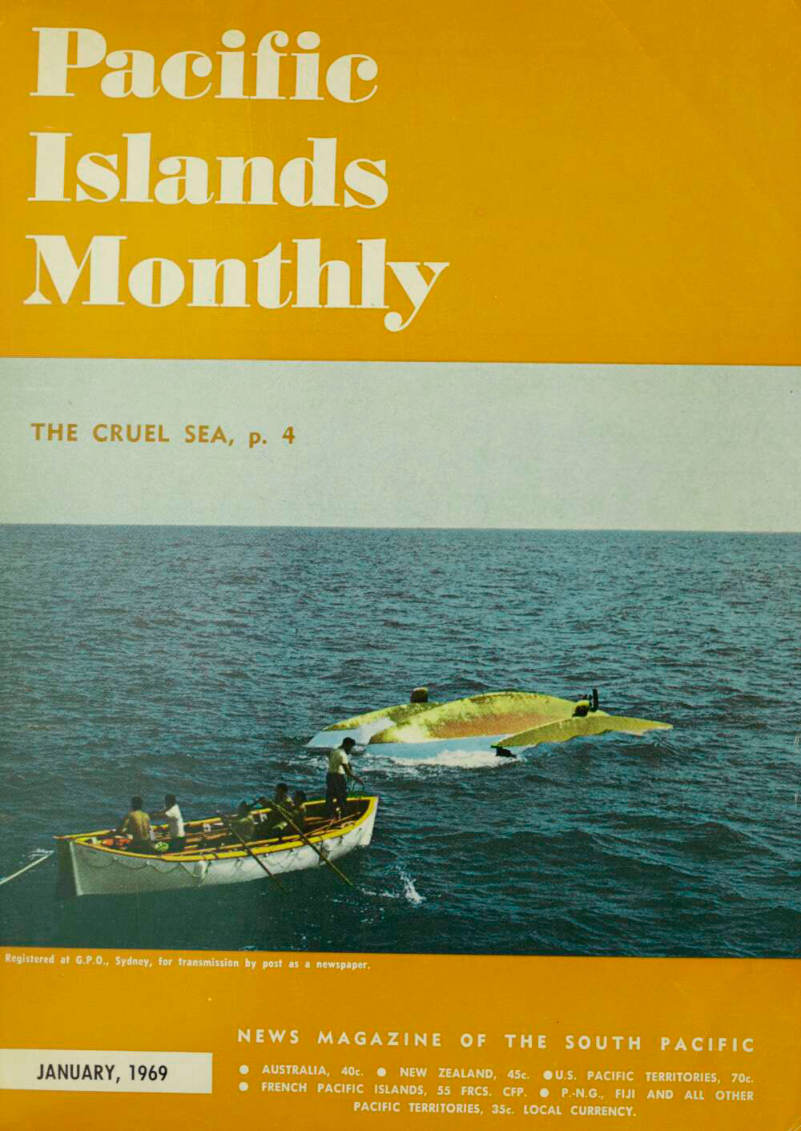 1
1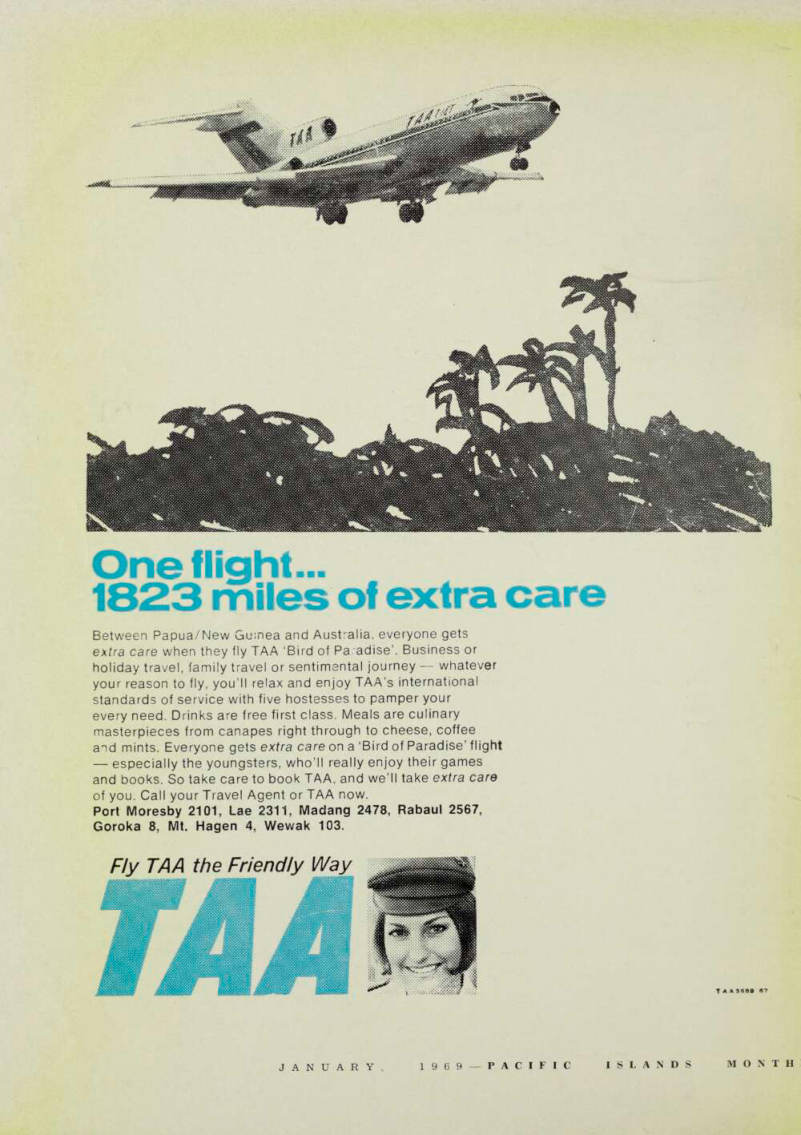 2
2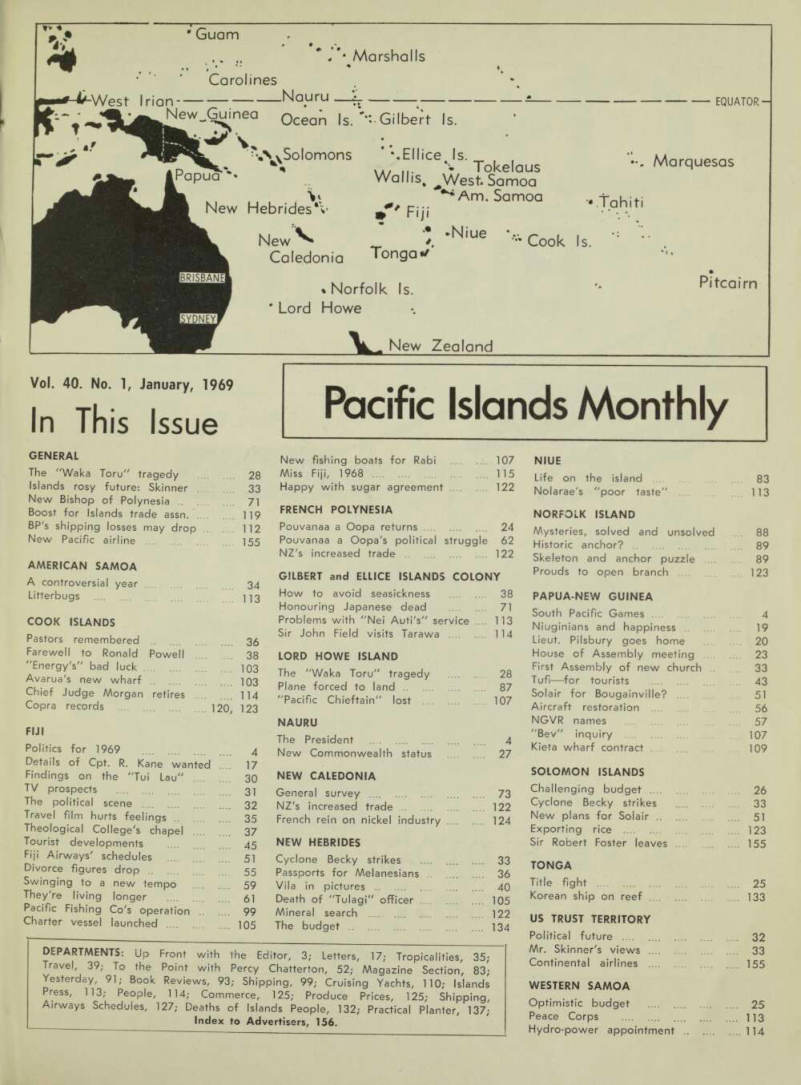 3
3 4
4 5
5 6
6 7
7 8
8 9
9 10
10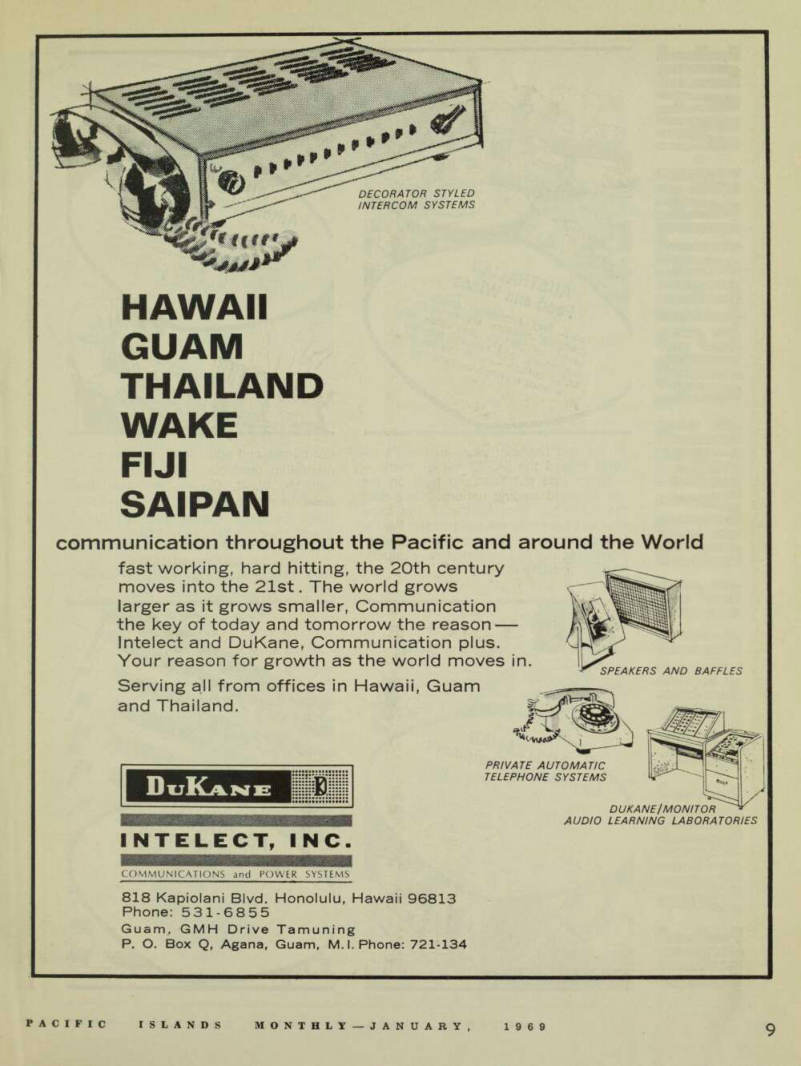 11
11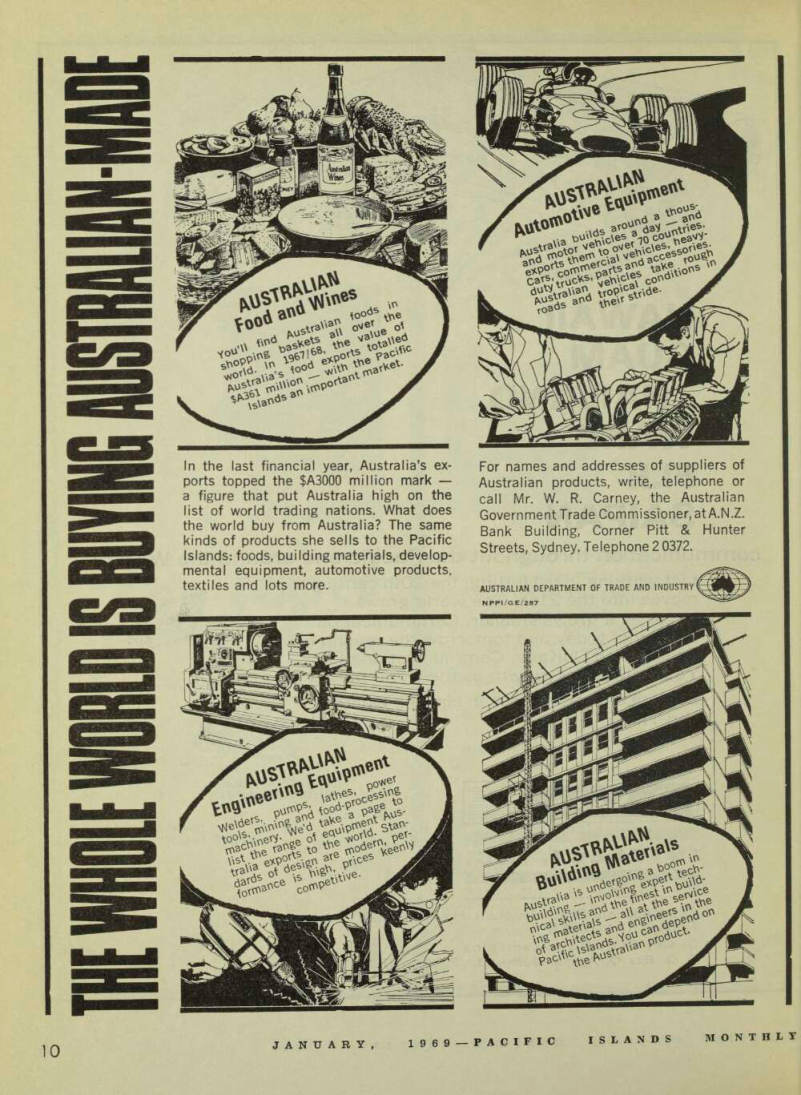 12
12 13
13 14
14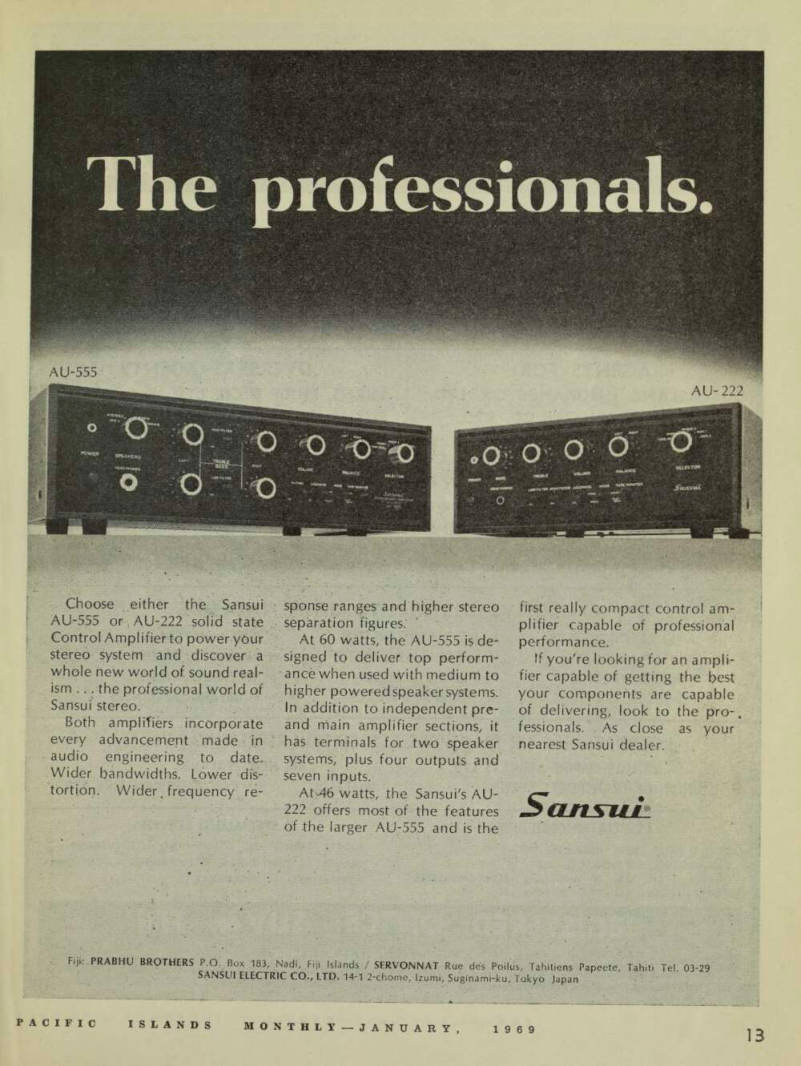 15
15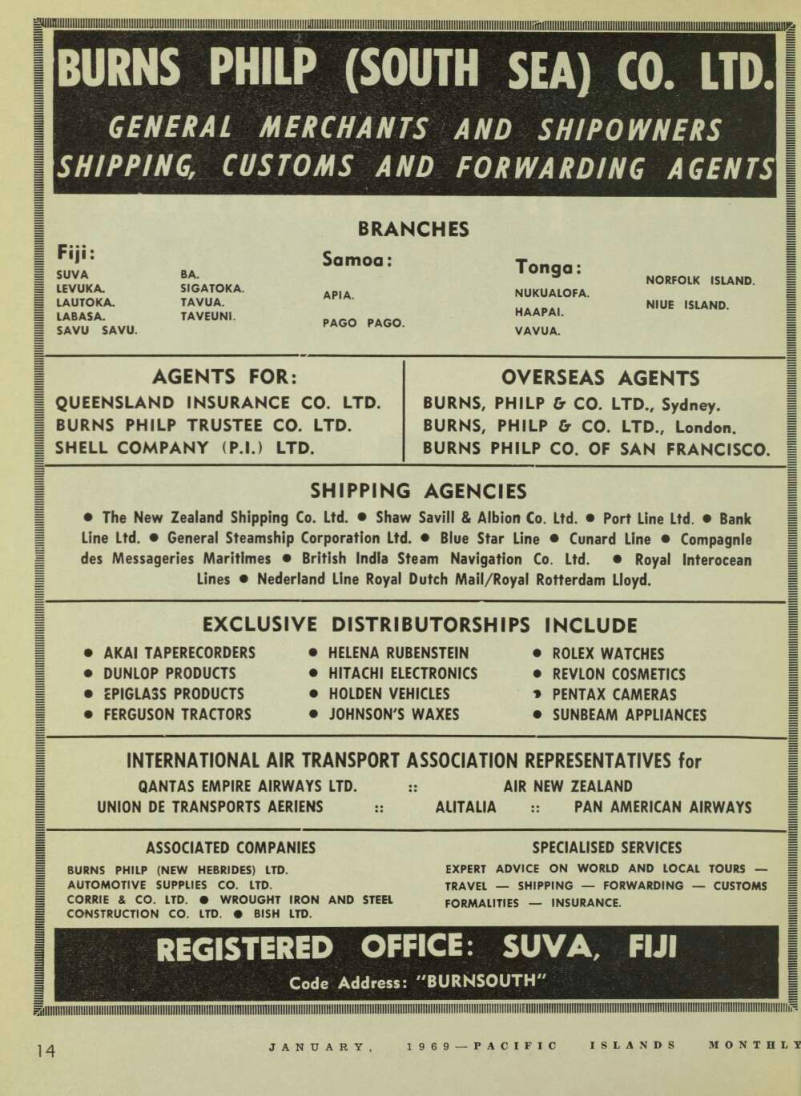 16
16 17
17 18
18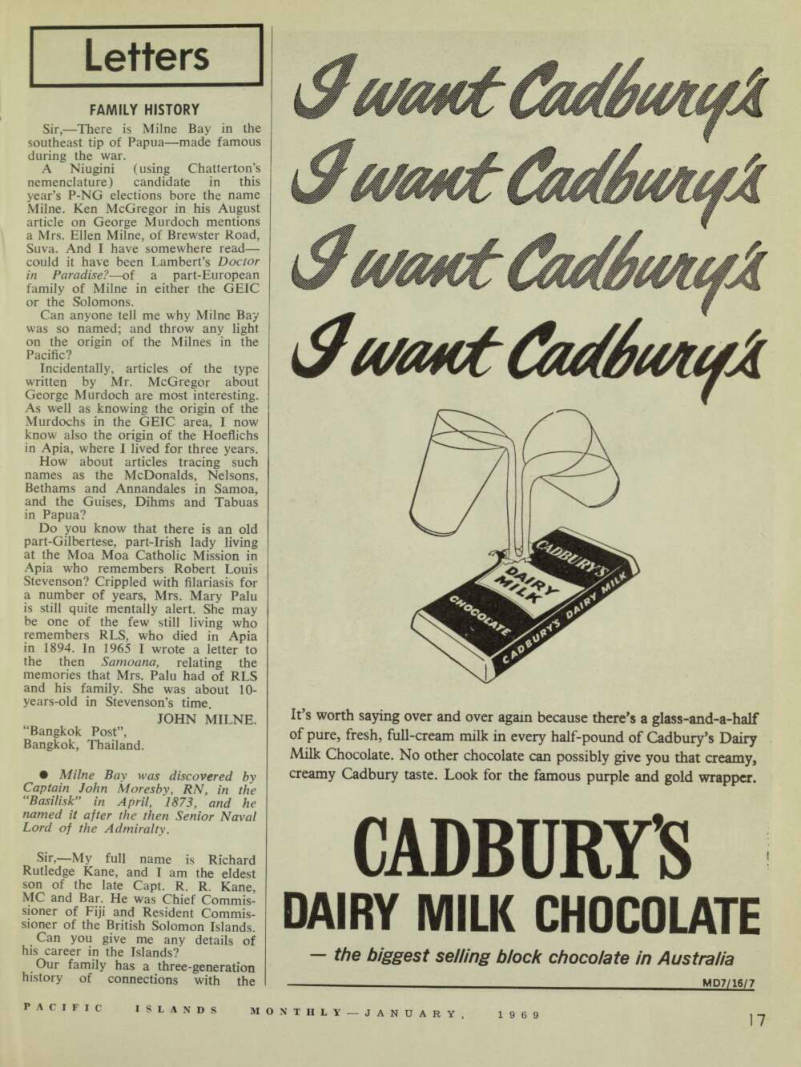 19
19 20
20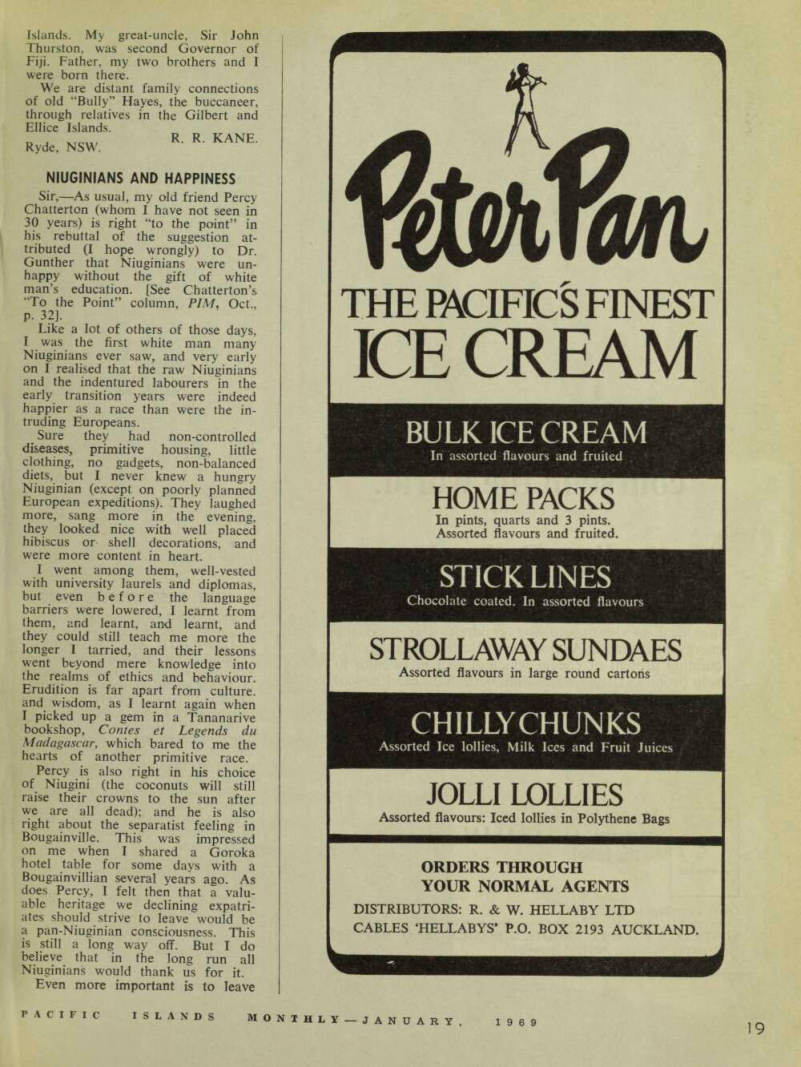 21
21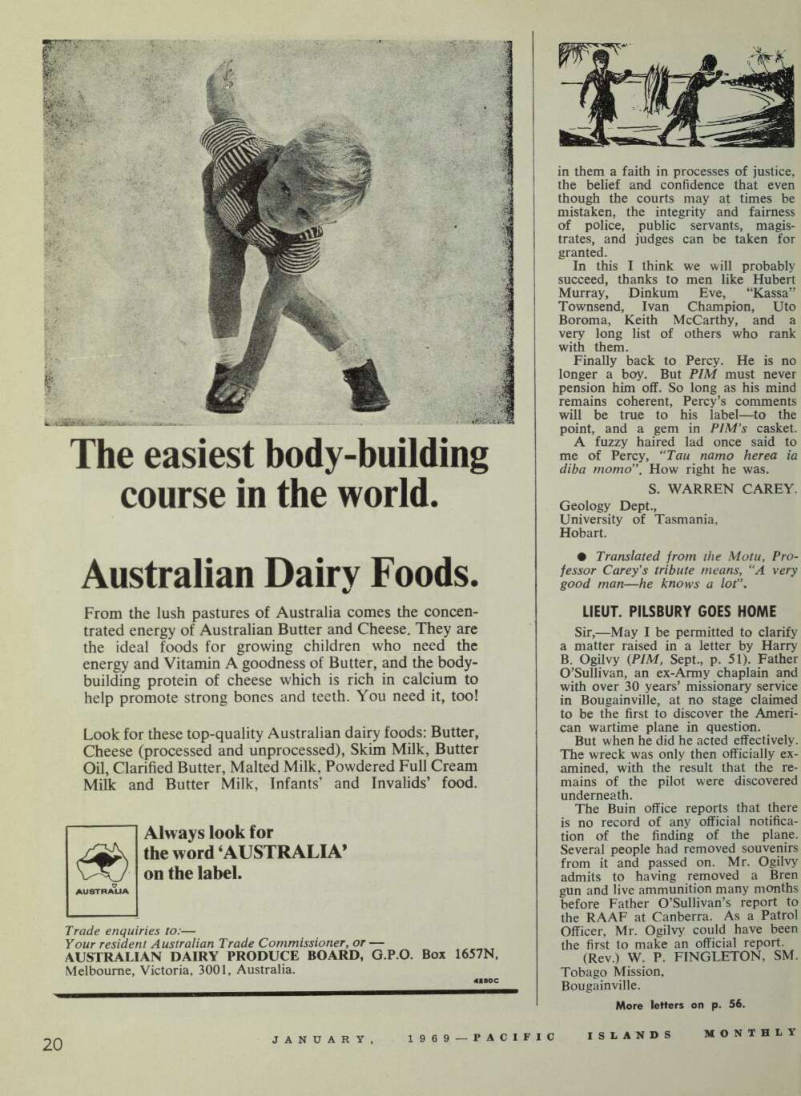 22
22 23
23 24
24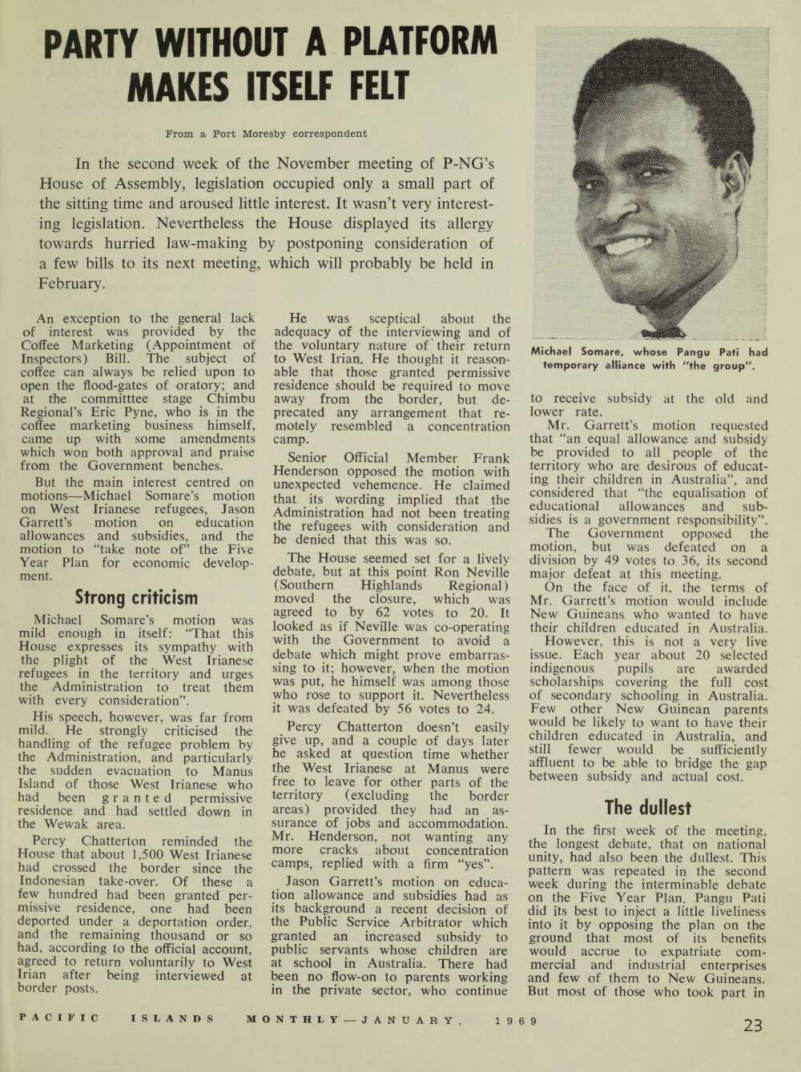 25
25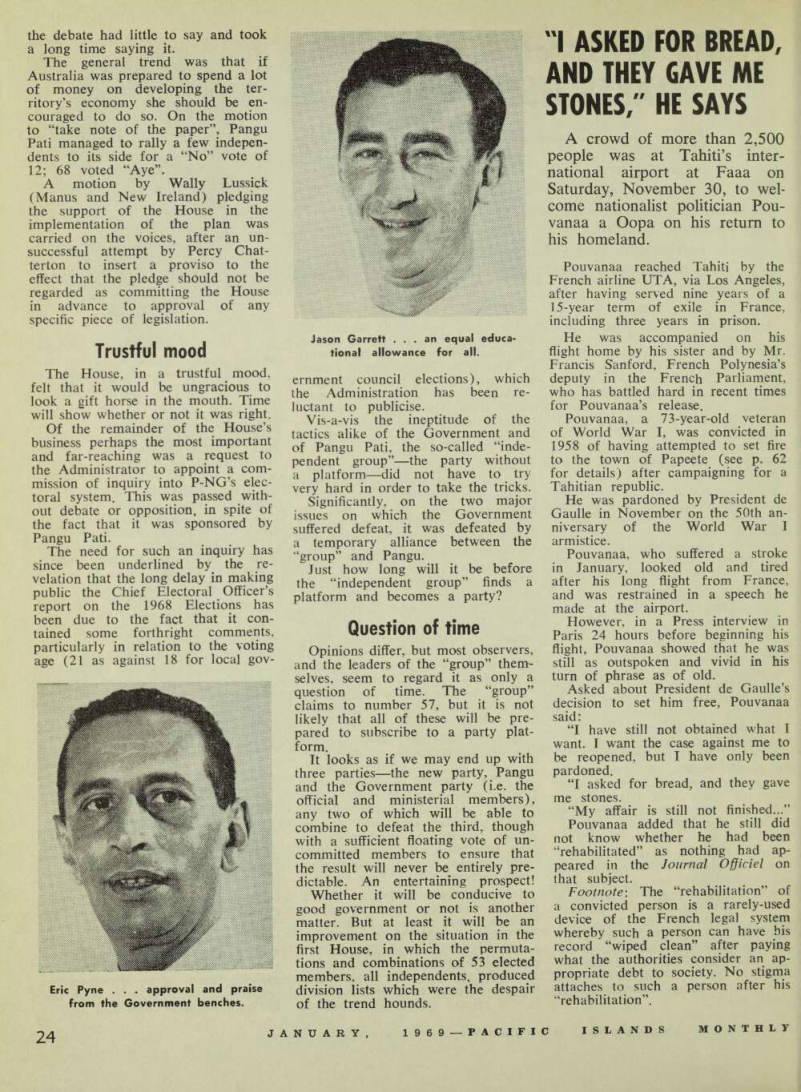 26
26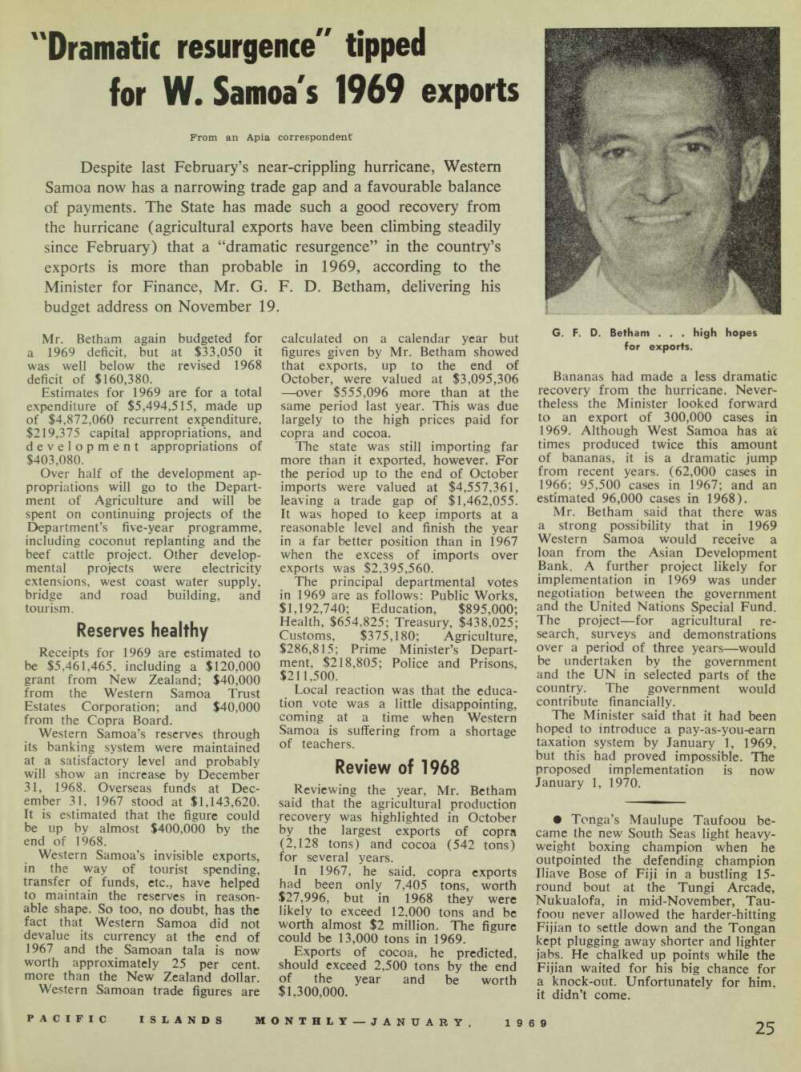 27
27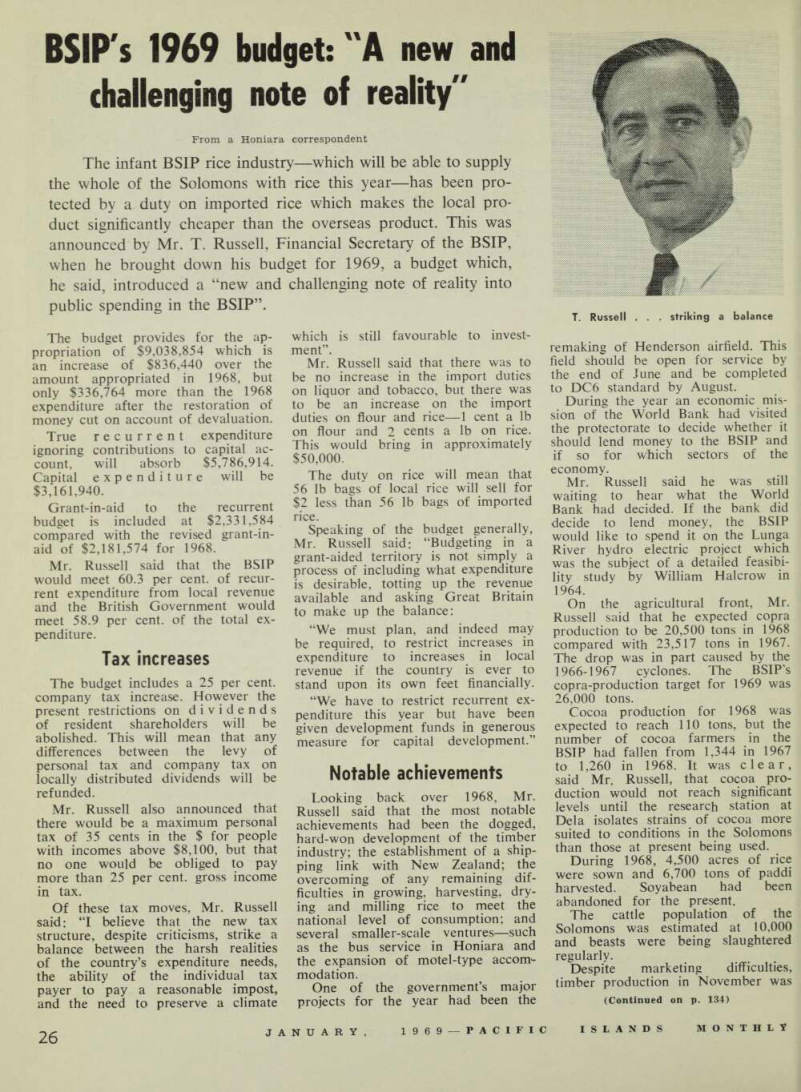 28
28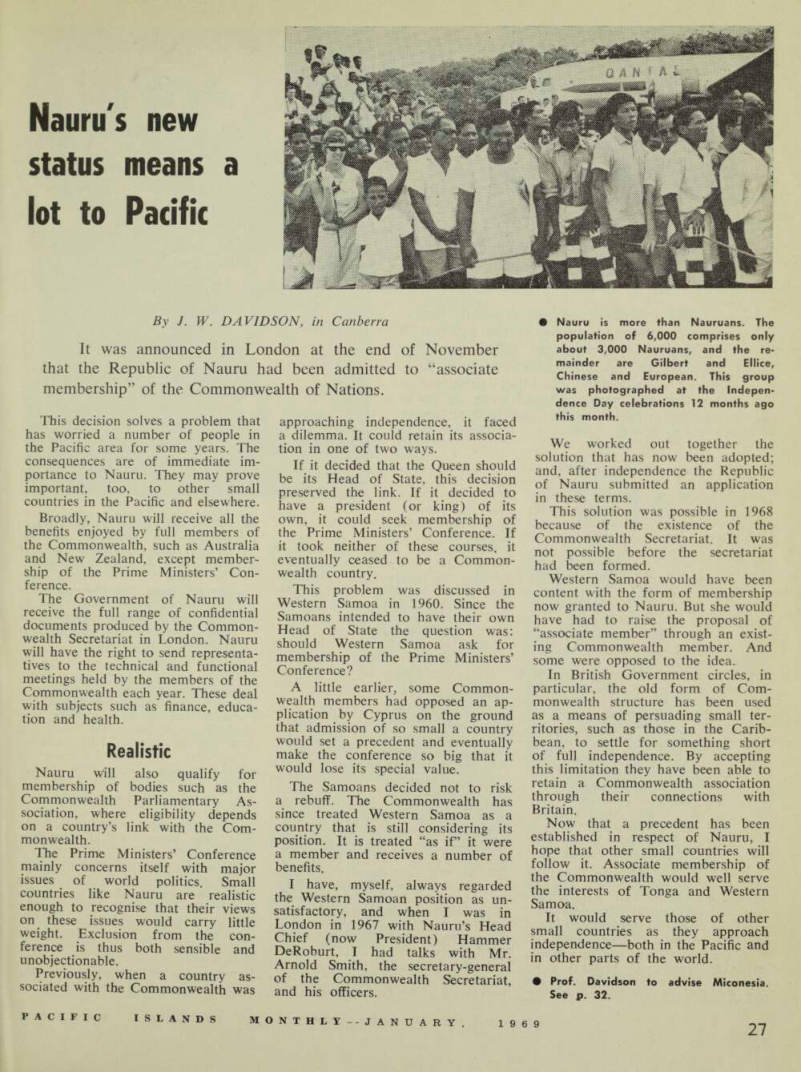 29
29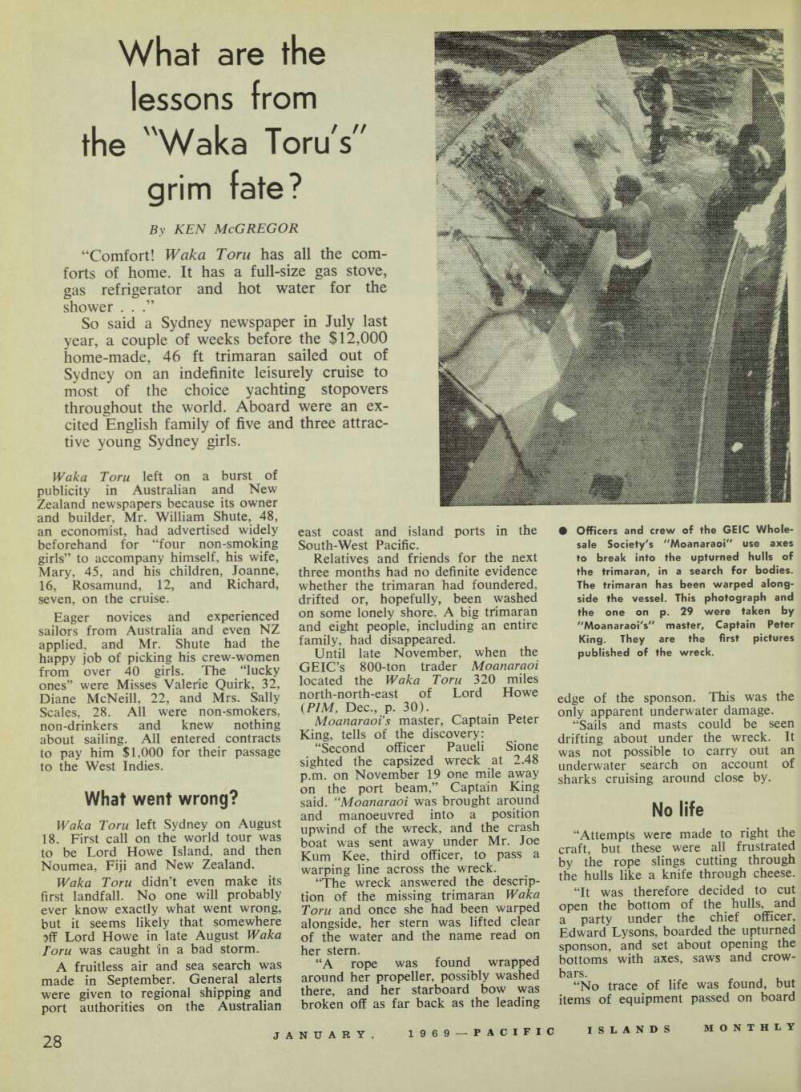 30
30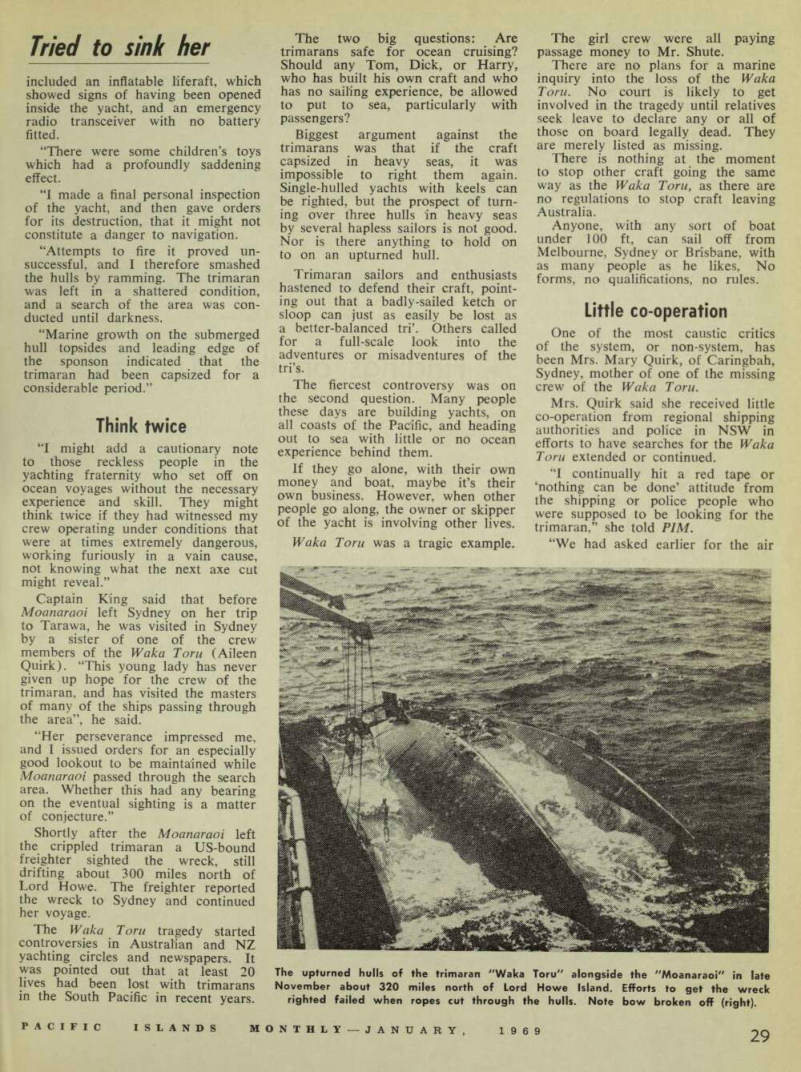 31
31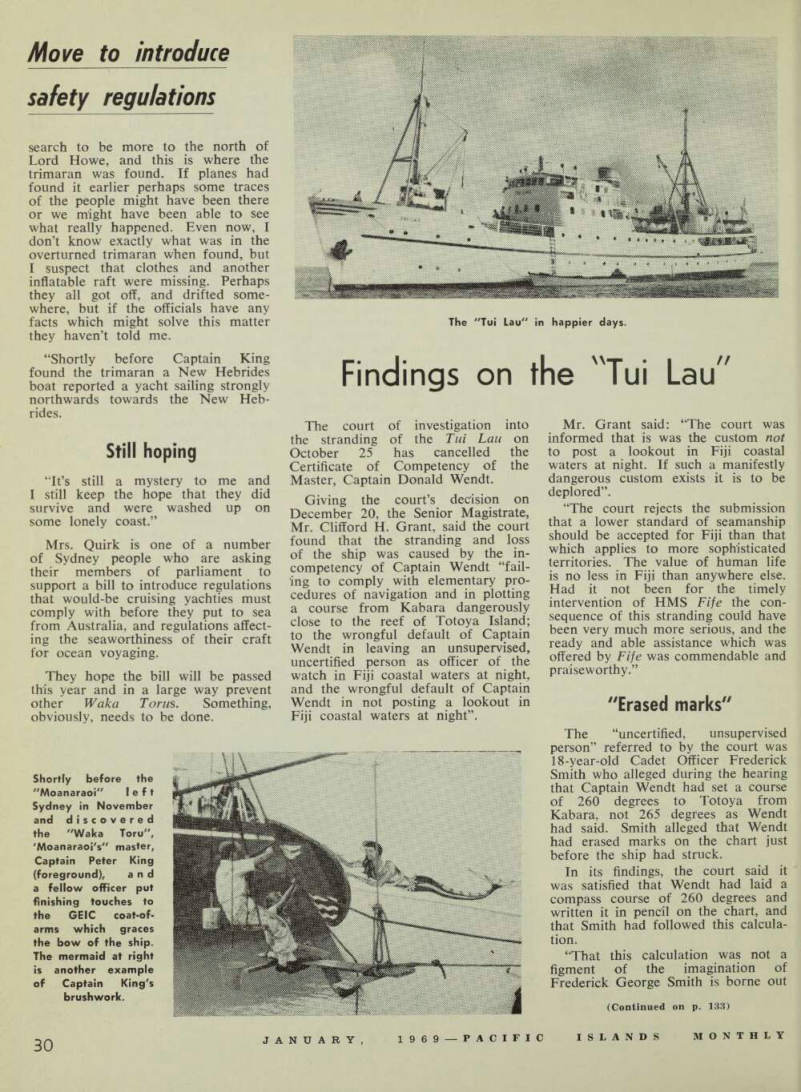 32
32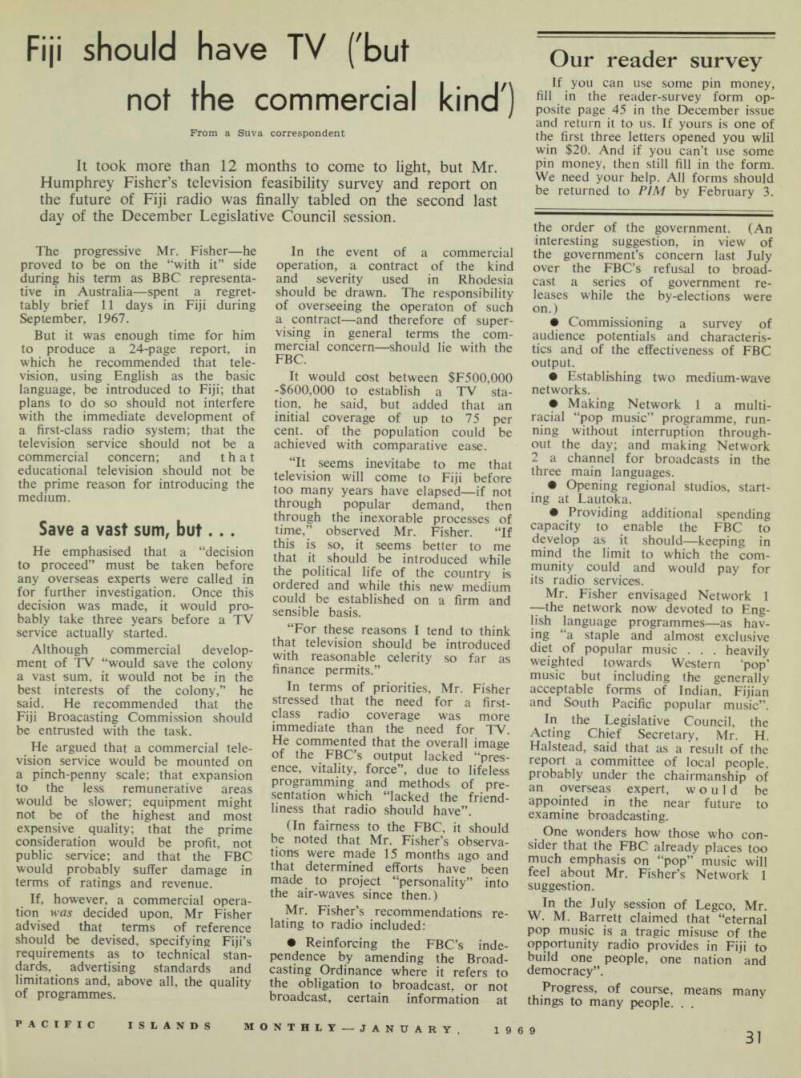 33
33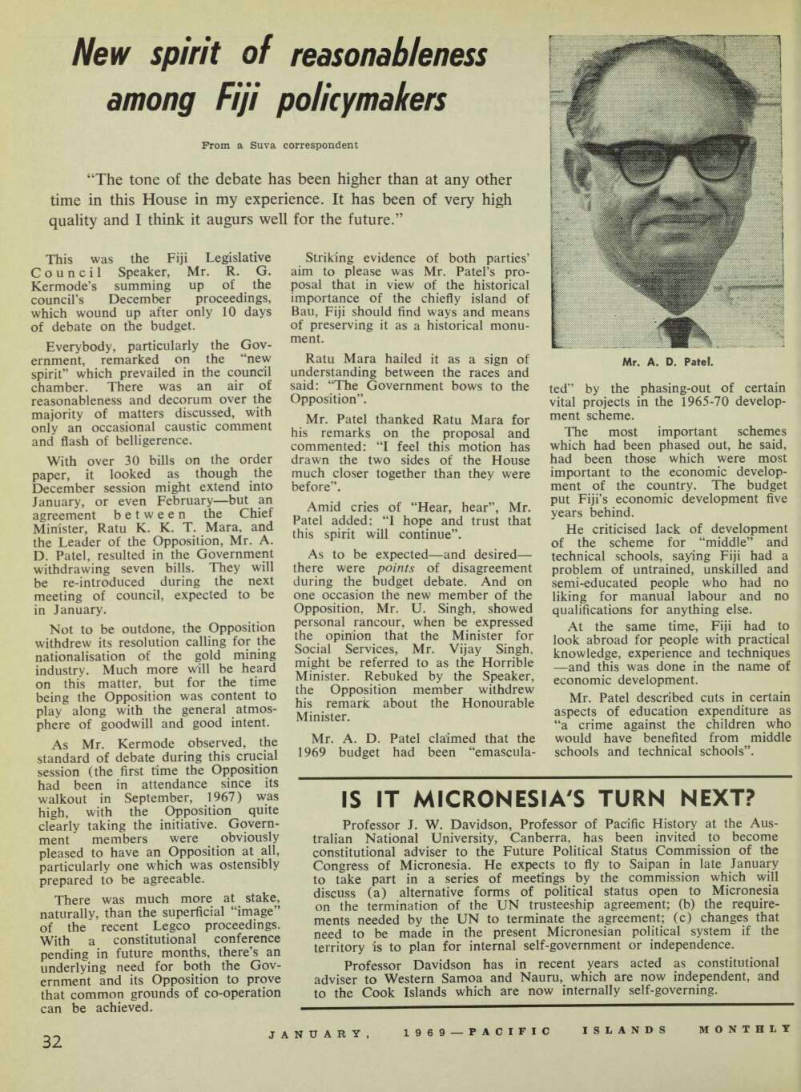 34
34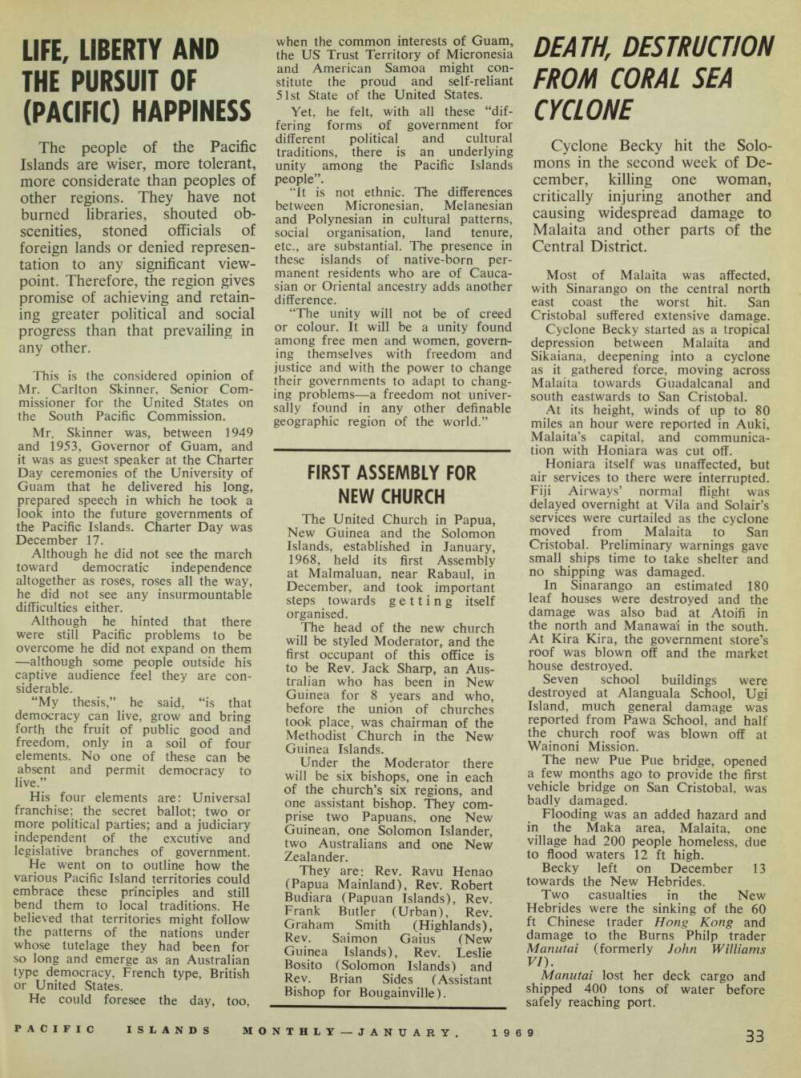 35
35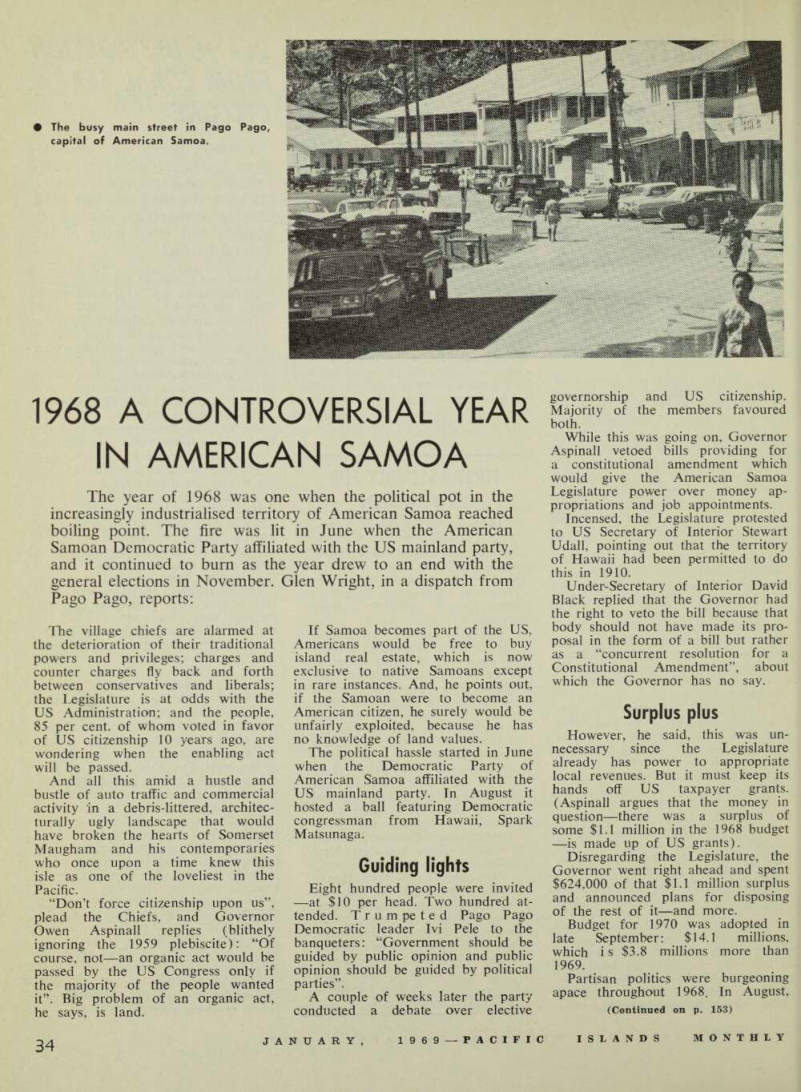 36
36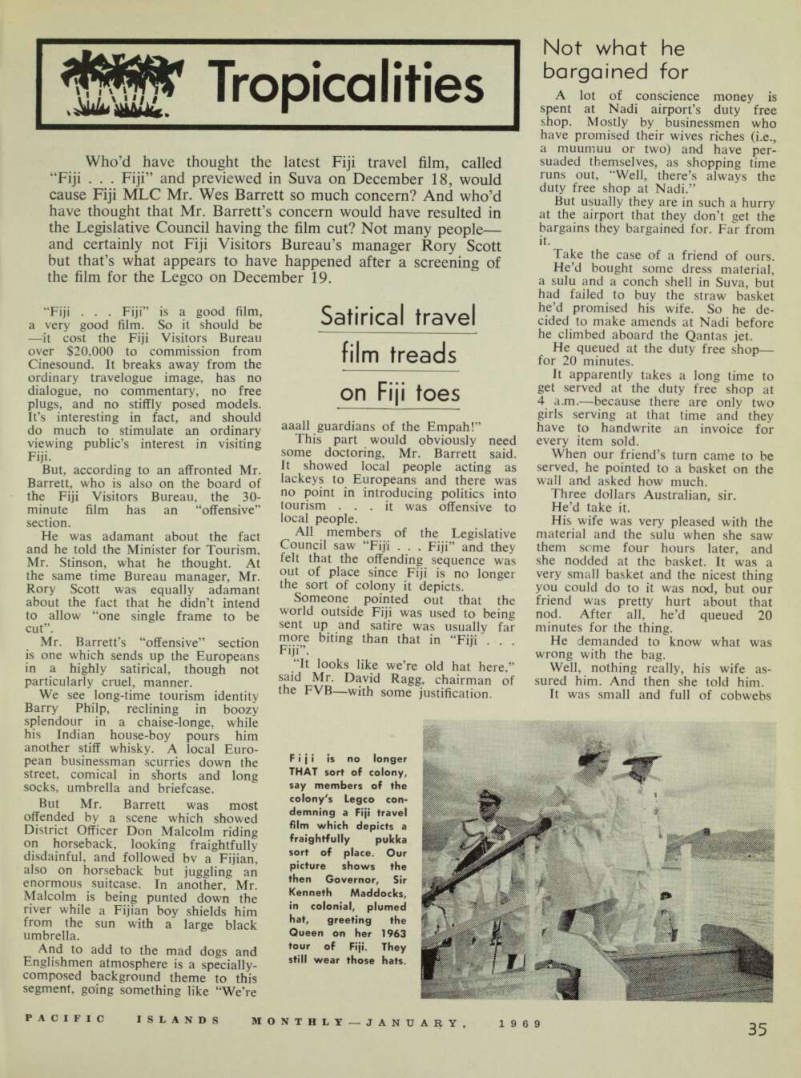 37
37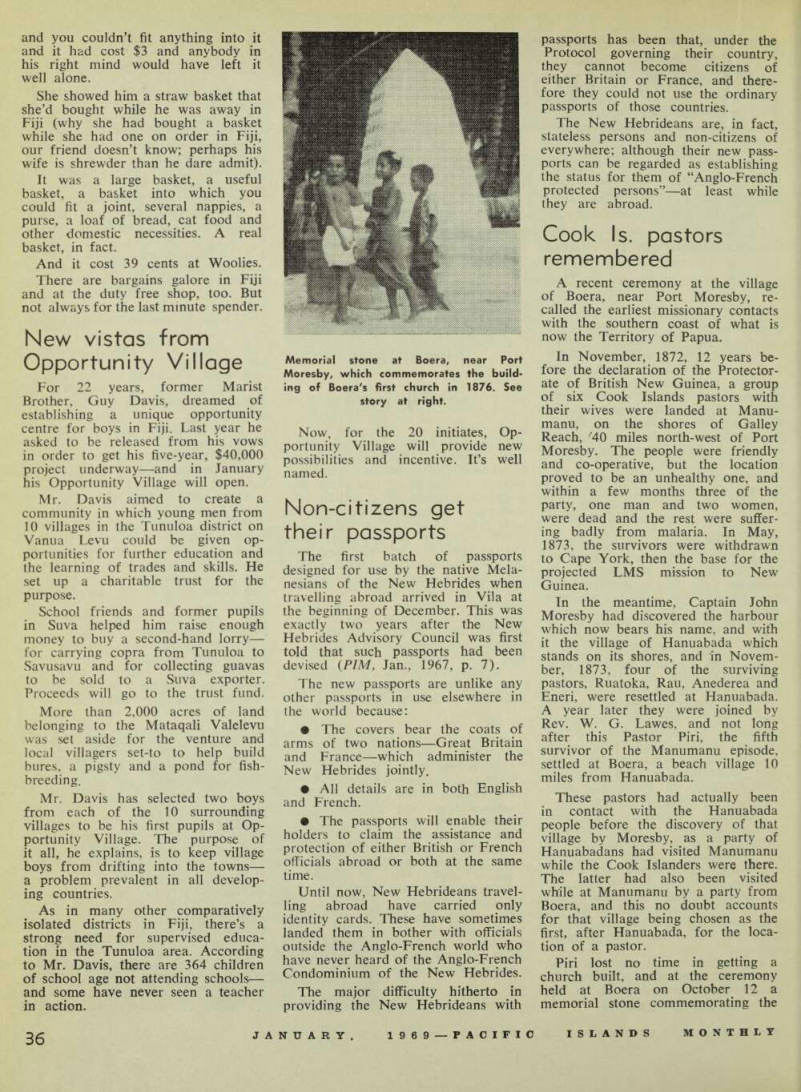 38
38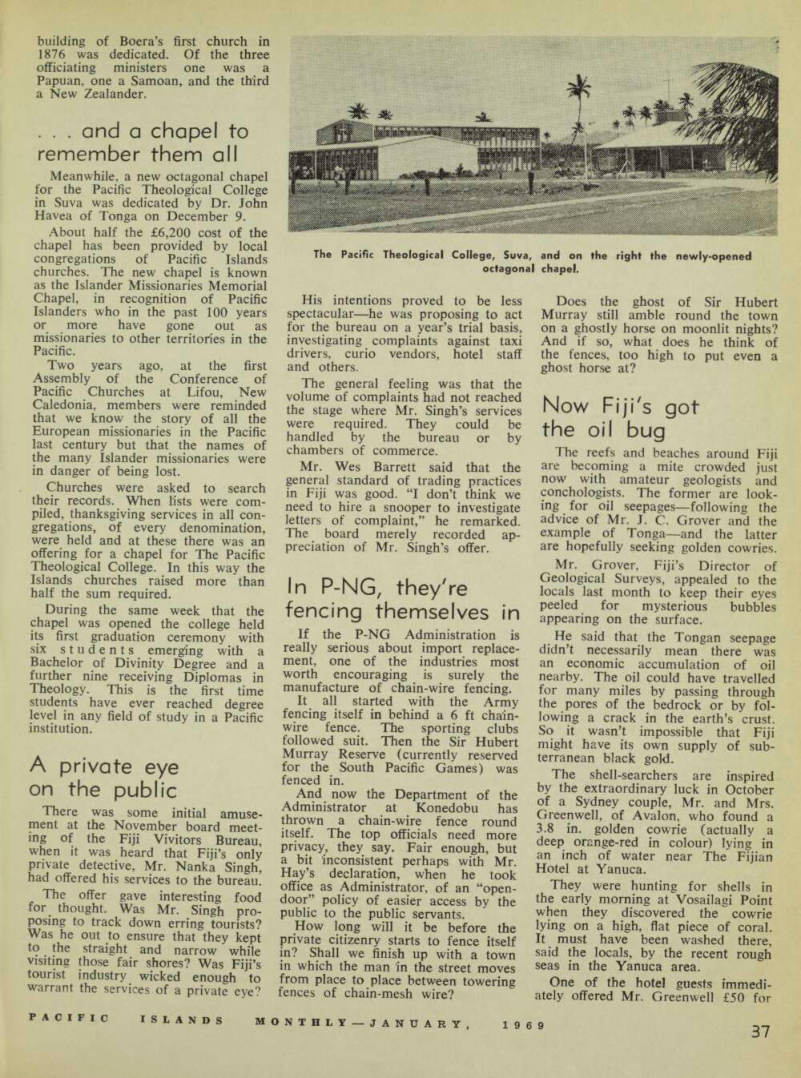 39
39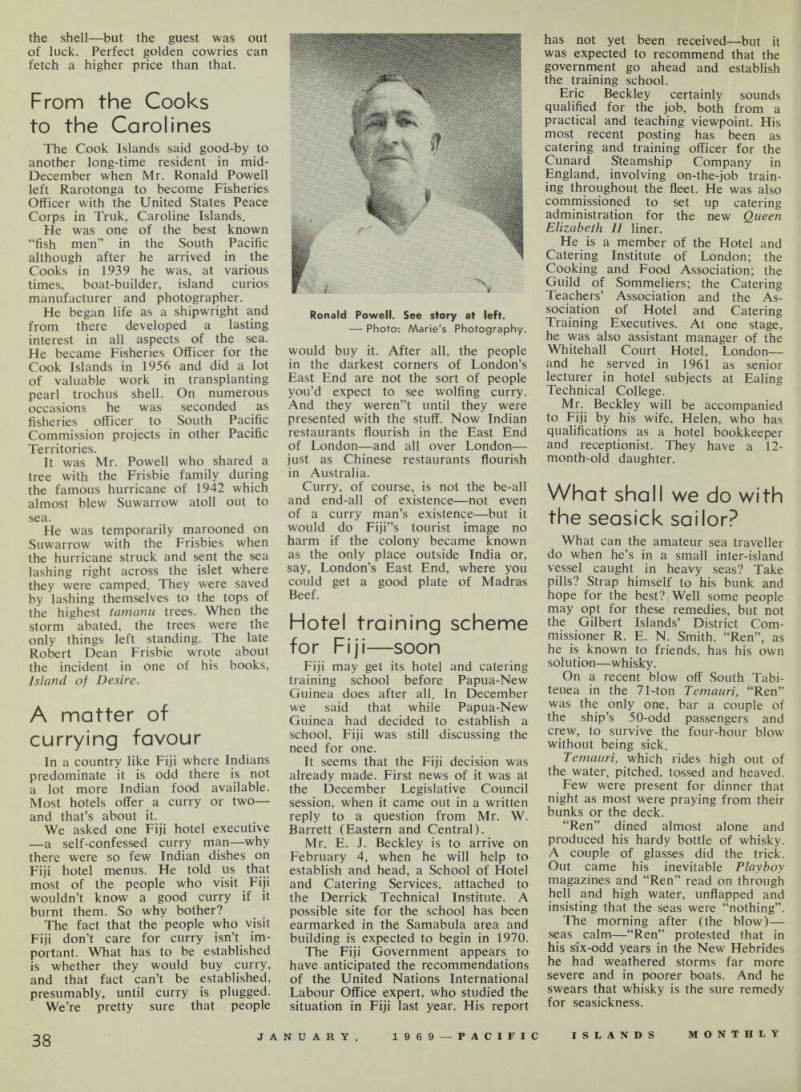 40
40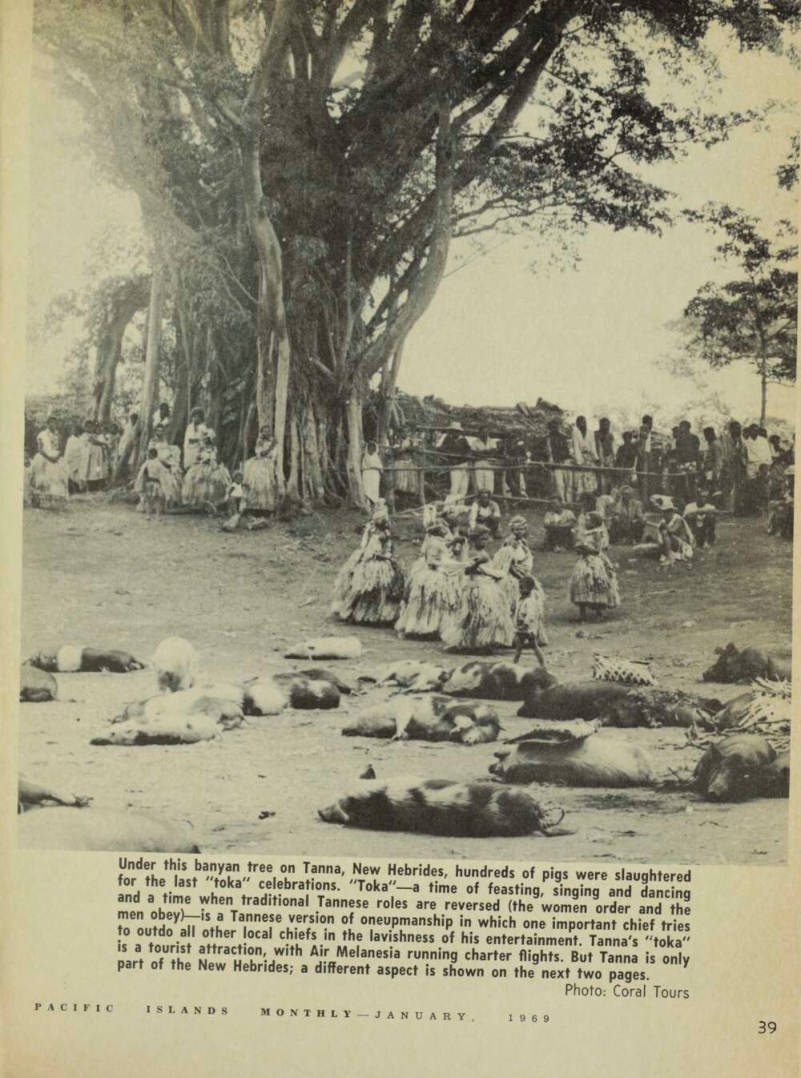 41
41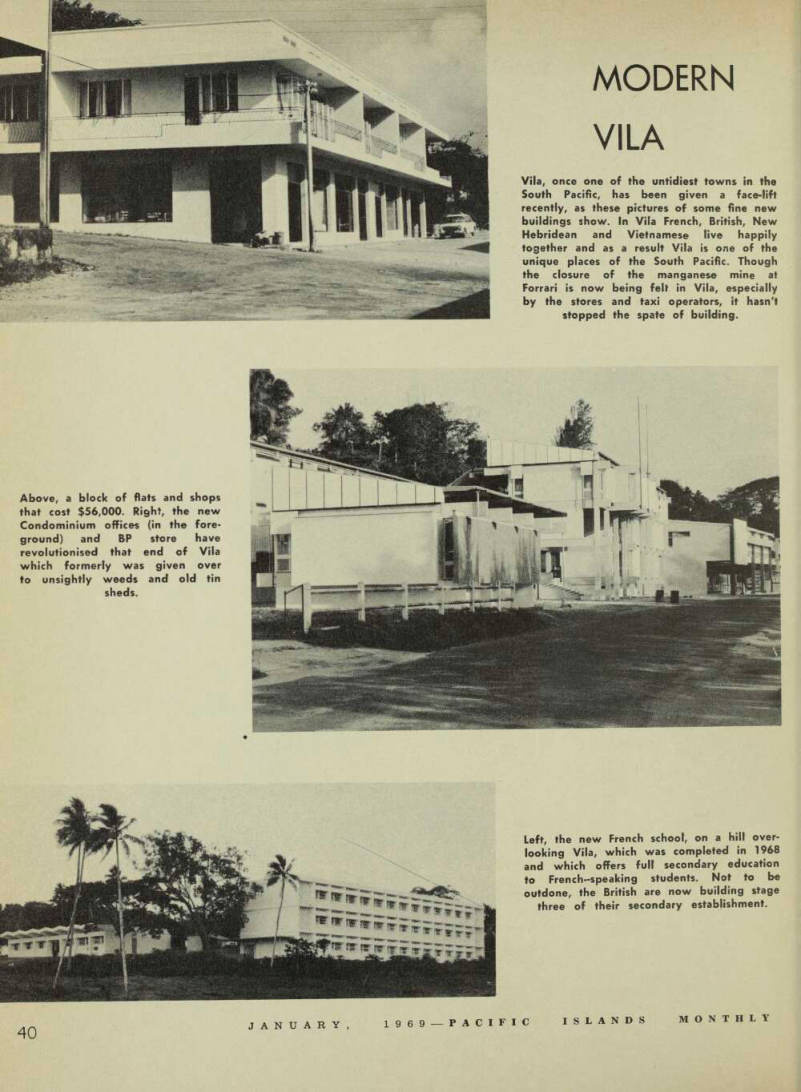 42
42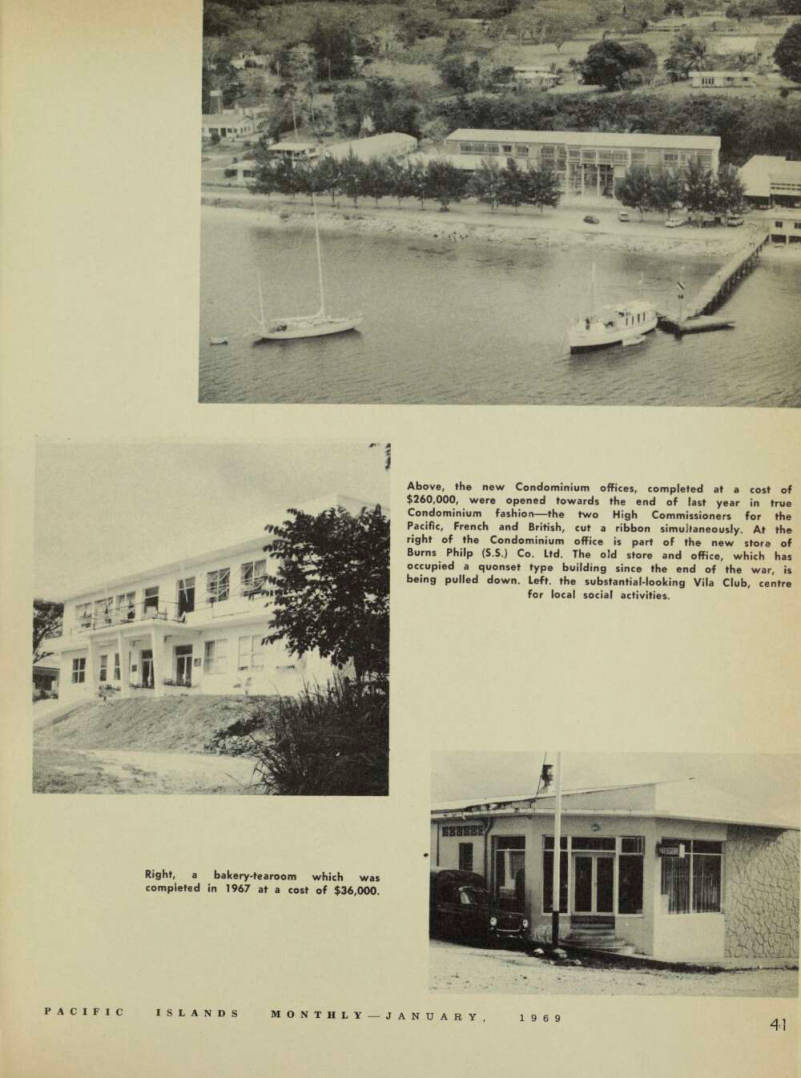 43
43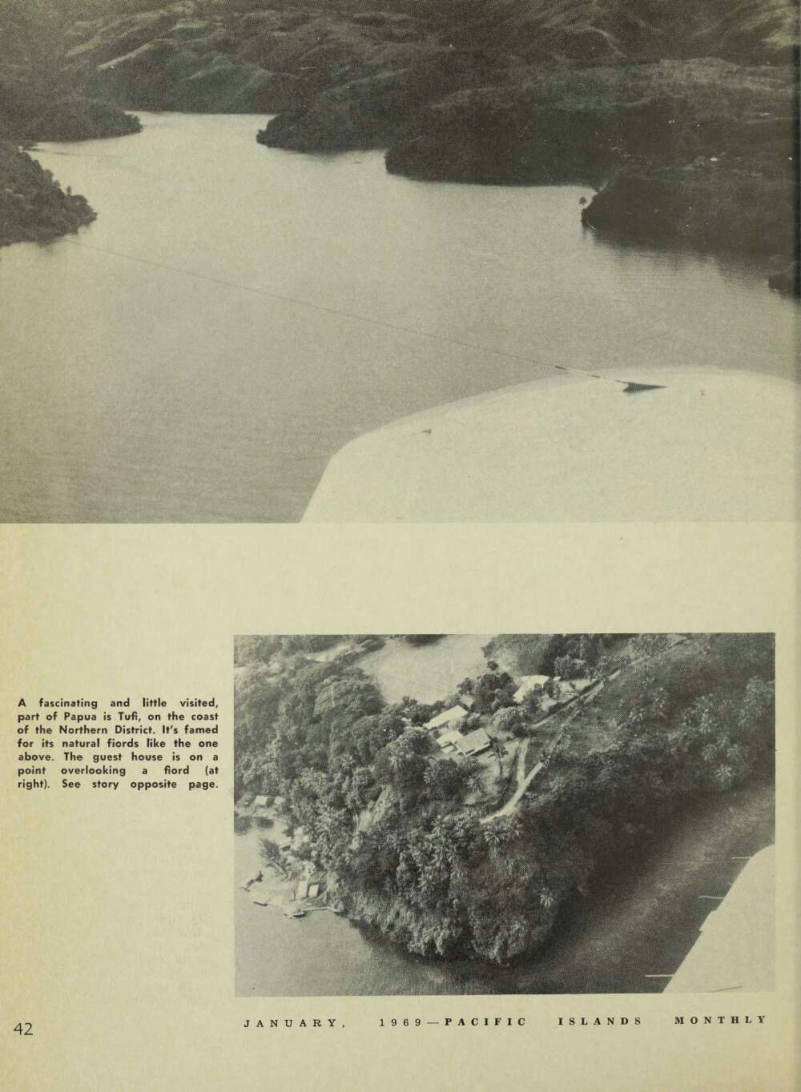 44
44 45
45 46
46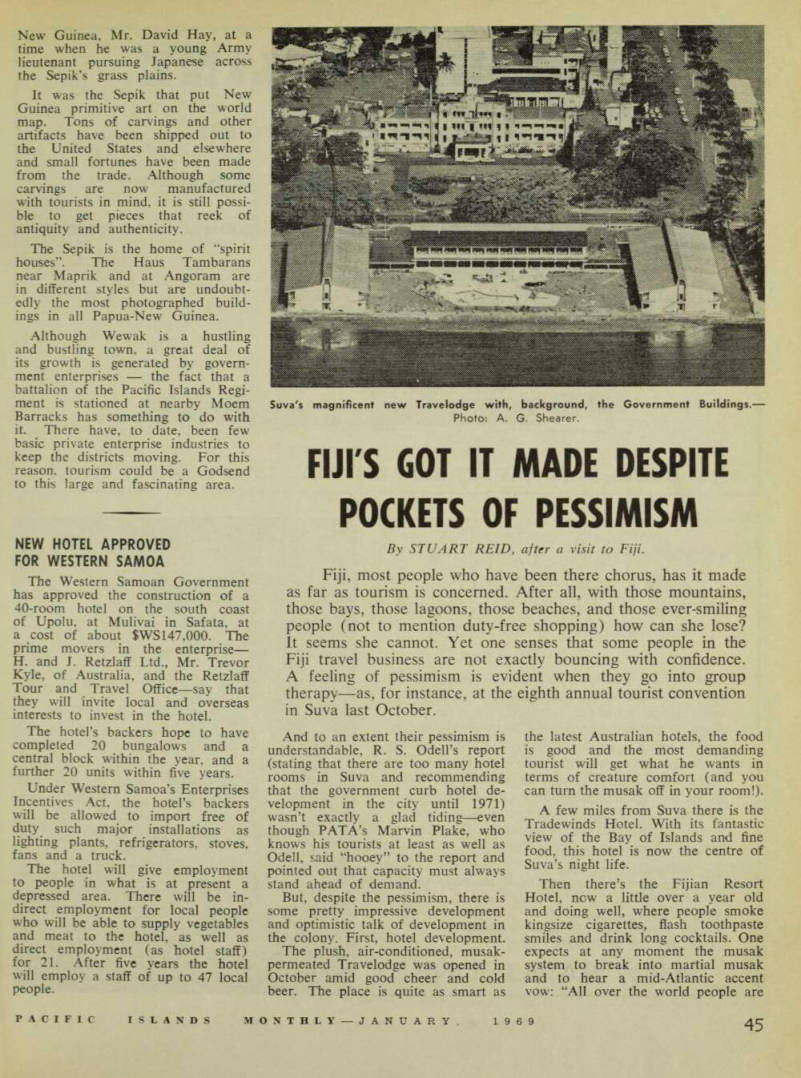 47
47 48
48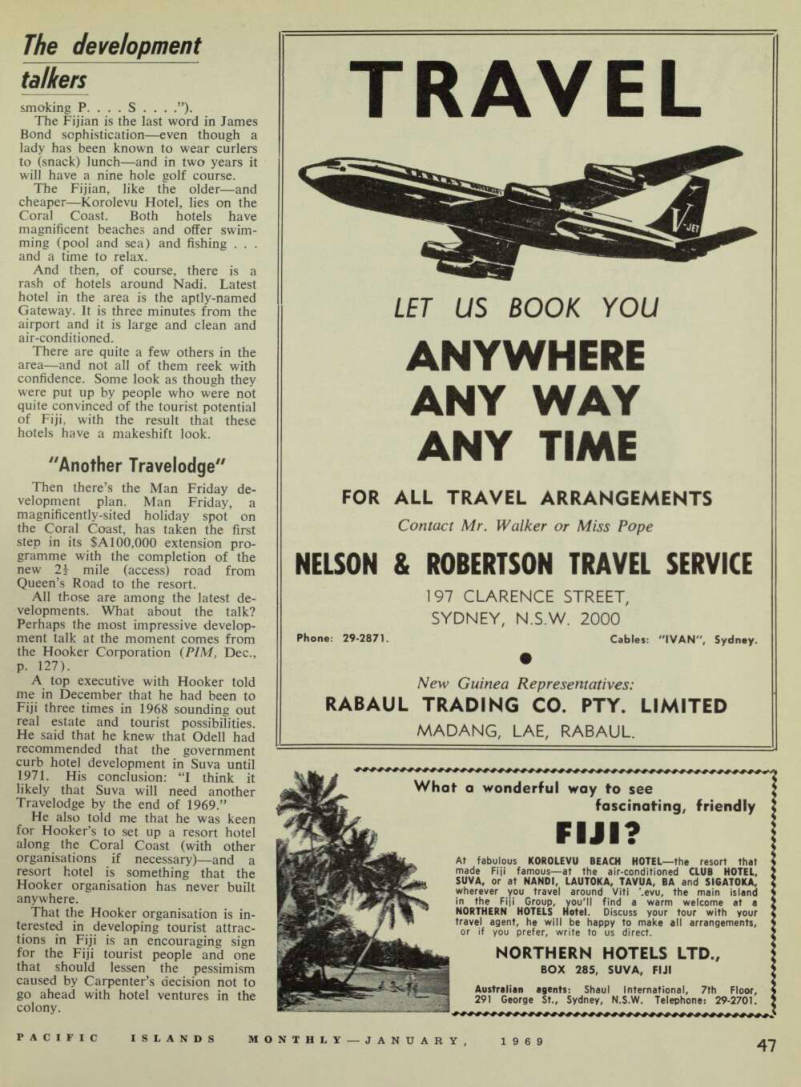 49
49 50
50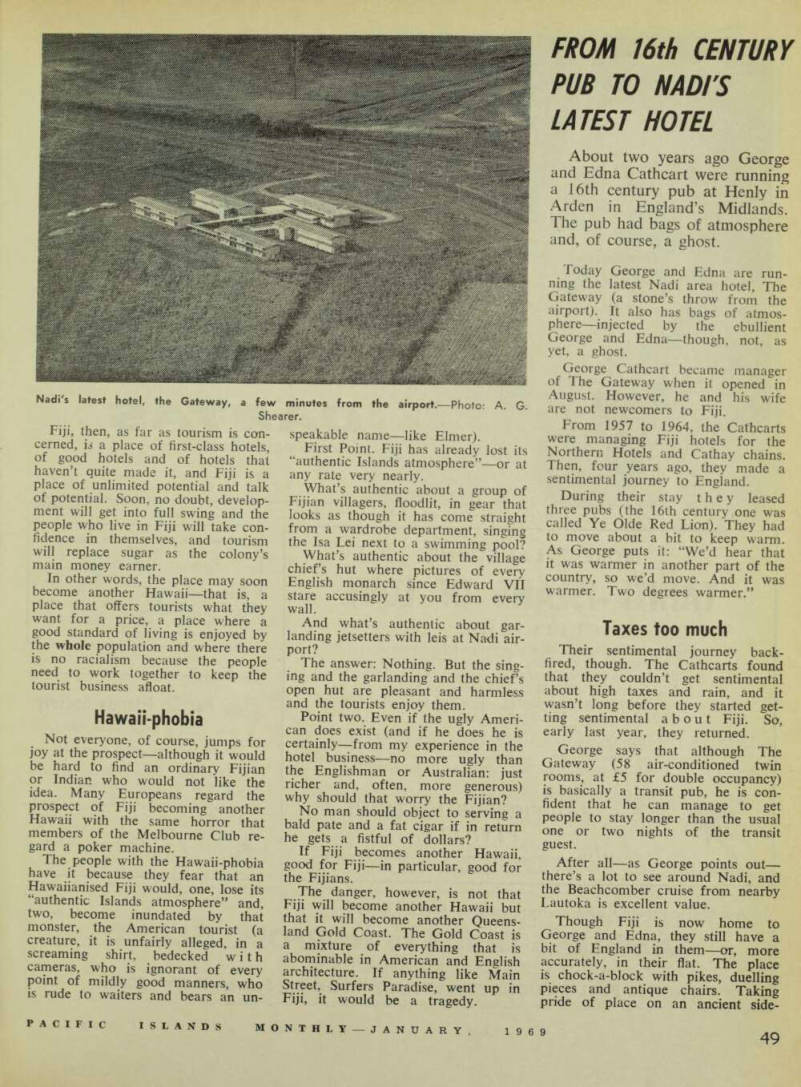 51
51 52
52 53
53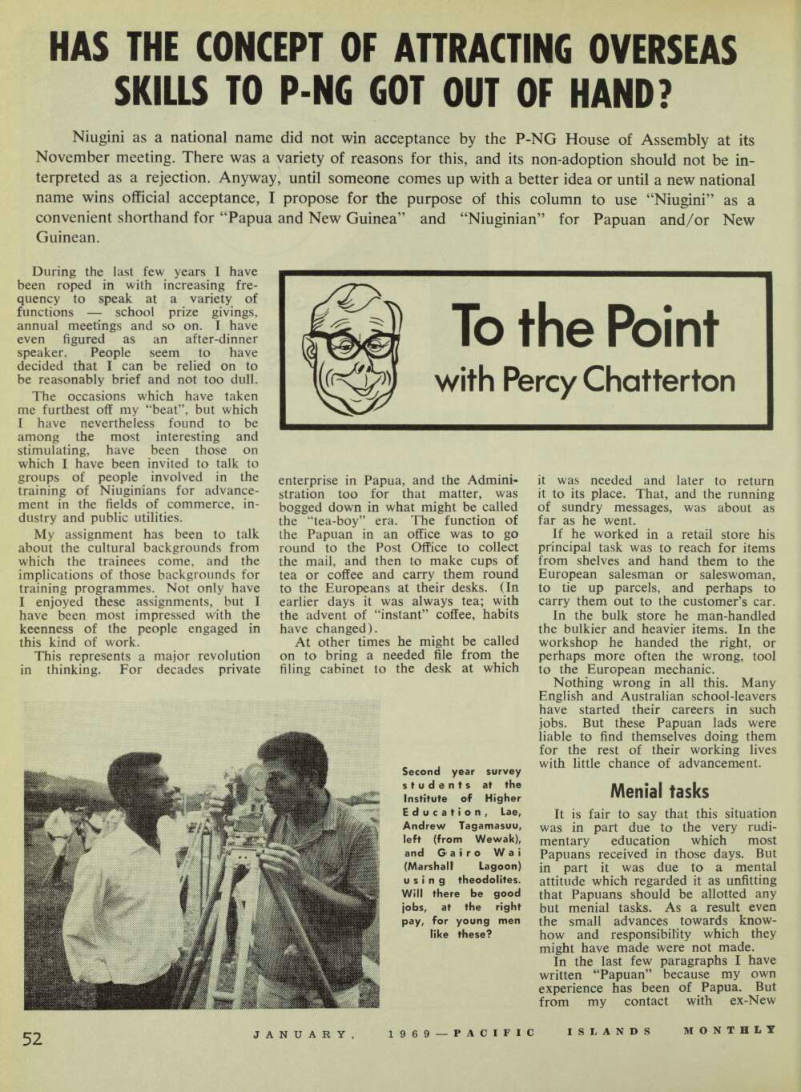 54
54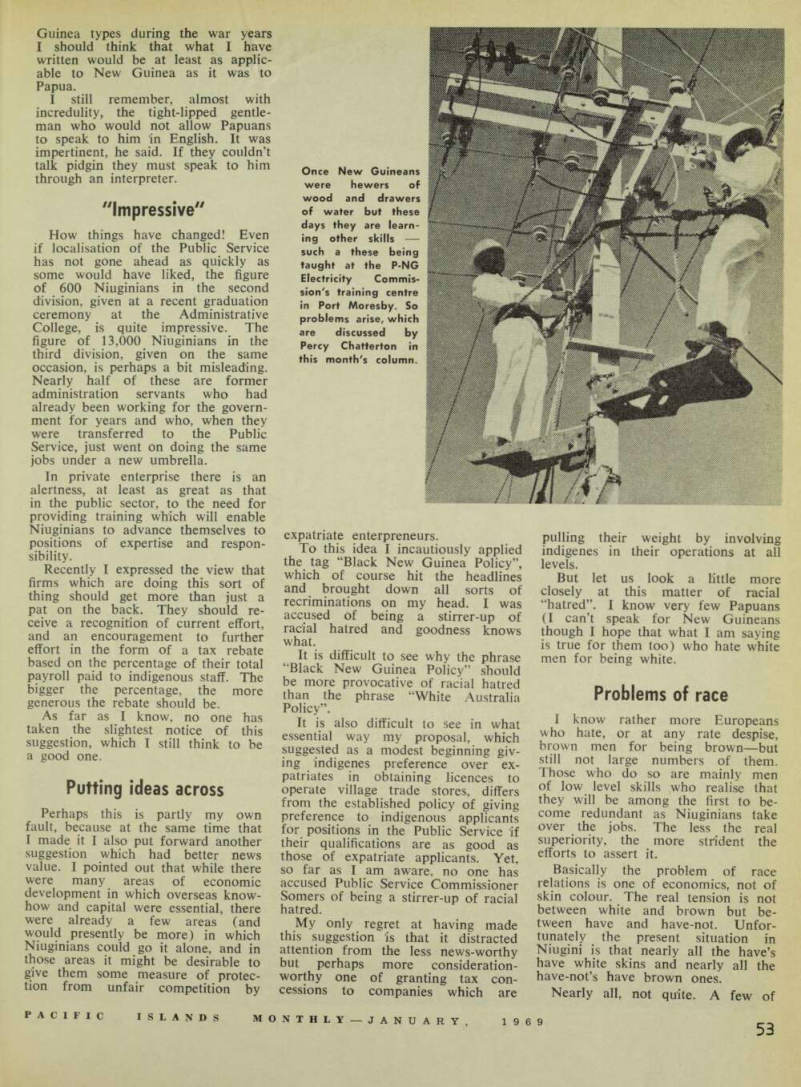 55
55 56
56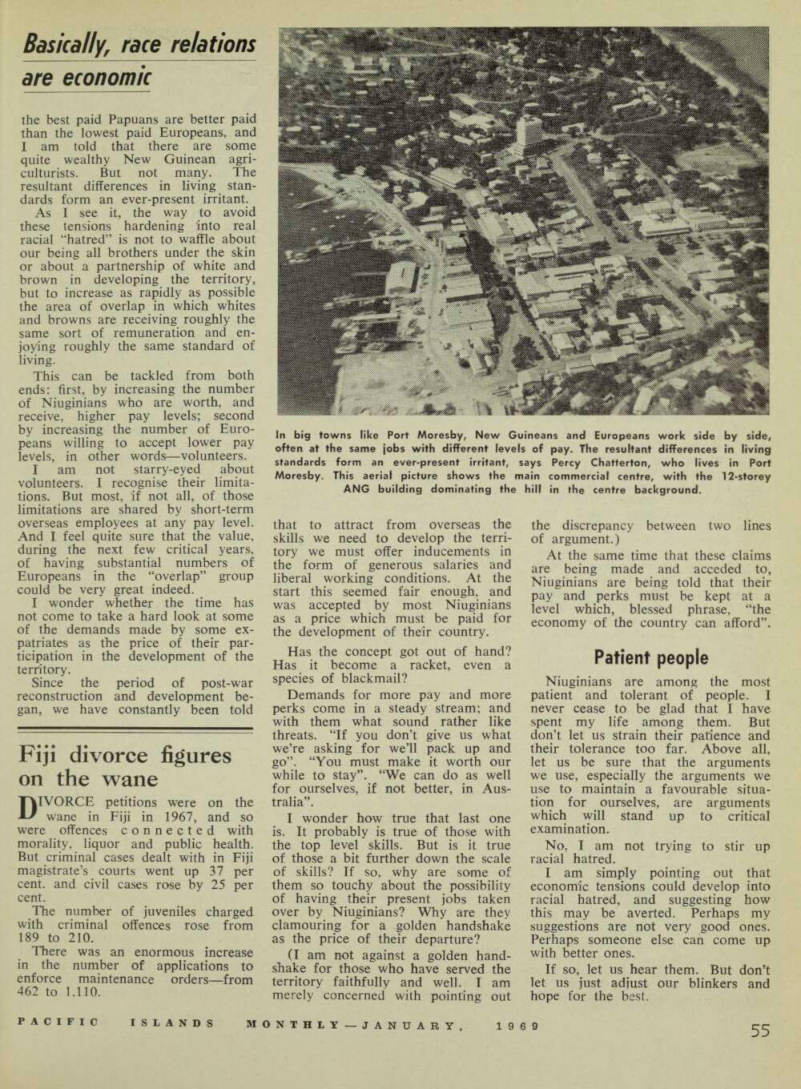 57
57 58
58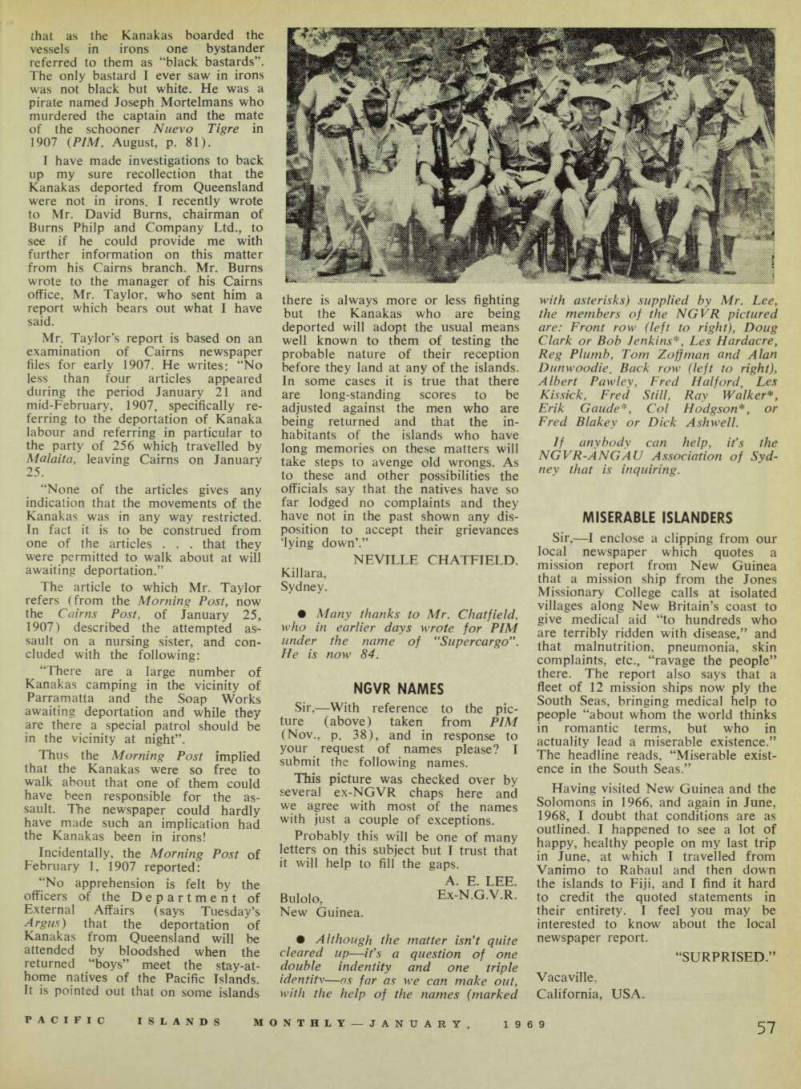 59
59 60
60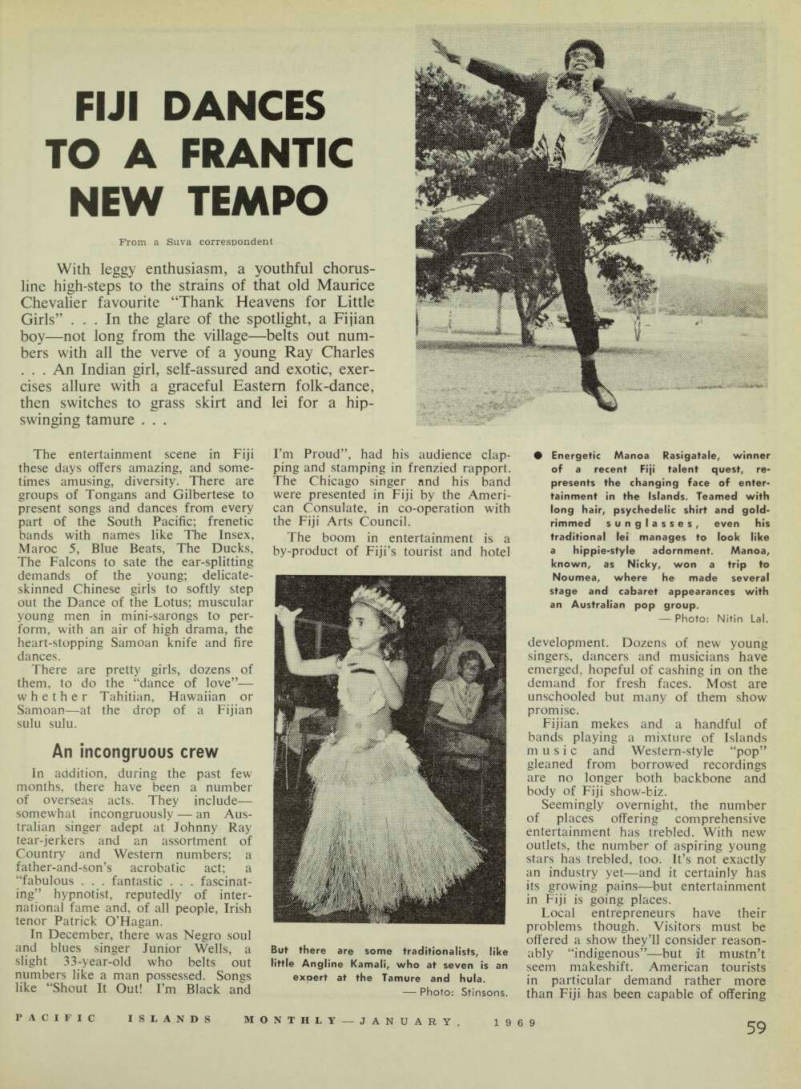 61
61 62
62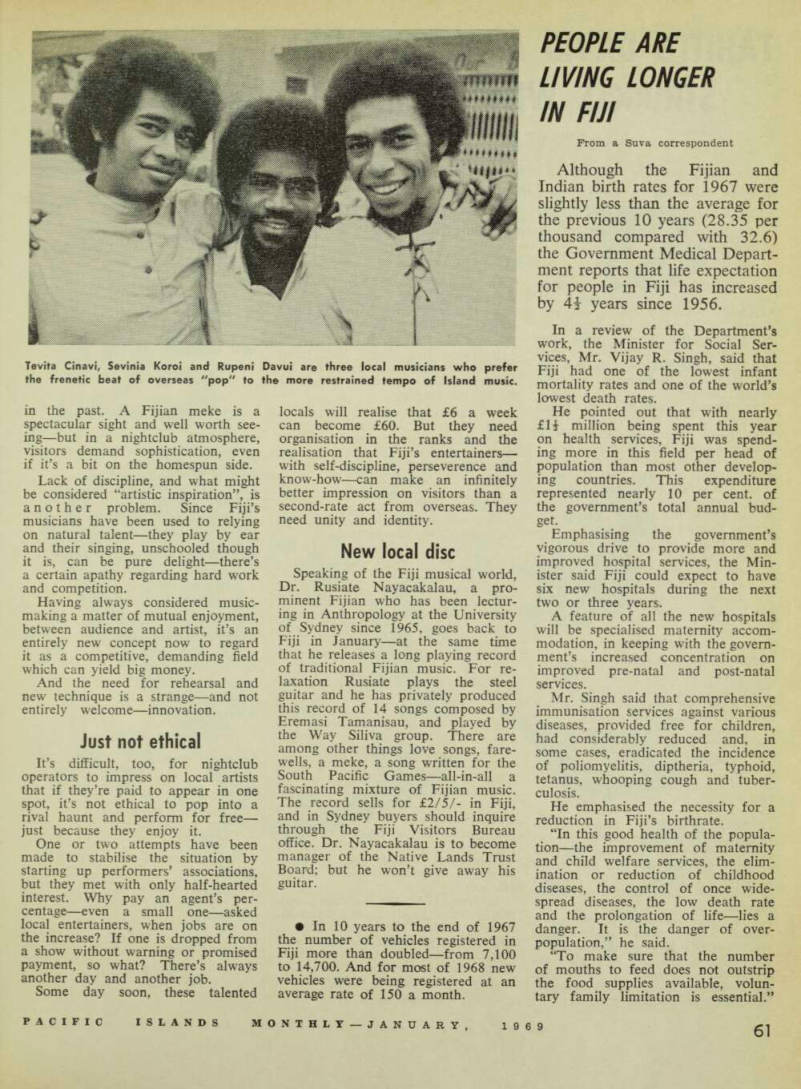 63
63 64
64 65
65 66
66 67
67 68
68 69
69 70
70 71
71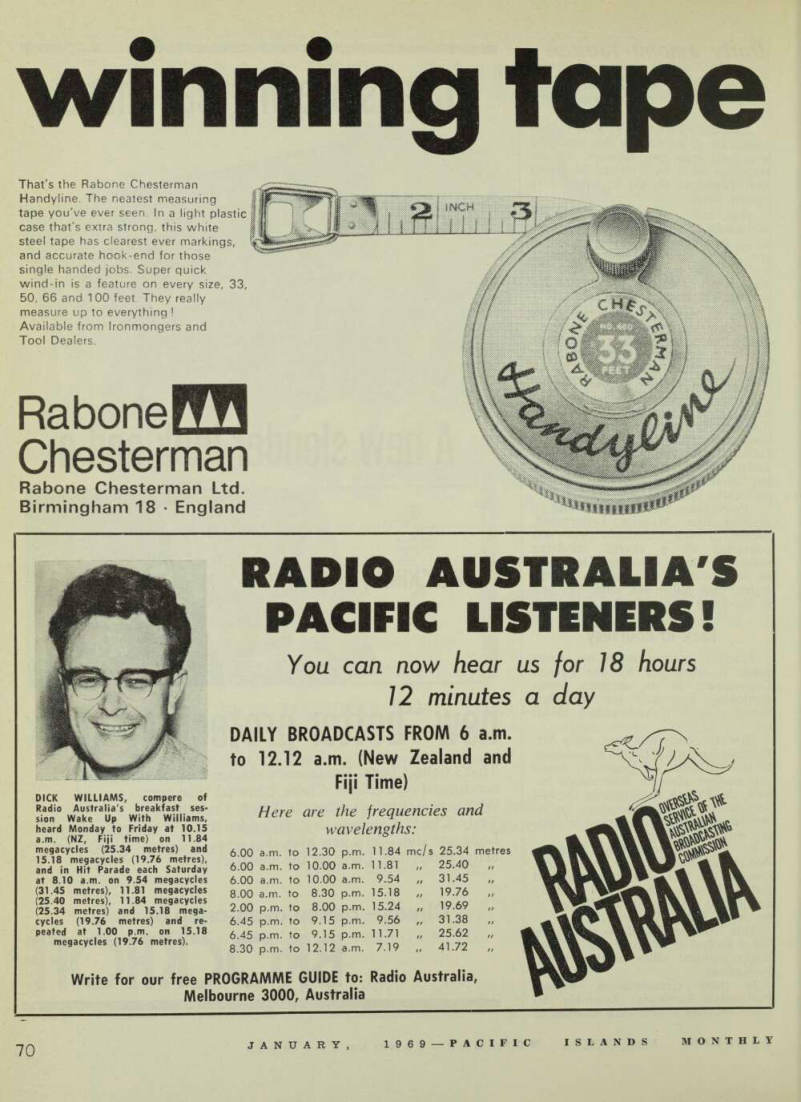 72
72 73
73 74
74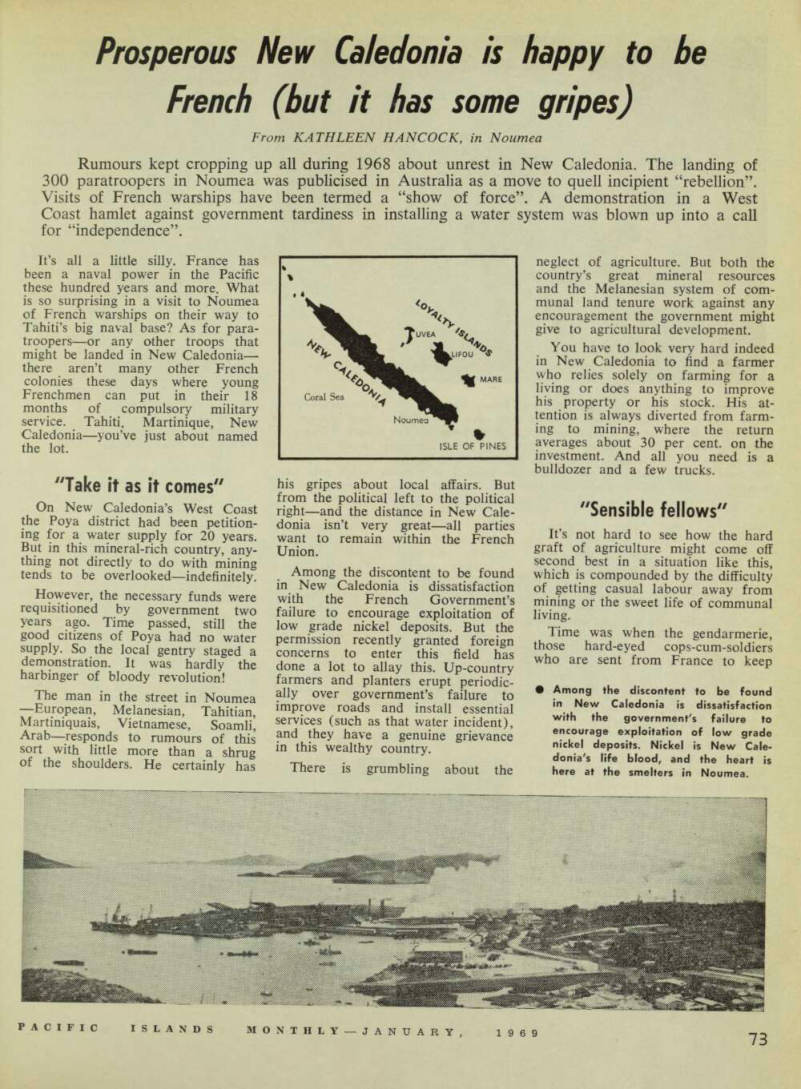 75
75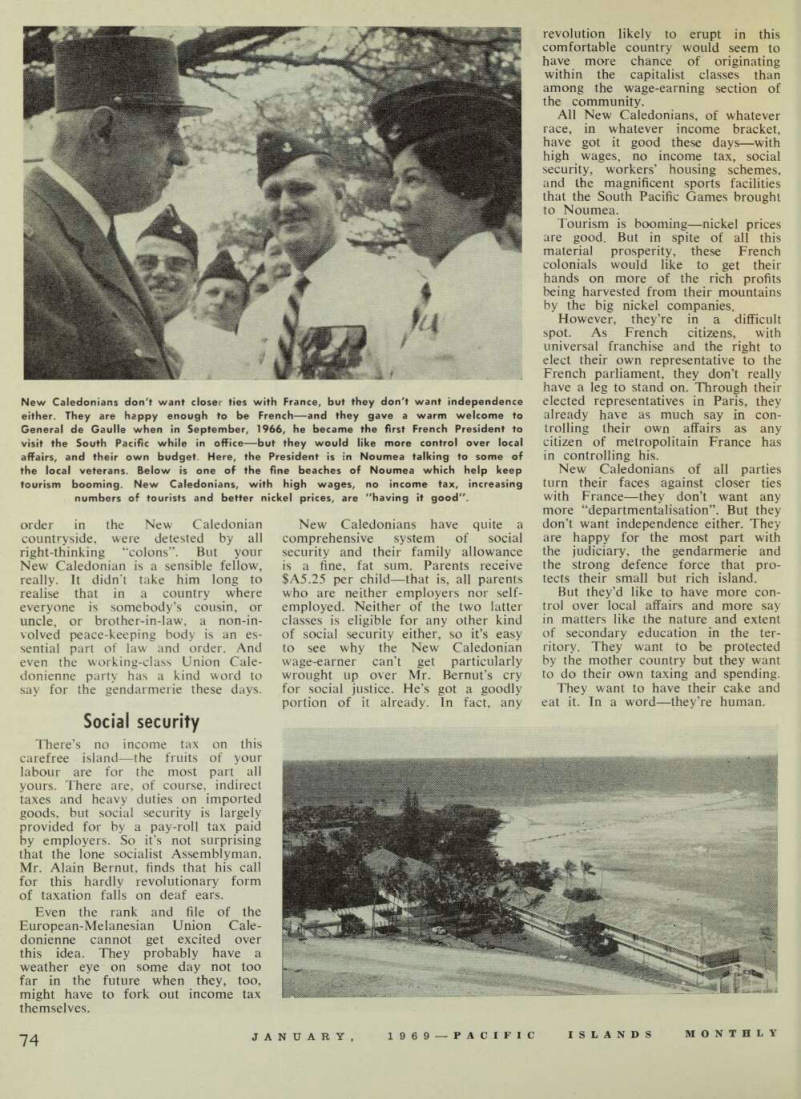 76
76 77
77 78
78 79
79 80
80 81
81 82
82 83
83 84
84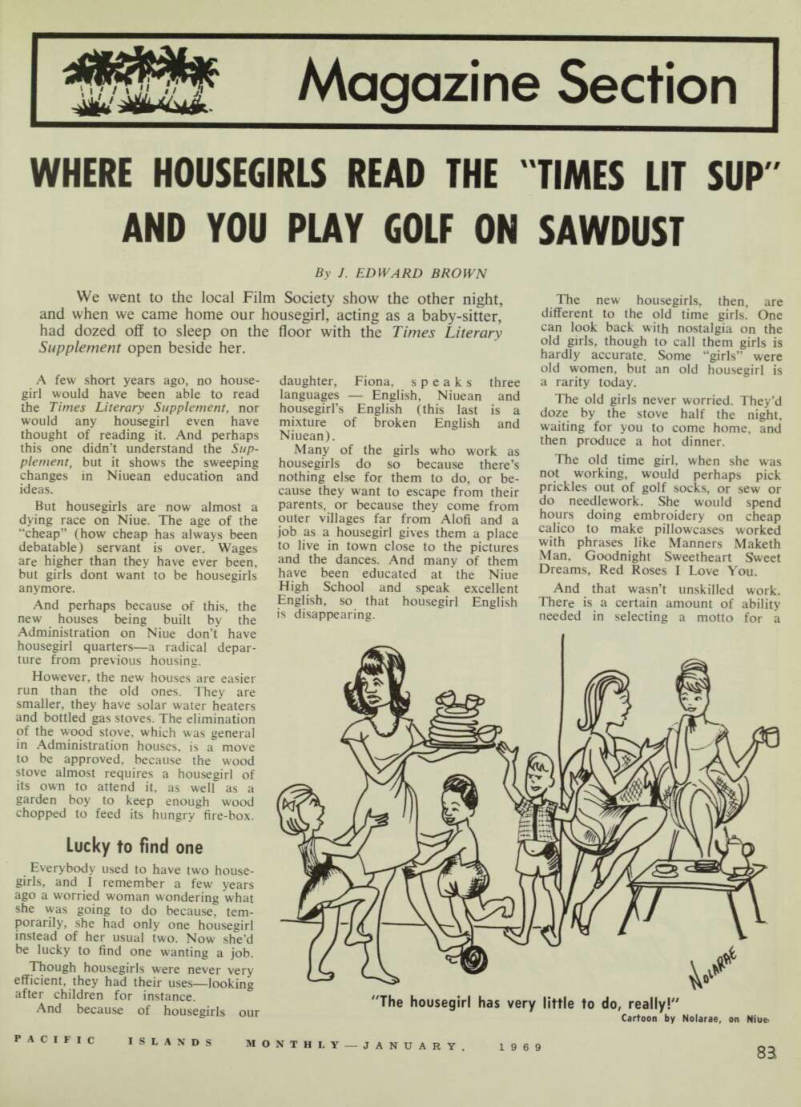 85
85 86
86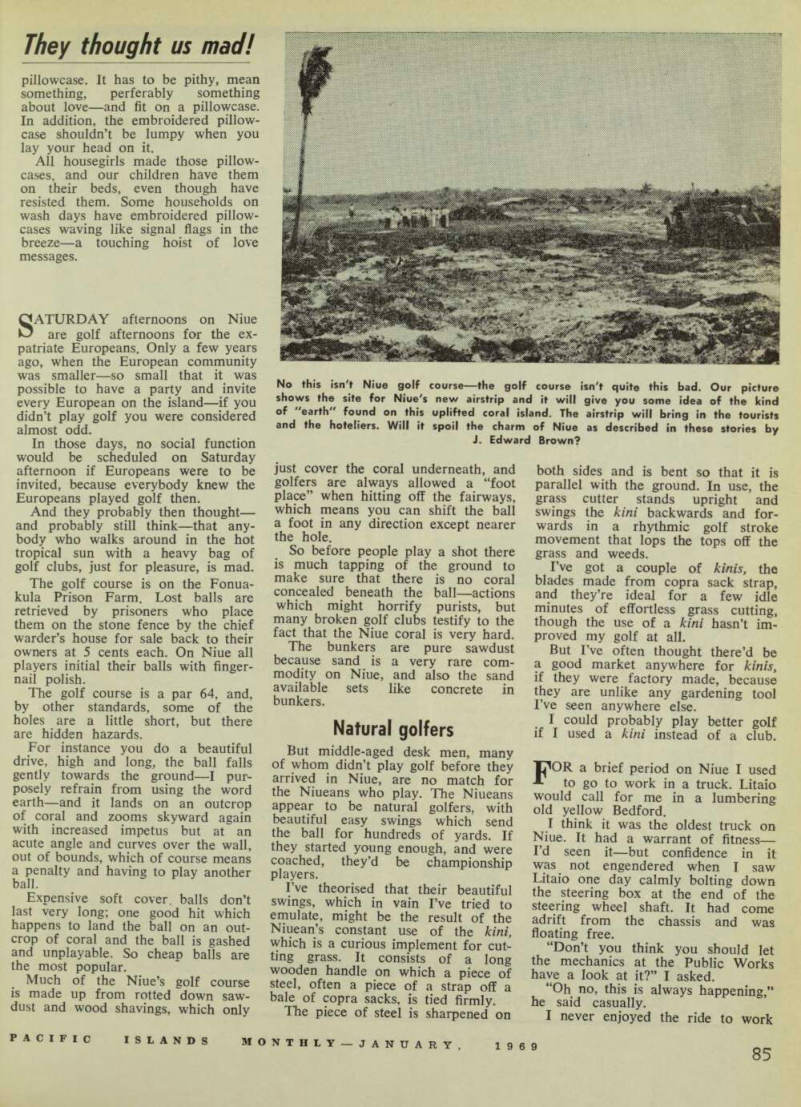 87
87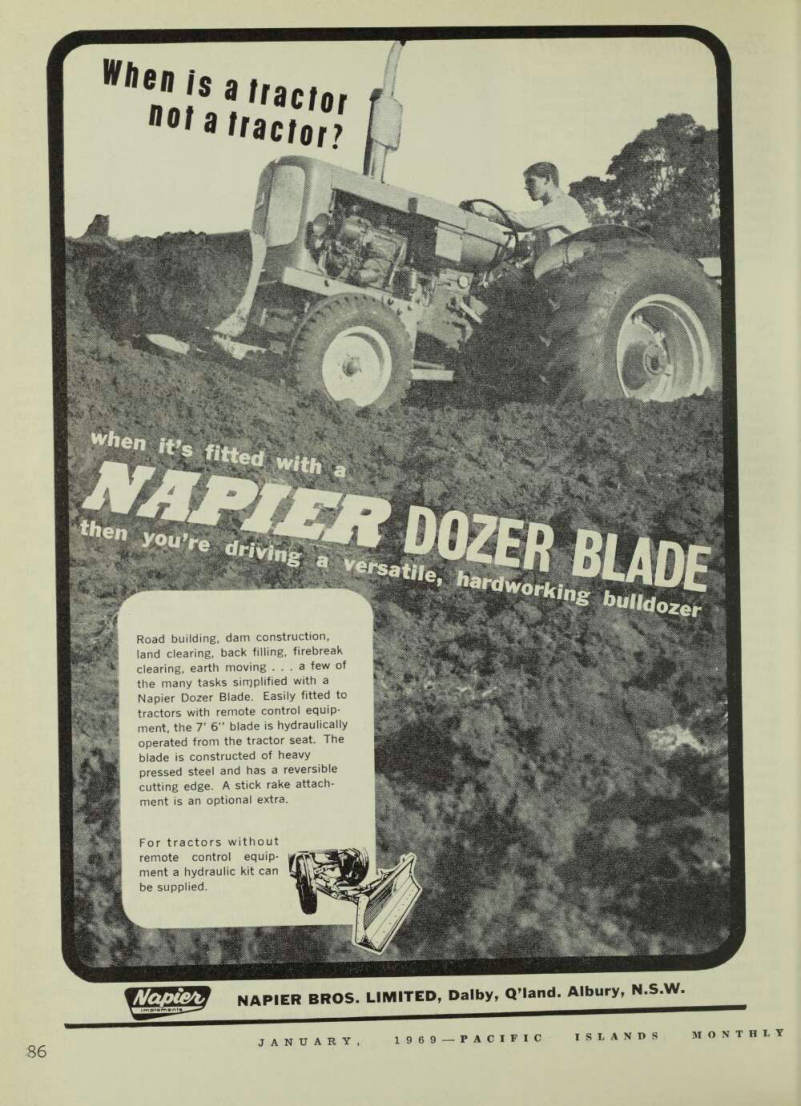 88
88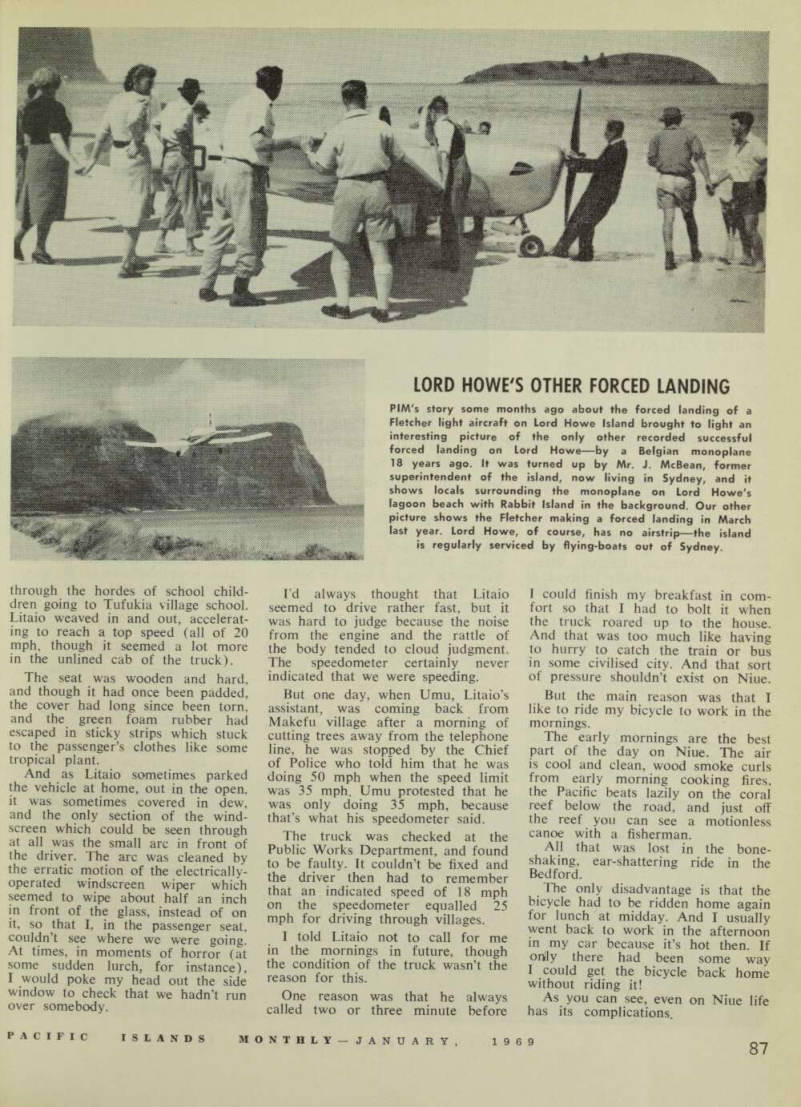 89
89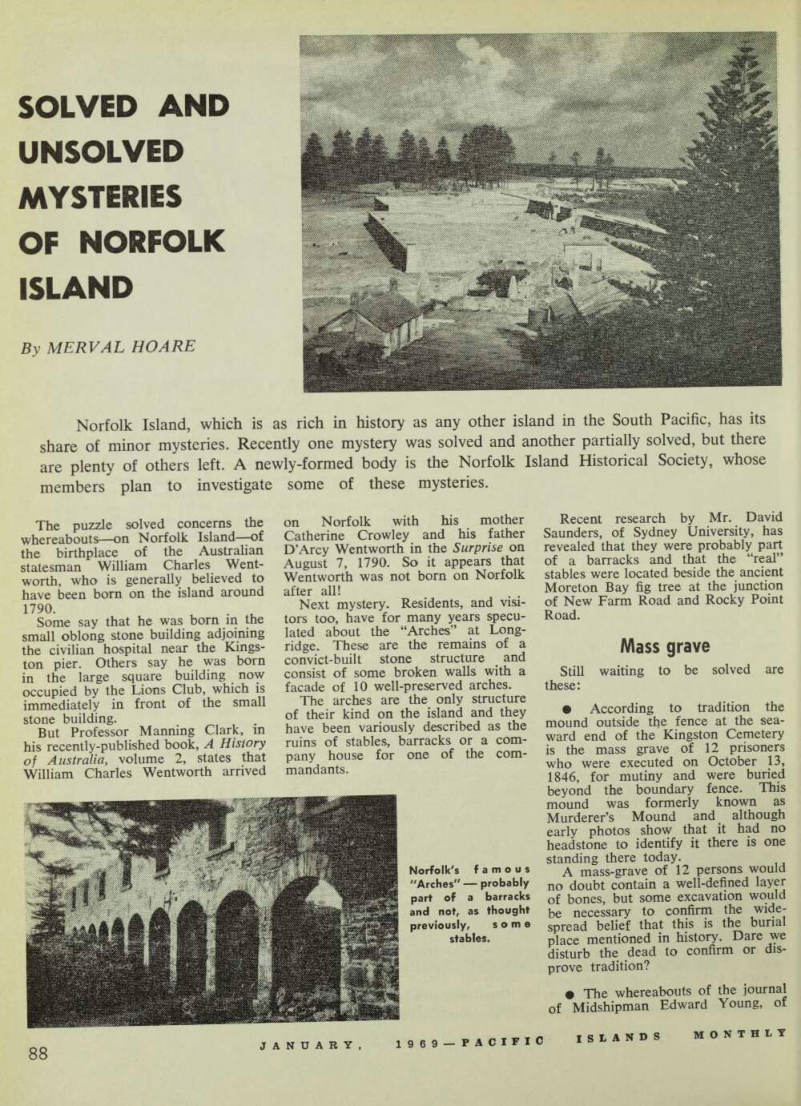 90
90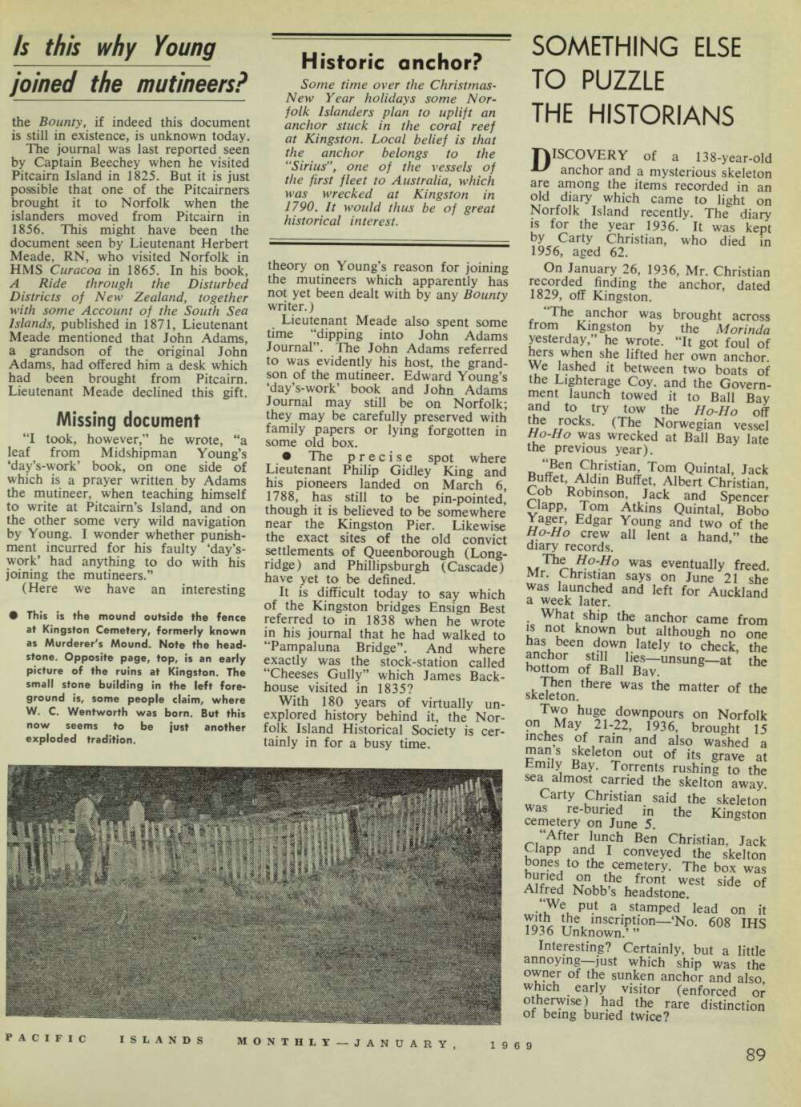 91
91 92
92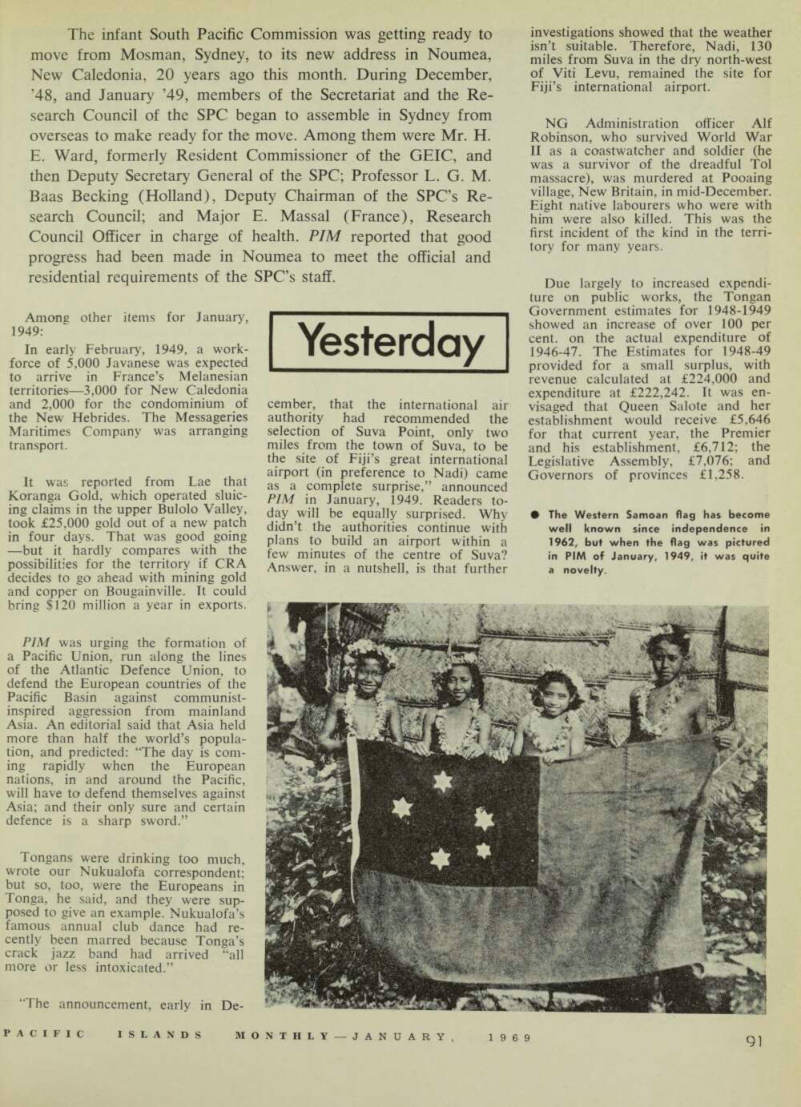 93
93 94
94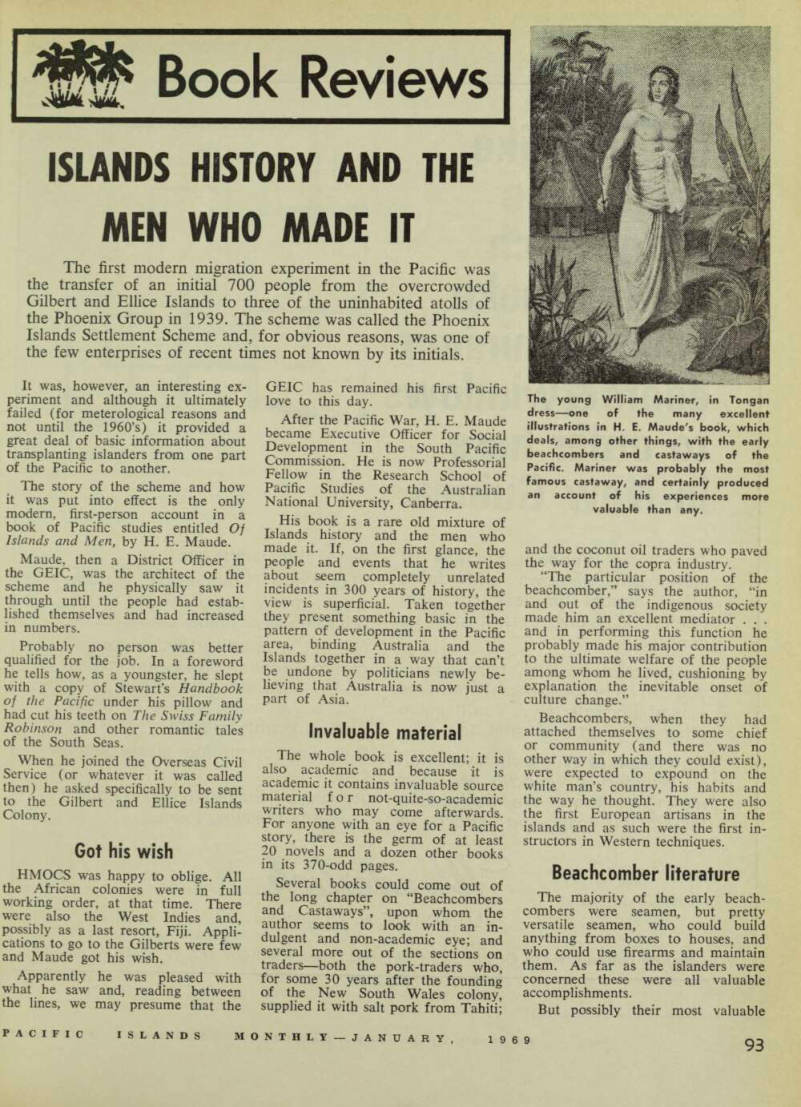 95
95 96
96 97
97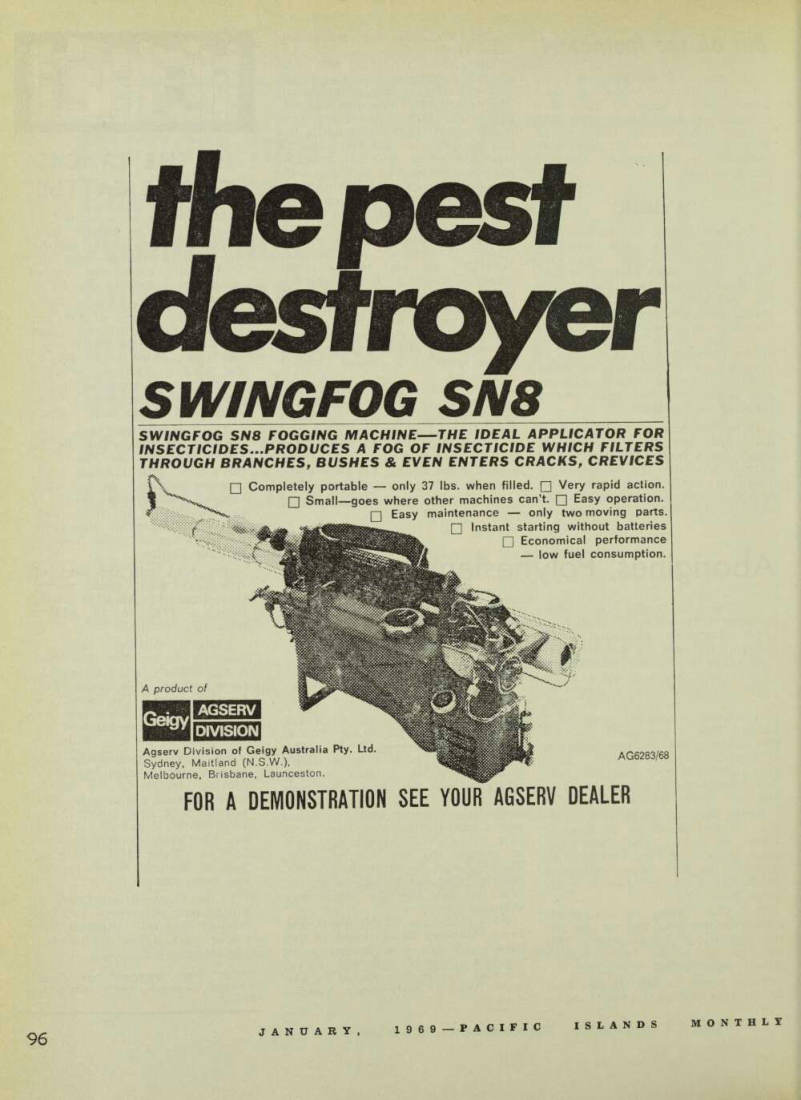 98
98 99
99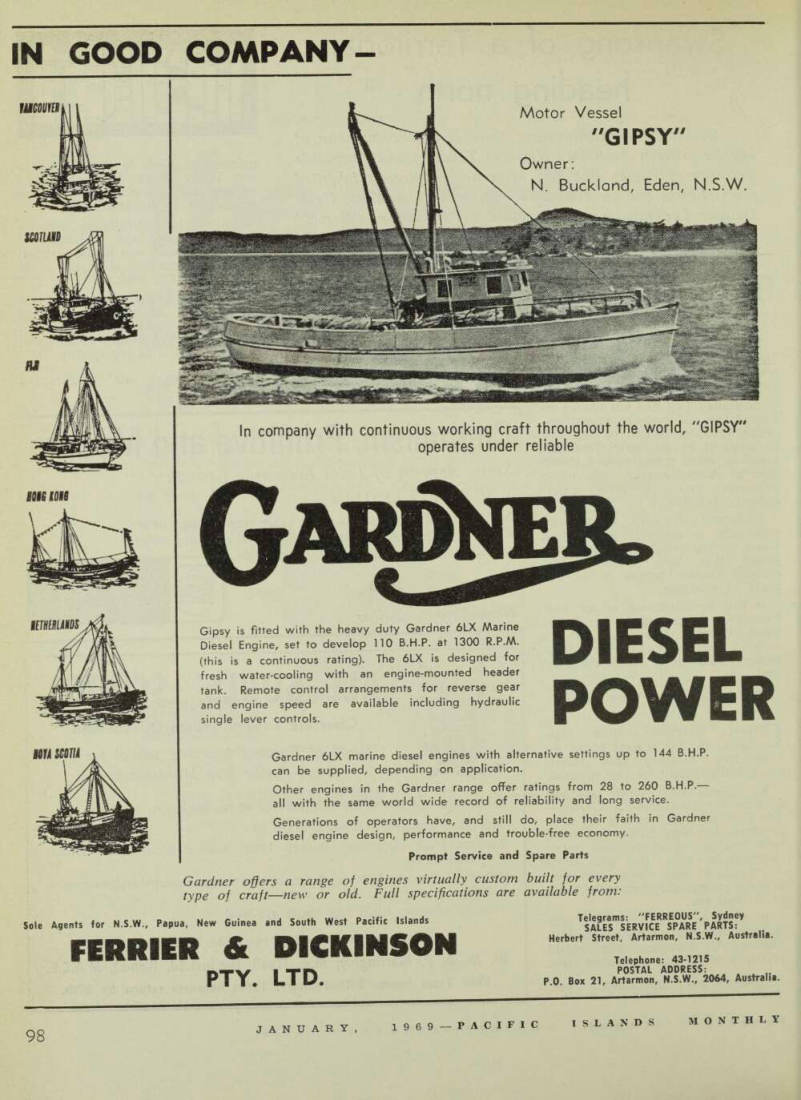 100
100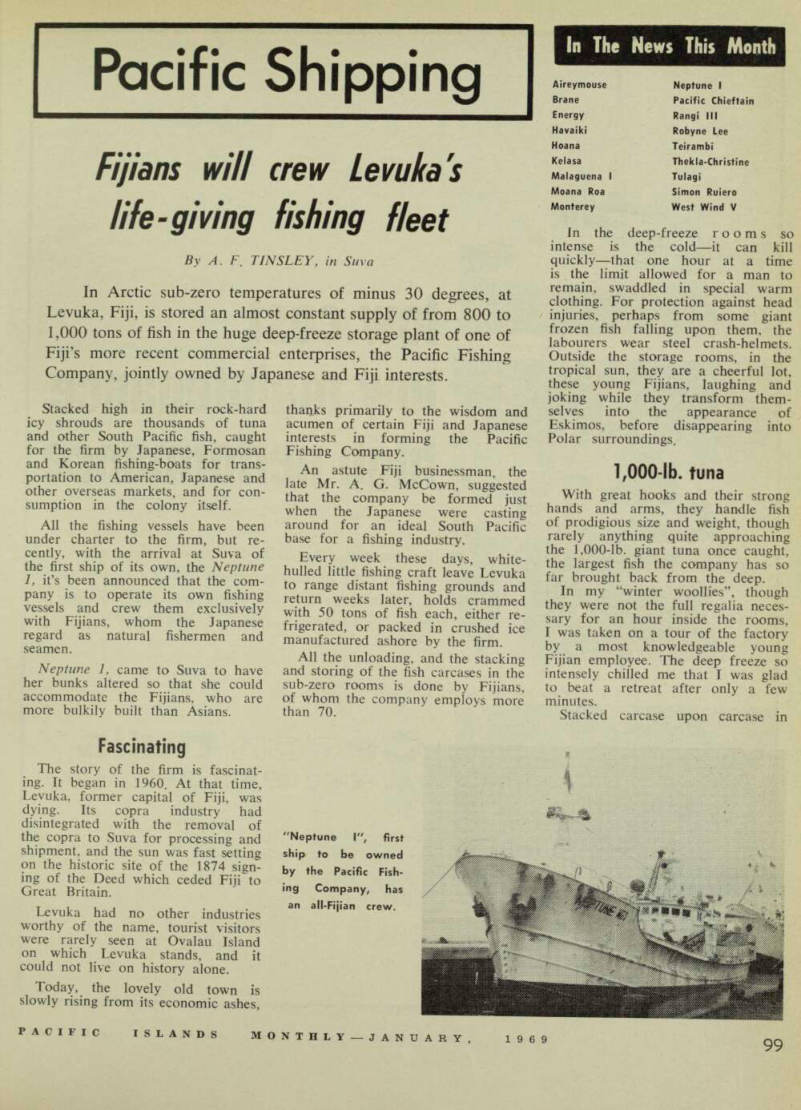 101
101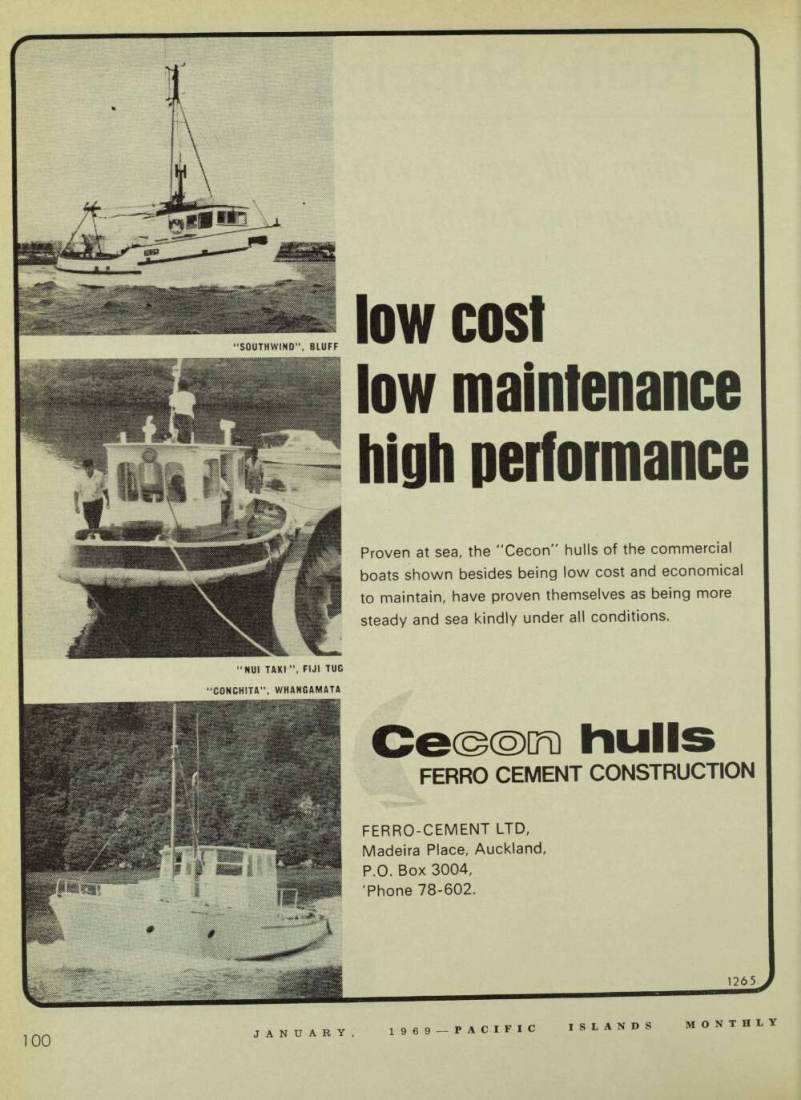 102
102 103
103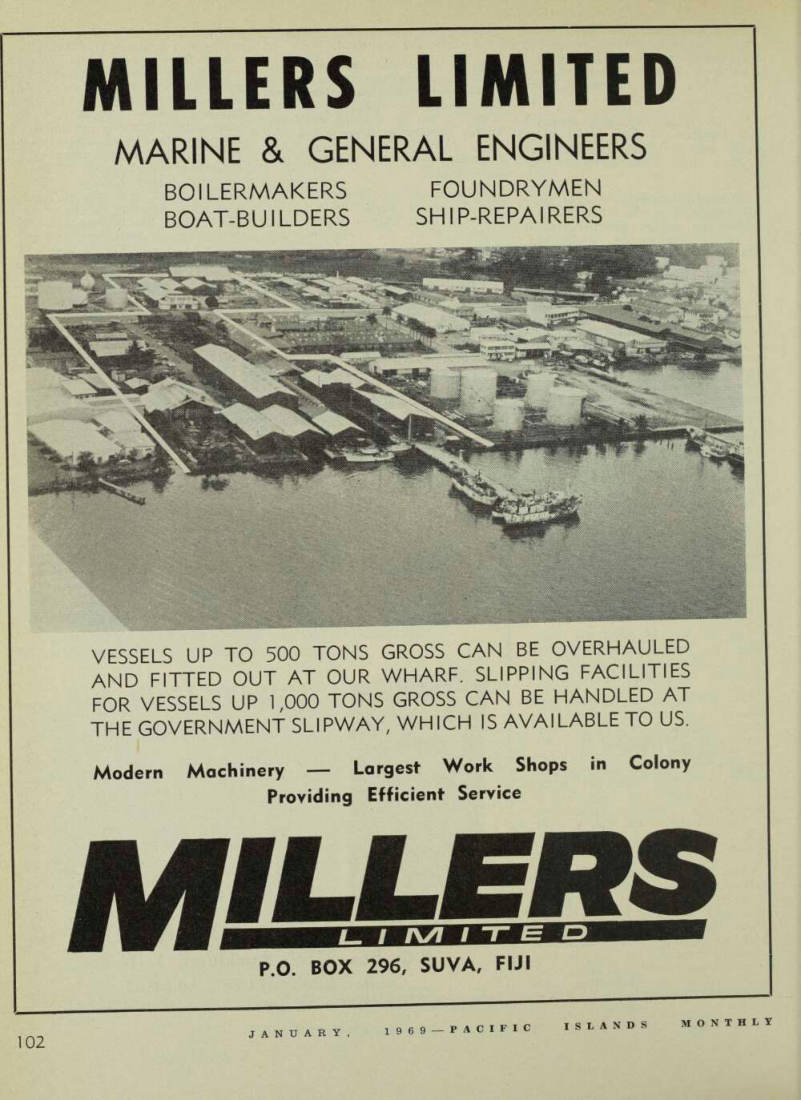 104
104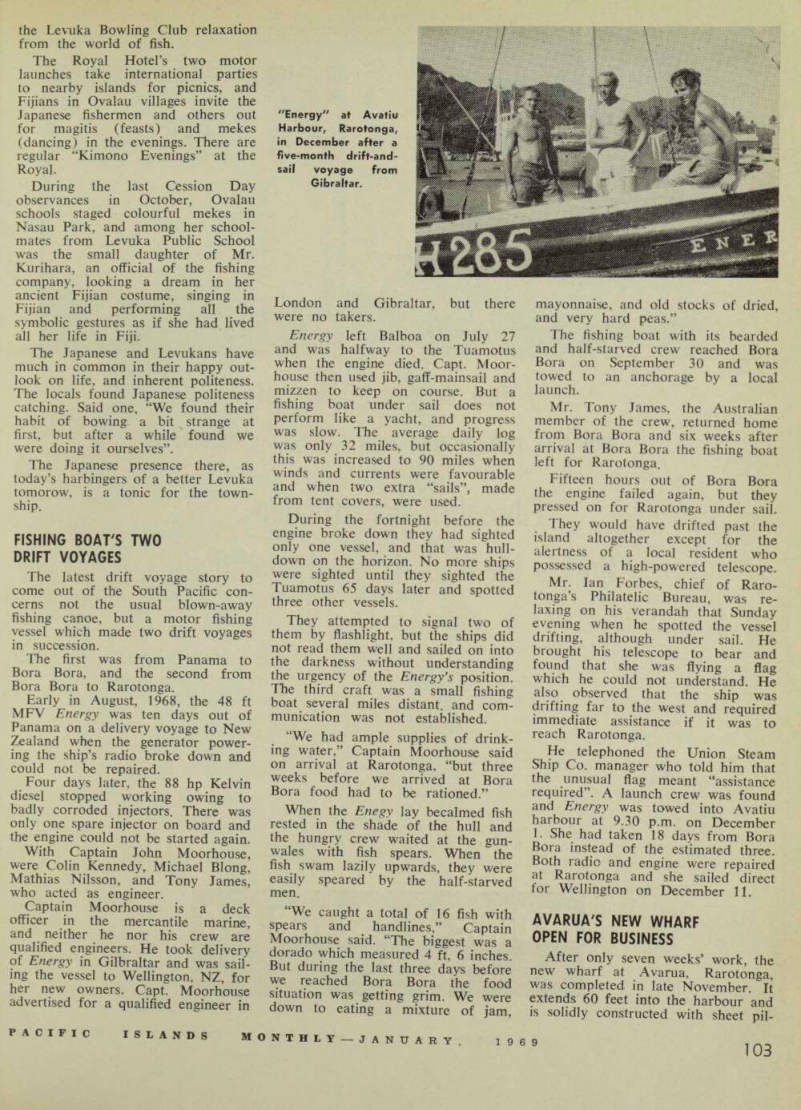 105
105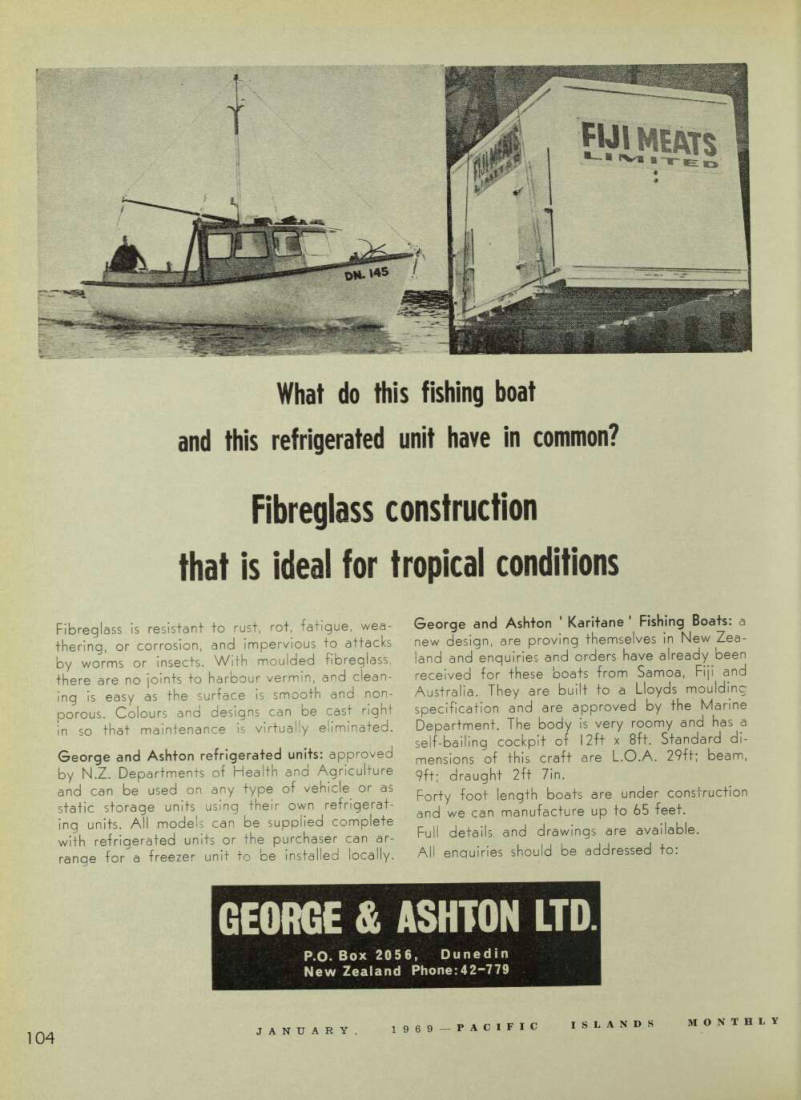 106
106 107
107 108
108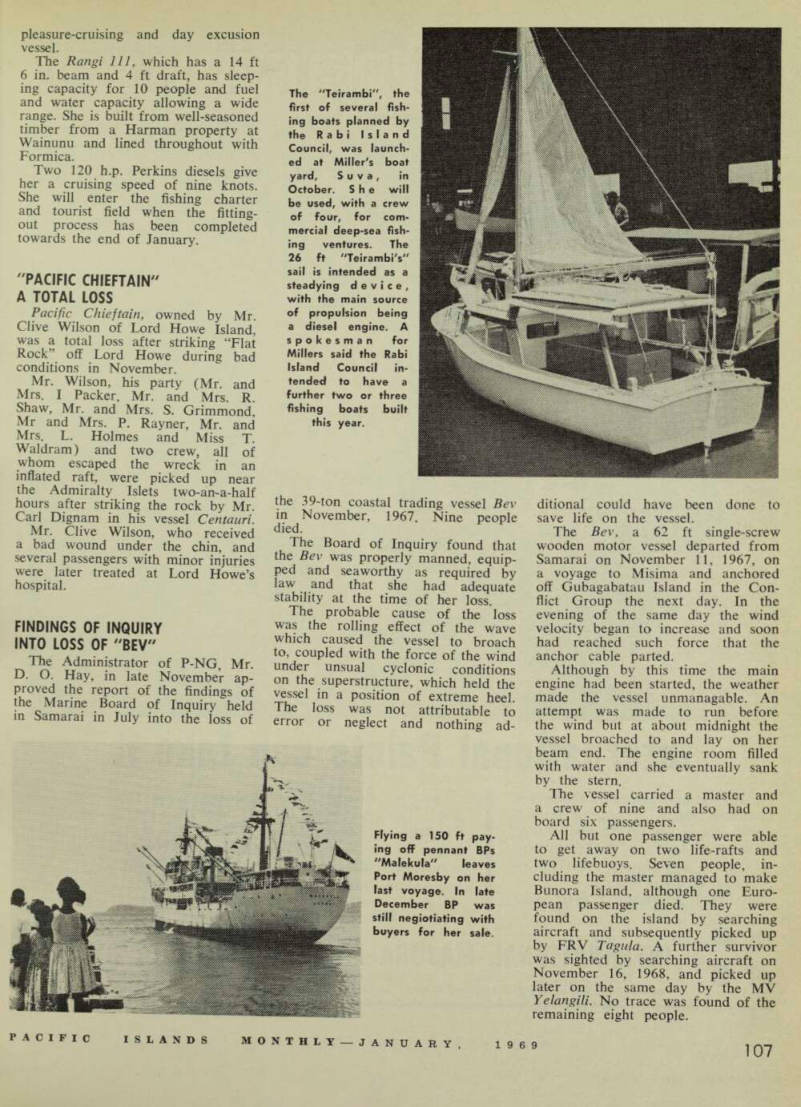 109
109 110
110 111
111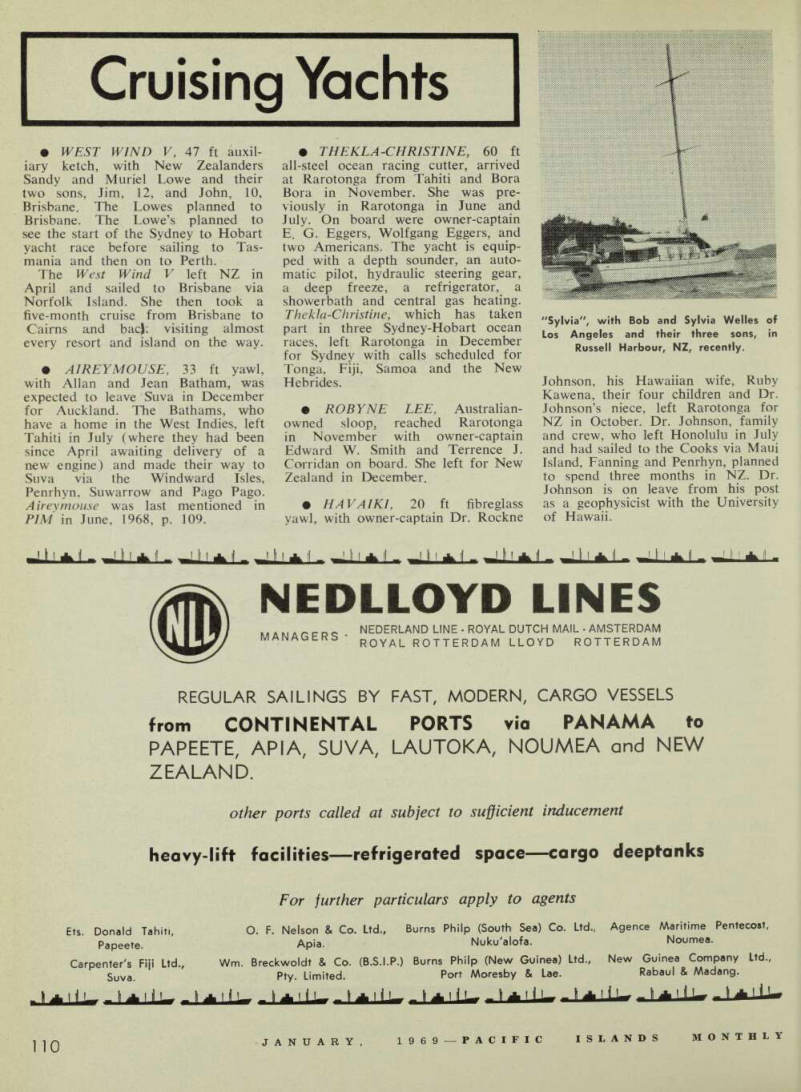 112
112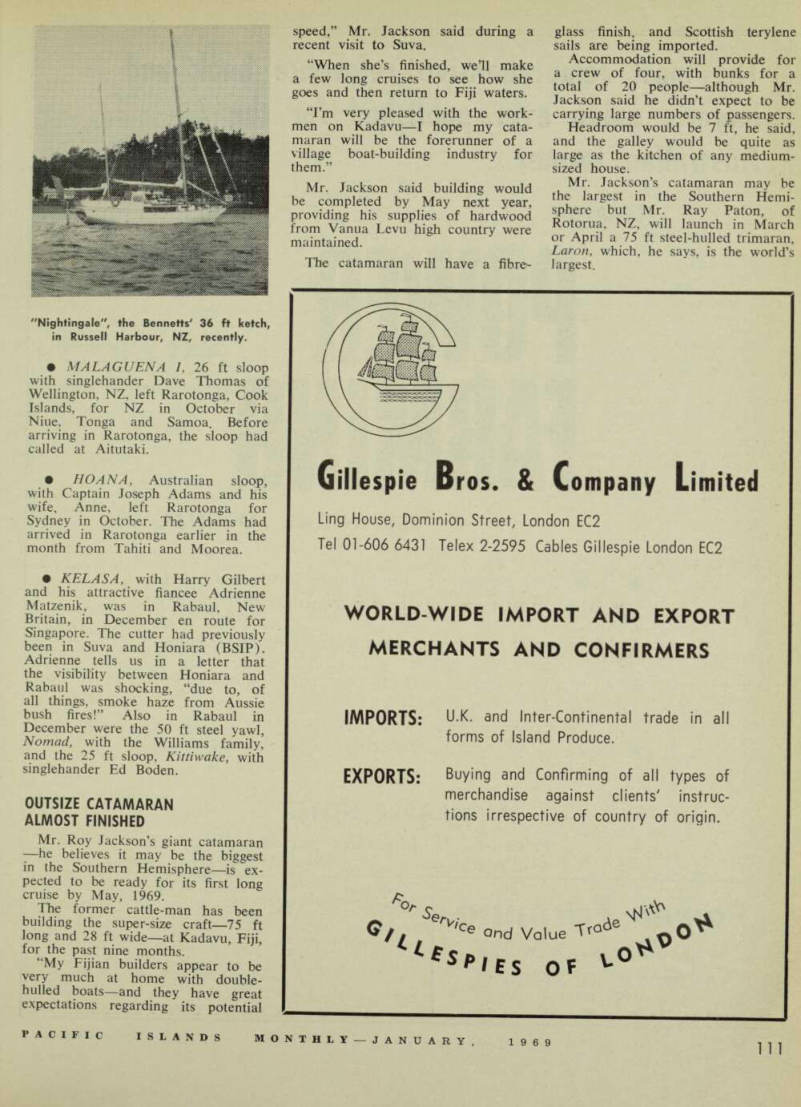 113
113 114
114 115
115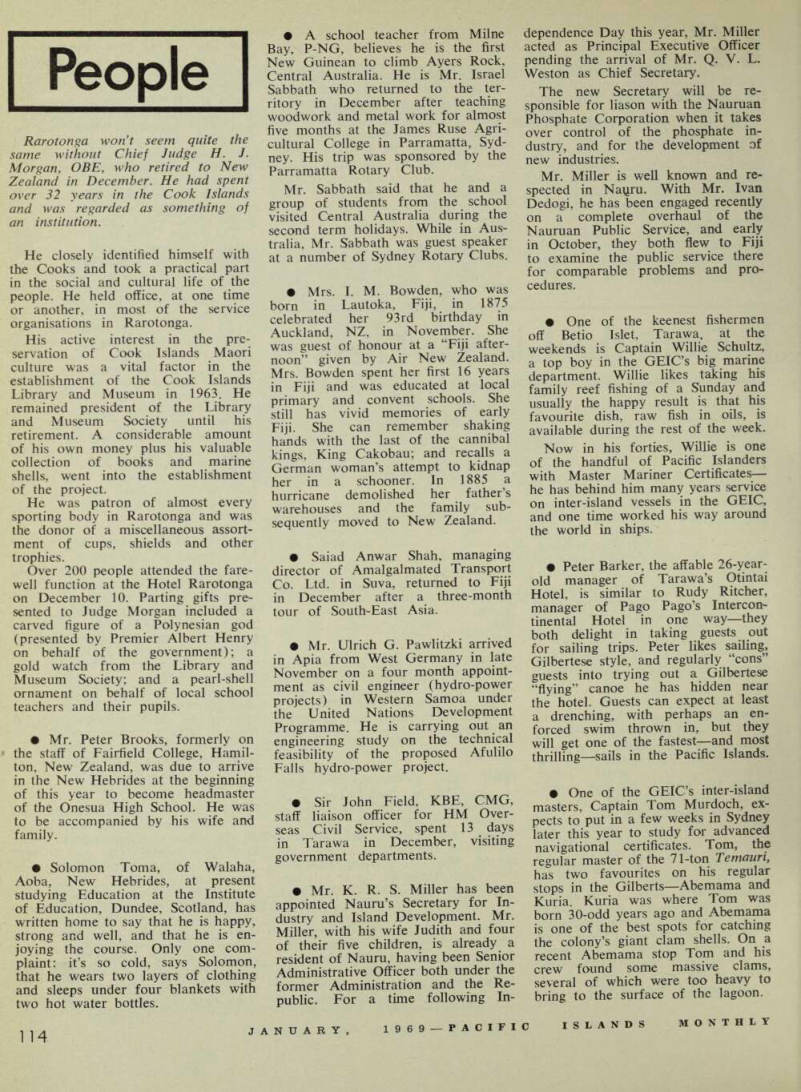 116
116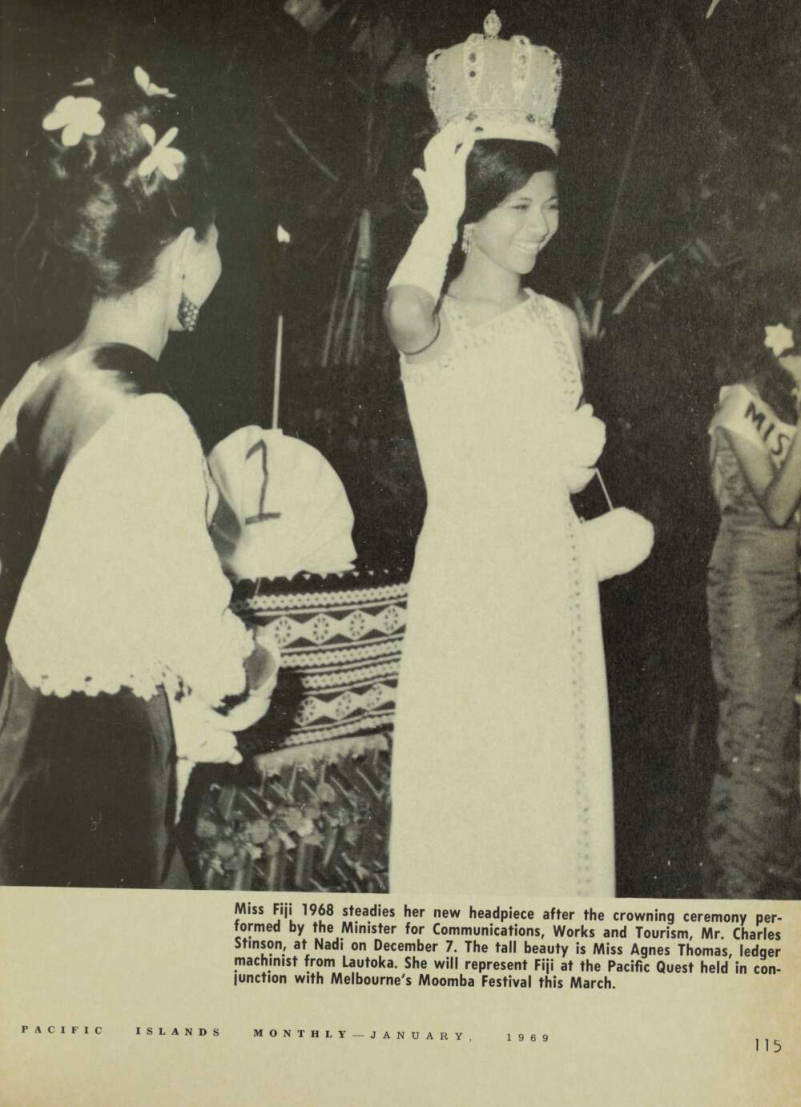 117
117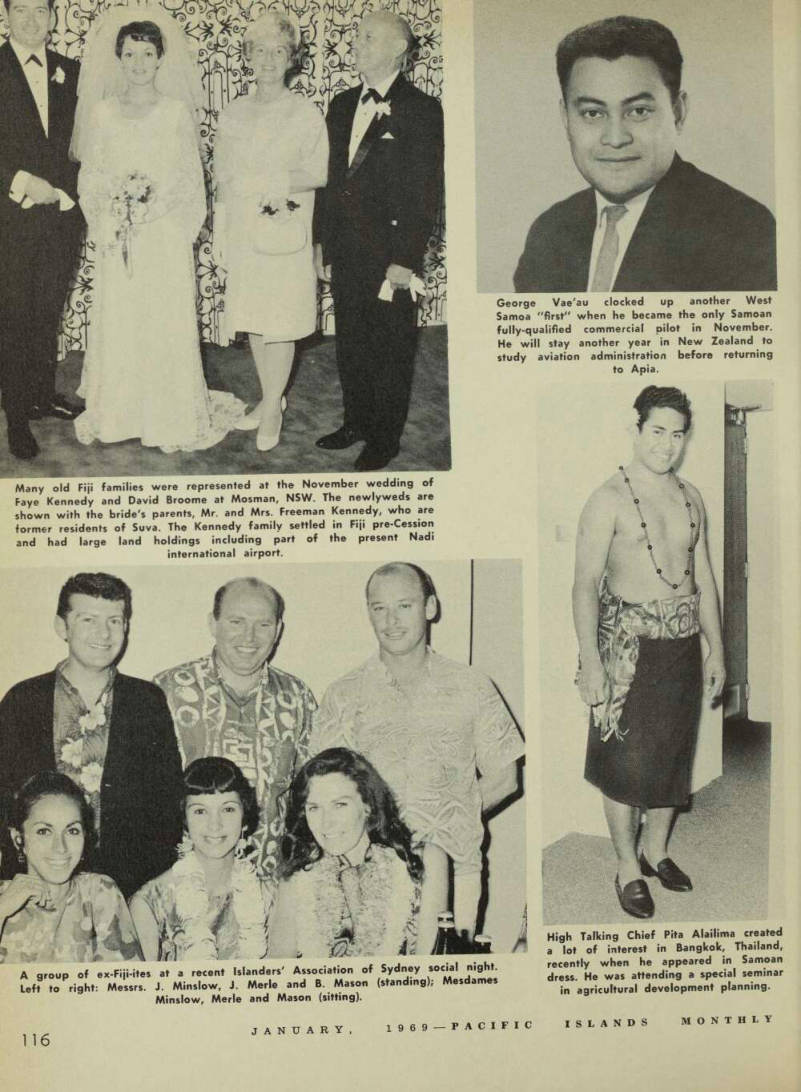 118
118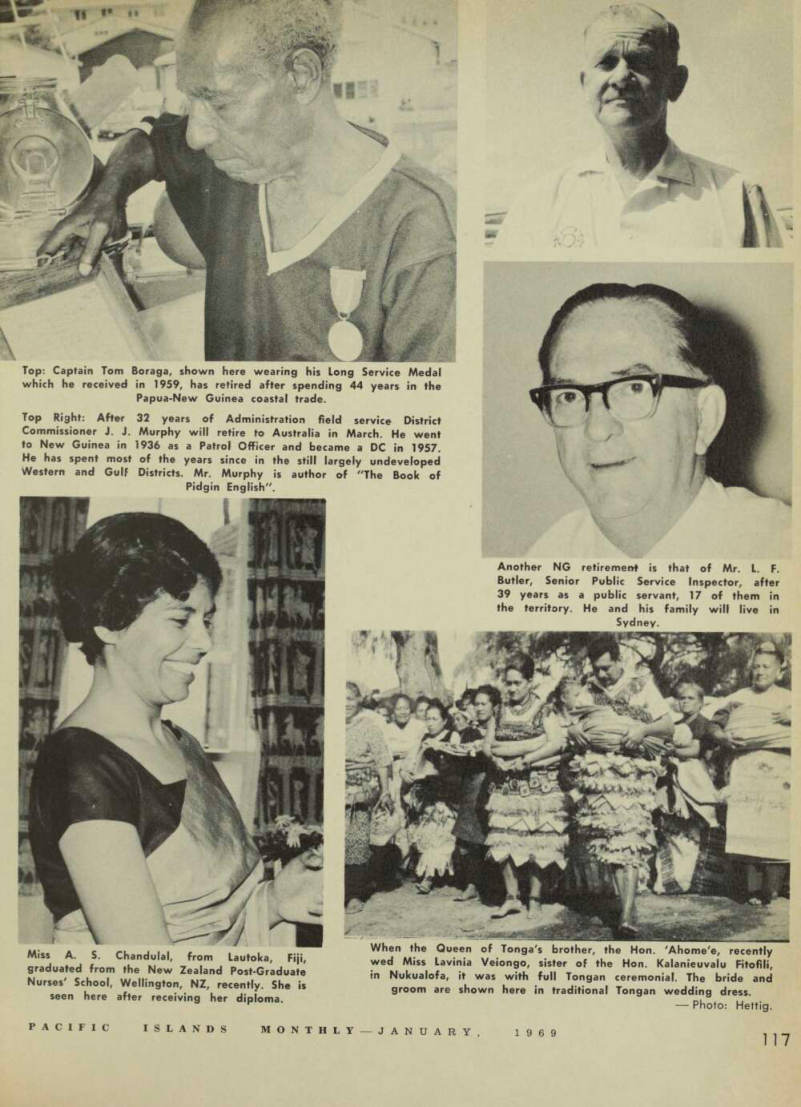 119
119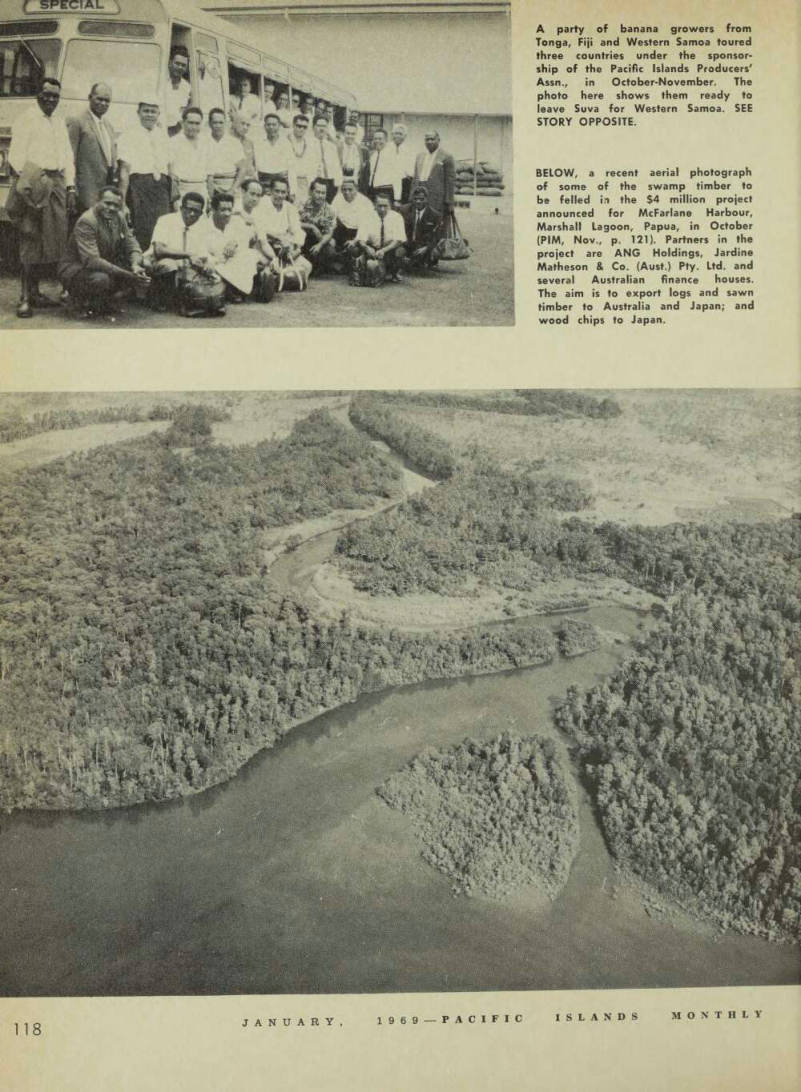 120
120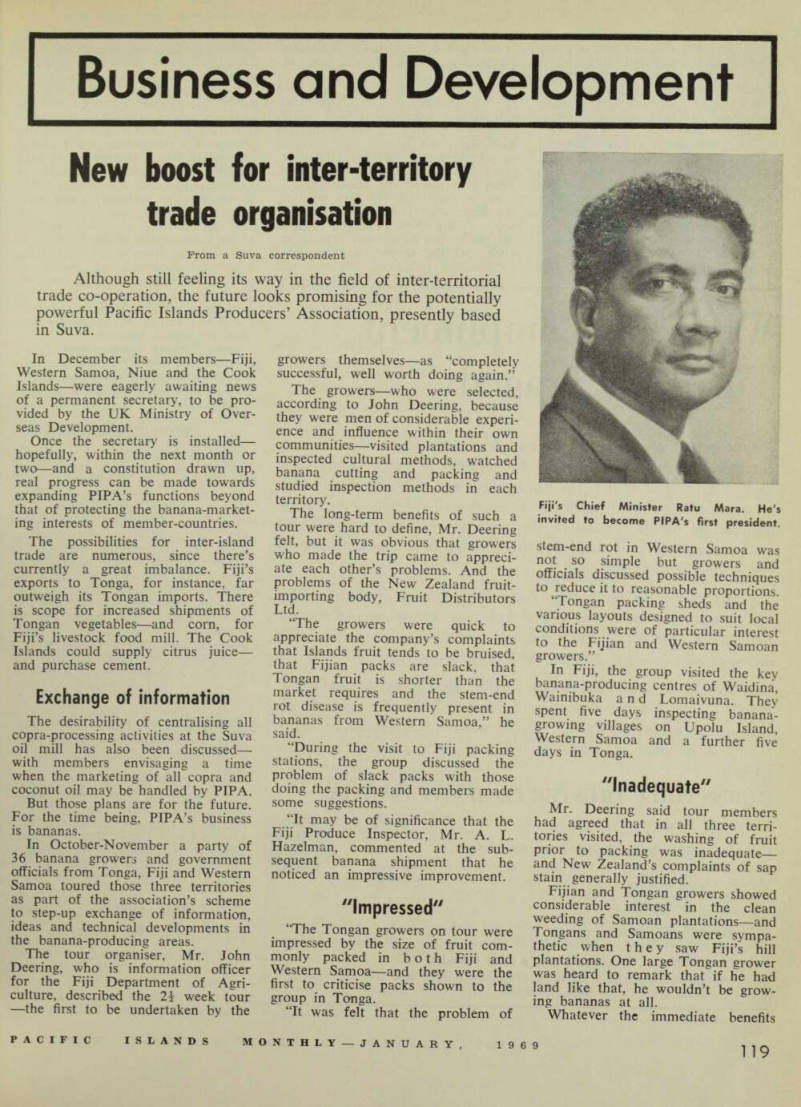 121
121 122
122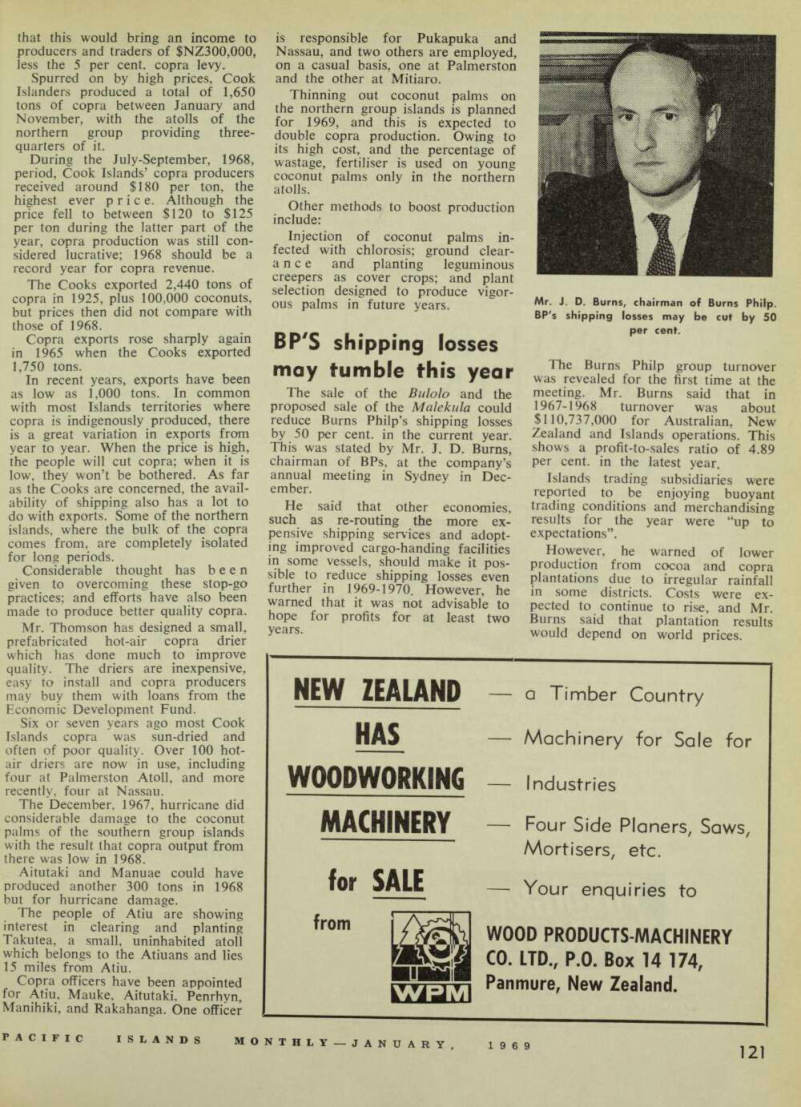 123
123 124
124 125
125 126
126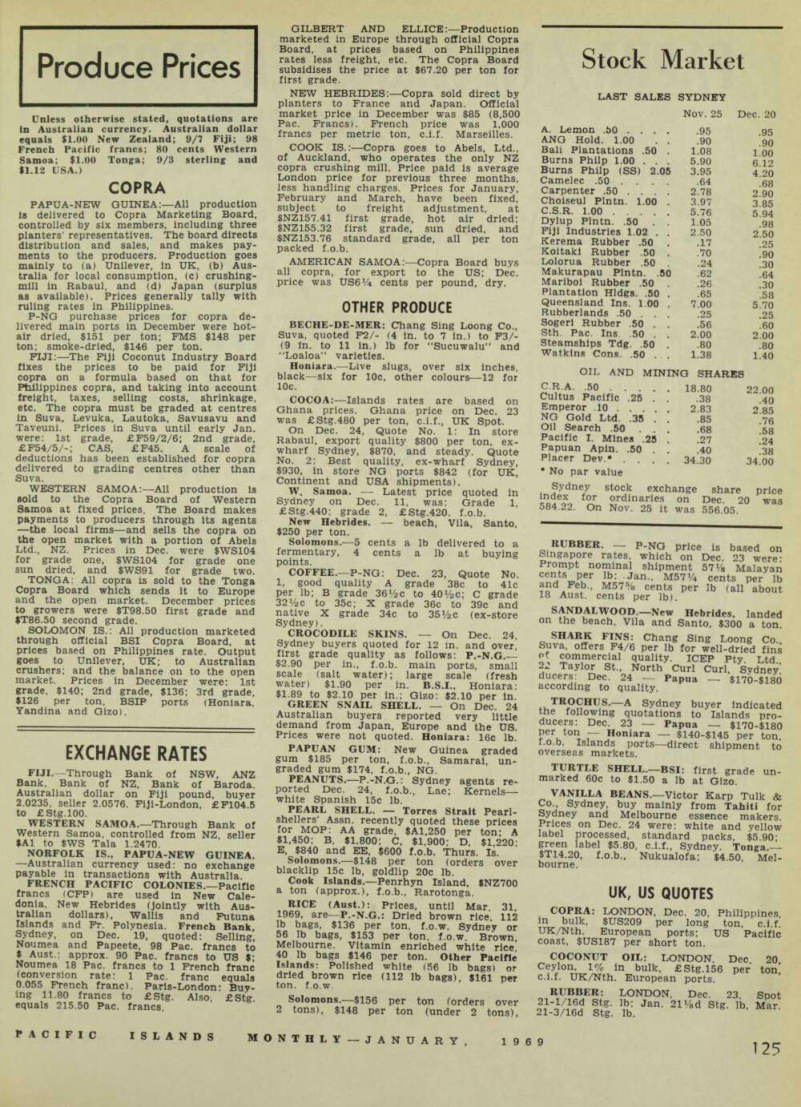 127
127 128
128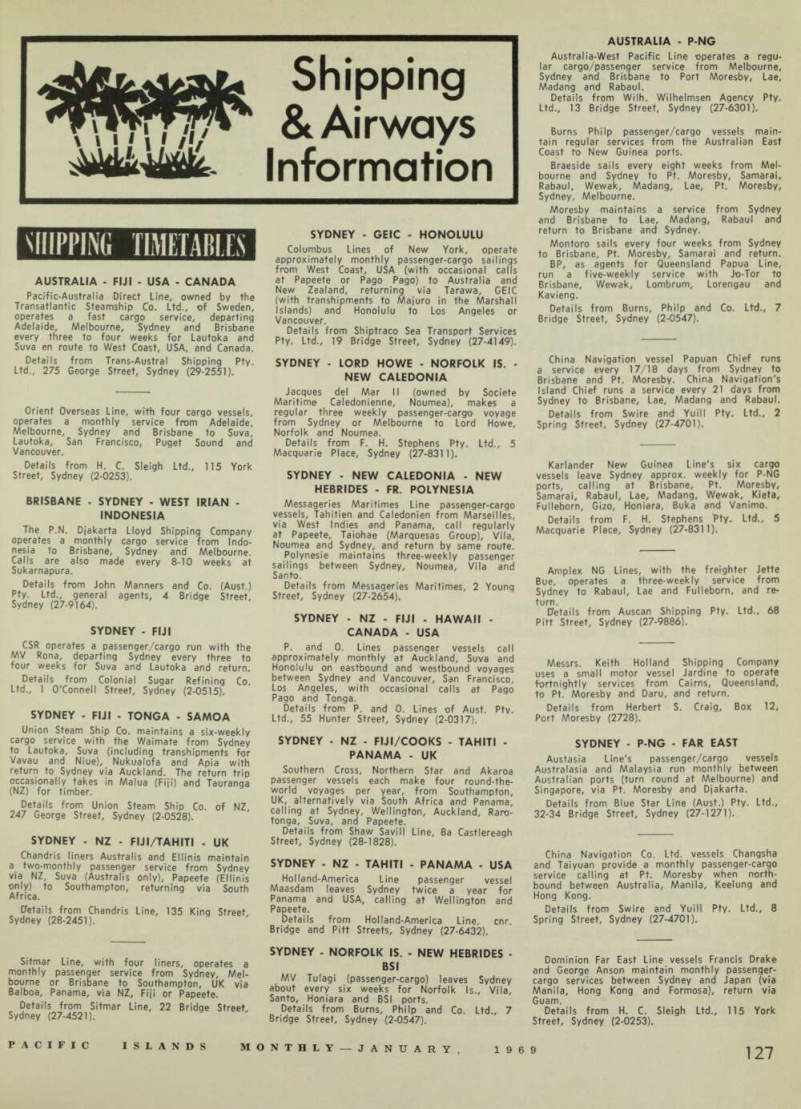 129
129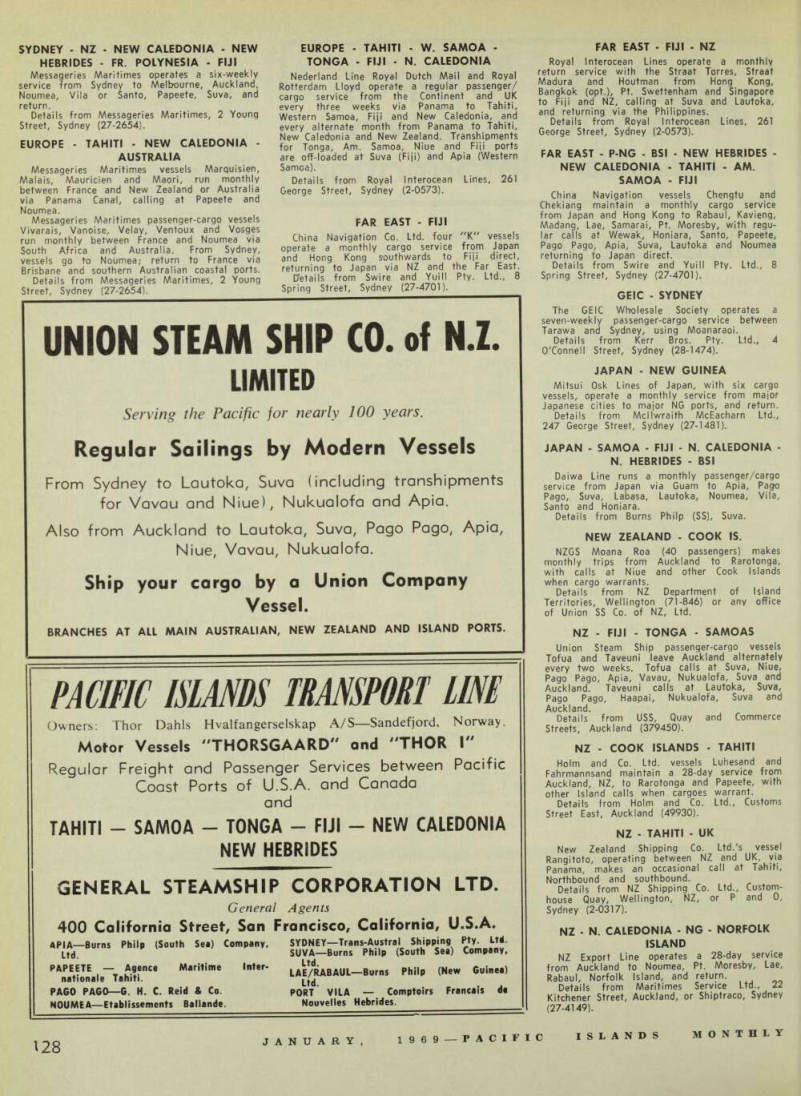 130
130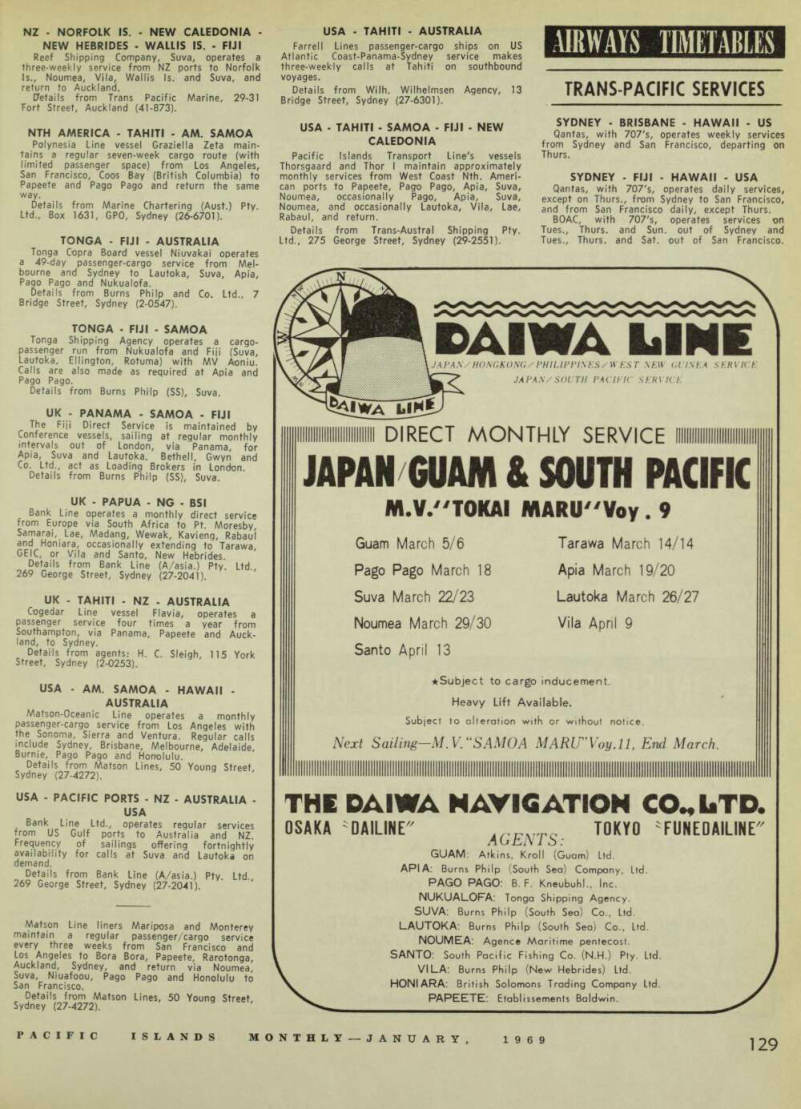 131
131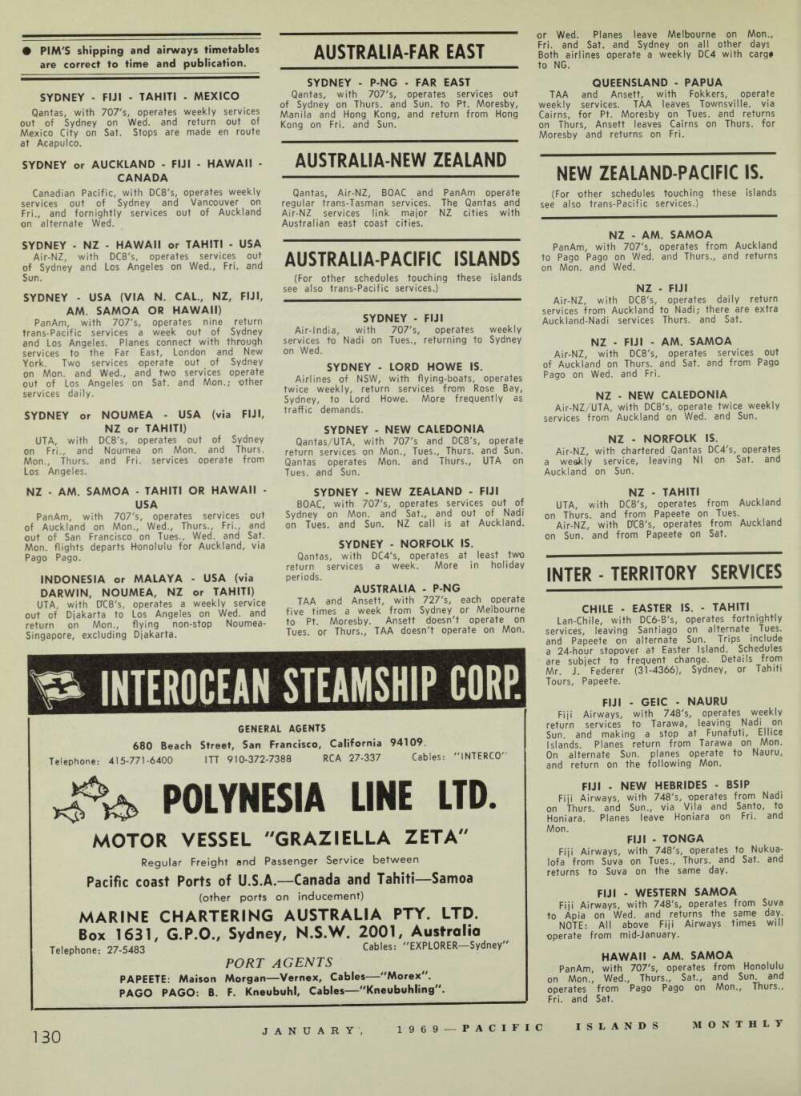 132
132 133
133 134
134 135
135 136
136 137
137 138
138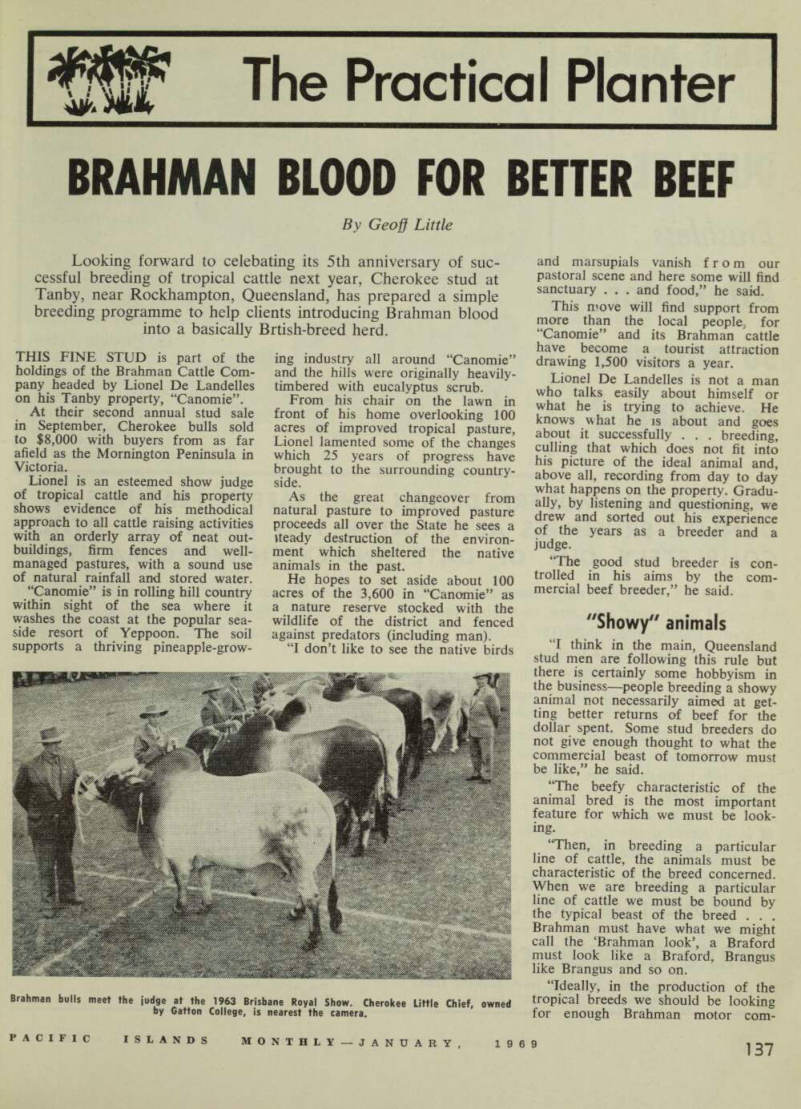 139
139 140
140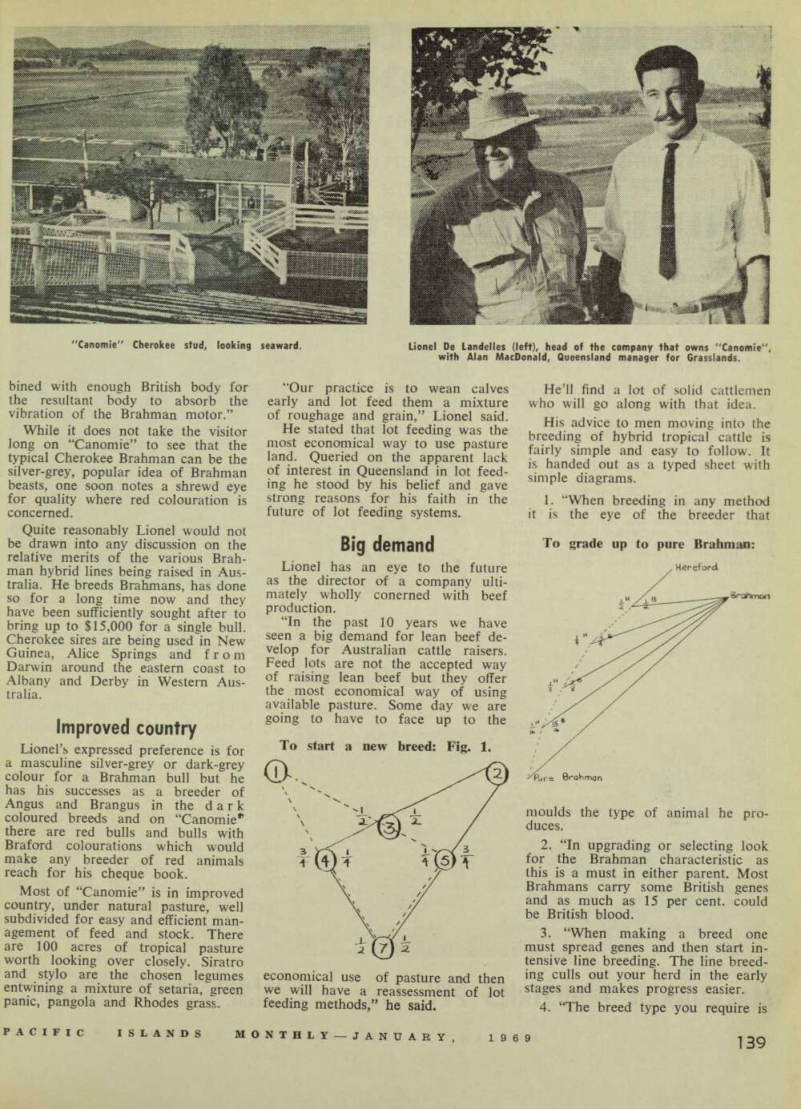 141
141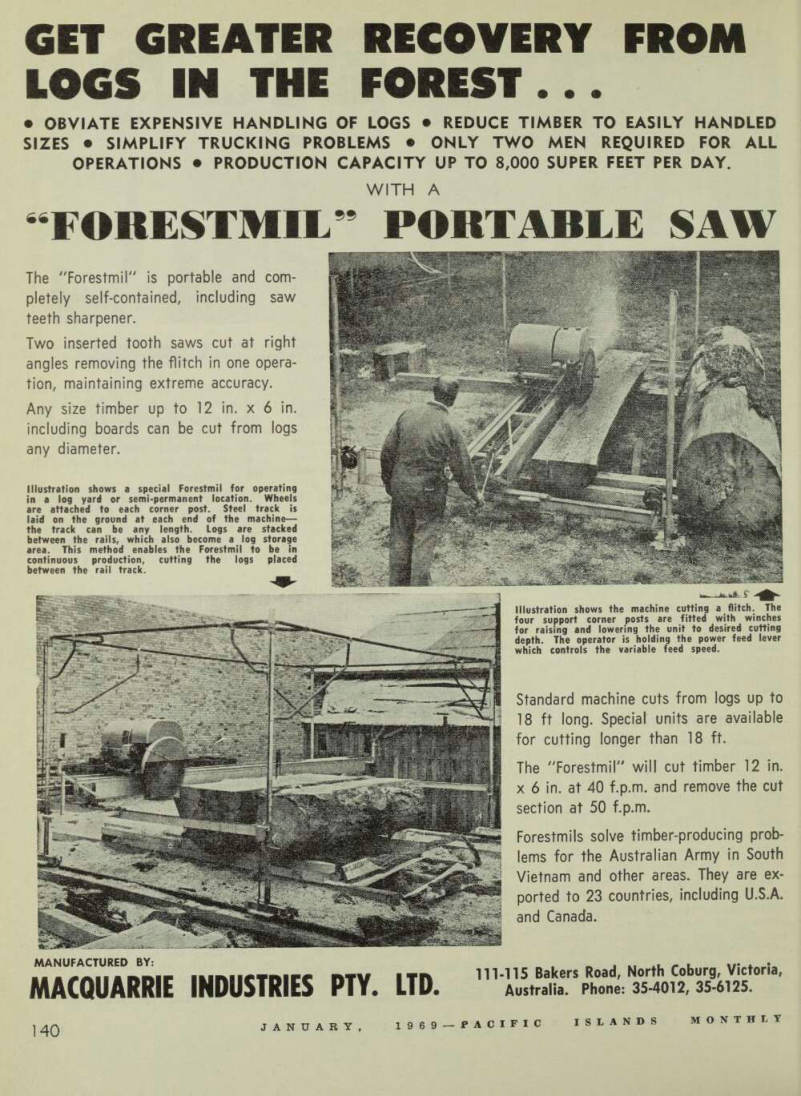 142
142 143
143 144
144 145
145 146
146 147
147 148
148 149
149 150
150 151
151 152
152 153
153 154
154 155
155 156
156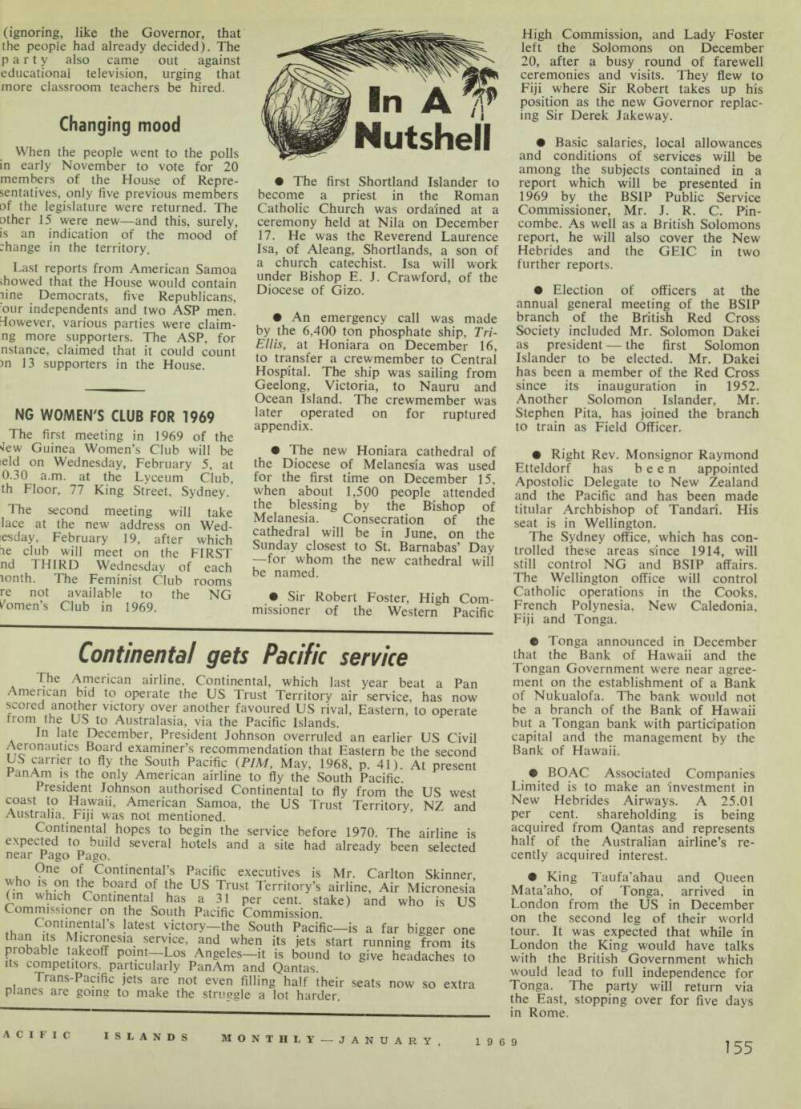 157
157 158
158 159
159 160
160