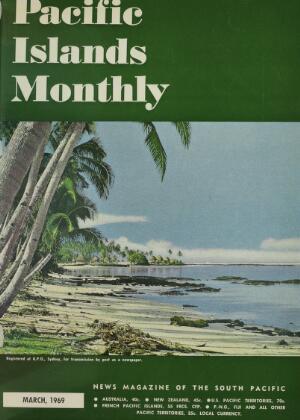
Monthly
Pacific Islands Monthly
Registered at G.P.0., Sydney, for transmission by post as a newspaper.
March, 1969
News Magazine Of The South Pacific
• AUSTRALIA, 40c. • NEW ZEALAND, 45c. «U.S. PACIFIC TERRITORIES, 70c. • FRENCH PACIFIC ISLANDS, 55 FRCS. CFP. • P.-N.G., FIJI AND ALL OTHER
Pacific Territories, 35C. Local Currency.
Our Cover
Whispering palms cast shadows across this lovely beach on Upolu, Western Samoa. In the distance can be seen the village of Lefaga. Qantas took this picture (and the pictures of New Caledonia on pages 38 to 40). This is a typical picture of that part of Western Samoa’s coast.
Samoa has been indepen dent now for six years and is beginning to encourage visitors.
Advertisements & other items, p. 2 (2 items)
19 69 Pac.Fic Islands Monthly
fly TAA
Most people
' Wj m
—they've got the best connections
in the Territory and Australia!
New Improved TAA services. From Port Moresby to and from all main centres and through the Highlands a greater spread of services with better connections throughout the Territory. From Port Moresby, to and from Australia, fly TAA’s ‘Bird of Paradise’ T-Jet service. Contact your Travel Agent or TAA; Port Moresby 2101. Lae 2311. Madang 2478. Rabaul 2567. Goroka 8. Mt. Hagen 4. Wewak 103.
Fly TAA the Friendly Way
TAA
In This Issue
Jeneral
leader survey results 47 lob Langdon on James L. Young 81 apanese say: "No radio activity" 101 V. R. Carpenter's month 117 hree bank partnership 120
American Samoa
Jew Secretary of Interior 30 wo new boats wanted 105 ocal bank take-over? 119
Ook Islands
Jrport agreement signed 31 arotonga harbour rescue 36 eth Dean on dancing 57
Iji
lo independence for Rabi 21 lames prospects 25 quor for women 27 irthrate drops ... 27 old industry debate 30 ora wants compensation 32 aluable coins 32 liss Curtis for Suva 33 avusavu's $400,000 hotel 33 irport landing charges wrangle 45 ob Hunter, island buyer 61 I million development plan 119
BP Trustee in Suva 120 SUSI million for rice 120
French Polynesia
New Governor named ... 23
Gilbert And Ellice Islands Colony
Link with Marshalls 21 Britain's "no" to Banabans 21 Journalist in Sydney 112
Lord Howe Island
Golf course proposal 72 Shipping troubles ahead 97
Nauru
Link with Micronesia? 21
Football pools holdup 31
New Caledonia
Games prospects 23 Tourism review . 41 Matson by-passes Noumea 41 Captain Savoie's biggest buy 97 "Matipo" freed 103 Second bank opens 119
New Hebrides
Labour problems 53 George Dew to build Vila wharf 99 Timber ship due in April 101
Preserve the crayfish! 105 "Manutai" working 107
Niue
Land tenure book 95
Norfolk Island
Historical assets re-assessed 29 Qantas attacked 72
Papua-New Guinea
Games fever 22 Political parties are "in" 26 Arbitration system reviewed 31 Gangs in Moresby 32 Dr. C. Beeby to examine education .. 33 New Carpenter head 112 Carpenter: new shipping venture ... 117 Oil strike in the Gulf 120 Copper in the west? . 120
Solomon Islands
Developments, thick and fast . 28
Tonga
Way clear for independence 28 Rev. Dr. A. Wood's criticism 67 Shippers to by-pass Haapai 107 Oil explorers named 120
Us Trust Territory
Link with Nauru, Gilberts? 21 Two more ships for MILI 107
Western Samoa
Money shortage for Games 25 Good-bye to the privies 69 Apia's beauty "marred" 72 Asau dredge damaged 107
West Irian
Voting method announced 22
DEPARTMENTS: Up Front with the Editor, Mi; Letters, 53; Tropicalities, 32; To the Point with Percy Chatterton, 34; Travel, 37; Magazine Section, 81; Yesterday, 91; Book Reviews, 93; Shipping, 97; Cruising Yachts, 108; Islands Press, 72; People, 112; Commerce, 117; Produce Prices, 121; Deaths of Islands People, 112; Shipping, Airways Schedules, 123; Practical Planter, 137; In a Nutshell, 154; Index to Advertisers, 131.
Up Front
with the Editor
Seeing Norman Camps in Sydney the other day, on one of his occasional flying visits, reminded me of an old, half-dreamed dream of mine to make my fortune at Mount Hagen. The memory was all the stronger because Norman, who is no dreamer but a man of vision nevertheless, has gone ahead and made his.
it all started for me, and Norm Camps, at Mt. Hagen in 1954 when what is now a thriving town in the rich Western Highlands of New Guinea was nothing but a District Office in the centre of what was still regarded as uncivilised New Guinea.
There were eight Europeans there then and only three in private enter prise (if you can use so grand a term). One was the legendary Danny Leahy, at Kuta, and there were Harry Rudd and Frank Aveling, who were sawmilling and trading out of “town”.
No road to the Highlands
Norm Camps first saw Mt. Hagen in that year as a member of a field expedition from the Australian Museum in Sydney. He was 23, and the Highlands fascinated him during several months that the expedition stayed in and around Hagen. They were made welcome by Neptune Blood, of the recently established Korn Government agricultural station, where they were given quarters of native materials.
I first saw this beautiful area the same year as a reporter with the ABC in Port Moresby. There was no road to the Highlands then, and Goroka was the point of entry to Hagen. You flew over the ranges and up the wide Wahgi to Hagen and with luck you got back to Goroka again the same night after the air craft had completed its milk run — Goroka being the only place in all the Highlands with a hotel, a little beauty run by Ellen Pitt with feather eiderdowns and Stuart crystal beer goblets.
I was 27 and it was my dream
that I should quit radio and the lousy coastal weather and establish a private rest house at Mt. Hagen and thus open that end of the Highlands plateau to visitors. The resthouse, I felt sure, would blossom into a small hotel one day.
I talked it over with myself a lot but I never found the money, or more probably the courage, to go ahead with the venture.
Norm Camps had a dream at the same time, but he had the pioneer S Zv \ O 95 b 5 aC whe„ mS i el was on doin g ay n; n v
the” passengers who 8 Z
just arrived at Port Moresby’s airport on the overnight Qantas “Skybag” from Sydney, I came across Norm sitting on a bench at the terminal
building with a slight blonde girl, whom he introduced as his bride of only a few weeks, Esma. Norman was returning to Hagen, where he had entered into a partnership with Nep Blood to start a coffee planta tion, because coffee they felt “had a future” in that area, although nobody had proved it.
“That place has to go ahead be cause it has land and labour.” he told me that day.
"It'll go ahead!"
Norman was to be the active partner in establishing and managing the plantation and thus be became the second European planter at Mount Hagen, after Danny. And didn’t he work! 1 stayed with Norman and Esma on occasions in the pitpit house with hurricane lamps he had erected on one of the two blocks that is now Bindon Plantations, for there was still no hotel.
Of a total of 150 acres he planted up 116 acres with Arabica arabica and Arabica bourhin, and kept the
Norman Camps, at right, inspects his collection of sport ing rifles with his father-in-law, George Kirkby.
... L . daily freighting service to the coast on good roads which are improving all the time I visited him and Esma in Hagen not long ago. Their old pitpit house, which they occupied for the first seven years of their married life, when the children began to come along, has now been replaced with a modern comfortable homestead.
Esma is as quiet and as unassum ing as she ever was, and both love their life at Mount Hagen, which is home. Everything they have is there.
He is foundation president and president of the Western Highlands Chamber of Commerce, a past
leanest and healthiest plantation in district which now slowly began to row as more planters were attracted, recall one day finding him gloating ver a mountain of passionfruit skins 'hich nobody wanted but which he ad carted off as rich mulch.
He is not a fellow who is ever still, i addition to his planting activities e ran small trade stores with Danny eahy, and the Shell agency, which e got by the simple expedient of riting away for it one night. Two »C3s a week were now putting down ; Hagen—just imagine!—and on my sits I would find Norm himself md-pumping petrol into their tanks om 44-gallon drums, commenting i the way business was beginning • develop.
With Norman Camps’ activities, ithusiasms and integrity, it was rtain that Mount Hagen had to :pand just to keep up.
As anybody knows who has ever sited one of the famed Hagen lows (this year’s show is on August
!/31 immediately following the
mth Pacific Games in Port oresby), Mount Hagen has now ught up with its future, and is rgmg ahead to greater things.
There are more than 800 Euro ans in the town, and coffee, which s made many fortunes, is now mg surpassed in popularity by tea d a ? dozen other things. Norm imps’ fleet of trucks operates a
president of the Mt. Hagen branch of the Highlands Farmers and Settlers’ Association, a trustee and vice-president of the Western High lands Agricultural Society (which runs the Hagen show) and a trustee of the Hallstrom Park Bird of Para dise Sanctuary.
Norman today operates Bindon Plantations, with its coffee factory, and Kala Motors (and there is still a happy association with Nep). He has the Shell agency for the district, and for the Southern Highlands, and supplies fuels, chemicals and fertiliser by air. Kala Motors, with a work shop that is a showplace of the district, has lucrative agencies, in cluding Lister, Balm, Toyota, Massey Ferguson, Southern Cross Machinery, Lucas and Olympic tyres.
More opportunities
Today, Norm Camps’ business affairs have an annual turnover in excess of $1,500,000. And he is still only 37.
Although he has seen such great development in his 14 years at Mount Hagen, Norm Camps believes Hagen is still wide open for newcomers who want to grow with the town. As some opportunities are closed, new ones are opened. Development, he thinks, has hardly begun.
With his local knowledge, un doubtedly he is talking true. But then, it is easy to dream, as some of us do. Success comes by plunging in and getting on with it, and as an example Norman and Esma Camps have always been my personal ideal.
Stuart Inder
Esma Camps at Mount Hagen with Stuart, Roslyn and Scott. The eldest boy, Howard, is at Newington College in Sydney.
Advertisements & other items, pp. 4-20 (5 items)
Ii
MARCH, 1969 PACIFIC ISLANDS MONTHL
Acific Islands M O N T H L Y M A R C H , 1969
Iv
MARCH, 1969-PACIFIC ISLANDS MONTHL
Tahiti: *)Mah4
ROBERT LANGDON
kJ l« i Tahitians attacking the “Dolphin” in Matavai Bay, Tahiti.
The only book telling the vivid history of Tahiti from its discovery by Europeans to the present day.
CRITICS' PRAISE
The author writes in a pleasantly relaxed style . . . and has captured the essence and feel of the island. —Times Literary Supplement.
Vivid and often politically complex history . . . expertly documented. —George Farwell, The Advertiser, Adelaide.
PRICE: SOFT COVER; Australia and P.-N.G., $1.95 Aust., plus 25c posted; Pacific Islands and overseas countries, $1.95 Aust., plus 33c posted; U.S.A. $2.75 U.S. posted.
HARD COVER; Australia and P.-N.G., $3.30 Aust., plus 25c posted; Pacific Islands and overseas countries, $3.30 Aust., plus 35c posted; U.S.A. $4.15 U.S. posted.
Order from the publisher, or direct from Islands or Australian booksellers. *
PACIFIC PUBLICATIONS (AUST.) PTY LTD
29 Alberta Street, Sydney, N.S.W. 2000, Australia. (Box 3408, G.P.0., Sydney, N.S.W. 2001.)
Take an average high-powered stereo receiver, say any one from 100 watts and up, and turn its volume control up suddenly. If your speaker system is able to stand it, your ears and your house may not.
They can be pretty hard to live with
sometimes simply because they're
too big for the average home.
Now take either the Sansui 800 or 350 AM/FM Multiplex Stereo Tuner Amplifier, and you have a solid state receiver that is very easy to live with. All new and rated at 70 and
46 watts respectively, they bring
large receiver features and performance down to the more practical medium power range.
In features, each is capable of powering up to two speaker systems at the same time, each features a new type of noise canceler and each adopts the attractive but functional black window design.
In performance, both offer new standards in FM sensitivity and selectivity through the use of the latest FET circuitry, and both offer wider dynamic ranges and lower distortion
figures.
If you live in.the average sized home, ask your nearest authorized Sansui dealer to show you the new 800 and 350 models. Compare them with larger receivers and you'll find they sell at a price that is easy to live with too. While you're at it, ask him to show you Sansui's SR-20208C and SR-30308C too. They're both precision 2-speed manual turntables built for use with either of these receivers.
Scutsuii
Fiji; PRABHU BROTHERS P.O. Box 183, Nadi, Fiji Islands / SERVONNAT Rue des Poilus, Tahitiens Papeete, Tahiti Tel. 03-29 SANSUI ELECTRIC CO., LTD. 14-1, 2-chome, Izumi, Suginami-ku, Tokyo Japan
HAIG
WlftUMl
raise your
standard of scotch
HAIG SCOTCH WHISKY
Classically youis
■ UL m A new Fragrance masterpiece from Avon, that has been created from a delicate blend of oils, specially imported from France, for those sophisticated women who yearn to capture that timeless and rare quality of a really unique fragrance. Venture out now and discover Elegance and capture the experience of wearing a superb fragrance that has been created by Avon, just for you.
Avon
PIT
"W
YOUR WORLD OF NATURAL BEAUTY
AVNIB644BEN
'K A ik s
SOLE DISTRIBUTORS IN AUSTRALIA
Ametco (Aust.) Pty, Ltd. 10 Whitehorse Road, P.O. Box. 1 58, Ringwood Vic. 3134, Australia.
Phone 27, 8476 Melbourne
DISTRIBUTORS IN FIJI ISLANDS
Oceanic Agencies Gumming Street, G.P.O. Box 527 Suva, Fiji Islands 23 168 Suva
For Elegance
got to beWIN!
ALL GAS REFILLS ON THE
MARKET FIT “WIN” LIGHTERS
OHSAWA MANUFACTURING CU., LTD.
MANUFACTURERS
48, 1-chome, Toshin-cho, Itabashi-ku, Tokyo, Japan
Cable: OHSAWALITE-TOKYO
Telex: 272-2171 Tel: (956) 1171, 1172, 1173, 1174, 1175
Europe Branch: OHSAWA MANUFACTURING S.P.R.L
283, Ave. Charles Quint, Brussels 8, Belgium Cable: OHSAWAEUROP-Brussels. Telex. 23810 Tel. 283138, 283139
G-100GE
G-1100GD
GI2OOCDC
THE WHOLE WORLD IS BUM AUSTRAUAN MAU
n m m I WWt
v&st*'*:
Voo^
In the last financial year, Australia’s exports topped the SA3OOO million mark a figure that put Australia twelfth on the list of world trading nations. What does the world buy from Australia? The same kinds of products she sells to the Pacific Islands: foods, building materials, developmental equipment, automotive products, textiles and lots more.
For names and addresses of suppliers of Australian products, write, telephone or call Mr. W. R. Carney, the Australian Government Trade Commissioner, at A.N.Z.
Bank Building, Corner Pitt & Hunter Streets, Sydney. Telephone 2 0372. m
AUSTRALIAN DEPARTMENT OF TRADE AND INDUSTRY
D/T-rt il & 3 et\* ct" &
ia' s
\\s>
\A\ay
ev 0^ m'9® e^ va'' a rt\e 4W» l\\e a^ e* s pTO o<i s ate s va
iilP 0 SW«| Enjoy the rich goodness of
HEINZ
TOMATO
SAUCE...
more tomatoes in every bottle Now, added new flavour to favourite foods like steak and chops, hamburgers and barbecue franks. Heinz Tomato Sauce brings you all the goodness of the best tomatoes... goes further, too.
S 7 YOU KNOW IT'S GOOD BECAUSE IT'S HEINZ
Two new additions to the
Kodak Instamatic
camera range!
It's so easy to capture all the action with Kodak Instamatic cameras. And now, there are two new models that make it even easier to remember all the fun! 233 Ko4*£
KODAK INSTAMATIC 233 CAMERA
Featuring smart European styling, it's the ideal camera for color photography. For accurate exposures in “bright sun”, “sunny", “hazy”, “cloudy” and “dull” conditions, simply 'dial the weather’. For indoor pictures, just set the flashguide and pop on a flashcube. Accepts drop-in film cartridges, and features bright-line frame view-finder and f/6.6 lens.
KODAK INSTAMATIC 314 CAMERA
The smart new Kodak Instamatic camera that’s automatic! Gives good blackand-white or color pictures and slides, under any light conditions. Built-in electric eye measures light, and sets the exposure. Simply pop on a flashcube when signal shows that light is too dim. There’s a special indicator for closeups, too. All you do is drop in a film cartridge, aim and shoot.
Capture all the fun with a Kodak Instamatic 233 camera or a Kodak Instamatic 314 camera ... they're the latest addition to the famous Kodak Instamatic camera range.
From Kodak dealers throughout the Islands.
KODAK (Australasia) PTY. LTD. 379-381 George Street, Sydney. 0 0
Mil
* : M 2* w % : sf i '~"WL .. -V- : ■ I >i..j •:■ ■ .->
SEPPELT
BEPPELT
RHYMNEY
chasms ImJr .>■ c halambak
BURGUNDY
M ©
Confirms your good taste
every time...
You’ll always enjoy
SEPPELT
Australia’s top
export wines!
WINNER OF AWARD FOR OUTSTANDING EXPORT ACHIEVEMENT A5K524
o
New Sprint
power cleans dirt away
Sprint's new power formula outcleans anything you've ever tried.
Spray Sprint on woodwork, walls, greasy stoves.
Grimy sinks, fridges, tiles, basins.
Watch the dirt disappear in one wipe.
Sprint leaves no film, needs no rinsing.
It power-cleans almost any surface faster, easier than any other way.
Go on, set the dirt thief to work.
Sprint makes cleaning a steal.
A RECKITT & COLMAN PRODUCT
For trade enquiries: Reckitt & Colman Pty. Ltd., Wharf Rd., West Ryde, N.S.W., Australia.
Cables: Reckitts, Sydney.
RC4457
m Ivt
Ssm'<
I 111 i®!i > K i i 3 II •*mm m ¥ m in : n - m m Am J m m ■a m m m M SR ■5 § - m i ■ m i ; : ' 111 H : wm I '> • - 'sf ; ! 4 I ; I ift M Hi r >• > i I ■
2 hours with elbow grease?
No.
10 minutes with ‘Timbaglow’
Of course, if you enjoy working like a horse, you don’t need Timbaglow’.
It’s for people who want to give timber a rich sheen quickly and easily.
Timbaglow’ brings up the grain, shows off every detail of timber’s natural beauty.
It’s a hard finish, too. Dulux* Timbaglow’ comes in Lasts for months. Never needs clear, satin and ten subtle more than a quick wipe tints and every one is made to keep it glossy. right here in New Guinea.
Floors, panelled walls, furniture - for a fabulous effect, try ‘Satin Timbaglow’ on furniture-you beautify and protect them all with Timbaglow’. •Dulux is a registered trade mark of BALM PAINTS LTD. mm
1C I : u HlCfl SPUD
top of
the tree
4 . . . that’s ICI Sporting Ammunition.
Tops for accuracy tops for reliability tops for hard hitting power and all round peak performance.
There’s an ICI cartridge for every shooter, whether It be ICI shotgun cartridges for dense, even patterns and economy, ICI rimfires for hard hitting accuracy and reliability, ICI centrefire for heavier game, or ICI slugs and pellets for lots of fun at low cost Get with the top shooters load up with the top ammo
SPORTING
AMMUNITION
m
Everything Remploy
makes has one thing
in common-quality
m « M A H m Easy armchair — one item in our range of Metal Furniture.
Luxurious Divan Sets and Spring Interior Mattresses. Deep, durable comfort.
Remploy also make a wide range
of Industrial protective clothing,
and such commercial and household products as Domestic Furniture, School Satchels, Brief Cases
Shopping Bags, Ironing Tables.
Remploy are represented in the South Pacific by
DEMKA PTY. LTD
Shell House, 2-12 Carrington Street.
Sydney, New South Wales, Australia The spacious Gladstone Bag. One of many fine Remploy Travel
Have a good
solid breakfast
m a
Weetßix
MALTED WHOLE WHEAT BISCUITS
W84004/I
Triple-wrapped packets
Qrnotts
Biscuits
M O is. ■ ' v. :••• ; Kii*.
X X * X *9 K* o o o v 5T
... for extra energy
There is no Substitute for Quality
K 304
1
PACIFIC T S L A N D S MONTHLY k A R C H . 196 9
Pacific Islands
Monthly
Established 1930: 39th Year of Publication.
Owned And Published By
Pacific Publications (Aust.) Pty. Ltd.,
29 Alberta St., Sydney, N.S.W., 2000.
Postal Address: G.P.O. BOX 3408, SYDNEY,
N.S.W., 2001.
Telegraphic Address: PACPUB, Sydney.
Telephones: 61-9197, 61-7101, 61-4369.
Chief Executives: Managing Director: R. W. Robson.
Executive Director/Publisher; Judy Tudor.
Executive Director/Business Manager: Selwyn Hughes.
Executive Director/Chief Editor; Stuart Inder.
Pacific Islands Monthly
Editor: Stuart Inder.
Advertising Manager; W. A. Gasnier.
Branch Offices
Melbourne: Newspaper House, 247 Collins St., Victoria, 3000. Tel.: 63-7053.
Fiji: Pacific Publications (Fiji) Ltd., Fiji Times Building, 20 Gordon Street, Suva. Tel.: 25601.
Fiji Times Office, Vidilo Street, LAUTOKA.
Tel.: 60-422.
Papua-New Guinea: Pacific Publications (N.G.) Pty. Ltd. Representatives: PORT MORESBY, P.O.
Box 16; LAE, P.O. Box 227; RABAUL, Mr.
Steve Simpson. P.O. Box 154 (Tel.: 2547).
Representatives
Queensland: Advertising—Beale Media Services, 45 Wickham Terrace, Brisbane. Tel.: 2-3188.
New Zealand: General. —J. D. Whitcombe, C.P.O.
Box 2229, Queen Street, Auckland. Tel.: 76056.
Advertising.—John Bayldon, P.O. Box 366, Auckland. Tel.: 31569.
United States: Mrs. A. L. Craib, 782 Neilson St., Berkeley, California, 94707. Tel.: 5273503.
United Kingdom: S. R. Warman, Park House, 22 Park Street, Croydon, CR9 3NP. Tel.: 01-6884177.
H. A, Mackenzie, 4A Bloomsbury Square, London, W.C.I. Tel.: Holborn 3779.
Agents
All main trading firms and stores in the Pacific Islands.
Pacific Publications Pty. Ltd. is the Australian agent for THE FIJI TIMES.
Subscription Rates:
"Pacific Islands Monthly" is air-freighted to all subscribers and agents in the South Pacific; copies to other areas go by surface mail.
Australia (incl. Lord Howe Is., and Thursday Is.): $4.50 Aust.,- Papua-New Guinea, Norfolk Is., Nauru, 8.5.1., G. & E. Group, Tonga and New Hebrides: $4.00 Aust.; New Zealand: $5.25 NZ; Cook Is., Niue and Western Samoa: $4.00 (local currency); Fiji $4.00 (local currency); American Samoa and U.S. Pacific Territories: $B.OO (local currency); French Pacific Territories —New Caledonia, Tahiti, etc.: 660 French Pacific francs; United States of America: $9.00 U.S.; United Kingdom and elsewhere: £2/15/- Stg.
Airmail postage to USA, UK and elsewhere is additional.
Copyright ©, 1969, Pacific Publications (Aust.) Pty. Ltd.
The Editor's Mailbag
The Thoughts Of Skinner
Sir, —Thank you for giving so much space to the Skinner views on the Islands and Democracy ( PIM , Jan., p. 33).
However, I fear your writer was too nice. He spent so much time on my theoretical views on what makes democracy work that he omitted the main historical fact of interest to your readers that there is more present democracy and self-government in the Pacific Islands than in over half of the countries that belong to the United Nations, and particularly more than in the majority of the countries that make up the “Com mittee of Twenty-Four” which is always demanding self-determination for Pacific Islands when the majority of its members permit no self-deter mination in their own countries.
Carlton Skinner.
Skinner & Co., San Francisco,
Usa.
News Of // Staghound ,/
Sir, —Re the letter from F.
Mortimore regarding news of Paul Hurst of Staghound, I would be in terested to read of their whereabouts as I got to know Paul very well during his visit to Tahiti.
I would also like to find out some news of Dick and Abby Stafford in their boat Meridian.
Hope all is well in the Islands.
Apart from the fact that we have had 80 inches of snow this year and that it is minus 15° Farenheit here in Montreal, things are OK. Our family looks forward to revisiting some of our old haunts in the South Pacific in 1970.
J. S. Shephard.
International Civil Aviation Organisa tion, Montreal, Canada. • J. S. Shephard is, of course, the celebrated “Captain Joe”, who pioneered the Coral Route to Tahiti for Air NZ.
Stamp Information, Please
Sir, —Through the good offices of a friend of mine, I have been fortun ate in receiving a number of old copies of your magazine, from which I have been extracting some useful material about the collection of post age stamps in my possession.
My collection for the various islands of the South Pacific is almost com
plete, in the modem issues, and I am now in the process of “writing up” the stamps for educational purposes in the school in which I teach. This means attempting to gather together all the information possible concern ing the pictures on the stamps, and illustrating this as attractively as pos sible, either with drawings or photo graphs if available.
Obtaining such information, or obtaining correspondents in some of these tiny islands is no easy task, and I am wondering if any of your readers can help me.
I sincerely hope that some of your readers will be able to assist me in this great project work, which is giv ing me such great fun, and is being of such tremendous interest to the lads in the school as well as other members of the staff.
G. Moir.
The Ashburton Secondary Boys’ School, Shirley Road, Croydon, Surrey, England.
Bsip Forestry Law
Sir, —Mr. Charles K. Man, in his letter {PIM, Oct., 1968) on the BSIP Forestry Law, not only raised a point but improved on it when he expressed the concern and resentment of land owners over the policy of declaring Forest Areas in native customary land. In fact, these Forest Areas were intended as a measure of conserva tion of one of our most valuable natural resources, and by no means as an act of confiscation or ex propriation. Compulsory acquisition of land has never been used for forestry in this country.
All that, however, is now a matter of past history, as in the December meeting of the Legislative Council, the White Paper on Forestry Policy was well debated and a happy solu tion found to the vexed problem of the unpopular Declared Forest Areas.
In the words of the Conservator of Forests, Mr. K. Treneman, “Forest Areas—will go—as soon as alternative controls over our import ant timber resources can be brought into force. There are no ifs or buts or exceptions. All the Forest Areas will be cancelled, and powers to de clare them will be removed from our legislation.”
The alternative form of control, which gained unanimous acceptance
Letters
in the council, is a system of licences for the commercial timber operators.
Sawmillers and log exporters will need to have licences for their opera tions, but the owners of land will be free to use their land as they wish.
They can fell trees to make gardens, or for the manufacture of canoes and artifacts, or for the provision of building poles or firewood. There will be no interference with the customary usage of the land.
There will be a little indirect re striction in the main forest tracts, where a landowner who wishes to sell his trees can do so only by sale or lease of his land to the govern ment (the right still being his as to whether he negotiates or not). But in the less important timber tracts the landowner is free to negotiate directly and sell his timber to a licensed sawmill.
The Conservator of Forests ex pressed his confidence that these con trols will be sufficient for safeguard ing the national asset of the forests, and the Elected Members reassured the government that there is now no reasonable objection to forestry policy.
E. P. Marriott
Senior Information Officer, BSIP Government, Honiara.
Seen In Black And White
Sir, —Natives must never touch European girls. This rule must last forever—until the end of the world.
We feel, too, that it is bad for Europeans to marry native girls, be cause we natives are black and we don’t want to lose our black skins.
We want to remain as black as we are.
Therefore, European boys when they come to P-NG must have wives of their own. They must not come single—and turn black to white. . . . Europeans may be right to marry Red Skin girls to make them white. But not in Buka and Bougain ville—because our skin is nice black shining, like a shoe polished. Our custom life has never changed. . .
Thony James Porknomin.
Vocational School, Buin, Bougainville,
P-Ng.
• The reference to “Red Skins” is presumably aimed at NG Main landers who are so described on Bougainville. • For more letters see p. 53.
Advertisements & other items, pp. 22-26 (1 item)
Cadbury’S
11.
possibly give you that
t
Ml|. K
. . . because only Cadbury’s Dairy Milk Chocolate has a glass-and-a-half of pure, fresh, full-cream milk in every half-pound. It’s so smooth . . . so creamy. A good reason for always saying C I want Cadbury’s’.
CADBURY’S
DAIRY MILK CHOCOLATE
the biggest selling block chocolate in Australia MD9/16/7
•A '££ Ay,
BY'APPOINTMENT TO
HER MAJESTY THE QUEEN
SUPPLIERS OF SMOKERS REQUISITES
ALFRED DUNHILL LIMITED
dunh"- 1 - The House of Dunhill, the most distinguished tobacco house in the world
takes pride in presenting
Dunhill King Size
Filter Cigarettes.
unm
LONDON PARIS NEW YORK
The most distinguished tobacco house in the world.
The 1969
Town & Country
Modern . . . Fast . . .
Fully equipped! That’s Town & Country, all right.
But there’s just one thing . . . we’re not a car.
Even so, we still know a lot about them. Some of our clients are in the automotive business.
We’re Town & Country Investments Pty. Ltd., Australia’s leading Real Estate Developers. We make certain that YOU get the best Real Estate Investment possible, no matter what business you’re in.
Regardless of size-$l5O to $150,000 - your investment is important to us. That’s why we analyse your thoughts . . . ask questions . . . dig deep, until we find or develop the right kind of investment for you. We do this with more thought to the product offered, Finance Percentage Return, Capital Appreciation, and so on.
We do this with more specialists and experts for almost any investment. More analysts to review your programme, and more offices to serve you here and in Australia.
Only Town & Country has more of these services.
If you’re not getting this kind of performance out of your present Investment then call TOWN & COUNTRY, Modern . . . Fast . . .
Fully equipped ... all around Australia and the Pacific Islands.
Town & Country Investments Pty. Ltd., Tabari Place, Boroko, T.P.N.G. P.O. Box 1324, Boroko. Phone Port Moresby 56667,
CLEAN modern SAFETY
is YOURS with LP. GAS
B 3
Electrolux
REFRIGERATORS
NOW not only do you gel ELECTROLUX'S economical new cooling unit and the most modern storage providing an abundance of clean, fresh food, and a steady supply of ice cubes and cool drinks.
YOU get safety. YES the
ELECTROLUX L.P. Gas re-
frigerator has incorporated in the burner equipment a proven safety cut-off device which prevents gas escaping if the burner is accidentally extinguished.
Only ELECTROLUX
is Good Enough for You
DISTRIBUTED BY
W. R. CARPENTER & CO. LTD.
and their agents NEW GUINEA CO. LTD., Rabaul, Madang, Lae, Mt. Hagen. COMPTOIR FRANCAIS DES NOUVELLES HEBRIDES, Santo, Vila ISLAND PRODUCTS LTD., Port Moresby. BURNS PHILP LTD., Vila, Santo, Norfolk Island.
MORRIS HEDSTROM LTD., Fiji, Western Samoa, Tonga. E. V. LAWSON PTY. LTD., Honiara.
as ns *» u /tifp
Flour that's
MILLED
FRESH
a &r **£&orr s aw® (««» >o^e gwrw
when called for by
your shipping agent
* s r 1 h ■% d m % hi i >tr Milled fresh—when called for—then packed in clean, strong sacks or drums. That's the reason why Mungo Scott’s have the largest output of any mill in Australia.
Mungo Scott’s skilled laboratory staff put to practice, every modern method to ensure you receive the finest quality entoleted flour, Since 1894 . . . Mungo Scott “a good firm to do business with/ We oride ourselves on documentation.
Bakers Flour Sharps Meals Cake Flour Biscuit Flour Sponge Flour
Nauru-Gilberts-Micronesia?
In his first address as leader of an independent country to an overseas legislature, President Hammer Deßoburt of the Republic of Nauru, recently addressed the Congress of Micro nesia at Saipan, Mariana Islands.
He had some strong words to say about the good aspects of independence and dropped some broad hints that Nauru and Micronesia could find themselves closer one day.
President Deßoburt said Nauru has “done about as expected in its first year”. There had been a few mistakes, but Nauru was learning.
“Mere survival”, with no major difficulties, was progress, he said.
Nauru had “no apologies” for her independent status. “In our country we believe that even good government is no substitute for self-government,” he said.
President Deßoburt said Nauru’s path to self-government would have been easier if the administering countries (Britain, NZ and Australia) had been “less paternalistic”.
Ua , , , He said he and the Nauruans did not see themselves as detached from Polynesia and Micronesia.
President Deßoburt, in an interview later, avoided giving any direct advice to Micronesia about its future, but said self-government “was the
order of nature.” He wanted to see closer transport connections between Nauru and Micronesia, An editorial in the Guam Daily News said Deßoburt’s visit “un doubtedly stirred the Micronesians”.
Th e Trust Territory’s Future Political Status Committee, which has been investigating the possible political direction of the territory, de cided in February to make a month lonB, visit to several S° ut b Pacific territories m March, Gilbertese Reuben Uatioa, 43, Chief Elected Member of the GEIC House of Representatives, told a Micronesian News Service reporter visiting Tarawa February that it may be a good B , to orm t l om^ I 1 ? 11 between the Gilberts and the , .. .
Reuben said it was the GEIC s aim to move towards self-determination, but he did not envisage independence, which was “risky at this moment.”
Some countries had jumped into it too soon. Self-determination for the GEIC might come in five years, when there was a better economic base.
The Speaker of the US Trust Territory House of Representatives, Bethwel Henry, addresses the Congress of Micronesia recently as Nauru's President Hammer DeRoburt ponders a point. Big question in Micronesia today is: Will Nauru and the Marshalls
eventually link up?
Independence For
Britain's View On
Small Territories
The Banabans’ hopes for in
dependence of their original
home, phosphate-rich Ocean
Island in the Gilbert and Ellice Islands Colony, were further dashed in February in the House of Commons. The Commons also heard a statement on Britain’s attitude to indepen dence of small territories.
During the second reading of a bill to grant aid of £BO,OOO to the Banabans for the development of Fiji’s Rabi Island, where they now live, the Under-Secretary of State for Foreign and Commonwealth Affairs, Mr. William Whitlock, declared that independence for either Ocean Island or Rabi Island was “entirely out of the question”.
He was replying to a question from Mr. Brooks, MP for Bebington, who had asked whether it was possible for Ocean Island to become inde pendent.
Mr. Whitlock referred to a state ment made last October by the Minister of State for Foreign and Commonwealth Affairs, who said then that the people of the GEIC had made it absolutely clear that they would not agree to the exclusion of Ocean Island from their territory.
In dealing with dependent territories, Britain adhered to the principle that she must be guided by the wishes of the people as a whole.
Out of the question
After reading the Minister’s state ment, Mr. Whitlock said it was also out of the question to consider the exclusion of Rabi Island from the Fiji Group.
“The Fijians would not consider any severance of the island from Fiji,” he said.
“There would certainly be reper cussions from Fiji politicians if we were in any way to suggest that that is possible.
“There seems no question of an agreement that Rabe should be separated from Fiji and Ocean Island from the GEIC and made into one state.”
On the question of independence
for small island territories, Mr. Whit lock said most of the territories for which independence was the goal had either attained it—or were close to it.
For the most part, Britain’s task was to work out arrangements for small island territories whose leaders recognised that they could not hope to sustain separate sovereign inde pendence. In many cases, the terri tories in question wished to retain some form of continuing link with Britain.
“We are glad that there is a grow ing realisation that independence may not be the solution for very small territories. We have indicated our support for a United Nations study of smaller territories which is due to begin soon,” Mr. Whitlock said.
Returning to the future of the Banabans, he said he was satisfied that on Rabi they would be able to provide for a prosperous future for the community.
“The Banabans in Fiji are lucky to be residing in a territory which, by Pacific standards, enjoys modest prosperity and has a stable social background,” he said.
“It is true that the phosphate revenue (on Ocean Island) will eventually cease, but even then, pro vided that the Banabans co-operate in developing Rabi to its optimum extent, they will still have a valuable asset to cushion them against the problems of the future.”
Talking, Not Voting
For West Irian
Indonesia announced officially in February that West Irian’s act of determination, due in August, would be decided on the basis of “musjawarah”, or dis cussion, among about 1,000 West Irianese.
The decision would be made over two or three weeks by consultative assemblies in each of the territory’s eight regions.
One representative would be ap pointed for every 750 people in the territory’s 800,000 popula tion.
In Canberra, Australia’s new Minister for External Affairs, Mr. G. Freeth, indicated that Australia would accept this limited act of self-determination for West Irian. He said: “They (the West Irianese) are virtually in primitive, Stone Age con ditions. They would barely under stand what an act of self-deter mination was”.
"Games Fever" grips
the islands
From DON BARRETT, in Port Moresby.
With less than six months to the Third South Pacific Games in August, that triennial Pacific malady, “Games Fever”, is gripping countries from the Cooks to Guam, from Tahiti to New Guinea.
Deadline for entries was February 15, in Port Moresby, but at that date only seven territories had submitted details. Two more turned up shortly afterwards, and others are coming in all the time. Some of the figures will no doubt alter. The Games will be the biggest yet in terms of com petitors and the number of sports con tested.
Home country, Papua-New Guinea, will still probably have the largest team—247, including officials. New Caledonia advises it will send 237, of whom 207 will be competitors.
French Polynesia aims at 138 com petitors and 22 officials.
British Solomon Islands will send 63 competitors and four officials— a much larger team than had been anticipated.
Nauru almost certain to fly direct, will bring a total of 47. Gilbert and Ellice Islands are endeavouring to arrange to come via Nauru. Wallis and Futuna has surprised with a team entry of 53—including a Rugby Union side.
Disappointment
Smallest entry to date is from Tonga, which will have only 28. The absence of a Tongan Rugby Union side is a matter of great disappoint ment to the Games organisers and to thousands of people in Papua- New Guinea who were looking forward to a traditional Tonga-Fiji clash.
The Tongans are making a Rugby Union tour of New Zealand this year and no amount of persuasion could lead to them sending a team to the Games as well.
The size of the British Solomons team is most encouraging. Sport is booming in this country, which has perhaps too often been regarded as a dreamy backwater. The BSIP soccer team is sure to give a good account of itself, as in the past two Games.
The leading basketball countries are likely to find the BSIP harder to beat now, because for the first time Chinese players will be in the side, and coaching is in the hands of two American priests, Fathers Louis Morisini and Mike Bellenoit. Fr.
Mike starts talking when you are still 30 yards away—and he’s talking winning. His enthusiasm is contagi ous, his energy legend.
No matter what size the New Hebrides team, main interest and hopes for a gold medal will centre round star sprinter Charles Godden.
Veteran athlete Alan Bell seems at last to have forsaken the role of competitor for the role of coach and his enthusiastic support of young athletes will be a big factor in New Hebrides bid for medals. Bell is try ing all avenues to get top competi tion for Godden and his other hopes.
New Caledonia is to make a deter mined bid for supremacy in athletics and swimming. The track and field team will number 60—bigger than that of host country Papua and New Guinea.
Noumea gold medallist Wakalina (javelin) and Beer (shot) are now reigning French and national cham pions. It is doubtful if sprinter Jacky Pothin will win his third 100 metres gold medal. There are younger athletes coming on although not much has been heard of them to date.
French Polynesia will rest their sprint hopes on Bourne. A leg injury kept him from representing France at the Mexico Olympics but he still has the fastest times of any South Pacific athlete over 100 and 200 metres.
New Caledonia will be all out to revenge their soccer defeat at the hands of French Polynesia at the second Games. At whatever stage of the competition these teams clash, the match will be bitterly contested.
Fr. Paul Brousseau —who hails
(Continued on p. 156)
from Canada—has high hopes of his Noumea volley-bailers beating the French Polynesia team. Last year for the first time a Noumean team beat a visiting Tahitian team.
Nauru’s indestructible distance runner Robbie Morgan Morris will have his heart set on winning the big treble—s,ooo metres, 10,000 metres and the marathon. Fijian runners could challenge his supremacy. Suva Games star Mike Joyce is back in Fiji and is coaching the young dist ance stars who are already turning in good times.
Fiji should remain supreme in Rugby Union, with possibly the P-NG team the ones to offer a seri ous challenge. The Fijians’ weight and experience will tell.
Fijian boxers will enter the ring as fit and well trained as Stan Brown can have them. He has arranged a good deal of competition for his squad—something that some countries miss.
Confident
Tongan yachtsmen are confident of giving a good account of them selves despite their lack of experi ence with the Fireball class. Tongan athletes will be out to snatch the medals they feel they lost at Noumea because of Sunday competition.
Tuipoluta, if he has held his form, should be hot favourite for the hurdles double.
And how are P-NG athletes?
Australian coach John Cheffers has been appointed to a position with the Territory’s Department of Education and will take up the office of chief athletics coach for Papua-New Guinea on his arrival in Port Moresby late in February.
The P-NG Amateur Athletic Union has set high selection standards and the size of its team will ultimately depend on how many athletes reach or approximate these standards.
Mill Welbourne who now must be regarded as something of a veteran, is back in training. The warmer climate of Port Moresby will suit him better than the condi tions he encountered at Noumea and he could still be a force to be reckoned with.
Four hundred metres runners, Damien Midi (silver medallist from Noumea) and Eliab Wuat are train ing hard. If Midi reaches top form he could well reverse the result and
shade New Caledonia’s star, Lacabanne.
Men’s sprint hopes will probably rest with Meli Muga. This very fast starter missed the Noumea trip through illness. He is unbeaten over 100 metres in the last three years and is fit and training hard.
P-NG should again field a smart men’s 4 x 100 relay team—they will be out to score a “hat trick”, having taken the gold medal in this event at the first two Games.
High jumper Peiwa Waea has cleared 6 ft 5 in. since his trip to Noumea, and if he can properly master the straddle style, could well jump higher than this at the Games.
Australia’s Laurie Peckham is en thusiastic over this young jumper.
Distance hopes will centre on Army Corporal Phillip John, who is being carefully trained by former Australian Olympic marathon runner Captain Claude Smeal. How well this lad will do against Robbie Morgan Morris and the Fijian stars will depend a good deal on his pre sent build up. He is young and much more will be heard of him.
Women bronze medallist Neomi Taraingal could have her chance this year. She shaded out the New Caledonia girls at Noumea to finish behind Fiji’s veterans. If she can strike top form at the right time she has the ability to shatter the Fijian women’s sprint supremacy. P-NG will field a strong women’s 4 x 100 relay team, including at least two of the team that won a bronze medal at Noumea, as well as
Taraingal.
New Caledonia's sportsmen
"Colleen" was a setback for New Caledonia's sportsmen
From GERALD ROUSSEAU, in Noumea Caledonian sporting enthusiasts preparing for the Port Moresby Games have suffered some unhappy setbacks through the passage of cyclone Colleen at the beginning of February.
Worst damage in Noumea was around the beachfront, where sand and boats were strewn across the promenade (see also report in Shipping Section, this issue).
Some damage was reported to the newly-arrived Fireball class yachts, but repairs were soon arranged. The first three Fireballs arrived from New Zealand in January. Several more are awaited, shipment having been delayed by a warehouse fire.
The Caledonians expect to send two yachting teams to Port Moresby to participate only in the regattas.
Judo players have also suffered from the cyclone, as the Judoka building was inundated at the time and some 50 Japanese tatami mats were ruined.
The replacement of these special competition mats is expected to cost about 1A2,000. In the meantime, the club has received a new technical director, Michel Mariotte.
The Judoka receives occasional visits from members of Japanese ships, while last year the club sent several representatives to New Zea land where Christian Beyney put up the best performance.
Tahiti visitors
In basketball, some sweeping up of the grounds seems to have been all that was required after Colleen’s visit.
At the end of February the French Polynesian team was expected in Noumea, to give the men a chance to match their strength. At the 1966 Games, New Caledonia was defeated by her French Polynesian neighbours in the finals. The women continue rather weak. The league’s enthusiastic president, Mr. Francis Otonari cur rently has the assistance of Mr.
Gilles Jaunay, technical adviser, from France.
Over the past two years the club has been filming its main matches in an effort to improve perform ances. In addition, young players are being spurred on by a novel idea mini-basketball. Reduced posts, baskets, etc., have been specially constructed for players under 14 years.
As far as the Noumea Tennis Club was concerned, main cyclone dam age affected the lighting system for evening matches.
New Caledonia’s main tennis star, however, is in France Melane sian Wanaro N’Godrella is at present doing his military service. Under the French system he is able to con tinue his tennis at the Forces’ Sports Centre in Fontainebleau, where he practises two to three hours per day.
Nineteen-year-old Wanaro comes from the offshore island of Mare.
He showed promise at an early age and was sent to Melbourne to train under Mr. John Hildebrand, who accompanied him to Noumea for the 1966 Games.
After his latest success in Paris— defeating an Englishman to win the Michel Bivort Cup for Juniors Wanaro is expected back in New Caledonia in time for the August games.
Meanwhile current Caledonian tennis champion is another youthful player—Jean-Yves Ollivaud.
A search for athletes in the field
August 13th—23rd
and track events continued through out the island in February, with the visit of Mr. Raymond Thomas, French technical adviser.
The Caledonians have been grate ful for aid from France, which has helped them develop local talent.
There had been certain friction and embarrassment, however, in having a whole group of professional coaches fly in from France just before the 1966 Games and take over. Now a happier situation has been reached, whereby the Caledonian amateur coaches remain in command but re ceive the suggestions and aid of French technical advisers.
First athletic trials are expected to be held at the end of March, and Mr. Thomas will return about June to study progress.
Between times, young Caledonians are supervising training: Alain Areski takes care of the runners; Mr. Bone of the throwers; Christian Kaddour, 1966 gold medallist back from training in France, has charge of the jumping.
Plenty of girl swim stars
Two other 1966 gold medallists are still away in France Petelo Wakalina, the javelin thrower, born among the spear-throwing fishermen of the Wallis Islands, and Arnojlt Beer, shot put.
The 22-year-old Beer recently be came engaged in Paris and plans to return to Noumea to marry in July, After the South Pacific Games he will return to contest the European championships.
Currently champion of France in shot put, Beer sprained his finger during preliminary heats at the Mexico Olympics and was eliminated —a severe blow as his official record was 19.30 metres, far above his gold medal winning 15.82 metres in 1966.
He is now reported as training at discus throwing twice weekly and hopes to get to 55 metres before August.
The popular young “Arnojo” has also taken up weight-lifting, where he has reached 375 kilogrammes (825 lb).
Among the women athletes, inland trials showed that Arlette Kopoui made the best long jump of 1968 at 5.04 metres. Arlette was also Cale donian record woman for the 100 metres at 12.65.
Record-holding javelin thrower is Sophie Milot, who reached 35.80 metres. Other local performances in athletics will be known as training of the better prospects gets under way.
Where the Caledonians may be most feared, after their winning of
all 19 gold medals in 1966, is un doubtedly swimming.
Amiable coach is Jacques Mouren —“make sure you say amateur coach; I just learned it from books and watching overseas techniques”.
He had his problems too with the cyclone Colleen interrupted the running of the January champion ships. With the six-day water shortage which followed, the pool could not be filled and the final events had to be abandoned.
But in the meantime his young charges recorded some very interest
ing times. It is the girls who have given specially good performances.
Mr. Mouren explained that of the 66 women’s record titles in France, his Cercle des Nageurs Caledoniens Club holds 27—almost half. Quite an achievement for a small overseas French territory!
Two of his star swimmers were in the French women’s relay team in the finals at Mexico Marie-Jose Kersaudy and Simone Manner. Two other Caledonians —Christiane Legras and Martine Cadet—joined them in France last summer where they created a new French record in the 4 x 200-metre freestyle, clocking 9m 255.
Winner of seven gold medals in 1966, Marie-Jose completed her schoolyear in France after the Olym pics and has not yet regained her form.
The 15-year-old champion’s best time for 400 metres is 4m 41.35, with 1m 3s for the 100 metres. For backstroke the Caledonian girls have reached 1m 15s; for butterfly 1m 10s.
The Caledonian boys have not reached the girls’ level, but 20-year old Jean-Yves Mamelin is now under the minute for the 100 metres.
New hope in the club meanwhile is Marie Dolores Anewy, who gave more startling performances in Jan uary in the under-12 section; 1m 6.2 s in the 100 metres and 4m 58.5 s in the 400 metres.
At the poolside, Mr. Mouren is helped by popular Melanesian coach Joseph Douepere, from the Isle of Pines, who trained in France. Dur
Sotutu, Vuto and Raciri on their way to the finishing line in February during their 11.65-mile train ing race for the South Pacific Games marathon. Blood blisters on the soles of their bare feet were the only after effects suffered by Sotutu and Vuto, first and second
place-getters.
ing January Mr. Mouren also had the aid of Francois Oppenheimer, technical adviser from France.
The 15 swimmers from Noumea who visited New Zealand at the end of February (16-26), give some idea of Caledonian prospects but, as Mr.
Mouren declares, it would be ex tremely difficult for swimmers to re peat the 1966 Games performance out of their own territory. More over, the swimmers are now older and have to devote more serious time to studies, etc.
As for other Games events, the Caledonians will not enter the golf tournament since there is no golf course here as yet.
In volley ball, soccer, etc., we hope to have more details for you next month.
And A Report From Suva
On Fiji's Progress
Street collections and a Fiji-wide general appeal are included among the fund-raising plans of the Fiji Amateur Sports Association, which estimates that sending a team to the Third South Pacific Games in August will cost about $44,000.
The FASA already has funds in hand from general appeals, as well as the $10,000 grant given by the government, but it estimates that some $12,000 will have to come from sports unions and associations alone, contributing on a scale of about $100 for each competitor and official sent to the Games. It is also counting on other money promised by various organisations.
The size of the team won’t be known until about a month before the Games, but an indication of the number of athletes to compete should be known after the Fiji National Athletics Championship at Buckhurst Park, Suva, during the Easter week end.
The national swimming champion ships will be in May and the boxing championships are expected to be held towards the end of April.
Fijian "wonder boy"
Torrential rain did little to help athletes competing in the February 22 athletic trials at Buckhurst Park, Suva—but the difficult conditions didn’t prevent “wonder boy” Usaia Sotutu from winning the 800 metres in 1 m. 56.7 s.
This was only .4 s. outside Mala mala of Fiji’s national and all-comers record, set last year. Malamala hasn’t
been seen very much during recent training, and it’s not known whether he’ll be going to the South Pacific Games—but he’ll have an excellent replacement in Sotutu, if he doesn’t.
Sotutu’s time for the 800 metres was 3.8 s. faster than the time re corded by E. Humuni, of New Cale donia, at the Second South Pacific Games in Noumea in 1966. In that race, Malamala came third, clocking in at 2 m. 2.4 s.—but he set the Games record by running it in 2 m. during the first qualifying heat.
At Buckhurst Park, on February 22, Sotutu also excelled in the 1,500 metres, clocking a winning 4 m. 53 s. in his heat. He is not normally a 1,500-metre runner and the conditions at Buckhurst were very tough.
He competed against five other runners in the 400 metres and won on the slippery grass and in driving rain with a time of 53 s. This is 8.3 s. outside the national and all comers record.
Fastest heat in the 200 metres was run by Samu Yavala, in 22.5 s. He brought off a double by later winning his 400 metres heat in 51.1 s.
In the 100 metres, Joe Radrodro, of Lomavata, won in 11.5, putting Mike D’Ath’s long, hard training to good use.
The junior distance-runner Vuto took the 5,000 metres in 16 m. 07.0 s., after earlier winning the junior 800.
Roy Thomas, the 100 metres record holder, went to the tape in his 200 metres heat in just 22.7 s.—an ex cellent time, considering the water logged conditions.
In the high jump, Fiji’s champion high-jumper, Koresi Naucikidi, gave an encouraging performance in clear ing the highest bar this season— -5 ft 8 in.; he has been training hard at Navuso, where he has already cleared 6 ft. His 1968 championship height was 6 ft 2 in.
Tahiti's New Governor Named
Mr. Pierre Angeli, director of France’s Department of Overseas Departments and Overseas Territories, has been appointed Governor of French Polynesia. He suceeds Mr. Jean Sicurani, who returned to France in mid-January after completing a four-year term (PIM, Feb., p. 35).
Mr. Angeli, who is 47, studied letters and law at the Ecole des Langues Orientales and the Ecole Nationale de la France d’Outre-Mer.
After having filled various administrative posts in French overseas terri tories, he became a sub-prefect in the French provinces.
From 1959 to 1965, he occupied important posts in the French President’s office and the Council of State. He then became director of Overseas Departments and Overseas Territories, serving under three ministers —General Billotte, Mr. Joel le Theule and Mr. Michel Inchauspe.
Mr. Angeli is a chevalier of the Legion of Honour and an officer of the Ordre du Merite.
Fiji has high hopes with Sotutu
From SUE WENDT, in Suva They’re calling slightly-built Usaia Sotutu “The Flying Buan” in Fiji these days.
Superlatives come thick and fast when the experts describe his long distance feats of speed—particularly his win during the first Fiji trial in February for the South Pacific Games marathon.
After seeing Sotutu cover the 11.65 miles from Nausori Bridge to Buckhurst Park, Suva, in just one hour, four minutes and 6.5 seconds, track coach Mike D’Ath declared it to be the greatest display of long distance running yet seen in the South Pacific.
Second in the trial was Vuto, another strong Games hope for Fiji.
He finished only 2.41 minutes behind Sotutu, having dogged his footsteps by a yard or so for the first nine miles.
High praise went to all eight finishers, especially the first five, Sotutu, Vuto, Levula (third in one hour, nine minutes, 34.5 sec.), Raciri (fourth in one hour, 11 minutes, 25.5 sec.) and 18-year-old Solomon Islander Cecil Ono (fifth in one hour, 12 minutes, nine sec.).
According to Mike D’Ath, both Sotutu and Vuto are definite Games-beaters—and potential world-beaters.
The distance covered during the first trial is nearly half the distance to be run in the Games marathon. In this event at least, Fiji has high expectations.
out of the Games
Money may yet keep Western Somoa out of the Games
From R. F. RANKIN, in Apia Attractive green and yellow posters for the South Pacific Games have already appeared on shop fronts around Apia but there are still serious doubts whether a Western Samoan team will make the trip.
If a team does go it will cer tainly be very much smaller than the 45-strong group which went to Noumea three years ago. Very few if any sporting bodies here can afford the S3OO or $4OO fare for each competitor.
When numerical entries closed at the end of January the Western Samoa Sports Federation had entered a team of 18 in the hope that some thing would turn up to enable the team to make the trip. The group is made up of athletes six, boxers five, weightlifters four, yachtsmen two, plus a general manager.
With representation cut to a mini mum the standard will be high. Our strength at Noumea lay in weight lifting and boxing (two gold medals each and several silver medals) and hopes will once again be pinned on these sports.
Gold medallist lightweight Moli is now in New Zealand. He was beaten in the finals of the Auckland cham pionship but is getting the best of training and will obviousy be the man to beat at Port Moresby.
Paul Wallwork is now studying in Australia and recently won the Aus tralian University middleweight championship, although he is a weightlifting gold medal winner.
With the sport pretty well organ ised, frequent competition between the two Samoas, and an enthusiastic following, boxing officials have tons of talent from which to choose other likely medal winners.
Samoan weightlifters too are con tinuing to improve and are confident they can better their efforts at the last Games.
The roads around the island these days are clogged with sweating youths jogging about in training for boxing and marathon racing.
It’s just unfortunate that finance poses such restriction on Samoan representation.
Alice through the looking-glass
and among the politicians
From a Port Moresby correspondent
An interesting feature of the political scene in Papua-New Guinea since the second House of Assembly came into being last June has been the formation of “parties” by, or under the leadership of, last elections’ defeated candidates. Another fea ture of interest has been the search for alternatives to the out word “party”.
First there was the Melanesian In dependence Front, advocating the autonomy of the New Guinea Islands as an independent “nation”, which, though widely believed to be the brain-child of Steve Simpson, of Rabaul, was able to secure as its first president the veteran Tolai leader Yin To Baining, whose defeat at the hands of 27-year-old teacher Oscar Tammur was one of the sur prises of the 1968 elections.
In reaction from the separatist programme of the MIF, another un successful candidate, Stanis Boramilat To Liman, formed the United Niugini Party and became its first pre sident. Later, following his transfer to a teachers’ job in the Madang District, he withdrew from the pre sidency of the new party, and was succeeded by Martin To Vadek.
Both these parties were formed in Rabaul.
Nicer than "party"
Over in New Ireland, yet another unsuccessful candidate. Perry Kwan, formed the United Islands Political Society (so much nicer than a “party”).
Mr. Kwan, who is of Chinese descent, is a commercial artist and the son of a well-known Kavieng business man. The UIPS advocates a united New Guinea, but favours a federal system under which it would consist of several autonomous regions or states.
And now, apparently, the UNP and the UIPS have amalgamated to present a United front against the Front. The new organisation has adopted the name of the New Ire land body—United Islands Political Society. It has Perry Kwan as the president of its New Ireland branch and Martin To Vadek as the pre sident of its Rabaul branch.
Presumably, this means that the UNP has accepted the UIPS policy of federalism. Although this was not a feature of the original UNP pro
gramme, it may well be one which will appeal to many Tolais as a more attractive alternative to separatism than a unitary New Guinea.
Both the MIF and the amalgamated UNP-UIPS claim membership run ning into several thousands but it is fairly clear that MIF support comes almost exclusively from the Tolais, and that its aims are opposed by most of the non-Tolai people of New Britain. In fact, it is a fresh out break of a kind of Tolai “national ism” that is by no means a new phenomenon.
The surprising thing is that Yin To Baining has allowed himself to be drawn into what looks like being a lost cause. Perhaps for him it is a last bid to retain the leadership which he feels is slipping from his grasp.
In the meantime, what of Bougain ville? A recent assessment of the situation suggests that there is wide spread support in Bougainville for a referendum, that the idea of joining the British Solomons is dead, and that the result of a referendum could be a fairly evenly split vote, with South Bougainville substantially in favour of independence and North Bougainville largely against it.
Will Perry Kwan having gained significant support in New Britain, be able to win support for his programme in Bougainville? If he can pull this off, the United Islands Political Society may yet become a power in the land.
Most of the parties which were formed in 1966 and 1967 and un successfully contested the 1968 elec tions appear to have become mori bund, but one of them, the National Progressive Party (NAPRO), hit the news again recently by calling for the setting of target dates as an aid to forward planning, and the com plete localisation of the Public Ser vice in 20 years.
NAPRO membership is mainly
confined to Port Moresby and the Papuan coast. It put up several can didates in 1968, but none was suc cessful.
Pangu Pati, weak as it is in the House, is still the only party formed so far which can claim to have a territory-wide following.
Meanwhile, not to be overlooked is another party which says it isn’t a party at all—the House of As sembly’s Independent Group, which has been described in PIM as “the party without a platform.” Long be fore Papuan Assembly member Paulus Arek recently put the cat among the pigeons, rumours were rife that this group was working in very close liaison with expatriate big business in Port Moresby.
So Paulus Arek’s revelation that big business was prepared to put up a substantial sum of money to estab lish a “research service” for MHA’s caused no surprise, although it may have caused embarrassment in some quarters.
There is no doubt that such a service is badly needed, and behind the scenes Speaker John Guise has been working hard to get one established as part of the service provided for members by the staff of the House. It is understood that the green light has been given for the recruitment of additional staff for this purpose.
However well-meant the gesture by Port Moresby’s expatriate business community, and however “unslanted” the service it provided might actually be, it wouldn’t, human nature being what it is, get the credit for being unslanted.
But who are the prime movers
(Continued on p. 155)
Ron Neville, spokesman for the "Independent Group".
behind the activities of the large but amorphous “Independent Group”?
They are reputed to be Ron Neville, Wally Lussick, John Middleton and John Watts.
Ron Neville is the group’s official leader and its principal spokesman in the House, while Wally Lussick appears to have been functioning lately as its public relations officer.
Ron Neville, member for Southern Highlands Regional and the only one of the four to have been in the first House, is a former ADO, now managing director of a company, with 20 years in the territory behind him.
Wally Lussick, member for Manus and New Ireland Regional, was born in Samoa. He is a planter and a member of the Planters’ Association, and takes a vigorous part in com munity activities in New Ireland.
John Middleton, member for Sumkar Open, reputedly wealthy owner of a plantation on Karkar Island, was born in New Guinea and has spent most of his life here.
John Watts, member for West Highlands Regional, has been in the territory for 13 years. A coffee planter, he is a member of the Mount Hagen Chamber of Commerce and of the Highland Farmers and Settlers Association.
It would be natural to expect that men with this sort of background would be significantly concerned with obtaining a good deal for expatriate enterprise, and no doubt they are.
However, it should be noted that their ages range from 39 to 48, and one may guess that they hope to remain in the territory, and perhaps to take an active part in its political life, for many years to come.
Even if they were not genuinely concerned for the welfare of the indigenous people, and there is no reason to think that they are not, it would obviously not be in their best interests to let the impression get around that they are being un duly influenced by Port Moresby’s business community.
The next meeting of the House, which starts on March 3, should show some interesting developments in the fortunes of its groups and parties, especially if there is any truth in the rumour that Paulus Arek is thinking of starting one of his own.
A group genuinely started and led by a New Guinean will be an interesting novelty.
End Of Liquor Permits
"We'll drink to that . .
For Fiji Women
From SUE WENDT, in Suva Incredibly belated though such a move might seem to some other societies, the women of Fiji will now be relieved of the indignity of having to obtain permits before they may imbibe in public. A bill to amend the Liquor Ordinance was passed in the Legislative Council in January.
It dealt, among other things, with the matter of Fijian and Indian women requiring special permits in order to drink and buy liquor and despite the opposition of two Fijian leaders, Ratu Edward Cako bau (Minister for Labour) and Ratu George Cakobau (first Coun cil of Chiefs Member), most Leg- Co members felt the time was ripe for introducing equality in the matter.
However, legislation prohibiting women of all races from drinking or working in public bars of hotels still stands.
While it was pointed out that the liquor permit system had not been imposed as a form of racial discrim ination but rather as a form of pro tection in a changing society, the Leader of the Opposition, Mr. A. D.
Patel, and the General Member, Eastern and Central, Mr. W. M.
Barrett, strongly supported its aboli tion, describing it as an insult to Fijian and Indian womanhood.
The Chief Minister, Ratu Sir Kamisese Mara, said he felt the women of Fiji were quite capable of looking after themselves.
Opposing the bill, Ratu George Cakobau said he was bound by his religion to do so.
"Going to be sorry"
“I belong to the Methodist Church,” he said, “and the members of the church are opposed to the lifting of the restriction, particularly where Fijian women are concerned.”
He emphasised this aspect because he felt that Fijian women had not yet emerged from their old status to the new.
Ratu George said his opinion was shared by the larger section of the Fijian community and suggested deferring the bill to a later date.
Ratu Edward was concerned about
the consequences in villages and set tlements if the permit system was abolished. “If we open the door wide, we are going to be sorry for it,” he cautioned.
But the bill was passed and Fiji women are now free to meet their menfolk on an equal footing—at least in the matter of social drinking.
Amendments to the Liquor Ord inance also allow for the extension of drinking hours in Fiji hotels and restaurants on Saturday nights.
Previously, Saturday tipplers had until midnight to buy their liquor— now they may carry on until 2 a.m.
The bill provides for the exten sion of hours under a special hours licence as well as a restaurant licence —and for all licenses to be identified with the premises, rather than the person running them.
Australian Minister for Territories from 1951 to 1964, Paul Hasluck, was knighted in February and named as the next Governor- General of Australia. Sir Paul has been Minister for External Affairs since 1964.
Big Drop In
Fiji Births
A few days after the Minister for Social Services, Jonate Mavoa, had pointed out the vital link between birth control and eventual free primary educa tion in Fiji, the Registrar-General released very encouraging birth rate figures.
They showed that almost two years ahead of schedule, Fiji had achieved its 1970 target of bringing the birth rate down to 30 per 1,000.
Registration last year of babies born since the 1966 census totalled 15,254. There were 7,526 Indian births, 6,798 Fijians and 930 others. These figures represented a birth rate of almost exactly 30 per 1,000.
A reduction in the birth rate to 25 per 1,000 is the new target set by the Medical Department and the Family Planning Associa tion. It is hoped to achieve it before 1980.
education problem
Birth control seen as answer to Fiji education problem
From a Suva correspondent The day when Fiji achieves free primary education for its children depends, to a very great extent, upon the success of the country’s efforts at birth control.
The point was brought home strongly in February by the new Minister for Social Services, Jonate Mavoa, when he said that even if the birthrate continues to fall at its present rate over the next 10 years, Fiji can still expect its population to double in 35 years time.
The Minister, who was opening the Viti Registered Nurses’ Associ ation conference, said it was im possible for a developing country to provide high standards of medical and educational services, unless the maximum investment was made in economic development.
“This in turn requires that the number of dependants in the popula tion is reduced to a reasonable level.
We must do all we can to achieve this goal,” he said.
He pointed out that in 1962, Fiji’s
(Continued on p. 155)
birthrate was 40 per thousand. It had now been reduced to about 32 per thousand—and it was hoped that family planning would help bring it down over the next 10 years to about 25 per thousand.
“If this target can be achieved it will mean the annual number of births will remain at about 16,000 and there will be an annual increase in population of about 13,500. The population would still double in 35 years,” he said.
“The achievement of these targets will not only make possible improved standards of material and child health, but will be the means where by Fiji can in time achieve free primary education for all children.
“If we can make our family plan ning work, then the education side of my portfolio can concentrate on providing improved standards of education—instead of vainly trying to catch up with the population growth.
At a time when Fiji is attempting to create order out of its already des perately inadequate and sorely tried education system, the prospect of waiting for a sufficiently low birth rate to relieve the pressure is a grim one indeed.
It’s even grimmer when one realises that family planning is always most successful in educated communities.
If there’s little education, acceptance of family planning is slower ... if there’s no family planning, how can you educate them all?
Things Are Really Moving
In The Solomons
Prom a Honiara correspondent The Solomons are on the move. Developments, big and small, are changing Honiara, the protectorate’s capital, and also affecting many of the outer islands.
Retail and wholesale business is picking up, with the local Chinese taking a bigger part. Increased air services to Fiji, direct turbo-jet air services to Port Morseby and an in ternal airstrip building programme are all adding to hopes for a sizeable tourist industry.
Hotels, taxis, firewood supplies, dry-cleaning services, bus runs, new stores and mineral search operations —they have all given the Solomons a flying start into 1969.
The partly-successful rice produc ing scheme, the growing cattle in dustry and the recently-achieved 100 tons a year of cocoa production have convinced many locals that a healthier and more diversified economy might be near after all.
The developments include: • The British Solomon Islands Trading Company, the protectorate’s largest trader, put $lO,OOO into a new refrigeration plant at Honiara and then pledged $25,000 to build a combined garage and showroom in the town.
After several years “walking along” the company has recently declared that it has a “new face” and is about to “trot”, Indications are that it’s about to adopt more aggressive busi ness operations.
First pub at Gizo
• A 12-bed hotel at Gizo, Western Solomons, the centre’s first pub, has opened. It’s owned by Mr. Chang Pong, of Wing Sun Company. • A taxi-truck service, operated by A. J. and G. Blum Ltd., has started in Honiara with two vehicles and a charge of $1 an hour. • A firewood supply business, run by Mr. David Thuguvoda, president of the Guadalcanal Council, with the help of E. V. Lawson Pty. Ltd., has started in Honiara. Previously fire wood requirements for the town were supplied by the prison, but this source ended last year. • Kilakana Plantations, Honiara, has applied for a mining lease of about 126 acres in the Gold Ridge
area of Guadalcanal, and Inter national Nickel Southern Exploration Ltd. has applied for a special pros pecting licence over 74,240 acres on Isabel and San Jorge Islands. • A new company, LAL General Merchants, has taken a five-year lease on the British Solomons Islands Trading Company’s Medana Avenue branch store. LAL’s aims are to operate a general store. • The protectorate’s Lands and Survey Department is setting up a SI 5,000 topographical mapping division in Honiara to make avail able highly-accurate aerial maps of all Solomon Islands. • Guadalcanal Bus Service, which carried 133,426 passengers in and around Honiara in the last six months of last year, will import a new 39seat bus in June. • A passenger - taxi service, operated by Mr. Peter Rachenberg in Honiara, is now running on a seven days a week schedule. Charges: 25 cents for the first mile, 10 cents for additional miles.
Hydro-electric project
• The World Bank, with an “appraisal mission”, has taken a close look at the proposed Lungga River hydro-electric project. The three-man team followed up recommendations made by an economic mission last year. Word is the only stumbling block could be the “credit-worthiness” of the Solomons, not the actual feasibility of the project. • Geological mapping, the build ing of a district centre and a new air strip are all on hand in the isolated Santa Cruz Group. • The much talked-about Honiara Technical Institute opened in late January with initial enrolment of 150 students to learn everything from agriculture to seamanship. • Locals firms, the Chung Com pany and A. J. and G. Blum, have combined in an application to operate a dry-cleaning service in Honiara.
They are after tax concessions under
the Protected Industries Ordinance and if their application succeeds, Chung will do the cleaning while Blum will handle deliveries and pick ups. • Work has begun on two senior primary schools on Malaita. They are at Faumamanu and Masupaa.
All that is not to say everything is roses in the Solomons. Australia’s Amax Bauxite Corporation won’t proceed with its application to pros pect for bauxite over 37,000 acres of Santa Cruz because, the corporation says, bauxite contents located were “too low”.
In addition, the internal airline, Solair, has failed with its ambitious hopes to start a weekly air service from the Solomons to Kieta, Bougainville.
The decision not to let Solair go ahead with the new service was made by the protectorate’s Air Licensing Authority. In one way it was a victory for Australia’s Trans- Australia Airlines, which operates a Solomons-New Guinea air service al ready. In another way it was only a consolation prize for TAA since that company’s protests about Fiji Airways current Fiji-Solomons-NG services were ignored. The new Fiji Airways services are going to hurt TAA operations in this area.
Way Clear For
Independence
Tonga and Britain have cleared the way for the kingdom to become fully independent.
King Taufa’ahau indicated this when he returned to Tonga in February from his UK visit.
But no date has been announced for independence, which is ex pected to be next year.
Preliminary steps for complete independence were made in May last year when Britain and Tonga revised their Treaty of Friendship in such a way that the “teeth” could be removed on a date to be fixed, giving Tonga full control of defence and foreign affairs.
King Taufa’ahau also indi cated in February that Tonga would align itself with Australia and New Zealand, but he did not make clear specifically what he meant.
Tonga will create her own legation in London following complete independence. Tem porary premises have already been secured.
Looking Backwards
On Norfolk Island, they're ...
To Go Forwards
From a Norfolk Island correspondent
Norfolk Island citizens are taking a fresh look at the island’s historical assets with a view to promoting them as tourist attractions.
The United States Ambassador to Australia, Mr, William H. Crook, is, in part, responsible for the fresh look.
He said in Hobart early in February that he hoped to get American aid for the restoration of Norfolk’s convict - built structures which he described as a “national treasure”.
Mr. Crook made two brief visits to Norfolk in November, 1968, and was intensely interested in the island’s early American associations.
The Norfolk Island Administration receives an annual grant of $lO,OOO from the Australian Government for the preservation of existing colonial buildings and the restoration of some of the ruins. More funds are needed though, if the programme is to pro ceed as quickly as it should.
The best
However restoration work and general improvement of tourist facili ties is proceeding steadily—if slowly.
For example, at Kingston, the island’s capital since 1788, the Ad ministration’s Department of Works
recently improved beach facilities and at Slaughter Bay wide stone steps have been constructed to provide easier access to the beach, and the old stone sea-wall has been repaired.
"Die Administration compound, which was formerly locked every evening and at weekends, is now kept open so that sightseers may wander about and photograph the best group of colonial buildings still in use on the island.
The include two three-storey buildings, the New Military Barracks, now used as Administration offices; a guard house, now the liquor bond; and a powder magazine.
Two unusual relics of the convict era—a large iron pot and a sand stone millstone—were recently placed on the verandah of the Administra tion Library building.
The iron pot, which bears the date 1846, came from the Brancker Nobbs property at Longridge and has been lent for display by Mrs. M. Mallett and Mr. Herbert Nobbs. The mill stone was lifted from the beach at Cemetery Bay. Both relics are in excellent condition. (Continued on p. 132)
The Garrison Club, which is owned by Dick and Paddy Cavill, is Norfolk Island's only a la carte restaurant. The food is first-rate and the place reeks of Islands atmosphere. Repro ductions of early Norfolk scenes hang from the walls alongside crossed and gleaming officers' swords. Other items of historical interest include a 25 lb ball
(probably attached
by chain to some unfortunate convict) and an officer's brass
powder flask.
Also in the Administration com pound is the Bounty gun which was brought from Pitcairn when the Pit cairners moved in 1856. This historic gun is, unfortunately, suffering from the effects of long exposure to the sea air.
Work has already started on the restoration of the watermill dam at Watermill Valley; the dam and mill race tunnel have been cleared of silt and debris. The Administration has
allotted special funds for this project and the advice of experts in hydrology will be sought.
Restoration of this landmark is ex pected to take about six months —the dam will then be filled.
As far as is known the watermill was last in operation in the early 1860’s when James Dawe, the miller, with the assistance of three Pit cairners, repaired the mill sufficiently to permit the grinding of corn. (Dawe was sent out from England in 1858 to join the Pitcairners at the request of Governor Denison, but stayed only a few years on the island.)
It is hoped later to install a water wheel—built to the original design.
A watermill in operation would be high on a list of “musts” for visitors, and water stored by the dam would be a boon to residents in dry seasons.
For some time the Norfolk Island Council has been resisting pressure from Australians who wish to estab lish industries on the island.
Last year council considered the possibilities of football pools, a rabbit industry and a million-dollar luxury hotel at Kingston.
The companies promoting the foot ball pools and the rabbit industry failed to establish their projects on the island and the hotel proposal— by the American Wendell-West Com pany—has not yet been agreed to.
Council will consider the matter again in March.
While Norfolk remains tax-free, big investors and company promoters will continue to cast longing eyes at the island.
Many of the new settlers, some of the older ones, and a good number of “natives” feel that outside invest ment and new industries are most desirable. However, others are not so sure.
Tradition still there
Traditionally the Norfolk Islander is resistant to new influences. Until well into this century, for example, tradition was sacrosanct and most young islanders respected the views and wishes of their elders.
Many mainlanders who have lived on the island for 20 or 30 years have become assimilated to such an extent that they have acquired something of the traditional outlook.
“We like the island as it is,” they say and complain that the place is getting too commercialised.
But times are changing and Nor folk is developing fast—at any rate as far as business is concerned. In 1960, the population was just over 1,000; there were 207 motor vehicles and 44 motor scooters registered on the island. At that time the total number of companies registered at Kingston was 16.
Today the population is around 1,200; there are 960 motor vehicles and 290 motor scooters, and the latest figures available at the Registrar’s Office show that approximately 850 companies are registered locally.
We already have one vehicle (motor car or scooter) per person, and if development continues at the present rate we will soon have one company to each member of the community!
Suva: Mr. Hendon
In Reply
Sir, —My attention has been drawn to an article “Suva: What next, Mr.
Hendon?”, published in February’s Pacific Islands Monthly. This article bristles with mis-statements of fact, and my solicitors in Sydney have been instructed to examine it for consideration of issue of a writ for damages. The tenor of it is that the operation of the Fiji Restaurant in Sydney has been unsuccessful, and that I left Sydney in consequence of this.
The truth is quite different. On our last day of operation, the New Year’s Eve party, we had 308 paying customers. For at least two months prior to that, the restaurant was full on Fridays and Saturdays to such an extent that on most Saturdays we had to turn away customers. We had adequate attendances on other days.
The only reason why the premises were leased was purely private, and I had not intended to make it public, but in view of your article have no option but to do this now. It is simply that the Commonwealth Immigration Department refused to extend the permit to remain in Australia for my fiancee long enough to permit my pending divorce to go through, so that I could marry her and thereby automatically make her eligible for Australian residence.
Rather than be separated by the operation of Australian immigration policy, we decided to live in Fiji.
By making it appear as if I had to leave Sydney on account of lack of success in the various operations of my Australian company, Fiji Enter prises Pty. Ltd., you have greatly prejudiced my reputation in Fiji, where I am about to embark on a hotel-motel operation. Obviously, an unsuccessful history would reflect on my standing with regard to com mercial confidence on which every business depends. A photostat copy of the letter of the Department of Immigration authenticating the pre vious paragraph is appended.
For completeness sake, here is a list of incorrect statements in your article: 1. Bill Matthias was never manager of the Fiji Restaurant. He was the bandleader, 2. It is completely incorrect that the operation did not click, as out lined in the second paragraph of
this letter. We often had more business than we could handle. 3. If the Fiji Visitors Bureau received any phone calls with complaints, they never told me about it. To the contrary, their Sydney manager, Mr. Cribble, was full of praise after his last visit to the Fiji Restaurant. Anybody in the public eye is subject to some crank’s grumblings, anyhow. 4. Neither the discotheque, nor the snack bar, nor the artifacts shops closed and were rented for office space. When it became apparent that my fiancee and I could not stay together in Sydney, I simply put the existing shops on the market, and they were snapped up owing to their good location and standard of construction. If the new lessees elect to sell something else in their shops, that is their business. 5. The same applies to the Fiji Restaurant. Without Maria there was simply no one known to us in Sydney capable of running it Fiji style. 6. I have never said I would examine the making of ferro-cement boats.
I merely said I might want to use them in the islands. 7. I have never worked for an import export business in Fiji for the simple reason that I have (until last month) never spent more than two weeks at a time in Fiji. 8. It is incorrect that I was the managing director of Fiji Enter prises Pty. Ltd., Sydney. That company’s articles provide that I hold that position for life, and I am still very much alive.
H. H. Hendon.
82 Nailuva Rd., Raiwai, Fiji, • The article referred to by Mr.
Hendon was published by us in good faith, on information we believed to be true. In accordance with our policy of fair play we are happy to publish Mr. Hendon’s letter in full.
Udall Replaced
Former Governor of Alaska, Walter Hickel, has become US Secretary of the Interior, in place of Mr. Stewart Udall, who held the position from January, 1961. American Samoa is among the responsibilities of the post.
Mr. Hickel’s appointment by President Nixon was delayed by a challenge in the US Senate because of Mr. Hickel’s domestic policies on land conservation.
Bid To Nationalise
Fiji Gold Fails
Accusations that the gold mining industry was holding Fiji to ransom and that the Emperor Gold Mines at Vatukoula had mulcted Fiji taxpayers of 10 times the amount invested in the operations by the company’s shareholders were levelled by Opposition members during the recent Legislative Council session.
Although doomed from the start, Opposition leader Mr. R. D. Patel’s proposal that the gold mines be nationalised gave rise to a lively two day debate on the subject.
The motion was finally defeated by 23 votes to eight, with Mr. R. H.
Yarrow, who works at Vatukoula, and Liberal Party leader, Dr. L.
Verrier, abstaining.
Mr. Patel claimed the Emperor Gold Mines had mulcted Fiji tax payers of money under the pretext of losing money, having to close down and cause unemployment.
Fair profit
He said that the company records showed that shareholders had invested only $500,000, whereas the Fiji Gov ernment had sunk $4 million into the company since 1951, through sub sidies and tax concessions.
In the last 10 years, Mr. Patel said, the mines had produced 2,725,669 fine ounces of gold and 948,926 fine ounces of silver.
After quoting figures of profits
and losses by the company between 1951 and 1967, he said that a fair profit had been made during most of the years when it was claimed that the company was in financial difficulties and needed assistance.
“How can anybody claim that by approving this resolution we will be doing anything wrong morally or legally,” he asked.
“Nobody, in view of these facts and figures, can accuse us of trying to expropriate private property when our own taxpayers have put S 4 million into this industry.”
In reply, Government members said Mr. Patel’s figures did not take into account the large sums of money the company had ploughed back into development, and the payment of wages, nor the dividends it had re turned.
The Minister of Natural Resources, Mr. D. W. Brown, said Fiji needed millions of dollars to be used for exploration and investigation into mineral research; it needed knowledge to discover wealth and skills to ex ploit the wealth.
"Fortunes lost and won . . ."
“Modem mining history is a story of fortunes lost and won and we haven’t the money to gamble in any such lottery even if the stakes are high,” Mr. Brown said.
“Funds belonging to the Govern ment we hold as trustees of the people and we can’t betray that trust by gambling with the nation’s sav ings. Therefore, we have to persuade someone else to gamble for us.”
He said governments all over the world assisted industries with subsidies and concessions—the Fiji Govern ment was not ashamed of its action with regard to the subsidy.
Speaking on the motion, the Min ister for Communications, Works and Tourism, Mr. C. A. Stinson, stated that the policy of introducing nationalisation in a young developing country was the surest way of spelling doom with overseas investors.
A Governor
Aground
With the Governor of Fiji, Sir Robert Foster, and Lady Foster, on board, the Governor’s yacht Ra Marama ran around on a reef off the Tailevu Coast on February 23.
But she was off the reef, under her own power, an hour later— and no-one the worse for wear.
The Ra Marama was taking the Governor and Lady Foster to Bau Island for a reception by the Vunivalu, Ratu George Cakobau, and the chiefs and people of Bau and Tailevu Province.
She went aground near Verata Point at 8.45 a.m. However, the yacht was only slightly damaged, and the party was only one hour late for the reception.
Rarotonga airport:
much to be done before work begins
The agreement between the Cook Islands and New Zealand
to build a $6 million-plus jet
airport at Rarotonga has at last been signed, and tenders will be let in March.
The signing, in February, came after months of haggling over clause nine in the agreement which gives NZ the right to say who will be allowed to fly in and out of the Cooks. Mr. Albert Henry, Premier of the Cooks, objected most strongly to this clause, saying that Cook Islanders must be allowed to decide for themselves who would be allowed to fly to their islands.
As it has turned out, however, clause nine stands, NZ will decide who can run air services to the Cooks—after “consulting” with the Cook Islands Government.
The airport is expected to be operational by 1971.
However, before the building of the airport can begin a good deal of preliminary work has to be com pleted. A new radio receiving station has to be built in the Arorangi district, a new communications centre has to be constructed in Avarua, and miles of underground radio and tele phone lines have to be laid.
Last October a Ministry of Works team from New Zealand arrived in Rarotonga and started to build a 65 ft extension to the government and Post Office block in Avarua.
This will be the new communications centre and the first floor will contain radio equipment.
It is to be a solid building with beams, pillars and floors of rein forced concrete and concrete block walls. By February the ground floor had been completed and work on the first floor was progressing.
In late October the same team began work on the foundations of the new radio receiving station at Aro’a, in the Arorangi district.
Technicians from New Zealand installed a new telephone switch board in the first floor of the govern ment and Post Office block, and the new telephone exchange was officially opened by the Premier, Mr. Albert Henry, in January.
The laying of underground radio and telephone lines is proceeding, but it will be at least a year before this iob is completed.
Pidi Leke puts the finishing touches to one of the Dubu dancing platform posts he has carved for the University of Papua and New Guinea. The Port Moresby Local Government Council is making a gift of two of these posts to the university.
Nauru's Pools Not
Yet Off The Ground
Efforts by Pacific Sporting Pools Ltd. to establish football pools in Nauru had not come to fruition in February. Arrangements had yet to be completed for a regular air service between Nauru and Australia, which is necessary to handle the huge increase in postal business contemplated.
The promoters were attempting to arrange charters with overseas air operators. Meanwhile, the company is going ahead with the building of a hotel on Nauru to house staff and has produced two issues of a news paper, Central Pacific Post, printed in Brisbane. Its February iss”e ad vertises vacancies for 50 to 60 full time employees in Nauru and about 300 part time, “preference given to residents of Nauru”.
Interesting, But
It's All Very
Where's The Cash?
Prom a Port Moresby correspondent The report of a two-man com mittee appointed by the Minister for External Territories to inquire into the efficacy of the operation of Papua-New Guinea's Public Service arbitration system was recently released in Port Moresby, The com position of the committee—Professor H. A. Turner, Professor of Industrial Relations at Cambridge University, and Mr. E. A. C. Chambers, Com monwealth Public Service Arbitrator —commands respect; and the report itself is a concise, workmanlike and enlightened document.
No one is likely to quarrel with the statement that “it would be a serious impediment to development to attempt to transplant Australian arbitration legislation and practices in the territory simply because they had operated more or less success fully in Australia’’. On the contrary, many people in the territory would urge that this approach might be profitably employed over a far wider field than that of arbitration pro cedures.
Nor is anyone likely to quarrel with the committee’s recommendation that the procedures of negotiation and conciliation which have worked so well in the private sector through the machinery set up under the Industrial Relations Ordinance, should be introduced into the public sector also.
The committee comes out strongly in favour of a three-man tribunal in place of a single arbitrator. It suggests that the tribunal should consist of the arbitrator as chair man, and two nominated members for each case, one each from two panels of three persons, nominated by the Public Service organisations and the Public Service Board res pectively. Each panel would be re quired to include at least one Papuan or New Guinean, and the members of the panels would sit on the tribunal in rotation, case by case, unless special circumstances made a departure from this rule desirable.
This seems a fair and workable proposal which may well commend itself to the House of Assembly when the Administration introduces its promised bill to implement the re commendations of the committee.
However, the committee disagrees
(Continued on p. 131)
n two important particulars with he thinking of the House of \ssembly as exemplified in Mr.
Wally Lussick’s private member’s bill, vhich it passed in November 1968 >ut which is still awaiting assent or lisallowance by the Governor jeneral.
In the first place, it recommends igainst the establishment of an appeal ystem, as provided for by Mr. bill, on the grounds that uch a system would be complicated, xpensive and time consuming, and hat resort to an arbitrator is in tself in the nature of an appeal.
Secondly, it opposes the strongly icld view of many members of the louse that the panels nominated by he Public Service organisations and he Public Service Board should be ransmitted to the Governor-General hrough the Chief Justice rather than hrough the Administrator or the Minister.
Its recommendation is that they hould be transmitted through the administrator. Its arguments on this oint seem rather unconvincing. In articular, the objection is not really
answered that cases taken to arbitration are not merely appeals (as the committee itself says) but are appeals against determinations of the Minister, whose representative in the territory the Administrator is, or is commonly regarded as being. The committee’s argument that the Public Service Board rather than the Administrator might in future be cited as respondent savours of the sort of legalistic technicality which in other parts of the report we are warned must be avoided.
Moreover, the committee’s think ing on this issue appears to be self contradictory. After setting out arguments in favour of the Admin istrator, rather than the Chief Justice, being responsible for re commending panels to the Governor- General for appointment, the report continues, “At the same time, at a point in the future, the Government of Papua and New Guinea will have to assume responsibility for such ap pointments itself, and it seems desir able that whatever procedure is now used should facilitate this future transfer of responsibility”.
This argument surely points in the direction of the Chief Justice rather than in that of the Administrator.
We shall, one hopes, always have a Chief Justice, but at some point in
time the office of Administrator will presumably be abolished.
The president of the Public Service Association has already indicated that his council will almost certainly op pose the committee’s recommenda tions. The attitude of the House of Assembly will become evident if and when the new legislation is brought down.
One point is easily overlooked.
While the affluent argue inteminably as to whether this, that or the other procedure is to be preferred, the non affluent, that is to say, the local officers, continue to wait in ever increasing frustration.
It is now over four years since the Minister’s 1964 salary determination touched off a wave of dissatisfaction.
It is nearly three years since the Administration introduced “family needs allowances”, which were of dubious adequacy when granted and which have not been incremented since to keep pace with the rising cost of living.
It is nearly two years since the Matthews’ judgment failed to relieve the prevailing dissatisfaction. And they are still waitings; not, mark you, for a decision (that, like the Sunday School children’s happy land, is still far, far away), but for a modus operandi by which they can begin to seek a decision.
Advertisements & other items, p. 37 (1 item)
31
PACIFIC ISLANDS M O N T H L Y M A R C H , 1969
Tropicalities
Mr. Apisai Tora, key figure in Fiji’s burgeoning trade union movement, hasn’t forgotten the 159 days he spent in prison, before being acquitted of charges connected with the Korolevu Beach Hotel bure fire in August, 1965 . . .
In January, in the first petition received in the House of the Fiji Legislative Council in 20 years, the militant unionist - turned - politician sought the appointment of a Select Committee to consider the payment of compensation.
The motion that a Select Commit tee be appointed moved by Oppo sition member, Suva lawyer Mr. K.
C. Ramrakha—was rejected on a division by 28 votes to eight.
Although acquitted in the Supreme Court, after the judge had overruled the opinion of the majority of the assessors and accepted the minority opinion, Mr. Tora said in his petition that he had spent 159 days in prison before and during the trial be cause he had been refused bail.
The two major issues in the peti tion were: • Whether the police carried out a fair and just investigation. • Whether the Fiji Government should pay reasonable compensation on the damage sustained by Apisai Tora as a result of the state’s in quiry and trial, during which re peated attempts were made to free him.
Opposing the motion, the Attorney- General, Mr. Justin Lewis, said the constitution enshrined the principle of non-interference with the judiciary and magistracy by the executive.
If the petition was referred to a Select Committee, it followed that a number of decisions of the Chief Justice in the trial would have to be questioned or investigated.
Supposing the Select Committee came to the conclusion, for example, that Mr. Tora had been wrongly acquitted?
A week after presenting his petition in the Legislative Council, Apisai Tora again made headlines in Sydney as well as Fiji.
Issue of an Australian visa so that he could attend a national school on industrial relations in Canberra had been delayed, he said— probably because “of what the Fiji Government told the Australian authorities about me. They probably said Tora was a controversial figure.”
A Question Of
Compensation
Whatever the reason, Mr, Tora received his visa the day after the school began on January 31, and he departed for Canberra two days later.
The day before he received his visa, his Australian sponsor, Vic torian Labor M.P., Dr. J. F. Cairns, was quoted in the Sydney Morning Herald as having raised the matter with the Secretary of the Australian Department of Immigration, Mr. P.
Heydon, He said he’d known Apisai Tora for five or six years and considered him a responsible and effective trade union leader.
Dr. Cairns observed that the delay was most likely caused by the fact that Mr. Tora had applied for a visa later than three other Fijian leaders attending the school.
They all live in a
yellow submarine
Are gangs to be added to the blessings of civilisation already intro duced into Papua-New Guinea?
Some time ago we heard about a gang of Hanuabadan (Port Moresby) teenagers which called itself “the Rascals”. Recently, members of a rival gang, “the Ghosts” found them selves in court for having smeared buses, cars and buildings with tar.
They explained that their rivals, the Rascals, had previously painted cars and houses yellow, and the Ghosts had in honour bound to even up the score.
The Ghosts were put on good behaviour bonds, and ordered to pay compensation to the bus company and clean up the mess they had made on cars and buildings.
The Rascals and the Ghosts are symptoms of a malady of urbanisa tion. Hanuabada, once a rural village, is now almost completely urbanised, and Primary School dropouts can no longer slip back into village life, going out hunting and fishing with their dads as they used to.
Some of the lads who find them selves in court are too old for school and too young for employment.
Others are old enough for employ ment, but, with no useful skills, either can’t get jobs or can’t keep them. Their fathers and grandfathers could fall back on their traditional skills if their acquired ones failed to earn them a living. These young un fortunates are skill-less.
The problem, difficult enough of solution anyway, is made all the more difficult by the fact that it lies in a sort of no-man’s-land between several different departments. And the buck passing that goes on between depart ments in the P-NG Administration has to be seen to be believed.
Fiji, where id
can be worth $2O
Where are they, those 23 million missing Fiji coins? They’re the old £.s.d. variety—and Fiji’s Decimal Currency Board is beginning to wonder about them.
In February, a month after Fiji’s change-over to decimal currency, only a little over 2i million of the 26,000,000 £.s.d. coins issued over the years had been returned to the Currency Office in Suva.
The figure for the returned coins doesn’t include the 1/- and 2/- coins issued between 1934 and 1943.
These contained silver and have been
All smiles. Married in Sydney recently were nurse Tuu Auelua, elder daughter of Faga Auelua of Western Samoa, and Colin Southward, a former resident of Port Moresby. Mrs. Southward now works at Sydney's Crown Street Women's
Hospital.
returned by the banks over the years.
Going by returns recorded by other countries which have gone decimal, the board doesn’t expect more than 50 per cent of the old coins back. But that still leaves a lot to come before £.s.d. coins cease to be legal tender—about the middle of the year.
Hoarders are hanging on to the outgoing currency in the hope of cashing in on numismatic demands for old coins. Even now, collectors will pay around $2O for a 1940 Fiji halfpenny—and $lOO for the com plete collection of 89 Fiji coins, dating back to the first issue in 1934.
It’s almost impossible to find a 1967 sixpence in your loose change these days. Although hundreds of thousands were minted, it’s believed that only about 20,000 went into circulation. Speculators tip this one as a likely profit-earner.
Good value if you can find them are the silver-content 2/- coins of 1938 and 1941. Only 20,000 of each were minted. After the war, all silver-content coins were withdrawn and melted down to pay for the cost of the cupro-nickel “silver” coins which replaced them.
As a result, the ’3B and ’4l 27pieces are particularly scarce—and worth between $5 and $6 each.
The 1940 halfpenny is so rare that a few years ago forgers began turn ing out their own version—and selling them at the going market rate of $2O for a mint condition coin.
Right man for a
long, hard look
Teachers throughout Papua-New Guinea have welcomed the news that Dr. C. E. Beeby, CMG, of New Zealand, will be a member of the three man committee appointed by the Minister for External Territories to take a long, hard look at territory education, and particularly at the thorny problems involved in relations between Administration, Missions and Local Government Councils in the educational field.
A few years ago Dr. Beeby delivered the Camilla Wedgwood Memorial Lecture in Port Moresby, and all those who heard the lecture, and especially those who took part in the subsequent seminar, were deeply impressed by his wide range of knowledge and experience and the freshness and independence of his outlook.
A Committee of which Dr. Beeby is a member may be expected to come up with some worthwhile ideas and recommendations.
My chaplain is
newer than thine
Papua-New Guinea seems to be ex periencing a “Day of the Chaplains”.
The Army, of course, has always had them, and under Brigadier lan Hunter’s leadership great importance has been attached to effective army chaplaincy.
Some years ago, the LMS-spon sored “Papua Ekalesia” now absorbed into the United Church of Papua- New Guinea and the Solomon Islands, appointed a full-time chaplain, Rev. Ray Perry, to the Sogeri High School.
Just recently, the Papua and New Guinea Constabulary recruited Father Brian Barnes as its full-time chaplain.
And now the University of Papua and New Guinea, which already has a Roman Catholic chaplain, is to have a Protestant one, too, Rev. Colville Crowe.
There was no Ulster-type Protestant reaction when a Roman Catholic priest was appointed as the police force’s first chaplain. And all the non-Roman denominations com prised in the Melanesian Council of Churches and the Evangelical Alliance—a very wide spectrum indeed—are behind the appointment of a Presbyterian minister as Univ ersity Chaplain.
There is probably no part of the world where inter-church co-operation has proceeded further than in Papua- New Guinea.
Suva will be her
home—from—home
Miss Rosme Curtis, the attractive and lively projects director for the Foundation for the Peoples of the South Pacific, has been wandering in the South Seas for the last three months, familiarising herself with her big new area. She told us in February she had definitely decided to establish personal headquarters in Suva by the end of the year, and use Fiji as a base for the foundation's South Pacific activities.
What has she learned in her three months’ touring? That in most terri tories “everything is constituted to take away all incentives to work” for instance the matai.
She found some initiative in Tonga among 17 farmers in two villages on Tongatapu who wanted to work in co-operation, and who asked the local noble for help with land. He did, and they will now farm 101 acres.
The foundation expects to help them with tractors, fertiliser, etc.
She adds, apropos our paragraph in February, p. 36, that there are no doubts in her mind that the GEIC’s Tarawa causeway project is more im portant than reclamation projects in the colony, and that she is satisfied Tarawa will have to have the cause way before reclamation projects are started. The fundation has committed at least $lOO,OOO to help build the causeway.
The tropical torpor of Savusavu has been radically disturbed lately. With half-a-dozen cruise ships calling this year and the announcement by Travelodge that it intends to build a $400,000 hotel (artist's impression above), investors are showing new interest in this hot little port on Vanua Levu. The contract to build the 48-room Savusavu Travelodge went to a Fiji company, Narain Construction Co. Ltd. The hotel should be completed by early 1970. Rising on the site of the old Hot Springs Hotel, it will feature air-conditioned suites, a swimming pool, a restaurant and separate public bar. All in all it will be hefty competition for the Planters' Club, long-time social centre for the township.
To the Point
THE P.I.R. COSTS A LOT TO RUN,
And What Exactly Is It For?
Albert Maori Kiki, in his recently published autobiography, recalls how he and his wife, then his fiancee, became involved in an incident which touched off the Pacific Islands Regiment riot of the late 1950’5. Those of us who remember that occasion—and as the house in which I was then living overlooked Koki Market I had a ringside view—know what a shocking affair it really was.
As Albert Maori Kiki himself shows, the blame for it was not all on one side, but the public had a right to expect that the men of the PIR would have more self-control than their shanty-dweller opponents, and there were some incidents which no provocation could excuse. Voices were raised demanding the regiment’s disbandment.
The PIR blotted its copy-book badly on that occasion. But it was not disbanded, and in the decade which has passed since it has worked hard to erase the blots and to re establish itself in the confidence of the public. And it has succeeded.
It is not for an outsider to appor tion the credit, but those who have had the privilege of knowing Briga dier lan Hunter, who had just relin quished the post of commander of the P-NG Army Command, can hardly avoid feeling that he has had a lot to do with it.
To the Point with Percy Chatterton
Be that as it may, the PIR is now a well-trained and well-disciplined body of men and those responsible for making it so have every right to be proud of it. We do not need to doubt their sincerity when they say that, while the PIR is at present an integral part of the Australian Army and outside the control of both the P-NG Administration and the House of Assembly, it is their aim to mould it into a body which
in due course can become a national army controlled by and loyal to the government of the day.
Nor do we need to doubt their sincerity when they claim that their educational branch, and it is an ex cellent one, is geared to inculcate an understanding and acceptance of the proper relationship between the civil and military arms in a democracy.
Let us accept that those in charge of the PIR have done the job they were given to do and have done it well. It is no criticism of them or their troops if John Citizen wonders what it is all for and where it will all lead.
First, what is it for?
Where's the threat?
To maintain national security? If so, against what sort of threat internal or external? Normally in ternal threats to security can be handled by the police. True, there was the case of Malaya. But I find it hard to believe that our Chinese storekeepers and businessmen, work ing like beavers to pay for their children’s education in Australia, are ever likely to take to the jungle and become Communist guerrillas.
Again, there is the case of Nigeria.
But if ever we have to face the prob lem of a break-away region in Niu gini, I hope that we will be able to find a better solution to it then a Biafra-type blood bath. The fairly remote contingency of an internal threat to security requiring armed
Commander of the Army's P-NG command, Brigadier lan Hunter, has a final review of his troops in February before leaving for Canberra where he is now Quartermaster- General at Army headquarters.
force for its suppression could surely be better met by the expan sion of the Papua-New Guinea Vol unteer Rifles (the citizens’ force) than by the maintenance of an expen sive full-time army.
What of external threats to our security?
It seems highly unlikely that an independent Niugini will ever be attacked from the south or east. And if it were attacked from the north or west it is unrealistic to suppose that the kind of army a country with a population of less than 2± millions could put into the field would be able to offer more than a token resist ance. We would be no more able to oppose a full-scale invasion than was Czechoslovakia, which wisely de cided not to try.
There may be good reasons why we need a full-time army in P-NG.
If there are, it is time that the Com monwealth Government, which has spent such large sums of money in establishing and maintaining it, took us into its confidence and told us, in terms which make sense, what it is for.
John Citizen’s second question is: where is it all leading to?
The answer of the PIR and its proponents is that it is leading to a national army, firmly pledged to loyalty to the civil authority. Fair enough, but who’s going to pay for it?
A few paragraphs back I used the word “expensive”, and this is surely the operative word, as anyone who has had a look at PIR installations will agree. One can understand a Niuginian taxpayer who himself lives in a shanty settlement or labour com pound casting envious eyes on Tau rama Barracks.
Envious eyes
True, he is not being asked to pay for it—yet. But what about the future? Is it likely that a future independent Niguini will be able, or except under duress willing, to main tain a national army at a standard of living substantially higher than that of the bulk of the civil popula tion?
On the other hand, is it likely that the men of the PIR will be willing to accept a lower standard of living than that to which they have been accustomed?
We are burying our heads in the sand if we do not ask these questions.
A lot of heat has been generated lately over the question of the PIR civic aid programmes. These involve groups of PIR men going into re mote rural areas to assist the local villagers in projects such as bridge
building, road making, etc. It is claimed that these projects promote good relations between the army and the civil population, and that they provide the people with amenities which they might otherwise not get, or not get for a long time. !t is also pointed out that they are basically self-help projects; the local people provide the labour while the PIR W ,° rk a [ ongslde them and provide the know-how All this is true. But when allowance has been made for the selfhelp element in them, these projects still have a Santa Claus flavour to them.
In the eyes of the villagers the ai ? y u 15 ™ akl . n B possible amenities which the civil administration is either unable or unwilling to provide.
Critics of the civic aid programmes argue that, however well meant they may be, they are in fact paving the way for an eventual military takeov L r - . . .
How real is the possibility of a mi itary take-over m Niugini?
In the face of events in other parts of the world we would be crazy to say It cant happen here . But we need not accept the prediction of the pessimists that it s bound to happen.
The PIR claims that it has inoculated its men against this disease. But can we be sure that the inoculation has taken After more than 40 years among Papuans, I am still rarely sure whether I have been successful in
getting an idea not merely under stood but accepted, When we talk about a military take-over we generally think in terms of a group of army officers plotting to seize power by a coup d’etat. But it doesn’t have to happen that way.
It might easily happen that the army could be thrust into power by popular acclaim by a populace disappointed because the civil gov ernment hasn’t achieved the impossi ble There is little doubt that the first democratically elected government of an independent Niugini will have many problems and difficulties to contend with. It won’t be able to plea se all the people all the time, or even perhaps most of the people most of the time . It will disapp^ int the hopes of many who have voted it to power what more natura |, if they beHeve in Santa Claus, than that they should toss it out and install Santa Claus in its place . It wou ldn’t be long, of course, before they found out t hat , he s i e i g h-full of goodies wouldn’t as t from one Christmas to the next, but it wou i d be tOO late then The proponents of the PIR point out, f a i r iy enough, that Santa Claus needn’t necessarily be the army; he might be a demagogue of the Sukarno type. This is true; but it is not really the answer. If I’m going to be stood up against a wall and shot, I don’t really care whether it is on
Four members of the Pacific Islands Regiment who graduated as Second Lieutenants recently—left to right, Tom Poang, John Sanawe, Cago Mamae and Lima Dotaona—are congratulated by L/Cpl. Hopnai Goose, of the Pacific Islands Regiment Pipes and Drums.
the orders of a civilian or a military dictator, I would rather not be shot at all!
Let’s look at the thing from another angle.
As I write this article, Niugini’s children are streaming back to school after the holidays. This year there will be more of them in school than ever before. But there will be more still not in school, because there are either no schools or not enough places for them. Sixty per cent, of today’s Niuginian children will grow up without any formal schooling at all. But they will be voters.
How far off is independence? Five years? Ten? Twenty? Thirty?
Whichever of these it is, independ ence will come to a country in which at least 60 per cent, of the voters will be unschooled.
Many of them will have a sneak ing, or even an open, attachment to cargo cult. Many of them will share the belief of a recent Niu ginian visitor to the Australian mint that if Niugini had its own mint all our troubles would be over. We could make ourselves as much money as we needed.
One day, in the dark days of 1942, I was talking with a group of Papuan villagers who had just had a pep talk from an army officer whose assignment was to maintain native morale.
“You wouldn’t like the Japanese to govern you, would you?” he had said persuasively. “What did you say to that?” I asked him. “We said that we know what it was like to be governed by Australians but we didn’t know what it was like to be governed by Japanese, so how could we say which we preferred,” they replied.
They were lucky. The tide of Japanese invasion didn’t reach their village, so they didn’t have to find out the hard way what being governed by the Japanese was like. But their reaction was typical of the pragmatic approach of Niuginians to govern ment. The best form of government is that which makes the fewest demands and offers the most hand outs.
I suppose that most of us are much the same; those who solicit our votes at election time seem to think so anyway. But at least we Britishers do realise that it’s possible to pay too high a price, in terms of loss of democratic rights and civil liberties, for handouts. Most Niuginians don’t.
How should they? What do they know of democracy?
For nearly a century government has, to them, meant doing what the kiap told them to do or else. And, in spite of the gestures towards
democracy represented by local gov ernment and the House of Assembly, for most Niuginians government still means doing what the kiap tells them to do or else.
Surely what we need most at this juncture is a massive programme of what UNESCO calls Fundamental Education aimed at the villages- not messing around with adult literacy classes and arts and crafts (though these may have their place), but hammering away through eye-gate and ear-gate at the basic realities of economics, of politics, of government, of justice, of civil liberty, of democracy versus dictatorship.
I know of one small field in which this kind of thing is being attempted —that of health education. Recently I had the opportunity of talking with some young people who are being
trained for this sort of work. I talked to them for half-an-hour and they fired questions at me for an hour.
It was a good session and they will no doubt do a good job in their own field. But we should be doing this kind of thing on a much wider front. If the PlR’s splendid educa tional resources could be thrown behind this effort, it would be a form of civic aid really worth having.
It isn’t enough to inoculate the PIR against dictatorship; we’ve got to inoculate the common people against it, too. Otherwise a day will come when they will rise up and make Santa Claus king.
And if they do, I don’t think it will matter very much whether he wears a demagogue’s lap-lap or a general’s uniform.
A Cry For Help
It was 2 p.m. on January 22 and 87 degrees in the shade.
Sweat streamed down the face and body of William Ahiao as he sat at the controls of the big Priestman crane-excavator and dredged Rarotonga’s Avarua harbour.
This was part of the Avarua East Reclamation Project in which land is being reclaimed and the wharf extended to the east.
The nearby Takuvaine Stream, which empties thousands of tons of silt into the harbour after heavy rains, is to be diverted straight across the reef through a gut and its present exit into the harbour is to be filled in.
Heat and noise surrounded William Ahiao—the noise of the crane’s engine, the metallic clatter of a piledriver at work close to him, the shouts and laughter of children diving off the western wharf and swimming in the harbour. A Cook Islander in hh nud-thirt.es, he wished he could be swimmmg with the childre . .u Sudd K el !l y 3 nCW u a ? . w through the cacophony A cry for help. There were two boys swimmmg m the harbour near the reef passage and they were in trouble He jumped out of the cab, leaving the engine running and raced to the small beach, only yards away, where some outrigger canoes lay. The largest canoe, providentially, had a paddle in it.
As he paddled desperately for the boys in distress, one of the boys sank. William Ahiao, still wearing shorts and shirt, dived down after him. He grabbed the
drowning boy by the hair and hauled him to the surface. Then he cradled his head in his arm and held him against the side of the canoe until help arrived. The boy had cramp in both legs. The other swimmer, Mataio Theophilo, about 16, was not in distress, Back on shore, William dis covered he had saved Howard Henry, aged 16, the son of the Cook Islands’ Minister of Internal Affairs, Mr. T. A. Henry, and grandson of the Premier, Mr., Albert Henry. Howard was spendj n g hi s Christmas and New Years’ holidays with his parents before returning to school in NZ.
Harbour Projects Engineer, Mr. win(on H Ryan who witnessed (j, e en ti re incident from the wharf, said there was no doubt that Howard Henry would have lost hi , ;f t for the prompt ac(ion f wjlliam Ahiao . , . . , A/f . . . f A week later > the Mmister of Internal Affairs and Mrs. Henry made a presentation to WiHiam Ahiao on Avarua wharf. Work was stopped for a short ceremony witnessed by Mr. Ryan, foreman Rere Wichman, and 10 of Ahiao s workmates.
Mr. Henry expressed his and his wife’s deep gratitude to William Ahiao and said the Royal Humane Society would be told of his courageous act.
New Caledonia Yesterday
In this old picture (anyone know how old, incidentally?), four girls saunter and three policemen pose on the Noumea (New Caledonia) waterfront. They are dwarfed by a strait-laced lampost. Notice that only one of the girls is taking any notice of the camera—and she looks a trifle suspicious. The three policemen, on the other hand, seem as pleased as peacocks. Anyway, that's how New Caledonia looked yesterday. For a look at New Caledonia today see the next three pages.
New Caledonia Today
From ideal countryside to harsh industrial landscape. Above, the mission church of St. Louis, near Noumea, stands serene in countryside that looks hauntingly French provincial. Below, with Noumea's grim nickel works as a backdrop, these women, each in a Mother Hubbard dress, play New Caledonian cricket.
People in action. Above, busy housewives in a Noumea supermarket—or gourmet's delight.
Right, a scene on the steps of Noumea Cathedral. Below, affluent holidaymakers help themselves to buffet lunch—at $2.50 a go—at the Chateau Royal.
Above, Amedee Lighthouse, on a small cay at the entrance to Noumea Harbour, was built on the heights of La Villette overlooking Paris, then dismantled and shipped piecemeal to Noumea just over a century ago. Its fixed light, which has been blamed for many a shipwreck (including, most recently, that of the "Matipo"—see story p. 103) is soon to be changed for a blinking light. Below, this interest* ing rock formation is near Hienghene on the east coast of New Caledonia.
New Caledonia Today
New Caledonia Is A Beauty, Mate
(But The People Speak French!)
By Judy Tudor
A New Zealander whom I met several years ago in New Caledonia said that it was only New Zealanders who appreciated what the French colony had to offer—good food and wine. Austra lians, he said, were interested only in meat pies, beer and places like Surfers Paradise.
It was news to me that the people of the land of my birth were so sold on the haute cuisine. I’d just spent three weeks in NZ, in hotels, and if I’d been asked to guess I’d have said that they lived on a steady diet of roast hoggett, two veg., steamed pudding with custard and dark coloured beer.
But be all this as it may, it now seems to be Australians who are do ing most for the tourist industry of New Caledonia and few of the shocks that are in store for them come through the food or the wine or the unavailability of Mr. Sargent’s meat pies.
They will be shocked, however, by the fact that there is a big slice of de Gaulle in every Frenchman.
If they can break through this in visible barrier of what seems like remoteness, can ignore it, or meet only colonial or New Caledonian born Frenchmen, then New Caledonia is very worthwhile indeed.
They get peeved
The atmosphere of New Caledonia is French Mediterranean and not Pacific Island and for this alone it should have much merit in the eyes of adventuring Australians. Unfor tunately, adventuring Australians are getting to be a bit like travelling Americans: they like going foreign; they just get peeved when they find that things are not exactly as they are at home.
Frenchmen who feel that everyone else is an uncultured savage are, for their part, just as firmly resolved that they will not depart from their own traditions. And good luck to them.
My own pet nightmare about the Pacific is that it will soon be im possible to distinguish any hotel in Fiji from its exact counterpart in Hawaii; and that duty-free shops and three-piece guitar combos will stretch all the way from Hayman Island to Mururoa atoll.
If our Aussie has gone to the Islands before, then shock number
one in New Caledonia could well be his reception at his hotel. Instead of someone like a genial Fijian, with a grin from ear to ear, he will be received either by an off-hand female or a formally polite male and will share her or his attention with seven other butters-in, half of them using voluble French.
It is seemingly impossible for anyone behind a desk or counter in New Caledonia to deal with one customer at a time. Either through desire to demonstrate bi-lingual dexterity or through French habit, it is necessary for everyone to juggle at least four conversations in the air at the same tin i®-. , , ~. 4 This can be frustrating to the customer but works both ways. It can also become a form of indoor sport.
After you have got the hang of it, there is no need to hang back in the wings, in Anglo-Saxon reticence, When you see that tourist from Texas has at last got the clerk’s eye and
is asking which way to the aquarium, hop straight in at the middle and demand to know why the water has gone off. You will get the clerk’s immediate attention and at least half the explanation before someone else, in a torrent of French, is wanting to know what happened to the air freighted flowers for the Admiral’s suite, Another peeve is that Frenchmen speak French. Most Australians, even uneducated ones, vaguely realise this. Nonetheless, when they see it taking place before their horrified eyes, they are sometimes shocked,
Communication problem
r In tourist hotels, language is no problem. Elsewhere it can be. Most local inhabitants bear up nobly while the foreigner mangles his language or has recourse to a dictionary, or even writes things on scraps of paper.
Some even find it entertaining or are anxious to try out their English
—and, on a population basis, there are far more Frenchmen in New Caledonia who speak idiomatic Eng lish than there are Australians who speak even passable French.
But for downright non-compre hension in English, French, the written word or even sign language, the teenage waitresses and snack bar attendants in Noumea are in a class on their own. The Australian waitress was once world famous for her take it-or-leave-it attitude and the fragility of her sensibilities, Her crown has now passed to the New Caledonian girl Melanesian, Poly nesian, Wallisian or of mixed race —who cultivates the temperament of a diva and habitually looks as though she wishes her customers would drop dead.
This is extraordinary when you consider that, in the rest of the Pacific, a local girl can be depended upon to be amiable, smiling and anxious to please, even if she cannot be de pended upon for much else.
Headaches
New Caledonia has a perennial labour problem which has been partly solved in some industries but which continues to provide headaches for those who want to see an expansion of tourism.
But for a week in January, three weeks before that hurricane, I en joyed New Caledonia as never be fore. The sky was blue, the sea bluer and a cool south-east trade wind kept temperatures pleasant. I was with my family and the Chateau Royal was much improved since my previous visit 14 months before.
The food was better. The Chinese restaurant staff had been replaced by waiters from France, or at any rate, Europe, on contract, and as a result the Chateau can now boast
the best waiters in the South Seas.
Good looking, too.
After a hard day’s lazing, it’s ex ceedingly pleasant to sit in the dim ness of the hotel’s cocktail bar and watch the artist behind it whip up, with dead-pan face and dexterity, poems of liquid refreshment. The drinks and the way they are pro duced almost compensate for the excruciating pain of the cost of the things.
But even the Chateau has its South Seas problems. On the first night the electricity went off, taking with it the air-conditioning—something was wrong with Noumea’s power supply.
On the second day, the water was off from 8 a.m. till 5 p.m.—New Caledonia, at the time, was having a drought. On the third day the air conditioning blew hot instead of cold.
The reception staff by this time had erected an icy barrier of anguish around itself and we felt that we were unloved and unwanted.
We took ourselves to the other side of town to the motor show, full
of lush Continental cars, thousands of dollars cheaper than in Australia.
Later, sighing for membership of the Common Market, waiting at the bus stop in the boiling sun, a large French man, in a small car, insisted on accommodating five of us (“petite derrieres in the front if you please”) and told us the story of his life on the way to the city square where we parted with expressions of mutual regard, vive de Gaulle and all the rest of it. Frenchman can be fun.
Back at the hotel, the pool was out of commission but with the warm sea reaching to the edge of the lawn it was of small consequence. Next door is the magnificent pool that was built for the second South Pacific Games. There is nothing like it in any of the other Pacific Islands and nothing better in Australia and New Zealand.
Prefer the sea
Yet my 14-year-old nephew and I, one sunny Saturday morning, shared the whole Olympic size of it, and its palatial dressing-rooms, with three other tourists and six New Cale donians. Most of the local teenagers seem to prefer to swim in the sea off the Chateau Royal, to lie on its green lawns or to patronise the pool at Nouvata Hotel.
Although New Caledonia is tops in climate, and new things to see and new people to meet, has restau rants galore and interesting shops, there is no way of blinking the fact that at the present rate of exchange it is exceedingly expensive for Aus tralians and New Zealanders.
New Caledonia’s high wage structure in comparison with other Pacific Islands, the fact that it de pends on import and export duties for four-fifths of its local revenue and that most foods have to be im
Noumea's mini-buses are fast, frequent and, as things go in Noumea, cheap. You can go anywhere you like in Noumea in them for 20 francs. The bus pictured is in Coconut Square in the city centre.
Guests relaxing on the beach at the Chateau Royal.
ported, all add to a problem that begins with an over-valued franc.
There are, of course, plenty of hotels in New Caledonia cheaper than the Chateau; and, for the matter of that, there is a pleasant camping ground right opposite the Olympic pool. Nevertheless, New Caledonia comes out badly on a cost-for-cost comparison with Fiji—and with Fiji it must inevitably compete if it is to get its share of the promised 1970’s tourist bonanza from affluent Australia.
A twin-bedded room at the newest, most expensive hotel in Suva costs the equivalent of SAI6 a night; the same grade of accommodation in Noumea (although Suva, quite frankly, has the edge on Noumea for appointments) is $25. Eating and drinking in restaurants is also pro portionately higher in New Caledonia, although on the whole the food is better.
One possible solution for New Caledonia is the Mediterranean-type villa that has revolutionised tourism in Spain and Italy. Families and parties can rent these for a few weeks at a time, do for themselves and, incidentally, become far closer to the local people and conditions than they ever would in a tourist hotel.
There are already in Noumea a block of apartments and a motel where something of the sort is pos sible but both are off the beach.
In the meantime, the Chateau and other top hotels might take a page out of the books of Travelodge in Suva and the Hotel Tahiti in Papeete and provide small refrigerators and tea and coffee making facilities in their best rooms.
These could chill the occasional bottle of wine or can of beer bought in that gourmet’s delight, a Noumea supermarket, at a price that is un believably low in comparison with imbibing same in a restaurant.
A refrigerator could also have other uses. Family parties occasion ally jack up on $2.50 buffet lunches, excellent though they are, and prefer something simpler. Armed with a yard of beautiful bread, some French cheese, a pat of Australia butter, a quart of rough red and a few tomatoes (scarcer than rubies in Noumea in January and almost as expensive), they picnic on the terrace outside that $25 room.
Although such practices are naturally abhorred by any self-re specting French hotelier, and refrig erators don’t go with Louis XIV decor, it would be a small concession to Australian barbarians who are likely to make up an increasing pro portion of New Caledonia’s tourists in the years just ahead.
But Not Everybody Likes Noumea
“We’re sure nobody is going to miss Noumea.” This was the com ment by a Matson Line spokesman in February when the line announced that it had cut Noumea from its regular trans-Pacific schedule after over six years of calling at the port with its two liners, Mariposa and Monterey.
Matson began calling at Noumea in August, 1962. In recent months it has taken a hard look in the South Pacific for new ports of call and has come up with two—Vila, New Hebrides, and Nukualofa, Tonga.
It cut Noumea temporarily last year after passengers had complained about the port. Vila was given a trial by the line—and was popular.
When Matson resumed calls at Noumea passengers again complained.
This time Matson decided to give Noumea a permanent miss.
Most common complaint was that the port was dirty and ugly.
Matson travellers spoke of filth from the nickel works and the general unattractiveness of the harbour. Others said New Caledonia prices were too high and service was often below standard.
Brickbats for Noumea are bouquets for Suva. The time saved by Matson liners not calling at Noumea will allow the liners to stay over night in Suva. Now, instead of arriving at 8 a.m. and leaving at 5 p.m. the same day, the liners will arrive at 1 p.m. and not leave until 5 p.m. the next day.—KMcG.
Advertisements & other items, pp. 48-50 (1 item)
“Airfare extraordinaire!”
If you’d be good enough to take your eyes away from our sari-clad hostess in the aisle for a moment, we can run through some appetising thoughts together.
Settled? Right! Let’s check the list of little things: A quiet cigarette before dinner? And an aperitif?
Sherry perhaps or a Manhattan cocktail?
We boast martinis as dry as the Sahara, and our vermouth is the one you never stir w ithout. Danish beer? German beer?
Both served cool to cold.
Champagne? Immediately!
Veuve Clicquot or Lanson Rose chilled to perfection. Your choice. Wines?
Impeccable! Our chairman makes a special pilgrimmage each year to Europe to personally taste and select vintages. Our water is gently iced and softly spiced. Need we say anything about the
liqueurs?
And to finish. Glace au fraises? (Glace is fleetingly frozen! Fraises garden fresh!) Gateau de voyage?
On to Europe aboard a gourmets paradise in the night sky heading for Rome. An International restaurant on wings that spread to thirty cities in twenty-five countries on five continents. No matter where you wish to go in the world, or which route you choose to take, be it Rome, Brussels, Geneva, Paris, London, New York —Air India delights in wining and dining you.
Magnificently.
\ 4K 0 * & m v a. m* rf*: X Food is unquestionably French cuisine. Should you desire, we are delighted to serve you a very special dish.
Cari de volaille a I’lndienne, which when translated into its true flavour means “Chicken curry, Indian style’.’
You see, India and France have a great deal in culinary common. To both, food is an art.
Lobster a la Parisienne. Caviar Malossol?
Anchovies aux oeufs durs? Artichokes a la Grecque?Soup a la queue de boeuf aux xeres?
Filets de soles Princesse? Prime fillet of veal aux champignons? And yes, indeed you may have a tossed salad! Cool and crisp! Spicy fresh! We present: “Salade de saison!”
And fruit? May we introduce you to the apple from the famous Kulu Valley in the North of India? Or a succulent mango in a small green basket? A small bunch of pale golden grapes, perhaps, lightly dipped with silver tongs in a goblet of chilled champagne?
Right in front of your eyes! with BOAC and Qantas And the whisper of sari silk announces the return of the one girl in the world who believes you’re still not
completely content!
She’s easing the pillow behind your head, adjusting the tilt to your I armchair. She brings you a pair of soft downy in-flight slippers, and a gently scented towel to cool your forehead, soothe your face. Now she’s turning the light down low. Relax. jyL Sip that cognac slowly.
AIR INDIA FLIES BOEING JETS TO
ADEN, BAHRAIN. BEIRUT, BOMBAY.
BRUSSELS, CAIRO, CALCUTTA.
FRANKFURT. GENEVA. HONG KONG.
JAKARTA. KUALA LUMPUR. KUWAIT.
LONDON. MADRAS. MAURITIUS,
MOSCOW. NAIROBI. NANOI,
NEW DELHI. NEW YORK. PARIS.
PERTH, PRAGUE, ROME, SINGAPORE.
SYDNEY. TEHERAN. TOKYO. ZURICH.
Sel* your travel agent and make it easy.
AIR-IMDIA
X The airline that treats you like a Maharajah worldwide.
Suva Office: Victoria Parade, Suva. (Tel. 25 561 and 25 646) Nadi Office: Terminal Building, Nadi Airport. (Tel. 72 344 and 72 552)
> ■ m m c
tip,
zP
THINGS HAVE CHANGED...
Take our aircraft, for instance now we're flying great, gleaming DC-8 jets.
From Los Angeles, right through the South Pacific as far as Singapore.
They're bigger, better, carry you more comfortably than the grand old flying boats we took from lagoon to lagoon all over the South Pacific. They serve you better now go to more places. Today our circuit reads like a Traveller's Guide to the romantic South Pacific Honolulu, Papeete, Pago Pago, Fiji, Noumea, Norfolk Island, Auckland, Sydney, Melbourne, Brisbane ... plus the Pacific gateways Los Angeles, Hong Kong and Singapore. But some things haven't changed. Come aboard. It's the same, the all-the-way service you've known for years, informal, friendly. You like it that way, you tell us. So we'll keep it that way.
Jet JUB NEW 2EUANB
THE JETUNEOF THE SOUTH PACIFIC with boac & qantas 0 ,
ANZP.B.4B
New Caledonia tourist paper bites the dust
Like Fiji, New Caledonia produced a give-away tourist newspaper in English in 1968. But unlike Fiji’s Ni Bula Mai, Noumea Holidays appears to have died with the first issue.
It had been overlooked that, according to New Caledonian law, it is illegal to publish in a foreign language without also publishing a French translation alongside.
Evidently the New Caledonian government hasn’t seen why it should change the law so Noumea Holidays stopped after No. 1, September 1968. This issue must, however, have been very large; copies were still being given away in hundreds in January 1969.
The idea came from a local businessman, Mr. G. P. L. Berger, who also has beach-side concessions—ski boats, tour launches, etc.
He was on the right track. Lack of communication is the curse of New Caledonia. Hotel owners, snack-bar proprietors, hirers of small boats, etc., have a psychological aversion to putting anything in print— like menus, or directories in hotel bedrooms.
Consequently guests are forced to drive reception clerks crazy with questions; or to fall back on watching what other people do and then
trying to follow suit.-
JT.
landing charges
They're up in the air over Nadi's landing charges
From a Suva correspondent The International Air Trans port Association’s warning that
higher landing fees at Fiji’s Nadi
Airport might discourage some
airlines from landing there re newed the chorus of resentment over the high level of Pacific air fares themselves. lATA’s warning was contained in a letter the association sent to the New Zealand Minister for Transport, Mr.
J. B. Gordon, a few days before the 10 per cent, increase was imple mented at Nadi on February 1. The rise in landing fees makes the airport one of the most expensive in the world for airline operators.
The South Pacific Air Transport Council, which is responsible for the administration of Nadi Airport (with New Zealand acting as principal agents) claims that the increased fees are due to a reduction in return from landing fees paid in foreign exchange. This, in turn, was caused by devaluation in November, 1967.
In its letter to Mr. Gordon, lATA complained of inadequate notice of the increased charges and warned that some airlines might well con sider overflying Fiji even more than they do now.
The letter said that airlines had never accepted that devaluation of currency automatically called for an increase in charges, adding that operations and maintenance expendi
ture did not normally increase be cause of devaluation, since it remained as outgoings in the local currency. The association remained ready to discuss both Fiji and New Zealand charges at a convenient date.
Defending the increased Nadi fees, Fiji’s Minister for Communications, Works and Tourism, Mr. C. A.
Stinson, declared that they wouldn’t have been necessary if the airlines had not raised their fares to counter devaluation. He said the increases amounted only to about an extra 90 cents for each passenger being car ried through the airport.
He added that he had absolutely no qualms about the overfly threat because he didn’t believe the airlines would give up business from Nadi (122,000 passengers during 1968) for the sake of saving the “extra few dollars” involved in the new landing costs.
During 1967/68, he said, Nadi Airport’s income was $1,084,000.
The loss on its operation was $630,- 000. The airport would continue to run at a loss.
Mr. Stinson didn’t think discus sions with lATA on the landing fees would serve much purpose but he did feel that discussions concern ing an overall reduction of Pacific air fares would be of “great value”.
Fiji Visitors Bureau managing director, Mr. Rory Scott, bought in to the argument too, saying that the high air fares are part of the reason for airlines experiencing low load factors in the Pacific.
He had no quarrel with the fares from Australia and New Zealand to Fiji, but said the Honolulu-Nadi charge was a big handicap in the way of Fijj’s efforts to build up tourist flow from North America.
Advertisements & other items, p. 52 (1 item)
sister again after
m * x
When vou’re off
to London to see
your married
sister again after
seventeen years, it’s nice to go
with someone
you know.
is someone you know QANTAS. with AIR INDIA, AIR NEW ZEALAND. BOAC, MSA and SAA 8Q5.46.86
1 % m a* \ i
'Clothing
can tempt you away... once you
experience
the unique
flavour and distinctive aroma of
ERINMORE
MURRAY
ERINMORE
MIXTURE
i&FINE
m TOBACCOS
m SINCE ISIO
MURRAYS OF BELFAST
NORTHERN IRELAND
gripes are keen-edged
PIM's Reader Survey They love us (mostly) hut their gripes are keen-edged
The reader survey which PIM conducted with the Decem ber 1968 issue has yielded a tremendous amount of valuable (and sometimes surprising) information. For this we must thank all those who participated and gave careful consideration to the questions asked.
Usually in an enteiprise like this, there are a proportion of replies from cranks, but cranks were virtu ally absent from this survey, although some of the comments were enter taining and others, concerning dis likes, couched in forthright terms.
Generally the criticisms were valid, constructive and of great interest to the editor and the publishers.
The survey card was included in the December, 1968, issue and clos ing date was put at February 3, 1969.
This was cutting things fine for some places but we felt, even in fringe areas where forward delivery is by ship’s mail, most could meet the deadline. Some did—for example, readers from North America, South East Asia, South Africa and else where had replied by February 3.
Nonetheless, islands like the Cooks and Niue, both without air services, were in a difficult position.
Postal difficulty
Probably there would have been an even better response all round if we had been able to pre-pay post age. But with over 20 countries in volved this was difficult, if not altogether impossible. We hoped to compensate for this by offering a chance to win $2O. Some people got over the difficulty, anyway, by simply posting the forms without any stamps. (We paid the excess this end.) The total number of replies from all countries was 5.9 per cent, of PI M’s total circulation a propor tion which is held to be very good return for a survey. But percentage of replies from individual countries varied widely. In the following table the percentages given are not the per centage of PlM’s total circulation but the percentage of people in a par ticular territory who replied, measured against the known total circulation in that territory. For ex ample, 4 per cent, of the Nauru readers of PIM filled in the question naire.
According to the survey, the largest proportion of PIM readers are now in the professions, are civil servants or employees in trade and industry. Although we are perhaps inclined still to think of Islands residents as planters and agriculturists, according to this survey they make up only a small part of total PIM reader ship.
It should be remembered also that many of the “professionals” are, in fact also civil servants—medical officers, Crown Law officers, archi tects, civil engineers and so forth.
The tremendous growth of the civil service in all Pacific Islands terri tories is one of the significant de velopments of the last 15 years; and the proportion of Civil Service readers is one of the significant dis coveries.
PIM in its early years was orient ated to planters, who were then virtually on the bread-line; miners who were keeping Papua-New Guinea and Fiji financially afloat; and those engaged in commercial enterprises. Public servants, or those who mattered, were invariably ex patriates, and they were compar atively few in number.
The percentage breakdown of PIM readers, by occupations, in the 5.9 per cent, survey sample was as fol lows:
It is obvious from the number of people who appeared in the “other occupations” that we did not list enough categories of employment.
Among the “others” who didn’t feel that they fitted into the stated categories were retired persons, tradesmen and technicians, house wives, Navy and Air Force personnel, airline pilots, students, two stock and share brokers, a lighthouse-keeper, a barmaid, an Australian MP, and a whole assortment of other toilers, all the way from a racehorse trainer to one who said that his occupation was “mining and politics”.
“Trade and Commerce (employee)” also covered a galaxy of occupations, from indigenous clerks to top flight executives of large corporations.
How Do Readers Get Pim?
As we already know that 62 per cent, of our total circulation is now sold through agents and only 38 per
Country % of circulation in that particular Lord Howe/Norfolk Is, country 4 New Caledonia .. 5 Nauru 4
Geic
3.6 New Hebrides 7 Cook Islands 2 American Samoa . 1.7 Western Samoa .. 2.8 British Solomon Islands 4.9 French Polynesia . 5.5 Tonga 4.7 Fiji 4.7 Papua-New Guinea .. 8 New Zealand 9.7 Australia 6.5 Other non islands .. 1.8 Percentage of total “ PIM” readers who participated in survey , . . . 5.9%
% Trade and commerce (ememployee) 20.4 Civil servants 19.4 Professional 18.4 Teachers 8.9 Church workers 6.7
Planting/farming
5.7 Trade and commerce (owner) 5.0 Police 0.5 Other 15.0
Background news stories t
cent, through direct subscriptions, the answers to this question told us nothing except that direct subscribers are more likely to participate in reader surveys than others.
According to the sample, 57 pei cent, of those who replied had a pre-paid subscription; 43 per cent, from newsagent or shop and less than 1 per cent, got the magazine passed on from a friend.
What Do They Like Best
IN PIMI Ten categories were offered for choice. Readers could tick just one box or they could mark one to 10, in order of preference.
Most chose to mark in order of preference; therefore, in order to get some overall picture of what was liked and what was not, a com plicated points system had to be worked out. The result was as fol lows:
As PIM has been calling itself the “News Magazine of the Pacific” for 40 years; it seems that we still must be on the right track as “background news stories” topped the score.
There was a surprise, however, in the high popularity of historical articles and the comparatively low points scores of Practical Planter, cruising yachts/smallships and book reviews. Planting and shipping can be regarded as sectional interests, and when we weeded out planters and shipping interests from our pre ponderance of civil service and professional readers, there was a different story.
Planters, on whom most of the economy of the Islands still depends, put the planting section high on their list of favourites; and people connected with shipping and yachting were correspondingly interested in this section. There is, as well, a fairly large vicarious interest in yachts.
There are few comments that can be made about the lack of popu larity of book reviews—except the obvious ones that (a) people either prefer to read something else; (b) we review the wrong books; or (c) we don’t provide the right kind of
reviews. All this bears thinking about, by us.
The degree of popularity of vari ous features can vary from territory to territory, not a great deal, and not always, but some. More analysis needs to be done on this but a quick stab at only a few items reveals that book reviews and columns, for ex ample, are more popular in Papua- New Guinea than in Fiji. As we re view mostly Pacific books and these sell more readily in P-NG than in Fiji, the different degrees of interest shown in the survey are likely to be authentic.
As one of the columns mentioned on the questionnaire (Percy Chatter ton) concerns New Guinea, it is natural that there should be more interest in columns there. However, a great many readers in other terri tories like the New Guinea column as well.
We no doubt should have made it clear that we intended “columns” to include such regular features as Tropicalities, etc., but it was obvious that most readers thought of columns
TT , a ? Up Front or To the Point. Readers either loved them, and their authors, or hated them. However the high points score for them tells its own story.
Advertisements That
APPEAL: There was scope in this loaded question to get as many answers as there were advertisements, 1° fact, a definite pattern of prefer • a "l th !. reasons for the Prefer .., „ .
The advertisements in full colour rhi U ni^ att^!t d Tu Vv h tte " t . lon and k ad^rti s ement J^ ge T^ 8 t ? ttrs J£° St f h ' . In full-colour field the others in order of popularity were Datsun cars, p. 84/85; Benson and Hedges cigarettes, p. 141; Kraft Cheese, p. 144; Toyota cars, p. 26/27; Avon, p. 81: Peter Stuyvesant, p. 25; w. R. Carpenter and Co. Ltd., back cover (Over)
Feature Points Background news stories .. ... 3,614 Historical articles ... 3,143 Regular columns ... 2,935 Travel articles ... 2,752 About people ... 2,581 Business/development ... ... 2,260 Pictures ... 2,194 Shipping, yachts ... 1,608 Book reviews ... 1,543 Practical Planter ... 1,039
Apart from the attraction of colour, the other advertisements were chosen either for the information they gave or because of attractive layout or bright style.
Among the favourite “informa tion” advertisements were Akai Elec tric Co., stereograms, p. 5; Win cigarette lighters, p. 19; Braybon Bros. Pty. Ltd., electric generators, p. 22; Arnotts Biscuits, p. 70/71; Macquarie Industries, portable saws, p. 74; George & Ashton Ltd., fibre glass, p. 76; Radio Australia (it gave frequencies and wavelengths), p. 94; Oxford University Press (it detailed specific new books), p. 98; Perrier & Dickinson Pty. Ltd., Gardner diesels, p. 104; Bergus-Kelvin Co.
Ltd., Kelvin diesels, p. 108; James Hardie & Co. Pty. Ltd., building sheets and panels, p. 146.
Non-colour advertisements that were chosen, obviously for their at tractive layout or their style, in cluded almost everything with an air craft in it—the airlines and aircraft firms like Hawker Siddeley Group and Islander Aircraft Sales Pty. Ltd.
But Fiji Airways’ advertisement on p. 52 attracted the most attention— more than a number of the full-colour advertisements deservedly so, I think, because it was very attractive.
Air New Zealand’s advertisement on p. 58 was also popular, so was the Ronson advertisement, p. 24, for its entertainment value and originality; Steinlager, on p. 72 for its neat lay out; and last, but by no means least, Erinmore tobacco on p. 150. This got more attention than any of the other smaller advertisements. It had a bare-top, Adam and Eve theme, so perhaps sex still sells. It was the nearest thing to a sexy advertise ment in the whole magazine, and attractive to boot.
The advertisements liked least were those that were repeated without change over long periods and, as one reader had it, “said nothing.”
A small proportion took the lofty approach and said that they never read advertisements; others that we had too many. Most accepted them as a fact of modern life, useful and here to stay.
Without advertisements there would be no PIM. The price readers in the Pacific Islands pay for PIM barely pays for the air freight. Ad vertising revenue pays for all the rest.
Judy Tudor,
Publisher. • For some quotes on the things they said, turn to p. 52.
These Readers
Cash Awards For
The draw for three winning “Reader Survey” replies took place at our Sydney office on February 3, under the super vision of our auditors. The win ners, each of whom gets $2O, were:
Mr. D. J. Ralston, Of
Boroko, Papua-New Guinea;
Mr. George W. Scott,
Port Moresby, Papua-New Guinea; and
Mr. P. I. Mortimer, Chats
wood, NSW.
All replies received up to Feb ruary 3 had an equal chance of drawing one of the three $2O prizes. From our point of view, it might have been preferable if the winners had come from three different areas. That they didn’t was just luck plus one other factor as far as P-NG was concerned: the proportion of readers in P-NG who co-oper ated in the survey was greater than in any other Islands terri tory.
Advertisements & other items, pp. 53-57 (2 items)
47
PACIFIC ISLANDS M O N T H L Y M A R C H . 1969
Honiara
Fiji Airways
now flies a direct jet-prop HS74B
weekly service from
PORT MORESBY
to
HONIARA
thence Santo, Vila and Nadi
FJ962 Departs Port Moresby Every Sunday 1130 hrs.
Arrives Honiara 1620 hrs.
Departs Honiara Every Monday 0730 hrs.
Arrives Nadi 1620 hrs.
FJ963 Departs Nadi Every Saturday 0820 hrs.
Arrives Honiara 1510 hrs.
Departs Honiara Every Sunday 0730 hrs.
Arrives Port Moresby 1 020 hrs.
Victoria Parade, Suva, Phone: 25-661.
Offices also at Nadi Airport, Phone 72-488 and throughout the South West Pacific.
WINGS OF THE SOUTH PACIFIC
SEE YOUR TRAVEL AGENT OR FIJI AIRWAYS General Sales Agent lor BOAC and Qanlas in East FIJI and Tonga.
* m V * m What a wonderful way to see
fascinating, friendly
FIJI
9 At fabulous KOROLEVU BEACH HOTEL—the resort that made Fiji famous—at the air-conditioned CLUB HOTEL, SUVA, or at NANDI, LAUTOKA, TAVUA, BA and SIGATOKA, wherever you travel around Viti ’.evu, the main island in the Fiji Group, you'll find a warm welcome at a NORTHERN HOTELS Hotel. Discuss your tour with your travel agent, he will be happy to make all arrangements, or if you prefer, write to us direct.
NORTHERN HOTELS LTD.,
BOX 285, SUVA, FIJI
Australian agents: Shaul International, 7th Floor, 291 George St., Sydney, N.S.W, Telephone: 29-2701.
YOUR NEXT LEAVE
Modern up to the minute homes at Palm Beach, Avalon, Newport, Church Point, Mona Vale, etc., available to Island Residents for Holidays. Write for information to:
J. T. STAPLETON PTY. LTD.
ESTATE AGENTS,
133 PITT STREET, SYDNEY, 2000. 25-5305, 25-1737 or any of the Branch Offices located at Mena Vale. Newport, Avalon, Palm Beach.
FOKKER F2B
\«ir the
Fohher F2llFellowship
is in the
Pacilic skies,..
S 3 V \ wir ROYAL NETHERLANDS AIRCRAFT FACTORIES FOKKER - SCHIPHOL - HOLLAND EW/139/10-42
TRAVEL
jj
LET US BOOK YOU
ANYWHERE
ANY WAY
ANY TIME
FOR ALL TRAVEL ARRANGEMENTS
Contact Mr. Walker or Miss Pope
NELSON & ROBERTSON TRAVEL SERVICE
197 CLARENCE STREET,
SYDNEY, N.S.W. 2000
Phone: 29-2871. Cables; "IVAN”, Sydney.
New Guinea Representatives:
RABAUL TRADING CO. PTY. LIMITED
MADANG, LAE, RABAUL
1968/69
Power Farming Technical Annual
The most comprehensive farm and plantation machinery guide ever published.
PRICE: $2.75 Aust. plus 45c posted.
Available from: Pacific Publications (Aust.) Pty. Ltd., 29 Alberta Street, Sydney, N.S.W. 2000, Australia. (Postal address: Box 1813, G.P.0., Sydney, N.S.W., 2001, Australia.)
tediously, appealingly,
So, we're infuriatingly, tediously, appealingly, inadequately readable?
Hundreds of people took time off to give us their views on PIM. Most were flattering, a few were not. Here is a selection of comments — favourable and not so favourable.
“ PlM’s presentation is excellent.
The standard of journalism is very high and the quality of the paper good. It is one of the few journals that has kept up its standards over the years.” (Port Moresby.) “I very much enjoy the up-to-the minute personalities and news bits— a good cross sectional treatment of the South Pacific. More power to you and God’s blessings in 1969.” (Bundi, P-NG.) “The overall style is light, almost casual, and this is what makes PIM more appealing.” (Port Moresby.) “Sir, —The Pacific Islands Monthly news magazine is one of the best magazines or books that I ever came across because it gives me all the information I need in the school to study about my neighbouring countries. I wish you all a happy New Year.” (Goroka, P-NG.)
On the other hand ...
“PIM might be called New Guinea- Fiji Monthly. If you stop printing trivial happenings about these two countries, you might have some space for some of the more important happenings of smaller countries and earn yourself additional readers.” (Boroko, P-NG.) “News from the New Hebrides is grotesquely inadequate. Looks as though there is a good deal of crime hushed-up here, and not by the British.” (Vila, NH.) “People must be about fed up with the Rabi-Banaban story appearing in so many copies of PIM lately.” (Tarawa, GEIC.) “We have to do research to find out what some of the abbreviations mean—also some of the phrases that are most familiar to Pacific ‘old hands’. But we’re learning.” (Pago Pago, American Samoa.) “New Caledonia does not get as much coverage as it should. P-NG
gets too much. BSIP could do with more. Has the word Nuigini been officially accepted? If not, why use it?” (Honiara, BSIP.) “Suggest you hire some staff mem bers who have spent some time other than in Papua-New Guinea and Fiji.” (Papeete, Tahiti.)
And yet...
“Every article in every issue of PIM is terrific, fantastic and lively.” (Port Moresby, Papua.) “Eminently readable. What I like best about PIM is its ability to attack constructively when something or somebody is radically wrong.” (Konedobu, Papua.) “An excellent, all-round magazine.
Keep it as it is, with plenty for every one. It is the only source of much valuable news and background infor mation. In my opinion it’s the best general magazine in Australia today . . . Please continue to keep it free from ‘bull’ and sex. I like responsible journalism and am delighted with PIM.” (West New Britain.) “A very excellent magazine for keeping up to date with Islands news, especially for teaching purposes as it is the only one from which we can get information about other islands.” (Nukualofa, Tonga.) “PIM gives one an amazing in
sight into a part of the world that is off the map newswise here.” (Durban, South Africa.) “I find your monthly useful and interesting. Your background infor mation is often passed on to our Board of Directors when decisions have to be taken regarding further investment in the territory.” (Singa pore.) “See Editorial in Vol. XXII, No. 2 (September, 1951). Your journal has come a long way since then, and I kid myself that the then editor took note of what I wrote at the time.
At least the kind of thing I then objected to was thereafter eliminated and PIM has been much healthier.
Percy Chatterton is an old cobber of mine. PIM is for me worth the money to have ‘To the Point’ month by month. I consider his contribu tions admirable.” (Drummoyne, NSW.) This comment comes from Mr. N. Nixon who, in September 1951, wrote a letter to PIM alleging that the magazine showed racial bias. —Ed.
However...
“We are sick to death of New Guinea and acting politicos talking in Pidgin and excessive emphasis on their importance and the anti-white tone of the paper {you don’t have to live with them); and of Percy Chat
Anyway, we get around. American reader John Hance, of Vermont, sent us his comments in this form.
terton’s moralising and missionising, and the Befores, and a thousand other things. We want to hear about the Islands' ’ (Suva, Fiji.) “Let’s have less of Fiji politics— it’s getting boring.” (Palmyra, West Australia.) “There are other places in Papua beside Port Moresby. Let’s read more about them!” (Milne Bay, Papua.) “Emotionally you’re still fighting World War II.” (Sydney, NSW.) “Local Fiji items interesting. Long winded tales of happenings in New Guinea parliament are particularly boring.” (Suva, Fiji.) “I am always infuriated by lack of a scale on sketch maps.” (Lautoka, Fiji.)
And then again ...
“I read it to keep up with the region where I may yet settle some day. So just keep it up.” (New York.) “No complaint. Good luck for 1969. PIM is all interesting for a bloke who has been 22 years in the Solomons.” (Auki, BSIP.) “I have been reading PIM for more than 20 years. The first time I read a copy was when I was still at school. It was passed on to me by my uncle. PIM is the only maga zine in which you can read about other parts of the Pacific.” (Raro tonga, Cook Is.) “Although the price is clearly marked 3/9d in Fiji, why do we have to pay 4/- a copy in Labasa?” (Labasa, Fiji.) You shouldn't have to. PIM pays freight. New Fiji price following decimal changeover is 35c—refuse to pay more.
“I wish to thank you for the stock exchange tip on Burns Philp shares.
Don’t forget to let us know when you have more”. (Granville, NSW.) “One thing missing is the feminine touch”. (Nauru.) “Considering the HP/203 battery shaver on p. 142 is very needed so I wish to get one if it is possible.
Please give me complete details and price”. (Nukualofa, Tonga.) The makers have gone into action.
“Why not a bigger coverage of sport, local and otherwise?” (Southern Highlands, P-NG.) “Would appreciate more news stories and longer regular columns”. (Noumea.) “Stuart Inder’s ‘Up Front’ is some times superb, sometimes tedious. Tell him to write it only when he has something to say”. (Port Moresby.) “More contributions are needed from Pacific Islanders”. (Noumea.)
The Editor's Mailbag
Who Did They Rescue?
Sir, —During the war in the Pacific, Islands peoples played an important role in the rescue of downed airmen and other Allied servicemen. They cared for their wounds, gave them food, and secretly returned them to base, or places of safety.
In the Solomon Islands, especially in the Marovo Lagoon area, chief Kata Rangoso and his party of mission natives did notable work in these rescue operations. Kata Rangoso, who was a Seventh-day Adventist pastor, received a citation of merit from the American Air-force Asso ciation for having organised the rescue of more than 200 Allied Ser vicemen. Many of those rescued were Australians and New Zea landers.
Kata Rangoso died in 1964 and I have the manuscript for a book on his life almost completed. The publishers, however, are anxious to include several personal stories from some of the men who were rescued by these people in the Solomons. If any readers were among those rescued or helped in this way, or know of any, please contact me, or phone personally to 48 1061.
Eric Were.
148 Fox Valley Rd., Wahroonga, NSW, Aust.
Moscow Calling
Sir, —Political developments con tinue in Fiji. With greater response to momentous international events as well as lesser, but significant, local issues, more and more people in Fiji are moving into action. Inevitably this increasing “radicalisation” means that considerable numbers of people not previously involved actively in political life are beginning to ex press their feelings.
The return of the Federation mem bers to their seats after the September by-election was nothing unique, though, unfortunately, the tax-payers have been burdened unnecessarily. The only new development in Fiji’s legis lature is the formation of a “new Opposition” with one man.
It seems that when the Alliance Party found Dr. Lindsay Verrier politically of little value and use his services were rather neglected or dis regarded without any public announce ment—hence, to gain some personal
publicity. Dr. Verrier acted like a “political grass-hopper” by announc ing the formation of the new “Liberal Party”.
Nevertheless, the move of Dr, Verrier for a new Opposition has brought a new dimension in the Legislature of Fiji, as now there is “no sign of any walk-out”—for two reasons.
First, Dr. Verrier’s new Liberal Party cannot take any chance of fighting a by-election as this Liberal Party is as new as Dr. Verrier is in the new seat.
Secondly, the Federation Party is fully aware of the “misfire” during the last Geneva Sugar Conference when the Chief Minister, Ratu Sir Kamisese Mara withdrew the “in vitation of Mr. A. D. Patel as Mr. Patel had ceased to be the leader of the Opposition after the Federa tion’s walk-out last year.
At this stage, both the Oppositions would like to have a “bus-ride” to Marlborough House and enjoy the comfort of a cosy seat in the London Conference which is expected soon.
The Federation Party, after its re turn in the Legco, is very alert as the leader of the Federation, Mr.
Patel, knows “once beaten twice shy”.
The Chief Minister does not like the childish and vague action of staging a walk-out, which is very old—it was first used in Fiji in 1929.
Hence, “it will be wise for the newly wed bride not to see the milkman during the honeymoon in the nightie.”
Satyendra Pratap Sharma.
72 Lusinovskaya Street, Moscow, USSR.
Labour In New Hebrides
Sir, —Shortage of willing hands has been one of the major reasons for slow development in the New Hebrides since pioneering days.
To solve the problem in the 20’s, the late Mr. Lancon, of Epi Island, introduced Tonkinese workers on five-yearly contracts with the kind help of the French Government. For 20 years there was cheap labour, but the produce market was low.
It was then an ideal time for new fields to be developed, but land was difficult to acquire. Nowadays, since the brake on sale of virgin land has been released, very few people can
Letters
afford to clear and plant with present high wages. The few who have tried without calculating, are now in great financial strife.
Most Tonkinese were reluctant to go home, but, under pressure from their political regime, they were re patriated some years ago. This was a blow to the New Hebrides in gen eral.
Wary of local men who report for work whenever they feel inclined, some foresighted planters immedi ately sought elsewhere for labour.
Mr. John Ratard, of Aore, flew to Java in 1957 to negotiate with Indo nesian authorities. Unfortunately, that country was busy with independ ence confusion, so nothing came of the venture, even though it appeared promising at the onset.
Immediately after, he was able to recruit workers from Wallis Island.
Both he and the late Mr. A. Naturel were the first to introduce Wallisians.
As with all new blood, it took a while to settle in these recruits who were boisterous and demanding, though they eventually proved powerful workers.
On the bonus system, these men could cut six to seven sacks of green copra per day. After a few years they migrated to New Caledonia where prospects, this time in mining, were much better.
Again Mr. Ratard tried with the GEIC which is over-populated. Red tape, lack of shipping and co operation on many sides made the scheme seem impossible. Now that the ball has been set to roll, it is to be hoped that labour problem has been solved for the benefit of all concerned.
There are isolated cases where, very unfortunately, planters cannot pay fares of new recruits or pay in creased wages. Their produce (copra, cocoa or coffee) often lies wasted on the ground. This loss affects the New Hebrides’ economy (condominium largely depends on ex port revenue), especially at a time when Forari manganese mines have closed down and the Japanese fishing company has not been able to afford more than 1 per cent, export tax.
Against this, copra exporters con tribute 6 per cent. —whether the years are fat or lean.
Mrs. C. M. Ratard.
Aore, Santo, New Hebrides.
Nz Aviation
Sir, —I am writing a book about New Zealand aviation in the South Pacific. This will cover the activities of TEAL, Air-NZ, NZNAC, the RNZAF, the two partly New Zea land-owned regional airlines, and all other ventures in which New Zea landers or New Zealand finance was, or is, involved.
I am sure that many of your read ers will have recollections, anecdotes, documents or photographs that may be of great use to me. I would be extremely pleased to hear from any one who can assist me in any way.
Kelvin R. King.
PO Box 3911, Auckland, NZ.
Shade For Cocoa
Sir, —In view of developments in the cocoa situation during the past year you will no doubt have plenty of advice from parties visiting New Guinea and interested in the pro duction of this crop.
I shall not be visiting New Guinea, at least not in the near future, but I wonder nevertheless what attention is given to shade on New Guinea plantations?
In West Africa this question was discussed without, I should think, complete finality, but with a tendency to query its necessity and to ask whether shelter to prevent too much movement of air and to sustain levels of humidity in and near the plant ings of cocoa, was not more impor tant.
In any case a closed canopy for cocoa was considered essential.
F. R. Bray.
Waikanae, New Zealand. • NG planters have been pressing, so far without result, for a cocoa research organisation which would investigate problems like this. See also W. M. Middleton’s comments on the necessity for shade, PIM, Apr. 1968, p. 143.
Bougainville Copper
Sir, —In your December edition it was reported in an article on the CRA copper project at Panguna, that if CRA goes ahead with mining opera tions it will take 25 million tons of copper ore from the mine annually.
At present prices of approximately $A 1,000 a ton for copper, this will mean CRA should receive 2,500 mil lion dollars a year in copper sales— not to mention the gold!!!
Your article states also that $6O-100 million goes to the P-NG Government in royalties and $250 million might be spent on development of the mine.
However, this still leaves an enormous profit for the company (over $l,OOO million a year?) and in the opinion of myself and many other Bougain villians an enormous exploitation of our island.
Glen Liddell-Mola.
Limankoa Village, Buka Island. • Mr. Liddell-Mola writes English as if it were his native tongue—as it is. We understand he is an Australian university student, from Melbourne, who has closely identified himself with the Buka people. He has mis read our December story which states that the ore contains 0.51 per cent, copper—and says that there would be an average of about 120,000 tons a year contained copper in concentrate.
February Cover
Sir, —No doubt I shall not be the only reader to draw attention to your identification of PlM’s February cover picture as the village of “Watabung, near Kainantu”. I fancy that a check might reveal that the village is one which the traveller sees not long after he commences the descent from the top of Daulo Pass towards Watabung, which is, of course, between Goroka and Kundiawa, but nowhere near Kainantu. The village is at the road side, very scenically located on a ridge-top.
A. R. Lanes.
Sydney. • Quite right. The information on the photo was supplied—together with the excellent photograph—by the Department of External Ter ritories. We should have known better, as we have travelled that area several times. The village is on the Kundiawa side of the Daulo Pass, and a long way from Kainantu. It’s in the Watabung area.
May Paisley's Death
Sir, —Always considered you much too careful to commit errors, but you certainly did in the report of May Paisley’s death ( PIM, Feb., p. 129).
May was married in Madang at the District Office, by Horrie Niall in 1934—and not during the war.
I was present at the wedding, and Alf Barnett was best man.
It was the first marriage ceremony that Horrie had conducted and half way through it there was a dog fight which I had to stop.
J. West.
Rabaul, New Guinea.
Advertisements & other items, pp. 60-64 (1 item)
Morris
HEDSTROM
LIMITED
HEAD OFFICE; SUVA, FIJI
LONDON OFFICE
Morris Hedstrom Limited Candlewick House, 116/126 Cannon St.,
LONDON, E.C.4.
AUSTRALIAN REPRESENTATIVE
W. R. Carpenter & Co. Ltd. (Merchandise Division) the A.&N.Z. Building 68 Pitt Street, Sydney 2000
REGISTERED CABLE ADDRESS:
DEUBA—SUVA, MORRISHED—LEVUKA, CAMOHE-
SYDNEY, SUVAMARK—LONDON, MORRISCO
NUKUALOFA, DEUBA—APIA, CODES: ALL
For Friendly Service and complete satisfaction it's Morris Hedstrom Ltd. in
General Merchants
Produce Buyers
Importers and Exporters
Plantation Owners Commission and Insurance Agents
AGENTS & DISTRIBUTORS FOR:
Adhesive Tapes, Ltd.
Bush Radios, Ltd.
Bowater—Scott Corporation, Ltd.
China Navigation Co.
John Dewar Gr Sons, Ltd.
Electrolux Limited.
Evinrude Outboard Motors.
Ford Motor Co.
General Electric Co. Ltd.
Goodyear Tyre Gr Rubber Co.
Guinness Exports, Ltd.
Medley, Thomas Gr Co. Ltd.
Imperial Chemical Industries, Ltd.
Matson Navigation Company.
Mobil Oil Australia Pty. Ltd.
Max Factor Gr Co. Inc.
Napier Bros. Ltd.
Parker Pen Company Ransomes, Simms Gr Jefferies, Ltd.
Rootes, Ltd.
Smiths English Clocks, Ltd.
Tanqueray Gordon Gr Co. Ltd.
Taubmans, Ltd.
Yorkshire Imperial Metals Ltd.
Morris Hedstrom Limited are
LLOYD'S AGENTS
in Fiji and Samoa
V9NO! - VOWVS - ini
PLASTIC PRODUCTS LIMITED
SERVES THE PACIFIC THROUGH
FREQUENT SHIPPING
PROMPT ATTENTION
REGULAR SERVICE CALLS
Contact New Zealand's
leading Plastics
manufacturer now for full information.
M w mg & f*‘
POLYTWIST
Tie it, close it, seal it, save it with "Polytwist''! Lengths of light wire enclosed in strong colourful plastic.
Bath, Sink and
Basin Wastes.
All new plastic plug-and-waste units • Low cost • Attractive appearance • No corrosion. Variety of sizes and complete with plug, backing nut & washer.
OLYSTRAP
The modern way to bind together cartons and containers.
The cheap, safe and easy way to bind or bundle anything from cartons to palletised containers, from sheeted materials to cases or sacks. Enhances appearance and different colours allow colour coding. Available with simple dispenser and sealer/tensioner.
P.V.C.
STRETCHWRAP
Strong, wrinkle-free stretch P.V.C. film that "breathes" to keep contents fresh and crisp for long periods. A low cost revolution in meat and produce packaging.
Inexpensive, fast dispenser-applicators available.
BUILDING AND
AGRICULTURAL FILMS
A wide range of films in different weights for varied uses moisture barriers, damp courses, mulching, etc. Full details available on request.
Bottles,
Jerricans, A
J Jars H
Versatile, economical. Over 50 different shapes, sizes, capacities and types, from the five-gallon jerrycan to a tiny 20 c.c. flask and including collapsible, disposable types to cut freight costs to you. Opaque or new clear P.V.C. Coloured or plain. All are low-cost, tough and quickly available. (Can be printed in up to 4 colours.)
Polythene
'j Bags
Strong, hygienic and readily available in the size and quantity you want, from small to extra-large. We will design and print your own sales message in any language on these attractive bags. Your sales go up. Your costs go down.
Trade inquiries from anywhere in the Pacific area welcomed and answered by retufn mail.
PLASTIC PRODUCTS LIMITED
|SI a <Li |■■ Please write to: Export Department, Plastic Products Ltd.,
DOUBLE P
P.O. Box 14-027, Panmure, Auckland, New Zealand.
Cables: APEX, Auckland, New Zealand.
PP.EP.S4
PACIFIC ISLANDS MONTHLY GIVES YOU
A COMPLETE COVERAGE OF PACIFIC NEWS
The Pacific Islands Monthly does more than just record the South Pacific news. PlM’s staff writers analyse significant events from reports received from Islands correspondents, and present the news against the background of the entire Pacific.
Fully illustrated, regular features include all the news of personalities, politics, economics and developments in the South Seas, plus views and comments, and a big section for the practical planter.
The Pacific Islands Monthly also contains authoritative historical features on the Pacific's turbulent past, a big shipping section with a complete roundup of marine news; plus cartoons and sketches on the lighter side of the Pacific.
If the best in Pacific reading and entertainment is good enough, then you must get PIM every month.
USE THE FORM OVERLEAF TO BECOME A REGULAR READER The Neu/s Magazine Of The South Pacific
Please enrol me as a subscriber to “Pacific Islands Attached find payment of for subscription. * Please indicate if a renewal.
Monthly”. vears
(CAPITAL LETTERS)
NAME
ADDRESS
COUNTRY
PACIFIC ISLANDS MONTHLY
Box 3408, G.P.0., Sydney, N.S.W. 2001, Australia. (29 Alberta Street, Sydney 2000.)
MARCH, 1969—PACIFIC ISLANDS MONTHLY
I I I I I I I I I I I
not enough tradition,
Too much showbiz, not enough tradition, in Cook Islands
Says BETH DEAN, writing especially for PIM.
The old men on Rarotonga, Cook Islands, say that at the beginning of time Rarotonga, which was the “number two Hawaiki” (Hawaiki is the legendary home of the Polynesians), lay close to Raiatea, the “number one Hawaiki”.
Today Rarotonga is more than 700 miles to the south-west of Rarotonga. Naturally enough a legend surrounds this geographical upset.
In the beginning of time, so the legend goes, the Polynesian people did not know how to dance. How ever, the people were happy and they sang.
Then the people on Rarotonga made a drum from a split hollow log. The rhythm of the drum, as it accompanied the Cook Islanders’ singing, was infectious and the people began to sway and move their bodies in dance. So pleased were the three mighty gods of Polynesia (Tangaroa, Atua ’Oro and Tutavake) to see all this that they suggested that Raro tonga and Raiatea (where dancing had been discovered, though without the help of a drum) should have a dancing competition.
The gods acted as judges. Raro tonga won the competition and the people of Raiatea were very upset.
Although the Rarotongans were
pleased to have won, they were sorry to see the Raiateans so uphappy. They felt that possibly their drum had given them an advantage. th made another d a ß nd , h sen( it with a de l e gation to R a i a t e a 5 * Rut the people of Raiatea met the Rarotongans with angry words, and they attacked and killed them. This made the three gods very angry and they moved Rarotonga down south” (Rarotonga means ‘‘down south”), . ther , e > “ everybody knows, it remains to tms day.
This is just one of the legends of
the colourful Cooks. There are dozens more, many of which are enacted in dance form. For instance the legend of Ru, the man who made a long and perilous journey by canoe to find Aitutaki, is known and acted out by every child dancer on Aitutaki.
Other legends tell of the long voy ages of Polynesian leaders such as Toi, who built the famous road that goes right round Rarotonga, and Te-Marau, who came from Tahiti and Raiatea to settle in Rarotonga.
Movements of the Islands
Then there was Tangiia, who, after many daring exploits, made himself Ariki of Tahiti and then took his people and settled on the eastern side of Rarotonga, which is still called Ngatangiia.
In their traditional dances the Polynesians depict the movements and sounds of the Islands the flow of the tides, the roar of the dis tant surf breaking on the reefs, the wind sighing in the trees and the gracious sway of the tall palms Yet among the different groups scattered about the vast triangle of
Cook Islands dancers perform at last year's Constitution Day cele brations.
A touch of the Pierre Trudeaus. Premier of Cook Islands, Mr. Albert Henry, swings with some of his countrymen— and women. Picture by Marie's photo
graphy.
Polynesia there are quite different dance styles.
Hawaii emphasises story telling, with eloquent hand movements. In New Zealand there is the skilful tracery of the whirling poi balls, the Haka posture dances, the rather stylised action songs and the stamp ing and leaping war dances. Tahiti goes in for acrobatic hips and has recently begun to set up competitive performances that seem intent on rivalling those of nightclubs.
In the Cooks there are still old dance styles such as those of Mangaia, Atiu and Manihiki all of them links with a long history. And this is how Islands dancing should be.
But there are young dancers in the Cooks who do not discrimin ate between showbusiness and art.
These dancers should be guided by art based on indigenous ideas rather than be influenced by outside cul tures or by a yen for an easy beat on the guitar.
Cook Islands dramas and dances have become more and more stylised until now they are mere symbols of a once great art memorials to the dance dramas of the Areoi people, those professional choreo graphers-cum-entertainers of yore who, like Europe’s troubadors, moved from village to village, from island to island, entertaining the people and being fed, housed and feted.
In the process of stylisation there has crept in the army drill type of movement that has become the hall mark of the Aitutaki dance troupes.
There could be a deep process of renewal if the excellent dance
ABOUT THE AUTHOR: Beth Dean is dance critic of the "Sydney Morning Herald". She has written three books on dancing — "Dust for the Dancers" (Australian Aboriginal), "Softly Wild Drums" (New Guinea), and "The Many Worlds of Dance". She has also written a novel, "Naked We Are Born". She choreographed "Cor roboree" for the Queen's first visit to Australia in 1954. In 1968 she represented Australia at the Cultural Olympics in Mexico City, and she won a Gold Medal — Australia's first for culture — for producing an aboriginal ballet, "Kukaitcha". On her way back from Mexico she spent six weeks on Rarotonga with her husband, during which time she re searched material for this article.
Beth Dean and her husband are to return to the Cooks in June this year to instigate a programme of research into traditional Cook Island dancing.
technicians of Aitutaki were to in ject their past into the experiences of today. As dancers they must re turn to the ideas and dramas of the Islands that show them as a distinct people.
Today, alas, vast numbers of fast drum dances are replacing the beauty and lyricism even of the recent past.
During our first visit to the Cooks in 1962 my husband filmed and re corded the beautiful Una Koe, the lovely Taku Manu E, and the song of the giant, Ona Kura. But these three had been discarded by the time we returned to the Cooks in 1968.
This time there was a sign of show business about the dancing and singing.
It would be a real pity if the beauty and the loveliness of the Cook Islands dances were to be lost forever; if they were to continue along the showbusiness path.
Though no one can suggest that all new dance forms should be dis carded, it must be said that the show business trend is dangerous.
Nightclub numbers are infiltrat ing Rarotonga, and nudity, Euro pean instruments and European styles of dance are used. Kerosene tins are banged with such abandon that they drown the mellow tones of the classic patu drums. The wood for these old drums was lovingly chosen, then carved and shaped. How horrible to see these drums being replaced with garbage tins!
Strong effort
A strong effort must be made to collect from the older people of the Cooks the stories of the legendary leaders, those great chiefs who sailed the vast Pacific to populate the Cooks. An attempt must be made now to preserve the ancient music and style of dance of the Cooks.
These must be taught to future gen erations so that they will have pride in their own culture.
In 1968 my husband and I had talks with the Premier of the Cooks, Mr. Albert Henry, about our going to the Cooks Islands this year to instigate a programme of research into traditional Cook Isla n d s’ dancing. Mr. Henry strongly sup ports any programme that will pre serve the great heritage of his people.
After a thorough and lengthy research it will be possible to pre pare a company of Cook Islands’ dancers, singers and musicians to grve completely authentic but professional performances for the visitors who will flock to the Cooks when the jetport is opened at Raro tonga.
Advertisements & other items, pp. 66-68 (2 items)
58
C ISLANDS MONTHLY
MARCH, 1969 PACIFI
Concessionaire
FIAT
AMERICAN SAMOA
Silver Star Transport Inc.,
P.O. Box CB-4,
PAGO PAGO.
Motibhai & Co. Ltd., P.O. Box 40, BA.
NEW CALEDONIA
Agence Automobile S.A., P.O. Box 842,
NOUMEA.
NEW GUINEA
H.C. Motors, P.O. Box 431,
LAE.
Andersons (Pacific) Trading Co. Ltd., P.O. Box 223,
RABAUL
NEW HEBRIDES
Societe Bourgeois & Cie., P.O. Box 28,
PORT VILA.
NEW ZEALAND
Torino Motors Pty. Ltd., P.O. Box 6240,
AUCKLAND.
NORFOLK ISLAND
Red Rental Ltd., P.O. Box 147,
NORFOLK ISLAND.
PAPUA
John Buchan Motors Pty. Ltd., P.O. Box 102,
PORT MORESBY.
SOLOMON ISLANDS
Chan Wing Motors Ltd., P.O. Box 820,
HONIARA.
TAHITI
Societe Poroi & Wan, P.O. Box 83,
PAPEETE.
WESTERN SAMOA
E. A. Coxon & Co. Ltd., P.O. Box 38,
APIA.
you can always
DEPEND ON FIAT
for safety and reliability
Fiat 125: 1608 cc. 90 bhp at 5,600 rpm. 4-cy/inder twin overhead camshaft, toothed rubber belt.
Servo-assisted 4-wheel disc brakes. 4 wide doors, 5 seats.
Luxury finishing. 12 Remarkable road-holding Fade-free braking systems Burst-proof door locks Padded interiors Differential-yield bodyshell design Simple but elegant styling that does not age quickly All synchromeshed gears Heater-demisters Windscreen washers Day-night mirrors Minimum maintenance, easy servicing 124 Fiat 124: 1197 cc. 65 bhp.
Telescopic shock absorbers. 4-wheel disc brakes. 4 doors. 5 seats.
FIAT MOTORS OF AUSTRALIA PTY. LTD.
you can depend on FIAT
Rugged. Not pretty. The beast was made to mix it with the rough stuff. And there are more models in the range with more features than you can count. There's a beast to lift your burden, anything from 2,000 to 55,000 lbs. capacities. • Roller type upright mast made from high strength steel permits fast extension without lubrication. • Low centre of gravity for utmost stability backwards, forwards, left or right giving safer driving and operation even on rough sites. • Fast lifting speeds. Compact stable design with sturdy small chassis takes difficult turns with ease. Versatile with big range of labour saving accessories. Wide range view. Easy check and care maintenance to powerful compact engine. Long wearing tyres — Spare parts (if needed) readily available.
POST NOW FOR BROCHURES
TO: WESTCO AUSTRALIA PTY.LTD.
39-43 Epsom Road, Rosebery, N.S.W. 2018.
NAME
COMPANY NAME
ADDRESS
POSTCODE
■■■I TCM FORK LIFTTRUCKS PETROL-DIESEL OR LP. GAS MODELS
TCM
TCM Importers: Westco Australia Pty. Ltd.. 39-43 Epsom Road, Rosebery, N.S.W. 2018. Distributors: N.S.W. Wesfco Motors N.S.W., 39-43 Epsom Road, Ro N.S.W. 2018. 663.0521. Vic.: Westco Motors N.S.W. 97 Bertie Street, Port Melb. 64.3963. Old.: Westco Motors (OLD). 104 Melbourne St., South Bris. ■ Toowoomba: Westco Truck Sales, Merries St. 23.488. Townsville: Westco Motors, N.Q. Bowen Rd. 93318. W.A.: Consolidated Pine Industries Pty. Ltd. 33 I St., Osborne Park 24.5600. NT.: Westco (NT.) Pty. Ltd. 20 Smith Street, West Darwin 3979. Tas.: Associated Machinery Services Pty. Ltd. 3-15 Patr Hobart 34.3821 and cnr. Queen and South Sts. Ulverstone 1183. S.A. Enquiries to Westco Motors N.S.W., Sydney. (S.A. Distributor required). Papua an Guinea Area Steamships Trading Co. Ltd.
tall, genial and keen-eyed
Bob Hunter, island specialist, is tall, genial and keen-eyed
From SUE WENDT, in Suva Fiji is full of whirlwind Americans these days. Not the least zealous of them is youthful Bob Hunter, of Seattle, whose recent $340,000 purchase of Wakaya Island was something of a coup in the intriguing business of buying and selling islands.
It was a pretty impressive purchase price, considering that 11 years ago the Fijian Affairs Board paid only $90,000 for the island. It was bought then from Mr. and Mrs. R. V. O.
Bentley and has been administered since as a copra estate, with Ratu Sir Kamisese Mara, the Chief Min ister, and Ratu Edward Cakobau as trustees, for “the broad benefit and advancement of the Fijian people.”
Wait another 11 years though, says Bob Hunter—tall, genial, with keen blue eyes—and the value of Wakaya will soar by as much again if Fiji continues to capture the in terest of clients he likes to term “affluent” rather than wealthy (“I don’t like the term ‘wealthy Ameri cans’ ”).
Soon after his first visit to Fiji three years ago, the energetically
acquisitive Mr. Hunter bought two Vanua Levu copra plantations.
In January, on behalf of a new Fiji corporation called Wailolo Ltd. —consisting of himself, another American and a Canadian —he bought a 1,200-acre tract on Koro Island from the founder of Air Pacific Ltd., Mr. Pat Macassey, and another Fiji identity, Mr, Jock Baker.
Now, having acquired Wakaya for an unnamed company to be incor porated in Fiji, with himself as one of the principals, Bob Hunter will spend most of his time in the Islands —that is, when he’s not jet-setting about in his role of real estate broker extraordinaire.
Over coffee at the Suva Travel lodge, where he’s taken a permanent suite, he worked out that he’d
travelled some 150,000 miles in 1968—“ nine trips to Fiji alone!”
He estimates that in a year he handles anywhere between $3 million and $5 million worth of property transactions, always islands and water front tracts, with much of his recent business having been done in Aus tralia and New Zealand.
"Quite affluent" clients
He has, he says, about 500 “quite affluent” clients, many of whom allow him to buy property on their behalf without ever having seen it themselves.
“On the whole it’s a conservative, staid, at the same time adventurous clientele—mostly Americans and Canadians looking for property in vestment with a touch of romance,” he said.
His plans for historically-significant Wakaya—it was the scene of the capture of the famous sea raider, Count Graf von Luckner, in Sep tember, 1917, and it is also recorded in Captain Bligh’s log book—are indefinite. It may become a holiday resort-residential complex, he said— “not super exclusive, but somewhat exclusive.”
The Koro Island tract will be divided into 10-acre sites so that
Wakaya Island . . . three square miles of sandy white beaches, copra plantations and tall cl.ffs in the Lomaiviti Group. Its main inhabitants at the moment are scores of red deer, but these may soon be replaced by "affluent Americans". Its sale to Bob Hunter was announced in February.
Bob Hunter ... in business at 14.
Other Fiji projects
“people can buy their own South Pacific coconut plantations and live on fresh seafood and vegetables.”
Bob Hunter’s first commercial venture was at the age of 14, when he and a cousin cottoned onto the idea of cutting and selling Christmas trees. They used their first $3OO of profit as down-payment on some land near Seattle and by the time he was 20, they owned 1,000 acres between them. They were also ship ping close to a quarter of a million Christmas trees from Seattle into California each year.
After managing an oyster farm, then a dairy property, he attended the Seattle Pacific College, majoring in political science and business ad ministration.
“I thought of law at one stage, but I’ve always been so land consci ous that it seemed natural after college to go into real estate,” he said. His company, Robert H.
Hunter Estates, has an office in Seattle and another in Duncan, British Colombia.
Not half-hearted
His aim is to establish a Fiji based real estate brokerage, operat ing throughout the entire South Pacific “I’m interested in terri tories like the Gilberts and the Marshalls”—but he’s enthusiastic, too, about several other Fiji projects. They include setting up a plantation man agement operation, to be conducted on a scientific basis. As a start, he’s bought two tractors.
His first Fiji acquisitions—the copra plantations on Vanua Levu— were made, explains Bob Hunter, be cause he wanted to “become in volved” in the area before setting up as a property broker. No one could accuse him of being half hearted about his involvement.
Meanwhile, Liberal Party leader Dr. L. Verrier has questioned the legality of allowing Wakaya Island to be sold out of Fijian hands.
Broaching the matter in the Legis lative Council, Dr. Verrier said that relatives of the Tui Wakaya were distressed about the sale and claimed they had received assurances that arrangements would be made for them to return to Wakaya, which their people had been forced to leave some 120 years ago. He asked the government to reconsider the sale.
In reply, the Chief Minister, Sir
Queen petitioned
Ratu Kamisese Mara, said the gov ernment had nothing to do with the sale. He said he could not remember giving a statement on behalf of the Fijian Affairs Board that the island would not be sold.
Undaunted, Dr. Verrier then sent a lengthy cable to the Queen asking her to intervene: It read: “On behalf of the Fijian people of Wakaya Island, I humbly and re spectfully implore Her Majesty’s in tervention in monstrous purported sale of island freehold to foreign interests in spite of Fijian Affairs Board’s written undertaking not to sell.
“Unadvertised negotiations would dispose of recently regained freehold at one-tenth of its value. King of Wakaya and his people humbly look to the Throne for redress.”
Commenting on Dr. Verrier’s claims, a spokesman for the Fijian Affairs Board said that no such title as the Tui Wakaya exists or ever has existed.
No right
“The people who claim to be descended from the survivors of the Wakaya war in 1852 have no more right to the island than any other Fijians who claim to be descended from the original owners of land that is now freehold,” he said.
The spokesman said the first record of a sale of Wakaya, con tained in a letter written by David Whippy and printed in the Wilkes’ expedition records, showed that the island was sold by Tui Levuka in 1840 to Captain Houghton of the Currency Lass.
Twelve years later Tui Levuka drove the Wakaya people from the island. Many died by leaping over the cliff and the survivors settled in Koro.
In November, 1857, after the island had been unoccupied for five years, Tui Levuka sold it to Isaac Brower and Robert Swanston.
Cakobau objected to the sale, saying the island belonged to him, and the missionary Fordham wrote a letter on his behalf to the American Consul, threatening to oppose the sale when the next British warship visited the group. There is no other record of his objection.
The spokesman said the Lands Claims Commission investigated the sale and had no hesitation in declar ing it to be a lawful sale. They recommended the issue of a grant and the papers are in claim 393.
Advertisements & other items, pp. 70-74 (1 item)
tropic-proof
low-maintenance homes
Plus modern styling with Hardie’s Sheets and Panels Designers everywhere are using Hardie’s Sheets and Panels as the best materials for elevated, lightweight construction techniques. They’re also taking advantage of the scope these materials provide for modern, functional design.
Hardie’s Sheets and Panels cannot rot, rust or deteriorate.
Termites can’t attack them.
They are completely weatherproof and unaffected by climatic extremes —require minimum maintenance.
There’s a wide range to choose from: Flat Sheets and Thick Compressed Sheets, Weatherboard, Log Cabin, Coverline and Shadowline Panels, Corrugated Roofing, Tilux, Versilux and Colorbord.
Hardie’s unique Housing Report for 1968 —"Designers on the Move”shows you in dozens of photographs (many in colour) homes incorporating new ideas. Write for your FREE copy today.
HHardie's
SHEETS&PANELS
BURNS PHILP (N.G.) LIMITED
BMB4O
JAMES HARDIE & COY. PTY. LIMITED, Sole Territory Distributors
— Advertisement
Beauty Digest
For a Lovelier Skin
An exquisite skin is an asset every woman can have whatever her age if she devotes a few minutes of attention to it each day.
Try some of these beauty-care suggestions to prove to yourself that, though a lovely, fine-textured complexion is sometimes born, it is far more frequently created through constant cherishment.
A Complexion Constantly Abloom
rpoday you can actually make your skin go right on thriving and A blooming through the coldest winters and the sultriest summers.
A film of tropical moist oil of Ulan smoothed over your face and neck immediately begins to influence the perfect equilibrium of natural oil and moisture within the skin cells and sets in motion the processes that will soon reveal the soft, flower-like qualities of a complexion well-balanced and well-tended. Used as an invisible base beneath make-up, the unique beauty fluid guards your skin against the drying effects of weather and the ingression of cosmetic pigments into the pores and also serves to ensure that your complexion will retain a matt and flawless appearance all through the day. •«» /
Capture Flower-Freshness
Give your skin a delightfully stimulated, fine-toned appearance after cleansing by wiping over your face and neck with pure, gentle lemon Delph freshener.
The light, tonic effect of Delph is felt immediately because it contains the natural skin-refining, bleaching and cleansing action of lemons. Moisten a pad of cottonwool with this ideal beauty aid and press it lightly to the pores so that the skin is revived and blemish-inducing impurities are cleared away. Afterwards, to hold the natural bloom on your complexion, apply a film of oil of Ulan.
End Dry Skin
Test your skin for signs of roughness by gliding the fingertips lightly over your face and neck as you apply your daily base of moist oil. Any dry or rough skin patches which may be evident should be gently massaged with the oil of Ulan to nourish and restore the smooth beauty of your complexion. This will also ensure that your make-up will blend evenly to give your complexion a radiant youthful bloom.
In? «►
m
SOME OF THE FIRMS
WE REPRESENT ARE;
A. W. Allens (Confectionery) Sunshine Biscuits Sunrise (Confectionery) Flamenco (Instant Coffee) Cremota (Quaker Oats, Jets Pet Foods) Merchants (Canned Soft Drinks) Lunchtime (Honey) South Pacific Canneries (Scallops, Abalone) Safcol (Canned Tuna, Salmon) Hancock's (Spaghetti, Cereals) Melbourne Canning (Jams, Bleach) Water Wheel (Flour, Sharps, Wheat) General Food Corporation (Twisties, Twirlies) Edward Zorn (Margarine, Cooking Fats) Robert Timms (New Guinea Gold Coffees, Teas) Rodd (Cutlery) Palm (Mattresses) Esteel (Cookware) Vendolux (Cafe Bars) Mitchell's (Abrasives) Regent (Swiss Watches) Gainsborough (Furniture) Tamco (Melanie Crockery, Nylon Hardware) Elm a c o (Plastic Household Goods, Electrical Fittings) Brownbuilt (Pre-Fabriceted Houses) Ryline (Fluorescent Lights) Jex (Steel Wool) Austramax (Pressure Lamps) Preservene (Soap Products) Charles Tims (School Requisites) Ascow and Philadelphian (Shirts) Lawn Chair and Tubco (Garden Furniture) Sunrise Lustretone (S.S. Sinks, Plumbers' Supplies) Electronic Industries (Electrical Household Appliances)
S. E. TATHAM
& Co. Ply. Ltd.
MELBOURNE, AUSTRALIA
G.P.O. Box 8, Cables “SET"
Sfc Telephone 60-1125
EXPORT AGENTS
PACIFIC ISLANDS
AGENTS
Australian buying and shipping agents for the Gilbert and Ellice Islands Colony yfa Wholesale Society
DIRECT ENQUIRIES WELCOMED
Associate Company
S. E. TATHAM (FIJI)
Suva, G.P.O. Box 671.
Lautoka, P.O. 366.
SINCE 1924
i
LTD
mm.i >. ... -M' .-f
The easiest body-building
course in the world.
Australian Dairy Foods.
From the lush pastures of Australia comes the concentrated energy of Australian Butter and Cheese. They are the ideal foods for growing children who need the energy and Vitamin A goodness of Butter, and the bodybuilding protein of cheese which is rich in calcium to help promote strong bones and teeth. You need it, too!
Look for these top-quality Australian dairy foods; Butter, Cheese (processed and unprocessed), Skim Milk, Butter Oil, Clarified Butter, Malted Milk, Powdered Full Cream Milk and Butter Milk, Infants’ and Invalids’ food.
Always look for the word ‘AUSTRALIA’ on the label.
Trade enquiries to: — Your resident Australian Trade Commissioner, or AUSTRALIAN DAIRY PRODUCE BOARD, G.P.O. Box 1657 N, Melbourne. Victoria, 3001, Australia.
AUSTRALIA
e^ e XT' ✓ .^ r -A' o Q % %, d * d d
%°' t : I !f cPA
K& p C 5^
% <, v/eP
IIH6
It’s gone into the language as the name for crackers SALADA.
Whatever your favourite spread or topping it tastes so much nicer on crisp, golden Salada Crackers. Now available in the new blue and white packet for added protection and freshness.
There’s value, variety and quality in
BROCKHOFF BISCUITS
& 3332.
Leading Methodist says Tonga
needs more than prayers
“Gangs of unemployed youths frequently raid gardens for food and steal money and clothing from homes. The prison is full. Liquor, now too freely available, and homebrew made in the bush are directly connected with outbreaks of lawlessness.”
It srmds like a report on early 19th century Australia, but it’s a report on Tonga today, and it was given bold-type, double-column treat ment in the Tongan Chronicle of January 17.
The report, by the Rev. Dr. A.
H. Wood, a former president-general of the Methodist Church of Aus tralasia, and long-time resident of Tonga, originally appeared in The Missionary Review, Sydney, which is the official organ of the Methodist Overseas Mission.
In the report, Dr. Wood states that the simple, unsophisticated Tonga is a thing of the past. The population of Nukualofa has jumped from 3,000 in 1924 to 20,000 today. The crowd ing into the capital, says Dr. Woods, has been caused by the desire for education for the children and the lure of the cinema.
Crowds throng streets
He continues: “Of the whole population, more than 60 per cent, are in the main island of Tongatapu where the density is 500 to the square mile. AT the people’s food as well as bananas and copra for export come from this congested area. The shortage of gardening land is chronic. . . ”
“Young people under 21 years of age form 60 per cent, of the popula tion. Before 9 a.m. each day the streets of Nukualofa are full of streams of children going to the schools. All schools, government and the various missions, primary and secondary, are overflowing in num bers. In the evenings, crowds of young people throng the streets, sometimes bent on mischief. ‘The lack of employment for the greatly increased youth population is one of the country’s problems.
During the next 10 years, it is authoritatively stated, 1,400 em ployees will retire from the few trades and government positions available in Nukualofa; in that period over 11.000 school leavers will be seeking jobs.
“Gangs of unemployed youths frequently raid gardens for food and steal money and clothing from homes. The prison is full. Liquor, now too freely available, and home brew made in the bush, are directly connected with outbreaks of lawless ness.”
Signs of progress
However, Dr. Woods pointed oul that although it would be wrong to overlook the gloomy statistics, it would be equally wrong to overlook the bright side of Tonga.
He is full of praise for the ministerial and teaching staff sent to the Methodist Church in Tonga from Australia—particularly from Victoria.
He mentions the advanced section of Tupou High School as a sign of progress in Tonga. With a history of four years, this section has had “amazing” successes, first in the Vic torian Intermediate Certificate, then the Leaving Certificate and, lastly, Matriculation.
Tongans need more than prayers, says Dr. Woods, and adds: “. . . The standard of education has risen just as the general problems —material, intellectual, spiritual— have intensified. Tonga should have the very best we can send—and time is running out.” • A new Tongan primary school syllabus—the first major revision of the syllabus in 27 years—will be tried out this year in three primary schools. The syllabus has been pre pared by primary school headmasters, mistresses in infant schools, and Training College lecturers under the direction of the Education Officer, Mr. Na’a Fiefia. Geography and history are to be combined as “social studies”, drawing and handiwork will be combined as “arts and crafts” and garden work is to be included in “nature study”. Other subjects are: Tongan language, English language, environmental mathematics, physical e J Mn ? ti o n. health education and music.
From Hula
The Teacher
Originally from Hula in the Rigo District of P-NG, Kila Amini has lived in Port Moresby since 1958 when she completed Teachers’ Training College.
She taught for a time at Kila Kila school before marrying Brian Amini, now an extension officer at the Ad ministration Information De partment.
With two children, a boy, four, and a girl, 18 months, she is a director of the YWCA and a member of the Red Cross.
In November, 1968, she attended a regional seminar m Thailand to study production of programmes for the educa tion of “out of school” children.
A member of the women’s fellowship of the Koki United Church, Kila is a hockey player and a keen gardener.— Sybil Lloyd.
Advertisements & other items, p. 76 (1 item)
International Acco
With every wheel taking its share of the load you load more, haul more, make more...
1840 and 1950 TWIN STEER TRUCKS
run rings around the rest!
sw ■■■ m t Those twin steer front axles are there for a very real purpose. They double front axle load capacity, and reduce running costs. All four front wheels turn at the same time, in perfect track, and the tandem duals at the rear follow through as if they're running on rails. In both models, every wheel takes its full share of the load and big high-speed engines handle extra load capacity without turning a hair. For the driver, a twin steer ACCO, with power steering, has the ease of handling you'll find in a car.
For the owner, bigger "big" loads haul in more profit on every trip. Have your International dealer prove it with a demonstration.
ACCO 1840 TWIN STEER: 50,500 GVW
International V-345 8 cyl. petrol engine: Gross
BHP-177 at 4,000 RPM.
ACCO 1950 TWIN STEER: 50,500 GVW
Cummins VB-185 diesel engine; Gross BHP- -185 at 3,300 RPM.
INTERNATIONAL TRUCKS
INTERNATIONAL HARVESTER COMPANY OF AUSTRALIA PTY. LTD.
Full details from: FIJI: Niranjan's Auto Port, Suva and Lautoka.
NEW GUINEA: N.G.G. Trading Co., Lae. 3591/E/32 Steamships Trading Co. Ltd., Rabaul.
New Guinea Goldfields Ltd., Wau.
Wewak Engineers, Wewak.
Govt. Council, Mt. Hagen.
NEW CALEDONIA: Marine Agricole Electrique, Noumea.
TAHITI: Ets Bredin Freres, Papeete.
PAPUA: Steamships Trading Co. Ltd., Port Moresby.
SOLOMON ISLANDS: Solomon Motors Ltd., Honiara.
NEW HEBRIDES: Kerr Bros. Pty. Ltd., Sydney.
W. Samoa Bids
Fond Farewell
To The Privy
Western Samoa’s seaside privies are to go. In early February the Western Samoan Cabinet asked the territory’s Minister of Health to get rid of these unsightly outhouses which have marred the territory’s foreshores for generations.
The privies have lost out to in expensive (SWSI.4O a go), water sealed lavatories which have been installed with great enthusiasm over the past 14 months by US Peace Corps workers ( PIM, Sept., 1968, p. 28). The water-sealed jobs, it is claimed, will put an end to the lagoon pollution, caused by the privies, which were introduced by missionaries in the 1880’s.
Of course, not everyone in West ern Samoa views the privies with the same clean-cut indignation as the Peace Corps (though it would be hard to find anyone in his right mind who is against the new latrines). In a recent article in The Samoa Times, a writer signing himself “Thunder box” waxed nostalgic. He wrote of a first encounter:
Nonchalant?
“The European, exposed for the first time to the gauntlet of staring eyes, is distinctly uneasy as he strolls with determinedly nonchalant gaze, clutching his tightly-rolled scrap of newspaper, along the ramparts lead ing to the “observatory”.
“Even more devastating is his first experience of the communal model, a cheerful conversational a two family, three-holer.
“But the sea is bracing, the ripple of the tide inspiring, and the swirl of the hungry fish below fills the heart with the feeling of having provided for some of God’s smaller creatures.
“This is really getting close to nature, a blessing which one is all too often denied in these days of rush and bustle.”
The “fale samis” (as the privies are known) were first condemned in a local public ordinance in 1931, but the lack of a suitable and sani tary alternative, and perhaps rever ence for tradition, prevented their dis appearance.
The end of the privies is a vic tory for the Peace Corps, and West ern Samoans are looking forward to a bit of 20th century hygiene at the seaside.
Advertisements & other items, pp. 77-79 (1 item)
from Bed-Bugs
Advertisement m
Keeping a home safe
IT is essential for your home to be safe against the entry of bugs, for they are the most objectionable and troublesome insects imaginable. They will obtain their meal of blood from almost any host, and this means that members of the household or any warmblooded animal that is conveniently at hand will soon experience the intense irritation caused by these gregarious little creatures.
The bug enjoys its feeding mainly at night and the victim feels the effects not so much from the skin puncture as from the insect’s salivary secretion, a strong anticoagulant. By daylight, bugs retreat into mattresses, the joints of wooden bedsteads, window and door frames or any of a dozen other hide-outs where their flat bodies can wedge comfortably into the tiniest crevice.
It takes only one female bug to gain access before the whole house quickly becomes infested. Once established, they breed and spread at an alarming rate.
Their characteristic and extremely pungent odour is a certain “give away” of their presence, and this alone can be a source of acute embarrassment to the householder.
Fortunately, the bug menace can be brought completely under control, largely due to the development of a powerful insecticide aerosol spray called Pea-Beu that instantly kills every type of insect on a pattern analogous to fumigation. Having a wide, “umbrellaspreading” action that quickly penetrates into cracks and crevices to destroy even invisible and often unsuspected insect pests, this fine-mist spray is ideal for seeking out and killing bugs.
Pea-Beu mist spray can be used freely and with safety even while its deadly effects are ridding the entire home and any outbuildings of flies, mosquitoes, cockroaches, fleas, ants and moths.
T 3tart the big Toyota petrol engine, tops in its class. You feel its powe Turn the wheel and you get action. Fa: Steep hills and heavy loads fade away in front of the mighty Toyota 3,878 cc petrol engin And heavy-duty shock absorbers plus wide, shot-peened springs smooth out ugly roac It’s made for truck drivers. You ride high and wide in Toyota’s roomy cab on seats that adjust to suit yo So long hauls come easy. Short ones, easier. And you can’t overload a Toyota true The chassis is super strong. Super safe. Special steel goes into the girder-type from m 'mmmm m m i m T* 6000 70
nnu
■I •y
GUTS TO GO
frame lighter yet stronger than conventional types. There's plenty more, but one thing’s sure. oyota trucks can take it.
Nothing stops the Toyota Hard Top Land Cruiser. Its 4-wheel drive scrambles over hill or plain, jnting or exploring. You go with 6 forward and 3 reverse speeds and the highest powered engine in its class, p a 71 percent grade. Along the highway at 80 mph. Anywhere you want to wander, nd pack in the people! Seat 7 on handsome vinyl upholstery. lay dry and comfortable in any weather under the hard top. Or remove it and breeze along, nd you get a tilt-down windshield, dual wipers, much more. Tank-tough body. jgged chassis. Heavy-duty axles. Durable steering system. Everything that gives the Toyota Land Cruiser ie world’s highest reputation among 4-wheel drive vehicles.
Toyota —one of the world’s top ten auto makers. Known worldwide for dependability and craftsmanship that means the difference between good and best. See what’s new at your Toyota dealer —today.
M TOYOTA MOTOR
MO TO R
DISTRIBUTORS: NEW GUINEA & PAPUA: THE PORT MORESBY FREEZING CO., LTD., MARY ST., PORT MORESBY, PAPUA / FIJI ISLAND: AUTOMOTIVE SUPPLIES CO., LTD., P.O. BOX 143 LAUTOKA / AMERICAN SAMOA; BURNS PHILP (SOUTH SEA) CO., LTD., PAGO PAGO / WESTERN SAMOA: BURNS PHILP (SOUTH SEA) CO., LTD., APIA / GUAM: RICKY’S AUTO
CO., P.O. Box 1458, AGANA
From the Islands Press
J T LEFT the Solomons long ■ -i- ago, nearly 30 years, ™ Hi but my heart is still there.
Several times I asked to be sent back so that I could finish my work where I intended to finish it.
People have changed and many are now dead among those I knew; still I remember the names of some I knew in their young age and I would be glad to meet them again, such as —Geoffrey Kuper and Jack Campbell, for I was in Makira, Wainoni Bay and then Star Harbour. But in my 12 years I went a lot in Malaita, Guadalcanal, Savo, the Russells, Ulawa and so on.
I CAME back to Samoa for two things: one, to find an old Samoan friend I knew 44 years ago, the other, to show my wife the beauty of Apia. But I find my old friend is dead, and the beauty of Apia is marred.
The reclaimed land which juts out into the sea spoils the long beauti ful crescent of the harbour and also ruins the impression of the town.
Even worse is the terrible condition of Apia’s main road with its sharp stones and tar which Samoans and visitors must tread any time they walk along the front.
I leave Apia hoping the government will rectify the horrible condition of the pavement on which the Samoan people walk day after day without protest.— Letter from L. Lye, of New York, in “The Samoa Times”.
HERE’S the reason for the Bounty mutiny. This was the heading in the December issue of Airways, the house journal of Qantas. The magazine is devoted entirely to “The Pick of the Pacific” and nowhere but nowhere does Norfolk Island get a mention.
In view of the interest shown in Norfolk Island in recent months by the increasing number of visitors from Australia and the glowing re ports they have given us after their stay on the island, we feel we have been let down very badly by Qantas.
Not only tourist-wise, but historically.
In Wainoni Bay, I had constituted a museum and I would be glad to help the Solomons in constituting a central museum in Honiara. By an American officer I met in New Caledonia at the end of World War 11, I heard that the Wainoni Museum still existed then. I had collected, too, a lot of information about languages and customs but all that is lost. ... I am glad to see that the pro tectorate is solidly going ahead and I hope everyone is doing his best to help that promotion.— Letter from J. Podevigne (a missionary in the BSIP before 1939) of Toulon, France, in the “BSIP News Sheet”.
As far as we can ascertain, Qantas, our only air link with the mainland, does not fly to many of the islands so glowingly depicted in this par ticular issue. Following representa tion, we understand his Honour, the Administrator, intends to pursue this matter further.— Editorial in “The Norfolk Islander”.
SIR, —I am rather dismayed at the derogatory comments brought on by the passage of the bill permitting Fijian women to drink.
The most recent letter was that of Gabriel Stephens.
Does Mr. Stephens not think that prohibiting mature women from drinking all but orange squash is not personally insulting to them?
And who is he to pre-judge the character of these ladies as to how they will act after having imbibed?
If he would rather not see a few Fijian women hanging round outside bars he might have formed a more constructive criticism suggesting that some social clubs hold a few meetings with topics pertaining to drink—such as “The enjoyment and dangers of alcohol” or “Etiquette and the woman’s role in drinking”.
I would very much like to see The Fiji Times publish a few good com ments on the uses and abuses of alcohol.
It is my belief that because of the negative reaction to the bill passage
that Fijian youth also suffers from a lack of drinking education at home.
I believe that you cannot just brush this under the rug that given a fair chance a woman, mother, might do a great service for Fiji’s youth if she herself is wisely guided in drinking and she will be capable of handling herself and her family’s problems. Letter from Kathryn Fischer in “The Fiji Times”.
MORE about the highspeed auto bahn we call Port Rd. The old time Administrator, Sir Hubert Mur ray, used it as a bridle path for his hacks.
The locals insist that it has deter iorated since then that anything lighter than a Clydesdale trotting along there today would break a sesamoid bone. And even the heavy draught would be in grave danger of asphyxiation by dust. Douglas Lockwood in the South Pacific Post.
WHILE visiting the Bond this week, we were shown a photostat copy of a Liquor Permit—from the past—which reads: “This is to permit Mr. Roland Evans to keep on his premises for medical purposes one bottle of spirits a month, to Decem ber 31, 1904, or till any new regula tions are issued. (Sgd.) P. N.
Metcalfe, Acting Chief Magistrate.” —ltem in “The Norfolk Islander”.
DEAR Sir, — The fact that no decis ion has been reached with regard to a golf course is likely to cause some concern. Reports suggest that the difficulty is in obtaining the necessary land for the purpose as it is claimed that this will reduce graz ing.
The simple question appears to be as to whether grazing or tourists are of the most importance to the island.
Every thinking person realises that the only prosperity the island can have is from the tourist industry and if a golf course will help with this the grazing of some half-dozen cows should not be allowed to interfere.
If on the other hand the board’s objection is to the taking of land for the purpose this is not consistent with past performance. Islanders will remember that in at least two cases land and houses have been arbitrarily taken from old island fami lies and used for administrative purposes. Letter from ■ Beth Kirby in “Signal”, wM ■ Lord Howe Island. W M
Advertisements & other items, pp. 81-88 (1 item)
trumps again!
PHILIPS
1 *
coche up
trumps again!
This superb Philips portable radio gives you ace-high reproduction on the Medium and three ShortJVaves, including the Trawler Band, througba king-sized loudspeaker.
The deal mcwies many special features.
An Automatic Frequency Control hold* powerful stations precisely in focus and an electronic fine-tuning device does the same for weaker SW stations. You even get sockets for a record player, tape recorder, earphone, outdoor aerial and external power supply. On performance, features, looks and sheer value for money, it wins hands down. See your Philips Dealer. » ■ I
How would you
like your
Slimway fluorescent,
o
with or without ?
Slimway are not only the best fluorescents you can buy, they’re also the most versatile. Slimway fluorescents come with or without reflector, with or without diffuser, with or without lamp. All Slimways give off clear, expansive light that’s soothing on busy eyes. So don’t ask for any old fluorescent. Because that’s what you might get.
Specify Slimway. Slimway fluorescents come in single and double fittings in different lengths. For office, industry and homes.
See your agent now about the Slimway range.
Papua and New Guinea Agent: Electrical Engineering Supplies Pty. Ltd., P.O. Box 125, Port Moresby.
Fiji Agent: Philips Electrical (Fiji) Ltd., G.P.O. Box 1362, Suva.
M 54072
LB j * ■m ■sa ■ r M
/ mm 4 W V m a v m
ism
& m ■ »...•>* ' v % vl N f* *"
iSI
. f. * ;4; >
ifeg
p ,/i 9«5 m k S' / \-?:A 3i / / ' ■■■' ■ f, V'
The Mellow
DATSUN
DATSUN’s deep dynamic power flashes you from city to field. From white collar to blue skies. Open skies. Speeds you at 100 mph from smog and soot to reeds waving in the wind.
DATSUN’s power is always there.
Always ready.
DATSUN is new now. And will remain new as only a master-crafted car can. And you will see more of the world from this exceptional sedan than from any other comparable car.
Actually, Car and Driver magazine (USA) discovered the secret behind the mellow DATSUN. They had this to say: “Seldom do we find such graphic proof that the manufacturer made the product better than it had to."
Three matured decades of automotive craftsmanship are offered you in the improved DATSUN 1600. With your acceptance, pleasure springs.
MOTOR CO.. LTD,
A rather remarkable
sporty family sedan... DATSUN
by Nissan Motor
Available at:
BOROKO MOTORS LTD. RABAUL GARAGE LTD.
Port Moresby, Lae, Madang, Rabaul.
Mt. Hagen.
E D. PENTECOST PENTECOST PACIFIC S.A.
Noumea. Port Vila, Santo.
SUVA MOTORS LTD.
Suva, Lautoka
R.C. SYMES PTY. LTD.
Honiara
MORRIS HEDSTROM LTD.
Apia.
B.F. KNEUBUHL
Pago Pago,
I
Sheets
THE GREAT TASTE
IN ICE CREAM!
K:% S|>#i
iv Jtf? I;
fe msM ;
c‘ * * VANILLA ICE CREAM IN f GALLON CANS: Rich, creamy Streets Ice Cream for all your desserts. It couldn't be creamier! Stores well in your fridge.
HEART: Delicious, choc-coated Streets ice cream it couldn't be creamier! Try one today! i APRICOT SWISS ROLL: delicious Blue Ribbon ice cream dessert from Streets. Fluffy sponge cake spread with apricot jam, then filled with creamy Streets ice cream and golden rivers of real apricot.
Trade enquiries to Streets Ice Cream Pty. Ltd.
Box 13 P.O. Arncliffe N.S.W. 2205 Australia.
Cables 'Streets' Sydney, Australia or through your agent.
0
KRAFT
i]*
KRA
RAf
& f¥*
coHsa^
Kraft k«aO 3» <?s>
These fine Kraft
foods from Australia
bring you health
and flavour!
Delicious Raspberry Conserve for hot scones, vegemite* to add flavour and nourishment to your breakfast toast.
Tasty Cream Cheese Spread for snacks and savouries. The pick of rich cheese.
Kraft makes all these and more to help build strong, healthy bodies.
Always look for nourishing Kraft foods from Australia. They’re nature’s finest.
KRAFTJ for good food and good food ideas 'Trade Mark
BEAUTY AND BRAWN
YOU’VE WAITED FOR.
■ i a B
Deauty in the J i,
Toyota Corona Mark II \ - j Deluxe goes without saying. 7 Just look. It’s new all over. Longer, lower, wider. A . j that looks good standing still or in motion. And its beauty is more thanslan deep tj Under the bonnet waits a hot 1.5 liter engine that smoothly takes you througlymy and country with easy confidence. The rugged S.O.H.C. power plant boasts 5 main bearings for performance beyond the call of duty.
A no-nonsense synchromesh transmission and carefully designed suspension take the worry out of driving.
And you can really stretch out in comfort—plenty of leg room and head room. And there s a spacious boot for your luggage.
Safety-wise the Toyota Corona Mark II has a padded dash and steering wheel, recessed gauges, separate headlamp fuses, steering lock, and more. Plus performance you expect from a car of this calibre. Cruising speed: 80 mph. Power to spare for passing and hill-climbing. And remarkable gas mileage. The same also applies to the Toyota Corona Mark II Deluxe station wagon with its stylish convenience.
Here’s the car that can satisfy your every whim for comfort, safety and motoring enjoyment. A truly exciting car from Toyota-one of the world’s top ten auto makers, with sales and service everywhere. Why wait any longer —see Toyota today.
(gjjIOYOTA MOTOR
DISTRIBUTORS: NEW GUINEA & PAPUA: THE PORT MORESBY FREEZING CO., LTD., MARY ST P °* T b ' LTD^PAGO AUTOMOTIVE SUPPLIES CO., LTD., P.O. BOX 143 LAUTOKA / AMERICAN SAMOA: BURNS PHILP (SOUTH SEA) CO, LTD., PAGO PAGO I WESTERN SAMOA: BURNS PHILP (SOUTH SEA) CO., LTD., APIA / GUAM: RICKY’S AUTO CO., P.O. Box 1458, AGANA
Magazine Section
Vivid new light on the wild Pacific of Louis Becke's day
By Robert Lang Don
In December, 1928, barely eight months before he died at Warren, New South Wales, an old, white-haired man, with a droopy, walrus moustache, wrote down the story of an extraordinary adventure that had once befallen him in the far off Caroline Islands. The writer was James Lyle Young, a veteran of nearly 60 years of close association with the Pacific, whose story was written for the edification of his sister Harriet, of Buckinghamshire, England.
The story harked back to the days of Young’s vigorous youth when he had sailed trading schooners in Micronesia for a German firm, A.
Capelle & Co., of Jaluit.
“I see by my diary for 1878,”
Young wrote, “‘that an episode happened a few days after I wrote you from Gouap (Yap) Island in March (of that year).
“While bound to the eastward in the schooner Tutuila, I met with a schooner out of Mozambique owned by a Mohammedan Arab, who was on board. He was an aged man. His captain, also an Arab, had lost his way, not being a navigator.
“Two Portuguese half-breeds, whom he had shipped in the Malay Archipelago, had terrorized the captain and crew.
“The owner sold me the cargo, consisting of beche-de-mer, shark fins, ivory nuts and sea-swallow nests, etc., etc., for 2,000 silver dollars, which I paid him, on condition that I took his schooner to a port in the Malay Archipelago.
“So the Tutuila continued on to the eastward and I ran on to the south-west. A few days passed and land was in sight. I was sitting in the cabin on deck aft at 6 a.m. talking to the Arab owner when I heard a commotion on deck. I ran out and
met one Portuguese with blood all over him (but not his own; it was from the captain whom he had absolutely disembowelled with one slash of a knife).
“I had a heavy colt’s revolver in the pocket of a pajama suit. I had no time to get it out, he was too close, with the knife menacing me.
So I shot through the pocket and hit him just below the ribs. He was dead before he struck the deck.
“The second Portuguese jumped on top of the cabin and rushed towards
The Pacific Manuscripts Bureau was established in 1968 as part of the Research School of Pacific Studies, Australian National University , Canberra.
Its purpose is to locate un published documents of value concerning the Pacific Islands and to obtain copies of them on microfilm for four world libraries specialising in Pacific research.
The four libraries are the National Libraries of Australia and New Zealand; the Mitchell Library, Sydney; and the Library of the University of Hawaii, Honolulu. Robert Langdon is executive officer of the bureau.
me. I got the pistol free, but had to shoot him twice, once in the chest and once in the throat. He died in a few minutes.
“We threw these two overboard without ceremony, and the captain with a little more observance, and all was peace aboard that little schooner!
“The owner landed at the port agreed; he was quite willing even anxious, to hold his tongue as to the happenings on board, as he was a half-smuggler, half-pirate, and of all things avoided attracting the attention of officials of any descrip tion. I secured a passage to Manila and thence to the eastward.
Saved his life
“The Arab gave me five hundred dollars, for he knew that I had saved his life, and commended me to Allah . . .”
Young eventually returned to his employment with A. Capelle & Co., of Jaluit; and as was his custom at that stage of his career, he continued keeeping a detailed diary of all that he saw and did as he knocked about Miclronesia in Capelle’s trading schooners.
It is a matter for great regret that the original diary in which Young
James Lyle Young, photographed in San Francisco in 1909 at the age of 60.
Fijians charged with axes and spears
recorded the episode of the Arab schooner has now apparently been lost. But other diaries that he kept in the Pacific from January, 1875, to February, 1878, and from January, 1880, to July, 1881, have survived; and these, together with numerous other documents relating to his career, were recently found by the Pacific Manuscripts Bureau to be in the possession of his son, Mr. Walter L. Young, of the Sydney suburb of St. Ives.
Mr. Young has kindly allowed the bureau to have microfilm copies made of the diaries and other documents for distribution to its member libraries.
In total, the Young papers probably represent as fine a cache of untapped historical source material on the Pacific Islands as one is ever likely to discover nowadays for the periods and places they cover.
As a diarist, Young was of the stuff that Samuel Pepys-es are made. But unlike most of the world’s famous diarists, he was also a ceaselessly restless man, who travelled constantly in the Pacific from the time he first went there in 1870 until a few years before his death.
Adventurers
Wherever he went, he took a close interest in the languages, customs, histories and legends of the Islanders, and collected their artifacts. On the European side, he got to know a remarkable number of traders, consuls, missionaries, sea captains, government officials, adventurers and beachcombers.
In his early days, Young worked as a cotton planter, copra trader and master of trading schooners and cutters. Later, he was managing director of S. R. Maxwell & Co. of Tahiti, and owner of the noted Islands trading firm of Henderson and Mac farlane Ltd., in Auckland. He was particularly proud of the fact that he was one of the small band of Islands enthusiasts who founded the Polynesian Society in Wellington in 1892.
Percy S. Allen, who wrote Young’s obituary for the Sydney Morning Herald, described Young as “a very fine and lovable character,” and said that Louis Becke used to place him “at the top of the list of the people who knew the Northern and Eastern Pacific best”.
“Mr. Young had a wonderful knowledge of native life,” Allen said, “and could recite the Polynesian
legends and illustrate them with ap propriate native gestures so to the manner born that no less an authority as Sir Maui Pomare has described him as ‘a real Pakeha Maori’—one who could think and speak like a Maori.”
From Young’s own papers one learns that Young was an Ulsterman by birth, having been born in London derry, Ireland, on July 4, 1849, the eldest of 10 children. His father, Charles Young, was a sea captain, who moved to Victoria with his wife and family (then three sons) in the mid-1850’s.
James Lyle Young left home in February, 1865, and worked on various stations in Victoria and New South Wales, droving cattle, horses and sheep. In June, 1870, having lost his left eye as a station hand, he left Melbourne for Fiji, where he was associated for five years with his brother, Charles, in a cotton-planting venture at Na Cuvu, Vuna Point, Taveuni.
During this period, Young also skippered various trading schooners and cutters; but it is not evident from his papers how or when he acquired his master’s certificate. There are, in fact, only a few random details among his papers concerning his career in Fiji, but all of them tan talise one to know more.
On March 20, 1871, for example, he was wrecked on Koro Island in the Rose of Australia (Captain Bruce).
In 1872-73, he saw a party of six Fijian mountain people, armed only with axes and spears, “charge down a hill on four well-armed whites, and—although they (the Fijians) fell one by one as they rushed on under the fire of breech-loading rifles —the last survivor had actually approached so close to the whites that his flesh was scorched by the flame of the rifle that ended his life . . .”
In January, 1874, Young apparently had some unpleasant dealings with the Fijian Government led by J. B.
Thurston, for a couple of years later, after learning of the death of Com modore Goodenough, he wrote: “I have reason to remember personally Commodore Goodenough’s great
kindness in frustrating the attempt of the Fijian Govt, to injure me in character and pocket in January, 1874 . .
Detailed information on Young’s career begins exactly a year after Commodore Goodenough’s inter vention in his affairs —at the start of the first of his extant diaries. The bottom had pretty well fallen out of cotton planting in Fiji by that time, and Young had begun to look around for greener pastures.
His arrival in the schooner Daphne at unfamiliar Futuna on April 28, 1875, brought out all his enthusiasm as a diarist, for although the Daphne stayed at Futuna only one day, Young gathered enough impressions to fill 9k closely-written, foolscap pages of diary.
The Daphne would probably have stayed longer than she did except that the first mate, while half-drunk, assaulted some Futunans, and this led to Young, the captain, and a couple of others from the ship being waylaid by a hostile mob when they went to visit the island’s king.
Mob was armed
“If we had had firearms, we should certainly have felt that our position necessitated using them,” Young wrote, “as the mob was armed with spears, clubs, knives and stones . . . (In the circumstances) we considered it advisable to beat a retreat, under cover of a speech which the pilot was making to the mob, and we gained our boat and the vessel in safety,”
At Wallis (Uvea) Island a few days later, Young visited the Roman Catholic bishop, Monseigneur Batail lon, otherwise known as Bishop Enos.
The bishop fascinated him.
Young noted that he was a tall, commanding figure of 70, with a long white beard, a skin “as yellow as parchment,” an eye like a hawk, and a courteous manner which became a Frenchman. The bishop was “evidently a man of strong will and withal a thorough Jesuit,” Young thought.
He went on: “I am not much given to fear any man, but I think I would sooner have a Santa Cruz Islander for mine enemy than soft-spoken, courteous, patriarchal-looking Bishop Enos.
“Perhaps, however, I am prejudiced against him personally by what I have heard about him and by what fell from his own lips today, with reference to Protestant missionaries endeavouring to gain a footing here.
He said that while he lived, no protestant missionary should set foot on Uvea.
“Now, I am not prejudiced against all Catholic priests, and I think that they are likely to save just as many souls among their native converts as a Protestant missionary would do; but I hate to hear of intolerance whether it be from the mouth of a Roman Catholic priest, or a Wesleyan missionary—and I have heard some pretty strong expressions from one of the latter class, too.”
Apart from the bishop and other members of the French Roman Catholic mission, Young found that there were only two European residents of Uvea —a Scotsman called James Hall and an American called Smith. Both had lived on the island for 30 years and were traders for J. C. Godeffroy and Son, of Samoa.
Smith, Young thought, was “a very good specimen of the genus, beach comber.” He had arrived at the island as third mate in a whaler, had traded for various shipowners at different times, and could only read a newspaper with difficulty.
“I was favoured with a sight of the book in which he keeps his accounts in a species of hieroglyphics and shorthand of his own inven tion . . . and I was highly amused by it,” Young wrote. “When he wished to place on record that he had sold 1 yard of duck, he put down—l—and after the figure he placed a rough drawing which he intended to represent a duck!!”
Sailed for Samoa
Young filled 14 pages of his diary with comments of this kind on Uvea; then, having spent three days on the island, he transferred to the schooner Louise Ryder and sailed for Apia, Samoa.
Within 48 hours of his arrival in Apia, Young had made the acquain tance of a number of the leading citizens of that place. Among these was the celebrated Colonel A. B.
Steinberger, an American adventurer, who—claiming to have the United States Government behind him—. headed the Samoan Government for 10 extraordinary months until he was deported in the British warship Barracouta.
The way Young’s diary reads, it was he (Young) who engineered Steinberger’s downfall—a fact hitherto unsuspected by Samoa’s historians.
Young had misgivings about Steinberger from the first; and these feelings soon developed into active mistrust and hostility.
After his first meeting with Stein berger on June 4. 1875, Young wrote in his diary: “He is a man of about 38 years of age, short of stature, but
well-built, very dark hair and com plexion with black eyes and wears no beard or whiskers, but a moustache only, altogether with a Spanish or Italian appearance.
“He seems well-informed and intelligent—rather too self-assertive and slightly egotistical, but these are probably only faults of manner, and any man holding the position he does here is a sort of ‘Triton among the minnows’, and his self-love finds many flatterers. I am perhaps a little inclined to be suspicious of the character and motives of anyone attempting to form a native govern ment after my experiences in Fiji, but this man coming here with the authority of the United States at his back is not, of course, a penniless adventurer such as Woods, Burt and Thurston in Fiji , . .”
A fortnight later, after the Acting British Consul, S. F. Williams, had appointed Young to be a member of a commission to investigate the condition of Islands labourers im ported into Samoa to work on the plantations of J. C. Godeffroy and Son, Young wrote: “I am beginning to suspect that Steinberger is not all that he would have people believe he is. He seems inclined to shelter Godeffroy in this labour business, but he protests that justice shall be done.”
Four days later again, Young described how he and several as sociates had been playing billiards at the house of a German when Steinberger came in and interrupted orq m e in “a most ungentlemanly
manner,” and began to show off his own skill (which was considerable) “without for a moment apologising for his rude behaviour”.
“The worst of it was,” Young added, “that the man was more than half-drunk—the arrant fool! He will make a nice mess of governing here if he pursues this course. I have seen him drink a good deal before, but never intoxicated as he was tonight.”
"Arrant nonsense"
Young’s opinion of Steinberger dropped steadily from this time on wards.. “Steinberger,” he wrote on July 1, 1875, “said in our presence that the Tongans were a set of barbarians and boors, and that he would see in a little while whether it would not be desirable for the Samoans to conquer Tonga and annex it to Samoa; he also said that the Samoans would certainly soon take the Kingsmills and other islands to leeward, and altogether talked so much arrant nonsense and folly that we were perfectly disgusted.
“His conversation today has gone far to show me the character of the man. I thought him a genius, and behold! he is only a fool—that I am certain of. Whether he be not also a knave is to be proved . . .”
A fortnight later, after witnessing a ceremony in which Steinberger took the oath of office as Premier of the Samoan Government, Young con fided to his diary that he was
James Lyle Young, his wife (right) and a friend photographed in Tahiti before World War I.
Young influenced JV. Samoa's
“thoroughly convinced” that Stein berger was an imposter.
“If Steinberger is the agent of the United States here, as he represents himself to be, then he does not need, nor can he, take any oath to the Samoan people. My opinion is that he is simply an adventurer, and that he has no authority from the U.S.
Govt., whatever private influence he may have with U.S. Govt, officials...”
Although the Steinberger theme is a constantly recurring one in Young’s diary for 1875-76, there are numerous references to many other matters and vivid pen-pictures of dozens of the leading citizens of Samoa of the time.
Among the personalities whom Young met and described were J. M.
Coe, ex-US consul; his “good-look ing” daughter Emma, popularly known as the “Princess”; J. E. V.
Alvord, who, despite 23 years in the Islands, still retained the habits, manners and feelings of a gentleman; the drunken Major J. H. Latrobe, Steinberger’s aide-de-camp; Matthew Hunkin, long-time resident of Tutuila; the “enlightened” Rev.
George Pratt, of the London Mis sionary Society, who had compiled the Samoan Dictionary and was a good Hebrew and Greek scholar; the “intensely narrow-minded and bigoted” Rev. James Mathieson, of the Wesleyan Mission; Mrs. Hiram Bingham, “the beau-ideal of a mis sionary’s wife;” and Auguste Poppe, Godeffroy’s business manager, etc., etc.
Favourably impressed
Generally speaking, Young was favourably impressed by Samoa’s Europeans; and when he returned to Fiji with a large cargo of copra after “a very pleasant three months” in Samoa, he had to admit that even Steinberger had always treated him “with the greatest amount of courtesy of which he is capable”. This, how ever, did not alter his opinion of him.
When Sir Arthur Gordon, Fii’s Governor, asked Young to call on him at Nasova, a couple of weeks after his return from Samoa, Young repeated his view that Steinberger was an imposter and that he had no authority to act in Samoa as an agent for the United States Government.
“He (the Governor) semed much struck by what I told him about the manner in which the Samoan Govt, was being carried on,” Young wrote, and added that the Governor had
asked him for a copy of his notes on his investigations into Godeffroy’s imported labourers —which he sub sequently supplied.
A few days after this interview, Young chartered a schooner, the Pio Nono, to go on a trading voyage to Niuafo’ou and Samoa. But before he left Fiji on this voyage on October 23, 1875, he chanced to meet Captain C. E. Stevens, of HMS Barracouta, “and had a long talk with him about Samoa”. This meeting may well have helped to determine the course of Samoa’s history, for soon after Young returned to Samoa, Captain Stevens, in the Barracouta, turned up, also— with dire consequences for Stein berger.
The events moved swiftly from the moment that HMS Barracouta arrived on December 12, 1875, until Stein berger was arrested two months later by the US Consul, S. S. Forster, and imprisoned at his request on board the Barracouta.
But the arrest of Steinberger did not bring an end to the turmoil that plagued Samoa at that time, for an episode occurred on the morning of March 13, 1876, which, in Young’s opinion, made “all that has been done here up to this time” seem “as nothing” by comparison.
March 13 was the day on which Malietoa Laupepa, the Samoan king, arranged to go to Mulinuu, a narrow horn of land at the western end of
Apia harbour, to read an address to the Samoan people aimed at ending their various differences. Negotiations for the holding of this ceremony (in which Young again played a leading role) were conducted in great secrecy, for fear that a group of Samoans op posed to the king would get wind of it and “begin the old Samoan war of parties” with an armoury of cannon and small arms that Stein berger had given them.
In accordance with the arrangements for the ceremony, Captain Stevens and a couple of officers of the Barracouta, with the British Consul, Malietoa, several Samoan chiefs and Young, set off for Mulinuu from Apia at 8.45 a.m. on the appointed day.
At Matafele, the party was joined by the American consul, a guard of honor of 40 to 45 sailors and marines from the Barracouta, and 10 or 12 European residents who were curious to know what was going on.
The party reached the proposed site of the ceremony—a church—at 9.30 a.m. and found the place deserted. But soon afterwards, some Samoans, armed with rifles and cartridge belts, ran out of a nearby house and began posting themselves across the road to cut off the party’s retreat to Apia.
Shots exchanged
In a matter of moments, shots were being exchanged between the armed Samoans on the road and the Barracouta's guard of honour—the Samoans being backed by a large body of men who had been lying hidden in the thick bush. Seven or eight members of the guard of honor fell wounded in less than a minute.
This caused the Europeans who were there out of curiosity to beat a hasty retreat along the beach; while the king and the two consuls got into a boat from the Barracouta and began taking in the wounded guardsmen.
A few minutes later, as the boat was being pulled out to the Barracouta, the Samoans opened fire on it with a cannon, wounding one of the oars men in the leg. Meanwhile, Young, who had a revolver, was fired on by a Samoan with a breech-loading carbine as he was skirting a fence of Steinberger’s old house, which ran down into the sea.
“As he (the Samoan) was only about 15 yards from me,” Young wrote in his diary that nieht, “I thought it was all up if the fellow’s hand was steady. But I instantly fired at him with my revolver, and although from the necessary quickness of my action I did not hit him, there is no
Expected attack never came
doubt that I spoilt his aim, as he missed me.
“He was pretty smart though, for immediately after firing, he jerked out the old cartridge and prepared to load again. Seeing that if I allowed him to do so, I should probably get hit, as he might mend his aim next time, 1 ran up to the fence, he sidling away from me, with two or three cartridges in his hand endeav ouring all the while to reload. But his hand was too shaky, and to his bad nerves I probably owe my life, or at any rate my escape from a wound.
“On reaching the fence, I put my hand over it and took an aim at him and hit him in the jaw. He dropped his rifle, and putting his hand to his face, scrambled out towards the road.
Just at that moment, as I was running round the end of the fence to give him his quietus, a bluejacket ap peared round the end of a house close to the native, and immediately shot him through the body . .
Narrow escapes
Young had several other narrow escapes from death or injury in the next few hours as the battle raged on between the Samoans and the Barracouta’s men. So it is probably not surprising that when, at the end of it, he wrote up his diary for the day, he began by saying: “Today, the ides of March, will be as famous in Samoan history as the same date in that of Rome, We have been making history today with a vengeance. . . . The last twelve hours have made a red mark for ever on these beautiful islands, and the worst of it is that this is probably only the beginning of a bitter con flict in which no one can tell who may gain his passport to the land from which no traveller returns . . .”
Young recorded that one European was killed and 10 were wounded in the Mulinuu affray, compared with eight Samoan dead and 25-30 wounded. He recorded also that after the affray was over, preparations were immediately made at the British Consulate to resist an attack that the Samoans were expected to make on it. However, no attack was ever made, and a fortnight later the situation had become sufficiently quiet for Captain Stevens to withdraw the guns and men that he had provided for the consulate’s defence.
With the excitement over. Young apparently devoted himself to earning
a living again, But his diary for the next two months is tantalisingly brief.
On May 10, 1876, he recorded that Godeffroys had asked him to go as agent to the Solomon Islands and New Britain to “report on the resources of those islands,” but he said he had given “no decisive answer as I wish to await the Commodore’s arrival.” There is no subsequent mention of Godeffroy’s offer, but on May 18, 1876, Young recorded baldly that he had “arranged with Mr. Thos. Farrell to go with him to Marshall’s Group, etc.”
It appears from Young’s subsequent diary that he and several other Europeans had been engaged to open trading stations for Farrell at various islands in the Marshall Group. They sailed from Apia in the brig Vision on May 25, 1876—Young receiving on his departure “a most cordial letter” of thanks from the British Consul, S. F. Williams, for the “advice and assistance” he had given him during the previous few months.
However, Young recorded, some what mysteriously, that he had more reason to thank Williams, as his association with him had enabled him to prosecute “a labour of love” —viz, the breaking of Steinberger’s power.
Young’s voyage in the Vision again brought out his enthusiasm as a diarist, his diary being filled with long descriptions of the various islands he called at Butaritari.
Mille, Majuro, Arno, Jaluit, Kili and Namorik—before he and an assistant, Frank Sherlock, were finally landed on Ebon Atoll with £BOO worth of trade goods to set up a trade store.
Even wilder
Young worked for Farrell at Ebon, with occasional trips to other atolls in the Marshalls, for a year and a half. Life in those parts as that time was even wilder than it was in Fiji and Samoa, but Young entered into it with gusto, and his vivid diary ac count of it is undoubtedly of unique value for the light it throws on mis sionaries, beachcombers, fellow traders and native wars.
Young finally left Farrell’s employ after Farrell, having become insolvent, had left him on Ebon for eight months without new supplies of trade goods or food.
“I have been anxiously expecting arrival of Agnes Donald or other
vessel of Mr. Farrell’s from Mejoro for this past month,” Young wrote in his diary on October 11, 1877. “I am out of all sorts of provisions save flour, and have been living on bread and tea, without sugar—there being no food to be obtained here or from vessels which have called. I fear that some accident has happened to Farrell on his way from Auckland.”
Meanwhile, Young suffered severely from diarrhoea and dysentery, but he kept himself occupied by com piling a grammar of the Ebonese language—the first, as far as he knew, that had ever been attempted.
Young left Ebon on November 19, 1877, and went to Majuro. There, the two German traders, A. Capelle & Co., and Hernsheim & Co., promptly offered him jobs. After some demur, Young went off to Yap as Capelle’s “business manager” —and it is at that point that the second of his three extant diaries ends.
Swamped
There is a gap of two years before one can pick up the day-by-day threads of his life again from his third diary. However, four extant letters which Young wrote to his sister Alice from Yap, Jaluit, Guam and Ponape during this period, together with a couple of stories that he wrote up in his later years from now vanished diaries help to fill in that gap.
One of the most exciting incidents of his life at this time was that of the Arab schooner, already referred to. Another occurred at Nukuoro Atoll in the Carolines on November 18, 1879, when a boat in which he was taking bagged copra to a waiting schooner was swamped in the tide rip at the entrance to the atoll, and Young spent the period from dusk till dawn floating in the sea outside the reef with only an 18 ft ash oar to support him.
Young’s diary for 1880-81 is seldom as detailed as the earlier ones, but even so it contains a great deal of information that is probably not to be found elsewhere. Young was still working for Capelle at that time, but had transferred his head quarters to Guam and was travelling extensively.
Guam, then, as it had been for more than three centuries, was a Spanish colony, and capital of Spain’s settlements in the Marianas.
Most of the trade, however, was in the hands of enterprising Germans such as Hernsheim and Capelle. In Young’s view, Guam was still “semi-
Peaceful Guam
civilized”, but even so, it was quite an improvement on some of the island outposts he had lived in.
“It is strange to see the people going every morning to mass at 4 a.m. in wet or dry weather, and yet to see them fighting cocks all afternoon and losing all their money in gambling,” he said in a letter to his sister Alice that has survived. “Never theless, there is probably less crime in Guam than in any island of the same population in the Pacific, ay, or even in the world; theft is very rare, no murder has been com mitted for 50 years except by con victs from Manila, drunkenness is also very rare, although everyone drinks wine when they can afford it.
“The worst feature about the people is their want of ambition and their willingness to live and die as their fathers did before them ...” Young added prophetically: “The march of progress has not yet reached this out of the way place, but when it does then the Spaniard must let go these islands also.”
Despite his strictures, Young ap pears to have enjoyed himself in Guam, even taking to dancing with the Spanish senoritas. He also took a keen interest in Spain’s past in the Marianas. “I am now translating a short history of these islands, written by a Spanish offcial from Govern ment records,” he wrote on one occasion.
Young’s Marianas history, like his Ebonese grammar, does not seem to have survived passage of time.
According to Percy Allen’s obituary in the Sydney Morning Herald, Young left the Marianas in October, 1881, to take a cargo of islands produce to San Francisco for Andrew Craw ford and Co., a shipowner and trader of that city. His health was then in poor shape after 11 years in the Pacific without a break, and he took a job with Crawford and Co. as ac countant and ship’s husband.
Six months later, according to a statement by Young himself, he sailed for Tahiti in the schooner Greyhound to become manager of Crawford’s trading store there, spend ing a month en route inspecting out stations of the company in the Marquesas.
The Eastern Pacific fascinated Young and kept him busy for the rest of his life. In 1884 he married a Tahiti-born Englishwoman, Mary Stringer, in Tahiti. They had four children, two of whom died at birth.
Of the other two, both sons, one was killed at Gallipoli. The other is Walter Young, now 79.
Advertisements & other items, pp. 92-98 (1 item)
riceanso
'' : > ■ '■ '■ : v ;■ s . ei
Hfll RHfl OKS
CHICKEN FLAVOUR'BOZ.If
NOW COOKS IN 10 MINUTES
Now you can whip up a Blue Ribbon special in 10 minutes with Holbrooks Rice-a-Riso.
Everything’s in the packet, the rice, all the delicious herbs, spices that make Rice-a-Riso a family favourite ... a favourite with Mum, too, because it’s so quick and easy to prepare.
Six mouth-watering flavours to please all tastes . . . Mexican, Spanish, Chinese, Curry, Beef and Chicken. Try one tonight.
Exciting recipes on every pack.
For trade enquiries: Reckitt & Colman Pty. Ltd., Wharf Road, West Ryde, N.S.W., AUSTRALIA. Cables: Reckitts. Sydney
4434 P.I.M
m
THROUGHOUT THE PACIFIC
FIJI,SAMOA,TONGA,NIUE IS.NORFOLK Is.
:\ih
(SOUTH SEAT COM
REGISTERED OFFICE: SUVA, FIJJL
TELEPHONE NO: 22661
TELEX NO: FJ1127
Code Address: "BURNSOUTH'
ASSOCIATED COMPANIES
Burns Philp (New Hebrides) Ltd.
Automotive Supplies Co. Ltd.
Corrie & Co. Ltd.
Wrought Iron and Steel Construction Co. Ltd.
Bish Ltd.
SPECIALISED SERVICES
Expert advice on Shipping; Forwarding; Customs formalities; Insurance.
COMPLETE TRAVEL
SERVICE
accredited agents for the
INTERNATIONAL AIR
TRANSPORT ASSOCIATION
HAMRICH
INTERNATIONAL
‘Just across the Golden Gate from San Francisco'
FIREFLY FIRE STARTER!
Sturdy, high-impact styrene case. Easy to operate. Just turn handle for desired air flow.
No other power required. Starts charcoal fires fast. Revives dying fires safely. Perfect for indoor and outdoor uses. Light weight: Self-contained.
Surface postage prepaid: SUS6.SO
LIGHT
and
Mrsa
HEAT!
from
UNI-FLOAT LANTERN!
n| t • Powerful 9-volt circuit uses six penlite cells. rmttnpr SnnilftnPf watertight, rustproof all-weather case. Remains * lIiUUJ II Ivi) lighted floating in water. Main beam plus - br.gnt red safety flasher. 4-position switch. irSf Complete with bulbs and mounting bracket.
Batteries not included.
Surface postage prepaid: SUSS.SO The Uni-Float Lantern and Firefly Fire Starter may be obtained only from Hamrich International. We shall be pleased to ship promptly via surface post upon receipt of payment, or you may wish to ask your favourite shop to write us for special export quotations. We are seeking qualified importers and distributors throughout the Pacific, HAMRICH INTERNATIONAL, Dept. P-2, Box 916, Belvedere-Tiburon, Calif. 94920, U.S.A. Dept P 3
EXCITING COUNTRY & WESTERN RELEASES
(«« u L mm mi m m
MORE FAVOURITES BY THE
CARTER FAMILY
MONO R 66,485. $2.95
Post ycur now to:—
PTY. LTD.
437/9 George Street, Sydney, N.S.W., 2000.
Phone: 29 5252
COOL WATER. Slim Whitman Mono IRL 32,959 Stereo SIRL 932,959. $5.75 Many more Country and Western records available. -K Latest pamphlets dispatched free at your request. -K Prompt service and safe arrival guaranteed. -fc Most records available in MONO or STEREO. Please state when ordering. -fc Postage charge up to 3 lb is $l.lO.
COUNTRY PIANO . . . Warren Carr In The Chapel In The Moonlight / Half As Much / I Fall To Pieces / You Are My Sunshine / Hey Good Lookin' / Cold Cold Heart / Green Green Grass Of Home / Wallpaper Roses / I Can't Stop Loving You / The Wayward Wind / El Paso / Release Me. MONO FL-32,785.
STEREO SFL-932,785. $5.75.
MY COUNTRY . . . Jimmy Little When The Rain Tumbles Gown In July / Never Never / Reminiscing / Waltzing Matilda / Sun Arise / Sometime Loving / Little Boy Lost / Velvet Water / Click Go The Shears / Boomerang. MONO FL-32,995.
STEREO SFL-932,995. $5.75.
TAKE ME BACK TO LAINE COUNTRY
. . . Frankie Laine Honey / Cold Cold Heart / Gentle On My Mind / Please Forgive Me / The Wayward Wind / By The Time I Get To Phoenix / What A Wonderful World / Little Green Apples / Silver Kisses And Golden Wine.
MONO ML-32,976. STEREO SML-
-932,976. $5.75.
STARDUST ... Pat Boone Stardust / Blueberry Hill / Ebb Tide / Little White Lies / To Each His Own / Cold Cold Heart / Deep Purple / Autumn Leaves / St. Louis Blues / Solitude / Heartaches / I'll Walk Alone / September Song.
MONO 31,512. $5.75.
COUNTRYSIDE . . . Johnny Mann Singers Terrible Tangled Web / I Love You So Much It Hurts / Charlie's Shoes / Hicktown / Please Help Me I'm Falling / Wallpaper Roses / Etc.
MONO LYL-32,574. STEREO SLYL-
-932,574. $5.75.
11
BRAYBON" PORTABLE POWER
240 VOLT 50 CYCLE A.C.
I r m □ 10 ★ POWER TOOLS ★ WELDING ★ APPLIANCES, ETC % 1 K.V.A. to 5 K.V.A. from $250 Ex Stock I ✓
Bsaybon Bros. Pty. Ltd.
ELECTRICAL ENGINEERS
27-33 WASHINGTON ST.,SYDNEY 2000
When the best beer is called for, New Zealand’s favourite lager.
STEIN LAGER
’ s >* V e\^ oxa*®''feaW'^aW
tfS ?&%£%s&**
v
Another Young
Notebook
Shortly after this article had gone to press, Robert Langdon told PIM that another of James Lyle Young’s notebooks had been found by his son, Mr. Walter L.
Young. The notebook gives a summary of all of Young’s voy ages in the Pacific from 1882 to 1911.
Young’s newly - discovered notebook reveals that he made nearly 100 sea voyages in the 30 years from 1882 to 1911, and that in the course of them he visited almost every island in the Eastern Pacific.
Details of the voyages are generally brief and statistical, but occasionally there is a hint of drama.
Advertisements & other items, p. 97 (1 item)
89
NTHLY MARCH, 1969
PACIFIC ISLANDS M
Yesterday
Bothersome Falcon Island, Tonga, was on the way down.
The island, which has bobbed up and down since its discovery in the late 18th century (the bobbing is caused by underwater volcanic eruptions), was reported nine fathoms below the sur face of the Pacific in March, 1949. This followed a 1946 report which had said the island was at a depth of five fathoms. It was all pretty disconcerting for poor old Tonga, which annexes the island each time it breaks water. In the late 1800’s Falcon came up in a big way—a strip of barren land a mile and a quarter long and 153 ft high appeared.
Other items in PIM for March, 1949, included: French Polynesia’s Governor Pierre Maestracci was to take up a new post in France and be replaced in Tahiti by Mr. Armand Anziani, a Sub-Director of Economic Affairs in the Ministry of French Overseas Pos sessions.
From Canberra on March 15 came the official announcement that Port Moresby was to be the permanent administrative headquarters of Papua- New Guinea. It cancelled a 1941 plan recommending Lae as NG”s capital (and Port Moresby as Papua’s).
An author, Professor J. W. Coul ter, created a storm when he said, “Fiji might do better if it were a land of teeming Indian hamlets and farms.” The Fiji Times blasted Mr.
Coulter; the Pacific Review said Pro fessor Coulter was “‘talking sense”; and the Oceania Daily News chipped in and supported the Fiji Times, alleging that the Pacific Review was a “Communist organ”.
Under construction for the Union Steam Ship Company was a 6,000ton passenger cargo vessel. The aim was to use the ship, the Tofua, with the other company ship the Matua, on the NZ-Fiji-Samoa-Niue- Cooks service.
Two small tuna ships Hawaiian Tuna and Marlin had arrived in Tahiti waters to try to start a tuna fishing industry in French Polynesia.
First jobs were to conduct a trial run and then gain a fishing permit.
Tonga’s Queen Salote arrived in NZ on an official visit. She travelled on the Union Steam Ship Company vessel Matua and was accompanied by Vavau’s Governor A. Ulukalala, a lady-in-waiting and two attendants.
A Japanese plan to re-settle 40,000,000 Japanese in New Guinea
was being mooted. American re ports said it would be an effort to solve Japan’s over-population, and Japanese Government pressure was being put on the US to support the plan.
Building progress was envisaged at Luganville, Santo, following the open ing of Harris’ Cinema and a new Barrau store. Talk was that “big business” was to build a new hotel (a “sort of country road-house”) and other stores in this important centre of the New Hebrides.
Mrs. Helena Marie Hides, one of Papua’s pioneer women and mother of the territory’s famous explorer, Jack Hides, died at her Sydney home on March 6.
A prayer was doing the rounds in NG. It went: “Oh Lord, grant that this day we may come to no decision, neither run into any kind of respon sibility; but that all our doings may be ordered to establish new depart ments, for ever and ever Amen.”
An ADO, Gus G. O’Donnell, had returned from a patrol of the Ufim and Umi River region of New Guinea. He had been out since January to investigate a report that natives had been killed by other natives armed with Japanese rifles.
During the patrol O’Donnell and his party climbed to the moss-forest region which lies between 7,500 and 8,000 ft in the Finesterre Ranges.
One arrest was made by O’Donnell but no Japanese weapons were found.
However, it was still believed that some of the natives in the region had rifles and further patrols were planned.
After three years’ tenure of office as New Zealand’s latest Adminis trator and first High Commissioner
in Western Samoa, Col. F. W.
Voelcker had left Apia in February for the US where he was to spend a lengthy holiday before becoming one of New Zealand’s delegates to the South Pacific Commission. The newly-appointed High Commissioner was Mr. J, R. Powles who was due to arrive in Apia with his wife in March.
In Fiji, a Press Bill was passed which allowed the Governor in Coun cil to order a correction to be printed following the publication in any news paper of a story he considered false or distorted. Naturally enough the bill caused quite a stir. The Oceania Daily News spoke of “secret police”.
The Fiji Times, however, was quite calm about the measure, pointing out that the bill merely set out in black and white a right which had long been granted to all governments, in stitutions and individuals by reputable British newspapers.
The first Papuans to be brought to Australia by the External Terri tories’ Administration Miria Gav era, Boe Kapena and John Tam had been inspecting Queensland co operative organisations in February.
TLe three Papuans were co-operative inspectors with the New Guinea Administration, and their duties were to help run the 82-odd village co operatives which then existed in the territory.
In Sydney in March, 1949, was Harold A. Markham, one time administrative officer and manager of the copra planta tion on Christmas Island. Sketch was by Brett Hilder, still contributing to PIM.
Advertisements & other items, p. 100 (1 item)
Foods
GENERAL
.. .bring you the good things in life! fteyp. re m. m A?A V Irvines Pastry, Irvines Cakes, Irvines Cookies, Irvines Frozen Pies . . . more quality General Foods products. They’re made in the most modern factory of its type in the Southern Hemisphere.
Trade enquiries to General Foods Corporation (N.Z.) Ltd., P.O Box 722, Auckland, N.Z.
A 4256
DICK WILLIAMS, compere of Radio Australia's breakfast session Wake Up With Williams, heard Monday to Friday at 10.15 a.m. (NZ, Fiji time) on 11.84 megacycles (25.34 metres) and 15.18 megacycles (19.76 metres), and in Hit Parade each Saturday at 8.10 a.m. on 9.54 megacycles (31.45 metres), 11.81 megacycles (25.40 metres), 11.84 megacycles (25.34 metres) and 15.18 megacycles (19.76 metres) and repeated at 1.00 p.m. on 15.18 megacycles (19.76 metres).
RADIO AUSTRALIA'S
PACIFIC LISTENERS!
You can now hear us for hours
12 minutes a day
DAILY BROADCASTS FROM 6 a.m.
to 12.12 a.m. (New Zealand and
Fiji Time)
Here are the frequencies and
wavelengths:
6.00 a.m. to 12.30 p.m. 11.84 mc/s 25.34 metres 6.00 a.m. 6 00 a.m 8.00 a.m 2.00 p m. 6.45 p m. 6.45 p.m. 8.30 p.m. 10.00 a.m. 11.81 10.00 a.m. 9.54 8.30 p.m. 15.18 8.00 p.m. 15.24 9.15 pm. 9.56 9.15 p m. 11.71 12.12 a.m. 7.19 25.40 31.45 19.76 19.69 31.38 25.62 41.72 Write for our free PROGRAMME GUIDE to: Radio Australia,
Melbourne 3000, Australia
Book Reviews
A Shy Lad Looks Back
On Western Samoa
It’s not true, after all, that the only territory likely to be written about by its oldhands is New Guinea. Prominent West Samoan oldhand, C. G. R. McKay, has produced a small volume of Samoan reminiscences from retirement in New Zealand, which will fill in some of the minutae of the days before Samoan independence.
Samoana offers us no revelations or blunt opinions, despite the fact that the author spent 23 years as a public servant in Western Samoa, the last 10 of them as Secretary for Native Affairs, and for four more years was Secretary of Island Territories, in Wellington. This reticence will come as no surprise to those who know Mr. McKay, who is described in a foreword by former West Samoan High Commissioner Sir Guy Powles as having a “careful professional competence, and a deep affection for the Samoan people”.
Insight of language
Careful is the operative word, and Samoana is more a memoir than memoirs. The author says he was a shy lad when he first went to Apia as a records clerk in 1919, before he was 20, and he recalls that his shy ness took some time to wear off.
His promotion from clerical obscur ity to the position of Secretary of Native Affairs when only 32, was, he surmises, “earned by my knowledge of the Samoan language and by being too shy to get into trouble”.
It is the insight he has from his knowledge of Samoan language and custom that supplies the main interest in Mr. McKay’s book, and one would like to have read even more detail on such things as his yearly walking treks around the two main islands and of the conciliation matters that took up so much of his time. And more, too, of behind-the-scenes atti tudes in the Mau movement which he now sees, with hind-sight, as being Western Samoa’s politically emergent days.
Some students, Mr. McKay thinks,
have tended to see in the Mau an example of culture conflict or of social change, but the Mau move men, he says, “was simply a straight forward, clear-as-daylight tussle as to who was going to run the country, paternalism from New Zealand or the people themselves”.
His book talks of many things.
From his long talks, in the quiet of the Tokelau evenings, with wizened old seamen who had made ocean crossings in their open canoes, Mr. McKay is not one of those ready to endow Polynesian navigators with more knowledge than they actually possess.
Ocean travel and planned migra tion were frequent practices of the Tokelauans, and he found that although they have a knowledge of the sun’s varying declinations and
the bearings of some of the stars, they could not fix their position if wind or current carried them off course.
As a precaution, their custom was for a fleet of canoes to spread in ex tended order in right angles across the course, a mile or more apart and just within sight and signal of each other, so they would sweep on a wide front towards their destina tion, as aircraft do when homing to their carriers at sea.
He adds: “The longer the journey the more was arrival a question of trial and error. It was high adven ture indeed when error would mean such final results.”
Mr. McKay remained in Western Samoa during much of World War 11, which, he recalls, was “almost as much fun” for the Samoans as it was for the American Marines who garrisoned Samoa.
Among 65,000 islanders there were 12,000 servicemen. Their laundry created a new local income of over half-a-million dollars a year in one month it grew from nothing to be the third industry in Samoa.
Wartime life
Over 2,000 local workmen em ployed on all sorts of duties received another half-million dollars. Life became a soaring balloon. Employers were patient, exasperated or ceased to care. Schools closed because teachers wandered off to American employment.
“Apia’s beach front, which in the 1860’s had boasted 19 saloons, now brought forth more than 30 restaur ants and hamburger joints. The ordinary stores could sell anything
on their shelves and managed to keep them full,” he writes.
“Gl’s and officers bought nylons and sent them back to the United States where they were made, but where they were difficult to get.
Church and social gatherings broke all records. For a wedding, the bride’s family would scour the countryside for fine mats, in a seller’s market of $l5 a piece, while the husband’s relations moved to the scene in chartered motor boats and with up to $5,000 in money . . . . inter-village visiting became a joie de-vivre that had not been experienced since the exciting days of the Mau.
Acquiring and distributing their own forms of wealth, always satisfying to the people, captivated all interest.
Politics hibernated.”
Yet the Samoan basics did not change, the author says. The sudden wealth was not spent on Western gadgets or in dissipation, but in greatly increased exercise of their own ways of finding satisfacton.
No false ways
“When the tide of dollars receded, they were in the fortunate position that never while it flowed had they adopted a false way of living.” As he says elsewhere, “The main con tributor to stability in Western Samoa has been time, and with it the poise and conservatism of a people which makes them cautious of change and jealous of behaviour.”
In 1946 Mr. McKay, then Secre tary of Island Territories, found himself in New York as part of the NZ delegation to the United Nations to arrange for the new Trusteeship Agreement for Western Samoa, and for the inauguration of the Trustee ship Council.
His comment on those times is relevant: “Several founders of the United Nations hoped that all the world’s dependent peoples would be brought within the trusteeship system, but the administering members seemed shy of this. In the event, the trusteeship system was applied only to former German, Japanese or Italian territories, because they were available as the chance outcome of war.
“Thus trusteeship status in itself was no measure of the advancement or otherwise of the peoples con cerned, and former colonies of great
consequence—lndia and Nigeria, as examples—emerged to successful in dependence, or instability, as the case may be, without the special fanfare that surrounded the trusteeship sys tem.”
Late one night at the UN, a Soviet delegate was doubting McKay’s word that the Samoans were democratic when John Foster Dulles came to McKay’s chair and told him that “the word democracy was intentionally omitted from the charter of the United Nations by the states men that had framed it, because they knew it would be abused often for the sake of advantage in argu ment, each claiming the only inter pretation of democracy to be his own.”
Mr. McKay was later, in 1961, co
administrator of the UN plebiscite on independence. For some years he was senior NZ Commissioner on the South Pacific Commission, and one of the stories he tells of a South Paci fic Conference probably helps to ex plain why the Samoans moved so easily to independence in 1962, At that conference the delegation from American Samoa included a young American anthropologist as ad viser. On a question being put one day to Tuiasosopo, an elderly Samoan orator, he put his fingertips to his forehead, affecting a Western man nerism, and replied, “Do you mind if I consult my anthropologist? He is supposed to know how I think!”—
SI.
(SAMOANA. Published by A. H. and A. W. Reed. $2.50.)
Land Tenure: Niue Shows Them How
Those interested in land tenure in the Pacific will find good value, for 10c, in a recent small publication entitled Report on Land Tenure in Niue, which is published as House of Representatives’ Paper No. A. 4, by the Government Printer, Welling ton, New Zealand.
The report, of 14 pages, was written by the Secretary for Maori and Island Affairs, Mr. J. M. McEwen, who is a former Resident Commissioner of Niue.
Any local situation is, of course, unique and the Niue proposals will not be directly applicable to any other place, but a number of the suggestions and principles may never theless be of considerable interest.
Niue is a largely self-governing island of 64,000 acres, with 5,500 people who are also citizens of New Zealand. One of the important land problems results from the fact that about one-third of all Niueans reside permanently on the mainland of New Zealand but are, nevertheless, reluct ant to relinquish their rights to land on Niue.
Traditionally, it was possible for children to inherit the land rights of both parents, although they usually only inherited rights in lands they occupied. With the introduction of the Land Court, however, “the im portant element of occupation has dropped out of the picture” and now everybody inherits rights in all the lands of all his recognised ancestors.
Fortunately, the Land Court has done little work on Niue, and it was because of the problems that followed the Land Courts in New Zealand and the Cook Islands that McEwen, when Resident Commissioner, decided that Niue needed a different system. He
instituted some brief studies of Niuean land tenure and involved the local legislature over a number of years in thinking through the con sequences of alternate approaches to tenure change.
There has probably been no colonial people in the Pacific who have been more fully consulted on the tenure legislation to be adopted, though such extensive consultation would hardly have been possible in a large territory.
The principles on which the Niue people have decided to base their tenure merit much wider considera tion in other parts of the Pacific.
They have decided that there shall be two main levels firstly, that of the mangafaoa or lineage, and secondly, that of the individual man within the lineage. All rural lands will belong to existing lineages and will be demarcated and registered in the name of those lineages, each of which will have an elected head as its trustee.
Within each lineage, however, occupation rights will be granted to individual men for such land as they are farming or intend to farm. A man with an individual occupation right has security of tenure guaran teed for himself and his children in definitely, provided he continues to use the land.
If he ceases to use it for a given number of years, it reverts to the lineage as a whole. All unallocated land rests with the lineage, but can be allocated as required to men who need it for farming.
The recommendations in the Mc- Ewen report are now being incorpor ated into legislation which will be
enacted during 1969.
R. G.
Crocombe.
tut activities ?!
Mission Work In New Guinea
PARADISE, by Eric A Were, described as “a photo story of New Guinea and its emerging people”, is of a higher standard than the propaganda books usually put out by missions in the South Pacific.
Published bv Pacific Press Publishj Association of California this at plates in colour ’ does " ot attempt to
tut activities ?!
activities of the Seventh-day Adventist mission in New Guinea. But it is a soft sell, which gives credit for work done by other missions and by the New Guinea Administration.
Australian Eric Were, who took the photographs and wrote the text, once worked for a living as an over seer on a goldmining lease in the Upper Ramu, but these days he makes documentary films for the Seventh-day Adventist Church and does a l ot °f writing. Since it concen trates on mission work mainly in the Highlands and the Sepik, the book ih represent ?*; ve o£ N« w Guinea;
-‘"an°d
tures of medical help. But it is honest New Guineana.
Our copy from Signs Publishing Company, Warburton, Vic., retail price about 53.80.
Advertisements & other items, pp. 102-106 (1 item)
Technique Matters, Too!
Model M 9 % / % a >.*■ m 9 k& A I
lllilrllmtill
Just as every artist has his own personal style—or technique— so does AKAI. The M-9 stereo tape recorder is an outstanding example of the highest quality in modern engineering technique. AKAI's own CROSS-FIELD HEAD and its all silicon transistor amplifier are just two of the many technique triumphs combined to produce the most vivid, colourful musical portraits you will ever hear.
How does all this happen?
Easily. It’s AKAI technique.
AKAI
AKAI ELECTRIC CO.. LTD
?i!j^i. u Burns Phflp^^ou^^Seai^Co^Ud^^aeo'pago 1 ! 1 American * Samoa!
CS HSU IS! co 0 ;: US:: Burns Philp (New Hebrides) Ltd., Port Vila Burns; Philp (New Hebrides) Ltd Slanto. J AL m° u C - Socilty COOK ISLANDS: N.T. Napa (Avarua) Ltd., 200. Papeete!* mm To’ sMnTTWTBo.. 508, Po„ MoresOy, TONGA: B« S Philp (South Sea) Co., Ltd., Nuku Alofa.
Marine Diesel Engines work in
waters all round the world.
Many are working in the hard weather Atlantic and North Sea fishing fleets. Some are in pilot vessels like the DAVARA below, at Port Moresby.
Others are in inter-island trading vessels in the Pacific and Indian Oceans; in defence vessels, in seine fishing boats from Nova Scotia. Anywhere and everywhere, wherever good solid reliability and economy is paramount, is where Gardner marine diesel engines are at work.
If you have a marine propulsion requirement in the 28 to 200 b.h.p. range—you’re >.£ in good company with a
GARDNER. jd
i Wtt V Gardner 6LX Marine Diesel Engine.
Pilot Vessel “DAVARA A
m. ii
PILOT
Designed by Eken & Doherty Pty. Ltd., Sydney.
Built by Carrington Slipways Pty. Ltd., N.S.W.
Overall Length 56’.0”, Overall Beam 16’0”, Mean Draft s’o”.
THE DAVARA is equipped with twin 6LX Gardner Marine Diesel Engines with Gardner single lever control for speed and reverse gear, 2:1 reducing gear and heat exchangers.
Check also with Ferrier and Dickinson for AQUA-CLEAR. Simplest, most economical way to keep engines and all types of water cooling, transfer and filtering systems clean and clear of rust, scale and corrosion. Just add measured quantity of Aqua-Clear to the system. Enquire about AQUA- CLEAR —write today.
STUART Centrifugal Pumps—Motorised. 12, 24, 32 Volt D.C. and 240 Volt A.C. Capacities from 120 to 2,000 g.p.h. Suction lifts from 5 to 18ft.
Heads to 45ft. Complete units compact pump and motor into extremely small space. Reliable under sea-going conditions.
LANCER SIDE LOADERS. The world’s most experienced manufacturers of this equipment offer units from 2 to 35-ton capacity. Does the work of crane, yard truck, transporter, stacker, loader and unloader for timber, crates, bales, steel plate, pipes, long loads, bulky items. Full information and equipment now available.
Sales, Service and Spare Parts
FEDERATED ENGINEERS LIMITED
FERRIER & DICKINSON ENGINE DIVISION
Sole Distributors for Gardner Diesel Engines in N.S.W., Papua, New Guinea and South West Pacific Islands.
Telegrams: "FERREOUS" Sydney.
Telephone: 43-1215.
Postal Address: P.O. Box 21, Artarmon,
N.S.W. 2064, AUSTRALIA.
Herbert Street, Artarmon, N.S.W. 2064,
AUSTRALIA.
How a primitive frontier was tamed
by one of the men who tamed it
DISTRICT OFFICER
G. W. L. TOWNSEND
“Fascinating . . . slice of detailed history of early colonisation in New Guinea.’"—“Adelaide Advertiser” .
This is New Guinea of between-the-wars, as different from modern New Guinea as Dickens' England was from that of the Beatles. It was a period when the Territory was expected to pay its own way without Australian help and when young Patrol Officers, on £3OO a year and no leave privileges, tried, almost single-handed, to bring peace and civilisation to vast areas of primitive country, inhabited by warring Stone-Age head-hunters.
Against this background G. W. L. Townsend, one of the men who helped tame the frontier and put in the foundations of modern New Guinea, tells his own story, from his arrival in Rabaul in 1921 to when he departed for the United Nations in New York in 1946, as a Pacific specialist. 270 pages, cloth bound; illustrated. m r 3 3*4 .3
USE THE FORM OVERLEAF WHEN ORDERING
■■■ ORDER FORM
"DISTRICT OFFICER" sells for; Australia and P.-N.G., $4.50 Aust., plus 20c posted; Pacific Islands and overseas countries, $4.50 Aust., plus 55c posted; U.S.A., $5.75 U.S. posted.
Please send to: copy(ies) of “DISTRICT OFFICER
NAME
ADDRESS
for which payment of
(BLOCK LETTERS, PLEASE)
is enclosed.
Pacific Publications (Australia) Pty. Ltd f 29 Alberta Street, Sydney, N.S.W. 2000 (Postal address: Box 3408, G.P.0., Sydney, N.S.W. 2001) When ordering ask for our Pacific book catalogue I I I I I I I I I I I I i I ,1
MARCH, 1969—PACIFIC ISLANDS MONTHLY
Pacific Shipping
Captain Savoie has landed his biggest fish yet
After 24 years of buying, selling and operating ships in the Pacific Islands, French master Emile Savoie pulled off his biggest coup in February when he bought the 3,786-ton passenger-freighter Malekula in Sydney from Bums Philp and Company Ltd.
The price he paid BP’s for its 17year-old ship was not made public, but Captain Savoie told PlM’s ship ping roundsman that it was less than the £Stg. 100,000 offer BP’s had re ceived from Asian buyers. The Asian sale was earlier disallowed by the Australian Government.
Captain Savoie said that the Male kula will replace the 1,334-ton Jacques Del Mar II on the three-weekly cargo-passenger service from Sydney to Lord Howe Island, Norfolk Island and Noumea. The Jacques Del Mar II will be sold.
So far three offers have been made for this ship, and Captain Savoie in late February anticipated a quick sale, either to Australian or Islands buyers.
New Caledonian crew
Captain Savoie will use a crew of 25 New Caledonians to operate the Malekula, whereas BP’s used a crew of 54 Australians. He will install an automatic pilot and introduce other forms of automation.
He said that he had bought a far bigger ship than the Jacques Del Mar II because he anticipates increased business between Australia and New Caledonia now that more nickel operators are moving into New Cale donia.
Malekula’s sale means BP’s has re duced its fleet to four ships—Brae side, Tulagi, Montoro and Moresby.
However the company needs more cargo space to NG and it will enter into a joint arrangement with a NG shipper later this year for another vessel.
Malekula’s appearance under French flags could mean an even tougher time for Lord Howe’s cargo handlers. She’s a big ship and a stop
at the island for a meagre 80 tons or so of cargo is hardly worthwhile.
In Captain Savoie’s words, future calls here “would be an even bigger nuisance than before”.
Captain Savoie’s new ship—to be renamed the Jacques Del Mar ll —left Sydney in late February on her first regular run, with her owner as master.
Based in Noumea these days, Cap tain Savoie went to sea in 1928 (he was 16) as an apprentice in the Destremau, a 5,000-ton freighter carrying timber in and out of New Caledonia, Tahiti and Fiji. Soon after, he joined the Messageries Mari times ship Pierre Loti, a 6,000-tonner
trading from China to Noumea and Sydney.
In 1935 he was made chief mate on the Neo Hebrides, a 1,000-tonner working between Sydney and Noumea. It was on this ship that, in 1939, he gained his master’s cer tificate.
Met John Kennedy
During World War II he was master of the Polynesian and a pilot for the American Navy in Melanesia.
On Santo in 1944 he met and made friends with a young American PT boat officer called John Kennedy.
From 1945 on he has been buying
The "Jacques Del Mar II", pictured here In Noumea, is to be sold by Captain Emile Savoie. She has been replaced on the Sydney to Lord Howe Island, Norfolk Island and Noumea run by the "Malekula" which has been bought by Captain Savoie.
and selling ships the way some people buy and sell cars. The list includes three named Colorado Del Mar, three named Marias Del Mar, two Jacques Del Mar, the Estrella Del Mar, two named Sorona Del Mar, two Milos Del Mar, the Altair, Damadora Del Mar and now the Malekula. Most ships were freighters of the 100-ton to 1,200-ton range.
In this period there has been only one other similar South Sea dealer in ships—the irrepressible Athol Rusden of the New Hebrides.
In 1955 Captain Savoie formed a company, Societe Maritimes Cale donienne, to operate his Sydney- Noumea service in opposition to a Messageries Maritimes service with the Polynesian. Captain Savoie now holds about half the shares in this company.
A descendant of one of New Cale donia’s pioneer French families, Captain Savoie married Margarethe Porcheron of Noumea in 1942 and the couple now have a teenage son, Jacques.
PIM asked the 57-year-old busi nessman why he spent so much of his days at sea. His answer: “My father didn’t want me to be a sailor but I wouldn’t listen to him and I went away to sea. I wanted to see countries, I was born on an island and I liked ships. What else do you need?”
British Firm Wins Si.Bm.
Vila Wharf Contract
George Dew and Co. Ltd., con structor of Tonga’s STI million Nukualofa wharf, has now landed a $1.83 million contract to build a 700 ft deepwater wharf at Vila, New Hebrides.
The British firm, whose tender for the Vila wharf was the cheapest re ceived by the condominium govern
ment, bettered nine other tenders from British, Australian and French firms.
Losers included Taylor Woodrow International Ltd. (Britain) and Compagnie Francaise d’Enterprises who offered a joint tender and were among the favourites.
Other tenders were Societe de Grands Travaux de I’Est, Societe Dumez, Enterprises Courbot, Kier Ltd. (British) and Australian companics Hornibrook Constructions Pty.
Ltd., John Holland (Constructions)
Pty. Ltd., Citra Australia and Gam mon Australia Pty. Ltd., which has Malayan interests and experience in Fiji.
Dew’s bid was successful because of its work in Tonga, its low tender and its statements that as much New Hebridean labour would be used as possible.
The company will start work in June and it hopes to complete the wharf in 2J years. Vila’s wharf will cater for big liners up to the P and O Arcadia’s size and it will be able to berth two freighters of the size of the Caledonien and Polynesia at the same time.
The New Hebrides Condominium Government will pay for the much awaited wharf out of condominium funds and loans raised in London and Paris. The government was pleased to receive 10 tenders for the wharf. Tenderers’ estimations of the cost of the wharf varied widely, as did their projections of the time it would take to build it.
Advisors to the government on construction of the wharf were Wilton and Bell Dobbie and Partners, who have had wide experience in Pacific Islands wharfs, causeways and airfields.
Vila doesn’t have any deepwater wharf. Overseas vessels stand off the
Flying a 150 ft pay ing off pennant, the "Malekula" leaves Port Moresby for the last time before being sold by BP's to Captain Emile Savoie.
town and offload cargo by lighters.
Its new wharf will be on the sheltered south side of Vila Bay and will be served by a new mile-and-a-half road from the town.
Santo has had a deepwater wharf for many years.
No Increase In South
Pacific Radioactivity
Last year’s nuclear tests in French Polynesia have not resulted in any increase in the radioactivity of waters west of the Cook Islands. This is the finding of 29 top Japanese scientists aboard the SUS 4 million 3,000-ton research vessel Hakuho Maru.
Late last year the Hakuho Maru made a sweep from the Marshalls, some 30 degrees to the north of the Equator, to a point 70 degrees south of the Equator (well past the south ern tip of NZ). The ship made a course past the Phoenix Islands, the Tokelaus, the Samoas, Niue and Tonga, and scientists took samples of sea water en-route.
Owned by the Tokyo University’s Ocean Research Institute, the trip had cost the institute over $250,000.
Director of the expedition, Pro fessor J. Horibe, told PIM that in addition to examining seawater, the scientists had also made a close examination of the South Pacific sea bed, particularly in deep areas. He said that information gained would be valuable for fish farming projects in the Pacific Islands.
He pointed out that Japan had to look ahead for her huge food wants of the future. The Pacific Islands were an “ideal area” for farming the sea.
And why, PIM asked, were Japan and Russia doing so much oceano graphic research in the Pacific Islands while the two major powers in the area—the US and Britain— were doing so little?
He didn’t know, he said, but added: “I think my country sees a bigger future in food supples from the sea than others.”
"Roger Rougier" For N.
Hebrides Timber Trade
A timber freighter Roger Rougier is expected in Vila in April from France. Built for Societe Timber Carrier Corporation, which is de veloping timber reserves on the south New Hebridean island of Erromanga, the ship will be used for carrying timber from Erromanga to storage depots on Efate, the condominium’s administrative centre.
Roger Rougier has been specially built for carrying timber and her hull is designed to handle loading on Erromanga’s beaches.
"Nei Auti": The Ferry That
Goes Off And On
The early February news that Nei Auti, the GEIC’s new ferry which runs between two major centres on Tarawa Betio and Bairiki had broken down again made many residents of the two centres wring their hands.
Before the much-publicised Nei Auti arrived for service last year, services were maintained by smaller and slower launches. A single trip never took less than 40 minutes and often longer.
In contrast, Nei Auti, standing high out of the water, “screamed” across Tarawa Lagoon in 25 minutes. So instead of running an hourly service the colony decided to run a half hourly service.
But then the ferry’s intricate petrol fuelling system started to give trouble. Nei Auti was pulled out of service for a couple of days in December to “rectify things”. For Tarawa residents it was back to the 40-minute-plus trips.
Although things were rectified it wasn’t long before things again went wrong, and the Nei Auti has been off and on ever since.
The people responsible for the services the men in Betio’s Marine Department such as Captain Willie Schutz—have copped many a head ache on account of the Nei Auti.
Among other things they have had to have spare parts for their super ferry flown in from Fiji.
A PIM man in Tarawa recently found that the most popular solution to the GEIC’s ferry crises was to pur chase another fast ferry so that when one ferry was taking a sickie, her sister could do the honours.
However, Administration attitude is to hang on with the one ferry. The Admin, boys point out that the cause way is on the way and soon ferries won’t be needed.
Two New Tourist-Fishing
Vessels For Lord Howe
Lord Howe is getting two new 36 ft tourist-fishing boats. Mr. Roy Wilson, owner of the Leanda Lei guesthouse and the island member on the island’s board, will have finished building his wooden vessel Viking 111 by June. It will be skippered by islander Gower Wilson, 29, on special fishermen’s cruises around the island.
Mr. Clive Wilson, bicycle operator, petrol agent and local contractor for servicing the island’s flying boats, is having a $25,000 aluminium boat
In The News This Month
Altair Andromeda Caledonien Chin Lien Yien Colorado Del Mar Damadora Del Mar Dear Dear Louise Oestremau Estrella Del Mar Hakuho Maru Heenskerk Helly Highlight Hoi King Isbjorn Jacques Del Mar II Kao La Artura Lady Liza La-Ron Legh II Malekula Mamamouchi Manutai
Marias Del Mar Metipo Milos Del Mar Moana Moanaraoi Nei Auti Neo Hebrides Onewa Palolo Pandora 111 Pierre Loti Polynesian Roger Rougier Rosina Sorona Del Mar Stornaway Taipoosek Tattoo Taveuni Tradewind Tofua Vacilidor Viking 111 Waka Toru
Advertisements & other items, pp. 108-112 (1 item)
high performance
SOUTHWIND . BLUFF
“ NUi TAKI”, FIJI TUG
CONCHITA”, WHANGAMATA
r mm *
low cost
low maintenance
high performance
Proven at sea, the "Cecon" hulls of the commercial boats shown besides being low cost and economical to maintain, have proven themselves as being more steady and sea kindly under all conditions.
©®ki hulls
FERRO CEMENT CONSTRUCTION
FERRO-CEMENT LTD,
Madeira Place, Auckland, P.O. Box 3004, 'Phone 78-602. 1265^
Become weather expert
ASTRONOMY
NEW ELECTRONIC
WEATHER STATION
• ACCURATE WIND SPEED GENERATOR
• INSTANT WIND DIRECTION INDICATOR
• BAROMETER • HYGROMETER
• THERMOMETER
Attractive Panel for Indoor Mounting.
Supplied With Adjustable Height Stand — 65 ft. of Cable. $99.75 plus Freight.
The most fascinating of all hobbies. • Telescopes • Build-it-yourself kits • Books • • Optical Accessories.
Charts • Celestial Globes
• MICROSCOPES • BINOCULARS
FREE Catalogue—On Request.
SEEK OUR EXPERT ADVICE
ENJOY OUR BIG PRICE SAVINGS
AMATEUR
ASTRONOMERS
SUPPLY CO.
11A-B Clark Street, Crows Nest, Sydney, 2065.
Phone: 43-4360.
SPOTTING TELESCOPES
Prompt Mail Order Service All Goods Fully Guaranteed t r
<* A,# |r ?
N ' U ;r H
NOW UNDER
CONSTRUCTION AT
MILLERS
BOATYARD SUVA
54ft. reef viewing
tourist boat
Wooden framed, to be plywood sheathed. Note the inserts for the glass panels. Shown behind is an almost completed 27 ft. game fishing launch constructed in plywood and fibre glassed.
Also just completed and delivered to its owner Crawford Marine.
STEEL DRILLING BARGE
Complete with Drilling Rig for Sea Bed Exploration.
DESIGNED, BUILT AND DELIVERED
Within 6 weeks of ordering—by
MILLERS
P.O. Box 296,
SUVA, FIJI
iFormmex
FOR ALL WHO DESIRE BETTER COATINGS
AND SURFACES
|ormmeH
Jmssss^
GLOSS
Cl*** r r /
FORMINEX POLYURETHANE COATINGS:
Give a luxurious finish to all types of surface interiors, timber floors, furniture, kitchen cupboards, cement floors, fibreglass, etc.
FORMARINE: For boats, swimming pools, skis, homes, etc.
SPECIAL INDUSTRIAL COATINGS: For all industries. In clear and 20 attractive colours.
FORMINEX FORLINYL: For vinyl and lino floors —never needs polishing. Also available in complete floorcare packs.
FORMINEX PAINT STRIPPER: 100% effective on any paint surface.
FORMINEX BRUSH KLEEN: Removes all paint from any brush.
FORMINEX DEWAXER: Floor cleanser and concentrated dewaxer.
FORMINEX THINNERS: Specially formulated and recommended for use with Forminex coatings.
FORMARINE VARNISH: In clear and timber shades.
Available throughout the South Pacific from:
BROWN & WOOD LTD., BURNS PHILP & CO. LTD., NELSON & ROBERTSON PTY. LTD., STEAMSHIPS TRADING CO. LTD., W. R. CARPENTER & CO. LTD., ISLAND PRODUCTS PTY. LTD., NEW GUINEA CO. LTD., MORRIS HEDSTROM LTD., THEO. THOMAS & CO. PTY. LTD., W.S.T. (SALES) PTY. LTD.
rx'-'m
FIJI
r OH. * 45 ' '
What do this fishing boat
and this refrigerated unit have in common?
Fibreglass construction
that is ideal for tropical conditions
Fibreglass is resistant to rust, rot, fatigue, weathering, or corrosion, and impervious to attacks by worms or insects. With moulded fibreglass, there are no joints to harbour vermin, and cleaning is easy as the surface is smooth and nonporous. Colours and designs can be cast right in so that maintenance is virtually eliminated.
George and Ashton refrigerated units: approved by N.Z. Departments of Health and Agriculture and can be used on any type of vehicle or as static storage units using their own refrigerating units. All models can be supplied complete with refrigerated units or the purchaser can arrange for a freezer unit to be Installed locally.
George and Ashton ' Karitane 1 Fishing Boats: a new design, are proving themselves in New Zealand and enquiries and orders have already been received for these boats from Samoa, Fiji and Australia. They are built to a Lloyds moulding specification and are approved by the Marine Department. The body Is very roomy and has a self-bailing cockpit of 12ft x Bft. Standard dimensions of this craft are L.O.A. 29ft; beam, 9ft; draught 2ft 7in.
Forty foot length boats are under construction and we can manufacture up to 65 feet.
Full details and drawings are available.
All enquiries should be addressed to:
GEORGE & ASHTON LTD.
P.o. Box 2056, Dunedin New Zealand Phone:42-779
Captain Brown makes home!
From a Noumea correspondent While Caledonians pressed all night against caving plate glass doors and splintering windows, hoping that their roofs would hold and that their boats would not be smashed to pieces, no one imagined that cyclone Colleen could be a boon to anyone.
In fact, the 100 mph winds that swept Noumea on Sunday, February 2, left most of the town two days without electricity and some suburbs up to six days with out water. Landslides which broke pipes at the Dumbea dam forced families to drive to nearby creeks and springs for water, or else wait on the footpath and col lect bucketsful of water from passing water trucks.
Colleen had mercy on only one man, and that was Captain Gor don Brown, of the Matipo, ship wrecked since last May on the reef 40 miles out of Noumea.
For nine months the New Zea land captain had guarded his stricken 398-ton vessel, patiently awaiting various rescue attempts.
The ship has a sturdy hull—built 16 years ago in Holland for ser vice among the icebergs of the Baltic Sea.
At low tide it was perched in only one foot of water, which permitted Captain Brown to descend from his solitude and in vestigate the marine life on the reef. At the same time he studied the coral and planned manoeuvres for refloating the Matipo.
He had patiently awaited the first rescue tug last July but the Lady Liza, with three men aboard, was never seen again after it apparently struck a cyclone one day out of Auckland.
This time, the fateful cyclone was to be more merciful. On Christmas Eve new help had arrived Skipper Glenn Corn thwaite, with the 90-ton coaster Onewa from Auckland. The Onewa men set up a system of cables linking the Mativo to three one ton anchors. These were set in a position to guide the Matipo over the reefs and into the lagoon when the January high tides came.
The Matipo was unloaded of its remaining cargo rotten onions and potatoes went over board, the lumber was floated into
port while the two prize passen gers—a pair of pedigree bulls— had already been taken off some months before.
Finally the high tides came and the Caledonians’ hopes went out to Captain Brown. But the cables did not hold the anchors— the men’s struggle in sun and grease on the winches was in vain.
In all the months of his soli tary waiting, Captain Brown seldom received fresh food. He explained that he “didn’t have the patience to fish” and rationed his water carefully, as he did not know when the next lot would be shipped out to him. As for the radio—“the batteries ran dry some months ago”.
With the arrival of the Onewa, his isolation ended, and all men were on an expedition to Noumea for food when the cyclone struck.
It was not until a day later that they could return to the reef and there they saw the work of Colleen. The Matipo was washed off the reef and safely tethered inside the lagoon. The men jubilantly cut the anchors and after a 13-hour tow by the Onewa to Noumea, Captain Brown finally ended his nine-month voyage from Auckland.
Captain Brown explained his running aground was due to a mistaken sighting of the Amedee Lighthouse, one of the few light houses in the world to have a fixed and not flashing light. (The French authorities are now treat ing this problem, and a flashing light should be operating within a few months.) Meanwhile, Matipo’s owner, Mr. Athol Rusden of Auckland, quickly flew to Noumea and arranged for the vessel to be escorted to dry dock repairs in Brisbane.
Captain Brown then expected to return to New Zealand and join his wife and three children in Nelson.
built in Sydney. Clive hopes it will be at the island by late April.
Both boats will carry up to 30 people and should help boost Howe’s tourist industry, which, incidentally, dipped slightly last year.
New Crayfishing Rules
In The New Hebrides
French and British authorities in the New Hebrides have introduced new crayfishing regulations to protect the condominium’s crayfish which have been overfished recently by European and New Hebridean fisher men.
Under the new regulations all cray fishing during breeding periods— December 1 to February 28—is out.
Outside these three months, cray fish bearing eggs and/or measuring under eight inches must be thrown back.
The condominium’s Agricultural Department is optimistic that locals will comply with the regulations and allow the depleted numbers of cray fish to increase.
P-Ng To Investigate Grounding
Of Chinese Fishing Boat
The circumstances surrounding the wreckage of a small National Chinese fishing boat on the coast of New Britain, 50 miles from Rabaul, will be investigated by the Papua-New Guinea Administration.
It is believed that the boat, equipped with refrigeration and fish ing gear, was reached a few days after its grounding by another Chinese fishing vessel which rescued its crew.
The incident closely follows tougher fishing limits set up around the NG coast. Overseas vessels are now banned from fishing within 12 miles of the coast. They are only allowed inside in emergencies.
Shipping Roundup
• Chin Lien Yien in February was the fourth Formosan fishing vessel to be arrested in recent months in NG waters. The RAN patrol boat HMAS Aitape nabbed her on February 12 fishing north-east of Tolokiwa Island, western New Britain, within the 12mile declared fishing zone. HMAS Aitape took her to Lae, where the captain and crew of the vessel were fined a total of $5OO. • Two youths were missing, be lieved drowned, after a small punt was lost in the Natewa Bay area of Vanua Levu in early February. Joji Saurara Varani, 19, and Semi Vuli vuli, 18, had left Natewa Village to travel to Lakeba Village in the eight foot punt. • Moana, formerly the GEIC, Wholesale Society’s Moanaraoi, was one of the casualties when Cyclone
Colleen hit Noumea recently. Now registered in Noumea, Moana was thrown against the wharf and many of her frames were damaged. She was due in Suva in mid-February for repairs. • The American Samoan Govern ment is hunting for two 55 ft steel hulled utility boats to complete its fleet. They must have room for 25 passengers and 1,600 cubic feet of freight and also be able to berth a ship. • NG’s Agricultural Department’s Fisheries Research and Survey Section has begun building a $15,000 fish processing works at Kavieng, New Ireland. The works, which will front Bagail Village, should boost local fishing operations and reduce imports of fish, which are subject to costly freight charges. (Over)
• Burns Philp’s veteran New Hebrides trader Manutai was “on the road again” recently after four weeks’ repairs in Vila. Manutai took some knocks from hurricane Becky off South Epi, New Hebrides, in Decem ber. • Shippers in Fiji, the Samoas and Tonga, who weathered a freight charge raise to NZ a little over two years ago, have been dealt another blow. On March 1 charges on the two Union Steam Ship vessels Tofua and Taveuni went up by about 7i per cent. The reason given for the rise was that shipping costs are in creasing. The company’s rates were last increased on February 16, 1967. • Haapai, the mid-Tongan island group, will be bypassed indefinitely by the Union Steam Ship Company vessel Taveuni because of an antici pated sharp decline in the area’s banana production. Haapai’s bananas were badly hit by January’s hurri cane. Local growers will be able to ship bananas to the Tongan capital, Nukualofa, by the trader Kao, which makes calls at Pangai and other Haapai islands. • Karkar Island, off Madang, NG, has a new $12,000 wharf built with over 1,300 tons of rock. The NG Administration footed about a third of the bill and the island council paid the rest. The wharf, 50 ft by 16 ft, has a 300 ft causeway con necting it to the shore. • With the Matipo now freed from its New Caledonian reef it is now expected that her owner, Athol Rusden, will re-enter the NZ-New Hebrides trade with her or another vessel (see story p. 103). This run is currently served by the Reef Shipping Co Ltd., of Fiji, with the trader Jean Philippe. Jean Philippe started operating on July 4 last year out of Onehunga, NZ, and she has sailed monthly from Auckland since then. Managing agents for the line are Trans Pacific Marine Ltd., of Auckland. • In April W. R. Carpenter takes over from Burns Philp as the NG agent for the Austasia’s Line Ltd.
The switch has been described as a “wedding of convenience” by Austa sia’s Mr. H. Dean. He said the change was in line with other Aus tralian agency changes for Austasia.
BP’s had had the agency in NG for over three years. • MI LI, the US Trust Territory’s ambitious new shipper, has chartered two additional ships for its territory runs. They are the Norwegian Hoi
Kung and the British Taipoosek and both will go on the Japan-Majuro route, a move designed to cut into the trade of the GEIC’s trader Moanaraoi. • Palolo, the West Samoan Gov ernment dredge working on coral blasting at Asau Harbour, Savaii, was damaged in mid-February after it listed badly when one of its pivots went askew. Meanwhile, construction firms from many parts of the Pacific were reported interested in tendering for the completion of the Asau pro
ject. Names mentioned include Dillinghams of Hawaii, Fletcher of NZ, Australia Dredging and a French firm operating in French Polynesia. • Four sailors from NG arrived at Sydney’s HMAS Nirimba training set-up in February to train as engine room officers in NG patrol boats.
They are Messrs. G. Aiede, of Daru, R. Heni, of Port Moresby, G. Kuri, of Goroka, and A. Linga, of New Britain. They will be in Sydney for 18 months.
Advertisements & other items, pp. 114-117 (1 item)
©ft m\p
O Q 0 O o O ■ ■ It.
SM cm ii Iw ii ■f H 5m'&t »a*
SHHHI
»SV (L ** i ! ■» 9 r ‘ 'H
WS4J
■ l:
International Paints can take it
For homes and buildings there is a complete range of Majora Paints.
For surfaces needing a matt P.V.A. finish use Majora “FRESH.” Inside or outside use Majora “BRITE” all purpose full gloss enamel — why buy 2 when 1 will do? ... because “International” have the skills to make paints for tough going. The new “Ninsa II,” has been given the “International” treatment for island service. For every type of vessel, from the largest to the smallest, “International” have developed the best primers, topside finishes, varnishes, and the world’s strongest anti-fouling—whatever the coating, “International” can supply it.
“Ninsa II” was constructed by the Ballina Slipway and Engineering Company, Ballina, N.S.W.
X
INTERNATIONAL MAJORA PAINTS PTY. LTD.
HEAD OFFICE and FACTORY: PHILLIPS STREET, CONCORD, N.S.W. 73 1201 ALSO AT • MELBOURNE 30 4831 • BRISBANE 56 4565 • ADELAIDE 4 3435 • FREMANTLE 5 3291 • NEWCASTLE 2 5669 mm-h-fp
MARINE BROKERS AUSTRALASIA
STRIKER —3S ft. x 13 ft. 9 in. x 2 ft. 6 in.. Aluminium Fast Cruiser, Flying Bridge, Twin Perkins Diesel, Accom. 6, Toilet, Hot Shower, Radio- Telephone, Depth Recorder, Galley, Refrigeration. $34,000 Aust. 0.N.0.
MOTOR SAILER— S 2 ft. x 15 ft. x 6 ft.. Built 1967, Ketch Rig, 110 H.P.
Gardner Diesel, Fuel Tank Capacity 1,100 gals.. Range Approx. 3,000 Miles, 8 H.P. Diesel Drives 240 Volt A.C. Alternator, Two-Way Radio, Echo Sounder, Other Extras, Excellent Condition. $50,000 Aust. 0.N.0.
MOTOR CRUISER— 32 ft. x 10 ft. 2 ft. 9 in.. Fast Big Game Fishing Boat, Timber Clinker Construction, Designed and Built Lars Halvorsen, Sydney 1960, Twin Chrysler Model M 413 300 H.P. V 8 Engines, Speed 25 Knots, Two-Way Radio, Depth Finder, Sumloc Speedo and Recorder, Excellent Condition. $21,500 Aust. 0.N.0.
We also have a Large Range of Yachts and Other Power Boats For Sale.
From $5OO to $50,000.
BAYVIEW MARINE CENTRE PTY. LIMITED
1714 PITTWATER ROAD, BAYVIEW, SYDNEY, 2104.
PHONE: 99-4049, 99-5223.
FOR SALE BY TENDER
THE "NEW ENDEAVOUR”
Three-Master Barquentine Sailing Vessel
Luxuriously refitted in 1966 for use in the Tourist Industry.
Solid oak construction, 220 tons, 135 feet, 180 hp diesel, fen double cabins. Tavern. Dining Saloon. Galley with deep freeze Accommodation for Captain, Mate and 8 crew.
Ideally suited for carrying 24 passengers on cruises amongst tropical islands. Potential for Captain Cook Bi-Centenary 1969-1970 Tenders close at 12 noon, 31st March, 1969.
For tender forms, further details, deck plans, specifications and inspection, contact: Messrs. B. O. Smith & Son, Agents for the Receiver of “New Endeavour Cruises Pty. Limited” (Receiver appointed) 68 Pitt Street, Sydney, Australia 2000. Phone 25-6931.
Wherever you g 0... keep in CONSTANT TOUCH v - -9
CRAMMOND
CTR 66 TRANSCEIVER
POWERFUL . . . RELIABLE . . . MODERN * SIZE: 13" x 17" x 8". WEIGHT: 30 lbs. 12 or 24 VOLT DC. -K For all Marine and Land Based services where reliable long distance communication is essential.
MODELS:
CTR 66: 5 Transmitter and 5 Receiver locked frequencies.
CTR66A: 10 Transmitter and 10 Receiver locked frequencies.
CTR66L: Power output restricted to 25 watts for land based services.
Transmitter input power 70 watts. Silicon transistors. Tuning meter, plus tuning light for ease of transmitter tuning. Five transmitter channels —Receiver tunable 2-10 Megacycles and Broadcast Band with Crystal locking provision on five channels. Automatic noise Limiter. Full reverse polarity protection. Low battery drain.
Two-tone baked enamel finish. Gimbal Mounting Bracket. Fibreolass Whip Aerials and bases.
CRAMMOND RADIO Mnfg. Co. Pty. ltd. ““aflS'iSKr"
ALL ENQUIRIES DIRECT OR SEE YOUR LOCAL CRAMMOND DEALER For Sales and Service in the New Guinea area contact: AMALGAMATED ELECTRONICS LIMITED, P.O. Box 193, Port Moresby.
SINGLE POCKET DIVIDER
This unit is used in the bread trade for dividing bulk dough into scaled pieces of 6 ozs to 48 ozs.
The feature of this machine is that it does not knock the dough about but divides the dough very gently.
The unit is driven by a 1 H.P. 3 Phase motor with a chain drive to the machine, all being enclosed underneath the machine.
The output of the unit is 22\ to 40 pieces per minute. **
SMALL & SHATTELL PTY. LTD.
BAKERY ENGINEERS
41-49 Johnston Street, Fitzroy, Victoria, Australia 3065. Phone: 41 2167, 41 2168.
We can arrange SALE • PURCHASE • DELIVERY • CHARTERING of Most- Types of Vessels We have a consultancy department and we invite shipowners and operators to approach us when considering any items appertaining to the purchase of new or second hand tonnage. We can investigate, develop and operate all forms of shipping projects on an international basis and work is already being undertaken by us in this field.
We Specialise in the Delivery of Ships.
CHARTS • HYDROGRAPHIC PUBLICATIONS
We are principal agents for the sale of British Admiralty, New Zealand and R.A.N. charts and Hydrographic Publications. We carry large stocks and will airmail your orders.
NAVIGATION FOR
YACHTSMEN
This correspondence course by Captain G.
W. Dunsford, AA.I.N. (Master Mariner- Square Rigged) has been completely revised. It teaches Ocean and Coastal navigation. Quick, accurate and simple methods, an interesting course beautifully bound and complete with chart instruments, etc. Special Australian Supplement on local coastal navigation.
TRANS PACIFIC MARINE LTD.
P.O. Box 3269, Auckland, 1. N.Z.
Cables: "PACMARINE", Auckland.
Cruising Yachts
• NEXUS, Chuck Harris’ 33 ft sloop, was in Sydney in February with plans to push on to Queensland’s Barrier Reef before making for NG about June and then continuing to other Pacific Islands. Chuck reached Sydney from NZ’s Bay of Islands via Norfolk Island and Brisbane. • PANDORA 111, Ed Forcier’s 60 ft wooden yacht, was on the slips in Suva during early February under going repairs. The yacht, with James Good and Sandra Wright as well as Ed, was in the Cooks late last year {PIM, Feb., p. 113).
• Dear Dear Louise, Bill
Hard’s 32 ft tri {PIM, Oct., 1968, p. 109), was recently in Auckland while Bill made a flying trip to Europe and back. The tri is named after Bill’s grandmother who was always called “dear dear Louise” by her relatives.
Bill left Los Angeles in Dear Dear Louise on November 27 last year and has since made calls at Hawaii, the Tuamotus, Matahiva, Tahiti, Moorea, Bora Bora, Huahine, Rarotonga, Atiu, Niue, Tonga, Aitutaki and Suva. He says he was “disappointed” in Papeete because the town was full of military personnel. The Tahitians, he said, were “anti-French”—students refused to speak French in schools.
The outer French Polynesian Is landers were “living in the shadow of the bomb tests”. Islanders ran for shelter when French jet fighters “screamed overhead” on low level runs, he said. • MAMAMOUCHI, a 33-ft yacht sailed by two young Swiss watch makers, Jean and Yves Robert, was in Papeete in February after an ad venturous voyage from Europe via the Panama Canal.
The Roberts, who are brothers, built their boat themselves over a period of six years. They have a green parakeet, Coco, as a sailing companion. Coco is reported to whistle the Marseillaise—and at girls, too!
The Roberts will probably head westward from Papeete. • TATTOO, Vic Smith’s 50 ft tri maran, was launched recently in NZ.
Built by Tom Partridge, it is NZ’s biggest tri yet. In April Vic intends to put her in the NZ-Suva race and
then put in two years cruising the South Pacific. • LA RON, Ray Paton’s massive all-steel 75 ft trimaran, is nearing completion at Mt. Maunganui, NZ, and late this year Ray, his wife, two children and two Canadians plan to leave on a circumnavigation {PIM, Jan., p. 111).
Ray says his tri will be “unsink
able”. Her living quarters will be air conditioned, her dining room will seat 20 people and her sleeping accommodation will take 30. A civil engineer who has worked in the Pacific Islands, Ray swears by tri’s and says they are the “speediest” and can stand up best against hurricanes.
“Nothing can best the trimaran as a safe and comfortable sailing boat for the family,” he said recently.
O HELLY, 35 ft yacht with Ken Grant and Ben Kajer, left Betio, Tarawa, on February 4 for Hawaii.
In Port Moresby late last year, Helly made calls at Port Moresby, Samarai ( PIM, Feb., p. Ill) and Nauru be fore reaching Tarawa on January 31
with a girl crewmember, Rhonda.
The boys have now been H years away from the US on their Pacific cruise. • VACILIDOR, American tri maran, reached Lord Howe Island in mid-February from New Zealand for a short stay before pressing on with its Pacific Islands cruise. • STORNAWAY, Alf and Mar jorie Petersen’s 33 ft gaff-rigged cutter, was near Hiroshima in Japan’s Inland Sea in early February with plans to sail directly from Kobe to San Francisco. Alf told PIM in a note from Japan: “With two rugged headwind passages behind us— Singapore to Manila and Hong Kong to Nagasaki—we are hoping for a fair wind voyage.”
In the early 1950’s Alf made a singlehanded circumnavigation in Stornaway. His current Japan stop over came at the end of an extended Pacific Islands cruise begun out of California in March, 1966. • LEGH 11, the yacht in which Vito Dumas made his singlehanded circumnavigation during World War 11, is featured on a stamp issued by Argentina this year—the 25th anniversary of Dumas’ journey.
Many yachtsmen today still consider Dumas’ journey the greatest of all.
Most of the voyage was in the Roaring Forties, and Dumas was the first to “beat the Horn” west to east.
He has since been followed by Bill Nance, Sir Francis Chichester and Sir Alec Rose. The stamp bears the inscription, “Vito Dumas the greatest of all single-handed sailors”. • WAKA TORU, the 46 ft tri maran which capsized north of Lord Howe Island last year with the loss of her eight passengers and was found by the Moanaraoi in Novem ber ( PIM, Jan., p. 28). was located once again, on February 10, by the Karlander freighter Sletholm, 210 miles off Cape Sandy Point, Queens
land. She had drifted about 360 miles since being sighted by Captain King of the Moanaraoi who was un able to get the wreck aboard.
Again the Waka Torn was left to drift aimlessly around the South-West Pacific. • ANDROMEDA, Sydney yawl with four Australians, was abandoned in heavy seas off Three Kings Islands, northern NZ, in early February. The Australians—Adrian Alle, Ted Storm, Max Wilkinson and Terry O’Connor —were taken aboard the Liberian
ferighter Brimmes, bound for Aus tralia.
Andromeda left Auckland on February 1 for Sydney. Her engine failed off the Three Kings Islands. • HEENSKERK, Mr. and Mrs.
John Donkin’s 55 ft ketch, was in Madang, NG, recently to carry out repairs before pressing on to Hong Kong. The Donkins, from Mackay, Queensland, made calls at Port Moresby, Samarai and Tufi before reaching Madang. • HIGHLIGHT, David and John Glennie’s 35 ft NZ tri, is to leave Honolulu in May for San Francisco where the Glennies plan to sell High light and build a “bigger and better” yacht for an around-the-world trip.
In a recent note to PIM, David talked of the Highlight's extensive cruising in the Pacific Islands over the past three years. He particularly remembered his stay in Tahiti last July. “Countless troubles with officials, government and crew were experienced during the seven weeks’ sojourn in Tahiti which necessitated a fast one-way trip out,” he said.
He added that “without PlM’s Yachting Columns we would not know where any of our kind are on the seas”. • To the end of January, 31 entries had been received in NZ for the Auckland-Suva yacht race, start ing on April 19. Entries will be accepted by the Royal Akarana Yacht Club up till March 19.
Yachts entered include Arapawa, Aphrodites, T air ere, Stella Neus, Aqualis, Coruba, Kochab 11, Kaleena, Rosina, Red Feather, Pono, Tuirangi, Ceciline, Kahurangi and Castanet.
Rosina made news in 1967 after she went aground at Cascade, Nor folk Island. Damage was consider able but Islanders helped her owner, Peter Luxmore, carry out repairs and the yacht returned to NZ in Novem ber, 1967. Peter hopes to sail her in the April race. • TRADEWIND, Earl Bauch’s American yacht, was at Thio, New Caledonia, in February waiting for a replacement mast before leaving for the US. Liz Hilken, former American crewgirl, told PIM that Tradewind broke her mast last Nov ember in a storm off Mare Island, Loyalties. Tradewind was last re ported in Rarotonga {PIM, Oct., 1968, p. 113). • ISBJORN, with Dr. David Lewis and his son, Barry, 20, left Rabaul, New Britain, in mid-February for Manus and Ninigo Island off the
north of NG. In a note to PIM, Dr.
Lewis said: “We hope to learn some thing of the sailing and navigation of the big canoes, especially at Ninigo”.
He said the yacht called in the Solomons and he met navigators in Guadalcanal, the Russells, Santa Cruz and the Reef Islands. Isbjorn was commanded for a few days by Teuake, an old canoe navigator, who sailed her without compass or charts.
“He did this with complete accuracy and taught us much,” Dr. Lewis said.
Dr, Lewis is studying various early forms of navigation by Pacific Is landers for the Australian National University. His next stop after Ninigo and Manus are the Carolines, Gilberts and Tonga. Isbjorn expects to reach Sydney in July.
Advertisements & other items, p. 118 (1 item)
Kwan How Yuan Pty. Ltd.
Importers Exporters, Shipowners, Plantation Proprietors,
Manufacturers' Representatives, Biscuit Manufacturers,
Retail and Wholesale Merchants.
HEAD OFFICE
P.O. Box C. 7
HONIARA,
8.5.1. P.
AUSTRALIA
H. Y. Kwan (Aust.) Pty. Ltd. 636-638 George Street, Sydney, N.S.W. 2000
BRANCH OFFICES
Gizo \ Yandina [ 8.5.1. P.
Teulu J
OVERSEAS AGENTS:
HONG KONG
H. Y. Kwan Co. (H.K.) Ltd. 14 St. Francis Yard, Hong Kong
CABLE ADDRESS
"KHYCO"
HONIARA
UNITED KINGDOM
Alimex Co.
Alimex House, 36 Canning Place, Liverpool 1, England
AGENTS FOR:
Royal Exchange Assurance
British Seagull Outboard Motor Renault Motor Company Hitachi Radios and Appliances
Vespa Scooters
Hill's Coffee Exporters of Biscuits, Trochus Shell and other Sea Shells and other Island Commodities.
Our MoHo: QUALITY INTEGRITY SERVICE
Olympics
Wanted For
Can any yachtsman or mariner loan exhibits of original Poly nesian craft or exhibits of current-day Pacific Islands sea craft for show during the water sports sections of the 20th Olympic Games, to be held in Kiel, Germany, in 1972?
Games organisers are already looking for these exhibits as they hope to display an extensive array on the history of water sports, reaching back to the Vikings and to the early Poly nesians. Aims are to show similarities between primitive and present-day boatbuilding.
They’d welcome anything from carved artefacts (such as bailers) to maps, charts or Islands trophies.
Anyone who thinks he can help should write to Mr. J. S.
Taylor, 56 Mark Street, New Farm, Brisbane, Australia.
Advertisements & other items, pp. 119-121 (1 item)
Queensland
FOR FIRE, MARINE
ACCIDENT INSURANCE
Insurance
Company Limited
(INCORPORATED 1886 IN AUSTRALIA)
HEAD OFFICE: 82 Pitt Street, Sydney FlJl—Branch Office, Suva, Manager for Fiji; K. Galloway LAUTOKA, BA, LEVUKA, LABASA—Burns Philp (South Sea) Co.
Limited. Resident Officer at Lautoka: U. Singh PAPUA & NEW GUlNEA—Branch Office, Port Moresby: Manager for Papua & New Guinea: D. J. Granter
PORT MORESBY, SAMARAI, LAE, MADANG, RABAUL,
KAVIENG—Burns Philp (New Guinea) Limited. Resident Officer at Rabaul: A. Leong. Resident Officer at Lae; J. D. Maclean.
HONIARA (8.5.1. P.) —Breckwoldt & Company (5.1.) Pty. Limited NOUMEA—W. Johnston VlLA—Burns Philp (New Hebrides) Limited.
SANTO—Burns Philp (New Hebrides) Limited NORFOLK ISLAND—Burns Philp (South Sea) Co. Limited OTHER SOUTH SEA ISLANDS—Burns Philp (South Sea) Co.
Limited Assets exceed $A50,000,000 F 317
NEDLLOYD LINES
MANAGERS
NEDERLAND LINE - ROYAL DUTCH MAIL - AMSTERDAM
ROYAL ROTTERDAM LLOYD ROTTERDAM
REGULAR SAILINGS BY FAST, MODERN, CARGO VESSELS
from CONTINENTAL PORTS via PANAMA to
PAPEETE, APIA, SUVA, LAUTOKA, NOUMEA and NEW
ZEALAND.
other ports called at subject to sufficient inducement
heavy-lift facilities—refrigerated space—cargo deeptanks
Ets. Donald Tahiti, Papeete.
Carpenter's Fiji Ltd., Suva.
For further particulars apply to agents
O. F. Nelson & Co. Ltd., Burns Philp (South Sea) Co. Ltd., Agence Maritime Pentecost, Apia. Nukualofa. Noumea.
Russell & Somers (Wellington) Ltd., Wellington, N.Z.
SOUTHERN CROSS-NORTHERN STAR
Linking the
PACIFIC ISLANDS with . . .
England, West Indies, New Zealand,
Australia and South Africa • One Class liners, Southern Cross (20,000 tons) and Northern Star (24,000 tons) —airconditioned with the latest in amenities.
Regular sailings approximately every six weeks via Panama Canal and South Africa, calling at a selection of the following ports: Fiji, Rarotonga, Tahiti, Acapulco, Balboa, Curacao, Trinidad, Barbados, Miami (Pt. Everglades), Bermuda, Lisbon, Southampton, Las Palmas, Cape Town, Durban, Fremantle, Melbourne, Sydney, Wellington, Auckland.
For full particulars apply: — Fiji—Any branch or agency of Burns Philp (South Sea Co. Ltd.).
Cable Address: Burphil.
Tahiti. Messageries Maritimes, Papeete.
Cable Address: Messagerie Papeete.
SHAW SAVILL LINE
is
EXPORTERS
to the Pacific Islands!
BRECKWOLDT & CO.
PTY. LTD.
324 Pitt Street, Sydney 2000 Box 5027, G.P.0., Sydney. Cable Address: "BREWO", Sydney.
Pacific-Islands Branches:
P.O. Box 222, RABAUL.
P.O. Box 1549, Boroko, PORT MORESBY.
P.O. Box 185, MADANG.
P.O. Box 557, LAE.
P.O. Box 72, KIETA.
P.O. Box 237, MT. HAGEN.
P.O. Box 178, WEWAK.
BRECKWOLDT & CO.
P.O. Box 47, APIA.
BRECKWOLDT & CO. (5.1.) LTD.
P.O. Box C 5, HONIARA.
Head Office:
BRECKWOLDT G* CO., HAMBURG/GERMANY.
Offices at: Milan, London, Antwerp, Kuala Lumpur, Bangkok, Hong Kong.
Enquiries from Australian Manufacturers invited.
BRECKWOLDT & CO.
(N.G.) PTY. LTD.
L iV#} i 4 • i:
Reported Lost
American Yacht
La Altura, a 48 ft Californian schooner, was reported in the Papeete Press in early February to have disappeared on a voyage across the Pacific.
The report said that La Altura was seen for the last time be tween Fiji and the Elice Islands.
Several people were on board, but the exact number was not known.
The schooner was not carry ing radio. She had a blue hull.
People
• New managing director of the New Guinea Co. Ltd. and Boroko Motors, with headquarters in Port Moresby, is Mr. Eric John Gough (pictured), who has been a director of Morris Hedstrom Ltd., Suva, for the past 10 years. He left Fiji in February for leave before taking up the new appointment.
Mr. Gough, who’ll be accompanied by his wife, obtained an MA in philosophy, politics and economics at Magdalen College, Oxford, before going to Fiji in 1948 to join Morris Hedstrom Ltd. At the time his new position was announced, he held several public offices in Fiji—includ ing that of president of the Fiji Em ployers’ Consultative Association and vice-president of the Suva Chamber of Commerce. • New Guinean doctor, Dr. Jack Onno, has left Port Moresby to become Overseas Resident Medical Officer at the Royal Melbourne Hospital. This appointment—for one year—is made annually and is intended mainly for Asian and Pacific Islands medical practitioners.
It aims at giving them experience in a wider field of medicine than is available in their home areas.
At the end of his appointment in Melbourne, Dr. Onno is expected to go on to London and take a diploma course at the London School of Tropical Medicine.
Dr. Onno, who comes from Kila Kila village, in the Central District of Papua and New Guinea, has been working as a Medical Registrar at Port Moresby General Hospital. He received his medical training at the Central Medical School, Suva, and graduated in 1960. • Mr. Sam (Toto) Koua, the Raiatea manager of RAI, the French inter-island airline, has succeeded Mr.
Marcel Hart as a representative of the lies sous le Vent in French Polynesia’s Territorial Assembly. Mr.
Hart, who was killed in a bulldozer accident on January 27 was for some time a member of the Union Tahitienne Democratique, one of the conservative minority parties in the Assembly.
In the 1967 Assembly elections, Mr. Koua was third on a list of UTD candidates headed by Mr. Hart. As the first two candidates on that list were elected, Mr. Koua, under the local electoral rules, became the
automatic choice in the event of a vacancy. Incidentally, the second candidate, Mr Taratua Teriirere, has switched allegiance from the UTD to the radical Sanford-Teariki coali tion since his election. • After 12 years spent in the Pacific (mainly in Papua-New Guinea), Mr. Bill Granger in Feb ruary gave up his post as Programme Director (Economic), with the South Pacific Commission, Noumea.
During his three years in Noumea he visited most territories of the South Pacific and also called on many UN agencies to seek their co operation in assisting Islanders.
Mr. Granger will continue his in terest in the Pacific, as he joins the Australian Department of External Territories, in Canberra. His suc cessor, arriving at the end of March, is Mr. Alan Harris, Assistant Secretary in the Australian Treasury Department. He will take his wife and four daughters to Noumea. • Miss Dome Nuyten, Dutch/ Australian runner-up in Sydney’s “Miss International Quest”, recently had her prize winning holiday in Noumea.
The New Caledonian newspapers found her a delightful ambassador for her sponsor the International Centre, at 82 Elizabeth Street, Syd ney, which operates a home host scheme, introducing overseas visitors to Australian families of similar interests. The centre is operated on a
voluntary basis, with support from Rotary, Lions, Apex and the Jaycees, to help make the stay of overseas visitors more pleasant in Sydney. • Who’s in the running to take over the job of Resident Commis sioner of the GEIC when Mr. Val Andersen retires in June? At present, joint favourites are Mr. Derek Cud more, Assistant Resident Commis sioner of the GEIC, and Mr. M. M.
Townsend, Assistant Resident Com missioner in the New Hebrides, who has worked in the GEIC. Several names in the Western Pacific High Commission’s Honiara offices have also been mentioned. • Mr. John Beach has been ap pointed deputy managing director of the Papua and New Guinea Develop ment Bank. Mr. Beach, who has been seconded from the Reserve Bank of Australia, will serve with the Development Bank for two years.
Mr. Beach will join the Board of the Development Bank which con sists of the chairman, Mr. K. G.
Crellin, the Treasurer of Papua and New Guinea in an ex officio capacity and nine other members. To the end of last year the Bank had advanced nearly $6 million since it began operations in July, 1967. • Emeritus Professor P. H.
Karmel, C.8.E., Ph.D. has been ap pointed Chancellor of the University of Papua and New Guinea. He has been closely involved with the University since its inception as chairman of the University’s Interim Council.
Professor Karmel is Vice Chan cellor of the Flinders University of South Australia. Before that, he was Professor of Economics at the University of Adelaide for 15 years. • Isa Paeniu, of the GEIC’s Colony and Information Notes staff, made his first trip overseas in January—to Australia. This tall and thoughtful Ellice Islander didn’t have a lot of difficulty finding his way around Sydney, although he admitted, in late February, “I still get lost now and then”. Isa was to leave Sydney for Canberra in early March to write for an Australian External Territories Department magazine. • Mrs. Joyce Balds, a painter from the Sydney suburb of Punchbowl, will make a trip to both Samoas in mid-March to look for additional picture subjects. Her paintings of Norfolk Island, Fiji and New Cale donia have sold in Australia and over seas for up to $5O. Mrs. Balds regularly travels through the Pacific Islands.
Eric John Gough.
Above, P-NG Women's Reserve Constables Geua Sisia, Boio Asi, and Loa Lohio pictured with the Administrator, Mr. D. O. Hay, after a passing out parade at Ela Beach Oval, Port Moresby, in February. Below, Anne Napa, nee Anne Gillette of England, smiles as she leaves the Vila Presbyterian Church with husband John Napa in December. Anne went to the New Hebrides as a VSO teacher. She is the first European woman officially to have married a New Hebridean. This picture by Reece Discombe.
Taufa Tatafu, seated, strums a double guitar of his own making with a friend in Nukualofa. The picture was taken by August Hettig.
Orientation time is a busy time for Fiji's new Governor and his Lady. In recent weeks Sir Robert and Lady Foster have been caught up in a hectic round of inspections, receptions and meetings held by all the associations, organisa tions and societies they're expected to patronise.
Above, Sir Robert, nearest the camera, inspects equipment at the Fisheries Department, Lami.
Picture by Chandra Pal.
Above, Indian children march outside the Talaiya Muslim School, Ba, Fiji, in February, carrying signs accusing the Fiji Muslim League of "Hitlerism".
The children, on their parents' instruction, were protesting in sympathy with pupils of the Ba Muslim School, who staged a four-day walk-out after one of their teachers, Mr. H. I. Sidat, was dismissed by the Fiji Muslim League after refusing a transfer to a Muslim School at Lautoka. Pupils re turned to school after their parents had passed a vote of no confidence in office bearers of the League's Ba branch. At last report it looked as though Mr. Sidat would be reinstated.
Left, new students en rolling at the University of the South Pacific, in Suva, being welcomed in February by the Vice- Chancellor, Dr. C. C.
Aikman. He warned them that one of the greatest handicaps most of them would have to ovecome was the fact that English was not their native language.
Above, the Chief Minister, Ratu Sir Kamisese Mara, about to unveil a memorial to the late Ratu Sir Lala Sukuna —the first Fijian Chief to be made a Knight— in February. The memorial, in the form of a bronze portrait set on the side of a pillar of rock hewn from the Vatakoula gold mines, is in Sukuna Park, Suva.
The famous statesman died on May 30, 1958, at the age of 70 while travelling to England in the "Arcadia" for a holiday.
Above, Japan's Consul-General to Australia, Mr. S. Tanetani (left), and Mr.
Mcmom Yamada, head of Japan's Buddist Church, exchange traditional bows of greeting when they met unexpectedly at Port Moresby airport recently.
Mr. Yamada and his party were in the territory for the dedication of a memorial at Wewak to the war dead of Japan, Australia, New Guinea and the US. The memorial—eight large granite stones —was brought from Japan by a former soldier, Mr. Tadashi Nishigaki.
Above, was it oil that Fiji's Minister for Labour, Ratu Edward Cakobau (left), and his nephew King Taufa'ahau of Tonga were discussing during the King's 45-minute stop-over at Nausori Air port in February? The Tongan Royal party called into Fiji while returning home after a visit to Britain and the United States. Picture by Stan Ritova. Below, Christina, elder daughter of Mr. and Mrs. Basil Hayes of Port Moresby, smiles for Chin H. Meen's camera, after her marriage to Barry, only son of Mr. and Mrs. K. Riordan, of Malaney, Qld., at the Anglican Cathedral, Port
Moresby.
P-Ng's Booming
Highlands
The drone of huge caterpillars (above) can be heard in many parts of P-NG's Highlands today as men work to put all weather roads through the area. At pre sent a heavy-duty road is being built between Mount Hagen and Mendi—and more roads are on the way. Left, the busy scene in a Mount Hagen tea processing factory as local farmers un load their tea. According to W. R. Car penter and Co. Ltd. (see story opposite), there is going to be a lot more action— with tea and other products—in P-NG's
booming Highlands.
Business and Development
Carpenters: A bonus with a shipping surprise to boot
Few will quibble that February wasn’t W. R. Carpenter’s month. The many-faced Islands business leader and general in vestor declared a generous bonus share issue, indicated a best ever profit on the way for 1968-69, collected two significant British and Japanese shipping agencies in Australia and NG and ambitiously launched a $500,000-plus cargo forwarding tie-up from Australia to NG with a major Australian transporter.
It was cream cakes for share holders who have seen their 50 cent shares in W. R. Carpenter Holdings Ltd. climb from a low point of $l.Bl last year to $3.45 following the February announcement of a one for-five bonus share issue. Capital now shoots up from $l5 million to $lB million but directors are con fident last year’s 18 per cent, dividend will remain.
The Carpenter bonus closely follows an identical one-for-five bonus by its major competitor. Burns Philp and Co. Ltd. (PIM, Dec., 1968, p. 128) and this happy news was probably one reason for the shares in the third NG business leader. Steamships Trading Co. Ltd., to go to 96 cents in February—this company’s best for nearly two years.
But the glory was Carpenters. A bonus this year or another increased dividend came hardly as a surprise.
In fact, PlM’s finance roundsman says shareholders can expect further handouts—either by bonuses or increased dividends—in the next 24 months.
Finance for Carpenter’s two major NG projects—New Britain desiccated coconut and Highlands tea —has proved more than anticipated, but most of it has now been spent out of reserves. From now on production from both will steamroll and produce buyers’ cheques will flow to the com pany.
Carpenters have a particularly rosy future with their NG tea exports.
While they intend to sell much of the high-grade produce to Europe and North America, Australia will be a major buyer. As with NG rubber
exports, where Australian rubber manufacturers must buy all NG rubber at dear prices before buying elsewhere, Australian tea makers (especially Bushells) could find their hot little brewing hands handling all the NG tea available before they can even look at other overseas tea.
A guaranteed Australian market for NG tea, even with “jacked-up” prices, isn’t an impossibility.
Other details of the Carpenter an nouncements in February were: • From April 1 subsidiaries of Carpenter in Australia and NG will become agents for the British-owned Austasia Line Ltd., which operates between Australia and South-East Asia.
• From March 1, W. R. Carpenter and Co. Ltd. became general agents in NG for Mitsui OSK Lines Ltd., which currently operate a monthly sailing from Japan to NG and return, and a monthly sailing from Japan and Hong Kong to NG and NZ. • From late March there will be launched a 50-50 venture with Thomas Nationwide Transport Ltd. and Carpenters, which will offer a door-to-door freighting service between Sydney and Brisbane to Lae.
The Carpenter—TNT announce ment is the most significant. It links two huge companies on routes which exporters and shippers say are already over-catered for. Competition will be intensified.
The partners have formed two companies for their cargo forwarding venture. They are Papua New Guinea Through Transit Pty. Ltd. (registered in Moresby with a nominal capital of $500,000) and PNT (Australia) Pty. Ltd. (registered in Sydney with a nominal capital of $50,000).
"W.R.—big hand"
The boards of both companies naturally bristle with top executives of TNT and Carpenters, but it’s interesting to see Mr. W. R. Car penter, Carpenter’s deputy managing director, on the boards, rather than Mr. C. H. Carpenter, his managing director. “WR” took a big hand in answering some curly questions at a Sydney Press conference to an nounce the deal.
Also handling his share of curly ones at the conference was a white-haired, good-looking Mr. Ken Thomas, chairman of TNT, who was asked which established NG shipping companies would handle the venture’s freight (as the service is a forwarding service only and neither company has any shipping).
He said: “We have been approached by at least three shipping companies to carry our goods”. He wouldn’t name them.
PlM’s shipping roundsman says four companies could currently cater for the cargoes.
Of them, Karlander, South West Pacific and Burns Philp have all had preliminary “talks” with TNT- Carpenters. No agreements had been made up to late February. The other
Mr. W. R. Carpenter
company, China Navigation, sees the venture as a direct threat to itself.
China Navigation’s attitude is—ships are full already, too many shippers operate—a sign that the TNT- Carpenter venture is not meeting with universal glee.
Shipping company attitude also was: “They would approach us, we wouldn’t approach them”.
Keith Holland Shipping, which operates a motor vessel from Queens land to Papuan ports and in which Mr. Thomas has personal interests, will not be connected in any way with the new venture, Mr. Thomas told PIM.
Mr. Thomas said TNT and Car penters could possibly buy or charter their own ships for the venture. But a question from PIM as to where these ships would be registered brought only half-hearted cries of “Panama, Timbucktoo” from a bevy of TNT and Carpenter executives.
Professional touch
Press conferences apart, this new venture looks good. It will be run by two highly-successful groups who could well put a more professional touch into Australian exporting operations to NG. That Lae and Highlands were selected as the area of operations adds more weight to the growing consensus that this area is the territory’s real go-ahead region.
The partners have taken up a “majority interest” in Kevin Seeto Customs Agency, Lae, which will fit in with operations. TNT will carry Australian cargo to Sydney, Brisbane or Melbourne in its own trucks and when it reaches Lae local contractors will carry the cargo around Lae or onto the Highlands.
Aims are to set up one charge to exporters for handling of their goods from their Australian factories to their NG customers.
Another single charge will be laid for NG producers for pick up from their factories or farms to the offices of their Australian buyers. Hopes are through transit handling to reduce losses from damage and pilfering.
Both companies are extremely con fident the venture will be a success within a very short time and indica tions are operations will extend to other territory ports and even other Pacific territories soon after. Back loading cargo problems out of NG could be overcome by the group— Carpenters have very ambitious pro duction targets for tea and desiccated coconut production.
s2m plan fa
boost 1 Fiji
Fiji’s Council of Chiefs in February accepted a report recommending the establishment of a Fijian Investment and Development Corporation, with an authorised capital of $2 million.
Among the methods suggested for financing the corporation were share participation by the Fijian public and by the Fijian Affairs Board, share investment or loan finance from the Fijian Development Fund Board and government assistance.
The fields envisaged for the cor poration included tourism, produce marketing, saw milling, real estate and residential development and building and heavy construction.
The corporation would not, the report said, perform economic miracles or become the panacea for all the economic ills of the Fijian people.
The report was prepared by a committee headed by Peni Naqasima, the Assistant Minister for Com munications, Works and Tourism, and presented to the Council of Chiefs by a member of the committee, Mosese Qionibaravi.
The corporation’s authorised share capital of $2 million was envisaged as being divided into 2 million $1 shares. It was suggested that no projects should be initiated until $500,000 of paid-up capital was available.
The committe pointed out that Fijian income derived from wages, salaries, agriculture and commercial ventures amounted to between $23 million and $27 million a year. This represented a substantial ready market for goods and services which now largely benefited non-Fiijans.
While it was suggested that a managing director be recruited from overseas for something like a five year term, it was agreed that one or two suitably qualified Fijians should be appointed to understudy him, with the view of finally taking over.
The Governor, Sir Robert Foster, said at the opening session of the Council of Chiefs that such a cor poration was likely to play a major role in the economic advancement of the Fijian people.
Discussing the system of land rating, Sir Robert said there was almost universal preference among the Fijian people for the new system, already adopted by the provinces of Tailevu, Kadavu and Ba.
Attempts were being made to secure the services of additional professional valuers to accelerate the speed with which Fijian land in the remaining 11 provinces could be valued.
Sir Robert said he was in the
process of appointing a committee to examine the provisions of the Agri cultural Landlord and Tenant Ordinance, with the intention of making it more workable in practice and more equitable in concept.
February's world
copra market report
Mr. lan McDonald, chairman of the PNG Copra Marketing Board, reported on February 24: Copra prices have fallen gradually from SAI9O to SAI7S, and it’s hard to say if the trend will continue or if prices will stay at present levels.
Much of the drift came from pressure to sell parcels which have recently arrived in Europe, Recent exports of copra and coco nut oil showed a slight increase, although overall 1968 tonnage was almost four per cent, less than in 1967. However, variations in quantity do not seem to be enough to affect the market, and it is more likely that buyers have taken temporary advan tage of afloat parcels to depress the market.
The price of copra in 1968 was ex tremely high at an average of about $2lO per ton (from a high of $255.76 in May to $174,20 in October), and unless there are outside influences affecting production and supply, it mightn’t be surprising to find copra prices levelling out at about $175 this year.
A-bomb protest
with a difference
A report that the American Atomic Energy Commission was to create a harbour in northern Western Aus tralia by setting off a thermo-nuclear explosion had repercussions in Tahiti early in February.
TTie repercussions were heard in the local Territorial Assembly, where the majority parties, led by Messrs.
Francis Sanford and John Teariki, have been bitterly critical over the past few years of France’s nuclear testing project in the Tuamotus, At an extraordinary session of the Assembly, Mr. Henri Bouvier, a prominent Sanford-Teariki man, pro posed that the French Government should protest to the Australian and American Governments over the pro jected explosion in Western Australia.
However, the chief results of this was to provoke an explosion of anger from members of the conservative minority parties, who have become rather bored by the majority’s fre
quent protests over the Tuamotu tests.
“When will you finish bringing politics into your debates?” Messrs.
Gaston Flosse and Frantz Vanizette asked the majority. “We have better things to do than to listen to you.
“After all, gentlemen, this affair is primarily of interest to the Aus tralians. Are they complaining? It doesn’t seem to us that they are. And is it certain that the explosion will take place?
“Look how many years they’ve been talking about blowing a second canal through Panama, and nothing has been done about it yet.
“Let’s stop wasting our time and get on to serious matters.”
When it was moved that a vote be taken on Mr. Bouvier’s proposal, the minority councillors walked out of the Assembly, leaving it without a quorum and forcing the president to suspend the sitting.
Next day, one of Papeete’s news papers likened Mr. Bouvier to a Castro-model Don Quixote tilting at imaginary windmills; and there seemed to be a general feeling that members of the Sanford - Teariki coalition could overplay their hands in protesting about the dangers of radio-activity. Still, in view of the Australian and NZ attitude to the French Pacific explosions last year, it was probably poetic justice.
Bank for Hawaii?
In a move viewed locally as “reasonable”, the Bank of Hawaii has offered to take over the com mercial section of the Bank of Ame rican Samoa, Pago Pago. If success ful, Hawaii would collect deposits of about SUSS million and capture a business making an annual profit of about $U5250,000.
The Pago bank would become basically a development bank and no longer accept deposits. The Hawaiian arrival would make Bank of American Samoa cheques negotiable in the US (they aren’t at present) and also presumably make far more funds available for local loans, such as hotel projects.
Second bank for
New Caledonia
The Banque Nationale de Paris re cently opened a branch in Noumea at the corner of the Avenue de la Victoire and the Rue de Vemheil.
The coming of the BNP means that New Caledonia now has two banks, and that the monopoly of the Banque de I’lndo-Chine has been broken. The Banque de ITndo-Chine
has been established in New Cale donia since 1878.
New Caledonia’s banking situation is now similar to Tahiti’s, where a new bank, the Banque de Tahiti, was recently founded with substantial American backing and the monopoly of the Banque de Flndo-Chine has been broken after many years ( PIM , Dec., 1968, p. 129).
BP's on (■he
move in Suva
After over 20 years of “thinking about it”, Burns Philp and Co. Ltd. has opened an office of its subsidiary.
Burns Philp Trustee Company Ltd., in Suva. It’s all part of the new and aggresive approach of the Big Firm under the chairmanship of Mr.
David Burns.
BP’s first thought of whacking its trustee group into the Pacific Islands back in 1946 but under the con servative knuckles of the late Mr.
Joseph Mitchell nothing was done.
However, last year the Fiji Development Bank asked BP’s to act as trustee for its debenture stock.
To comply, the Big Firm had to set up its trustee company in the colony.
Therefore, in December, special legislation went through the Fiji Government to allow the company into Fiji.
Then, when BP lodged 550,000odd as sureties in Fiji Government Loans, the road was cleared early this year for trustee operations.
Another oil strike
in Gulf of Papua
A further off-shore gas-oil strike by Phillips Australian Oil Company in the Gulf of Papua in February closely followed pressure in Aus tralia for NG equity participation in any exploitation of oil discovered off NG’s coast.
Present government legislation doesn’t cover ownership or control of off-shore resources in NG and it’s likely a similar deal to the 20 per cent, option equity the NG Administration has in the Bougain ville copper project would be sought.
To date the NG Administration could only expect a 10 per cent., royalty payout on oil exports.
Meanwhile, Phillips, at its Pasca A-2 off-shore well 50 miles off the Papuan coast and 162 miles north west of Port Moresby, found “sub stantial amounts” of gas and liquid hydrocarbons about 7,000 ft down.
The daily rate of condensate was up to 1,375 barrels.
Record sugar tonnage
crushed at Lautoka
The Lautoka sugar mill closed dur ing the first week in February after crushing the biggest tonnage of cane yet milled in Fiji.
Manager of the mill, Mr. J. M.
Aitken, estimated the crush to be about 1,390,000 tons. He said the previous record was in 1967 season, when his mill crushed 1,129,000 tons.
The 1969 crushing season at Lautoka is expected to begin towards the end of April.
South Pacific Sugar Mills Ltd. is building Fiji’s largest molasses tank, to be completed and commissioned for the 1969 sugar crushing season, at the Lautoka waterfront.
It has its own pump house, with electrical installations capable of pumping molasses to carrying vessels at the rate of 200 gallons an hour.
The 1,600,000-gallon tank was de signed by the company’s engineers,
Japanese in
Pacific partnership
Assisting in raising finance for Bougainville’s copper project could be one of the first jobs of Partner ship Pacific Ltd., a company recently formed by three banks—the Bank of New South Wales, Bank of Tokyo and Bank of America—to organise finance for, and invest in, natural resources in Australia and its nearby regions.
Mr. Masao Tsuyama, manager of the Bank of Tokyo’s international in vestment section, said that if approached, PPL “might assist” in raising finance for Bougainville. He added that Japanese manufacturers opening up in Australia could be helped also —a point which would mean these makers’ exports could find their way to places like NG or Fiji.
Fiji nearer self
sufficiency in rice
Fiji’s rice industry took another step closer to self-sufficiency in February with the news that more than SUSI million is to be spent on a pre-investment survey for a rise-growing drainage and irrigation scheme in the Rewa area.
The United Nations Special Fund has agreed to contribute 5U5654,500 —following an application made to it by the Fiji Government in 1967
and the Fiji Government will pro vide $U5466,755.
Experts in drainage and irrigation engineering, a hydrologist and agri cultural and flood control engineers will be provided by the UN’s Food and Agricultural Organisation, and equipment will also be provided for agricultural, engineering and hydro logical work.
It is intended that fellowships will be awarded to enable local counter part staff to receive overseas training in irrigation and drainage.
Part of Fiji’s contribution will be the construction of a 250-acre pilot scheme. It will be used to test engineering designs and layout and to conduct trials and experiments in the agronomic and economic aspects of irrigated farming, using rice as the principal crop.
Oil firms given
go ahead by Tonga
Shell, British Petroleum and the French firm Aquitane have won Tongan approval to check out oil seepages in the kingdom following many applications by experienced— and inexperienced—oil corporations to do the job.
The three successful companies were announced in February by King Taufa’ahau who said many of the companies who had applied to look for Tonga’s oil did not have “inter national experience”.
Other applicants could be termed “wild catters,” the king said.
Investigations by the three companies were expected to start later this year.
Advertisements & other items, pp. 128-129 (2 items)
Estate Planning?
Ever thought about
There's one form of Estate Planning that doesn't require maps. It is the careful planning of your assets to ensure that they will provide maximum security for your family. The sooner it starts, the better for everyone. Burns Philp Trustee, a professional organisation with nearly thirty years of practical experience, can assist you with expert advice.
Your first move is to ask for a free B.P. Trustee brochure at the nearest B.P. Branch. This will give you a very good idea of the specialist services available. Executive Officers at Head Office are responsible for the affairs of Islands clients, and visit Papua-New Guinea as required. The appointment of a Resident Manager in Suva will be announced shortly. Should you require advice urgently, write to Head Office today. No obligation, of course.
BURNS PHILP TRUSTEE COMPANY LIMITED
Executor: Administrator: Trustee: Attorney: Agent Directors: J. D. O. Burns. P. T. W. Black. E. P. Lee. L. N. Stanford. *1 Manager: A. H. E. Furze. ** Assistant Manager: J. H. L. Bathgate.
Secretary: J. M. MacCallum.
Head Office: 7 Bridge Street, SYDNEY. Box 543, G.P.O. 2001.
Telegrams: "BURNSTRUST", Sydney. Also Registered Offices at Melbourne, Brisbane, Port Moresby (Papua), Suva (Fiji) and Vila (New Hebrides).
Canberra Agents: BURNS PHILP TRUSTEE COMPANY (CANBERRA) LIMITED, Suite 601, C.M.L. Building, University Avenue, CANBERRA CITY, A.C.T. 2601. 9.613
REDCLIFFE
QUEENSLAND
On the shores of Moreton Bay—only 20 miles from Brisbane.
ON VACATION Modern holiday accommodation to suit all needs.
FOR RETIREMENT Value priced homes always available. Allow us to arrange your accommodation —while you inspect without rush and bustle . . .
INVESTMENTS Call or wr ' te ar| d discuss with us your needs.
RedclifFe has the second highest growth rate in Queensland. Invest now and assure yourself of your capital protection, whilst enjoying the return required.
Bankers: Commonwealth Trading Bank of Australia
GOLDSWORTHYS REAL ESTATE
Est. 1932.
LICENSED REAL ESTATE AGENTS, AUCTIONEERS, VALUERS.
BOX 118, P. 0., REDCLIFFE, 4020.
119
ACIFIC ISLANDS MONTHLY MARCH, 1969
More Copper
In P-Ng
Kennecott Explorations (Aust.) Pty. Ltd., which has been search ing for minerals in Western Papua for 12 months, is reported to have located a very big deposit of low-grade copper, in the Nomad area near the West Irian border.
A Sydney spokesman for the firm—one of the US’s biggest copper producers—wouldn’t con firm a big find, but he said, “something interesting” had been turned up.
If the Western District does turn out to be rich in copper it would mean prosperity for the backward people of the district, which so far has missed out on economic progress.
Produce Prices
(Unless otherwise stated, quotations are in Australian currency. Australian dollar equals $l.OO New Zealand; 98-99 cents Fiji; 98 French Pacific francs; 80 cents Western Samoa; $l.OO Tonga; 9/3 sterling and $1.12 USA).
Copra
PAPUA-NEW GUINEA: —All production is delivered to Copra Marketing Board, controlled by six members, including three planter's repre sentatives. The board directs distribution and sales, and makes payments to the producers.
Production goes mainly to (a) Unilever, in UK, (b) Australia for local consumption, (c) crushing-mill in Rabaul, and (d) Japan (surplus as available).
P-NG prices for copra delivered main ports in Feb. were hot-air dried, $l5l per ton; FMS $l4B per ton; smoke-dried, $146 per ton.
FIJI: —Fiji's Coconut Industry Board fixes prices to be paid for copra on a formula based on Philippines copra, taking into account freight, taxes, selling costs, shrinkage, etc.
Copra must be graded at centres in Suva, Levuka, Lautoka, Savusavu and Taveuni. Prices in Suva recently were: Ist grade, SFI36; 2nd grade, SFI26; CAS, $F108.25. A scale of deductions has been established for copra delivered to grading centres other than Suva.
WESTERN SAMOA:—AII production is sold to the Copra Board of Western Samoa at fixed prices. The board makes payments to pro ducers through its agents—local firms—and sells the copra on the open market with a portion of Abels Ltd., NZ. Prices in Feb. were SWSIO4 for Ist grade, SWSIO4 for Ist grade sun dried, and SWS9I for 2nd grade.
TONGA:—AII copra is sold to the Tonga Copra Board which sends it to Europe and the open market. Feb. prices to growers were $T102.25 Ist grade and $T90.25 2nd grade.
SOLOMON IS.:—All production marketed through official Copra Board at prices based on Philippines rates. Output goes to Unilever, UK; to Australian crushers; and the rest to the open market. Prices in Feb. were: Ist grade, $140; 2nd grade, $136; 3rd grade, $126 per ton, BSIP ports (Honiara, Yandina and Gizo).
Exchange Rates
FlJl.—Through Bank of NSW, ANZ Bank, Bank of NZ, Bank of Baroda. Sterling dollar on Fiji dollar, buying £Stg.l = $F2.085; selling $2.11.
WESTERN SAMOA.—Through Bank of Western Samoa, controlled from NZ, seller SAI to SWS Tala 1.2470.
Norfolk Is., Papua-New Guinea. Aus
tralian currency used: no exchange payable in transactions with Australia, FRENCH PACIFIC COLONIES.—Pacific francs (CFP) are used in New Caledonia, New Hebrides (jointly with Australian dollars), Wallis and Futuna Islands and Fr. Polynesia. French Bank, Sydney, on Feb. 27, quoted: Selling, Noumea and Papeete, 98 Pac. francs to $ Aust.; approx. 90 Pac. francs to US $; Noumea 18 Pac. francs to 1 French franc (conversion rate: 1 Pac. franc equals 0.055 French franc). Paris- London: Buying 11.85 francs to £Stg. Also, £Stg. equals 215.50 Pac. francs.
GILBERT AND ELLlCE:—Production marketed in Europe and Australia through official Copra Board, at prices based on Philippines rates less freight, etc. The board subsidises the price at $67.20 per ton for Ist grade.
NEW HEBRIDES:—Copra sold direct by planters to France and Japan. Official market price in Feb. was $7B (7,800 Pac. francs).
French price was 1,050 francs per metric ton, c.i.f. Marseilles.
COOK IS.: —Copra goes to Abels, Ltd., of Auckland, who operates NZ's copra crushing mill. Price paid is average London price for previous three months, less handling charges.
Prices for Jan., Feb. and Mar. have been fixed, subject to freight adjustment, at $NZ157.41 Ist grade, hot air dried; $NZ155.32 Ist grade, sun dried, and $NZ153.76 standard grade, all per ton packed f.o.b.
AMERICAN SAMOA:—Copra Board buys all copra, for export to the US; Feb. price was US64 cents per pound, dry.
Other Produce
BECHE-DE-MER: Chang Sing Loong Co., Suva, quoted F2oc (4 in. to 7 in.) to F3oc (9 in. to 11 in.) Ib for "Sucuwalu" and "Loaloa" varieties.
Honiara.—Live slugs, over six inches, black six for 10c, other colours —12 for 10c.
COCOA:—lslands rates are based on Ghana prices. Ghana price on Feb. 27 was £Stg.432/10/- per ton, c.i.f., UK Spot.
On Feb. 27, Quote No. 1: In store Rabaul, export quality $BOO per ton, ex-wharf Sydney, $B5O, and steady. Quote No. 2: Best quality, ex-wharf Sydney, $7BO, in store NG ports $845 (for UK, Continent and USA shipments).
W. Samoa. —Latest price quoted in Sydney on Feb. 19, was Ist grade, £Stg.39s; 2nd grade, £Stg.36o, f.o.b.
New Hebrides.—beach, Vila, Santo, $3OO per ton.
Solomons.—s cents a Ib delivered to a fermentary, 4 cents a Ib at buying points.
COFFEE.—P-NG: Feb. 27, Quote No. 1, good quality A grade 38c to 41c per Ib; B grade 36£c to 40£c; C grade 32£c to 35c; X grade 36c to 39c and native X grade 34c to 35^c (ex-store Sydney).
CROCODILE SKINS. On Feb. 27, Sydney buyers quoted for 12 in. and over, Ist grade quality as follows: P-NG—s2.9o per in., f.o.b. main ports, small scale (salt water); large scale (fresh water) $1.90 per in. 8.5.1., Honiara: $l.BO to $2.20 per in.; Gizo: $2.10 per in.
GREEN SNAIL SHELL. On Feb. 27 Aus tralian buyers report very little demand from Japan, Europe and the US. Prices not quoted: Honiara: 16c Ib.
PAPUAN GUM: New Guinea graded gum $lB5 per ton, f.0.b., Samarai, ungraded gum $174, f.0.b., NG.
PEANUTS.—P-NG: Sydney agents reported Feb. 27, f.0.b., Lae; Kernels —white Spanish 15c Ib.
PEARL SHELL.—Torres Strait Pearlshellers' Assn, recently quoted these prices for MOP: AA grade, $A1,250 per ton; A $1,450; B, $1,800; C, $1,900; D, $1,220; E, $B4O and EE, $6OO f.o.b. Thurs. Is.
Solomons.—Honiara, mother of pearl black lip 15c Ib, goldlip 20c Ib.
Cook Islands.—Penrhyn Island, SNZ7OO a ton (approx.), f.0.b., Rarotonga.
PYRETHRUM. —NG growers, 17c Ib, flowers.
RICE (Aust.): Prices, until Mar. 31, 1969, are—P-NG: Dried brown rice, 112 Ib bags, $136 per ton, f.o.w. Sydney or 56 Ib bags, $153 per ton, f.o.w. Brown, Melbourne.
Vitamin-enriched white rice, 40 Ib bags $146 per ton. Other Pacific Islands: Polished white (56 Ib bags) or dried brown rice (112 lb bags), $l6l per ton, f.o.w.
Solomons.—sls6 per ton (orders under 2 tons), $l4B per ton (over 2 tons), f.o.b.
Honiara.
RUBBER.—P-NG price is based on Singapore rates, which on Feb. 26 were: Prompt nominal shipment Malayan cents per lb; Mar., M69] cents per lb and Apr., M69j| cents per lb (all about 23 Aust, cents per lb).
SANDALWOOD.—New Hebrides, landed on the beach, Vila and Santo, $2OO a ton.
SHARK FINS: Chang Sing Loong Co., Suva, offers F4sc per lb for well-dried fins of commercial quality. ICEP Pty. Ltd., 22 Taylor St., North Curl Curl, Sydney, quote 65c to 85c lb., ex-store Sydney, according to quality.
TROCHUS.—A Sydney buyer indicated the following prices: Feb. 27—Papua—$140-$l5O per ton —Honiara—$140-$145 per ton, f.o.b.
Islands ports—direct shipment overseas.
TURTLE SHELL.—BSI: First grade unmarked 60c to $1.50 a ib at Gizo.
VANILLA BEANS.—Victor Karp Tulk & Co., Sydney, buy mainly from Tahiti for Sydney and Melbourne essence makers. Prices on Feb. 27 were: White and yellow label processed, standard packs, $5.65; green label $5.45, c.i.f., Sydney. Tonga.—sT4.2o, f.0.b., Nukua lofa; $T4.50, Melbourne.
Uk, Us Quotes
COPRA: LONDON, Feb. 27, Philippines, in bulk, $U5203.50 per long ton, c.i.f. UK/Nth.
European ports; US Pacific coast SUSIBS per short ton.
Coconut Oil: London, Feb. 27, Ceylon,
1% in bulk, £Stg.lsB per ton, c.i.f. UK/Nth.
European ports.
RUBBER; LONDON, Feb. 26, Spot 24-1 l/16d Stg. Ib; Mar. 24d Stg. Ib; June 24-9/16d Stg.
Ib.
Stock Market
* No par value Sydney stock exchange share price index for ordinaries on Feb 27 was 611.17, On Jan. 23 it was 619.02.
Last Sales
Sydney
Jan. 23 Feb. 27 A. Lemon .50 . . . .92 .95 ANG Hold. 1.00 . . .87 .75 Bali Plantations .50 .97 .98 Burns Philp 1.00 . . 4.96 4.95 Burns Philp (SS) 2.05 4.30 4.30 Camelec .50 ... . .66 .70 Carpenter .50 . . . 2.98 3.36 Choiseul Plntn, 1.00 4.20 4.55
C.S.R. 1.00 . . . .
6.30 6.84 Dylup Plntn. .50 . . .90 .86 Fiji Industries 1.02 . 2.70 2.82 Kerema Rubber .50 . .20 .26 Koitaki Rubber .50 . .89 .95 Lolorua Rubber .50 . .26 .33 Makurapau Plntn. .50 .60 .70 Mariboi Rubber .50 . .26 .40 P-NG Motors .50 . . .56 .59 Plantation Hldgs. .50 .56 .59 Queensland Ins. 1.00 5.90 6.00 Rubberlands .50 . . .20 .30 Sogeri Rubber .50 . .60 .63 Sth. Pac. Ins. .50 . 2.00 2.20 Steamships Tdg. .50 .83 .94 Watkins Cons. .50 , 1.50 1.40
Oil And Mining Shares
C.R.A. .50 ... .
19.40 19.80 Cultus Pacific .25 . .55 .53 Emperor .10 ... . 3.80 3.25 NG Gold Ltd. .35 . .75 .64 Oil Search .50 . . . .66 .67 Pacific 1. Mines .25 .37 .57 Papuan Apin. .50 . . .50 .52 Placer Dev.* . . . 35.00 39.20
Advertisements & other items, p. 132 (1 item)
A.Wrl
PAPUA / NEW GUINEA CARGU-
\ AvvpC A -* ** AWf pr-
AWPL
K: 1- AWpi m K 5* IK 7^
VOURS>
ALL DRESSED UP
AND
SOMEWHERE
TO G 0...
SAFELY WITH
A.WRL
Australia-West Pacific Line is geared to the most advanced cargo handling techniques.
Take advantage of A.W.P.L.’s terminal facilities at Sydney, Melbourne and Lae.
Ship A.W.P.L.—Your cargo will like it!
For further information please contact: Wiltl. Wilhelmsen Agency Pty. Ltd.—Sydney, Melbourne, Brisbane Australia-West Pacific Line (N.G.) Pty. Ltd.—Lae New Guinea Company Ltd.-Port Moresby, Rabaul, Madang
Shipping
& Airways Information
AUSTRALIA - FIJI - USA - CANADA Pacific-Australia Direct Line, owned by the Transatlantic Steamship Co. Ltd., of Sweden, operates a fast cargo service, departing Adelaide, Melbourne, Sydney and Brisbane every three to four weeks for Lautoka and Suva en route to West Coast, USA, and Canada.
Details from Trans-Austral Shipping Pty.
Ltd., 275 George Street, Sydney (29-2551).
Orient Overseas Line, with four cargo vessels, operates a monthly service from Adelaide, Melbourne, Sydney and Brisbane to Suva, Lautoka, San Francisco, Puget Sound and Vancouver.
Details from H. C. Sleigh Ltd., 115 York Street, Sydney (2-0253).
BRISBANE - SYDNEY - WEST IRIAN -
Indonesia
The P.N. Djakarta Lloyd Shipping Company operates a monthly cargo service from Indo nesia to Brisbane, Sydney and Melbourne.
Calls are also made every 8-10 weeks at Sukarnapura.
Details from John Manners and Co. (Aust.) Pty. Ltd., general agents, 4 Bridge Street, Sydney (27-9164).
Sydney - Fiji
CSR operates a passenger/cargo run with the MV Rona, departing Sydney every three to four weeks for Suva and Lautoka and return.
Details from Colonial Sugar Refining Co.
Ltd., 1 O'Connell Street, Sydney (2-0515).
SYDNEY - FIJI ■ TONGA - SAMOA Union Steam Ship Co. maintains a six-weekly cargo service with the Waimate from Sydney to Lautoka, Suva (including transhipments for Vavau and Niue), Nukualofa and Apia with return to Sydney via Auckland. The return trip occasionally takes in Malua (Fiji) and Tauranga (NZ) for timber.
Details from Union Steam Ship Co. of NZ, 247 George Street, Sydney (2-0528).
SYDNEY - NZ • FIJI/TAHITI - UK Chandris liners Australis and Ellinis maintain a two-monthly passenger service from Sydney via NZ, Suva (Australis only), Papeete (Ellinis only) to Southampton, returning via South Africa.
Details from Chandris Line, 135 King Street, Sydney (28-2451).
Sitmar Line, with four liners, operates a monthly passenger service from Sydney, Mel bourne or Brisbane to Southampton, UK via Balboa, Panama, via NZ, Fiji or Papeete.
Details from Sitmar Line, 22 Bridge Street, Sydney (27-4521).
Sydney - Geic - Honolulu
Columbus Lines of New York, operate approximately monthly passenger-cargo sailings from West Coast, USA (with occasional calls at Papeete or Pago Pago) to Australia and New Zealand, returning via Tarawa, GEIC (with transhipments to Majuro in the Marshall Islands) and Honolulu to Los Angeles or Vancouver.
Details from Shiptraco Sea Transport Services Pty. Ltd., 19 Bridge Street, Sydney (27-4149).
SYDNEY - LORD HOWE - NORFOLK IS. -
New Caledonia
Jacques del Mar II (owned by Societe Maritime Caledonienne, Noumea), makes a regular three weekly passenger-cargo voyage from Sydney or Melbourne to Lord Howe, Norfolk and Noumea.
Details from F. H. Stephens Pty. Ltd., 5 Macquarie Place, Sydney (27-8311).
Sydney - New Caledonia - New
Hebrides - Fr. Polynesia
Messageries Maritimes Line passenger-cargo vessels, Tahitien and Caledonien from Marseilles, via West Indies and Panama, call regularly at Papeete, Taiohae (Marquesas Group), Vila, Noumea and Sydney, and return by same route.
Polynesie maintains three-weekly passenger sailings between Sydney, Noumea, Vila and Santo.
Details from Messageries Maritimes, 2 Young Street, Sydney (27-2654).
SYDNEY - NZ ■ FIJI - HAWAII -
Canada - Usa
P. and 0. Lines passenger vessels call approximately monthly at Auckland, Suva and Honolulu on eastbound and westbound voyages between Sydney and Vancouver, San Francisco, Los Angeles, with occasional calls at Pago Pago and Tonga.
Details from P. and 0. Lines of Aust. Pty.
Ltd., 55 Hunter Street, Sydney (2-0317).
SYDNEY - NZ - FIJI/COOKS - TAHITI -
Panama - Uk
Southern Cross, Northern Star and Akaroa passenger vessels each make four round-the world voyages per year, from Southampton, UK, alternatively via South Africa and Panama, calling at Sydney, Wellington, Auckland, Raro tonga, Suva, and Papeete.
Details from Shaw Savill Line, 8a Castlereagh Street, Sydney (28-1828).
SYDNEY ■ NZ - TAHITI - PANAMA - USA Holland-America Line passenger vessel Maasdam leaves Sydney twice a year for Panama and USA, calling at Wellington and Papeete.
Details from Holland-America Line, cnr.
Bridge and Pitt Streets, Sydney (27-6432).
SYDNEY - NORFOLK IS. - NEW HEBRIDES -
Bsi
MV Tulagi (passenger-cargo) leaves Sydney about every six weeks for Norfolk Is., Vila, Santo, Honiara and BSI ports.
Details from Burns, Philp and Co. Ltd., 7 Bridge Street, Sydney (2-0547).
Australia - P-Ng
Australia-West Pacific Line operates a regu lar cargo/passenger service from Melbourne, Sydney and Brisbane to Port Moresby, Lae, Madang and Rabaul.
Details from Wilh. Wilhelmsen Agency Pty.
Ltd., 13 Bridge Street, Sydney (27-6301).
Burns Philp passenger/cargo vessels main tain regular services from the Australian East Coast to New Guinea ports.
Braeside sails every seven weeks from Mel bourne and Sydney to Pt. Moresby, Samarai, Rabaul, Madang, Lae, Pt. Moresby, Sydney, Melbourne.
Moresby maintains a service from Sydney and Brisbane to Lae, Madang, Rabaul and return to Brisbane and Sydney.
Montoro sails every four weeks from Sydney to Brisbane, Pt. Moresby, Samarai and return.
BP, as agents for Queensland Papua Line, run a five-weekly service with Jo-Tor to Brisbane, Wewak, Lombrum, Lorengau and Kavieng.
Details from Burns, Philp and Co. Ltd., 7 Bridge Street, Sydney (2-0547).
China Navigation vessel Papuan Chief runs a service every 17/18 days from Sydney to Brisbane and Pt. Moresby. China Navigation's Island Chief runs a service every 21 days from Sydney to Brisbane, Lae, Madang and Rabaul.
Details from Swire and Yuill Pty. Ltd., 2 Spring Street, Sydney (27-4701).
Karlander New Guinea Line's six cargo vessels leave Sydney approx, weekly for P-NG ports, calling at Brisbane, Pt. Moresby, Samarai, Rabaul, Lae, Madang, Wewak, Kieta, Fulleborn, Gizo, Honiara, Buka and Vanimo.
Four of these ships carry passengers.
Details from F. H. Stephens Pty. Ltd., 5 Macquarie Place, Sydney (27-8311).
Amplex NG Lines, with the freighter Jette Bue, operates a three-weekly service from Sydney to Rabaul, Lae and Fulleborn, and re turn. [retails from Auscan Shipping Pty. Ltd., 68 Pitt Street, Sydney (27-9886).
Messrs. Keith Holland Shipping Company uses a small motor vessel Jardine to operate fortnightly services from Cairns, Queensland, to Pt. Moresby and Daru, and return.
Details from Herbert S. Craig, Box 12, Port Moresby (2728).
Sydney - P-Ng - Far East
Austasia Line's passenger/cargo vessels Australasia and Malaysia run monthly between Australian ports (turn round at Melbourne) and Singapore, via Pt. Moresby and Djakarta, Details from Blue Star Line (Aust.) Pty. Ltd., 32-34 Bridge Street, Sydney (27-1271).
China Navigation Co. Ltd. vessels Changsha and Taiyuan provide a monthly passenger-cargo service calling at Pt. Moresby when north bound between Australia, Manila, Keelung and Hong Kong.
Details from Swire and Yuill Pty, Ltd., 8 Spring Street, Sydney (27-4701).
Dominion Far East Line vessels Francis Drake and George Anson maintain monthly passenger cargo services between Sydney and Japan (via Manila, Hong Kong and Formosa), return via Guam.
Details from H. C. Sleigh Ltd,, 115 York Street, Sydney (2-0253).
EUROPE - TAHITI - W. SAMOA -
Tonga - Fiji - N. Caledonia
Nederland Line Royal Dutch Mail and Royal Rotterdam Lloyd operate a regular passenger/ cargo service from the Continent and UK every three weeks via Panama to Tahiti, Western Samoa, Fiji and New Caledonia, and every alternate month from Panama to Tahiti, New Caledonia and New Zealand. Transhipments for Tonga, Am. Samoa, Niue and Fiji ports are off-loaded at Suva (Fiji) and Apia (Western Samoa).
Details from Royal Interocean Lines, 261 George Street, Sydney (2-0573).
Far East - Fiji
China Navigation Co. Ltd. four "K" vessels operate a monthly cargo service from Japan and Hong Kong southwards to Fiji direct, returning to Japan via NZ and the Far East.
Details from Swire and Yuill Pty. Ltd., 8 Spring Street, Sydney (27-4701).
SYDNEY - NZ - NEW CALEDONIA - NEW
Hebrides - Fr. Polynesia - Fiji
Messageries Maritimes operates a six-weekly service from Sydney to Melbourne, Auckland, Noumea, Vila or Santo, Papeete, Suva, and return.
Details from Messageries Maritimes, 2 Young Street, Sydney (27-2654).
EUROPE - TAHITI - NEW CALEDONIA -
Australia
Messageries Maritimes vessels Marquisien, Malais, Mauricien and Maori, run monthly between France and New Zealand or Australia via Panama Canal, calling at Papeete and Noumea.
Messageries Maritimes passenger-cargo vessels Vivarais, Vanoise, Velay, Ventoux and Vosges run monthly between France and Noumea via South Africa and Australia. From Sydney, vessels go to Noumea; return to France via Brisbane and southern Australian coastal ports.
Details from Messageries Maritimes, 2 Young Street, Sydney (27-2654).
Far East - Fiji - Nz
Royal Interocean Lines operate a monthly return service with the Straat Torres, Straat Madura and Houtman from Hong Kong, Bangkok (opt.), Pt. Swettenham and Singapore to Fiji and NZ, calling at Suva and Lautoka, and returning via the Philippines.
Details from Royal Interocean Lines, 261 George Street, Sydney (2-0573).
FAR EAST - P-NG - BSI - NEW HEBRIDES -
New Caledonia - Tahiti - Am.
Samoa • Fiji
China Navigation vessels Chengtu and Chekiang maintain a monthly cargo service from Japan and Hong Kong to Rabaul, Kavieng, Madang, Lae, Samarai, Pt. Moresby, with regu lar calls at Wewak, Honiara, Santo, Papeete, Pago Pago, Apia, Suva, Lautoka and Noumea returning to Japan direct.
Details from Swire and Yuill Pty. Ltd., 8 Spring Street, Sydney (27-4701).
Geic - Sydney
The GEIC Wholesale Society operates a seven-weekly cargo service between Tarawa and Sydney, using Moanaraoi.
Details from Kerr Bros. Pty. Ltd., 4 O'Connell Street, Sydney (28-1474).
Japan - New Guinea
Mitsui Osk Lines of Japan, with six cargo vessels, operate a monthly service from major Japanese cities to major NG ports, and return.
Details from Mcllwraith McEacharn Ltd., 247 George Street, Sydney (27-1481).
JAPAN - SAMOA - FIJI ■ N. CALEDONIA -
N. Hebrides • Bsi
Daiwa Line runs a monthly passenger/cargo service from Japan via Guam to Apia, Pago Pago, Suva, Labasa, Lautoka, Noumea, Vila, Santo and Honiara.
Details from Burns Philp (SS), Suva.
New Zealand - Cook Is.
NZGS Moana Roa (40 passengers) makes monthly trips from Auckland to Rarotonga, with calls at Niue and other Cook Islands when cargo warrants.
Details from NZ Department of Island Territories, Wellington (71-846) or any office of Union SS Co. of NZ, Ltd.
NZ - FIJI - TONGA • SAMOAS Union Steam Ship passenger-cargo vessels Tofua and Taveuni (cargo only) leave Auckland alternately every two weeks. Tofua calls at Suva, Niue, Pago Pago, Apia, Vavau, Nukua lofa, Suva and Auckland. Taveuni calls at Lautoka, Suva, Pago Pago, Apia, Haapai, Nukua lofa, Suva and Auckland.
Details from USS, Quay and Commerce Streets, Auckland (379450).
Nz - Cook Islands - Tahiti
Holm and Co. Ltd. vessels Luhesand and Fahrmannsand maintain a 28-day service from Auckland, NZ, to Rarotonga and Papeete, with other Island calls when cargoes warrant.
Details from Holm and Co. Ltd., Customs Street East, Auckland (49930).
Nz - Tahiti - Uk
New Zealand Shipping Co. Ltd.'s vessel Rangitoto, operating between NZ and UK, via Panama, makes an occasional call at Tahiti, Northbound and southbound.
Details from NZ Shipping Co. Ltd., Custom house Quay, Wellington, NZ, or P and 0, Sydney (2-0317).
NZ - N. CALEDONIA - NG - NORFOLK
Island
NZ Export Line operates a 28-day service from Auckland to Noumea, Pt. Moresby, Lae, Rabaul, Norfolk Island, and return.
Details from Maritimes Service Ltd., 22 Kitchener Street, Auckland, or Shiptraco, Sydney (27-4149).
NZ - NORFOLK IS. - NEW CALEDONIA - NEW HEBRIDES - WALLIS IS. - FIJI Reef Shipping Company, Suva, operates a three-weekly service from NZ ports to Norfolk Is., Noumea, Vila, Santo, Lautoka and Suva, and return to Auckland.
Details from Trans Pacific Marine, 29-31 Fort Street, Auckland (41-873).
NTH AMERICA - TAHITI - AM. SAMOA Polynesia Line vessel Graziella Zeta main tains a regular seven-week cargo route (with limited passenger space) from Los Angeles, San Francisco, Coos Bay (British Columbia) to Papeete and Pago Pago and return the same way.
Details from Marine Chartering (Aust.) Pty.
Ltd., Box 1631, GPO, Sydney (27-5483).
Tonga - Fiji - Australia
Tonga Copra Board vessel Niuvakai operates a six-week passenger-cargo service from Nukua lofa, Apia, Suva, Lautoka, Melbourne and Sydney.
Details from Burns Philp and Co. Ltd., 7 Bridge Street, Sydney (2-0547).
Tonga - Fiji - Samoa
Tonga Shipping Agency operates a cargo passenger run from Nukualofa and Fiji (Suva, Lautoka, Ellington, Rotuma) with MV Aoniu.
Calls are also made as required at Apia and Pago Pago.
Details from Burns Philp (SS), Suva.
UK ■ PANAMA - SAMOA - FIJI The Fiji Direct Service is maintained by Conference vessels, sailing at regular monthly intervals out of London, via Panama, for Apia, Suva and Lautoka. Bethell, Gwyn and Co. Ltd., act as Loading Brokers in London.
Details from Burns Philp (SS), Suva.
UK - PAPUA - NG - BSI Bank Line operates a monthly direct service from Europe via South Africa to Pt. Moresby, Samarai, Lae, Madang, Wewak, Kavieng, Rabaul and Honiara, occasionally extending to Tarawa, GEIC, or Vila and Santo, New Hebrides.
Details from Bank Line (A/asia.) Pty. Ltd., 269 George Street, Sydney (27-2041).
UK ■ TAHITI - NZ - AUSTRALIA Cogedar Line vessel Flavia, operates a passenger service four times a year from Southampton, via Panama, Papeete and Auck land, to Sydney.
Details from agents: H. C. Sleigh, 115 York Street, Sydney (2-0253).
Us/Japan - Micronesia
Ml LI, with several inter-island passenger/ cargo ships, operates regular services out of the US west coast and Japan, via Honolulu and Guam, to all major Micronesian ports, including Saipan, Yap, Koror, Ponape, Truk, Kusaie, Kwajelein, and Majuro.
Details from Marine Chartering Aust. Pty.
Ltd., Box 1631, GPO, Sydney (27-5483) or Box 471, Saipan, Mariana Islands.
USA - AM. SAMOA - HAWAII -
Australia
Matson-Oceanic Line operates a monthly passenger-cargo service from Los Angeles with the Sonoma, Sierra and Ventura. Regular calls include Sydney, Brisbane, Melbourne, Adelaide, Burnie, Pago Pago and Honolulu.
Details from Matson Lines, 50 Young Street, Sydney (27-4272).
USA - PACIFIC PORTS - NZ ■ AUSTRALIA •
Usa
Bank Line Ltd., operates regular services from US Gulf ports to Australia and NZ.
Frequency of sailings offering fortnightly availability for calls at Suva and Lautoka on demand.
Details from Bank Line (A/asia.) Pty. Ltd., 269 George Street, Sydney (27-2041).
Matson Line liners Mariposa and Monterey maintain a regular passenger/cargo service every three weeks from San Francisco and Los Angeles to Bora Bora, Papeete, Rarotonga, Auckland, Sydney, and return via Noumea, Suva, Niuafoou, Pago Pago and Honolulu to San Francisco.
Details from Matson Lines, 50 Young Street, Sydney (27-4272).
Usa • Tahiti ■ Australia
Farrell Lines passenger-cargo ships on US Atlantic Coast-Panama-Sydney service makes three-weekly calls at Tahiti on southbound voyages.
Details from Wilh. Wilhelmsen Agency, 13 Bridge Street, Sydney (27-6301).
USA ■ TAHITI - SAMOA • FIJI - NEW
Caledonia
Pacific Islands Transport Line's vessels
Thorsgaard and Thor I maintain approximately monthly services from West Coast Nth. Ameri can ports to Papeete, Pago Pago, Apia, Suva, Noumea, occasionally Pago, Apia, Suva, Noumea, and occasionally Lautoka, Vila, Lae, Rabaul, and return.
Details from Trans-Austral Shipping Pty.
Ltd., 275 George Street, Sydney (29-2551).
Advertisements & other items, p. 134 (1 item)
Karlander New
GUINEA LINE LTD.
MILFORD HAVEN ROAD, LAE, N.G. TELEPHONE 2381
Regular' cargo vessels trading between
Australia , Papua , New Guinea and
Solomon Islands
** m
SPECIALISING IN CONTAINER SERVICES
A gents:
PORT MORESBY—STEAMSHIPS TRADING CO. LTD.
SAMARA I—STEAMSHIPS TRADING CO. LTD.
RABAUL—RABAUL TRADING CO. LTD.
WEWAK—BRECKWOLDT & CO. (N.G.) PTY. LIMITED
KIETA—BRECKWOLDT & CO. (N.G.) PTY. LIMITED
MADANG—B. J. BACK PTY. LTD.
LAE—N.G.G. TRADING CO. LTD.
HONIARA—E. V. LAWSON LTD.
Managing Agents:
F. H. STEPHENS PTY. LTD.
5 Macquarie Place, Sydney, N.S.W., 2000, Australia. Telephone: 27-8311.
MELBOURNE—F, H. Stephens (Vic.) Pty. Ltd., off 544 Flinders St., Melbourne, 3000, Australia BRISBANE—F. H. Stephens Pty. Ltd., 30 Albert St., Brisbane, 4000, Australia
Airways
Trans Pacific Services
SYDNEY - BRISBANE - HAWAII - US Qantas, with 707's, operates weekly services from Sydney and San Francisco, departing on Thurs.
• PlM'* shipping and airways timetables are correct to time of publications.
SYDNEY - FIJI - TAHITI . MEXICO Qantas, with 707's, operates weekly services out of Sydney on Wed. and return out of Mexico City on Sat. Stops are made en route at Acapulco.
SYDNEY or AUCKLAND - FIJI - HAWAII -
Canada
Canadian Pacific, with DCB's, operates weekly services out of Sydney and Vancouver on Fri., and fornightly services out of Auckland on alternate Wed.
SYDNEY - NZ - HAWAII or TAHITI - USA Air-NZ, with DCB's, operates services out of Sydney and Los Angeles on Wed., Fri. and Sun.
SYDNEY - USA (VIA N. CAL, NZ, FIJI,
Am. Samoa Or Hawaii)
PanAm, with 707's, operates nine return trans-Pacific services a week out of Sydney and Los Angeles. Planes connect with through services to the Far East, London and New York. Two services operate out of Sydney on Mon. and Wed., and two services operate out of Los Angeles on Sat. and Mon.,- other services daily.
Jets fly Sydney-Hawaii non-stop both ways Mon., Tues., Thurs. and Sat.
SYDNEY - FIJI - HAWAII - USA Qantas, with 707's, operates daily services, except on Thurs., from Sydney to San Francisco, and from San Francisco daily, except Thurs.
Sat. flights by-pass Fiji.
BOAC, with 707's, operates services on
Tues., Thurs. and Sun, out of Sydney and Tues., Thurs. and Sat. out of San Francisco.
SYDNEY or NOUMEA - USA (via FIJI,
Nz Or Tahiti)
UTA, with DCB's, operates out of Sydney on Fri., and Noumea on Mon. and Thurs.
Mon., Thurs. and Fri. services operate from Los Angeles.
NZ - AM. SAMOA - TAHITI OR HAWAII -
Usa
PanAm, with 707's, operates services out of Auckland on Mon., Wed., Thurs., Fri., and out of San Francisco on Tues., Wed. and Sat.
Mon. flights departs Honolulu for Auckland, via Pago Pago.
Indonesia Or Malaya - Usa (Via
Darwin, Noumea, Nz Or Tahiti)
UTA, with DCB's, operates a weekly service out of Djakarta to Los Angeles on Wed. and return on Mon. A non-stop Noumea-Singapore flight operates on Thurs.
Australia-Far East
Sydney • P-Ng • Far East
Qantas, with 707's, operates services out of Sydney on Thurs. and Sun. to Pt. Moresby, Manila and Hong Kong, and return from Hong Kong on Fri. and Sun.
Australia-New Zealand
Qantas, Air-NZ, BOAC and PanAm operate regular trans-Tasman services. The Qantas and Air-NZ services link major NZ cities with Australian east coast cities.
Australia-Pacific Islands
(For other schedules touching these islands see also trans-Pacific services.)
Sydney - Fiji
Air-1 ndia, with 707's, operates weekly services to Nadi on Tues., returning to Sydney on Wed. Qantas, with 707's, operates weekly on Sat. to Nadi, returning to Sydney the same day.
Sydney - Lord Howe Is.
Airlines of NSW, with flying-boats, operates twice weekly, return services from Rose Bay, Sydney, to Lord Howe. More frequently as traffic demands.
Sydney • New Caledonia
Qantas/UTA, with 707's and DCS's, operate return services on Mon., Tues., Thurs. and Sun.
Qantas operates Mon. and Thurs., UTA on Tues. and Sun.
Sydney - New Zealand - Fiji
BOAC, with 707's, operates services out of Sydney on Mon. and Sat., and out of Nadi on Tues. and Sun. NZ call is at Auckland.
Sydney - Norfolk Is.
Qantas, with DC4's, operates at least two return services a week. More in holiday periods.
Australia • P-Ng
TAA and Ansett, with 727'5, each operate five times a week from Sydney or Melbourne to Ft. Moresby. Ansett doesn't operate on Tues. or Thurs., TAA doesn't operate on Mon.
Fri. and Sat. and Sydney on all other days Both airlines operate a weekly DC4 with cargo to NG.
Queensland - Papua
TAA and Ansett, with Fokkers, operate weekly services. TAA leaves Townsville, via Cairns, for Pt. Moresby on Tues. and returns on Thurs, Ansett leaves Cairns on Thurs. for Moresby and returns on Fri.
New Zealand-Pacific Is.
(For other schedules touching these islands see also trans-Pacific services.)
Nz - Am, Samoa
PanAm, with 707's, operates from Auckland to Pago Pago on Wed. and Thurs., and returns on Mon. and Wed.
Nz - Fiji
Air-NZ, with DCB's, operates daily return services from Auckland to Nadi; there are extra Auckland-Nadi services Thurs. and Sat.
Nz - Fiji - Am. Samoa
Air-NZ, with DOS's, operates services out of Auckland on Thurs. and Sat. and from Pago Pago on Wed. and Fri.
Nz - New Caledonia
Air-NZ/UTA, with DOS's, operate twice weekly services from Auckland on Wed. and Sun.
Nz - Norfolk Is.
Air-NZ, with chartered Qantas DC4's, operates a weekly service, leaving Nl on Sat. and Auckland on Sun.
Nz - Tahiti
UTA, with DOS's, operates from Auckland on Thurs. and from Papeete on Tues.
Air-NZ, with DOS's, operates from Auckland on Sun. and from Papeete on Sat.
Inter ■ Territory Services
Chile - Easter Is. - Tahiti
Lan-Chile, with DC6-B's, operates fortnightly services, leaving Santiago on alternate Tues. and Papeete on alternate Sun. Trips include a 24-hour stopover at Easter Island. Schedules are subject to frequent change. Details from Mr. J. Federer (31-4366), Sydney, or Tahiti Tours, Papeete.
Fiji • Geic - Nauru
Fiji Airways, with 748's, operates weekly return services to Tarawa, leaving Nadi on Sun. and making a stop at Funafuti, Ellice Islands. Planes return from Tarawa on Mon.
On alternate Sun. planes operate to Nauru, and return on the following Mon.
FIJI • NEW HEBRIDES • BSIP - NG Fiji Airways, with 748's, operates from Nadi on Thurs. and Sun., via Vila and Santo, to Honiara. Planes leave Honiara on Fri. and Sun. On Sun. 748's fly direct to Pt. Moresby.
Fiji - Tonga
Fiji Airways, with 748's, operates to Nukua lofa from Suva on Tues., Thurs. and Sat. and returns to Suva on the same day.
Fiji - Western Samoa
Fiji Airways, with 748's, operates from Suva or Wed. Planes leave Melbourne on Mon., to Apia on Wed. and returns the same day.
Hawaii • Am. Samoa
PanAm, with 707's, operates from Honolulu on Mon., Wed., Thurs., Sat., and Sun. and operates from Pago Pago on Mon., Thurs., Fri. and Sat.
Hawaii • Am. Samoa - Tahiti
PanAm, with 707's, operates from Honolulu on Thurs. and Sat. and from Papeete on Thurs.
A Sun. flight from Papeete overflies Pago.
Hawaii - Micronesia • Saipan
Air Micronesia, with 727'5, operates from Honolulu on Wed. and Sun., via Johnston Is., Majuro, Kwajalein, Truk, Guam and Saipan, and returns on Thurs. and Sat.
New Caledonia - New Hebrides
UTA, with DC4's, operates two return services a week, out of Noumea on Tues. and Fri., making calls at Santo and Vila.
NEW CAL. - WALLIS IS. - NEW CAL UTA, with DC4's, operates a fortnightly service, leaving Noumea on the second Wed. of the month.
New Guinea - West Irian
TAA, with DC3's, leaves Lae fortnightly on Mon. and returns from Sukarnapura on Tues.
P-Ng . Solomons
TAA, with Fokkers and DC3's, operates weekly services out of Moresby on Tues., via Lae, Buka and Munda. The planes return from Honiara to Moresby on Wed.
Tahiti - Usa
UTA, with DOS's, operates on Mon. and Thurs. from Papeete to Los Angeles, and return, the same day. The same flight on Sat. out of Papeete makes an extra call, at Honolulu.
PanAm, with 707's, operates to Los Angeles from Papeete on Mon., Thurs., Fri. and Sun.
The Thurs. flight takes in Pago Pago and Honolulu; the Sun. flight is via Honolulu.
Planes return from San Francisco on Wed., Thurs., Sat. and Sun.; Thurs. flight takes in Honolulu and the Sat. flight includes Honolulu and Pago Pago.
Air-NZ, with DCB's, flies to Los Angeles from Papeete on Sun., leaves Los Angeles on Fri.
W. Samoa - Am. Samoa
Polynesian Airlines, with DC4's, operates from Apia to Pago Pago three times a day.
Wed., Fri., and twice a day, Tues., Sun.; once Sat. Pago Pago to Apia services operate on the same frequency (all flights, 45 min.).
W. Samoa - Tonga
Polynesian Airlines, with DC4's, DC3's, operates a weekly service from Apia, leaving on Sun. and returning to Apia from Nukualofa on Mon.
W. SAMOA - WALLIS IS. - FIJI Polynesian Airlines, with DC4's, DC3's, operates from Apia on Thurs., and on Fri. planes return from Nadi,
Internal Services
Fiji
Fiji Airways, with Herons, DC3's and a HS74B operates regular services to Labasa, Matei, Nadi, Nausori and Savusavu.
Details from Fiji Airways, Victoria Parade, Suva.
Air Pacific, with Beech Baron aircraft, operate regular services to Ba, Bureta, Korolevu, Nadi and Nausori.
Details from Air Pacific Ltd., Suva (Phone 25137).
French Polynesia
RAI, with DC4's, Twin Otters and a Bermuda flying-boat, operates regular services to Bora Bora, Huahine, Moorea, Papeete, Raiatea and Rangiroa.
Details from RAI, Quai Bir Hakeim, Papeete, or any UTA office.
Guam - Us Trust Territory
Air Micronesia, with 727'5, DC6's and Grumman SA-16 flying-boats, operates regular Ponape, Rota, Saipan and Yap. services to Guam, Koror, Kwajalein, Majuro, Details from Continental Airlines, Inter national Airport, Los Angeles, California,
Papua - New Guinea
TAA, operates regular services to Baimuru, Baiyer R., Balimo, Banz, Buin, Buloio, Buka, Cape Gloucester, Cape Hoskins, Chimbu, Daru, Finschhafen, Garaina, Goroka, Gurney (Samarai), Jacquinot Bay, Kainantu, Kandrian, Kavieng, Kerema, Kieta, Kikori, Lae, Madang, Malalau, Manus, Mini, Misima, Mt. Hagen, Munda, Nanatanai, Nissan Is., Popondetta, Ft. Moresby, Rabaul, Talasea, Valimo, Wabag, Wakunai, Wau, Wapenamanda and Wewak.
Ansett-MAL, with Fokker Friendships, DC3's and Piaggios, operates regular services to Aitape, Ambunti, Angoram, Banz, Buloio, Erave, Goroka, Hayfield, lalibu, Kainantu, Kagua, Kavieng, Kundiawa, Lae, Lumi, Madang, Mendi, Minj, Mt. Hagen, Momote, Nuku, Pt. Moresby, Rabaul, Tari, Telefomin, Vanimo, Wabag, Wapenamanda, Wau, Wewak and Yangoru.
Papuan Airlines Pty. Ltd., with a variety of aircraft, operates regular services to Aroa, Balimo, Bereina, Cape Rodney, Daru, Gurney, Kairuku, Kokoda, Losuia, Mendi, Mt. Hagen, Paili, Popondetta, Pt. Moresby, Rorona, Tapini, Vivigani, Wanigela and Woitape.
New Caledonia
Air Caledonia, with Twin Otters, Herons and Aztecs operates regular services to Hienghene, Houailou, Isle of Pines, Isle Ouen, Kone, Kouaoua, Koumac, Lifou, Mare, Noumea, Ouvea, Poindimie, Touho, Voh.
Details from Air Caledonia, Noumea.
New Hebrides
Air Melanesia, with Drovers, operates regu lar services to Aneityum, Epi, Erromanga, Lamap, Longana, Norsup, Santo, Tanna, Tongoa and Vila.
Details from Air Melanesia, Vila.
Solomon Islands
Solomons Islands Airways, with Dove and Beech Baron aircraft, operates regular services to Auki, Avu Avu, Barakoma, Honiara, Kira Kira, Marau, Mono, Munda, Sege and Yandina.
Details from Solomon Islands Airways Ltd., Box C 25, Honiara, BSIP.
Captain Albert Scott
Retires In Fiji
One of the Fiji Marine Depart ment’s most experienced and senior ship’s masters, Captain Albert Scott, has retired after 37 years at sea. But his son, Archie, an engineer with the Governor’s yacht Ra Marama— which Captain Scott skippered for three years—is carrying on the sea
going tradition.
Born at Natewa Bay, Captain Scott began his sea career when he signed on as a cabin boy in the government vessel Adi Betty. Later, he spent two years in the Yasawas as master of a private craft, the Vonu, before rejoining government service as first mate in the old Degei, where he stayed for 10 years. He was appointed master of the Ra Marama in 1958, then three years later he transferred to the Degei 11, which was his favourite command. He re mained with the Degei 11 until his recent retirement for health reasons.
Advertisements & other items, pp. 135-139 (1 item)
Daiwa Line
DIRECT MONTHLY SERVICE
JAPAN/GUAM & SOUTH PACIFIC
M.V. “SAMOA MARU” V-11
Dept. JAPAN Mar. 25
GUAM Mar. 31
PAGO PAGO Apr. 10-11
APIA Apr. 11-12
SUVA Apr. 15-16
*LABASA Apr. 16-17
Lautoka Apr.lB—l9 Noumea Apr.2l
VILA May 2
SANTO May 3-4
22 Heavy life and reefer space available.
Subject to alteration with or without notice.
Next Sailing M. V. “FIJI MAR U” V-22 Middle April
THE DAIWA NAVIGATION CO.,LTD.
OSAKA; "DAILIIME'
TOKYO: "FUIMEDAILIIME'
AGENTS .' GUAM: Atkins, Kroll (Guam) Ltd.
APIA; Burns Philp (South Sea) Company, Ltd.
PAGO PAGO: B.F. Kneubuhl.
NUKUALOFA; Tonga Shipping Agency.
SUVA; Burns Philp (South Sea) Co.,Ltd.
LAUTOKA: Burns Philp (South Sea) Co.,Ltd.
NOUMEA: Agence Maritime Pentecost.
SANTO: South Pacific Fishing Co. (N.H.) Pty. Ltd.
VILA: Burns Philp (New Hebrides) Ltd.
HONIARA; British Solomons Trading Company Ltd.
PAPEETE: Etablissements Baldwin.
FIJI
DIRECT
SERVICE
The cargo link with the U.K
Sailings every four weeks
LONDON
To APIA (W. SAMOA) SUVA LAUTOKA
Also cargo at through rates with transhipment in Suva for Levuka, Labasa, Nukualofa, Vavau, Niue and Pago Pago.
BETHELL, GWYN Cr CO. LTD.,
Beaufort House, Gravel Lane, London, E.l, England
BURNS PHILP
(SOUTH SEA) CO. LTD
Suva, Fiji.
K- MICRONESIA INTEROCEAN LINE INC
Direct freight and passenger services to
THE TRUST TERRITORY OF THE PACIFIC ISLANDS from U.S. PACIFIC PORTS-HAWAII and also from JAPAN General Agents: Inferocean Steamship Corp., 680 Beach Street, San Francisco, California 94109, 'phone 415-771-6400
TWX 910-372-7388 RCA 27-337
Cables: 'lnterco' Marine Chartering Australia Ply.
Ltd., Box 1631, G.P.O. Sydney, N.S.W. 2001, Australia.
'phone 27 5483, Cables: 'Explorer' Sydney.
Hawaii Agents: Hawaii Freight Lines, Inc., 711 Nimitz Highway, Honolulu 6, Hawaii 9 6806 'phone 567-031 Telex: 723-407 Japan—Okinawa—Taiwan; Interocean Shipping Corporation, Tokyo, Japan.
Telex: 781-2335 Cables; 'Oceaninter'
POLYNESIA LINE LTD.
Regular freight and passenger service between
U.S. PACIFIC PORTS-CANADA-TAHITI-SAMOA
(OTHER PORTS ON INDUCEMENT)
General Agents; Interocean Steamship Corp., 680 Beach Street, San Francisco, California 94109, 'phone 415-771-6400 TWX 910-372-7388 RCA 27-337 Cables: 'lnterco' Marine Chartering Australia Pty. Ltd., Box 1631, G.P.O. Sydney, N.S.W. 2001, Australia, 'phone 27 5483, Cables: 'Explorer' Sydney.
Port Agents: Papeete, Maison Morgan-Vernex, Cables: 'Morex' Pago Pago, B. F. Kneubuhl, Cables: 'Kneubuhlinc'
PACIFIC ISLANDS TRANSPORT LINE
Owners: Thor Dahls Hvalfangerselskap A/S—Sandefjord, Norway,
Motor Vessels "THORSGAARD" and "THOR I"
Regular Freight and Passenger Services between Pacific
Coast Ports of U.S.A. and Canada
and
TAHITI - SAMOA - TONGA - FIJI - NEW CALEDONIA
NEW HEBRIDES
GENERAL STEAMSHIP CORPORATION LTD.
General Agents 400 California Street, San Francisco, California, U.S.A.
APlA—Burns Philp (South Set) Company, SYDNEY—Trans-Austral Shipping Pty. Ltd.
Ltd.
PAPEETE Agence Maritime Inter- SUVA—Burns Philp (South Sea) Company,
LIU.
LAE/RABAUL—Burns Philp (New Guinea) Ltd. nationale Tahiti.
PAGO PAGO—G. H. C. Reid & Co.
NOUMEA—Etablissements Ballande.
PORT VILA Comptoirs Francais da Nouvelles Hebrides.
UNION STEAM SHIP CO. of N.Z.
LIMITED
Serving the Pacific for nearly 100 years.
Regular Sailings by Modern Vessels
From Sydney to Lautoka, Suva (including transhipments for Vavau and Niue), Nukualofa and Apia.
Also from Auckland to Lautoka, Suva, Pago Pago, Apia, Niue, Vavau, Nukualofa.
Ship your cargo by a Union Company Vessel.
BRANCHES AT ALL MAIN AUSTRALIAN, NEW ZEALAND AND ISLAND PORTS.
BOOKS, MAGAZINES, ETC.
ALL BOOKS AND JOURNALS ON AUS-
TRALASIA AND THE PACIFIC BOUGHT
AND SOLD. Catalogues issued and sent free on application. Correspondence invited. Berkelouw, 114 King St., Sydney. 2000. Telephone: 28-7874.
FOR EXCHANGE
LET’S SWAP. Sec’y-author will exc. secretarial book for LP operatic, classical or Island recordings. Maxine Stamps, 435 S. College, Tyler, Texas, U.S.A.
REAL ESTATE
PACIFIC PARADISE, Fiji. If you want to buy Islands, Land, Houses, or Guest Houses. Write to Pacific Real Estate Co., P.O. Box 933, Suva, Fiji, or call on us in Suva.
PEN FRIENDS
PACIFIC ISLANDS AVIATION SOC. wishes
to hear from persons interested in any facit of Pacific aviation who wish to correspond with others of similar interests.
Contact: P.1.A.5., P.O. Box 201, Wellington, N.Z.
WANTED
POLYNESIAN FRIENDS. Leaving Sept., 1969, on 10 month Sabbatical. We would like to visit Polynesia whose values and culture we admire. Wish to come not as tourist but to live with and be one of you. If your village would welcome us (family with 4 children, youngest 11 yrs.).
Please write Dr. Joe Risser, Pasadena City College, 1570 E. Colorado, Pasadena, Calif., U.S.A.
BUTTERFLIES. I want to come into contact with catchers or collectors from all Islands in the Pacific. I buy all species of butterflies and coleopters in perfect condition. Please write full information to: Richez, 2 ch. de Binche, Mons, Belgium.
TROPICAL sea shells for collection.
Specimen shells (actual and fossils), fossils fishes, for sale. Write for free list; Tahiti Shells, P.K. 19,500, Paea, Tahiti.
STAMPS & COINS
TOP PRICES PAID FOR ISLAND
STAMPS. Current issues, old accumulation! (used or unused), covers, collections.
Seven Seas Stamps Pty. Ltd., Sterling Street, Dubbo, N.S.W., 2830, Aust.
STAMP COLLECTORS. Send 5c stamp for postage and receive free bargain bulletin of exciting stamp offers. Interphil (Q’ld), 513 Queen St., Brisbane, Q’ld. 4000.
STAMP COLLECTORS in 100 countries are members of the Concorde Correspondence Club. Details: 38 Parkside Drive, Edgware, Mddx., England.
COINS WANTED, New Hebrides. 100 Francs. We pay $2OO cash for each mint sealed bag of 150 coins. Suppliers write: Taylor’s Coin Service, Shops 12 x 13, Mayfair Arcade. 126 Adelaide Street.
Brisbane, 4000, Qld., Aust.
ACCOMMODATION
SUN. SURF, HOLIDAY. New 8 store, luxury home units. Ocean front, one block from shops, large pool, full service optional, covered car park, elevator realistic tariffs. Sahara Court, Surfert Paradise, Q’ld.. 4217.
“TINGIRANA”, Burleigh Heads. Luxury, mod. brick s.c. 2 b.r. units. T.V. inc., excellent view. Handy bowls, golf, shops.
Prom $24.00 p.w. (off season). Brochure available: Apply: Box 6, P. 0., Burleigh Heads, Q’ld., 4220.
PANORAMA MOTEL. Luxury suites and holiday flats, T.V., radio, private telephone, piped music, guest laundry, swimming pool, fishing, roof garden and restaurant. 21 Dudley Street, Highgate Hill, Brisbane, Qld. Phone: 44801.
TRADE ENQUIRIES
MAIL ORDER. Whatever you might warn from Hong Kong (Photographic and Cine Equipment, Transistor Radios, Household Appliances, Chinese Brocades, Plastic Flowers, Cultured Pearls, etc.) we can supply you. Right prices and personal care assured Please write us for quotations. Filmo Depot Ltd., 313 Marina House. Hong Kong Established in Hong Kong since 1936 EXPORT garments, footwear, cloth, radios, rainwear, watches, wood/cane furniture, brilliantine. Import fungus, birdnest, sharkfin, shell. Johnson Young Co., Box 423, Hong Kong.
EXPORT AGENTS for Island produce.
Suppliers of imported goods by post.
Worldwide Goods Exchange Co., Box 1414 M, G.P.0., Melbourne, 3001, Aust.
Classified Advertisements
Per line, 75c Aust.; Minimum rate. 4 lines.
FOR SALE
JODEN’S BOAT DESIGNS PTY. LTD.,
195 George Street, Sydney, 2000. Get r our New Boden’s Boat Building Books rom Newagents and Booksellers everywhere. Posted direct $3.40. $3.95 airmail.
CONCRETE BLOCK MACHINE. Makes
locks flags, edgings, screen-blocks, garden itools—up to Bat once and 96 an hour.
IAB3 c.i.f. main ports. Send for leaflets •'orest Farm Research, Londonderry,
J.S.W., 2753.
JEW. Superb Australian pictorial map. ■'his splendid full colour map should be a every home, school, clubroom and •essel. Large size 37y 2 x 28% ins. Has iver 1,000 fascinating pictures. The finest lustralian pictorial maps ever produced, •acked with colourful authentic informaion. A wonderful gift for friends or iusiness acquaintances. Only $A1.50 post ree. 2 for SA3 or SAIS a dozen. Write: raser Maps, 148 Martin Street, Gardenale, 3185, Vic,, Aust.
FLEETS. 36 ft carvel passenger boat, in urvey 20 persons, 4 cyl. Ford marine liesel $6,000. 42 ft sharpie passenger ioat, in survey $12,600. Fleets, Rowe’s Juilding, Edward Street, Brisbane. Cable: 'Fleets”, Brisbane.
HEADER PLANER MACHINE.
‘Neale”, not used and in original packing ase (electric motor and some spares ncluded), $3,850. All enquiries: M. G.
Tills, Amplex (N.G.) Pty. Ltd., Box 53, '.0., Lae, T.N.G.
•SAMOAN SONGS OF LOVE AND
JANCING”. 33-1/3 LP record containing .4 of the most melodic Samoan songs— •ecorded in Apia. £2/10/- Samoan surrency, post paid. Samoa Records, P.O. 3ox 139, Apia, Western Samoa.
DENTITY Bracelets. Lady’s and Gent’s ityles available $2.00. Engraved FREE.
J rint details. Hame Specialties, Box 5058, 31.P.0., Sydney, 2001. Satisfaction guaraneed.
AUSTRALIAN CATTLEDOGS. Reg. R.A.S.,
>red to work and show. Watson, Sagars Id., Kenthurst, N.S.W., 2154, Aust.
PROFESSIONAL
lEALTH MANAGEMENT SERVICES
iffering specialised consultation to those with environmental management problems.
Lloyd Smith, Palm Cove P. 0., via Cairns, Queensland, 4870, Australia.
PROFESSIONAL TRAVELLING COM-
*ANION. Mature lady with a bright jersonality and a sense of humour. Will ;end to all tedious tasks associated with ;ravel. Willing to look after elderly seople and children. Available from Mar. 28. Mrs. John Mclntyre, Grand Hotel, rhursday Island.
WANTED TO BUY
OPERATING COPRA PLANTATION,
with permanent management. Freehold title desired.
Please write: '"DBH", C/- Box 3408, G.P.0., Sydney, 2001, Australia.
DISTRIBUTORS REQUIRED
PNEUMATIC AND MINING EQUIPMENT
Australian Company manufacturing mining, construction and pneumatic equipment, invites applications for non-exclusive sub-distributorship from firms in this field in West Pacific territories.
Apply: "Distributors", c/- Box 5700, G.P.0., Melbourne, 3001, Vic.
LAND WANTED
LARGE TRACT OF FREEHOLD LAND
in Melanesia, Polynesia or Micronesia. Can pay cash.
Please write: "FVC", c/- Box 3408, G.P.0., Sydney, 2001, Australia.
Deaths Of Islands People
Mr. Marcel Hart More than 2,000 people attended the funeral on Raiatea on January 30 of Mr. Marcel Hart, one of the best known and best-liked public figures in French Polynesia, who was killed in a bulldozer accident on the 27th.
Mr. Hart, who was 57, was the mayor of Uturoa (the main settle ment on Raiatea) and a member of the Territorial Assembly of French Polynesia. He had been a municipal councillor for 20 years and deputy mayor of Uturoa before becoming mayor in 1968.
Mr. Hart was killed in trying to hasten the construction of a road to the top of a plateau behind Uturoa, where TV experts were shortly to in vestigate the possibility of building a TV station.
Workmen using bulldozers were within a few hundred yards of the top of the plateau when they came to a spur which made further pro gress difficult. Finding that this was the situation on one of his regular visits of inspection to the road site, Mr. Hart took over a bulldozer him self to try to force a way through.
In making a manoeuvre, the ground gave way under the machine, hurling it and Mr. Hart into a ravine.
Mr. Hart was a grandson of Cap tain John Hart, a naturalised Ameri can of English birth, who had big cotton-growing interests in the Marquesas Islands a century ago, and who is described at length in Robert Louis Stevenson’s In the South Seas.
Mr, Hart left four children, Remy, Franklin Marcel and Murielle. His wife died in 1967.
Mr. Aubrey Hodgson
Mr. Aubrey Hodgson, a retired RN officer who made a return trip to the New Hebrides in late 1967 to see changes in the condominium since his previous visit in 1908 aboard the cruiser HMS Challenger , died in Sydney recently. He was 77.
A lively seadog, Mr. Hodgson visited many of the ports of the Pacific in the early years of this century, and he was present at the founding of the New Hebrides condi minium in 1906. He was then a cadet in the RN and he paraded with the RN detachment in the Rue Higginson for the proclamation of the territory.
In recent years he lived in retire ment at Pymble, a Sydney suburb.
Father Humphrey Courtney
Father Humphrey Courtney, who had worked in Catholic missions in New Guinea since 1951—including Manus and New Britain—died in February after his car ran off a wharf into 30 ft of water near Rabaul.
He was 53.
Sister M. Pius Sister M. Pius, born at Kilkenny, Eire, in 1885, and a missionary in the Gilbert Islands since 1905, died at the Teaoraereke Roman Catholic Mission, Tarawa, on February 20.
A lively old character who enjoyed Gilbertese music and singing and who was always ready to enjoy a “cuppa” with visitors to Tarawa in recent years, Sister Pius was one of the Pacific’s —and probably die world’s—longest-serving missionaries.
When she was seven she emigrated with her family to Australia, and in 1905 she reached Abaiang, an atoll near Tarawa, aboard the On Chong vessel Brunner to serve with the Sacred Heart Mission.
At that time the Catholics had been in the Gilberts 17 years and con ditions were extremely primitive. In addition, relations with London Mis sionary Society pastors, who con trolled most of the Ellice Islands, were strained, to say the least.
Except for spells on Maiana, to the south of Tarawa, Sister Pius spent most of her life on Abaiang.
With other nearby missionaries, she was sent for a period during World War II to North Tarawa by the invading Japanese.
She retired from active mission work in 1963 at the age of 79 and moved from Koinawa, Abaiang, to Teaoraereke where visitors from Abaiang called in regularly to see her.
Mrs. Valerie Bailagh Mrs. Valerie Bailagh, who after World War II spent nearly 20 years in the NG Highlands with her late husband Frank, died at Colac, Mel bourne, recently. She was 44.
Mrs. Bailagh at times was post mistress at Minj and secretary at Mt. Hagen Hospital. Mr. Bailagh died in 1965 and Mrs. Bailagh re turned to Melbourne, started run ning a shop and had hoped to one day return to NG. The couple had no children.
Mrs. Maude Foxcroft Two generations of New Guinea women were saddened at the sudden death, following a heart attack, of Mrs. Maude Foxcroft, at her home in Sydney on February 18. She was aged 72.
Mrs. Foxcroft was one of the founding members of the New Guinea Women’s Club in Sydney, formed to take care of women evacuees in 1941. In 1946 she become president of the club and continued in this office until 1966, by which time the children of the original evacuees had had children of their own.
Although the original aim of the club was to provide a focal point for women whose husbands had be come prisoners of war of the Jap anese or who were in the armed services, the fact that it continued to provide a meeting place for past and present Territorians after the war ended, was largely due to the efforts of Mrs. Foxcroft.
As Miss Maude Groves she first went to New Guinea in 1923 to stay with her brother, the late W. C.
Groves, who became Director of Education in Papua-New Guinea, He was then stationed at Kokopo and there she met Mr. Norman H.
Foxcroft, a radio officer with AWA, stationed at Bita Paka.
They married in 1925 and lived in New Britain until he was transferred to Sydney in 1936.
Her interest was not confined only to the women of Papua-New Guinea.
Her husband became president of the Pacific Islands Society and continued in that office until the end of 1968, when the society was wound up. As his ever-willing helper, Maude Foxcroft met people from all over the Pacific.
By them all she will be remembered for her cheerful and friendly per sonality and her constant concern for the welfare of other people.
She is survived by her husband and by a sister, Mrs. C. Clark, of Melbourne.
Mr. Max Diegelman Mr. Max Diegelman, owner of Norfolk Island’s “A” frame Poly nesian Village, died suddenly on February 3, aged 45. He is survived by his wife Thelma and a son, lan, 13.
Mr. Diegelman, known on the island as Max, arrived in Norfolk six years ago, having been attracted by the business and tourist potential of the place.
Mrs. Diegelman is expected to carry on his operations.
Index to Advertisers
dams Industries . .. 63, 69 ir India International .. 42 ir New Zealand 44 kai Electric Co. Ltd. . .. 94 mateur Astronomers Supply Co 99 rnott, Wm. Pty. Ltd. . 14 ustralian Dairy Produce Board 65 ustralian Dept, of Supply . 131 ustralian Dept, of Trade and Industry 5 von Cosmetics Ltd 3 jlrn Paints Ltd 10 snk Line (Australasia) Pty.
Ltd., The 128 jyview Marine Centre Pty.
Ltd 105 ;thell, Gwyn & Co. Ltd. . 126 aybon Bros. Pty. Ltd. . . 89 ■eckwoldt, Wm. & Co. (NG) Pty. Ltd 11l itish Solomons Trading Co.
Ltd 150 ittenden & Co 90 ockhoff's Biscuits Ltd. . . 66 ■unton & Co 149 P 86, 118, cov. iii idbury-Fry-Pascall Pty. Ltd. 14 irpenter, W. R. & Co. Ltd. 19, cov. iv larlton, John & Co. Pty.
Ltd 150 assified Advertisements .. 130 ammond Radio Co 106 est Mills (Fiji) Ltd 145 'Stex 149
Daiwa Shipping Line .. .. 125 Dunlite Electrical Co. Ltd. .. 140 Everyday Products Pty. Ltd. 145 Ferrier & Dickinson Pty.
Ltd 96 Ferro-Cement Ltd 98 Fiat Motors of Aust. Pty.
Ltd 58, 59 Fiji Airways 48 Fisher, Peter, Trading P/L . 151 Fokker Royal Netherlands Aircraft Factories .. .. 50 Forminex Pty. Ltd 101 Gas Supply (N.G.) Pty. Ltd. 149 General Foods Corp. (N.Z.) Ltd 92 George & Ashton Ltd. . .. 102 Gillespie Bros. Pty. Ltd. .. 133 Goldsworthy's Real Estate .. 118 Grove, W. H. & Sons Ltd. . 150 Haig, John & Co. Pty. Ltd. 2 Hamrich International . . . 88 Handi Works Pty. Ltd. .. 144 Hardie, James & Co. Pty.
Ltd 62 Heinz, H. J. & Co. Aust. Ltd. 6 Hutchinson, Robert Ltd. .. 135
1.C.1.A.N.Z. Ltd 11
International Harvester Co. of Aust. Pty. Ltd 68 International Majora Paints Ltd 104
Ivan Watkins-Dow Ltd. . .. 144 J. Stanley Johnston 88 Karlander New Guinea Line Ltd 124 Kraft Foods Limited .. .. 79 Kodak A/asia. Pty. Ltd. . . 7 Kwan How Yuan Pty. Ltd. . 108 Massey-Ferguson Aust. Ltd. . 138 Mendaco 149 Millers Ltd 100, 150 Morris Hedstrom Ltd 54 Mungo Scott Pty. Ltd. . .. 20 Murray, Sons & Co. P/L .. 46 Nederland Line & Royal Rotterdam Lloyd .. 110 N.G. Aust. Line 134 Nelson & Robertson Pty. Ltd. 51 Nestles Co. (Aust.) Ltd. . . 76 Nissan Motor Co. Ltd. . 76, 77 Nixoderm 149 Northern Hotels Ltd 49 Ogden Industries Pty. Ltd. . 143 Ohsawa Manufacturing Co.
Ltd 4 Pacific Islands Transport Line 129 Papua-New Guinea Printing Co. Pty. Ltd 132 Philips N.V 73, 74 Plastic Products Pty. Ltd. . 56 Polynesia Line Ltd 127 Qantas 46 Qld. Insurance Co. Ltd. .. 109 Rabone Chesterman Ltd. .. 90 Radio Australia 92 Reckitt & Colman Pty.
Ltd 9, 84 Remploy Ltd 12 Rothmans of Pall Mall (Aust.) Ltd 17 Sanitarium Health Food Co. . 13 Sansui Electric Co. Ltd. .. 1 Santa Gertrudis Breeders' (Aust.) Assoc 142 Seppelt, B. & Sons Pty. Ltd. 8 Shaw Savill & Albion Co.
Ltd 110 Small & Shattell Pty. Ltd. . 106 Southern Cross Machinery Pty. Ltd 151 Southern Pacific Insurance Co. Ltd 145 Stapleton, J. T., Pty. Ltd. . 49 Stewarts & Lloyds (Dist.) Pty. Ltd 148 Sullivan, C. (Export) P/L ..148 T.A.A cov. ii Tait, W. S. & Co. P/L ..146 Tatham, S. E., & Co. P/L 64 Toyota Motor Sales Co. Ltd. 70, 71, 80 Town & Country Investments 18 Trans Pacific Marine Ltd. . . 107 Turners Supply Co. Ltd. .. 151 Unilever Aust. Pty. Ltd. 78 Union Steam Ship Co. of N.Z. Ltd 129 Vi eta Mowers 147 Vi-stim 150 Westco Aust. Pty. Ltd. . 60 Weymark Pty. Ltd 132 Whites Aviation 151 Wilhelmsen, W., Agency P/L 122 Yorkshire Insurance Co. Ltd. 149
Advertisements & other items, pp. 141-146 (3 items)
Where's the money?
131
' A C 1 F I C ISLANDS MONTHLY MARCH, 1969
Where's the money? (Continued from p. 31)
Norfolk Island
(Continued from p. 29)
Fresh Fruit & Vegetables
Complete—on the spot—
printing and stationery service
• All Types Commercial Job Printing and Paper Ruling • Stationery Requirements • Rubber Stamp Suppliers • Mail Orders Invited.
D apua new guinea printing co. ply. ltd.
P.O. Box 633, Cables & Telegrams: Port Moresby Printer Port Moresby
Established Cable Address:
1870 “WEYSEAS, SYDNEY ”
Place yourselves in the hands of Specialists for your requirements in
FRESH FRUIT & VEGETABLES
POTATOES & ONIONS
★ We invite your enquiries WEYMARK & SON (Overseas) Pty. ltd.
14-18 STEAMMIU STREET, SYDNEY, N.S.W. 2000
i
cO YfA * S
D trUS* 6 ®-
f °l V',' m
tH , iR B^ aN , a uDS -*
(l 0««, fl( , sl .«
(jilleApie A
m
HOR
ANCHOR
FLOUR
MAINTOP HIGH PROTEIN
BISCUIT FLOURS AND WHEATMEALS
Gillespie flours are milled from selected high quality Australian wheats and are entoleted for purity. Their consistent high quality has made them the best-known, most asked-for, brands of flour in the Islands. (Entoletion is a special purification process which reduces the risk of insect infection.)
GILLESPIE BROS PTY. LTD
HEAD OFFICE:
52 Union St., Pyrmont, Sydney. N.S.W (G.P.O. Box 2518, Sydney, 2001) Phone: 68-4931
CABLE ADDRESS;
"GILLESPIE”,
Sydney and Brisbane
BRISBANE OFFICE:
Albion, Brisbane, Queensland (P.O. Box 8, Albion, Brisbane, 4010).
Phone; 6-1121
1 i sg * m >r m 3r K £
shipping goods by
The China Navigation Company
Probably it’s because we go to so much trouble taking care of cargo.
We feel it’s important to give that little extra service to all shipments—large and small alike. Or perhaps it’s because of our itineraries: We have monthly sailings connecting Japan, Hong Kong and the Pacific Islands, while our unitised vessels ISLAND CHIEF and PAPUAN CHIEF provide more frequent, fast, regular services from Sydney and Brisbane to Papua/New Guinea ports.
But whatever the reason, the name of The China Navigation Company has become synonymous with service.
You could even say that our customers have become accustomed to our care.
For further details and all enquiries there are Agents at the following ports:— • Papua and New Guinea: Port Moresby, Samarai, Lae, Madang, Rabaul, Steamships Trading Co. Ltd. • Wewak: Kavieng: Burns Philp (New Guinea) Ltd.
New Caledonia: Etablissements Ballande, Noumea. 8.5.1. P.: British Solomons Trading Co. Ltd., Honiara.
New Hebrides; Les Comptoirs Francais des Nouvelles-Hebrides, Vila and Santo. • Fiji: Morris Hedstrom Ltd., Suva, Lautoka, etc. • Western Samoa: Morris Hedstrom Ltd., Apia. • Tonga: Morris Hedstrom Ltd.
Nuku’alofa and Vava’u. • Tahiti: Etablissements Donald, Papeete.
PTY.LTD.
SWIRE &YUILL
CN
XJO.
General Agents for: • Japan: Butterfield & Swire (Japan) Ltd., Tokyo, Yokohama, Osaka, Kobe and Nagoya. • Eastern Managers: Butterfield & Swire, 9 Connaught Rd., Central, Hong Kong.
8 Spring Street, Sydney.
Phone 27-4701.
THE CHINA NAVIGATION CO LTD
7440/FP
Robert Hutchinson has a name for making the very best flours, sharps and meals Robert Hutchinson has many years of know-how in producing quality flours, sharps and meals.
These products are brought to you in jute, calico and hessian sacks, flour and meal also being available in drums. An important feature of Hutchinson flours and sharps is that they are entoleted, a process ensuring outstanding keeping qualities even under the most adverse conditions.
Write Robert Hutchinson for full details: ■ Baker’s Flour ■ Wheaten Sharps ■ Wheaten Meal ■ Biscuit Flour ■ Cake Flour ■ Hutmill Stock & Poultry Food.
Robert Hutchinson Limited
RH3T
Hartington Street, Glenroy, Victoria, Australia. Telephone 308-7261. Telegraph “Hutmill”
m n
anoth
ammon
r i PP Power packing pony proven on the paddocks and pastures of New Zealand and now available throughout the P-acific Islands from authorised dealers.
Power pony combines the performance of real work horse with mini tractor economy, the ease of handling and safety expected of a true thoroughbred.
This robust tractor has a tried, trusted twelve horsepower, air cooled Tecumseh engine. Full chassis of box section steel and moulded fibre glass body. Plus full width chromium plated hub caps, key ignition starter, ammeter, choke, throttle, hood button and parking brake.
Safety features include specially designed clutch which cannot be engaged while brake is on. And the low centre of gravity reduces the risk of over-turning.
Power pony has a host of available accessories: Rotary mower, 57” front mounted.
Flail mower, 54” front mounted.
Rotary mower, 38” centrally mounted.
Rotary Hoe, 36” rear mounted.
Hydraulic loader, 24” bucket. °ny^ Proud product of Murray Brothers Ltd.
Sole distributors for Pacific Islands: Gilberd, Neil (Pacific) Ltd.
P.O. Box 366, Auckland, N.Z.
The Practical Planter
Artificial Insemination For
Improving Livestock
Throughout the world artificial insemination (AI) has been used widely in the breeding of dairy cattle. A recent estimate states that about 58 million dairy cows are bred artificially each year. More than 46 million ewes are artificially inseminated annually—4o million of them in the USSR or satellite states. Relatively few females of other domesticated species are bred by AI (about 900,000 sows, 56,000 goats, 125,000 mares, 4 million turkey hens, and 600,000 fowls).
The magnitude of the AI project for any species in any area results from the interaction of biolo gical and economic factors.
In considering the use of AI to im prove livestock productivity, it must e understood that— (a) progeny reduced by AI are no better than tie natural progeny from a normal lating of the same parent animals, nd (b) the breeding females them slves are not improved by being rtificially inseminated.
Artificial insemination does, how ver, allow the more widespread use f a selected male. His semen can e diluted and many females can be srved using the sparmatozoa which 'ould normally be deposited in the enital tract of a single female.
In addition, in some species the iluted semen can be preserved (by hilling, deep-freezing, or by chemical leans) so that samples of semen can e held viable until the females nom lated come into season. This gives me for the transport of the samples, ccasionally over very long distances, nd also permits a delay so that the isemination can be performed at le most fertile period of the female ycle.
After collection, spermatozoa are iable (and hence fertile) for only a jw hours but, for example, the iccial technique of deep freezing of ull semen can extend its fertile life ian for years. However, unless con itions for the preparation and storage f deep-frozen semen are rigidly con olled this advantage will, in practice, e difficult to achieve in the field.
This article is taken from South acific Commission Technical Paper Jo. 155, “Artificial Insemination of ivestock in the South Pacific”, by C. A. Martin.
Since AI allows very heavy selec tion of sires (as fewer males are needed), much must be known of the genetics, or breeding quality, of the sires retained. Further, a character istic such as milk production can be measured only in the female, and then only after she has matured and reproduced. If young dairy bulls are to be selected on the rational basis of milk production, then they must be evaluated on the results of such progeny testing.
Every AI organisation concerned with dairy cattle has its scheme for ranking the merits of young bulls, and for the subsequent widespread use of the bulls so proven. Indeed, survival of the AI organisations de pends on their ability to prove that the bulls at an AI centre have a breeding value higher than any in dividual farmer or group of farmers could select by natural mating.
Commonly, 6,000 to 9,000 cows will be bred per bull annually in well-developed AI centres.
Benefits in Islands
Thus AI is an expensive (or even unnecessary) technique in animal pro duction, unless one can be sure that it will be used correctly in a scheme soundly based on the principles of population genetics. Continuity of effort and policy in the identification and raising of breeding stock is essential for success.
Initially, animal breeding projects in the South Pacific Commission region could benefit from the use of AI for one or more of the following reasons:
© Samples of semen from selected or proven animals can be imported from other regions without the risks of either death or disease involved in the shipment of animals and their subsequent acclimatisation. o A few top-grade sires of locally adapted strains can be used in an AI scheme, (a) to distribute to the farm ing community the qualities of a male who has performed well at a State, co-operative, or other central animal research farm, or (b) to select the best of a group of young males. • Where small groups of breeding females exist, geographically isolated from other flocks or herds, inbreed ing can be avoided in those areas by arranging artificial insemination for them. This overcomes the problems of maintenance and dis posal of males in isolated island or highland areas. • AI can be valuable in disease control, since (a) the introduction of exotic diseases can be minimised as donor animals in established AI centres are kept under quarantine con ditions, and (b) diseases existing locally, particu’arly those transmitted venereally, can be controlled.
One of the most efficient schemes for use of AI is first to breed a limited number of females with the imported batches of semen from several sires having the traits of productivity which are desired in a particular area.
The young so produced are studied intensively (e.g., growth, economy of food conversion, and milk yield) and are inter-bred to give further generations of cross-breds from which
males are selected for use in the general livestock population.
Such a proposal pre-supposes the existence of research stations on Svhich to start this work; it must be mphasised that AI is only a tech aique which if correctly handled vill accelerate the improvement of m animal population, and is not m end in itself. ’
The stations are necessary for the naintenance of livestock under known •onditions. On them the initial AI irogrammes can be kept under close lurveillance- staff can become ex ierienced in this and other livestock jroduction techniques, and can train >thers for the later phases, when nany animals in commercial herds ire to be inseminated.
M Lori r U a
iViarKGCI Cnan96
In many circumstances the need or AI beyond the importation phase s slight; much more can be achieved n improving local stock by releas tig selected young males to approved armers. Once again the need for the tations arises for the feeding and aising of this young stock for dis ribution.
The use of AI can result in marked hanges in the genetic structure of n animal population in a short time, Tierefore it is wise to have a central lan to regulate its use. There is the isk that an inadequately proven sire dll be widely used and will be detri icntal to the progress of the pro set.
Alternatively, a popular sire may e used too widely and his daughters lated back to him if he is held too Dng at the AI centre. Again, it is
recognised that too high a proportion Q f E uro p ean strains in either crossbred cattle or pigs in the tropics can outweigh the initial advantage of the introduction of new genes for high productivity.
By us mg AI the sire does not have to survive in a stressful climate, whereas his offspring do, and an acute problem arises when an animal which has a hi 8 h potential for production is unfit for survival in the commercial environment.
For these reasons records must be kept of all importations of exotic strains and their use, so that changes in animal type and productivity can be appraised at a district or national level.
The livestock industry must be given direction on what strains have been introduced or have been developed locally, what further crossbreeding appears desirable, what opportunities exist for inter-strain crosses, and what are the risks of inbreeding.
Policy on the application of AI will vary from region to region, according to land utilisation, whether animal production is a major or secondary activity, and according to the s P e cies of domesticated animal involved.
The productive life-span of the species, its generation length (period from conception of the animal to the age at which it can reproduce), and the heritability of the various desirable characteristics related to productivity will determine whether AI is undertaken or whether controlled natural breeding projects are to be organised, Furthermore, a system involving both AI and natural breeding could well be the most effective plan. The following notes add detail on these interrelationships in the species most
likely to be used in the South Pacific, Pigs: As chilled or deep-frozen semen is not yet in general use, there are limitations on the transport of pig semen samples. However, enough js known to permit the use of AI for the initial introduction of a new strain. As litter size is large, the duration of pregnancy short, and the young animals mature rapidly (puberty at five to six months), much can be learnt in a short time about the breeding quality of boars and sows.
Numbers of first-and second-genera tion cross-bred animals can be bred up rapidly with natural mating, and carcase appraisals can be made of a proportion of each litter as an aid to the final selection of young stock for breeding.
The decision either to organise an AI project or to distribute young selected boars to the farming corn munity must be made after consider ing practical factors in the light of the desired rate of improvement in the pig population, Mayimum name mdAimum ycniib Maximum gains should be made by using semen from a highly selected boar in an AI scheme, but, in practice, at least in the initial stages of a project, the distribution of boars of a somewhat lower level of merit could be a cheaper and more efficient method of introducing new strains into local piggeries.
A choice on which plan to follow can be made only by studying both local needs and the stage of educa tion and efficiency in livestock pro duction of the farming community.
Horses: Few mares are bred by AI, possibly because no really satis factory method of deep freezing or otherwise preserving stallion sperm-
Above left: A typical locally-bred bull in Sabah. In contrast (above right), a four-year-old bull produced by artificial insemina tion of a cow in Sabah with frozen Aberdeen Angus semen imported from Australia.
tozoa has been developed. As horses ire usually kept in small numbers or riding or draught work and their working life is relatively long, except n studs, there is no pressure for requent, say annual, foaling.
Hence, where the need for horses 5 not great, a small number of mares nay be widely distributed, with few ir no suitable stallions in the region.
If semen from highly-bred stallions /ere available in deep-frozen form nd ready for the intermittent de land, the advantages would be con iderable.
In practice it has been found that tallions from temperate regions sually acclimatise well in the tropics : given reasonable feeding, housing, nd grooming. Thus, syndicates in vested in horse breeding are com lonly formed for the purchase, trans ort, and care of a stallion to stand t stud.
Until much more research has been ompleted on the AI of horses this ► the most satisfactory arrangement.
Sheep and goats: There has been ruch research on the AI of sheep nd goats. A substantial amount of fork has been completed on the □ntrol of the oestrous cycle of the we so that large numbers of them an be treated to ovulate simultane usly.
Great aid
This is a very great aid in the rganisation of an AI programme, ut, unfortunately, the experiments n preserving semen have not been s successful.
When these problems are solved, J will become a very important xhnique in the introduction of xotic strains and the selection of oung rams. Generally, those tech iques of AI which are satisfactory i sheep, goats or pigs are similar a those which are satisfactory in attle.
Cattle: AI is a particularly valuable id in breeding projects with dairy attle, though of lesser importance i breeding beef cattle.
Much is known about progeny jsting and the selection of bulls diich transmit characteristics which :ad to improved milk production, he widespread availability of deep rozen bull semen makes the importa on of samples from proven bulls uite easy.
There are many instances of the se of semen after months or even ears of storage and after many lousands of miles’ transport. Inter ational shipments of deep-frozen
semen are usually sent by air in lightweight packs, using solid carbon dioxide or liquid nitrogen as the refrigerant.
For cattle the generation length is long, single births are usual, and the individual commercial value of the animal is high. Raising even one generation of calves is a long-term and expensive project, so that once sires of above-average merit have been identified they should be used as widely as possible.
As there are usually insufficient selected bulls available for distribution among the farmers, best use should be made of those that are known to transmit desirable features to their progeny.
AI projects can take various forms, These are determined by local conditions, size of the herds of cattle in the district, distances to be travelled from the bull centre to the cows, and many other factors, all of which must be surveyed before a particular programme of herd improvement can be started.
Before embarking on an AI programme, the farmer should ensure the following: • Fencing must be adequate so that livestock cannot stray. Where
animals are housed, e.g., in pigsties, attention must be paid to all of the usual requirements of shade, water, cleaning, and drainage. 9 The breeding stock must be adequately fed. In many areas there would be greater immediate benefits from the better nutrition of the animals than from breed improve ment. Once nutritional problems are minimal, then improvements in animal type are warranted to give an even higher productivity. • Every animal must be perman ently identified by brand, tatoo, or ear tag. Accurate identification of livestock is critical for the success of any research project, and is par ticularly important in the practical operation of an AI service. Records of the breeding history of every animal must be kept, o Normally, the animals cannot be inseminated at any time con venient to the operator. Inseminations can only be fertile when performed within a range of hours equivalent to that period in which the female will allow the male to mate with her.
A high rate of fertility following AI requires precision in observation of the onset and duration of oestrus, Full control of the breeding cycles
Figure 1 —Diagram shows the arrangement of the reproductive tract, urinary bladder, and rectum of a cow. Arrow B indicates the course of the insemination pipette through the vagina to the neck of the uterus. Arrow A indicates the approximate position of the gloved hand of the technician when he locates the cervix of the cow and guides the insemination pipette into the opening.
pf any species of livestock has not been achieved, though many ad vances have been made with hormone treatment.
However, if oestrus and ovulation vere accurately controlled to permit groups of females to come into reason synchronously, then the daily pbservations of behaviour could be emitted, and all the females in a Seated group could be inseminated an the one day, thus creating an im portant advance in efficiency for AI projects. • Trained technicians must be available to perform the insemina tions. • Diseases must be adequately controlled. Emphasis should be placed mi routine prophylactic measures -ather than therapeutic use of drugs after a disease condition is evident.
Such routine matters as vaccinations, lipping to kill ticks, and dosing with anthelmintics to remove worms and lukes, are vital.
It becomes very wasteful of time, effort, and money if animals of im proved strains either die or become unthrifty because standard control Measures are ignored. Additionally, jome exotic crossbreds may prove to pe particularly susceptible to local parasites and, accordingly, special care must be taken with these animals >o that they at least can be bred in the hope that a better disease resistance can be selected in some pf their progeny.
Since AI is likely to be most useful in cattle breeding in the Islands, the rest of this article is concerned with the insemination of bull semen.
Quiet handling
There is no need to give bulls lavish attention in diet or housing.
Skilful, quiet handling is necessary if the bull is to be safely and easily trained as a semen donor. It is critically important to see that the bulls are disease-free when they enter the AI centre, and that conditions at the centre are essentially those of quarantine from the general animal population.
Cows are usually inseminated late in the day on which oestrus occurs, or if oestrous behaviour is first observed late in the day, then those cows are inseminated early the following morning.
The importance of correct timing to an AI project cannot be over emphasised. In many areas the lack of skill of the observer or the poor display of oestrus by particular
strains of cows have meant that :orrect observations have been made Dnly after teaser (vasectomised and herefore sterile) bulls were intro luced into the herd.
Attention must be paid to these letails, which mean the difference be ween success, with high fertility ates, and failure, even though the emen, whether deep frozen or hilled, is being prepared and stored orrectly.
Insemination is performed by a rained technician, who locates the jenital tract of the cow by inserting gloved hand into its rectum and uses his hand to guide the end of the in emination tube deep into the tract so hat the sperm are injected either high nto the cervical canal or into th/ items (see Figure 1 for details).
This method is preferred to the ilder method of using a vaginal peculum, as there is a real risk of ransferring disease from cow to cow n the speculum itself; furthermore, dth the older method the site of de osition of the semen dose cannot ccurately be determined.
Careful training
Disposable plastic gloves and in sminating tubes are available; they re cheap and effective and are de troyed after a single use on a cow.
Careful training (an initial three weeks f intensive training is required) and onstant supervision of technicians is ecessary if fertility results are to be igh.
There is no difference in insemina on technique using either chilled or eep-frozen semen, except that the eep-frozen semen is thawed just be >re use, and the contents of the mpoule are sucked into the insem lation tube while still at a low tem erature. Chilled or deep-frozen imples are transported on to the irm in insulated containers, and it is sound general practice to take away om the laboratory only sufficient ;men to inseminate the cows known > be ready for breeding.
In general, chilled samples are not nproved by transport, and accidents -in which either chilled or deep ozen semen is allowed to warm and len cool again (which is very damag ig to fertility)—can occur, and may 9 undetected, with the damaged )erm being used on a later occasion.
The breeding history of every cow mst be readily available. Card 'stems, grouping cows into farm “rds, are simple to use, and similar
□formation of cows inseminated per jaculate must be recorded.
Fertility results are usually judged >n non-re turns to service; it is the iractice to allow two further free in eminations should there be no con eption at the first service. This icthod has the advantage that the armer is highly likely to report the •utcome of the first service if there > an option on more inseminations, nd therefore the centre’s fertility re ords for first services will be ccurate. Conversely, there must be ositive identification of individual ows, ohterwise there is a tempalation 3 nominate fresh cows as return ser ies for cows already pregnant.
Over 60 per cent.
Most well-run AI centres find that ver 60 per cent, of cows will con eive on the first service, but often lis is only achieved after much work n the above and other practical de iils. ummary: From the information outlined for cattle it can be seen that AI projects are much more complex than simply obtaining semen and inseminating females.
Artificial insemination does appear to offer the most satisfactory method of introducing new strains and testing young males for their breeding quality, and then using them widely in the general livestock population. lany modifications of basic tech niques can be made to suit local re quirements, and AI schemes will run successfully if judged by fertility results. however, the ultimate critical test of the use of artificial insemina tion is whether the quality of the livestock population has been im proved at a greater rate than by natural mating. Natural mating is easier and cheaper to organise. • Trials with a variety of maize ed in Taiwan are being conducted Fiji. The seed was imported by >uth Pacific Sugar Mills Ltd., from e Corn Research Centre of Taiwan hich works in close co-operation ith the Rockefeller Foundation of merica. It is a hybrid variety bred resist downy mildew disease which so attacks sugar cane.
Advertisements & other items, pp. 147-163 (9 items)
137
ACIFIC ISLANDS MONTHLY MARCH. 1969
plough for the job:
The
the right tractor for the plough
(The MF6S disc plough and MFI6S tractor) The MF6S looks as good as it works. Simple lines mean exceptional clearance beneath the beam and between the discs. It’s a fast worker at any depth shallow or deep. And a thorough worker in any condition hard soil, light soil, trash or mud.
Free-rotating discs are 26" and 28" sizes. Once-aseason lubrication is all they ever need. The tubular beam is super-strong. And you can add extra weight when the going gets too tough. The MF6S is easy to set up and easy to adjust. Choose the 2 or 3 disc model—both equipped to handle an extra disc for a wider run.
The right tractor for the MF6S is the new MFI6S.
Power has been increased to tackle tough jobs in tough conditions and you can have Multi-Power for 12 forward speeds and change-on-the-move.
Flip the switch to high for a 30% increase in speed. Flip it to low for more pulling power.
Without changing gear. And the 165’s Ferguson System Hydraulics give greater lift and precise implement control.
Put the MF6S disc plough and the MFI6S tractor together and you’ve got a job-matched team.
MASSET FERGUSON
See your Massey-Ferguson Distributor now New Hebrides Fiji, Tonga, Condominium; Western Samoa Pentecost Pacific S.A., and other South Pacific Santo and Vila. territories: Burns Philp (South Sea) Co. Ltd.
New Caledonia: Pacific Motors S.A., Noumea.
Tahiti: Ets. Donald, Papeete.
Papua and New Guinea: Burns Philp (New Guinea) Ltd.
British Solomon Islands: R. C. Symes Pty. Ltd., Honiara, Guadalcanal.
MF7OI/R
HERE'S YOUR INBUILT BONUS...
o
we offer it
with every electric power plant
Extra value from years of development and experience, extensive specialised plant, advanced designs . . . that's your integral guarantee of value. Then there are many extras which are automatically included as STANDARD equipment with every Dunlite plant. Extras such as— Engine hour meter to indicate maintenance oil change; oil pressure safety shut down; automotive type starter, eliminating decompressor solenoids, linkages, etc.; simplified control panel; static voltage control to maintain voltage within close limits,- 0.8 power factor eliminates costly power factor correction condensers.
Dunlite power plants are available in capacities from 1 to 150 KVA —single and 3-phase. The "single-unit" design offers you economical trouble free power supply.
Ask your nearest distributor for a free copy of the brochure "10 Essentials" which explains step by step how to choose the right plant to suit your power needs.
Manufactured by:
DUNUTE ELECTRICAL CO. PTY. LTD.
21-27 FROME ST., ADELAIDE, SOUTH AUST. 5000 Cables/Telegrams: "DUNLITECO", Adelaide.
Distributors: • Rural Services Pty. Ltd., 65 Ipswich Road, Woolloongabba, Brisbane. • N.G.G. Trading Company Ltd., Lae. • New Britain Electrical Co., Rabaul. • Colyer Watson (N.G.) Ltd., Goroka.
'■f:' '*, '<? \ '\ - •■ r r h m
IMPROVE YOUR BEEF PRODUCTION WITH
SANTA CERTRUDIS
SANTA GERTRUDIS CATTLE ARE WELL ESTABLISHED IN
AUSTRALIA AND INCREASING NUMBERS ARE BECOMING
AVAILABLE FOR SALE AND EXPORT.
Members of the Santa Gertrudis Breeders 7 (Australia) Association must have their cattle classified.
Classification is your guarantee of quality. Look for the symbol in advertising.
MEMBER
mm THE SANTA GERTRUDIS BREEDERS' (AUSTRALIA) ASSOCIATION WILL ISSUE: . • AN EXPORT CERTIFICATE FOR CLASSIFIED CATTLE • A CERTIFICATE OF APPROVAL SIGNED BY AN OFFICIAL CLASSIFIER, FOR
CATTLE TOO YOUNG TO BE CLASSIFIED
For Breed information and
Literature contact
Mr. J . Hanley, Secretary ...
BREEDERS’ (AUSTRALIA) ASSOCIATION
BOX 1500 G.P.0., SYDNEY 2001. PHONE 27 1705
t&ti/uV&QcC
OFFERS YOU
n N 0.2258 Padlock No. 234 Padlock n N0.210/211 Streamlatch U No. 245 Padlock No. 201 Nightlatch No. 203 Deadbolt No. 570 Series Cylinder Mortice Locks & Latches No. 400 Door Closer No. 402 Door Closer No. 137 Locking Lever Handle No. 590 Short Back Set Cylinder Mortice Deadlocks No. 270 Coin Machine or Cabinet Lock
a full range
of hardware
INCLUDING
locks for
every purpose
No. 2258 Padlock Safe, inexpensive 5-disc tumbler padlock. Solid die-cast case.
Brass shackle. 900 key changes.
No. 211 Streamlatch Solid brass cylinder and bolt.
Over 78,000 different key patterns.
Many popular durable finishes.
No. 234 Padlock 5-pin tumbler mechanism. 78,000 key changes. Solid extruded brass case, steel shackle.
No. 245 Padlock For heavy duty, top security. 5 pick-proof tumblers. 78,000 key changes. Solid extruded brass case. Shackle locks both sides.
No. 570 Series Cylinder Mortice Locks and Latches All moving parts are of solid brass, precisely machined and finished to give a lifetime of service.
No. 201 Nightlatch Solid brass bolt works on a double spring action. 78,000 key changes.
No. 400 Door Closer Pneumatic action. Specially designed for use on medium internal doors up to 70 lbs. weight.
“Hold-open” checking device holds door open at any desired angle.
No. 402 Door Closer Fast, positive pneumatic action.
Powerful internal spring. Easy to regulate closing speed. Exclusive "hold-open” feature.
No. 203 Deadbolt Ideal for back doors. 78,000 key changes.
No. 590 Short Back Set Cylinder Mortice Deadlocks For hinged or sliding metal or wooden doors.
No. 137 Locking Lever Handle 5-disc tumbler mechanism. Locks or unlocks with a 90° turn of key.
Actuating mechanism also engages or disengages with a 90° turn of lever handle when the assembly is unlocked by the key.
No. 270 Coin Machine or Cabinet Lock 5-disc tumbler mechanism. 960 key changes. Adaptable to a wide variety of applications and functions.
Manufactured kn Australia by
Ogden industries
PTY. LIMITED
Edward Street, Huntmgdale
Victoria, Australia
How do you delivero
uniform spray pattern
from 38to66feet wide?
With a Spraying System 5880
Boomjet Spray nozzle
A single, compact nozzle for mounting behind tractors.
The Boomjet Spray nozzle produces a uniform, flat pattern, designed for broadcast spraying grain, grass and related crops. The Boomjet is also ideal for ground spraying in orchards and along fence rows. All brass, with five, fixed-position tips, the Boomjet assembly may be set with two side nozzles blanked out for one-side spraying when required.
SPRAYRITE TRACTOR KIT MODEL SIA & SIB Gear pump assembly for direct coupling to the powertake-off, spline shaft of agricultural tractors.
Tough and efficient another IWD aid.
FOR DETAILED INFORMATION, SEE YOUR NEAREST IWD WEEDONE IVON WATKINS-DOW LTD DISTRIBUTOR OR OUR TECHNICAL SALES REPRESENTATIVE, lAN G.
RODGER, PH. 25-393, SUVA, P.O. BOX 840, SUVA, FIJI.
810-PRODUCTS DIVISION
Box \AA New Plymouth W 7330 7 S / / / fa* m /
PmPl£Mpe/rof
Australia's best selling non-electric Iron! For reliability, ease of handling, and excellence of quality at a low price, you can't beat the HANOI. It's simplicity itself to operate—NO PUMPING IS REQUIRED. IT'S IMPOSSIBLE TO OVERFILL THE FUEL TANK and one filling does approximately 2 hours effortless ironing. Attractively fir Craro nart* alv/uavc available
rTTTTTTT
THE PORTABLE OUTDOORS COOKER at a sensible price!
Twin independent burners for fast cooking. Twin tanks for doubla capacity. Steel case, when opened, acts as triple-wind shield. Rustproof. Noisy or silent burners as required. Small or large porcelain enamel ovens also available separately. HANOl—the lowest priced OMA| itv Twin Burner Portable!
Salisbury North, Ph. 47 2121
QUEENSLAND, AUSTRALIA
WORKS
Compo Rd.,
BRISBANE,
HOT WATER
FOR
BATHS & SHOWERS
WITH
KEROSINE-OPERATED
BATH HEATER
The Challenger, kerosine-operated, bath heater gives you gas or electric hot water luxury, for low cost installation and operation.
For full details contact:
EVERYDAY PRODUCTS PTY. LTD.
105 Reserve Road, Artarmon, N.S.W.
* NAME
I ADDRESS
Specialising in Pacific Islands
Insurances
FIRE • MOTOR VEHICLE • MARINE • HULLS AND CARGO
• EMPLOYER'S LIABILITY.
Bonds—in accordance with Administration Ordinances —COPRA insured from drier to buyer—and all other classes arranged at lowest current rates.
Established Agencies throughout the Territory of Papua and New Guinea.
RABAUL, T.N.G. —Managing Agents: New Guinea Co., Ltd. Island Representative: J. T, Ray, Rabaul Branch.
SUVA, FlJl —Colony of Fiji Branch Office: McGowan's Building, Margaret Street, Suva. Branch Manager: L. M. Rolls.
SOUTHERN PACIFIC INSURANCE CO., LTD.
Head Office; The Wales House, 66 Pitt Street, Sydney 2000.
POULTRY
FEEDS
• PELLETS
• CRUMBLE
• MASH
New low prices mean bigger egg and poultry profits for YOU.
Fortified Crest feeds help produce better egg production healthier heavier bird' in less time.
CWSx
FEEDS
CREST MILLS
KINGS RD„ NAUSORI,
FIJI. PHONE: 188.
Write for our free health and feeding charts
WE ARE BUYING AGENTS
Since 1890 W. S. TAIT & Co. Pty. Ltd. 31 Macquarie Place, Sydney, N.S.W., 2000 POSTAL ADDRESS Boy 5315 G P 0.. Sydney 2001 TELEGRAPHIC ADDRESS: "Success", Sydney.
FOR PROMPT, CAREFUL AND
EXPERT ATTENTION TO
REQUIREMENTS OF
MERCHANTS IN
THE PACIFIC
m n & Sole Distributors in the "FULDA" Tyres '"MYNOR" Cordials
r"ROWCO" Scrubcutters
"SEBEL" Steel Furniture "RIVIERA" Casual Shoes
"MISS MUFFET" Jams
"NOBEL" Intercom Phones HOADLEYS" Confectionery 'FAIRWAY" Fibreglass, Lifebuoys* A.
REGARDLESS OF THE
PRODUCT, OR THE
ORIGIN, WE
CAN SUPPLY
YOUR
NEEDS.
Mm 7 Rafts, etc.
'PLASTEVIC" Vinyl Antifouling Paint
AND
CANNED FISH STAINLESS STEEL SINKS
BISCUITS KEROSENE IRONS
GROCERIES KEROSENE REFRIGERATORS
DRIED PRAWNS OREGON TIMBER
STOVES TOYS
TORCHES TEXTILES
TOOLS BLANKETS
EDIBLE OILS SACKS
PAPER PRODUCTS CIGARETTES
WE SELL ON WORLD MARKETS
Coffee • Cocoa • Shell • Copra, etc.
A/ 5$
SPECIALISTS IN ALL FAR EAST GOODS
W. <>. 7. Chalet) Pty. fa
31 Macquarie Place, Sydney, N.S.W. 2000 POSTAL ADDRESS: Box 5315, G.P.0., Sydney 2001.
TELEGRAPHIC ADDRESS: "Taitco", Sydney.
WE ARE SELLING AGENTS
o €*tS
► Vtcut 3
\ time! 3
TIME TO TURN
GRASS
INTO LAWN!
UiCTA
A model available to suit all conditions and every purpose.
Obtainable from:
SUVA MOTORS LTD.
Suva, Lautoka.
ISLAND PRODUCTS LTD.
Port Moresby.
NEW GUINEA CO. LTD.
Rabaul, Madang, Lae, Mount Hagen, Minj, Goroka.
The ideal book for the Pacific Planter 1968/69
Power Farming Technical Annual
The most comprehensive farm and plantation machinery guide ever published.
PRICE: $2.75 Aost. plus 45e posted.
Available from: Pacific Publications (Aust.) Pty. Ltd., 29 Alberta Street, Sydney, N.S.W. 2000, Australia. (Postal address; Box 1813, 6.P.0., Sydney, N.S.W., 2001, Australia.)
2SS m i
STEWARTS AND LLOYDS
IN THE PACIFIC ISLANDS
PIPES FOR TROPICAL CONDITIONS
• Steel Pipe—Galvanised, Ungalvanised, Screwed and Socketed or Plain End for pressure and structural applications • Steel and Malleable Screwed Pipe Fittings • Linepipe and Buttwelding Fittings for welded pipeline installations • Steel Piling Tubes • Cast Iron Pipes • Electric Conduit—Steel and P.V.C. • Light-Gauge Precision Steel Tube • Plastic Pipes—P.V.C. and Low and High-Density Polythene.
For enquiries and supplies contact the following merchants: — Burnt Philp (New Guinea) Company Ltd.
Burns Philp (South Sea) Company Ltd Morris Hedstrom Ltd.
W. R. Carpenter (Suva) Ltd.
Millers Ltd.
I. H. Carruthers Ltd. 0. F. Nelson & Co. Ltd.
Steamship Trading Co.
Island Products Ltd.
The New Guinea Company Ltd.
Rabaul Metal Industries ltd.
STEWARTS AND LLOYDS (DISTRIBUTORS) PTY. LIMITED
Herbert Street, St. Leonards, N.S.W. 2065.
S&LS6IOA
★ SULLIVAN EXPORT SERVICE *
C. SULLIVAN (EXPORT) PTY. LTD.
4th Floor, Kemblo Building,
60 MARGARET STREET, SYDNEY, 2000, N.S.W.
Telephone; 29-8144 (6 lines). Telegrams and Cables: CHASULL, Sydney
C. SULLIVAN (Q'LAND) PTY. LTD.
Empire House, cnr. Queen & Wharf Sts., Brisbane. 4000 (G.P.0., Box 1697 V, Brisbane, 4001.) Telephone; 24958. Cables and Telegrams; CHASULL, Brisbane.
C. SULLIVAN (N.Z.) LTD.
Windsor House, Queen Street, Auckland Telephone; 43-307. Telegrams and Cables: CHASULL, Auckland.
Offices at: LONDON, SAN FRANCISCO,
AND AT SUVA AND LAUTOKA, FIJI;
PORT MORESBY, RABAUL AND LAE,
NEW GUINEA.
Rid Kidneys of
PteiAdds
If you suffer from Rheumatism, Sleepless Nights, Leg Pains, Backache, Lumbago, Nervousness, Headaches and Colds, Dizziness, Circles Under Eyes, Swollen Ankles, Loss of Appetite or Energy, you should know that your system Is being poisoned because germs are impairing the vital process of your kidneys.
Ordinary medicines can’t help much, because you must kill the germs which cause these troubles, and blood can’t be pure till kidneys function normally.
Stop troubles by attacking cause with Cystex—the new scientific discovery which starts benefit in 2 hours. Cystex must prove entirely satisfactory and be exactly the medicine you need or money back is guaranteed. Get Cystex from your chemist or store today.
GAS SUPPLY (New Guinea)
PTY. LTD.
HEAD OFFICE: P.O. BOX 1468, BOROKO
GUINEA-GAS p or a y our bottled and bulk gas |SBi) contact our dealers throughout the Territory for Guinea Gas.
Bulk Terminals and cylinder refilling facilities at: PORT MORESBY • LAE • WEWAK • RABAUL
COOKING • HOT WATER • REFRIGERATION
for Territory Distributors:
W. R. CARPENTER & CO. LTD.
NEW GUINEA CO. LTD.
GEORGE PAGE PTY. LTD.
BURNS PHILP (N.G.) LTD.
Mm
Mmin
If you cough, wheeze, can’t breathe or sleep well due to Asthma, Catarrh or Bronchitis attacks, get MENDACO from your chemist or store today.
MENDACO works through the blood and bronchial tubes to dissolve and remove offending phlegm congestion. Then your cough is curbed, you can breathe freely, sleep like a baby, and regain natural energy.
Satisfaction or money back is guaranteed. Save this notice.
PLAIN AND
SELF RAISING
F LO UR,
Cid/c
ESTABLISHED 1868
Agents for Fiji, Tonga and Samoa: C. SULLIVAN (PACIFIC ISLANDS) LTD., Suva. Fiji
Fiery Eczema
QuicklyGurbed
Don’t let ugly, disfiguring Pimples, Eczema, Acne, Ringworm, Psoriasis, Blackheads or Itching, Cracking, Peeling, Burning Skin Troubles make life miserable and spoil your fun.
Don’t be embarrassed and feel inferior because of a bad skin.
Now every chemist has a new American Hospital Discovery called Nixoderm that stops the itch in 7 minutes, kills germs and fungus and in 24 hours begins to heal the skin clear, soft and smooth. No matter how long you have suffered or what you have tried, get Nixoderm from vour chemist to-day under positive guarantee to return your money if not entirely satisfied.
THE
YORKSHIRE INSURANCE
CO. LTD.
(Incorporated in England)
Australian Control Office: 20 Queen St., Melbourne, 3000. Manager for Australia: H. N. Crawley
ALL CLASSES OF INSURANCE
Including FIRE • ACCIDENT • GUARANTEE • MOTOR • WORKERS • MARINE PAPUA AND NEW GUINEA BRANCH: James Arcade, Cuthbertson Street, Port Moresby.
Manager, J. L. Walters.
CHIEF ISLAND REPRESENTATIVES
Port Moresby, James Services Pty. Ltd.; Rabaul, A.S.P. (N.G.) Ltd.; Lae, New Guinea Industries Pty. Ltd.; Madang, C. Sidaway; Manus, Edged & Whiteley Ltd.; Honiara, 8.5.1. P., E. V. Lawson, Ltd.; Suva, Williams l< Gosling Ltd.; Noumea, R. Laubreaux; Norfolk Island, Martin's Agencies; Apia, E. A. Coxon I Co.
AUSTRALIAN SADDLERY AND
RIDING EQUIPMENT
Send for FREE illustrated catalogue.
JOHN CHARLTON
& CO. PTY. LTD.
168/170 Pacific Highway, St. Leonards, N.S.W., 2065, Australia.
R-E-L-A-X
in Big City Comfort
( Wherever you are in the Pacific)
IN INVITING FOAM-RUBBER UPHOLSTERED
LOUNGE CHAIRS FROM
MILLERS LIMITED
From their headquarters in Suva Millers are constantly shipping to islands in the Pacific, items of furniture ranging from expertly - sewn cushions to luxurious lounge suites. Convertible divans, cupboard units . . . whatever you require can be made to order by Millers' experienced craftsmen. And don't forget MILLERS stock a delightful range of Fijian raintree in tables, trays, bowls and novelties.
G.P.O. Box 296, Suva.
Students of Motu in the Terriory of Papua-New Guinea will be interested to know Pacific Publications Pty. Ltd. has recently published a revised edition of
A PRIMER OF
POLICE
MOTU
by Percy Chatterton, LCP, MHA.
Price is 60c, plus 5c postage within P-NG, 10c airmail to Australia.
Sole distributor: Percy Chatterton, P.O. Box 572, Port Moresby, Papua.
OlandsMadeYoong
Vigour Renewed
WITHOUT OPERATION
If you feel old before your time or suffer from nerves, brain and physical weakness, you will find new happiness and health In an American medical discovery which restores youthful vim and vigour quicker than gland operation. It is a simple home treatment in tablet form, discovered by an American doctor. Absolutely harmless and easy to take, but the newest and most powerful invlgorator known to science. It acts directly on your glands, nerves and vital organs, builds new, pure blood, and works so fast that you can see and feel new body power and vigour in 24 to 48 hours. Because of its natural action on glands and nerves, your power and memory often improve amazingly.
And this amazing new gland and vigour restorer, called VI- Stim, has been tested and proved by thousands in America, and is now available at all chemists here. Get Vi-Stlm from your chemist to-day. Put It to the test. See the big improvement in 24 hours. Take the full bottle under the guarantee that it must make you full of vim, vigour and energy, and feel 10 to 20 years younger, or money back. m y • O■ • To restore
Vi-Stim Tfcjg 4
One of the best books published on Pacific shells
Walter O. Cernohorsky's
MARINI SHELLS OF THE PACIFIC
Fine plates of all shells described; numerous diagrams; over 240 pages. f PRICE: Australia and P-N6, $6.50 Aust., plus 17c posted; Pacific Islands and overseas countries, $6.50, plus 49c posted; USA. $B.OO U.S. posted.
Pacific Publications Pty. Ltd
29 Alberta Street, Sydney, N.S.W. 2000, Australia. (Postal address: Box 3408, 6.P.0., Sydney, H.S.W., 2001, Australia.)
Wenger Swiss Army
unique in precision
A Sole Importers:
PETER FISHER
TRADING PTY.LTD.
88 Liverpool Street
SYDNEY
Telephone 261109 □
Knives,
and efficiency
WENGER
I
REDUCED
PRICES
SOUTHERN CROSS
Exclusively A ustralian
AIR-COOLED
DIESEL ENGINES
Mk. EF-D 3i HP $378
Mk. EF-E 6 HP $477
Mk. EF-H 12 HP $745
Mk. ED-E 24 HP $1,092
Mk. ED-GSOHP $1,981
F. 0.8. SYDNEY
• Write for Catalogue and price Kst of comprehensive range of Diesel Engine Driven Machines including pumps and Electric Generators.
SOUTHERN CROSS
MACHINERY PTY. LTD.
Post Office Box 420, Parramatta, N.S.W. 2150.
TURNERS & GROWERS LTD.
AUCTIONEERS FRUIT & PRODUCE MERCHANTS
AUCKLAND, NEW ZEALAND
WE SPECIALISE IN THE EXPORT TO THE TROPICS
OF NEW ZEALAND PRODUCE, POTATOES, ONIONS,
APPLES AND FRUITS IN SEASON
All Inquiries to our Export Organisation:
Turners Supply Company Limited
Box, 1370 Cables Auckland, N.Z. “Tusco”, Auckland
The most comprehensive book ever
published on the Pacific Islands.
10th EDITION
PACIFIC ISLANDS YEAR BOOK
PRICE: Australia and P.-N.G., $7.80 Aust., plus 50c posted; Pacific Islands and overseas countries, $7.80 Aust., plus 90c posted; U.S.A., $lO U.S. posted.
PACIFIC PUBLICATIONS (AUST.) PTY. LTD.
29 Alberta Street, Sydney, N.5.W. 2000, Australia. (Postal address; Box 3408, G.P.0., Sydney, N.S.W., 2001, Australia.)
AIRVIEWS OF
NEW ZEALAND
Photographs of every district . . . also pictorial ground scenes. Representative views of South Pacific Islands.
Pictures supplied for use in books or feature articles—send for price list.
WHITES AVIATION LTD.
C.P.O. Box 2040, Auckland, New Zealand.
W. H. GROVE & SONS LTD.
Established 1896
Island Merchants
16-18 FANSHAWE STREET, AUCKLAND
Telegraphic and Cable Address: “Grove”, Auckland. P.O. Box 490, Auckland, New Zealand Entrust your requirements to the firm with more than 70 years' practical experience in the Island trade.
REPRESENTING MANUFACTURERS
THROUGHOUT FIJI, SAMOA, TONGA, NEW HEBRIDES, NEW CALEDONIA, SOLOMON ISLANDS, SOCIETY ISLANDS, COOK ISLANDS, NIUE, PAPUA,
NEW GUINEA, ETC.
SHIPPERS OF ALL CLASSES OF NEW ZEALAND MANUFACTURES AND PRODUCE SPECIALLY PREPARED FOR THE ISLAND TRADE IN FIJI as: W. H. GROVE & SONS (FIJI) LIMITED
BRITISH SOLOMONS TRADING CO. LTD.
P.O. BOX 94, HONIARA, CABLES: "TRADE" GIZO,
GUADALCANAL. WESTERN SOLOMONS
WHOLESALE and RETAIL MERCHANTS SHIPOWNERS, TRAVEL AGENTS, INSURANCE AGENTS, IMPORTERS and EXPORTERS, SHIPPING AGENTS, etc.
AUSTRALIA:
D. A. Gubbay Pty. Ltd., 149 Castlereagh Street,
SYDNEY 2000.
Overseas
JAPAN:
Mitsui & Co., P.O. Box 822,
TOKYO.
-Agents :
U.S.A.;
Burns Philp Company, 311 California Street,
SAN FRANCISCO.
UNITED KINGDOM:
Morris Hedstrom, Candlewick House, Cannon Street, LONDON.
For travel around the
Cjuadatcanat Sravef Service
World. Tours of Guadalcanal and outer Islands
INTERNATIONAL AIR TRANSPORT ASSOCIATION REPRESENTATIVES.
of the Solomons.
MEMBERS; P.A.T.A.
Bank Line Ltd.
China Navigation Co. Ltd.
Daiwa Line Karlander Line (Gizo) Lloyds Triestino Messageries Maritimes Pacific Islands Transport Line P. & 0. Orient Line Royal Interocean Lines Shaw Savill & Alibion Co. Ltd.
Sitmar Line A.M.P. Life Assurance Lloyd's of London Yorkshire Insurance (Sub-Agents) A.N.Z. Bank (Gizo)
AGENTS FOR THE FOLLOWING
British Motor Corporation Honda Scooters & Motor Cycles Ford Tractors McCulloch Chain Saws Remington Small Arms Johnson Outboard Motors Shell Co. (P. 1.) Ltd.
Hawker De Havilland Taubman's Paints Little Ships Boat Finishes Selleys Products Black & Decker Pty. Ltd.
Coseley Prefab. Buildings C.S.R. Building Materials Cyclone Products Klinkii Plywood Taft Industries Beefeaters Gin Dewars Whisky Gordons Gin Heinekins Beer Martell Brandy San Miguel Beer Tooheys Brewery Long Life Milk Noritake China Willow Ware Mikimoto Pearls
SUPPLIERS TO THE 8.5.1. P. GOVERNMENT.
Fitwear Knitwear Canon Cameras
EMAIL Ltd.
Westinghouse Hoover Ltd.
Longines Watches Rolex Watches Seiko Watches MMM (Aust.) Pty. Ltd.
Philips Electrical Co.
Toshiba Radios, etc.
Weston Electronics 8.5.1. P. Copra Board British Phosphate Commission Burns Philp & Co. Ltd.
Alfred Grant (Real Estate)
s
DEPARTMENT OF SUPPLY
Tenders closing with the Secretary, District Contract Board, 428 George Street, Sydney, at 9 p.m. on Thursday, March 27, 1969, are invited for the purchase and removal of: 50 NO. GENERATING SETS AC 230 V 15 KVA SINGLE PHASE 50 CYCLE WITH 3 CYLINDER LISTER DIESEL ENGINE 2
WHEEL TRAILER MOUNTED WITHOUT WHEELS. LENGTH
15 ft, WIDTH 9 ft, HEIGHT 9 ft, WEIGHT 4,800 LBS.
LOCATION; No. 2 Base Ordnance Depot, Moorebank Avenue, Moorebank, near Liverpool,
N.S.W.
INSPECTION; Mr. Manning, Control Section at the Depot, Monday to Friday.
Tender Schedules may be obtained on application to the Secretary, District Contract Board, 428 George Street, Sydney, and Regional Supply Offices, Administration, Papua-New Guinea, Port Moresby, Lae, Wewak, Madang and Rabaul.
THE BANK LINE
MONTHLY SERVICES
UNITED KINGDOM AND CONTINENT
TO AND FROM
PAPUA, NEW GUINEA AND THE SOLOMON ISLANDS
ALSO :
FIJI, TONGA, SAMOA AND TARAWA TO UNITED KINGDOM AND CONTINENT ☆
U.S. GULF/AUSTRALASIA SERVICE VESSELS CALLING AT
FIJI, ETC., WHEN SUFFICIENT INDUCEMENT OFFERS FROM U.S. GULF PORTS N
FOR PARTICULARS APPLY:
THE BANK LINE (AUSTRALASIA) PTY. LTD., SYDNEY, N.S.W.
139
ACIFIC ISLANDS MONTHLY MARCH, 1969
Tho Prnrtirnl Plnntpr inc rruuiCUl riuiiici
The Practical Planter
145
ACIFIC ISLANDS MONTHLY MARCH. 19C9
The Practical Planter
147
The Practical Planter
ACIFIC ISLANDS MONTHLY MARCH, 1969
149
' ACIFIC ISLANDS MONTHLY MARCH. 1969
151
ACIFIC ISLANDS MONTHLY MARCH, 1969
Published bv PACIFIC PUBLICATIONS (AUST.) PTY. LTD., 29 Alberta Street, Sydney, 2000. (Telephone: 61-9197). Wholly set U P
and printed in Australia by The Sydney and Melbourne Publishing Co. Pty. Ltd., 29 Alberta Street, Sydney, 2000.
Nutshell
In A Nutshell
• To complete its current five-year plan—expected to cost STS million— Tonga is for the first time raising an internal loan. The Tongan Govern ment is seeking an $BOO,OOO loan— ssoo,ooo from government deposits and the balance of $300,000 from businesses and the public by an issue of development bonds, maturing in five years at 4 per cent, simple interest. At last report, a fortnight after the loan had been launched, some $200,000 had been subscribed. • Early enrolments at the Uni versity of the South Pacific in February indicated that between 40 and 50 students—most of them hav ing completed last year’s Preliminary II classes—will attend the university’s first degree courses this year.
From among these, the uni versity’s first graduates will emerge in three years time with BA and BSc degrees, obtained from the Schools of Natural Resources, Educa tion or Social Development.
The Registrar, Mr. S. F. Perrott, said that early enrolments indicated that besides those attending degree courses, the university would have about 90 Preliminary I students, be tween 90-100 Preliminary II students and about 30 attending non-graduate courses in teacher-training. Some 180 students will live on the Laucala Bay campus. • Canadian Superior Oil (Aust.) Pty. Ltd. has applied for prospecting areas in south-western Papua to look for bauxite. No immediate start will be made because of wet conditions.
The search could test a theory that big bauxite finds at Weipa, north Queensland, and Gove, in the Gulf of Carpentaria, extend to Papua.
O Two Australian companies, Basin Oil NL and Reef Oil NL, will soon sink a 10,500 ft oil well called Tovala, north-west of Port Moresby. • Three new professional boxing champions were crowned in Fiji in February. At the Civic Theatre, at Ba, Fiji welterweight champion Kolaia Bauli won the vacant Fiji middleweight title, Etuate Rabuka took the vacant South Seas middle
weight crowd and Aslam Khan won the vacant Fiji featherweight title.
Bauli knocked out Seva Mocesuia, of Suva, in the 12th round; Rabuka ko’d Jo Sova, of Ba, in the fifth round; and Khan took the title when referee Bill Walker disqualified Cyan Singh, of Ba, in the seventh round. It was disclosed after the fight that Bauli had been offered a Sydney fight against Australian welterweight cham pion Carmen Rotolo—and in the meantime, negotiations are underway for his first title defence against Rabuka in Ba in March. • At last report pineapple planters on Mangaia Island, in the Cooks, were enjoying a successful season, having shipped, up to mid-January, 53,755 cases of pineapple to Island Food Ltd’s processing factory on Rarotonga and 3,017 cases to New Zealand. By mid-January Cook Islands pineapple growers had been paid $51,000 for the current season. • After 20 years of negotiations between the New Zealand and Cook Islands Government, work has started on a much-needed hospital near Black Rock, Rarotonga, to be financed by New Zealand, The SNZSOO,OOO hospital will consist of a theatre suite of over 11,000 sq. ft, a kitchen block, two ward blocks and a nurses’ home. • Criticism of Fiji farm workers in New Zealand has come from the secretary of the Gisborne Trades Council, Mr. G. J. Murray, follow ing the arrival of 56 Fijians in NZ’s South Island. They will spend four months working as scrub-cutters under an arrangement between Fiji and New Zealand Governments.
Hearing of their arrival, farmers at Gisborne, in the North Island, decided to seek a similar supply of labour, as they’ve done previously.
But the Gisborne Trade Council’s secertary was strongly critical of such a move. Pacific Island labour would put a heavy damper on any efforts to improve the image of farm employ ment, Mr. Murray was reported to have said.
It would be a “menace to the health, ethnic and employment standards of the whole district”, without helping Islanders to build up healthy employment in their own countries. • The Tamure Bar, in Papeete’s centrally-situated Rue Clappier, was destroyed by fire early in February.
It was the second such establishment in Tahiti to go up in flames within a month. Le Col Bleu was burnt down in January {PIM, Feb., p. 40).
• Loan assistance—to the tune of $150,000 —from New Zealand and the Asian Development Bank for up grading Western Samoa’s Faleolo air port to DC 6 and Electra standards was sought by Fiame Mata’afa, Prime Minister of Western Samoa, when he was in NZ in February. The up grading, which includes improve ments to the road between Apia and the airport, is expected to cost less than $1 million. • After years of being urged to do so, the Australian Goverment has decided to allow air travellers to NG to buy duty-free goods on return at Sydney and Brisbane airports. • The US National Association of Educational Broadcasters, which had been a support agency for American Samoa’s Department of Education for the past eight years, withdrew from consideration for a new contract with Samoa in February and another body, composed of West Coast US univer sities will take over. The NAEB’s operations in Samoa were criticised in the territory’s legislature last year.
In turn, NAEB’s president, William G. Harley, in a recent letter to Samoa’s Governor, Owen S. Aspinall, said the NAEB had received “grudg ing and impatient tolerance” from American Samoa. NAEB’s efforts to maintain the territory’s unique tele vision education system had been “consistently thwarted”. • The NG Pidgin New Testa ment “Nupela Testamen” was re leased in NG on February 23 by the British and Foreign Bible Society. Printed in Madang with a first edition run of 40,000 copies, it is claimed to be the largest print ing and binding job completed in the territory.
Pidgin translators of the Bible hope it will standardise the vocabulary, grammar and sentence structure of Pidgin, and become a standard literary work in the language. The translators were the Reverends Paul Freyberg, John Sievert, Dr. Willard Burce, Paul Schultz, Euan Fry, Leo Buckman, Mr. Cecil Parish and two New Guineans, Los and Kadeu. ® A decision by Wendell-West Company of the US whether to go ahead with their proposed SUSI mil lion colonial hotel for Norfolk Island will be made by mid-March (see story p. 29).
Mr. Paul Stocker, white-haired Australian manager of the company, told PIM in February he was “not discouraged” despite a resolution by
he island’s council in January not o allow the company as much land it Kingston for the hotel as it had jriginally required.
“It’s a matter now of us rehashing )ur plans to see if they can fit in on ess land,” he said. “If they can— md our engineering proposals are icceptable—we would still go ahead.”
The hotel scheme was put to Norfolk’s Council last year. Mr.
Itocker has said Norfolk Islanders md Australians would be welcome to ake up minor shareholdings in the mtel {PIM, Dec., 1968, p. 63). • Big spending of US funds in American Samoa is over. The terri ory’s Governor Owen S. Aspinall re cently said “the golden goose that aid the golden egg has flown away”, meaning that the reconstruction in he territory which began in 1961 vith big grants was ended. The jovernor predicted “few changes” in JS policy with the Nixon Admin stration. • To mark the 30th anniversary if the first air postal link between ’ranee and New Caledonia Mr. lenri Martinet hopes to repeat in darch the long-distance flight he made in 1938 in a single-engined Renault aircraft. Mr. dartinet will fly Paris-Noumea return nd make several NG and Solomons tops en route. • Different types of voting ystems should be tried out in some lilot local government council elec ions, and residential qualifications or electorates should be strictly en orced. These were two recommenda ions of Mr. R. R. Bryant, NG’s Chief Sectoral Officer, in his report on ’■NG’s 1968 House of Assembly lections. He said local government yould be the place to try different ystems, as it would lead to less con usion. Both “first-past-the post” and •referential systems had good points or P-NG, but there may be other ystems best suited to the people, and hey should be asked. • American Samoa’s Governor, )wen S. Aspinall is reported optimistic” over chances of raising >US2.S million to add 100 rooms o the territory’s Pago Pago Inter continental Hotel. He recently re urned from fund-raising talks in Jawaii. Meanwhile, the territory’s Dffice of Tourism has released record dsitor figures for 1968—10,922. • Dr. Billy Graham’s famous eligious rhetoric was heard for the irst time in Fiji in February—and ?y the crusader’s standards, by an ;xtremely small audience.
Instead of his usual mass gather
ings in floodlit parks, his super amplification system and emotional on-the-spot conversions, Dr. Graham preached quietly to 100 Methodists at the tiny village church at Cuvu.
It happened while Dr. Graham, his wife and team of fellow-evangelists were staying at The Fijian hotel, en route to New Zealand for a six-day crusade in Auckland and weekend meeting in Dunedin.
During a similarly brief holiday at The Fijian last year, Dr. Graham attended Cuvu Church, where he was unrecognised by the congregation.
He decided to visit it again this year and found that the scheduled preacher hadn’t turned up.
“So I preached on the blind man in the 10th chapter of Mark’s Gospel and my friend George Beverly Shea sang to the congregation,” he said afterwards.
He added that no crusade had been planned for Fiji but it might be possible to stage one in the future.
Advertisements & other items, p. 165 (1 item)
P-NG Politics
155
P-NG Politics (Continued from p. 26)
FIJI'S BIRTH RATE
(Continued from p. 27)
PACIFIC ISLANDS MONTHLY MARCH, 1969
lure the beetle
Flower power may lure the beetle
A group of Apia scientists are pre occupied just now with chrysanthe mums and rhinoceros beetles. A weird combination perhaps, but if the right chemical formula can be developed, the chrysanthemum just might prove the downfall of the beetle, scourge of the coconut palm.
In Suva, in February, Mr. Bill Granger, retiring economic pro gramme director of the South Pacific Commission, said that Apia scientists were attempting to develop a chemical lure which would attract the beetles.
The lure would increase the effectiveness of trapping and poison ing—a major breakthrough in the anti-beetle campaign.
“The chemical lure showing the most promise is related to the chrysanthemum and this is the group we will follow up. The one we tried first was related to the coconut palm,”
Mr. Granger said.
He was confident, he said, that if the commission kept at the work long enough it would strike a useful attractant.
Mr. Granger praised the new arrangements whereby the com missioners of the SPC will agree to recommendations from the territories about the commission’s work pro gramme.
“I think this has given the com mission a shot in the arm,” he said.
“It has encouraged the staff and im proved their relations with the terri tories as a whole.”
Advertisements & other items, pp. 166-168 (3 items)
''Games Fever”
156
MARCH, 1969 PACIFIC ISLANDS MONTHLY
''Games Fever” (Continued from p. 22)
wanting
amc*aaaaeasai
if it*s
better
Rum
i/oif ’re
wanting
say
it’s blended Overproofi underproof, in quarts, pints & 5 oz. flasks.
AND BOTTLED BY JOH N TALKER AND JSONS LTD. ■3C m
Head Office:PO RT M 0 RESB Y/PAPU A Cable:BU RPHIL agents for Burns Philp Trustee Co. Ltd.
Queensland Insurance Co. Ltd.
Lloyds of London Stewarts & Lloyds Distributors Pty. Ltd.
Shell Company (Pacific Islands) Ltd. overseas agents Burns Philp & Co., all Australian States Burns Philp & Co. Ltd., London Burns Philp Co. of San Francisco Inc.
TRADE INQUIRIES INVITED
shipping agents for Austasia Line Bank Line Ltd.
Burns Philp & Co. Ltd.
Cogedar Line Campagnie Des Messageries Maritimes Chandris Line Cunard Steamships Co. Ltd.
Nederland Line Royal Dutch Mail P.&O. Orient Line Royal Rotterdam Lloyd The Indo-China Steam Navigation Co. Ltd Union Steamship Co. of N.Z. Ltd. air line agents for Ansett-A.N.A.
Trans-Australia Airlines Qantas Empire Airways International Air Transport Representatives travel department Consult our experienced personnel for planning world wide travel 101 distributorships include Beresford Pumps Briggs & Stratton Engines British Paints Buckingham and Carnatic Textiles Citizen Watches “Cecoco” Machinery Conditionaire Air Curtain Doors Hardie’s Building Products International Majora Paints “John” Valves Joseph Lucas Electrical & C.A.V. Equipment Massey-Ferguson Tractors and Equipment Mikimoto Pearls National Radios & Appliances Noritake Chinaware Rover Power Mowers Sunbeam Appliances Tempair Air Conditioners Vauxhall Cars & Bedford Trucks exporters of Coffee & Cocoa Beans, Peanuts, Rubber & Trochus Shell branches and shopping centres PAPUA; Port Moresby, Boroko, Samarai, Popondetta and Daru NEW GUINEA: Rabaul, Kokopo, Kavieng, Lae, Wewak, Madang, Goroka, Wau, Bulolo, Kainantu and Mt. Hagen
B R BURNSPHILP (IMewGuinea)LTD.
1 Head Office Port Moresby Telex PM 116 Telegrams all centres Burphil
GENERAL MERCHANTS
For more than 50 years the W. R. Carpenter Group has brought progress and service to the Pacific lslands-as wholesalers and retailers; as buyers of island copra, coffee and cocoa beans,- and by facilities which have contributed to t| ment of the area.
The Group is a buyer of merchandise and holds many valuable agencies. These include . ecogo
WAW9B9P
m o A from Associated companies Group in the Pacific include;
PAPUA/NEW GUINE
Island Products Limited ew Guinea Company Lir Coconut Products Limited Boroko Motors Limited • ELECTROLUX • NISSAN/DATSUN • DEWARS WHISKY • FORD • GORDON'S GIN • VICTA MOWERS
• EVINRUDE OUTBOARD MOTORS • CHRYSLER
FIJI
Carpenters Fiji Ltd.
Morris Hedstrom Limited Island Industries Limited Suva Motors Limited
W. R. CARPENTER & CO. LT
HEAD OFFICE: 68 PITT STREET, SYDNEY, N.S.W., AUSTRALIA
CABLE ADDRESS:
"CAMOHE"
TELEPHONE:
25-5421.
U.K. OFFICE:
22 PARK ST., CROYDON, CR9
Pacific Islands Monthly ■■■■ March, 1969
PACIFIC ISLANDS MONTHLY ■■■ MARCH, 1969
Page scans (168)
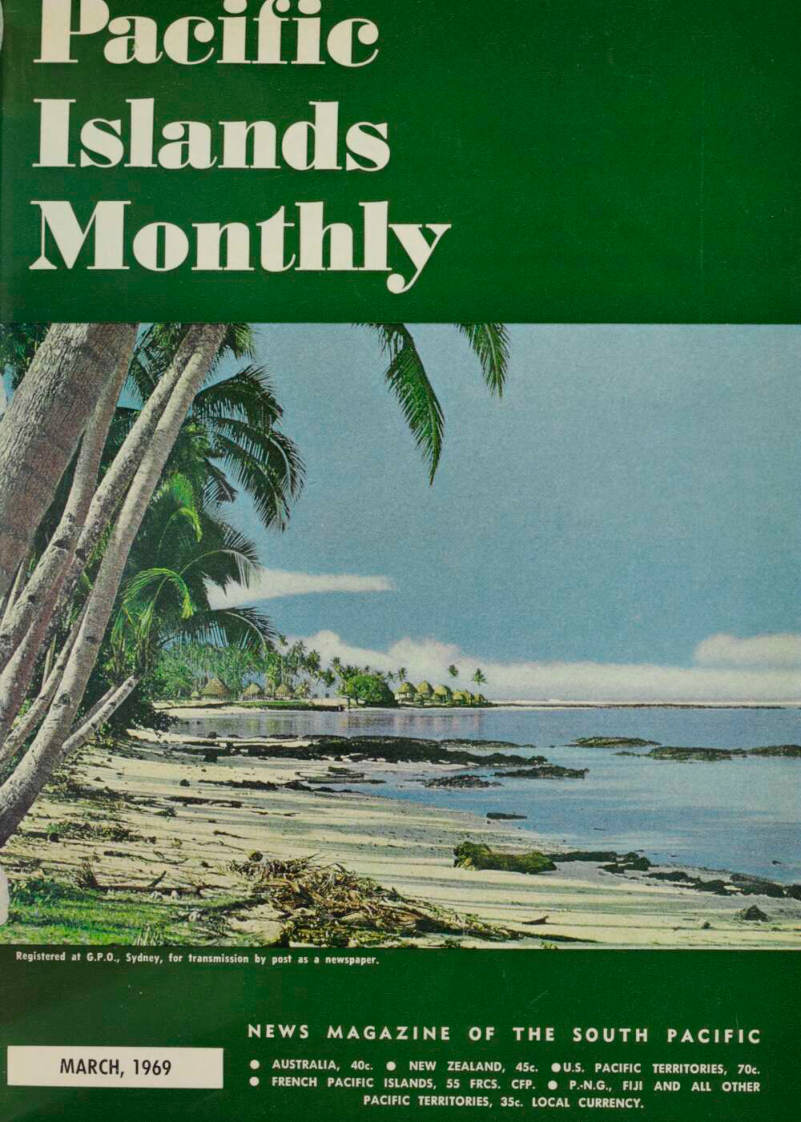 1
1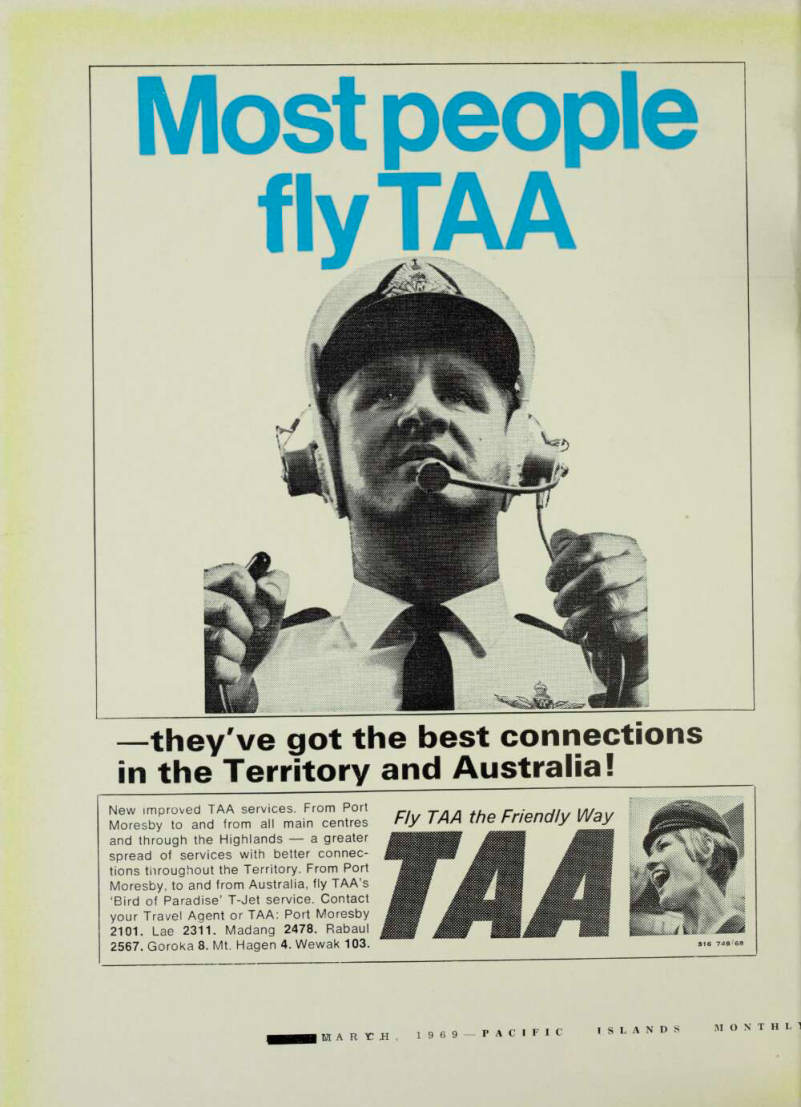 2
2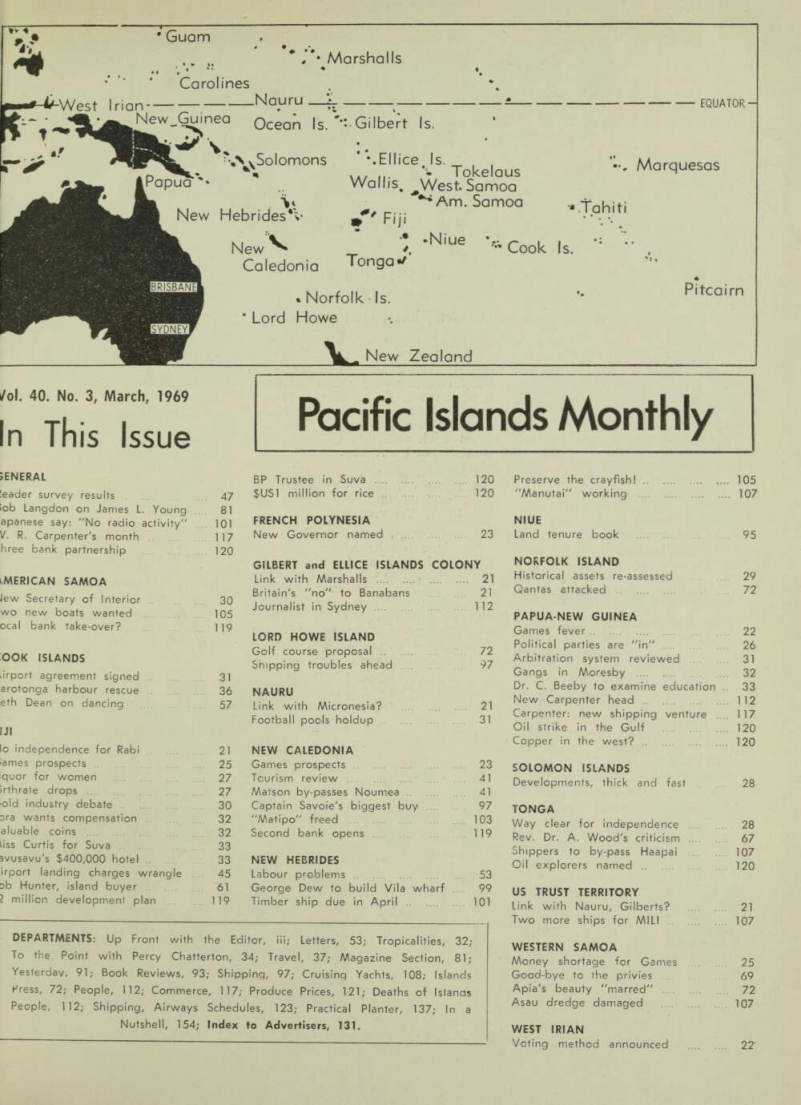 3
3 4
4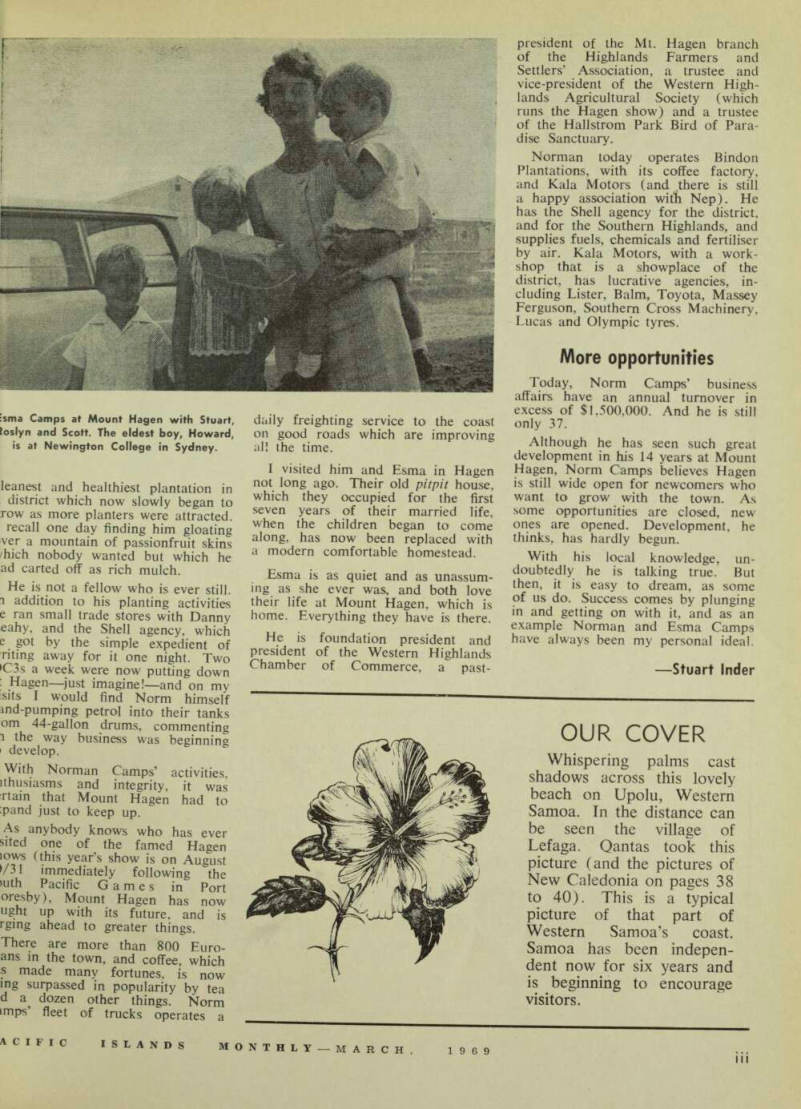 5
5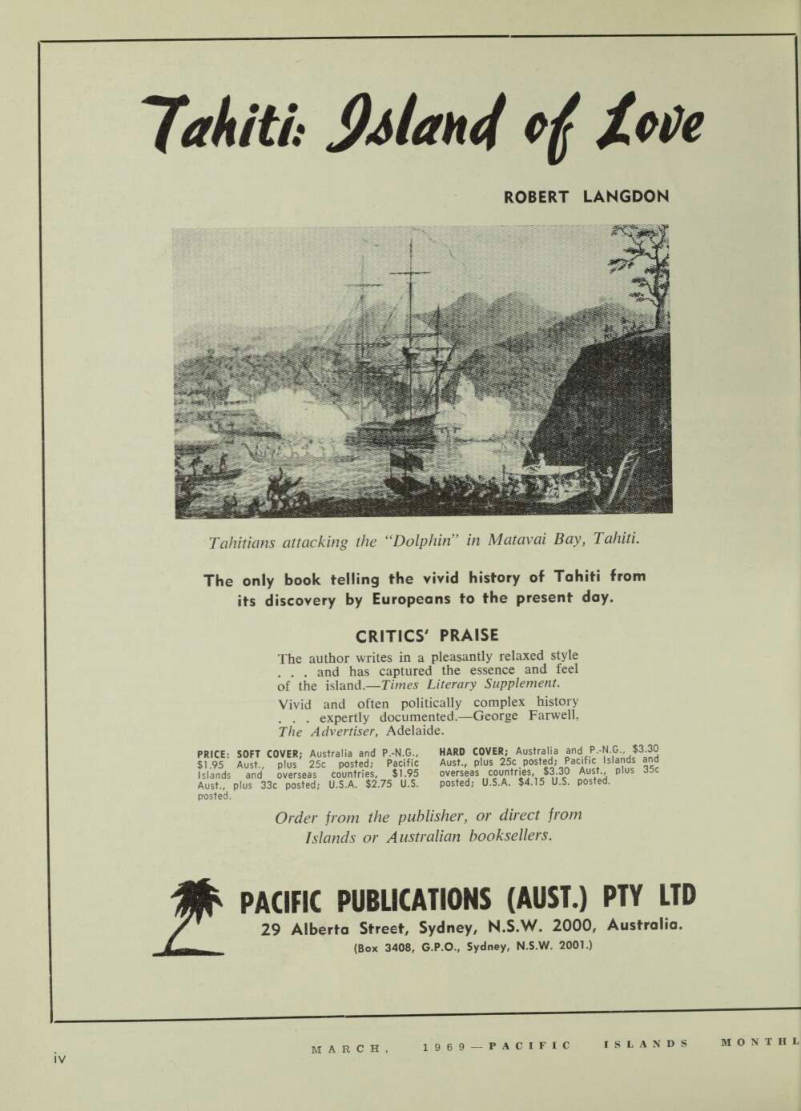 6
6 7
7 8
8 9
9 10
10 11
11 12
12 13
13 14
14 15
15 16
16 17
17 18
18 19
19 20
20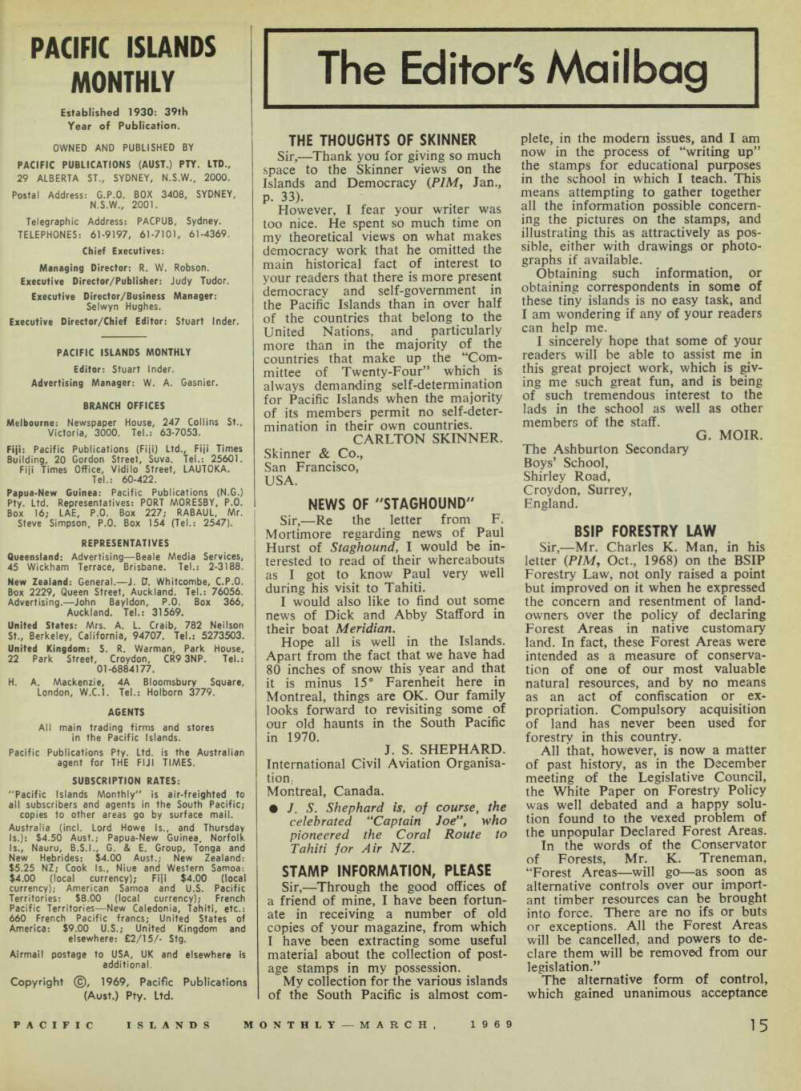 21
21 22
22 23
23 24
24 25
25 26
26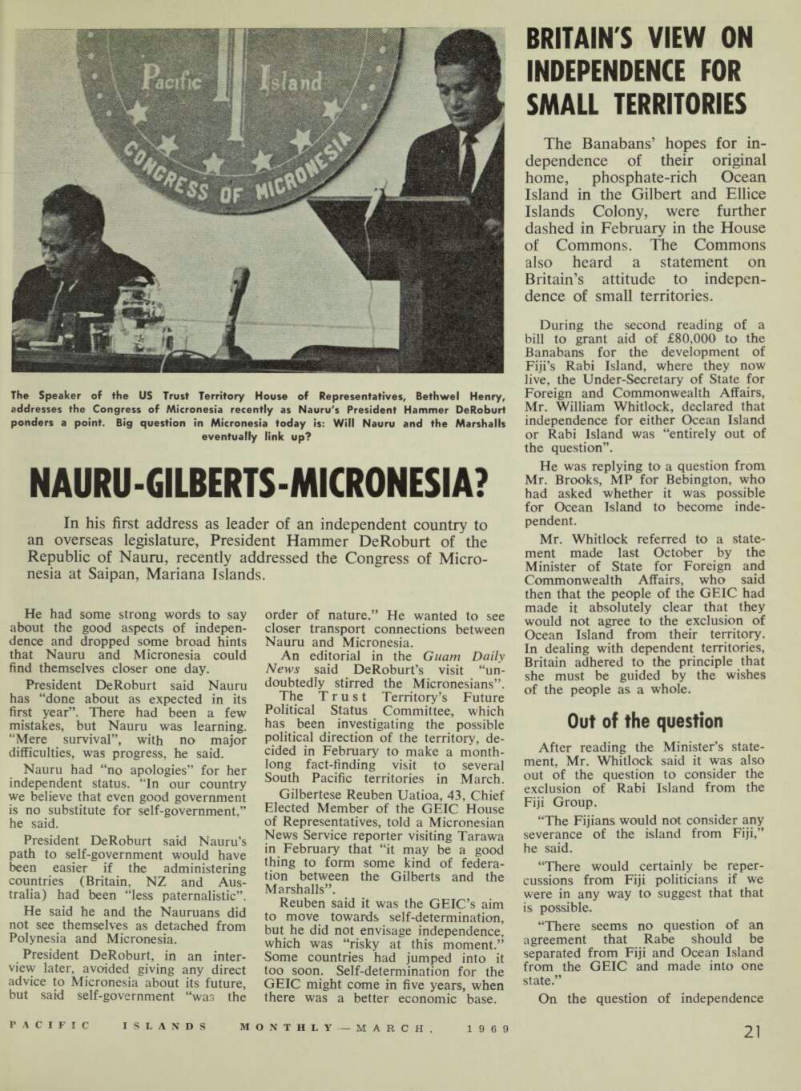 27
27 28
28 29
29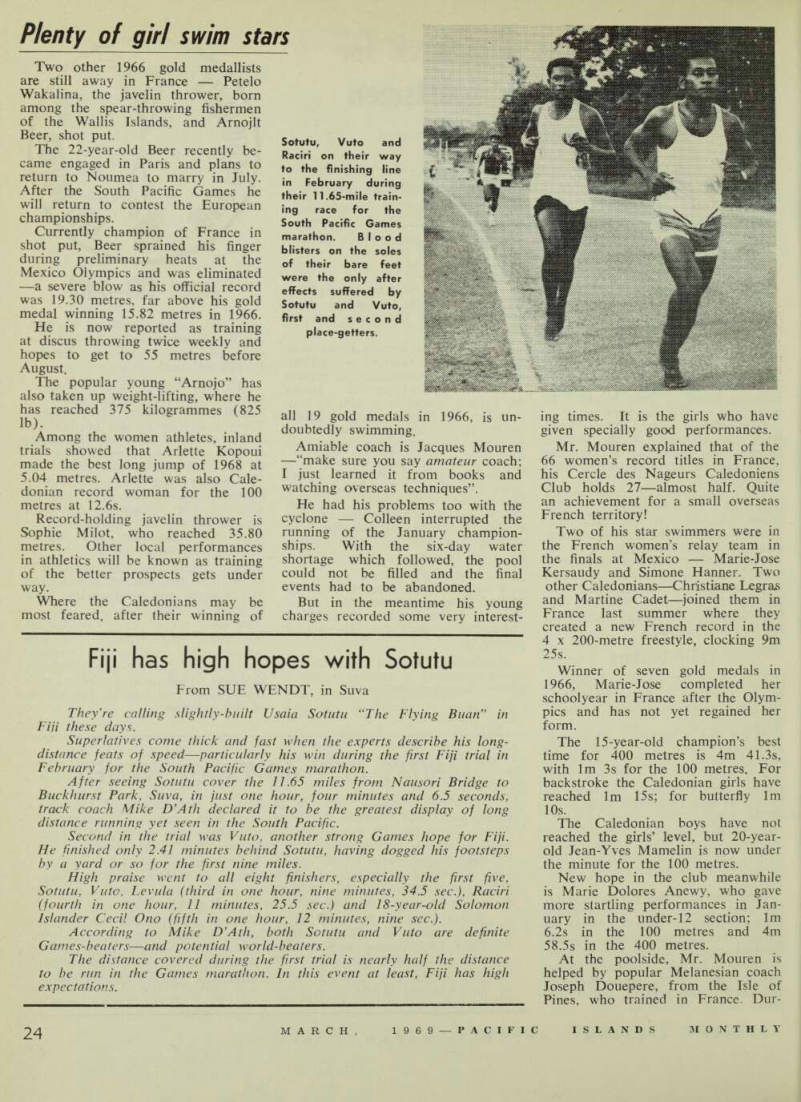 30
30 31
31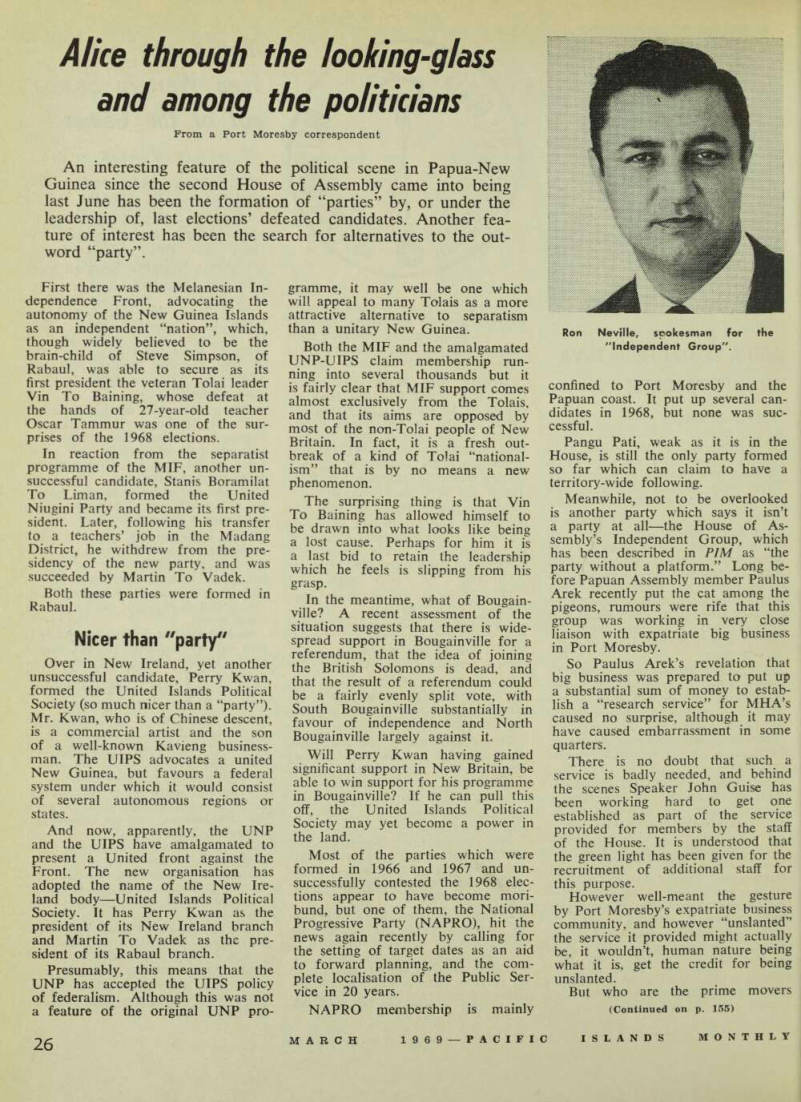 32
32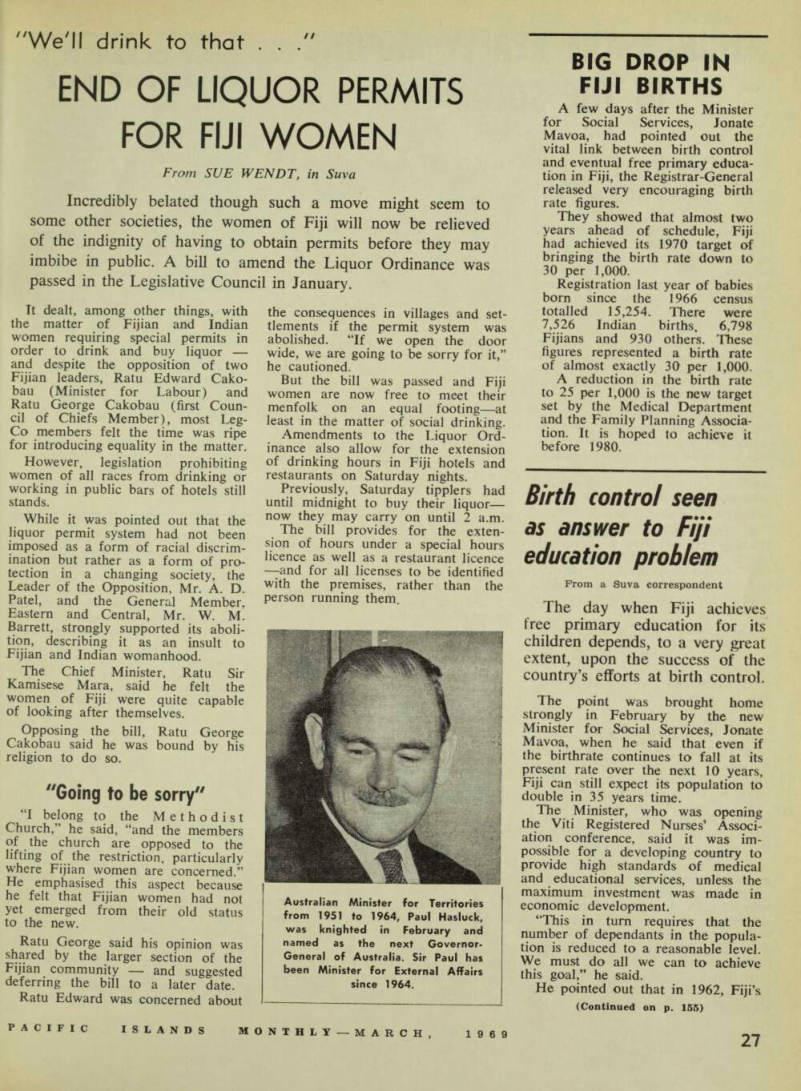 33
33 34
34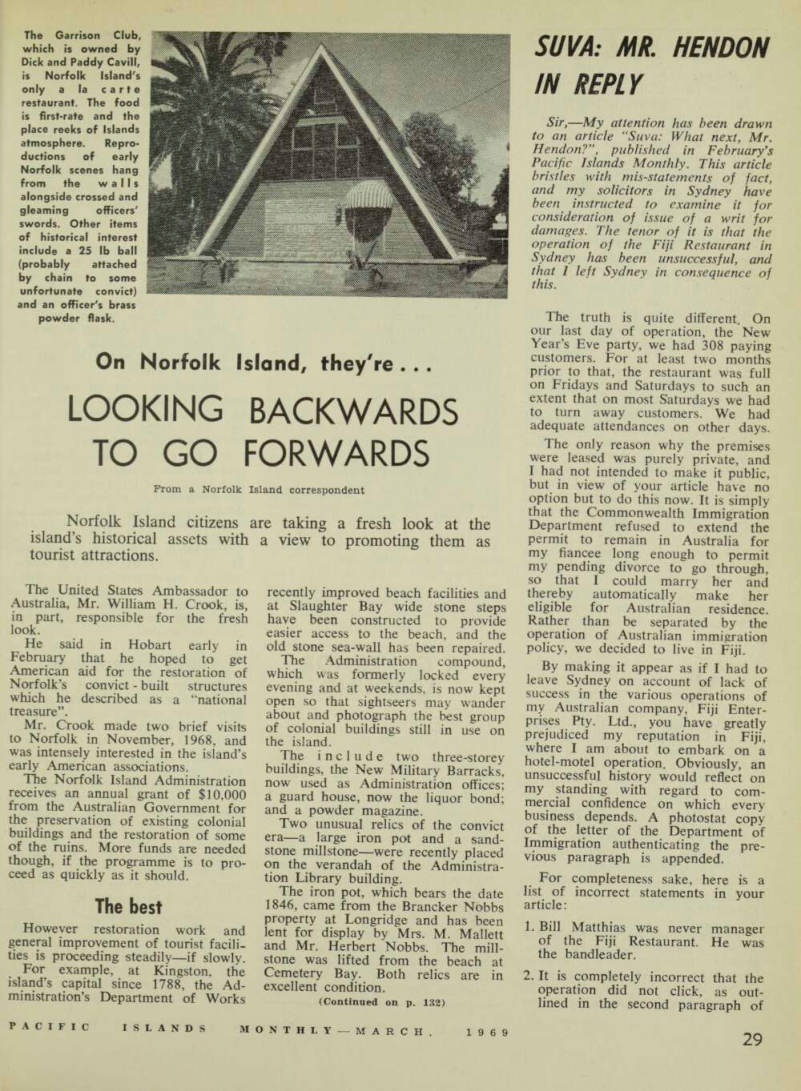 35
35 36
36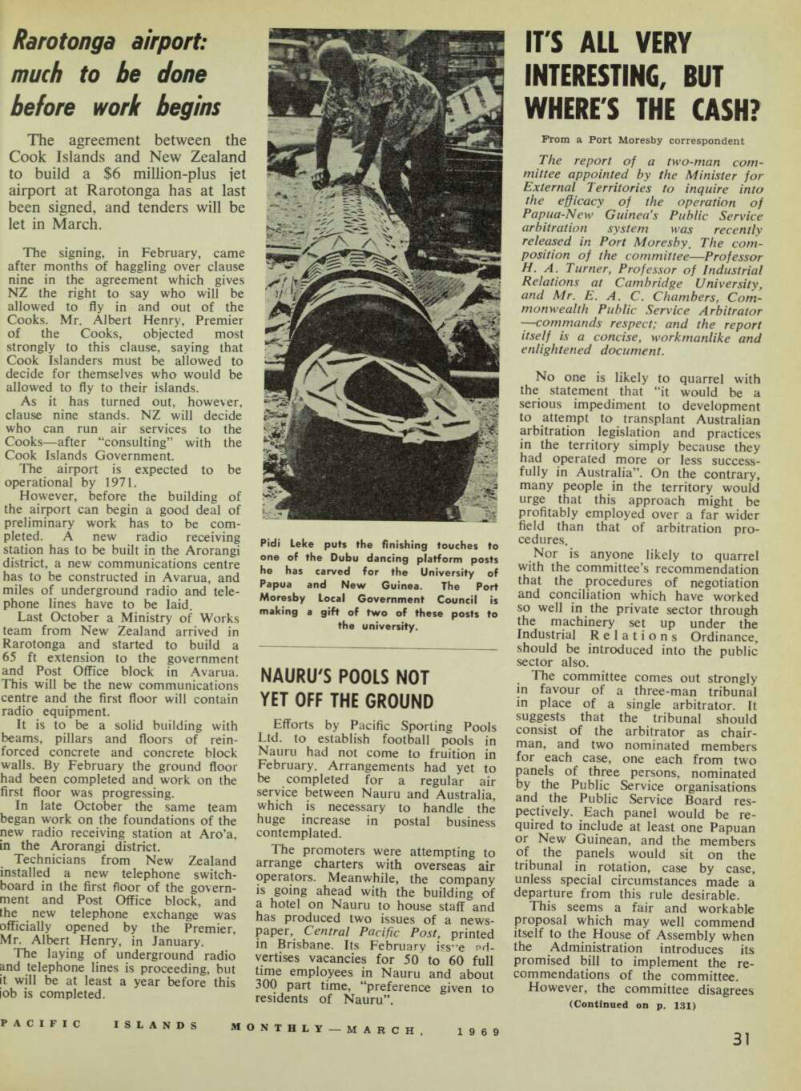 37
37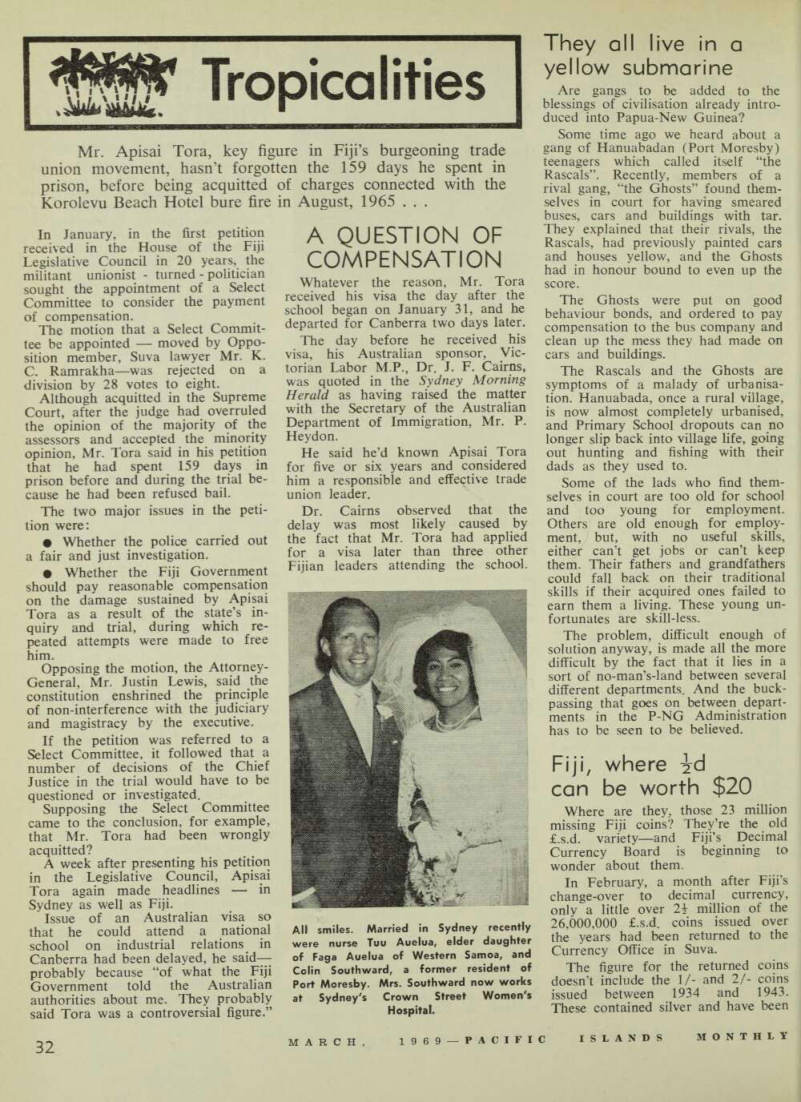 38
38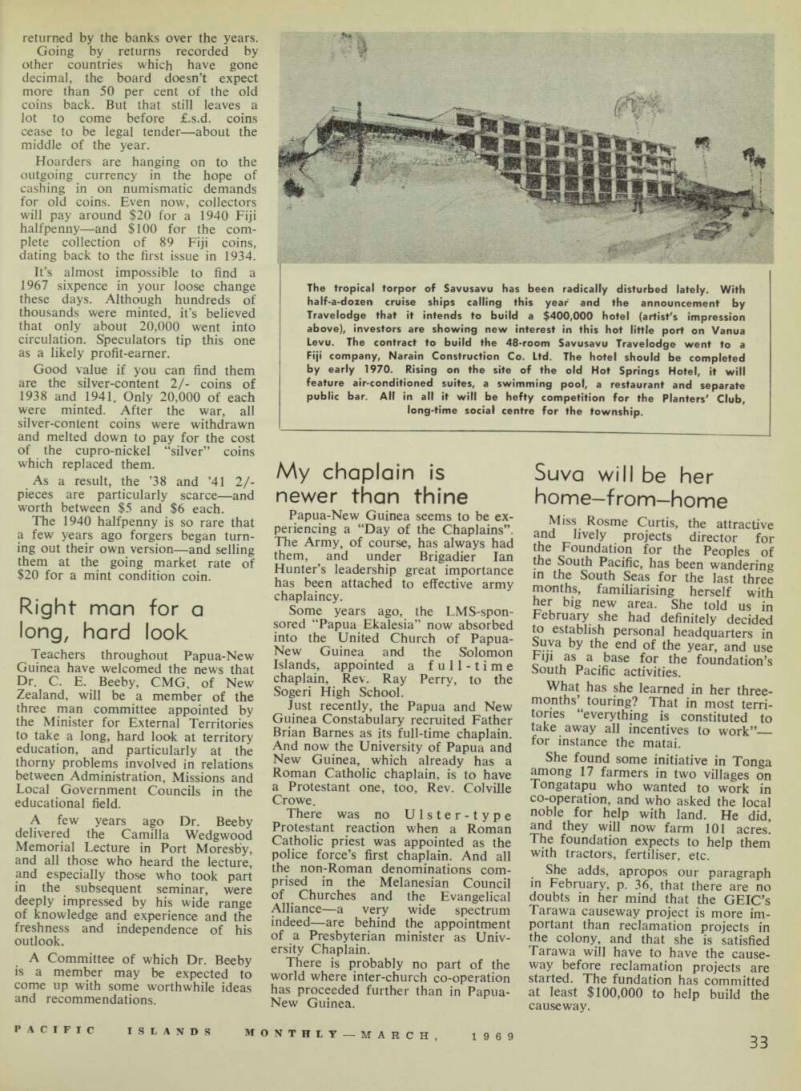 39
39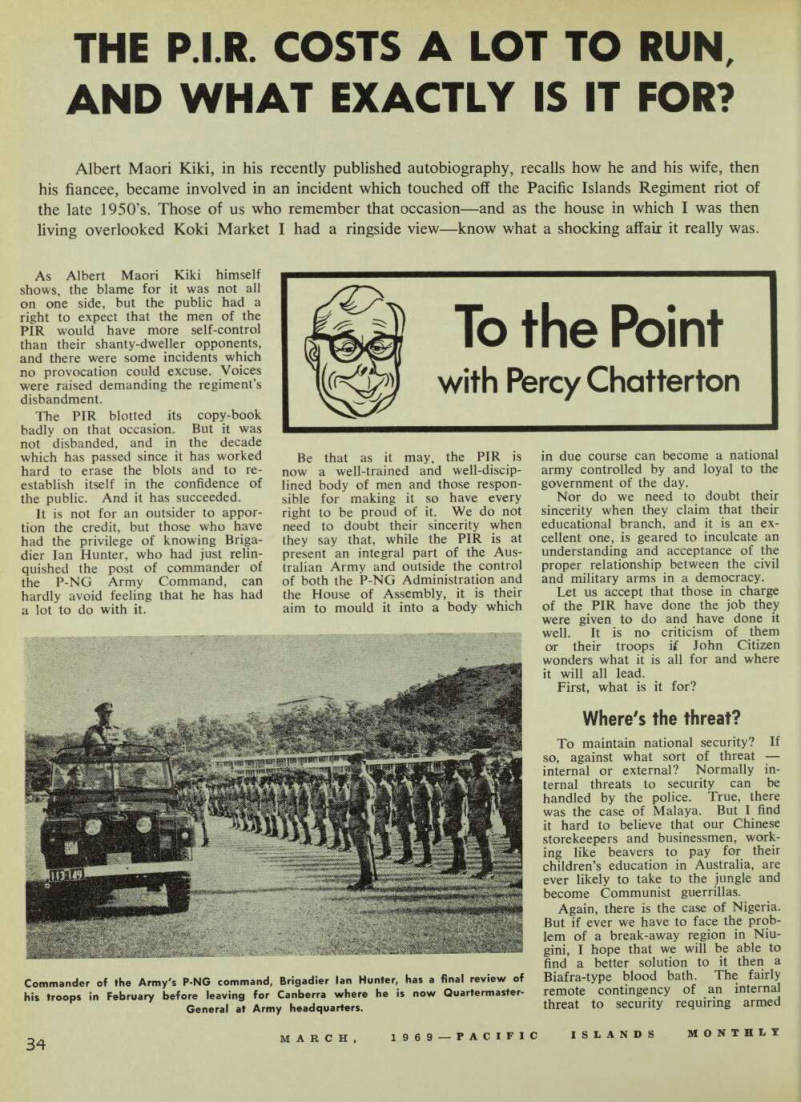 40
40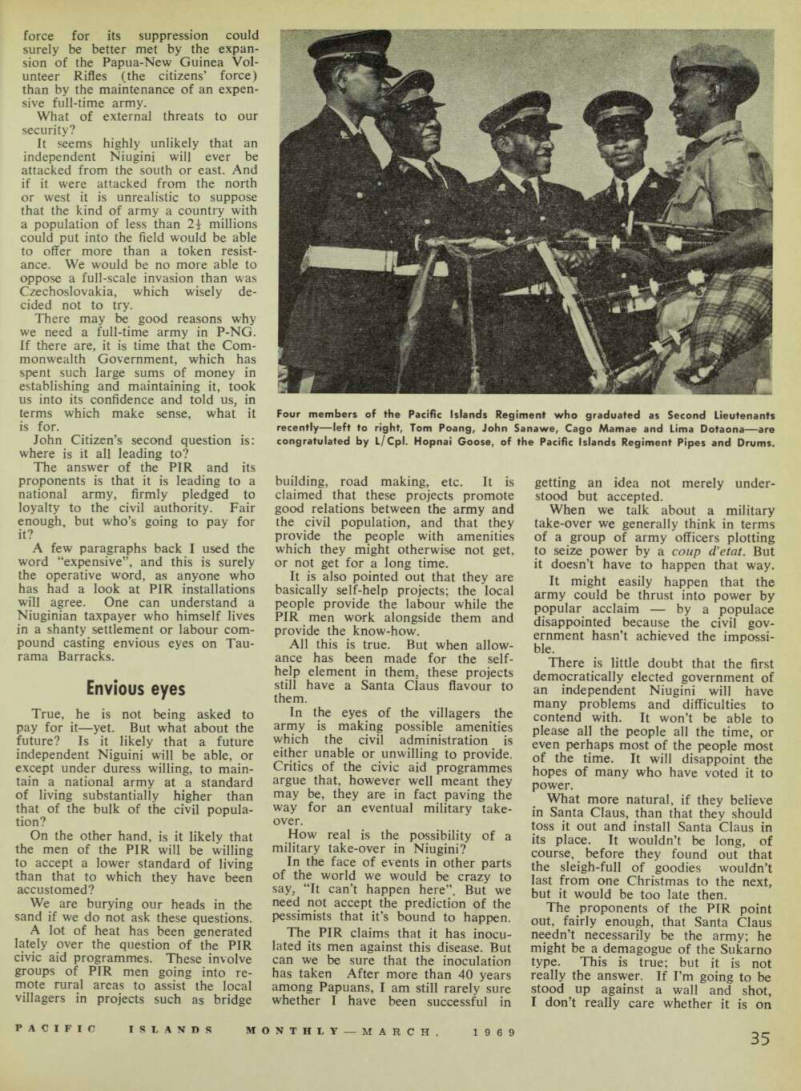 41
41 42
42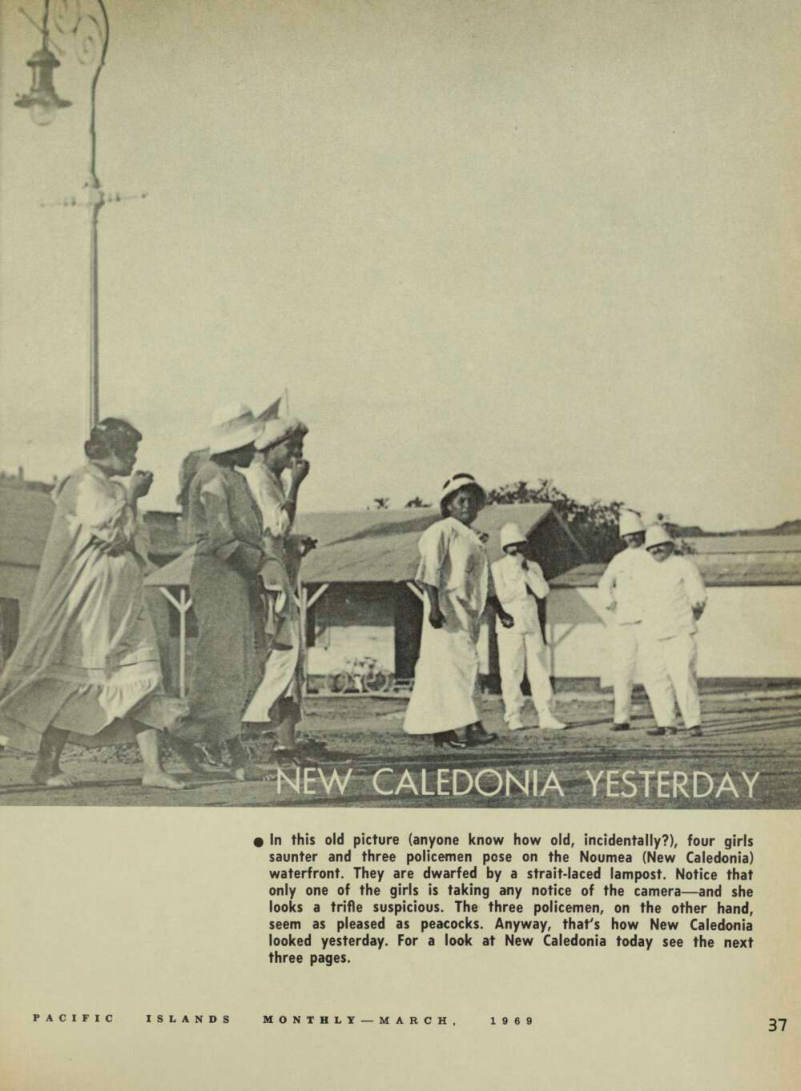 43
43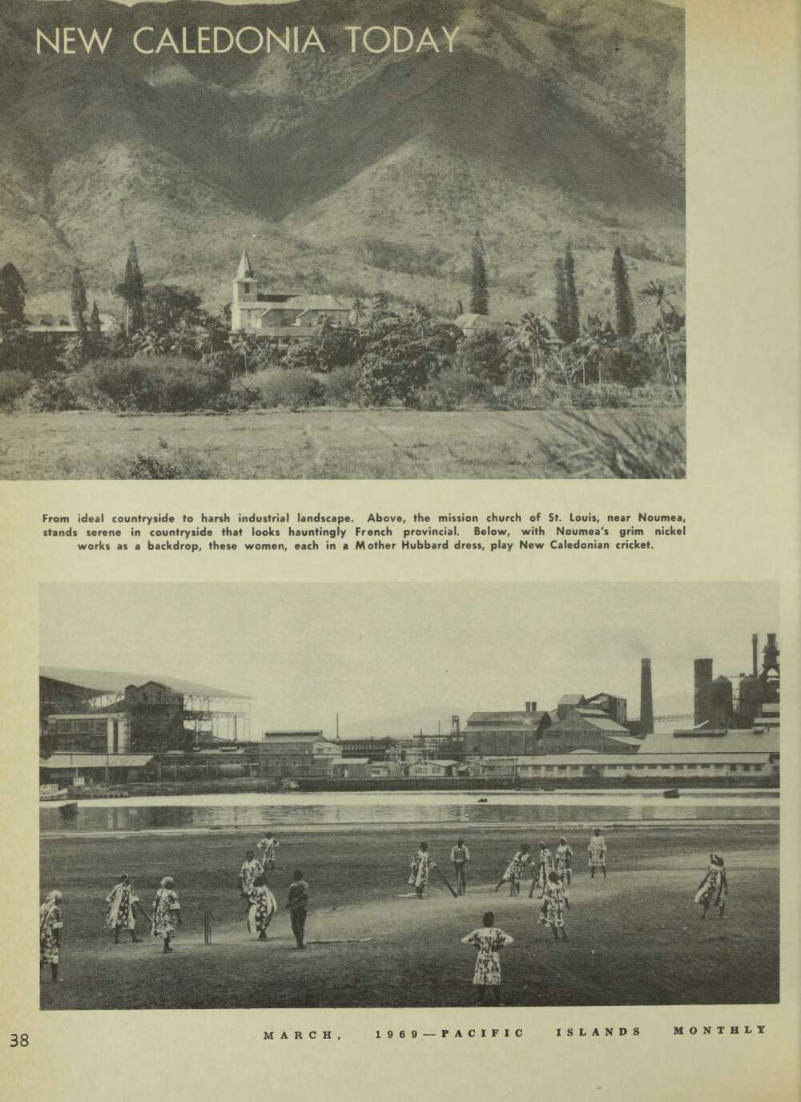 44
44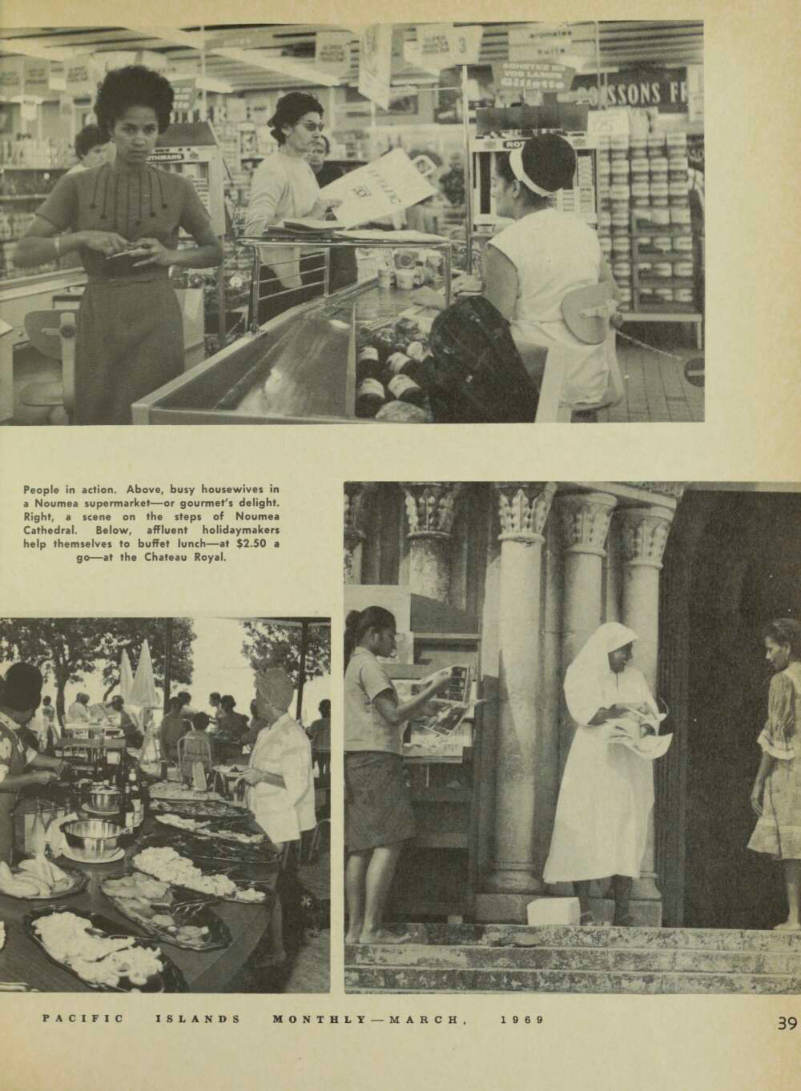 45
45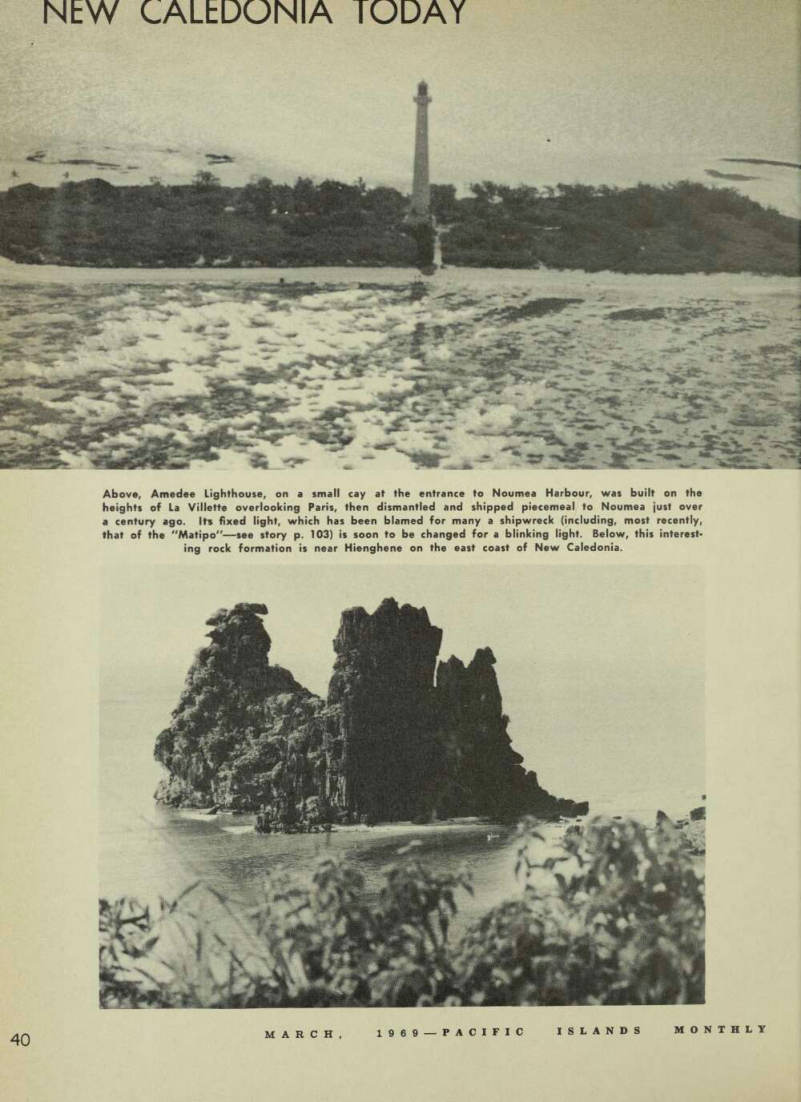 46
46 47
47 48
48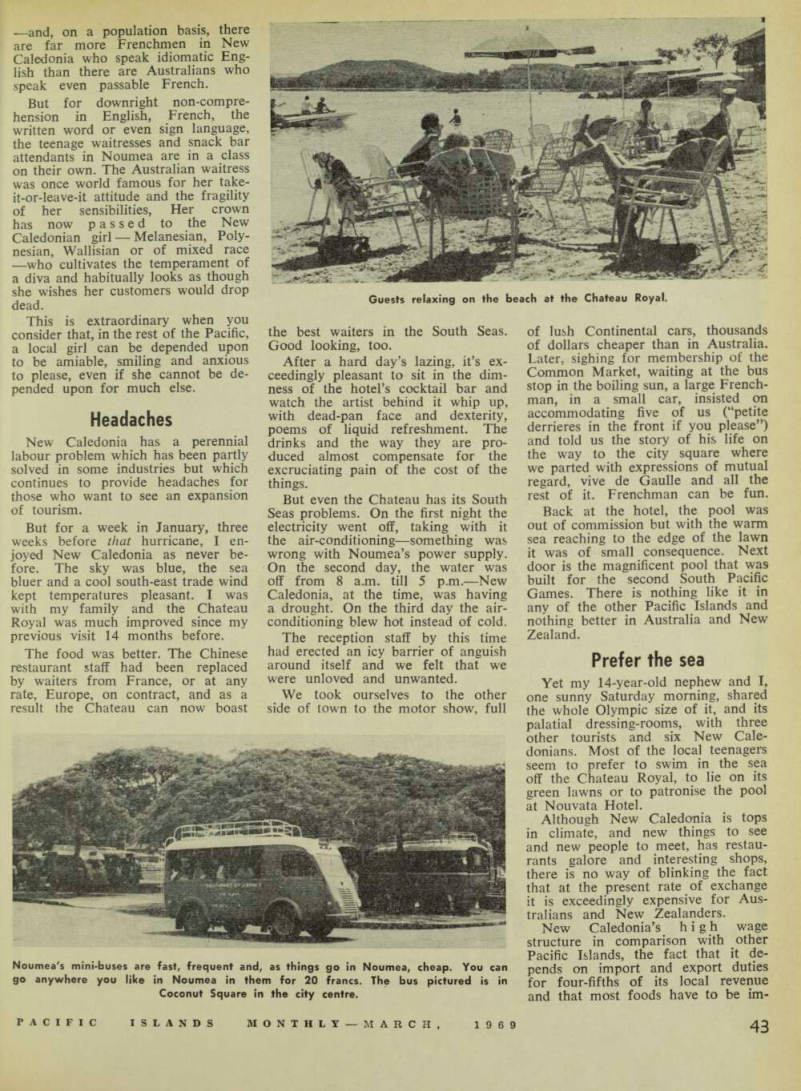 49
49 50
50 51
51 52
52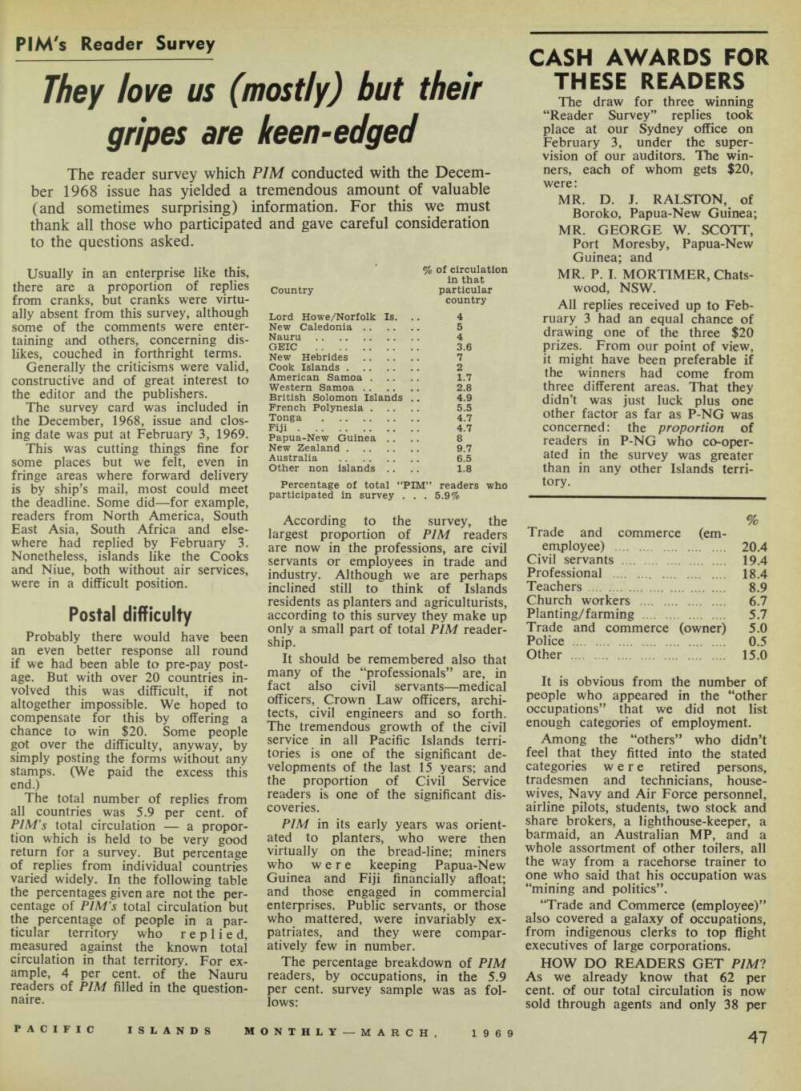 53
53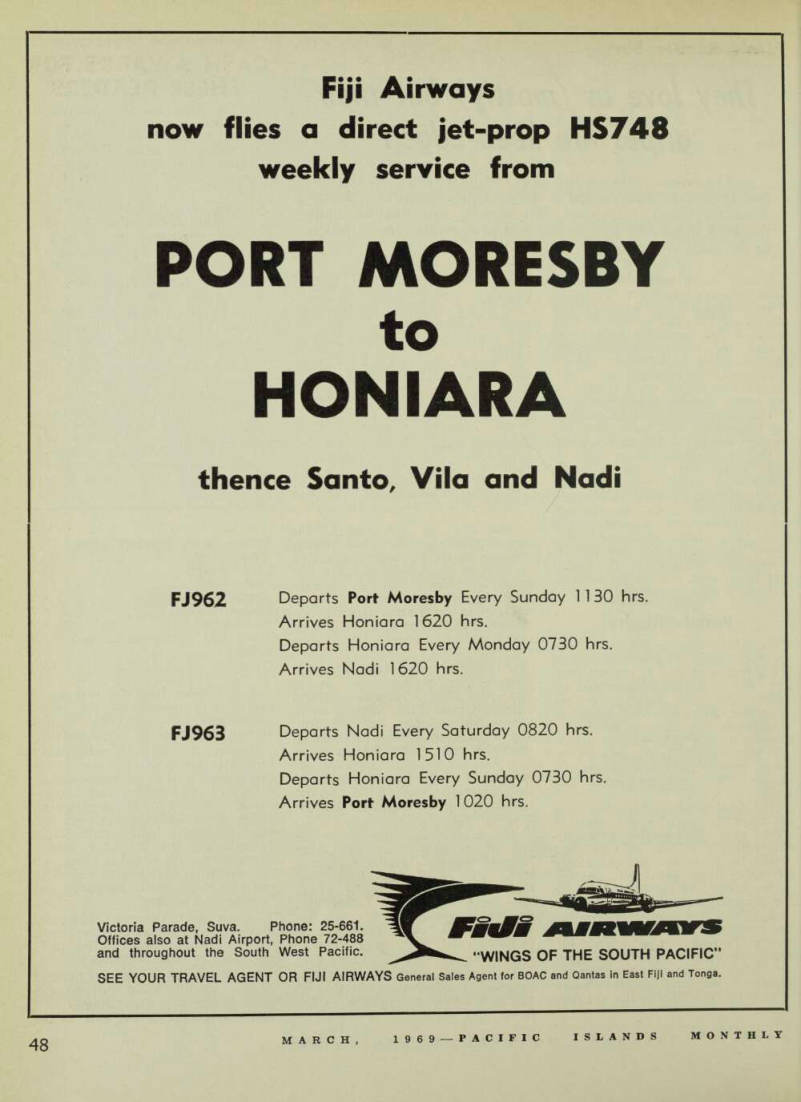 54
54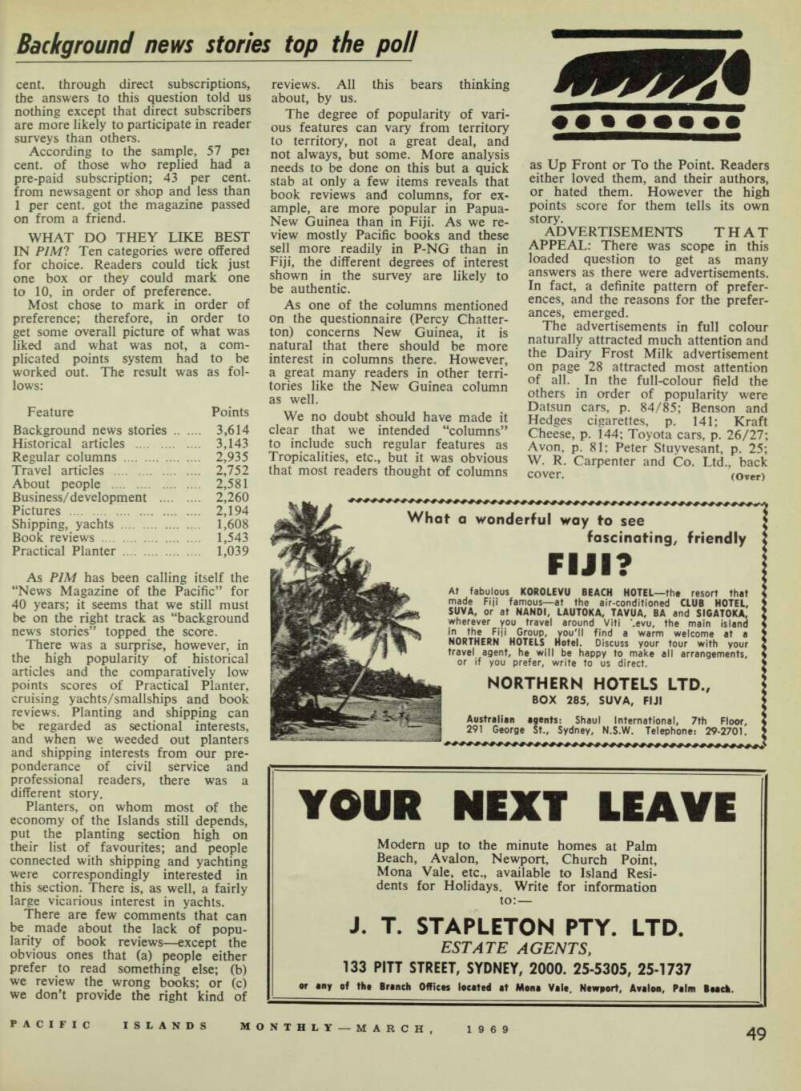 55
55 56
56 57
57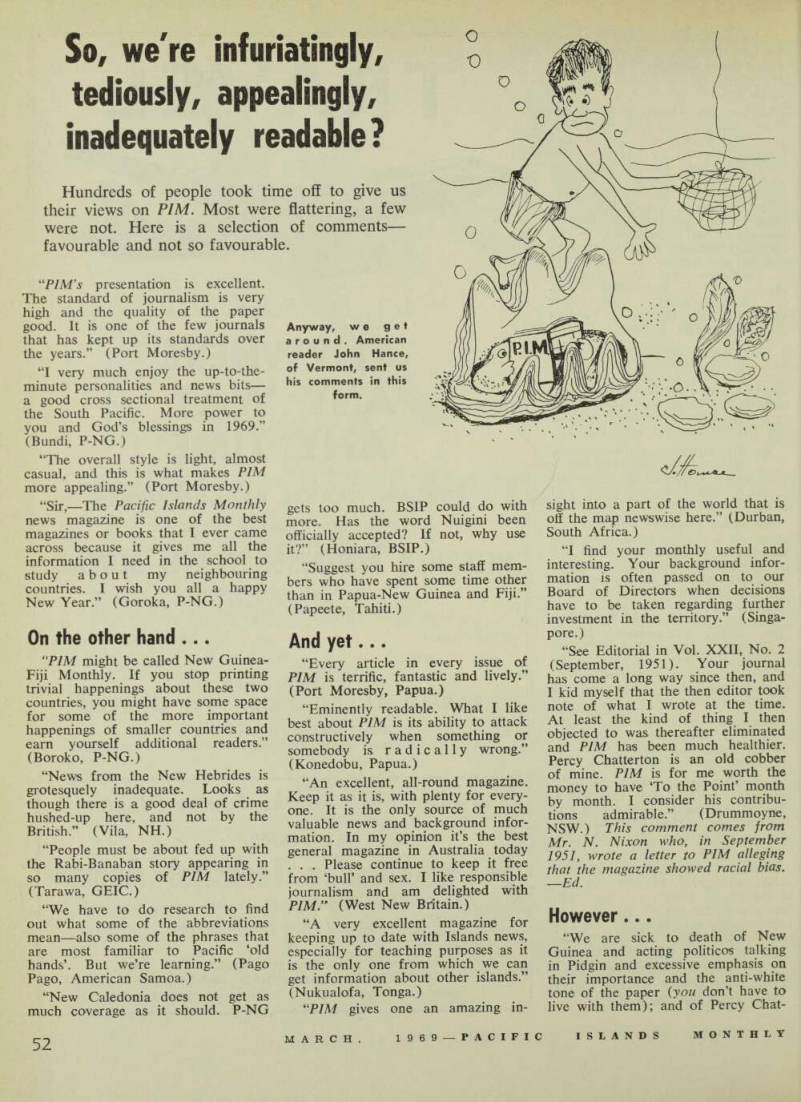 58
58 59
59 60
60 61
61 62
62 63
63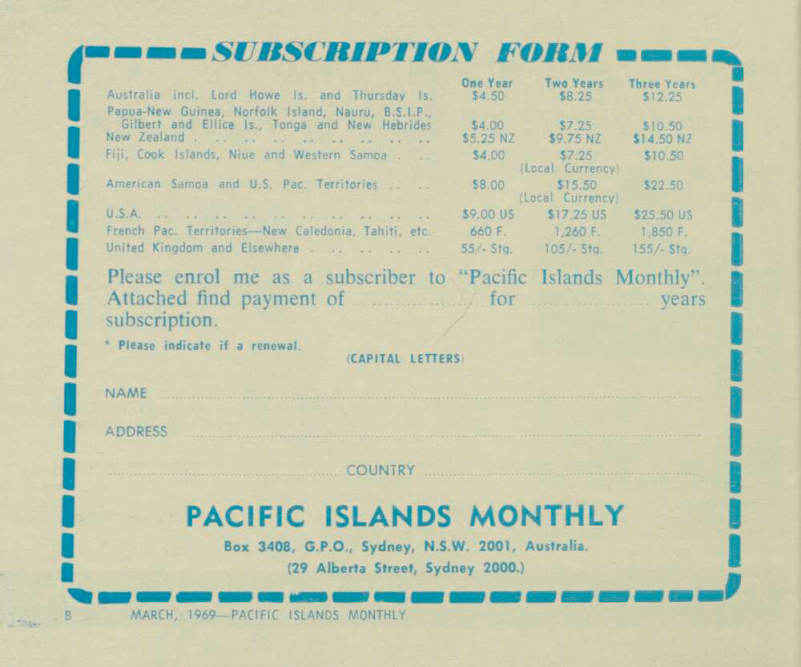 64
64 65
65 66
66 67
67 68
68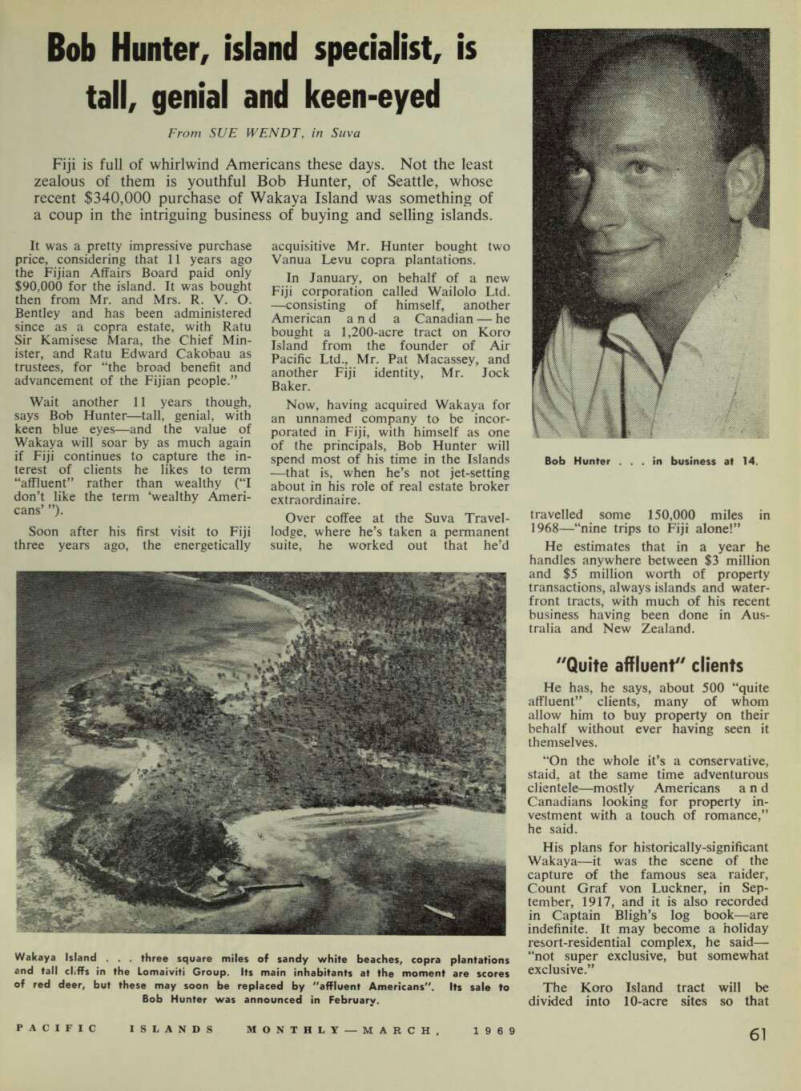 69
69 70
70 71
71 72
72 73
73 74
74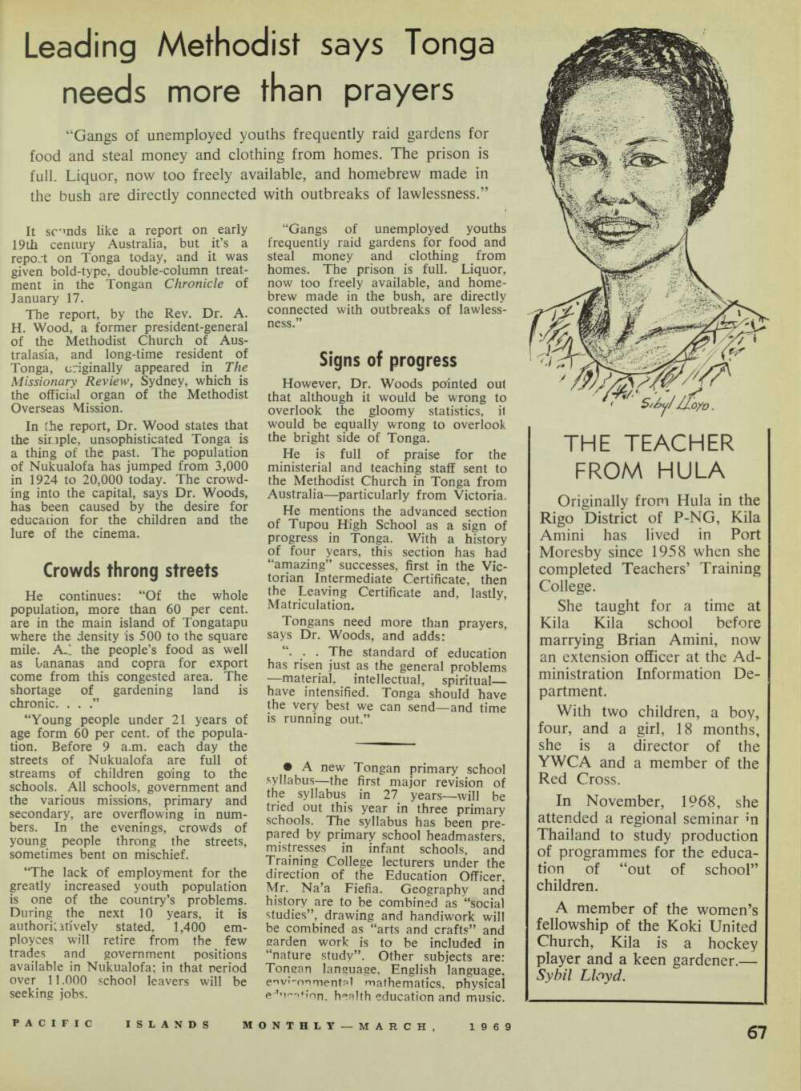 75
75 76
76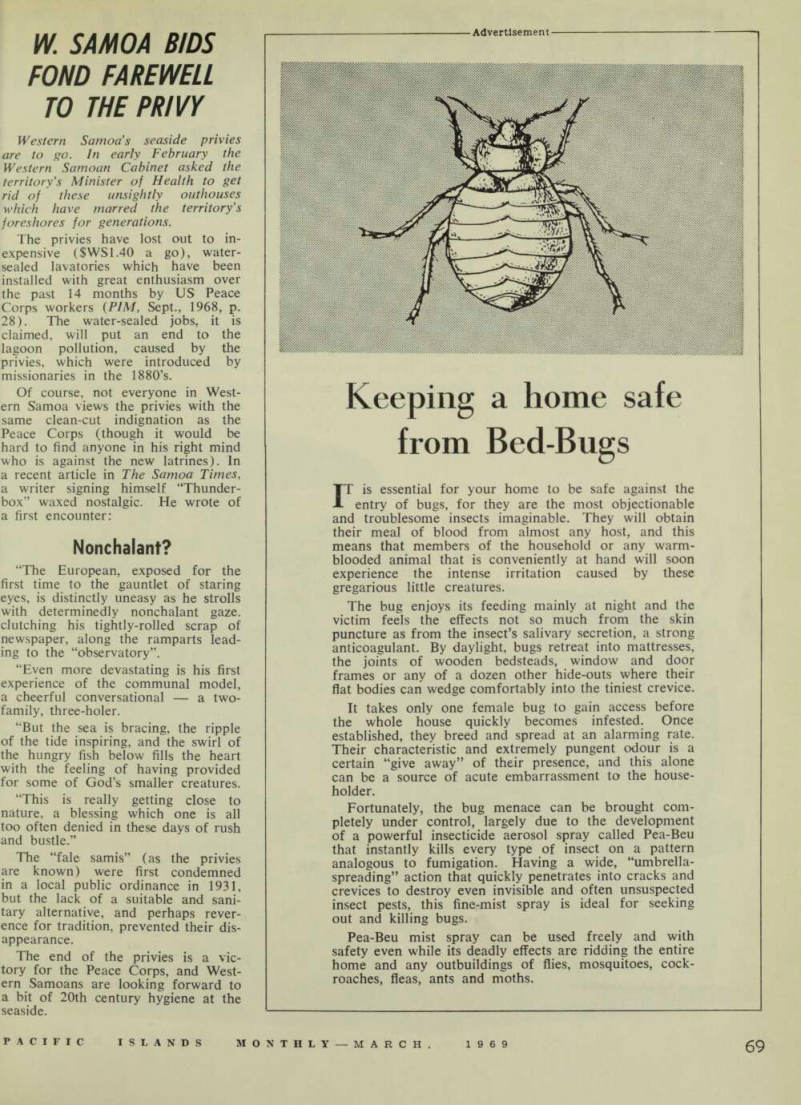 77
77 78
78 79
79 80
80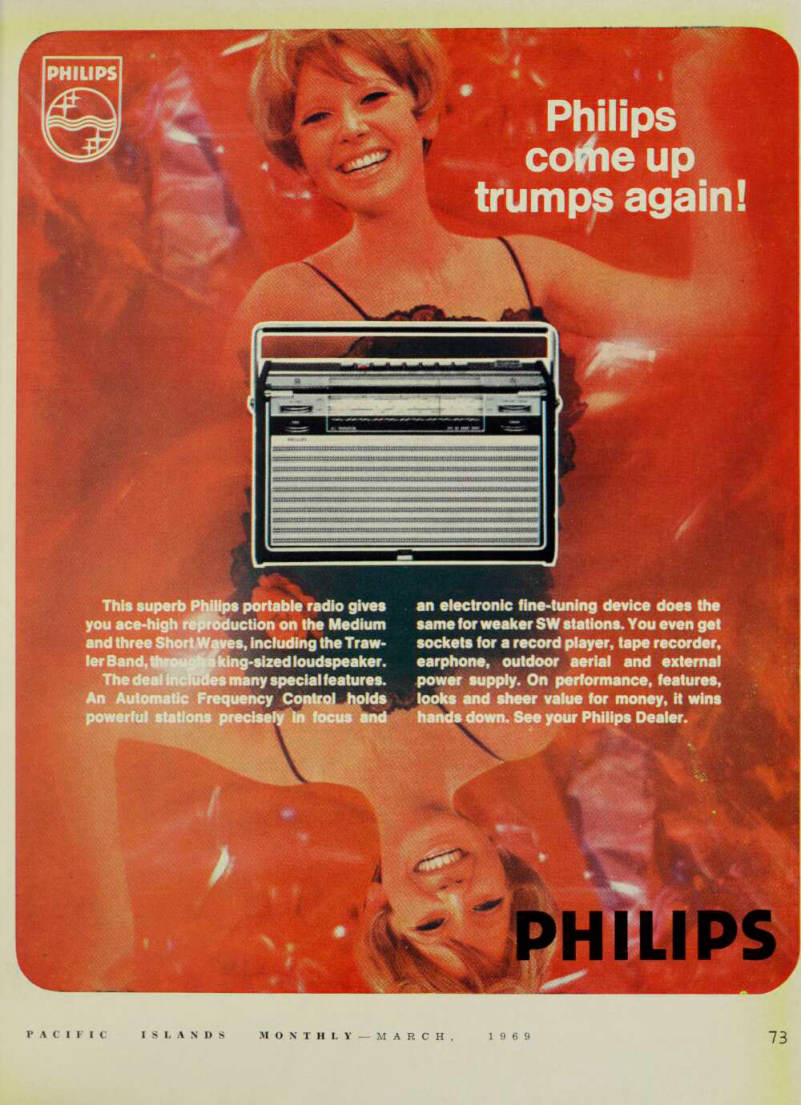 81
81 82
82 83
83 84
84 85
85 86
86 87
87 88
88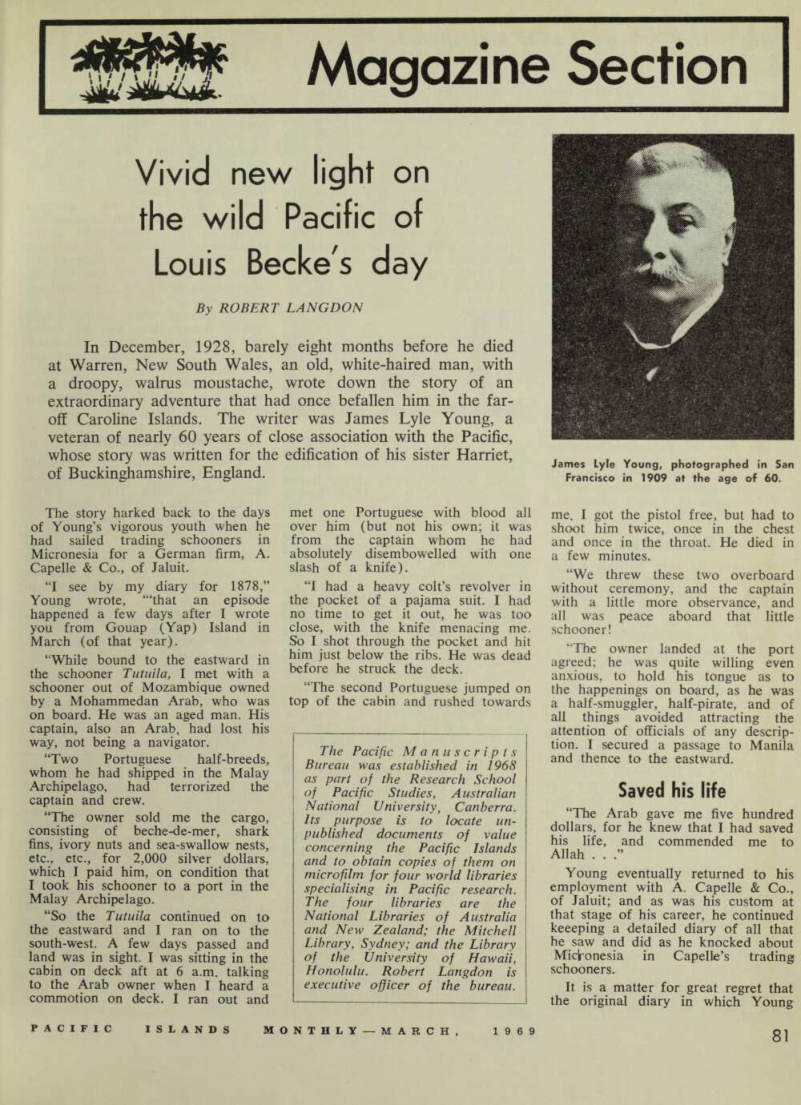 89
89 90
90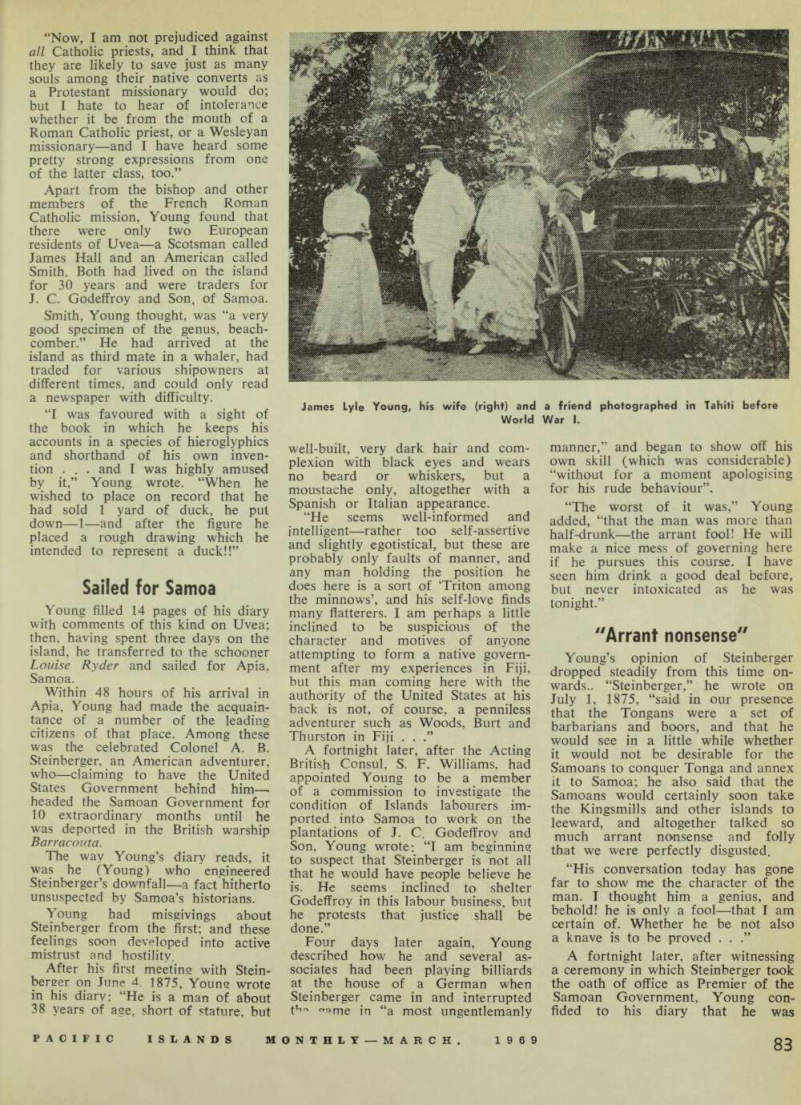 91
91 92
92 93
93 94
94 95
95 96
96 97
97 98
98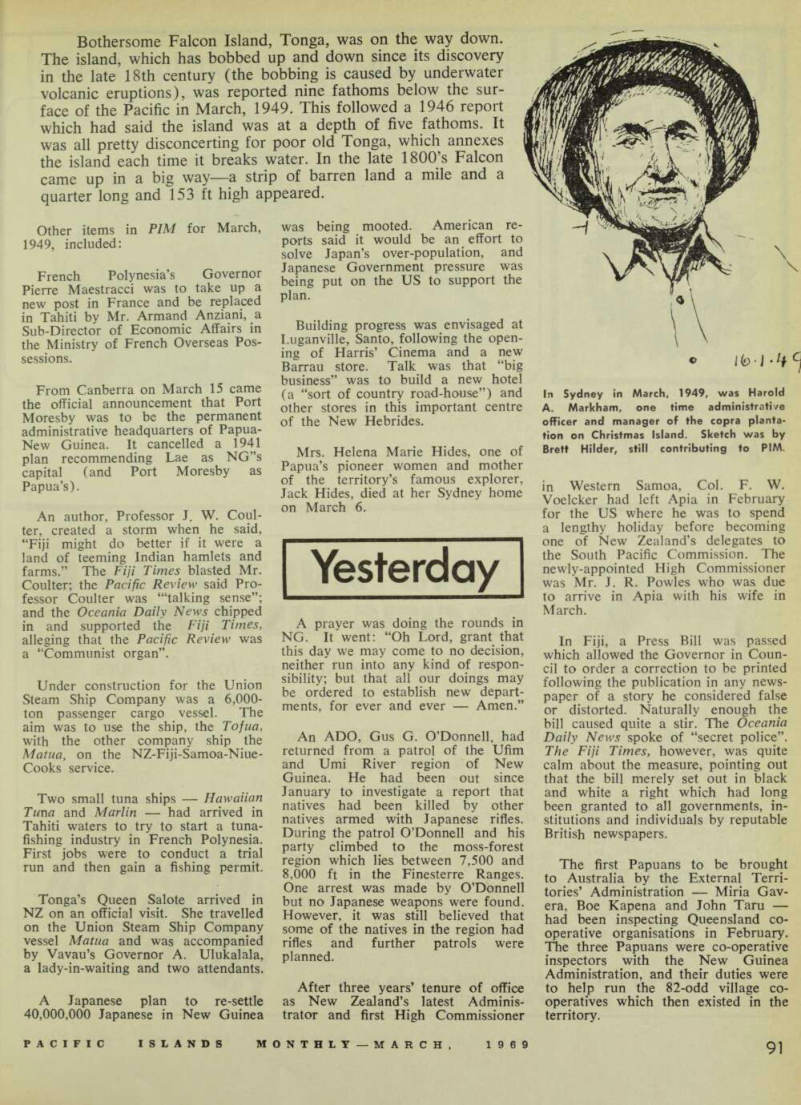 99
99 100
100 101
101 102
102 103
103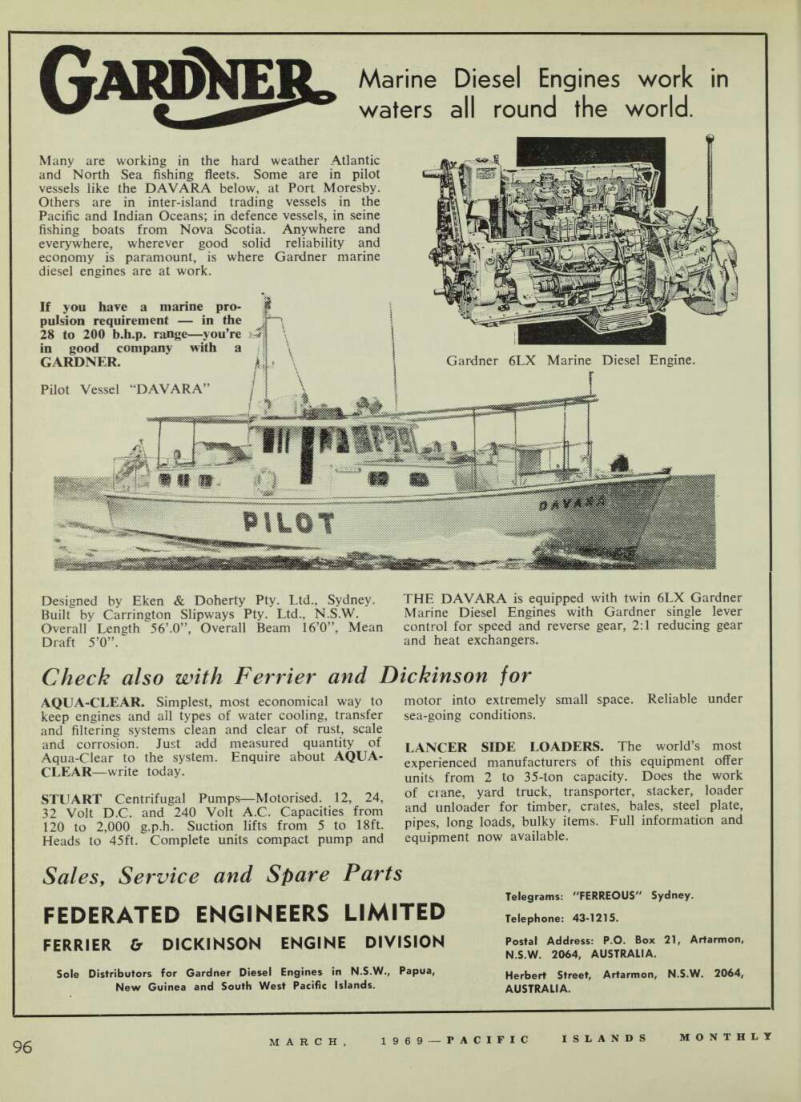 104
104 105
105 106
106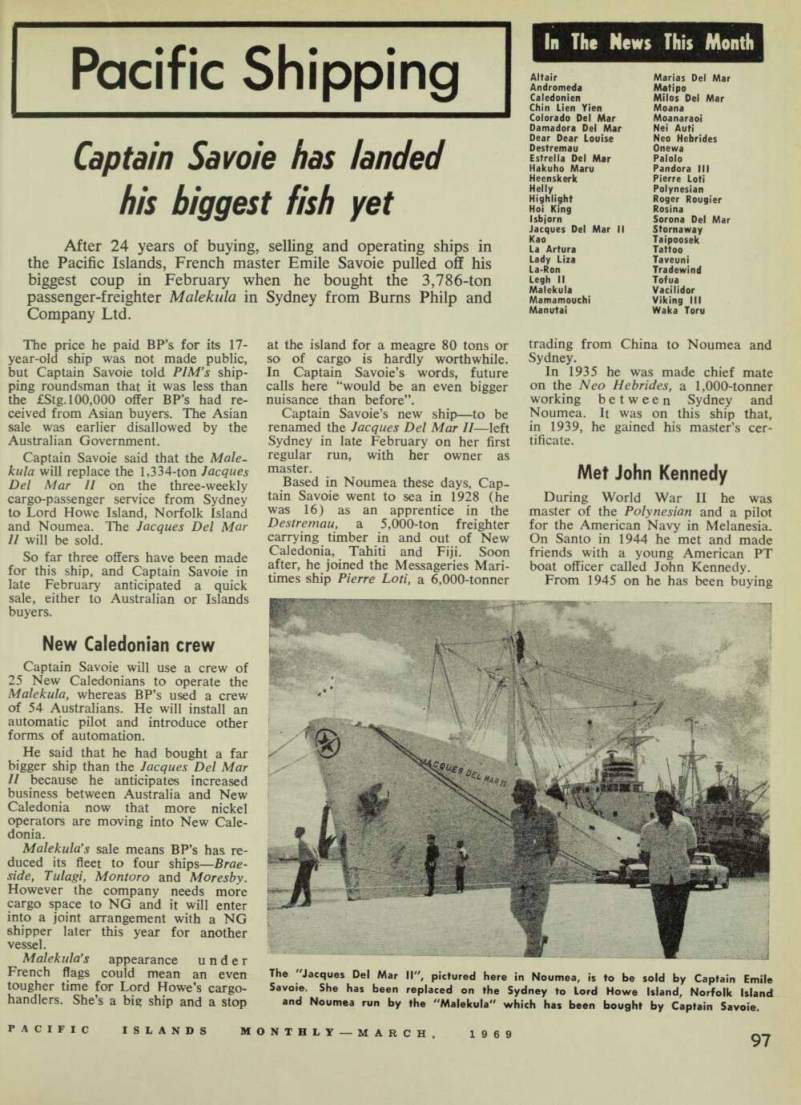 107
107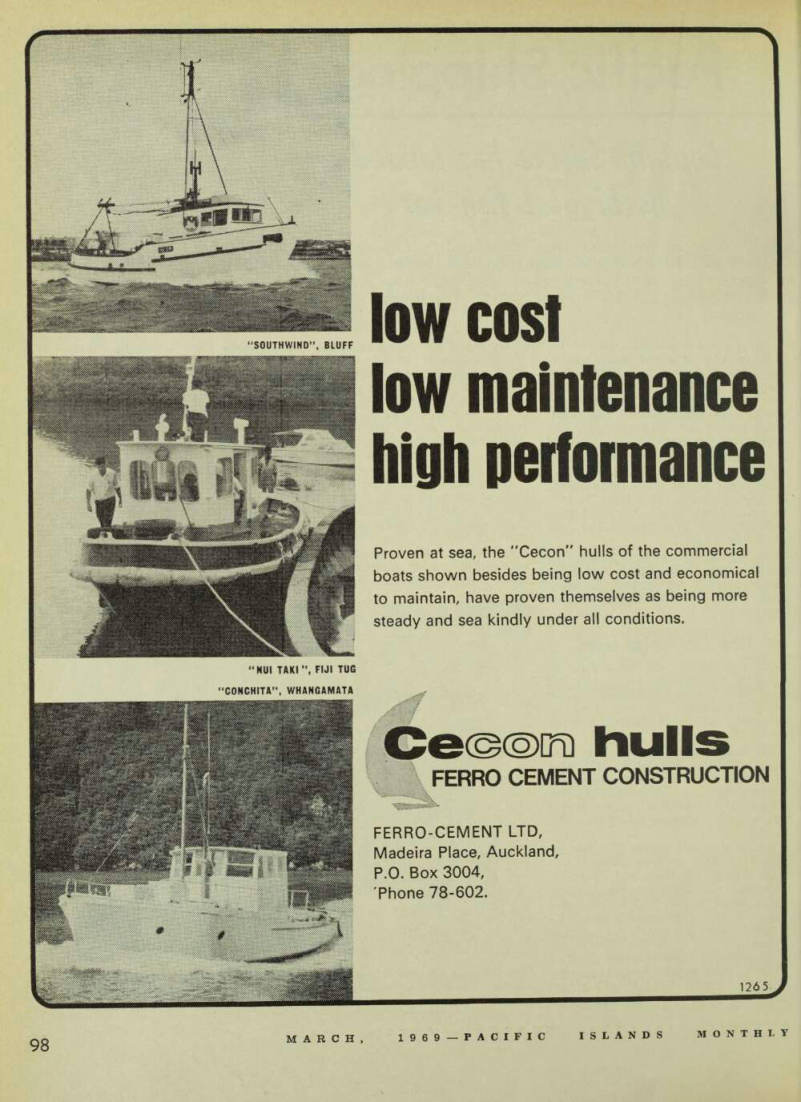 108
108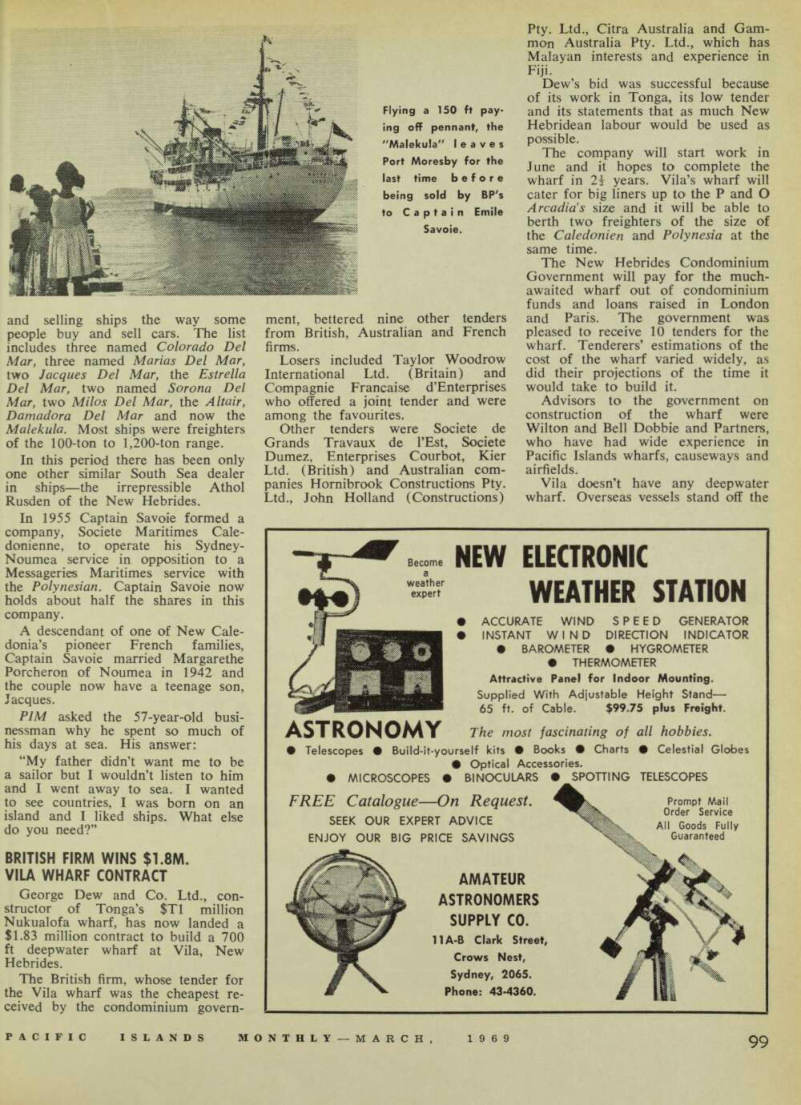 109
109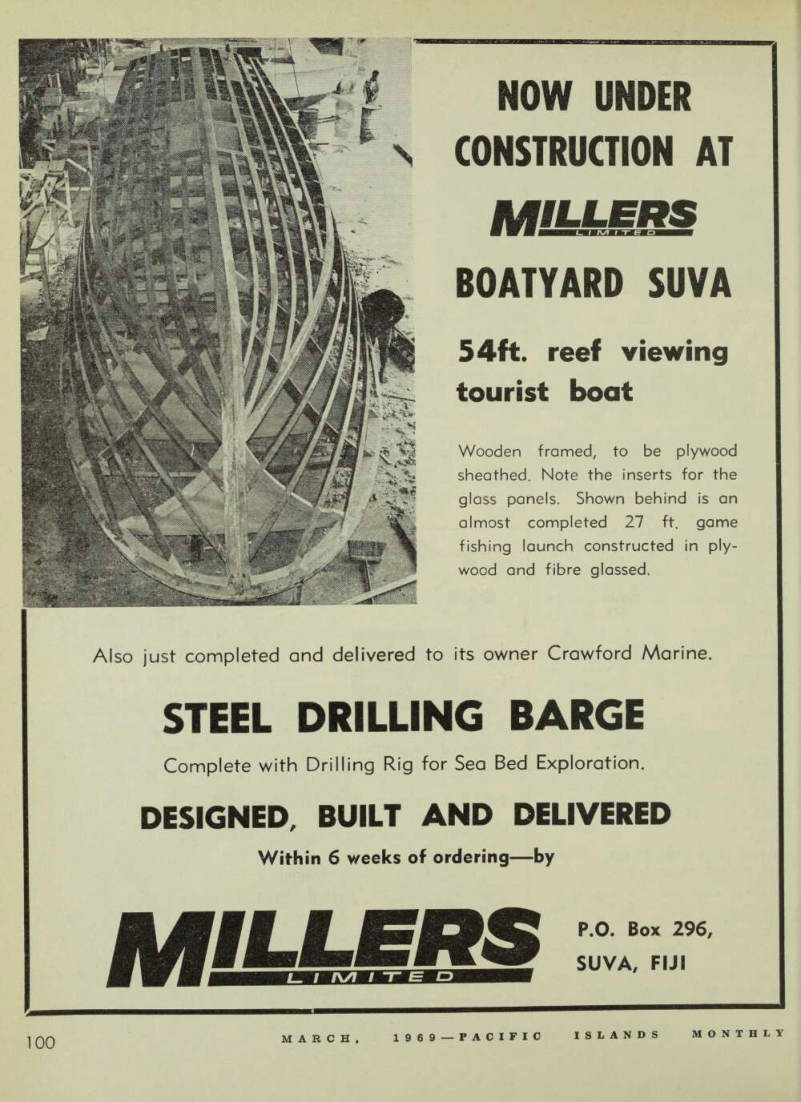 110
110 111
111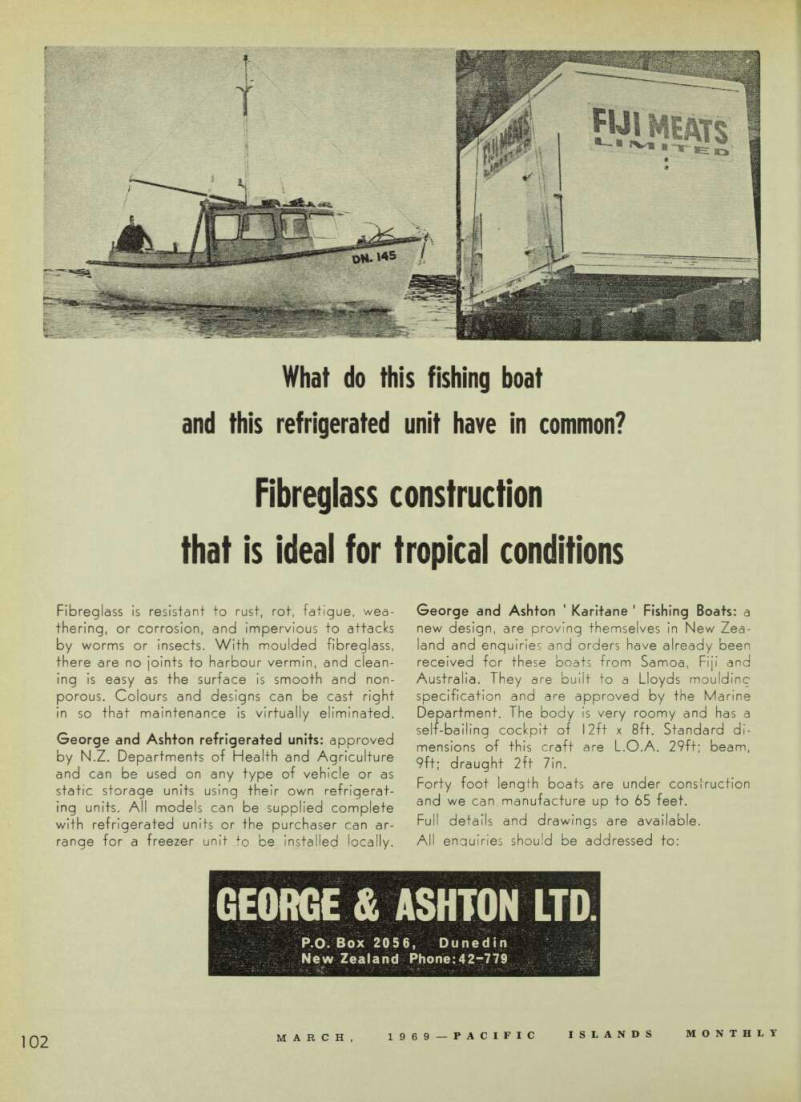 112
112 113
113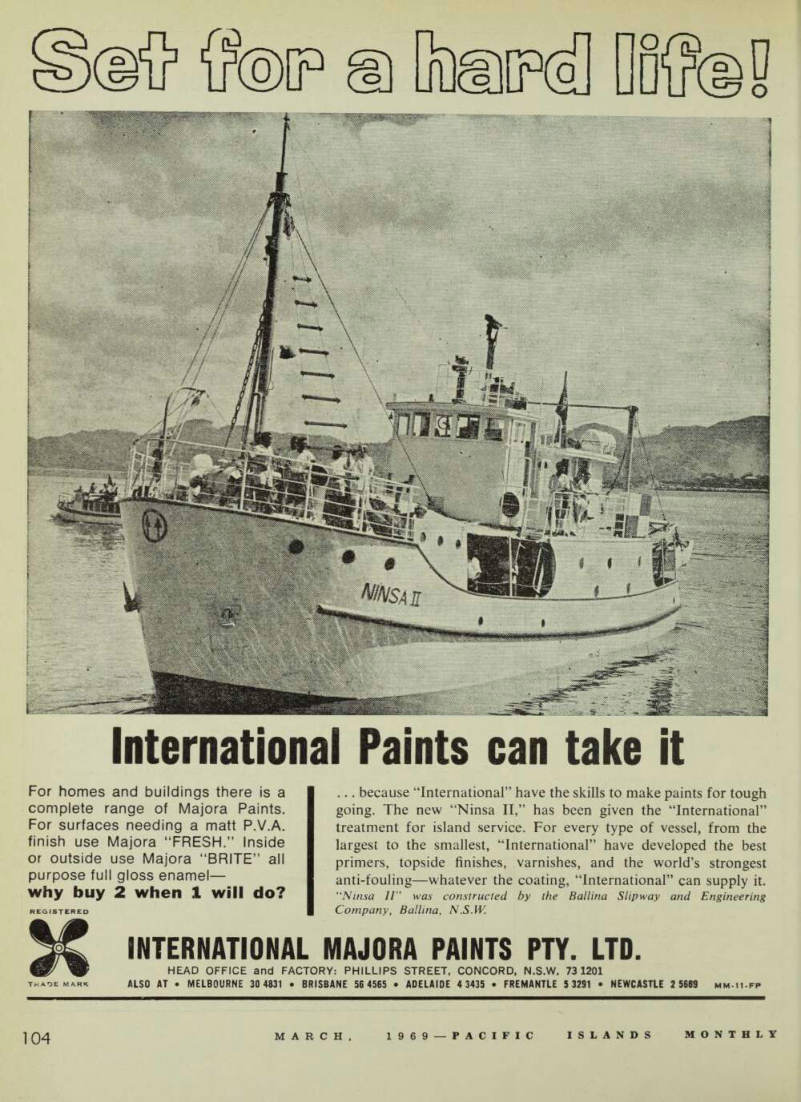 114
114 115
115 116
116 117
117 118
118 119
119 120
120 121
121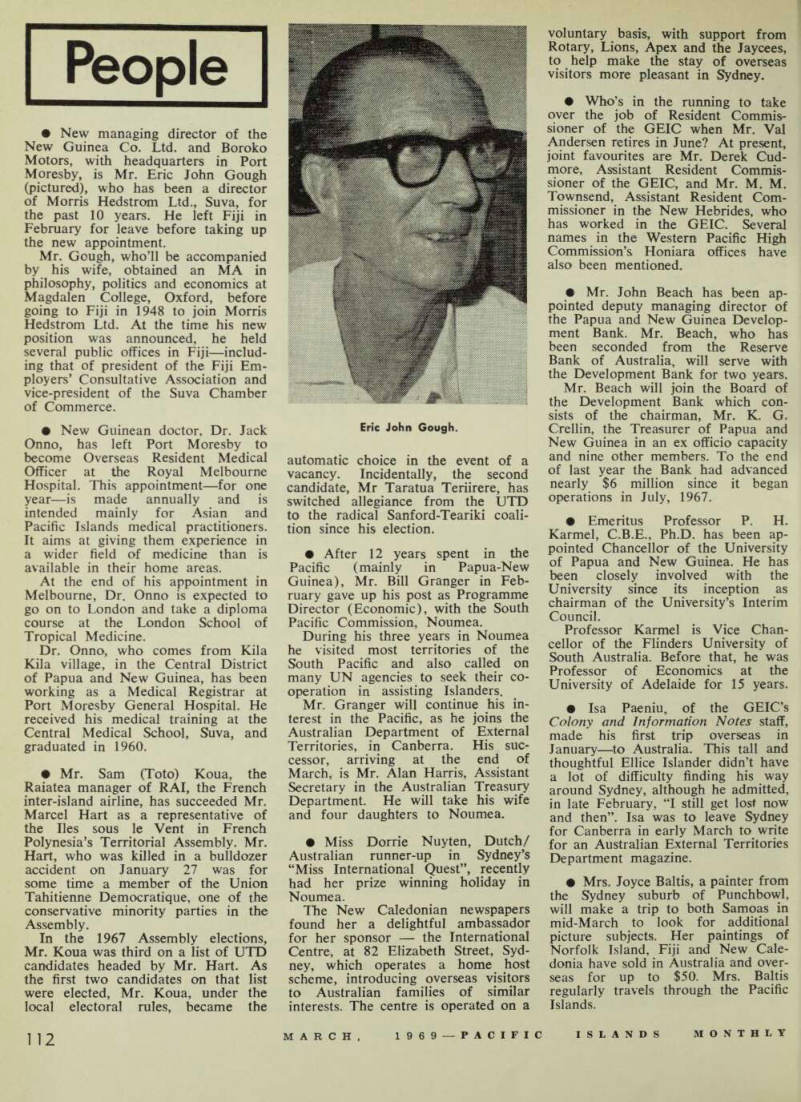 122
122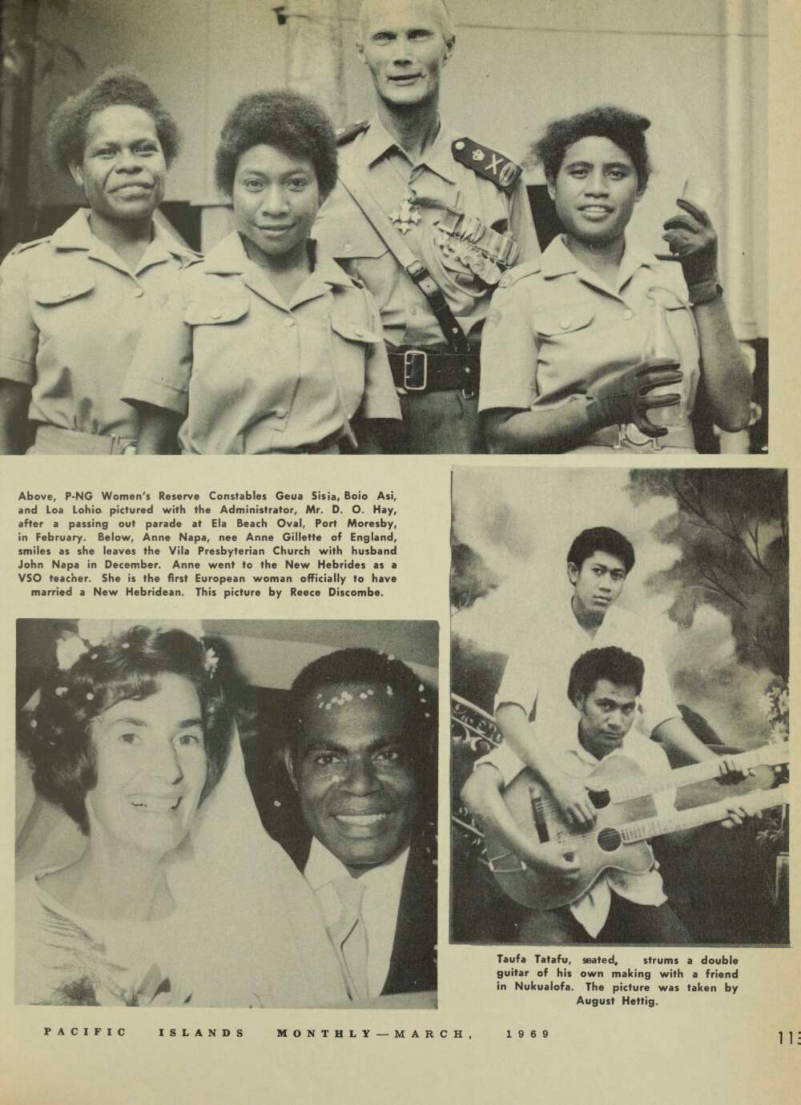 123
123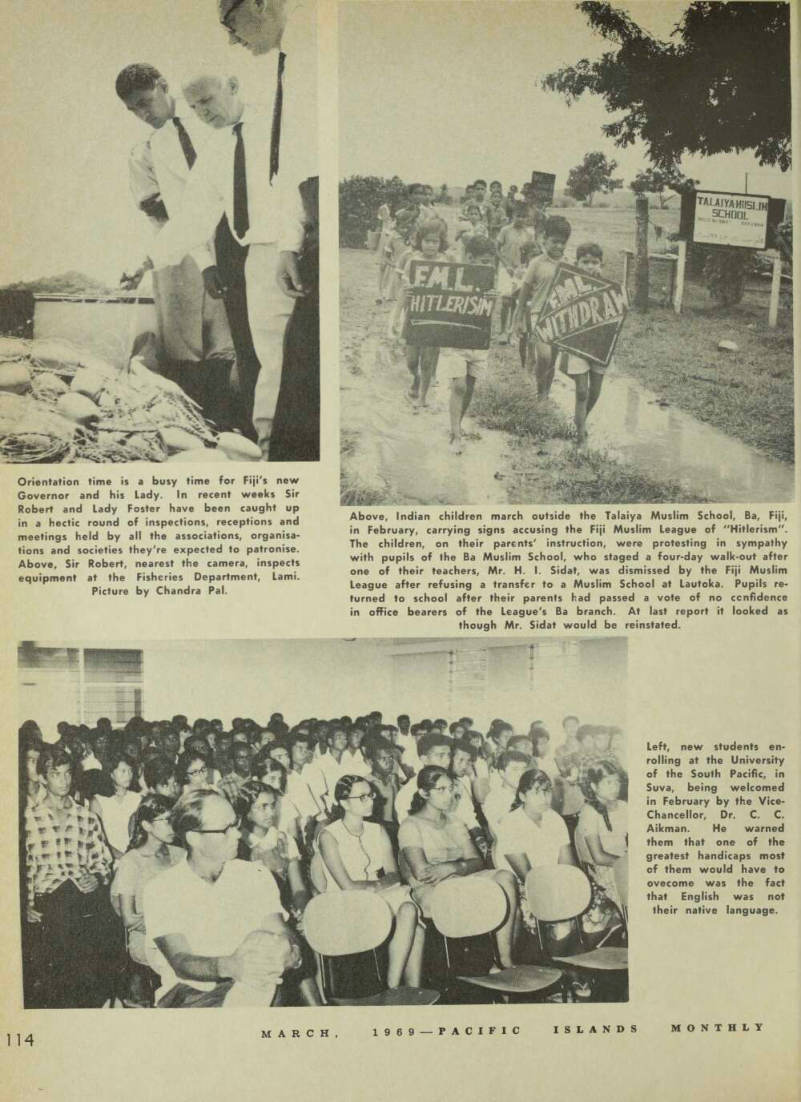 124
124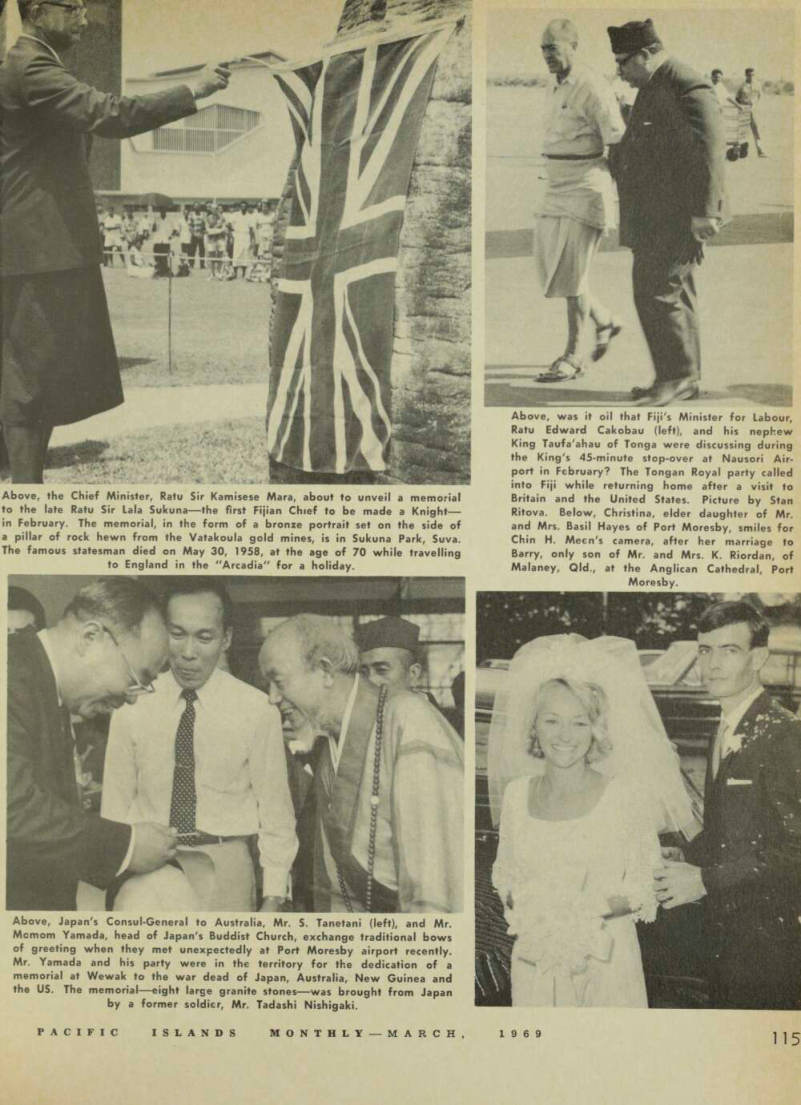 125
125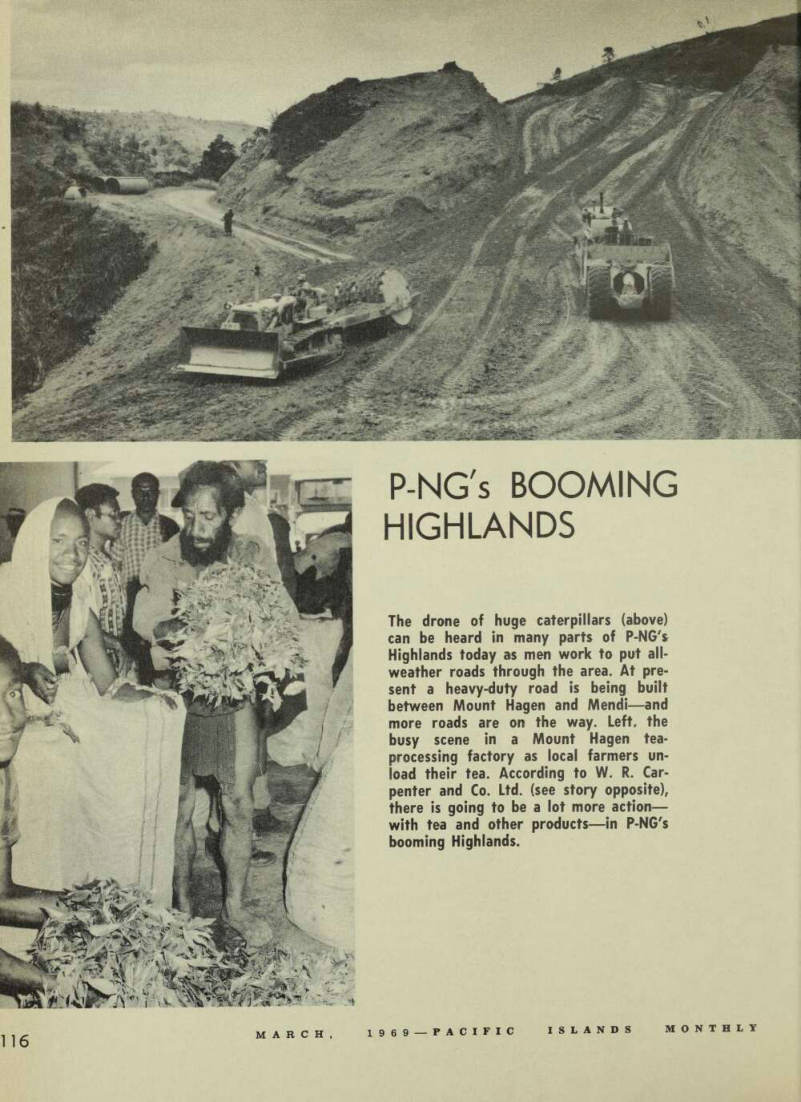 126
126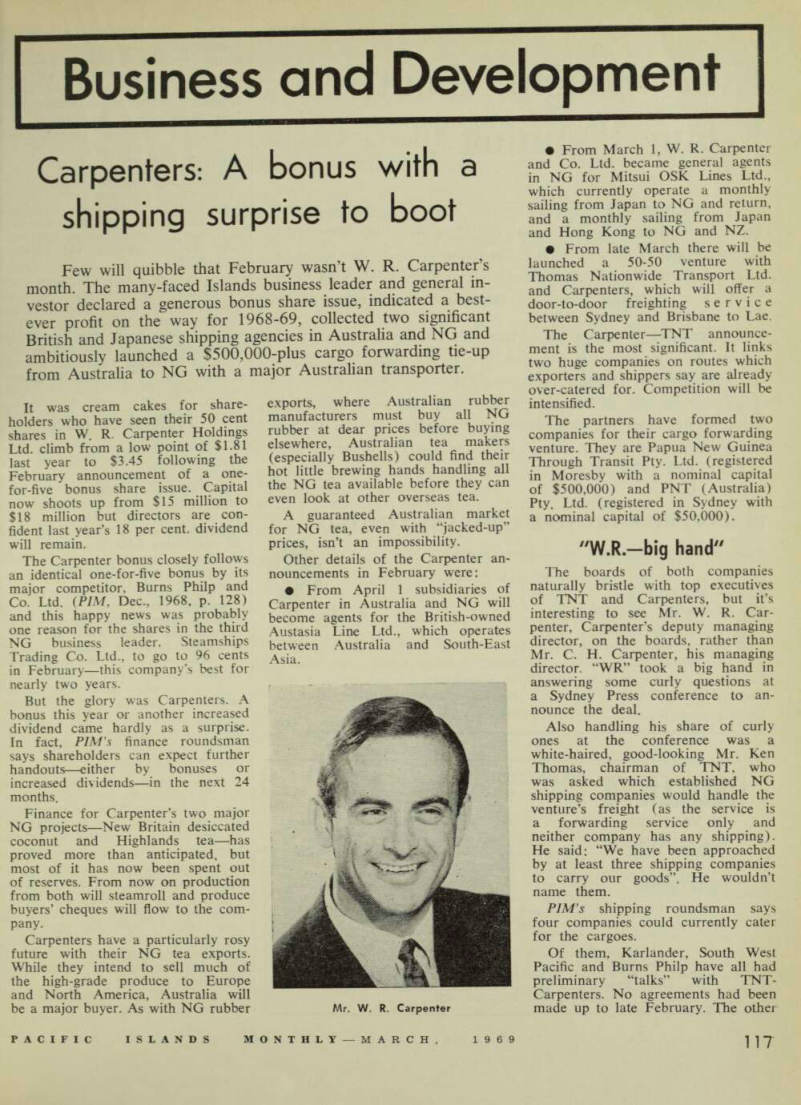 127
127 128
128 129
129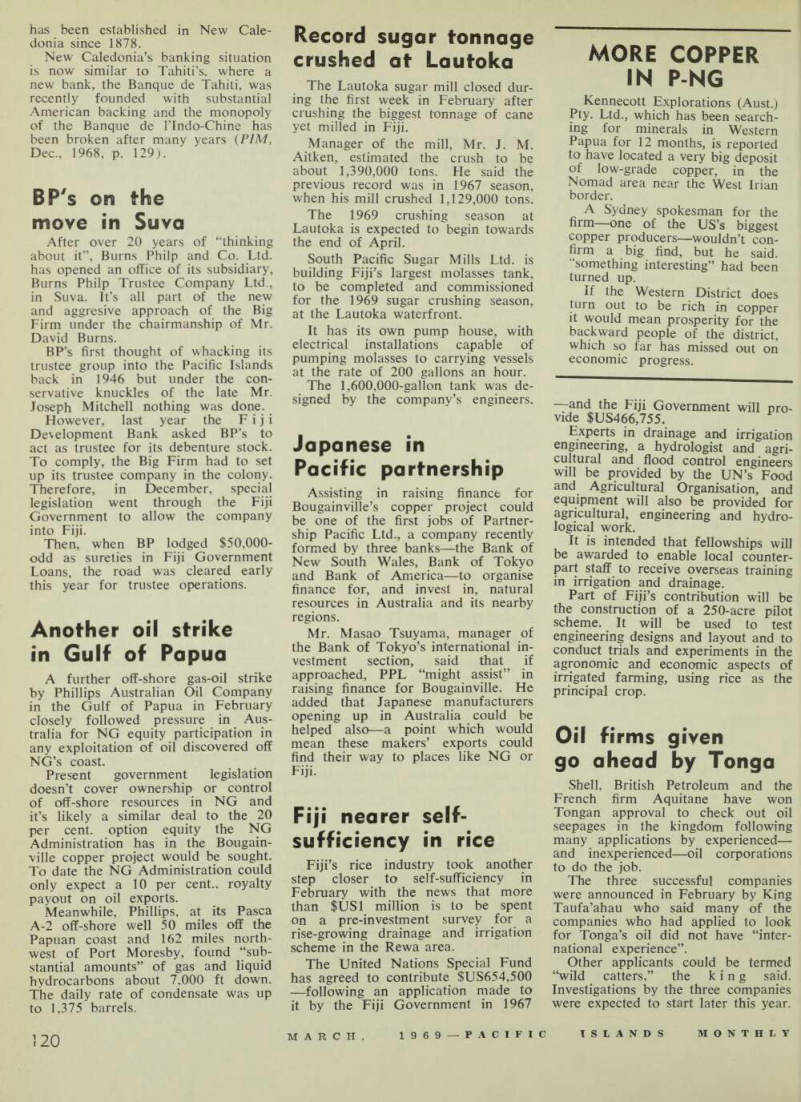 130
130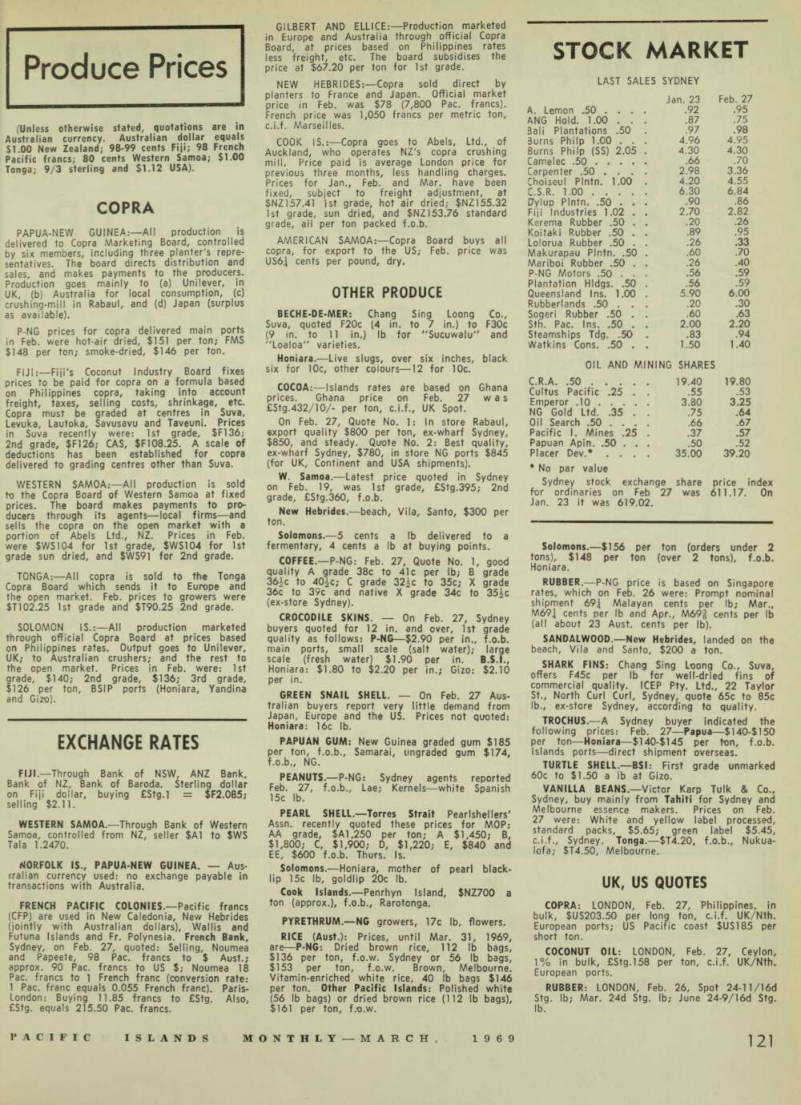 131
131 132
132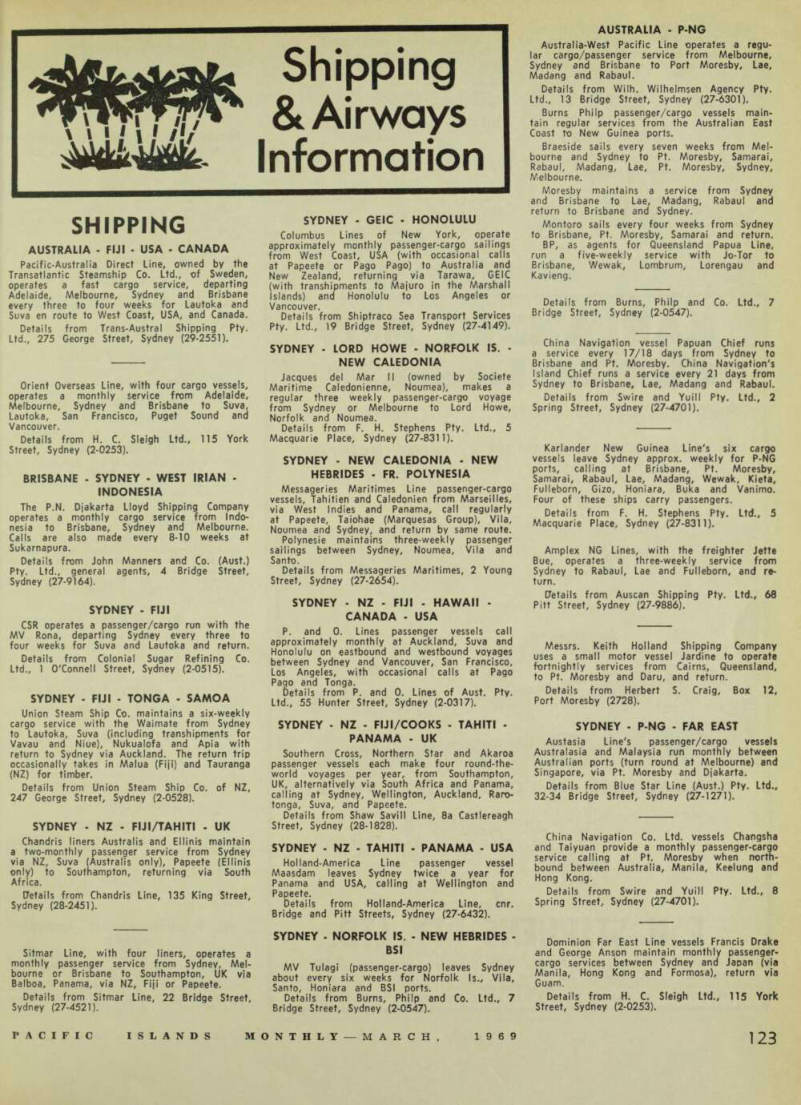 133
133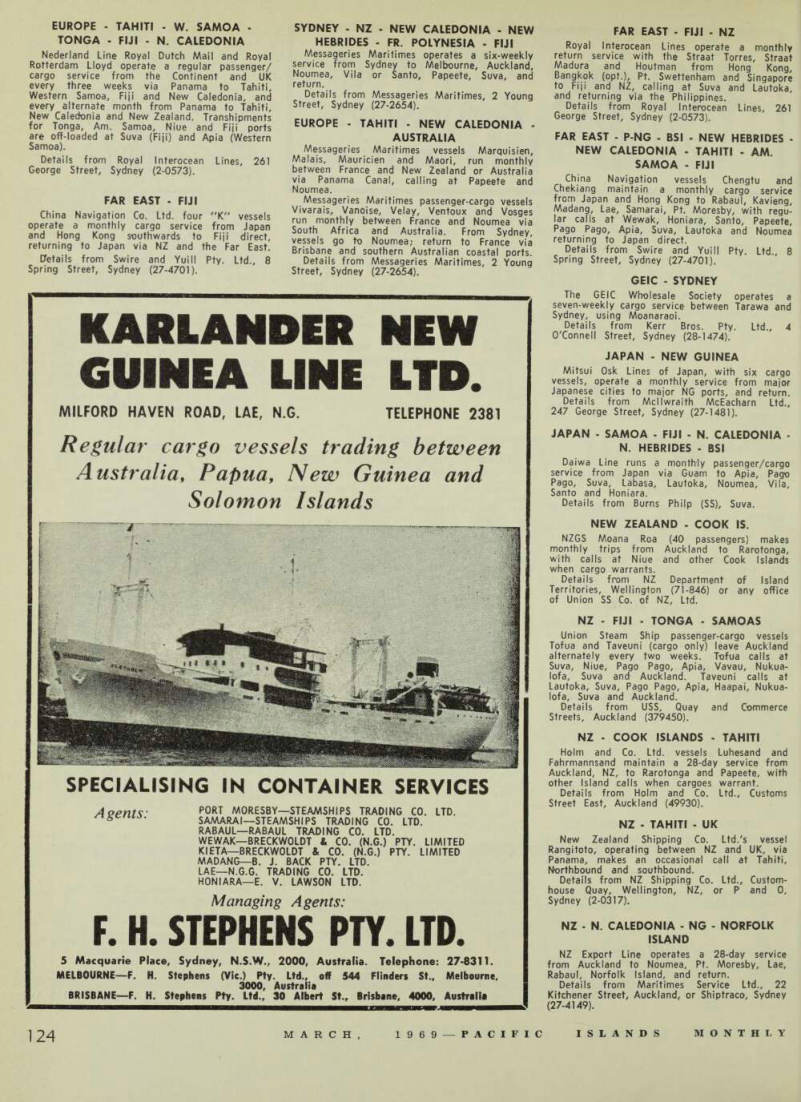 134
134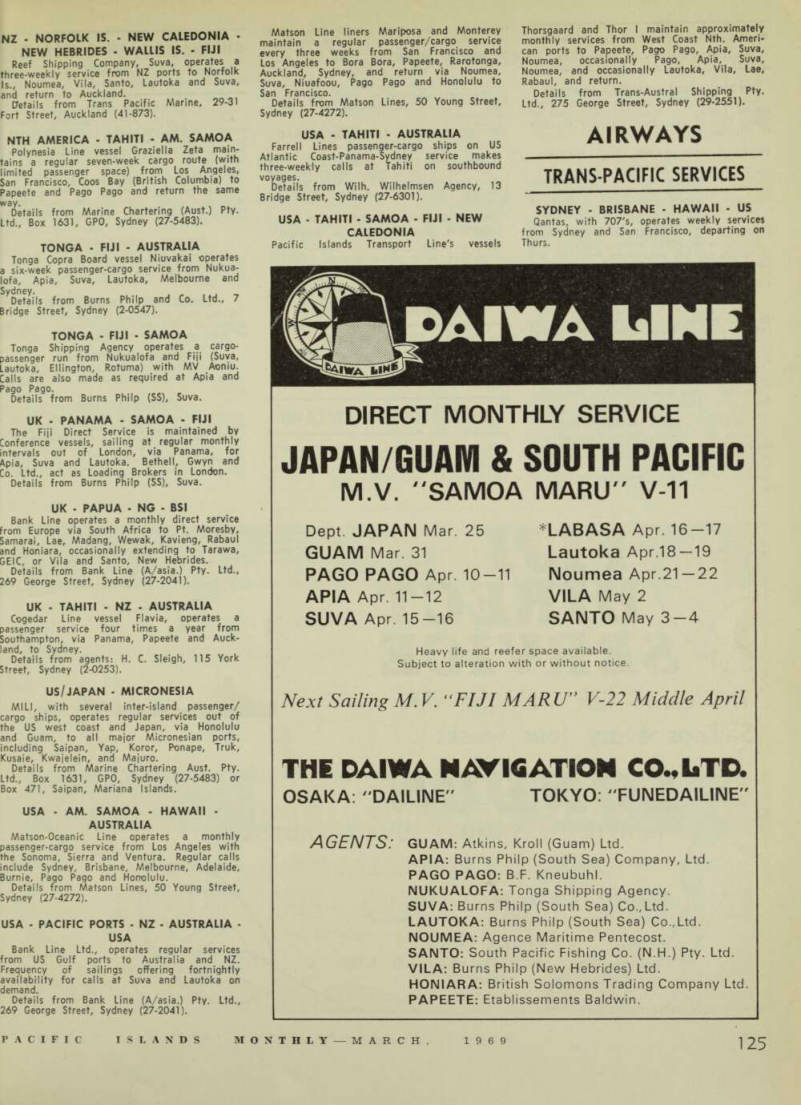 135
135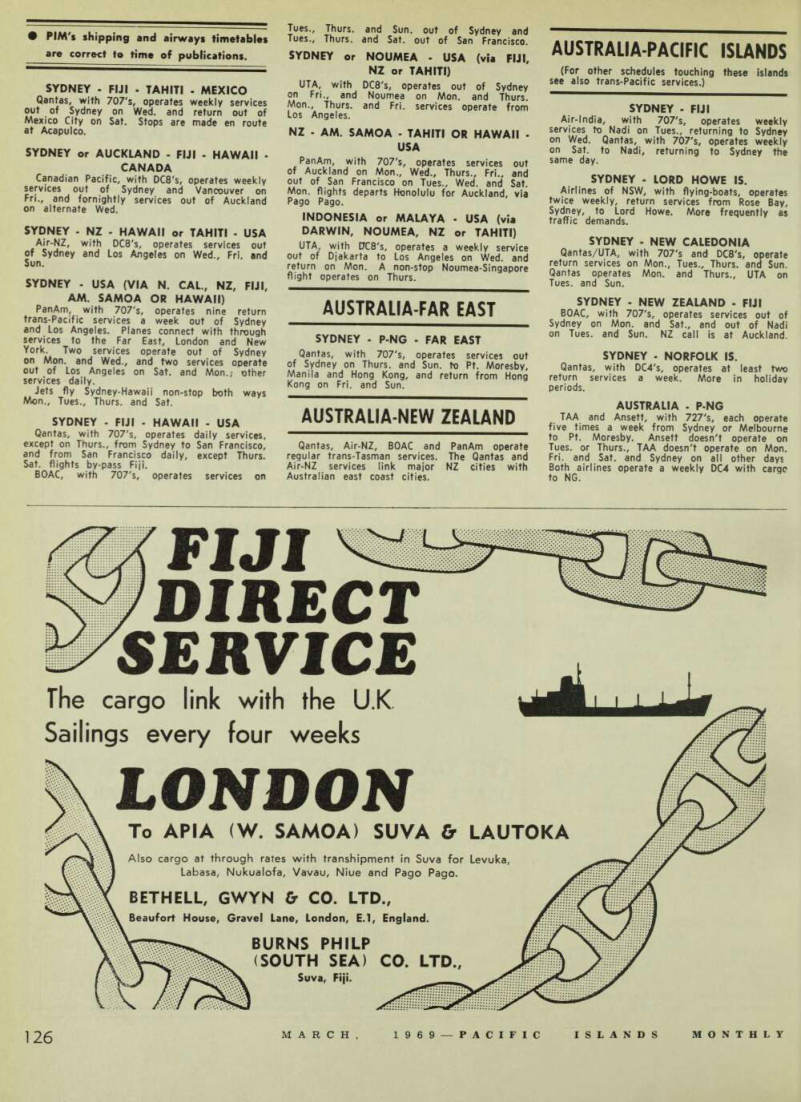 136
136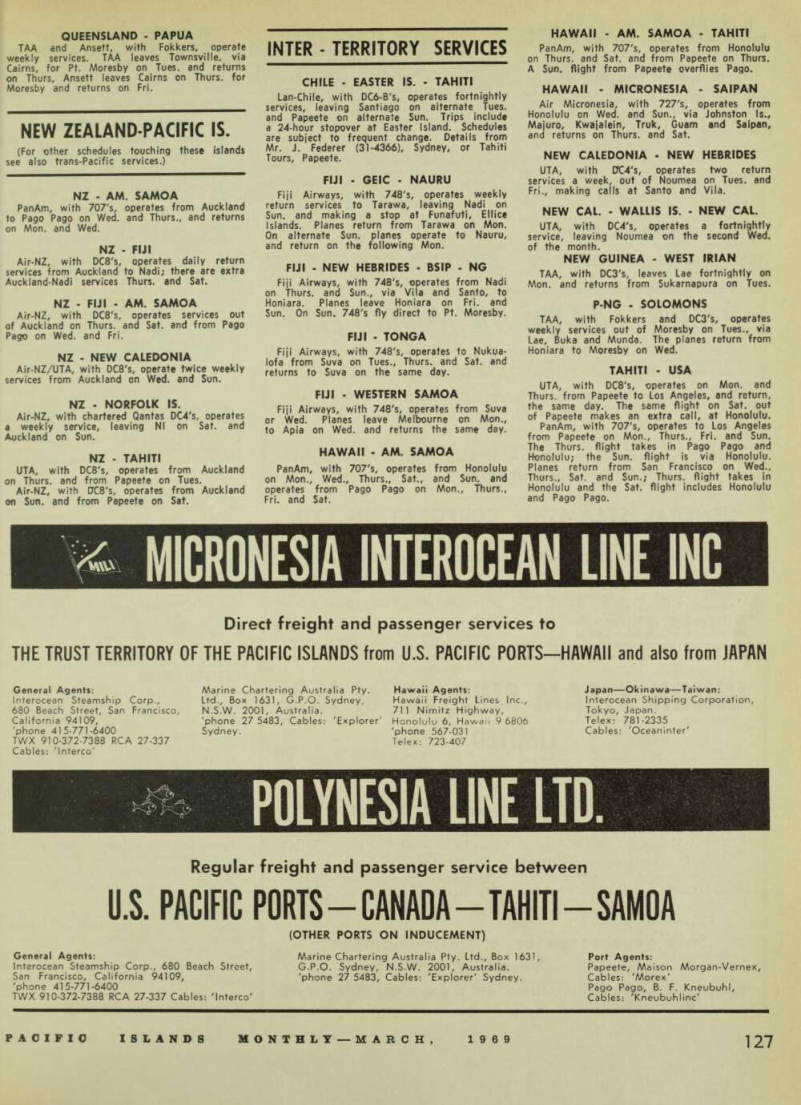 137
137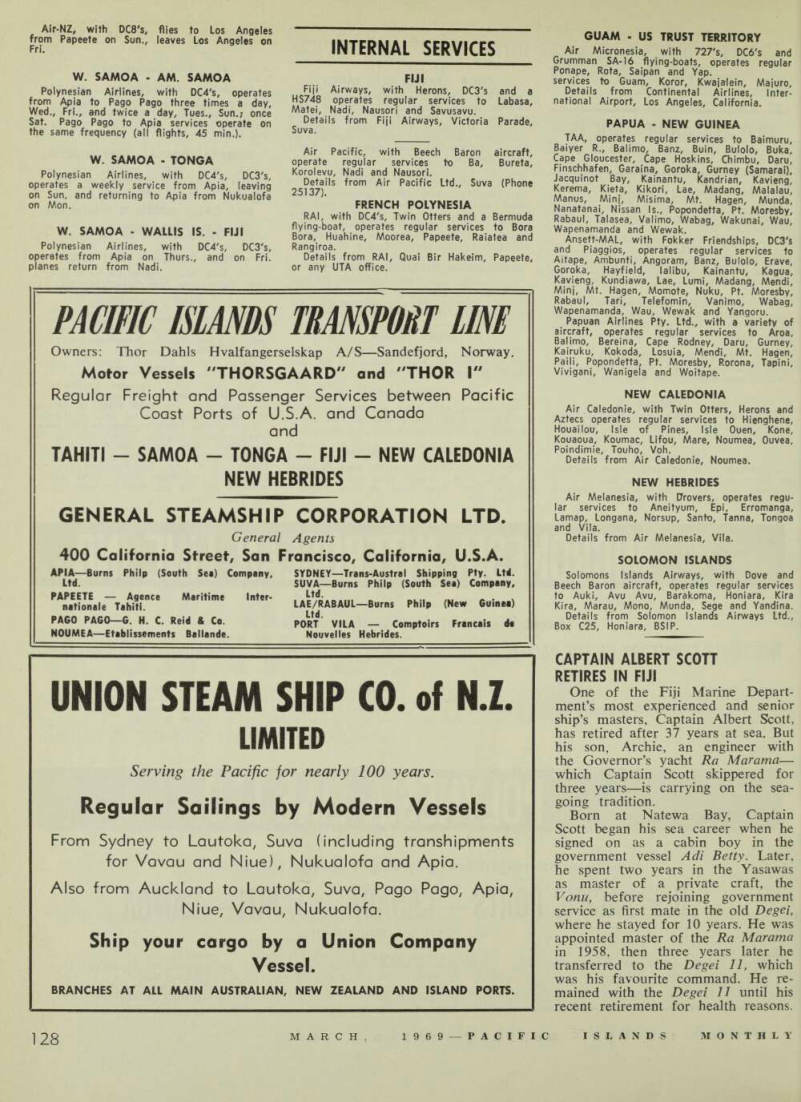 138
138 139
139 140
140 141
141 142
142 143
143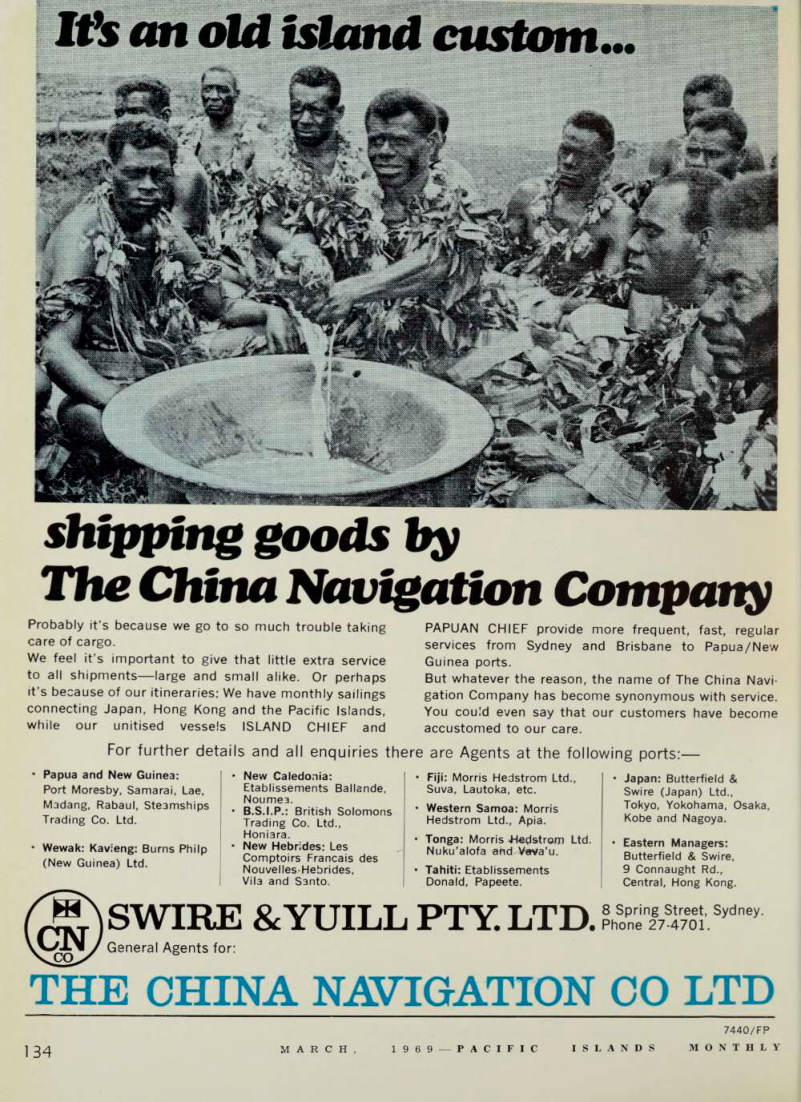 144
144 145
145 146
146 147
147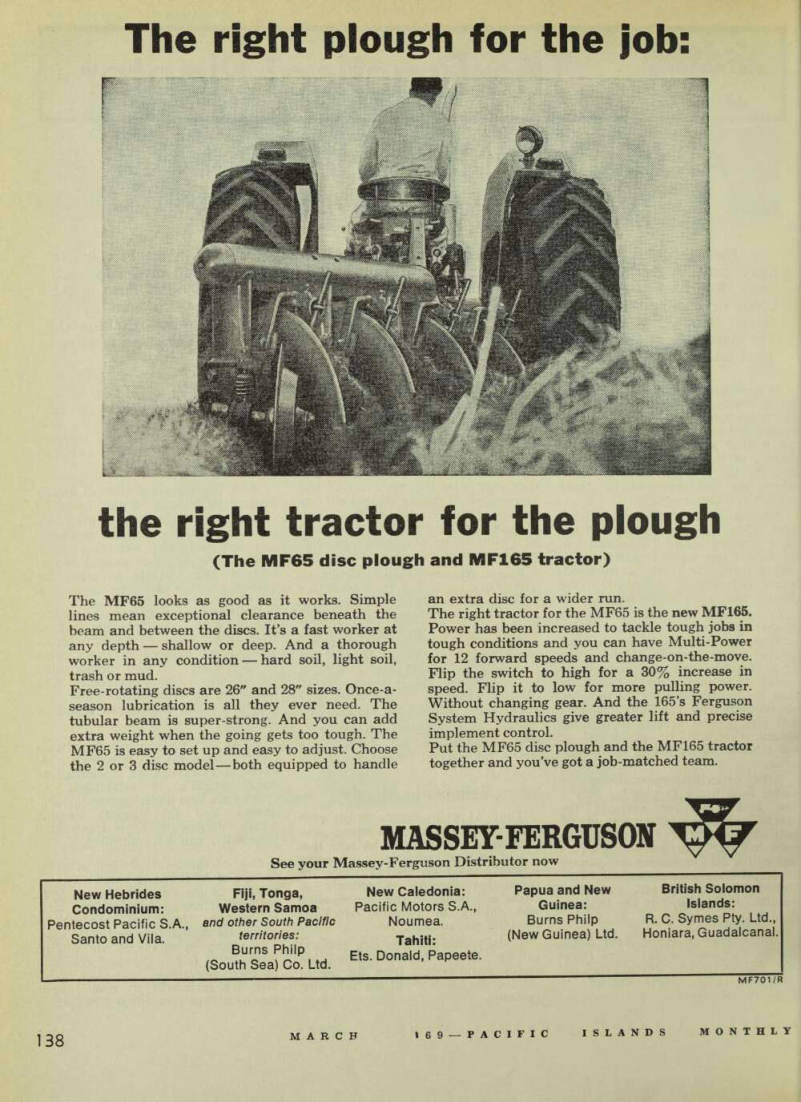 148
148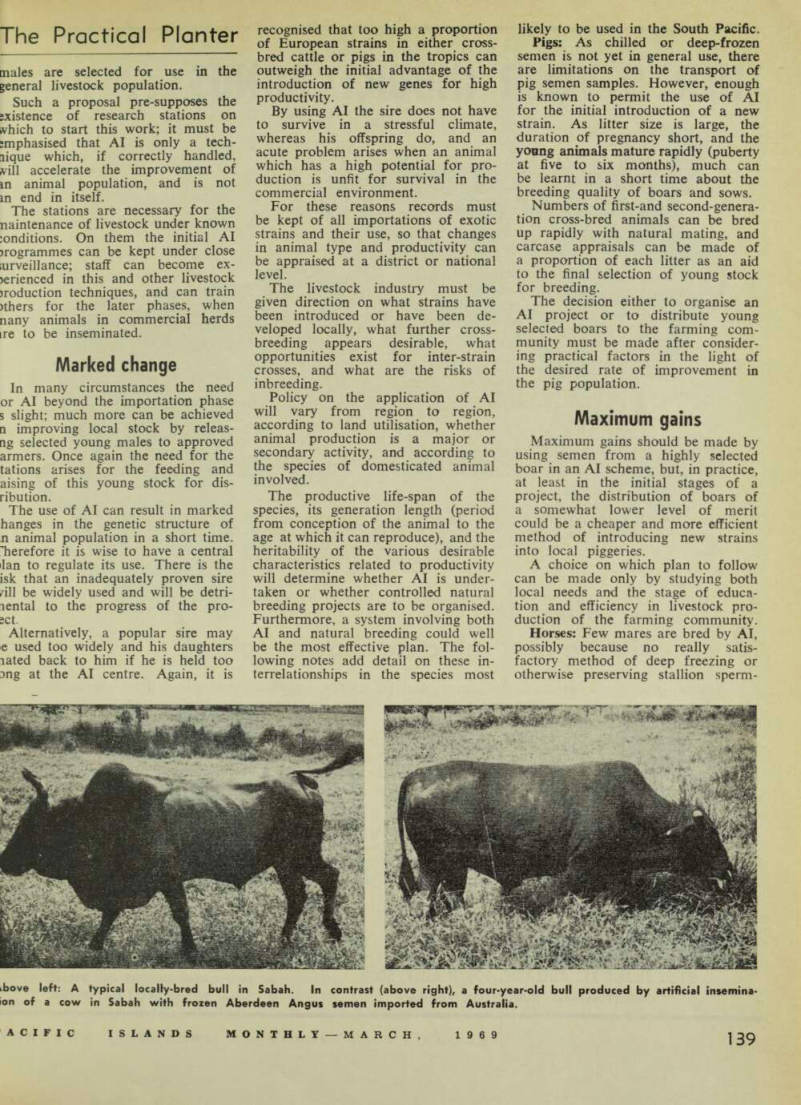 149
149 150
150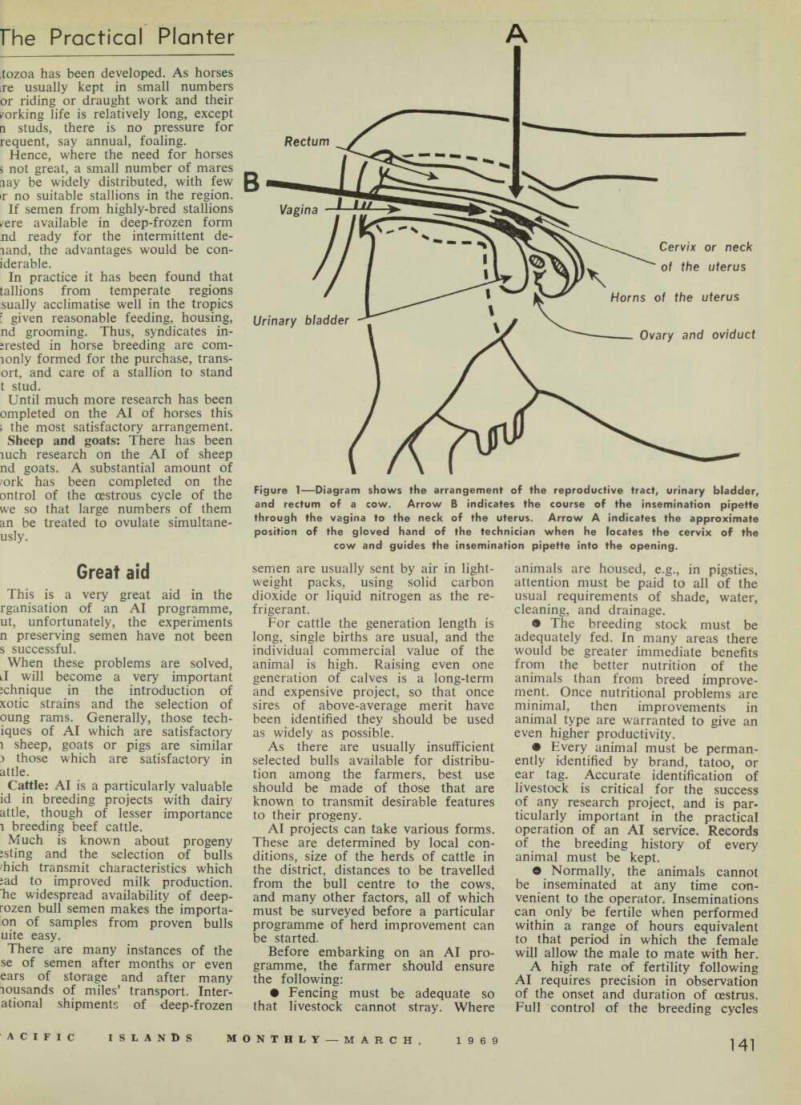 151
151 152
152 153
153 154
154 155
155 156
156 157
157 158
158 159
159 160
160 161
161 162
162 163
163 164
164 165
165 166
166 167
167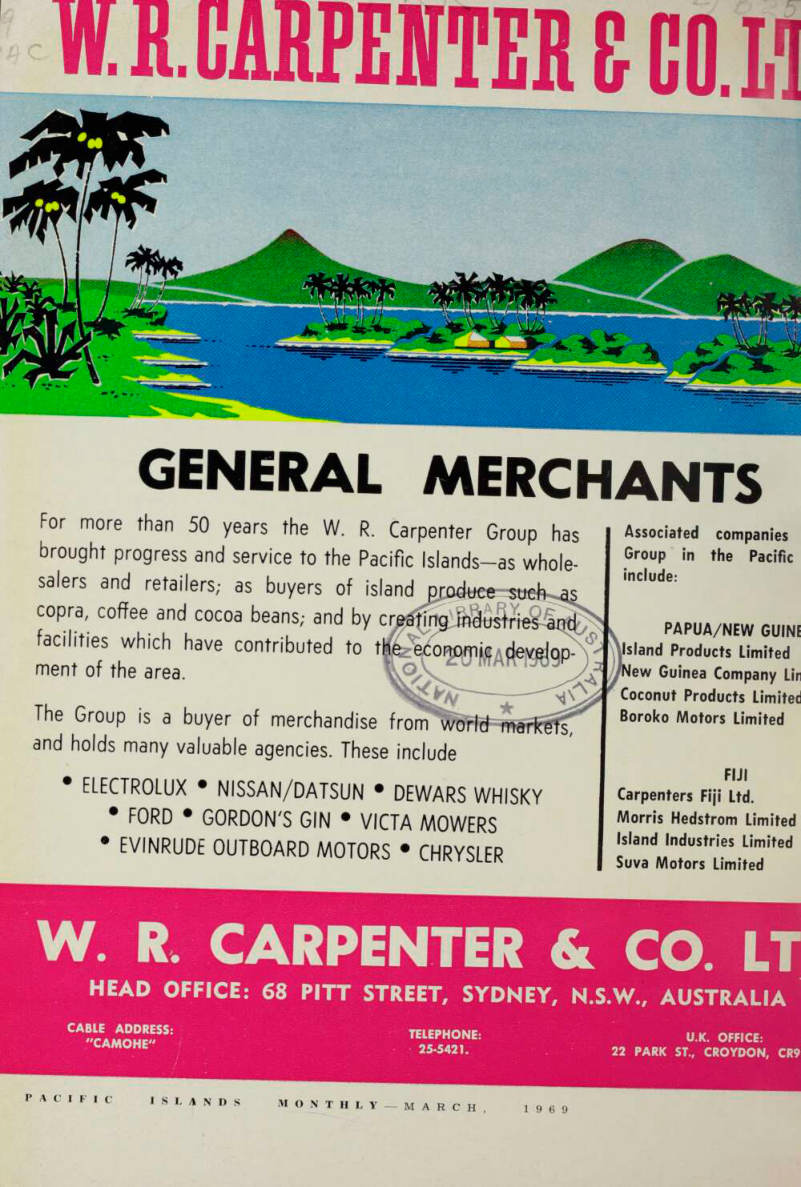 168
168