Monthly
Pacific Islands Monthly
Registered at G.P.0., Sydney, for transmission by post as a newspaper.
April, 1969
News Magazine Of The South Pacific
• AUSTRALIA, 40c. • NEW ZEALAND, 45c. • U.S. PACIFIC TERRITORIES, 70c. • FRENCH PACIFIC ISLANDS, 55 FRCS. CFP. • P.-N.G., FIJI AND ALL OTHER
Pacific Territories, 35C. Local Currency.
Advertisements & other items, pp. 2-16 (5 items)
internationally!
Doin’ what comes
, x I m Get that international treatment in TAA’s “Bird of Paradise” flight to Australia.
Deliciously different meals are yours from canapes and aperitifs right through to dinner mints and coffee. Five hostesses are there to pamper your every wish. This is truly international flying. To and from Australia, always fly TAA’s “Bird of Paradise” Whispering T-Jet Service. Five flights weekly... in both directions.
Contact your Travel Agent or TAA; Port Moresby 2101. Lae 2311. Madang 2478.
Rabaul 2567. Goroka 8. Mt. Hagen 4.
Wewak 103.
Fly TAA the Friendly Way 319 1334/69
/4
H THROUGHOUT THE PACIFIC
FIJI,SAMOA,TONGA,NIUE Is,NORFOLK Is.
BURNS PHILP
[SOUTH SEA] CO.lTO.^^^H
REGISTERED OFFICE; SUVA, FIJI
TELEPHONE NO: 22661
TELEX NO; FJ1127
Code Address; "BURNSOUTH i • wmmiiUPi ■■■ ?■; ■■ ■< "
SHIPPING AGENCIES
The New Zealand Shipping Co. Ltd.
Shaw Savill & Albion Co. Ltd.
Port Line Ltd.
Bank Line Ltd.
General Steamship Corporation Ltd.
Blue Star Line Compagnie des Messageries Maritimes Royal Interocean Lines Daiwa Navigation Company Ltd Sitmar Line Flotta Lauro (Lauro Lines) Australasia Pty. Ltd, Tonga Shipping Agency.
EXCLUSIVE
DISTRIBUTORSHIPS
INCLUDE
Akai Taperecorders Dunlop Products Hitachi Electronics Holden Motor Vehicles Rolex Watches Revlon Cosmetics Pentax Cameras Ferguson Tractors Olympic Tyres Penfold Wines
AGENTS FOR:
Queensland Insurance Co. Ltd.
Burns Philp Trustee Co. Ltd.
Shell Company (P. 1.) Ltd.
Bureau Veritas
ASSOCIATED COMPANIES
Burns Philp (New Hebrides) Ltd.
Automotive Supplies Co. Ltd.
Corrie & Co. Ltd.
Wrought Iron and Steel Construction Co. Ltd.
Bish Ltd.
SPECIALISED SERVICES
Expert advice on Shipping; Forwarding; Customs formalities; Insurance.
COMPLETE TRAVEL
SERVICE
accredited agents for the
INTERNATIONAL AIR
TRANSPORT ASSOCIATION
OVERSEAS AGENTS: SYDNEY • LONDON • SAN FRANCISCO
wrapped, tropical packs
* ■ m m \ bX i.% v MO^ NlGf CP' <tr. (A sf* V.
Arnott’s Nice Biscuits Crisp and sugar-sprinkled Arnott’s Lemon Crisp Biscuits With tangy lemon centres
e slice
orang
„«WHEAT MU'-
shredo|“s<
Arnott’s Orange Slice Biscuits Tangy orange cream in biscuit sandwich Arnott's Shredded Wheatmeal Biscuits Golden-grain goodness for morning tea.
m m m & a? hr
HfTT
FOUND
Arnotfs MILK ARROWROOT Biscuits All-day energy for children a favourite with all the family. & Arnott’s SAO Biscuits Ideal for snacks, suppers or between meals* m & «$• vs Arnott’s SCOTCH FINGER Biscuits Chunky and butter-rich, with the true shortbread flavour. k'l 0^ Arnotfs CHEESE JATZ Biscuits Crisp as could be with a fine cheese flavour perfect for entertaining.
There is no Substitute for Quality
World
quality
mm ■ 0* ft* i* t* & Only the world's finest Virginia tobaccos are blended to produce ...
PLAYER’S
GOLD
LEAF
one of the great cigarettes
0671-5/67
Heinz
Baked Beans
has the sauce
that clings
to keep the flavnnr in That’s what makes Heinz Baked Beans so good. First, Heinz select m the best beans. Cook them 'til they’re tender all the way through. * And, that’s when the sauce comes in... rich and tasty. It clings to 1 every bean to keep the flavour in. Try some, hot or cold, they’re f delicious. You II find them at your local food store Heinz Baked Beans
You&~
Bacardi rum:
*» b AR K
L IGHT
ast m?. i % H f 7 \CA^ «i £ •«
«MVCrA£
Name a mixer. Any mixer.
Cola, Dry Ginger, Soda, Tonic, Bitter Lemon.
Light smooth Bacardi rum mixes perfectly with any of them. And for an encore, makes the base for the immortal Daiquiri and many another soul-stimulating cocktail and long drink experience.
BW BACARDI -imWOIMS (G.IMTMM
"bacardi"and bat device are registered trademarks
OF BACARDI i COMPANY LIMITED
BACARDI INTERNATIONAL LTD., HAMILTON, BERMUDA.
A Sansui system,
what makes it better?
In a word, specialization. Sansui is the world's foremost audio-only specialist.
Every resource at its command is committed to making good stereo systems better.
Each Sansui component must be designed for uncompromised performance as a separate unit, yet must offer complete compatibility with other components in a system.
The attractive 100 watt Sansui 2000 AM/ FM Multiplex Stereo Tuner Amplifier in this system must be able to power the other, components efficiently while still maintaining the highest standards in FM sensitivity and selectivity. Similarly, the SP-200 high-fidelity stereo speaker system, SR-30308C stereo turntable and SS-2 stereo headphone set must add, rather than detract from the performance of the system.
At Sansui, building components and systems to these specifications is a full time job. Most people who hear a Sansui system perform are glad we do nothing else.
ScuisnJL
PRABHU B R OTH E R S^_Box^m islands / SERVONNAT Rue des Poilus, Tahitiens Papeete, Tahiti Tel. 03-29 SANSUI ELECTRIC CO., LTD. 14-1, 2-chome, Izumi, Suginami-ku, Tokyo japan
Have a good
.4 1 SB 1 m T* & ,n '■ m I I * %
Weet-Bix
MALTED WHOLE WHEAT BISCUITS
»14I«S«I
WB4O
i » *
Headache?
7 \ r-V Get rid of it fast with Disprin
the soluble aspirin
The reason why soluble aspirin is so often prescribed for really fast relief when you’ve got headache or flu, is because it dissolves completely. Only soluble aspirin can do that. That’s why it acts so quickly, with little risk of stomach upset. Take Disprin, the soluble aspirin, the form of aspirin often prescribed.
For Trade Enquiries: Reckiti & Colman Pty. Limited, Wharf Road, West Ryde, N.S.W., Australia.
Cables: Reckitts Sydney
DISPRIN A RECKITT & COLMAN PRODUCT
I TO
RELIEVE
PAIN
HPSI6A
All the best
from Australia
Phoenix Biscuits! Best for goodness.
Best for flavour. Best for freshness. Silver foil wrapped to arrive as fresh as
the day they were baked.
9 m w m m o m * SJ 6^ S'i 49 vn* iiW
CREAM CRACKER
B I SCUITS
0O2S ME'1*22;i>»a«4«f"
CREAM CRACKERS
Flavoursome and filling! A light, creamy cracker that’s a low calorie favourite. Ideal for diet control.
Contains health-giving yeast. instill
COCONUT CREAMS
Wonderful flavour! Baked with the finest quality tropical coconut and crammed full with coconut flavoured cream. awM/m
«*• m s % w ms * ' c- v,-vF : -' *« ■# W, 't* !**■■ • f f seppelt
SEPPELT
Confirms your good taste every time...
You’ll always enjoy
SEPPELT
Australia’s top export wines!
WINNER OF AWARD FOR OUTSTANDING EXPORT ACHIEVEMENT A5K523.
When the best beer is called for, New Zealand’s favourite lager..
STEINLAGER
m i % can tempt you away... once you experience the unique flavour and distinctive aroma of
ERINMORE
m fine
pi TOBACCOS
» SINCE 1810
MURRAYS OF BELFAST
NORTHERN IRELAND
SOLE DISTRIBUTORS IN AUSTRALIA
Ametco (Aust.) Pty, Ltd. 10 Whitehorse Road, P.O. Box 1 58, Ringwood Vic. 3134, Australia.
Phone 27, 8476 Melbourne
IE DISTRIBUTORS IN FIJI ISLANDS
Tans Oceanic Agencies Gumming Street, G.P.O. Box 527 Suva, Fiji Islands hone 23 168 Suva
For Elegance, it’s got to beWIN!
ALL GAS REFILLS ON THE
MARKET FIT “WIN” LIGHTERS
OHSAWA MANUFACTURING CO., LTD.
MANUFACTURERS
48, 1-chome, Toshin-cho, ltabashi-ku, Tokyo, Japan
Cable: OHSAWALITE-TOKYO
Telex: 272-2171 Tel: (956) 1171, 1172, 1173, 1174, 1175
Europe Branch; OHSAWA MANUFACTURING S.P.R.L.
283, Ave. Charles Quint, Brussels 8, Belgium Cable; OHSAWAEUROP-Brussels. Telex. 23810 Tel. 283138, 283139
G-100GE
G-1100GD
GI2OOCDC
v. t > •<* ■ y^i MM m ■ .. 1 4 ' .
I&w^-: ga . -.■->••■•. i m . r-- 5 H: * - : ■vtr l:^
The easiest body-building
course in the world.
Australian Dairy Foods.
From the lush pastures of Australia comes the concentrated energy of Australian Butter and Cheese. They are the ideal foods for growing children who need the energy and Vitamin A goodness of Butter, and the bodybuilding protein of cheese which is rich in calcium to help promote strong bones and teeth. You need it, too!
Look for these top-quality Australian dairy foods: Butter, Cheese (processed and unprocessed), Skim Milk, Butter Oil, Clarified Butter, Malted Milk, Powdered Full Cream Milk and Butter Milk, Infants’ and Invalids’ food.
Always look for the word ‘AUSTRALIA* on the label.
Trade enquiries to: — Your resident Australian Trade Commissioner , or AUSTRALIAN DAIRY PRODUCE BOARD, G.P.O. Box 1657 N, Melbourne, Victoria, 3001, Australia.
AUSTRALIA
3
ACIFIC ISLANDS MONTHLY APRIL, 1969
7
ACIFIC ISLANDS MONTHLY APRIL, 1969
9
CIFIC ISLANDS MONTHLY— APRIL, 1969
13
* A C I F I c ISLANDS M O N T H L T A P R I L , 1969
Letters
Return To The Islands
Sir, —I have pleasure in returning for your interest the reader survey questionnaire from the December issue of PIM. I am not entering any competition, but my reaction stems from genuine interest. In the main, my interest is mercenary. As a member of the largest cablemaking group in the world I recognise the growing potential in the South Pacific basin, and find the odd snippets of information in your publication most useful. In one or two instances a “follow through” has resulted in business, albeit of a modest nature, but business.
And, I find in your pages, a certain nostalgia which essentially must be crazy. Such an emotion is created for me in your December issue, in your report on the Tarawa an niversary ceremonies. On that Nov ember day in 1943 I found myself a very junior 21-year-old officer of the Royal Navy, along with elements of your Australian forces, and the larger majority of US Marines, all exercising a bit of mayhem on Tarawa. I was not so calm then as I am now, nor was I so grey-haired, but having left the odd bit of skin and the minute drop of blood to add to the GEIC “fertilisation pro gramme” on Tarawa, you can perhaps appreciate my crazy feeling of nostalgia.
Additionally, while recognising the healing properties of time, I must confess to the tiniest feeling of satisfaction at the [Japanese casualty] statistics in the final paragraph of that article. Except that it doesn’t prove a thing in face of various social engagements I enter into with Japanese businessmen these days!
But, at least, in sporting parlance it was an “away win”.
Well, if for one reason or another the names of Tarawa, Eniwetok, Okinawa and Iwo Jima are stuck in my brain, I equally enjoy reading simple but heart-warming stories of the shortage of back-combs on Rarotonga, the problems of fryer rabbits on Norfolk Island, and the voracious appetites of West Samoan women.
The article on the “Amorous Tongans of 300 Years Ago” leaves me wondering—did I join the Royal Navy too late —or, alternatively, why
did we not set up a base in Tonga rather than Manus?
Keep up the high standard of your magazine, which will mean that if my fates decide I am never to have another drink in Aggie Greys, at least I can read of Aggie’s progress —may her bottles never run dry!
Without being too presumptious, if you should think of this as a reader’s letter, I would prefer to remain anonymous. I wish to remain friendly with the Tongans, what with oil popping up all over the place, etc.!
Crazy Nostalgia.
London.
Sir, —This letter is late with the subject, but I just received my December issue yesterday, and I was interested in the letter from Victor Chapman ( PIM, Dec., p. 11) about “the Missing Zero”. It brought to mind one Japanese aircraft I visited during my search work with the US War Graves unit. On checking my work book I find that on March 10, 1947, we were working in the Wide Bay area of New Britain and checked out a downed single engine Japan ese fighter plane to verify that it wasn’t a New Zealand plane which was reported to be down in this area. According to my memory this aircraft was due south from the Kalai Plantation. We stopped at the plantation after the day’s work and stuffed ourselves on pomelos which were plentiful at the time.
Our ship had tied up at the former Tol dock in the Henry Reid Bay corner of Wide Bay, on March 7.
The T-shaped jetty completely col lapsed the afternoon of the Bth.
With eight natives we went inland through the Kalai plantation to investigate the Japanese aircraft.
So if anyone still knows this air craft and its present condition they might sing out, and inform those of us interested, I never get tired of looking through that old work book and reliving those fond memories.
Robert T. Smith.
Sierra Vista, Arizona, USA.
The Cost Of Shipping
Sir, —I recently had occasion to ship, from Auckland to Honiara via Santo, a 22-ft run-about launch, com plete with its trailer, total weight 33 cwt. Ocean freight for the entire journey was $4lB. Trans-shipment
charges at Santo: SEVEN HUNDRED
And Seventy-Five Dollars.
This astonishing charge is made up as follows: The condominium, which owns the wharf, charged wharfage (each way) $162.80, i.e., $325.60.
Societe Portuaire, which runs the wharf, charged: (a) For unloading from the first ship on to the wharf, and re-loading on to the second ship, that is to say, for wharfingers and winchmen per haps 40 minutes’ work, $198.64. (b) For “cartage”, $250.40. The launch was already mobile on its cradle, so this latter figure is for towing or pushing it about 50 yards to a vacant (and unsheltered) spot on the wharf, and subsequently back again to ship’s side—perhaps half an hour’s work for six or seven Mel anesians. (One wonders how much of it they received in wages).
When I complained, I was allowed as a concession to carry out the second part of the towing operation with my own labour, thus reducing the total charges to $650. I was very grateful.
I was told that Societe Portuaire’s contract had already expired, and the condominium is undecided whether to renew it. Perhaps it is time they made a change? Would “Madame X” care to comment?
Tom Hep Worth.
Reef Islands, Santa Cruz,
Bstp.
Prices Needed
Sir, We enjoy and appreciate your publication very much, and find the contents both valuable and interesting.
The purpose of this letter is to offer a single suggestion which we feel would be of value to all readers.
In the course of reading each issue we pay considerable attention to the advertisements and note quite often that where a price of a product is indicated that there is no distinction as to whether or not the figure quoted is in Australian dollars, US dollars, New Zealand dollars, or other currencies.
We feel therefore that it would be of value to readers throughout the Pacific if your advertisers were to indicate their respective monies.
William C. Brown Jr.,
Pago Builders and Engineers, Pago, American Samoa. • Advertisers might note Mr.
Brown’s letter. It is not the first similar request.
Advertisements & other items, pp. 17-22 (3 items)
15
PACIFIC ISLANDS Iff ONTHIT_ A P R I L . 1969
of hardware
OFFERS YOU
n No. 2258 No. 234 Padlock Padlock n No. 210/211 Streamlatch B NO. 245 Padlock No. 201 Nightlatch No. 203 Deadbolt No. 570 Senes Cylinder Mortice Locks & Latches No. 400 Door Closer No. 402 Door Closer No. 137 Locking Lever Handle No. 590 Short Back Set Cylinder Mortice Deadlocks No. 270 Coin Machine or Cabinet Lock
a full range
of hardware
PM ; - ••• i .• i'' '
INCLUDING
locks for
every purpose
No. 2258 Padlock Safe, inexpensive 5-disc tumbler padlock. Solid die-cast case.
Brass shackle. 900 key changes.
No. 211 Streamlatch Solid brass cylinder and bolt.
Over 78,000 different key patterns.
Many popular durable finishes.
No. 234 Padlock 5-pin tumbler mechanism. 78,000 key changes. Solid extruded brass case, steel shackle.
No. 245 Padlock For heavy duty, top security. 5 pick-proof tumblers. 78,000 key changes. Solid extruded brass case. Shackle locks both sides.
No. 570 Series Cylinder Mortice Locks and Latches All moving parts are of solid brass, precisely machined and finished to give a lifetime of service.
No. 201 Nightlatch Solid brass bolt works on a double spring action. 78,000 key changes.
No. 400 Door Closer Pneumatic action. Specially designed for use on medium internal doors up to 70 lbs. weight.
“Hold-open” checking device holds door open at any desired angle.
No. 402 Door Closer Fast, positive pneumatic action.
Powerful internal spring. Easy to regulate closing speed. Exclusive "hold-open” feature.
No. 203 Deadbolt Ideal for back doors. 78,000 key changes.
No. 590 Short Back Set Cylinder Mortice Deadlocks For hinged or sliding metal or wooden doors.
No. 137 Locking Lever Handle 5-disc tumbler mechanism. Locks Of unlocks with a 90° turn of key.
Actuating mechanism also engages or disengages with a 90° turn of lever handle when the assembly is unlocked by the key.
No. 270 Coin Machine or Cabinet Lock 5-disc tumbler mechanism. 960 key changes. Adaptable to a wide variety of applications and functions.
WITH m* Manufactured in Australia by
s> 7 , " Ogden Industries
PTY. LIMITED
©tdward Street Hunt.ngdale
Victoria, Australia , ;<J Y % . „ ‘W
another
new
aland
cnampion
- A V MV Power packing pony proven on the paddocks and pastures of New Zealand and now available throughout Pacific Islands from authorised dealers.
Power pony combines the performance of a real work horse with mini tractor economy, the ease of handling and safety expected of a true thoroughbred.
This robust tractor has a tried, trusted twelve horsepower, air cooled Tecumseh engine.
Safety features include specially designed clutch which cannot be engaged while brake is on. And the low centre of gravity reduces the risk of over turning.
Power pony has a host of available accessories: Rotary mower, 57” front mounted.
Flail mower, 54” front mounted.
Rotary mower, 38” centrally mounted.
Rotary Hoe, 36” rear mounted.
Hydraulic loader, 24” bucket.
on MA
y® Proud product of Murray Brothers Ltd.
Sole distributors for Pacific Islands: Gilberd. Neil (Pacific) Ltd., P.O. Box 366, Auckland, New Zealand.
THE GREATEST
NAME 111
CIGARETTES
All over the world, on six continents, in 160 countries, on 100 airlines and 150 shipping lines, the swing is to Rothmans, the world’s largest-selling King Size Virginia. Rothmans choice mild tobaccos and finer filter are known throughout the world for the cooler, smoother, more satisfying taste they give. Try them now and you’ll agree, Rothmans King Size.really satisfies.
WORLD’S LARGEST SELLING KING SIZE VIRGINIA
What will lighting be like in 1969?
This 32-page book tells you now.
And it’s free.
What's inside? Ideas, Trends. News. Advice from one of the great Australian decorators. Colour photographs of 37 pendants, 65 ceiling lights, 18 wall brackets, 13 exterior fittings. A range that will appeal to all your customers. By Leonora, the newsmakers.
Cut out and post this coupon for your free Leonora Catalogue. Or, if you prefer to keep your magazine intact, send a letter or postcard. f i
LEONORA DIVISION
OF PHILIPS ELECTRICAL PTY. LTD.
Douglas St.. Wallsend, N.S.W. Australia. 2287. [ Please send me, free and post free, tbe new • Leonora Lighting Catalogue.
Name - . _. * Address : «
Postcode
1-3202 » I (
THE ELECTROLUX C.BO uses no ice or electricity, operates anywhere by Kerosene, YES ANYWHERE economically
and with high efficiency.
Kerosene
Conserves frozen foods for weeks.
Capacity up to 100-lb.
Can also be used for fresh meat, fish, vegetables, butter, etc. lools beer, minerals and soft frinks quickly and cheaply.
Zapacity up to 80 bottles, allowng DAILY service of up to 300 )Ottles of really cold drinks!
V 9 ( For better EARNINGS and a NEW way of LIFI
ELECTROLUX CBO KEROSENE FREEZER
DISTRIBUTED BY
V A E k ID JEW GUINEA CO. LTD., Rabaul, Madang, Lae, Mt. Hagen.
SLAND PRODUCTS LTD., Port Moresby.
AORRIS HEDSTROM LTD., Fiji, Western Samoa, Tonga.
THROUGH
COMPTOIR FRANCAIS DES NOUVELLES HEBRIDES, Santo, Vila BURNS PHILP LTD., Vila, Santo, Norfolk Island.
E. V. LAWSON PTY. LTD., Honiara.
»V- * mm m nV't % - < ..., r..s m te..._.tta *■ m ■■f \ M :i*-. m > ■V v\ r * & ■s ** V % f 0& m m m ; d ' mms When only the best will d 0...
and isn't that all the time?
:vS3T --hv-m w
19
ACIFIC ISLANDS MONTHLY APRIL, 1969
In This Issue
General
'icture story of Guam 37 udy Tudor reviews paperbacks ... 93 Carpenters sell-out of BP's 117
American Samoa
ducational TV attacked 81 Utility boats bought from NZ 107
Ook Islands
Energy" leaves for NZ 105 artists' studio opens at Rarotonga 112 irrivals at Rarotonga 114,115 Graduates in NZ 116
Iji
-ames progress 25 hief Minister's visit to NZ 29 idian independence plea 30 licronesian Commission's visit 32 ji Times' new press 35 ong Kong flu figures 36 >berua resort open 53 hiefs on land problems ... 69 forms eat Chinese ship 105 larina off Viti Levu 108 roducers' Association gets going ... 118 jgar prospects 119 >lomons rice bought 120 mk has a deficit 120
Lench Polynesia
ames progress 24 r. Bambridge's new post 30 )uff" memorial bulldozed ... 34 ystery ships in Tuamotus 71 :hooner lost at Kaukura 106
Gilbert And Ellice Islands
Too much lethargy, disunity 57 Complaints from outer atolls 59 Writer says ill-feelings "small" 60 Kee-Barker wedding 63 Influence of Ellice pastors 65 Mill ships to call at Tarawa 97 A silk industry? 139
Lord Howe Island
Mr. Herbert Brearley dead 131
Nauru
Australia air agreement 27 Will Mill charter "Eigamoiya"? 97
New Caledonia
Athletes shape up for Games 24 Census completed 30 Currency problems 36 Noumea welcomes new ship 103 Fishing director arrives 105 Second Noumea bank opens 117 Second nickel firm formed 118
New Hebrides
Athletes shape up for Games 24 Americans buy Santo land .. 53 No hotel for Tanna 53
Early trading days 81
Book on labour trade 91 Busy shipping activities 103 Bottle found at Tanna 105 Forari mines to reopen? 120
Papua-New Guinea
Games progress 26 Splits in political movements 27 Assembly report 27 Crocodile hatcheries 28 More Bougainville copper 31 Broadside on church role 34 Big interest in prawns 99 Crayfishing in the Gulf 101 New ships, new runs 101 Boats go furthest up the Sepik 105 Naval trouble at Manus 106 NZ trade man takes a look 112 Rubber prices up 118 Plantation firm's takeover offer .. ... 119 Tributes to R. F. Bunting, G. Great head 132 Silk trials begin 139
Solomon Islands
Shipping costs from NZ 15 "Marsina" for Honiara 101 Launch drift from Choiseul 105 Sir Michael sworn in 116 Rice sold to Fiji 120
Tonga
Story of "new tobacco" 31 Ata's paradise hunters 36 J. T. Griffin's survey 41 Pressure for banana boat 107
Us Trust Territory
Status Commission's tour 32 Mr. Norwood's departure 33 Mill's expansion plans 97 Cable ferry for Palaus 107
Western Samoa
Mata'afa in NZ 114 Producers' Association in Fiji 118 Bananas—big farms needed 120
DEPARTMENTS: Up Front with the Editor, 22; Letters, 14, 22; In a Nutshell, 31; Tropicalities, 34; Travel, 37; To the Point with Percy Chatterton, 54; Magazine Section, 81; Yesterday, 89; Book Reviews, 91; Shipping, 97; Cruising Yachts, 108; Islands Press, 72; People, 112; Commerce, 117; Produce Prices, 121; Deaths of Islands People, 131; Shipping, Airways Schedules, 123; Practical Planter, 137; Index to Advertisers, 129.
Letters
Melanesian Independence
Front
Sir, —You insult your many Tolai readers and do both this country and your magazine a disservice by run ning the kind of garbage that appears in PIM for Mar. (p. 26), under the byline of an (anonymous) Port Moresby correspondent.
Quite obviously this fellow has not met or talked with executive mem bers of the Melanesian Independence Front or he could never have put for ward the postulation that this thing is my brainchild; or that I am mani pulating or “using” the native people in any way.
The whole article is a claptrap of Kone Club gossip and Top Pub twaddle; and, dammit, not even this is up-to-date, for, following the initial Administration panic and witchhunt to find the evil European who, ipso facto, “must have been at the bottom of it”, according to Konedobu think ing, the Administration itself has since done considerable investigating and today knows full well that this is a spontaneous native movement. So much for your correspondent’s “it is widely believed . . .”
To clear the air: believe me, nobody —but nobody—manipulates ToVin Toßaining! He may be a veteran, but he is very widely respected by all races, and most of his executive com mittee members are of equivalent status. This movement has been very dear to him for a number of years, and, in fact, one of the reasons he resigned after 18 years as council president was in order to give more time to his “baby”, the independence movement.
Sure, I am helping them, and will continue to do so for as long as my health permits. I believe, as a dis criminated-against New Guinean of the white skinned minority, that the MIF team offers a real way in which our races can live together without friction. I believe in their ideals, which are sensible and quite moderate, and, above all, I believe in their sincerity.
I know my attitude is scarcely de signed to make me popular amidst the Powers-that-Be, but it is an honest one. I did not conceive this move ment. I am not dominating it. I do not seek power for myself, poli tical or otherwise.
The movement’s leaders are sin cere but unsophisticated, and they
need some kind of “bridge” between the native world and that of the non native. They need help with their organisation, their translations, their programming, their political meeting procedures. I am giving it to them, and will go on doing so for as long as I am able.
Either your correspondent is grossly misinformed or is deliberately misrepresenting the situation. From the tone of his writing I believe I know who he is, and Tm inclined to believe he is misrepresenting—no doubt because of a special personal axe which he is grinding.
Don’t insult the Tolais on such an unstable altar. I can assure you they are very much able to do their own thinking and have been doing so for some considerable time.
Steve Simpson
P.O. Box 433, Rabaul, P-NG. • Steve Simpson appends, for our private edification, the names of two people, either of whom he feels could have been the axe-grinding writer. He’s wrong, both times.
Taa And Fiji Airways
Sir, —To keep the records straight I would like to correct an error in PIM (Mar., p. 28).
At no stage did TAA oppose the introduction of the Fiji Airways service from Honiara to Port Moresby. On the contrary, TAA is happy to act as general sales agent for Fiji Airways, and are handling their aircraft during the Port Moresby turnaround.
L. J. Thrift,
P-NG Manager, TAA.
Port Moresby,
P-Ng.
7 Waka Toru 7 Disaster
Sir, —I have read your account of the Waka Tom disaster. Mr. William Shute was my brother, his wife’s name was Joan, usually called Joy.
The paid passage contract you refer to was in fact a payment of $270 each, for food, etc., for a period of three months in which they had hoped to reach New Zealand via Lord Howe, Noumea and Fiji, not as stated in your articles $l,OOO to the West Indies.
My brother was not any Tom, Dick or Harry. I only wish you had seen the time, effort and workman ship that was expended in building this craft. It would have rated among the best, even against professional boat-builders.
With regard to sailing experience, by brother served as an officer
(Lieutenant) in the Royal Navy dur ing World War II (on destroyers and frigates), after which, while in the employ of an oil company in the Persian Gulf he did a lot of small boat sailing. He also took a re fresher course on sailing and naviga tion two years ago in Australia, while building the trimaran. This, then, would appear to be one of those mis-adventures which occur in circumstances beyond human control.
With regard to regulations, even if a standard was set, you would have found that my brother’s safety pre cautions were well out in front. As you well know, and so do I, he did not take himself, family and three girls on a voyage to commit suicide.
J. G. Shute
Gulliver, Townsville, Queensland. • We are pleased to give Mr.
Shute the space to put the record straight on his brother’s marine ex perience. Nothing of this was known to the relatives of the other crew members, who believed Mr. Shute had no openwater experience.
“PlM’s” report was not directed at the people involved in the “Waka Tom” tragedy, but at the fact that yachts may leave Australia, with crew or passengers, without any official checks. Relatives of the girls main tain the girls did enter into con tracts of $l,OOO to sail to the West Indies; the figure mentioned by Mr.
Shute was part-payment for the first leg of the cruise.
Export Charges
Sir, —In my letter on labour matters in the New Hebrides ( PIM, Mar., p. 53) I mentioned that the Japanese fisheries company in Santo paid one per cent, export tax. I would like to correct this. It was so for some time, but it was raised to three per cent. Export duty on beef is four per cent, (being the general rate for any new enterprise) and six per cent, on most other important local products.
Mrs. C. M. Ratard
Acre, Santo, New Hebrides
"What Now, Mr. Hendon?"
Sir, —Thank you for your publica tion of my reply, in the March edition (p. 29). As far as I am con cerned, this matter is now considered as closed, and I bear you no further grudge.
H. H. Hendon.
82 Nailuva Road, Raiwai, Suva, Fiji.
Up Front
with the Editor
As Micronesian Carl Heine puts it in an article on p. 32 of this issue, there’s a “revolution of rising expectations” among the people of the Pacific Islands. The younger generation is not satisfied with the way things are and is beginning to demand something better.
Carl Heine has the advantage of having recently made a sweep through the South Pacific, and thus he has seen the changing picture for himself. But what’s more to the point, the Micronesian Political Status Commission, which he accompanied, has had this advantage too, and I think we may expect some important developments to flow from this.
What developments?
The members of the commission are Micronesian leaders. Their tour comes at a time of a Micronesian awakening—an awareness by some of the people of those widespread North Pacific islands, which between the two wars had been absorbed into the Japanese Empire, that they are really part of the South Pacific. Not geographically, of course, but there is a special “South Pacific flavour” of common environment, common problems, common aspirations. This awareness will intensify following the commission’s tour.
Micronesia has already served notice that despite its respect for Americans, it does not want to go American to the extent of being absorbed by such a dominant culture, One way or another, it wants to make its own decisions. In this, it wants to do what every other South Seas territory has done, is doing, or expects to do. The problem the Micronesians still have to solve is how best to do it, and the commission s tour must also have been something of an eye-opener as to the variety of methods available.
When you think of it, the South
Our Cover
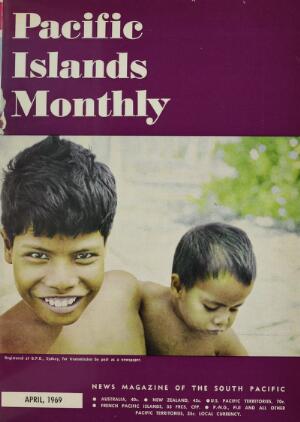
These two young charmers are Gilbertese, photographed by Sheree Lawrence Lipton on Fanning Island, in the Gilbert and Ellice Islands Colony.
Pacific these days is an extraordinary illustration of the number of dif ferent ways you can go to heaven.
The Western Samoans, the first to go-it-alone, still follow a Matai system, are not members of the Com monwealth, yet use the Common wealth. Nauru is a republic, with a president, yet is a member of the Commonwealth.
Tonga, virtually independent since the year dot anyway, now wants to join the Commonwealth, and mean while operates a system with a king and feudal serfs, which nobody much complains about.
The Cook Islands have independ ence enough for their wants—they could have more but didn’t want it —while still able to retain New Zea land citizenship. Yet they have up graded the powers of the Arikis.
Meanwhile the British Solomons are beginning to experiment with something unusual, and Papua-New Guinea and Fiji are carefully testing the heat of the bathwater.
Micronesia is beginning to see more clearly that somewhere it fits into all this—that it is not a scattered group of outcasts. The South Pacific is home.
More and more, those islands now called the US Trust Territory must come into closer association with the islands to the south. Already there are closer connections with Nauru, and both the Micronesians and Nauruans see still closer ties. The visit of President Deßoburt to Micronesia recently was received far more enthusiastically by the Micro nesians than by the American admin istration, but it is Micronesian de sires, not American desires, that count in the long run.
As Carl Heine says, there is a revolution of rising Pacific expecta tions—and the revolt is coming from within.
Stuart Inder
Monthly
Pacific Islands
Established 1930: 39th Year of Publication.
Owned And Published By
Pacific Publications (Aust.) Pty. Ltd.,
29 Alberta St., Sydney, N.S.W., 2000.
Postal Address: G.P.O. BOX 3408, SYDNEY,
N.S.W., 2001.
Telegraphic Address: PACPUB, Sydney.
Telephones: 61-9197, 61-7101, 61-4369.
Chief Executives: Managing Director: R. W, Robson.
Executive Director/Publisher: Judy Tudor.
Executive Director/Business Manager: Selwyn Hughes.
Executive Director/Chief Editor: Stuart Inder.
Pacific Islands Monthly
Editor; Stuart Inder.
Advertising Manager: W. A. Gasnier.
Branch Offices
Melbourne: Newspaper House, 247 Collins St., Victoria, 3000. Tel.: 63-7053.
Fiji: Pacific Publications (Fiji) Ltd., Fiji Times Building, 20 Gordon Street, Suva. Tel.: 25601.
Fiji Times Office, Vidilo Street, LAUTOKA.
Tel.: 60-422.
Papua-New Guinea: Pacific Publications (N.G.) Pty. Ltd. Representatives: PORT MORESBY, P.O.
Box 16; LAE, P.O. Box 227; RABAUL, Mr.
Steve Simpson, P.O. Box 154 (Tel.: 2547).
Representatives
Queensland: Advertising—Beale Media Services, 45 Wickham Terrace, Brisbane. Tel.: 2-3188.
New Zealand: General.—J. D. Whitcombe, C.P.O.
Box 2229, Queen Street, Auckland. Tel.; 76056.
Advertising.—John Bayldon, P.O. Box 366, Auckland. Tel.: 31569.
United States: Mrs. A. L. Craib, 782 Neilson St., Berkeley, California, 94707. Tel.: 5273503.
United Kingdom: S. R. Warman, Park House, 22 Park Street, Croydon, CR9 3NP. Tel.t 01-6884177.
H. A. Mackenzie, 4A Bloomsbury Square, London, W.C.I. Tel.; Holborn 3779.
Agents
All main trading firms and stores in the Pacific Islands.
Pacific Publications Pty. Ltd. is the Australian agent for THE FIJI TIMES.
Subscription Rates;
"Pacific Islands Monthly" is air-freighted to all subscribers and agents in the South Pacific; copies to other areas go by surface mail.
Australia (incl. Lord Howe Is., and Thursday Is.): $4.50 Aust.; Papua-New Guinea, Norfolk Is., Nauru, 8.5.1., G. & E. Group, Tonga and New Hebrides; $4.00 Aust.; New Zealand: $5.25 NZ; Cook Is., Niue and Western Samoa: $4.00 (local currency); Fiji $4.00 (local currency); American Samoa and U.S. Pacific Territories: $B.OO (local currency); French Pacific Territories—New Caledonia, Tahiti, etc.: 660 French Pacific francs; United States of America: $9.00 U.S.; United Kingdom and elsewhere: £2/15/- Stg.
Airmail postage to USA, UK and elsewhere is additional.
Copyright (c), 1969, Pacific Publications (Aust.) Pty. Ltd.
Advertisements & other items, p. 25 (1 item)
23
PACIFIC ISLANDS M O N T H L Y A P R I L , 1969
Good, Tahitian
More reports on how Pacific sportsmen are faring
N. Hebrides Athletes Look
Basketballers Still Top
Like other less affluent territories, the New Hebrides have had to give the budget the controlling vote in selecting their team for the South Pacific Games. Quality has to be the first consideration in a team of only 39 men (including 15 footballers) and seven women.
It is possible that the final size of the team which goes to Port Moresby may be smaller stiff. It depends on a policy decision to be made by the New Hebrides SPG Committee.
Question: should entries be based solely on the achievement of stan dards, or should potential ability— with an eye on the Fourth Games — be the guiding factor? This one has yet to be answered.
Meanwhile there is no doubt that the New Hebrides will be producing some strong competitors. Of the ath letes under consideration seven have already this year bettered the stan dards set by the Papua-New Guinea AAA in their events.
Who gets left out?
Chief coach Alan Bell says that he has a problem in deciding which athlete to leave out of the men’s 100 metres—four have bettered the P-NG AAA standard—and that the New Hebrides’ strength lies in the men’s and women’s sprint events, where he anticipates a good showing.
But he’s hopeful that some younger athletes in other events will be able to reach the finals. However, like all good coaches, Bell is not saying everything and the chances are that he has something up his sleeve.
Football is another event in which the New Hebrides expect to do well.
Veteran team manager Remy Dela veuve is confident that his team will be considerably stronger than the one which went to Noumea and that ‘goal keeping nerves’, which were a major factor in the New Hebrides’ defeats there, have been truly overcome. He hopes to arrange a visit to Vila by a Noumean team in May to give the New Hebrides some match practise.
A four-man boxing team has been entered, but boxing is a new sport in
the New Hebrides. Three inter-island matches in the last six months have produced several boxers with real po tential, but whether their standards are yet up to the Games will only be discovered in August.
The other events for which the New Hebrides are entered are golf, tennis and judo. Unfortunately the territory’s strongest golfer (Senior Geologist Dr, Don Maffick) will not have achieved the three-year minimum residence requirement, and two of the other logical selections will not be available; British District Agent Dick Hutchinson will be on leave and Alan Bell, who will be accom panying the athletics team, will be defeated by the great distance between the Lae golf course and the Games venue at Port Moresby. Even so, both the Vila and the Santo golf clubs are strong and intend that the team they finally select will put up a good showing.
A team of four has been entered for the tennis and the general feel ing is that the New Hebrides will stand their best chances in the mixed doubles.
Judo entries are expected to be of a high standard. In the New Hebrides the sport is based solely upon Santo but strength is lent to the club there by Japanese fishing interests at nearby Palekula.
Four members of the Santo Judo Club have been examined for, and have passed, their Black Belt stan dard in Japan! • Sukarnapura, capital of West Irian, which in Dutch times was called Hollandia, and which was re named by Indonesia, has had another name change. Indonesia announced in March that it would now be known as Djayapura.
New Caledonians
Put Pressure On
New Caledonian sporting en
thusiasts are busily arranging
encounters with neighbouring islands in their preparation for the Third South Pacific Games in
Port Moresby in August.
The Tahitian men’s basketball team (1966 gold medal winners) visited the territory at the end of February and proved that their superiority continues. They won their first two matches 56-44 and 53-47, with the final struggle ending in a 45-45 draw.
In basket and volleyball the women are considered weak. However, both men’s and women’s volley ball teams are flying to Sydney in May for matches with Australian, and pos sibly New Zealand, teams.
The Caledonian selections have a high proportion of Wallis Islanders, the men being mainly from Noumea and Paita parish seminaries.
The third indoor sport, boxing, claims to be suffering from what it regards as impossibly high fees charged by Noumea’s indoor stadium —Salle Omnisports—built especially for the 1966 Games.
Boxers will nevertheless be entered in all 10 categories at Port Moresby.
In the meantime, six or seven boxers go to Papeete on April 14 for matches with their Tahitian counterparts. On the way, the Association president,
Mr. Georges Viale, will visit New Zealand to discuss possible en counters there, following the visit of Australian and New Zealand boxers to New Caledonia last year.
In mid-June, the boxers expect a trainer from France, Mr. Raymond Savignac, who will accompany them to Port Moresby.
In soccer, the Caledonians have had several recent inter-club matches out of the territory. In New Zea land, the Vallee du Tir club drew two matches 2-2 with Ponsonby and Mt. Wellington players, in February.
During March, in Noumea, the Nickel Company team scored 2-2 then 2-1 against a visiting Santo (New Hebrides) team. Then in the New Hebrides, the Impassibles de feated two Vila teams 3-2 and 8-1.
The Caledonians hope a French trainer will arrive in July.
Meanwhile, they are planning matches in Australia in May, against Hakoah and the NSW selection in Sydney, as well as the Victorian selection in Melbourne.
Finally, in swimming, which has been proving the most spectacular Caledonian sport, the Caledonians won only two titles during their re cent visit to the New Zealand cham pionships.
While none of the boys qualified for the finals, Marie-Josie Kersaudy won the 440 yards freestyle in 4 min. 49.6 secs, and the 880 yards in 9 min. 59.9 sec.
Marie Josie’s promising young compatriot, Dolores Anewy, {PIM, Feb., p. 28) came fourth in the Auckland event in 5 min. 0.6 sec.
Back home in Noumea, Marie- Josie, who recently turned 15, has just broken the French record for 1,500 meters, clocking 18 min. 44.6 sec.
Tahitian vaulter's leap
The French Polynesian pole vaulter Stanley Drollet vaulted to a height sf 15 ft 1 in. (4m60) during a draining session in France in late February. A similar performance at ;he Third South Pacific Games in Port Moresby in August will almost :ertainly win him a gold medal.
The South Pacific Games record or the pole vault is 13 ft 7i in. ;stablished in Noumea in December, 1966, by B. Ballastre, of French 3 olynesia, who coached Drollet in lis early days. Drollet won a silver nedal in Noumea with a vault of 13 ft 5 i in.
Drollet regularly jumps 13 ft 6 in. )r thereabouts in training sessions n Papeete.
Fiji athletes
warned: don't be too optimistic
With April s—the day of the
Fiji National Championships—
fixed as the final opportunity for Fiji’s athletes to prove them selves worthy of selection for the South Pacific Games, the preced ing weeks have seen some pretty intense competition at Buckhurst Park.
Early in March, the Fiji Amateur Athletics Association issued a list of objectives for potential Games par ticipants.
It said that in selecting a team, the association would choose athletes who had shown, by consistent per formance, ability to win at least a bronze medal at Port Moresby. The only exception would be in the case of young athletes showing exceptional promise.
Anticipating a sharp rise in levels of performances at the Games, the FAAA has raised its requirements above those set for the Noumea Games in 1966.
Usaia Sotutu, Fiji’s most-publicised athlete this season, continued to set new records during track and field events leading up to the National Championships. By mid-March he held all the Fiji national records, from the 800 to the 10,000 metres.
He had also returned a record breaking 9 mins 31 secs for the 3,000 metre steeplechase, slicing 20 seconds from his previous national record.
At the Noumea Games, Sotutu won the steeplechase with a time of 9 mins 59.2 secs.
Performances lower
While Sotutu’s continuing success this season has built up much opti mism regarding his chances at Port Moresby, a cautionary note came from athletics coach, Mike Joyce.
In a letter to the Fiji Times, which has given the athlete a great deal of publicity, Mr. Joyce said he wanted to sound a “note of warning”.
“I’d like to point out that Sotutu is certain not to have things all his own way in Port Moresby,” he said.
“Sotutu deserves credit for three years of steady build up since the 1966 Games. But he is not a super man and he is the first to admit that he has a long way to go before he can reach international standard.”
Mr. Joyce said Fiji’s athletes had
set high standards for field events and sprints may years ago and it was only recently that the very poor middle and long distance standards had risen to a respectable level.
Generally, Fiji’s athletics perform ances were lower now than at a similar period before the Second South Pacific Games.
“In the men’s middle and long distance events we can be no more than cautiously optimistic at this stage,” said Mr. Joyce.
He added that nearly all Fiji’s athletes would have to train a lot harder if they were even to maintain the position achieved in track and field events at Noumea.
It was generally agreed among athletics observers that while the effects of Mr. Joyce’s letter was slightly dampening, its message was timely.
Fiji Rugby
The question of whether Fiji should send a Rugby team to the South Pacific Games was still un decided in March. At the annual meeting of the Fiji Rugby Union on March 21, Mr. Graham Eden was said to have suggested that Fiji would gain nothing in experience and little in “kudos” by playing at the Games.
It would be a costly business to send a team to Port Moresby—and judging by the standard of Rugby played at the Noumea Games, it seemed that even the Suva junior rep. team would not have much difficulty
Mike Joyce
in beating teams from other terri tories, FRU secretary, Mr. Derek Robin son, argued that Fiji had a moral obligation if nothing else to play at the Games, and the president, Sir Maurice Scott, said since Fiji liked to call itself a leader in the South Pacific, it should show this in sport.
Mr. Eden’s suggestion was put to the vote and it was decided that the executive should look further into the question before committing Fiji to Games Rugby, Sir Maurice Scott warned that if the Fiji team was to do well against Wales in June, it would have to be in the finest and fittest condition.
“Otherwise the Welsh will take the pants off us,” he said.
After having played magnificently for the first 10 minutes against the All Blacks last year, it had soon become obvious that the Fiji team was not wholly fit, he added.
Sir Maurice described Fiji’s visit to England next year as the “tour of tours” as far as the Fiji Rugby Union was concerned.
He revealed that from May 10 to 25 the New Zealand Rugby coach, Mr. Ken Cunningham, would be in Fiji to coach in various parts of Viti Levu.
The FRU executive has decided that all players who represented the President’s XV against the New Zea land All Blacks would be recognised as Fiji reps. This would also apply to all who were stand-by reserves for Fiji matches since the commence ment of the international substitution rule. It would include the test re serves against Tonga.
The New Zealand Colts XV team has been invited to tour Fiji in 1971 and Australia has agreed to play Fiji on the way home from New Zealand in 1972.
At the annual meeting. Sir Maurice Scott, who has been president of the FRU for the past 22 years, was re elected. He was also made a life member for his services to Fiji Rugby.
Advertisements & other items, p. 27 (1 item)
25
* A C I F I C ISLANDS MONTHLY APRIL, 1969
Planners Get On With It
And In New Guinea, Games
From DON BARRETT, in Rabaul Organisers of the Third South Pacific Games in Port Moresby are determined the event will be remembered as more than just a coming together of athletes from the Islands. Old and new art of Papua and New Guinea will be on display.
All the territory’s 142 local govern ment councils have been invited to contribute genuine old artifacts for a display to be directed by famous Aus tralian artist William Dargie.
But it will be a display with a difference. It’s not designed to rival what the territory’s museum offers.
It is a display to interest visitors and prompt them to visit areas from which the artifacts come.
Young educated men and women will be on hand to explain exhibits.
Object—to give information and stimulate interest among younger people in old cultures which are fast disappearing in many places.
Ambitious scheme
Most ambitious scheme is to erect models of famed structures such as a Sepik haus tamber an and a Tro briand yam house.
Nightly, at a floodlit arena on Fla Beach, while the Games are on (ex cept for opening and closing days), groups will perform traditional dances, choirs will sing and tableaux will be staged.
To further interest villagers—and stimulate the younger to follow old cultures —a territory-wide contest for carving, weaving, pottery-making, etc., is being arranged.
Local government councils will select best entries and these will go to Moresby and be shown with the artifacts.
Competition conditions are all work must have been done in the past two years. The scope is wide, the prizes generous, with a special prize in each of the six sections for artists under 25.
Traditionally at the Games visiting team general managers are presented with an object representative of the art of the host territory.
To add flavour to this each of NG’s 18 districts will supply one
gift. The Duke and Duchess of Kent will be asked to each accept a gift.
The presentations at the Games opening will be made by a young girl representing the gift’s district.
Her name, village and district, and the story of the gift will be broad cast in English, French, Pidgin and Police Motu.
School children are not forgotten.
A special essay competition for all children in upper primary and high schools is under way, jointly spon sored by the organising committee and NG’s Department of Education.
The subject—“ What the Third South Pacific Games means to NG”.
As well the General Cariappa art contest, a feature of schooling since the former Indian High Commis sioner to Australia presented a com petition shield, will have its final entries judged in Moresby.
It’s almost certain that these will be included in the display.
Finally to give a true South Pacific flavour, other territories are being in vited to contribute display material of their own.
The acting Secretary-General of the South Pacific Commission has already indicated a commission exhibit, mainly pictorial and showing SPC activities, will be along.
Something truly Papuan is being arranged by the Motuan people—a canoe regatta, sailed on Fairfax and Moresby Harbours. The organisers hope to attract scores of canoes, per haps as far away as Daru, near the West Irian border. This will be on Sunday, when there is no sport.
Another event for Games Sunday is an outdoor combined church service with all churches taking part. In the main arena, the organisers are confident of a gathering of 5,000 or more to this.
Sport will be King at Games time, but hosts are confident there will be few idle, and no boring, hours for competitors or spectators.
of NG's political movements
Cracks appear in the fabric of NG's political movements
At the fourth meeting in Port Moresby of Papua-New Guinea’s second House of Assembly, which occupied two weeks of March, the Independent Group (the “party without a pro gramme”) continued to play it by ear with a considerable measure of success, but not without some signs of occasional distortion in its hearing aid.
The first notable split in its so far well-maintained solidarity was on a motion by Eastern Highlands’ ebullient Dennis Buchanan, calling on the Administration to budget for increased grants-in-aid to missions in respect of their school teachers’ salaries.
The motion was opposed on the ground that it sought to anticipate the findings of an expert committee which has only just embarked on a far-reaching inquiry into territory education, and supported on the ground that some interim relief was urgently needed to ensure that the mission school system, which pro vided half the territory’s educational effort, does not collapse altogether.
The motion went to a division and was lost 35-44.
The group was split right down the middle on this issue, as was, rather humorously, the two-man All People’s Group, whose founder, Jim McKinnon, voted against his solitary henchman’s motion.
Apart from this incident, there have been rumours of meetings be hind closed doors of indigenous members dissatisfied with the too jxclusively European leadership of he group. Time will show how real he cracks are, and how much truth here is in the rumours.
In the meantime, the group has :ertainly had quite a lot of its own vay. Early in the meeting it surpri singly supported the Government o pass the Evidence by Affidavit Sill, described by the South Pacific °ost as “trial by correspondence”.
Surprisingly, because leading group icmber Wally Lussick later revealed hat independent legal opinion which ; had sought had advised against upport of the bill, and rather uaintly claimed that its support for le Government against this advice emonstrated its sense of responsi ility. Responsibility to whom, one 'onders.
Anyway, with its support the Gov mment had no difficulty in defeat ig repeated efforts by Pangu Pati nd some independent members to
secure limitation of the bill’s pro visions to civil proceedings and to courts presided over by judges and full-time magistrates. Even Percy Chatterton’s rearguard action failed to limit its applicability to criminal cases in which the accused was re presented by counsel.
A few days later, the Government meekly accepted Mr. Lussick’s amendments to its vital Public Service Conciliation and Arbitration Bill; cynics were not slow to infer that the group’s attitude on the earlier bill might have been a quid pro quo.
This Conciliation and Arbitration Bill was the climax of a long series of events which began on September 10, 1964, when the Minister for External Territories shattered New Guinea’s calm by promulgating austerity salary scales for indigenous public servants.
And since one of the effects of the new bill is to repeal Mr. Lussick’s
own bill, forced through the House against Government opposition last November and still awaiting the Governor-General’s pleasure, it was only fair that Mr. Lussick’s proposals for its amendment should be treated with respect. Moreover, they were well-thought-out amendments which deserved respect.
They provide for a tribunal of three members, with additional as sistant members who will participate in the tribunal’s deliberations but not in its decisions. This arrangement will provide an admirable training ground for Papuans and New Guineans in the working of the arbitration system.
Mr. Lussick is to be congratulated on his amendments, but not, it seems, on his attitude to those of his fellow members who also had ideas about how the bill might be im proved. He appeared to resent any one but himself having any part in the matter at all, which was rather unreasonable, and there was some muttering on this.
Anyway the bill went through, and as soon as it receives vice-regal as sent and the tribunal is set up we may expect the Public Service As sociation to embark on a brand new local officers’ case.
A great deal of time was consumed at this meeting by two elected members’ motions designed to put the UN in its place. The first, from the irrepressible Wally Lussick, con fined itself to resenting the UN’s call for free elections as an entirely un warranted aspersion on the freedom of the elections which seated the present elected members in the House.
This sentiment found unqualified
Michael Somare
Debate on the UN
support, and, after a few side swipes at the UN-sponsored “act of free choice” in West Irian, was un animously adopted.
The second motion, proposed by Mr. Ebia Olewale (South Fly) sought to tell the UN to mind its own busi ness much more forcibly and on a much wider front, A long drawn out debate on this motion showed far less unanimity than there had been on the earlier one, and revealed a rift between those members in favour of target dates and those against them. However, the motion was finally carried on the voices, with a lone “No” from Bougainville’s Paul Lapun.
Early in the meeting the House debated a report tabled last Nov ember on a proposal for an ombuds man for Papua-New Guinea. Back in 1967 the first House had asked for a commission of inquiry into the idea. This request had been rejected in favour of a “departmental” in quiry.
The report turned out to be a pretty sketchy and slovenly affair, and Percy Chatterton (Moresby), who originally proposed the inquiry, had no difficulty in showing up both its inadequacy and its partiality.
However, the House “took note of the paper”, after Law Secretary Wally Watkins had made it clear that both the Administration and the Commonwealth Government have closed minds on the subject of ombudsmen and Pangu Pati had un successfully attempted to secure a further and more thorough inquiry.
For some years now there has been a cleavage of opinion between the people of Papua’s Fly River and those of New Guinea’s Sepik River on the need for protecting the cro codile skin industry. The former want it protected; the latter are prepared to take the risk of their crocodiles being shot out. The Crocodile Pro tection Ordinance was passed in 1966, but was only brought into force a few months ago.
And at this meeting Mr. P. G.
Johnson, member for Angoram, was successful in amending it to make it applicable only to Papua and not to New Guinea —probably the oddest piece of legislation ever put through the territory’s parliament. The wags are now predicting a wholesale migration on crocs from the un protected Sepik to the protected Fly.
Amid all these alarums and excursions, Treasurer Newman’s “little budget” passed through all stages with hardly any debate at all.
It revealed an expected short-fall of
income of about $2 million due mainly to less having been invested in territory loans than had been anticipated.
The highlight of the final day of the meeting was Pangu Pati’s spectacular walk out, the first such demonstration since the three elected members walked out of the old Legislative Council in 1959 in protest against the manner in which income tax was introduced. Pangu Pati’s walk out was occasioned by the cavalier treatment accorded to its Local Government (Administra tion) Bill, moved by Mr. Mangobing Kakun, member for Munya Open.
This bill sought to free local govern ment councils from the paternal con trol of the Department of District Administration, and it might have been expected that it would spark off a lively debate among indigenous members, many of whom are or have been extensively involved in local government.
However, after one indigenous member, the mover of the bill, had spoken for it, and two European members had spoken against it, the gag was applied and the bill was un ceremoniously thrown out. Where upon Pangu Pati’s parliamentary leader, Mr. Michael Somare, lead his seven colleagues out of the chamber.
It is to be hoped that this storm in our teacup will serve to remind the House’s big battalions that it is of the essence of parliamentary democracy that minority views should be given a fair hearing.
The Sepik crocodiles may not need protecting, but Sepik’s Michael Somare and his friends apparently do.
Wally Lussick.
For Nauru
Air Agreement
Nauru and Australia in March signed an air agreement which gives both countries the right to each run a weekly air service between Nauru and Brisbane.
The agreement removes the biggest hurdle for the establish ment on Nauru of a football pool, as the pool could not operate without regular direct air services.
Nauru plans to lease a con tract for the service to Central Pacific Airlines an associate company of Pacific Sporting Pools. Central Pacific Airlines is chartering two DC6 aircraft from a Swiss firm and expects to begin the service in late April or early May. Qantas has no immediate plans to operate a similar frequency. The DC6’s may make a refuelling stop in Honiara or New Guinea, but this had not been decided in March.
Advertisements & other items, p. 29 (1 item)
27
ACIFIC ISLANDS M O N T H L Y A P R I L , 1969
croc hatcheries
A plea for croc hatcheries in New Guinea
As long as there have been men on the vast Fly and Sepik River systems of Papua-New Guinea, there have also been crocodiles. Until recently, no one thought the supply of the reptiles would ever run out but due to civilised man and woman and their desire for genuine croco dile shoes, bags and other articles, this appears likely to happen.
In the last decade crocodile shoot ing in the big rivers of P-NG has become a major industry, with native and non-native shooters en gaged in the work. The export of crocodile skins is the biggest industry of the Sepik District of New Guinea and the Western District of Papua.
In the last couple of months, since January, the Sepik people have been smarting under the effects of a Crocodile Protection Ordinance which, in the House of Assembly in March, was amended so that it does not now affect the Sepik. Here, Martin Kerr reports the controversy from the Sepik’s point of view.
The introduction of crocodile trade regulations in Papua and New Guinea in January was received with mixed feelings on the Sepik River.
While the need for some form of control to stop the wholesale slaughter of crocodiles has been recognised for the last five years, the manner in which the legislation was formulated left much to be desired.
Its major provision is that protec tion is to be given not only to baby crocodiles but also to all others over 20 belly inches.
In 1967, Dr. Robert Bustard, a Queen Elizabeth Fellow research ing in Canberra, visited the Sepik and Western Districts of P-NG where he interviewed shooters and crocodile skin-traders.
His opinion was that the solution to the dwindling crocodile popula tion was to set up hatcheries in the villages, under the guidance of the P-NG Department of Agriculture, Stock and Fisheries. It was planned that the eggs be collected from the breeding areas and placed in wire pens to protect them and later, the baby crocodiles, from the ravages of man, pig and cassowary.
Native shooters mostly agreed that hatcheries seemed a good idea, es pecially as the crocodiles would be released after a year and left to fend for themselves.
Hatcheries are quite feasible and
highly practical. As a bonus to con servation, both natives and agricul tural authorities would also get to know more of the habits of croco diles. Under the new regulations, the restrictions and licensing laws were difficult and expensive to police, cost money to the European and native entrepreneur, and did little to conserve the crocodile popu lation. Licences have been introduced and these cost $5 for a hunter’s licence and from $2O-$ 100 for a skin-buyer’s licence.
Mr. Mathius Piau, who was in terviewed recently at Ambunti, says that he is astounded that Dr. Bus tard’s ideas have not been enforced.
Through an interpreter, Mr. Piau and Dr. Bustard spent hours at May River in 1967, discussing hatcheries and the reproduction be haviour of female crocodiles.
Major fears on the Sepik were that expert hunters would increase their ncomes while native amateur >hooters, who have been relying on i couple of skins a year to get mough cash to purchase necessary
commodities such as soap, razor blades, kerosene, and the minimum of clothing, would have to give up shooting altogether.
Most experienced shooters can not understand the prohibition on taking crocodiles over 20 belly inches. What were they expected to do with a crocodile over this size that had taken a baited hood and was already dead? Should it be left to rot?
There is also a considerable amount of controversy over the time female crocodiles begin to breed— a subject on which there appears to have been no real study. Many Sepik people are of the opinion that if a female can start to carry eggs it is no more than 16 belly inches; and that by the time it has reached 30 belly inches in size its breeding life is over.
Instead of arming shooters with a licence and tape measure, surely it would have been better to experi ment with hatcheries, where identi fied and tagged crocodiles could be studied in their later movements.
Sepik workers
examine a crocodile skin in Las Kompani's skin store at Am bunti. From January any belly over 20 in., like the one above, couldn't be handled by shooters or skin
buyers.
Photo: Martin Kerr.
Entry Proposals
Fiji Talks To New
Zealand On New
Fiji’s links with New Zealand were emphasised time and time
again by Fiji’s Chief Minister,
Ratu Sir Kamisese Mara, during a week-long official visit he made to New Zealand in March.
There was no doubt about the Fiji leader’s feeling towards his country’s bigger southern neighbour. And it left some people wondering whether the Chief Minister would be able to find much to say when he too makes a similar visit to Fiji’s even bigger neighbour, Australia.
Opening the Easter Show in Auck land on March 22, Ratu Sir Kamisese said New Zealand had shown its friendship in many practical ways.
“There is practically no section of life in Fiji where New Zealanders are not to be found making their im pact and contribution—administration, agriculture, banking, business, the professions and more recently the new University of the South Pacific, where your magnificent gift of build ings, formerly used by the Royal New Zealand Air Force, has given the university a head start in its establishment,” he said.
NZ entry proposal
Earlier during his visit, Ratu Sir Kamisese had discussions with the Minister of Immigration, Mr. Thomas Shand, on the possibility of Fiji people going to New Zealand to work in government departments and local businesses. This would have the effect of broadening their experience in the quickest possible time.
The Chief Minister said his pro posals had received a favourable re ception from Mr. Shand.
At a news conference in Welling ton, the Chief Minister expressed dis appointment that New Zealand had not fared as well as Australia in trad ing relations with Fiji.
“This is not the fault of the gov ernment, but the fault of New Zealand private enterprise, which is up against stiff Australian com petition,” he said. “I would like to see Australia and New Zealand en couraging a regional association of Pacific Island territories.
“There is a willingness on the part of the metropolitan powers to divide
territories which are very close, yet these territories have a closer asso ciation with each other than with the metropolitan powers.”
There was a certain scope for regional co-operation within the South Pacific Commission, but it would be difficult to reform and re vitalise. He said one forum was needed in the commission where both the metropolitan powers and the Islands territories could speak as equals.
On the matter of Fiji’s exports to New Zealand, Ratu Sir Kamisese urged the New Zealand Prime Minister to encourage two items in particular passionfruit and ready made clothing such as shirts.
By coincidence, the Chief Minister’s comments on trading be tween Fiji, Australia and New Zealand came close to those of Mr.
W. R. Day, leader of a New Zealand trade mission which visited Fiji during the week the Fiji leader was away.
Commenting on trade relations be tween New Zealand and Australia, Mr. Day—a director of the biggest engineering group in New Zealand, Cable Price Downer —said that re cently Australia had allowed entry of a lot of New Zealand goods for merly barred by tariff restrictions.
“They want to increase reciprocal trade between the two countries,” he said. “If you extend that principle, there is no reason at all why Aus tralia, which has the greatest share of the Island trade, should object to New Zealand sharing the Island market.”
New Caledonia
has a census
The French Administration conducted a census of New Caledonia in March. At the last such survey in May, 1963, the population numbered 86,519.
While official results of the present census will be processed in Paris and not available locally for some time, latest estimates number the present population around 100,000.
Of these, about 50,000 are believed to live in Noumea.
Almost half of the population are Melanesians, with Europeans accounting for almost 40 per cent., followed by smaller groups of Polynesians from the Wallis islands and Tahiti.
Non-French inhabitants include Indonesians (4,000) and Vietna mese (over 1,000).
'the liberation of Fiji'
Now India wants to help in 'the liberation of Fiji'
India is doing everything possible to “assist in the libera tion of Fiji”, according to Mr. Dinesh Singh, Indian Minister for External Affairs. At the same time, it appears that the Indian Government is not prepared to buy into any large scale debate on Fiji’s future.
Mr. Singh’s statement about libera tion, which will be greeted with less than enthusiasm in most quarters in Fiji, was made during a debate in the Indian Parliament. It was repeated as part of a news statement released by the Information Service of India, Canberra, on March 12.
The news release, compressed into six paragraphs, probably took what Mr. Singh had to say out of context and was obviously designed for Afro-Asian bloc consumption and not for Fiji. India’s right to “liberate”
Fiji is nil; Mr. Singh acknowledged that fact in the last two paragraphs of the Canberra release: “In reply to a question, Mr. Singh said that it would be an extremely dangerous theory to propagate that India should take responsibility for welfare of people of Indian descent who had settled in various countries and were nationals not of India but of those countries.
“He said that when people of this category were ousted from their land of adoption, India did what it could, for humanitarian considerations, to assist them. Apart from that it was not India’s responsibility to look after such people. Indeed, if India did so, it would be tantamount to inter ference in the internal affairs of those countries.”
Independence delayed
Mr. Singh’s unhappy choice of the word “liberation” came about through an answer to an Indian MP.
Mr. Rameshwar Singh, who asked what his government was doing to speed up Fiji’s independence. He accused the government of abetting the British Government in delaying independence in Fiji.
The Foreign Minister rejected the accusation.
Two other members, Mr. Ravirai and Mr. Dharan, urged the Indian Government to exert pressure which would ensure that the United Nations obtained independence for Fiji.
Mr. Dharan claimed that British policy was to maintain its grip on its colony by getting its people to fight among themselves.
The Foreign Minister explained to India’s parliament that certain talks were in progress among leaders of Fiji on how that country’s colonial status should be ended and matters connected therewith. That was why when the question of Fiji’s indepen dence came up at United Nations some time back, India and other countries favoured postponement of discussions till leaders had come to some understanding as a result of their talks, he said.
In Mr. Singh’s opinion there could be no question that any section of Fiji’s people wanted continuance of colonial status. Difference of opinion, if any, could only be about how to achieve freedom.
He said that the Indian Govern ment had talks with the British Foreign Secretary, Mr. Michael Stewart, during his recent visit to India, on the issue of Fiji’s indepen dence and had made it clear to him that India was in favour of indepen dence.
Mr. Stewart had replied that his country appreciated India’s role in this matter and that it was hoped that the present talks among Fijian leaders would help evolve some way towards the desired end. If Fijian leaders failed to come to some agreed formula, the UK Government would have to consider further steps in the light of that development. 9 Mr. Rudy Bambridge, one of Tahiti’s best-known businessmen, has resigned his seat in the local Terri torial Assembly following his nom ination as economic and social adviser for French Polynesia to the French Government. Mr. Bambridge’s new job will take him frequently to Paris.
His seat in the Territorial Assembly has been filled by Mr. Tacky Teuira.
Tonga's new tobacco was almost a riot
Saia Kava, who lives on the Tonga island of Nomukaiki, in the Haapai Group, last year re ceived from Singapore some seeds of a new type of tobacco. They were mailed to him by an Ameri can visitor he had met in Tonga.
Tongans have grown and cured their own tobacco for more than a century and Saia was pleased when the seeds flourished in an ideal climate.
Last November Tonga’s Minister for Police, accompanied by the Director of the Peace Corps, travelled to Tonga’s northern islands on a hush hush mission which nobody suspected had anything to do with Saia Kava’s tobacco. But it did, and in February there were even more important developments following the return from his military graduation at Sandhurst of Crown Prince Tupotoa.
Tupotoa was told all about this new tobacco and discussed it with his father, King Taufa’ahau. As a result of this discussion the Crown Prince sent a clearly worded message to the village leaders of his royal estates on the island of Nomuka, Haapai, re questing them to search for, and destroy, all traces of the new tobacco plant.
Then on February 17, the land ing craft Kao set off with a combined force of 100 police and Army personnel, accompanied by the Prince. The party made a dawn landing on Nomukaiki, un covering four tobacco plants and nearly 100 seeds. Seed in large quantities was also found at Nomuka and Tekivavau, and some on the smaller atolls of Tonumea and Kelefesia.
They made no arrests, but questioning brought out the fact
that traffic in the tobacco had spread to the Vavau group in the north and the main island of Tongatapu in the south. And furthermore, that it was generally known locally what the Crown Prince, the police and the Police Corps chief knew—that is, that Tonga’s new tobacco was the drug marijuana.
To what extent the Tongans have used it, or traded in it, nobody seems to know. But the citizens of Tonga have now been warned that conviction for possession of the new tobacco in any form carries a penalty of 10 years’ gaol or a fine of $T2,000.
And in Nukualofa they are saying that the American tourist who introduced the new tobacco, and who, they say, expected to return to Haapai by yacht at a later date, is in trouble in one of the Scandinavian countries on another matter—and serve him right.
Nutshell
In A Nutshell
“No bona fide grower wants a r enewal of the present sugar cane contract. If he does, he is either a itooge of the millers, or mad”, said J Fiji National Federation Party ’pokesman, Mr. K. C. Ramrakha, in March when “PIM M asked for his 'omment on a crisis threatening Fiji’s ugar industry.
Mr. Ramrakha said that by refus ng to recognise the growers’ desire or a new contract (the present one rith the millers expires in March, 970) the party considered the sugar ompany “itself was on strike”.
Attention was focused on the ituation in March when the NFP ewspaper Pacific Review, quoted arty leader, Mr. A. D. Patel, as aving called for funds for “the rowers’ strike”. Was there to be nother strike in Fiji’s major in ustry?
Mr. Ramrakha said the Pacific eview had paraphrased Mr. Patel.
Growers’ struggle, or growers’ fight, ould have done just as well”, said lr. Ramrakha. “Basically a strike a negative action. Looked at this ay the growers can be said to be ready on strike—a ‘don’t sign newal’ strike”.
If satisfaction was not achieved, id Mr. Ramrakha, growers could •ut up their own mills, they could fuse to plant, they could refuse to it”. In any event, funds were eded at this stage.
Conzinc Riotinto of Australia Ltd.’s huge deposits of copper on Bougainville came two steps closer to exploitation when CRA announced in March a further big upgrading of the known deposits, and a $29 million share issue to partly finance the development.
Estimates of available ore for open pit mining jump from 500 million tons to 760 million tons, of an average grade of 0.47 per cent, copper and 0.4 dwt gold per ton.
CRA, which has a two-thirds stake m the deposits (New Broken Hill Cons. Ltd. has one-third), will make a one for 50 issue of its 50 cent shares at a $13.50 premium.
CRA’s decision to go ahead on Bougainville could be very close.
In late March trouble was loom ing over NG Administration attempts to resume a big area of plantation }^?. d „ at Arawa (including Territorian Kip McKillop’s long-established copra-cocoa plantation) for CRA to develop as a town for mine workers.
The Bougainville District Advisory
Council opposed resumption of the land on the grounds that it was valuable for local cocoa production.
Price offered for Mr. McKillop’s plantation was said to be about $500,000. * ♦ * Mr. Pierre Angeli, French Polynesia’s new Governor, arrived in Tahiti from France on March 11.
Less than a week before his arrival, his wife gave birth to a daughter. * * * The appeal to restore the Anglican Cathedral at Dogura in the Milne Bay District of Papua is to be extended to Australia because of a poor response in the territory.
Experts have estimated that $12,000 is needed to restore the 30year-old cathedral. Originally it was decided to exclude Australia from the appeal because the church hoped to raise most of the money from within the Territory, * * ♦ Fiji’s very hot weather over the Christmas and January-February period didn’t prevent the spread of the Hong Kong flu. People went down like ninepins and many office and factory staff found their ranks drastically depleted.
By early March the total for the year of notified cases was almost 7,000. Doctors predicted that the flu would continue to spread until the majority of people had contracted it and acquired a natural immunity.
Advertisements & other items, p. 33 (1 item)
31
ACIFIC ISLANDS MONTHLT-APRIL, 1969
Expectations'
There's A Revolution
Of 'Rising Pacific
By Carl Heine
The Micronesian Political Status Commission, which has been touring the South Pacific to gain firsthand experience of the range of political methods in the area and to discuss with Islands leaders common problems, is strictly a creation of the Congress of Micronesia.
The commission came into existence in 1967 when the US Congress was in the process of creat ing its own political commission to chart the future course of the Micro nesian islands.
The Administration played no significant part in the formation of the Political Status Commission, which is composed of six members representing the six districts of the US Trust Territory, headed by Senator Lazarus E. Salii, of the Palau district. Five of the members are senators and one is a representa tive.
The commission began its tour in Honolulu and has visited American Samoa, Western Samoa, Fiji, New Zealand and Australia. Before it returns it will also visit Papua-New Guinea, the Philippines and Okinawa.
So far members of the commission in their tour have been able to see the wide differences in political development, the relationships be tween Islanders and metropolitan powers, the attitudes of the people towards political change, and to learn something of their aspirations.
They saw contrasts American Samoa, well-off and contented, American oriented; Western Samoa, some financial difficulties but a very happy people confident in their future, a future that is theirs; Fiji, British Crown Colony, rich and well developed, with a greater degree of self-government.
The visiting commission did not expect to find a ready-made solution to the Micronesian situation in its travels. But in making this trip the commission has got a better under standing of South Pacific affairs, which may enable it to better assess the Micronesian situation.
Carl Heine, who wrote this report for "PIM", is a Micronesian, who has been travelling as a staff assistant with the Micronesian Political Status Commission during its Pacific tour.
The commission found there were things which Micronesia shared in common with the South Pacific Islands. They have the same aspira tions for greater freedom in the management of their internal affairs.
They have the same desire to improve their standard of living.
There seems to be a revolution of rising expectations among the people of the Pacific Islands. In fact, the whole Pacific basin is in a turmoil.
The people are looking for some kind of change, especially the younger, educated generation.
The younger generation is not satisfied with the way things are, and this sense of dissatisfaction is grow ing. The major powers are responsible for the existing conditions, for these islands have been controlled from without for a considerable time, and the major powers have not reflected the general aspirations and feelings of the people they govern.
The people demand change and dignity, and the five Pacific powers will have to cope with these problems and come up with some acceptable answers.
O US Government approval for a SUS 2 million-plus loan to finance construction of over 100 new rooms in American Samoa’s luxury Pago Pago Intercontinental Hotel was ex pected in early April. Intercontinental Hotels, a subsidiary of Pan American Airways, which manages the hotel for a fee, will contribute nearly SUS4OO,OOO, and the Bank of Hawaii, which has recently become associated with the Bank of American Samoa, will supply another part of the loan.
But U.S. Ties
Important To
Micronesia
During their two days in Fiji in March members of the touring Congress of Micronesia delegation had a few harsh words to say about what they called the US neglect of the Trust Territory.
Nonetheless, the delegation’s leader predicted that, in any future political arrangement, economic ties and a treaty of friendship with the United States would be an important in~ gredient.
The delegation’s leader is Senator Lazarus E. Salii.
“The United Nations Agreement with the US is that the US will develop the area economically, politically, socially and educationally until it is ready for self-government and independence,” said the Senator.
After 24 years under Trusteeship the area was not anywhere near be ing economically sufficient, he said.
He believed that $l3O million would be needed shortly to provide the basis for real economic development in the area.
In the field of education, however, he thought America had a good record in the Territory. Moreover, the creation of the Congress of Micro
Members of the Political Status Commis sion in Fiji. —Photo: Bal Ram.
nesia—chief legislative body of the Territory—had been a big step towards political maturity.
The Senator expressed concern over what he said was the unlimited power of the US to take over land for military bases in the area. This power should be limited, he thought, and the Congress should be given its rightful say in designating such areas if they became necessary.
For every piece of land used by the American military authorities, Micronesia should be duly com pensated.
Senator Salii said Micronesia seemed likely to become the next line of defence after the US authorities move out of Okinawa in 1972. The Micronesians suspected that more US bases would be built in the Territory.
Senator Salii advocated stronger ties between Micronesia and Fiji and said he thought the idea of a Federa tion of the Pacific Islands was a good one, because the islands would then present a unified, economic front.
The tour is in preparation for a plebescite scheduled for 1972, when the Territory’s people will choose what sort of political future Micronesia is to have.
Members of the delegation can be considered the advanced, political elite of the United States Trust Terri tory. Most of the members admit that what they think and what the ordinary villager thinks in the 2,000 scattered islands (total area 700 sq. miles) of the Trust Terri tory, are entirely different things.
The ordinary Micronesian is not only politically unaware but most of them wish for nothing better than to be left alone to live the life they are accustomed to.
It is, of course, the purpose of the Future Political Status Commission to change all that.
Replacement
for Norwood?
An announcement is expected to be made in April on the new High Commissioner for the US Trust Territory of Micronesia, to replace Mr. William R.
Norwood. The man voted as Most Likely to Succeed is Mr.
Edward Johnston, a leading Honolulu businessman, and a friend of President Nixon.
really necessary?
Mr. Norwood leaves Saipan, but was it really necessary?
Considerable discontent was ex pressed in the United States Trust Territory of Micronesia at the abrupt termination, in February, of the appointment of the High Com missioner, Mr. William R. Norwood, by the Nixon administration.
This almost automatic change of top executives in US dependent territories, when a President of a different political persuasion to his predecessor is installed in the White House, is a facet of US politics hard to understand by outsiders.
Administratorships and governor ships are, of course, in the US con text, political ones; there is no trained colonial service or bureaucracy very largely because the United States does not like the idea of dependent territories, in principle, although in practice she has made as much use of them as anyone else.
The United States political set-up is not anyone else’s business and Americans seem to find that it works well enough. Nonetheless, it is a great pity that Mr. Norwood, who did an excellent job in the short time he was in Micronesia, should not have been permitted to continue on until at least the end of the Terri tory’s financial year (June 30).
Instead he was forced to leave Saipan at short notice.
Tribute to Norwood
The people who are most likely to suffer from this lack of continuity in administration are the Micro nesians. Although the great majority of these still don’t think much further than the local village, the members of Micronesia’s elected Congress do.
An open letter to Mr. Norwood, sent to news media by the Clerk of the Senate of the Congress of Micro nesia, Mr. Victorio Uherbelau, ex pressed their feelings on the matter: “As a young citizen of Micronesia and a staunch supporter of your brief administration and the pro grammes you were never let to finish, I would like to express, in this open letter to you, how I feel about the unjustly abrupt termination of your tenure with us as our Chief Execu tive.
“I was one of the few Micronesian students present at a reception given in your honour at the East-West
Center cafeteria in Honolulu a few days after your appointment as new High Commissioner for the territory.
“Already you were familiar with the problems you were about to inherit in Micronesia from the previous administrations; your replies to questions posed by the students attested to this fact.
“One lasting impression I got was your emphasis that the success of your administration would largely depend upon the teamwork of loyal staff, and enough money and time to carry out your plans.
His achievements
“Well, it was during your admini stration that the annual appropriation for Micronesia was more than doubled, in comparison with that of the administration immediately pre ceding yours; it was more than five times above Mr. Nucker’s budget.
But of time you never had enough to complete your programmes; and as to teamwork of loyal staff, I am rather dubious.
“However, if there had been in stances of conflict of interests or even disagreements between you and your staff, they should be attributed to the fact that you did not come in with personnel of your choice. The appointment of your staff had been made by different agencies involved in the administration of these islands.
Consequently, they tended to repre sent these different group interests.
“Afterwards, everyone mingled for Hawaiian punch and cookies, I remember approaching you and ask ing this question: ‘Would you, as our High Commissioner, be accessible to Micronesians; would you readily join them in their informal gatherings, in their parties, in their fun?’ Your answer, of course, was a loud YES!
“Perhaps such a question was un called for at the time, but we, Micro nesians have been made extremely cautious and have learned never again to take things for granted from the hands of outsiders. Having gone through four successive administra tions, no one of which complements the other, we believe that not all that is given us is that glorious.
Especially, when we, the people con cerned, are not consulted, our leaders not allowed to have some say in the choosing of our administrator.
“It is not my intention to say what you already know nor is it my purpose to remind you of the wrong done you. But I for one think that the two-day notice of your termina tion is very unfair and unjustifiable, considering the confidence our leaders have placed on you and warmth you have shown us.”
Tropicalities
The churches in Papua-New Guinea found themselves on the receiving end of some hard-hitting words from an important visiting minister in March.
The Rev. Victor Hayward, who is associate general secretary of the World Council of Churches arrived in an atmosphere of mild interest, and departed five days later in a blaze of bold headlines.
He went for talks with officials of the Melanesian Council of Churches and other church leaders, his job being, he said, “to foster good rela tions between the WCC and other councils around the world.”
His broadside about church pater nalism and failure in mutual co operation came as a considerable shock to many people.
But it is a measure of the respect Mr. Hayward commanded and pos sibly also of the fair mindedness of territory churchmen that in fact little anger or resentment seems to have been caused.
Mr. Hayward began with a dire warning: unless the churches worked faster to prepare New Guineans for independence, the territory could be come “another Congo”.
Too paternal
At present the churches were “too paternal and protective in their atti tudes to the people”. Not that he is always against paternalism arid pro tectivism —indeed, these are “normal and proper in the early days of mis sion work.” But these “should already have given way to greater mutual recognition and greater political awareness, if the peoples of this great and exciting island are not to go through the agonies of a country like the Congo”.
Mr. Hayward admitted to being im pressed by what he had seen of the work done by the churches for the people of Papua-New Guinea. “But unfortunately I am convinced from the experience of the church in other parts of the world, particularly throughout Africa, that the period in which work can be continued at the present pace and in the present way will be far shorter than most people would like to imagine.”
The unkindest cut of all, however, was reserved for the ecumenical
Broadside Over
Church Role
movement on which territory church men tend to pride themselves—not without reason, either, for mostly they get on well together.
Not well enough, though, in the opinion of Mr. Hayward. “In spite of all their good works,” he said, “the churches here will prove woefully in adequate unless they think, train and serve together in ways which seem far removed from present realities.”
He reckoned that Papua-New Guinea “really needs the ecumenical movement.” He added: “Its present Christian council, the Melanesian Council of Churches, has to operate on a seventh of one man’s time and a minimal budget. In other words, the churches are not yet in business to gether, with the exception of the new United Church.
“Some of them cannot even pray together. And none of them, except possibly the Roman Catholic Church, seems to be looking ahead to the 21st century, now only 30 years away.”
Mr. Hayward was generally ac cepted in New Guinea as a shrewd and penetrating thinker, with long ex perience in the missionary situation —he served in China for 17 years and was general overseas secretary of the Baptist Church in London at the time of the Congo trouble.
In the Australian Parliament on March 4, Dr. M. G. Mackay (Liberal, NSW) drew attention to Mr. Hayward’s New Guinea visit during a debate on defence. He said that Mr. Hayward in New Guinea had been “trying to stir up greater nationalist activities among the churches, castigating his brethren for going too slowly in the direction of independence, and suggesting another Congo if they did not move faster.
The World Council of Churches is increasingly in the grip of those who believe that the overthrow of free enterprise society by revolutionary means is the Christian duty”.
Bulldozed a way
through history
One of the South Pacific’s best-known and most frequently visited monuments, the Duff memorial at Point Venus, Tahiti, was destroyed by a bulldozer in late February. The memorial was erected in 1956 to commemorate the arrival in Tahiti in 1797 of the first protestant missionaries in the 267-ton ship Duff.
Tahiti’s Protestant community was staggered and intensely indignant on hearing news of the monument’s destruction, but could not immed iately determine how the incident had occurred.
It was said on the one hand that only vandals could have been respon sible. On the other, it was suggested that a buldozer driver, working for the Tahiti Tourist Development Board on the beautification of the Point Venus area, had misunderstood his instructions.
It appears, however, that the Tourist Development Board had, in fact, intended to knock the monu ment down and re-erect it else where. But it had not told the owners of the monument, the Eglise Evangelique de Polynesie Francaise.
A news release issued by the Tourist Development Board recently says that on April 12 this year, exactly 200 years after Captain James Cook landed at Point Venus to observe the transit of the planet
The "Duff" memorial.
Venus, the celebrated site will be the scene of events commemorating Tahiti’s first three European visitors —Samuel Wallis (1767), Louis Antoine de Bougainville (1768) and Cook (1769).
The events will be the unveiling of a Monument to the Discoverers at the tip of Point Venus, the inauguration of a Museum to the Discoverers nearby, and the opening of a newly-created park.
A French and a British naval vessel will be anchored in Matavai Bay (near Point Venus) for the ceremonies.
“The Point Venus complex, which provides parking for 100 cars, was landscape-designed by Capitaine, of Tahiti’s Urban Development Office,” the Tourist Development Board’s newsletter says.
“Focal point of the park area is the Museum of Discovery, a build ing of native thatch erected by the Tourist Board, with exhibits collected and donated by Mr. Robert Putigny, a professional curator known for his wax museums in Burgundy, France.
“The museum will contain life like figures of Wallis, Bougainville and Cook, also a French sailor of the discovery era. Their Tahitian hosts will be represented by Queen Purea, who welcomed both Wallis and Cook, and Ereti, chief of the Maha e n a District, who made Bougainville welcome when he anchored at Hitiaa. . . .
“There will be a collection of antique Tahitian handicrafts, also replicas of various weapons and navigational instruments of 18th century vintage. A mural chart will outline the itineraries of the Euro pean explorers. Another, prepared by the Bishop Museum in Honolulu, will show the routes of the great Polynesian migrations.
“Near the museum will be a handicrafts centre where Tahitian artisans will make and sell traditional handicrafts.
“The Monument to the Discoverers is the winning entry of a competition between well-known artists and lesigners who were invited to submit, ft is the work of a resident architect, Mr. Michel Prevot, who was also associate architect to the firm of Wimberly, Whisenhand, Allison and Tong, designers of ; he new Hotel Taharaa Inter-Con inental.”
The news release says that two listoric monuments at Point Venus ire being moved “to be in harmony vith the overall plan”—to accom nodate the new monument, museum md park.
These are the stone and tablet :ommemorating Wallis’ discovery of
Tahiti in 1767 (erected two years ago) and “the Protestant Church’s monument to the arrival of the first missionaries in 1797,” i.e. Duff memorial.
The Duff missionaries were the first Protestant missionaries to leave England for any foreign country. It was through their efforts that Tahiti became a Christian island in 1815 and that Christianity spread from there to other islands of the South Seas over the next 50 or 60 years.
The Duff memorial consisted of stones brought from all the neighbour ing islands. Each island’s stone was set in position according to the island’s situation in relation to Tahiti and the date on which pastors from Tahiti took the Gospel there.
Before the monument was bull dozed down, virtually every tourist to Tahiti used to be taken to Point Venus to see it, together with a nearby monument commemorating Cook’s observation of the transit of Venus.
100 years—and
still uninterrupted
The demands and problems of newspaper production frequently in volve staff members in unbelievably frenetic activity. They did when Fiji’s national daily, The Fiji Times —“First newspaper published in the world each day”—adopted the web offset printing technique on March There was no room for South Seas lethargy during the precf ling weeks.
In the midst of normal production (which can be hectic enough), equipment was moved to make way for a $lOO,OOO web-offset printing installation, centred around a Goss Community press capable of print ing, assembling, trimming, folding, counting and delivering up more than 15,000 newspapers an hour.
Supplies of half-ton offset reels were brought in from Canada and New Zealand and stored in prepara tion for the change. Fixed headings and repeat advertisements were re made. Overseas experts laboured to initiate the local staff into new and confusing platemaking, photographic and typographical techniques. The one-woman art department found it self swamped with requests to retouch and redesign, with every job labelled urgent. Photographers found cameras, light-tables and processing sinks being commandeered from under their noses.
To varying degrees, everyone from the switchboard girl and the elderly Fijian gentleman who makes the tea, to the machine-room boys, the advertising and editorial staff and the directors themselves wilted under the pressure.
Finally the Big Day. Meant to be March 1. And the splendid new machine, which had purred quietly and efficiently through the test run, turned temperamental at the crucial moment.
In the wee small hours of Friday night, with many of the newspaper’s 160 bleary-eyed staff members gathered to watch and drink a toast, the monster went pffut. A tiny com
WATER-BORNE AGAIN. Fiji is delighted to have a flying-boat again, following the departure of the old RNZAF Sunderlands. Air Pacific Ltd. now has this Mallard amphibious aircraft which will be available for mercy missions to outlying islands.
In its first two weeks in Fiji in March the Mallard was used on two medical missions -one to Moce, the other to Ono-i-Lau.
ponent of the sophisticated electronic control system had broken down, cutting off power from the driving motor.
The fault was pinpointed and remedied the following afternoon — but in the meantime the workers, some of whom had been on the job non-stop for 24 hours, had to put together an emergency edition to be printed on the company’s 10year-old Cossar press.
The unavoidable delay in delivery aroused considerable concern among the local populace. After almost 100 years of uninterrupted publication, The Fiji Times has become an integral part of most people’s morning ritual. Their protests and inquiries jammed the switchboard.
Key personnel, almost on their last legs by now, worked throughout Sunday to get the offset show on the road. This time their efforts were rewarded and the new-look Fiji Times, which will reach its centenary in September, came rolling off the press.
The company’s associated news papers, the Indian-language Shanti Dut, Fijian-language Nai Lalakai and the tourist publication Ni Bula Mai will also be printed by the same process.
Speaking of tourist newspapers . ..
Fiji suddenly has a surfeit of them.
Apart from Ni Bula Mai, a monthly which first came out in September- October last year, there is the more recent Fiji Beach Press, being pub lished every other month by the Fiji Hotel Association. And more recently still, there is the somewhat unprofessional yellow-sheeted paper called Happy Wanderer. It’s put out by the publishers of Pacific Review, voice of Fiji’s National Federation Party. Advertisers hardly know which way to turn these days.
Currency controls
affect Caledonians
New Caledonians faced with grim French currency controls, are looking more and more to their relatives and friends in neighbouring countries to help them finance their trips out of the territory.
Since mid-February, in view of the French austerity budget, residents of France and its possessions are limited to take no more than SA27O per year out of the country for tourist jaunts.
To enforce this control, intending tourists are issued with a “Traveller’s Passbook” (Carnet de Change) which records money taken out of the territory each trip. Should any
resident return with unspent foreign cash or travellers’ cheques in his possession, he must surrender them to the French authorities at the port of entry.
One fortunate result of the con trols expected is an increase in the number of tourists going to New Caledonia from France, forced now to spend more of their holidays in the French currency zone.
Their dream island
was a washout Dream Island paradises sometimes aren’t what they’re supposed to be.
A young American couple, Richard and Lois Ault and their daughter Tracey discovered in March that they can be hell when they started—and ended —a proposed year-long stay on Tonga’s uninhabited Ata Island, 80 miles south of the kingdom’s capital, Nukualofa.
Richard and Lois Ault began thinking the Islands life two years ago. They set out for Hawaii where they took an extensive course in survival techniques, at the same time looking for a suitable island.
They chose a remote spot in the Cook Islands, and they had travelled as far as Tahiti before they learned that a permit was not available.
Richard then heard about Ata from a sea captain in Fiji who told him that six Tongan youths had lived there as castaways for 15 months.
This was clearly in the island’s favour.
Last November, he sought per mission to live on the island from King Taufa’ahau of Tonga, and when officials learned of the extensive preparations which the couple had made towards the project permission was granted.
Ata Island is a foreboding peak of rock, rising to 1,000 ft and surrounded by pounding waves.
Hidden behind 600 ft cliffs is a wonderful plateau, li miles long by i a mile wide, consisting of several acres.
Here there is rich vegetation; bananas, citrus fruits, pineapples, a number of coconuts and wild fowl.
The population was evacuated over 100 years ago, because the people were preyed on by blackbirders.
Except for a lack of fresh water, a common complaint in Tonga, it is a pleasant place to spend a year.
Occasionally, fishermen visit the island, but rarely does anyone attempt the perilous climb to the top.
Their baggage was realistic, if frugal. They planned to sleeo in a two-man pup tent until Richard built a fale or thatched hut.
For the past two years he and Lois had studied all emergency medical procedures they would need to cope with any situation and their 60 lb medical kit included antibiotics and antitoxins. Food stores were of only the bare essentials—vege table seeds, flour and a little sugar.
Three small pigs were their only meat, as they hoped to live on fish and poultry.
Their only radio was a Mayday transmitter with no receiver. They planned to have no contact with the outside world, no calendars or watches—only a clock in the medical kit for emergencies. Their only books were three of four on the South Pacific besides medical reference and two to aid the education of Tracey.
The sea beat the Aults, however.
Stormy waters washed away most of their food supplies and big waves carried away most of their vital medical supplies (including a 14month supply of contraceptives) and after less than 10 days they were forced to return to Nukualofa on Mr. Peter Warner’s crayfishing boat, Just David.
Tribute to a man
who didn't forget
Tributes to New Guinea pioneer, R. F. Bunting who died in March, appear on p. 132.
Mr. Lance H. Wilkinson of Samarai, Papua, in sending a tribute about Bob Bunting, sent also a $5 note which, he said, he hopes will start a Bob Bunting Memorial Fund.
This is his practical and generous way of showing his appreciation of the work Bob Bunting did for other Territorians.
PIM has written to Mr. Bunting’s family to ask whether there is any thing in existence or contemplated into which this money could be paid.
We have pointed out that if it is their wish a memorial fund be started, then it should perhaps be organised from New Guinea and not by PIM.
In his tribute Lance Wilkinson said: “Bob, though bom with a silver spoon in his mouth, used this spoon for dispensing benefits to his fellow man. If we could all contribute as much to the benefit of all in Papua- New Guinea as he did in his life, we could all rest in peace.
“He never forgot an old retainer.
Numerous people in this area are either retired on a pension or have been established in business of their own through his efforts. This applies to both Papuans and Europeans. He never refused liberal donations to any worthy cause, and his passing will not leave him forgotten.”
Advertisements & other items, p. 37 (1 item)
35
*ACI F I C ISLANDS MONTHLY A P R I L 1969
Guam: hub of Micronesia
Micronesia
Guam, a territory of the US, is at the hub of Micronesia. Claimed by the Spanish in 1565 (just one year after the birth of Shakespeare), it is accessible by PanAm out of Tokyo, Manila and Honolulu and by Air Micronesia out of Honolulu and Okinawa. Though unmistakably a Pacific Island (see above), Guam has an atmosphere that is distinct from the territories of Polynesia and Melanesia and, indeed, from other Micronesian territories. Perhaps this is because the Spanish rums which dot the island give it a South American flavour.
Guam picked up as a tourist centn last year when Air Micronesia starte< flying in. Before that Guam was an out of-the-way spot, largely populated b] Micronesians and American servicemen The servicemen are still there, of course by the thousand. From the big airbasi on Guam giant bombers have in recen years been making non-stop fligh missions over Vietnam, although then lately has been a lull.
The advent of Air Micronesia wa accompanied by a spate of hotel-buildin] and tourist promotion. Central therm of the promotion is that Guam is rough ready—and beautiful. As one pamphle puts it: “In a world of Cadillacs an< yachts, it’s frightfully easy to fall in low with jeeps and outboards.” And so it is of course, even if yours is not a work of Cadillacs and yachts.
The pictures on these pages show something of what makes Guam dif ferent. Apart from being well served by air-conditioned hotels (where rates range from SUSIB per day for double rooms), the island has breathtaking views, fine beaches and quaint reminders of the past.
The crumbling arches (p. 38) are in the plaza in the centre of Agana, the capital, and the ruined bridge (p. 39) is on the outskirts of Agana. Another link with the past is the old Spanish oven (p. 39), now overgrown with weeds. In direct contrast with the ruins is the beach at Merizo (p. 38) where visitors swim, sail and waterski with 20th century abandon.
Guam is an island of views. Above, Cetti Bay is accessible by boat—or by a very difficult road. Guam is an island of peace. At left is the quiet cove at Umatac village where a monument commemorates the landing of Magellan in 1521, and where local life has changed little these past four centuries —if you forget those bombers heading for Vietnam.
Advertisements & other items, pp. 39-42 (2 items)
37
PACIFIC ISLANDS MONTHLY A P R I L , 1969
Guam: hiib of Micronesia (continued)
How Would An Oil Boom Affect Sacred
Tonga, A Kingdom In Transition?
By John T. Griffin
Tonga, Polynesia’s last kingdom, begins with lovely circles in the sea. Some are simple coral reefs, mostly washed by milk-green tides and foaming surf with sandy islands in the golden forested volcanoe tops like weathered jade rimmed with sand and reef. In cold statistics, there are some 150 islands (only 36 inhabited) in three main groups running 200 miles north-south almost down to the Tropic of Capricorn.
As you fly down from Samoa there is first mountainous Vavau and its associated islands. Vavau itself curls in a rough U-shape around one of the world’s most spectacular harbours, a sound lined with islands, and sheer walls winding some seven miles to the little port of Neiafu.
The group is also famous for its caves, including Mariner’s Cave, a natural cathedral of great beauty entered only underwater.
Next is the Haapai group, the midpoint, mostly coral islands and lagoons of breathtaking greens and blues, but also including Kao, the highest island in Tonga. It was near Kao and nearby Tofua that the mutiny aboard the HMS Bounty took place in 1789.
Haapai also has political import ance. Like many Pacific island areas, Tonga was a series of feuding chief doms util it was united by conquest by Chief Taufa’ahau of Haapai.
Emerging as King George Tupou I in 1845, he brought parliamentary constitutional government after the British model, and end of serfdom, and fostered the spread of Christ ianity. He was the great-great-great grandfather of the present king.
80,000 people
Tongatapu (“Sacred Tonga”) is the name of the third group and of the capital island, which is a low sprawling coral formation that covers ibout one-third of Tonga’s total land area and holds well over half the nation’s 80,000 population. Before landing on the opposite side of the sland, the plane circles the capital, Nukualofa, a town of some 17,500.
On the waterfront, cement cause ways run far out across the shallow fringing reef to piers and wharves on deep blue water. Behind the sea wall and towering Norfolk pines is the royal palace and chapel, Vic torian ginger-bread buildings of white painted wood and russet cupola and roofs. The tropical town of dusty streets, big trees, and weathered houses spreads off on three sides.
Thus Tonga today poses its con trasts : It is in many ways truly a king dom bypassed by the 20th century, content to live more with past ways rather than with hard thoughts of the future.
“I guess we are lackadaisical about tourism development,” says one of the most talented government officials.
He adds with a smile almost of pride: “But you know we are lackadaisical about everything.”
Yet with the discovery late in 1968 of oil deposits of uncertain potential in the Tongatapu group, the king and others talk of their little country as ’’The Kuwait of the Pacific”.
Among the many implications is a
potential strategic importance for these isolated islands.
And there are other contrasts: Tonga is a land where commoners still freely sink to the ground and bow to nobles. But there is dis content, too. One European resident says, “If you want, you can even find people who talk revolution, although I don’t know how much they mean it”.
End of the world?
In some ways, this little land seems like the end of the world. Yet because the International Dateline was jogged eastward for Tonga’s convenience, it can call itself the place “where time begins”. But one is hardly back to nature in a place where the Rotary Club meets every Friday.
If Tonga has been relatively isolated from the tides of change in the Pacific, it has not been a hermit kingdom at any point of its history.
War parties spread Tongan power and influence from Fiji to Samoa in the years before missionaries estab lished themselves in the early 1800’s.
John T. Griffin, of the "Honolulu Adver [?]iser", gathered the facts for this article is a fellow of the Alicia Patterson Fund.
Alicia Patterson Guggenheim was editor and publisher of "Newsday", New York, before her death in 1963. Her bequest gives selected newspapermen opportunity to travel.
Monarchs have brought attention
(Today the Wesleyan Methodist Church is the state church of Tonga).
Nor was Tonga immune from the manoeuvrings of the big powers in the Pacific last century. But fortu nately because of its isolation, its relative lack of resources, and the general turn-of-the-century political settlements, Tonga escaped outright colonization and preserved much of its independence. Under a treaty with Great Britain in 1900, it emerged as a protected state, autonomous, but with British advisers playing key and sometimes forceful advisory roles in government and England handling foreign affairs. Last year the old treaty of friendship was revised to lessen British influence. Soon Tonga will join the British Commonwealth and the United Nations as well as post its own ambassadors in some foreign countries.
Tonga’s monarchs have brought the nation a measure of international attention in recent years, Salote Tupou 11, the smiling, statuesque queen who ruled for 47 years before her death in 1965, was a benevolent, protective figure.
Prince is Sandhurst man
Her son, crowned in 1967 as King Taufa’ahau Tupou IV, travelled widely in the years he was premier.
In December he went to England for his son’s graduation from the Royal Military Academy at Sand hurst. No mere constitutional monarch, the king today remains the most important figure in the nation.
Tonga’s king presides over a political-cultural system that is a mixture of feudal holdover and British parliamentary practice. Unlike in Samoa where the matai or chiefs are elected by family members, noble titles (and the land that goes with them) are hereditary in Tonga. It is, in short, less democratic.
Here, also, the extended family is the most important cultural unit in the average man’s life. Villages are not as attractively neat, clean, and parklike as those in Samoa where matai exercise control, but they re main culturally important.
At the same time, there is a meaningful shift from the old ways.
There is said to be a trend towards westernised ideas of the smaller, close-knit family. But, as in the West, there is also a breakdown of the old discipline that families provided.
One result is more urban crime.
A well-educated Tongan official said of such social change: “I would
say acculturation is faster here than in most Other island areas”.
That may or may not be SO in some social matters, but change is far less fluid in the political arena.
It is progress that officers who used to be appointed by the premier are now elected by the people. Still real power centres around the king, the nobility, and the cabinet headed by the premier, Prince Tu’ipelehake, brother of the king.
Parliament consists of seven nobles elected from among the thirty three hereditary titles, seven commoners elected by adult franchise, the cabinet, and the appointed governors of Haapai and Vavau. There is one house and no parties. Most important ideas come from the Privy Council (king, cabinet, and governors) which also legislates between the annual two-three month sessions of parliament. Says one respected Tongan of this situation: it s like England a couple hundred years ago. The commoners have some
ri B hts a nd representation. In parlia ment they tend to join together. But the initiative and power is still with the elite. It may be getting outdated, but because the system is over ninety Y ears old there is resistance to change.”
On the other side of the scale, there is growing resentment over the power and privilege of the nobility in some quarters, notably from some educated young commoners.
Obviously not too many feel as strongly as the concerned young man who sought me out and said, among
• King Taufa'ahau, although monarch of a kingdom with pronounced feudal overtones, has a jet-age out look. He would like to see Nuku alofa's airport extended to handle intercontinental aircraft, and in March he took a close personal interest in this Fokker F28 jet during a demon stration flight it made to the king dom. With him is a Fokker official.
Photo: Tulua Bros.
Nobles: key question
other things. “The nobles and royalty treat us like dogs sometimes. . . .
There has to be change. If there isn’t, I am afraid there will be trouble in five or ten years”.
Most Tongans, especially in rural regions, retain deep respect for the hereditary elite. Some of the most talented commoners recognise the stabilising value of tradition in periods of change. But indications are a growing number feel adjust ments in the system must be made in the face of changing political at titudes and growing economic pres sures.
Whether the nobility can respond to such a need is one of the key questions in Tonga today. And it is not as simple as waiting for a group of old men to be replaced by their enlightened sons. Says one informed political observer: “The average age of the nobles is 38 to 40. Some are not educated, and there are very few respected elders. Early change is not automatic”.
The king’s importance can be measured several ways. One is in the words of a commoner active in politics: “The king has more power than it might seem because he is both educated and experienced as the former premier. That’s why he has so much control. He’s too clever”.
On another level there is this point from a European: “The king is in a special position. The nobles need him because he is head of the estab lished system; so he can make them move. On the other hand, while many commoners may distrust or dislike the nobles, they respect the king and accept the concept of a royal sovereign”.
King as a bridge
As a result, a common point made about Tonga today is that this king must be the architect of new adjust ments between nobility and com moners. If he fails, the thinking goes, there is nobody in sight to prevent turmoil.
I saw the king on three occasions during my visit to Tonga—at a long private interview at the palace, at an elaborate state ceremony that lasted several days, and on a dawn scientific trip that turned into some thing of a feast.
Before the interview, I was ferried to the palace grounds in an old London taxi of 1930ish vintage that was once the official car of Queen Salote. The king now has a Cadillac and other modern vehicles, but such was the love for the late queen that older Tongans still sometimes turn
King reads proofs of kingdom's newspaper
and bow to the little black taxi, It is that kind of a country.
The palace itself is not expensively elaborate by the standards say, of various Asian potentates and presidents. But it has an atmosphere.
Behind the white clapboard and roccoco trimmings of the 1860’s are cool quiet rooms with Polynesianfun!it 11 re* rich ‘ om “ e furniture, oiled wood, and fine Tongan mats for rugs. Norfolk pines shade lawn and garden and frame the view On sea to far-off atolls.
On the sunny day I visited a group ot laughing women worked on one lawn dyeing a brown pattern into a piece of tapa cloth the size of a mrge room.
Ihe king is a huge man 6 feet 2 inches and perhaps 350 lb. The sheer size of the man is impressive as he comes quickly into the recepf "soft Ta„Ton n B 8 a n W v a . t rd I r kS J ik » xr i • Tp ngan version of a Nehru shirt with matching lava lava, and around his waist an especially old, frayed, and valued ta’ovala, the finely woven pandanus leaf mat that serves as part of most Tongan costumes. If the royal appearance tends to be awesome as he fills much
of a large couch, the visitor is both relaxed and engaged. There is quiet. serious talk broken at times by rich laughter when the king jokes about such things as his catching the errors editors have missed when he proofreads the weekly editions of Tonga’s only paper.
The 50-vear old kino has u PPn called a ‘Siss^ce some writers, and there is no doubt he has pursued a variety of interests from scuba divin and surfin in younger days to agriculture, economics, and history. Parts of our talk for example, ranged from copra nroduction to how the king instructed US Peace Corps volunteers in the use of the abacus for teaching maths Tongan schools. n i;*- i rOIITICai TUtUre But we a,so talked about politics.
T » , T ?? ga now > he said, is seeking to combine the best of hereditary stability and continuity with an ejected system to take advantage of all People with ability and leaderqualities”.
I asked about reports of resentment
over the nobility by some commoners but got the impression the king did not consider it a priority problem in itself. At one point he said: “The succession of titles isn’t divisive, and in any case we have a substratum of officials and they do the hard work”.
The king’s response leads one to reflect back on the view of several persons. They say that although the king has informants, there is some question of his sensitivity concerning dissident commoner feelings.
On the other hand, one might also question whether a sophisticated national leader of any kind would want to share his innermost con cerns on the first meeting with a visiting newsman. The answer is in conclusive but important.
I saw the king next as he took part in programs commemorating the 100th anniversary of secondary education which marked the fact that Tonga was the first of the South Pacific islands to establish it. Tupou College, Tonga’s first secondary school, was founded in the late 1860’s by King George Tupou I and the Wesleyan Mission.
The celebration underscored the role of religion in Tongan life. One of its high points was a rendition of Handel’s “Messiah” in the Free Wesleyan Church cathedral, which
Still a land of traditional feasts
was decorated as if for Christmas with red stars, green paper, and fragrant vines. While the king sat elevated and alone in the royal pews, hundreds of his white-clad people took turns singing in groups or solo.
The queen, a dignified, strong looking woman, played the organ and sang one solo. The royal brass band played portions of the score.
For the climax, choirs from various parts of the islands some 2,000 voices sounding like a great organ in the tropical night—joined in a thunderous Hallelujah Chorus.
The king also presided over a great feast as part of the celebration.
Incredible amounts of food were spread out under thatched dining pavilions. There were dozens of woven eight-foot trays, each over flowing with several tiny suckling pigs (golden roasted and smiling), lobsters, chickens, corned beef, giant yams, taro pieces as big as thighs, coconut pudding, bananas, water melon, and salad.
Beforehand, guests had tea and cakes in fine British tradition and watched a two-hour program of often wild Tongan dancing. Hundreds from villages around Tongatapu took part in the panorama of colourful costume, violent drumming, and spirited shouting. It was a scene of ferocious grace.
Frilly British dresses
While the king’s matapule, or talking chiefs, sat on the ground shouting instructions and encourage ment to the dancers for him, the monarch himself sat behind on a shaded platform decorated with fine mats and rich tapa. There, with charm and sophistication, almost as if in another world, he chatted with the European men in dark suits and their ladies in frilly British dresses and hats who were his guests.
Another view of the king in public was offered at dawn on my last day in Tonga. It was the first day of winter in the Southern hemisphere, and several of us travelled to a far corner of Tongatapu to watch the king verify one of his scientific historical findings. There by a quiet village and coconut grove is a sort of South Sea Stonehenge called the “Ha’amonga”. This 20-foot high trilithon of three huge coral slabs was erected over 700 years ago. It had served as a ceremonial arch, but in 1967 the king had deciphered the pattern of lines etched on the top of the central slab. He theorised that ancient Tongans had used it to
determine when the sun rose at the beginning of various seasons.
We waited in the pre-dawn dark ness for the king who arrived in a black station wagon with a motor cycle escort. As the time of sunrise approached, the king, wearing sport shirt, lava lava, and brown boots, marched vigorously to the arch, climbed a wooden stairway con structed for the occasion and peered into the transit set by the royal surveyor along the sight line through the trees to the ocean horizon.
Unfortunately, the sun rose un seen behind clouds. So we all waited, swatting mosquitos in the dim light and talking to the king when he spoke down to us. Finally after 15 minutes the orange sun shot a ray through a hole in the clouds. There was ap plause for the sun as the king made his sighting.
Tonga's Stonehenge
“Does this confirm your theory then, Sir?” I asked up to the king.
“Certainly. There was never any doubt,” he answered with some majesty. When he descended, the king added with pride; “While this is simpler, it is only here and at Stonehenge that we have such a structure.”
The king then moved across the road to a tapa cloth pavilion con structed in a school yard to receive villagers. They came bearing two huge woven baskets of food much like those used for servings at the royal feast in Nukualofa. The half dozen of us European guests were about to leave when a messenger brought word th~t, “The king would
like you to share one basket of his food”.
Just what major oil deposits would mean to this Tongan scene is un certain; the potential commercial value of the findings of September and October is still to be determined.
Economically (as well as politic ally) Tonga needs something. A traditional South Pacific copra banana economy has served well enough in the past. Tongans still have enough to eat, and there is hardly an air of crisis in the king dom. Yet concerned officials and economic experts point to a com bination of population explosion, unemployment problem, and land situation that poses real danger signals.
In islands with limited land area and (any oil aside) limited economic potential, Tonga’s population has been increasing at a reported 3.8 per cent, a year to some 80,000 today. That means more than 300 Tongans per square mile, a very high figure by Pacific Islands’ standards.
For Tongatapu the figure is more than 480 persons per square mile.
Some 60 per cent, of Tonga’s population is under 21. The average age is 17, which means a high per centage of youths coming into the job market. There are only govern ment and private industry jobs for a fraction of those coming out of school every year. “We don’t have good figures,” said one official, “but unemployment is bad and under employment is terrific”.
Tonga’s land situation is both unique and complicated. All land is the property of the crown. Large
Britain still has a consul in Tonga, Mr.
A. C. Reid, here seen in his Nukualofa garden with one of the guns from the British privateer, "Port au Prince", which was taken when the ship was captured by the Tongans in 1806.
Tonga presented the guns to Britain on the 50th anniversary of the UK - Tongan Treaty of Friendship in 1950.
Doubts on tourism
tracts are assigned to the hereditary nobles. But last century, King George instituted a system where every man at age 16 is entitled to a rural farm allotment of acres and a house site in town. Much of this land comes from the estate of the nobles.
Today only one third of the eligible males have their allotted land. A variety of sometimes con flicting reasons are given why the system has not worked: Much of the still available land is in remote regions, including the far-off islands of the Haapai and Vavau groups.
Most men understandably want their land on populous, crowded Tongatapu or near the towns. Nobles have some times been slow and selfish, control ling and using the system to their advantage. Men are sometimes lazy, often not using the land they have.
A number turn down plots, waiting to take over land their fathers have developed.
Whatever the facts, there is a political importance in the land situation. A top government official put it this way; “It is not just land but the fact that it is tied up with all sorts of expectations and rights.
To know you are entitled to some thing and not to get it means frustration. It is a handy tag, and people bent on unrest are using it”.
Land reform needed
There are also questions whether this system of large but dwindling noble estates and small plots lends itself to Tonga’s economic develop ment needs.
There are people talking about economic development, of course.
Tonga is in the midst of what seems a solidly modest five-year develop ment plan.
But, at least in the pre-oil days in 1968, the king and everyone else were looking toward tourism as the major economic development hope.
Tonga, by its own wishes, has been pretty much out of the Pacific tourism boom.
It has a good government-owned hotel, The Dateline, on the Nukualofa waterfront with 50 rooms. In 1967, even with the flood of people for the king’s coronation, there were only
2,000 overnight-or-longer visitors for
an occupancy rate of about seven per cent. Visiting cruise ships brought some 8,500 more tourists for stops of several hours.
In 1968 the hotel occupancy was expected to hit at least 25 per cent., hardly a crush but gaining fast!
Additionally, the number of cruise
ships more than doubled, bringing the total to 14.
Moreover, Tongan officials were making plans. The king was talking about the need to move quickly on turning the present 5,000-foot grass airstrip into a 10,000-foot paved runway capable of receiving intercom tinental jets from Hawaii and Australia.
Vavau alrnnrt VdVdU dirporr Plans were approved to add 30 rooms and a new beach to The Datefin®.’ . with more rooms to follow.
Officials talk of hotel sites on rural Tongatapu and other island groups.
Unfortunately, plans for a promiemg resort on Vavau were set back because wind currents make the recently completed airstrip built high on a plateau between two cliffs unusable. A British adviser picked the site, but with characteristic good humor Tongans seemed to shrug off the problem to accept the idea of at least a year s delay while a new str iP 18 built.
Ihis planning is not being done with unthinking acceptance of tourism.
But there are those with strong doubts about the impact of tourism.
An extreme view came from a commoner member of the legislature: If much tourism comes here, we will become like Hawaii, where there are no more Hawaiians. There will be no m( j re i.^ ongans ‘ * keen t( ? Hawaii and have seen how it is spoiled”.
A top official put it in more moderate perspective: “Tourism is something we have to do economically. Yet we are always apprehensive about it. We hope it can be developed
in a way and at a pace Tonga dictates. The only way we think this can be done is through the rate we introduce hotels”, How oil fits in the equation of Tonga’s future is, again, the big question. A major new income would ease the financial strain on the gov eminent. Wisely used, it could help bridge some of the growing social tensions. For even if happiness can’t be bought, money can open some roads in that direction.
On the other side, easy money from oil can raise problems. If, for example, it were used to perpetuate the inequities in the nobility-com moner situation, the potential time table for trouble in Tonga would be advanced.
Even with the best of intentions there is the fact that Tonga is already in social and early-political transi tion. Any new economic development —oil, tourism, etc.—plus education and the certainty of increasing con tacts in the Pacific world—all will hasten general change.
So the idea that the king is a key figure comes up again. It may well be an oversimplification, for there may be others who will emerge as more important in the next five or ten years.
Right now, this massive man with the background, education, and respect he holds, is very much in the middle of a delicate situation He could like his forebear, King George, set his islands on a new and needed direction. Or, sadly he could be the last king of Polynesia
Nukualofa's excellent government-owned Dateline Hofei is drawing more and more visitors. Tonga soon hopes to extend it.
Advertisements & other items, pp. 43-54 (2 items)
41
PACIFIC ISLANDS M O N T H L Y A P R I L , 1969
seatbelts!
Loosen your
i ' Some First Class fare from the Qantas chef.
Let’s face it. When you’re on an overseas flight — there’s nothing much else to do —than eat. And drink. We faced it.
And since we like to do things a little better, we decided to make our food as interesting, as delicious, as varied, as a menu in any one of the world’s great restaurants.
We’ve trained our stewards. To mix any cocktail you could ask for. And mix it better.
And we’ve asked our cellar man to choose for you only the finest wines.
So loosen your seat belts. Sit back and enjoy it. You mightn’t see another meal like this...until you fly back with us.
QANTAS, with AIR INDIA, AIR NEW ZEALAND. bOAC, MSA and S.A.A. 9QI
c fiy
the south
pacific
freeway!
‘'Every Monday morning
Fiji Airways jet prop HS74B
flies on a 2,500mi1e run down
the “South Pacific Freeways” from
Port Moresby* non stop to Honiara.
Then to Santo, Vila, Nadi and Suva.
Flight FJ 962 departs Port Moresby*every Monday at 11.15 a.m., arrives Honiara at 4.15 p.m, t departs Honiara every Tuesday at 7.30 a.m., arrives Nadi at 4.20 p.m.
Flight FJ 963 departs Nadi every Sunday at 8.20 a.m. arrives Honiara at 3.10 p.m. departs Honiara every Monday at 7.30 a.m. arrives Port Moresby*at 10.30 a.m.
The non-stop weekly service from Port Moresby to Honiara - and on to the other South Pacific territories - commenced this February. Now you can fly the “South Pacific Freeway” with Fiji Airways.
Victoria Parade, Suva. Phone; 25-661 Offices also at Nadi Airport, Phone 72-4 and throughout the South West Pacific.
Subject to Government approval
raua amwavs
WINGS OF THE SOUTH PACIFIC’
527
MORE SERVICE/MORE
MORE OFTEN
CARGOES WITH
ICA RLJUUOER
M.V, Slott 290 feet bale capacity 160,640 cu. ft.
'e
iS*LL
M.V. Saidor 264 feet bale capacity 114,000 cu. ft.
Ji M.V. Slidre Timur 240 feet bale capacity 71,000 cu. ft.
S- A R M.V. Slidre 258 feet bale capacity 97,900 cu. ft.
M.V. Sletholm 264 feet bale capacity 127,443 cu. ft. r r M.V. Sletfjord 264 feet bale capacity 127,443 cu. ft.
Specialising in container services to and from: Melbourne • Sydney • Brisbane • Port Moresby • Rabaul 9 Lae 9 Samarai • Madang • Alexishafen 9 Wewak O Manus Is. 9 Buka ® Kieta 9 Kavieng • Honiara
KARLANDER NEW GUINEA LTD.
MANAGING AGENTS: F. H. STEPHENS PTY. LTD. 5 Macquarie Place Sydney, N.S.W., Australia. Tel. 27-8311. MELBOURNE—F. H. Stephens (Vic.) Pty. Ltd., off 544 Flinders St. BRISBANE—F. H. Stephens Pty. Ltd., 30 Albert St.
Agents: Port Moresby—Steamships Trading Co. Ltd.
Samarai—Steamships Trading Co. Ltd.
Kieta —Breckwoldt & Co. (N.G.) Pty. Ltd.
Wewak —Breckwoldt & Co. (N.G.) Pty. Ltd.
Rabaul —Rabaul Trading Co. Ltd Madang—B. J. Back Pty. Ltd.
Lae — N.G.G. Trading Co. Ltd.
Honiara—E. V. Lawson Ltd.
YOUR NEXT LEAVE
Modern up to the minute homes at Palm Beach, Avalon, Newport, Church Point, Mona Vale, etc., available to Island Residents for Holidays. Write for information to:
J. T. STAPLETON PTY. LTD.
ESTATE AGENTS,
133 PITT STREET, SYDNEY, 2000. 25-5305, 25-1737 •f an, of the Branch Offices located at Mena Vale, Newport, Avalon, Palm Beach.
A*N Z BANK CHEQUEACCOUNTS
SAVINGS ACCOUNTS
AUSTRALIA AND NEW ZEALAND BANK LIMITED-AUSTRALIA AND NEW ZEALAND SAVINGS BANK LIMITED V 1
A COMPREHENSIVE AND PROGRESSIVE SERVICE
THROUGHOUT THE SOUTH WEST PACIFIC
IS PROVIDED AT THE FOLLOWING A.N.Z. BANK BRANCHES PORT MORESBY, A.N.G. House, Hunter and Douglas Streets. BOROKO (Sub-branch), Hubert Murray Highway, Port Moresby. LAE, Cnr. Coronation Drive and 7th Street. BANZ (Agency), Highland Farmers' and Settlers' Association Clubrooms. MADANG, Kasagten Road. MOUNT HAGEN, Main Street. RABAUL, Mango Avenue.
LAUTOKA, Naviti Street. NADI (Agency), Queen's Road, Nadi. SUVA, Victoria Parade. HONIARA, British Solomon Islands Protectorate. A.N.Z.975 What a wonderful way to see
fascinating, friendly
FIJI?
At fabulous KOROLEVU BEACH HOTEL—the resort that made Fiji famous—at the air-conditioned CLUB HOTEL, SUVA, or at NANDI, LAUTOKA, TAVUA, BA and SIGATOKA, wherever you travel around Viti .evu, the main island in the Fiji Group, you'll find a warm welcome at a NORTHERN HOTELS Hotel. Discuss your tour with your travel agent, he will be happy to make all arrangements, or if you prefer, write to us direct.
NORTHERN HOTELS LTD.,
SOX 285, SUVA, FIJI
Australian agents: Shaul International, 7th Floor 291 George St., Sydney, N.S.W. Telephone: 29-2701
"HANDBOOK OF FIJI"
A comprehensive and authoritative reference book with a wealth of information on Fiji. Price: $2.00, plus 20 cents posted (30 cents to foreign countries) or $2.75 U.S. posted.
PACIFIC PUBLICATIONS PTY. LTD.,
29 Alberta Street (G.P.O. Box 3408), Sydney, N.S.W., Australia.
Introducing
CORRASCOPE FILMS
in Beautiful
50 ft. (8 mm.) 100 ft. (16 mm.)
200 DIFFERENT SUBJECTS
Japan Hong Kong Philippines Vietnam Bangkok Singapore Borneo Ceylon India Teheran Greece France Italy Spain Switzerland Netherlands England U.S.A. Panama Peru Bolivia Honolulu Tahiti Fiji, Etc.
Catalogues Upon Request
FILMO DEPOT
313 Marina House,
Hong Kong.
SOUTHERN CROSS—NORTHERN STAR
Linking the
PACIFIC ISLANDS with . . .
England, West Indies, New Zealand,
Australia and South Africa
• One Class liners, Southern Cross (20,000 tons) and Northern Star (24,000 tons) —airconditioned with the latest in amenities.
Regular sailings approximately every six weeks via Panama Canal and South Africa, calling at a selection of the following ports: Fiji, Rarotonga, Tahiti, Acapulco, Balboa, Curacao, Trinidad, Barbados, Miami (Pt. Everglades), Bermuda, Lisbon, Southampton, Las Palmas, Cape Town, Durban, Fremantle, Melbourne, Sydney, Wellington, Auckland. for full particulars apply: — branch or agency of Burns Philp (South Sea Co. Ltd.).
Cable Address: Burphil.
Tahiti. Messageries Maritimcs, Papeete.
Cable Address: Messagerie Papeete.
SHAW SAVILL LINE
I Li M r r v s f\
'arr^
CHIPS WFTH EVERYTHING
Las Vegas began as a green oasis, an undulating valley blessed with natural springs to quench her thirst.
BOAC has watched this child of the desert grow up, with the harsh beauty of the desert on her doorstep, encircled by distant craggy mountains and close to the awesome magnificence of the Grand Canyon.
We’ll take you into this desert metropolis, seemingly dropped in the middle of nowhere, and introduce you to the city that never stops spinning. Your first meeting with her might be at a variety revue at the Stardust or the Flamingo, followed by dinner and a show at the Sands. Then to Caesar’s Palace for the midnight Frank Sinatra show, or to the Tropicana to meet the beauties in the Folies Bergere. The ‘Strip’ is the place we’ll take you to find the dazzling casinos, the bars and nightclubs, the constantly whirling roulette wheels and the shining armies of slot machines. Put aside after-dusk delights and we’ll take you to see an old friend of ours. Mount Charleston, in his fleecy winter coat. Or in the summer, when the pines shake off their winter mantle to provide a welcome shade.
How do we know? That’s our business!
See your travel agent, BOAC or TAA General Sales Agent for BOAC or post the coupon now. We will send you all the information about BOAC Pacific Circle World-Wide Holidays. Only $1355 for 41 days in paradise.
BOACP74B
WORLD-WIDE
HOLIDAYS
All over the world BOAC takes good care of you.
Street Sydney 2000 Telephone 28 1773 J Rush me my copy of the Pacific Circle World-Wide Holiday Tour Brochure.
Name Address j Telephone Tick here for schcol P ro i ect □ I My travel agent is P.l-M- 4j| BOAC with Air India, Air New Zealand and Qantas.
NEDLLOYD LINES
MANAGERS • NEDERLAND LINE - ROYAL DUTCH MAIL - AMSTERDAM
ROYAL ROTTERDAM LLOYD ROTTERDAM
REGULAR SAILINGS BY FAST, MODERN, CARGO VESSELS
from CONTINENTAL PORTS via PANAMA to
PAPEETE, APIA, SUVA, LAUTOKA, NOUMEA and NEW
ZEALAND.
other ports called at subject to sufficient inducement
heavy-lift facilities—refrigerated space—cargo deeptanks
For jurther particulars apply to agents Ets. Donald Tahiti, Papeete.
Carpenter's Fiji Ltd., Suva O. F. Nelson & Co. Ltd., Burns Philp (South Sea) Co. Ltd., Agence Maritime Pentecost, Apia. Nukualofa. Noumea.
Russell & Somers (Wellington) Ltd., Wellington, N.Z.
Lufthansa introduces
Sometimes people who love babies love them a little less on an intercontinental flight. Like the businessman who decides to nap when a baby decides to cry. Or the mother who just ran out of diapers. Or the teenager with the head of hair a baby loves to pull. But now passengers on Lufthansa Boeing 707’s can fly with babies without loving them less. Because when we know that a number of babies will be aboard, we’re going to add a baby stewardess to our regular cabin crew. That way, baby has a baby sitter, mother has a mother’s helper and you have a stewardess who isn’t warming milk when you want a cold beer.
baby stewardesses.
Lufthansa s
fices In: Sydney, 25.6751; Melbourne, 63.6131; Brisbane, 2.8579; Adelaide, .5239; Perth, 21.6919; Auckland, 3.1528. General Sales Agents: T.A.A.
LUF4.46.39
MORRIS
HEDSTROM
LIMITED
HEAD OFFICE: SUVA, FIJI
• GENERAL MERCHANTS
• MEAT PROCESSING
FACTORY
• PRODUCE BUYERS
• IMPORTERS AND EXPORTERS
• PLANTATION OWNERS
• COMMISSION AND
INSURANCE AGENTS
LONDON OFFICE:
MORRIS HEDSTROM LTD.,
Park House, 22 Park Street, Croydon,
CR9 BNP
AUSTRALIAN
REPRESENTATIVE:
W. R. CARPENTER & CO. LTD.,
(Merchandise Division) the A. 6- N.Z. Building, 68 Pitt Street, Sydney, 2000 Registered CabUe Addresses: ® DEUBA-SUVA © AAORRISHED-LEVU.KA ® CAMOHE-SYDNEY • SUVAAAARK-LONDON © AAORRISCO-NUKU'ALOFA • DEUBA-APIA • CODES: ALL
AGENTS AND DISTRIBUTORS FOR:
• Adhesive Tapes Ltd. • Bacardi International @ China Navigation Co. • John Dewar & Sons Ltd. © Electrolux Limited • Evinrude Outboard Motors • Ford Motor Co. © General Electric Co. Ltd. © Glaxo Laboratories • Goodyear Tyre & Rubber Co. © Guinness Exports Ltd. • Imperial Chemical Industries • Matson Navigation Company • Mobil Oil Australia Pty. Ltd. • Max Factor Gr Co. Inc. • Napier Bros. Ltd. • Parker Pen Company • Proctor & Gamble • Rootes Ltd. • Rowntree & Co. Ltd. • Smiths English Clocks Ltd. • Tanqueray Gordon & Co. Ltd. • Taubmans Ltd. © Yorkshire Imperial Metals Ltd.
Morris Hedstrom Ltd. are LLOYD'S AGENTS in FIJI and SAMOA For friendly service and complete satisfaction it's Morris Hedstrom Ltd . in
FIJI - SAMOA - TONGA
Big American investment in New
Hebrides resort promotion . . .
As part of an ambitious American real estate and resort promotion at Hog Harbour, Santo, New Hebrides, over 500 residents of Hawaii have bought Hog Harbour land. Other Hawaii residents are expected to buy more. Some of the land has been sold for SUS 12,000 an acre.
Over 400 lots of land, varying from one-acre beachfront blocks to nearly five-acre inland areas, are on sale or have been sold by Honolulu promoter, Mr. Harold E. Peacock.
Mr. Peacock has announced plans for a plush resort and living area at Lokalee Beach, Hog Harbour, which he says will include everv imaginable facility for tourists as well as a public square, shopping centre, and land set aside for schools, hospitals, and churches. A 3,600 ft airstrip and an 18-hole golf course are to be in cluded, according to Mr. Peacock.
Details to be settled
His plans feature restricted rooms per acre for prospective hoteliers, high-rise limits for builders, rules on architectural styles and which materials can be used in buildings.
Mr. Peacock describes his project as a “South Seas land development that will offer investors island hop ping, trading with natives, beach combing and adventure”.
He says that because the resort community is master-planned, in dividual property owners will have an investment that will appreciate in a brief growth period.
He has an office, Oceania Estates Ltd., in Vila, to handle sales and inquiries, Mr. E. L. Forde, president of Hawaii’s Ernie Forde’s Travel Service and Samoahi International Corpora tion (with property interests in Western Samoa and the New Heb rides) told PIM in March in answer to questions that Mr. Peacock’s major plans for Santo would be “consumated in 1972”, but he stressed that many details had to be ironed out. He said he and Mr. Peacock would be visiting the New Hebrides in April to discuss a hotel and tours.
“I personally have three one-acre lots on the beach at Hog Harbour, two and a half acres on the bluff overlooking the harbour and three and a half acres on the plateau,”
Mr. Forde said.
“Almost all lots in the original
sub-division have now been sold.
Some are now being resold.
“A new area is now being sold on the cape nearby. I paid SUSI2,OOO an acre for my waterfront beach lots at Hog Harbour. Half-acre lots will be SUS9,OOO, I understand.”
Mr. Forde said Mr. Peacock would have six rooms of a new hotel built at Hog Harbour by July. Eighteen more rooms, would be finished by September when the hotel would be completed.
He said the rooms would be “cottage-type”; a dining room would be added and all room prices would be “American plan” at a yet un decided rate. Mr. Forde’s travel company would handle the sale of rooms to other travel agents and “various tours” were not to start until September.
Santo, the biggest island of the
condominium, features a still-good system of American-built roads over 23 years old. Prolific vegeta tion covers most of Santo and trees over 100 ft high straddled by huge vines grow up to the roadsides.
The Hog Harbour area is the opposite end of the island to its main town, Luganville, and it is seldom visited. Several British and French copra plantations are there— but little else.
. . . And some more in Fiji
After six months of high-pressure planning and travelling between Fiji and the US, former US Consul in Fiji, Mr. Tom Hill, breathed a sigh of relief in March. Toberua Island, which he is promoting as a “private pleasure-kingdom in the Pacific,” is now open for business.
The first of his high-paying clientele were due in April. Charges are SF34 a day per person, SFS2 a day for two. A group of 20 can have exclusive use of the island and its facilities at a “special” rate of $450 a day.
That’s not too bad at all, con sidering that everything— except one’s alcoholic consumption—is included in the tariff.
With American attorney, Mr.
Barclay Wagner, who was in Fiji in 1963-64 on a Rockefeller Foundation Fellowship, Tom Hill bought Toberua last year from Australian business man, Mr. J. McHugh, who still retains an interest.
They then formed the multi purpose South Pacific Development Corporation, with Toberua Island Ltd. a subsidiary.
The five-acre island—“ That’s only at high tide,” says Mr. Hill. “It is
several hundred acres when the tide is out”—is 90 minutes by car and fast motor boat from Suva.
There are now 10 spacious and extremely well-finished bure-style cot tages, surrounded by green lawns and tropical plants, with well-defined paths to help one avoid the occasional falling coconut.
Guests can waterski, snorkel, sail, fish and sunbake in a climate brightened because the island is out side Fiji’s rain belt.
Mr. Hill’s future plans include reclamation of part of the island’s reef, a large marina and a desalinat ing plant.
Not so long ago, Toberua was little more than sand and coconuts. Now it has a tall flagpole, bure-style cot tages, gaily-striped sun umbrellas, lawns and gardens—and high-paying guests.
No Hotel On
Tanna
Plans for a small Melanesian style resort hotel on the south ern New Hebridean volcano island of Tanna are off.
Last year, in an announcement of an $8 million hotel expansion project by Travelodge, Burns Philp, Queensland Insurance and Trust Houses of the UK, the Tanna hotel was mooted as a “possibility” of the project.
To date three hotels (all in Fiji) are under construction or in operation under the project, and the group is “keener than ever” to get going on a SAI million hotel in Apia, despite lack of co-operation so far from the Western Samoan Govern ment.
To the Point
They won't solve the nurses' problems by using that word 'Dohore'
There is a story told of a group of Niuginian students who decided on a protest “march” to express their disapproval of an Administration decision, and asked for Administration transport.
The trainee-nurses from the Papuan Medical College who recently marched on Administration headquarters at Konedobu were of sterner stuff. They rose, I am told, at 4 a.m., made their way along Taurama Road, through Hohola and up the slopes of Burns Peak till they topped the rise above Konedobu. and then waited for daylight and the 8 o’clock eruption before descending on “Happy Valley”.
Their protest was two-fold. First, they claimed that their pay was in sufficient for their needs. Second, they questioned whether their training had too great an element of “learn by doing” in it, and was dictated by the need for keeping the Walter Strong Wing of Port Moresby’s General Hospital staffed, rather than by educational considerations.
Their protest made, they declined an offer of transport back to the college. Tough stuff!
Next day, they were back on the job again, explanations of the new training programme and promise of a review of pay rates having, for the time being, at any rate, placated them.
This trouble had been brewing for some time, and a dilatory Department of Public Health has no one to blame but itself for it having boiled over.
As long ago as the middle of last year, the department was having trouble in recruiting nurse trainees, which was not surprising when other departments were offering better pay prospects for shorter and less arduous training courses.
Questioned on the matter in the House of Assembly, the department’s representative replied blandly that attractive brochures on nursing were shortly to be issued to appropriate school-leaving groups. Everything was under control.
"Under review"
Apparently the brochures were more attractive than the reality. The pay prospects of indigenous nurses are certainly not attractive. Last June, in the House of Assembly, we were told that salary scales were to be reviewed.
In September they were being re viewed. In November thev were still under review. And in March this
To the Point with Percy Chatterton
year, more than a month after the trainee-nurses’ strike, the Ministerial Member for Public Health was un able to say when the review would be completed. As a popular song says, “When will they ever learn?”
The Papuan Medical College is, in many ways, an attractive place. But “attractive” is not an adjective which anyone could truthfully apply to the Walter Strong Wing. Even the late Dr. Walter Strong, who was Chief Medical Officer when pre-war Papua’s total Commonwealth grant was less than £50,000 a year and was con sequently innured to austerity, would not, I think, have called it attractive.
The current in-word for this type of institution is, I believe, “functional”.
Courage ... and cash
Port Moresby General Hospital comprises the Macgregor Wing and the Walter Strong Wing. Not many years ago we were referring to them as the European Hospital and the Native Hospital without batting an eyelid. How crude and colonial we were! Then, not without occasional slips of the tongue, we started to call them the Paying Wing and the Non-paying Wing.
A few Niuginians, possessed of both courage and cash, broke with
tradition and began to avail them selves of the facilities offered by the Paying Wing, while one eccentric European insisted on being admitted to the Non-paying Wing. Most of his co-nationals took the view that he should have been put in the Psychiatric Ward.
Then came the decision to charge patients in the “non-paying” wing.
True, the charges were not large: 20 cents for out-patients, and for in patients $2 however long their stay.
But the term “non-paying” being no longer applicable, we are forced back on “MacGregor” and “Walter Strong”.
As I have said, the Walter Strong Wing is strictly functional. It con sists of a series of pairs of shed-like concrete floored wards, the wards of each pair being linked together by a service block made up of office and treatment rooms. On the grassy spaces between the wards camp the friends and relatives of the patients, surrounded by mats, blankets, dilly bags, primus stoves, saucepans and other impedimenta in picturesque and often quite unhygienic con fusion.
The shock to the systems of Aus tralian-trained nursing sisters on first surveying this scene must be con siderable, and it is not surprising
Constructive suggestions
that the relationship between the sisters and the patients’ “guardians” is one of strain and sometimes hostility.
The doctors are generally more tolerant, but then they make their rounds and go home. They don’t have to live with it. The sisters complain that the “guardians” not only render the place insanitary but eat the patients’ food and souvenir the hospital equipment.
To the sisters the “guardians” are, understandably enough, an intolerable nuisance. But to Niuginians they are part of the cure, every bit as important as the pills, the injections and the blood transfusions.
The best expression of the Niuginian viewpoint that I have read is to be found in an article by Dr.
Alec Price in the Journal of the Papua and New Guinea Society. Dr.
Price is a retired medical officer who has made an extensive study of the customs and beliefs of the Motu and Koitabu people of Papua’s Central District.
This is how he puts it: “If the sick person is scientifically treated by Europeans, he and his Papuan friends appreciate and welcome the scientific help, as a holding procedure and as expediting healing and the reversal of pathology, while he him self attends to the matter of fundamental cause and restoration of wholeness that the Europeans do not understand.
Design for a hospital
“There is no reason why the two systems should not work side by side, provided there is a respect for the other’s point of view, and a mini mum of interference and thwarting of what each believes is right and essential.
“The Papuan believes that the physical presence of numerous friends and relatives, and acts of kindness and help to the distressed family, are essential to the protection and healing of a sick person. This imposes a measure of inconvenience on the European, but should be capable of being met.”
This is an enlightened doctor’s viewpoint. But one can sympathise a bit with the European sister, ac customed to regard the day’s visiting lour as a nuisance to be endured.
Perhaps one of these days someone
will get round to designing a hospital based on the validity of Dr. Price’s analysis. As I envisage it, it would consist of clusters of small huts, each cluster being grouped round a central service block, with office and treat ment rooms.
Each patient would be allotted a hut, in which he could have as many friends and relatives as it would hold. Rations would be issued un cooked, and the “guardians” would be responsible for cooking and supplementing them. Cooking could be done barbecue fashion outside each hut, with perhaps a communal cooking area under cover for wet weather.
Communal toilet and ablution blocks would also be needed, and perhaps one or two conventional wards for the patients who had no “guardians”.
A set-up like this should be much easier to keep clean than the present one, since the “guardians” of each patient could be held responsible for
the cleanliness of the hut and its surroundings. At present anybody’s job is nobody’s job, and it is often impossible to pin down responsibility for mess to any particular person or group.
Perhaps a hospital designed like this would be too costly. But if it were practicable it would be worth trying out.
In the meantime we are stuck with the dear old Walter Strong Wing. Nobody loves it. Nearly everybody grumbles about it. Which is a pity, because much dedicated professional effort goes into its daily round. The administrative and sec retarial staff, I suspect, are too busy coping with the paper war inseparable from a modern public service to notice what is going on around them.
What to do? I suggest that we need three additional people on the staff—a manager, an almoner and a fixer.
Additional staff
The manager should be respon sible for tying up the organisational loose ends, for making sure that the many and varied jobs needed to keep the place ticking are actually being done, are being done properly, and dovetail into one another. He should acquire a reputation for being liable to pop up in any part of the hospital at any moment. It would perhaps be better not to give him an office
Some of Port Moresby's nurses have held a protest march, complaining against low pay and, more particularly, that they get too much lackey work around the hospital rather than the kind of higher instruction on nursing and medical care being demonstrated in this picture, taken at the hospital. The trouble has been brewing for some time, says Percy Chatterton, and the P-NG Health Department has only itself to blame.
Many have long years of service
at all; then he wouldn’t be tempted to sit in it dictating directives.
We are fortunate at the moment in having two Australian Volunteers Abroad members —a husband and wife team, both of them trained welfare workers working as almoners in the Walter Strong Wing.
They are doing as good a job as their limited facilities and lack of status will allow. But this should be a public service position, and it is difficult to understand why the Public Health Department has, apparently, set its face against the creation of such a position.
Its occupant, if it were created, should be a qualified sociologist who would have the status to meet the professional medical staff on terms of equality, and to have his views respected by them.
Finally there should be a fixer.
He should be a man of earthy mind.
When the toilets are being fouled overnight, it should occur to him that this may be due, not to original sin, but to the fact that the light globes have blown. It should occur to him that it is a waste of money to buy native garden produce and leave it lying around in heaps on the concrete floor to go rotten, when it could be kept fresh by being stored in ventilated racks. And so on.
There would be plenty for him to do.
I am not sure which of these three should have the job of persuading the cooks that food should not only be good but should look good and taste good too, but I am sure that one of them should do so.
I have never known wholesome food made to look so repulsive as that on the trolleys trundled round the wards of this hospital.
The Walter Strong Wing does, however, deserve a hearty pat on the back for one recent development, namely the intensive care ward, in which seriously-ill patients get every care and comfort that modern medical science can provide.
I rmn momnnoc LUny memune* There is one small group on the hospital staff whose memories go back to pre-war Papua. These are the now elderly men who were among the dozen or so young trainee medical assistants sent to Australia in 1933 to do a six-months’ course of training at Sydney University’s School of Tropical Medicine.
Incidentally, Sir Hubert Murray’s latest biographer is wrong in saying that this experiment was not repeated; in fact, at least three groups of about a dozen trainees each did this course between 1933 and 1937.
Some of these men have amply repaid the cost of their training by long years of faithful service with never a strike, and four of that first 1933 group hold down responsible jobs in the Walter Strong Wmg.
Their memories go back to those earlier, simpler days when the “Native Hospital” was on Ela Beach.
Like its successor, it was strictly “functional”. Its wards, though constructed of imported materials, were built on piles over the sea after the fashion of a Papuan beach village.
Crude, and in its later years dilapidated, as it was, it was in many ways a pleasant place; and I have often felt that when needed expansion could not be carried out there for lack of space, more effort might have been made to find another shore-side site instead of the present drab location on Taurama Road.
One of the most extensively opera-
five words in Papua has always been the Motu word Dohore, which means “bye-and bye”. So there is a delightful appropriateness in the f ac t that when, in 1967, it was decided to establish a Hospital Advisory Board for the Port Moresby General Hospital, it was found possible to do so under an ordinance 0 f 1911. r n , , u . Du , n "S “ s first dr . pf work the
! J* C? J ° B
f h em it has also been successful n {£ £ es f of a° number of local government councils in a project for providing accommodation for “guardians”.
The plan involves an expenditure G f $7,000 on sleeping, cooking, toilet and ablution facilities for 100 friends and relatives of patients, and nearly half of this has already been given 0 r promised bv councils, Unfortuna tely, the 1911 ordinance mits the memb ership of the board fi which makes P it too small t 0 rea „ representative and there is amending ordinance to ide for a more representative board perhaps this situation> like the nurses’ salary scale, is “being re viewed”. Dohore!
There's no question of the standard of medical care for patients at the Port Moresby hospital, but some other aspects of the hospital are in dispute. What are needed, says Percy Chatterton, are a "manager, an almoner and a fixer".
Advertisements & other items, pp. 59-60 (1 item)
Pacific Islands Monthly Gives You
A COMPLETE COVERAGE OF PACIFIC NEWS
The Pacific Islands Monthly does more than just record the South Pacific news. PlM’s staff writers analyse significant events from reports received from Islands correspondents, and present the news against the background of the entire Pacific.
Fully illustrated, regular features include all the news of personalities, politics, economics and developments in the South Seas, plus views and comments, and a big section for the practical planter.
The Pacific Islands Monthly also contains authoritative historical features on the Pacific's turbulent past, a big shipping section with a complete roundup of marine news; plus cartoons and sketches on the lighter side of the Pacific.
If the best in Pacific reading and entertainment is good enough, then you must get PIM every month.
USE THE FORM OVERLEAF TO BECOME A REGULAR READER.
The New/s Magazine Of The South Pacific
I Australia incl. Lord Howe Is. and Thursday Is.
Papua-New Guinea, Norfolk Island, Nauru, 8.5.1. P., Gilbert and Ellice Is., Tonga and New Hebrides New Zealand Fiji, Cook Islands, Niue and Western Samoa .
American Samoa and U.S. Pac. Territories
U.S.A
French Pac. Territories —New Caledonia, Tahiti, etc.
United Kingdom and Elsewhere
Please enrol me as a subscriber
Attached find payment of
subscription.
□ NEW □ RENEWAL
to
(CAPITAL LETTERS)
NAME
ADDRESS
COUNTRY
PACIFIC ISLANDS MONTHLY
Box 3408, G.P.0., Sydney, N.S.W. 2001, Australia. (29 Alberta Street, Sydney 2000.)
APRIL, 1969—PACIFIC ISLANDS MONTHLY
When Are They Going To Get The
Gilberts' Show On The Road?
By staff writer KEN MCGREGOR
Lack of unity, and a general absence of “doers”—practical men to get things done—are the two major problems of the tiny mid-Pacific Gilbert and Ellice Islands Colony.
That’s the way I see it after a month in the GEIC, a period which included two weeks in the capital, Tarawa, and two weeks seeing the Central and Southern Gilberts and Ocean Island.
My general criticisms: The capital has been developed at the expense of everywhere else; administrative set-ups on Tarawa are too far away from one another; too little atten tion is given to agriculture and education; there is a massive gulf in communication between English speaking civil servants and the bulk of Islanders who can’t speak English; and too few locals have important jobs.
My bouuets: shipping connections with most atolls are good; airstrip construction is proceeding well; the House of Representatives is on its feet; causeways are appearing in outer atolls and plans are underway for the biggest of all, to fill the Bairiki-Betio gap; most of the posts in the Secretariat (government ad ministration) and District Offices are filled by competent and experienced men; and traditional Islands life re mains (with the exception, to a great extent, of South Tarawa).
But my big impression was that the different groups in the colony don’t get on with one another, and a small territory can’t afford this. I said something about this in a re port published in PIM in February, which has brought a reply (see p, 60). But now I want to enlarge on it, constructively I hope.
A bit much!
The GEIC’s inhabitants are divided into three groups: the Islanders, the part-Europeans and the Europeans Of these, the Ellice and the Gilbertese distrust one another; the part-Euro peans don’t get on with the Islanders or the Europeans; and the Europeans are split into three camps—New Zealand, British and Australian. This may sound a flat-footed summing up. If the locals don’t believe it, then they should re-examine them selves.
If you toss in other rivalries, be tween District Officers and young VSO’s, between Tarawa administra tion and the Ocean Island BPC set up, between Protestant and Catholic churches and between the residents of Betio and Bairiki, it’s almost too much!
It’s the distrust between the Ellice Islanders and the Gilbertese that is by far the most significant division.
Unless the GEIC people do some thing about it, it could pose a bigger problem than the vexed matter of economic development.
As I pointed out in February, this distrust exists mostly because Ellice Islanders have taken more jobs in government departments on Tarawa than the Gilbertese—and Gilbertese outnumber the Ellice Islanders eight to one.
Gilbertese are easy-going, super stitious and mainly interested in everyday events. Ellice Islanders take life more seriously, they’re politically
aware and ambitious. There are ex ceptions, of course! But this, I be lieve, to be the general picture.
Then there is the conflict between the part-Europeans and the Islanders and Europeans.
Today many part-European de scendants of the colony’s early Ger man, British and American traders hold a significant number of govern ment posts.
Resentment
Betio’s Schutz, Murdoch, Reiher and Redfern families all have local influence and are increasingly appre hensive of their positions in an Islander-run territory.
They live European fashion but claim they are not accepted by Betio’s European community, which is mostly attached to the Wholesale Society, Marine Department and District Office.
And the Gilbertese, they say, won’t
Gilbertese are super stitious, says Ken McGregor. Here on North Tabiteuea, Gilbertese look at a turtle shell from which hangs a basket containing the bones of Kourabi, a long dead monarch of Beru. His bones are regarded with awe.
'We are nobodies"
accept them either and resent the way they have prospered, before 1939 as traders and mariners, and since then as government employees.
Willie Schutz, for example, at his own expense qualified as a Master Mariner overseas. His pay now, he claims, is less than half that of a European with similar qualifications.
“We are nobodies,” he told me.
Many of the colony’s part-Euro peans would leave, if they could.
Several have tried Australia but most see Fiji as their only hope.
Marked divisions have appeared in Tarawa’s European community re cently as recruiting of overseas con tract workers has expanded, and ex tended to Australia and NZ.
The government has taken on a lot of expatriate staff in recent years, particularly in its Wholesale Society, Marine and Public Work Depart ments. Australians have generally been associated with the WS, New Zealanders with the PWD and Secretariat and Englishmen with the Marine, Secretariat and Education departments.
Add to this soup Britain’s colonials who, as Empire has disappeared in Africa, Asia and the Caribbean, have found the GEIC a beautifully-quiet outpost to live out the years until their pension is due.
In the civil service, little gets done.
Ideas are available by the score, but there are too few people with the initiative to put them into practice.
There are people with competence, as I have said, but there are just not enough of them.
As for development, it’s pitifully absent. American and British offers have been received to build resorts, the feelers were out for the football pools’ scheme Nauru landed, the Jap anese have offered to buy clam shell, agriculturists say new foods can be grown and animals raised.
But the only signs I saw of current development were Major Bruce Bown’s two $30,000 white lagoon mud airstrips on North Tabiteuea and Abemama and, in various stages, voluntary causeway construction on outer atolls.
The outer atolls of the Gilberts are among the least-developed areas of the Pacific. Subtract 150-ft high flagpoles supported by massive con crete bases and there’s nothing on the atolls but hundreds of smiling Islanders and coconut trees. With out the aged Union Jacks, Russia or the US could own these atolls for all an uninitiated visitor would know.
There are no plans to build new rest-houses on outer atolls—even though internal air services are scheduled to begin this year. No facil ities have been planned for the tourists the GEIC hopes to attract.
Presumably, the colony’s recently
approved Development Corporation is going to tackle tourist development when it gets going. Whether it “de velops” anything depends on whether the right men are chosen to operate it.
Then there’s lack of decision over which airline will run the vital Tarawa-Majuro (Marshall Islands) air link. Fiji Airways wants to go north and Air Micronesia wants to go south. Stalemate—and the GEIC (or the British Government) can’t make up its mind.
If Britain really wants the GEIC developed economically and paying its way when phosphate royalties finish (presumably she wouldn’t com mission a costly survey such as the Mooring Report if she didn’t) enough of the right men haven’t yet dis embarked at Tarawa’s Bonriki air port.
There are competent men enough in the colony already to keep it run ning (with heavy deficits after 1975), but not expanding. And expand it must.
The GEIC has always been an economic problem, but solutions can be found if Britain takes the problem seriously and gets it out of its back water complex.
Some real activity might help the people who live and work there transcend the petty divisions which at present help restrict progress.
"Some of their best friends are Ellice Islanders/' p. 60.
The biggest event in Tarawa since the Battle of Tarawa was the 25th anniversary of the battle last year. Here the Resident Commissioner of the Gilbert and Ellice Islands, V. Andersen, gives an anniversary address against a backdrop of US sailors. It's "HMS Pinafore" with a dash of "Madame Butterfly". When will things change?
Advertisements & other items, p. 62 (1 item)
Massey-Ferguson
mm.. m
Slash away
profit erosion with a
Massey-Ferguson
slasher
When Kunai grass, tropical undergrowth and crop residue are a problem, cut them down to size.
There’s a range of Massey-Ferguson slashers so pick the model to suit your own operation. All match with the MF 135 tractor to give superior performance.
Here are six reasons why you should prefer a Massey-Ferguson slasher to any other: 1. They feature a rugged one piece hull of formed steel plate rigidly braced. 2. Precision engineered gear boxes have accurately lapped bevel gears that operate in an oil-bath for quiet operation, extra long life and trouble-free service. Gearboxes are sized to match the width of cut of each model. 3. Replaceable skid plates guide the slasher over undulations. They are reversible so you can even-up wear. 4. Steel gauge rollers for rear cutting height adjustment are standard. 5. Shielded PTO shafts ensure safe operation. 6. The swing back blades, can cut through heavy regrowth without stalling. When they meet a solid obstacle they swing back, thus lessening shock loading.
The MF 145 is a medium duty slasher with a 4 ft. width of cut: For a 5 ft. cut the MF 150 is ideal in most plantations, or wherever clearing operations are needed. There’s a trailed as well as a mounted model.
Both models match with the MF 135 tractor.
The trailed model incorporates an adjustable drawbar and screw crank levelling device for positive control of cutting height.
We boast we can turn wild country into productive land with a slasher.
Ask your nearest MF distributor for more information.
Distributors: South Pacific Area Burns Philp (New Guinea) Ltd.
P.O. Box 75, Port Moresby, Papua Branches throughout Papua/ New Guinea Burns Philp (South Sea) Co. Ltd.
P.O. Box 61, Lautoka, Fiji. Branches throughout Fiji, Tonga, Western Samoa, and other South Pacific Territories Pacific Motors S.A. 9 Rue Jean Jaures, Noumea, New Caledonia Pentecost Pacific S.A.
Port Vila & Santo, New Hebrides R. C. Symes Pty. Ltd.
P.O. Box 83, Honiara, Guadalcanal British Solomon Islands Protectorate Etab Donald Tahiti P.O. Box 131, Papeete, Tahiti
MFB44A
problems
No grasp of problems
One of the main gripes of the people in the neglected outer atolls of the Gilbert and Ellice Islands is that when district officers do turn up, they stay for only a matter of hours. As a result they don’t get a real grasp of local problems.
“REN” Smith, DC Gilberts, is well aware of these criticisms and hopes to allay complaints by leaving his younger DO’s on atolls for weeks at a time. “We intend to make regular calls if possible in future and with im proved shipping facilities I think we can eventually get around to most atolls,” he told PIM, Meanwhile, these atolls show no signs of economic improve ment. Apart from an odd copra shed, a co-op. store, a govern ment station-cum-resthouse a police station usually no bigger than a bus stand, the GEIC’s outer atolls have nothing but coconuts and villages.
are Ellice Islanders
Some of their best friends are Ellice Islanders
A leading Gilbertese has written us this commentary on our report describing the ill-feeling between Gilbertese and the Ellice Islanders, which appeared in February PIM. He asks us not to dis close his name.
I read with interest the February PIM in which there were many articles and photographs about the GEIC, and for this I would like to thank your “roving staff writer”.
There is, however, a point on which I would like to add my com ments, and that is on the article “Gilbertese, Ellice in Need of Unifica tion, too” on page 33. Your staff writer mentioned that “. . . the Ellice Islanders take life more seriously than the Gilbertese. They are politic ally aware and concerned about the future of the colony ...” I wonder where your staff writer has obtained his information from as it is not correct and should never have been printed.
Instead of unifying Gilbertese and Ellice Islanders at this time of political advancement in the colony, the article has created a lot of ill feelings amongst the Gilbertese.
Does your writer mean to say that all the Gilbertese are lazy people and all the Ellice Islanders are hard working people? Of course there are some Gilbertese who are lazy—but not all. The same is true of the Ellice people. Obviously one cannot judge a group of people from a few bad ones.
Unfortunately your roving staff writer stayed here for only a few weeks and I feel that in his attempt to collect as much information as possible during his very short stay, he might have consulted people who are very pro-Ellice and very anti- Gilbertese.
The copra question
Had he been here longer, he might not have overlooked the fact that the Gilbertese people work hard to pro duce copra, which is the main source of revenue (apart from phosphate mined on Ocean Island), whereas the Ellice have little to do with copra.
The Gilbertese copra cutters produce almost the entire copra for export while the Ellice people only produce a very small percentage because most of them drink their green coconuts before they become brown and suit able for copra.
As a matter of fact, the Gilbertese islands of Kuria or Abemama can each produce up to twice as much copra as the whole of the Ellice Islands. This has always made the Gilbertese very angry because they want co-operation from the Ellice people to increase the colony’s revenue.
Would this fact justify your roving writer’s statement that the Ellice people are politically aware and more concerned about the future of the colony?
Your staff writer went on to say that “. . . the Gilbertese prefer to talk fishing, or to dance or drink . . .” It is true that the Gilbertese, being very good fishermen, often talk about fishing, but certainly not about dancing or drinking.
Prefer to fish
For one thing, the Gilbertese pre fer to go out fishing rather than to buy expensive tins of meat or fish from the store. They want to save money in order to buy valuable things like boats and outboard motors (I wonder if there is an Ellice Islander on Tarawa who owns one?), sewing machines and above all, to buy a house built with permanent materials.
Most of the Ellice people, on the other hand, prefer to spend their money just for pleasure and are often “broke” before the next pay-day.
That “a Gilbertese ‘can’t afford’ his land or his copra tax, he can’t pay for his children’s schooling” is absolutely nonsense, and this can be explained and proved in the above paragraphs. The reverse is the truth.
It is true that the Ellice Islands were lucky not to have their schools closed during the Japanese invasion of the colony during World War 11.
All Ellice Islanders who received their education in those schools (especially the one which used to be at Vaitupu) are probably holding
Gilbertese achievements
good jobs. But they may be the last ones with good jobs.
One could prove these days that in every government department or in the Wholesale Society, there are only a few Ellice Islanders and the rest are Gilbertese. In our secondary schools, there are only a few Ellice Islanders. If the government’s policy of localising as many posts as pos sible is fulfilled, the first to hold these localised posts will be Gil bertese.
We have, in the medical depart ment, a Gilbertese medical officer who is the senior local doctor; the first colony person to hold the post of assistant superintendent of police is a Gilbertese; the first colony teacher to get an A 1 salary scale (equivalent to salaries of some ex patriate officers) is also a Gilbertese.
In addition, there are four Gilbertese captains who are masters of colony vessels, and many others.
Even in other Pacific territories, the Gilbertese are doing very well in their jobs. In the BSIP, the Gil bertese are holding very good jobs and the director of medical services in the US Trust Territory (Marshall Islands) is Dr. John laman who is pure Gilbertese.
"Letting mates down"
Turning to the academic field, the only two colony people to obtain gold medals for very good results in the Fiji School of Medicine were Gilbertese, and the only colony student to obtain a university degree is also a Gilbertese.
I think your staff writer is right in saying that the Ellice people are ambitious because it is generally felt here that they always want to be better off than the Gilbertese. But they don’t usually go about getting their promotions in the right way.
Whenever a Gilbertese and an Ellice Islander start to work together in one department, an Ellice Islander will always try to find ways of letting his Gilbertese mate down by report ing anything bad about him to their boss, who, in most cases is a Euro pean, or he will offer presents and gifts to the boss in order to be liked better—all this for the sake of getting a quick promotion. Because of this the Ellice Islanders are often re garded by the Gilbertese as snobs.
I must admit here that there are only a few exceptions among the Ellice people—and they have been brought up in the Gilberts.
The Gilbertese, who are quite inde-
pendent and more reserved people than the Ellice Islanders, will work hard for their promotion in a fair way and not by offering presents or doing any other dirty things to please their European bosses.
I do not want to commit myself to make comments on what your staff writer mentioned about Gilbertese as “more superstitious . . . and . . . won’t venture outside their huts at night for fear of spirits and ghosts”.
I only wish to refer your readers to an article in the same issue of PIM in “From Islands Press” (page 115) about the case in the Senior Magistrate’s Court at Tarawa, The woman referred to in the news item is an Ellice woman who had got pain in her stomach and believed that a ghost was the cause. She had been looking for an expert witch doctor all oyer South Tarawa and finally met a Gilbertese man who only pretended to know something about magic in order to see the woman’s white belly.
Would this not be considered “super stitious” on the part of an Ellice Islander?
I am not personally against the Ellice people, but I only try to wipe out from the minds of all those who have read last month’s PIM all the false statements about Gilbertese who are just as good and hard working as any other race.
Rosie Kum Kee, 20, who marries Peter Barker, manager of the Otintai Hotel, Tarawa, in May doesn't seen unhappy about life in the Gilbert and Ellice Islands. The wedding promises to be one of the biggest in years.
Advertisements & other items, pp. 64-68 (3 items)
60
APRIL, 1969 PACIFIC
Concessionaire
FIAT
AMERICAN SAMOA
Silver Star Transport Inc.,
P.O. Box CB-4,
PAGO PAGO.
Motibhai & Co. Ltd., P.O. Box 40, BA.
NEW CALEDONIA
Agence Automobile S.A., P.O. Box 842,
NOUMEA.
NEW GUINEA
H.C. Motors, P.O. Box 431,
LAE.
Andersons (Pacific) Trading Co. Ltd P.O. Box 223,
RABAUL.
NEW HEBRIDES
Societe Bourgeois & Cie., P.O. Box 28,
PORT VILA.
NEW ZEALAND
Torino Motors Pty. Ltd., P.O. Box 6240,
AUCKLAND.
NORFOLK ISLAND
Red Rental Ltd., P.O. Box 147,
NORFOLK ISLAND.
PAPUA
John Buchan Motors Pty. Ltd., P.O. Box 102,
PORT MORESBY.
SOLOMON ISLANDS
Chan Wing Motors Ltd., P.O. Box 820,
HONIARA.
TAHITI
Societe Poroi & Wan, P.O. Box 83,
PAPEETE.
WESTERN SAMOA
E. A. Coxon & Co. Ltd., P.O. Box 38,
APIA.
ISLANDS MONTHLY
BUBM
BEOS!
Saimaa 88888 anno
S3BO
& a a if 4 n anna aaa anaa OBam 88888 88888
a Fiat for everyone
— FIAT MOTORS OF AUSTRALIA PTY. LTD..
AC P O E CK Condensed
milk
%L e teh £P c heam
SWE
(arnation
V ~"PRODUCT
Now you can enjoy Peacock Full Cream Sweetened Condensed Milk... a top quality condensed milk made by the producers of Carnation Evaporated Milk. It’s on sale at your local store at a value-for-money price.
$ want CaMmifJi
& f mmtCa
Swmvt CadScvufA
Sa/mt CadSmifA
o It’s worth saying over and over again because there’s a glass-and-a-half of pure, fresh, full-cream milk in every half-pound of Cadbury’s Dairy Milk Chocolate. No other chocolate can possibly give you that creamy, creamy Cadbury taste. Look for the famous purple and gold wrapper.
CADBURY’S
DAIRY MILK CHOCOLATE
the biggest selling block chocolate in Australia M 07/16/7
"a
SOME OF THE FIRMS
WE REPRESENT ARE:
A. W. Allens (Confectionery) Sunshine Biscuits Sunrise (Confectionery) Flamenco (Instant Coffee) Cremota (Quaker Oats, Jets Pet Foods) Merchants (Canned Soft Drinks) Lunchtime (Honey) South Pacific Canneries (Scallops, Abalone) Safcol (Canned Tuna, Salmon) Hancock's (Spaghetti, Cereals) Melbourne Canning (Jams, Bleach) Water Wheel (Flour, Sharps, Wheat) General Food Corporation (Twisties, Twirlies) Edward Zorn (Margarine, Cooking Fats) Robert Timms (New Guinea Gold Coffees, Teas) Rodd (Cutlery) Palm (Mattresses) Esteel (Cookware) Vendolux (Cafe Bars) Mitchell's (Abrasives) Regent (Swiss Watches) Gainsborough (Furniture) Tamco (Melanie Crockery, Nylon Hardware) Elm a c o (Plastic Household Goods, Electrical Fittings) Brownbuilt (Pre-Fabricated Houses) Ryline (Fluorescent Lights) Jex (Steel Wool) Austramax (Pressure Lamps) Preservene (Soap Products) Charles Tims (School Requisite*) Ascow and Philadelphian (Shirts) Lawn Chair and Tubco (Garden Furniture) Sunrise Lustretone (S.S. Sinks, Plumbers' Supplies) Electronic Industries (Electrical Household Appliances)
DIRECT ENQUIRIES WELCOMED
Associate Company
S. E. TATHAM (FIJI)
Suva, G.P.O. Box 671.
Lautoka, P.O. Bua 366.
S. E. TATHAM
& Co. Pty. Ltd.
MELBOURNE, AUSTRALIA
G.P.O. Box 8, Cables “SET"
Sfc Telephone 60-1125 %
EXPORT AGENTS
PACIFIC ISLANDS
AGENTS
Australian buying and shipping agents for the Gilbert and Ellice Islands Colony yak Wholesale Society 1 1 1
SINCE 1924
LTD
61
PACIFIC ISLANDS M O N T H L Y A P R I L . 1969
too much influence?
Do Ellice pastors have too much influence?
"Yes, but there are some signs of change/ 7 says ISA PAENIU, in this commentary.
I’ll never forget the mysterious old days, and I am glad that they are over. But my troubles are far from being over. It is my duty to bring the victims of the past to the freer atmo sphere of today, and moreover to bring the Protestant Church pastors in the Ellice Islands to a proper and more realistic position in the community.
Ever since Christianity sailed un expectedly from Manihiki, in the Cook Islands, to the Ellice Group more than a century ago, the pastors and their associates have become powerful on all the islands. In the beginning, the pastors had very little trouble in diverting the faiths of the natural, peaceful Islanders from their stone idols to the new doctrine. After all, the almost automatic conversion was due to a combination of fear carried forward from primitive be liefs, and the friendliness of the Islanders towards the visitors.
The Samoan pastors, well trained to understand the Holy Book, did not hesitate to take advantage of it.
While the church did a lot of good, it also helped to mislead the people.
To quote a very simple example, one still cannot ride a bicycle on Sunday on my home island of Nukulaelae, and if you did you would stand a good chance of being thrown off your bicycle and abused by the “Christians”. In other words, if you broke Moses’ law, it would be as serious to the local people as murder is to a judge. And you couldn’t get anywhere if you tried to sue them in court, for the island authorities and the jury would all be “good Christians”. The laws of the pastors are more important than those of the government.
I can remember from my days as a young pupil in the mission’s village school at home. I had the same fear of the pastor as the rest of the pupils, and in fact, the whole island had this in common. The pastor was regarded as “sacred” and everything he did was supposed to be the will of God. I saw older pupils being kicked out of the class room covered with blood. They had been caned for some mysterious deeds, which are regarded today as normal, and nobody, not even the
parents, dared to say a single word in protest!
A pastor who had come from Samoa with twopence in his pocket, would in no time acquire tremendous wealth and live in luxury, far beyond that of big landowners. After all, there is not much difference between families with 10-14 large plots of land and those with 2-5 small plots, for however much the big landowners boast about their importance in the community, the truth remains stead fast that to live reasonably well one has to be a good fisherman rather than a big landowner. The infertility Isa Paeniu is an Ellice Islander who is with the GEIC Information Office. He has written this article for PIM in a private capacity. of the coral soil clearly proves the fact. More than half of a family’s only cash income, derived from the sale of heavily-taxed copra, went to the pastor and the church.
How was the money that went to the church spent? The pastor alone might know. However, it was gener ally believed that the money was being used to bring Christianity to the dark people of Papua-New Guinea. Nobody in the Ellice today know how big is Papua-New Guinea compared with their tiny coral atolls, what are its resources, where it is on the map, what have been the means employed to bring Christianity there, what is the cost involved, what is the standard of living compared with their’s.
It has never been brought to the notice of the Ellice people that they, too, have been a developing com
munity, and with means terribly in ferior to those of Papua-New Guinea.
Papua-New Guinea can stage the South Pacific Games this year, whereas it will never be possible for the Ellice Islands, let alone the whole colony of the Gilbert and Ellice Islands, to cope with anything of that sort.
Ellice families with one or no males to fish would often find life miser able. While numerous hungry stomachs would go to sleep every night, fish and the best Islands dishes were left to rot in the pastor’s food safe. The food was donated by the Islanders themselves in spite of their hardships.
To them, just to make a “good turn” to the pastor every day was more important than their hunger, whether the pastor needed it or not.
To donate to the pastor in cash, food or labour is more important than paying for the land tax which is used by the Island Council for island de velopment in all fields.
At a word’s notice every adult male and female even today is up at the mission station to re-thatch, repair or even rebuild the pastor’s house, kitchen, etc., voluntarily. The pastor has a whole family as unpaid servants. On top of that, he employs in turn a minimum of three girls and three boys from his school with pay of three meals a day.
In 1952, a pastor’s revenue—in donations of cash, food, labour and miscellaneous collections—would have
Exceeded b powers
been equal to an amount, if not more, to that received by the Resident Com missioner.
There have been many changes since 1952, when I lived at home, but it is hard to believe that there are any significant differences between 1952 and 1969. With the establish ment of island local governments in 1967, the Islanders certainly have started to recognise some form of authority, but the pastors, most of whom are now Samoa-bred Ellice Islanders (graduates of the Samoan Mission colleges) are still the top influential people.
As a Treasury officer, I accom panied a superior officer to explain to the Ellice Islands in 1966 the change-over from £sd to decimal currency. At one atoll my superior officer, in his capacity as an appointed official member of the then Advisory and Executive Council, had to settle a dispute which had arisen between the pastor and the Island Council (that is, the whole island community).
The pastor had behaved badly and had exceeded his powers by telling the Island Council in wide terms to do what he wanted, and it was a great relief on this occasion to note some indication of understanding and determination on the part of the Islanders.
Can't serve two masters
Nevertheless, the church’s adminis trative staff seem to be better qualified as politicians than as priests. The tide seems to have turned from island affairs to territorial politics. Today, two out of four of the House of Rep resentative elected members from the Ellice are pastors, one of whom is the secretary of the church, who has to leave his church responsibilities to attend the GEIC Governing Coun cil meetings every two months or so.
One cannot do two things thoroughly at one time, let alone serve two masters.
All the church actions I have de scribed have resulted in some ordinary [slanders taking a critical view of :he missions.
Christianity should not be devalued, ?ut the pastors must adopt them selves to the truths.
What I have said will sound bitter ° many people within the GEIC, md they will hate me. However, that s a small matter. What is more important is to straighten things ip and to bring light to a people vhose hearts have been wrongly in ioctrinated.
Spheres of influence
influence
Missionaries of the Gilbert and Ellice Islands have virtually come to a “gentleman’s agree ment” over religious influences in the colony. The Sacred Heart Mission (Roman Catholic) dominates the Gilberts and the Protestant Church (formerly London Missionary Society) dominates the Ellice atolls.
Protestant influence is also strong on the southern Gilbert atolls of Aoroae, Nikunau and Tamana.
Dr. Hiram Bingham, of the American Boston Board of Foreign Missions, introduced Christianity (Protestant-style) to the Gilberts in 1857.
In 1870, Reverend J. S. White, of the LMS, extended Christ ianity into the southern Gilberts and Ellice atolls. Catholicism arrived in the Gilberts in 1888.
Advertisements & other items, pp. 70-72 (1 item)
Manufacturers
w p
AUSTRALIA’S LARGEST
GLASS MERCHANTS
& MIRROR
MANUFACTURERS
• Sheet, Figured Rolled and Plate
Glass: Cut-to-size or in Case lots.
• "Armourplate” Glass.
• Structural Glass.
• Spandrel Glass.
• Solar Insulation Glass.
• Glare Reducing Glass.
• Anti-Glare and Heat Absorbing
Glass.
• Multiple Glazing Units.
• Safety Glass.
GLASS DIVISION
• Laminated & Toughened Glass.
• Diffuse Reflection Glass.
• Glass Blocks.
• Glass Louvre Blades.
• Brilliant Cutting.
• Sandblast Decoration.
• Stone Engraving.
• Glass Bending.
• Roof Lights.
• Glazing Bars.
• Mirror Fitting Sundries.
• "Copperbak” Mirror cut-to-size
and in stock sizes.
• Gold framed Wall Mirrors.
• Unframed Wall Mirrors.
• Cheval and Vanity Mirrors.
• "Golden Ray” and "Platnum”
Mirrors.
• "Triple Tone” Mirrors.
• "Glitterlite” Flexible Mirrors.
• Antique Mirror.
• One-Way Vision Mirrors.
• Mirror for Industry.
★ We cuf to any size, shape or design .
SHOPFITTING DIVISION
• Shop Fronts and Interiors • Club, Hotel & Cafe Interiors • Architectural Metalwork • Detailed Joinery „ • “Permalock” Partition Component Parts • “Penciline” Partitioning • Crush Bars and Kick Plates • Counter Screens and Grilles • Show Cases and Counters • Metal Mouldings Shopfronts and Interiors can • “Kawneer” Aluminium Sections • Entrance Doors and Screens • “Armourplate” Doors • Metal Nosing • Metal Letters • “U-rect-it” Store Equipment • “System Abstracta” Display Fittings • Glass & Shop Fitting Trade. Tools, Supplies be supplied prefabricated for installation by others Hardware &
BUILDING MATERIALS DIVISION
• “Formica” Decorative Laminate • “Formica” Engraving Material • “Bangor" Sliding Door Tracks • “Masonite” and “Masonite” Products • “Cowdroy" Track and Accessories for sliding glass doors and windows • “Cowdroy” Cupboard and Door Tracks • “Lidco” Track for sliding glass doors and windows • “Lidco” Multiframe aluminium extrusions and accessories • “Pyneboard” and “Caneite” • “Vinlon” Rigid Vinyl Roofing and Sheeting • “Blu-line” Insect Gauze • “Clip-on” Stainless Steel Fly Screens • “Naco” Adjustable Louvres • “3M” Contact Adhesives.
ORDERS AND
MIRROR IN STOCK SHEETS
We carry a range of sheets up to 72" wide for you to cut to size. Can be processed after cutting. Electrolytically copper backed. Available in loose sheets or packed in 250 ft. or 500 ft. cases.
ENQUIRIES THROUGH THE GENERAL MERCHANTS IN
CATALOGUES AND PRICE LISTS AVAILABLE.
Laminated (clear and tinted) and “Armourplate” windscreens for most makes of cars and trucks can be cut to your template.
Full details and prices on application.
Laminated windscreens provide maximum driving safety.
The "sandwich” plastic holds the glass fragments. • m » aS I
223-231 BOTANY ROAD. WATERLOO, SYDNEY, AUSTRALIA
YOUR AREA.
AQUALITE SHOWER SCREENS
17 types to select from, clear, obscure, coloured and “Armourplate” glass with sandblast, colour filled or brilliant cut designs in chrome plated brass or aluminium frames.
F 0113.94
-Advertisement-
Ways to Enhance
A Beautiful Complexion
AXING the skin to grow lovelier with each passing day is largely a matter of giving it regular care and pampering it with occasional bonus beauty treatments. Here are some suggestions to help you capture the softest, most
exquisite qualities of your complexion.
A Fluid Beautifier
rphe most important element to any complexion is the natural moist A oil that nourishes and influences cell proliferation. Cherish the beauty of your skin by smoothing a film of tropical moist oil over your face and neck each day. This fluid beautifier assists nature in the maintenance of the essential oil moisture balance of the skin so that dryness, flaky patches and wrinkles are softened away and the complexion is coerced into establishing a new peak-of-perfection splendour. Used as a beautifying base beneath your make-up, oil of Ulan will set up a delicate yet invincible barrier to protect your skin againt temperature extremes, sun and wind, and help to keep your complexion looking youthfully fresh and flawless all day long.
Extra Attention for Necks
A beautiful neck always rates more than a cursory glance because it can so easily and yet so stealthily begn to los its smoothness and youthful appearance. Soak a pad of cottonwool in lemon Delph freshener and briskly pat both neck and throat in an upward and outward direction.
This will whip up the circulation so that sluggish surface skin is stimulated, and any tendency to sallowness is corrected.
Smooth moist oil of Ulan into the skin after each toning treatment so that the neck is saturated, softened and entirely beautified.
HAMRICH
INTERNATIONAL
“Just across the Golden Gate from San Francisco”
FIREFLY FIRE STARTER!
Sturdy, high-impact styrene case. Easy to operate. Just turn handle for desired air flow.
No other power required. Starts charcoal fires fast. Revives dying fires safely. Perfect for indoor and outdoor uses. Light weight; Self-contained.
Surface postage prepaid: SUS6.SO
LIGHT
and
HEAT!
from
Plattner Industries
Inc.
■ ' l
UNI-FLOAT LANTERN!
Powerful 9-volt circuit uses six penlite cells.
Watertight, rustproof all-weather case. Remains lighted floating in water. Main beam plus bright red safety flasher. 4-position switch.
Complete with bulbs and mounting bracket.
Batteries not included.
Surface postage prepaid: SUSB.SO The Uni-Float Lantern and Firefly Fire Starter may be obtained only from Hamrich International. We shall be pleased to ship promptly via surface post upon receipt of payment, or you may wish to ask your favourite shop to write us for special export quotations. We are seeking qualified importers and distributors throughout the Pacific.
HAMRICH INTERNATIONAL, Dept. P-2, Box 916, Belvedere-Tiburon, Calif. 94920, U.S.A. De P f
SINGLE POCKET DIVIDER
This unit is used in the bread trade for dividing bulk dough into scaled pieces of 6 ozs to 48 ozs.
The feature of this machine is that it does not knock the dough about but divides the dough very gently.
The unit is driven by a 1 H.P. 3 Phase motor with a chain drive to the machine, all being enclosed underneath the machine.
The output of the unit is 22i to 40 pieces per minute.
V/
SMALL & SHATTELL PTY. LTD.
BAKERY ENGINEERS
41-49 Johnston Street, Fitzroy, Victoria, Australia 3065. Phone: 41 2167, 41 2168.
land development
Fiji Chiefs want to see report on land development
Land development schemes,
the mysterious report on the
registration of Fijian landowners,
and the Fiji Constitution were among matters discussed by the Great Council of Chiefs in
February.
The landowner registration report is one which the Fijian Affairs Board has asked Liberal Party leader Dr. L. Verrier to furnish in the past, to show his progress in registering Fijian landowners.
Dr. Verrier undertook to do the work—at a salary of $3,400 a year, later reduced to $2,000 —when he retired from the civil service. Before that, as a hobby during his years as a government medical officer in Macuata, Bua and Cakaudrove, he had carried out a registration of Fijian landowners in these areas.
The Council of Chiefs expressed concern about Dr. Verrier’s work and urged that action should be taken and that he be asked to make a report on his progress.
After lengthy discussion, the council decided to ask the Fijian Affairs Board to request that Dr.
Verrier make a report available. If it was not forthcoming, the govern ment would be asked to terminate his contract.
Criticism
Dr. Verrier’s original intention was to improve the method of re gistration of Fijian landowners; to investigate the reasons why some Fijians have not been registered; and, if possible, to register the latter and train staff with a view to their taking over the registration system.
On the matter of land development schemes, there was criticism in the council of the degree of regimentation and management.
In a report to the council, a com mittee which included the Minister for Social Services and the Assistant Minister for Communications, Works and Tourism, said the planned way of life in such schemes would arouse a rebellious attitude among settlers.
“We understand that government has been re-examining its machinery for rural development and remedial measures are in the process of formulation,” the report said.
The Press was excluded from the discussions on constitutional matters.
Advertisements & other items, pp. 73-74 (1 item)
iormineH
FOR ALL WHO DESIRE BETTER COATINGS
AND SURFACES
r r
BRILUAMt
gloss
FORMINEX POLYURETHANE COATINGS:
Give a luxurious finish to all types of surface interiors, timber floors, furniture, kitchen cupboards, cement floors, fibreglass, etc.
FORMARINE: For boats, swimming pools, skis, homes, etc.
SPECIAL INDUSTRIAL COATINGS: For all industries. In clear and 20 attractive colours.
FORMINEX FORLINYL; For vinyl and lino floors —never needs polishing. Also available in complete floorcare packs.
FORMINEX PAINT STRIPPER: 100% effective on any paint surface.
FORMINEX BRUSH KLEEN: Removes all paint from any brush.
FORMINEX DEWAXER: Floor cleanser and concentrated dewaxer.
FORMINEX THINNERS: Specially formulated and recommended for use with Forminex coatings, FORMARINE VARNISH: In clear and timber shades.
Available throughout the South Pacific from:
BROWN & WOOD LTD., BURNS PHILP & CO. LTD., NELSON & ROBERTSON PTY. LTD., STEAMSHIPS TRADING CO. LTD., W. R. CARPENTER & CO. LTD., ISLAND PRODUCTS PTY. LTD., NEW GUINEA CO. LTD., MORRIS HEDSTROM LTD., THEO. THOMAS & CO. PTY. LTD., W.S.T. (SALES) PTY. LTD.
FIJ
i - * - <* m 145
What do this fishing boat
and this refrigerated unit have in common?
Fibreglass construction
that is ideal for tropical conditions
Fibreglass is resistant to rust, rot, fatigue, weathering, or corrosion, and impervious to attacks by worms or insects. With moulded fibreglass, there are no joints to harbour vermin, and cleaning is easy as the surface is smooth and nonporous. Colours and designs can be cast right in so that maintenance is virtually eliminated.
George and Ashton refrigerated units: approved by N.Z. Departments of Health and Agriculture and can be used on any type of vehicle or as static storage units using their own refrigerating units. All models can be supplied complete with refrigerated units or the purchaser can arrange for a freezer unit to be Installed locally.
George and Ashton 1 Karitane 1 Fishing Boats: a new design, are proving themselves In New Zealand and enquiries and orders have already been received for these boats from Samoa, Fiji and Australia. They are built to a Lloyds moulding specification and are approved by the Marine Department. The body is very roomy and has a self-bailing cockpit of 12ft x Bft. Standard dimensions of this craft are L.O.A. 29ft; beam, 9ft; draught 2ft 7in.
Forty foot length boats are under construction and we can manufacture up to 65 feet.
Full details and drawings are available.
All enquiries should be addressed to; : ■ : ■ -v -v *•••< P.O. Box 2056, New Zealand Phone:42-779 r. , .v • Dunedin ' ,; c r' ■ . • -w
pillage atoll
Call for extension of territorial waters after . . .
Unknown raiders
in Tuamotus
French Polynesia’s Territorial Assembly passed a resolution on February 27 urging the extension of the limits of its territorial waters from three to 12 miles.
The passage of the resolution fol lowed the pillaging of the small atoll of Marokau on February 21 by the crew of an unknown ship.
Marokau is 80 miles west of Hao in the Tuamotu Archipelago.
The raid on Marokau occurred when the atoll’s entire population of about 100, except for a few children and old people, had gone to a neighbouring atoll to cut copra.
When they returned, they found that food, clothing, utensils and money belonging to them had been stolen.
"Some importance"
As one of Papeete’s newspapers put it, “all these articles were no great treasure, but for the people of the atolls whose only communica tions with the outside world are in frequent connections by sea, one can imagine that a casserole dish, a pareu and foodstuffs are things of some importance”.
After the thefts were reported to the French military base at Hao, a Super-Frelon aircraft, with three gendarmes, a party of legionaires and emergency foodstuffs, was sent to Marokau to investigate.
The only clue that the investigators found was a box of Japanese matches. This was not sufficient evidence to claim that the raiders were Japanese, but it was strongly suspected that they had come from either a Japanese, Formosan or Korean fishing boat.
A number of these ships have been seen fishing illegally in the waters of French Polynesia is recent months.
One such ship, a Korean, was arrested in December and fined 410,000 Pacific francs ($A4,100).
Cockroaches
End the Problem of Cockroaches
rie cockroach is undoubtedly one of the most detestable of house hold insect pests, and an acknow ledged carrier of the germs of typhoid, cholera, gastro-enteritis and pathogens of polio. He frequently hides near sinks, boilers and hot-water pipes, inside the motor compartments of refrig erators or in radio cabinets, be cause he favours any nook or cranny that is warm or damp.
He runs with a swiftness that sometimes defeats the human eye, can safely submerge in water and emerge unscathed from fire.
Today, as always, the roach is disconcertingly at home in the habitations of man. He thrives on a bewilderingly varied diet—paint, soap, toothpaste, newspapers, old shoes, wood, ink, book-covers— and even the skin he casts off from time to time. He has a fetid odour that is unmistakable and he invariably taints any food that he finds in his wanderings around the home.
If there is no food at all available, roaches can still exist for months on end without visible ill-effect, a fact that is not really so sur prising when you consider that they were in reality among the first of the earth’s inhabitants and have been cleverly learning the art of survival for three hundred and fifty million years.
You can’t possibly escape them —they are found from the middle stretches of the Sahara to the icy wastes of Siberia. Archaeologists, delving into the conditions pre
valent a mere two million years back, have found the fossilised re mains of cockroaches in coal veins which establish that these amazing insects actually reached a length of twelve inches in the dim and distant ages, Although in past milleniums the world has found it impossible to be finally rid of these insect pests with their amazing ability to dodge annihilation, it is a proven fact that today cockroaches cannot withstand the death-dealing pro perties of Pea-Beu aerosol spray, They fall easy pray to the quick, powerful killing action of this deep-penetrating insecticide and cannot build up any sort of im munity to it.
In the world-wide laboratories of A.N.I. Chemical Research, safe, fine-mist Pea-Beu spray was found to be capable of ridding homes of every type of insect pest on a pattern analogous to fumigation, Its wide “umbrella-spreading” action is particularly invaluable and it has the ability to permeate into cracks and crevices to seek out and destroy even invisible and often unsuspected infestations, Economically advantageous be cause of its high concentration and fine-mist distribution, Pea-Beu aerosol spray may be easily and safely used to keep kitchen, pantry, living-room, bedroom, nursery and cellar pest-free. Pea-Beu in aerosol and powder form is safe to use in the presence of children, food and pets, and is available from chemists and leading stores.
From the Islands Press
J J TF any subject was ever H ftj A ripe for US Con- ■ Hi gressional investigation the recent teachers’ “walkout” in American Samoa is it. r mr- I used to t k t at ou educational television system was comparable to a sick baby which the former Governor Lee (who im- ™ upon Samoan youth) had given to Governor Aspinall to nurse.
But as events come to the surface I am beginning to think that perhaps it may be something in the “embryo”
stage which is not yet clearly defined other than apparently being a great deal of self-interest to private individuals and an abnormal expense to the American taxpayer. 1 can understand having a slight re cess in one of our school classes wh h has to go to the bathrooms; howe ver, to close down an en(ire schoo , syst ’ em for d and weeks time som e remote electric / rator becomes defective j s hardly my idea of an efficient or desirable school system. Letter from D, C. Spencer in “The Samoa Times”, Apia.
THE bus driver just couldn’t believe it. He parked his bus at Suva’s main bus station on Saturday and left it for a few minutes. When he came back the bus wasn’t there.
It was found later partly submerged in the Rewa River, near Nausori, about 12 miles away. Police are looking for the thief.— ltem in “News From Fiji”.
SIR, —I read in Saturday’s Fiji Times in the column “Off the Cuff” about the selling of land to overseas buyers.
The idea is very wrong and I don’t like it either. . . . For a start, if you start selling our land to over seas buyers you should have in mind that the land is no longer yours or Fiji’s.
It will be a wonderful idea to lease the land for so long and you know it is still yours and you can have it back when the lease expires.
Another thing, why can’t they give the first opportunity to the locals for leasing the available land. Don’t you think it is fair to Fiji and its people?
Fiji is only a small place and the population is increasing rapidly.
Where will our children go? They cannot live in boats. . . . There is a wise saying, charity begins at home.
Letter from Wainikiti V. Baleni valu in “The Fiji Times”.
IWAS disgusted to receive an air mail letter re-addressed to me at the Hotel Rarotonga, the envelope of which I preserve as a philatelist’s masterpiece. It is postmarked London Oct. 16; NZ Oct. 22 and Rarotonga Nov. 5. . . .
On Nov. 10 I sailed on the Moana Roa for a tedious glimpse of Mangaia, returning to the hotel on Nov. 12.
The letter was courteously delivered to me by a fellow guest at the hotel at 10.30 a.m. on Nov. 14, nine days after it had been sorted at the post office. Airmail delivery, then, travels at about ten yards per day in Rarotonga. . . .
Of the multiple disadvantages (from the tourists’ point of view) of visiting the Cook Islands I will write little, at this stage, save to point out that the attractions are few and the inconvenience and dis comforts encyclopaedic; but I feel it is quite unpardonable that such liberties should be taken with the Royal Mail. —Letter from J. S.
Welldon in “Cook Islands News”.
WHEN the Bodmer sailed for NZ yesterday she had on board some wreckage from an American Liberator bomber, “Go Getting Gal”, which crashed at Penrhyn about 1945 with no loss of life. It is believed the crew mistook the lights of fishing canoes for the landing lights of the airstrip.
For many years Penrhyn women
have worn duralumin back combs made from the skin of the wrecked bomber. It is believed that Captain D. Lumbers of the Bodmer intends to sell the wreckage for scrap in NZ,— ltem in “Cook Islands News”.
THE Commissioner of Labour’s recent swallow-dive from Nini koria’s (inter-island vessel) accom modation ladder, in full accountre ment and clutching a brief case, was considered by observers to be the acme of grace and agility.
It is suggested that his name be put forward for the coming South Pacific Games team.— Letter from Captain E. V. Ward in “Colony Information Notes”, Tarawa.
MYNAH Mishap Not So Minor— a mynah bird plunged Nadi Town into darkness on Friday night.
It got entangled with a 11,000 volt line in a transformer at one of the sub-stations and caused a short circuit which shattered the insulator.
The bird didn’t survive.
But this was only one of the mishaps which occurred that night bringing power failures. Between 11 p.m. and 4 a.m. when a fuel pump seized, the mynah bird committed suicide, a fault developed in a transformer connection and there was a relay failure on the main 11,000 volt oil circuit breaker.
It all added up to a very “inter mittent supply” to Nadi consumers, a Fiji Electricity Authority spokes man said.— ltem in “The Fiji Times ”, Suva.
I CONGRATULATE the broad casting service for the excellent coverage they give to events, both local and overseas. I feel however, there is one serious omission: in ad dition to the daily TLT time signals, allow me respectfully to suggest that the time also be announced in “Tarawa Marine Time (TMT)”.
As everyone knows, TMT can vary anything up to 10 minutes either side of TLT (Tarawa Local Time).
Unfortunately, it is those morning time-signals we set our watches by, and this makes it very difficult, especially should one wish, for instance, to catch a launch from Betio, as the launch uses TMT.
With TMT broadcast daily, we could all wear a pair of clearly labelled watches, one on each arm, but then, of course, we would have no excuse for being late for that appointment; —Letter from “Chronomaticus” in “Co- ■ lony Information Notes”, IH I Tarawa. W
Advertisements & other items, pp. 77-84 (1 item)
m
\t* 6 o^ 0 6 O' ft\ 6 V : e.^ \t* & tw- V^ e>\ 6 sN * \?^ sH C* o^ x 6 e ★ Length sorted bundles save tallying costs ★ Monthly deliveries £ mmsi 2651
CO VfA* S
OR t*US TED uC
*°L Jo ,M 1
TH hr B* a a hdS
r
(jilleApie J
m
HOR
ANCHOR
FLOUR
MAINTOP HIGH PROTEIN
BISCUIT FLOURS AND WHEATMEALS
Gillespie flours are milled from selected high quality Australian wheats and are entoleted for purity. Their consistent high quality has made them the best-known, most asked-for, brands of flour in the Islands. (Entoletion is a special purification process which reduces the risk of insect infection.)
GILLESPIE BROS. PTY. LTD
HEAD OFFICE:
52 Union St., Pyrmont, Sydney, N.S.W. (G.P.O. Box 2518, Sydney, 2001).
Phone; 68-4931
CABLE ADDRESS:
"GILLESPIE",
Sydney and Brisbane
BRISBANE OFFICE:
Albion, Brisbane, Queensland. (P.O. Box 8, Albion, Brisbane, 4010).
Phone: 6-1121
LIQUID
i
keeps without refrigeration
Ready to drink, pure Dairy Frost cows' milk comes from the finest herds grazing on Australia's richest pastures. It is not condensed or evaporated, nor does it contain any preservatives. This milk is bacteria-free through the new process of super pasteurization thus eliminating refrigerated storage.
Just treat as ordinary fresh milk after the can is opened.
FOR DETAILS: Export Manager, Dairy Frost (Division of Devondale Cream Sales Pty. Ltd.), 331 Victoria Road, Rydalmere, N.S.W., 2116, Australia.
feBM
- BK iflNi i
The Mellow
DATSUN
DATSUN’s deep dynamic power flashes you from city to field. From white collar to blue skies. Open skies. Speeds you at 100 mph from smog and soot to reeds waving in the wind.
DATSUN’s power is always there.
Always ready.
DATSUN is new now. And will remain new as only a master-crafted car can. And you will see more of the world from this exceptional sedan than from any other comparable car.
Actually, Car and Driver magazine (USA) discovered the secret behind the mellow DATSUN. They had this to say: “Seldom do we find such graphic proof that the manufacturer made the product better than it had to."
Three matured decades of automotive craftsmanship are offered you in the improved DATSUN 1600. With your acceptance, pleasure springs.
MOTOR CO., LTD
A rather remarkable
sporty family sedan... DATSUN
by Nissan Motor
Available at:
BOROKO MOTORS LTD. RABAUL GARAGE LTD.
Port Moresby, Lae, Madang, Rabaul.
Mt. Hagen.
E.D. PENTECOST PENTECOST PACIFIC S.A
Noumea. p or t Vila, Santo.
SUVA MOTORS LTD.
Suva, Lautoka,
R.C. SYMES PTY. LTD.
Honiara.
MORRIS HEDSTROM LTD
Apia.
B.F. KNEUBUHL
Pago Pago.
Mll f
mlk m ■ ■*»
lifi
i; -
5 1 I ft
I t Where things move fast. The new Chief is "CORAL CHIEF", moving more cargo faster, safer Larger by half than her famous predecessor, the "PAPUAN CHIEF", she services Port Moresby exclusive'y from Sydney and Brisbane. Regularly every weeks. 3,500 tons of cargo 16 000 ft. of refrigerated space—fully mechanised and unitised.
Yes indeed, the "CORAL CHIEF" breaks into the shipping game ... and stacks the deck your way. See her soon, she's worth meeting.
SWIRE & GILCHRIST PTY. LTD., 8 Spring St., Sydney.
AGENTS: PAPUA & NEW GUINEA, Steamships Trading Co. Ltd BRISBANE, Wills Gilchrist & Sanderson Pt/ Ltd
31 'U Slß* '"r^r
Flour that s
*;■: «m» *)*S r ***>. *
SOCJ-i
when called for by
your shipping agent
* * *1 ‘H* •r:»» 1 % / «\J
J os
*r ■ > ** Milled fresh—when called for—then packed in clean, strong sacks or drums. That’s the reason why Mungo Scott’s have the largest output of any mill in Australia.
Mungo Scott’s skilled laboratory staff put to practice, every modern method to ensure you receive the finest quality entoleted flour.
Since 1894 . . . Mungo Scott "a good firm to do business with."
We pride ourselves on documentation.
Bakers Flour Sharps Meals Cake Flour Biscuit Flour Sponge Flour
Philips
come up
trumps again!
... I i 11 ... K ll*
PHILIPS
I 1 i * Haas * 1 .
E mill Sit down with Philips N 4408 stereo your right hand exactly what recorder and you have the perfect pia partner, sensitive to your needs, res sive, and with all the vital con Separate recording level controls indicators for the two stereo tracks hand’s doing. The tone, looks and fli will squeeze your heart. And the deck is built to play either fiat on the table or standing on edge. A winner! See your Dealer now. s
Magazine Section
Wild Traders
Of The
New Hebrides
By Roger Thompson
If you look at a reasonably large map of the New Hebrides you will see a small bay marked Craig Cove near the western point of the island of Ambrym. This was named after a copra trader, George Craig, who was killed in 1885.
By coincidence two other British settlers who died in the New Hebrides that year were also copra traders whose names started with C-Peter Coyle and Peter Cullen.
A copra trader’s life in the New Hebrides in those days was hard and dangerous. Normally he received permission from a native tribe to settle in their district. This was usually readily granted as the natives liked to have a trader nearby to supply them with European goods.
Anent
» Such a trader built himself a hut that often differed little from native huts except that it might contain a rough table and a chair or two. He also built a storehouse for his copra and put up a few platforms on poles two or three feet above the ground on which to dry the coconut flesh, And he hired three or four natives as labourers.
The trader was usually the agent early firms we** “ based In Noumea in Ne J ralSont 5 ' New Caledoma.
From the firm he received a snnnlv of goods with which to buy coconuts from the local Lfives Matches pipes and tobacco were nonular c , loDacco were P°P ular - „„a , ? , were ... gun !’ ammunition v !’ A althou s h , tbe Fntlsb authonties had banned their sale.
T^. e pr * ce var ied according to the locality and the time of the year, but a fypi ca l exchange was a pipe, ? small fragment of tobacco, or a box of matc hes for a dozen nuts.
Seven to eight thousand nuts were necessary to make a ton of copra which the trader might sell for about £7.
Althoueh the natives a trader around o i k of developed becauseof i n g S or because of the wavth! behaved towards them members of other 7 to plunder his tmrtf * L hieh deatb ite .he .l J S and ®, ronsf,m neeT?" g ,1 ‘ on the alert. r em o e 1116I 116 tr ? de - r also had to contend u," h mala " a \" d t ot ? er tro P !cal illnesses, and with the loneliness of
living many miles from his nearest white neighbour.
The stories of the three copra traders whose names started with “C” are typical of the New Hebrides in the early 1880’s. They are based on records of the Australian Station of the Royal Navy and accounts written by contemporaries who saw the traders in the New Hebrides.
Dancing saloon affray
Peter Coyle was a Scot who had been an officer on a French merchant ship, and had been sent as a convict to New Caledonia. Captain Cyprian Bridge, RN, said that his crime was involvement in a row in a dancing saloon in a French port.
Douglas Rannie in his book My Adventures Among South Sea Can nibals said that Coyle was convicted for shooting his captain.
Perhaps the shooting took place in the dancing saloon.
However the French authorities released Coyle after a term in New Caledonia, whereupon he went to the island of Aoba, New Hebrides, in 1881 or 1882. There he took over the station of a trader named
• Cargo being landed on Ambrym, New Hebrides, in the old days. They were hardly the "good old days", though, as Roger Thompson shows in this story.
Notorious blackbirder was his friend
Chaffinch (note the “C” again) who had been killed by the natives.
The people of Aoba at that time had a particularly fierce reputation.
Coyle, however, got on well with them.
Rannie visited Coyle in 1884 and wrote that “he was a man of much intelligence, and was very fond of books, of which he had a good col lection”. Rannie added that he had “a good supply of newspapers, and a number of them from Glasgow” which he gave to Coyle and which “quite gladdened the poor lonely fellow’s heart”.
Tbe following year the natives found Coyle lying dead on his bed, and they buried him, saying that he had committed suicide. But when the naval authorities exhumed his body they found that he been shot in the stomach, and Lieutenant Cross announced that he had accidentally shot himself while loading his revolver.
Less respectable
Peter Cullen was a far less respect able trader than Peter Coyle. He had been a recruiting agent on a Fiji labour vessel and was a friend of the notorious blackbirder James Proctor.
He first established himself on the island of Epi in 1877, but he shifted his residence a number of times in the ensuing years, and he built up an unsavoury reputation for kidnapping and ill-treating his labourers.
The captain of the Hawaiian labour ship Hazard said that he “was a regular nuisance coming and getting drunk on board”. In 1884 Lieutenant Acland put him on £5O bond for mistreating his labourers. Acland said that the natives of Epi com plained of murders committed by him.
It was surprising that he escaped native vengeance for as long as he did, but in 1885 his past caught up with him. Some years before, pro bably in 1881 or 1882, he was living on Lenur Island off the south coast of Malekula and had sailed to nearby Toman Island to get himself a native woman.
When none would come willingly he killed four of the Toman Islanders and kidnapped a number of their women. The Toman islanders fled to the mainland of Malekula, but Cullen prudently left Lenur to enjoy the company of his captives in peace.
In 1885, however, he returned to Lenur with a German partner and set up a copra station, which was financed by a German firm in Samoa.
The Toman Islanders were still living on Malekula and, as if he had forgotten all about his previous brush with these people, Cullen accepted an invitation they sent him to visit the mainland where they had some land to sell. As soon as he set foot on shore, the Toman Islanders des cended on him and achieved their revenge with their tomahawks. Then, for good measure, they went to Lenur, shot Cullen’s partner and plundered his station. The bodies, in good Malekulan fashion, they ate.
£5O bond
It was George Craig who guaran teed the £5O bond that was imposed upon Cullen in 1884. He was an Australian who had started a copra station with his Australian wife on Ambrym in about 1880 at the place which is now Craig Cove.
All who met him said that he was a quiet and respectable man who was well liked by the natives. Rannie, who met him in 1884, said that his wife was one of the few white women at that time in the New Hebrides.
In 1882 he guided Lieutenant Beresford and a small naval party
to the top of the Ambrym volcano.
They were probably the first men, native or white, to ascend that volcano.
The local people tried to warn them against this. One of them explained, “You no can go there.
Suppose you go more far, you finish, you no come back; Devil he stop along big fellow fire”. However they came back without mishap.
The following year Craig accom panied a landing party from HMS Dart to punish natives for murdering Captain Belbin of the labour vessel Borough Belle near his station.
The expedition, 23 men strong, landed some distance from the village of those responsible for the murder shortly before midnight.
Thomas Nineham, the boatswain of the Dart, said afterwards, “I never had such a hard tramp in my life.
It was a real forced march, up and down hill, through soft ground in which we sank up to our knees, over the roots of trees and creepers. You were hardly able to see your hand before you”.
The expedition reached the village as daylight broke and prevented any of the villagers escaping as the sea was at their back. But the natives put up a fight.
“They beat tomtoms and yelled and peppered away at us,” said Nineham, “and we peppered back at them.”
This shooting match lasted for a
The New Hebrides is a violent place as the story of the "Three C's" demonstrates.
Things happen unexpectedly. This launch is anchored where Ambrym Hospital once stood —on top of an active volcano. The volcano exploded in 1913.
couple of hours and was ended when boats from the Dart arrived. The natives were then overwhelmed and their village was burnt. ,
Speared
In October, 1885, Craig, acting as agent for Howard Walker of Noumea, bought a copra station and three tons of copra from a French trader named La Belle.
The station was situated on the north point of Ambrym, and Craig travelled there in Walker’s ship, the Annette, to pick up the copra.
But La Belle’s assistant, who had recently left the station, had asked the local chief to guard the copra, That chief was not told of Craig’s purchase, so that when he arrived and tried to remove the copra, the chief and two others speared him in the a ° d . c^ st> managed to reacb his boat, but died almost as ooa as he was aboard the Annette, me horror of his wife who had seen tbe w hote event, Thus died the last of the copra traders whose names started with “C” in the year 1885 ■
Advertisements & other items, p. 85 (1 item)
Pacific Islands M O N T H L Y A P R I L , 1969
The papers in "Squeaker"
Hamilton's trunk
When Captain William Hamilton, an old hand in the Western Pacific, died in Sydney in November, 1937, at the age of 85, Pacific Islands Monthly recorded that he had left behind him a trunkful of diaries and other papers concerning his Pacific career, which, “in the hands of a competent writer might make a bestseller”.
Captain Hamilton, PIM recalled, had been a trader, pearl-sheller and planter at Thursday Island, New Guinea and the Solomons, and had been known thoughout the Islands as “Squeaker” because of a defect in his voice.
Having taken part in many historic happenings in the Islands, his life had been “full of colourful adventure and incident”.
Born in Scotland in 1852, he had come to Australia with his parents at the age of 10. As a young man he had begun a small shipping service on the Queensland coast, carrying miners and stores to the newly-dis
covered Palmer goldfield on Cape York Peninsula.
PIM went on to recall other details of Captain Hamilton’s career. But beyond a vague hint that his trunk of papers was probably in the posses sion of his daughter, Mrs. E. M.
Stevenson, of Sydney, it gave no clue as to what—if anything—was to be done with it.
Gathering dust
As things turned out, no bestselling novelist or historian ever got to its contents and no antiquarian book
seller ever haggled for its possession.
It simply remained a part of Mrs.
Stevenson’s household, gathering dust and a silverfish or two, until finally, in the last couple of years, Mrs.
Stevenson presented it, with its papers still intact, to the Oxley Memorial Library, Brisbane.
The papers were still unsorted and uncatalogued when the Pacific Manu scripts Bureau, Canberra, chanced to discover the trunk during a visit to the Oxley Library last year.
Haying received permission to examine its contents and obtain microfilm copies of any documents of historical value, the bureau (which collects and copies MSS for posterity), settled down to a diet of Hamiltonian prose for three or four days.
It soon became apparent that Captain Hamilton had been a man of considerable substance in his day.
For a dozen or so years from the late 1890’s, he had run a pearl-shelling business called the Hamilton Pearl ing Co., which had had a number of luggers operating from Komuli in the Admiralty Islands and from Gizo in the Solomons. This company also traded in copra, tortoise shell, black lip and green snail shell, and carried on an extensive correspondence with firms and private individuals in such places as Samarai, Cooktown, Towns ville, Cape Melville, Herbertshohe (now Kokopo), Bundaberg and Brisbane.
By 1910, Captain Hamilton had acquired considerable wealth; and with 7,000 acres of land in the Solomons, mainly on Choiseul, he was the fourth-largest landholder in that group, with big planting interests.
Early history
Although the papers in Captain Hamilton’s trunk record his activities in meticulous detail, they are scarcely of the kind to make a bestselling author’s heart leap with joy.
Like the prosaic Captain Handy in the memorable South Seas yarn by James Norman Hall, Captain Hamilton had a remarkable facility for recording only the business details of his career and ignoring the colourful life and personalities that must have surrounded him.
Yet among the mass of papers in his trunk there is a handful of documents that will be of great value to scholars interested in piecing together the early history of European penetration in the New Hebrides, Solomons and New Guinea, Two of the most interesting documents are diaries which Hamilton kept on two labour recruiting voyages
Tulagi, former capital of the Solomon Islands, pictured in the early years of this century. Captain Williams would have made many calls at this port.
to the Islands in the early 1880’s.
This was at the outset of his career when the people he met and the things he saw still had the charm of novelty. Hamilton seems to have been the mate of the ships on both voyages.
The first diary, covering the period September 20, 1882, to December 29, 1882, concerns a voyage in the schooner Lochiel from Brisbane to the New Hebrides in which most of the islands from Tanna northwards to Gaua were visited.
The second diary concerns a voyage in the Jessie Kelly from March to September, 1883. On this voyage, Hamilton visited New Britain and New Ireland in addition to the New Hebrides. An extract from his diary for May 7, 1883, when the Jessie Kelly was in Blanche Bay, gives an idea of the kind of useful information that the diary as a whole contains: “In the afternoon, Captain Farrell and his wife (this was the famous ‘Queen’ Emma) came alongside in their boat. He is manager and partner with Mason Bros., of Sydney, in the copra trade at present, but has resigned and intends starting a copra and cotton plantation on New Britain close to Blanche Bay, on land he has already bought and is having prepared.
“He was short of tobacco and we gave him what we could spare, 191 lb, and in return he gave us what information he could that would be useful in recruiting, and also pro mised to give us the plan of a place where he thought we could get men, lately surveyed by the Germans.
“The vessel we passed at anchor was the Halley Baylley and the vessel we saw under weigh as we
came in was the Fanny from Queens land. They had over 100 recruits on board. The Hopeful had also been here and left a few days ago with over 100 on board.
Skirmish
“There are two other vessels re cruiting further north, the Stanley and Meg Merriles. Captain Farril (sic.) said there was no chance of getting filled up about here and advised us to try fresh ground . . .
“We heard from Capt. Hernsheime, manager from Godfrey’s (i.e.
Godeffroy’s) firm, that the Stanley had a skirmish with one of his traders on the Laughlans and they burned his house and copra. He said he had reported it to the man-of-war, which had gone on to Queensland with the news.”
Other papers in Captain Hamilton’s trunk which contain a good deal of information of interest to a historian are: • Two reports on voyages in search of pearl shell in New Guinea and the Solomons in 1899-1900. • Log of the pearling lugger Nippon from April 20, 1901, to September 24, 1901, kept by Aubrey Griffith and later F. E. J. Schmidt, manager of the Hamilton Pearling Com pany’s station at Komuli, Admiralty Islands. • Log of the Hamilton Pearling Company’s station at Komuli, Admiralty Islands, from Sep tember 27, 1902 to March 10, 1903. • Logs and diaries kept by William Hamilton in the vessels
Canomie, Ysabel, Gazelle and Kambin from January 1, 1903 to November 14, 1905. These concern the operations of the Hamilton Pearling Company in New Guinea and the Solomons.
All of the foregoing documents and the two diaries of the recruiting voyages have now been copied on microfilm for the Pacific Manuscripts Bureau as PMB Manuscript No, 15.
The remaining documents in Captain Hamilton’s trunk were not deemed to be worth the expense of copying on microfilm, but many of them could contain some items of interest to an economic historian.
The main uncopied documents are Hamilton Pearling Co. letterbooks covering the period from January, 1898, to October, 1907; receipts, bills of lading, etc. from March, 1900, to February, 1903; and numerous logbooks of pearling luggers. There are also diaries of Captain Hamilton for the years 1907, 1909-16, 1919-21, 1926, 1928 and 1935, and a ledger for 1909-17, all of which mainly concern his planting interests in the Solomons.
• This was the view of Elavala Island, Port Moresby, as it must have ap peared to Captain William Hamilton when he just started trading in the islands. The picture was taken from the London Missionary Society head quarters in Port Moresby in 1885.
• See also "Tactual side of the old labour trade," p. 91.
Advertisements & other items, pp. 88-90 (1 item)
Cheezpop & Chickpop
nm .>*■ * i i r n tm i •••
The happiest fun-foods
Cheezpop and Chickpop are great fun. Crisp . . . crackling . . . salty and flavoursome . . . pals to drinks . . . waken your palate . . . sharpen your taste for every frosty sip. Next party, snacktime or barbecue, nibble on Cheezpop or Chickpop. Or both.
They’re pop-pop-popping good fun.
For trade enquiries: Reckitt & Colman Pty. Ltd., Wharf Road, West Ryde, N.S.W., Australia. Cables: Reckitts, Sydney.
A RECKITT & COLMAN PRODUCT
H 81628
Taste the
Tender tasty Clix, the Brockhoff golden cracker. Eat them like peanuts or crisps. They’re delicious with dips. And so friendly with so many foods, with fruit, cheese, soup, savouries and sweets nothing could be tastier than Clix the tender, golden crackers that taste as if they are already buttered.
W i 9 * it f & « m a
There’s value, variety and quality in
BROCKHOFF BISCUITS
& 7
The adventures of Harold
By Stuart Reid
Harold Thornton, signwriter and painter, used to park his hearse at the end of my road. It must have been the least sombre hearse in Paddington, Sydney. Harold had painted it with phsychedelic ghosts (in yellow, pink, blue and orange), and people would point at it and grin. “That Harold,” they would say, “he’s certainly a character.”
Middle-aged Harold, with his short, stocky body, gnarled Disney face and mane of white hair (thinning at the front), could be seen in Paddington pubs at weekends. He would bob up and down at the edge of a group of painters, journalists and, occasionally, television personalities, and he would laugh a lot.
Harold had a dog called Van Dyke, and once, near the Bakery School of Art, Van Dyke made for me with bared teeth. At that moment Harold appeared from a nearby lane. He yelled at Van Dyke, who immediately ran for cover under his master’s hearse. “He’s a bull-artist,” said Harold, “he won’t hurt you!”
About a year ago I noticed that the hearse wasn’t around, nor was Van Dyke, and I hadn’t seen Harold in the pubs for a couple of weeks, I asked somebody what had become of Harold. “He’s up in New Guinea,” he said. And added, vaguely: “With some pirates”.
That was that. There’s no point in
persuing a perfect idea like “Harold And The Pirates”, so I changed the subject and forgot about Harold, Then, about a month ago, I saw Harold again, “a smiling, suntanned”
Harold. He told me that he’d been to New Guinea, though he had managed to avoid pirates. We had a drink and arranged to meet later at my place to talk about Harold’s Adventures in the Islands, Unfortunately, when he did turn up at my place, I didn’t get a crystal-clear picture of his adventures, Harold isn’t a merchant in facts; he deals in images. When he gets tired of explaining things in words he asks for a piece of paper and a Biro and starts to mark signs on the paper to get his message across.
The result was that after Harold had left my place for his lodgings in Oxford Street, I found that I’d taken four pages of inconclusive notes and that Harold had left behind him a page of strange squiggles and dots—in red Biro. But, reading behind
the hieroglyphics, this is the story of Harold in New Guinea.
About a year ago, a “millionaire friend” of his had asked him to go to the Gulf of Papua and paint murals in a pub. Harold agreed to go. He flew to Moresby and then on to the Gulf country in an Otter. Once there Harold had to do quite a bit besides painting. He had to work as a builder and small ships operator.
But he enjoyed himself, and he liked the locals. At one time he wanted to paint a crocodile for the pub (with a skirt, incidentally) so he asked some of the locals what a crocodile looked like. They caught him one.
Harold stayed in the Gulf for eight months, living the ideal life.
Then he fell out with his European boss, and he made for Moresby, again in an Otter, and did for a living the best he can, which is paint murals and signs very well.
He painted, or at least started to paint, a mural in the Four Mile Club. He had almost completed this when, for unspecified reasons, he decided to return to Sydney. That was about six weeks ago.
They "want art"
Meanwhile, Van Dyke had been in Stewart’s Dogs’ Home at Randwick.
When Harold arrived back in Syd ney, he got Van Dyke out of the home. Then he saw his friends and raved about New Guinea. The result was that artist John Trainor agreed to accompany Harold on a return trip to Moresby. Harold booked Van Dyke on a boat for Moresby, and arranged permits for himself and Trainor. They left for Moresby early in March.
Officially, Harold went back to Moresby to paint murals (in particular, to complete that mural at the Four Mile Club); unofficially, he went back because he feels that the locals “want art”.
But why bother to take Van Dyke with him? Because old Van Dyke is really part of Harold’s travelling art show. In Paddington when the scruffy Van Dyke is around, people know that art is not far away.
Besides, Harold thought that New Guinea would be good for Van Dyke, The dog was losing his touch. At one stage he’d been pretty good at doing abstracts with his tail, but his work had been showing a distressing chocolate box trend recently. Worse, Van Dyke had been losing his colour sense and his eyesight.
For one man and his dog, Moresby will become an artists’ colony.
An artistic long shot of Port Moresby, where Harold Thornton, artist, is making them sit up.
Advertisements & other items, p. 92 (1 item)
spruce
* i »■ <
Pi 'liii
F I exterior
GLOSS 1OO 0 a
» GLOSS
wß Ylxc HOUSE PAIN t
spruce
PAI^ T
OH HOUSE
VIVIO WHITE- m<M
VIVID
i"' '
WHITE
lb: -•, -,. v • ‘"
U - <*P**
“Wet” paint.
For any time of the year.
Want to paint during the ‘wet’? No problem.
Just decide between a full gloss and a subdued one.
Get Dulux* ‘Spruce’ or Dulux ‘Lo-Gloss’ and go for your life.
If the surface is damp, who cares? Either paint will still go on happily.
In fact, they like water so much, you wash out last several seasons longer.
Shiny ‘Spruce’ or not-so-shiny ‘Lo-Gloss’.
P.S. We make them in New Guinea now so we know they’re right for New Guinea conditions. your brushes in water when you’re finished.
With either of these paints you just push on regardless of the surface.
Masonry, galvanised iron, timber or fibro—they're all the same to ‘Lo-Gloss’ and ‘Spruce’.
Why not dress up your house now?
In a coat that will *Dulux is a registered trade mark of BALM PAINTS LTD.
Yesterday
The difficulties under which some of the small gold-mining companies in New Guinea were labouring 20 years ago were in dicated in the chairman’s report to shareholders of Sandy Creek Gold Sluicing Ltd. in Sydney in early 1949. In the chairman’s opinion, the future of gold-mining in the territory was “not bright” unless there was relief from royalty (at that time a flat 5 per cent., irrespective of costs) and an increase in the price of gold (then £lO/15/- per ounce). It was pointed out that production of gold in 1948 was a fraction of that in 1939, but costs had increased “alarmingly”.
Among other items in PIM for April, 1949: The first screening of films (16 mm.) in the Western Division of Papua was made in February to a large audience of Europeans and locals. Films were supplied by the Education Department, and regular screenings were to be held in the future. This was at Dam.
Suva had three town bus services— one established and two on trial.
Result was the advent of the trial services brought a wail from the taxi proprietors, who claimed that their two most profitable trips— to the hospital and to Rewa Street— had virtually come to an end. One taxi driver said: “I believe that taxi owners will just have to cut their fares (then 2/6 was minimum) or park their £l,OOO cars.”
In March, almost 11 months after the event, the official report on the air accident in Lae on April 18, 1948, was tabled in the Australian Parlia ment, The Minister for Civil Aviation, Mr. Drakeford, said that no legal action would be taken against the operators. The accident occurred when a plane operated by Guinea Air Traders Ltd., and owned by Mr. Van Praag, of Sydney, crashed on an island in the Markham River shortly after taking off from Lae.
The crew of four and 33 native passengers were killed.
Sydney newspaper reports that three “Fijians” had been charged with murder in Adelaide in December caused anger in Fiji. For none of the “Fijians” was a Fijian. One was Gilbertese, one was part-Gilbertese and one was a Solomon Islander.
The Guam Parliament in the US Trust Territory was in revolt against US Navy rule in early April. The revolt was bloodless. Locals did not want to sever any of their ties with the US, but they did want new status
—under civil authority. Leading Guamanians demanded that the US Congress pass an act which would give Guamanians US citizenship and more self-government. Such an act has, of course, since been passed.
The 400-ton London Missionary Society ship, John Williams VI, received an enthusiastic welcome in Australian capital cities in March and April when she was on a good will tour. Skippered by Captain Stanton Page and manned by a Gilbertese crew, the ship was taking Polynesian missionaries home on leave after service in Papua.
Captain Alexander Donaldson, commodore of the BP Line, collapsed and died suddenly in Sydney in March, 1949. Captain Donaldson— who was over 70—had been at sea for 57 years, during which time he had sailed more than three million miles. He was best known as master of BP’s Marella which he commanded for 13 years on the Sydney-Singapore run. During his colourful career, Captain Donaldson made six trips round the Horn in windjammers; was for a time mate on a Yangtze paddle steamer; served in African waters; and knew the Gilberts, the Solomons and New Guinea.
The prop set would have heaved a small sigh of relief. British Com monwealth Airlines had reduced its Sydney to London (via North America) fare from £350/8/6 to £377/10/-. PIM reported that the CPA’s new DC6 planes made it possible to get to London in less than four days.
Western Samoa’s cocoa boom seemed to be over. It was feared
that prosperity based on cocoa ex ports could easily turn into depression.
Over 1,000 tons of cocoa had been accumulated in Apia sheds and over seas buyers were reluctant to buy— even though it was being offered for £lOO to £l2O per ton f.o.b. less than half the amount asked a few months previously.
According to a European cost of living index, issued in Fiji by Mr.
C. H. Came, living in the colony in 1949 cost 74 per cent, more than in 1939. PIM reported that Mr.
Came felt that the cost of living was shortly to rise even more. Then, as now, a safe bet.
Dr. A. N. K. Laubach a special counsellor of the World Literacy and Christian Literature movement in New York, was to leave for New Guinea in late April to conduct a literacy campaign. He was to con duct this campaign by reducing a local language to a phonetic alphabet and then teaching it.
The Most Reverend Leo Arkfeld, SVD, was installed as Vicar Apostolic of the Vicariate of Central New Guinea at Wewak in March. Thirty two priests and lay brothers of the Divine Word Missionaries, and Franciscans of the Order of Friars Minor, as well as a large gathering of locals, welcomed his Lordship and conducted him to the temporary church which then served as his pro cathedral. His Lordship was wel comed by the Very Reverend A.
Gerstner, SVD.
Mr. W. R. Paul, who in 1949 had been appointed organising secretary of the New Guinea Planters' Association, was pictured in PIM 20 years ago.
Advertisements & other items, p. 94 (1 item)
Tah/U DMawdotf
ROBERT LANGDON
Tahitians attacking the “Dolphin” in Matavai Bay, Tahiti.
The only book telling the vivid history of Tahiti from its discovery by Europeans to the present day.
CRITICS' PRAISE
The author writes in a pleasantly relaxed style . . . and has captured the essence and feel of the island. —Times Literary Supplement.
Vivid and often politically complex history . . . expertly documented.—George Farwell, The Advertiser, Adelaide.
SOFT COVER; Australia and P.-N.G., HARD COVER; Australia and P.-N.G.. $3.30 $1.95 Aust., plus 25c posted; Pacific Aust., plus 25c posted; Pacific Islands and islands and overseas countries, $1.95 overseas countries, $3.30 Aust., plus 35c Aust. plus 33c posted; U.S.A. $2.75 U.S. posted; U.S.A. $4.15 U.S. posted, posted.
Order from the publisher, or direct from Islands or Australian booksellers. £
PACIFIC PUBLICATIONS (AUST.) PTY LTD
29 Alberta Street, Sydney, N.S.W. 2000, Australia. (Box 3408, G.P.0., Sydney, N.S.W. 2001.)
Book Reviews
Factual Side Of The
Old Labour Trade
The results of the Pacific Islands labour trade that lasted for little more than half a century, have not yet been fully documented although, in the end, doubtless the busy beavers in the School of Pacific Studies at the Australian National Uni versity will sift it down to its last footnote.
In the meantime, the ANU Press has published as No. 1 in its Pacific History Series, A Cruize in a Queensland Labour Vessel —a journal compiled by W. E. Giles during a recruiting voyage from Queensland to the New Hebrides in 1877.
Although a couple of dozen other journals, kept by men who were engaged in the labour trade, are known to exist, Giles’ account has been chosen for publication as it is judged the fullest and least-biased.
Anyone who has had anything even remotely to do with the recruiting of native labour, even at a much later date, will probably agree that it sounds authentic.
In a way, this small book also seems to cut the whole business of so-called blackbirding down to size.
Measured against the whole canvas of history and what man has habitually done to man, it appears as a pretty small sin, although the one most frequently cast in the teeth of those who had early business in the South Pacific.
The demand for labour in Queens land went on longest and lasted for less than half a century; in Fiji, “free” Pacific Islands labour came in subsequently, but Cession in 1874 put an end to the organised labour trade. Recruiting for Samoa and New Caledonia was always on a small scale.
Although the trade of necessity started as outright kidnapping or something close to it, it probably never was as widespread or con tinued as long as the trade’s severest critics have tried to make out. Like any other business, men who wanted to stay in it had soon to devise some sort of ground rules.
The fact that there are now only
very small groups of Solomon Islanders and Hebrideans in Fiji and none at all in Australia is proof enough that repatriation was fairly systematically carried out, even before the mass exodus from Australia in the early years of this century.
The worst effects of the Pacific Island labour trade were probably much more subtle, and observed well enough through the eyes of W. E. Giles himself.
Giles was not a labour recruiter by profession; he made his 18 weeks voyage on the brigantine Bobtail Nag in 1877 by way of taking a holiday after four years in the back country.
This was the vessel’s sixth voyage in the labour trade and it took place 14 years after Robert Towns had started the ball rolling by recruiting
labourers for his cotton plantations on the Logan River.
The Queensland trade had been lln der supervision of some sort from about 1868> when , he p olynesian Labourers Act of that year provided that all ships be licensed and that masters enter a £5OO bond against kidnapping.
From the end of 1870, vessels were required to carry a government
HMS "Rosario" overhauling the blackbirder "Carl" in the New Hebrides in 1871 (from a sketch by an artist on the warship). Just how bad was blackbirding?
agent, who was entrusted with the job of seeing that time-expired labourers were returned to their own areas; that conditions of service were explained to recruits and that they knew where they were going.
Just how efficient this supervision was at the initial point of contact, we can guess.
In the early days of the trade language was a means of confusion more than a help, except, of course, to the recruiters. Recruits were not able to distinguish between three months and three years, when length of service was discussed; had no idea where Fiji or Rockhampton or Noumea was; could see no further than the promised musket or the trade goods that the recruiter left with family and headman, and was unaware that he was expected to perform sustained physical labour for hours a day years on end in order to get them.
Unused to this sort of work, this more than actual ill-treatment, probably was the cause of the high death rate on plantations.
However, by the time Giles made his voyage, the early mysteries sur rounding recruiting were gradually resolving themselves in native eyes— time-expired labourers had returned to tell tales. They had begun to sort out the advantages and disadvantages for themselves. They could distinguish between the several areas of employment and their generally favoured Queensland. Some, in time, even distinguished between recruiting vessels and would go on board and inspect them before deciding to sail in them.
At some places, the people them selves organised labour pools, so that as one lot of time expired labourers returned with goods and firearms, another lot of young men were ready to go away.
Nor were all the disadvantages with the natives. Some labour vessels spent months among the Islands, picking up only a few men here and there. (The Bobtail Nag was luckier on Giles’ voyage in that she picked up her full complement of 102 labourers in the 106 days she spent at sea—thanks, possibly, to the fact that the New Hebrides had been visited by a hurricane a short time before).
There was native recalcitrance, avarice and savagery to contend with —all very real. These were primitive people, and acted like it, especially when they had the advantage of numbers.
Giles usually went out on the recruiting boats, with the government agent who was there to see fair play, and the mate who was there to do business.
“After trading a little with them, some yards of coloured cloth, an American tomahawk and a trade musket, the whole perhaps worth 15/-, were brought out and exposed m front of the eager crowd and the mate, who generally conducts the recruiting and receives 10/- a head for it, asked if any man wanted to go to Queensland. ‘What name work you want him man he do?’ asked one Kanaka.”
On being told that he wanted plenty men to work in Rockhampton “along bulla-ma-cow”, the natives went into a huddle and finally one strapping young fellow jumped into the surf-boat and announced his intention of going.
When the usual gifts had been handed over to his father, two other young men followed the first recruit.
Back on board ship, the government agent “explained to them with the assistance of one of the boat’s crew, who acted as interpreter, the terms of the Polynesian Labourers’
Act by which the recruit binds himself over, to serve any employer that he may be assigned to for three years subject to the following conditions, that he shall be properly clothed and fed received six nounds Stirling r>pr icu, icceiveu six pounds surimg per annum, and be returned free of
charges to the place from which he came. . . . Our three boys, having agreed to all these conditions by silently nodding their heads, then completed the ceremony by touching the pen”.
In this way, in many bays of the New Hebrides and Solomons, probably something like 4,000 Islanders a year left home to work on foreign plantations and holdings.
In Queensland alone some 60,000 islanders came and went between the first expedition of Towns and final repatriation in 1906.
This alone must have had a significant effect on the demography Q f the Islands. It’s social consequences were probably a lot more profound t h an Giles believed when he observed how time-expired labourers, once home, threw away their civilised clothes and quickly reverted to the primitive, One very visible result of the early trade was that a large proportion of New Hebrides were soon armed with old-fashioned muskets and this con tinued to have a very big effect on tribal feuding long after trading in firearms was officially stopped in 1884.
Giles’ narrative is edited by Dr.
Deryck Scarr, who provides a long historical introduction and also the footnotes.
Apart from the fact that it is an account of labour recruiting, Giles and Scarr between them provide also an interesting picture of what the New Hebrides was like in the last
quarter of the 19th century.-
JT.
Cruise In A Queensland
LABOUR VESSEL. Australian National University Press. $5.)
Perils Of The
Deep
All those pretty sea creatures and assorted shells gaily lying under the waters and coral reefs of the Islands aren’t as harmless as they look. Many fish and shells kill.
Dangers of the Reef and Sea, which describes, with pictures, many baddies of the coasts of New Guinea and Queensland, from sharks to deadly cone shells, should be read by tourists before they wander the Islands reefs. By pointing out what not to touch, catch or walk upon, this 26-page booklet has real practical value.
Although it is confined to the perils of the NG and Queens land deep, many of the fish and shells described will be found in other parts of the Pacific. Renata Cochrane wrote the text and Hal Holman took the pictures.—
K.Mcg.
(Dangers Op The Reef And
SEA. The Jacaranda Press, Brisbane. 55 cents.)
Advertisements & other items, p. 96 (1 item)
International Acco
With every wheel taking its share of the loadi you load more, haul more, make more...
1840 and 1950 TWIN STEER TRUCKS
run rings around the rest!
X.,_ V « Those twin steer front axles are there for a very real purpose. They double front axle load capacity, and reduce running costs. All four front wheels turn at the same time, in perfect track, and the tandem duals at the rear follow through as if they're running on rails. In both models, every wheel takes its full share of the load and big high-speed engines handle extra load capacity without turning a hair. For the driver, a twin steer ACCO, with power steering. has the ease of handling you'll find in a car.
For the owner, bigger "big" loads haul in more profit on every trip. Have your International dealer prove it with a demonstration.
ACCO 1840 TWIN STEER: 50,500 GVW
International V-345 8 cyl. petrol engine: Gross
BHP-177 at 4,000 RPM.
ACCO 1950 TWIN STEER: 50,500 GVW
Cummins VB-185 diesel engine: Gross BHP- -185 at 3,300 RPM.
INTERNATIONAL TRUCKS
INTERNATIONAL HARVESTER COMPANY OF AUSTRALIA PTY. LTD.
Full details from: FIJI: Niranjan's Auto Port, Suva and Lautoka.
NEW GUINEA: N.G.G. Trading Co., Lae.
Steamships Trading Co. Ltd., Rabaul.
New Guinea Goldfields Ltd., Wau.
Wewak Engineers, Wewak.
Govt. Council, Mt. Hagen. 3591/E/32 NEW CALEDONIA: Marine Agricole Electrique, Noumea.
TAHITI: Ets Bredin Freres, Papeete.
PAPUA: Steamships Trading Co. Ltd., Port Moresby.
SOLOMON ISLANDS: Solomon Motors Ltd., Honiara.
NEW HEBRIDES: Kerr Bros. Pty. Ltd., Sydney.
Judy Tudor picks paperbacks
Personal choice: Judy Tudor picks paperbacks
Malcolm Muggeridge is not the sort of fellow anyone can be apathetic about. You either like him or loathe him. For the former, Tread Softly For You Tread on My Jokes, will be Muggeridge at his demagogueish, acidulated best. It should be, because he chose the pieces himself.
They are mostly of the era after he gave up being editor of Punch and, through exposure on television, became the epitome of the free-think ing, educated Englishman cleaving his way through the ranks of op posing forces in the sweetest of reasonableness and the politest of manners.
Television appears to have turned Muggeridge from another literary middleweight into a national institu
tion. I am a determined Muggeridge watcher, myself, although some of his long-winded parlour-pieces get my antipodean goat. I have seen TV unkind to him only once—at the meeting between clergy, intelligentsia and science, on the one hand; and Dr. Christian Barnard, on the other.
Mr. Muggeridge was against organ transplants but his clanger was in a question to the Professor in which he expressed suprise that it was in South
Africa that a human heart transplant was first performed and wondered if this wasn’t somehow mixed up in South African politics and that country’s attitude to the sanctity of human life.
The scientific section of the audience thereupon metaphorically rose up and said “shame”; Dr.
Barnard remained impassive as always; and Mr, Muggeridge sank back into the ranks of clergy and journalists. Deflated? Probably not.
I’m a Barnard fan, not because of his skill with the scalpel but because of the way he can handle an audience, hostile and otherwise. If all South Africans were as sure of themselves as Professor Barnard, then South Africa might have made a better job of selling apartheid to the world—so it is probably as well that they are not.
Good bedtime stuff
But back to Malcolm M. Tread Softly is a magnificent bed-side book.
A chapter on sex (American style), “My Life with the BBC”, “The Queen and I”, or snippets about his journalistic junketings in Moscow or India—or even Melbourne; his sketches of the institutions and persons, including the late Lord Beaverbrook, for whom he has worked—all are good bedtime stuff, calculated to distract you from the troubles of the day.
Although Mr. Muggeridge has some sacred cows himself—such as retaining the organs one was born with—-he does a magnificent job of demolishing other people’s, including the monarchy, Kennedyism, even Winston Churchill in his failing years. Therein perhaps lies his charm. He looks on society with a cynical and interested eye, portrays it as he sees it and, thank God, does not attempt to reform. A Muggeridge reformer would be too much to con template with equanimity. (Fontana; 90c).
THANKS to front-page treatment of it, we are inclined these days to think of sex as something that was invented by the boy next door; or, anyhow, by the Americans. A previous generation knew that it was the French who had all the answers and Jean Renoir’s first and, as far
as we know, only novel restates France’s claim.
Jean is the son of the Renoir, author of the biography, Renoir, my Father, which was reviewed in PIM several years ago, and a producer of films. His novel, The Notebooks of Captain Georges is a very sexy book, indeed.
Its message, if it can be said to have any message at all, is that sex was once regarded as a fairly un complicated business and that nothing the Sunday newspapers can currently cook up for the titillation of their weekend readers really matched the reality of the plushy years between the last decade of the 19th century and 1914.
The only difference between then and now is that Then there were more rules about who did and who didn’t; and that Now everyone spends far too much time chattering about it. I was told recently—by a 22-year old who already blames my genera tion for the mess the world is in, for bad politicians, for Vietnam, for conscription, and for World War II and the one before that—that we are also responsible for the growing generation’s interest in sex.
He thinks that we’ve advertised it, debated it, been so broad-mindedly clinical about it in church, home and school, that it has been forced down their throats, whether they wanted it or not.
I gather that the generation that comes after will be quite differently indoctrinated.
Born to wealth
Captain Georges, at any rate, was much better served in the early years of this century. He was born into a family that had wealth and a minor title, which still amounted to some thing in republican France, and his education was superintended with only one object in mind—that he should grow up to be a gentleman.
At the right time he was taught to ride and shoot; and, also at the right time, so that there should be no slip-ups in his sex life, Georges was passed over to his father’s ex mistress and, in very civilised fashion instructed in the “arts of living”.
Because Georges was very good
with horses, he joined a cavalry regiment and it was during this time, just before World War I, that he met Agnes, the love of his life. The meeting took place in a brothel; but this is no ordinary story of a man who falls in love with a prostitute.
Captain Georges, in fact, went on to become something of a hero of the World War II Resistance; and Agnes—well, read the book and find out.
It is in quite a different key to Peyton Place, the Carpetbaggers and all the other epics of sex-in-our time, and is all the better for it. ( Fontana; 80c).
TOM NEALE’S book, An Island to Oneself, in which he describes his life on uninhabited Suwarrow (or Suvarov) atoll in the Cook Group, has been published in paperback. It was originally published by Collins, in 1966, and reviewed in PIM in March 1967. (Fontana: 80c).
NOW, for a change in tempo. A specialised book for, I fear, a very specialised audience— Evil and the God of Love, by John Hick, H. G. Wood Professor of Theology in the University of Birmingham.
The problem that Dr. Hick deals with in this book is a theological one—can the presence of evil in the world be reconciled with the existence of a God who is supposed to be unlimited in both goodness and power.
It is, says the author, a problem “equally for the believer and the non believer. In the mind of the latter it stands as a major obstacle of religious commitment; while for the former it sets up acute internal tension to disturb his faith and lay upon it a perpetual burden of doubt”.
Beginning about the time of St.
Augustine, the author thrashes the problem to its knees and comes up with a solution that should be of some assistance to those Christians who finally win through to page 400.
This is not Sunday-school stuff but more suited to post-graduate students in theology who are used to grappling with such onslaughts on the intellect.
Laymen divide fairly easily into believers and non-believers and pos sibly the believers are happier when theirs is a blind faith. Few, I think, could withstand 400 pages of argument on the subject.
When published first in 1966 the book received lavish praise from reviewers much more erudite in things theological than yours truly. (Fontana; $1.15).
Advertisements & other items, pp. 98-102 (1 item)
Technique Matters, Too!
Model M 9 wm % v m m :a ill I
Hi! 11l
3 Just as every artist has his own personal style— or technique so does AKAI. The M-9 stereo tape recorder is an outstanding example of the highest quality in modern engineering technique. AKAI’s own CROSS-FIELD HEAD and its all silicon transistor amplifier are just two of the many technique triumphs combined to produce the most vivid, colourful musical portraits you will ever hear.
How does all this happen?
Easily. It's AKAI technique.
AKAI
AKAI ELECTRIC CO.. LTD.
AUSTRALIA : Magnecord Sales & Service, 210 Clarence Street, Sydney. NS W, NEW ZEALAND : G. Glausiuss Coy. P.O. Box 640, Christchurch. FIJI ISLAND ; Burns Philp (South Sea) Co., Ltd., Suva. Burns Philp (South Sea) Co., Ltd., Lautoka. SAMOA; Burns Philp (South Sea) Co., Ltd., Pago Pago, American Samoa.
Burns Philp (South Sea) Co., Ltd., Apia Western Samoa. NORFORK ISLAND; Burns Philp (South Sea) Co., Ltd., Norfork Island. South Pacific. NEW HEBRIDES Burns Philp (New Hebrides) Ltd., Port Vila. Burns Philp (New Hebrides) Ltd., Santo. NEW CALEDONIE ; "Menard Freres'T.O. Box 123, Noumea. BRITISH SOLOMON ISLAND; Mendana Enterprises (Solomon Island) Ltd., P.O. Box 12, Honiara. 8.5.1. P. NAURU; Nauru Co-operative Society. COOK ISLANDS; N.T. Napa (Avarua) Ltd., Rarotonga. TAHITI; Ets, Comimpex, P.O. Box 200, Papeete. PAPUA & NEW GUINEA: SO. Svensson (N.G.) Ltd., P.O. Box. 508, Port Moresby, TONGA: Burns Philp (South Sea) Co., Ltd., Nuku Alofa.
MANY OF THE WORLD’S NEWEST
AND MOST
EFFICIENT BOATS
i i * * II Illustrated are , Top: 'EASTERN MAHIGIR', built in England for prawn fishing in the Bay of Bengal; powered by Kelvin Diesel TB, 240 s.h.p. with reduction gear.
Below: 'KIARA', research boat at Lagos owned by The Nigerian Federal Fisheries Service; powered by two Kelvin Diesel 120 s.h.p. engines.
ME POWERED BY
jBKEmNj?
POWER
RANGE
10 s.h.p. to 320 s.h.p.
IKiHWDKI diesel
Kelvin Diesel are the leading power units within their power range in new British fishing boats up to 80 ft. long—this confirmed over the last two years by the statistical account compiled by 'World Fishing'.
Despite the home demand 75% of Kelvin engines are exported to the world's markets and the pictures show two of the fine modern vessels in which they are installed.
Our close association with fishing interests ensures that every Kelvin engine is designed to meet fishing requirements and, in the larger engines of the T range, to provide many extra advantages such as multiple ancillary drives, hydraulic reverse/reduction gear, a special highly developed cooling system, all of this combined with extremely robust construction, ease of access, and compact size.
KELVIN
Marine
Division £\° o t b c'i Lo3n
ENGLISH ELECTRIC
DIESELS LIMITED
Idea! Books for Children
by Nancy Curtis
LITTLE CHIMBU
This is the story of a small boy who lives in a round house at the bottom of a tall mountain on the big Islands of New Guinea. He has a father called Big Chimbu and a mother called Bigger Chimbu, and lots of brothers and sisters.
Nancy Curtis' story and inimitable drawings in colour and black and white provide a new and different book for children, and the first one to come out of the Territory.
FIJI JOHNNY
The story of a small Fijian boy who whistled so loudly his father sent him away to find a job—and many adventures.
Delightful drawings in colour and black-and-white.
USE THE FORM OVERLEAF WHEN ORDERING
■■■ ORDER FORM miwmmmmMima "LITTLE CHIMBU" and "FIJI JOHNNY" sell in Australia and P.-N.G. for $1.95 Aust. each, plus 15c posted; Pacific Islands and overseas countries, $1.95 Aust. each, plus 30c posted; U.S.A., $2.65 U.S. each posted.
Please send copy(ies) “LITTLE CHIMBU”, copy(ies) “FIJI JOHNNY ” to:
NAME
ADDRESS
(BLOCK LETTERS, PLEASE)
for which payment of is enclosed.
Pacific Publications (Australia)
Pty. Ltd.
1 29 Alberta Street, Sydney, N.S.W. 2000 (Postal address: Box 3408, G.P.0., Sydney, N.S.W. 2001) When ordering ask for our Pacific book catalogue I i I I I I I I
APRIL, 1969—PACIFIC ISLANDS MONTHLY
Pacific Shipping
Is MILI now on the move?
Heading for the Gilbertsand Nauru?
After seven months running small ships out of the US and Japan to the US Trust Territory, Micronesian Interocean Line Inc. (or MILI) is moving further afield—to the Gilbert and Elhce Islands and possibly Nauru. And MILI has other plans for expansion, aimed at making itself into a significant Central and South Pacific regional shipping force.
MILI will begin regular shipping services to Tarawa, and is working hard in an effort to take over the operation of Nauru’s new £Stg.l mil lion plus, 5,700-ton ship Eigamoiya, which is shortly to arrive in Nauru from Scotland on delivery, probably in late May.
MILI hopes also for contracts to carry Nauruan phosphate to Japan and to operate a monthly shipping service from Australia to Micronesia.
Both jobs have been the subject of very hard bargaining among several governments and shippers, but in late March no final arrangements had been made.
MILLs interest in Nauruan and GEIC shipping follows conferences staged by MILLs bearded “ideas man”, Mr. George Kiskaddon, who visited Tarawa and Melbourne in March to negotiate with the GEIC Government and Nauruan leaders respectively. MILLs president and a veteran of the Pacific War (he landed on Tarawa two weeks after the massive US-Japanese battle in 1943), Mr. Kiskaddon is anxious to extend MILLs operations quickly.
In Melbourne with MILLs Aus tralian representative, Erik Murer, he discussed an Eigamoiya deal with Nauruan President Hammer Deßoburt and several of the presi dent’s top advisers.
At the all-night conference the men from MILI argued that they had the know-how to run the Eigamoiya and that ship could easily supplement its current services across the Pacific. Nauru’s representatives, insistent on maintaining a firm hold on operations, manoeuvred cautiously.
Nothing final had been decided when the MILI men left Australia.
Obviously it would be to MILLs advantage to control the Nauruan ship, which is up-to-the-minute and
which could pose a threat to some of MILI’s operations. It might also suit Nauru to let MILI handle its shipping business, as it has only the one ship and no experience.
But any deal made by the Nauruans would be a hard one. The Nauruans have made it clear that the ship would fly the Nauruan flag and be crewed by Nauruan and GEIC sea men.
During the talks MILI suggested that the Nauruan ship could operate a service between Nauru and Japan and between Micronesia and the West Coast of America. It was pro posed that an initial arrangement might be for six to nine months, as a feeler.
The MILI people appeared con fident of an arrangement when they left Australia, but it remains to be seen if their confidence has been mis placed.
Their proposals to cart Nauruan phosphate to Japan may lose out because they have not ships large enough.
MILLs go-ahead for Tarawa at a yet undetermined date will mean a battle with Daiwa Line. This Japan ese shipper, also with ambitious plans for the South Pacific, started servicing Tarawa on its direct Japan-Pacific Islands monthly voyages in November last year. In its six months of opera tion Daiwa has done good business in the GEIC, especially with Japan
Just who will operate her, and where to, are the questions surrounding Nauru's new ship "Eigamoiya", due in Nauru in April.
ese cement and manufactured goods.
With the GEIC’s Wholesale Society as agents, MILI will ship to Tarawa with its seven-year-old 4,454-ton trader Hoi Kung out of Japan. The ship can take up to 450 deck pas sengers, and MILI says it will carry Japanese general cargo, cars, motor cycles, cement and foodstuffs.
MILI will also service Tarawa out of the US West Coast. Taipoosek, sister ship to the Hoi Kung, will bring American foodstuffs, building materials and soft drinks. Both ships will be on a round-Micronesia run and will call at Tarawa after Majuro, Marshalls.
The US service will be monthly and the Japanese service three weekly.
Both will start later this year.
Obviously Tarawa isn’t as yet a big enough market for both MILI and Daiwa. One shipper will have to step aside.
MILI may have an advantage over Daiwa for two reasons. One, it has told the GEIC Government it will use GEIC-trained seamen on MILI ships, and, two, it can call the tune somewhat because the Wholesale Society trader Moanaraoi has sperated (so far unofficially) to Majuro, which, under MILTs agree ment with the US Government should be exclusively a MILI trading area.
It’s likely that closer shipping links between MILI and the GEIC Government will follow present agreements. Possibilities include the bartering of Moanaraoi to MILI and he extension of its runs in the Marshalls, crew exchanges between he two territories and cruises of he GEIC’s expensive training ship Teraka throughout the US Trust territory.
MILI is pushing in almost every lirection, including Sydney where icgotiations have already been held vith unnamed parties to start a Jydney-Micronesia monthly shipping ;ervice. At present shipping links )etween Micronesia and Sydney are ilmost non-existent.
To top its route expansion plans dILI in March announced that it rill form a ferro-cement boatbuild ng centre on Truk, Caroline Islands, t chose Truk because of the island’s entral position in the US Trust Ter itory and the good supply of local abour available.
Mr. Henry DuPont, an American naster builder, will head the centre, riiich will build ferro-cement boats ip to 45 ft long and ferro-cement •arges capable of carrying 150 tons, •ituated on Mon Islet, production is xpected by the middle of the year nd the craft will be used for trans porting cargoes from MILTs seven
ships to the ports of Micronesia which do not have adequate berthing facilities.
Cement will come from Japan or Taiwan but MILI people in Sydney have expressed interest in examining the GEIC’s white lagoon mud which has been used successfully to build strong airstrips on Abemama and North Tabiteuea.
Over 20 locals will be employed at the boat building centre and more will get work on adjoining slipways and a marina.
MILI currently has one other plan —to train Micronesians as ships’ officers. This plan could well be realised in coming months if Mr.
Kiskaddon has his way.
Meantime, within Micronesia, main interest in MILI is whether the new company can develop efficient local services quickly, with outside expansion or not.
Everybody Wants
Papuan Prawns
Rights to search for prawns in New Guinea waters, particularly in the Gulf of Papua, have touched off a political and commercial storm in Australia.
Pressure from strong Australian prawning interests to give them, or New Guineans, instead of overseas companies, “first go” at the ter ritory’s supposed untapped prawn wealth sparked off pointed questions in Australia’s House of Representa tives in March.
The fuss follows almost overnight and certainly unexpected enthusiasm for NG’s offshore prawn potential by three companies, backed by multi million dollar overseas groups.
The companies are: • Gulf Fisheries (NG) Pty. Ltd.,
financed by investors from Kuwait and Australian investors operating through Equinox Investments Pty.
Ltd. of Port Moresby ( PIM, Feb., p. 110). Gulf was due to complete an extensive scientific prawn survey of the gulf and other parts of NG in late March. • Territory Fisheries Pty. Ltd., backed by Canadian (Placer Development Limited) and Norwe gian capital, whose two prawn searchers, Bulolo I and Bulolo 11, arrived in Moresby in mid-March from the US and got going im mediately on a three to six-month survey of prawn resources in the gulf. • Torres Strait Fishing Company, with Japanese and Australian back ing, based out of Thursday Island with rights to look for fish and prawns in the Orangeri Bay area of the Gulf.
The Gulf Fisheries and Territory Fisheries companies both have stated aims to employ as many New Guineans as possible, to start a prawn-processing works in NG and export prawns to Japan and the US.
It is obviously politically expedient that any territory fishing enterprise should involve local labour—the Department of External Territories has insisted all along that such must be the case.
On March 5, in the House of Representatives, Mr. K. M. K. Cairns, a Liberal Member from Queensland, put on the notice paper several •questions to Mr. Barnes, the Minister for External Territories.
First was, when did the Kuwait Fishing Company (Gulf Fisheries) win its license to survey the Gulf of Papua for fishing and prawning prospects?
His other questions were: • Were Australian or New
A $A3 million, 20vessel prawning and fish processing opera tion financed by Kuwait depends on good survey results in the Gulf of Papua.
Seen here are the mother ship "Failaka 20", and "Reyad III", one of the 16 ships in Papuan waters with the Gulf Fisheries pro ject. Survey results are due in April.
See below.
Guinean fishing interests consulted before Kuwait won its rights? If not, why not? • What benefits would Australians or New Guineans get because Kuwait had won its prospects? • Did Torres Strait Fishing Com pany have exclusive fishing rights at Orangeri Bay? If yes, when and why did it get them? • Were these rights awarded after competition with Australian and New Guineans? What other fishing interests were consulted? • If other Australian interests weren’t consulted, why not?
In a reply to the Kuwait questions, Mr. Barnes said Gulf Fisheries was granted a permit to survey the “fish ing resources” of the Gulf of Papua on December 23, 1968. The rights were not exclusive and the survey was being carried out “inside and outside” territory waters of NG. Other ques tions hadn’t been answered when PIM went to press.
It certainly looked as if some people in Australia weren’t happy with the way prawning rights have been handled, even at a stage when NG commercial prawning grounds aren’t yet known. Someone, obviously, must think NG has plenty of prawns.
Which hasn’t exactly been proved.
And there are some people, ap parently, who think that New Guinea prawns should be kept for Australian prawners—and are prepared to fight all the way. The questions in parliament were obviously inspired.
Prawning has become very big business south of Papua, in Aus tralia’s Gulf of Carpentaria, over the last 24 months, and several big Australian firms particularly Craig Mostyn and Co. Pty. Ltd., of Sydney have invested hundreds of thousands of dollars in ships and processing works.
Prawning today apparently involves more than dropping a net over the side of a boat!
Cray Business
Is Booming In Papua
Crayfishing is booming at Yule Island, north of Port Moresby, in the Gulf of Papua. A major shipment of $20,000 of crays left Moresby in March for the US and hopes are other similar shipments will follow.
A joint company—called Yule Lobster Enterprises has been formed by two groups, Morr Pty.
Ltd. and Kairuku Fishing Society Ltd., to catch, process and export.
Morr is a family comoany in which local businessman Mr. Ron Slaughter has big interests. Kairuku is a New Guinean-owned co-operative with about 600 members.
Things started with a NG Admin
istration loan to build freezers and facilities and now both parties have pooled an initial capital of $50,000.
Recently a $25,000 trawler was bought from Australia and now plans are to have a fleet of 12 30-ft trawlers. Crayfishing will be the main business but in the off-season the freezers will handle fish for local markets.
New Charters, New Names,
New Services
Burns Philp and Co. Ltd. have chartered the freighter Papuan Chief from her owners, John Swire and
Sons of London. From late April BP’s will operate the ship, which has flown in recent months under the China Navigation Company flag (an associate company of the Swire Group), on a three-weekly round service from Australia to New Guinea.
BP’s will rename her Marsina— the name of a former BP vessel— and run her from Sydney to Brisbane, Rabaul, Kavieng and Sydney. On alternate trips she will call at Honiara, Solomons, instead of Kavieng.
The company already operates a six-weekly service from Australia to
Honiara with the Tulagi, via Norfolk Island and the New Hebrides.
A BP spokesman said the operation of the Marsina would be a trial for assessing side-port loading vessels.
He said her charter time was “indefinite”.
China Navigation, which says its two vessels Island Chief and Papuan Chief have recently been “chocka block” with NG cargoes, will im mediately replace the Papuan Chief on its regular Sydney-Brisbane-Port Moresby run.
Chekiang, to be renamed Coral Chief, will step in and offer more refrigeration and general cargo space.
A side-port loader, Chekiang is already known in the Islands on other China Navigation runs.
The BP charter closely follows the sale of its fifth freighter Malekula to Noumea’s Captain Emile Savoie ( PIM, Mar., p. 91). Malekula com pleted her first successful Sydney- Lord Howe-Norfolk Is.-New Cale donia run in March, returning direct to Sydney.
PlM’s Noumea correspondent said Caledonians were pleased to welcome the ship, which has been renamed Jacques Del Mar 11. He added: “With its 300-ton refrigerated space, she is expecially appreciated by Noumea housewives, who depend on imported fruit, vegetables and other perish ables”. The ship has a limited number of first-class passenger cabins. Sydney agents are F. H.
Stephens.
In another NG shipping develop ment, Queensland Papua Line, which has operated the freighter Jo-Tor from Brisbane to NG ports in recent months, took this ship out of service in March following a breakdown of charter arrangements.
The line hopes to charter another vessel.
Plenty Of Activity
In The New Hebrides
Co-operative activities, good trad ing conditions, missionary work and a general step-up in overall develop ment (particularly building) are the major reasons for the great numbers of small ships of all shapes and sizes operating through the 80-odd islands of the New Hebrides these days.
The condominium is to get an international-standard overseas wharf at Vila {PIM, Mar., p. 99) and another—much smaller—wharf is to go up on Malekula.
Santo’s American-built wharf has long been able to handle overseas vessels of the Jacques Del Mar and Tulagi class.
A recent list of vessels operating in the New Hebrides included: Aquitane, Manutai (Burns Philp),
Mangaru, Lopevi, Hip Chow , Tui Cakau, Havanna, Konanda (Burns Philp), Neptune, St. Joseph, Southern Cross, Navaka, Pacifique, Silae, Narciss Cugola, Rocinante, Pankumu, Alize, Ruphtodyne and Euphrosyne II (British touring vessel).
It’s quite a fleet!
S.P.I.F.D.A. Man
Arrives
With all the rain that fell in New Caledonia upon his arrival, the director of the new South Pacific Islands Fisheries Development Agency could almost have started a fresh water hatchery.
Mr. Alan Tubb reached Noumea in March and is settling in at the South Pacific Commission, which will be his headquarters for operating the joint UNDP-SPC project (PIM, Jan., p. 123).
A budget of $870,000 has been allocated for workings over the next three years. About half of this amount will actually come in the form of facilities and equipment made avail able by governments and territories in the area.
Mr. Tubb is an Australian fisheries officer, who has spent 13 years in Bangkok, where he worked for the FAO. Among his special interests in the Pacific are prospects for Islanders in the trading of turtles and beche de-mer.
Ill-Fated "Energy"
Tries Again
The 48 ft motor fishing vessel Energy left Rarotonga on February 15 on her third attempt to reach New Zealand from the Cooks.
She left Avatiu harbour in com pany with the freighter Akatere, the idea being that should she break down again Akatere would take her in tow to NZ.
Aboard Energy were Captain John Moorhouse, Barry L. Hall and Cook Islander George Tearii, engineers;
and Colin H. Kennedy and another Cook Islander, Tuakare Mahutariki, deck hands.
Mr. Hall had flown up from NZ with spare parts for the engine on an RNZAF Hercules flight. Energy departed Rarotonga for Wellington on December 11, but broke down when only 190 miles away and had to be towed back to Rarotonga by MV Tagua. On January 11 she left again for NZ, but again had engine trouble. This time she managed to reach Avatiu harbour under her own steam.
Energy is on a delivery voyage from Gibraltar to her new owners in Wellington.
Last November Energy was re ported missing when her engine failed on the voyage from Panama to Tahiti. The vessel took 65 days to reach Bora Bora. The next leg of the voyage took her to Rarotonga
which she reached under sail. The engine had failed again, and she had to be towed into harbour ( PIM, Jan., p. 103).
BOTTLE DRIFT . . . CANOE DRIFT Meki, an islander of Port Resolu tion, on the east coast of Tanna, New Hebrides, recently found a bottle washed up on a beach near his village with a note inside from Mr, Reuben Doom, of Papeete, Tahiti.
Mr. Doom had dropped the bottle off the Matson liner Monterey on a trans-Pacific crossing last September.
On a map the distance between Rob Roy Island, south of Choiseul, Solomons, and Kolombangara, in the Solomons New Georgia district, doesn’t look much.
It’s a trip of a bit over 40-odd miles across a strip of the Pacific known as New Georgia Sound.
But a Solomon Islander who re cently made the trip in his 15-foot motorised launch found, it can be “quite a way”.
Shortly after leaving Rob Roy, his engine broke down and for six days he paddled before he reached Kukudu, Kolombangara. Exhausted, he had had little food or water.
Furthest Up
The Sepik
Two Australian Navy patrol boats —HMAS Aitape and HMAS Ladava —recently completed the furthest penetration, by ships of the Royal Australian Navy, of NG’s largest river, the Sepik. The boats reached the government station at Ambunti, 232 miles from the mouth of the
river, after a three-day passage.
Aitape was commanded by Lieutenant Commander S. Bateman and Ladava by Lieutenant P. Blenkin sopp.
The previous best voyage up the winding Sepik by an Australian vessel was made in 1914 when the torpedo boat destroyers Warrego and Parramatta steamed 193 miles up stream in an unsuccessful search for a reported German raider.
For his trip. Lt.-Cmdr. Bateman used a 1919 German chart and a 1964 Australian River Survey chart.
Depth readings to 130 ft were made and the shallowest part encountered showed a reading of 10 ft of the keel.
The patrol found that actual changes had occurred in the course of the river since the 1964 survey.
At times both boats went at minimum speed to avoid huge forest logs and floating “islands” of vegetation. They made Angoram on the first night and Mindibit the second night.
Wharf For Port Sandwich
The New Hebrides Condominium Government has called tenders for construction of a much-needed wharf at Port Sandwich, on south-east Malekula. Tenders were to be in by March 21.
40 In One Canoe
Overcrowding of canoes operating in the Port Moresby-M arsh a 11 Lagoon-Kairuku area of the Gulf of Papua recently came under scrutiny at a meeting of Papua’s Central Dis trict Advisory Council in Moresby.
One councillor, Mr. N. I. Uroe, cited a recent case of 40 people travelling around on a 45 ft canoe.
Some of these people were “hanging on by their eyelashes”, he said.
Naval Disturbance
Seven New Guinean sailors have been sacked following “disturbances” over alleged pay discrimination at the Royal Australian HMAS Taran gau Manus Island Navy base in December.
About 25 of the 200 island recruits on Manus staged a demonstration after a new system of pay for Aus tralian Navy recruits had been introduced.
Navy officials said the dissatisfacwas caused by “a misconcep tion”. No one was injured and the seven sailors discharged had since left Manus.
Schooner Lost On
Tuamotu Reef
The 41ft trading schooner Rai tahiti was wrecked on the reef at Kaukura Atoll, Tuamotus, in the early hours of February 21. Six men who were aboard at the time were saved.
The Raitahiti had traded between Kaukura and Papeete since May, 1960, carrying copra, fish and food stuffs.
The schooner was built at Kaukura in 1958-59. She belonged to Mr. Peni Richmond, a member of Kaukura’s Richmond clan.
South Pacific
Shipping Briefs
• A reproduction of an etching of ' Euphrasyne, a touring vessel for the British Resident Commissioner to the New Hebrides, has been pre sented by Britain for display in Vila’s Cultural Centre.
Euphrosyne operated in the New Hebrides and New Caledonia from 1911 to 1928, when she was wrecked at Noumea by a cyclone.
Meanwhile, the current British Resident Commissioner’s vessel, Euphrosyne 11, has recently had a change of master. Captain Arthur Kalchichi, of Fila, has replaced
Captain Leith Nasak, of Tanna.
Captain Nasak was due to start in struction courses for Certificates of Competency in March. • Captain Jack Dalby, formerly representative of the Australian Stevedoring Authority for the Queensland ports of Townsville and Bowen, has taken up his new job as traffic manager for the Fiji Marine Department. His Fiji job in cludes keeping ship movements in and out of all Fiji ports as smooth as possible. • Commander F. Hunt, marine superintendent and principal licensing officer for the New Hebrides British Residency in Vila for the past two years, recently completed his working contract in the condominium. He’s expected back in Vila in July to set up a private business as a land surveyor. • The New Zealand company, Steel Products Ltd., is building a 35 ft prototype sports fishing boat which it hopes to sell in Fiji, the New Hebrides and Australia. It is described as extremely difficult to sink because of special material built into the hull. The craft will have two diesel engines and a cruising speed of 20 knots. It will cost be tween $24,000 and $30,000. • Suva’s Pacific Transport Com pany is currently proposing to operate a daily passenger ferry service between Fiji’s two biggest islands, Viti Levu and Vanua Levu. Sea conditions in the Koro Sea, which have been tabbed one of the roughest strips of Pacific Ocean, could be a drawback. • Refrigerated Express Lines (A/asia) Pty. Ltd., a newly-formed Australian shipping charter group, could be making regular calls at Port Moresby later this year en route from Western Australia to New York.
Plans are to ship frozen foodstuffs, such as prawns, crayfish and barramundi, on Japanese-chartered freighters. Hopes are to pick up NG prawns or crayfish in Moresby and also possibly collect the same out of Fiji or Tonga by a call at Suva. • American Samoa’s hunt for two 55 ft steel-hulled utility boats ( PIM, Mar., p. 105) is over—the territory has bought them for SNZBO,OOO from NZ’s Whangerei Engineering and Construction Company Ltd.
Captain John Calver, manager of Samoa’s Water Transportation Division, is hopeful they’ll be delivered in September.
• A Tongan-inspired move to have the Pacific Islands Producers’
Association operate its own banana carrying ship was discussed at the early March meeting of the associa tion in Apia. A decision, however, was deferred until further investiga tions into costs, etc., can be made. • Money is still coming to the Kadavulevu Dependants’ Fund, Fiji, for widows and orphans of nearly 100 people who died when the trader Kadavulevu sank in 1964. Latest donation is part of a salvage pay
ment Mobil Oil Australia Ltd. received for help given by one of its tankers Pacific Carrier, in Fiji waters last year. The amount: 5F35.50. • A 5U575,000 cable ferry to operate between the islands of Koror and Babelthaup in the Palau Group of the Caroline Islands was expected to arrive in April. The ferry will replace an old military boat, which in recent months has had much engine trouble—a problem which has created heat among locals.
In The News This Month
Aitape, HMAS Akatere Andante Bacchus Bulolo I Bulolo II Casa Mia Charade Chekiang Coral Chief Eigamoiya Energy Erava Escapee Euphrosyne II Failaka II Havanna Hoi Kung Jacques Del Mar II Jo-Tor Kadavulevu Konanda Ladava, HMAS
Malekula Mangaru Manutai Mapu Marsina Mcanaraoi Monterey Mundeamo Opty Papuan Chief Raitahiti Restless Shui Yih Solo Stardust Sylvia Taipoosek Tamahine Tarangau, HMAS Tui Cakau Vacilador Zwerver II
Advertisements & other items, pp. 104-110 (2 items)
Millers Limited
MARINE & GENERAL ENGINEERS
BOILERMAKERS
BOAT-BUILDERS
FOUNDRYMEN
SHIP-REPAIRERS
VESSELS UP TO 500 TONS GROSS CAN BE OVERHAULED AND FITTED OUT AT OUR WHARF. SLIPPING FACILITIES FOR VESSELS UP 1,000 TONS GROSS CAN BE HANDLED AT THE GOVERNMENT SLIPWAY, WHICH IS AVAILABLE TO US.
Modern Machinery Largest Work Shops in Colony Providing Efficient Service
MILLERS LIMITED
P.O. BOX 296, SUVA, FIJI
FAST, BARGE
OUT OF DARWIN
ajJUI.
f-r—jSmm** Mr S m «.u *** v
diesel powered
by CUMMINS*
the new 500-ton Fourcroy,
biggest modern barge built in Australia
Where Fourcroy operates, her engine's have got to be better than good.
Fully loaded with supplies, she makes more than 10 knots out of Darwin to Gove, Groote Eylandt, Weipa and other project areas to Australia's north —barging in strongly through shoals and shallows to land her cargo right on the beach.
Fourcroy's owners specified Cummins to ensure a tough, dependable engine for a tough, critical job—and because the full weight of Cummins' service is right there to back it.
Cummins parts and maintenance service reaches right round Australia's coastline and beyond, keeping every Cummins-powered workboat permanently and profitably on the job. * These fast, modern landing barges now opening up important new shipping lanes around Australia and New Guinea are 80% Cummins-powered.
DESIGNERS: Ekon & Doherty BUILDERS: Carrington Slipway OWNERS: Beagle Shipping Co.
POWER: Two Cummins Vl2-525-M diesels with two Cummins C-105-BIM 41.5KVA auxiliaries.
We con arrange SALE • PURCHASE • DELIVERY • CHARTERING of Most Types of Vessels We have a consultancy department and we invite shipowners and operators to approach us when considering any items appertaining to the purchase of new or second hand tonnage. We can investigate, develop and operate all forms of shipping projects on an international basis and work is already being undertaken by us in this field.
We Specialise in the Delivery of Ships.
(HARTS • HYDROGRAPHIC PUBLICATIONS
We are principal agents for the sale of British Admiralty, New Zealand and R.A.N. charts and Hydrographic Publications. We carry large stocks and will airmail your orders. ■\V .w ■ * g m
NAVIGATION FOR
YACHTSMEN
This correspondence course by Captain G.
W. Dunsford, M.I.N. (Master Mariner — Square Rigged) has been completely revised. It teaches Ocean and Coastal navigation. Quick, accurate and simple methods, an interesting course beautifully bound and complete with chart instruments, etc. Special Australian Supplement on local coastal navigation.
TRANS PACIFIC MARINE LTD
P.O. Box 8269, Auckland, 1. N.Z, Cables: "PACMARINE", Auckland.
everyday
there are so many
ways to use
NESTLES
IDEAL
MILK
it's doubly rich!
Ideal
EVAPORATED
MILK
N ETI4% OZ. AUSTRALIA
Imagine fresh, country milk and rich cream ... all rolled into one.
That’s Nestle’s Ideal Milk.
Nestle’s Ideal can do so many things for you ... every day.
Use it in your cooking for more nourishing meals.
Whip it into a thick, creamy topping—ideal for dessert.
Pour it straight from the can into tea or coffee —delicious!
And for young children, Ideal provides all the pure milk goodness so necessary. .
Vi»s \ Nestle’s Ideal Milk ... fresh country milk and cream ... all rolled into one.
NL57974
CAPTAIN W. L KENNEDY PTY. LIMITED
(Established 1931)
SHIPBROKERS, BUSINESS & REAL ESTATE
32-34 Bridge Street, Sydney, 2000
’Phone: 27 3797. Cables; “CAPKEN”, Sydney.
CARGO VESSEL, 633 tons dwt., built 1949, diesel, one hold, 2 hatches, derricks 2x3 tons, 1 x 7.5 tons, Lloyds Classification, well maintained. $115,000 or offer.
CARGO VESSEL, 600 tons dwt., built 1946, 2 holds, hatches, tween decks derricks 2x2 tons, 2x3 tons, Lloyds Classification, well maintained. $70,000 or offer.
CARGO VESSEL, 87 ft x 22 ft, carry about 100 tons, 6LW Gardner diesel.
$lB,OOO.
REFRIGERATED CARGO VESSEL, 71 ft X 19 ft, built 1965, 240 h.p. diesel, excellent accommodation, a well maintained unit. $BO,OOO.
FIBREGLASS WORK BOAT, 40 ft x 13 ft 6 in., 140 h.p. diesel, 5 years old, in excellent condition. $15,000.
WORKBOAT, 45 ft x 15 ft, hold amidships, Gardner diesel well found. $17,500.
WORK LAUNCH, 30 ft x 10 ft 6 in., diesel. $6,500 or offer.
FULLY POWERED DIESEL KETCH, 52 ft x 15 ft, in Aust. survey carry 48 persons fully found for 6, 6LX Gardner diesel, large cruising range, a proved seagoing craft. $50,000.
We shall be pleased to obtain independent surveys of any craft we offer and subsequently arrange delivery either on ship’s deck or sea as desired.
WOODEN BOATS
ALL CLASSES OF WOODEN BOATS DESIGNED
AND BUILT
Engineering, Electrical and Refrigeration Catered For
MILL KRAFT BOATYARD PTY. LTD.
59 Byron Street, Bulimba, Brisbane, Queensland.
(ESTABLISHED SINCE 1946)
Contractors to Commonwealth and State Governments.
Quotations free and without obligation.
Complete—on the spot—
printing and stationery service
• All Types Commercial Job Printing and Paper Ruling • Stationery Requirements • Rubber Stamp Suppliers • Mail Orders Invited.
D apua naw guinea printing co. pty. ltd.
P.O. Box 633, Cables & Telegrams: Port Moresby Printer Port Moresby
mm W N V V \
RADIO AUSTRALIA’S PACIFIC LISTENERS!
You can hear us for 18 hours 12 minutes a day. Daily broadcasts from 6 a.m. to 12.12 a.m. (N.Z., Fiji) To New Zealand, Fiji, Gilbert Islands, Ellice Islands, Tonga, Society Islands, Cook Islands, Samoa, Marshall Islands, Nauru, on these frequencies and wavelengths:— 6.00 a.m. to 12.30 p.m. 11.84 mc/s 25.34 metres 6.00 a.m. to 10.00 a.m. 11.81 „ 25.40 6.00 a.m. to 10.00 a.m. 9.54 31.45 8.00 a.m. to 8.30 p.m. 15.18 19.76 2.00 p.m. to 8.00 p.m. 15.24 „ 19.69 6.45 p.m. to 9.15 p.m. 9.56 „ 31.38 6.45 p.m. to 9.15 p.m. 11.71 „ 25.62 8.30 p.m. to 12.12 a.m. Z 205 41.64 In French: New Caledonia and the New Hebrides, from 11.15 a.m. to 12.15 p.m. (local time) on 15.24 mc/s, 19.69 metres.
Tahiti, from 1900 to 2000 (local time) on 15.22 mc/s, 19.71 metres.
News at 0600, 0700, 0800, 0900, 0945, 1045, 1130, 1215, 1330, 1430, 1600, 1700, 1800, 1900, 2100, 2200, 2300, 2400.
News Focus (up to the minute reports from Radio Australia’s representatives throughout the world) on Wednesday, Thursday, Friday and Saturday at 2210, and on Thursday, Friday, Saturday and Sunday at 0710.
Write for our free PROGRAMME GUIDE to Radio Australia, Melbourne 3000, AUSTRALIA.
I
INFORMATION IS NOT LIKE OIL
Searching for oil is sometimes chancy— you may strike it, or you may not.
Information is not like oil, however. It is there, waiting for you.
You can get the information you require about Australia through the Commonwealth Trading Bank of Australia.
With a network of over 1,000 branches covering every part of Australia, the Commonwealth Trading Bank can provide up-to-the-minute, accurate information on Australia’s economic structure, its markets, ravy materials, primary and secondary industries, trade and investment opportunities.
To tap this wealth of information write to the Chief Manager, International Division, Commonwealth Trading Bank, Box 2719, G.P.0., Sydney, N.S.W., Australia, 2001.
COMMONWEALTH TRADING BANK
of Australia
99
'ACIFIC ISLANDS MONTHLY APRIL, 1969
Voracious toredo almost put paid to her
The voracious appetite of the toredo worms in her Oregon planking caused the near-sinking of the Formosan fishing boat Shui Yih, in waters off Rotuma in February.
When the waterlogged 90-ton ship went up on Suva slips, alter she made port following a distress signal, it was found the worms had bored thumb-sized tunnels through her stern Mr. James Wong, yard foreman at Whippy s boatyard, said the ship leaks made her stern sink almost to deck-level. The crew had to bail out with buckets and basins to help the pumps.
He thought the worms, which must have been there tor about a year, had entered the hull where fishing lines had scraped off anti fouling paint as they were dragged in. 4 4 , In Suva the holes were plugged to let the Shui Yih get to her home port, where rotting sections will be removed. The job would have taken too long in Suva, where slipway time is booked up for the next two months.
Advertisements & other items, pp. 111-114 (1 item)
if it*s
better JitMwn you *re wanting say f it’s blended Overproof, underproof, in quarts, pints & 5 oz. flasks.
BLENDED AND BOTTLED BY JOHN WALKER AND SONS LTD. «S
I need rest
baby’s exhausted, too
What would you do?
I’ve tried to be an attentive mother but so many times I’ve felt at a loss to know just how to comfort my little one.
Baby, having arrived so much later than Tim and Jen, I’d really forgotten the distressing symptoms that come with teething troubles.
Then, in desperation I remembered Fisher’s Teething Powder.
You’d be amazed what an effective and soothing aid they are to baby’s sore gums, digestive disturbances and intestinal upsets which are natural teething disorders.
Another great virtue of Fisher’s Teething Powders is their safety. They do not contain Calomel, Opiates, Bromides or any harmful substances. Even if the babe by mischance should eat several, they could do no harm.
By giving your baby a Fisher’s Teething Powder as needed, you not only keep the little one happy and well, but save yourself all those upsets and nervous tensions that beset a mother when her baby suffers distress. Be sure to get a supply of Fisher’s Teething Powders from your chemist or store. Only 30 cents for 20 powders. If you have any difficulty buying Fisher’s Teething Powders, write direct to Fisher & Co., Manufacturing Chemists, 17 May St., St. Peters, N.S.W.
Postcode 2044.
FOR FIRE, MARINE
ACCIDENT INSURANCE
Queensland
Insurance
Company Limited
(INCORPORATED 1886 IN AUSTRALIA)
HEAD OFFICE: 82 Pitt Street, Sydney FIJI—Branch Office, Suva, Manager for Fiji: K. Galloway LAUTOKA, BA, LEVUKA, LABASA—Burns Philp (South Sea) Co.
Limited. Resident Officer at Lautoka; U. Singh PAPUA & NEW GUINEA—Branch Office, Port Moresby: Manager for Papua & New Guinea: D. J. Granter
PORT MORESBY, SAMARAI, LAE, MADANG, RABAUL,
KAVIENG—Burns Philp (New Guinea) Limited. Resident Officer at Rabaul: A. Leong. Resident Officer at Lae: J. D. Maclean.
HONIARA (B.S.I.P.) —Breckwoldt & Company (S.L) Pty. Limited NOUMEA—W. Johnston VILA—Burns Philp (New Hebrides) Limited.
SANTO—Bums Philp (New Hebrides) Limited NORFOLK ISLAND—Burns Philp (South Sea) Co. Limited OTHER SOUTH SEA ISLANDS—Burns Philp (South Sea) Co.
Limited Assets exceed $A50,000,000 F317
Swim
in cool,
clear
waters...
m
.lEJpw
Insist on Paterson Candy equipment for pools of all sizes definitely the finest available and designed for the most efficient operation, the lowest running costs and for a long and trouble free life.
MB np IN
. I vIZ
Water and Fluid Treatment Specialists 3-5 Eden Street. Newmarket. P.O. Box 9065, Auckland, S.E.I.
Telephone 50-173. Telegrams: Patcandy, Auckland. N.Z.
New Zealand Associates of: Paterson Candy International Ltd.
Houseman & Thompson Ltd. Chlorination Equipment Ltd.
Bell Brothers (Manchester) Ltd. Metering Pumps Ltd.
Stella-Meta Filters Ltd. British Berkefeld Filters Ltd.
PATERSON CANDY
INTERNATIONAL (N.Z.) LTD
Cruising
Yachts
Marina Plans For A
Fiji Island
One of Fiji’s top boat charterers, Stardust Cruises Limited, has ambitious plans for setting up a yacht harbour marina on Malolo Lai Lai Island, off the west coast of Viti Levu.
Company director Mr. Dick Smith, part-owner of Castaway Island resort, expects the marina to become the “charter boat centre of the Pacific”, with a choice of at least 50 vessels available by year’s end.
“We intend to put yachtsmen in touch with other yachtsmen all over the Pacific,” he said.
“Yachtsmen after crews and crews after yachts either privately or com mercially will be able to find each other through us.
“We’ll provide information about Pacific yachting conditions and give yachtsmen excellent facilities. We’ll arrange charters for ocean-going yachtsman on the same basis as operations in the Caribbean.
“An intending visitor can map out an interesting cruise in the Fiji Islands, with our charts and informa tion service, before he even leaves his home port.”
Stardust has already registered skiffs (for charter at $6-a-day), ocean-going catamarans, trimarans and the 90 ft tops’l schooner Sea spray, plus small self-drive runabouts, water-ski craft and game-fishing vessels. Flagship is the 112-foot Fair mile Stardust, which can be chartered at $250-a-day, complete with crew and a top Islands chef. • TAMAHINE (Polynesian for “sweetheart”), 58 ft ketch, will leave Sydney in late April for an extensive cruise of the Pacific Islands en route for Nassau, West Indies. Plans are to call at Noumea, Fiji, Tonga, Raro tonga, Tahiti and the Marquesas.
Crew will include owner of the ketch Len Gulson, his wife Diane, John Vestey and Alastair MacDonald.
Len, a physicist, was aboard the tourist charter boat Stardust from Sydney to Fiji in 1959. He’s travelled widely in the Pacific.
O ZWERVER 11, 48 ft ketch with Dutch South Africans Jaap and Marie Alenson and their daughter Amanda, was to leave Sydney in
mid-April for Durban, via Queens land’s Barrier Reef, Thursday Island, Darwin, Cocos Island, and Mauritius.
Hopes are to reach Durban in Sep tember. Jaap told PIM he hoped to sign on two crew before leaving Sydney.
• Sylvia, Escapee And Mun
DEAMO, were all reported in Whangerei, NZ, up to late February.
On Mundeamo were Phil and Virginia Dutcher, on Sylvia were the Welles of Los Angeles and on Escapee were Ralph and Vivienne Sykes of Canada.
The Sykes are great friends of the Liggetts of the yacht Bacchus men tioned in these columns this issue. • MAPU, 36 ft Norwegian gaff rigged cutter with Ed and Bernice Stallard and their 11-year-old son, Chris, was to leave Vila, New Hebrides, in late March for Tonga, via New Caledonia and Fiji. After Tonga, the Stallards plan to move on to Tahiti, Hawaii, the US, Mexico and the Caribbean.
Mapu left Auckland last March and reached Vila late last year via Lord Howe Island, Brisbane and Noumea. From a long line of sea farers, Ed, born at Collingwood, NZ, is a former factory engineer.
• BACCHUS, 34 ft cutter with A 1 and Beth Liggett, was to leave Durban, South Africa, in March for Port Elizabeth and Capetown before sailing for St. Helena, West Indies, and Rio, Brazil, Bacchus left Yule Island, New Guinea last August after a stay in Port Moresby ( PIM, Sept., 1968, p. 103).
She made calls at several Torres Strait Islands, Thursday Island, Dili (Timor), Bali (Indonesia) Christmas Island and Mauritius.
In a recent note, Beth told of a Durban party: “All the crews from the visiting overseas yachts were invited by Dr. Hamish Campbell to spend the day at his lovely beach house, “I’m sure he didn’t realise what he was in for. Al got roped into lending his talents and oversaw the cooking of an 80-pound pig in the ground, Polynesian - style, while I collaborated by organising the rest of the people into bringing ac companying grub. The whole affair turned out fabulous.”
She said 54 cruising people from 19 yachts in port went to the party.
The cruising yachts were American (Bacchus, Korsar, Invictus, Taarora, La Belle Sole, Karen Margrethe), NZ (Korora, Taurangi, Black Rose),
Australian (Pacific Crusader, Ohra, Valhalla), Canadian (Astrocyte, Driver, Lei Lei Lassen) and others (Santa Maria, Procax, Spurwing, Mjojo). (Over)
• RESTLESS, 40 ft New Zealand sloop will leave Sydney in June on a four-year cruise of the world.
Stops will include Noumea, Fiji, Tonga, the Cooks, French Polynesia and Hawaii, On board will be four young New Zealanders who paid SNZ7,OOO for the 48-year-old sloop in NZ. They are Tim Beattie, 22, clerk, Bruce Bond, 23, jeweller, Trevor Walsh, 22, clerk, and Roger Lawton, 21, wool classer. • VACILADOR, 38 ft tri owned by Anne and Bob Steg, of San Francisco, was completely gutted by fire in Sydney on February 1 after the tri’s kerosene refrigerator caught fire.
Bob, 30, told PIM that his SUS3O,OOO tri, which was not insured, was unsalvagable. He intended to stay in Sydney until April and then return by air or sea to the US with Anne and build a smaller tri.
Vacilador (a Spanish name for a “traveller who has a set destination but does not care if he gets there”) left the US last May and made stops at Hawaii, Penrhyn (Cooks), both Samoas, Fiji, Tonga, NZ and Lord Howe Island {PIM, Mar., p. 109).
Bob told PIM Vacilador had re ceived co-operation from yachting and harbour people throughout the Pacific, except when he tried to berth at Sydney’s Cruising Yacht Club of Australia. “In 21 years of sailing yachts I have never struck the kind of rudeness I found at this club”, he claimed, • OPTY, 31 ft yawl with solo yachtsman Leonid Teliga (a Polish writer) was expected to reach Gdynia, Poland, about June, after a 30-month voyage which included a circumnavigation and several stops in the Pacific Islands.
Mr. Teliga in Suva last July {PIM, Sept., 1968, p. 103), made news when he stated that Australia had refused him a visa. He described himself as a “sort of Chichester for Poland”. ® SOLO, 57 ft steel yawl, and a famous Australian racing yacht, reached Sydney recently from Raro tonga with owner-builder-captain Vic Meyer, and Mrs. Aliston Holster, on board.
Mr. Meyer’s cruise started from Sydney and ports of call included Suva, Apia, Hawaii (Maui Island), San Francisco, Los Angeles, San Diego, Acapulco, Costa Rica, the Galapagos Islands, Marquesas, Tahiti, Bora Bora and Rarotonga.
Solo is equipped with electric
winches for raising the sails, a hydraulic anchor winch, two-speed halyard winches and an automatic pilot.
Her 100 hp engine, with 400 gallons of fuel, gives her a cruising range of 2,600 miles on engine alone, and when sailing a “free wheeling” propeller shaft charges the batteries and provides all the electricity needed.
Her last mention in PlM —Aug., 1968, p. 107. • ERAVA, the Sibthorpe’s cutter, was recently in Honolulu “getting a facelift” before setting out on a cruise of the Hawaiian Islands.
Fred and Mike plan to leave Hawaii in October for Florida where they hope to meet up with Willie and Shirley Barnes on Free Flight.
The two yachts then will cruise the Galapagos Islands and French Poly nesia together. • ANDANTE, Don Wood’s 34 ft fibreglass sloop with Don and his wife, was recently in Honolulu with
the Woods sorting out further cruising plans. Andante has made two extensive cruises—a 27-month swing around the South Pacific start ing in May, 1964, and a six-month trip around Micronesia last year. • CALIF I A, 43 ft American sloop, left Kusaie, Caroline Islands, in late February for Ponape, Truk, Saipan and Guam, returning then to California. Califia reached Kusaie out of Tahiti, with calls en route at Canton Island, Majuro and Jaluit.
On board were skipper Tom Morgan and crew Bab Dahl, John Hibbs, Lin Batten and Tim Hansel.
PlM’s man on Kusaie, Frank Grossman, said the yachtsmen spent a few days hiking and swimming in the mountain gorges of the island.
“They had a pleasant stay,” he said.
Califia arrived at Kusaie the day after another cruising yacht. Wanderer, left.
Frank’s comment: “Truly Kusaie is becoming a poor man’s Portofino”.
Califia, last mentioned in these
columns in February (p. Ill), made a memorable stay on isolated Pit cairn Island last year when two of the yachtsmen on board—John and Tom—who are qualified doctors, gave the local nurse, Mrs. Ferris, assistance in treating Pitcairners. • lOTA, 30 ft yacht, with Simon Simpson of Sydney and Jenifer Ashford, was to leave Samarai, Papua, in May for a cruise to Wewak on NG’s north coast, via the Louisiades and Trobriand Islands.
The yacht, with Mr. Simpson, has made many cruising jaunts over the past six years, including extensive trips throughout French Polynesia.
Last year she made stops in the Solomons and New Britain.
An executive with a Sydney chemical firm, Mr. Simpson said lota was a converted barge, formerly used on London’s Thames. She’s small, Mr. Simpson agrees, and aptly named after the “smallest viable particle”.
"Charade"
Still looking for "Charade"
South Pacific yachtsmen and harbour authorities are still keeping a watchful eye out for the SUS2OO,OOO ketch Charade, which was stolen from the Waikiki Yacht Club last year.
Air and sea searches have been unsuccessful, but FBI agents in Honolulu have extended their inquiries to take in the whole South Pacific area.
When stolen, the 58 ft ketch was well provisioned and had fuel for 500 miles. She was painted white topside and blue at the waterline. The stem had varnished sides and a white top, and her two masts were notice ably raked.
An American eagle emblem was painted in gold leaf on the stern.
Advertisements & other items, pp. 115-117 (1 item)
Walker, Hobson & Hill Ltd. ~
NEW ZEALAND TIMBER & WOOD PRODUCTS
Q We require Pacific Island Distributors or Agents to act for us in the sale throughout the Pacific Basin of N.Z. Grown Timbers.
PACIFIC ISLANDS TIMBERS
We require sources of supply of Pacific Timbers (logs or sawn timber) for the N.Z. market.
WALKER, HOBSON & HILL LTD.
' Telegraphic Address: PLYWOOD
Congratulations
to the National Spiritual Assembly of the Bahai's of Papua and New Guinea on the historic occasion of the formation of their
NATIONAL SPIRITUAL
ASSEMBLY.
Lae, April 21st, 1969.
National Spiritual Assembly oj the Bahai’s of Australia Incorporated.
BJ.& B.P. Thompson
MASTER
BOAT BUILDERS
And Design Consultants for Cargo Vessels, Work and Pleasure Craft—to 80 feet. 57 McConnell st., bulimba,
BRISBANE, OLD. 4171.
A magazine of fact and ideas!
★ BOUGAINVILLE REPUBLIC? Hannett
★ AUSTRALIA’S CARPETBAGGERS John Kaputin
★ FUTURE NEW GUINEA ARMY Lynch
$2.80 PER ANNUM (75 cents per copy).
At your bookstore, or from the distributing agents: THE SYDNEY AND MELBOURNE PUBLISHING CO. PTY. LTD. 29 Alberta Street, Sydney, N.S.W. 2000.
Don’t miss reading in the
latest issue now on sale . . . and Australia, the Pacific and South-East Asia (Postal address: Box 1813, G.P.0., Sydney, 2001.)
Keep pace with, the
Entertainment U/oM!
MGM'S LATESTS GREATEST
SCREEN TRIUMPHS inUL
CONTACT our agents listed below and hear the whole exciting story! Current triumphs ’ in the entertainment centres of the world are now available to YOU!
PAPUA & NEW GUINEA FIJI TONGA
Mr. Geo. Page, Stinsons Limited, Mr. R. Vea, Territory Film Distributors, G.P.O. Box 240, P.O. Box 41,
P.O. Pox 25, SUVA. NUKUALOFA.
PORT MORESBY. Tel.: 22841 Tel. 457
Tel. 2258, 5086 Our Agents are continually supplied with the latest releases. If it is not convenient to call, write to your nearest agent for the latest MGM catalogue.
WESTERN SAMOA
Mr. R. H. Carruthers, P.O. Box 578,
APIA.
Tel. 88
People
• Former secretary-general of the South Pacific Commission, and re cently Australian Ambassador to Lebanon at Beirut, Mr. W. D. Forsyth, is now back with the Department of External Affairs, Canberra, on leave.
On the way back to Australia Mr. and Mrs. Forsyth visited France to see their daughter Katherine (Mrs.
Emilio Ortiz—they married in Nou mea) and their two grandchildren; and they renewed friendships in Tahiti and Noumea. • On hand at the opening of North Tabiteuea’s airstrip, the Gilbert and Ellice Islands, in March, besides the GEIC’s Resident Commissioner Val Andersen and most locals was Father L. Rinn, with 20 years in the Gilberts for the Catholic mission. A familiar sight on the atoll’s dusty roads riding his motor-cycle, Father Rinn reports that the show was “quite a party”.
He said: “It is not surprising that one man asking for a soft drink got a full glass of gin.” ® Dr. J. H. de La Trobe, chair man of the Hamburg Sud group of West Germany, which operates the Columbus Line, headed a six-man team to Australia in March. Columbus makes occasional calls at Tarawa, Gilbert and Ellice Islands, on trans pacific crossings of their freighters and the company has undertaken to employ trained GEIC seamen on its ships. • Mr. Erik Murer, for over two years managing director of Marine Chartering Pty. south of the Equator, has accepted a new job as deputy resident director for the Norwegian- America Line in New York. To New York with him will go his attractive wife, Inger, and children Niels, 15, Ellen, 10 and Erik, three, • Miss Jane M. Merrill, of San Francisco, has been appointed pas senger manager, based in Saipan, Mariana Islands, for Micronesia Interocean Line Inc. MILI has ambitious plans to take a big hand in tourism in the US Trust Territory and hopes to carry visitors on its seven inter-island passenger-cargo vessels. • Mr. Richard Welland, an Ame rican artist and resident of Raro tonga since 1962, opened recently an artists’ studio at Muri, Rarotonga.
In an “A” frame building, the studio
boasts many of Richard’s oil colour portraits of Cook Islanders, partic ularly children. • Two changes have been made in Fiji’s police set-up. Senior Super intendent W. W. T. Caldwell has been appointed to the supernumary post of Officer-in-Charge of the CID. The former Officer-in-Charge of the CID, Senior Superintendent T. Hamilton, has been given the task of co ordinating and organising all forms of police training. • Back in Sydney after 20 years in England is Bob Clark, son of the late Mr. and Mrs. R. L. (Nobby) Clark, of Rabaul, New Guinea. With his English wife Sheelagh and three children, he is visiting his brother John and sister Margot, both of whom now live in Sydney.
While passing through Durban, in South Africa, the Clarks called on the Yen. and Mrs. Harold Lawrence, well remembered in New Guinea before World War 11, where Mr.
Lawrence was vicar of Rabaul • Mr. Norman Mullins, a New Guinea public servant since 1946 who has worked in many parts of the territory, was recently transferred to Rabaul from Goroko. In Rabaul, Norm will be regional labour officer for the NG Islands. He and his at tractive wife, Therese, have seven children and one of them—Helen,
19—was a candidate for the 1968 Miss Red Cross Quest. • Bavarian-born Karl Kirsch, 62, a male nurse who has worked in the Finschhafen area of NG since 1932, has announced he will retire in 1971 “if a replacement can’t be found”.
From 1959 Karl and his wife have run the Lutheran Mission Wage zaring Hospital. • Father Bernard Franke, who has taken only two leaves in 41 years of missionary work in New Guinea, began his third leave on March 17 when he left Rabaul for several months stay in Europe. The 65-year old German-born priest arrived in Rabaul in 1928 and has worked in the NG Islands, mostly Rabaul, ever since. • Mr. Gordon M. McLaren, the NZ Government’s energetic Trade Commissioner for the Pacific, took his first look-see at New Guinea markets in March. With a direct NZ NG shipping service operating since last year, NZ has made big gains in sales to NG—mainly at the expense of Australian exporters. Based in Auckland, Mr. McLaren has made previous visits to Tahiti, Fiji and Western Samoa. He will be back in NG later this year with hopes of taking a look at trade prospects on Bougainville. • Major Bruce Bown, Royal En gineers, builder of the Gilbert and Ellice Islands’ two lagoon-mud air strips at Abemama and North Tabi teuea, was to return to Tarawa from Tabiteuea in March with his construc tion team. The tip is he’ll quickly find more work upgrading Tarawa’s Bonriki airstrip before the team heads off for other outer atoll construction jobs. • Mr. Robin McKay, former owner of one of Bougainville’s top copra plantations, Aropa, made a week-long visit to NG in late March to look at current developments and to talk to an old friend, Mr. “Kip”
McKillop, of A r a w a Plantation, Bougainville. These days Mr. McKay lives in Sydney, watching his several real estate interests. • A Happy scene at a party at the Polynesian Association's annex in Sydney. Standing in the centre are Mr. and Mrs. Roy Collins, who have since left Sydney on
a long holiday in England. Mrs.
Collins was formerly Mary Tania
Young of Suva, Fiji. The girls
with them are performing a song of farewell.
Mr. Warwick Pilcher has been appointed Air-India's first sales manager for Fiji and Pacific Islands. His territory extends from Fiji and New Caledonia east through the Pacific to Western Samoa. Mr. Pilcher, his wife and two young children are living in Suva.
The Western Samoan Prime Minister, Fiame Mata'afa, had informal talks with New Zealand Government Ministers and officials when he was on holiday in New Zealand recently. Fiame Mata'afa is pictured here with the NZ Prime Minister, Mr. K. J. Holyoake, at NZ's Parliament House.
This coral-encrusted cannon was first sighted on a reef near Serua Island in 1949 by Ro Lagivala Tubuanakoro (pictured), but he kept quiet about it until recently because he wasn't sure what to do with his prize. In late February the cannon was salvaged and speculation began about a wreck in the vicinity.
Dr. Henry Carlo, a New Hebridean medical officer trained at the Fiji School of Medicine and the London School of Hygiene and Tropical Medicine, is now in New Zealand to take up a Twomey Scholarship at the University of Otago Medical School. The scholarship is provided by the Lepers' Trust Board.
The Cook Islands Minister of Police, Apenera Short, and his wife, pictured at Rarotonga air port, after Mr. Short had returned from the Pacific Islands Producers' Conference in Apia.
Photo; Van Eijk and Meers.
Mr. and Mrs. Cledwyn Hughes, of Sydney, with daughter Helen at a recent party at the Polynesian Association's annex in Sydney. Mrs. Hughes comes from Niue.
Members of a mission from the World Bank, Mr. O. Kamanu, of Nigeria, and the mission chief, Mr. Chu-Chin Yang, of Taiwan, talk with the Australian Minister for External Territories, Mr. C. E.
Barnes, at a social function in Canberra. The five-man mission visited Papua-New Guinea for three weeks in March/April.
Buried in leis at Rarotonga airport is Dr. Ro[?] Crocombe, of Port Moresby. He is listening to Cook Islands Premier, Mr. Albert Henry, make[?] point. Paying close attention is the Rev. B. G.
Thorogood, of the Cook Islands Christia[?] Churches. Dr. Crocombe later went on to Tahiti[?] Photo: Van Eijk and Meers.
Buka, Bougainville is getting a resort hotel, "Buka Luma", due to open in August. Here are two of the hotel's directors, Mr. Stuart Dodds (left) and Mr. Jack Kirkward.
They're standing near the hotel's site.
Photo: A. G. Shearer.
At the New Zealand Post-Graduate School for Nurses, Wellington, Miss Melaia Ahokovi, of Tonga, points at her home on a globe.
She has been nursing in Australia for the past seven years. With her are Miss E. B. Salmon, principal of the post-graduate school (right); Miss Alitake Vaisua (next to Miss Salmon), head nurse of the Tarawa Hospital, Gilbert and Ellice islands; and Miss Emmy Mani (far left), of Suva, nursing sister. The three girls are doing a nine-month post-graduate course.
At Honiara, in the British Solomons, Sir Michael Gass (right), is sworn in as the High Commissioner of the Western Pacific. He replaces Sir Robert Foster, now Governor of Fiji. At left stands the Chief Justice of the Western Pacific High Court, Jocelyn Bodilly.
These four Cook Island university graduates were photogarphed in New Zealand recently. They are, from left: Mr. George Ellis, BCA (Bachelor of Commerce and Administration), of the Cook Islands Treasury; Mr. Papamama Pokino, BE (Civil), an engineer for the NZ Ministry of Works; Mr. Sadaraka Sadaraka, MA, DipPA, of the Premier's Office, Cook Islands Government; and Mr.
Geoffrey Henry, BA, a past member of the Cook Islands Legisla tive Assembly, now studying Law in NZ.
Business and Development
Things aren't what they used to be with the Big Two
By Ken Mcgregor
W. R. Carpenter Holdings Ltd. has sold its entire share holdings in Bums Philp and Co. Ltd. Carpenters had maintained its strategic stake in BP’s for many years and the huge sale has surprised businessmen and stockbrokers.
The sale —handled quietly at top board level of both companies— went unnoticed late last year. How ever, it closely followed some heavy buying of BP shares last year by several big firms until the BP-Mauri Brothers link-up (P/M, Dec., 1968, p. 129).
Carpenters sold its 300,000 $1 BP shares at an average price of $5.30 in a deal worth over $H million.
I understand Queensland Insurance Company Ltd. (in which BP’s have a 49 per cent, holding) bought the Carpenter BP holding, along with several thousand shares sold at a later date in BP’s by the massive English “takeover group”, Slater Walker Securities.
Queensland Ins’ce held 60,000 shares in BP’s on September 11 last year. It now holds 281,250 BP shares.
An executive for Slater Walker told me his company bought 150,000 BP shares for about $4 each last year. Shortly after the BP-Mauri Bros, exchange share deal, widely seen as a move to head off a take over of BP’s, Slater Walker sold its BP shares at about $6.
Also, in the last seven months, Carpenter’s chairman, Mr. C. H.
Carpenter, has reduced his personal shareholding in BP’s from 33,000 shares to 8,000.
It’s not too hard to see what was going on. BP’s have long been re garded as a leading Australian com pany with undervalued assets (many believe they still are, even with their current one-for-five share bonus).
Last year Slater Walker, with a lead ing Australian financier and several other firms, bought BP’s in a big way when the company’s $1 shares sold for many months below their then-asset backing per share of 54.30.
The Carpenter sellout of BP is significant and indicative of growing evidence that things “aren’t what they used to be” between the two boards of the big Islands traders and in vestors.
When Carpenters recently an nounced a $500,000-plus hotel-motel deal with an Australian motel group, the company’s deputy chairman, Mr.
W. R, Carpenter, made a couple of public comments which no Carpenter board member would have been heard making a few years ago.
He was asked at a news conference if the hotel deal was merely follow ing the BP-Travelodge tie-up mooted last year.
“We don’t follow in Burns Philp’s footsteps,” he replied. And added: “We might have been approached before Burns Philp on that Trav elodge deal”.
BP’s and Travelodge wouldn’t comment on this hint that Travelodge knocked on Carpenter’s door before it visited BP’s Bridge Street head-
quarters, but Mr. Carpenter’s message seems to be “we’ll go our own way these days”.
Differences in business operations are already evident. HP’s says hotels make money in the Islands, Car penters say they don’t; Carpenters have put millions into NG tea and desiccated coconut and BP’s not a cent., and in Fiji Carpenters take a more pessimistic view of the colony’s future than BP.
In Mr. W. R. Carpenter’s words recently: “We want to be far more Australian-orientated”.
BP’s, incidently, last year still had a healthy stake in Carpenters 248,000 50 cent, shares worth at current values (without Carpenter’s one-for-five bonus) $850,000.
New bank opens
in Noumea
The Banque Nationale de Paris was officially opened in Noumea in March, thus joining the Banque de ITndochine as the second bank in New Caledonia.
The new bank ranks first in France and the Common Market, sixth in the world and already has four branches in Australia.
Noumea Director, Mr. Robert Combaut, stated his bank’s move here was prompted by the “promis ing future” of the territory. (Over)
Mr. David Burns, BP's chairman.
Mr. W. R. Carpenter.
Producers' Association
gets going
Although hampered by the fact that he won’t have an office or office staff until May at the earliest, the newly-appointed executive secretary of the Pacific Islands Producers’
Association, Mr. H. P. Elder, is be ing rapidly initiated into the asso ciation’s activities.
A week after his arrival in Suva, where he’ll be based, Mr. Elder left for Apia to attend PIPA’s annual conference from March 5 to 8. Back in Suva he did a hefty amount of “reading up” as he planned next a six-week familiarisation tour of PIPA territories and New Zealand.
“I hope to settle into an office in May. It will be outside the gov ernment buildings, to give it an in dependent look,” he said.
“The drafting of a constitution for PIPA is one of my priorities. I’ll be discussing the broad outlines with the governments of countries visited during my trip.”
The PIPA conference, which was attended by representatives of the Cook Islands, Western Samoa, Tonga and Fiji, also requested that the new secretary should consult with member countries on the possibility of organising another inter-territorial tour by farmers and staff. The first tour involving the growers them selves was made last October- November, when 36 banana growers and government officials from Tonga, Fiji and Western Samoa in spected banana plantations and packing stations in those three terri tories.
The conference also discussed the possibility of a number of regional projects, including handcrafts, a coconut oil mill, fisheries and ship ping. It decided that these subjects should be kept under review by the association’s secretariat in consul tation with member countries.
Delegates were welcomed by the Acting Prime Minister of Western Samoa, Lesatele Rapi, and all but one of the sessions were chaired by Fiji’s Chief Minister, Sir Kami sese Mara, who is president of
Pipa.
The banana situation in member countries was discussed—and the conference accepted the report of a technical sub-committee on improve ment and standardisation of banana packing for export.
A request for a United Nations expert team to examine banana leaf streak diseases in PIPA countries was considered in consultation with Mr. A. Hixon, United Nations
regional representative in Western Samoa.
The progress of container experi ments in Fiji and Western Samoa was also discussed at the conference.
Altogether, Scottish-born Mr.
Elder received a comprehensive in troduction into the affairs of PIPA —and he is no newcomer to the problems of agricultural marketing.
He’s had 30 years’ experience in the field.
In recent years he has served as Agricultural Marketing Adviser to the Jordan Agricultural Marketing Bureau and Agricultural Marketing Adviser to the Ministry of Com merce and Industry in Cyprus.
Papuan rubber
bounces back
Investors should take a second look at the six small Papuan rubber plantation firms, all listed on Aus tralian Stock Exchanges.
After many months in the dol drums these firms’ standings are set for a boost because world prices for rubber, dismally depressed for nearly four years, are on the up.
Prices per pound for rubber reached a low of about 15 pence Sterling last year. But by March this year they were fast approaching 25 pence—nearly a 70 per cent, gain. Indications were that this up ward move was far from over.
NG growers, to the chagrin of Australian rubber buyers, are subsi dised. Depending on ruling prices, growers are paid up to three cents a pound (Australian) above Singa
pore rates. These same buyers have to buy all NG rubber produced at these prices before they can buy cheaper rubber overseas.
The six plantation firms are Kerema, Koitaki, Lolorua, Mariboi, Rubberlands and Sogeri. All are selling at well below asset backing of their 50 cent shares, and four sell for under half their asset back ing.
Koitaki and Sogeri are the only two making over 10 per cent, on paid-up capital and it’s only they who sell for over par value. Others are well below par.
All have long complained about rising costs and most have either turned all new crops to high-yield rubber trees or diversified into cattle, or both. The six have very small paid-up capital to service —Lolorua and Rubberlands each have a paid-up capital of $200,000 —so that with big asset backing several could well be choice take over jaunts for bigger groups.
Here’s a quick look at the firms:
Second nickel
company formed
A long-awaited event has occurred in the New Caledonian nickel world: a second company to exploit the island’s minerals has finally been formed. This breaks the virtual monopoly of the existing Societe Le Nickel mining concern.
The promoters of the new com pany COFIMPAC arrived in Noumea on March 18, only four days after signing the company agree ment in Paris.
The important delegation included Messrs. Albert Gagnebin, president of the world’s nickel giant INCO (International Nickel Company of Canada) and Henri Morin, director of the French consortium SAMIPAC.
These two groups plan to invest over $2OO million in the project.
INCO will finance 70 per cent, of this and SAMIPAC 30 per cent.; nonetheless, the French will have 60 per cent, of the voting power and the Canadians the rest.
The new company will continue prospecting and expects to begin con struction of installations in about one year’s time.
Production is not likely to begin for five years, with an annual target
Mr. H. P. Elder
Earnings Paid Asset on Name Capital Backing Capital Price Kerema . 291,649 .84 6.5 .30c Koitaki . 405,038 1.08 16.7 .87c Lolorua . 200,000 .87 3 .40c Mariboi . 402,372 .89 4.7 .40c Rubberlands . 200,000 .82 6.6 .30c Sogeri 270,000 .79 29.1 .70c
Df 20,000-50,000 tons of pure nickel, ;o be extracted from low-grade ore.
The site of the new complex has lot yet been decided, but COFIM PAC will use a new nickel refining process developed by INCO.
Meanwhile, the Nickel Co., which •ecently merged with another miner, Penarroya, to circumvent a possible akeover bid from a French invest nent corporation, will spend over 588 million to double its New Cale ionian output of smelted nickel over he next 11 years.
In 1966 (latest figures available) Vew Caledonia exported 72,256 netric tons of smelted nickel and 1,086,000 metric tons of ore, the atter entirely to Japan.
Takeover offer
for plantations
Plantations Holdings Ltd. has made i takeover offer worth over $400,000 for all the issued capital of Makura pau Estates Ltd.
PlM’s finance roundsman under stands the bid is an attempt by a Dig shareholder in Plantation Hold ings Ltd. to exercise control over Doth companies. It’s also a veritable ‘marriage of convenience” for two Dartners in cocoa and copra produc :ion in the New Guinea Islands.
The offer—six 50 cent Plantation shares for five Makurapau 50 cent shares —will lift Plantation’s paid ap capital by over $340,000 to 5765,990 if it is successful.
Makurapau, formed in 1960, Dperates a cocoa-copra plantation of he same name 25 miles from Rabaul, Slew Britain. Plantation, formed in 1959, operates three copra-cocoa Dlantations in the NG Islands and a rading business near Rabaul.
In 1967-68, Plantation made 570,781 profit—l 6.6 per cent, on :apital and Makurapau made
539,715 profit—l 4 per cent.
The takeover offer comes just when Vlakurapau is showing definite signs >f top potential as a copra-cocoa pro lucer.
Fiji's sugar:
future prospects
Although the new International Sugar Agreement restricts Fiji’s sugar production to below its capacity in ?ood weather, future financial returns should be greater.
Fiji is expected to receive benefits trom the world-wide stability through Dperation of the agreement.
In the 1968 report of Mr. Justice Marsack, independent chairman of he Fiji Sugar Industry, he said the igreement would end the “distressing
series” of price fluctuations on world markets. (These had resulted, at one stage, in a London price well below half the cost of production in any country in the world).
The report said the world market price would be maintained at a high enough level to ensure that world sugar industries would be lifted out of depressions.
In a year when quotas equal basic export tonnages (i.e., the limitation on the total exports to all markets except those referred to as “special arrangements”), Fiji’s permited production will be about 339,000 tons, including local sales, negotiated price quotas with the UK and the US quota,
Fiji’s sugar production in 1968 was 393,593 tons, of which almost 343,000 tons was exported, The UK took 156,800 tons; Canada 70,800; the US 38,200; NZ 23,600; Malaysia 23,100; Japan 18,700 and Singapore 11,500 tons, The report said it was a “complete misconception” that a certain guaran teed price commenced as soon as the agreement went into force after January 1, this year, “A new agreement will raise world sugar prices. This will depend on bringing supply and demand into reasonable balance. Previous low prices were caused, almost entirely, by a glut of free market sugar, “The measures laid down in the
agreement for keeping sugar sales on the open market as far as possible within an agreed price range are mostly directed towards readjustment of quotas, and export and import wants, when prices fall below the minimum or rise above the maxi mum.”
For example, one provision was that all imports of sugar from non members of the agreement would be prohibited while the prevailing price was below the minimum.
Another provision was that if the price rose above certain levels then stocks, which must be held by all exporters under the terms of the agreement, would be released and offered for prompt sale to importers.
In the report, Mr. Marsack ex pressed concern over the big increase of cane burning in 1968. It warned that if the practice continued, strong action would be taken.
Measures to prevent cane burning were in the current cane contract.
The report said the high quality of Fiji’s raw sugar was partly due to crushing methods of fresh clean cane and it regretted that the total tonnage of cane burnt in 1968 was the highest recorded since the present contract began.
Fiji buys
Solomons rice
Fiji’s Rewa Rice Company, of Nausori, has bought about 120 tons of brown long-grain rice from the Solomon Islands—a big boost to that country’s newly-established rice-grow ing industry, and its biggest export order to date.
Previously, nearly all Fiji’s brown long-grain rice imports came from the United States.
The manager of Rewa Rice, Mr.
I. L. Lloyd, described the new pur chase as a useful contribution to a good neighbour trading policy among the Pacific Islands—and added that the company would buy more rice from the Solomons whenever it was available.
The rice from the Solomons was supplied by the Australian-backed company, Guadalcanal Plains Ltd., which has planted over 4,000 acres of rice in the hope of exporting it to Fiji, Indonesia, New Caledonia and Guam.
NZ banana-buyers
go apple
Large-scale banana production in stead of patch-work village enterprise might be the only way in which bananas can compete in the future
against other varieties of fruit on the New Zealand market.
This, anyway, seems to be the opinion of Mr. Ross Walker, general manager of Fruit Distributors of New Zealand, who recently made a tour of Islands banana-growing terri tories.
He predicted that other, cheaper fruit will provide Island bananas with some pretty stiff competition on the New Zealand market.
Housewives there had to buy bananas at 15 cents a pound while apples and pears were only nine to 11 cents a pound, he said. As a result, fewer bananas were being sold.
If Island bananas were to compete, their quality must be improved and their price reduced.
Merging individual plantations into blocks might enable economical pro duction of cheaper, high-quality bananas on a large scale, he thought.
New Zealanders are perennial complainers about Islands’ bananas, and not without cause. If Mr.
Walker’s campaign is to raise the quality of the fruit few people would quarrel with the idea but if it’s just a matter of price, it’s hard to see why people who want to eat bananas will be fobbed off with pears just because they are four cents a lb cheaper.
New Zealand has a constant foreign exchange problem but people inside the country live off the fat of the land and there must be few who can’t afford 15 cents for bananas.
In Australia, where the fruit is also grown, they are much dearer than that and, on the whole, inferior.
Islands banana industries may be inefficient; but we haven’t heard of any banana millionaires. Most growers live at subsistence level and one way of getting some improve ments into the industry might be to get a better price for the product at the selling end.
Small loans caused
Fiji bank deficit
The large number of relatively small loans made by the now-defunct Fiji Agricultural and Industrial Loans Board and its replacement, the Fiji Development Bank, in support of the government’s agricultural develop ment programme were primarily re sponsible for a net deficit of $23,754 during the bank’s first working year.
In his report for the year ended June 30, 1968, published in Suva in March, the bank’s chairman, Mr. H.
P. Ritchie, said the directors were concerned at the extent of the operat ing deficit for the year.
This was primarily attributable to
the agricultural loans, which neces sitated an extensive and highly super vised credit service. The associatec expenses were substantially in exces; of the interest which the bank couk expect to derive from such loans.
The situation was further aggra vated by the inability of many newly settled farmers to meet more thar a portion of the interest payment: which became due while their pro jects were still in the early stage: of development.
The report said that the operating deficit which arose from loans re lating to agricultural developmen was offset to some extent by mor< profitable activities in support of in dustrial development.
Loans to finance industry were a a considerably higher average leve than those required by the agri cultural community and the associ ated costs of administration were con siderably lower. While ensuring tha adequate funds remained availabh for agricultural development, the banl therefore pursued all favourable opportunities of investing in the in dustrial sector.
The liabilities and assets of the Agricultural and Industrial Loan Board were assumed by the Fiji De velopment Bank in July 1, 1967 Legislation was drawn up to give the bank virtually unlimited powers ii assisting promotion of natural re sources, transportation and other in dustries in Fiji.
During the year ended June 30 1968, the bank made loans to a tota of $510,758 to finance a variety o enterprises in the industrial field. / further $230,218 went in loans fo agricultural development. Several pro posals relating to the tourist industr were considered, but were either de dined or deferred for later considera tion.
Mines to reopen?
Consolidated Goldfields of Aus tralia is studying the feasibility o reopening the New Hebrides Forar manganese mines on Efate followinj a three-day visit to Efate by sL Consolidated men in March.
The mines closed last year afte Japan, the only buyer of the Nev Hebrides manganese, offered low un economical prices for the ore (PIM Oct., 1968, p. 123).
Consolidated had talks with Vil; dentist, Dr. van Verum, a part owne of the mines, in late March in Sydne: but no negotiations to buy the mine; had begun. The company doesn’ mine manganese at present and i looked at Forari as part of a genera examination of all mineral prospect: in the South Pacific.
Advertisements & other items, pp. 125-126 (2 items)
Company Limited
BURNS PHILP TRUSTEE
A ppoints
Resident- Manager
For Fiji
Mr. Anthony W. Cooper is now available by appointment to advise on the many specialised services now offered in Fiji, including Executor, Administrator, Trustee, Attorney, and Agent.
A free brochure outlining these professional services is yours for the asking at your nearest B.P, Branch, or from the Suva office.
Outside Fiji, senior Trustee Executives from Head Office are responsible for the affairs of Islands’ clients, and pay regular visits to Papua- New Guinea.
Fiji Board of Directors: Sir Maurice Scott, C.8.E., D.F.C. (Chairman), D. M. N. McFarlane, C.8.E., J. A. Baker.
Manager for Fiji: A. W. Cooper.
Fiji Office: C/- Burns Philp (South Sea) Company Limited, Rodwel) Road, SUVA. Telephone 22 661.
Head Office: 7 Bridge Street, SYDNEY, Australia. 2000.
Directors; J. D. O. Burns, P. T. W. Black, E. P. Lee, L. N. Stanford.
Manager: A. H. E. Furze. Secretary: J. M. MacCallum.
Registered Offices: MELBOURNE, BRISBANE, PORT MORESBY (Papua), and VILA (New Hebrides).
Canberra Agent: BURNS PHILP TRUSTEE COMPANY (CANBERRA) LIMITED C.M.L. Building, University Avenue, CANBERRA CITy, A.C.T., 2601.
120
APRIL, 1969 PACIFIC ISLANDS MONTHLI
Produce Prices
(Unless otherwise stated, quotations are in Australian currency. Australian dollar equals $l.OO New Zealand; 98-99 cents Fiji; 98 French Pacific francs; 80 cents Western Samoa; $l.OO Tonga; 9/3 sterling and $1.12 USA).
Copra
PAPUA-NEW GUINEA:—AII production is delivered to Copra Marketing Board, controlled by six members, including three planter's repre sentatives. The board directs distribution and sales, and makes payments to the producers.
Production goes mainly to (a) Unilever, in UK, (b) Australia for local consumption, (c) crushing-mill in Rabaul, and (d) Japan (surplus as available).
P-NG prices for copra delivered main ports in Mar. were hot-air dried, $126 per ton; FMS $123 per ton; smoke-dried, $l2l per ton.
FIJI: —Fiji's Coconut Industry Board fixes prices to be paid for copra on a formula based on Philippines copra, taking into account freight, taxes, selling costs, shrinkage, etc.
Copra must be graded at centres in Suva, Levuka, Lautoka, Savusavu and Taveuni. Prices until April are: Ist grade, $F119.50; 2nd grade, $F109.75; CAS, $F91.50. A scale of deductions has been established for copra delivered to grading centres other than Suva.
WESTERN SAMOA:—AII production is sold to the Copra Board of Western Samoa at fixed prices. The board makes payments to pro ducers through its agents—local firms—and sells the copra on the open market with a portion of Abels Ltd., NZ. Prices in Mar. were SWSIO4 for Ist grade, SWSIO4 for Ist grade sun dried, and SWS9I for 2nd grade.
TONGA:—AII copra is sold to the Tonga Copra Board which sends it to Europe and the open market. Mar. prices to growers were $T93.50 Ist grade and $T81.50 2nd grade.
SOLOMON IS.: —All production marketed through official Copra Board at prices based on Philippines rates. Output goes to Unilever, UK; to Australian crushers; and the rest to the open market. Prices in Mar. were: Ist grade, $140; 2nd grade, $136; 3rd grade, $126 per ton, BSIP ports (Honiara, Yandina and Gizo).
Exchange Rates
FlJl.— Through Bank of NSW, ANZ Bank, Bank of NZ, Bank of Baroda. Sterling dollar on Fiji dollar, buying fiStg.H = $F2.085; selling $2.11.
WESTERN SAMOA. —Through Bank of Western Samoa, controlled from NZ, seller SAI to SWS Tala 1.2470.
Norfolk Is., Papua-New Guinea. Aus
tralian currency used: no exchange payable in transactions with Australia.
FRENCH PACIFIC COLONIES.— Pacific francs (CFP) are used in New Caledonia, New Hebrides (jointly with Australian dollars), Wallis and Futuna Islands and Fr. Polynesia. French Bank, Sydney, on Mar. 27, quoted: Selling, Noumea and Papeete, 98 Pac. francs to $ Aust.; approx. 90 Pac. francs to US $; Noumea 18 Pac. rrancs to 1 French franc (conversion rate: 1 Pac. franc equals 0.055 French franc). Paris- London: Buying 11.86 francs to £Stg. Also, £Stg. equals 215.50 Pac. francs.
GILBERT AND ELLICE: —Production marketed in Europe and Australia through official Copra Board, at prices based on Philippines rates less freight, etc. The board subsidises the price at $67.20 per ton for Ist grade.
NEW HEBRIDES:—Copra sold direct by planters to France and Japan. Official market price in Mar. was $7B (7,800 Pac. francs).
French price was 1,050 francs per metric ton, c.i.f. Marseilles.
COOK IS.: —Copra goes to Abels, Ltd., of Auckland, who operates NZ's copra crushing mill. Price paid is average London price for previous three months, less handling charges.
Prices for Apr., May and June have been fixed, subject to freight adjustment, at $NZ164.96 Ist grade, hot air dried; $NZ162.87 Ist grade, sun dried, and $NZ161.31 standard grade, all per ton packed f.o.b.
AMERICAN SAMOA:—Copra Board buys all copra, for export to the US; Mar. price was US62 cents per pound, dry.
Other Produce
BECHE-DE-MER: Chang Sing Loong Co., Suva, quoted F2oc (4 in, to 7 in.) to F3oc (9 in. to 11 in.) Ib for "Sucuwalu" and "Loaloa" varieties.
Honiara.—Live slugs, over six inches, black six for 10c, other colours —12 for 10c.
COCOA; —lslands rates are based on Ghana prices. Ghana price on Mar. 25 was £Stg.4ls per ton, c.i.f., UK Spot.
On March 27, Quote No. 1: In store Rabaul, export quality $725 per ton, ex-wharf Sydney, $790, and steady. Quote No. 2: Best quality, ex-wharf Sydney, $736, in store NG ports $839 (for UK, Continent and USA shipments).
Market weak Mar.; Oct-Dec. shipments sold ahead $650 and $730.
W. Samoa. —Latest price quoted in Sydney on Mar. 12, was Ist grade, £Stg.4oo; 2nd grade, £Stg.37o, f.0.b., and falling.
New Hebrides.— beach, Vila, Santo, $3OO per ton.
Solomons.—s cents a Ib delivered to a fermentary, 4 cents a Ib at buying points.
COFFEE.— P-NG: Mar. 27, Quote No. 1, good quality A grade 36c to 39c per Ib; B grade 34£c to 38ic; C grade 30£ to 33c; X grade 34c to 37c and native X grade 32c to 33^0 (ex-store Sydney).
CROCODILE SKINS. On Mar. 27, Sydney buyers quoted for 12 in. and over, Ist grade quality as follows: P-NG —s2.9o per in., f.o.b. main ports, small scale (salt water); large scale (fresh water) $1.90 per in. 8.5.1., Honiara: $l.BO to $2.20 per in.; Gizo: $2.10 per in.
GREEN SNAIL SHELL. On Mar. 27 Aus tralian buyers report very little demand from Japan, Europe and the US. Prices not quoted; Honiara: 16c Ib.
PAPUAN GUM; Graded gum $lB5 per ton, f.0.b., Samarai, ungraded gum $174, f.0.b., NG.
PASSIONFRUIT. — Cook Islands, Islands Foods Ltd. pays growers NZ2.5c per Ib for good fruit.
PEANUTS. —P-NG: Sydney agents reported Mar. 27, f.0.b., Lae; Kernels —white Spanish 15c Ib.
PEARL SHELL. —Torres Strait Pearlshellers' Assn, recently quoted these prices for MOP: AA grade, $A1,250 per ton; A $1,450; B, $1,800; C, $1,900; D, $1,220; E, $B4O and EE, $6OO f.o.b. Thurs. Is.
Solomons. —Honiara, mother of pearl black lip 15c Ib, goldlip 20c Ib.
Cook Islands. —Penrhyn Island, SNZ7OO a ton (approx.), f.0.b., Rarotonga, PYRETHRUM. — NG growers, 17c Ib, flowers.
RICE (Aust.): Prices, until Mar. 31, 1970, are— P-NG: Dried brown rice, 112 Ib bags, $137.50 per ton, f.o.w. Sydney. Vitamin enriched white rice, 56 Ib bags, $152.50 per ton. Other Pacific Islands: Polished white (56 Ib bags) or dried brown rice (112 Ib bags), $l6l per ton, f.o.w.
Solomons.—sls6 per ton (orders under 2 tons), $l4B per ton (over 2 tons), f.o.b.
Honiara.
RUBBER. —P-NG price is based on Singapore rates, which on Mar. 25 were; Prompt nominal shipment 702 Malayan cents per lb; Apr., M7Og cents per lb and May, cents per lb (all about 23 Aust, cents per lb).
SANDALWOOD.—New Hebrides, landed on the beach, Vila and Santo, $2OO a ton.
SHARK FINS: Chang Sing Loong Co., Suva, offers F4sc per lb for well-dried fins of commercial quality. ICEP Pty. Ltd., 22 Taylor St., North Curl Curl, Sydney, quote 65c to 85c lb., ex-store Sydney, according to quality, TROCHUS.— A Sydney buyer indicated the following prices; Mar. 27— Papua— $140-$!5O per ton— Honiara —sl4o-$145 per ton, f.o.b.
Islands ports—direct shipment overseas.
TURTLE SHELL.—BSI: First grade unmarked 60c to $1.50 a ib at Gizo.
VANILLA BEANS.— Victor Karp Tulk & Co., Sydney, buy mainly from Tahiti for Sydney and Melbourne essence makers. Prices on Mar. 27 were: White and yellow label processed, standard packs, $5.60; green label $5.40, c.i.f., Sydney, Tonga.— sT4.2o, f.0.b., Nukua lofa; $T4.50, Melbourne.
Uk, Us Quotes
COPRA: LONDON, Mar. 25, Philippines, in bulk, $U5196.50 per long ton, c.i.f. UK/Nth.
European ports; US Pacific coast SUSI7S per short ton.
Coconut Oil: London, Mar. 25, Ceylon,
1% in bulk, £Stg.ls6 per ton, c.i.f. UK/Nth.
European ports.
RUBBER: LONDON, Mar. 25, Spot 24£d Stg lb; Apr. 24-7/16d Stg. lb; June 24-9/16d Stg.
Ib.
Stock Market
Last Sales Sydney
Feb. 27 Mar. 25 A. Lemon .50 ... . .95 .94 ANG Hold. 1.00 . . . .75 .76 Bali Plantations .50 . .98 .92 Burns Phi Ip 1.00 . . . 4.95 5.14 Burns Philp (SS) 2.05 . 4.30 5.12 Camelec .50 .70 .65 Carpenter .50 ... . 3.36 3.42 Choiseul Plntn. 1.00 4.55 4.50
C.S.R. 1.00
6.84 6.98 Dylup Plntn. .50 . . . .86 .96 Fiji Industries 1.02 . . 2.82 2.90 Kerema Rubber ,50 . . .26 .30 Koitaki Rubber .50 . . .95 .87 Lolorua Rubber .50 . . .33 .40 Makurapau Plntn. .50 . .70 .70 Mariboi Rubber .50 . . .40 .40 P-NG Motors .50 . . . .59 .69 Plantation Hldgs. .50 . .59 .60 Queensland Ins'. 1.00 . 6.00 6.00 Rubberlands .50 . . . .30 .30 Sogeri Rubber .50 . . .63 .70 Sth. Pac. Ins. .50 . . 2.20 2.30 Steamships Tdg. .50 .94 .91 Watkins Cons. .50 . . 1.40 1.30
Oil And Mining Shares
C.R.A. .50
19.80 20.40 Cultus Pacific .25 . . .53 .70 Emperor .10 3.25 3.65 NG Gold Ltd. .35 . . .64 .70 Oil Search .50 ... . .67 .62 Pacific 1. Mines .25 . .57 .73 Papuan Apin. ,50 . , . .52 .46 Placer Dev.* ... * No par value 39.20 37.00 Sydney stock exchange share price index for ordinaries on Mar.
Feb. 27 it was 611.17. 25 was 617.27. On
Advertisements & other items, p. 128 (1 item)
A.Wrl
PAPUA/NEW GUINEA CARGO-
\ * AWf
AWPL
r-i AWpl I SR k
ycußs?
ALL DRESSED UP
AND
SOMEWHERE
TO G 0...
SAFELY WITH
A.WRL
Australia-West Pacific Line is geared to the most advanced cargo handling techniques.
Take advantage of A.W.P.L.’s terminal facilities at Sydney, Melbourne and Lae.
Ship A.W.P.L.—Your cargo will like it!
For further information please contact: Wilh. Wilhelmsen Agency Pty. Ltd.-Sydney, Melbourne, Brisbane Australia-West Pacific Line (N.G.) Pty. Ltd.— Lae New Guinea Company Ltd.— Port Moresby, Rabaul, Madang
Shipping
& Airways Information
AUSTRALIA - FIJI - USA - CANADA Pacific-Australia Direct Line, owned by the ‘ransatlantic Steamship Co. Ltd., of Sweden, >perates a fast cargo service, departing Adelaide, Melbourne, Sydney and Brisbane ivery three to four weeks for Lautoka and iuva en route to West Coast, USA, and Canada.
Details from Trans-Austral Shipping Pty. ,td., 275 George Street, Sydney (29-2551).
Orient Overseas Line, with four cargo vessels, operates a monthly service from Adelaide, Aelbourne, Sydney and Brisbane to Suva, autoka, San Francisco, Puget Sound and Vancouver.
Details from H. C. Sleigh Ltd., 115 York Treet, Sydney (2-0253).
BRISBANE - SYDNEY - WEST IRIAN -
Indonesia
The P.N. Djakarta Lloyd Shipping Company perates a monthly cargo service from Indo esia to Brisbane, Sydney and Melbourne, alls are also made every 8-10 weeks at >jayapura.
Details from John Manners and Co. (Aust.) ’ty. Ltd., general agents, 4 Bridge Street, ydney (27-9164).
Sydney - Fiji
CSR operates a passenger/cargo run with the AV Rona, departing Sydney every three to our weeks for Suva and Lautoka and return.
Details from Colonial Sugar Refining Co. td., 1 O'Connell Street, Sydney (2-0515).
SYDNEY - FIJI - TONGA - SAMOA Union Steam Ship Co. maintains a six-weekly argo service with the Waimate from Sydney o Lautoka, Suva (including transhipments for f avau and Niue), Nukualofa and Apia with eturn to Sydney via Auckland. The return trip iccasionally takes in Malua (Fiji) and Tauranga NZ) for timber.
Details from Union Steam Ship Co. of NZ, 147 George Street, Sydney (2-0528).
SYDNEY - NZ - FIJI/TAHITI - UK Chandris liners Australis and Ellinis maintain two-monthly passenger service from Sydney 1a NZ, Suva (Australis only), Papeete (Ellinis -nly) to Southampton, returning via South Africa.
Details from Chandris Line, 135 King Street, ydney (28-2451).
Sitmar Line, with four liners, operates a monthly passenger service from Sydney, Mel lourne or Brisbane to Southampton, UK via lalboa, Panama, via NZ, Fiji or Papeete.
Details from Sitmar Line, 22 Bridge Street, ydney (27-4521).
Sydney - Geic - Honolulu
Columbus Lines of New York, operate approximately monthly passenger-cargo sailings from West Coast, USA (with occasional calls at Papeete or Pago Pago) to Australia and New Zealand, returning via Tarawa, GEIC (with transhipments to Majuro in the Marshall Islands) and Honolulu to Los Angeles or Vancouver.
Details from Shiptraco Sea Transport Services Pty. Ltd., 19 Bridge Street, Sydney (27-4149).
SYDNEY - LORD HOWE - NORFOLK IS. ■
New Caledonia
Jacques del Mar II (owned by Societe Maritime Caledonienne, Noumea), makes a regular three weekly passenger-cargo voyage from Sydney or Melbourne to Lord Howe, Norfolk and Noumea.
Details from F. H. Stephens Pty. Ltd., 5 Macquarie Place, Sydney (27-8311).
Sydney - New Caledonia - New
Hebrides - Fr. Polynesia
Messageries Maritimes Line passenger-cargo vessels, Tahitien and Caledonien from Marseilles, via West Indies and Panama, call regularly at Papeete, Taiohae (Marquesas Group), Vila, Noumea and Sydney, and return by same route.
Polynesie maintains three-weekly passenger sailings between Sydney, Noumea, Vila and Santo.
Details from Messageries Maritimes, 2 Young Street, Sydney (27-2654).
SYDNEY - NZ - FIJI - HAWAII -
Canada - Usa
P. and 0. Lines passenger vessels call approximately monthly at Auckland, Suva and Honolulu on eastbound and westbound voyages between Sydney and Vancouver, San Francisco, Los Angeles, with occasional calls at Pago Pago and Tonga.
Details from P. and 0. Lines of Aust. Pty.
Ltd., 55 Hunter Street, Sydney (2-0317).
SYDNEY - NZ - FIJI/COOKS - TAHITI -
Panama ■ Uk
Southern Cross, Northern Star and Akaroa passenger vessels each make four round-the world voyages per year, from Southampton, UK, alternatively via South Africa and Panama, calling at Sydney, Wellington, Auckland, Raro tonga, Suva, and Papeete.
Details from Shaw Savill Line, 8a Castlereagh Street, Sydney (28-1828).
SYDNEY - NZ - TAHITI - PANAMA - USA Holland-America Line passenger vessel Maasdam leaves Sydney twice a year for Panama and USA, calling at Wellington and Papeete.
Details from Holland-America Line, cnr.
Bridge and Pitt Streets, Sydney (27-6432).
SYDNEY - NORFOLK IS. - NEW HEBRIDES -
Bsi
MV Tulagi (passenger-cargo) leaves Sydney about every six weeks for Norfolk Is., Vila, Santo, Honiara and BSI ports.
Details from Burns, Philp and Co. Ltd., 7 Bridge Street, Sydney (2-0547).
Australia - P-Ng
Australia-West Pacific Line operates a regu lar cargo/passenger service from Melbourne, Sydney and Brisbane to Port Moresby, Lae, Madang and Rabaul.
Details from Wilh. Wilhelmsen Agency Pty.
Ltd., 13 Bridge Street, Sydney (27-6301).
Burns Philp passenger/cargo vessels main tain regular services from the Australian East Coast to New Guinea ports.
Braeside sails every seven weeks from Mel bourne and Sydney to Pt. Moresby, Samarai, Rabaul, Madang, Lae, Pt, Moresby, Sydney, Melbourne.
Moresby maintains a service from Sydney and Brisbane to Lae, Madang, Rabaul and return to Brisbane and Sydney.
Montoro sails every four weeks from Sydney to Brisbane, Pt. Moresby, Samarai and return.
Marsina sails every two weeks from Sydney to Rabaul and Kavieng, and return. On alternate trips she calls at Honiara instead of Kavieng.
Details from Burns, Philp and Co. Ltd,, 7 Bridge Street, Sydney (2-0547).
China Navigation vessel Coral Chief runs a service every 17/18 days from Sydney to Brisbane and Pt. Moresby. China Navigation's Island Chief runs a service every 21 days from Sydney to Brisbane, Lae, Madang and Rabaul.
Details from Swire and Yuill Pty. Ltd., 2 Spring Street, Sydney (27-4701).
Karlander New Guinea Line's six cargo vessels leave Sydney approx, weekly for P-NG ports, calling at Brisbane, Pt. Moresby, Samarai, Rabaul, Lae, Madang, Wewak, Kieta, Fulleborn, Gizo, Honiara, Buka and Vanimo.
Four of these ships carry passengers.
Details from F. H. Stephens Pty. Ltd., 5 Macquarie Place, Sydney (27-8311).
Amplcx NG Lines, with the freighter Jette Bue, operates a three-weekly service from Sydney to Rabaul, Lae and Fulleborn, and re turn.
Details from Botany Bay Shipping, 19 Bridge Street, Sydney (27-3837).
Messrs. Keith Holland Shipping Company uses a small motor vessel Jardine to operate fortnightly services from Cairns, Queensland, to Pt. Moresby and Daru, and return.
Details from Herbert S. Craig, Box 12, Port Moresby (2728).
Sydney - P-Ng - Far East
Austasia Line's passenger/cargo vessels Australasia and Malaysia run monthly between Australian ports (turn round at Melbourne) and Singapore, via Pt. Moresby and Djakarta.
Details from Joint Cargo Services, 56 Pitt Street, Sydney (27-1271), Amtraco, Sydney (28-2203).
China Navigation Co. Ltd. vessels Changsha and Taiyuan provide a monthly passenger-cargo service calling at Pt. Moresby when north bound between Australia, Manila, Keelung and Hong Kong.
Details from Swire and Yuill Pty. Ltd., 8 Spring Street, Sydney (27-4701).
Dominion Far East Line vessels Francis Drake and George Anson maintain monthly passenger cargo services between Sydney and Japan (via Manila, Hong Kong and Formosa), return via Guam.
Details from H. C. Sleigh Ltd., 115 York Street, Sydney (2-0253).
EUROPE ■ TAHITI - W. SAMOA •
Tonga - Fiji - N. Caledonia
Nederland Line Royal Dutch Mail and Royal Rotterdam Lloyd operate a regular passenger/ cargo service from the Continent and UK every three weeks via Panama to Tahiti, Western Samoa, Fiji and New Caledonia, and every alternate month from Panama to Tahiti, New Caledonia and New Zealand. Transhipments for Tonga, Am. Samoa, Niue and Fiji ports are off-loaded at Suva (Fiji) and Apia (Western Samoa).
Details from Royal Interocean Lines, 261 George Street, Sydney (2-0573).
Far East - Fiji
China Navigation Co. Ltd. four "K" vessels operate a monthly cargo service from Japan and Hong Kong southwards to Fiji direct, returning to Japan via NZ and the Far East.
Details from Swire and Yuill Pty. Ltd., 8 Spring Street, Sydney (27-4701).
SYDNEY - NZ - NEW CALEDONIA - NEW
Hebrides - Fr. Polynesia - Fiji
Messageries Maritimes operates a six-weekly service from Sydney to Melbourne, Auckland, Noumea, Vila or Santo, Papeete, Suva, and return.
Details from Messageries Maritimes, 2 Young Street, Sydney (27-2654).
EUROPE - TAHITI - NEW CALEDONIA -
Australia
Messageries Maritimes vessels Marquisien, Malais, Mauricien and Maori, run monthly between France and New Zealand or Australia via Panama Canal, calling at Papeete and Noumea.
Messageries Maritimes passenger-cargo vessels Vivarais, Vanoise, Velay, Ventoux and Vosges run monthly between France and Noumea via South Africa and Australia. From Sydney,
vessels go to Noumea; return to France via Brisbane and southern Australian coastal ports.
Details from Messageries Maritimes, 2 Young Street, Sydney (27-2654).
Far East - Fiji - Nz
Royal Interocean Lines operate a monthly return service with the Straat Torres, Straat Madura and Houtman from Hong Kong, Bangkok (opt.), Pt. Swettenham and Singapore to Fiji and NZ, calling at Suva and Lautoka, and returning via the Philippines.
Details from Royal Interocean Lines, 261 George Street, Sydney (2-0573).
FAR EAST - P-NG - BSI - NEW HEBRIDES -
New Caledonia - Tahiti - Am.
Samoa - Fiji
China Navigation vessels Chengtu and Chekiang maintain a monthly cargo service from Japan and Hong Kong to Rabaul, Kavieng, Madang, Lae, Samarai, Pt. Moresby, with regu lar calls at Wewak, Honiara, Santo, Papeete, Pago Pago, Apia, Suva, Lautoka and Noumea returning to Japan direct.
Details from Swire and Yuill Pty. Ltd., 8 Spring Street, Sydney (27-4701).
Geic - Sydney
The GEIC Wholesale Society operates a seven-weekly cargo service between Tarawa and Sydney, using Moanaraoi.
Details from Kerr Bros. Pty. Ltd., 4 O'Connell Street, Sydney (28-1474).
JAPAN - SAMOA - FIJI - N. CALEDONIA -
Geic • N. Hebrides - Bsi
Daiwa Line runs a monthly passenger/cargo service from Japan via Guam to Apia, Pago Pago, Suva, Labasa, Lautoka, Noumea, Vila, Santo and Honiara. Alternate voyages include Tarawa.
Details from Burns Philp (SS), Suva.
Japan - New Guinea
Mitsui Osk Lines of Japan, with six cargo vessels, operate a monthly service from major Japanese cities to major NG ports, and return.
Details from Mcllwraith McEacharn Ltd., 247 George Street, Sydney (27-1481).
New Zealand - Cook Is.
NZGS Moana Roa (40 passengers) makes monthly trips from Auckland to Rarotonga, with calls at Niue and other Cook Islands when cargo warrants.
Details from NZ Department of Island Territories, Wellington (71-846) or any office of Union SS Co. of NZ, Ltd.
NZ - FIJI - TONGA - SAMOAS Union Steam Ship passenger-cargo vessels Tofua and Taveuni (cargo only) leave Auckland alternately every two weeks. Tofua calls at Suva, Niue, Pago Pago, Apia, Vavau, Nukua lofa, Suva and Auckland. Taveuni calls at Lautoka, Suva, Pago Pago, Apia, Haapai, Nukua lofa, Suva and Auckland.
Details from USS, Quay and Commerce Streets, Auckland (379450).
Nz - Cook Islands - Tahiti
Holm and Co. Ltd. vessels Luhesand and Fahrmannsand maintain a 28-day service from Auckland, NZ, to Rarotonga and Papeete, with other Island calls when cargoes warrant.
Details from Holm and Co. Ltd., Customs Street East, Auckland (49930).
Nz - Tahiti - Uk
New Zealand Shipping Co. Ltd.'s vessel Rangitoto, operating between NZ and UK, via Panama, makes an occasional call at Tahiti, Northbound and southbound.
Details from NZ Shipping Co. Ltd., Custom house Quay, Wellington, NZ, or P and 0, Sydney (2-0317).
NZ • N. CALEDONIA - NG ■ NORFOLK
Island
NZ Export Line operates a 28-day service from Auckland to Noumea, Pt. Moresby, Lae, ?abaul, Norfolk Island, and return.
Details from Maritimes Services Ltd., 22 Kitchener Street, Auckland, or Shiptraco, Sydney 127-4149).
NZ - NORFOLK IS. - NEW CALEDONIA - NEW HEBRIDES - WALLIS IS. - FIJI Reef Shipping Company, Suva, operates a fhree-weekly service from NZ ports to Norfolk Is., Noumea, Vila, Santo, Lautoka and Suva, and return to Auckland, Norfolk and Santo subject to cargo inducement.
Details from Trans Pacific Marine, 29-31 Fort Street, Auckland (41-873).
NTH AMERICA - TAHITI - AM. SAMOA Polynesia Line vessel Graziella Zeta main tains a regular seven-week cargo route (with limited passenger space) from Los Angeles, San Francisco, Coos Bay (British Columbia) to Papeete and Pago Pago and return the same way.
Details from Marine Chartering (Aust.) Pty.
Ltd., Box 1631, GPO, Sydney (27-5483).
Tonga - Fiji - Australia
Tonga Copra Board vessel Niuvakai operates a six-week passenger-cargo service from Nukua lofa, Apia, Suva, Lautoka, Melbourne and Sydney.
Details from Burns Philp and Co. Ltd., 7 Bridge Street, Sydney (2-0547).
Tonga - Fiji - Samoa
Tonga Shipping Agency operates a cargo passenger run from Nukualofa and Fiji (Suva, Lautoka, Ellington, Rotuma) with MV Aoniu.
Calls are also made as required at Apia and Pago Pago.
Details from Burns Philp (SS), Suva.
UK - PANAMA - SAMOA - FIJI The Fiji Direct Service is maintained by Conference vessels, sailing at regular monthly intervals out of London, via Panama, for Apia, Suva and Lautoka. Bethel), Gwyn and Co. Ltd., act as Loading Brokers in London.
Details from Burns Philp (SS), Suva.
UK - PAPUA - NG - BSi Bank Line operates a monthly direct service from Europe via South Africa to Pt. Moresby, Samarai, Lae, Madang, Wewak, Kavieng, Rabaul and Honiara, occasionally extending to Tarawa, GEIC, or Vila and Santo, New Hebrides.
Details from Bank Line (A/asia.) Pty. Ltd., 269 George Street, Sydney (27-2041).
UK - TAHITI - NZ - AUSTRALIA Oogedar Line vessel Flavia, operates a passenger service four times a year from Southampton, via Panama, Papeete andP Auck land, to Sydney.
Details from agents: H. C. Sleigh, 115 York Street, Sydney (2-0253).
Us/Japan - Micronesia
MILI, with several inter-island passenger/ cargo ships, operates regular services out of the US west coast and Japan, via Honolulu and Guam, to all major Micronesian ports, including Saipan, Yap, Koror, Ponape, Truk, Kusaie, Kwajelein, and Majuro.
Details from Marine Chartering Aust. Pty.
Ltd., Box 1631, GPO, Sydney (27-5483) or Box 471, Saipan, Mariana Islands.
USA - AM. SAMOA - HAWAII -
Australia
Matson-Oceanic Line operates a monthly passenger-cargo service from Los Angeles with the Sonoma, Sierra and Ventura. Regular calls include Sydney, Brisbane, Melbourne, Adelaide, Burnie, Pago Pago and Honolulu.
Details from Matson Lines, 50 Young Street, Sydney (27-4272).
USA - PACIFIC PORTS - NZ - AUSTRALIA -
Usa
Bank Line Ltd., operates regular services from US Gulf ports to Australia and NZ.
Frequency of sailings offering fortnightly availability for calls at Suva and Lautoka on demand.
Details from Bank Line (A/asia.) Pty. Ltd., 269 George Street, Sydney (27-2041).
Matson Line liners Mariposa and Monterey maintain a regular passenger/cargo service every three weeks from San Francisco and Los Angeles to Bora Bora, Papeete, Rarotonga, Auckland, Sydney, and return via Vila, Suva, Niuafoou, Pago Pago and Honolulu to San Francisco.
Details from Matson Lines, 50 Young Street, Sydney (27-4272).
Usa - Tahiti - Australia
Farrell Lines passenger-cargo ships on US Atlantic Coast-Panama-Sydney service makes three-weekly calls at Tahiti on southbound voyages.
Details from Wilh. Wilhelmsen Agency, 13 Bridge Street, Sydney (27-6301).
USA ■ TAHITI ■ SAMOA - FIJI - NEW
Caledonia
Pacific Islands Transport Line's vessels Thorsgaard and Thor I maintain approximately monthly services from West Coast Nth. Ameri can ports to Papeete, Pago Pago, Apia, Suva, Noumea, occasionally Pago, Apia, Suva, Noumea, and occasionally Lautoka, Vila, Lae, Rabaul, and return.
Details from Trans-Austral Shipping Pty.
Ltd., 275 George Street, Sydney (29-2551).
Advertisements & other items, pp. 130-131 (1 item)
The Bank Line
MONTHLY SERVICES
UNITED KINGDOM AND CONTINENT
TO AND FROM
PAPUA, NEW GUINEA AND THE SOLOMON ISLANDS
ALSO :
FIJI, TONGA, SAMOA AND TARAWA TO UNITED KINGDOM AND CONTINENT ☆
U.S. GULF/AUSTRALASIA SERVICE VESSELS CALLING AT
FIJI, ETC., WHEN SUFFICIENT INDUCEMENT OFFERS FROM U.S. GULF PORTS
FOR PARTICULARS APPLY:
THE BANK LINE (AUSTRALASIA) PTY. LTD., SYDNEY, N.S.W.
w
BAIWA LINE
DIRECT MONTHLY SERVICE
JAPAN'GUAM & SOUTH PACIFIC
M.V. "FIJI MARU" V-20
GUAM February 4-5.
PAGO PAGO February 16-17.
APIA February 17-18.
SUVA February 21-22.
LAUTOKA February 25-26.
NOUMEA March 1-2.
VILA March 12-12.
SANTO March 13-14.
Heavy lift and reefer space available.
Subject to alteration with or without notice.
Next Sailing — M.V. “Tokai Maru” Voy. 10, End February.
THE DAIWA NAVIGATION CO., LTD.
OSAKA: "DAILINE" TOKYO: "FUNEDAILINE"
AGENTS:
GUAM: Atkins, Kroll (Guam) Ltd.
APIA: Burns Philp (South Sea) Company, Ltd.
PAGO PAGO: B. F. Kneubuhl.
NUKUALOFA: Tonga Shipping Agency SUVA: Burns Philp (South Sea) Co., Ltd.
LAUTOKA: Burns Philp (South Sea) Co., Ltd.
NOUMEA; Agence Maritime Pentecost.
SANTO: South Pacific Fishing Co. (N.H.) Pty. Ltd.
VILA: Burns Philp (New Hebrides) Ltd.
HONIARA: British Solomons Trading Company Ltd.
PAPEETE: Etablissements Baldwin.
Airways
Trans Pacific Services
SYDNEY - BRISBANE - HAWAII - US Qantas, with 707's, operates weekly services from Sydney and San Francisco, departing on Thurs.
SYDNEY - FIJI - TAHITI . MEXICO Qantas, with 707's, operates weekly services out of Sydney on Wed. and return out of Mexico City on Sat. Stops are made en route at Acapulco.
SYDNEY or AUCKLAND - FIJI - HAWAII -
Canada
Canadian Pacific, with DCB's, operates weekly services out of Sydney and Vancouver on Fri. (from May 1, on Sat.), and fortnightly services out of Auckland on alternate Wed.
SYDNEY - NZ - HAWAII or TAHITI - USA Air-NZ, with DCB's, operates services out of Sydney and Los Angeles on Wed., Fri. and Sun.
SYDNEY - FIJI - HAWAII - USA Qantas, with 707's, operates daily services, except on Thurs., from Sydney to San Francisco, and from San Francisco daily, except Thurs.
Sat. flights by-pass Fiji.
BOAC, with 707's, operates services on Tues., Thurs. and Sun. out of Sydney and Tues., Thurs. and Sat. out of San Francisco.
SYDNEY or NOUMEA - USA (via FIJI,
Nz Or Tahiti)
UTA, with DCB's, operates out of Sydney on Fri., and Noumea on Mon. and Thurs.
Mon., Thurs. and Fri. services operate from Los Angeles.
SYDNEY - USA (VIA N. CAL, NZ, FIJI,
Am. Samoa Or Hawaii)
PanAm, with 707's, operates nine return trans-Pacific services a week out of Sydney and Los Angeles. Planes connect with through services to the Far East, London and New York. Two services operate out of Sydney on Mon. and Wed., and two services operate out of Los Angeles on Sat. and Mon.; other services daily.
Jets fly Sydney-Hawaii non-stop both ways Mon., Tues., Thurs. and Sat.
NZ - AM. SAMOA ■ TAHITI OR HAWAII •
Usa
PanAm, with 707's, operates services out of Auckland on Mon., Wed., Thurs., Fri., and out of San Francisco on Tues., Wed. and Sat.
Mon. flights departs Honolulu for Auckland, via Pago Pago.
Indonesia Or Malaya - Usa (Via
Darwin, Noumea, Nz Or Tahiti)
UTA, with DCB's, operates a weekly service out of Djakarta to Los Angeles on Wed. and return on Mon. A non-stop Noumea-Singapore flight operates on Thurs.
Australia-Far East
Sydney - P-Ng - Far East
Qantas, with 707's, operates services out of Sydney on Thurs. and Sun. to Pt. Moresby, Manila and Hong Kong, and return from Hong Kong on Fri. and Sun.
• PlM's shipping and airways timetables are correct to time of publications.
Australia-New Zealand
Qantas, Air-NZ, BOAC and PanAm operate regular trans-Tasman services. The Qantas and Air-NZ services link major NZ cities with Australian east coast cities.
Australia-Pacific Islands
(For other schedules touching these islands see also trans-Pacific services.)
Sydney - Fiji
Air-lndia, with 707's, operates weekly services to Nadi on lues., returning to Sydney on Wed. Qantas, with 707's, operates weekly on Sat. to Nadi, returning to Sydney the same day.
Sydney ■ Lord Howe Is.
Airlines of NSW, with flying-boats, operates twice weekly, return services from Rose Bay, Sydney, to Lord Howe. More frequently as traffic demands.
Sydney - New Caledonia
Qantas/UTA, with 707's and DCB's, operate return services on Mon., lues., Thurs. and Sun.
Qantas operates Mon. and Thurs., UTA on lues, and Sun.
Sydney - New Zealand - Fiji
BOAC, with 707's, operates services out of Sydney on Mon. and Sat., and out of Nadi on lues, and Sun. NZ call is at Auckland.
Sydney - Norfolk Is.
Qantas, with DC4's, operates at least two return services a week. More in holiday periods.
Australia - P-Ng
TAA and Ansett, with 727'5, each operate five times a week from Sydney or Melbourne to Pt. Moresby. Ansett doesn't operate on Tues. or Thurs., TAA doesn't operate on Mon. and Wed. Both airlines operate a weekly DC4 with cargo to NG.
Queensland • Papua
TAA and Ansett, with Fokkers, operate weekly services. TAA leaves Townsville, via Cairns, for Pt. Moresby on Tues. and returns on Thurs, Ansett leaves Cairns on Thurs. for Moresby and returns on Fri.
New Zealand-Pacific Is.
(For other schedules touching these islands see also trans-Pacific services.)
Nz . Am. Samoa
PanAm, with 707's, operates from Auckland to Pago Pago on Wed. and Thurs., and returns on Mon. and Wed.
Nz - Fiji
Air-NZ, with DCB's, operates daily return services from Auckland to Nadi; there are extra Auckland-Nadi services Thurs. and Sat.
Nz - Fiji - Am. Samoa
Air-NZ, with DCB's, operates services out )f Auckland on Thurs. and Sat. and from Pago f*ago on Wed, and Fri.
Nz • Tahiti
UTA, with DCB's, operates from Auckland >n Thurs. and from Papeete on Tues.
Air-NZ, with DCB's, operates from Auckland on Sun. and from Papeete on Sat.
Nz • New Caledonia
Air-NZ/UTA, with DCB's, operate twice weekly services from Auckland on Wed. and Sun.
Nz - Norfolk Is.
Air-NZ, with chartered Qantas DC4's, operates a weekly service, leaving Nl on Sat. and Auckland on Sun.
Inter - Territory Services
Chile - Easter Is. - Tahiti
Lan-Chile, with DC6-B's, operates fortnightly services, leaving Santiago on alternate Tues. and Papeete on alternate Sat. Trips include a 24-hour stopover at Easter Island. Details from Mr. J. Federer, Box 196, Kings Cross, NSW, 2011 (Phone 31-4366), or Tahiti Tours, Papeete.
Fiji - Geic - Nauru
Fiji Airways, with 748's, operates weekly return services to Tarawa, leaving Nadi on Sun. and making a stop at Funafuti, Ellice Islands. Planes return from Tarawa on Mon.
On alternate Sun. planes operate to Nauru, and return on the following Mon.
FIJI • NEW HEBRIDES - BSIP - NG Fiji Airways, with 748's, operates from Nadi on Wed. and Sun., via Vila and Santo, to Honiara. Planes leave Honiara on Tues. and Thurs. On Mon. 748's fly direct to Pt. Moresby from Honiara and return to Honiara same day; staying overnight before flying to Fiji, Tues.
Fiji - Western Samoa
Fiji Airways, with 748's, operates from Suva on Thurs., Sun. (via Tonga) and Sat. Returns on Wed., Sun (via Tonga) and Sat.
Fiji - Tonga
Fiji Airways, with 748's, operates from Suva to Apia three times a week and return.
Hawaii - Am. Samoa
PanAm, with 707's, operates from Honolulu on Mon., Wed., Thurs., Sat., and Sun. and operates from Pago Pago on Mon., Thurs., Fri. and Sat.
Hawaii - Am. Samoa - Tahiti
PanAm, with 707's, operates from Honolulu on Thurs. and Sat. and from Papeete on Thurs.
A Sun. flight from Papeete overflies Pago.
Hawaii • Micronesia - Saipan
Air Micronesia, with 727'5, operates from Honolulu on Wed. and Sun., via Johnston Is., Majuro, Kwajalein, Truk, Guam and Saipan, and returns on Thurs. and Sat.
New Caledonia - New Hebrides
UTA, with DC4's, operates two return services a week, out of Noumea on Tues. and Fri., making calls at Santo and Vila.
NEW CAL. - WALLIS IS. - NEW CAL.
UTA, with DC4's, operates a fortnightly service, leaving Noumea on the second Wed. of the month.
New Guinea - West Irian
TAA, with DC3's, leaves Madang on alternate Wed. for Djayapura and returns the same day (Apr. 9, 24).
P Ng - Solomons
TAA, with Fokkers and DC3's, operates twice weekly. Fri. planes leave Moresby via Munda to Honiara, returning Sat. same route.
Tues. leave Rabaul via Buka, Kieta, Munda, Yandina to Honiara, returning Wed. same route.
Tahiti • Usa
UTA, with DCB's, operates on Mon. and Thurs. from Papeete to Los Angeles, and return, the same day. The same flight on Sat. out of Paoeete makes an extra call, at Honolulu.
PanAm, with 707's, operates to Los Angeles from Papeete on Mon., Thurs., Fri. and Sun.
The Thurs. flight takes in Pago Pago and Honolulu; the Sun. flight is via Honolulu.
Planes return from San Francisco on Wed., Thurs., Sat. and Sun.; Thurs. flight takes in Honolulu and the Sat. flight includes Honolulu and Pago Pago.
Air-NZ, with DCB's, flies to Los Angeles from Papeete on Sun., leaves Los Angeles on Fri.
W. Samoa - Am. Samoa
Polynesian Airlines, with DC4's, operates from Apia to Pago Pago three times a day, Wed., Fri., and twice a day, Tues., Sun.; once Sat. Pago Pago to Apia services operate on the same frequency (all flights, 45 min.).
W. Samoa - Tonga
Polynesian Airlines, with DC4's, DC3's, operates a weekly service from Apia, leaving on Sun. and returning to Apia from Nukualofa on Mon.
W. SAMOA - WALLIS IS. - FIJI Polynesian Airlines, with DC4's, DC3's, operates from Apia on Thurs., and on Fri. planes return from Nadi.
Internal Services
Fiji
Fiji Airways, with Herons, DC3's and a HS74B operates regular services to Labasa, Matei, Nadi, Nausori and Savusavu.
Details from Fiji Airways, Victoria Parade, Suva.
Air Pacific, with Beech Baron aircraft, operate regular services to Ba, Bureta, Korolevu, Nadi and Nausori. 25?37j iIS fr ° m A ' r PaCif ' C Ltd " SUVa (Phone
French Polynesia
RAI, with DC4's, Twin Otters and a Bermuda flying-boat, operates regular services to Bora Bora, Huahine, Moorea, Papeete, Raiatea and Rangiroa.
Details from RAI, Quai Bir Hakeim, Papeete, or any UTA office.
Air Tahiti, with a Britten-Norman Islander, operates services from Papeete to Moorea, Raiatea and &ora Bora.
Gilbert And Ellice Islands
Fiji Airways, with Herons, is to start services May 1. Strips available are Tarawa, North Tabiteuea, Abemama and Funafuti.
Guam - Us Trust Territory
Air Micronesia, with 727'5, DC6's and Grumman SA-16 flying-boats, operates regular Ponape, Rota, Saipan and Yap. services to Guam, Koror, Kwajalein, Majuro, Details from Continental Airlines, Inter national Airport, Los Angeles, California.
Papua - New Guinea
TAA, operates regular services to Baimuru, Baiyer R., Balimo, Banz, Buin, Bulolo, Buka, Cape Gloucester, Cape Hoskins, Chimbu, Daru, Finschhafen, Garaina, Goroka, Gurney (Samarai), Jacquinot Bay, Kainantu, Kandrian, Kavieng, Kerema, Kieta, Kikori, Lae, Madang, Malalau, Manus, Minj, Misima, Mt. Hagen, Munda, Nanatanai, Nissan Is., Popondetta, Pt. Moresby, Rabaul, Talasea, Valimo, Wabag, Wakunai, Wau, Wapenamanda and Wewak.
Ansett-MAL, with Fokker Friendships, DC3's and Piaggios, operates regular services to Aitape, Ambunti, Angoram, Banz, Bulolo, Erave, Goroka, Hayfield, lalibu, Kainantu, Kagua, Kavieng, Kundiawa, Lae, Lumi, Madang, Mendi, Minj, Mt. Hagen, Momote, Nuku, Pt. Moresby, Rabaul, Tari, Telefomin, Vanimo, Wabag, Wapenamanda, Wau, Wewak and Yangoru.
Papuan Airlines Pty. Ltd., with a variety of aircraft, operates regular services to Aroa, Balimo, Bereina, Cape Rodney, Daru, Gurney, Kairuku, Kokoda, Losuia, Mendi, Mt. Hagen, Paili, Popondetta, Pt. Moresby, Rorona, Tapini, Vivigani, Wanigela and Woitape.
New Caledonia
Air Caledonie, with Twin Otters, Herons and Aztecs operates regular services to Hienghene, Houailou, Isle of Pines, Isle Ouen, Kone, Kouaoua, Koumac, Lifou, Mare, Noumea, Ouvea, Poindimie, Touho, Voh.
Details from Air Caledonie, Noumea.
New Hebrides
Air Melanesia, with Drovers, operates regu lar services to Aneityum, Epi, Erromanga, Lamap, Longana, Norsup, Santo, Tanna, Tongoa and Vila.
Details from Air Melanesia, Vila.
Solomon Islands
Solomons Islands Airways, with Dove and Beech Baron aircraft, operates regular services to Auki, Avu Avu, Barakoma, Honiara, Kira Kira, Marau, Mono, Munda, Sege and Yandina.
Details from Solomon Islands Airways Ltd., Box C 25, Honiara, BSIP.
Advertisements & other items, pp. 132-134 (1 item)
U.S. Pacific Ports-Canada-Tahiti-Samoa
Direct freight and passenger services to
THE TRUST TERRITORY OF THE PACIFIC ISLANDS from U.S. PACIFIC PORTS-HAWAII and also from JAPAN General Agents: Interocean Steamship Corp., 680 Beach Street, San Francisco, California 94109, 'phone 415-771-6400
TWX 910-372-7388 RCA 27-337
Cables: 'lnterco' Marine Chartering Australia Pty. Hawaii Agents; Ltd., Box 1631, G.P.O. Sydney, Hawaii Freight Lines, Inc., N.S.W. 2001, Australia. 711 Nimitz Highway, 'phone 27 5483, Cables: 'Explorer' Honolulu 6, Hawaii 9 6806 Sydney. 'phone 567-031 Telex: 723-407 Japan—Okinawa—Taiwan; Interocean Shipping Corporation, Tokyo, Japan.
Telex: 781-2335 Cables: 'Oceaninter' -t-V■ v -7 v S' ■ • -C
Regular freight and passenger service between
U.S. PACIFIC PORTS-CANADA-TAHITI-SAMOA
General Agents; Interocean Steamship Corp., 680 Beach Street, San Francisco, California 94109, 'phone 415-771-6400 TWX 910-372-7388 RCA 27-337 Cables: 'lnterco'
(OTHER PORTS ON INDUCEMENT)
Marine Chartering Australia Pty. Ltd., Box 1631, G.P.O. Sydney, N.S.W. 2001, Australia, 'phone 27 5483, Cables: 'Explorer' Sydney.
Port Agents: Papeete, Maison Morgan-Vernex, Cables: 'Morex' Pago Pago, B. F. Kneubuhl, Cables: 'Kneubuhlinc'
3
FIJI
DIRECT
SERVICE
The cargo link with the UK Sailings every four weeks
LONDON
To APIA (W, SAMOA) SUVA & LAUTOKA Also cargo at through rates with transhipment in Suva for Levuka, Labasa, Nukualofa, Vavau, Niue and Pago Pago. >
BETHELL, GWYN & CO. LTD.,
P. & 0. Building, Leadenhall St., London, E.C.3., England.
BURNS PHILP
(SOUTH SEA) CO. LTD.,
Suva, Fiji.
UNION STEAM SHIP CO. of N.Z.
LIMITED
Serving the Pacific for nearly 100 years.
Regular Sailings by Modern Vessels
From Sydney to Lautoka, Suva (including transhipments for Vavau and Niue), Nukualofa and Apia.
Also from Auckland to Lautoka, Suva, Pago Pago, Apia, Niue, Vavau, Nukualofa.
Ship your cargo by a Union Company Vessel.
BRANCHES AT ALL MAIN AUSTRALIAN, NEW ZEALAND AND ISLAND PORTS.
PACIFIC ISLANDS TRANSPORT UNE
Owners: Thor Dahls Hvalfangerselskap A/S —Sandefjord, Norway.
Motor Vessels "THORSGAARD" and "THOR I"
Regular Freight and Passenger Services between Pacific
Coast Ports of U.S.A. and Canada
and
TAHITI - SAMOA - TONGA - FIJI - NEW CALEDONIA
NEW HEBRIDES
GENERAL STEAMSHIP CORPORATION LTD.
General Agents
400 California Street, San
APlA—Burns Philp (South Sea) Company, Ltd.
PAPEETE Agence Maritime Internationale Tahiti.
PAGO PAGO—G. H. C. Reid & Co.
NOUMEA—Etablissements Ballande.
Francisco, California, U.S.A.
SYDNEY—Trans-Austral Shipping Pty. Ltd.
SUVA—Burns Philp (South Sea) Company, Ltd.
LAE/RABAUL—Burns Philp (New Guinea) Ltd.
PORT VILA Comptoirs Francais da Nouvelles Hebrides.
Index to Advertisers
Jams National Industries 67, 71 cai Electric Co. Ltd. . .. 94 YZ Bank Ltd 46 •nott, Wm. Pty. Ltd. . 2, 3 jstralian Dairy Produce Board 14 icardi International Ltd. .. 6 \LM Paints 88 ink Line (Australasia) Pty.
Ltd., The 124 irnes Milling Ltd 149 jthell, Gwyn & Co. Ltd. . . 127
O.A.C 48
eckwoldt & Co. Wm. .. 151 itish Tobacco (Aust.) Ltd. . 4 ittenden & Co 12 ockhoff Biscuits Pty. Ltd. 86 ■unton & Co 144 P 1, 119, cov. Hi idbury-Fry-Pascall Pty. Ltd. 63 irnation Company Pty. Ltd. 62 irpenter, W. R. & Co. Ltd. 19, cov. iv larlton, John & Co. Pty.
Ltd 147 assified 130 )mmonwealth Industrial Gases 142 immonweatth Trading Bank of Australia 104 ammond Radio Co 151 jmmins Diesels Sales & Service (Aust.) Pty. Ltd. . 100 'Stex 148
Dairy Frost Pty. Ltd 75 Daiwa Shipping Line .. .. 125 Dickson & Johnson Pty. Ltd. 152 Direct Disposals 129 Dunlite Electrical Co. Ltd. . 138 English Electric Diesels Ltd. 96 Fiat Motors of Australia 60, 61 Fiji Airways Ltd 44 Filmo Depot Ltd 46 Fisher & Co 106 Fisher, Peter, Trading Pty.
Ltd 143 Forminex Pty. Ltd 69 Frigate Rum 105 Gas Supply (New Guinea) Pty. Ltd 144 George & Ashton Ltd. . .. 70 Gilberd, Neil (Pacific) Ltd. . 16 Gillespie Bros. Pty. Ltd. . . 74 Grove, W. H. & Sons Ltd. 148 Hamrich International ..68 Handi Works Pty. Ltd. ..150 Hedstrom, Morris Ltd. . .. 62 Heinz, H. J. & Co. (Aust.) Ltd 5 Hutchinson, Robert Ltd. .. 135 Hyster Australia Pty. Ltd. .. 134 International Harvester Co. . 68 Karlander New Guinea Line 45 Kennedy, Capt. W. L 103 Knight, Frank & Rutley .. 133
Kraft Foods Limited .. .. 136 Lufthansa German Airlines . 50 Massey-Ferguson (Aust.) Ltd. 58 Mendaco 148
Mgm 11L
Metcalfe & Lloyd 149 Mill Kraft Boatyard Pty.
Ltd 103 Millers Ltd 98 Morris Hedstrom Ltd 52 Mungo Scott Pty. Ltd. .. 79 Murray, Sons & Co. Pty.
Ltd 12 Napier Bros 140 Nederland Line & Royal Rotterdam Lloyd .. .. 50 Nestles Ltd 102 N.G. Aust. Line 78 Nissan Motor Co. Ltd. . 76, 77 Nixoderm 148 Northern Hotels Ltd 46 N.Z. Forest Service .. .. 73 O'Brien, Frank G. Ltd. . 66 Ogden Industries Pty. Ltd. . 15 Ohsawa Manufacturing Co.
Ltd 13 Pacific Islands Transport Line 128 Papua-New Guinea Printing Co. Pty. Ltd 103 Paterson Candy International (N.Z.) Ltd 108 Philips, N.V 18, 80 Phoenix Biscuits 10 Polynesia Line Ltd 126 Qantas 42 Qld. Insurance Co. Ltd. . . 107
Rabone Chesterman Ltd. .. 148 Radio Australia 104 Reckitt & Colman Pty.
Ltd 9, 84 Rothmans of Pall Mall Aust, Ltd 17 Sanitarium Health Food Co. 8 Sansui Electric Co 7 Seppelt, B. & Sons Pty. Ltd. 11 Shaw Savill & Albion Co.
Ltd 47 Small & Shattell Pty. Ltd. .. 68 Southern Pacific Insurance Co. Ltd 143 Stapleton, J. T., Pty. Ltd. . 45 Stewarts & Lloyds (Dist.) Pty. Ltd 150 Sullivan (Export) Ltd. . .. 152 T.A.A cov. ii Tait, W. S. & Co. P/L ..145 Tatham, S. E., & Co. P/L 64 The Muffler Shop 147 Thompson, B. J. & B. P. .. 110 Trans Pacific Marine Ltd. .. 101 Turners Supply Co. Ltd. .. 146 Union Steam Ship Co. of N.Z. Ltd 128 Victa Mowers 147 Vi-stim 147 Walker, Hobson & Hill Ltd. 109 Weymark Pty. Ltd 146 Whites Aviation 146 Wilhelmsen, W., Agency P/L 122 Wills, W. D. & H. 0. (Aust.) Pty. Ltd 20 Yorkshire Insurance Co. Ltd. 146
Advertisements & other items, pp. 135-136 (2 items)
129
ACIFIC ISLANDS MONTHLY- APRIL, 1969
sssss
st* e'N of^
9S& k . ne* ..-?>•
'^Sri^kS^
«. v>o* c *V “
ioftj'ot'®
C AP. W»ot\*
£«ope
>6° f°^ o VA® »vv® c.e® "i ''•Y«j*X. >J° e«»“U at k ** O v>o® v .;< 3 U» xHr ‘ 0 \ 9 e ' «a*\ ( V o<^ o Srt ‘' Sei> *wj w° ,e 4
r>os:« l k sti^°
\0 o9'V c t9°\o\\e< a <\A <<'ioL'S * _..««* 3S** ~xC *® rf\VJ *"~*W *o V r#s a'- V>c»'
f\tf *'
X>°°\ - *3* **S
V!V- ,«£'s*•* -t.vSV^®
%$> ,Ae< .tA* MC^
ets
COW
lO''!oO^ S
0' sp ‘ 30^ A-50 a
Classified Advertisements
Per line. 75c Aust.; Minimum rate. 4 lines.
FOR SALE
AUSTRALIAN CATTLEDOGS. Reg. R.A.S.,
bred to work and show. Watson, Sagars Rd., Kenthurst, N.S.W., 2154, Aust.
BODEN’S BOAT DESIGNS PTT. LTD.,
695 George Street, Sydney, 2000. Get your New Boden’s Boat Building Books from Newagents and Booksellers everywhere. Posted direct $3.40, $3.95 airmail.
CONCRETE BLOCK MACHINE. Makes
blocks, flags, edgings, screen-blocks, garden stools —up to 8 at once and 96 an hour.
SAB3 c.i.f. main ports. Send for leaflets.
Forest Farm Research, Londonderry,
N.S.W., 2753.
NEW. Superb Australian pictorial map.
This splendid full colour map should be in every home, school, clubroom and vessel. Large size 37 V2 x 28% ins. Has over 1,000 fascinating pictures. The finest Australian pictorial maps ever produced.
Packed with colourful authentic information. A wonderful gift for friends or business acquaintances. Only $A1.50 post free. 2 for SA3 or SAIS a dozen. Write: Fraser Maps, 148 Martin Street, Gardenvale, 3185, Vic., Aust.
CHANDLERY. All types ships chandlery, yacht fittings. Rigging our specialty. The Small Ships Centre, 177 Wellington Rd., East Brisbane, 4169, Qld., Aust.
GOLD COAST. Unique package deal. For sale: Large freehold 3 B.R. home, on double block, 100 yards from beach, plus leasehold modern seafoods business, same area, clearing $5,000 p.a. Easy hours, private sale $22,000. Owner going world tour. Apply: M. Tatar, P.O. Box 51, Palm Beach, Queensland, 4221.
FLEETS. 23 ft general purpose launch, profess, built 1964, 56 h.p. marine diesel installed new 1966, hydraulic 2:1 gearbox, $3,250. Fleets, Rowe’s Building, Edward Street, Brisbane. Cable: “Fleets”, Brisbane.
“SAMOAN SONGS OF LOVE AND
DANCING”. 33-1/3 LP record containing 14 of the most melodic Samoan songs— recorded in Apia. £2/10/- Samoan currency, post paid. Samoa Records, P.O.
Box 139, Apia. Western Samoa, IDENTITY Bracelets. Lady’s and Gent’s styles available $2.00. Engraved FREE.
Print details. Same Specialties, Box 5058, G.P.0., Sydney, 2001. Satisfaction guaranteed.
PROFESSIONAL
HEALTH MANAGEMENT SERVICES
offering specialised consultation to those with environmental management problems.
Lloyd Smith, Palm Cove P. 0., via Cairns, Queensland, 4870, Australia.
STAMPS & COINS
TOP PRICES PAID FOR ISLAND
STAMPS. Current issues, old accumulations (used or unused), covers, collections.
Seven Seas Stamps Pty. Ltd.. Sterling Street, Dubbo, N.S.W., 2830, Aust.
STAMP COLLECTORS, Send 5c stamp for postage and receive free bargain bulletin of exciting stamp offers. Interpbil (Q’ld), 513 Queen St., Brisbane, Q’ld. 4000.
COINS WANTED, New Hebrides, 100 Francs. We pay $2OO cash for each mint sealed bag of 150 coins. Suppliers write: Taylor’s Coin Service, Shops 12 x 13, Mayfair Arcade, 126 Adelaide Street, Brisbane, 4000, Qld., Aust.
EXCHANGE. I’ll send 50 large Australian stamps—used, all different, up to 20 years —for same quality your country. Just starting Pacific area collection. B. J.
Watts, 36 Charlton Street, Mt. Waverley, 3149, Vic., Australia.
COINS. Old Fiji coins available. Apply Dharmendra D. Singh, P.O. Box 85, Ba, Fiji Is.
POSITION WANTED
CATERING MANAGER. 38, English, U.K.
kitchen trained all departments, seeks suitable appointment October, 1969. Pull resume of position offered. Airmail to: Trevor Getliff, British Phosphate Commissioners, Republic Nauru, Central Pacific, via Fiji.
WANTED
BUTTERFLIES. I want to come into contact with catchers or collectors from all Islands in the Pacific. I buy all species of butterflies and coleopters in perfect condition. Please write full information to: Richez, 2 ch. de Binche, Mons, Belgium.
TROPICAL sea shells for collection.
Specimen shells (actual and fossils), fossils fishes, for sale. Write for free list: Tahiti Shells, P.K. 19,500, Paea, Tahiti.
trade enquiries
MAIL ORDER. Whatever you might want from Hong Kong (Photographic and Chu Equipment, Transistor Radios, Household Appliances, Chinese Brocades, Plastic Flowers, Cultured Pearls, etc.) we car supply you. Right prices and personal care assured. Please write us foi quotations. Filmo Depot Ltd., 313 Marins House, Hong Kong. Established in Hon* Kong since 1936.
EXPORT Perlon fish net. Please submi nylon size, mesh eye, depth, length, righ price supply. Other requirements welcome The Mercantile Trading Co., Box 131 Hong Kong.
EXPORT AGENTS for Island produce Suppliers of imported goods by post Worldwide Goods Exchange Co., Boi 1414 M, G.P.0., Melbourne, 3001, Aust.
REAL ESTATE
PACIFIC PARADISE, Fiji. It you wan to buy Islands, Land, Houses, or Cues Houses. Write to Pacific Real Estate Co.
P.O. Box 933, Suva, Fiji, or call on ui in Suva.
ACCOMMODATION
SUN, SURF, HOLIDAY. New 8 store] luxury home units. Ocean front, one blocS from shops, large pool, full servlet optional, covered car park, elevator realistic tariffs. Sahara Court, Surfen Paradise, Qid., 4217.
“TINGIRANA”, Burleigh Heads. Luxury mod. brick s.c, 2 b.r. units. T.V. Inc. excellent view. Handy bowls, golf, shops From $24.00 p.w. (off season). Brochure available: Apply; Box 6, P. 0., Burleigt Heads, Q’ld., 4220.
PANORAMA MOTEL. Luxury suites and holiday flats, T.V., radio, private telephone, piped music, guest laundry swimming pool, fishing, roof garden and restaurant. 21 Dudley Street, Highgate Hill, Brisbane, Qld. Phone: 44801.
MELBOURNE VISITORS. Modern Twin
Bedsitter, all mod. cons., share kitchen, bathroom, etc., with owner. 5 mins, from beach, on public transport, car space, Write: Owner, 8/61 Ormond Road, Elwood, Victoria, 3184.
BOOKS, MAGAZINES, ETC.
ALL BOOKS AND JOURNALS ON AUS-
TRALASIA AND THE PACIFIC BOUGHT
AND SOLD. Catalogues issued and sent free on application. Correspondence invited. Berkelouw, 114 King St,, Sydney. 2000. Telephone: 28-7874.
WANTED TO BUY
OPERATING COPRA PLANTATION,
with permanent management. Freehold title desired.
Please write: '"DBH", C/- Box 3408, G.P.0., Sydney, 2001, Australia.
RAMBLER'S GUIDE TO
NORFOLK ISLAND
$l.OO at bookstalls or from Pacific Publications (Aust.) Pty. Ltd., Box 3408, G.P.0., Sydney (plus 15c postage).
LAND WANTED
LARGE TRACT OF FREEHOLD LAND
In Melanesia, Polynesia or Micronesia. Can pay cash.
Please write: "FVC", c/- Box 3408, G.P.0., Sydney, 2001, Australia.
Deaths Of Islands People
Captain J. P. Mullins Although he was born in New Zealand and died there in March, the body of Captain James Patrick Mullins, master mariner and marine surveyor, was flown to Suva for burial at the Suva Extension Cemetery.
For the 76-year-old captain’s :olourful life was inextricably bound jp with Fiji’s history and develop ment.
Bora in Wairoa, Hawke’s Bay, Captain Mullins served his ap )renticeship at sea in square-rigged lailing ships and later in steamships.
He joined the British Colonial service in 1921 and served as master n government ships in the Gilbert md Ellice Islands and in Fiji. He vas master of the Governor’s ship 7 ioneer and before World War II le went to Hong Kong to command JMS Viti on her delivery voyage to 7 iji.
He remained as her commander luring the war.
Captain Mullins married Miss Annette Mary Stork, daughter of Ay. Carl Stork, in 1944. Mrs. Mullins redeceased him.
Fiji people will remember him for variety of different reasons— erhaps as commodore of the Royal luva Yacht Club, or chairman of he Ramavua Hospital Board of Visitors, chairman of the Warship’s Entertainment Committee or as a nember of the Labour Advisory loard.
He became principal of the Rehabilitation Nautical School at uva from 1946-57 and trained many lasters and other ship’s officers srving in Fiji waters and other 'acific territories.
During World War I he served i sea transport and in World War 1 was lieutenant commander in ommand of ships on anti-submarine nd escort duties in Fiji and West ra Pacific waters.
He was awarded the 0.8. E. in the 955 Birthday Honours for his laritime and other services in Fiji, Captain Mullins found the time ) write various booklets on naviga on for Islands people—and he col aborated with the late Professor J. C. Henderson in the book “Dis overy of the Fiji Islands”.
Mr. R. H. Ram Narayan One of the pioneers of primary :hool teaching in Fiji, Mr. R. H. am Narayan, died at the CWM lospital in Suva in March, aged 66. le had been in retirement since 1962.
Mr. Narayan contributed much to Fiji’s teaching profession, having first joined it when he was only 17. He was one of the first Fiji students to go to India, where he studied at the University of Allahabad and gained his Diploma in Agriculture. When he returned to Fiji he became a foundation member of the Fiji Teachers’ Union and he several times served as headmaster in government schools in Ba, Nadi and Suva.
While taking a trip round the world during his pre-retirement leave, Mr.
Narayan made contact with relatives in India and he later sent money for the construction of a school in a village in Surahai, Azamghar, where his father lived before going to Fiji under the indenture system.
After retiring from teaching, Mr.
Narayan joined the Methodist Mission and became an active preacher at Dudley and Dilkusha. At the time of his death he was working with the Rev. T. Plaizier on the transla tion of the Bible into Fiji-Hindustani.
Mr. Herbert Brearley Lord Howe Island lost its animal doctor and a very useful engineer cum-electrical expert when long-time resident Mr. Herbert Brearley died early this year aged 83.
Yorkshire-born, Mr. Brearley put in several years managing Bums Philp copra and cattle plantations in the New Hebrides and Solomons before he finally settled on Lord Howe in 1947. He had married Miss Jean Innes, from a Howe pioneer family, in 1933, and before World War II the couple had briefly run the Wallmere guesthouse.
He is survived by his wife.
Mrs. Ada Moore Mrs. Ada Moore, a member of one of Fiji’s most historic families, died in Suva on March 3, aged 85.
Mrs. Moore, formerly Miss Ada Eyre, was the last surviving member of the family of the late Mr. Charles Ormond Eyre, who went to Fiji as private secretary to the colony’s first Governor, Sir Arthur Gordon. In 1906, she married John Ducka Moore, grandson of the late Rev.
William Moore, who for a time re lieved the Rev. John Baker. Mr.
Moore died in 1952.
During World War I, Mrs. Moore, who was a resident of Suva for 30 years before her death, became well known for her work in the Red Cross Society. She is survived by a daughter, Mrs. Lita Wendt, of Suva, a son, Mr. J. A. Moore, of Lami, and five grandchildren.
Mr. Bhaskaranand Basavanand Mr. Bhaskaranand Basavanand, whose father, the late Pandit Badri Maharaj, was the first Indian mem ber of Fiji’s Legislative Council, died suddenly at his home in Suva in March, Mr. Basavanand, 68, was born at Wairoku, Rakiraki, where he attended the Wairoku Indian School before go ing to New Zealand to study for eight years at the New Plymouth High School. When he returned to Fiji, he joined the Civil Service and for many years he served as a sub accountant in various parts of the country. When he retired from the service four years ago, he was an assistant assessor in the Department of Inland Revenue.
He was well-known in cricketing circles, having been associated with the Indian Reform League Cricket Club and later the Samabula Cricket Club, of which he was patron at the time of his death.
Mr. Basavanand leaves a widow and three daughters.
Mr. R. F. Bunting Tributes to Mr. Robert Frederick Bunting who died in Lae, New Guinea, on March 8 appear on p. 132.
Outside the territory he was best known for his activities on behalf of the Returned Soldiers, Sailors and Airmen’s Imperial League of Aus tralia. He was elected State President of Papua-New Guinea in 1954 and retained this position until the end of his life. He became deputy national president of the Federal body in 1967 and was ceaselessly active in RSL affairs. He was awarded the OBE and, later, the CBE for his work on behalf of the league.
He is survived by his wife, Gwen dolyn, and a son and a daughter. A second daughter was killed in a motor tragedy a few years ago.
Mr. George Greathead Tributes to Mr. George Greathead, who died in Goroka, New Guinea, on March 26, at the age of 60, also appear on p. 132. Mr. Greathead was born in Bundaberg, Qld. He is survived by his wife, Ellen, three sons and three daughters.
Mr. H. L. Lucena The death has occurred in Wollongong, NSW, of H. L. (“Luce”) Lucena, who from 1929 spent many years in Fiji with the Public Works Department. He was associated with the survey and initial engineering work on the Prince’s Highway from Suva to Lautoka. He married Miss Naomi Cook in Suva in 1930. He spent the latter part of his life in the Wollongong area.
Two New Guinea pioneers died in March —Mr. Robert Frederick Bunting in Lae on March 12, and Mr. George Greathead in Goroka on March 26. On this page two other noted Territorians, Mr. Tom Grahamslaw and Mr. lan Downs, write personal tributes.
Tributes to
Bob Bunting and
George Greathead
Bob was born in Samarai in 1908 of parents who already had a long established place in Papua. His mother, who died in Lae only a few years ago, had been a teacher at the Anglican Mission, Dogura, Papua, when she met and married Arthur Bunting in the early part of this century, shortly after his arrival in Samarai as an accountant for Burns Philp and Co. Ltd. A few years after their marriage he left BP’s to found his own business, A. H. Bunting Ltd.
Bob spent his early childhood in Samarai but later went to the Church of England Grammar School in Mel bourne. When his education was completed he returned to Samarai to start work in the family business.
But he had a restless nature and when the Edie Creek gold rush started he lost no time in joining the other prospectors.
He had no great luck and after a few years of the hardships of life on the goldfields he seemed content enough to settle down to an office job in A. H. Bunting Ltd., which at that time was confined to Papua but had extensive trading, planting and fishing interests there.
When World War II broke out he was one of the first to enlist, paying his own fare to Australia to do so.
He joined the ill-fated Bth Division 2/AIF and took part in the defence of Singapore, which led to four years as a POW in Changi. He returned to the territory in 1946 to take over control of the family business, his father having died some years pre viously.
As with many businesses in the territory. Bunting’s expanded quickly in the post-war years and branches were opened at Lae, Rabaul and Goroka.
Bob also became interested in many smaller businesses and infant industries thus encouraging others to invest and providing the territory with much-needed new development.
In more recent years he invested in properties in Australia, and active trading of the original Bunting com pany in the territory ceased.
There was a natural affinity be tween the Bunting family and the native people. Bob’s parents were liked and trusted by the Papuans and one of my most vivid recollec tions of pre-war Samarai was the number of elderly native ex employees who went regularly to Bunting’s store for their free issue of tobacco and rations. Bob grew up in this atmosphere of trust and friendship and in his later years main tained and expanded the family tradition of fostering good race relations.
A. H. Bunting Ltd. interests ex panded more in the New Guinea territory than in Papua after the war and in order to concentrate on the NG side the family store and hold ings in the Samarai area were sold to Steamships Trading Co. Ltd. in 1960. At this time the rumour spread among the native people that Bunting’s was in financial difficulties, which was not the case, of course, but a delegation of villagers pro ceeded to Samarai by canoe, with a sizeable sum of money contributed by their people and which they offered to the District Commissioner as a gift for the Bunting family.
Bob Bunting’s hand was always in his pocket helping people with financial troubles, particularly if they were old Territorians; and, in spite of his business commitments, he played a prominent part as a citizen of the Territory of Papua-New Guinea. He was a fine man and a good friend to many people, both European and native. —Tom Graham slaw.
George Greathead
The death of George Greathead at Goroka on March 26, sadly closed an illustrious career of 36 years in New Guinea, during which this courteous, compassionate and able man served his country and his com munity with loyalty and devotion.
George Greathead joined the New Guinea Administration as a cadet patrol officer in June, 1933. Only two years later, he was selected to take part in the critical pacification of the Chimbu Valley, following the killing by Upper Chimbu people of two missionaries Father Charles Morschheuser and Brother Eugene.
A year later, after the maiming of Assistant District Officer Nurton on the Madang Rai Coast, George Greathead established a new patrol post at Saidor, and by energetic patrolling and exceptional under standing of the native situation he was able to fully restore peaceful acceptance of law.
In 1938 he returned to the High lands to take over what was then
known as a base camp at Mt. Hagen, from the late Murray Edwards. Mt.
Hagen was base for the exploratory patrols then being conducted towards the Dutch New Guinea border and the Sepik basin under the direction of James Lindsay Taylor.
George Greathead’s work at Mt.
Hagen was so effective that the Administration was influenced into the establishment of a permanent centre and he remained after the Hagen-Sepik patrols had been with drawn. The house that George Greathead built still remains as part of the dwelling which stands on the rise just above the site of the war memorial at Mt. Hagen, and the plan of the oldest section of the township follows exactly the broad paths, permanent water channels and flower borders that were designed and laid out by George Greathead before the Pacific War. It was fitting that he should be appointed to return to Mt. Hagen after the war and that he should later become District Com missioner of the Central Highlands, extending from Kainantu to Wabag, in succession to J. L. Taylor.
In 1952, George Greathead re signed from the Administration to take up coffee farming and devote himself wholly to the development of the land of which he was so fond.
In association with the Australian firm of Cottees he pioneered the cultivation of passionfruit as an alternate crop for the Highland’s people and he remained as the local director for Cottees in the New Guinea Highlands until his death.
During World War II he served with distinction in special units under the direction of the Allied Intelligence Bureau and with the Australian New Guinea Administration Unit, with which he reached the rank of major and was mentioned in dispatches.
Until his health became a handicap in recent years, George Greathead was always in the forefront of com munity affairs. He was a founder of the Highlands Farmers and Settlers’
Association, a member of the Eastern Highlands District Advisory Council, a member of the board directing the Territory’s Museum and a zealous lay reader for his church. His Administration career was dis tinguished by wise judgment, fore sight, firm dealing and compassion.
Those who knew him will always recall his unfailing courtesy, his humility, his kindness to those in trouble and his devotion to his wonderful family of whom he was justly proud. Above all, he was a man who found his own serenity in devotion to the common good. —lan Downs.
Advertisements & other items, pp. 137-142 (3 items)
131
ACIFIC ISLANDS MONTHLY APRIL, 1969
Miihifouidmlim...
\ V ' // :■ n c-jV-L X ' \ <A ~A 1 S“\ ■ r~\ . i I I v O' / / / / I r / V' m s' Si
Life here in the Vale do Lobo (Algarve, Southern Portugal) is a permanent holiday so cheap and the people so pleasant. We bought one of those houses in the village development put up by Costain and Trust Houses only cost us £4,700 and it's heaven. The sun shines all day, and if we feel like it there's the beach and golf club, or the hotel and night club. The tax advantages are worth it alone, particularly when it's only two hours or so from London by plane.
Knight, Frank & Rutley can give you all the details if you are interested, at 20 Hanover Square, London Wl. Tel. 01 -629 8171 Telex 265384
if most lift truck drivers
have only two hands
n how come so many lift trucks demand three?
ONLY Hyster makes lift trucks for 2-handed people. (Mention it at your next Board Meeting) Tell them about Monotrol, the unique Hyster system that gives your driver smooth, efficient, two-handed control of his truck. One hand to steer, one hand to control the load. And leave the rest to Monotrol. Just a simp'e onetwo with the Monotrol pedal and all driving functions are under control. Makes a lot of difference in terms of time saved —like getting 9 hours’ work done in 8.
Monotrol is one of a dozen or more features that make Hyster the most productive lift truck you can buy. Mention it to the Board ... it makes the kind of hard sense they like to hear.
A
ONE EASY STEP
HYSTER® LIFT TRUCKS CARRY THE KEY TO TOTAL PERFORMANCE
HYSTER AUSTRALIA PTY. LTD.
Ashford Avenue, Milperra, N.S.W. 2214. Phone 77 0511
HY136.84P1
K Am IB Robert Hutchinson has a name for making the very best flours, sharps and meals Robert Hutchinson has many years of know-how in producing quality flours, sharps and meals.
These products are brought to you in jute, calico and hessian sacks, flour and meal also being Write Robert Hutchinson for full details: ■ Wheaten Meal ■ Biscuit Flour ■ C; available in drums. An important feature of Hutchinson flours and sharps is that they are entoleted, a process ensuring outstanding keeping qualities even under the most adverse conditions. ■ Baker’s Flour ■ Wheaten Sharps i Flour a Hutmill Stock & Poultry Food.
Robert Hutchinson Limited
Hartington Street, Glenroy, Victoria, Australia. Telephone 306-7261. Telegraph “Hutmill”
mm m vegemite, Tomato and honest-to-goodness kraft Cheddar Cheese
The sandwich
Voucouldliveon
The bread and butter supply energy and Vitamin A. The tomato adds Vitamin C, the vegemite* yeast extract supplies the precious B group Vitamins for healthy vitality, and the kraft Cheddar Cheese is packed with strengthening protein and calcium, kraft Cheddar has the fresh taste the whole family goes forand they thrive on it!
After all, it takes 8 pints of fresh, creamy milk to make every pound of kraft Cheddar Cheese-that's why you can rely on its purity and nourishment.
You couldn’t eat better or enjoy lunch more!
KRAFT
SKftM for good food and good food ideas
*REGD. TRADE MARK
135
ACIFIC ISLANDS MONTHLY— APRIL, 1969
The Practical Planter
The Extraction Of Oil
From Citrus Fruits
The essential oils extracted from the peel of citrus fruits are valuable by-products produced, for the most part, in the processing of the whole fruit for juice. The fruits commonly extracted, which include orange, lemon, lime, grapefruit, tangerine, mandarin and bergamot, are usually either sub-standard or superflous fruit as far as the fresh-fruit market is concerned. Of these only bergamot is normally processed for the oil alone.
The essential oil of citrus fruits :curs in glands or sacs which are mated in the outer layer (or ivedo) of the fruit, above the hite, spongy portion of the peel ilbedo). These glands vary in size om 0.4 mm. to 0.6 mm. in ameter and occur at different ;pths in the flavedo. The sacs do >t have well-defined cell walls, but e merely spaces bounded by the :bris of cells which have become :graded in the formation of the oil ivity.
Amount of oil
The amount of oil present in the uit is very small, of the order of 5 to 0.7 per cent., and the aximum amount of oil can only : recovered by water distillation of e finely divided fruit; but as the 1 deteriorates considerably in this ocess the method is little used itside the laboratory, except in the se of distilled lime oil.
The actual yield of oil obtained immercially will depend on the uit to be processed, its condition and e method of extraction used. Yields ay be as low as 0.05 per cent, for apefruit, from 0.1 to 0.3 per cent, r orange and lemons, and as high 0.5 per cent, for bergamot.
While small quantities of so-called stilled oils are produced as by oducts in various stages of the ocessing of the fruit, by far the eater part of citrus oils are ob ined by rupturing the oil sacs, either
This article was supplied by the ntish Government’s Tropical Pro icts Institute.
by puncturing them, or by abrasion of the flavedo, or by expression.
In such methods the yield of oil is always less than that theoretically possible, often considerably so, owing to absorption of the oil by the spongy albedo.
A decision as to the method of extraction most suited to a pro ducer’s particular needs will depend on several factors. They include: • The quantity of fruit to be processed. • The availability and cost of Islands labour, • The amount of capital avail able for the purchase of equipment.
The numerous methods available for the extraction of citrus peel oil, which in the majority of cases are inextricably bound up with the extraction of the fruit juices, fall into two main groups—the manual and the mechanical methods.
Manual methods were originally used in the citrus industries of Italy and Southern France, and would almost certainly prove to be quite uneconomical today, unless an abundance of very cheap labour was readily available.
However, although they have been almost completely superseded by modern mechanical methods, the principle of extraction has, in many instances, been embodied in the modern machinery; for this reason a brief description of two of these methods is given. a. The sponge process. The oldest method, now obsolete, is the sponge method, developed in Italy. The fruits are halved, the pulp, removed with a sharp, spoon-shaped knife (“rastrello”), and the peels steeped in water for some hours. The swollen
peels are then pressed by hand over a sponge which absorbs the expelled oil together with water and tissue fluids. The sponge is squeezed out from time to time into an earthen ware pot in which the oil separates from the aqueous fluid. The sponge process gives an oil of better quality than can be obtained by any other method, but it is slow and costly, requires skilled labour, and has therefore been superseded. b. The ecuelle process. Another hand method, said to have originated in Southern France, is that of the ecuelle. This consists of a shallow copper bowl attached centrally to a tube closed at the lower end, and re sembling a funnel. The bowl is equipped with a large number of brass spikes, on which the fruits are rolled, thus puncturing the oil sacs.
The liberated oil, together with tissue fluids and fragments of peel, collects in the tube, from which it is decanted from time to time.
Mechanical methods
Mechanical methods of oil extrac tion are used throughout the world.
Whatever method of mechanical extraction is used, the fruits are first washed, either in a spray of water, or preferably by a series of revolv ing brushes in a tank of water, after which they are transferred to a cutting machine if the juice is to be extracted first (this is often integral with the juice extracting machine) or direct to the oil extractor.
The mechanical methods of ex traction may be conveniently clas sified into three main groups: 1, machines treating separated peels; 2, superficial working of whole fruit
Xtraction Of Citrus Oils
' rasping machines; 3, methods jating crushed whole fruits. 1. Machines treating separated els : All these methods, which were iginally developed in Italy, involve e preliminary separation of the el from the flesh of the fruit. The fits are cut in half transversely id either the pulp is removed by nd (rastrello), or the halved fits are squeezed for juice mechanic y by means of rosettes (reaming).
The hand machines are based on ; original sponge process. Working the principle of the lever, these ichines merely dispense with the duous and specialised hand-expres >n. They do not effect any great ring of time or expense and are little practical use today.
Numerous automatic machines r treating separated peels were veloped by the early Italian dustries and are known as : umatrici”. They are, for the most rt, simple and relatively inex nsive machines, depending upon ; same principle in having a wing member (e.g. revolving drum belt) mounted within or against stationary member.
Little demand
The peels are dragged round and ned and compressed against lugs, compressed in a narrow channel *med by the eccentric mounting the moving member. The oil is jally carried down to decanting ssels in a stream of water and : emulsion collected and pressed 0 wool or sponge to yield oil and ter, which are then separated.
The “sfumatrici”, although still pular in Italy have found little mand elsewhere. 2. Superficial working of whole lit by rasping machines : Machines irking on this principle have found de application outside Italy, and 1 the type of installation most ely to be suited to the needs of Dducers. These methods, which luire no preliminary cutting of ; fruit, and in which there is ;le or no contamination of the ce with oil, are best adapted to ; present requirements for the pro ction of oil and potable juice. The hausted peels may be used for : extraction of pectin, ensilaged as ;tlefood, or composted for manure.
A series of rasping machines, lose action is fundamentally related that of the ecuelle, have been Dived, many of which are only of
historical significance. For this reason only two models, in current use and likely to be suitable for the pro spective producer, are described.
The Avena machine, manufactured in Italy, has attained considerable popularity in other countries. The machine is similar in principle to a potato-peeler. The whole, washed fruits are fed, via a hopper, into a circular pot, the base of which re volves while the walls remain stationary.
Automatic extraction
The base is lined with removable segments covered with pyramidal, abrasive points of stainless steel, the walls being lined with glass plates bearing superficial non-abrasive pro jections. As the base revolves it throws the fruits against the sides of the machine, the projections serving to turn them, so that removal of the oil-bearing layer, which is effected mainly by the periphery of the revolving base, is even and com plete. The oil and detritus are carried away by a continuous spray of water from the top of the machine.
In comparison, the Koffler machine, designed for the automatic extrac tion of citrus oils and juices, was developed in Israel and utilises the “grater” principle for obtaining the essential oil. In this case, the fruits pass over a series of hollow rollers, surfaces of which are partly punched
through, as in the domestic “grater”.
The points thus formed pierce the oil sacs of the fruit, and the ejected oil is carried away by a spray of water.
This oil extractor, which is said to be capable of dealing with all kinds and sizes of citrus fruit, extracts about 80 per cent, of the total oil, and has a capacity of 7-8 tons of fruit per hour.
With the exception of the ecuelle and the sponge methods, in all oil extracting processes the oil must be separated from the emulsion and its accompanying detritus. The essential oil, together with tissue fluids and fragments of peel, forms an emulsion with the water used to carry the oil away from the machine. The emulsion is first screened to remove as much solid matter as possible; this may be accomplished by sieving or in a screw or filter press.
The emulsion and remaining solids are then separated in a centrifugal separator.
Frequently, a second high-speed centrifuge is used to “polish” the oil, that is, to remove the final traces of water from it.
Alternatively, where difficulty is experienced in separating emulsions, a second method may be used. In the abrasive processes considerable quantities of the tissue fluids and pectin are released from the peel, and these are immediately dissolved by the circulating water.
The tissue fluids are acidic and exert a damaging effect on some
he Practical Planter
istituents of the essential oil, •ticularly citral. The pectin acts two ways: firstly, it is the main ise of the emulsification of the and secondly, it hydrolyses easily, Iding methyl alcohol, which in :ases the solvent power of the culating water for the citral.
It has been found that if the culating water is replaced by a Lite solution of sodium bicarbonate lout 2 per cent.) containing a le sodium sulphate, clear oil can separated at once from the ulsion on centrifuging. [t is claimed that lemon oils pre ed by this method are fully equal “sponge” oil as regards citral itent, and have the same com lition, flavour and odour.
Fhe bircarbonate solution can be irculated until the dissolved sub nces reach too high a proportion; the same time, the volume and mgth of the bicarbonate solution >uld not fall below certain limits, ese limiting factors are not cified quantitatively, and they will riously depend ultimately on the erity of the rasping to which the it is subjected—the deeper the ping the more tissue fluids will obtained, and therefore the shorter 1 be the “life” of the bicarbonate ution,
US methods
I. Methods treating crushed whole it: In the US there are two dis :t methods of processing citrus: i. The industry in Florida employs method, which is a mechanised sion of the Sicilian “sponge” tern in which oil is expressed m the peel alone. Rotary presses ve the fruit and remove the pulp 1 juice. The peels are then sent ough heavy rollers, the resulting jid strained and the oil separated high-speed centrifuges. ». The Californian industry ploys the crushed whole fruit thod designed especially for the ge-scale production of citrus oils 1 juices. The fruits are crushed by ivy rollers and the mixture of p, oil and juice is carefully eened. After the removal of solids oil and juice are centrifuged, but re is always a phase which is only >arated with great difficulty, rthermore, the juices so obtained tally contain considerable quantities oil which, in the course of time, ise deterioration in the flavour, is fault is now overcome by “de ing” and “de-aerating” the juice vacuum distillation at 160 deg. hr. for H to 2 minutes.
Advertisements & other items, pp. 143-144 (3 items)
137
ACIFIC ISLANDS MONTHLY APRIL, 1969
138
APRIL, 1969 PACIFIC ISLANDS MONTHL
Dunlite Electrical Co. St
They're
★ RUGGED
★ DEPENDABLE
★ ECONOMICAL
★ SAFE
★ EASILY
MAINTAINED
★ EASILY
INSTALLED
. . . that's why so many people rely on DUNLITE "single-unit" electric
power plants
With every Dunlite plant you receive the advantages of over 30 years intensive research and development in the field of generating equipment. Each plant is guaranteed to deliver its full rated capacity even on long periods of continuous running—and is a complete, ready-to-run package unit with no special installation requirements, that can be safely maintained by unskilled personnel.
The Dunlite range comprises engine driven and wind operated models, with A.C. units up to 150 KVA capacity. Whatever your electric power needs there is a Dunlite plant to match it . . . mobile, stationary and portable models . . . manual, remote control and automatic starting systems.
Ask your nearest distributor for details ... he knows why more and more property owners look to Dunlite for a low cost, trouble-free power supply.
DUNLITE ELECTRICAL CO. St
21-27 Frome St., Adelaide, Sth. Aust. 5000. Cables/Telegrams "Dunliteco", Adelaide.
Distributed by: Rural Services Pty. Ltd., 65 Ipswich Road, Woolloongabba, New Britain Electrical Co., Rabaul.
Brisbane. Colyer Watson (N.G.) Ltd., Goroka.
N.G.G. Trading Company Ltd., Lae.
Silk For The Islands?
At least two territories—New Guinea and the GElC—are looking into the chances of starting silk industries. Another territory—Micronesia —is currently taking a close look at results of experiments underway in these two territories.
NG’s Department of Trade and Industry is carrying out the most ambitious experiments on silkworms. Over 2,000 Eri worms from Assam, India, are being studied at the Highlands Agricultural Station, Aiyura.
Ed worms were chosen and imported because of their reputed hardiness and ability to feed on castor trees, an annual plant which grows well in both NG and the GEIC.
The big test is to see if silkworms hatched from the eggs of the Eri worms can adapt themselves to the Highlands’ climate. If they can, the department plans to encourage growing of silk as a cottage industry.
Eggs would be made available to selected silkworm project centres, such as missions and schools in the Highlands and the depressed Sepik district.
If successful, then breeding centres would be set up with official government assistance and New Guineans would be urged to produce silk as well as coffee, pyrethrum, cocoa and tea.
The GEIC’s look into a silkworm industry, on a smaller scale, is headed by Mr. Ray Harberd, the colony’s bearded senior agricultural officer. As the GEIC produces virtually nothing but copra from its atolls, pressure is on to start anything new, and silk could do the trick.
Current prices for natural silk are stable and high.
Advertisements & other items, pp. 145-146 (3 items)
139
\ C I F I C ISLANDS MONTHLY APRIL, 1969
140
APRIL, 1969 PACIFIC ISLANDS MONTHL
mopier mnstsm®
when quality counts
you can count 0n...
190. A wheeled offset disc implement with parallel lift action. Suitable for all types of tillage work, quick soil conditioning, ploughing, stubble-mulching, etc. 16, 18, 20,' 24 and 28-plate models.
Hydraulic or manual ratchet control available on all models. Disc gangs can be lifted clear of ground for turning or transporting. Available with either 22in. or 24in. discs. 050. An all-purpose disc implement particularly suitable for ploughing, stubble mulching and quick soil conditioning. It has maximum underframe clearance and a solid 2in. square steel frame designed for endurance under all conditions. 14, 16, 18, 20, 24, 28-disc models, with 22in. and 24in. dia. discs spaced 9in. apart.
The 050 can be operated in squadrons of 2. & >-v- -040. This versatile linkage offset disc harrow is available with 12, 14, 16, 18 or 20 discs of 20in., 22in., 24in. diameter and with precision-sealed ball bearings. The overhead gang frames have a high degree of strength and feature ease of adjustment and extra trash clearance. £ implements
NAPIER BROS. LIMITED-DALBY, QUEENSLAND; ALBURY, N.S.W.
Workboat
Maintenance
Just how good are steel light craft?
During the past five years there has been an increase in the number of steel light craft (small tugs, trawlers, workboats, etc.) built in Australia. How good are they? Our marine engine specialist takes a look at them.
An Australian naval architect has produced a table showing the relative strengths of vessels built of materials other than timber, and steel is shown to be by far the strongest—up to 100 per cent, stronger in some cases.
Good examples of strong steel craft have been built by semi-amateurs in Australia from designs supplied by architects.
Steel craft have many safety features. For instance, they are not inflammable, they can be fitted easily with water-tight bulkheads, they are almost immune to water leaks and oil leaks are seen immediatelv and cannot soak into the hull as with timber.
Engine installation is straight forward. The engine bearers are easy to weld in and the fitting of silent block mountings is simple. The stern tube and rudder tube (both can be adjustable) can be welded in dur ing the installation.
Water tanks
Fuel tanks are usually welded in using the run of the bilge alongside the engine bearers, though tanks of this type are not recommended if petrol engines are installed. Fresh water tanks can also be built in for general purpose, but stainless steel tanks should be used for drinking water.
Exhaust arrangements are simple and safe, as no pipes are near any timber. Any oil in the bilge is easy to remove. General bilge pumping arrangements are better than for
timber craft and the bulk heading allows for more certain pumping.
Accommodation is little different from timber craft. Steel beams and floor bearers will be used. Floors, bunks, tables, lockers, seating, etc., will be made of selected timbers.
Most steel vessels have their cabins and wheelhouse accommodation in sulated with materials that are, in most cases, non-inflammable.
Deck covering
Decks can be treated with various forms of covering some non-slip, some of asphalt base and some of cork compound.
Painting is necessary as with all craft. Naturally, no caulking is re quired and there is no worry about borers or dry rot. Very little scrap ping is necessary, although scrubbing down is required.
The epoxy resinous compound paints are ideal for the underwater paintings of steel craft. Topside paint ing can be as with any craft—pre ferably using an anti-erosive type of paint. Underwater repairs are no problem— most places in the Islands have an electric welding set, and a steel patch is not hard to weld on. q For more information on work boats, write to: The Editor, Practical Planter Section, Pacific Islands Monthly, GPO Box 3408,
Sydney, NSW, 2001.
Advertisements & other items, pp. 147-148 (2 items)
141
kCIFIC ISLANDS MONTHLY APRIL, 1969
Equipment
CIG FOR ALL
YOUR WELDMG &
SPRAY FAINTING
EQUIPMENT
CIG Supply Centres throughout Papua/New Guine
POPONDETTA
Earthworm Constructions
RABAUL
J.L. Chipper &
LORENGAU
Edgell & Whit* LAE CIG New Guinea Pty. Ltd.
PORT MORESBY
Boroko Motors Ltd.
MT. HAGEN
Boroko Motors Ltd.
MADANG Madang Slipways Pty. Ltd.
WEWAK B & G Motors Pty. Ltd.
KAINANTU Kainantu Trading Co.
GOROKA Collins & Leahy Pty. Ltd.
KUNDIAWA
Collins & Leahy Pty. Ltd.
BANZ Kamarl Plantations ■ hwhs/wc *
JUNIOR
m 5
Industrial Gases,
Comweld
EMF Electric
Welding Equipment
Arc Welding Machines Automatic Welding Machines Automatic wires & fluxes Electrodes.
Gas Welding & Cutting Plants, Rods and Fluxes, Flame Cleaning, Flame Hardening and Flame Heating Equipment.
Arnold-DeVilbiss Spr
Painting Equipment
including spray guns, air filters a compressors, multi purpose units with spray booths and a ful range of automatic equipment.
People
• A surveyor employed by the outh Pacific Sugar Mills, Mr. Uday ingh, and his wife are currently on three-month tour of Australia and idia for the dual purpose of study ig sugar cane breeding and low 3st housing developments. By ar mgement with the Corporations of ombay and Delhi, Mr. Singh—who based at the Lautoka mill in Fiji— ill study methods of land valuation >r rating, taxing and other purposes, [e will visit the Sugar Research istitute in Delhi and sugar mills in torthern and Southern India.
After a brief holiday at Kashmir lr. and Mrs. Singh will visit Sydney ► attend the Fifth Pan Pacific Con •ess for Real Estate Valuers and ppraisers, to be held under the jspices of the Commonwealth istitute of Valuers—of which Mr. ingh is a corporate member. They re due to return to Fiji at the end F April. • Mr. Don Taylor, editorial irector of the London journal, New 'ommonwealth, spent five days in iji recently. He met government linisters, heads of government apartments and leading figures in smmerce and industry. • Tarawa’s friendly and practical ishop Pierre Guichet these days can a seen whizzing up and down the luthern reaches of the atoll in a aw Morris 1800—at no mean speed, then Bishop Guichet still won’t imit he prefers the GEIC to his old anting ground Papua where he ;rved for 12 years before moving > Tarawa in 1961. One of his best loresby mates, incidentally, remains ercy Chatterton. • Dr. Ako Toua is a Motuan from [anuabada, Port Moresby, who at the IQ of 34, is Regional Medical Officer )r the Highlands Region of P-NG. [e is based at Goroka, where a brand ew $2-million hospital was opened i December. Dr. Toua qualified at le Fiji School of Medicine in 1962, tid later completed a post-graduate 3urse in health education at the Iniversity of London. Married to Fijian, he has two small sons. • Anton Meyer, a former Tarawa ader, these days lives with his randchildren in a small house on a ttle islet opposite Eita Village, arawa. Anton, 71, is especially
proud of two salt-water dams he h built for catching fish. His fathe Yohan, a Hamburg-born trade arrived in the Marshall Islands in tl 1880’s. • Tarawa’s irrepressible Hen Schutz (one half of the Gilbert ai Ellice Islands’ biggest private ente prise company, Schutz and Wilde is one of the directors of an inve; ment company recently registered Suva called Lami Investments Lt Incidentally, Henri has plans to bui a small hotel on Abemama with tl atoll’s High Chief Paul Tokatake. • Two appointments have bei made to the Research Division of tl Department of Agriculture, Fiji. M George Levick has been appoint! horticulturist and Mr. lan Partrid has been appointed research office Mr. Levick will be working at tl Agricultural Station at Nacocolev Sigatoka, and Mr. Partridge has bei posted to Koronivia Research Static and will also be in charge of Dobi levu Station. • Six ST2S scholarships have be< awarded by the Rotary Club Tonga and the Rotary Club of Mat mata, New Zealand, to seconda school pupils in Tonga. The schola ships, which cover the cost of scho fees and text books for students i tending to sit for the New Zealai School Certificate, went to: Siosi Fa’olu, Tonga High School; Kitioi Maile, Liahona; latili Loloa, 5 Mary’s High School; Ane Fifit Queen Salote College; Tevita Kaufu; St. Andrews; and Sesilia Loloa, 5 Josephs. ® The Principal of the Vud Agricultural College, P-NG, Mr.
P. Saville, has been awarded a Churd hill scholarship to undertake a year post graduate training in Agricultu Extension at Reading University : Britain. Mr. Saville is expected l leave the territory for Britain i July.
Five other people from the ten tory have attended similar coursi previously at Queensland Universit but Mr. Seville will be the first 1 undertake this course at Readir University. During the course, M Saville will study farm managemen social psychology and rural sociolog • Mr. R. S. Austin, gener; manager of the NZ Tourist an Publicity Department, has bee elected president of the Pacific Are Travel Association. Next annual Coi ference of PATA should be held s Auckland in April, 1970.
Advertisements & other items, pp. 149-160 (10 items)
Swibo
THE NEW LONGER-LIFE
KNIVES THAT HAVE THE EDGE
OVER All OTHERS
Swiss design and manufacture
OBTAINABLE
FROM THE
LEADING
BUTCHER
SUPPLIERS
Sole Importers:
PETER FISHER
TRADING PTY.LTD.
88 Liverpool Street
SYDNEY
Telephone 261109
SWIBO
Specialising in Pacific Islands Insurances FIRE • MOTOR VEHICLE • MARINE • HULLS AND CARGO
• EMPLOYER'S LIABILITY.
Bonds—in accordance with Administration Ordinances —COPRA insured from drier to buyer—and all other classes arranged at lowest current rates.
Established Agencies throughout the Territory of Papua and New Guinea.
RABAUL, T.N.G. —Managing Agents: New Guinea Co., Ltd. Island Representative: J. T. Ray, Rabaul Branch.
SUVA, FlJl —Colony of Fiji Branch Office: McGowan's Building, Margaret Street, Suva. Branch Manager: L. M. Rolls.
SOUTHERN PACIFIC INSURANCE CO., LTD.
Head Office: The Wales House, 66 Pitt Street, Sydney 2000.
Fortified Crest feeds help produce heavier pigs, reduce mortality rates.
PIG
FEEDS
PELLETS
CRUMBLE
MASH
FE
CREST MILLS
New low prices mean bigger pig profits for YOU.
KINGS RD., NAUSORI,
FIJI. PHONE: 188.
i
GUINEA-GAS
n
GAS SUPPLY (New Guinea)
PTY. LTD.
HEAD OFFICE: P.O. BOX 1468, BOROKO
For all your bottled and bulk gas contact our dealers throughout the Territory for Guinea Gas.
Bulk Terminals and cylinder refilling facilities at: PORT MORESBY • LAE • WEWAK • RABAUL for
COOKING • HOT WATER • REFRIGERATION
Territory Distributors: W. R. CARPENTER & CO. LTD. GEORGE PAGE PTY. LTD.
NEW GUINEA CO. LTD. BURNS PHILP (N.G.) LTD.
PLAIN AND
SELF RAISING
FLOUR,
CidJc 4#/
ESTABLISHED 1868
Agents for Fiji, Tonga and Samoa: C. SULLIVAN (PACIFIC ISLANDS) LTD., Suva, Fiji.
RAMBLER'S GUIDE
TO NORFOLK ISLAND
A visitor's guide to historic Norfolk Island by an island resident, Mrs. Merval Hoare, who takes the reader with maps and charts on a stimulating tour of every point of interest on this second-oldest British settlement in the South Seas.
Price $l.OO Aust., plus 15c postage, or $1.40 U.S. posted.
Available from:
Pacific Publications (Aust.) Pty. Ltd.
29 Alberta Street (G.P.O. Box 3408), Sydney,
WE ARE BUYING AGENTS
Since
1890 V. S. TAIT & Co. Pty. Ltd.
31 Macquarie Place, Sydney, N.S.W., 2000
POSTAL ADDRESS; Box 5315, G.P.0., Sydney 2001 TELEGRAPHIC ADDRESS: "Success", Sydney.
DR PROMPT, CAREFUL AND
XPERT ATTENTION TO
EQUIREMENTS OF
MERCHANTS IN
HE PACIFIC
A
Sole
Distributors
in the
Pacific of:
EGARDLESS OF THE
RODUCT, OR THE
RIGIN, WE
AN SUPPLY
)UR
EEDS.
CANNED FISH
BISCUITS
GROCERIES
DRIED PRAWNS
STOVES
TORCHES
TOOLS
EDIBLE OILS
PAPER PRODUCTS
"FULDA" Tyres 'AAYNOR" Cordials "ROWCO" Scrubcutters "SEBEL" Steel Furniture "RIVIERA" Casual Shoes
MISS MUFFET" Jams
"NOBEL" Intercom Phones "HOADLEYS" Confectionery "FAIRWAY" Fibreglass, Lifebuoys, Rafts, etc.
PLASTEVIC" Vinyl Antifouling Paint
AND
STAINLESS STEEL SINKS
KEROSENE IRONS
KEROSENE REFRIGERATORS
OREGON TIMBER
TOYS
TEXTILES
BLANKETS
SACKS
CIGARETTES
WE SELL ON
Coffee • Cocoa
WORLD MARKETS
• Shell • Copra, etc.
SPECIALISTS IN ALL FAR EAST GOODS
W. T. (£ales) Pt\j.
31 Macquarie Place, Sydney, N.S.W. 2000 POSTAL ADDRESS: Box 5315, G.P.0., Sydney 2001.
TELEGRAPHIC ADDRESS: "Taitco", Sydney.
WE ARE SELLING AGENTS
Established 1870 Cable Address:
“ WEYSEAS, SYDNEY'
Place yourselves in the hands of
Specialists for your requirements
in
FRESH FRUIT & VEGETABLES
POTATOES & ONIONS
★ We invite your enquiries
WEYMARK & SON
(Overseas) Pty. Ltd.
14-18 STEAMMILL STREET, SYDNEY, N.S.W. 2000
Students of Motu in the Territory a Papua-New Guinea will be interested t« know Pacific Publications Pty. Ltd. ha recently published a revised edition o
A PRIMER OF
POLICE
MOTU
by Percy Chatterton, LCP, MHA.
Price is 60c, plus 5c postage within P-NG 10c airmail to Australia.
Sole distributor: Percy Chatterton, P.O. 572, Port Moresby, Papua.
Boi
AIRVIEWS OF
NEW ZEALAND
Photographs of every district . . . also pictorial ground scenes. Representative views of South Pacific Islands.
Pictures supplied for use in books or feature articles—send for price list.
WHITES AVIATION LTD.
C.P.O. Box 2040, Auckland, New Zealand.
THE
YORKSHIRE INSURANCE
CO. LTD.
(Incorporated in England)
Australian Control Office: 20 Queen St., Melbourne, 3000. Manager for Australia: H. N. Crawley
ALL CLASSES OF INSURANCE
including FIRE • ACCIDENT • GUARANTEE • MOTOR • WORKERS • MARINE PAPUA AND NEW GUINEA BRANCH: James Arcade, Cuthbertson Street, Port Moresby.
Manager, J. L. Walters. , . M . CHIEF ISLAND REPRESENTATIVES P?T l tH reS M y ;J ameS r S l-^ ices Pt fc *■*<*.; Rabaul, A.S.P. (N.G.) Ltd.; Lae, New Guinea Industries C - S| daway; Manus, Edgell & Whiteley Ltd.; Honiara, 8.5.1. P., E. V. Lawson, Ltd.; Suva, Williams & Gosling Ltd.; Noumea, R. Laubreaux; Norfolk island, Martin's Agencies; Apia, E. A. Coxon & Co.
ATTENTION
LIBRARIES AND
COLLECTORS!
Are your files of the
“PACIFIC ISLANDS
MONTHLY”
complete?
We can still supply most back issues from January, 1950, to date. But stocks are limited.
Write to us promptly for any back copies you need Prices, including surface postage, are: 1950-1959 issues: 40c Aust., or 80 US cents each. 1960 to date: 30c Aust., or 70 US cents each.
PACIFIC PUBLICATIONS
(AUST.) PTY. LTD.
Box 3408, G.P.0., Sydney
N.S.W.
TURNERS & GROWERS LTD.
AUCTIONEERS FRUIT & PRODUCE MERCHANTS
AUCKLAND, NEW ZEALAND
WE SPECIALISE IN THE EXPORT TO THE TROPICS
OF NEW ZEALAND PRODUCE, POTATOES, ONIONS,
APPLES AND FRUITS IN SEASON
All Inquiries to our Export Organisation:
Turners Supply Company Limited
Box, 1370 Cables Auckland, N.Z. “Tusco”, Auckland
o
i\MA
%r Umef £
r/>M£ to h/m
/yvrO LA WN!
UiCTA
A model available to suit all conditions and every purpose.
Obtainable from:
SUVA MOTORS LTD.
Suva, Lautoka.
ISLAND PRODUCTS LTD.
Port Moresby.
NEW GUINEA CO. LTD.
Rabaul, Madang, Lae, Mount Hagen, Minj, Goroka.
Stainless Steel
Mufflers & Tailpipes
Designed to last the life of /our car.
• NON CORROSIVE—WON'T RUST
• THE CHEAPEST MUFFLER PER
MILE OF MOTORING
• AVAILABLE NOW TO SUIT ALL
MAKES OF CARS AND TRUCKS
• Prompt attention to all enquiries —
THE MUFFLER SHOP
244 Logan Rd., Stones Corner, 4120, Brisbane. Telephone: 91-5384.
AUSTRALIAN SADDLERY AND
RI D I NG
EQUIPMENT
Send for FREE illustrated catalogue.
JOHN CHARLTON
& CO. PTY. LTD.
1/170 Pacific Highway, St. Leonards, N.S.W., 2065, Australia.
OiandsMadeYbuhg
Vigour Renewed
WITHOUT OPERATION
If you feel old before your time or suffer from nerves, brain and physical weakness, you will find new happiness and health in an American medical discovery which restores youthful vim and vigour quicker than gland operation. It is a simple home treatment in tablet form, discovered by an American doctor. Absolutely harmless and easy to take, but the newest and most powerful Invigorator known to science. It acts directly on your glands, nerves and vital organs, builds new, pure blood, and works so fast that you can see and feel new body power and vigour in 24 to 48 hours. Because of its natural action on glands and nerves, your power and memory often
improve amazingly.
And this amazing new gland and vigour restorer, called Vi- Stim, has been tested and proved by thousands in America, and is now available at all chemists here. Get Vl-Stim from your chemist to-day. Put it to the test. See the big improvement in 24 hours. Take the full bottle under the guarantee that it must make you full of vim, vigour and energy, and feel 10 to 20 years younger, or money back.
Vi-Stim
To restore Vim and 1 Vigour
The ideal hook for tjie Pacific Planter 1968/69
Power Farming Technical Annual
The most comprehensive farm and plantation machinery guide ever published.
PRICE; $2.75 Aust. plus 45c posted.
Available from: Pacific Publications (Aust.) Pty. Ltd., 29 Alberta Street, Sydney, N.S.W. 2000, Australia. (Postal address: Box 1813, G.P.0., Sydney, N.S.W., 2001, Australia.)
*3
GROVE
BWUHMS
m mm
W. H. GROVE
& SONS LTD.
Established 1896
P.O. BOX 490, AUCKLAND,
NEW ZEALAND.
ISLAND
MERCHANTS
REPRESENTING
MANUFACTURERS
THROUGHOUT THE
PACIFIC ISLANDS
In Fiji as
W. H. GROVE & SONS
(FIJI) LTD.
exactly right
m V M ■ m ... for architects, surveyors, builders and engineers, the Fibron and Silverline measuring tapes are made to afford the highest degree of accuracy.
Easy to read, with a hook-end for single handed measuring. A heavy, flush fitting handle provides good leverage when winding in.
Fibron is a fibre glass tape which does not stretch or deteriorate even when wet.
Supplied in aluminium, leather or blue plastic coated steel case in a variety of lengths.
Silverline is manufactured from the finest quality steel and will not crack or peel.
Supplied in a stainless and plated steel case in a variety of lengths.
Rabone BH
Chesterman
FIBRON &
SILVERLINE
measuring tapes
Available from your usual supplier
RABONE CHESTERMAN LTD. BIRMINGHAM 18. ENGLAND
Rid Kidneys of
PoisonsiAdds
If you suffer from Rheumatism, Sleepless Nights. Leg Pains.
Backache. Lumbago, Nervousness, Headaches and Colds.
Dizziness, Circles Under Eyes.
Swollen Ankles, Loss of Appetite or Energy, you should know that vour system Is being poisoned because germs are impairing the vital process of your kidneys.
Ordinary medicines can’t help much, because you must kill the germs which cause these troubles, and blood can’t be pure till kidnevs function normally.
Stop troubles by attacking cause with Cystex—the new scientific discovers which starts benefit In 2 hours. Cystex must prove entirely satisfactory and be exactly the medicine you need or money back is guaranteed. Get Cystex from your chemist or store today.
EXPERTS AGREE-
ALL TESTS PROVE
COMMONWEALTH BAKERS and MARVEL
HIGH PROTEIN FLOURS ARE OUTSTANDING
IN QUALITY
Your enquiries welcomed.
BARNES MILLING LIMITED
344 Stanley Street, South Brisbane, Qld. 4101. Ph. 4-1461
iltiw
HIEM
If you cough, wheeze, can’t breathe or sleep well due to Asthma, Catarrh or Bronchitis attacks, get MENDACO from your chemist or store today.
MENDACO works through the blood and bronchial tubes to dissolve and remove offending phlegm congestion. Then your cough Is curbed, you can breathe freely, sleep like a baby, and regain natural energy.
Satisfaction or money back is guaranteed. Save this notice.
OVER 300 EXCHANGE STARTER MOTORS
GENERATORS, ALTERNATORS, REGULATORS
C.A.V.
LUCAS
SIMMS
DELCO REMY
AUTOLITE
BOSCH
HITACHI
DENSO
MITSUBISHI
PRESTOLITE
MOTOROLA
SPARE PARTS FOR ANY MAKE
Second-Hand Units Available
COMPLETE REWIRING SERVICE
MARINE - COMMERCIAL -
INDUSTRIAL
SERVE INDUSTRY/ANYWHERE
ANYTIME
Instant Airfreight
CARS
TRUCKS
BUSES
TRAILERS
BOATS
CRANES
EARTHMOVING
METCALFE & LLOYD
AUTOMOTIVE ELECTRICAL ENGINEERS
551 Stanley Street, South Brisbane, Qld. 4101. Ph. 4-2831 all hours.
Fiery Eczema
Quickly Curbed
Don’t let ugly, disfiguring Pimples, Eczema. Acne, Ringworm, Psoriasis, Blackheads or Itching, Cracking. Peeling, Burning Skin Troubles make life miserable and spoil your fun.
Don't be embarrassed and feel Inferior because of a bad skin.
Now every chemist has a new American Hospital Discovery called Nixoderm that stops the itch in 7 minutes, kills germs and fungus and in 24 hours begins to heal the skin clear, soft and smooth. No matter how long Sou have suffered or what you ave tried, get Nixoderm from your chemist to-day under positive guarantee to return your money If not entirely satisfied.
The most comprehensive book ever
published on the Pacific Islands .
1 Oth EDITION
PACIFIC ISLANDS YEAR BOOK
PRICE: Australia and P.-N.G., $7.80 Aust., plus 50c posted; Pacific Islands and overseas countries, $7.80 Aust., plus 90c posted; U.S.A., $lO U.S. posted.
PACIFIC PUBLICATIONS (AUST.) PTY. LTD.
29 Alberta Street, Sydney, N.S.W. 2000, Australia. (Postal address: Box 3408, G.P.0., Sydney, N.S.W., 2001, Australia.)
STEWARTS AND LLOYDS
IN THE PACIFIC ISLANDS
PIPES FOR TROPICAL CONDITIONS
• Steel Pipe—Galvanised, Ungalvanised, Screwed and Socketed or Plain End for pressure and structural applications • Steel and Malleable Screwed Pipe Fittings • Linepipe and Buttwelding Fittings for welded pipeline installations • Steel Piling Tubes • Cast Iron Pipes • Electric Conduit —Steel and P.V.C. • Light-Gauge Precision Steel Tube • Plastic Pipes—P.V.C. and Low and High-Density Polythene.
For enquiries and supplies contact the following merchants :— Burns Philp (New Guinea) Company Ltd.
Burns Philp (South Sea) Company l td Morris Hedstrom Ltd.
W. R. Carpenter (Suva) Ltd.
Millers Ltd.
I. H. Carruthers Ltd. 0. F. Nelson & Co. Ltd.
Steamship Trading Co.
Island Products Ltd.
The New Guinea Company Ltd.
Raoaul Metal Industries Ltd.
STEWARTS AND LLOYDS (DISTRIBUTORS) PTY. LIMITED
Herbert Street, St. Leonards, N.S.W. 2065. 1 54L5610A
LANTERN I
He'd do better with a
HANOI
KERO-PET
Stormproof
Twice as bright as electric light!
Don't put up with dim, eye-straining light get a HAND! Pressure Lantern for brilliant 300 candle-power lighting in your home, caravan for fishing, boating ANYWHERE! gives you approximately 12 hours of brilliant lighting.
The HANOI is completely stormproof, easy, safe to use and one filling Beautifully finished, rustproofed. You can pay a lot more for a lantern, but you can't buy better.
Other HANOI quality products include: The HANOI Portable Twin- Burner Stovette and the HANOI Pumpless Petrol Iron. Ask for HANOI!
AVAILABLE IN KEROSENE AND PETROL MODELS
/ \ i 111 \ I \ i - / Compo Rd., Salisbury North, Ph. 47 2121
rfy.Ltd. BRISBANE, QUEENSLAND, AUSTRALIA
m i
Continental Tyres
Famous throughout the World for Troublefree Service - High Mileage Outstanding Quality - Superior Comfort - Maximum Safety Proved under all climatic conditions on every kind of road in more than a hundred countries <onlinenlal Gummi Werke Akliengesellschafl Hannover Largest and Leading Tyre Manufacturers in the Federal Republic of Germany One of the World's Oldest, but Most Modern Tyre Factories
Sole Distributors:
BRECKWOLDT & CO. (N.G.) PTY. LTD.
P.O. Box 222,
RABAUL.
P.O. Box 185,
MADANG.
P.O. Box 72,
KIETA.
P.O. Box 1549, Boroko,
PORT MORESBY.
P.O. Box 557,
LAE.
P.O. Box 237,
MT. HAGEN.
P.O. Box 178,
WEWAK.
BRECKWOLDT & CO.
P.O. Box 47, APIA.
BRECKWOLDT & CO. (5.1.) LTD.
P.O. Box C 5, HONIARA.
m
C H A
CRAMMOND
CTR 66 TRANSCEIVER
POWERFUL
RELIABLE
MODERN
* SIZE: 13" x 17" x 8". WEIGHT: 30 lbs. 12 or 24 VOLT DC.
For all Marine and Land Based services where reliable long distance communication is essential.
MODELS:
5 Transmitter and 5 Receiver locked frequencies. 10 Transmitter and 10 Receiver locked frequencies.
Power output restricted to 25 watts for land based services.
TR66;
'TR66A:
ITR66L:
Transmitter input power 70 watts. Silicon transistors. Tuning meter, plus tuning light for ease of transmitter tuning. Five transmitter channels —Receiver tunable 2-10 Megacycles and Broadcast Band with Crystal locking provision on five channels. Automatic noise Limiter. Full reverse polarity protection. Low battery drain.
Two-tone baked enamel finish. Gimbal Mounting Bracket. Fibreglass Whip Aerials and bases.
CRAMMOND RADIO Hnfg. Co. Pty. Ltd.
463 VULTURE STREET, EAST BRISBANE
QUEENSLAND. AUSTRALIA.
ALL ENQUIRIES DIRECT OR SEE YOUR LOCAL CRAMMOND DEALER For Sales and Service in the New Guinea area contact: AMALGAMATED ELECTRONICS LIMITED, P.O. Box 193, Port Moresby.
★ SULLIVAN EXPORT SERVICE ★
C. SULLIVAN (EXPORT) PTY. LTD.
4th Floor, Kembla Building,
60 MARGARET STREET, SYDNEY, 2000, N.S.W.
Telephone: 29-8144 (6 lines). Telegrams and Cables: CHASULL, Sydney.
C. SULLIVAN (Q'LAND) PTY. LTD.
Empire House, cnr. Queen & Wharf Sts., Brisbane. 4000 (G.P.0., Box 1697 V, Brisbane, 4001.) Telephone: 24958. Cables and Telegrams: CHASULL, Brisbane.
C. SULLIVAN (N.Z.) LTD.
Windsor House, Queen Street, Auckland Telephone: 43-307. Telegrams and Cables: CHASULL, Auckland.
Offices at: LONDON, SAN FRANCISCO,
AND AT SUVA AND LAUTOKA, FIJI;
PORT MORESBY, RABAUL AND LAE,
NEW GUINEA.
FACTORIES, HOSPITALS, HOTELS, CLUBS
for hygiene
& permanence,
Dickson & Johnson
Stainless Steel
DICKSON & JOHNSON PTY. LTD.
327-341 Chisholm Road, Auburn, N.S.W.
Telephone 644-2811.
In all kinds of equipment you need the famous qualities of stainless steel: easy maintenance, hygiene, lifetime service, lustrous beauty (in a word, 'Beautility').
But just as important as the metal itself is its fabrication. To increase the usefulness and enhance the design, you need the mastery of Dickson & Johnson fabrication. Precise, experienced versatile. Enquire now send for the Dickson & Johnson catalogue that shows every way you can benefit from fine stainless steel products.
Sole Representative: Consolidated Agencies, 69 Gumming St.
Suva, Fiji. G.P.O. Box 88, Phone 22 589. Telegrams and cables 'Consoldate, Suva'.
DJIIB
• 1 • \\
PHILP
JURIMS
SJS /
/•'is# ptTlTjpi Mgw Gtl IW E Mm T BU □
Head Office;PORTMORESBY/PAPUACabIe;BURPHIL
agents for Burns Philp Trustee Co. Ltd.
Queensland Insurance Co. Ltd.
Lloyds of London Stewarts & Lloyds Distributors Pty. Ltd.
Shell Company (Pacific Islands) Ltd. overseas agents Burns Philp & Co., all Australian States Burns Philp & Co. Ltd., London Burns Philp Co. of San Francisco Inc.
TRADE INQUIRIES INVITED
shipping agents for Austasia Line Bank Line Ltd.
Burns Philp & Co. Ltd.
Cogedar Line Campagnie Des Messageries Maritimes Chandris Line Cunard Steamships Co. Ltd.
Nederland Line Royal Dutch Mail P.&O. Orient Line Royal Rotterdam Lloyd The Indo-China Steam Navigation Co. Ltd.
Union Steamship Co. of N.Z. Ltd. air line agents for Ansett-A.N.A.
Trans-Australia Airlines Qantas Empire Airways International Air Transport Representatives travel department Consult our experienced personnel for planning world wide travel w distributorships include Beresford Pumps Briggs & Stratton Engines British Paints Buckingham and Carnatic Textiles Citizen Watches “Cecoco” Machinery Conditionaire Air Curtain Doors Hardie’s Building Products International Majora Paints "John” Valves Joseph Lucas Electrical & C.A.V. Equipment Massey-Ferguson Tractors and Equipment Mikimoto Pearls National Radios & Appliances Noritake Chinaware Rover Power Mowers Sunbeam Appliances Tempair Air Conditioners Vauxhall Cars & Bedford Trucks exporters of Coffee & Cocoa Beans, Peanuts, Rubber & Trochus Shell branches and shopping centres PAPUA: Port Moresby, Boroko, Samarai, Popondetta and Daru NEW GUINEA: Rabaul, Kokopo, Kavieng, Lae, Wewak, Madang, Goroka, Wau, Bulolo, Kainantu and Mt. Hagen
BURWSPHILP (New Guinea) LTD.
Head Office Port Moresby Telex PM 116 Telegrams all centres Burphil
W.R.CARPENTER&CO.LTD
' ■ w h. * V
GENERAL MERCHANTS
For more than 50 years the W. R. Carpenter Group has brought progress and service to the Pacific Islands—as wholesalers and retailers; as buyers of island produce such as Associated companies of tl Group in the Pacific Islam include: copra, coffee and cocoa beans; and by creating i facilities which have contributed to the e ment of the area.
The Group is a buyer of merchandise from world markets, and holds many valuable agencies. These include . c develop- <
17 APR 1969
ar o *
PAPUA/NEW GUINEA
Island Products Limited New Guinea Company Limited Coconut Products Limited Boroko Motors Limited
FIJI
• ELECTROLUX • NISSAN/DATSUN • DEWARS WHISKY • FORD • GORDON'S GIN • VICTA MOWERS
• EVINRUDE OUTBOARD MOTORS • CHRYSLER
Carpenters Fiji Ltd.
Morris Hedstrom Limited Island Industries Limited Suva Motors Limited
W. R. CARPENTER & CO. LTD
HEAD OFFICE: 68 PITT STREET, SYDNEY, N.S.W., AUSTRALIA
CABLE ADDRESS:
"CAMOHE"
TELEPHONE:
25-5421.
U.K. OFFICE:
22 PARK ST., CROYDON, CR9 3NP.
144
APRIL, 1 9 6 9 PACIFIC ISLANDS MONTHL
145
\ C I F I C ISLANDS MONTHLY APRIL, 1969
147
ACIFIC ISLANDS MONTHLY APRIL, 1969
148
APRIL, 1969 PACIFIC ISLANDS MONTHL
149
L C I F I C ISLANDS MONTHLY— APRIL, 1969
150
APRIL, 1969 PACIFIC ISLANDS MONTHL
151
CIFIC ISLANDS MONTHLY APRIL, 1969
Published by PACIFIC PUBLICATIONS (AUST.) PTY. LTD., 29 Alberta Street, Sydney, 2000. (Telephone; 61-9197). Wholly set u
and printed in Australia by The Sydney and Melbourne Publishing Co. Pty. Ltd., 29 Alberta Street, Sydney, 2000.
Acific Islands Monthly April, 1969
Page scans (160)
 1
1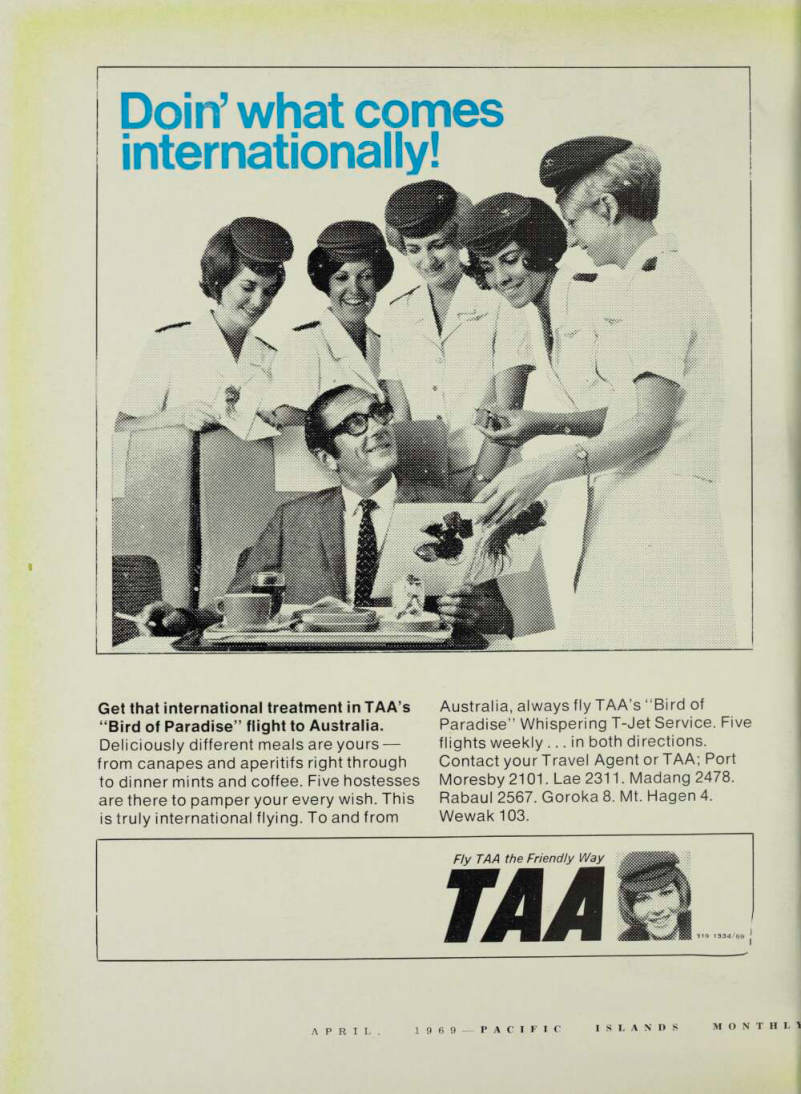 2
2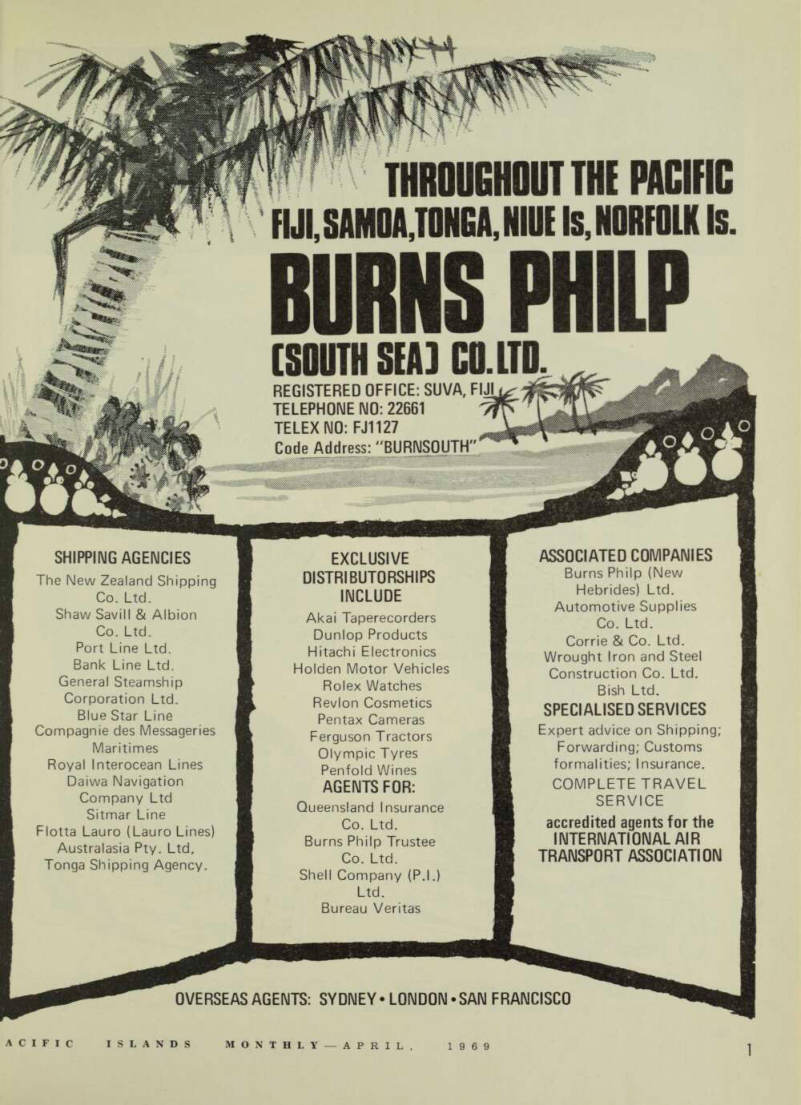 3
3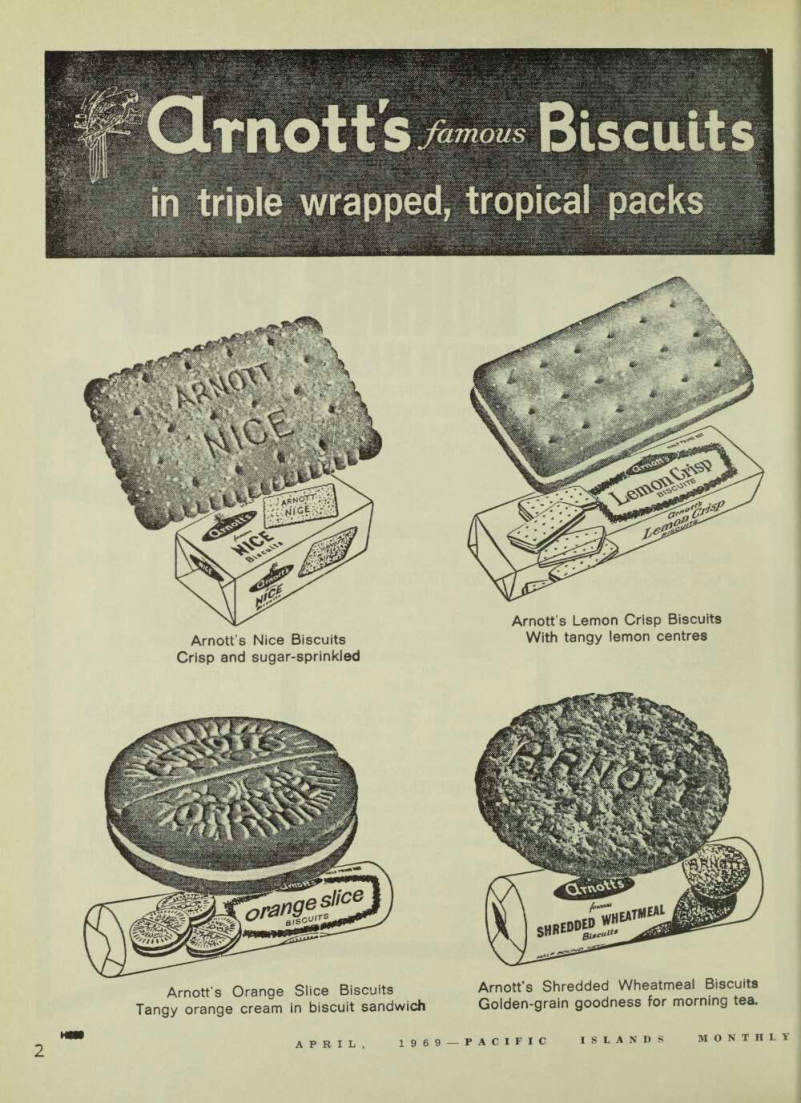 4
4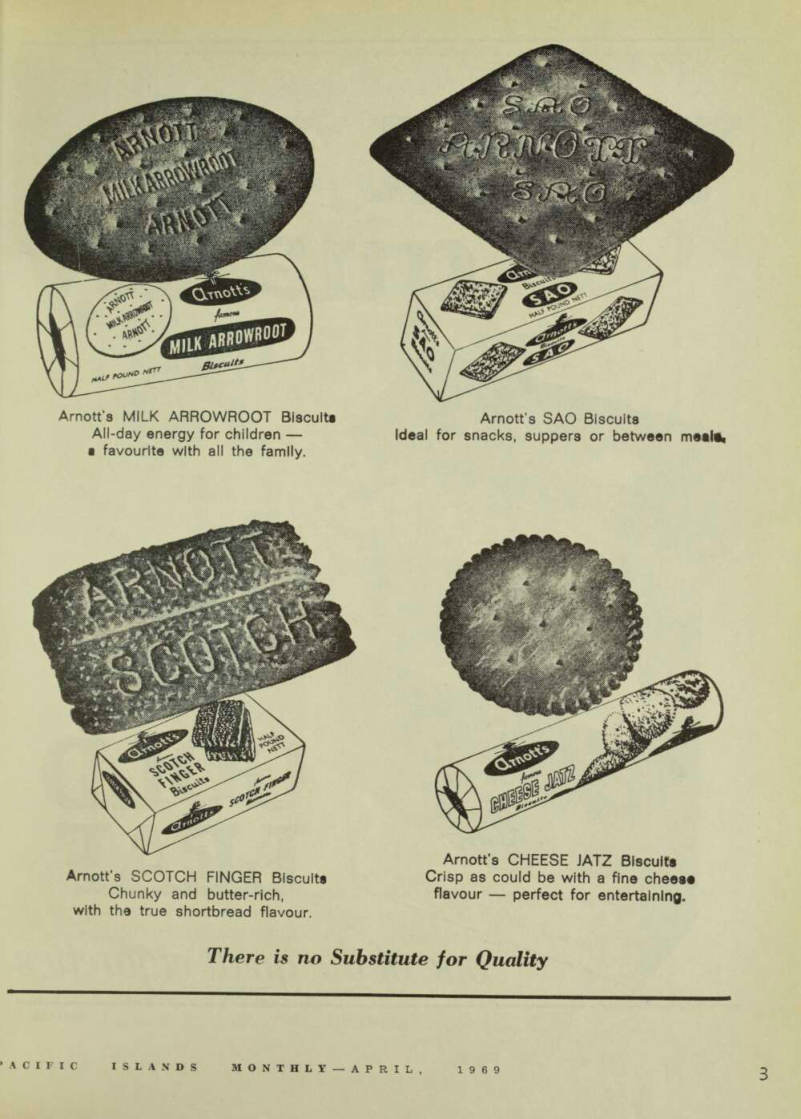 5
5 6
6 7
7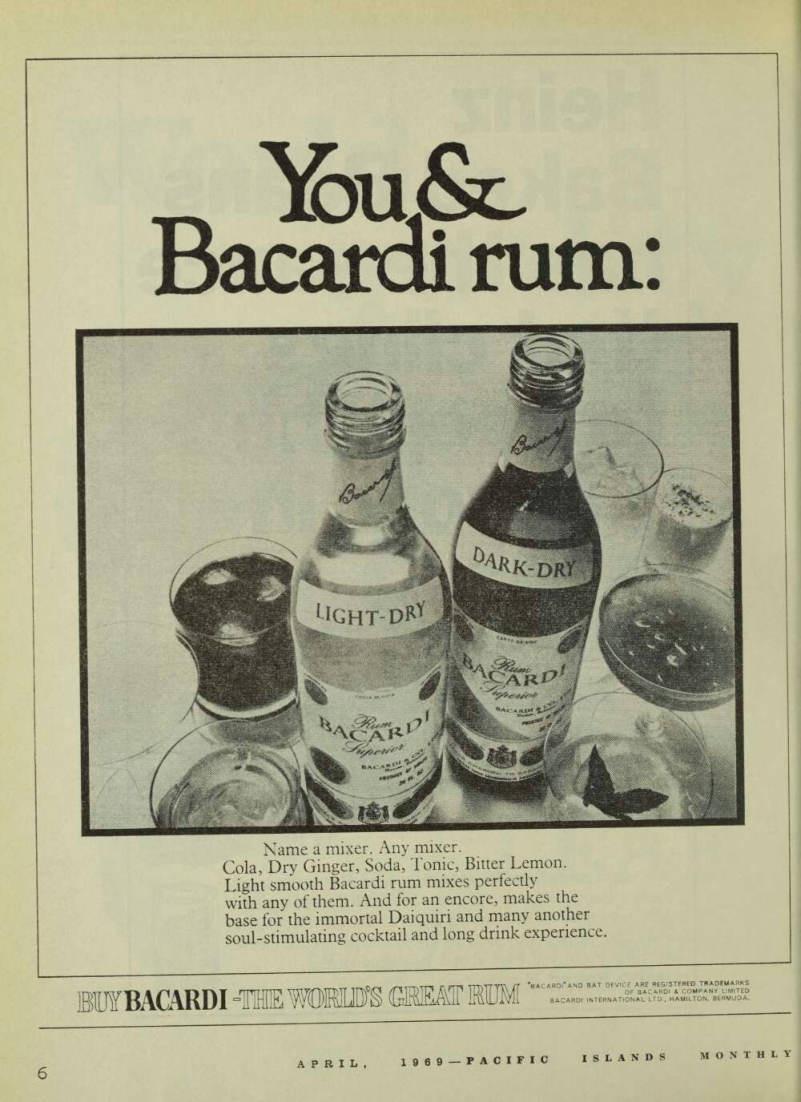 8
8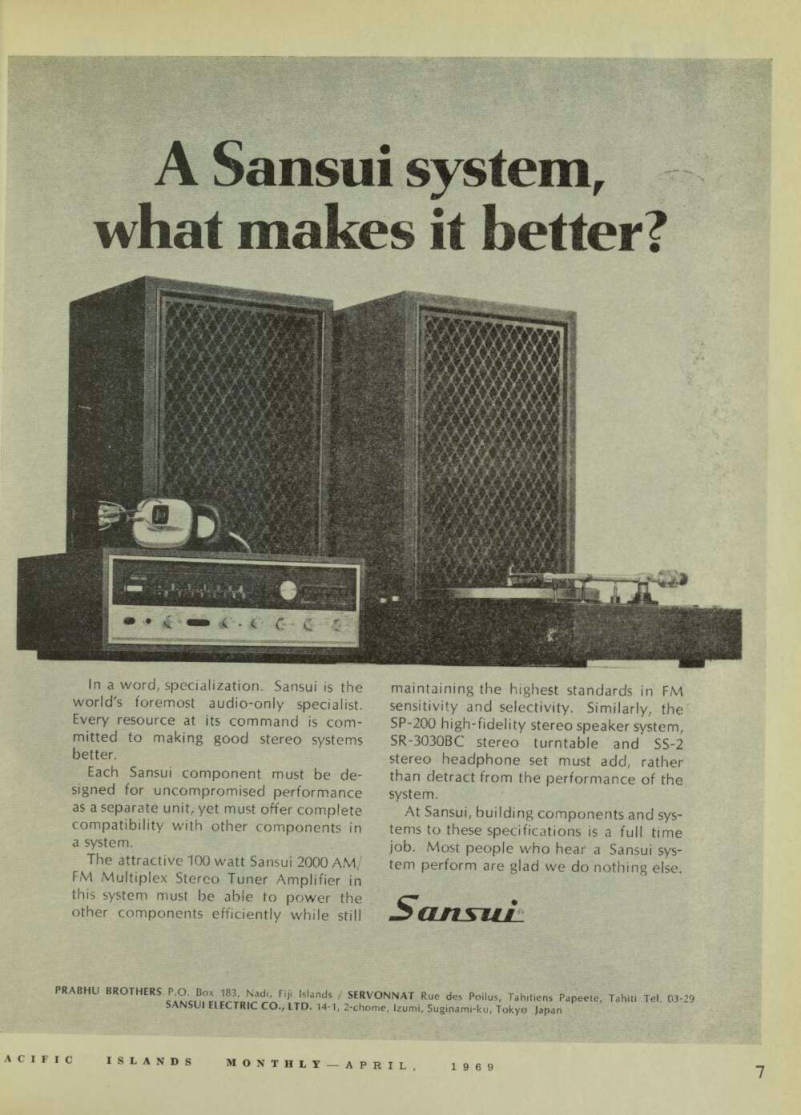 9
9 10
10 11
11 12
12 13
13 14
14 15
15 16
16 17
17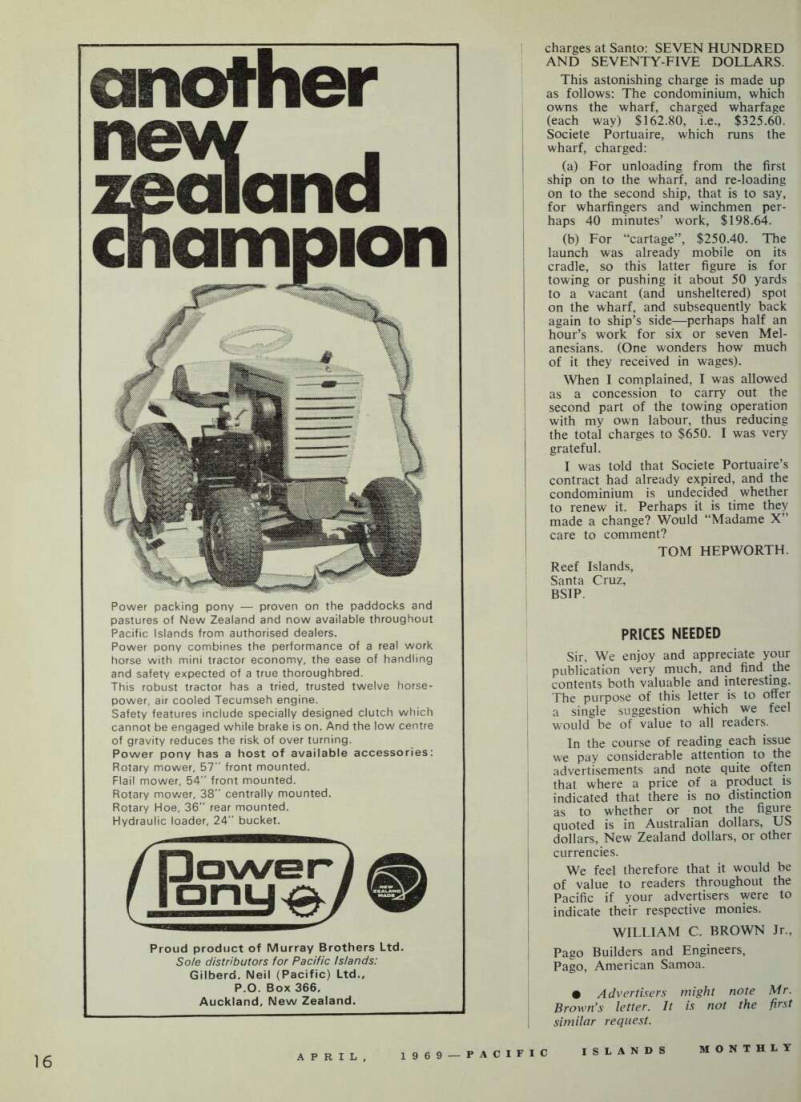 18
18 19
19 20
20 21
21 22
22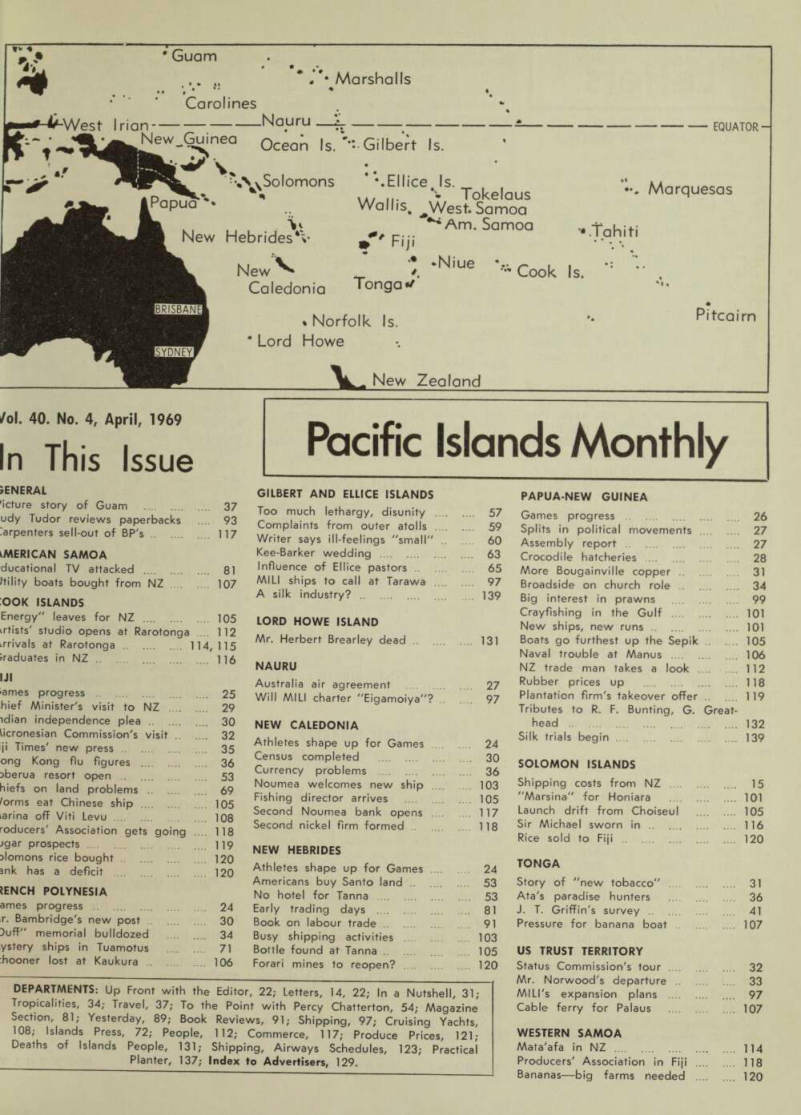 23
23 24
24 25
25 26
26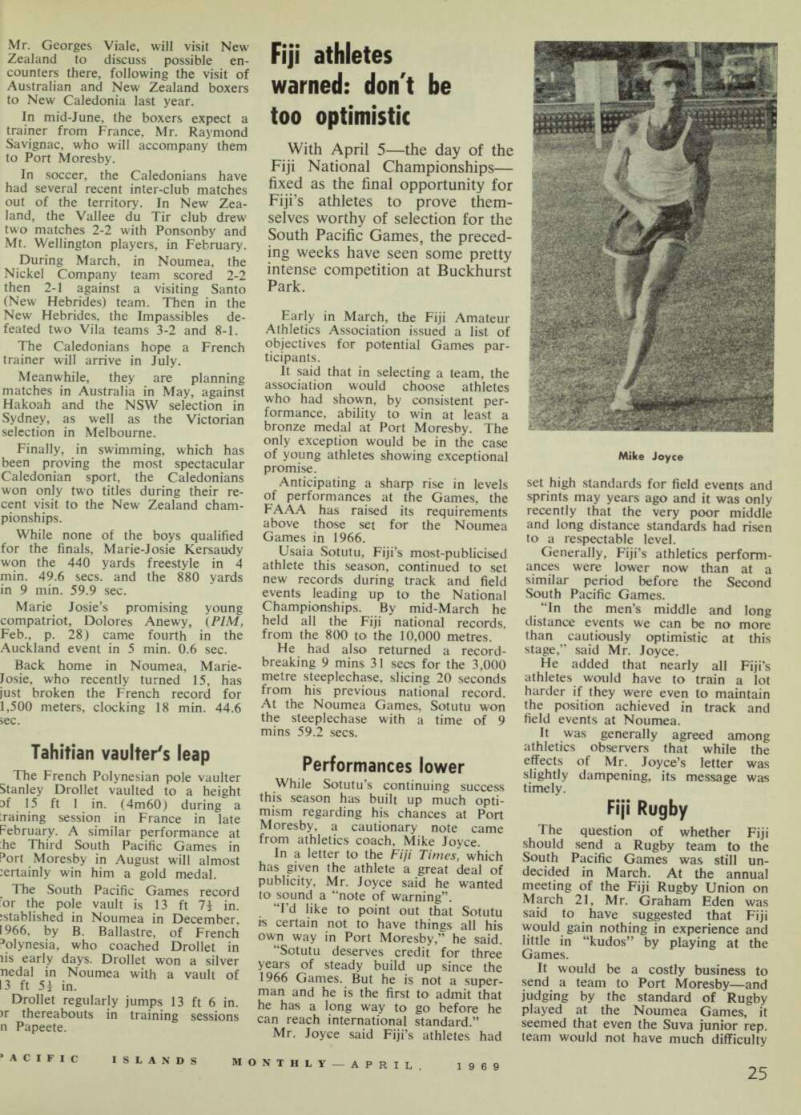 27
27 28
28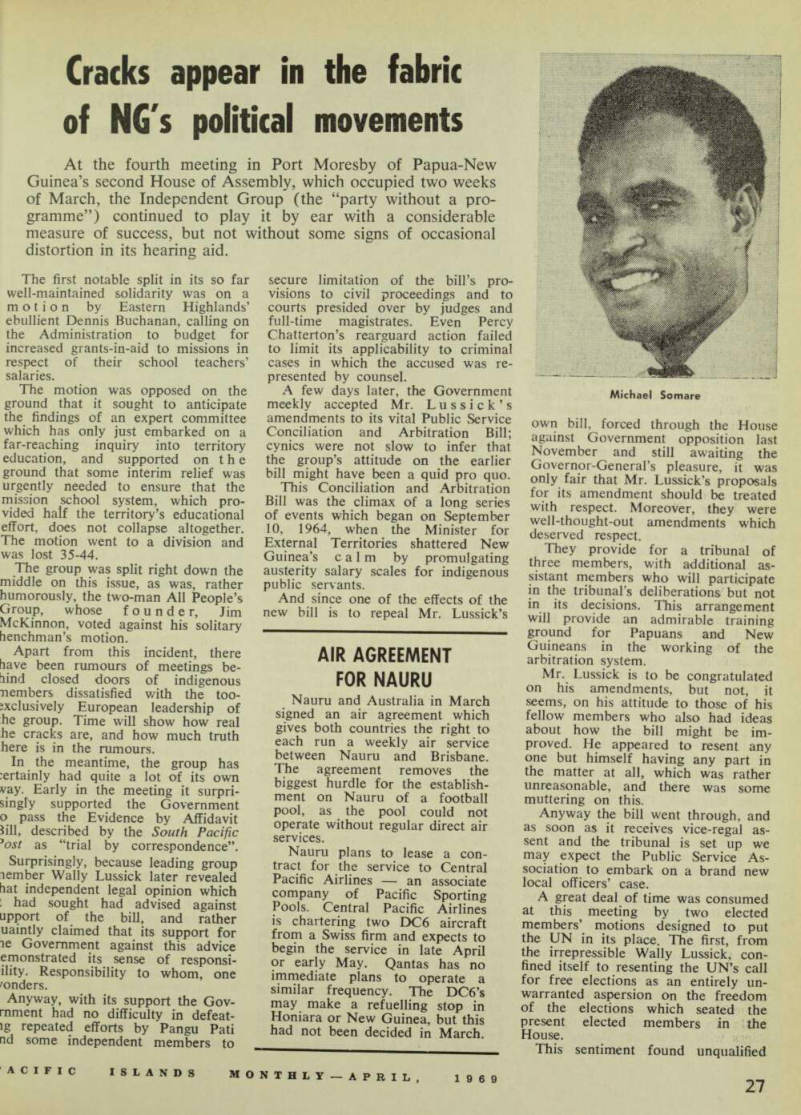 29
29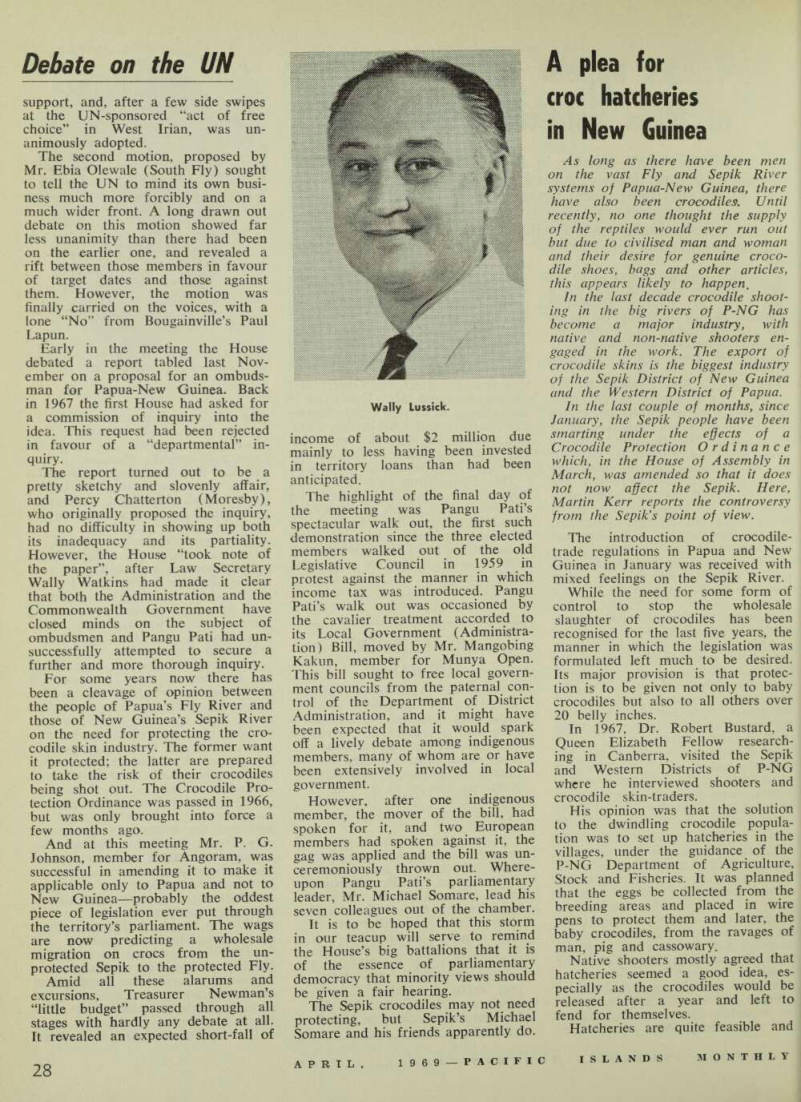 30
30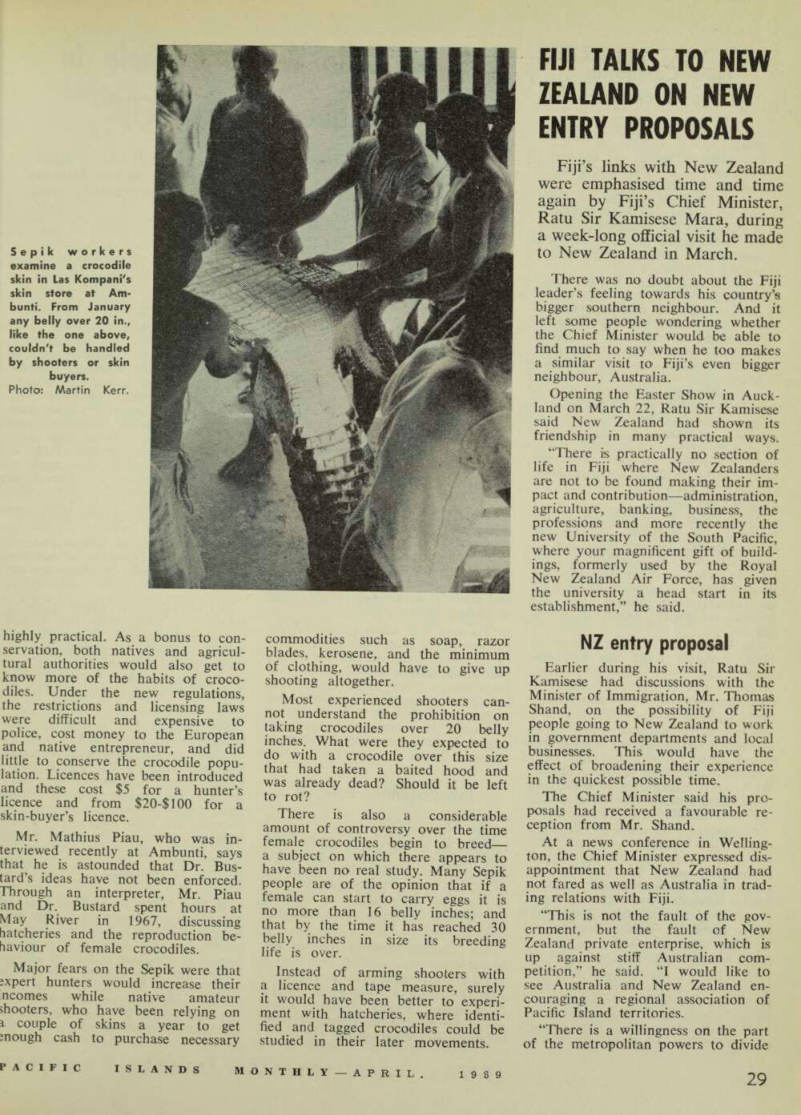 31
31 32
32 33
33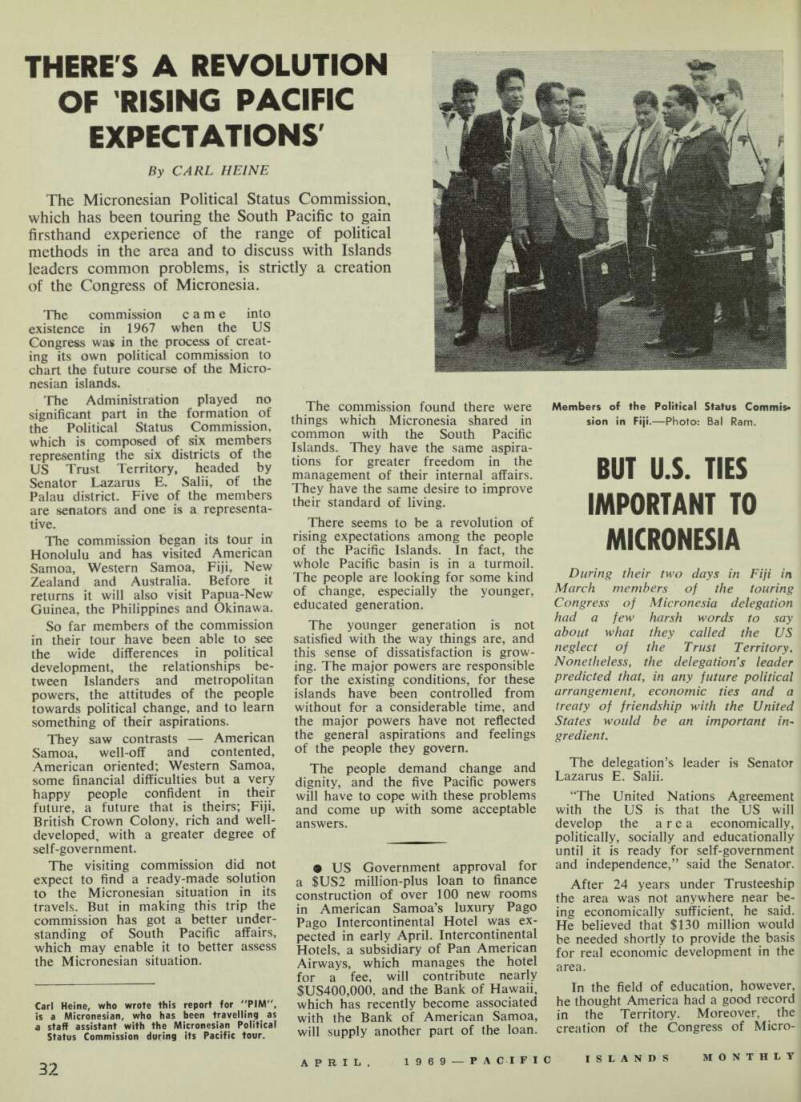 34
34 35
35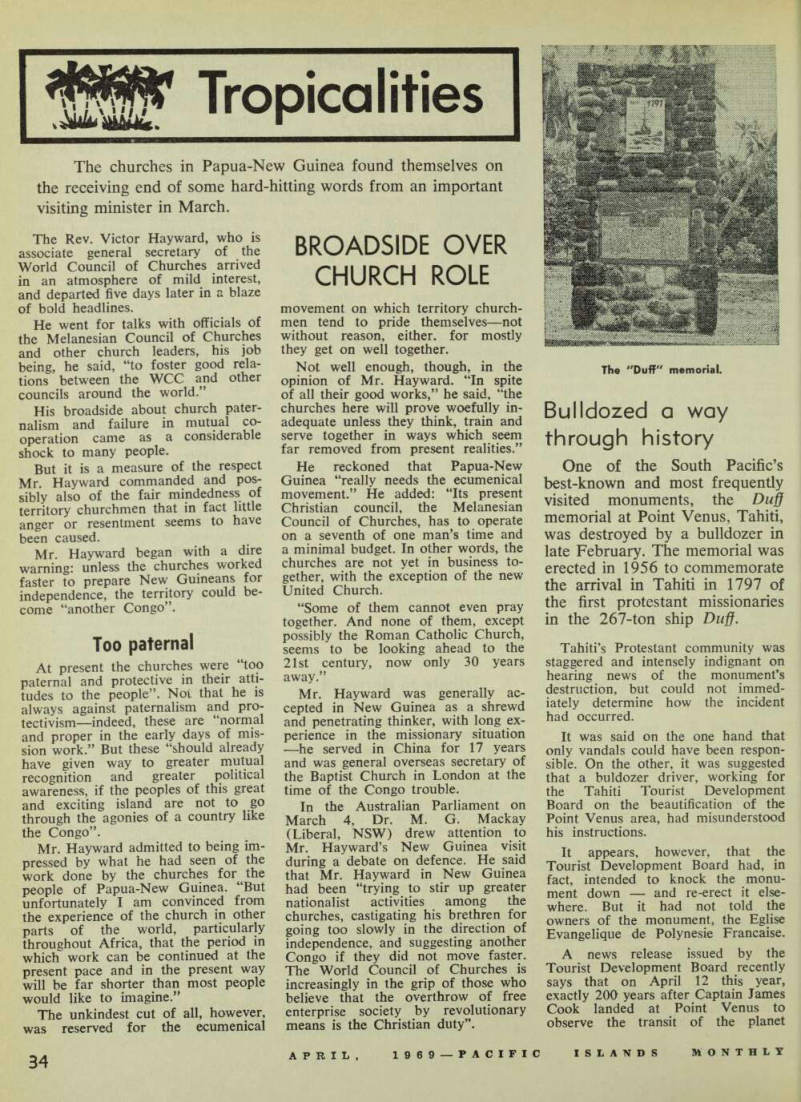 36
36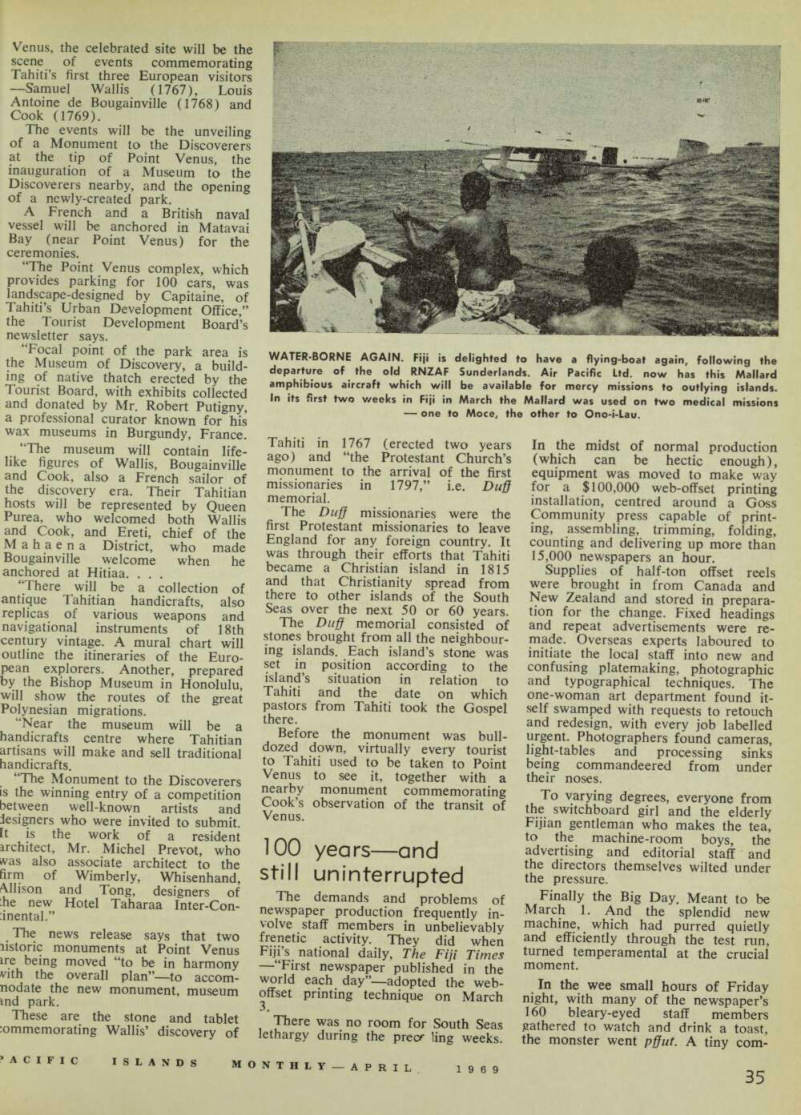 37
37 38
38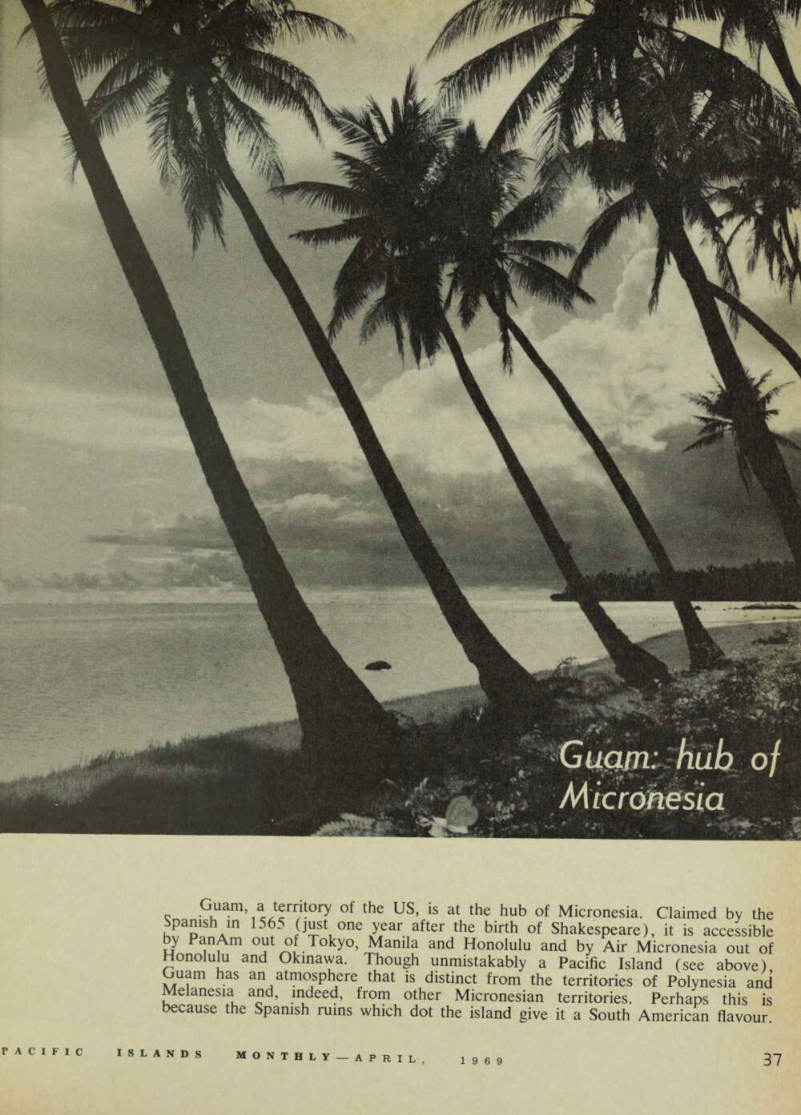 39
39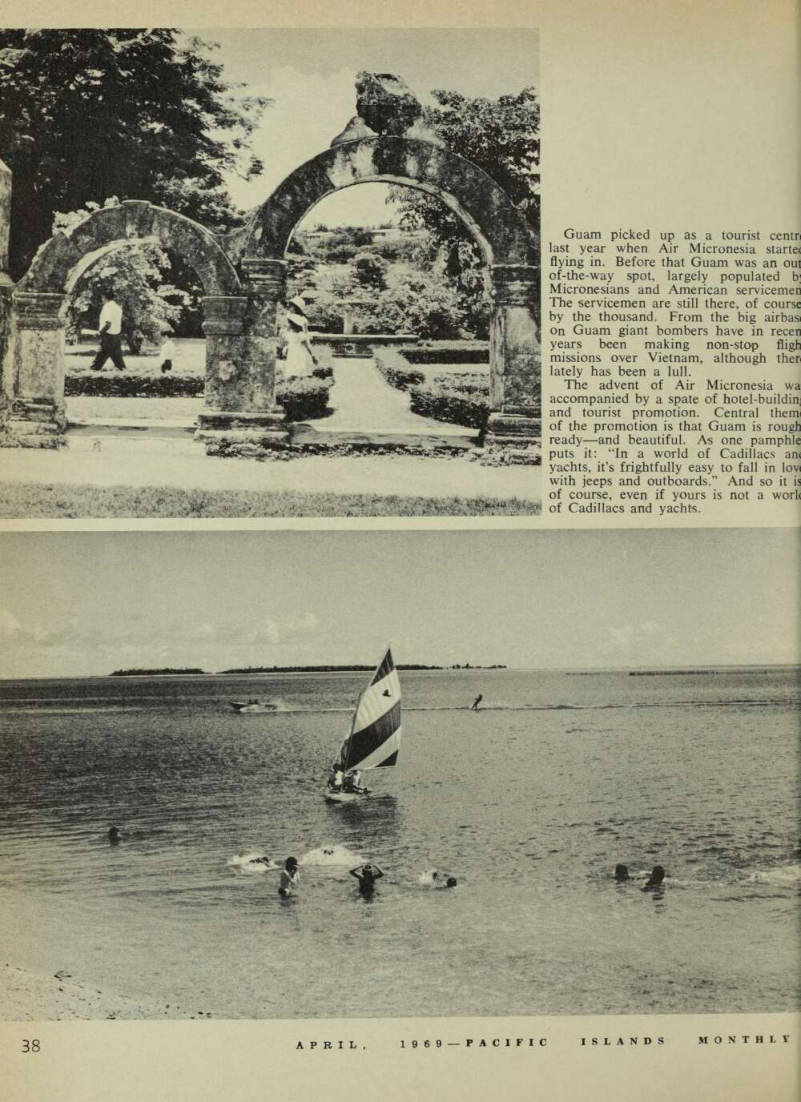 40
40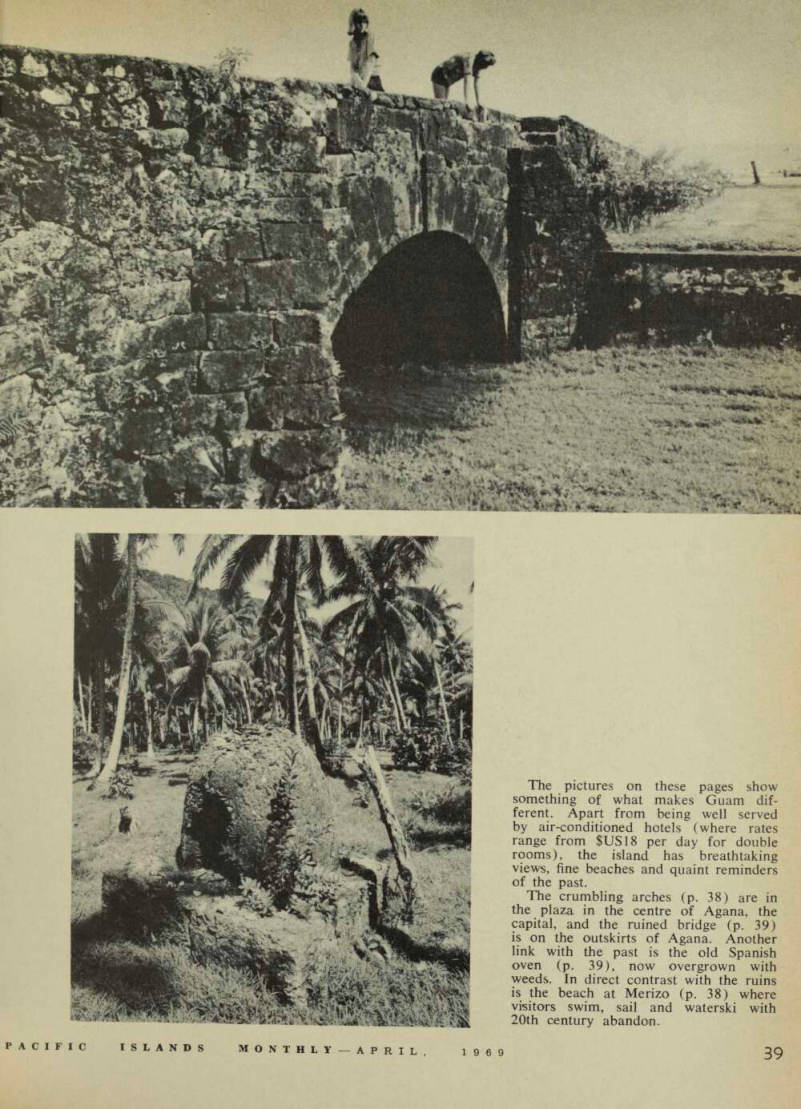 41
41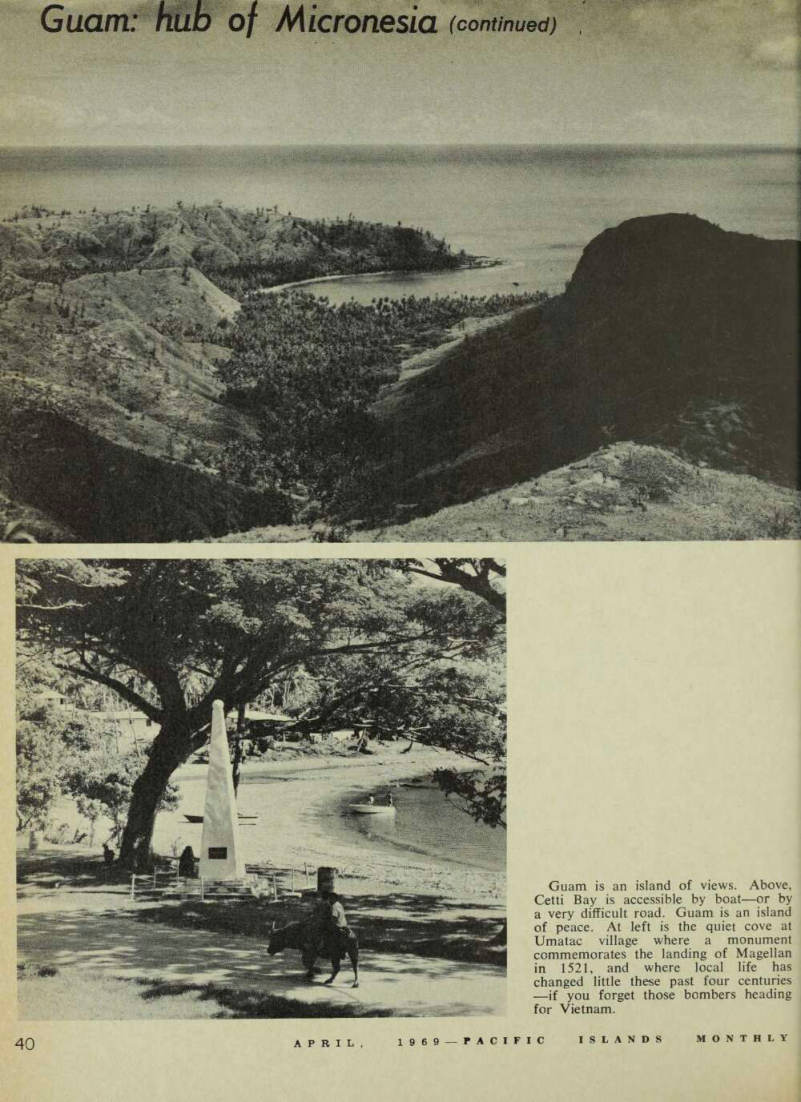 42
42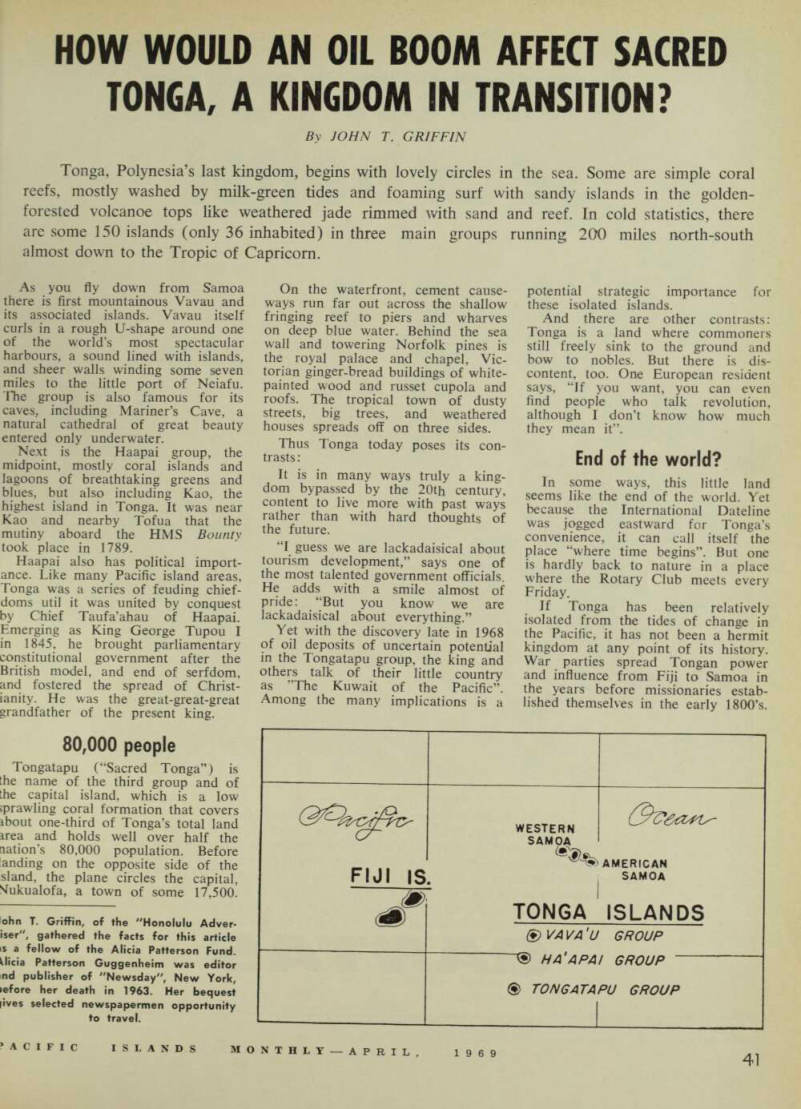 43
43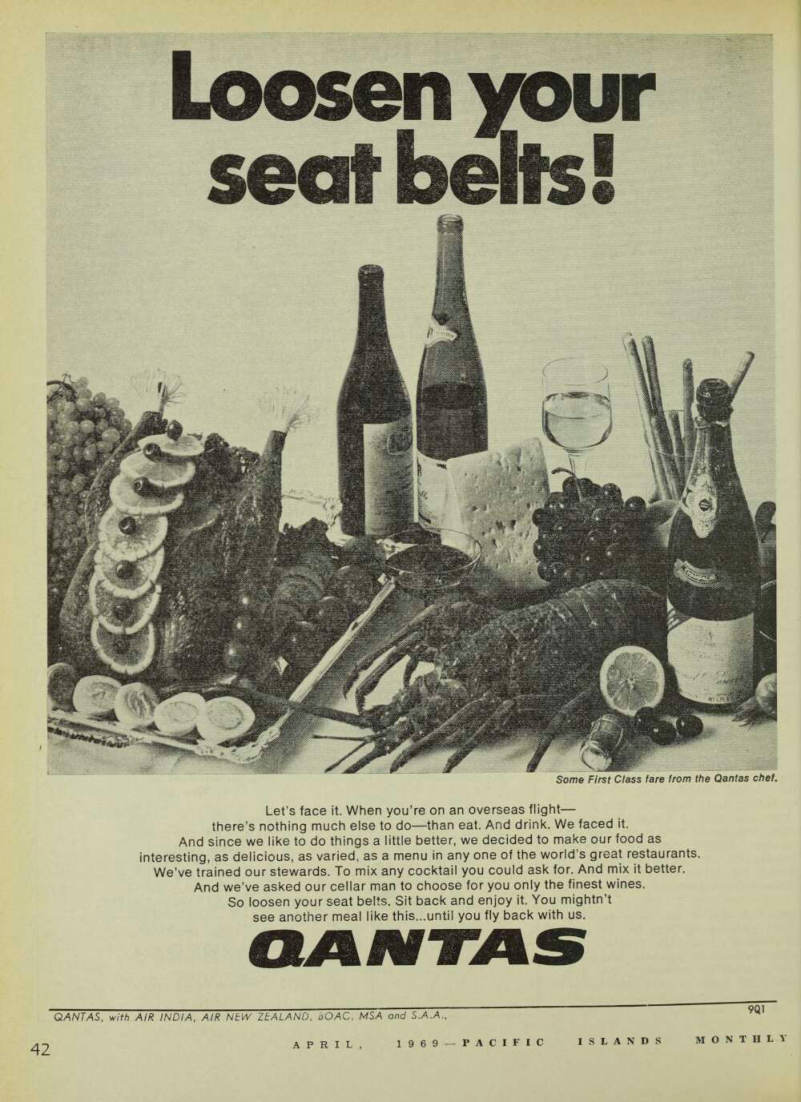 44
44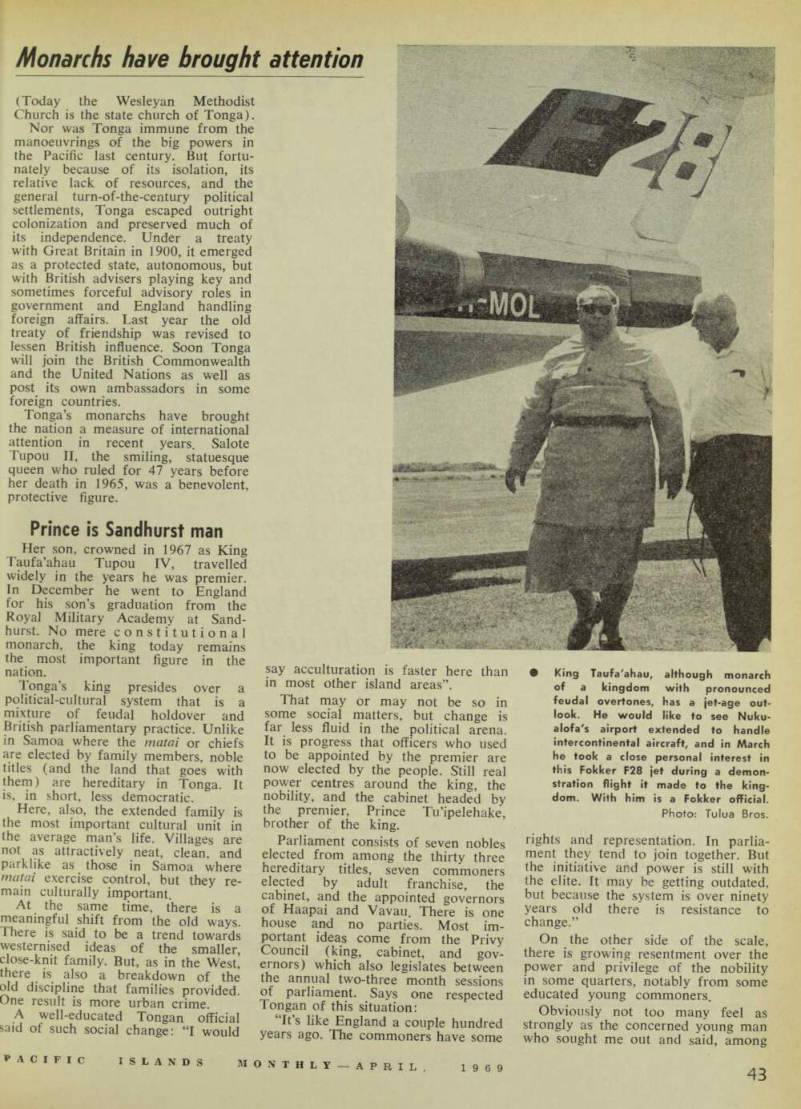 45
45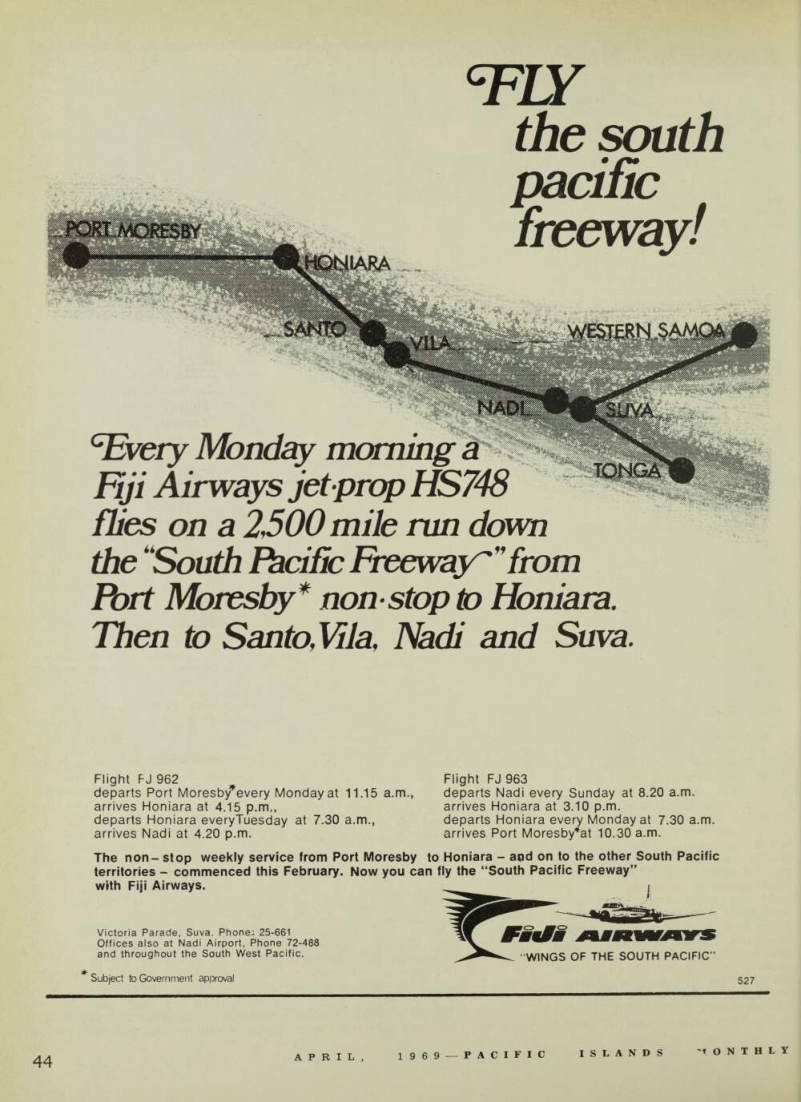 46
46 47
47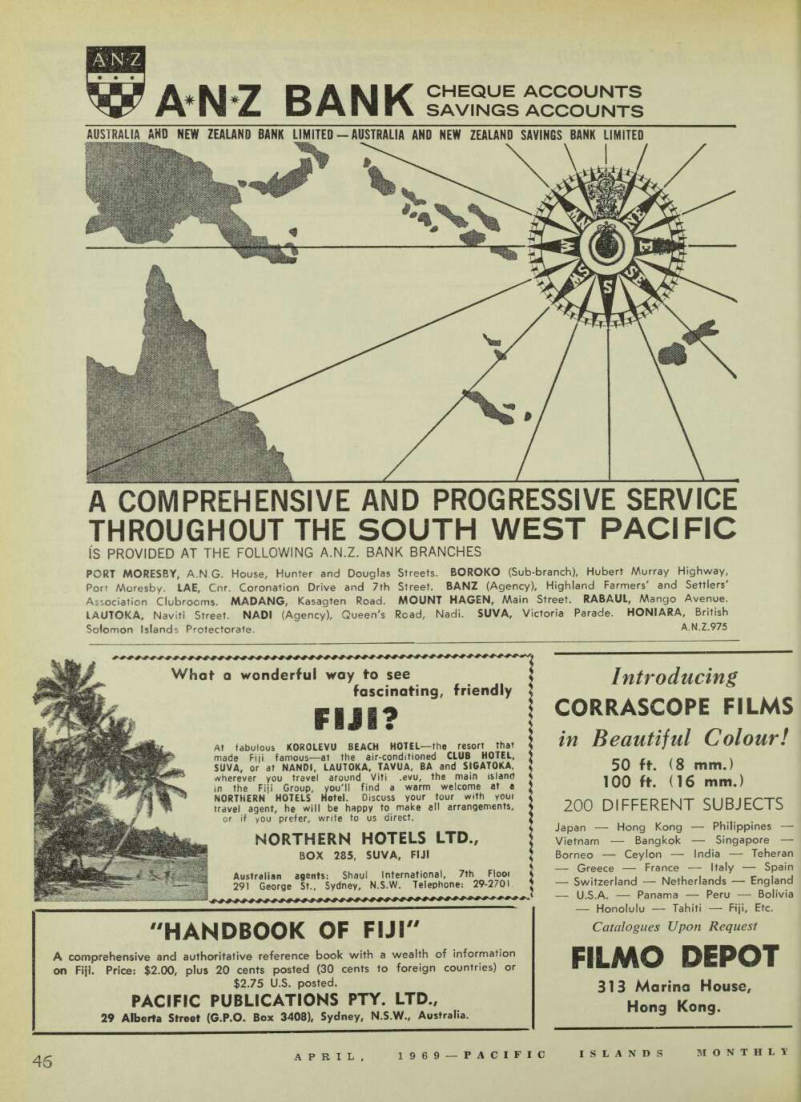 48
48 49
49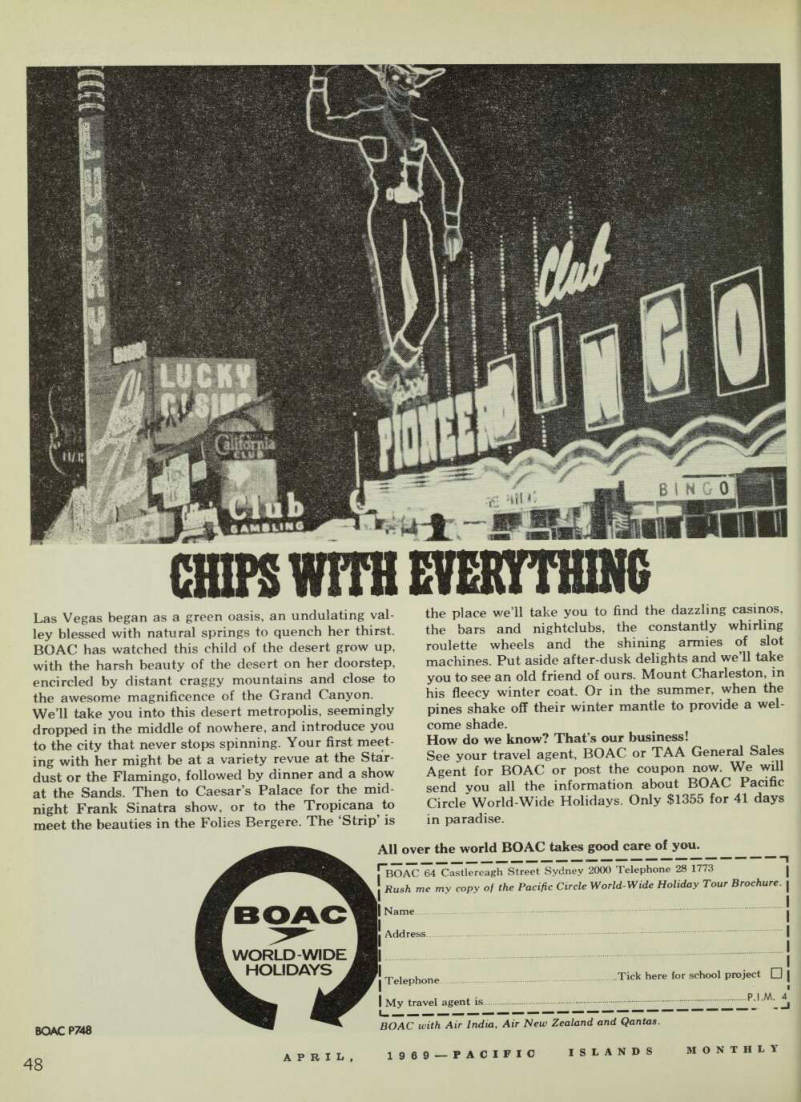 50
50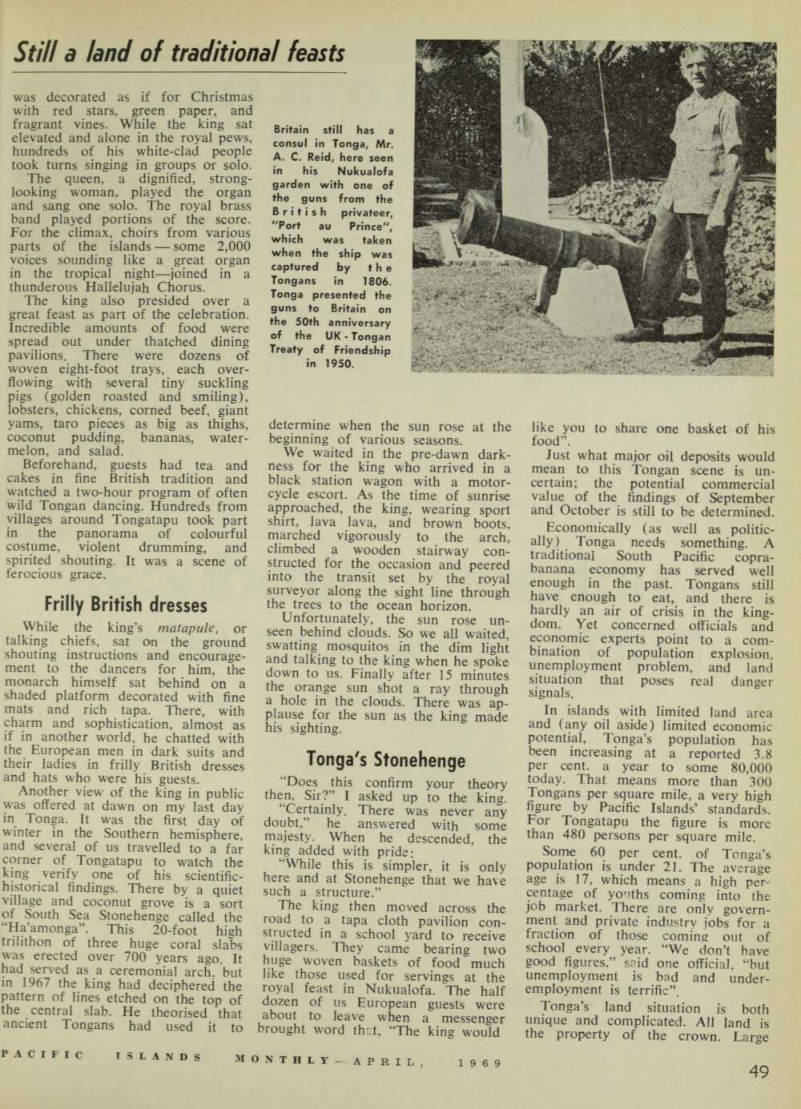 51
51 52
52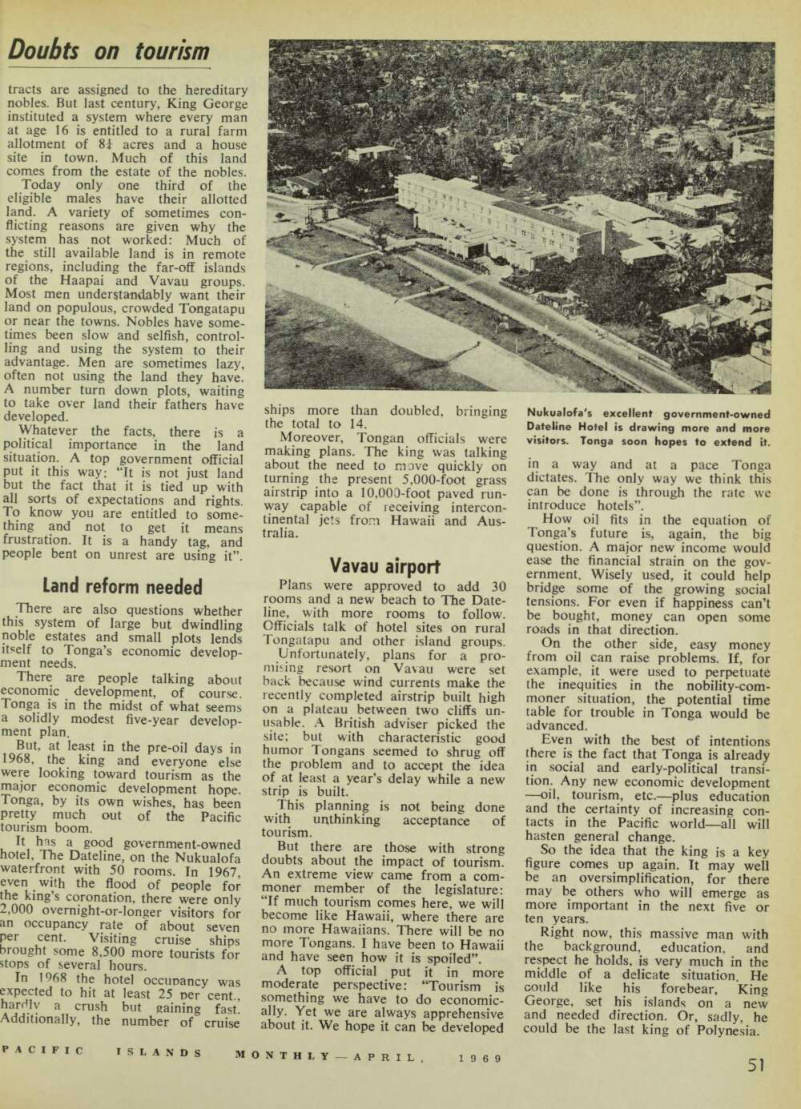 53
53 54
54 55
55 56
56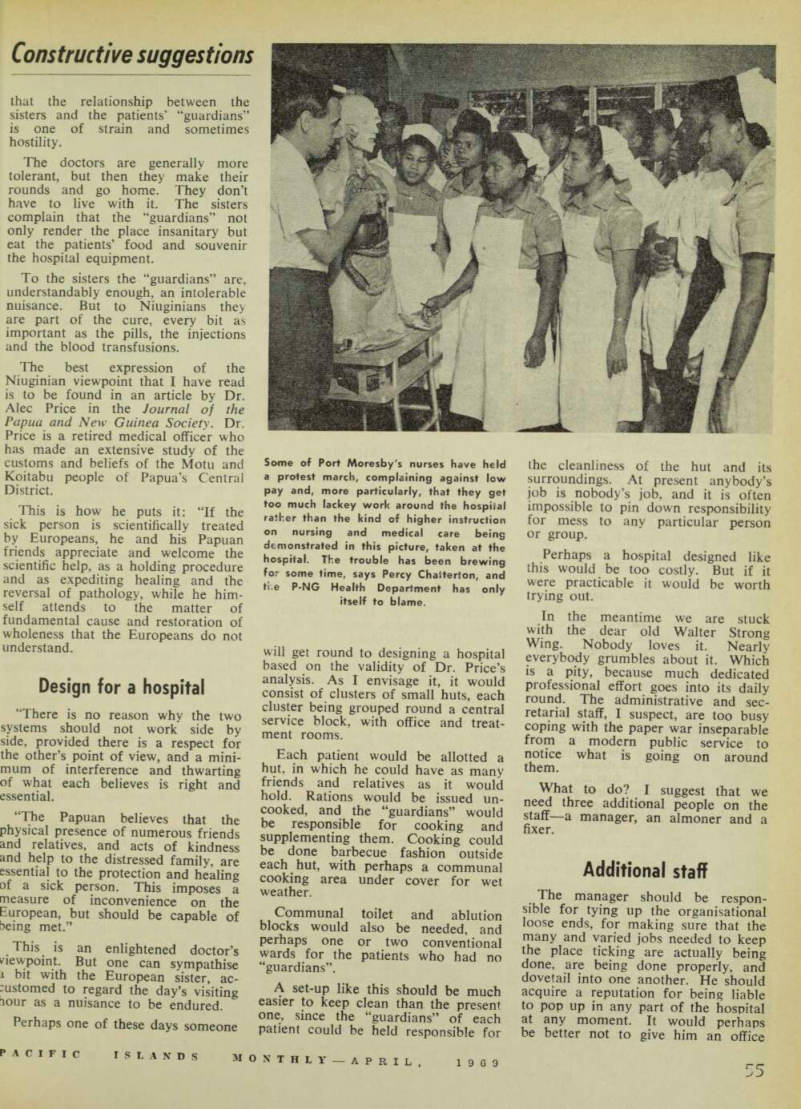 57
57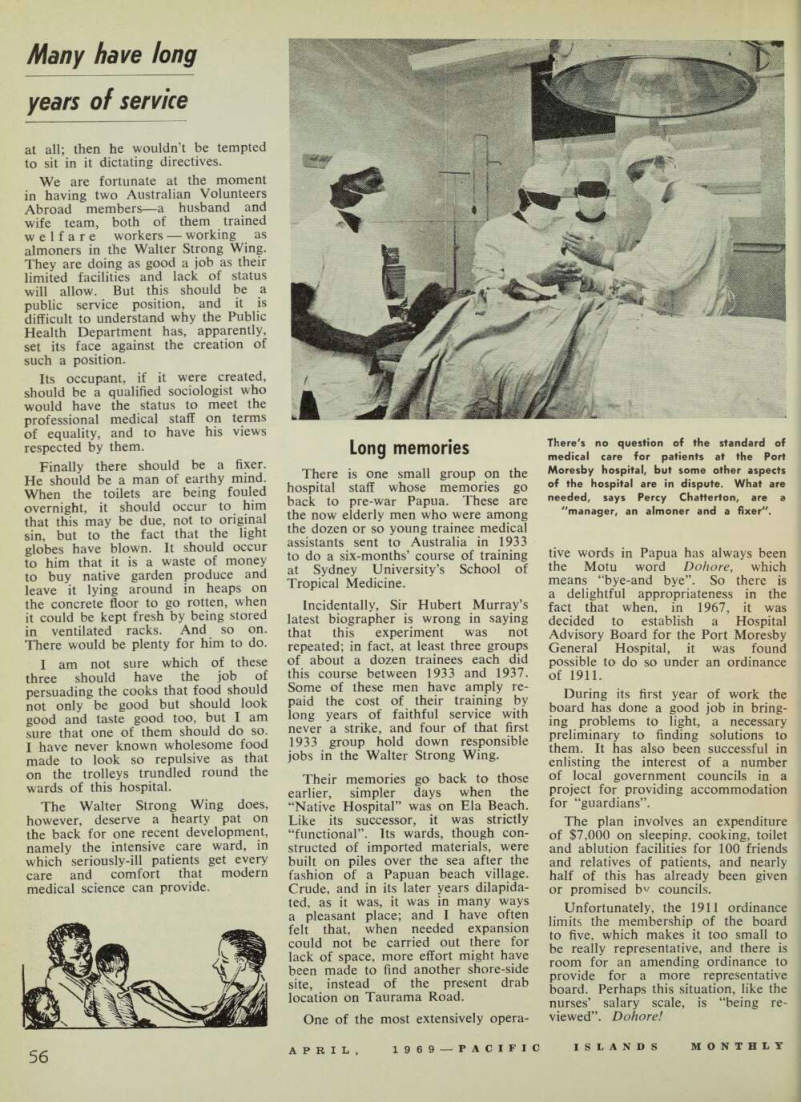 58
58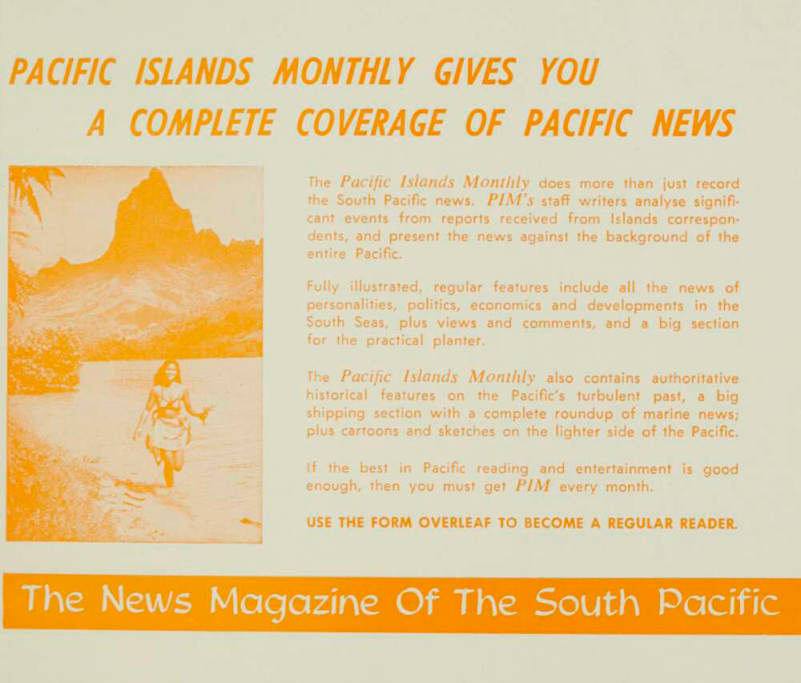 59
59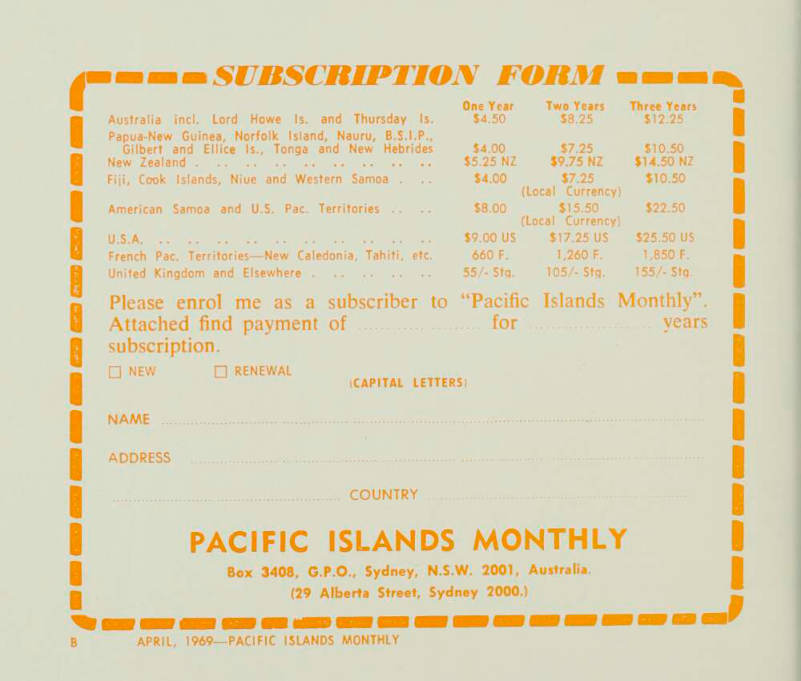 60
60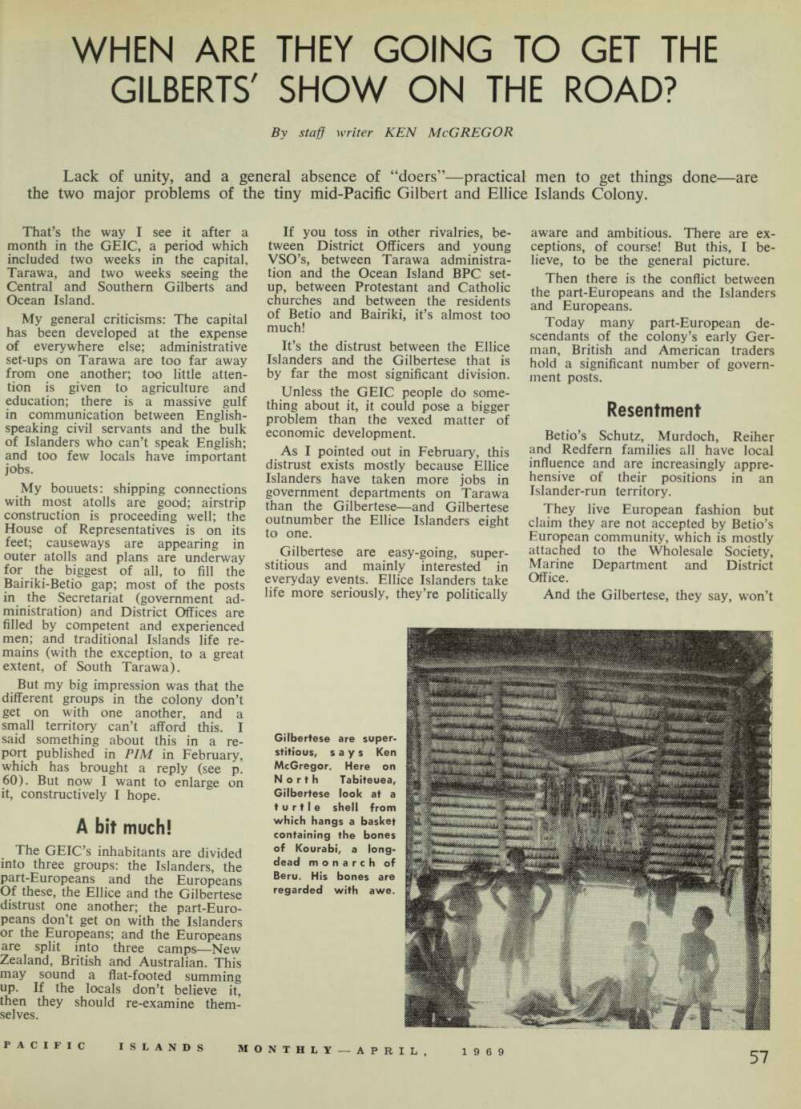 61
61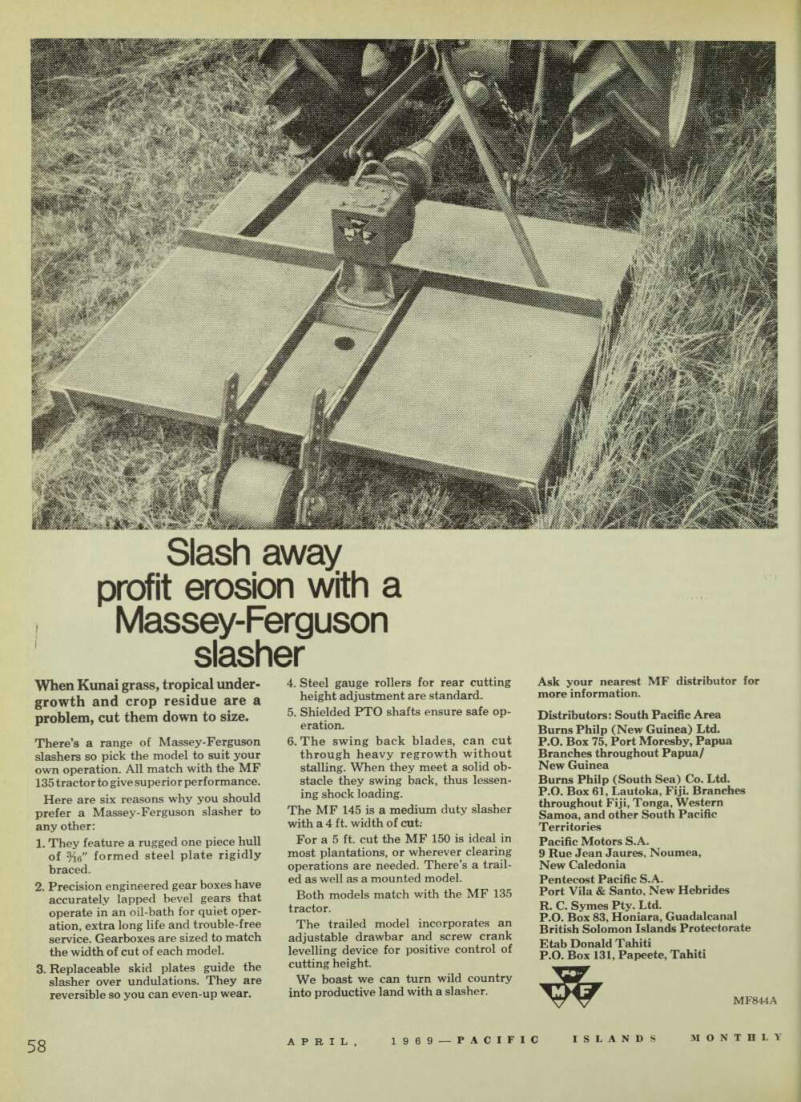 62
62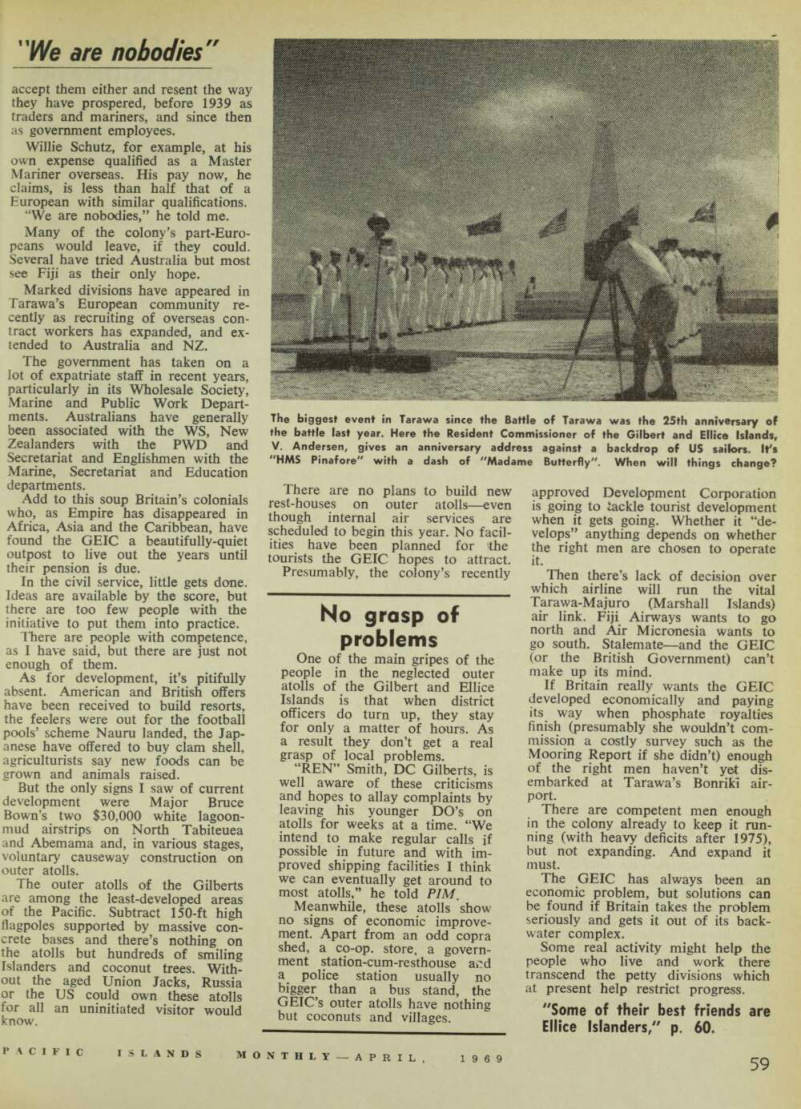 63
63 64
64 65
65 66
66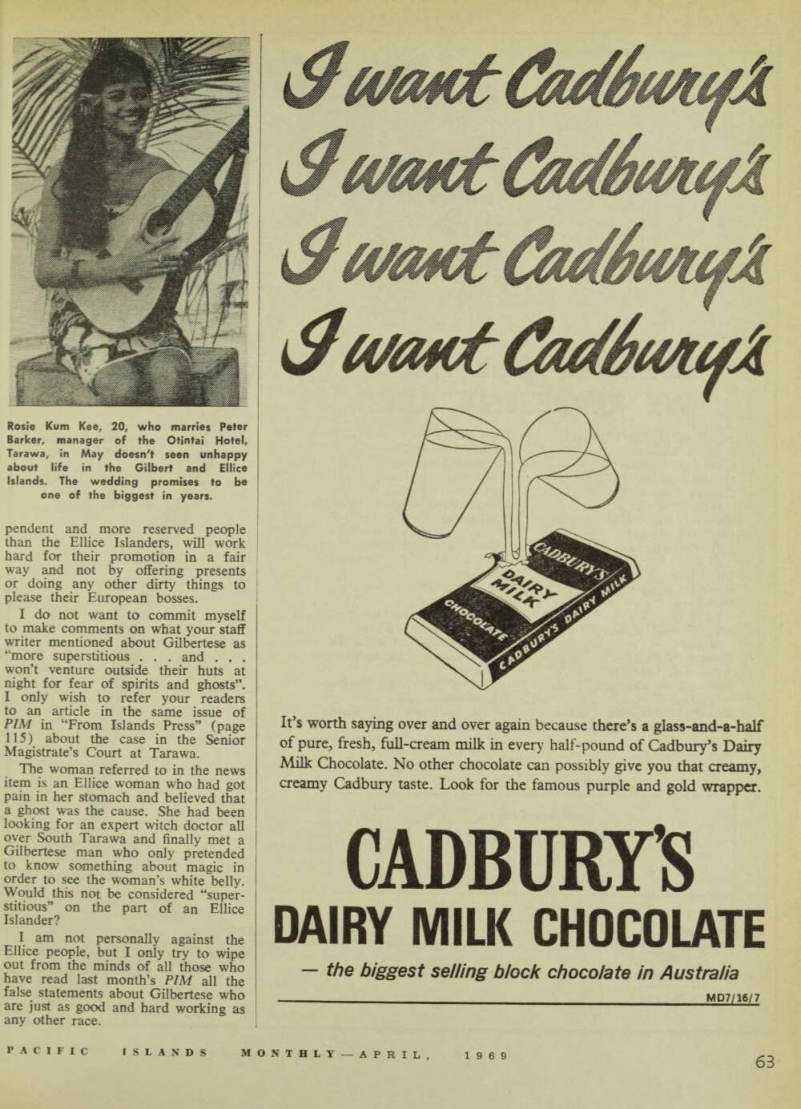 67
67 68
68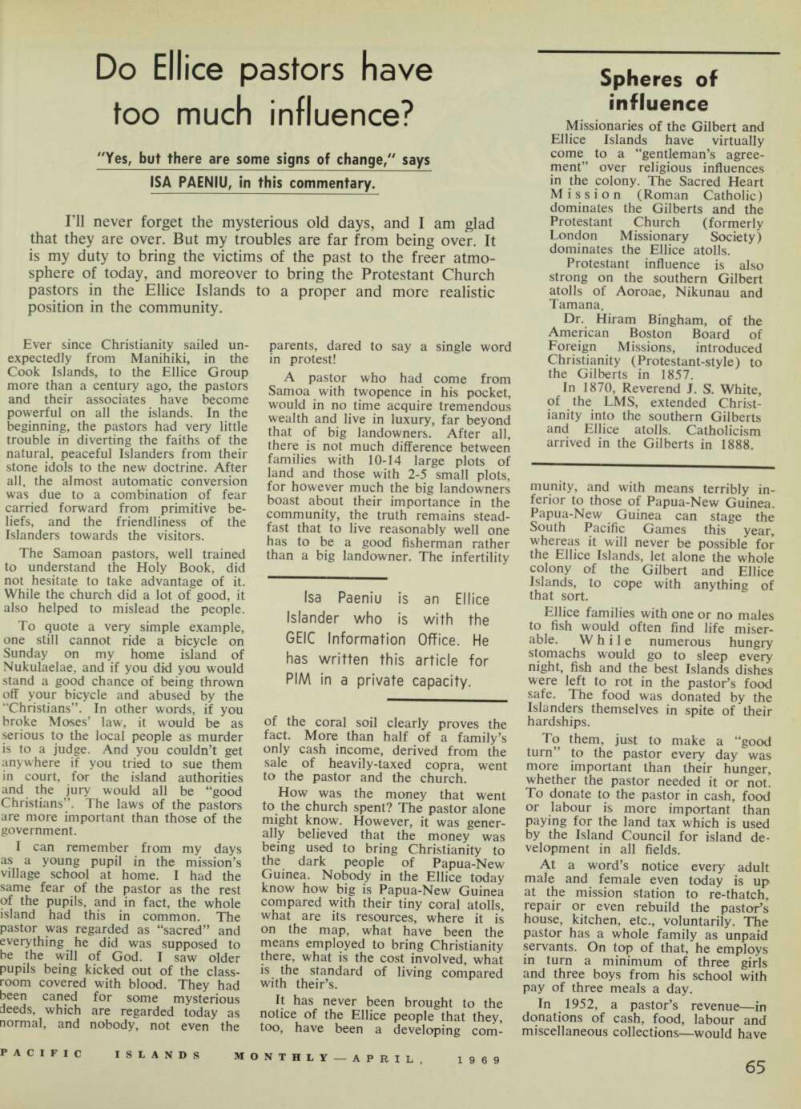 69
69 70
70 71
71 72
72 73
73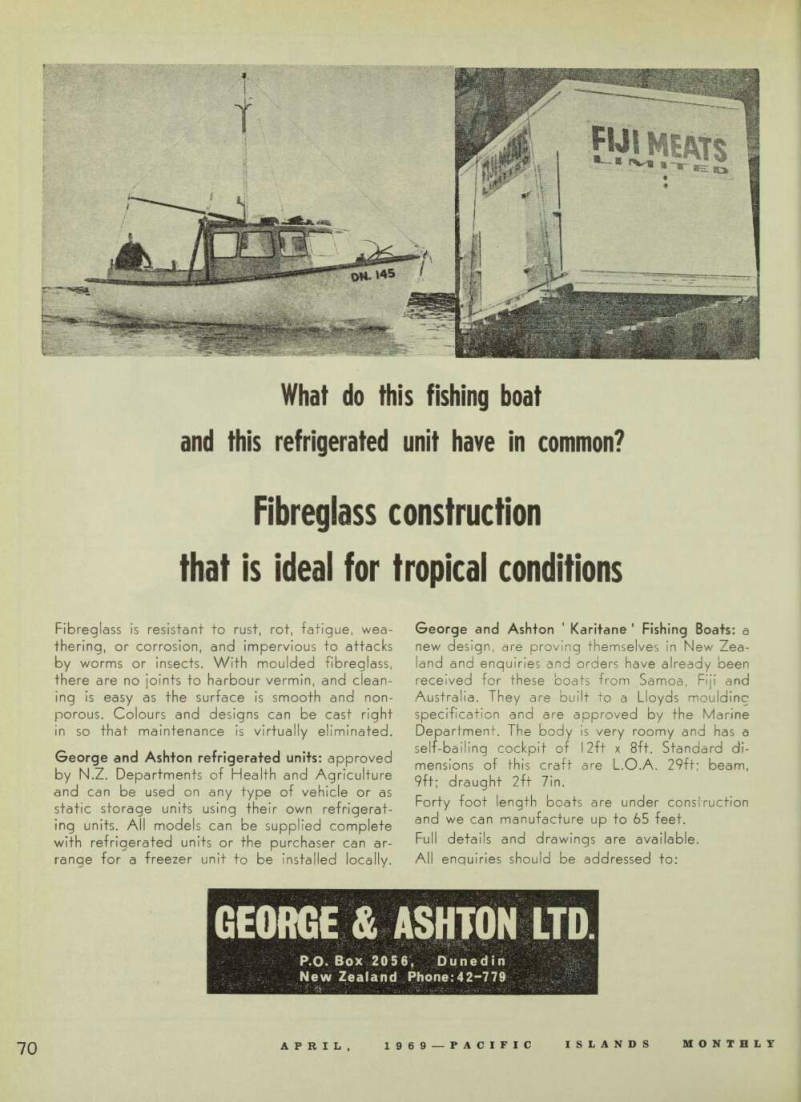 74
74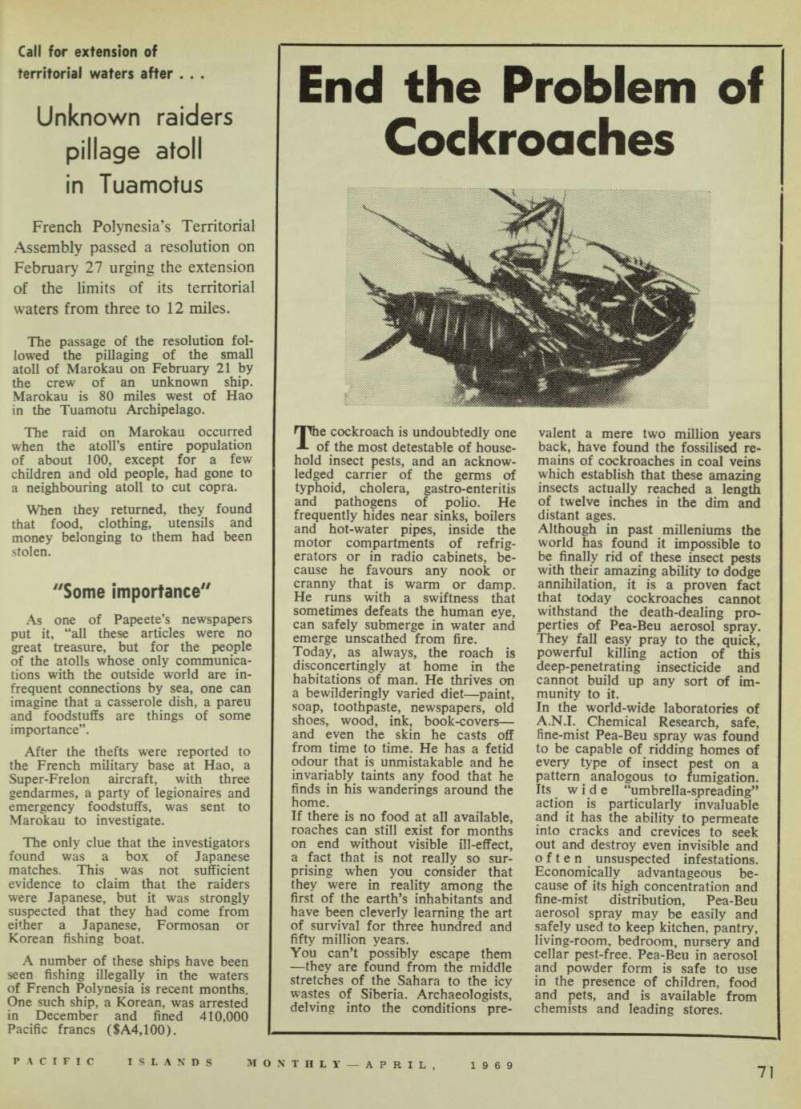 75
75 76
76 77
77 78
78 79
79 80
80 81
81 82
82 83
83 84
84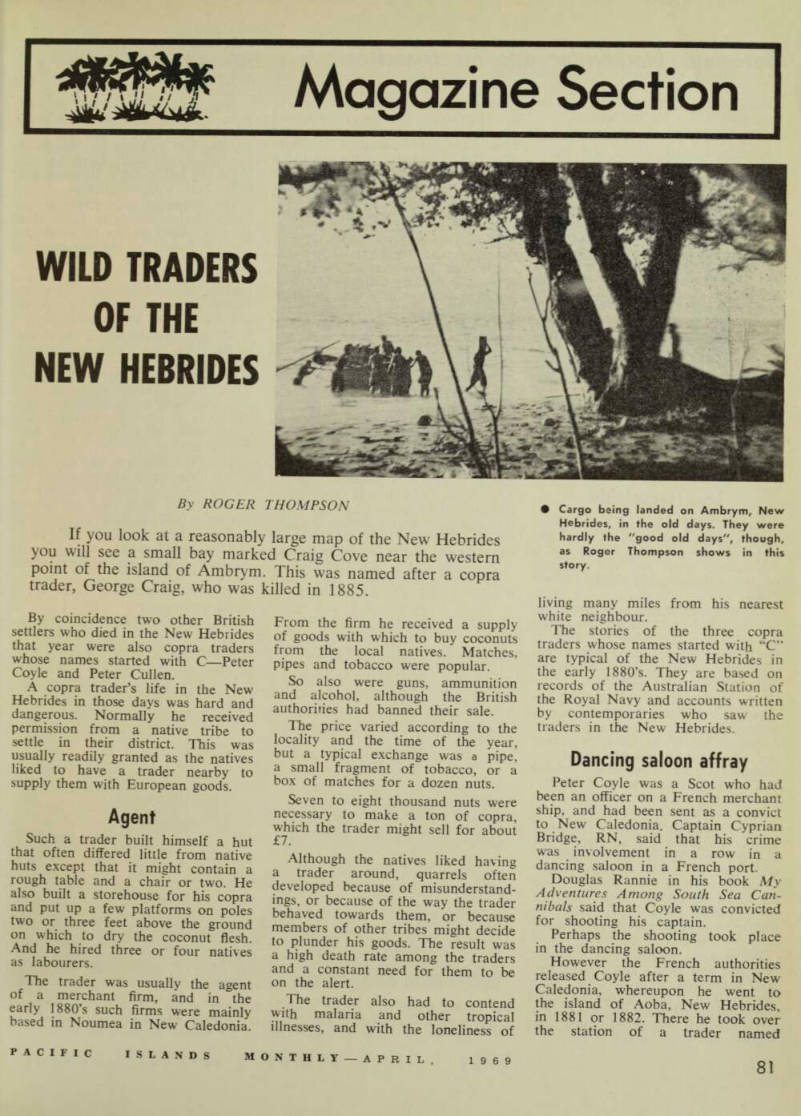 85
85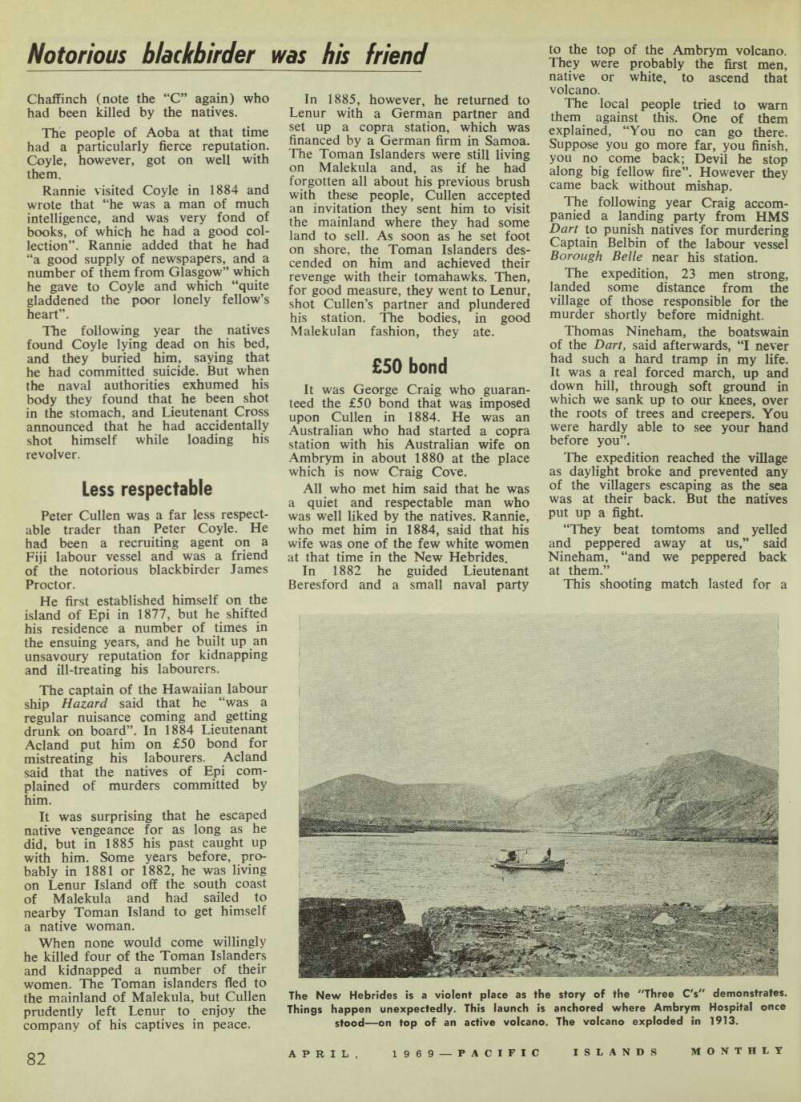 86
86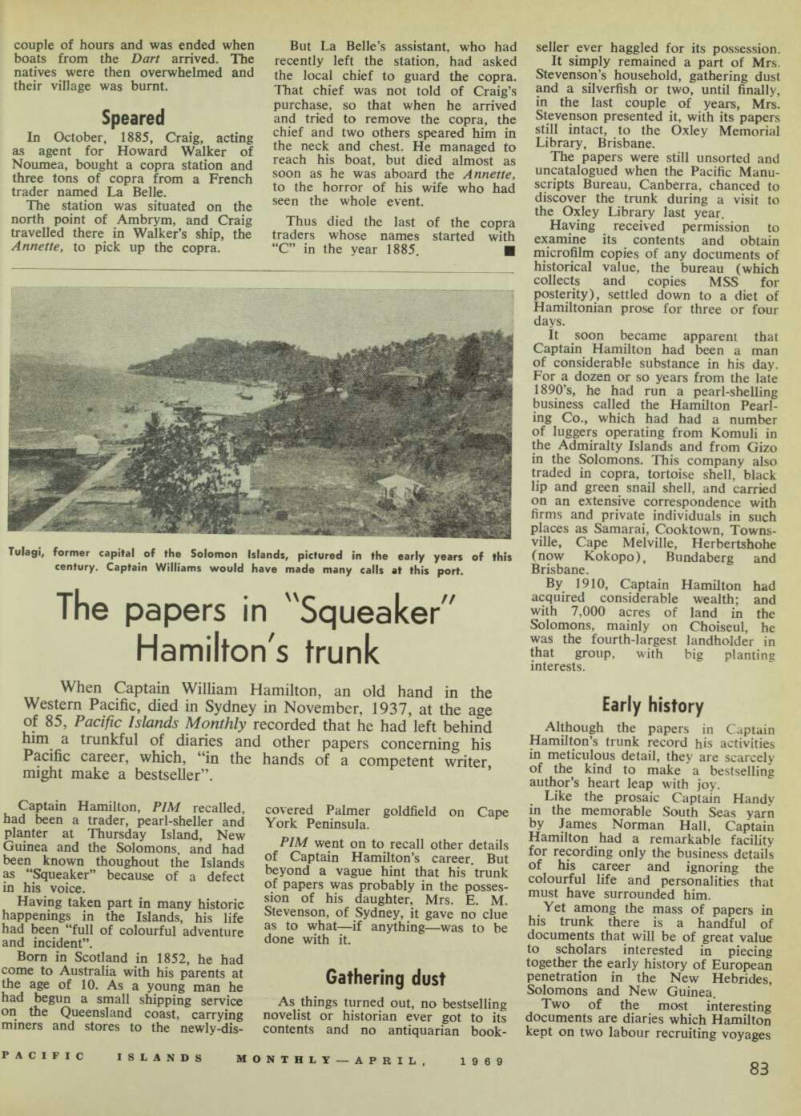 87
87 88
88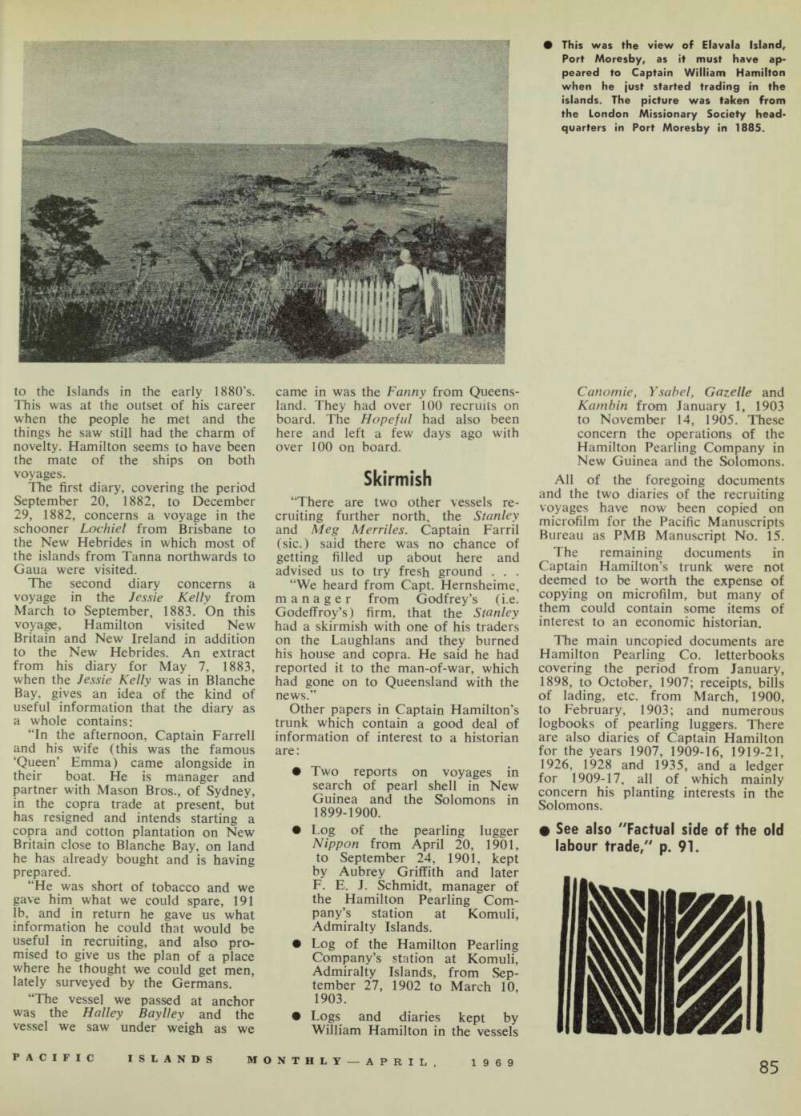 89
89 90
90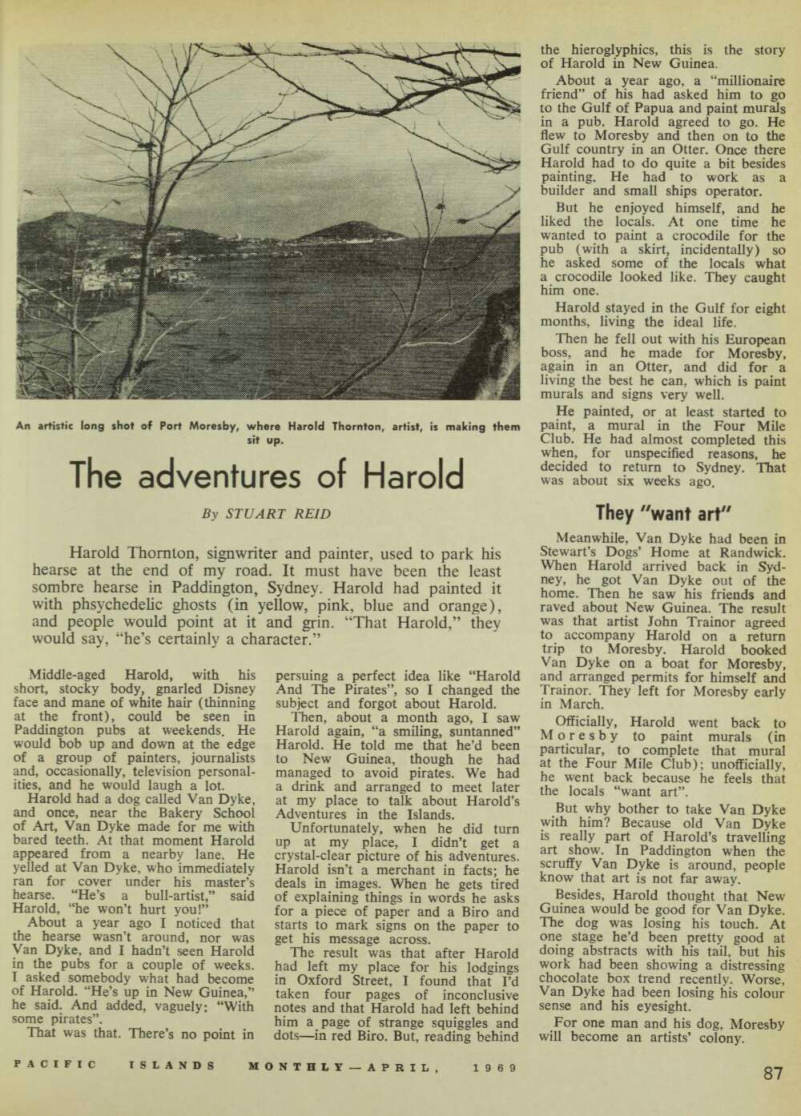 91
91 92
92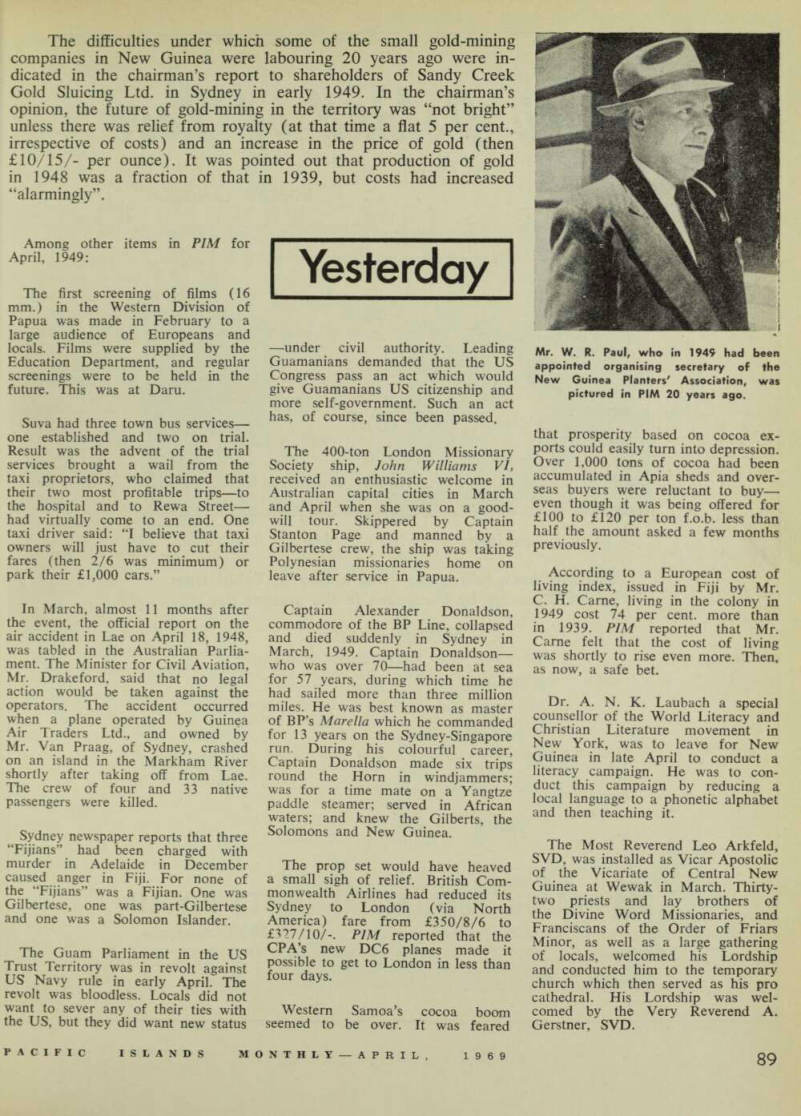 93
93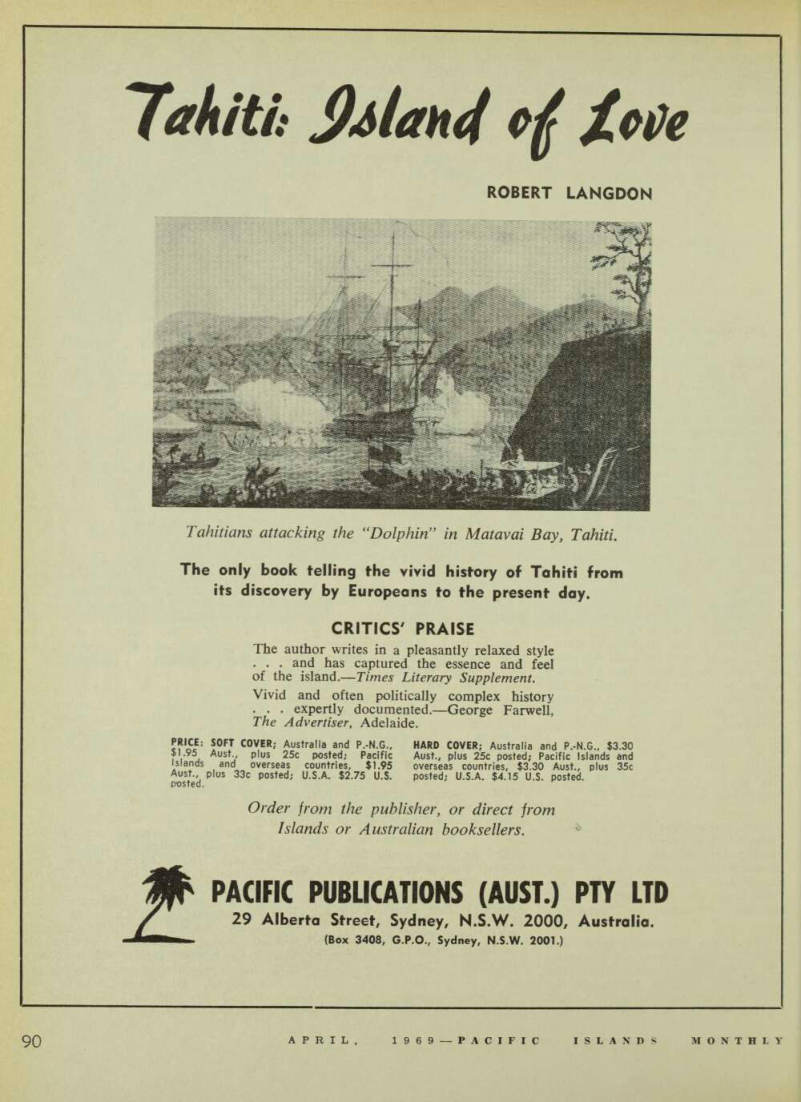 94
94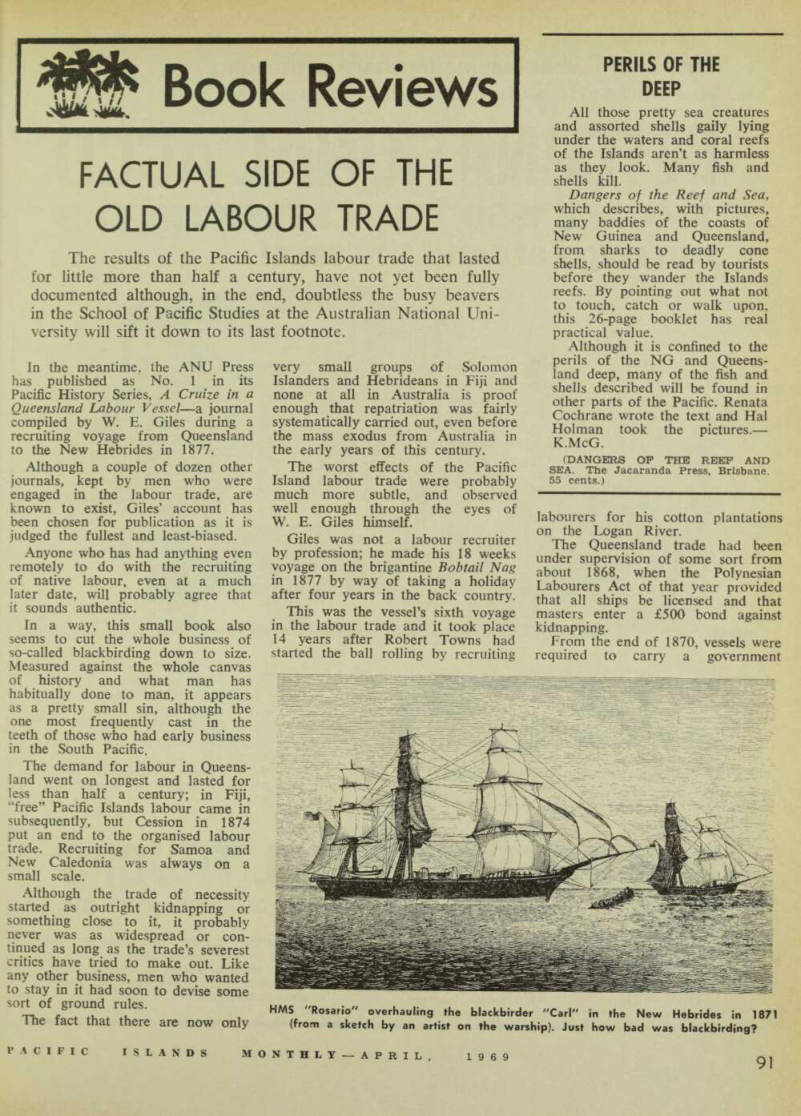 95
95 96
96 97
97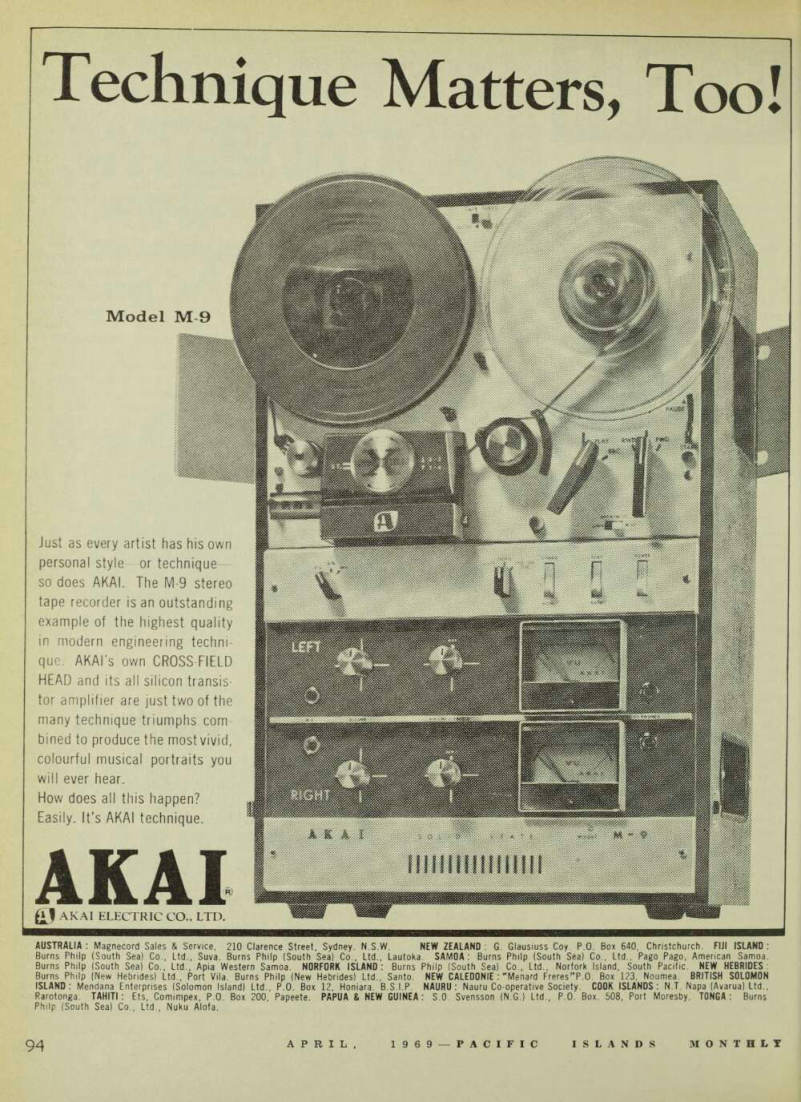 98
98 99
99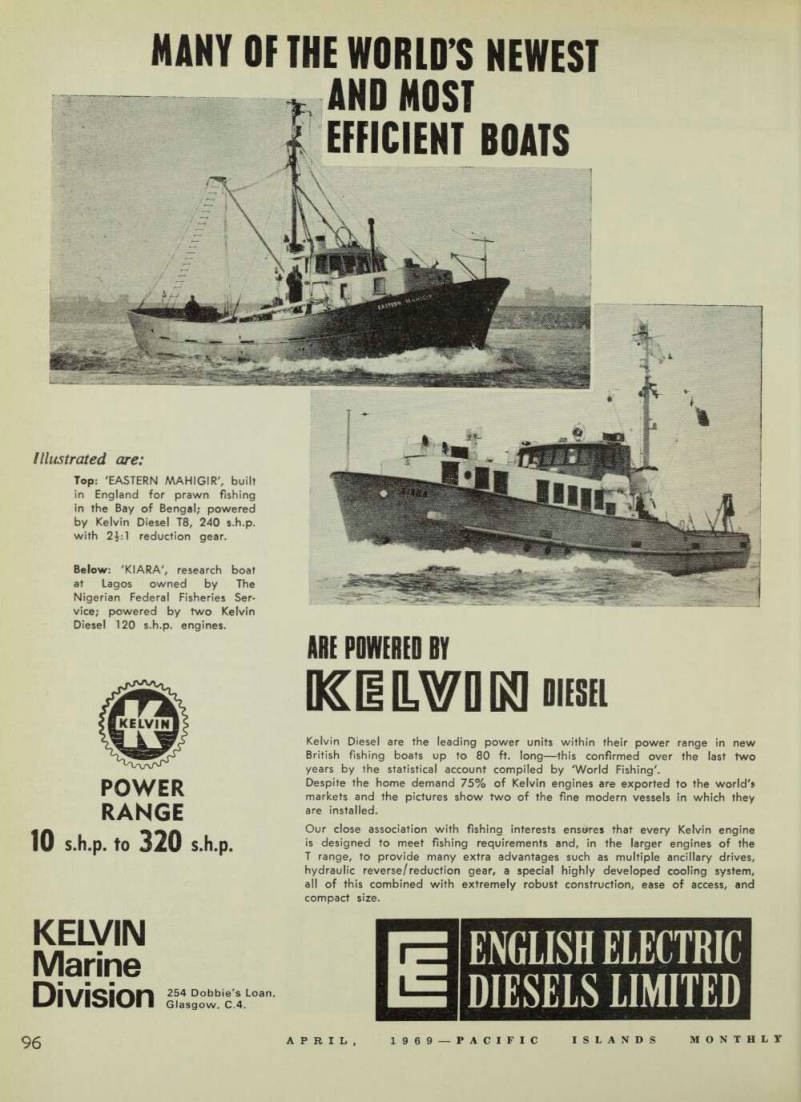 100
100 101
101 102
102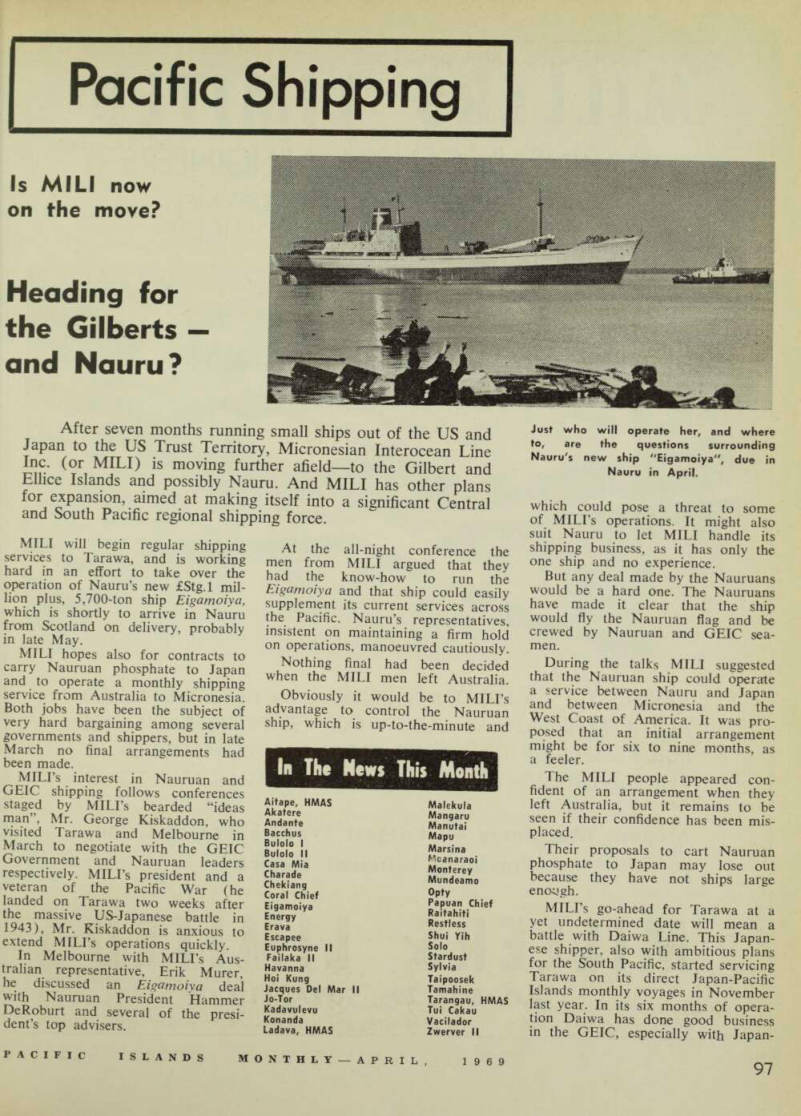 103
103 104
104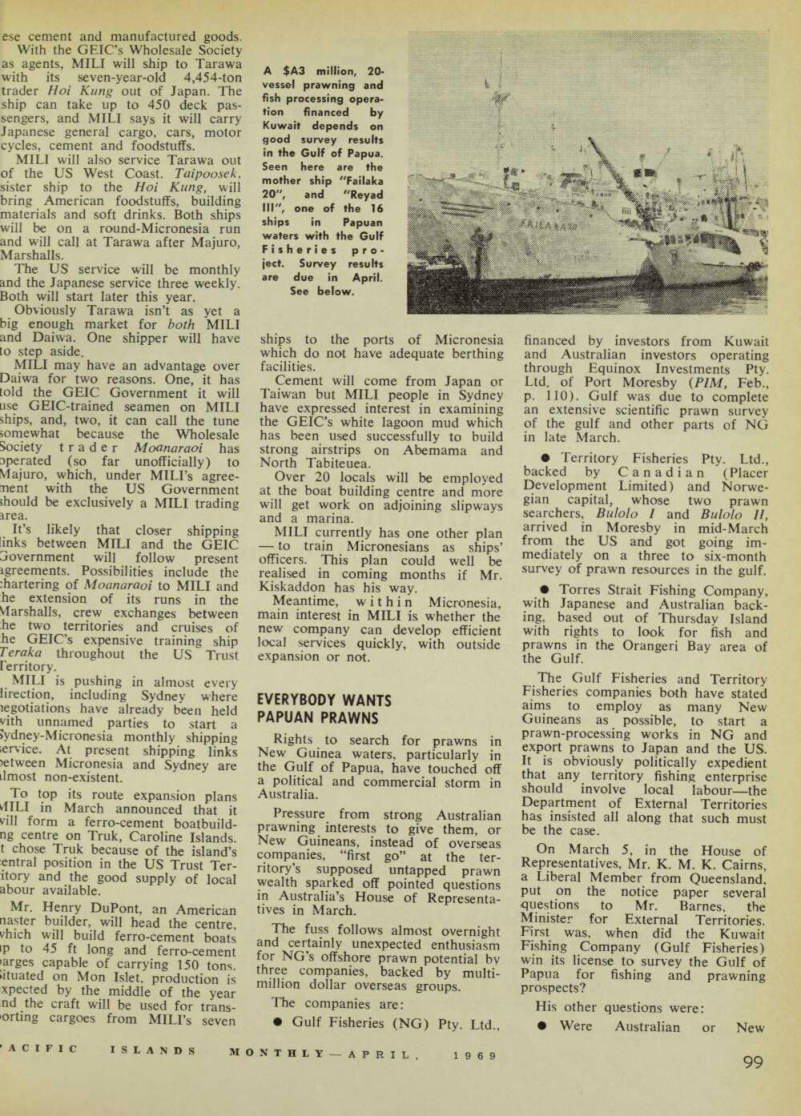 105
105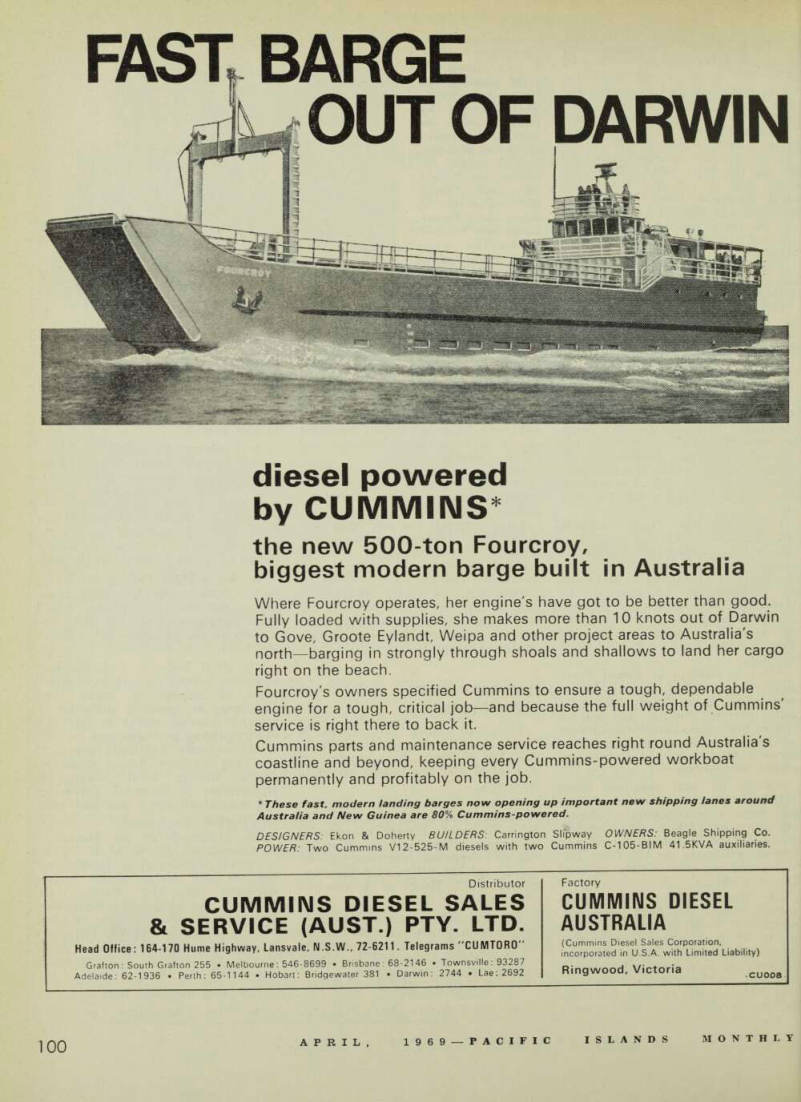 106
106 107
107 108
108 109
109 110
110 111
111 112
112 113
113 114
114 115
115 116
116 117
117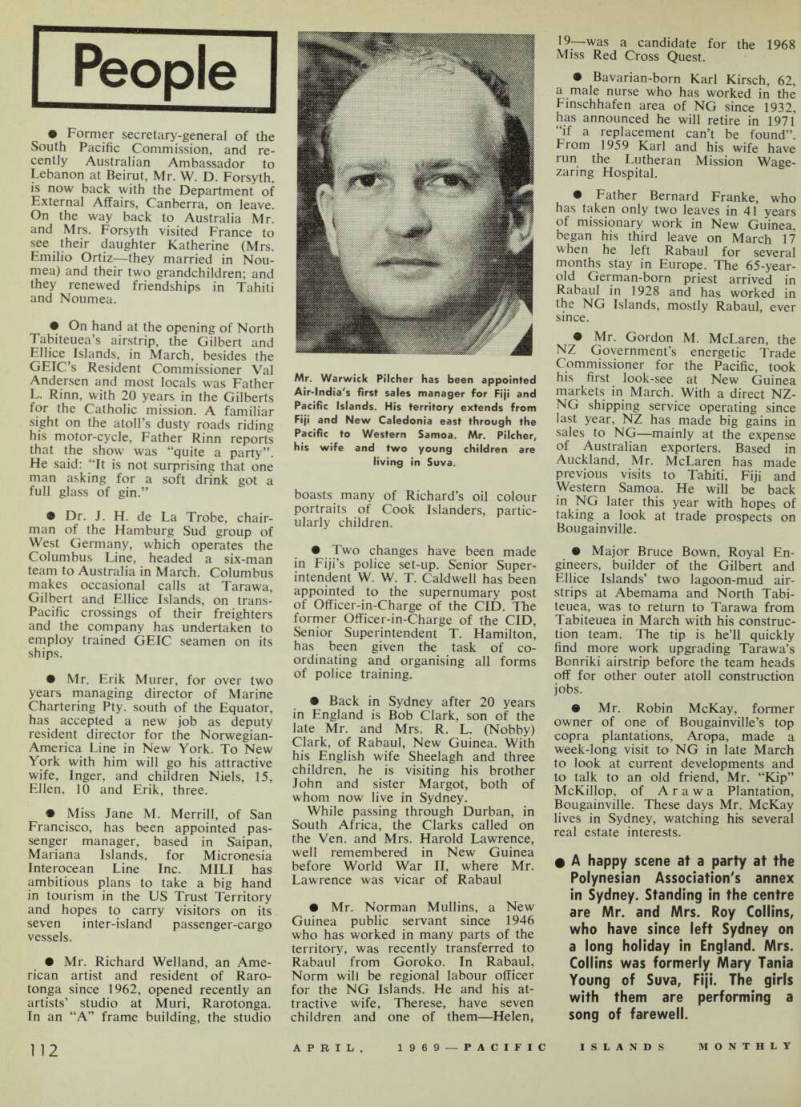 118
118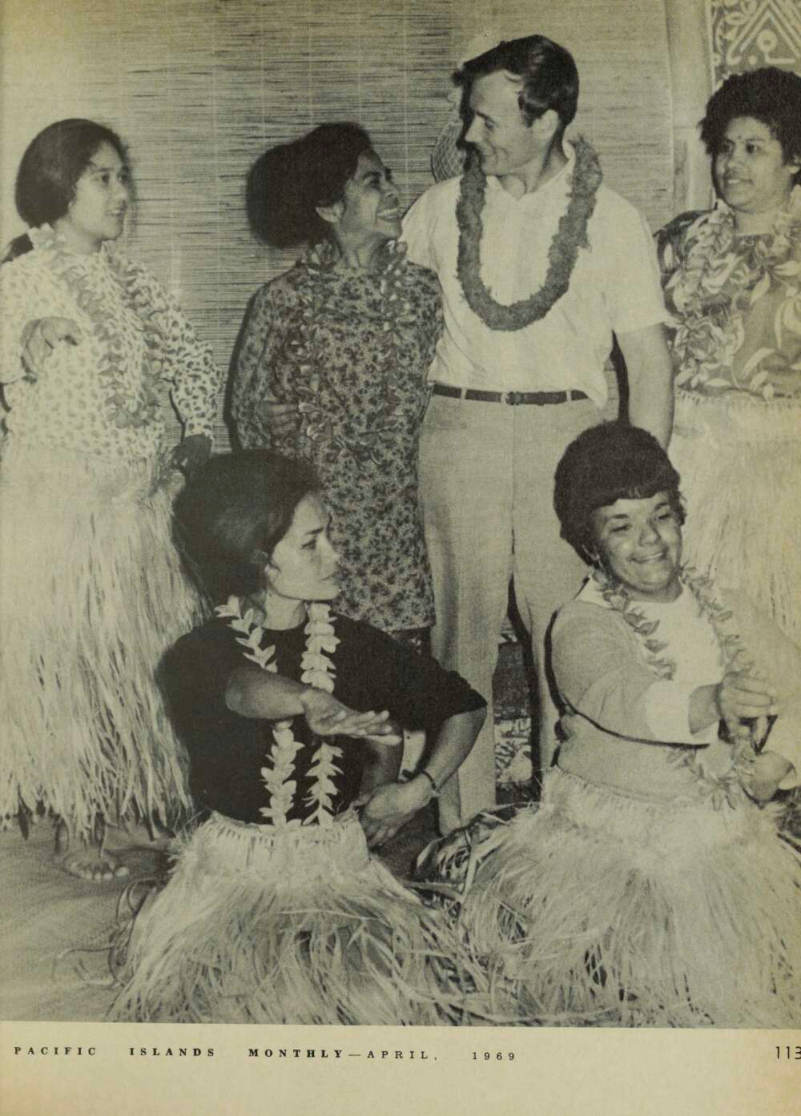 119
119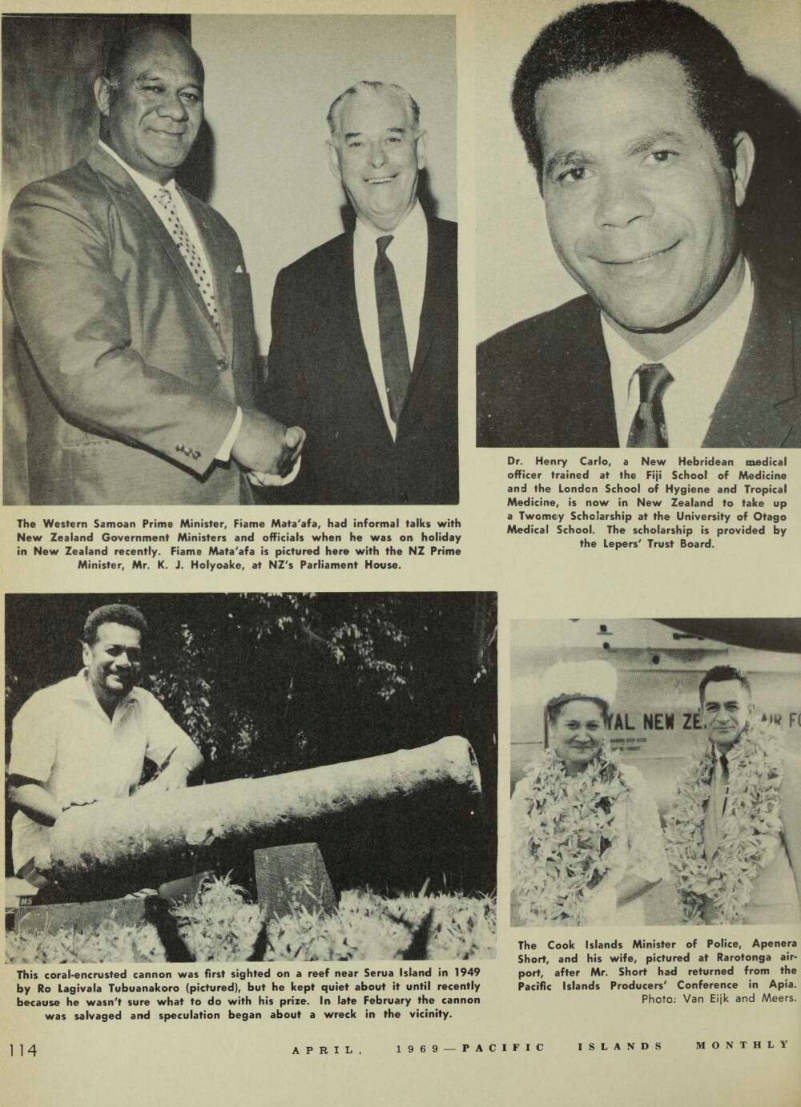 120
120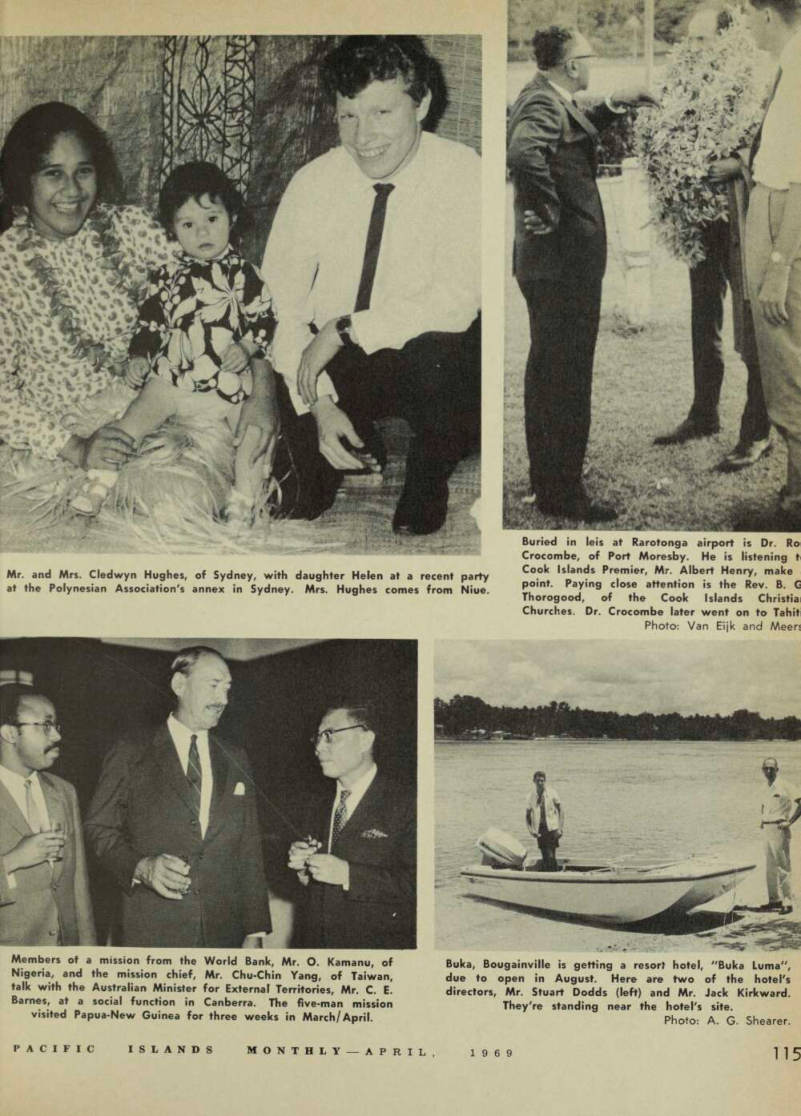 121
121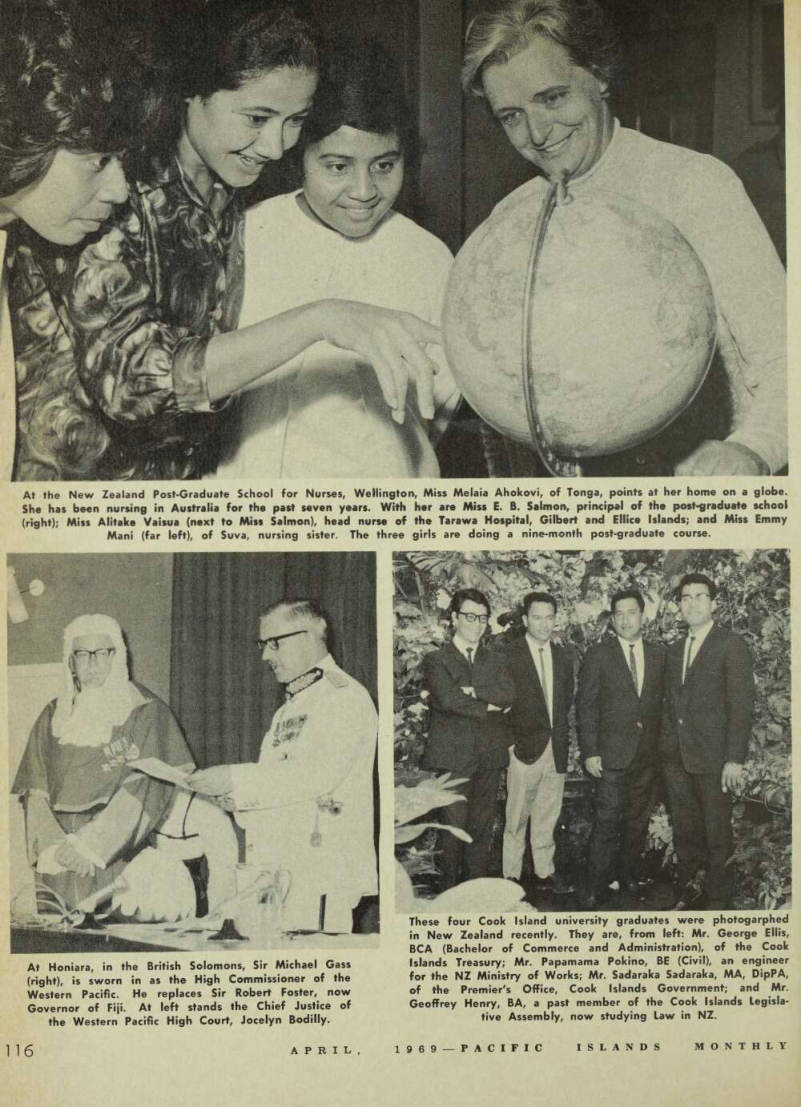 122
122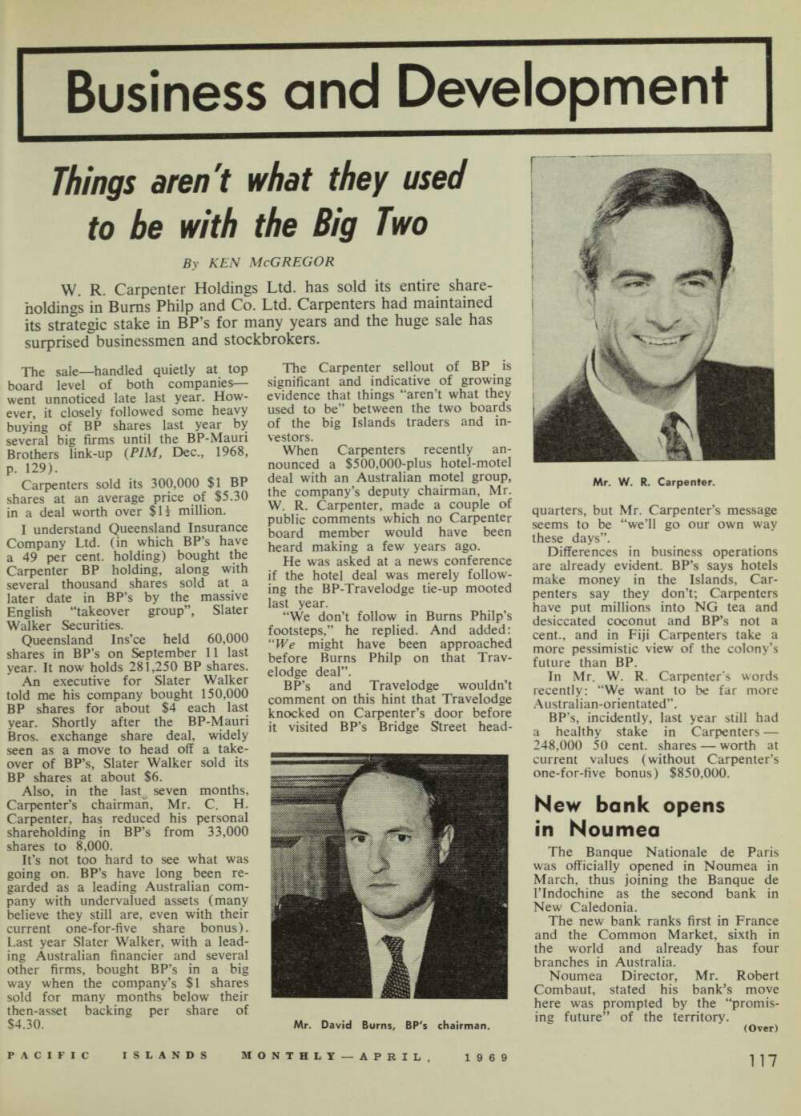 123
123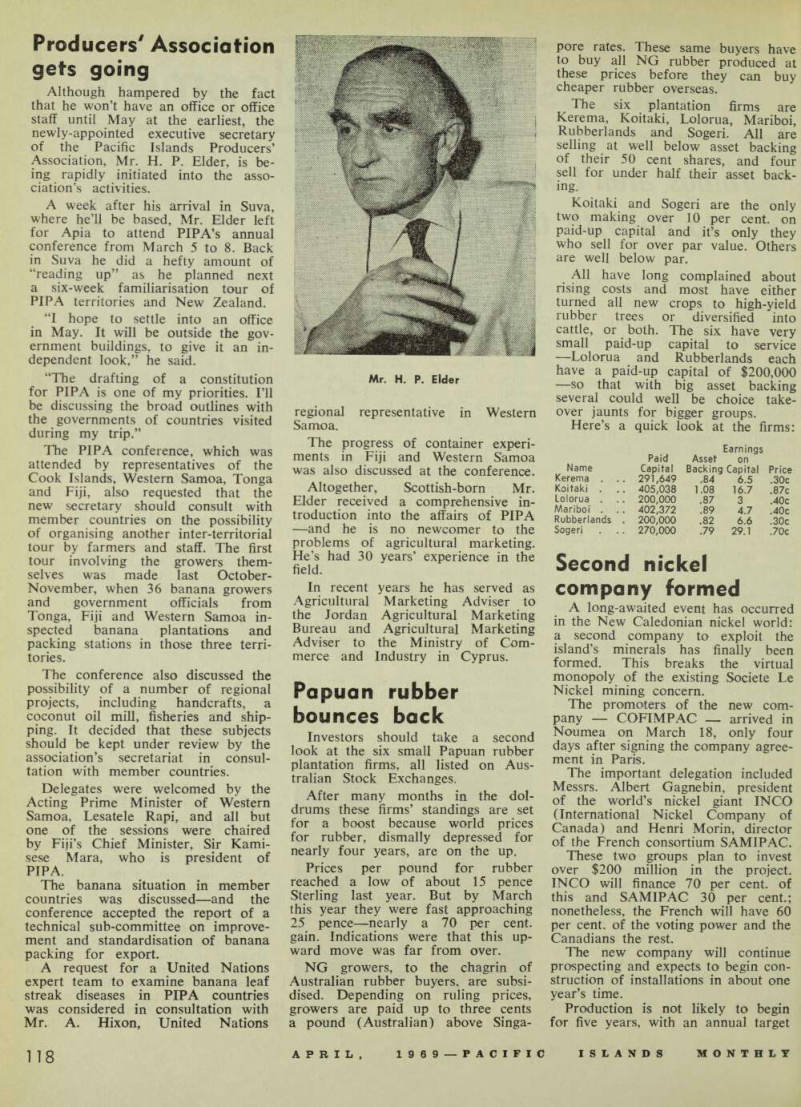 124
124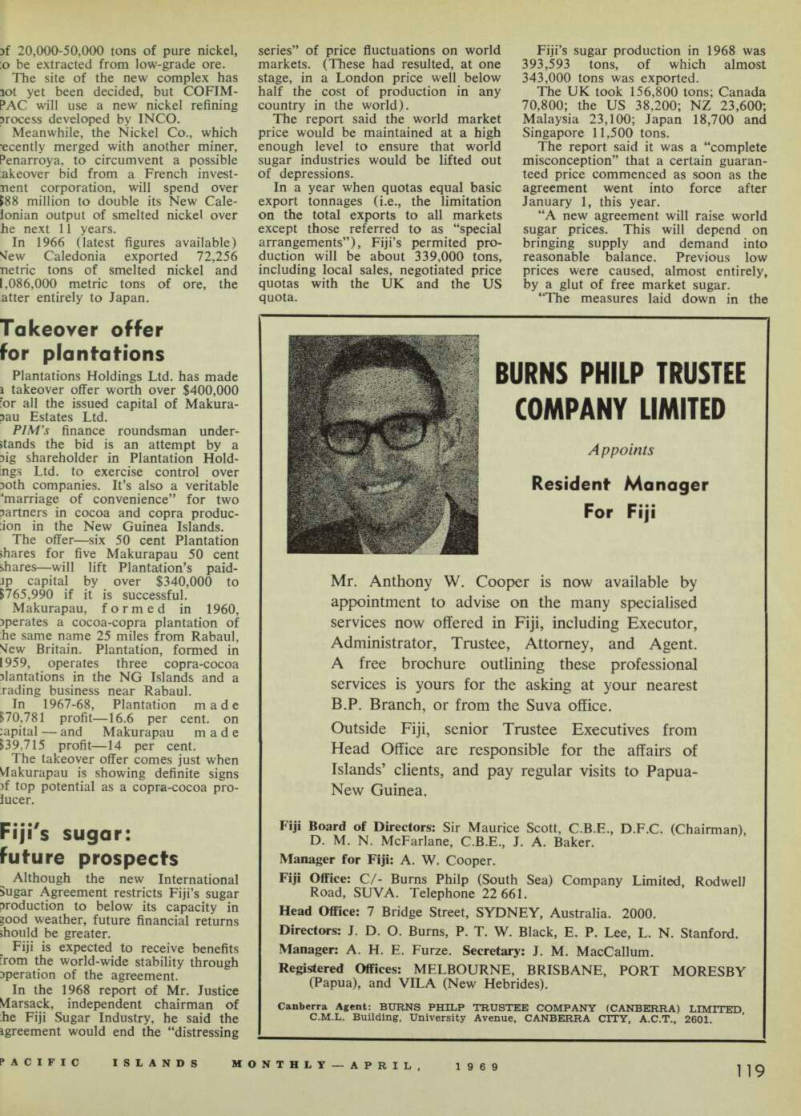 125
125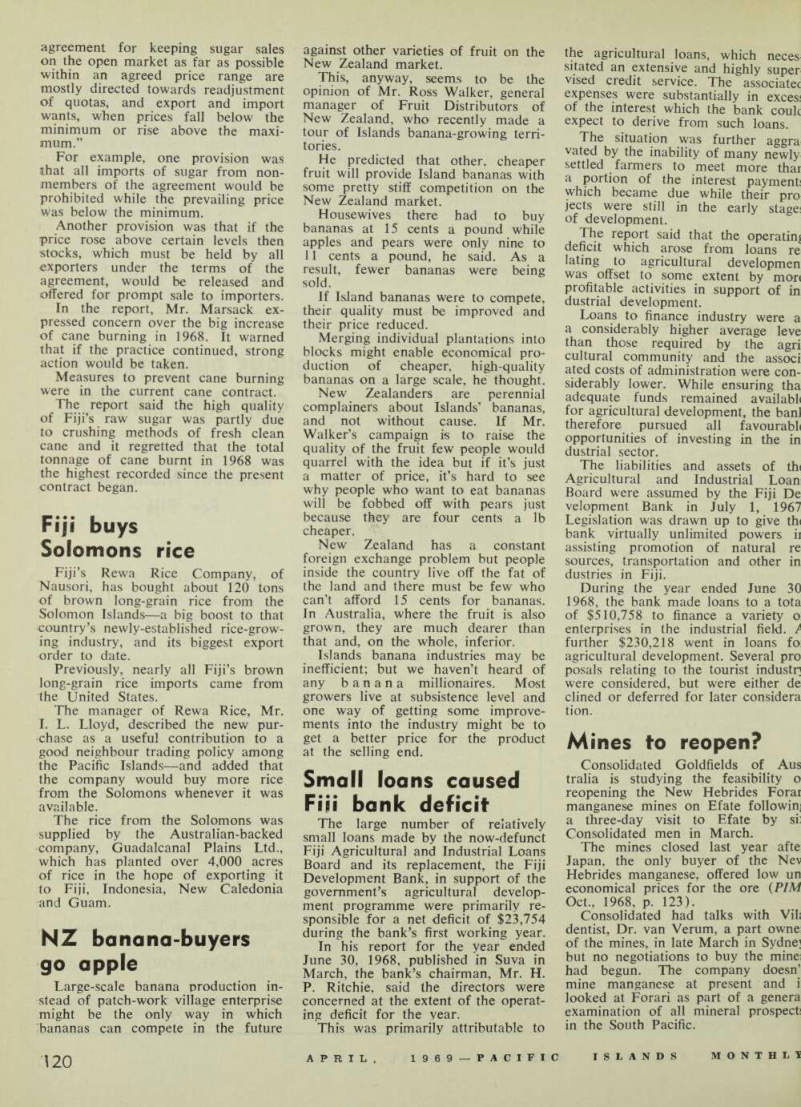 126
126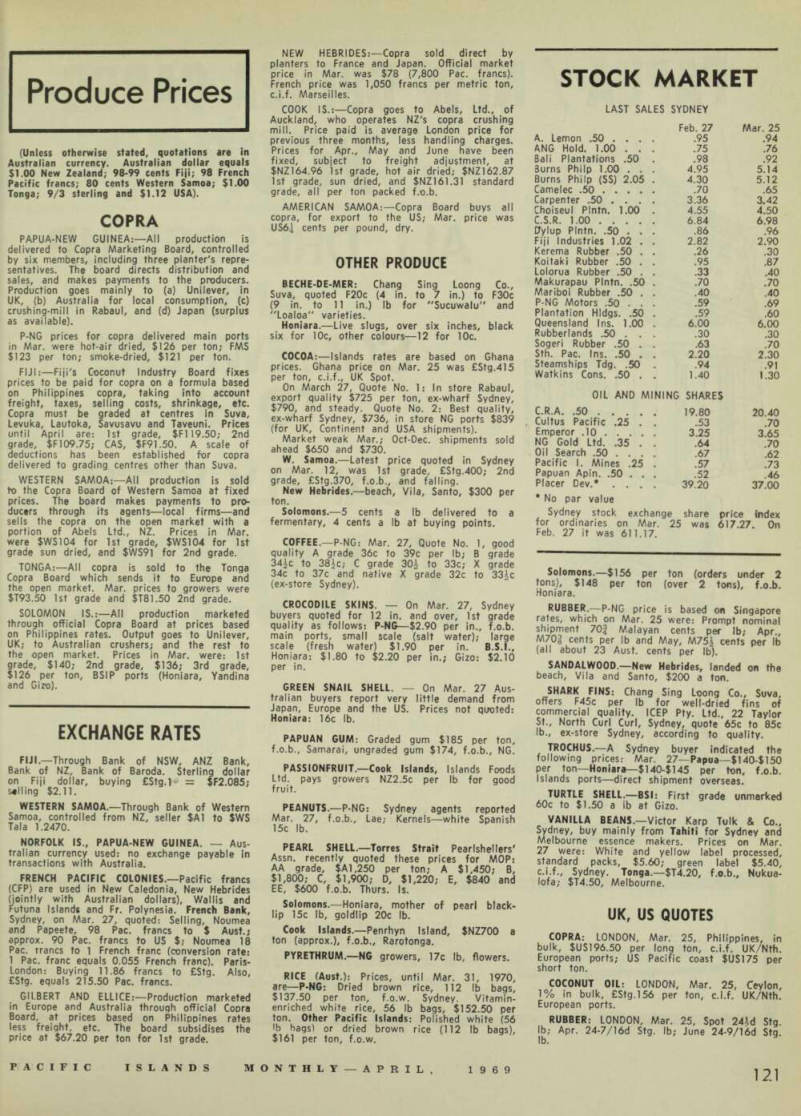 127
127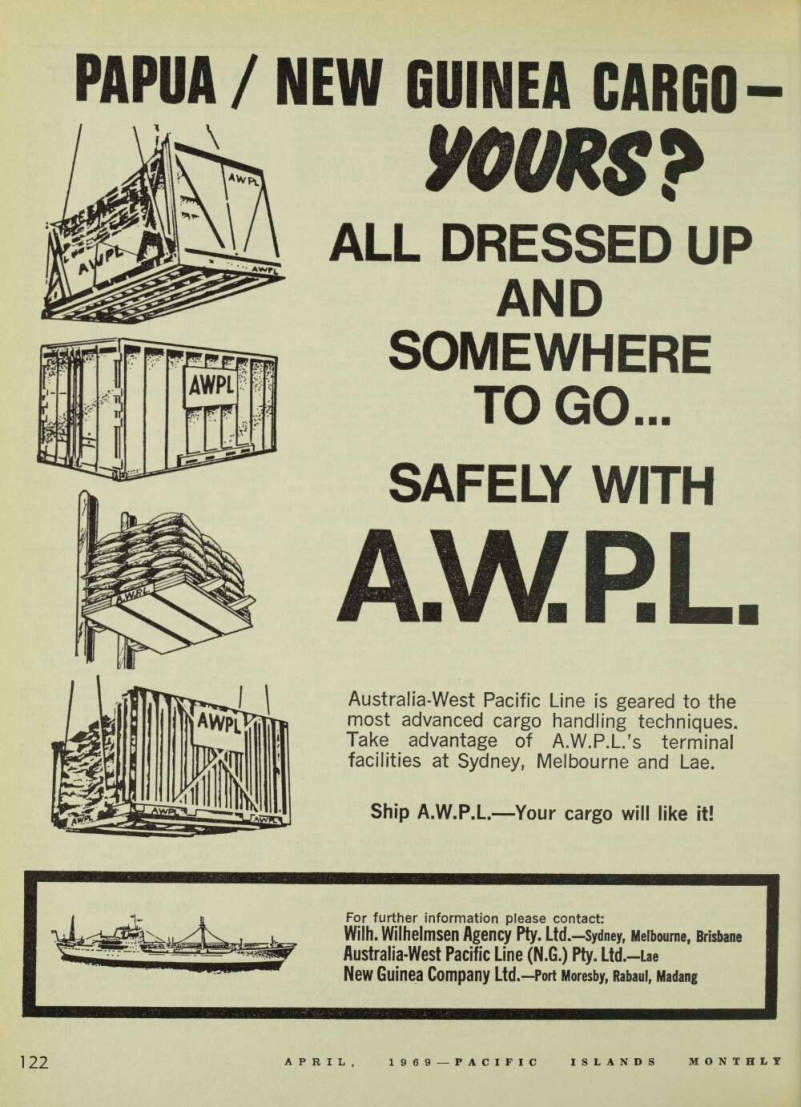 128
128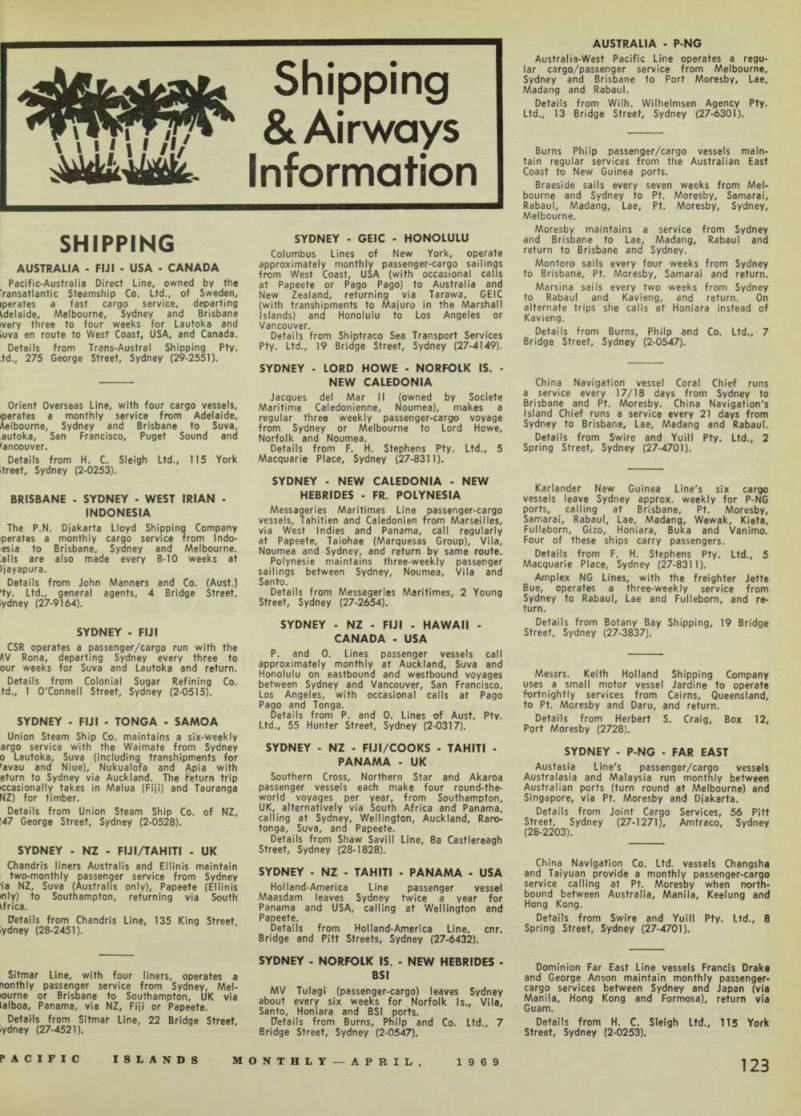 129
129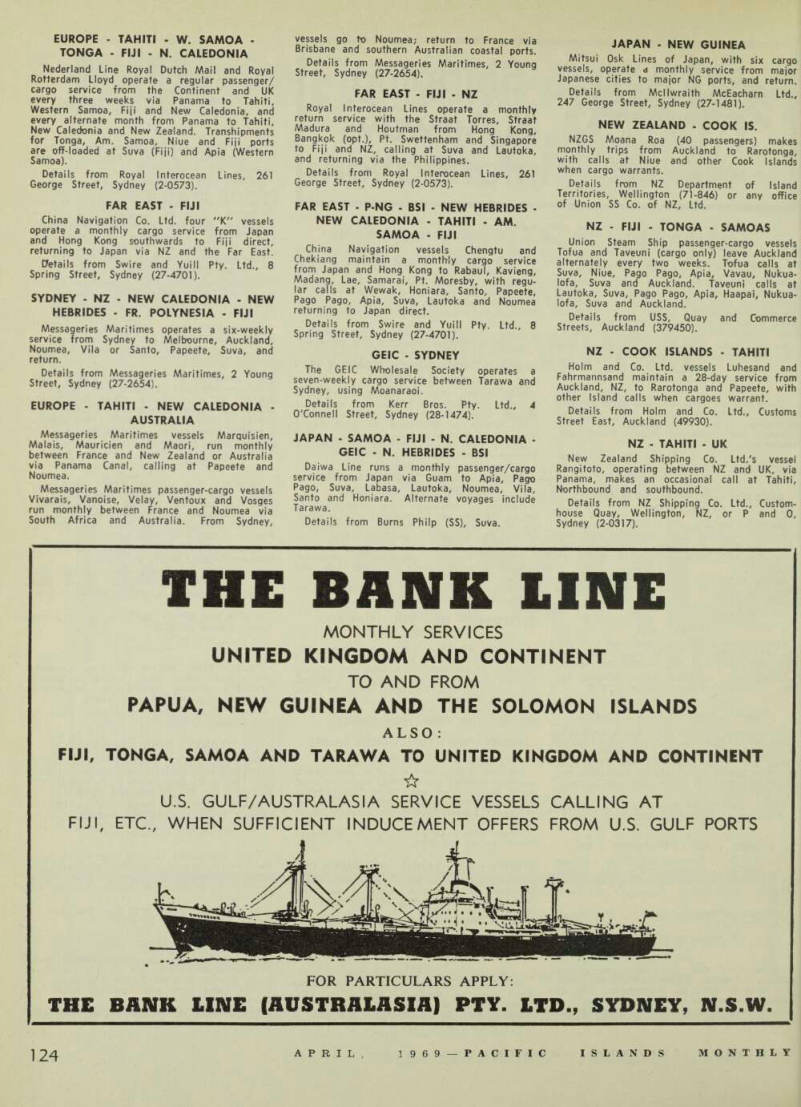 130
130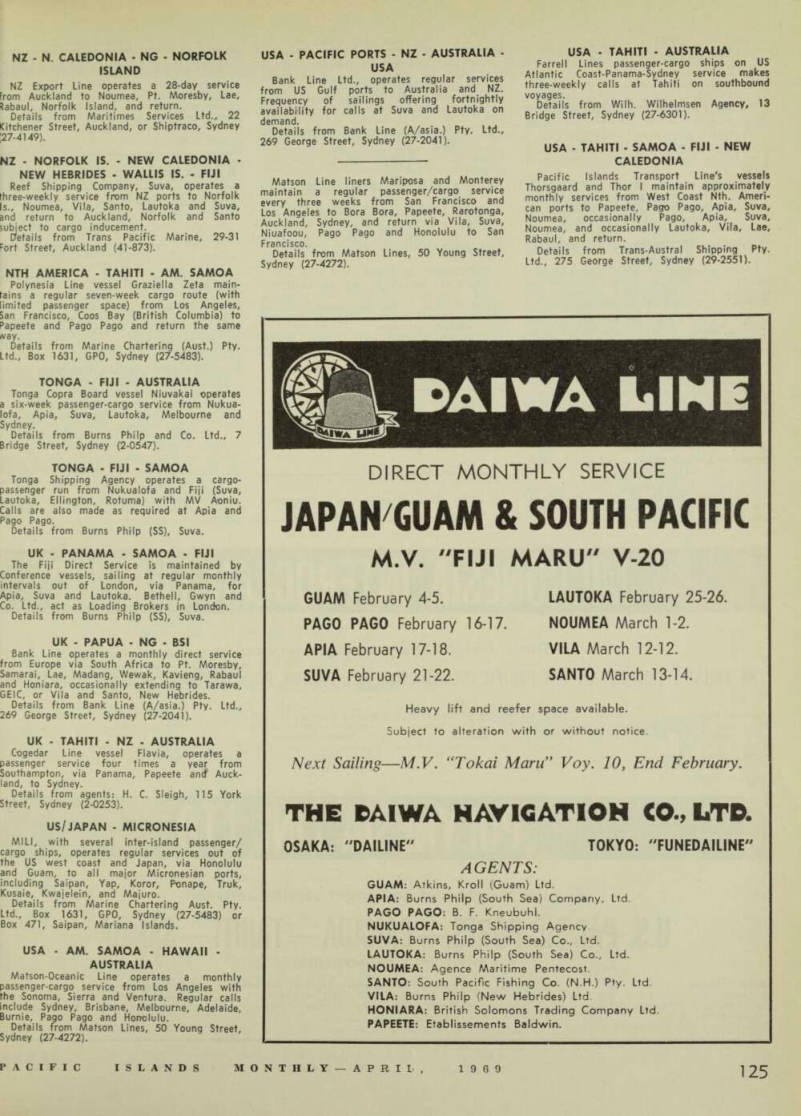 131
131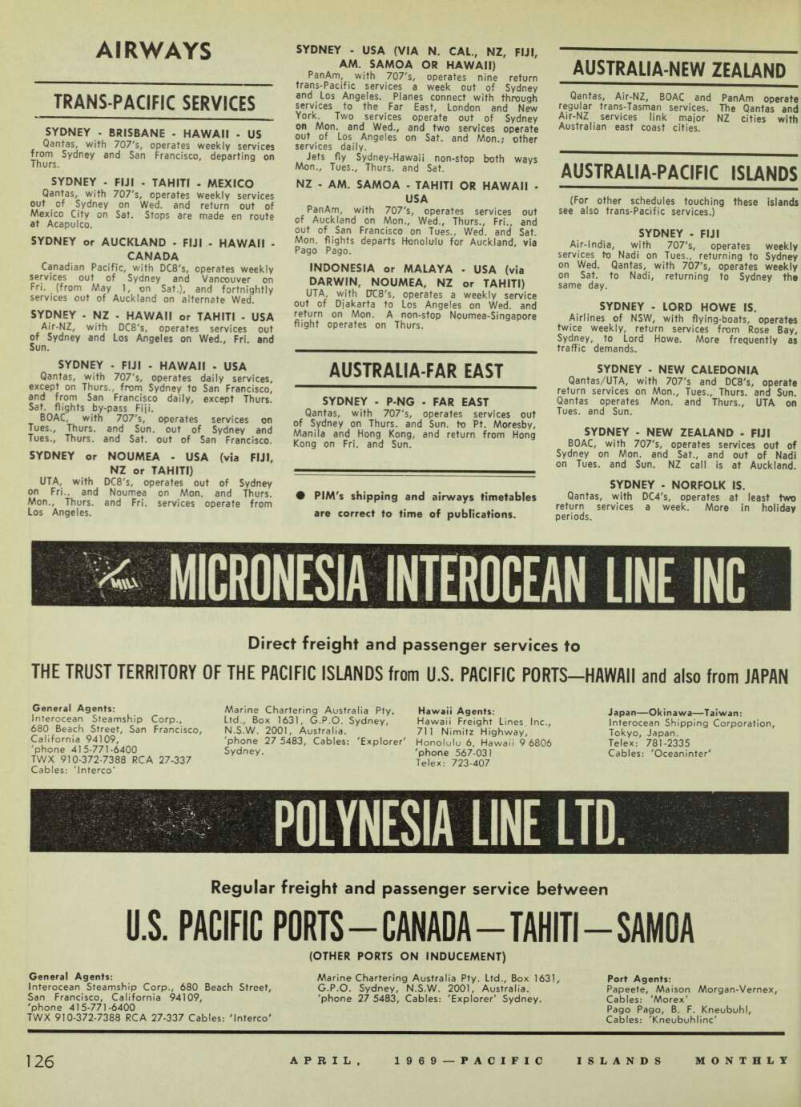 132
132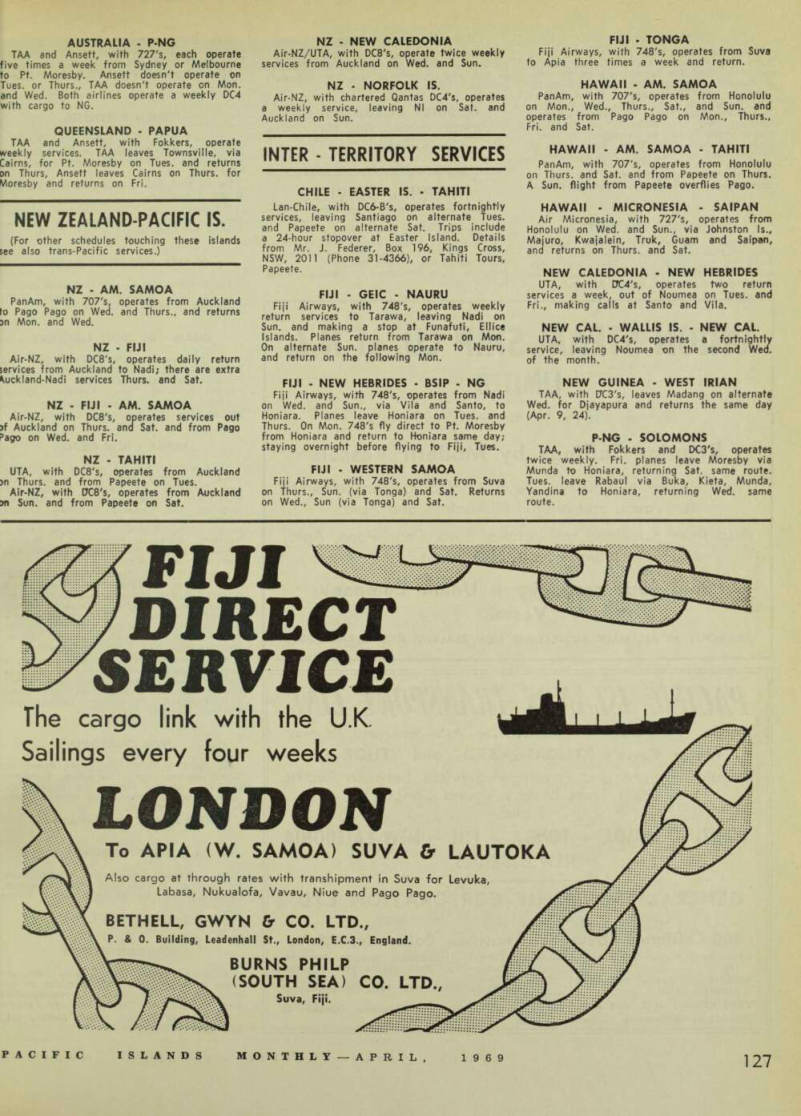 133
133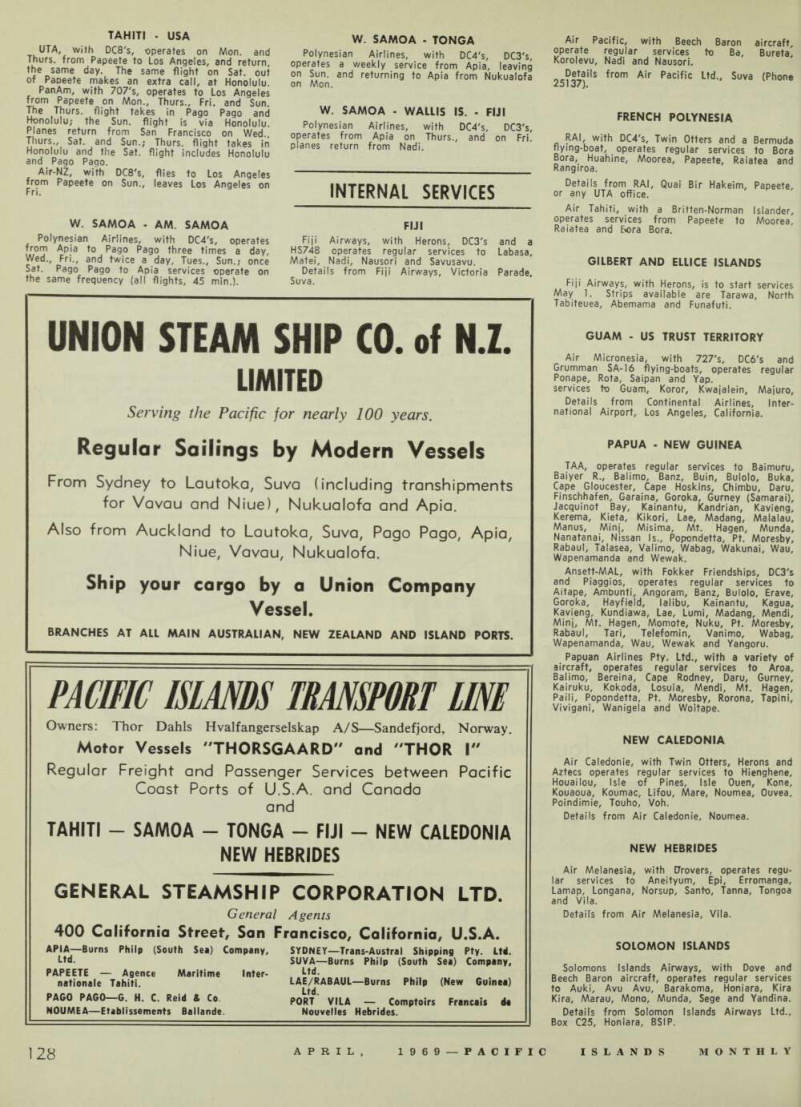 134
134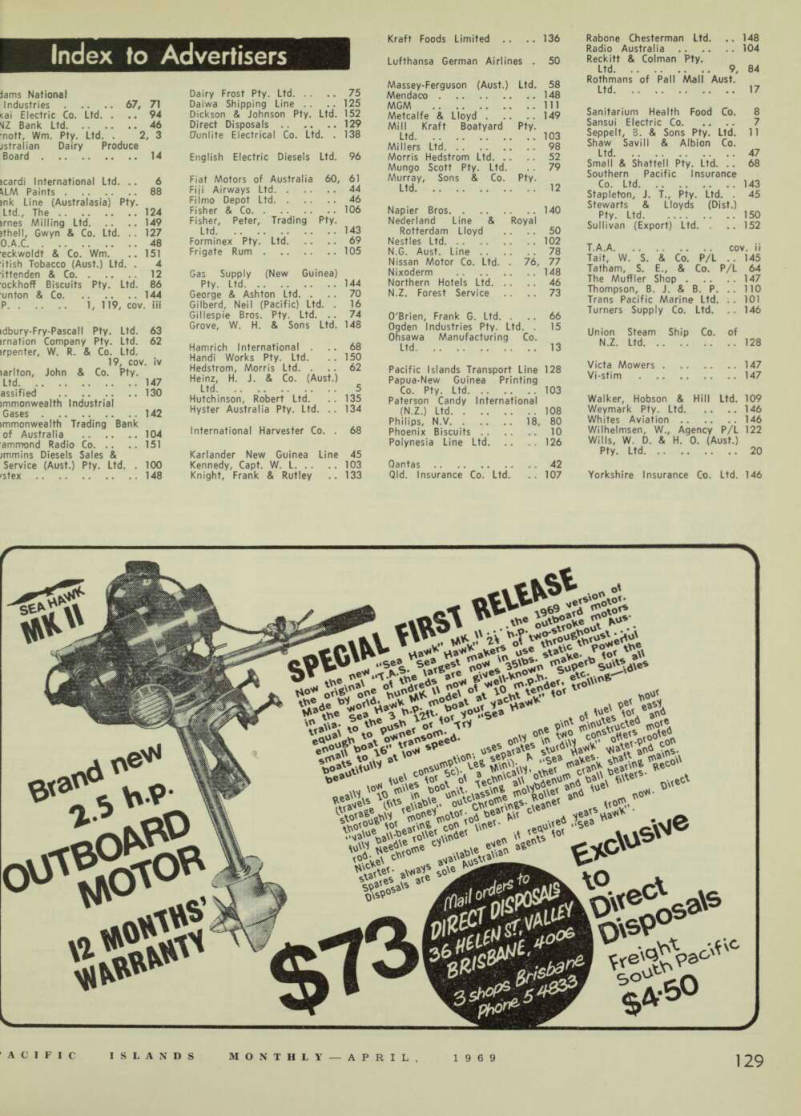 135
135 136
136 137
137 138
138 139
139 140
140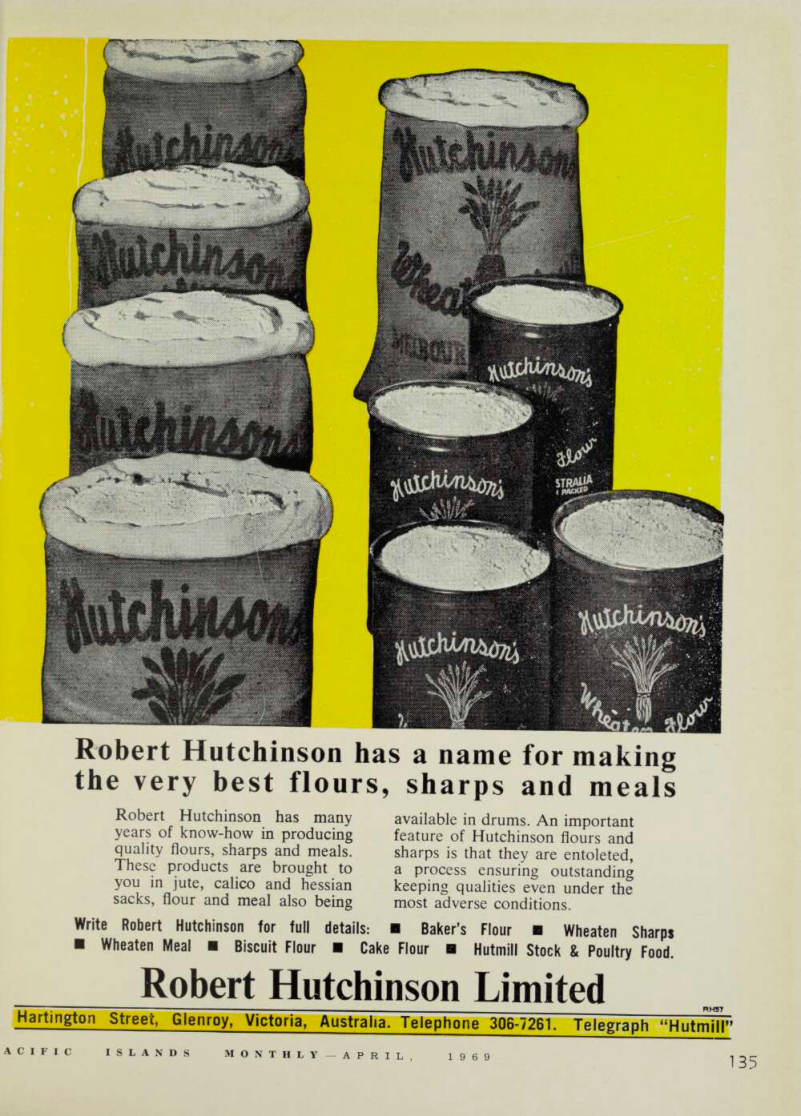 141
141 142
142 143
143 144
144 145
145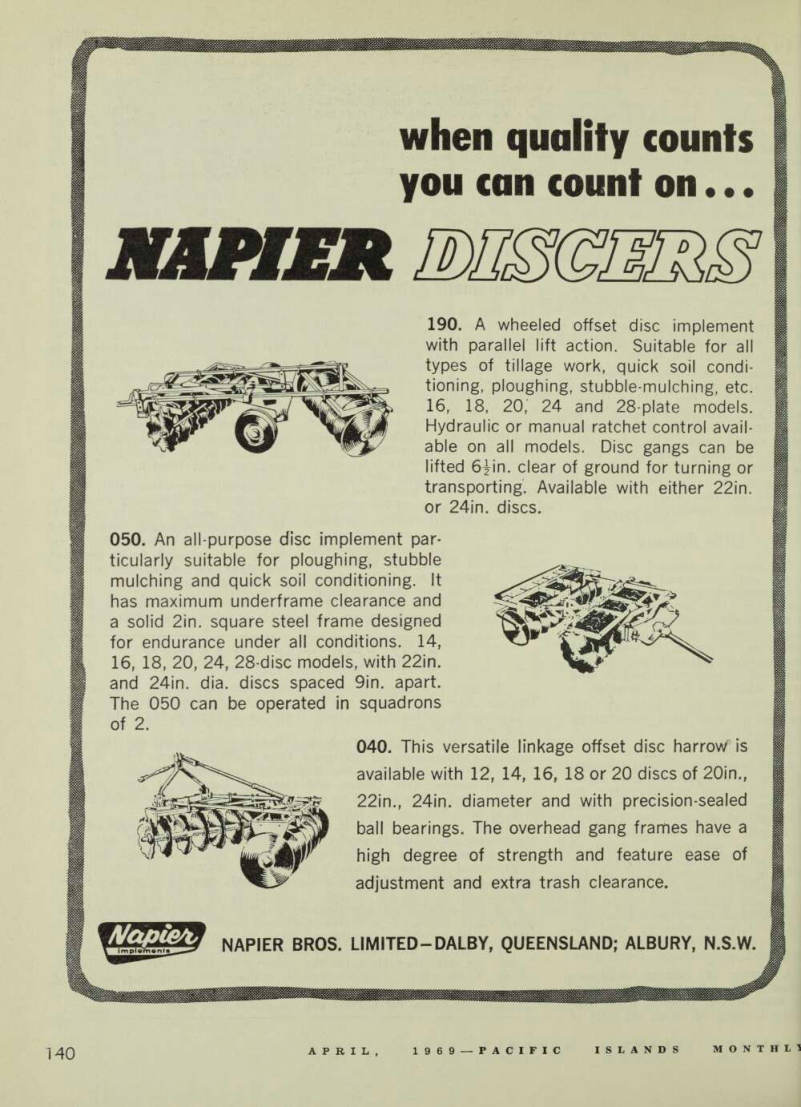 146
146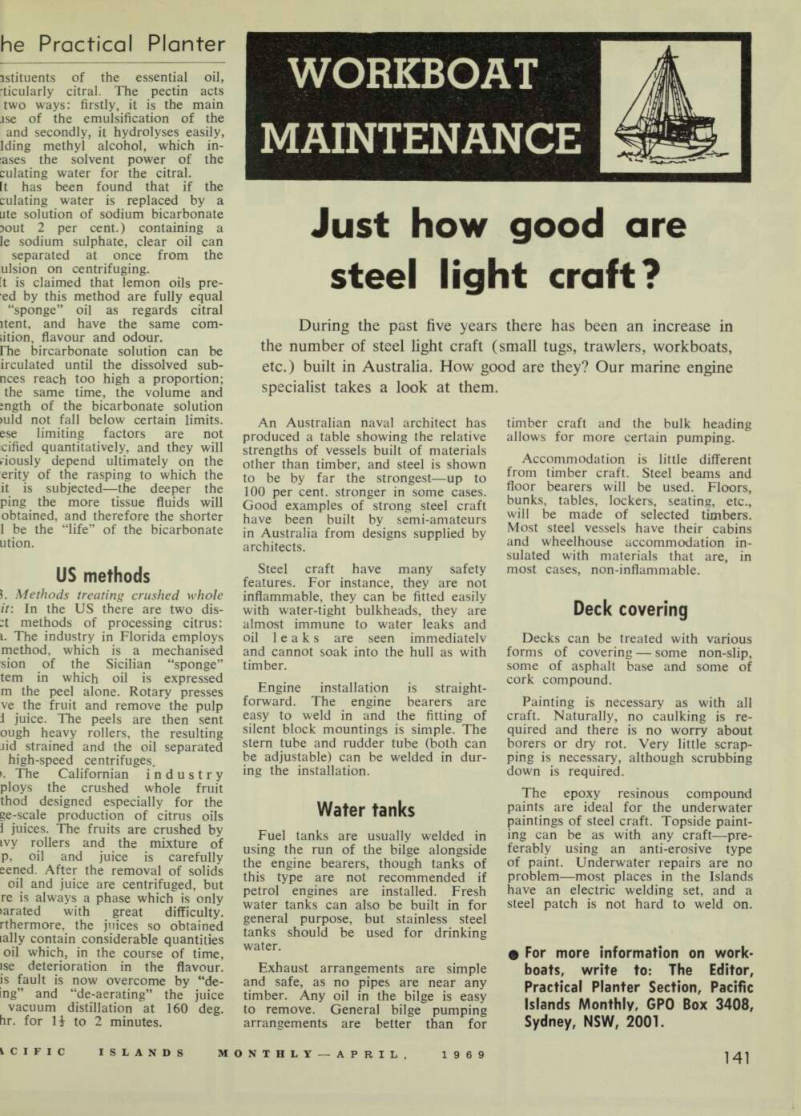 147
147 148
148 149
149 150
150 151
151 152
152 153
153 154
154 155
155 156
156 157
157 158
158 159
159 160
160