Monthly
Pacific Islands Monthly
Registered at G.P.0., Sydney, for transmission by post as a newspaper.
May, 1969
News Magazine Of The South Pacific
• AUSTRALIA, 40c. • NEW ZEALAND, 45c. #U.S. PACIFIC TERRITORIES, 70e. • FRENCH PACIFIC ISLANDS, 55 FRCS. CFP. • P.-N.G., FIJI AND ALL OTHER
Pacific Territories, 35C. Local Currency.
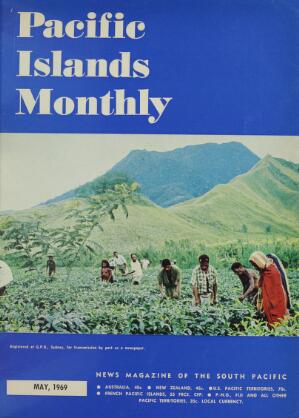
Our Cover
Everybody’s in it. Tea-picking outside Mt. Hagen in the New Guinea Highlands is a common sight these days with local and overseas investments in Highlands tea measured in millions of dollars. Already the first cargoes of NG tea have ended as “ cuppas” in North America, Europe, Australia and New Zealand. NG tea is building a reputation for quality and hopes are it will become a major export in the ’70’s.
Advertisements & other items, p. 2 (2 items)
May 1 9 6 9 -Pacific Islands Monthl
internationally!
Doin’ what comes
S-’-v.-- x m Get that international treatment in TAA’s “Bird of Paradise” flight to Australia.
Deliciously different meals are yours from canapes and aperitifs right through to dinner mints and coffee. Five hostesses are there to pamper your every wish. This is truly international flying. To and from Australia, always fly TAA’s “Bird of Paradise” Whispering T-Jet Service. Five flights weekly ... in both directions.
Contact your Travel Agent or TAA; Port Moresby 2101. Lae 2311. Madang 2478.
Rabaul 2567. Goroka 8. Mt. Hagen 4.
Wewak 103.
Fly TAA the Friendly Way
TAA
1331/^9
In This Issue
American Samoa
FV education shake-up 25 Molf economic report 25 'Jew era for Manua? 67
Zook Islands
/York on Aitutaki airstrip iv figh temperatures iv lAore time for the government 26 iervey Islands for sale 45 nternal airline moves 139 At. T. H. Perry resigns 141 : UI yacht race iv Jew bishop installed 20 •wimmers shape up well for Games 21 Governor speaks out 23
ndependence? 24
’Bounty"—new cruiser 41 load improvements at last 45 ibliography 91 Canadians in development scheme ... 149 lale of Wakaya Island opposed 151
Rench Polynesia
'No" to de Gaulle 27 lotel Maeva to open 49 aiatea's new mayor 139
Gilbert And Ellice Islands
iji Airways gets services 27 American "rescued" from Nanumanga 30
Agnes Corrie, pioneer 79 Anton Meyer, early trader 81
Lord Howe Island
Politics and tourism 63 Ned Avary to stay 110
Nauru
Shares taken in Fiji Airways 29
New Caledonia
Aviator to "try again" 28 Fred Dunn returns 30 Shaw Savill to call 45 Airstrips for Wallis, Isle of Pines ... 47
NZ shipping squabbles 103
New Hebrides
Duke and Duchess of Kent to visit .. iv ANZ bank to move in 29 Aviation changes 29 Capt. Rusden sells Paulmarkson 103 Swedish lines to call 105 Manganese talks off 116
Niue
Electricity and other big changes ... 87
Norfolk Island
Visits by New Caledonians 40 Tourist Bureau changes 49
Papua-New Guinea
Anglican church near independence .. iv
Public service localisation 27 Taxes to go up? 27 PI Mines meeting 30 New book on art 31 Bob Stuart and Tenakau 32 John Ryan leaves ABC 32 Milne Bay's big future 33 Border trouble ... 34 Missionary book 93 Book on Jack Hides 95 Second NZ ship 101 BP charters second ship 103 Copper developments 115 PNG Motor's first report 116
Pitcairn Island
Pastor Ferris' letter 15
Solomon Islands
Good progress on Henderson Field .. iv RN paints Gizo red 31 Don Marsh's Santa Cruz fishing story 85
Tonga
Open gates to overseas business ... 19 Banana stamps 20 David Feflta leaves 26 Rev. Harris goes in June 110
Us Trust Territory
Japanese pay homage to war dead .. 83
West Irian
Border trouble 34 $1 billion mineral find 115 NZ timber contract 116 Development bank to start 116
Western Samoa
Chiefs maintain power 28 Economic prospects good 149
DEPARTMENTS: Up Front with the Editor, ii; In a Nutshell, iv; Letters, 15; Tropicalities, 30; Travel, 39; To the Point with Percy Chatterton, 51; Islands Press, 70; Magazine Section, 79; Yesterday, 89; Book Reviews, 91; Shipping, 101; Cruising Yachts, 107; People, 110; Commerce, 115; Produce Prices, 121; Shipping, Airways Schedules, 123; Deaths of Islands People, 130; Practical Planter, 133; Index to Advertisers, 128.
Pacific Islands
Monthly
Established 1930: 39th Year of Publication.
Owned And Published By
Pacific Publications (Aust.) Pty. Ltd.,
29 Alberta St., Sydney, N.S.W., 2000.
Postal Address: G.P.O. BOX 3408, SYDNEY,
N.S.W., 2001.
Telegraphic Address; PACPUB, Sydney.
Telephones: 61-9197, 61-7101, 61-4369.
Chief Executives: Managing Director: R. W. Robson.
Executive Director/Publisher: Judy Tudor, Executive Director/Business Manager: Selwyn Hughes.
Executive Director/Chief Editor: Stuart Inder.
Pacific Islands Monthly
Editor: Stuart Inder.
Advertising Manager: W. A. Gasnier.
Branch Offices
Melbourne: Newspaper House, 247 Collins St., Victoria, 3000. Tel.: 63-7053.
Fiji: Pacific Publications (Fiji) Ltd., Fiji Times Building, 20 Gordon Street, Suva. Tel.: 25601.
Fiji Times Office, Vidilo Street, LAUTOKA.
Tel.: 60-422.
Papua-New Guinea: Pacific Publications (N.G.) Pty. Ltd. Representatives; PORT MORESBY, P.O.
Box 16; LAE, P.O. Box 227; RABAUL, Mr.
Steve Simpson, P.O. Box 154 (Tel.: 2547).
Representatives
Queensland: Advertising—Beale Media Services, 232 St. Paul's Terrace, Brisbane, 4006. Tel.: 51-5827.
New Zealand: General.—J. D. Whitcombe, C.P.O.
Box 2229, Queen Street, Auckland. Tel.: 76056.
Advertising.—John Bayldon, P.O. Box 366, Auckland. Tel.: 31569.
United States: Mrs. A. L. Craib, 782 Neilson St., Berkeley, California, 94707. Tel.: 5273503.
United Kingdom: S. R. Warman, Park House, 22 Park Street, Croydon, CR9 3NP. Tel.: 01-6884177.
H. A. Mackenzie, 4A Bloomsbury Square, London. W.C.I. Tel.: Holborn 3779 Japan: Advertising—Universal Media Corpora tion, C.P.O. Box 46, Tokyo. Tel.: 666-3036.
Agents
All main trading firms and stores in the Pacific Islands.
Pacific Publications Pty. Ltd. is the Australian agent for THE FIJI TIMES.
Subscription Rates:
"Pacific Islands Monthly" is air-freighted to all subscribers and agents in the South Pacific; copies to other areas go by surface mail.
Australia (inch Lord Howe Is., and Thursday Is.): $4.50 Aust.; Papua-New Guinea, Norfolk Is., Nauru, 8.5.1., G. & E. Group, Tonga and New Hebrides: $4.00 Aust.; New Zealand: $5.25 NZ; Cook Is., Niue and Western Samoa. $4.00 (local currency); Fiji $4.00 (local currency); American Samoa and U.S. Pacific Territories: $B.OO (local currency); French Pacific Territories —New Caledonia, Tahiti, etc.: 660 French Pacific francs; United States of America: $9.00 U.S.; United Kingdom and elsewhere: £2/15/- Stg.
Airmail postage to USA, UK and elsewhere is additional.
Copyright ©, 1969, Pacific Publications (Aust.) Pty, Ltd.
Up Front
with the Editor
I suppose it shall be taken as no compliment to other South Pacific territories if I say the reason why I so frequently talk about New Guinea affairs in this column is because I find New Guinea’s problems so lively these days.
Take New Guinea developments in April. The month began with a donnybrook on the Administration’s decision to resume Bougainville’s Arawa plantation for roads, houses and supermarkets needed for CRA’s copper development plans.
Then came a whopping great fuss over something the Minister for Territories was supposed to have said in Port Moresby about “freezing” the territory’s constitutional develop ment for the next seven years.
A Russian writer named Semenov was banned from entering New Guinea and made a noise all the way back to Moscow. Debate on his ban shared equal billing with newspaper attacks on the Minister for External Affairs, who had mean while come out flatfooted in support of Indonesia’s dishonest method of polling the West Irianese about their political future.
The month ended with a real live border incident, like they used to have in Europe, with Indonesians actually shooting at us and police reinforcements being flown in.
And those were only the high lights of New Guinea’s month!
West Irian
I don’t believe even the Indonesians could have had much respect for the Australian External Affairs Minister, Mr. Freeth, for his support of what they propose to do in West Irian.
They know better than anybody that their system of consultation with a mere 1,000 West Irianese is a sham act of determination, in contradic tion to the spirit of the 1962 UN agreement.
The West Irianese are the victims of an oppressive colonialism, and if Mr. Freeth doesn’t believe it’s politic ally expedient to condemn Indonesia for it, then instead of condoning it
he might have had the decency to shut up.
Mr. Barnes’ decision to keep that Russian out of New Guinea like wise earns him the award of the Coconut Cluster for Woodenheads, Maybe the Russian did apply at the very last minute for a permit, maybe he was more interested in reporting for Pravda than writing a novel, maybe he was Ivan the Original Spy, but the way to deal with him was how Professor Henry Mayer has since suggested . . . “by arranging a resolution by New Guinea politici ans welcoming Mr. Semenov. Mr.
Semenov would have been wined and dined, given access to archives, and have had an aide to spy on him.
All this on the premise that, in the short run, things in New Guinea are stable, that gestures are cheap . . .”
Arawa case
Outside of New Guinea, people may wonder what the Arawa fuss is all about. Plantations —especially large and old-established plantations —are news in New Guinea, where the economy is built on the coconut.
“Kip” McKillop, of Arawa, runs an efficient plantation that he’s proud of. It’s 1,000 acres, most of it free hold, all under crop, and producing 40 tons of copra a month, and 50G to 600 tons of cocoa a year. Bui McKillop’s special love is 30 acres set aside as a plant-introduction centre irreplaceable, priceless— with fruits, nuts and plants from all over the world, including what is probably the world’s best private orchid collection.
It all goes under the bulldozer, together with 3,200 acres of native land. McKillop’s argument is that Arawa is onlv third or fourth in order of suitability for a town site for CRA (which, in fact, doesn’t want it as a site), and that the de
cision to resume the land is political —designed to prove to Bouvainville that European landholders, too, can cop it in the neck. Why, McKillop asks, should this economic develop ment be wiped out when it is pos sible to retain it, and the copper income, by resuming less-developed land elsewhere.
The core of the matter—the reason why tempers have risen—is this suspicion that there has been dis crimination against Arawa for reasons of political expediency.
Having asked my own questions when I visited the territory in April, I’m in no doubt myself that the decision is, largely, political. The fact that there are also some legiti mate reasons for it is being seized on by the Administration in its own defence and stressed out of propor tion.
Frozen constitution
On The Puzzling Case of the Frozen Constitution, I’m for Mr.
Barnes. His critics followed the wrong clues. I was one of those at his Port Moresby news confer ence, and when I later saw what some of the newspaper com mentators did to it I wondered if there’d been a conference I missed.
The front page lead story of the Sydney Morning Herald was headed, “Barnes sees a 7-year pause in New Guinea”, followed by, “The Minister for External Territories indicated yesterday that he wanted no major constitutional advance in P-NG for at least another seven years. ‘We have got to be patient about these things’, he told a Press conference in Port Moresby. . .” For the next few days the newspapers were talk ing as if Mr. Barnes had “frozen” all constitutional advance.
At the news conference Mr.
Barnes merely had been asked if he anticipated the need for any con stitutional changes in the life of the present Assembly (which has another three years to run of a four-year term). He replied that he didn’t anticipate “any major changes” in this House. It was his “personal view” that they ought to be allowed to settle down for a term, “or even two”.
That’s all. It wasn’t exciting, and the conference droned on to other matters. The key word, after all, was ‘major”.
It doesn’t require any constitu tional changes, let alone major :hanges, to give New Guinea a larger measure of self-government. Under last year’s amendments to the Papua- New Guinea Act, which is the terri tory’s constitution, the seven Min
isterial Members in the 94-member Assembly have far more authority than any of them has yet taken.
They are empowered to exercise joint authority for their departments with departmental heads and to initiate and formulate policies. If they can’t get their departmental head to agree on a matter they can refer it to the Administrator for decision.
The Ministerial Members can, in the executive council (where they are in the majority), initiate pro posals for legislation, including the draft budget.
And from April 1 the Ministerial Members, and the Assembly gener ally, also have a better chance of influencing the policies of the Public Service, whose direction has been reconstituted under a four-man board, two of them New Guineans.
If nothing much has happened yet along these new corridors of power, don’t blame the constitution. And it’s no use the Pangu Pati blaming the Ministerial material, since Pangu itself wouldn’t allow its members to hold office, and it smacks of sour grapes.
The machinery is there, and the corridors of power will echo with a less hollow ring when the Min isterial Members, their assistants and supporters, learn to put a firm foot to the fat behinds of some of those expatriate departmental heads who are out of sympathy with the aims of the Assembly; and when they learn to identify and fight, in their de partments and in the executive council, the more bureaucratic in trusions of Canberra.
Unlike Mr. Barnes, I hope it won’t take them seven years to feel their strength, but at their present pace it may, unfortunately, take them the
next three.
Stuart Inder
Advertisements & other items, p. 5 (1 item)
primitive art?
Are you interested in
Pastor E. F. Hannemann was. During his 30-odd years in New Guinea he collected designs from drums, spears, bows, bowls, lime containers, etc. The best of these have now been published in a 56-page folio as
GRASS ROOTS ART OF NEW GUINEA
PRICE: $1.35, plus 5c posted, within Australia and New Guinea; Pacific Islands and overseas countries, $1.35 Aust., plus 13c posted; USA, $1.70 posted.
From your bookseller, or from:
PACIFIC PUBLICATIONS (AUSTRALIA) PTY. LTD.,
29 Alberta Street, Sydney, N.S.W. 2000. (Postal Address: Box 3408, G.P.0., Sydney, N.S.W., 2001.)
Nutshell
In A Nutshell
• Line honours in the 1969 Auckland-Suva Yacht Race went to the biggest craft in the 27-yacht fleet, 62 ft Auckland cutter Kahurangi. She entered Suva just before 4 a.m. on April 27 setting a new record for the 1,200-mile journey in a time of seven days, 17 hours.
Corrected times seemed likely to give the outright win to Castanet, with six days, six hours, 17 mins and 18 secs. She was the smallest in the race.
In the last race—in 1966—line honours went to Fidelis which took eight days 16 hours.
Having experienced the course as a crewmember of Fidelis then un doubtedly helped Bill Wilson, skipper of Kahurangi.
Crewing on her were Wally Stuhl man, Bill Sunde, Scott Colville, Dave Johnson, Bruce Allen, John Jamie son, Dave Moselem, and Dave Scott.
Second over the line was the 46 ft sloop Myth of Arran skippered by Don Reid of Auckland.
Concord, 36 ft sloop, skippered by Mark Williams, finished fourth just behind the 53 ft yawl Kochab 11, skippered by John Franklin-Evans.
The favourite, Roulette 11, crossed the line in 11th place on April 28.
By then 16 yachts had arrived. ® Mr. Mick Lloyd, a principal in Higgin, Lloyd and Partners, Port Moresby engineers and architects, a popular citizen of the town for more than 15 years, and the son of Major- General H. W. Lloyd, crashed to his death from his office on the eighth floor af ANG House, Port Moresby, on April 27. This tragic end to his life stunned Port Moresby, and there was to be an inquiry. • For some months work has been proceeding on Aitutaki airstrip, Cook Is., to bring it into line with inter national specifications for DC4 air craft. The airstrip will be used while Rarotonga’s new jet airport is being built. In late March about 12,000 cubic yards of soil had been cleared from the side of the main strip, and 1,000 coconut palms cut down. The old control building was dismantled and rebuilt outside the clearance area, and 60 ft radio masts re-sited.
Accommodation for up to 75 over
night visitors will be provided in buildings, mainly of local materials, yet to be erected. But it now seems unlikely that DC4’s will be used; the RNZAF will probably supply Hercules. • In the Cook Islands’ hurricane season, which lasts from November to April, Rarotonga usually ex periences heavy rains and floods.
But this year there have been no really high winds, and practically no rain. The lack of rain on Rarotonga was beginning to be felt in March, as were the unusually high daily temperatures, ranging from the mid 80’s to 90.3 degrees.
The use of water for agriculture was prohibited as there was barely enough for domestic use. By late March very little water remained in the ring mains and most of the water intakes and streams had dried up.
Chinese cabbage, beans, and other green foods disappeared from Raro tonga’s market, and the growth of export citrus appeared to be retarded.
In Aitutaki by late March the water shortage had become serious and the supply from the main water catchment to the biggest village of Arutanga was cut off so that the hospital could still get water. A road was closed to> prevent dust drifting into the hospital and the operating theatre. 9 An announcement on April 10 that the Duke and Duchess of Kent will be visiting the Solomon Islands and the New Hebrides in September caused some excitement. The last British royal visitor in the Solomons was Prince Philip, who was there in 1958.
The Duke and Duchess will spend about a week in the two territories after opening the Third South Pacific Games in Port Moresby in August. • The Anglican Church in Papua- New Guinea in March took its next step towards independence with the approval of a new constitution for the diocese.
The proposed constitution was drawn up and presented to the Stand ing Committee of the Diocesan Con ference by the territory’s former Administrator, Sir Donald Cleland who is chancellor of the diocese.
Now the proposed constitution will be sent to the Diocesan Conference in June. If it is passed there it will go on for final approval to the Gen eral Synod of the Anglican Church in September.
The new constitution sets up a form of synodical government, giv ing the Anglican Church in Papua- New Guinea independence in admin istrative matters. It also reduces the
power of the bishop and gives clergy and laity a much bigger say in run ning the diocese. • Good progress is being made on the reconstruction and extension work at Henderson Field, near Honiara, and the final stages of work on the runway have already begun.
The project also includes improve ments to the terminal buildings.
The work, which began last May, has involved adding five to 12 inches of coral to the runway surface in a programme of regrading and com pacting the surface, which has in cluded a seal coat of bitumen.
The final stage of the work, which has just begun, necessitates the add ing of a two-course surface dress ing of bitumen and crushed stone, which will provide a runway capable of carrying aircraft up to DC6 size.
The extension work has added more than 1,000 ft to the original airfield and the final length is now 6,100 ft plus 600 ft of overrun. The project is expected to be completed by about September or October. • Delay on the start of the Gilbert and Ellice Islands’ $500,000, two mile causeway to link the two main government centres Betio and Bairiki on the administrative atoll of Tarawa is causing concern among residents of the colony. Britain has yet to pledge a cent for the cause way but the US charity, the Founda tion for the Peoples of the South Pacific, has offered about $lOO,OOO worth of help, in the form of a dredge. Only trouble is, the dredge was due to arrive in Tarawa from the US on April 1. It didn’t, and no one knows now when it will turn up.
Meanwhile Rosme Curtis has lost her job with the Foundation of the Peoples of the South Pacific—see p. 32. 9 The Cook Islands Government "'on April 21 issued an $8 definitive stamp. According to the government printer: “. . . with supplies exhausted of the $4 stamps, and rapidly de pleting quantities of the $2 and $6 stamps, it has been decided to also add this $8 denomination to the definitive series”.
The government printer explains further that there is a need in the Cooks for stamps of a high denomina tion because of indefinite mail services.
Well, mail services to and from the Cooks are indefinite. Nonetheless, it is hard to imagine anyone in the Cooks really needing an $8 stamp.
Is the Cook Islands Government issuing stamps for the sake of issuing stamps? Philatelists feel so. (See also “The Answer’s a Lemon,” p. 20).
Advertisements & other items, pp. 7-20 (5 items)
Burns Philp
.V &JII.
/\ & t i mil
THROUGHOUT THE PACIFIC
FUI, SAMOA,TONGA, NIUE Is, NORFOLK Is.
BURNS PHILP
[SOUTH SEAT CO.LTD.
REGISTERED OFFICE: SUVA, FIJI.
TELEPHONE NO: 22661
TELEX NO; FJ1127
Code Address: "BURNSOUTH''
■■■BBHBKi m
SHIPPING AGENCIES
The New Zealand Shipping Co. Ltd.
Shaw Savill & Albion Co. Ltd.
Port Line Ltd.
Bank Line Ltd.
General Steamship Corporation Ltd.
Blue Star Line Compagnie des Messageries Maritimes Royal Interocean Lines Daiwa Navigation Company Ltd Sitmar Line Flotta Lauro (Lauro Lines) Australasia Pty. Ltd, Tonga Shipping Agency.
EXCLUSIVE
DISTRIBUTORSHIPS
INCLUDE
Akai Taperecorders Dunlop Products Hitachi Electronics Holden Motor Vehicles Rolex Watches Revlon Cosmetics Pentax Cameras Ferguson Tractors Olympic Tyres Penfold Wines
AGENTS FOR:
Queensland Insurance Co. Ltd.
Burns Philp Trustee Co. Ltd.
Shell Company (P. 1.) Ltd.
Bureau Veritas
ASSOCIATED COMPANIES
Burns Philp (New Hebrides) Ltd.
Automotive Supplies Co. Ltd.
Corrie & Co. Ltd.
Wrought Iron and Steel Construction Co. Ltd.
Bish Ltd.
SPECIALISED SERVICES
Expert advice on Shipping; Forwarding; Customs formalities; Insurance.
COMPLETE TRAVEL
SERVICE
accredited agents for the
INTERNATIONAL AIR
TRANSPORT ASSOCIATION
OVERSEAS AGENTS: SYDNEY • LONDON • SAN FRANCISCO
Technique Matters, Too!
Model M-9 Wmrn-.
Just as every artist has his own personal style—or technique so does AKAI. The M-9 stereo tape recorder is an outstanding example of the highest quality in modern engineering technique. AKAl’s own CROSS-FIELD HEAD and its all silicon transistor amplifier are just two of the many technique triumphs combined to produce the mostvivid, colourful musical portraits you will ever hear.
How does all this happen?
Easily. It’s AKAI technique.
AKAI
AKAI ELECTRIC CO.. LTD.
% ■ i I % a iaaii k & m
liiilliilllllilil
AUSTRALIA - Maenecord Sales & Service 210 Clarence Street, Sydney. N.S.W. NEW ZEALAND: G. Glausiuss Coy. P.O. Box 640 Christchurch FIJI ISLAND. * Burns Philp (South Sea) Co., Ltd., Suva. Burns Philp (South Sea) Co.. Ltd., Lautoka. SAMOA: Burns Philp (South Sea) Co Ltd A : Burns Philp (South Sea) Co., Ltd., Apia Western Samoa. NORFORK ISLAND: Burns Philp (South Sea) Co., Ltd Norforki Island, Southi Pacific. NEW Burns Philp (New Hebrides) Ltd., Port Vila. Burns Philp (New Hebrides) Ltd., Santo. NEW CALEDONIE : Menard Freres P.O. Box * I fINnS N T BRIT SH SOLO ISLAND: Mendana Enterprises (Solomon Island) Ltd., P.O. Box 12, Honiara BSP. NAURU : Nauru Cooperative s °e ,e > R ®°“ K Rarotonga TAHITI. - Ets, Comimpex, P.O. Box 200, Papeete. PAPUA & NEW GUINEA: S.O. Svensson (N.G.) Ltd., P.O. Box. 508, Port Moresby, TONGA. Burns Philp (South Sea) Co., Ltd., Nuku Alofa.
Holbrooks brew
the purest vinegar
Every drop crystal-clear to make the most delicious dressings and mayonnaise. Holbrooks use only the purest ingredients in their vinegar. Holbrooks is the brand you can trust whenever you cook. It is clearer to the last drop. • -S'.-''--'' I afllBRO
HOLBROOKS
White
i I
%BHOOKS
Holbrooks
spark off
the party
Three ways to nibble merrily through a party . . . Holbrooks olives, gherkins and onions. Or, toss them through a salad . . . serve as side dishes ... or enjoy them just for themselves. Holbrooks pick only the tenderest, choicest olives, gherkins and onions for bottling, maintaining a superb quality you can rely on always.
For trade enquiries: Rsckitt & Colman Pty. LtdL, Wharf Road, West Ryde, N.S.W., Australia.
Cables: Reckitts, Sydney.
A RECKITT & COLMAN PRODUCT
H81992P1M
S. E. TATHAM
SOME OF THE FIRMS
WE REPRESENT ARE:
A. W. Allens (Confectionery) Sunshine Biscuits Sunrise (Confectionery) Flamenco (Instant Coffee) Cremota (Quaker Oats, Jets Pet Foods) Merchants (Canned Soft Drinks) Lunchtime (Honey) South Pacific Canneries (Scallops, Abalone) Safcol (Canned Tuna, Salmon) Hancock's (Spaghetti, Cereals) Melbourne Canning (Jams, Bleach) Water Wheel (Flour, Sharps, Wheat) General Food Corporation (Twisties, Twirlies) Edward Zorn (Margarine, Cook ing Fats) Robert Timms (New Guinea Gold Coffees, Teas) Rodd (Cutlery) Palm (Mattresses)
& Co. Pty. Ltd.
MELBOURNE, AUSTRALIA
fa G.P.O. Box 8, Cables “SET”
Telephone 60-1125 il
EXPORT AGENTS
PACIFIC ISLANDS
AGENTS
% * % i i Esteel (Cookware) Vendolux (Cafe Bars) Mitchell's (Abrasives) Regent (Swiss Watches) Gainsborough (Furniture) Tamco (Melanie Crockery, Nylon Hardware) Elm a c o (Plastic Household Goods, Electrical Fittings) Brownbuilt (Pre-Fabricated Houses) Ryline (Fluorescent Lights) Jex (Steel Wool) Austramax (Pressure Lamps) Preservene (Soap Products) Charles Tims (School Requisites) Ascow and Philadelphian (Shirts) Lawn Chair and Tubco (Garden Furniture) Sunrise Lustretone (S.S. Sinks, Plumbers' Supplies) Electronic Industries (Electrical Household Appliances) Australian buying and shipping agents for the Gilbert and Ellice Islands Colony yfc Wholesale Society
DIRECT ENQUIRIES WELCOMED
Associate Company
S. E. TATHAM (FIJI) LTD
Suva, G.P.O. Box 671.
Lautoka, P.O. Bu 366.
SINCE 1924
\V\© \G^° \ N \ * D D O <§=■ These crisp chocolate cookies are just right with tea, coffee or milk. But that’s not all, with these biscuits you can make a Chocolate Ripple Cake, the recipe’s on the back of every pack. So delight your friends by serving Brockhoff Chocolate Ripple as a biscuit or a cake!
There’s value, variety and quality in
BROCKHOFF BISCUITS
& 3334 M
v I m r- H ■■ ■■ * 4fc t ■ % m
■BSS
Should people who like a
new interior colour scheme
every year use Dulux ‘Super-Satin’?
Why not?
Sure it’ll last for years more than that if you find you’ve fallen in love with it.
But if you're determined to paint every year, you couldn't have a better surface for it than Dulux* ‘Super-Satin’, it’s hard, with a semi-gloss finish, so mould has a hard time getting a hold on it If mould does show up, you just wipe it and it's gone.
When painting time comes around you won't need any difficult surface preparation at all. ‘Super-Satin’ goes on over the old surface and dries to a satin sheen that humidity can’t harm.
By the way, if you insist on repainting every year, it’ll take you hundreds of years to work your way through the ‘Super-Satin’ colour range.
We make them all right here in New Guinea. ♦Dulux is a registered trade mark of BALM PAINTS LTD.
SUPER
WMf
Confirms your good taste every time...
You’ll always enjoy
SEPPELT
Australias top export wines!
WINNER OF AWARD FOR . OUTSTANDING EXPORT ACHIEVEMENT -f-. ■' ilpiwil „ ,' ; ."r ;*? :v|v/ m *f '■ r m y
wllp
r-
SEPPELT
SOLERO
A5K525.
- >- < 1 0 3 c\ m w m r% O m m m •y GO V~.
Ml ssa o - I 1 * I 9 a; ;|: ; I I' W « mm ns : ■ HI
Greenlites are the only matches
in the world that light when wet... they’re made for your part of the world Greenlites are tropical matches, waterproof. Ask for them.
Made in Australia by Bryant & May.
r ✓ rJ
HEERBR^SS
from
INFRA-RED DISTANCER WILD
DUO DISTOMAT.
Measures shorter distances quickly and economically. ...*»*■
WILD STIO STRIP
STEREOSCOPE
(after Eranti) For continuous stereoscopic observation of strips of aerial photographs.
WILD PUG 4 POINT
TRANSFER DEVICE.
Now provides the possibility of point transfer between photos of different scales.
WILD RCIO UNIVERSAL
FILM CAMERA.
Outstanding optics with high resolving-power, excellent light distribution, optimum colour correction for the visible and infra-red ranges of the spectrum and low distortion.
WILD AlO AUTOGRAPH
an economic new plotting instrument of highest performance and accuracy with many advantages.
SEND COUPON FOR FULL DETAILS
7 TnT\
AUSTRALIA
L7HE7
N.S.W.; 291-295 Sussex St. F Sydney, 29-9645 Vic.: 65 Flemington Rd., North Melb. 30-4451 Please forward further details on □ AlO □ DUO □ STIO □ RCIO □ PUG 4 (Please tick where required) Name Address Postcode.
When the best beer is called for, New Zealand’s favourite lager..
2SSS*
STEINLAGER
T X. m % .St AJ
Clothing
can tempt ~<» m-rn. you away... once you
experience
the unique
flavour and distinctive aroma of
ERINMORE
f MURRAY
ERINMORE
MIXTURE
FINE
TOBACCOS
SINCE 1810
MURRAYS OF BELFAST
NORTHERN IRELAND
I’ve got one lighter made out of two Victorian pennies.
It’s never worked.
I’ve got another that I bought as a holiday souvenir. That went for a week.
I’ve got three other jobs that only need a new little ratchet thingummy.
I’ve got a lighter with a wick like a pyjama cord that lights in a gale and nowhere else.
Lighters ?
I’ve got a drawer full of them.
And a sore thumb.
Somebody
please give me
a Ronson
One of these will do nicely
Premier top-selling gas lighter Adonis slim gas lighter Wind master gas lighter Comet gas lighter To givers of Ronson gas lighters. A filling lasts for months. Re-fuelling lasts 5 seconds. The lighter—with its adjustable flame —could easily last forever.
RONSON
Get
the best shine,
the brightest shine
with NUGGET
Nugget shoe polish gives your shoes extra brilliance plus extra protection because it is water-repellent. A You know how important M it is to everyone’s appearance to have clean, 11 shiny shoes. Nugget gives them the best shine, and 1 covers scuffs perfectly. I Protect your shoes against wear and weather and give them the brightest shine of all with Nugget shoe polish.
N NUGGET Shoe Polish
A RECKITT & COLMAN PRODUCT
For Trade Enquiries: Reckitt & Colman Pty. Limited, Wharf Road, West Ryde, N.S.W., Australia. Cables: Reckitts Sydney.
Stereo
m A practical stereo system is one that is neither too large nor too small for the average home.
At 70 watts, the attractive Sansui 800 AM/FM Multiplex Stereo Tuner Amplifier is a start in the right direction.
A practical stereo system is one composed of components that are completely compatible in performance.
The Sansui 800, SP-100 3-way 3-speaker stereo speaker system, SR-20208C 2-speed manual turntable and SS-2 stereo headphone set are components that have been designed for complete compatibility as a system.
A practical stereo system is one that offers all the refinements and features of large systems at a price within the means of the average family.
The four components that make up this system incorporate features that many higher powered and priced components lack.
Practical stereo from Sansui, the world's foremost audio-only specialist. Hear this and other practical Sansui systems at your dealer soon.
Sajrsuh
PRABHU BROTHERS P.O. Box 183, Nad?, Ftji Islands / SERVONNAT Rue des Poilus, Ta hi tie ns Papeete, Tahiti. Tel 03-29 SANSUI ELECTRIC CO., LTD. 14-1, 2-chomc, Izumi, Suginami-ku, Tokyo Japan
Ornotts
M| famous
Biscuits
TRIPLE
<S!
C <f *e *
WRAPPED
m .. •*
I PACKS
% % *a Cu it M
Serve simply
with Sao...
There is no Substitute for Quality
3
ACIFIC ISLANDS MONTHLY MAY, 1969
Acific Islands Monthly May, 1969
9
* A C I F I C ISLANDS MONTHLY MAY, 1969
11
•ACIFIC ISLANDS MONTHLY MAY, 1969
Pacific Islands
Monthly
Established 1930: 39th Year of Publication.
Owned And Published By
Pacific Publications (Aust.) Pty. Ltd.,
29 Alberta St., Sydney, N.S.W., 2000.
Postal Address: G.P.O. BOX 3408, SYDNEY,
N.S.W., 2001.
Telegraphic Address: PACPUB, Sydney.
Telephones: 61-9197, 61-7101, 61-4369.
Chief Executives: Managing Director: R. W. Robson.
Executive Director/Publisher: Judy Tudor.
Executive Director/Business Manager: Selwyn Hughes, Executive Director/Chief Editor: Stuart Inder.
Pacific Islands Monthly
Editor: Stuart Inder.
Advertising Manager: W. A. Gasnier.
Branch Offices
Melbourne: Newspaper House, 247 Collins St., Victoria, 3000. Tel.: 63-7053. iji: Pacific Publications (Fiji) Ltd., Fiji Times luilding, 20 Gordon Street, Suva. Tel.: 25601.
Fiji Times Office, Vidilo Street, LAUTOKA.
Tel.: 60-422. apua-New Guinea: Pacific Publications (N.G.) 'ty. Ltd. Representatives: PORT MORESBY, P.O. ;ox 16; LAE, P.O. Box 227; RABAUL, Mr.
Steve Simpson. P.O. Box 154 (Tel.: 2547).
Representatives
lueensland: Advertising—Beale Media Services, 15 Wickham Terrace, Brisbane. Tel.: 2-3188 lew Zealand: General.—J. D. Whitcombe, C.P.O. ox 2229, Queen Street, Auckland. Tel.: 76056. advertising.—John Bayldon, P.O. Box 366, Auckland. Tel.: 31569.
Inited States: Mrs. A. L. Craib, 782 Neilson t., Berkeley, California, 94707. Tel.: 5273503.
Inited Kingdom: S. R. Warman, Park House, 2 Park Street, Croydon, CR9 3NP. Tel.: 01-6884177.
I. A. Mackenzie, 4A Bloomsbury Square, London, W.C.I. Tel.: Holborn 3779.
Agents
All main trading firms and stores in the Pacific Islands.
'acific Publications Pty. Ltd. is the Australian agent for THE FIJI TIMES.
Subscription Rates:
Pacific Islands Monthly" is air-freighted to II subscribers and agents in the South Pacific; copies to other areas go by surface mail.
Australia (incl. Lord Howe Is., and Thursday s.): $4.50 Aust.; Papua-New Guinea, Norfolk s., Nauru, 8.5.1., G. & E. Group, Tonga and lew Hebrides; $4.00 Aust.; New Zealand; 5.25 NZ; Cook Is., Niue and Western Samoa: 4.00 (local currency); Fiji $4.00 (local urrency); American Samoa and U.S. Pacific erritories: $B.OO (local currency); French acific Territories—New Caledonia, Tahiti, etc.: 60 French Pacific francs; United States of jnerica: $9.00 U.S.; United Kingdom and elsewhere; £2/15/- Stg. airmail postage to USA, UK and elsewhere is additional.
Copyright ©, 1969, Pacific Publications (Aust.) Pty. Ltd.
THE Editor's Mailbag
Letter From Pitcairn
Sir, —The arrival of a ship at Pitcairn these days is really a big event and as one is coming tomorrow everybody is writing to catch the westbound mail. We surely feel isolated these days since the good Shaw Savill liners were taken from this run. We are being as nice as we possibly can to captains of stray ships that pass to encourage them to call again.
There are certainly some very nice men running the ships that pass our way, and we want them to feel wel come. From the beginning of the year we have had good rains and the crops are fine so there is really no shortage of homegrown food. The necessities of life are in good supply and I think all are happy with life in general.
Christmas and New Year came and went with very happy doings.
The Christmas trees were well filled with toys and all kinds of presents for everyone on the island. The pre sents ranged from mero logs to talk ing dolls and from coconuts to fancy chocolates. On Christmas Eve the children hung up baskets at the back door and by morning these were well filled with cookies and home-made sweets. Pacific children have a good meal of sweets and follow it with a piece of coconut to chew and there is no appointment needed with the dentist!
Christmas is the time for the appointment of new officers to hold the government positions for the coming year. The magistrate holds his position for three years before re election. Pervis Young still main tains this post and he has a good band of helpers in the Island Council.
They are busy planning improve ments on the island to make life more comfortable for 1969.
During 1968 the people here were thrilled to have the HMS Andrew call to show the British flag. She is a submarine and was on her way from Singapore to London when she called for a day. The master and some of the men came ashore and were entertained to lunch and a visit over the island. A few of us were taken for a diving trip in the sub. and this was a wonderful thrill for us. The men of the island who stood by in their boat wondered if we would come to the surface again.
My sister, Edna, wondered if this weren’t getting a bit low for a pastor!
However we have redeemed our selves this year by having the USS Breton call on her way to our Oeno Island. Her arrival brought great excitement, for she was bringing drums of fuel oil from the States and this was to be landed by helicopter. Len Brown levelled off a landing field near the cemetery with his big bulldozer.
The Breton, an aircraft carrier, went to Oeno to erect beacons to assist aerial and space navigators.
On arrival, her small helicopter, known as the “Mixmaster”, flew ashore and landed on our copter-port.
The magistrate flew aboard to arrange the programme for the day.
Soon the big copter came in and was about to land when the pilot noticed everyone on the island fleeing across the cemetery for protection from the hurricane being caused by its blades. He came back when the field was clear and landed nicely, to the shouts and cheers from the whole population.
Men from the ship came out of the helicopter to help unload the fuel. The copter then started a shuttle service to and from the ship, bringing back each time 16 large drums of fuel. They were dangling on the end of a long, steel rope, and as he waited in the air men un hooked the sling and away he went for another load. In no time he had over 200 drums ashore and none of these had come through Bounty Bay!
The ship also landed some goods for Tom Christian’s new home and a case of films for the church.
There was also a lovely new movie projector as a special gift to the island people for allowing Walt Disney to use part of the Pitcairn film. It is a beautiful machine and we thank the donor very sincerely.
After a trip over the island in the little Mini Moke we brought the leader of the project, Captain Jolley, and the master of the ship, Captain Mahoney, home for lunch. During lunch our daughter, Merian, showed them some of her paintings so they said to her, “come aboard and we will show you the ship”. All strapped up in life jackets, Merian and I joined the Mixmaster and flew to the ship. It was a thrill to land there
so easily and we had a good look around.
Merian came ashore in a special trip of the copter with a bundle of presents from the officers of the Breton. Merian was very self conscious when she landed in the midst of a crowd of children all wondering what she had under her arm. Their turn came later however, when the ship returned with a large carton of toys for all the children and they also had a trip and a meal on board.
We menfolk spent the evening on board and I showed slides of life on Pitcairn and also pictures of Oeno Island taken on our recent holiday trip there for a week. The Breton sailed away at midnight and we re turned in the rain to Bounty Bay, for a dark landing.
After a week at Oeno Island the Breton came in for a visit last Sunday. They again brought a lot of timber ashore and gravel they would not be using. A party ex plored Pitcairn and then by midday all hands were to be on board for lunch. By helicopter and launch, folk made their way to the ship for a lovely afternoon on board. A banquet was served and Disney films shown and it was strange how there appeared faces of islanders on board we very seldom see at the Square.
What a wonderful day it was for all, and then the flights ashore made it the commencement of a new era which will long be subject of con versation. We were sorry to see our friends sail away and we wish them happy travelling for the happiness they brought to Pitcairn Island.
The new headmaster for the school has arrived and settled in nicely. Mr. Henry comes from New Zealand and Mrs. Henry comes from Australia so we from Aussie gave her a special welcome. They have three lovely little children. We are sorry for the terribly rough landing they had through Bounty Bay. We said farewell to Mr. and Mrs. Reeves and a party of islanders about a week before the Henrys arrived. We wel comed home recently Ben Christian from a business trip to Suva and Noggie Young, who went to Suva for training in the maintenance of marine engines. Parkin Christian also re turned from a medical trip to New Zealand.
All is well on Pitcairn Island and life goes on with a happy swing.
Walter G. Ferris
Seventh-day Adventist Church, Pitcairn Is.
March 9.
• For more letters, see p. 52.
Advertisements & other items, pp. 21-24 (2 items)
15
’ A C I F I C ISLANDS MONTHLY MAY, 1969
A Beautiful Complexion
-Advertisement
Ways to Enhance
AXING the skin to grow lovelier with each passing day is largely a matter of giving it regular care and pampering it with occasional bonus beauty treatments. Here are some suggestions to help you capture the softest, most
exquisite qualities of your complexion.
A Fluid Beautifier
rphe most important element to any complexion is the natural moist oil that nourishes and influences cell proliferation. Cherish the beauty of your skin by smoothing a film of tropical moist oil over your face and neck each day. This fluid beautifier assists nature in the maintenance of the essential oil moisture balance of the skin so that dryness, flaky patches and wrinkles are softened away and the complexion is coerced into establishing a new peak-of-perfection splendour. Used as a beautifying base beneath your make-up, oil of Ulan will set up a delicate yet invincible barrier to protect your skin againt temperature extremes, sun and wind, and help to keep your complexion looking youthfully fresh and flawless all day long.
Extra Attention for Necks
A beautiful neck always rates more than a cursory glance because it can so easily and yet so stealthily begn to los its smoothness and youthful appearance. Soak a pad of cottonwool in lemon Delph freshener and briskly pat both neck and throat in an upward and outward direction.
This will whip up the circulation so that sluggish surface skin is stimulated, and any tendency to sallowness is corrected.
Smooth moist oil of Ulan into the skin after each toning treatment so that the neck is saturated, softened and entirely beautified.
VI
PETER STUYVESANT
Paris, Rome, Tokyo—
wherever the jet routes meet, Peter Stuyvesant is there.
A wide new world of taste.
Rich choice tobaccos.
Miracle Filter — so much more to enjoy! m
\\oSi\\U
Stw
20 a \%n 1591
BACCOS
TO CR
CHO
rich
SI XE
KINC
(t u a 9" to •• 10 z £ 10 The International Passport to Smoking Pleasure.
WORLD COPYRIGHT.
S 5 1 if ;K
New! Easy-to-open can
Now the Carnation can has a raised rim.
It’s easy to open with any can opener.
Double your coffee enjoyment
Add Carnation Evaporated Milk. Creamy Carnation makes every cup of coffee richer, tastier.
That’s because Carnation Evaporated Milk is twice as rich as ordinary milk. Try Carnation next time you have coffee.
It’s so simple to use. Just punch and pour, stir and enjoy.
Carnation . . . the milk ‘from contented cows’.
MCi*
Tonga says it will open its doors
to overseas investment
The kingdom of Tonga, where all land is State-owned and where commercial development has traditionally been regarded as the prerogative of the Crown, in April invited overseas capital to establish and operate a wide range of businesses and industries. The kingdom asked people and firms to start new ventures as varied as the assembly of television sets and the exploitation of seaweed.
Announcement of the new “open door” on investment, which is a sig nificant policy change for Tonga, was made by Tonga’s able Finance Minister, Mahe U. Tupouniua. Full text of his statement was: “Tonga is now entering the final >tage of its first five-year development Dlan. Its introduction has stimulated ;he economy by concentrating on *eally urgent economic needs.
“Private enterprise has not as yet made any substantial contribution to he country’s economic growth, other han in the field of wholesale and etail distribution. The main private ;ector activity is agricultural produc ion on family land holdings. There s very little manufacturing, and imple scope exists for the establish nent of labour-intensive, export jriented, import-substitute, producer ;oods and service industries, as well is for those related to the develop nent of the resources of the sea. fonga’s expanding tourist industry ilso creates a demand for more imenities and hotel accommodation.
Suitable ventures
“There are no private financial nstitutions, and the Treasury acts ocally as banker.
“In the past, the government has mdertaken several projects which in nany other countries would have >een done by private enterprise; "onga’s sole hotel, the International )ateline, for example, was financed /holly from development funds and 3 being operated as a quasi ovemment concern.
“Government has now decided that - should no longer utilise its de elopment funds for projects of a ommercial nature and welcomes out ide investment. Those, which, in the pinion of the government, are suit ble ventures for the kingdom, will e given earnest consideration. More over, the government has expressed a esire to financially participate in ertain approved projects.
“All enquiries should be addressed
to the Minister of Finance, PO Box 87, Nukualofa.”
Separate sources said that the Tongan Government was now investi gating revision of various laws and other factors which it felt were neces sary to encourage overseas develop ment.
It was investigating, or was pre paring to investigate, banking pro cedures; taxation including tax in centives, tax holidays and special de preciation; concessions and exemp tions on Customs duty, electricity and water; changes in land and building laws and in immigration laws.
No details were available as to just what the kingdom was prepared to do. Nor was it clear what the “cer tain projects” were that Tonga had expressed a desire to participate in.
Mahe’s announcement came at the same time as a petition signed by 180 Tongan public servants on Tongatapu asking for salary in creases, and pointing out that it was more than 10 years since the last salary revision. Living standards had gone up, and so had the cost of living, the public servants said.
Pressures such as this faced by the Tongan Government, which also has a swiftly-growing and better-educated population, are the reasons why it has finally put out a call for overseas investment. Tonga is on the threshold of complete independence from Britain, and the economy must be strengthened.
Stabilised wages
In Sydney, the “open door” an nouncement was welcomed by Burns Philp and W. R. Carpenters, who are among the few outside companies to have business operations in Tonga.
They said Tonga could be a base for export industries — Tonga’s small population (about 80,000) would generally preclude worthwhile secon dary industries that could not also have access to overseas markets.
But the attitude in both companies was that Tonga would need stabilised wages if it was to attract overseas capital.
Here is the list of investment opportunities suggested by the Finance Minister:
• Labour-Incentive: Cloth
ing industries, assembly of watches and transistors, and “other plans
Crown Prince Tupotoa, recently returned to Tonga from Sandhurst Military College, is expected to help bring Tonga more into the modern world.
Photo: A. G. Shearer.
which no doubt will be suggested by applicants”. © EXPORT: Soaps, perfumes, ear rings, handbags, toys, handicrafts, coir, matting, rope, assembly of port able television sets, fruit and vege table canning.
© Import-Substitute: Soaps,
mineral waters, confectionery, pos sibly a brewery, and margarine. • SERVICE: Hotels, restaurants, motor garage, boot and shoemaker repairers, dry-cleaning, tailors and electrical repairers. • TOURISM; Mass production of handicrafts, aquatic sports, local tours and sports facilities (including golf).
• Resources Of The Sea:
Animal feed and fertiliser, fish canning, seaweeds, crayfish, boat building and repairing, slipways. • FREEZING WORKS: Abattoir, fresh fish, dairy products, meat and fish canning.
• Producer Goods: Manu
facture of agricultural implements, assembly of light tractors, manufac ture of roofing iron, nails, furniture and timber. • PUBLIC SECTOR: Airfields (joint ventures presumably with Tonga), a pharmacy, electricity and water.
After its first 10 weeks on offer, Tonga’s first-ever internal govern ment loan of 5T300.000 has been three-quarters filled. The loan is in the form of a bond issue for five years, with 4 per cent, interest.
Advertisements & other items, p. 25 (1 item)
19
•ACIFIC ISLANDS MONTHLY MAY. 1969
The Answer's A Lemon
THE earnest type of philatelist who peers lovingly through a glass at the pages of his albums and who regularly refers to Stanley Gibbon’s Stamp Catalogue, will cough politely, or smile uneasily, when he sees Tonga’s latest stamps.
Tonga, ever a land of stamp extro verts, has, over the years, offered the world a variety of way-out styles, in cluding circular ones of metal (the size of cartwheels), embossed stamps to represent coins, and stamps in the shape of Tongatapu.
Her latest, which appeared on April 21, are described officially as the first definitive issue in 16 years.
They are about an inch wide by a quarter of an inch deep—and they’re in the shape of bananas.
Each value (from 1 to 5 seniti) is packed in a special dispensing box containing 200 copies—the stamps are sold on a self-adhesive paper. The bananas are the first of a fruit series.
Coconut stamps should be issued in August.
According to a notice in the Tongan Chronicle, technical and ship ping delays in the delivery of the new issue caused a postal emergency in Tonga during November and December last year.
This meant that a quantity of with drawn 1 seniti commemoratives had to be surcharged and these were
supplemented by an airlifted supply from England of the 1953 definitives.
In all, a total of nine different provisionals were placed on sale in Tongan post offices.
The new stamps are yellow, which is reasonable, with red lettering, which isn’t, and postmarks, too, are in the shape of bananas. The stamps carry the inscription, “The Best in the Pacific”, but whether this refers to Tonga’s bananas or her stamps is not too clear.
How do stamp dealers in Sydney feel about Tonga’s latest fling? The three we phoned knew nothing of the issue. One dealer said: “We gave away Tongan stamps a long while ago”. There is a feeling that Tongan stamps are too gimmicky.
Tonga’s new banana definitives will no doubt receive the raspberry for aesthetic appeal, but you have to give Tongans an apple for gameness.
Besides, the stamps probably make good licking.
The banana stamps and their banana
postmark.
A New Bishop In Polynesia
The new Bishop in Polynesia, the Rt Reverend J. T. Holland— whose diocese stretches over 11,500,000 square miles—was en throned in Suva on April 13, in a ceremony in which part of the Gospel was read in three languages—English, Fijian and Hindustani.
Hundreds of people, including the Governor, Sir Robert Foster and Lady Foster, the Chief Minister, Ratu Sir Kamisese Mara and Adi Lala Mara, four bishops and the Archbishop of New Zealand, the most Rev. N. A. Lesser, watched the
ancient installation ceremony at the Holy Trinity Cathedral.
Other high church officials present were the Bishop in Melanesia, the Rt. Rev. John Chisolm, the Bishop of Dunedin, the Rt. Rev. Alan Johnstone and the Bishop of New Guinea, the Rt. Rev. David Hand.
Bishop Holland —the fourth bishop in Polynesia in the 60 years of the diocese—was installed in the throne by the Archdeacon of Polynesia, the Venerable G. H, Sexton.
In his sermon Bishop Holland said there were countless problems and difficulties in this “vast and fascinat ing diocese”, “Some are peculiarly Anglican, some are common to all churches; others concern one or more and maybe all of those nations and races, each with its own particular treasury of history and culture, which com prise our ocean community.
“The important thing is not the existence of these adversaries, but the spirit in which we deal with them.”
The Gospel was read in English, Fijian and Hindustani by Bishop Halapua, the Rev. Leone Vuki and the Rev. Edward Subramani.
Bishop Holland.
(with times or conditions)
Fiji swimmers aren't happy (with times or conditions)
By mid-April, only three Fiji swimmers—two boys and one girl—had equalled the local times set to qualify them as members of Fiji’s Games training squad. But coach Bob Kennedy is confident that about a dozen youngsters—probably six or seven of them boys —will be good enough to go to Port Moresby in August.
Some 22 swimmers—disappoint ingly, only five of them girls—are training seriously for entry into the Games squad. Before qualifying, they must equal or better the times set by the Amateur Swimming Asso ciation of Fiji, based on place times at the Noumea games.
The only girl to do it by mid- April was 15-year-old Lyndal Probert, who equalled the ASAF qualifying time of 1 m. 12 s. for the 100 metres freestyle.
Broad-shouldered Phil Wilkins, who at 21 is the second oldest of Fiji’s potential Games swimmers, qualified for the squad when he swam the 200 metres freestyle in 2 m. 15.7 s. The qualifying time set by the ASAF is 2 m. 20,5 s.
The third member to qualify was David Lane, 15, who did it with a time of 1 m. 16 s. in the 100 metres backstroke. According to coach Kennedy, Lane should do far better at future time trials.
"Baths a disgrace"
“We’re still four months from our best,” Bob Kennedy told PIM in April, “but we’d be making much better progress if the Suva Sea Baths weren’t so appallingly filthy. The saths —the only place we can train —are a disgrace to the city.
“Considering the conditions, the rialists are doing a damn good job.”
Mr. Kennedy said that between bur and six days are lost a month hrough closure of the pool for clean ng.
“The kids get very disheartened.
Fhe health authorities reckon the >ool is so dirty that even fish can’t lurvive,” he declared.
Judging by their present per brmances the swimmers are at least to or better than Fiji’s 1963 james team and they are nearing he standard of its swimmers in Noumea.
However, Mr. Kennedy feels that
with the toughest competition at Port Moresby coming from Papua-New Guinea and New Caledonia, Fiji’s competitors will find it hard to gain even second places.
Encouraging
Some of the recent times are en couraging though, and swimmers like Phil Wilkins—who returned the fastest time for the 100 metres free style yet swum in Fiji—are getting somewhere.
Wilkins’ achievement—s9.s s. in early April—wasn’t as good as his best time ever, which was 59.1 s. in a heat at Noumea. But it was done in the Suva Sea Baths. And it was 9/10ths of a second faster than his previous best time in Fiji, 60.4 s.
In the qualifying trials at the beginning of April, 21 of 30 boy and girl swimmers beat their own best times, some by significant margins, in the 100 and 400 metres freestyle and the 200 metres breastroke events.
With two time trials a month, the
Fiji trainees should be pretty close to breaking Fiji records by the middle of May.
The Dolphin Swimming Club, to which all the trialist swimmers be long, will hold its championships late in May, with the national champion ships scheduled for July. The team for the Games will be announced shortly after.
Glamour boy
On April 19, Fiji’s Usaia Sotutu, who continues to be the glamour boy of Fiji’s pre-Games athletics scene, made the finest long-distance showing ever seen in the South Pacific.
This, at least, was the opinion of Fiji Amateur Athletic Association officials who viewed his performance in the 20-mile marathon training run, in which he was the only finisher.
The 21-year-old student farmer
Fiji's outstanding
sporting personalities
of 1968 were pre sented with Sports man and Sports woman of the Year awards by the Governor, Sir Robert
Foster, in April. They
are Senilola Tora,
basketball player,
and Nat Uluiviti, cricketer.
covered the distance from Buckhurst Park to Nausori and back in 1 hr. 52 m. 29 s. at an average of 5 m. 37.5 s. a mile.
After running the last eight miles alone, Sotutu finished looking re markably fresh.
He said he believed he could finish the full marathon course of 26 miles 385 yards to be run on May 3, even under conditions as hot as they were during the 20 mile marathon.
Fiji’s 400 metres champion Saimoni T., who had entered for a train ing run only, dropped out of the marathon after eight miles. Raciri dropped out after nine miles, 18-year old Vuto just after the half-way mark which he reached in exactly 60 m., and Joeli Bera at 12 miles. That left Sotutu alone in the field.
The 26-mile, 385-yard marathon on May 3 is designed to serve as the trial for selection of runners for the Games marathon. However, merely finishing the course will not neces sarily ensure selection for Port Moresby, according to the FAAA secretary, Mr. Mike Joyce.
The FAAA has set an objective of 2 hr. 45 m. for athletes hoping to represent Fiji in this event.
The FAAA insisted that all com petitors in the May 3 marathon should have a certificate from a qualified medical practitioner, certify ing their fitness to attempt the race.
The 20-mile marathon on April 19 was the third marathon build-up event during the past few weeks. The first covering a distance of 11.65 miles, was won by Sotutu, and the second, over 15 miles, was won by Vuto.
The Fiji Amateur Weightlifting Association began a fund drive in April in the hope of raising the $7OO necessary for sending a seven-man team to the Games.
Fiji weightlifters did well in Noumea in 1966. Joseph Nair, who has since left Fiji, won gold medals in the bantamweight and lightweight classes. F. Raimanu and Vilitati Qumivutai took the golds in the light heavyweight and heavyweight classes respectively.
The association’s secretary, Mr. V.
P. Sharma, said an elimination trial would be held in Suva in June. A final trial would be held in July.
Report From W. Samoa
It seems that Western Samoa will not send a team to fhe South Pacific Games—unless between SWS 10,000 and SWS 13,000 can be raised by July.
The Amateur Sports Federation will provide half the cost. Individual sporting bodies must do the rest.
Western Samoa, through the Fed eration, has committed itself to send 26 people to the games, seven weight lifters, seven boxers, seven trackmen and two yachtsmen, accompanied by two boxing managers and a team manager. Cost is estimated at SWSSOO per person.
The Apia Yacht Club will pay ex penses of its representatives. Other wise, efforts to raise money have failed. Only IWSBOO was in the Federation’s coffers by mid-April.
L. D. Stewart, of NSW, sent
5W550.38. Apia Lion’s Club has raised 5W525.87. A lot more than that will be needed to get a team to Moresby by August.
Report From Port
Moresby
The Games organising committee in Port Moresby in April got final confirmation from the Gilbert and Ellice Islands Colony that the colony would not be sending a team to the Games (P/M reported this last December, p. 40). Officially the number of participating countries has been reduced to 13.
“Transport difficulties” were given as the reason in an organising com mittee statement, but the difficulty simply was that the small GEIC contingent didn’t have the cash to pay for the transport to Moresby.
Finance is still a problem with many other territories too. At almost the same time the Games council got a request for transport help from Western Samoa and Tonga, and Port Moresby reports in mid-April said “suitable arrangements were being made”. Undoubtedly the ex pense of the long trip to Moresby has influenced team sizes.
P-NG was not without its own problems in the transport field. At Easter men’s and women’s basket ball teams from Rabaul missed the territory championships due to break down of aircraft charter arrange ments on the eve of the matches.
With final selection trials scheduled for 10 sports over the Queen’s Birth day holiday weekend at three main centres—Port Moresby, Rabaul and Lae—governing bodies of sport are completing plans to ensure no slip ups this time.
The marathon championship—first ever in P-NG—gave athletics officials cause for satisfaction. Arrangements in the main were good especially traffic control, a vital factor since the race will be run in darkness for most of the way. Coach Cheffers was pleased with the performance of his two top distance runners, Gari Vagi and Cpl Phillip John, both of whom completed the tough course well under the time set for selection by P-NG Amateur Athletic Union
(Continued on p. 149)
Port Moresby's new Olympic swim ming pool, built for the Games, photographed in April as finishing touches were being put to it. It is in the hills of Boroko. In May it was officially opened and named the Sir Donald Cleland pool.
the long dry spells which Port oresby experiences.
And timing is important. The grass ast be brought along with judicious itering and fertilising to allow of 2 optimum use of mowers and Hers, to guarantee the right surface.
The run-up for the javelin event s been changed to make room for ; French national champion javelin rower, Wakalina, of New Cale mia!
The Director of Organisation, Mr. □n Murty, revealed in April that e organising committee had plan d for javelin throws of about 240 “However the other day we ceived word that Wakalina had :en throwing the javelin 260 feet id more,” he said.
“This meant we had the choice of langing the run-up or running the dc of Wakalina throwing the javelin to the crowd!
Hundreds of students in Port [oresby have responded to appeals i assist at the Games. Ushers and ewards are available in large jmbers, and others will assist the aff of the Chief Electoral Officer, hich will man the tally room.
Visitor accommodation at Games me is being met by a highly srsonalised campaign titled, “Have guest for the Games”.
Advertisements and stickers in Port loresby say: “Make new friends.
Apart from bed and breakfast all that is required of you is your warm spirit of hospitality. Phone Judi Howse, 5311”. Mrs. Judi Howse is the executive officer of this tourist
accommodation campaign a one woman band of energy.
She also has an accommodation questionnaire which should be filled in by everybody planning to be in Port Moresby for the Games, whether wanting to live privately or in a hotel.
She will make the bookings, and since hotel accommodation is, at this late stage, very short, her free service should be popular. Her address is, South Pacific Games Organising Committee, Tourist Accommodation, Free Mailbag Service, Boroko Port Moresby.
O Legislative Council member for North Guadalcanal, Mr. Baddeley Devesi, was married in Honiara, British Solomon Islands Protectorate, recently to Miss June Barley, daughter of Mr. William Barley of Buma, Malaita, and the late Mrs.
Barley. The wedding was conducted by the Rev. Donald Ferguson at the new Anglican Cathedral, and the best man was Mr. Bill Ramsay, LegCo member for Honiara. Among the 150 guests were the Chief Justice, Sir Jocelyn Bodilly and Lady Bodilly, senior civil servants, and the pre sident of the Guadalcanal Council.
the House of Assembly amended the Public Service Ordinance to transfer much of the Public Service control from Canberra to Port Moresby. The Governor - General disallowed the amendments, but Minister for Ex ternal Territories, Mr. Barnes, ap pointed a special committee (headed by the then Member for Eastern Papua, John Stuntz) to look for ways of more rapid localisation of the Public Service.
One of the outcomes was a strong recommendation for a Public Service Board with native membership.
And it was this board that was sworn in last month.
Mr. Unkles: “It’s absolutely essen tial for this country to have a good, efficient and hopefully economic Public Service, and my board will pinpoint native officers throughout this country for higher responsibility and turn on special training for them . . . we’ve got to accelerate this localising of the service.”
Mr. Unkles agreed with G. D. S.
Somers that a lot had already been done—“the number of local officers in the Second Division has increased from 22 at the time of the recon struction in 1964, to 780 at this moment . . . and there will be many more”.
Total native membership of the service has increased from 1,400 to more than 14,000, and European membership from just under 5,000 to nearly 6,500—a total Public Service of about 20,500 with an operational and wages bill of about $47,000,000 this financial year.
Newsman: “In view of the size of the service now and the salaries bill, has the service reached its economic ceiling?”
Mr. Unkles, pausing: “I think we are at the ceiling ... let me qualify that just a bit. Our job is to aim to avoid over-organisation of this ser vice.”
Mr. Unkles said his board would look for short-cuts, and would eventually begin setting target-dates for the localisation on selected gov ernment sections. “We can’t do this overnight, but we’re certainly looking for it.”
The 6,500 Europeans in the Papua- New Guinea Public Service will be taking a very close interest in the localising activities of Mr. Gerald Unkles’ Public Service Board.
Europeans losing their jobs to New Guineans ruled equally competent, will have the government’s special legislation to fall back on—the
ordinance they euphemistically de scribe as the “Golden Handshake”— which provides for lump-sum com pensation for loss of career, or a comparable job in the Commonwealth or State Public Service.
This ordinance hasn’t been tested yet, and a good many European public servants distrust it.
Mr. Unkles: “Oh, there’ll be a place here for Europeans for a long time to come . . . the highly technical fields—we can’t find local people for these jobs overnight.”
• Bob Packham, a Service Organisation worker o Malaita, Solomons, was to retiu home to Britain in late April whe the court house he has been helpin to build on Small Malaita had bee completed. Another VSO, Pete Col lecott, was expected to leave Malait about the same time and travel the protectorate’s northerly atol Ontong Java, and supervise coi struction of a council clinic.
The Fireworks
After Sir Robert Came
The first address by the Governor of Fiji, Sir Robert Foster, to the Fiji Legislative Council on April 14 was not an occasion for significant announcements of major policy changes or projections.
In the main. Sir Robert contented himself with outlining the country’s economic growth and the progress of various development projects.
In a speech which lasted three quarters of an hour, the Governor touched briefly on subjects ranging from the sugar industry (“Provided harvesting and milling of cane proceeds without interruption, the prospects for the coming season are bright”), copra production and rural development to education, family planning, the filiariasis campaign and road construction.
He said the government continued to recognise the importance of forestry in present and future development. The total acreage established since 1966 was now 13,040 acres—26 per cent, higher than the target of 10,325 acres laid down in the Fiji Development Plan.
Record production
Sir Robert said copra production had improved slightly again last year to a total of 27,970 tons, some 80 per cent, of which was classified as Fiji 1 Grade. Early indications were that yields would improve still further this year.
“The quality of our copra must be maintained in the future if the best advantage is to be gained when the 66,000 acres of new coconuts which have been planted and the 5,500 acres which have so far been re planted come into production,” he said.
The government would continue its efforts to assist and develop prospect ing and mining, said Sir Robert.
“Present indications are that the manganese industry is on the thres hold of major expansion; and off shore prospecting by an American company in various parts of Fiji continues. Negotiations have been completed for a mining lease to a Japanese consortium for bauxite mining in the Wainunu area of Vanua Levu; and shipments to Japan should begin about 1971.
“Intensive prospecting is being undertaken by three organisations in
South East Viti Levu, and another company is to make an aerial pro specting survey of Viti Levu and Vanua Levu this year.”
The Governor added that, un fortunately, known copper ore re serves at Udu Point were very much less than was previously thought.
Commenting on education, Sir Robert said it was encouraging that just over 86 per cent, of all 6-11 year-olds were already at school last year, compared with just over 80 per cent, five years ago.
The long-term aim was to start the secondary course two years earlier and to provide a curriculum more relevant to the world in which they lived for those children who leave school after eight or 10 years.
On housing, the Governor said vigorous efforts were being made to improve housing in Fijian villages that were in the immediate vicinity of towns and township boundaries, “There is deep concern among Fijian leaders and urban local govern ment authorities about the condition of urban Fijian villages,” he said.
The Great Debate
Although Sir Robert Foster’s Legis lative Council speech contained no fireworks in itself—Liberal Party leader, Dr. Lindsay Verrier, wryly commented: “I thank him for not bursting into tears through boredom and frustration at having to read such stuff”—there were sparks enough in the nine-day debate which followed.
As the Speaker, Mr. R. G. Ker mode, pointed out, few members stuck strictly to the issues contained in Sir Robert’s speech and the debate ranged far. Touchy issues like the sugar cane contract and the burning of cane, alleged racial imbalance in government departments, the need for price control, the trade union move ment, the Fijian land-owning system, co-operatives, the Emperor Gold Mining Company subsidy and the degree of Australian aid to Fiji, all received attention from both sides.
There were lighter moments. Dr.
Verrier brought a cheer or two when he offered to take members on a con ducted tour of hotel lounges, after he’d given an account of the “horrors” he’d witnessed in these places.
And there was amusement over Opposition member Mr. K. C. Ram rakha’s indignation at the Suva Travelodge having a dish called cannibal steak on its menu. He found jokes about cannibals offensive, which seemed over sensitive in view of some of the funny jokes which several Fijian leaders like to tell on the subject.
At another stage, Mr. Ramrakha was on the receiving end of a bitter attack from Mr. Charles Stinson, the Minister for Communications, Works and Tourism, who accused the Opposition member of indulging in dangerous propaganda, which was harmful to Fiji.
Referring to Mr. Ramrakha’s con stant criticism of “British propa ganda” in Fiji, Mr. Stinson said Mr.
Ramrakha was a past master at digging down to the bottom of the barrel and reminding people of past incidents, many of them untrue.
Opposition attacks on the Govern ment side were equally strong.
National Federation Party leader, Mr.
A. D. Patel, accused the Government of sheer presumption and audacity over its economic planning for the next development plan; called the Fijian member for Tailevu, Ratu William Toganivalu, a “Don Quixote fighting windmills for the hand of a fictitious lady . . .” and challenged the competency of the Minister for Com merce, Industry and Co-Operatives, Mr. Vijay R. Singh, to handle those portfolios. (Over)
Sir Robert Foster.
On the matter of aid from over seas, Mr. Patel said that in view of what Australia gained and received from Fiji, the Australian Govern ment’s recent gift of wheat was “pea nuts”. Australia and its businesses had been allowed to make Fiji their own economic reserve.
Mr. Stinson was quick to defend Australian aid and quoted a figure of $828,000 —consisting of the gift of wheat and another of vehicles. This, he said, could not be considered crumbs from under the Australian table.
“This is not the only aid we are getting. This is just the start of the assistance that is beginning to come to us,” he added. He gave as an example the fact that Australia shared the annual losses on Nadi Air port and put up capital every time it was needed there.
Mr. Stinson referred to the occasion three years ago when Fiji’s request for a loan from Australia was refused.
“I think we had a right to be bitter,” he said. But a change had taken place, he added, and Australia had permitted Fiji to raise money on their market. It had created a pre cedent when it did this.
Price control
In his speech to the council, the Chief Minister, Ratu Sir Kamisese Mara, hinted that some form of price control may be established in Fiji if prices did not remain at a reasonable level.
The Government had been con sidering the question of price control, he said—and price inflation during the changeover to decimal currency was one of the reasons.
“Let this be a warning, if people wish to take it as that, that we have studied the price control system in other places,” the Chief Minister said.
In his speech, the Chief Minister stressed that the sugar contract should not be made a political football.
Unfortunately, it seems rather too late for that. The NFP makes no bones about its intention of making the “grower’s struggle” political— and it could be the one big issue which might prevent the constitu tional conference being held this year.
Ratu Sir Kamisese verified that the Government still stood by its state ment, made during the last Legco session, that a constitutional con ference would be held towards the end of the year—“at a date yet to be mentioned”. But there would have to be a favourable political atmosphere in Fiji, he warned.
They're Using That Word
Independence In Fiji
From a Suva correspondent
Suddenly, no one hesitates to use the word “independence” in Fiji. Everyone is talking openly about it—not necessarily advocat ing it, just debating the pros and cons.
Some, of course, prefer to talk of “self-government”. It’s a far less inflammatory term and un doubtedly a far more appropriate one in relation to Fiji’s fairly im mediate future.
As one Legislative Council member pointed out in April, “independence” is so frequently used these days in the context “war of . . .”, that it hardly applies to the manner in which Fiji is progressing towards nation hood. He said it would be ludicrous to imagine that Britain would hold onto Fiji for longer than she really had to—and if there’s no enemy, where’s the war?
The Legco member, Alipate Sikivou (Alliance, Rewa-Suva) de clared that political agitators in Fiji had given the word “indepen dence” the kind of connotation which in Africa had resulted in civil war.
“Political agitators are trying to persuade the people that the first priority in any developing country is not economics but politics,” he said. “Their war of independence is completely different from the type of independence we are talk ing about.” He said he preferred the term “internal self-govern ment”.
What’s in a word anyway? The fact that more people are talking fairly rationally about a new era for Fiji—whether full indepen dence, limited self-government or full self-government —is healthy.
If political affairs proceed at a relatively sane pace, it seems highly likely that the new con stitutional conference for Fiji will be called in September—two years before the date originally set.
There’s been no official announce ment about September being The Month. It’s just one of those things that everyone seems to be lieve.
While few people are imagining that discussions at the conference will result in full independence for Fiji, there are not many either who cling to the belief that it will remain known for much longer as “the colony that did not want in dependence”. (The latter is a phrase used proudly in an infor mation booklet issued by the Government Public Relations Officer.) Localisation is proceeding at such a pace—is it too headlong? —that there can be no doubt about the intentions of the gov ernment. Locals are tired of seeing expatriates come to Fiji, begin brilliant new projects and leave before they’re even half-way begun. There’s even a desire abroad to “localise the localisation officer”—though that’s not official either.
No one can confidently predict the outcome of the conference.
So much depends on the line taken by the Chief Minister, Ratu Sir Kamisese Mara, and the degree and manner of opposition from Mr. A. D. Patel and his National Federation Party supporters.
There is one thing about which political observers are fairly sure.
Fiji’s delegation will not agree to any arrangement whereby the indi genous Fijian’s position as master of his own fate might be threatened. However strongly Fijian leaders believe in their plat form of mutual co-operation and goodwill, they are not about to be done out of what is theirs.
But there’s always the danger that through determination to pro tect this right, their policies may become too extreme. This could apply particularly in the field of passports and voting rights. How is citizenship to be defined in the future?
Fiji has come a very long way in its brief history of “Europeani sation”. The discussion that will rage between now and September is on whether it’s come far enough to take the reins entirely.
Behind the shake-up in
A. Samoan TV education
Declaring that it was time for a breath of fresh air by obtaining a more helpful group of consultants, American Samoa’s Governor Owen Aspinall has changed management of its television education system (ETV).
National Educational Television Broadcasters (NAEB) are out.
He has recommended that University of Southern Californa, at Los Angeles, take over.
From the very beginning, ETV, instituted to the accompaniment of world-wide publicity of a few years ago by then-governor H. Rex Lee, has had its share of critics.
Many parents and teachers argue that it is too abstract an approach.
Lee’s successor Aspinall has con tended that the curriculum has not been relevant to the needs of Samoan youngsters and that the cost has been too high.
Over the years he has made some charges. His most serious was that NAEB had provided an inadequate scope of education and had ignored requests for vocational training, more teacher preparation, pre-school teach ing and adult education.
He also accused the organisation of failing to orientate new teachers to America Samoa. This, he says, resulted in teachers bringing with them possessions they did not need, or failing to bring those they did.
Last autumn he got fed up and began to consult with the University of Southern California. NAEB (an association of US universities and businesses and education specialists) immediately got its back up, and early this year resigned its contract.
The education director and several teachers will resign this June.
Governor Aspinall has praised the achievements of the elementary schools but castigated the high schools, noting that scholarship students sent to US universities were flunking out.
“I am not prepared to write off two or three thousand young people while I think there is a chance for them,” he has said, “I know the potential of a Samoan, if he could just speak English!”
Governor Aspinall turned to University of Southern California
because that school had extensive ex perience in teaching English to foreign students in crash program mes.
Emphasising the need for voca tion, the governor said recently: “You cannot get your suit dry cleaned in American Samoa, and you have to stand in line to get your car fixed. There are a lot of people here who do not want to become doctors or lawyers or teachers.”
Nor have employment opportun ities been created for the few who have been graduated from technical programs, he added.
“In many areas, educational tele vision has been a success in spite of NAEB, not because of it. If I took last year’s contract to court, I could prove they broke it.”
Many teachers took Aspinall’s dis satisfaction with NAEB’s policies as a slur on their abilities. They ac cused him of basing his arguments upon false assumptions and of
reaching questionable conclusions.
They called the NAEB educational plan a bold one, offering a “bright educational future” for the Samoan people.
They said the Governor had labelled the average department of education employee second-rate and incompetent. This Aspinall denied.
The teachers have declared that they will not walk out en masse over the disagreement, but many will resign “if current conditions prevail”.
NAEB will not recruit to replace those whose contracts terminate this year. Therefore, many television sets may be without monitors in June.
Owen Aspinall.
A. Samoa US "irrevocably" linked
American Samoa’s development is predicted as being irrevocably linked to the United States in a report issued by Wolf Management Services of New York.
“Without its close US affiliation American Samoa would be only another picturesque but impoverished archipelago in the South Pacific”, says the report, prepared for the US Economic Development Administra tion.
The 70c(US) an hour minimum wage and high per capita income already has set American Samoa apart from its Polynesian neighbours, says the report. For example, the voluntary minimum in Western Samoa only 80 miles away is USl5c an hour and the average maximum is hardly 70c.
The report views the US protec
torate as unique because it has Hawaii and the US as an escape valve for population over-flow, enjoys marketing advantages with the US, possesses favourable attractions for certain US businesses, is served by a major US airline, and receives US financial aid.
“It is not our purpose merely to make the islanders richer, but rather to make them more productive, for the wealth of a people is not measured so much in terms of natural resources—as it is in the skills and abilities of its citizens,” the report declares.
A single-minded concentration on
tourism or industrialisation is not the quick cure for such ills as exist in American Samoa’s, nor should the territory blindly ape Western social and economic models, the report warns; this can be a dangerous pro cess that breeds social discontent as growth and change are seldom orderly.
Therefore, say the researchers, the suggested programme takes into ac count the Samoan cultural structure and psychological attitudes.
Future growth is seen as limited to the tourist market, assembly manufacturing and reduction of imports. The report predicts that these and social services will create 2,947 jobs by 1970, or 380 annually.
TV criticised
Institution since 1962 of 23 elementary schools and four high schools, free and compulsory educa tion, hot meals and expanded teacher training is commended. The tele vision method of teaching is criticised for “inadequate adjustment of learn ing tasks to individual characteristics of pupils”, and lack of vocational training.
The report specifies that only one in nine pupils is trained in specialisa tions such as art, commerce, business or agriculture. No machine shop, auto mechanics, welding, carpentry, plumbing or electrical wiring is taught.
“The bulk of high school graduates have drifted back into traditional village occupations as better informed citizens, but possibly not more pro ductive members of the labour force than if they had not had a secondary education,” says the report.
The status of the new Inter continental Hotel is censured: “The shortage of rooms has already begun to create ill-will among travellers and travel agents”. The report predicts that by 1975 five times as many hotel rooms as presently available will be needed.
Reforms in the areas of housing, judiciary, land tenure, banking, tourism and merchandising are called for and solutions suggested. Mortgage financing should be more flexible and construction skills upgraded. A channel of appeal ought to be in stalled in the judicial system. Land title registry and zoning of village lands should be mandatory.
It is proposed that the US Govern ment buy and operate the Bank of American Samoa and that a full-time director be employed to promote tourism.
The report states: “The merchants have, for the most part, retained operating methods characteristic of
small, isolated, primitive com munities. They are generally under financed and undisciplined and operate in a chaotic atmosphere that is re-inforced by the territory’s lack of a comprehensive commercial code and bankruptcy laws”.
Disinclination to compete is cited as the reason for this condition.
“Efforts to stimulate sales and improve one’s share of the market are minimal”, says the report. Stores are labelled as unattractive inside and out, and retailing practices as haphazard. • Tonga’s Captain David Fefita, of Minerva Reef fame, has left the kingdom on a two-year contract to skipper a 300-ton trawler Sumatra for Pen-Pak Ocean Products Ltd., of Cairns, Queensland, Sumatra will operate off the north and east coasts of Queensland. Captain Fefita entered Australia on a “student’s visa” to learn trawling methods.
Pouring detergent on troublesome oil
The Fiji Marine Department’s fire-float (pictured) pumped hundreds of gallons of detergent over oil which seeped into Suva Harbour after spilling from a naval storage tank flooded by heavy rain in March. The thick oil slick stained the hulls of craft moored off Whippy’s shipyard and at the Marine Department’s wharf. Some moored off the Royal Suva Yacht Club were also affected. Detergent-spraying proved fairly effective, although traces of the offending oil remained on the surface of Suva Harbour for some time after the seepage.
Cooks Government
Extra time for Cooks Government
Despite stormy debate at the March session of the Cook Islands Legisla tive Assembly, the territory’s Premier, Mr. A. R, Henry, put through a con troversial bill to extend the govern ment’s term of office from three to four years.
Mr. Henry’s Cook Islands Party put the bill through by 15 votes after Mr. Henry had argued that three years was not long enough for a party to complete the work it planned to do during its term of office as government. The last elec tion was in May, 1968. Mr. Henry said all last year was spent “re organising, planning and getting ready”.
An Exchange Control Regulations Bill was also passed to make it illegal to send NZ currency to the Cooks unless the money came from NZ.
They say they'll
localise NG's Public Service
A former aviation administra tor, a veteran public servant and two native teachers have just been given one of the toughest
administrative-political jobs in
Papua-New Guinea.
They are the members of the territory’s new Public Service Board which, as Papua-New Guinea moves towards self-government and inde pendence, will be expected to turn over the important jobs to New Guineans.
Chairman of the Public Service Board, Mr. Gerald Unkles, is a former senior officer of the Depart ment of Civil Aviation, and is back in P-NG now for the first time since the war.
“We’ve got a bloody long way to go, but we’re going to do everything we can to properly localise this Public Service—it’s a job we’ve got to do,” Mr. Unkles told his first news conference in Port Moresby.
He made no apologies for the good old Australian adjective, slipped in a few “damns” as well, and impressed the Press corps with his sincerity.
The others on the board: the former Public Service Commissioner G. D. S. Somers, the Papuan Sere Pitoi from Kapakapa Village near Port Moresby, and the New Guinean Paulius Matane from Iviran Village near Rabaul.
Sere Pitoi and Paulius Matane were both senior teachers, and acting dis trict inspectors, before the Depart ment of Education released them for their full-time Public Service Board appointments.
The reasons for the Public Service Board go back to 1945, when E, J.
Ward was announcing the “New Deal” for New Guinea. From 1945 to September, 1964, native officers going into the Public Service on Aus tralian qualifications, pay and con ditions and the Public Service bill was rising alarmingly.
Then Australia announced the highly unpopular salary reductions and completely reconstructed the Public Service, lowering the entry qualifications, creating channels for the rapid promotion of local officers —and cutting the salaries from 42 to 69 per cent.
Early in 1965, Mr. lan Downs in
(Continued on p. 152)
them upwards
He'll examine them upwards
The arrival in Port Moresby in late April of Professor R. W.
Lindholm, a consultant from the International Monetary Fund, to “examine” Papua-New Guinea’s taxation system, is a harbinger that territorians and local firms will have to dig deeper into their pockets later this year to foot a bigger proportion of NG’s budget.
Both new and increased taxes in NG are more than likely.
Professor Lindholm, of the School of Business Administra tion at the US University of Oregon, is expected to recom mend in which way, particularly in fields other than direct income taxes, locals can be slugged.
Mayor of Papeete
urged a "no" vote against De Gaulle
The Mayor of Papeete, Mr.
Tetua Pambrun, joined forces
with Mr. Francis Sanford’s radi cal Te Ea Api party in late March to campaign for a “no” vote in the French referendum on April 27.
And in the referendum the “no” vote triumphed. After 11 years in office, President de Gaulle resigned.
It was the first time that Mr.
Pambrun, a moderate, had associated himself with Mr. Sanford’s party in an election campaign since he ousted Papeete’s long - time conservative mayor, Mr. Alfred Poroi, about three years ago.
The Te Ea Api, in alliance with a radical party led by Mr. John Teariki, has a majority of seats in French Polynesia’s Territorial Assembly. For the past couple of years, the alliance has repeatedly urged that French Polynesia should be given internal self-government.
Although it would appear to an outside observer that a “yes” vote in the referendum would result in greater self-government for the French provinces and territories, the Te Ea Api has been campaigning against it with the slogan: “ ‘No’ at the referendum equals ‘yes’ to self government”.
Fiji Airways to run Gilberts' internal service
run Gilberts' internal service
Fiji Airways Ltd. has won rights to operate the Gilbert and Ellice Islands’ internal air ser vice. It beat bids from several
other airlines, including Fiji’s Air
Pacific and the Solomons’ Solair.
GEIC’s strips will be serviced by several of Fiji Airways aged Heron aircraft, currently lying idle at Fiji airports, beginning on May 1.
Currently the GEIC has four ser viceable strips for an air service— Funafuti, in Ellice Islands, and Tarawa, Abemama and North Tabiteuea (opened in mid-March), in the Gilberts.
Under a recent airport develop ment plan for the GEIC, strips at the Gilbert atolls of Butaritari, Abaiang and Nonouti are to fol low Tarawa’s up-grading. Then a strip was to be built on the northern Ellice atoll of Namumea. Work on Tarawa’s strip has now started.
Hardly a surprise
The choice of Fiji Airways as the air operator is hardly a surprise. The Western Pacific High Commission is a cash shareholder in the company and the GEIC is part of the WPHC.
To add to this, Fiji Airways, with HS 748 aircraft, is the only airline servicing the GEIC, with weekly flights out of Nadi.
Fiji Airways, prompted by one of its shareholders, Qantas, announced some months ago that it planned to run internal services in the New Hebrides, Tonga and the GEIC with Britten-Norman Islander aircraft (ordered for NG and the Solomons).
However, the GEIC won’t see these planes—at least to start with.
The GEIC’s internal air services is yet another sign of Fiji Airway’s growing strength in the South Pacific. • About 6,000 Papuans from Dobu, North Normanby Islands and South Fergusson Islands, in the Milne Bay District, voluntarily left their homes and went to nearby islands in April after being alarmed at con tinuous earth tremors in their area.
Chief Vulcanologist Dr. D’Addario reported that there was no volcanic threat.
The Chiefs Keep Their
Power In W. Samoa
From GLEN WRIGHT, in Apia
For the second time in 10 years Western Samoa’s Parliament has voted against universal suffrage. After only one day of debate on March 27, the vote was 37 to 6.
Motion to change the electoral law was introduced by the national as sembly’s youngest member, Letele Taneolevao Siaosi. His proposal was that only Matais (chiefs) be can didates for the assembly, but that the vote be given to all citizens more than 21 years old.
Thus some 8,500 chiefs continue to speak for more than 30,000 adult Western Samoans in matters of government.
The only time universal suffrage has ever been exercised was in 1962 when every adult voted in the inde pendence plebescite, at the insistence of its sponsor, the United Nations Speaking against Siaosi’s motion, MP Fatialofa said that people over 21 who were not chiefs would cause trouble if given the vote.
Scornful
“They would sway the majority, and that is not the right thing to do,” he declared.
Prime Minister Fiame Mata’afa, who supported universal suffrage in the constitutional conventions of 1954 and 1960, argued that in voting for independence and the Constitution in 1962 the people approved restrict ing political power to the chiefs Members of Parliament were just as unanimously adamant that tradi tion and custom be the principle of Western Samoa’s Government, point ing with scorn to the wars, riots, revolutions, insurrections and civil uprisings in countries whose govern ments are based on the legal process.
They argued that the Matai system is as democratic as possible, because Matais are chosen, often from a field of candidates, by unanimous vote of their aigas (extended families).
According to the Constitution the Matais in turn choose 45 of their number every three years as members of Parliament, the Head of State appoints one of them Prime Minister, who selects a cabinet of eight. When
present Head of State Malietoa Tanumafili dies, his successors will be chosen every five years by Parlia ment, which also has power to re move him or them The debate was lackadaisical and characterised by such reasoning as; “People over 21 will agree, and say, ‘the right to vote is not for me’,” — MP Polataivao.
But the six dissenting MP’s, the Press, and a host of youth leaders vigorously oppose this view. Their opinions shaped by exposure to libertarian ideas expounded by school teachers, Press and radio, they chafe under the rigid authoritarianism of the Matai system.
Customarily every morning the chief calls his tribe together and issues the day’s orders; not only who is to do what, but how it is to be done. All production and earnings must be given to him. He takes what he wants and distributes the rest ac cording to a traditional pecking order.
He reserves to himself the right to make all decisions, large and small. He has his choice of the women, too.
Social order
In return, he is obligated to main tain social order and provide for the physical needs of his tribe.
However, thanks to foreign institu tions, recent generations have become much better educated than most of their rulers. Therefore, they argue, they are better equipped to make some decisions, and can make significant contributions to others.
High on the young commoners’ grievance list is the Matai’s self assumed prerogative of taking first choice of the women, both in and out of marriage. This runs counter to the Christian sex code to which all subscribe by virtue of church membership, and to their own design for living.
Although few Samoans abide by Christian ethics, they do make a
vital distinction between free-will and coercion and accuse their chiefs of hypocrisy on this score.
Another cause for dissatisfaction has been election malpractices by the Matais. They have created, and forced their tribes to approve, scores of new Matais, some only ten years old. Such chiefs do not have the traditional attributes: control of customary lands or per formance of government function, but were created solely so that their votes could be manipulated in parliamentary elections.
The government has made it illegal to confer a title on anyone less than 21, but the creation of great numbers of titles for electoral purposes is still possible.
"Rear-guard action"
In an editorial, the Samoa Times, stated: “The whole debate had the distinct atmosphere of a rear-guard action. ... If the opposition is to become no more enlightened than this, it will eventually find itself cutting out the Electoral Act altogether or limiting the amount of education to be given to the growing generation, as more and more young people who form 60 per cent, of the population demand their say in the planning of the future.”
try again
Caledonian will try again
New Caledonian aviator Henri Martinet, 62, was back in Paris in April after having abandoned, at least temporarily, his flight from Paris to Noumea and back by a single engined Caudron- Renault.
But only a serious accident stopped his flight, in the Celebes, after six weeks of flying from France. His plane crashed on March 24 when there were only a few more stops to get him to the Pacific.
Martinet, well-known in South Pacific aviation, was making an anniversary flight 30 years after having made the first historic flight from New Caledonia to France. He left Paris with his wife, France, 52, on February 9, but his wife was not in the two seater when it crashed. She gave up her seat in Singapore to a French reporter and was in Noumea when he crashed.
Martinet says he will make another attempt.
Bank Believes
New Hebrides
Has A Future
News that the British-based Australia and New Zealand Bank Ltd. will open a branch at Vila, administrative capital of the New Hebrides Condominium by De cember this year, means that this bank has faith in the condo minium’s economic potential.
It can also be taken as a sign that the ANZ Bank believes Hebrides trade with Australia is going to snow ball in the future.
The bank sent a top administrative officer to the Hebrides last year, who submitted a detailed report on the condominium’s economic future. The report emphasised that while Aus tralia supplied 46 per cent, of the Hebrides’ imports, it took a mere three per cent, of its exports.
Gauging its own experience in the nearby Solomons since 1966 (the bank opened a branch in Honiara in October of that year), the bank report said sawn timber exports (par ticularly from the French Erromanga project) and meat sales (particularly from Santo) could go to Australia in a big way in the 1970’5.
Tourism also was seen as a bright point. The bank, which is in the travel business itself, can see tourism picking up in the Hebrides, especially with “circle Pacific” tours.
Both the bank and one of the condominium’s biggest traders, Burns Philp (New Hebrides) Ltd. say they “feel sure” they can co-operate in their varied business operations.
Neither would disclose if any ar rangements had been made.
BP’s, already agents for the Aus tralian Commonwealth Savings Bank in Vila, feels it can work with both banks without interests conflicting.
But it’s unlikely BP will let ANZ office space in its new Vila head quarters—the building is already full.
The ANZ overall view was that the condominium’s potential is, as yet, not fully exploited. The bank ob viously wants a hand in future de velopments. Its former Honiara manager, Mr. Alan Barker, was in Vila in Anril checking possible sites for an office.
ANZ will compete in Vila with the French Banque de LTndochine and the Commonwealth Bank.
News of the third bank closely followed announcements from the French and British Residencies that two condominium - owned abattoirs, with refrigerated storage space, would be built, subject to feasibility studies, at Santo and Vila.
As Santo has a deepwater wharf (Vila is in the process of building one) and it is exporting more meat than Vila, its abattoir will be built first, possibly by January, 1972. Vila will get its abattoir in 1973.
So far, steamed and non-steamed canned meats from Santo have been doing well in New Caledonia; only better quality exports would find their way to Australia.
And Among The
Irrational Airlines ...
A top-level eight-man team of British and French aviation experts took a look at aviation facilities and possible developments in the New Hebrides in April.
The team was, among many other things, interested in whether Bauer field, on the main island of Efate, could be upgraded for jet services or whether another airstrip should be built on that island. Bauerfield was upgraded more than a year ago but it is still not suitable for jets.
New Hebrides aviation facilities are, in fact, very poor and the condo minium is not likely to get any decent air services until real money is spent.
Airstrips are marginal—most were built by the late Paul Burton and planter Bob Paul when they got New
Hebrides Airways off the ground against difficult odds a number of years ago—and it is impossible for an internal air service to operate profitably until airstrips and other facilities are improved.
Both French and British aviation interests have been putting pressure on recently, which is one reason for the aviation experts’ visit. The French are, anyway, interested in reviewing their entire South Pacific air services.
Hebridair, the French internal air line, has nothing able to fly at all at the moment. Its Dornier needs replacing or rebuilding.
New Hebrides Airways was making do in April with an Aztec under charter while a new modified and overhauled Drover 3B was being flown from Australia to replace its only other aircraft, a Drover damaged recently. The Hebrides in ternal, rationalised air “fleet” was thus neither rationalised nor a fleet.
New Hebrides Airways, which already has Qantas and BOAC capital in it, now also has Burns Philp money. In April there was a share transfer which resulted in the Islands trading firm getting a 15 per cent, holding. Qantas and BOAC control the company with 51 per cent, of the shares, and other shareholders be sides BP are Mr, and Mrs. Bob Paul, the widow of Paul Burton, and some New Hebrideans. Bob Paul is chairman.
Other pending aviation changes in the South Pacific reported in April were a decision by the Republic of
New Nouveau
Passport Passeport
New Hebrideans, who are under two flags, at last have something that looks like their own passport in place of certificates of identity. It is a handsome document covered in dark blue, with gold lettering.
Pages are in pale blue, and from cover to cover the contents are scrupulously played down the centre, English on one side, French on the other. However, the cover says not simply PASSPORT but "Travel document for use as PASS
Port".
Tropicalities
“It’s good to be back in civilisation,” was the relieved comment from American anthropologist, Mr. Ivan Brady, when he arrived at Nausori Airport, outside Suva, with his six year-old son, Todd.
The inter-island ship Ninikoria “rescued” the pair from the tiny island of Nanumanga in the Gilbert and Ellice Islands Colony in April, after they had run out of supplies and two other ships expected to pick them up had failed to call.
Mr. Brady, 28, was studying land settlement on the island, as part of his work for a University of Oregon ■J-. , T • ♦ • His blonde wife, Janie, staying in Suva with their other son, two yearold Tye, first called the .alert after receiving the anthropologists cable saying the two ships hadn t turned U P. ...
She arranged for Fiji ship Ai Sokula to pick the pair up on its way to Tarawa, then received a cable from the Tarawa Marine Department with the news that the Ninikoria was closer and would do the job.
There was an emotional family
Great To
Be Back!
reunion at Nausori when Mr. Brady and Todd disembarked from the Fiji Airways’ aircraft which brought them from Funafuti, where they’d been deposited by the Ninikoria.
Mr. Brady later said he intended to spend six weeks in Suva studying the Ellice Islands’ old land tenure records at the Fiji Archives. Then he will return to Nanumanga—and visit other islands in the GEIC.
The Bradys are due to return to America in December.
While Mr. Brady and his son were stranded on Nanumanga—only one square mile in area—they were showered with local hospitality.
“Although our supply of tinned food ran out, the islanders weren’t going to let us starve,” he said.
“They gave us breadfruit, taro, pulaka, bananas, chicken and pork. ‘T wanted to get off the island because were giving us food they needed themselves. There is a scarcity on the island—but their generosity to us never stopped,”
Distant fields
WERE green
Fred Dunn, that blown-away Aus tralian who has spent the last 34 years in Noumea, New Caledonia, returned in April after seven months in Australia. Fred, now 58, who is a Noumea photographer, had for many years been acting as Noumea correspondent for the ABC, AAP- Reuter and PIM. But last August Radio Australia broadcast Fred’s re port on local crime that upset the New Caledonian Administration, which considered that the story could do harm to the tourist trade. Fred was asked to leave what after 34 years had become his home (he’s a grandfather).
In February he was given per mission to return, and on April 17 he went back after what he says was a “surprisingly interesting” seven months in an Australia which he had last seen 14 years ago.
His biggest surprises: “The extra ordinary drive which is now evident throughout Australia, the increase in the standard of living, and par ticularly the revolution in the Aus tralian woman. Her good taste, speech and general appearance, especi ally in dress, amazed me.”
On the cost of living, Fred Dunn was astonished to find tomatoes sell ing in Adelaide at 4 lb for 20 cents (current Noumea price: 80 cents for 1 lb) and eggs for 56 cents a dozen (current Noumea price: $1.30).
Life's not always
a piece of cake
Increasing directors’ fees by over 333 per cent, (from $3,000 to $10,000), especially after they had been hiked 300 per cent, three years ago (from $l,OOO to $3,000), isn’t a piece of cake.
So the directors of Pacific Island Mines Ltd., headed by chairman Mr.
John Fuller, discovered when they staged the company’s annual general meeting in a plush, air-conditioned reception room at Sydney’s Menzies Hotel recently.
Questions from disenchanted share holders on why directors fees should go up were answered calmly by Mr.
Fuller.
He said $3,000 was “nowhere
The Brady family reunion at Nausori Airport, Fiji.
Photo: Stan Ritova.
sufficient remuneration for the type of people” on PI Mines’ board (other directors—Messrs. L. W. Bergstrand, J. S. Bishop, F. R. Wood and J.
P. Rawson).
“We propose to appoint other directors to the board and we need to pay them properly,” Mr. Fuller said.
But how was the figure of $lO,OOO arrived at? Mr. Fuller answered this one indirectly by saying that the directors’ responsibilities were “far greater than those of a few years ago”. PI Mines’ directors were tak ing “tremendous interest” in the company.
They were all “workers” and had a “very pleasant association”, said Mr. Fuller. He added that another exploration company had recently upped directors’ fees to $29,000. He thought that was “a bit much”.
When Mr. Fuller finally put the fees proposal vote to the 50-odd shareholders present he received subdued “Yeses”.
Anyone not in favour, asked Mr.
Fuller?
From a small, elderly and red faced gentleman, wearing a well-cut suit, came the very loud cry: “Yes.
Damn robbers”.
Mr. Fuller gaped. Three of his dozing boardmen started. Everyone turned around to where the dissenter was standing, near the rear door of the room.
His protest made, a copy of PI Mines’ report and Mr. Fuller’s speech in one hand, the dissenter glared at everyone for a second and then dived out the door.
Grass roots
art of New Guinea
Pastor E. F. Hannemann left South Dakota, USA. in 1923 to be a missionary in New Guinea. In the following 33 years, as well as being a pioneer, a teacher and a translator, he also became a collector of native art.
But he wasn’t a collector in the
ordinary sense. He didn’t ship a load of native carvings back to the United States when he retired; he took a collection of designs which he had taken from spears, masks, shields, bows, bowls, canoes, headbands, necklaces, lime containers, drums and all the other decorated objects used in everyday native village life.
The best of these designs has now been published in a 56-page folio called Grass Roots Art of New Guinea. Along with the designs, Mr.
Hannemann gives a description of each, its place of origin and, usually, some indication of what the artist had in mind when he executed it.
Judy Tudor, publisher for Pacific Publications (Aust.) Pty. Ltd., which publishes the book at 5A1.35, admits she isn’t sure just quite who the book will appeal to—artists, collectors, souvenir hunters—but she says, “We liked it when we saw it, so we’ve published it”.
As a sample of the contents of Grass Roots Art, observe the design here. What is it? Its Sepik River creator explained to Pastor Hanne mann many years ago that the idea came from observing a fly in the second stage of development.
Gizo swings for
the "Royal Navee"
Gizo, in the British Solomon Islands Protectorate, is not exactly one of the world’s fun spots, but the 18 officers and 272 rating of HMS Danae who spent two days there in March think it’s a great place.
The frigate’s captain said, “Our visit will be remembered for a very
long time as a highlight of our Far East Commission.” Appreciation of the two-day visit was shown when the ship’s company, as a farewell gesture, gave the Royal Salute, an honour normally reserved for the Queen only.
Why all the appreciation? Gizo is about one-tenth the size of Honiara, the capital of the BSIP, and does not get much overseas publicity. It is normally a very quiet and sleepy corner of the Solomons. That is until a ship of the “Royal Navee” calls and then the locals really “turned it on.”
“Turning it on” involved, among other things, lessons in war canoe paddling, with the frigate’s captain as first pupil.
Members of the crew were taken swimming and fishing in outboard powered canoes; the Christian Fellow ship Church silver band playing wel coming melodies; the local bamboo band and dancers performed (con veniently near the Club); and a ship’s team won at least one of the sport ing events.
The people of Gizo had a hectic two days, and are still a bit be wildered by the obvious enjoyment of their guests. But then, as one Gizo resident pointed out, “The Queen never provided them with war canoe rides.”
Incidentally, during the Danae’s visit to the BSIP, the ship’s helicopter paid a call on the people of Danae Bay on Guadalcanal. The bay was named after a previous Royal Navy Danae, which visited the Guadal canal while doing police duty in the Western Pacific at the end of last century. (Over)
One of the designs from "Grass Roots Art".
HMS "Danae" at Point Cruz, Honiara, in the British Solomon Islands Protectorate.
They battled
on Bougainville
The current wha-hoo about the prosposed sale of “Kip” McKillop’s valuable Ara w a Plantation on Bougainville is in marked contrast to the quite sale last year of a nearby copra plantation called Ten akau—which fetched the highest ever price for a South Pacific plantation.
Tenakau’s owner, reticient Bob Stuart, a born-battler and a Terri torian of over 40 years, sold his 1,600-acre plantation for about $400,000 to Rabaul-based plantation owner, trader and real estate in vestor Mr. Bernard Chan.
With miminal publicity, Bob and his wife Bessie left NG and now live in a luxury home unit over looking Rushcutters Bay, Sydney.
Until the Stuart’s departure, Ten akau plantation was possibly the only plantation on Bougainville with its coconuts not interplanted with cocoa trees.
Mr. Stuart loved the look of the long, clean rows of coconut trees and throughout his long years on Bougainville he steadfastly refused to introduce cocoa.
Now, Mr. Chan has had Tenakau almost completely interplanted with cocoa, and the Stuarts say they could not bear to see it again.
Despite this apparent senti mentality, the Stuarts are tough.
No planter worked harder than Bob Stuart before and after World War II to build up his property from nothing to one of the island’s show case plantations.
After starting as an overseer on nearby Numa Numa Plantation in 1925, he bought Tenakau in 1929.
It then consisted of 200 acres of poorly-kept coconuts. Three months later the copra price per ton dropped from £l3/10/ to £3, barely the cost of production.
For the next eight years it was a matter of keeping the wolf from the door. He scraped and saved and organised his Buka labourers to collect shells from Tenakau’s reefs.
Trochus then fetched £6O a ton, far better money than copra.
In the early 30’s he tried to sell his plantation and rake up the money for his passage to Australia. The Big Firms wouldn’t take Tenakau as a present.
Thus Bob Stuart had to stay on at Tenakau. He increased the size of the plantation to 1,600 acres.
Then things began to look up. Pro duction on Tenakau more than doubled from seven to 20 tons a month, and copra prices rose. Then
came World War II and Tenakau was knocked back 20 years.
When Bob Stuart was allowed to return in early 1947, 800 acres were destroyed and the rest of Tenakau overgrown.
Bob Stuart had married during the war and from 1947 until 1968 he and his wife built Tenakau into a property Bernard Chan thought enough of to pay that South Pacific record price.
Bowlers prepare
for Suva
Preparation for the South Pacific Bowling Carnival, to be played in Suva between May 24 and June 1, is well under way. Entries closed on April 10 and the final figures are: Men: Fours, 40 teams; pairs, 86 teams; singles, 114.
Women: Fours, 20 teams; pairs, 36 teams; singles, 52.
The winner of last year’s singles, A. Gaylord, of South Australia, is an entrant and so is Ron Marshall, of Queensland, who is returning for the third time with a small contingent of fellow-players. The Vunivalu, Ratu George Cakobau, will open the carnival, which is being staged to co incide with the arrival of the Oriana, which brings a large contingent of overseas bowlers every year.
It's publish and
be damned
The Australian Broadcasting Com mission’s senior reporter in Papua- New Guinea, John Ryan, is in trouble because he has written a book. It will cost him his job.
Ryan, 34, probably the most widely travelled fulltime journalist in the territory, handed in his resignation on May 4 and finishes duty on July 25.
The book, 140,000 words in 30 chapters about West Irian and Papua- New Guinea, will be published in August by Macmillans of Britain.
It’s provisionally called Irian —the Hot Land.
Ryan has had two spells in New Guinea—one year in 1961-62 for Reuters and Australian Associated Press, and five years since early 1964 with the ABC. He collected much of his material on the job and wrote the book after hours and at week ends.
Because of ABC regulations, staff men doing anything which might in volve “outside remuneration” are obliged to ask permission.
As soon as he applied in writing
to publish a book, the ABC called for a copy of the manuscript. The ABC’s assistant general manager in Sydney, Mr. W. S. Hamilton, told Ryan that “with sincere regret” he could not allow him to publish the book while he remained with the
Abc.
Mr. Hamilton explained that the book did not appear to be anti government, but despite the best of intentions, Ryan’s opinions—good and bad—were apparent in the book.
This, said the assistant general manager, might limit Ryan’s future relations with government officers in Papua-New Guinea and might also affect relations between Ryan’s colleagues and these officers.
For these reasons, permission to publish the book had to be denied.
Ryan faced the choice of burning the manuscript, or publishing it and losing his job. He chose to publish and was asked to hand in his resigna tion.
He also started work with the P NG Speaker, John Guise, to write Guise’s biography, due for publication early next year.
Ryan says he is determined to stay in Papua-New Guinea, and will start his own “New Guinea News Service”, but admits he will find it very hard to replace the $7,000 salary and allowances he was earning with the
Abc.
Ryan and his attractive wife, Lorraine, have also gone into the tourist and driving school business in Port Moresby—with a small company called “Sunshine”—to try to keep the wolf from the door.
Sudden exit for
projects director
And on this subject of people leaving their jobs, Miss Rosme Curtis, travelling projects director for the American-based Foundation for the Peoples of the South Pacific, has now left hers.
It was sudden. It came just after she returned to her New York head quarters after familiarising herself with the area in a three months’ tour. She had planned to establish personal headquarters in Suva by the end of the year ( PIM , Mar., p. 33).
Money seems to be the trouble.
The Foundation has found it hasn’t as much as it v/ants. Pity, Rosme Curtis had got to grips with the kind of Pacific problems the Foundation could help fix, and it looks as if that practical knowledge is lost.
Milne Bay will soon be a place
—not just a war relic
“The last time I was here, in 1943, it didn’t stop raining,” said the Australian Minister for Territories, Mr. Charles Barnes. And he looked with some surprise at Milne Bay’s blue skies and sunshine.
It’s unlikely that the change in the weather the Minister noted in April was anything but temporary, but in other respects he certainly visited a different Milne Bay from the one he remembered as a wartime flying officer with the RAAF 26 years ago.
The most significant change is that Milne Bay is now fast assuming an identity as a place, rather than merely the name of a district. This is due to the transfer last August of Milne Bay District headquarters from the island of Samarai to a new site called Alotau on the northern shore of Milne Bay itself.
It was to Alotau that Mr. Barnes went, 12 to 14 miles along a good dirt road (though lacking a bridge or two) from Gurney Airfield, on this eastern arm of Papua with so many wartime memories. This site of Alotau was once called Cameron’s Plateau and there was a wartime hospital nearby.
Samarai, “Jewel of the Pacific” as they once called it, lost its place as headquarters because it has long been bursting at the sides, and because it has no airstrip. Alotau has the airstrip, but it has no over seas wharf yet, and thus it is no better as headquarters than Samarai —at the moment. But it will have to get a wharf as soon as the money can be found.
Frontier town
Meanwhile, Alotau’s 2,000 citizens, a big proportion of them youngsters in the two schools, primary and high, find the cost of living is high because $8 a ton plus $5 handling charges are added to all cargo transhipped from Samarai by trawler.
One Administration officer left his car in Australia after his last leave when he found it would cost him $l6O to ship it from Melbourne to Samarai, and another $9O for the few miles from Samarai to Alotau.
In this early stage of its existence, Alotau still has something of the frontier town. Its wide “main street”
has only three general stores, owned by Dennis Young, Wesley Leo and Amdrew Chan, although Jimmy Seeto is building another. Burns Philp have applied for a block, but Steamships don’t appear to be interested. There are three bank agencies, and the Bank of NSW says it will open a branch when and if the Copra Marketing Board depot moves from Samarai.
Alotau does already have a beauty of its own, but is has even greater promise of beauty. It is not a town you can take in at a glance, for it is distributed, in a series of levels, up a small mountain whose top is sometimes hidden in clouds. Its geography is only apparent from well out in the bay, and even from there the buildings disappear behind the overhanging foliage of the trees as your boat gets closer, and you are left with a view faintly resembling Moorea, in French Polynesia,
Alotau is still an Administration town, and the geographical levels on which it is dispersed also appear to represent social levels, or at any rate financial levels, which in New Guinea are nearly always the same thing. On the mountain top is the District Commissioner’s residence and one zigzags down to the base, to the humble hewers of wood in the Administration’s chain of command.
When Alotau expands along the fore shores of Milne Bay, as one day it will, this central pillar will no doubt be known as Nobb Hill, and who knows but a New Guinean Provincial Governor, or even a State Premier, may occupy the house on the hill?
But at the moment Alotau suffers from a split personality brought about by the fact that various ingre dients for a town, and the district administration, are being moved pro gressively from Samarai. Government stores, marine. Customs, health and communications are among those yet to come over. There is only a minor hospital at Alotau. What happens to Samarai when the change is com plete, nobody at Alotau seems to care—which is a good sign in its
What happens to beautiful Samara! now that headquarters of the Milne Bay District has moved around the corner to the mainland? It has tourist hopes.
Samarai may become a tourist centre
way, because it means Alotau is beginning to feel its own identity.
The chances are that Samarai will become a tourist centre, and that travellers will be sent there after first seeing Alotau. This makes sense, because the area immediately sur hounding Alotau is a better draw card than Samarai for the thousands of Australian and American ex servicemen who fought in the Milne Bay campaign. These are the men now reaching the age and the financial position that will enable them to come back along memory’s trail.
The 5,000 ft Gurney Airfield is still very much as it was in the war, with the basic sealing intact. Not far away you can still see the outline of Turnbull Field, with its dispersal bays, and a Japanese field gun erected as a monument. The Japanese were after these airfields when they were pushed back, and it was at Turnbull that they reached the southern-most point of their advance in the South- West Pacific, as the simple marker on the now disused airstrip says.
A few miles on the eastern side of Alotau is another memorial, which marks the area in which Corporal J. A. French, an Australian, won the first VC in the South-West Pacific campaign. There, on September 5, 1942, the 2/9 Australian Battalion, supported by the 9th battery, 2/5
Field Regiment, completely wiped out the remnants of the Jap force which had attempted to seize Milne Bay.
Along the road from Gurney, the traveller sees the remnants of that war—a rusted American petrol tanker, pontoons from barges, re mains of concrete installations.
That Milne Bay has interest for tourists, whether or not they are war orientated, is certainly one of the thoughts of Glyn and Dulcie Wort, who a few weeks ago opened Alotau’s first hotel, which is un licensed at the moment and which they describe as a guesthouse (14 beds, $l4 a day all found, including your washing).
Taxis and a cruiser
Glyn Wort is Alotau’s building contractor, but he is building a 25 ft cabin cruiser and has applied for a taxi licence because he can see a future in tourism. So also, apparently, can the Patair group, owners of Papuan Airlines and the Gateway Hotel in Moresby, who have got a site for a hotel at Alotau.
Another man who can see tourist possibilities is Dennis Young, the store-owner, who since 1963 has also been the owner of the once-famous Gili Gili plantation, through which a great part of the Milne Bay battle
was waged. Only about 800 acres of the pre-war planting of 3,500 acres of coconuts had survived when Young acquired it, but he has made 18,000 new plantings in the 5,500 acre property and is running 170 Brahman crosses, with 100 more arriving in May.
Young, who also owns Hihila plantation, farther up the bay had his introduction to New Guinea as, of all things, an electronics engineer, based at Merauke in West Irian from 1955 to 1962, in the Dutch times.
But it’s probably true to say that tourism is not seen as a major industry by the Administration yet.
And although the Milne Bay dis trict’s economy has traditionally been an agricultural one, with copra the main export, nor does Alotau see itself as headquarters for merely an agricultural district.
There are no service industries in Milne Bay now, but industrial land has been earmarked along the fore shores. Now that headquarters is on the mainland, some people in Milne Bay are hopeful of getting the kind of industrial expansion seen in recent years in Rabaul, Lae, Madang and Port Moresby, with manufacturers encouraged to establish themselves.
Milne Bay, they point out, has easy access to both territory and Austra lian markets.
Milne Bay may have changed since Mr. Barnes first saw it, and even more since Captain John Moresby named it in 1873. but undoubtedly the real changes have only just begun.
Mr. E. C. Barnes in spects a Japanese war relic on his re turn to Milne Bay in
April.
TN some parts of the South A Pacific visiting VlP’s are carried ashore from boats on specially-built litters borne on tne shoulders of warriors, but the tradition is different in Papua- New Guinea. Here, Australian Minister for Territories, Mr. C.
E. Barnes, gets a rather more personal help ashore at the Daio mission, on the southern arm of Milne Bay. But his earlier arrival in the district by RAAF aircraft, at Gurney Airfield on the other side of the wide bay, was more formal. He was given a salute by a guard of honour of the Royal Papua-New Guinea Constabulary. Mr. Barnes also
spent some time at Alatau, which last year became the administra tive headquarters of the Milne Bay District, supplanting Samarai, which is an island which has long since run out of expansion space. Alatau is built on terraces on a series of hills, and even from the sea it is diffi cult to notice the buildings among the trees (above).
Alatau has only a small wharf, but there are hopes that an over seas wharf will be built, to the right of the boat seen in the picture. From parts of Alatau as one climbs the dirt road one gets a view of Milne Bay, as the picture on p. 37 illustrates. This
one was taken on one of the higher levels of the town, with children of the integrated primary school seen playing in the dis tance. Alatau’s shopping area is, like the rest of the town, still being built and there are wide open spaces on the “main street”.
There are three general stores, one of them operated by Andrew Chan (below) formerly of Rabaul, but more are on the way. Milne Bay still very much remembers the Pacific War. On p. 36 Mr. Barnes is seen talking with native ex-servicemen who fought in New Guinea and have campaign ribbons to prove it.
They are standing on Turnbull Field, where, in the background
can be seen a monument which marks “the western-most point in Milne Bay of the Jap advance in Aug.-Sept. 1942, and also the southern-most point of the Jap advance in the S.W. Pacific”.
The inscription adds, “83 un known Jap marines lay buried here”. Later in his visit Mr.
Barnes also laid a wreath on the monument to Cpl, J. A. French,
who nearby won posthumously
the first Victoria Cross in the S.W. Pacific campaign. It’s a quiet spot, little visited now. The bridge in the picture is a wartime one, still doing sterling service at
Milne Bay.
Border Trouble
In W. Irian
In a blowup in late April, an Indonesian patrol fired on an Australian officer and two New Guinea constables near Wutung, close to the northern P-NG- West Irian border.
The incident followed an earlier Indonesian patrol attack on a West Irianese “dissidents’ ” camp just inside the West Irian border. About 80 of the campers had fled the Indonesians, crossed the border and reached Wutung.
No injuries were reported.
Soon after, a contingent of about 50 police and soldiers was posted to Wutung.
The Australian Government had earlier denied that the shooting had taken place.
Reflections After Ten Years
Of Island Hopping
New Zealand reader NAN DALY pays personal tribute to the South Pacific as she knows it.
As our DCS thundered along the runway at Faaa, Tahiti, and I settled back for the si-hour flight to New Zealand and home, my thoughts turned from 1968 to 1959, and to a very different departure, from a very different Tahiti.
In 1959 my husband and I had boarded the Solent flying-boat Aranui, piloted by “Captain Joe”
Shephard, and skimmed from the lagoon on a journey which would encompass 18 hours’ flying time, three different planes, and two over night stops, before reaching NZ.
“Captain Joe” is now flying a VIP desk in Montreal, but he will never be forgotten in the Pacific.
In 1959, Papeete, Tahiti’s capital, was host to some 40 tourists and yacht boys during our stay, and we were a very varied group—from America, Australia, NZ and Hawaii — and we were accompanied by some of the most beautiful vahines on the island.
It was a happy cast, augmented by “Captain Joe” and his crew at intervals, and the play never ended.
We met each morning at the old Vaihiria, which is now the Vaima, to start the fun again. We usually visited both Quinn’s and the Bar Lea and we always ended up at Lafayette. There were four hotels to choose from in those days—the Grand on the waterfront, the Royal Fahitien, Les Tropiques and la Grana.
Hilarious results
My husband and I fell in love with Tahiti from that first visit in 1959. English was not then as freely spoken as now, and it was fun to try our school-day French, often with hilarious results.
Papeete was a bustling, friendly town and every day we made new Friends —Therese, a charming young Chinese girl; a French lady who had taught school in our home town in NZ; a taxi driver who had fought with the Anzacs.
The Royal Tahitien, where we stayed, was a delightful hotel, with its inimitable restaurant. After leaving the Royal Tahitien we went to Hotel Aimeo on Moorea—and then, all too soon, we had to leave Fahiti. We realised the truth of the
saying—“A week is too long, and a lifetime not long enough to be in Tahiti”.
Fascinating
The journey back to NZ in the flying-boat must have been one of the most fascinating flights in the world. We flew over the deep blue of the Pacific, with legendary islands such as Palmerston and Tin Can, lying like jewels of green, separated from the ocean by their white foam ing reefs and incredible blue-green lagoons. At the tiny island of Akiami, in the Cooks, we landed for a swim and refreshment under the coconut palms, then on to Western Samoa,
where we were given a wonderful welcome at “Aggie’s” in Apia.
We stayed in Apia overnight and during the evening I took a stroll along the rain-fresh waterfront, looking into lighted churches filled with Polynesian voices raised in song.
Next morning, after a few hours’ flight, we were in Suva—so very British after the “laissez faire” of Tahiti. We lunched at the friendly Club Hotel, explored the teeming streets, bright with saris, and tempt ing with bargains, and then took a short flight in an eight seater “Heron” to Nadi.
After another over-night stop at the charming Nadi Hotel, we had some hours’ wait for our connecting plane.
What a maelstrom that old Nadi airport building was! All the world seemed to be coming and going vociferously. The first jet-prop Electra flew in on its delivery flight to New Zealand while we were there —and how sophisticated it seemed!
We finally boarded our DC6 with
Fiji has become a lot more tourist-conscious since Nan Daly first went to the Islands in 1959. Here, Janet Johnson, 21-year-old Minneapolis Queen for 1968, takes part in some Fiji-promoting at Nadi airport. With her is Makelesi Nasi lasila, who hands out the tourist news paper "Ni Bula Mai" at Nadi Airport, and a club-bearing Fijian "warrior".
its cabin temperature at 97, and it had cooled only slightly when we reached Auckland just over five hours later.
A changed place
When we returned in 1964, Papeete was a changed place. The new air strip at F’aaa was disgorging thousands of tourists a year and hotels had mushroomed. The joint was jumping.
The Foreign Legion had moved in, together with the myriad officials and personnel necessary for “the bomb”. The Grand Hotel had become military premises. Le s Tropiques had burned down, and la Orana was an Officers’ Club.
Our old favourite, the Royal Tahitian, was unchanged but was so heavily booked that we had to rent a house nearby, behind which the coconut trees were being mas sacred and a site cleared for more military buildings.
Now the action was more diver sified. There were shows at the hotels nightly. The Bar Lea, with its wonderful spontaneous tamures had faded, and the Zizou and the Whisky-a-Go-Go were the night spots.
Quinn's clients changed
Quinn’s was still booming, but the clientele had changed. No longer did we see sedate family parties with freshly-laundered children the emphasis was on youth and noise.
There were uniforms everywhere and no longer a supply of friendly vahines. Now they all had regular amis, who spoke French and were there indefinitely. Now they had graduated from scooters to cars. Now all the world had brought his wife.
The Tahitian men were working long hours, driving trucks and build ing hotels, shops, restaurants, wharves. There was a muted anti pathy between the Tahitians and the new French arrivals, and a feeling af disruption.
But the indescribable charm of Fahiti was unchanged, and most our 3ld friends were still there.
During this visit, we had time to 1y m a DC4 to Bora Bora, that .abulous island which is the true ?outh Seas—-with only a handful of :ars, two villages and two hotels, it has almost forgotten the presence 3f thousands of American forces luring World War 11. The only eminders are the decaying military nstallations— and the young people
of appropriate age, who combine the finest attributes of two different peoples.
Our hosts, the Reynolds, father and son, at the Hotel Noa Noa, produced many pleasures for us; a picnic on the motu, speed-boating, sightseeing, marvellous meals and music.
Flights get shorter
In 1964 the journey from Tahiti to Nadi was only four and a half hours. When we landed there on our return to NZ we found Nadi airport a new place with its labyrinth of corridors and stairs.
Nearby was the new Mocambo Hotel with pool and patio, glamour and bustle. We began to feel the fascina tion of Fiji—the sugar cane burning in the dusk, the feeling in Nadi of
being at the cross-roads of a busy sky.
We moved to Suva and stayed a while at the stately Grand Pacific Hotel. Then back to Nadi. After three and a half hours in a jet-prop Electra, we were in NZ again.
In 1965, DCB’s were old friends and the flight to Nadi from NZ was shorter than ever. We enjoyed the new Tanoa Hotel near the airport, with its intimate atmosphere and lovely views.
We flew to Suva in a DC3 and stayed at the Club Hotel.
After Fiji we went to New Cale donia—a three-hour transition from English to French atmosphere. How ever, in New Caledonia the pre dominating influence was Ffiench rather than Polynesian, as in Tahiti, and the mixed island population of Melanesians, Tonkinese and outer
islanders did not mix with tourists as the Tahitians did.
We settled happily in the Hotel Noumea with its charming dining room, and perfect view of the Baie des Citrons. Here there was gaiety and always new interest. We met Lee Graham, the lone yachtsman, and a Frenchman whose grandfather and my husband’s grandfather had left Ireland about the same time, one family finally settling in New Zealand, and the other in New Caledonia. He, too, is named Daly.
We rode in the handy mini-buses, swam and sunbathed, visited new restaurants, and departed regretfully, in a Comet which sped us home in three and half hours.
In 1966 we found Nadi airport as busy as ever, although DCB’s were flying direct to Honolulu. New hotels were still springing up near Nadi, and Suva was expanding its tourist accommodation. Castaway Island was a friendly new resort, and every where there was the feeling of progress. In New Caledonia the new Nouvata was completed, and the Chateau Royale had opened.
Missed Fiji
In 1967 a direct flight from NZ to Tahiti was time-saving but we missed the stop-over in Fiji, and wondered if Nadi airport was still as busy. In Tahiti, we felt a further change in atmosphere. The bomb tests were over for the while, but Papeete was still alive with officials and military personnel, now in mufti when on leave, and there was a subtle change in the French-Tahitian relationship.
The French seemed to have suc cumbed to the charm of their tem porary home. Tourists were still pouring in, and there were more shops, restaurants and hotels.
To our delight, we found that we were surrounded by old friends— though the coconut grove behind our 1964 holiday house was now a com plex of military establishments, with a four-lane highway through it.
In 1968 we were in Honolulu after a direct flight of eight hours, and five hours later, we were in San Francisco. The hospitality of our American friends, whom we first met in the South Seas, was truly wonder ful, and it was with mixed feelings that we left on our eight hour flight to Tahiti.
The Pacific Islands have given us valued friends and many happy memories. Aeroplanes will become swifter, progress and politics will effect changes, but the lure of the Islands will never change, and our hope is that some day we will once more be winging over the Pacific.
Advertisements & other items, p. 46 (1 item)
freeway!
C FIY
the south
pacific
freeway!
‘Every Monday morning a
Fiji Airways jetprop H
flies on a 2,500 mi1e run down
the ‘ South Pacific Freeway"” from
Port Moresby* non-stop to Honiara.
Then to Santo, Vila, Nadi and Suva.
Flight FJ 962 departs Port Moresby*every Monday at 11.15 a.m., arrives Honiara at 4.15 p.m,, departs Honiara every Tuesday at 7.30 a.m., arrives Nadi at 4.20 p.m.
Flight FJ 963 departs Nadi every Sunday at 8.20 a.m. arrives Honiara at 3.10 p.m. departs Honiara every Monday at 7.30 a.m. arrives Port Moresby*at 10.30 a.m.
The non-stop weekly service from Port Moresby to Honiara - and on to the other South Pacific territories - commenced this February. Now you can fly the “South Pacific Freeway” with Fiji Airways.
Victoria Parade, Suva. Phone; 25-661 Offices also at Nadi Airport, Phone 72-488 and throughout the South West Pacific.
Subject to Government approval
FmUa
WINGS OF THE SOUTH PACIFIC"
527
All The Way From Canada
Fiji’s newest cruise vessel, the 112-ft, ex-Royal Canadian Navy Fairmile, Bounty, spent 25 days—and some of them pretty rough — at sea during her voyage from Vancouver to Suva, where she was commissioned on arrival in March by the Governor’s wife, Lady Foster. Local people went aboard for a champagne cruise in the harbour—and Sir Robert Foster was among those to try his hand at the wheel. The following day, travel agents were taken on a cruise to Nukulau Island.
The vessel, one of the best-appointed cruise ships in Fiji, was bought for $75,000 from a firm called Casa Mia Holdings. The new owners, Bounty Cruises Ltd., are operating her on a new cruise route in the Mamanuca, Hudson and Yasawa island groups.
The Bounty can accommodate up to 12 passengers in its five double staterooms, each of which has a private bathroom. Partners in the new venture are Mr. Don Lane, managing director of Bounty Cruises Ltd., and Mr. Colin Weaver, who operates the duty-free shop at Nadi Airport.
Advertisements & other items, pp. 48-50 (1 item)
seatbelts!
Loosen your
* Some First Class fare from the Qantas chef.
Let’s face it. When you’re on an overseas flight— there’s nothing much else to do —than eat. And drink. We faced it.
And since we like to do things a little better, we decided to make our food as interesting, as delicious, as varied, as a menu in any one of the world’s great restaurants.
We’ve trained our stewards. To mix any cocktail you could ask for. And mix it better.
And we’ve asked our cellar man to choose for you only the finest wines.
So loosen your seat belts. Sit back and enjoy it. You mightn’t see another meal like this...until you fly back with us.
OiJkMTJkS
QANTAS, with AIR INDIA, AIR NEW ZEALAND. BOAC. MSA and S.A.A.. 9QI
TRAVEL
jj
LET US BOOK YOU
ANYWHERE
ANY WAY
ANY TIME
FOR ALL TRAVEL ARRANGEMENTS
Contact Mr. Walker or Miss Pope
NELSON & ROBERTSON TRAVEL SERVICE
197 CLARENCE STREET,
SYDNEY, N.S.W. 2000
Phone; 29-2871. Cables: "IVAN", Sydney.
New Guinea Representatives:
RABAUL TRADING CO. PTY. LIMITED
MADANG, LAE, RABAUL.
mm
What a wonderful way to see
fascinating, friendly
FIJI?
At fabulous KOROLEVU BEACH HOTEL—the resort that made Fiji famous—at the air-conditioned CLUB HOTEL, SUVA, or at NANDI, LAUTOKA, TAVUA, BA and SICATOKA, wherever you travel around Viti ’,evu, the main island in the Fiji Group, you'll find a warm welcome at a NORTHERN HOTELS Hotel. Discuss your tour with your travel agent, he will be happy to make all arrangements, or if you prefer, write to us direct.
NORTHERN HOTELS LTD.,
BOX 285, SUVA, FIJI
Australian agents: Shaul International, 7th Floor, 291 George St., Sydney, N.S.W. Telephone: 29-2701.
NEDLLOYD LINES
MANAGERS
NEDERLAND LINE ■ ROYAL DUTCH MAIL • AMSTERDAM
ROYAL ROTTERDAM LLOYD ROTTERDAM
REGULAR SAILINGS BY FAST, MODERN, CARGO VESSELS
from CONTINENTAL PORTS via PANAMA to
PAPEETE, APIA, SUVA, LAUTOKA, NOUMEA and NEW
ZEALAND.
other ports called at subject to sufficient inducement
heavy-lift facilities—refrigerated space—cargo deeptanks
Ets. Donald Tahiti, Papeete.
Carpenter's Fiji Ltd., Suva.
For further particulars apply to agents
O. F. Nelson & Co. Ltd., Burns Philp (South Sea) Co. Ltd., Agence Maritime Pentecost, Apia. Nuku'alofa. Noumea.
Russell & Somers (Wellington) Ltd., Wellington, N.Z.
SOUTHERN CROSS-NORTHERN STAR
Linking the
PACIFIC ISLANDS with . . .
England, West Indies, New Zealand,
Australia and South Africa • One Class liners, Southern Cross (20,000 tons) and Northern Star (24,000 tons) —airconditioned with the latest in amenities.
Regular sailings approximately every six weeks via Panama Canal and South Africa, calling at a selection of the following ports: Fiji, Rarotonga, Tahiti, Acapulco, Balboa, Curacao, Trinidad, Barbados, Miami (Pt. Everglades), Bermuda, Lisbon, Southampton, Las Palmas, Cape Town, Durban, Fremantle, Melbourne, Sydney, Wellington, Auckland.
For full particulars apply: — Fiji—Any branch or agency of Burns Philp (South Sea Co. Ltd.).
Cable Address: Burphil.
Tahiti. Messageries Maritimes, Papeete.
Cable Address; Messagerie Papeete.
SHAW SAVILL LINE
jOf- jr <;:/> \ - j .-Sll' c"i • i v, : 4/ A ;W,■ ■ .V* r tv/N
■ jOf. .
. /£- >' S.S. “Northern Star’
(24,733 TONS)
One line's meat is another line's poison
Shaw Savill will make its first venture into Islands cruising next vear. Starting in January, the line will conduct four Pacific Islands cruises in its one-class, 20,000-ton liner Southern Cross.
Stops will include Nukualofa and Suva and at least one of the cruises will call at Noumea—the port cut permanently from the Matson Line itinerary earlier this year. Travellers in Matson liners had complained that Noumea was dirty and ugly.
At last, they're going to build that road
build that road
People in Fiji, especially people with an interest in the tourist business, have been talking for years about replacing The Road— that hazardous, pot-holed, landslide-beset stretch between Nadi and Suva—with a decent highway. It seems at last that the talk is going to turn into action.
Fiji Minister for Communications, Works and Tourism, Mr. Charles Stinson—who’s borne the brunt of some pretty virulent criticism of The Road—announced in April that international tenders for a $l2 mil lion highway would be called next year.
He said it was hoped that actual work on the new route and its 60 mph highway would begin in 1971.
The highway is being designed by the London firm of consulting engineers of Messrs. Rendel, Palmer and Tritton, which has three road location engineers and two engineer ing geologists already in Fiji.
The firm’s project engineer, Mr.
K. E. Ainscow, and bridge design engineer, Mr. J. Chandler, both of London, have also visited Fiji re cently.
Mr. Stinson said it was hoped to call tenders this month for trial borings and site investigation to determine soil conditions, bridge foundation conditions and the loca tion of road construction material along the route.
Drilling rigs, for providing tech nical information for bridge design, should be operating by August or September. Eventually, there will be about 60 bridges between Suva and Nadi.
Mr. Stinson said a preliminary survey of possible routes between Suva and Naboutini had been com pleted. Detailed survey work and design work was progressing and engineers had begun pegging the centre line.
Over most of the section between Suva and Navua, the proposed route touches the existing road at only one or two points before joining the present route at the Navua Flats.
The stretch through Serua also touches the existing road in only one or two places.
Between Nadi and Sigatoka, engineers of the United Nations Transport Survey and Public Works Department are working on the highway.
He said preliminary work on the proposal to link Labasa and Savu savu was up to schedule—and it was possible that the route would run from the end of the Nakorotari road, south of Labasa, to the Vunidogoloa road on Natewa Bay.
Fiji Forest Industries Ltd. had already built several miles of road from Nakorotari and this would be incorporated in the new road. It was hoped surveyors would begin pegging the centre line by September and that construction of the 45-mile road would begin next year.
Cook Is
Atoll Up
For Sale
The Cook Islands’ big com mercial copra plantation, the
1,500-acre Hervey Isknds atoll
is up for sale.
Owned by the Cook Islands Co operative Bank Ltd., the Hervey Islands atoll is a closed lagoon 160 miles north of the territory’s capital, Rarotonga.
There are two islands—Manuae, 530 acres, and Te Au O Tu, 990 acres—and neither rises to much more than 15 ft above sea level.
Owned by the bank for several years—following a dispute over their ownership with Islanders of nearby Aitutaki—the islands are currently on a 99-year lease which will expire in 1999.
Getting away from it all
The bank is now hoping to interest someone who “wants to get away from it all”, or overseas investors contemplating a tourist resort in the territory when it goes jetset in the early 1970’s with an international airstrip at Rarotonga.
No price has been mentioned, but in recent years the atoll has produced between 100 and 200 tons of copra a year. As copra prices recently have been very good in the Cooks it is not likely to go for a song.
A Mr. Lazara, a Canadian with business interests in Fiji, has already had a look at the atoll. He made a special flying trip in early March on an Air Tahiti Aztec aircraft out of Rarotonga with Mr. David Murray, registrar of the bank.
Mr. Murray said in January that the atoll’s plantation was worked by 20 Cook Islanders. Four hundred acres of coconuts had been replanted in recent years and fertiliser had been applied to “part” of the plantation.
Equipment included a deep freeze, tractor, transceiver, copra drier, buildings, workboats and tools. The buildings were the manager’s home, workshops, workers’ quarters, a copra shed and a shop.
“Hervey may lend itself admirably to development as an island tourist resort,” Mr. Murray said. “It may interest bankers, insurers, tourist resort developers, industrialists and generally those who have funds for investment”.
Advertisements & other items, p. 52 (1 item)
Dragon’s wings
fe
and painted things
As a Chinese junk meanders in and out and around bigger vessels in Hong Kong harbour, her predominant feature is a large flapping sail, her dragon wing snatching and holding the playful breeze.
Dragons and Hong Kong go hand-in-hand in her harbour and in Kowloon, the City of Nine Dragons.
Dragons come to life in her festivals, as in the Dragon Boat Festival where racing shells, built like dragons, have brilliant dragon figureheads.
Come with BOAC on a Pacific Circle Holiday and let us show you the rest of Hong Kong...
We’ll take you to see the grotesque sculptures of legendary fictional characters that come hideously to life in Tiger Balm Gardens. Ride the railway with us to the top of Victoria Peak leaving your stomach far behind.
Come shopping on Queen’s Road, Les Voeux, Hong Kong’s Ladder-Streets’ Cat Street and the Thieves Market for great bargains. Condense your last spurts of energy for a thrilling whirl on Hong Kong’s nightclubs and restaurants.
How do we know Hong Kong? That’s our business.
The Holiday travel business! So come with us on a BOAC Pacific Circle Holiday - a full circle around Paradise, Fiji, Hawaii, San Francisco and Las Vegas, Tokyo. The whole magic circle. Now.
So see your travel agent, BOAC or TAA General Sales Agent for BOAC, or post the coupon off now. We will send you all the information about BOAC, Pacific Circle World Wide Holidays. Only $1595 for 45 days in Paradise (Sydney to Sydney).
80AC:P755
WORLD-WIDE
HOUDAYS
All over the world BOAC takes good care of you.
JTbOAC 64 Castlereagh Street Sydney 2000 Telephone 28 1773 Rush me my copy of the Pacific Circle World-Wide Holiday Tour Brochure.
Name.
Address P/code Telephone.
Tick here for school project □ My travel agent is BOAC WITH AIR INDIA, Am NEW ZEALAND AND QANTAS.
"PIM 5'
New Caledonia
End of " wal lpaper" bank notes in New Caledonia
Visitors to New Caledonia who’ve struggled for years, their purses bulging with the old New Caledonian “wallpaper” bank notes, will be relieved to hear that new notes have begun to arrive from France.
New 1,000 franc notes (about $A10) have been in circulation since April 3. By the latter half of the year new 100 then 500 franc notes are expected, with a 5,000 denomina tion to be released about 1971.
These will gradually replace the old 20, 100 and 1,000 franc notes.
New 10, 20 and 50 franc coins were issued more than a year ago, adding to the existing 1, 2 and 5 franc pieces.
The French Government has created an overseas “Institut d’Emission” (form of Reserve Bank) to supply the local money, which had previously been issued by a private bank—the Banque de I’lndo chine.
The franc CFP (French Pacific Currency) is approximately equal to the Australian cent and is used throughout all French Pacific territories New Caledonia, New Hebrides, Wallis and Futuna Islands and French Polynesia.
In pink and orange, the new 1,000 franc note shows a flower-bedecked Tahitian and cottage on the front, the reverse depicting Caledonian deer and cagou (a bird) before the Isle of Pines church.
The size is a convenient 61 x 3J inches (approx.) which means Cale donians will soon be able to throw away their money-carrying suitcases!
Airstrip For Wallis . . .
Civil aviation authorities in Noumea have announced the award ing of a contract for the building of a bitumen airstrip in the Wallis Islands.
Successful tenderers are Gubbay and Company of the New Hebrides, who are scheduled to begin work in June.
The new airstrip will allow UTA jet Caravelle to call en route from Fiji.
. . . AND A BETTER ONE FOR
Isle Of Pines
And the Isle of Pines resort, off Noumea, will soon have its primitive airfield much improved. Civil aviation plans to spend $A 150,000 on build ing a new terminal and a sealed airstrip for jets.
Le Nouvata In New Hands
The most dynamic French com pany in the field of catering and hotel management has just moved into New Caledonia.
It is the SHRM (Hotel Manage ment and Maritime Supply Com pany) which since April 1 has leased the Nouvata Hotel from its joint French-Australian owners.
The Nouvata was running into difficulties under the previous man agement. A 100 per cent, staff turn over was reported in 12 months, with the restaurant finally being closed down early this year.
The management company which has now taken over operates through out the world. It provides for luxury liners in the Mediterranean and oil bases in the Sahara and caters for
all jets passing through Tahiti air port.
An enthusiastic young team has moved into Noumea from Tahiti.
Manager Henry Chombeau and his assistant Bertrand Le Roux seem to know what they are doing, supported by barman Jean-Paul Chevalier and chef Rolland L’horset, who have both been around the world in their trade for nearly 20 years.
Caledonians, who traditionally find eating one of the major pleasures of life, are hopeful that Le Nouvata will be back on its feet.
Caledonians For Norfolk
New Caledonians have begun to discover a new destination for week end holidays—Norfolk Island.
Though there is no regular air link between the two islands, several groups have already used the UTA DC4 on charter flights.
Over Easter, 60 members of the Ballande Stores Staff Club made the trip. In the second half of last year it was Rotary, then the Lions and Junior Chamber of Commerce who organised excursions. For the Bastille Day weekend around July 14, the Progress Association from Bourail, on the West Coast, is enthusiastically waiting to visit the island.
Apart from the shopping, major attractions for the Caledonians seem to be the refreshing green forests and spectacular sea coast, as well as what they call “depaysement” (getting away from it all) among the hospit able islanders.
May Opening Of Tahiirs
Hotel Maeva
The new 5-star luxury Hotel Maeva is scheduled for opening in Tahiti on May 5. Built at a cost of some SA2 million, the Maeva (mean ing “welcome” in Tahitian) will blend such salons as its “Restaurant Gauguin” and “Cafe de Paris” into a Polynesian seashore overlooking Moorea.
Just five miles from Papeete, the new construction resembles a sliced pyramid of seven floors, with 230 rooms and suites air conditioned throughout.
The French artist-collector Mic houtouchkine is adding to the decor some of his finest Melanesian and Polynesian artefacts, pieces which have already been exhibited in the Pacific, Australia and Paris.
Ivan Falesitch, experienced Swiss hotelier, will manage the Maeva for UTH (hotel arm of the UTA French Airlines).
Norfolk Tourist Changes
The Norfolk Island Tourist Bureau, which has functioned inter
mittently on the island since the 1930’5, recently amended its constitu tion to become the Norfolk Island Tourist Auxiliary. It is represented by two members, Miss M. Bailey and Mr. T. Lloyd on an interim body—the Norfolk Island Tourist Committee—pending new legislation which will bring the Norfolk Island Tourist Board into existence.
The secretary of the Tourist Com mittee is Mrs. J. Mosse, who has had 20 years’ experience in the tourist business. She has been a travel manager in Cyprus and London and was with Qantas in Singapore.
Tourism is booming again on Norfolk after a drop last year in the
number of visiting New Zealanders.
In January over a thousand visitors arrived, compared with 850 in January, 1968. February and March figures were also well above those of the previous year. In an endeavour to attract more New Zealand tourists the Committee this year organised a stand at the Auckland Easter Show.
The number of group visits to the island is increasing.
Two parties from the Sydney National Trust will visit the island within the next few weeks, to be followed by two groups from the Auckland Historical Society in June.
Advertisements & other items, pp. 53-55 (1 item)
Itjutljuuder
MORE SERVICE/MORE PORTS/
MORE OFTEN
CARGOES WITH
ItJUtLJUUDER
M.V. Slott 290 feet bale capacity 160,640 cu. ft.
Y* \ M.V. Slidre 258 feet bale capacity 97,900 cu. ft. r \.i M.V. Saidor 264 feet bale capacity 114,000 cu. ft.
M.V. Sletholm 264 feet bale capacity 127,443 cu. ft.
M.V. Slidre Timur 240 feet bale capacity 71,000 cu. ft.
M.V. Sletfjord 264 feet bale capacity 127,443 cu. ft.
Specialising in container services to and from; Melbourne • Sydney • Brisbane • Port Moresby • Rabaul 9 Lae • Samarai • Madang • Alexishafen 9 Wewak • Manus Is. • Buka • Kieta • Kavieng • Honiara
KARLANDER NEW GUINEA LTD.
MANAGING AGENTS: F. H. STEPHENS PTY. LTD. 5 Macquarie Place, Sydney, N.S.W., Australia. Tel. 27-8311. MELBOURNE—F. H. Stephens (Vic.) Pty. Ltd., off 544 Flinders St. BRISBANE—F. H. Stephens Pty. Ltd., 30 Albert St.
Agents: Port Moresby—Steamships Trading Co. Ltd.
Samarai—Steamships Trading Co. Ltd.
Kieta —Breckwoldt & Co. (N.G.) Pty. Ltd.
Wewak—Breckwoldt & Co. (N.G.) Pty. Ltd.
Rabaul —Rabaul Trading Co. Ltd.
Madang — B. J. Back Pty. Ltd.
Lae — N.G.G. Trading Co. Ltd.
Honiara — E. V. Lawson Ltd.
A*NZ BANK
CHEQUE ACCOUNTS
SAVINGS ACCOUNTS
AUSTRALIA AND NEW ZEALAND BANK LIMITED-AUSTRALIA AND NEW ZEALAND SAVINGS BANK LIMITED > \ u m
A COMPREHENSIVE AND PROGRESSIVE SERVICE
THROUGHOUT THE SOUTH WEST PACIFIC
iS PROVIDED AT THE FOLLOWING A.N.Z. BANK BRANCHES PORT MORESBY, A.N.G. House, Hunter and Douglas Streets. BOROKO (Sub-branch), Hubert Murray Highway, Port Moresby. LAE, Cnr, Coronation Drive and 7th Street. BANZ (Agency), Highland Farmers and Settlers Association Clubrooms. MADANG, Kasagten Road. MOUNT HAGEN, Main Street. RABAUL, Mango LAUTOKA, Naviti Street. NADI (Agency), Queen's Road, Nadi. SUVA, Victoria Parade. HONIARA, British Solomon Islands Protectorate. A.N.Z.975
YOUR NEXT LEAVE
Modern up to the minute homes at Palm Beach, Avalon, Newport, Church Point, Mona Vale, etc., available to Island Residents for Holidays. Write for information to:—
J. T. STAPLETON PTY. LTD.
ESTATE AGENTS,
133 PITT STREET, SYDNEY, 2000. 25-5305, 25-1737 or any of the Branch Offices located at Mona Vale. Newport, Avalon, Palm Beach
HOTEL TANOA
FIJI
Air-conditioned luxury only
minutes from Nadi
International Airport.
Coming to or passing through Fiji, your first stop should be the Tanoa.
Superb hilltop location. 24-hour meal and room service. Fresh water swimming pool. All the comforts of a modern international hotel . . . music nightly. Fijian entertainment every Saturday night.
HOTEL TANOA
NADI, FIJI
P.O. Box 211, Nadi Airport.
Cables: TANOA, Fiji. Telex: FJII6O.
Stay at —
JOHN OXLEY
MOTEL
491 WICKHAM TERRACE,
BRISBANE.
(750 yards City Hall) Every possible facility.
At very sensible rates.
SEND FOR BROCHURE
RAMBLER'S GUIDE TO
NORFOLK ISLAND
$l.OO at bookstalls or from Pacific Publications Pty. Ltd., Box 3408, G.P.0., Sydney (plus 15c postage).
* ■% £ iiaiilii Not square man-all round - ,■ 3
§Mlev?
nad&
SHELLEY & SONS CORDIAL FACTORY PTY. LTD.,
SYDNEY, AUSTRALIA.
To the Point
IS FEDERATION IN NEW GUINEA THE ONLY
Alternative To Fragmentation?
Early this year the 300 boys and girls at the Kwikila High School, some 50 miles east of Port Moresby, staged a House of Assembly-style election to choose their school captain and prefects. Each voter, as in national elections here, had two votes, one in a “regional” electorate for the school cap tain and a second in one of four “open” electorates for the prefects. There were polling booths, an electoral roll to be marked, and, to add to the verisimilitude, real ballot boxes borrowed from the Electoral Office.
An illustrated leaflet which de scribes this exercise in democratic education concludes with the words, “The new leaders will not have an easy job in representing the students —but then democracy is never easy.”
Too right—it isn’t. And there are clearly stormy waters ahead for Niuginian democracy.
A couple of years ago, when I threw out a hesitant suggestion in this column that the answer might be some sort of federal structure of regions with a fair measure of regional autonomy, I thought I was a lone voice. But if I was (and it may just have been that no one was sufficiently interested either to agree with or contradict me, or perhaps that no one thought me worth con tradicting), I am certainly not a lone voice now, A few weeks ago an old friend of mine with many years experience of residence in New Britain and of close contact with its native people, said that in his opinion some sort of federalism was not merely desirable, it was inevitable. It was, he con sidered, the only alternative to frag mentation.
And now comes to hand the pro gramme of the United Islands Political Society, which has just amalgamated with the United Nmgim Party. The organisation has a fed eral structure of what it calls “states” as one of the planks of its platform.
Whether “state” is really the best word to use is open to question; per haps it carries too many overtones.
The objections usually offered to a federal structure are first that it would endanger national unity, and second that it would be cumbersome and costly. Neither of these objec tions is necessarily valid.
As far as national unity is con cerned, it is endangered already, and is likely to be still more endangered if we persist in our attempts to build national unity, in a colonial hang over which has no natural unity, by means of a unitary structure with a
To the Point with Percy Chatterton
strongly centralised government located in the capital. And this is true whether the capital remains in Port Moresby, or is shifted, as some would like it to be, to Lae or Goroka.
The point has been made that a small number of “states” might pro mote strong regional loyalties at the expense of national loyalty, and this is probably true. The desirable num ber of “states” probably lies some where between the four regions into which the territory is currently divided administratively and the 18
districts into which it is further sub divided.
At the risk of sticking my neck out, I will suggest tentatively what they might be. First, in mainland P-NG there might be four—High lands; New Guinea Lowlands (prob ably including the Northern District of Papua); Papuan Lowlands (com prising the present Central, Gulf and Western Districts); and Papuan Islands (comprising the present Milne Bay District).
The UIPS suggests another four for the New Guinea Islands —the
Might a federated NG look like this?
Are States cheaper?
New Britain Group, the New Ire land Group, the Bougainville Group and the Admiralty Group. Whether the last-named would be better ad vised to link up with one of the others rather than to try to go it alone is a moot point, on which the people of Manus might be expected to have some ideas of their own.
In any case, any “states” into which Niugini might be divided would be bound to be unequal in either area or population or both, just as the Australian states are.
The idea that a federal system would be cumbersome and expensive is probably based on contemplation of the Australian scene, with its swarming parliamentarians periodic ally voting themselves salary in creases. But given a spread of the governmental work load by the creation of “state” councils, it may well be questioned whether Niugini would need many full-time politicians at all.
Solve some problems?
At present local government councils only remunerate their office bearers, and these usually at a very modest level. “State” councils could well follow this example, though possibly their office-bearers would need to be paid salaries adequate to make their work a full-time job.
At the national level, those mem bers of the House of Assembly who occupied ministerial offices would have to be fully salaried, but rank and-file members would not neces sarily have to be. In any case, the national body could be substantially smaller than the present House of Assembly. A federal system for Niugini could easily be no more ex pensive than the present one and might even be cheaper.
Complicated
Of course, there would be problems here as there are in Australia.
Financial relations between the “states” and the national government could well be complicated, as they are in Australia. There would, no doubt, be problems in relation to the Public Service; and it might be dif ficult to find a suitable location for a federal capital territory, if we needed one. But though Australians may grumble about their present system, I doubt whether many of them would really want to exchange it for a unitary system centralised in Canberra.
On the other hand, a “state” system might well help us to solve come of our present problems, such as, for example, the deep cleavage in outlook between the people of the Highlands and those of the Low lands and Islands. As a separate “state” the Highlands could, if they wished, preserve a kiap-centred system of administration, while the Lowland and Island “states” worked out more democratic forms of con trol. One can even envisage the latter developing a brisk export trade in kiaps with the Highlands.
This should make everybody happy.
The UIPS has also joined the ever increasing number of people who are coming round to the view that target dates would enable us to do a bit of forward planning and so be a good idea. It plumps for internal self government in 1975 and independence in 1988.
The likelihood of getting any agreement within the territory on actual target dates seems so remote that we are not likely to get any at all unless the Australian Govern ment itself sets them, which, as the administering power, it is perfectly entitled to do.
It is pleasing to notice that the
DIPS “agrees to and accepts the Declaration of Human Rights”, by which it presumably means the United Nations’ “Universal Declara tion”. It’s certainly time that Niuginians began to study this docu ment and do a bit of pondering about the rights we’ve got and those we haven’t. And about those we’re in danger of losing in the sacred name 0 f Economic Development, D r ■
rOWGrfUI ITiaCJIC
In 1969 , he words .- Economic Development” are powerful magic in Niugini, our newest “Open Sesame”, A few years ago it was “Education”, Now education has to play second fiddle to economic development, or perhaps become its handmaid, yes, yes, I know that we’ve got to have economic development. But there’s no need to set it up as a golden calf and fall down and worship it. In 1969, almost any pro posal, however worthy of considera tion, gets short shrift in the House of Assembly if some one gets up and points out that it will cost money which might otherwise be spent on roads and bridges.
A perusal of Hansard reveals how
Voting for local councils or Members of the House of Assembly in either open or regional electorates, is a fact of life in New Guinea. In a hard look at territory trends, Percy Chat terton examines the possibility of creat ing States in NG.
Our picture shows two schoolgirls vot ing in recent school elections at Kwikila High School.
Against the Declaration of Human Rights
often this tactic is used by both official and elected members to secure the defeat of proposals they don’t like.
This is bad enough when the economies are effected at the expense of education, health and social ser vices. In these cases, at least it can be argued that concentration on economic development now will create the means of stepping up those services later. It is by no means sure, of course, to what extent this will in fact be the case. When the golden calf is cut up we may find that the best joints are labelled “for export”.
Much worse is it when the civil rights of individual citizens or groups of citizens are encroached upon on the grounds that it will benefit the national economy to do so. Signs that this is happening are not want ing—and not only in Bougainville.
For example, the “Evidence by Affidavit” Ordinance which, in spite of strong criticism from a section of the local legal profession, passed through all stages quite easily at the last meeting of the House. ‘Trial by Correspondence”, as our local newspaper dubbed it, will be much cheaper than bringing witnesses long distances to give evidence in person and be cross-examined. More money for roads and bridges!
Land claims
The next nibble is to be an “Evidence (Land Titles) Bill” which, if passed, will make it easier for the Administration, and haider for native claimants, to win cases heard before the Land Titles Commission. In fair ness it must be said that this bill seeks to solve a very real problem —that of claims by native groups to ownership of land which has been occupied for many years by the Ad ministration or its lessees and on which extensive development has taken place.
But to solve it by setting up two different rules of evidence, one for the claimants and another for the Administration, seems to me to be a bit rough. It might be regarded as a denial of natural justice. It is certainly a breach of Article 10 of the Universal Declaration of Human Rights.* • Article 10 reads: “Everyone is entitled IN FULL EQUALITY to a fair and public hearing by an independent and impartial tribunal, in the determination of his rights and obligations and of any criminal charge against him”.
The argument that the present Aus tralian Administration is merely care taker for a future national govern ment which will be the long-term beneficiary from this process of erod ing the citizens’ rights is hardly an adequate justification for it. Are we being gently broken in to the doctrine that man exists for the state and not the state for man?
Of course, the issue isn’t quite such a black and white one as the last sentence would suggest: It was neatly defined a few years ago in the report of a “Committee on Ad ministrative Tribunals and Inquiries” set up by the British Government.
“Good administration,” it said, “must not only be efficient in the sense that the objectives of policy are securely attained without delay.
It must also satisfy the general body of citizens that it is proceeding with reasonable regard to the balance be tween the public interest which it promotes and the private interest it disturbs.”
Niuginians enjoy many civil rights —rights not enjoyed, by the way, by the citizens of some of the nations which helped to draft the “Universal Declaration”. They are a gift to Niugini from the British heritage.
They were won the hard way, and from time to time they have needed defending. Perhaps Niuginians have come by them too easily, and so don’t value them as they should.
Some, at least, seem quite prepared to toss them away if by doing so they can promote national prosperity.
Defending civil rights
Maybe we have come to the point at which civil rights need defending here. Perhaps it’s time we had a “Council for Civil Liberty” or “Society for Human Rights”—call it what you will—here in Niugini.
Such a body could serve several purposes. It could explain to Niuginians what their rights are, something which many of them are woefully ignorant about. It could turn the spotlight of publicity on legislation which fiddles with those rights. And it could provide an “ombudsman” type of service to the public in a country which is evid ently not going to be allowed, this side of independence, to have an official ombudsman, whether it wants one or not.
It could be worthwhile.
Letters
Background To The Kanes
Sir, —I can help Mr. R. R. Kane with information about his father, the late Capt. R. R. Kane, of Fiji and the Solomons (PIM, Jan., p. 17).
He was appointed a cadet in Fiji in 1899 and resigned the following year. A year later he was appointed clerk to the stipendiary magistrate, Ba, and was posted to Lautoka in 1904.
In 1906, he became a stipendiary magistrate and was posted to Kadavu, Ra and Ba districts.
In 1909 he was assistant stipendiary magistrate, Lautoka, and later stipendiary magistrate, Nadi, fol lowed by a posting to Levuka.
He was appointed District Com missioner, Ba, in 1914. After the War he became Resident Commis sioner of the Solomons in 1921 and was still there in 1923 which is as far as my records go.
I do not know anything else.
I was interested to learn that Mr.
Kane, Jr., was a great nephew of Sir John Thurston but I do not sup pose that he has any records of his era.
The only other relation of Bully Hayes that I know of was Harold Thurston Crawford Bentley, a friend of mine who left Fiji about 1946 to go to East Africa in the post and telegraphs department. I have not heard of him since; he had lived in Fiji for some years before his move to East Africa.
I should explain that my interest in Captain Kane is due to my having also been a District Commissioner and magistrate in Fiji.
P. A. Snow.
Bursar, The Bursary, Rugby School, Rugby, Warwickshire. • Captain Kane was BSIP Res Com from 1921 to 1929. Now see book review section, this issue, for a note on Mr. Snow.
Pacific Games
Sir, —I would like to point out an error in your February issue of PIM on page 28. You state that Usaia Sotutu in winning the 3,000 metres steeplechase, defeated former Aus tralian title-holder Robbie Morgan- Morris in the 1966 South Pacific Games. In fact Sotutu defeated Tony Bowditch of Nauru.
Robbie competed in and won both the 5,000 and 10,000 metres events.
This latter event was probably the most dramatic event of the Games.
Tony Bowditch won the 1,500 metres event in a close and exciting finish.
Both athletes are in strict training for the Port Moresby Games.
G. K. Roberts.
Hon. Secretary, Nauru Amateur Sports Assoc.
Cra Again
Sir, —1 would like to clear up three points which you inserted after my letter published in PIM, Mar. (p. 55). I’m sorry I did not read your article about Bougainville copper correctly. From your article I now know how much copper there is and how much CRA will produce in one year. If CRA produces 120,000 tons in one year then they will have re couped the costs of establishing the mine within three years.
There is enough copper on Bougainville for 15 to 20 years’ mining: after three years the com pany will only have to pay wages, all mining equipment will be in existence. Profit will be considerable.
Many large companies in Australia export metallic ore to Japan and America. Australia only receives a small return for this one. Australia, however, has many such mines. We on Bougainville have only one mine and when this is finished what will we do to find an income? We do not wish to sell our ore as Australia is doing.
There is another thing which I am cross with you for. My English is not very good. Some of my friends write much better English than I. One man from Buka has recently finished working as a journalist for an Aus tralian newspaper. Do you think I do not have a black skin because my English is reasonably good? Do you think that there is nobody from Buka who can write good English?
I would also like to clarify some thing that you said—that I was an “Australian student from Mel bourne”. This is not correct. I did not say I was Melanesian, I said I was Bougainvillian. The kind of skin a man has is determined by God; but where a man settles is something for the individual.
“Bougainvillian” is not a race, not a nationality, but something a man feels or desires. If Bougainville be comes a nation I think the people will later feel this desire and take this nationality. Many Bougainville people leave the place and go to find work and go to school in other places because the Administration has done little to assist on Bougain ville. Bougainville school children
go to school at June Valley and you think that they belong to Moresby— this is not correct. These are my feelings.
If PlM’s thoughts are the same as its words I think you should be able to translate my letter.
Glen L. Mola.
Lemankoa Village, Buka. • We are sorry if it makes him cross, but Mr. “Mola’s” English is better than the Pidgin in which this letter was originally written. His written English is much better than any Bougainvillians we know, includ ing the journalist he speaks of. We are puzzled as to why he denies he is, or was until recently, an Aus tralian student. And we wonder what his purpose is in carrying on corres pondence in this vein.
Anti-American?
Sir, —At long last, I have finally had it. I am fed up with reading insults to the Americans. I firmly agree with anyone who says we are stupid but the thing is I don’t like other people telling us we are stupid.
That makes them worse than we are.
At this time I refer to an article written by Stuart Reid in PlM’s January issue in which, on page 49, he refers to “Hawaii-phobia”.
I have seen nothing but rudeness to the natives by Europeans (as op posed to Americans). I have been to different islands five times.
In New Guinea after reading years ago about the repulsive native drunks, I was staying at the Boroko Hotel and the natives in the bar were very nice and not drunk. Then I passed a table with three natives and a European. They all were drinking and the natives looked sober but the fine upstanding European was so drunk he could hardly stay in his chair and he kept dropping his cigarette and the native men would pick it up and hand it to him only for him to drop it again.
I still maintain the natives were in the Islands long before the “wonderful” Europeans came. As for the way Americans dress over there, it’s not much different from the way they dress in America. Some men look rather ridiculous in shorts but I have also seen other Europeans dressed the same and looking just as bad.
Now we come to tourism. We American Islands travellers aren’t that rich. The really rich Americans usually go to Europe.
On my first trip in 1962 to Tahiti I met a couple from California who
had worked all their lives, raised a family and were finally able to get enough money together to go to Tahiti. They loved it and I hated it.
Now they weren’t rich and neither was I. Don’t know about that couple but I have spent what little I had down in The Islands and now I’m broke and most Americans are.
But as I said I have had all the insults I’m going to take and when my subscription comes due in August you can just forget the renewal notice.
I have taken PIM for years but enough is enough, and I have had
it.
Mrs. Gertrude Baker.
California,
Usa.
• In his January article Stuart Reid wrote: “If he (the ugly Ameri can) does exist he is certainly . . . no more ugly than the Englishman or the Australian: just richer and, often, more generous”. Hardly an anti - American statement. Reid’s reference to “that monster, the American tourist ’ was sarcasm aimed at people who view the American tourist in this way. Mrs. Baker missed the point.
Santo's Wharf
Sir, —I was surprised to read your article on p. 103 of April PIM concerning the New Hebrides, as normally PIM is well informed.
Santo wharf is not American built, but was constructed by a French firm for the condominium and completed in 1958 at a cost of nearly half a million pounds sterling. Also there is already a wharf at Port Sandwich (Malekula), but it is to be repaired —it can barely take a small ship.
As for the vessels named in your article, it may impress the readers that there are so many trading vessels. However, nine of these vessels are government “touring vessels”, namely: Aquitaine, Narcisse Cugola, Alize (French Government); Mangaru, Euphrosyne and Lopevi (British Government); and Navaka, Rocinante and Pankumu (Con dominium Government).
St. Joseph and Pacifique are mission vessels and the Southern Cross is a Solomon Islands vessel.
So out of the whole fleet named in your article there are only eight trading vessels left and even out of these, Ruphtodyne and Silae are un known to me although I have lived 15 years in the New Hebrides.
E. W. Lamberty
Master of Konanda c/- Postbox 42, Santo.
Advertisements & other items, pp. 60-62 (1 item)
Morris
HEDSTROM
LIMITED
HEAD OFFICE: SUVA, FIJI
LONDON OFFICE:
MORRIS HEDSTROM LTD.,
Park House, 22 Park Street, Croydon,
CR9 BNP
Registered Cat
• DEUBA-SUVA • MORRISHED-LEVUKA
• MORRISCO-NUKU'ALOFA •
• GENERAL MERCHANTS
• MEAT PROCESSING
FACTORY
• PRODUCE BUYERS
• IMPORTERS AND EXPORTERS
• PLANTATION OWNERS
• COMMISSION AND
INSURANCE AGENTS
AUSTRALIAN
REPRESENTATIVE:
W. R. CARPENTER & CO. LTD.,
(Merchandise Division) the A. £r N.Z. Building, 68 Pitt Street, Sydney, 2000 i Addresses:
CAAAOH E-SYDNEY • SUVAMARK-LONDON
DEUBA-APIA • CODES: ALL
AGENTS AND DISTRIBUTORS FOR:
• Adhesive Tapes Ltd. • Bacardi International • China Navigation Co. • John Dewar & Sons Ltd. • Electrolux Limited • Evinrude Outboard Motors • Ford Motor Co. • General Electric Co. Ltd. • Glaxo Laboratories • Goodyear Tyre & Rubber Co. • Guinness Exports Ltd. • Imperial Chemical Industries • Matson Navigation Company • Mobil Oil Australia Pty, Ltd. • Max Factor & Co. Inc. • Napier Bros. Ltd. • Parker Pen Company • Proctor & Gamble • Rootes Ltd. • Rowntree & Co. Ltd. • Smiths English Clocks Ltd. • Tanqueray Gordon Gr Co. Ltd. • Taubmans Ltd. • Yorkshire Imperial Metals Ltd.
Morris Hedstrom Ltd. are LLOYD'S AGENTS in FIJI and SAMOA For friendly service and complete satisfaction it’s Morris Hedstrom Ltd. in
FIJI - SAMOA TONGA
PACIFIC ISLANDS MONTHLY GIVES YOU
A COMPLETE COVERAGE OF PACIFIC NEWS
The Pacific Islands Monthly does more than just record the South Pacific news. PlM’s staff writers analyse significant events from reports received from Islands correspondents, and present the news against the background of the entire Pacific.
Fully illustrated, regular features include all the news of personalities, politics, economics and developments in the South Seas, plus views and comments, and a big section for the practical planter.
The Pacific Islands Monthly also contains authoritative historical features on the Pacific's turbulent past, a big shipping section with a complete roundup of marine news; plus cartoons and sketches on the lighter side of the Pacific.
If the best in Pacific reading and entertainment is good enough, then you must get PIM every month.
USE THE FORM OVERLEAF TO BECOME A REGULAR READER.
The New/s Magazine Of The South Pacific
8 I I Australia incl. Lord Howe Is. and Thursday Is Papua-New Guinea, Norfolk Island, Nauru, 8.5.1. P Gilbert and Ellice Is., Tonga and New Hebrides New Zealand Fiji, Cook Islands, Niue and Western Samoa .
American Samoa and U.S. Pac. Territories
U.S.A
French Pac. Territories —New Caledonia, Tahiti, etc United Kingdom and Elsewhere Please enrol me as a subscriber to
Attached find payment of
subscription. ,
□ NEW □ RENEWAL
‘Pacific Islands Monthly”,
for vears
NAME ...
ADDRESS
r-
(CAPITAL LETTERS!
COUNTRY
PACIFIC ISLANDS MONTHLY
Box 3408, C.P.0., Sydney, N.S.W. 2001, Australia. (29 Alberta Street, Sydney 2000.)
MAY, 1969 PACIFIC ISLANDS MONTHLY
Mayday!
Come In
Mayday!
By Glen Wright
When “Mayday! Mayday!” crackles through radio receivers anywhere within a 3,300 mile radius of Fiji, the odds are that the distress call has been relayed via the wireless department of Fiji’s Post and Telegraphs.
The area covered by the depart ment’s emergency service includes the Gilbert and Ellice Islands Colony, Nauru, the British Solomon islands Protectorate, the New Hebrides, New Caledonia, French Polynesia, the Samoas, the Cook Islands, Tonga, Wallis and Pitcairn islands.
The station, Radio Suva VRO, slays a vital role in the often exciting, sometimes tragic, drama that idiosyn cratic man and quixotic nature enact n Oceania, by broadcasting mes sages and weather reports several imes a day on a 24-hour schedule.
Vlany a ship has been saved from vreckage, castaway from drowning md community from the dangers of mrricane and tidal wave by the dgilance of its operators.
In touch with the world
But this is only a part of its job is the South Sea’s largest and most comprehensive communicator. It is he South Pacific connection for he Commonwealth’s round-the-world cable (Compac) which proceeds Torn Australia to New Zealand ;n route to North America via Hono ulu.
Using radio-telephone and Morse
circuits and radio Telex teleprinters, VRO puts its commercial clients in almost instant touch, by means of cablegram, picturegram and tele phone, with the entire world and 48 of Fiji’s outer islands.
The volume of work handled by VRO is indicated by the November, 1968, statistics—ls,ooo radio mes sages, 63,000 words of weather broadcasts. Most of the commercial messages involved New Zealand.
Australia, Britain and the USA in that order. Cost of a three-minute call ranged from 28/- in Fiji to Sl2 to the US.
His father's pupil
VRO does all this from studios on the top floor of the post office building in downtown Suva, with transmitters and receivers just out side town. Four women are employed in the radio-telephone terminal room, 20 men and 10 women in other operational jobs and there is a large staff of technical engineers. Three fourths are Fijian and some are Chinese and Indian.
The service was instituted 50 years ago by Cables and Wireless Ltd., of London, operators of “Compac”. It has been gradually taken over in the
past few years by the Government of Fiji.
VRO’s superintendent is a dynamic expatriate Briton, Edward Barry Jackson, who inherits his life-long radio enthusiasm from his father who was an engineer for the Posts and Telegraphs department in old Colonial India. He taught Barry the basics of the trade.
Barry was born in Calcutta in 1926. He went to England in 1945 as a fireman and galley boy on a coal-burning ship.
During World War II he served in the RAF as a communica tions officer. Later he attended radio school, obtained a licence to operate on ships, and went to sea as an operator for Marconi Marine Co.
He followed this with a stint for the British Coast Radio Service at Portishead, biggest merchant marine radio station in the world. He also worked on various ocean liners, including the Queen Elizabeth.
From 1956 to 1960 he served in Nigeria as telecommunicator for West Africa railways. He returned to England’s coast radio in 1961, serving on trawlers, and was seconded to Fiji as GPO officer in 1965 to superintend VRO.
Alert girls at the switchboard of Fiji's Posts and Telegraphs which operates Radio Suva VRO. This station handles distress calls within a 3,300mile radius of Fiji.
They Work Like Trojans -
Fiji Housegirls:
But They Have Their Quirks
From SUE WENDT, in Suva.
Housegirls may be a dying race on Niue (as reported by J.
Edward Brown in January) but in Fiji “the girl” is still an integral part of the European family set-up. Many Fijian and Indian house holds also employ one, or several —though it’s often on a somewhat different, “poor relation” basis.
No-one knows the exact number of housegirls in Fiji—not even the Labour Exchange. But there’s certainly no shortage and with job alternatives few and far between, it looks as though they’ll be around for a few years yet. For the average young Fijian girl, with hardly any education, there’s very little choice.
And for the older ones, who’ve been housegirls most of their lives, there’s no choice at all.
The housegirl can be a person of astonishingly varied talents. She ful fils the roles of washing-machine, dish-washer, housekeeper, baby sitter, cleaner and cook. She’s almost always bi-lingual and, sometimes, tri lingual. She will work like a Trojan at tasks the average European house wife would consider unthinkable— for instance, polishing the floors of an entire house on hands and knees, cleaning the carpets by hand and doing the household ironing on the floor. For all this, she might earn $4 or $5 for a 40-hour week.
Quirks
Payment varies, of course—and though occasional preliminary moves have been made towards standardising wages through some sort of house girls’ union, they’ve met with no success. There are too many girls wanting work.
While there’s not much difficulty in acquiring domestic help in Fiji (one’s next-door neighbour’s girl always has a sister or a cousin or an aunt willing to help out) the really excellent girls are as scarce as hens’ teeth. They are generally snap ped up by the higher-paying ex patriate families.
Housegirls have their quirks, of course. Ours insists on cleaning stainless steel cutlery with the very
expensive silver-cleaning fluid although the difference has been pointed out a dozen times. She also insists on using it for the aluminium legs on the kitchen table—and any thing else she suspects might be metallic.
Having been asked once to clean up a very dusty collection of shells decorating the bookcase, she now spends at least three-quarters of an hour each morning in painstakingly polishing each cowrie and cat’s-eye.
To ask her to desist at this stage would cause a small crisis in her daily routine. To do without her, would cause a major crisis in mine.
Wages vary greatly
Recently, the public affairs com mittee of Suva’s active YWCA con ducted a survey among housegirls and their employers. Only 16 employers—mostly in the expatriate group—and 24 “girls”—most of them working for expatriates—returned their questionnaire forms, but these did give some idea of the hours and conditions under which housegirls are working.
The replies on hours of work were interesting. The girls’ replies varied, but the average was much higher than their employer s’ estimates. The girls said they worked between eight and 12 hours a day (one even said 24!), while the employers claimed it varied between five and eight. Allowing for exag geration on both sides, the true figure is probably somewhere between.
Duties appeared to be much the same—cleaning, washing, etc., with some responsible for cooking and child care as well. Those responsible for the care of children received a slightly higher wage.
The wages varied so much that it
What about quality?
was difficult to work out just how much the average housegirl really does earn.
One girl said she received $l6 a month for working 12 hours a day, six days a week. Another claimed her wage was $3O a month for a 91 hour day, days a week.
An employer who said her girl worked a 44-hour week stated that she was paid $2B a month. Another said she paid her housegirl $l2 a month for working for 4 hours every day of the week.
Housegirls’ replies under the head ing “paid holidays” were listed as either “all” or “none”. The employers’ statements ranged from public holidays only to six weeks annually.
The survey was far from com prehensive, since it couldn’t possibly show the quality of work given, for instance, or the speed at which a girl might work.
The survey’s purpose, according to the committee’s chairman, Mrs.
M. Bamford, was only to illustrate the desirability of standardising the work and pay conditions for house girls.
"Easily exploited"
“We feel this group is easily ex ploited, because it has no method of redress,” she explained. “It might be impractical for many employers to pay their housegirls more money, simply for the sake of it. But there seems to be little or no correlation between working hours, years of ex perience and pay.
Apart from conducting such surveys, the YWCA is attempting to improve conditions for housegirls, by making them better housegirls.
For the past five years it has run a number of clubs, such as the Domain Housegirls’ Club which meets every Tuesday afternoon in Domain Road, Suva. Here girls receive guidance in such homecrafts as cooking and nutrition, first aid, sewing and gardening.
Obviously, those who attend the classes are girls in favoured positions, whose employers allow them time off for the purpose. The vast majority of housegirls just muddle along as best they can—as generations of housegirls have muddled along before them.
The day will come, of course, when it will be virtually impossible to acquire an all-purpose housegirl in Fiji—but it’s not likely to come before the establishment of com pulsory education, full employment and better job alternatives. And that’s not around the next corner. . . .
Advertisements & other items, pp. 64-67 (1 item)
Concessionaire
FIAT
AMERICAN SAMOA
Silver Star Transport Inc.,
P.O. Box CB-4,
PAGO PAGO.
Motibhai & Co. Ltd., P.O. Box 40, BA.
NEW CALEDONIA
Agence Automobile S.A., P.O. Box 842,
NOUMEA.
NEW GUINEA
H.C. Motors, P.O. Box 431,
LAE.
Andersons (Pacific) Trading Co. Ltd..
P.O. Box 223,
RABAUL.
NEW HEBRIDES
Societe Bourgeois & Cie., P.O. Box 28,
PORT VILA.
NEW ZEALAND
Torino Motors Pty. Ltd., P.O. Box 6240,
AUCKLAND.
NORFOLK ISLAND
Red Rental Ltd., P.O. Box 147,
NORFOLK ISLAND.
PAPUA
John Buchan Motors Pty. Ltd., P.O. Box 102,
PORT MORESBY.
SOLOMON ISLANDS
Chan Wing Motors Ltd., P.O. Box 820,
HONIARA.
TAHITI
Societe Poroi & Wan, P.O. Box 83,
PAPEETE.
WESTERN SAMOA
E. A. Coxon & Co. Ltd., P.O. Box 38,
APIA.
000 aaasi Banian Banian IMftj 3 l I . a anna aaa anna anna
aaninn
88888
a Fiat for everyone
FIAT MOTORS OF AUSTRALIA PTY. LTD..
:iG FOR ALL
YOUR WELDING &
SPRAY PAINTING
EQUIPMENT
CIG Supply Centres throughout Papua/New Guinea LAE CIG New Guinea WEWAK B& G Motors POPONDETTA Pty. Ltd.
KAINANTU Kainantu Trading Co.
GOROKA Collins & Leahy Pty. Ltd.
KUNDIAWA
Collins & Leahy Pty. Ltd.
BANZ Kamarl Plantations Pty. Ltd.
PORT MORESBY
Boroko Motors Ltd.
MT. HAGEN
Boroko Motors Ltd.
MADANG Madang Slipways Pty. Ltd.
Earthworm Constructions Pty.
RABAUL
J.L. Chipper & Co
LORENGAU
Edged & Whiteley
TCANSARC
JUNIOR
i 1 m m EMF Electric
Welding Equipment
Arc Welding Machines Automatic Welding Machines Automatic wires & fluxes Electrodes.
Gases, Industrial Comweld Gas Welding & Cutting Plants, Rods and Fluxes, Flame Cleaning, Flame Hardening and Flame Heating Equipment.
Arnold-DeVilbiss Spray
Painting Equipment
including spray guns, air filters and compressors, multi purpose units with spray booths and a full * range of automatic equipment.
CG26:
a full range
of hardware
NO. 2258 NO. 234 Padlock Padlock □
‘OC.KW#
NO. 210/211 Streamlatch No. 245 Padlock NO. 201 Nightlatch No. 203 Deadbolt No. 570 Series Cylinder Mortice Locks & Latches No. 400 Door Closer No. 402 Door Closer No. 137 Locking Lever Handle No. 590 Short Back Set Cylinder Mortice Deadlocks No. 270 Coin Machine or Cabinet Lock
INCLUDING
locks for
every purpose
No. 2258 Padlock Safe, inexpensive 5-disc tumbler padlock. Solid die-cast case.
Brass shackle. 900 key changes.
No. 211 Streamlatch Solid brass cylinder and bolt.
Over 78,000 different key patterns.
Many popular durable finishes.
No. 234 Padlock 5-pin tumbler mechanism. 78,000 key changes. Solid extruded brass case, steel shackle.
No. 245 Padlock For heavy duty, top security. 5 pick-proof tumblers. 78,000 key changes. Solid extruded brass case. Shackle locks both sides.
No. 570 Series Cylinder Mortice Locks and Latches All moving parts are of solid brass, precisely machined and finished to give a lifetime of service.
No. 201 Nightlatch Solid brass bolt works on a double spring action. 78,000 key changes.
No. 400 Door Closer Pneumatic action. Specially designed for use on medium internal doors up to 70 lbs. weight "Hold-open” checking device holds door open at any desired angle.
No. 402 Door Closer Fast, positive pneumatic action.
Powerful internal spring. Easy to regulate closing speed. Exclusive "hold-open” feature.
No. 203 Deadbolt Ideal for back doors. 78,000 key changes.
No. 590 Short Back Set Cylinder Mortice Deadlocks For hinged or sliding metal or wooden doors.
No. 137 Locking Lever Handle 5-disc tumbler mechanism. Locks or unlocks with a 90° turn of key.
Actuating mechanism also engages or disengages with a 90° turn of lever handle when the assembly is unlocked by the key.
No. 270 Coin Machine or Cabinet Lock 5-disc tumbler mechanism. 960 key changes. Adaptable to a wide variety of applications and functions.
(&c/uo&ocC
Manufactured kn Australia by
Ogden Industries
PTY. LIMITED
Edward Street, Huntmgdale
Victoria, Australia
Australia Shirks Her
Islands Duties
The time for Australia to give aid to the Islands is right now, says this correspondent, an Australian business leader.
The Australian Parliament is not noticeably shy about exercising powers granted under the Constitution. It has used these powers freely and fully, and sometimes, as in the case of taxation, to the dismay of the States. However, the Australian Parliament has never exercised its power to legislate with respect to the Pacific Islands.
Under Section 51 (xxix) of the Constitution, the Australian Parlia ment is granted power in respect of external affairs, and under Section 51 (xxx) Parliament is granted power to make laws with respect to rela tions with the Islands of the Pacific.
Both of these powers are very wide.
Under the first, the Commonwealth has taken many positive measures including the creation of the Depart ment of External Affairs; but under the second it has taken virtually no action whatever.
Politics in mind
It has been said that Section 51 (xxx) is unnecessary because the power involved is already contained in the External Affairs power, but if that is so there has been only a modest performance on the part of the Department of External Affairs in regard to relations with the Islands.
The Founding Fathers inserted Section 51 (xxx) presumably with economic and political relations in mind. There is no doubt that the power would entitle the Commo wealth Government to set up a Pacific Islands department if it wished (and could happen when Papua-New Guinea becomes independent). Un questionably the power authorizes various forms of aid to Islands people although this power is also implicit in the external affairs power.
Curiously, Section 51 (xxx) is the only power out of 39 specified in Section 51 that has never been used by parliament. Like the princess of the fairy tale, it sleeps, waiting for some political Prince Charming to give it the kiss of life.
The people of the Islands however,
cannot afford to be so uninterested in this matter of relations. Although they are not concerned with Aus tralia’s Constitution or Parliament, they want to know whether Australia is prepared to do something to help them move ahead socially and economically.
The Islands people know the Commonwealth is spending money in Papua-New Guinea, and they know we give aid to Asian countries under the Colombo Plan. They read about the thousands of Asians in our educational institutions and about the admission of Asians as migrants.
Knowing all this they ask themselves, “Why are we being overlooked?”
We are now stepping up our aid to the Pacific Islands (for example, more flour is going to Fiji), but the Islands. apart from Papua-New Guinea, do not get much aid in total.
It is argued, of course, that Aus tralia has a bigger political stake in Asian countries. The Islands, they say, are not politically important.
Mal-distribution of wealth
But if an independent Islands ter ritory should accept aid from Russia or Communist China in the future we would presumably express some concern. Our assistance given then, in circumstances of political pressure, would be very much less appreciated and we would deserve the cynical comments we would certainly receive.
The time to give aid is right now.
Naturally, someone is always ready to tell us that the Asian people are hungrier than the Islanders. This is certainly true, not least because of the mal-distribution of wealth in the
Asian countries and their extravagant spending on armaments, diplomatic offices, public services, etc.; but in any event the problem of Asia is truly a world one whereas the Islands are in Australia’s own sphere of influence. However, nobody believes that charity alone is the reason for Australia giving aid to Asia.
In any case there is no question of Australia giving less to the Asian countries than she is now, in order to provide something for the Islands.
Our aid programme should be ex panded to accommodate the Islands.
Australia has always tended to look far afield and ignore problems on her doorstep. It is only recently that Australia has begun focusing attention on her own Aborigines who have been sadly neglected, while hundreds of millions of dollars have been poured into Papua-New Guinea and Colombo Plan countries. We must now do something about re lations with the Islands, as the Founding Fathers intended.
Particular areas requiring aid from Australia are Western Samoa, Tonga and Gilbert and Ellice Islands.
Islands
Japan In The
Japan has prospered in trade with the Islands in recent years and the country’s gains have mostly been at the expense of the Island’s biggest shipper, trader and exporter for over 100 years—Australia.
No one has yet done a run down of Japanese influence in the Islands, but last year’s closure of New Hebrides manganese mines merely be cause Japanese buyers offered uneconomical prices is an in dication of Japan’s growing business power in the Islands.
In New Guinea, Japan has big timber and trading interests.
She sells more vehicles there than Australia, and looks to be a major buyer of Bougainville’s copper.
In Fiji she buys copper, bauxite and timber and does a roaring trade with duty-free goods.
In the Solomons she’s a big trader and in the New Hebrides and American Samoa she has fishing interests. Japan is trading to the Gilbert and Ellice Islands, buying phosphate from Nauru and getting into West Samoan timber. And so the story goes.
Advertisements & other items, pp. 69-70 (1 item)
exactly right
% si c
BLUE HAWAII
Elvis Presley
MONO L-101174. $5.50
STEREO SL-101174. $5.50
SOUND OF MUSIC
Julie Andrews
MONO LOC-2005. $5.75
STEREO LSO-2005. $5.75
MAKE MINE COUNTRY . . .
Charley Pride Now I Can Live Again / A Word Or Two To Mary / If You Should Come tack Today / Guess Things Happen That Way / Before The Next Teardrops Fall / Banks Of The Ohio / Wings Of A Dove / A Girl I Used To Know / Lie To Me / Why Didn't I Think Of That / Etc. STEREO LSP-3952. $5.50.
THE ROMANTIC WORLD OF
EDDY ARNOLD
It's Over / By The Time I Get To Phoenix / What Now My Love / Can't Take My Eyes Off You / Evergreen / Honey / Gentle On My Mind / What A Wonderful World / Etc. STEREO
LSP-4009. $5.50.
MY NOVA SCOTIA HOME . . .
Hank Snow Squid Jiggin' Grounds / The End Of The World / Too Many Tears / The Soldiers Last Letter / Love Entered / The Iron Door / She's A Rose From the Garden Of Prayer / Don't Hang Around Me Anymore / The Broken Wedding
Ring. STEREO CAS-2257. $2.50.
JIM REEVES ON STAGE . . .
Jim Reeves Mexican Joe / Yonder Comes A Sucker / Four Walls / I Missed Me / Tennessee Waltz / I Really Don't Want To Know / He'll Have To Go / Walking The Floor Over You / Your Old Love Letters / Am I Losing You / Etc. MONO
LPM-4062. STEREO LSP-4062.
$5.50.
MAIL ORDER THE BEST OF
COUNTRY & WESTERN FROM
Many more Country and Western records available.
Latest pamphlets dispatched free at your request.
Prompt service and
GUARANTEED.
SAFE ARRIVAL
■♦c Most records available in MONO or STEREO. Please state when ordering. -K Postage charge up to 3 lb is 80c.
PTY. LTD.
j Post now to: J. Stanley Johnston Pty. Ltd., j 437-9 George St., Sydney, N.S.W. 2000. Please forward I I j Name Address I : Enclose postal order or cheque. Add postage cost.
exactly right
X ■ ■ m v ft . . . for architects, surveyors, builders and engineers, the Fibron and Silverline measuring tapes are made to afford the highest degree of accuracy.
Easy to read, with a hook-end for single handed measuring. A heavy, flush fitting handle provides good leverage when winding in.
Fibron is a fibre glass tape which does not stretch or deteriorate even when wet.
Supplied in aluminium, leather or blue plastic coated steel case in a variety of lengths.
Silverline is manufactured from the finest quality steel and will not crack or peel.
Supplied in a stainless and plated steel case in a variety of lengths.
Rabone HH
Chesterman
FIBRON &
SILVERLINE
measuring tapes
Available from your
flk usual
supplier
RABONE CHESTERMAN LTD. BIRMINGHAM 18. ENGLAND
For your money, you just can't buy better.
This tractor beats the others hollow on 22 vita! points!
INTERNATIONAL
434 TRACTOR
More for your money
-more where it
matters most!
e e m V T » A 43 H Let's start trom the ground up! The International 434 has 13.6 x 28 tyres with cast centres as regular equipment, and that gives you a big traction boost to begin with.
Now the gears. The International 434 has 8-speed "no-gap" transmission with a practical gear for every job. There's no over-loading, no power loss and you know what that's worth maximum engine rating when you're working against the clock. After the gears, what next ? There's at least 22 vital points on an International 434 that are better than anything you've seen or tried before! Have 434 two ways, with standard transmission or "change-onthe-go" speed amplifier to give you 16 forward speeds, 4 reverse. Have it now your IH dealer can swing an International 434 your way today !
INTERNATIONAL FARM EQUIPMENT
INTERNATIONAL HARVESTER COMPANY OF AUSTRALIA PTY. LTD.
FULL DETAILS FROM
FIJI: Niranjan's Auto Port, Suva and Lautoka.
NEW GUINEA: N.G.G. Trading Co., Lae.
Steamships Trading Co. Ltd., Rabaul.
New Guinea Goldfields Ltd., Wau.
Wewak Engineers, Wewak.
Govt. Council, Mt. Hagen.
NEW CALEDONIA; Marine Agricole Electrique, Noumea TAHITI: Ets Bredin Freres, Papeete.
PAPUA: Steamships Trading Co. Ltd., Port Moresby.
SOLOMON ISLANDS: Solomon Motors Ltd., Honiara, NEW HEBRIDES: Kerr Bros. Pty. Ltd., Sydney
Moving In On
Progress Is
Lord Howe
By a staff writer
Lord Howe Island just isn’t
laughing honeymooners and
jumping kingfish anymore.
Locals generally are divided on how best to keep a happy medium between catering for the lifeblood of the island—tourism —and preserving what is best on Lord Howe.
And locals are taking a bigger interest in politics. Top political topic of the moment is the make-up of the Lord Howe Island Board.
The Lord Howe Island Committee, an elected body which has no powers and can only “recommend” to the board, will shortly ask New South Wales politicians to support its moves that two instead of one member of the five-man board be an Islander.
The board makes all important decisions affecting Lord Howe, decisions regarding land transactions, buildings, tourism developments, public works, education, park reserves and preservation of the island’s natural beauty.
Mr, Roy Wilson, a guest house owner, representative of the shipping company which serves the island and a member of the Lord Howe Island Committee, also currently fills the island’s seat on the board. The other four board members live in NSW and don’t have direct interests in the island,
"Look good on paper"
As a committee member and be cause he is responsible to his elec tors, Mr. Wilson will support moves to put another Islander on the board.
Privately he isn’t keen on the idea and he feels two members would just “look good on paper”. However, most Islanders would like to see two members on the board.
Meanwhile the board has been blamed for the decline in the Kentia palm seed industry.
At present all seeds have to be sold through the board which pays Islanders for bushels collected. Many Islanders would prefer an island businessman to buy and sell the seeds. He would get a better deal for growers, they say.
The recent proposal (backed by
No more beds
Sydney travel agents) for a small golf course on Lord Howe as an additional tourist attraction has also caused controversy.
The board has agreed “in prin ciple” to the golf course, but has decided to call for a referendum nevertheless.
The question of a golf course may be parish pump, but it is in fact symptomatic of the real con troversy on Lord Howe. How far can the island go in encouraging tourists? And how can it attract the “right” number all the year round?
New Year and May holidays are the peak periods on Lord Howe, and Airlines of NSW, which operates flying-boats to Lord Howe from Sydney’s Rose Bay, has been unable for the last two years to take at least 100 would-be holiday makers to the island in January because there are no beds for them.
Guesthouse owners don’t want to put it more beds because most would be empty for nine months of the year.
Most in favour
Yet the tourists will come when the airport goes in, and however reluctantly, most residents are now in favour of the strip.
There’s little doubt Australia will allocate funds. No announcement is likely until budgets come up in June.
Chances are that funds could come over a period of three or four years instead of in one great whack so that people in NSW will not get a chance to complain that tiny Howe with its 250 people is getting $1 mil lion for an airstrip.
As reported in PIM, four people will have to sacrifice their land and homes for the strip. Recently I talked to three of them—a widow, Mrs. Jean Brearley, who has only a little land at stake, Mr. C. Lament and Mr. Alec Innes, who each have about 17 acres with several cows to lose.
All agreed the strip was inevitable and it would ultimately be a good thing. Mrs. Brearley, of a pioneer Howe family, said she would be quite happy to move onto a small block of land and house closer to Howe’s landing lagoon jetty.
Mr. Lamont, a former Sydney
businessman who retired to Lord Howe with his wife for health reasons five years ago, says the move will take away his living and he would have to return to Sydney.
“I gave up everything to come here, it’s my home now,” he said.
“We are almost self-sufficient and buy very little food and I make a few dollars by selling food to the guest houses.
“I can’t expect anything more than a small block of land with no land to run cattle or grow food. I would have to buy my food and get no income from my own food sales. I could not afford to do this.
Mr. Lament has been told that he will get “compensation”, but what form this compensation will take has not been made clear.
Mr. Innes, who has spent his life on his land, is hopeful a site on the nearby Transit Hill area could pre ferably be used for the strip. He said it would be very hard moving and he was doubtful if there was any land on Howe that could equal his present holding.
Advertisements & other items, pp. 71-72 (1 item)
|ormlneH
FOR ALL WHO DESIRE BETTER COATINGS
AND SURFACES
r r K
gRILUAVr
gloss
Cm CVfcj^
FORMINEX POLYURETHANE COATINGS:
Give a luxurious finish to all types of surface interiors, timber floors, furniture, kitchen cupboards, cement floors, fibreglass, etc.
FORMARINE; For boats, swimming pools, skis, homes, etc.
SPECIAL INDUSTRIAL COATINGS: For all industries. In clear and 20 attractive colours.
FORMINEX FORLINYL: For vinyl and lino floors—never needs polishing. Also available in complete floorcare packs.
FORMINEX PAINT STRIPPER: 100% effective on any paint surface.
FORMINEX BRUSH KLEEN: Removes all paint from any brush.
FORMINEX DEWAXER: Floor cleanser and concentrated dewaxer.
FORMINEX THINNERS: Specially formulated and recommended for use with Forminex coatings.
FORMARINE VARNISH: In clear and timber shades.
Available throughout the South Pacific from:
BROWN & WOOD LTD., BURNS PHILP & CO. LTD., NELSON & ROBERTSON PTY. LTD., STEAMSHIPS TRADING CO. LTD., W. R. CARPENTER & CO. LTD., ISLAND PRODUCTS PTY. LTD., NEW GUINEA CO. LTD., MORRIS HEDSTROM LTD., THEO. THOMAS & CO. PTY. LTD., W.S.T. (SALES) PTY. LTD.
w 4 P
AUSTRALIA’S LARGEST
GLASS MERCHANTS
& MIRROR
MANUFACTURERS
• Sheet, Figured Rolled and Plate
Glass: Cut-to-size or in Case lots.
• “Armourplate” Glass.
• Structural Glass.
• Spandrel Glass.
• Solar Insulation Glass.
• Glare Reducing Glass.
• Anti-Glare and Heat Absorbing
Glass.
• Multiple Glazing Units.
• Safety Glass.
GLASS DIVISION
• Laminated & Toughened Glass.
• Diffuse Reflection Glass.
• Glass Blocks.
• Glass Louvre Blades.
• Brilliant Cutting.
• Sandblast Decoration.
• Stone Engraving.
• Glass Bending.
• Roof Lights.
• Glazing Bars.
• Mirror Fitting Sundries.
• “Copperbak” Mirror cut-to-size
and in stock sizes.
• Gold framed Wall Mirrors.
• Unframed Wall Mirrors.
• Cheval and Vanity Mirrors.
• “Golden Ray” and “Platnum”
Mirrors.
• “Triple Tone” Mirrors.
• “Glitterlite” Flexible Mirrors.
• Antique Mirror.
• One-Way Vision Mirrors.
• Mirror for Industry.
★ We cut to any size, shape or design.
SHOPFITTING DIVISION
• Shop Fronts and Interiors • Club, Hotel & Cafe Interiors • Architectural Metalwork • Detailed Joinery • “Permalock” Partition Component Parts • “Penciline” Partitioning • Crush Bars and Kick Plates • Counter Screens and Grilles • Show Cases and Counters • Metal Mouldings Shopfronts and Interiors can • "Kawneer” Aluminium Sections • Entrance Doors and Screens • "Armourplate” Doors • Metal Nosing • Metal Letters • "U-rect-it” Store Equipment • "System Abstracta” Display Fittings • Glass & Shop Fitting Trade. Tools, Supplies be supplied prefabricated for installation by others Hardware &
BUILDING MATERIALS DIVISION
• "Formica” Decorative Laminate • "Formica” Engraving Material • "Bangor” Sliding Door Tracks • "Masonite" and “Masonite” Products • "Cowdroy” Track and Accessories for sliding glass doors and windows • "Cowdroy” Cupboard and Door Tracks • "Lidco” Track for sliding glass doors and windows • "Lidco” Multiframe aluminium extrusions and accessories • "Pyneboard” and "Caneite” • "Vinlon” Rigid Vinyl Roofing and Sheeting • "Blu-line” Insect Gauze • "Clip-on” Stainless Steel Fly Screens • “Naco” Adjustable Louvres • "3M” Contact Adhesives.
ORDERS AND
MIRROR IN STOCK SHEETS
We carry a range of sheets up to 72" wide for you to cut to size. Can be processed after cutting. Electrolytically copper backed. Available In loose sheets or packed in 250 ft. or 500 ft. cases.
ENQUIRIES THROUGH THE GENERAL MERCHANTS ' N
CATALOGUES AND PRICE LISTS AVAILABLE.
Laminated (clear and tinted) and “Armourplate” windscreens for most makes of cars and trucks can be cut to your template.
Full details and prices on application.
Laminated windscreens provide maximum driving safety.
The "sandwich” plastic holds the glass fragments.
223-231 BOTANY ROAD, WATERLOO, SYDNEY, AUSTRALIA
YOUR AREA.
AQUALITE SHOWER SCREENS
17 types to select from, clear, obscure, coloured and “Armourplate” glass with sandblast, colour filled or brilliant cut designs in chrome plated brass or aluminium frames.
F 0113.94
End the Problem of Cockroaches
Cockroaches
rie cockroach is undoubtedly one of the most detestable of house hold insect pests, and an acknow ledged carrier of the germs of typhoid, cholera, gastro-enteritis and pathogens of polio. He frequently hides near sinks, boilers and hot-water pipes, inside the motor compartments of refrig erators or in radio cabinets, be cause he favours any nook or cranny that is warm or damp.
He runs with a swiftness that sometimes defeats the human eye, can safely submerge in water and emerge unscathed from fire.
Today, as always, the roach is disconcertingly at home in the habitations of man. He thrives on a bewilderingly varied diet—paint, soap, toothpaste, newspapers, old shoes, wood, ink, book-covers— and even the skin he casts off from time to time. He has a fetid odour that is unmistakable and he invariably taints any food that he finds in his wanderings around the home.
If there is no food at all available, roaches can still exist for months on end without visible ill-effect, a fact that is not really so sur prising when you consider that they were in reality among the first of the earth’s inhabitants and have been cleverly learning the art of survival for three hundred and fifty million years.
You can’t possibly escape them —they are found from the middle stretches of the Sahara to the icy wastes of Siberia. Archaeologists, delving into the conditions pre
valent a mere two million years back, have found the fossilised re mains of cockroaches in coal veins which establish that these amazing insects actually reached a length of twelve inches in the dim and distant ages.
Although in past milleniums the world has found it impossible to be finally rid of these insect pests with their amazing ability to dodge annihilation, it is a proven fact that today cockroaches cannot withstand the death-dealing pro perties of Pea-Beu aerosol spray.
They fall easy pray to the quick, powerful killing action of this deep-penetrating insecticide and cannot build up any sort of im munity to it.
In the world-wide laboratories of A.N.I. Chemical Research, safe, fine-mist Pea-Beu spray was found to be capable of ridding homes of every type of insect pest on a pattern analogous to fumigation.
Its wide “umbrella-spreading” action is particularly invaluable and it has the ability to permeate into cracks and crevices to seek out and destroy even invisible and often unsuspected infestations.
Economically advantageous be cause of its high concentration and fine-mist distribution, Pea-Beu aerosol spray may be easily and safely used to keep kitchen, pantry, living-room, bedroom, nursery and cellar pest-free. Pea-Beu in aerosol and powder form is safe to use in the presence of children, food and pets, and is available from chemists and leading stores.
mystery solved
A real cow of a mystery solved
The mystery of why cows at one time roamed the tiny Ellice atoll of Niulakita is solved. They were put on Niulakita by Burns Philp to provide meat for copra cutters.
Mr. Ray Harberd, the GEIC’s senior agricultural officer, had wondered how the cows came to be there —in what was other wise a cattleless colony—and why they vanished (PIM, Feb., p. 116). Mr. Robby Roberts, a senior colony government man, has this answer: “It’s understood Burns Philp placed some cattle there to provide meat for copra cutters,” (BP’s bought the atoll in 1926 in 1944 it become Crown land).
“Niulakita has no grass and its weeds, etc., provided so little sustenance that the beasts died off—in recent years Ellice people have cut copra there and the last cow was killed by men from a passing naval vessel about 1953.
“The inhabitants requested that the cow be killed because (a) the cow ate their banana plants, (b) it was dangerous to children, (c) without a husband it could do nothing but get old and tough and (d) the people wanted some fresh meat.”
Advertisements & other items, p. 74 (1 item)
Cadbury’S
Jk % oi y <6 < When you buy chocolate always say ‘I want Cadbury's’
Nothing else has got that Cadbury’s taste because there is a glass-and-a-half of pure, fresh, full-cream milk in every half-pound of Cadbury’s Dairy Milk Chocolate.
Look for the famous purple and gold wrapper.
CADBURY’S
DAIRY MILK CHOCOLATE
the biggest selling block chocolate in Australia
MDA/H/7
Manua, Samoa,
may soon get a better deal
American Samoa’s three “poor sister” islands to the east of
Tutuila, the territory’s main
island, could see some major de velopments in the near future.
That is, if the territory’s Legisla
ture approves even half of the many improvements recom mended for the three islands
(known collectively as Manua)
by a Legislative team.
The most interesting recommenda tion was that Manua be brought into American Samoa’s tourist pro gramme and that a small airstrip be built on Tau, the biggest island of the three. (The territory has no internal air services at present, though it has an excellent jet airport at Tafuna on Tutuila. An airstrip at Tau would therefore mean the beginning of an internal airservice for American Samoa.) Other proposals included a 5U573,000 water system for Manua villages, the upgrading of Manua’s roads, a SUS3O,OOO wharf survey and auxiliary mooring project, a channel-blasting operation for better harbour facilities and the installation of electricity services by next year.
Priority
Better shipping servces from Tutuila Island to Manua’s three islands—Tau, Olosega and Ofu— were tabbed a “priority”.
The members also requested that the trader Manusina be used between Tutuila and Manua when another trader, Lady Saili, was not operating.
They further requested that the Manusina’s fares be pegged and be paid to the Government of American Samoa.
The team made four resolutions to Samoa’s House of Representatives: workers should be recruited from Tau village to take over manual and ground work currently done by Tau High School students; three motor launches should be bought for Manua; the Bank of American Samoa should provide banking services on Manua (Manuans at present have to travel to Tutuila for deposits and with drawals or to apply for loans); and the Governor should investigate the possibilities of an airstrip on either Tau or Manua.
Advertisements & other items, pp. 75-77 (1 item)
The easiest body-building
course in the world.
Australian Dairy Foods.
From the lush pastures of Australia comes the concentrated energy of Australian Butter and Cheese. They are the ideal foods for growing children who need the energy and Vitamin A goodness of Butter, and the bodybuilding protein of cheese which is rich in calcium to help promote strong bones and teeth. You need it, too!
Look for these top-quality Australian dairy foods: Butter, Cheese (processed and unprocessed), Skim Milk, Butter Oil, Clarified Butter, Malted Milk, Powdered Full Cream Milk and Butter Milk, Infants’ and Invalids’ food.
Always look for the word ‘AUSTRALIA’ an the label.
Trade enquiries to: — Your resident Australian Trade Commissioner, or AUSTRALIAN DAIRY PRODUCE BOARD, G.P.O. Box 1657 N, Melbourne. Victoria, 3001, Australia.
AUSTRALIA
4280 C
TRUCKS WITH T
ANYWHERE
3tart the big Toyota petrol engine, tops in its class. You feel its powi Turn the wheel and you get action. Fc Steep hills and heavy loads fade away in front of the mighty Toyota 3,878 cc petrol engii And heavy-duty shock absorbers plus wide, shot-peened springs smooth out ugly roai It’s made for truck drivers. You ride high and wide in Toyota’s roomy cab on seats that adjust to suit y( So long hauls come easy. Short ones, easier. And you can't overload a Toyota trui The chassis is super strong. Super safe. Special steel goes into the girder-type fran i m m
TOY
T « 6000
TBTITA
Mi ■ ■ 1C ' e I V
GUTS TO GO
rame lighter yet stronger than conventional types. There's plenty more, but one thing's sure.
'Ota trucks can take it.
Nothing stops the Toyota Hard Top Land Cruiser. Its 4-wheel drive scrambles over hill or plain, ting or exploring. You go with 6 forward and 3 reverse speeds and the highest powered engine in its class. a 71 percent grade. Along the highway at 80 mph. Anywhere you want to wander.
I pack in the people! Seat 7 on handsome vinyl upholstery. / dry and comfortable in any weather under the hard top. Or remove it and breeze along.
J you get a tilt-down windshield, dual wipers, much more. Tank-tough body. ged chassis. Heavy-duty axles. Durable steering system. Everything that gives the Toyota Land Cruiser world’s highest reputation among 4-wheel drive vehicles.
Toyota—one of the world's top ten auto makers. Known worldwide for dependability and craftsmanship means the difference between good and best. See what s new at your Toyota dealer today.
DISTRIBUTORS: NEW GUINEA & PAPUA: THE PORT MORESBY FREEZING CO., LTD., MARY ST., PORT MORESBY, PAPUA / FIJI ISLAND: AUTOMOTIVE SUPPLIES CO., LTD., P.O. BOX 143 LAUTOKA / AMERICAN SAMOA: BURNS PHILP (SOUTH SEA) CO., LTD., PAGO PAGO / WESTERN SAMOA: BURNS PHILP (SOUTH SEA) CO., LTD., APIA / GUAM: RICKY'S AUTO
CO., P.O. Box 1458, AGANA
g* TOYOTA MOTOR
.. :: V • , 1 m \ ; -Hi 7rs -’-*lz. u ** mt.
From the Islands Press
//j WOULD like to talk ■ A about bride price. I feel H HI very strongly that paying a very, very high price for a girl is very wrong in some ways.
The idea of paying a girl to be come a woman is quite all right but the amount should be a bit lower.
The payment of a bride price is really a payment to the girl’s family because they cared for her as a baby.
They loved her and taught her all the skills of a Papuan woman. I would say that this custom does not help the life of the church member at all. True love, which the parents have given to their daughter, does not
ask for any reward for the things it has done.
Money bride price does not matter, but what should matter most of all is the true happiness of the daughters. This happiness is what parents should think about and not how much money they should get from daughters.
I would say that bride price is just a show of pride. The larger the gift of money is, then the greater show they have, and the more pride there is in it. If anyone likes to speak against me, he or she can write back.— Letter from Miss A. Aiva Morea, Gemo Island Hospital in the “South Pacific Post”, Port Moresby.
IBEG to re-open the controversial case regarding the Fijiana Night Club which is in the heart of Nadi Town. Since we moved in to a new building about 13 days ago we have not had a single night without being disturbed.
The music and cheers go full blast until the early hours of the morning and during my 13 days stay I found that in a few cases, they even make noise till 3 a.m. in the open rear balcony.
I am entitled to fair protection against all this and sincerely request the authorities concerned to do something about it. —Letter from Ratilal Narotam in “The Fiji Times”.
THE magistrate in Lae District Court this week told four card players they had lost and now owed the government money. Mr, T.
Mitchell said: “You have played cards, which is unlawful, and now the government wants $4O from you —you lose”. —ltem in the “Times Courier", Lae.
TONGA has pretty high hopes of finding oil after the discovery of an oil seepage a while back. Much hard cash is going to be spent in Tonga anyway to find out.
Fiji has also got the bug and the whole population, even on the re mote islands, is on the lookout for oil or a gas seepage.
Perhaps we should start looking, too. Is there oil in the Cook Islands?
Or is there oil somewhere beneath our 850,000 square miles of ter ritorial water? Who knows?
What about that mysterious fire that regularly burns on the Penrhyn lagoon? Is it some rare gas that ignites on contact with the air? My guess is as good as yours. Can we afford not to find out and not to have a close look? —Letter from lan A. Forbes in the “Cook Islands News”.
UNDER a public notice issued in April, 1968, consumers were advised “to be very careful in the use of water”. We were advised that wells at Betio and Bikenibeu were showing indications of a reduced out put capacity. Very sensibly a ration ing system was introduced so as to lessen the supply of water throughout the water supply systems.
Now, two months later, despite 30 in. of rain in January and February and a considerable amount of rain during March, water ration ing still persists. Our atoll is in danger of floating away yet we still continue to conserve our water.
Maybe the time has come to stop the rationing but on the other hand there are probably good reasons why it should continue.— Letter from “ Water-logged” in “Colony Informa tion Notes”, Tarawa.
TT would appear that the police A are powerless to stop the con tinued vandalism experienced at the British Red Cross Hall in Ba. Over 40 louvre windows have been broken and the executive staff had steel mesh frames fitted to overcome this damage. . . .
On three occasions the back door has been broken in, so it was neces sary to place steel fixtures with cross bars on the inside of the door.
Unless this vandalism can be stopped our society will be forced to close the building to all using the hall for entertainment purposes.— Letter from G. A. Howan in “The Fiji Times'’, Suva.
A SPOKESMAN for the NZ Ministry of Works team now building the post office extension and the Aroa radio station, said that some time ago they had a thermo meter to indicate the heat they worked under. The present con tinuous heat wave, he asserted, wrecked the instrument when some weeks ago it rose to 125 degrees in the open sun on top of the build ing!—ltem in “Cook Islands News”, Rarotonga.
TV/ffRS. Gwen Stanton, of Norfolk Florists, is taking a week off.
Anyone in need of floral tributes, etc., is asked to leave a message with either Mr. Capper of the Shoe Shop or Mrs. Dukes of “The Dolls House” in Pinedale Place Shopping Centre.— Item in “The Norfolk Islander”.
LOST within the road area of Pue and Avarua Picture Theatre— a post office box key with a Corned Beef opener hammered flat at pointed end and a BSA motor-bike key.
These are attached to a key ring holder. Finder, please return to owner at Survey Office. could be possible. Notice ir mm |B “Cook Islands News”, Raro- H H tonga. f f
Advertisements & other items, pp. 79-86 (1 item)
New Guinea Australia Line
We put more drive
in our deliveries!
This propeller is the driving force behind our new unit load vessel “CORAL CHIEF.” Even with 3,500 tons of cargo aboard, the new “CHIEF” is propelled from Sydney and Brisbane to Port Moresby regularly, every 2Vz weeks—you can rely on her. Nothing stands in the way.
“CORAL CHIEF,” being fully mechanised and side-port operated, sweeps aside delays. She repels breakages and pilferage. And like her famous sisters “ISLAND CHIEF” and “PAPUAN CHIEF”, she has a specially designed unit for every type of cargo, ensuring the snuggest stow possible. The “CORAL CHIEF” breaks into the shipping game . . . and stacks the deck your way.
NEW GUINEA AUSTRALIA LINE
OF THE CHINA NAVIGATION COMPANY LTD.
AGENTS:
SYDNEY—SWIRE & GILCHRIST BRISBANE—WILLS GILCHRIST PAPUA & NEW GUINEA— PTY - LT l>- & SANDERSON PTY. LTD. , STEAMSHIPS TRADING CO. LTD.
OV**
most
50
YEA« s
USTE»,
the
ClF |C
’.AMD |N
B |SL* HDS
CjiUeApie J
m nOR
ANCHOR
FLOUR
MAINTOP HIGH PROTEIN
BISCUIT FLOURS AND WHEATMEALS
Gillespie flours are milled from selected high quality Australian wheats and are emoleted for purity. Their consistent high quality has made them the best-known, most asked-for, brands of flour in the Islands. tEntoletion is a special purification process which reduces the risk of insect infection.)
GILLESPIE BROS. PTY. LTD.
HEAD OFFICE:
52 Union St., Pyrmont, Sydney NS W (G.P.O. Box 2518. Svdney, 2001).
Phone: 660-4933
CABLE ADDRESS:
"GILLESPIE",
Sydney and Brisbane
BRISBANE OFFICE:
Albion, Brisbane, Queensland. (P.O. Box 8, Albion, Brisbane, 4010).
Phone: 6-1121
How would you
like your
Slimway fluorescent,
o J
with or without?
Slimway are not only the best fluorescents you can buy, they’re also the most versatile. Slimway fluorescents come with or without reflector, with or without diffuser, with or without lamp. All Slimways give off clear, expansive light that’s soothing on busy eyes. So don’t ask for any old fluorescent. Because that’s what you might get.
Specify Slimway. Slimway fluorescents come in single and double fittings in different lengths. For office, industry and homes.
See your agent now about the Slimway range.
Papua and New Guinea Agent: Fiji Agent: Electrical Engineering Supplies Pty. Ltd., Philips Electrical (Fiji) Ltd., P.O. Box 125, Port Moresby. G.P.O. Box 1362, Suva.
’ PHILIPS 1
M 54072
£ s n sm ■X ■'v. ... r V
The Mellow
DATSUN
DATSUN's deep dynamic power flashes you from city to field. From white collar to blue skies. Open skies. Speeds you at 100 mph from smog and soot to reeds waving in the wind.
DATSUN’s power is always there.
Always ready.
DATSUN is new now. And will remain new as only a master-crafted car can. And you will see more of the world from this exceptional sedan than from any other comparable car.
Actually, Car and Driver magazine (USA) discovered the secret behind the mellow DATSUN. They had this to say: “Seldom do we find such graphic proof that the manufacturer made the product better than it had to."
Three matured decades of automotive craftsmanship are offered you in the improved DATSUN 1600. With your acceptance, pleasure springs.
MOTOR CO., LTD
A rather remarkable
sporty family sedan... DATSUN
by Nissan Motor
Available at:
BOROKO MOTORS LTD. RABAUL GARAGE LTD.
Port Moresby, Lae, Madang, Rabaul.
Mt. Hagen.
E.D. PENTECOST
Noumea.
PENTECOST PACIFIC S.A.
Port Vila, Santo.
SUVA MOTORS LTD.
Suva, Lautoka.
MORRIS HEDSTROM LTD.
Apia.
R.C. SYMES PTY. LTD. B.F. KNEUBUHL
Honiara. Pago Pago.
Bacardi rum:
k
l Mk
K
DRY
Mcht-d*’
As: § kP m %
Ae A I*
Name a mixer. Any mixer.
Cola, Dry Ginger, Soda, Tonic, Bitter Lemon.
Light smooth Bacardi rum mixes perfectly with any of them. And for an encore, makes the base for the immortal Daiquiri and many another soul-stimulating cocktail and long drink experience.
IBOTBACARDI -HE' WMM (MEAT MUM
“bacardi”and bat device are registered trademarks
OF BACARDI A COMPANY LIMITED
■ AC »iO* *9
ED m
PLUG IN YOUR NEW ELECTROLUX
-AND ENJOY A BETTER LIFE!
want it. and lots and fresh food whenever you the large freezing compartment, in the slim, modern cabinet. You open life when you open your new Think of it —cold drinks Plenty of ice cubes from of meat and vegetables the door to a new way of enjoying Electrolux electric refrigerator.
The new all-electric refrigerators from Electrolux are built for tropical climate, and will work day and night with all the trouble-free performance that you have come to expect from an Electrolux product. right for your home. Call on us and There is
complete
a size range. just the 01
Electrolux
Modern, slim-line design at a price you can afford.
Quality built into every detail.
Large capacity for ice-making.
All-electric operation—very low running costs.
DISTRIBUTED BY
W. R. CARPENTER & CO. LTD
and their agents NEW GUINEA CO. LTD., Rabaul, Madang, Lae, Mt. Hagen.
ISLANDS PRODUCTS LTD., Port Moresby.
MORRIS HEDSTROM LTD., Fiji, Western Samoa, Tonga, COMPTOIR FRANCAIS DES NOUVELLES HEBRIDES, Santo, Vila.
BURNS PHILP LTD., Vila,
E. V. LAWSON PTY. LTD.,
Santo, Norfolk Is.
Honiara.
I m m 1 1 r x :-N * v /v V, ‘l ■I Robert Hutchinson has a name for making the very best flours, sharps and meals Robert Hutchinson has many years of know-how in producing quality flours, sharps and meals.
These products are brought to you in jute, calico and hessian sacks, flour and meal also being available in drums. An important feature of Hutchinson flours and sharps is that they are entoleted, a process ensuring outstanding keeping qualities even under the most adverse conditions.
Write Robert Hutchinson for full details: h Baker’s Flour b Wheaten Sharps ■ Wheaten Meal ■ Biscuit Flour ■ Cake Flour h Hutmill Stock & Poultry Food.
Robert Hutchinson Limited
RHS7
Hartington Street, Glenroy, Victoria, Australia, telephone 303-7261. Telegraph “Hutmill”
Magazine Section
Agnes Corrie, Quaint But Tough, Has
Seen Enough Of Life Now
In the late 1800's the low-lying atolls of the Gilbert and Ellice Islands attracted many of the most colourful and bizarre traders to walk the scorched coral beaches of the Central Pacific. Two of them were Tarawa's German-born Yohann Meyer and Maiana's Yorkshire-born Bob Corrie. On a recent visit to the GEIC, staff writer KEN McGREGOR met two of their surviving children, Agnes Corrie and Anton Meyer, who both have yarns to tell of the early days.
She stared at me in amazement. A tiny, withered figure with long strands of grey hair, clothed in a tattered ancient dress. “You mean,” said Agnes Corrie in her quaint English accent, “that you want to hear about me and my father?”
I insisted that I did. Minutes later we were sitting cross-legged on the matted floor of a tiny hut in Teban gitua Village on Maiana in the Gilbert and Ellice Islands Colony.
Agnes, 81 last November, has an excellent knowledge of Maiana—and so she should: she was born there.
The flattered, and flabbergasted, Agnes was only too happy to tell me her life story. After all, she said, it was “a treat” to talk in English.
Most of the time she has to speak Gilbertese—or French, to Maiana’s French Catholic priest.
And so I listened, sipping coconut water generously supplied by per plexed onlookers every time my coconut shell appeared to be half full.
Agnes’ father, Yorkshire-born Robert Corrie was the son of an English couple who emigrated to Sydney in the 1840’s. Robert’s father, Alec Corrie, was drowned when his wool carrying clipper was wrecked off the West Indies about 1845.
A better life
Soon after the death of his father, Robert, then in his twenties, left home to look for a better life aboard a whaleboat headed for the Central Pacific.
About 1850, when the whaler called at Tabiteuea, Southern Gilberts, he jumped ship. Despite a civil war between Tabiteuean tribes,
Corrie stayed there several months, starting his trading activities which were to last for nearly 70 years in the Gilberts.
Good prices for coconut oil, shark fin and beche-de-mer allowed Robert Corrie to extend his business to Butaritari and Marakei before he found a permanent niche on Maiana in 1861.
Maiana had only one European then—an American seadog named Mac—but when trade picked up in the 1880’s and 1890’s two traders.
Mellon and Raymond, arrived and
later a Mexican ship left a seaman, Mike Shea.
The colony’s most famous trader, George Murdoch also put in several months trading on Maiana in the late 1880’s.
Before government came, Corrie sold anything he could lay his hands on to the Maianans, and they sup plied him with coconuts, shark fins and beche-de-mer.
He married twice, first to Taoniti, a vivacious Maianan, and then to Lidia, another attractive Gilbertese from nearby Tarawa.
He had six children by Taoniti— Charles, Fanny, Alec, Mary, Ben and Agnes (all now dead except Agnes and Ben, who lives on Rabi Island, Fiji) and another six by Lidia—May, Sarah, Mita, Charlotte, Ruth and James (all now dead except Mita who lives at Jaluit, Marshall Islands, and Charlotte, at Tarawa).
A one-time agent of Richard Randell, the coconut oil baron of the Gilberts until about 1875, Corrie gained a reputation as a responsible trader, who did not take sides in the Gilbertese wars of the period, and who ran and financed his own schools on Maiana before the missions arrived.
Good times in the coconut oil trade gave him a reported income of over £l,OOO a year.
Abemama’s King Binoka offered him the “governorship” of Maiana in the 1880’s and when Captain
Agnes Corrie
He left his ship for love of a native woman
Davis arrived on the Royalist in 1892 to proclaim a British pro tectorate of the Gilberts, Corrie acted as interpreter and island magistrate.
He had previously been “appointed”
British Vice-Consul for the Gilberts.
Corrie was a close friend of George Murdoch; he called Agnes after Murdoch’s daughter, Agnes, and made Mudoch her godfather. (Agnes Corrie never saw her mother Taoniti, who died giving birth to her).
About 1894 Corrie bundled his eight-year-old Agnes aboard a Burns Philp steamer for Sydney. She was there for 10 years and was educated at Fort Street Girls’ High School.
“I spent most of the time living with my father’s relatives in little rooms near Circular Quay,” Agnes told me.
“I returned to Maiana in 1903.
Aboard the ship was George Murdoch who had gone to Sydney to collect Agnes Murdoch who had reached Australia after completing her education in San Francisco.
“Mr. Murdoch was very excited because Agnes had an American accent and was awfully pretty, you know.
“The two insisted on me staying with them on Abemama for a couple of months. In all it was nine months before 1 met dad again after 11 years away.”
Maiana had scarcely changed in Agnes’ absence, except that Mike Shea was trading. (He had swum off a Mexican ship which was trying to recruit Gilbertese to work in coffee plantations).
“Mr. Shea left the ship for the love of a native woman. My father gave him a house where he lived for about three years with four wives,” said Agnes.
“With my father’s help he began trading and when he was aged 24 he and I went to Tarawa. Mr. Charlie Workman married us there and the certificate cost £l/1-. We returned to Maiana to live.”
In 1917, with his life savings of about £2,000 in gold, Robert Corrie left Maiana in a schooner to visit his son, Ben, on Ocean Island.
Neither the schooner nor its 87-year old Yorkshireman were seen again.
“Three months afterwards natives found oars and pillow-cases on Maiana’s northern beaches. They were from the ship,” Agnes told me.
The Sheas had two sons —John and Charles—and together they ran two of Corrie’s trade stores on Maiana and operated three workboats around the huge lagoon of the atoll, picking up copra.
Agnes, who referred to her late
and only husband as “Mr. Shea”, said that about 1925 her husband went to Tarawa for medical attention for a rupture.
“Mr. Shea’s operation was a success and he returned to me,” she said. “But he brought back a case of whisky. One night he drank four of the whisky bottles and the next morning he was dead on the beach in front of our home.”
Mrs. Shea buried her husband on the now-deserted family cemetry on Tibikera Islet and settled down to running Corrie’s stores. About 1932, when government-encouraged co
operatives proved too-competitive,
these stores closed.
Vivid memories
Agnes spent the War on Maiana, and her memories of the three New Zealanders, “John, Les and Charlie”, who were planted on Maiana as coastwatchers and later rounded up by the Japanese are vivid.
“They were all fine young men, two were 21,” she said. “When the Japanese arrived in 1942 they knew the boys were there because of the radio signals they had been sending out from the atoll.
“John and Charlie were found first. John was tied up with twine and the Japanese commander pushed a bayonet through his right arm.
“Les Speedy kept hiding in a hole
under the ground. His Maianan girlfriend who was just about to have his baby and my son John brought him food.
“The Japanese threatened us and said if Les wasn’t found, we would all be killed. They burned Tora Village.
“Les heard about this and gave himself up. The next day as he was being led down the beach to a Japan ese warship we stopped them for just a moment outside a hut.
“His baby, Des, had been born four hours before and Les’ girlfriend showed him a glimpse of the child from a doorway. The Japanese didn’t know what was happening so they marched Les away.” (Les Speedy, along with the 16 other NZ coastwatchers rounded up by the Japanese in the Gilberts, was beheaded on Betio, Tarawa, later in the war. Des Speedy is today a colony policeman, serving recently at Ocean Island).
In the 50’s, Agnes went to Tarawa to live with her son, John. For nine years she worked at the Betio Club to earn money for her grandchildren’s education.
She “retired” at 77, was given a big farewell party at the Betio Club.
Nowadays, Maiana’s grand old timer lives in a small hut at Teman gaua Village helps to cut copra and teach children to speak English.
“I’ve seen enough of life, now,” she said, smiling. It wasn’t hard to believe her.
A simple memorial on Betio, Tarawa, to 22 New Zealand coastwatchers and residents of the Gilbert and Ellice Islands who were executed on Betio by Japanese forces during World War II. Among the NZ coastwatchers executed was Agnes Corrie's friend, 21-year-old Les Speedy.
Anton Meyer grows cabbages
and remembers the old days
A stone’s throw from Tarawa’s bustling Bikenibeu-Bairiki road at Eita Village lives an old German Jew, Anton Meyer, the last surviving child of Yohan Edward Meyer, a Hamburg-born trader of the Marshall and Gilbert Islands from the early 1880’s until the late 1930’5.
Anton, a crusty white-haired old timer of 71, lives with his innumer able children and grandchildren in a tiny Gilbertese hut putting in his last days fishing, growing cabbages, tomatoes and melons.
His land, divorced from the main land at high tide, is called Tebike (sandbank). It’s the site of his father’s elaborate set-up and once copra-sheds, boathouses, trading stores and an elegant two-storey house stood on the Meyer’s islet.
Forced to go to Tarawa
Anton can well remember the “old days” and speaking in English, German, Gilbertese or Marshallese he will recall early times. He remembers when Burns Philp’s then upcoming Joe Mitchell slept in his father’s house about 1900.
He remembers the times sea cap
tains would come ashore for a few nights’ rest and be greeted with uninhibited dancing by Gilbertese girls, and feasts that would last three or more days.
Yohan Meyer reached Jaluit, Marshall Islands, in 1880 with a “millionaire’s son”, Anton says.
About 1890 Yohan moved to Abaiang, Gilberts, but soon after Gilbertese wars forced him to re settle on nearby Tarawa.
He set up trade stores on Betio and Eita, He traded harpoons, hooks, clothes and handkerchiefs for coco nuts or shark fins. Burns Philp and On Ching ships brought in supplies and loaded copra.
When Captain Davis of the Rovalist landed at North Tarawa in 1892 to proclaim the Gilberts a British Protectorate, Yohan was on hand and appointed a “magistrate”.
Neighbours of the 1890’s included traders Lucien “Tom”, Peter Grand,
Anton Karrau and Captain Kustel.
Tarawa’s king was Matan who had only one wife and was “very rich and very kind”, i.e. the king sup plied the necessary coconuts and left Yohan out of the numerous “wars” of the period.
Yohan married two Gilbertese girls, Deaman and Bauae, and had six children, including Anton, in 1897, at Eita.
About 1902, Anton was sent for nearly 10 years’ education at the big German school at Jaluit, Marshalls.
Soon after his return to Tarawa, he accompanied an “American woman” on the steamer Tambo for a few months’ stay in Sydney.
Trading for the Meyers continued long after World War I but business fell off because of government encouragement of Gilbertese-owned co-operative stores.
Stores destroyed
In 1938 Yohan died, well up in his eighties. During World War 11, Anton was forced by the Japanese to move to North Tarawa and while he was away, both the Betio and Eita Meyer stores, houses, etc., were destroyed either by the Japanese or Americans.
Since 1945, Anton has spent much of his time fruitlessly waiting for “war damage compensation” but as with Burns Philp and W. R. Car penter, his claims have yet to be acknowledged.
He has put in several years’ work for the Wholesale Society and as a government foreman on Fanning Island (where he met BP’s current chairman, Mr. David Burns). Six years ago Anton retired to live near Eita Village.
“I’ve had a good long life here,” he says, “but I’d be happy if I received some war damage after all this time.”
Anton Meyer, Tarawa's former old time trader, can remember the day soon after the turn of this century when a tall strapping young Burns Philp supercargo named Joe Mitchell stayed overnight in his father's trade store. Mitchell went on to rule the Big Firm —and most of the Islands — for nearly 50 years. Anton remains on Tarawa with his memories.
Advertisements & other items, p. 90 (1 item)
Cdooo
7
Looking for
UNDERGROUND
WATER?...
CDOOO
can supply the very pump you need! □ IN THE MONO RANGE ... a wide selection of pumps to meet the requirements of every installation, from low-priced suction pumps, self-priming, to suit wells to 25 ft. depth, to deep-well pumps effective against total heads of up to 400 ft.
Capacities from 100 to 10,900 g.p.h. Can be installed In bores as small as 2\" I.D.
Simple construction minimises wear, and ensures longest trouble-free life. No valves, pistons or conventional impellers; no risk of trouble if sand or silt enters the line.
Self-lubricating, self-priming, and will operate continuously for years without requiring attention of any kind.
TELEPHONES:
MELBOURNE: 90 5211
SYDNEY: 58 8222
NEWCASTLE: 57 5071
BRISBANE: 59 6466
ADELAIDE: 57 9754
HOBART: 8 1794
PERTH: 88144
DARWIN: 6812
Homo pumps Phone or write tor literature and full particular
MONO PUMPS (AUSTRALIA) PTY. LTD.
HEAD OFFICE: LOWER DANDENONG ROAD, MORDIALLOC. VICTORIA Branch Offices at: —
SYDNEY. BRISBANE, ADELAIDE, HOBART, PERTH. DARWIN
District Offices at: — Ararat, Wangaratta (Vic ); Newcastle, Yass, West Tamworth, Dubbo (N.S.W.); Rockhampton, Maryborough, Dalby (Old.)
MPSOI
We Japanese
Remember
Moll War
By Mary Browning
Makin, Tarawa, Kwajalein, Eniwetok—the great battles of a [uarter-of-a-century ago—are remembered by the Allies as ex remely costly victories. Bronze plaques or concrete monuments iow serve as reminders of the bloodbaths.
Most of the Japanese knew before and that the islands were inde ensible, although a few Japanese ommanders, such as Rear-Admiral Leiji Shibasaki, of Tarawa, boasted hat their strongholds were impregn ble.
The 17,000-plus Japanese killed i the Gilberts and Marshalls actions lied in holding actions that were loomed from the start, and the amilies of those men have now ormed an organisation called the darshall and Gilbert Islands lereaved Families Association.
To honour their dead
About four years ago, the asso iation began an exchange of letters vith the US command on Kwajalein, ti the Marshall Islands. The associa ion’s aim was to honour the Jap inse who died on the islands.
Kwajalein is now a missile testing ite, and, as the western terminal of he Pacific Missile Range, it is under 'ery strict security restrictions. Never heless, the association’s letters were eceived sympathetically, and, when )Ossible, the association’s requests vere met.
In the first exchange of letters, he association was informed that here was a Japanese cemetery on kwajalein which was established (as
a large common grave) almost im mediately after the American occupa tion of the island. It is now fenced, graced with a red “torii” over the entrance and a border of spider lilies.
It is carefully maintained.
The US command said that there was also a Japanese cemetery on Roi- Namur, another island of the Kwaja lein, atoll, and a British anti-aircraft gun, one of four captured at Singa pore and brought to the atoll.
Roi-Namur was used as an air-
base directly after its capture by the Americans, but when the war was over it was abandoned and the ruins were soon overgrown with vines and shrubs.
With information on the two cemeteries in hand, the association requested permission to place monu ments in them.
In the meantime, another request had been met —rather an interesting one. The association had asked that sand from Kwajalein and Eniwetok atolls be forwarded to them in suf ficient quantity to allow parcelling out to the membership. The sand, it was explained, would serve as a symbol of something close to the men at the time of death, and would be treasured by the families.
Consequently, several barrels of sand from both Eniwetok and Kwajalein were forwarded to Japan.
The association then sent flower seeds to Kwajalein and asked that they be planted in the cemetery. This request was also complied with.
The Japanese then asked that a sacrificial ceremony be performed in the Kwajalein cemetery. Details of what was required followed, along with the necessary items (among them tea, sake and incense) to be used in the ceremony.
With the help of a Kwajalein civilian of Japanese descent who was familiar with the traditional pro cedure, the sacrificial ceremony took place. The items which the associa tion had sent were set out on a
Part of the Japanese cemetery on Roi- Namur, showing the "grave post" sent by the Bereaved Families Association.
One of several shell-pocked Japanese buildings still standing on Roi-Namur.
table in the cemetery to remain the customary two days.
A detailed sketch of a proposed monument for Kwajalein was sent to the US command. Unfortun ately it was far too elaborate and the Americans said that they could not build it, explaining that the cemetery was, after all, small and out of the way and that few people would ever get to see it.
The Americans also pointed out that it might be many years before the present security restrictions were relaxed enough for any members of the association to see the marker in place. However, the possibility of a smaller memorial of some kind still existed, and the organisation was promised consideration of a revised design.
A permanent monument has still not been agreed upon. However, in the autumn of 1967, two members of the association visited the Islands, their purpose being to place small, temporary “grave posts” in the appropriate places.
Permission to visit Kwajalein or Eniwetok Atolls was not granted, but the representatives toured Nauru and Ocean Island, Makin and Tarawa, and Jaluit, Mili and Maloelap in the Marshalls, all scenes either of battles or of regular, debilitating bombardment, isolation and eventual starvation.
"Grave posts"
Two of the “grave posts” were sent to Kwajalein and placed in the cemeteries there and on Roi-Namur.
They are simple markers inscribed with Japanese characters which say (according to the best available trans lation), “In memory of Japanese soldiers killed on the Marshall and Gilbert Islands.”
Kwajalein has remained an Ameri can military base since its capture and the Americans who died taking the island are commemorated by several monuments. The island chapel was the first memorial, and contains two memorial plaques.
There is also a large monument to the US dead, and two of the atoll’s airfields, Bucholz Field on Kwajalein, and Dyess Field, on Roi-Namur, are dedicated to individual heroism in the battles for the two islands.
Oddly, the only individual grave on Kwajalein is a very small one.
The headstone on it reads, ‘Tinker.
Japanese canine survivor, Kwajalein invasion, 1944. . . Befriended by mem bers of the US Armed Forces. Bom approx. 1943—Died 15 Jan., 1962.”
Advertisements & other items, p. 92 (1 item)
For Eleganc^fif s got to beWIN!
I
OLE
m
SOLE DISTRIBUTORS IN AUSTRALIA
Ametco (Aust.) Pty, Ltd. 10 Whitehorse Road, P.O. Box 158, Ringwood Vic. 31 34, Australia.
Phone 27, 8476 Melbourne
DISTRIBUTORS IN FIJI ISLANDS
Oceanic Agencies Gumming Street, G.P.O. Box 527 Suva, Fiji Islands te 23 168 Suva
For Eleganc^fif s got to beWIN!
ALL GAS REFILLS ON THE
MARKET FIT “WIN” LIGHTERS
OHSAWA MANUFACTURING CO., LTD.
MANUFACTURERS
• ...-jVv- V;. -• . "• ■ 48, 1-chome, Toshin-cho, Itabashi-ku, Tokyo, Japan
Cable: OHSAWALITE-TOKYO
Telex: 272-2171 Tel: (956) 1171, 1172, 1173, 1174, 1175
Europe Branch: OHSAWA MANUFACTURING S.P.R.L.
283, Ave. Charles Quint, Brussels 8, Belgium Cable: OHSAWAEUROP-Brussels. Telex. 23810 Tel. 283138, 283139
G-100GE
G-1100GD
GI2OOCDC
Santa Cruz Islands
The Kite-Fishers Of The
By Don Marsh
It was while I was steering the concrete yacht Adventure through the Santa Cruz Islands, in the British Solomon Islands Protectorate, that I noticed what appeared to be a piccanniny flying a square-shaped kite from his dug-out canoe, Of course, it’s not such a strange sight to see a kite fluttering in the breeze anywhere in the world, but one does not expect to see the manipulator con ducting the sport from the seat of a canoe.
As I drew closer to the small island of Te Motu, I could see that the boy was actually paddling his canoe along while trailing the kite.
It seemed a rather odd way to fly a kite just for the fun of it.
I would have taken no more notice except that I saw him haul in a fish which was hooked to the tail of the kite. So that was it —kite-fishing.
Although I had heard that this most ancient form of fishing was still carried out among the remotest tropical islands in the world (where Japanese tin-openers and tinned fish have not arrived), I did not expect to see it in its natural setting.
Made of leaf
Any tourist or traveller has to pay to get subject matter for his camera these days—posing, dancing, tattooing, cooking, hunting; and it’s all so un natural when posed: even nose ornaments are only worn for the benefit of foreigners, and are not normally seen.
In New Zealand, some anglers use a kite to take out the line if they wish to fish further from the shore than they can cast the sinker; and the kite they use is quite an ordinary diamond-shaped one, but the kind used in the Solomons is a small square one made of dried leaf and slivers of bamboo.
There is certainly some skill needed to handle a dry-leaf kite, which seems to come naturally to the primitive man of the Santa Cruz Islands.
The fisherman has to choose a suitable sea surface and wind force, and paddle at sufficient speed to keep the kite just hovering over the water so that the tail, weighted with hook and bait, is just bobbing along the surface.
The usual clam or prawn bait is used on the hook; with no sinker attached because the bait has only to skim the water. .
Most kite-fishermen now use steel hooks (in preference to bone or
wood) and flesh bait, but I passed close enough to see that this one was using the old traditional cobweb ball: the web ball acting as hook and lure.
However, cobweb will not “hook” any kind of fish (although it will lure all the surface fish). It will only hook a species whose top set of pronged teeth fit tightly into the lower set. When such a fish snaps at the web ball, both sets of teeth are jammed together by the threads of web. And the teeth remained jam med because fish have very little opening power in their jaw« (That applies to crocodiles too, incidentally.
It is quite safe to hold them by the snout, as any crocodile hunter will tell you.) The same web bait can be used over and over again. The best of webs are provided by those huge spiders who spin their snares in the lime bushes: some threads are as thick as cotton and quite strong; and give one quite a scare if walked into unawares.
Quite a scare As soon as the proposed airfield is built on Ndeni to receive jumbo jets, the Santa Cruz Islands will be just as plagued by tourists as any where else. All primitive ways of life, such as kite-fishing and flying fox hunts, which tourists will come thousands of miles to see, will soon be no more; for tourism sees to it that customs are turned into mere imitations of former ways.
The very first batch of tourists, almost strangled to death by the sheer weight of their cameras, will be the lucky ones: there will still be plenty of genuine Islands life to focus on—and no broken glass on the beaches.
So far, Santa Cruz has been left alone by the commercial world: an oasis in the competitive sphere. But how long is kite-fishing to be with us before it, too, disappears, and the Melanesian loses his identity?
Advertisements & other items, p. 94 (1 item)
tropic-proof
“*l^l S
low-maintenance homes
Plus modern styling with Hardie’s Sheets and Panels Designers everywhere are using Hardie’s Sheets and Panels as the best materials for elevated, lightweight construction techniques. They’re also taking advantage of the scope these materials provide for modern, functional design.
Hardie’s Sheets and Panels cannot rot, rust or deteriorate.
Termites can’t attack them.
They are completely weatherproof and unaffected by climatic extremes —require minimum maintenance.
There’s a wide range to choose from: Flat Sheets and Thick Compressed Sheets, Weatherboard, Log Cabin, Coverline and Shadowline Panels, Corrugated Roofing, Tilux, Versilux and Colorbord.
Hardie’s unique Housing Report for 1968 —“Designers on the Move shows you in dozens of photographs (many in colour) homes incorporating new ideas. Write for your FREE copy today.
SHEETSSPANELS
JAMES HARDIE & COY. PTY. LIMITED, Sole Territory Distributors BURNS PHILP (N.G.) LIMITED
BMB4O
Electricity by incantation
on the tiny island of Niue
By J. Edward Brown
On Niue Island electricity can be summoned by incantation, )r so it would appear. As the tropical night descends and the mem bers of the Niue Sports Club have difficulty seeing their beer glasses, me member goes outside on to the plinth on which the club-house s built and dances up and down, waves his hands and shouts and vhistles. Strangers have regarded this performance with amazement, s this a South Seas witch-doctor performing some rite at the letting sun? And a stranger could be excused if he thought it was nagic, because the performance produces artificial light.
Actually the performer is signal ing a man who operates the small liesel engine which provides lighting or the adjacent Fonuakula prison as well as the club), and pretty soon he bare bulbs hanging from the club iouse roof will glow orange and sud denly blossom into incandescent light, everybody blinks, the record player dares.
But it’s no use waving, shouting nd jumping up and down anywhere Ise on Niue, because except in Alofi here’s no electricity to be summoned, 10 matter how energetic the incanta ions.
The situation will change. There re plans to extend the main elec ricity supply to the villages.
These days life in the South Seas tas come to depend more and more n electricity. Alofi dwellers couldn’t lo without electric irons, refrig rators, washing machines and elec ric water pumps, and they would ie roughing it without electric coffee icrcolators, electric fry pans, electric [fixers, etc.
In the old days
But in the old days on Niue—that 5, about 15 years ago—there was io electricity even in Alofi, except at he radio station, where an engine ransmitted dots and dashes to con icct the island with the outside world.
That engine also charged batteries, "he homes of a few of the European Administration personnel had battery ights. Ordinary staff had six batteries, nd the Resident Commissioner 12.
At intervals in those primitive lays the batteries had to be charged, because there was no motorised ransport available, the radio staff taggered on foot down the coral road truggling with the heavy batteries.
And in those days, too, if you /anted to listen to the radio, a wet >attery was necessary for the common ibrator set, and this battery also
had to be charged.
But the transistor radio has revolutionised radio reception in isolated places like Niue, and they are everywhere now.
No radio licence is necessary on Niue either. In 1934, in what I think of as the days of solar topees and benzine lanterns, there were four radios on Niue. They were owned by the Resident Commissioner, the meteorological observer, the officer in-charge of wireless and Mr. R. D.
Head, a trader.
The question of radio licences was raised, and the Resident Commissioner wrote —I can see him in starched whites, sweating a little in the heat —“Owing to the isolation and loneli ness of this island, and the difficulties which are inseparable from the tropics, I consider it wise to offer every facility and assistance to those who desire to get in touch with other parts of the Empire, and do not re commend that any charges be made.”
How things have changed! The Empire has gone, the primitive radios are gone—but not all the old things are gone.
One day the Police Department messenger asked me if I could fix his gramophone. People often asked him if I’d fix their radio or radio gram, and by gramophone I assumed he meant the usual Japanese tran sistor record player which are now so popular on the island.
But when he said gramophone, he meant gramophone.
He brought in an old-fashioned wind-up portable gramophone. The tone arm had jammed and it was an easy matter to clean it with a piece of emery paper.
Then it was tested. On the turn table was a thick, old-fashioned 78 rpm record. The gramophone was wound up, a new needle selected.
Down went the head and the sound of a rousing old-fashioned revival style hymn filled the air.
Advertisements & other items, pp. 95-96 (2 items)
87
’ACIFIC ISLANDS MONTHLY MAT, 19G3
Experienced
k authorised
MOST
FIBERGLASS
FIRM IN THE
SOUTHERN
HEMISPHERE ■
We have everything in Fiberglass—and the know how!
Write for FREE pamphlets on Fiberglass sheathing and
"ARMOURGIASS"!
We are at present appointing local agents in the South Pacific and would welcome enquiries.
THOUSANDS OF SATISFIED
CUSTOMERS
(A/asia.) Pty. Ltd., Willoughby, N.S.W., Australia Fiberglass is here for GOODI
World
quality
S' .. < ■ y Mm y i** r* fCI Only the world's finest Virginia tobaccos are blended to produce ...
PLAYER’S
GOLD
LEAF
one of me great cigarettes
0671-5/67
Yesterday
The hopes of Norfolk Island’s graveyard caretaker, Vic Ed vards, to inherit part of the massive SUSBSO million estate reputedly eft him by the “late Mr. Robert Edwards” of New York were lashed in early 1949 following PIM inquiries which showed that At. Robert Edwards never existed and neither did his fortune. So t was back to the graveyard for Vic!
Other news items in PIM 20 ears ago included: Flight-Lieutenant C. N. “Sandy” landford, of Numa Numa Plantation, lougainville, was formerly handed he Distinguished Service Order in short ceremony in Victoria.
Sandy” won his DSO for his service /ith American and Australian forces n the Pacific War, particularly in the
lougainville campaign.
A new weekly service, operated by Guinea Air Traders of Lae, had tarted between Wewak and Kavieng, >Jew Guinea, with regular calls along he way at Madang, Lae and Rabaul.
Santas then had a Lae-Kavieng run, ia Manus and Rabaul.
New Ireland residents were up in irms over moves by the sole surviv ng trustee of the Kavieng Club to ;et court direction for disposing of he funds of the club. Local views vere that the Pacific War merely suspended” club activities and the lub never really went out of busi less.
When two associate members of he Western Samoan RSL, Messrs. H.
Crone and B. Brownlee, accidentally hrew some darts at the new Samoan flag, suspended on the RSL Hub’s wall, the action was taken >y some Samoans as a deliberate nsult to the flag. To make amends he two men broadcast apologies in Samoan and English.
After 29 years of paying an annual 10 per cent, dividend, island trader md shipper Bums Philp and Co.
Hd. announced a new rate of Hi )er cent, for the year ended March 11, 1949. Profit was £A228,124 E 8,274 better than the previous year.
In April the British Solomon islands Protectorate’s headquarters vere transferred from Tulagi to Honiara, Guadalcanal, Tulagi was fattened in the Pacific War and FIM reported that it was almost Jeserted in 1949, though most of [he old residency was still standing.
Plans were to maintain a dispensary and a small marine department at Tulagi.
In Rabaul’s Supreme Court four New Guineans from a remote New Britain village were sentenced to death, with a recommendation for mercy, for the murder, in December, 1948, of a Territorian, Alf Robinson, and eight of Mr. Robinson’s New Guinean labourers. Mr. Robinson was one of the few survivors of the Tol massacre, when Japanese butchered troops from Rabaul in 1942.
Georges “Papa Lulu” Spitz, as sistant mayor of Papeete for 25 years, died in March aged 64. A jeweller, he was born in French Polynesia and took a big hand in French Polynesian efforts in both World Wars, receiving several decora tions.
Brett Hilder, nowadays commodore of the Burns Philp shipping fleet, had some harsh things to say after a visit to Tabiteuea, Southern Gilberts. To quote: “These natives are precocious, faithless and op portunist to the Europeans, and no man can truthfully call them a lovable people”.
Mr. F. W. Cuthbert, former owner of Misima Island, Papua, goldmines, which made huge profits in the 1930’5, left an estate of £A 128,987.
He was reported to have paid £2,000 for the mines and sold them seven years later for £95,000. He died aged 93 in October, 1948.
The mounting road fatalities in the Suva area were causing concern. At Suvavou Bridge a bus skidded against a railing and crushed to death an 11year-old part-European girl and at Bypass Road a 16-year-old boy cyclist was killed when his bike and a bus collided.
The Gilbert and Ellice Islands were copping their second invasion in less than 10 years (the Japanese took over in the Pacific War). The invader was a “green creeping plant” which an officer from the GEIC Admin istration said would “oust the colony’s remaining small green vegetation”. The plant was growing rapidly “over the scars of battle and old camp sites”.
This picture of the village meeting house at Eita in the Gilbert Islands, taken by Brett Milder, appeared in the May, 1949, issue of PIM.
Advertisements & other items, p. 98 (1 item)
Walker, Hobson & Hill Ltd ~
RADIO AUSTRALIA’S PACIFIC LISTENERS!
You can hear us for 18 hours 12 minutes a day. Daily broadcasts from 6 a.m. to 12.12 a.m. (N.Z., Fiji) To New Zealand, Fiji, Gilbert Islands, Ellice Islands, Tonga, Society Islands, Cook Islands, Samoa, Marshall Islands, Nauru, on these frequencies and wavelengths:— In French: New Caledonia and the New Hebrides, from 11.15 a.m. to 12.15 p.m. (local time) on 15.24 mc/s, 19.69 metres.
Tahiti, from 1900 to 2000 (local time) on 15.22 mc/s, 19.71 metres.
News at 0600, 0700, 0800, 0900, 0945, 1045, 1130, 1215, 1330 1430, 1600, 1700, 1800, 1900, 2100, 2200, 2300, 2400.
News Focus (up to the minute reports from Radio Australia's representatives throughout the world) on Wednesday, Thursday, Friday and Saturday at 2210, and on Thursday, Friday, Saturday and Sunday at 0710.
Write for our free PROGRAMME GUIDE to Radio Australia, Melbourne 3000, AUSTRALIA.
m
NEW ZEALAND TIMBER & WOOD PRODUCTS
We require Pacific Island Distributors or Agents to act for us in the sale throughout the Pacific Basin of N.Z. Grown Timbers.
PACIFIC ISLANDS TIMBERS
We require sources of supply of Pacific Timbers (logs or sawn timber) for the N.Z. market.
WALKER, HOBSON & HILL LTD
* Telegraphic Address: PLYWOOD
Book Reviews
From Fiji to Suburbia via Kimberley
A learned tome for Pacific scholars, A Bibliography of Fiji, Tonga and Rotuma (418 pages), by Philip A. Snow, recently pub lished by the Australian National University Press, is the result of 31 years’ research in libraries and archives throughout the world.
It consists of some 10,000 entries in distinct categories, each giving full bibliographical details, and it covers a period from the 17th century to the mid-1960’5. It sells for $10.50.
Philip Snow, brother of C. P.
Snow and now Bursar of Rugby School, was a member of the Fiji Administration from 1938 to 1952, after graduating with honours from Cambridge. Throughout his service career he made a practice of record ing everything discoverable about the Islands.
The bibliography was originally intended for his own use, but he was persuaded of its value to scholars and he has, finally, had it published.
Snow’s first draft was lost during one of the Rewa floods and a second was burnt when a lantern caught fire in Fiji.
The present volume has been pro duced as a “working edition” because of its importance to Pacific historians.
In a foreword, H. E. Maude asks for corrections for a second edition which he hopes will become a standard bibliography on Fiji, Tonga and Rotuma.
Subjects covered include every thing from administration, amphi biology, art and music to commerce, fiction, games and dances.
(A Bibliography Op Fiji, Tonga
AND ROTUMA. Australian National Uni versity Press. $10.50.) KIMBERLEY, in north-west Aus tralia, is a harsh land where temperatures range from freezing to 127 degrees and where each year it rains for four months and bakes for eight. Naturally enough the Aborigines who live in Kimberley lead a hard life and this life is re flected in their strikingly gaunt, and singularly beautiful, rock paintings.
The paintings are not to everyone’s taste, of course. Of those that have
not been worn by time, some have been used for target practice and are bullet-chipped (good shot!), and some have been scrawled with obscenities.
A few—a very few—are lovingly cared for by old Aborigines, and some of the old-timers still paint the rocks in the manner of their fore bears. But as civilisation is trucked into Kimberley, the old Aborigine is becoming extinct. Must his paintings —paintings that record centuries of tradition—also become extinct? Un less something is done pretty soon to preserve them, they must.
An excellently-illustrated book (colour and black-and-white). The Art of the Wandjina, by I. M. Craw ford (Curator of Anthropology and Archaeology at the Western Aus tralian Museum), examines the rock paintings of Kimberley and reflects, pessimistically, on their future.
The Wandjinas of the title, in cidentally, are the best known of the Kimberley rock paintings—owl-like gollywogs of gods who are said to control the winds and the rain.
Though most of the rock paintings in Kimberley are Aboriginal in inspiration, there are indications that some of them were inspired by early European visitors to Australia.
It is likely, for instance, that the Kaiara gods (like the Wandjinas, gods of weather) were painted after the Aborigines of West Kimberley had seen their first Europeans— probably sailors sometime in the 19th century.
But what can be done to preserve these rock paintings— to keep them from the effects of weathering and from the sharpshooters and the graffiti merchants?
Not an awful lot. They could be preserved from rain by concrete awnings— not a pretty thought. It is also possible, says Mr. Crawford, that some sort of chemical might preserve
the paintings from the effects of erosion, but then again the same chemicals might damage the paintings.
In his summing up Mr. Crawford writes: “Until the processes leading to deterioration in the paintings can be halted, the only positive action we can take is to record the paintings photographically and to try and store the photographs under conditions where they will not fade or change colour”.—Sß. (THE ART OP THE WAND JIN A.
Oxford University Press. $6.00.) BRUCE Petty’s politics make me wince, but his cartoons make me laugh.
Fortunately, in The Best of Petty, the cartoonist doesn’t grind many political asses. For Petty is not really a political animal but a social com mentator.
He is also a humanist, and, like most humanists, he has a pretty dim view of humanity. In Petty’s eyes, man is sick or, at best, sad. This is not an unreasonable view of man kind, but how are Petty and his friends going to build that People’s Palace on earth out of the sick and the sad?
Enough of that stuff, though. Let’s laugh with Petty. The Best of Petty is a collection of his cartoons (all of them undated—a bad slip) from the Daily Mirror (Sydney) and The Australian.
The collection will please anyone from any political wing, be he a middle-of-the-road fascist or cop beating pacifist, provided he has a sense of the absurd. It might not be quite so pleasing to people who “like a good joke”.
An example of Petty’s social comment (I wish there were another expression—“fun” perhaps?); Suburban family sitting round telly.
Variety show on telly. Ducks flying across the wall. Mother knitting.
Husband in anguish, “Oh life where is thy sting?”
Another: A group of Aborigines camped in the desert. In the back ground, a rocket. One of the Aborigines, to the rest, “Now why didn’t we think of something like that?”
Petty, with his clean line and his good-natured stoicism, is one of the world’s best cartoonists. His work has appeared in Punch, New Yorker, and Esquire —and you don’t get pub lished in those magazines unless you are top notch (well not often, any way). The Best of Petty is the best of Petty. Nothing more to say.—Sß. (THE BEST OF PETTY. Horwitz Pub lications. $1.00.)
Advertisements & other items, p. 100 (1 item)
top of
ICI
m if hKSN&cmPiosMS.
MICH SPEED
top of
the tree
daS
* . . . that’s ICI Sporting Ammunition.
Tops for accuracy tops for reliability tops for hard hitting power and all round peak performance.
There’s an ICI cartridge for every shooter, whether it be ICI shotgun cartridges for dense, even patterns and economy, ICI rimfires for hard hitting accuracy and reliability, ICI centrefire for heavier game, or ICI slugs and pellets for lots of fun at low cost Get with the top shooters load up with the top ammo
SPORTING
AMMUNITION
ICI
History of the Divine Word
Missionaries in P-KG
The news that a history of the Divine Word Missionaries’ activities in Papua-New Guinea since 1896 has just been published won’t put the general reader into a frenzy of excitement.
Histories of missions have the reputation of being dogmatic and dull.
However, there is a surprise in store for those who can lay their hands on The Word in the World 1969. The 189-page book contains several good first-hand accounts of P-NG life, and, better still, it has many of the best black-and-white pictures ever to come out of the territory.
Tabbed a “report on the missionary apostolate” of the Divine Word Mis sionaries, the booklet is published by Divine Word News Service, Rome, printed at Steyl Press, Holland, and edited by Mr. Norman Ruffing, of the News Service.
There are nearly a dozen chapters on P-NG written mostly by mis sionaries in the field on topics varying from primitive ideas of sacrifice to the Mt. Hagen Show.
Additional chapters include descriptions of missionary work in Mexico, Taiwan and Ghana, and
there are four maps, including an interesting reproduction of an East Indies map of the 1590’s which started a controversy at that time on whether New Guinea was an island or joined to Australia.
Neither country, of course, was explored then.
But, for my money, it’s the book’s well-printed close-up pictures that make it a winner and a worthy ad dition to collectors of New Guineaiana. Among the pictures: A Chimbu mother with her dead child ... a gaudy Highlander at the Hagen Show . . . Mingende Airstrip . . . Moresby from the air ... a Hagen man voting ... a war-dance at Goroka ... headmask carving. .. .
We can thank photographers from the Australian News Bureau and Moresby’s Information and Extension Services for most of them, although Qantas and a couple of other sources have supplied a picture here and
there.-
K. Mcg.
A grinning High lander at P-NG's Mount Hagen Show -just one of the many excellent photographs in "The Word in the World, 1969".
Australian
Lionel Rose:
Of The Year
In Italy recently a young Aus tralian Aboriginal actor dis covered that Italians were amazed to hear he was an actor. As far as the Italians were concerned, he said, Abo
riginals were people who
wandered around Central Aus
talia eating witchetty grubs.
Let’s hope that another myth was
exploded.
These days many of Australia’s indigenes are taking their place in modern Australia —and also overseas.
No better example of the Abori ginals’ recent rise to stardom (other than in films) is young good-looking Lionel Rose, world bantamweight boxing champion and—more im portantly—Australian of the Year, a considerable feat for an Abori ginal.
Considering Rose’s recent boxing triumphs it’s not surprising that some one should whack out a book on Rose, and energetic Sydney sports journalist Rod Humphries has done just that.
Lionel Rose: Australian, The Life Story of a Champion is Rose’s own story, ghost-written by Humphries.
It’s really in two parts. The first part describes the fighter’s tough life as a child in a big Aboriginal family in Victorian bushland The second part concerns Rose the fighter, with particular emphasis on his defeat of “Fighting” Harada in Japan and his riot-inciting bout against Chucho Castillo in Los Angeles.
Easy to read, the book contains perhaps too many fight pictures—l’d like to have seen more of Rose the man. And a disappointment, to the romantics at least, will also be omis sion of a picture of Rose’s very at tractive white Australian fiancee.
Miss Jenny Oakes who is, inciden tally, also the daughter of his former fight trainer.
However, for the story of an Aboriginal who made it right to the top Lionel Rose ; Australian makes
good reading.-
K. Mcg.
(Lionel Rose: Australian. Angus
and Robertson Ltd., Sydney. $3.75.)
Advertisements & other items, pp. 102-104 (1 item)
Millers
LIMITED
MARINE & GENERAL ENGINEERS
BOILERMAKERS FOUNDRYMEN
BOAT-BUILDERS SHIP-REPAIRERS
v ■ r ♦ VESSELS UP TO 500 TONS GROSS CAN BE OVERHAULED AND FITTED OUT AT OUR WHARF. SLIPPING FACILITIES FOR VESSELS UP 1,000 TONS GROSS CAN BE HANDLED AT THE GOVERNMENT SLIPWAY, WHICH IS AVAILABLE TO US.
Modern Machinery Largest Work Shops in Colony Providing Efficient Service
MILLERS
P.O. BOX 296, SUVA, FIJI
Ideal Books lor Children
by Nancy Curtis
LITTLE CHIMBU
This is the story of a small boy who lives in a round house at the bottom of a tall mountain on the big Islands of New Guinea. He has a father called Big Chimbu and a mother called Bigger Chimbu, and lots of brothers and sisters.
Nancy Curtis' story and inimitable drawings in colour and black and white provide a new and different book for children, and the first one to come out of the Territory.
FIJI JOHNNY
The story of a small Fijian boy who whistled so loudly his father sent him away to find a job—and many adventures.
Delightful drawings in colour and black-and-white.
USE THE FORM OVERLEAF WHEN ORDERING
ORDER FORM
"LITTLE CHIMBU" and "FIJI JOHNNY" sell in Australia and P.-N.G. for $1.95 Aust. each, plus 15c posted; Pacific Islands and overseas countries, $1.95 Aust. each, plus 30c posted; U.S.A., $2.65 U.S. each posted.
Please send copy(ies) “LITTLE CHIMBU’', copy(ies) “FIJI JOHNNY” to:
NAME
ADDRESS
(BLOCK LETTERS, PLEASE)
for which payment of is enclosed.
Pacific Publications (Australia) Pty. Ltd.
29 Alberta Street, Sydney, N.S.W. 2000 (Postal address: Box 3408, G.P.0., Sydney, N.S.W. 2001) g When ordering ask for our Pacific book catalogue
MAY, 1969—PACIFIC ISLANDS MONTHLY
«... ... .J
Papua's 'Outside Man'
A new book helps R. W. Robson recall the
Adventures Of Jack Hides,
In some degree, Jack Hides of Papua is a legendary figure.
In a greater degree, he is forgotten —his name means nothing to the thousands of public servants, mostly overpaid and over-privileged, who run Papua-New Guinea today. It is 30 years since he died, miserably, in Sydney, at the tragically early age of 32.
Into his short lifetime, Jack Hides packed a remarkably colourful career.
He had many faults—and they ruined and virtually killed him—but also he was endowed with outstanding qualities of courage, enterprise and personal charm. I think that he did more than any other man —except the redoubtable Hubert Murray him self—to stir Australia’s knowledge and imagination in relation to its almost unknown New Guinea terri tory. For three or four years, in the middle Thirties, Jack Hides was Papua’s “Wonder Boy”.
Mr, J. P. Sinclair, now a Deputy District Commissioner in Papua-New Guinea, deserves more than thanks for his extraordinarily good work in saving the Jack Hides story from oblivion. In his new book, The Out side Man, Jim Sinclair not only brings out the acute drama of Hides’ ex traordinary career, but he also puts into effective and reliable shape much of the truly remarkable history of Papua in the decade prior to World War 11, after which Papua became merged with the Trust Territory of New Guinea, and lost its identity.
Not "Explorer" Type
I can write of this with some authority, because I was, both person ally and as publisher of Pacific Islands Monthly, involved in some of the outstanding incidents of Jack Hides’ career.
Hides was born in Port Moresby, member of a well-known Papuan family; and Sinclair’s account of his early life there, of how he learned the Motu and Koiari languages, of how he was a school-fellow with the Champion boys, of how he got a patchwork education in Queensland and New South Wales, of how he
became a champion swimmer and a leader of mad escapades, and of how Sir Hubert Murray, in 1925, took him back to Papua (aged 19) as a public service clerk—all make a fascinating chapter.
A year later, when he was only 20, Hides became a cadet patrol officer, and went out into the bush he loved, and into work for which he had always yearned. He spoke the native languages, he knew the natives, his bush-craft was superb and he immediately commanded the goodwill and loyalty of the tribes men.
Actually, and despite those gifts, Jack Hides should never have been a patrol officer. He was imaginative and deeply swayed by his emotions; he was 6 ft tall, thin, very good looking, fastidious in his dress—he reacted immediately to atmosphere, whether he faced a lovely landscape or an assembly of cocktail drinkers.
Nature intended him to be an artist, or actor, or writer, and not a tough “outside” man, sent to chase murderers, tame primitive people and chart new jungle country. Yet as a patrol leader and explorer he was singularly successful—Murray described him as “one of our best men in the bush”.
Mr. Sinclair gives us, in fascinat ing detail, the story of those early bush years, right up to and includ ing the official account of the Hides- O’Malley expedition sent by Murray in 1934-35 to explore an unknown region around the headwaters of the Strickland River (a tributary of the Fly).
I think it was in 1934 I first met Hides. He brought to me the MS of his first book, Through Wildest Papua, describing some of his ex periences and observations as a patrol officer, up to that time. The shy and
diffident young man did not impress me much as an explorer, but I be came deeply interested when I read his much-thumbed and very rough MS, for that was great stuff. He told me that he had submitted it to various writers (Beatrice Grimshaw was one) and publishers, but it had been turned down.
Replied at once He was about to return to Papua.
I asked him to leave the MS with me.
I did a lot of work on it; and then I sent it on to a literary agent in London. I apologised for roughness.
I said I thought it well worth publica tion; and, if he agreed, would he please return it, and I would get it typed. He replied at once, saying he had sold it to Blackies. (I have just this minute looked at my library copy. It is inscribed: “To Mr. R. W.
Robson, in appreciation of all your kindness which made possible this book—Jack Hides.”) But, long before the MS was accepted, Hides and O’Malley had disappeared into terrifying jungles that lie around the headwaters of the Fly and Strickland Rivers.
Before he left Port Moresby, Jack had a pleasant evening with a fellow officer, A. E. Cridland, and received from him a parting gift, a good En sign camera; and some of the note worthy photos of that famous expedi tion came from that camera. By a curious coincidence, there lies on my desk, as I write this, a letter just received from “Grid”. (Over)
Jack Hides.
Nearly all the people connected ith those incidents of 30 years ago re dead now, but “Grid” is still a ell and hearty resident of Papua— roprietor of a notable tourist resort t Wanigela, on the northeast coast.
Hides and O’Malley suffered great rivations on that expedition. They at through the incredible limestone arrier (called “broken bottles” by ack’s police), had a quick look at ic famous Tarifuroro region, fought ieir way out of repeated ambushes y the hostile wig-men, and got back ) the Papuan coast, more dead than live, half a year later, via the urari and Kikori gorges.
Lionised
Waiting for Jack in Port Moresby ere warm praise from Governor furray for “a very difficult expedi on carried out with complete suc jss”; advice that he was the father fa verv new baby daughter; and copy of his book, which I had had le pleasure of sending him—he did ot even know the MS had been :cepted.
The two young explorers were given three months’ leave in Aus tralia, in late 1935, and were lionised in a way that was really extra ordinary.
As Sinclair says: “The Strickland- Purari Patrol captured the imagina tion of the world to an extraordinary degree.”
Looking back on my own memories, I am inclined to think that those events were the beginning of the end for young Jack Hides. They did not exactly turn his head—in fact, he behaved very modestly, in the cir cumstances —but he did get his values out of focus.
There had been other very suc cessful explorers deep inside Papua and New Guinea around that time —I am thinking especially of Ivan Champion and Karius, and Mick and Danny Leahy and J. L. Taylor—and their accomplishments and adventures had been just as noteworthy as those of Hides; and it soon was clear that the enormous publicity given Hides and O’Malley aroused some jealousy and considerable bitterness. It is all described very effectively in Sinclair’s excellent book.
Through Wildest Papua ran into more editions, and Blackies, naturally, clamoured for another. Jack wrote it in quick time. It was called Papuan Wonderland, and was pub lished in 1936. I had nothing to do with it: but in my library is a copy fulsomely inscribed “To the King of the Pacific Islands, with remembrance and affection—Jack Hides, Brisbane, 2/8/36.”
From drama to drama
During the Thirties, the thoughts of folk in Papua were filled by thoughts of gold. The fantastically rich goldfields of Morobe had given the Mandated Territory of New Guinea (as it then was) a tremendous economic lift, and Papua believed that there was just as much gold awaiting discovery on the southern side of the Owen Stanley ranges.
Jack Hides was obsessed with the idea. Always, on patrol, in remote creeks and isolated valleys, he used a prospecting dish. And on that Strickland patrol, whenever he prospected, he usually found what he regarded as good colours. This led on to the next drama in his career.
He went from exploring to writing; from writing to disastrous gold-seek ing.
The success of his literary activ ities aroused criticism in high official circles in Port Moresby and Can berra when Jack contracted to sell a special story to the Sydney Morning Herald. Melbourne Herald protested
strongly to Canberra: “We consider Mr. Hides’ official report and photo graphs should be made available to all the Press before he is permitted to write any private article for one paper exclusively.”
Port Moresby accepted this view point, and such practices were sternly forbidden by anew regulation, issued early in 1937.
Meanwhile, there had been a lot of criticism of Hides’ leports on his expedition.. It was claimed that his descriptions were over-coloured, his maps awry and his estimates of popu lation exaggerated.
He resigned
This plunged the temperamental Jack into black depression; and when the Government’s new law against the private use by officers of offici ally-gathered data was publicised, he decided that he was the victim of jealous persecution, and resigned.
Always a free and frequently up roarious drinker, he now drank more than ever.
But his writings and his lectures had brought him into contact with some of Sydney’s leading business and professional men They were impressed by his conviction that, somewhere in the virtually unknown interior, there were rich lodes which fed those persistent golden colours into the tributaries md creeks of the upper Fly River; and so they quickly formed a very liberally cap italised company, Investors Limited, to finance Hides in another, and pri vate expedition into the Strickland River. He went, in a few days, from deep depression to triumph.
Told in great detail by Sinclair, after 30 years, the account of this development reads like romance. But I can vouch for its complete accuracy, for I was in it.
Provided lavishly with funds and almost carte blanche, Jack took heart again. He chose David Lyall as com panion; assembled a large force of carriers and a platoon of ex-police boys at Daru; packed some 25 tons of stores and equipment into a couple of good power-boats; and set off up the Fly, and on into the raw Strick land area.
Old hands sneered
Some very experienced men had been in there before Hides, seeking gold, and had given it away. I par ticularly remember a search made by a party comprising Joe Bourke (still alive, in Queensland), Bill Kom (murdered later by the Japs), and W. A. Kienzle (now a successful planter in the Yodda Valley)—there
[?]is picture of Jack Hides talking with ambu (meaning "friend") was taken wring one of his Papuan expeditions in the 1930's.
,vere no better bushmen and jrospectors than they. They found ill the colours, but no sign of pay ible gold. Their feat of exploration, •ight across to the Sepik River, was jutstanding; but it got no official recognition.
It was not surprising that the really knowledgeable ones sneered in public as the richly-equipped Hides- Lyall expedition set off to locate Hides’ fabulous goldfield.
The rest is history, well told in this book. Hides reported his dis :overy of rich alluvial gold on the Upper Strickland, and demanded a legal mining title over the area. In vestors Ltd. engaged me to go to Port Moresby, and hire a seaplane and bring them out; secure title over a defined area; and send them back again. All of which I did.
My meeting on the Port Moresby waterfront with those beer-hungry young men, and my subsequent efforts in the “Lower Pub” to induce them to stay quiet long enough to get title to the lease, and then to persuade them to fly back to the Strickland, was an experience I shall never for get.
The story is here in this book, but without the purple patches. As Sinclair reports, I myself had little faith in Hides’ goldfield, and I em phatically warned the company against undue optimism.
Disaster
Hides and Lyall went on beyond the areas covered by the first lease, over the limestone barrier, into Man dated New Guinea. They were still in good shape.
Then Lyall became gravely ill.
They lost much valuable equipment in a series of accidents. Lyall had to be carried from here on. They turned back, towards the Papuan coast, hundreds of miles away.
Hides displayed superb bushcraft and leadership. They got out of the mountains by floating down the roaring Strickland on a couple of rafts. They suffered grievously from beriberi. They got into the Fly, and were overwhelmed by a vast tidal bore. Hides and two native servants, carrying Lyall, finally crawled up to an isolated homestead. The remnants of the expedition—a few starving, exhausted carriers — drifted down soon afterwards. Lyall died, and was buried at Dam. The expedition had ended.
Experts sent up to examine the Strickland leases pronounced them valueless. Hides returned to Australia, completely broken in health and in spirit, for the death of Lyall affected
him deeply. He completed two more books, Beyond the Kubea (the story of this disastrous expedition) and Savages In Serge (a tribute to the Papuan police who always stood by him loyally, no matter how great his troubles). He died in Sydney on June 18, 1938.
This is at once a book of adventure, written with rare skill; a close study of a remarkable young man; and, as a result of much careful research, valu able background to the history of the last decade of Papua as a sep arate Australian territory. (THE OUTSIDE MAN. Published by Lansdowne. Price $5.95.)
Advertisements & other items, pp. 106-108 (3 items)
96
MAY, 1969-PACIFIC ISLANDS MONTMLP
©ft TOP
o a 0 o o O II £
ULm
I I • L_i W&I , x in ■ :i y
International Paints can take it
For homes and buildings there is a complete range of Majora Paints.
For surfaces needing a matt P.V.A. finish use Majora “FRESH.” Inside or outside use Majora “BRITE” all purpose full gloss enamel — why buy 2 when 1 will do?
lEG ISTERED
... because “International” have the skills to make paints for tough going. The new “Ninsa II,” has been given the “International” treatment for island service. For every type of vessel, from the largest to the smallest, “International” have developed the best primers, topside finishes, varnishes, and the world’s strongest anti-fouling—whatever the coating, “International” can supply it.
“Ninsa II” was constructed by the Ballina Slipway and Engineering Company , Ballina , N.S.W.
TRADE MARK
INTERNATIONAL MAJORA PAINTS PTY. LTD.
HEAD OFFICE and FACTORY: PHILLIPS STREET, CONCORD, N.S.W. 73 1201 ALSO AT • MELBOURNE 30 4831 • BRISBANE 56 4565 • ADELAIDE 4 3435 • FREMANTLE 5 3291 • NEWCASTLE 2 5669 mm-h-fp
Space Problems?
S'
Everybody has them.
Brownbuilt’s free advisory service, headed by experienced storage engineers, will inspect your storage problem area...plan the type of installation to overcome it...and recommend the type of Brownbuilt shelving or racking to suit your specific needs. And what a range to choose from fixed or adjustable shelving for very light to very heavy loads; fixed or adjustable pallet and storage racking; the Compactus mobile storage system that can double your storage in the same area; in fact, a type and size for every storage need. And no waste space.
Brownbuilt equipment is specially protected against rust. If space is your problem, see the Brownbuilt shelving at your local distributor, or call in their advisory service now.
Brownbuilt solves them!
Brownbuilt
STEEL EQUIPMENT DIVISION
Resident Representative for TPNG John Dwyer, Saraga Street, Six Mile, Port Moresby, Phone; 53144.
Distributed by:
TERRITORY OF PAPUA & NEW GUINEA
D. C. Watkins Ltd., Boroko. Phone: 53466.
Lae Plumbing Ltd., Lae. Phone: 2803.
Rabaul Metal Industries Pty. Ltd., Rabaul. Phone: 2062
FIJI
Armstrong & Springhall (Pacific Islands) Limited, Suva. Phone: 24071-3.
Beechey Stinson & Company Limited, Suva. Phone: 22841.
NEW CALEDONIA
Ideal Meuble Metallique, Noumea. Phone: 37-82. 884083.F.P.
99
ACIFIC ISLANDS MONTHLY MAY, 1969
New Guinea Paperback
Olaf Ruhen’s light-weight history of Papua-New Guinea, Mountains in the Clouds, has just been published in paperback by Horwitz Publica tions Inc. In this book, Ruhen, who once sailed 700 miles up the Sepik, selects significant or colourful stories of territory history, from the time of the first European settlers, through German colonisation and the two wars, to the present Australian Administration. This edition carries 28 photographs and sells for $1.25.
Advertisements & other items, pp. 109-110 (1 item)
baby’s exhausted, too
I need rest
What would you do?
I’ve tried to be an attentive mother but so many times I’ve felt at a loss to know just how to comfort my little one.
Baby, having arrived so much later than Tim and Jen, I’d really forgotten the distressing symptoms that come with teething troubles.
Then, in desperation I remembered Fisher’s Teething Powder.
You’d be amazed what an effective and soothing aid they are to baby’s sore gums, digestive disturbances and intestinal upsets which are natural teething disorders.
Another great virtue of Fisher’s Teething Powders is their safety. They do not contain Calomel, Opiates, Bromides or any harmful substances. Even if the babe by mischance should eat several, they could do no harm.
By giving your baby a Fisher’s Teething Powder as needed, you not only keep the little one happy and well, but save yourself all those upsets and nervous tensions that beset a mother when her baby suffers distress. Be sure to get a supply of Fisher’s Teething Powders from your chemist or store. Only 30 cents for 20 powders. If you have any difficulty buying Fisher’s Teething Powders, write direct to Fisher & Co., Manufacturing Chemists, 17 May St., St. Peters, N.S.W.
Postcode 2044.
m ■ I mt P ,
YOU CAN AFFORD TO GET AMBITIOUS
ABOUT YOUR NEW BUILDING PLANS, THANKS
TO NACO STRUCTURAL STEELWORK!
Expanding to new premises? Replacing a warehouse, factory, office? Naco Structural Steelwork offers a swift, economical answer!
Naco Structural Steelwork is manufactured from super-grade steel, then critically prefabricated to specification—offering exceptional economies in the process.
Suitable for a variety of building construction, Naco Standard Portal frameworks are available to provide buildings with clear span up to 100'.
You pay no more for the bonuses of Naco quality, swift delivery, product economy and service. (Service that extends to the supply of materials for the complete building, if required.) Write for complete details, costs, etc., to:
N. V. APPLETON PTY. LTD.,
Export Division, Box 715 K, G.P.0., Brisbane, Queensland, Australia
UNaco structural steelwork
Registered Trade Mark,
Pacific Shipping
Another NZ Export Line ship on the New Guinea run
Despite some wishful thinking, suggesting that it is going out of lusiness, New Zealand Export Line will put its second ship onto its tew Zealand-Melanesian run by August.
The line, a subsidiary of the Jerman Columbus Line, has operated regular monthly service out of Auckland with its 884-ton trader iuckland Exporter since last August PIM, July, 1968, p. 97).
Regular calls have been Honiara, Norfolk Island, Noumea, Rabaul, Port Moresby and Brisbane (on he return trip).
Mr. Horst Rilk, an Australian Columbus executive, said the second hip would be about the same size md named after another NZ port. >he would run monthly and take in additional NZ ports; services to Port Moresby and Lae would be doubled, md calls could be made at Madang, Geta, Santo and Vila.
The NG-NZ run was the outcome >f a clash between Columbus and he NZ company, Holm and Co., vho both wanted the run {PIM, July, 1968, p. 97). Columbus won and put ts subsidiary, the New Zealand Export Line on the run. However, he Line’s first appearances in NG (particularly at Lae), started rumours ;hat the service would be a fly-by night jaunt and last only a couple of /oyages.
Business affects
When the New Zealand Export Line appeared on the scene some NG buyers became agents for various NZ products. As a result they then con trolled all imports of these products and placed small orders only, halting major incursions into traditional Aus tralian business lines.
To combat these tactics NZ manu facturers have encouraged indepen dent agents to handle NZ manu factures, and there is a big drive to sell NZ goods at all costs.
In some quarters NZ products
were accepted with glee as com petitive alternatives to restricted ranges of Australian or Japanese goods. In these cases, NZ goods have done well.
Overall, NZ has stepped up ex ports to NG dramatically with the Auckland Exporter and small but significant supplies of frozen goods, vegetables, small boats, manufactured goods and timber (to Noumea and Honiara) have found their way
northwards, most at the expense of Australian exporters.
Backloading to NZ remains a bug bear, but returning calls at Brisbane have paid off and varied cargo such as telegraph poles, railway wheels and Queensland peanuts have been carried back to NZ.
From NG to NZ have gone small quantities of desiccated coco nut, tea and coffee.
Meanwhile, complaints about NZ
Refrigerated Express Lines (A/asia.) Pty, Ltd., a newly-formed Australian shipper, hopes to put ships like its chartered Japanese freighter "Reiyo Maru", into Port Moresby later this year en route from Western Australia to the US east coast. The company expects to pick up frozen fish, lobsters and prawns in Moresby for export to the US. Prawning in the Gulf of Papua in recent weeks has attracted attention from three big operators (PIM, Apr., p. 99). A confidential report on a $500,000-survey of the area has been made by the Kuwait-sponsored Gulf Fisheries. Another survey, in almost the same area, by the Canadian-backed Territory Fisheries Pty. Ltd., is currently underway and results from this survey are due later this year.
Crayfishing, at Yule Island, north of Moresby, is booming (PIM, Apr., p. 101).
lipping services to Melanesia began new in April with Holm and Com any’s announcement that it would ssume its Auckland-Noumea run ith its freighter Holmburn.
As well as the Auckland Exporter, eef Shipping Co. Ltd. of Fiji has een running its own vessel, Jean hilippe, monthly from Auckland to foumea since July last year.
Holm had withdrawn its Holmburn om the Noumea run when the uck land Exporter began last .ugust.
The Auckland Exporter service revoked heated clashes between [olm and Columbus Lines, with lany NZ exporters switching earlier lliances from Holm to Columbus hen the NZ Government refused to ward Holm a subsidy to operate the ;rvice.
In the latest clash, both Reef hipping and Maritime Services, Ltd., gents for the Auckland Exporter, ave attacked Holm for trying to get ack into the service.
Their claims: with the Holmburn icre would be too many ships on le run and Holm and Company rovided only “off and on” services.
NZ is obviously currently doing ood business in New Caledonia.
IM feels that it could be a case f several hungry guests wanting a lice of the pie.
Usden Sells "Paulmarkson"
0 French Trading Firm
Colourful New Hebrides-based hipowner Captain Athol Rusden has aid his 396-ton inter-island trader 'aulmarkson for an undisclosed price 3 the New Hebrides trading firm, 'FNH. This French firm has re amed the 18-year-old trader Henri \onnaud and put her into Hebrides fading.
Formerly owned by the New Zealand shippers. Holm and Com pany, and called the Holmbrae, the hip was bought by Captain Rusden n mid-1966 for £5tg.33,300. He re lamed her after his three children, *aul, Mark and Sonia and chartered ier to an American firm, Inter lational Geophysical, for about 22 nonths in 1967-68.
International used her for research vork in Bass Strait, out of Victoria, last year Captain Rusden re urned from NZ to Vila with the s aulmarkson and in recent months he has been based in the New Tebrides.
Her sale to CFNH leaves Rusden he owner or part-owner of three hips at present. They are the Matipo, reed from a New Caledonian reef in February ( PIM, Mar., p. 103),
Colorado del Mar and Darnley.
Henri Bonnaud, incidentally, gave her new owners a nasty moment or two on her first voyage for them.
Entering Vila Harbour on March 21, she spent a worrying three hours grounded on Malapoa Reef. For tunately she was refloated with no visible damage.
Bp's Charters Another
For New Guinea Run
Less than a month after chartering the Marsina on an Australian-New
Guinea trading run (PIM, Apr., p. 101), Burns Philp and Co. Ltd. has chartered another ship for a similar run.
BP’s has chartered the 1,260-ton deadweight ship Sira from Thome and Co. Ltd., of Singapore, for two month-long trips to NG, with an option to renew the charter for an additional 12 months if operations are successful.
With cooler and reefer space of over 5,000 cu. ft, Sira was to leave Sydney on April 28 for Brisbane, Wewak, Lombrum and Lorengau and
return. Another trip was scheduled for May 24.
BP’s has put its well-known NG man, Mr. Percy Cell, aboard as supercargo.
The company’s affable shipping manager, Mr. Monty Stobo, said charters of the Marsina and Sira are part of plans to make NG shipping runs economical. Plans are to put smaller ships (such as the Marsina and Sira) into small ports and use bigger ships mainly for major NG stops like Moresby, Lae and Rabaul. • The Swedish-American Line, owners of the 27,000-ton luxury liner Kungsholm, are contemplating putting this ship into the New Hebrides next year. In addition to the two main ports of Vila and Luganville, Santo, the line would like to take in Bay Omo, Pentecost, and Port Sandwich, Malekula. • A former New Zealand lighter Coronation was expected in the New Hebrides in May to begin copra trading and passenger-carrying throughout the territory. Owned by a businessman, Mr. A. Robb, Coronation’s crew will include an Australian girl, Miss D. McLean, who’ll be cook, two New Zealanders, Messrs. J, Hall and D. McConville and an Englishman, Mr. R. Weetman.
Coronation may carry passengers among Futuna, Tanna and Aneityum Islands.
Tow Boat Was
In Tow
The New Zealand coaster Onewa, which in February towed the ship wrecked Matipo into Noumea, was itself towed into Noumea in April after running adrift in the Coral Sea.
The former New Zealand vessel was purchased in Noumea by three Australians the Tuesday before Easter and set sail the same day for Sydney. On the Thursday, when almost 500 miles off Brisbane, the 90-ton vessel was left helpless when its propeller inexplicably fell off. . . .
The five Sydney men aboard, in cluding the three owners, were left drifting three days till the morning of Easter Sunday, before the Messageries Maritimes liner Cale donien arrived alongside from Sydney and offered a tow back to Noumea.
In festive spirit, the French crew floated down an Easter cake, fresh water and other goodies to the hapless Australians. The 350-mile tow then proceeded to the Caledonian reef off Amedee lighthouse. Here a local tugboat, the Pegasus took over the 4-hour tow into port.
By Tuesday night, a week after its departure, the Onewa was safe back at Noumea wharf.
Joint owner Bill Martin explained that the Onewa was being taken to Australia to work in the coastal salvage trade. Bill had formerly worked in New Caledonia as pilot of the Mary D, popular for excursions to the Amedee lighthouse.
A second partner, Tom Manns and crewman Peter Verrills, promptly flew to Sydney to arrange for a new propeller (400-500 lb) to be sent to Noumea, so that the Onewa could set out again for its new home.
Nickel Ore Carrier
Qn The Reef
The y an Mint, laden with over 9,000 tons of nickel ore, ran on to the coral reef out of Thio in New Caledonia on April 5. The Panamanian vessel with Chinese crew wa s on its way to Japan under charter to Yamashita. it was stuck off the East Coast mining town with propeller broken and water in the hold and engine room . . . another problem for the Caledonian maritime officials. Bris bane tug Carlock was called to help in mid-April.
In The News This Month
Auckland Exporter Maristela Black Rose Marsina Bona Dea Mink Cherie M i°«° Coronation Nexus Driver Nomad Dupont, USS Ohra Eryx II Paulmarkson Fortuna Procax Four Winds Reiyo Maru Henri Bonnaud Santa Maria Holmbrae Sira Holmburn Sir Garrick Jean Philippe Stardust Karen Margrethe Jarawera Keiasa i a jf u e r Kirrus Tofua Kittiwake Valhalla Korora Waitere Kungsholm We're Here Too
Advertisements & other items, pp. 112-116 (2 items)
Crammond
Fibreglass
'Karitane 29
- excellent
for tropical conditions
t 145 ON* Satisfied customers in New Zealand, Fiji, Samoa and Australia have proven the suitability of the Karitane 29. Fibreglass construction is highly resistant to weathering, rot, corrosion, marine organisms, etc., and is easy to clean.
Karitane boats are built to a Lloyd's moulding specification.
The construction is of heavy-duty fibreglass laminate, equivalent in strength to Jrin steel plate. Colours are cast-in so that maintenance is virtually eliminated. The boat is roomy and well-designed, with an unimpeded self-bailing cockpit, measuring 12ft by Bft.
MEASUREMENTS:
L.O.A. —29 ft. Beam 9ft. Draught 2ft 7in. Displacement 4* tons. Speed knots from 36 h.p. motor.
One month delivery date from start of construction.
Note: 43ft boats are being constructed {“ Islander 43 "), and we can manufacture up to 65ft.
PRICE:
Fully competitive at $4,500 (minus fittings) or fully completed with all equipment, including echo sounder and radio, $8,766.
Line drawings and complete details are available from . . .
GEORGE & ASHTON LTD
P.0.80x 2056, Dunedin New Zealand Phone:42-779 Wherever you g 0... keep in CONSTANT TOUCH m m k 8".
CRAMMOND
CTR 66 TRANSCEIVER
POWERFUL
RELIABLE
MODERN
WEIGHT: 30 lbs.
24 VOLT
SIZE:
DC. 4k For all Marine and Land Based services where reliable long distance communication is essential.
MODELS:
5 Transmitter and 5 Receiver locked frequencies. 10 Transmitter and 10 Receiver locked frequencies.
Power output restricted to 25 watts for land based services.
CTR 66:
CTR66A:
CTR66L:
Transmitter input power 70 watts. Silicon transistors. Tuning meter, plus tuning light for ease of transmitter tuning. Five transmitter channels —Receiver tunable 2-10 Megacycles and Broadcast Band with Crystal locking provision on five channels. Automatic noise Limiter. Full reverse polarity protection. Low battery drain.
Two-tone baked enamel finish. Gimbal Mounting Bracket. Fibreqlass Whip Aerials and bases.
CRAMMOND RADIO Mnfg. Co. Pty. Ltd. “'tsssr ALL ENQUIRIES DIRECT OR SEE YOUR LOCAL CRAMMOND DEALER For Sales and Service in the New Guinea area contact: AMALGAMATED ELECTRONICS LIMITED, P.O. Box 193, Port Moresby.
A. E. HARROLD PTY. LTD.
123-125 CHARLOTTE ST., BRISBANE. 31 3081
ENGINEERING DIVISION
47-51 Byron Street Bulimba. 95-6554.
IMPORTERS, WHOLESALERS AND RETAILERS OF
• All types of Marine Fittings, Boating Equipment and Ships Chandlery • Electronic Fish Finding and Navigational Instruments • Compasses, Barometers and Clocks • Sole Distributors Queensland • Furuno Electronic Instruments • High Class Hi-Fidelity Sound Equipment • Record Playing Equipment, Radios, Components
ROBERT LANGDON'S
TAHITI—ISLAND OF LOVE
CRITICS PRAISE
The author writes in a pleasantly relaxed style . . . and has captured the essence and feel of the island. —Times Literary Supplement.
Vivid and often politically complex history . . . expertly documented. —George Farwell, The Advertiser, Adelaide.
PRICE: SOFT COVER; Australia and P.-N.G., $1.95 Aust., plus 25c posted; Pacific Islands and overseas countries, $1.95 Aust., plus 33c posted; U.S.A. $2.75 U.S. posted.
HARD COVER; Australia and P.-N.G., $3.30 Aust., plus 25c posted; Pacific Islands and overseas countries, $3.30 Aust., plus 35c posted; U.S.A. $4.15 U.S. posted. * Available from:
PACIFIC PUBLICATIONS (AUST.)
PTY. LTD.
29 Alberta Street, Sydney, N.S.W. 2000, Australia. (Box 3408, G.P.0., Sydney, N.S.W., 2001.)
everyday
there are so many
ways to use
NESTLE’S
IDEAL
MILK
it's doubly rich!
N) It
Ideal
evaporated
MILK
NET 14H0Z. AUSTRALIA
all rolled into one.
Imagine fresh, country milk and rich cream That’s Nestle’s Ideal Milk.
Nestle’s Ideal can do so many things for you .. . every day.
Use it in your cooking for more nourishing meals.
Whip it into a thick, creamy topping—ideal for dessert.
Pour it straight from the can into tea or coffee —delicious!
And for young children, Ideal provides all the pure milk goodness so necessary. .
V Nestle’s Ideal Milk ... fresh country milk and cream ... all rolled into one.
We can arrange SALE • PURCHASE • DELIVERY • CHARTERING of Most Types of Vessels We have a consultancy department and we invite shipowners and operators to approach us when considering any items appertaining to the purchase of new or second hand tonnage. We can investigate, develop and operate all forms of shipping projects on an international basis and work is already being undertaken by us in this We Specialise in the Delivery of Ships.
CHARTS • HYDROGRAPHIC PUBUCATIONS
We are principal agents for the sale of British Admiralty, New Zealand and R.A.N. charts and Hydrographic Publications. We carry large stocks and will airmail your orders.
This correspondence course by Captain G.
W. Dunsford, M.I.N. (Master Mariner— Square Rigged) has been completely revised. It teaches Ocean and Coastal navigation. Quick, accurate and simple methods, an interesting course beautifully bound and complete with chart instruments, etc. Special Australian Supplement on local coastal navigation.
TRANS PACIFIC MARINE LTD.
P.O. Box 3269, Auckland, 1. N.Z.
Cables: "PACMARINE", Auckland. field.
NAVIGATION FOR
YACHTSMEN
Classically youis
t I Ljjwcl Eisgahs A new Fragrance masterpiece from Avon, that has been created from a delicate blend of oils, specially imported from France, for those sophisticated women who yearn to capture that timeless and rare quality of a really unique fragrance. Venture out now and discover Elegance and capture the experience of wearing a superb fragrance that has been created by Avon, just for you.
Avon
YOUR WORLD OF NATURAL BEAUTY
AVNIB644BEN
103
•ACIFIC ISLANDS MONTHLY MAY, 1969
Cruising
Yachts
• Black Rose, Kirrus, In
Victus, Karen Margrethe
and OHRA, were all in Durban in mid-March. The Goodhues were on Black Rose, the Davenports were on Karen Margrethe and Lothar Harder was on Ohra. The Ohra was badly damaged entering Durban Harbour. • BONA DEA, with Dick Thorn bury, Fred and Andy Price, and DARU, with Ron Smith, both left Durban late last year after a year’s stay. • CHERIE, Bill Scott’s 36 ft yawl, is expected in the South Pacific this year. At present he’s in British Columbian waters. Bill’s been south before —as a crewman in the old four-masted barque Pamir, plying between North America and NZ. • DRIVER, Phil Graham’s luxury Canadian sloop, with the Graham family of six, a teacher, Robert Grey, and cook, Australian Mike Cooper, left Durban early this year for the Mediterranean, via Capetown. PlM’s last mention: Oct., 1968, p. 109. • ERYX 11, at Thursday Island last August, reached Durban on March 3 with a crew of six. The brigantine is owned by a British company whose directors are joining her on various stages of her world voyage which started nearly three years ago from England. She’s already called at the Galapagos Islands, the Marquesas and Samoa and is due in France in June. • FOUR WINDS, with Ameri cans Harold and Mary Ann, was to leave Acapulco, Mexico, early this year for the Marquesas. The couple spent 13 months in Mexico after cruising south from the Gulf of California. • KELASA, with Harry Gilbert and his fiancee, Adrienne Matzenik was to leave Rabaul in late April for the northern NG coast, through Indonesia south of Bali, the Seychel les, Mauritius and Durban. Adrienne reports that Fortuna with Ken Furley was to leave Rabaul shortly after Kelasa and that Ed Boden, of Kitti wake, was at Manus (Ed wrote to us recently to say he’s doing some
surveying work -PIM, Feb., p. 112).
Adrienne added- “I have worked at Nonga Base Hospital since November 5 and paradise could not have been more beautiful” more Deauniui . , A • KORORA, Dr. Michael Watson’s 33 ft ferro-cement ketch, was in Durban early this year with his daughters. o^'"™™ a cruised h the Island! extensively last year. Stops included Haapai and Vavau, Tonga (PIM.
Sept., 1968, p. 107).
• BELLE SOLE, luxury American cruiser, which crossed the South Pacific in 1967 left Durban on February 12 for Rio de Jamero and Scandinavia.. On board were the owners, Mr. and Mrs. Franson, Allan Hare, Mike Miller and Ga i apagos islander Teppy Anger *l * y • LEI LEI LASSEN, with single hander Johann Trauner, was in Dur ban in late 68 He was m Moresby last July (PIM, Sept., 1968, p. 103)
eft Sydney in early April for Durban, >outh Africa, via Queensland’s Barrier Reef, Thursday Island, Christmas Island, Cocos and Keeling slands, Mauritius and Reunion. John cached Sydney on his home-built 12 ft cutter in February from NZ, via Noumea and Brisbane. He hopes to reach Durban n October. • MJOJO, in Durban since last Dctober ( PIM, Nov., 1968, p. 109), eft earlier this year with Mr. and Mrs. Rod Pickering and their two children, Englishmen Col Frank and David Mitchell and South African iic de Vlieg for a trip to Rio de aniero. • NEXUS, Chuck Harris’ yacht, vith Chuck and his NZ wife, Frances, vas to leave Sydney in May for Queensland’s Barrier Reef, New Duinea and the Solomons. Chuck eports that he met Frances after le reached Lyttleton, NZ, from Raro onga last year. They were married n Sydney—Frances flying to Aus ralia and Chuck sailing. • PROCAX, 36 ft cutter with Dr. 3uy Cappeliez and his wife Vivienne, was in Durban late last year. She was in Port Moresby last August. • SANTA MARIA, in Port Moresby last August {PIM, Sept., 1968, p, 103), was in Durban early this year where Dutch owner, Mr.
J. H. Zijdenbos, said he hoped to complete his circumnavigation out of Holland by mid-year. He left
Holland on July 4, 1966, and his Islands stops included Tahiti and Fiji. • WAITERE, Downie Muir’s 31 ft sloop with Downie and Mike Sadler, 26, of Brighton, Britain, was to leave Sydney in April for Durban via Brisbane, Port Moresby, Darwin, Timor, Bali, Christmas Island, Cocos and Keeling Islands.
Downie, 27, of Los Angeles, came through the Islands in 1965 on the 38 ft ketch Mink with calls at French Polynesia, the Cooks, Tonga a ° FI J- In he i?°-u Bh iL 14 ' year ‘ old Hong Kong-built Waitere. • WE’RE HERE TOO, Irwin and Grace Giroux’s double-ended cutter, was in Honolulu early this year when the Girouxs were installing a diesel
engine before going “South Pacific” and then onto Australia and NZ. • STARDUST, with Henry and Lou Finke, was to leave Costa Rica in late February for the Galapagos Islands where the couple hoped to meet up with Maury and Alma Gladson aboard Dubloon. After a stay of three to five months in the Galapagos Islands, Stardust's plans were to sail for the Pacific Islands. 61 ft ketch owned an d skippered by American journalist Ann Brittain, 24, was in Durban early tWs year ketch made news in Port Moresby last year when the attractive Ann recruited some locals as crew. Her four (all male) crew left Valhalla in Durban.
Advertisements & other items, pp. 117-118 (1 item)
Queensland
FOR FIRE, MARINE
ACCIDENT INSURANCE
Insurance
Company Limited
(INCORPORATED 1886 IN AUSTRALIA)
HEAD OFFICE: 82 Pitt Street, Sydney FIJI —Branch Office, Suva, Manager for Fiji: K. Galloway LAUTOKA, BA, LEYUKA, LABASA—Bums Philp (South Sea) Co.
Limited. Resident Officer at Lautoka; U. Singh PAPUA & NEW GUlNEA—Branch Office, Port Moresby: Manager for Papua & New Guinea: D. J. Granter
PORT MORESBY, SAMARAI, LAE, MADANG, RABAUL,
KAVIENG—Burns Philp (New Guinea) Limited. Resident Officer at Rabaul: A. Leong. Resident Officer at Lae: J. D. Maclean.
HONIARA (8.5.1. P.) —Breckwoldt & Company (5.1.) Pty. Limited NOUMEA—W. Johnston VILA —Burns Philp (New Hebrides) Limited.
SANTO —Bums Philp (New Hebrides) Limited NORFOLK ISLAND—Burns Philp (South Sea) Co. Limited OTHER SOUTH SEA ISLANDS—Burns Philp (South Sea) Co.
Limited Assets exceed $A50,000,000 F 317
Direct service to Rabaul every
21 days bygW, V
the unit cargo ship (also serving Honiara and Kavieng) ■*. >. > *.s.#■ *■ * ' „ * ‘ :£'« '4* * .. , *f s • , & * $ «• i <*«< * » \ .» *'• . : ' *;..*« v< v ■ ,'■ • *# * > ,<< . ■** : *&-v - '. * v • •%* * v v., < m <■' * * v *V* > * ' * & * :• *** ** ’v *5 «r * ■«» . „ .> *■ v -v s? x- « ' & :
KAVIENG J*.* r • * *flX
«**'♦%* ** .->* •' I * •< * V ! #**V ♦ * X *■ «S *s &;.<•■■■”. <• a
RABAUL “ %
h ' ‘V * A ■•*'*** i*-'*.*'*"* : *• * * £\. : «, *•■?•:* « : ■'• • « * > •*••■ < , » ’ Igt A ' **</ * H*.-f •#•" : * y *■ **. *#p * , « *■» * *' • !' f^ V i* «■
BRISBANE
SYDNEY
HONIARA
X'- * * .V & v * #' • ■ a: •* « x**. *■: * >;? #. #* * <: A• . « ■;:;: % ¥ -j A * 4* #« * Vjl « s> «. * ■ ■ h ... «• * v ■■ V . « :j
v^vVjV
liflim To provide shippers engaged in the Australia/New Guinea and Solomon Islands trade with this advanced handling method, Burns, Philp Line introduce the “Marsina.” As well as palletised cargo, ‘‘Marsina" will carry containerised and preslung cargoes, heavy lifts and vehicles. Space is also available for refrigerated and cooler cargo.
g BURNS, PHILP & CO. LTD.
Sydney, 7 Bridge Street. Telephone: 2 0547.
Brisbane, 133 Mary Street. Telephone: 31 0391.
Burns, Philp (N.G.) Ltd., Rabaul and Kavieng.
British Solomons Trading Co. Ltd., Honiara, 8.5.1.
Burns, Philp (N.G.) Ltd., throughout Papua-New Guinea 8175/FP
for yachties
A warm welcome for yachties
An open welcome to visiting cruising yachties has been ex tended by owners of Sydney’s Cammeray Marina, Mr. and Mrs. I. “Bunny Rabbitts. Former yachties themselves (they owned the ketch Aloha), they decided to become landlubbers a year or so ago when, in their own words, “the patter of tiny feet on Aloha made us postpone our cruising plans”.
The marina, in Middle Harbour, is sheltered with good moorings. There are slips there, an old work bench, chandlery, “odd screws” and hot and cold showers.
Cruising yachts staying over a month will be given two weeks’ free mooring and—more im portant—a friendly “Bunny” welcome. The address: 46 Cowdroy Avenue, Cammeray, Sydney.
Advertisements & other items, p. 119 (1 item)
R-E-L-A-X
in Big City Comfort
( Wherever you are the i
IN INVITING FOAM-RUBBER UPHOLSTERED
LOUNGE CHAIRS FROM
MILLERS LIMITED
From their headquarters in Suva Millers are constantly shipping to islands in the Pacific, items of furniture ranging from expertly - sewn cushions to luxurious lounge suites Convertible divans, cupboard units . . whatever you require can be made to order by Millers' ex perienced craftsmen. And don't forget MILLERS stock a delightful range of Fijian raintree in tables, trays, bowls and novelties G.P.O. Box 296, Suva.
People
• Mr. N. H. Fisher, a geologist for the New Guinea Administration in the 1930’5, has recently been pro moted from assistant director to director of the geological branch of Australia’s Bureau of Mineral Re sources, Canberra. His new job carries a salary of $11,500. In 1935 Mr. Fisher visited Bougainville and made a detailed report on three small gold mines at Kupei, Moroni and Panguna. Panguna is today the site of the island’s massive copper de posits. • The Gilbert and Ellice Islands Commissioner of Labour, Mr.
Murphy, was due in the New Hebrides, the Solomons and Fiji in April and May to find out whether he could get more Gilbertese to work in the Hebrides and the Solomons.
He was to discuss industrial training matters in Fiji. He was to travel to the Hebrides on the GEIC’s passenger vessel Ninikoria. Mr. Henry Schutz of the GEIC’s biggest private firm, Schutz and Wilder, was to accompany him to the Hebrides on recruiting business. • Mr. Ned Avary, a retired PanAm jet pilot, is living on Lord Howe Island with his younger son, Dean. “Captain” Ned, who likes Howe’s climate and its school, re cently made a trip to Noumea on Captain Emile Savoie’s Jacques Del Mar 11, via Norfolk Island. On Howe he has rented a large house for an “indefinite stay”. • Mr. Les Hambleton, a retired jeweller who had spent 10 years building a 28 ft ketch in a barn near Vancouver, British Columbia, farewelled his wife and children in Vancouver in April to sail around the world singlehanded in the ketch. • Lee Graham, who as a 16-year old set out from San Pedro, Cali fornia, in a 24 ft fibreglass sloop Dove to sail around the world single handed, is nearly home. (He was ex pected in Barbardos, West Indies, in late March, and had to sail through Panama to San Pedro). And the singlehander is now married. Lee married his wife, Pat, late last year when he arrived in Durban, South Africa, and Pat has since been follow ing his sailing stops by air or ship.
• Bob Trumbull has been The New York Times’ correspondent in the South Pacific these past four months, and during this time he has travelled to several Island territories (among them, the Gilbert and Ellice Islands, Fiji and Western Samoa).
He will be back in Fiji soon and plans to make a trip to Rabi Island.
Covering the 25th anniversary of the Battle of Tarawa late last year, Bob went to Ocean Island and he’s now anxious to follow up the Banaban story. As a war correspondent, Bob covered the Tarawa battle over 25 years ago. Today he’s based in Sydney. • Mr. Bill Carney, Australia’s Trade Commissioner for the Pacific Islands, put in a week on Tarawa, capital of the Gilbert and Ellice Islands, in April. A real goer, Bill has done a tremendous lot in the last couple of years to promote Aus tralian trade and goodwill in the Islands. The other Australian Trade Commisisoner for the Pacific Islands, Mrs. F. B. Wilson, has recently put in three weeks in New Guinea, visit ing Madang and Kieta. She expects to visit New Caledonia later this year. • Captain A. J. D. McArthur, a ships’ master in the Solomons and New Guinea Islands from 1932 to 1936 and in recent years master of the Conzinc Riotinto exploration ship Craestar, suffered a stroke in April.
He retired in January and became a partner in a land agents’ firm, Surfers Accommodation Centre, at Broad beach, Queensland. Captain McArthur’s wife, “Babs”, died late last year. His brother-in-law, Bob Lundie, is head of a Sydney customs agency. ® An apprentice draftsman, Duckly Nippon, who works for the Department of Public Works in Papua-New Guinea has been selected as the Apprentice of the Year.
Duckly comes from Kunakunai Village in the Kokopo Sub-District of East New Britain. • Mr. Alan Tiffany, formerly head of the School of Engineering at Ipswich Civic College, England, is due to arrive in Fiji with his wife and children in May, to take up a new appointment as principal of the Derrick Technical Institute in Suva. • Mr. John Simpson, China Navigation’s training officer with the Gilbert and Ellice Islands Teraka seamen’s training scheme, recently arranged for 15 trainee seamen to fly to Hong Kong from Tarawa to
take up jobs in his company’s ships.
To avoid a long and expensive air trip via Fiji and Australia, John chartered Fiji Airways’ 748 aircraft to fly the Islanders to Majuro, Marshalls, and from there they picked up Air Micronesia north wards. • Reverend G. C. Harris, presi dent of the Free Wesleyan Church of Tonga and the kingdom’s Royal Chaplain since 1963, will retire to Australia in June. He will leave following the church’s annual con ference at the end of May. No successor has been named. • Mr. Ossie Todd, Steamships Trading Co. Ltd.’s resident director for Australia, recently bumped into an old New Guinea drinking mate in Sydney. The mate: Monty Stobo, currently a director of Burns Philp (NG) Ltd. and shipping manager for BP’s parent group. Both have many years behind them in NG working for their rival groups, but they are now based in Sydney. • Martin Burnet, of Bedfordshire, England, is now working with the Volunteer Service Organisation on three causeways on Onotoa Atoll Gilbert and Ellice Islands, with an other VSO, Dick Morris. They are working against time to get the causeways completed. The pair used a raft made of 25-year-old oil drums to move the atoll’s only tractor from islet to islet. • Two former New Guinea gold fields identities found themselves with unexpected spells in Sydney hospitals in April. Mr. Tom Yeomans was in St. Luke’s Private suffering from a slight stroke, and Mrs. Lillian Barclay Millar was in Mona Vale Hospital recovering from on opera tion. Mr. Yeomans’ attack came just as he was preparing for a trip to New Guinea.
(More People, p. 139)
Opposite: Miss Virginia Blake, professional dancer from Tahiti,
visited Sydney recently after
having been in Los Angeles where she was a guest of the American television show "Holly wood Palace" Miss Blake, who was in the film "Mutiny on the Bounty," is pictured here in Sydney's Centennial Park. The duck is one of the locals, and apparently with an eye for beauty. Photo: Bruce Adams.
Mr. T. Sitione (left) and Mr. J. Hunter, of Apia, Western Samoa, outside the main training building of the Turin (Italy) International Centre, where they recently com pleted a programme in the management of export marketing. They are the first two men from the Islands to train at the centre.
After completing film work in Australia, Italian actor Walter Chiari (he starred in "They're a Weird Mob") and his bride, actress Alida Chelli, flew to Fiji for a honeymoon. They are seen here at The Fijian Hotel.
Fiji-born model Emma Heffernan and he[?] husband, Ken Clemens, pictured here in Suva will spend a year in Fiji before returning t[?] Australia. In 1967 Emma won a top award i[?] Australia.
One of the last pictures taken of P-NG's Bob Bunting before his death in March shows him (fourth from left) presenting Tom Briggs (second from left) with a certificate of life member ship of the RSL. Also in the photo, taken in Madang, are, far left, John Hughes, vice-president of P-NG's RSL; third from left, Eric Sagar; and, fifth from left, Don Maclean, president, Madang RSL sub-branch. Bob Bunting was president of the territory's RSL and a member of the National Executive.
[?]he Auckland, NZ, Easter Show, Mr. Tom Lloyd, of Norfolk Island, its out one of Norfolk's attractions on a large-scale relief map of the island to Air New Zealand hostess, Dorice Reid.
Virginia Kehulani Blake, formerly of Suva, made a pretty picture at a recent Islanders' Association of Sydney meeting.
She was in Sydney and Newcastle recently as part of a Fiji tourism promotion team, backed by the Fiji Visitors Bureau.
Picture: Bill Matthais.
Pictured at a recent social night of the Islanders' Association of Sydney are Mr. and Mrs. H. Stowens, formerly of Western Samoa.
A senior programme officer with the New Zealand Broadcasting Corporation, Mr. Michael D. Monti, 24, has been selected by NZ's Volunteer Service Abroad for an assignment as programme organiser and train ing officer with the Tonga Broadcasting Commission.
He left for Tonga in April.
• Mr. Ross Denny, general inager of NZ’s Rigidgrid Plastic rfaces Ltd., has recently put in a v days at Rarotonga, Cook Islands further his company’s proposals to “rate an internal air service in the >oks and also form a local flying ib. Mr. Denny arrived in a five iter Cessna aircraft and made 'eral short flights over the island th Islanders. • Mr. Philippe Brotherson, a 39ir-old contractor of Raiatea, has ;n elected Mayor of Utoroa aiatea). He succeeds the late Mr. ircel Hart, who was killed in a lldozer accident in January ( PIM , arch, p. 130). • A New Guinean priest has been pointed to one of the most senior sitions in the Anglican Church of pua-New Guinea. He is Father allace Kibikibi, 58, who will take er as Dean of the cathedral at )gura in the Milne Bay District len Father lan Lovell returns to igland in April.
This is the first time a New jinean has been made Dean of the thedral. Father Kibikibi will also come priest in charge of Dogura, ; Anglican Church’s oldest and gest mission station.
Father Kibikibi comes from a lage near Dogura and was a icher for six years before entering j ministry. Since being ordained 1944 he has served at several [ferent mission stations in the Drthern and Milne Bay Districts of s territory. • A four-man New Zealand irliamentary party led by Mr. J. R. arrison, National Party Member r Hawkes Bay arrived in the Cook lands in March. The others, all ibour (opposition) Party members, jre: Mr. P. A. Amos, Member for anurewa; Mr. A. J. Faulkner, ember for Roskill; and Mr. J. L. unt, Member for New Lynn, Visits the Cook Islands by members of ew Zealand’s House of Represen tives started in July, 1967. The sits are designed to familiarise the P’s with the Cook Islands and their oblems. • Dr. R. G. Crocombe, Director r the New Guinea Research Unit at e Australian National University, rived in Rarotonga, Cook lands, in March. He was on his ay from New Guinea to the Univ
sity of California to attend talks the University’s Centre for Pacific udies. • Mr. T. H. Perry has resigned s position as Financial Secretary to ie Cook Islands Government to join the New Zealand Public ;rvice. Tim Perry arrived at Raro nga in August, 1956, to become nior clerk with the Public Works epartment. In September, 1960, he as promoted Treasurer, and during )61, 1962, 1963 and 1964, he was ember of the Legislative Assembly.
After the advent of self-govern icnt in 1965, he was promoted inancial Secretary. With this position ent the responsibilities of comp oller of Customs, chairman of the larine Board, chairman of the busing Board, and Industrial Rela ons Officer. • Right Rev. Bishop Ignatius toggett of the Aitape Diocese has ssigned as Bishop of the Catholic fission in the West Sepik area of apua-New Guinea.
Father Ignatius Doggett arrived in ie territory from Australia in 1946 ith six Franciscans to take over a art of the West Sepik mission irmerly administered by the Society f the Divine Word. The war had bliterated much of the work of the irmer missionaries so that in many laces it was a matter of starting om scratch.
In June, 1947, Fr. Ignatius as uperior, and the six Friars, arrived i the Aitape area. He set out over ie Torricelli Ranges to contact the reas with large populations back rom the Aitape coast. This for the lost part was completely new ter itory for mission activity.
In 1952 Aitape was declared a refecture, and Ignatius Doggett was ppointed Prefect Apostolic in August f that year. In November, 1956, /lonsignor Doggett was named as Tear Apostolic, and was consecrated lishop on February 26, 1957.
The territory subject to the mis ion’s activity has an overall popu ation of about 80,000. To date some 5,000 of these have been contacted »y the mission; there are now about 0,000 Catholics among them, [here are 27 mission stations in the msh and on the beach; some 74 chools are operating, and 91 native eachers have been trained and teach ome 5,000 pupils.
industry
Fiji's growing fashion industry
From Sue Wendt
The aim of any growing fashion in dustry is to develop its own easily distinguished character and style—and through the efforts of artist-designer Cherie Whiteside, Fiji is doing just that.
Fiji has perhaps half-a-dozen designers with talent, but Mrs. Whiteside’s fast expanding business, Tiki Togs, is the best-known centre for Islands’ fashions outside Hawaii.
She has perfected new methods of hand screen printing, and Tiki-prints— made into mini-shifts, long shifts, patio dresses and bikinis—are gaining a big reputation in fashion circles.
She showed some of her latest crea tions for the benefit of PIM. The models aren’t professionals but, like the clothes, they could hold their own with most over seas’ competition.
In the top picture, the Fiji Visitors Bureau office in Suva provided a suitably artistic background for Agnes Morris, when she modelled this simply-styled bra dress, made from lime green and royal blue patterned sailcloth.
At left, Andra Whiteside enjoyed modelling these vivid black and yellow patio pyjamas. Made from a silk textured imported cotton, they feature wide pants and a poncho-inspired top with spectacular batwing sleeves. They’re a departure from the myriad flowered muu-muus seen on night-time occasions in Fiji.— Photos : Bal Ram.
Business and Development
Suddenly, New Guinea
Is Copper-Studded!
America’s Freeport Sulphur prospecting company has begun photogeology in West Irian to check the extent of its discovery of high-grade copper on the territory’s highest mountain.
Freeport Sulphur found copper on Mount Carstensz (16,503 ft) in 1961, and re-negotiated its option when the Indonesians arrived in May, 1963, and re-named the mountain, Sukarno. (IPs since been re-named again, Djayatop).
The extent of the copper is un known, but the average grade is 2.5 per cent, (compared to 0.47 on Bougainville’s Panguna site, being developed by Conzinc Riotinto of Australia). Freeport’s find is of far richer grade than Bougainville’s, and in addition there are gold, silver and iron ore in this West Irian bonanza. One estimate puts the gold alone as being worth SA3O million.
However, West Irian’s copper is in mountains nearly four times higher than Bougainville’s and more than twice the distance from the coast.
There are 33 million tons of mineralised ore at the Freeport site, estimated by the company to be worth a staggering SAI billion at current world prices.
Estimates are so far based on “indicated assays,” but studies last year showed there were “no metal lurgical obstacles” to separating the four metals from the ore.
The iron is of an average grade of 40.6 per cent.
To get it out will mean working in sub-freezing temperatures in the high mountains, and in tropical con ditions as the coast is approached.
It is 60 miles to the coast.
The present feasibility survey is costing $2 million. Operations are being directed from Darwin.
At the Carstensz find at present are Freeport’s director of overseas operations, Mr. Forbes Wilson, a team of company scientists and about 50 West Irianese laborers. As in
Bougainville’s early days, supplies are being brought in by helicopter.
In April the site was inspected from the air by three of Freeport’s directors, travelling in a special jet from Darwin.
The directors are Godfrey S.
Rockefeller, Langbourne M. Williams (chairman) and Admiral Arleigh Burke. They had nothing to say for publication.
Technical and political implications have yet to be carefully weighed, but undoubtedly a rich find would mean a bonanza for Indonesian New Guinea.
Meanwhile, 300 miles further east, in Western Papua, the Canadian based prospecting company, Kenne cott Explorations, has also found promising copper in the upper Ok Tedi (Alice) River, north of Kiunga {PIM, Mar., p. 120). This is in Aus tralian territory.
Kennecott geologists are now opera ting two diamond drills in the area, Kennecott has also made a new ap plication to enter West Irian, to see if the Ok Tedi copper extends across the border and into the remainder of the un-mapped Star Mountains.
Bougainville lease granted
On April 11, the Administrator of Papua-New Guinea, Mr. D. O.
Hay, announced in Port Moresby that a special mining lease of about 10,000 acres of land at Panguna had been granted to Bougainville Copper Pty. Ltd., which is the operating company for Conzinc Riotinto of Australia.
The announcement meant the end of the prospecting phase for CRA on Bougainville. The company now becomes liable for a total expenditure of at least $3O million to mine and concentrate ore within five years.
Total expenditure in getting the whole operation working town, port and mining facilities will in fact be about $250 million, but only about three years will be required.
CRA has made no official an nouncement that it will go ahead with the full scheme because other negotiations are continuing. But it needed the special lease so it could go ahead with preparations in the belief that it will eventually be com mitted for the full expenditure.
It has still to announce details of who will buy the copper (Japan is taking some, but negotiations have also been proceeding elsewhere), and who will finance the huge develop ment.
Some of the finances will come from share issues in CRA and an operating partner, New Broken Hill.
The company had until December 31, 1971, before it needed to apply for the special mining lease in place of the prospecting authority it has been working under. (See full report PIM, Dec., 1968, p. 125).
Under the terms of an agreement, the P-NG Administration has the option to purchase at par 20 per cent, of the shares of Bougainville Copper Pty. Ltd., and the Administration will also get royalties of U per cent., five per cent, of which would be paid to the Bougainville landholders direct
Admiral Arleigh Burke.
and the remainder into territory revenue.
Since 1963, CRA has spent more than $17,000,000 diamond-drilling the Panguna ore-body, driving two long tunnels, putting in a pilot pro cessing plant, surveying for a town and port site, and building up its staff to more than 700 Europeans and New Guineans.
The prospecting indicates an ore body of at least 760 million tons of the higher grade material containing copper worth, at today’s prices, at least $2,000 million. The ore also contains gold worth many additional millions.
The company will need 57,000 acres of Bougainville land for the total operation—lo,ooo acres for open-cut and the surrounds; 40 acres for a concentrator; 100 acres for a pit-side town for key staff; several thousand acres for tailings and volcanic over-burden; thousands of additional acres for a 25-mile high way from Panguna to a major town and port to be built north of Kieta.
The open-cut will be one of the largest in the southern hemisphere— -8.000 feet long, 5,500 feet wide.
Native landowners are still divided in their attitude to the furous pro specting activity in the Kawerong Valley, where Panguna lies, and about 200 will have to be resettled, probably on the Roman Catholic Mission’s Mabili Plantation, a few miles north of Kieta, which was recently purchased by the Administra tion.
Three villages lie within the boundaries of the 10,000-acre special mining lease—Moronei Village, only 2.000 ft from the edge of the pro posed pit, and Dapera and Pirurari villages, considerably further away.
The boundary just misses one of the most troublesome villages— Guava. Other landowning groups with rigid attitudes towards pro specting—Pakia, Onovi and Kokorei —are also outside the special mining lease, which occupies about five per cent, of the entire Kawerong Valley.
West Irian timber
contract to NZ
A New Zealand firm has won the first major logging and sawmilling contract in West Irian since the de parture of the Dutch in 1963. The contract is worth $700,000.
J. C. Groome Ltd. (Wellington) will begin moving into West Irian in mid-June with 15 men. The company will install sawmilling and logging equipment, and operate in 25,000 acres of light to medium forest be tween the capital of West Irian,
Djayapura, and the border with Papua-New Guinea, 20 miles to the east.
The contract, for three years, was awarded by the UN Food and Agri cultural Organisation on instructions from the Fund of the United Nations For the Development of West Irian.
FUNDWI, has received $30,000,000 from Holland to be used in an at tempt to restore West Irian’s economy.
Aimed at boosting West Irian’s ex port income, the contract was an nounced in Port Moresby by FUNDWFs Executive Secretary, American Thomas F. Power, Jr. The contract is also aimed at teaching the West Irians how to log and mill their own forests.
J. C. Groome Limited will estab lish its main sawmill near Djayapura.
The NZ experts will concentrate on peelers, veneers, plywood and general building timber, and ship logs to Japan and the US.
Development' bonk
planned for W. Irian
West Irian will soon have its own version of the highly-successful Papua-New Guinea Development Bank.
It will be called the Joint Develop ment Commission and is being organ ised by Djakarta and the UN’s FUNDWI. The commission will get its operating capital from Djakarta.
The UN has earmarked $4,000,000 for the first 10 years of operations in forestry, fishing, agriculture and small businesses. The UN consult ants early this year visited P-NG to check the operations of the terri tory’s Development Bank, and to find
a way of reducing the anticipated high rate of bad debts.
The executive secretary of FUNDWI, Thomas F, Power, Jr., will go to West Irian in July to get the Joint Developent Commission off the ground.
PNG Motors'
interim report
Turnover is up, profit is “margin ally down”—according to the first interim report issued by PNG Motors.
But by how much either way was not disclosed by New Guinea’s motor vehicle seller, petrol vendor and taxi operator whose 50 cent shares were listed on the Sydney Stock Exchange last December ( PIM, Dec., 1968, p. 127).
Directors said that providing cur rent trading conditions continued, they were “confident” a final dividend of 12i per cent, would be paid in September.
They gave high costs on expansion programmes undertaken by the com pany earlier in 1968 and lower revenue from taxis as the reasons for lower profits.
New branches were opened at Madang and Mt. Hagen, and demand for Rover, Jaguar and British Motor Corporation vehicles was good, they said.
Conspicuous for its absence from the interim report was any news of the company’s much-publicised plans to introduce two small vehicle assembly plants in Moresby and in either Lae or Madang.
Sir Donald Cleland, former Ad ministrator of P-NG and now chair man of the company, had said that he hoped production at the plants would start by the end of this year.
A fellow director, Mr. A. A.
Morris, added last November ( PIM, Dec., 1968, p. 127) that the company was “considering” building a small passenger vehicle in NG. It would cost “about $900” and be a “fibre glass Mini-moke without the trim mings”.
Not interested in
Forari reopening
Consolidated Goldfields of Aus tralia will not buy into or reopen the New Hebrides Forari manganese mines on Efate.
Owners of the mines (closed last December), Messrs. Leconte and Mas, of New Caledonia, and Vila dentist Dr. van Nerum, offered Con solidated the mines, but the huge diversified Australian miner rejected
Sir Donald Cleland, former Administrator of P-NG, and now chairman of PNG Motors.
proposals in April after it found nanganese ore reserves were limited.
Consolidated, which sent two ;eams to check on the mines in March and April, decided that while he manganese was of a high grade, •eserves were not big enough to nerit reopening of the mines or stari ng a big mining project.
NG's Big Three
nove ahead
Steamships Trading Co. Ltd.’s Toup net profit and turnover for the lalf-year ended December 31, 1968, bowed a “satisfactory increase” over he corresponding period of 1967, lirectors reported recently.
An unchanged dividend of five per ent. payable on May 30 will be paid :> shareholders registered on May 5.
Steamies, New Guinea’s third iggest trader after Burns Philp and Carpenter, saw its 50 cent shares ouble their par value in April, the rst time the company had regained :s $1 mark in nearly two years.
Just how well NG’s big three are oing individually is hard to tell, mports to the territory are booming nd exports are doing almost as well, ioth Steamies and BP’s have small ngers in Papua’s long-depressed übber industry, which is on the edge f a comeback, but real results of lis won’t show until 1969-70 results re known, late in 1970.
Carpenters is concentrating on big evelopmental projects such as tea nd desiccated coconut, and BP’s nd Steamies are increasing the num er of their retail outlets in the terri- Dry.
All three, of course, would like a najor hand in the $250 million lougainville copper development— specially in developing supermarket ites, homes and associated industries.
Incidentally, PIM described teamies as “probably the best buy if Islands companies shares” last ear (PIM, Feb., 1968, p. 122). teamies price was then 56 cents.
Dil decision
>oon in Tonga
Tongans should know soon just yho will seek out the oil that may ir may not lie hidden in their king lorn.
At the end of April a Swiss firm if oil consultants was expected to end a man to Tonga with a com peted draft proposal for oil explora
tion in the kingdom. Feeling in the kingdom in April was that one company, rather than a group of companics, will be selected to undertake oil exploration.
Naturally, the three companies— Shell. British Petroleum and Aquitaine—who had earlier won Tongan approval to check out the oil seepages were awaiting the arrival of the man from Switzerland with some anxiety Would they all be able to share in a possible Tongan oil bonanza?
Or would only one of them be able 9 J L o', o t.- , The Swiss firm, which was retained
by the Tongan Government for £12,000, will be making a recom mendation in April. Final decision rests with the King and his Ministers, of course.
Meanwhile, the Minister of Lands, Laufilitonga Tuita, said in April: “If oil is found in marketable quantities it is a comforting thought to know that we will be in a position to re the economy and greatly im prove our standard of living”. , He added , a w , a ™. n 8 note -. ‘ ho “? h ’ * h he \^ e t cl ? re i « ls a disturbing thought that in the event of gaming so much money we may lose our way of life”. (Over)
Off* New Guinea
plantation merger
Tllo • f . XT lew? ? 8 t f- of two Gui l ?ea l^LF\*T lon < x B /T PS ’ Pla^ n ltd i * nff td and Makurapau Estates „ w.r lerS W ?, S a S fi”’ b.tious attempt by a big shareholder of Plantation to exercise control over both copra-cocoa producing groups « 8 B p tr/M, Apr., p. liy;.
However, when the boards of both companies met in April to consider Plantation’s offer of six of its 50 cent shares for five of Makurapau’s 50 cent shares, directors of the companies didn’t “gell” and it was obvious the groups couldn’t proceed as one under one management.
Makurapau indicated it was interested if Plantation offered 72 cents cash a share for its capital but Plantation didn’t accept this price.
$2 million mineral
L
survey tor Fiji
In March, the Canadian company, Barringer Research Ltd., of Ontario. signed an agreement with the Fiji Government to conduct a mineral hunt which will be the colony’s biggest yet.
The 12-month survey, for which
specialised aerial and ground techniques will be used, will cost about S 2 million. The Fiji Government contribute $37,000 for the charter of an aircraft and will provide office space.
During the search for mineral deposits, all of Viti Levu and Vanua Levu—except those areas already covered b P existi mining tene ' monto „ -n Jj ents Wlll be closed to prospectors.
However, manganese, bauxite, phos phate and certain other minerals are £ xcluded from the closUre . . » the survey—due to start in two ? r tbree months time reveals mm in § potential in certain areas, the company will have the right to apply * or bcences t 0 prospect.
Providing the government is satisfied that prospecting work is serious and at adequate levels of expenditure, it will provide Barringer with initial three-year licences.
bolomons copra prices
dron bv $lO
. Co P ra P nc “ ,P“ d „ loca P™’ ducers m the British Solomon Islands Protectorate took a drop of $lO a ton for all B rades from April 1.
Manager-secretary of the Copra Board, Mr. Doug Corner, said the
decision had been forced on the board by recent drops in world copra prices.
The prices paid to local producers before April 1 had been in force for just over a year and at the time of their introduction represented a $2O increase per ton on the prices which had held for 18 months before
that .
The new ] oca i pr i ces are; First Grade, $l3O per ton; Second Grade, 1126 a ton; Third Grade, $ll6 a ton Mio ton -
UeClllie CXpCCTCD
Cod To Dti Ccs
r Mr. lan McDonald, chairman of the Papua-New Guinea Copra Marketing Board, gave the following report on world copra market trends on April 22: There has been a general recovery in world market supplies of lauric acid oils over the past six months or *>, andl this trend is expected to con for the rest of the year, “Market prices have more or less followed the supply position very closely, as can be seen by move ments in 1967 when world supplies were down around 18 per cent., and
i the latter half of 1968, when world xports began to move upwards.
“A large part of the increase in turics is coming from copra and oconut oil, from the Philippines and ■om Indonesia and Malaysia. Papua few Guinea exports of copra and oconut oil also rose during 1968 y almost 18 per cent, compared with 967, and the level this year could e somewhere around that for 1968.
“Currently, prices continue to give ray slightly, and at an average of round Si 76 this month are running little more than 3 per cent, below ic November/March average. It is ot expected that there will be any ;covery in prices while the supply tuation remains at present levels— i fact, it is my opinion that a further ecline in prices will occur during le course of the year.”
Cinjibi loses on
>lontotion sale
Kinjibi Holdings Ltd., New Guinea lighlands coffee producer, has sold me of its two plantations at a small apital loss to Goroka-based Bena Coffee Lands Ltd.
The plantation, Norikori, near Cainantu, was sold for $BO,OOO.
Although Kinjibi lost about $4,000 m Norikori, which it bought 10 ears ago, the $BO,OOO was a better irice than a similar offer received ast year of $50,000.
Norikori has two 99-year leases— me, of 99 acres, is good until 2060 md the other, of 209 acres, is good mtil 2052. About half of its area s planted with coffee.
Bena Coffee, with two plantations ilready in the Highlands, has four European directors, three of whom ire based in Goroka and one lives n Perth, Australia.
According to Kinjibi, in the year mding December 31, 1967, Norikori earned a net profit of $7,717, after 3roviding for income tax of $956. It produced 37 tons of coffee in 1965, 28 tons in 1966 and 36 tons in 1967.
Kinjibi had advertised that Norikori was for sale for over a year (P/M, luly, 1968, p. 120).
For the year ended December 31, Kinjibi earned a profit of $20,159, derived mostly from its Norikori and Kinjibi coffee plantations, near Banz.
With a paid-up capital of just over $280,000 no dividend was paid to shareholders, who numbered about 520 and came mostly from NSW.
PlM’s finance man understands that mainly because of irregular rains in 1968, the company will show a reversal in its results for 1968 and produce a loss.
One question is what will Kinjibi do with its $80,000?
It had already received $5,000 and $20,000 more will come when the NG Administrator, Mr. D. O.
Hay, gives his consent to the sale.
It could be because of Kinjibi’s poor returns over the last 10 years, the Australian shareholders will argue that funds be invested in Australia instead of being ploughed back into NG.
Certainly the recent handling by the NG Administration of the Bougainville Arawa Plantation case has made Kinjibi directors, along with many other expatriate owners of NG land, apprehensive about future investment in local properties.
Canada buVS bIQ
pjjj timber firm
* Ope of Fijis latest timber con cessions, the Navutulevu Timber Company, is to be sold for a reported $750,000 to Vancouver timber dealers, Arnott Smith Export Com pany.
The papers were signed in Suva in April, but the actual takeover was expected to be sometime in May.
The timber mill, owned by Nabou tini businessman Mr. Raja Ram and his three sons, is in about 137,000 acres of Fijian-owned land in the
Naboutini highlands, about 50 miles from Suva.
The Canadian company’s plans are believed to include importing thousands of dollars worth of timber processing equipment and redesigning the existing mill. It plans to double the mill’s production by the end of this year.
There are also plans for a sub sidiary company to occupy about 50 acres of land in the mill area and pro duce prefabricated houses for export to Tahiti and Hawaii.
No watch plant
for A. Samoa now
Plans between the US Sheffield Watch Company of New York and the American Samoan Government to set up a SUSIOO,OOO watch as sembly plant in American Samoa have been scrubbed.
Both parties have disagreed on arrangements for the plant—which was to have employed up to 50 Samoans—and in the recent words of Governor Owen S. Aspinall, “the contract is cancelled”.
The plant was mooted last year (PIM, Oct., 1968, p. 125) and pro duction was to have begun in Feb ruary this year.
That rubber
is still bouncing
Four Papuan rubber producers an nounced dismal profit results for 1968 in April, but PI M’s commerce reporter stands by his prediction last month that these producers, plus the two other producers, are all set for a comeback this year (PIM, Apr., p. 118).
Kerema, Rubberlands and Sogeri all showed declining profits for 1968.
Sogeri’s result to June 30, 1968, was $20,548, a fall of 52 per cent.
For 1968-69 directors noted that earnings further declined in the first six months, due to a fall in produc tion, but they predicted better things for the last six months of this financial year.
Kerema’s profit for 1968 slumped from $18,896 to $8,763 after the firm obtained a “average realisation price” of 17.75 cents per pound for rubber.
Rubberlands’ profit dropped from $13,170 in 1967 to $7,380 last year after its average price for rubber was even 10wer—17.49 cents per pound.
Mariboi was the only producer to so far show improved results. Its December, 1968, half-year result compares well with 1967-68’s result of $19,000 profit.
All these producers’ performances
were based on average rubber prices of about 17 cents. As PIM pointed out last month, prices are now over 24 cents and the overall future looks bright.
The biggest rubber buyers, North America and Europe, have their economies running at a high rate. A new British law on increased tyre thickness for vehicles will help, as will a recent decision by the US General Services Administration to buy extra for its massive rubber stockpile.
Russia and China, heavy rubber buyers over the past 12 months, have eased off lately in world markets because of the near-25 pence Sterl ing world price, which the Com munists consider too high. Demand there is unpredictable, but rubber brokers believe if the price falls a couple of pence, these countries will buy big again.
Pearl shell diving
in the Cook Islands
On May 1, pearl shell diving will be resumed at Manihiki, in the Cook Islands, until 100 tons of MOP have been taken. A maximum of six div ing licences will be issued.
Last year the Minister of Agri culture and Fisheries, Mr, A. Short, proposed that the lagoon be re opened for pearl shell, but the Mani hiki Council rejected the proposal as the Manihiki Islanders were con centrating on the production of copra which was then fetching high prices.
s2m firm to develop
Fiji registered
The much-discussed Fijian Invest ments and Development Corporation, in which only Fijians can become directors, was registered in Suva in April.
Its nominal share capital was declared to be $2 million in SI shares, of which shares amounting to $2,454 had been taken up at the time of registration.
The corporation was sponsored by the Fijian Chiefs of the major pro vinces, headed by the Vunivalu of Bau, Ratu George Cakobau, the Chief Minister, Ratu Sir Kamisese Mara, Ratu Edward Cakobau and Ratu Penaia Ganilau. The wife of the Chief Minister, Adi Lady Lala Mara, is a director.
The corporation will operate as a holding company, establishing sub sidiaries in profitable fields of activity either as a fully-owned subsidiary or in collaboration with Fijian enter prises having local and foreign investors.
The minimum share subscription is placed at 10 shares.
Dylup made
hay in '6B
Dylup Plantations Ltd., Madang copra and cocoa producer, made hay in ’6B. It reported a 75 per cent, increase in profit and has announced a five per cent, bonus dividend, making a total payout to share holders of 17i per cent.
The progressibe Dylup, not con tent with upping cocoa and copra production for 1968, has continued to manufacture coir fibre and shell carbon from coconuts, increasing output six-fold. But it was the record-high prices for cocoa of over $BOO a ton in 1968 (average New Guinea costs for a ton are less than $300) and an increase of 431 tons of copra production which made the real money.
For the year ended January 31, 1969, Dylup earned $135,054 —an earning rate of 26.6 per cent, on the company’s paid capital of $506,746.
Directors gave no indication of prospects this year but with overall territory agricultural production set for a boost according to Moresby’s statistics men, there’s little reason why Dylup shouldn’t do well again.
In a detailed look at the prospects of Islands firms a year ago, PIM re commended buying Dylup whose price then for its 50 cent shares on Australian stock exchanges was 56 cents (PIM, Feb., 1968, p, 122) The latest price? $1.12.
Ratu Sir Kamisese Mara, one of the sponsors of the Fiji Investments and
Development Corporation.
Advertisements & other items, pp. 127-129 (2 items)
117
’ ACIFIC ISLANDS MONTHLY MAY, 1969
In Sydney, it's "Burnstrust"
or 2 0547, when it's urgent
In an emergency, you could ask advice from Burns Philp Trustee by cable, radiogram, radiophone or telegram. However, you will find it much easier— and far less disturbing—to be prepared long before anything goes wrong. Ask for a free brochure at your nearest B.P. Branch or the Suva office. Read it at your leisure. Then you will realise the practical importance of appointing B.P. Trustee to act on your behalf. You need this professional organisation to serve as Executor, Administrator, Trustee, Attorney or Agent.
B.P. Trustee is ready to accept full responsibility in any of these tasks. Mr. A. W. Cooper is Resident Manager for Fiji. Elsewhere in the Islands, senior Trustee Executives from Head Office are responsible for client’s affairs, and pay regular visits to Papua-New Guinea. Modern communications ensure that, wherever it is needed, prompt assistance from B.P. Trustee can never be far away.
BURNS PHILP TRUSTEE COMPANY LIMITED J
Fiji Board of Directors: Sir Maurice Scott, C.8.E., D.F.C. (Chairman), D.M.N.
McFarlane, C.8.E., J. A. Baker.
Fiji Manager: A. W. Cooper, c/- Burns Philp (South Sea) Company Limited, Rodwell Road, SUVA. Telephone: 22 661.
Head Office: 7 Bridge Street, SYDNEY, Australia, 2000.
Directors: J. D. O. Burns, P. T. W. Black, E. P. Lee, L. N. Stanford.
Manager: A. H. E. Furze. Secretary: J. M. MacCallum.
Also Registered Offices at MELBOURNE, BRISBANE, PORT MORESBY (Papua) and VILA (New Hebrides).
Canberra Agent: Burns PHILP TRUSTEE COMPANY (CANBERRA) LIMITED, C.M.L. Building, University Avenue, CANBERRA CITY, A.C.T., 2601.
1
DIESEL DRIVEN
ALTERNATING SETS
For prompt deliveries in capacities from 2K.V.A. to 25K.V.A.
Larger sets quoted to specification
• MANUAL START • REMOTE START
• ELECTRIC START .FULLY AUTOMATIC
REPRESENTED IN ALL STATES & T.P.N.G.
MANUFACTURED BY
BRAYBOM BROS.
PTY.
LTD.
27-33 WASHINGTON STREET, SYDNEY - PHONE: 61 6853 (4 LINES)
7*5 K.V.A. UNIT
ILLUSTRATED
4!) □
UNION STEAM SHIP CO. of N.Z.
LIMITED
Serving the Pacific for nearly 100 years.
Regular Sailings by Modern Vessels
From Sydney to Lautoka, Suva (including transhipments for Vavau and Niue), Nukualofa and Apia.
Also from Auckland to Lautoka, Suva, Pago Pago, Apia, Niue, Vavau, Nukualofa.
Ship your cargo by a Union Company Vessel.
BRANCHES AT ALL MAIN AUSTRALIAN, NEW ZEALAND AND ISLAND PORTS.
PACIFIC MAUDS TRANSPORT lINE
Owners: Thor Dahls Hvalfangerselskap A/S—Sandefjord, Norway.
Motor Vessels "THORSGAARD" and 'THOR I"
Regular Freight and Passenger Services between Pacific
Coast Ports of U.S.A. and Canada
and
TAHITI - SAMOA - TONGA - FIJI NEW CALEDONIA
NEW HEBRIDES
GENERAL STEAMSHIP CORPORATION LTD.
General Agents 400 California Street, San Francisco, California, U.S.A.
APlA—Burns Philp (South Sea) Company, Ltd, PAPEETE Agence Maritime nationale Tahiti.
PAGO PAGO—G. H. C. Reid & Co.
NOUMEA—Etablissements Ballande.
Inter- SYDNEY—Trans-Austral Shipping Pty. Ltd.
SUVA—Burns Philp (South Sea) Company, LAE/RABAUL —Burns Philp (New Guinea) PORT VILA Comptoirs Francois da Noiivollpc Mebridp*
Produce Prices
(Unless otherwise stated, quotations arc in ustralian currency. Australian dollar equals 1.00 New Zealand; 98-99 cents Fiji; 98 French acific francs; 80 cents Western Samoa; $l.OO anga; 9/3 sterling and $1.12 USA).
Copra
PAPUA-NEW GUINEA:—AII production is slivered to Copra Marketing Board, controlled 1 six members, including three planter's repre mtatives. The board directs distribution and lies, and makes payments to the producers, reduction goes mainly to (a) Unilever, in K, (b) Australia for local consumption, (c) •ushing-mill in Rabaul, and (d) Japan (surplus > available).
P-NG prices for copra delivered main ports i Apr. were hot-air dried, $126 per ton; FMS 123 per ton; smoke-dried, $l2l per ton.
FIJI: —Fiji's Coconut Industry Board fixes rices to be paid for copra on a formula based i Philippines copra, taking into account eight, taxes, selling costs, shrinkage, etc. opra must be graded at centres in Suva, svuka, Lautoka, Savusavu and Taveuni. Prices ntil May were: Ist grade, $F124.25; 2nd rade, $114.50; CAS, $F95.25. A scale of eductions has been established for copra elivered to grading centres other than Suva.
WESTERN SAMOA: —All production is sold ) the Copra Board of Western Samoa at fixed rices. The board makes payments to pro ucers through its agents—local firms —and ills the copra on the open market with a ortion of Abels Ltd., NZ. Prices in Apr. ere SWSIO4 for Ist grade, SWSIO4 for Ist •ade sun dried, and SWS9I for 2nd grade.
TONGA: —All copra is sold to the Tonga jpra Board which sends it to Europe and le open market. Apr. prices to growers were T 93.50 Ist grade and $T81.50 2nd grade.
SOLOMON IS.:—All production marketed irough official Copra Board at prices based i Philippines rates. Output goes to Unilever, K; to Australian crushers; and the rest to le open market. Prices in Apr. were: Ist rade, $130; 2nd grade, $126; 3rd grade, 116 per ton, BSIP ports (Honiara, Yandina id Gizo).
GILBERT AND ELLlCE:—Production marketed i Europe and Australia through official Copra jard, at prices based on Philippines rates
Exchange Rates
FlJl. —Through Bank of NSW, ANZ Bank, ank of NZ, Bank of Baroda. Sterling dollar i Fiji dollar, buying £Stg,l = $F2.085; tiling $2.11.
WESTERN SAMOA.— Through Bank of Western amoa, controlled from NZ, seller SAI to SWS ala 1.2470.
Norfolk Is., Papua-New Guinea. Aus
alian currency used: no exchange payable in ansactions with Australia.
FRENCH PACIFIC COLONIES.— Pacific francs :FP) are used in New Caledonia, New Hebrides ointly with Australian dollars), Wallis and jtuna Islands and Fr. Polynesia. French Bank, ydney, on Apr. 23, quoted: Selling, Noumea id Papeete, 98 Pac. francs to $ Aust.; ?prox. 90 Pac. francs to US $; Noumea 18 ac. francs to 1 French franc (conversion rate: Pac. franc equals 0.055 French franc). Paris ondon: Buying 11.89 francs to £Stg. Also, Stg. equals 215.50 Pac. francs.
less freight, etc. The board subsidises the price at $67.20 per ton far Ist grade.
NEW HEBRIDES:—Copra sold direct by planters to France and Japan. Official market price in Apr. was $7B (7,800 Pac. francs).
French price was 1,050 francs per metric ton, c.i.f. Marseilles.
COOK IS.:—Copra goes to Abels, Ltd., of Auckland, who operates NZ's copra crushing mill. Price paid is average London price for previous three months, less handling charges.
Prices for Apr., May and June have been fixed, subject to freight adjustment, at $NZ164.96 Ist grade, hot air dried; $NZ162.87 Ist grade, sun dried, and $NZ161.31 standard grade, all per ton packed f.o.b.
AMERICAN SAMOA:—Copra Board buys all copra, for export to the US; Apr. price was US6| cents per pound, dry.
Other Produce
BECHE-DE-MER: Chang Sing Loong Co., Suva, quoted F2oc (4 in. to 7 in.) to F3oc (9 in. to 11 in.) Ib for "Sucuwalu" and "Loaloa" varieties.
Honiara. —Live slugs, over six inches, black six for 10c, other colours —12 for 10c.
COCOA; —Islands rates are based on Ghana prices. Ghana price on Apr. 22 was £Stg.42s per ton, c.i.f., UK Spot.
On Apr. 22, Quote No. 1: In store Rabaul, export quality $750 per ton, ex-wharf Sydney, $BOO, and steady. Quote No. 2: Best quality, ex-wharf Sydney, $786, in store NG ports $B3O (for UK, Continent and USA shipments).
W. Samoa. —Latest price quoted in Sydney on Apr. 22, was Ist grade, £Stg.3Bo; 2nd grade, £Stg.36o, f.0.b., Apr./June ships.
New Hebrides. —beach, Vila, Santo, $3OO per ton.
Solomons. —5 cents a Ib delivered to a fermentary, 4 cents a Ib at buying points.
COFFEE.— P-NG: Apr. 22, Quote No. 1, good quality A grade 36c to 39c per Ib; B grade 34£c to 38£c; C grade to 33c; X grade 34c to 37c and native X grade 32c to 33£c (ex-store Sydney).
CROCODILE SKINS. On Apr. 22, Sydney buyers quoted for 12 in. and over, Ist grade quality as follows: P-NG —s2.9o per in., f.o.b. main ports, small scale (salt water); large scale (fresh water) $1.90 per in. 8.5.1., Honiara: $l.BO to $2.20 per in.; Gizo; $2.10 per in.
GREEN SNAIL SHELL. On Apr. 22 Aus tralian buyers report very little demand from Japan, Europe and the US. Prices not quoted: Honiara; 16c Ib.
PAPUAN GUM: Graded gum $lB5 per ton, f.0.b., Samarai, ungraded gum $174, f.0.b., NG.
PASSIONFRUIT. — Cook Islands, Islands Foods Ltd. pays growers NZ2.5c per Ib for good fruit.
PEANUTS. —P-NG: Sydney agents reported Apr. 22, f.0.b., Lae; Kernels—white Spanish 15c Ib.
PEARL SHELL.—Torres Strait Pearlshellers' Assn, recently quoted these prices for MOP: AA grade, $A1,250 per ton; A $1,450; B, $1,800; C, $1,900; D, $1,220; E, $B4O and EE, $6OO f.o.b. Thurs. Is.
Solomons. —Honiara, mother of pearl black lip 15c Ib, goldlip 20c Ib.
Cook Islands. —Penrhyn Island, SNZ7OO a ton (approx.), f.0.b., Rarotonga.
PYRETHRUM.—NG growers, 17c Ib, flowers.
RICE (Aust.): Prices, until Mar. 31, 1970, are — P-NG: Dried brown rice, 112 Ib bags, $137.50 per ton, f.o.w. Sydney. Vitamin enriched white rice, 56 Ib bags, $152.50 per ton. Other Pacific Islands: Polished white (56 Ib bags) or dried brown rice (112 Ib bags), $l6l per ton, f.o.w.
Solomons. —sls6 per ton (orders under 2 tons), $l4B per ton (over 2 tons), f.o.b, Honiara.
RUBBER. —P-NG price is based on Singapore rates, which on Apr. 23 were: Prompt nominal shipment 71\ Malayan cents per lb; May, M72i cents per lb and June, M74£ cents per lb (all about 25 Aust. cents per lb), SANDALWOOD.—New Hebrides, landed on the beach, Vila and Santo, $250 a ton.
SHARK FINS: Chang Sing Loong Co., Suva, offers F4sc per lb for well-dried fins of commercial quality. ICEP Pty. Ltd., 22 Taylor St., North Curl Curl, Sydney, quote 65c to 85c lb., ex-store Sydney, according to quality.
TROCHUS.— A Sydney buyer indicated the following prices: Apr. 22 — Papua —sl4o-$l5O per ton— Honiara— sl4o-$! 45 per ton, f.o.b.
Islands ports—direct shipment overseas.
TURTLE SHELL.—BSI: First grade unmarked 60c to $1.50 a ib at Gizo.
VANILLA BEANS.— Victor Karp Tulk & Co., Sydney, buy mainly from Tahiti for Sydney and Melbourne essence makers. Prices on Apr. 22 were: White and yellow label processed, standard packs, $5.50; green label $5.30, c.i.f., Sydney. Tonga.— sT4.2o, f.0.b., Nukua lofa; $T4.50, Melbourne.
Uk, Us Quotes
COPRA; LONDON, Apr. 22, Philippines, in bulk, $U5197.50 per long ton, c.i.f. UK/Nth.
European ports; US Pacific coast SUSI 73 per short ton.
COCONUT OIL: LONDON, Apr. 22, Ceylon, 1% in bulk, £5tg.152.10 per ton, c.i.f. UK/Nth.
European ports.
RUBBER: LONDON, Apr. 23, Spot 24id Stg.
Ib; May 25d Stg. Ib.
Stock Market
Last Sales Sydney
Sydney stock exchange share price index for ordinaries on Apr. 22 was 621.60. On Mar. 25 it was 617.27.
Mar. 25 Apr. 22 A. Lemon .50 ... . .94 .94 ANG Hold. 1.00 . . . .76 .78 Bali Plantations .50 . .92 .94 Burns Philp 1.00 . . . 5.14 5.42 Burns Philp (SS) 2.05 . 5.12 4.25 Camelec .50 .65 .63 Carpenter .50 ... . 3.42 3.36 Choiseul Plntn. 1.00 . 4.50 4.60
C.S.R. 1.00
6.98 8.00 Dylup Plntn. .50 . . . .96 1.12 Fiji Industries 1.02 . . 2.90 3.00 Kerema Rubber .50 . . .30 .27 Koitaki Rubber .50 . . .87 .82 Lolorua Rubber .50 . . .40 .40 Makurapau Plntn. .50 . .70 .65 Mariboi Rubber .50 . . .40 .42 P-NG Motors .50 . . . .69 .64 Plantation Hldgs. .50 . .60 .60 Queensland Ins. 1.00 . 6.00 6.20 Rubberlands .50 . . . .30 .67 Sogeri Rubber .50 . . .70 .35 Sth. Pac. Ins. .50 . . 2.30 2.20 Steamships Tdg. .50 . .91 1.01 Watkins Cons. .50 . . 1.30 1.32
Oil And Mining Shares
C.R.A. .50
20.40 19.80 Cultus Pacific .25 . . .70 .60 Emperor .10 3.65 3.65 NG Gold Ltd. .35 . . .70 .70 Oil Search .50 ... . .62 .54 Pacific 1. Mines .25 . .73 .70 Papuan Apin. .50 . . , .46 .44 Placer Dev.* . . . . 37.00 40.00 Southland .25 ... * No par value 3.10 3.35
Advertisements & other items, pp. 131-132 (2 items)
121
1 ACIFIC ISLANDS MONTHLY MAY, 1969
line
Our language is shipping.
Key words
UNIFLAT
PALLET
CONTAINER
Straight talking;
Continuous terminal receiving and delivery of cargo.
Regular sailings link Australia, Papua & New Guinea, Hong Kong,
Taiwan, Sabah, the Philippines and Japan.
general agents Keep your cargo happy.
Wilh Wllhelmsen Agency P/L Sydney 20517 Melbourne 613031 Brisbane 22991 AGENTS Dalgety & New Zealand Loan Ltd Adelaide 41191 Australia - West Pacific Line (NG) P/L Lae 2269 New Guinea Company Ltd Port Moresby 2117 Madang 2752 Rabaul 2640 Collins & Leahy P/L Goroka 67 Breckwoldt &Co (NO R/L Mt Hagen 392
rTHE UNIT LOAD
line
Shipping
& Airways Information
AUSTRALIA - FIJI - USA - CANADA Pacific-Australia Direct Line, owned by the jnsatlantic Steamship Co. Ltd., of Sweden, erates a fast cargo service, departing elaide, Melbourne, Sydney and Brisbane sry three to four weeks for Lautoka and va en route to West Coast, USA, and Canada.
Details from Trans-Austral Shipping Pty. 1., 275 George Street, Sydney (29-2551).
Orient Overseas Line, with four cargo vessels, erates a monthly service from Adelaide, slbourne, Sydney and Brisbane to Suva, utoka, San Francisco, Puget Sound and ncouver.
Details from H. C. Sleigh Ltd., 115 York ■eet, Sydney (2-0253).
BRISBANE - SYDNEY - WEST IRIAN -
Indonesia
The P.N. Djakarta Lloyd Shipping Company erates a monthly cargo service from Indo sia to Brisbane, Sydney and Melbourne. lls are also made occasionally at Djayapura.
Details from John Manners and Co. (Aust.) y. Ltd., 4 Bridge Street, Sydney (27-9164).
Sydney - Fiji
CSR operates a passenger/cargo run with the / Rona, departing Sydney every three to jr weeks for Suva and Lautoka and return.
Details from Colonial Sugar Refining Co. 1, 1 O'Connell Street, Sydney (2-0515).
SYDNEY - FIJI - TONGA - SAMOA Union Steam Ship Co. maintains a six-weekly rgo service with the Waimate from Sydney Lautoka, Suva (including transhipments for vau and Niue), Nukualofa and Apia with hum to Sydney via Auckland. The return trip casionally takes in Malua (Fiji) and Tauranga Z) for timber.
Details from Union Steam Ship Co. of NZ, 7 George Street, Sydney (2-0528).
SYDNEY - NZ - FIJI/TAHITI - UK Chandris liners Australis and Ellinis maintain two-monthly passenger service from Sydney 3 NZ, Suva (Australis only), Papeete (Ellinis ly) to Southampton, returning via South rica.
Details from Chandris Line, 135 King Street, dney (28-2451).
Sitmar Line, with four liners, operates a onthly passenger service from Sydney, Mel turne or Brisbane to Southampton, UK via ilboa, Panama, via NZ, Fiji or Papeete.
Details from Sitmar Line, 22 Bridge Street, r dney (27-4521).
Sydney - Geic - Honolulu
Columbus Lines of New York, operate approximately monthly passenger-cargo sailings from West Coast, USA (with occasional calls at Papeete or Pago Pago) to Australia and New Zealand, returning via Tarawa, GEIC (with transhipments to Majuro in the Marshall Islands) and Honolulu to Los Angeles or Vancouver.
Details from Shiptraco Sea Transport Services Pty. Ltd., 19 Bridge Street, Sydney (27-4149).
SYDNEY - LORD HOWE - NORFOLK IS. -
New Caledonia
Jacques del Mar II (owned by Societe Maritime Caledonienne, Noumea), makes a regular three weekly passenger-cargo voyage from Sydney or Melbourne to Lord Howe, Norfolk and Noumea.
Details from F. H. Stephens Pty. Ltd., 5 Macquarie Place, Sydney (27-8311).
Sydney - New Caledonia - New
Hebrides - Fr. Polynesia
Messageries Maritimes Line passenger-cargo vessels, Tahitien and Caledonien from Marseilles, via West Indies and Panama, call regularly at Papeete, Taiohae (Marquesas Group), Vila, Noumea and Sydney, and return by same route.
Polynesie maintains three-weekly passenger sailings between Sydney, Noumea, Vila and Santo.
Details from Messageries Maritimes, 2 Young Street, Sydney (27-2654).
SYDNEY - NZ - FIJI - HAWAII -
Canada - Usa
P. and 0. Lines passenger vessels call approximately monthly at Auckland, Suva and Honolulu on eastbound and westbound voyages between Sydney and Vancouver, San Francisco, Los Angeles, with occasional calls at Pago Pago and Tonga.
Details from P. and 0. Lines of Aust. Pty.
Ltd., 55 Hunter Street, Sydney (2-0317).
SYDNEY - NZ - FIJI/COOKS - TAHITI -
Panama - Uk
Southern Cross, Northern Star and Akaroa passenger vessels each make four round-the world voyages per year, from Southampton, UK, alternatively via South Africa and Panama, calling at Sydney, Wellington, Auckland, Raro tonga, Suva, and Papeete.
Details from Shaw Savill Line, 8a Castlereagh Street, Sydney (28-1828).
SYDNEY - NZ - TAHITI - PANAMA - USA Holland-America Line passenger vessel Maasdam leaves Sydney twice a year for Panama and USA, calling at Wellington and Papeete.
Details from Holland-America Line, cnr.
Bridge and Pitt Streets, Sydney (27-6432).
SYDNEY - NORFOLK IS. - NEW HEBRIDES -
Bsi
MV Tulagi (passenger-cargo) leaves Sydney about every six weeks for Norfolk Is., Vila, Santo, Honiara and BSI ports.
Details from Burns, Philp and Co. Ltd., 7 Bridge Street, Sydney (2-0547).
Australia - P-Ng
Australia-West Pacific Line operates a regu lar cargo/passenger service from Melbourne, Sydney and Brisbane to Port Moresby, Lae, Madang and Rabaul.
Details from Wilh. Wilhelmsen Agency Pty.
Ltd., 13 Bridge Street, Sydney (27-6301).
Burns Philp passenger/cargo vessels main tain regular services from the Australian East Coast to New Guinea ports.
Braeside sails every seven weeks from Mel bourne and Sydney to Pt. Moresby, Samarai, Rabaul, Madang, Lae, Pt. Moresby, Sydney, Melbourne.
Moresby maintains a service from Sydney and Brisbane to Lae, Madang, Rabaul and return to Brisbane and Sydney.
Montoro sails every four weeks from Sydney to Brisbane, Pt. Moresby, Samarai and return.
Marsina sails every two weeks from Sydney to Rabaul and Kavieng, and return. On alternate trips she calls at Honiara instead of Kavieng.
Details from Burns, Philp and Co. Ltd., 7 Bridge Street, Sydney (2-0547).
China Navigation vessel Coral Chief runs a service every 17/18 days from Sydney to Brisbane and Pt. Moresby. China Navigation's Island Chief runs a service every 21 days from Sydney to Brisbane, Lae, Madang and Rabaul.
Details from Swire and Yuill Pty. Ltd., 2 Spring Street, Sydney (27-4701).
Karlander New Guinea Line's six cargo vessels leave Sydney approx, weekly for P-NG ports, calling at Brisbane, Pt. Moresby, Samarai, Rabaul, Lae, Madang, Wewak, Kieta, Fulleborn, Gizo, Honiara, Buka and Vanimo.
Four of these ships carry passengers.
Details from F. H. Stephens Pty. Ltd., 5 Macquarie Place, Sydney (27-8311).
Amplex NG Lines, with the freighter Jette Bue, operates a three-weekly service from Sydney to Rabaul, Lae and Fulleborn, and re turn.
Details from Botany Bay Shipping, 19 Bridge Street, Sydney (27-3837).
Messrs. Keith Holland Shipping Company uses a small motor vessel Jardine to operate fortnightly services from Cairns, Queensland, to Pt. Moresby and Daru, and return.
Details from Herbert S. Craig, Box 12, Port Moresby (2728).
Sydney - P-Ng - Far East
Austasia Line's passenger/cargo vessels Australasia and Malaysia run monthly between Australian ports (turn round at Melbourne) and Singapore, via Pt. Moresby and Djakarta.
Details from Joint Cargo Services, 56 Pitt Street, Sydney (27-1271), Amtraco, Sydney (28-2203).
China Navigation Co. Ltd. vessels Changsha and Taiyuan provide a monthly passenger-cargo service calling at Pt. Moresby when north bound between Australia, Manila, Keelung and Hong Kong.
Details from Swire and Yuill Pty. Ltd., 8 Spring Street, Sydney (27-4701).
Dominion Far East Line vessels Francis Drake and George Anson maintain monthly passenger cargo services between Sydney and Japan (via Manila, Hong Kong and Formosa), return via Guam.
Details from H. C. Sleigh Ltd., 115 York Street, Sydney (2-0253).
EUROPE - TAHITI - W. SAMOA -
Tonga - Fiji - N. Caledonia
Nederland Line Royal Dutch Mail and Royal Rotterdam Lloyd operate a regular passenger/ cargo service from the Continent and UK every three weeks via Panama to Tahiti, Western Samoa, Fiji and New Caledonia, and every alternate month from Panama to Tahiti, New Caledonia and New Zealand. Transhipments for Tonga, Am. Samoa, Niue and Fiji ports are off-loaded at Suva (Fiji) and Apia (Western Samoa).
Details from Royal Interocean Lines, 261 George Street, Sydney (2-0573).
Far East - Fiji
China Navigation Co. Ltd. four "K" vessels operate a monthly cargo service from Japan and Hong Kong southwards to Fiji direct, returning to Japan via NZ and the Far East. details from Swire and Yuill Pty. Ltd., 8 Spring Street, Sydney (27-4701).
SYDNEY - NZ - NEW CALEDONIA - NEW
Hebrides - Fr. Polynesia
Messageries Maritimes operates a six-weekly service from Sydney to Melbourne, Auckland, Noumea, Vila or Santo, Papeete, and return.
Details from Messageries Maritimes, 2 Young Street, Sydney (27-2654).
EUROPE - TAHITI - NEW CALEDONIA -
Australia
Messageries Maritimes vessels Marquisien, Malais, Mauricien and Maori, run monthly between France and New Zealand or Australia via Panama Canal, calling at Papeete and Noumea.
Messageries Maritimes passenger-cargo vessels Vivarais, Vanoise, Velay, Ventoux and Vosges run monthly between France and Noumea via South Africa and Australia. From Sydney,
vessels go to Noumea; return to France via Brisbane and southern Australian coastal ports.
Details from Messageries Maritimes, 2 Young Street, Sydney (27-2654).
Far East • Fiji - Nz
Royal Interocean Lines operate a monthly return service with the Straat Torres, Straat Madura and Houtman from Hong Kong, Bangkok (opt.), Pt, Swettenham and Singapore to Fiji and NZ, calling at Suva and Lautoka, and returning via the Philippines.
Details from Royal Interocean Lines, 261 George Street, Sydney (2-0573).
FAR EAST - P-NG - BSI - NEW HEBRIDES -
New Caledonia - Tahiti - Am.
Samoa - Fiji
China Navigation vessels Chengtu and Chekiang maintain a monthly cargo service from Japan and Hong Kong to Rabaul, Kavieng, Madang, Lae, Samarai, Pt. Moresby, with regu lar calls at Wewak, Honiara, Santo, Papeete, Pago Pago, Apia, Suva, Lautoka and Noumea returning to Japan direct.
Details from Swire and Yuill Pty. Ltd., 8 Spring Street, Sydney (27-4701).
Geic - Sydney
The GEIC Wholesale Society operates a seven-weekly cargo service between Tarawa and Sydney, using Moanaraoi.
Details from Kerr Bros, Pty. Ltd., 65 York Street, Sydney (29-5703).
JAPAN - SAMOA - FIJI - N. CALEDONIA -
Geic - N. Hebrides - Bsi
Daiwa Line runs a monthly passenger/cargo service from Japan via Guam to Apia, Pago Pago, Suva, Labasa, Lautoka, Noumea, Vila, Santo and Honiara. Alternate voyages include Tarawa.
DetaHs from Burns Philp (SS), Suva.
Japan - New Guinea
Mitsui Osk Lines of Japan, with six cargo vessels, operate a monthly service from major Japanese cities to major NG ports, and return.
Details from Mcllwraith McEacharn Ltd.. 247 George Street, Sydney (27-1481).
New Zealand . Cook Is.
NZGS Moana Roa (40 passengers) makes monthly trips from Auckland to Rarotonga, with calls at Niue and other Cook Islands when cargo warrants.
Details from NZ Department of Island Territories, Wellington (71-846) or any office of Union SS Co. of NZ, Ltd.
NZ - FIJI - TONGA - SAMOAS Union Steam Ship passenger-cargo vessels Tofua and Taveuni (cargo only) leave Auckland alternately every two weeks, Tofua calls at Suva, Niue, Pago Pago, Apia, Vavau, Nukua lofa, Suva and Auckland. Taveuni calls at Lautoka, Suva, Pago Pago, Apia, Haapai, Nukua lofa, Suva and Auckland.
Details from USS, Quay and Commerce Streets, Auckland (379450).
Nz ■ Cook Islands - Tahiti
Holm and Co. Ltd. vessels Luhesand and Fahrmannsand maintain a 28-day service from Auckland, NZ, to Rarotonga and Papeete, with other Island calls when cargoes warrant.
Details from Holm and Co. Ltd., Customs Street East, Auckland (49930).
Nz - Tahiti - Uk
New Zealand Shipping Co. Ltd.'s vessel Rangitoto, operating between NZ and UK, via Panama, makes an occasional call at Tahiti, Northbound and southbound.
Details from NZ Shipping Co. Ltd., Custom house Quay, Wellington, NZ, or P and 0, Sydney (2-0317).
NZ - N. CALEDONIA - NG - NORFOLK
Island
NZ Export Line operates a 28-day service >m Auckland to Noumea, Pt. Moresby, Lae, haul, Norfolk Island, and return.
Details from Maritimes Services Ltd., 22 fchener Street, Auckland, or Shiptraco, Sydney Ml 49).
I - NORFOLK IS. - NEW CALEDONIA - NEW HEBRIDES - WALLIS IS. • FIJI Reef Shipping Company, Suva, operates a ee-weekly service from NZ ports to Norfolk , Noumea, Vila, Santo, Lautoka and Suva, d return to Auckland, Norfolk and Santo yect to cargo inducement.
Details from Trans Pacific Marine, 29-31 rt Street, Auckland (41-873).
ITH AMERICA - TAHITI - AM. SAMOA Polynesia Line vessel Graziella Zeta main ns a regular seven-week cargo route (with lited passenger space) from Los Angeles, i Francisco, Coos Bay (British Columbia) to peete and Pago Pago and return the same Details from Marine Chartering (Aust.) Pty. 1., Box 1631, GPO, Sydney (27-5483).
Tonga - Fiji - Australia
Tonga Copra Board vessel Niuvakai operates six-week passenger-cargo service from Nukua a, Apia, Suva, Lautoka, Melbourne and dney.
Details from Burns Philp and Co. Ltd., 7 dge Street, Sydney (2-0547).
Tonga - Fiji - Samoa
Tonga Shipping Agency operates a cargo ssenger run from Nukualofa and Fiji (Suva, utoka, Ellington, Rotuma) with MV Aoniu.
Ms are also made as required at Apia and go Pago.
Details from Burns Philp (SS), Suva.
UK - PANAMA - SAMOA - FIJI The Fiji Direct Service is maintained by nference vessels, sailing at regular monthly ervals out of London, via Panama, for ia, Suva and Lautoka. Bethell, Gwyn and . Ltd., act as Loading Brokers in London.
Details from Burns Philp (SS), Suva.
UK - PAPUA - NG - BSI Bank Line operates a monthly direct service »m Europe via South Africa to Pt. Moresby, marai, Lae, Madang, Wewak, Kavieng, Rabaul d Honiara, occasionally extending to Tarawa, IC, or Vila and Santo, New Hebrides.
Details from Bank Line (A/asia.) Pty, Ltd., 9 George Street, Sydney (27-2041).
UK - TAHITI - NZ - AUSTRALIA Cogedar Line vessel Flavia, operates a ssenger service four times a year from uthampton, via Panama, Papeete and Auck id, to Sydney.
Details from agents: H, C. Sleigh, 115 York •eet, Sydney (2-0253).
Us/Japan - Micronesia
Ml LI, with several inter-island passenger/ rgo ships, operates regular services out of e US west coast and Japan, via Honolulu d Guam, to all major Micronesian ports, eluding Saipan, Yap, Koror, Ponape, Truk, isaie, Kwajelein, and Majuro.
Details from Marine Chartering Aust. Pty. d., Box 1631, GPO, Sydney (27-5483) or >x 471, Saipan, Mariana Islands.
USA - AM. SAMOA - HAWAII .
Australia
Matson-Oceanic Line operates a monthly issenger-cargo service from Los Angeles with e Sonoma, Sierra and Ventura. Regular calls elude Sydney, Brisbane, Melbourne, Adelaide, »rnie, Pago Pago and Honolulu.
Details from Matson Lines, 50 Young Street, 'dney (27-4272).
USA - PACIFIC PORTS - NZ - AUSTRALIA -
Usa
Bank Line Ltd., operates regular services from US Gulf ports to Australia and NZ.
Frequency of sailings offering fortnightly availability for calls at Suva and Lautoka on demand.
Details from Bank Line (A/asia.) Pty. Ltd., 269 George Street, Sydney (27-2041).
Matson Line liners Mariposa and Monterey maintain a regular passenger/cargo service every three weeks from San Francisco and Los Angeles to Bora Bora, Papeete, Rarotonga, Auckland, Sydney, and return via Vila, Suva, Niuafoou, Pago Pago and Honolulu to San Francisco.
Details from Matson Lines, 50 Young Street, Sydney (27-4272).
Usa - Tahiti - Australia
Farrell Lines passenger-cargo ships on US Atlantic Coast-Panama-Sydney service makes three-weekly calls at Tahiti on southbound voyages.
Details from Wilh. Wilhelmsen Agency, 13 Bridge Street, Sydney (27-6301).
USA - TAHITI - SAMOA - FIJI - NEW
Caledonia
Pacific Islands Transport Line's vessels Thorsgaard and Thor I maintain approximately monthly services from West Coast Nth. Ameri can ports to Papeete, Pago Pago, Apia, Suva, Noumea, and occasionally Lautoka, Vila, and return.
Details from Trans-Austral Shipping Pty.
Ltd., 275 George Street, Sydney (29-2551).
Airways
Trans Pacific Services
SYDNEY - BRISBANE - HAWAII - US Qantas, with 707's, operates weekly services from Sydney and San Francisco, departing on Thurs.
SYDNEY ■ FIJI - TAHITI - MEXICO Qantas, with 707's, operates weekly services out of Sydney on Wed. and return out of Mexico City on Sat. Stops are made en route at Acapulco.
SYDNEY or AUCKLAND - FIJI - HAWAII -
Canada
Canadian Pacific, with DCB's, operates weekly services out of Sydney and Vancouver on Sat. and fortnightly services out of Auckland on alternate Wed. NZ flights could end in May.
SYDNEY - NZ - HAWAII or TAHITI - USA Air-NZ, with DCB's, operates services out of Sydney and Los Angeles on Wed., Fri. and Sun.
SYDNEY - FIJI - HAWAII - USA Qantas, with 707's, operates daily services, except on Thurs., from Sydney to San Francisco, and from San Francisco daily, except Thurs.
Sat. flights by-pass Fiji.
BOAC, with 707's, operates services on Tues., Thurs. and Sun. out of Sydney and Tues., Thurs. and Sat. out of San Francisco.
SYDNEY or NOUMEA - USA (via FIJI,
Nz Or Tahiti)
UTA, with DCB's, operates out of Sydney on Fri., and Noumea on Mon. and Thurs.
Mon., Thurs. and Fri. services operate from Los Angeles.
SYDNEY - USA (VIA N. CAL, NZ, FIJI,
Am. Samoa Or Hawaii)
PanAm, with 707's, operates nine return trans-Pacific services a week out of Sydney and Los Angeles. Planes connect with through
services to the Far East, London and New York. Two services operate out of Sydney on Mon. and Wed., and two services operate out of Los Angeles on Sat. and Mon.; other services daily.
Jets fly Sydney-Hawaii non-stop both ways Mon., Tues., Thurs. and Sat.
NZ - AM. SAMOA - TAHITI OR HAWAII -
Usa
PanAm, with 707's, operates services out of Auckland on Mon., Wed., Thurs., Fri., and out of San Francisco on Tues., Wed. and Sat.
Mon. flights departs Honolulu for Auckland, via Pago Pago.
Indonesia Or Malaya - Usa (Via
Darwin, Noumea, Nz Or Tahiti)
UTA, with DCB's, operates a weekly service out of Djakarta to Los Angeles on Wed. and return on Mon. A non-stop Noumea-Singapore flight operates on Thurs.
Australia-Far East
Sydney - P-Ng - Far East
Qantas, with 707's, operates services out of Sydney on Thurs. and Sun. to Pt. Moresby, Manila and Hong Kong, and return from Hong Kong on Fri. and Sun.
Australia-New Zealand
Qantas, Air-NZ, BOAC and PanAm operate regular trans-Tasman services. The Qantas and Air-NZ services link major NZ cities with Australian east coast cities.
Australia-Pacific Islands
(For other schedules touching these islands see also trans-Pacific services.)
Sydney - Fiji
Air-India, with 707's, operates weekly services to Nadi on Tues., returning to Sydney on Wed. Qantas, with 707's, operates weekly on Sat. to Nadi, returning to Sydney the same day.
Sydney - Lord Howe Is.
Airlines of NSW, with flying-boats, operates twice weekly, return services from Rose Bay, Sydney, to Lord Howe. More frequently as traffic demands.
Sydney - New Caledonia
Qantas/UTA, with 707's and DCB's, operate return services on Mon., Tues., Thurs. and Sun.
Qantas operates Mon. and Thurs., UTA on Tues. and Sun.
Sydney - New Zealand - Fiji
BOAC, with 707's, operates services out of Sydney on Mon. and Sat., and out of Nadi on Tues. and Sun. NZ call is at Auckland.
Sydney - Norfolk Is.
Qantas, with DC4's, operates at least two return services a week. More in holiday periods.
Australia - P-Ng
TAA and Ansett, with 727'5, each operate five times a week from Sydney or Melbourne to Pt. Moresby. Ansett doesn't operate on Tues. or Thurs., TAA doesn't operate on Mon. and Wed. Both airlines operate a weekly DC4 with cargo to NG.
Queensland • Papua
TAA and Ansett, with Fokkers, operate weekly services. TAA leaves Townsville, via Cairns, for Pt. Moresby on Tues. and returns on Thurs, Ansett leaves Cairns on Thurs. for Moresby and returns on Fri.
New Zealand-Pacific Is.
(For other schedules touching these islands see also trans-Pacific services.)
Nz - Am. Samoa
PanAm, with 707's, operates from Auckland to Pago Pago on Wed. and Thurs., and returns on Mon. and Wed.
Nz - Fiji
Air-NZ, with DCB's, operates daily return services from Auckland to Nadi; there are extra Auckland-Nadi services Thurs. and Sat.
Nz - Fiji - Am. Samoa
Air-NZ, with DCB's, operates services out of Auckland on Thurs. and Sat. and from Pago Pago on Wed. and Fri.
Nz • Tahiti
UTA, with DCB's, operates from Auckland on Thurs. and from Papeete on Tues.
Air-NZ, with DCB's, operates from Auckland on Sun. and from Papeete on Sat.
Nz - New Caledonia
Air-NZ/UTA, with DCB's, operate twice weekly services from Auckland on Wed. and Sun.
Nz - Norfolk Is.
Air-NZ, with chartered Qantas DC4's, operates a weekly service, leaving Nl on Sat. and Auckland on Sun.
• PlM's shipping and airways timetables are correct to time of publications.
Inter - Territory Services
, r^' LE ■*£!? ,S - ‘ TAHITI „ , Lan - Chll f' with DC6-B s, operates fortnightly services, leaving Santiago on alternate Tues. and Papeete on alternate Fri. Trips include a 36-hour stopover at Easter Island. Details from Mr. J. Federer, Box 196, Kings Cross, Pa^ete 2011 (Ph ° ne 3M366) ' or Tahiti Tours ' waiidii c ... .. ru * NAURU ; 1,1 Airw ?YS, with 748 s, operates weekly return services to Tarawa, leaving Nadi on Sun and making a stop at Funafuti, Ellice oSnallter0 S n a 1ltern P a l trlu; et 7a^eT m op^?e W^oO^a M u?:• returning via GEIC, the next day.
FIJI ■ NEW HEBRIDES - BSIP - NG
on Sun., v® V/Tand
Honiara. Planes leave Honiara on Tues.'and Thurs. On Mon. 748's fly direct to Pt. Moresby from Honiara and return to Honiara same day; staying overnight before flying to Fiji, Tues.
Fiji - Western Samoa
Fiji Airways, with 748's, operates from Suva on Thurs., Sun. (via Tonga) and Sat. Returns on Wed., Sun (via Tonga) and Sat.
Fiji - Tonga
Fiji Airways, with 748's, operates from Suva ,0 Apia three times a w'eek P and return. uau/aii aaa cm. . HA * VA IL,’ A "’- PanAm, with 707 s, operates from Honolulu on Mon. Wed., Thurs., Sat., and Sun. and operates from Pago Pago on Mon., Thurs..
Fri. and Sat.
Hawaii - Am. Samoa - Tahiti
PanAm, with 707's, operates from Honolulu on Thurs. and Sat. and from Papeete on Thurs.
A Sun. flight from Papeete overflies Pago.
Hawaii - Micronesia - Saipan
Air Micronesia, with 727'5, operates from Honolulu on Wed. and Sun., via Johnston Is, Majuro, Kwajalein, Truk, Guam and Saipan' and returns on Thurs. and Sat.
New Caledonia • New Hebrides
UTA, with DC4's, operates two return services a week, out of Noumea on Tues. and Fri., making calls at Santo and Vila.
NEW CAL. - WALLIS IS. - NEW CAL.
UTA, with DC4's, operates a fortnightly service, leaving Noumea on the second Wed. of the month.
New Guinea - West Irian
TAA, with DCB's, leaves Madang on alternate Wed. for Djayapura and returns the same day (May 7, 21).
P-Ng - Solomons
TAA, with Fokkers and DC3's, operates twice weekly. Fri. planes leave Moresby via Munda to Honiara, returning Sat. same route.
Tues. leave Rabaul via Buka, Kieta, Munda, Yandina to Honiara, returning Wed. same route.
Tahiti - Usa
UTA, with DCB's, operates on Mon. and Thurs. from Papeete to Los Angeles, and return, the same day. The same flight on Sat. out of Paoeete makes an extra call, at Honolulu.
PanAm, with 707's, operates to Los Angeles from Papeete on Mon., Thurs., Fri. and Sun.
The Thurs. flight takes in Pago Pago and Honolulu; the Sun, flight is via Honolulu.
Planes return from San Francisco on Wed.,
iurs., Sat. and Sun.; Thurs. flight takes in onolulu and the Sat. flight includes Honolulu id Pago Pago.
Air-NZ, with DOS's, flies to Los Angeles om Papeete on Sun., leaves Los Angeles on ■i.
W. Samoa - Am. Samoa
Polynesian Airlines, with DC4's, operates om Apia to Pago Pago three times a day, f ed., Fri., and twice a day, Tues., Sun.; once st. Pago Pago to Apia services operate on ic same frequency (all flights, 45 min.).
W. Samoa - Tonga
Polynesian Airlines, with DC4's, DOS's, jerates a weekly service from Apia, leaving i Sun. and returning to Apia from Nukualofa i Mon.
W. SAMOA ■ WALLIS IS. - FIJI Polynesian Airlines, with DC4's, DOS's, jerates from Apia on Thurs., and on Fri. anes return from Nadi.
Internal Services
Fiji
Fiji Airways, with Herons, DC3's and HS74B's operates regular services to Labasa, latei, Nadi, Nausori and Savusavu.
Details from Fiji Airways, Victoria Parade, jva.
Air Pacific, with Beech Baron aircraft, perate regular services to Ba, Bureta, orolevu, Nadi, Nausori and Vatukoula.
Details from Air Pacific Ltd., Suva (Phone 5137).
French Polynesia
RAI, with DC4's, Twin Otters and a Bermuda flying-boat, operates regular services to Bora Bora, Huahine, Moorea, Papeete, Raiatea and Rangiroa.
Details from RAI, Quai Bir Hakeim, Papeete, or any UTA office.
Air Tahiti, with a Britten-Norman Islander, operates services from Papeete to Moorea, Raiatea and E-ora Bora.
Gilbert And Ellice Islands
Fiji Airways, with Herons, was to start services May 1. Strips available are Tarawa, North Tabiteuea, Abemama and Funafuti.
Guam ■ Us Trust Territory
Air Micronesia, with 727'5, DC6's and Grumman SA-16 flying-boats, operates regular Ponape, Rota, Saipan and Yap. services to Guam, Koror, Kwajalein, Majuro, Details from Continental Airlines, Inter national Airport, Los Angeles, California.
Papua - New Guinea
TAA, operates regular services to Baimuru, Baiyer R., Balimo, Banz, Buin, Bulolo, Buka, Cape Gloucester, Cape Hoskins, Chimbu, Daru, Finschhafen, Garaina, Goroka, Gurney (Samarai), Jacquinot Bay, Kainantu, Kandrian, Kavieng, Kerema, Kieta, Kikori, Lae, Madang, Malalau, Manus, Minj, Misima, Mt. Hagen, Munda, Nanatanai, Nissan Is., Popondetta, Pt. Moresby, Rabaul, Talasea, Valimo, Wabag, Wakunai, Wau, Wapenamanda and Wewak.
Ansett-MAL, with Fokker Friendships, DC3 s and Piaggios, operates regular services to Aitape, Ambunti, Angoram, Banz, Bulolo, Erave, Goroka, Mayfield, lalibu, Kainantu, Kagua, Kavieng, Kundiawa, Lae, Lumi, Madang, Mendi, Minj, Mt. Hagen, Momote, Nuku, Pt. Moresby, Rabaul, Tari, Telefomin, Vanimo, Wabag, Wapenamanda, Wau, Wewak and Yangoru.
Papuan Airlines Pty. Ltd., with a variety of aircraft, operates regular services to Aroa, Balimo, Bereina, Cape Rodney, Daru, Gurney, Kairuku, Kokoda, Losuia, Mendi, Mt. Hagen, Paili, Popondetta, Pt. Moresby, Rorona, Tapini, Vivigani, Wanigela and Woitape.
New Caledonia
Air Caledonie, with Twin Otters, Herons and Aztecs operates regular services to Hienghene, Houailou, Isle of Pines, Isle Ouen, Kone, Kouaoua, Koumac, Lifou, Mare, Noumea, Ouvea, Poindimie, Touho, Voh.
Details from Air Caledonie, Noumea.
New Hebrides
Air Melanesia, with Drovers, operates regu lar services to Aneityum, Epi, Erromanga, Lamap, Longana, Norsup, Santo, Tanna, Tongoa and Vila.
Details from Air Melanesia, Vila.
Solomon Islands
Solomons Islands Airways, with Beech Baron aircraft, operates regular services to Auki, Avu Avu, Barakoma, Honiara, Kira Kira, Marau, Mono, Munda, Sege and Yandina.
Details from Solomon Islands Airways Ltd..
Box C 25, Honiara, BSIP.
Advertisements & other items, pp. 133-137 (3 items)
123
ACIFIC ISLANDS MONTHLY MAY. 1969
The Bank Line
MONTHLY SERVICES
UNITED KINGDOM AND CONTINENT
TO AND FROM
PAPUA, NEW GUINEA AND THE SOLOMON ISLANDS
ALSO :
FIJI, TONGA, SAMOA AND TARAWA TO UNITED KINGDOM AND CONTINENT ☆
U.S. GULF/AUSTRALASIA SERVICE VESSELS CALLING AT
FIJI, ETC., WHEN SUFFICIENT INDUCEMENT OFFERS FROM U.S. GULF PORTS "Li
FOR PARTICULARS APPLY:
THE BANK LINE (AUSTRALASIA) PTY. LTD., SYDNEY, N.S.W.
% MICRONESIA INTEROCEAN LINE INC
Direct freight and passenger services to
THE TRUST TERRITORY OF THE PACIFIC ISLANDS from U.S. PACIFIC PORTS-HAWAII and also from JAPAN General Agents: Interocean Steamship Corp., 680 Beach Street, San Francisco, California 94109, 'phone 415-771-6400
TWX 910-372-7388 RCA 27-337
Cables: 'lnterco' Marine Chartering Australia Pty. Hawaii Agents: Ltd., Box 1631, G.P.O. Sydney, Hawaii Freight Lines Inc., N.S.W. 2001, Australia. 711 Nimitz Highway^ 'phone 27 5483, Cables: 'Explorer' Honolulu 6, Hawaii 9 6806 Sydney. 'phone 567-031 Telex: 723-407 Japan—Okinawa—Taiwan: Interocean Shipping Corporation, Tokyo, Japan.
Telex: 781-2335 Cables: 'Oceaninter'
Regular freight and passenger service between
U.S. PACIFIC PORTS-CANADA-TAHITI-SAMOA
(OTHER PORTS ON INDUCEMENT)
General Agents; Interocean Steamship Corp., 680 Beach Street, San Francisco, California 94109, 'phone 415-771-6400 TWX 910-372-7388 RCA 27-337 Cables; 'lnterco' Marine Chartering Australia Pty. Ltd., Box 1631, G.P.O. Sydney, N.S.W. 2001, Australia, 'phone 27 5483, Cables: 'Explorer' Sydney.
Port Agents; Papeete, Maison Morgan-Vernex, Cables: 'Morex' Pago Pago, B. F. Kneubuhl, Cables: 'Kneubuhlinc'
a
FIJI
DIRECT
SERVICE
The cargo link with the U.K
Sailings every four weeks
LONDON
To APIA (W. SAMOA) SUVA & LAUTOKA Also cargo at through rates with transhipment in Suva for Levuka Labasa, Nukualofa, Vavau, Niue and Pago Pago.
BETHELL, GWYN & CO. LTD.,
P. & 0. Building, Leadenhall St., London, E.C.3., England.
BURNS PHILP
(SOUTH SEA) CO. LTD.,
Suva, Fiji.
125
ACIFIC ISLANDS MONTHLY— MAY, 1969
Index to Advertisers
Adams Industries . .. 16, 65 Akai Electric Co. Ltd. ... 2 Arnott, Wm. Pty. Ltd. . .. 14 Australian Dairy Produce Board 67 A. & N.Z. Bank Ltd 48 Avon Cosmetics Ltd 106 Bacardi International Ltd. .. 76 Balm Paints Ltd 6 Bank Line (Australasia) Pty.
Ltd., The 124 Barnes Milling Ltd 143 Bethell, Gwyn & Co. Ltd. . 127 Braybon Bros. Pty. Ltd. .. 118 Breckwoldt, Wm. & Co. (NG) Pty. Ltd 148 British Solomons Trading Co.
Ltd 146 British Tobacco (Aust.) Ltd. . 88 Brittenden & Co 10 Brockhoff's Biscuits Ltd. .. 5 Brunton & Co 144 B. .. 1, 108, 117, cov. iii Bryant & May 8 Cadbury-Fry-Pascall Pty. Ltd. 66 Camera Supply 142 Carnation Co. Pty. Ltd. 18 Carpenter, W. R. & Co. Ltd. 77, cov. iv Charlton, John & Co. Pty.
Ltd 142 Classified Advertisments .. 129 Commonwealth Industrial Gases 58 Crammond Radio Co 102
Cranley, J. P., Pty. Ltd. .. 145 Crest Mills (Fiji) Ltd 139 Cystex 143 Dawson, H. F., Pty. Ltd. 128 Dunlite Electrical Co. Lid. 136 Fiat Motors of Aust. Pty.
Ltd 56, 57 Fiberglass (A/asia.) Pty. Ltd. 87 Fiji Airways 40 Filmo Depot 142 Fisher, Peter, Trading P/L . 139 Forminex Pty. Ltd 63 Frigate Rum 53 Gas Supply (N.G.) Pty. Ltd. 143 George & Ashton Ltd. . .. 102 Gillespie Bros. Pty. Ltd. .. 72 Goldsworthy's Real Estate .. 145 Grove, W. H. & Sons Ltd. . 130 Handi Works Pty. Ltd. .. 146 Hardie, James & Co. Pty.
Ltd 86 Harris, Keith & Co. Ltd. .. 148 Harrold, A. E„ Pty. Ltd. .. 103 Hotel Tanoa 48 Hutchinson, Robert Ltd. .. 78
1.C.1.A.N.Z. Ltd 92
International Harvester Co. of Aust. Pty. Ltd 62 Ivon Watkins-Dow Ltd. . .. 140
John Oxley Motel 48 J. Stanley Johnston .. ..128 Karlander New Guinea Line Ltd 47 Kraft Foods Limited .. ..131 Massey-Ferguson Aust. Ltd. . 138 Mendaco 143 Millers Ltd 94 Mono Pumps (Aust.) Pty.
Ltd 82 Morris Hedstrom Ltd 54 Murray, Sons & Co. P/L .. 10 Nederland Line & Royal Rotterdam Lloyd .. .. 44 N.G. Aust. Line 71 Nelson & Robertson Pty, Ltd. 43 Nestles Co. (Aust.) Ltd. .. 104 Nissan Motor Co. Ltd. . 74, 75 Nixoderm 143 Northern Hotels Ltd 43 O'Brien, Frank G. Ltd. . .. 64 Ogden Industries Pty. Ltd. . 59 Ohsawa Manufacturing Co.
Ltd 84 Pacific Islands Transport Line 119 Papua-New Guinea Printing Co. Pty. Ltd 142 Philips N.V 77 Polynesia Line Ltd 126 Qantas 42 Qld. Insurance Co. Ltd. .. 107 Rabone Chesterman Ltd. .. 128 Radio Australia 90 Reckitt & Colman Pty.
Ltd 3, 12
Ronson Products Ltd 11 Rothmans of Pall Mall (Aust.) Ltd 17 Sansui Electric Co. Ltd. .. 13 Seppelt, B. & Sons Pty. Ltd. 7 Shaw Savill & Albion Co, Ltd 44 Shelley & Sons Cordial Factory Pty. Ltd 49 Showa Denko K.K 134 Southern Pacific Insurance Co. Ltd 143 Stapleton, J. T., Pty. Ltd. . 48 Stewarts & Lloyds (Dist.) Pty. Ltd 140 Sullivan, C. (Export) P/L .. 144 T.A.A cov. ii Tait, W, S. & Co. P/L ..147 Tatham, S. E., & Co. P/L 4 The Muffler Shop 142 Toyota Motor Sales Co.
Ltd 68, 69 Trans Pacific Marine Ltd. .. 105 Turners Supply Co. Ltd. .. 145 Unilever Aust. Pty. Ltd. .. 132 Union Steam Ship Co. of N.Z. Ltd 119 Victa Mowers 141 Vi-stim 145 Walker, Hobson & Hill Ltd. . 90 Weymark Pty. Ltd 142 Whites Aviation 145 Wild Australia 9 Wilhelmsen, W., Agency P/L 122 Yorkshire Insurance Co. Ltd. 139
Advertisements & other items, pp. 138-139 (2 items)
Bakers' Ovens
We are manufacturers of all types including swing tray— steam-tube, reel, etc. Oil, wood or gas fired.
Illustration shows our "Airflomaster" 16 Carrier Tray Oven.
Capacity of each tray —21 2-lb units, 24 milk loaf units, three stand bun trays.
Also available: Reconditioned Ovens, and a large variety of Bakery Machinery.
CONTACT:
H. F. DAWSON PTY. LTD.
166 Musgrave Road, Coopers Plains, Brisbane, Queensland 4108.
PHONE: 47-4988 (3 LINES).
Classified Advertisements
Per line, 75c Aust.; Minimum rate. 4 lines.
FOR SALE
ODEN’S BOAT DESIGNS PTY. LTD.,
15 George Street, Sydney, 2000. Get iur New Boden’s Boat Building Books om Newagents and Booksellers everyhere. Posted direct $3.40, $3.95 airmail.
ONCRETE BLOCK MACHINE. Makes
ocks, flags, edgings, screen-blocks, garden 00ls —up to 8 at once and 96 an hour. 183 c.i.f. main ports. Send for leaflets, jrest Farm Research, Londonderry, S.W., 2753.
QSTRALIAN OPALS and first quality pphires for sale. Rough and cut. R.
Scotland, Park Street, Coledale, N.S.W., • 13, Aust.
LEETS. 42 ft general workboat, built 165, hardwood hull, Beech decks, 6LW ardner, 3:1 reduction, 2 way radio, lower, etc., $16,800. Fleets, Rowe’s Bldg., iward Street, Brisbane. Cable: “Fleets”, risbane.
SANDLERY. All types ships chandlery, icht fittings. Rigging our specialty. The nail Ships Centre, 177 Wellington Rd., ist Brisbane, 4169, Qld., Aust. )ENTITY Bracelets. Lady’s and Gent’s yles available $2.00. Engraved FREE, rint details. Hame Specialties, Box 5058, .P. 0., Sydney, 2001. Satisfaction guaraned.
lOOKS, MAGAZINES, ETC.
LL BOOKS AND JOURNALS ON AUS-
RALASIA AND THE PACIFIC BOUGHT
VD SOLD. Catalogues issued and sent ee on application. Correspondence inted. Berkelouw, 114 King St., Sydney. >OO. Telephone: 28-7874.
NTOMOLOGICAL EQUIPMENT
• BUTTERFLY NETS • PINS
• STORE BOXES, ETC.
Ve specialise in mail orders. Write
for a free price list.
AUSTRALIAN ENTOMOLOGICAL
SUPPLIES
14 Chisholm Street, Greenwich, N.S.W. 2065, Australia.
PROFESSIONAL
health management services offering specialised consultation to those with environmental management problems.
Lloyd Smith, Palm Cove P. 0., via Cairns, Queensland, 4870, Australia.
IF YOU LIVE AWAY from your homeland or reside permanently in one of the smaller or under developed countries of the world, life assurance (including annuities) can offer very attractive tax and Estate Duty advantages and this applies especially if you are an expatriate of the United Kingdom. We are experts in dealing with these matters and if you wish to obtain the maximum benefit according to your circumstances, you should consult us without delay—Hughes & Company Limited, Incorporated Insurance Brokers, Beresford House, Beresford Street, St. Helier, Jersey, Channel Islands.
ACCOMMODATION
SUN, SURF, HOLIDAY. New 8 store, luxury home units. Ocean front, one block from shops, large pool, full service optional, covered car park, elevator, realistic tariffs. Sahara Court, Surfer* Paradise, Q’ld., 4217.
“TINGIRANA”, Burleigh Heads. Luxury, mod. brick s.c. 2 b.r. units. T.V. Inc., excellent view. Handy bowls, golf, shops.
From $24.00 p.w. (off season). Brochure available; Apply: Box 6, P. 0., Burleigh Heads. Q’ld., 4220.
PANORAMA MOTEL. Luxury suites and holiday flats, T.V., radio, private telephone, piped music, guest laundry, swimming pool, fishing, roof garden and restaurant. 21 Dudley Street, Highgate Hill, Brisbane, Qld. Phone: 44801.
TRADE ENQUIRIES
MAIL ORDER. Whatever you mleht want from Hong Kong (Photographic and Cine Equipment, Transistor Radios, Household Appliances, Chinese Brocades, Plastic Flowers, Cultured Pearis, etc.j we cai. supply you. Right prices and personal care assured. Please write us for quotations. Filmo Depot Ltd., 313 Marina House, Hong Kong. Established in Hong Kong since 1936.
EXPORT AGENTS for Island produce.
Suppliers of imported goods by post.
Worldwide Goods Exchange Co., Box 1414 M, G.P.0., Melbourne, 3001, Aust.
EXPORT garments, footwear, cloth, radios, rainwear, watches, wood/cane furniture, brilliantine. Import fungus, birdnest, sharkfin, shell. Johnson Young Co., Box 423, Hong Kong.
POSITION WANTED
POSITION WANTED in islands by lady early 30’s. Wide experience public relations, films and TV production, secretarial and organisational work. Also worked with authors. Desirous settling permanently. Available end of year. Write: “Green”, 7/4 Burns Street, Elwood, Victoria, Australia.
PEN FRIENDS
WOULD LIKE friendly correspondence with men and women living in the Pacific Islands. Please write: Mr. Jerry Kraus, c/- T. Hutter, Juniper 10120, Fontana, Calif., 92335, U.S.A.
POLYNESIAN pen friends wanted anywhere in Pacific. Miss Gail Campbell (aged 20), Plat 17, 29 Darling Street, Waverley, N.S.W., Aust., 2024.
STAMPS & COINS
TOP PRICES PAID FOR ISLAND
STAMPS. Current issues, old accumulation., (used or unused), covers, collections Seven Seas Stamps Pty. Ltd.. Sterling Street, Dubbo, N.S.W., 2830, Aust.
STAMP COLLECTORS. Send 5c stamp for postage and receive free bargain bulletin of exciting stamp offers. Interpbil (Q’ld), 513 Queen St., Brisbane, Q’ld. 4000.
VISITING BRISBANE?
Stay at TOWER MILL MOTEL. First class air-conditioned accommodation, T.V., private bathroom and verandah with a delightful view. Two restaurants.
From $lO.OO per day.
Book through your Travel Agent or Airline office or direct to 239, Wickham Terrace, Brisbane. Telephone 31-1421.
REAL ESTATE
PACIFIC PARADISE, Fiji. If you want to buy Islands, Land, Houses, or Guest Houses. Write to Pacific Real Estate Co., P.O. Box 933, Suva, Fiji, or call on us in Suva.
WANTED TO BUY
OPERATING COPRA PLANTATION,
with permanent management. Freehold title desired.
Please write: "'DBH", C/- Box 3408, G.P.0., Sydney, 2001, Australia.
USED ISLANDS STAMPS
REQUIRED
in hundreds or thousand lots, larger quantities by weight on or off paper from individuals, industry, shipping, missions or charitable organisations.
Single or regular lots.
NAME YOUR OWN PRICE
I will accept if reasonable, and increase if low, for material received. Postage refunded on consignments or letters.
Offers by Air Mail please. Every letter answered. Exchanges also considered.
E. BRAIM, 36 Downham Road, Stockport, Cheshire, England.
LAND WANTED
LARGE TRACT OF FREEHOLD LAND
in Melanesia, Polynesia or Micronesia. Can pay cash.
Please write: "FVC", c/- Box 3408, G.P.0., Sydney, 2001, Australia.
129
ACIFIC ISLANDS MONTHLY MAY, 1969
Deaths Of Islands People
Pastor K. Kalangis Pastor K. Kalangis, pastor and worker for the Presbyterian Church in the New Hebrides for nearly 40 years, died recently at Erakor. He was 60.
Educated at the Presbyterian Mission School at Erakor and the Paton Memorial Hospital, he went to the Tangoa Training Institute for four years in 1925. He married in 1931 and in 1935 became a preacher, graduating as a pastor in 1947.
After service at Malekula and Erro manga he was appointed moderator of the church in the condominium and then he put in several years’ work at Eton and Erakor parishes until his retirement in December last year.
Mr. James William Barker Mr. Jim Barker, gold prospector, horse trainer, jockey and one-time dairy owner in New Guinea before World War 11, died in Sydney in April, aged 67.
Attracted by gold discoveries in the Wau-Bulolo area, he moved to NG from Australia in the early
1930’s to become one of the colourful characters on the Edie Creek fields.
His gold finds, together with his later successful exploits as a jockey and horse trainer, made the dimin utive Aussie and his wife Linda (better known to friends as Alma) a byword on the fields.
The Barkers settled at Wau, where Jim quickly became popular as the winner of many races at Wau Race course and equally successful as a trainer of horses. His training wins made him known to most turf identities “down south” in Sydney, where in later years he became a well-known trainer.
He is survived by Linda and six children, including one stepdaughter.
Sister Marie Raymond Sister Marie Raymond, one of the Islands longest serving missionaries with over 62 years of uninterrupted work in the New Hebrides, died re cently on Efate, New Hebrides. She was 83.
Born in Vailhac, France, in 1886, she joined the Missionary Sisters of the Society of Mary. In July, 1907,
she arrived in the New Hebrides for initial service on Pentecost.
Over the next 50-odd years, before she contracted poor eyesight from volcanic ash and was forced into “semi - retirement”, Sister Raymond worked on Ambrym, Malekula and Efate.
She survived severe bouts of malaria in her early days.
Sister Mary Valentine, of the Sydney office of the Missionary Sisters of the Society of Mary, said Sister Raymond never requested to return to France.
She said up to recent years Sisters in the society took on their work without any leave provisions—it was “part of the sacrifice”, she said. At present, after 40 or 50 years’ service Sisters were given leave.
Sister Raymond’s funeral was held at Montmartre, Efate, in April.
Mrs. Mary Barry
The death occurred at Nonga Hospital, Rabaul, New Guinea, on February 27, of Mrs. Mary Lavenia Barry, aged 82.
Mrs. Barry, who was an accom plished pianist, lived with her son-in law and daughter, Mr. and Mrs.
Richard K. Gault, at Waranvula Plantation, Kokopo.
She is survived also by another daughter, Mrs. V. Kelly, of Rabaul.
Advertisements & other items, pp. 140-142 (1 item)
W. H. Grove & Sons Ltd.
Established 1896
Island Merchants
16-18 FANSHAWE STREET, AUCKLAND
Telegraphic and Cable Address: “Grove”, Auckland. P.O. Box 490, Auckland, New Zealand Entrust your requirements to the firm with more than 70 years' practical experience in the Island trade.
REPRESENTING MANUFACTURERS
THROUGHOUT FIJI, SAMOA, TONGA, NEW HEBRIDES, NEW CALEDONIA, SOLOMON ISLANDS, SOCIETY ISLANDS, COOK ISLANDS, NIUE, PAPUA,
NEW GUINEA, ETC.
SHIPPERS OF ALL CLASSES OF NEW ZEALAND MANUFACTURES AND PRODUCE SPECIALLY PREPARED FOR THE ISLAND TRADE IN FIJI as: W. H. GROVE & SONS (FIJI) LIMITED
KRAFT
15 »
KRAFT
.** s> ss % KrafT nw & Crt«S V y % X W /
These fine Kraft
foods from Australia
bring you health
and flavour!
Delicious Raspberry Conserve for hot scones, vegemite* to add flavour and nourishment to your breakfast toast.
Tasty Cream Cheese Spread for snacks and savouries. The pick of rich cheese.
Kraft makes all these and more to help build strong, healthy bodies.
Always look for nourishing Kraft foods from Australia. They’re nature’s finest.
KRAFT
for good food and good food ideas ‘Trade Mark K R 737
SMB -
m
Stefs
THE GREAT TASTE
IN ICE CREAM!
■■r 3 m . m i « v APRICOT SWISS ROLL: delicious Blue Ribbon ice cream desserTfrom Streets. Fluffy sponge cake spread with apricot jam, then filled with creamy Streets ice cream and golden rivers of real apricot.
Trade enquiries to Streets Ice Cream Pty. Ltd.
Box 13 P.O. Arncliffe IM.S.W. 2205 Australia.
Cables 'Streets' Sydney, Australia or through your agent.
SVI/09
The Practical Planter
Getting Starch Out
Of Sweet Potatoes
The sweet potato (Ipomoea batatas ) has a starch content of between eight and 29 per cent. There are hundreds of varieties: those of average starch content are more suitable as a food, while varieties of average to high starch content are
good for starch production.
Sweet potatoes which give a large deld, have a light coloured flesh and ligh starch content are most desired or starch manufacture. Except for nethods used to remove the colour : rom the starch, the process is said o be quite simple and similar to hat for other root starches.
Indeed, the Japanese have been >roducing low-grade starch from iweet potatoes for many years for purposes where colour is not so mportant. It is understood that pro luction in Japan is from a large lumber of small factories, and the juality of the starch varies con liderably.
Success in Japan
According to a report on Japan ;se cottage and small-scale industries, iweet potato starch production is run in well organised lines and its success s due to abundant cheap electric lower, the ability of small enterprises nostly catering for the domestic narket to adapt themselves quickly ;o changes in fashion, a plentiful supply of cheap labour, the close lersonal relationships of employees ind co-operative relations with larger mterprises. The by-products of sweet lotatoes are also used, e.g. the pulp md vines are used for cattle feed.
In Japan, the tubers are processed during the three months from October to December. The process is alkaline throughout, and the yield is from 20-26 per cent, (average 23 per cent.). The starch is stored as wet starch in concrete tanks.
In the US, experimental work on sweet potato starch production was begun during the last part of the nineteenth century. The first sweet
potato starch factory was set up in Louisiana in 1928 by the La Fourche Starch Refining Company. Owing to various factors, including competition with white potato starch, operations were not successful.
The Department of Agriculture pursued studies on sweet potato starch and in 1934 initial trials were started at a factory in Laurel, Mississippi.
The plant could not be run econom ically and had to be abandoned. Then in 1944 the United States Sugar Com pany authorised the erection of a large plant in Clewiston, Florida, but that also failed. The reasons for the failure of the industry in each case were attributed to the following factors: • Low yields of crop per acre. • The use of unsuitable varieties for starch production. • Storage difficulties. • Seasonal production. • Competition from other cheaper starches. • Quality variation and poor colour of the starch. • High production costs.
In view of that experience with sweet potatoes for starch production, the American view was that any future production of starch from sweet potato should be in small units, e.g., 10 tons per day and should be considered only where the raw material could be obtained cheaply, and all the by-products should also be made use of as in Japan. Apart from the proximity of the supply of raw material other factors reported to be important in considering the location of a sweet potato starch factory were: • Abundant good water supply, free from algae and iron salts.
• Good transport facilities. • Facilities for the disposal of effluents. • Cheap labour. • A good market for the final starch product.
It was also recommended that full use should be made of the crop by having the factory associated with a cannery which could us any tubers that were unsuitable for starch pro duction.
American system
A system of producing starch from sweet potatoes, developed in Missi ssippi, worked like this: Sweet potatoes were thoroughly washed, crushed in a hammer mill and with a clear saturated solution of calcium hydroxide to flocculate certain impurities and dissolve the pigment present which would other wise have discoloured the starch. The mass was passed over a series of electrical shaker screens to remove the liberated starch granules.
The screened slurry was re-ground and washed with calcium hydroxide solution. It was then re-sieved giving a suspension with a pH of 8.6 to 9.2, which was the optimum range for all the tabling operations.
The starch milk was again sieved to remove fibres, etc., and its spe
fic gravity adjusted to about 5° Be ;fore being pumped into the tables, he tables sloped 1/32-in. per foot ad were made of concrete, 19 in. ide by 110 ft long. The starch jposited on the tables was re-tabled ith fresh water and the deposit om this was flushed from the tables i give a slurry with specific gravity the range of 10-15°Be and re reened.
To obtain a good coloured product e starch from the second tabling as bleached for two hours with ight excess of sodium hypochlorite a pH value just above 8.3. The sidual chlorine was eliminated by e addition of sulphur dioxide and final adjustment of the pH value as made.
The liquor was then centrifuged at 200 r.p.m. in a basket type of ntrifuge. The resultant starch still •ntained about 35 per cent, moisture id further drying in a batch vacuum ier (4 ft in diameter and 20 ft ng) was necessary to reduce the oisture content to 12 per cent. The led sweet potato starch was then ilverised and screened over bolting k to give the final product.
The wet process was alkaline roughout. Clear water was intro iced at the shaker screens and roughout the whole process the pH as maintained within the range 8.6 9.2. Speed of operation was es ntial because the process was prone bacteriological troubles.
The starch produced by this ocess was said to be valuable for arp sizing and gave good clear •lours and soft handle when used r finished cotton goods. It was so found to be suitable for paper aking and for the manufacture of Ihesives and dextrin.
To prepare sun-dried chips from reet potatoes, the tubers are washed :11 then sliced and scraped with knife to remove the skin. They are en cut into chips of about i in. ickness, spread over a clean cloth on a clean cement floor and dried the sun. When freshly cut, the ces are white in colour and change a creamy yellow after two hours drying.
After about eight hours of drying, e slices generally become dull white colour and crumble easily on essing. Drying is usually complete about 10 to 12 hours.
Sweet potato flour is formed by •unding the sun-dried chips in an »n or stone mortar followed by iving. The flour thus prepared is creamy white colour. —lnformation om the British Government's •opical Products Institute.
Exports of Fiji
dalo double
New Zealand eaters of Fiji grown dalo have doubled their appetite. Exports of the starchy vegetable increased from under 10.000 cases in 1967 to over 20.000 in 1968—a1l but 1,000 cases going to New Zealand.
The 1,000 cases went to North America, where there is also an increase in dalo eaters.
Kadavu’s dalo production for sale in 1968 was 85 tons, com pared with 40 tons in 1967, most of it being produced in Nabukelevu Tikina.
Plantings now in the ground indicate that Kadavu may be able to double production this year.
Advertisements & other items, p. 144 (1 item)
N» Showa Denko K.K.
This mark on compound fertilizers,
urea and ammonium sulphate
means far greater crop yields
Ask your supplier for the SDK fertilizer which is best for your needs: compound fertilizer, urea or ammonium sulphate. Of course, if it’s compound fertilizer, you can get it in a number of formulations, including 15-15-15 and 16-20.
L
n» SHOWA DENKO K.K.
34, Shiba, Miyamoto-cho, Minato-ku, Tokyo Cable Address: SECIC TOKYO Distributed by: THEO THOMAS & CO., PTY. LTD. Rabaul Office: P.O. Box 536 Tel. 2261
Edible protein from grass
A process for producing edible protein from grass and crop waste has been developed by scientists at the University of New South Wales, Sydney. It has been hailed as a significant step towards the solution of the world’s food problems.
Similar processes have been developed in other parts of the world, including Britain and the USSR. It is claimed that the Australian process is proving three times as efficient as any other.
Scientists at the University of NSW aim further to perfect the process so that it can be used by families, or by co-operatives in villages by 1969.
Wnrlfinn Ini* cjv upstc
VVOrKing Tor SIX years
Professor G. H. Roper, associate professor of biological engineering at the University of NSW, says that the process “could lead to man being able to adequately feed himself in the future without the danger of protein shortage”.
Professor Roper has been working for six years on this project with Professor F. J. Moss, associate professor of biological technology at
the university. Professor Moss is a former physician who became so in terested in the protein deficiency problem that he set up a pnvate laboratory to work on it 20 years ago.
So far the Australian research team has been able to produce pro tein suitable for human consumption from such sources as grass, sawdust, sugar cane fibres, crop stubble and coconut flesh. With the new pro cess, 35 lb of edible protein can be produced from 100 lb of grass.
A process employed in British ex periments at the Rothamstead Agri cultural Research Centre is able to produce only 12 lb of edible protein from 100 lb of grass, Professor Roper says that as far as he knows, the Russians have not progressed as far as Australians in respect of protein production for human consumption. However, they have said they will be producing 1.3
Professor G. Roper (right), of the University of New South Wales, has been working for six years with Professor F. J. Moss (left), also of the university, developing a simple process for producing edible protein from grass and crop waste. They are pictured here in the university's biotechnology laboratory.
lillion tons of protein, synthesised ■om waste, for use as stock feed i 1970.
The artificial protein produced at le University of NSW is powdery, rotein produced from sugar cane as a sweet taste like molasses, /hen lucerne is used, the product as a pleasant salty flavour. The rotein produced by this Australian lethod is of extremely high quality, enerally of comparable value to £g.
Of special significance is the dative simplicity of the Australian lethod, which can be used anywhere, articularly in underdeveloped areas.
"Breakthrough"
Professor J. R. A. McMillan, ational president of the Australian reedom from Hunger Campaign, as hailed the work of Professors loss and Roper as the beginning of i phenomenal breakthrough in meet ig the world’s protein shortage”.
Almost any plant can be used, yen the plant debris left behind fter a crop has been harvested.
Explaining the Australian process, rofessor Roper said: “The protein produced in several stages. Using rass, the plant material is crushed nd the plant juices extracted.
“This juice is set aside and the lant fibres are then treated with ilphuric acid. The sugary solution i the fibre residue is added to the lant juices, together with selected acteria or yeasts to feed on the igars present and produce protein i their own bodies.
“We have found that we can use bout 20 different micro-organisms 5 do the job of producing protein,” e said.
The protein produced is analysed 3r its animo acid content, the vital onstituent of proteins, and if neces ary the raw protein is supplemented dth animo acids to improve its uality. To obtain the protein, the olution is spun off in a centrifuge. • Proposals are now being con idered for transport projects in luding new and improved roads, Iridges, wharves and airstrips for lie 1969/70 Papua-New Guinea tural Development Programme. The irogramme provides funds to each *-NG district for expenditure on pproved projects. Priorities are put orward by the District Co-ordinating Committees in consultation with the .ocal Government Councils, District Advisory Councils and other com nunity representatives.
Advertisements & other items, pp. 145-146 (2 items)
135
ACIFIC ISLANDS MONTHLY MAY, 1969
’he Practical Planter
so superior
what makes
the
DUNLITE
Brushless
Alternator
so superior
to others?
(T) Only wearing part ONE heavy duty ball race. (2) Out-put terminals, straight from Stator Windings.
(3) “DiotrarV’Solid
state regulator
©Rotating field.
(5) “Solid State” diodes. (6) Flexible steel coupling discs.
©Suitable for
close coupling to 10 Leading makes of engines.
BECAUSE THE MODERN DESIGN AND SAFETY FEATURES IN DUNLITE BRUSHLESS ALTERNATOR HAS MADE ALL OTHERS COMPLETELY OUT OF DATE AND EXPENSIVE TO MAINTAIN ■ Alternators using slip rings, commutators with associated brush gear are prone to trouble, require constant maintenance. DUNLITE BRUSHLESS selfexciting, self-regulating Alternators have only ONE wearing part which eliminates maintenance except for an annual greasing. The design is extremely •simple. The alternator has a revolving field system —on the end of the shaft is mounted a small 3phase alternator exciter rotor, the out-put being connected through silicon rectifiers to the main alternator field. ■ Most imported alternators usually rely on voltage regulators of outdated design.
B DUNLITE has an exclusive 'Diotran' solid state encapsulated regulator. This means no moving part —everything sealed against dust, moisture, vibra tion.
B DUNLITE SPARE PARTS are readily available fron Dunlite distributors and agents—No delay waitini for imported spare parts from overseas.
B DUNLITE BRUSHLESS Alternators are modern ii design, made to world standards of quality engineer ing, yet remain extremely competitive in price. a DUNLITE BRUSHLESS Alternators can be fitted ti your own choice of ten leading engines to suit you particular generating plant requirements.
BEFORE YOU BUY, MAKE SURE IT'S A DUNLITE—IT WILL SAVE YOU MONEY! SEE YOUR LOCAL DUNLITE DISTRIBUTOR—HE KNOWS.
DUNLITE ELECTRICAL CO. PTY. LTD.
21-27 Frome Street, Adelaide, South Australia 5000.
Cables/Telegrams; "DUNLITECO", Adelaide.
Distributors: Rural Services Pty. Ltd., 65 Ipswich Road, Woolloongabba Brisbane.
N.G.G. Trading Company Ltd., Lae.
New Britain Electrical Co., Rabaul.
Colyer Watson (N. 6.) Ltd., Goroka.
Maintenance
Workboat
The right tools for the job
Workboat maintenance obviously cannot be carried out without the proper tools. This month our marine engine specialist lists some of the tools which should be found in the workshed of a practical planter.
The first and most obvious re quirement is a set of hand tools, e.g. spanners, combined open-end and ring types to cover the range on the boat engine. It’s also a good idea to have a set of spanners in SAE from i in. to i in. to suit tractor or car.
Other essential hand tools are screw drivers, heavy and light, pliers, tin snips, small pin punches, large and small hammers and a 1 in. flat chisel and i in. or I in. cross cut chisel.
A good stout breast drill or a small hand drill are important on a plantation. If, however, you have electric power on hand, it would be a better idea to get hold of an elec tric drill and with a bench attach ment. An electrical drill is useful in a number of ways, e.g. with a wire brush rust can be removed from machinery, etc. and propeller blades can be cleaned with an emery or sanding disc. The drill can also be used as a grinder.
Welding
A blowlamp should be kept for soldering, etc. and it is now possible to get a small gas welding outfit. A small assortment of dies or die nuts are very useful. For plumbing and pipe repairs keep a pair of Stilson wrenches and several pipe size die nuts—i.e., \ in., I in. and 1 in. Gas.
(Bsp).
It is now possible to get a small power driven hacksaw which can be very useful for cutting shafts, bars, bolts, chain, pipes, tubing and wood. A useful small saw bench, complete with a wide range of opera tion equipment is now on the market at a reasonable price.
The use of a Black Hawk type hydraulic jack is worth considering as it can be used as a permanent press unit quite apart from its normal use. This sort of jack is portable, labour-saving and reasonably priced.
Testing equipment for engine fuel systems is not vitally necessary, as there has been an increase in fuel injection service stations in the Islands. Unless you were very re motely stationed, you would require only a small nozzle cleaning kit. A small test gauge is obtainable for injectors.
Electrical maintenance equipment is not very expensive and it is worth while getting hold of a volt meter and ampmeter to check charge rate and battery voltage. It is possible to get a small testing box (with leads, etc., included) at a low cost.
A good hydrometer is useful but if you can afford it, a battery “prod meter” is better for telling the con dition of a battery. A pair of portable leads of HD cable with alligator clips are a good workshop time saver.
This is a list of the basic tools for the planter who carries out his own maintenance. For further details of the equipment mentioned please write to the editor of the Practical Planter section.
Advertisements & other items, pp. 147-158 (7 items)
137
> A C 1 F 1 C ISLANDS MONTHLY MAY, 1969
fhe Practical Planter
Massey- Ferguson
You get more features for your money when you buy MF Industrial and Construction Machinery. m mm MF 3366 dozers and loaders feature an hydraulic shuttle with instant reverse —no declutch, no slip, reverse speeds 20 per cent faster than forward. This means quicker operation—more useful time on the job.
The 76 BHP four cylinder Perkins diesel develops 222 Ib/ft torque at 1150 r.p.m. The dozer blade is 124" wide by 34" deep, controlled hydraulically. It can be angled (up to 27°), pitched (10° plus or minus from vertical) or tilted (7° either way from horizontal) to clean up regrowth, dig irrigation drains, grade roads on plantations, missions and government projects.
The 1.5 yard bucket on the loader gives 13,000 lb breakaway force, lifts 6,500 lb to a dump height of m i 127" in 6.5 seconds. Rollback at ground level gives you a full bucket every time.
MF 2244 dozers and loaders are the rugged minis of the breed. The 44.3 BHP three cylinder Perkins diesel develops 121 Ib/ft torque at 1360 r.p.m. The fast mechanical shuttle gives four speeds forward and in reverse reverse speeds 17 per cent faster.
The dozer has a 93" blade with wide angle and tilt adjustment operates from 12" below the surface to 34 W' above.
The loader, MF 2244 Crawler/loader, gives you a choice of a % yard Drott 4-in-l, or % yard standard bucket. The Drott’s clamping jaw action can be varied to bulldoze dirt, strip topsoil, load gravel or lift logs.
Massey- Ferguson
■CM earth.
movin
scoop!
Ask your Massey-Ferguson distributor about the ripper attachments, tracks, comfortable cockpit and other details.
Wenger Swiss Army
unique in precision
Sole Importers:
PETER FISHER
TRADING PTY.LTD.
88 Liverpool Street
SYDNEY
Telephone 26 1109
Knives,
and efficiency
WENGER
THE
YORKSHIRE INSURANCE
CO. LTD.
(Incorporated in England)
Australian Control Office: 20 Queen St., Melbourne, 3000. Manager for Australia: H. N. Crawlat.
ALL CLASSES OF INSURANCE
Including FIRE • ACCIDENT • GUARANTEE • MOTOR • WORKERS • MARINE PAPUA AND NEW GUINEA BRANCH: James Arcade, Cuthbertson Street, Port Moresby.
Manager, J. L Walters.
CHIEF ISLAND REPRESENTATIVES
Port Moresby, James Services Pty. Ltd.; Rabaul, A.S.P. (N.G.J Ltd.; Lae, New Guinea Industries Pty. Ltd.; Madang, C. Sidaway; Manus, Edgell & Whiteley Ltd.; Honiara, 8.5.1. P., E. V. Lawson, Ltd.; Suva, Williams <> Gosling Ltd.; Noumea, R. Laubreaux; Norfolk Island, Martin's Agencies; Apia, E. A. Coxon & Co.
Crest Calf replacer milk is scientifically fortified to give your calves all the vital health elements they need.
CATTLE
FEEDS
tWSA
PELLETS
CRUMBLE
MASH
FE
CREST MILLS
New low prices
mean bigger dairy
profits for YOU.
KINGS RD., NAUSORI
FIJI. PHONE: 188.
How do you deliver a
uniform spray pattern
from 38to66feet wide?
With a Spraying System 5880
Boomjet Spray nozzle
A single, compact nozzle for mounting behind tractors, be set with two side nozzles blanked out for one-side The Boomjet Spray nozzle produces a uniform, flat spraying when required, pattern, designed for broadcast spraying grain, grass SPRAYRITE TRACTOR KIT MODEL SIA & SIB and related crops. The Boomjet is also ideal for ground Gear pump assembly for direct coupling to the powerspraying in orchards and along fence rows. All brass, take-off , spline shaft of agricultural tractors. with five, fixed-position tips, the Boomjet assembly may Tough and efficient another IWD aid.
FOR DETAILED INFORMATION, SEE YOUR NEAREST IWD WEEDONE IVON VVATKINS-DOW LTD DISTRIBUTOR OR OUR TECHNICAL SALES REPRESENTATIVE, lAN G.
RODGER, PH. 25-393, SUVA, P.O. BOX 840, SUVA, FIJI.
810-PRODUCTS DIVISION
I Box \AA New Plymouth W 7330
JNSS
STEWARTS AND LLOYDS
IN THE PACIFIC ISLANDS
PIPES FOR TROPICAL CONDITIONS
• Steel Pipe—Galvanised, Ungalvanised, Screwed and Socketed or Plain End for pressure and structural applications • Steel and Malleable Screwed Pipe Fittings • Linepipe and Buttwelding Fittings for welded pipeline installations • Steel Piling Tubes • Cast Iron Pipes • Electric Conduit—Steel and P.V.C. • Light-Gauge Precision Steel Tube • Plastic Pipes—P.V.C. and Low and High-Density Polythene.
For enquiries and supplies contact tne following merchants: — Burns Philp (New Guinea; Company Ltd Burns Philp (South Sea) Company I td Morris Hedstrom Ltd W R Carpenter (Suva) Ltd Millers Ltd I. H. Carruthers Ltd 0 F. Nelson & Co Ltd Steamship Trading Co Island Products Ltd The New Guinea Company Ltd Rduaul Me.ai Industries Ltd
STEWARTS AND LLOYDS (DISTRIBUTORS) PTY. LIMITED
Herbert Street, St. Leonards, N.S.W. 2055.
S&LS6IOA
1 o W
rz/wf ro ™yv
//vro z>i
UfCTA
A model available to suit all conditions and every purpose.
Obtainable from:
SUVA MOTORS LTD.
Suva, Lautoka.
ISLAND PRODUCTS LTD.
Port Moresby.
NEW GUINEA CO. LTD.
Rabaul, Madang, Lae, Mount Hagen, Minj, Goroka.
The ideal book for the Pacific Planter 1968/69
Power Farming Technical Annual
The most comprehensive farm and plantation machinery guide ever published.
PRICE: $2.75 Aust. plus 45c posted.
Available from: Pacific Publications (Aust.) Pty. Ltd., 29 Alberta Street, Sydney, N.S.W. 2000, Australia. (Postal address: Box 1813, G.P.0., Sydney, N.S.W., 2001, Australia.)
CHEAPER RARER-
CHEAPER FILM—
CHEAPER ACCESSORIES
Our speciality
Big range of second-hand and new equipment always in stock.
Exclusive specials always on sale.
MAIL ORDERS PROMPTLY
ATTENDED TO.
For all your photographic equipment, write to CAMCO for the best deal.
CAMERA SUPPLY CAMCO
129 George Street, Brisbane, Q'land.
Complete—on the spot—
printing and stationery service
• All Types Commercial Job Printing and Paper Ruling • Stationery Requirements • Rubber Stamp Suppliers • Mail Orders Invited. 1 P.O. Box 633, Port Moresby lapua new guinea printing co. ply. ltd.
Cables & Telegrams: Printer Port Moresby
STAINLESS STEEL MUFFLERS
AND TAILPIPES
Designed to last the life of your car.
Prompt attention to alt enquiries—
THE MUFFLER SHOP
Logan Road, Stones Corner, 4012, Brisbane. Telephone: 91-5384.
Established Cable Address:
1870 “WEYSEAS, SYDNEY "
Place yourselves in the hands of Specialists for your requirements in
FRESH FRUIT & VEGETABLES
POTATOES & ONIONS
★ We invite your enquiries WEYMARK & SON (Overseas) Pty. ltd.
14-18 STEAMMILL STREET, SYDNEY, N.S.W. 2000
AUSTRALIAN SADDLERY AND
RIDING EQUIPMENT
Send for FREE il ted catalogue.
JOHN CHARLTON
& CO. PTY. LTD.
168/170 Pacific Highway, St. Leonards, N.S.W, 2065, Australia.
Introducing
CORRASCOPE FILMS
in Beautiful Colour!
50 ft. (8 mm.) 100 ft. (16 mm.)
200 DIFFERENT SUBJECTS
Japan Hong Kong Philippines Vietnam Bangkok Singapore Borneo Ceylon India Teherar Greece France Italy Spain Switzerland Netherlands Englanc U.S.A. Panama Peru Bolivia Honolulu Tahiti Fiji, Etc.
Catalogues Upon Request
FILMO DEPOT
313 Marina House, Hong Kong.
One of the best books published on Pacific shells
Walter O. Cernohorsky's
MARINE SHELLS OF THE PACIFIC
Fine plates of all shells described; numerous diagrams; over 240 pages. » PRICE: Australia and P-NG, $6.50 Aust., plus 17c posted; Pacific Islands and overseas countries, $6.50, plus 49c posted; USA. $B.OO U.S. posted.
Pacific Publications Pty, Ltd
29 Alberta Street, Sydney, N.S.W. 2000, Australia. (Postal address: Box 3408, G.P.0., Sydney, N.S.W., 2001, Australia.)
RidKidneysof
Poisons&Acids
If you suffer from Rheumatism, Sleepless Nights, Leg Pains, Backache. Lumbago. Nervousness, Headaches and Colds, Dizziness, Circles Under Eyes, Swollen Ankles, Loss of Appetite or Energy, you should know that your system is being poisoned because germs are Impairing the vital process of your kidneys.
Ordinary medicines can’t help much, because you must kill the germs which cause these troubles, and blood can’t be pure till kidneys function normally.
Stop troubles by attacking cause with Cystex—the new scientific discovery which starts benefit In 2 hours. Cystex must prove entirely satisfactory and be exactly the medicine you need or money back is guaranteed. Get Cystex from your chemist or store today.
EXPERTS AGREE -
ALL TESTS PROVE
COMMONWEALTH BAKERS and MARVEL
HIGH PROTEIN FLOURS ARE OUTSTANDING
IN QUALITY
Your enquiries welcomed.
BARNES MILLING LIMITED
344 Stanley Street, South Brisbane, Qld. 4101. Ph. 4-1461
Mnw
IBM®
If you cough, wheeze, can’t breathe or sleep well due to Asthma, Catarrh or Bronchitis attacks, get MENDACO from your chemist or store today.
MENDACO works through the blood and bronchial tubes to dissolve and remove offending phlegm congestion. Then your cough is curbed, you can breathe freely, sleep like a baby, and regain natural energy.
Satisfaction or money back is guaranteed. Save this notice.
GUINEA-GAS
CAS SUPPLY (New Cuinea)
PTY. LTD.
HEAD OFFICE: P.O. BOX 1468, BOROKO
For all your bottled and bulk gas contact our dealers throughout the
Territory for Guinea Gas.
Bulk Terminals and cylinder refilling facilities at: PORT MORESBY • LAE • WEWAK • RABAUL for
COOKING • HOT WATER • REFRIGERATION
Territory Distributors: W. R. CARPENTER & CO. LTD. GEORGE PAGE PTY. LTD.
NEW GUINEA CO. LTD. BURNS PHILP (N.G.) LTD.
Fiery Eczema
Quickly Curbed
Don’t let ugly, disfiguring Pimples, Eczema, Acne. Ringworm, Psoriasis, Blackheads or Itching, Cracking, Peeling, Burning Skin Troubles make Hie miserable and spoil your fun.
Don’t be embarrassed and feel Inferior because of a bad skin.
Now every chemist has a new American Hospital Discovery called Nixoderm that stops the itch in 7 minutes, kills germs and fungus and in 24 hours begins to heal the skin clear, soft and smooth. No matter how long Jou have suffered or what you ave tried, get Nixoderm from your chemist to-day under positive guarantee to return your money if not entirely satisfied.
!*sg
Specialising in Pacific Islands
Insurances
FIRE • MOTOR VEHICLE • MARINE • HULLS AND CARGO
6 EMPLOYER'S LIABILITY.
Bonds —in accordance with Administration Ordinances —COPRA insured from drier to buyer—and all other classes arranged at lowest current rates.
Established Agencies throughout the Territory of Papua and New Guinea.
RABAUL, T.N.G.— Managing Agents: New Guinea Co., Ltd. Island Representative: J. T. Ray, Rabaul Branch.
SUVA, FlJl— Colony of Fiji Branch Office: McGowan's Building, Margaret Street, Suva. Branch Manager: L. M. Rolls.
SOUTHERN PACIFIC INSURANCE CO., LTD.
Head Office: The Wales House, 66 Pitt Street, Sydney 2000.
* SULLIVAN EXPORT SERVICE ★
C. SULLIVAN (EXPORT) PTY. LTD.
4th Floor, Kembio Building,
60 MARGARET STREET, SYDNEY, 2000, N.S.W.
Telephone: 29-8144 (6 lines). Telegrams and Cables: CHASULL, Sydney.
C. SULLIVAN (Q'LAND) PTY. LTD.
Empire House, cnr. Queen & Wharf Sts., Brisbane. 4000 (G.P.0., Box 1697 V, Brisbane, 4001.) Telephone; 24958. Cables and Telegrams: CHASULL, Brisbane.
C. SULLIVAN (N.Z.) LTD.
Windsor House, Queen Street, Auckland Telephone: 43-307. Telegrams and Cables: CHASULL, Auckland.
Offices ot: LONDON, SAN FRANCISCO,
AND AT SUVA AND LAUTOKA, FIJI;
PORT MORESBY, RABAUL AND LAE,
NEW GUINEA.
FOR CONSISTENT HIGH QUALITY
USE
CO. PTY. LTD. c.M.rur
Established 1868 Australia’s oldest export flour millers.
Terry Road, Dulwich Hill, N.S.W. 2203 ties: "Beacon and Brunton". Phone: 56-1448
jdents of Moto in the Territory of pua-New Guinea will be interested to ow Pacific Publications Pty. Ltd. has :ently published a revised edition of
A PRIMER OF
POLICE
MOTU
by Percy Chatterton, LCP, MHA. ce is 60c, plus 5c postage within P-NG, : airmail to Australia. e distributor: Percy Chatterton, P.O. Box 2, Port Moresby, Papua.
TO YOUR ADVANTAGE—
SHIP FROM BRISBANE FOR FRESHER PRODUCE
J. P. CRANLEY PTY. LTD.
Produce Merchants Island Exporters
57-59 CORONATION DRIVE, BRISBANE, 4000.
Specialists in—POTATOES, ONIONS, GARLIC,
ETC.
FRUIT AND VEGETABLES
ALL POULTRY FEEDS (Mashes, Pellets, Etc.) Cables: "Cranleyco", Brisbane. Phone: 31-2629.
AIRVIEWS OF
NEW ZEALAND
Photographs of every district . . . also pictorial ground scenes. Representative views of South Pacific Islands.
Pictures supplied for use in books or feature articles —send for price list.
WHITES AVIATION LTD.
C.P.O. Box 2040, Auckland, New Zealand.
TURNERS & GROWERS LTD.
auctioneers FRUIT & PRODUCE merchants
AUCKLAND, NEW ZEALAND
WE SPECIALISE IN THE EXPORT TO THE TROPICS
OF NEW ZEALAND PRODUCE, POTATOES, ONIONS,
APPLES AND FRUITS IN SEASON
All Inquiries to our Export Organisation:
Turners Supply Company Limited
Box, 1370 Auckland, N.Z.
Cables “Tusco”, Auckland
liaidsMaieYoind
Vigour Renewed
WITHOUT OPERATION
If you feel old before your time or suffer from nerves, brain and physical weakness, you will find new happiness and health In an American medical discovery which restores youthful vim and vigour quicker than gland operation. It is a simple home treatment in tablet form, discovered by an American doctor. Absolutely harmless and easy to take, but the newest and most powerful Invlgorator known to science. It acts directly on your glands, nerves and vital organs, builds new, pure blood, and works so fast that you can see and feel new body power and vigour in 24 to 48 hours. Because of its natural action on glands and nerves. ? r our power and memory often mprove amazingly.
And this amazing new gland and vigour restorer, called VI- Stim, has been tested and proved by thousands In America, and is now available at all chemists here. Get Vi-Stim from your chemist to-day. Put It to the test. See the big Improvement in 24 hours. Take the full bottle under the guarantee that it must make you full of vim, vigour and energy, and feel 10 to 20 years younger, or money back.
Vi-Stim
To restore i Vim and L Vigour
REDCLIFFE
ON VACATION
FOR RETIREMENT
QUEENSLAND
On the shores of Moreton Bay—only 20 miles from Brisbane.
Modern holiday accommodation to suit all needs.
Value priced homes always available. Allow us to arrange your accommodation —while you inspect without rush and bustle . . .
INVESTMENTS
Call or write and discuss with us your needs.
Redcliffe has the second highest growth rate in Queensland. Invest now and assure yourself of your capital protection, whilst enjoying the return required.
Bankers: Commonwealth Trading Bank of Australia
GOLDSWORTHYS REAL ESTATE
Institute of Q'ld.) Est. 1932. LICENSED REAL ESTATE AGENTS, AUCTIONEERS, VALUERS.
BOX 118, P. 0., REDCLIFFE, 4020.
BRITISH SOLOMONS TRADING CO. LTD.
P.O. BOX 94, HONIARA,
GUADALCANAL.
CABLES: "TRADE'
GIZO,
WESTERN SOLOMONS
WHOLESALE and RETAIL MERCHANTS SHIPOWNERS, TRAVEL AGENTS, INSURANCE AGENTS, IMPORTERS and EXPORTERS, SHIPPING AGENTS, etc.
AUSTRALIA:
D. A. Gubbay Pty. Ltd., 149 Castlereagh Street,
SYDNEY 2000.
JAPAN
Mitsui & Co., P.O. Box 822,
TOKYO.
Overdead :
U.S.A.:
Burns Philp Company, 311 California Street,
SAN FRANCISCO.
£
juadaicanai Service
For travel around the World. Tours of Guadalcanal and outer Islands
INTERNATIONAL AIR TRANSPORT ASSOCIATION REPRESENTATIVES.
Bank Line Ltd.
China Navigation Co. Ltd.
Oaiwa Line Karlander Line (Gizo) Lloyds Triestino Messageries Maritimes Pacific Islands Transport Line P. & 0. Orient Line Royal Interocean Lines Shaw Savill & Alibion Co. Ltd Sitmar Line A.M.P. Life Assurance Lloyd's of London Yorkshire Insurance (Sub-Agents) A.N.Z. Bank (Gizo)
AGENTS FOR THE FOLLOWING
British Motor Corporation Honda Scooters & Motor Cycles Ford Tractors McCulloch Chain Saws Remington Small Arms Johnson Outboard Motors Shell Co. (P. 1.) Ltd.
Hawker De Havilland Taubman's Paints Little Ships Boat Finishes Selleys Products Black & Decker Pty. Ltd.
Coseley Prefab. Buildings C.S.R. Building Materials Cyclone Products Klinkii Plywood Taft Industries Beefeaters Gin Dewars Whisky Gordons Gin Heinekins Beer Martell Brandy San Miguel Beer Tooheys Brewery Long Life Milk Noritake China Willow Ware Mikimoto Pearls
SUPPLIERS TO THE 8.5.1. P. GOVERNMENT.
UNITED KINGDOM:
Morris Hedstrom, Candlewick House, Cannon Street, LONDON. of the Solomons.
MEMBERS: P.A.T.A.
Fitwear Knitwear Canon Cameras
EMAIL Ltd.
Westinghouse Hoover Ltd.
Longines Watches Rolex Watches Seiko Watches MMM (Aust.) Pty. Ltd.
Philips Electrical Co.
Toshiba Radios, etc.
Weston Electronics 8.5.1. P. Copra Board British Phosphate Commission Burns Philp & Co. Ltd.
Alfred Grant (Real Estate)
f n / / * f %
HANOI
dim /.
PmPmfpM
Australia's best selling non-electric Ironl For reliability, ease of handling, and excellence of quality at a low price, you can't beat the HANOI. It's simplicity itself to operate—NO PUMPING IS REQUIRED. IT'S IMPOSSIBLE TO OVERFILL THE FUEL TANK and one filling does approximately 2 hours effortless ironing. Attractively finished in nickel plate. Spare parts always available.
THE PORTABLE OUTDOORS COOKER at a sensible price!
Twin independent burners for fast cooking. Twin tanks for doubla capacity. Steel case, when opened, acts as triple-wind shield. Rustproof. Noisy or silent burners as required. Small or large porcelain enamel ovens also available separately. HANOI —the lowest priced QUALITY Twin Burner Portablel UAkMIDI |f® px ijj Com P° Rd -' Salisbury North, Ph. 47 2121
■ BRISBANE, QUEENSLAND, AUSTRALIA
WE ARE BUYING AGENTS
A Since 1890 H. S. TAIT & Co. Pty. Ltd.
31 Macquarie Place, Sydney, N.S.W., 2000
POSTAL ADDRESS: Box 5315, G.P.0., Sydney 2001.
TELEGRAPHIC ADDRESS: "Success", Sydney.
OR PROMPT, CAREFUL
iXPERT ATTENTION TO
REQUIREMENTS OF
MERCHANTS IN
THE PACIFIC
REGARDLESS OF THE
>RODUCT, OR THE
)RIGIN, WE
:an SUPPLY A
fOUR m
sIEEDS.
A/ *
AND
Sole
Distributors
in the
Pacific of:
CANNED FISH
BISCUITS
GROCERIES
DRIED PRAWNS
STOVES
TORCHES
TOOLS
EDIBLE OILS
PAPER PRODUCTS
"FULDA" Tyres '"AAYNOR" Cordials "ROWCO" Scrubcutters SEBEL" Steel Furniture "RIVIERA" Casual Shoes
"MISS MUFFET" Jams
"NOBEL" Intercom Phones HOADLEYS" Confectionery "FAIRWAY" Fibreglass, Lifebuoys, Rafts, etc.
PLASTEVIC" Vinyl Antifouling Paint
AND
STAINLESS STEEL SINKS
KEROSENE IRONS
KEROSENE REFRIGERATORS
OREGON TIMBER
TOYS
TEXTILES
BLANKETS
SACKS
CIGARETTES
WE SELL ON WORLD MARKETS
Coffee • Cocoa • Shell • Copra, etc.
SPECIALISTS IN ALL FAR EAST GOODS
w. £T. (SaUt) Pt H . fa 31 Macquarie Place, Sydney, N.S.W. 2000 POSTAL ADDRESS; Box 5315, G.P.0., Sydney 2001.
TELEGRAPHIC ADDRESS: "Taitco", Sydney.
WE ARE SELLING AGENTS
BREWO BUSH KNIVES No. 625
SUPERIOR
HUALIT./
Sk
INSUPERABLE
TWO LION BRAND
exclusively sold by
Breckwoldt & Co. (N.G.) Pty. Ltd.
P.O. Box 222, P.O. Box 1549, Boroko,
RABAUL PORT MORESBY.
P.O. Box 185,
MADANG.
P.O. Box 557,
LAE.
P.O. Box 72,
KIETA.
P.O. Box 237,
MT. HAGEN.
P.O. Box 178,
WEWAK.
BRECKWOLDT & CO. BRECKWOLDT & CO. (5.1.) LTD.
P.O. Box 47, APIA. P.O. Box C 5, HONIARA.
• To Islands Cordial-makers
FOLLOW THE EXAMPLE OF
. Pastrycooks . . . Confectioners . . .Canners
AUSTRALIA'S LEADING FOOD PROCESSORS
WHO FOR 30 YEARS HAVE CONSISTENTLY USED
GOLD BADGE
FINE QUALITY
ESSENCES and EDIBLE COLOURS
co
BRAND
AND
Lra CO Samples are available for manufacturers We are Flavouring Specialists producing highly concentrated soluble essences for the food industries and invite your enquiries, either direct or through your usual buying channels.
KEITH HARRIS & CO. LTD.
Sefton Road, Thornleigh, N.S.W.
Cables: Kehar, Sydney 1015 Ann Street, Valley N.l, Qld.
Cables: Keharbris, Brisbane
People
People
141
ACIFIC ISLANDS MONTHLY— MAY, 1969
142
MAY, 1969 PACIFIC ISLANDS MONTHLI
143
ACIFIC ISLANDS MONTHLY MAY, 1969
Published by PACIFIC PUBLICATIONS (AUST.) PTY. LTD., 29 Alberta Street, Sydney. 2000. (Telephone: 61-9197). Wholly set up
and printed in Australia by The Sydney and Melbourne Publishing Co. Pty. Ltd., 29 Alberta Street, Sydney. 2000.
[?]ke hay (at last!)
[?]estern Samoa could [?]ke hay (at last!)
Vith agricultural production
nanas, cocoa and copra) for 9’s first quarter giving the terri r its best returns in recent years, stern Samoa finally looks set to ike hay” this year, md with three major develop ital projects almost lined up— Potlatch timber deal, Savaii; up- Jing of Samoa’s airport and its ding, aged road to the capital, a; and a hydro-electric scheme for )lu—Samoa could have healthy iluses in the early 1970’5, ti addition, an internal air service Id kick off early next year, and , perhaps two, new luxury hotels established on Upolu. uch were the rosy thoughts of Fred Betham, Samoa’s affable lister for Finance, who was in ney for a busy week in April to Samoa’s economic plans to a top si conference of the newly-formed an Bank. )ptimistic on Samoa’s future, Mr. ham hopes loans from both this k and the United Nations telopment Programme, as well as jstment from overseas private jrprise, will be forthcoming to loit Samoa’s potential.
Jr. Betham doesn’t expect smooth 5 all the way, but he said the ire looked brighter now than at time since independence seven rs ago, and he’s been Finance lister in all that time.
Jr. Betham returned to Apia in ril with a notable prize—Mr. leshi Watanabe, president of the an Development Bank. The presi t made a three-day tour of Upolu. iamoa is after a loan from this ik to refurbish Upolu’s Faleolo itrip to take jets (Fokker F2B’s are : bet) and to upgrade the Faleolo ia road. The road, offering rists good views of Samoan village and local scenery, was built in -World War I German times and oday inadequate.
Hie bank stipulates that loan nies be spent on projects which 1 quickly give returns. Tourism a growing business in Samoa and . Betham and the Samoan Covena nt were hopeful that with Mr. itanabe getting a first-hand look, noa’s loan application might be iroved at an early date.
VJr. Betham said the Savaii timber )ject “should be started early next ir”. To comnlete the so-far
irtive channel-blasting operations
at Asau, a New Zealand con structor had been awarded a contract to finish the channel. Its work would start in June and finish about January, allowing big ships to enter.
Fill and waste from the channel construction would be used to build a 4,000 ft airstrip along the reef on Savaii, which should be operational early next year.
The Asau contract, worth SWS7OO,OOO, is with Wilkins and Davies of New Zealand.
The work will be financed by a SNZISO,OOO loan from New Zealand, an advance payment of $W5250,000 by Potlatch Forests Inc., for timber from Savaii forests, and 5W5330,000 from “unknown sources”.
The channel completion was originally supposed to have been accomplished in the 5W52,400,000 Asau harbour and wharf contract with Merrit - Tecon - Fletcher Con sortium.
A decision on just who will build a new hotel on the site of Apia’s aged Casino Hotel is due in late June. By then a prospectus for Samoans to finance a proposed gov ernment-controlled hotel will have closed. Although Mr. Betham didn’t say it, feeling in Apia is that in sufficient local money will have been found and so permission will be granted to Travelodge of Australia Ltd. to go-ahead on a Si million hotel of its own on the Casino site.
Travelodge are as keen as ever to get going in Samoa. By contrast, Intercontinental Hotels, a PanAm subsidiary, which took a hard look at Western Samoan hotel potential recently, have decided not to invest in Samoa. Intercontinental’s view is the territory’s political future is “un satisfactory”.
However, another American com pany does have plans for a hotel just outside Apia.
development scheme
Canadians in Fiji development scheme
News leaked out in April of a massive land development scheme which three Canadian businessmen are planning for Fiji’s Deuba coastline.
Despite efforts to keep the scheme under wraps —a spokesman verified that reports were true, but added that a “few things still had to be juggled about” —it became pretty clear that the plans are giant-sized.
They involve converting thousands of acres of Deuba bushland, sur rounding the now-demolished Beach comber Hotel, into a holiday resort residential complex. It would include international - standard golf links, tennis courts, a marine complex and a hotel. The first stage—to cost S 5 million and upwards—provides for the area around the old Beachcomber to be transformed into an island by surrounding it with a canal, criss crossed with smaller waterways.
The company concerned is Pacific Hotels Ltd., which was registered in Fiji by Canadians Peter Munk, David Gilmour and Pat Samuel. It owns the Beachcomber site and is reported to have taken an option on 10 square miles of nearby land owned by Deuba businessman, Mr. B. D. Lakshman.
It is also believed to have an option on about 1,000 acres owned by re tired cattle rancher, Mr. W. J. Erich.
Early in April, there was still no official world of the government’s approval of the scheme. But in his first address to the Legislative Council, the Governor, Sir Robert Foster, did make reference to “two plans for the development of major resort areas”. These, he said, were shortly to be considered.
Advertisements & other items, pp. 159-160 (3 items)
Third South Pacific Games
(Continued from p. 22)
150
MAY, 1969 PACIFIC ISLANDS MONTHLI
Get Greater Recovery From
LOGS IN THE FOREST...
• OBVIATE EXPENSIVE HANDLING OF LOGS • REDUCE TIMBER TO EASILY HANDLE SIZES • SIMPLIFY TRUCKING PROBLEMS • ONLY TWO MEN REQUIRED FOR AL OPERATIONS • PRODUCTION CAPACITY UP TO 8,000 SUPER FEET PER DAY.
WITH A
FORESTMIL ” PORTABLE SAW
The "Forestmil" is portable and completely self-contained, including saw teeth sharpener.
Two inserted tooth saws cut at right angles removing the flitch in one operation, maintaining extreme accuracy.
Any size timber up to 12 in. x 6 in. including boards can be cut from logs any diameter.
Illustration shows a special Forestmil for operating in a log yard or semi-permanent location. Wheels are attached to each corner post. Steel track is laid on the ground at each end of the machine— the track can be any length. Logs are stacked between the rails, which also become a log storage area. This method enables the Forestmil to be in continuous production, cutting the logs placed between the rail track. m H ■■■' m Illustration shows the machine cutting a flitch. Tf four support corner posts are fitted with winch( for raising and lowering the unit to desired cuttin depth. The operator is holding the power feed levi which controls the variable feed speed.
Standard machine cuts from logs up t 18 ft long. Special units are availabl for cutting longer than 18 ft.
The "Forestmil" will cut timber 12 ir x 6 in. at 40 f.p.m. and remove the cu section at 50 f.p.m.
Forestmils solve timber-producing profc lems for the Australian Army in Sout Vietnam and other areas. They are e> ported to 23 countries, including U.S.A and Canada.
MANUFACTURED BY:
MACQUARRIE INDUSTRIES PTY. LTD.
111-115 Bakers Road, North Coburg, Victoria Australia. Phone: 35-4012, 35-6125.
Sale Of Fiji Island Opposed
Fiji’s Acting Chief Justice, Mr. Justice Knox-Mawer granted an sxtension of time in April for the caveat lodged by Ratu Aporosa Lo, af Nasinu village, Ovalau, against the sale of Wakaya Island to American real estate broker Robert Hunter. Hearing of the case in the Supreme Court was adjourned to May 15.
The caveat had been lodged pending the hearing of an application For an injunction restraining the defendants in the action from disposing of Wakaya Island except in accordance with their duty as trustees. The defendants are Ratu Sir Kamisese Mara, Fiji’s Chief Minister, and Ratu Edward Cakobau, Minister for Labour, in their capacity as trustees of the island, which was bought in 1957 by the Fijian Affairs Board for $90,000.
In January, it was reported that Mr. Hunter had acquired Wakaya for $340,000 ( PIM , Mar., p. 61).
In his affidavit to the court, Ratu Aporosa was described as Tui Wakaya and head of the land-owning unit of Naivakadula. His action, he said, was on behalf of himself, the land-owning unit, the indigenous community of Wakaya and the indigenous people of Fiji.
Ratu Aporosa claims that his rights and those of the original land owning unit of Wakaya Island have never been alienated in law and that therefore they remain the rightful owners of Wakaya Island.
Advertisements & other items, pp. 161-164 (4 items)
hath Pacific Games
151
ACIFIC ISLANDS MONTHLY MAY, 1969
hath Pacific Games (Continued from p. 149)
Marine Shells Of The Pacific
One of the best books published on Pacific shells
Walter O. Cernohorsky's
Fine plates of all shells described; numerous diagrams; over 240 pages.
PRICE: Australia and P-NG, $6.50 Aust., plus 17c posted; Pacific Islands and overseas countries, $6.50, plus 49c posted; USA, $B.OO U.S. posted. *
Pacific Publications (Aust.) Pty. Ltd.
29 Alberta Street, Sydney, N.S.W. 2000, Australia. (Postal address: Box 3408, G.P.0., Sydney, N.S.W., 2001, Australia.)
The most comprehensive book ever
published on the Pacific Islands.
10th EDITION
PACIFIC ISLANDS YEAR BOOK
PRICE: Australia and P.-N.G., $7.80 Aust., plus 50c posted; Pacific Islands and overseas countries, $7.80 Aust., plus 90c posted; U.S.A., $lO U.S. posted.
PACIFIC PUBLICATIONS (AUST.) PTY. LTD.
29 Alberta Street, Sydney, N.S.W. 2000, Australia. (Postal address: Box 3408, G.P.0., Sydney, N.S.W., 2001,
ALBURY
GRAMMAR SCHOOL
New South Wales, AUSTRALIA
Established in 1866, Albury Grammar School is a Presbyterian Boarding School catering for boys of all denominations from 6 to 19 years. It offers a first-class education, preparing students for Matriculation to all Australian Universities. In addition it has a special one-year Farm Management Course for students who have completed four years Secondary Schooling. Excellent Science facilities, and modern refectory block. The School’s spacious grounds are ideally situated in Albury, on the banks of the Murray River, midway between Sydney and Melbourne. A “sister school”,
WOODSTOCK PRESBYTERIAN BOARDING SCHOOL for
GIRLS, is less than three miles away.
Enrolments for February, 1970, are now being received but EARLY
APPLICATION IS ESSENTIAL.
For Prospectus and Fees List , write to: announces that it has a limited number of vacancies for
OVERSEAS STUDENTS
in both Primary and Secondary Grades.
The Headmaster,
P.O. Box 41,
ALBURY, N.S.W., 2640,
AUSTRALIA.
• 1 >
JURNS.SI'S
r wilM
pHILPtH^
BU
HeadOffice;PORTMORESBY/PAPUACabIe:BURPHIL
agents for Burns Philp Trustee Co. Ltd.
Queensland Insurance Co. Ltd.
Lloyds of London Stewarts & Lloyds Distributors Pty. Ltd.
Shell Company (Pacific Islands) Ltd. overseas agents Burns Philp & Co., all Australian States Burns Philp & Co. Ltd., London Burns Philp Co. of San Francisco Inc.
TRADE INQUIRIES INVITED
shipping agents for Austasia Line Bank Line Ltd.
Burns Philp & Co. Ltd.
Cogedar Line Campagnie Des Messageries Maritimes Chandris Line Cunard Steamships Co. Ltd.
Nederland Line Royal Dutch Mail P.&O. Orient Line Royal Rotterdam Lloyd The Indo-China Steam Navigation Co. Ltd Union Steamship Co. of N.Z. Ltd. air line agents for Ansett-A.N.A.
Trans-Australia Airlines Qantas Empire Airways International Air Transport Representatives travel department Consult our experienced personnel for planning world wide travel m distributorships include Beresford Pumps Briggs & Stratton Engines British Paints Buckingham and Carnatic Textiles Citizen Watches “Cecoco” Machinery Conditionaire Air Curtain Doors Hardie’s Building Products International Majora Paints “John” Valves Joseph Lucas Electrical & C.A.V. Equipment Massey-Ferguson Tractors and Equipment Mikimoto Pearls National Radios & Appliances Noritake Chinaware Rover Power Mowers Sunbeam Appliances Tempair Air Conditioners Vauxhall Cars & Bedford Trucks exporters of Coffee & Cocoa Beans, Peanuts, Rubber & Trochus Shell branches and shopping centres PAPUA; Port Moresby, Boroko, Samarai, Popondetta and Daru NEW GUINEA: Rabaul, Kokopo, Kavieng, Lae, Wewak, Madang, Goroka, Wau, Bulolo, Kainantu and Mt. Hagen
B H BURNSPHILP(NewGuinea) LTD.
J Head Office Port Moresby Telex PM 116 Telegrams all centres Burphil
WR.CARPEKTER & GO.LTD
* I =-- - —=
GENERAL MERCHANTS
For more than 50 years the W. R. Carpenter Group has brought progress and service to the Pacific Islands—as wholesalers and retailers; as buyers of island produce such as copra, coffee and cocoa beans; and by creating industries and facilities which have contributed to the economic develop-
ment of the area.
The Group is a buyer of merchandis
and holds many valuable agencies. Thes^i
• ELECTROLUX • NISSAN/DATSUN • DEWARS
• FORD • GORDON'S GIN • VICTA MOWERS
• EVINRUDE OUTBOARD MOTORS • CHRYSLER
& übr fr
wKn^ef
wo A ZO A Associated companies of ti Group in the Pacific Islam include:
PAPUA/NEW GUINEA
Island Products Limited New Guinea Company Limited Coconut Products Limited Boroko Motors Limited
FIJI
Carpenters Fiji Ltd.
Morris Hedstrom Limited island industries Limited Suva Motors Limited
W. R. CARPENTER & CO. LTD
HEAD OFFICE: 68 PITT STREET, SYDNEY, N.S.W., AUSTRALIA
CABLE ADDRESS:
"CAMOHE"
TELEPHONE:
25-5421.
U.K. OFFICE:
22 PARK ST., CROYDON, CR9 3NP.
Ng Public Service
152
MAY, 1969 PACIFIC ISLANDS MONTHLY
(Continued from p. 27)
NG PUBLIC SERVICE
Acific Islands Monthly May, 1969
Page scans (164)
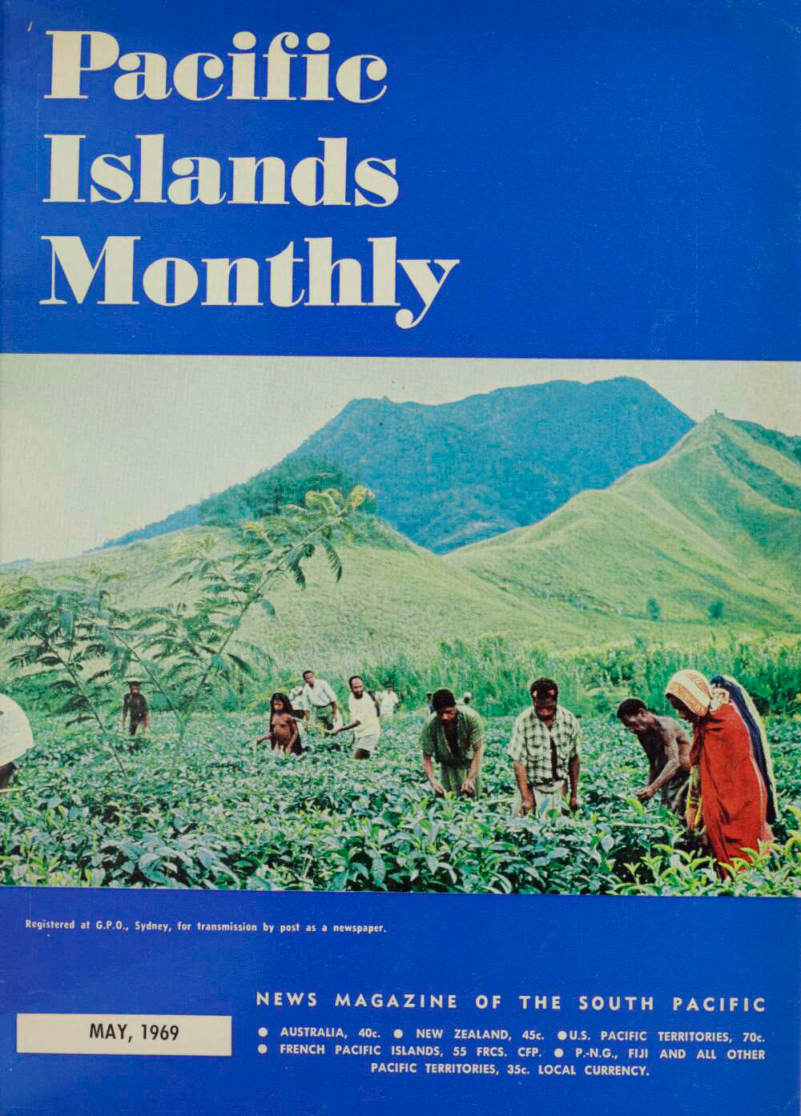 1
1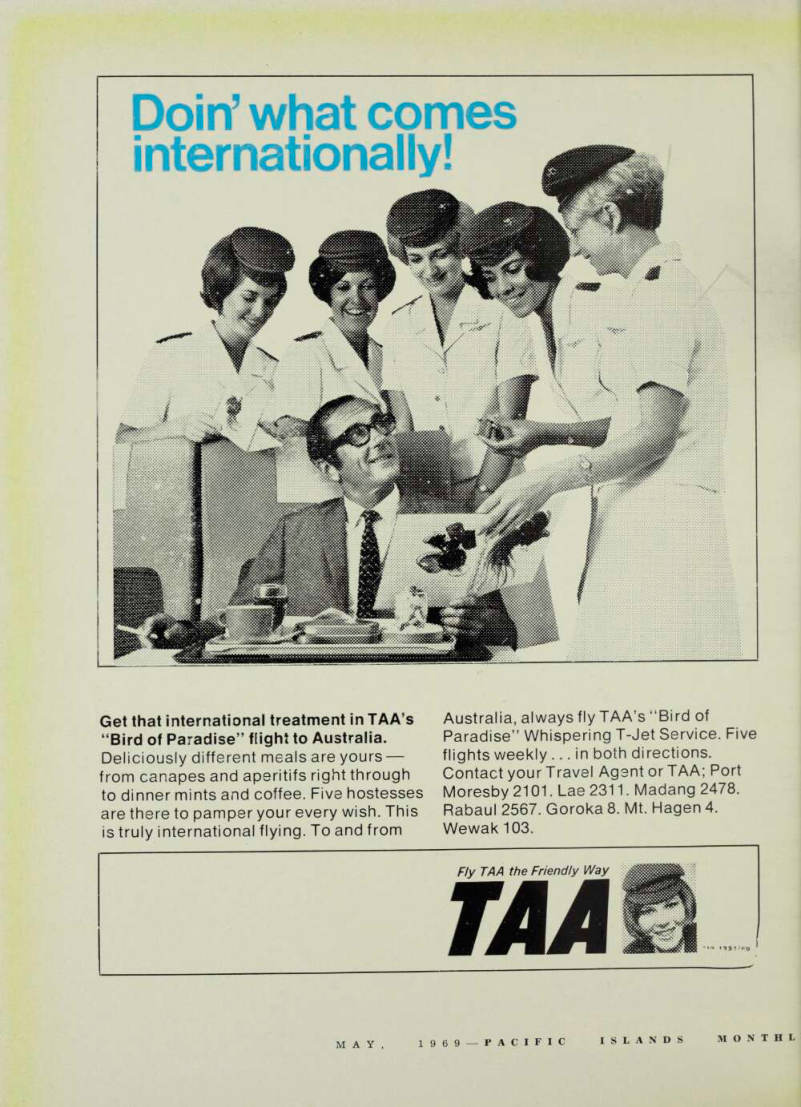 2
2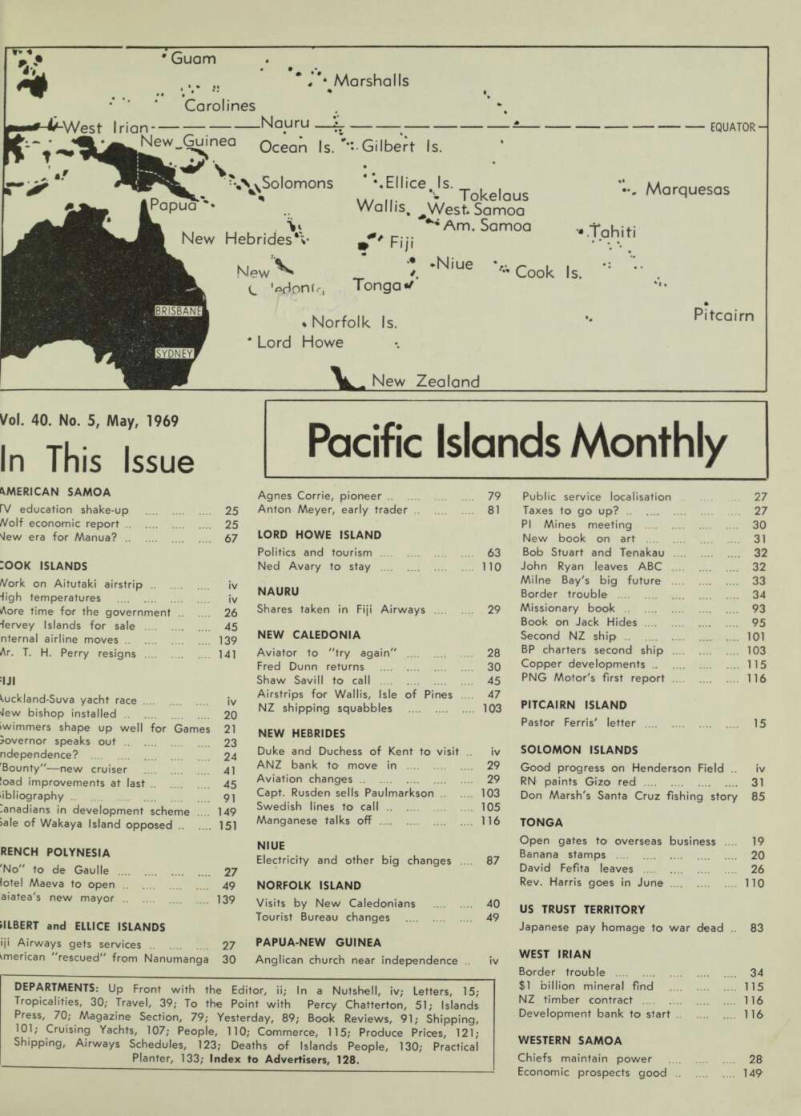 3
3 4
4 5
5 6
6 7
7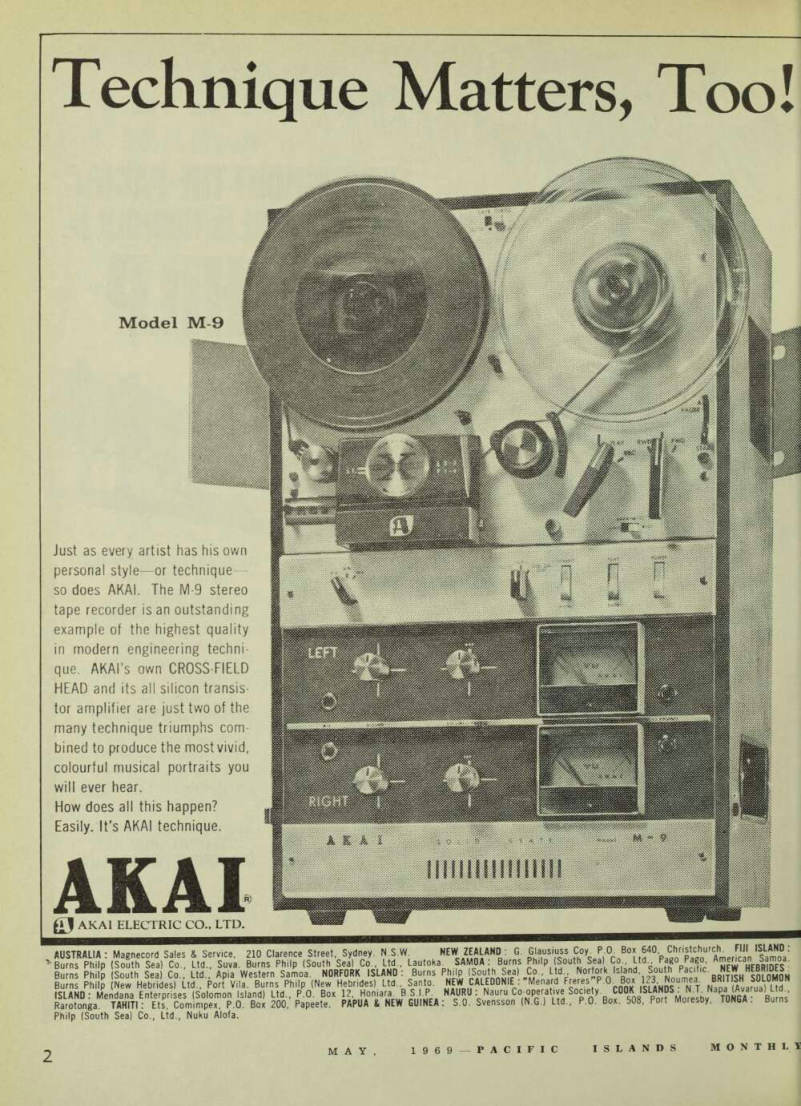 8
8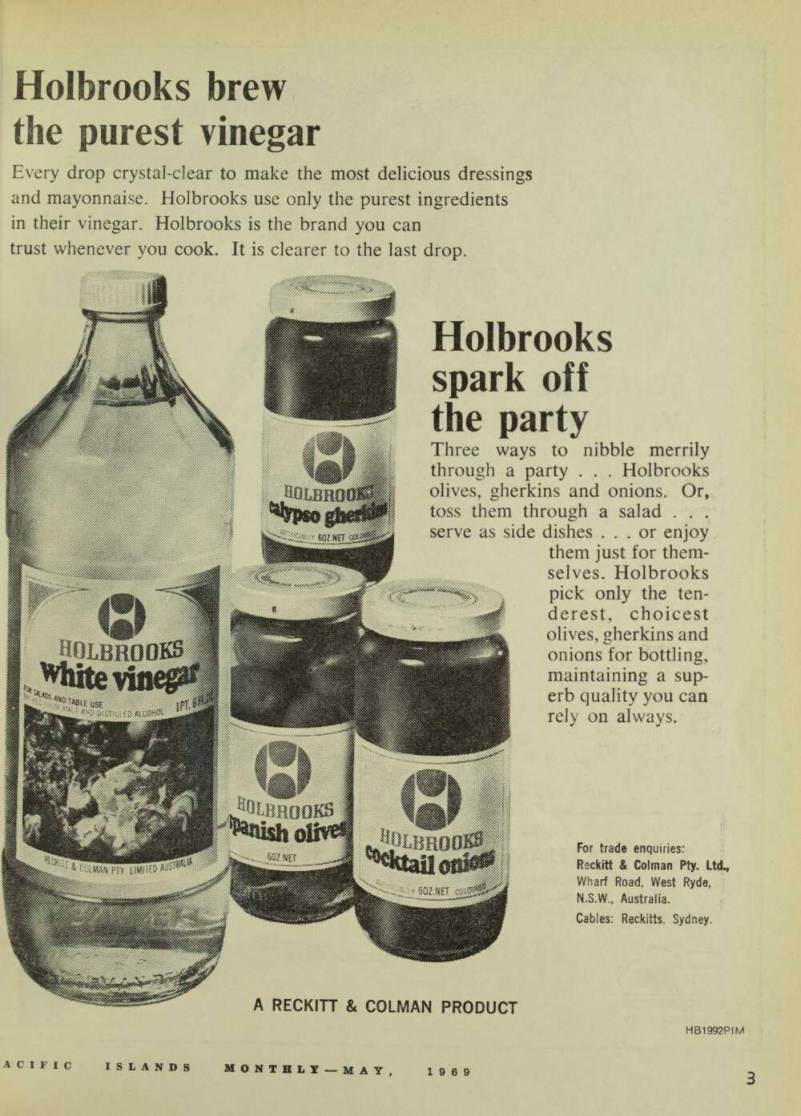 9
9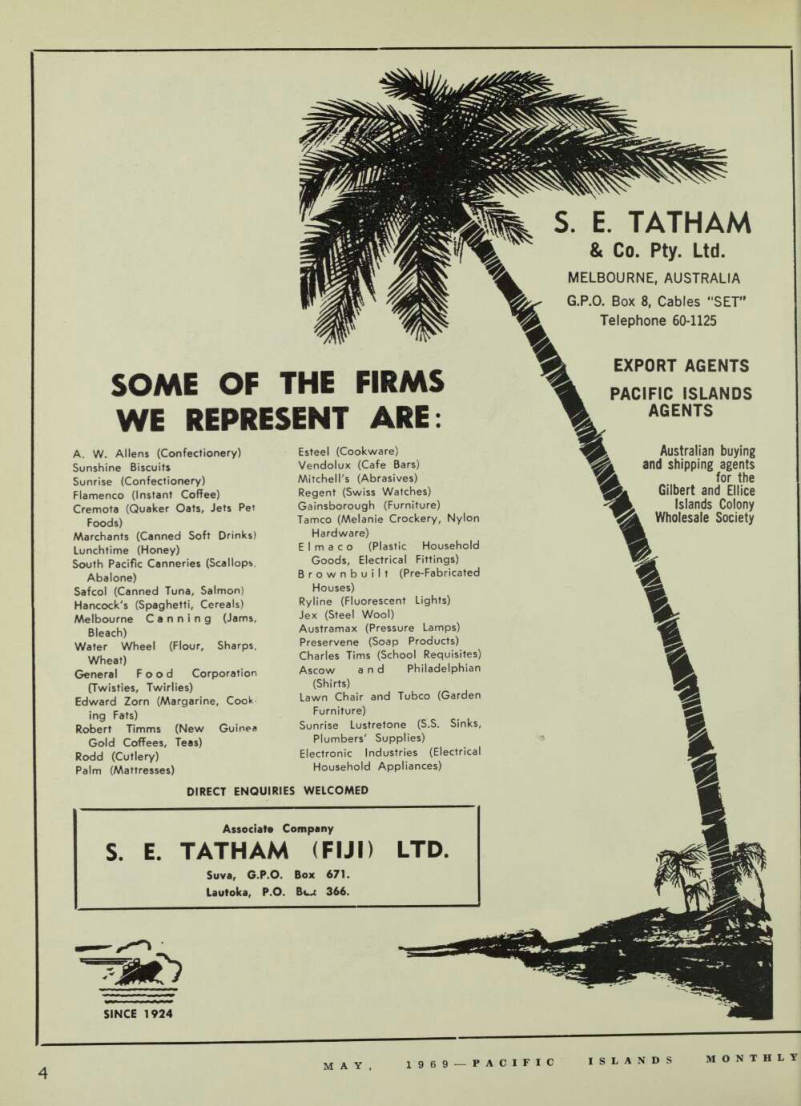 10
10 11
11 12
12 13
13 14
14 15
15 16
16 17
17 18
18 19
19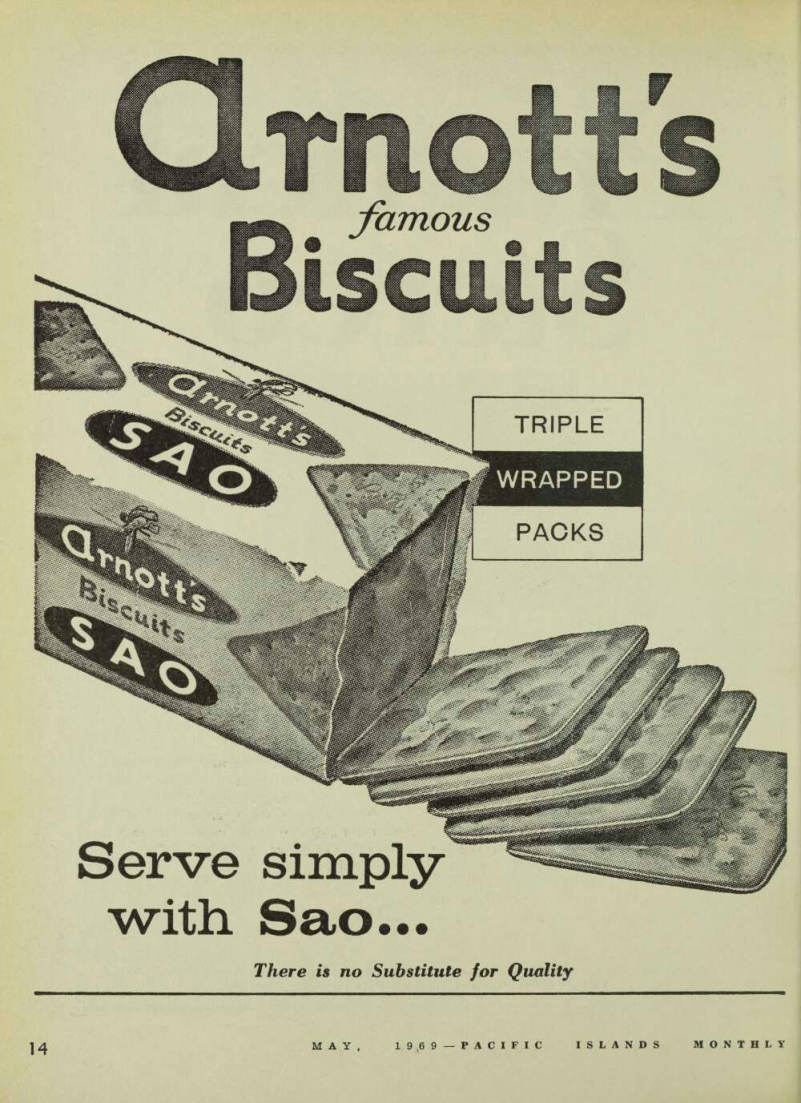 20
20 21
21 22
22 23
23 24
24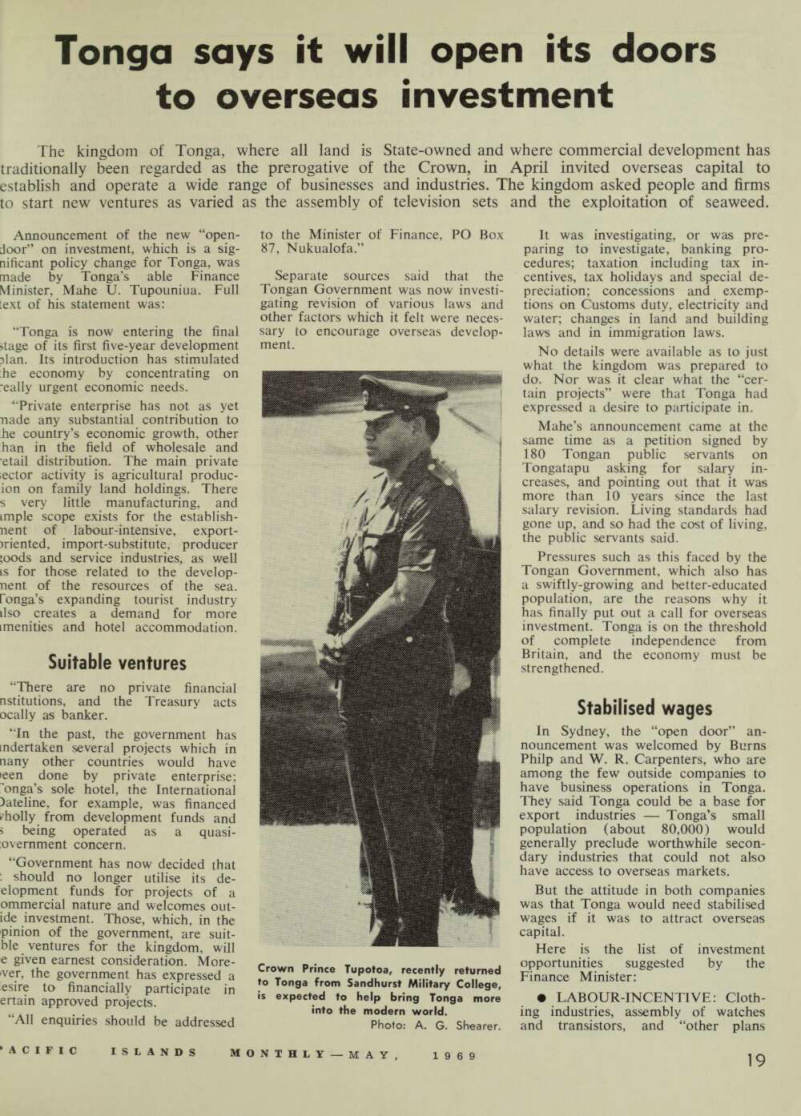 25
25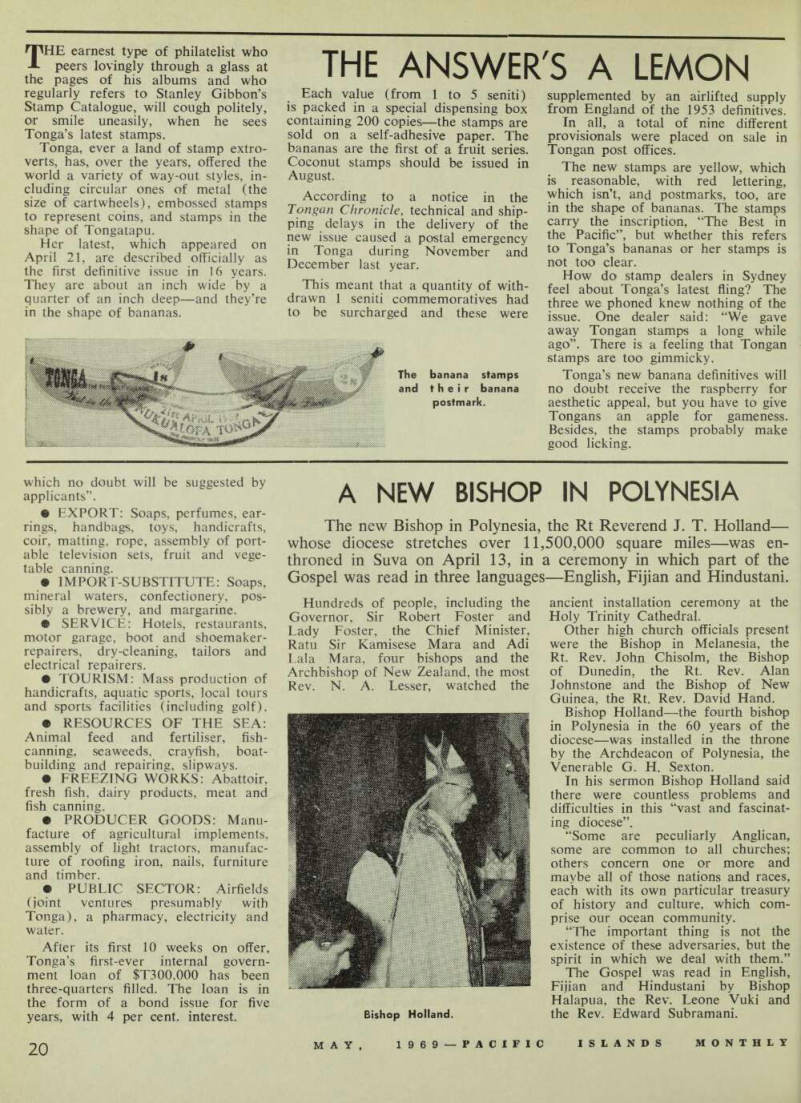 26
26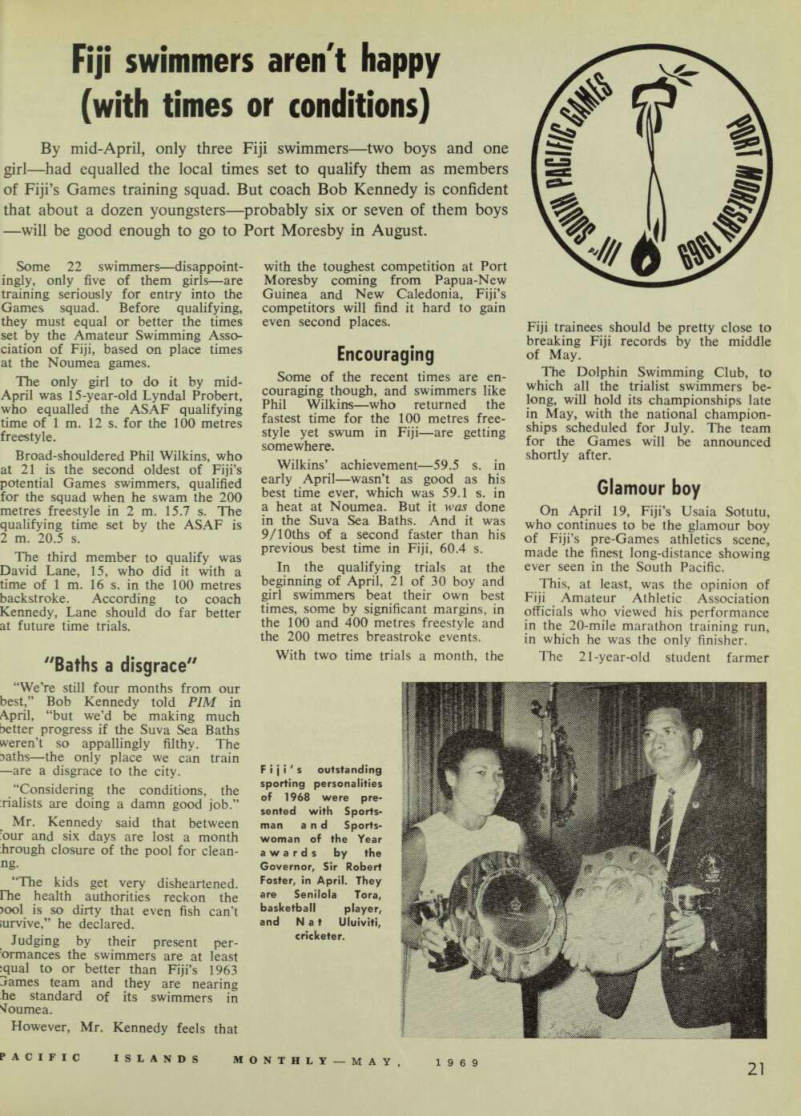 27
27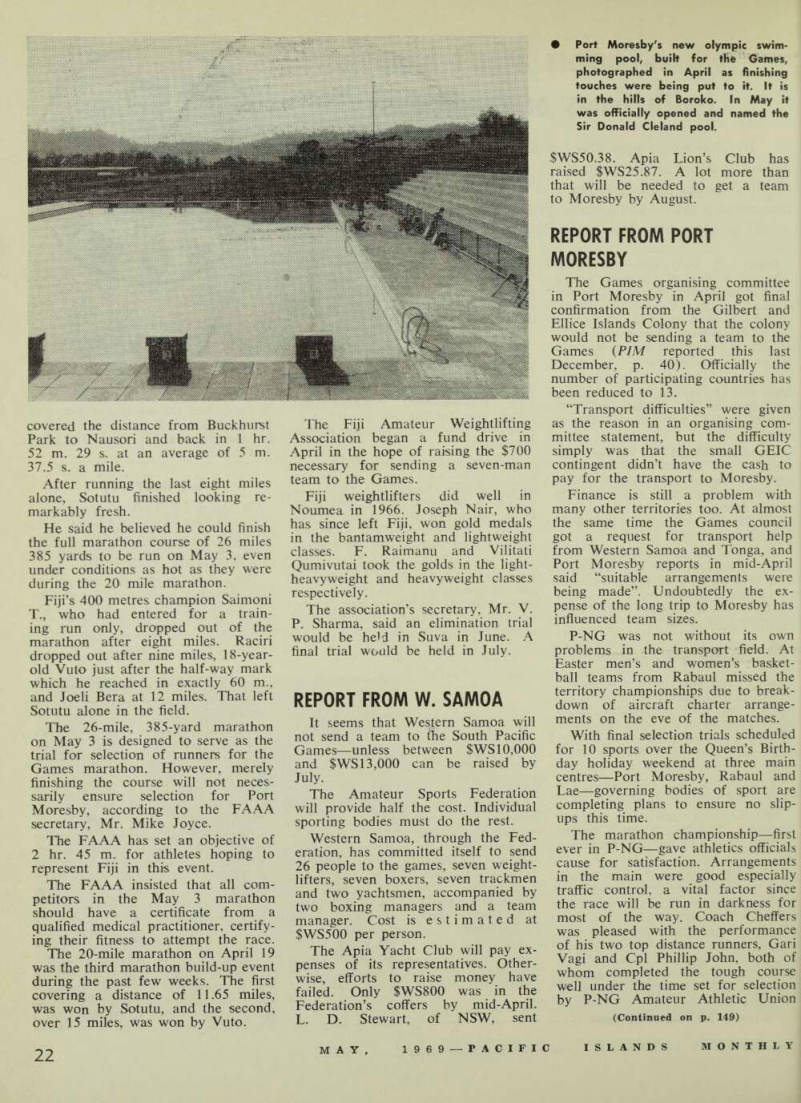 28
28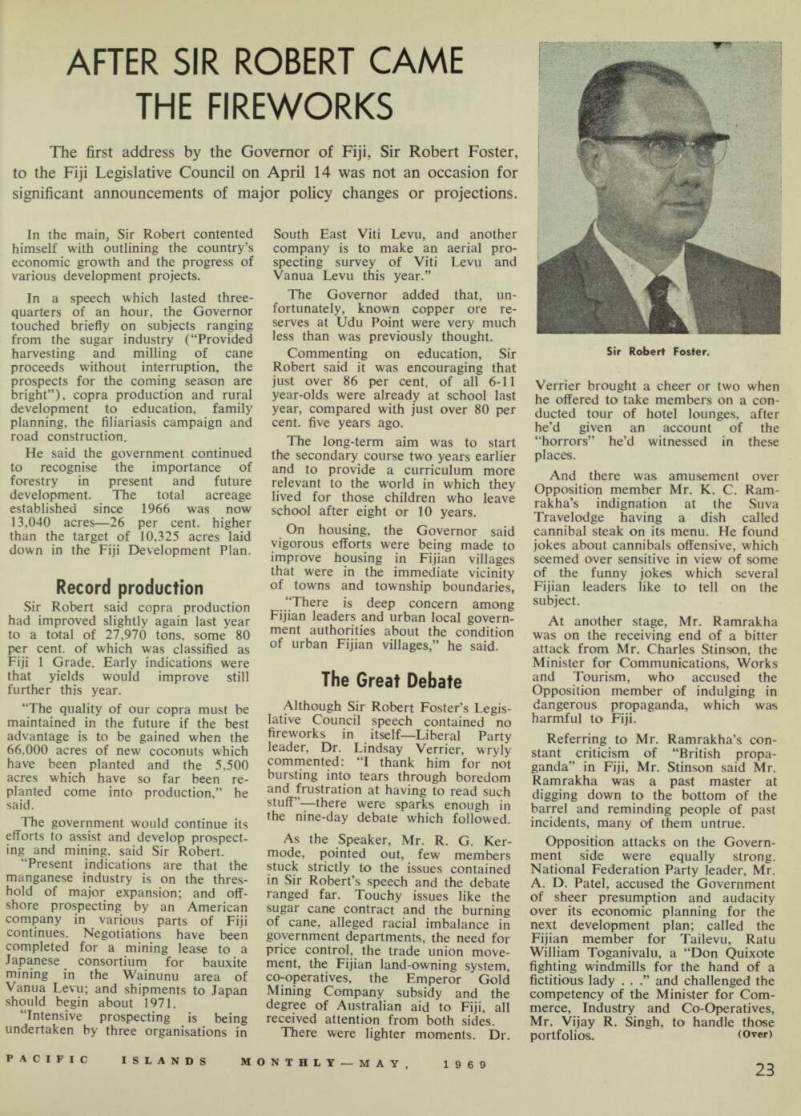 29
29 30
30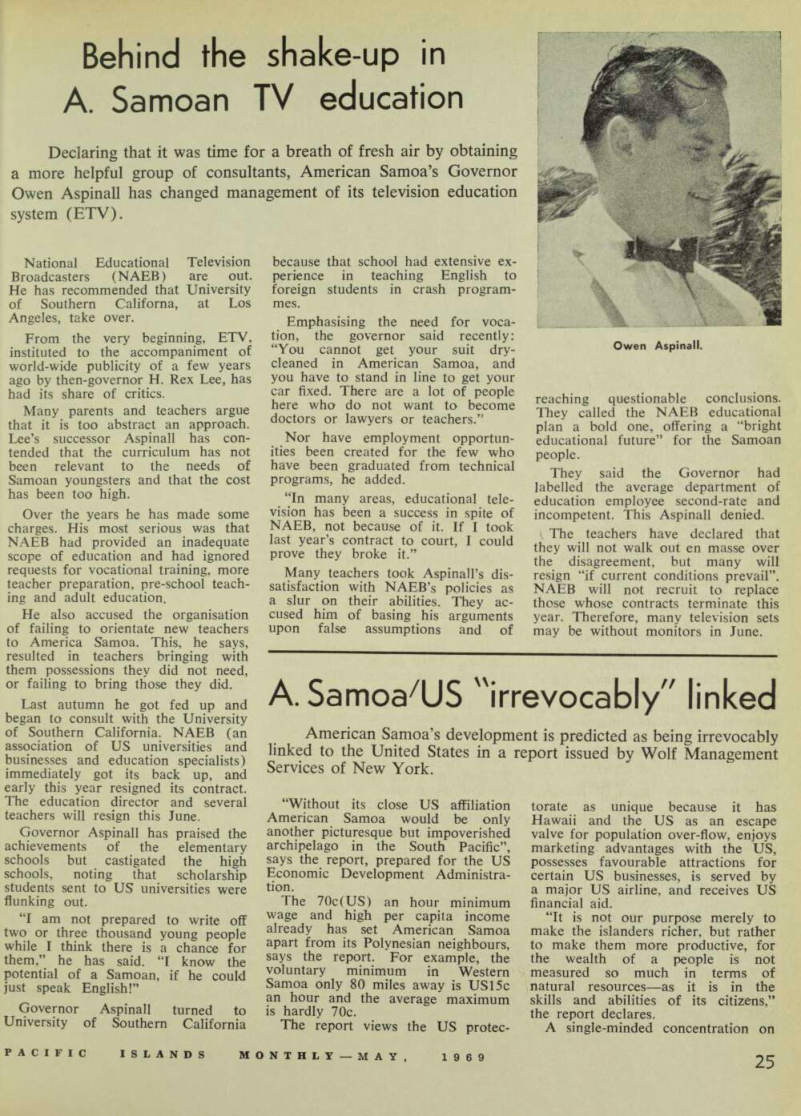 31
31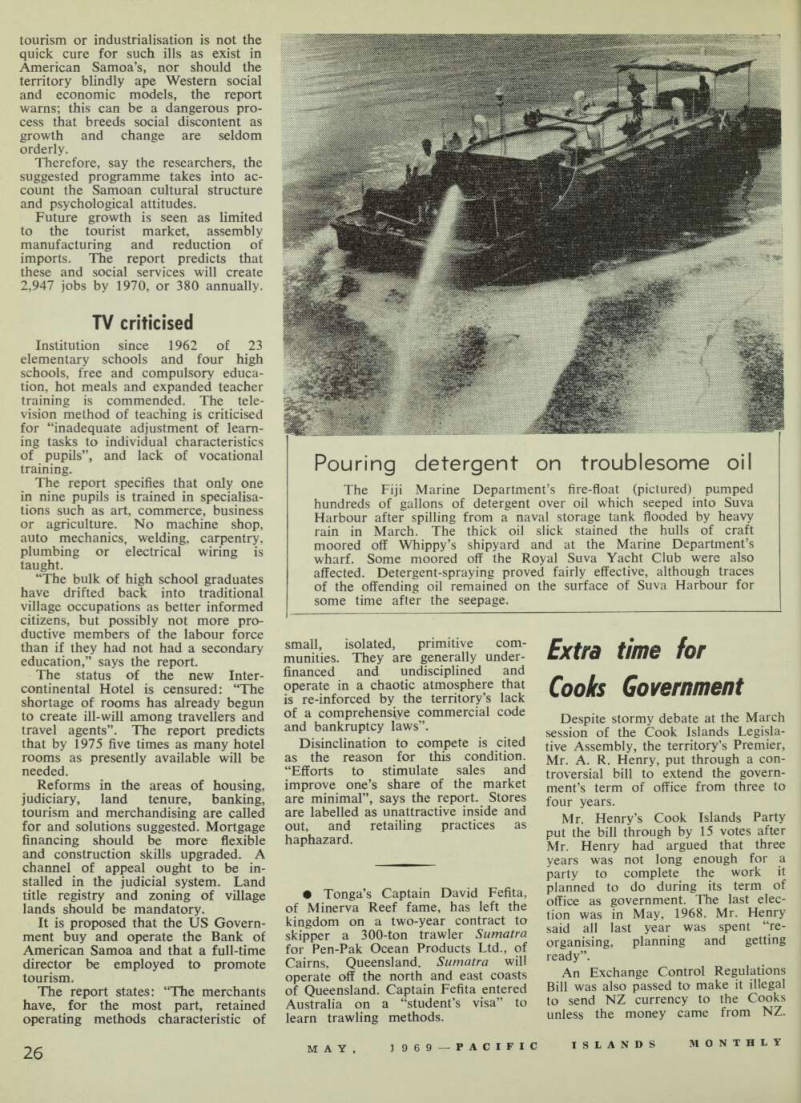 32
32 33
33 34
34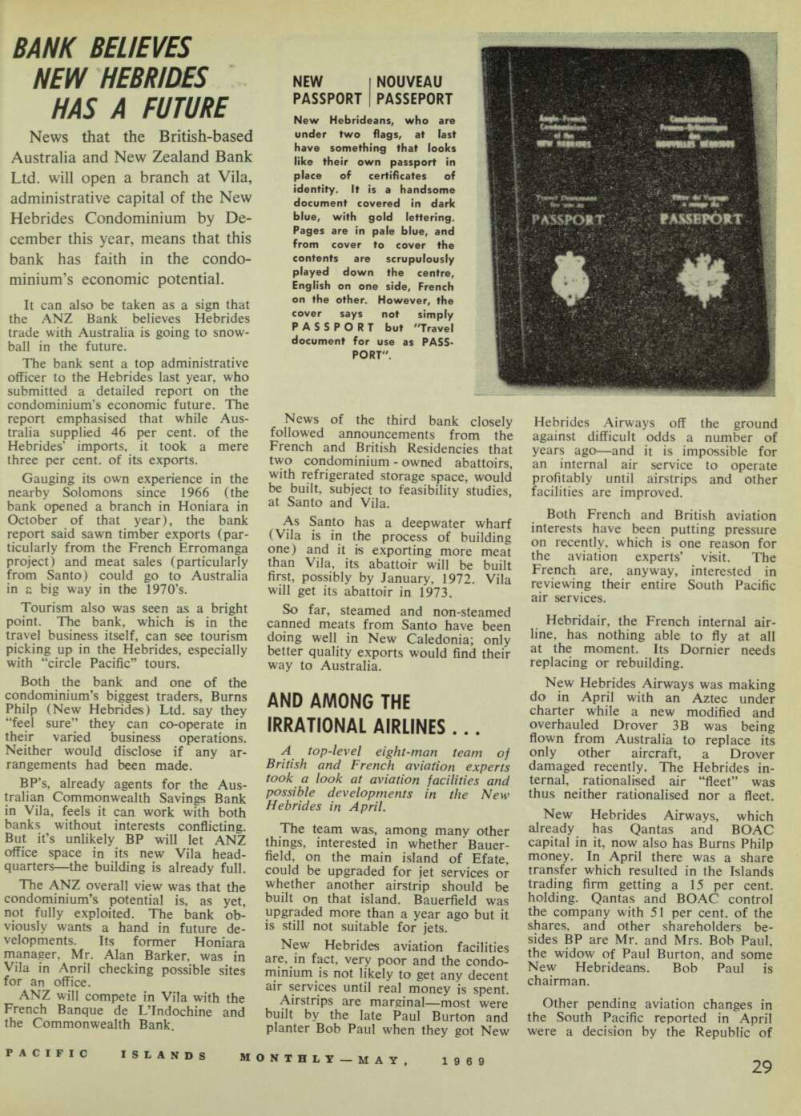 35
35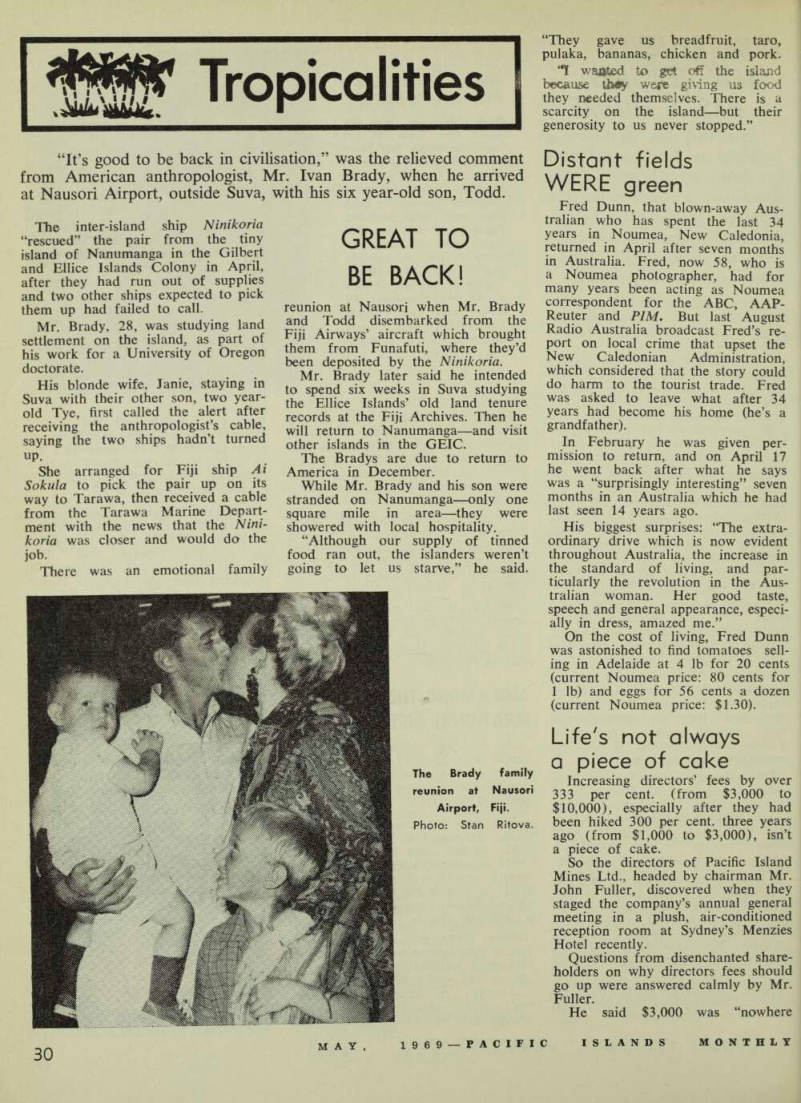 36
36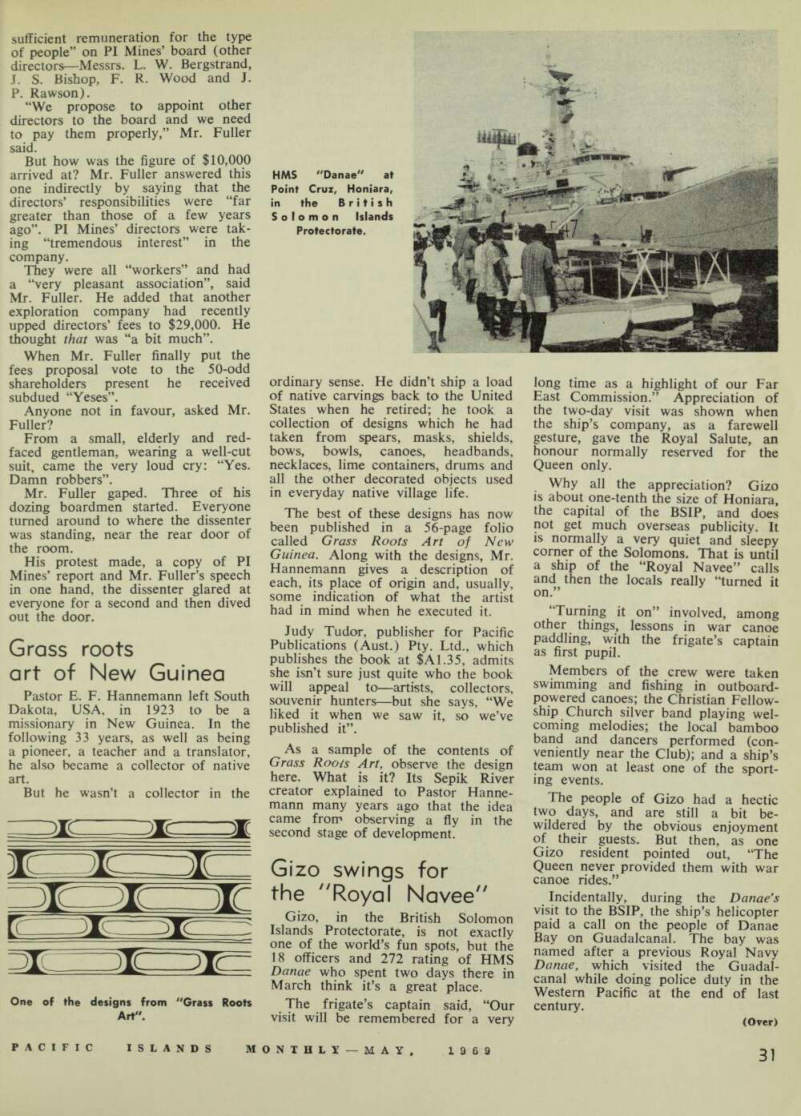 37
37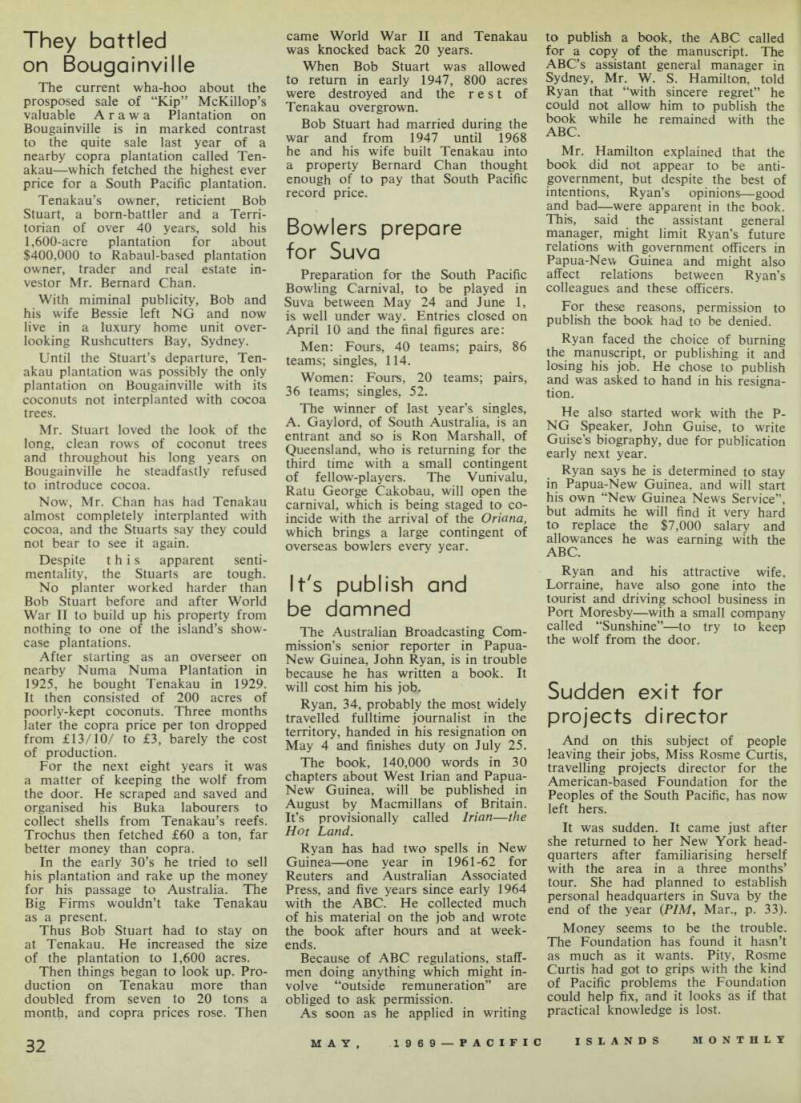 38
38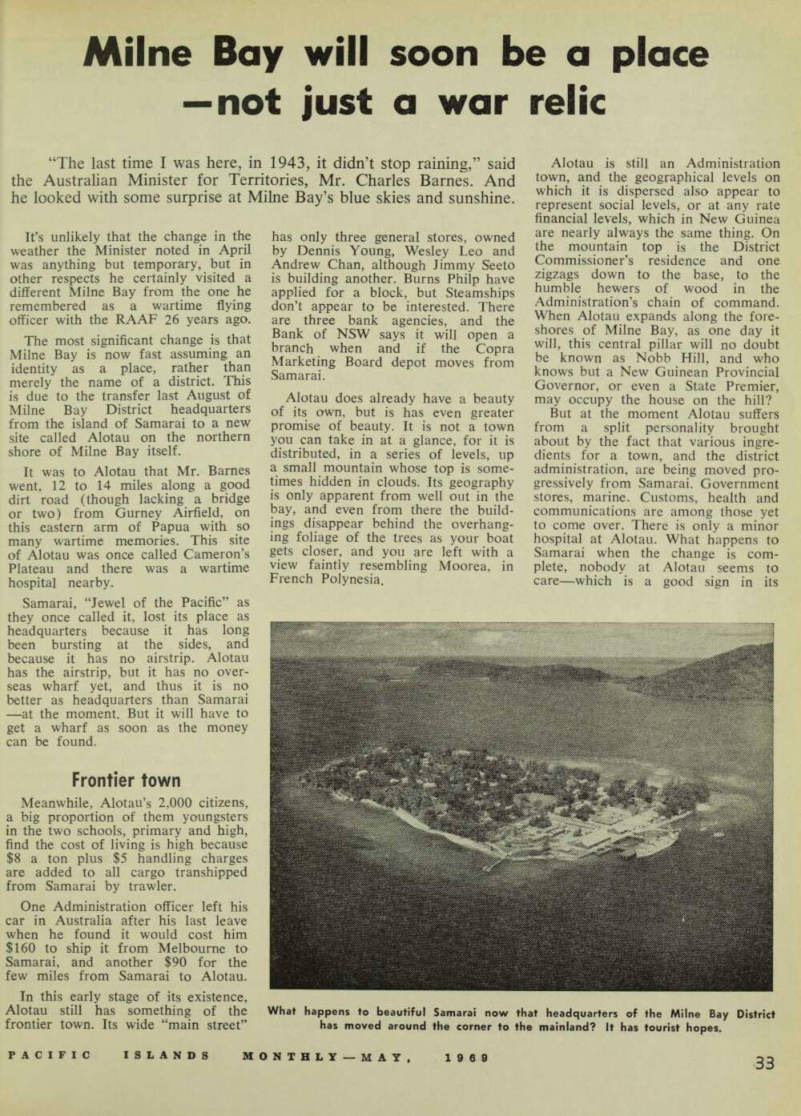 39
39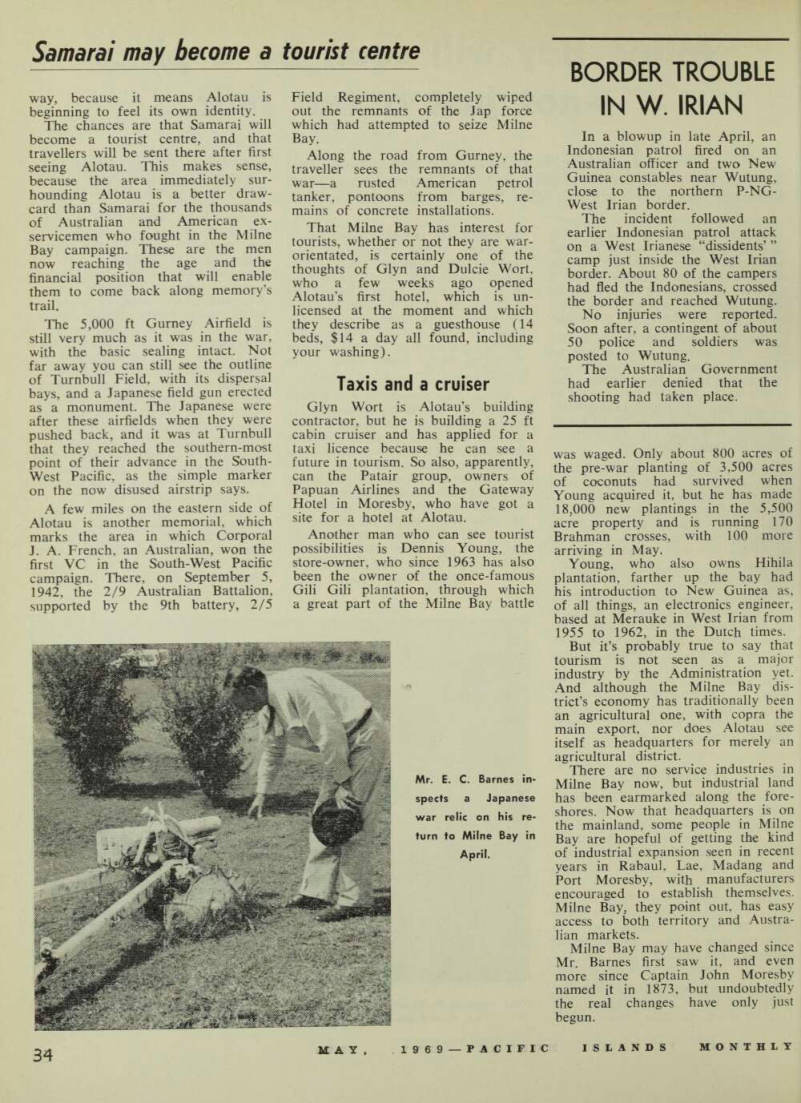 40
40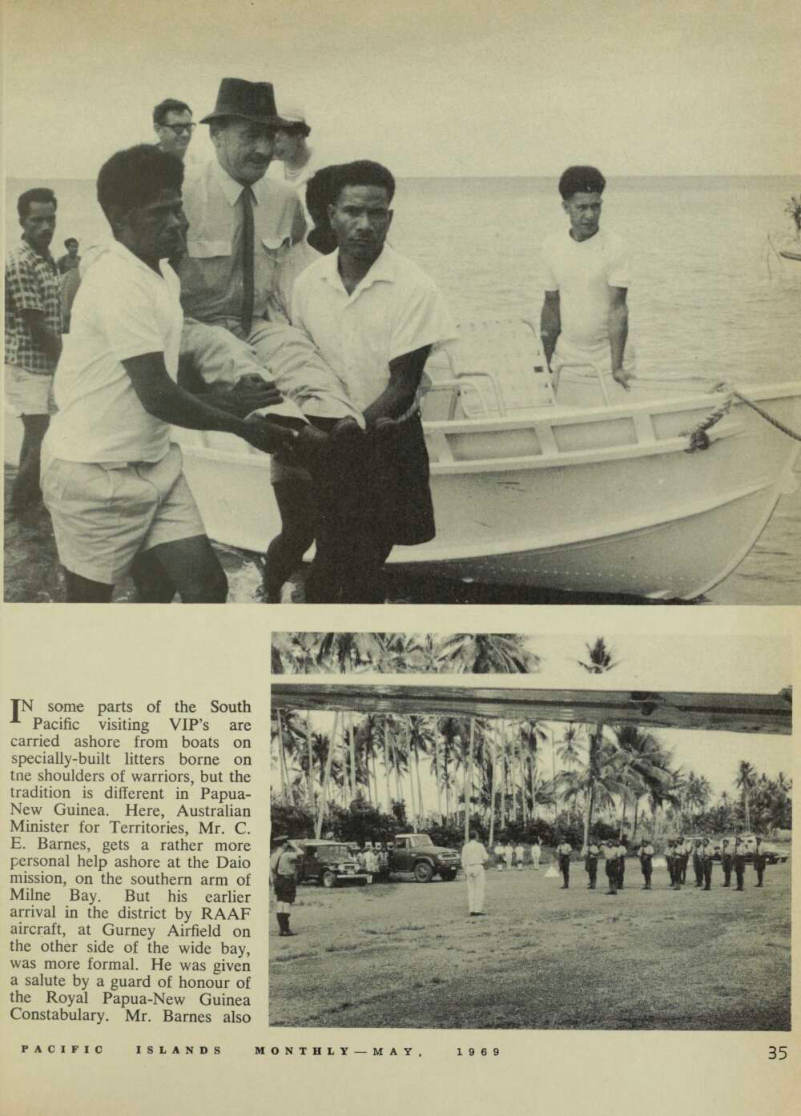 41
41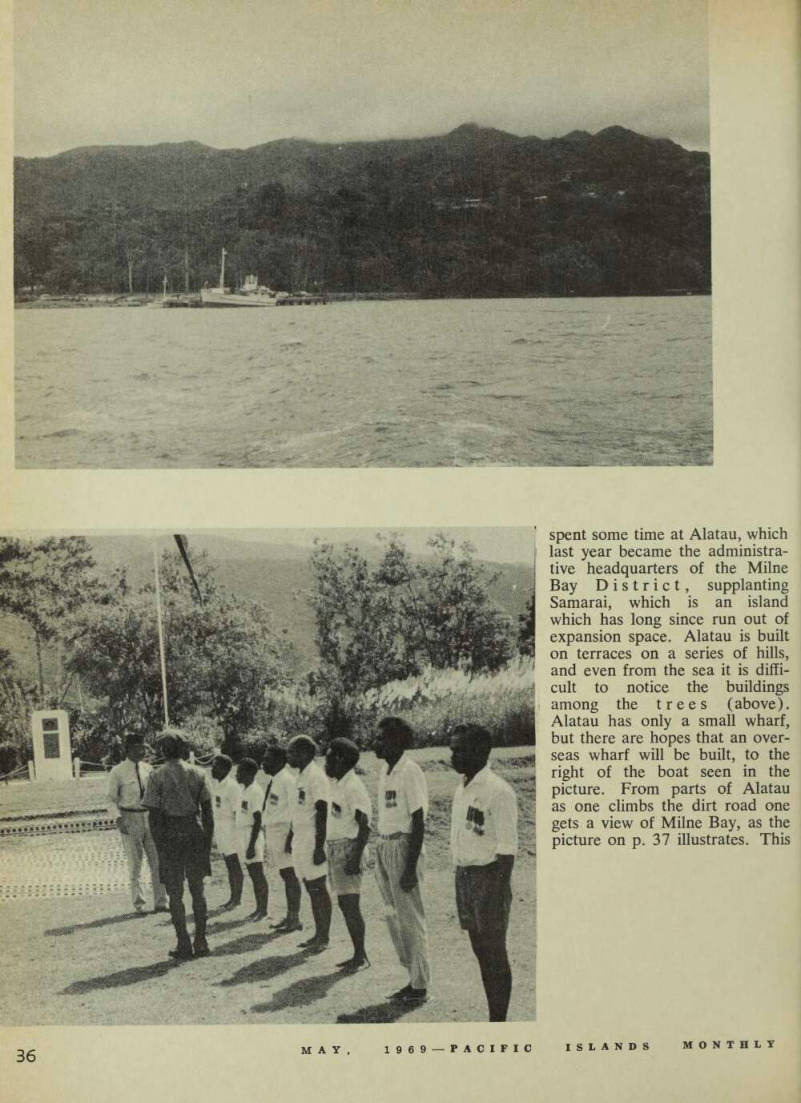 42
42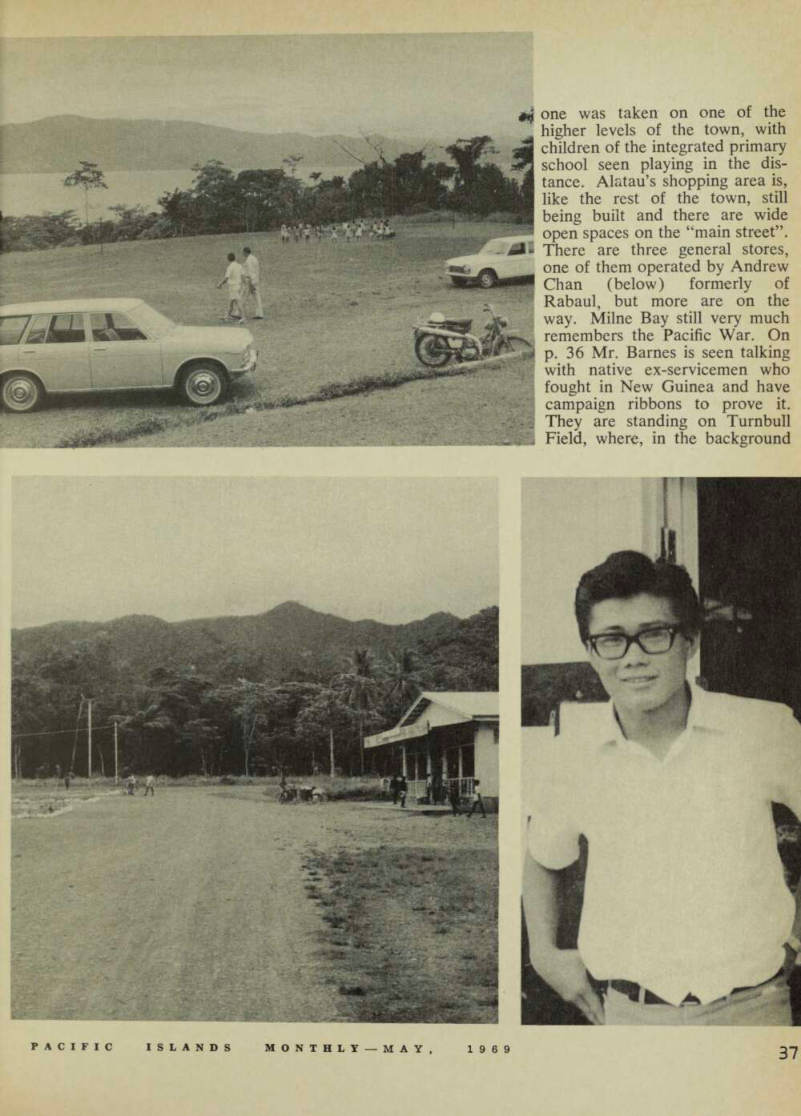 43
43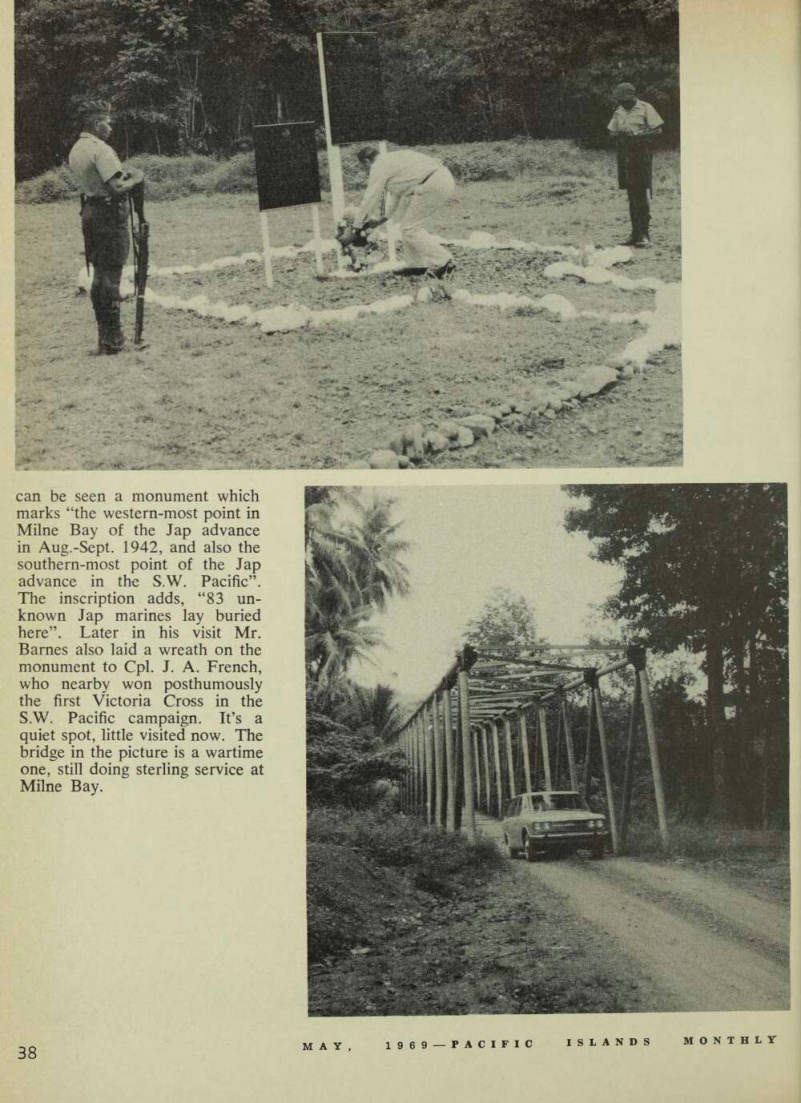 44
44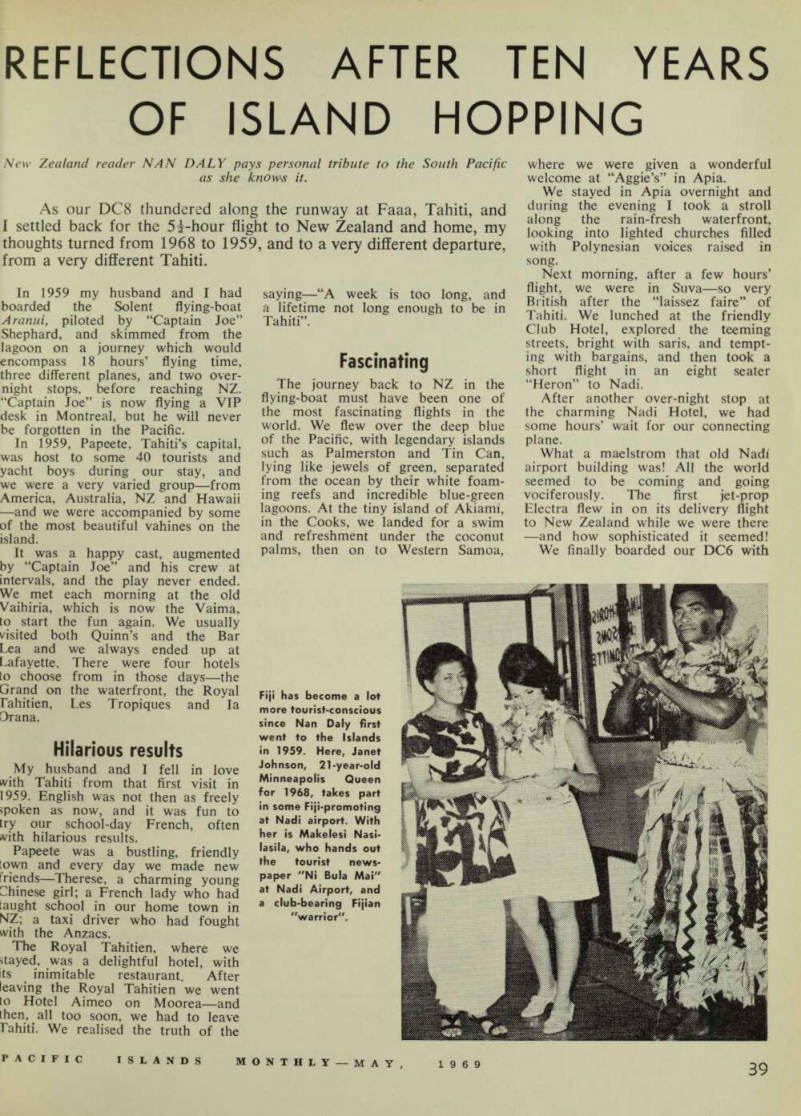 45
45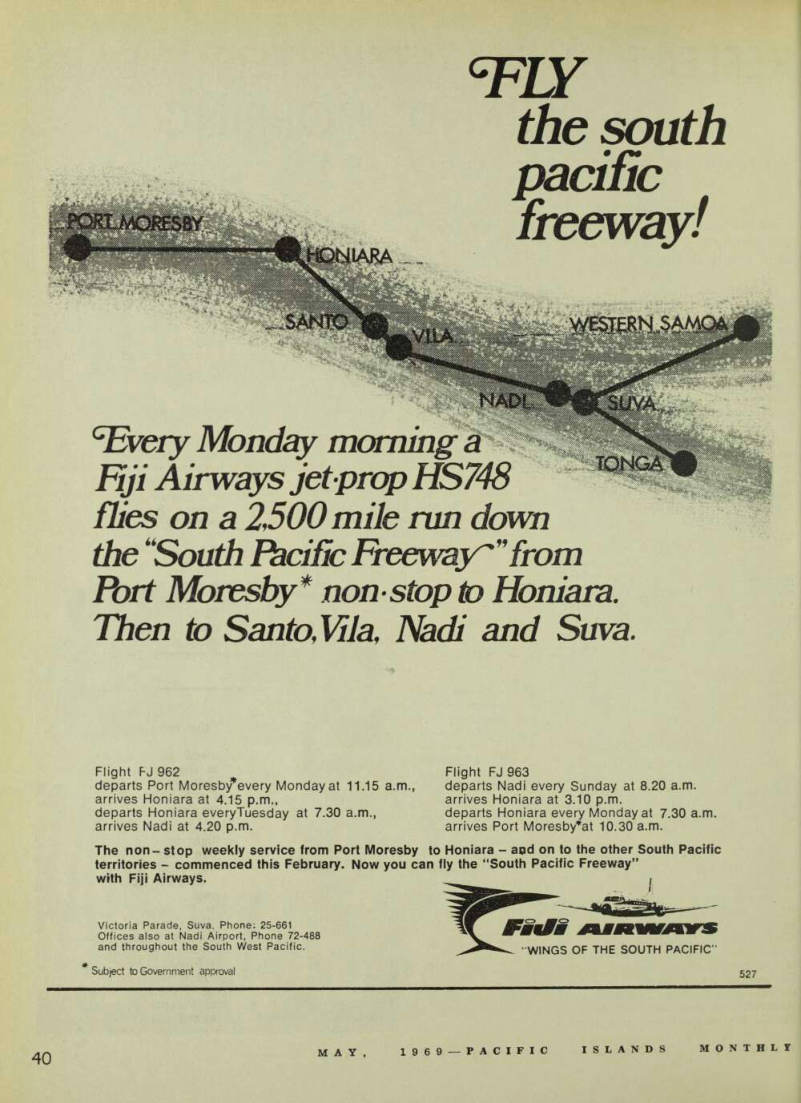 46
46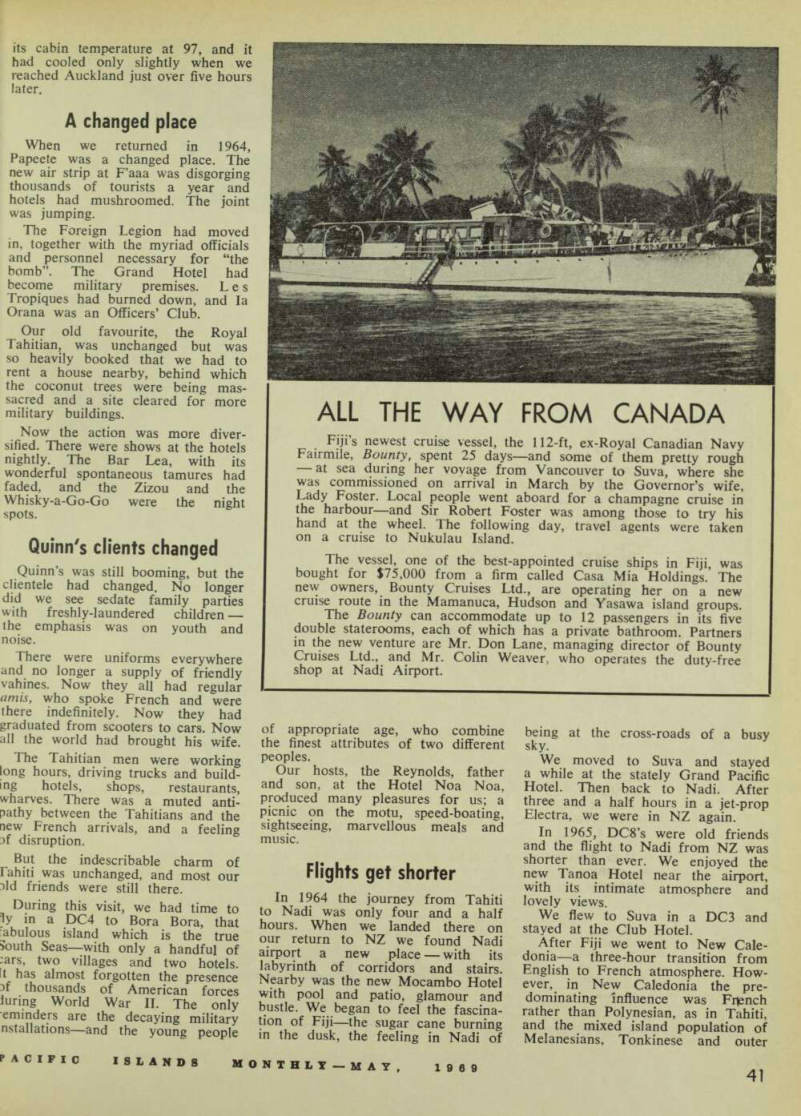 47
47 48
48 49
49 50
50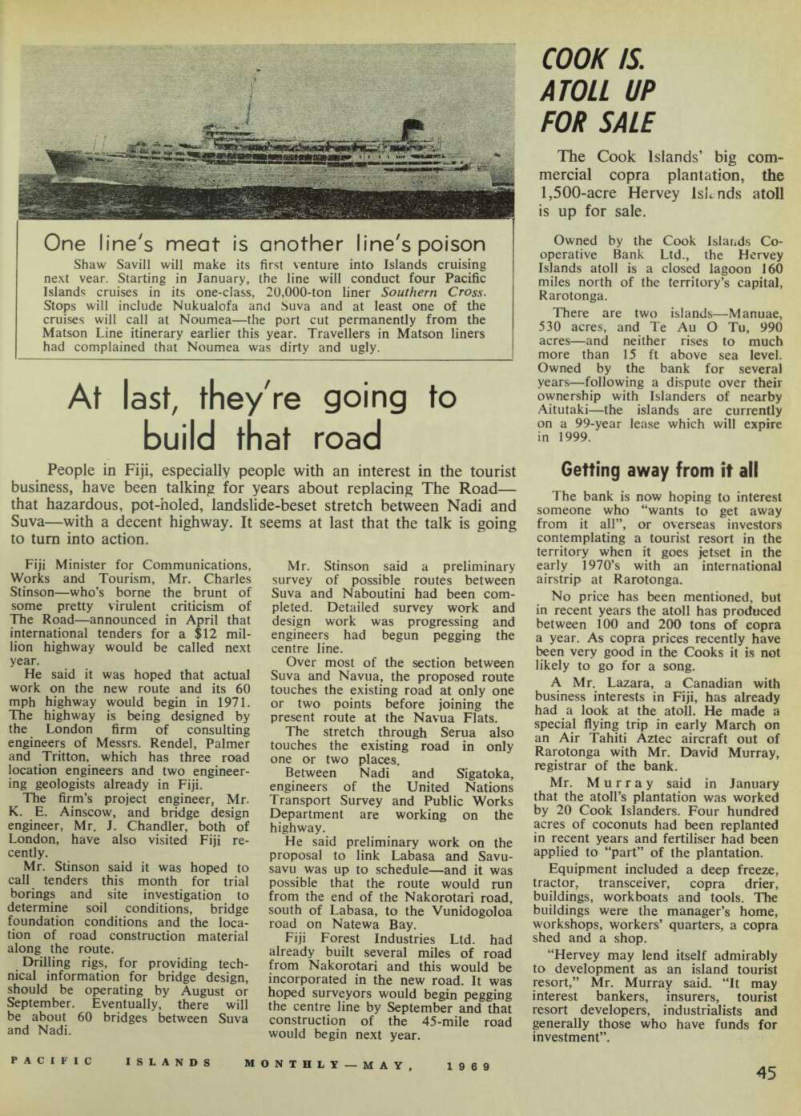 51
51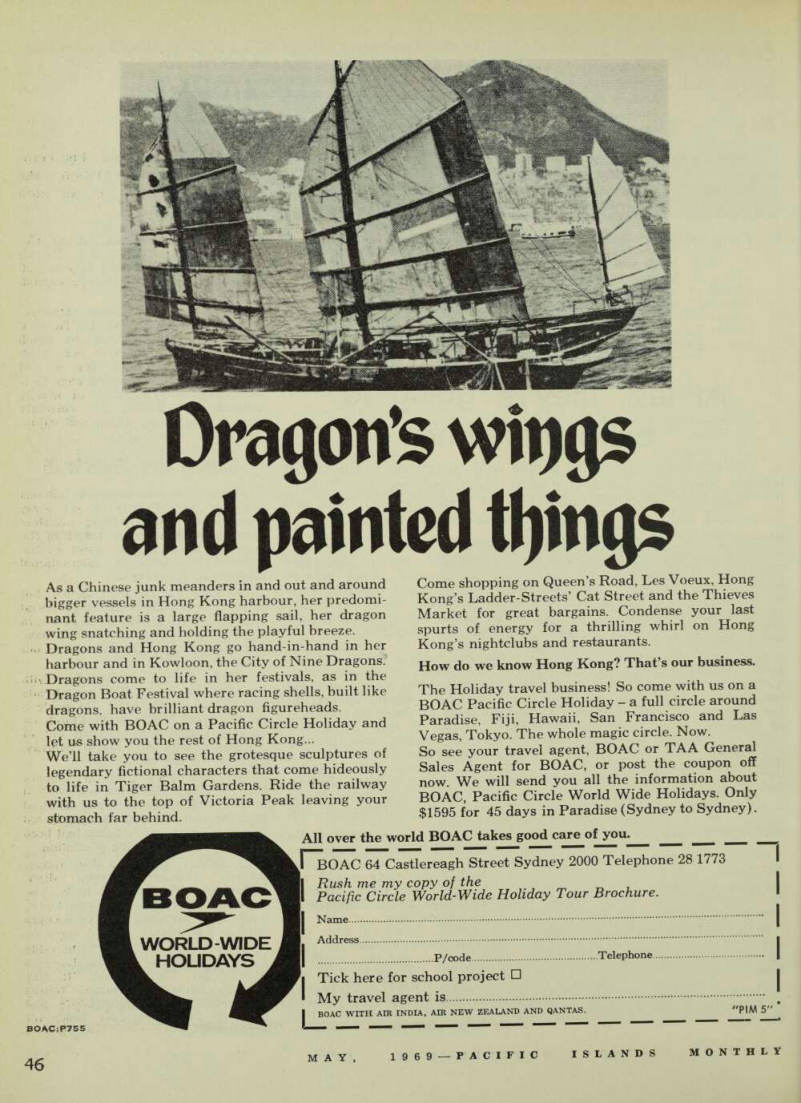 52
52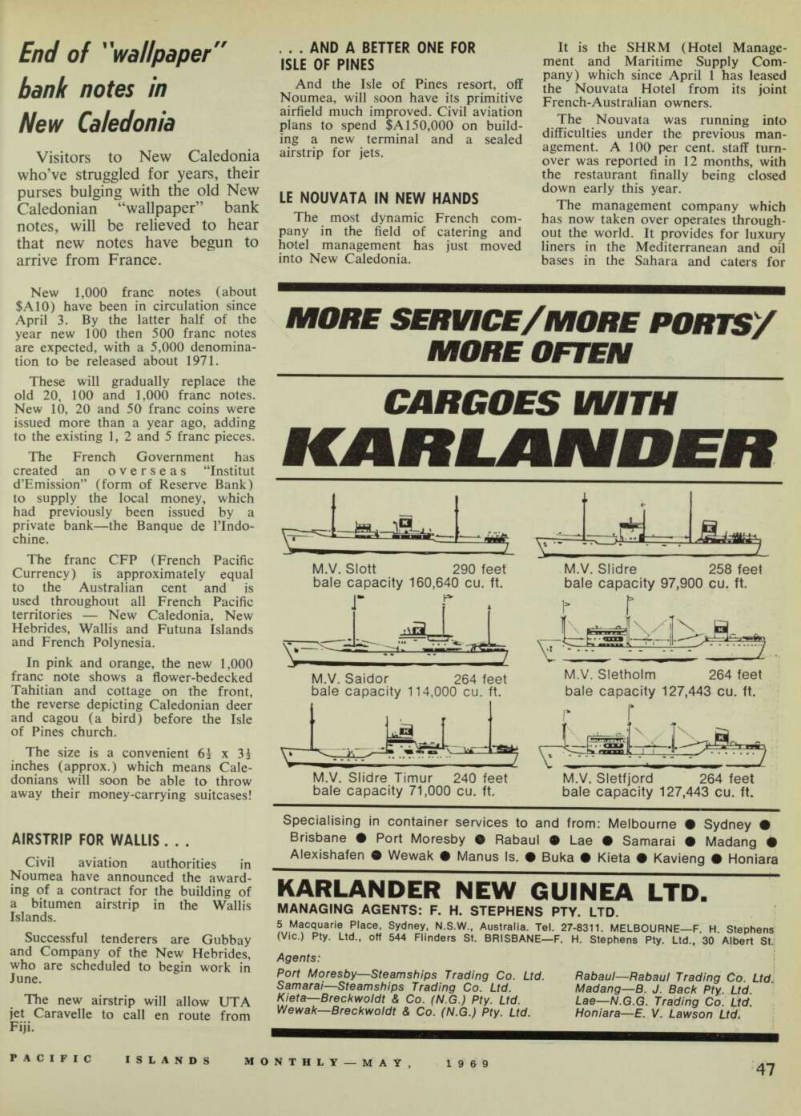 53
53 54
54 55
55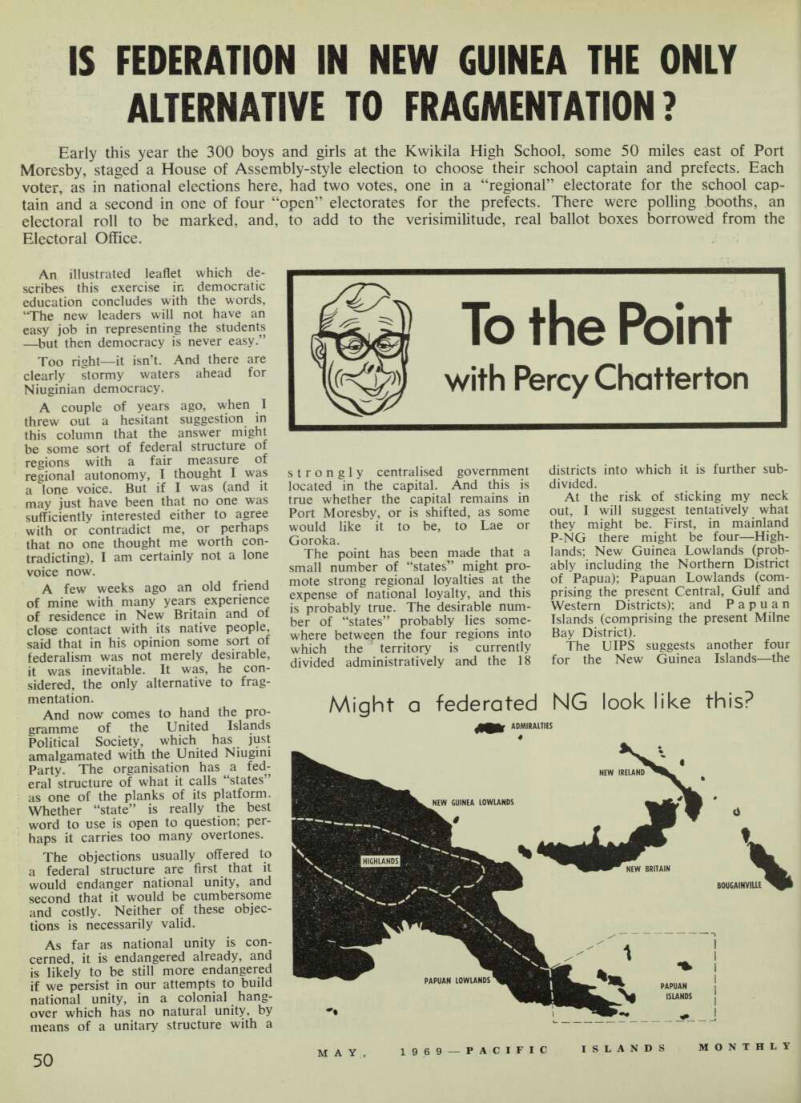 56
56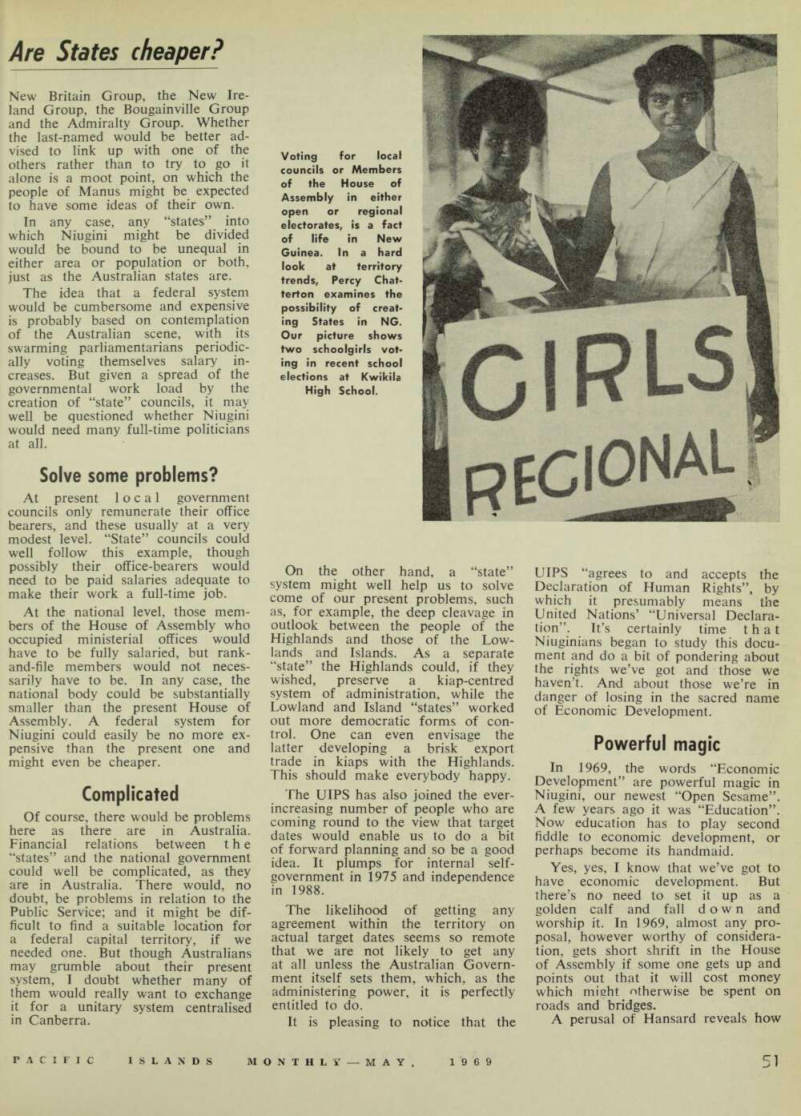 57
57 58
58 59
59 60
60 61
61 62
62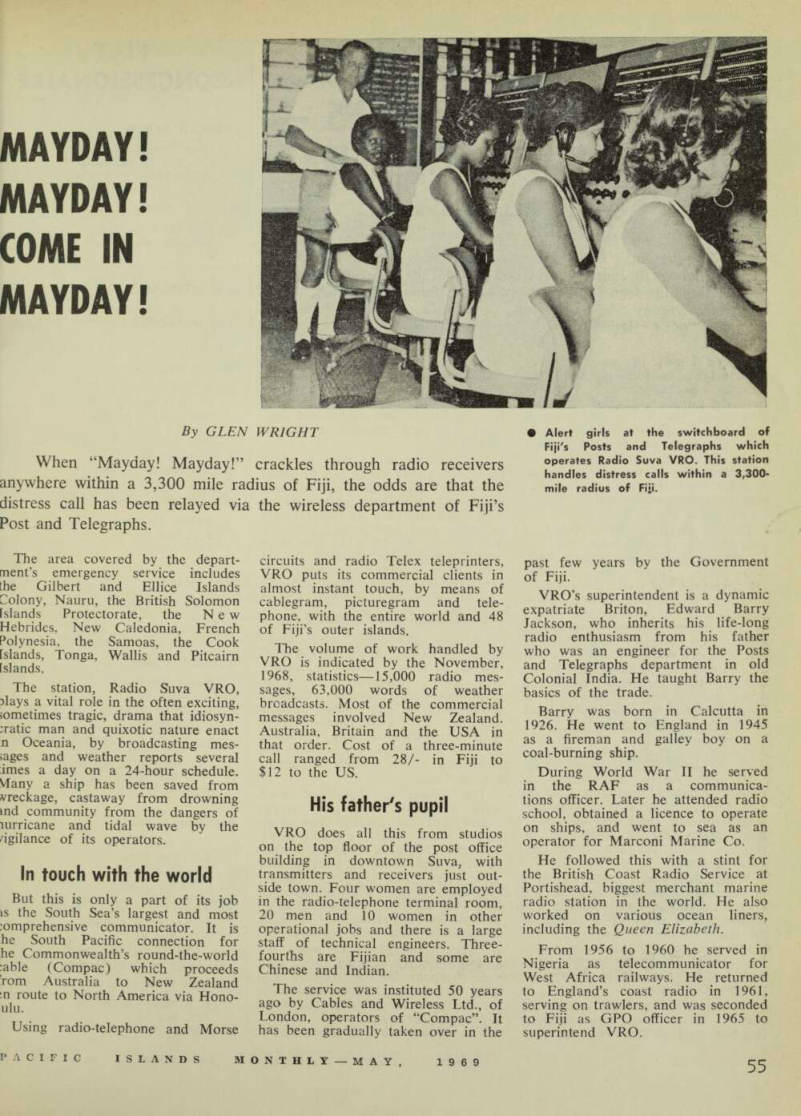 63
63 64
64 65
65 66
66 67
67 68
68 69
69 70
70 71
71 72
72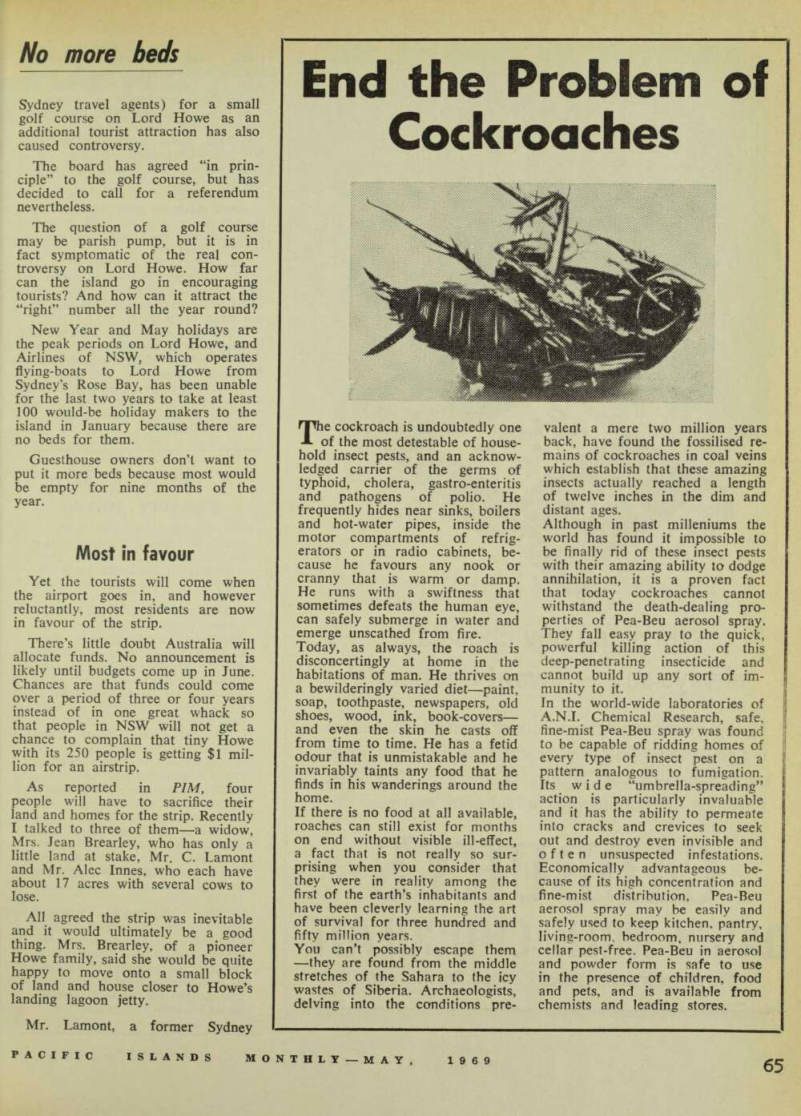 73
73 74
74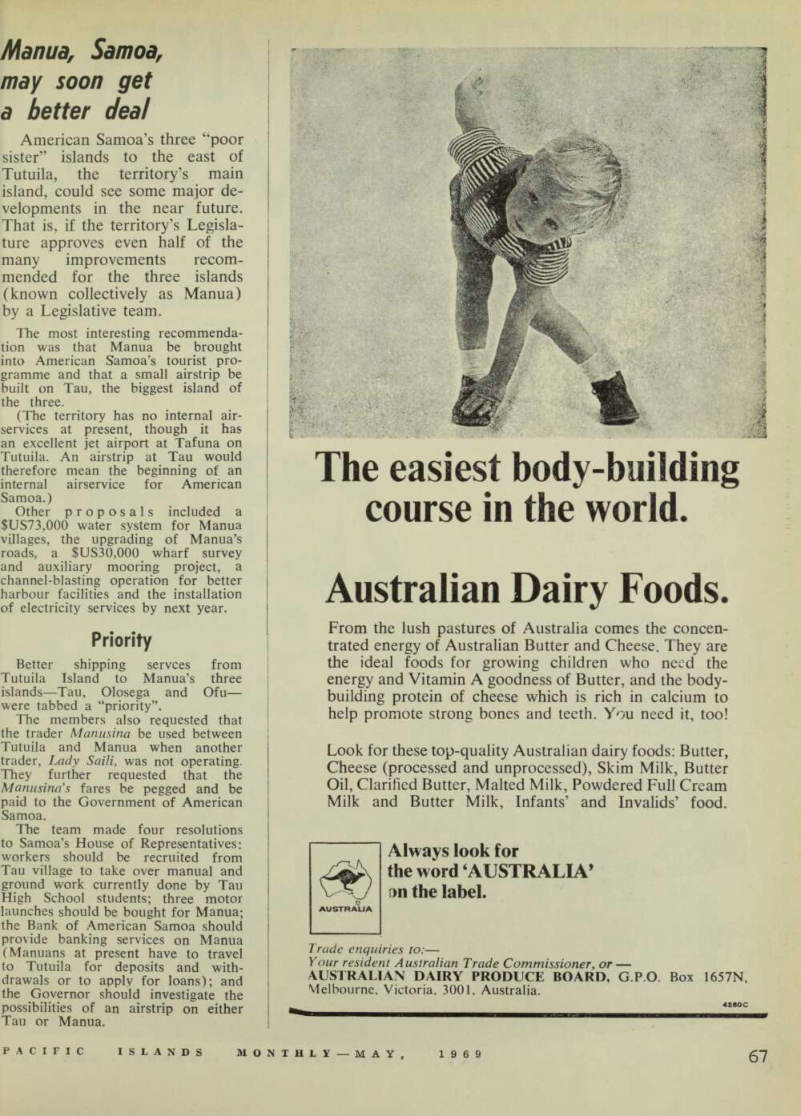 75
75 76
76 77
77 78
78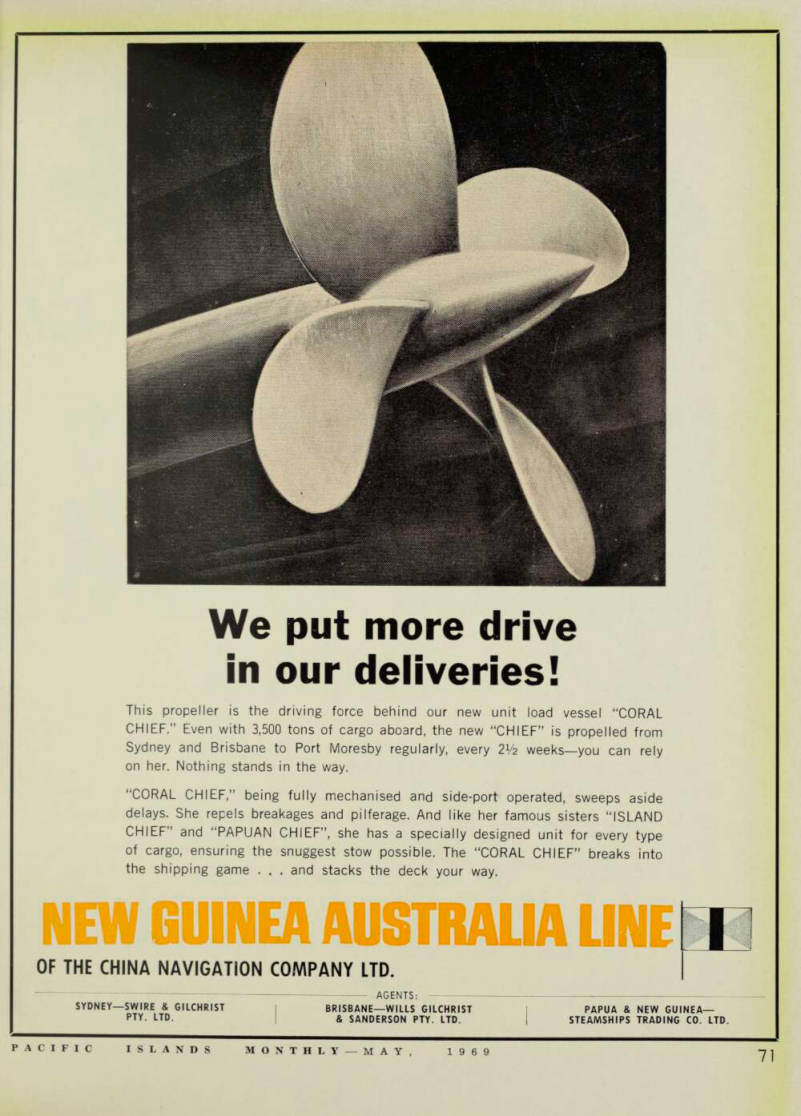 79
79 80
80 81
81 82
82 83
83 84
84 85
85 86
86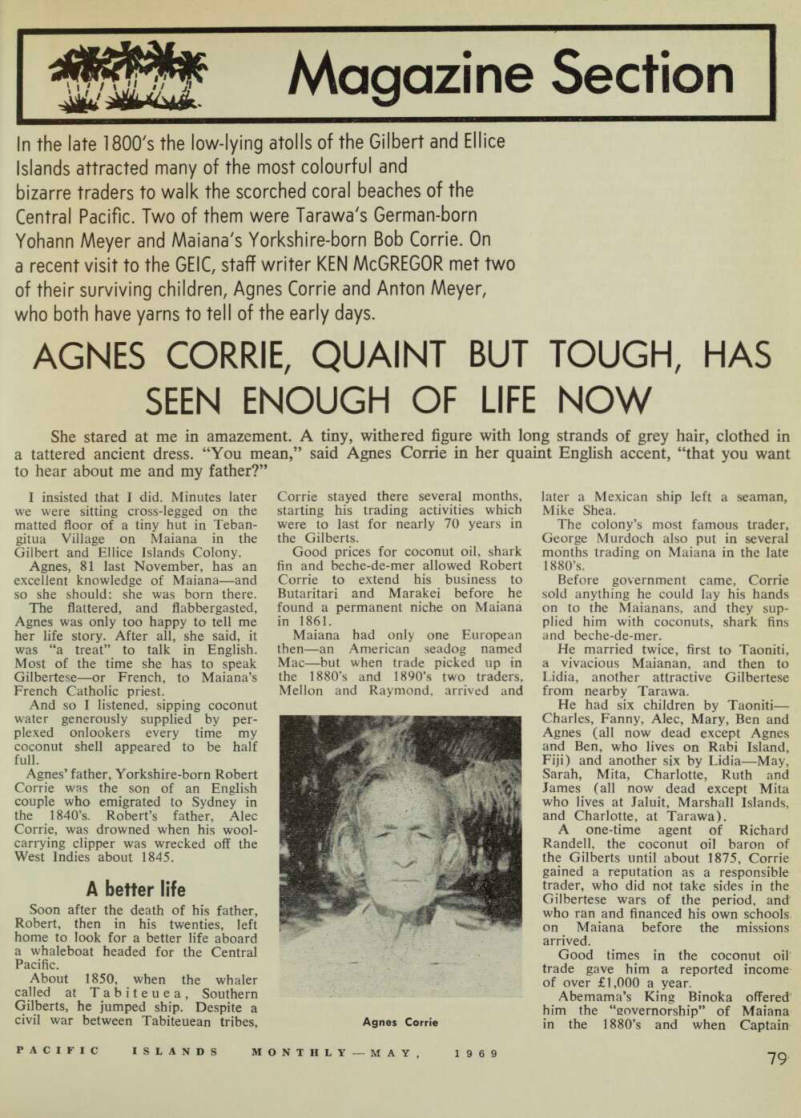 87
87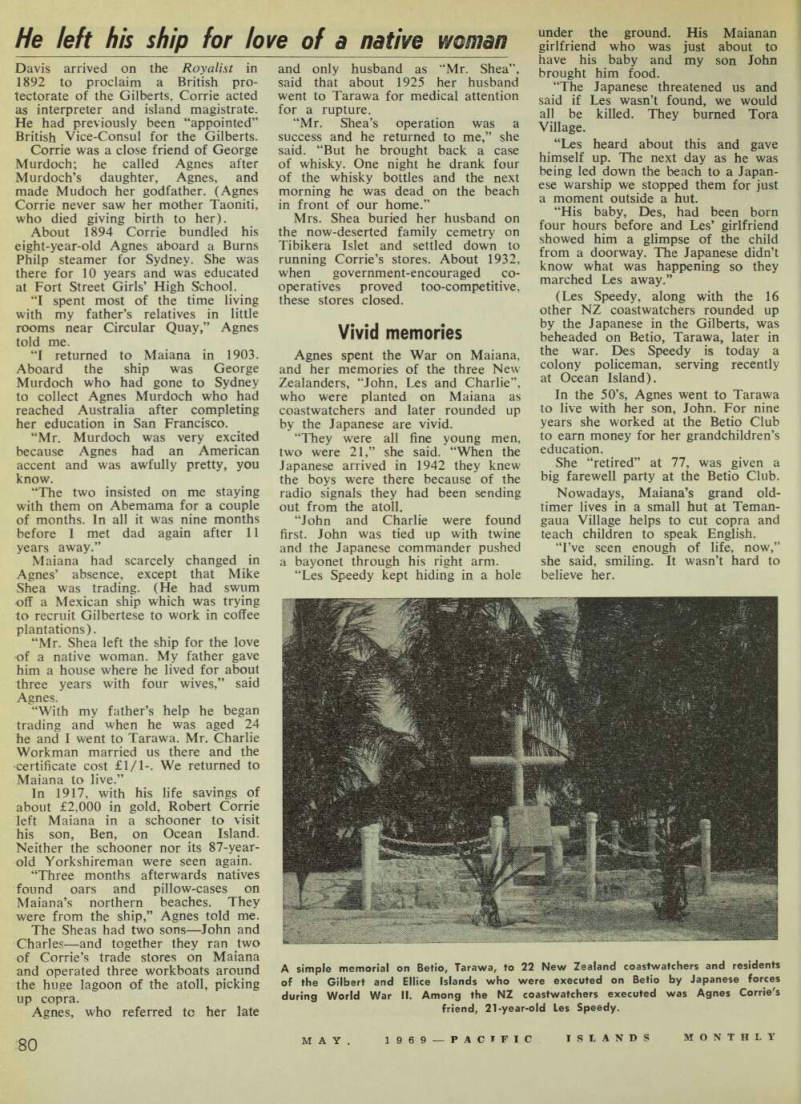 88
88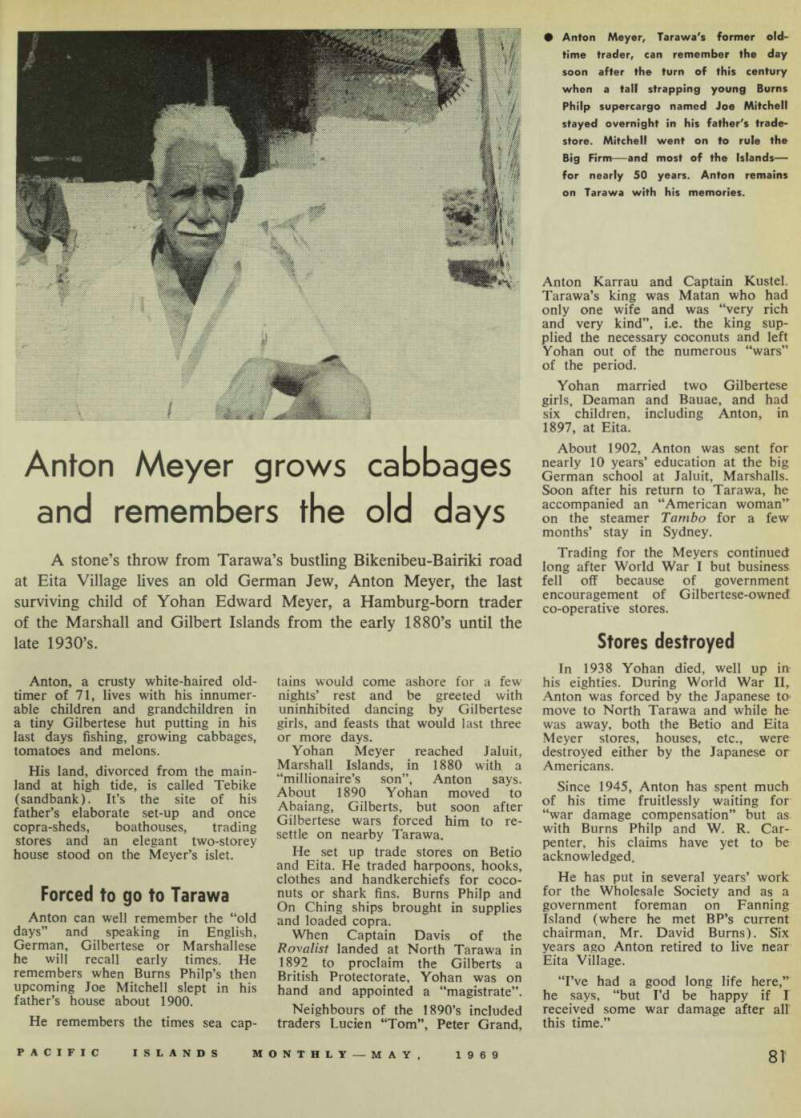 89
89 90
90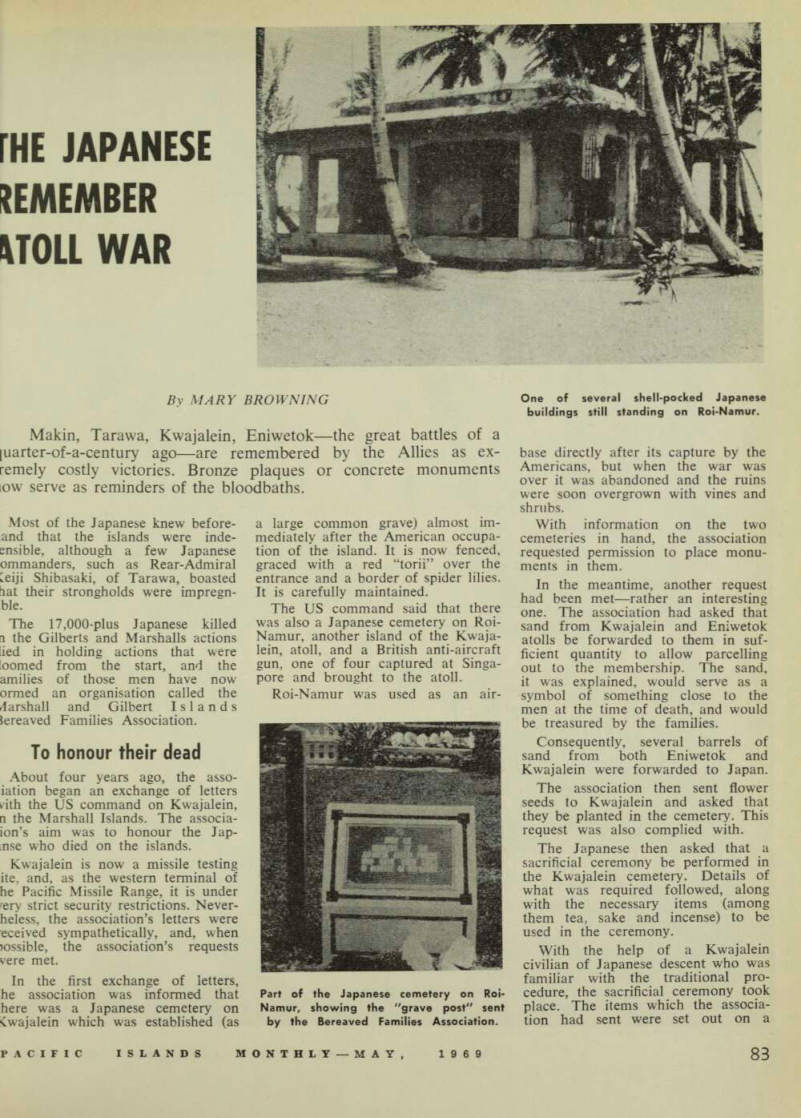 91
91 92
92 93
93 94
94 95
95 96
96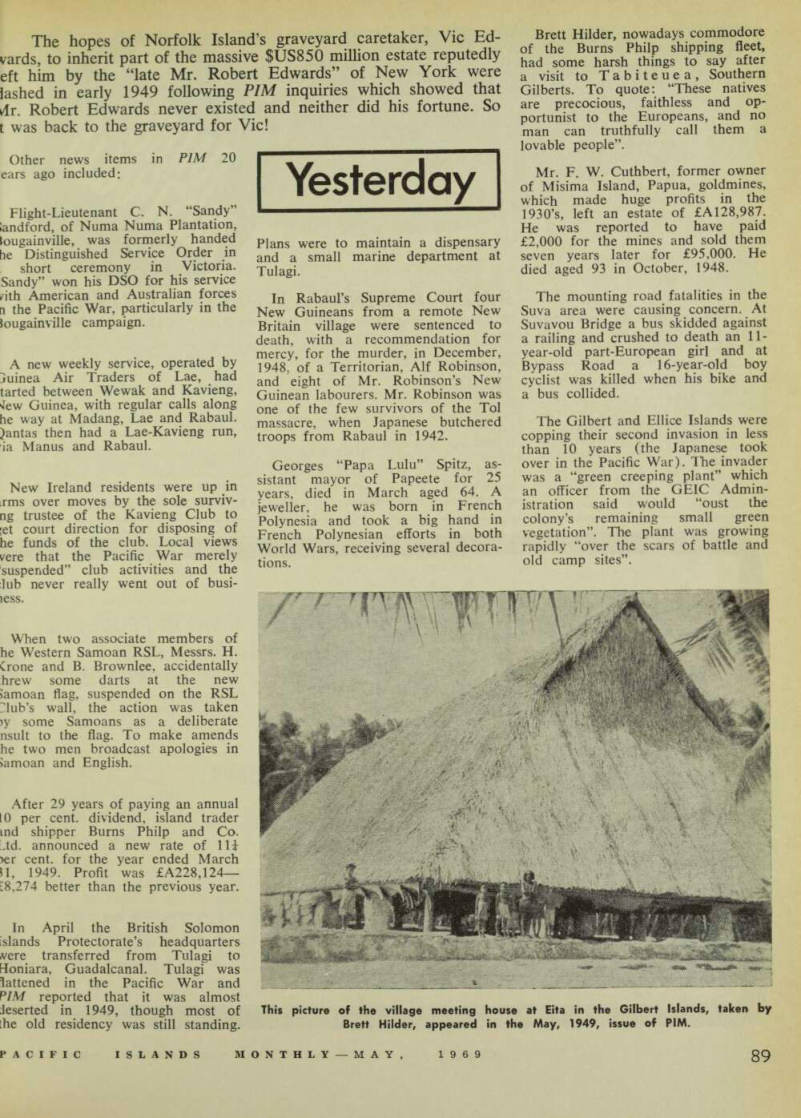 97
97 98
98 99
99 100
100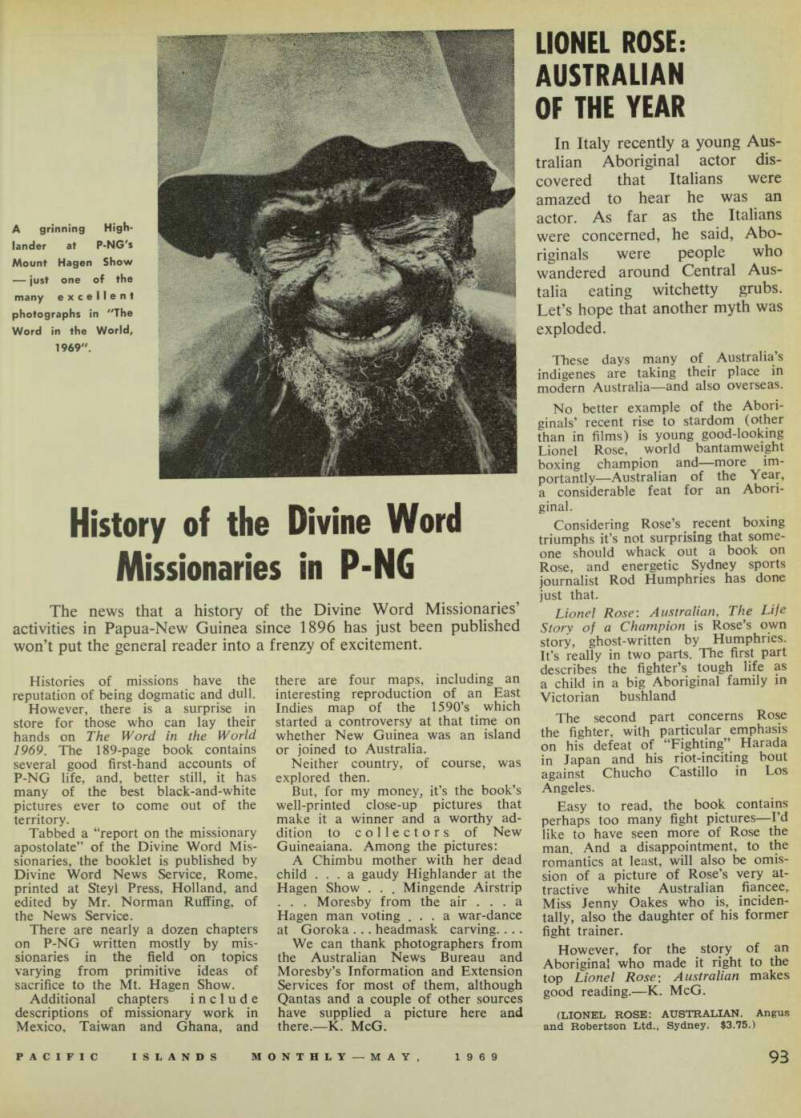 101
101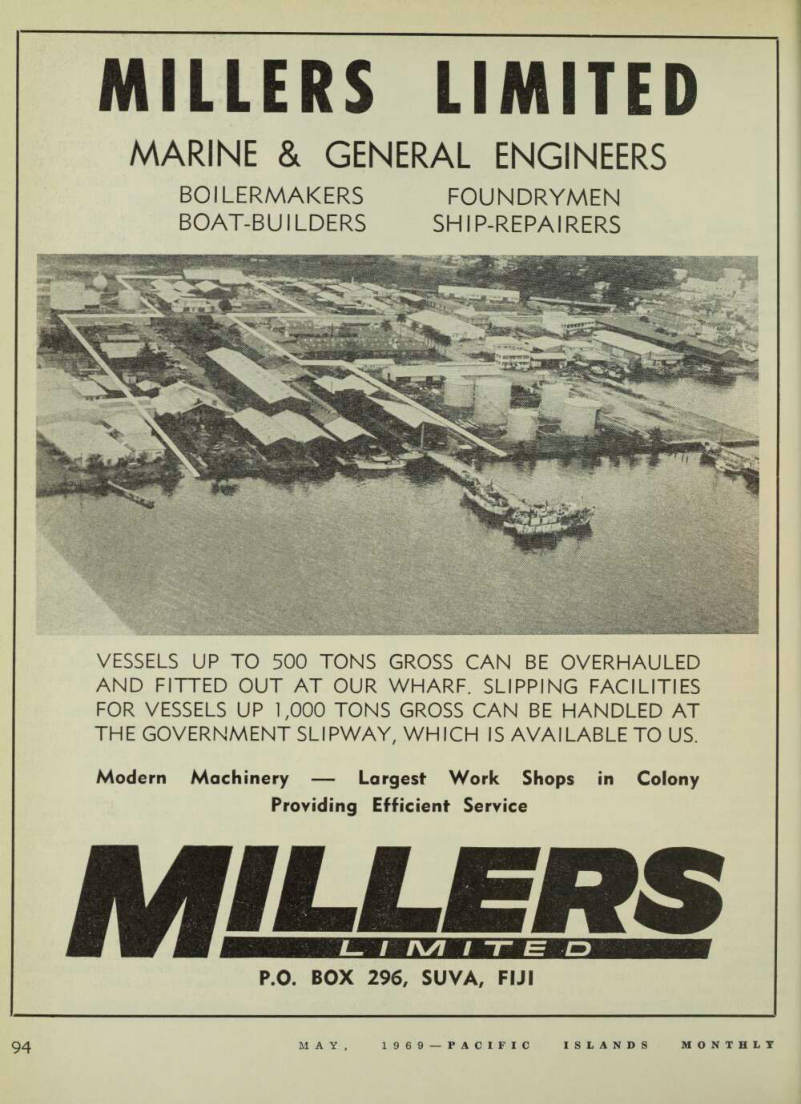 102
102 103
103 104
104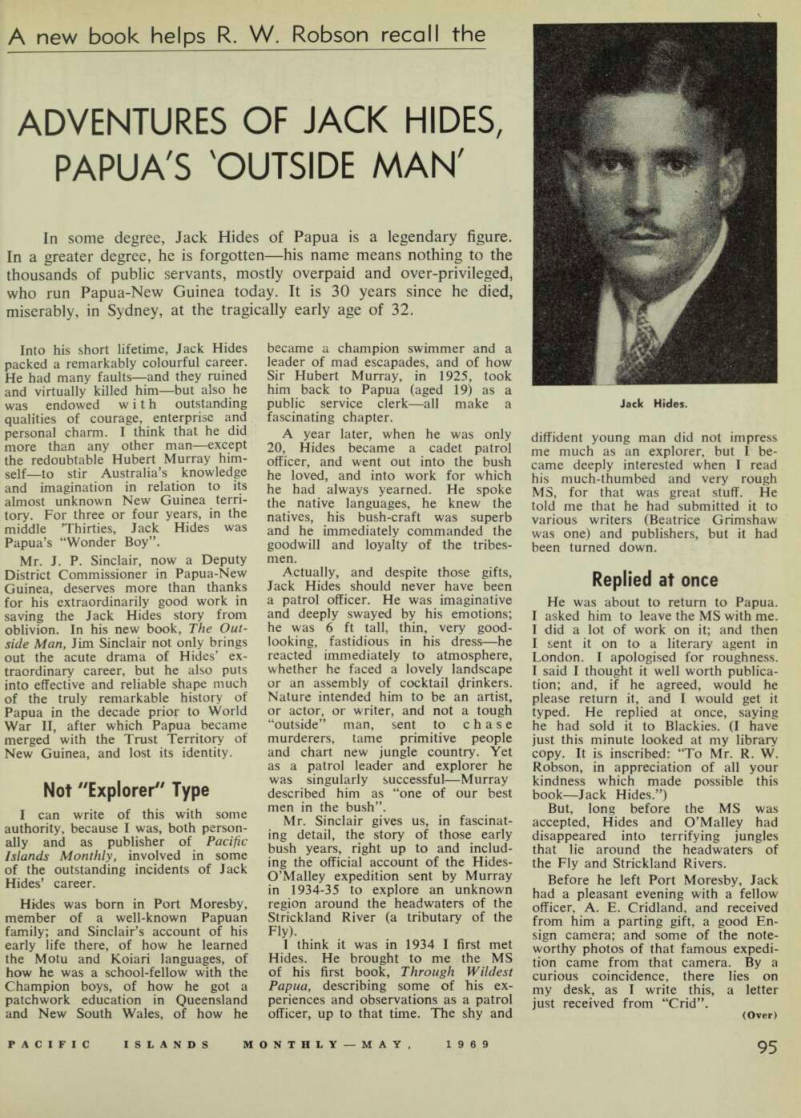 105
105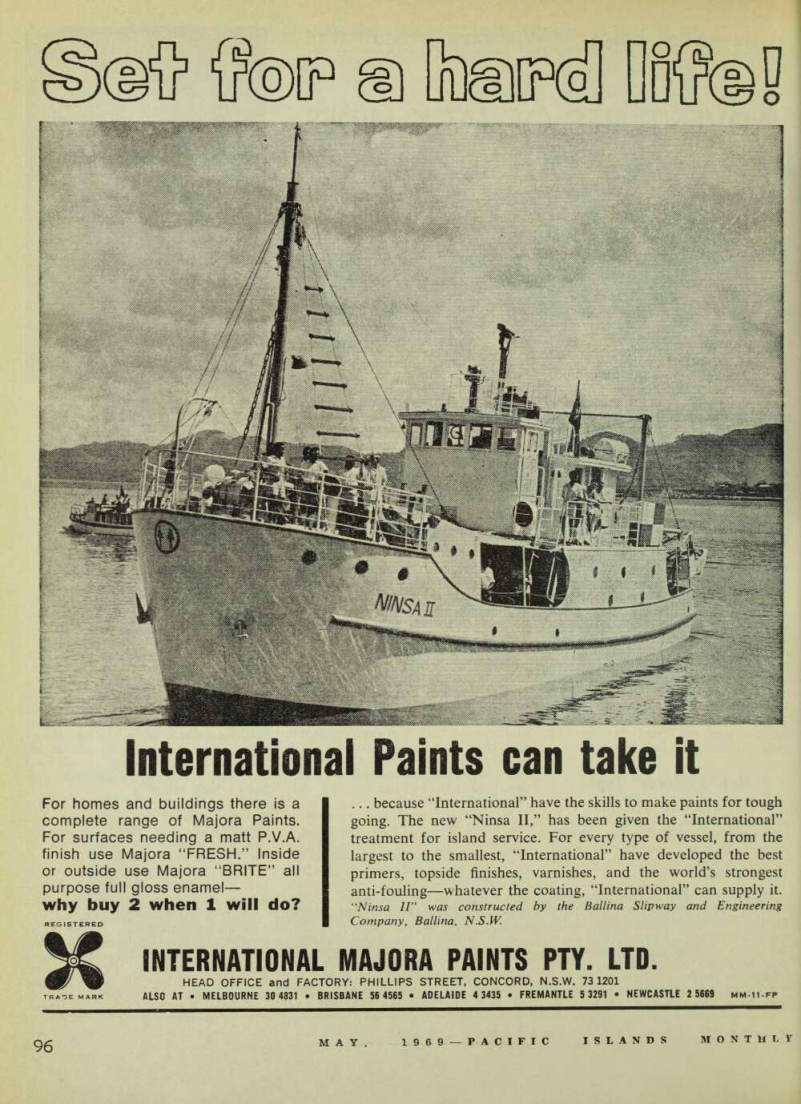 106
106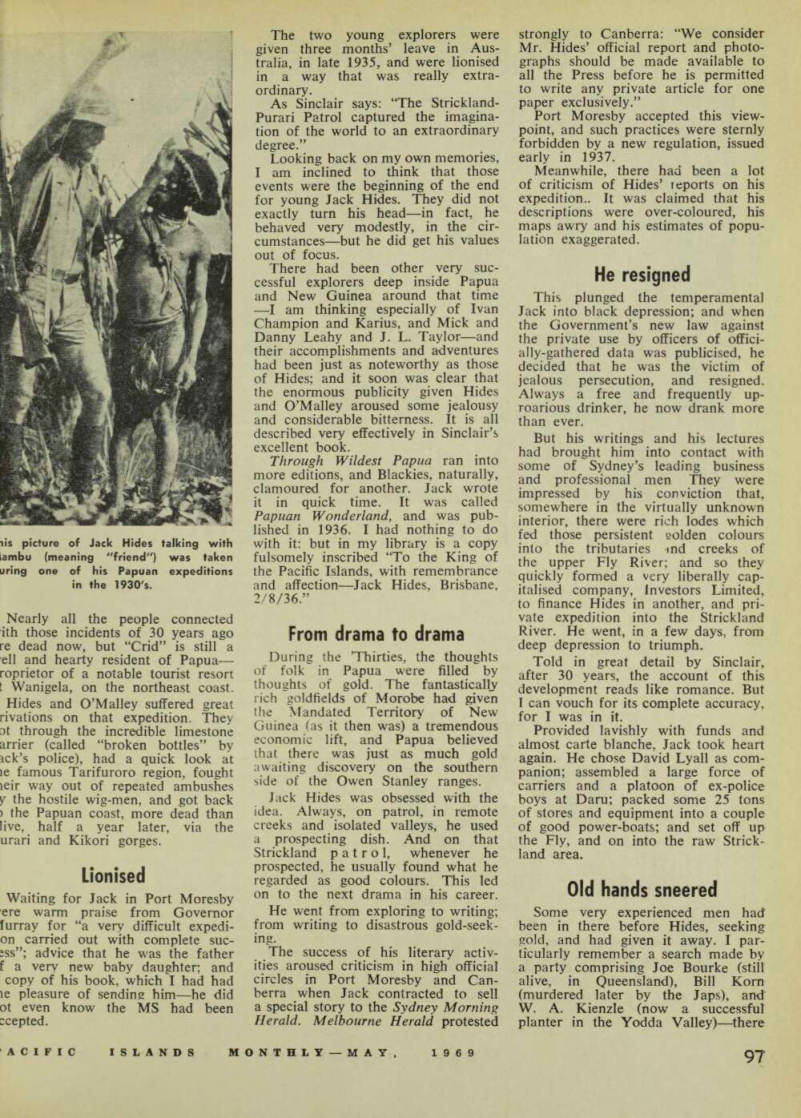 107
107 108
108 109
109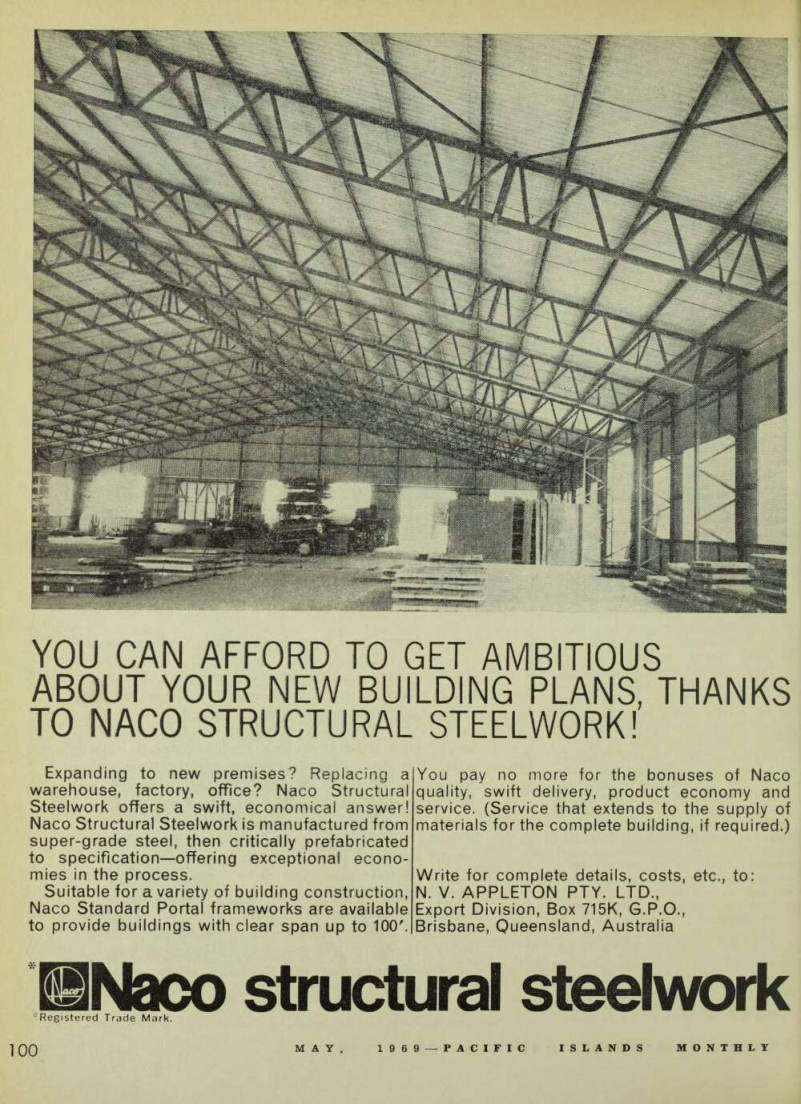 110
110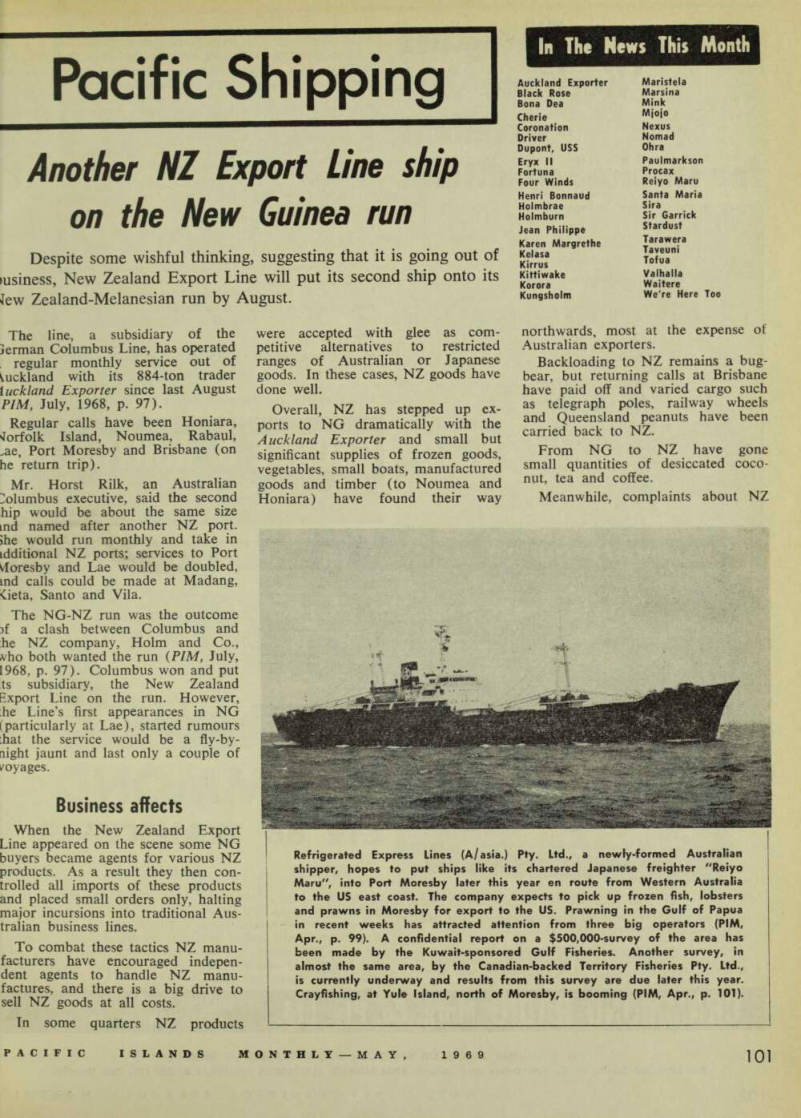 111
111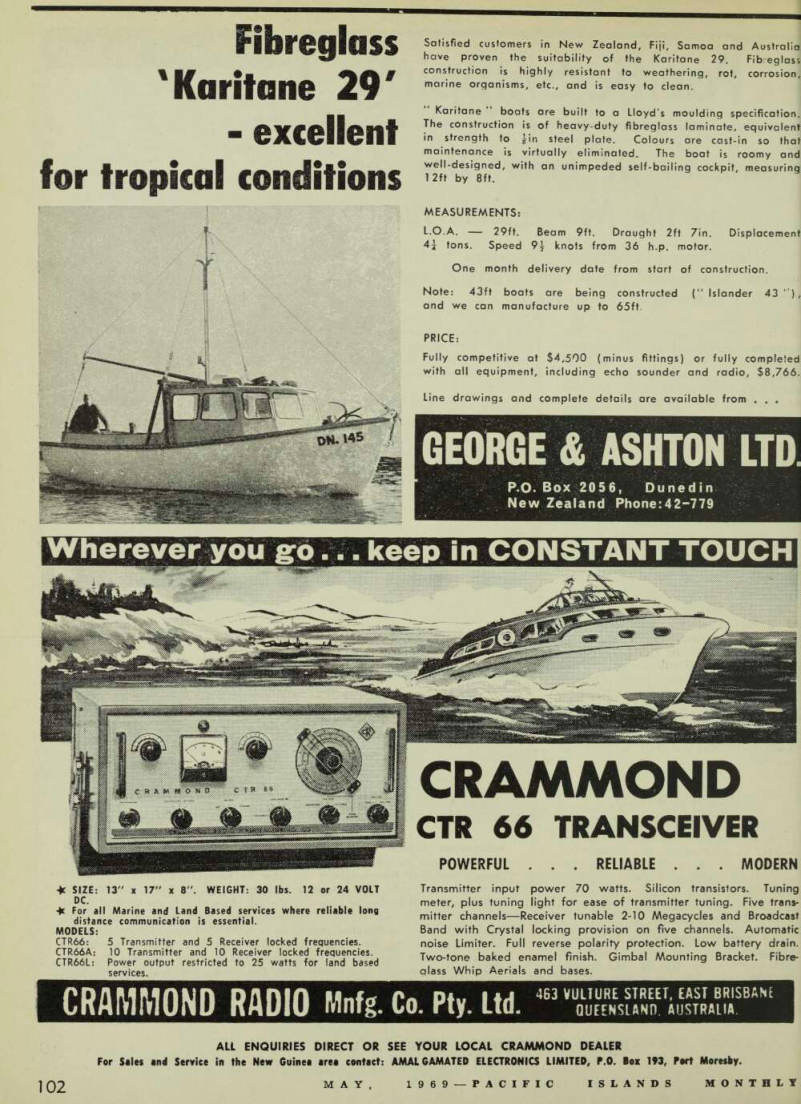 112
112 113
113 114
114 115
115 116
116 117
117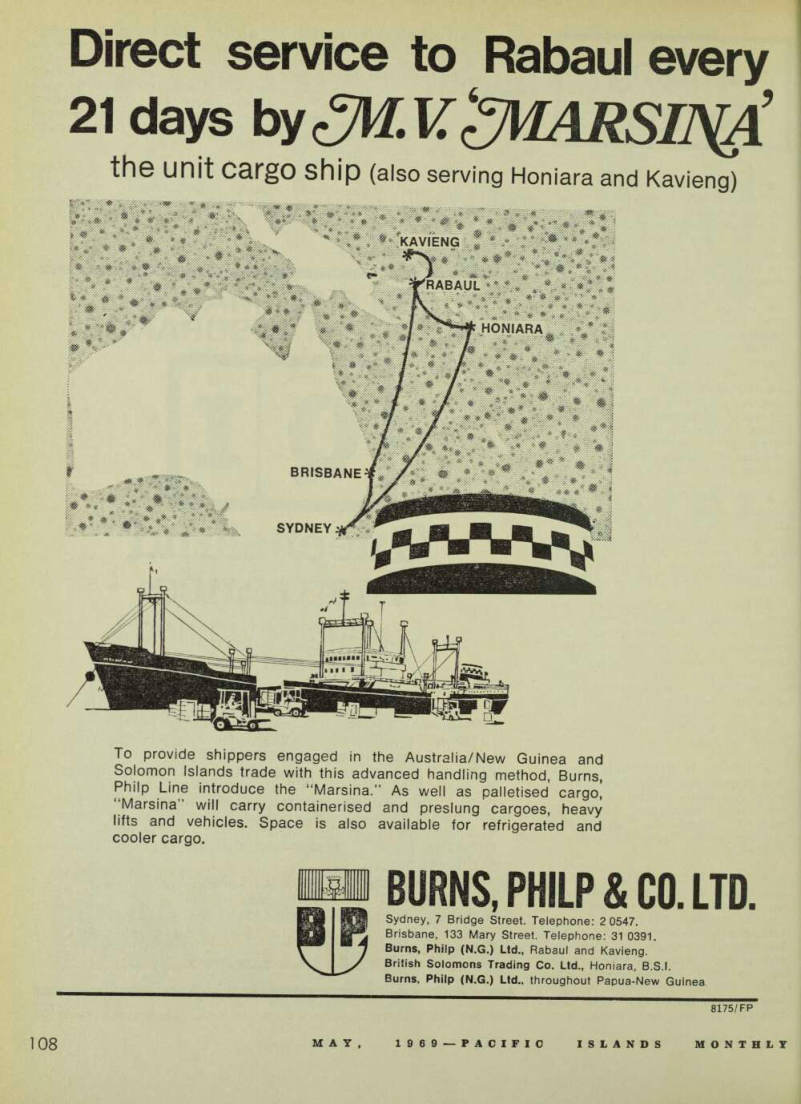 118
118 119
119 120
120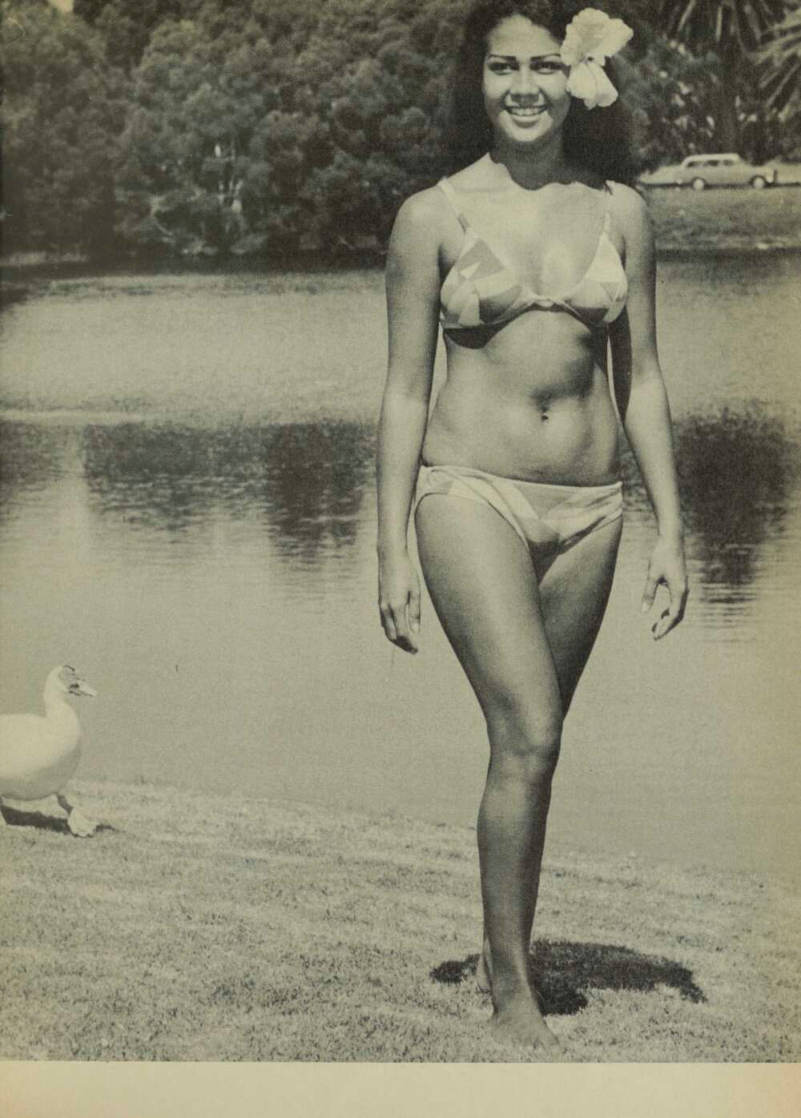 121
121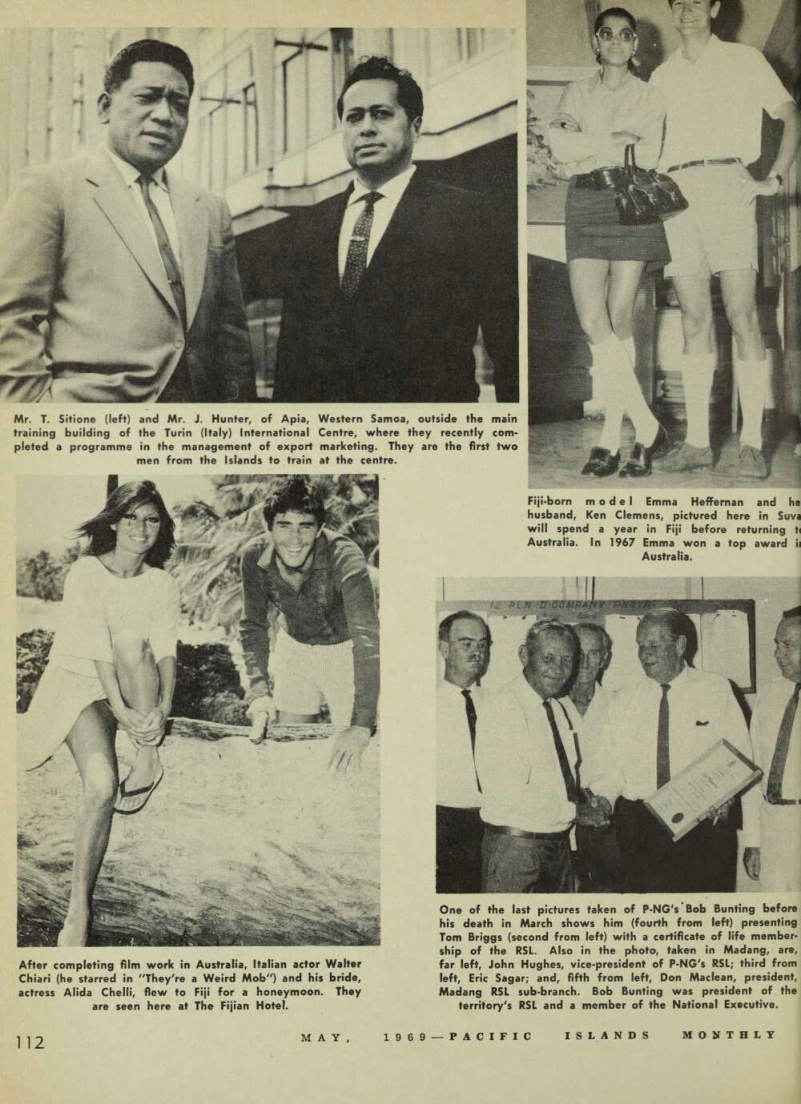 122
122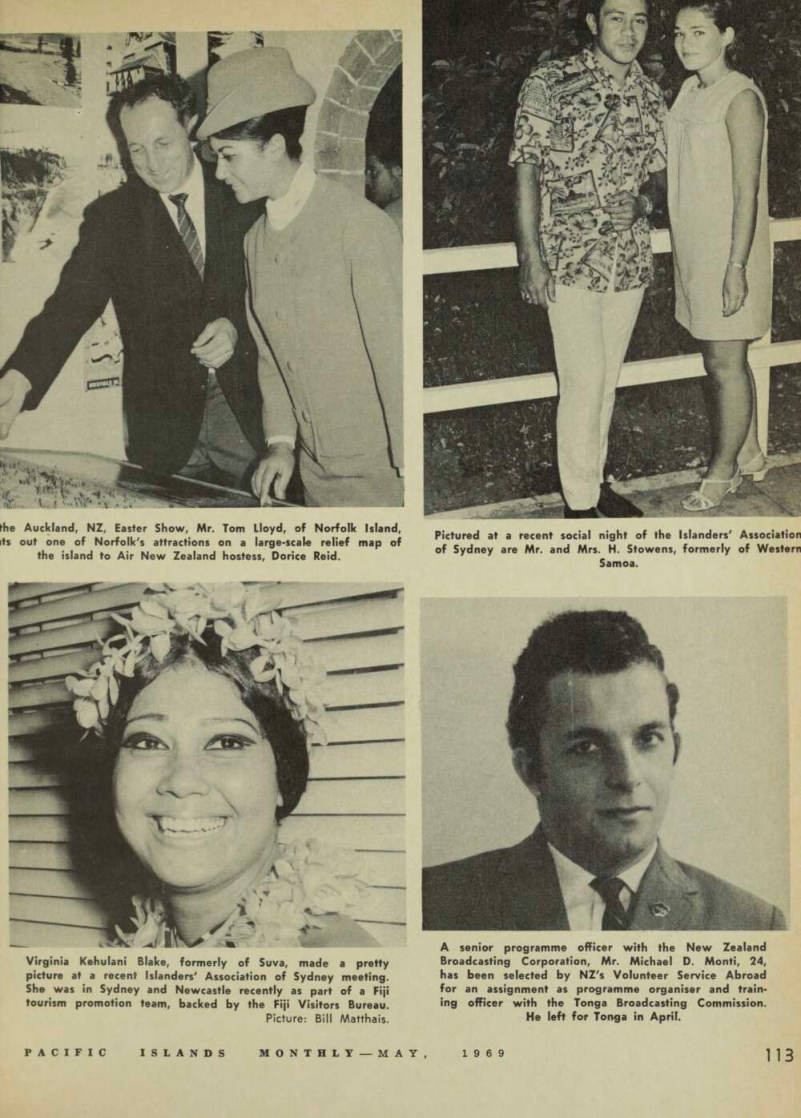 123
123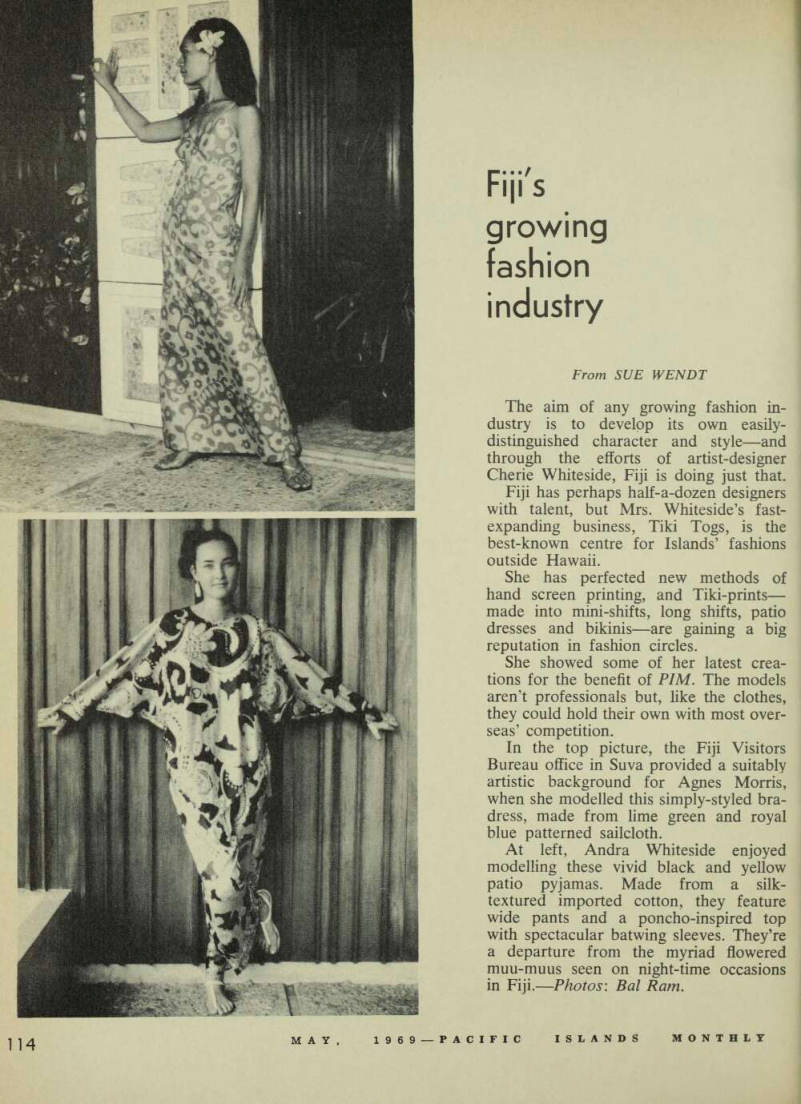 124
124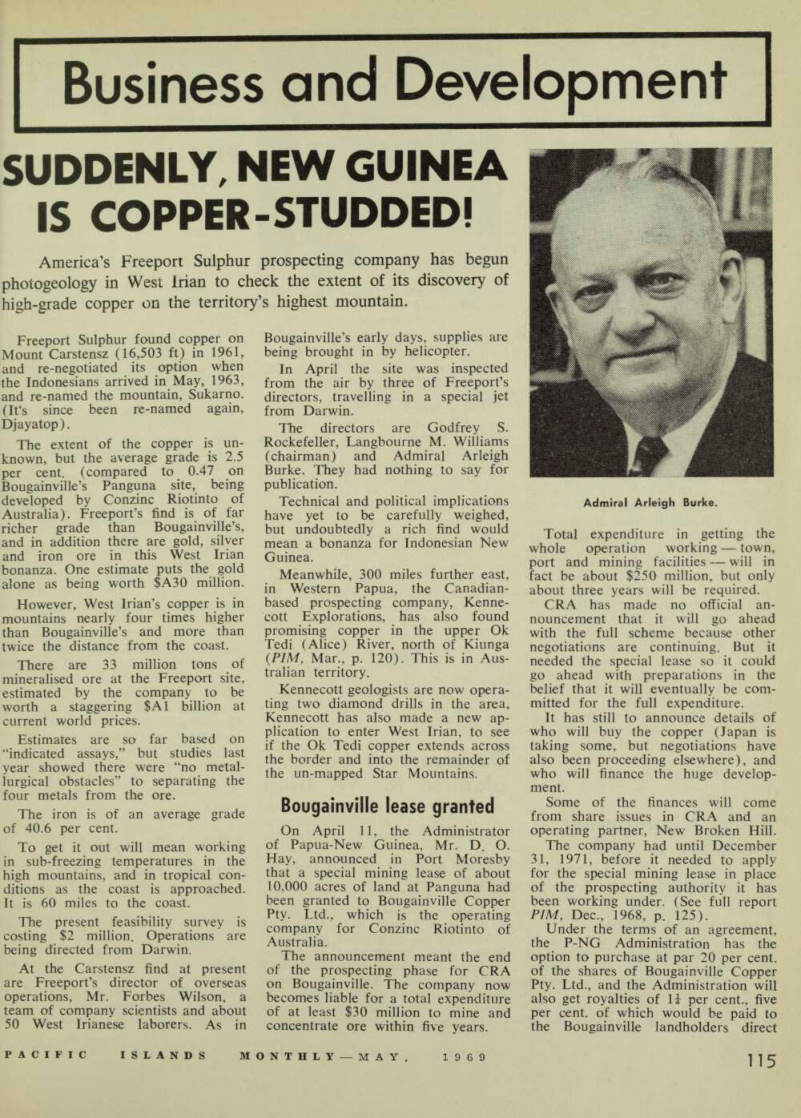 125
125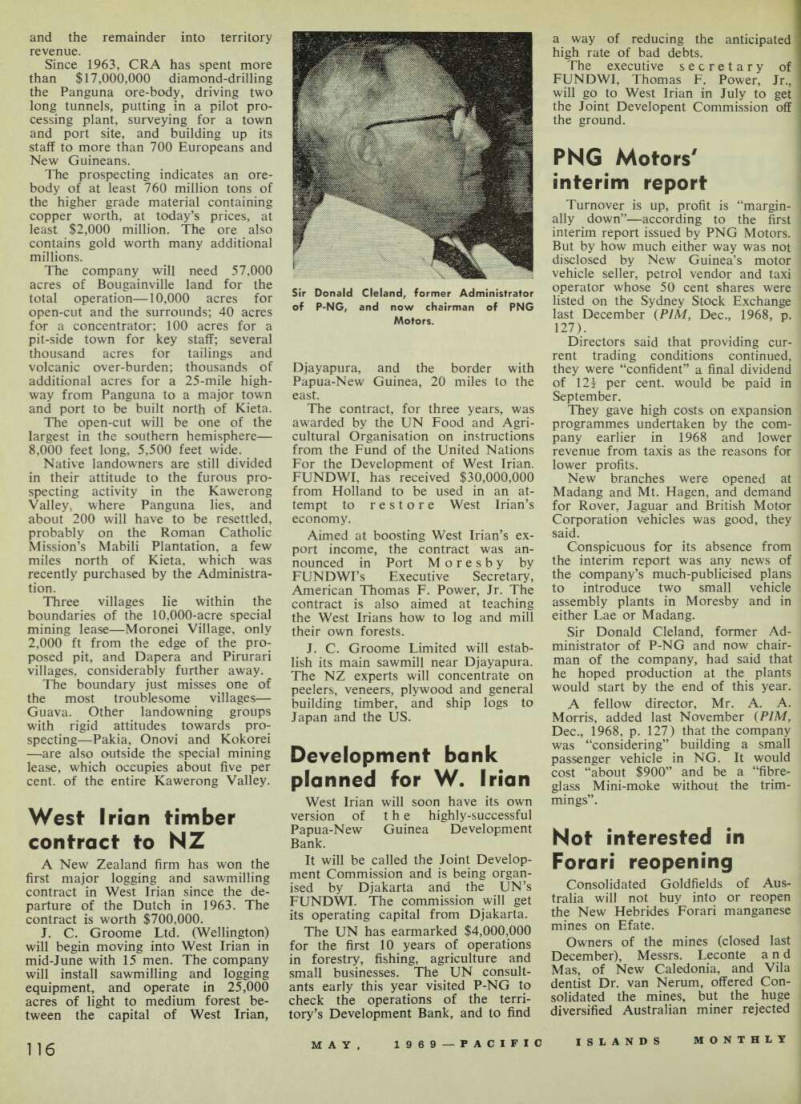 126
126 127
127 128
128 129
129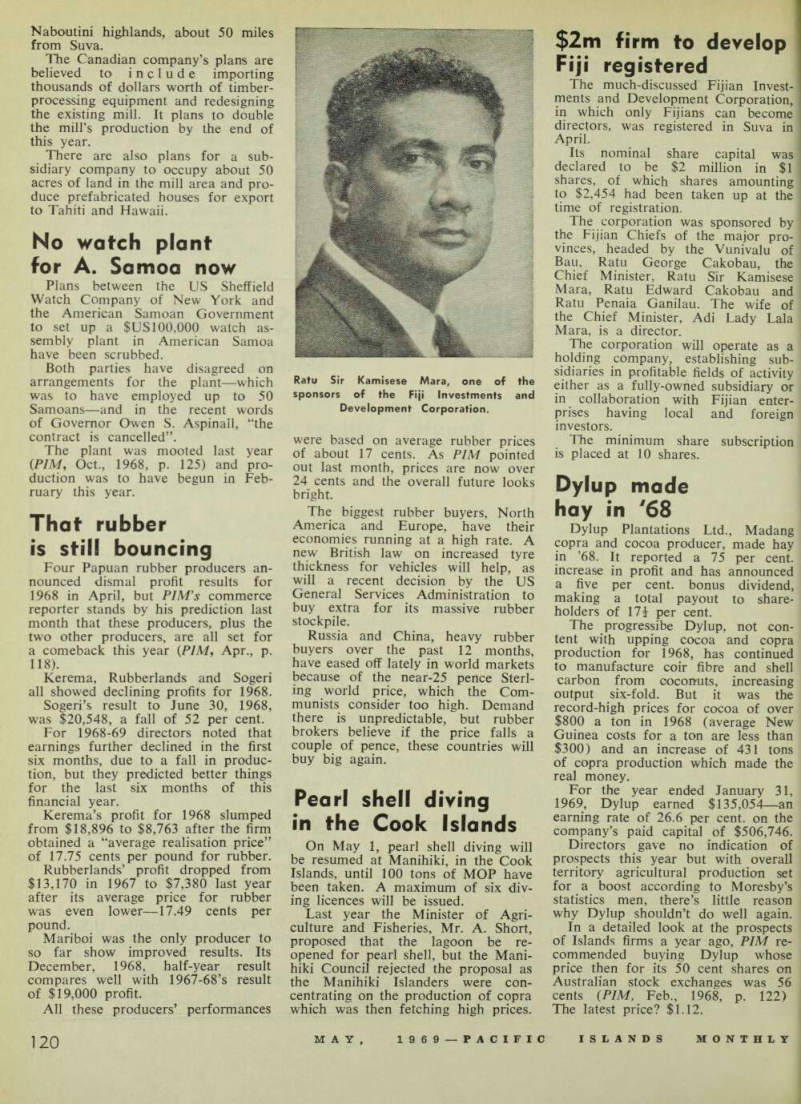 130
130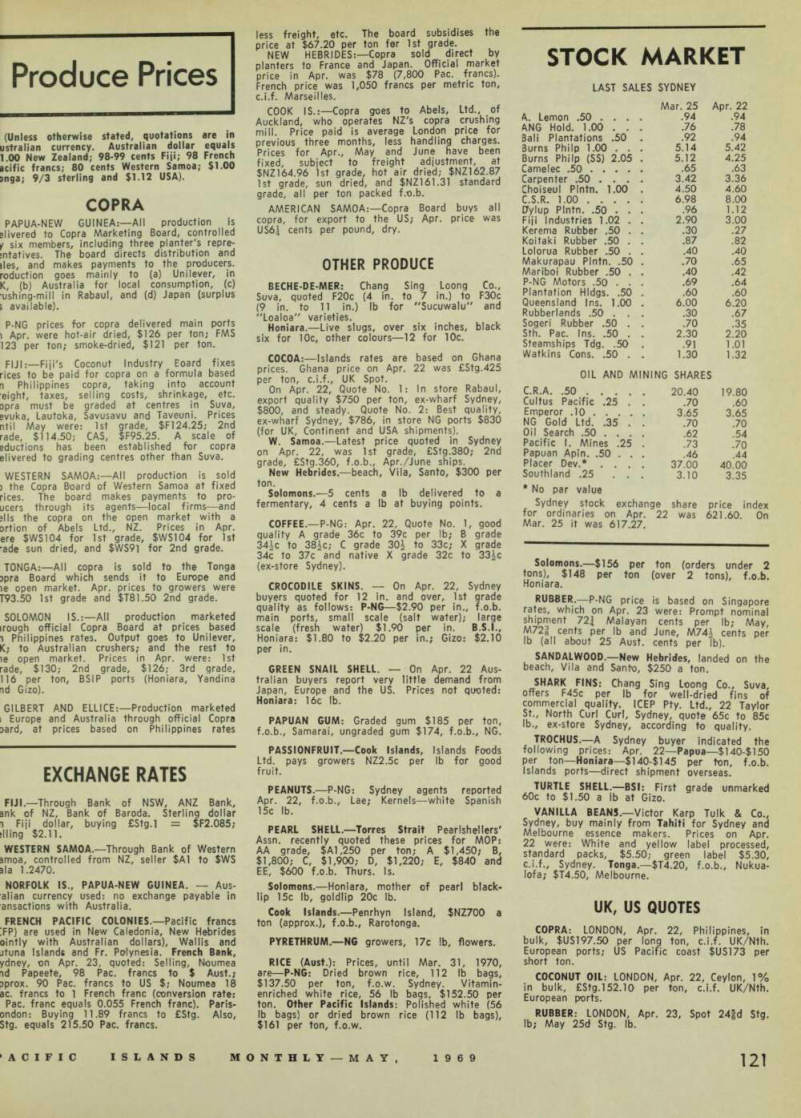 131
131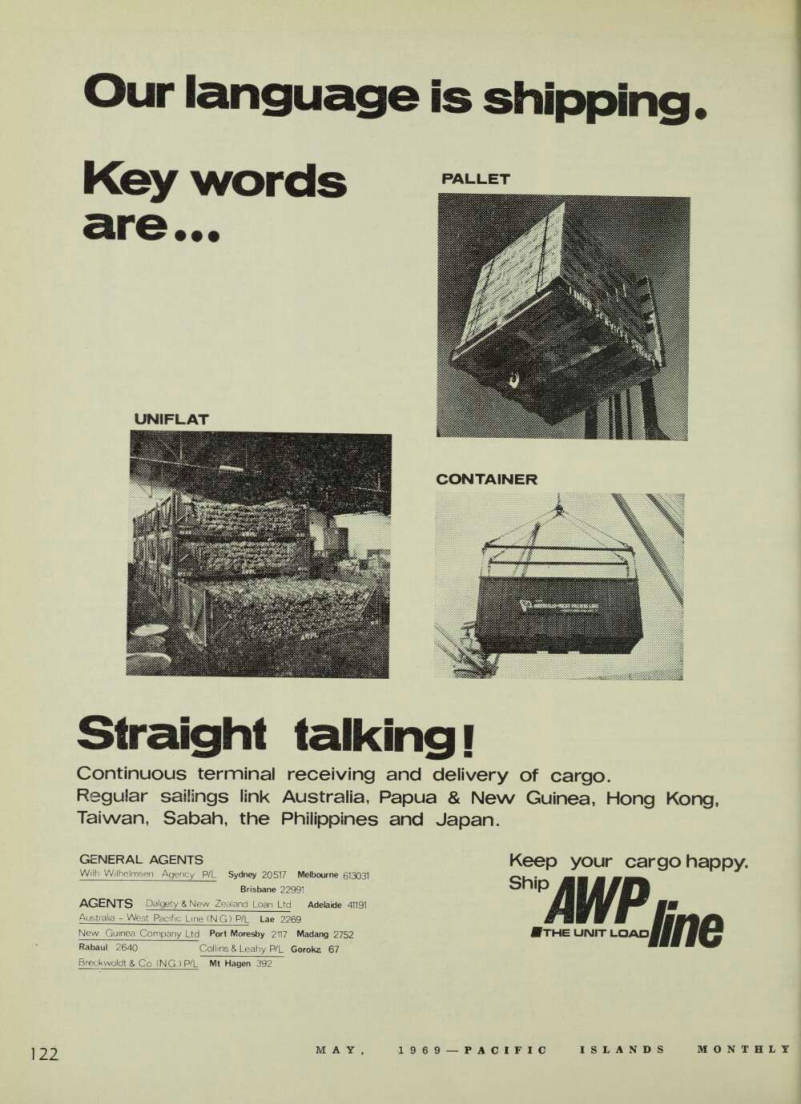 132
132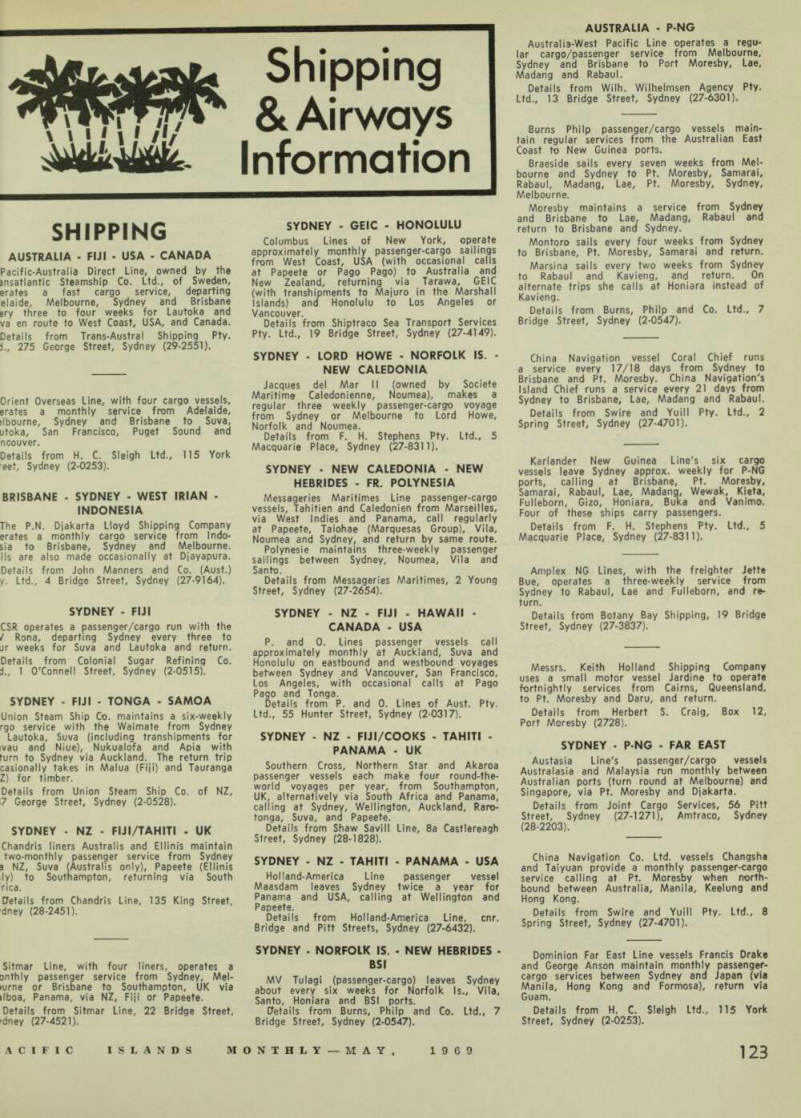 133
133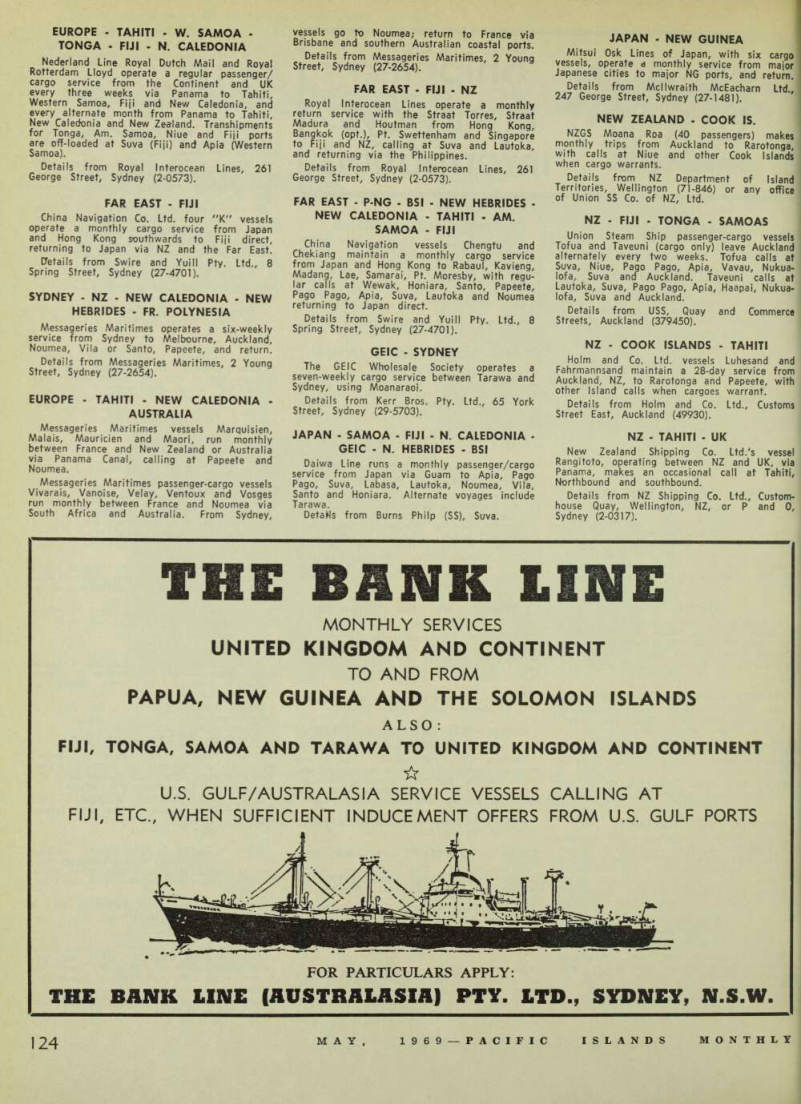 134
134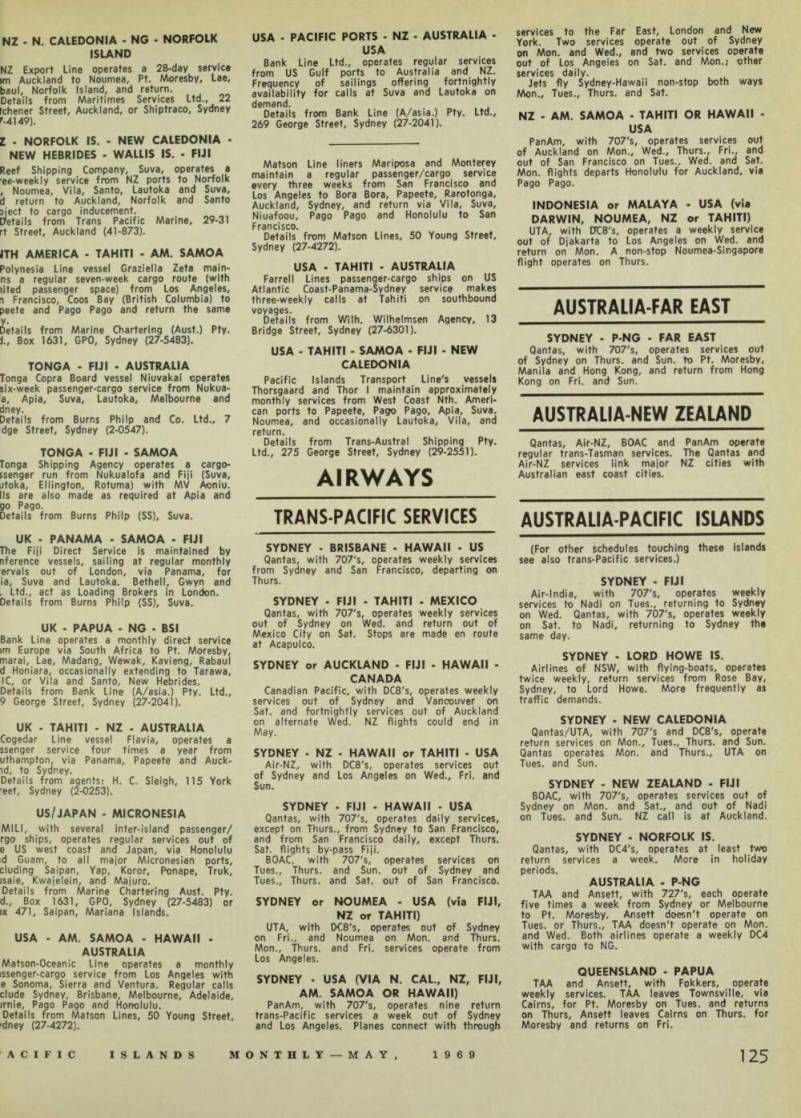 135
135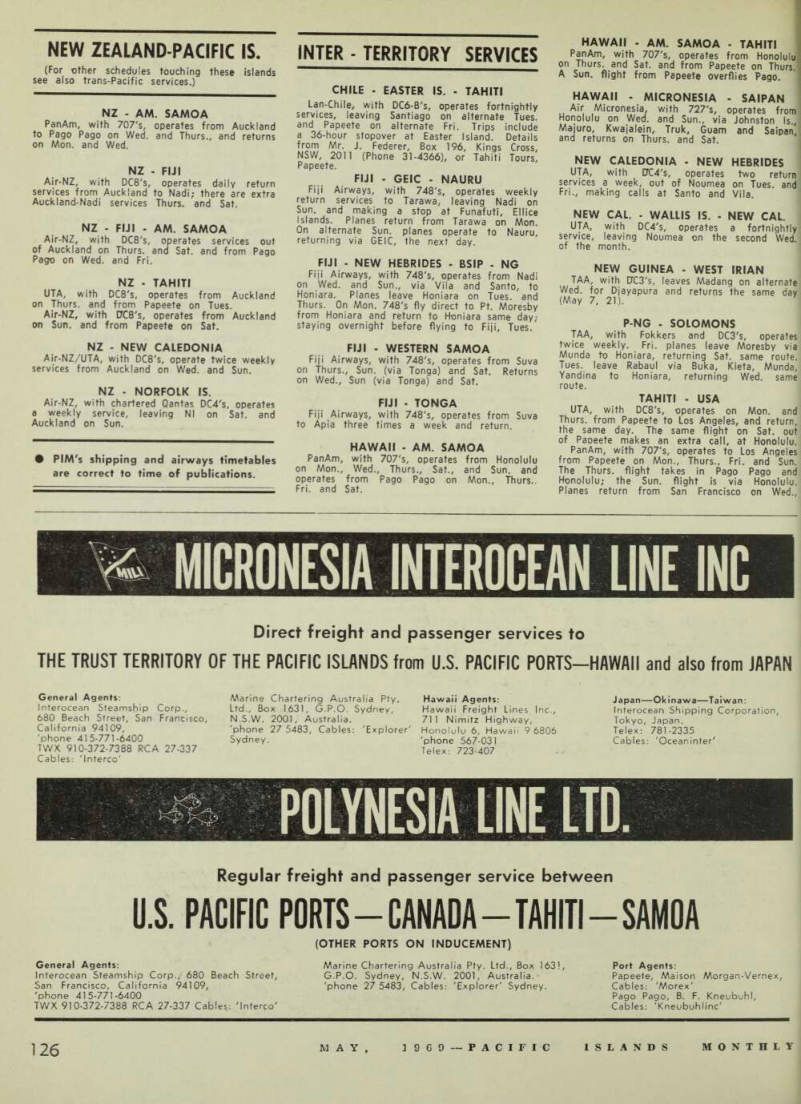 136
136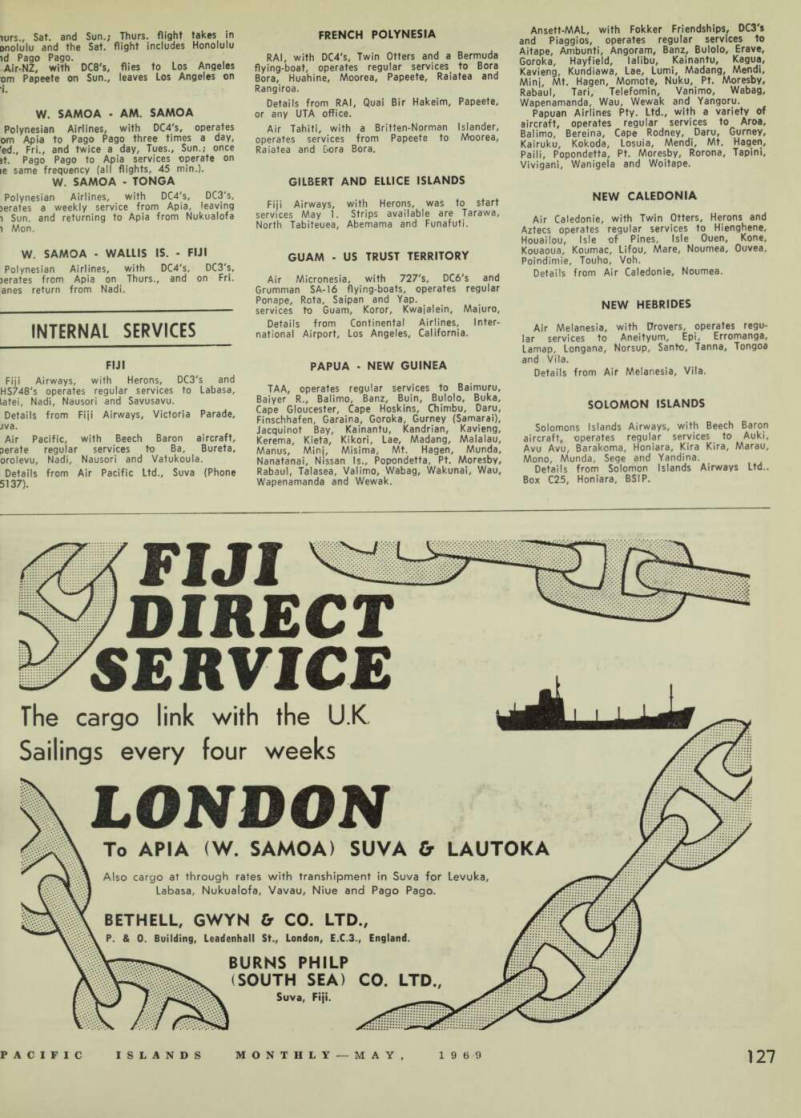 137
137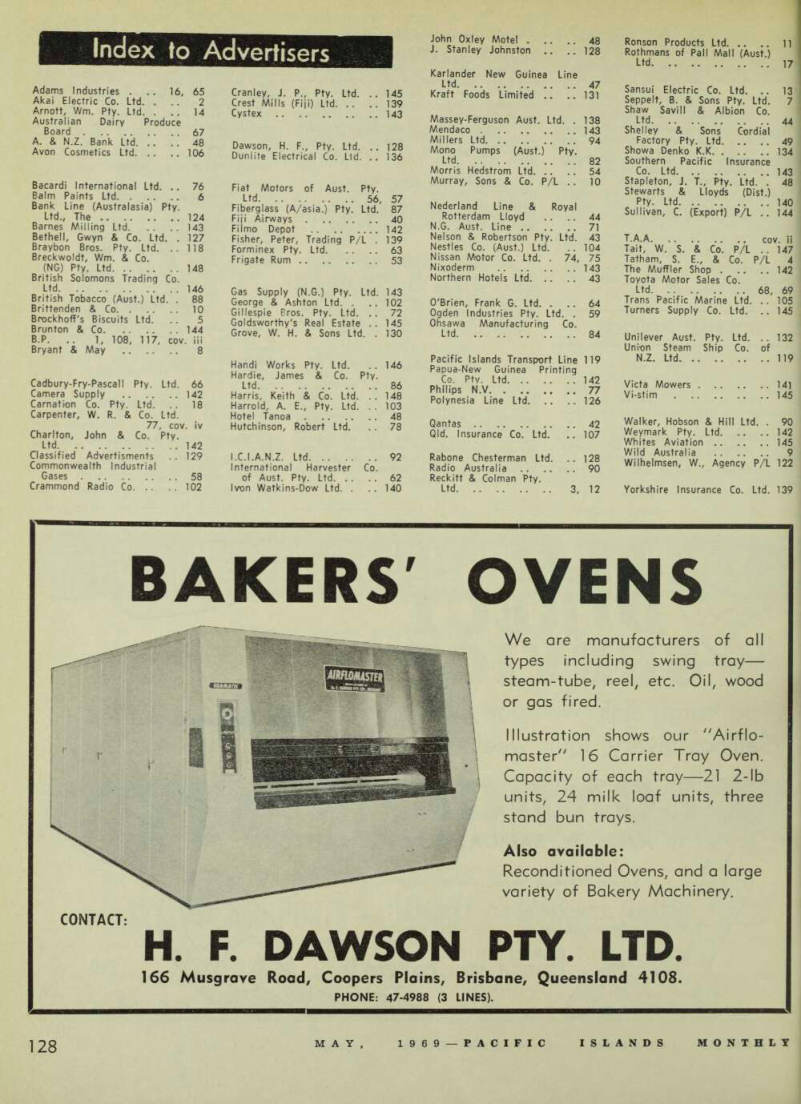 138
138 139
139 140
140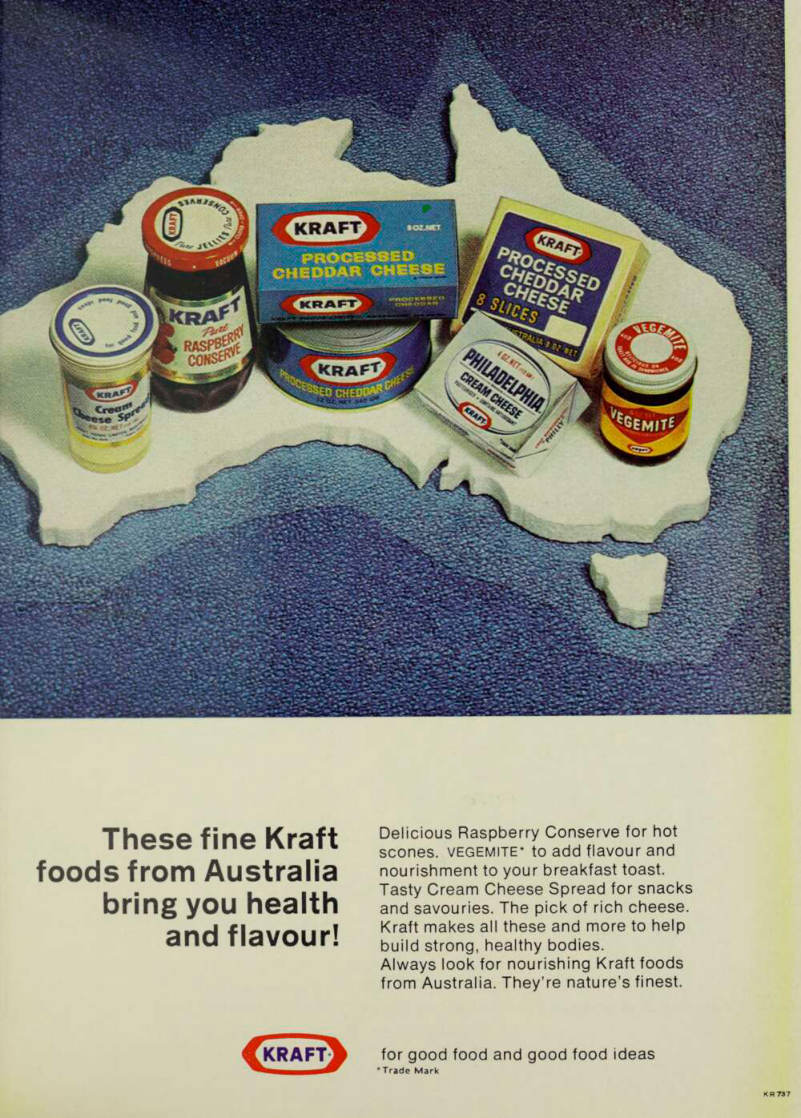 141
141 142
142 143
143 144
144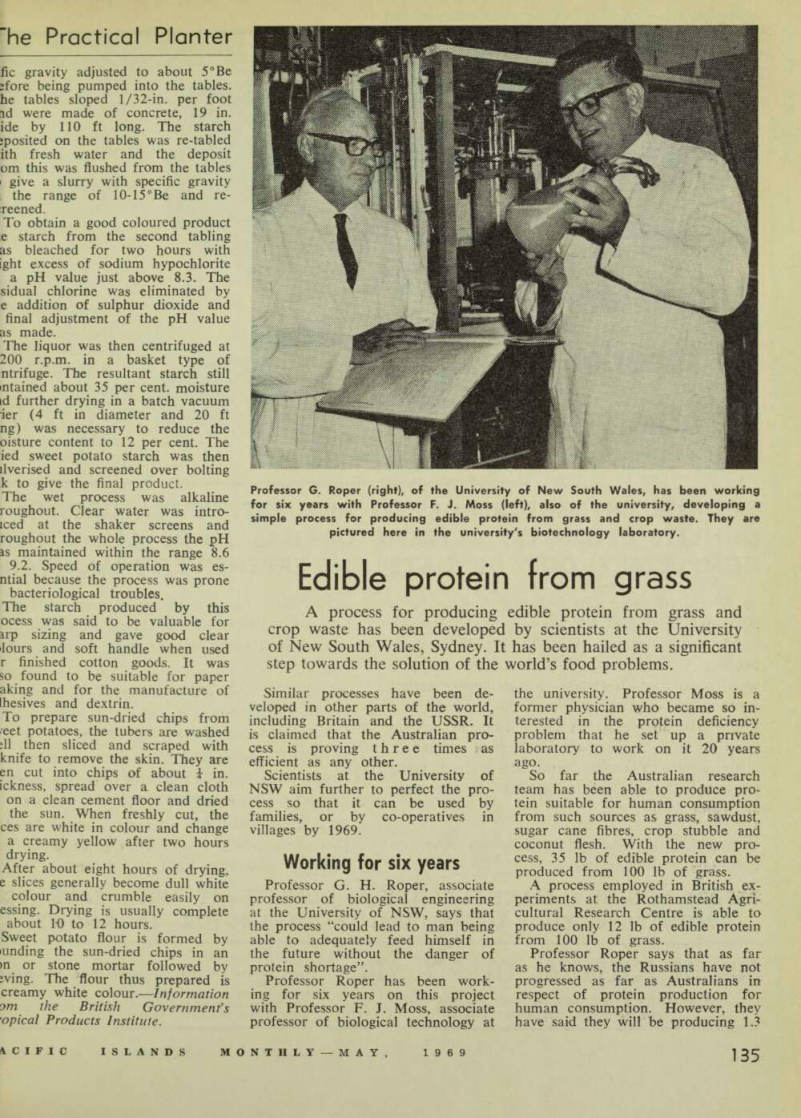 145
145 146
146 147
147 148
148 149
149 150
150 151
151 152
152 153
153 154
154 155
155 156
156 157
157 158
158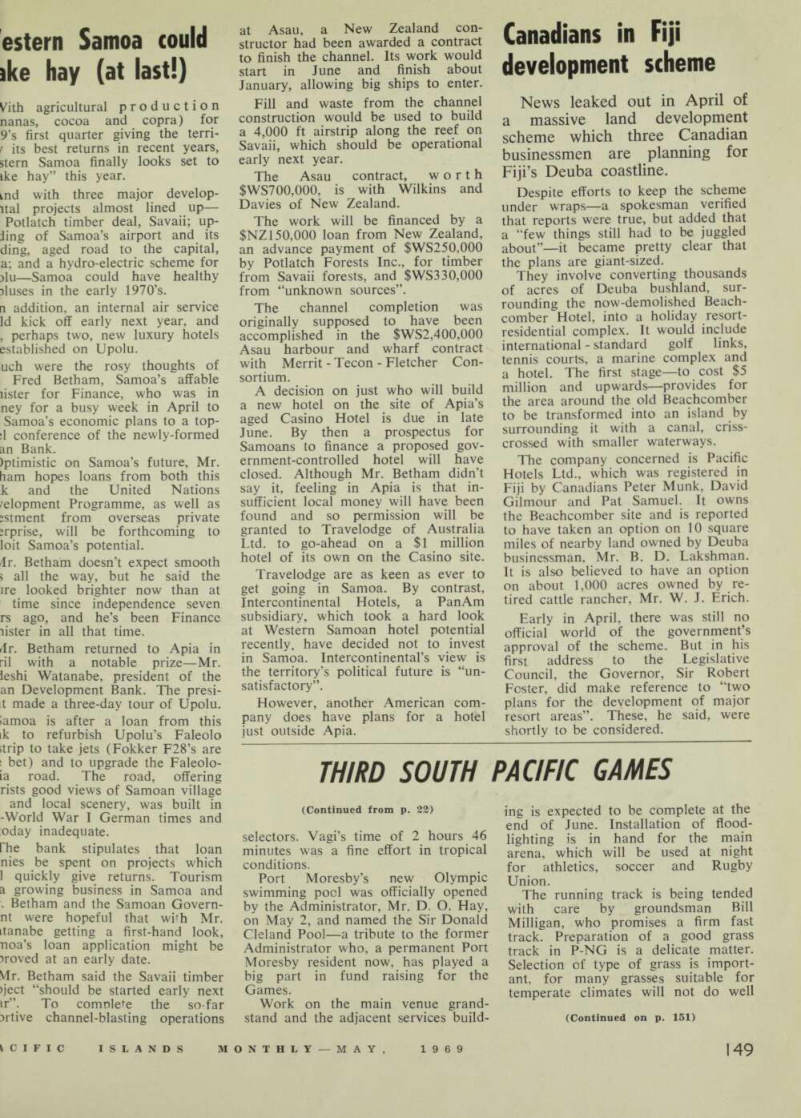 159
159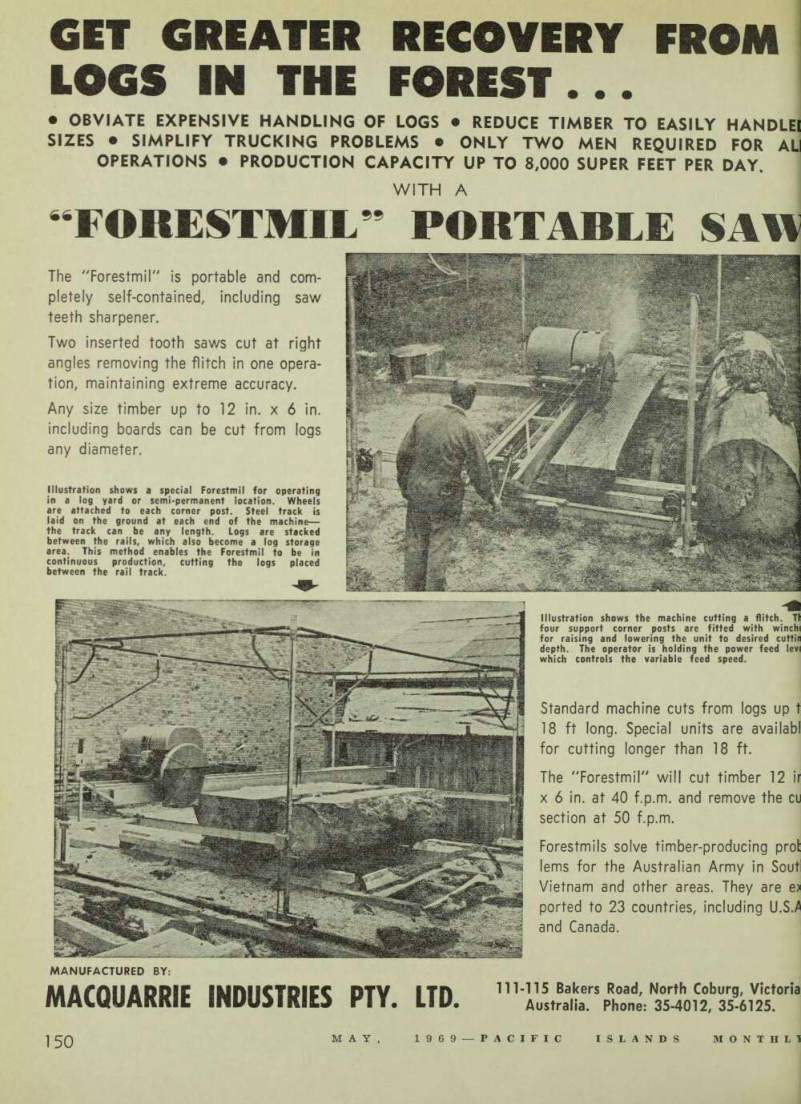 160
160 161
161 162
162 163
163 164
164