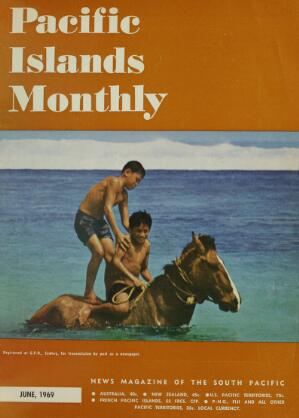
Monthly
Pacific Islands Monthly
Registered at G.P.0., Sydney, for transmission by post as a newspaper.
June, 1969
News Magazine Of The South Pacific
• AUSTRALIA, 40c. • NEW ZEALAND, 45c. «U.S. PACIFIC TERRITORIES, 70c. • FRENCH PACIFIC ISLANDS, 55 FRCS. CFP. • P.-N.G., FIJI AND ALL OTHER
Pacific Territories, 35C. Local Currency.
Advertisements & other items, p. 2 (2 items)
June 1969 Pacific Islands Monthl
internationally!
Doin’ what comes
m Get that international treatment on TAA’s “Bird of Paradise’’ flight between Papua/ New Guinea and Australia.
Deliciously different meals are yours from canapes and aperitifs right through lo dinner mints and coffee. Five hostesses are there to pamper your every wish. This is truly international flying.
Between Papua/New Guinea and Australia always fly TAA’s “Bird of Paradise”
Whispering T-Jet Service.
Five flights weekly ... in both directions.
Contact your Travel Agent or TAA; Port Moresby 2101. Lae 2311. Madang 2478.
Rabaul 2567. Goroka 8. Mt. Hagen 4 or 301 Wewak 103.
iMf ill iii
Je? the friendly friendly way „
In This Issue
Eneral
ames latest 28 nippers turn to unitisation 101 r hat if gold prices rise? 117 idonesia to make copra comeback? 118 jrtle farming for Islands 119
Merican Samoa
olitical status commission 26 spinall to go? 31 stronauts' reception 38 avels of Miss Alofania Vaita 105
Dok Islands
■xes up 119 aath of Mr. D. C. Brown 157 Jl ames latest 29 iblic order debate 32 ho is a Fijian? 33 ouble in the sugar industry 33 ymond Burr on location 38
Vitchcraft" legislation 39
jtriggers return to Suva 40 le of Persian carpets 53 ewalker burnt 63 avelodge on the move 65
va development plans 67
ins Hockey Federation 71 ;w charges for ports 73 rking meters for Suva? 74 st Fijian to become judge 105 iter for the "Duiyabaki" 11l mp in Southland shares predicted 117
Japanese mo or sales up 120 Australia gives more than peanuts ... 120 Copra production 25 per cent, up 120 Vanilla industry soon? 141 Death of Sir Harry Luke 160
French Polynesia
Parking meters for Tahiti 74 Colonisation of the Marquesas 85 Tahiti directory 99
Gilbert And Ellice Islands Colony
Shipping executive visits Tarawa ... 105 Electricity a live issue 122 Census results 135
Nauru
Phosphate talks "sticky" 27 Australian officials hos ile to pools 31 Future of phosphate 121
New Caledonia
Elections —and more elections 27 Sportsmen do well against visitors 28 Cheap holiday 41 New Qantas manager 105
New Hebrides
Vila, the town that just grew 95 Two new traders 109 Santo wharf investigations Ill Co-ops "buoyant" 160
Niue
Island of charm —and dust 65
Papua-New Guinea
Games publicity drive 30 Border war hots up 34 Bahasa Indonesia to be taught? 35 AAadang is in the doldrums 37 Equal pay for women 37 Public service salaries trouble 37 Racism among the multi-racials 39 Lost tribes 40 Kavieng Zero 42 Missions' role in education 44 School statistics 47 Trobriands ho el sold 69 Book of Mamie Bassett's letters ... 99 Important book on grass roots art 100 Shippers turn to unitisation 107 Another through cargo service? 11l Offer for Sangara shares 119 Copra prices could fall 121 The big earners 123 Dea h of Lea Ashton 157 Death of Pat Holmes 157
Solomon Islands
Increase in timber exports 118 Solair still alone 123
Tonga
Anniversary pictures 104 Visit by R. N. Birch 105 UN men visit 105 Studies by tropical disease experts 105 Photography survey 105 Late bid for oil rights 119 Correction on Crown Prince's picture 159
Us Trust Territory
Datsuns or dignity? 25 "Pacific Islander's" last trip 109
Western Samoa
No cruise ships on Sunday 61 23,000 acres for Potlatch 121
DEPARTMENTS: Up Front with the Editor, 3; Letters, 19/41; Tropicalities, 38; To the Point with Percy Chatterton, 50; From the Islands Press, 76; Magazine Section, 85; Yesterday, 97; Book Reviews, 99; People, 105; Shipping, 107; Cruising Yachts, 112; Business and Development, 117; Produce Prices, 125; Shipping, Airways Schedules, 129; Practical Planter, 141; Deaths of Islands People, 157; Index to Advertisers, 160.
Advertisements & other items, p. 4 (1 item)
Technique Matters, Too!
Model M 9 % y % ■ « m R R * v m x : M « 9 if m i
miiiiiifiiimi
Just as every artist has his own personal style—or technique— so does AKAI. The M-9 stereo tape recorder is an outstanding example of the highest quality in modern engineering technique. AKAI’s own CROSS-FIELD HEAD and its all silicon transistor amplifier are just two of the many technique triumphs combined to produce the mostvivid, colourful musical portraits you will ever hear.
How does all this happen?
Easily. It’s AKAI technique.
AKAI
AKAI ELECTRIC CO.. LTD.
N f s.w new zeaukd a. c p o Bo e 4 o chrcfu nisland ; Burns Philp (South Sea) Co., Ltd., Suva. Burns Philp (SouthSea) C o Ltd., L auoka p SAMOA Burns 11 P L ( t d R o rfor k |?la nd Sou th Pacific. NEW HEBRIDES: Burns Philp (South Sea) Co.. Ltd., Apia Western Sam°a NORFORK ISLAND . Burns Philp <?outh Sea) „ L M ° e ' L J d F ' , 0 Box 123, Noumea. BRITISH SOLOMON Burns Philp (New Hebrides) Ltd Port Vila Burns; Philp (New Heb r , J«) Lt d . Santo. co-opS?S^eSociety. COOK ISLANDS; N.T. Napa (Avarua) Ltd., ™;p P a?«, B r H A O rSEW B & P E A: NA S UR O U Svr3 U on CO ( N OP G e . Lid., PO* 80. 508, Pc. Mores*. TOHBA: Boros Philp (South Sea) Co., Ltd., Nuku Alofa.
Up Front
with the Editor
Don’t look for a or even for topicality in anything I lieht happen to write in this column of bits and bias. I know I 3ve said that before, but it’s approoriate to say it again before noting at you a long oassage from Will Mariner’s An Account of e Natives of the Toma Islands , published first in 1817.
This passage happens to be my vourite from any Pacific book, ich is its fascination for me that :casionaly I will pull out the volume om my library shelf and read that ige to visitors.
Will Mariner’s own story is well lown these days. He was the ship’s >y in the British privateer Port au •ince, which was plundered by those Id Tongans in 1806, and who sur ged under the patronage of the chief nau, to finally return to England, me and fortune. His account of his >ngan experiences over four years as written with the help of Dr. hn Martin.
This favourite passage of mine re les a conversation that young ariner had heard around the kava "wl in Haanai, one of the Tonean oup, probably about 1807. A chief lated how a ship had recently rived at Tongatapu from Botany ly, bringing home after two years Sydney a Tonean chief called iloo Mata Moigna and his wife, tafehi. The pair were now sorry -Y were back on Tonga, and pre- Ted the infant settlement of Botany y.
Mariner goes on with his narrative: “The account they gave of the lelish customs at this place, and the atment they at first met with, it ly be worth while to mention. The >t thine that he and his wife had do, when they arrived at the gover ns house, where they went to ;ide, was to sweep out a laree court rd. and clean down a ereat pair of ts: in vain thev endeavoured to slain, that in their own country ;y were chiefs, and, being accus ned to be waited on, were quite used to such employments: their sostulations were taken no notice and work thev must. ‘At first their life was so uncom lable, that they wished to die; no
one seemed to protect them; all the houses were shut against them; if they saw anybody eating, they were not invited to partake: nothing was to be got without money, of which they could not comprehend the value, nor how this same money was to be obtained in any quantity; if they asked for it, nobody would give them any, unless they worked for it, and then it was so small in quantity, that they could not get one-tenth part of what they wanted with it.
Kicked him out
“One day, whilst sauntering about, the chief fixed his eyes upon a cook’s shop, and, seeing several people enter, and others, again, coming out with victuals, he made sure they were sharing out food, according to the old Tonga fashion, and in he went, glad enough of the occasion, expecting to get some pork; after waiting some time, with anxiety to be helped to his share, the master of the shop asked him what he wanted, and, being answered in an unknown language, straightaway kicked him out, taking him for a thief, that only wanted an opportunity to steal. Thus, he said, even being a chief did not
Our Cover
Two hoys indulge in some horseplay at Raro tonga in the Cook Islands.
Horse racing along the sands is a popular pastime in the Cooks. And when the racing is over, there’s always the surf for cooling.
This picture was taken for us by Sheree Lip ton.
prevent him being used ill, for, when he told them he was a chief, they gave him to understand, that money made a man a chief.
“After a time, however, he acknow ledged that he got better used, in pro portion as he became acquainted with the customs and language. He ex pressed his astonishment at the perse verence with which the white people worked from morning till night, to get money: he could not conceive how they were able to endure so much labour.
“After having heard this account, Finow asked several questions re specting the nature of money: what is it made of?—is it like iron? can it be fashioned like iron into various useful instruments? if not, why can not people procure what they want in the way of barter? —but where is money to be got?—if it be made, then every man ought to spend his time making money; that when he has got plenty, he may be able after wards to obtain whatever else he wants.
Monopoly with chiefs
“In answer to the last observation, Mr. Mariner replied that the material of which money was made was very scarce and difficult to be got, and that only chiefs and great men could pro cure readily a large quantity of it; and this either by being inheritors of plantations or houses, which they allowed others to have, for paying them so much tribute in money every year; or by their public services; or by paying small sums of money for things when they were in plenty, and afterwards letting others
Will Mariner.
have them for larger sums, when they were scarce: and as to the lower classes of people, they worked hard, and got paid by their employers in small quantities of money, as the re ward of their labour: &c.
“That the king was the only person that was allowed to make (to coin) money, and that he put his mark upon all that he made, that it might be known to be true; that no person could readily procure the material of which it was made, without paying money for it; and if contrary to the taboo of the king, he turned this material into money he would scarcely have made as much as he had given for it.
“Mr. Mariner was then going on to shew the convenience of money as a medium of exchange, when Fili moeatoo interrupted him, saying to Finow, I understand how it is;— money is less cumbersome than goods, and it is very convenient for a man to exchange away his goods for money; which, at any other time, he can exchange again for the same or any other goods that he may want; whereas the goods themselves may perhaps spoil by keeping (particularly
if provisions), but the money he supposed would not spoil; and al though it was of no true value itself, yet being scarce and difficult to be got without giving something useful and really valuable for it, it was imagined to be of value; and if every body considered it so, and would readily give their goods for it, he did not see but what it was of a sort of real value to all who possessed it, as long as their neighbours chose to take it in the same way.
Money for fools
“Mr, Mariner found he could not give a better explanation, he there fore told Filimoeatoo that his notion of the nature of money was a just one.
“After a pause of some length, Finow replied that the explanation did not satisfy him: he still thought it a foolish thing that people could place a value on money, when they either could not or would not apply it to any useful (physical) purpose: ‘if he said, ‘it were made of iron, and could be converted into knives, axes, and chisels, there would be some sense in placing a value on it;
but as it is, I see none: if a man,’ I he added, ‘has more yams than he wants, let him exchange some of them away for pork, or gnatoo; cer tainly money is much handier, and ' more convenient, but then as it will not spoil by being kept, people will store it up, instead of sharing it out, as a chief ought to do, and thus become selfish; whereas, if provision were the principal property of a man, j and it ought to be, as being both the most useful and the most necessary, he could not store it up, for it would I spoil, and so he would be obliged either to exchange it away for some-1 thing else useful, or share it out to his neighbours, and inferior chiefs and dependants, for nothing.’ He concluded by saying, ‘I understand now very well what it is that makes the Papalangis so selfish; —it is this money!’ ”
As I said, look for neither a moral nor topicality in that discussion that took place around a kava bowl in Tonga more than 160 years ago.
It doesn’t mean to say there isn’t any.
Mariner’s Tonga is not an easy volume to get, and I just thought I’d like to share it with you.
Stuart Inder
Advertisements & other items, pp. 5-20 (10 items)
3
ACIFIC ISLANDS MONTHLY JUNE, 1969
June, 196 9 Pacific Islands Monthl'
Music, Entertainment, News
m Tony Featherstone, compere of Sound Survey, Monday to Thursday at 9.15 p.m. (New Zealand and Fiji time).
Frequencies: 7.205 megacycles, 41.64 metres; and 11.81 megacycles, 25.40 metres.
AND CURRENT AFFAIRS
eighteen hours a day on Radio Australia.
Daily broadcasts from 6 a.m.
to midnight (New Zealand and
Fiji Time).
Here are the frequencies and
wavelengths:
6.00 a.m. 6.00 a.m. 6.00 a.m. 6.45 p.
Write for oor free PROGRAMME GUIDE to: Radio Australia,
Melbourne, 3000, Australia.
P
1 m i 1 li/ u * V Iv M
H THROUGHOUT THE PACIFIC
FUI, SAMOA,TONGA, NIUE Is, NORFOLK Is.
BURNS PHILP
[SOUTH SEA] CO. LTD.
REGISTERED OFFICE: SUVA, FIJL
TELEPHONE NO: 22661
TELEX NO: FJ1127
Code Address: "BURNSOUTH'
SHIPPING AGENCIES
The New Zealand Shipping Co. Ltd.
Shaw Savill & Albion Co. Ltd.
Port Line Ltd.
Bank Line Ltd.
General Steamship Corporation Ltd.
Blue Star Line Compagnie des Messageries Maritimes Royal Interocean Lines Daiwa Navigation Company Ltd Sitmar Line Flotta Lauro (Lauro Lines) Australasia Pty. Ltd, Tonga Shipping Agency.
EXCLUSIVE
DISTRIBUTORSHIPS
INCLUDE
Akai Taperecorders Dunlop Products Hitachi Electronics Holden Motor Vehicles Rolex Watches Revlon Cosmetics Pentax Cameras Ferguson Tractors Olympic Tyres Penfold Wines
AGENTS FOR:
Queensland Insurance Co. Ltd.
Burns Philp Trustee Co. Ltd.
Shell Company (P. 1.) Ltd.
Bureau Veritas
ASSOCIATED COMPANIES
Burns Philp (New Hebrides) Ltd.
Automotive Supplies Co. Ltd.
Corrie & Co. Ltd.
Wrought Iron and Steel Construction Co. Ltd.
Bish Ltd.
SPECIALISED SERVICES
Expert advice on Shipping; Forwarding; Customs formalities; Insurance.
COMPLETE TRAVEL
SERVICE
accredited agents for the
INTERNATIONAL AIR
TRANSPORT ASSOCIATION
OVERSEAS AGENTS: SYDNEY • LONDON • SAN FRANCISCO
m k W * *s Xc* Is* * A % Cs^ a<C^: (A
t'tp
Arnott s Nice Biscuits Crisp and sugar-sprinkled Arnott s Lemon Crisp Biscuits With tangy lemon centres
slice
orange
i cuirs m On m f~~
WH yTMW L
SHREDDED
Bi* caltt Arnott's Orange Slice Biscuits Tangy orange cream in biscuit sandwich Arnott’s Shredded Wheatmeal Biscuits Golden-grain goodness for morning tea
aw m
& Biscuit
POO*t>
M*Lf Arnott’s MILK ARROWROOT Biscuit* All-day energy for children a favourite with all the family.
V-- Arnott's SAO Biscuits Ideal for snacks, suppers or between meals. <s> Arnott’s SCOTCH FINGER Biscuits Chunky and butter-rich, with the true shortbread flavour. o'J* Arnott’s CHEESE JATZ Biscuits Crisp as could be with a fine cheese flavour perfect for entertaining.
There is no Substitute for Quality
BROWNBUILT
ROOFING WAS
USED FOR THESE
COMMONWEALTH
DEPARTMENT OF
WORKS
PROJECTS:
New Guinea Housing for Papuan Infantry Regiment.
Taurama Army Barracks.
Commonwealth Banks.
Reserve Bank, Honiara, Port Moresby.
Lae Army Barracks.
P.M.G. Station, Rabaul.
Australian Capital Territory Orroral Valley Tracking Station. 2CA Canberra.
Tidbinbi Ila Tracking Station.
Bureau of Mineral Resources.
The Secretariat Building.
Royal Military College —Duntroon.
Dept, of Navy— H.M.A.S. Harman Barracks.
Northern Territory Darwin Hospital.
Reserve Bank.
Commonwealth Education Dept.
R.A.A.F. Hangars.
New South Wales Holsworthy Army Camp.
R.A.A.F. Base, Richmond.
Kapooka Army Camp.
D.CA Buildings, Mascot.
Atomic Energy Commission. . . . and similar projects in other States.
Fiji Derrick Technical Institute, Suva.
Suva Post Office.
Why many
Government
architects and engineers
specify Brownhuilt
roofing
Brownbuilt’s unique button-punching process.
Positive concealed fixing. No nail holes, no need to puncture sheeting. Proven button-punching process for sheet interconnection results in a completely secure, weather-proof and maintenance-free roof . . . withstands winds of cyclone force . . . unaffected by heat expansion.
Deep rib profile gives greatest span strength—permits economical roof frame structure designs.
Most versatile—adaptable to all roof designs . . . flat, skillion, steep pitch, up-and-over and radial pitch.
Wide selection of materials—galvanised steel, copper, aluminium, stainless steel, pre-coated “COLORARMOR.”
Unmatched service—qualified technical representation coupled with smooth-running shipping facilities through our Export Division.
Brownbuilt
■hhhhbhi limited mmam
METAL SECTION DIVISION
499 Princes Highway, Kirrawee, Sydney, 2232. Cable: Metform.
Local Distributors Morobe Constructions Pty. Ltd., Saraga Street, 6 Mile, Port Moresby.
D. C. Watkins Ltd,, Angau Drive, Boroko, Port Moresby.
John Stubbs & Sons (Papua) Ltd., Lawes Road, Port Moresby.
Madang Building Supplies, Madang.
Lae Plumbing Ltd., Lae.
Reddy Constructions, Suva, Fiji.
II m
Why Dulux*came in last
with a natural
timber finish.
POISON S 6
CpuLux
INFLAMMABLE
BALM PAINTS LTD.
ONE GALLON
*Dulux is a registered trade mark
of BALM PAINTS LTD.
Isn’t it worth waiting for?
Isn’t the latest of the natural timber finishes so much richer and warmer than all the experiments?
Dulux Natural Timber Finish is a brush-on finish that soaks into the wood. It dries to a soft lustre that brings out the grain.
Five dramatic colours Western Cedar, Pinewood Green, Charcoal, American Walnut and Redwood.
Use it inside for timber ceilings, exposed beams, anywhere that’s safely out of reach of children. Use it outside on fences, pergolas, eaves, gable infills, sundecks. It’s water repellent and it resists moulds and rot. Lasts for years and needs hardly any surface preparation when you refinish it.
Why not have one decorating worry less? Take care of the finish at the start.
Your amateur ways
are over.
t ■ Take the controls of this handsome separate stereo system and your amateur ways are gone forever. .
It's called the AU-555 system and it consists of the 60 watt AU-555 Stereo Control Amplifier, TU-555 AM/FM Multiplex Tuner, SR-30308C 2-speed manual turntable, SP-200 3-way 5-speaker high-fidelity stereo speaker systems and SS-2 stereo headphone set.
Each component has been carefully planned for full compatibility and professional performance.
Take the controls of the Sansui AU-555 separate stereo system and leave your amateur ways behind you.
Sajttstui
PRABHU BROTHERS P.O. Box 183, Nadi, Fiji Islands / SERVONNAT Rue des Poilus, Tahitiens Papeete, Tahiti. Tel. 03-29 SANSUI ELECTRIC CO., LTD. 14-1, 2-chome, Izumi, Suginami-ku, Tokyo, Japan
FAST. BARGE
OUT OF DARWIN
% at 1! wm ■ M ...
ZTT
•««5i nn . r .v. - J '
EOSBi
diesel powered
by CUMMINS*
the new 500-ton Fourcroy,
biggest modern barge built in Australia
Where Fourcroy operates, her engine's have got to be better than good.
Fully loaded with supplies, she makes more than 10 knots out of Darwin to Gove, Groote Eylandt, Weipa and other project areas to Australia's north —barging in strongly through shoals and shallows to land her cargo right on the beach.
Fourcroy's owners specified Cummins to ensure a tough, dependable engine for a tough, critical job—and because the full weight of Cummins' service is right there to back it.
Cummins parts and maintenance service reaches right round Australia's coastline and beyond, keeping every Cummins-powered workboat permanently and profitably on the job. * These fast, modern landing barges now opening up important new shipping lanes around Australia and New Guinea are 80% Cummins-powered.
DESIGNERS: Ekon & Doherty BUILDERS: Carrington Slipway OWNERS: Beagle Shipping Co.
POWER: Two Cummins Vl2-525-M diesels with two Cummins C-105-BIM 41.5KVA auxiliaries.
Distributor
CUMMINS DIESEL SALES
& SERVICE (AUST.) PTY. LTD.
Head Office; 164-170 Hume Highway, Lansvale, N.S.W., 72-6211. Telegrams "CUMTORO”
Grafton: South Grafton 255 . Melbourne: 546-8699 . Brisbane; 68-2146 • Townsville: 93287 Adelaide: 62-1936 . Perth: 65-1144 . Hobart: Bridgewater 381 • Darwin: 2744 . Lae: 2692 Factory
CUMMINS DIESEL
AUSTRALIA
(Cummins Diesel Sales Corporation, incorporated in U.S.A. with Limited Liability) Ringwood, Victoria
SOME OF THE FIRMS
WE REPRESENT ARE:
S. E. TATHAM
& Co. Pty. Ltd.
MELBOURNE, AUSTRALIA
G.P.O. Box 8, Cables “SET"
Telephone 60-1125
EXPORT AGENTS
PACIFIC ISLANDS
AGENTS
A. W. Allens (Confectionery) Sunshine Biscuits Sunrise (Confectionery) Flamenco (Instant Coffee) Cremota (Quaker Oats, Jets Pet Foods) Merchants (Canned Soft Drinks) Lunchtime (Honey) South Pacific Canneries (Scallops, Abalone) Safcol (Canned Tuna, Salmon) Hancock's (Spaghetti, Cereals) Melbourne Canning (Jams, Bleach) Water Wheel (Flour, Sharps, Wheat) General Food Corporation (Twisties, Twirlies) Edward Zorn (Margarine, Cooking Fats) Robert Timms (New Guinea Gold Coffees, Teas) Rodd (Cutlery) Palm (Mattresses) Esteel (Cookware) Vendolux (Cafe Bars) Mitchell's (Abrasives) Regent (Swiss Watches) Gainsborough (Furniture) Tamco (Melanie Crockery, Nylon Hardware) Elm a c o (Plastic Household Goods, Electrical Fittings) Brownbuilt (Pre-Fabricated Houses) Ryline (Fluorescent Lights) Jex (Steel Wool) Austramax (Pressure Lamps) Preservene (Soap Products) Charles Tims (School Requisites) Ascow and Philadelphian (Shirts) Lawn Chair and Tubco (Garden Furniture) Sunrise Lustretone (S.S. Sinks, Plumbers' Supplies) Electronic Industries (Electrical Household Appliances) Australian buying and shipping agents for the Gilbert and Ellice « Islands Colony wfik Wholesale Society
DIRECT ENQUIRIES WELCOMED
Associate Company
S. E. TATHAM (FIJI) LTD
Suva, G.P.O. Box 671.
Lautoka, P.O. 366.
SINCE 1924
% % \ \ % 1 1
m My boy friend gave me the dinkiest lighter you ever saw.
So dinky, I can’t get flints small enough to fit it.
Another boy friend gave me a lighter he got on the Continent.
When it’s empty, you throw it away.
I can’t remember which I finished with first. Him or it.
I’ve got eighty-three books of matches.
But I like to keep them as souvenirs.
Somebody
please give me
a Ronson
One of these will do very nicely Milady gas lighter Comet gas lighter Wmm. mmm Adonis slim gas lighter J Empress gas table lighter, in onyx mon B ttfp° f f ß n nS01 ? § as lighters. A filling lasts f months. Re-fuellmg lasts 5 seconds. The lighter —wi its adjustable flame—could easily last forever.
RONSON
When the best beer is called for, New Zealand's favourite lager..
STEINLAGER
* m \ -7
othmg
can tempt you away... once you
experience
the unique
flavour and distinctive aroma of
ERINMORE
/ MURRAY
ERINMORE
MIXTURE
FINE
m TOBACCOS
m SINCE 1810
MURRAYS OF BELFAST
NORTHERN IRELAND
the * uS ' T if \n v V * - . ' . ' ’ ’’ A [.•••£•••■.••*»!• »iL*» I ■ -"V •■: & D CS O The biscuit that tastes like a cake the name’s Raisin Luncheon and the flavour’s just great! It takes raisins and raisins, to put the centre in this cake-like delight. So golden, so good, and so full of Australian sun-dried fruit.
There’s value, variety and quality in
BROCKHOFF BISCUITS ?S
SUPREME BRAND
HIGH PROTEIN
BAKERS FLOUR
GLUTEN RICH FLOUR
WHEAT MEAL
BISCUIT FLOUR
FINETEX
SUPERFINE FOR CAKES &
SPONGES
Scientifically selected Queensland wheats expertly blended and milled in Australia's most modern mills to produce superior, consistent quality flour.
N. B. LOVE (QLD.) PTY. LTD.
CLAPHAM JUNCTION
BRISBANE PHONE A 3 5131
il ■
YOU CAN AFFORD TO GET AMBITIOUS
ABOUT YOUR NEW BUILDING PLANS, THANKS
TO NACO STRUCTURAL STEELWORK!
Expanding to new premises? Replacing a warehouse, factory, office? Naco Structural Steelwork offers a swift, economical answer!
Naco Structural Steelwork is manufactured from super-grade steel, then critically prefabricated to specification—offering exceptional economies in the process.
Suitable for a variety of building construction, Naco Standard Portal frameworks are available to provide buildings with clear span up to 100'.
You pay no more for the bonuses of Naco quality, swift delivery, product economy and service. (Service that extends to the supply of materials for the complete building, if required.) Write for complete details, costs, etc., to:
N. V. APPLETON PTY. LTD.,
Export Division, Box 715 K, G.P.0., Brisbane, Queensland, Australia
PNaco structural steelwork
"Registered Trade Mark
m I . is wm
CHOCOtATE
WHEATEN
AWARD WINNING BISCUIT FOR '69
Yes, chocolate wheaten is first with the public, now it’s first with the judges. First for flavour, first for freshness. A taste-tempting combination of crunchy, nourishing wheatmeal topped with a generous lashing of pure, rich chocolate.
Look for Webster's Chocolate Wheaten at your store on your next shopping trip.
Manufactured by David Webster & Son Pty. Ltd., 468 Gympie Rd., Kedron, Brisbane 4031.
Acific Islands Monthly June, 1969
June, 1969 P 1 C I F I C Islands Monthly
11
ACIFIC ISLANDS MONTHLY— JUNE, 1969
Acific Islands Monthly June, 1969
June. 1 9 6 9 Pacific Islands Monthli
15
ACIFIC ISLANDS MONTHLY JUNE, 1969
17
ACIFIC ISLANDS MONTHLY JUNE. 1069
Pacific Islands
Monthly
Established 1930: 39th Year of Publication.
Owned And Published By
Pacific Publications (Aust.) Pty. Ltd.,
29 Alberta St., Sydney, N.S.W.. 2000.
Postal Address: G.P.O. BOX 3408, SYDNEY,
N.S.W., 2001.
Telegraphic Address: PACPUB, Sydney.
Telephones: 61-9197, 61-7101, 61-4369.
Chief Executives; Managing Director: R. W. Robson.
Executive Director/Publisher: Judy Tudor.
Executive Director/Business Manager: Selwyn Hughes.
Executive Director/Chief Editor: Stuart Inder.
Pacific Islands Monthly
Editor: Stuart Inder.
Advertising Manager: W. A. Gasnier.
Branch Offices
Melbourne: Newspaper House, 247 Collins St., Victoria, 3000. Tel.: 63-7053.
Fiji: Pacific Publications (Fiji) Ltd., Fiji Times Building, 20 Gordon Street, Suva. Tel.: 25601.
Fiji Times Office, Vidilo Street, LAUTOKA.
Tel.: 60-422.
Papua-New Guinea: Pacific Publications (N.G.) Pty. Ltd. Representatives: PORT MORESBY, P.O.
Box 16; LAE, P.O. Box 227; RABAUL, Mr.
Steve Simpson, P.O. Box 154 (Tel.: 2547).
Representatives
Queensland; Advertising—Beale Media Services, 232 St. Paul's Terrace, Brisbane, 4006. Tel.: 51-5827.
New Zealand: General.—J. D. Whitcombe, C.P.O.
Box 2229, Queen Street, Auckland. Tel.: 456056.
Advertising.—John Bayldon, P.O. Box 366, Auckland. Tel.: 31569.
United States: Mrs. A. L. Craib, 782 Neilson St., Berkeley, California, 94707. Tel.: 5273503.
United Kingdom: S. R. Warman, Park House, 22 Park Street, Croydon, CR9 3NP, Tel.: 01-6884177.
H. A. Mackenzie, 4A Bloomsbury Square, London, W.C.I. Tel.: Holborn 3779.
Japan: Advertising—Universal Media Corpora tion, C.P.O. Box 46, Tokyo. Tel.: 666-3036.
Agents
All main trading firms and stores in the Pacific Islands.
Pacific Publications Pty. Ltd. is the Australian agent for THE FIJI TIMES.
Subscription Rates;
"Pacific Islands Monthly" is air-freighted to all subscribers and agents in the South Pacific; copies to other areas go by surface mail.
Australia (incl. Lord Howe Is., and Thursday Is.): $4.50 Aust.; Papua-New Guinea, Norfolk Is., Nauru, 8.5.1., G. & E. Group, Tonga and New Hebrides; $4.00 Aust.; New Zealand: $5.25 NZ; Cook Is., Niue and Western Samoa: $4.00 (local currency); Fiji $4.00 (local currency); American Samoa and U.S. Pacific Territories: $B.OO (local currency); French Pacific Territories—New Caledonia, Tahiti, etc.: 660 French Pacific francs; United States of America: $9.00 U.S.; United Kingdom and elsewhere: £2/15/- Stg.
Airmail postage to USA, UK and elsewhere is additional.
Copyright (5), 1969, Pacific Publications (Aust.) Pty. Ltd.
The Editor's Mailbag
The Robber Crab Again
Sir, —I was interested to read Solomona Kalauni’s reply ( PIM, Dec., 1968, p. 13) to Mr. Lever’s letter regarding the robber crab (Birgus latro ) which appeared in the August, 1968, PIM.
It would appear that Solomona’s contention that an uga (as we call the robber crab here) can indeed tear the husk off a nut and attain the meat inside by way of one of the “eyes” is true.
I have managed to find a reference to this in the book Wild Life in Southern Seas, by Louis Becke.
Becke states: “The oft-repeated statement that the robber crab ascends the coconut tree and there husks the nut is only a traveller’s story although, if it cannot find a fallen nut and other food be unobtainable, it will, if it can discover a short coconut tree bearing fruit, ascend it, and, nipping the stalk, let it fall. It will then descend to the ground, and proceed, not to tear off the husk, but to make a hole in the soft fleshy part of the top, and thus reach the interior.
“At the same time a full-grown robber crab, if it cannot find a young nut makes no difficulty of tearing off the husk of an old, fully matured one. Bit by bit it strips off the tough, wiry covering until the “monkey’s face” is revealed. Into the “eye” of this it inserts the tip of one of its sharp claws, and works out a space sufficiently large to at last permit it to begin operations on the hard shell with its nippers. Then
it snaps away piece after piece till the orifice is large enough to allow it to clean out the entire nut, which is left scraped of every remnant of pulp.”
Although 1 have not seen an uga dealing with a matured nut, I have seen what I believe to be evidence of this. A short distance from Solomona’s home village of Hakupu on Niue is a locality named Togo.
This is a deep extensive cleft or valley with almost perpendicular sides of jagged coral. Growing in the sandy floor of this almost inaccessible depression is a grove of coconuts.
On a visit there some time ago I noticed many small heaps of shredded coconut husk fibre and broken coco nut shells. At the time I was at a loss to account for their presence, but after reading Becke’s chapter on “Birgus the Robber” from Wild Life in Southern Seas, I now believe that what I saw was the result of the coconut crab’s attacks on matured nuts.
Solomona also mentions that he saw the crab “wrap itself completely on the nut”. By doing this I believe that the very strong claws of the crab would gain enough leverage to indeed effect an entry through the tough shell to the meat inside.
One is prompted to ask this question; Is this ability to open nuts an inate one —or does each genera tion of crabs “learn” by watching other older crabs get into the nut?
R. G. Harding.
Alofi, Niue Island
(Over)
This picture of two giant coconut crabs was supplied to us by J. D. Whitcombe, formerly of Tonga, and now of Auck land, New Zealand.
It was sent to him many years ago from Fiji by his brother, Frank.
Nz Fruit Prices
Sir, —In your April issue (p. 120) you note the general manager of New Zealand Fruit Distributors considers New Zealanders aren’t keen on buy ing South Pacific bananas at 15 cents a pound. Mr. Walker says many New Zealanders now prefer to buy cheaper New Zealand pears and apples at nine-11 cents a pound.
South Pacific producers shouldn’t be misled by Mr. Walker. Firstly, pear and apple prices aren’t all that low, in major cities anyway. Prices for pears and apples rarely go below 10 cents and usually average 10-16 cents. Bananas at 15 cents are quite competitive.
Secondly, Mr. Walker failed to mention why South Pacific bananas aren’t being bought—they’re simply not available. Because New Zealand Fruit Distributors Ltd. are only in terested in the maximisation of their profits, and not the interests of the Island producers, South American bananas are now being imported.
When will South Pacific producers start seeking independent advice and marketing arrangements, and not follow meekly behind the biggest profit-seekers?
Alister Taylor.
News Communication Ltd., Wellington, New Zealand.
More About Mola
Sir, —In March PIM (p. 55) it was stated in the editorial that Glen L.
Mola is an Australian Melbourne university student who has closely identified himself with the Buka people.
Well, apart from his arithmetical inaccuracy, he is not just closely identifying himself with the Buka people. Buka Island is going to be his home as soon as he is a fully qualified medical practitioner. Glen and myself are going to have a partnership up at Buka one day— a very unusual arrangement. Such an arrangement only comes about when there is a feeling of brotherhood among people of goodwill.
Please be assured that Glen is a Buka boy true. He is no longer an Australian or a Melbournite but a Buka true. As soon as he finishes his medical course he comes home to Buka where we shall start a private practice.
Thomas L. Sawa.
Resident Medical Officer, Taurama Hospital, Port Moresby, e For more letters, turn to p. 41.
Advertisements & other items, pp. 22-26 (2 items)
Cadbury's
i
9A|Ry
milk
. . . because only Cadbury’s Dairy Milk Chocolate has a glass-and-a-half of pure, fresh, full-cream milk in every half-pound. It’s so smooth . . . so creamy. A good reason for always saying C I want Cadbury’s’. 5*
CADBURY'S
DAIRY MILK CHOCOLATE
the biggest selling block chocolate in Australia MD9/16/7
iter m nh'*- 1 * pu arR . - r&O
*ZZ<* U *
The House of Dunhill, the most distinguished tobacco house in the world
takes pride in presenting
Dunhill King Size
Filter Cigarettes.
unm
LONDON PARIS NEW YORK
The most distinguished tobacco house in the world.
N P 29 ■
1 I I - n*i a:i as r ... «■*
"VRUf* >
Flour that s
Mii
9 9r Mi S it it mti mmSV maUIO C 4 5 -rWfvb -TgfivS !*>«» * §*□*
FRESH
“n
lINGO
5 «"»SG
when called for by
your shipping agent
m im)
e «msv l.v #) / !> »X ♦ Milled fresh—when called for—then packed in clean, strong sacks or drums. That’s the reason why Mungo Scott’s have the largest output of any mill in Australia.
Mungo Scott’s skilled laboratory staff put to practice, every modern method to ensure you receive the finest quality entoleted flour.
Since 1894 . . . Mungo Scott “a good firm to do business with.”
We pride ourselves on documentation.
Bakers Flour Sharps Meals Cake Flour Biscuit Flour Sponge Flour
MUNGO SCOTT PTY. LTD.
IS Summer Hill, NS.W., Australia Cable & Telegraphic SUPERB Sydney
Philips come up
trumps again!
HR High Fidelity in Stereo, the ultimate in music reproduction, is offered to you at an attractive price by this superb Philips Hi-Fi International Audio Installation.
The powerful GH943 amplifier delivers a devastating 25 Watts Music Power to a pair of full range loudspeaker enclosures GL566.
The transcription table GA3I7 ensures rumble-free, unwavering reproduction of your valuable records.
All components are tropic-proof and matched in design and specification, to look and sound fabulous in your home.
See your Philips Dealer now.
PHILIPS
> 'IF A 7 ®ff® * * * *. ■ p* -
PHILIPS
You&c
Bacardi rum:
m : v k Mr K DR
I MchT-D#
kP / A * St Name a mixer. Any mixer.
Cola, Dry Ginger, Soda, Tonic, Bitter Lemon.
Light smooth Bacardi rum mixes perfectly with any of them. And for an encore, makes the base for the immortal Daiquiri and many another soul-stimulating cocktail and long drink experience.
BWBACARDI -TmWOEMffS (GIMTMJM
23
ACIFIC ISLANDS MONTHLY JUNE, 1969
Datsuns Or Dignity-That's The Choice
Facing The Us Trust Territory
By Judy Tudor
Every cliche in the American lexicon went the rounds in April when the Micronesian Political Status Commission of the US Trust Territory announced that it would aim for a self-governing state in tree association with the United States. The infant Micronesian Congress had upstaged the Congress of the United States, it was said; the Micronesian baby had taken the first giant steps towards nation hood. And so on.
Unfortunately for Micronesian political aspirations, the US still seems to be in a position to do the up-staging. The operative phrase in the Status Commission’s announce ment is “free association with the US”, which, in practical terms, means that the US will be expected to give aid and cash.
It is probable that the US will fall into line with other colonial powers who have had to pay in order to shed some of their responsibilities; but how much and in what form will likely lead to long negotiations.
The whole situation could be in fluenced by the value the US puts on its anti-ballistic missile base at Kwajalein in the Marshalls. This is an important link in US world defence strategy and it has, for many years, been a sore point with the Marshallese who are land-sensitive.
Alternatives
It has been no secret that the status commission expects the US to pay dearly for the use of Micronesian land, including Kwajalein. In their thinking about a self-governing state this, in fact, is considered their greatest economic asset —and, heaven knows, the scattered islands of Micro nesia have very few of them.
The status commission was created by the Congress of Micronesia in 1967. It consists of six members of the Congress, under the chairmanship of Lazarus Salii, from Angaur, in the Palau Group, The commission has been studying future alternatives since its inception; has consulted experts in the field of political advancement of emerging peoples; in 1968 travelled to the Virgin Islands, Washington and Puerto Rico (Puerto Rico is also in “free association” with the US); and, finally, in early 1969. set off to see how other Pacific territories were tackling similar problems.
American and Western Samoa, Fiji, Papua-New Guinea, Okinawa were studied; so was the Cook Islands set up with New Zealand.
One interesting result of these visits was the impression expressed by Senator Salii that a parliamentary system, presumably on the British pattern, might suit Micronesia better than the present US system. One reason for this was that it would be cheaper to operate.
When members of the commission returned to Saipan they split up into two parties and visited the outer islands to conduct public hearings; to report on the commission’s work and to try to explain the commission’s recommendation for a self-governing state in free association with the US.
By making their recommendation now, possibly years before anything concrete can be achieved, the com mission is providing a target upon which the people of Micronesia can
set their sights. To this extent what it has done is praiseworthy.
But the path to self-government is going to be hard, for all the usual reasons and for some that are uniquely Micronesia’s. In less than 100 years, the Micronesians have had four different administering powers — Spain, Germany, Japan and the United States. The Micronesians got a lousy deal from the first three; and some pretty muddled thinking from the fourth.
With this sort of background it is a minor miracle that there are even six men in the Congress of Micronesia who are capable of plotting a path to any sort of political future.
Of the four great powers who have administered the present Trust Territory, only Japan made it economically viable. Between the two world wars, hundreds of thousands of Japanese colonists raised sugar cane, operated mills and distilleries, worked phosphate and engaged in fisheries —all for the direct benefit of Japan.
During the war everything that the Japanese had built was destroyed and was never restored.
Not welcome
The Americans made no attempt to re-establish agriculture on the former scale and as the Micronesians themselves were incapable of it, the result is that today nearly all agri culture is at subsistence level.
In the first few years of occupancy, the US regarded the territory as a top-secret security area —a status to which it has reverted from time to time. Outside visitors were not welcome; investment or enterprise from outside was not permitted.
What enterprise there was, was in the hands of Micronesians.
As a result of this policy the whole territory, up to four years
Edward E. Johnston, the new High Com missioner of the US Trust Territory.
Continued US aid is vitally necessary
ago, was probably the most economi cally and politically backward in the Pacific.
In the last four years, however, there has been some outside capital invested in the territory, there has been a growing interest in the development of such get-rich-quick industries as tourism; and, con currently, there has been encourage ment of political awareness.
Nonetheless, the problems that re main are immense. The six members of the status commission can be regarded as the elite of the politically elite Congress of Micronesia. Their task is to convince the other 95,000 inhabitants, scattered in over 2,000 individual islands, in three million square miles of ocean, that what the commission wants, the people want also.
Politically, the territory is now divided into six districts, each with different problems, different languages and a different outlook and with the large majority of the people con cerned only with their own village affairs, seemingly content to live a subsistence existence if outsiders with larger ideas will only leave them to it.
Unifying force
Most of these Micronesians are far more concerned with their own local land troubles and disputes than they are with the larger issues of a united Micronesia.
One purpose of the Congress of Micronesia when it was set up was that it would be a unifying force and inspire a feeling of nationalism.
Some people believe that it is achieving this purpose but how valid this is, only time will show.
Artificial concepts of this kind have too often been swept away in places like Africa, once the colonial power has withdrawn. At the present time the greatest unifying force in the Trust Territory is the American presence.
In spite of the miracles performed by the Japanese during their occupa tion, the Micronesian islands are not rich in natural resources. Failing another Japanese occupation nothing like that ant-like activity and develop ment is ever likely to be achieved there again.
Main and virtually only export is copra, of which 40 per cent, comes from the Marshall Islands. Generally, exports are in the vicinity of 13,G00-14,000 14,000 tons per year and it goes to Japan—the only accessible market.
Possibilities are the development of cattle raising, fisheries and vege table farming for Guam and local markets, but failing some mineral discovery or a greatly increased tourist industry, there seem few of the normal means of supporting an independent state.
For this reason, continued US aid will be vitally necessary—as even the members of the commission who were for straight-out independence acknowledged.
Even with continued aid Chairman Salii could see a bit of belt-tightening but he thought that Micronesians were tough enough to make sacrifices and go without store food and other US luxuries in order to build a structure that their economy can support.
Traditionally divided
As someone else put it—there will have to be fewer Datsuns; while people out in the villages will have to learn that if they accept all western consumer goods, they are giving up their liberty and dignity.
For my money, I wouldn’t like to bet that, in the final analysis, people as traditionally divided in outlook as the present elements that make up the Trust Territory, will
prefer dignity to Datsuns. But that’s for the future. The present task is to find out how far the US will go along with the idea of self government and free association.
And how much it is likely to provide in the way of aid and annual grants.
Failing US agreement to its proposition the commission has stated that it will go for straight indepen dence. How this would be supported economically appears not to have exercised the minds of the com mission yet. On the face of it, it would appear hopeless. Nonetheless, these days there are more ways of supporting a state than by striking oil or cutting copra. Flags of con venience for international shipping; registry of tax-evading companies; football pools; lotteries—these are just a few of them.
New High Commissioner
The US Trust Territory of Micro nesia has a new High Commissioner.
He is 51-year-old Mr. Edward E.
Johnston who has lived in Hawaii for the past 22 years and whose appointment has been freely tipped since the Nixon Administration took over in Washington.
Mr. Johnston is a businessman and has also had government ex perience in Hawaii where he was Secretary of Hawaii—equivalent to the present post of Lieutenant-Gov ernor —in 1958-59, just before Hawaii assumed statehood.
He has been prominent in Re publican Party affairs since 1955 and has been chairman of the Hawaii State Republican Party for the last four years.
President Nixon's request
With the new US Secretary of the Interior, Mr. Walter J. Hickel and Mrs. Elizabeth P. Farrington, Director of the Office of Territories, their respective families and Depart mental staff members, he visited Saipan in early May.
The visit was made at the request of President Nixon. According to Mr. Hickel, who will report back to the President, the new admini stration plans “to establish a close rapport with the Micronesian people, to seek their counsel and to deter mine what they want for their political future , . . our special con cern is to give the Micronesians a greater voice and representation in the administration of the islands”.
The date when the Johnstons, who have two teenage daughters, will take up residence in Saipan has not been announced.
U.S. Samoa Follows
The Trend!
A seven-man political status commission will be set up in American Samoa to examine all possible alternatives for the terri tory’s political future. Governor Owen Aspinall signed a bill in Samoa’s Legislature in May pro viding SUS2O,OOO for travel and other expenses for the com mission.
Three members of the com mission will be appointed by Governor Aspinall, three others will come from the legislature and one will be appointed by the speaker of the legislature.
Governor Aspinall in May also signed a bill setting up an eight-man economic commission to co-operate with a yet-to-be appointed director of develop ment planning, to plan the territory’s economic growth.
by Carnival de Gaulle
New Caledonia bewildered by Carnival de Gaulle
From a Noumea correspondent New Caledonia look like currently devoting three Sundays out of eight to national elections.
Like all good French citizens, in Europe and the Pacific, Caledonians went to the polls in April to pro nounce themselves on de Gaulle’s referendum. When de Gaulle was defeated at that ballot, the French were again called to vote —this time for a new President on June 1 and 15. (To be elected, one man must obtain 50 per cent, of the votes.
As this is extremely difficult with seven contestants, as in this case, a second run-off is expected between the two highest-polling candidates — probably Gaullist Georges Pompidou and centralist Alain Poher.) The French carnival began when President de Gaulle announced over a year ago that a big inquiry was under way to work out ways and means to decentralise the administra tion. Everybody, except the French Communist Party, was happy: the days of the Paris bureaucrats were now numbered.
But anything General de Gaulle did was always revolutionary, and this time he overdid himself.
His project not only called for the creation of 21 “autonomous” regions within metropolitan France, but also deprived the Senate of its legislative powers.
French Senators who usually move as fast as a turtle on land were rudely awakened from their slumber and began to fly around France at the speed of light.
A joke?
Never had so many Senators been heard in public and business circles throughout the country.
But the heart of President de Gaulle’s project was the introduction in the Senate and in the new Regional Assemblies of non-elected members alongside the elected ones. For New Caledonia this would have meant 23 new members in the Territorial Assembly, sitting alongside the elected 35 members.
The Republicans thought it was a joke.
The Democrats thought the army had moved in.
They were both wrong, for General de Gaulle had no time for jokes— he meant exactly what he said and furthermore he had no intention of consulting Parliament or the Senate on the matter. It was strictly business between him and the electors.
The fact that the Conseil d’Etat (a kind of High Court) declared the referendum “unconstitutional” did not even rate a blink from the Presi dent.
It took days for the politicians to wake up and today some still think it is all a dream.
As the campaign for the referendum got underway, New Cale donia was flooded with propaganda.
First, thousands of 16 page booklets, weighing one and a half tons and containing the full text of the proposed law, plus a message from the President, arrived by air.
A copy was posted to every elector.
This caused hundreds to inquire about night classes on constitutional law to try to figure it all out.
The next plane however brought nearly a ton of giant colour posters which stated “OUI, OUI, oui, oui a de Gaulle” and “OUI a la France”.
There was no need for law training to understand now.
Then the state-controlled radio and TV network got underway with an impressive information campaign.
First Mr. Michel Inchauspe, Secretary of State for Overseas Territories, made a special TV appeal to Cale donians to support de Gaulle.
The French Opposition also pre sented some speakers, including several newsmen who had been sacked from the Gaullist-controlled radio-TV service.
Then there were two appearances by President de Gaulle, the last being just on the eve of the voting day. when he warned “vote yes, or I quit”.
No Caledonian political party or politicians were allowed time on the air to make known their views.
The High Commissioner, Mr. Jean Risterucci, chose precisely the 10 days preceding the voting day to make a tour of the outlying islands
(Mare, Lifou, Ouvea) and main inland settlements.
Only one local party, the recently formed Gaullist Union Democratique (seven seats in the Territorial As sembly) campaigned for the “Oui”, their allies in Senator Lafleur’s group (four seats) not making their position known publicly.
The majority party Union Cale donienne (22 seats) and the two independents campaigned for the “Non”.
The results for New Caledonia were as follows: Electors per cent.
Voted “Oui” . . . 13,793 34.25 Voted “Non” . . . 12,042 29.79 Blank 393 0.97 Abstained . . . . 14,091 34.99 In political circles here, the result of the vote was taken to indicate: • Caledonians still regarded General de Gaulle as the saviour of France in the dark hours of 1940 and gave him (by 1,750 votes) the benefit of the doubt as to the value of his reforms. • Senator Lafleur’s group had voted “Oui” in spite of not officially
(Continued on p. 160)
campaigning for the “Oui” (Senator Lafleur was in Paris during the referendum). • There could be a trend away from Union Caledonienne, but towards abstaining rather than towards any other party.
The forthcoming presidential elec tion will show how the two main parties of New Caledonia really stand.
In Paris in May, Senator Lafleur called upon Gaullist candidate Georges Pompidou. Union Cale donienne President of the Territorial Assembly, Armand Ohlen, then flew off to Paris and with Francis Sanford of French Polynesia called on chief Gaullist rival, Alain Poher, acting President and former President of the Senate.
Mr. Poher is reported in the Cale donian Press as having told the visitors from Noumea and Tahiti that “the government had given instruc tions that the overseas territories and metropolitan France should be assured of objectivity in radio broad casts and the free running of the elections”.
• One of the South Pacific’s best known academics (and occasionally the most controversial), New Zealand born Dr. R. J. Crocombe, has been appointed Professor in the School of Social Development at the University of the South Pacific, Fiji. He is expected to arrive there about August.
Currently Dr. Crocombe is executive officer of the New Guinea Research Unit, based in Port Moresby.
Nauru phosphate
talks "sticky"
Talks between a Nauruan delegation and the British Phos phate Commissioners were still continuing in Canberra at the end of May in an effort to hammer out agreement for the sale of Nauruan phosphate after June 30, 1970, when the current contract between Nauru and the BPC ends.
The contract provides that new talks be completed by June 30 this year—but the going has been decidedly sticky on both sides.
Serious points of disagreement have been on price (currently $ll a ton fob, to rise to $l2 from July) and on quantity to be accepted (the partner govern ments currently take two million tons a year, which is most of Nauru’s output).
Before the talks the Nauruans had signed a further contract to sell Japan 300,000 tons of phosphate, at $l5 a ton, in addition to the earlier contract of 200,000 tons at $l4. (See also p. 121).
Advertisements & other items, p. 29 (1 item)
27
PACIFIC ISLANI'S MONTHLY JUNE, 1969
against visiting teams
Caledonian sportsmen go well against visiting teams
Caledonian sportsmen have been able to match themselves against various overseas teams recently, in preparation for the Third South Pacific Games at Port Moresby in August.
The Caledonian boxers who visited Tahiti in April won three out of five matches. Kaoutche, Mitra Kaloi and Menango were the Caledonian victors, Tama Tehio and Jean Tauotaha won for Tahiti.
A return match in Noumea is planned for June 4, with the possible participation of Fijian and New Zealand boxers as well.
In judo, Caledonians have had the assistance of Japanese sixth dan black belt, Mr. Masaharu Hiranuma from the Kodokan in Tokyo. He left the territory in mid-May, after training the Caledonians for three months.
In soccer, a local selection had two easy victories over visiting players from the Australian churches, who were much less experienced than their hosts. Following these en counters, a Caledonian team was due to visit Australia from May 24- June 2 for three matches—against the NSW selection and Hakoah in Sydney, as well as against a Queens land selection.
In more jovial style, the “Old Boys” of Sydney’s St. George-Budapest visited Noumea in May and played the Caledonian “Old Cagous” (the cagou is a Caledonian bird). This was the return of a similar match held in Sydney last July.
A draw
The “Old Cagous” (minimum age 35) reported their numbers dwindling sharply under the un accustomed intensive training, while a hearty meal on the eve of the match could hardly have quickened reflexes on either side.
The Caledonians took to the field confident in their “speed and weight” (one player weighed about 18 stone).
The final score was a three-all draw.
Back to the more serious business of preparing for the Games, under the charge of Canadian priest Father Paul Brousseau, men and women’s volley ball players were due to visit Australia from May 18-28 for a series of games at the North Sydney Boys’ High School gymnasium.
At the same time the Caledonian
women’s basketballers planned three matches against their Fijian counter parts in Suva from May 22-26.
Mini basketball has attracted many youngsters, some 200 of whom re cently gathered for the first major tournament at Bourail, on the west coast of New Caledonia.
One of the main enthusiasts be hind mini-basketball is a New Zea lander living in Noumea, Mrs. Carrie Gaveau, formerly of North Auckland.
Australian tennis players arrived on May 15 to play matches both at the Mt. Coffyn courts and at the in door stadium (Salle Omnisports). The Australians were led by Graham Lovett.
Meanwhile, as swimmers keyed up their performances, the Caledonian coaches planned a series of evening competitons to be run off exactly as they will be in Port Moresby.
Prior to this practice run, Marie-
Jose Kersaudy established a new Caledonian record for the 200 metre backstroke in 2 m. 41.15. For the men, Jean-Pierre Mamelin swam a new Caledonian record in the 100 metre backstroke at Im. 10s.
As for the young Maria-Dolores Anewy, she now holds seven French records for the under 12-year-olds, having recently swum the 100 metre backstroke in Im. 8.35.
Athletes progressing
Training for athletics is now be ginning to show some progress, with several participants achieving the necessary minima.
First to qualify was Jacques Pothin, who reach 6.95 metres in the long jump. In the 100 metres Wejieme clocked 10,85., while Blameble timed 15.8, in the 110 metre hurdles.
For the hop-step-jump, Christian Kaddour reached 14.42 metres, while discus throwing Martial Bone scored 44.70 metres.
Among the women athletes, two javelin throwers have done well re cently. Elise Poniewa threw 40.52 metres and Soana Simutoga reached 38.60 metres.
Other minima were realised in the 100 metres, with Eseta Dewi Arii clocking 12.95., while in the high jump Loria Meindu reached 1.50 metres.
Better performances are expected from the athletes after training dur ing the school term holidays.
Reports from Paris show that Caledonian Amojlt Beer has reached 19.22 metres with the shot put and Jetelo Wakalina has scored 70.88 metres with the javelin.
Representing Tahiti in Paris, Bourne clocked 22.55. on the 200
The Solomons and the New Hebrides will see the charming Duchess of Kent when she and the Duke make a South Pacific tour in August-September. The Duke will officially open the Games in Port Moresby before going on to the Solomons and the Hebrides.
etres, while Teahu reached 1.93 ictres in the high jump.
To help synchronise the transport I French islanders to the Games, lr. Lionel Dore flew out to the acific from Paris last month.
Mr. Dore announced that the legates from French Polynesia, fallis and Futuna, as well as the ew Hebrides will fly to Noumea » make connections with Port loresby. A Qantas Boeing and UTA Caravelle will be used to perate special flights for the French ;hletes.
In addition, Mr. Dore indicated lat two representatives of the French linistries for Overseas Territories id for Youth and Sport would fly at from Paris for the Games.
Fiji swim times
Fiji’s young swimmers gave some iry satisfactory performances at the lolphin Swimming Club’s 1969 club lampionships in May. Fiji’s South acific Games swimmers will come om the Dolphin Club.
Out of the 35 events contested, I new records were set. Among icm was David Lane’s performance i the under-16 100 metres back roke event. Lane, a promising mdidate for the Games team, re imed Im. 12.65., bettering his old ;cord by 1.25. The previous record as set at last year’s championships.
Games team certainty Phil Wilkins ►ppled the club record for the open 30 metres men’s freestyle, which ad stood at sm. 40.55.
Wilkins swam the distance in 4m. 3.4 s.—which is 4.65. under the ames qualifying time set by the mateur Swimming Association of iji.
Sailosi twice scooped the pool in inning the 100 metres open freestyle Im. 16.85.) and the 100 metres open reaststroke (Im. 24.85.), both times flipsing qualifying limits. For the reaststroke, Sailosi finished 13.45. iside the qualifying time.
The Association’s times will have > be met during selection trials by le Games training squad, which will s named after Fiji’s National hampionships on June 5, 6 and 7.
By early May, three boys and three iris had met or bettered the Asso ation’s time requirements. They were hil Wilkins, Sailosi, David Lane, orraine Emberson, Lyndal Probert id Julie Murphy.
In the Dolphin Club champion lips, Lorraine won the under-14 00 metres individual medley in 2m. 6.ls. —breaking the club record by
6.45. Her time was 4.95. under the ASAF qualifying time.
In the under-14 100 metres back stroke, Lorraine returned Im. 24.35., breaking the club record by 2.35.
This time was only 3/10ths of a second outside the Games qualifying time.
Swimming with the under-16-year olds in the 200 metres individual medley, Lorraine returned a record time of 2m. 52.75. Lyndal Probert was second with 2m. 53.35.
Lorraine also won the under-14 100 metres freestyle in Im. 13.35. and the under-16 100 metres butterfly in Im. 25.15., another club record.
With five wins, three of them records, Lorraine Emberson’s per formance was the most spectacular among the girls. But she had strong competition.
Lynda Probert won the under-16 100 metres freestyle (and the Bob Lane Cup) in Im. 125., a new club record by 2/10ths of a second. This qualified her for the training squad.
In the under-14 100 metres breast stroke, Julie Murphy returned a time of Im. 32.55., lowering the club record by 12s. and bettering the ASAF qualifying time by 5.55.
Fiji athletics figures
An invitation meet was held at Buckhurst Park in Suva on May 17 to allow the newly-appointed selec tors for the South Pacific Games, Viliame Liga, Mike Joyce and Mike D’Ath, to see potential competitors in action.
Competing himself, Southampton athlete Mike Joyce saw his own previous record for the 1,500 metres broken by Usaia Sotutu, who passed Joyce with 300 metres to go and ran the final lap in just under 60 seconds.
Sotutu’s time was 4m. 0.35., cutting two-tenths of a second off the All- Comers record held by Joyce. It was one-tenth of a second faster than
Sotutu’s own national record of 4m. 0.45., set in April.
In the 400 metres, Saimoni Tamani finished in 495., breaking his own Fiji and All-Comers records, and second place-getter, Samu Yavala, clocked 49.35. equalling the old time.
The 18-year-old sprinter Eliki returned 21.65. in the 200 metres, equalling Rupeni Ravono’s three year-old Fiji and All-Comers record.
Competitors in the women’s events also showed promise. The national women’s 100-metre champion, Miriama Kadavu, won the 200 in 26.65., a personal best for her.
Livia Tuigunu, who has a 61second personal best in the 400 metres, showed great potential over that distance, and youthful Aviama ran a promising 800 metres.
Viliame Liga, the Lautoka team manager, threw the javelin 205 ft and reached more than 135 ft with the discus.
Magnificent marathon
Fiji’s “Flying Buan”, slightly-built Usaia Sotutu, achieved another of his ambitions in May when a magnificent performance won him Fiji’s first marathon.
He burst into world and Olympic class when he covered the 26 miles 385 yards in 2 hours 26 minutes 14.4 seconds.
Sotutu, undoubtedly the man to watch during the South Pacific Games, now holds all the Fiji national records, from the 800 to the 10,000 metres.
His performance in the marathon was only 17 minutes 14.4 seconds outside the world’s best time, set a few months ago.
It was a performance which Mr.
Alan Scott, former president of the Fiji Amateur Athletic Association, described as “the most magnificent thing I’ve ever seen in many athletics events anywhere in the world”.
Second and third in the marathon
Papua-New Guinea will issue special Games stamps in August. This one (20 cents) shows the main Games arena, with Port Moresby harbour in the background.
were veteran runner Saulekaleka, of Ra (his time was 2:40:56.8) and Kali vati Raciri (2:43:28.6). Both per formances put past South Pacific marathon times in the shade, and both were within the 2 hours 45 minutes set as the qualifying time for the Games in Port Moresby.
Much praise was given to the fourth place-getter—l B-year-old Vuto, who ran courageously to finish in 2:52:29,8 although his legs “went to jelly” after 24 miles.
It was an extremely impressive achievement for such a young, in experienced athlete.
Only three of the seven starters— Satya, Bera and Salmon! T., the sprinter—failed to complete the marathon course, which began from Buckhurst Park in driving rain.
Sotutu started the race wearing sandals and socks, but shed them at eight miles. He took an early lead ahead of Raciri and covered the first three miles in an impressive 16£ minutes.
At 24 miles, he was still fresh and smiling. At the finish, he needed only a brief rest. He said that when he started out, he had genuine doubts about whether he could finish—but at 13 miles, he knew he had it in the bag.
“I still think I can run it a little faster,” he added.
NG qualifying times
Five contestants in the Rabaul Secondary Schools Carnival in May turned in performances which bettered qualifying times for the Games.
Beddy Liam, 16, twice equalled the NG women’s 100 metres record of 12.85., and is considered a definite prospect for the Games.
Salita Pipit bettered the Games 400 metres record with a 61.45. run, 1.65. under the qualifying time, and Pastep Peni, second-place getter in the 400 metres, also bettered the qualifying time.
Misiel Woa, in a two-minute run over 800 metres, became the first to reach the Games qualifying time for the distance, and Lavah Tingdai re corded the best shot put throw of 36 ft 11 in,, 11 in. better than the Games qualifying distance. ® Tourism in the Solomons went further ahead after the visit of the P and O liner, Oriana, on May 7, to the capital Honiara.
Nearly 2,000 passengers went ashore and shopping was high on the list of their activities. The highlight for many visitors was local singing and dancing.
Advertisements & other items, p. 31 (1 item)
29
ACIFIC ISLANDS MONTHLY JUNE, 1969
Publicise Games
All-Out Effort To
By Don Barrett
The organising committee for the Third South Pacific Games is doing all it can to publicise the Games, and Papua-New Guinea
In May, a promotional team paid a 12-day visit to Canberra, Mel bourne, Sydney and Brisbane. The team included Rabaul athlete Peter Tavip, a member of NG’s silver medal winning 4x4 metres relay team at Noumea; Miss Rose Kekedo, a lec turer at Madang Teachers’ Training College and Miss Anna Tuger, a young Bougainville student.
The team made television ap pearances, gave radio interviews and received newspaper coverage. In Canberra the team learnt that Mr.
A, Favereau, French Ambassador to Australia, would attend the Games opening ceremony.
It was also confirmed that Senator Reg Wright, Minister for Works and Tourism, would represent Australia.
Organising committee director of publicity Norman Steele said interest in the Games was considerable once people knew “what they were all about”.
Only a few people contacted during the visit had heard of the Games before the publicity drive but Australian sporting bodies had given and continued to give maximum sup port to the Games, he said.
In Melbourne the team met Julius Patching, Australia’s manager at the Mexico Olympics and special con sultant for the Games.
Former Australian Olympian Kevan Gosper, now a senior executive with the Shell Company, said he planned to be in Moresby for the Games and offered his services to the committee.] In Sydney the team met former world champion swimmer John Devitt who said that Australian swimmers are taking “a keen interest” in the Games.
Visits to Sydney of volleyball teams from New Caledonia and the planned tour of Fijian Rugby Union players will stimulate interest later on.
Choice of the Fireball as the Games competition yacht was sup ported by yachting writers in Sydney who said that the likely prevailing south-east winds at Moresby should mean spectacular racing.
Meanwhile, Games preparations at Moresby continue apace. . . .
Unseen work such as transport ar rangements, final menus for villages, and stockpiling of sporting equip ment, now occupy much time.
In Australia from P-NG to publicise the South Pacific Games, from left, Mr. Don Barrett, Mr. Norman Steele and Miss Rose Kekedo, talk with the Australian Minister for Works and Tourist Activities, Senator R. Wright, at a Press reception in Canberra.
Hostile official reception
to Nauruan pools
Long white envelopes, postmarked Nauru, went out to 300,000 ostly-surprised people in Australia and Fiji in May, as a Nauru ised football pool went into operation. But before the results of ie first matches were due, the scheme was already meeting with rious political troubles.
The troubles weren’t on Nauru — e Republic of Nauru condones e operation and stands to gain a rcentage of profits without having put any money at all into the heme. The troubles were in Aus alia, where various State govern ents were beginning to organise lited opposition to the pools.
Their objections mainly centred ound the fact that the pools could ke money that might otherwise be ent on State-controlled lotteries, le States apparently weren’t in rested in an offer by the promoters, 'dney men George Pearce and Bill ayberry, for them to receive a ircentage of Australian takings.
The promoters thus had a serious st-minute fight on their hands.
Football pools pay out money on e results of football matches, innings depend on the number who ck the right results, and the auruan pools have not made any omises about prize money.
The first two P-Days were to be ay 31 and June 1 when 51 different otball games were to be played on ounds from Perth to Brisbane, itrants —and between 150,000 and r O,OOO were anticipated by the Pro cters—had to have their entry rms in the hands of Pacific Sport g Pools at Nauru by those dates.
Of the 300,000 coupons sent out, >5,000 had gone to Australians and >,OOO had been posted to residents Fiji, according to promoters.
To handle the deluge of mail— ore letters than the Republic )rmally gets in a year—9o Aus alian and English contract em oyees stood by at company head larters on Nauru, supported by over )0 Nauruan “sorters and checkers”.
Since its formation on Nauru last :ptember ( PIM, Nov., 1968, p. 32), icific Sporting Pools’ ambitious an to start the pools, build a hotel, >erate a new Australia-Nauru air rvice and set up several other minor orations, has received widespread iblicity.
In May, the 15th floor Sydney iite of Messrs. Mayberry and Pearce oked cramped with themselves, two tractive receptionists and two assis
tants. Papers, files, telegrams and job applications covered desks, while phones ran hot with inquiries from pools entrants, journalists after stories, and staff.
Mr. Pearce said in late May, before the “political” upsets, that operations were moving fast. Over $500,000 had been subscribed by Australian share holders, Nauru’s hotel was partly built to accommodate 100 people and an agreement had been made with a Swiss charter firm for hire of a DC6B aircraft later this year for operation of a Brisbane-Nauru weekly flight to carry the football entries and coupons back and forth. (By no mere coincidence Fiji Airways started weekly air services to Nauru only three weeks before P-Day.)
Tax-free salaries
Five pools executives on Nauru had been appointed, under a general manager, Mr. K. M. Robson. Others were Messrs. D. G. Stephens, D. S.
Irons, D. Shapiro and A. Russell.
Messrs. Robson, Stephens and Irons all have experience with the big English football pools operators, Littlewoods, Vernons and Zetters and Mr. Russell was formerly manager, mailing services, with the New South Wales Government.
The 90-odd Australian male and female employees on Nauru have signed 18-month working contracts
and the executives, four year con tracts. All are receiving tax-free salaries and subsidised accommoda tion.
PSP’s two-man board had doubled (previously Messrs. Pearce and May berry were the company’s directors).
One new member is Mr. Raymond Lord, a Port Moresby-based accoun tant with interests in about six NG beer taverns and a hand in the town’s proposed new brewery which will operate with Japanese help.
The other member is Mr. Alan Newbury, a Sydney-based investor with real estate interests.
Mr. Pearce said all football coupons and copies of its Nauru paper The Central Pacific Post had been printed in Brisbane. Entry money in cash, money order or cheques would be handled through the Bank of New South Wales’ new branch on Nauru. To process entries and determine winners, Nauruan sorters —instead of costly computers —would be used.
Under Australian law, he said PSP was unable to advertise its pools publicly but it had “overcome this” by obtaining a mailing list of 300,000 “interested” people. He wouldn’t say how the names had been acquired.
Mr. Pearce said shareholdings in Pacific Sporting Pools had been restricted to Australians, none of whom had a controlling interest. Mr.
L. J. Hooker, former head of his Australia-wide Hooker Corporation, had a shareholding through sub sidiary companies of the corporation.
Mr. H. G. Pearce
Governor Aspinall
To Go?
According to a report from Pago Pago, it’s been officially indicated that “in all probability” a new Governor of American Samoa will be named to replace Governor Owen S. Aspinall.
Governor Aspinall has retained his position despite the change in the American Presidency in January, and it was thought likely that he would be left in the post. The new report is said to have embarrassed Governor Aspinall.
Advertisements & other items, p. 33 (1 item)
31
ACIFIC ISLANDS MONTHLY JUNE, 1969
Anyone You Can Smear
I Can Smear Better
The Public Order debate in Fiji's Legislative Council could almost be described as a kitchen sink musical . . .
Few bills debated recently in Fiji’s Legislative Council have given rise to such ill-feeling and virulent personal attacks as did the Public Order Bill, before the House in May.
Tempers ran hot during the six day debate. And lazily spinning ceiling fans did little to cool the atmosphere as strong words like “anti-white racialists”, “legal and political dictator”, “repressive” and “dirty” flew back and forth across the floor.
The bill, which was approved on May 20, provides that permits must be obtained before any meeting or procession in a public place. It bans the use of uniforms by political parties and prevents publication of matter likely to incite violence or stir up racial hatred.
As the Attorney-General, Mr.
Justin Lewis, chose to put it, these measures were aimed at “the most foul and disgusting libels and racial incitement” and would “actively discourage secret and subversive elements in relation to racial dis crimination”.
White supremacy ...
The race issue dominated much of the debate, with the Opposition attacking “white supremacy” in Fiji and the Minister for Communica tions, Works and Tourism, Mr.
Charles Stinson, accusing Opposition member, Mr. K. C. Ramrakha, of being so completely anti-white that his statements had become warped and biased.
The Minister attacked Mr.
Ramrakha’s association with the National Federation Party news papers, Pacific Review and Jagriti.
He warned that Fiji could be plunged into the same plight as Malaysia if attempts to damage the country’s race relations were not stopped.
Mr. Stinson was then himself accused by Mr. Ujagar Singh (Opposition) of being a racist of the first order.
Opposition speakers claimed that the provisions of the bill represented an attempt to maintain white supremacy. Mr. J. Madhavan said it
was time for white supremacy in Fiji to be tackled.
Government member, Mr. W. M.
Barrett, wondered whether attacks on Europeans during the debate signalled the start of a “Think Black movement in Fiji”.
... or black supremacy?
The Chief Minister, Ratu Sir Kamisese Mara, pointed out that apart from one or two provisions the bill was merely a consolidation of existing legislation. He said race hatred being fomented by some news papers—he meant Pacific Review and Jagriti —had created the need for the new provisions.
Despite attempts from both sides of the House to pour oil on the troubled waters, and appeals for an
end to language which “would lead to chaos”, the Opposition was con sistent in its claims that the new legislation would cut at the freedom of the individual and curtail the activities of the National Federation Party.
Government members argued that it was better to introduce the bill while there was peace and stability in Fiji, than to wait for a time of violence, when it might be too late.
Lovely
Bunch Of
Coconuts
Brightly labelled cartons of Fiji coco nuts have become a familiar sight at Suva's wharves. More consignments are being loaded aboard the big liners for export to Hawaii and the American main land, where they are being used for con fectionery, or being sold at supermarkets.
They're even turning up in Australia and Canada. The largest consignment yet 1,500 sacks and 200 cartons containing more than 140,000 coconuts mainly from Taveuni and Lau went in three ships at the end of April and early May.
Ratu Sir Kamisese Mara.
When Is A Fijian
A Fijian?
The question of whether all residents of Fiji should be given a tional name, and whether that name should be “Fijian”, is again the spotlight.
In a seemingly casual remark in ided in his address to the Ba luncheon in May, the Chief nister and leader of the Alliance rty, Ratu Sir Kamisese Mara, dared himself in favour of the m “Fijian”. \ single name, he said, would ed a feeling of nationalism—and term “Fijian” seemed to be the t for identifying all people of Fiji, stressed however, that this was own personal opinion. The name 1 certainly not been the subject any Alliance Party resolution.
When elaborating on his suggestion the Legislative Council a few days it, Ratu Sir Kamisese explained t he “had never fallen in love h the name Fijian”, t wasn’t an indigenous word and 1 been coined by Captain Cook. :er visiting Vatoa, one of the small ithem Lau islands, during his /els, he called at Tonga where was told that Vatoa belonged to “Feeshee” group. This was trans :d by Cook as “Fiji” and written ord made of it. fhe Chief Minister added that if 'one could produce a national ne better than Fijian, he would glad to hear it.
jposition's congratulations
lome people claim the Chief lister’s suggestion stems from the >e that such an action would win re Indian support for the Alliance. )thers believe it is purely because his sincere belief in the need to ate a national identity for Fiji, n the campaign to build a “one ntry, one people” image—vitally )ortant in view of the pending istitutional Conference in London •oth Government and Opposition the need to create some iblance of racial unity.
Jpposition member Mr. K. C. nrakha, said the Chief Minister chosen the right psychological ment to make the pronouncement, position leader Mr. A. D. Patel > congratulated Ratu Sir Kamisese, ugh he pointed out that he had Je the same suggestion himself the House in 1967.
However, opinion in Fiji is by no means overwhelmingly in favour of “Fijian” as the national name. In some quarters, opinion is over whelmingly against it. The national secretary of the Fijian Association, Ratu David Toganivalu, commented: “While this was a personal comment made by the Chief Minister, the view was an interesting one, which will be widely discussed in more detail in due course”.
“Whatever they call them, Indians and Fijians will never be the same.
Why should they be allowed to call themselves Fijians when they travel overseas for instance?—people will
get the wrong idea of what we’re really like,” said one Fijian. Not a particularly logical opinion perhaps —but a fairly common one. (Continued on p. 159)
Mr. A. D. Patel.
Others of the young Fijian political elite were less guarded. \nd many quite apolitical Fijians pannot conceive why all races in Fiji should be lumped together as ‘Fijian”.
“Whatever they call them, Indians ind Fijians will never be the same.
Why should they be allowed to call hemselves Fijians when they travel overseas for instance? —people will >et the wrong idea of what we’re eally like,” said one Fijian. Note a particularly logical opinion perhaps —but a fairly common one.
Some Fijian leaders believe the ong-term solution is to “Fijianise” ill people in Fiji. And this of course nvolves “de-Indianising” the largest lection of the country’s population, n terms of culture, custom and political belief. This, they say, can ind must be done if Fiji is to be ‘ree of violence and racial jealousies.
One thing is certain. If “Fijian” pecomes the national name, the ndigenous people will require a ipecial name of their own—perhaps Taukei” or “Kai Viti”. For they lave reached the stage where they ire going to demand special con :essions in commerce, education and :mployment. They do not intend o be known as the “have nots” in heir own community.
Meanwhile, Fiji has seen the emergence of a well-written, well ;dited monthly journal —The Fiji Nation Newsmagazine —published on pehalf of the Alliance Party.
Although undeniably a part of the jovernment’s increasingly efficient propaganda machine, the magazine las proved so far to be refreshingly controversial and “hard” in its views.
By throwing new light on some of he behind-the-scenes thinking in "ijian circles, it’s a valuable addition o the local newspaper scene.
In its second issue in May. the nagazine used “Fijian Power—What Will It Mean?” as its theme.
Assuming that the magazine’s philosophy does in fact mirror that )f Fijian leaders, the “Fijian Power” nessage gave some pretty significant pointers to the way things could
happen in Fiji.
It predicted an era in which the indigenous Fijian would receive every possible concession in commerce, education and employment. An era in which discrimination would be for the Fijian.
This “power” would mean a high percentage of jobs reserved for Fijians; a high percentage of new business licences given to Fijians; a high percentage (almost 100 per cent.) of government overseas scholarships awarded to Fijians.
Such “power” would not mean reducing the European or Indian to the status of second-class citizen.
It would mean preventing the Fijians from remaining a second-class citizen.
It would be hard for the non- Fijian student to see a scholarship awarded to another whose grades might not be so high; for the non- Fijian technician and civil servant to see a less-qualified man elevated to a higher position; for the non-Fijian businessman to see the Fijian beginner given the advantage.
But it would happen.
Not unexpectedly, this hard-hitting new journal doesn’t evoke much sympathy from the more outspoken members of Fiji’s National Federa tion Party.
And the Liberal Party leader, Dr.
W. L. Verrier, went so far as to call it the “most mischievous, the most unscrupulous, the most evil piece of journalistic irresponsibility which has for many, many years been laid before the public of Fiji”.
Rumbles in Fiji sugar industry
The failure of the Sugar Advisory Council to find a basis for agreement on the terms of a new cane contract is creating an issue of major proportions in Fiji.
In May, two Indian leaders—the general secretary of the Fiji Kisan Sangh, Pandit Ayodhya Prasad, and the secretary of the Alliance Cane Contract Committee, Mr. M, T. Khan—called for the declaration of a dispute in the sugar industry. In this way the negotiation of a new cane contract can be put to arbitration.
In a joint statement, Pandit Prasad and Mr. Khan declared that the state of uncertainty about the future contract was a matter of “grave concern to the cane farmers”.
“The current contract expires in March, 1970. There is therefore no contract to cover the 1970 harvest,” their statement said.
“The Sugar Industry Ordinance required discussions on the terms of a new contract to have begun about March last year and it is a matter for regret that 14 months later these discussions have not been resolved either in agreement or dispute.
“Time is fast running out and this state of uncertainty is causing increasing anxiety.
“The Sugar Advisory Council should either produce without delay a draft contract for consideration by growers or, as seems likely, if there is no agreement on the terms of a new contract, a dispute should be declared and the matter referred to arbitration as provided for in the Sugar Industry Ordinance.”
The Sugar Advisory Council however, does not want a dispute declared while there is any “reasonable possibility” of agreement being reached on the terms of a new contract.
Secretary of the Sugar Board, Mr. D. V. Tarte, said on May 21 that if Mr. Justice Marsack, Independent Chairman of the Board, granted a dispute certificate at this stage, he would be “doing a grave injustice to the sugar industry”.
The council was due to meet again on June 4 for further discussions on the contract.
Advertisements & other items, p. 35 (1 item)
33
CIFIC ISLANDS MONTHLY JUNE, 1969
Ng's Border
War
Hots Up
Only one month to go until the beginning of the “act of free choice” in Indonesian West Irian.
The “act” begins in June and President Suharto wants the results cabled to him in Djakarta by August 15.
He’ll announce the result on August 17 during his speech marking the 24th anniversary of that August day in 1945 when Sukarno and Hatta declared the independence of the United States of Indonesia.
There’s a good reason why Presi dent Suharto wants the result of the “act of free choice” to reach him on August 15—it takes two days for a cable from West Irian to reach Java, despite the relatively short distance (2,300 miles) and the upgrading recently of West Irian’s communica tions with the arrival of United Nations and telecommunications equipment.
That’s the story of West Irian’s “act of free choice” ... all going like clockwork, according to Djakarta’s schedule.
The eight Regional Councils in West Irian have come out in favour of the Indonesian plan for the “act” . . . the traditional system of Musjurawah (consultation) used in the other 16 provinces.
Turned down
As a senior Indonesian in West Irian argued recently with a UN official, why let West Irian’s adult population have the luxury of a one man, one-vote general election until 1972?
Instead, the Indonesians plan to select 1,000 “leading” Papuans (the word “Papuan” is taboo in West Irian: everyone is an Indonesian citizen) to take part in the consulta tion to decide the future of the ter ritory’s 800,000 Papuans.
The Indonesians see as eminently reasonable this plan for one vote for every 800 of West Irian’s Papuans.
They turned down flat the sug gestion by U Thant’s Special Repre sentative, Ortiz-Sanz, for the one man, one-vote system for the more sophisticated of West Irian’s coastal people, particularly at Merauke, Kokonao, Fakfak, Sorong, Mano kwari, Noemfoor, Biak, Nabire and Sukarnapura (now renamed Djaya pura —“happy town”).
However, the Indonesians accepted the UN proposal that all eight Regional Councils in West Irian should be consulted, to see if they agreed with Djakarta on the method of conducting the “act of free choice” by the traditional method of con sultation, instead of by a vote.
"Treason"
Now that the eight councils have agreed to the method of the “act”, all that remains is for consultation to begin, and the first round is scheduled before the middle of June.
President Suharto, whom Sukarno had named in 1961 as head of the “West Irian Liberation Command”, has now twice said that any “vote” (or act) against Indonesia during the consultation, will be regarded as an act of treason.
On September 21, 1961, when Australia, the United States and the 87 other UN Nations were voting in favour of the transfer of Dutch New Guinea to Indonesia, only one dubious voice was raised: Minister L. Zollner of the African Republic of Dahomey.
“This”, he said, “will be the first time in UN history that an act of self-determination will be supervised and carried out by the nation to
whom the result will be most favour able”.
Zollner was worried about 1969 but the other 88 signatories to th< transfer agreement spoke confidently of Indonesia’s “spirit under th< charter of the United Nations” to d( the right thing when the time came Indonesia is now doing just that doing (in her view, and according her traditions) the right thing by thi 800,000 Papuans of West Irian.
At Manokwari, Brigadier-Genera Sarwo Edhie’s 6,000 marines am crack infantrymen have broken th back of the Arfak tribal rebelliot and the only important leader sti] loose is Frits Awom.
Awom took over from Lodewij Mandatjan, who came out of th Arfak Mountains in January to b whisked off to Djakarta, given crisp new Army uniform, shown t the foreign Press, and billed as misguided Papuan “who now (a( cording to Antara News Service realises he was wrong to fight again Indonesia”.
In Papua-New Guinea, a hard coi of “freedom fighters” (Operasic Papua Merdeka) determined to mal Indonesia give West Irian a genuir act of free choice, has been ste] ping up its propaganda activities, i They are the more political aware of the 220 men, women ar children officially allowed across tl border to settle in Australian Ne Guinea since Indonesia took over tl territory on May 1, 1963.
The Papua-New Guinea “freedo: fighters” are financed from Hollar and New York, and they run j highly efficient, clandestine ms
These demonstrators in Port Moresby make it quite clear how they feel about Indonesia's action in West Irian. Signs include, "West Papuans Sold Out by UN", "One Man One Vote" and "Remove the Murderer Suharto".
vice between Indonesian and Aus lian New Guinea.
K Dutchman at Vanimo in the st Sepik District of Australian w Guinea, Adrian Visser, 35, is “go-between” and “mailbox” for West Irianese in Australian ter ry.
Tsser has been particularly active :e the Australians late last year nded up 50 of the West Irianese i, women and children refugees dumped them on remote Manus nd, where they can be more ly watched by the Australian jrity Intelligence Organisation the Papua-New Guinea Special nch. . former leading member of the rasion Papua Merdeka fighting in West Irian, Nicholas Nere, become the spokesman for the it Irianese on Manus, and he ntly embarrassed Administrator O. Hay by asking him to post destine mail, when Mr. Hay back to the New Guinea main from Manus, icholas Nere and one other West lese man on Manus recently be e the first (and at time of pub ion, the only) two refugees to up Indonesia’s guarantee of safe luct to return for the act of free ce. The Port Moresby Austra ; handling Nere’s application to rn to West Irian next month ; tried to talk him out of the because of his violently anti ►nesian activities. le Indonesians have also been ming up” on their side of the er.
Bush camps
iroughout last year, 160 West defectors lived illegally in h bush camps on the Australian of the border, but these were en down and the bush-dwellers red back into Indonesian ter y. This was done last November, before Indonesia’s Brigadier jral Edhie paid a lightning (and unexplained) visit to Papua- Guinea.
March, some of the refugees ked back into Australian ter y near Wutung Village at the iern end of the border. They once again ordered back >s the un-marked border. the end of March, a patrol of nesian and West Irianese native e from Skosai Patrol Post on Fami River seven miles west of mg, arrived unexpectedly at mg Patrol Post. Early in April, Indonesian patrol boat crossed
the Australian border into Papua- New Guinea waters, cruised off Wutung for some time, and then headed back towards the Tami River Stic! Dijivsnurß a • i t
Foreign affairs battle
There s likely to be a full scale battle m the Papua-New Guinea Assembly in June to decide who speaks for the territory in foreign affairs—Canberra or Port Moresby?
The “foreign affair” sparking oft the battle? West Irian After virtually ignoring West Irian and Indonesia’s colonial activities for six years, Papua-New Guinea late in May was drawn right into the foreign affairs front line.
The sequence: a A/TT-T a f rr • n • • MHA for Kompiam-Baiyer, Mr. Traimya Kambipi, told newsmen in Canberra that the Indonesian act of free choice to begin on July 10 was no more than a farce. Papua- New Guinea’s House of Assembly should demand that the UN make Indonesia consult West Irian’s 800,000 Villagers honestly. Eight
other territory MHA’s with Mr.
Traimya nodded in agreement. . . , , ... . * few days later, Ministerial .Members Mr. To Liniciri (Rabaul) and Mr. Toua Kapena (Port Moresby) reached Canberra for government briefing before going off to the UN Trusteeship Council’s annual examination of Australia’s performance in the New Guinea Trust Territory, T * T • , T , To JHf?" “ ld Ka P ena £ that lf £°P le °f Papua-New Guinea or the House of ° n t0 T 1H i “ sue , T at tb s y T irnan InH ol 19 a*’ 7° M;w n for • j ay ’ f J 9 hn bad . a private conference in New York with U Thant and the negro. Dr, Ralph Bunche, about the West Irian refugees). • The Canberra departments of External Affairs and External Terri tories saw the danger, and immedi atel V issued a note to the Press tbat Canberra was constitutionally responsible for Papua-New Guinea’s
(Continued on p. 134)
foreign affairs, not Port Moresby or the House of Assembly. • Simultaneously in Port Moresby, the University Politics Club was listening to the Member for Moresby, the Rev. Percy Chatterton, describing West Irian’s forthcoming act of free choice as a shameful business, both for Indonesia and the UN. • The Politics Club arranged for a protest march through Port
Moresby, with a petition for Prime Minister Gorton, and Ministers Freeth (External Affairs), Barnes (External Territories) and U Thant.
More than 600 signatures were scrawled on the petition, which tells the Gorton Government that if it is not prepared to tell Indonesia to do an honest job in West Irian, then it should say nothing at all. To condone Indonesia’s plans, the petition says, is shameful. • Within 24 hours of the Politics Club seminar on West Irian, ABC and South Pacific Post correspondent
at Wewak, Albert Crichton, “broke” the story that a wounded West Irianese had just been carried across the border from West Irian’s capital.
He is Leo Jamby, 26, an official; member of the banned Free Papua Movement (Operasi Papua Merdeka) headed in Ddft, Holland, by self exiled Marcus Kaisiepo. Jamby had bullet wounds in ah arm.
He is the very first West Irianese to cross the border carrying tangible proof that the Indonesians have been shooting in West Irian. Jamby originally came across the border on April 26 with 80 other West Irianese men, women and children— under a hail of Indonesian bullets.
He went tb the government quarantine camp at Yako, nine miles from the border but early in May, slipped back into West Irian with a native friend.
Wounded
On May 20 he was back— wounded. Four West Irianese friends had smuggled him to Wutung Patrol Post aboard a canoe and when gov erment man Tony Try, 28, assured them Jamby would be taken to hospital, they sneaked back towards Djayapura. • Newsman Albert Crichton then nosed out another wounded West Irianese. He had bullet wounds in a shoulder, and the Australians were keeping him at Vanimo Hospital.
The man told interrogating officers that he had been lined up with five other men near Djayapura a few days earlier and an Indonesian firing team had opened up. The other five were felled and, he presumed, were dead.
He escaped, and slogged his way 18 miles to the border.
In Port Moresby, the government men very reluctantly confirmed the second man’s arrival. • In his government house at Hohola, the self-exiled West Irianese secretary of the Free Papua Move ment (Pacific Area) Elias Marjen sent urgent petitions to U Thant’s Special Representative in West Irian, Dr. Fernando Ortiz-Sanz, appealing for a UN peacekeeping force for the territory, and UN-controlled radio programmes broadcast from Djaya pura, Merauke, Sorong, Biak and Manokwari telling the villagers the facts about the act of free choice from July 10 to August 5. • On May 24, more than 600 people marched through Port Moresby with banners slating Aus tralia’s performance in the West
rian affair. The organiser, university tudent and part-time tutor Geoffrey Jray, stayed well behind the scenes.
The front man, president of the Diversity Politics Club, Leo Hannett from Bougainville) delivered the etition to Administrator D. O. Hay, nd told reporters he was thinking f a telegram to Messrs. To Liman nd Kapena in New York, to make □re they raised the West Irian act f free choice.
But District Commissioner D. J.
'lancy (Mendi) was with them in Jew York—with instructions to play own the West Irian issue as best e could. • At Yako Quarantine Camp line miles from the border, 111 West rianese men, women and children /ho crossed the border amid bullets n April 26, were still being pro essed to see how many had justifiable laims for permissive (political) esidence in Australian territory.
And all over Papua-New Guinea, tfHA’s were trying to decide just ow deeply the House of Assembly hould involve itself in West Irian ffairs, during the meeting beginning une 17.
They gave a hostile reception to suggestion by the Department of external Affairs that the House should not debate” the West Irian uestion, as international relations /ere a Commonwealth matter.
And from the West Irian border i Western Papua, reports from two Vest Irianese men are that Indo lesians have been shooting again, "he two walked three days to Weam •atrol Post and said that 15 uni ormed Indonesians had come to the illage site known as Old Kwari (on
the Suki Lagoon track) to open fire on 200 West Irianese men, women and children living there for weeks without Port Moresby’s knowledge.
Old Kwari is 12 miles into Aus tralian territory. The danger of really serious shooting incidents on—and across —the border is mounting.
If Mr. Barnes is unworried about the furious Indonesian activity along the border and the persistent cros sings by refugees, then his Patrol Officers and other field staff are worried . . . they’re worried that the regular crossings since 1963 (at least 1,600 so far) will increase rapidly as the “act of free choice” draws nearer.
Geic Census Result
Last December’s census in the Gilbert and Ellice Islands Colony shows a population of 55,185.
According to Dr. Hans Zwart, demo grapher at the South Pacific Com mission, this figure is about 1,000 less than projections, but final figures and details are being processed in Hawaii.
Conducting the census on the widely-scattered 40-odd islands of the GEIC had its problems. Forms from the isolated Line Islands (2,000 miles from the GEIC’s capital, Tarawa) were shipped to Panama to be re turned to Tarawa!
Advertisements & other items, p. 36 (1 item)
34
JUNE, 1969-PACIFIC ISLANDS MONTHL
They may learn Bahasa Indonesia
Public servants and students in PNG may soon be required to learn Bahasa Indonesia.
There is a new interest in the Indonesian languages as the direct result of Indonesian border crossings.
At one crossing on April 27, at Wutung Village, 450 yards east of the extreme northern end of the border between Indonesian and Aus tralian territory, the man on the spot—Assistant District Officer Tony Try, 28, from Sydney—spoke a little Malay . . . but not enough to prevent three shots being fired at him by Indonesian soldiers.
Extra police and District Admin istration officers rushed to Wutung and nearby border patrol posts realised that the first priority was to be able to speak Indonesian, in case there were more crossings.
Four policemen, including two native officers, are now at the RAAF language laboratory at Point Cook, Victoria, for a crash course in Bahasa Indonesia.
District Administration staff may also be offered the same course— the first since 1962, when Australia realised the Dutch were about to leave West New Guinea and that the
Indonesian language might be useful along the border.
The early courses in 1962 soon petered out.
Now, the University of Papua-New Guinea’s Professor in Political Studies, Professor C. D. Rowley, wants Indonesian-language classes at the university, if he can raise the money.
An Australian expert on Indonesian politics, Professor Herbert Feith from Monash University, Melbourne, has been called in to advise.
It’s a powerful combination— Professor Rowley, a long-time ex pert on Papua-New Guinea and former Principal of the Australian School of Pacific Administration in Sydney, and Professor Feith, author of the authoritative book. The Decline of Constitutional Democracy in Indonesia.
The Papua-New Guinea Admin istration’s attitude towards the use of Bahasa Indonesia had not been clear—until Indone s i a n s began illegally crossing the border on April 27, firing rifles.
Madang Is
Right Now
In The
Doldrums
By Judy Tudor
Unlike most of the towns in Papua-New Guinea, which are showing mushroom growth, Madang is going through a period of stagnation.
About three years ago Madang had a surge of growth, but since then growth has stopped, and in some cases the town appears to have retrogressed.
One reason for this was the intro duction of jet air services from Sydney to the territory- These terminate at Port Moresby and feeder services go out from there instead of, as previously, from Lae. Towns further out, such as Madang, tend to suffer.
But the big factor in the fear that Madang could wither on the New Guinea vine is the Lae-Highlands road. The increasing use of this road and the change-over to road transport from air transport has had a very direct effect on the prosperity of Madang which once was the chosen air terminal for freighting into the Highlands. From Madang to Mt.
Hagen was 30 minutes by DC3, in comparison with the Lae-Mt. Hagen flight time of 60 minutes.
Madang, in those days, was the busiest airport in the territory, and one of the busiest in Australia. These days it must be the least busy of all the main centres.
Still giving trouble
Increased use of the Lae-Highlands road began with the completion of the reconstruction of the Kassam Pass section in 1965, Reconstruction has now proceeded as far as Goroka and although the road is still giving trouble, especially in the lowland, Markham Valley section, hundreds
of lorries are now travelling the whole length of it to Mt. Hagen every week.
Most freighting in and out of the Highlands, with its increasing pro duction of coffee and tea, is along the 373 miles of road between Lae and Mt. Hagen. As Lae and the Highlands prosper, Madang residents sink into deeper despair, made all the more acute by the knowledge that if they had a road to the Highlands it would be a good 100 miles shorter than the Lae route.
The Madang-Mt. Hagen road is still on the Administration agenda.
It’s still “planned”, but when those plans are likely to come to something nobody is saying.
Over a year ago Madang hopes were raised when a road was built from the town 25 miles or so out
to the Gogol River and, finally, a large and expensive bridge was built: over the muddy Gogol. But there,] everything came to a dead stop.
When the bridge was in place, the local Chamber of Commerce erected] the hopeful sign—“Mt. Hagen via Simbai, 187 miles”. When nothing! further happened on the far side of the bridge, some wag added the smaller sign “363 miles via KassanT’J
Missing link
At the moment it seems that the smaller sign could turn out to be the correct one. It is expected (although “expected” in the New Guinea works context can be pretty misleading), that there will be a road through from Madang to Lae within two years. The only missing link is be tween Usino and Dumpu and this is currently being surveyed.
It would then be possible to gel from Madang to the Highlands through Usino and Dumpu, the head of the Markham Valley and from there, via Kassam Pass, to Mt.
Hagen.
There are two schools of thought in Madang about this. One school believes that it is better to have any road rather than none; the other believes that once there is a road link between Madang and the Mark ham, there will be Buckley’s hope of getting a direct road from Madang to the Highlands even though il would be a great deal shortei (possibly better than the Lae-Hagec route as far as terrain is concerned),
• The bridge that ends the Madang.
Gogol road. The road may one day continue on its way —if somebody decides to open up the Gogol timber reserves.
This signpost on the abruptly-ending Madang-Gogol road declares that it's only 187 miles to Mt, Hagen via Simbai.
Some wag has added that, “it's 363 miles via Kassam".
and will be less expensive for freighters.
The new road to the Gogol was put in to open up the Gogol timber reserves which were put up for tender in 1964 and came to nothing; were put up again in 1966 and again were abortive; and were being negotiated once more in April, 1969. The timber reserve begins virtually where the bridge and the road end and further road development presumably depends on success of the timber negotiations.
The new road, which is excellent, is of benefit to a couple of mission stations and some villages but although the land it opens up looks excellent there so far has been little development.
Meantime Madang is suffering a mini-depression with businessmen wondering when it is going to get back into the get-up-and-go period it had three years ago and which is still evident in Port Moresby, Lae and Rabaul, For the visitor who hasn’t got to make his living there, Madang still remains the prettiest town in the territory and retains the Islands atmosphere and character that have been lost in the other centres.
Advertisements & other items, p. 38 (1 item)
.Tune. 1969 Pacific Islands Monthl
Equal Pay In
New Guinea
Female New Guinea workers in the territory's Public Service will get equal pay for the same or like work as males from July 1.
Equal pay for women public servants applies in Port Moresby, Lae and Rabaul.
Most affected by the new rates will be several hundred nurses and teachers, and smaller numbers of clerical staff in the territory's main centres.
The new rates of pay follow nearly three years’ work by, among others, Miss Rose Kekedo (a lecturer at the Madang Teachers' Training College), a handful of New Guinean MP’s and the NG YWCA. Miss Kekedo, accompanied by several other campaigners for equal pay, made trips to Australia to seek support.
Miss Kekedo said in May she was hopeful equal pay rates for women would soon follow for women employed by business firms in NG.
New Guinea is "on" again
over salaries
The most explosive single issue in Papua-New Guinea politics— Public Service salaries—is about to back into the arbitration court.
The Public Service Association has ordered an entirely new case, claiming general increases for local (New Guinean) officers.
If the case runs its full course it will affect, in one way or another, all of Papua-New Guinea’s 14,000 local officers in the Public Service.
The case will be waged under the territory’s brand-new arbitration laws, approved in March.
The new laws provide for an arbitration bench of one or three men, depending on the importance of the issue; a separate body to carry out specific research for the bench; specific provision for negotiation and conciliation as the first step to try to solves issues out of court; and, perhaps most important of all, pro vision for selected New Guineans to assist the arbitrators and the court— the first attempt to “involve” locals in the process of arbitration.
The Public Service Association would like more safeguards in the new legislation, specifically to avoid any manipulation in selecting the bench of three, but the Administra tion has been adamant.
"Disenchanted"
In the House of Assembly in March, the leader of the Independent Group, W. A. Lussick (Manus and New Ireland) was largely instru mental in giving New Guineans a part in arbitration for the first time, and he told the PSA to wait a few months before atempting any further amendments.
The PSA’s disenchantment with arbitration processes in P-NG dates from May 11, 1967, when Canberra appointed Public Service Arbitrator L. G. Matthews handed down a judgment giving adult, un-married native officers in the Public Service an extra 76 cents a week.
But the serial began much earlier.
In 1960: A tripartite mission from Canberra examines Papua-New Guinea’s general labour conditions (wages, conditions, safety) and com ments that the Administration must do something about the public service wages bill. Native officers going into the service were being paid at Aus tralian rates and in a few years,
when thousands were in the Public Service, the economy would be un able to stand it.
In 1964 (September 10): Australia completely reorganises the Public Service in Papua-New Guinea, allow ing native officers to join with lower qualifications and giving them the chance of much more rapid pro motion. To help offset the cost of the new and quickly growing service, salaries for native officers were re duced from 39 to 61 per cent, of the salary for an Australian in the same job. General student and public servant protest marches. 1965, January: lan Downs (High lands) tries in House of Assembly to transfer control of Public Service from Canberra to Port Moresby, but fails. One outcome was the establish ment of a Public Service Board in 1969. PSA goes to arbitration for general increases for native officers. 1966: Government concedes some increases, and a family needs-allow ance to offset varying cost-of-living factors in territory centres. 1967: Arbitrator Matthews gives base-grade local officers an extra 76 cents a week, with increases rang ing up to $6OO a year in the top-rank jobs to be filled later by native officers. The salaries now ranged from 34 to 75 per cent, of the pay for an Australian in the same job.
Native officers react with a protest march through Port Moresby. 1969: New arbitration laws, and PSA begins preparing entirely new case for salary increases.
The first step in June will be negotiation and conciliation with the government, to try to settle the claims out of court. The government places a lot of value on arbitration, has closely noted the disenchantment with the earlier legislation, and would much rather see the new case go before the new arbitration court.
The PSA has said that if the government does not meet its claims out of court by the end of July, the PSA will go to arbitration.
To get ready for court, the PSA has been negotiating for its former Industrial Advocate, Mr. Paul Munro, to return to the territory from Aus tralia, where he’s been looking for opportunities in industrial advocacy.
Tropicalities
“Manu Tupou is flying in to do one of Raymond Burr’s “Iron side” shows, you know. They’re due in Suva today ... or maybe tomorrow.” As often happens in Fiji, much-touted rumours preceded an event which didn’t eventuate. Another non-happening had happened, as it were.
It seemed that Manu Tupou, the Fijian actor who had a role in “Hawaii” and a bigger one in “A Man Called Horse”, had just been cast in another picture in New York and couldn’t make the sentimental journey home to star in a segment of the “Ironside” television series.
But Raymond Burr, a Fiji Per sonality these days, what with owning Naitauba Island and all, got on with the job anyway. In Fiji in May, with his right-hand-man-secretary Bob Benevedes, his cameraman Howard Morehead, and his two assistant sleuths in the show, Don Galloway and Don Mitchell, he filmed hun dreds of scenes for an hour-long “Ironside” segment.
Since buying his island several years ago, burly, broad-shouldered Burr has gained popularity with the locals, though few would have seen him in the long-running “Perry Mason” series or as the wheelchair propelled star of the newer “Ironside” show, which goes into its third year in June.
During his recent sojourn though, he and the “two Dons” (Mitchell and Galloway) provided the locals with much entertainment.
Weather cost them $20,000
With Burr safely ensconced in a stand-in wheelchair, they were to be seen whizzing up and down the sea wall at Suva Travelodge whenever the sun came out. They did the same in busy Renwick Road, causing some surprise among shoppers when Burr arose from his wheelchair and strode abo’it between “takes”.
We found them in the Travelodge cocktail bar one afternoon, not too much depressed by the fact that in clement weather had already cost them $20,000 in lost filming time.
They’d shot scenes at Travelodee and the Botanical Gardens, but still had the Tradewinds, the ketch Maroro, the canal-side esplanade at Morris Hedstroms, several Fijian villages, The Fiiian at Yanuca and Nadi Air port to go.
Raymond Burr explained that some of the scenes—and others previously shot at Naitauba, which is in the Lau Group—would be used in the documentary he’s making on Fiji. It would be released in “two, three or four years” time.
The script for the Fiji segment of “Ironside”, which is currently being screened in Australia, New Zealand, the US and England (where it enjoys peak Saturday night viewing), hadn’t been written yet. But the outline was there.
The other members of the group were obviously enjoying their stay in Fiji—though Don Galloway, who plays Sergeant Brown in the series, was momentarily preoccupied with a hole in the sole of his left shoe . . .
“It’s probably the worst thing that has happened to me in my entire life.”
Drinking was his profession, acting was his second job, he said. Never-
theless he’s been with the “Ironside” series since it began.
He professed a desire to go to Australia, but thought he probably wouldn’t. “I’d only have time to stay in the cities—and I’d much rather see the bush. I like wide open spaces.”
The necessary touch of showbiz ec centricity was provided by tall, tousled, hippie-beaded Duffy—he had no other name, he said—who de scribed himself variously as “stunt man, Don Galloway’s stand-in, camp follower and Prince of Clowns.”
"Prince of clowns"
One gathered that he’d “been in these islands in the war”, had worked as a barman, chef, actor and motor mechanic and found most things to be either wild, groovy, up-tight or screwed-up. He’d known Raymond Burr for eight years—and spoken only 500 words to him. He admired him tremendously. Specially the good things he was doing for the 167 Fijians and Indians working on Naitauba, Up until now, Raymond Burr has been spending two out of every 12 months in Fiji. A couple of years from now, he told us, he intends to take a year off and spend it at Naitauba, where he has various agri cultural projects underway.
His two Fiji-registered companies— Ventures of Fiji and Raymond Burr International—have very wide char ters. “They cover anything from banking and real estate export imnort and film-making. We’ll prob ably do all of those, except banking,” he said.
Raymond Burr
"Wantok" will tell
the news in Pidgin
Papua-New Guinea will soon have another newspaper —a Pidgin English fortnighly published at Wewak and aimed at the national market.
A New Zealander, Mr. Ray Goodey, will be editor but the man behind the scenes is one of the territory’s undisputed experts in Pidgin English, Father F. M.
Mihalic, 52, an American with the Roman Catholic Mission at Wewak.
Father Mihalic’s Wantok will probably come off the Mission press at Wewak in August or September.
It’s going to be another example of the increasing ecumenical spirit in P-NG, with the Lutheran Mission at Madang printing additional copies from Mihalic plates supplied from Wewak.
Editor Goodney says it will sell for 10 cents, with airmail subscrip tions offering a saving for native readers. The new newspaper will be an offset production, with plenty of pictures—and newsprint the villagers can smoke once they-re up-to-date on world events!
Wantok aims to give its readers a complete territory and world news cover, and the publishers have already signed a contract with the newly established New Guinea News Service.
Father Mihalic adds: “My genuine plan is to make this a strictly non secular newspaper”.
Racism among the
multi-racials
Politics, racism and gross mis understanding have been making elections of anew local government council at Rabaul, New Britain, the most crucial for many years.
Nearly two years ago the Gazelle Council decided to become multi racial, allowing the council to tax everybody in its area.
The shift from native local govern ment to multi-racial meant that a person of any race has been able to stand for any of the 38 council seats.
But 60,000 of the Gazelle Council voters are Tolais, and only 1,000 are European and Chinese.
On May 16, four days before polling began, more than 8,000 Tolais, some with anti-European placards, marched through Rabaul protesting against the multi-racial plan.
The nine non-native candidates among the 116 seeking Gazelle Council seats followed the protesters to the District Office, where govern ment men, including District Com missioner Harry West, tried to ex
plain, once again, the theory of multi-racial local government.
The protesters said that Rabaul had been run efficiently since 1952 by a purely native council, and they didn’t want Europeans taking over the council now. They weren’t im pressed by the fact that even if all non-native candidates were elected, they would represent only 24 per cent, of the council membership.
Out of the meeting came some extraordinary misinterpretations: some believed the multi-racial council would enable Europeans to take Tolai land; others, that a multi-racial council would legislate permission for Europeans to marry Tolai women; and a fear that the Euro peans, somehow, would contrive the poll.
The Member of the House of Assembly for Kokopo (near Rabaul), Mr. Oscar Tammur, emerged as the main leader of the campaign against multi-racialism in local government.
He held more than a dozen night meetings before polling began, and urged Tolai voters to keep away from the polls in protest.
Pressure against multi-racialism was so great on May 16 that the out going councillors were obliged to reverse their earlier decision, and come out against making the Gazelle Council multi-racial.
P-NG Administrator Hay explained that he had already proclaimed elections for a multi-racial council, and could not change it, constitution ally. He asked the Member for
Gazelle, Mr. Matthias To Liman, to issue a statement making it clear that if the Tolai voters did not want a multi-racial council, they could simply (by weight of numbers) vote in an all-native council.
The poll will be declared early in June, when the answer will be known.
Papua-New Guinea has 142 coun cils, and 124 are multi-racial. The Tolai protests at Rabaul came as a severe jolt to the government plan ners who believed that multi-racial local government would come smoothly to the sophisticated Tolais.
In a way, a
lucky break
Lucky or unlucky? A Honiara man is wondering after buying over 40 imperfect stamps at the local post office. He’s undecided because it will be a while before he knows how valuable the stamps are; and maybe he’s unluckv because he posted 25 of the stamps before he recognised the imperfection.
The man, who wants to remain anonymous, bought a sheet of more than 40 two-cent Solomons stamps which showed two canoeists kite fishing. On the imperfect stamps the paddle held by one of the men is completely detached from its stem.
About two years ago, two imperfect stamps cost the purchaser $1.40 at the Honiara PO and were later sold in America for £Stg. 1,000.
Some new New
Guineans are found
Romantics who fear that there are no more lost tribes in New Guinea can take heart.
An Administration patrol into the August River Census Division of the West Sepik District has contacted three new groups of people on the south-east of Green River Patrol Post in the West Range area.
Mr. A. Plummer, Assistant District Officer who led the patrol, said the groups spoke the same language and lived at villages named Nigyama, Umurita, and Kobaru, each more than a day’s walk apart.
The people had heard of the Administration, and were quite will ing to meet the patrol, he said. They lived in scattered garden houses around the ranges and each family tended its garden. They seldom met as groups, and had little contact with outsiders.
Mr. Plummer didn’t see any European clothes, but in each village he found axes and bush knives.
Families lived in high fortress style houses, with one family to each house, although the buildings were large enough to house two of three families.
Village men wore gourds, lawyer cane waist bands, and pig tusks as ear decorations. The women wore grass skirts, and the people had pierced noses usually threaded with bamboo.
Pago welcomes
astronauts
Thousands of people in the South Pacific, as far afield as Fiji, saw the flaming re-entry of the Apollo 10 moon mission capsule into earth’s atmos phere before it splashed down 320 miles from American Samoa in May.
Later the same day most of American Samoa seemed to be at Tafuna Airport to greet the three astronauts as they landed by helicopter from the aircraft carrier Princeton, and transferred to a Cl4l jet for the final flight to Houston.
During their 35 minutes stay at Tafuna they were greeted by Governor Owen S. Aspinall and leading Samoans, and entertained by two bands and Samoan dancing groups, includ ing fire dancers.
Advertisements & other items, p. 40 (1 item)
38
JUNE, 1069 ISLANDS MONTHLY
Fiji's "witchcraft" legislation
Is the famous firewalking ritual practised by the Beqa Island tribesmen an example of Fijian witchcraft? Does some supernatural power guide Hindu devotees as they tread, impervious to pain, upon white-hot stones? Is the traditional and widely-used Pacific Islands practice of administering herbs and spells to cure ills an offence against the law?
On the face of a controversial new witchcraft clause contained in Fiji’s Penal Code, it might seem that both Fijian and Indian fire walkers and self-styled folk doctors including those from among Fiji’s Ellice, Gilbert and Solomon Island communities — could qualify for stiff prison terms.
If firewalking and herb-healing were to be considered as being “any kind of supernatural power, witchcraft, sorcery or enchant ment” and as involving some kind of evil intent, they would.
But although these two customs appear strange and inexplicable by Western standards, there seems nothing evil or harmful about their practice. So they at least are not likely to be affected by Fiji’s new “witchcraft” legislation. And the evil-doers, against whom the legislation is directed, are likely to go underground.
Strong criticisms
The controversial clause—which aroused strong criticism from Opposition members was con tained in a bill to amend the Penal Code, approved in the Legislative Council in May.
The amendment makes it an offence for anyone in Fiji to exercise or practise “any kind of supernatural power, witchcraft, etc”, or for anyone to present himself as being able to cause “fear, annoyance or injury to another person in mind, person or property”.
Previously, the code contained a provision which applied only to Fijians.
This made it an offence for any Fijian to practise or assist in the practice of “the rites known in the Fijian language as draunikau, or kalourere, or sorosoro of luve niwai”. Conviction could bring up to six months’ imprisonment and, in the case of a male, a whipping not exceeding 10 lashes.
In the LegCo debate on the
new amendment applying to all races (conviction can bring up to five years’ imprisonment), Opposition members were con cerned over the proper definition of witchcraft. Who was going to determine the difference between “good” witchcraft and “bad” witchcraft?
Mr. K. C. Ramrakha thought there was a danger that the pro vision could be used politically.
Opposition leader, Mr. A. D.
Patel, warned of the possibility of “witchhunts”, involving innocent people. The Deputy Speaker, Mr.
S. M. Koya, said that if practices defined as witchcraft formed part and parcel of a person’s religion, the bill would contravene the constitution of Fiji, which guaranteed freedom and right of worship. (Hindu firewalking stems from religious belief. It is intended as a kind of “spiritual cleansing”.) Several members, both Govern ment and Opposition, contended that all races—including Euro peans—believed in or practised some form of witchcraft and sorcery. Ratu William Toganivalu (Alliance) referred to freemasonry and said its practices included some form of witchcraft.
In general, it was agreed that with witchcraft rife among Indians, Fijians and other South Pacific races living in Fiji, it was essential to legislate against practices which caused fear or harm to selected victims.
Mr. R. H. Yarrow (Alliance) recounted two instances of witch craft being used against people.
In one case the victim died. In the other, the curse was lifted on an appeal by a Fijian doctor and the victim recovered. However the spell was reimposed later and this person also died.
The new bill made several other important amendments to the Penal Code. Among them was the introduction of suspended sentences, provision for absolute and conditional discharge, and the abolition of the crime of suicide.
Outriggers Return
To Suva
After a long absence, having been pushed into the back ground by rather more efficient craft, the picturesque out rigger canoe is back on Suva Harbour. A 28-year-old Lauan, Aminio Qalovaki, is operating two outriggers—a 26-footer and a 30-footer—for tourists, who can hire them from the marina at the Tradewinds Hotel. He introduced them in May, having experimented first with one at The Fijian Hotel. By making six or seven trips a day at The Fijian, he said, he'd made as much as $l40 a week. In July, he'll take delivery of a 45-footer, now being constructed at the island of Nayau, where he was born. The hulls are carved from kau vula or vesi wood —and are unsinkable. Construction of one outrigger takes Nayau craftsmen about two months. -Photo: Bal Ram.
Advertisements & other items, pp. 43-44 (1 item)
The News Magazine Of The
PACIFIC ISLANDS MONTHLY GIVES YOU
A COMPLETE COVERAGE OF PACIFIC NEWS
T.
The Pacific Islands Monthly does more than just record the South Pacific news. PlM’s staff writers analyse significant events from reports received from Islands correspondents, and present the news against the background of the entire Pacific.
Fully illustrated, regular features include all the news of personalities, politics, economics and developments in the South Seas, plus views and comments, and a big section for the practical planter.
The Pacific Islands Monthly also contains authoritative historical features on the Pacific's turbulent past, a big shipping section with a complete roundup of marine news; plus cartoons and sketches on the lighter side of the Pacific.
If the best in Pacific reading and entertainment is good enough, then you must get PIM every month.
USE THE FORM OVERLEAF TO BECOME A REGULAR READER.
The News Magazine Of The
Australia incl. Lord Howe Is. and Thursday Is.
Papua-New Guinea, Norfolk Island, Nauru, 8.5.1. P., Gilbert and Ellice Is., Tonga and New Hebrides New Zealand Fiji, Cook Islands, Niue and Western Samoa .
American Samoa and U.S. Pac. Territories ..
U.S.A
French Pac. Territories —New Caledonia, Tahiti, etc.
United Kingdom and Elsewhere .
Please enrol me as a subscriber to “Pacific Islands Monthly”.
Attached find payment of for years
subscription.
□ NEW
NAME
ADDRESS
□ RENEWAL
(CAPITAL LETTERS)
COUNTRY
PACIFIC ISLANDS MONTHLY
Box 3408, G.P.0., Sydney, N.S.W. 2001, Australia. (29 Alberta Street, Sydney 2000.)
JUNE, 1969—PACIFIC ISLANDS MONTHLY
The Editor's Mailbag
Ellice Islander Replies
Sir, —“A leading Gilbertese”, in a thoughtless state of mind, hurt the Ellice Islanders in his reply to your staff writer’s summing up of the situation in the Gilbert and Ellice Islands Colony {PIM, Apr., p. 60).
“A leading Gilbertese” wrote his article because of fear of PIM readers regarding the Gilbertese in the same way as your staff writer, who was in the Gilberts for one month, did.
When a game is played by two sides there must be a referee or um pire who is a non-player. This referee or umpire is one who knows the rules of the game, I would say that it is fair for one who is not a Gilbertese or Ellice Islander to be the referee.
One other important point about a referee is that he must be on the spot where the game is played. The PIM staff writer knows the rules of the game and he was on the spot.
Therefore he was a qualified referee.
I have no fear of what your readers might think about the Ellice Islanders because the Ellice Islanders, wherever they are, are living witnesses of what they are. Some are good and some not, some are clever and some are not, some are honest and some are not and so on.
I am an open, clear minded Ellice Islander and I do not want to pay revenge by saying things which would hurt the “leading Gilbertese” because it is not the nature- of this Ellice Islander to hurt others, and further more it is silly to hurt others.
Toalipi Lauti.
C/o The British Phosphate Commissioners, Nauru.
The Speed Of The "Salamis"
Sir, —For quite some time, I have been—and intend to remain—a sub scriber to your very interesting and necessary publication. More, I note that tongue-in-cheek writing finds its way into more than a few of the articles—and this I enjoy. In fact, you might say that I’m one that truly enjoys a good sea story . . . However, there was one such sea story so pre posterous that I waited until I saw the March edition to see. if any challenges from your other readers had come in. However, none were printed and, thus, this letter . . .
Specifically I refer to Mr. Watson’s story (Feb., p. 88) concerning the
bell of the Salamis. If Mr. Watson’s facts, as printed, are true then I’d say that that bell has more than sentimental value: it should be treated as a national treasure!
You see, were I the master of the good ship Salamis in her 1875 hey day, I’m afraid that I’d consider that my peers may think me slightly “ding-a-ling” were they to note in my ship’s log that my best speed— in a sailing ship—was . . 304 knots . . .”
My, it would seem that that bell was the forerunner of today’s radar/ sonar! And travelling about the same speed of a DC3! Would it be fair to assume that she finally crashed by foolishly, in her old age, trying to fly over Malden Island instead of being a lady and sailing around it?
I’m just a landlubber but, boy, there seems to be a (to use a phrase so popular these days) slight credi bility gap!
P.S.: Come to think of it, “flank speed 30-knot Burke” could have used a couple of ships with the speed of the Salamis. It, I dare say, would have shocked the hell out of the Japanese!
A. F. J. Finnerty.
Tokyo, Japan.
New Guinea Services Bureau
Sir, —The New Guinea Services Bureau is a non-profit making charitable organisation offering assist ance to Papuans and New Guineans, providing information and advisory services for those interested in the territory.
It has been established by the Council on New Guinea Affairs to provide what is considered to be a necessary service for the territory.
The bureau offers advice and assistance (which will be given free of charge), in particular to the private sector of the community, as distinct from the public sector, already adequately catered for by the Ad ministration and the Department of External Territories.
The bureau also will endeavour to assist the private sector, com mercial and industrial organisations, planning to provide additional train ing for New Guineans in professional offices, industrial plants, commercial houses, and other establishments, uni
versities, technical colleges and similar institutions as required.
Contact has already been made with a number of organisations in the Sydney metropolitan area, and the bureau is interested in placing trade trainees for whom it is con sidered that a period of instruction in Australia would be of benefit.
However, firm propositions are re quired before any of these can be finalised.
Interested parties should contact me in Sydney, giving details of training required, with background informa tion on each person, such as standard reached in education, village, present employment, and any other relevant information.
L. E. Clout.
Executive Officer, New Guinea Services Bureau, 17 Castlereagh St., Sydney, 2000. • Mr. Clout retired last year from the position of Chief of Division of Lands with the P-NG Administration’s Department of Lands, Surveys and Mines. He is a former chairman of the P-NG Lands Board.
see N. Caledonia
A cheap way to see N. Caledonia
A citizen of Noumea, com menting on reports in PIM (May, p. 30) that some prices in New Caledonia are high, writes: “Prospective visitors who are discouraged by reports of high prices in Noumea, may be heartened to hear that parties of Australian students are making two-week visits here for under SAIOO per person.
“The latest group came during the May holidays from the Shelford Girls’ Grammar School in Melbourne—22 students ac companied by two teachers.
The girls’ accommodation was arranged at a budget-priced downtown hotel the Hotel Sebastopol—with a bus excursion of five days up the east coast, staying at Maitre Pierre, Hieng hene. Full meals were provided up the coast, breakfast and dinner only in Noumea.
“In addition to excursions around Hienghene, the girls’ itinerary included a day at Amedee Lighthouse, a day in the country by bus, an inspection of the nickel smelting works and a visit to the Noumea High School.”
Zero Wasn't
That
Exactly
A Bargain!
By Thomas King
With so many people seemingly interested in the fate of the “Kavieng Zero”, it’s about time the real story was told. And since I’m “lucky” enough to own the plane, I'd like to do the telling.
The story began early in 1967 when 1 decided to swap a CAC Wirraway I owned for the Zero which was then being held at Kavieng by the Papua-New Guinea War Memorial Trust. I had made the decision to swap after a friend of mine in the territory had inspected the Zero and sent me some pictures of it. As I knew that the cost of shipping the Zero from Kavieng to Melbourne would be considerable, I thought it best not to add to that cost by going on a round trip to Kavieng to see the Zero for myself.
Extras not included
I approached a shipping company and was told that the rate for ship ping the Zero non-stop to Melbourne would be $1,208. This was a fixed rate —extras were not included. I agreed to that rate, and began sav ing money to pay for the transporta tion.
At the same time I’d met in Mel bourne a very decent chap from the Treasury Department in Kavieng, and he agreed to prepare the Zero for loading when he got back to the territory.
When, after two years, I’d saved enough money to pay the shipping company, I found that the direct service from Kavieng to Melbourne
had been discontinued. The shipping company, however, told me that they would try to arrange a special direct trip for me.
Meanwhile, the Zero, lying un guarded in Kavieng, had been at the mercy of every Tom, Dick and Harry, who either wanted a souvenir or to relive World War II by seeing another “Nip Zero” bite the dust.
The next thing I heard from the shipping company was that the Zero was on its way to Melbourne, but not direct. It had been shipped from Kavieng to Rabaul on the Crestbank, and from Rabaul was heading for Melbourne on the Braeside. Because of the trans-shipment involved I was charged another S5B0 —which I had to pay before the shipping company would give me the Customs clearance papers.
When the Braeside finally berthed in Melbourne, I went down to the wharf, expecting the Zero to be off-
• At the bottom of Mr. King's garden, in Melbourne, is this ex-RAAF Sabre 31.
ca by trans-shipment
loaded in good time. But nothing went right.
The Zero was in a forward hold.
When I saw it I got quite a surprise.
Stacked high on top of the starboard beam were dozens of sacks of some type of bean, each of which weighed 150 lb—or more.
As the shipping people couldn’t remove the Zero until every last bean sack had been removed, the Zero had to be left where it was for a few days.
Two days later I returned to the Braeside and I saw that the wooden plank which had been supporting the bean sacks above the wing of the Zero had collapsed under the weight, sending the sacks crashing down on top of the wing.
There were also several holes in the cockpit area of the fuselage which hadn’t been there two days earlier.
Apparently some wharfie thought the Zero would look better with some artificial bullet holes through it.
There was also other damage that had been caused by trans-shipment handling. I’d sent dismantling and handling instructions for the Zero to Kavieng—but not to Rabaul (after all, I didn’t know it was going to be off-loaded there). As a result it copped considerable damage. For instance, the wing leading-edges had been bashed in, the foldable wing tips were mangled, the tail cone had been squashed flat and the rope that had been slung round the wings and forward fuselage section (built as one unit), had sliced through the trailing and leading-edges of the port wing root as soon as strain was put on it.
Empty beer bottles!
(Zero aircraft are pretty easy to damage because they were lightly built. The duralumin skinning is no thicker than 24 gauge; there is no steel-tube fuselage skeleton; there are no armour plates, bullet proof wind screens, or self-sealing fuel tanks; and the so-called firewall is only 20 gauge dural. The weight of a com plete Zero airframe [model 21], minus engine, is no more than 2,500 lb.
The engine weighs 1,200 lb.) In addition to the abovementioned damage, I also found several empty beer bottles in the rear fuselage
section. It wasn’t Japanese beer.
The big day—the day when the Zero was to be unloaded—was a Friday. At about 8.30 that Friday evening the Zero was lifted out of the ship’s hold and loaded onto a truck to be taken to my home in Preston, some six miles away. It received a few scars during the operation.
The trucking company had quoted $4O as the price for clearing the Zero through Customs and carting it from the wharf to Preston. But things weren’t to be that easy.
As council laws did not allow the movement of such a load at night, the Zero had to be stored in the trucking company’s yard over the weekend. All this added to the cost, and in the end I had to pay $ll5 for having the Zero trucked from the wharf to Preston. As well as this, I had to pay the company for Customs clearance, duty, wharf handling, etc. The total amount I had to pay was $248!
After that weekend, things went smoothly enough. Then came the reckoning.
The total cost I had to pay to get the Zero from Kavieng to Preston was approximately $2,200 —nearly twice as much as I had expected to pay after adding up all the quotes I had been given, in writing, by the various companies.
And what had I paid for? Not very much, I fear.
It is very unlikely that the aircraft will ever be rebuilt —this I concluded after close inspection of the Zero and consultation with aircraft overhaul and repair firms. The firms estimate that it would cost $4,000 to put the aircraft together again.
I am sorry that the Kavieng people feel that they have lost a Zero, be cause I don’t feel I have gained one.
Happier End To Another Zero
This Zero crashed or was shot-down in New Britain during the war. Some months ago it was brought from a local plantation and erected at Malmaluan Lookout in the hills between Rabaul and Kokopo. There is a magnificent view down over Rabaul harbour and the town and the local Lions Club is responsible for making Malmaluan into a pleasant picnic spot and tourist attraction. As well as the plane there are other war relics, including a big Japanese field gun. The lookout was officially opened in April this year.
Turning sideways you can see the cockpit and the wing of Mr. King's Zero, in what appears to be its last resting place -Mr. King's Melbourne backyard.
The Zero's Vital Statistics
In recent months there has been some correspondence in PIM about a wartime Japanese Zero obtained from Kavieng, New Guinea, by a Melbourne man, Thomas King, who restores aircraft as a hobby.
In this article Mr, King, for the first time, tells his side of the story.
It’s a tale to weep over. Yet the writer is not asking for sympathy.
Mr. King adds some statistics. He tells us that the Zero was a Mitsubishi A6M2 Model 21 Zero-sen (Allied code name “Zeke 21”), serial number 11593, built by Nakajima at its Koizuma plant, Japan, early in 1942. Kavieng Airstrip was occupied by the 253rd Air Corps, flying Zeros, and the 751st Air Corps, flying Mitsubishi G4M “Betty” bombers.
The 751st lost 10 “Bettys” during an attack on Port Moresby in January, 1943. There was also a unit of Aichi EI3A “Jake” and Mitsubishi FIM “Pete” floatplanes based on the shores at Kavieng.
All of the abovementioned aircraft were operated by the Imperial Japanese Naval Air Force.
Mr. King adds: “From what I have been told, and have been able to figure out by the condition of the Zero, two Model 21 Zero wrecks were found in the jungle around Kavieng airstrip by a DCA employee who assembled one of them, the serial number of the other being 51553, also built by Nakajima. Going by the faded paint and corrosion on Zero 11593, it must have been lying upside-down since the war. Also there are some original repair patches on Zero 11593, which suggests that it saw considerable combat while in service.”
grants-in-aid
Education in P-NG needs more than grants-in-aid
By Father E. J. Fallon
When, in the 1950’5, Canberra adopted the policy of universal primary education for Papua-New Guinea, a movement was initiated which has brought about, in the last 15 years, a prodigious growth in the number of territory schools. Implementation of the policy was slow at first, but gained speed when the Administration realised the educational potential of the Christian Missions.
per many years the missions had virtually carried alone the burden of educating the children of the territory, and among their ranks were many expatriate men and women who would do more for education were funds available.
The Administration, therefore, stepped up its programme of grants in-aid to make it possible for the missions to expand their work of education, and particularly to train and to pay local teachers.
The wisdom of this policy is now evident. Despite the small percentage of the education budget allocated to grants-in-aid (in 1967 total grants in-aid was less than one-quarter of money expended by the Education Department on wages alone), the praiseworthy efforts of the Depart ment of Education in establishing schools have been outstripped by the missions, which in 1967 taught 131,803 primary school children as against 72,420 taught by the Adminis tration, and employed 3,013 registered indigenous primary teachers, as against 1,562 employed by the Ad ministration.
However, conditions change, and what was once a remedy can, if too long applied, become an agent of harm. The policy of grants-in-aid
which played such a vital role in building the territory’s flourishing system of education, has created a situation in which a new policy has become imperative. Grants-in-aid can no longer maintain the system they have helped to create.
New type of teacher
Mr. To Liman, Ministerial Mem ber for Education, pin-pointed one of the reasons for this, when he drew attention to the fact that there is to day a new type of teacher working in mission schools. Prior to World War 11, those mission schools which were giving a full primary education as we understand it were almost entirely in the hands of expatriates. Many other schools were in existence which taught literacy in the vernacular (and let none underestimate the boon this was and is to the people of the terri tory), as well as a smattering of English, Such schools were an instru ment of religious education more than anything else, and their teachers were moved to accept their task most often from religious motives.
Today, recognised mission schools run by indigenous teachers are a far cry from such institutions. The schools are now in the hands of pro-
fessional teachers who have spent many years in preparing themselves for the task.
While most of these teachers have chosen to work in a mission school through a sense of loyalty and grati tude to the mission, this does not alter the fact that they have entered the teaching profession as a means of obtaining profitable employment. And these are the men and women who are becoming increasingly unhappy with their condition.
Conscious that they are doing a work which is in fact the work of the Administration, they are disturbed to see themselves being left well be hind by their fellows teaching in Ad ministration schools, as the standard of living of educated indigenous per sons steadily rises. They see them selves falling into the position of being treated, in effect, as second-rate teachers, which they know they are not.
There is no fear of their walking out “en masse”, or of their betraying the trust of the people whose children they teach (were the mission teachers of Bougainville, for example, to leave teaching, 90 per cent, of the children of that island who are now at school would be without schooling). But
In April, the Australian Minister for Terri tories, Mr. Barnes, addressed these pupils of Cameron High School, Milne Bay, on New Guinea's place in the world. But a pressing problem within New Guinea it self is the need for a "national" teaching service. The matter is discussed in the accompanying article by Father E. J.
Fallon, who is Education Officer for the Catholic Mission, Milne Bay District.
Illogicalities of system
the teachers are becoming rather exasperated with a system whose illogicalities are evident to them.
Rights of parents
The circumstance that they are teaching a particular form of the Christian religion is sometimes men tioned as a factor which disqualifies mission teachers from receiving wages from public monies. The teachers feel that this objection has no validity in P-NG, where the Administration itself teaches the tenets of the Christian religion in its schools.
Once this policy of Christian in struction for all school children has been accepted, it would be logical to give effective acknowledgement of the rights of parents by allowing religious instruction and acts of worship in schools to be of a par ticular faith, in those cases where all the children attending the school are of the one persuasion, and to restrict religious instruction to the “agreed syllabus” only where the children are of differing faiths.
A further objection is sometimes made that, whereas the spending of public monies requires adequate con trols, mission teachers, working in a non-government system, are not sub ject to such controls. Here again, the mission teacher sees little validity in the objection, taken the situation in P-NG.
Future bright
The mission teacher was trained either in an Administration Teachers’
College or in a college operated under Administration supervision; he sat for a public Teachers’ Certificate Examination; he teaches in a school opened only because it fitted Ad ministration planning for opening of new schools and complied with all regulations regarding Certificates of Recognition for Schools; he works to an Administration syllabus; he fol lows a time-table suggested by the Department of Education; his teach ing is subject to inspection by officers of the Department of Education . . . all in all, the only difference between his school and an Administration school is the fact that, in an area his school is the fact that, in an area in which the Administration was un able to help, a certain mission was able to find the funds to build the school and answer the needs of a particular group of Papuans or New Guineans anxious to have schooling for their children.
The controls mentioned above
ould seem to the mission teacher > be quite adequate to ensure that üblic monies are being spent as in :nded.
Despite such objections, the future ; bright. The dissatisfaction which ad been growing of late among local ;achers in mission schools has given r ay to a new hope, now that Can erra has appointed an advisory ommittee on education which will >ok into wages for teachers in lission schools and into the possi ility of setting up the one teaching ;rvice from which appointments will e made to all schools, whether Ad linistration or Mission.
The members of the committee re eminently qualified for their task, nd all who have at heart the educa on of the children of the territory ;el assured that soon a new policy ill be introduced that will be as ise and as timely and as far reaching i its effects as was the earlier policy f enlisting the aid of the missions trough grants-in-aid.
-Ng School Statistics
Information supplied by Minister ;>r External Territories, Mr. Barnes, i the House of Representatives re eals the latest school figures. The linister said: There are an estimated 415,000 hildren in Papua-New Guinea in the ix to 12 years age group, and an stimated 198,000 in the 13 to 16 ge group. Of primary age group 35.000 are in mission schools and 5.000 are in Administration schools.
To place the remaining children in lis category in schools would require bout 500 more schools and about ,000 more teachers.
In certain areas, more especially lose areas opened up in recent years, ommunities are not yet served by rimary schools. In those areas where lere is a primary school, but where pplicants exceed the places available, tie headmaster makes the selection n the basis of age, maturity, and pparent intelligence.
In the secondary group, 7,500 are i mission schools and 12,350 are in administration schools.
Planned enrolments for Adminis ration secondary schools have been chieved though some classes are arger than desirable and some ccommodation is unsatisfactory. An dequate picture of the position in lission secondary schools is not yet ivailable since details of 1969 en olments are not yet available from Jl missions.
Advertisements & other items, pp. 49-53 (3 items)
(arnation
m a
PEACOCK
rmAt>f mask wtG<sJfSfo m
Condensed
MILK
f ull
CREAM
SWEE T
(arnation
V^PRODUCT
Now you can enjoy Peacock Full Cream Sweetened Condensed Milk... a top quality condensed milk made by the producers of Carnation Evaporated Milk. It’s on sale at your local store at a value-for-money price.
MORRIS
HEDSTROM
LIMITED
HEAD OFFICE: SUVA, FIJI
LONDON OFFICE:
MORRIS HEDSTROM LTD.,
Park House, 22 Park Street, Croydon,
CR9 BNP
• GENERAL MERCHANTS
• MEAT PROCESSING
FACTORY
• PRODUCE BUYERS
• IMPORTERS AND EXPORTERS
• PLANTATION OWNERS
• COMMISSION AND
INSURANCE AGENTS
AUSTRALIAN
REPRESENTATIVE:
W. R. CARPENTER & CO. LTD.,
(Merchandise Division) the A. & N.Z. Building, 68 Pitt Street, Sydney, 2000 Registered Cable Addresses: • DEUBA-SUVA • MORRISHED-LEVUKA • CAAAOH E-SYDNEY • SUVAAAARK-LONDON • MORRISCO-NUKU'ALOFA • DEUBA-APIA • CODES: ALL
AGENTS AND DISTRIBUTORS FOR:
• Adhesive Tapes Ltd. • Bacardi International • China Navigation Co. • John Dewar Gr Sons Ltd. • Electrolux Limited • Evinrude Outboard Motors • Ford Motor Co. • General Electric Co. Ltd. • Glaxo Laboratories • Goodyear Tyre & Rubber Co. • Guinness Exports Ltd. • Imperial Chemical Industries • Matson Navigation Company • Mobil Oil Australia Pty. Ltd. • Max Factor Gr Co. Inc. • Napier Bros. Ltd. • Parker Pen Company • Proctor Gr Gamble • Rootes Ltd. • Rowntree Gr Co. Ltd. • Smiths English Clocks Ltd. • Tanqueray Gordon Gr Co. Ltd. • Taubmans Ltd. • Yorkshire Imperial Metals Ltd.
Morris Hedstrom Ltd. are LLOYD'S AGENTS in FIJI and SAMOA For friendly service and complete satisfaction it’s Morris Hedstrom Ltd. in
FIJI - SAMOA - TONGA
Advertisement
Beauty
Salon Hints
By a Leading Skin-Care Consultant A youthfully radiant skin is the desire of every woman, particularly those whose first youth has passed. In fact, many leading beauticians say that their most vibrantly attractive clients will never see forty again. The way to keep your attractive good looks is to make a “must” of simple daily care. This will help Nature to make you feel and look more youthfully beautiful. Here are some suggestions to help you on your way to radiant loveliness.
An occasional facial steaming will do wonders for your complexion. Commence by cleansing the face and neck thoroughly with a mild cleanser, then lubricate the skin with a little tropical oil of Ulan. Pay particular attention to the sensitive areas surrounding the eyes (crow’s-feet lines) where a little extra oil should be gently tapped in. With a towel over your head, steam over a basin of hot water for a few minutes to soften the skin and clear the pores. When the warmth has stimulated the circulation, dry off with a soft towel and then massage in a further film of Ulan oil to give the surface skin silky softness and milk-like loveliness.
We all envy the lovely, English countryside complexion enjoyed by women who live in moist cool climates. A hint to give the complexion cool climate moisture is to dampen a cloth with cold water from your refrigerator and press it over your face for a few minutes once or twice a day. Then to give the skin soft loveliness and help in softening away lines, smooth on a film of moist tropical oil of Ulan. Besides protecting and softening your complexion this oil will ensure your final make-up has a perfect matt finish. rpo revive tired eyes in just a few seconds, moisten two pads of 1 cotton-wool in lemon Delph freshener and place them over your eyes while you relax with your feet up. Then, to ease away the fine lines that develop around and beneath the eyes, pat in tropical moist oil of Ulan. This moist oil is excellent for smoothing dry skin and easing away wrinkle-dryness.
A Beauty Facial
The Peaches-and-Cream Look
Eyes that Sparkle
Coming on Strong
with luxury and economy
do we mean by luxury in the new Toyota Corona Mark II?
Roominess for one thing.
Space for five big adults to stretch their legs and sit comforta bly without squeezing shoulders. Comfort, for another. Large curved side windows and deepcushioned, contoured seats.
"Fresh-Flow" circulating ventilation that brings fresh air inside even with windows closed.
Quietness is luxury, too. And the quietrunning 4-SOHC, 1.6 litre engine lets you relax while Toyota’s rattle-free construction surrounds you in silence. Quiet is kept by the sound-deadened suspension, all-around padding and deep-pile wall-to-wall carpeting.
Luxury styling that’s new but not over- - I % done is apparent in the longer and lower design of the Toyota Corona Mark 11.
It’s got a look of GT about it, with plenty of power and excitement. Other luxury touches abound: individuallyfused dual headlamps, theft-preventing steering lock, plus extras and options galore, if you like. But, of course, you don’t really need them.
[destined to
lead in its class, too, is the economical Toyota Corolla 1 100 Deluxe. A delight to drive, it accelerates exceedingly well, turns sharp and parks easy. The dependable 1.1 litre engine has five main bearings for longlived, low-maintenance performance. And the light, strong uniframe body and rust-resistant finish make the new Corolla Deluxe easy to keep.
Both cars embody automaking expertise acclaimed worldwide and proved in millions of miles of driving.
From the world’s sixth largest automaker, Toyota. Where cars are made with the owners in mind.
TOYOTA MOTOR
DISTRIBUTORS: NEW GUINEA & PAPUA: THE PORT MORESBY FREEZING CO., LTD., MARY ST., PORT MORESBY, PAPUA / FIJI ISLAND: AUTOMOTIVE SUPPLIES CO., LTD., P.O. BOX 143 LAUTOKA / AMERICAN SAMOA: BURNS PHILP (SOUTH SEA) CO., LTD., PAGO PAGO / WESTERN SAMOA: BURNS PHILP (SOUTH SEA) CO., LTD., APIA / GUAM: RICKY’S AUTO CO.,
P.O. BOX 1458, AGANA
47
ACIFIC ISLANDS MONTHLY JUNE, 1969
49
CIFIC ISLANDS MONTHLY JUNE, 1969
To the Point
Are Gambling Laws Irritating
Everyone But The Gamblers?
School was over for the day, and my pupils had gone home. I use the word “pupils” because this story dates back to the days before we started calling the kids in primary schools “students”. As I walked down the little thatched schoolroom towards the door, I noticed a small oblong of cardboard under one of the desks and stooped to pick it up
It was one of those little cards bearing a coloured picture and a text from the Bible, which used to be, and perhaps still are, given to children who go to Sunday school.
This one depicted a gambolling lamb and carried the words, ‘The Lord is my Shepherd”.
I turned it over. On the back of the card, neatly drawn in red ink, was a representation of the seven of diamonds. My mind registered a connection between this pheno menon and the fact that of late there had been a tendency for certain members of my class to have a gener ous supply of pencils while others had none at all.
This incident happened not only before pupils became students and before bail-points displaced ink, but before paternalism became disreput able. Next morning I was heavily paternal, and without undue trouble the rest of the card pack was rounded up and confiscated.
Memento was ace of spades
My pupils were very gracious about it. They explained that they didn’t really mind losing their labori ously manufactured cards; the pack had lost its usefulness as the regular players learned to recognise the court cards from the pictures and texts on what, with wholly unconscious irony, they referred to as the “back” of the cards.
I let them keep the ace of spades as a memento. Appropriately enough it had on its obverse side a spray of forget-me-nots and the words “Prepare to meet thy God”.
The addiction of Niuginians (even small Niuginians) to gambling is rather odd, because almost certainly there was no gambling in pre-contact days. In neither of the two Papuan languages with which I am familiar is there a word for it.
There is a word for drawing lots.
This was generally done by means of twiggs of varying length drawn from a closed fist which concealed their lengths. The winner was he who drew the longest twig, or the loser he who drew the shortest,
To the Point with Percy Chatterton
according to the object of the draw.
I have seen the same sort of thing done with black and white pebbles.
But I have never heard of this exer cise being used for gambling, and the fact that the word for it was not extended to cover gambling with cards in post-contact days suggests that it was not so used.
Generally, in Papua at any rate, the word “kasi”, a corruption of the English word “cards”, has been used both as a noun, meaning “playing cards”, and as a verb, meaning “to gamble”. The reaction of most Papuans when told that Europeans sometimes play cards without gambling is one of polite incredulity.
On the other hand, while in pre war days Papuans rarely if ever played cards without gambling, they rarely if ever gambled without playing cards. It was their war-time con tacts with our gallant fighting men which opened up to them new gambling horizons.
How to draw the line?
The younger brothers and sisters of the pupils whose story I have told above didn’t waste time on hand made card packs. They just drew two lines in the dust with a stick, toed one of them, and tossed pennies towards the other. When all had thrown, the player whose penny was closest to the line swiped the lot.
This, I felt, was a bit unfair to me. No schoolmaster, however much of a martinet he may be, can con fiscate a couple of lines drawn in the dust. However, I had the con solation that by moving over into a
money economy they had saved me from a classroom problem—that of the unequal distribution of the tools of learning.
In pre-war Papua, playing cards “for money or money’s worth” was prohibited under Native Regulations, For the police the practical problem was to prove that, in any particular ca f> „ mon fy or money’s worth had actually been changing hands in the card game they had raided, Sophisticated defendants could make Quite hard for them when they B ot mto cour *-
A Us6Tui I3W
But in the rural areas this problem rarely arose. I once knew a kiap who wa s building a wharf with prison labour. When the supply of murd erers and other malefactors ran short, he would send out a police posse to raid the nearest card party Brought into court they invariably pleaded guilty and within minutes were on their way to the wharf.
They took their fate Q uite P hila sophically. The work was not un duly hard, the food was reasonably good, nagging wives had been lefl behind in the village, and in the lon* evenings there was generally a quid game of cards with the warders, witl no danger of being arrested.
Gambling in pre-war Papua, thougl rife, could hardly be said to be t social problem. In the lives of mosi of those who gambled, money wa! still, as it were, an optional extra Subsistence farming, hunting anc fishing provided the necessities ol life; money was used for the trim mings, and if it was lost at Lucky
10 serious family hardship was aused. In the towns and on the ilantations, wage-earners were em iloyed on a pay-and-rations basis riiich protected them from gambling way life’s necessities.
In present-day Niuguini the situ ion is very different.
In the urban areas wage-earners eceive a straight cash wage. In the illages near the towns subsistence arming is a dying art. Even in ome of the rural areas the swing ver from subsistence farming to ash cropping has reached a point t which it is the proceeds from the ale of cash crops rather than the reduce of the food gardens which eplenish the family larder. In this ituation gambling can create family ardship.
In 1962, when the drinking laws under review, one experienced *apuan woman welfare assistant ex ressed the view that gambling was greater menace to family welfare lian drink.
Whether she still thinks so after six ears of legalised drinking I don’t now. But when a slice of the pay acket is left behind in the pub nd another slice is lost in the Lucky” school, the impact on mum nd the kids can be pretty tough.
Women gamblers
Moreover, it is not only the men I'ho gamble. Their wives, living in mall, easily-cleaned low-cost houses, nd relieved of the burden of food rowing and of chores such as water arrying and firewood gathering, are smpted to devote their new-found nsure to the excitements of “Lucky”.
However, by and large the coastal eople of Niugini have learned to ive with gambling. The move in 965 for a tightening of the anti ambling laws came from the High mds, where the impact of this aspect f western culture is more recent.
Introduced by Sinake Giregire, lember for Goroka, it was supported lainly, though not exclusively, by lembers from the Highlands, and tie arguments in its favour were lainly from the standpoint of conomic development rather than tiat of social consequences—although ome coastal members who supported t did stress the latter aspect, and oth coastal and Highland members minted out the frequency with which :ambling led to fighting.
But the main argument ran some hing like this: You tell us that we aust develop our country economic lly. How can we do this when our •eople prefer sitting in the shade •laying cards to planting and tend ng cash crops out in the sun?
A difficult argument to counter, and members who spoke against the bill mainly concerned themselves with pointing out that outlawing playing cards, which was what Mr. Giregire’s bill aimed at, wouldn’t necessarily stop gambling.
The bill was passed and the Gaming (Playing Cards) Ordinance became law of the territory. Subject to a concession to clubs licensed for the purpose and to private citizens who hire cards from such clubs, it has become an offence to play cards at all, whether for money or money’s worth or not. It also is an offence to import playing cards without a licence.
Even my erstwhile pupils couldn’t get away with it now. It’s an offence to make playing cards or to “adapt anything for use as playing cards”, which describes pretty accurately what they did.
How pffprtivp?
nuw eiietiive.
It is said that following the passage of this bill at least one trade store operator sent off a rush order for cheap Japanese golf clubs, in anticipation of an outbreak of putting games as an alternative form of gambling.
The intentions of the sponsors of the Gaming (Playing Cards) Ordinance were of the best, but how effective has the new law been?
Well, statistics given in the House of Assembly last November show that in the two years following its enactment there were as many playing card convictions as there had
been during the nine preceding years, But of these only one in three had been secured under the new law.
The rest were presumably secured under other ordinances, such as the Gaming Ordinance and the Police Offences Ordinance, the original “native regulation” having been re pealed.
The conclusion seems to be that the new law has not made it sub stantially easier to secure convictions, and has not been effective in sup pressing gambling. Not only is gambling on the increase, but most Niuginian gamblers still choose to gamble with playing cards in pre ference to other forms of gambling.
M n x. m :r ;*/ c ri ° Tun ' ,T 5 le 9 ai Can it be that the illegality is part of the “kick”? 1 don’t know. But I remember an occasion, shortly after drinking had become legal for Niuginians, when I met a Papuan whom j knew tQ have been a £ irly heavy illegal drinker. I asked him if he was still drinking. “No,” he said, “I’ve given it up now it’s not against the law.”
So it looks as if this law has not achieved its objective. On the other hand it has made it necessary for Europeans addicted to a quiet game of bridge to indulge in legal subter fuge to get it, and has caused em barrassment to tourist and other visitors, who have had to surrender their packs of cards to Customs on arrival and reclaim them on de parture.
These are minor pinpricks perhaps,
and would be justifiable if the law were achieving the result its sponsors hoped from it. But it looks as if it isn’t.
Is there any cure for this disease?
Probably not.
Even those Niuginians who have only had a fleeting glimpse of the Australian way of life are a little likely to be impressed when we tell them that gambling is bad for them as they were a few years ago when we told them that drinking was bad for them.
Those who are going to gamble will gamble. Our Gaming and Police Offences Ordinances may be expected to be neither more or less successful in containing the problem than their Australian counterparts, on which they are closely based.
One thing we can do is to set our faces firmly against any moves that would make the situation worse, such as the establishment of casinos or the legalisation of poker machines or betting shops.
I think that we should also resist moves to establish anything in the nature of a State lottery.
It is true that the amounts spent by individuals in such lotteries are not large. But it is also true that such an exercise could only be financi ally profitable to the treasury if a lot more people participated in it than those expatriates and locals who at present buy tickets in southern lotteries.
In other words, a State lottery in Niugini would have to be “pro moted” to attract the support of large numbers of Niuginians who at present are not interested in this way of “investing” their money. And most of them would be people who could ill-afford even the modest sums involved. The argument that they might foresake the excitements of “Lucky” if they were given this out let for their gambling instincts is, I think, pretty wishful thinking.
Basically, I suppose, it all goes back to the invention of steel. It was the substitution of steel axes for stone ones which gave a new dimension of leisure to people with few clues as to how to use it.
The cure, insofar as there is one, may lie in promoting better ways of using leisure, and there are quite a few voluntary organisations in Niugini which are trying to do this.
Money spent in assisting them is money well spent.
Of course, we might start a “Back to the Stone Age” movement, with the motto, “What was good enough for Neanderthal man is good enough for us,” but I doubt if it would really catch on.
A corner of
Fiji became a
Persian Marke t
It was an event without pre cedent in the South Seas. A
unique, mind-boggling spectacle.
An auction of magnificent Per sian carpets, some of them exhi bition pieces, held in a hot, dusty, noisy Suva warehouse.
The red-faced auctioneer —“I’m not i professional auctioneer, but I’ll do ny best”—winced each time his Fijian assistants held a Tabriz or Tamout carpet upside down. And he winced more noticeably when the bids were made.
“I couldn't take an offer of $600!
Fhis has four years work in it—and t’s an old carpet . . . Who’ll start aff at $2,000?”
No-one was starting off at $2,000 —the highest price of the day went for a signed Keshan carpet, for which Mrs. Elaine Barrett, wife of Legislative Council member, Mr. Wes Barrett, paid a princely $1,600. She also bought a Sarouk carpet, at 51,250. Bargains, both of them.
Not cricket!
You had to sympathise with the auctioneer, Mr. Samuel Wennek, of London, a consultant on oriental art and carpets with the Union of Inter national Consultants. It just wasn’t cricket, having to auction those beautiful works of art to the caca phonous accompaniment of carpenter ing sounds and to people who knew little about their real value. In Fiji, of all places.
The carpets were intended for exhibition in Fiji during 1968, but were ordered for auction when the intending financiers, Walker Brothers, of London, were declared bankrupt in 1967.
Most of the items went at prices well below value—and certainly well below the price one might pay in one of the world’s Persian carpet em poriums.
Three-quarters of the potential buyers were expatriates, obviously bent on picking up a bargain to take “back home”. They were the ones who mumbled knowingly over the exhibits before Mr. Wennek finally managed to call the gathering to order.
Advertisements & other items, pp. 55-56 (2 items)
51
’ A C I F I C ISLANDS MONTHLY JUNE, 1969
Australian Dairy Foods.
The easiest body-building
course in the world.
From the lush pastures of Australia comes the concentrated energy of Australian Butter and Cheese. They are the ideal foods for growing children who need the energy and Vitamin A goodness of Butter, and the bodybuilding protein of cheese which is rich in calcium to help promote strong bones and teeth. You need it, too!
Look for these top-quality Australian dairy foods; Butter, Cheese (processed and unprocessed), Skim Milk, Butter Oil, Clarified Butter, Malted Milk, Powdered Full Cream Milk and Butter Milk, Infants’ and Invalids’ food.
Always look for the word ‘AUSTRALIA’ on the label.
Trade enquiries to: — Your resident Australian Trade Commissioner , or AUSTRALIAN DAIRY PRODUCE BOARD, G.P.O. Box 1657 N, Melbourne, Victoria, 3001, Australia. 4>eoc D
AUSTRALIA
Cockroaches
End the Problem of Cockroaches
rie cockroach is undoubtedly one of the most detestable of house hold insect pests, and an acknow ledged carrier of the germs of typhoid, cholera, gastro-enteritis and pathogens of polio. He frequently hides near sinks, boilers and hot-water pipes, inside the motor compartments of refrig erators or in radio cabinets, be cause he favours any nook or cranny that is warm or damp.
He runs with a swiftness that sometimes defeats the human eye, can safely submerge in water and emerge unscathed from fire.
Today, as always, the roach is disconcertingly at home in the habitations of man. He thrives on a bewilderingly varied diet—paint, soap, toothpaste, newspapers, old shoes, wood, ink, book-covers — and even the skin he casts off from time to time. He has a fetid odour that is unmistakable and he invariably taints any food that he finds in his wanderings around the home.
If there is no food at all available, roaches can still exist for months on end without visible ill-effect, a fact that is not really so sur prising when you consider that they were in reality among the first of the earth’s inhabitants and have been cleverly learning the art of survival for three hundred and fifty million years.
You can’t possibly escape them —they are found from the middle stretches of the Sahara to the icy wastes of Siberia. Archaeologists, delving into the conditions pre
valent a mere two million years back, have found the fossilised re mains of cockroaches in coal veins which establish that these amazing insects actually reached a length of twelve inches in the dim and distant ages.
Although in past milleniums the world has found it impossible to be finally rid of these insect pests with their amazing ability to dodge annihilation, it is a proven fact that today cockroaches cannot withstand the death-dealing pro perties of Pea-Beu aerosol spray.
They fall easy pray to the quick, powerful killing action of this deep-penetrating insecticide and cannot build up any sort of im munity to it.
In the world-wide laboratories of A.N.I. Chemical Research, safe, fine-mist Pea-Beu spray was found to be capable of ridding homes of every type of insect pest on a pattern analogous to fumigation.
Its wide “umbrella-spreading” action is particularly invaluable and it has the ability to permeate into cracks and crevices to seek out and destroy even invisible and often unsuspected infestations.
Economically advantageous be cause of its high concentration and fine-mist distribution, Pea-Beu aerosol spray may be easily and safely used to keep kitchen, pantry, living-room, bedroom, nursery and cellar pest-free. Pea-Beu in aerosol and powder form is safe to use in the presence of children, food and pets, and is available from chemists and leading stores.
Advertisements & other items, p. 58 (1 item)
depend on
The pump you can
for Efficiency, Economy and Trouble-Free Service
* Only ONE
moving part.
No valves or
gears to cause
□ WITH its powerful self-priming suction lift of up to 25 ft., the Mono Pump is, without doubt, the world’s simplest and most efficient pumping unit.
Mono has only one moving part, yet will pump liquids of all viscosity from domestic water to thick concentrations of sludge, and solids in suspension, with non-stop ease.
The Mono pump is self-lubricating, and will handle any proportion of alr-toliquid without noise, wear or loss of prime.
wear, noise or
service needs.
Whatever your problem. It will definitely pay you to Investigate the many advantages of these low-cost, highly efficient Mono units. Phone or write for literature and full particulars.
These are included in the Mono Range—l6s to 11,600 G.P.H.
"M" SERIES 165 to 860 g.p.h.
Motorised or for independent drive.
MONO
CD6O9
SERIES
For tump Pumping, Liquid Manure Disposal etc. 1,000 g.p.h. and over. Motorised or ba reska ft.
"CC" SERIES
165 1,000 g.p.h., close coupled SERIES —65 to 11,600 g.p.h.
Motorised or bareshaft.
MONO Automatic
WATER PRESSURE
SYSTEMS
Built to last a lifetime. Maintain constant pressure (30 to 100 p.s.i.) at every tap under all conditions. Capacities from 165 to 1,000 g.p.h. ex-stock. Up to 11,600 g.p.h. to order.
Illustrated
MONO SERIES "CC"
165 to 1000 g.p.h. 50 to 100 p.s.i. csua Literature and Details free. Phone or write: —
MONO PUMPS (Aust.) PTY. LTD.
Wove Head Office & Works; LOWER DANDENONG ROAD, MORDIALLOC. VICTORIA.
NEW SOUTH WALES BRANCH: 142 ROCKY PT. ROAD, KOGARAH, N.S.W.
Branches in All States: Please consult your Telephone Directory.
involvement in the South Seas
He'd like to see more student involvement in the South Seas
“The biggest problem facing students at the University of the South Pacific? I’d say their own shyness . .
Far from shy himself, 24-year-old Francis Saemala is the only Solomon Islander among the 31 students at tending first year degree courses at the USP in Suva, Fiji.
Early this year, he represented the university during a 70-day student leaders’ tour of colleges and universi ties in 10 American cities—and was impressed by the enthusiastic involve ment of US students in university and community affairs.
Having returned to the cool green lawns and white-painted cottages of the USP campus in April, he gave a talk to fellow students, entitled, for biddingly, “Student Power and Black Power —the new America.”
These were things, he said after wards, that Fiji students should know about and discuss—though not neces sarily imitate. “Some actions which might be good for the American society might be purely destructive to ours,” he added.
Demonstrations
“But the trip did help me to be more clear-sighted about American students. I’d heard they were rioters and demonstrators without real rea son. But the picture put to me by different sources was that such de monstrations aren’t always aimless.
What I didn’t like in America were one or two of the militant minority groups.”
As yet, student policy at the USP is pretty much unformed and com munity activities, other than sport, receive fairly faint support. But the thoughts and leadership of young men like Francis Saemala—who was vice president of the USP Student Asso ciation Council last year—are bound to have an effect upon campus trends.
The thoughtful young Solomon Islander, who has political ambitions of his own, would like to see students take more interest in politics—“ Even the Fijian students have no interest in Constitutional changes, for instance, and you hear very little open discus sion about whether independence would be a good thing or not.” He would also like to see a greater in volvement in social activities at the university. He feels students should
develop what he calls a stronger “study spirit”.
“With four people in a room, even though there are partitions, it’s diffi cult to study if the others are knock ing about,” he declared, “The accom modation at the American universi ties was very good—spacious and well-equipped. But they have a lot of money.”
Because there are 67 students from 11 other territories at the USP as well as the 186 Fijians and Indians, there’s a tendency for them to drift into territorial groupings, he said.
Meaning of student power
More group discussions and special-interest organisations—such as music, literary, social and sporting clubs—were needed. More outside speakers should be brought in to ad dress student meetings. Above all, the students themselves should put for ward some ideas and suggestions.
“This is how I see the meaning of student power,” he said. “To me it means the strength students are gain ing in helping run their universities.
This affects the whole community.
“In the olden days students were always doing what was told to them
—now, they put forward some of their own ideas.”
During his American tour, Francis was one of 13 student leaders from 13 countries. Called the Eastern Asia and Pacific Student Leaders’ Group, they were sponsored by the US De partment of State. Their trip included visits to universities in California, Texas, Florida, Washington and New York. They toured the White House and met with government officials and two US senators.
“For me, Washington DC held the most interest—not as a city but as the core of the US political system,” said Francis. “We spent eight days in Washington.”
When he completes his four-year degree course at the USP’s School of Education—he’s there on a BSIP government scholarship—Francis in tends to teach English at secondary school level in the Solomons. But his ultimate ambition is to go into poli tics.
“With the education that I have, I feel obliged to do something for my people. The best way to do it is to represent them in government.
“On the question of independence for the Solomons, I think it would be better if it took 10 years rather than five to come about. I feel we’ve had wise guidance in the past—our progress has been good.
“Political development in the Solo mons should not be allowed to go too fast for the people. They must catch up with their education first.”
Francis Saemala.
Martinet Still
Has Hopes
New Caledonian aviator Henri Martinet is hoping to return to the Celebes in June, to repair his single-engine plane, which crashed there in March.
In Noumea in May, Mr.
Martinet said he expected the two-seater could be repaired in a couple of weeks. He would then like to continue his journey from Paris over the originally planned trail through New Guinea, Solomons and New Hebrides to Noumea.
The 62-year-old pilot and his wife, France Martinet, began their journey from Paris on February 9, to commemorate Martinet’s first historic Noumea- Paris flight in a single-engine plane 30 years ago.
Advertisements & other items, p. 60 (1 item)
Pacific DMand*
thrill to the melodic
Muh4a the
Hibiscus Records present, as part of a new series, Adventures in Sound, featuring the finest singers and dancers of the Pacific in authentic melodies and sounds of the South Seas. All records, unless otherwise indicated, are 12" L.P/s, compatible mono/stereo. ■ /
SAMOA
□ TALOFA SAMOA. Four lovely songs from Samoa, featuring a well-known Samoan singer, reflect many moods and a sense of the Pacific Ocean —the "long sea" which encompasses these islands.
Seven inch EP Mono EA-108. $1.60 Aust., plus 9c posted.
TAHITI
AIMEO CALLING. Following a Tahitian style feast the Hotel Aimeo Entertainment Group from the spectacular island of Moorea performs traditional Tahitian songs and dances —including blowing of the Pu (conch shell) and famous canoe song Hoeana. HLS-8. $4.75 Aust., plus 25c posted. □ BALI HAI, The Hotel Bali Hai Entertainers here evoke a sense of spontaneous fun in their presentation of genuine Tahitian folk music. Includes two drumming sequences of "Tamure" dancing. HLS-10. $4.75 Aust., plus 25c posted.
RAROTONGA
□ RAROTONGA FESTIVAL. The famous Betela Drummers and Dancers, with Johnny and Alice Vahua, Fiji Snowball, Lily Jonassen and others in the dynamic and exciting music of the Cook Islands.
HLS-3. $4.75 Aust., plus 25c posted.
TONGA
□ DESTINATION TONGA. Music traditional and modern presented with charm by the Tui Mala Group, Queen Salote College Choir, and other Tongan entertainers. Includes songs by Queen Salote and other royal Tongan composers. HLS-4. $4.75 Aust., plus 25c posted.
FIJI
□ FIJI —ISLES OF ENCHANTMENT. Favourite
Fijian songs presented by Navuevu Village Entertainers, who perform at the new Fijian Hotel.
Accompaniment includes lali drum and sticks. HLS-2. $4.75 Aust., plus 25c posted. * Tick the records you require and send your remittance
together with this advertisement to:
PACIFIC PUBLICATIONS (AUST.) PTY. LTD.
29 Alberta Street, Sydney, N.S.W. 2000.
Postal Address: G.P.O. Box 3408, Sydney, N.S.W. 2001.
HPIM/6
Sun-frenched, palm-fringed Western Samoa has issued stamps (above) to com
memorate the 75th anniversary of the death in Apia, the territory's capital, of Robert Louis Stevenson. For more pictures of the Samoa that Stevenson loved, see the following pages.
Western Samoa
Part of Western Samoa's rocky, wave-whipped shoreline —a little reminiscent, in this picture at least, of the rugged Scotland of many of Stevenson's tales. Below, the bustle of busy Apia, as market gardeners prepare to sell their wares, and an overseas cargo vessel is loaded with cocoa and copra at the big overesas wharf opened only in 1966.
These kids are taking a lively, though possibly not yet profes sional, interest in this Western Samoan jockey and his mount.
Bowlers pursue their serene sport at Apia Bowling Club.
These Samoans are looking through ports in the wall that surrounds Apia's Catholic Church. Their attention has been caught by a band playing in the grounds of the church.
Children are everywhere in Western Samoa—in fact, according to the latest census, there are 49,221 children of nine years and under in the territory.
Most of the time they are cheerful—though this group is eyeing the camera a little warily.
Vailima, Apia, once the home of Robert Louis Stevenson, is now the scene of government garden parties. It has been extended over the years. Below, the winding Vaisigana River. Stevenson often wrote about Western Samoa's scenery. -Photos of Western Samoa by Rob Wright.
Tourists Are Welcome With Open
Arms-But Not On Sundays
From GLEN WRIGHT, in Apia Tourism is important to Western Samoa’s economy, says Prime Minister Fiame Mata’afa, but the country can do without the traveller if he arrives on Sunday.
In other words, cruise ships cannot dock here on Sundays.
That this policy of the Immigra tion Department is not just talk was proved in late April when Morris Hedstrom, agent for the cruise ship Kuala Lumpur, was refused per mission for the vessel to stay in port on Sundays in June and October.
As a result, the liner will call at Apia on Friday, June 6, and depart on Sunday, June 8, at 6 a.m. And in October its visit will be shortened one day so as to conform with the regulation.
A circular letter to shipping agents late last year had laid down the dictum that application for Sunday cruise ship visits world have to be made to the Immigration Office.
The Prime Minister, Fiame Mata’afa, says that he considers the arrival of a vessel on Sunday as “potentially disadvantageous” to the people and in conflct with a Sunday observance law that he has in mind (but which never gets past the dis cussion stage in the national assembly).
Nonplussed Chamber of Com merce members, when they heard that cruise ships would not be allowed to dock in Apia on Sundays, were incredulous. A member pointed out that Sunday dockings had never created any problems before; that when the Queen Fredrika docked here on a Sunday, many of the passengers attended church services and were very decorous about it.
A concession
The Prime Minister, Mata’afa, did make a concession, however. He declared that he would consider each case of a Sunday landing on its own merits. For example, a ship in distress will be permitted to tie up at the wharf on Sunday, but passengers will not be allowed to leave it. On the other hand, if tour companies ignore his mandate, their ships will not be permitted to dock at all on Sundays —regardless of the circumstances.
Mata’afa has provided ample evidence of his power m recent months. He told legislators when they were considering the application of Potlatch Forests Inc. for a franchise to engage in lumbering on Savaii Island that if they did not respect his wishes and grant it, he would dissolve Parliament (PIM, Jan., 1968) - , J , „ Later he ordered a young Canadian would-be writer out of the country.
The youth had singlehandedly sailed here in a small yacht and had obtained a job in Apia. He had planned to stay long enough to write a novel. ii,, tt milc :~oi More recently, Hollywood musical composer and conductor Russ Garcia and his wife were sent packing after nine days in Apia harbour. The
Prime Minister refused, without ex planation, Garcia’s written request for extension of his twelve-day permit so he could fly to New Zealand for some concert appearances. His wife was to have stayed in Apia at a hotel. The Garcias were on a round the-world trip aboard their trimaran, Dawnbreaker.
“It was the unkindest experience of my life,” said Garcia later in Pago Pago.
He added that he had lost thousands of dollars in fees because of his inability to fulfil contracts.
Deportation order
Meanwhile, in American Samoa, Judge Goss of the High Court has ordered that 35-year-old Niuean, Sione Toa, be deported back to his own island for engaging in a single act of sexual intercourse, which he admitted. Sione had been a resident of the territory for 21 years.
The woman involved, a Samoan,
Attractions such as the "Priest's Retreat" on the outskirts of Apia, a happy marriage of traditional Samoan and European architecture, can be enjoyed by cruise visitors to the town —unless they arrive on Sunday.
also admitted the act, testifying that she requested it.
Such a single act of copulation was described by Judge Goss as being, in the words of the Deporta tion statute, “general conduct which renders an individual undesirable to remain in the territory”. He based his decision on an old Samoan custom that forbids single acts of fornication between men and women of disparate social standards.
In what respect the Niuean and the Samoan were disparate was not made clear. At any rate, Sione’s counsel George Wray, has moved for a new trial.
And then there is the latest official pronouncement about the liquor busi ness in Western Samoa. Liquor dispensers, if “Incorporated Societies”, are not required by law to buy busi ness licences or to pay income tax on profits. Commissioner of Inland Revenue R. E. Meredith has ruled.
To be such a “club”, the establish ment must sell only to its members, and be non-profit.
The markup on sale of liquor is not considered profit so long as it is used only for the operation costs of the club, such as rent, improvements, salaries of staff and other approved expenses.
“Incorporated Societies” do not need business licences because they are not considered as engaging in business. Nor are they prosecuted for selling liquor to non-members or otherwise breaking the terms of their “Incorporation”. In such in stances the Department of Inland Revenue merely collects taxation from the profits. • Permanent terminal landing rights for Fiji Airways on Nauru are likely to follow Nauru’s pur chase, in June, of $20,000 worth of shares in Fiji Airways Ltd.
After thinking about it for a year, the republic came to the party in May and bought itself a seat on the rapidly-growing regional operator, thereby joining six other territories indirectly or directly on the board.
The territories are Fiji, Western Samoa, Tonga, the Gilbert and Ellice Islands, the Solomons and the New Hebrides.
Currently, Fiji Airways’ prop-jet 748’s fly weekly return flights to Nauru (begun May 9), via Funafuti and Tarawa, both in the GEIC. In the past, Nauru would not grant permanent landing rights, because she was interested in services pro posed by Air Micronesia and a new operator, Central Pacific Airways.
Advertisements & other items, p. 66 (1 item)
seatbelts!
Loosen your
m ■ Some First Class fare from the Oantas chef.
Let’s face it. When you’re on an overseas flight— there’s nothing much else to do —than eat. And drink. We faced it.
And since we like to do things a little better, we decided to make our food as interesting, as delicious, as varied, as a menu in any one of the world’s great restaurants.
We’ve trained our stewards. To mix any cocktail you could ask for. And mix it better.
And we’ve asked our cellar man to choose for you only the finest wines.
So loosen your seat belts. Sit back and enjoy it. You mightn’t see another meal like this...until you fly back with us.
OAWTAS
QANTAS, with AIR INDIA, AIR NEW ZEALAND. BOAC. MSA and S.A.A..
It Was Too
Hot For This
Firewalker
There’s a firmly held belief among Fijians that if members of the Sawau tribe of Beqa Island firewalkers invite an outsider to join them on the hot stones, he will not be burnt. The proviso is that he follows certain rules of abstinence for two weeks before the ceremony.
Unfortunately for tall, good-looking Fijian, Taito Rarasea, 28, something went wrong when he tried it at Korolevu in April.
As instructed by the bete (priest) of the firewalkers, Taito did not eat coconut in any form or have sexual intercourse for the preceding fort night.
Suddenly felt heat
Yet when he entered the pit with the others and stood on the white-hot stones, he felt a “slippery” sensation on the heels of his feet.
“Just before completing the first circuit, I suddenly felt the heat,” said Taito, who is a member of the Fiji Visitors Bureau staff at Nadi Airport.
“It came from the edge of the
pit. It wasn’t painful heat, but heat that one would feel if one was not taking part in the firewalking and was standing near the pit.
“I didn’t take part in the second and last circuit because I had felt the heat.
“We left for Beqa on Saturday, when I noticed that I had blisters on the soles and also on the sides of my feet.”
Couldn't walk
Three “seasoned” walkers, Taito said, were also blistered during the performance.
Taito couldn’t walk after the fire walkers removed the skin from some of the blisters and he had to have medical treatment on the island. After four days of celebration, during which the firewalking spirits are sup posed to return to their abode, Taito went to Suva.
He said he was unable to walk until he shaved off the beard he’d begun growing during his preparation for the firewalking ceremony.
“It may be superstition, but if I hadn’t shaved off my beard, I would still be crawling around.”
According to Fijian legend only members of the Sawau tribe—and those they specially invite—are able to walk with impunity on the hot stones.
Taito Rarasea displays his sore feet.
A laughing Taito Rarasea shows off his blisters. A little later he wasn't laughing.
Advertisements & other items, p. 68 (1 item)
freeway!
cpiy
the south
pacific
freeway!
SBvery Monday morning v
Fiji Airways jet prop HS74S
flies on a 2300 mile run down
the “South Pacific Freeway
Port Moresby* non stop to Honiara.
Then to Santo, Vila, Nadi and Suva.
Flight FJ 962 departs Port Moresby every Monday at 11.15 a.m., arrives Honiara at 4.15 p.m,, departs Honiara every Tuesday at 7.30 a.m., arrives Nadi at 4.20 p.m.
Flight FJ 963 departs Nadi every Sunday at 8.20 a.m. arrives Honiara at 3.10 p.m. departs Honiara every Monday at 7.30 a.m. arrives Port Moresby*at 10.30 a.m.
The non-stop weekly service from Port Moresby to Honiara - apd on to the other South Pacific territories - commenced this February. Now you can fly the “South Pacific Freeway” with Fiji Airways.
Victoria Parade, Suva. Phone; 25-661 Offices also at Nadi Airport, Phone 72-488 and throughout the South West Pacific.
'WINGS OF THE SOUTH PACIFIC’
Travelodge Is On The Move
Travelodge Australia Ltd., one of the world’s major hotel-motel chains since its takeover last year of the US Travelodge, is building three new hotels in the Islands, and is considering the possibility of building others in the area.
In Fiji, of course, the company has the SF2 million Suva Travelodge, and work is under way on a smaller hotel at Savusavu. As well, the company has stated that it will build another at Taveuni. In addition, the possibility of a Travelodge at Nadi has been discussed.
In Apia, high hopes are held by Travelodge that the governmental go-ahead will come later this year for a SWSI million hotel.
Northwards, work will finish late this year on Rabaul Travelodge, on New Guinea’s New Britain, which will be smaller than the Suva Travelodge.
Then there is the word that an announcement will come in early June of a 200-bed Travelodge to be built about a mile from Tahiti’s Faaa airport. And the tip is that the firm’s proposal to the Cook Islands Government for a small Travelodge at Rarotonga could be successful because of the firm’s association with the big NZ builder, Fletcher. As well as all this development, and talk of development, the company has recently been examining the tourist potential of Norfolk and Lord Howe Islands.
Niue, island of tropical
charm—and dust
By H. A. Coleman
Niue has no lakes or streams or natural running water of any kind. When it rains there is never any danger of a flood; the water hits the ground and disappears within a few minutes.
When the rain stops the ground is dry again within an hour or two.
This is all very nice for those who don’t like mud, but for the un fortunate people who are allergic to coral dust, it isn’t so nice. A couple of days without rain and we are smothered with coral dust. Eyes water, sinuses throb, and bronchial tubes complain.
It might have been all right 50 years ago, when all that passed along the roads were barefooted locals and, occasionally, a European on a horse or a bicycle.
Then came the motor vehicles. At first there were only a few —a truck or two, the Resident Commissioner’s motor car, and a couple of motor cycles. This couldn’t have been too bad for the roads were narrow and rough, the traffic moved slowly, and there was bush alongside the roads that shaded them and helped them to retain some moisture.
Now the situation is vastly dif ferent. Niue’s roads have been widened and graded and are infested with more than 500 motor vehicles.
About 300 of these possess two
wheels, the rest have more. One large contraption used for hauling logs from the bush to the sawmill has not less than 14 of them—big ones.
I suppose that at least half of these vehicles are on the roads for some part of each day, and each one of them must pass along the main street of Alofi at some time during its travels. So, at a rough estimate, there are 1,000 wheels whizzing through Alofi every day, each one followed by a cloud of dust.
The speed limit of 25 mph through the village does little to abate the nuisance, as a wheel moving even at this modest pace can drag up a fair heap of dust. (Anyway, who worries about the speed limit when the Police Department is otherwise engaged?) Shopkeepers snarl as their freshly displayed goods assume the ap pearance of antiques, and housegirls weep as their mistresses run fingers over newly-polished table tops.
Those who visit the aerodrome under construction 2i miles from Alofi are advised to take respirators.
Earth-moving plant was designed to move large quantities of dirt from A to B; the machines we have on Niue move most of it from A up into the air.
There will be no need to worry about the aerodrome because in a year or two’s time the runway will be sealed with bitumen so that the delicate intestines of the big jets won’t be upset by a diet of com minuted coral, but what about the rest of the island? Every boat brings more and bigger and faster wheels to raise the dust.
A few years ago the Public Works Department sealed the road outside the hospital. The department also sealed the steeper sections of the main roads where they leap up from the western terrace to the central plateau.
This was done more to stop the surface from being washed away than to keep down the dust. Heavy trucks and tractors soon broke up these sealed surfaces, or they were damaged by machinery when the roads were being widened.
They came with buckets
The main thoroughfare of the township of Alofi, Niue’s seat of government, shopping centre, and point of entry for tourists, visitors and new motor vehicles, was, how ever, not given the treatment until recently.
Some men clad in overalls came with a truck-load of buckets and watering cans and some drums of black stuff. They splashed the black stuff on the road over a distance of a couple of hundred yards. They also splashed a bit over any cars that happened along, and splashed plenty over themselves.
They did a good job, however. The road is now signed, sealed and delivered in good order and condi tion. Mind you, there is still the teeniest bit of dust rising from the grit they spread over the liquid to soak up the mess, but the shop keepers are smiling again, and so are the housegirls, who now need dust the tables only once a week.
This is OK for the half-dozen or so householders and shopkeepers fortunate enough to border the main street of Alofi, from the Post Office to Utuko Corner. Other people on the street are still gritting their teeth, and hoping that perhaps there will be enough bitumen left over from the aerodrome job to finish off the rest of the street.
Advertisements & other items, p. 70 (1 item)
Brownbuilt
Just about the only thing
we don’t make for offices
r But Brownbuilt do manufacture Australia’s largest range of steel office equipment.
Brownbuilt make the most fashionable, efficient and colourful range of executive, typist, clerical desks, tables and credenzas, cupboards, wardrobes, card cabinets, vertical files, plan files, Compactus office file and storage units . . . phew!
Even waste paper bins.
And every piece of Brownbuilt office equipment is tropic proofed to resist rust.
Call your Brownbuilt distributor now.
He can save you space, time and money.
Brownbuilt
Miiiimiiitiiiiiiiiimiiiiiiiiiimiiiimiiiiiiiiiiiiiiiiiiiiiiiiiiiiiiiiimii LIMITED ihiiiiiiiiiiiiiiiiiiib
STEEL EQUIPMENT DIVISION
Resident Representative for TPNG: John Dwyer, Saraga Street, Six Mile, Port Moresby. Phone: 53144.
Distributed by:
TERRITORY OF PAPUA & NEW GUINEA
Steamships Trading Company Limited, Port Moresby. Phone: 2231; and at Goroka, Lae, Madang, Mt. Hagen, Popondetta, Rabaul and Samarai.
Rabaul Metal Industries Pty. Ltd., Rabaul. Phone; 2062.
FIJI
Armstrong & Springhalt (Pacific Islands) Limited, Suva.
Phone: 24071-3, and at Lautoka, Apia and Pago Pago.
Reddy Construction Company Ltd., G.P.O. Box Suva 80.
Phone: 25643, and at Samabula and Lautoka.
NEW CALEDONIA
Ideal Meuble Metallique, Noumea. Phone: 37-82.
BB 4103FP OE
dreading
In Suva, they're dreading of a new city
An off-shore residential-resort complex incorporating beaches, four hotels, a golf-course, model village and nightclub ... a splendid waterfront with shops and hotels ... a Miami style keys area . . . super-contemporary pedestrian malls and shaded walkways . . . this is the New Suva. Or Suva as it might be, if a group of imaginative young local architects have their way.
The Suva envisaged by the Fiji Association of Architects is a model city. A convenient, aesthetically pleasing, visionary metropolis with little of its present air of South Seas indolence and haphazard growth. An idealist’s city, really—but a highly desirable one.
Their suggestions for the possible development of Suva —before it be comes an impossibly crowded city of some 250,000 people, probably by 1986 —was seen at a town planning exhibition of photographs, sketches and models at the new Town Hall earlier this year. It was prepared by a committee of five architects— Colin Bennett, Rob Truscott, Greg West, Dennis Biggs and Robin Retchford—and hailed by all who saw it as very adventurous indeed.
The architects themselves admit that implementation of their pro posals would require many millions of dollars—hardly likely to be forth coming from government. But as one committee member has re marked: “All we need are a few large developers like L. J. Hooker, and we’re well on our way”.
Another says, a touch cynically: “I bet if I took a picture of Suva as it is today, and another in 20
.. , ~... .. years time, there d be little evidence of properly planned development. We can only hope our exhibition will stir the public imagination and make people realise what could be done.
People should realise that it there isn’t constructive balanced develop heart of Suva will rot and
die .
Reclamation
Massive reclamation of Suva’s foreshore is an integral part of the committee’s vision of the future.
Where there is now sea, mud and swampland, around the shoreline from The Town Hall and Government House to the Pacific Theological College, they see a new dimension for the city—including vast, attrac tively-designed housing tracts, apart ment blocks, a marina, yacht club, an d recreation area resembling the Miami keys.
Priority was given to the wharf area which they say should be a prestige gateway to Suva—instead of a confused muddle of pedestrians, cars, trucks, buses, ramshackle ware houses and disorganised tourist traffic.
To facilitate the movement of
ships’ passengers, they propose a first floor level pedestrian-link, direct from the gangways across the traffic and right 6 into the marke ts and the heart a pedestr j an mall Cargo would be ha £ dled at groU nd' level and there would be a tourist reception area with 0 toilets and res t-rooms.
Tbe j ast sug g es tion has received the fu u suppor t 0 f Suva tourist interests, who’ve been plugging for it for years.
Following the principle that free pedestrian movement is the lifeblood rf a city’s commercial centre, the committee proposes a magnificent pedestrian mall, designed to remove the noise, fumes, danger and tension £at makes shopping an ordealrather all familiar tr> anv ™ e r “SS nour 1 e e a
"Hibiscus Mall"
The architects envisage a “Hibiscus Mall”, based on plans drawn up by town planner, Mr. David John, and recently adopted in principle by the Suva City Council, Creation of the Mall would involve t h e c i os ing off to traffic of Margaret Street, Thomson Street and the teeming duty-free thoroughfare known as Cumming Street, achieving
Suva, showing the industrial area and the Royal Suva Yacht Club. It's not the most exciting city in the world, but if some planners have their way it may become a Miami-type resort.
A model villag
an attractive, safe, shady oasis for shoppers.
One of the most novel proposals has come from young New Zealander, 3reg West, who suggests transformi ng a quarter-mile area of reef into a luxurious recreation-resort, with aotels, beaches, nightclub, model milage, golf green and residential buildings.
It would be about a quarter of i mile off the foreshore past Govern ment House, toward Suva Point. \ccording to Greg West, reclamation vould not be outrageously costly— ‘at high tide the reef is only a foot >r so below the surface and it would nake a very solid foundation”—and :ould be easily achieved by a large cale land development company.
Transforming a "sewer"
“It could be leased from the gov mment on a long-term basis,” he uggests. “When one realises that hince Rainer, for instance, is filling a something like 80 fathoms near Monaco, my idea seems relatively imple.”
Another commendable proposal is the transformation of centrally situated Nubukalou Creek which the architects rightly describe as re sembling a “sewer”—into a little piece of Venice.
The suggested scheme shows it as a logical extension of the shopping centre, with a series of internal pedestrian-courts linked to a multi level car park to the east of the creek. This would be overlooked by a series of five-storey blocks of flats.
People will argue that such radical changes would rob Suva of its present character and atmosphere—and not even the architects themselves imagine that all or even many of their suggestions will be seized and acted upon.
Their ideas do have great merit however. If nothing else, they show that although Suva is one of the fatest-growing cities in the South Pacific, there is still time to turn it into a showpiece of town planning.
It would take a great deal of courage and foresight, of course, and a great deal of money.
But if the proper authorities decided it was worth the effort, Suva could become as progressive a city as any in the world.
Advertisements & other items, pp. 72-73 (1 item)
Your Next Leave
I
INFORMATION IS NOT LIKE OIL
Searching for oil is sometimes chancy— you may strike it, or you may not.
Information Is not like oil, however. It is there, waiting for you.
You can get the information you require about Australia through the Commonwealth Trading Bank of Australia.
With a network of over 1,000 branches covering every part of Australia, the Commonwealth Trading Bank can provide up-to-the-minute, accurate information on Australia’s economic structure, its markets, raw materials, primary and secondary industries, trade and investment opportunities.
To tap this wealth of information write to the Chief Manager, International Division, Commonwealth Trading Bank, Box 2719, G.P.0., Sydney, N.S.W., Australia, 2001.
COMMONWEALTH TRADING BANK
of Australia
A holiday in Fiji is not complete without a stay at
KOROLEVU BEACH HOTEL
Korolevu, the South Pacific's most famous resort, is a must for all visitors to Fiji. Situated on the beautiful Coral Coast of Viti Levu, Korolevu is a holiday-maker's dream. The beautiful curving white sand beaches and the shimmering palm fronds make a stay at Korolevu a truly memorable occasion.
Other Northern Hotels at Suva, Sigatoka, Nadi, Lautoka, Ba and Tavua.
NORTHERN HOTELS LIMITED,
BOX 285, SUVA, FIJI.
Sales Representative; Shaul International, Hotel Reoresentatives, 34th Floor, Australia Square, Sydney, N.S.W., 2000, Australia.
Telephone: 27-4601. Cable: "Rephotel", Sydney.
Shaul International, 6th Floor, 330 Collins Street, Melbourne, 3000, Victoria, Australia.
CHEAPER RARER-
CHEAPER RUM-
CHEAPER ACCESSORIES
Our speciality
Big range of second-hand and new equipment always in stock.
Exclusive specials always on sale.
MAIL ORDERS PROMPTLY
ATTENDED TO.
For all your photographic equipment, write to CAMCO for the best deal.
CAMERA SUPPLY CAMCO
129 George Street, Brisbane, Q'land.
YOUR NEXT LEAVE
Modern up to the minute homes at Palm Beach, Avalon, Newport, Church Point, Mona Vale, etc., available to Island Residents for Holidays. Write for information
J. T. STAPLETON PTY. LTD.
ESTATE AGENTS,
133 PITT STREET, SYDNEY, 2000. 25-5305, 25-1737 or any of the Brandi Offices located at Mena Vale. Newport, Avalon, Palm Beacfe.
Planning a trip to Honiara, Solomon Islands?
CONTACT BLUMS HOMETEL
Self contained modern flats with private toilet, shower, refrigerator and all modern facilities in each room. Low daily, weekly and monthly rates.
Cable or write: Blum's, Honiara, far bookings. Tours arranged.
SOUTHERN CROSS-NORTHERN STAR
Linking the
PACIFIC ISLANDS with . . .
England, West Indies, New Zealand,
Australia and South Africa • One Class liners, Southern Cross (20,000 tons) and Northern Star (24,000 tons) —airconditioned with the latest in amenities.
Regular sailings approximately every six weeks via Panama Canal and South Africa, calling at a selection of the following ports: Fiji, Rarotonga, Tahiti, Acapulco, Balboa, Curacao, Trinidad, Barbados, Miami (Pt. Everglades), Bermuda, Lisbon, Southampton, Las Palmas, Cape Town, Durban, Fremantle, Melbourne, Sydney, Wellington, Auckland.
For full particulars apply: — Fiji—Any branch or agency of Burns Philp (South Sea Co. Ltd.).
Cable Address: Burphil.
Tahiti. Messageries Maritimes, Papeete.
Cable Address: Messagerie Papeete.
SHAW SAVILL LINE
Northern Star
(24,733 TONS)
Trobrlands
Hotel Sold
By Tim Ward
By Ken Mcgregor
Lae businessman Mr. Danny Wong has bought the Trobriands Hotel, its adjoining trade store
and copra-collection operations
on the Trobriands main island of Kiriwina, off eastern Papua, for
$130,000 from Territorian, Tim
Ward.
Mr. Wong has begun minor refurbishings on the 22-bed hotel, (in need of various repairs and impro vements) and Mr. Ward has moved to Port Moresby.
Mr. Ward is now anxious to pur sue nickel leases in the Sepik River area of NG with the Australian real estate company, Hooker Corpora tion.
Negotiations for the hotel, which over the last two years had become
a popular NG tourist destination, had been on for several months with two interested would-be buyers— Rabaul millionaire, Mr. Bernard Chan, and the territory’s third major airline, Papuan Air Transport, based in Moresby.
Nothing had eventuated, mainly because it was difficult to assess what the various operations were worth at such an out-of-the-way place.
Mr. Chan was more interested in trading and copra operations than the pub, and Patair, heavily com mitted in the travel business through various subsidiaries, was really only after the pub.
Mr. Ward had been asking $120,000 for the lot but as both he and his buyers had difficulty getting an impartial assessment on the over all value nothing ensued.
Then Mr. Wong in March visited the hotel by charter aircraft, made his offer and the sale went through.
The hotel had built up a friendly and leisurely reputation under Tim Ward and his attractive wife Beverly.
Improvements, particularly to the kitchen and laundry areas, are neces sary, however.
With regular air charters at week ends by TAA out of Lae and Patair out of Moresby, travel to the Tro briands looks to have a rosy future, especially if hotel accommodation is upgraded and additional travel tours Introduced.
US tour operator
A big American tour operator, which recently sent an executive to the Trobriands, has plans to operate two tourist buses on Kiriwina. The jperator, Travco, hopes to take hotel guests on tours and also build several seach houses, investing about $20,000.
Meanwhile, Patair’s energetic managing director, Cliff Jackson, still has ambitious plans for deeper involvement in Papuan hotels. Patair will take up an option, closing on lune 7, to buy the Tapini Hotel in i deal worth between $50,000 and 5100,000. He has been negotiating with Inspector Jack Wood mansey, in Sydney, for Woodmansey ;o return to New Guinea as manager at Tapini. Insp. Woodmansey, now with the Commonwealth Police, is i former inspector with the P-NG Constabulary and a Director of Police n Nauru.
Patair is also acquiring a hotel site from Steamships Trading Co.
Ltd. at Alotau, new district head luarters for the Milne Bay area and alans are to immediately build a 12-room hotel with later extensions
to be added when they become necessary.
The company has its eye on a hotel site at Tufi, Northern Papua, and also another site on the southeastern coast of Papua, Its luxury Gateway Hotel at Moresby, with too-few rooms at present, will see a $400,000 extension programme starting probably before the end of the year. A major Australian hotel chain could take a minority share in the Gateway, Patair sees advantages from such a connection, as it would assist with finance and also allow telex connections with other hotels in other areas.
Fiji In Hockey Federation
Fiji has become a member of the International Federation of Women’s Hockey Associations and is now eligible to be represented at the organisation’s next conference and tournament—to be held in New Zea land in 1971.
The Suva Women’s Hockey Asso ciation has been invited to send one women’s team, and possibly two, to tour Western Samoa this year during its annual independence celebra tions. A team from Lautoka has also been invited to tour Western Samoa.
Advertisements & other items, pp. 73-76 (2 items)
69
ACIFIC ISLANDS MONTHLY JUNE, 1969
BOAC know
what’s cooking in
New Zealand
New Zealand. A country where Mother Nature takes time off to cook and make beautiful things.
Come see Mother Nature’s cooking pot for yourself . . . and when you come, fly with BOAC.
We’ll show you boiling mudpools sploshing, gurgling and rippling like angry lava in a volcano near eruption. You’ll see gigantic geysers leap without warning from the ground and surge many feet into the unsuspecting air, white glaciers formed over thousands of years, spilling down to a peaceful valley filled with greenery. Nature has warmed the insides of vast mountains by placing hot lakes within their craters, and formed a natural cook pot for trout pulled from an icy stream. Cliffs stand like large, impenetrable fortresses, yet warm steam oozes from the captured heat within their walls. Nature created something so uniquely beautiful, that she only put it in her playground and nowhere else . . . underground caves, lit by the weird and haunting glow of millions of hard-working, tiny glow worms.
Clever Nature to pick New Zealand as her cooking pot. Why don’t you fly there with BOAC and see what’s cooking?
BOAC takes good care of you ::: w * How do we know New Zealand? That’s our business! The Holiday Travel business. So come with us on a BOAC Pacific Circle Holiday-a full circle around Paradise, to its islands and the lands on its shores. To Hawaii and Fiji. San Francisco and Las Vegas. Hong Kong. The whole magic circle. Now.
See your travel agent, BOAC, or TAA General Sales Agent for BOAC, or clip the coupon and post it off now. We will send you all the information about BOAC Pacific Circle World-Wide Holidays. j” BOAC 64 Castlereagh St Sydney 2000 Telephone 28 1773 Rush me a copy of the Pacific Circle World-Wide Holiday Tour Brochure.
j Name
I Address I
WORLD-WIDE HOLIDAYS
Telephone j Tick here for school project □ I My travel agent is I BOAC WITH AIR INDIA, AIR NEW ZEALAND AND QANTAS
MORE SERVICE/MOREPORTS'/
MORE OFTEN
CARGOES WITH
RLJUUDER
a M.V. Slott 290 feet bale capacity 160,640 cu. ft.
P' N: M.V. Saidor 264 feet bale capacity 114,000 cu. ft. e
fiL.
Mmm
L M.V. Slidre 258 feet bale capacity 97,900 cu. ft. r JL _Z2 a _7 M.V. Slidre Timur 240 feet bale capacity 71,000 cu. ft.
M.V. Sletholm 264 feet bale capacity 127,443 cu. ft. r & M.V. Sletfjord 264 feet bale capacity 127,443 cu. ft.
Specialising in container services to and from: Melbourne • Sydney • Brisbane • Port Moresby • Rabaul • Lae • Samarai • Madang • Alexishafen • Wewak • Manus Is. • Buka • Kieta ® Kavieng • Honiara
KARLANDER NEW GUINEA LTD.
MANAGING AGENTS: F. H. STEPHENS PTY. LTD. 5 Macquarie Place, Sydney, N.S.W., Australia. Tel. 27-8311. MELBOURNE—F. H. Stephens (Vic.) Pty. Ltd., off 544 Flinders St. BRISBANE—F. H. Stephens Pty. Ltd., 30 Albert St.
Agents: Port Moresby—Steamships Trading Co. Ltd.
Samarai—Steamships Trading Co. Ltd.
Kieta —Breckwoldt & Co. (N.G.) Pty. Ltd.
Wewak—Breckwoldt & Co. (N.G.) Pty. Ltd.
Rabaul —Rabaul Trading Co. Ltd.
Madang — B. J. Back Pty. Ltd.
Lae — N.G.G. Trading Co. Ltd.
Honiara — E. V. Lawson Ltd.
■j 11 V.
How could you possibly improve an Aztec?
PIPER did! Just wait till you see
The new AZTEC D
Piper’s given the Aztec a new 100k —inside and out. New, spectacular features, new, increased performance. A new instrument panel has been designed to ease the pilot’s work load.
With relocation of various controls, extra space has been gained immediately in front of the pilot. Powered by 250 hp Lycomings, both versions of the Piper Aztec D have increased power which brings cruise performance up to 210 mph in the normally aspirated, and as high as 250 mph in the turbocharged model. The new, roomy cabin has luxury appointments for 6 persons: new bucket seats, individual reading lights, a choice of 5 different colour schemes and super soundproofing. Front and rear compartments efficiently handle 300 lbs. of luggage. There’s been some changes made but it’s still the easy-to-handle, short-field Aztec that has been a top-seller and popular choice for New Guinea flying conditions since its introduction.
See your Piper dealer, he’ll arrange a test flight in the new, improved Aztec D.
For more details, contact :
SOUTH PACIFIC AERO CLUBS
Port Moresby. Phone 5510 Colin Woodward.
ALSO AT LAE AND RABAUL.
PIPER
ANSETT GENERAL AVIATION PTY. LTD.
R.O. Box 220, BANKSTOWN, N.S.W., 2200.
Piper Aircraft Distributors for Australia, New Guinea and New Caledonia.
A v ♦
Revised Scale
Of Charges
For Fiji Ports
Special concessions have been made for cruise ships under the revised scale of charges which
will apply to Fiji ports from
June 1.
Although some Fiji port charges and dues will go up, in most cases they will still be lower than those of overseas ports. It is the first major revision of charges since 1959.
In making the announcement, a Ministry of Communication. Works and Tourism statement said Fiji ports had not been paying their way for some years.
“In view of the need for further expansion to port facilities it is essential that charges should be re vised to reflect more accurately the cost of the facilities provided,” it said.
The major changes will be in light dues, wharfage and port dues. • Light dues; an increase from 5c a ton to 8.33 c a ton will be levied on overseas vessels (with special concession for cruise ships, which will pay the same rate as at present).
For vessels travelling between ports within Fiji, the increase will be from 1c to 1.25 c a ton. Inter-island vessels will pay for a maximum of six trips a year. • Wharfage: There will be a slight decrease in the present rate, but the time to which this rate will apply will be halved. This is in order to encourage a faster turn about of ships and make better use of wharf space.
Because the government doesn’t want to discourage cruise ships from staying longer in Fiji, they will be exempt from this decrease in time.
Ships under repair at Walu Bay will also be exempt from this change in the time limit. • Wharfage on goods: a new charge of 75c a ton will be made on all transhipment cargo landed for re-export. • Port dues: there will be no in crease in the present rate of 2.5 c per registered net ton on a vessel, but a new rate of 12.5 c per ton of cargo loaded, unloaded or dis charged wifl be introduced and pav ment will be made on the higher of the two rates.
Advertisements & other items, p. 77 (1 item)
QuzAwiwcC
No. 2258 Padlock No. 234 Padlock n & N0.210/211 Streamiatch No. 245 Padlock 9 No. 201 Nightlatch NO. 203 Deadbolt No. 570 Series Cylinder Mortice Locks & Latches No. 400 Door Closer No. 402 Door Closer No. 137 Locking Lever Handle No. 590 Short Back Set Cylinder Mortice Deadlocks No. 270 Coin Machine or Cabinet Lock
INCLUDING
locks for
every purpose
No. 2258 Padlock Safe, inexpensive 5-disc tumbler padlock. Solid die-cast case.
Brass shackle. 900 key changes.
No. 211 Streamiatch Solid brass cylinder and bolt.
Over 78,000 different key patterns.
Many popular durable finishes.
No. 234 Padlock 5-pin tumbler mechanism. 78,000 key changes. Solid extruded brass case, steel shackle.
No. 245 Padlock For heavy duty, top security. 5 pick-proof tumblers. 78,000 key changes. Solid extruded brass case. Shackle locks both sides.
No. 570 Series Cylinder Mortice Locks and Latches All moving parts are of solid brass, precisely machined and finished to give a lifetime of service.
No. 201 Nightlatch Solid brass bolt works on a double spring action. 78,000 key changes.
No. 400 Door Closer Pneumatic action. Specially designed for use on medium internal doors up to 70 lbs. weight.
"Hold-open” checking device holds door open at any desired angle.
No. 402 Door Closer Fast, positive pneumatic action.
Powerful internal spring. Easy to regulate closing speed. Exclusive "hold-open” feature.
No. 203 Deadbolt Ideal for back doors. 78,000 key changes.
No. 590 Short Back Set Cylinder Mortice Deadlocks For hinged or sliding metal or wooden doors.
No. 137 Locking Lever Handle 5-disc tumbler mechanism. Locks or unlocks with a 90° turn of key.
Actuating mechanism also engages or disengages with a 90° turn of lever handle when the assembly is unlocked by the key.
No. 270 Coin Machine or Cabinet Lock 5-disc tumbler mechanism. 960 key changes. Adaptable to a wide variety of applications and functions.
(cLC‘/iW&&cC
Manufactured in Australia by
Ogden Industries
PTY. LIMITED
Edward Street, Huntmgdale
Victoria, Australia
At Last - Civilisation
Parking meters are going to raise their ugly necks in the South Seas. Suva City Council in May was expected to approve a plan for the installation of 539 meters —the first of them by the end of the year—and Papeete Municipal City Council in April decided to install 420 meters “as soon as possible”.
The question remains; who will be the first to install meters—Fiji or Tahiti?
Meter charges in busy Suva streets were expected to be five cents per half-hour and charges in quiet streets, five cents per hour. Profits were to finance the meters’ installa tion and also provide parking facilities.
Ten or 15 years ago, Papeete was so sleepy that you could fire a cannon down the main street at midday and scarcely hit anything.
Traffic chaos has come to Papeete since the economic boom began in Tahiti six or seven years ago with the large - scale development of tourism and the establishment of the nuclear testing base in the Tuamotus.
In that time, the number of registered motor vehicles throughout French Polynesia has grown from a few thousand to about 18,000. Of these, 16,000 are on Tahiti, which has only about 150 miles of roads.
During business hours, a large pro portion—possibly a majority—of Tahiti’s cars is in Papeete, whose narrow streets and limited area be tween the mountains and the sea are hardly suited for the parking problems of the motor age.
The 420 parking meters to be in stalled in Papeete will be mainly in the Avenue Bruat, on the newly developed seafront promenade, and in the vicinity of the cathedral and mayor’s offices.
They will operate from 7 a.m. to 6 p.m. on week days and from 7 a.m. to noon on Saturdays.
The tariffs will probably be 20 francs (20c Australian) per hour; 10 francs per half-hour; and two francs for six minutes. (This compares with 10c per hour in the centre of Sydney).
French Polynesia’s 20, 10 and two franc pieces are the only coins suit able for use in parking meters.
The Papeete municipality expects to raise about six million Pacific francs (SA60,000) a year from its 420 meters.
Death Note: A total of 534 motor accidents were recorded in Papeete last year, resulting in 11 deaths and 223 injuries. Forty-four people were killed on roads throughout Tahiti.
Nearly half of the accidents involved people on motor scooters, and most of them occurred between 4 p.m. and 6 p.m.
Peaceful Papeete just over 100 years ago—and now parking meters.
Advertisements & other items, pp. 78-79 (1 item)
Concessionaire
FIAT
AMERICAN SAMOA
Silver Star Transport Inc.,
P.O. Box CB-4,
PAGO PAGO.
Motibhai & Co. Ltd., P.O. Box 40, BA.
NEW CALEDONIA
Agence Automobile S.A., P.O. Box 842,
NOUMEA.
NEW GUINEA
H.C. Motors, P.O. Box 431,
LAE.
Andersons (Pacific) Trading Co. Ltd P.O. Box 223,
RABAUL
NEW HEBRIDES
Societe Bourgeois & Cie., P.O. Box 28,
PORT VILA.
NEW ZEALAND
Torino Motors Pty. Ltd., P.O. Box 6240,
AUCKLAND.
NORFOLK ISLAND
Red Rental Ltd., P.O. Box 147,
NORFOLK ISLAND.
PAPUA
John Buchan Motors Pty. Ltd., P.O. Box 102,
PORT MORESBY.
SOLOMON ISLANDS
Chan Wing Motors Ltd., P.O. Box 820,
HONIARA.
TAHITI
Societe Poroi & Wan, P.O. Box 83,
PAPEETE.
WESTERN SAMOA
E. A. Coxon & Co. Ltd., P.O. Box 38,
APIA.
9 Hi 0 Is 'J anna anna nsasu mEuama
BBBIEUM
a Fiat for everyone
.FIAT MOTORS OF AUSTRALIA PTY. LTD..
From the Islands Press
M riIHE cannibal steak on the I -I- menu at the Suva Travel- V V lodge got a grilling in the Legislative Council yesterday.
Mr. K. C. Ramrakha (Fed., Tailed, Rewa), who was speaking about propaganda, had complained that Fijians were portrayed as savages.
“In one hotel in this country, a hotel across the road, one item on the menu is cannibal steak,” he said.
There was laughter from the Gov ernment benches.
“I do not think this is a matter for laughter,” Mr. Ramrakha added.
“I consider this is a great slur on the people of this country.”
The beauty of British propaganda, he said, was that the people against
whom the propaganda was directed were brainwashed themselves.
After referring to jokes about cannibals, Mr. Ramrakha said: “I see no reason why we should keep harking back to the old days.”
The Vunivalu, Ratu George Cako bau, saw the humorous side of the criticism.
At the morning tea break he offered Mr. Ramrakha a sandwich.
“Have a cannibal steak, K.C.,” he said, with a twinkle in his eye.
Mr. Colin Thompson, Fiji manager of Travelodge, said later: “Before this item was included on the menu we asked the advice of senior mem bers of the Fijian community, who said they did not find it offensive.” —News item in “The Fiji Times”, Suva.
TONGA, as New Zealand has admitted, ships the best quality bananas in the Pacific. We may pack occasional bruised fruit, but it is the best bruised fruit in the region. A bruised Tongan banana will stand up to a bruised Fijian banana any day. —Comment by Sione Faingaa in “The Chronicle”, Nukualofa.
H CIJC . . , , .
ERE .s a story about a big shark. ... Some people at Narovorove, Maewo, killed a cow and skinned it and then they threw its skin in the sea. So the big shark came and ate the skin of the cow which they had thrown in the sea, but the shark had already eaten one whole mattress, some empty cases, one dog and one f° w l- When the people saw the shark they cut one piece of meat and put it on a hook and threw it in the sea.
Then the big shark came and ate the meat they put on the hook.
So they pulled up the shark in a <iry place and cut off its head with an axe. Its mouth was about one metre wide and the whole of the shark was 15 feet long. So that’s all the news, thank you very much and best love.— Letter from Francis Din in “British Newsletter”, Vila.
TT won’t be long now and there JL will be sounds of sweet, tuneful music issuing from many homes on Norfolk. We have had a letter from D. J. Simmons and Sons, the piano tuners, to say that Mr. S. A. Simmons will be coming over . . . “and will be prepared to attend to all appoint ments re tunings, etc.”. According to our list there are now 30 pianos requiring attention.— ltem in “ The T HAVE carried out some feeding experiments with three fai loi snakes which I keep in captivity, Here are their reactions to some toads being placed in their cages: The f WO sm aller snakes attacked the toad but apparently were not strong enough to suffocate it and gave up their attempts. They were hungry at the time because they ate lizards immediately afterwards, The large snake was more successf ul > , but af * e . r inspecting his victim ! ost interest * n ]t . anc * wc not eat although he also was hungry, I admit that a large hungry snake might go as far as getting a good bite on a toad and then have the toad jammed in his mouth when the toad swelled up . . . but I think that
many more snakes may be killed when they are babies by being eaten by large toads.
Considering the number of toads about, this could have quite an effect on the snake population. Letter from M. R. Shimmell in the “BSIP News Sheet”, Honiara.
IN the Colony Information Notes you carried a report about the de salination of seawater and mentioned that the Commissioner of Works had been presented with a sample conver sion unit. Could you, sir, persuade the Commissioner to bring the unit into immediate use to provide a supply, not of fresh water, of which we have an abundance at the moment but of another necessity of life, namely salt, which is at present unobtainable on South Tarawa. —Letter from Patricia Slatter in “Colony Information Notes”, Tarawa.
THE Headmaster of an Eastern District School has sent in a story about a 14-year-old pupil who recently landed a shark single-handed —by pulling it onto the beach by its tail.
According to Mr. Edward Vaea, Headmaster of the George Henry West School on Lorn Lorn, Reef Island, the pupil, Jospeh Bonie, received a bite on the ankle from the shark, which was then killed by Jospeh’s accompanying school friends. The shark was eight feet long.
The incident happened when the shark came into shallow water, at tracted by the catch of 20 boys on a fishing expedition. Some of the boys ran from the beach and chased the shark with spears, but Jospeh caught the fish’s tail and pulled it single handed ashore. The shark swung round and bit Jospeh when he stum bled in the soft sand.
Joseph’s friends , . . stopped the bleeding . . . and carried him to the hospital two miles away. He is now said to be recovering.
The shark was eaten by the other students.— ltem in the BSIP News Sheet, Honiara.
MRS. Margaret Clancy, of Mendi, seen accepting her prize as winner of the miniest mini-skirt at a recent dance at the Mendi Valley Club. Mr. Don Morgan presents the prize while Mr. Ron Neville looks on. Mr. Peter Sisley, who topped the bidding for the honour of officially measuring all the minis, was recovering from his experie~'' a nr »d is not pictured. Picture V ■ caption from the “South IV Pacific Posf’, Port Moresby, w &
Advertisements & other items, pp. 81-88 (1 item)
life can be easier with
m.
MiL
A NEW fresh wholesome milk that you can take anywhere without refrigeration. Safe for young children and infants because it comes out of the pack
totally germ-free.
It’s a big relief to find a dependable supply of fresh, wholesome milk that can be stored in your kitchen cupboard. Pauls Longlife Milk comes from the lush dairy country of Southern Queensland. It's given long keeping qualities by a new process that better preserves the delicate flavour of the fresh milk as well as giving you milk entirely free from bacteria entirely safe for young children and infant feeding. It’s homogenised, too, to keep the cream particles evenly distributed throughout. You make sure of milk that s excellent in flavour, quality and food value when you ask for Pauls Longlife Milk. in
PINTS and HALF PINTS
m- »
Ufa
/ m \ mi TV k x f Available in the Pacific Islands from • BURNS PHILP (N.G.) LTD.— PAPUA & NEW GUINEA • BRITISH SOLOMONS TRADING CO. LTD.— SOLOMON ISLANDS • BURNS PHILP (N.H.) LTD.— NEW HEBRIDES • ALL LEADING RETAILERS IN NEW CALEDONIA • THE WHOLESALE SOCIETY—GILBERT AND ELLICE ISLANDS • BURNS PHILP (SS) CO. LTD.— U.S. SAMOA
• JONES & GUERRERO- GUAM
TRADE ENQUIRIES TO
PAULS FOODS LTD.
LONGLIFE MILK
DIVISION.
P.O. BOX 12, SOUTH
BRISBANE, AUST. 4101.
When only the best will d 0... and isn't that all the time?
Low cost “Zendel”
polyethylene film
for building and agriculture
Union Carbide Australia Limited manufacture the high quality range of “Zendel” polyethylene films for a wide variety of building and agricultural purposes. Gauges available in the “Zendel” polyethylene film range are: .0015 inch (IV2 mil), .002 inch (2 mil), .004 inch (4 mil), .006 inch {6 mil), .008 inch (8 mil) and .010 inch (10 mil). Films are available in standard roll lengths of 150 feet and 300 feet. Shorter lengths available in some gauges. Width of rolls of film available varies according to gauge. Transparent (natural), yellow or black films may be specified. Information can be supplied on the most suitable “Zendel” polyethylene film for a particular building or agricultural use.
Enquiries, for prices, samples, delivery, etc., are welcome from any country. bat Other products available from Union Carbide Australia Limited are: “Eveready” Batteries • Lanterns and Flashlights • “Glad” Plastic Household Wrap and Bags • Creosotes and coal tars • Chemicals for Mining, Agriculture and Industry.
Union Carbide Australia Limited
167 Kent Street, Sydney, Australia (Cables: “UNICARBIDE,” Sydney) ‘Union Carbide," "Glad," "Zendel" and " Eveready" are registered trade marks. 5011-0
988 reasons why DATS
988 reasons why DATSUN 1000's world is great! It's a very safe and exciting world! Safe for the entire family .. . padding everywhere, unusual visibility, careful construction of the smallest details.
Exciting because you get plenty of kick.
Plenty of speed. You accelerate so fast that even the most blase kid is realjy impressed.
With the most efficient 988c.c. (60.3 cu. in.) engine ever made, you’ve plenty to rely on.
Anytime. To go anywhere.
And there's so much more to the DATSUN 1000. A power weight ratio to shame most sports cars. A turning radius just a mite over 13 feet... for easy parking, quick turns and excellent handling.
M 1000's world is great!
re are at least 988 convincing reasons you should get yourself a DATSUN 1000. them out at your dealer soon.
Available at:
BOROKO MOTORS LTD.
Port Moresby, Lae, Madang, Mt. Hagen.
E.D. PENTECOST
Noumea.
SUVA MOTORS LTD.
Suva, Lautoka.
RABAUL GARAGE LTD.
Rabaul.
PENTECOST PACIFIC S.A.
Port Vila, Santo.
MORRIS HEDSTROM LTD.
Apia.
NISSAN MOTOR CO., LTD.
R.C. SYMES PTY. LTD.
Honiara.
B.F. KNEUBUHL
Pago Pago.
' s' M
s mt
BSmRr 4 X lSMk* I vc 'P * . i pjt i**^ l >v>.&
"IP«*s
PI |af- t /'X *
mfmm
ll' 's; 'v ' : * : is * ML %
CLEAN modern SAFETY
is YOURS with LP, GAS
[T]IO^S3G^B3
REFRIGERATORS
DISTRIBUTED BY
NOW not only do you gel ELECTROLUX'S economical new cooling unit and the most modern storage providing an abundance of clean, fresh food, and a steady supply of ice cubes and cool drinks.
YOU get safety. YES the
ELECTROLUX LP. Gas re-
frigerator has incorporated in the burner equipment a proven safety cut-off device which prevents gas escaping if the burner is accidentally extinguished.
Only ELECTROLUX
is Good Enough for You
W. R. CARPENTER & CO. LTD.
and their agents NEW GUINEA CO. LTD., Rabaul, Madang, Lae, Mt. Hagen. COMPTOIR FRANCAIS DES NOUVELLES HEBRIDES, Santo, Vila ISLAND PRODUCTS LTD., Port Moresby. BURNS PHILP LTD., Vila, Santo, Norfolk Island.
MORRIS HEDSTROM LTD., Fiji, Western Samoa, Tonga. E. V. LAWSON PTY. LTD., Honiara.
vegemite, Tomato and honest-to-goodness kraft Cheddar Cheese
The sandwich
you could live on
The bread and butter supply energy and Vitamin A. The tomato adds Vitamin C, the vegemite* yeast extract supplies the precious B group Vitamins for healthy vitality, and the kraft Cheddar Cheese is packed with strengthening protein and calcium, kraft Cheddar has the fresh taste the whole family goes forand they thrive on it!
After all, it takes 8 pints of fresh, creamy milk to make every pound of kraft Cheddar Cheese-that's why you can rely on its purity and nourishment.
You couldn’t eat better or enjoy lunch more!
KRAFT
111 for good food and good food ideas
REGD. TRADE MARK
Robert Hutchinson has a name for making the very best flours, sharps and meals Robert Hutchinson has many years of know-how in producing quality flours, sharps and meals.
These products are brought to you in jute, calico and hessian sacks, flour and meal also being available in drums. An important feature of Hutchinson flours and sharps is that they are entoleted, a process ensuring outstanding keeping qualities even under the most adverse conditions.
Write Robert Hutchinson for full details: ■ Baker’s Flour ■ Wheaten Sharps ■ Wheaten Meal ■ Biscuit Flour ■ Cake Flour ■ Hutmill Stock & Poultry Food.
Robert Hutchinson Limited
RH9T
Hartington Street, Glenroy, Victoria, Australia. Telephone 308-7261. Telegraph “Hutmill”
Magazine Section
How Britain Raised The Flag
In The Marquesas Islands
By Robert Langdon
On November 19, 1813, the steep walls of the bay of Taiohae at Nukuhiva, Marquesas Islands, resounded to the firing of a 17-gun salute. In the presence of a great concourse of curious Marque sans, an American naval officer, Captain David Porter, read out a long proclamation declaring that he had taken possession of Nukuhiva for the United States.
“It is hereby made known to the world,” Captain Porter declared, “that I, David Porter, a captain in the navy of the United States of America, now in command of the United States frigate Essex, have, on the part of the United States, taken possession of the island called by the natives Nooaheevah, generally known by the name of Sir Henry Martin’s Island, but now called Madison’s Island.
“That by the request and assistance of the friendly tribes residing in the valley of Teiuhoy (Taiohae), as well as of the tribes residing on the mountains, whom we have conquered and rendered tributary to our flag, I have caused the village of Madison to be built, consisting of six con venient houses, a rope-walk, bakery, and other appurtenances, and for the protection of the same, as well as for that of the friendly natives, I have constructed a fort calculated for mounting sixteen guns, whereon I have mounted four, and called the same Fort Madison.
Happy Marquesans
“Our rights to this island, being founded on priority of discovery, conquest, and possession, cannot be disputed. But the natives, to secure to themeselves that friendly protec tion which their defenseless situation so much required, have requested to be admitted into the great American family, whose pure republican policy approaches so near their own..
Porter went on to descant on the “interest and happiness” of the Marquesans and certain unspecified “considerations of humanity” which, he claimed, promised “speedy civilisa tion” to a race of men who enjoyed
“every mental and bodily endow ment” which nature could bestow.
He spoke of the “welcome and hospitable reception” that the Marquesans would subsequently give to “their brethren” from the United States; of the “refreshments and sup plies” that such American brethren could expect to receive; and of the Marquesans’ promise to protect Americans against all their enemies, and, in particular, to do all in their
power to prevent any British subjects from coming among them until the Anglo-American war, then raging, was over.
Porter wound up by expatiating on the value to the United States of such a “fruitful and populous island”, which possessed “every advantage of security and supplies for ships,” and he declared that his act of taking possession had been performed “in the most solemn manner”, under the
American flag, and in the presence of numerous witnesses.
Having said all that, Captain Porter had a copy of his proclama tion sealed in a bottle and buried according to the imperialist customs of the day—and so, for the first time, an island in the South Pacific was claimed as an American colony.
Captured 15 ships
The annexation of Nukuhiva was the climax to an extraordinary drama which had begun in the United States 13 months earlier when Cap tain Porter was ordered to prepare his frigate Essex for a long cruise.
The purpose of the cruise was to harass and capture British shipping,
following the outbreak of war between Britain and the United States.
The cruise was a highly successful one, for Porter captured no less than 15 ships in the Atlantic and Pacific before two British warships out manoeuvred and outgunned him out side Valparaiso in March, 1814, and forced him to surrender.
Porter’s usual technique in cap turing an enemy ship was to display the British colours and signals as he closed in, and to act in all respects like a Britisher until the enemy cap tain had either come aboard his ship for a social call or had otherwise fallen hopelessly into his trap.
His first victim fell to him near the Brazilian island of Fernando de
Noronha on December 12, 1812.
This was the Nocton, a British packet of 10 guns and 31 men, which had on board cash to the value of about $55,000 No more ships were then taken until Porter entered the Pacific via the Horn. They then came thick and fast, almost all of them being whalers.
Three were captured off the coast of Chile and Peru, and four off the Galapagos Islands in a matter of a few weeks. As each one was cap tured, Porter transferred her crew to his own ship and placed the prize under an officer and crew of his own.
Eventually, he had so many mouths to feed that he sailed to Tumbez, Peru, gave his prisoners three boats in which to row them selves ashore, and left them to their own devices after exacting a promise from them that they would not serve against the United States until “regularly exchanged” as prisoners of war.
While Porter was at Tumbez.
Downes, his first-lieutenant, who had been left in the Galapagos with a prize-ship fitted out as a raider, turned up with three more captured vessels. Porter promptly sent him to Valparaiso to dispose of these as best he could, and then headed back to the Galapagos in the Essex in search of further victims.
Useful and inoffensive
Four more British whalers, the Charlton, Seringapatam, New Zea lander and Sir Andrew Hammond, were captured before Lieutenant Downes returned from his mission to Valparaiso. Porter then decided to sail for the Marquesas Islands to clean his ship’s bottom, overhaul the rigging and smoke out and kill the numerous rats which infested her Porter reached Taiohae, Nukuhiva, on October 27, 1813. Among the many handsome Marquesans who visited his fleet was an Englishman called Wilson, who had lived in the Marquesas for several years, and was tattooed, like the natives, from head to foot. Although Porter did not take kindly to Wilson at first, he soon found him a useful and in offensive interpreter, whose only failing was a liking for rum.
With Wilson’s help, Porter quickly made friends with the people of Taiohae, established a camp on shore, and set about revictualling his fleet. On learning that the local people were troubled by the warlike Hapaa tribe of a neighbouring valley, and finding that the Hapaas derided
Marquesan dancers of pre-European days. Captain Porter, in 1813, found that the Marquesan men enjoyed "every mental and bodily endowment" which nature could bestow.
New light on the Porter affair
his threats to “chastise” them, Porter landed a six-pound gun and employed a body of local natives to drag it to the top of a mountain overlooking Hapaa territory. With the gun, Porter sent Downes, his first-lieuten ant, and a party of forty men armed with muskets, together with a number of Taiohaes with ammunition for the cannon.
In a battle which ensued between the Haapas and the Americans, the Haapas more than held their own at first. Fighting with spears and stones as they retreated to a mountain fortress, they killed five of their invaders without losing a single man themselves. From their fortress, they jeered at Porter’s men and con temptuously exposed their posteriors to them.
This was too much. Before long, the Americans stormed their aerie with augmented forces and took their fort, killing many of the Hapaas and committing many other depreda tions. The scene of massacre, plunder and destruction, Porter wrote after wards, was “shocking to see,” but as a result, he got a large supply of pigs which he badly needed to feed his men. Porter was equally ruthless in subduing other tribes, and extracing tribute from them the warlike Taipis (the Typees of Herman Mel ville) being the most difficult to conquer.
Continued his war
Having brought the Marquesans, as he thought, under control, and having taken possession of Nukuhiva on behalf of the United States Gov ernment, Porter sailed again to con tinue his war on British shipping.
Three of his prizes were left behind at Taiohae in the charge of three officers and twenty men, with six prisoners of war. Their orders were to remain at Nukuhiva for five months and then go to Chile if no word came from him.
Soon after Porter had gone, the Marquesans again began to show a spirit of resistance, but were again subdued by the Americans. Mean while, the English prisoners-of-war plotted among themselves to seize the American officers, and eventually persuaded all but eight of the Ame rican seamen to join them. Lieutenant Gamble, the senior officer, and four loyal seamen were cast adrift in a small boat, while the mutineers put to sea in one of the prize vessels, the SerinoaDotam, and sailed for Sydney.
Although Gamble and his com
panions managed to reach one of the other prize vessels in the bay, they and three others were lucky to escape being massacred by the Marquesans.
Finally, Gamble and seven others, all suffering from wounds or illness, put to sea in the prize vessel; and after extraordinary hardship, they sailed her to Hawaii.
Meanwhile, Captain Porter had sailed the Essex to Valparaiso, and it was there that two British warships, HMS Cherub and HMS Phoebe found him on February 7, 1814, The Cherub and Phoebe had been expres sly sent to the Pacific to try to drive the Essex from the seas.
Up to this point, and for the sub sequent battle between the Essex and the two British warships, the only information hitherto available has been that contained in Captain Porter’s Journal of a Cruize made to the Pacific Ocean, first published in Philadelphia in 1815. Now, how ever, the Pacific Manuscripts Bureau has uncovered a sheaf of documents in the Public Record Office, London, which throw new light on the Porter affair. These documents reveal among other things—and this fact has never previously been published —that soon after Lieutenant Gamble had left Taiohae, a British naval officer arrived on the scene, dug up Captain Porter’s document of an nexation, and took possession of Nukuhiva on behalf of Great Britain.
The first of the PRO documents is a letter dated April 6, 1814, from Vice-Admiral Manley Dixon, com mander-in-chief of the Royal Navy’s South American station at Rio de Janeiro which then had charge of all British naval vessels operating in the Pacific. In this letter, Admiral Dixon informed the Admiralty that he had just heard that the Phoebe
and Cherub had reached Valparaiso, and had there found both the Essex and a consort in harbour. “Captain Hillyer (of the Phoebe) proposed a meeting outside immediately,”
Dixon’s letter went on, but Captain Porter declined “and the four ships remained at anchor when the last letters came away.”
Surrendered
Other letters reveal how Admiral Dixon had taken two British naval vessels —the Briton (Captain Sir Thomas Staines) and the Tagus (Captain Pipon)—under his orders when they happened to turn up in Rio and had sent them off to the Pacific to “give confidence to the southern whale fishery”.
No account has yet been found in the PRO of the battle which took place on March 28, 1814, between the Essex, the Phoebe and the Cherub when the Essex lost two thirds of her men and Porter sur rendered.
However, on August 23, 1814, Admiral Dixon reported to the Admiralty that the Essex had arrived in Rio, and had been commissioned there as a British ship on 4th of the month.
Meanwhile, the Cherub had been sent from Valparaiso to Hawaii to look for some American ships that were thought to be there, and the Briton and Tagus were scouring the seas in other directions. On October 15, 1814, Captain Staines of the Briton sent the following report on his activities to Vice-Admiral Dixon in Rio:— “After parting Company with the Phoebe off Juan Fernandez in the early part of June last, I proceeded with the Briton and Tagus to Lima where we got various supplies, though not abundant; thence I cruised Coast wise touching at Payta, Tumbez, Sta.
Elena Island, La Plata and Salango,
Typee Valley on the island of Nukuhiva.
The island was claimed by Captain David Porter for the US in 1813.
Prize ships gone
but gain’d no information of either American or British whalers. . . .
From Salango, I made a direct Course to the Gallipagos Islands, and visited Anchoring (anchorages) at Charles’s, Chatham, James’s & Narborough Islands, but innumer able Turtle and Turpin were the only fruits of this visit, not a Vessel of any description was to be seen, and as there appear’d nothing here requiring our protection, I the less hesitated to proceed to the Marquesas Islands. ... I arriv’d together with the Tagus at Nooa heevah on the 20th of August, but found of the three prize ships to Essex, and left there on her departure, viz. Seringapatam, Sir Andrew Hammond and Greenwich, the former was ran away with by some of the Americans who mutinied and join’d the British prisoners in retaking the Ship, and I suspect is gone to Port Jackson, the Sir Andrew Hammond proceeded to the Sand wich Islands with the American Lieutenant of Marine . . , the Green wich was burnt by themselves, not having men to navigate her. . . .
Three cheers
“After digging for the space of five days we at length discovered the Bottle containing the American document declaring the Island to be taken possession of in full right for the United States of America. This I counteracted by a public meeting of the King Keatanooe, the Natives of the Island, Captain Pipon and myself, together with the Officers, Seamen and Marines of both Ships, on the Mount on which was the American Battery and Flag Staff, and where the Bottle was found, and, by a Public declaration of our taking possession, not only as a right from a Nation at war with us, but also by the particular request of the Venerable old King Keatanooe who desired to be under the protection of King George and Solicited that I wou’d take possession in full Right and Sovereignty for Great Britain, this was immediately done, the British Flag planted where the Ame rican was before waving, three Cheers, given by both Crews and Natives together, a Salute of 17 guns fir’d by Briton and the Band playing God save the King. The British Colours were then given in charge to the Natives and were flying dis played by them when we departed thence the 30th of August.”
Three days after writing his ac-
Band played "God save the King "
count of his visit to the Marquesas, etc., Sir Thomas Staines sent Admiral Dixon another letter, the contents of which have been frequently republished since Sir John Barrow, the Admiralty Under-Secretary, revealed them for the first time in his review of Porter’s Cruise in the Pacific Ocean in the Quarterly Review for 1815.
“I have the honor to inform you,”
Staines wrote on October 18, 1814, “that on my passage from the Marquesas Islands to this port (of Valparaiso) I fell in with an Island where none is laid down in the Admiralty or other Charts, according to the several Chronometers of the Briton and Tagus. I therefore hove to until day-light and then closed to ascertain whether it was inhabited which I soon discovered it to be, and to my great astonishment found that ;very individual on the Island (40 in Number) spoke very good English.
They proved to be the descendants of the deluded crew of the Bounty, which, from Otaheite, proceeded to the above-mentioned Island where the ship was burnt. ... A venerable old man named John Adams is the only surviving Englishman of those who last quitted Otaheite in her . . .”
It appears that Sir Thomas Staines’ report of his rediscovery of the Bounty settlement on Pitcairn Island caused so much excitement in England that the other aspect of the Briton’s cruise to the Pacific was overlooked. So it was that no ac count of Staines’ annexation of Nukuhiva was ever published—and never either ratified or disavowed.
The rediscovery of this long forgotten aspect of Britain’s imperial history is interesting in itself. But even more interesting, perhaps, is the likelihood that numerous other forgotten documents of value to Pacific historians will now be brought
to light in the Public Record Office —in a file where one would scarcely have expected to find such things, the file of the Royal Navy’s com mander-in-chief on the South Ame rica station at Rio de Janeiro, and elsewhere.
From inquiries, it seems that the commander-in-chief in Rio was in charge of British naval operations in the Pacific—first in the Pacific as a whole, and later in only the eastern portion—from 1807 to 1837.
Thus, further search at the Public Record Office should reveal letters, logbooks and journals relating to perhaps three or four dozen naval vessels that were in the Pacific during the period of the Rio commander’s suzerainty. A few such ships whose names immediately come to mind are HMS Dauntless (1822), Satellite (1829), Seringapatam (1830), Comet (1831), Actaeon (1835) and Zebra (1836), plus all those associated with the cruise of Porter’s Essex and with the early days of French inter vention in Tahiti.
Advertisements & other items, p. 90 (1 item)
Manufacturers
AUSTRALIA’S LARGEST
GLASS MERCHANTS
& MIRROR
MANUFACTURERS
GLASS DIVISION
• Sheet, Figured Rolled and Plate
Glass: Cut-to-size or in Case lots.
• “Armourplate" Glass.
• Structural Glass.
• Spandrel Glass.
• Solar Insulation Glass.
• Glare Reducing Glass.
• Anti-Glare and Heat Absorbing
Glass.
• Multiple Glazing Units.
• Safety Glass.
• Laminated & Toughened Glass.
• Diffuse Reflection Glass.
• Glass Blocks.
• Glass Louvre Blades.
• Brilliant Cutting.
• Sandblast Decoration.
• Stone Engraving.
• Glass Bending.
• Roof Lights.
• Glazing Bars.
• Mirror Fitting Sundries.
★ We cut to any size, shape or
• “Copperbak” Mirror cut-to -size
and in stock sizes.
• Gold framed Wail Mirrors.
• Unframed Wall Mirrors.
• Cheval and Vanity Mirrors.
• “Golden Ray” and “Platnum”
Mirrors.
• “Triple Tone” Mirrors.
• “Glitterlite” Flexible Mirrors.
• Antique Mirror.
• One-Way Vision Mirrors.
• Mirror for Industry.
design.
SHOPFITTING DIVISION
• Shop Fronts and Interiors • Club, Hotel & Cafe Interiors • Architectural Metalwork • Detailed Joinery • “Permalock” Partition Component Parts • “Penciline” Partitioning • Crush Bars and Kick Plates • Counter Screens and Grilles • Show Cases and Counters • Metal Mouldings Shopfronts and Interiors can be • “Kawneer” Aluminium Sections • Entrance Doors and Screens • "Armourplate” Doors • Metal Nosing • Metal Letters • “U-rect-it” Store Equipment • "System Abstracta” Display Fittings • Glass & Shop Fitting Trade. Tools, Hardware & Supplies prefabricated for installation by others
BUILDING MATERIALS DIVISION
• “Formica” Decorative Laminate • "Formica” Engraving Material • "Bangor” Sliding Door Tracks • "Masonite” and "Masonite” Products • “Cowdroy” Track and Accessories for sliding glass doors and windows • "Cowdroy” Cupboard and Door Tracks • "Lidco” Track for sliding glass doors and windows • "Lidco” Multiframe aluminium extrusions and accessories • "Pyneboard” and "Caneite” • "Vinlon” Rigid Vinyl Roofing and Sheeting • “Blu-line” Insect Gauze • "Clip-on” Stainless Steel Fly Screens • "Naco” Adjustable Louvres • "3M” Contact Adhesives.
ORDERS AND
MIRROR IN STOCK SHEETS
We carry a range of sheets up to 72" wide for you to cut to size. Can be processed after cutting. Electrolytically copper backed. Available in loose sheets or packed in 250 ft. or 500 ft. cases.
ENQUIRIES THROUGH THE GENERAL MERCHANTS IN
CATALOGUES AND PRICE LISTS AVAILABLE.
YOUR AREA.
Laminated (clear and tinted) and “Armourplate” windscreens for most makes of cars and trucks can be cut to your template.
Full details and prices on application.
Laminated windscreens provide maximum driving safety.
The “sandwich” plastic holds the glass fragments.
FRANK G. O'BRIEN LTD.
223-231 BOTANY ROAD, WATERLOO. SYDNEY. AUSTRALIA
AQUALITE SHOWER SCREENS
17 types to select from, clear, obscure, coloured and “Armourplate” glass with sandblast, colour filled or brilliant cut designs in chrome plated brass or aluminium frames.
FOI 13.94
Guide To Pacific Documents
The Pacific Manuscripts Bureau has begun preparing a guide to unpublished documents on the Pacific Islands in Australian libraries and archives. Aim of the guide is to provide an extensively cross-indexed key to Pacific manuscripts in Australia so that a research worker may discover in a few minutes the nature, extent and whereabouts of holdings on any subject and by any author.
The guide will include information on microfilm holdings by Australian libraries, etc., of Pacific material held in other countries.
When this guide is completed, it is hoped to start on a guide to Pacific manuscripts in New Zealand repositories, which would eventu ally be incorporated in, and published with, an updated version of the Australian guide.
And so on around the world.
Advertisements & other items, pp. 92-98 (1 item)
Bonanza
Own an airplane
that won’t own you
. • -- One that is built better than it has to be.
That is licenced in the Utility Category at full gross weight... 15% stronger than any of its competitors. That gives you a wider "airspeed envelope" and more use of your airspeed indicator. The distance between stall speed and "red line" means you can use more of the speed you pay for in a high performance airplane. One with big, strong landing gear that shrugs-off the abuse of rough fields. That meets the rigid U.S. Navy requirements for simulated carrier landings. With rugged reinforced gear doors that allow extension speeds to 175 mph in normal operation. Tough enough? You bet.
One with wing flaps that move back as well as down. That increase wing chord and lower landing stall speed for short-field operation. We're talking about the famous Beechcraft Bonanza . . . with the "V" tail that says you're getting the most out of single engine flying. An airplane that won't own you . . . that won't saddle you with limited performance and undue down time.
Talk to us about the Bonanza range now . . . we've got some revealing things to say.
Beechcraft Australia a division of Hawker de Havilland Australia Pty. Limited. Sole Beechcraft Distributors for Australia and New Guinea.
For more information, write Beechcraft Australia: P.O. Box 90, Yagoona. Located at Bankstown Aerodrome.
Branches; Archerfield & Mt. Isa, Old.; Bankstown, N.S.W.: Jandakot & Port Hedland, W.A.: Parafield, S.A.; Air Pacific Limited, Suva, Fiji; Macair Charters Pty. Ltd.; Goroka, Tpng.; British Solomon Airways Ltd.; Honiara, Bsip.; R. U. Paul. Tana Island, New Hebrides; Hawker Siddeley International, Wellington & 1 X?
Auckland, N.Z.
beechcraft
Ideal for tropical conditions . , , .
George and Ashton refrigerated fibreglass truck unit v
mainland
J |_J V
distributors
BACON HiMS
iSMAUGOODS
mainland . ' ««sa;’
'RODUCTS LTD ** P f
PRODUCTS LTD. K l
<•* i’ k' - ill ■Ex • tKIW These refrigerated truck units ore fully approved by the New Zealand Departments of Health and Agriculture. They can be designed for use with any type of vehicle from pick-ups to semitrailers or they can be used os static storehouses using their own refrigerating units.
These units are made from moulded fibreglass tough, hygienic, colourful. There are no joints to harbour vermin and cleaning is guick, easy and efficient.
Enguiries welcomed.
GEORGE & ASHTON LTD.
P.0.80x 2056, Dunedin New Zealand Phone:42-779
a
NEW ZEALAND TIMBER & WOOD PRODUCTS
We require Pacific Island Distributors or Agents to act for us in the sale throughout the Pacific Basin of N.Z. Grown Timbers.
PACIFIC ISLANDS TIMBERS
We require sources of supply of Pacific Timbers (logs or sawn timber) for the N.Z. market.
WALKER, HOBSON & HILL LTD.
P.O. Box 1738, Wellington, N.Z, Telegraphic Address: PLYWOOD
another
no afand
ion
am s r Power packing pony proven on the paddocks and pastures of New Zealand and now available throughout Pacific Islands from authorised dealers.
Power pony combines the performance of a real work horse with mini tractor economy, the ease of handling and safety expected of a true thoroughbred.
This robust tractor has a tried, trusted twelve horsepower, air cooled Tecumseh engine.
Safety features include specially designed clutch which cannot be engaged while brake is on. And the low centre of gravity reduces the risk of over turning.
Power pony has a host of available accessories: Rotary mower, 57” front mounted.
Flail mower, 54" front mounted.
Rotary mower, 38" centrally mounted.
Rotary Hoe, 36” rear mounted.
Hydraulic loader, 24" bucket.
Proud product of Murray Brothers Ltd.
Sole distributors for Pacific Islands: Gilberd. Neil (Pacific) Ltd., P.O. Box 366, Auckland, New Zealand.
Headache?
Get rid of it fast with Disprin
the soluble aspirin
The reason why soluble aspirin is so often prescribed for really fast relief when you’ve got headache or flu, is because it dissolves completely. Only soluble aspirin can do that. That’s why it acts so quickly, with little risk of stomach upset. Take Disprin, the soluble aspirin, the form of aspirin often prescribed.
For Trade Enquiries: Reckitt & Colman Pty. Limited, Wharf Road, West Ryde, N.S.W., Australia.
Cables: Reckitts Sydney
DISPRIN —A RECKITT & COLMAN PRODUCT
PAIN
HPSI6A
Keep pace with the
Entertainment U/otUd!
MGM’S LATEST SGREATEST
SCREEN TRIUMPHS inl6r»
CONTACT our agents listed below and hear the whole exciting story! Current triumphs in the entertainment centres of the world are now available to YOU!
WESTERN SAMOA
Mr. R. H. Carruthers, P.O. Box 578,
APIA.
Tel. 88
PAPUA & NEW GUINEA FIJI TONGA
Mr. Geo. Page, Stinsons Limited, Mr. R. Vea, Territory Film Distributors, G.P.O. Box 240, P.O. Box 41,
P.O. Box 25, SUVA. NUKUALOFA.
PORT MORESBY. Tel.: 22841 Tel. 457
Tel. 2258, 5086 Our Agents are continually supplied with the latest releases. If it is not convenient to call, write to your nearest agent for the latest MGM catalogue. m ■ l • J!11
Take home some of
these choice
MAGGISoups
*<*><# ®ou P Si M 66# ms e e ef No «K?
Ocf/© So u new s 'X
CHICKEN NOODLE SOUP
Now with added flavour because there are more chicken pieces in every packet.
BEEF NOODLE SOUP
Rich succulent beef with all the piquant juices—and thick Italian Noodles.
At
MAGGI
we really
care
AM6G/
1 V
Vila—The
Town That
Just Grew
By Roger Thompson
A notable aspect of European penetration in the South Pacific s that in four of the principal island groups, the present-day capitals ire not the sites that Europeans chose for their first settlements.
Papeete became Tahiti’s capital )ecause Matavai Bay did not afford ill-the-year-round protection for ship ping. Levuka, the old capital of Fiji m Ovalau Island, was supplanted by >uva because Ovalau did not offer :onvenient room for Levuka’s ex pansion. Tulagi made way for Honiara as the capital of the Jolomons both for space reasons and pecause World War II wiped it out.
The reasons for change in these hree cases were clear-cut. The same :annot be said about the fourth case, he New Hebrides capital of Vila, 'or this gained supremacy over Savannah Harbour, the first major ettlement, in a scarcely perceptible vay.
Other than sandalwood traders, vho moved on as supplies of sandal vood ran out, and Presbyterian nissionaries, Europeans did not ittempt to settle in the New Hebrides mtil the late 1860’s. Then, enticed )y a boom in world cotton prices esulting from the American Civil Var, they began arriving in the group o start cotton plantations. The slands of Tanna and Efate were their farting points.
On Tanna they never effectively ;stablished themselves because the lative inhabitants, who did not like ntruders, forcibly expressed their lispleasure.
The most popular place on Efate vas Havannah Harbour on the north vestem side of the island, less than
20 miles from Vila. The harbour was named in 1849 by Captain John Erskine after his ship, HMS Havannah.
Natives more peaceable
Here the natives were much more peaceable than those on Tanna. In 1872, Captain John Moresby, RN, visited the place and wrote: “Partial clearings have been made, and wooden buildings spring up round the anchorage at the head of the harbour. . . . Doubtless in a few years a flourishing town will have arisen where the rude open houses of the settlers now stand”.
However the next year saw the peak of Havannah Harbour’s develop ment, although it continued to be an important settlement for nearly 20 years.
It is on record that 31 adult Europeans lived there in 1873; all but three were British. They grew cotton on a number of plantations.
A Sydney firm, Scott, Henderson and Company, had set up steam driven machinery for ginning the cotton. This firm also ran a large store which supplied settlers and passing ships.
The collapse of European settle ment at Havannah Harbour was started by a sharp fall in world cotton prices in the early 1870’s.
In 1874 the European population
had been reduced to 19, and the planters had given up growing cotton in favour of maize. The following year Scott, Henderson and Company considered their enterprise at the harbour an unprofitable one and pulled out, leaving their machinery to rust.
Fierce hurricane
Drought, hurricanes and malaria completed the destruction of the European settlement at Havannah Harbour. During 1877 and 1878 there was a long drought which ruined many of the crops which the settlers attempted to grow. In January, 1878, one of the fierce hurri canes that visited the New Hebrides with unusual frequency in the late 1870’s, wrecked many of the houses that remained.
On nearby Nguna Island, Mrs.
Milne, a missionary’s wife, wrote that after it had passed “there was not a green leaf or blade of grass left from the shore up to the top of the hills. The trees and bushes were all stripped bare”.
There seems to have been an in creased amount of malaria in the 1870’s. “None who live ashore here escape this malady”, wrote Charles Rudd, a Fiji labour vessel’s Govern ment Agent, who visited the harbour in 1876.
From that year until the end of the decade at least nine settlers there
• Main Street, Vila, soon after the establishment of the New Hebrides Condominium. The white building is Kerr Bros, store. The one just beyond it is thought to be the present post office.— Photo: Courtesy of Mitchell
Library, Sydney.
No settlers left
died or were forced to leave because of ill-health.
By 1880 there were practically no settlers left at Havannah Harbour.
Walter Coote, who visited it in that year, wrote in Wanderings South and East that the main features of Euro pean habitation were two broken down stores, which chiefly stocked cheap liquor and rusty old rifles.
A few new British settlers arrived at Havannah Harbour in the early 1880’s, but they were bought out in 1882 by the Compagnie Caledonienne des Nouvelles-Hebrides, which was started in New Caledonia by John Higginson, a naturalised Frenchman.
Higginson’s company continued to run a store at the harbour, and Douglas Rannie, a Government Agent in the labour trade, who saw it in 1884, wrote that it was “a low wooden building with verandahs all round, and was well stocked with commodities of all kinds, from soft goods and groceries to hardware and harder grog, and some of that of the very worst sort”.
A place to avoid
That grog, said Rannie, had made Havannah Harbour a place that respectable ship masters avoided. It was the fuel on which many a fight had flared between crew members of labour ships, which used the harbour for victualling. Results could be seen in the local cemetery.
Ships engaged in the labour trade frequently visited the New Hebrides, and they helped provide a trade that was lucrative enough for Donald Macleod, the manager of the Com pagnie Caledonienne in the group, to establish his own store at Havannah Harbour to compete with the French one in 1885. Julian Thomas, a reporter for the Mel bourne Age, said in 1887 that Macleod lived in a “two-storied verandahed brick homestead” that was the finest house he had seen in the Pacific. It is still there today.
In 1886 the Governor of New Caledonia thought that the harbour was one of the most strategically important places in the New Hebrides, and he sent there over 100 troops in an unsuccessful attempt to persuade the French Government to annex the group. The troops stayed for nearly two years, but they did little more than suffer from malaria.
Troops were also sent to Port Sand wich on Malekula.
In 1889 Hugh Romilly established
himself at Havannah as British Consul in the New Hebrides, though he had a choice of only three Euro pean houses in which to live. He chose Macleod’s, but he was glad to leave at the end of the year, saying, “I do not know if there are any more unpleasant places in the world”.
Romilly should have gone to Vila if he wished to reside at the most important centre in the New Hebrides. A few Europeans had settled there in the 1870’s and by Romilly’s time it was going ahead.
The earliest settler was probably “Jack” Rodin, a Swede, who arrived in 1874 and lived there for many years. A few Frenchmen went there in the early 1880’s. The most notable of these was Ferdinand Chevillard, who built up a fine plantation, and who was for a long time the leader of the French community at Vila.
"Franceville"
In 1886 the Compagnie Cale donienne established seven French families on its land round Vila Bay, which increased the European popula tion there to more than twice the number at Havannah Harbour. The company probably chose Vila be cause it was able to buy more land there than at Havannah Harbour, where much of the best land was owned by Macleod, the Presbyterian Mission and absentee Australians.
The settlers lacked experience and capital and had a hard time at first.
But in 1889 the French residents at Vila thought their little settlement was important enough to be called a municipality, and they called it Franceville, by which name it was known by Frenchmen for some years.
In 1890 the newly formed Aus tralasian New Hebrides Company recognised Vila as the most impor tant centre in the New Hebrides by deciding to establish its islands headquarters there. The same year Donald Macleod sold his store at Havannah Harbour and opened a new one at Vila. In 1892 the famous author Louis Becke unsuccessfully applied for a job in Macleod’s store.
A census taken by the Rev. F.
R. M. Wilson for the Federal
Council of Australasia showed that in 1891 there were 27 adult Euro peans at Vila, compared with only six at Havannah Harbour. Vila by this date was easily the largest Euro pean settlement in the New Hebrides.
During the 1890’s the town con tinued to grow. In 1898 a Melbourne Argus correspondent wrote that, when entering Vila’s harbour, he saw “three or four pretentious-looking buildings straight ahead” and “some half-dozen or so smaller houses” dotted round the coast-line. He said that it was “a half-French, half- English settlement; each English building has its French counterpart, and the notices of the shops are in both languages”.
There were stores belonging to the Australasian New Hebrides Company and a French rival. For the thirsty traveller there were two hotels, one of which was “a long wooden build ing, having plenty of bottles on the bar shelves”, and looking like a typical Australian country pub. There were also a few private houses scattered along the main street, which was little more than “a jungle path”.
Predominantly French
In 1905, when Beatrice Grimshaw visited the New Hebrides for the Sydney Morning Herald, she wrote: “Vila ... is principally remarkable for what is not there. ... Its main street can be distinguished from the surrounding bush with care, and a pioneering axe, since it has something like a dozen different buildings distributed over the course of a mile or so. The other streets consist of crazy lettered boards, planted about uninhabited wilds, and declaring, in the teeth of probability, that this particular section of . . . scrub is the Rue de Something, or the Avenue de Somebody Else. That is Vila”.
She noted that it was becoming a predominantly French settlement and that she heard little English spoken in the streets, though Burns Philp, which had taken over the Aus tralasian New Hebrides Company, maintained an office and a ware house.
The following year, when the condominium was established, Vila became the official capital of the New Hebrides. Soon public build ings were erected for institutions such as the post office and the Joint Court.
Since then it has grown greatly in size, and it is today a thriving port with a population of over 3,000. At the 1967 census there were 778 Europeans, 1,459 New Hebrideans and 835 part-Europeans, Vietnamese and others.
Advertisements & other items, p. 99 (1 item)
95
’ACIFIC ISLANDS MONTHLY— JUNE, 1969
Yesterday
American Samoa, Guam and the US Trust Territory were nearer civil government 20 years ago this month. President Truman, in May, 1949, called for the transfer from naval to civil administra tion of Guam within a year, and of American Samoa and the Trust Territory of the Pacific Islands within the next two to three years.
Mr. Truman spoke of his government’s intention of according civil government and full civil rights to the inhabitants of America’s Pacific territories.
Other items in PIM 20 years ago ncluded: A new, 27-seater bus was the :entre of controversy in Port Vloresby. Its owner, a local business nan, Mr. R. Corlett, had sold it to he Administration and no decision lad been made as to whether to nake it available for European or Vew Guinean users. If the Europeans von, word was the New Guineans vould get free services with older buses; if the New Guineans won, vord was an announcement would mmediately follow that another new bus was awaiting shipment to Vloresby from Australia!
Niue baskets were on sale in Sydney. Except that the people idling the baskets spelt Niue ‘Niuew”. PIM wondered how they ironounced it.
The Woodford Hotel opened for business in Honiara on May 14, 1949. Licensee was Ken Dalrymple -lay and on the morning of its first lay free beer flowed. That evening he doors of the hotel had to be bpened with the assistance of a lachet—the key had been mislaid luring the struggle to serve half of Toniara with free beer.
Hundreds of tons of rubber were ding up at storage points in Papua because of price disagreements—a natter of four-fifths of a penny— between local producers and Aus ralian buyers of rubber. Australian buyers had offered a price equal to vorld second-grade rubber, but 3 apuan planters wanted first-grade brices. Talks were on between the wo parties, and the Australian Gov srnment had been asked to intervene.
In Western Samoa, it was a time bf tragedy. A young nurse poisoned iers e 1 f at Savaii; a resident bf Apia hanged himself from a breadfruit tree; a Savaii mother killed ier newly-born baby and buried it; md a man from Faasaleleaga cut >ff the head of another Samoan with i knife. A motor bus crashed into i coconut tree outside Apia, and
killed a Samoan pedestrian and a child on the bus.
Following a wild “jungle-juice party” near the Lunga River, Guadal canal, in the Solomon Islands, one Solomon Islander died and another was seriously ill. Local stevedores and cookboys were in volved in the party, which began after a drum “of some war-purpose fluid” was found in an air-raid shelter.
Mr. R. R. “Dick” Laycock, leading Solomons identity since his arrival on Guadalcanal in 1905, and for nearly 20 years a PIM correspondent, died on his Papari Plantation, Santa Ysabel, on May 16, 1949.
Burns Philp and Co. Ltd.’s ship ping services made a loss of £73,000 for 1948-49, the Big Firm’s now dead chairman, Mr. Joe Mitchell, announced. Mr. Mitchell said Aus tralian port conditions were “lament able” and BP ships had spent only one-third of their time at sea, the other two-thirds in port.
“World’s Most Expensive Coffee Bean” ran the heading, in PIM. Mr. and Mrs. Fred Bannigan, of Wau, New Guinea, had paid £1,200 to have one small coffee bean extracted from the throat of their son, Murray, in a Brisbane hospital. But the value was there.
With a departure on June 9.
Skymaster aircraft instead of war time Lancastrians were to take over regular fortnightly services from Sydney to Norfolk Island. They are still flying them to Norfolk!
The building of an Anglican cathedral in Suva was likely to begin by the end of 1949, PIM reported.
The cathedral, in the heart of Suva, was to be completed in stages starting with the chancel. According to the Rt. Rev. L. S. Kempthorne, Bishop in Polynesia, “We shall erect the shell and leave it to posterity to complete the ornamentation.”
This picture of Mr.
Hugh Greig, of Fan ning Island, ap peared in RIM 20 years ago. He is holding a gun of solid brass which must have been used by an old-time Yankee whaler. The gun was fitted with a swivel, and had a double trigger ac tion, with two ham mers and two powder holes, to ensure against mis fires.
Advertisements & other items, p. 102 (1 item)
now and choose
rr*
house
sof
■52? B
tHf
love
ROJP
399 OXFORD HOME ATLAS
OF THE WORLD —With
‘relief maps, • charts, tables, etc. Usually $2.50.
363 BEYOND BELIEF—
A true chronicle of murder and its detection. Usually $4.20.
COUNTS AS
ONE CHOICE
oir
243 THE LOOKING GLASS
WAR—I4B THE SPY WHO
CAME IN FROM THE
COLD. Usually $2.30 each.
291 LOUIS XlV—Vin-
cent Cronin's intimate account of the splendours and scandals of the French Court. Usually $4.50.
174 NORMAN BIRKETT
—Montgomery Hyde.
The life, and famous criminal trials, of the great advocate. Illustrated. Usually $5.25. william A**
th £R
196 RENOIR. MY
FATHER—Jean Renoir.
The story of a creative genius. 416 pages with over 50 illustrations. Usually $4.50.
.185 THE COMPLETE
WORKS OF SHAKE-
SPEARE Greatest treasure of the English language. Superb 2volSme edition.- Usually $3.50. t»' r 0
272 THE FALL OF PARIS
—Alistair Horne’s brilliant reconstruction of a most significant episode in European history.-Usually $6.25.
161 THE AGE OF
CHIVALRY Historian Arthur Bryant’s story of England between reigns of Edward I and Richard 11. Usually $4.75.
UNIQUE OPPORTUNITY
Yes! World Books wants you to choose any three of the above (worth up to $17.00) for only 99c. By accepting this big introductory offer, you can become a member of World Books and start a really worthwhile library of your own.
Every month after you join you will be offered a splendid, unabridged book chosen from the hundreds available by our Literary Committee. This book of the month will always be a work which has won wide critical acclaim.
It will be an important book ... a popular book. Yet you will be able to buy it for as little as $1.50 (plus postage). A reduction of up to threequarters of its original published price!
We ask you to accept only 6 books in your first year of Membership.
317 TUTANKHAMEN
Club edition of the famous best-seller, 32 colour plates. Original edition $5.70.
300 HOUSE OF LOVE—
Susan Terry brings you the other side of the Vietnam War the civilian side. Usually $4.50.
329 THE WALKING STICK
—Psychological murder thriller centred on a crippled girl by Winston Graham. Usually $2.50.
Join WORLD BOOKS
now and choose
UT
205 THE CONCISE OX-
FORD DICTIONARY OF
QUOTATIONS The
best extant work of its kind. 496 pages.
Usually $1.45.
342 THE CAPTAIN—
Brilliant war novel of life at - sea on a Dutch' tug. Usually $3.00.
of these 19 best-sellers
fr 9
as your introduction to Australia’s
popular club!
351 WIDE SARGASSO
SEA—Jean Rhys’ famous story about a mad Creole woman in the. West Indies..
Usually $3.00.
251 EVERYMAN'S
ENGLISH DICTIONARY
—50,000 references, 1,000 new words and usages, in 700 pages.
Usually $3.85.
I
Robei
377 A SENTENCE OF
LlFE—Julian Gloag's" gripping novel of a murder in London.
Usually $3.50. 237 THE FLAG—Robert.
Shaw's outstanding, novel. A work of great, dramatic 'power and imagination. Usually $2.65.
BOOK CLUB
OF IMPORTANT BOOKS
World Books is becoming Australia’s most popular book club simply because it offers a wide choice of good reading at bargain prices. World Books editors have a “sixth sense’’ for picking potential best-sellers . . . books of exceptional significance and appeal . . . both fiction and non-fiction by many of today’s top writers. Authors such as Robert Shaw, John Le Carre, Emlyn Williams and many more; All World Books selections are handsomely bound and jacketed, and many are illustrated. Because they are not standardized cheap editions, your shelves soon have all the variety and interest of an expensive, hand-picked library.
SEND NO MONEY NOW
BOOK CLUB ASSOCIATES (AUSTRALIA) PTY. LTD.,
P.O. Box 379, Crows Nest, N.S.W. 2065.
Please enrol me as a trial member of World Books and send me the 3 books. whose numbers I have printed in the boxes.- If I decide to keep the volumes I will, pay only 99c plus postage and become a member of World Books. If I am not completely satisfied I may return them within 10 days and owe nothing.
I agree to purchase at least 6 of your monthly choices during my first year’s Membership. After this I may cancel at any time.
POST COUPON TODAY
To give you a good idea of the standard that World Books offers, select from the 19 best-sellers shown ANY 3 TITLES or sets FOR ONLY 99c.
BOOK CLUB ASSOCIATES (Australia) PTY. LTD.
P.O. Box 379, Crows Nest, N.S.W. 2065 j Mr.
Mrs Miss Address Signature (It under 21, please have parents sign) I
Book Reviews
Lively Letters From
Pre-War New Guinea
Not since the well-connected Miss C. F. Gordon Gumming lame-dropped her way through two volumes of letters to “Dearest 4elT and friends in At Home in Fiji in 1881, has a book appeared juite like Mamie Bassett’s just-published Letters from New Guinea 921, but we owe Miss Bassett our thanks, as historians do to Miss jordon Gumming, for publishing the trivia of a journey. A large anvas is built up of small strokes of the brush.
Miss Gordon Gumming wrote lost of her letters under the sponsor hip of Sir Arthur Gordon, first jovernor of Fiji, and the lady herself as been described by a con ;mporary, Alfred Maudslay, as wonderfully good tempered, no tact, ery pushing when she wants any hing done, who can write very uently and describe the things she dually sees very clearly”.
Whether or not that description Iso fits Mamie Bassett, or Mamie /lasson as she was in 1921 when he spent three months in New juinea under the sponsorship of jeneral Wisdom, first civil Admini trator of that Australian mandated srritory, we have no contemporary eports to tell us.
Mamie’s letters, written to her larents in Melbourne, would indicate n intelligent young girl, very well ble to write clearly, enjoying the Mentions lavished on rare female isitors to New Guinea just after Vorld War I, and with enough trace lements of bitchiness and snobbish icss to make her interesting.
Never alone
With her friend Kitty Kininmonth, tfarnie Bassett visited most of what vas available to be visited in New Guinea of that day, when patrol >fficers themselves knew nothing but he rim of the islands they had icquired from the Germans.
She dined, she rode, she played ennis and cards, she danced to the gramophone, and she took passage o the outstations when she could mnt up a ship headed in the in ended direction. She and Kitty were lever alone, and in her long letters lome, Mamie writes down the names
of all those she meets, and passes judgment on them with a frankness that even today, nearly 50 years later, will shake the limbs of some family trees.
Names like Lucas, Hore, Grose, Evans, Allen, Jewell, Levi e n , McAdam, Nelygan, Pennefather, Schultz, Townsend, Wanliss, Walstab and many more appear in this quaint, slim volume that recaptures the atmosphere of a New Guinea that is no more.
“To the many Australians interested in today’s New Guinea,” says Mamie Bassett in a postcript, “the complexity of its current development and its social and political problems make the territory of nearly half a century ago, looked back on, seem strangely simple, even unreal.
But those who were there in 1921, even briefly, even if they were only fascinated youthful visitors with light hearts, could see that problems had then already begun.”
There was, for instance, the District Officer at Talasea, Colonel Nelygan, “whose talk is rapid and caustic, and so emphatic that you feel you must allow 10 per cent, for his super-abundance of vitality; he is cynical in a cheery unbitter kind of way, very cynical on the subject of the Australian administration of the territory at the same time as being red-hot keen on every detail of his job. . . .
“He complains,” writes Mamie home to Mother, “that he has 92 returns to send in, that he is snowed under with paper; that the Govern ment sends him a yacht with a
benzine engine and supplies him with kerosene to run it, orders him not to put beacons on the reef and to remove those he has put there, as that job belongs to the King’s Harbour Master’s Department, and that when he wrote to say that two men in his District, Australians put there by the Expropriation Board, ought in the interests of the country be removed, he was told that a District Officer must not interfere in such matters, and he is left saddled with two awful specimens in the Witu Group who insult everyone
else and are a shocking example to the natives.
“All this he tells you with a forcefulness and good humour that is without any personal rancour; and we feel that if only General Wisdom could meet and hear him, half the mutual misunderstanding would go.
“Meanwhile, the Administrator is overworking daily, and so are his staff, burdened by all the additional work of the changeover from military to civil administration, and so far, except for the old PMO, have had no time whatever to get away from Rabaul and see the country for them selves.
“There is no doubt about it, the Expropriation Board is importing some truly unspeakable men to take over the plantations; we have seen some of them. We can’t expect to get very many experienced people, but at least they could find men of good character and decent habits.
Many of the plantations are going down rapidly, and there is an enormous difference between their value in 1914 and their present one. . . .”
W. H. Lucas, boss of the Expro Board and former Island manager for Burns Philp, gets a worse biographical note at the hands of Mamie than many of the planters he employs.
Mamie admits that she and Kitty “say things to each other about Lucas that are positively libellous”, and adds: “He dined at Government House the night we left in the Melusia, and I have never met a more revolting man. To look at he is like a Raemaekers cartoon of a Hun, and to listen to him gives you the shudders. His personal and his business reputation are both said to be bad and there isn’t a soul who doesn’t hate him; and here he is, the biggest man in the Territory next to the Administrator. He really is a terrifying person, and I had to sit next to him at dinner and he called me dear lady and grinned at me like a hyena. I can’t imagine a more complete opposite to Judge Murray”.
Mamie’s pushing ways get her to Madang, to New Ireland (right up the road by horse and car), to the New Britain outstations, to Bougainville and the Mortlocks and Tasmans, and nowhere does she fail to prattle intelligently to her note paper. She has wisely left her letters in the original, adding footnotes where corrections or explanations are needed.—Sl.
(Letters From New Guinea. The
Hawthorn Press, Melbourne. $5.50.)
Cheap Reprint
Of Dampier
William Dampier’s A New Voyage Round the World is now available in a handsome, large-size paperback at only SUS 3. Dover Publications Inc., of Varick Street, New York, have brought it out as an un abridged republication of the Argonaut Press edition of 1927, but with a new introduction by Percy G. Adams. Dampier’s journal was first published in 1697 and its influence on travel literature was immense. This new reprint is an extremely clear reproduction and is issued as part of Dover’s Great Books of Travel series.
Tahiti-In English And French
EVERYTHING that the traveller, tourist, researcher, scholar, merchant, or permanent resident usually wants to know about Tahiti is contained in the sth edition of the Official Directory and Guide Book for Tahiti, compiled and published by Bernard Covit (BP 602, Papeete, Tahiti).
This book has over 300 pages, carrying a mass of data about Tahiti neatly arranged and indexed. It is mostly in English—necessarily so, because it is designed primarily one supposes for the tourist traffic— but there are important sections in French also for traders and residents in French Oceania generally. It even includes a telephone directory.
Bert Covit, an enterprising young American publisher, has been pro-
ducing this guide and directory for several years now; and his work evidently is appreciated by the Tahitian people, because the book in cludes a remarkable number of strik ing and beautifully printed advertise ments.
French business people usually are regarded as being a bit conservative; but apparently, when it comes to publicising and developing their valu able tourist traffic, they do not hesitate to produce new ideas and spend their money freely.
In the introduction to the directory there are interesting and stimulating messages from the Governor, the Deputy, and the Senator for French Polynesia; and other evidence of good will towards tourists generally. The
price of the book is SUS2.25.
Rwr.
"unusual, important"
Grass Roots Art of New Guinea "unusual, important"
Dr. E. F. Hannemann is one of the true pioneer missionaries of New Guinea. He arrived in Madang for the Lutheran Mis sion 46 years ago. As well as being a distinguished teacher and
anthropologist (he majored in
anthropology at the University of Chicago) he is probably New Guinea’s leading expert on native
designs.
For many years he collected, by means of rubbings and sketches, the intricate, arabesque-like delineations that decorate so many of New Guinea’s indigenous artifacts.
But Dr. Hannemann is much more than a mere collector of designs and art forms used by the people of New Guinea; he knows their mean ings and so is able to interpret them.
The result of long years of labour in this unusual field has now ap peared in a fascinating book, Grass Roots Art of New Guinea, just published by Pacific Publications, Sydney, for 51.35.
From it, for instance, one learns that those sharp-pointed lines, herring-bone patterns and triangles are not only decorative embellish ments —they are actually, through the eyes of the man who drew them, a choppy sea, and fish swimming in it with a crocodile on the surface.
Dr. Hannemann’s studies are mostly confined to the Madang district, where he lived so long, but they also extend to the Finschhafen, Sepik and Highlands areas.
The book is a series of clear, line illustrations, with accompanying written explanations of the meaning of the designs. For myself, for years an ardent collector of spears, masks, clubs and all the objects that com prise the artifacts of the country— I had only half finished Grass Roots Art in New Guinea when I found myself interpreting the meaning of the designs on my trophies.
Grass Roots Art is as deeply in teresting as it is unusual, and it is a most important contribution to the general history of New Guinea. As a territory resident I feel we are fortunate that so happy a collabora tion between author and publisher has occurred. I hope the book will be widely read, and in particular that it be accepted as a text-book for
use in P-NG.
J. K. McCarthy.
Advertisements & other items, p. 104 (1 item)
Books
We specialise in all Technical Motor manuals used and new.
Agricultural and all books required for livestock.
Secondary and senior school and adult text books. Latest fiction and paperbacks.
We will procure any book if in print.
For all your book requirements Post coupon for catalogues.
io PHOENIX BOOKSTORE
I Please send catalogue of books.
I NAME
* ADDRESS
Books. i 93 Creek Street, Brisbane.
I
LIFE AFTER DEATH
FREE BOOKLET
There is a life hereafter for all who have ever lived —all our ancestors right back to Adam. The Bible, the only source of information on the subject, says, "All that are in the graves shall come forth" (John 5: 28, 29). "There shall be a resurrection of both the just and the unjust" (Acts 24: 15). "Jesus gave himself a ransom for all" (I Tim. 2: 4-6).
"As all in Adam die, even so in Christ shall all be made alive" (I Cor. 15: 21, 22). The call of the Church is to live and reign with Christ 1,000 years, but the subjects of his kingdom will be all mankind, and the purpose of the reign will be their blessing. There is hope of eternal life for the unsaved dead.
Send today for your copy of the FREE booklet "Life After Death".
NAME (Print)
ADDRESS
Send to: DAWN BIBLE STUDENTS,
Box 1358, Auckland, New Zealand.
Upstaging
India
By Sue Wendt
A mini-sari!?
Hard to believe perhaps, but a whittled-down version of this most graceful and elegant of female garments has appeared on the scene in Fiji.
Such a drastic departure from tradition met with a predictably mixed reaction, though tourists—for whom it was designed—were enthusiastic. European women never do look entirely at home in a full-length sari— at least they can show their legs in the mini-version.
The idea came from the Suva fashion department of Burns Philp. which decided five months ago that the time was ripe for really commercialising the sari. Six of the minis were shown privately first, then given a public airing at the “In Orbit” fashion parade at the Hotel Isa Lei in May, Most European women who saw it.were in favour—
but a dissenting note came from an Indian gentleman, who wrote in to the Fiji Times.
The model looked, he said, “like a hen without a tail or something of a similar nature. Something seems to be missing and missing horribly”.
He added that he and his friends felt that a woman wearing a mini-sari would become a creature subjected to public curiosity and ridicule. Which probably means that few of Fiji’s Indian women will embrace the new creation. ...
Our pictures, by Bal Ram, show, top, Fiji girl Lorrena Smith and, left, New Zealander Linda Ellice.
Crew of the Swiss yacht, Mamamouchi, recently in Rarotonga. From the left: Yves Robert, Jean Robert (master) and Pierre Gilbert. Photo: Van Eijk and Meers.
Gabrielle and Eric Lawson on the occasion of Mr. Lawson's retirement in April from Honiara Town Council, Solomon Islands. Mr. Lawson, OBE, a leading figure in the BSIP, was vice-president of the council. He is seen with a farewell gift of birds carved in Solomons timber. Photo: Ted Marriott.
Mr. D. Balfour-Ogilvy, of the P-NG Lands Department, with Mr. Fred Hargesheimer in Port Moresby. Mr. Hargesheimer, an American who is a good friend to New Guinea, had been in New Britain to open a hospital for the people who helped him when he was shot down during the war. He has already established a school. -Photo: Chin H. Meen.
The new Commissioner for India in Fiji, Mr.
A. P. Venkateswaran, who arrived in Suva with his wife, Usha, and eight year-old daughter, Kalpana, in May. Photo: Bal Ram.
Mr. and Mrs. David Seeto, recently married in Sydney, pictured in Port Moresby where they will make their home. Photo: Chin H. Meen.
Chief Secretary of the Solomon islands, Mr. L. M. Davies, secures the sash on the winner of the BSIP Charity Queen Contest, Mrs.
Esther Ho. The nine contestants raised $6,088 for the protectorate's South Pacific Games Appeal. Photo: Ted Marriott.
Married recently in Sydney: Albert Chee, son of Mr. and Mrs. Chee Fong of Kavieng, and Lily Chin, youngest daughter of Mr. and Mrs. Chin H. Meen, of Port Moresby.
Mr. and Mrs. Chee went to Hong Kong and Japan on their honeymoon. Photo: Chin H. Meen.
These four graduate nurses from Fiji's Central Nursing School at Tamavua received special prizes at the school's graduation ceremony in May. From left: Kushma Wati was awarded the Matron's Prize for the highest marks in obstetrics; Loraini Bogitini, the Miss Ram Samuj Cup for the highest marks in infant welfare; Margaret S. Khan, the Vera Dill-Russell Cup for the highest marks in public health and Siteri Waiwalu, the Principal's Prize for the nurse showing most progress throughout her training. -Photo: Chandra Pal.
A Prince and
a Princess
come of age
May was a right royal month in Tonga.
First, on May 4, Crown Prince Tupouto’a, son of King Taufa’ahau and Queen Mata’aho, celebrated his 21st birthday. Then, on May 8, Princess Mele Siu’ilikutapu, daughter of Premier Tu’ipelehake (brother of the king) and Princess Melanaite, celebrated her 21st birthday.
It was almost a double celebration—and this was fitting, since the parents of the Prince and Princess had been married in a double ceremony — in June, 1947. Our pictures show, above. Prince Tupouto’a and Princess Siu’ilikutapu, and, at right, the royal 21-year olds, at the feast to celebrate the Princess’ birthday. With them in this picture are Prince Tui’pslehake and Princess Melanaite.
Public celebrations for Prince Tupouto’a included balls at the Dateline and Tonga Club, and Monday, May 5, was a public holiday.
The Prince goes to Oxford in September.
Photos: Tutua Bros.
People
• Fiji-born Mr. Moti Tikaram has icome the first local man to be ipointed a judge. In 1966, he was e first Fiji-born man to become senior magistrate.
Born at Lami in 1925, he was ucated at the Samabula Govern ent School, the Methodist Mission hool at Toorak and the Marist others High School. He went to uckland University and completed s university career at Victoria diversity in Wellington.
Having obtained his Bachelor of iws degree in 1954, he began in ivate practice in Suva. He became magistrate and acted as senior agistrate for several years before ving that appointment confirmed 1966.
His appointment as Fiji’s first :ally-born judge was confirmed on aril 28.
The present prisons ordinance ntains provisions based on recom mdations made by Mr. Justice keram after he conducted a full ale inquiry into the riot in Suva aol in 1963.
Apart from his vigour in legal •cles, he takes an active role in veral of Fiji’s sporting and charit le associations. • Australian Commissioner in Fiji, r. R. N. Birch, visited Tonga to jcuss with government what further 1 can be made to Tonga under the istralian South Pacific Assistance an for the next financial year. He id he was satisfied with the way >nga was using Australian aid which currently valued at $BO,OOO. Next ar ASPAP will provide ifonga with probation officer to deal with senile crime and a telephone plan ag expert. • Mr. Ken Phillips, who headed anzinc Riotinto explorations for •pper on Bougainville. Papua-New uinea, from 1964 to 1966 and has ice made several trips to the terri ry for American concerns looking r further copper deposits, was re ntly appointed general manager for new, diversified, Australia-wide ineral search companv, Minops y. Ltd. Last year Mr. Phillips
worked briefly for Dillingham and Signal Oil (PIM, Aug., 1968, p. 110). • Administrative assistant with the fisheries division of American Samoa’s Agriculture Department, Miss Alofania Vaita, spent a period last year at Hawaii studying latest fishing techniques. A school certif icate graduate from the Western Samoan College, she has worked as an announcer on American Samoa’s swinging radio station WUV, helped prepare the territory’s government newsletter, worked as assistant editor on Apia-based Samoa Times and put in several months in the US doing clerical duties for insurance companies. • Mr. I. A. Wood, Chief of the Division of Mines in Papua-New Guinea, was to retire in June after about 12 years in NG. From 1940 to 1945 he served in the RAAF as a navigator on Catalina flying boats in the New Guinea area.
In 1957 he went to the territory and was appointed to Chief of Division of Mines, Port Moresby. • Mr. K. W. Dyer, District Com misioner of New Guinea’s West New Britain District, was to move to Port Moresby in June to take up a new post as First Assistant Direc tor of the territory’s Department of District Administration. Mr. A. T.
Carey was to be acting DC West New Britain until a permanent ap pointment was made. • Mr. M. P. Wilson and Mr. M.
Takata, both members of United Nations four-man Tuna Mission, were in Tonga recently. Mr. Wilson is a fisheries management biologist from Koror, Western Caroline Islands, and Mr. Takata is director fish and game division, Hawaii. They also visited Fiji, American and Western Samoa, Papua-New Guinea, New Hebrides and New Caledonia.
The UN has set aside $400,000 for Islands, and Mr. Takata is director, a Noumea-based fisheries research project in the Islands. • Mr. Alan Cameron, an officer with New Guinea’s Department of Forests, was seriously injured in a car accident on the Indonesian island of Makassar in April. He was to be flown back to his home at Lismore, NSW, in May. Mr. Cameron was on a five-month tour of Indonesia and the Philippines studying teak timber and collecting kamarare and pine seeds for planting in NG.
• Mr. Horst Rilk, Columbus Line’s executive in Australia, put in a week on Tarawa, capital of the Gilbert and Ellice Islands, in mid- May to look into the possibility of increasing the number of calls Columbus makes to the capital.
Columbus Line has a competitor on its Tarawa calls—Japan’s energetic Daiwa Line—and another line, the US Trust Territory’s MILI, is ex pected to call later this year. • Dr. James Hitchcock, division of infectious and tropical diseases.
School of Public Health, University of California, after completing final arrangements with Tonga’s Chief Medical Officer, Dr. Sione Tapa, left for one of Tonga’s remote northern islands, Niuatoputapu, where he will extend studies begun last year. These studies involve mosquitoes and filariasis on both Niuatoputapu and Tafahi. He will also make a study of the population to establish the incidence of filariasis. • Mr. F. A. Bensted, District Commissioner at Daru, in the Gulf of Papua, retired in April because of ill-health. Mr. Bensted, 56, joined the magisterial service of Papua in 1936 (his father was a resident magistrate there) and has served with distinction in both Papua and New Guinea. • Mr. Richard Badua, a surveyor from the UK’s Directorate of Over seas Survey, who was in Tonga last year for the initial preparation for the aerial photography of the king dom, has arrived for the second stage of the survey. This will comprise field identification of points pre marked for photography and field observations and electronic measure ments of control points identified in the photographs. This will link up all the Tongan Islands. To date the geographic positions of the main islands have been fixed by individual and sporadic astronomical observa tions on various surveying assign ments, but this complete survey will collate the island groups in a single system. The whole project will be completed in a year. ® Mr. Harvey Morrish arrived in Noumea in May to replace local Qantas Manager Erik Kongsted, who is off for three months leave.
Mr. Morrish is amusing Cale donians with the French dialect he learned during his recent 3i years posting on Mauritius.
Advertisements & other items, pp. 109-110 (2 items)
105
ACIFIC ISLANDS MONTHLY JUNE, 1969
Millers Limited
MARINE & GENERAL ENGINEERS
BOILERMAKERS
BOAT-BUILDERS
FOUNDRYMEN
SHIP-REPAIRERS
•XV n mt - •••Y „v.
BHii Ml m nn *»* r PH* m. ?** **< Sm w- Y.A m -4 5^ * - VESSELS UP TO 500 TONS GROSS CAN BE OVERHAULED AND FITTED OUT AT OUR WHARF. SLIPPING FACILITIES FOR VESSELS UP 1,000 TONS GROSS CAN BE HANDLED AT THE GOVERNMENT SLIPWAY, WHICH IS AVAILABLE TO US.
Modern Machinery Largest Work Shops in Colony Providing Efficient Service
I A/I /
P.O. BOX 296, SUVA, FIJI
Pacific Shipping
In Ng, They're Moving
Over To Unitisation
Unit cargoes —well-packed consignments of about one ton i pallets—and sideloaders —conventional freighters with big cut vay sections on their decksides to cope with speedy loading and i-loading by forklifts—add up to animation, a fact of life on apua-New Guinea’s wharves these days.
Unitisation —the Islands’ answer containerisation —has made a K)d deal of progress in P-NG over e past two years.
And P-NG is not the only Islands rritory to use unitisation—the ethod has been implemented, on a lall scale, in the Solomon Islands, lands shippers predict it won’t be ng before the pallets and their ac impanying forklift carriers appear a big way in the New Hebrides, ew Caledonia and Fiji, The principal reason for this is at Islands shipping competition has come so intense in recent years at modernisation of age-old cargo mdling methods was essential.
In P-NG, for instance, tonnages msferred through the ports of Lae, abaul and Port Moresby have eatly increased, and competition is increased among the four major ippers to NG—Australia-West icific Line, Burns Philp, China avigation and Karlander New uinea Line.
Nearly 10 new freighters, includ g several featuring complete cargo litisation and side-loading facilities vorth well over $1 million), have «n introduced by these companies nee 1966.
Invested $lOO,OOO plus
All claim they are carrying full or :arly full loads from Australia most the time. BP’s certainly doesn’t >minate the P-NG trade as it did the 1930’s and 1940’5, but the firm irries 30 per cent, or better. AWPL lips carry very close to this per :ntage, and China Navigation, with wer ships than BP’s and AWPL n a return Australia-NG run hough with several on “through” sian runs), holds about 20 per cent.
or better of the market.
Karlander, with six small vessels, has about 20 per cent, of the mar ket. This company plans to introduce unitisation later this year.
BP’s, AWPL and China Naviga tion have invested sums well over $lOO,OOO in either chartering side loading ships, refurbishing their ships to take unit cargo, or modernising wharf-handling facilities.
China Navigation, which intro duced its sideloader Papuan Chief in mid-1967 on a Sydney-Brisbane- Moresby trip, introduced a similar sideloader on a Sydney-Brisbane- Lae-Madang-Rabaul run a year later.
When BP’s chartered the success ful Papuan Chief in March ( PIM, Apr., p. 101), China Navigation in troduced another sideloader, Coral Chief, on its fast Moresby run.
Now China Navigation has an 18day turnabout to Moresby and a 21-day swing to Lae, Madang and Rabaul. At training schools at the main NG ports more than 100 New Guinean fork-lift drivers have been trained and 18 New Guineans are now employed as crew on the Coral Chief.
Like China Navigation BP’s has modernised its NG fleet—in order to cut costs and to become more com petitive.
BP’s has sold its Malekula and Bulolo, rehashed its schedules by dropping out many small ports (such as Bougainville plantation surf-boat calls), introduced two chartered ves sels ( Marsina and Sira) and installed side-loading facilities on its four year-old, 4,000-ton Moresby.
Now BP’s offers unit-loading faci lities on most of its ships except on its 2,600-ton Tulagi (which only
makes one NG call—Kieta—every 12 weeks) and Sira.
The 5,867-ton flag ship Braeside is about 60 per cent, unitised, the 4,000-ton Montoro is 80-90 per cent, unitised, the sideloader Moresby is 80-90 per cent, unitised and the Marsina (formerly China Naviga tion’s Papuan Chief) is a 90 per cent, unitised sideloader.
No overtime
BP’s Island Shipping Manager, Mr.
Arthur Lloyd, said unit cargoes were saving BP’s money. He pointed out that stevedores can now load or off load ships without doing overtime.
AWPL’s seven vessels all offer unit loading to exporters and importers in Australia and NG. With its $150,000 freight terminal opened last year at Lae, the company is modernising its services and ships.
An eighth ship— Ninos —will be introduced by AWPL in July. At about the same time experiments will be started with five to 10-ton “flat” loaders to see whether they can replace the one-ton pallets cur rently used by most shippers.
AWPL hopes that bigger loads will mean bigger cargoes and quicker handling.
To recover business
Karlander, with six vessels, has been calling at ports varying from Vanimo, on NG’s north-west coast, to Gizo in the Western Solomons.
In June, the company will introduce its first unitised ship in an effort to
;cover some business lost recently > other lines offering units.
Shippers say that units have been boon to Australia-NG shipping and and Customs agents agree, not quite as enthusiastically, hina Navigation’s and BP’s side >aders discharge up to three times uster than conventional ships at NG orts.
Unitisation has revitalised shipping perations by slashing overall de very times and by considerably re ucing loading times in ports, es scially at Moresby and Lae. And ilferage and loss have been reduced jcause securely-bound cargoes have sen handled by machines.
Fnh Buys Two Inter
Land Traders
CFNH, wholly-owned subsidiary I the biggest French trader and upper in Melanesia, Etablisssements allande, has bought two inter land vessels for well over $lOO,OOO > that it will be able to take a igger share of trading and copra irrying in the New Hebrides and so improve services among its many ading stores and plantations in the >ndominium. The vessels are the aulmarkson and the Matipo.
New Hebrides copra production Lis year is expected to be good, •ound the 40,000 tons mark, and FNH hopes to take a big share f the profits by shipping the copra > the main ports of Vila and uganville.
Less than a month after buying ic 396-ton trader Paulmarkson from ►cal shipowner, Captain Athol usden, in April ( PIM, May, p. [)3), CFNH bought another of usden’s ships, the 197-ton Matipo, >r an undisclosed sum.
The Matipo, which made news last sar when it was stranded on a reef ff Noumea, New Caledonia, for ;veral months, was recently insured ith London brokers for $NZ60,500 nd Captain Rusden had spent at :ast another SNZS,OOO on her before le Noumea mishap.
CFNH was expected to take elivery of Matipo at Whangerei, IZ, in May, and sail her, with a lebridean crew, direct to Vila.
CFNF has renamed Paulmarkson fter a late director of its Noumea ased parent company. It’s now Jenry Bonnaud.
The company’s major competitor, iurns Philp (New Hebrides) Ltd., as two similar-size inter-island ■aders Manutai and Konanda another former Captain Rusden essel).
After selling two of his vessels,
Matipo and Paulmarkson, NZ-born Captain Rusden bought the 21-year old 600-ton Fiji trader Ratanui from Burns Philp (South Sea) Co. Ltd. for an undisclosed sum.
For BP’s, Ratanui had been sail ing out of Suva for the past 13 years, working as a general carrier and trader in Fiji waters, Tonga, the Cooks and Western Samoa. Captain Rusden’s plans for her include opera tions in the Islands and NZ, Ratanui's sale was handled through ship-brokers, Captain W. L. Kennedy Pty. Ltd.
"Pacific Islander's" Last
Trip To Us Trust Territory
The trader Pacific Islander, a familiar sight in the Mariana, Mar shall and Caroline Islands, under took her last trip in the US Trust Territory in May before being re turned by her owners, Micronesian Interocean Line, to the territory government in Saipan for scrap.
MILTs immediately changed the 27-man Micronesian crew of the Islander to another of its vessels.
Hoi Kung, and repatriated Hoi Kang’s
Chinese crew. The Islander’s master, Captain Ommund Oftedal, has now taken command of the Hoi Kung and the Kung’s master, Captain Bob de Brum, was to be reassigned by MILI to another ship.
Earlier government plans to use the Islander as a merchant marine training ship are now off, but MILI hopes to develop training opportuni ties aboard the Kung and another vessel, Taipoosek.
Another "Through" Cargo
Handling Service For P-Ng?
A “through” cargo-handling service for Papua-New Guinea, similar to the W. R. Carpenter-Thomas Nation wide Transport Ltd door-to-door freighting service started in April be tween Australia and Lae, could be one of the first islands efforts of a new Sydney-based firm, International Shipping Information Service.
The cargo-handling service, de signed primarily to assist importers in Rabaul, would try to eliminate much of the red tape and form filling involved in exporting to NG from Australia, an aim of the Car penters-TNT tie-up (which, incident ally, has so far been proceeding satis factorily with the co-operation of all —not one—of the shippers to NG).
Principal of ISIS is Captain lain F, Robertson, a master mariner with extensive experience in the Islands since World War 11.
Shipping
Briefs
• Fiji’s Princess Shipping Com pany has bought the Fiji Maru No. 28, salvaged from a reef near Suva last year by McNicholl Industries (Fiji) Ltd., and will rename her Lahasa Princess and work on local inter-island services.
Princess Shipping Company’s other ship, Fijian Princess, was another salvage job. She was bought and sal vaged by the company’s managing director, Mr. Arthur Evans, off a reef near Lomaiviti about three years ago.
In May, Labasa Princess was up on the Suva slipway undergoing a survey by the Fiji Marine Depart ment before going into service about late June. • A new shipping service, be tween Hong Kong and NZ, via Manila and Fiji, was to start from Hong Kong on July 1 and be operated by NZ Unit Express, an associate firm of the NZ Shipping Company Ltd. The vessels used will be Shansi and Hupeh, two fully mechanised sideport loaders.
• Work will start in Suva shipyards before 1970 on a $94,000 sister ship to the Fiji Government landing craft Duiyabaki, and the ship is expected to be built by 1971.
Duiyabaki has been a success in Fiji waters, where she has been used variously as a commercial craft, a carrier of heavy materials and vehides and a transporter of livestock. • An investigation into cargo and stevedoring operations at Luganville Wharf in Santo, New Hebrides, has been lodged with the French and British Resident Commissioners in Vila. Changes in operations on the wharf are expected.
In April, Captain Jack Dalby, traffic manager for Fiji’s marine department ( PIM, Apr., p. 107) and Mr. Chaumont, port director of Noumea, went to Santo and carried out the investigation.
The investigation, prompted by several recent complaints about the 11-year-old French-built wharf, closely preceded a price increase of 25 per cent, from May 1 on freight carried by Burns Philp (New Hebrides) Ltd, vessels operating out of Santo.
Copra charges rose from $8 to $lO per ton and general cargo rates rose from $lO per ton to $l2 per ton.
In The News This Month
Ataruka Baleia Bulolo Carophyl Carousin' II Castanet Coral Chief Duiyabaki Dwyn-Wen
Fijian Princess
Fiji Maru No. 28 Floating Rock Gitana Havaiki Henry Bonnaud Hettae-Vcklun Hi-Hi-Fo Hoi Kung Hupeh Isbjorn Jahama Kla-How-Ya Konanda Kotuku Labasa Princess Maiawa Malekula Mamamouchi Manutai Marsina Matipo Moana
Moresby Mundeamo Ninos Nirvana Nomad Outbound Pacific Islander Paulmarkson Perpetua Quest Ratanui Rendezvous Renee Tighe Schnoufi Sealarlc Sea Sharp II Shansi Sirdar Sira Snoopy Stella Maris II Sylvia Taipoosek Tally Ho Tamahine Tulagi Tzu Hang Von Hassel Wayleggo Widgeon Wilma J
Advertisements & other items, pp. 111-115 (2 items)
107
ACIFIC ISLANDS MONTHLY JUNE, 1969
mv “eigamoiya”
ON THE HANDING OVER OF
to her Owners
the NAURU LOCAL GOVERNMENT COUNCIL,
we send our congratulations on the
Launching of a new Venture.
ROBB CALEDON
SHIPBUILDERS LTD.
• SHIPBUILDERS • ENGINEERS • REPAIRERS
Victoria Shipyards, West Pier, Leith, Edinburgh 6, Scotland.
Cables: "Repairers" Leith. Reg. Office: Caledon Yard, Telex: 72670. Dundee, Scotland.
Telephone: 031 554 3311 Cables: "Caledon" Dundee.
Telex: 76245.
Telephone: 0382 41251.
We con arrange SALE • PURCHASE • DELIVERY • CHARTERING of Most Types of Vessels We have a consultancy department and we invite shipowners and operators to approach us when considering any items appertaining to the purchase of new or second hand tonnage. We can investigate, develop and operate all forms of shipping projects on an international basis and work is already being undertaken by us in this field.
We Specialise in the Delivery of Ships.
CHARTS • HYDROGRAPHIC PUBLICATIONS
We are principal agents for the sale of British Admiralty, New Zealand and R.A.N. charts and Hydrographic Publications. We carry large stocks and will airmail your orders. m -V,
NAVIGATION FOR
YACHTSMEN
This correspondence course by Captain G.
W. Dunsford, M.I.N. (Master Mariner — Square Rigged) has been completely revised. It teaches Ocean and Coastal navigation. Quick, accurate and simple methods, an interesting course beautifully bound and complete with chart instruments, etc. Special Australian Supplement on local coastal navigation.
TRANS PACIFIC MARINE LTD.
P.O. Box 3269, Auckland, 1. N.Z.
Cables: "PACMARINE", Auckland.
NEDLLOYD LINES
MANAGERS
NEDERLAND LINE • ROYAL DUTCH MAIL • AMSTERDAM
ROYAL ROTTERDAM LLOYD ROTTERDAM
ill aI REGULAR SAILINGS BY FAST, MODERN, CARGO VESSELS
from CONTINENTAL PORTS vio PANAMA to
PAPEETE, APIA, SUVA, LAUTOKA, NOUMEA and NEW
ZEALAND.
other ports called at subject to sufficient inducement
heavy-lift facilities—refrigerated space—cargo deeptanks
For further particulars apply to agents Ets. Donald Tahiti, O. F. Nelson & Co. Ltd., Papeete. Apia.
Carpenter's Fiji Ltd., Russell & Somers (Wellington) Suva. Ltd., Wellington, N.Z. _iA H 1 — ■|AI I If okluiuLLaT A 1 1 — AI j I—. 1 —.
Burns Philp (South Sea) Co. Ltd., Agence Maritime Pentecost, Nukualofa. Noumea.
La lA La. 1 A I I I— I A I I I
powerful sound
owerful
IS®! 4 m 150 watts input for BIG signal performance 8 crystal locked transmit and receive channels plus tuneable all transistor 3 band receiver covering 1.6 to 10 MHz and broadcast stations.
Full details of the efficient, popular, medium power Marina 30, 60 and Kingfisher6s transceivers available on request.
SEND FOR FULL MARINA DETAILS
To: Ferris Bros. Pty. Limited, 752 Pittwater Road, Brookvale, N.S.W. 2100
NAME PHONE
ADDRESS
P.I.M. 6/69
POSTCODE
TESTED AND APPROVED BY P.M.G. UNDER THEIR LATEST
RB2OB SPECIFICATION FOR MARINE TRANSCEIVERS.
MANUFACTURED BY:
FERRIS BROS. PTY. LTD.
(A division of Ferris Industries Limited with which is associated Transceiver Corporation of Australia).
MARINA
CAPTAIN W. L KENNEDY PTY. LIMITED
(Established 1931)
SHIPBROKERS, BUSINESS & REAL ESTATE
32-34 Bridge Street, Sydney, 2000
’Phone: 27 3797. Cables: “CAPKEN”, Sydney.
CARGO VESSEL, 633 tons dwt., built 1949, diesel, one hold, 2 hatches, derricks 2x3 tons, 1 x 7.5 tons, Lloyds Classification, well maintained. $115,000 or offer.
CARGO VESSEL, 87 ft x 22 ft, carry about 100 tons, 6LW Gardner diesel.
$lB,OOO.
STEEL TUG, 57 ft x 14 ft, 500 h.p. diesel, new 1967, Loadline Certificate valid until 1972. $55,000. 63 FT STEEL WORK VESSEL, new 1967, 115 h.p. diesel, accom. for 6, well maintained. $22,000.
FIBREGLASS WORK BOAT, 40 ft x 13 ft 6 in., 140 h.p. diesel, 5 years old. in excellent condition. $15,000.
WORKBOAT, 45 ft x 15 ft, hold amidships, Gardner diesel, well found. $17,500.
WORK LAUNCH, 30 ft x 10 ft 6 in., diesel. $5,500.
FULLY POWERED DIESEL KETCH, 52 ft x 15 ft, in Aust. survey carry 48 persons, fully found for 6, 6LX Gardner diesel, large cruising range. A proved seagoing craft. $50,000.
We shall be pleased to obtain independent surveys of any craft we offer and subsequently arrange delivery either on ship’s deck or sea as desired.
Chev. and Ford Blitz, Jeeps,
Studebaker 6x6, G.AA.C
6x6, Landrovers & Toyota
Specialists for 20 years in all
multi wheeldrive vehicles.
COMPLETE STOCKS
Replacement Parts for Ex-Army Jeep, Blitz, Studebaker, G.M.C., Land-Rovers Series 1 and 2. Includes Reconditioned Motors, Transmissions, Differential Centres. Dual Wheel equipment and Garwood D Winches. Power Take-offs, Pumps, Telescopic Hoists and Bodies. * Also comprehensive range of lower priced vehicles.
“Service that
PROMPT DESPATCH
F. & D. MOTORS Inc. F. & D.
227 GREY STREET,
Telegraphic: GEARDOR.
Authorised Old. Distributors
and Agents for:
Perfection Gear Co., Darlington, U.S.A.
Alco Universal Joints, Chicago, U.S.A.
U.S.A. Gear Co., Chicago, U.S.A.
C.G.T. Transmission Gears, Italy.
SINGLE SOURCE OF SUPPLY—
Spare Parts, Crown Wheel and Pinions.
FULL RANGE—Single and 2 speed. Eaton Rear Axle Parts. Timken Diff. Parts.
Transmission Gears "Fuller", "E.N.V.", "Warner", "Clark", "Turner", "Spicer", "I.H.C."—New Process: "Bedford", G.M.- Bedford 2 Speed DifF Parts. Ball and Roller Bearings, Clutch Plates, Pressure Plates and Seals.
COMPLETE STOCKS—ALL ORDERS FOR
SAME DAY DESPATCH.
Never Fails”
COUNTRY ORDERS!
MOTORS TRADING PTY. LTD.
SOUTH BRISBANE.
Phones: 4-5325, 4-6049
Cruising
Yachts
• ATARUKA, Rollie and Judy McManus’ cutter, was recently in Townsville, Queensland. Plans were to press on to Cape York Peninsula and then to decide whether to go “east or west”. The cutter’s last mention: PIM, Aug., 1968, p. 104. • CAROVSIN 11, Mike Kane’s tri, was due at Newport Beach.
Rhode Island, US, in May, after a circumnavigation which, Mike tells us, took 22 months, covered 30,000 miles and included calls at 29 ports and 10 countries. During this trip, which Mike claims is the first com plete circumnavigation for a tri, 34 crewmembers (10 female) served at different times on the Carousin 11. 9 DWYN-WEN, 128 ft Los Angeles luxury yacht will leave Acapulco, Mexico, on June 12 for French Polynesia, the Cooks, Tonga, Fiji, Sydney, New Guinea, the Solomons, New Caledonia and the New Hebrides, after which it will return to the US'. A schooner-rigger, the yacht will carry 10 Americans (who have paid $U56,150 each for their passages). They’ll be looking for artefacts. • GUANA, with Bill, Anita and Louie Lambie, was in Papeete, Tahiti, in February with plans to call at Huahine, Raiatea and Bora Bora, before sailing on to the Cooks and the West Pacific. • HI-HI-FO, 42 ft cutter with Stan Field and Mick Hurrey, reached
Rarotonga. Cook Islands, on April 23 from Whangerei, NZ, after a 12day journey. Next stop: probably Tonga. 9 ISBJORN, Dr. David Lewis’ 39 ft yacht with the doctor and his son Barry (“Josh”), reached Tarawa, in the Gilbert Islands, on May 7.
Plans were to locate Gilbertese with a knowledge of early navigation methods. Dr. Lewis is currently doing a study of Polynesian, Micro nesian and Melanesian navigation methods and sailing Isbjorn to various spots of the Pacific to gather material. • JAHAM A, with Jack Ross and Bob Hervin, was to leave Rarotonga, Cook Islands, on April 16 for NZ, via Suwarrow (where the boys hoped to leave supplies for Suwarrow’s Crusoe, Tom Neale). Jahama left
Hawaii last July {PIM, Sept., 1968, p. 103). 9 KLA-HOW-YA, with Mr. A.
Ahrens, and his wife Anne, reached Rarotonga, Cook Islands, on April 2 from Bora Bora. Since the 32 ft ketch left Vancouver last August, calls have been made at various islands in French Polynesia. Plans were to be in NZ by early May. • MVNDEAMO, with Phil and Virgina Dutcher, left Whangerei, NZ, in mid-April for Rarotonga, Cook Islands. The 38 ft Californian ketch made many Islands calls last year. • NOMAD, Bruce Baker’s 39 ft cutter, reached Rarotonga, Cook Islands, from Tahiti on April 21.
Later Bruce set off for NZ, but after a week at sea Nomad’s engine failed and Bruce had to return to Raro tonga. • NIRVANA, George Balkanyi’s 50 ft ketch which has been cruising New Hebrides and Solomons waters in recent months, recently made calls to Emae, Paama and Epi in the Shepherd Islands, out of Vila, returning to Vila in early April. The ketch left Sydney last June {PIM, July, 1968, p. 107). • RENEE TIGHE, Earl Koephe’s 30 ft ketch, is expected to stay in NZ waters—she was recently in Auck land—until late this year when she is due to sail for Australia. Since she crossed Panama in August, 1967, Renee Tighe has visited the Gala pagos Islands, French Polynesia, the Cooks, Tonga and Fiji {PIM, Nov., 1968, p. 113).
Crew of the "Casta net", winner of the Auckland-Suva yacht race, celebrating at the RSYC. From left, Lin Carmichael (skipper), his brother Bain (navigator), Ter rence Gillespie (cook) and Mike Lane (boat swain).
In May, Avatiu harbour, Cook Islands, was full of yachts. From the left, "Hi-Hi-Fo", "Perpetua", "Havaiki", "Wayleggo", "Mamamouchi", and "Nomad". -Photo: Van Eijk and Meers.
• SEA LARK, with Albert Ryan md a crew of two, was to leave Christmas Island in early May for rahiti. Plans were to collect fresh vater, ship’s supplies and carry out ninor repairs before leaving Christ nas. • SNOOPY, with Norman and Doris Malin and their three children, Morman, Dennis and Terri, left Whangerei. NZ, in mid-April for Rarotonga, Cook Islands. The 33 ft loop, named after the cartoon :haracter, left Hawaii last May and nade stops in French Polynesia, the "ook Islands, Tonga and NZ. • SYLVIA, with Bob and Sylvia Sally' Welles, of Los Angeles, and heir three sons, left Whangerei, NZ, n mid-April for Rarotonga, Cook slands. The 47 ft sloop had been in <Z waters since last November P!M, Dec., 1968, p. 117). • WAYLEGGO, on a delivery oyage from NZ to Tahiti, made a topover in Rarotonga, Cook Islands, ri April. On board the 40 ft cutter: iam Stuart, his wife and son, and *hil Warring. • TZU HANG, with Bob Nance formerly of Carronade), was at 'alcahuano, Chile, early this year fter rounding Cape Horn (from ast to west) late last year. Plans rere to sail onto the Marquesas, lawaii and then British Colombia. • SEA SHARP 11, 31 ft ketch dth American Mrs. Sharon Sites idams, left Yokohama, Japan, on lay 11 for San Diego, California.
Irs. Adams is attempting to become ie first woman to sail single-handed cross the Pacific. She expected the ip to take 80 days. • RENDEZVOUS, Alan and lina Lucas’ 31 ft plywood ketch, 'as at Thursday Island early this ear with plans to push on to Indo esia waters. Since leaving Queens md waters last year ( PIM, Aug., 968, p. 105), Rendezvous has lade calls at Dunk Island. Port loresby, Weipa, Darwin and imor. • PERPETUA, 40 ft US tri, left /hangerei, NZ, in mid-April for lawaii. Her skipper was Marvin ilenn, of Rebel (at present in NZ), 'ho had earlier been asked to de ver Perpetua by her owner. Dusty
Among vessels lying to at the Tradewinds Hotel, Suva, in May were, left to right, "Roulette II', "Kochab II", "Tarua", the Los Angeles trimaran "Dawnbreaker", the Sydney tri "Estrel lita", "Kahurangi", the motor yacht "Sir dar" and the 50 ft cutter "Red Feather".
The Tradewinds is preparing for its busiest season yet, with large numbers of yachts expected in the next few months.
Ogg, to Hawaii for SUSI,SOO. Dusty had been offered a SUS 12,000 job in the US, Ann Glenn (Marvin’s wife) told PIM in a letter from NZ, and he had had to return home as quickly as possible. • HAVAIKL Rokne and Ruby Johnsons’ 40 ft fibreglass yawl, reached Rarotonga from NZ on April 19 on a return trip to Hawaii.
Havaiki was first in Rarotonga last year (PIM, Jan., p. 110) and her other Islands calls included Fanning, Penrhyn, and Aitutaki, before she reached NZ.
• OUTBOUND, 40 ft tri with Sydney nurse Mary-Helen Harris, 26, and a two-man crew, left Sydney on May 14 for Brisbane and New Guinea, where plans were to spend some time sailing around the terri tory ports. On board was Mary- Helen’s cat. Vascular. • VON HASSEL, 34 ft home built sloop with four Germans, Messrs. W. Lumma, 33, R. Klom lass, 28, K. Mussilaer, 31, and G.
Czypull, 21, was to leave Sydney in May for Daru and the Fly River, New Guinea, to put in a few weeks hunting for crocodiles before sailing
to either Bougainville or Darwin.
Two of the crew worked on inter island copra boats in the Marquesas about six years ago. Von Hassel is the name of the crew’s home suburb in Essen, West Germany.
• Carophyl, Mo An A, Het
Tae-Vcklun, Floating Rock
and STELLA MARIS II were in Sydney in May. Carophyl, registered in London, arrived in Sydney in July, 1967, on a delivery trip sailed by Mike Michelin; Moana is regis tered in Stockholm; German Zemke Manfred on Floating Rock has plans to sail to New Guinea; Hettae- Vcklun hails from Norfolk Island and Tom Bailey’s Maris, based in Sydney since July, 1967, was getting a refit before continuing cruising local waters on charter work. • WIDGEON, Ted King’s ketch, was in Sydney in May with not-yet finalised plans to sail for South America. Ted hoped to earn some “coin” by mastering a local charter boat, Nautilus, and then to leave Sydney on Widgeon with his wife, Ettie. • TAM AMINE, Len Gulson’s 58 ft ketch, left Sydney in late April en route for the West Indies with a crew of three. First planned stops were to be Noumea and Suva (PIM, Apr., p. 108).
"Nomad" in Rarotonga in May. -Photo: Van Eijk and Meers.
• SIRDAR, 47 ft luxury motor owned by Auckland business nan, Mr. Ken Butland, was due to eave Fiji at the end of May, after laving helped as a radio relay vessel luring the Auckland-Suva race.
Skippered by Mr. Peter Comes (who ook delivery of her in Amsterdam in 1965) Sirdar —complete with tele vision, electronic navigation aids and uxury accommodation —proved a ourist attraction when she was noored at the Trade winds marina n May. She was to cruise the Lau 3 roup and the Yasawas before eturning to New Zealand.
Intending to make the trip back n Sirdar were Ray and Mary Walker, Dick Bissell, Mike Tiller and Vic Dady. • KOTUKU, Richard Farley’s 17 t yacht was at Norfolk Island in day after a trip from NZ. Richard yas staying with Karl and Mavis Davies and planned to sail on to Irisbane or return to NZ. • MAIWA, with Harold Conway ind Gary Dalton, was to leave Raro onga, Cook Islands, in May for NZ. devious calls included Honolulu and banning Island. • BALEIA, Houston Sussex’s 55 t cutter, was in Rarotonga, Cook slands, in late April out of French ’olynesia. Plans were to sail on to fonga and Fiji—with Houston, Greg Deer and Peter Frey. • MAMAMOLJCHI, in Papeete arly this year, was to leave Raro onga. Cook Islands, on May 4 for fonga. New Caledonia and New juinea with brothers Jean and Yves Robert and crewman Pierre Guilbert. • SCHNOUFI, Frenchman Jean her re Jourdan’s 30 ft ketch with ean, his wife Janine and their two :hildren Catherine, 18, and Philippe, 0, was to leave Nukualofa, Tonga, m May 10 for Fiji. Jean told PIM ie’d like to hear of John and Chunky ilsdon’s yacht Roselle La Douce. fan anyone help? • TYRANT, Bob Jackson’s 50-ton :etch with Bob and two Fijian crew nen, was expected in Fiji from Nuku ilofa, Tonga, by May. Bob says he’s ound an unchartered reef near -alcon Island, 45 miles north-west of fongatapu, Tonga.
• QUEST, New Zealander Keith Bellingham’s yacht, was lost after she hit a reef on May 4 off Cape Rodney, east of Port Moresby. Keith and a crewmate, David Brown of Sydney, escaped with the help of local villagers and the pair were in Moresby in mid-May “after jobs”. • EL SONADOR, Bob and Rosa- Lee Cullen’s ketch, was expected in French Polynesia by June. In Acapulco, Mexico, in March, the Cullens planned to leave firstly for Tahiti and then “posts west”. Their friends, Jim and Mary Ulrich, of Uhuru, were to make a similar trip out of Acapulco about the same time
for Tahiti with a few Marquesas stops en route. • TALLY HO, the 29-ton cutter damaged off the atoll of Manuae, Cook Islands, last August and sal vaged by the 93 ft trawler Heather George ( PIM, Nov., 1968, p. Ill) was undergoing extensive repairs at Rarotonga in May with her new owner, Mr. R. W. B. Thompson, awaiting the arrival of a new engine from overseas.
Five Cook Islanders have been working hard repairing Tally Ho and have replaced frames on her port side and fitted imported Kauri planks from NZ. Other work on her mast and interior was planned.
Advertisements & other items, pp. 117-120 (3 items)
113
ACIFIC ISLANDS MONTHLY JUNE, 1969
Pleasure Craft
WOOPEM BOATS
ALL CLASSES OF WOODEN BOATS DESIGNED
AND BUILT
Engineering, Electrical and Refrigeration Catered For
MILL KRAFT BOATYARD PTY. LTD.
59 Byron Street, Bulimba, Brisbane, Queensland.
(ESTABLISHED SINCE 1946)
Contractors to Commonwealth and State Governments Quotations free and without obligation.
TRAWLERS - WORK BOATS
PLEASURE CRAFT
N **■ * ■» " """ > *** an&'!* Ota & If M.V. “Alepa”. Recently built for T.P.N.G. Dept, of Trade.
H. V. MORRIS BOATBUILDER PTY. LTD.
Aquarium Ave., Hemmant, Brisbane, Qld. Telephone 90-4668
SLIPPING FACILITIES TO 80 FEET
I need rest
baby’s exhausted, too
What would you do?
I’ve tried to be an attentive mother but so many times I’ve felt at a loss to know just how to comfort my little one.
Baby, having arrived so much later than Tim and Jen, I’d really forgotten the distressing symptoms that come with teething troubles.
Then, in desperation I remembered Fisher’s Teething Powder.
You’d be amazed what an effective and soothing aid they are to baby’s sore gums, digestive disturbances and intestinal upsets which are natural teething disorders.
Another great virtue of Fisher’s Teething Powders is their safety. They do not contain Calomel, Opiates, Bromides or any harmful substances. Even if the babe by mischance should eat several, they could do no harm.
By giving your baby a Fisher’s Teething Powder as needed, you not only keep the little one happy and well, but save yourself all those upsets and nervous tensions that beset a mother when her baby suffers distress. Be sure to get a supply of Fisher’s Teething Powders from your chemist or store. Only 30 cents for 20 powders. If you have any difficulty buying Fisher’s Teething Powders, write direct to Fisher & Co., Manufacturing Chemists, 17 May St., St. Peters, N.S.W.
Postcode 2044.
EXPORTERS
to the Pacific Islands!
BRECKWOLDT & CO.
PTY. LTD.
324 Pitt Street, Sydney 2000 Box 5027, G.P.0., Sydney.
Cable Address; "BREWO", Sydney
Pacific-Islands Branches
BRECKWOLDT & CO.
(N.G.) PTY. LTD.
£ i -4 ■ *•!< Mi
P.O. Box 222, RABAUL.
P.O. Box 1549, Borolco, PORT MORESBY
P.O. Box 185, MADANG.
P.O. Box 557, LAE.
P.O. Box 72, KIETA.
P.O. Box 237, MT. HAGEN.
P.O. Box 178, WEWAK.
BRECKWOLDT & CO.
P.O. Box 47, APIA.
BRECKWOLDT & CO. (5.1.) LTD.
P.O. Box C 5, HONIARA.
Head Office:
BRECKWOLDT Cr CO., HAMBURG/GERMANY.
Offices at: Milan, London, Antwerp, Kuala Lumpur, Bangkok, Hong Kong.
Enquiries from Australian Manufacturers invited.
ED. PENTECOST
24 RUE DE L AIMA
PHONE: 2114. B.P. BOX 41.
wm
ELECTRIC RADIO: 37 Rue
de I'Alma.
Everything dealing with Radio, Electrical Supplies, Fittings, Installations and Repairs. Distributors fo r Norge, R.C.A., Sanyo.
MINING OPERATOR:
24 Rue Jean Jaures.
Nickel, Chrome, Manganese. Agents for Mitsubishi Shoji Kaisha Ltd., Tokyo; Sumitomo Shoji Kaisha Ltd., Tokyo.
PACIFIC MOTORS S.A.:
7 Rue Jean Jaures.
Johnson—" Lawn Boy"
H y s t e r . Rustoleum.
Kohler Massey- Ferguson.
Tel.: 34-60.
PENTECOST AVIATION;
Magenta Airport.
Cessna Distributor.
Tel.: 41-19.
ESTATE DEPT.: 16 Rue de
I'Alma.
Builders and Contractors.
LIBRAIRIE PENTECOST: 24 Rue de
I'Alma.
Books, Magazines, Stationery, School and Office Requisites, Hermes Typewriters, Sports Goods.
AGENCE ALMA; 4 Rue de I'Alma.
Distributors for: Citroen, Nash, Packard, Willys Overland, White Evinrude, Goodyear, Autolite, Baroclem, Velosolex, John Deere, Tools.
CINE OPTIC BUREAU SERVICE: 16 Rue
de I'Alma. Tel.: 38-14—8. P. 41.
New Caledonia Agents for: "Hermes"
Typewriters and Supplies, "Bolex"
Cameras, "Gestetner" Duplicating Machines. Agents Kodak Photographic Equipment and Films. Gillette Razor Blades.
CALTRAC: Rue Jean Jaures.
Distributors for Caterpillar.
CLAUDE FRANCE: 24 Rue de I'Alma.
Everything from Paris. French Perfumes, Fashionwear —Ladies, Children and Babies Garments. Lux Lingerie, Christofle Glassware, Novelties.
METO: 3 Rue de I'Alma. Tel.: 3483.
Repair Workshops Motor Cars, Tractors, Boat Engines, Diesel Motors, Sheet Iron, General Mechanical Work, I Rental Cars. Distributors for Mercedes, Man, Autolumion, DAF, Autobianchi, Dunlop. .
L'UTILE & L'AGREABLE: 39 Rue de
I'Alma.
Modern Showroom. Complete Kitchenware, Crockery, Cutlery, Plated Ware, Pottery, Ornamental Brass Ware, Garden Furniture, Kelvinator Refrigerators, etc. Agents for: ELNA Sewing Machines.
AGENCE MARITIME PENTECOST
SHIPPING AGENTS: 24 Rue de I'Alma.
j Agents for Royal Rotterdam Lloyd, Nederland Line, Mitsubishi Shipping Co., Shinwa Kaiun Kaisha Ltd., Daiwa Navigation Co. Ltd., Lloyd Triestino, [ Flotta Lauro, Royal Inter-ocean Line.
SERVICE CALEDONIEN d'ACCONAGE
et de TRANSPORTS (SCAT): 4 Rue de la Republique.
Stevedors Transport.
VOYAGENCE PENTECOST TRAVEL
SERVICE: Rue Georges Clemenceau.
Travel Agents: U.T.A. Air France, Qantas, Pan American and Air India Passenger Sales Agents.
AGENCE G.F.A.: INSURANCE: 16 Rue
de I'Alma.
Insurance Agents. Fire, Accident, Burglary, Motor, Transport, Marine and Life Insurances Arranged. 24 RUE DE L'ALMA, NOUMEA, NEW CALEDONIA PHONE: 2114. CABLES: "PENTECOST", NOUMEA. B.P. BOX 41
115
•ACIFIC ISLANDS MONTHLY JUNE, 1969
Business and Development
What Will Happen If
Gold Prices Rise?
By a staff writer
How would New Guinea Goldfields and Fiji’s Emperor Mines are if the 35-year-old world price of gold at SUS3S an ounce yent up?
There have been innumerable false larms in recent years that the price >f gold would double —at least. If his happened, the US, a big seller •f gold, would be weakened, and Tance, a big buyer of gold, and outh Africa, a major world pro ucer, would be strengthened.
In May prices for “free” gold early topped SUS 44 an ounce in the ich London and Hong Kong markets ollowing the resignation of President e Gaulle, and once again moneymen hroughout the world tipped that fficial gold prices would soon rise.
With the economic future of Tance, West Germany and Britain ncertain, there remains a possibility lat the price of gold will rise. A ydney stockbroker, Patrick and Company, has projected profits of old producers, should the prices go P-
Big profits possible
Patrick said if the gold price rose > SUS4O an ounce, NG Goldfields’ 967-68 profit of $A302,000 would ise to $A369,000, and if it doubled 3 SUS7O an ounce, profits would rise 3 $A767,000.
This projection discounted the com any’s timber operations, which re ently suffered setbacks, and its trad ig and shipping business.
Patrick pointed out that the com any had 4,472,332 35-cent shares on sue and it received no government Libsidy. Calculated future profits, aid Patrick, were based at the Lirrent rate of production at 14,882 unces a year.
Last year NG Goldfields paid a 3.5 er cent, dividend. Prices for its lares in late May were about 70 2nts.
Emperor Mines, with a 1967-68 rofit of $A 137,000, would see this rofit rise to $A258,000 should the rice of gold rise to SUS4O, and
$A3,356,000 should gold increase to SUS7O an ounce.
Patrick said the Fijian Government had granted Emperor a subsidy of up to $A688,000 a year until April, 1970, to assist its exploration pro gramme to lift established reserves.
Current stated reserves were 955,000 tons at 8.8 dwts and a further indicated 800,000 tons con taining 7.8 dwts of gold. On the basis of current extraction of about 320,000 tons a year, this limited mine life to about 1973. However, PI M’s finance writer understands it is procedure for mining companies to release con servative figures for reserves. For example, it’s not unusual when Seated reserves are running out to announce that there are so many extra tonnages.
Emperor has 2,227,000 10 cent shares and it paid a dividend of 2.5 per cent, in 1968. Gold production is nearly eight times greater than that of NG Goldfields—in 1967-68 it was 108,173 ounces and some of this was sold at “free prices” of about SUS4O an ounce through Hong Kong buyers.
The company’s future profits should official gold prices go up has largely been discounted by buyers on Aus tralian Stock Exchanges—prices in May for Emperor shares were about $3 although they had reached $4.20 earlier this year.
Southland: huge jump
in shares predicted
An Australian investment adviser predicted that the 25 cent shares of Southland Mining Ltd., Fiji manga nese exporter and gold explorer and New Caledonian nickel “hopeful”, will command a price of SA22 in 1972.
Southland joined the Australian Stock Exchange early this year and in late May the shares were selling for $3.55, after varying so far from $1.82 to $4.
Slight fall in NG
Gold output
Gold, silver and timber pro duction figures for New Guinea Goldfields fell slightly in April, compared with March outputs.
Gold fell from 1,228 ounces to 1,203 ounces, silver from 1,016 ounces to 967 ounces and timber from 190,876 super feel to 185,362 super feet. Gold came from the Golden Ridge mill.
Cowan Investment Survey Pty.
Limited, in a glowing review of Southland’s future prospects with Fiji manganese exports and interests in a West African iron ore venture, said the company had “all the hall marks of greatness” and was “already showing signs of a giant complex in the making”.
Dealing with Fiji, Cowan said Southland had begun viable manga nese mining operations. It was on the way to earning a pre-tax profit of $A400,000 in the 12 months to the end of April, 1970.
This profit would be based on full scale mining operations (started in April this year) at an annual rate of 10,000 tons of high-grade dioxide ere and 40,000 tons of good-grade siliceous ore from its manganese de posits outside Lautoka.
Cowan said that on the basis of Southland’s forecasts, costs (mining, royalties, depreciation, etc.) could be an average of $6.50 per ton. On the basis of $46 per ton (f.0.b.) for dioxide ore and sl3 for siliceous ore. revenue for the 12 month’s operations would total $980,000, with costs $325,000.
This would leave a pre-tax profit of $665,000.
Southland’s projected extensions forecast siliceous ore rising to 65,000 tons in 1970-71 and 90,000 tons in 1971-72, and pre-tax profits on this basis would be $817,500 in 1970-71 and $980,000 in 1971-72, Cowan said.
These figures may be better be cause manganese prices could move upward in this period and production costs on a bigger production volume should move downwards.
Cowan estimated that Southland's share of a West African iron ore deal
could realise $5.4 million profits by 1971-72.
Taking into account ventures (without considering any results from nickel leases Southland is pursuing in New Caledonia, or its search for gold in Fiji), Cowan said that by applying a factor of a conservative 18 times earnings in 1972, South land’s shares would be worth sl6.
On a factor of 25 times earnings, the shares would fetch $22.
Needless to say, Cowan recom mended Southland as a “bu>” to its clients in an issue of its Weekly Market Digest.
Indonesia to make
a copra comeback?
Copra producers, particularly the bigger New Guinea and Fiji growers, will be interested in the recent news that the Indonesian Government will set up a Copra Management Board.
It’s a move to regain Indonesia’s former position as the world’s top copra producer. Before 1939, Indo nesia exported an average of 500,000 tons a year.
Mismanagement and neglect, par ticularly of its biggest producing
regions in the eastern islands, resulted in Indonesia losing trade to the Philippines, which today controls 54 per cent, of the world’s market. Indo nesia has 27 per cent. New Guinea has less than 10 per cent.
Indonesia’s Trade Minister, Pro fessor Sumitro, accompanied by ex-1 perts from the World Bank and the International Monetary Fund, re cently toured the country’s copra producing regions. The Hong Kong based journal, Far Eastern Economic ] Review, reported that Professor!
Sumitro said one problem was safe guarding stability of income for Indo nesian producers against overseas price fluctuations. He is currently working out a policy to overcome this.
Indonesia’s two potential big buyers] of copra are Britain’s Unilever and the US National Institute of Oil Crushers.
Though it could be a few years yet before there is any dramatic increase in Indonesian copra production, tougher competition between the world’s “big two” copra exporters could lower the price for Islands copra.
Receivals of copra in P-NG for 1968-69 are running ahead of the previous year and production is now expected to be 135,000 tons—l7,ooo tons ahead of 1967-68. This would] beat NG’s record of 127,000 tons in 1965-66.
Solomons' timber
exports increase
The export of logs from the British Solomon Islands Protectorate in creased during 1968, according to a report just published by the Pro tectorate’s Forestry Department.
The total volume for the year was more than 4.4 million cubic ft, com pared with 2.8 million in 1967. The 1968 figure represents almost a four-1 fold increase over exports for 1966.
But in spite of the encouraging export figures, the report said that 1968 was not an easy year for the industry. There were serious market ing difficulties with the BSIP’s best timber customer, Japan, and the prices offered for one of the major timber species were too low to make its ex traction economic.
During the year no developments had been made towards large-scale sawn timber for export, as had been hoped. This, however, was an in creasingly likely line of development which should counter marketing dif ficulties, the report said.
Three fatal accidents in the timber industry recently have sparked off
at the Commissioner of Labour Is “growing concern”. He said it measures were being taken to ng to the notice of employers the id for better safety training.
The three accidents —at three dif ent sites —involved falling trees.
urtle farming
>r Islands?
Marine biologists are paying in :asing attention to that benign old dlback of the sea, the turtle.
With the growing need to find new irces of food for the world’s pulation, turtle “farming” could :ome an important industry in ;ure—particularly in the South cific.
The first step of a large-scale sur y of turtle and crayfish resources the area has been undertaken by 5 South Pacific Islands Fisheries :velopment Agency. Questionnaires ve been sent to fisheries depart :nts in all member countries, seek ; data on turtle and crayfish popu ions and habitats.
In Fiji alone, more than 70 Peace »rps volunteers will assist the local heries division to complete the estionnaires.
The turtle survey is of special in est because turtles live directly plant life, thus creating a source red-meat protein from carbo drates in the sea.
If turtle “farming” became a dity, it would do much to increase ; world’s source of protein.
Turtles were also in the news in ji recently when a Nadi cruise erator, Mr. Brian Dean, captured newly-hatched ones on Vunivadra and.
While rearing them until they’re I enough to ensure survival, he in ids to sound a gong at a set time ch day while feeding them. After ey have been freed into the sea, hopes they will return to the and at the sound of the gong.
“It’s just an experiment. But if works it could be as unique an traction as the turtle-calling carried it by Fijians at Koro,” he said.
►ffer for
angora shares
Pacific Acceptance Corporation y. Ltd., a New Guinea-registered •mpany, has made an offer of 32 nts for 50 cent shares in Sangara foldings) Ltd., nominal owner of ur NG hotels and two rubber-cocoa antations in Papua. Directors of
Sangara in May recommended ac ceptance of the offer.
Sangara is the registered owner of Rabaul’s Cosmopolitan Hotel, the Goroka and Wau Hotels and the Hotel Cecil, Lae. It owns Sangara and Wijo Plantations, in Papua’s Northern District.
The last time the company’s shares changed hands was in 1964—when they did so for about 12 cents. Since then the company’s shares have not been listed.
The delisting followed complex disputes reported in PIM (Feb., 1965, p. 125) over ownership and profit ability of the company’s hotels. From 1965 new management of the com pany was introduced.
Pacific Acceptance is in no way related to Pacific Acceptance Cor poration Ltd., at present under official management.
Taxes up in the
Cook Islands
In an effort to raise Cook Islands’ revenue by SNZIOO,OOO, Mr. Albert Henry, Premier of the Cook Islands, has introduced new taxes and in creased others—though he has not increased income tax.
Mr. Henry announced 11 new pro visions to the Cooks income tax bill.
The provisions include one un precedented tax to discourage over seas exporters (NZ dominates this trade) to the Cooks.
“Overseas suppliers of goods to the Cook Islands are subject to tax on income derived from the sale of such goods to the Cook Islands,” the pro vision states.
“In the first instance the assess ment will be issued to the person importing the goods who is now deemed to be Cook Island agent of the overseas supplier. The agent then recovers from the overseas sup plier the tax paid.”
The NZ Trade Commission Sydney office told PIM that this tax was “most unusual”. Because two tax payments had to be made, it was probably designed to put off people exporting to the Cooks, so the goods involved could either be produced locally or not bought at all.
A lower import bill for the Cooks would save valuable exchange sent to Britain, the US, Australia and Japan, the territory’s major suppliers after NZ (the Cooks are in the NZ currency zone and use NZ money).
NZ customs duties have operated generally in the Cooks but with amendments to suit local conditions.
Where goods have not been subject to duty, sales taxes have previously been imposed (goods in this category
include such items as cigarettes, spirits and beer).
Mr. Henry’s other provisions in clude: • Company taxes, up from a minimum rate of six cents for every dollar to 20 cents for income under $5,000, from 30 cents to 37i cents for every dollar for income over SIO,OOO. • A “working tax” or tax on in come earned by visitors staying over 30 days, with tax rates doubled if “visitors” stayed over 15 months. • Al 5 per cent, tax on company dividends paid after April 1 to be paid by the companies before divi dends are distributed to shareholders. • A tax on bonus issues of com pany shares. • A 2.5 cents in the dollar tax on exports of all produce except copra and pearl shell which are already subject to a 5 per cent, export duty. • Anew rate of 37.5 cents in the dollar on all income derived by com panies not resident but operating in the Cooks. • Tax exemption for dependent children to be reduced from 18 to 16 years and for payments for life and accident insurance premiums to be raised from S4OO to S6OO. • Late payment penalties of taxes to go up from 5 per cent, to 10 per cent, and the maximum penal tax to be three times the amount of the deficient tax.
Late bid for
Tongan oil rights
It’s a small world, thought many Tongans in May when geologist John Grover became the fourth bidder for permits to search for oil in the king dom. He made it on behalf of others.
Last November, Mr. Grover said: “Nukualofa is sitting on top of oil bearing rock for miles. This is the real McCoy. It’s ‘live oil’—exactly the same oil that is mined in Texas.” (PIM, Dec., 1968, p. 36.) Earlier, in his capacity as Fiji’s Director of Geological Surveys, Mr.
Grover had travelled to Tonga and confirmed the kingdom’s oil seepages on the island of Eua {PIM, Oct., 1968, p. 27).
Mr. Grover left Fiji early this year and became general manager of Kathleen Investments (Australia) Ltd., a profitable Australian miner and investor with only indirect in terests in oil.
In his new capacity, Mr. Grover has applied for prospecting rights with an unofficial proposition for
Tongan Government participation.
Mr. Grover applied on behalf of Longreach Oil and Abrolhos, as well as Kathleen.
If Mr. Grover gets the prospecting rights, it is likely that Kathleen will supply the finance and Longreach and Abrolhos will be the operator.
As reported. Shell, British Petroleum and the French firm Aquitane have already applied for almost identical rights (PIM, Mar. p. 120).
The ball—more than ever—is in the Tongans’ court, particularly with the recent visit from London of Mr.
J. Hartshorn, a previous adviser to Tonga on matters concerning oil.
Fiji copra increase
• Copra production in Fiji in the first four months of this year was 25 per cent, up on the first four months of last year, and indications are that the estimated 30,000 tons for this year can be exceeded. Fiji’s Coconut Advisory Council has stated that 89 per cent, of the copra produced during this period was Grade 1 as compared with 78 per cent, for the same period last year.
Advertisements & other items, pp. 121-124 (3 items)
117
ACIFIC ISLANDS MONTHLY— JUNE, 1969
Queensland
FOR FIRE, MARINE
ACCIDENT INSURANCE
Insurance
Company Limited
(INCORPORATED 1886 IN AUSTRALIA)
HEAD OFFICE: 82 Pitt Street, Sydney FlJl—Branch Office, Suva, Manager for Fiji: K. Galloway LAUTOKA, BA, LEVUKA, LABASA—Burns Philp (South Sea) Co.
Limited. Resident Officer at Lautoka: U. Singh PAPUA & NEW GUlNEA—Branch Office, Port Moresby: Manager for Papua & New Guinea: D. J. Granter
PORT MORESBY, SAMARAI, LAE, MADANG, RABAUL,
KAVIENG—Burns Philp (New Guinea) Limited. Resident Officer at Rabaul: A. Leong. Resident Officer at Lae: J. D. Maclean.
HONIARA (8.5.1. P.) —Breckwoldt & Company (5.1.) Pty. Limited NOUMEA—W. Johnston VlLA—Burns Philp (New Hebrides) Limited.
SANTO—Burns Philp (New Hebrides) Limited NORFOLK ISLAND—Burns Philp (South Sea) Co. Limited OTHER SOUTH SEA ISLANDS—Burns Philp (South Sea) Co.
Limited Assets exceed $A50,000,000 F 317
Now’s the time to let
Burns Philp Trustee
Solve your problems
If you have been appointed Executor or Trustee, or feel uncertain about the best way to safeguard your own family's future, get in touch with B.P. Trustee. If you are planning an overseas trip or preparing to retire, B.P. Trustee will act as your Attorney. Whenever awkward responsibilities loom ahead, you need prompt, professional assistance . . . from B.P. Trustee.
If you live in Fiji, contact the B.P. Trustee Resident Manager, Mr. A .W.
Cooper. Elsewhere in the South Pacific, senior Trustee Executives from Sydney are ready to accept responsibility, and visit Papua-New Guinea regularly. There's no point in waiting until an emergency arises. Ask for a free brochure detailing all the B.P. Trustee professional services.
Your nearest B.P. Branch has a copy for you. You will find that friendly, expert advice and prompt assistance can save unnecessary worry and costly delays, not only now but in future years.
BURNS PHILP TRUSTEE COMPANY LIMITED
Head Office: 7 Bridge Street, SYDNEY, Australia, 2000.
Telephone: 2-0547. Telegrams: "BURNSTRUST", Sydney.
Directors: J. D. 0, Burns, P. T. W. Black, E. P. Lee, L. N. Stanford.
Manager: A. H. E. Furze. Secretary: J. M. MacCallum.
Fiji Board of Directors: Sir Maurice Scott, C.8.E., D.F.C. (chairman); D. M. N. McFarlane, C.8.E.; J. A. Baker.
Fiji Manager: A. W. Cooper, C/- Burns Philp (South Sea) Company Limited, Rodwell Road, SUVA.
Telephone: 22-661.
Also Registered Offices at MELBOURNE, BRISBANE, PORT MORESBY (Papua) and VILA (New Hebrides).
Canberra Agent: BURNS PHILP TRUSTEE COMPANY (CANBERRA) LIMITED, C.M.L. Building, University Avenue, CANBERRA CITY, A.C.T., 2601. 9.623
119
ACIFIC ISLANDS MONTHLY JUNE, 1969
Than Peanuts
Fiji Gets More
From Australia
Against the reassuringly solid
background of Australia’s most
recent gift to Fiji—lo hefty tip
ping trucks the Australian Commissioner in Fiji, Mr. R. N.
Birch, felt in May that he could
justifiably reject recent claims
that Australia’s gifts have been
“peanuts”.
Earlier, in the Legislative Council,!
Mr. A. D. Patel, Leader of the Opposition, had described the Aus tralian Government’s much-publicised gift of wheat as peanuts in view of what Australia gains and receives from Fiji.
At the handing-over ceremony of the tipping trucks in May, Mr. Birch stressed that Australia didn’t regard aid as a charitable hand-out. Nor did it have strings attached.
Australia’s grants, he said, were based on the inescapable realisation that every man’s welfare was the concern of his neighbours.
The biggest objective of Aus tralia’s foreign relations policy was to raise living standards in the countries of Asia and the Pacific.
Australia was extending assistance to other countries and Fiji was re ceiving a share. He rejected the as sertation that Australia was giving Fiji peanuts or crumbs.
The 10 tipping trucks, worth $54,000, are the third gift of equip ment received by Fiji’s Public Works Department under Australia’s South Pacific Assistance Programme.
Mr. Birch said that under the pro gramme, Australia had provided 33 training scholarships for people from Fiji during the past three years. The various forms of assistance to Fiji also included the fact that Fiji had been given unique access to private borrowing in Australia. • Japanese motor vehicle sales in Fiji have jumped well ahead of the sales of British or Australian vehicles. Out of the 183 vehicles registered in March, for instance, there were 77 from Japan, 55 from Britain and 43 from Australia.
NG copra prices
could fall
Mr. lan McDonald, chairman of the Papua-New Guinea Copra Marketing Board, gave the following report on world trends on May 22: The average price for Philippine copra during April, fixed on the London Copra Association’s daily averages, was $A175.82 per ton.
In May, the market opened slightly lower at $173.41 per ton, but has since dropped back to around $162, and did not show any immediate sign of recovery. The average for May could be about $l6B.
Should downward price trend continue, it may be necessary to adjust NG’s purchase price, at present (including the $3 stabilisation fund bounty) $126 per ton hotair grade; $123 per ton for FMS and $l2l per ton for smoke.
However, at the present level, there will be no price change.
In the face of continuing reports of unseasonable and extremely dry conditions in the Philippines and elsewhere, and with world net avail ability of oilseeds, particularly sun flower, runing lower than 1968 levels, it is hard to understand the present trend in prices, particularly as there have been slight to moderate price rises in other edible oils.
It seems likely this present weak ness in prices stems from parcels of “afloat” unsold copra in the hands of dealers, but this might right itself within the next few months.
It is always difficult to forecast prices, but it seems likely that as supply pressure increases later this year, possibly during July and August, prices could improve to some where around the March/April levels.
23,000 acres for
Potlatch in Samoa
Total area of Western Samoa’s Savai’i island now available for forestry on a sustained-yield basis is 23,000 acres, enough to keep Potlatch Forests, Inc. busy for the first five years of operations.
Potlatch recently leased from chiefs and orators of Asau village 181 acres for a millsite. Contract signing had been preceded by pro longed negotiations, during which initial asking price of SUS6,OOO a year was pared down to $U51,750.
After five years this will go to increase again to $U52,500. Then the rental will be renegotiated.
Advertisements & other items, pp. 125-126 (1 item)
Grass Roots Art
D
OF NEW GUINEA
v_^ Pastor E. F. Hannemann left South Dakota, USA, in 1923 to be a missionary in New Guinea. In the following 33 years, as well as being a pioneer, a teacher and a translator, he also became a collector of native art.
But he wasn't a collector in the ordinary sense. He didn't ship a load of native carvings back to the United States when he retired. He took a collection of designs which he had taken from spears, masks, shields, bows, bowls, canoes, headbands, necklaces, lime containers, drums and all the other decorated objects used in everyday native village life.
We have now published the best of these designs in a 56-page folio called GRASS ROOTS ART OF NEW GUINEA. Along with the designs, Mr.
Hannemann gives a description of each, its place of origin and, usually, some indication of what the artist had in mind when he executed it.
If you ask a contemporary painter what is the meaning of his subject, you can get some peculiar answers; if you ask a New Guinean artist the same thing, his answers can be just as surprising. For example, the design on the left side was said by its Sepik River creator to be "a fly in the second stage of development". • For those who want an authentic souvenir of New Guinea. • For those interested in primitive art. • For commercial artists in search of new designs.
USE THE FORM OVERLEAF WHEN ORDERING
OItDKIt fYMIII
I I I I I I I i I I I I I I "GRASS ROOTS ART OF NEW GUINEA" sells in Australia and P.-N.G. for $1.35 Aust., plus 5c posted. Pacific Islands and overseas countries, $1.35 Aust., plus 13c posted; U.S.A., $1.70 U.S., posted.
Please send copy(ies) “GRASS ROOTS ART
OF NEW GUINEA ” to:
NAME
ADDRESS
(BLOCK LETTERS, PLEASE)
for which payment of enclosed.
Pacific Publications (Australia) Pty. Ltd 29 Alberta Street, Sydney, N.S.W. 2000 (Postal address: Box 3408, G.P.0., Sydney, N.S.W. 2001) When ordering ask for our Pacific book catalogue
D JUNE, 1969—PACIFIC ISLANDS MONTHLY
What Of Nauru's Phosphate
Hopes With Japan?
Nauru will never replace the US as Japan’s principal phosphate supplier. The republic could, however, become an important secondary supplier to Japan.
The British Sulphur Corporation, a world-wide market research and publishing house specialising in phosphates and other fertiliser materials, recently made this prediction to PIM.
The London-based corporation said Nauru’s phosphate deposits have a life of between 20 and 25 years and Ocean Island’s deposits will not last over 10 years “at the present rate of exploitation”.
“Many other phosphate deposits are known in the Pacific area and discoveries are constantly being made,” the corporation said. “None of these discoveries is of sufficient interest to justify development.”
Australia, New Zealand and Japan are likely to remain the principal markets for the two islands’ phosphate.
No other country within the Pacific region will be interested in largescale imports of high-grade phosphate at a premium price, while ° f A sea , f re 'B ht wi l . Preclude SUS2,OOO and five years later it will shipments outside the region, said British Sulphur Corporation.
Japan currently buys three million
tons of phosphate annually, most of which comes from the US, with the balance from producers in Africa, the Near East and Nauru, The extent to which Japan will seek to buy Nauru phosphate will. to some extent, be determined by technological considerations on the part of the fertiliser producers using the material, said British Sul phur Corporation, It was certain, the corporation said, that Nauru will never replace the US as the principal supplier to Japan, but Nauru can become an important secondary supplier, and the extent of Japanese interest will affect future price levels, both in Japan and in Australasia, In Australasia, the balance of re quirements not supplied by Ocean and Nauru will continue to be met by Christmas Island, the US and various African producers until such time as the exploitation of the Queensland deposits gets underway.
PIM understands that although no definite , ans have been announced to ahead with phosphate in Queensland, work on facilities will begin in the early 1970’5, production
will start a year or two later, and these supplies will not seriously affect Nauru or Ocean Island supplies until about 1975.
The corporation has estimated that world production of phosphate rock will rise to between 92 and 94 million tons this year. The two big producers, Russia and the US, are exporting only about 25 per cent, of their production, and competitors in the Middle East and Africa are exporting between 75 and 100 per cent.
In recent years, exports from Israel and Jordan have jumped 50 per cent. Most other producers in creased exports by smaller amounts last year.
Nauru, Christmas and Ocean Islands’ exports increased “notably” in 1968 after a “downturn” in 1967. Production from the “Pacific area” in 1968 was 3,815,000 metric tons. The corporation emphasised that exports from these islands are dependent on good weather condi tions to enable the required number of phosphate ship loadings.
Gilberts electricity
a live issue
The 1,600 odd people (Europeans and Islanders) who live outside the three townships of South Tarawa— Betio, Bairiki and Bikenibeu—are up in arms over attempts by the Gilbert and Ellice Islands Colony Govern ment to charge them up to 75 per cent, of the cost of installing trans formers outside their homes before they can use electricity services. And it costs between $2,000 and $3,000 to install a transformer.
The government is setting up an electricity line around South Tarawa between Betio and the atoll’s airstrip, Bonriki, 20 miles away. Transformers
are being installed free at the three townships because higher consump tion of electricity in the townships is expected to repay the transformer costs.
With backing from the Catholic and Protestant missions (whose head quarters lie outside the townships), public meetings have been held and the people faced with paying for the transformers have formed the “Com mittee of Residents of Rural South Tarawa”.
Mr. Temete, chairman of the com mittee, has petitioned Mr. Val Andersen, the GEIC’s Resident Com missioner, to reconsider the trans former charges, which he describes as unacceptable. So far the Resident Commissioner has refused to do any such reconsidering, Mr. Temete, in his petition, pointed out that after paying over $2,000 for the transformer a rural contributor would be entitled to nothing more than was already enjoyed by residents of the towns.
“We believe this to be wrong on both moral and economic grounds.
The would-be contributors are doing a significant amount for the welfare of the colony,” he said.
In a written reply to Mr. Temete’s petition, Mr. Andersen’s office said the transformer charges, determined by Mr. Andersen on the advice of the Governing Council, were the lowest the government could “reasonably offer” and they involved “considerable subsidy” from public funds.
Low rates of consumption in rural areas meant there was little or no prospect of recouping capital costs, or added costs of servicing the installations.
The government said that it was difficult to justify a case for supply ing rural areas of South Tarawa at a substantial loss when it was not possible to do so for rural areas else where in the colony.
At last report, moves were afoot to petition the colony’s House of Representatives about the transformer charges.
They'll learn from
CRA's troubles
The Kennecott Copper Corporation of America has found promising copper in Papua-New Guinea, but the Americans are determined to avoid the tribal strife which has beset their British and Australian col leagues with Conzinc Rio Tinto on Bougainville.
Kennecott has retained a Cali fornian firm of public relations ex perts, specifically to find out what went wrong with CRA on Bougain ville—and so that Kennecott can learn from CRA mistakes!
Kennecott’s copper is in the upper reaches of the Ok Tedi (Alice) River in the north-west of Western Papua, and if it’s a commercial strike, the American company will be mining among people vastly more primitive than those on Bougainville.
CRA’s Bougainville troubles con tinued in May. Two hundred village people at Guava on the edge of the Kawerong Valley copper deposit, swooped down to break up a sur veyors’ camp.
In March, the Administrator had given CRA a 10,000-acre special mining lease over most of the Kawerong Valley, and in May, con tract surveyors began marking the lease boundaries.
Government and company men had told the Guava a few days earlier that even though the lease took in much Guava land, not all of it would be marked. The Guava was moderately happy about this.
Then the surveyors arrived—and somebody had forgotten to tell them about the concession. They began marking the boundary, in the eyes of the Guavas, taking some of the land which according to the kiaps and CRA was not to be touched.
Guava reacted by ripping down the surveyors’ camp and ordering them out.
District Commissioner D. N.
Ashton flew in from Kieta, did some quick talking and Guava was pacified —to the extent of helping the sur veyors re-erect their camp a few days later.
Simultaneously in Port Moresby, CRA announced the appointment of a former RAAF officer. Mr, Douglas Moseley, as Liaison Officer with the Konedobu Administration.
Mr. Moseley, in Papua - New Guinea during the war, will try to establish a daily, workable line of communication between the govern ment and CRA, and will look after things like integration at Panguna, the training of local workers, and
Soon to arrive in Nauru on her delivery voyage, the republic's first ship—the "Eigamoiya"—will assist the phosphate industry.
LA’s place in the development of aigainville.
Kennecott of America is watching ►sely to see if it can gather ideas • any mining in Western Papua.
Meanwhile, the Australian Govern ;nt has rejected appeals from the inters’ Association of New Guinea - a commission of inquiry into the pua-New Guinea Administration’s licies on Bougainville, and the ndling of the CRA prospecting.
The planters demanded the inquiry April soon after the Administra n confirmed that it wanted the KM) acre Arawa Plantation on ugainville for the CRA town.
The planters said government icers were hopelessly out of touch th the native community, and the re was ripe for a searching exami tion of all government policies.
The owner of Arawa, Mr. F. R. :Killop, said after hearing of nberra’s rejection of this request: he government has got to start asulting the Bougainville people— ; got to stop just telling them lat’s going to happen—nobody es to be told instead of asked”.
Mr. McKillop, in hospital in Sydney May, has resigned himself to losing - plantation.
Arawa produces 500 tons of cocoa nually (two per cent, of total ritory production) and the govern :nt is thinking of paying something tween $500,000 and $1,000,000 in mpensation. Several hundred acres adjacent native land will also be quired, with compensation of about 50,000.
Government men and CRA com ny officials are looking at Whyalla, uth Australia, as a possible model a company township CRA wants build on Arawa and nearby areas.
With the next meeting of the House Assembly beginning on June 17, rior New Guinean members of rliament have been heading for ►ugainville for a hard look at the est situation. Five Ministerial and sistant Ministerial members have en visiting, and so has the Parlia mtary Leader of the Pangu Pati, r. Michael Somare.
The members with Ministerial ik will be expected to bring some ;asures of responsibility to debate Bougainville in the Assembly in ne.
One of the points that will be made the House is that a lot of the iections of the landholders to CRA uld, even now. be disnelled by reement to pay them a much bipper are of the copoer proceeds that 11 accrue to CRA and the Adminis ition.
Advertisements & other items, p. 127 (1 item)
Lowenbrau Beer
In More Than 100 Countries If Lowenbrau should not yet be available on your market, we invite
IMPORTERS
to ask for our offer.
Germany’s largest export brewery Please write to LOWENBRAU, Munchen 3, Postfach 291/Germany.
LOWENBRAU
MUNICH
The Solomons
Solair Still
Alone In
Moves by Trans Australia Air ways and Mission Aviation Fel lowship to extend air services in the British Solomon Islands have failed. Their applications have been rejected by the protec
torate’s air transport licensing
authority.
This gives New Guinea-controlled Solair, the protectorate’s internal air line operator, a chance to consoli date its position as official Solomons airline and expand its services with new planes.
TAA, on behalf of Australia’s in ternational airline, Qantas, operates twice-weekly flights to the Solomons with Fokker and DC3 aircraft out of New Guinea. It had asked the Solomons air licensing authority for permission to carry passengers on Honiara-Yandina, Honiara-Munda and Yandina-Munda hops—all in ternal flights in the Western Solo mons.
The authority rejected this pro posal on April 30. Grounds were
that traffic on these runs was too limited and both TAA and Solair flew these routes it would “inhibit” the development of Solair in the area.
TAA, however, was granted per mission to carry mail and freight on these routes until March next year.
Mission Aviation Fellowship had proposed to use either a Cessna 180 “float” plane or a Cessna 185 amphi bian for operations centred on Malaita, the protectorate’s most populous island, on flights to points “not served” by Solair. The services were to have been non-scheduled.
With donated equipment, low costs and tax exemption, the group pro posed charges of $lB an hour with its Cessna 180 (commercial rate $4O) and $25 an hour with its Cessna 185 ($53). 9 Eighty-three people—66 men and 17 women —earned incomes of $A20,000 and over in Papua-New Guinea in 1966-67. Fifty-three of the people were residents of New Guinea and 30 were residents of Papua. NG’s Bureau of Statistics says the territory’s 83 “dollar elites” earned a total taxable income of $2,543,845 in that year, with the men accounting for over 80 per cent, of this figure.
Advertisements & other items, pp. 129-130 (2 items)
123
ACIFIC IStANDS MONTHLY JUNE, 1969
Qualified Accountant
A prominent international Company engaged in product distribution throughout the South Pacific seeks a
This position is available because the Company has recently widened its market activities in Fiji as well as in other island groups. It will be necessary to live in Suva and residential status in Fiji is essential.
The requirement is for a man who possesses professional accountancy qualifications and has a good knowledge of office administration. The appointee will form part of the Management team and will be expected to accept senior responsibility at an early date. It is anticipated that the successful applicant will already hold managerial status and will be experienced in staff control —thus the appropriate age could be about 35 years.
Conditions of employment are good and the salary offered will prove attractive to the person who measures up to our specifications. Applicants must be prepared to accept a short period of training with an overseas Associate at the Company's expense.
The Company has a name which is respected worldwide. The special reason for not using it in this instance will be fully explained to those applicants selected for interview.
Please reply giving full details to
"ACCOUNTANT", C/- G.P.O. Box 1586, SUVA
For your money, you just can't buy better.
This tractor beats the others hollow on 22 vita! points!
INTERNATIONAL
More for your money
-more where it
matters most
434 TRACTOR
e [\£z m - > • ■, a & w Let's start from the ground up! The International 434 has 13.6x28 tyres with cast centres as regular equipment, and that gives you a big traction boost to begin with.
Now the gears. The International 434 has 8-speed "no-gap" transmission with a practical gear for every job. There's no over-loading, no power loss and you know what that's worth
|SPI «&-*#*■
Tnw
* 43 H.P. maximum engine rating when you're working against the clock. After the gears, what next ? There's at least 22 vital points on an International 434 that are better than anything you've seen or tried before! Have 434 two ways, with standard transmission or "change-onthe-go" speed amplifier to give you 16 forward speeds, 4 reverse. Have it now your IH dealer can swing an International 434 your way today !
INTERNATIONAL FARM EQUIPMENT
INTERNATIONAL HARVESTER COMPANY OF AUSTRALIA PTY. LTD.
FULL DETAILS FROM
FIJI: Niranjan's Auto Port, Suva and Lautoka.
NEW GUINEA: N.G.G. Trading Co., Lae.
Steamships Trading Co. Ltd., Rabaul.
New Guinea Goldfields Ltd., Wau.
Wewak Engineers, Wewak.
Govt. Council, Mt. Hagen.
NEW CALEDONIA: Marine Agricole Electrique, Noumea.
TAHITI: Ets Bredin Freres, Papeete.
PAPUA: Steamships Trading Co. Ltd., Port Moresby.
SOLOMON ISLANDS: Solomon Motors Ltd., Honiara.
NEW HEBRIDES: Kerr Bros. Pty. Ltd., Sydney. 3599/E/32
Produce Prices
(Unless otherwise stated, quotations are in Australian currency. Australian dollar equals $l.OO New Zealand; 98-99 cents Fiji; 98 French Pacific francs; 80 cents Western Samoa; $l.OO Tonga; 9/3 sterling and $1.12 USA).
Copra
PAPUA-NEW GUINEA:—AII production is delivered to Copra Marketing Board, controlled by six members, including three planter's repre sentatives. The board directs distribution and sales, and makes payments to the producers.
Production goes mainly to (a) Unilever, in UK, (b) Australia for local consumption, (c) crushing-mill in Rabaul, and (d) Japan (surplus as available).
P-NG prices for copra delivered main ports in May were hot-air dried, $126 per ton; FMS $123 per ton; smoke-dried, $l2l per ton.
FIJI: —Fiji's Coconut Industry Board fixes prices to be paid for copra on a formula based on Philippines copra, taking into account freight, taxes, selling costs, shrinkage, etc.
Copra must be graded at centres in Suva, Levuka, Lautoka, Savusavu and Taveum. Prices until May 25, were: Ist grade, $F123.75; 2nd grade, $F113.75; CAS, $F94.25. A scale of deductions has been established for copra delivered to grading centres other than Suva.
WESTERN SAMOA:—AII production is sold to the Copra Board of Western Samoa at fixed prices. The board makes payments to pro ducers through its agents —local firms—and sells the copra on the open market with a portion of Abels Ltd., NZ. Recent prices were SWSIO4 for Ist grade, SWSIO4 for Ist grade sun dried, and SWS9I for 2nd grade.
TONGA:—AII copra is sold to the Tonga Copra Board which sends it to Europe and the open market. May prices to growers were $T90.25 st grade and $T78.25 2nd grade.
SOLOMON IS.:—All production marketed through official Copra Board at prices based on Philippines rates. Output goes to Unilever, UK; to Australian crushers; and the rest to the open market. Prices in May were: Ist grade, $130; 2nd grade, $126; 3rd grade, $ll6 per ton, BSIP ports (Honiara, Yandina and Gizo).
GILBERT AND ELLlCE:—Production marketed in Europe and Australia through official Copra Board, at prices based on Philippines rates
less freight, etc. The board subsidises the price at $67.20 per ton for Ist grade.
NEW HEBRIDES:—Copra sold direct by planters to France and Japan. Official market price in May was $7O (7,000 Pac. francs).
French price was 892£ francs per metric ton, c.i.f. Marseilles.
COOK IS.:—Copra goes to Abels, Ltd., of Auckland, who operates NZ's copra crushing mill. Price paid is average London price for previous three months, less handling charges.
Prices for Apr., May and June were fixed, subject to freight adjustment, at $NZ164.96 Ist grade, hot air dried; $NZ162.87 Ist grade, sun dried, and SNZ 161.31 standard grade, all per ton packed f.o.b.
Other Produce
BECHE-DE-MER: Chang Sing Loong Co., Suva, quoted F2oc (4 in. to 7 in.) to F3oc (9 in. to 11 in.) Ib for "Sucuwalu" and "Loaloa" varieties.
Honiara. —Live slugs, over six inches, black six for 10c, other colours —12 for 10c.
CHILLIES. —Solomons, Honiara, Tabasco, grade one, dried 22c per Ib, wet, 6c per Ib; long red, grade one, dried, 12c per Ib, long red, wet, 3c per Ib.
COCOA: —Islands rates are based on Ghana prices. Ghana price on May 22 was £Stg.4l9 per ton, c.i.f., UK Spot.
On May 22, Quote No. 1: In store Rabaul, export quality $750 per ton, ex-wharf Sydney, $BOO, and steady. Quote No. 2: Best quality, ex-wharf Sydney, $758, in store NG ports $835 (for UK, Continent and USA shipments).
W. Samoa.—Latest price quoted in Sydney on May 7, was Ist grade, £Stg.3Bo; 2nd grade, £Stg.36s, f.0.b., Apr./June ships.
New Hebrides.—beach, Vila, Santo, $3OO per ton.
Solomons. —5 cents a Ib delivered to a fermentary, 4 cents a Ib at buying points.
COFFEE.—P-NG: May 22, Quote No. 1, good quality A grade 36c to 39c per Ib; B grade 33c to C grade 30£ to 33c; X grade 33c to 36c and native X grade 31c to 33c (ex-store Sydney).
CROCODILE SKINS. On May 22, Sydney buyers quoted for 12 in. and over, Ist grade quality as follows: P-NG —$3.05 per in., f.o.b. main ports, small scale (salt water); large scale (fresh water) $2.10 per in. 8.5.1., Honiara: $l.BO to $2.20 per in.; Gizo: $2.10 per in.
GREEN SNAIL SHELL. On May 22 Aus tralian buyers report very little demand from Japan, Europe and the US. Prices not quoted: Honiara: 16c Ib.
PAPUAN GUM: Graded gum $lB5 per ton, f.0.b., Samarai, ungraded gum $174, f.0.b., NG.
PASSIONFRUIT. —Cook Islands, Islands Foods Ltd. pays growers NZ2.5c per lb for good fruit.
PEANUTS.—P-NG: Sydney agents reported May 22, f.0.b., Lae; Kernels—white Spanish 15c Ib.
PEARL SHELL.—Torres Strait Pearlshellers' Assn, recently quoted these prices for MOP: AA grade, $A1,250 per ton; A $1,450; B, $1,800; C, $1,900; D, $1,220; E, $B4O and EE, $6OO f.o.b. Thurs. Is.
Solomons. —Honiara, mother of pearl black lip 15c lb, goldlip 20c Ib.
Cook Islands. —Penrhyn Island, SNZ7OO a ton (approx.), f.0.b., Rarotonga, PYRETHRUM. —NG growers, 17c Ib, flowers.
RICE (Aust.): Prices, until Oct. 31, 1969, are—P-NG; Dried brown rice, 112 Ib bags, $137.50 per ton, f.o.w. Sydney. Vitamin enriched white rice, 56 Ib bags, $152.50 per ton. Other Pacific Islands; Polished white (56 Ib bags) or dried brown rice (112 Ib bags), $l6l per ton, f.o.w.
Solomons.—sls6 per ton (orders under 2 tons), $l4B per ton (over 2 tons), f.o.b.
Honiara.
RUBBER. —P-NG price is based on Singapore rates, which on May 23 were: Prompt nominal shipment 68£ Malayan cents per lb; June, M6B|c cents per lb and July, M6Bic cents per lb (all about 24 Aust. cents per lb).
SANDALWOOD. —New Hebrides, landed on the beach, Vila and Santo, $250 a ton.
SHARK FINS: Chang Sing Loong Co., Suva, offers F4sc per lb for well-dried fins of commercial quality. ICEP Pty. Ltd., 22 Taylor St., North Curl Curl, Sydney, quote 65c to 85c lb., ex-store Sydney, according to quality.
TROCHUS.—A Sydney buyer indicated the following prices: May 22 —Papua—$140-$l5O per ton—Honiara—sl4o-$145 per ton, f.o.b.
Islands ports —direct shipment overseas —NG— $l25-$!3O per ton.
TURTLE SHELL.—BSI: First grade unmarked 60c to $1.50 a ib at Gizo.
VANILLA BEANS.—Victor Karp Tulk & Co., Sydney, buy mainly from Tahiti for Sydney and Melbourne essence makers. Prices on May 22 were: White and yellow label processed, standard packs, $5.50; green label $5.30, c.i.f., Sydney. Tonga.—sT4.2o, f.0.b., Nukua lofa; $T4.50, Melbourne.
Uk, Us Quotes
COPRA: LONDON, May 22, Philippines, in bulk, SUSIBO per long ton, c.i.f. UK/Nth.
European ports; US Pacific coast SUSI 64 per short ton.
COCONUT OIL; LONDON, May 22, Ceylon, 1% in bulk, £Stg.l4B per ton, c.i.f. UK/Nth.
European ports.
RUBBER: LONDON, May 23, Spot 24£d Stg.
Ib; June 23-15/16d Stg. Ib; Aug. 24-3/16d Stg. Ib.
Exchange Rates
FlJl.—Through Bank of NSW, ANZ Bank, Bank of NZ, Bank of Baroda. Sterling dollar on Fiji dollar, buying £Stg.l = $F2.085; selling $2.11.
WESTERN SAMOA—Through Bank of Western Samoa, controlled from NZ, seller SAI to SWS Tala 1.2470.
Norfolk Is., Papua-New Guinea. Aus
tralian currency used: no exchange payable in transactions with Australia.
FRENCH PACIFIC COLONIES.—Pacific francs (CFP) are used in New Caledonia, New Hebrides (jointly with Australian dollars), Wallis and Futuna Islands and Fr. Polynesia. French Bank, Sydney, on May 23, quoted: Selling, Noumea and Papeete, 98 Pac. francs to $ Aust.; approx. 90 Pac. francs to US $; Noumea 18 Pac. rrancs to 1 French franc (conversion rate: 1 Pac. franc equals 0.055 French franc). Paris- London: Buying 11.88 francs to £Stg. Also, £Stg. equals 215.50 Pac. francs.
Stock Market
Last Sales Sydney
Oil And Mining Shares
* No par value Sydney stock exchange share price index for ordinaries on May 23 was 611.43. On Apr. 22 it was 621.60.
A. Lemon .50 . . .
Apr. 22 .94 May 23 .94 ANG Hold. 1.00 . . .78 .78 Bali Plantations .50 .94 .98 Burns Philp 1.00 . . 5.42 5.24 Burns Philp (SS) 2.05 4.25 4.30 Camelec .50 ... . .63 .61 Carpenter .50 . . . 3.36 3.30 Choiseul Plntn. 1.00 4.60 4.50
C.S.R. 1.00 . . . .
8.00 8.02 Oylup Plntn. .50 • .
Fiji Industries 1.02 . 1.12 1.01 3.00 2.85 Kerema Rubber .50 . .27 .27 Koitaki Rubber .50 . .82 .80 Lolorua Rubber .50 . .40 .40 Makurapau Plntn. .50 .65 .65 Mariboi Rubber .50 . .42 .38 P-NG Motors .50 . . .64 .62 Plantation Hldgs. .50 .60 .58 Queensland Ins. 1.00 6.20 6.00 Rubberlands .50 . . .67 .34 Sogeri Rubber .50 . .35 .65 Sth. Pac. Ins. .50 . 2.20 2.10 Steamships Tdg. .50 1.01 .94 Watkins Cons. .50 . 1.32 1.45
C.R.A. .50
19.80 19.40 Cultus Pacific .25 . . .60 .64 Emperor .10 3.65 2.80 NG Gold Ltd. .35 . . .70 .70 Oil Search .50 ... . .54 .45 Pacific 1. Mines .25 . .70 .57 Papuan Apin. .50 . . . .44 .38 Placer Dev.* ... 40.00 43.00 Southland .25 ... 3.35 3.60
Advertisements & other items, p. 132 (1 item)
‘w^SSsS
.4 V mm S
■ CAMPFIRf.
t°maTSL
ICKEI'C Lfwo BAcqfi,
[ With mint
«* C H J
-gj.-’ *■•' -
3 new soups
from Heinz
Three new members to the Heinz family of 29 soups.
Heinz Campfire Tomato and Bacon Juicy big red tomatoes singed with the flavour of smoke-cured bacon.
Heinz Spring Lamb with Mint Tender spring lamb with a hint of fresh, green mint.
Heinz Chicken Stockpot Chunks of white chicken meat simmered with a dozen specially selected vegetables.
Heinz soup... it’s the one you know they like
Brings Protests
Airport Duty-Free Plan
A decision by Australia’s Department of Civil Aviation in May to allow a duty-free shop to operate at Port Moresby’s international airport, caused uproar among New Guinea busi nessmen.
Strong protests were made to the Administration and to the Common wealth about the decision, which came sudddenly and left established businesses with thousands of dollars worth of goods on their hands, which they saw little hope of selling quickly.
Businessmen pointed out that they could hardly be expected to compete with a duty-free shop in radios, cameras and perfumes, while they had to pay 35 per cent, import duty.
Travellers from all over the territory would buy duty-free in Port Moresby.
This would cripple retailers in other parts of the territory besides those in Port Moresby.
One of the biggest importers of the goods that will now be duty-free at the airport is Chin Hoi Meen and Sons, of Port Moresby, which currently has $150,000 of stocks.
Mr. Chin said it would take “years” to sell these goods with the com petition at the airport.
No warning
The company had been given no warning about the airport plans. If it had known, its advance ordering would have been different.
Businessmen stressed that they had no objections to duty-free operations provided the territory’s import taxes on the relative goods were waived and everyone—not just the airport shop—was allowed to sell the goods.
Retailers also complained about the short notice for tenders. Tenders were called on May 5, to close on May 13.
Following the protests, the depart ment extended the closing date until June 3.
There was suspicion among terri tory businessmen that Australian mainland interests knew about the move well in advance of the announcement; one organisation had sent a man to Port Moresby before the announcement and had looked at facilities.
Advertisements & other items, pp. 133-134 (1 item)
Mick Simmons
SET SCREWS
BOLTS & NUTS
Made in high tensile steel, stainless steel. Galvanised, bright or black mild steel, brass, copper or aluminium. Also rivets, woodscrews, self tapping screws,
IN FACT ANY TYPE OF FASTENER
FOR ANY APPLICATION
Trade Enquiries Welcome.
CAROHN & CO.,
44 Flora St., Kirrawee, N.S.W., Australia, 2232.
IF it's printed, your best source of supply
is at BARKERS, specialists in
• BOOKS (Especially Text Books)
• STATIONERY
• ARTISTS' MATERIALS
• FOUNTAIN PENS
• DRAWING INSTRUMENTS
Write to: DnfWQTfIDC 196 EDWARD STREET, BRISBANE. PHONE 22401 DUU l\o lUll L AND GRAND CENTRAL ARCADE, QUEEN STREET
MICK SIMMONS
AUSTRALIA'S 'HOME OF SPORT'
FOR ALL SPORTING REQUIREMENTS AND EQUIPMENT
• Football shorts, guernseys and a wide assortment of football boots. • Hunting, shooting and fishing. • Scuba diving equipment. • Tennis, squash and badminton rackets. • Golf clubs, bags, buggies and balls. • Boxing gloves. • Bar-bells and weights.
SPECIAL BULK BUYING FACILITIES FOR TEAM SUPPLIERS.
Orders and enquiries to Mick Simmons, 720 George Street, Haymarket, N.S.W. 2000, Australia.
Our language is shipping.
Key words
UNIFLAT
PALLET
CONTAINER
Straight talking;
Continuous terminal receiving and delivery of cargo.
Regular sailings link Australia, Papua & New Guinea, Hong Kong,
Taiwan, Sabah, the Philippines and Japan.
GENERAL AGENTS
Wilh Wilhelmsen Agency P/L Sydney 20517 Melbourne 613031 Brisbane 22991 AGENTS Dalgety & New Zealand Loan Ltd Adelaide 41191 Australia - West Pacific Line (N G ) P/L Lae 2269 New Guinea Company Ltd Port Moresby 2117 Madang 2752 Rabaul 2640 Collins & Leahy P/L Goroka 67 Breckwoldt &Co (NO P/L Mt Haoen 392
Keep your cargo happy.
"MPSm
FTHE UNIT LOAD]
Shipping
& Airways Information
AUSTRALIA - FIJI - USA - CANADA Pacific-Australia Direct Line, owned by the Transatlantic Steamship Co. Ltd., of Sweden, operates a fast cargo service, departing Adelaide, Melbourne, Sydney and Brisbane every three to four weeks for Lautoka and Suva en route to West Coast, USA, and Canada.
Details from Trans-Austral Shipping Pty.
Ltd., 275 George Street, Sydney (29-2551).
Orient Overseas Line, with four cargo vessels, operates a monthly service from Adelaide, Melbourne, Sydney and Brisbane to Suva, Lautoka, San Francisco, Puget Sound and Vancouver, Details from H. C. Sleigh Ltd., 115 York Street, Sydney (2-0253).
BRISBANE - SYDNEY - WEST IRIAN -
Indonesia
The P.N. Djakarta Lloyd Shipping Company operates a monthly cargo service from Indo nesia to Brisbane, Sydney and Melbourne.
Calls are also made occasionally at Djayapura.
Details from John Manners and Co. (Aust.) Pty. Ltd., 4 Bridge Street, Sydney (27-9164).
Sydney - Fiji
CSR operates a passenger/cargo run with the MV Rona, departing Sydney every three to Four weeks for Suva and Lautoka and return.
Details from Colonial Sugar Refining Co.
Ltd., 1 O'Connell Street, Sydney (2-0515).
SYDNEY - FIJI - TONGA - SAMOA Union Steam Ship Co. maintains a six-weekly :argo service with the Waimate from Sydney Fo Lautoka, Suva (including transhipments for Vavau and Niue), Nukualofa and Apia with return to Sydney via Auckland. The return trip occasionally takes in Malua (Fiji) and Tauranga [NZ) for timber.
Details from Union Steam Ship Co. of NZ, 247 George Street, Sydney (2-0528).
SYDNEY - NZ - FIJI/TAHITI - UK Chandris liners Australis and Ellinis maintain s two-monthly passenger service from Sydney via NZ, Suva (Australis only), Papeete (Ellinis only) to Southampton, returning via South Africa.
Details from Chandris Line, 135 King Street Sydney (28-2451).
Sitmar Line, with four liners, operates a monthly passenger service from Sydney, Mel bourne or Brisbane to Southampton, UK via Balboa, Panama, via NZ, Fiji or Papeete.
Details from Sitmar Line, 22 Bridge Street, Sydney (27-4521).
Sydney - Geic - Honolulu
Columbus Lines of New York, operate approximately monthly passenger-cargo sailings from West Coast, USA (with occasional calls at Papeete or Pago Pago) to Australia and New Zealand, returning via Tarawa, GEIC (with transhipments to Majuro in the Marshall Islands) and Honolulu to Los Angeles or Vancouver.
Details from Shiptraco Sea Transport Services Pty. Ltd., 19 Bridge Street, Sydney (27-4149).
SYDNEY - LORD HOWE - NORFOLK IS. -
New Caledonia
Jacques del Mar II (owned by Societe Maritime Caledonienne, Noumea), makes a regular three weekly passenger-cargo voyage from Sydney or Melbourne to Lord Howe, Norfolk and Noumea.
Details from F. H. Stephens Pty. Ltd., 5 Macquarie Place, Sydney (27-8311).
Sydney - New Caledonia - New
Hebrides - Fr. Polynesia
Messageries Maritimes Line passenger-cargo vessels, Tahitien and Caledonien from Marseilles, via West Indies and Panama, call regularly at Papeete, Taiohae (Marquesas Group), Vila, Noumea and Sydney, and return by same route.
Polynesie maintains three-weekly passenger sailings between Sydney, Noumea, Vila and Santo.
Details from Messageries Maritimes, 2 Young Street, Sydney (27-2654).
SYDNEY ■ NZ - FIJI - HAWAII -
Canada - Usa
P. and 0. Lines passenger vessels call approximately monthly at Auckland, Suva and Honolulu on eastbound and westbound voyages between Sydney and Vancouver, San Francisco, Los Angeles, with occasional calls at Pago Pago and Tonga.
Details from P. and 0. Lines of Aust. Pty.
Ltd., 55 Hunter Street, Sydney (2-0317).
SYDNEY - NZ - FIJI/COOKS - TAHITI -
Panama ■ Uk
Southern Cross, Northern Star and Akaroa passenger vessels each make four round-the world voyages per year, from Southampton, UK, alternatively via South Africa and Panama, calling at Sydney, Wellington, Auckland, Raro tonga, Suva, and Papeete.
Details from Shaw Savill Line, 8a Castlereagh Street, Sydney (28-1828).
SYDNEY - NZ - TAHITI - PANAMA - USA Holland-America Line passenger vessel Maasdam leaves Sydney twice a year for Panama and USA, calling at Wellington and Papeete.
Details from Holland-America Line, cnr.
Bridge and Pitt Streets, Sydney (27-6432).
SYDNEY - NORFOLK IS. - NEW HEBRIDES -
Bsi
MV Tulagi (passenger-cargo) leaves Sydney about every six weeks for Norfolk Is., Vila, Santo, Honiara and BSI ports.
Details from Burns, Philp and Co. Ltd., 7 Bridge Street, Sydney (2-0547).
Australia - P Ng
Australia-West Pacific Line operates a regu lar cargo/passenger service from Melbourne, Sydney and Brisbane to Port Moresby, Lae, Madang and Rabaul.
Details from Wilh, Wilhelmsen Agency Pty.
Ltd., 13 Bridge Street, Sydney (27-6301).
Burns Phi Ip passenger/cargo vessels main tain regular services from the Australian East Coast to New Guinea ports.
Braeside sails every seven weeks from Mel bourne and Sydney to Pt. Moresby, Samarai, Rabaul, Madang, Lae, Pt. Moresby, Sydney, Melbourne.
Moresby maintains a service from Sydney and Brisbane to Lae, Madang, Rabaul and return to Brisbane and Sydney.
Montoro sails every four weeks from Sydney to Brisbane, Pt. Moresby, Samarai and return.
Marsina sails every two weeks from Sydney to Rabaul and Kavieng, and return. On alternate trips she calls at Honiara instead of Kavieng.
Details from Burns, Philp and Co. Ltd., 7 Bridge Street, Sydney (2-0547).
NG Aust. vessel Coral Chief runs a service every 17/18 days from Sydney to Brisbane and Pt. Moresby. NG Aust.'s Island Chief runs a service every 21 days from Sydney to Brisbane, Lae, Madang and Rabaul.
Details from Swire and Gilchrist, 8 Spring Street, Sydney (27-4701).
Karlander New Guinea Line's six cargo vessels leave Sydney approx, weekly for P-NG ports, calling at Brisbane, Pt. Moresby, Samarai, Rabaul, Lae, Madang, Wewak, Kieta, Fulleborn, Gizo, Honiara, Buka and Vanimo.
Four of these ships carry passengers.
Details from F. H. Stephens Pty. Ltd., 5 Macquarie Place, Sydney (27-8311).
Amplex NG Lines, with the freighter Jette Bue, operates a three-weekly service from Sydney to Rabaul, Lae and Fullebom, and re turn.
Details from Botany Bay Shipping, 19 Bridge Street, Sydney (27-3837).
Messrs. Keith Holland Shipping Company uses a small motor vessel Jardine to operate fortnightly services from Cairns, Queensland, to Pt. Moresby and Daru, and return.
Details from Herbert S. Craig, Box 12, Port Moresby (2728).
Sydney - P-Ng - Far East
Austasia Line's passenger/cargo vessels Australasia and Malaysia run monthly between Australian ports (turn round at Melbourne) and Singapore, via Pt. Moresby and Djakarta.
Details from Joint Cargo Services, 56 Pitt Street, Sydney (27-1271), Amtraco, Sydney (28-2203).
NG-Pacific Line (China Nav. and Mitsui) vessels provide a monthly passenger-cargo service calling at Pt. Moresby when north bound between Australia, Manila, Keelung and Hong Kong.
Details from Swire and Gilchrist, 8 Spring Street, Sydney (27-4701).
Dominion Far East Line vessels Francis Drake and George Anson maintain monthly passenger cargo services between Sydney and Japan (via Manila, Hong Kong and Formosa), return via Guam.
Details from H. C. Sleigh Ltd., 115 York Street, Sydney (2-0253).
EUROPE - TAHITI • W. SAMOA •
Tonga - Fiji • N. Caledonia
Nederland Line Royal Dutch Mail and Royal Rotterdam Lloyd operate a regular passenger/ cargo service from the Continent and UK every three weeks via Panama to Tahiti, Western Samoa, Fiji and New Caledonia, and every alternate month from Panama to Tahiti, New Caledonia and New Zealand, Transhipments for Tonga, Am. Samoa, Niue and Fiji ports are off-loaded at Suva (Fiji) and Apia (Western Samoa).
Details from Royal Interocean Lines, 261 George Street, Sydney (2-0573).
Far East - Fiji
China Navigation Co. Ltd. four "K" vessels operate a monthly cargo service from Japan and Hong Kong southwards to Fiji direct, returning to Japan via NZ and the Far East.
Details from Swire and Gilchrist, 8 Spring Street, Sydney (27-4701).
SYDNEY - NZ - NEW CALEDONIA - NEW
Hebrides • Fr. Polynesia
Messageries Maritimes operates a six-weekly service from Sydney to Melbourne, Auckland, Noumea, Vila or Santo, Papeete, and return.
Details from Messageries Maritimes, 2 Young Street, Sydney (27-2654).
EUROPE - TAHITI - NEW CALEDONIA -
Australia
Messageries Maritimes vessels Marquisien, Malais, Mauricien and Maori, run monthly between France and New Zealand or Australia via Panama Canal, calling at Papeete and Noumea.
Messageries Maritimes passenger-cargo vessels Vivarais, Vanoise, Velay, Ventoux and Vosges run monthly between France and Noumea via South Africa and Australia. From Sydney,
vessels go to Noumea; return to France via Brisbane and southern Australian coastal ports.
Details from Messageries Maritimes, 2 Young Street, Sydney (27-2654).
Far East • Fiji - Nz
Royal Interocean Lines operate a monthly return service with the Straat Torres, Straat Madura and Houtman from Hong Kong, Bangkok (opt.), Pt. Swettenham and Singapore to Fiji and NZ, calling at Suva and Lautoka, and returning via the Philippines.
Details from Royal Interocean Lines, 261 George Street, Sydney (2-0573).
FAR EAST - P-NG - BSI - NEW HEBRIDES •
New Caledonia - Tahiti - Am.
Samoa - Fiji
China Navigation vessels Chengtu and Chekiang maintain a monthly cargo service from Japan and Hong Kong to Rabaul, Kavieng, Madang, Lae, Samarai, Pt. Moresby, with regu lar calls at Wewak, Honiara, Santo, Papeete, Pago Pago, Apia, Suva, Lautoka and Noumea returning to Japan direct.
Details from Swire and Gilchrist, 8 Spring Street, Sydney (27-4701).
Geic - Sydney
The GEIC Wholesale Society operates a seven-weekly cargo service between Tarawa and Sydney, using Moanaraoi.
Details from Swire and Gilchrist, 8 Spring Street, Sydney (27-4701).
JAPAN - SAMOA - FIJI - N. CALEDONIA •
Geic - N. Hebrides - Bsi
Daiwa Line runs a monthly passenger/cargo service from Japan via Guam to Apia, Pago Pago, Suva, Labasa, Lautoka, Noumea, Vila, Santo and Honiara. Alternate voyages include Tarawa.
Details from Burns Philp (SS), Suva.
Japan - New Guinea
Mitsui and China Nav. vessels provide fortnightly services from major Japanese cities to major NG ports, and return.
Details from Mcllwraith McEacharn Ltd., 247 George Street, Sydney (27-1481).
New Zealand . Cook Is.
NZGS Moana Roa (40 passengers) makes monthly trips from Auckland to Rarotonga, with calls at Niue and other Cook Islands when cargo warrants.
Details from NZ Department of Island Territories, Wellington (71-846) or any office of Union SS Co. of NZ, Ltd.
NZ - FIJI - TONGA ■ SAMOAS Union Steam Ship passenger-cargo vessels Tofua and Taveuni (cargo only) leave Auckland alternately every two weeks. Tofua calls at Suva, Niue, Pago Pago, Apia, Vavau, Nukua lofa, Suva and Auckland. Taveuni calls at Lautoka, Suva, Pago Pago, Apia, Haapai, Nukua lofa, Suva and Auckland.
Details from USS, Quay and Commerce Streets, Auckland (379450).
Nz - Cook Islands - Tahiti
Holm and Co. Ltd. vessels Luhesand and Fahrmannsand maintain a 28-day service from Auckland, NZ, to Rarotonga and Papeete, with other Island calls when cargoes warrant.
Details from Holm and Co. Ltd., Customs Street East, Auckland (49930).
Nz - Tahiti - Uk
New Zealand Shipping Co. Ltd.'s vessel Rangitoto, operating between NZ and UK, via Panama, makes an occasional call at Tahiti, Northbound and southbound.
Details from NZ Shipping Co. Ltd., Custom house Quay, Wellington, NZ, or P and 0, Sydney (2-0317).
NZ - N. CALEDONIA • NG • NORFOLK
Island
NZ Export Line operates a 14-day service from Auckland to Noumea, Pt. Moresby, Lae, Rabaul, Norfolk Island, and return.
Details from Maritimes Services Ltd., 22 Kitchener Street, Auckland, or Shiptraco, Sydney (27-4149).
NZ - NORFOLK IS. - NEW CALEDONIA - NEW HEBRIDES - WALLIS IS. • FIJI Reef Shipping Company, Suva, operates a three-weekly service from NZ ports to Norfolk Is., Noumea, Vila, Santo, Lautoka and Suva, and return to Auckland, Norfolk and Santo subject to cargo inducement.
Details from Trans Pacific Marine, 29-31 Fort Street, Auckland (41-873).
NTH AMERICA - TAHITI - AM. SAMOA Polynesia Line vessel Graziella Zeta main tains a regular seven-week cargo route (with limited passenger space) from Los Angeles, San Francisco, Coos Bay (British Columbia) to Papeete and Pago Pago and return the same way.
Details from Marine Chartering (Aust.) Pty.
Ltd., Box 1631, GPO, Sydney (27-5483).
Tonga - Fiji • Australia
Tonga Copra Board vessel Niuvakai operates a six-week passenger-cargo service from Nukua lofa, Apia, Suva, Lautoka, Melbourne and Sydney.
Details from Burns Philp and Co. Ltd., 7 Bridge Street, Sydney (2-0547).
Tonga - Fiji - Samoa
Tonga Shipping Agency operates a cargo passenger run from Nukualofa and Fiji (Suva, Lautoka, Ellington, Rotuma) with MV Aoniu.
Calls are also made as required at Apia and Pago Pago.
Details from Burns Philp (SS), Suva.
UK - PANAMA - SAMOA - FIJI The Fiji Direct Service is maintained by Conference vessels, sailing at regular monthly intervals out of London, via Panama, for Apia, Suva and Lautoka. Bethell, Gwyn and Co. Ltd., act as Loading Brokers in London.
Details from Burns Philp (SS), Suva.
UK - PAPUA • NG - BSI Bank Line operates a monthly direct service from Europe via South Africa to Pt. Moresby, Samarai, Lae, Madang, Wewak, Kavieng, Rabaul and Honiara, occasionally extending to Tarawa, GEIC, or Vila and Santo, New Hebrides.
Details from Bank Line (A/asia.) Pty. Ltd., 269 George Street, Sydney (27-2041).
UK - TAHITI - NZ - AUSTRALIA Cogedar Line vessel Flavia, operates a passenger service four times a year from Southampton, via Panama, Papeete and Auck land, to Sydney.
Details from agents: H. C. Sleigh, 115 York Street, Sydney (2-0253).
Us/Japan - Micronesia
Ml LI, with several inter-island passenger/ cargo ships, operates regular services out of the US west coast and Japan, via Honolulu and Guam, to all major Micronesian ports, including Saipan, Yap, Koror, Ponape, Truk, Kusaie, Kwajelein, and Majuro. Tarawa calls to start June.
Details from Marine Chartering Aust. Pty.
Ltd., Box 1631, GPO, Sydney (27-5483) or Box 471, Saipan, Mariana Islands.
USA - AM. SAMOA - HAWAII -
Australia
Matson-Oceanic Line operates a monthly passenger-cargo service from Los Angeles with the Sonoma, Sierra and Ventura. Regular calls include Sydney, Brisbane, Melbourne, Adelaide, Burnie, Pago Pago and Honolulu.
Details from Matson Lines, 50 Young Street, Sydney (27-4272).
USA - PACIFIC PORTS - NZ - AUSTRALIA -
Usa
Bank Line Ltd., operates regular services from US Gulf ports to Australia and NZ.
Frequency of sailings offering fortnightly availability for calls at Suva and Lautoka on demand.
Details from Bank Line (A/asia.) Pty. Ltd., 269 George Street, Sydney (27-2041).
Matson Line liners Mariposa and Monterey maintain a regular passenger/cargo service every three weeks from San Francisco and Los Angeles to Bora Bora, Papeete, Rarotonga, Auckland, Sydney, and return via Vila, Suva, Niuafoou, Pago Pago and Honolulu to San Francisco.
Details from Matson Lines, 50 Young Street, Sydney (27-4272).
Usa - Tahiti - Australia
Farrell Lines passenger-cargo ships on US Atlantic Coast-Panama-Sydney service makes three-weekly calls at Tahiti on southbound voyages.
Details from Wilh. Wilhelmsen Agency, 13 Bridge Street, Sydney (27-6301).
USA • TAHITI • SAMOA - FIJI - NEW
Caledonia
Pacific Islands Transport Line's vessels Thorsgaard and Thor I maintain approximately monthly services from West Coast Nth. Ameri can ports to Papeete, Pago Pago, Apia, Suva, Noumea, and occasionally Lautoka, Vila, and return.
Details from Trans-Austral Shipping Pty.
Ltd., 275 George Street, Sydney (29-2551).
Airways
Trans Pacific Services
SYDNEY - BRISBANE - HAWAII - US Qantas, with 707's, operates weekly services from Sydney and San Francisco, departing on Thurs.
SYDNEY - FIJI - TAHITI . MEXICO Qantas, with 707's, operates weekly services out of Sydney on Wed. and return out of Mexico City on Sat. Stops are made en route at Acapulco.
SYDNEY - FIJI - HAWAII - CANADA CP Air, with DCB's, operates weekly services out of Sydney and Vancouver on Sat.
SYDNEY - NZ - HAWAII or TAHITI - USA Air-NZ, with DCB's, operates services out of Sydney and Los Angeles on Wed., Fri. and Sun.
SYDNEY - FIJI • HAWAII - USA Qantas, with 707's, operates daily services, except on Thurs., from Sydney to San Francisco, and from San Francisco daily, except Thurs.
Sat. flights by-pass Fiji.
BOAC, with 707's, operates services on Tues., Thurs. and Sun. out of Sydney and Tues., Thurs. and Sat. out of San Francisco.
SYDNEY or NOUMEA - USA (via FIJI,
Nz Or Tahiti)
UTA, with DCB's, operates out of Sydney on Fri., and Noumea on Mon. and Thurs.
Mon., Thurs. and Fri, services operate from Los Angeles.
SYDNEY ■ USA (VIA N. CAL., NZ, FIJI,
Am. Samoa Or Hawaii)
PanAm, with 707's, operates nine return trans-Pacific services a week out of Sydney and Los Angeles. Planes connect with through
services to the Far East, London and New York. Two services operate out of Sydney on Mon. and Wed., and two services operate out of Los Angeles on Sat. and Mon.; other services daily.
Jets fly Sydney-Hawaii non-stop both ways Mon., Tues., Thurs. and Sat.
NZ - AM. SAMOA - TAHITI OR HAWAII •
Usa
?anAm, with 707's, operates services out 'A Auckland on Mon., Wed., Thurs., Fri., and out of San Francisco on Tues., Wed. and Sat.
Mon. flights departs Honolulu for Auckland, via Pago Pago.
Indonesia Or Malaya - Usa (Via
Darwin, Noumea, Nz Or Tahiti)
UTA, with DCB's, operates a weekly service out of Djakarta to Los Angeles on Wed. and return on Mon. A non-stop Noumea-Singapore flight operates on Thurs.
Australia-Far East
Sydney - P-Ng • Far East
Qantas, with 707's, operates services out of Sydney on Thurs. and Sun. to Pt. Moresby, Manila and Hong Kong, and return from Hong Kong on Fri. and Sun.
Australia-New Zealand
Qantas, Air-NZ, BOAC and PanAm operate regular trans-Tasman services. The Qantas and Air-NZ services link major NZ cities with Australian east coast cities.
Australia-Pacific Islands
(For other schedules touching these islands see also trans-Pacific services.)
Sydney - Fiji
Air-lndia, with 707's, operates weekly services to Nadi on Tues., returning to Sydney on Wed. Qantas, with 707's, operates weekly on Sat. to Nadi, returning to Sydney the same day.
Sydney - Lord Howe Is.
Airlines of NSW, with flying-boats, operates twice weekly, return services from Rose Bay, Sydney, to Lord Howe. More frequently as traffic demands.
Sydney - New Caledonia
Qantas/UTA, with 707's and DCB's, operates return services on Mon., Tues., Thurs. and Sun.
Qantas operates Mon. and Thurs., UTA on Tues. and Sun.
Sydney - New Zealand - Fiji
BOAC, with 707's, operates services out of Sydney on Mon. and Sat., and out of Nadi on Tues. and Sun. NZ call is at Auckland.
Sydney - Norfolk Is.
Qantas, with DC4's, operates at least two return services a week. More in holiday periods.
Australia . P-Ng
TAA and Ansett, with 727'5, each operate five times a week from Sydney or Melbourne to Pt. Moresby. Ansett doesn't operate on Tues. or Thurs., TAA doesn't operate on Mon. and Wed. Both airlines operate a weekly DC4 with cargo to NG.
Queensland - Papua
TAA and Ansett, with Fokkers, operate weekly services. TAA leaves Townsville, via Cairns, for Pt. Moresby on Tues. and returns on Thurs, Ansett leaves Cairns on Thurs. for Moresby and returns on Fri.
New Zealand-Pacific Is.
(For other schedules touching these islands see also trans-Pacific services.)
Nz - Am. Samoa
PanAm, with 707's, operates from Auckland to Pago Pago on Wed. and Thurs., and returns on Mon. and Wed.
Nz ■ Cooks
No commercial services but RNZAF planes make regular calls, Auckland-Rarotonga return.
Passengers are carried.
Nz - Fiji
Air-NZ, with DCB's, operates daily return services from Auckland to Nadi; there are extra Auckland-Nadi services Thurs. and Sat.
Nz - Fiji - Am. Samoa
Air-NZ, with DCB's, operates services out of Auckland on Thurs. and Sat. and from Pago Pago on Wed. and Fri.
Nz - Tahiti
UTA, with DCB's, operates from Auckland on Thurs. and from Papeete on Tues.
Air-NZ, with DCB's, operates from Auckland on Sun. and from Papeete on Sat.
Nz - New Caledonia
Air-NZ/UTA, with DOS's, operate twice weekly services from Auckland on Wed. and Sun.
Nz - Norfolk Is.
Air-NZ, with chartered Qantas DC4's, operates a weekly service, leaving NI on Sat. and Auckland on Sun. • PlM's shipping and airways timetables are correct to time of publication.
Inter - Territory Services
Chile • Easter Is. . Tahiti
Lan-Chile, with DC6-B's, operates fortnightly services, leaving Santiago on alternate Tues. and Papeete on alternate Sat. Trips include a 36-hour stopover at Easter Island. Details from Mr. J. Federer, Box 196, Kings Cross, NSW, 2011 (Phone 31-4366), or Tahiti Tours, Papeete.
Fiji • Geic • Nauru
Fiji Airways, with 748's, operates weekly return services to Nauru, leaving Nadi on Fri. and making stops en route at Funafuti and Tarawa. Planes return from Nauru on Sat.
FIJI - NEW HEBRIDES - BSIP • NG Fiji Airways, with 748's, operates from Nadi on Wed. and Sun., via Vila and Santo, to Honiara. Planes leave Honiara on Tues. and Thurs. On Mon. 748's fly direct to Pt. Moresby from Honiara and return to Honiara same day; staying overnight before flying to Fiji, Tues.
Fiji - Western Samoa
Fiji Airways, with 748's, operates from Suva on Thurs., Sun. (via Tonga) and Sat. Returns on Wed., Sun (via Tonga) and Sat.
Fiji - Tonga
Fiji Airways, with 748's, operates from Suva to Apia three times a week and return.
Hawaii - Am. Samoa
PanAm, with 707's, operates from Honolulu on Mon., Wed., Thurs., Sat., and Sun. and operates from Pago Pago on Mon., Thurs., Fri. and Sat.
Hawaii - Am. Samoa • Tahiti
PanAm, with 707's, operates from Honolulu on Thurs. and Sat. and from Papeete on Thurs.
A Sun. flight from Papeete overflies Pago.
Hawaii • Micronesia - Saipan
Air Micronesia, with 727'5, operates from Honolulu on Wed. and Sun., via Johnston Is., Majuro, Kwajalein, Truk, Guam and Saipan, and returns on Thurs. and Sat.
New Caledonia • New Hebrides
UTA, with DC4's, operates two return services a week, out of Noumea on Tues. and Fri., making calls at Santo and Vila.
NEW CAL. - WALLIS IS. - NEW CAL.
UTA, with DC4's, operates a fortnightly service, leaving Noumea on the second Wed. of the month.
New Guinea - West Irian
TAA, with CO's, leaves Madang on alternate Wed. for Djayapura and returns the same day (June 18, July 2),
P-Ng - Solomons
TAA, with Fokkers and DOS's, operates twice weekly. Fri, planes leave Moresby via Munda to Honiara, returning Sat. same route.
Tues. leave Rabaul via Buka, Kieta, Munda, Yandina to Honiara, returning Wed, same route.
Tahiti • Usa
UTA, with DOS's, operates on Mon. and Thurs. from Papeete to Los Angeles, and return, the same day. The same flight on Sat. out of Paoeete makes an extra call, at Honolulu.
PanAm, with 707's, operates to Los Angeles from Papeete on Mon., Thurs., Fri. and Sun.
The Thurs. flight takes in Pago Pago and Honolulu; the Sun. flight is via Honolulu.
Planes return from San Francisco on Wed.,
hors.. Sat. and Sun.; Thors, flight takes in lonolulu and the Sat. flight includes Honolulu nd Pago Pago.
Air-NZ, with DCB's, flies to Los Angeles rom Papeete on Sun., leaves Los Angeles on ri.
W. Samoa - Am. Samoa
Polynesian Airlines, with DC4's, operates rom Apia to Pago Pago three times a day, Yed., Fri., and twice a day, Tues., Sun.; once at. Pago Pago to Apia services operate on he same frequency (all flights, 45 min.).
W. Samoa - Tonga
Polynesian Airlines, with DC4's, DC3's, perates a weekly service from Apia, leaving n Sun. and returning to Apia from Nukualofa n Mon.
W. SAMOA - WALLIS IS. • FIJI Polynesian Airlines, with DC4's, DC3's, perates from Apia on Thurs., and on Fri. lanes return from Nadi.
Internal Services
Fiji
Fiji Airways, with Herons, DC3's and IHS74B's operates regular services to Labasa, Aatei, Nadi, Nausori and Savusavu.
Details from Fiji Airways, Victoria Parade, uva.
Air Pacific, with Beech Baron aircraft, iperate regular services to Ba, Bureta, Corolevu, Nadi, Nausori and Vatukoula.
Details from Air Pacific Ltd., Suva (Phone !5137).
French Polynesia
RAI, with DC4's, Twin Otters and a Bermuda flying-boat, operates regular services to Bora Bora, Huahine, Moorea, Papeete, Raiatea and Rangiroa.
Details from RAI, Quai Bir Hakeim, Papeete, or any UTA office.
Air Tahiti, with light aircraft, operates services from Papeete to Moorea, Raiatea and Cora Bora.
Gilbert And Ellice Islands
Fiji Airways, with Herons, started limited services in May. Strips available are Tarawa, North Tabiteuea, Abemama and Funafuti.
Guam - Us Trust Territory
Air Micronesia, with 727'5, DC6's and Grumman SA-16 flying-boats, operates regular services to Guam, Koror, Kwajalein, Majuro, Ponape, Rota, Saipan and Yap.
Details from Continental Airlines, Inter national Airport, Los Angeles, California.
Papua • New Guinea
TAA, operates regular services to Baimuru, Baiyer R., Balimo, Banz, Buin, Bulolo, Buka, Cape Gloucester, Cape Hoskins, (Thimbu, Daru, Finschhafen, Garaina, Goroka, Gurney (Samarai), Jacquinot Bay, Kainantu, Kandrian, Kavieng, Kerema, Kieta, Kikori, Lae, Madang, Malalau, Manus, Mini, Misima, Mt. Hagen, Munda, Nanatanai, Nissan Is., Popondetta, Pt. Moresby, Rabaul, Talasea, Valimo, Wabag, Wakunai, Wau, Wapenamanda and Wewak.
Ansett-MAL, with Fokker Friendships, oC3's and Piaggios, operates regular services to Aitape, Ambunti, Angoram, Banz, Bulolo, Erave, Goroka, Hayfield, lalibu, Kainantu, Kagua, Kavieng, Kundiawa, Lae, Lumi, Madang, Mendi, Mini, Mt. Hagen, Momote, Nuku, Pt. Moresby, Rabaul, Tari, Telefomin, Vanimo, Wabag, Wapenamanda, Wau, Wewak and Yangoru.
Papuan Airlines Pty. Ltd., with a variety of aircraft, operates regular services to Aroa, Balimo, Bereina, Cape Rodney, Daru, Gurney, Kairuku, Kokoda, Losuia, Mendi, Mt, Hagen, Paili, Popondetta, Pt. Moresby, Rorona, Tapini, Vivigani, Wanigela and Woitape.
New Caledonia
Air Caledonie, with Twin Otters, Herons and Aztecs operates regular services to Hienghene, Houailou, Isle of Pines, Isle Ouen, Kone, Kouaoua, Koumac, Lifou, Mare, Noumea. Ouvea, Poindimie, Touho, Voh.
Details from Air Caledonie, Noumea
New Hebrides
Air Melanesia, with Drovers, operates regu lar services to Aneityum, Epi, Erromanga, Lamap, Longana, Norsup, Santo, Tanna, Tongoa and Vila.
Details from Air Melanesia, Vila.
Solomon Islands
Solomons Islands Airways, with Beech Baron aircraft, operates regular services to Auki, Avu Avu, Barakoma, Honiara, Kira Kira, Marau, Mono, Munda, Sege and Yandina.
Details from Solomon Islands Airways Ltd..
Box C 25, Honiara. BSIP.
Advertisements & other items, pp. 136-146 (2 items)
The Bank Line
MONTHLY SERVICES
UNITED KINGDOM AND CONTINENT
TO AND FROM
PAPUA, NEW GUINEA AND THE SOLOMON ISLANDS
ALSO :
FIJI, TONGA, SAMOA AND TARAWA TO UNITED KINGDOM AND CONTINENT ☆
U.S. GULF/AUSTRALASIA SERVICE VESSELS CALLING AT
FIJI, ETC, WHEN SUFFICIENT INDUCEMENT OFFERS FROM U.S. GULF PORTS
FOR PARTICULARS APPLY:
THE BANK LINE (AUSTRALASIA) PTY. LTD., SYDNEY, N.S.W.
- MICRONESIA INTEROCEAN LINE INC
Direct freight and passenger services to
THE TRUST TERRITORY OF THE PACIFIC ISLANDS from U.S. PACIFIC PORTS-HAWAII and also from JAPAN General Agents: Interocean Steamship Corp., 680 Beach Street, San Francisco, California 94109, 'phone 415-771-6400
TWX 910-372-7388 RCA 27-337
Cables; 'lnterco' Marine Chartering Australia Pty. Hawaii Agents: Ltd., Box 1631, G.P.O. Sydney, Hawaii Freight Lines. Inc., N.S.W. 2001, Australia. 711 Nimitz Highway, 'phone 27 5483, Cables: 'Explorer' Honolulu 6, Hawaii 9 6806 Sydney. 'phone 567-031 Telex: 723-407 Japan—Okinawa—Taiwan; Interocean Shipping Corporation, Tokyo, Japan.
Telex: 781-2335 Cables; 'Oceaninter'
POLYNESIA LINE LTD.
Regular freight and passenger service between
U.S. PACIFIC PORTS-CANADA-TAHITI-SAMOA
(OTHER PORTS ON INDUCEMENT)
General Agents: Marine Chartering Australia Pty. Ltd., Box 1631, Interocean Steamship Corp., 680 Beach Street, G.P.O. Sydney, N.S.W. 2001, Australia.
San Francisco, California 94109, 'phone 27 5483, Cables: 'Explorer' Sydney, 'phone 415-771-6400 TWX 910-372-7388 RCA 27-337 Cables: 'lnterco' Port Agents; Papeete, Maison Morgan-Vernex, Cables: 'Morex' Pago Pago, B. F. Kneubuhl, Cables: 'Kneubuhlinc'
FIJI
DIRECT
SERVICE
The cargo link with the U.K.
Sailings every four weeks
LONDON
To APIA (W. SAMOA) SUVA & LAUTOKA Also cargo at through rates with transhipment in Suva for Levuka, Labasa, Nukualofa, Vavau, Niue and Pago Pago.
BETHELL, GWYN Cr CO. LTD.,
P. & 0. Building, Leadenhall St., London, E.C.3., England.
BURNS PHILP
(SOUTH SEA) CO. LTD.,
Suva, Fiji
UNION STEAM SHIP CO. of N.Z.
LIMITED
Serving the Pacific for nearly 100 years.
Regular Sailings by Modern Vessels
From Sydney to Lautoka, Suva (including transhipments for Vavau and Niue), Nukualofa and Apia.
Also from Auckland to Lautoka, Suva, Pago Pago, Apia, Niue, Vavau, Nukualofa.
Ship your cargo by a Union Company Vessel.
BRANCHES AT ALL MAIN AUSTRALIAN, NEW ZEALAND AND ISLAND PORTS.
PACIFIC ISLANDS TRANSPORT ME
Owners: Thor Dahls Hvalfangerselskap A/S—Sandefjord, Norway.
Motor Vessels "THORSGAARD" and 'THOR I"
Regular Freight and Passenger Services between Pacific
Coast Ports of U.S.A. and Canada
and
TAHITI - SAMOA - TONGA - FIJI - NEW CALEDONIA
NEW HEBRIDES
GENERAL STEAMSHIP CORPORATION LTD.
General Agents 400 California Street, San Francisco, California, U.S.A.
AP . ,A Burns Phi| P (South Sea) Company, SYDNEY—Trans-Austral Shipping Pty. Ltd.
Ltd.
PAPEETE Agence nationale Tahiti.
PAGO PAGO—G. H. C. Reid & Co.
NOUMEA—Etablissements Ballande.
Maritime Inter- SUVA—Burns Philp (South Sea) Company, Ltd.
LAE/RABAUL—Burns Philp (New Guinea) Ltd.
PORT VILA Comptoirs Francois do Nouvelles Hebrides.
c • / * <24 m
ji/u%yS7J2
HELLABY’S
CANNED MEATS
ff
CROWN
ff
PACIFIC
t ff ff
ARROW
m •* i m
CORWDB^
BERJAK
(AUSTRALIA) PTY. LTD.
Sellers of: Refined Lead Refined Antimony Zinc Dust Solder to all specifications
Buyers of:
Battery Lead Scrap All Types of Lead, Tin, Antimony, Scrap Residues and Drosses BERJACK (Australia) PTY. LTD.
"Illoora", 424 St. Kilda Road,
MELBOURNE.
Cables: "BERJACK Melbourne".
Classified Advertisements
Per line. 75c Aust.; Minimum rate. 4 tinea.
STAMPS Cr COINS
TOP PRICES PAID FOR ISLAND
STAMPS. Current issues, old accumulations 'used or unused), covers, collections.
Seven Seas Stamps Pty. Ltd., Sterling Street, Dubbo, N.S.W., 2830, Aust.
STAMP COLLECTORS. Send 5c stamp for postage and receive free bargain bulletin of exciting stamp offers. Interpbil (Q’ld), 513 Queen St., Brisbane, Q’ld. 4000.
FOR SALE
BODEN’S BOAT DESIGNS PTY. LTD.,
695 George Street, Sydney, 2000. Get your New Boden’s Boat Building Books from Newagents and Booksellers everywhere. Posted direct $3.40, $3.95 airmail.
CONCRETE BLOCK MACHINE. Makes
blocks, flags, edgings, screen-blocks, garden stools—up to 8 at once and 96 an hour.
SAB3 c.i.f. main ports. Send for leaflets.
Forest Farm Research, Londonderry,
N.S.W.. 2753.
AUSTRALIAN OPALS and first quality sapphires for sale. Rough and cut. R.
A. Scotland, Park Street, Coledale, N.S.W., 2513, Aust.
FOR SALE IN FIJI. On about 2 acres of land (long lease), facing coral lagoon, in desirable situation on beautiful South Coast of Viti Levu, Commodious Bungalow, with 2 bedrooms, lounge, modern kitchen and shower-room, plus large bedroom annexe with toilet and shower. Amenities include electricity supply, air conditioners, septic tank, dependable water-supply, frig, etc. Land all under lawns, palms and tropical trees. Ideal for retired person.
Available after October. $16,000 Fijian.
Write: “Fiji Bungalow”, C/- G.P.O. Box 3408, Sydney, 2001, Australia.
FLEETS. 36 ft carvel passenger boat, in survey 20 persons, 4 cyl. Ford marine diesel $6,000. 42 ft sharpie passenger boat, in survey $12,600. Fleets, Rowe’s Building, Edward Street, Brisbane. Cable: “Fleets”, Brisbane.
TRADE ENQUIRIES
MAIL ORDER. Whatever you might want from Hong Kong (Photographic and Cine Equipment, Transistor Radios, Household Appliances. Chinese Brocades. Plastic Flowers, Cultured Pearls, etc.) we can supply you. Right prices and personal care assured. Please write us for quotations. Filmo Depot Ltd., 313 Marina House, Hong Kong. Established in Hong Kong since 1936.
EXPORT AGENTS for Island produce.
Suppliers of imported goods by post.
Worldwide Goods Exchange Co., Box 1414 M, G.P.0., Melbourne, 3001, Aust.
EXPORT Perlon fish net. Please submit nylon size, mesh eye, depth, length, right price supply. Other requirements welcome.
The Mercantile Trading Co., Box 131, Hong Kong.
BOOKS, MAGAZINES, ETC.
ALL BOOKS AND JOURNALS ON AUS-
TRALASIA AND THE PACIFIC BOUGHT
AND SOLD. Catalogues issued and sent free on application. Correspondence invited. Berkelouw, 114 King St., Sydney. 2000. Telephone: 28-7874.
POSITIONS WANTED
REHABILITATION. Experienced Canadian, trained social worker seeks a position in vocational and social rehabilitation programmes for the physically handicapped.
John Bryers, Flat 5, 202 Church Street, Brighton, Vic., Aust.
ENGLISHWOMAN, ten years hotel executive level, experienced other fields, resourceful and energetic, extremely interested in development potential South Pacific Islands. Reply: “S.E.”, C/- Box 3408, G.P.0., Sydney, 2001.
REAL ESTATE
PACIFIC PARADISE, Fiji. If you want to buy Islands, Land, Houses, or Guest Houses. Write to Pacific Real Estate Co., P.O. Box 933, Suva, Fiji, or call on us in Suva.
PROFESSIONAL
HEALTH MANAGEMENT SERVICES
offering specialised consultation to those with environmental management problems.
Lloyd Smith, Palm Cove P. 0., via Cairns, Queensland, 4870, Australia.
IF YOU LIVE AWAY from your homeland or reside permanently in one of the smaller or under developed countries of the world, life assurance (including annuities) can offer very attractive tax and Estate Duty advantages and this applies especially if you are an expatriate of the United Kingdom. We are experts in dealing with these matters and if you wish to obtain the maximum benefit according to your circumstances, you should consult us without delay—Hughes & Company Limited, Incorporated Insurance Brokers, Beresford House, Beresford Street, St. Helier, Jersey, Channel Islands.
ACCOMMODATION
SUN, SURF, HOLIDAY. New 8 storey luxury home units. Ocean front, one block from shops, large pool, full service optional, covered car park, elevator, realistic tariffs. Sahara Court, Surfers Paradise, Q’ld., 4217.
“TINGIRANA”, Burleigh Heads. Luxury, mod. brick s.c. 2 b.r. units. T.V. Inc., excellent view. Handy bowls, golf, shops.
Prom $24.00 p.w. (off season). Brochure available: Apply: Box 6, P. 0., Burleigh Heads, Q’ld., 4220.
PANORAMA MOTEL. Luxury suites and holiday flats, T.V., radio, private telephone, piped music, guest laundry, swimming pool, fishing, roof garden and restaurant. 21 Dudley Street, Highgate Hill, Brisbane, Qld. Phone: 44801.
THINKING OF RETIRING? Here, offered for the first time, are building sites from half acre upwards, on old family estate.
Live in the dress circle of the Gold Coast Hinterland, 900 feet above sea level, frost free, with deep chocolate volcanic soil.
All tropical and sub-tropical fruit and shrubs grow well. Glorious maximum views of ocean, valley and mountains.
Only 9 miles from Gold Coast Highway.
Write for full particulars to: Box 44, Post Office, Currumbin, 4223, Queensland.
MELBOURNE VISITORS. Well furnished twin bedsitter, serviced, use of cons., phone and car space, in new flat, on public transport, handy to city, 5 mins, beach and all sporting facilities. Write: Owner, 8/61 Ormond Road, Elwood, Victoria, 3184.
WANTED TO BUY
OPERATING COPRA PLANTATION,
with permanent management. Freehold title desired.
Please write: '"DBH", C/- Box 3408, G.P.0., Sydney, 2001, Australia.
SURFERS PARADISE
For leave on the Gold Coast —large house, 4 bedrooms, sleep B—big8—big double sitting room onto verandah overlooking river— all mod. cons., well equipped. Dishwasher and T.V., 2 mins, from beach.
Replies: M.M., 184 Ferny Ave., SURFERS PARADISE, Queensland.
"AGATEMASTER"—Gemstone
& Lapidary Equipment
All types of machines available for cutting and polishing stones and shells. Faceting machines, saws, tumblers, etc.
JFW ENGINEERING
Enoggera Road, Newmarket, Brisbane, Queensland.
VISITING BRISBANE?
Stay at TOWER MILL MOTEL. First class air-conditioned accommodation, T.V., private bathroom and verandah with a delightful view. Two restaurants.
From $lO.OO per day.
Book through your Travel Agent or Airline office or direct to 239, Wickham Terrace, Brisbane. Telephone 31-1421.
LAND WANTED
LARGE TRACT OF FREEHOLD LAND
in Melanesia, Polynesia or Micronesia. Can pay cash.
Please write: "FVC", c/- Box 3408, G.P.0., Sydney, 2001, Australia.
the *
fl oU g
rand
ClF ,C
,SIA
M pS-
(jilleApie
m
HOR
ANCHOR
FLOUR
MAINTOP HIGH PROTEIN
BISCUIT FLOURS AND WHEATMEALS
Gillespie flours are milled from selected high quality Australian wheats and are entoleted for purity. Their consistent high quality has made them the best-known, most asked-for, brands of flour in the Islands. tEntolefion is a special purification process which reduces the risk of insect infection.)
GILLESPIE BROS. PTY. LTD.
HEAD OFFICE. CABLE ADDRESS: BRISBANE OFFICE:
52 Union St., Pyrmont, Sydney. N.S.W "GILLESPIE", Albion, Brisbane, Queensland. (G.P.O. Box 2518. Svdney, 2001). Sydney and Brisbane (P.O. Box 8, Albion, Brisbane, 4010).
Phone: 660-4933 Phone: 6-1121
You
r £ m
pick it
JSS
well ship it
(TO ANY PORT IN THE PACIFIC)
Planter or buyer you've got to know yoi business. The business of selection.
You’ve got to be able to pick just what’s worth shipping. And when you do, you’ll want someone to look after it. Someone with experience. You want reliability, speed and safety. You want the ships of
THE CHINA NAVIGATION COMPANY.
For further details and all enquiries there are Agents at the following ports:— * Papua and New Guinea: Port Moresby. Svnarai, Lae, Madang, Rabaul, Steamships Trading Co. Ltd. • Wewak: Kavieng: Burns Piilp (New Guinea) Ltd. m CN CO Japan: Butterfield & Swire (Japan) Ltd., Tokyo, Yokohama, Osaka, Kobe and Nagoya.
Eastern Managers: Butterfield & Swire, 9 Connaught Rd., Central, Hong Kong
SWIRE & GILCHRIST PTY. LTD.,
General Agents for: 8 Spring Street, Sydney.
Phone 27-4701.
THE CHINA NAVIGATION CO LTD
7660/FP
The finest Flours and Sharps
in the South Pacific.^^ v
■fcL>
m MS \» K Seafoam Mills at Brisbane, Toowoomba, Roma, Maryborough, Rockhampton
SEAFOAM FLOUR MILLS
Queensland's Largest Flour Milling Organisation a division of
The Queensland Co-op Milling Assn. Limited
Head office—Box 7P 0. South Brisbane, Qld. Cable Address: "Seafoam", Brisbane. manufacturers of High Quality Products from Queensland Hard Wheats SEAFOAM (high protein baker's flour) TOPIC (protein rich) EXCELSIOR and
SILVERSPRAY (export flours) SHARPS .nd MEALS
All products packed under Agents brands Flours and sharps manufactured to suit your requirements—Enquiries welcome.
u \ < \ v V*-- : a~> * ,V ' s. > Jr f ' C/ N / .a . M r r ■ h<. i / ' / ' v- O' / / / / I k) r r / v- ✓ « X e
W iih you utere kw ,..
Life here in the Vale do Lobo (Algarve, Southern Portugal) is a permanent holiday so cheap and the people so pleasant. We bought one of those houses in the village development put up by Costain and Trust Houses only cost us £4,700 and it's heaven. The sun shines all day, and if we feel like it there's the beach and golf club, or the hotel and night club. The tax advantages are worth it alone, particularly when it's only two hours or so from London by plane.
Knight, Frank & Rutley can give you all the details if you are interested, at 20 Hanover Square, London Wl. Tel. 01 -629 8171 Telex 265384
West Irian
134
JUNE, 1969 PACIFIC ISLANDS MONTHLY
(Continued from p. 35)
The Practical Planter
Fiji may soon have vanilla industry
It is possible that a vanilla industry—dead in Fiji for more ban a century —will soon be seen again in the colony.
Retired American rancher, 77-year- Id Mr. W. J. Erich, is enthusiastic bout the prospect and has been xperimenting with vanilla growth nd production at his Deuba estate, utside Suva. He now has 3,200 ines growing—and says if he could icrease this to 30,000, it would be /orthwhile putting in a processing lant.
He says too that a Californian :e cream factory has already given im an undertaking to buy all Fiji roduced vanilla.
The processing of vanilla involves tie “sweating” of vines to bring out he vanilla flavour. Fiji is said to >e ideal for growing vanilla vines, iccause the world’s best come from reas 10 to 20 degrees above and •elow the Equator.
'Time, money and labour.. "
French colonies now hold the nonopoly on vanilla production but, iccording to Mr. Erich, American ud Canadian ice cream manufac urers are eager to find new sources.
U times, he said, the price was as ligh as $l2 a lb.
The experimental vanilla planta ion is part of a 1,500 acre land
tract owned by Mr. Erich at Deuba.
“I’ve spent a lot of time, money and labour looking for vanilla plants —and, in fact, found about 400 species on my own land,” he said.
“We found about 11 places where it was grown many years ago. I’d be glad to hear of any other places where it grows.”
Vanilla plants do not like full sunlight or deep shade, and Mr.
Erich is using the natural bush growth on his plantation to provide the necessary filtered light.
Now one of the most enthusiastic pioneers in Fiji agricultural circles, he came to Fiji 14 years ago, after retiring as a cattle rancher in the US. He says his nephew, Col. T.
E. Erich, of the US Air Force, plans to join him in the vanilla growing project—and Fiji’s Department of Agriculture has also indicated its support.
Help
“We are waiting until Mr. Erich has enough pods—then we will be interested in helping him carry out experiments with processing,” said Mr. J. D. Yelf, the Deputy Director of Agriculture.
“If it has survived in the bush for nearly 100 years, it would appear that vanilla in Fiji is very healthy.”
Vanilla was last grown com mercially in Fiji by European settlers more than 100 years ago, in the Navua area. After losing the market, they turned to cotton growing.
A healthy vanilla plant in Tahiti. Fiji may soon be producing vanilla of equal quality.
• Mr. W. J. Erich with some vanilla vines taken from his property at Deuba, Fiji.— Photo: Bal Ram.
Advertisements & other items, pp. 147-148 (2 items)
141
’ A C I F I C ISLANDS MONTHLY JUNE, 1969
The right trailer for the job
m m i
the right tractor for the trailer
(MFI7 tipping trailer and MFI6S tractor)
The MFI7 is a two-wheeled trailer with a 3 ton capacity. The more you load, the better the traction. When capacity-loaded it carries two-thirds of the weight over the rear wheels and transfers one-third to the tractor’s rear wheels for better traction, especially in difficult conditions. Draw load is also considerably reduced.
This balance, plus Ferguson System weight transfer lets the MFI7 work where others fail. On hillsides and in soft conditions. Fast two-stage hydraulic ram lifts the trailer through 54° for clean tipping. Low loading height and easy handling make it the right trailer for orchards, citrus groves and market gardens.
The right tractor for the MFI7 is the new MFI6S.
Power has been increased to tackle tough jobs in tough conditions. Multi-Power gives you the right gear for the job (12 change-on-the-move forward gears and 4 reverse). Flip up the switch for a 30% increase in speed. Flip it down for a 25% increase in pulling power. Without changing gear.
And the 165’s Ferguson System gives complete hydraulic control, implement control and automatic weight transfer with mounted and semimounted equipment.
The MFI7 tipping trailer and the MFI6S tractor make a great combination.
MASSEY-FERGUSON
See your Massey-Ferguson Distributor now New Hebrides Fiji, Tonga, Condominium: Western Samoa Pentecost Pacific S.A., and other South Pacific Santo and Vila. territories: Burns Philp (South Sea) Co. Ltd.
New Caledonia: Pacific Motors S.A., Noumea.
Tahiti: Ets. Donald, Papeete.
Papua and New British Solomon Guinea: Islands: Burns Philp R. C. Symes Pty. Ltd., (New Guinea) Ltd. Honiara, Guadalcanal.
MFSSO/R
Tourists Will Be After
Those Avocado Pears
Since the avocado pear is a luxury item on jet-set menus, it follows that there will be an increasing demand for the fruit in the Islands of the South Pacific where more and more well heeled tourists are arriving every day.
The avocado, which can be grown iroughut the tropics, is divided into iree races: the Mexican, the Guate lalan and the West Indian.
The Mexican race is of very little ammercial importance, except for ybrids between it and other races, rees of the Guatemalan race tend ) bear large fruit which have thicker nd rougher skins than those of the lexican variety, while the West idian avocado bears fruit of varying ze, the skins of which tend to be a ttle thinner and smoother than those f the Guatemalan varieties.
The leading commercial avocado ariety is the Fuerte which is a ybrid between the Mexican and Guatemalan races. The Fuerte bears ither a large pyriform fruit usually 8 to 16 oz) and has a thin, ull green skin. The flesh has a □ttery texture and a rich nutty avour.
Precautions
The opportunities for expanding ic trade in avocado pears depend irgely upon producers harvesting x)d quality fruit, taking adequate ■ecautions to ensure that it is picked ; the correct stage of maturity, and ack e d and transported under atimum conditions. Producers in alifornia and Florida, for instance, irefully clip the fruit from the trees ith a small portion of stem, and iter washing it to remove dirt, etc., rade it to size before packing.
Most growers find it difficult to jtermine the correct stage of laturity for harvesting avocadoes, nee mature and immature fruit apear very similar externally. The alifornian industry considers that ic only reliable criterion is the oil Dntent of sample fruits—it should e at least 8 per cent.
To prevent damage Florida avoca oes are normally packed in trays aiding a single layer of fruit, or in igs. The latter package is usually sed for avocadoes weighing at least 3 ounces or measuring 31 inches in iameter, and may be made of either breboard or wood with inside imensions of 11 x 161 x 10 inches.
Avocado trays have inside dimen sions of 131 x 161 inches and may be 31, 31 or 41 inches in depth, depending upon the size of the fruit.
Trays are also used by the Cali fornian industry and hold approx imately 13 lb net weight of avoca does.
In packing avocadoes in trays or lugs, layers of slightly moistened wood wool are placed around the surfaces of the package as well as between the fruits so that each avocado is well protected in a nest of wood wool. The use of tissue wraps is not recommended since it has been found that wrapped fruits ripen too quickly—under American conditions at least.
The number of fruit per tray varies according to the size of the avoca does; from 12 to 24 fruits is quite usual.
Avocadoes are picked firm and soften on ripening. Temperature has a very marked effect upon the rate of softening and it has not been found practicable to delay this and to keep avocadoes in store for long periods.
Different varieties react very dif ferently on storage but investigations have shown the importance of pre venting the accumulation of carbon dioxide in the storage chamber. It has been found that if the concen tration of carbon dioxide is kept below 3 per cent, the fruit could be stored for longer periods and the development of brown discolouration in the skin is reduced.
For marketing avocadoes in the US it has been recommended that most varieties should be held at 45 deg. Fahr. during transportation by truck.
Though avocadoes are grown in the main for local use, there is an export market for them in non tropical countries. A guide to pack aging the fruit for exoort is provided by South Africa where regulations stipulate that:
• Avocado pears shall be packed in single layer clean new trays 18 in. long and 12 in. wide. • Each fruit shall be wrapped in paper, cellophane or other suitable material and surrounded by wood wool. • The trays shall have a thick layer of wood wool on the bottom and along the sides and ends as well as a sheet of paper and a thick layer of wood wool between the paper and lid. • The fruit shall be cut from the tree and from i in .to i in. of the stalk shall be left on the fruit. • All “selected” grade avocadoes shall be in sound condition, true to variety, uniform in size, fully developed, mature but not over-ripe, clean and free from injury, disease, insect infestation, and free from other blemishes detrimentally affect ing their appearance. • All “choice” grade avocadoes shall be in sound condition, true to variety, uniform in size, fully developed, mature but not over-ripe, clean and free from injury, disease, insect infestation, and reasonably free from other blemishes detrimen tally affecting their appearance. • The fruit shall be packed diagonally in the trav. No tray shall contain more than 16 fruits and the pack shall be firm.
Norfolk Crop
Trials Fail
Experiments with plantings of ginger, onions and cucumber on Norfolk Islands have failed be cause of weeds, a local pest, root knot eelworm, and a lack of water in summer. A Sydney and Norfolk company, Export Crops, had hoped to export ginger, onions and cucumber seeds. It began planting ginger last August and planted onions and cucumbers this year.
Results showed that success with these and similar crops on Norfolk was only possible in a limited season and on a “per sonal farming basis,” Mr. Ralph Lewis, managing director of the company, said. Big investments in machinery and wages were therefore not warranted and plans were abandoned.
The onions gave excellent germinations of Early Lockyer varieties, but fields were quickly overrun by nut-grass, which was too costly to contrui.
Advertisements & other items, pp. 149-150 (2 items)
The Practical Planter
1,01 a tractor?
m I \
■iiir. I '-
-4. ; Road building, dam construction, land clearing, back filling, firebreak clearing, earth moving ... a few of the many tasks simplified with a Napier Dozer Blade. Easily fitted to tractors with remote control equipment, the 7’ 6” blade is hydraulically operated from the tractor seat. The blade is constructed of heavy pressed steel and has a reversible cutting edge. A stick rake attachment is an optional extra.
For tractors without remote control equipment a hydraulic kit can be supplied.
Jfc
I ‘ "
NAPIER BROS. LIMITED, Dalby, QTand. Albury, N.S.W.
New Hopes For Solomons' Chillies
In May, two varieties of chilli—tobasco and Long Red—were added to the list of produce prices quoted weekly by the energetic Agriculture Department of the British Solomon Islands Protectorate.
Last year, nearly seven tons of chillies were exported from the Solomons to Britain, Europe and Australia. The results, however, were disappointing. Long-distance marketing meant that the big-podded chillies arrived in Europe when they weren’t in demand.
The picture has brightened recently with the visit to Honiara of Mr. John Harrison, an executive with Waters Trading Co. of Sydney, Australian importers, who after his trip told PIM he was impressed with Solomons’ chillies. He also said his company would buy good quality products. He added that the demand in Australia for chillies was high.
Meanwhile, to encourage local production of chillies, a Solomons’ buyer, Mr. Ollie Torling, is offering these prices: up to 22 cents a pound for first-grade dried tobasco and up to 12 cents a pound for dried Long Red pods. Mr. Torling has also offered to help Solomon Islanders set up chilllies plots and drying areas.
"Spot The Winner"
Planters Need To Play
Though agriculture is the mainstay of the Islands of the South Pacific, agricultural methods in the Islands are, generally speaking, backward. Since the Islands will more and more have to fend for hemselves, it follows that they will have to improve their agricul ural knowledge and experiment with new crops. It will be a matter, imply, of survival.
Of course, agriculture will not re nain the main money-earner in very territory. In Fiji, for instance, t looks as though tourism will take >ver from agriculture (sugar cane) is the main money-earner, and there s a possibility that Tonga may over light become an oil kingdom. But vhether agriculture in a particular slands territory is the most import mt industry, or the second most mportant or the third, the fact is hat agricultural knowledge must be idvanced.
Lack of knowledge
Mr. C. L. A. Leakey, of the "acuity of Agriculture, Makerere Jniversity, Uganda, has made a tudy of the problem of introducing lew crops to underdeveloped :ountries, and a paper of his on the übject, delivered at a conference of he British Government’s Tropical ’roducts Institute, makes interesting eading.
Mr. Leakey sums up the problem n underdeveloped countries when he ays that in these areas there is a hortage of experienced entrepreneurs imong the indigenous populations, a
lack of knowledge and understanding of world markets or of the use to which agricultural raw materials can be put, a lack of capital, a reliance for revenue on the export of relati vely large amounts of a very limited number of commodities (mainly in a raw or semi-raw state), and in ertia and conservatism among the masses.
And the problem doesn’t end there.
Says Mr. Leakey: “Information and advice on what new crops are worthy of serious investigation by a country interested in diversification has always been hard to obtain. The most frequent stimulus for new plantings is that of a sudden increase in the world price of a commodity already grown on a very small scale, or a suggestion put out by an already large consumer that his raw material is in danger of becoming scarce”.
Mr. Leakey adds: “The successful producers are those who have just brought a new crop into production when the price rises, having antici pated such a rise, while those who
only start their plantations while prices are at a peak are likely to be sadly disillusioned when everybody else’s, as well as their own, new crop comes into production some time later.
“To spot the winners in advance is the key to success. Developing countries perhaps need crystal balls or very perceptive or intelligent planners . .
Although Mr. Leakey regards information on new crops as “im portant”, he does not see lack of information as a major barrier to the introduction of new crops. Not all such information gets the message across, says Mr, Leakey. The tables appearing in some reports written by scientists, for instance, can only be understood by other scientists.
Mr. Leakey stresses that pilot schemes are necessary before new crops are introduced.
He says: “The schemes may be merely limited to the resources of a research station or they may be financed on a rather larger scale, but on any scale pilot schemes, if pro perly managed, require considerable time, energy and expertise and must inevitably cost money, which may prove in retrospect to be wasted”.
Mr. Leakey says further: “A developing country will quite rightly wish to ensure that its small farmers participate in any successful new crop development”.
Co-operation
One method of ensuring this is for a government to group together a number of farmers as a co-operative growers’ society. However, Mr.
Leakey warns that the success of such a venture depends on whether or no the government has officers enough to give practical assistance to the farmers.
In a summary of his paper, Mr.
Leakey points out that it is important for developing countries to diversify their agricultural production, espe cially for export, because of the often uncertain prices paid for their standard bulk exports.
A promising development, says Mr, Leakey, could lie in a close col laboration between the consumers and producers of specialist products so that the quality the consumer re quires can be established and main tained. The producers of vanilla in Uganda have collaborated along these lines with the consumers of their vanilla.
There could be a lesson here for Tonga and Tahiti and their vanilla growers, and even for Fiji and her lone vanilla grower (see p. 141).
Advertisements & other items, pp. 151-152 (2 items)
The Practical Planter
Dunlite Power
efficient,
reliable,
and most
economical
Extra value from over 30 years of experience and development, advanced designs and specialised manufacturing equipment . . . that's your integral guarantee of superiority, the reason why Dunlite generating plants are the first choice of Government and industry alike.
There is a Dunlite electric power plant just right for every property and plantation need . . . A.C. models from 2 to 150 KVA, with manual, remote and automatic starting.
Wind-driven plants. Stationary, mobile and portable units.
The famous Dunlite "single-unit" design gives a compact plant eliminating troublesome belts and couplings, and ensuring complete safety because there are no exposed wires, terminals, or moving parts. Every Dunlite plant is a complete, pre-tested, tropic-proofed and ready-to-run package unit, with no special installation requirements. If can be easily maintained by unskilled personnel.
Ask your nearest distributor for free literature covering the Dunlite range of over 200 models. He can advise you which plant is best value for your specific needs.
DUNLITE ELECTRICAL CO. PTY. LTD.
21-27 Frome St., ADELAIDE, Sth. Aust. 5000 Cables/Telegrams: "DUNLITECO", Adelaide.
Distributed by: • R ura l Services Pty. Ltd., 65 Ipswich Road, Woolloongabba, Brisbane. • N.G.G. Trading Company Ltd., Lae. • New Britain Electrical Co., Rabaul. • Colyer Watson (N.G.) Ltd., Goroka.
People
• Mr. Roy Cobb, who resigned in April as American Samoa’s Director of Education, passed through Sydney recently en route for a South- East Asia educational conference.
Mr. Cobb told PJM that he “much regretted” leaving Samoa, Mr. Rob Williams, Samoa’s secondary schools supervisor, is now acting Director of Education until a new director is appointed. • Mr. Sid Hildrew, BOAC’s manager. South West Pacific, who has made it his business to see as many Islands destinations as possible since he took up his Sydney-based job a year ago, was in Los Angeles in May discussing his airline’s plans to introduce VC 10 jets into the South Pacific in October with Los Angeles —instead of San Francisco—on the route. To date there’s only been one thing the affable Mr. Hildrew won’t divulge—how many flights a week BOAC will stage across the Pacific with its VClO’s. • Mr. Frederick “Pop” Johnson, onetime Treasurer of the Solomons (1920-41) and former labour in spector for Britain in the New Hebrides (1907-1919), these days likes nothing better than a chat about the old times. Now 91, “Pop” lives with Mrs. Johnson, his wife for 58 years, in their old Lindfield, Sydney, home. • Mr. Arthur Lloyd, manager of Burns Philp’s Islands shipping depart ment, put in a three weeks’ trip to Papua-New Guinea and the British Solomon Islands Protectorate in April to check latest wharf and storage facilities and also gauge local interest in BP’s new chartered freighter, Marsina. A BP man for nearly 30 years, Mr. Lloyd had made a similar trip last year, and his view is that unit loading will have to be used in major NG and Solomons ports.
Advertisements & other items, pp. 153-162 (3 items)
swiso
THE NEW LONGER-LIFE
KNIVES THAT HAVE THE EDGE
OVER ALL OTHERS
Swiss design and manufacture
OBTAINABLE
FROM THE
LEADING
BUTCHER
SUPPLIERS
Sole Importers:
PETER FISHER
TRADING PTY.LTD.
88 Liverpool Street
SYDNEY
Telephone 261109
THE
YORKSHIRE INSURANCE
CO. LTD.
(Incorporated in England)
A MEMBER OF THE GENERAL ACCIDENT GROUP OF COMPANIES
ALL CLASSES OF INSURANCE
AUSTRALIAN HEAD OFFICE: 10-12 Spring Street, Sydney.
Group Manager for Australia: R. M. Trotter.
PAPUA AND NEW GUINEA BRANCH: James Arcade, Cuthbertson Street, Port Moresby.
Manager, J. L. Walters.
CHIEF ISLAND REPRESENTATIVES
Port Moresby, James Services Pty. Ltd.; Rabaul, A.S.P. (N.G.) Ltd.; Lae, New Guinea Industries Pty. Ltd.; Madang, C. Sidaway; Manus, Edgell & Whiteley Ltd.; Honiara, 8.5.1. P., E. V. Lawson, Ltd.; Suva, Williams & Gosling Ltd.; Noumea, R. Laubreaux; Norfolk Island, Martin's Agencies; Apia, E. A. Coxon & Co.
POULTRY
FEEDS
• PELLETS
• CRUMBLE
• MASH
New low prices mean bigger egg and poultry profits for YOU.
Fortified Crest feeds heip produce better egg production, healthier heavier birds in less time.
cVSk
FEEDS
(REST MILLS
KINGS RD., NAUSORI,
FIJI. PHONE: 188.
Write for our free health and feeding charts
AUSTRALIAN SADDLERY AND
RIDING
EQUIPMENT
Send for FREE illustrated catalogue.
JOHN CHARLTON
& CO. PTY, LTD.
168/170 Pacific Highway, St. Leonards, N.S.W., 2065, Australia.
STEWARTS AND LLOYDS
IN THE PACIFIC ISLANDS
PIPES FOR TROPICAL CONDITIONS
• Steel Pipe—Galvanised, Ungalvanised, Screwed and Socketed or Plain End for pressure and structural applications • Steel and Malleable Screwed Pipe Fittings • Linepipe and Buttwelding Fittings for welded pipeline installations • Steel Piling Tubes • Cast Iron Pipes • Electric Conduit—Steel and P.V.C. • Light-Gauge Precision Steel Tube • Plastic Pipes—P.V.C. and Low and High-Density Polythene.
For enquiries and supplies contact the following merchants:— Burn* Philp (New Guinea) Company Ltd.
Burn* Philp (South Sea) Company Ltd Morris Hedstrom Ltd.
W. R. Carpenter (Suva) Ltd.
Millers Ltd.
I. H. Carruthcrs Ltd. 0. F. Nelson & Co. Ltd.
Steamship Tradin£ Co.
Island Products Ltd.
The New Guinea Company Ltd.
Rabaul Metal Industrie* ltd.
STEWARTS AND LLOYDS (DISTRIBUTORS) PTY. LIMITED
Herbert Street, St. Leonards, N.S.W. 2065.
S&LS6IOA
He'd do better with a
HANOI
KERO-PET
Stormproof
LANTERN !
Twice as bright as electric light!
Don't put up with dim, eye-straining light get a HANOI Pressure Lantern for brilliant 300 candle-power lighting in your home, caravan for fishing, boating ANYWHERE! gives you approximately 12 hours of brilliant lighting.
The HANOI is completely stormproof, easy, safe to use and one filling Beautifully finished, rustproofed. You can pay a lot more for a lantern, but you can't buy better.
Other HANOI quality products include: The HANOI Portable Twin- Burner Stovette and the HANOI Pumpless Petrol Iron. Ask for HANOI!
AVAILABLE IN KEROSENE AND PETROL MODELS
|ia||| IfS p uj Compo Rd " Salisbui > North ' Ph - 472121 njMWIpl WV ImIVV rty.Ud. BRISBANE, QUEENSLAND, AUSTRALIA
o
% time! ■?
TIME TO TURN
GRASS
INTO LAWN!
Uicta
A model available to suit all conditions and every purpose.
Obtainable from:
SUVA MOTORS LTD.
Suva, Lautoka.
ISLAND PRODUCTS LTD.
Port Moresby.
NEW GUINEA CO. LTD.
Rabaul, Madang, Lae, Mount Hagen, Minj, Goroka.
FORK
LIFT
TRUCKS
USED. All types, makes, models, capacities and prices.
Contact Mr. Bob Hodgson.
FRANK J. HODGSON
PTY. LTD.
35 Reynolds Street, Balmain,
N.S.W. 2041
PHONE: 820491.
MadiYouno
Vigour Renewed
WITHOUT OPERATION
If you feel old before your time or suffer from nerves, brain and physical weakness, you will find new happiness and health in an American medical discovery which restores youthful vim and vigour quicker than gland operation. It is a simple home treatment in tablet form, discovered by an American doctor. Absolutely harmless and easy to take, but the newest and most powerful Invigorator known to science. It acts directly on your glands, nerves and vital organs, builds new, pure blood, and works so fast that you can see and feel new body power and vigour in 24 to 48 hours. Because of its natural action on glands and nerves, your power and memory often improve amazingly.
And this amazing new gland and vigour restorer, called VI- Stlm, has been tested and proved by thousands in America and is now available at all chemists here. Get Vi-Stim from your chemist to-day. Put it to the test. See the big Improvement in 24 hours. Take the full bottle under the guarantee that it must make you full of vim. vigour and energy, and feel 10 to 20 years younger, or money back.
Vi-Stim
To restore i Vim and L Vigour
Specialising in Pacific Islands
Insurances
FIRE • MOTOR VEHICLE • MARINE • HULLS AND CARGO
• EMPLOYER'S LIABILITY.
Bonds —in accordance with Administration Ordinances —COPRA insured from drier to buyer—and all other classes arranged at lowest current rates.
Established Agencies throughout the Territory of Papua and New Guinea.
RABAUL, T.N.G. —Managing Agents: New Guinea Co., Ltd. Island Representative: J. T. Ray, Rabaul Branch.
SUVA, FlJl—Colony of Fiji Branch Office: McGowan's Building, Margaret Street, Suva. Branch Manaaer: I. M. Rolls.
SOUTHERN PACIFIC INSURANCE CO. LTD.
Head Offiice: The Wales House, 66 Pitt Street, Sydney 2000.
TO YOUR ADVANTAGE-
SHIP FROM BRISBANE FOR FRESHER PRODUCE
J. P. CRANLEY PTY. LTD.
Produce Merchants Island Exporters
57-59 CORONATION DRIVE, BRISBANE, 4000.
Specialists in—POTATOES, ONIONS, GARLIC,
ETC.
FRUIT AND VEGETABLES
ALL POULTRY FEEDS (Mashes, Pellets, Etc.) Cables: "Cranleyco", Brisbane. Phone: 31-2629.
Rid Kidneys of
Poisons&Adds
II you suffer from Rheumatism, Sleepless Nights, Leg Pains, Backache, Lumbago, Nervousness, Headaches and Colds, Dizziness, Circles Under Eyes, Swollen Ankles, Loss of Appetite or Energy, you should know that your system Is being poisoned because germs are Impairing the vital process of your kidneys.
Ordinary medicines can’t help much, because you must kill the germs which cause these troubles, and blood can’t be pure till kidneys function normally.
Stop troubles by attacking cause with Cystex—the new scientific discovery which starts benefit in 2 hours. Cystex must prove entirely satisfactory and be exactly the medicine you need or money back Is guaranteed. Get Cystex from your chemist or store today.
MIWU
Swlutt
If you cough, wheeze, can’t breathe or sleep well due to Asthma. Catarrh or Bronchitis attacks, get MENDACO from your chemist or store today.
MENDACO works through the blood and bronchial tubes to dissolve and remove offending phlegm congestion. Then your cough is curbed, you can breathe freely, sleep like a baby, and regain natural energy.
Satisfaction or money back is guaranteed. Save this notice.
TURNERS & GROWERS LTD.
AUCTIONEERS FRUIT & PRODUCE MERCHANTS
AUCKLAND, NEW ZEALAND
WE SPECIALISE IN THE EXPORT TO THE TROPICS
OF NEW ZEALAND PRODUCE, POTATOES. ONIONS,
APPLES AND FRUITS IN SEASON
All Inquiries to our Export Organisation:
Turners Supply Company Limited
Box, 1370 Cables Auckland, N.Z. “Tusco”, Auckland
f i ery Eczema
OuicklyGuabed
Don’t let ugly, disfiguring Pimples, Eczema, Acne, Ringworm, Psoriasis, Blackheads or Itching, Cracking, Peeling, Burning Skin Troubles make life miserable and spoil your fun.
Don’t be embarrassed and feel inferior because of a bad skin.
Now every chemist has a new American Hospital Discovery called Nixoderm that stops the Itch in 7 minutes, kills germs and fungus and in 24 hours begins to heal the skin clear, soft and smooth. No matter how long you have suffered or what you have tried, get Nixoderm from your chemist to-day under positive guarantee to return your money If not entirely satisfied.
The ideal book for the Pacific Planter 1968/69
Power Farming Technical Annual
The most comprehensive farm and plantation machinery guide ever published.
PRICE: $2.75 Aust. plus 45c posted.
Available from: Pacific Publications (Aust.) Pty. Ltd., 29 Alberta Street, Sydney, N.S.W. 2000, Australia. (Postal address: Box 1813, G.P.0., Sydney, N.S.W., 2001, Australia.)
WE ARE BUYING AGENTS
W. S. TAIT & Co. Pty. Ltd.
Since
1890
"FULDA'
MYNOR'
REGARDLESS OF THE
PRODUCT, OR THE
ORIGIN, WE
CAN SUPPLY
YOUR
NEEDS.
AND
B 1 Macquarie Place, Sydney, N.S.W., 2000 POSTAL ADDRESS: Box 5315, G.P.0., Sydney 2001 TELEGRAPHIC ADDRESS: "Success", Sydney.
FOR PROMPT, CAREFUL
EXPERT ATTENTION TO
REQUIREMENTS OF
MERCHANTS IN
THE PACIFIC
Distributors
in the
Pacific of:
Tyres Cordials
CANNED FISH
BISCUITS
GROCERIES
DRIED PRAWNS
STOVES
TORCHES
TOOLS
EDIBLE OILS
PAPER PRODUCTS
"ROWCO" Scrubcutters SEBEL" Steel Furniture "RIVIERA" Casual Shoes
"MISS MUFFET" Jams
"NOBEL" Intercom Phones HOADLEYS" Confectionery FAIRWAY" Fibreglass, Lifebuoys, Rafts, etc.
PLASTEVIC" Vinyl Antifouling Paint
AND
STAINLESS STEEL SINKS
KEROSENE IRONS
KEROSENE REFRIGERATORS
OREGON TIMBER
TOYS
TEXTILES
BLANKETS
SACKS
CIGARETTES
WE SELL ON WORLD MARKETS
Coffee • Cocoa • Shell • Copra, etc.
SPECIALISTS IN ALL FAR EAST GOODS
f
W. £>. T. (£ales) Jls.
31 Macquarie Place, Sydney, N.S.W. 2000 POSTAL ADDRESS: Box 5315, G.P.0., Sydney 2001.
TELEGRAPHIC ADDRESS: "Taiteo", Sydney.
WE ARE SELLING AGENTS
t
FOR CONSISTENT HIGH QUALITY
I ■ A A ft nn i |k |b A& m a t%W I Tl\ Terry Road, Dulwich Hill, 2203 I A Vv> PIT • LI Cables; "Beacon and Brunton". Phone: 56-1448 Established 1868 Australia’s oldest export Qourmillers.
Established Cable Address:
1870 “WEYSEAS, SYDNEY”
Place yourselves in the hands of Specialists for your requirements in
FRESH FRUIT & VEGETABLES
POTATOES & ONIONS
★ We invite your enquiries WEYMARK & SON (Overseas) Pty. Ltd.
14-18 STEAMMILL STREET, SYDNEY, N.S.W. 2000
tudents of Mofu in the Territory of apua-New Guinea will be interested to now Pacific Publications Pty. Ltd. has icently published a revised edition of
A PRIMER OF
POLICE
MOTU
by Percy Chatterton, LCP, MHA. ice is 60c, plus 5c postage within P-NG, )c airmail to Australia, lie distributor; Percy Chatterton, P.O. Box r 2. Port Moresby, Papua.
Introducing
:ORRASCOPE FILMS
n Beautiful Colour!
50 ft. (8 mm.) 100 ft. (16 mm.)
200 DIFFERENT SUBJECTS
jpan Hong Kong Philippines ietnam Bangkok Singapore orneo Ceylon India Teheran - Greece France Italy Spain - Switzerland Netherlands England - U.S.A, Panama Peru Bolivia Honolulu Tahiti Fiji, Etc.
Catalogues Upon Request
FILMO DEPOT
313 Marina House, Hong Kong.
Complete—on the spot—
printing and stationery service
• All Types Commercial Job Printing and Paper Ruling • Stationery Requirements • Rubber Stamp Suppliers • Mail Orders Invited.
D apua new guinea printing co. pfy. ltd.
P.O. Box 633, Cables & Telegrams: Port Moresby Printer Port Moresby
AIRVIEWS OF
NEW ZEALAND
Photographs of every district . , , also pictorial ground scenes. Representative views of South Pacific Islands.
Pictures supplied for use in books or feature articles —send for price list.
WHITES AVIATION LTD.
C.P.O. Box 2040, Auckland, New Zealand.
The most comprehensive book ever
published on the Pacific Islands.
1 Oth EDITION
PACIFIC ISLANDS YEAR BOOK
PRICE: Australia and P.-N.G., $7.80 Aust., plus 50c posted; Pacific Islands and overseas countries, $7.80 Aust., plus 90c posted; U.S.A., $lO U.S. posted.
PACIFIC PUBLICATIONS (AUST.) PTY. LTD.
29 Alberta Street, Sydney, N.S.W. 2000, Australia. (Postal address: Box 3408, G.P.0., Sydney, N.S.W., 2001, Australia.)
W. H. GROVE
& SONS LTD.
Established 1896
P.O. BOX 490, AUCKLAND,
NEW ZEALAND.
ISLAND
MERCHANTS
REPRESENTING
MANUFACTURERS
THROUGHOUT THE
PACIFIC ISLANDS
In Fiji as
W. H. GROVE & SONS
(FIJI) LTD.
Wherever you g 0... keep in CONSTANT TOUCH m.
CTR
POWERFUL
WEIGHT; 30 lbs. 12 or 24 VOLT
CRAMMOND
i 6 TRANSCEIVER
RELIABLE
MODERN
* SIZE:
DC.
M For all Marine and Land Based services where reliable long distance communication is essential.
MODELS:
CTR 66: 5 Transmitter and 5 Receiver locked frequencies.
CTR66A: 10 Transmitter and 10 Receiver locked frequencies.
CTR66L: Power output restricted to 25 watts for land based services.
Transmitter input power 70 watts. Silicon transistors. Tuning meter, plus tuning light for ease of transmitter tuning. Five transmitter channels —Receiver tunable 2-10 Megacycles and Broadcast Band with Crystal locking provision on five channels. Automatic noise Limiter. Full reverse polarity protection. Low battery drain.
Two-tone baked enamel finish. Gimbal Mounting Bracket. Fibreglass Whip Aerials and bases.
CRAMMOND RADIO Mnfg. Co. Ply. Ltd.
463 VULIURE STREET, EAST BRISBANE
QUEENSLAND. AUSTRALIA.
ALL ENQUIRIES DIRECT OR SEE YOUR LOCAL CRAMMOND DEALER For Sales and Service in the New Guinea area contact: AMALGAMATED ELECTRONICS LIMITED, P.O. Box 193, Port Moresby.
★ SULLIVAN EXPORT SERVICE *
C. SULLIVAN (EXPORT) PTY. LTD.
4th Floor, Kemblo Building,
60 MARGARET STREET, SYDNEY, 2000, N.S.W.
Telephone: 29-8144 (6 lines). Telegrams and Cables; CHASULL, Sydney.
C. SULLIVAN (Q'LAND) PTY. LTD.
Empire House, cnr. Queen & Wharf Sts., Brisbane. 4000 (G.P.0., Box 1697 V, Brisbane, 4001.) Telephone: 24958. Cables and Telegrams: CHASULL, Brisbane.
C. SULLIVAN (N.Z.) LTD.
Windsor House, Queen Street, Auckland Telephone: 43-307. Telegrams and Cables: CHASULL, Auckland.
Offices at: LONDON, SAN FRANCISCO,
AND AT SUVA AND LAUTOKA, FIJI;
PORT MORESBY, RABAUL AND LAE,
NEW GUINEA.
exactly right
mm m M m . . . for architects, surveyors, builders and engineers, the Fibron and Silverline measuring tapes are made to afford the highest degree of accuracy.
Easy to read, with a hook-end for single handed measuring. A heavy, flush fitting handle provides good leverage when winding in.
Fibron is a fibre glass tape which does not stretch or deteriorate even when wet.
Supplied in aluminium, leather or blue plastic coated steel case in a variety of lengths.
Silverline is manufactured from the finest quality steel and will not crack or peel.
Supplied in a stainless and plated steel case in a variety of lengths.
Rabone HH
Chesterman
FIBRON &
SILVERLINE
measuring tapes
Available from your usual
P* supplier
RABONE CHESTERMAN LTD. BIRMINGHAM 18. ENGLAND
CIG FOR ALL
YOUR WELDING &
SPRAY PAINTING
EQUIPMENT
CIG Supply Centres throughout Papua/New Guinea LAE CIG New Guinea Pty. Ltd.
PORT MORESBY
Boroko Motors Ltd.
MT. HAGEN
Boroko Motors Ltd.
MADANG Madang Slipways Pty. Ltd.
WEWAK B & G Motors Pty. Ltd.
KAINANTU Kainantu Trading Co.
GOROKA Collins & Leahy Pty. Ltd.
KUNDIAWA
Collins & Leahy Pty. Ltd.
BANZ Kamarl Plantations
POPONDETTA
Earthworm Constructions Pty.
RABAUL
J.L. Chipper & Co.
LORENGAU
Edgell & Whiteley S 3 as %
Industrial Gases,
Comweld Gas Welding & Cutting Plants, Rods and Fluxes, Flame Cleaning, Flame Hardening and Flame Heating Equipment.
TRANSARC
JUNIOR
m EMF Electric
Welding Equipment
Arc Welding Machines Automatic Welding Machines Automatic wires & fluxes Electrodes.
Arnold-DeVilbiss Spray
Painting Equipment
including spray guns, air filters and compressors, multi purpose units with spray booths and a full range of automatic equipment.
CG263
153
ACIFIC ISLANDS MONTHLY JUNE, 1969
155
ACIFIC ISLANDS MONTHLY— JUNE. 1969
Deaths Of Islands People
Mr. L. E. Ashton The death of Lawrence Edward Lea) Ashton in a Sydney private lospital on May 5 ended a career hat enriched Papua-New Guinea in ervice and heroism and was out tanding by every standard.
One of the original ANGAU force, le rose to the rank of major with no irevious military experience.
He was in the thick of the coastal ighting against the Japanese, then >ecame a Coastwatcher and member »f the famous Z force.
Just turned 68 when he died of i sudden heart attack, Lea grew ip in Papua-New Guinea from the ige of 10.
I first met him when I went to >apua in 1919. Lea was then 17, and i cadet on the staff of the Admin strator, Hubert (later Sir Hubert) Murray.
The only Europeans at Govern nent House desks then were Hubert Murray, his nephew, Leonard, and Lea, who could have stayed on in hat snug atmosphere with the “Old Vlan”, with whom he was a great 'avourite.
But Lea regarded the desk-bound ;ervice as too dull. He became a jatrol officer and was an Assistant Resident Magistrate when the big Sold strike was made in Edie Creek.
Lea resigned from the Papuan Administration, and with his brother, syd, headed for the diggings.
He did well enough, and when the aig companies took over, he made lis home in Lae after marrying his aoyhood sweetheart, Margaret (Meg) Bunting, of Samarai, sister of the ate R. F. (Bob) Bunting and laughter of that fine couple, Arthur md Ella Bunting, pioneers of Papua.
Lea’s commercial activities in Lae, and the gracious hospitality of his ovely home in Lae, are well known ;o Territorians.
I was their house guest there in 1956 when passing through to the Solomons, and again, with my wife, in 1965 when we made an extended ionr of Papua-New Guinea.
Of Lea’s courage and initiative in that period, one has only to look at Eric Feldt’s tributes to him in his book The Coast Watchers.
Feldt reported that on one oc casion Lea had arrived, weary and spent, at a native hut, removed his boots from his tired feet and then instantly had to flee without them into the bush as the Japs raided the hut.
It was a hairbreadth escape, but
just one incident among the risks and privations he endured then and would never afterwards talk about.
With Tom Grahamslaw, who, as a youngster of the same age as Lea lived next door to him on Ela Beach, Port Moresby, the three of us formed a friendship in 1919 that endured through the years.
As old Territorians know, Tom, too, had an outstanding career in World War 11, rising to Lt.-Col. after being one of the founders of
Angau.
We were among the many relatives and friends who gathered in North Sydney to pay our last tributes to Lea Ashton, whose memory will be cherished by those privileged to know him.— Vince Kelly.
Mr. E. P. Holmes The sudden death in Sydney on May 22 of Mr. Eric P. (“Pat”) Holmes at the age of 77, removed from the scene another New Guinea old-timer.
He first went to New Guinea in 1923, and in 1927 married Mrs. May Alice Robins, who was the widow of a member of the AN&MEF dur ing the Military Occupation. After retirement in 1952 the Holmes lived for some years in Brisbane and later moved to Sydney where Mrs. Holmes died in 1963.
Pat Holmes started his career as a licensed surveyor with the Queens land Lands Dept, and after World War I service with the AIF he was sent to New Guinea in 1923. He was made secretary of the New De partment of Lands in 1928, a posi tion he held unti retirement, except in World War II when civil admin istration was suspended.
For a large part of his service with the Administration Pat Holmes was an official member of the Executive and Legislative Councils. In its early days he was a member of the Rabaul Amateur Turf Club and was a keen supporter of the RSL. He was an enthusiastic motorist, an interest he maintained up to the time of his death.
A large number of former New Guinea residents were at his funeral in Sydney.
The passing of Pat Holmes closes another chapter in the early history of New Guinea. As the first staff surveyor, he became the first Sec retary for Lands and after the war the first head of the Lands Depart
ment for the combined territories.
He was a loyal and conscientious public servant, and most of all a man of honour and a hard worker.
In lands administration he was an authority and had an astounding memory for important details. Even in his later years his knowledge proved invaluable in title restoration and re-establishment work.
Pat was popular. He enjoyed jolly company, as was the fashion of old Territorians, and any excuse was good enough for a get together and sing-song.
Pat and his wife May were a legend, a couple well suited to each other. A comedy pair spontaneously the life of any party. The loss of May six years ago was a severe blow, but he remained active and alert, and found pleasure in good reading and old friends. He valued greatly the care of his stepdaughter, Thelma White, whom he visited daily at her home in Killara.— L. M. Clout.
Mr. D. C. Brown Mr. Dick Charles Brown, leading Cook Islands businessman and ship owner, and Leader of Government Business before the advent of internal self-government in the Cook Islands, died at Rarotonga Hospital on May 6. He was 63.
Mr. Brown was born in Mangaia, the fourth child of George and Rakitai Brown. He was educated in the Cook Islands, and in his youth was an excellent sportsman.
He entered business on his own account as a young man. During World War II his business boomed when he sold hula skirts, shell neck laces and other craft work to Ameri can servicemen stationed in the Cook Islands. He also traded in copra and pearl shell.
In 1945 be boueht his first vessel, the schooner Tahitienne, and over the years this was followed by the Fairmile Mahurangi, Kororo, Rannah, Inspire, Taveuni, Apanui and Bod mer.
Mr. Brown served for many years on the Legislative Council and the Legislative Assembly. In May, 1964, as Leader of Government Business, he led a five-man delegation from the Cook Islands Legislative Assembly to New Zealand for constitutional talks with Mr. R. Hanan, then Min ister of Island Territories. This was the first step towards internal self government for the Cook Islands.
Mr. Brown was chairman of Tereora College Committee from its inception in 1955. He is survived by his wife, five children, seven grand children, seven brothers and three sisters.
Advertisements & other items, p. 164 (1 item)
Aircraft For Sale
The first name you
think of in
COCOA AND
COPRA DRYERS
a D S Write for full details & specifications: N.R.M.A. House, 26 Ridge Street, North Sydney, 2060.
Cables: ''CHATSPA'', Sydney. Telephone: 92-0271 Sole Agents T.P.&N.G.:
A.S.P. (N.G.) PTY. LTD.,
Box 166, P. 0., Rabaul, T.N.G.
Cables: "CHATSPA", Rabaul. Tel.: 2370.
AIRCRAFT FOR SALE
ONE D.C.3 DOUGLAS FREIGHTER with large side opening double doors. Fully equipped to D.C.A. specifications, 8,500 hours to run on current D.C.A.
Airframe certificate, approx. 2/3 engine hours to run.
Possibly the best D.C.3 Freighter available.
ONE D.C.3 DOUGLAS 21 -PASSENGER fully equipped to D.C.A. specifications, 319 hours to run on current D.C.A. Airframe Certificate, i engine hours to run.
Price on application, immediate delivery, fully serviced, ferry crew available.
For Further Particulars: Mr. I. F. McKinnon or Mr. Jury, Phone Sydney 69-1561 (Business Hours), 654 a George Street, Sydney, N.S.W. 2000, Australia.
Gardner BL-3 with propeller, 2:1 152 H.P. at 900 R.P.M. Engine just removed from local trading
vessel 'FLINDERS TRADER'.
Condition good, gearbox recently re-bearinged, fresh water cooled with heat exchanger, approx. 8 years old. Large P.T.O. pulleys.
Can do full survey before delivery if required. Available as is for immediate delivery.
A BARGAIN AT $4,000
We are general suppliers to the fishing and marine industry of: FURUNO ECHO SOUNDERS, RADARS, etc. WOOD
FREEMAN AUTO PILOTS, WAGNER HYDRAULIC STEERING
and most fishing gear from stock. Write for data on all items.
MARCO WO9Ol HYDRAULIC
CARGO WINCHES
Marco 5i ton Cargo Winch also suitable for mooring winch.
C. H. SMITH & CO. PTY. LTD.
Ideal for 'rewinching' old mechanical gear. Note 5i ton capacity. Can work from main or auxiliary engine (4 cyl.
Ford Power Pack).
PRICE $2,000
16 Charles St., Launceston 4 Davey St., Hobart 550 Flinders St., Melbourne
Correction
A photograph on p. 19 of PIM ; or May, described as denicting Crown Prince Tupouto’a, of Tonga, vas in fact a photograph of King Paufa’ahau’s aide-de-camp, Maior PIM regrets the ;rror. Photographs of the Crown Prince are on p. 104 of this issue.
Advertisements & other items, p. 165 (2 items)
Fijian Debate
159
PACIFIC ISLANDS MONTHLY JUNE, 1969
(Continued from p. 33)
frigate
A D
(N. G.) LIMITED
The Aluminium
Centre
of the Pacific
COMALCO
• Double-rib Aluminium Roof & Wall Sheeting © Aluminium Sections and Sheets © Aluminium Windows and Doors o Aluminium Fly Doors © Perforated Aluminium Sheeting for Drying Beds.
A.S.P. (N.G.) PTY. LTD
P.O. BOX 166, RABAUL, I.N.G.
Phone; Rabaul 2611.
Cables: "CHATSPA" Rabaul.
Y^^***^ 7 *"* it f f * •e v if U
better
Rum
you *re
wan tin
say
aosaa
frigate
it's blended VS Overproof, underproof, in quarts, pints & 5 oz. flasks.
BLENDED AND BOTTLED BY JOHN WALKER AND SONS LTD -3C &
Harry Luke
Death of Sir Harry Luke
Sir Harry Luke, High Com missioner of the Western Pacific and Governor of Fiji from 1938 to 1942, died in Cyprus in May, aged 84, He had retired from the Colonial Service in 1943 but still continued to take an active interest in men and affairs, and to write books. He wrote many historical works, several volumes of autobiography and a book on gastronomy. His output included four books on the South Pacific. Sir Harry revisited the South Seas in 1957/58.
co-ops 'buoyant'
New Hebrides co-ops 'buoyant'
Over $50,000 was placed into various investments on behalf of British-supported co-operatives and savings and loan societies in the New Hebrides following a recent visit to the condominium by Mr. A. G.
Mitchell, investment manager, Crown Agents Finance Branch for the Western Pacific High Commission.
During a stay of several days in late April, Mr. Mitchell examined the investment policies of the societies and numerous co-ops. Under local law, 10 per cent, of a co-op.’s annual surplus must be put into reserve— or invested. Buoyant business over the last three years—because of good copra production and lively inter island trading—had given many of the co-ops. good turnovers, big liquid assets and, in some cases, healthy profits.
Additional potential investment funds could be made available later this year when “still liquid funds” were collected by inspectors, Mr, Mitchell told the British news service in the New Hebrides.
Index to Advertisers
Adams National Industries 47, 53 Aircraft for Sale 158 Akai Electric Co. Ltd. ... 2 Ansett General Aviation Pty.
Ltd 72 Appleton, N. V., Pty. Ltd. . 17 Arnott, Wm. Pty. Ltd. . 6, 7 A. (Overseas) Pty.
Ltd 158, 159 Australian Dairy Produce Board 52 Bacardi International Ltd. .. 24 BALM Paints 9 Bank Line (Australasia) Pty.
Ltd., The 130 Barker's Bookstore 127 Berjack (Aust.) Pty. Ltd. .. 135 Bethell, Gwyn & Co. Ltd. .. 133 Blum, A. J 68 B. 70 Book Club Associates (Aust.) Pty. Ltd 98 Breckwoldt & Co. Wm. .. 115 British Tobacco (Aust.) Ltd. . 4 Brittenden & Co 14 Brockhoff Biscuits Pty. Ltd. 15 Brownbuilt Ltd 8, 66 runton & Co 152 B.P 5, 120, cov. iii Cadbury-Fry-Pascall Pty. Ltd. 20 Camera Supply 68 Carnation Company Pty.
Ltd 45, insert Carohn & Co 127 Carpenter, W. R. & Co. Ltd. 82, cov. iv Charlton, John & Co. Pty.
Ltd 147
Classified 135 Commonwealth Industrial Gases 156 Commonwealth Trading Bank of Australia 68 Cranley, J. P., Pty. Ltd. .. 150 Crammond Radio Co 154 Crest Mills (Fiji) Ltd. . ..147 Cummins Diesels Sales & Service (Aust.) Pty. Ltd. . 11 Cystex 150 Dawn Bible Students .. .. 100 Dickson & Johnson Pty. Ltd. 152 Dunlite Electrical Co. Ltd. . 146 F. & D. Motors 11l Ferris Bros. Pty. Ltd. . ..110 Fiat Motors of Australia 74, 75 Fiji Airways Ltd 64 Filmo Depot Ltd 153 Fisher & Co 114 Fisher, Peter, Trading Pty.
Ltd 147 Frigate Rum 159 George & Ashton Ltd. . .. 90 Gilberd, Neil (Pacific) Ltd. . 91 Gillespie Bros. Pty. Ltd. .. 137 Grove, W. H. & Sons Ltd. 154 Handi Works Pty. Ltd. .. 148 Hawker de Havilland Aust.
Pty. Ltd 88 Hedstrom, Morris Ltd. . 46 Heinz, H. J. & Co. (Aust.) Ltd 126 Hellaby, R. &W. Ltd. . ..135 Hodgson, F. J., Pty. Ltd. . . 149 Hutchinson, Robert Ltd. .. 84
International Harvester Co. . 124 Karlander New Guinea Line 71 Kennedy, Capt. W. L 11l Knight, Frank & Rutley .. 140 Kraft Foods Limited .. .. 83 Love, N. B. (Q'ld.) Pty. Ltd. 16 Lowenbrau 121 Massey-Ferguson (Aust.) Ltd. 142 Mendaco 150
Mgm 93
Mick Simmons 127 Mill Kraft Boatyard Pty.
Ltd 113 Millers Ltd 106 Mono Pumps (Aust.) Pty.
Ltd 54 Morris Hedstrom Ltd 46 Morris, H. V. (Boatbuilders) Pty. Ltd 113 Mungo Scott Pty. Ltd. .. 22 Murray, Sons & Co. Pty.
Ltd 14 Napier Bros 144 Neder'and Line & Royal Rotterdam Lloyd .. ..110 Nestles Ltd 94 N.G. Aust. Line 138 Nissan Motor Co. Ltd. . 80, 81 Nixoderm 150 Northern Hotels Ltd 68 O'Brien, Frank G. Ltd. . .. 86 Ogden Industries Pty. Ltd. . 73 Pacific Islands Transport Line 134 Papua-New Guinea Printing Co. Pty. Ltd 153 Paul's Foods 77 Pentecost, Ed 116 Philips, N.V 23 Phoenix Bookstore 100 Polynesia Line Ltd 132
Qantas 62 Q'ld. Co-operative Milling Assoc 139 Qld. Insurance Co. Ltd. .. 118 Rabone Chesterman Ltd. .. 155 Radio Australia 4 Reckitt & Co’man Pty. Ltd. 92 Robb Caledon Shipbuilders Ltd 108 Ronson Products Ltd 13 Rothmans of Pall Mall Aust.
Ltd 21 Sansui Electric Co 10 Shaw Savill & Albion Co.
Ltd 69 Smith, C. H 158 Southern Pacific Insurance Co. Ltd 149 Stapleton, J. T., Pty. Ltd. . 68 Stewarts & Lloyds (Uist.) Pty. Ltd 148 Sullivan (Export) Ltd. . ..155 T.A.A cov. ii Tait, W. S. & Co. P/L .. 151 Tatham, S. E., & Co. P/L 12 Toyota Motor Sales Co. ltd 48, 49 Trans Pacific Marine Ltd. .. 109 Turners Supply Co. Ltd. .. 150 Union Carbide Aust. Ltd. .. 79 Union Steam Ship Co. of N.Z. Ltd 134 Victa Mowers 149 Vi-stim 149 Walker, Hobson & Hill Ltd. 90 Webster, D. & Sons Pty. Ltd. 18 Weymark Pty. Ltd 153 Whites Aviation 153 Wi'helmsen, W., Agency P/L 128 Wills, W. D. & H. 0. (Aust.) Pty. Ltd 78 Yorkshire Insurance Co. Ltd. 147
Advertisements & other items, pp. 166-168 (2 items)
New Caledonia
(Continued from p. 27)
Published by PACIFIC PUBLICATIONS (AUST.) PTY. LTD., 29 Alberta Street. Sydney. 2000. (Telephone: 61-9197). Wholly set up and printed in Australia by The Sydney and Melbourne Publishing Co. Pty. Ltd., 29 Alberta Street. Sydney, 2000.
Head Office:POßT MO RESBY/PAPU A CabIe:BURPHIL
agents for Burns Philp Trustee Co. Ltd.
Queensland Insurance Co. Ltd.
Lloyds of London Stewarts & Lloyds Distributors Pty. Ltd.
Shell Company (Pacific Islands) Ltd. overseas agents Burns Philp & Co., all Australian States Burns Philp & Co. Ltd., London Burns Philp Co. of San Francisco Inc.
TRADE INQUIRIES INVITED
shipping agents for Austasia Line Bank Line Ltd.
Burns Philp & Co. Ltd.
Cogedar Line Campagnie Des Messageries Maritimes Chandris Line Cunard Steamships Co. Ltd.
Nederland Line Royal Dutch Mail P.&O. Orient Line Royal Rotterdam Lloyd The Indo-China Steam Navigation Co. Ltd Union Steamship Co. of N.Z. Ltd. air line agents for Ansett-A.N.A.
Trans-Australia Airlines Qantas Empire Airways International Air Transport Representatives travel department Consult our experienced personnel for planning world wide travel
IHffl
distributorships include Beresford Pumps Briggs & Stratton Engines British Paints Buckingham and Carnatic Textiles Citizen Watches “Cecoco” Machinery Conditionaire Air Curtain Doors Hardie’s Building Products International Majora Paints “John” Valves Joseph Lucas Electrical & C.A.V. Equipment Massey-Ferguson Tractors and Equipment Mikimoto Pearls National Radios & Appliances Noritake Chinaware Rover Power Mowers Sunbeam Appliances Tempair Air Conditioners Vauxhall Cars & Bedford Trucks exporters of Coffee & Cocoa Beans, Peanuts, Rubber & Trochus Shell branches and shopping centres PAPUA: Port Moresby, Boroko, Samarai, Popondetta and Daru NEW GUINEA: Rabaul, Kokopo, Kavieng, Lae, Wewak, Madang, Goroka, Wau, Bulolo, Kainantu and Mt. Hagen
RR BURNS PHILP (New Guinea) LTD.
J Head Office Port Moresby Telex PM 116 Telegrams all centres Burphil
W S. CARPENTER & CO. LTD
V A.
U * ■K
GENERAL MERCHANTS
For more than 50 years the W. R. Carpenter Group has brought progress and service to the Pacific Islands—as wholesalers and retailers; as buyers of island produce such as copra, coffee and cocoa beans,- and by creating industries and
facilities which have contributed to the
ment of the area.
Associated companies of tf Group in the Pacific Islam include: The Group is a buyer of merchandise f
and holds many valuable agencies. These
v o
1 ?^ JUN
grid markets,
23 * A me
PAPUA/NEW GUINEA
Island Products Limited New Guinea Company Limited conut Products Limited Boroko Motors Limited • ELECTROLUX • NISSAN/DATSUN • DEWARS WHISKY • FORD • GORDON'S GIN • VICTA MOWERS
EVINRUDE OUTBOARD MOTORS • CHRYSLER
FIJI
Carpenters Fiji Ltd.
Morris Hedstrom Limited Island Industries Limited Suva Motors Limited
W. R. CARPENTER & CO. LTD.
HEAD OFFICE: 68 PITT STREET, SYDNEY, N.S.W., AUSTRALIA ,■Vi ’ ;? T' AV '■■ .
CABLE ADDRESS: TELEPHONE: U.K. OFFICE:
"CAMOHE" 25-5421. 22 PARK ST., CROYDON, CR9 3NP.
Page scans (168)
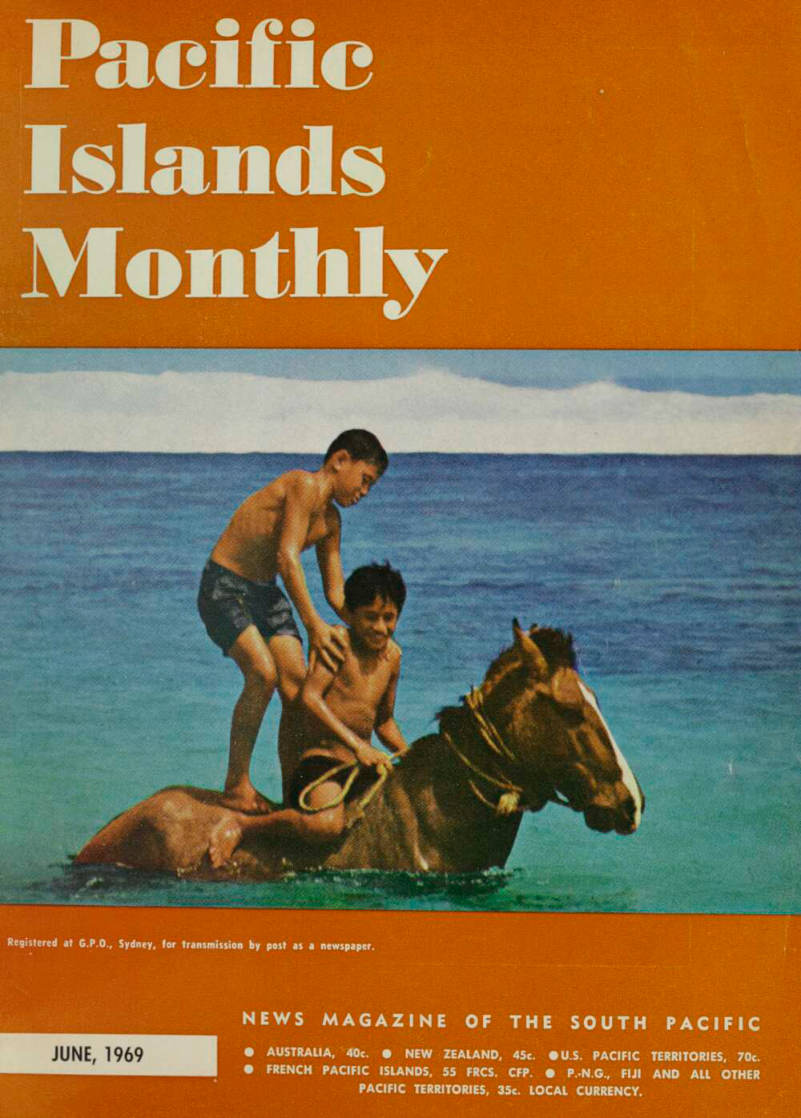 1
1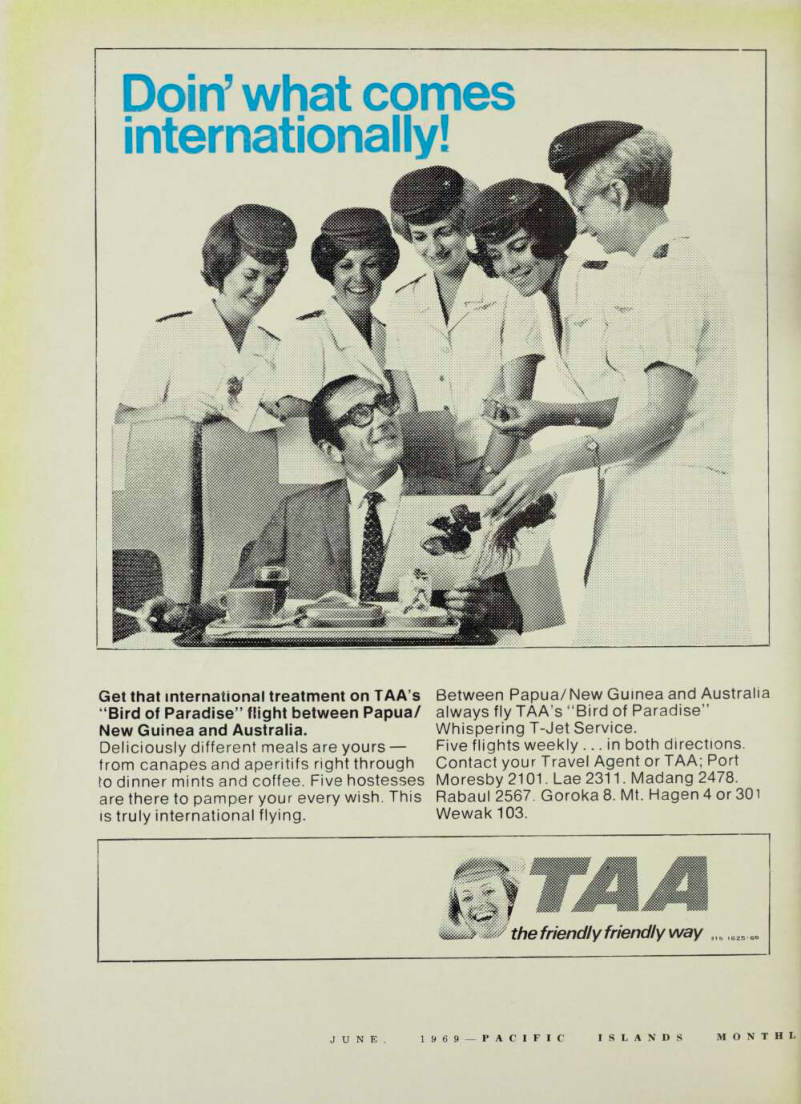 2
2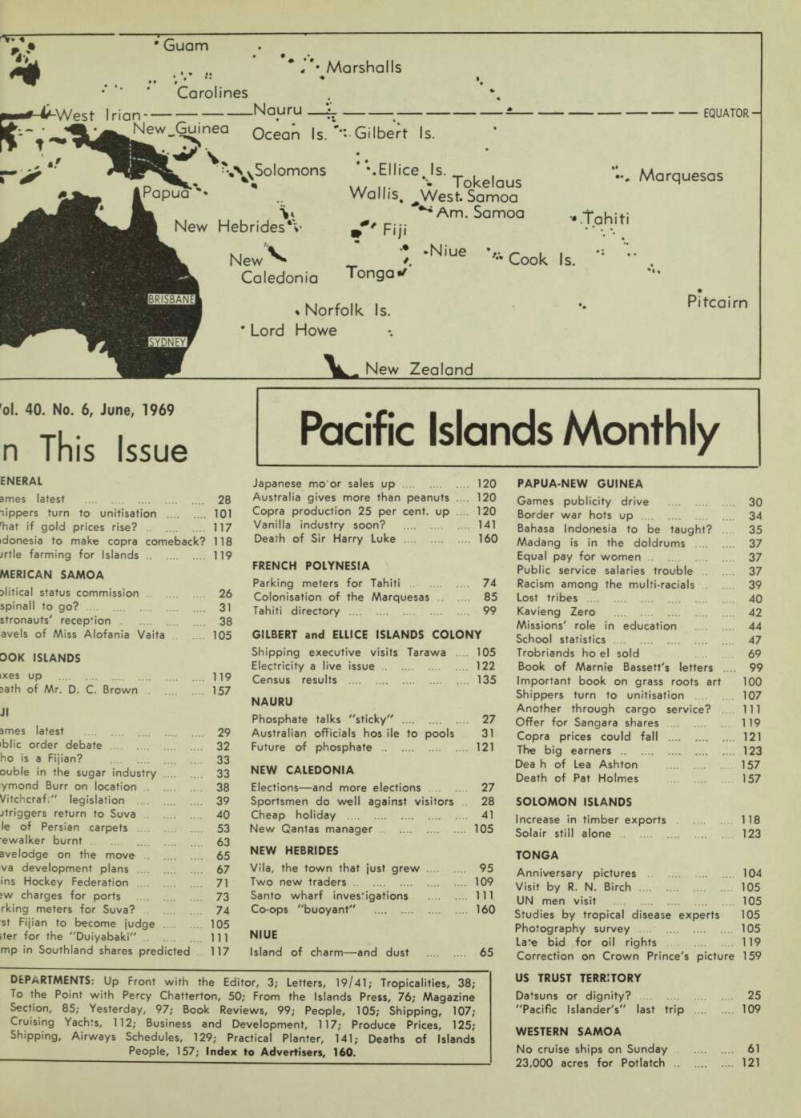 3
3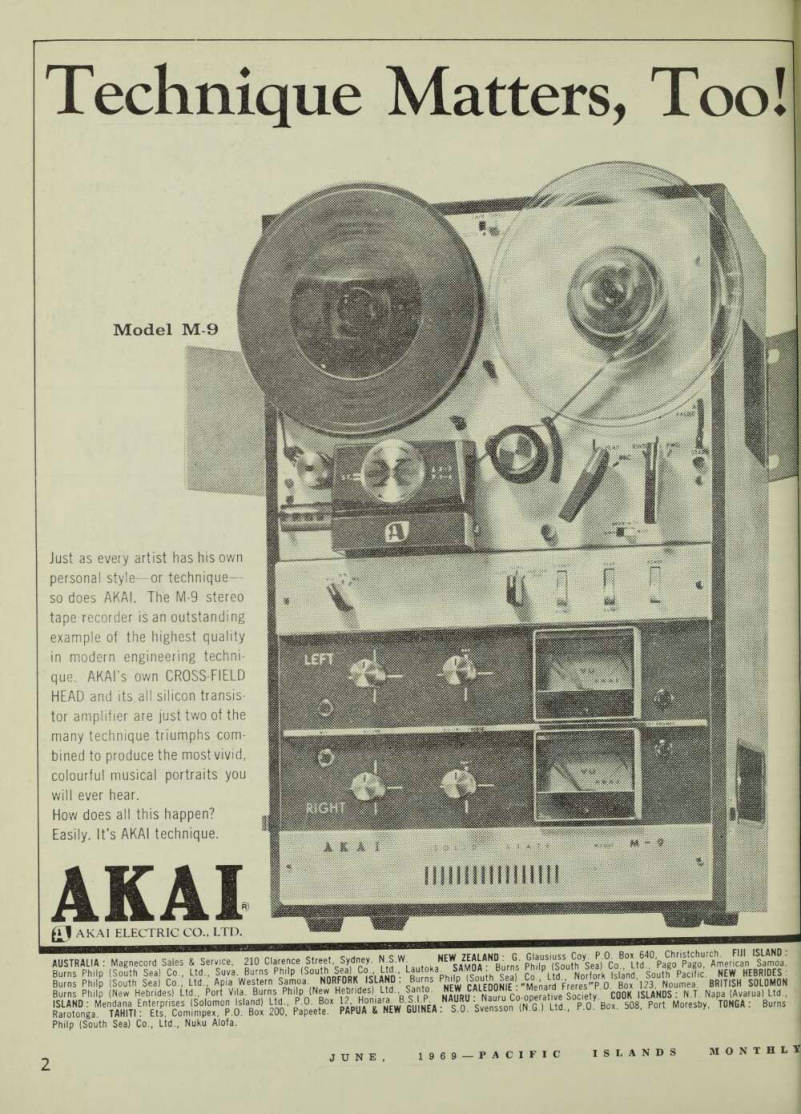 4
4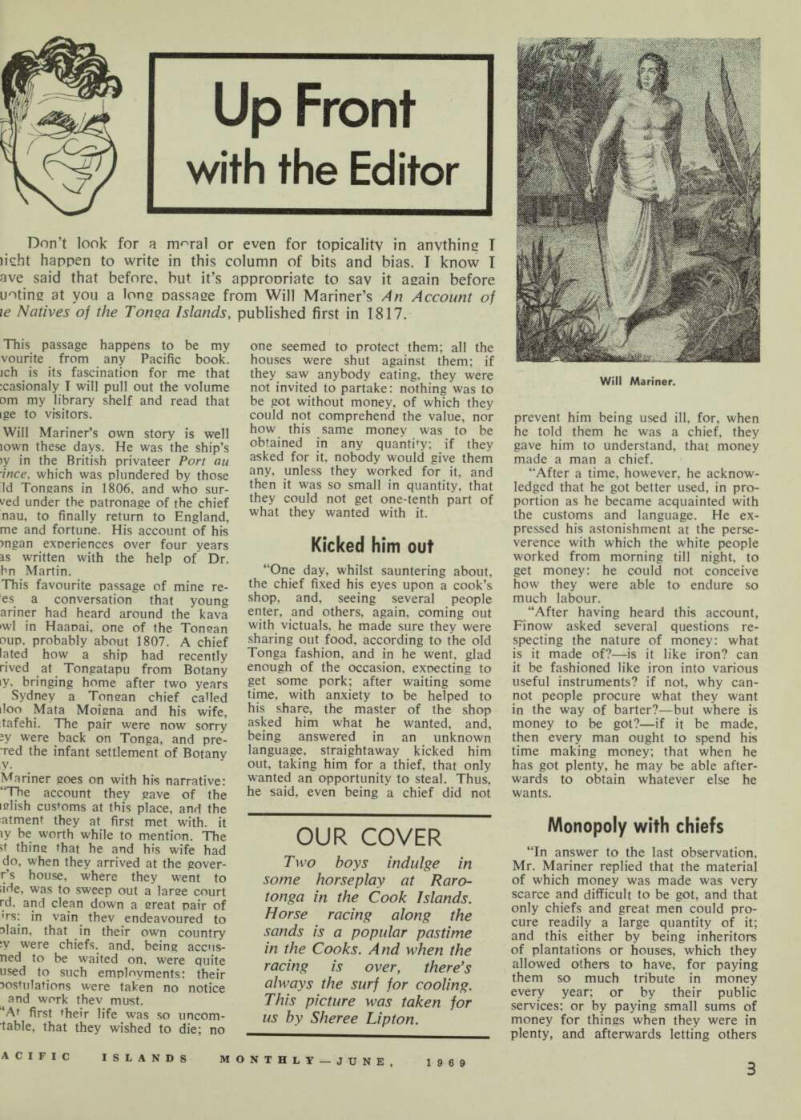 5
5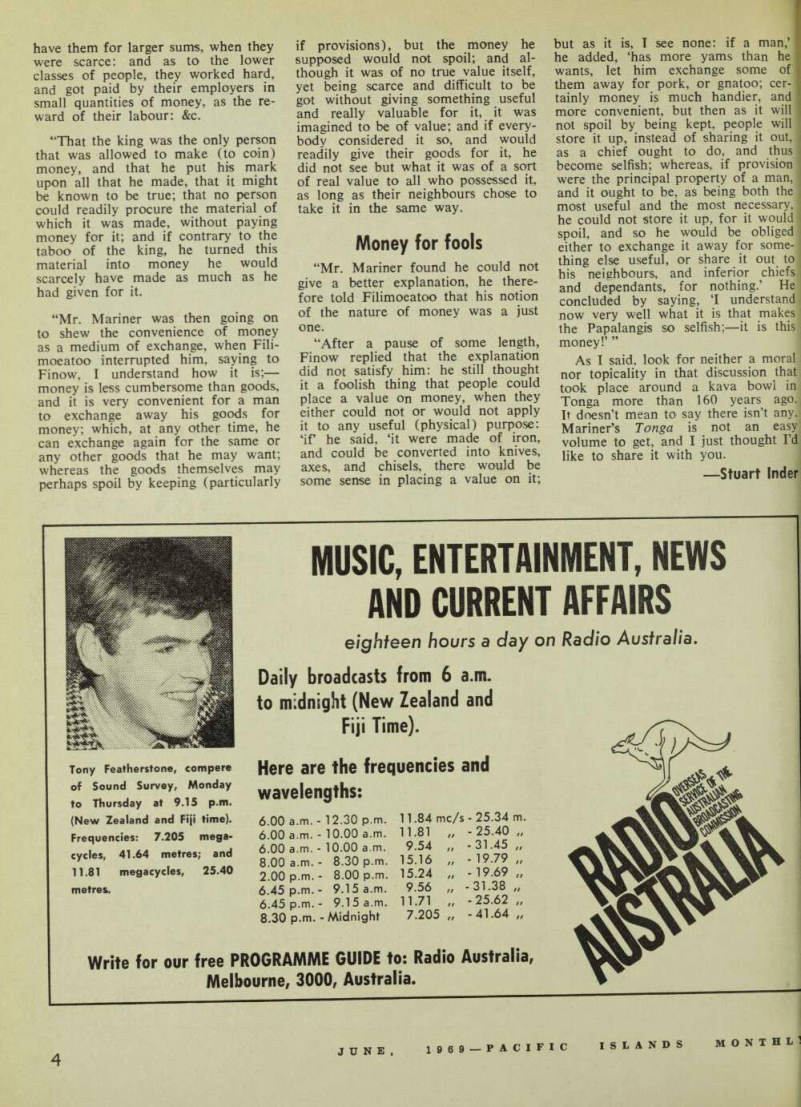 6
6 7
7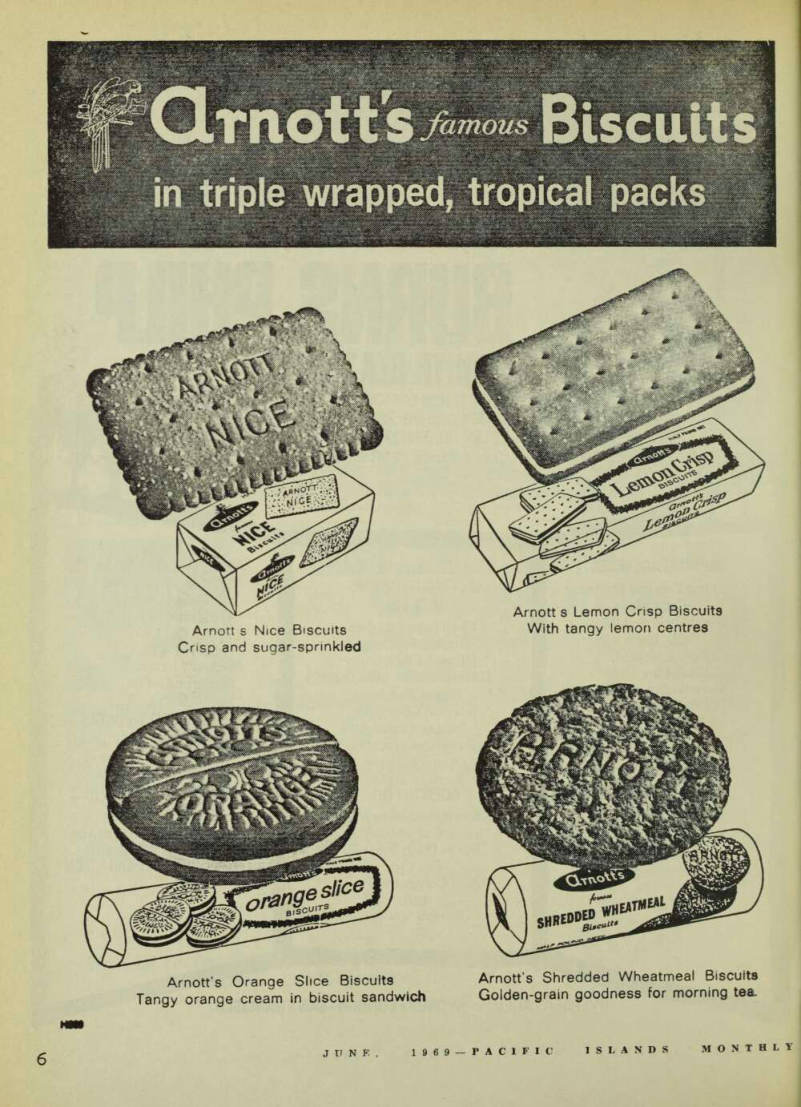 8
8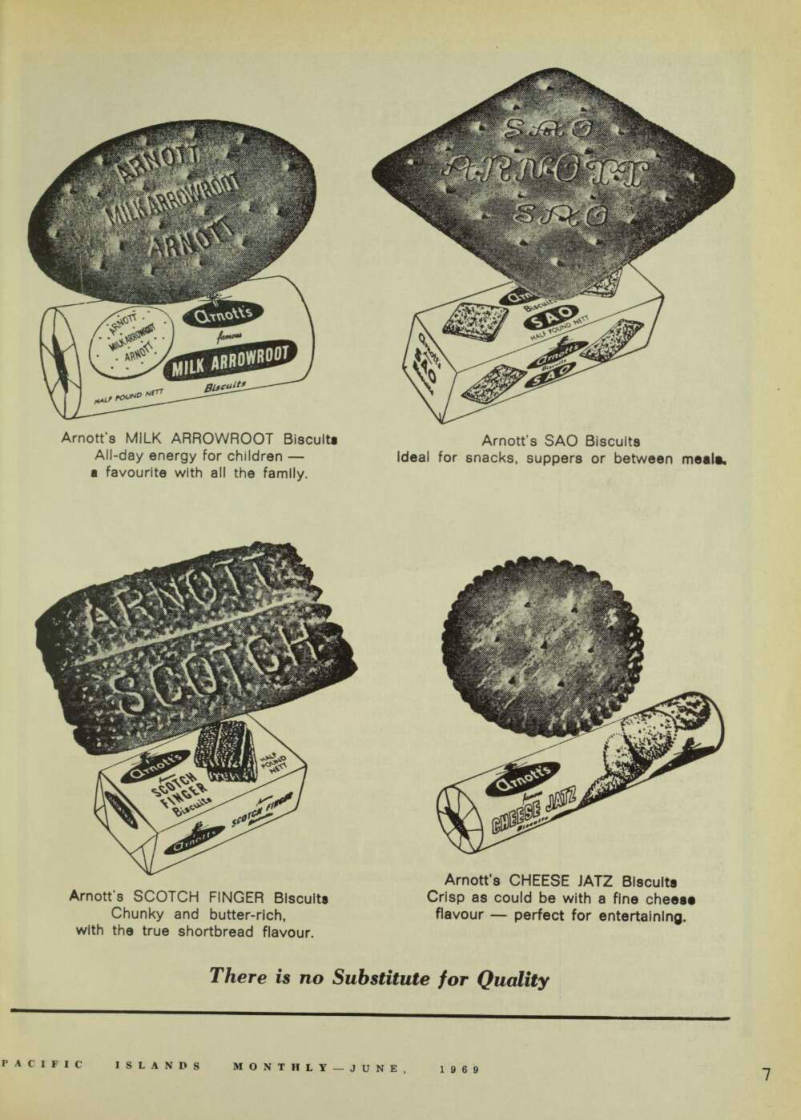 9
9 10
10 11
11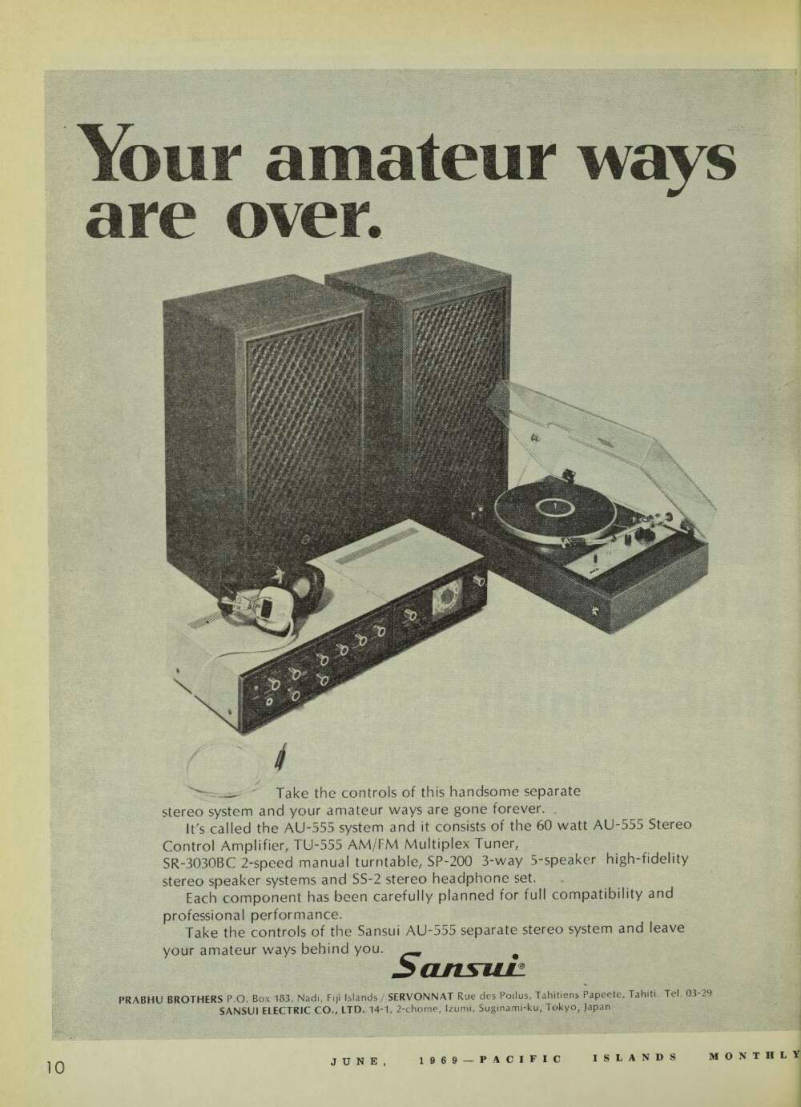 12
12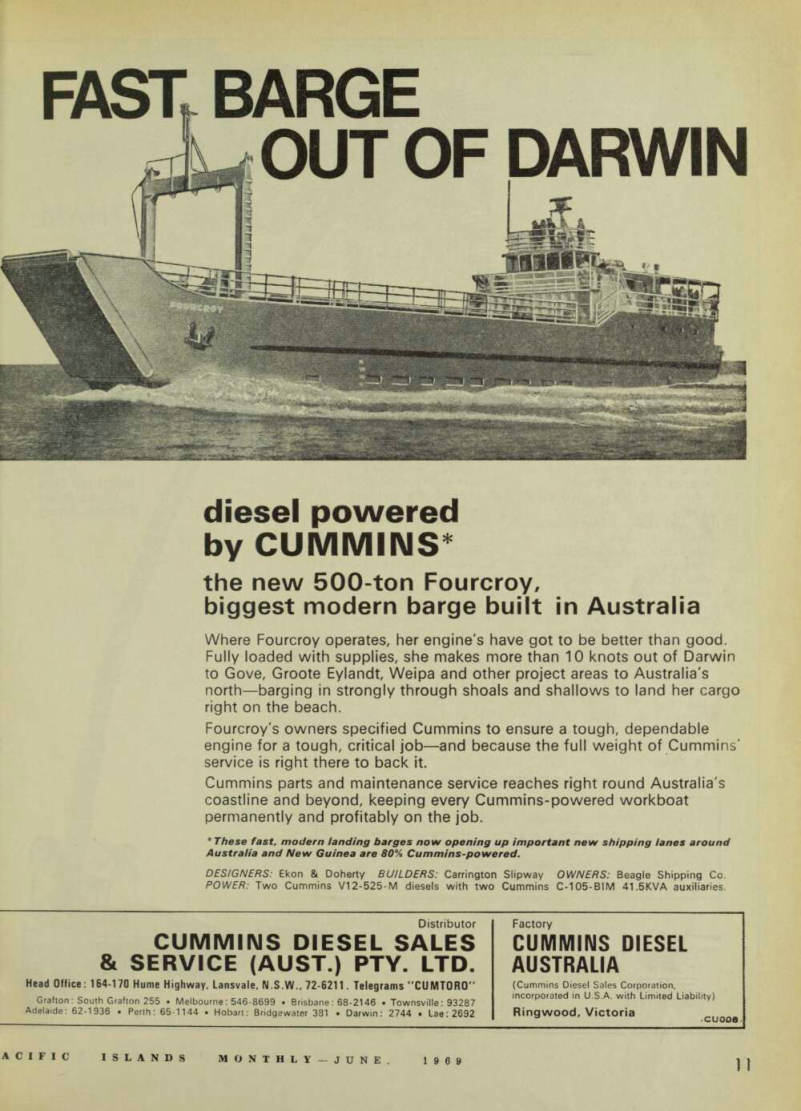 13
13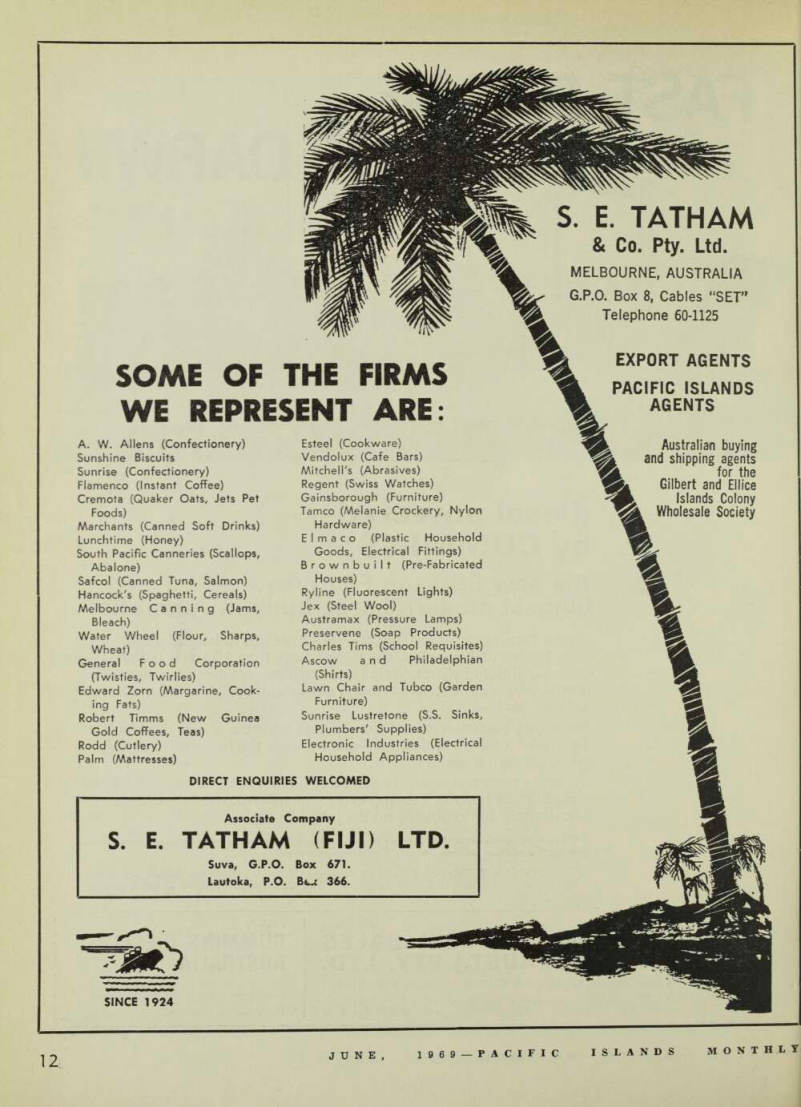 14
14 15
15 16
16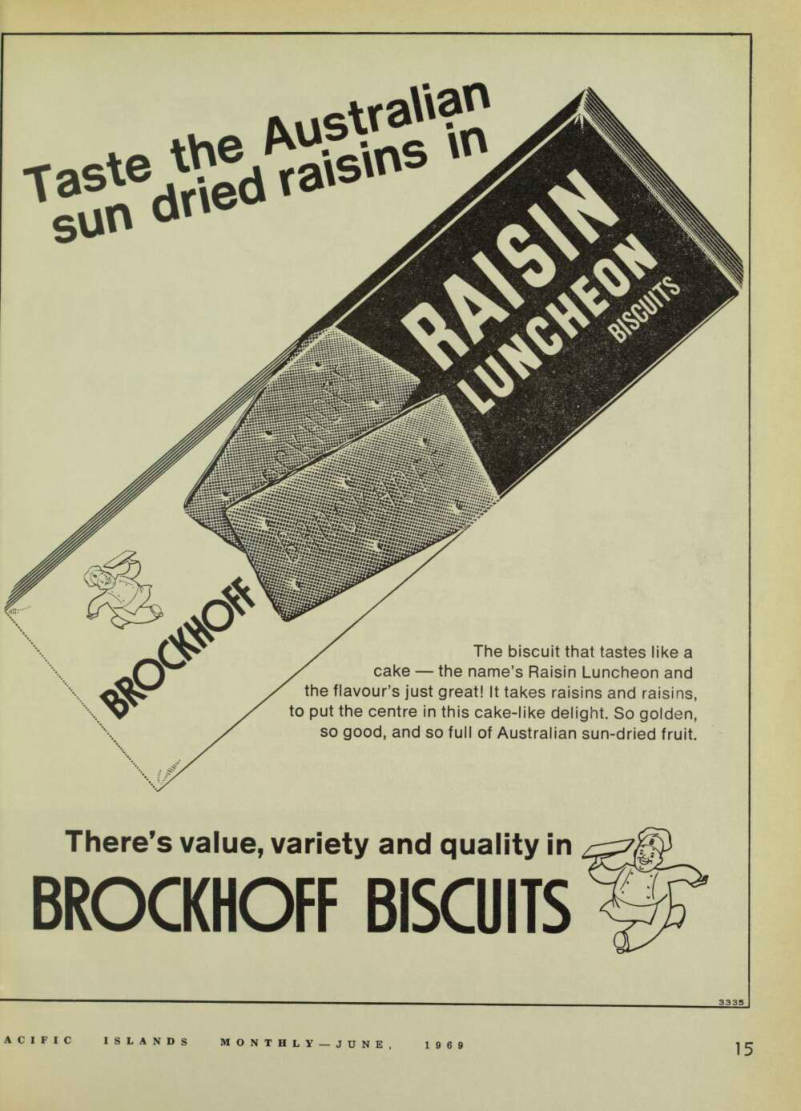 17
17 18
18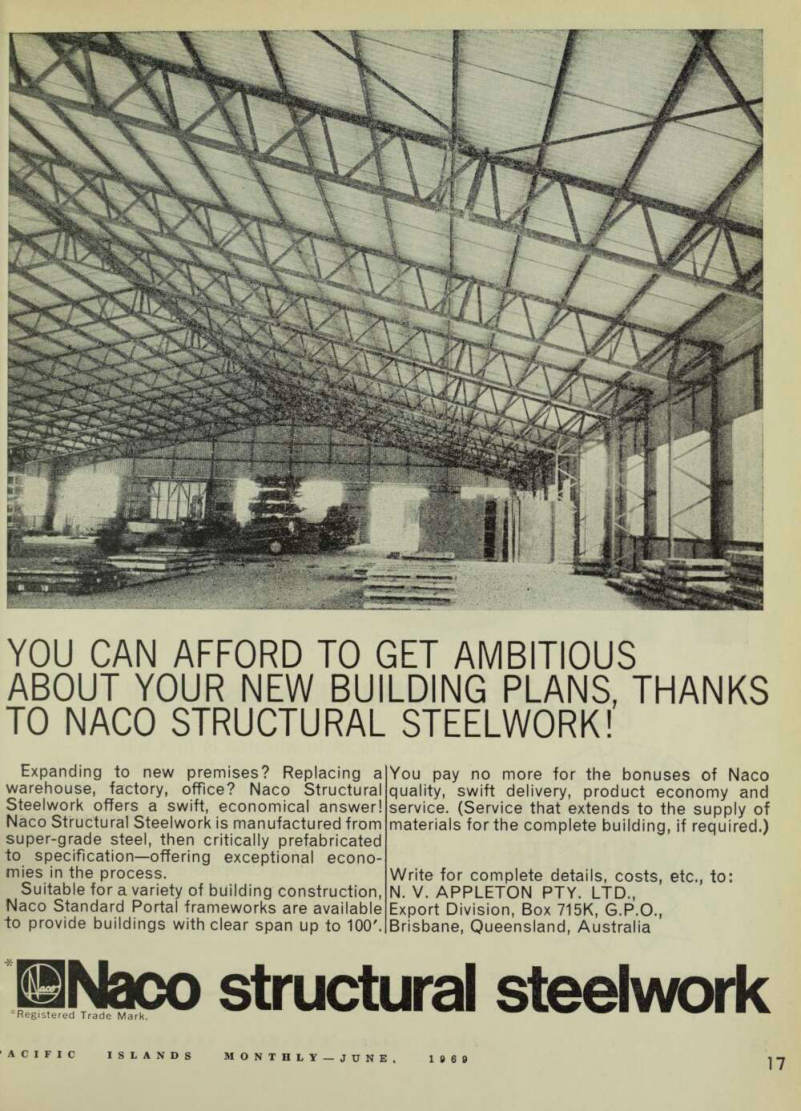 19
19 20
20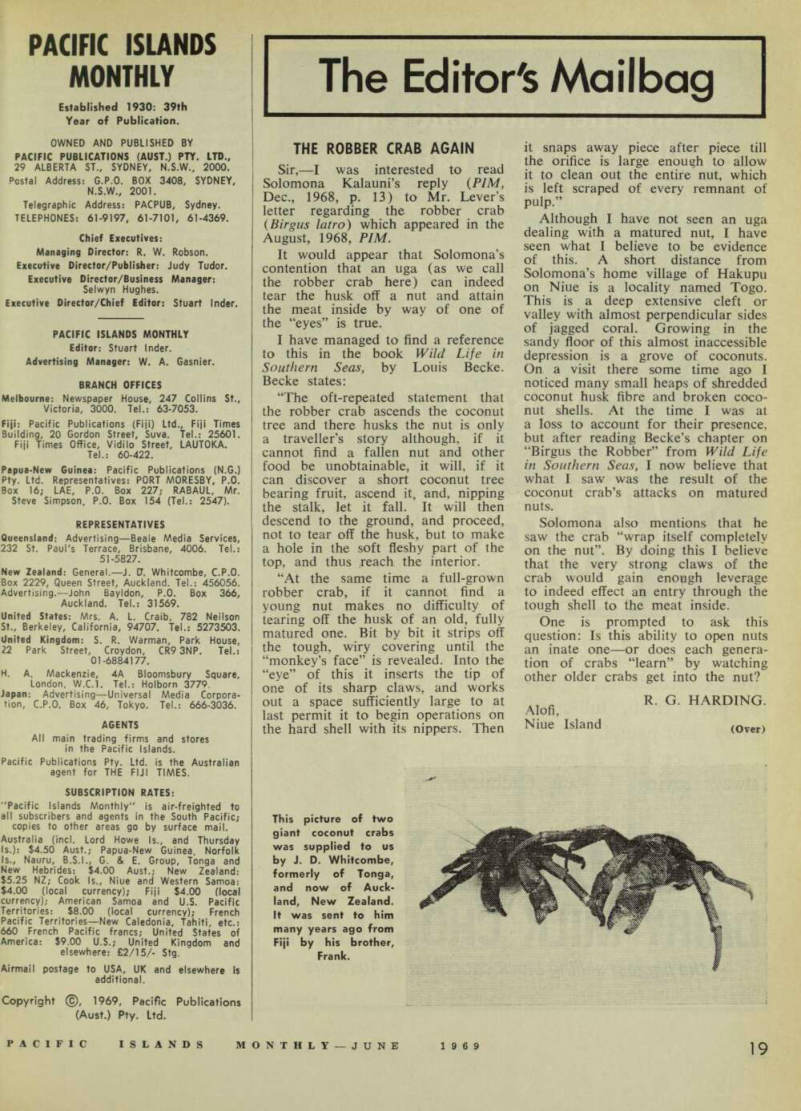 21
21 22
22 23
23 24
24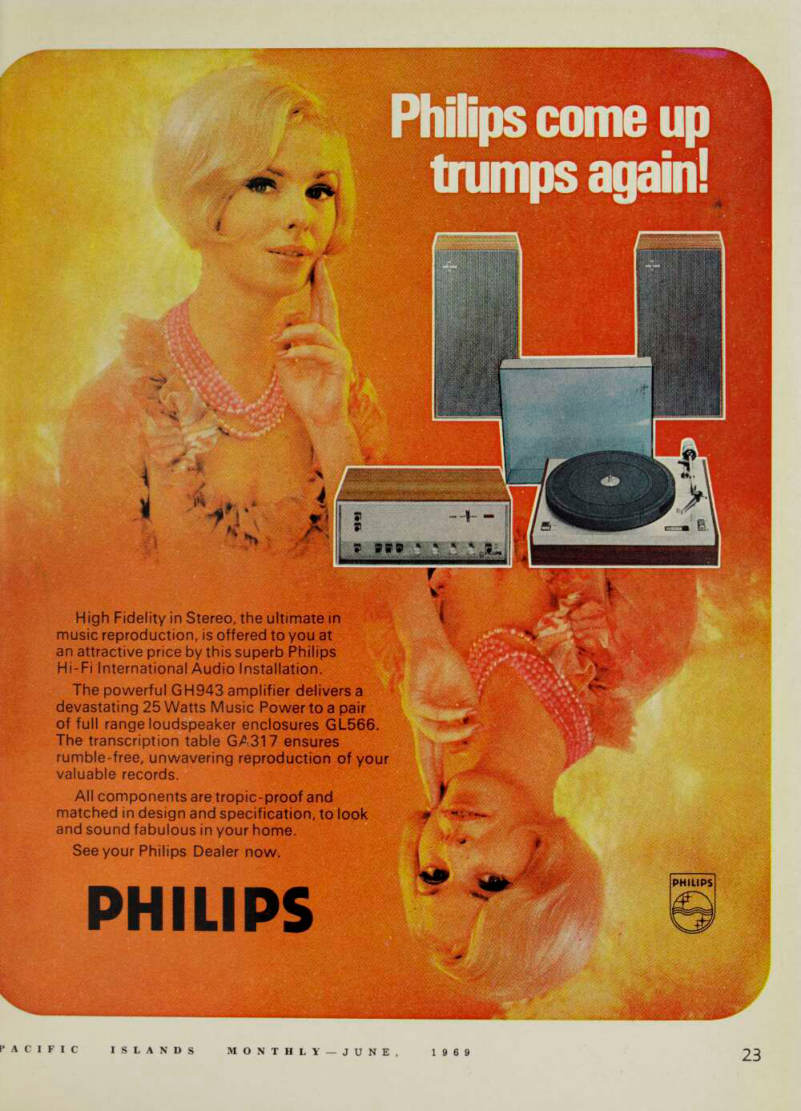 25
25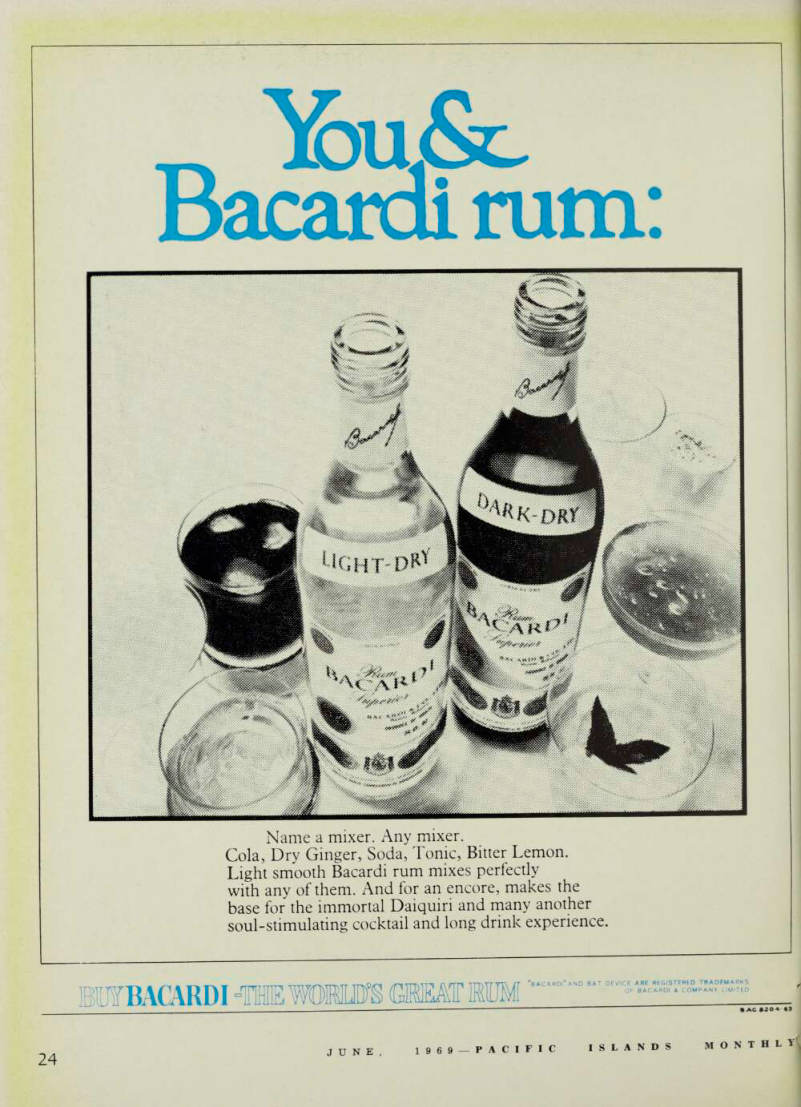 26
26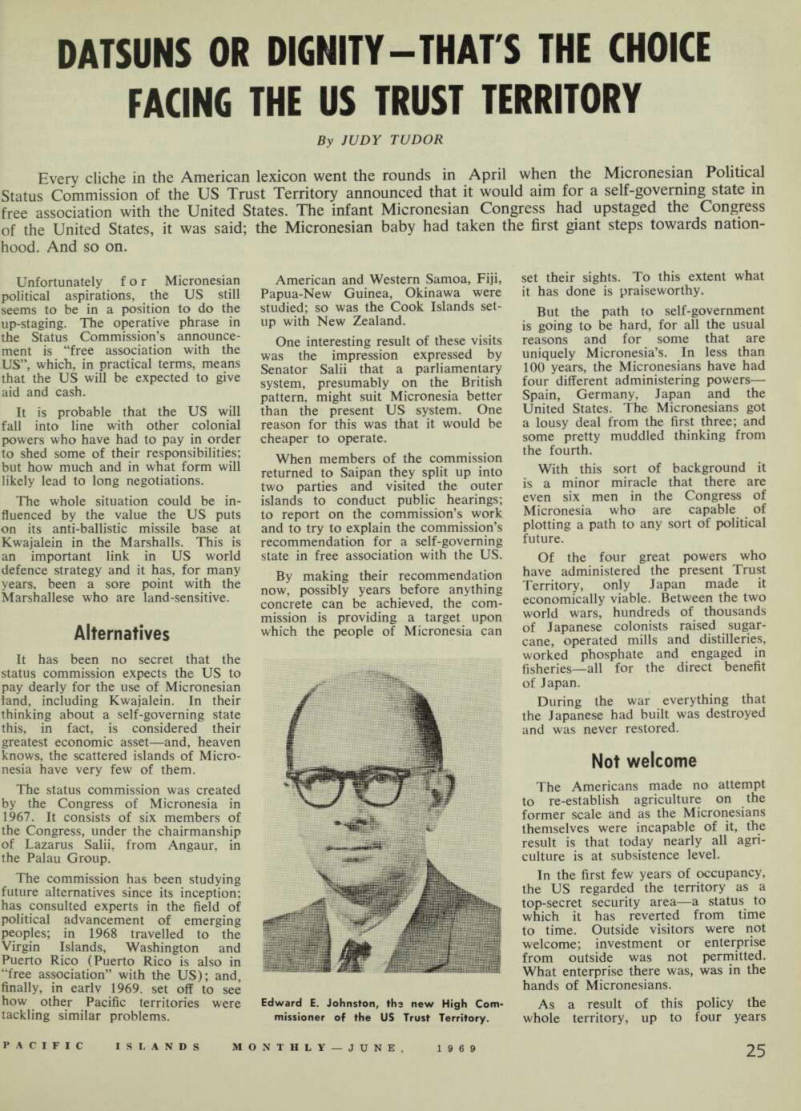 27
27 28
28 29
29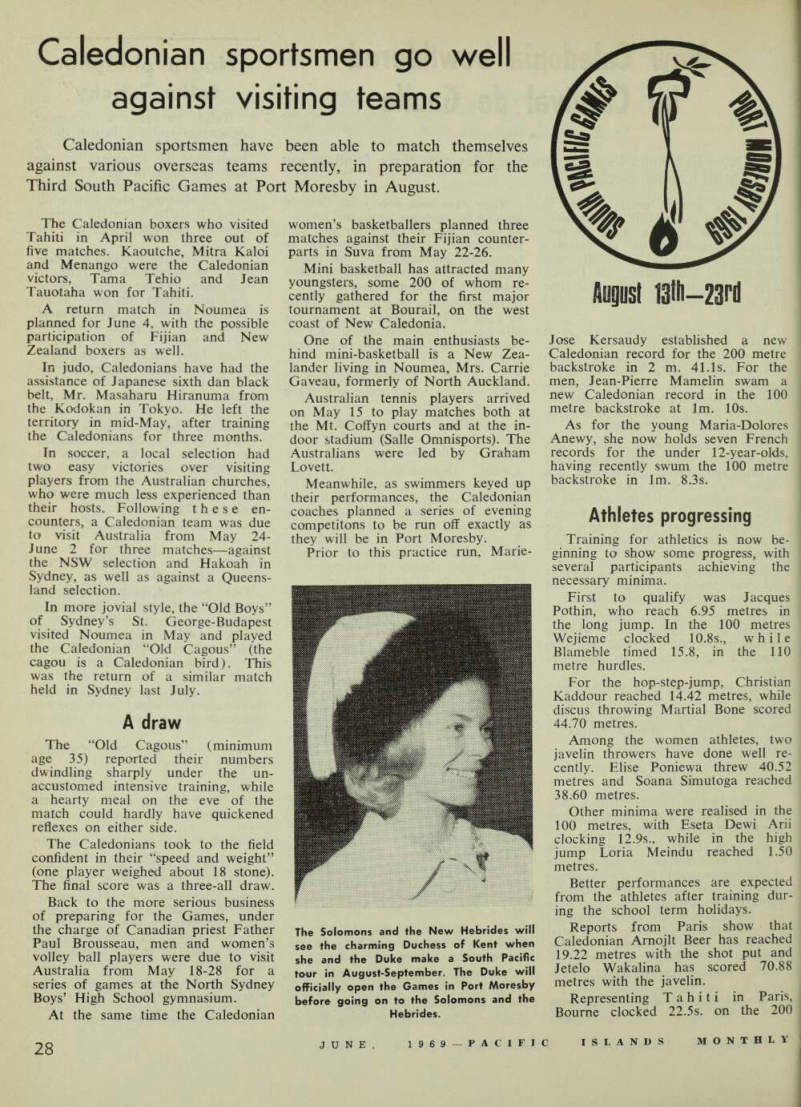 30
30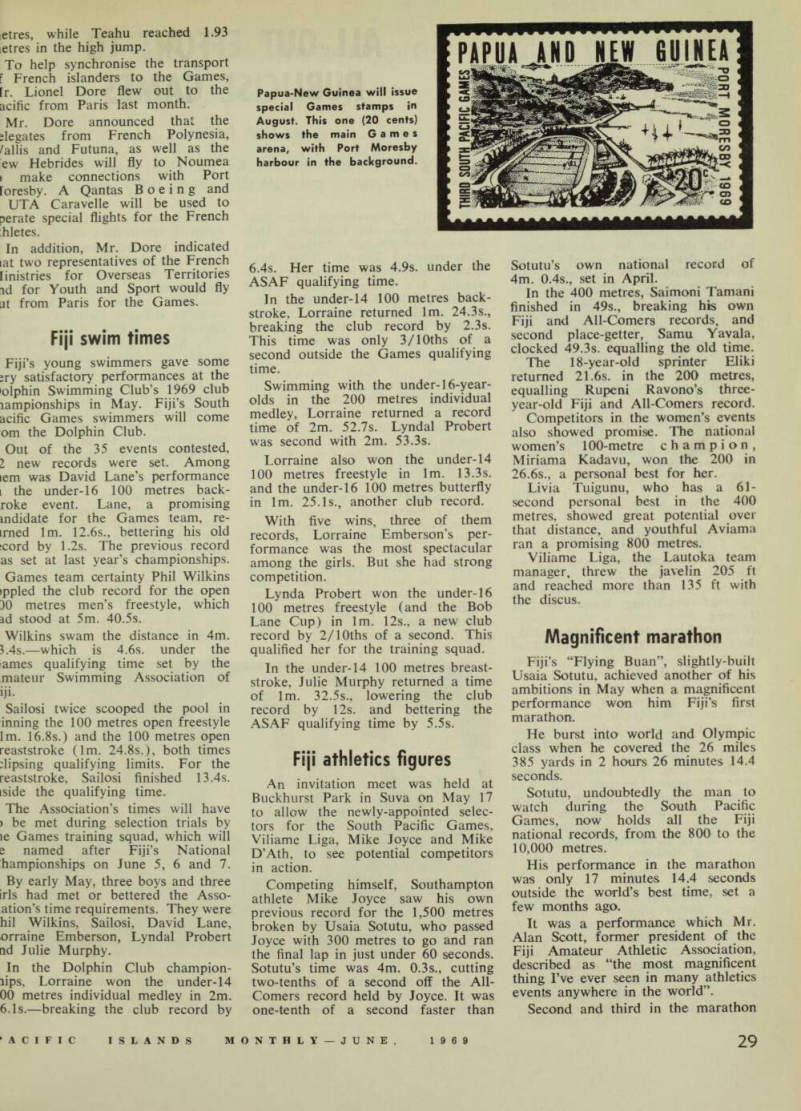 31
31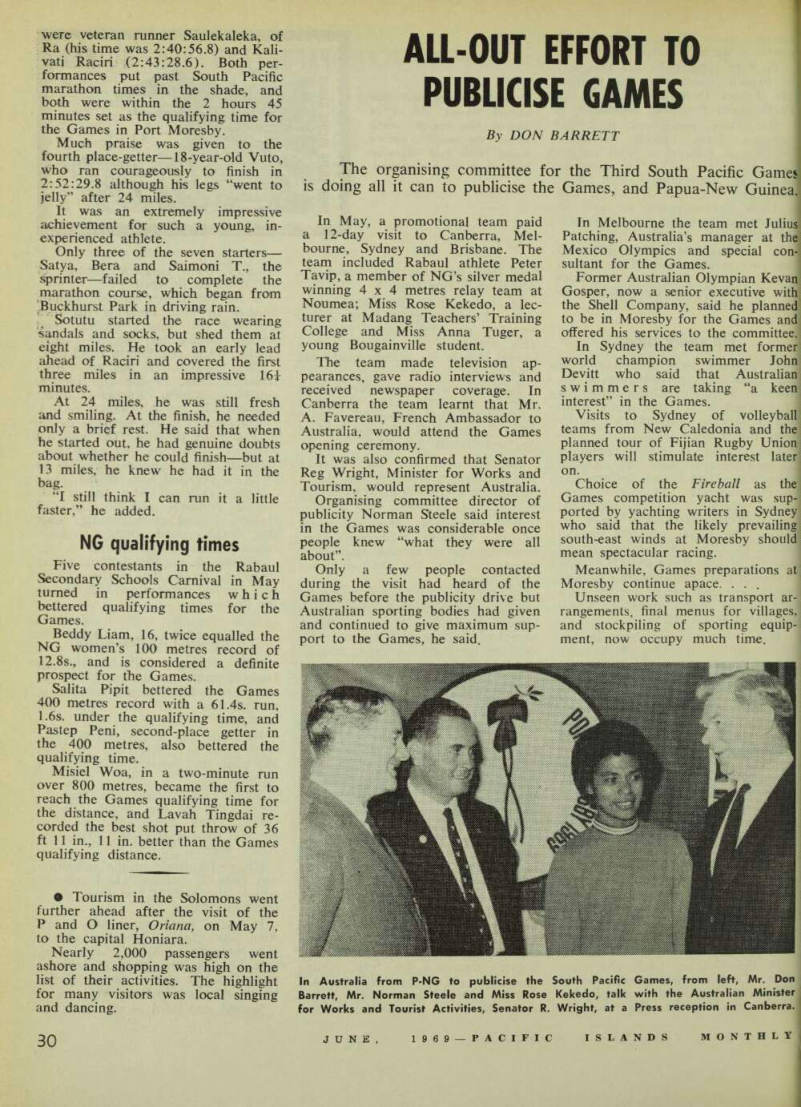 32
32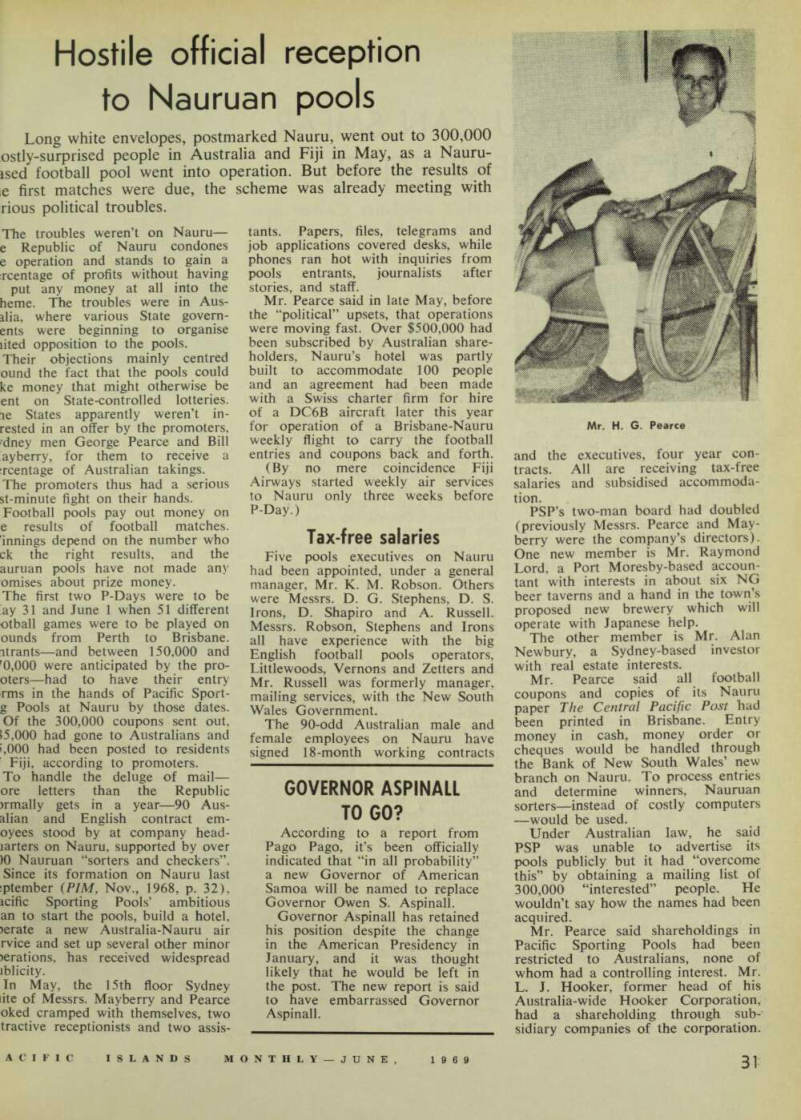 33
33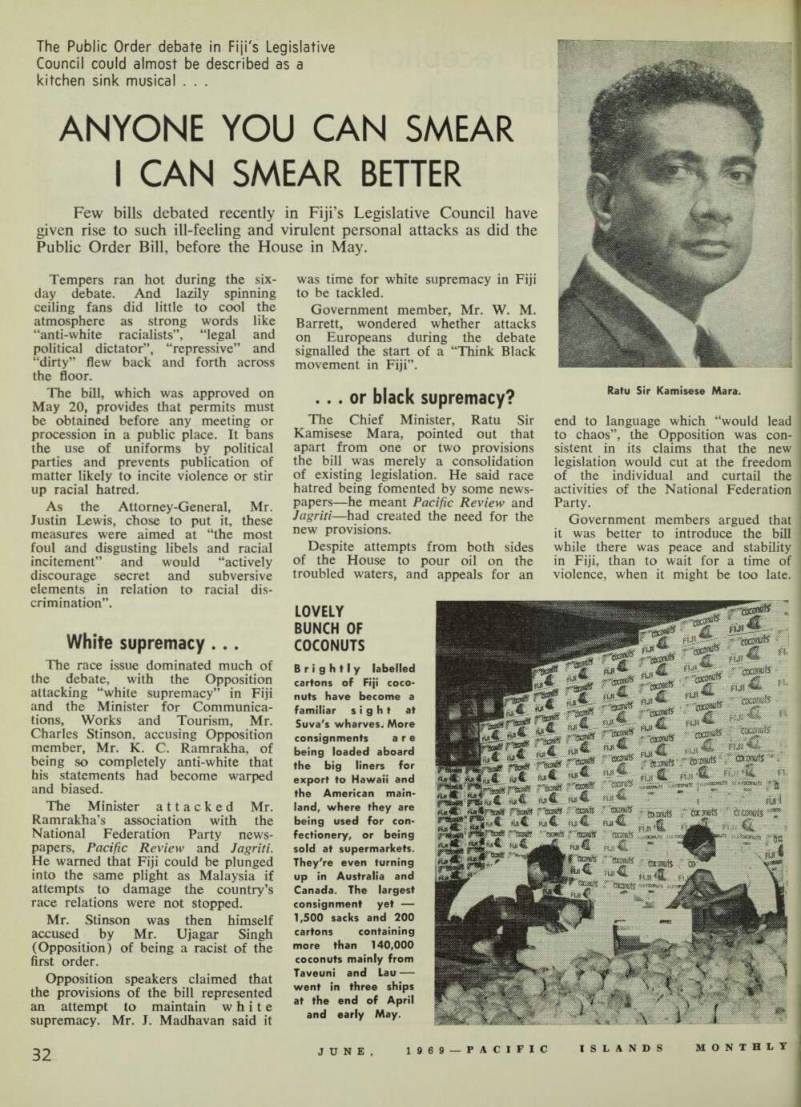 34
34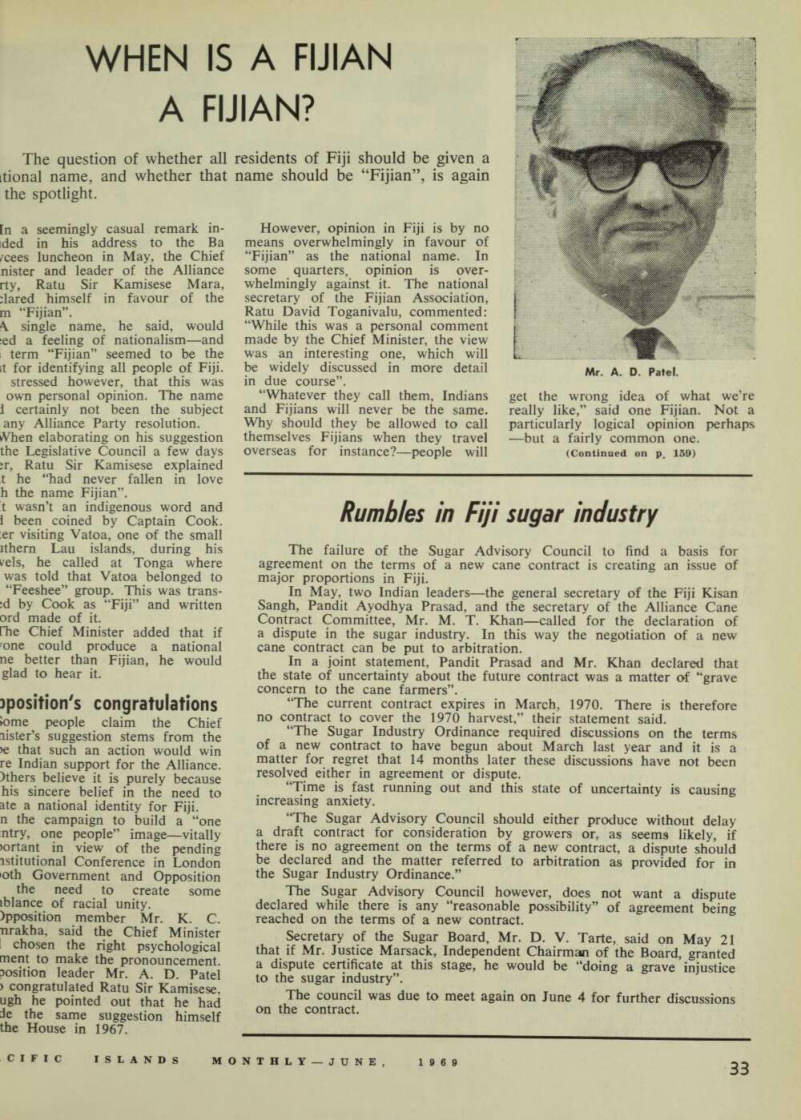 35
35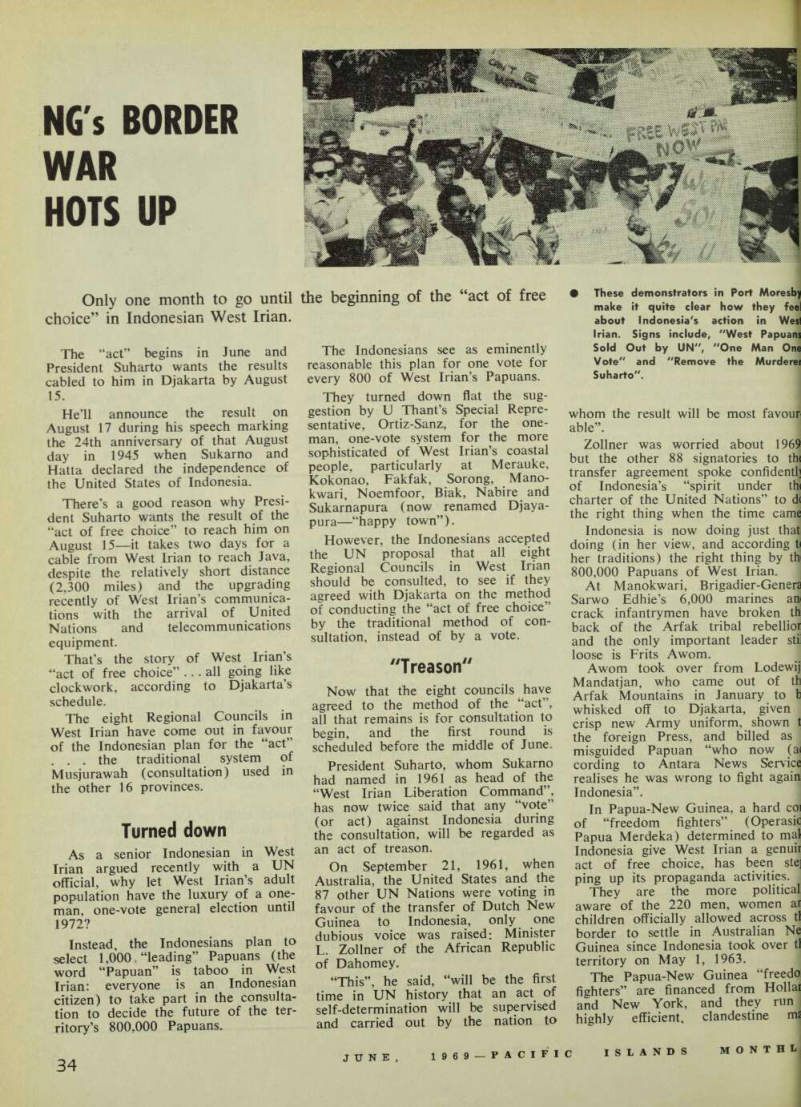 36
36 37
37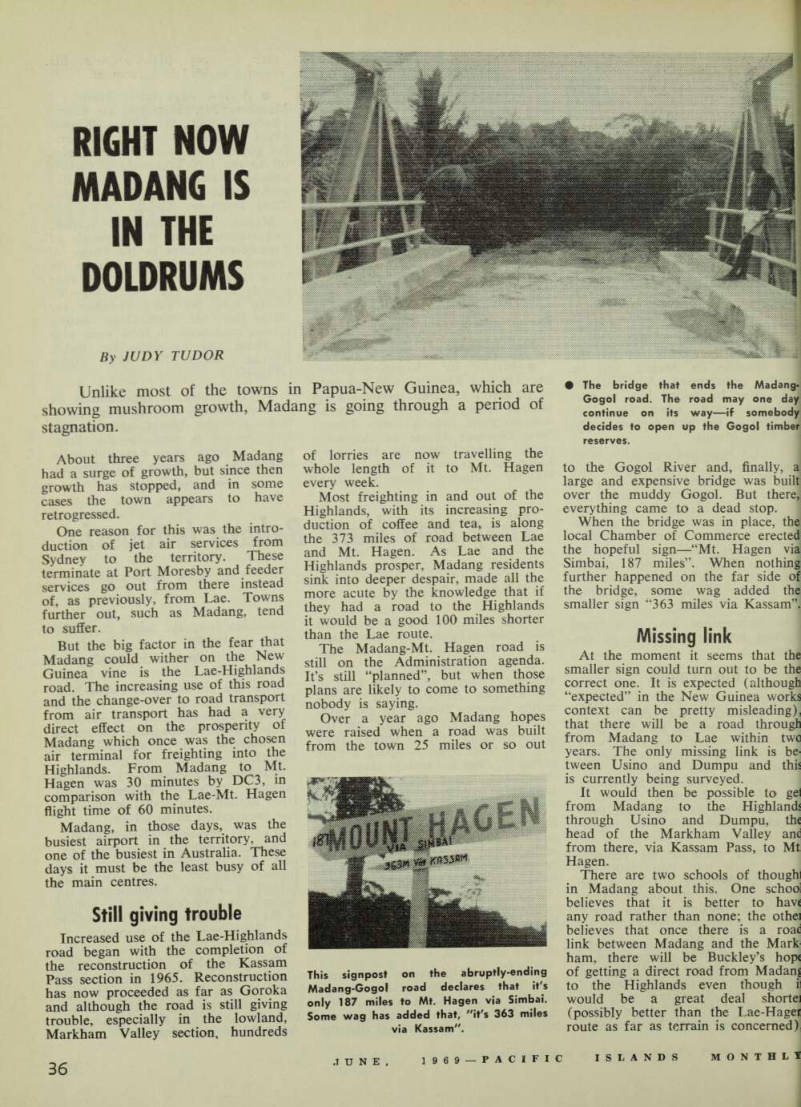 38
38 39
39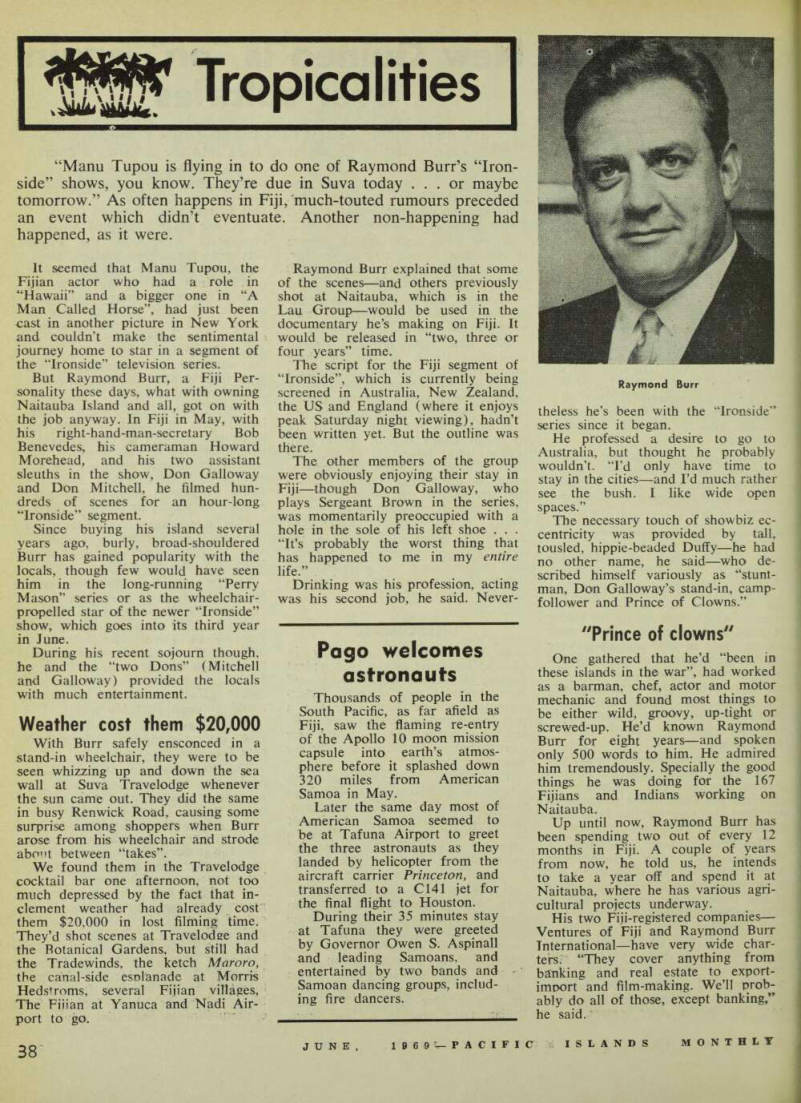 40
40 41
41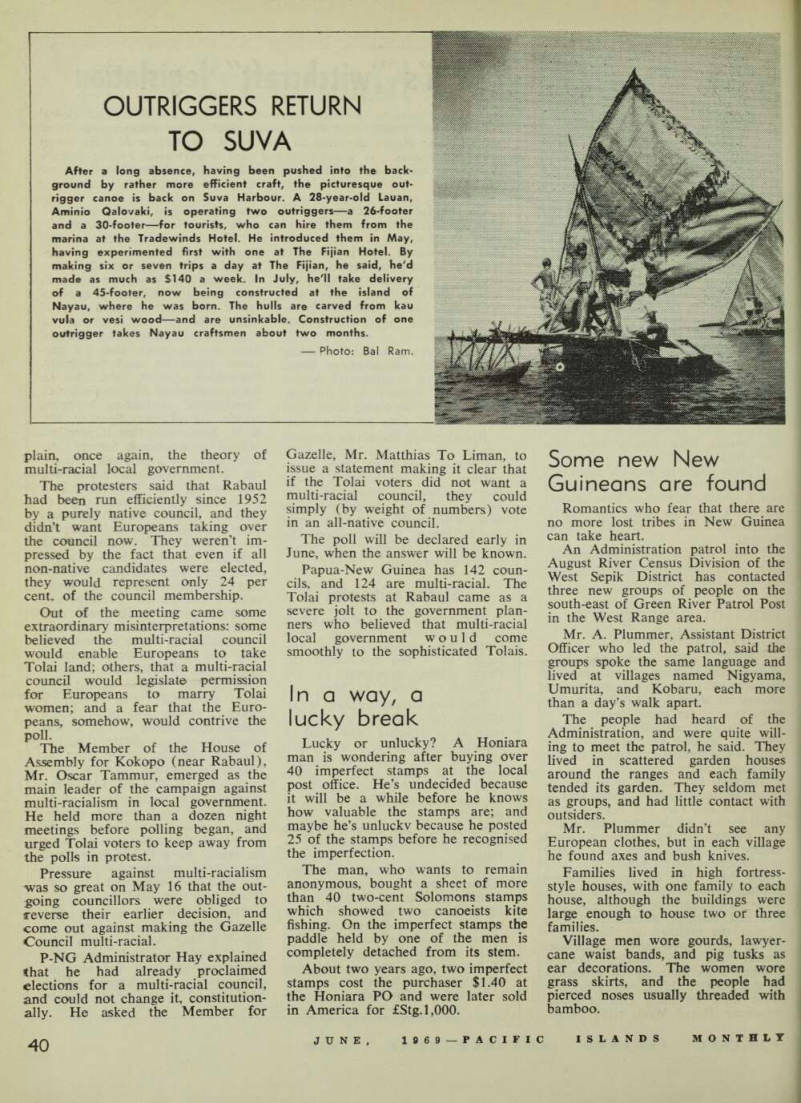 42
42 43
43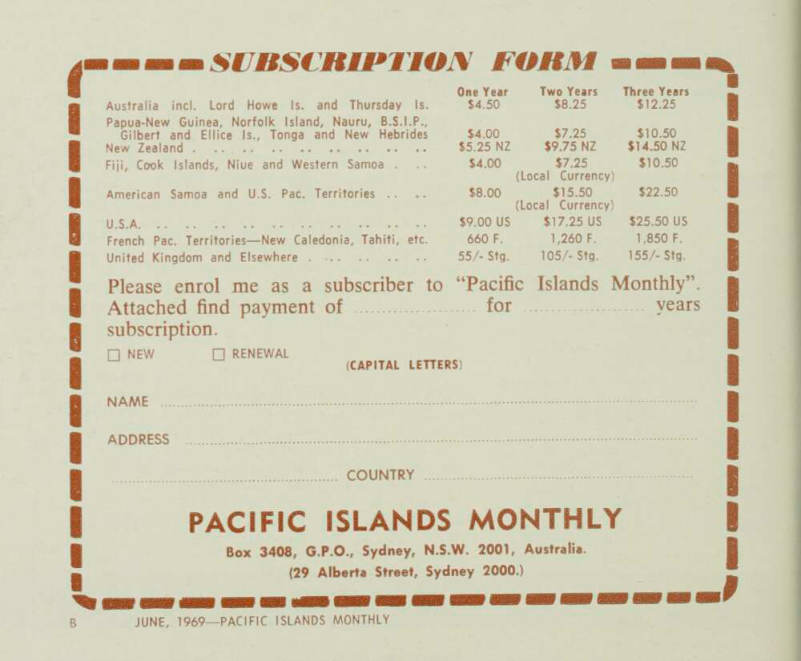 44
44 45
45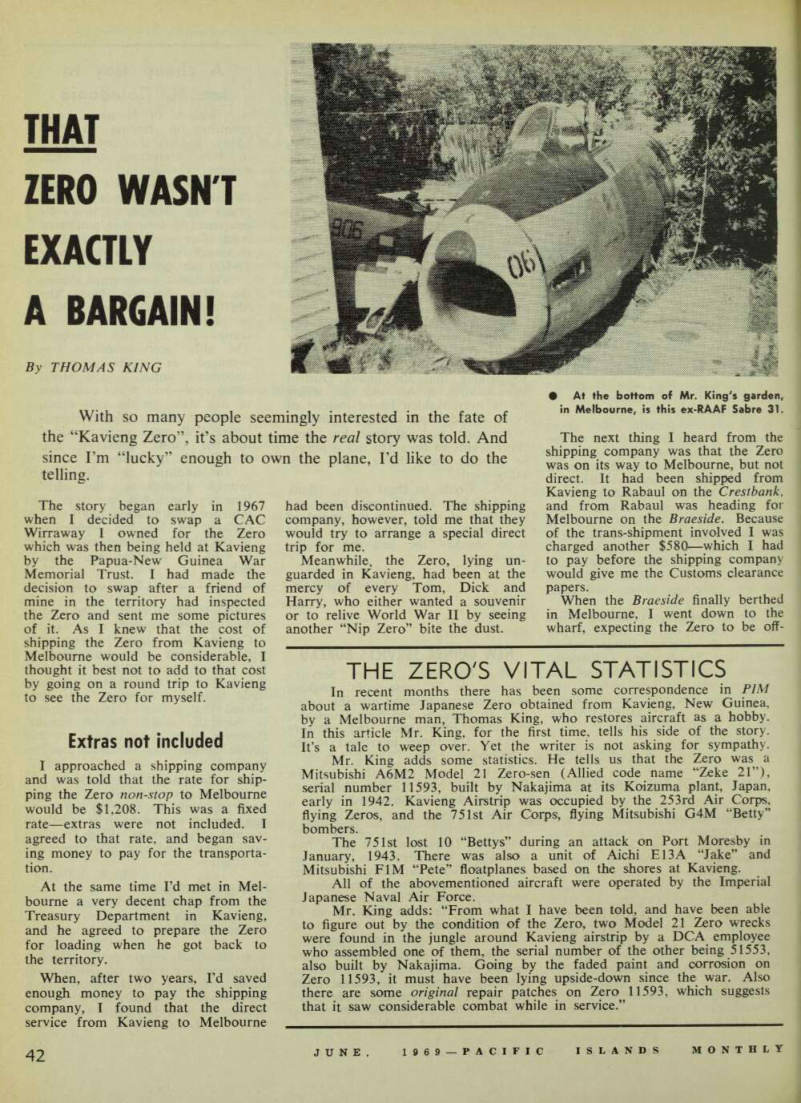 46
46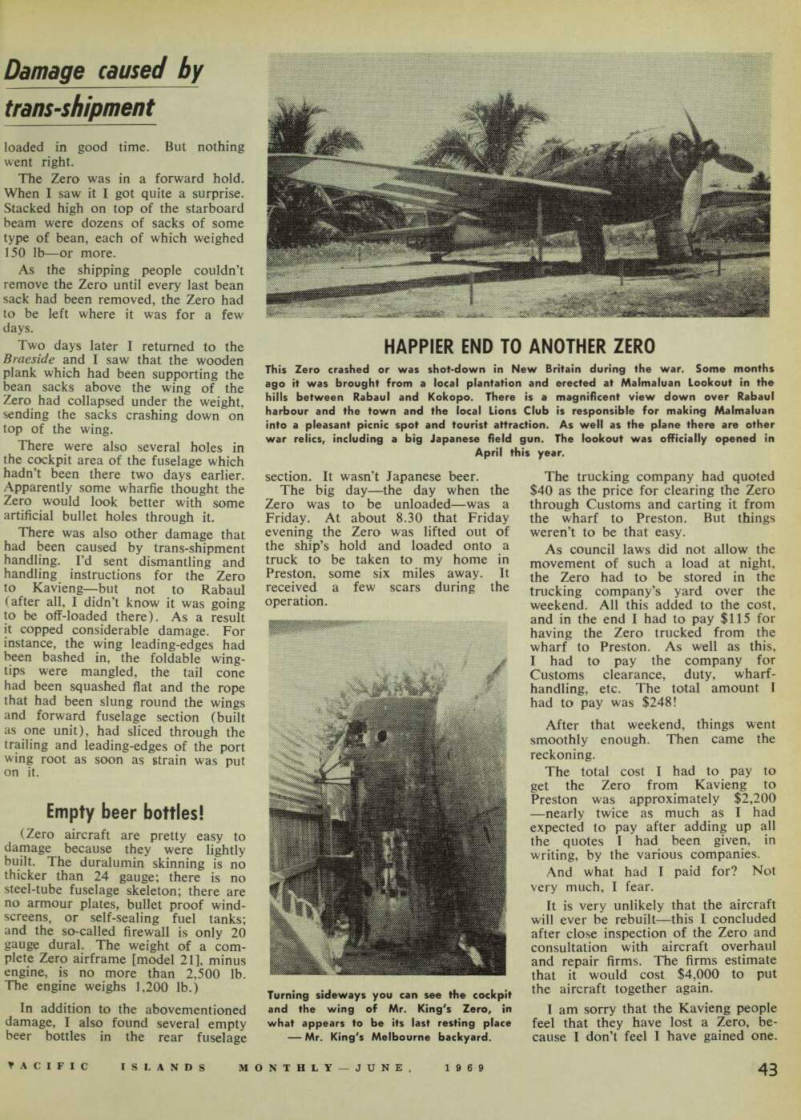 47
47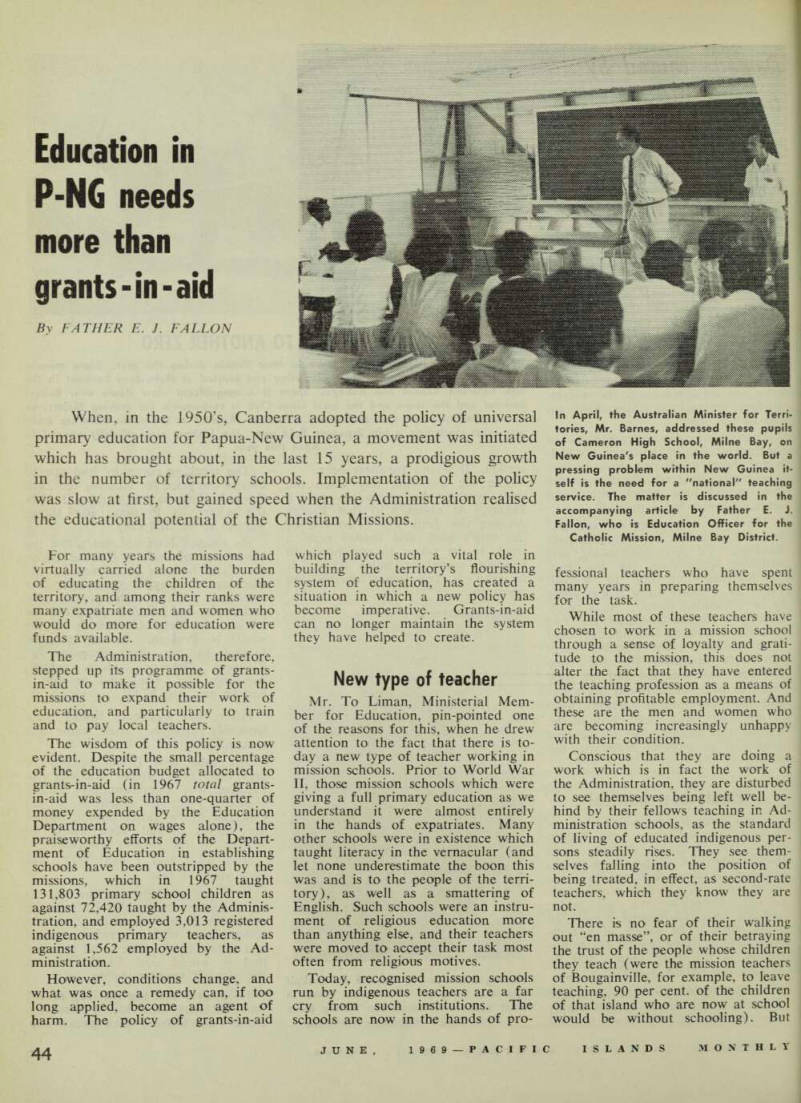 48
48 49
49 50
50 51
51 52
52 53
53 54
54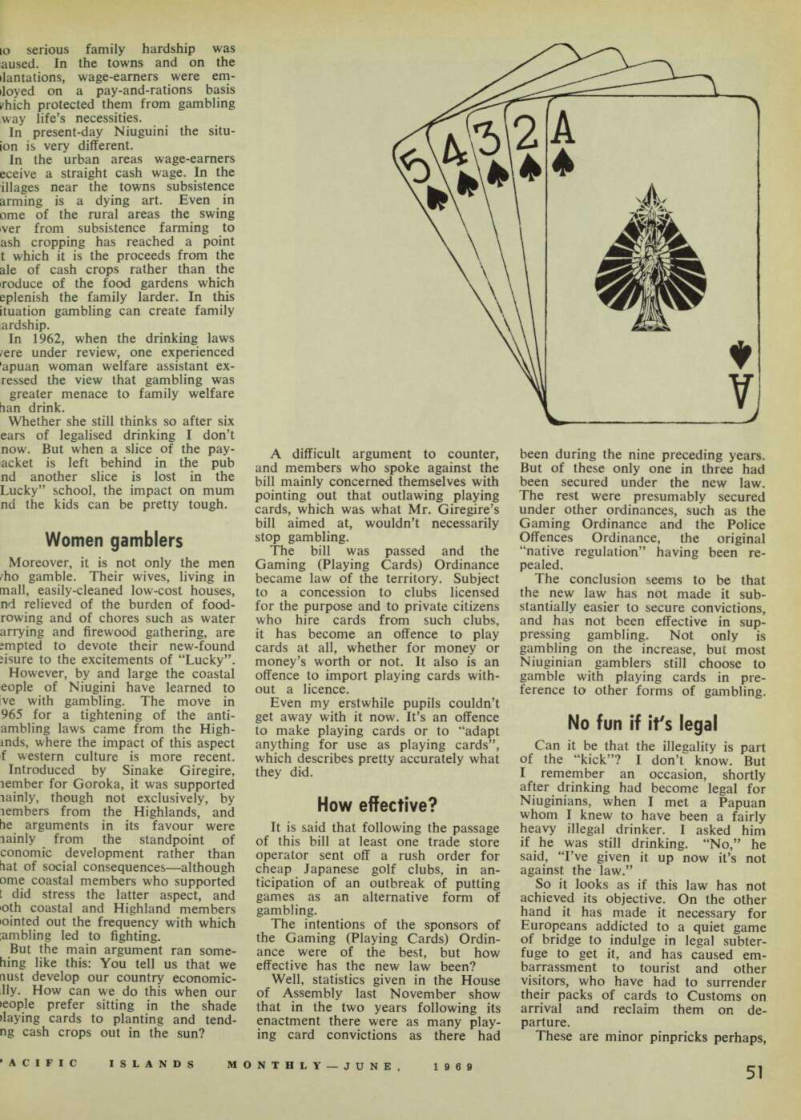 55
55 56
56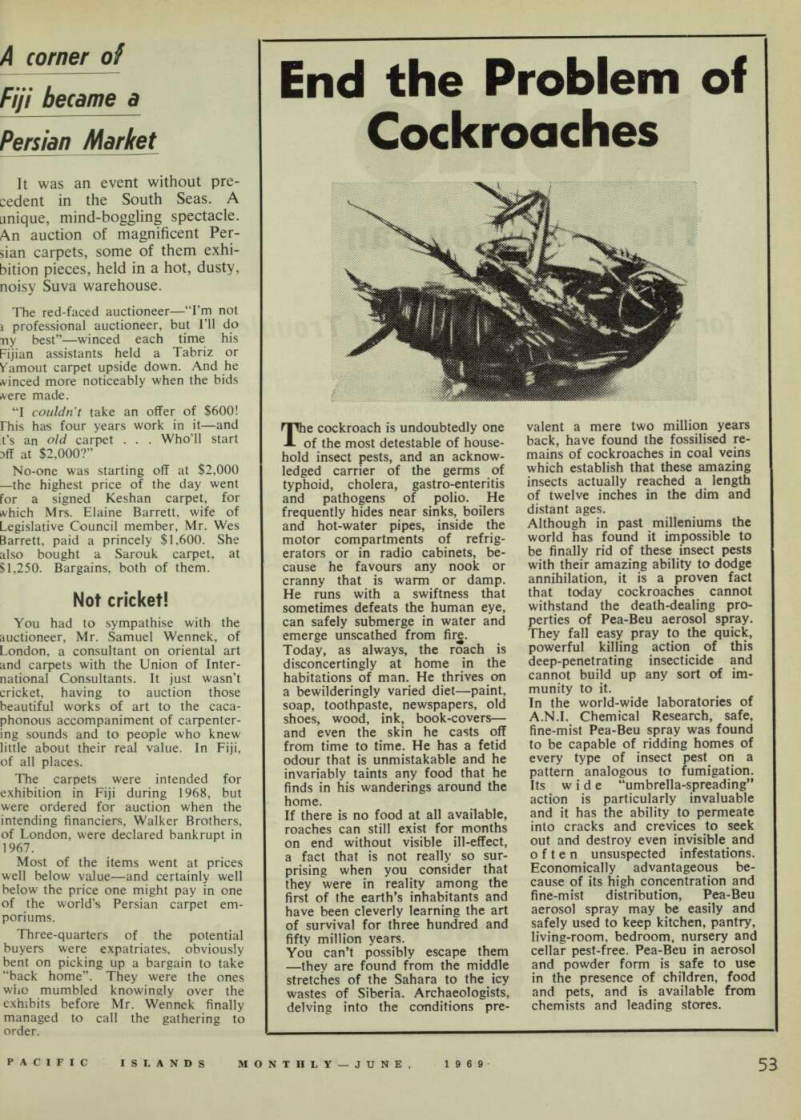 57
57 58
58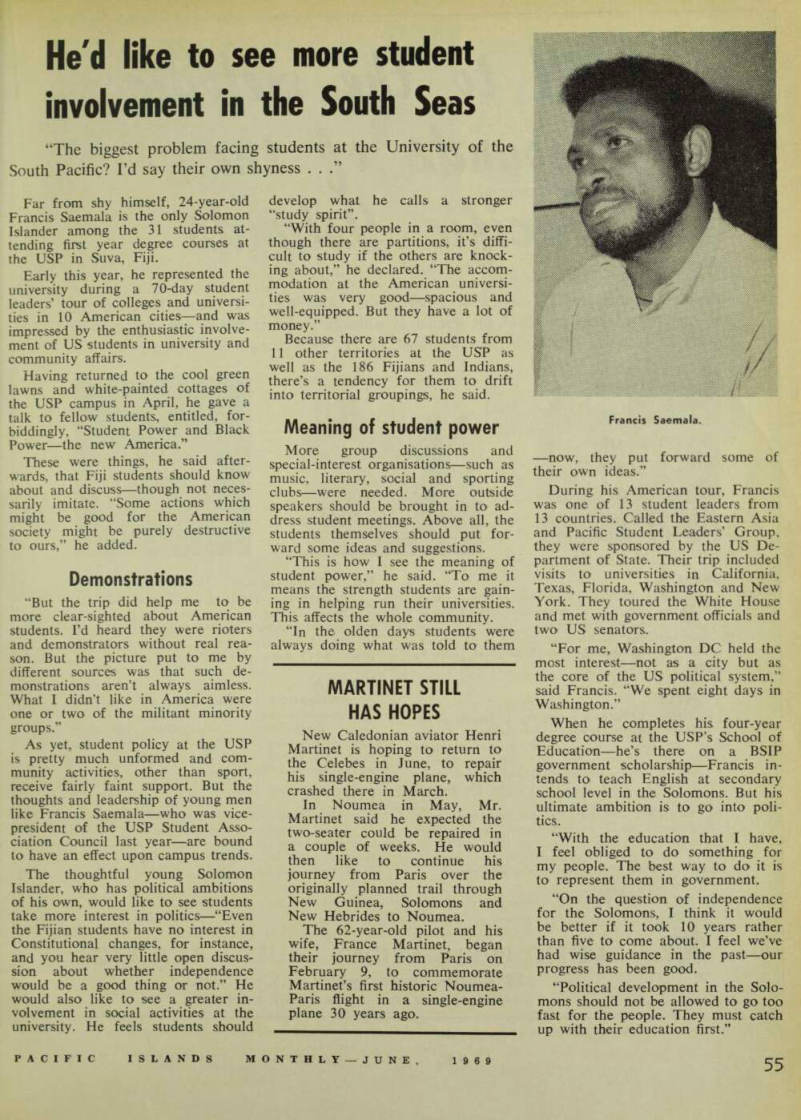 59
59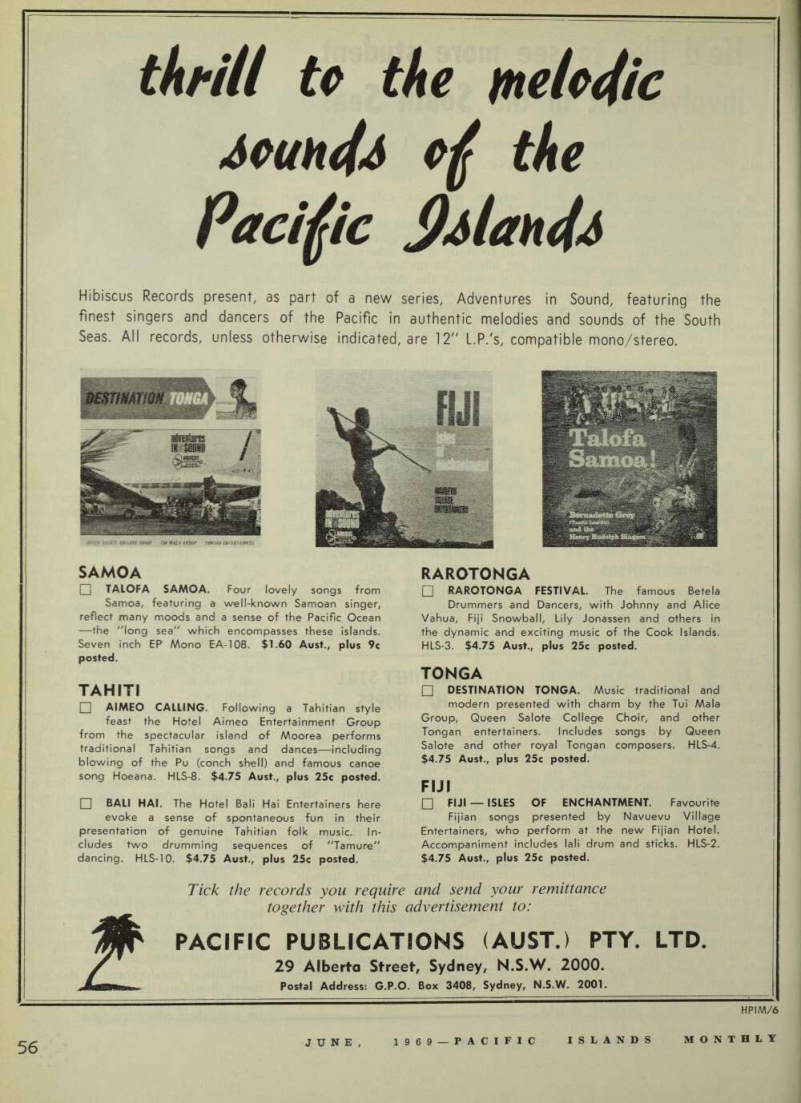 60
60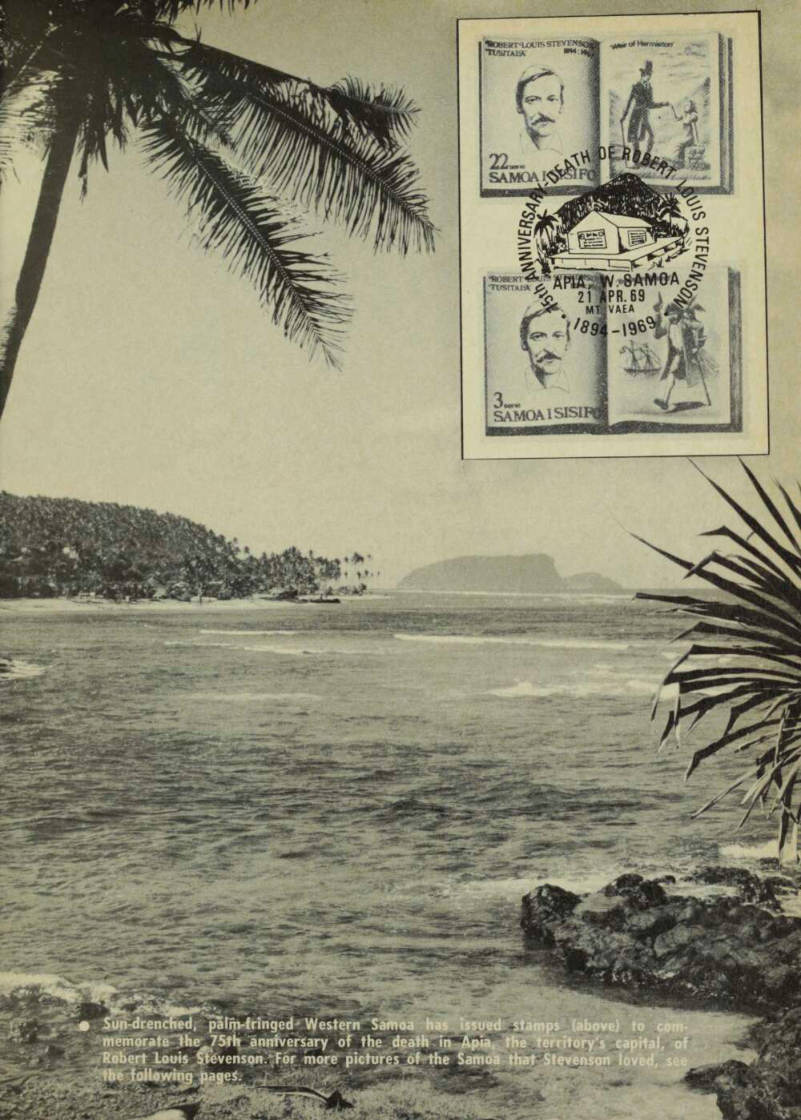 61
61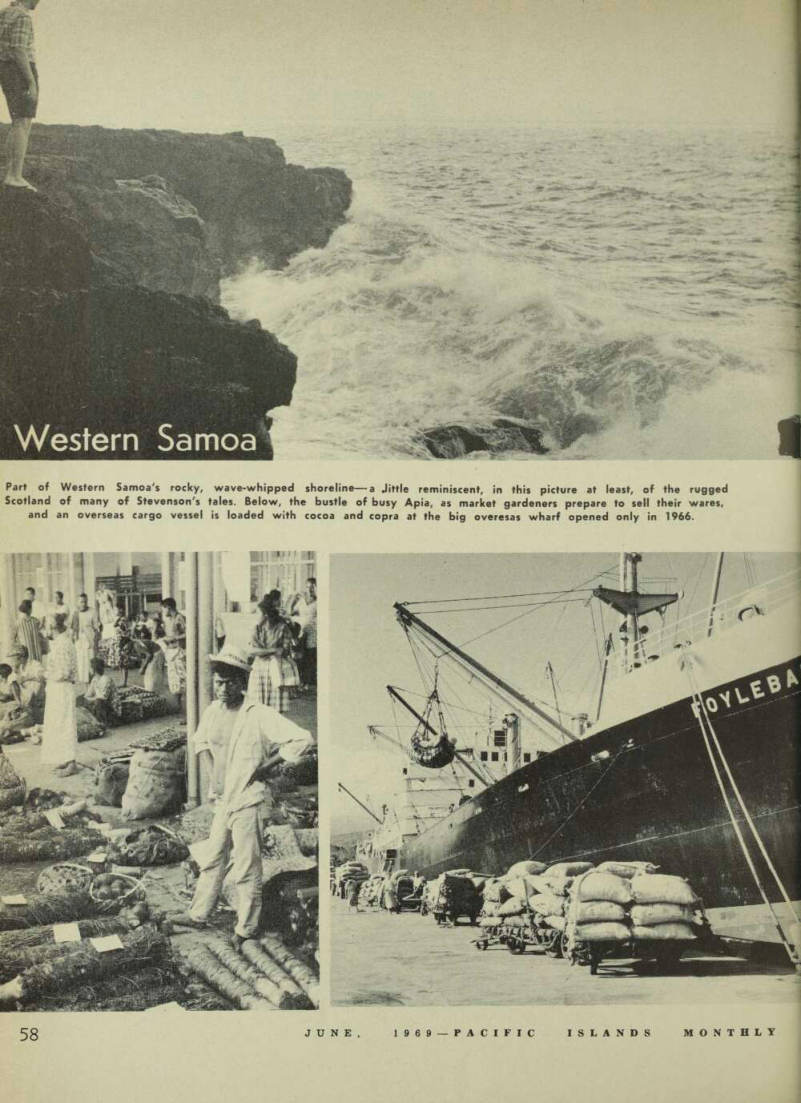 62
62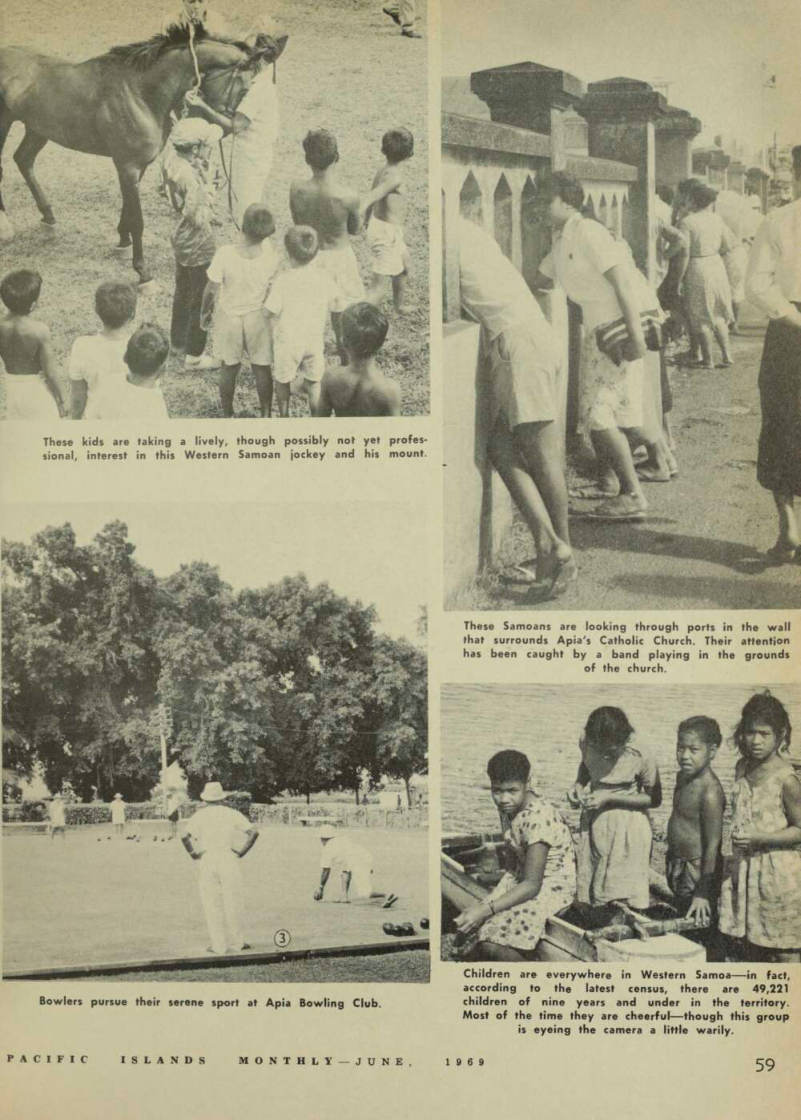 63
63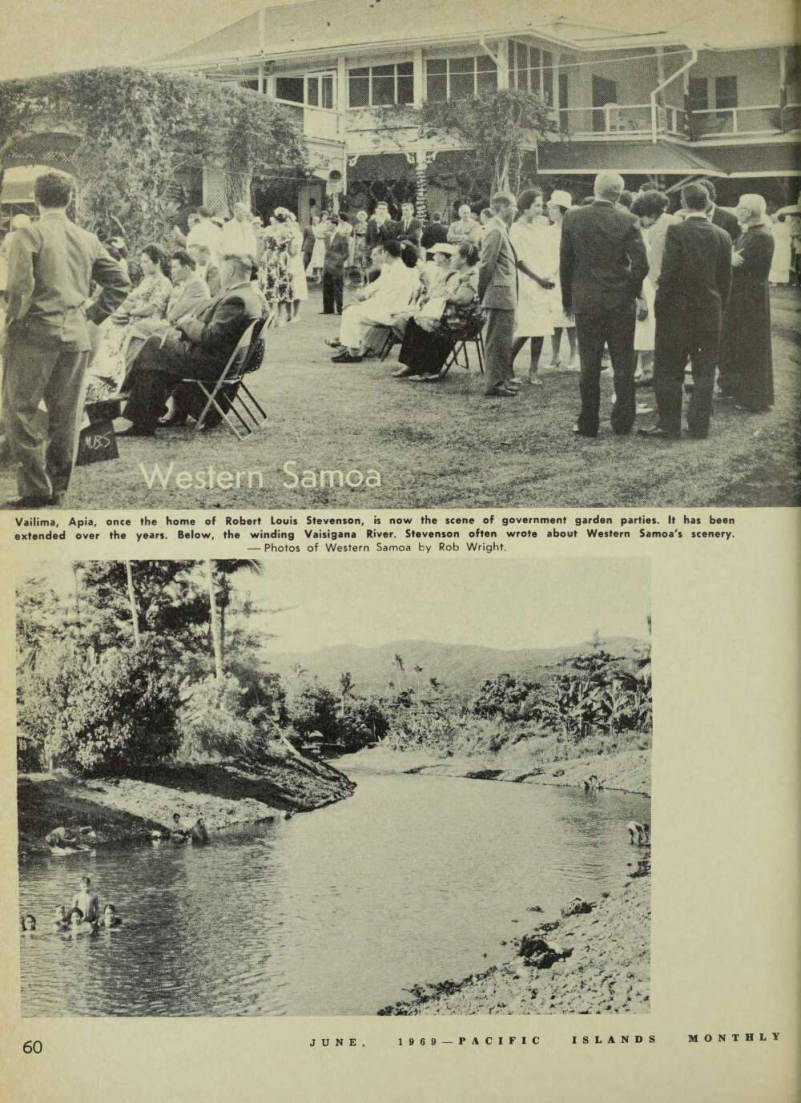 64
64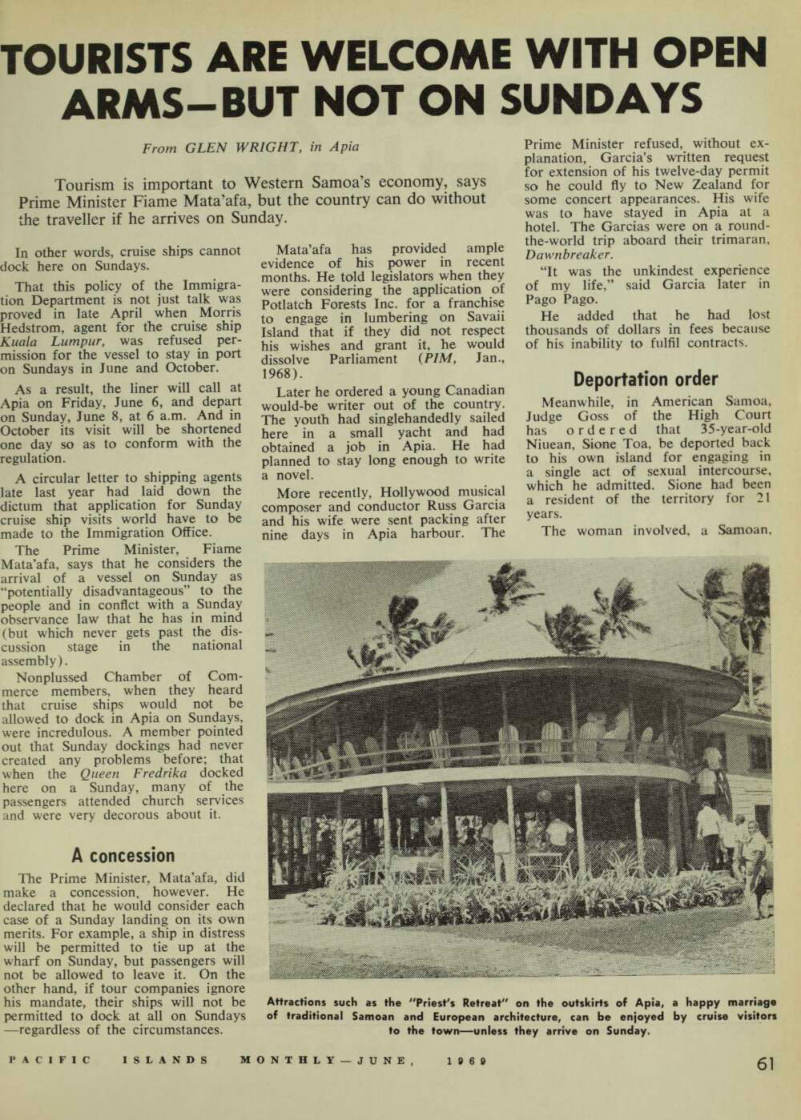 65
65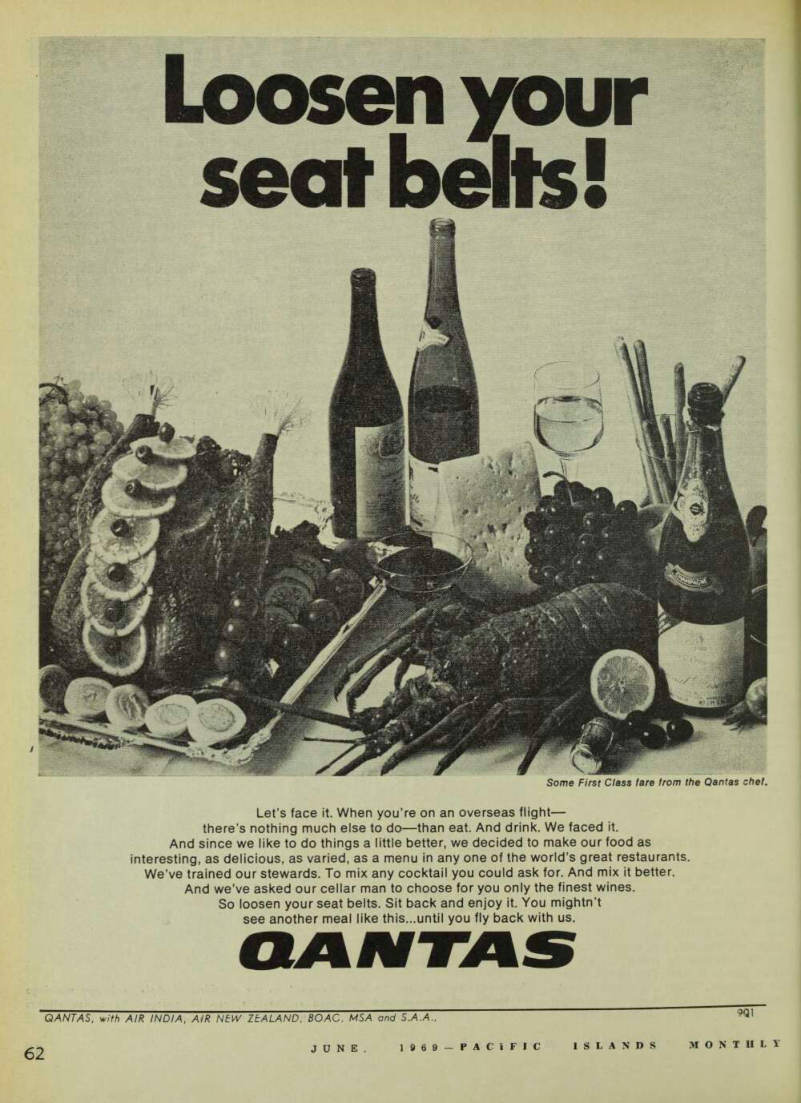 66
66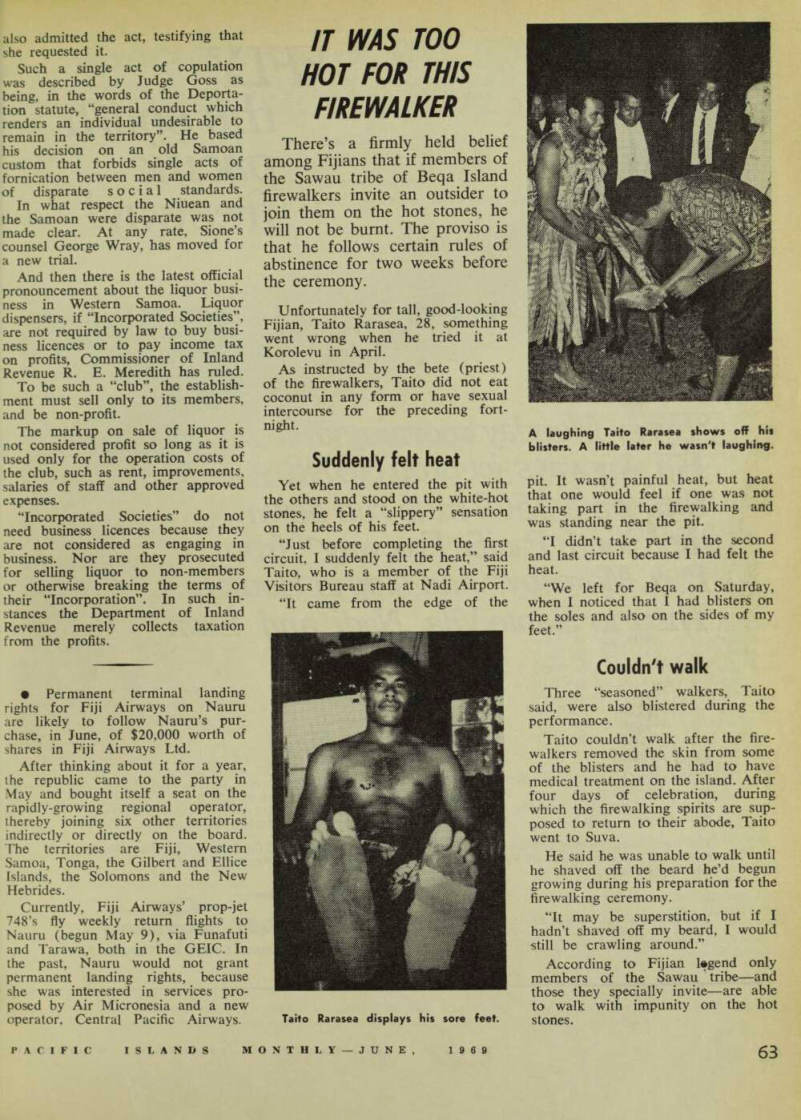 67
67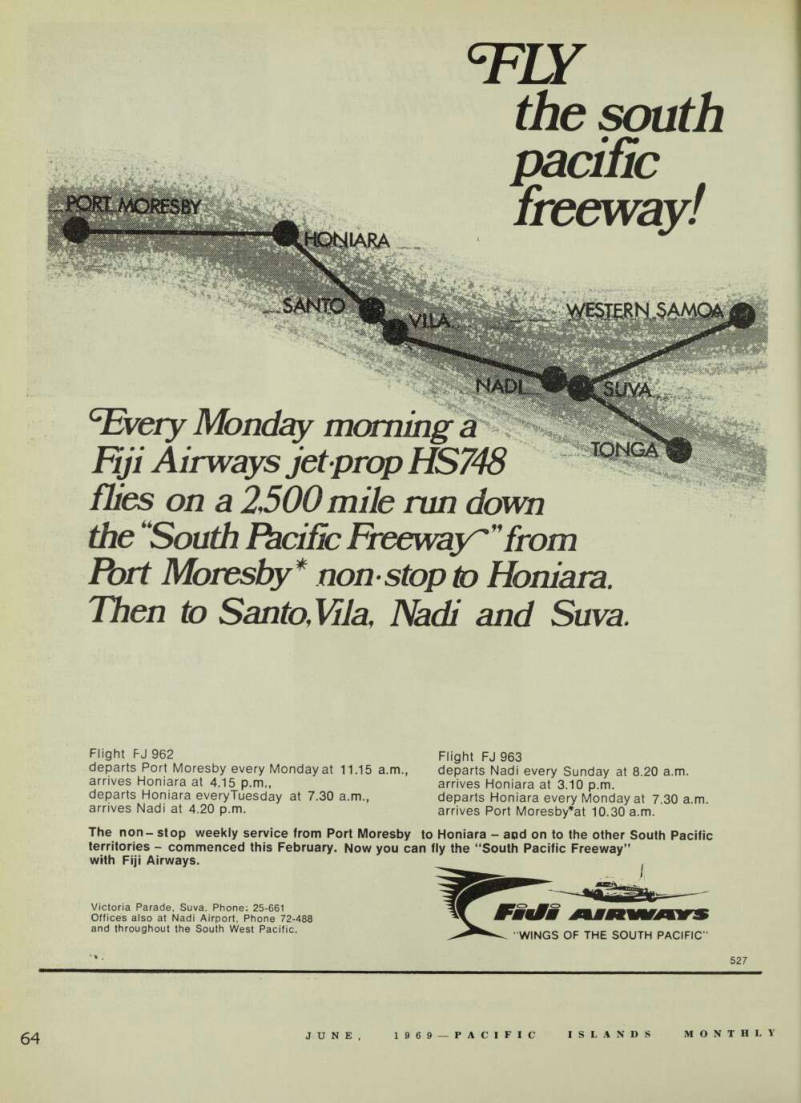 68
68 69
69 70
70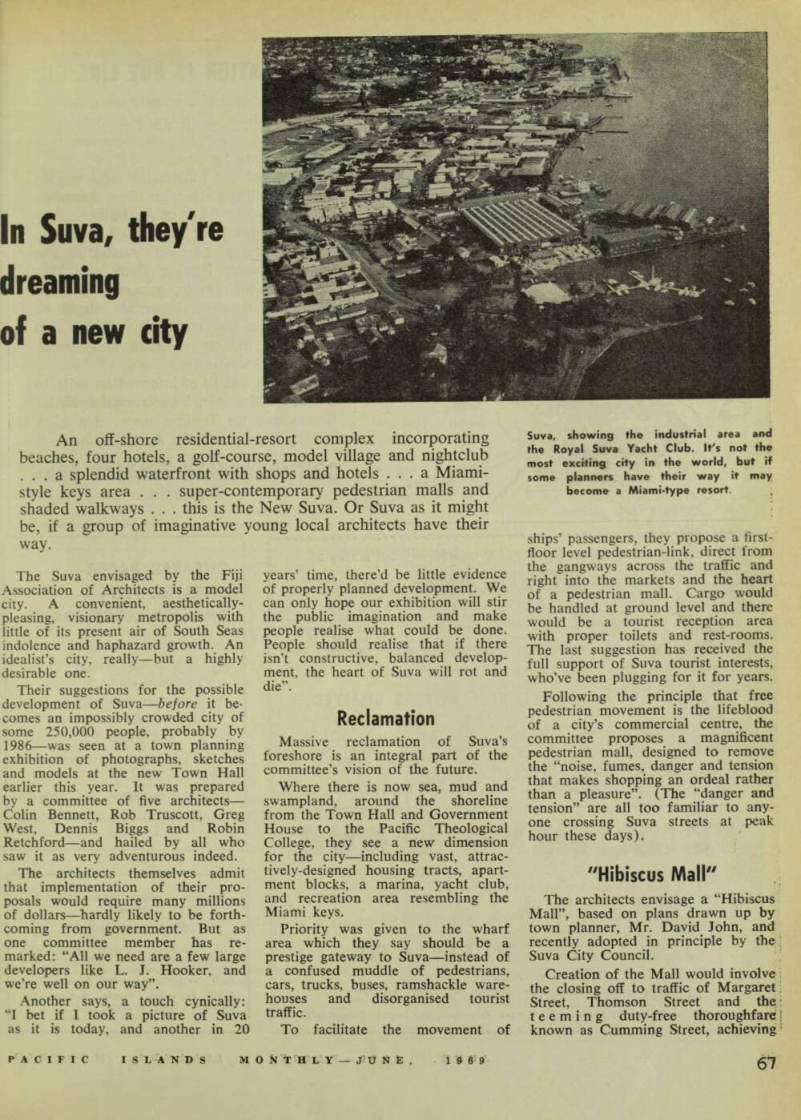 71
71 72
72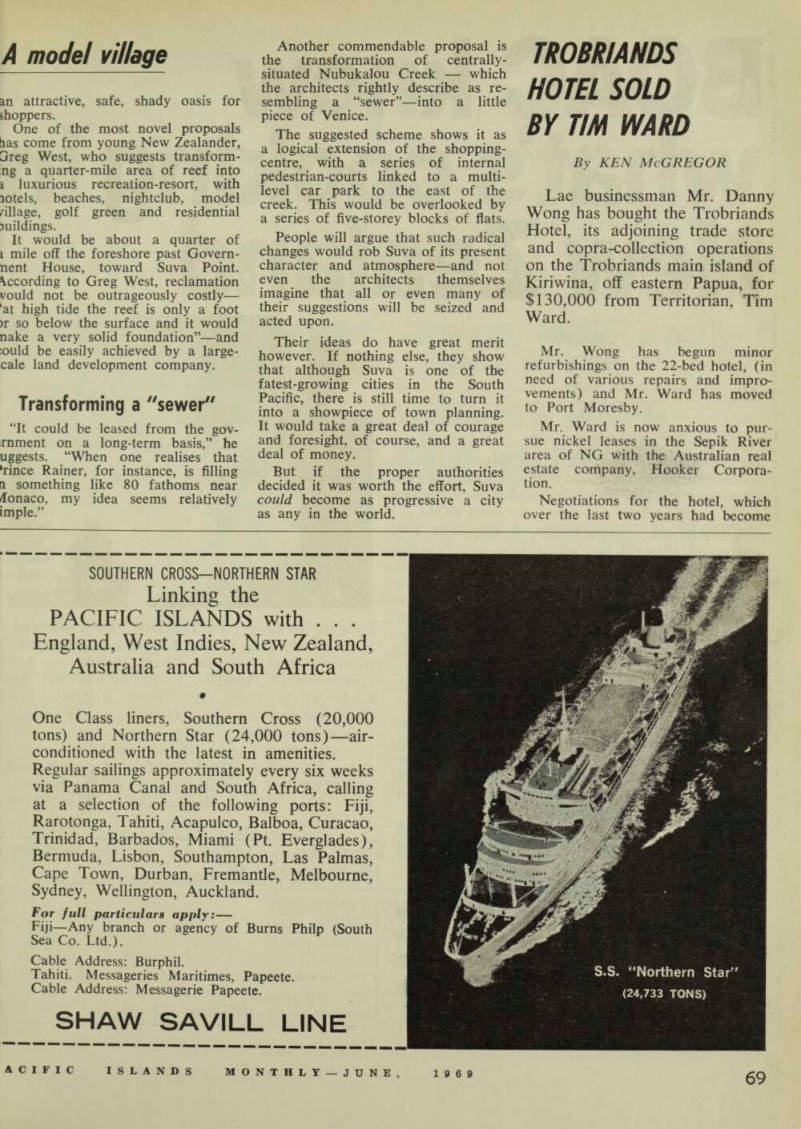 73
73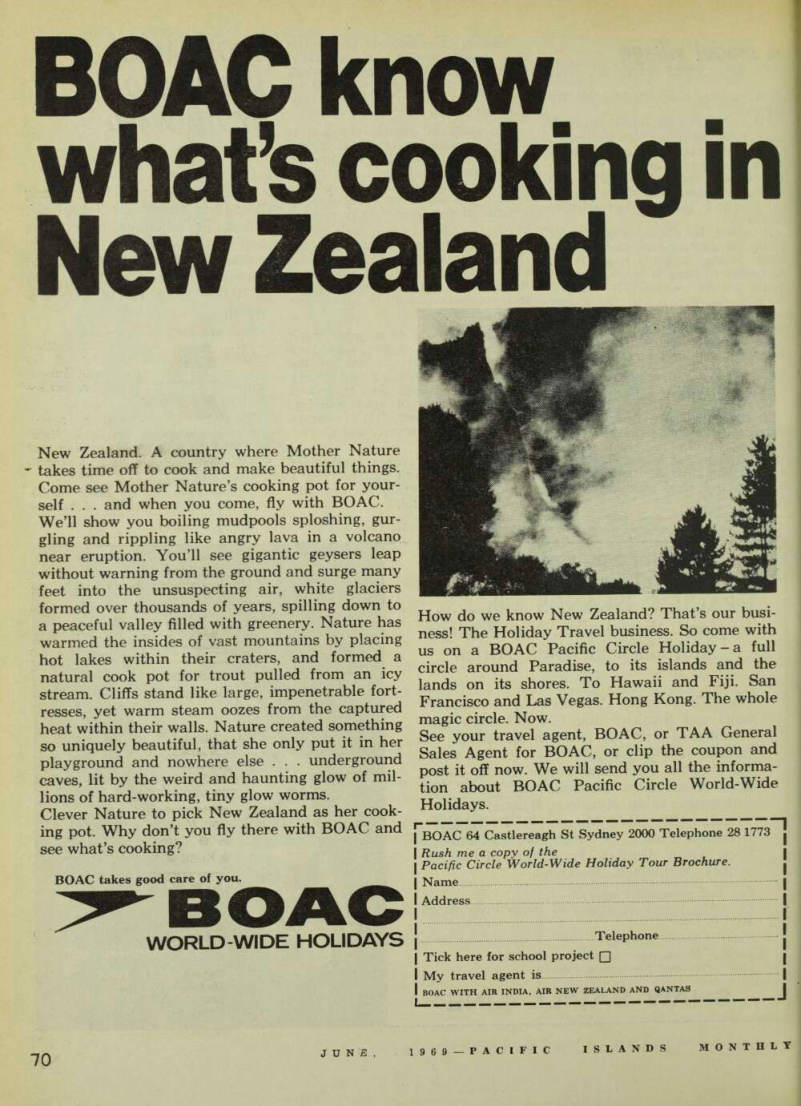 74
74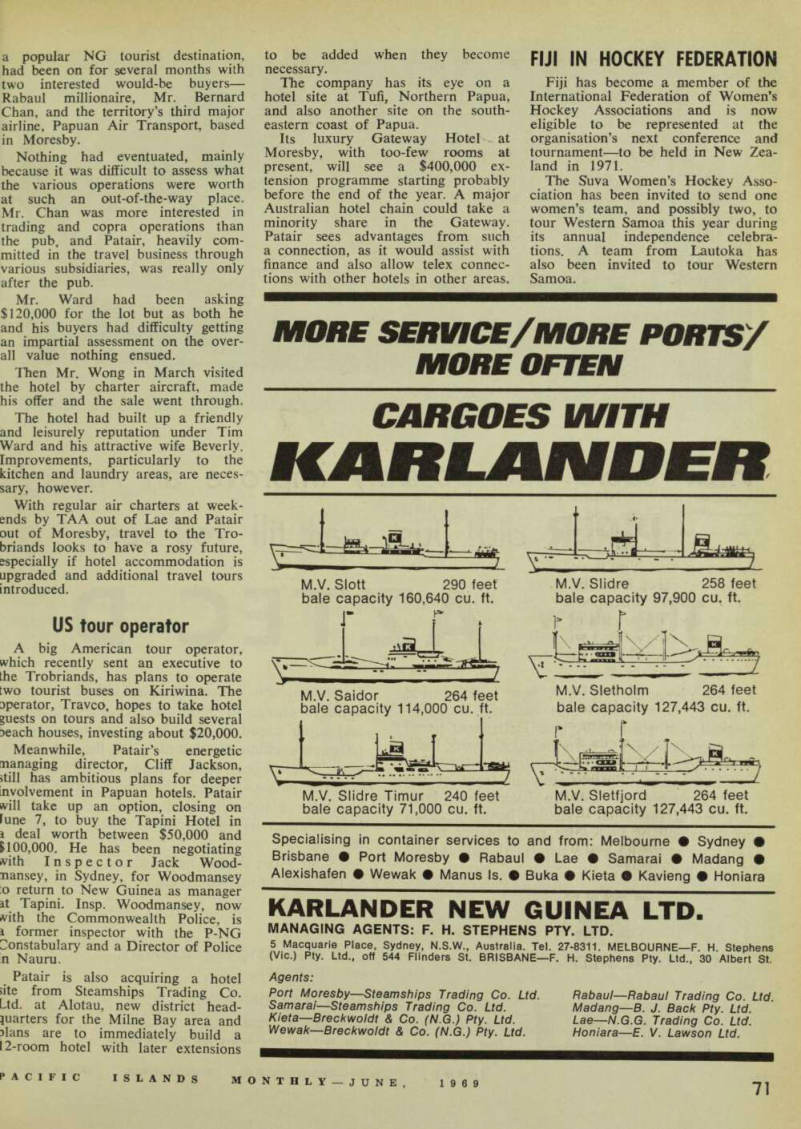 75
75 76
76 77
77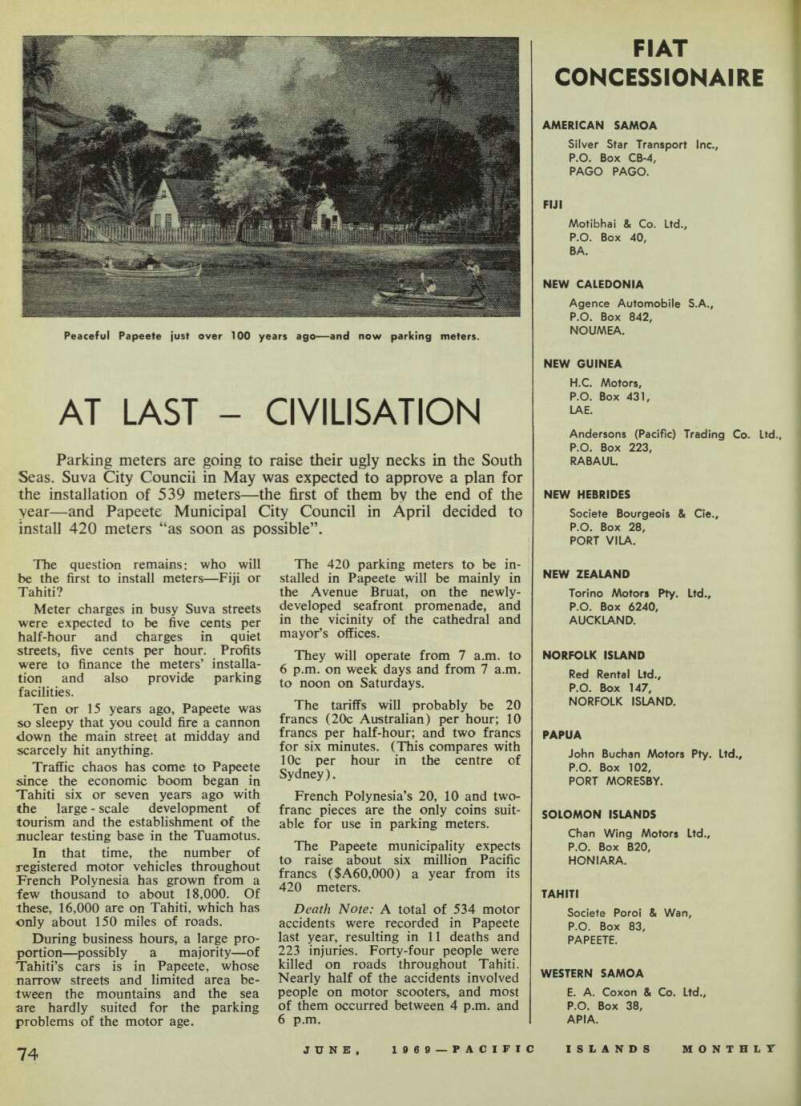 78
78 79
79 80
80 81
81 82
82 83
83 84
84 85
85 86
86 87
87 88
88 89
89 90
90 91
91 92
92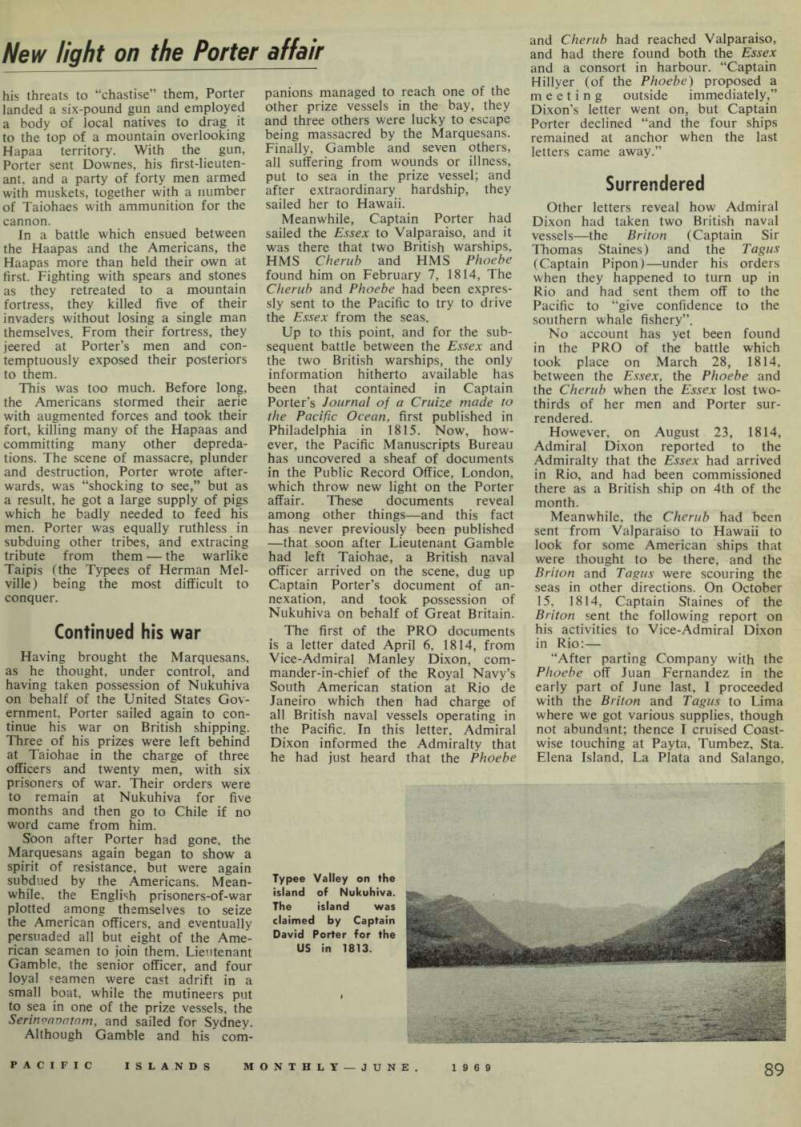 93
93 94
94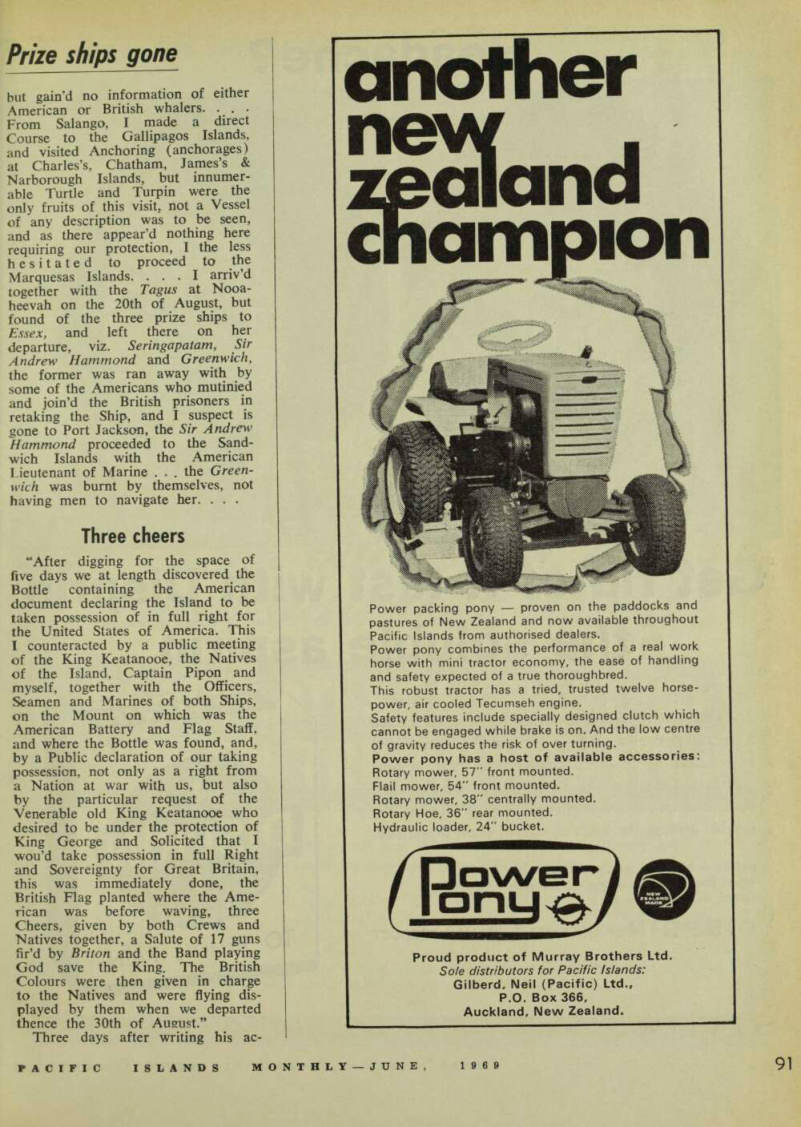 95
95 96
96 97
97 98
98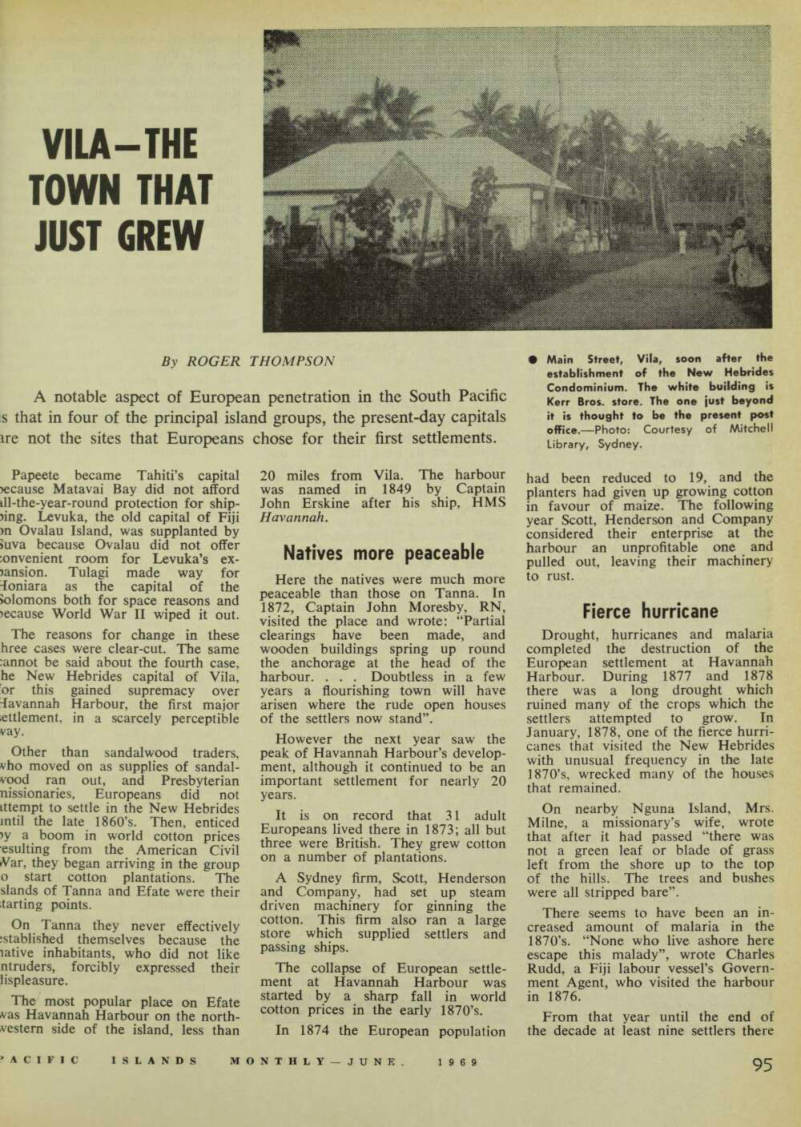 99
99 100
100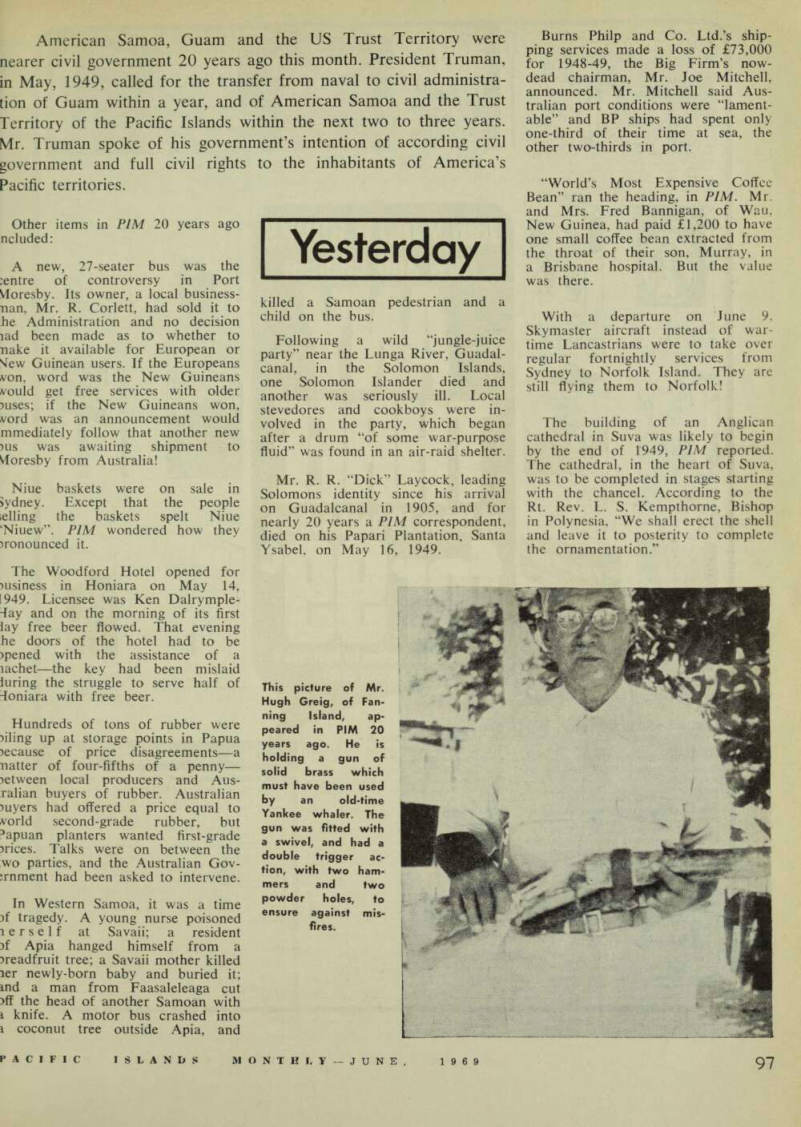 101
101 102
102 103
103 104
104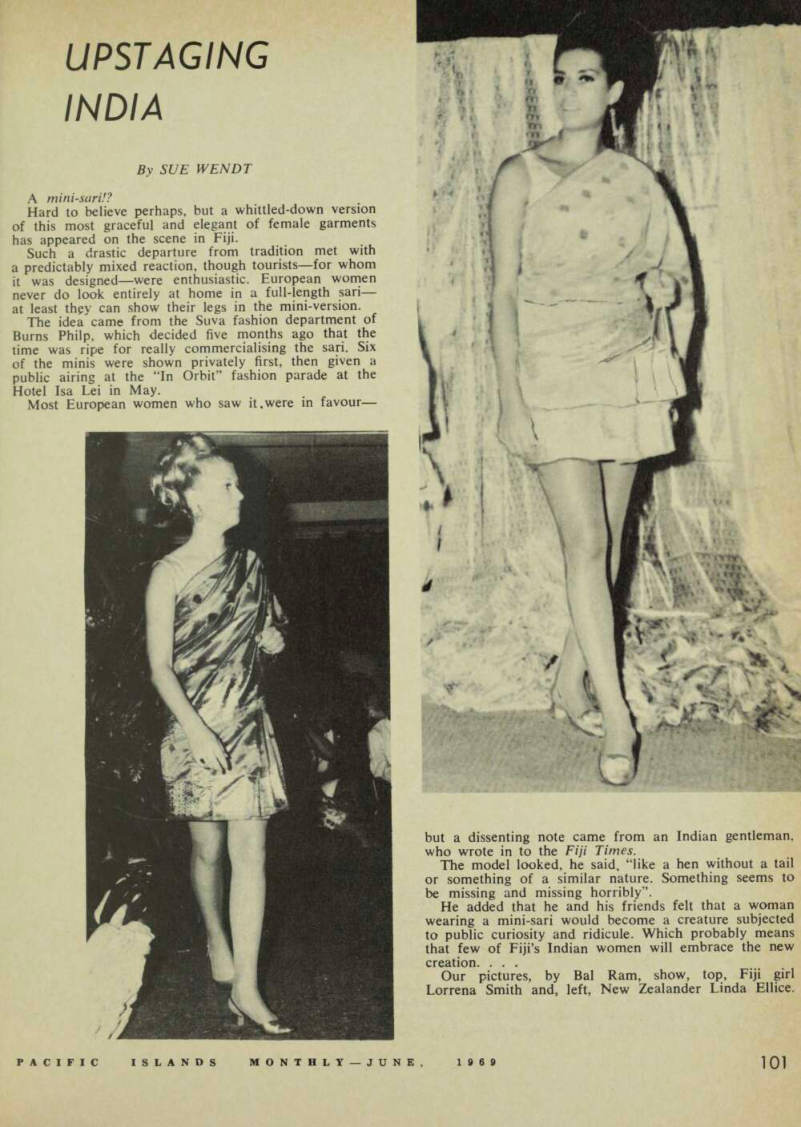 105
105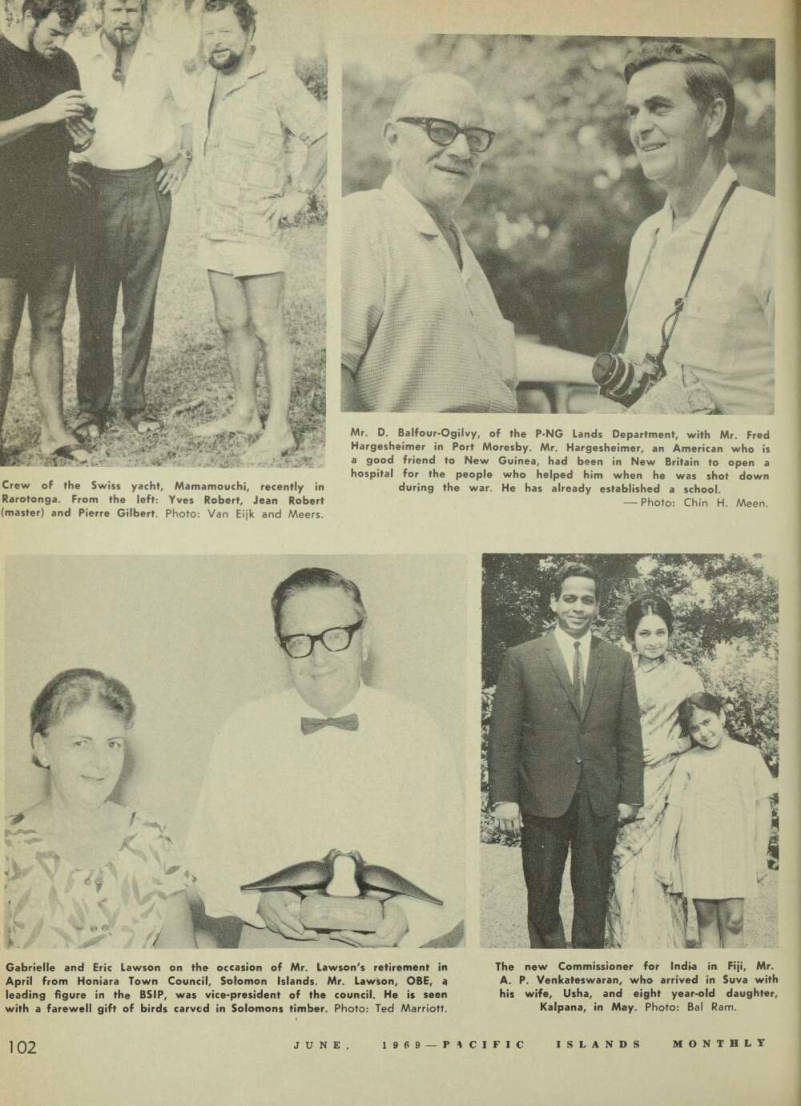 106
106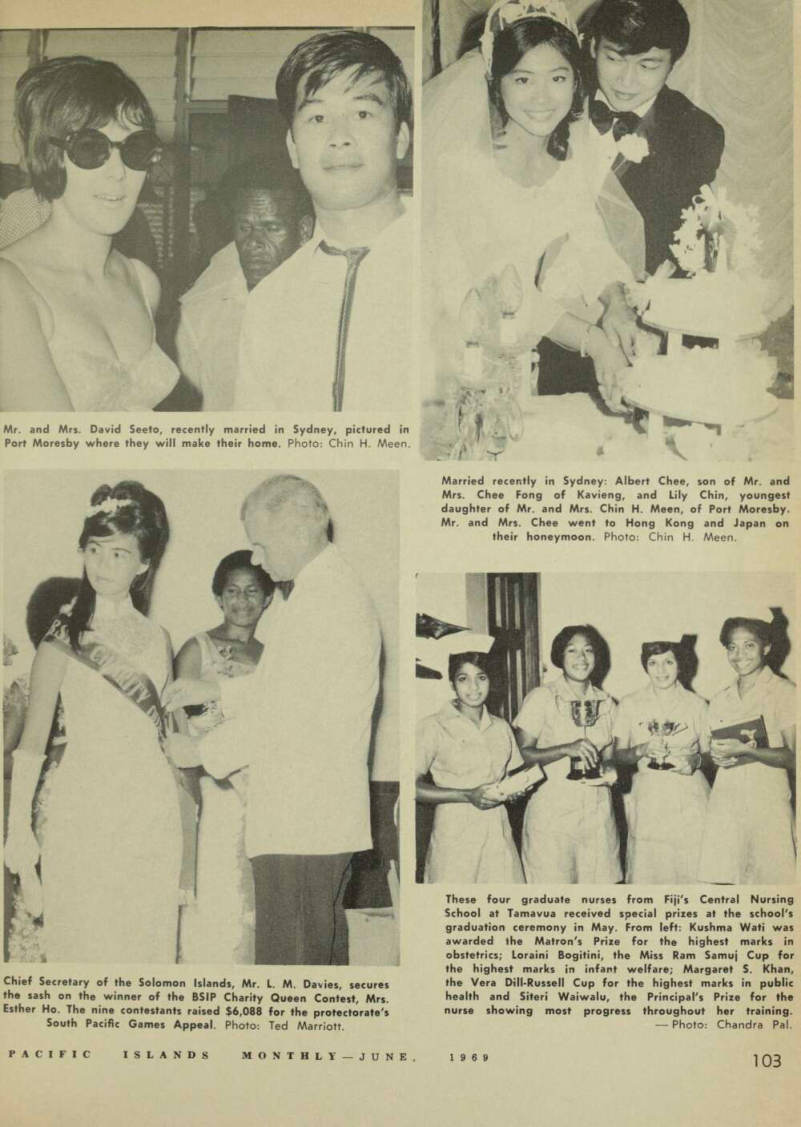 107
107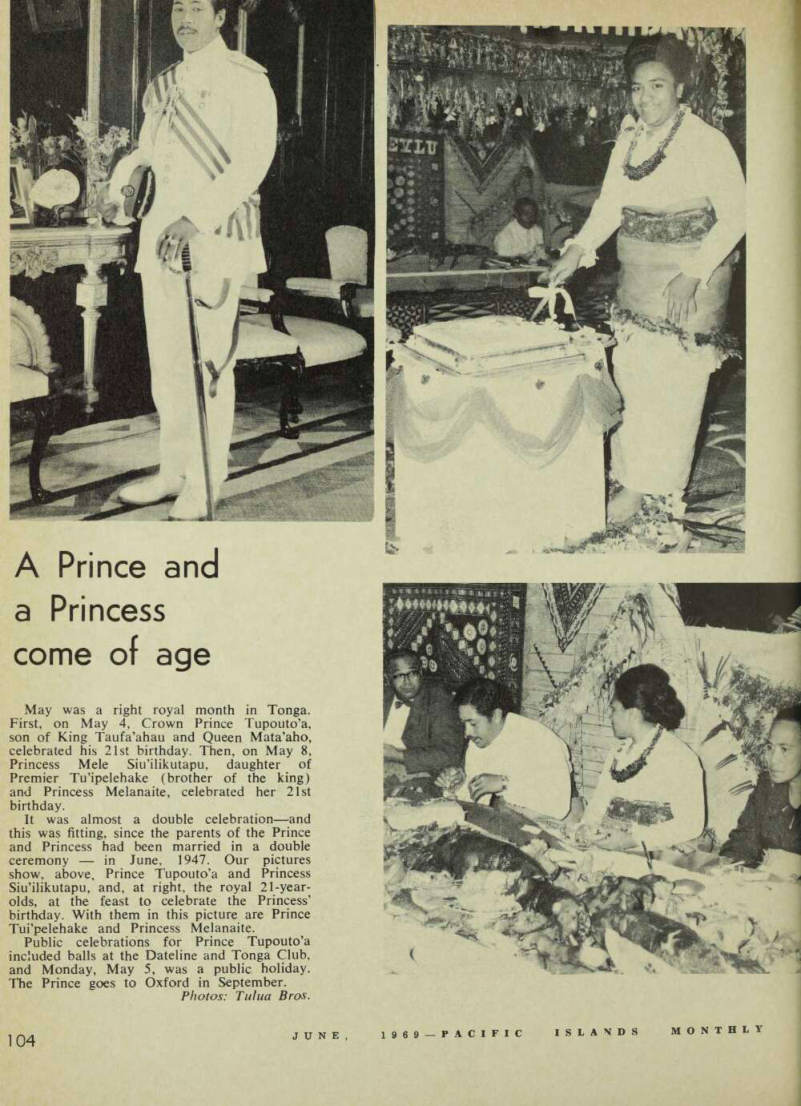 108
108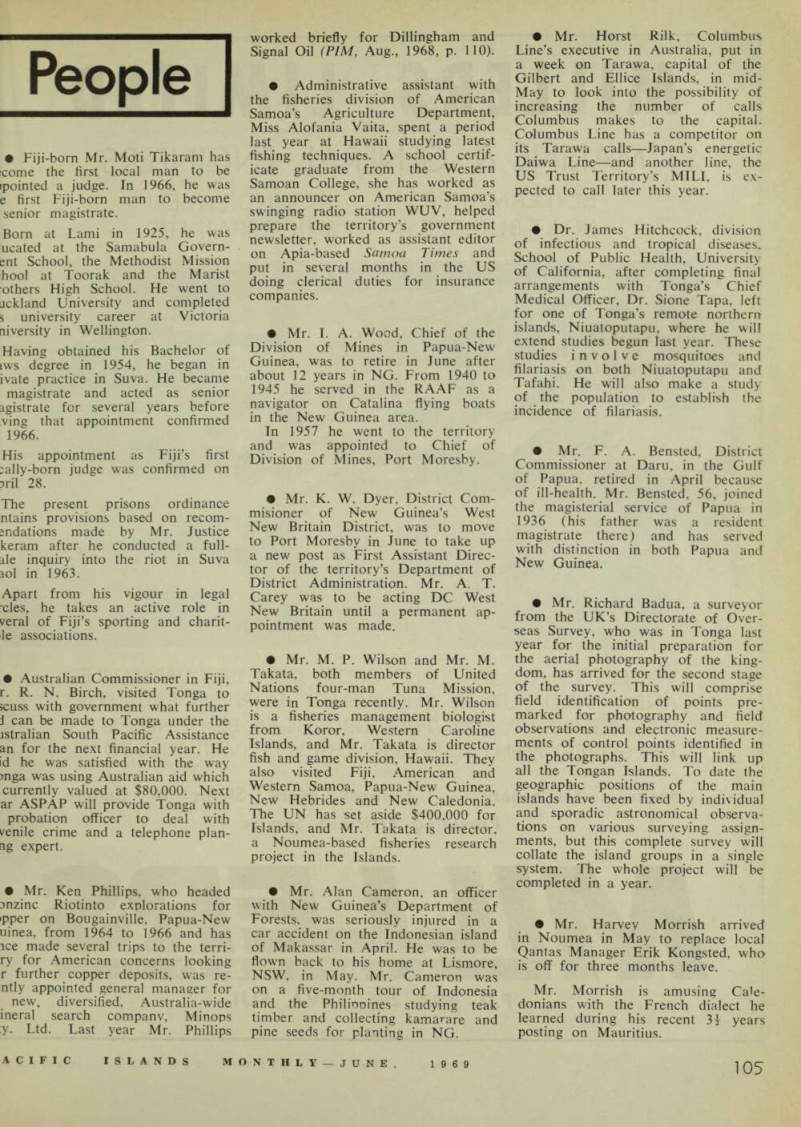 109
109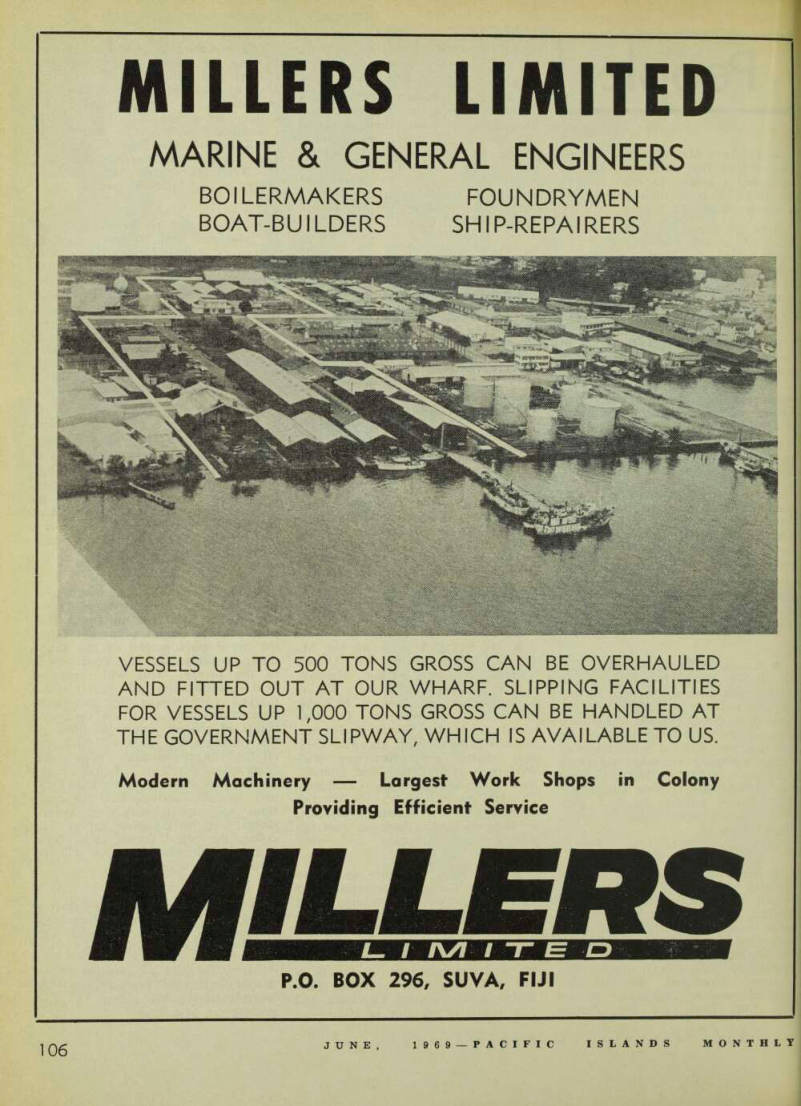 110
110 111
111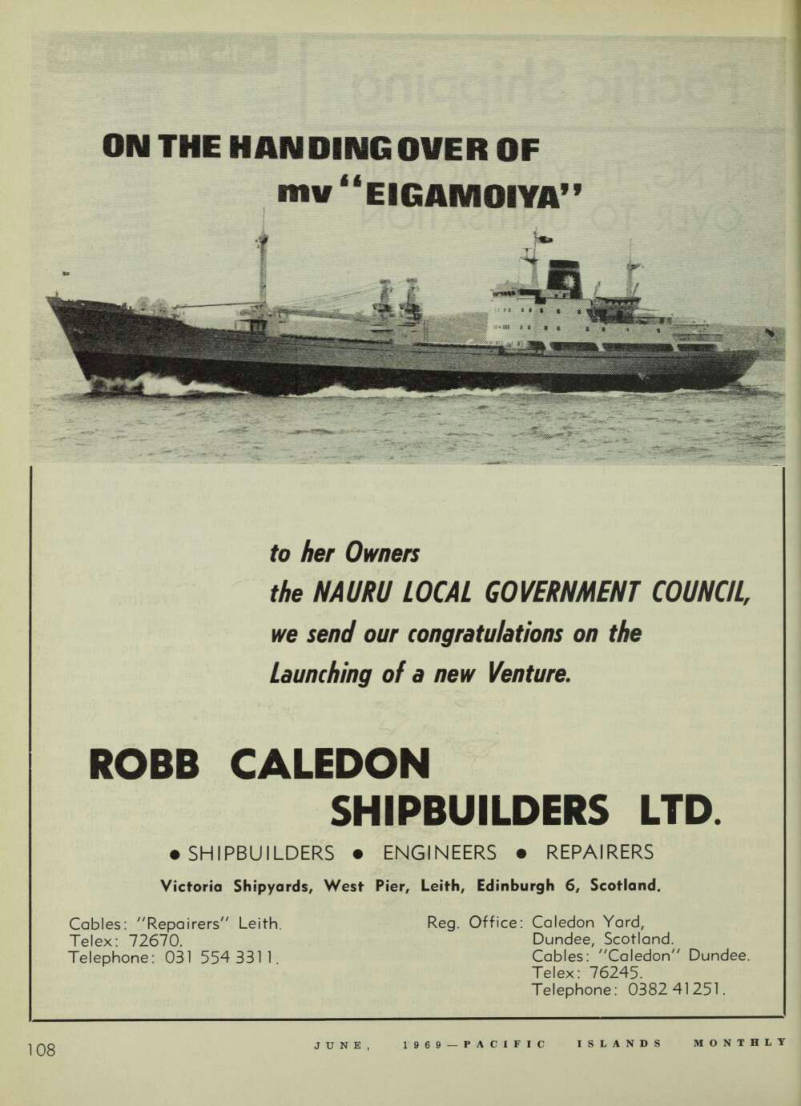 112
112 113
113 114
114 115
115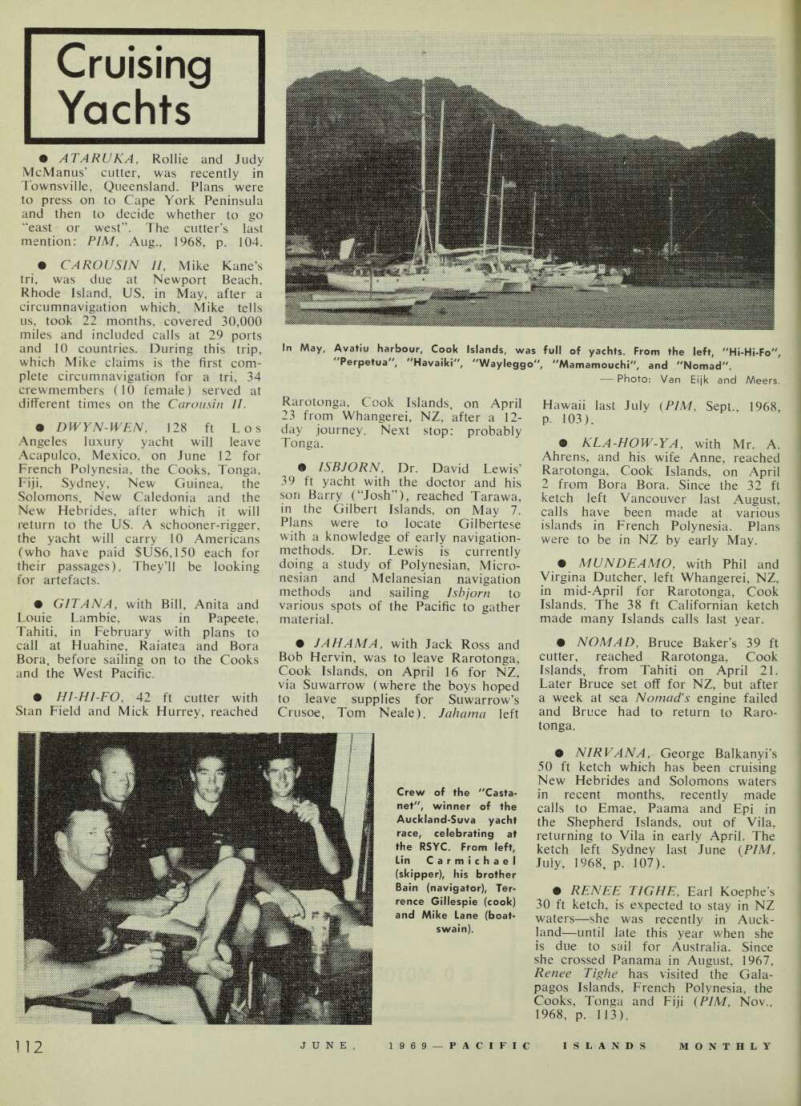 116
116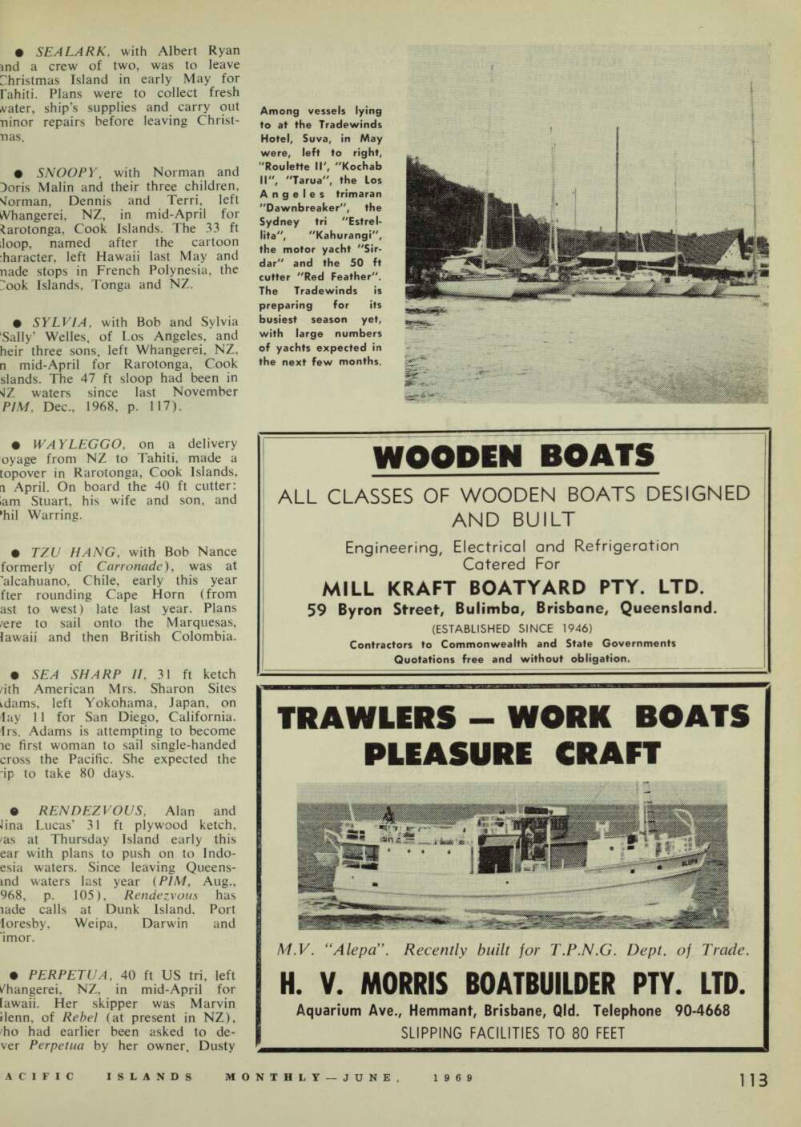 117
117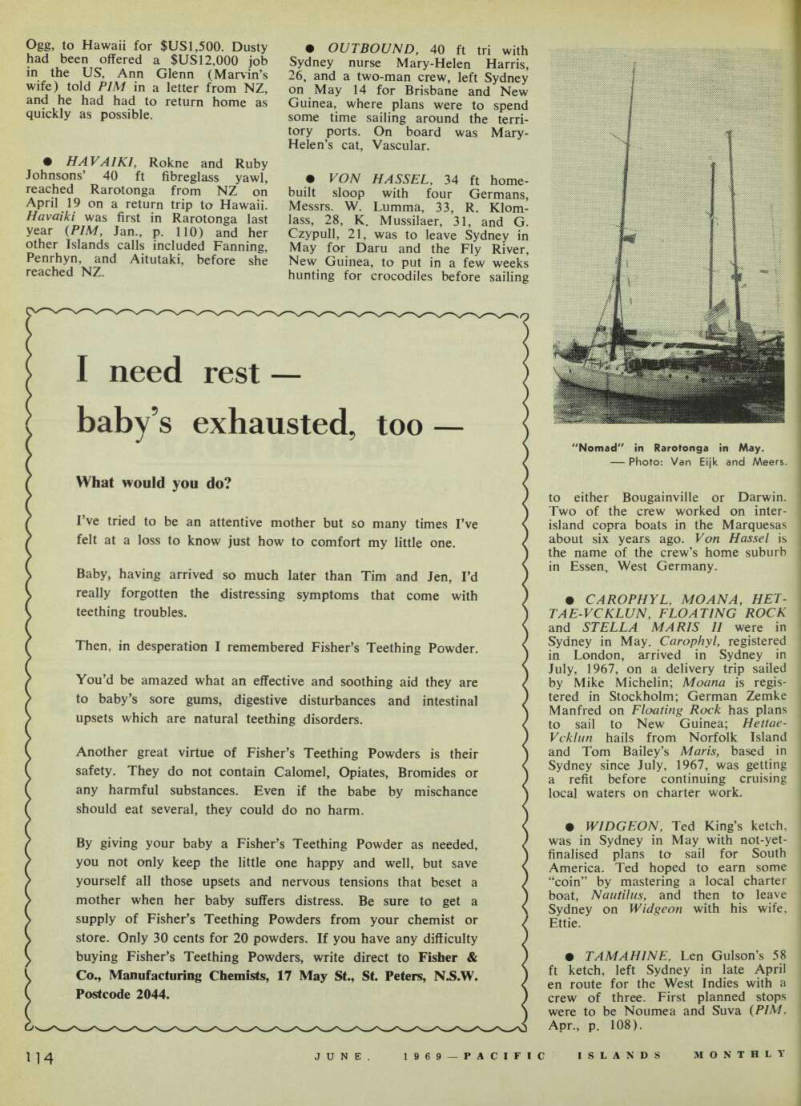 118
118 119
119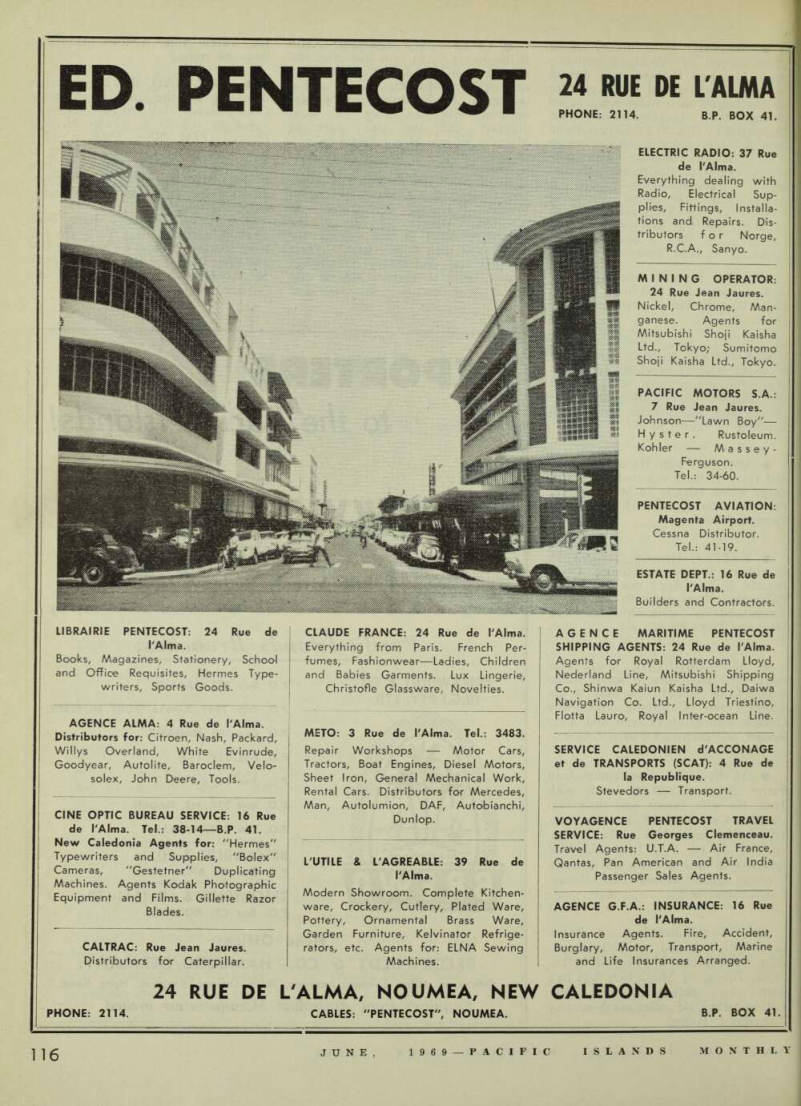 120
120 121
121 122
122 123
123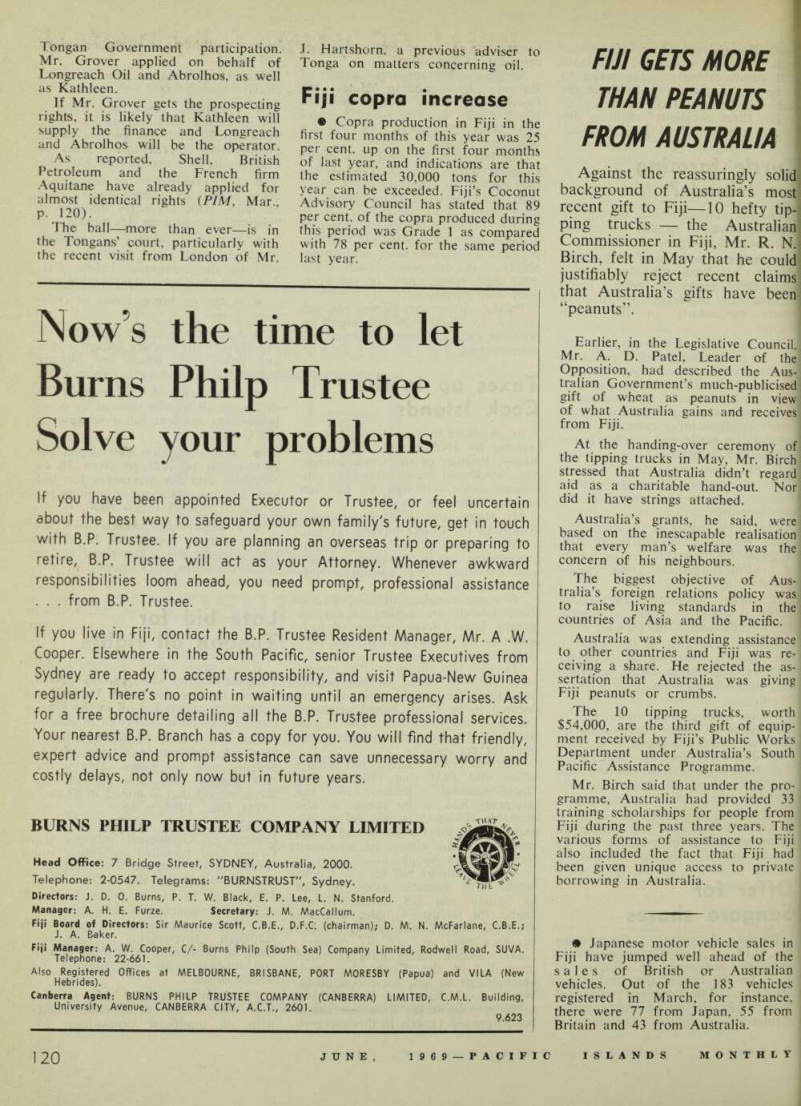 124
124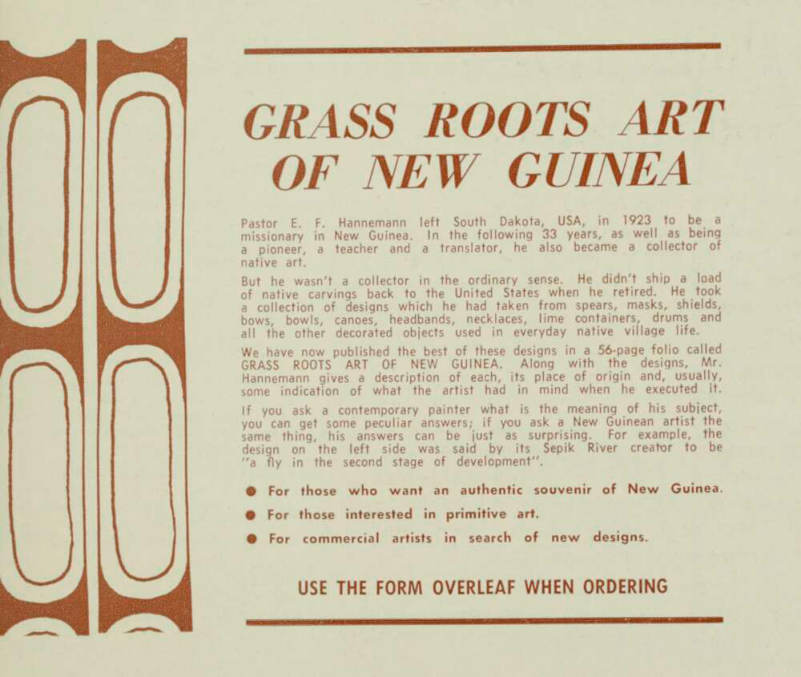 125
125 126
126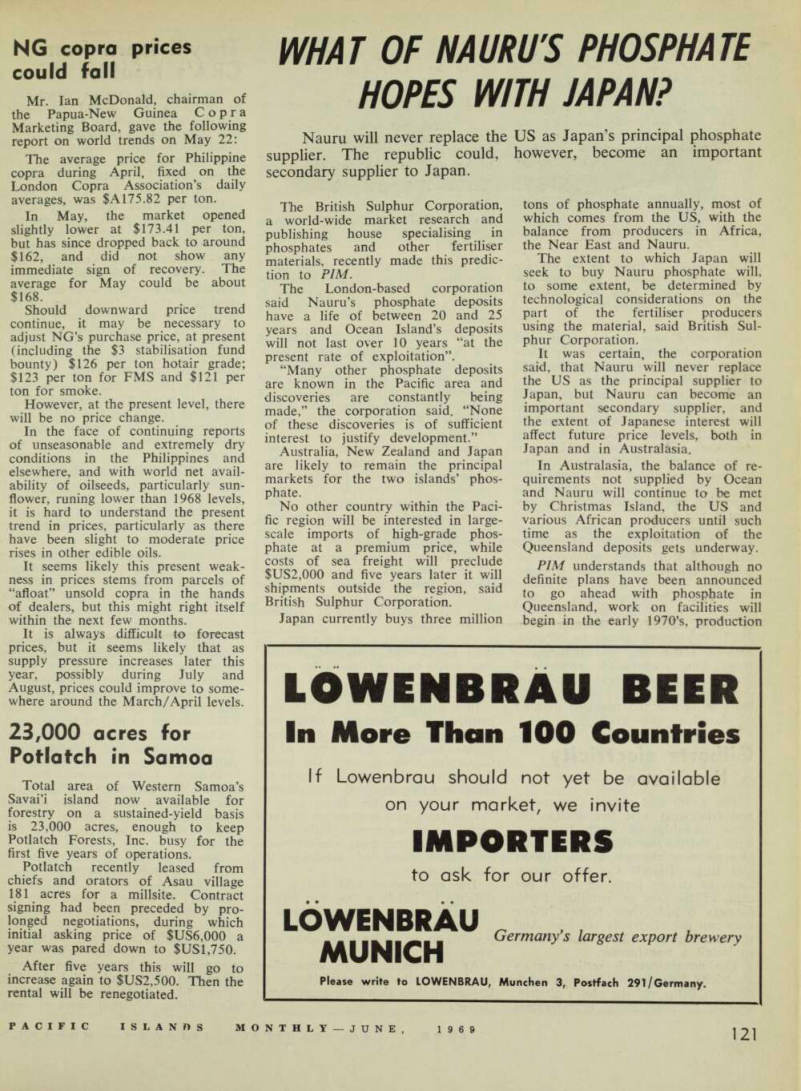 127
127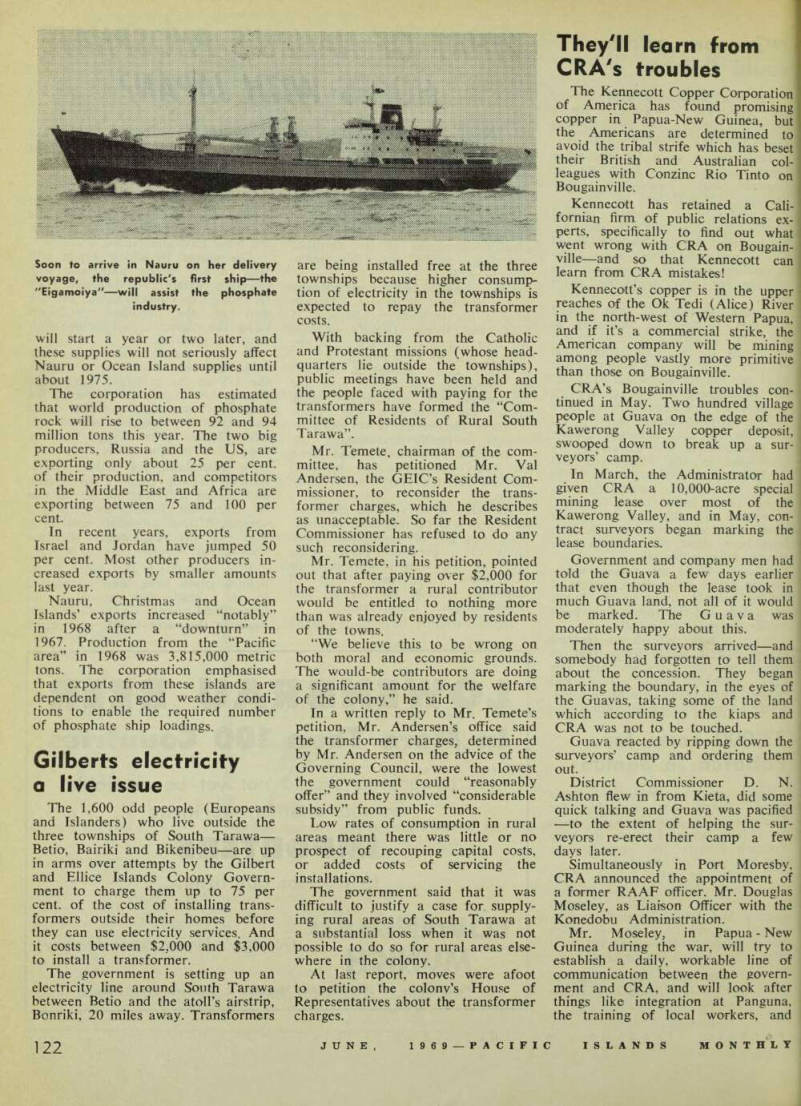 128
128 129
129 130
130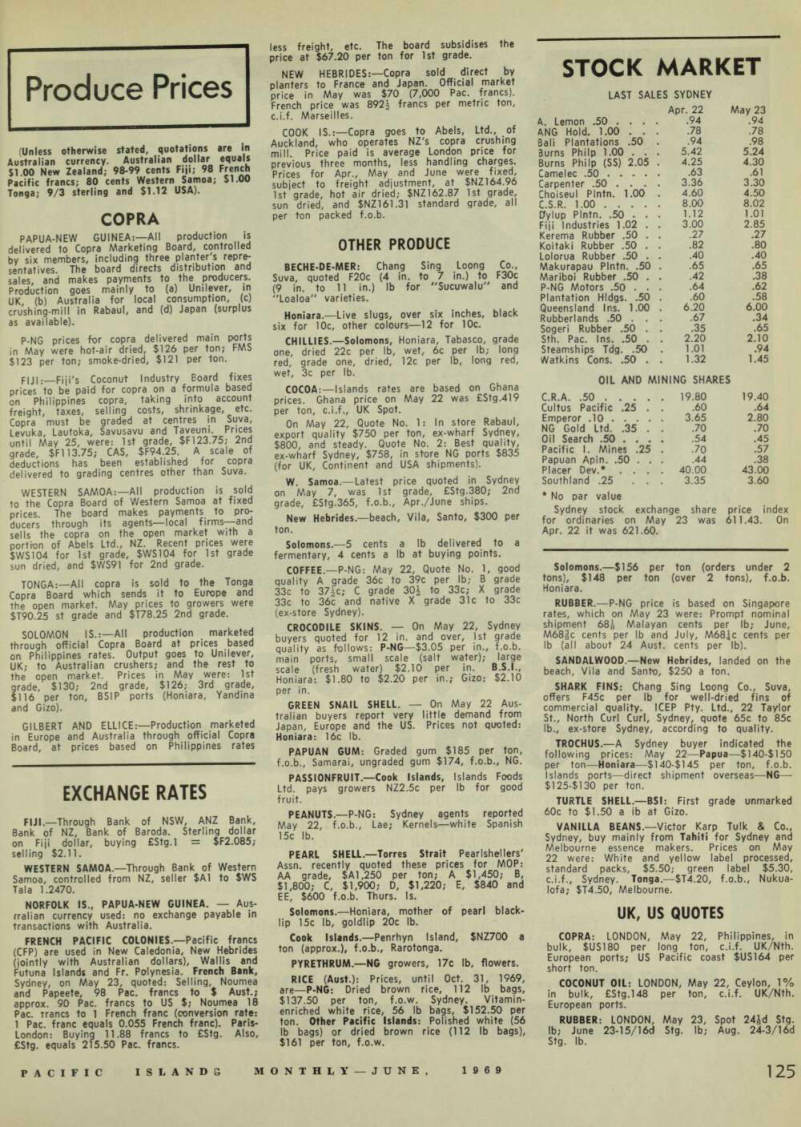 131
131 132
132 133
133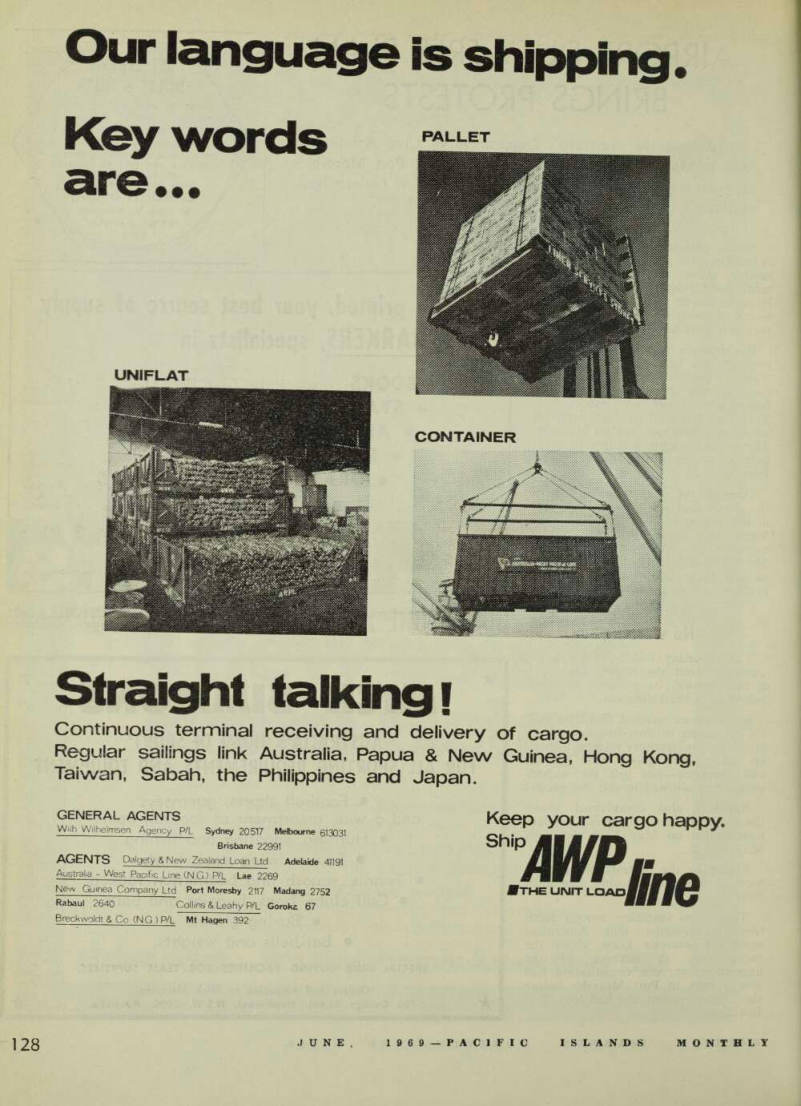 134
134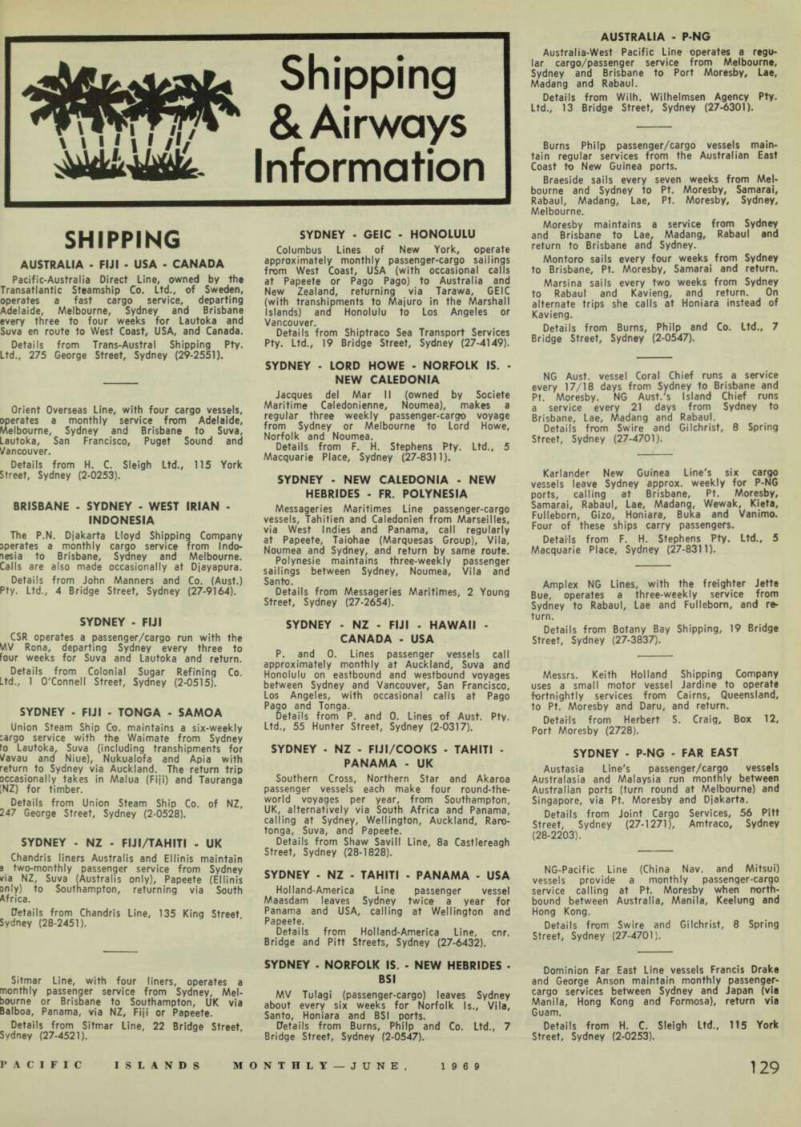 135
135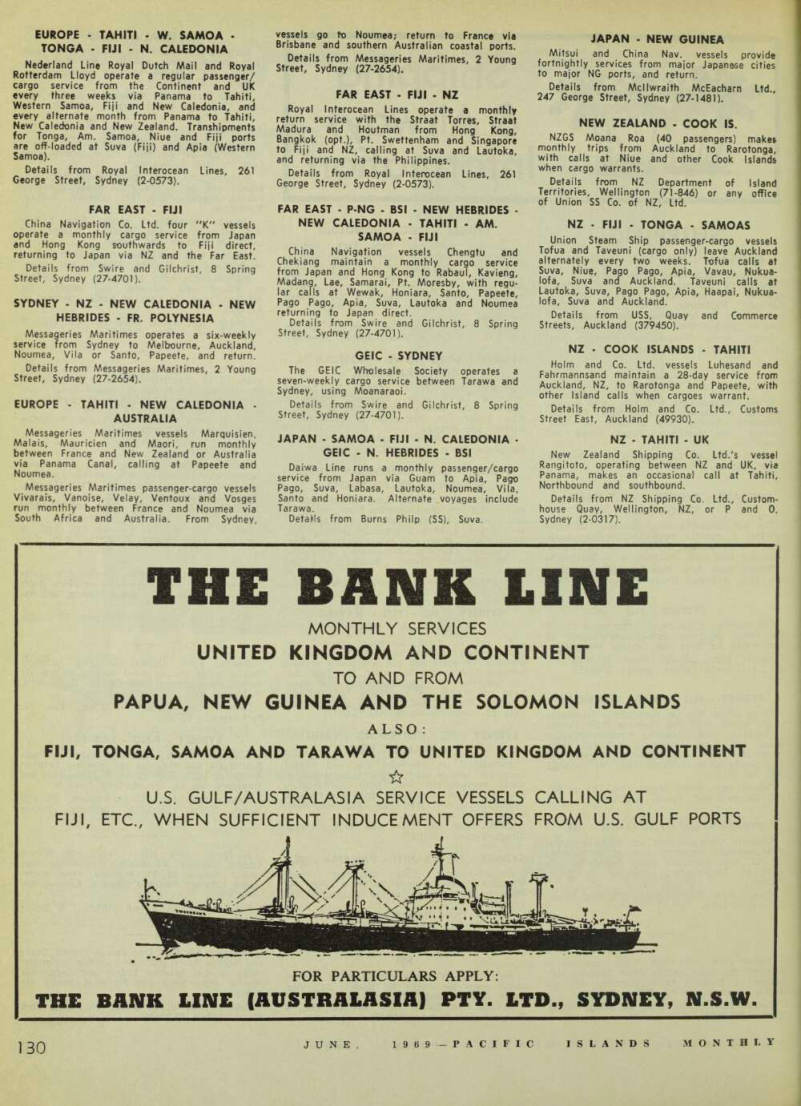 136
136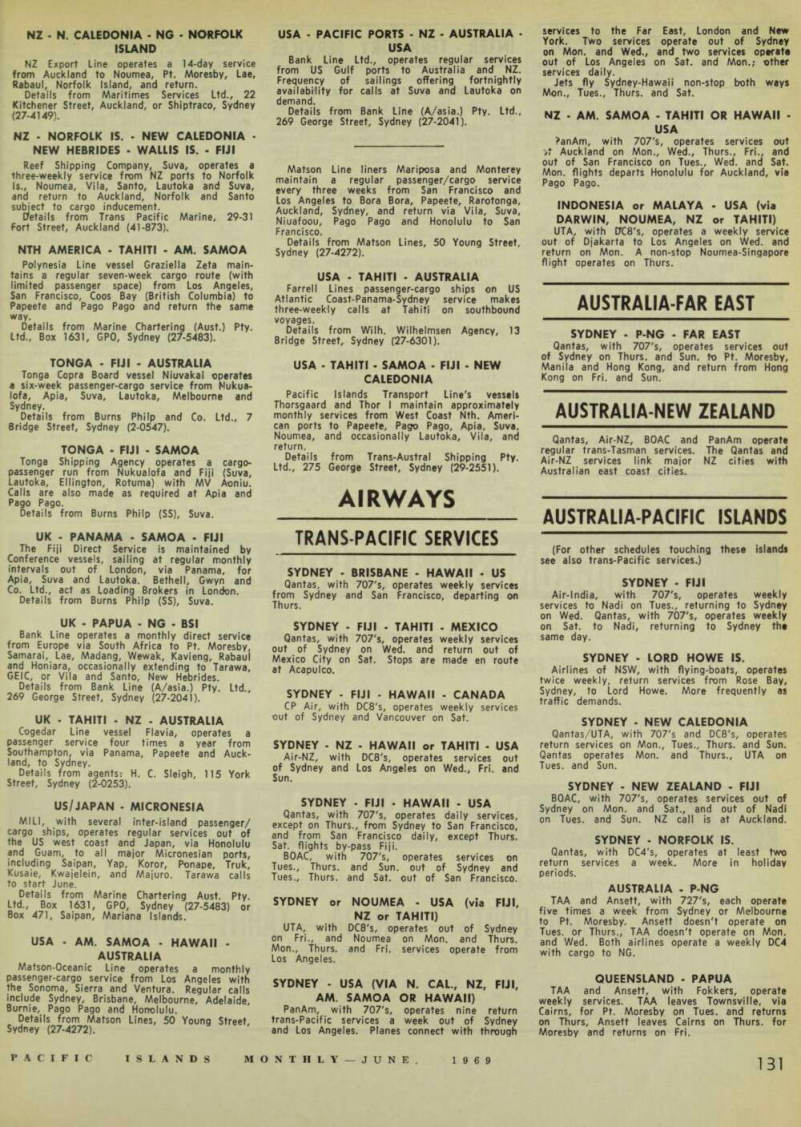 137
137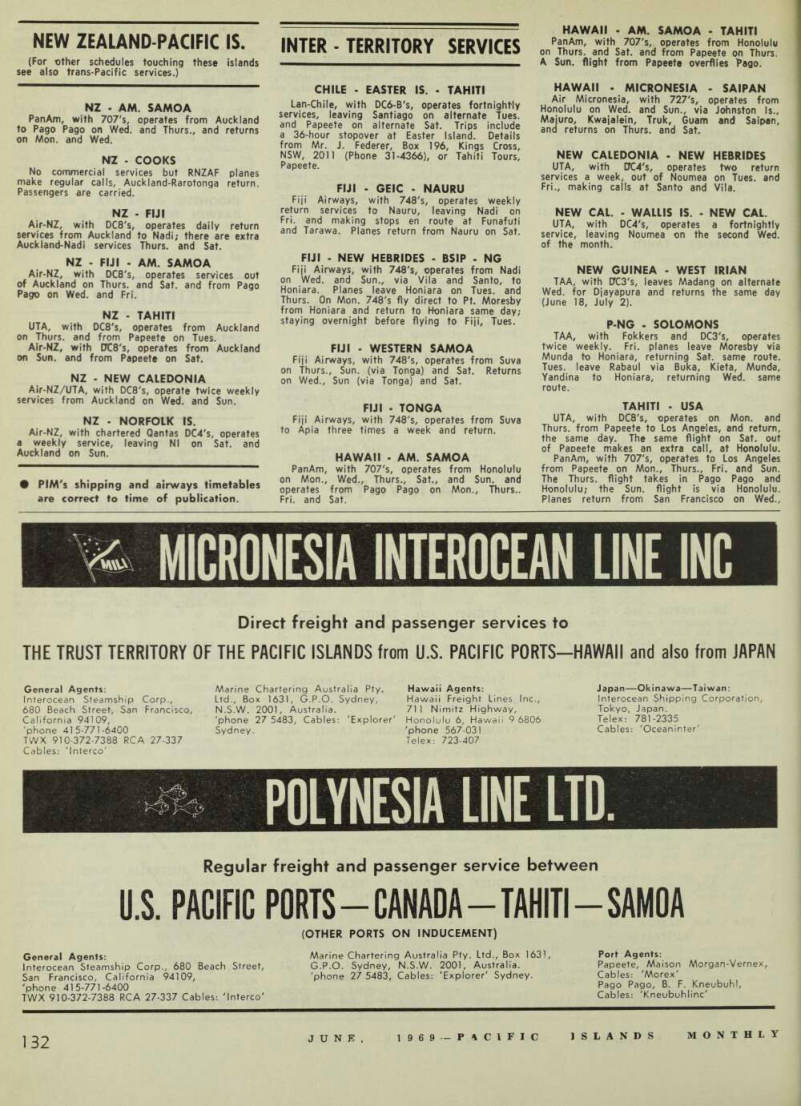 138
138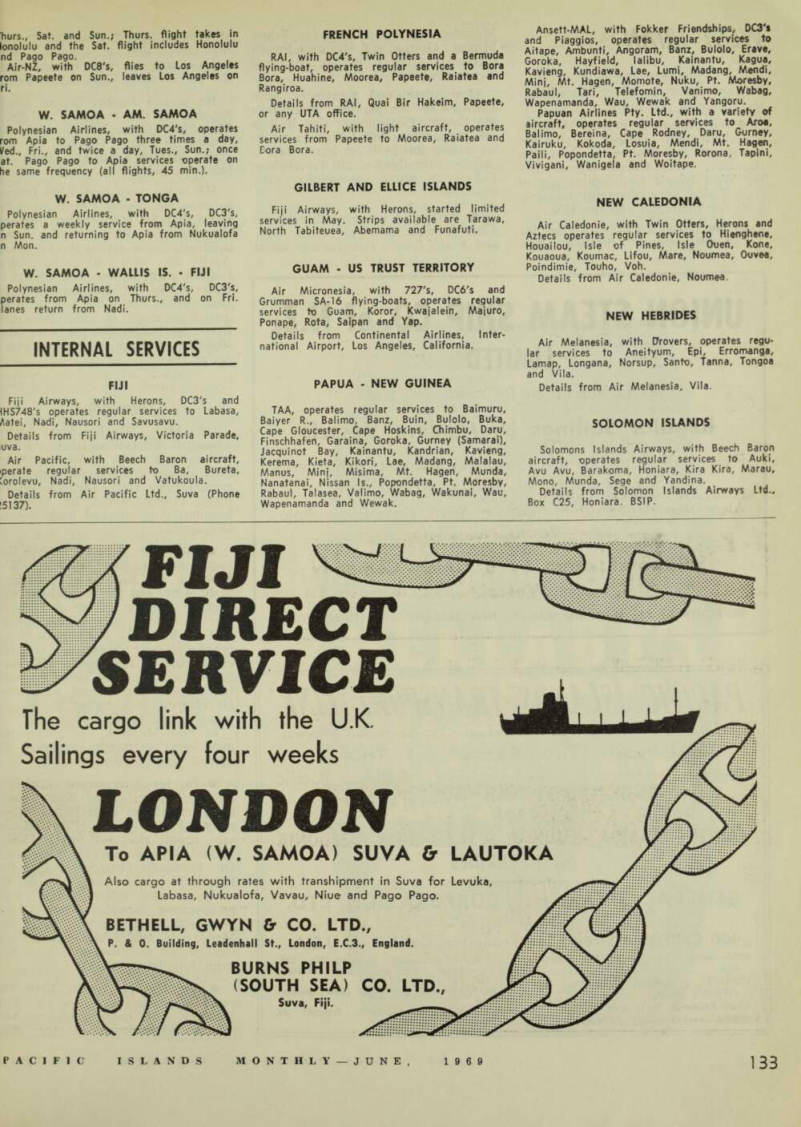 139
139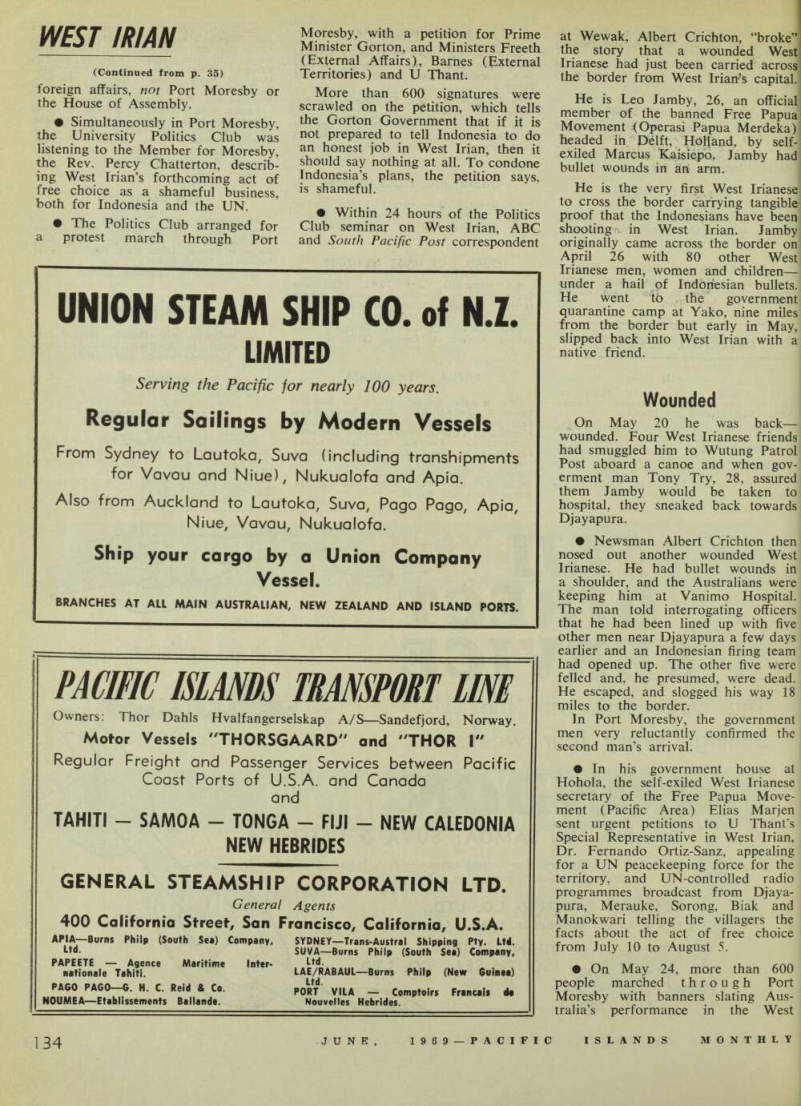 140
140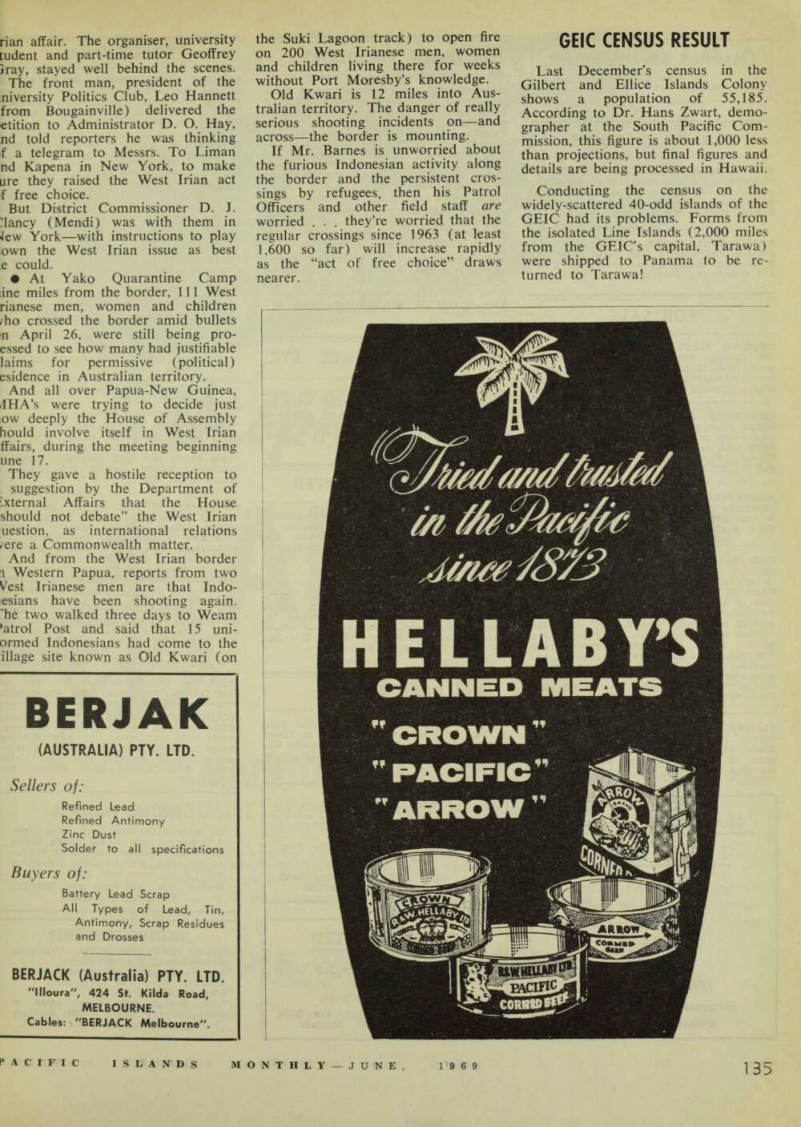 141
141 142
142 143
143 144
144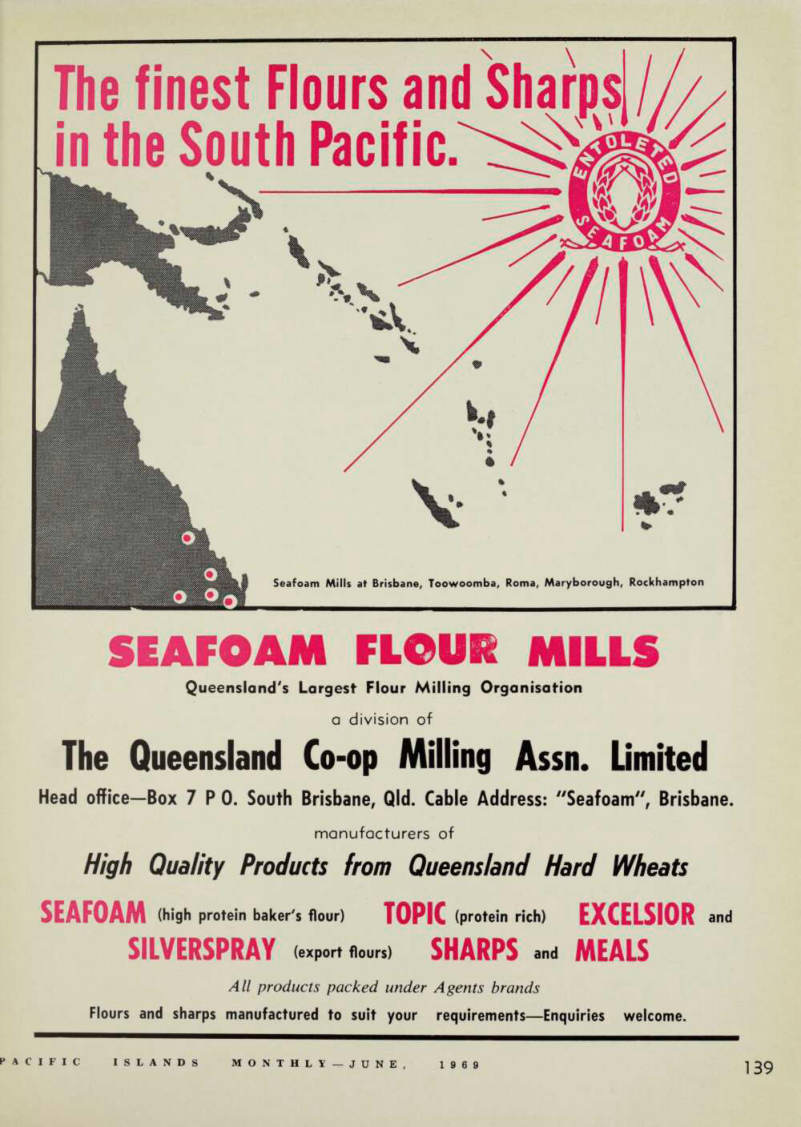 145
145 146
146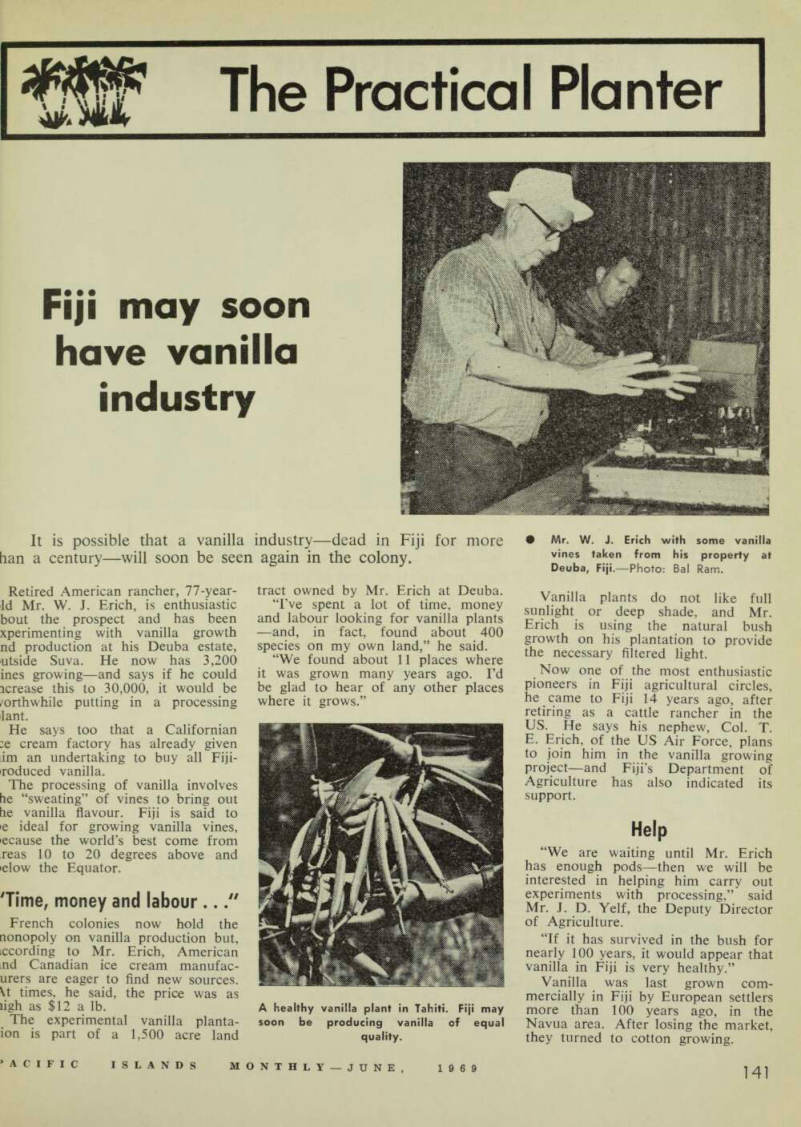 147
147 148
148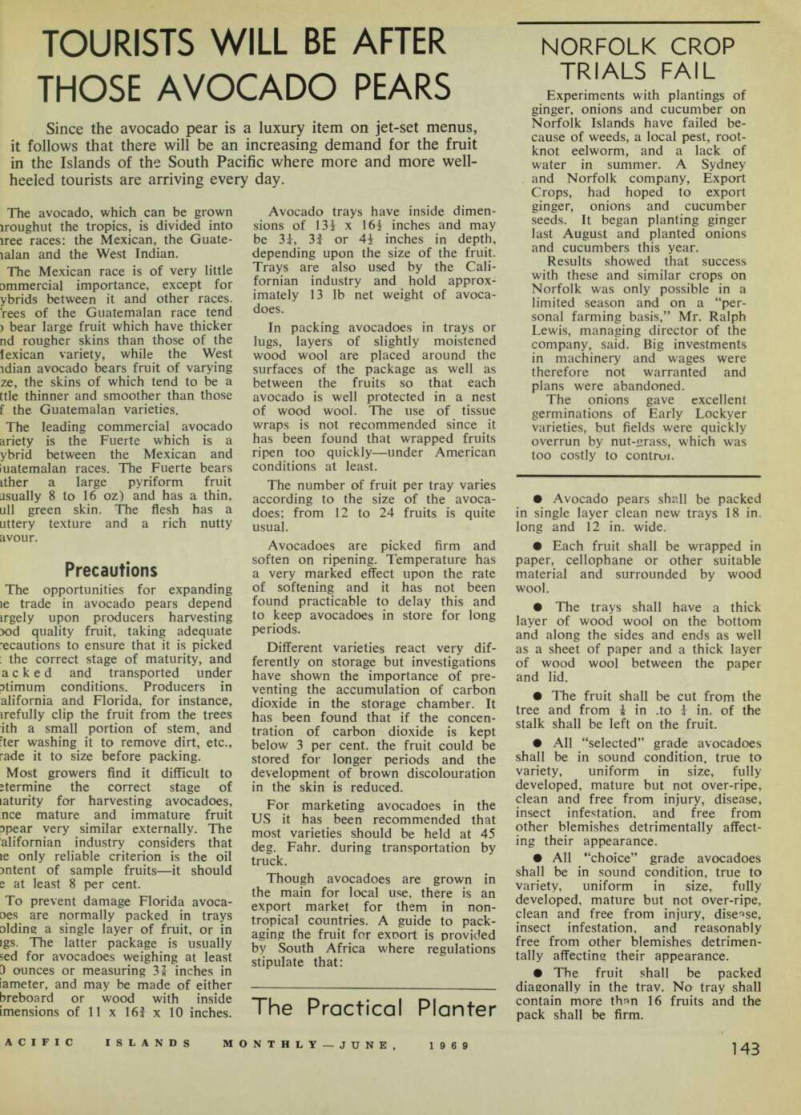 149
149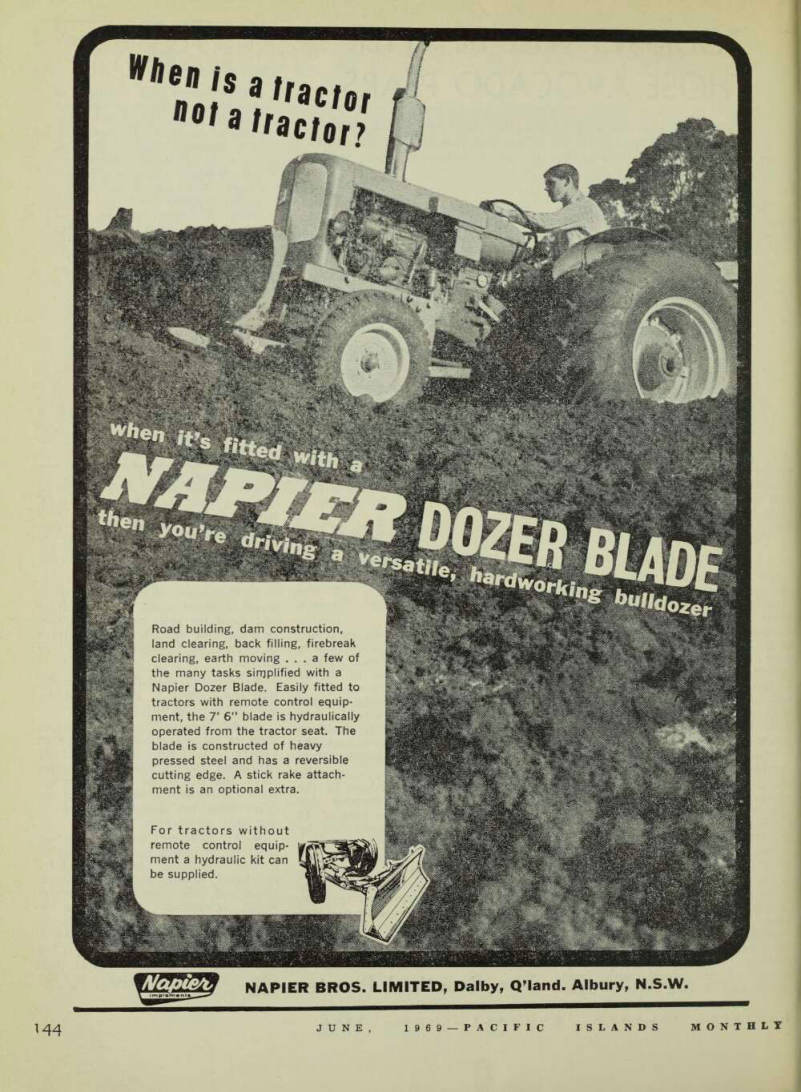 150
150 151
151 152
152 153
153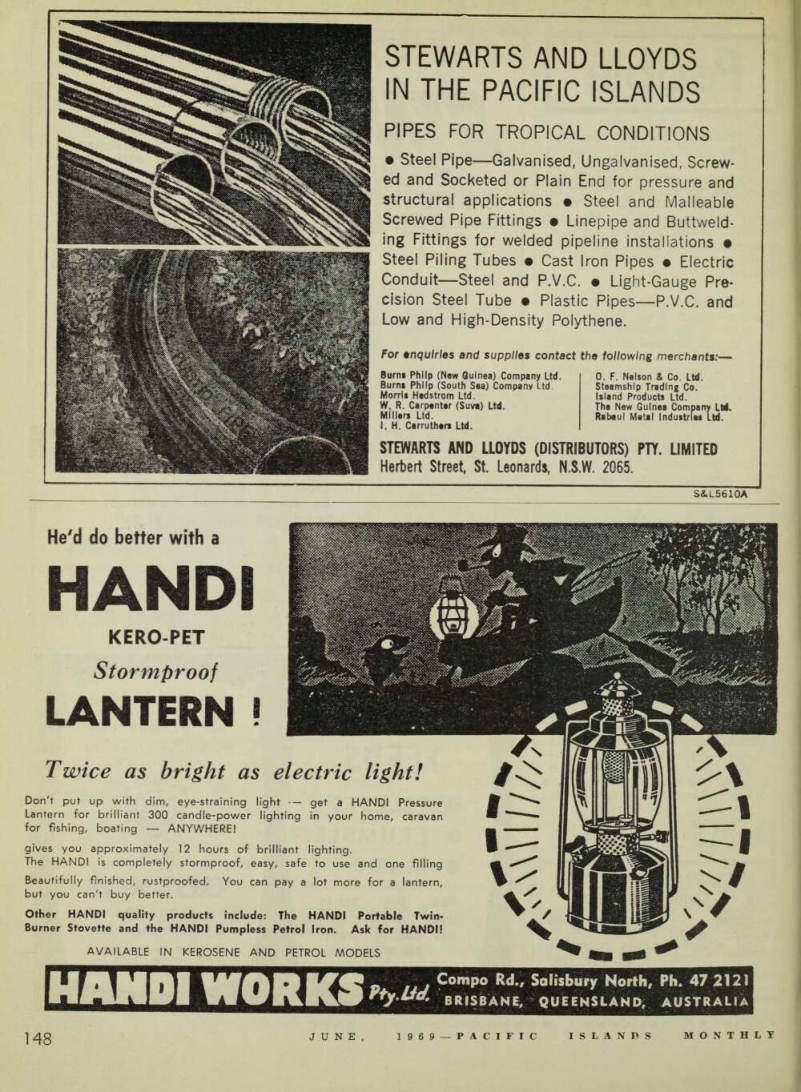 154
154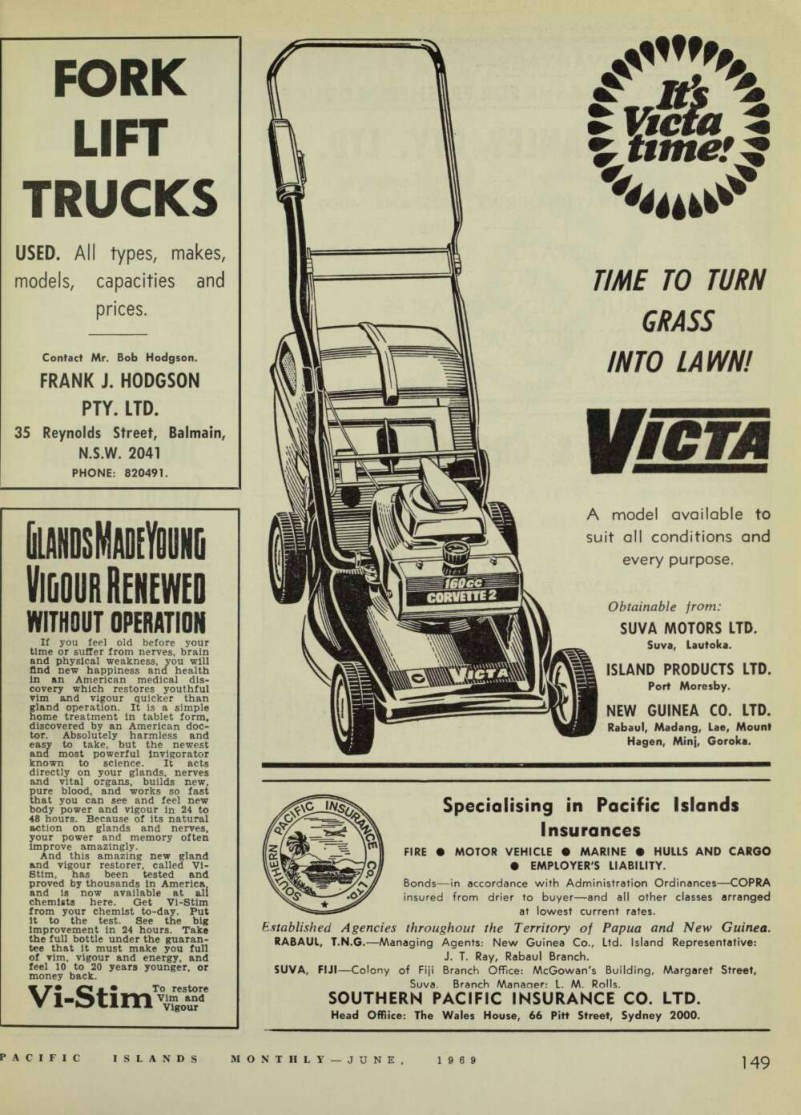 155
155 156
156 157
157 158
158 159
159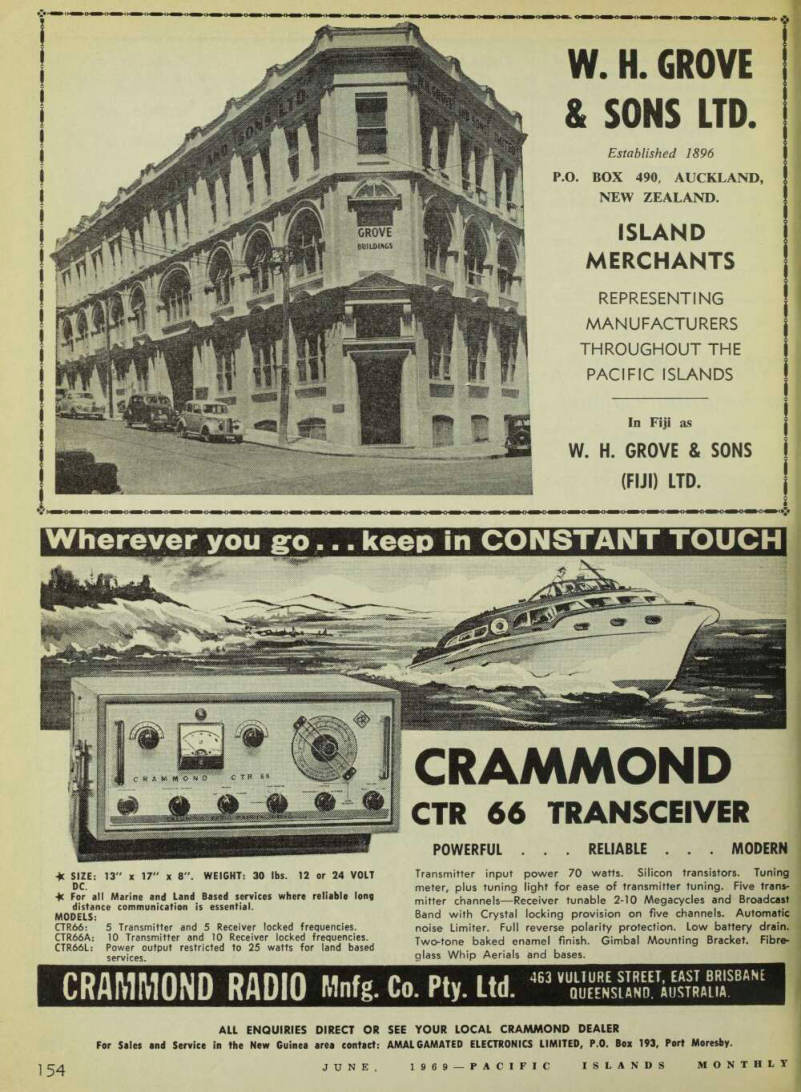 160
160 161
161 162
162 163
163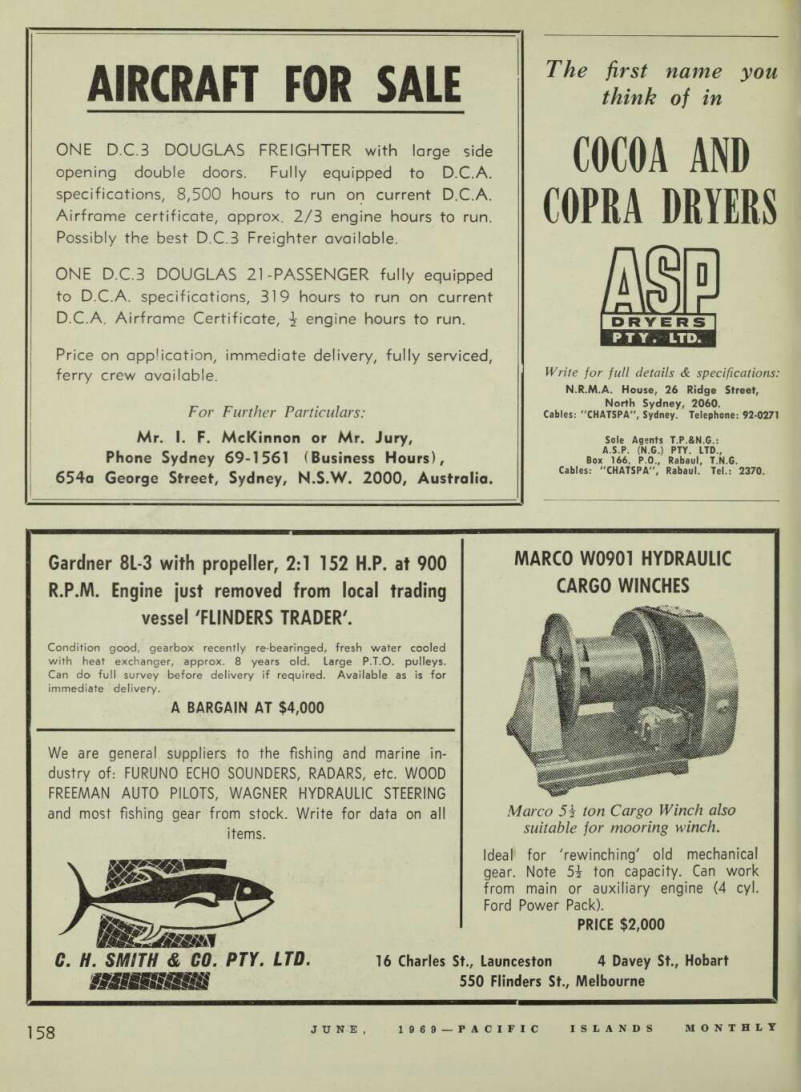 164
164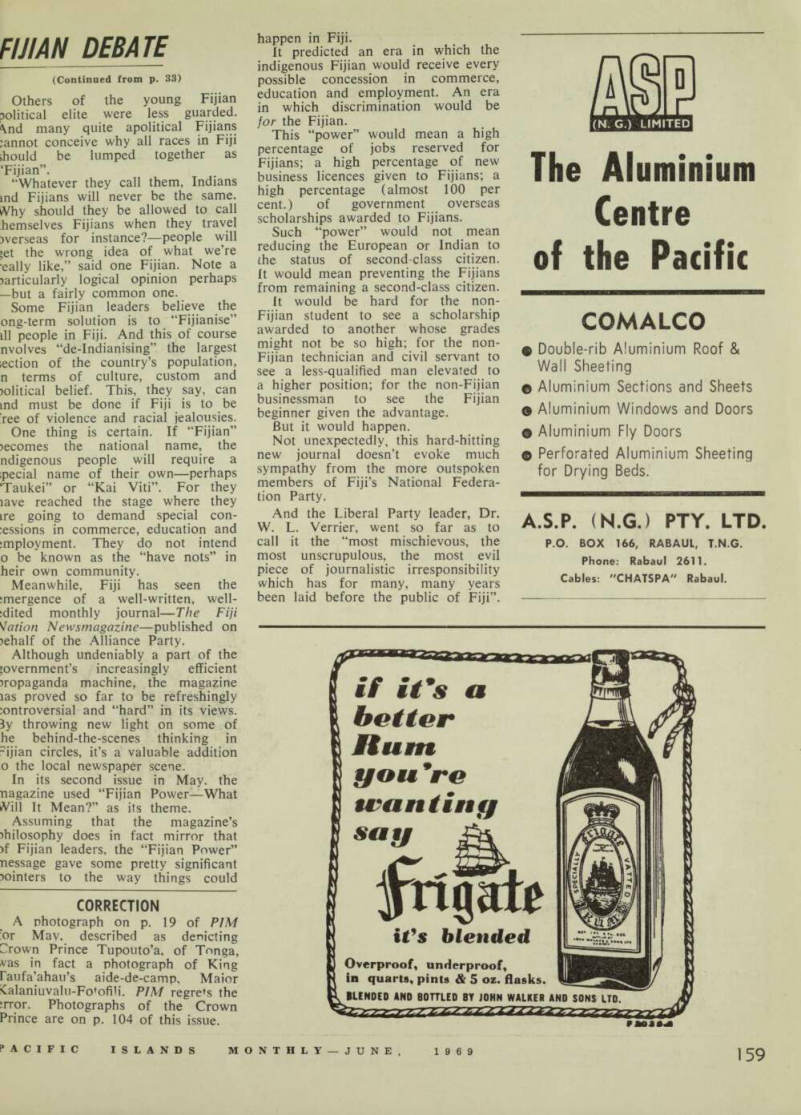 165
165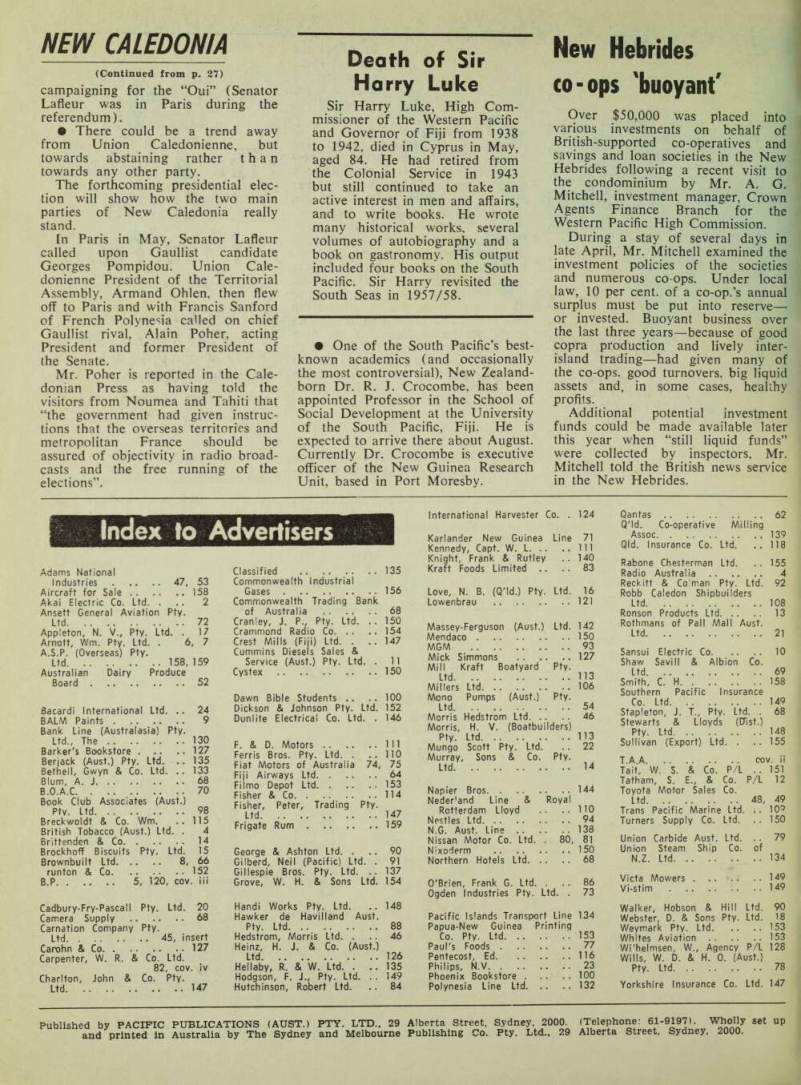 166
166 167
167 168
168