Monthly
Pacific Islands Monthly
tegisfered at C.P.0., Sydney, for transmission by post as a newspaper.
July, 1969
News Magazine Of The South Pacific
• AUSTRALIA, 40c. • NEW ZEALAND, 45c. *U.S. PACIFIC TERRITORIES, 70c • FRENCH PACIFIC ISLANDS. 5S FRCS. CFP. • P.-N.G.. FIJI AND ALL OTHER
Pacific Territories, 35C. Local Currency.
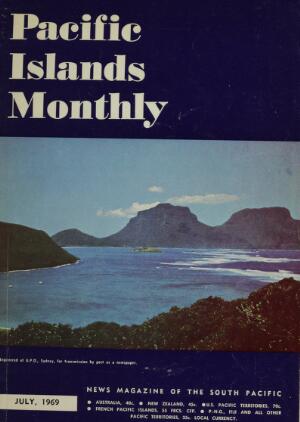
Our Cover
Despite the almost certain coming of an airstrip to Lord Howe Island (the island is only serviced by flying-boats out of Sydney ) scenes like this of the lagoon and the island*s two mountains won’t be affected.
This piece of the blue Pacific, half way between Australia and Norfolk Island, was photo graphed for us by cruising yachtie Ann Glenn, of “ Rebel”.
Advertisements & other items, p. 2 (2 items)
July, 1969 Pacific Islands Mon
internationally!
Doin’ what comes
* A m v i Gel that international treatment on IAA s “Bird of Paradise” flight between Papua/ New Guinea and Australia.
Deliciously different meals are yours from canapes and aperitifs right through to dinner mints and coffee. Five hostesses are there to pamper your every wish. This is truly international flying.
Between Papua/New Guinea and Australia always fly TAA’s “Bird of Paradise”
Whispering T-Jet Service.
Five flights weekly ... in both directions.
Contact your Travel Agent or TAA; Port Moresby 2101. Lae 2311. Madang 2478.
Rabaul 2567. Goroka 8 Mt. Hagen 4 or 301 Wewak 103.
TJ J
sHIr the friendly friendly way ,
6 1625/69
In This Issue
American Samoa
Governorship troubles .. 34 Crime pays 48 Training project for seamen 107 Carrier delayed 110 Hawaiian bank expected 117 Sports round-up 132
Canton
May become tracking station 28
Cook Islands
Aitutaki developments 31 New Holm ship, NZ run 105 Bank to open 117
Fiji
Games round-up 26 Colony's future 30 Historic installation for Mara 30 New party by 1970 42 Big order for shipyard 105 Little left of "Tui Lau" 107 More shipping freight increases? ... 110 Economy should remain buoyant 121
$60,000 fibreglass industry 123
Death of Olympian 133
French Polynesia
Tahiti backed a loser 32 Manuscripts sold in Paris 73 Charles Klemes at Taharaa 103 Arnoux Serge on Moorea 103 New Holm ship, NZ run 105 Hawaiian bank expected 117
Gilbert And Ellice Islands
Ready for next step .. 31 How much progress? 31 Visit for Christmas Island? 109 Captain Bibby leaves 110
Nauru
Gilbertese drift 26 Football pool difficulties 34 Bank operations start 117 Hammering out phosphate deal 119
New Caledonia
Banknotes warning 74 "Holmburn's" NZ service 105 Mussels imported 117 Beef shortage 120 Check on medical visits 133
New Hebrides
New political movement 23 Banknotes warning 74 Vila wharf work starts 109 Big barge launched 109 Captain Bibby's appointment 110 Third bank expected 117
Norfolk Island
Tiny plane stops over 20
Papua-New Guinea
Missionaries' Madang reunion 20 West Irianese parliamentarians arrive 28 Australia criticised over Irian 29 New post for W. W. Watkins 32
Gambling legislation stands 37
Missions for Biami 41 Judy Tudor on boy-houses 48 Neo Hill on Mount Hagen 59 Norm Camps on Mount Hagen 65 Missions learn agriculture 71 Up the Fly River—l 927 83 Mr. Woodmansey for Tapini 103 Capt. Hilder-BP salvage claim 110 Death of Bishop Wade 125 Death of Mr. J. B. Sedgers 125 Death of Mrs. Barbara Jennings 125 Death of Mr. S. A. Lonergan 125
Solomon Islands
Sir Alex Waddell revisits 19 Miss Bea goes to Roviana 19 Sea festival not up to scratch 29 Santa Cruz airfield 52 Prospecting licences offered 122
Tonga
Vavau Governor visits England 20 Elections 33 King optimistic 33 New church leader 38 The monarchy will stay! 39 Shipping reorganisation 109 Australia plays second fiddle to NZ . 120
United States Trust Territory
Mr. Coleman, No. 2 man 20 No independent Press 42 Mr. de Brum's new post 103
West Irian
Aust. liaison officer 19 Feelings in Port Moresby 28
Western Samoa
Glen Wright criticised 51 Protests over price controls 122
DEPARTMENTS: Up Front with the Editor, 3; People, 19, 103; Topicalities, 34; To the Point with Percy Chatterton, 36; Letters, 51; From the Islands Press, 54; Magazine Section, 83; Yesterday, 94; Book Reviews, 97; Shipping, 105; Cruising Yachts, 111; Business and Development, 117; Produce Prices, 124; Deaths of Islands People, 124; Shipping, Airways Schedules, 127; Practical Planter, 137; In a Nutshell, 153; Index to Advertisers, 156.
Advertisements & other items, p. 4 (1 item)
Qrnott's/ Biscuits
Milk Arrowroot biscuits
for all-day energy
You and your children use up a lot of energy during the day; but Arnott’s Milk Arrowroot biscuits will give you the extra nourishment you need to replace it. The triple-wrapped pack keeps the biscuits crisp and fresh at all times.
Qrnott's/ Biscuits
There is no Substitute for Quality I :
Up Front
with the Editor
Robert Hunter is, I think, a fellow to observe in these South Seas. In two years he has grown considerably in stature and financial resources, and there is every indication that over the next two he’ll grow even bigger.
It’s too early yet to describe him as another American farm boy who made a million, but that might be the way his story comes out.
Bob Hunter is now 34. He was raised at Shelton, near Seattle, where his folks ran a thousand head of cattle and 200 dairy cows, and where young Hunter got up at 4 a.m. to do the milking. He liked life on the land, and he liked land itself. When you had a dollar, Hunter decided at an early age, you should buy some land with it.
I met him for the first time in 1967, in Nukualofa, where we shared for a week a tight little room in Bella Reichelmann’s joyously over crowded guesthouse while King Taufa’ahau’s coronation was enacted.
It was a busy week, but Bob Hunter’s noisy high spirits and jackass laugh added to the fun. I have had many less-amiable room-mates.
Hunter was in Tonga because he felt that among the thousands of visitors who flooded into Nukualofa for the festivities he might find leads to South Pacific islands for sale.
The Island Specialist
Back in Seattle he had established himself as a business broker who specialised in buying and selling islands anywhere in the world—he was an “Island Specialist”, his busi ness card said. He had been buying small islands in New Zealand for American clients and he was now interested in South Pacific pos sibilities.
As real estate, he said he believed the South Pacific to be undervalued.
Land values tended to be judged by copra returns, but good land—with a beach and an anchorage—could, he was convinced, fetch premium prices in a few years from Americans look ing for vacation spots.
There were many American businessmen ready to own a South Pacific plantation, and to live on it for a month or two every year for the heck of it. And watch his land improve in value.
“Believe me, Stoo’it, old feller!
The South Pacific’s gonna be real surprised about land values a few years from now!” That was Robert Hunter talking in Nukualofa in 1967.
He soon began flying between Seattle and the South Seas as regu larly as an airline steward, buying land for the clients back home. His main interest centred on Fiji, where he bought two tracts, each of 150 acres, on Vanua Levu, followed by 1,300 acres on the island of Koro, and 500 acres at Raki Raki.
He established in Fiji a company called Plantation Management Ltd., able to work anywhere in the South Seas, and aimed at managing and improving plantations for clients, using more efficient methods.
Things got to look so hopeful that Bob decided to permanently base himself in Fiji, and even acquired a fiancee locally—the lovely Annette Lepper, a former Miss Hibiscus, whom he plans to marry in Aueust.
Because Bob Hunter is a dedicated wheeler-dealer, not usually found at
social gatherings, he is not widely known even in business circles—but he got his name into the newspapers in February with his unexpected purchase for $F340,000 of Fiji’s historic Wakaya Island, 2,100 acres.
There was a court action to stop the deal going through, but the action failed.
He now seems to have the bit between his teeth. In June he pur chased—sight unseen —the Hervey Islands, in the Cooks, for SNZI4O,OOO. He currently has his eye on about 175,000 acres of SNFH “wild land” holdings in the New Hebrides, which is an enterprise that might well be fraught with difficulty in view of some recent developments there (see p. 23), but this doesn’t deter Hunter.
He’s bent on acquiring the Fiji based airline, Air Pacific Ltd., and expects to be the biggest shareholder by the end of the year. From July 1 he becomes the company’s general manager, and he has hopes of adding a helicopter to the airline’s small fleet and to really get stuck into charter work and aerial photography.
Whither?
His respect for land thus seems to be leading him in some unexpected directions. But Hunter says that land will be the basis of his fortunes.
He aims to buy up the choicest plantations in the South Pacific.
His acquisitions, acquired and yet to be acquired, will be developed in different ways. Some may be split into residential blocks, each with its own beach and moorings, others may be operated as plantations.
Wakaya could become a tourist resort, a private vacation retreat, or be cut into blocks. He is getting a Honolulu firm to give him pro fessional advice on how best to develop the island. Hunter will know more about the Herveys after he has looked at them from the air in early July. They may make a vacation snot for Americans.
The Herveys currently produce about 200 tons of copra a year and have a 30-year lease left to run.
Bob Hunter, the farm boy, has his own money in nearly all of these deals, but the greater part of the finance is being supplied by perhaps 20 well-heeled clients back in the States.
They’ve taken Hunter’s word for it that the South Pacific is under valued, and he seems to be well on the way to proving himself rieht.
Anyway he is, I suggest, a fellow to observe in these changing South Seas,
Stuart Inder
Advertisements & other items, pp. 6-20 (2 items)
Scholarships Offered
SYDNEY CHURCH OF ENGLAND GIRLS' GRAMMAR SCHOOL,
MOSS VALE, N.S.W.
BOARDING AND DAY SCHOOL FOR GIRLS FROM KINDERGARTEN TO HIGHER
SCHOOL CERTIFICATE—MATRICULATION
S.C.E.G.G.S., Moss Vale, the well-known country school situated on its own 500-acre property of farmland and gardens, aims to provide a balanced education through the outstanding quality of . . . • School staff. • Guidance given to every individual pupil. • Small classes. • Courses, activities and experiences. • Buildings. • Teaching facilities and equipment. • Provision for boarders (the majority of the pupils), including modern centrally heated accommodation. ® The variety of opportunities for sport and recreation (including horse-riding and swimming). • Artistic, creative activities in a district which is close enough to Sydney and Canberra to benefit from many additional cultural advantages.
The Council of the School offers a variety of Scholarships ranging from those which cover full tuition fees and part boarding fees to Scholarships covering part tuition fees. Applicants must be under 13 years of age on December 31, 1969. The Scholarships will be awarded on the results of an examination in English and Arithmetic to be held on September 27, 1969.
Scholarship examinations will also be held later in the year for entry into Fifth Form.
S.C.E.G.G.S.,
MOSS VALE,
OFFERS YOUR
Daughter
A BALANCED
Iducationl
ANNUAL SCHOLARSHIP EXAMINATION, 1969
Entries close August 11, 1969 —application forms and further information may be obtained from the Headmistress: MISS VALERIE HORNIMAN, 8.A., M.Ed. Phone: Moss Vale 222.
*SJPI
Xi
H THROUGHOUT THE PACIFIC
FIJI,SAMOA,TONGA,NIUE Is,NORFOLK Is.
BURNS PHILP
(SOUTH SEAT CO. LTD.
REGISTERED OFFICE: SUVA, FIJI
TELEPHONE NO: 22661
TELEX NO: FJ1127
Code Address: "BURNSOUTH" ■■
SHIPPING AGENCIES
The New Zealand Shipping Co. Ltd.
Shaw Savill & Albion Co. Ltd.
Port Line Ltd.
Bank Line Ltd.
General Steamship Corporation Ltd.
Blue Star Line Compagnie des Messageries Maritimes Royal Interocean Lines Daiwa Navigation Company Ltd Sitmar Line Flotta Lauro (Lauro Lines) Australasia Pty. Ltd, Tonga Shipping Agency.
EXCLUSIVE
DISTRIBUTORSHIPS
INCLUDE
Akai Taperecorders Dunlop Products Hitachi Electronics Holden Motor Vehicles Rolex Watches Revlon Cosmetics Pentax Cameras Ferguson Tractors Olympic Tyres Penfold Wines
AGENTS FOR:
Queensland Insurance Co. Ltd.
Burns Philp Trustee Co. Ltd.
Shell Company (P. 1.) Ltd.
Bureau Veritas
ASSOCIATED COMPANIES
Burns Philp (New Hebrides) Ltd.
Automotive Supplies Co. Ltd.
Corrie & Co. Ltd.
Wrought Iron and Steel Construction Co. Ltd.
Bish Ltd.
SPECIALISED SERVICES
Expert advice on Shipping; Forwarding; Customs formalities; Insurance.
COMPLETE TRAVEL
SERVICE
accredited agents for the
INTERNATIONAL AIR
TRANSPORT ASSOCIATION
OVERSEAS AGENTS: SYDNEY • LONDON • SAN FRANCISCO
CIG FOR ALL
YOUR WELDING &
SPRAY PAINTING
EQUIPMENT
00
CIG Supply Centres throughout Papua/New Guinea
LAE; CIG New Guinea Pty. Ltd.
Phone 2641
PORT MORESBY:
CIG New Guinea Pty. Ltd. Boroko.
Phone 53870 MADANG; Madang Slipways Pty. Ltd.
RABAUL; Rabaul Metal Industries Pty. Ltd.
WEWAK; B & G Motors Pty. Ltd.
GOROKA; Collins & Leahy Pty. Ltd.
KAINANTU; Kainantu Trading Co. Ltd.
KUNDIAWA; Collins & Leahy Pty. Ltd.
MT. HAGEN;
Kala Motors Pty. Ltd.
SAMARAI; Belesana Slipways Pty. Ltd.
BANZ; Kamarl Coffee Plantation
LORENGAU;
Edgell & Whiteley Ltd. (
TkANSARC
JUNIOR
Industrial Gases,
Comweld Gas Welding & Cutting Plants, Rods and Fluxes, Flame Cleaning, Flame Hardening and Flame Heating Equipment.
EMF Electric
Welding Equipment
Arc Welding Machines Automatic Welding Machines Automatic wires & fluxes Electrodes.
Arnold-DeVilbiss Spray
Painting Equipment
including spray guns, air filters and compressors, multi purpose units with spray booths and a full range of automatic equipment.
CG1341/69
M % * * o Q * d % *<*:?> c k£ P «s ** V/£ P
% tH e
Ws^T..
It’s gone into the language as the name for crackers SALADA.
Whatever your favourite spread or topping it tastes so much nicer on crisp, golden Salada Crackers. Now available in the new blue and white packet for added protection and freshness.
There’s value, variety and quality in
BROCKHOFF BISCUITS
7
World
quality
:; HUKUPt
ft* 6' O JN & Only the world’s finest Virginia tobaccos are blended to produce ...
PLAYER’S
GOLD
LEAF
one ofthe great cigarettes
0671-5/67
get back in the shade.
Cool and colourful, that's today's fashion for eyes from Avon. Cool, clever shades from crisp greens to burnt bronzes make eyes worth gazing into and can be yours if you choose from Avon's range of Eye Make-up.
For lips and fingertips, the word is colour ~to harmonize with mood and dress.
Lipsticks from thoughtful pinks to lively reds. A colour range of Nail Enamels to suit every occasion. Eyes, lips and fingertips... colourfully harmonized, cleverly shaded are fashionably yours from Avon.
Your world of
natural beauty
Avon
% * \ \ ■ fr %
AYN IS 6448 EN
£3
SOME OF THE FIRMS
WE REPRESENT ARE:
A. W. Allens (Confectionery) Sunshine Biscuits Sunrise (Confectionery) Flamenco (Instant Coffee) Cremota (Quaker Oats, Jets Pet Foods) Merchants (Canned Soft Drinks) Lunchtime (Honey) South Pacific Canneries (Scallops, Abalone) Safcol (Canned Tuna, Salmon) Hancock's (Spaghetti, Cereals) Melbourne Canning (Jams, Bleach) Water Wheel (Flour, Sharps, Wheat) General Food Corporation (Twisties, Twirlies) Edward Zorn (Margarine, Cooking Fats) Robert Timms (New Guinea Gold Coffees, Teas) Rodd (Cutlery) Palm (Mattresses) Esteel (Cookware) Vendolux (Cafe Bars) Mitchell's (Abrasives) Regent (Swiss Watches) Gainsborough (Furniture) Tamco (Melanie Crockery, Nylon Hardware) Elm a c o (Plastic Household Goods, Electrical Fittings) Brownbuilt (Pre-Fabricated Houses) Ryline (Fluorescent Lights) Jex (Steel Wool) Austramax (Pressure Lamps) Preservene (Soap Products) Charles Tims (School Requisites) Ascow and Philadelphian (Shirts) Lawn Chair and Tubco (Garden Furniture) Sunrise Lustretone (S.S. Sinks, Plumbers' Supplies) Electronic Industries (Electrical Household Appliances)
S. E. TATHAM
& Co. Pty. Ltd.
MELBOURNE, AUSTRALIA
G.P.O. Box 8, Cables “SET"
Telephone 60-1125
EXPORT AGENTS
PACIFIC ISLANDS
AGENTS
Australian buying and shipping agents for the Gilbert and Ellice Islands Colony ySk Wholesale Society
DIRECT ENQUIRIES WELCOMED
% \ 1 Associate Company
S. E. TATHAM (FIJI)
Suva, G.P.O. Box 671.
Lautoka, P.O. Bua 366.
LTD
SINCE 1924
Headache?
m m
Get rid of it fast
the soluble
The reason why soluble aspirin is so often prescribed for really fast relief when you’ve got headache or flu, is because it dissolves completely. Only soluble aspirin can do that. That’s why it acts so quickly, with little risk of stomach upset. Take Disprin, the soluble aspirin, the form of aspirin often prescribed.
For Trade Enquiries: Reckitt & Colman Pty. Limited, Wharf Road, West Ryde, N.S.W., Australia.
Cables: Reckitts Sydney
DISPRIN A RECKITT & COLMAN PRODUCT
with Disprin
aspirin
& TO
RELIEVE
PAIN
HPSI6A
All the best
from Australia
Phoenix Biscuits! Best for goodness.
Best for flavour. Best for freshness. Silver foil wrapped to arrive as fresh as the day they were baked.
. . . that’s ICI Sporting Ammunition.
Tops for accuracy tops for reliability tops for hard hitting power and all round peak performance.
There’s an ICI cartridge for every shooter, whether it be ICI shotgun cartridges for dense, even patterns and economy, ICI rimfires for hard hitting accuracy and reliability, ICI centrefire for heavier game, or ICI slugs and pellets for lots of fun at low cost Get with the top shooters load up with the top ammo
SPORTING
AMMUNITION
m . r > • ' %1; n $ ': : -H kM f I > m 1: & M n iM - *r m % •?. ■p m m 1 1 5* >i I * ■ ■ S a : EH S ' ■fcl * r-‘-- : •• a m •■ . V> • :; -, *■ * M ' ■ :3| a r &-1 ..■v :■•.••■ .- :r '* "V ■: 5 V* a yj MS
2 hours with elbow grease?
No.
10 minutes with Timbaglow’
Of course, if you enjoy working like a horse, you don’t need Timbaglow’.
It’s for people who want to give timber a rich sheen quickly and easily.
Timbaglow’ brings up the grain, shows off every detail of timber’s natural beauty.
Dulux* Timbaglow’ comes in clear, satin and ten subtle tints and every one is made right here in New Guinea.
It’s a hard finish, too.
Lasts for months. Never needs more than a quick wipe to keep it glossy.
Floors, panelled walls, furniture - for a fabulous effect, try ‘Satin Timbaglow’ on furniture-you beautify and protect them all with Timbaglow , •Dulux is a registered trade mark of BALM PAINTS LTD.
flfcHafl |T -
i a
New chunky granules
capture all the
natural flavour
of choice
coffee beans You can see the difference. New Nescafe takes all the flavour of those famous 43 beans and turns them into instant coffee granules - big chunky granules that melt instantly in your cup to give you the biggest coffee flavour the coffiest coffee you've ever tasted.
When the best beer is called for, New Zealand’s favourite lager ...
STEINLAGER
m
:l'«othing
can tempi!
you away... once you
experience
the unique
flavour and distinctive aroma of
ERINMORE
W MURRAY'S-
ERINMORE
MIXTURE
?V^
FINE
m TOBACCOS
m SINCE 1810
MURRAYS OF BELFAST
NORTHERN IRELAND
• u a \\ neeo Voun9 and every* daV- Vitamin tit « the most u gives d*° U d \t on wast and er \waV- SP Stir it ’ nto h better V° u
sand !!' C I Seedowrnochbe
■, *> * A m (O V C* vJ 7\ 0 u o u % LiTrrrrrrtjS M4020/9
maf iOm/swW MG With mint ■BP : WE 1
CAMPFIRE^
TOMATO
ami
3 new soups
from Heinz
Three new members to the Heinz family of 29 soups.
Heinz Campfire Tomato and Bacon Juicy big red tomatoes singed with the flavour of smoke-cured bacon.
Heinz Spring Lamb with Mint Tender spring lamb with a hint of fresh, green mint.
Heinz Chicken Stockpot Chunks of white chicken meat simmered with a dozen specially selected vegetables.
Heinz soup... It’s the one you know they like
14
JULY, 19 6 9 -PACIFIC ISLANDS MONTHL
Pacific Islands
Monthly
Established 1930: 39th Year of Publication.
Owned And Published By
Pacific Publications (Aust.) Pty, Ltd.,
29 Alberta St., Sydney, N.S.W., 2000.
Postal Address: G.P.O. BOX 3408, SYDNEY,
N.S.W., 2001.
Telegraphic Address: PACPUB, Sydney.
Telephones: 61-9197, 61-7101, 61-4369.
Chief Executives: Managing Director: R. W. Robson.
Executive Director/Publisher: Judy Tudor.
Executive Director/Business Manager: Selwyn Hughes.
Executive Director/Chief Editor: Stuart Inder.
Pacific Islands Monthly
Editor: Stuart Inder.
Advertising Manager; W. A. Gasnier.
Branch Offices
Melbourne: Newspaper House, 247 Collins St., Victoria, 3000. Tel.: 63-7053.
Fiji; Pacific Publications (Fiji) Ltd., Fiji Times Building, 20 Gordon Street, Suva. Tel.: 25601.
Fiji Times Office, Vidilo Street, LAUTOKA.
Tel.; 60-422.
Papua-New Guinea: Pacific Publications (N.G.) Pty. Ltd. Representatives: PORT MORESBY, P.O.
Box 16; LAE, P.O. Box 227; RABAUL, Mr.
Steve Simpson, P.O. Box 154 (Tel.: 2547).
Representatives
Queensland: Advertising—Beale Media Services, 232 St. Paul's Terrace, Brisbane, 4006. Tel.: 51-5827.
New Zealand: General.—J. D. Whitcombe, C.P.O.
Box 2229, Queen Street, Auckland. Tel.: 456056, Advertising.—John Bayldon, P.O. Box 366, Auckland. Tel.: 31569.
United States: Mrs. A. L. Craib, 782 Neilson St., Berkeley, California, 94707. Tel.: 5273503.
United Kingdom: S. R. Warman, Park House, 22 Park Street, Croydon, CR9 3NP. Tel.: 01-6884177.
H. A, Mackenzie, 4A Bloomsbury Square, London, W.C.I. Tel.; Holborn 3779 Japan: Advertising—Universal Media Corpora tion, C.P.O. Box 46, Tokyo. Tel.; 666-3036.
Agents
All main trading firms and stores in the Pacific Islands.
Pacific Publications Pty. Ltd. is the Australian agent for THE FIJI TIMES.
Subscription Rates:
"Pacific Islands Monthly" is air-freighted to all subscribers and agents in the South Pacific; copies to other areas go by surface mail.
Australia (incl. Lord Howe Is., and Thursday Is.): $4.50 Aust.; Papua-New Guinea, Norfolk Is., Nauru, 8.5.1., G. & E. Group, Tonga and New Hebrides: $4.00 Aust.; New Zealand: $5.25 NZ; Cook Is., Niue and Western Samoa: $4.00 (local currency); Fiji $4.00 (local currency); American Samoa and U.S. Pacific Territories: $B.OO (local currency); French Pacific Territories —New Caledonia, Tahiti, etc.: 660 French Pacific francs; United States of America: $9.00 U.S.; United Kingdom and elsewhere: £2/15/- Stg.
Airmail postage to USA, UK and elsewhere Is additional.
Copyright (5), 1969, Pacific Publications (Aust.) Pty. Ltd.
People
• Mr. Royce Arthur Webb, of Papua-New Guinea’s Department of District Administration, is to become Australian liaison officer in Djaya pura, West Irian.
Mr. Webb, 48, has been with the department since 1947 and has seen field service at Lae, Finchhafen, Madang, Saidor, Goroka, Rabaul.
Talasea and Wewak. For the past two years he has been based in Port Moresby and has reached the rank of District Inspector. At present he is Acting Assistant Director, Man agement Services.
During his field service years, Mr.
Webb carried out many long patrols, particularly in the Saidor district, lasting up to 90 days. And in 1954 he organised the evacuation and re settlement of villagers during the volcanic eruption on Long Island.
Mr. Webb has never been to West Irian and speaks no Indonesian, although he had a long association with people from Djayapura before the Dutch handed West Irian to In donesia. He is married with two sons. • Revisiting the Solomon Islands recently after an absence of 24 years, was former District Officer Nick Waddell—now Sir Alexander Waddell.
Sir Alexander, one of the British Phosphate Commissioners, was in the protectorate for discussions with the High Commissioner, and took the opportunity to visit many old friends and see “old haunts”.
Before the war, Sir Alexander served as a District Officer in vari ous parts of the Protectorate, and during the war he was a coast watcher.
Sir Alexander said during his visit that the Solomon Islanders seemed a lot happier than they had when he served in the BSIP. He felt that improved health was in a large measure responsible for this. • Professor W. D. Knil, a pro fessor of education administration with the University of Alberta, Canada, recently spent two weeks in Papua-New Guinea inspecting schools.
He is at present spending a year at tached to the University of Sydney.
Professor Knil said that the pro blems in the territory’s schools were similar to those experienced in schools for Indian children in Canada ex-
ccpt in one respect—in Northern Canada there arc sufficient schools for all children, whereas in the ter ritory there arc not. • An investigator with the Fiji Government's Bureau of Statistics, Mr, Michael Mathura Prasad, is at tending a 10-month course in stat istical education at the International Statistical Institute in Calcutta, India.
He left Fiji in May on a training grant offered by the Government of Fiji. • Mr. K. C. Ramrakha, the loquacious national general secretary of Fiji’s National Federation Party, is to tour America for 45 days, under an international visitor grant. In early June—when his departure date and itinerary was still to be decided —Mr. Ramrakha indicated that he was eager to study the American at titude towards colonialism.
Mr. Ramrakha will also study the American legal system and the trade union movement in the professions.
He said, too, that he hoped to gain insight into America’s colour pro blem. During his tour, he intends to visit relatives of his wife, Usha, in Vancouver and to see his sister, Mrs. Indrani Bans, who lives in California. • Miss Hetty Bea has been appointed women’s village develop ment officer with the Roviana Local Council in the British Solomons Islands Protectorate. Miss Bea is a trained nurse and her new job will take her to villages to talk to women
Mr. R. A. Webb.
and advise them on their problems.
This is the first appointment made by a local council in the Solomons to deal specifically with the problems of village women. • The Governor of Vavau, Tonga, the Hon. Ma’afu Tupou, left Tonga in late May for a three-week visit to England as a guest of the British Government. He was due to return to Tonga on June 19. • Mr. R. N. Birch, Australian Trade Commissioner in Fiji, was in Vila, New Hebrides, in May for talks with the Resident Commis sioners and Residency Officers. While in Vila he visited educational insti tutions and the radio station at Mala poa. Later he moved on to Honiara in the British Solomon Islands for discussions at the High Commission. • Mr. H. V. Tait, flying a single engine Victa aircraft, arrived in Nor folk Island from New Zealand in mid-May on a round-the-world trip.
He left Norfolk two days after his arrival for New Caledonia. • Four Samoans were among the 98 students who graduated from Church College, Hawaii, in May.
They are; Petala Manure Lakatani, of Tutuila, American Samoa; La’au S. Liufau, of Tutuila; Uimaitua Poloai, of Pago Pago, American Samoa; and Pisona T. Tevaga, of Apia, Western Samoa. • On May 4, seven Divine Word Missionaries celebrated the silver jubilee of their ordination to the priesthood in the Cathedral of the Holy Spirit, Madang. The main celebrant at the mass was the Very Rev. John Musinsky, SVD, superior general of the congregation who was a classmate of the other six NG missionaries.
The men are Rev. John Dunn, SVD, Nondugl; Rev. Henry Hoff, chief pilot of Divine Word Airways, Madang; Rev. Joseph Krimm, SVD, of Mt. Hagen; Rev. Francis Mihalic, SVD, Wewak; Rev. John OToole, SVD, Dreikikir and Rev. Francis Swift, SVD, of Boiken.
Of the original class of 25 ordained near Chicago in 1944 all are alive except Rev. William Backus, who was lost at sea in a plane accident off Lae in 1951. • Mr. Peter Coleman, Pago Pago born Governor of American Samoa from 1956 to 1960, has been ap pointed Deputy High Commissioner of the US Trust Territory. The 49year-old lawyer had been District Administrator of the Mariana Islands since August, 1965.
Advertisements & other items, pp. 22-24 (1 item)
&'emot CadimifA
CuttMcfA
&a/a*t Cadou/ufJi
o It’s worth saying over and over again because there’s a glass-and-a-half of pure, fresh, full-cream milk in every half-pound of Cadbury’s Dairy Milk Chocolate. No other chocolate can possibly give you that creamy, creamy Cadbury taste. Look for the famous purple and gold wrapper.
CADBURY'S
DAIRY MILK CHOCOLATE
the biggest selling block chocolate in Australia M 07/16/7
r y
CONSULATE
C Aie/it/ur/
Fli. ft? TiPPED CIGARETTE
COOL CLEAN CONSULATE
Come over to Consulate, enjoy the rich inviting flavour of choice Virginia tobaccos enhanced by a touch of refreshing menthol. People who know the best, insist on Consulate —the world’s first Virginia menthol cigarette.
B * i-4 r m *• m-m * UK
COOL CLEAN CONSULATE
For that surprising extra it gives you
What will lighting be like in 1969?
This 32-page book tells you now.
And it's free.
What's inside? Ideas. Trends. News. Advice from one of the great Australian decorators. Colour photographs of 37 pendants, 65 ceiling lights, 18 wall brackets, 13 exterior fittings. A range that will appeal to all your customers. By Leonora, the newsmakers.
Cut out and post this coupon for your free Leonora Catalogue. Or, if you prefer to keep your magazine intact, send a letter or postcard.
I 1
LEONORA DIVISION J
OF PHILIPS ELECTRICAL PTY. LTD.
Douglas St.. Wallsend, N.S.W. Australia. 2287, J Please send me, free and post free, the new i Leonora Lighting Catalogue.
Name J
Address i ... Postcode , L 3202 I
"Chief President Moses": Man with
a message for 10,000 Hebrideans
• Robert Langdon, executive officer of the Pacific Manuscripts Bureau at the Australian National Univer sity in Canberra, recently spent four weeks in the New Hebrides seeking out and microfilming documents of interest to historians, linguists, anthropologists and others. While there, he also heard a lot of talk about . . .
By Robert Lamgdon
If someone in the New Hebrides were to conduct a poll to discover the most talked about man in the condominium in the past 12 months or so, my guess is that the vote would go overwhelmingly to a barely literate man called Jimmy Stephens.
Stephens, who is looked on as a prophet by many New Hebrideans, is also known as Chief President Moses and Jimmy Tupou Patuntun Stephens Moses.
He is the leader of Nagriamel, the first political movement to develop in the New Hebrides on a national scale since those islands came under the joint administration of Britain and France in 1906.
The aim of Nagriamel is to restore to native ownership all European owned land that has never been developed agriculturally. However, Nagriamel leaders say that the move ment is not anti-European.
The land they seek is called in their parlance “dark bush land” and was generally acquired in the lawless days before the condominium when European speculators, such as the well-known John Higginson, of New Caledonia, acquired paper titles to huge areas in exchange for a few axes, bolts of calico or bottles of gin.
More than 10,000 members
The name Nagriamel is derived from native words for two plants — nagria, a croton, and mel, the cycas palm—which figured pro minently in the life and ceremonies of the northern New Hebrides in former days. Bunches of nagria leaves of varying sizes were used to indicate rank in the old pig-killing ceremonies, while fronds of mel were used as tabu signs on graves, plots of ground, etc.
The Nagriamel movement is estimated to have a membership of more than 10,000 throughout the New Hebrides, but particularly in the northern islands. This says a great deal for the leadership and
persuasiveness of Jimmy Stephens, considering that the movement has been in existence for barely three years, that communications between most islands are poor, and that the total population of the condominium children, Europeans and all —is less than 80,000.
Stephens is a man of 45 or there
abouts, with a greying, patriarchal beard and a way with New Hebrideans that has not been seen before. He has worked at various times as a bulldozer driver, care taker of a church, and skipper of an inter-island trading vessel.
Although he speaks English, he is more at home in Pidgin, the lingua-
Jimmy Stephens, leader of the Nagriamel move ment, greets a party of bush women at his headquarters at Vanafo, Espiritu Santo. To members of Nagriamel, Stephens is known as Chief President Moses.
franca of the Babel-tongued New Hebrides.
Part-English, part-Tongan and part-New Hebridean, Stephens is a grandson of an English seaman who arrived in the New Hebrides in the 1890’s and settled on Tanna, then on Aoba, and finally at Nogugu, Espiritu Santo. See panel at right.
Jimmy Stephens was a youth in Santo during the war years when tens of thousands of American servicemen invaded the place and brought the locals an era of plenty that they had never known before.
Although the war spoiled his chances of getting much formal education, contact with the Ameri cans did a lot to sharpen young Stephens’ wits, and it left him with a stock of savoir faire far in excess of that of the average New Hebridean.
After the war, so “old hands” in Santo say, Stephens did very well for himself by digging up caches of equipment that the Americans had buried and left behind. Later, when these sources of income dried up, he became a bulldozer driver, care taker of a Catholic church, and skipper of a Burns Philp trading ship. Whatever job he had, it is said, he always looked very much the part—just as he does today with his greying, patriarchal beard in his role of chief president, prophet and leader of Nagriamel.
Bought rifles
Whether Stephens had a hand in the foundation of Nagriamel or whether he joined it shortly after its foundation, I could not find out.
However, the movement appears to date back to January, 1966, when Chief Buluk, a headman of the Big Bay area of Espiritu Santo and a friend of Stephens from the war years, called a meeting of 20-odd Espiritu Santo chiefs. These chiefs, mainly bushmen, met to discuss the invasion by Europeans of what they considered was their land.
Shortly after this, Stephens entered into an arrangement with the bush men to buy them some rifles, ap parently to ward off or intimidate encroaching Europeans. However, after collecting a goodly sum of money from the bushmen, Stephens failed to deliver the goods, and the bushmen complained to the govern ment. The result was that Stephens was gaoled.
Then Stephens, through his friend Buluk, apparently persuaded the bushmen that his intentions had been honorable, and before long
they were pleading with the govern ment to let him out again.
Following his release, Stephens, Buluk and a number of other New Hebrideans went to live on some land called Vanafo, near the upper reaches of the Sarakata River, some 15 miles north of the town of Santo.
This land is on the vast, fertile, largely undeveloped plateau that extends all the way up the eastern side of Espiritu Santo to Big Bay.
Expedient
According to a judgment of the Joint Court in Vila, the land belongs to the big French company, Societe Francais des Nouvelles
Hebrides, which, around the turn of the century, acquired all the assets of a company owned by the New Caledonian speculator John Higgin son.
As with much of the land it owns, SFNH has never done any thing to develop Vanafo; and it seems that when Stephens, Buluk and Co. moved in on it, the company made no effort to try to drive them off. Instead, under the influence of the French Administration, it decided it would be politically expedient to let them be.
Stephens and his companions worked hard and built up Vanafo into an attractive settlement with neat houses and gardens. News of their doings soon spread among the New Hebrideans and brought them many visitors. Stephens lectured these visitors on how SFNH had gobbled up their land, and so began to spread the Nagriamel philosophy that all “dark bush land” owned by Europeans, but never planted with coconuts, coffee or cocoa, should revert to the natives.
As time passed, Stephens allocated plots of Vanafo land to people from other islands so that anyone who wished to live and work there for a spell could do so. Quite a number of New Hebrideans did this, for to work at Vanafo was to work for the Nagriamel cause.
Meanwhile, Stephens sent agents to other parts of Espiritu Santo and to other islands in the group to preach the gospel of Nagriamel, to enrol new members in the move ment, and to collect subscriptions from them.
In the early days, the subscription gathering techniques of these agents
John Higginson. Today's troubles can be traced back to men like him.
were simple and unsophisticated, but nowadays they carry tape-recorded messages from their leader. What ever these messages say, they are apparently persuasive, for (uncon firmable) report has it that $50,000 has been paid into Nagriamel funds.
In search of "advice"
Stephens has spent part of the Nagriamel money in building Vanafo into an agricultural centre producing peanuts, among other things, and with big ideas for the future. Other amounts have been spent in travel ling to Australia, New Caledonia and Fiji in search of what he calls “advice”. Yet other sums again have gone in fees to an Indian lawyer from Fiji, Mr. K. C. Ramrakha, who is also a leading Fiji politician.
Mr, Ramrakha was engaged last year to appear for Stephens, Buluk and others in a court appeal after they had been sentenced to various terms of imprisonment for illegal entry on European—but not SFNH —land.
As a result of Mr, Ramrakha’s intervention, all sentences were con siderably reduced. However, they were still long enough—so some Europeans say—for Stephens and Buluk to become martyrs for their cause in the eyes of the New Hebrideans.
The sentences, at any rate, do not seem to have deterred Nagriamel members from their campaign for land reform. All along the road from Santo to Hog Harbour, and even in less frequented parts of Espiritu Santo, one repeatedly comes across signs erected on European owned land which read: “Nagriamel private property please keep off,” or words to that effect.
Meanwhile, Vanafo continues to grow. Whereas at the census in May, 1967, it had a population of only 27, its residents on a more or less permanent basis now number more than 200. A smart blue mini-bus, proudly labelled “Nagriamel Trans ports,” recently inaugurated a shuttle service between Vanafo and Santo.
Last October, an important cere mony was held at Vanafo. A newly-created flag, featuring the nagria and the mel, was hauled to the top of a lofty white flagpole that Stephens had acquired from some where. It was at about this time that Stephens was given the title of Chief President Moses apparently because he is leading members of Nagriamel in the wilderness.
Europeans who braved the formid able road to Vanafo to witness the flag-raising ceremoney, and others who have been since, have been
particularly impressed by the orderly appearance of the place, the almost military discipline, the sentry boxes, the neat sign - posted plots of land for New Hebrideans from other islands, the reception centre for visitors with its genteel visitors’ book, above all, the polite, quaintly worded notices to be seen at every hand. One sign, for example, says: Please Nagriamel Visitor Camp your cars here.
Another sign gives visitors and members arriving in the village instructions about shaking hands and signing the visitors’ book, and goes on to state that “at 3 o’clock the bell will sound for men’s swimming; at 5 o’clock the bell will sound for women and children swimming”.
A third notice, which is the basic manifesto of the Nagriamel move ment, says: Nagriamel Committee Claim Please, sir, our cry come to you.
Help us natives to get our land back under Nagriamel. Please, the European or New Hebridean who wants to work in the natives' reserve after cocoanut, cocoa, coffee plantation, please, they should pay rant go to Nagriamel.
Although the tenor of, and standard of English in, the Nagriamel notices might suggest that the move ment is not a difficult one to deal with administratively, it is clear that neither the British nor French Administrations is taking it lightly.
People on both Santo and Aoba told me that the French Administra tion had offered to establish a school at Vanafo and the British a medical clinic—both with the idea of getting “a leg in” to try to direct Nagriamel along “reasonable lines”. However, both offers were refused. On the other hand, the Nagriamel leaders have allowed a church to be established at Vanafo by the Churches of Christ mission, which has long had a reputation in the New Hebrides for being somewhat “agin the government”.
All in all, therefore, neither the British nor the French (who have considerably more to lose) are terribly happy about Nagriamel. But
both seem to be living in the hope that, by saying as little as possible about it, it will eventually go away.
Until now, so I understand, not a single word has appeared about Nagriamel in either the French or the British newsletters, which are published regularly by the two residencies. Nor has anything ever been said about it over jointly sponsored Radio Vila, which is sup posed to broadcast the local news.
However, the British and French Resident Commissioners did permit themselves to mention its name just once when they made a joint speech to open the 16th session of the New Hebrides Advisory Councils last December. They then said: “We must not omit to mention a resettlement operation now being carried out by some New Hebrideans in the Vanafo area of Santo. While in some respects—e.g. their desire to develop the land for agriculture and cattle with the help of modern equipment these people are for ward-looking, in others they seem to be preoccupied with the past, inasmuch as they talk a great deal about custom law.
“Although it was necessary earlier this year to punish some of the people involved in the Nagriamel movement for illegal entry on to land, we are watching its activities with interest and shall not oppose any desirable project which will not disturb good relations between the various communities.”
Brave and cautious
These, of course, are both brave and cautious words in a territory where: • The native population is in creasing at such a rate that it is likely to double itself within 30 years. • Native pressure on undeveloped land is growing correspondingly. • Europeans number less than 2,000. • Most of the choicest un developed land is owned by Euro peans, particularly the French com pany, SFNH, which is partly-owned by the French Government.
In these circumstances, it looks very much as if something or some one will have to give, and the chances are that it won’t be Nagriamel.
What happens in the future will undoubtedly depend to a large extent on Jimmy Stephens, alias Chief President Moses, who, in late May, was in New Caledonia seeking “advice” from a big Noumea busi nessman on the development of a cattle and timber industry in and around Vanafo.
Jimmy Stephens' Family Tree
Jimmy Stephens, the man behind the Nagriamel movement, has a colourful background. His grandfather was Thomas Garfield Stephens, an English seaman who arrived in the New Hebrides in the 1890’s.
In 1899, grandfather Stephens left the New Hebrides in a German ship and went to Tonga, where he married a relative of the Tongan Royal family, Sela Tupou. After having had three children by her, Stephens got into financial difficulties of some sort and skipped out of Tonga in a 25 ft whaleboat with his wife, three young children, two male companions, and a large supply of water melons—their only food. This was in 1904.
The party narrowly escaped shipwreck in Fiji and finally washed up at Erromanga in the southern New Hebrides. From there, the Stephens family moved over the years to Ambrym, then Malekula and finally back to Espiritu Santo.
By the time he died in 1951, “old man” Stephens had had 10 children. As many of them have also been prolific, there is now a numerous Stephens clan in the New Hebrides.
One of the original Stephens’ part-Tongan sons, Tupou-Luther, married a New Hebridean woman from the Banks Islands called Patuntun, and it was this pair who were the parents of Jimmy Stephens.
On The Mat
The June session of the P-NG House of Assembly set up a special Privileges Committee to investigate statements in Australia by the general secretary of the Pangu Pali, Albert Maori Kiki, reportedly attacking Ministerial Members as ‘‘stooges”. It will table its report in August.
They're selecting their
best for the Games
Throughout the South Pacific in June, territories were getting down to the serious business of selecting their final teams for the Third South Pacific Games, to be held in Port Moresby, August 13-23. Here is the latest round-up of territory developments.
Following some very encouraging performances at the national swim ming championships on June 5, 6 and 7, the Amateur Swimming As sociation of Fiji announced the names of 12 swimmers for the final selection squad. From these, 10 will be selected for Port Moresby.
Squad members are: Men—Sailosi Baleisolomome, Gary Dale, Robert Hough, David Lane, Harvey Probert, Mosese Veremalua and Phil Wilkins.
Women—Lorraine Emberson, Julie Murphy, Olive Pickering (who has been in Australia since 1967), Lyndal Probert and Margaret Smith.
The association had contacted New South Wales swimming autho rities regarding the possibility of Olive Pickering being available to swim for Fiji, but by mid-June, Olive had not submitted any qualifying times to the association. It seemed unlikely that she would swim for Fiji.
By early June, nine swimmers in the training squad had beaten the qualifying times set by the selectors— and these, with two exceptions, were faster than the winning times at the first Games in Suva. They correspond with fourth-place times at the second Games at Noumea.
He broke four records
The final selection trials were to be swum between July 2-5 and the team for the Games was due to be an nounced on July 7.
Following the Fiji swimming championships, the Victor Ludorum and Victrix Ludorum trophies for the best all-round individual per formances went to Phil Wilkins and Lorraine Emberson.
Star of the championships was hard-training Phil Wilkins, who broke four records while winning five open events. His big triumph was his time of 58.55. in the 100 metres freestyle.
In this event, Harvey Probert came second, with 1m.05.25., and Gary Dale was third, with 1m.05.35.
David Lane received his share of the limelight when he broke his own record of Im. 14.55. for the 100
metres backstroke. His time was 1m.12.25.
Lane also came close to beating the 100 metres butterfly record holder, Sailosi Baleisolomome, who covered the distance in Im. 15.45.
Lane was 2.55. behind, in second place.
In the 1500 metres freestyle event Phil Wilkins set a new Fiji national record, finishing in a time 20m.55., bettering Carl Bay’s Noumea Games record by 36.75.
He set a new Fiji record in the 400 metres freestyle, with a time of 4m.48.85., and another in the 200 metres individual medley, with a time of 2m.41.55.
Among the girls, Julie Murphy, 13, twice beat 20-year-old veteran of the first South Pacific Games, Margaret Smith, who is the Fiji women’s 200 metres breaststroke record-holder. Julie won the 200 metres breaststroke with a time of 3m. 14.45. and the 100 metres breast stroke, in 1m.30.05. The latter was only one second outside Olive Pickering’s Fiji record.
Thirteen-year-old Lorraine Ember son won five events during the championships—the open women’s 800 metres freestyle; the 200 metres individual medley (in 2m.49.55., equalling the record set at Noumea
by S. Hanner, NC); the 400 metres freestyle (in 5m.30.85.); the 100 metres backstroke (in 1m.24.05.) and the 100 metres butterfly (in 1m.20.95.).
Marathon for funds
The most successful of Fiji’s fund raising events for the South Pacific Games was the 30-mile marathon, held on May 31. Some 350 people, sponsored by firms and individual supporters, took part in the event, raising a total of $3,300 towards sending Fiji athletes to the Games.
The prize for the individual com petitor raising the most money went to the president of the Fiji Amateur Athletics Association, Mr. Temo Stuart. He walked the full 30 miles, earning a total of $3OO from his sponsors.
The Carpenters Ltd. team, which raised $336, received the prize for the most financially successful team effort. The prizes were donated by Carreras of Fiji Ltd. and the FAAA.
Meanwhile, the training squad from which Fiji’s table tennis team for the Games will be chosen was announced in June.
The men are: Ram Murti, Albert Traill, Suresh Yenkanna, all of Morris Hedstrom; Don Hancock of Nadi Airport Tennis Club; Tetaua of the Fiji School of Medicine; Francis A. Singh and Lawrence A. Singh of Dudley Methodist Club; M.
Columbus, Jese Ligairi, S. Lawson and Don Dunckley of Charman’s All
Phil Wilkins, Fiji swim star.
Nations Club; and Viliame Lea of the Suva City Council.
The women are: Akisi Naivaluvou of MGM High School; Litiana and Tere Taaram of the Fiji School of Medicine; Dr. N. Laisa of Dudley Methodist Club; and Jiko Yasa of Nadi Airport Club.
From New Caledonia
France is supplying New Caledonia South Pacific Games team with six coaches who will accompany the team to Port Moresby.
In addition five Caledonian sports men will return from training in France to join the Games team.
Expected back in July are Arnojlt Beer (discus, shot put thrower who has just reached 900 lbs in weight lifting), Petelo Wakalina (Wallisian javelin thrower), Thierry Ruyer (swimmer) and Charles (Melanesian soccer player).
Second soccer star Marc Kanyan is now disqualified from the Games as he has turned professional for the Bastia team in Corsica.
Meanwhile the young Melanesian tennis champion Wanaro N’Godrella is competing in Europe in the French team and does not expect to reach the Pacific until early August.
The Caledonian delegation of 220 at Port Moresby will be the second largest after the host team. The delegation is composed of 184 com petitors; the others include officials, a doctor, and a cook to prepare special French dishes for the athletes, as was done at the first Games in Suva.
(Maybe the Anglo-Saxons will take their own tea-and-toast makers next time they visit a French territory.) Mr. Patrice Wright will be in charge of the men’s camp, and chaperone for the girls will be Mrs.
Carrie Gaveau, a Maori from North Auckland, who has been in Noumea a year since her marriage to a Cale donian basketball enthusiast.
The cost of sending the Caledonian delegation is approx. SABO,OOO, which is being raised in France and locally.
The second Games lottery was drawn in June, with winning prize of SA 10,000 going to a Melanesian grocery worker.
Meanwhile the athletes are being spurred on to defend the French flag.
Defeated
A Caledonian soccer team which flew to Sydney in May suffered defeats in all matches: 6-0 against the NSW selection, 5-2 against Hakoah and 4-1 against the NSW South Coast.
The volley-ball teams led by Canadian Father Paul Brousseau managed better scores, with the men recording six victories and one defeat, the girls scoring five victories and two defeats. They were matched against teams from four Australian States, in Sydney.
The Caledonian girl basketballers conceded defeat in all three matches against the Fijian selection at Suva in May, scores being 21-28, 28-37 and 34-40. The girls’ only consola-
tion was that the Fijians had also already soundly beaten the Tahitian women basketballers. The men’s basketball team expects to visit Aus tralia to try its strength, possibly early August.
Caledonian boxers, after their Tahiti trip in April, have recently matched themselves against New Zealand opponents.
In Noumea at the end of May, Mitra Kaloi and Noel Kaoutch were victors, with Phelon Phadom and Pouhiou defeated by the New Zealanders. In the star encounter of the evening, New Zealander Billy Opetaia defeated Ravulu Kalaviti, of Fiji, when the referee stopped the fight in the 6th round.
Success in NZ
At a return evening in Auckland on June 9, the Caledonians won the Rothmans trophy with three victories out of five bouts against the New Zealanders. Victors were Menango, Mitra Kaloi and Phelon Phadom, with Maurice Kaloi and Noel Kaoutch suffering defeats. (A second evening was planned for June 14).
Caledonian judo contestants also benefited in June from encounters with visiting New Zealanders. Out of the 10 initial contests, the visitors (second team in NZ) won six and drew four with Caledonian M. Sutter winning the open tournament.
Finally, among the swimmers, the first of the Caledonian team members have been named. The girls are Simone Hanner, Marie-Jose Kersaudy, Christian Legras and Claire Hemonot. The boys include Jean-Pierre and Jean-Yves Mamelin, Jehan Morault, Philippe Maillot and
(Continued on p. 132)
In Apia in June, former Olympian Peter Snell explains the techniques of middle distance running to young enthusiasts at the Church College of Western Samoa. He was one of four NZ experts who visited Western Samoa to advise on the Games.
Photo: Glen Wright.
Thierry Ruyer (returning from France).
Four Tahitian swimmers are reported to be going shortly to Noumea to train, but their hopes are turned rather to 1972.
As for the Wallisians, those of their team not presently living in Noumea were expected to arrive in June to train in New Caledonia.
When August comes, there will be a veritable air-lift from Noumea with a Qantas Boeing and four UTA
Caravelle flights transporting the 470 French participants (from all terri tories) to Port Moresby.
Western Samoans coached
Western Samoan athletes enjoyed a windfall of good fortune recently, which could help them at the Games.
Four expert New Zealand coaches, headed by world-famous Olympic runner Peter Snell, conducted three week’s coaching out of Apia, sponsored by the NZ Rothman’s Sports Foundation.
Features of the programme were a penthathlon for school athletes.
boxing, a marathon race, a hockey match (Fiji-Samoa), and the national athletics championships. (The latter two were part of the week-long National Independence Day cere monies that started June 2).
The other coaches were Bryan Wilson, sprinter and Rugby specialist; Ron Grimmer, boxer, and Don Clarke, footballer, and head of the New Zealand Rugby Association.
After meeting Prime Minister Fiame Mataafa, the four coaches began coaching. An inter-school pentathlon was underway quickly and boxing soon followed.
The men exuded enthusiasm which was contagious. Amateur athletes flocked to the sessions on both Upolu and Savaii, eager to learn.
A squad of the most likely can didates for the Games was given special training.
All told, the coaches put in 14 long days, Sundays excepted, from May 19 to June 6, instructing athletics, Rugby, boxing, hockey, weighlifting, pentathlon and marathon.
Also, they lectured at school as semblies, officiated at games and matches and were honoured guests at the Independence celebration.
American Samoa
American Samoa hopes to send a 70-man team, consisting of 60 athletes and 10 managers and trainers, to Port Moresby next month.
The Samoans are expected to do well in boxing and basketball events.
About $25,000 had been raised ($15,000 by local contributions, SIO,OOO from the government) by mid-June towards sending the team to Moresby. Another $15,000 was needed.
Organising secretary-treasurer of funds, politician and lawyer, Ivi Pele, told PIM he was confident the $15,000 would be raised in time.
American Samoans have been entered in basketball, volleyball, weight lifting, boxing, softball and tennis events at the Games.
Boxing hopefuls include three Samoans who won their events at the last Games, at Noumea in 1966. They are Ve’a, 23, a heavyweight, To’o, 20, Ve’a’s half-brother, a light heavy weight, and Pii Nomaea, 20, a middleweight.
Another middleweight, Sive, 20, is expected to do well.
The 60 athletes, most of whom have been training for a year, include 15 girls. Should insufficient funds be raised, non-athletes of the team will be dropped first.
mile, 26-day
Gilbertese in 450mile, 26-day ocean drift
Five Islanders from the northern Gilbertese atoll of Butaritari drifted for 26 days in a 30 ft launch in May and June before they reached Nauru.
The Islanders, who had set out on a 12-mile trip along Butaritari, sur vived by catching fish with a bent nail and collecting rainwater .The men had drifted 450 miles. They caught three fish, including a shark, and at Nauru they were cheerful and fit. After a medical check-up they ate a hearty meal and shaved off their beards before returning to Tarawa by air on June 21 to a big welcome.
of West Irian repression
Fierce New Guinea criticism of West Irian repression
Two West Irianese Parliamentarians in June were offered $4,000 by Australian members of the Papua-New Guinea House of Assembly so they could fly to the United Nations with a petition alleging Indonesian repression and atrocities in West Irian.
Mr. Willem Zonggonao and Mr.
Clemens Runaweri were sent across the border (they told the Australians) by the Free Papua Movement which is trying to prevent Indonesia getting sovereign control of West Irian dur ing the act of free choice from July 14 to August 5.
Mr. Zonggonao was one of the leaders of the political convention at Hollandia (now Djayapura) in October, 1961, to choose a national anthem, flag and coat of arms for what they hoped would become, in 1970, the Republic of West New Guinea (West Papua).
In Djakarta, Foreign Minister Mr.
Adam Malik reportedly greeted news of the Zonggonao-Runaweri crossing of the border as the “act of guilty men who were in a plot to try to kill our military commander in West Irian, Brigadier-General Sarwo Edhie, and the United Nations Special Repre sentative, Dr. Fernando Ortiz-Sanz”.
In Port Moresby, elements of the Free Papua Movement were tipped off a fortnight before the crossing, and began trying to raise money for the trip to New York with the petition.
Permissive residence
At the end of the month, Runaweri and Zonggonao were shipped to remote Manus Island by the Aus tralian administration and offered permissive residence. There was no government offer to help them reach New York.
Then, a group of seven elected Australian members of the Papua- New Guinea House of Assembly arranged to guarantee $4,000 to help the two men get to New York. Those involved included Mr. John Middle ton, Mr. T. J. Leahy and Mr. W. A.
Lussick.
Mr. Leahy had a conference with the Administrator, Mr. Hay, and eventually persuaded him that the two men should be allowed to go to New York “so that West Irian can at least put its side of what is happening over there”.
In the parliamentary lobbies, official members tried to impress on native elected members even more firmly that Australia handles Papua- New Guinea’s foreign affairs, and that elected native members should not contribute to the $4,000 fund be cause they would be aligning their country against their Indonesian neighbours in West Irian.
In the House itself there was strong criticism of Indonesia’s attitude in West Irian.
Meanwhile, Australia and Indo nesia have achieved a new political rapport along the 455-mile, jungled border between Papua-New Guinea and West Irian.
Djakarta and Canberra are looking at the possibility of marking the border for the first time, by defoliating the jungle.
Border plan
American defoliants used early this year in Vietnam have been examined, and Papua-New Guinea’s Division of Surveys is now testing an Australian defoliant near Port Moresby.
The Director of Lands, Surveys and Mines, Mr. Donald Grove, told the June House of Assembly that nobody had decided yet whether the defoliation of the border jungle was desirable or feasible. However, the testing would continue.
In the meantime, two senior District Administration officers from Port Moresby, Mr. Royce Webb and Mr. Ken Brown, have completed the first round of conferences in the West Irian capital, Djayapura, to establish liaison between patrol posts on both sides of the border (p. 19, also).
The Indonesians and Australians want to be in the position to head off any large-scale border crossings by West Irianese, during the act of free choice or afterwards.
The Djayapura conference followed confirmation that Indonesian soldiers had penetrated more than eight miles into Papua late in May, and had shot
dead one West Irian refugee, Julis Yam. An Australian coroner found that Yam had been shot in the head on May 29 and that a dead com panion found with him, Pius Leonardus Ndiken, had died of un known causes.
A third West Irianese, Johanes Kidop, was captured by the Indo nesian patrol but escaped after three days. All three West Irianese had been among more than 250 con tacted in Australian territory by patrols investigating a reported Indo nesian attack on a refugee camp on May 18, 12 miles inside Papua.
The two dead men, Kidop and two others had been sent off by an Australian District Officer, Arthur Marks, with baggage when an Indo nesian patrol surprised them on a river bank, and began shooting.
",.. chasing the killers"
The Indonesians left in the baggage a note: “We do not want to fight (Australian) Papuans—we are only chasing the killers”.
This was interpreted as a reference to a reported skirmish in May on the Indonesian side of the border, in which two Indonesians were said to have been killed by villagers.
At the end of June, nearly 340 West Irianese had crossed the border since April 26, when Indonesians chased 80 men, women and children into Wutung, at the northern end of the border. All are being processed for permissive residence in Papua- New Guinea.
Pie In The Sky
For Canton?
Canton Island, which officially went “off the air” early last year when most of its air naviga tional aids were dismantled and its airfield closed by the US Military, could see a new life as a tracking station for missiles test fired between Kwajalein, Marshall Islands, and the US mainland.
The US Defence Department is currently examining the mid- Pacific island’s value for spotting nuclear intercontinental missiles.
Part of the Phoenix Islands atoll group, Canton is jointly administered by the US and Britain.
Does Australia
Really Believe
In Democracy?
From Leo Hannett,
in Port Moresby Protests over what is happening in West Irian continue in Papua-New Guinea, and they will continue be cause we must dramatise the issue in volving the so-called “Act of Free Choice” of our fellow Papuans in West Irian. There has been con demnation in the House of Assembly, and a large, but peaceful, demonstra tion march from Ela beach to Gov ernment House (PIM, June, p. 35), where we presented a petition to the Administrator on the Australian Government's attitude in refusing to condemn, or even remain neutral over West Irian.
The march was organised by the politics club of the P-NG University.
It’s evident from the increasing number of refugees entering P-NG and from the confirmed reports of shootings in West Irian that the act of free choice is limited to a selected group and that it is not an act of free choice at all.
Test case
By dramatising this issue we hope the Australian Government will re consider its stand on this issue and be more objective— not allowing itself to be swayed by pure political ex pediency. West Irian, we feel, is an excellent test case for us to see whether Australia genuinely believes in democratic principles and whether Australia is ready to uphold the basic human rights enshrined in the UN Charter.
Australia supported Indonesia in its fight for independence but will not support the West Papuans in their fight for free choice.
The confidence of many New Guineans in Australia will depend on the line of action Australia takes.
While Australia is entitled to play politics the question is whether it is fair to leave the people of Papua- New Guinea to live in a divided country with menacing border prob lems. A divided island, with con flicting ideologies, might be a more costly problem for Australia to solve.
Solomon Seas Festival not
quite up to scratch
The second annual Festival of the Solomon Seas was held at Point Cruz in late May, and large crowds lined the waterfront to watch the aquatic events and cheer the competitors on.
However, it wasn’t quite up to the standard of last year’s Festival. Due to transport difficulties none of the seven war canoes being specially prepared in the district for the day was present. And the organising secretary, Mr. Jim Michie said it was a pity that only 11 ships entered for the Pride of the Solomons Seas contest, and that no competitors or displays came from anywhere other than Honiara. Nonetheless, he said, there could be nothing but praise for the organisation of the Festival.
The contest for the Pride of the Solomon Seas was won by the Kwan How Yuan vessel New Auki, which for the next 12 months is now entitled to carry the copper cockerel trophy at her masthead.
New Auki gained 36 points in the contest out of a maximum 45, and was followed by last year’s winner, the SSEC vessel Evangel with 34 points, and the Belama with 31 points.
This year, for lack of sufficient entries in the seamanship trials, the Pride of the Solomon Seas contest was based on the inspection of the ships.
Supporting events at the festival included a water ski-ing demonstration arranged by Guadalcanal Plains Ltd., a formation fly-past by Solair, a decorated float-past of nine powered
craft by local power-boat enthusiasts, and a two-hour dancing display in the evening, which was watched by a large crowd on the wharf, Islands were widely represented in the display and included Roviana, Sikaiana, both the Gilbert and Ellice Islands, Tikopia, Malaita, the Reef Islands, Ontong Java and Rennell and Bellona.
Apart from the excitement of the copra loading, canoe racing and other competitive events, two unscheduled displays drew much laughter from the crowd.
In one, two canoes of disguised VSO’s intended to simulate battle between the Administration and an invading war party, but unfortunately the Administration, Union Jack held high, was swamped and sunk by a passing speed boat, Most of the team—John Duffyn, John Wickham, Charles Naylor and Simon Boex—were non-swimmers, yet made their way in a rescue boat to the warparty—Chris Adams, Mike Sherwood, Bob Baggott and Stephen Trivett—to continue the battle, All eight canoeists finished up in the water.
There was more laughter when hefty policeman, John Gina, was en ticed to try his hand at water ski-ing.
His two attempts both ended up under the surface.
The three-man canoe race at the second Festival of the Solomon Seas, Guadalcanal.
by talks, 'not confrontation'
Fiji's future should be decided by talks, 'not confrontation'
Fiji’s Chief Minister, Ratu Sir Kamisese Mara, announced in June that Alliance and Federation Party would meet “this month or next” for discussions on a new constitution for Fiji.
The date of a London con stitutional conference —“I sincerely hope it will be a conference and not a confrontation”, said the Chief Minister—will depend on the measure of agreement reached at the meetings.
Ratu Sir Kamisese said that if, after the second and third meeting, there seemed a possibility of agree ment, this could be indicated to London.
“The ball in this matter is now in our court,” he said.
He gave no indication of any specific line to be taken by the Alliance Party during the talks— although he has said earlier that he feels both parties will push for at least full internal self-government.
The meat of the discussion will be whether the Opposition is still thinking in terms of immediate in dependence.
The Chief Minister made his announcement at the news conference held on his return from the Inter national Sugar Council conference in London. It was the first time Fiji had been represented as a full mem ber.
On the matter of quotas, he had good news for the country’s sugar industry. He said: “Quite a number of territories have already reported that they will have a shortfall—which means they will not be able to supply the whole of the quotas allocated to them.
"Not enough sugar"
“The indication is that there is not enough sugar in the world to meet the demand.
“Fiji has a very good possibility of receiving extra quotas this year because of the shortfalls already re ported and through allocations from the Hardship Relief Committee.
“I think the farmers should know that there is the prospect of a good price—about £Stg.3s a ton—on the world market at least for the rest of this year.”
The Chief Minister predicted that the price of sugar would rise still further.
This was indicated by the very size of the shortfall—already 378,000 tons. He estimated that the increased
quotas would be awarded about July or August.
A few days later, the Fiji Sugar Board issued a statement backing up the Chief Minister’s remarks.
It stressed that no decision to in crease the quota levels had been made at this stage. But, it added: “If, on account of shortage of supplies, the world price reaches a figure equivalent to a London daily price of £42 a ton, and this price is maintained for something over a fortnight, the executive committee will almost certainly meet at once to consider raising the level of quotas already allocated.”
The statement said Fiji was not entirely dependent upon a decision to increase quotas generally. There was also a possibility of receiving a dividend from the hardship fund.
In June, Fiji’s Sugar Advisory Council faced up to the fact that there was little likelihood of agree-
ment being reached with sugar cane farmers on the terms of a new con tract.
The Independent Chairman of the Sugar Industry, Mr. Justice C. C.
Marsack, made official recognition of the dispute by issuing a certificate to that effect. The next step was to be the appointment of an arbitrator.
Mr. Justice Marsack issued the certificate following advice from the Sugar Advisory Council. He notified the Chief Justice that the certificate had been issued.
The move was welcomed by the Alliance Cane Contract Committee and the National Federation Party, although a spokesman for the NFP said he felt the certificate was “rather belated”.
Also at his news conference, Fiji’s Chief Minister was asked why he hadn’t said anything before his departure about receiving the ac colade of knighthood from the Queen. (The ceremony—a surprise to Fiji—was held at Holyrood Palace in Edinburgh on May 21).
He replied that the arrangements hadn’t been completed before he left Fiji, And he added modestly: “Even if I had known that ar rangements were complete, I would have been most diffident about making any splash about it because it is not right in Fijian custom — particularly when it affects the Royal family—to put out advance publicity in such matters.
Ratu Sir Kamisese.
for Mara
Historic installation for Mara
For months past, Fijians in the islands of Lau have been preparing for the historic installation of Fiji’s Chief Minister, Ratu Sir Kamisese Mara, as Tui Nayau—a ceremony which has been held only three times in more than a century.
The ceremony is due to take place on July 8 at Naracivo Village on the island of Nayau, Central Lau.
This was the home of the paramount chief of Lau before he moved to Tubou, Lakeba, now the administra tive centre of Lau.
The first Tui Nayau was Roko Rasolo, Ratu Sir Kamisese’s great great-great grandfather, who was installed more than 100 years ago.
Other chiefs who succeeded him were never ceremonially installed, until the present Chief Minister’s father, Ratu Tevita Uluilakeba, officially took over the title early in 1950. Ratu Tevita died in 1967.
After the two-day installation ceremony at Nayau, Ratu Sir Kamisese will travel to Lakeba for his installation as Na Sau Ni Vanua (Overlord of Lau), on July 11.
Gilbert and Ellice say they're
ready for next step, too
The Gilbert and Ellice Islands Colony’s House of Representa tives, at its May-June session, resolved to set up a select committee “to consider” a new constitution.
The motion for the select com mittee was proposed by Mr. Reuben Uatioa, the House’s Chief Elected Member.
One of the jobs of the committee will be to decide what sort of legisla tive body will replace the present House of Representatives, formed two years ago and due to be dis banded this year.
Since no decision has been made about a replacement, the House will remain the legislative body for another year, during which time the committee can decide upon another legislative body.
Various other points, resolutions and comments made at the session of the House included:
Airways
• The House adopted a motion for the GEIC Government to ap proach Air Micronesia Ltd. to negotiate extension of this company’s air services to Tarawa. • By the end of this year air services by Fiji Airways from Tarawa to Fiji would probably be increased from the current weekly flights to three flights a fortnight. Ways of strengthening the colony’s airline in terests were being considered. The GEIC’s half seat on the board of Fiji Airways was not enough.
Agriculture
• It was resolved to scrap the Copra Export Duty Rebate System because of general dissatisfaction with this scheme and to examine how other subsidies or incentives could produce better results. • It was possible Christmas Island could be resettled in “the near future”, provided current copra replanting work on the island is successful. • An agricultural survey of the uninhabited Phoenix Islands would be made in July with regard to copra collection from these atolls.
Phosphate
• Discussions had already begun with the Nauruan Government for assurances that Nauru would con tinue to recruit workers from the GEIC for Nauru’s phosphate mines after the Nauruan Phosphate Cor poration took over the British Phos phate Commission’s operation of the mines next year. • By 1978 Ocean Island’s phos phate deposits would be exhausted and there would be a substantial increase in the population of the GEIC. There would also be a deficit of $3 million, provided that current living standards were maintained.
Development
• Generous overseas aid, mostly from Britain, would continue if the GEIC itself did the utmost to develop its economy. It was suggested that if people in the GEIC denied them selves non-productive services for the “next few years” there would be a
much better future than some people had prophesied. • No funds were yet available for the Betio-Bairiki causeway although the Foundation for the Peoples of the South Pacific (which promised $lOO,OOO for this project last year) had so far collected SUS2O,OOO as “a contribution”.
Education, Population,
Shipping
• Current education expenditure $424,000 annually would be about as much as the GEIC could afford in future years. The govern ment would not be taking a bigger hand in education—a policy contrary to the wishes of missions, which have long urged the GEIC Govern ment to take over most of their schools. • Population growth was still too great. If the population continued to grow at its present rate, poverty and hunger would be widespread. • Other shipping lines besides China Navigation and Columbus had shown interest in the colony’s Teraka merchant seaman training scheme— the only new employment field dis covered for GEIC men in recent years.
plan off
Aitutaki resort plan off
The proposal by American stamp promoter Mr. Bert Todd to build a multi-million dollar tourist resort on the volcanic southern Cook Island of Aitutaki, is off.
However, publicity over the project has made the New Zea land Government take a hard look at the possibilities of developing the island itself. One result: a grant of $35,000 was allocated to partly pay for “transit accommodation” for 75 people at Aitutaki.
Mr. Albert Henry, the Cooks Premier, says NZ will support other Cooks proposals to develop Aitutaki, which, he said, had a “greater tourist potential” than the Cooks capital of Rarotonga where NZ will build a SNZ6 million plus jet airport.
He said two hotels would be built at Rarotonga. One, with 120 to 140 beds, would be on the site of the present Otera Hotel and be owned by several parties, including his govern ment, and be managed privately.
The local Tourist Authority would later decide which com pany would build the second hotel.
In The Eye Of
The Beholder
How much development has there been in the Gilbert and Ellice Islands Colony in recent years? Here are the views of two VlP’s who visited the colony in May and June: “In the outer islands I have been impressed by the changes that have taken place since my earlier visits in 1961 and 1963.
The new island councils are steadily gaining experience, council schools, in particular, have made great progress.”— Sir Michael Gass, High Com missioner, Western Pacific High Commission, Honiara.
“Compared with the Cook Islands, the situation of the GEIC is static rather than improving. Compared with other places in the Pacific the speed of development in the colony appeared to be much slower, educationally, economically and politically.
“Government moves to gradu ally take over primary schools appear to be breaking down.”— The Reverend B. G. Thorogood, a Protestant Church leader in the Cook Islands.
Tahiti Kicked Up Her Skirts
WHEN ALL OF FRANCE WENT TO THE POLLS IN JUNE . . .
And Backed A Loser
By Ken Mcgregor
In June, full-face photos of the two contenders for the French Presidency—Pompidou and Poher—bobbed up and down along Papeete’s waterfront road of Quai Bir-Hackeim. Yards away, in the bustling Rue du General de Gaulle, political blurbs hung on shop walls.
In the Rue Paul Gauguin, chalk scrawls on bus stops and sidewalks urged “Pompidou Oui”, “Poher Non” or “CEP Non—Vote Poher”. Colour posters dotted the windows of Papeete’s dozens of new Renaults and Fords.
Papeete—town of clothing shops, sleazy beer bars, burgeoning trade stores, night dives and incredibly crowded downtown streets had kicked her skirts a little higher than usual. , , The oldest and the most colourful port in the South Seas was playing her small part along with the rest of French Polynesia, in electing a new French President.
Irony
The irony was, of course, that French Polynesia didn’t really play any part in electing the president.
When results were known, it was seen that the territory had backed the loser, Mr. Alain Poher.
Final results for French Polynesia showed that he received 51.8 per cent. or 13,927 votes —as against the winner, Mr. Georges Pompidou, who collected 12,946 votes.
Significantly, about 10,000 —or over one-in-four people—-didnt bother to vote for either candidate.
Observers gave many reasons for the territory’s “No” to Pompidou but it seems that the main reason was a growing dislike for the status quo.
The lesson to be learnt from the results is that the great strides forward of the 1960’s (caused by the nuclear testing, a big rise in the standard of living and a big increase in tourism) have greatly confused the formerly unsophiscated Polynesians.
Polynesians have gained cars, motor scooters, .European houses and relatively high wages. But Poly nesians say that they have had to pay a price for these things—they have been “used”.
Used to build jet airstrips for the
bomb tests, used as waiters and bell hops in new luxury hotels, such as the latest, Pan Am’s Intercontinental, used to man Papeete’s first coconut oil mill, used as labourers to build dozens of new buildings and used as employees for expansive Chinese projects.
Many think their prosperity is largely artificial and temporary, solely dependent on whims of name less civil servants in Paris and, to a lesser extent, American businessmen.
The territory’s 10,000-odd Chinese, who wield an unproportionately high control over business, voted almost to a man for Pompidou in anticipa tion that this de Gaulle man would continue the bomb tests —thus main taining local prosperity.
The Polynesians, who at best receive only indirect benefits from the French troops, object.
The influx of troops has also caused overcrowding, and some brawls have broken out between French troops and Tahitians.
As far as most Tahitians are con cerned the troops are in Tahiti for two reasons: • To conduct destructive ex periments (i.e. test H-bombs). • To prevent a possible uprising against the French Administration.
They’re not impressed with argu ments that troop spending is good for the economy.
Big numbers of troops connected with the bomb tests have been with drawn from Tahiti in recent months.
Around Papeete especially, this has caused a minor slump in business.
Yet several thousands remain out side the town, and at its waterfront a handful of French warships wait idly for orders to either return to France or to ready themselves for additional bomb tests.
In June the politically ambitious Mr. Francis Sanford, the territory’s Deputy in the French Parliament, made much of the presence of the French troops and of France’s failure
to grant French Polynesia indepen dence.
Regarded as pro-American and anti-French, Mr. Sanford was a Poher man.
Friends and foes alike said that Mr. Sanford made Mr. Poher agree to “arrangements” for the territory.
Had he been elected, and had he stood by these “arrangements”, bomb tests would be scrapped, troops withdrawn, self-government or even independence granted and American investors invited to take increased stakes in the territory.
Mr. Georges Pompidou’s victory means that the territory’s prosperity artificial or not will continue.
Bomb tests will be on again. (France has put huge investments into instal lations for the tests in the southerly Gambiers and she is not likely to scrap them.) Mr. Pompidou’s thoughts on self government for French Polynesia are not known, but if he differs from General de Gaulle’s view that the territory is merely a part of France in the Pacific, he has never said so.
It is likely, however, that he won’t send the huge Pacific fleet or mas sive numbers of troops to accompany the tests if he can help it. The con tinued presence of French troops in Polynesian soil must inevitably generate friction, and the French are anxious to avoid this.
New Post
After more than 23 years in Papua-New Guinea, since 1951 as Secretary for Law, Mr. W.
W. Watkins, MHA, is resigning to go to Sydney as chairman of the War Pensions Assessment Appeals Tribunal. Mr. Watkins who is 56, expects to take up his post in September.
They Clowned Their
Man To Victory
Nearly 40,000 voters in Tongatapu, Haapai and Vavau turned out in force in May to elect seven People’s Representatives to the Tongan Legislative Assembly. Candidates staged kava parties, courted groups of workers and made special trips to the outer islands to win votes.
Many would-be MP’s had pictures of themselves and their policies paraded around the streets, particularly around Nukualofa.
The three Tongatapu winners were Tuilatai Mataele ( 6,112 votes), Vili Ahio Vaipulu (5,996) and Sekonaia Tuakoi (4,245). Vavau winners were Masao Paasi (1,829) and Lataipouono Niusini (1,731) and Haapai winners were Latunipulu Unga (1,385) and Tevita Sale Taufa (1,243).
Unsuccessful in their bid for re-election were Tonga tapu rep. S. Lopoi Tupou and Haapai reps. Lopeti Tofaimalaealoa Ramsey and Pousima Afeaki.
The successful candidates will serve for three-year terms.
Mataele, a stevedore at the Queen Salote Wharf, was an MP from 1963-65. Two weeks before election he had 2,000 “Vote for Mataele” posters placed on the sides of cars, buses and buildings.
Some of his supporters, dressed as clowns, paraded with his poster (see right). —Photo: Tony Patsky.
(as always)
Tonga's king is optimistic (as always)
The oil search, banana production, the teaching of English in schools and the use of computers in the Treasury were mentioned by King Taufa!’ahau in his optimistic opening speech to the 69th session of the Tongan Legislative Assembly on June 19. Optimism is one of the Tongan king’s many strong points, and in this case he is basing it on high hopes for oil.
The king said two oil companies had put forward acceptable proposals for oil investigations in the kingdom and a third company’s proposal was “under consideration”. However, he would not name the companies.
Hinting that members shouldn’t dally over getting Tonga’s oil search going, he said “quick passage” of oil legislation was needed so that surveys and drilling could begin “at the earliest possible time”.
The king said banana and copra production had dropped this year
and he “regretted certain prejudices” on the NZ market against Islands bananas. While on the subject of agriculture, he mentioned pineapple growing and suggested that growers try it on a commercial scale.
He said the Tongan Government had investigated employment abroad.
“There are encouraging signs that one of our larger near neighbours may be able to take a quota of Polynesian labour,” he said. Tongans selected for overseas work would have to have a “clean record” and would not have tried to leave Tonga
illegally.
"Progressive step"
The king did not say which country might take Tongan workers.
A “computer service” would be used for the first time this year in Tonga—in the Government Treasury.
It was a “major progressive step” and
could spread to other government departments and business houses. He said results could modernise current programmes and calculate more ac curately future needs.
The king advocated a “crash pro gramme” of teaching English in schools. More Tongan children were passing through schools and they would be looking for jobs in trades, where understanding of the language was essential.
Tonga appreciated its foreign aid, which amounted to about $1 million a year from the US, the UK, Aus tralia and New Zealand, and this was equivalent to about half the king dom’s working budget. It could re pay this by doing its utmost to “contribute to the call of progress”.
King Taufa’ahau said that towards the end of this year Sir Arthur Porritt, Governor-General of NZ, and Lady Porritt would visit Tonga and that next year he himself would make a state visit to NZ.
Tropica I ities
Suddenly , The
Fishing Isn't
So Good
Tropica I ities
Output at American Samoa’s and Star Kist, is running well catches in nearby waters are few Some say the Asian fishermen, who supply Van Camp and Star Kist, have fished out huge areas of the Pacific around the Samoas and Fiji; others maintain that the fish have just moved out of the area tem porarily.
Whatever the answer, the fact is the fish are rare.
The drop in production is starting to hurt. All retailers in Pago Pago have noted big falls in turnover; Samoans are out of jobs; South Korean fisherman are not spending as much as usual; and one major importer of small Japanese cars in Pago Pago has 20 new cars on his hands he cannot sell.
No one’s screaming “recession” yet, but the canneries dominate Samoa’s economy and if the fish shortage continues serious thought will have to be given to the can neries’ future.
In seeking good catches, the fishing boats are moving over 3,000 miles away from their Pago Pago base.
Popular fishing grounds are areas around the three isolated groups of French Polynesia the Marquesas, Tuamotus and Gambiers.
There is apprehension in French Polynesia’s thriving capital of Papeete about these fishing activities. A number of French Polynesians are suggesting that their territory should have a hand in these operations, especially so since the Asians might decimate French Polynesia’s fish population as they seem to have done around the Samoas.
Interest in the uninvited Asians
two fish canneries, Van Camp
below capacity because good
and far between. was growing in June in Papeete when a PIM staff writer spent two weeks there.
He heard it suggested that part of France’s atomic testing navy fleet, lying idle in Papeete Harbour, be used “more sensibly” to make sure Asians didn’t come in too close to remote islands (Papeete is still smarting over the raid by an Asian fishing vessel on supplies from a remote Tuamotu village).
There’s also the thought that a cannery with French share-holding be set up on Maketea Island. Make tea, a worked out phosphate mine, is close to Papeete and it has much used phosphate facilities equipment which could possibly be used for cannery operations.
With only about 30 residents, there are three big overseas-ships’ buoys on Makatea, good roads, a moving bridge, a loader, and many installations.
That was the
month that was
In other ways in American Samoa in June, things were bursting out all over.
Mr. O. Lewis, a deputy assistant secretary for the US Department of the Interior, was in Pago Pago in early June, telling practically every one (except the embarrassed Owen Aspinall) that a new governor was shortly to be appointed. {PIM, June, P- 31.) Washington apparently hopes that
a new Governor—probably Mr. J.
M. Haydon, president of the Seattle Port Commission—will take over sometime in August, with a new team and new policies.
The Governorship of American Samoa—worth $U536,000 a year— is a political plum, but Samoans are currently angry that Washington should so openly show this in its present tactics.
Later in June the contract with the National Association of Educational Broadcasters to run the Samoan education system ended and Governor Aspinall, after approval from the local legislature, proposed a new contract with the University of Southern Cali fornia. But the USC contract was not approved in Washington.
That wasn’t the only education upset. A Californian, Mrs. Dorothy Hansen, created a furore when she threatened to sue the Government of American Samoa for breach of con tract after she was sacked from her job as a television teacher. And Mrs.
Hansen made things worse by alleg ing widespread discrimination against Samoans in the education system.
June just wasn’t American Samoa’s month.
Chilly in the
football pool
And nor was June the month for the Nauru football pools scheme. In Nauru, many employees of Pacific Sporting Pools had to be put off, and in one week only 200 coupons were received at PSP headquarters on the island.
One of the reasons for the poor response was that many Australians
Making their official appearance in Fiji in June were three commemorative stamps (3c, 10c, 25c)— the first commemorative stamps to be issued in the colony this year. The stamps record the 25th anniversary of the Fiji Military Forces' Solomons Campaign. The 3c stamp—in green with Ist Battalion soldiers in battle position—has a background map of the Solomons in yellow ochre. The 10c stamp shows the FMF colours crossed, with a soldier in battle dress and another in full dress, both in natural colour. The 25c stamp depicts the Suva Civic Centre
mural—showing Fiji's VC, Corporal Sefanaia Sukanaivalu,
painted by local artist Cherie Whiteside. Artwork for the stamps was prepared by Mr. Gordon Drummond.
sent their entries seamail, instead of airmail, and they arrived too late.
Things got better later, but not nearly as well as the promoters hoped. It was all very chilly in the pool.
Apparently, after three weeks of operation there have been winners, but not even Mr. George Pearce, director of PSP, was able to tell us how much had been won.
He could only say that people with a total of 20i points won $105.50 for each 10 cents they invested on the first pools day, and people with a total of 22 points on the second pools day won $108.85 for every 10 cents invested.
A bit of flag
waving by SPC
South Pacific Islanders and neigh bours have been invited to help design a flag for the South Pacific Com mission.
The idea of having an SPC flag to flutter at international gatherings was first voiced at last October’s South Pacific Conference in Noumea.
A couple of rather subdued designs were passed around the gathering, but Islanders were unanimous that the best motif for an SPC flag would be the huge colourful shirt worn by the Commissioner from Western Samoa—Afoafouvale Misimoa.
Upon this suggestion, Misimoa came to the next assembly with his shirt neatly packaged and solemnly presented it, to the great merriment of everyone present.
The next conference, in Noumea in October, will judge designs sub mitted for the flag competition, with two prizes of $lOO and $3O to be awarded. Entries of about 10 in. x 6 in. should include the words “Commission du Pacifique Sud— South Pacific Commission” and bear the CPS-SPC sign. The dominant colour should be turquoise blue.
The flag designs should reach the SPC, BP No. 9, Noumea, by Septem ber 15.
100 years old and
still going strong
Fiji’s only daily newspaper, The Fiji Times, is making preparations to celebrate its centenary in Septem ber. The Fiji Times was established in Levuka, the then capital of Fiji, on September 4, 1869, by George Littleton Griffiths, a man of remark able character and ability, who owned and edited the newspaper for 40 years.
Fiji was then a no-man’s-land, but
became a British Crown Colony in 1874. The newspaper was moved to the new capital, Suva, about 70 years ago.
After the death of Mr. Griffiths, The Fijji Times had a somewhat chequered career, but maintained continuous publication.
It eventually was taken over by Mr. Alport Barker (subsequently Sir Alport Barker) who merged with it his own Western Pacific Herald. The newspaper was then called Fiji Times & Herald.
In 1946, a year before he died.
Sir Alport Barker sold Fiji Times & Herald Ltd. to Mr. R. W. Robson, founder of PIM and head of Pacific Publications Pty. Ltd.
Mr. Robson changed the news paper’s name back to The Fiji Times, made it a morning daily (previously it had been an evening daily), brought in Mr. Len Usher (who had been the Fiji Government’s Public Relations Officer) as Executive Director and Editor, modernised the plant, erected a very large and well equipped newspaper office in the centre of the city and, in March last, introduced a new four-unit Com munity Goss (offset) press.
Fiji Times & Herald Ltd., as part of a deliberate policy, has trained local technicians. There now are over 200 people on the payroll, and fewer than 20 of them are Europeans.
The Fiji Times has a present circulation of around 11,000, and the new plant also produces two weekly newspapers which it owns (one in Fijian and one in Hindi) and a very large amount of commercial print ing, including newspapers for other people.
The centenary celebrations, now being planned, will include several public functions, and the establish ment of a scholarship fund, etc.
Hard talking saves
the council
One Chinese, three Europeans and 34 Tolai tribesmen at Rabaul have been elected to the Gazelle Local Government Council after one of the New Guinea Administration’s toughest campaigns for several years.
The fate of local government at Rabaul was literally at stake.
The Gazelle Council, covering 60,000 village people, has just be come multi - racial but several hundred, including at least one native member of Parliament, did not like the idea.
At the end of May, 8,000 Tolai men, women and children marched to the District Commissioner, protest ing that Europeans and Chinese would take over the council if it became multi-racial.
In June during the voting, the Administration turned all its local government experts out into the cam paign to break down the opposition.
Dozens of native candidates (there were 108 candidates of all races) threatened to withdraw their nomina tions, but were talked out of it.
A native Parliamentarian can vassed ahead of the polling teams, urging voters to abstain. In one village, a distant sing-sing was ar ranged to make sure that nobody was there when the polling team arrived.
Eventually, the government men won the battle. It was a tough fight —one very senior local government officer returning to Port Moresby hoarse from a dozen speeches to talk the Tolais out of boycotting their own local government.
In some of the 38 council wards, the polling was still very low—the former president of the Gazelle Council, Mr. Vin Tobaining, was re portedly re-elected in his ward, with only 11 votes.
New president of the Gazelle multi racial council is the Tolai school teacher. Mr. Stanley Tomarita.
Moonstruck
West Samoa is Moonstruck
The Americans should be the first men on the moon, but the Western Samoans will probably be the first men to post stamps that honour the first men on the moon.
The Western Samoan Gov ernment has decided to issue two stamps—one for 7 sene and the other for 20 sene—to mark the return to earth on July 24 of the Apollo 11 moon men, who will be landing in the Pacific (although probably far to the north of Samoa). The special cancellation shown here will go on the first-day covers to mark that date in history.
See also p. 102.
To the Point
They're not natives, they're just low purchasing power consumers
The Third Waigani Seminar, held at the University of Papua and New Guinea and sponsored by the university and four other bodies interested in New Guinea affairs, is over. Its two sections, one on land tenure and the other on indigenous enterprise, ran simultaneously for a week, in contrast to the earlier seminars which were weekend affairs.
People who were interested, as I was, in both sections were unlucky.
Or were we? There were 21 papers on land tenure and 32 papers plus eight panel discussions on indigenous enterprise. I chose land tenure.
I have attended all three Waigani Seminars, and I am still puzzled about the rationale, not merely of Waigani Seminars, but of seminars in general. For that matter I am still far from clear about the dif ference between a conference, a consultation, a seminar and a work shop.
Conferences, of course, are pretty old-fashioned, and if you go to one it’s just as well to wear a tie. There’s no firm rule about consultations, but I recommend a tie carried in the pocket as a precaution. For seminars and workshops you can go in a Hawaiian shirt and scuffs, and you may still look a square.
What's a seminar?
When I was asked to write a paper for the first Waigani Seminar, I had only a very vague idea of what a seminar was. The New Guinea Research Unit’s genial chief, Ron Crocombe, who roped me in, ex plained that I had to read a paper which would then be discussed.
“Write a paper that will take half an-hour to read, no more,” he com manded. Innocent that I was, I wrote a paper that woud take half-an-hour to read. It would be an exaggeration to say that I was the only contributor who did, but I was certainly one of a very select minority. The majority wrote papers which would have taken anything from an hour upward to xead in full.
Now I can understand people ■writing long papers when they are asked to write short ones. They may be intending to use them afterwards for some other purpose. Or they may think that this is a good way of getting them published. Or they may
To the Point with Percy Chatterton
just be the kind of people who can’t be brief.
But what beats me is that in most cases it doesn’t seem to occur to them until they actually stand up to speak with that thick wad of fool scap in their hands that they haven’t a hope of getting through it in the time available.
One would expect that they would realise this beforehand and would have either prepared a summary of it or at least marked those para graphs which they intended to read.
But not a bit of it!
After reading the first few pages in full, they look at their watches in a surprised way, and, realising that they haven’t a hope of getting through it, begin to flounder around making an impromptu and haphazard selection of passages to read. At least, that’s what it looks like from the receiving end.
Then there are those who, not content with having already written too much, break off from their read ing at intervals to insert comments or after-thoughts. These finish up in an even worse mess.
Come to that, why read the papers at all, if they have been cyclo styled and circulated in advance as they usually have?
If people are interested enough to come to the seminar, one would ex
pect that they would be interested enough to read the papers before hand. In this case all that would be necessary would be a brief summary of the contents of the paper fol lowed by a more thorough discussion than is possible under the present system.
Under this system, those of us who go along hoping to learn some thing from the give-and-take of debate between our local experts and their overseas counterparts, get fobbed off with a 50-minute reading from a text already in our hands, followed by a truncated discussion.
Niuginians talked less
However, I must admit that if the plan I have suggested above had been followed at the recent Waigani Seminar the participants would have had to sit up far into the night to digest the next day’s papers. The long-distance winner was a 50 pager, but there were several that ran it pretty closely, and some slimmer ones that cheated by using single spacing.
It is interesting to note that, with a few highly-to-be-praised exceptions, it was the Europeans who produced the long-winded dissertations. The Niuginians and the nationals of other Pacific countries who contributed papers were, in the main, commend ably succinct. Perhaps the reason
was that they sat down to write a paper for this seminar.
I think that it is high time that the organisers of the Waigani Seminars made up their minds what they are trying to do.
Are they trying to provide an umbrella under which the writers of academic theses can shelter/ is the tag “Read at the Xth Waigani Seminar” destined to take its place alongside “Purveyors to the Royal Family” and “Gold Medal 1887 International Trade Fair”? Or are they trying to provide a forum where experts and non-experts who are interested in the past and present of Melanesia, and concerned for its future, can toss around ideas? To my mind, this is what they should be doing.
Suggestions for future
I venture to offer some suggestions to the organisers of the Fourth Waigani Seminar. First, one subject —not two. Second, not more than four papers per day. Third, contri butors to be strongly encouraged to write papers that can be read in half an-hour. Fourth, contributors who want to write longer papers be allowed to do so, and to have them cyclo styled and distributed, but be re quired to prepare beforehand a sum mary, synopsis or conspectus (“over view” is the current in-phrase, I believe) of their paper, which can be read in half-an-hour.
Alternatively, papers should be distributed about a month before the seminar begins, so that we can digest them at our leisure and be prepared to discuss them intelligently.
At the moment I have on my desk a five-inch thick pile of papers which I fully intend to work my way through, bit by bit. They will, I am sure, do me a lot of good, and when I have finished I shall be in a position to enter into intelligent dis cussion with their authors. But, except in the case of local authors, it will be too late.
Whither Waigani? (And by the way, may I say once more that it should be Vaigana?) ONE of the conclusions which emerged very clearly from the Third Waigani Seminar was that our Niugini laws are too closely based on Australian precedents and do not sufficiently reflect Niuginian customs and Niuginian ways of thought.
Niuginians can frequently be heard referring to the territory’s legal
system as “the white man’s laws”, and while, no doubt, they feel that many of them are fair and reasonabble, there are others which their own ways of thought reject.
One very relevant example of this at present relates to “improvements” on land. In the part of Papua with which I am most familiar, trees belong to the man who planted them, not to the owner of the land on which they are growing. I have sometimes had Papuans claiming the right to collect coconuts from trees growing on mission land (and freehold land at that) on the ground that their grandfathers planted them.
Legally I suppose that I could have stopped them doing this, but I accepted the validity for them of their own tradition.
A law which said that buildings belonged to the man who built them and trees to the man who planted them, however eccentric it might seem to western lawyers, would be regarded as a reasonable one by most Niuginians.
In the field of business enterprise I belive that much good could be achieved by encouraging groups of Niuginians to register their com munally-owned land under the Land Registration (Communally Owned Land) Ordinance, and making it possible, if indeed it is not already possible, for them to register as a land development company and utilise their communal title to obtain bank loans.
I believe that this is a form of land development which would be
Land problems aren't simple
much more acceptable to many Niuginians than the procedure pro vided by the Land Registration (Tenure Conversion) Ordinance, which requires that a majority of the communal owners shall surrender their rights in order to allow a selected small number of them to receive individual titles to portions of the total area.
It would certainly be more ac ceptable to them than selling the land to the Administration for leasing to persons unknown and perhaps un loved.
The method of registering com munal ownership has the advantage of preserving an interest in the land to the descendants of the native owners, and this is a matter on which Niuginians often feel very strongly.
The suspicion with which native members of the Legislative Council viewed the introduction of the Tenure Conversion Ordinance in 1963 was, I believe, well founded; it was certainly representative of Niu ginian feeling.
Newspaper secret
At one of the sessions of the Waigani Seminar, having done my homework the previous evening by reading the paper which was currently being presented, I was guilty of the schoolboy practice of reading under the desk. My reading matter was the South Pacific Post, and, scanning it, I came on some thing which struck me as very comic.
It was not, I hardly need say, in the “comic” strips, nor was it in the news. It was in the advertisement columns.
For years I have been intrigued by the lengths to which we have been invited to go to avoid using a simple little six-letter word the word “native”. At one time, 1 believe, the Administration issued a directive to public servants instruct ing them that “native” might be used as an adjective, as in “native people” or “native customs”, but never, never, as a noun.
Then came a time when we ceased to be Europeans and natives and became expatriates and indigenes.
Some whiteskins who had been born in Niugini objected to this, but they were overruled.
Then, in the Public Service, we began to talk about overseas officers and local officers, and in the private sector, overseas personnel and local personnel. And giving jobs to Niu ginians instead of to Australians became known as “localisation”.
What a word!
I have the impression that we expatriates have tended to be more sensitive about this than the indigenes themeselves. Many Niuginians don’t seem to mind being called natives, and 1 have sometimes tried to en courage this attitude by describing myself as a native of Lancashire.
True, the younger generation of Niuginians, and particularly the ter tiary students, sometimes apply this word to themselves, I suspect, with a tinge of irony, rather like that of their usage of a current catch phrase “Yes sir masta”, as symbolic of an attitude of mind they resent.
There are, however, two usages which I thoroughly detest.
One of these is “the native”.
There is no such creature as “the native”, any more than there is such a creature as “the Australian”.
The statement that “the native is lazy” is neither more nor less true than the statement that “the Aus tralian drinks a lot of beer”. There are some Niuginians who are lazy and some who are very industrious,
just as there are some Australians who put away a lot of beer and others who never touch the stuff.
Whenever I read a book or an article by an Old Territorian which starts talking about “the native”, I im mediately toss it away.
My other pet aversion is “foreign native”, an expression often used to describe Niuginians who, though they may be “local officers”, are not in fact locals (what traps we set for ourselves), but hail from some other part of Niugini.
Detested phrase
I remember an occasion on which I was speaking at a panel discussion on low cost urban housing. I went to extraordinary lengths to avoid the detested phrase.
I spoke about “Papuans and New Guineans who have come from other parts of our country to live and work in Port Moresby”; and as my speech proceeded I tried to ring changes on this ponderous phrase to avoid monotony.
The next speaker was a well known Papuan of radical views who, though he has lived in Moresby for many years, is not a local. “Mr.
Chairman,” he began, “I have a few things 1 would like to say about houses for foreign natives”.
A couple of years or so ago some “Papuans and New Guineans who have come from other parts of our country to live and work in Port Moresby” formed a committee to watch over their interests. They called it “The Foreign Natives Com mittee”. Later they changed the name to “The Port Moresby Residents Representative Committee”; but I suspect that this change was suggested to them and was not spontaneous.
But to get back to my under-the desk discovery. It was nothing less than a brand new, shiny, advertising agent’s euphemism. “The May edition”, it proclaimed, “will be read by well over 3,000 high purchasing power consumers”.
This is surely the euphemism to end all euphemisms. So let us banish forthwith “European” and “native”, “expatriate” and “indigene”, “overseas officer” and “local officer”, and settle once and for all for “high purchasing power consumer” and “low purchasing power consumer”.
And as we still have quite a few shanty settlements around the town, perhaps it’s time the Papua and New Guinea Society organised another panel discussion on “Houses for Low Purchasing Power Consumers”.
Young Church Leader
The Rev. J. J. Gooderham, an Australian aged 31, has been elected president of the Free Wesleyan Church of Tonga, in succession to the Rev. G. C.
Harris, who is retiring. Mr. Gooder ham (above) was educated at Mel bourne University and has been in Tonga more than two years as chairman of the Vavau and Haapai church districts. He is married, with two children.
You still can't do this!
From a Port Moresby correspondent Papua-New Guinea’s most controversial gambling legislation— the law banning playing cards—is to continue.
The Member for Daulo (Eastern Highlands) Mr. Sinake Giregire introduced the ban in August, 1966, to try to force villagers to use their money for development, rather than gambling.
Within a year, the former Member for the Gulf (of Papua) Mr. Keith Tetley tried unsuccessfully to repeal the Gambling (Playing Cards) Ordinance “because it makes Papua-New Guinea the laughing stock of the world”.
In June, the Member for Rigo-Abau (Eastern Papua) Mr. N.
I. Uroe tried to repeal it.
Mr. Sinake Giregire and some of his native colleagues resisted stoutly—“since the law began, people have been saving money and developing themselves” said Mr. Giregire angrily.
Most European members of the House stayed out of the debate, on the grounds that it was originally “native legislation” and should remain that way. But card playing continues, and will continue.
We’ve blocked out the faces of the participants above to save them from the long arm of the law.
are Tongans there
"As long as there are Tongans there will be monarchs to rule them"
By Dr. JOE FANAMANU, in Nukualofa
Mr. John T. Griffin’s article on Tonga (P/M, Apr., p. 41) revealed what he considered to be the state of the kingdom. He said that his information came from the educated young commoners.
However, the predictions made on the future of Tonga by these so- 11 , , . , T u i*iri , 7 1 called educated Tongans were absolutely false and misleading.
These predictions may lead readers of PIM to beheve tha below the tranquility of the Friendly Islands is tumult; that the kingdom is heading to an inevitable crisis of immeasurable d,mens.ons and that new leaders may emerge within the next five to P ,^u arS ‘ Thl t 15 error
Lny T~ todt otherwise
t ® t ® c V S • From Mr. Griffin’s article, one cannot help but conclude that Tonga will undoubtedly follow the pattern of change that has been demonstrated in other underdeveloped countries by riots and repeated changes of administration. Nothing could be
CHfffn r?n m
bovine K P Pn ed . ® ’
King Taufa’ahau Tupou IV and his young brother Prince Tu’ipelehake, the Premier, are no upstarts.
They can trace their descent back
over 1,000 years to the first known sacred Tongan King-Aho eitu, son of Vaepopua, a Tongan woman, and the legendary sky-god Tangaloa. King ’Aho’eitu was the first of the Tu’i Tonga dynasty. greatest PoinnpH eunrpmp
Supreme
King ’Aho’eitu was regarded as semi-divine—he reigned supreme as tbe secular king and the highest priest of Tonga. The Tu’is ruled Tonga for many centuries, and through this period, they established a traditional culture which became the accepted way of life—and that culture was centred on the proposition that the land and the people were properties the royal During the 15th century AD one of the Tu’i Tonga created a second dynasty, the Tu’i Ha’atakalaua dynasty, and appointed his young brother as its first king, upon whom all administrative power and duties
of kingship were conferred. The Tu’i oMhe country d thC spiritual head a third dynasty was created by sne5 ne of th f ,H in^ s P f the sec £ n £ dynasty and this is the present Tui Kanokupolu dynasty. Prince Taufa’ahau, son of King Tupouto’a of this King Aleamot P u . a , , he first Tongan monarch t t Christianity King Taufa’ah th P accepted Christianity and ? ough t Se TuU whom hi defeated and thereby abolished the spiritua , head o( x y onga He also fought and defeated all the chiefs that opf S sed him and declared Tonga as a Christian country. He was baptised by the church as King George Tupou I. He has been called “the maker of modern Tonga”, With the advent of Christianity, Tonga underwent inevitable changes in its traditional culture. Under King George a new constitution was drawn up and the 1,000-year-old system of government was wiped out.
In ancient times, Tongan families formed lineages and tribes, all trac ing their descent from a common ancestral chief. Since chiefly or supervisory status descended through the oldest males, lineages consisted of a nucleus of high-status chiefly
Flanked by Queen Mata'aho and Crown Prince Tup'utoa, a solemn King Taufa'ahau stands before his throne in the Royal Chapel during his coronation in July, 1967.
Tongans take their royalty seriously.
families, and a large number of commoner families ranked according to their distance from the main line of descent.
King George, realising the long years of effective leaderships of the chiefs and their forefathers before them, set out to turn Tonga into a unified and modern nation by using the chiefs whom he had recently fought against as his representatives in their respective districts—to the dismay of some of his brave warriors who had fought these same chiefs.
But the king knew that there could be no lasting peace and unity under his rule if the different tribes which comprised the population of the country, were not under the leader ship of their respective chiefs. After all the people are related to their chiefs. Not only did King George give these chiefs an important part to play in the new scheme of things, he also created them nobles with hereditary titles. These nobles re ceived large pieces of land to control and to distribute to their people.
Since 1845, when a modem form of government was established in Tonga under the British plan, the nobility have contributed immensely to its growth. Through the years, Tonga has learned to survive the hard way. Its remoteness from the world’s civilised centres, and its lack of economical resources made things very hard. However, with the guid ance of the nobility, the people were always united in a common front to face hardship for a better tomorrow.
There is, it is worth mentioning here, a great distinction between a noble and a commoner in Tonga.
For example, a noble, if involved in an argument, is usually quiet and diplomatic and shows a high degree of patience and tolerance. On the other hand a commoner will argue at the top of his voice, jump ing from point to point and finally, as the saying goes, jumping “from the frying pan into the fire”.
The land
The area of land owned by the nobles has dwindled over the years because the government is distribut ing land to all males of 16 years and above. In light of this it seems very unfair that commoners should accuse the nobles of hanging on to their land.
After all, the nobles do have very large families and they conduct ceremonies in their grounds. Besides this, they have to feed all the riff raff in the community.
At the same time as the com moners were given land grants (under King George Tupou I) they were also accorded free education and medical attention. Through the years they were not troubled with the burden of running their government, but were left to attend their religions and plantations, and government business was handled by some of the social leaders and commoners.
This practice became so well in grained in the minds of the people
that they considered government as a property of the royalty and the nobility, and the people themselves as a separate entity.
Today the so-called educated dissident makes much of this, suggest ing that the people are victims of an unfair system. The government is trying hard to have the people realise that it is their government, and it doesn’t have to employ all the educated commoners in order to prove it, since government business requires only a certain number of trained people.
Discontent
When discontent and resentment were voiced indiscriminately by some of the educated commoners, as reported by Mr. Griffin, one wonders what they are thinking of.
I am quite certain also that there are no facts whatsoever to justify their discontent with the royalty and the nobility.
Scientists have found that a popu lation which clamours for drastic change is a population of misfits. The dissident group in Tonga is out, one gathers from their expressed opinion, to free the Tongans from their “bondage”, hoping that afterwards the people out of their gratitude will elect them as their national leaders.
This at least was suggested by Mr.
Griffin’s article.
This reminds me of a monkey and a fish caught up in a great flood.
The monkey, who was agile, ex-
The respect Tongans have for their monarchs was demonstrated at the funeral of the beloved Queen Salote in December, 1965.
Two hundred Tongans carried her black-draped bier, upon which sat two high chiefs.
Great concern for people's welfare
perienced and who considered himself very smart, had the good fortune to scramble up a tree to safety. As he looked down into the raging water, he saw a fish struggling against the swift current. Filled with a humanitarian desire to help his less fortunate fellow, he reached down and scooped the fish from the water.
To the monkey’s great surprise the fish was not grateful for this help.
Sensitive
King Taufa’ahau is most sensitive to all problems confronting Tonga and its people. This is also true of the Premier, the nobility and the Ministers of the Crown. With few exceptions, most of the commoners are only sensitive about personal profit.
The King and his ministers tackle all problems according to priorities, in order that the greatest benefits can be accorded to the greatest number in the shortest time possible.
Recently, the great concern of government for the welfare of the people was revealed when an expert on local government from the United Kingdom’s Ministry for Overseas Development arrived in Tonga and toured the country, discussing the role of local government with the nobles and the people in their villages. It is at the local govern ment level that land and other problems of local importance will have to be studied and solutions sought by the people and their leaders.
Population increase
The problem of population in crease, in which unemployment is an integral part, is being dealt with by family planning, the use of the best agricultural methods, the en couragement of foreign investment and the development of light in dustries Young Tongans, after their secondary education, are in the practice of hanging around Nukua lofa, saying that they are looking for a job, while lands owned by their families are lying idle. From a recent survey made by the Agri cultural Department of the Tongatapu district it was found that only about one-third of the total land area is being farmed properly. The same
goes for the Ha’apai islands, and in the Vavau islands even less land is being farmed.
In Polynesia, the Tongas are un surpassed in their love of monarchy.
There is no room in Tonga for violence or for support for revolu tionary ideas. Well-educated people should recognise that whatever a person may need his need must not let him overthrow the principles by which he must live. A person who does not recognise this cannot fairly be called educated.
Royalty "for ever"
From my personal observations, I can say without reservation that Tongan royalty will last as long as there is even one single Tonga subject still alive to be ruled.
Readers may ask: who is this person who thinks he knows so much about the common people of Tonga?
I can easily answer that. I am a commoner and I have for years worked together with the nobles and the people, and I know very well the thinking, the feelings and the attitudes of my peers.
Typical Tongans—mother and daughter— greet a cruise shop. The daughter is wearing a dress made entirely of shell.
Photo; August Hettig.
P-Ng Missionaries
To Go Into
Cannibal Country
The Unevangelised Fields Mission in Papua-New Guinea is about to enter the Biami cannibal country against Administration advice.
Biami country is between the Strickland River and Mount Bosavi (8,000 ft) about 350 miles north west of Port Moresby.
It’s administered tenuously by Administration patrols from a small station on the Nomad River, estab lished in 1962.
Early last year, a UFM missionary patrol walked through some of the Biami country (some members carry ing shotguns) and told the Admin istration that Sadado, 20 miles east of Nomad Post, would be ideal for an airstrip and mission station.
Risk of attacks
In Port Moresby, Administration officers have confirmed that they’ve been trying to talk the UFM out of the project, to remove the risk of tribal attacks against missionaries.
But the UFM is interested in the unevangelised Biami tribes around Sadado.
Patrol office staff at Nomad are worried that a mission station near Sadado might have sad repercussions.
The Biami tribes around Nomad have been in contact with the Administra tion only since 1962, and the effect on the tribes has been slight.
Only a few spasmodic patrols have visited the Sadado Biamis.
Acting Assistant District Commis sioner Allan Johnson has recently been trying to establish a base camp to pacify the Sadado area in readiness for the determined UFM workers.
Ever since Nomad was opened in 1962, the UFM has been trying to enter Nomad country—and the Patrol Officers have been calling on their superiors in Port Moresby to keep them out. A recent appeal was from Patrol Officer R. J. Barclay, now on patrol trying to run down some cannibal killers.
The latest situation report from the Biami area: Three confirmed cannibal murders, two axe and arrow wound ings, an attack on an Administration patrol (April) and general aggres siveness by two fortified longhouses in the Sadado area. • For a flashback, see, 'They hunted the headhunters", p. 83.
independent Press"
"Micronesia lacks an independent Press"
By Victorio Uherbelau, In Saipan
Sometime back the Honolulu-Star Bulletin carried an editorial quoting Mrs. Ruth Van Cleve, former Director of Office of Terri tories under the US Democratic administration, as saying that one of the most prevalent problems faced by officials involved with the administration of the overseas territories of the US is the lack of an independent Press which would readily criticise their programmes.
Micronesia, with the US as her administering authority, suffers this same predicament a great deal. Two years have elapsed since this honest admission by this high official was made and the problem is still with us. Perhaps possible solutions have been explored; obviously, none has been arrived at.
An attempt is hereby made to point out some unique problems of the Press operation in the Trust Ter ritory of the Pacific Islands, and simultaneously to emphasise the two most urgent needs basic to its development. Namely, (a) the need for an independent, territory-wide newspaper, and (b) the need for enough Micronesians with adequate training in journalism to man such a paper.
There are two possible approaches to tackling the Press problems in Micronesia. One is via the Trust Ter ritory Government; the other is by way of a private, non-government Press agency.
"Dictatorial"
A quick review of the government role in Press matters for the 24 years of US rule over these islands reveals that the Trust Territory Government has been assuming a dictatorial position with respect to all mass media in general and the Press in particular. Most of the information disseminated, both for internal and external consumption, via radio broadcast or through written words, has been pretty much controlled by the Territorial Government.
While the history of Micronesia, under the present administration, shows a lack of a territory-wide newspaper, government-sponsored newsheets have been developed in each of the six administrative dis tricts with an ultimate goal of turn ing them over to private enterprise.
The Marshall Islands Journal be came privately run due to the generous help and guidance of a Protestant missionary, the Reverend Donald Daughtry, who is himself a journalist. However, he left the ter ritory some time ago, entrusting the overall operation of the newspaper to self-educated Billy Sawej, a young Marshallese.
Ponape’s Senyavin Times pulled out from the government fold through the initiative of a few Ponapeans, who have no practical journalistic training at all.
Semi-independent (government sub sidised) Met Poraus replaced the Truk Tide due to the combined efforts of some Trukese and a Peace Corps couple.
After about a year without a news paper, the people of the Marianas founded a private newspaper corpora tion—Marianas Star.
Yap’s Mogethin and Palau’s Didil A Chais were financed by the Office of Economic Opportunity. Mogethin closed down for eight months, but recently re-opened as an independent newspaper carrying some advertise ments. Didil A Chais, on the other hand, is still financed by funds from
the Office of Economic Opportunity and is staffed by local people with a Peace Corps Volunteer or two as advisor.
Why the Territorial Government has not established a newspaper of a territorial scope is difficult to pin point. Certainly the government alone is not to blame; the responsibility lies with the private Micronesian citizen as well.
A new action needed
Nevertheless, after 24 stagnant years, it is not too presumptuous to contend that the “via government” approach to Press problems in Micro nesia has not been adequate, let alone successful. It is time to take another course of action! The only logical alternative to fall back to is the “private, non-governmental ap proach”.
No reasonable person in Micro nesia will deny the growing urgency for an independent newspaper of ter-
US Trust Territory headquarters o n
Capitol Hill, Saipan.
The TT's Govern ment has taken a "dictatorial" a p proach to the Press over the years, writes Victorio Uherbelau.
"Information censored"
ritory-wide scope. Nor would anyone question that the primary task of such a paper, once established, is to safe guard and preserve its independence amid widespread censorship and re pression.
The pressing need for this kind of newspaper is paramount in light of the anticipated plebiscite on Micronesian political status. (During his administration, President Johnson projected the date of the plebiscite to be not later that June 30, 1972).
Until now, in the absence of an independent Press, the government has invariably controlled all media.
Thus no information ever becomes public unless it has been scrutinised, censored and finally released in a pretty much mutilated form.
Another Press problem is the lack of trained Micronesian journalists.
Up to this time, only three Micro nesian students have enrolled to study journalism. This does not indicate a lack of awareness of the importance of journalism, nor does it show a lack of interest on the part of the Micronesians themselves. It is due to the limited number of Ter ritorial Government scholarships offered in this field.
Must be trained
Micronesia, without doubt, can use a few more journalists to serve its population of 95,000, scattered over three-million-square miles. And Micronesians must be trained as journalists before a workable Press in the territory becomes a reality.
Will there be immediate benefits from the establishment of a free Press manned by qualified local inhabitants?
The answer is definitely yes, and for the following reasons; • To decrease illiteracy by in creasing reading opportunities to the Micronesian public. • To unite the islands in a sense of national autonomy. • To promote a spirit of oneness among the ethnically and culturally diversified people of Micronesia. • To serve as a political organ through which political education can be extensively carried out. (Micronesians should know more about the critical issues which will determine their future political status). • To act as a vehicle of con structive criticism, not only of the programmes of the Administration,
They give the wrong image
but of legislation and judicial decisions as well. • To create an avenue for Micro nesian commoners to express their views openly without possible gov ernmental censorship or repercussion. • To give a voice to a few dis senters, a minority long overlooked and unheeded. • To make the Micronesians more aware of the outside world. • To establish a Micronesian sponsored newspaper with which Micronesians themselves can proudly identify.
But why is it imperative that Micronesians be required for the job? Two reasons: First, it has been a standing policy of the Trust Territory Government to recruit expatriates for public information services. Such personnel leave at the end of their tenure, and the territory reverts to where it started. The proper thing to do is to educate enough Micronesians for the job who will definitely be here to stay. Second, outside journalists tend to give a wrong picture of Micronesia. A few prominent re presentatives, for instance, of the Time Life, Newsweek, Saturday Evening Post, the New York Times, and other news media, have visited these islands. Their prime assignment has been to report on Micronesia, and some of their accounts have been read the world over.
A small voice
However, the “Micronesian Image”, as they have portrayed it, has not always been in line with the islanders’ views. It is true a few Micronesian students abroad challenged the authenticity of their reporting, but, apart from their small and often unheard-of voice, very little in the way of self expression has come from the natives themselves.
Granted, there are other needs that the Administration is attending to. The problem child of the Press has been neglected, however. To promote Micronesia socially, econom ically, politically and educationally, as required by the Trusteeship Agreement, the Administration needs to revamp its attitude towards the Press in the Trust Territory of the Pacific Islands.
Fiji's New
Party
A 39-year-old Wainibuka farmer, Kaminieli K. Natavu, and his nine-man working com mittee plan to hold the first general meeting of their new Fijian Independent Party towards the end of the year.
The party wants 55 per cent.
Fijian representation in the Legislature and a Fijian head of-state.
It also proposes the con tinuance of the communal and cross-voting election systems “until all racial communities in Fiji are socially, economically and politically ready for a common roll”.
The party also supports full internal self-government.
Advertisements & other items, pp. 45-49 (1 item)
Keep your family safe
from mosquitoes
Tt is of the utmost importance to keep your family safe from mosquitoes. The spread of malaria directly attributable to the bite of the female mosquito is still one of the costliest diseases known to man, killing a million people a year.
Today malaria is fought on a global scale at its source — with the eradication of the mosquito itself. Programmes for control are made easier by the fact that the insects must breed in water. The elimination of any possible breeding sites near the home, such as old tins and bottles, roof gutters, flower pots, fire buckets and drains, is a natural precaution to observe.
The mosquito is also a carrier of such serious diseases as yellow fever, dengue, encephalitis and filariasis.
There is no need, however, for you or your family to run formidable risks. Tremendous scientific advances made by A.N.I. Chemical Research now place the powerful effects of high-potency Pea-Beu aerosol insecticide at your disposal, an ideal means for eliminating the mosquito menace and for rapidly killing all insect pests on a pattern similar to fumigation.
As mosquitoes prefer shadowed and darkened areas, always spray the Pea-Beu fine mist spray towards pelmets, curtaining, the shadowed sides of furniture and dark room corners where mosquitoes lurk. The wide “umbrella-spreading” action of this concentrated insecticide will keep all your home and family safe from these disease-carrying pests and ensure that every mosquito is killed off. Pea-Beu is pleasantly perfumed, and can be sprayed freely with safety throughout the home.
MORRIS
HEDSTROM
LIMITED
HEAD OFFICE: SUVA, FIJI
LONDON OFFICE:
MORRIS HEDSTROM LTD.,
Park House, 22 Park Street, Croydon,
CR9 BNP
• GENERAL MERCHANTS
• MEAT PROCESSING
FACTORY
• PRODUCE BUYERS
• IMPORTERS AND EXPORTERS
• PLANTATION OWNERS
• COMMISSION AND
INSURANCE AGENTS
AUSTRALIAN
REPRESENTATIVE:
W. R, CARPENTER & CO. LTD.,
(Merchandise Division) the A. £r N.Z. Building, 68 Pitt Street, Sydney, 2000 Registered Cable Addresses: • DEUBA-SUVA • MORRISHED-LEVUKA • CAAAOH E-SYDNEY • SUVAMARK-LONDON • AAORRISCO-NUKU'ALOFA • DEUBA-APIA • CODES: ALL
AGENTS AND DISTRIBUTORS FOR:
• Adhesive Tapes Ltd. • Bacardi International • China Navigation Co. • John Dewar & Sons Ltd. • Electrolux Limited • Evinrude Outboard Motors • Ford Motor Co. • General Electric Co. Ltd. • Glaxo Laboratories • Goodyear Tyre & Rubber Co. • Guinness Exports Ltd. • Imperial Chemical Industries • Matson Navigation Company • Mobil Oil Australia Pty, Ltd. • Max Factor Gr Co. Inc. • Napier Bros. Ltd. • Parker Pen Company • Proctor & Gamble • Rootes Ltd. • Rowntree & Co. Ltd. • Smiths English Clocks Ltd. • Tanqueray Gordon & Co. Ltd. • Taubmans Ltd. • Yorkshire Imperial Metals Ltd.
Morris Hedstrom Ltd. are LLOYD'S AGENTS in FIJI and SAMOA For friendly service and complete satisfaction it’s Morris Hedstrom Ltd. in
FIJI - SAMOA - TONGA
Advertisement
Beauty
Salon Hints
By a Leading Skin-Care Consultant A youthfully radiant skin is the desire of every woman, particularly those whose first youth has passed. In fact, many leading beauticians say that their most vibrantly attractive clients will never see forty again. The way to keep your attractive good looks is to make a “must” of simple daily care. This will help Nature to make you feel and look more youthfully beautiful. Here are some suggestions to help you on your way to radiant loveliness.
An occasional facial steaming will do wonders for your complexion. Commence by cleansing the face and neck thoroughly with a mild cleanser, then lubricate the skin with a little tropical oil of Ulan. Pay particular attention to the sensitive areas surrounding the eyes (crow’s-feet lines) where a little extra oil should be gently tapped in. With a towel over your head, steam over a basin of hot water for a few minutes to soften the skin and clear the pores. When the warmth has stimulated the circulation, dry off with a soft towel and then massage in a further film of Ulan oil to give the surface skin silky softness and milk-like loveliness.
We all envy the lovely, English countryside complexion enjoyed by women who live in moist cool climates. A hint to give the complexion cool climate moisture is to dampen a cloth with cold water from your refrigerator and press it over your face for a few minutes once or twice a day. Then to give the skin soft loveliness and help in softening away lines, smooth on a film of moist tropical oil of Ulan. Besides protecting and softening your complexion this oil will ensure your final make-up has a perfect matt finish. rpo revive tired eyes in just a few seconds, moisten two pads of A cotton-wool in lemon Delph freshener and place them over your eyes while you relax with your feet up. Then, to ease away the fine lines that develop around and beneath the eyes, pat in tropical moist oil of Ulan. This moist oil is excellent for smoothing dry skin and easing away wrinkle-dryness.
A Beauty Facial
The Peaches-and-Gream Look
Eyes that Sparkle
Coming on strong
with luxury and economy
Wo. do we neon by luxury in the new Toyota Corona Mark II?
Roominess for one thing.
Space for five big adults to stretch their legs and sit comfortably without squeezing shoulders.
Comfort, for another.
Large curved side windows and deep-cushioned, contoured seats. Fresh-Flow circulating ventilation that brings fresh air inside even with windows closed.
Quietness is luxury, too. And the quietrunning 4-SOHC, 1.6 litre engine lets you relax while Toyota s rattle-free construction surrounds you in silence. Quiet is kept by the sound-deadened suspension, all-around padding and deep-pile wall-to-wall carpeting.
Luxury styling that’s new but not over- A * done is apparent in the longer and lower design of the Toyota Coron Mark 11. It’s got a look of GT about with plenty of power and excitemer Other luxury touches abound: individ ally-fused dual headlamps, theft-pr venting steering lock, plus extras ar options galore, if you like. But, course, you don't really need them.
Q estined to lead in its class, too, is the economical Toyota Corolla 100 Deluxe. A delight to drive, it accelerates exceedingly well, turns sharp and parks easy. The dependable 1.1 litre engine has five main bearings for long-lived, ow-maintenance performance. And the light, strong uniframe body and rust-resistant finish make the new Corolla Deluxe easy to keep.
Both cars embody automaking expertise acclaimed worldwide and proved in millions of miles of driving.
From the world's sixth largest automaker, Toyota. Where cars are made with the owners in mind.
TOYOTA MOTOR
DISTRIBUTORS: TERRITORY OF PAPUA & NEW GUINEA: ELA MOTORS LIMITED: Burns Philp House, Musgrave Street, Port Moresby, Papua / U.S. TRUST TERRITORY: MICROL CORPORA- TION; P.O. Box 234, Saipan, Marianas Islands, Trust Territory of the Pacific Islands/FIJI ISLAND: AUTOMOTIVE SUPPLIES CO., LTD., P.O. Box 143, Lautoka / AMERICAN SAMOA: BURNS PHILP (SOUTH SEA) CO., LTD., Pago Pago / WESTERN SAMOA; BURNS PHILP (SOUTH SEA) CO., LTD., Apia / GUAM: RICKY’S AUTO CO., P.O. Box 1458, Agana
In New Guinea-The Battle
Of The Boy-House
JUDY TUDOR discusses changing trends in the territory If it had been with Machiavellian forethought that someone de creed a few years back that public servants’ houses in Papua-New Guinea be built without the traditional boy-house, the results couldn’t be more rewarding.
But no doubt the main reason tor leaving off servants’ quarters is economic. Each of the ghastly, fibro cement boxes that have turned terri tory towns into architectural night mares costs more than a solid brick villa in Australia. There is also the matter of scarcity of land in main towns. So if 20 residential boxes can be made to sprout in the space formerly required for six tropical bungalows, so much the better from the planners’ point of view.
Whatever the design behind whittling publicservantville down to boylessness, the battle has now been joined. Any public servant with any pretentions and any seniority who isn’t already ensconced in something built in the safe era of the 50’s, is already down on a waiting list for an old-type house.
But what then?
Meantime he has moved in with friends or accepted, under duress, something spindle-legged and raw out in the sticks. Until something is achieved, both he and his wife will keep their ears to the ground, noting the slightest suggestion of transfers of other, better-placed public servants and assessing their chances of inheriting.
Half a dozen years ago, when the decision about boy-houses was taken, it might have been assumed that, by the late 1960’5, no Papuan or New Guinean would want to be a house servant; instead, all would have graduated into the lower echelons of the Public Service or commerce.
In fact, although the old family retainer type is dying out fast, there is no lack of domestic help, of a sort, in most parts of the territory.
Most people have someone to wash, iron and clean, even if a house-boy is no longer expected to be able to cook as well.
But where does he go when his
few chores are over for the day?
Usually it is said euphemistically that he “lives with a one-talk”, mean ing that he has moved in illegally with a friend who happens to be employed in a house that does have a boy-house or works for a firm that provides accommodation.
One of the crosses owners of boy-houses have is the task of occasionally clearing it out of brothers, cousins, uncles, associated relations and friends of their house boy. The displaced find hidey-holes with someone else and peace is restored to the backyard boy-house until, inevitably, other cousins and one-talks and village elders sur reptitiously establish themselves, to go in their turn at the next big clean out.
There is an idea current in the territory that the Administration has come to the end of providing housing for more expatriate public servants; that expatriates’ jobs will be pro gressively localised and the necessity for houses stabilised.
After a 20-year splurge, when government houses have spread over the landscape of all townships like some disease, this isn’t before time. Although no post-war house has compared with the pre-war comfort of the verandahed bungalow, in recent years, as the costs went up, the standard types have tended to become progressively more hideous and, right at the end of the line, is a split-level, fibro-cement affair of unadorned austerity.
"Things from outer-space"
When a new batch of these dwellings has just been turned out upon the raw earth they look like a huddle of unidentifiable Things from outer-space, committing some mass act of indecent exposure.
They are built on high, thin piles, about 10 feet from the ground at the rear, and under this is placed a pair of concrete laundry-tubs where
the house-boy spends most of his time.
As the rooms inside are small, here, too, are stacked in full public view the domestic impedimenta that usually goes into a tool-shed or garage. Although everyone in the territory has a car, no car-port is provided and of course there are no fences.
Mercifully in that climate, hedges and trees soon grow and greenery provides an illusion of privacy, although this is no proof against a good old domestic row or a neigh bour’s screaming children.
The campers
Some people, with home-making instincts, can make even these livable but some of the territory’s come-and-go public servants do little more than camp in these houses, using the issue furniture of beds, a table and six folding chairs. They use their money for what’s called “living it up”; or put it all in the bank against the day when they shake the last of New Guinea’s mud from their shoes.
I’m told that public servants pay less than S 3 a week rent for their houses and on that score they are doing well and have no kick coming.
At last count there were 6,500 expatriate public servants in P-NG plus 13,000 Papuan and New Guinean public servants plus 3,218 in the police force plus about 10,000 others who are government employed but not under the Public Service ordinance. This vast number of gov ernment employees and their gallop ing housing requirements, is one ol the factors that makes Papua-Neu Guinea different from every othei Pacific territory. Twenty years oi effort and hundreds of millions oi Australian dollars have moved more than mountains in the territory.
All this, plus the fact that a large section of the European populatior is transitory, rootless and with nc
real interest in the country, and you’d have to have some minor miracle if some of the superficiality had not rubbed off on the native people who seem, to me, to have gone further towards losing their identity than any other people in the Pacific.
Town Papuans and New Guineans seem now much like town Africans: Europeanised, detribalised, often aim less and apparently humourless. Yet they’re in town to stay; part of the process of social evolution and change that is taking place all over the Pacific but nowhere more speedily than in the territory.
Anachronisms
But there are anachronisms left in New Guinea in the shape of Euro peans who not only have a boy-house but a house-boy—someone who has been with them 10 years or more and has taken transfers to different stations and the vicissitudes of pro motion in his stride.
One of my friends has such a treasure who usually adapts himself to circumstances and sets himself up with a wife at each station. In places where bride-price is expected, he has frugally made do with a second-hand article. When another transfer comes up, the bride usually flatly refuses to leave her district with him so in his next new home Amoni (let’s call him) has to set about getting a replacement.
When I called on the family re cently the boy-house was temporarily wifeless but Amoni was taking a few days off in a village 30 miles away where he was trying to do something about it. The whole household awaited the result with keen anticipa tion. Unfortunately they were dis appointed.
No bride-price was required but Amoni had enlisted the services of what the man of the house called a “proper old bastard—a sort of procurer”.
On arrival at the village Amoni and the procurer had gone out and beaten a kundu, sending out the message to all the available girls that Amoni was there looking for a bride.
But according to Amoni, “meri i no like”. In fact, they had all taken to the bush to escape their fate.
He returned empty armed but unabashed. His one-talks are now working on the problem. They feel that a brideless boy-house is in complete and, more to the point, vulnerable. They fear (unnecessarily) that Amoni might get the push and that the valuable boy-house would therefore be no longer available to them as a town house and general meeting place.
Advertisements & other items, pp. 50-52 (1 item)
Take A Little,
GIVE A LITTLE
Crime apparently does pay in American Samoa. In a recent charity drive, guards at the prison donated $11. Prisoners at the same prison chipped in $40.
; At ' ■ ■ 'i ; * . , Ml si m ,**t* nr ,; - ■', •" r . ■-T • * V. ‘ ‘ *• • • • i~': ■- ■■ f • v' -.V- ' ■ ;..♦ •-. .'’■ ••.,*. ■ ■•*• ';■■■ -/■; 4 .• ' '< .■>* * {bP- ,«* ■ "■' « -v' "i: < fi - .- f- > ■—-» ■US:, : '* - ~4 . *s■-. ■ >*:* * u %tk* '-"A :. - V '• *:„ J -,v,t . ■>«j ■j iwMwBli*3sa
The easiest body-building
course in the world.
Australian Dairy Foods.
From the lush pastures of Australia comes the concentrated energy of Australian Butter and Cheese. They are the ideal foods for growing children who need the energy and Vitamin A goodness of Butter, and the bodybuilding protein of cheese which is rich in calcium to help promote strong bones and teeth. You need it, too!
Look for these top-quality Australian dairy foods; Butter, Cheese (processed and unprocessed), Skim Milk, Butter Oil, Clarified Butter, Malted Milk, Powdered Full Cream Milk and Butter Milk, Infants’ and Invalids’ food
AUSTRALIA
Always look for the word ‘AUSTRALIA’ on the label.
Trade enquiries to: — res^ent Australian Trade Commissioner, or
AUSTRALIAN DAIRY PRODUCE BOARD, G.P.O. Box
Melbourne, Victoria, 3001, Australia. 1657 N, 4iaoc
Space Problems?
zy y
Everybody has them ...
Brownbuilt’s free advisory service, headed by experienced storage engineers, will inspect your storage problem area...plan the type of Installation to overcome it...and recommend the type of Brownbuilt shelving or racking to suit your specific needs. And what a range to choose from fixed or adjustable shelving for very light to very heavy loads; fixed or adjustable pallet and storage racking; the Compactus mobile storage system that can double your storage in the same area; in fact, a type and size for every storage need. And no waste space.
Brownbuilt equipment is specially pro ected against rust. If space is your problem, see the Brownbuilt shelving at your local distributor, or call in their advisory service now.
Brownbuilt solves them!
if
Brownbuilt
iiimiiiiiiiiiuiiiuiiiiiiimiimuiniiiiimiuiiiiniiiiiiiiiiiiiiiinmuiiniiitiinni LI MITED iiiiihiiiiiiiiihiiiiiiiiiii
STEEL EQUIPMENT DIVISION
Resident Representative for TPNG John Dwyer, Saraga Street, Six Mile. Port Moresby.
Phone: 53144.
Distributed by:
TERRITORY OF PAPUA & NEW GUINEA
Lae Plumbing Ltd., Lae. Phone; 2803.
Rabaul Metal Industries Pty. Ltd., Rabaul. Phone: 2062
FIJI
Armstrong & Springhall (Pacific Islands) Limited, Suva. Phone: 24071-3.
Reddy Construction Company Ltd., G.P.O. Box' Suva 80.
Phone: 25643, and at Samabula and Lautoka.
NEW CALEDONIA
Ideal Meuble Metallique, Noumea. Phone: 37-82. 884083.F.P.
The Editor's Mailbag
Glen Wrights Samoa
Sir, —Please allow me to express vigorous and disgusted dissent from some of the statements appearing in the article by Glen Wright in your May issue (p. 28). Let me at the outset explain that I speak from a background of residence in Western Samoa—Upolu and Savai’i, not only Apia—for the best part of 20 years.
I do not know Glen Wright and none of my Samoan friends to whom I have referred knows of him either.
Accordingly, I am unaware from what source he has developed the objectionably erroneous ideas he has expressed on the subject of Samoan chiefs and their customs.
In the first place his use of the word “tribe” stamps the stranger from overseas. The Samoan matai is not the ruler of a tribe. He is the head of a family, or ’ aiga . It is absurd to say that the matais “have created, and forced their tribes to approve, scores of new matais, some only 10 years old”. Normally the power of appointing a person to a matai title—the pule —is vested in what is known as the aiga potopoto; that is to say, the whole family in its widest sense.
No matai can force an appointment on his family. He has no authority to do anything of the sort. If he were to attempt to do so, any mem ber of the family could appeal to the Land and Titles Court which would put the matter right without fuss or delay.
During the whole period of my residence in Samoa I have never heard the preposterous story that children of 10 were appointed to matai titles. The matai is in duty bound to take care of the family under his charge. An impossible task for a child of 10, surely; particularly in a community where great respect is accorded to age.
Glen Wright is also wrong in saying that the government has made it illegal to confer a title on anyone under 21. The provision in the Electoral Act 1963, which your correspondent perhaps had in mind, is to the effect that the qualification of an elector is that he should be a matai and of or over 21 years of age before he can vote.
As to the Pacific droit du seigneur, that of “taking first choice of the women both in and out of marriage”, which your correspondent asserts is a
self-assumed right of the matais, this is an atrocious slander on the whole of the race. There is simply no foundation in fact for this statement. 1 can think of no source of such a theory except a disordered imagina tion.
Your correspondent goes on to say “this runs counter to the Christian sex code to which all subscribe”. Let me make it abundantly clear that a Samoan observes his own codes of conduct much more faithfully than does the average European. Or American, for that matter.
There are many other points in your correspondent’s diatribe upon which I should like to comment, but I do not wish to make this letter so long that you would find it unsuitable for publication. What I am anxious to do is to remove some of the mud with which the Samoan chiefs have been bespattered in your article.
Malu O Tiafau.
Suva, Eiji.
"A Pity" About The Zero
Sir, —After reading the fate of the “Kavieng Zero” {PIM, June, p. 42), it’s a pity that this aircraft was not left on the airfield at Kavieng, where at least it would have been available to public view for a few years yet. Instead it is now in pieces and looks like it is going to finish up in the melting pot.
What benefit will the Kavieng people get from Port Moresby’s Wirraway? It makes one wonder on what authority the Papua-New Guinea War Memorial Trust works.
Allan Bovelt.
Essendon, Victoria 3040, Australia.
AND THE AUTHOR SAYS . . .
Sir, —Received the June edition of PIM and thought your presentation of my views on the “Kavieng Zero” was just great.
Although nothing is certain as yet the “Zero” may be going to Canberra for display in the Australian War Museum shortly, and I will keep you informed on this. You might like to include it in a later edition of PIM, if everything works out OK.
The main reason I am writing to you is to ask if it would be possible for you to send me an original photograph of the print of the
Japanese “Zero” aircraft shown on display at Rabaul that was included in the article on the “Kavieng Zero”?
I wrote to the Rabaul Lions Club more than once, several months ago requesting a photo of this “Zero”, but they never replied.
Thomas B. King.
East Preston, Victoria 3072 Australia. • The photograph has been sent to Mr. King. — Ed.
The Papuan Kiap
Sir, —During my 17 years in Papua- New Guinea, I have met only a couple of times the Rev. Percy Chatterton, as I have been living generally in much more primitive areas than Port Moresby. I have much respect for that old missionary, but less for the politician (or the columnist).
However, without approving the statement of your reader from Suva, “We are sick ... of Percy Chatterton, moralising and missionising” {PIM, Mar., p. 52), I have often felt that “To the Point” reflects more the psychology of the former coastal London Missionary Society pastor and now the Port Moresby MHA than the real problems of Papua-New Guinea.
I understand that for the Rev.
Chatterton, Port Moresby, where he spent more than 50 years of his life, is, sentimentally, the main place in the territory. In fact, it is only an artificial “white capital”, and I would suggest, the economic “parasite” of the productive areas in New Guinea.
We may be sometimes interested in the troubles of the Hanuabadans (so dear to the heart of Mr. Chatter ton, MHA) and, in general of the urban local workers, more or less de-tribalised, and also by the romantic and lethargic life in the Motuan villages, but, compared with more than two million New Guineans, their national importance is very limited.
Now, according to Percy Chatter tons “To the Point” {PIM, May, p. 50) the future of the young Papuans, mostly his former pupils, or pupils’ sons, is to become the Kiaps of the Highlands.
So, because their parents have been unable to develop fishing ventures (except in Yule Island, with the assistance of a European busi nessman), timber industries, rice growing, during several generations, they must be sent to “colonise” (after the Australian patrol officers) the hard working “Chimbus,” who, in 20
Letters
years only, responded spectacularly to European influence.
Would you see the indolent Sicilians running Italy, or the Corsicans monopolising the French Govern ment?
For social harmony in the future New Guinea (according to Percy Chatterton’s own suggestion of a federal system), it is better to have Chimbu kiaps for Chimbu farmers, Tolai kiaps for Tolai planters, etc.,, and reserve the bright boys from Hanuabada or Hula, for the Papuan beach patrols.
It is well known that sophisticated native administrators are often more arrogant and authoritarian to their primitive brothers than former white officers. It is the case today in Liberia, where the “elite” of Mon rovia dominate the tribes of the bush, and the S2O million palace of the African president is surrounded by slums. .
By the way, in the New Guinea Quarterly of October, 1968, local writer criticised strongly the “Kiaps Institution”, in an anti-European article. But why would coastal Papuans aspire to take the place of the Australian officers, in the ad ministration of New Guinea? Is it because their skin colour is closer to the colour of the “Caucasians”.
That could be called “neo-colomal ism” at the UN.
Our students of political science at the University of Papua-New Guinea probably ignore that the “Kiap system” exists in very civilised countries. In France, since Napoleon, the departments and subdivisions, have been administered by “Prefets (corresponding to our DC’s) and “Sous-Prefets” (ADC’s) appointed by the government.
These public servants have the same responsibilities, more or less, as our kiaps: co-ordination of ad ministrative departments, powers of police, etc. They are assisted by elected local councils.
I suggest Mr. Chatterton find for his friends jobs for the urgent economic development of their own area, instead of specialising in the white collar branch. The sea, tour ism, copra, the forests, are still offer ing many opportunities for courage ous Motuans, Makeos, Keremas, etc.
But the 900,000 do not need bureaucratic parasites “im ported” from the sleepy coast or islands.
It is well, incidentally, that, among our Ministerial Members, the pro ductive districts of the territory are represented by perhaps unsophistic ated, but certainly powerful native Highlands personalities. Some call them conservative because they are more interested in agriculture and roads than in inter-racial polemics.
John Huon.
Goroka, New Guinea.
Santa Cruz Airfield
Sir, —It was with interest and amusement that 1 read Don Marsh’s article on the Kitefishers of Santa Cruz {PIM, May, p. 85).
I feel that I must reassure your readers that the proposed airfield will never take jumbo jets filled with tourists being strangled to death by the sheer weight of their cameras.
The airfield we have just started building is a modest one and will be only 3,400 ft long. As the air field crosses a peninsular from coast to coast it will never be practical to extend it for even small jets.
We are a small team of Royal Engineers attached to the Public Works Department as supervisors and technical control for this airfield and a number of other tasks. Santa Cruz is certainly an interesting “oasis in the competitive sphere,” but I hope that by our contribution to much needed progress and prosperity for the Santa Cruz Islands we are not labelled barbarians.
(Major) M. G. HUNTER.
Honiara, British Solomons.
Building Better Babies
Sir, —I enjoyed reading your PIM very much, especially the news from home. I am a Tongan and I have been here five years. I married to an Australian and we have three children, two sons and a baby daughter 5i months old. Last Satur day our daughter won the Ball Hills Presbyterian Church Baby Show.
There were 60 babies. She won her own section and also was the grand Champion Baby of the Show. The babies were judged by cleaness, health and the rest of it according to the Baby Book. Our baby got 97 points out of 100. We are very happy and so exciting about it, and I can’t think of a better way of letting my family, relations and friends know about it, but to ask you to put it in your magazine.
(Mrs.) R. Hiddleston
(Elema Te’ao before married) Stafford, Brisbane, Qld.
Advertisements & other items, pp. 54-55 (1 item)
American Samoa
Silver Star Transport Inc.,
P.O. Box CB-4,
PAGO PAGO.
FIJI
AAotibhai & Co. Ltd., P.O. Box 40, BA.
NAURU ISLAND
Nauru Co-operative Society,
NAURU ISLAND.
NEW CALEDONIA
Agence Automobile, P.O. Box 579,
NOUMEA.
NEW GUINEA
Andersons (Pacific) Trading Co. Ltd., P.O. Box 415,
LAE.
Ottley Bros. Pty. Ltd., P.O. Box 4,
MOUNT HAGEN.
Andersons (Pacific) Trading Co. Ltd., P.O. Box 223,
RABAUL.
NEW HEBRIDES
Societe Bourgeois & Cie., P.O. Box 28,
PORT VILA.
NEW ZEALAND
Torino Motors Pty. Ltd., P.O. Box 6240,
AUCKLAND.
NORFOLK ISLAND
Red Rental Car Co. Ltd., P.O. Box 147,
NORFOLK ISLAND.
PAPUA
John Buchan Motors Pty. Ltd., P.O. Box 102,
PORT MORESBY.
SOLOMON ISLANDS
Chan Wing Motors Ltd., P.O. Box 820,
HONIARA.
TAHITI
Agence Tahiti Poroi, P.O. Box 83,
PAPEETE.
WESTERN SAMOA
E. A. Coxon & Co. Ltd., P.O. Box 38,
APIA.
PERSONALITY STYLE LUXURY
Servo assisted disc brakes on all four wheels.
Sealed cooling system incorporating electromagnetic fan.
Synchromesh on all forward gears.
International favourites that combine elegance with performance.
nßßss!
BUEuna
2 TWIN
OVERHEAD
CAMSHAFT
FIAT
CARS
FIAT MOTORS OF AUSTRALIA PTY. LTD.
From the Islands Press
M M rpHE competition for novel
Mm am A places for mothers to ■ Hi give birth reached its zenith this week when baby girls were born in a truck and a car.
Last Monday night, just eight days after a Hihifo woman gave birth on a Foui bus, a Vaini woman, Siupeli Fakatava, 39, gave birth to a seven pound- three-ounce girl while aboard a Vaini truck.
Two nights later, on Wednesday, while in a car just 300 yards from the hospital, a girl was born to Losili Vimaki, of Liahona. The father, Aleksanita, was driving when the eight-pound, 12-ounce girl was born.
It is now understood that Vaiola Hospital officials are considering buying a mobile obstetrics ward.— Item in “Tonga Chronicle”.
“QHIP collides with car”. While coming alongside the Suva wharf, an island cutter, Adi Maopa, hit a car parked on the wharf. The jib boom scored a dent in the bonnet of the car. The car owner, Mr. Tom Pickering, commented wryly: “Who would have thought this car would be run into by a ship?”.— ltem in “News from Fiji”, Suva.
TT is most disappointing to see the X behaviour of some lad.es There was an mciden where my friends and I were talking for about 15 mmutes m a driveway A lady who passed by heard us talking, although she didn t realise what it was that we were talking about, and started flbmim? US g . , ..
I was surprised to see her taking off one of her shoes and run toward my friend. She had thought we were talking ill of her, although we were discussing marriage affairs.
As she was about to strike him ■with her shoe, he snatched it away from her and she said: “You want to hit me?” I think she was hoping he would hit her so that she could have the boy punished by law.
The boy kept silent and she fulfilled her anger by abusing his parents. I do not know what it is
LAST Friday and Saturday there were large bonfires outside the central post office on Betio when the remainder of the Battle of Tarawa commemorative stamps were burnt.
A vast quantity of these particular stamps were ordered—the colony received 500,000 sets. They were issued on November 21 last year and remained on sale until February 20 this year.
The philatelic section sold about 2,500 first day covers and several thousand more sets to philatelists abroad, as well as being used locally for postage abroad.
In the end, however, something in excess of 480,000 sets went up in smoke at the end of the week.
Item in “Colony Information Notes”, Tarawa.
that his parents can have done to her.
People gathered around us and thought that the trouble had started by a passing remark at this lady, This shows how clever and shame less some ladies are in being abusive, — Letter from Jainendra Kumar in •* The Fiji Times”, Suva.
T AST weekend was a memorable , h l e arrival of their bus . For more {han a year its advent had been eagerly awa i te d. It finally arrived on on Thursday, May 1, com- Abaokoro . b . .
Friday a special run was made up the atoll of Buanki. The people were armed with saws and axes to remove any obstacles which might i mpe de progress, particularly when the is run after dark, A certain o£ stone shift jn g had to be done at one or two places, but, in due course the bus safely reached Buariki. It was then decided that it should be driven to the enc j G f the road, about a mile to the north of the village, All t h e passengers disembarked and then Mrs. Eileen Kilburn was invited to christen the shining red and white vehicle by pouring some
toddy [coconut juice] over its radiator.
When the ceremony had been duly completed all drank to the success of the Island Council and its bus service. In due course all returned safely to Abaokoro. Item in “Colony Information Notes”, Tarawa.
THE telephone switchboard at the hospital is a very old one and is constantly being repaired. In spite of these repairs, the phone still doesn’t work satisfactorily. Many times the hospital staff can hear the people ringing in to the hospital but the people ringing in cannot hear the hospital staff. Sometimes it is the other way around. Often the phone rings and we can’t hear any body at all.
We ask you to be patient in this matter. A new switchboard has been ordered for a long time. If you can not raise the hospital by telephone please ask someone to bring a message by motorbike.—Announce ment in ,( Toho Tala Niue”.
“T’VE got the answer to the whole A Tongan stowaway problem. Once a year I think Tonga should charter one large boat and invite all the stowaways to take a trip. It would probably cost government less money in the long run and free immigration officials to do their other work.”— Comments by Tevita Malakai in “The Tonga Chronicle”.
THOUSANDS of threepenny bits which were in use until Fiji adopted the decimal system were thrown into the sea last week because the cost of sending them to Australia for smelting was greater than the price which would have been paid for the metal. —Item in “News from Fiji”, Suva.
MAY I offer my congratulations to an often criticised institution —the Wholesale Society. I’m sure there must be many like myself who were delighted at the speed at which all those goodies last week arrived in the stores and at their quantity.
I understand that a batch of fresh food arrived in Bikenibeu at 10 a.m. after the ship docked at 5 a.m. Good on yer sports!
The food lived up to its name too.
It really was and, what’s more, still is fresh. Congratulations WS.
There’s only one thing. You’ve set your standard high from now on.
Tell you what—if you can repeat the same thing next time not only will I congratulate you—l’ll pay all my outstanding bills. —Let E. J. Watson in “ Colony H Information Notes”, V Tarawa. w ir
Hagen
Men Of
Mount
• These men of Papua-New Guineas Mount Hagen, pictured at a Mount Hagen Show, fairly bristle with finery. The warrior gear, a big drawcard for tourists, is authentic enough, but it's hardly typical of progressive Hagen, pride of the Western High lands. Today Hagen hums with activity, and new businesses are opening all the time. More pictures of Hagen and its surrounding countryside are on the next three pages. Stories on the boom town begin on page 59.
Hagen In
Showtime
The Mount Hagen Show (left) is a big event in the Western Highlands.
Warriors (and their spears), local farmers and businessmen, and tourists gather against a formidable backdrop of mountains to buy or to sell—or simply to stare. Op posite left, Stone Age warriors step from a flying machine, having been ferried back to their home at Kopiago in an Administration chartered light aircraft. They'd been at the Hagen Show. Opposite right, cargo is loaded onto a light plane at Mount Hagen for delivery to outlying villages.
A native boy carves a waist band during an arts and crafts exhibition at the Mount Hagen Show.
Mount Hagen business identity Norman Camps talks to local warriors at his oil depot.
A story by Camps, a Hagen pioneer, begins on p. 65.
"Welcome to Mount Hagen" says the sign, which also gives the town's vital statistics.
It's 5,670.6 ft above sea level, has a population of 2,841 (indigenous) and 778 (non indigenous), receives an average of 93.42 in. of rain a year, and, as a sub-district, occupies an area of 3,271 square miles.
Hagen Country
Above, a section of the Wahgi Valley—Hagen country. The rich and fertile soil hereabouts is ideal for all sorts of farming, and cattle-raising is becoming increasingly important to the Hagen economy. Below, Hagen's old airstrip is being built upon to make a new section of bustling Hagen.
PHOTOS BY: JAMES ANDERSON, GEORGE KIRKBY AND P-NG DEPARTMENT OF INFORMATION.
Hagen
Mount Hagen—where a classroom once turned into a bar
• Fashion-conscious ladies can now have their hair permed in Mount Hagen, boom town of P-NG's Western Highlands and locale in August of the Mount Hagen Show—one of the South Pacifi's greatest attractions.
But Mount Hagen wasn't always so civilised, and on the following pages two local residents tell the story of Mount Hagen's growth.
By Neo Hill
“The city of the future!” enthused Mr. Caine, the Liberian member of the United Nations visiting mission to Papua-New Guinea last year. He was referring to Mount Hagen, the largest town and Ad ministrative centre of New Guinea’s Western Highlands. He seemed to be pretty impressed with Mount Hagen,
The residents of the town and its outlying areas greeted Mr. Caine’s statement with as many jeers as cheers, the cynics maintaining that, in comparison with Liberia, any town in the territory would look good.
All very well, but why compare Mount Hagen with Liberia anyway?
Why not compare Mount Hagen now with the Mount Hagen of several years ago, and see what progress has been made.
Let’s do that—and decide, if we can, whether progress has made Mount Hagen a better place to live in.
Only a handful of the town’s present population of about 800 Europeans has shared in even a fraction of the story of Mount Hagen’s growth, even though the entire history is a very short one.
Epic walk
This area was not entered by white men until 1933, when the Leahy brothers and Jim Taylor made their epic walk from the Asaro Valley, in the Eastern Highlands.
And progress didn’t follow them at a gallop exactly.
But gradually things began to move, and in the middle 50’s the planters began to arrive—men such as Norman Camps and Neptune Blood. Today Norman Camps is one of Hagen’s business leaders.
The arrival of the planters saw the beginnings of social activity in the area. With the opening of the Mount Hagen Primary “A” School in 1956 came the opening of the Mount Hagen Country Club. The school— in those days a single classroom— was the country club (after school hours, of course!) and the fact that the club and the school continued to share premises until 1958 indicates that the teacher and his 12 pupils raised no objection that the class
room’s removable blackboard served to conceal a well-stocked bar! Neither did Protestant churchgoers object to having to clear up the remains of Saturday night festivities before they could hold their Sunday morning services, because the school-cum-club also happened to be the church!
By the end of the 50’s, the Hagen Country Club had established itself on its own premises, Protestant Church services were being held in a real church (of native materials), and the “A” School had a classroom of permanent materials.
October, 1960, saw the establish ment of Mount Hagen’s first bank, when the Commonwealth Bank set up a sub-branch on the edge of what was then the Hagen airstrip. The coffee growers, who had formed the Mount Hagen branch of the High land Farmers and Settlers’ Associa tion in 1958, were now making steady progress; so were the missions in the area. And the Administration was extending its activities in all
fields, with a gradual increase of the number of government officers in Mount Hagen.
Most of the officers lived with their families in a small cluster of houses which was the nucleus of what is known today as Hagen’s “suburbia”. Strictly speaking, you have to have a town before you can have suburbs, and it was not until 1961 that Mount Hagen really began its transformation from an outpost into a town.
That was the year that saw establishment of Mount Hagen’s first hotel (originally owned by Messrs.
Cole, Parsons and Zebrebious); its first two general stores (Robert Cheung, and Trudy and Henry Fleck); its first bakery (Paul Ander son); its first garage workshop (Ottley Bros.); and its first “proper” coffee processing factory (Mount Hagen Coffee Processors Ltd.). Pro gress indeed!
Since that watershed year of 1961 Mount Hagen’s development has
A bird's eye view of booming Mount Hagen.
accelerated at a rate which has left old-time residents breathless.
One of the hardest things to keep up with is the number of houses built in the past few years. While in 1961 everyone knew where everyone else lived, these days Hagen residents are no longer confined to living either in “suburbia” or on “the other side of the strip”. Today a large number live in “Siberia” (so called even in Treasury correspondence!) and even the old “suburbia” has expanded beyond all recognition.
Street signs and house numbers would make things a lot easier, par ticularly for the taxi drivers who frequently drive around in bewildered circles, their meters ticking up outrageous sums. But although some of the older streets were given names long ago, no signs have yet been erected, and some newer streets have not been named yet. As for the numbering of houses—that seems a very long way off.
But although visitors to Hagen are frequently heard to complain about the difficulty of finding their way around the town, they now have no cause to complain about the standard of accommodation the town offers, or of other facilities.
Dining in style
The Mount Hagen Hotel has ex panded tremendously since Steam ships Trading Company took it over in 1964 and spent over $160,000 in extensions and improvements. Today, the hotel provides accommodation for 48 guests, and many of the town’s residents go there regularly for the counter lunches, which give the customer very good value for his money in this town of high prices.
Then there is the Hagen Park Motel, which started up in 1966 with two units, and now has comfortable accommodation for 52 guests.
These days, the Hagen housewife who gets tired of home cooking can, if she has an amenable husband, dine out in style—either at the hotel or motel, or at the town’s Chinese res taurant or its “Coffee Shop”.
Hagen is becoming increasingly conscious of the growing tourist trade, and gone are the days when the visitor had to hitch rides. These days, hire cars and taxis are avail able, and at least three firms will arrange tours for visitors to the area.
The largest of these is Central New Guinea Tours, which started up in Mount Hagen in 1965. Since then, this business has increased enormously, and so has its fleet of cars and buses.
Central New Guinea Tours has plans to build a tourist lounge at the Kagamuga airstrip, which makes
one realise just how far we have come since the days when the visitor, stepping from his plane on Hagen’s old airstrip, frequently picked up his suitcase and walked!
But planes stopped landing on the old airstrip in the middle of town in 1965, when Hagen’s new airport at Kagamuga—the seventh busiest in Australasia—was opened. The old strip has now disappeared under new roads and retail stores.
Thongs are "out"
0 , , „ So many shops have sprung up all over Mount Hagen m the past few years that the housewife, who once had to write away for most of her requirements, including essentials now rarely needs to look beyond what the town has to offer. All the big firms are there, and many smaller The woman who wants “something decent to wear” no longer has to rely only on David Jones’ mail order catalogue, for she has the choice of three dress shops in Mount Hagen, The first of these was opened by Coltra Enterprises in 1962. It has extended its premises twice, for the
Hagen women no longer feel adequately clad in the little cotton dress and thongs that were acceptable a few years ago. Thongs are definitely “out”, as the Hagen Shoe Shop has proved in the few years it has been in business, “Out”, too, are rats-tail hairdos and un-madeup faces. The most popular place for purchasing make up is the Hagen Pharmacy, and one has to climb a flight of stairs if one wants to have one’s hair cut, set. permed, straightened, bleached or tinted at Sassy Coiffures.
The menfolk aren’t badly off either, xh have their own barb and even if his styles are more restricted than some of the b|ades would like, th have no camplaints about the range o( at Wally Smith . s men swear store
PIGHty of choiC6
Then they have a choice of two places where they can buy their daily newspaper; and a choice of four garages if something goes wrong with their car. They can drown their sorrows at one of three well patronised drinking spots—the hotel.
Highlands girls such as these may not have their hair per med at Sassy Coif fures, but they have a charm that's all their own. And it brings in the tourists.
No need to stay at home
Hagen Country Club, and the Hagen Golf Club, if they have not been invited, or cannot afford, to join the new and exclusive Pioneer Club, whose membership is restricted to 100.
Apart from all this, there are sporting activities for all tastes —including cricket, football, tennis, golf and bowls. And while organised entertainment (apart from the inevit able dances) is mainly confined to rather ancient movies at the country club or at the council chambers, there is no need for anyone to stay at home.
True, Hagen lacks culture, but the local dramatic group is doing its best to remedy this and we do have the occasional art show.
What we do need in Hagen is a good library; those people who patronise the town’s present library in a gloomy section of the old District Office are beginning to com plain that they know its few books off by heart. But for those people who actually buy books, the stores in town stock a good selection of first-class paperbacks; and for those people who prefer music to reading, there is an excellent record shop offering anything from Slim Dusty to Sibelius.
Even those who neither drink, dance, play sport, read or listen to music need not be bored in Mount Hagen these days, since the town has enough organisations to satisfy even the most inveterete “joiners”.
There are also Guides, Brownies, Cubs, the Police Boys’ Club and numerous other ways of ensuring that our offspring have plenty to occupy their idle moments—if they have any after they have finished their homework each night.
School improvements
The present-day Hagen “A” School is a far cry from the one-teacher twelve-pupils establishment of 1956.
Today’s school still stands on the original site, but now it is a complex of modern buildings containing seven teachers and more than 200 pupils.
The pre-school, too, has come a long way from its origins in the Hagen Country Club. These days about 30 three-to-five-year-olds spend their mornings in a well-equipped building and playground under the supervision of a trained teacher and her two assistants.
And for those working mothers
You can get born there!
whose children are too young for pre-school there are a number of private child-minding establishments.
A further incentive to the young Hagen matron to do her bit towards increasing the population is the fact that these days she does not need to go to Goroka, or further afield, to have her babies. Until fairly recently, the only European babies actually born in Mount Hagen were those whose mothers left things a bit too late, but since the new Western Highlands District Community Hospital was opened in 1966, with its paying section, things have changed considerably.
Furthermore, Hagen residents no longer have to suffer agonies from toothache until they can make their way to Goroka. These days routine extractions and fillings are carried out by the dentist based at the Mount Hagen Hospital.
There is plenty of money around the new Mount Hagen. The Common wealth Bank, has over the years, expanded its staff from two to 15.
And for the person who prefers not to “Bank Commonwealth” there is a choice of three others.
While only a few years ago there was little choice of jobs in Mount Hagen, development has been so rapid that today the variety of occupations is as great as the variety of the town’s amenities. Which is yet another way of underlining the tremendous difference between the Hagen outpost of the 50’s and the thriving town of today.
But back to the beginning. Has progress made Mount Hagen a better place to live in?
Gone forever
Those who crave action would obviously settle for the Hagen of today. Those who prefer a placid existence would choose the Hagen of earlier years—but not of those first years. Many of Hagen’s older resi dents feel that perhaps the early 1960’s were Hagen’s best years. In those years, they maintain, Hagen provided just enough to make life reasonably comfortable. Today there is too much a “go ahead atmos phere”, the frontier town has gone forever, and the fast new pace of development has not enabled new character to develop.
Mount Hagen may well be “the city of the future”, but meanwhile we have to live through today.
Advertisements & other items, pp. 62-66 (2 items)
Jet Air New Zeaiano
111 m . - ‘ ■ i!
THINGS HAVE CHANGED...
Take our aircraft, for instance —now we're flying great, gleaming DC-8 jets.
From Los Angeles, right through the South Pacific as far as Singapore.
They're bigger, better, carry you more comfortably than the grand old flying boats we took from lagoon to lagoon all over the South Pacific. They serve you better no w —go to more places. Today our circuit reads like a Traveller's Guide to the romantic South Pacific Honolulu, Papeete, Pago Pago, Fiji, Noumea, Norfolk Island, Auckland, Sydney, Melbourne, Brisbane ... plus the Pacific gateways Los Angeles, Hong Kong and Singapore. But some things haven't changed. Come aboard. It's the same, the all-the-way service you've known for years, informal, friendly. You like it that way, you tell us. So we'll keep it that way.
Jet AIR NEW ZEAIANO
THE JET LINE OF THE SOUTH PACIFIC with boac & qantas 0.
C FIY
the south
pacific
freeway!
c iEvery Monday morning
Fiji Airways jet p
flies on a 2500 mile run down
the “ South Pacific Freeways” from
Port Moresby* non-stop to Honiara.
Then to Santo, Vila, Nadi and Suva.
Flight FJ 962 departs Port Moresby every Monday at 11.15 a.m., arrives Honiara at 4.15 p.m,. departs Honiara every Tuesday at 7.30 a.m., arrives Nadi at 4.20 p.m.
Flight FJ 963 departs Nadi every Sunday at 8.20 a.m. arrives Honiara at 3.10 p.m. departs Honiara every Monday at 7.30 a.m. arrives Port Moresby*at 10.30 a.m.
The non-stop weekly service from Port Moresby to Honiara - aod on to the other South Pacific territories - commenced this February. Now you can fly the “South Pacific Freeway” with Fiji Airways. j Victoria Parade, Suva. Phone; 25-661 Offices also at Nadi Airport, Phone 72-488 and throughout the South West Pacific. io ao amwa
“WINGS OF THE SOUTH PACIFIC
TRAVEL
LET US BOOK YOU
ANYWHERE
ANY WAY
ANY TIME
FOR ALL TRAVEL ARRANGEMENTS
Contact Mr. Walker N. & R. TRAVEL AGENCY PTY. LTD.
197 CLARENCE STREET,
SYDNEY, N.S.W. 2000
Phone: 29-2871 Cables: "IVAN", Sydney New Guinea Representatives :
RABAUL TRADING CO. PTY. LIMITED
MADANG, LAE, RABAUL
m ... - A holiday in Fiji is not complete without a stay at
KOROLEVU BEACH HOTEL
Korolevu, the South Pacific's most famous resort, is a must for all visitors to Fiji. Situated on the beautiful Coral Coast of Viti Levu, Korolevu is a holiday-maker's dream. The beautiful curving white sand beaches and the shimmering palm fronds make a stay at Korolevu a truly memorable occasion.
Other Northern Hotels at Suva, Sigatoka, Nadi, Lautoka, Ba and Tavua.
NORTHERN HOTELS LIMITED,
BOX 285, SUVA, FIJI.
Sales Representative: Shaul International, Hotel Representatives, 34th Floor, Australia Square, Sydney, N.S.W., 2000, Australia.
Telephone: 27-4601. Cable: "Rephotel", Sydney.
Shaul International, 6th Floor, 330 Collins Street, Melbourne, 3000, Victoria, Australia.
NEDLLOYD LINES
MANAGERS ■ NEDERLAND LINE-ROYAL DUTCH MAIL-AMSTERDAM
ROYAL ROTTERDAM LLOYD ROTTERDAM
REGULAR SAILINGS BY FAST, MODERN, CARGO VESSELS
from CONTINENTAL PORTS via PANAMA to
PAPEETE, APIA, SUVA, LAUTOKA, NOUMEA and NEW
ZEALAND.
other ports called at subject to sufficient inducement
heavy-lift facilities—refrigerated space—cargo deeptanks
For further particulars apply to agents Ets. Donald Tahiti, Papeete.
Carpenter's Fiji Ltd., Suva.
O. F. Nelson & Co. Ltd., Apia.
Russell & Somers (Wellington) Ltd., Wellington, N.Z.
Burns Philp (South Sea) Co. Ltd.
Nukualofa.
Agence Maritime Pentecost, Noumea. ■IA I I mIA I I mljh I I * 1 i - I La.
SOUTHERN CROSS-NORTHERN STAR
Linking the
PACIFIC ISLANDS with . . .
England, West Indies, New Zealand,
Australia and South Africa • One Class liners, Southern Cross (20,000 tons) and Northern Star (24,000 tons) —airconditioned with the latest in amenities.
Regular sailings approximately every six weeks via Panama Canal and South Africa, calling at a selection of the following ports: Fiji, Rarotonga, Tahiti, Acapulco, Balboa, Curacao, Trinidad, Barbados, Miami (Pt. Everglades), Bermuda, Lisbon, Southampton, Las Palmas, Cape Town, Durban, Fremantle, Melbourne, Sydney, Wellington, Auckland.
For full particulars apply: — Fiji—Any branch or agency of Burns Philp (South Sea Co. Ltd.).
Cable Address: Burphil.
Tahiti. Messageries Maritimes, Papeete.
Cable Address: Messagerie Papeete.
SHAW SAVILL LINE
y %
62
JULY, 1969 PACIFIC ISLANDS MONTHLI
Hagen on the map
The trail-blazers who put Hagen on the map
By Norman Camps
In 1896, a German botanist, Dr. Carl Lauterbach, while ex ploring the Sepik River and its eastern tributaries, ascended the Yuat River and made camp at its junction with the Sou. To view the surrounding country to the best advantage, he climbed a hill and saw for the first time the peaks and mountains surrounding the Wahgi Valley. He wrote in his diary; “To the South lies a striking mountain.” And he named it Mount Hagen in honour of Captain Kurt Von Hagen, the Acting Administrator of German New Guinea.
In 1916, another German, Captain Hermann Detzner, a former German Government surveyor who had taken to the bush following the Australian occupation of German New Guinea, claimed to have breached the Bismark Mountains and the range known today as the Wahgi Divide. He said that he had entered the Wahgi Valley at Chimbu and proceeded north west as far as Kerowagi.
Though Detzner’s claims have been described by historians as “so much fiction”, I have a personal doubt in Detzner’s favour, particularly in view of certain remarks in his book, He wrote: “The Hagen Mountains were there before us and the Sepik depression was 200 kilometres away, a distance now too great for us to cover. But I found consolation in the thought that I had penetrated into
regions that no white had ever visited ... 1 would like to establish the fact that instead of encountering uninhabitable mountain wildernesses in this region I have discovered a rich agricultural district of wide-open valleys, inhabited by natives of a Semitic type, which may be taken to represent the original Papuan stock.”
Detzner’s reference to the Hagen Mountains certainly indicates that he was aware of Dr. Lauterbach’s explorations and the approximate location of Lauterbach’s Mount Hagen. For had he, in fact, proceeded in a north-westerly direction from Chimbu to Kerowagi the Hagen Mountains would certainly have been before him.
However, a major cause for doubt of Detzner’s entry into the Wahgi remains, and that is that the native
The mountains on the edge of Hagen country. From here the explorers looked into the wide Wahgi Valley.
people in the Chimbu and Kerowagi areas have no memory of a visit by white men before 1933 when the Taylor-Leahy expedition made the first authenticated entry into the Wahgi Valley.
The Taylor and Leahy party con sisted of Jim Taylor and a detail of native police representing the Admin istration, and Mick and Danny Leahy and surveyor Ken Spinks representing private enterprise.
Uninhabited mountains
On March 8, 1933, veteran pilot lan Grabowsky flew Major Harrison, the manager of New Guinea Gold fields, Jim, Mick and Danny Leahy into the “unexplored” region on the map and laid to rest for all time the theory that the centre of New Guinea was a mass of uninhabited mountains.
During his second air reconnaissance of the valley, Mick Leahy described the Wahgi as “an island of population so effectively hemmed in by mount ains that the rest of the world had not even suspected its existence.”
The ground exploration party of four white men and nearly 100 natives broke camp on the Bena Bena River early on the morning of March 28, 1933 and moved west towards the Wahgi Valley. The valley was breached just to the north of Mount Erimbadi and the general route through the valley proceeded along the north banks of the Wahgi River.
Directly to westward of the party an “enormous flat top mountain loomed”. It was decided that it must be the so-called Hagen range of Lauterbach and was thereafter called Mount Hagen.
Later observations by surveyor Ken Spinks made it clear that the Hagen range lay further to the north east and that the peak called Mount Hagen was a new mountain altogether. Lauterbach’s “Mount Hagen” could easily have been Mount Jaka, Sigul Mugal, Naginimp (Mount Spinks), Kuban Gama (Daniel) or even Mount Kubor (Leahy).
The expedition set up a base camp at Kelua and prospected and ex plored mainly towards the Baiyer, Yuat and Jimmi Rivers.
In 1934 the Leahys found gold at Ewunga Creek and Kuta was established, from the second base camp which had been positioned at Mogai near the site of the present Mount Hagen Catholic Mission.
The Leahvs had constructed an airstno at Kelua in 1933 and later established a second airstrip at Mogai.
This second airstrip served as the
supply strip for gold sluicing at Kuta and further exploration to the West.
Kuta became home for Dan Leahy and it still remains part of his present day property. Dan now lives in the Nabilyer Valley, directly below Kuta, and operates one of the finest farms and plantations in the Highlands.
Trail blazing
On April 1, 1934 Father Ross, Father Tropper and Brother Eugene arrived from Madang in time to witness the first aircraft landing at the Mogai airstrip. They had blazed a trail across virtually unmapped country and were the first party to enter the Wahgi Valley from the north coast.
The Catholic Mission station was established at Rebiamul and has played an important part in the development of the Western High lands, and Mount Hagen in particular.
Father Ross is still at Mount Hagen.
In the meantime, in 1934, Jack and Tom Fox had made their epic prospecting patrol to the west of Mount Hagen and it is thought that they at least reached the Dutch border. Their patrol is recognised as one of the great feats of New Guinea patrolling and bushmanship. Jack Fox is still a virile and active man and is employed by the P-NG Admin istration as an overseer at Korn Farm, near Mount Hagen.
The first Administration officer to establish the permanent Mount Hagen Patrol Post was Murray Edwards, who arrived in 1938, and exploration and pacification continued until the war years.
During late 1942 when the Japan ese occupied Madang, the Mount Hagen patrol post was evacuated.
The only people who remained were the officer in charge and native police.
The patrol post was bombed regularly by a Japanese float plane, but the raids were of nuisance value only. During the whole of the war, the Administration continued to exercise control over the Western Highlands District. The American forces established a recreation centre at Ogelbeng, a Lutheran Mission four miles north of Mount Hagen, and this was in use until 1945.
After the war Dan Leahy, who had served with the Australian forces in New Guinea, returned to Hagen and recommenced mining operations, and then, in 1946, planted tea and coffee at Kuta and established cattle. (Kuta, situated at 6,700 ft above sea level had proved to be unsuitable for general agriculture. However cattle and pigs thrived).
In 1950 Dan moved the bulk of his agricultural operations to Korgua and planted coffee. Coffee did well and the basis of the Wahgi Valley coffee industry was established.
The only private businessmen in Mount Hagen in 1954 were Dan Leahy, Harry Rudd (sawmiller and trader) and Frank Aveling (sawmiller and trader). However, Rudd and Aveling were established well out of town at Tuman River and Kundu.
The Lutheran Mission at Ogelbeng and Catholic Missions at Rebiamul and Kuli and the SDA Mission at
Tea being grown al Mount Hagen. The crop has a great potential in the area.
Kimininga were at this time the only other outside influences on daily life.
With the establishment of coffee plantations in 1955, 1957 and 1958, the European population increased greatly, and business began to develop. In 1955 the only regular airline service was operated by Qantas on Friday of each week and landed at every DC3 airstrip between Lae and Wabag—weather permitting.
Since Madang is close to the Wahgi Valley, the developing plantations used it as a seaport, and heavy chartering of DC3 and Bristol air craft became commonplace.
Before the Highlands Highway became fully operative, Hagen air port, which was in the middle of the town, supplied all of the goods and equipment required for Western and Southern Highlands development.
The airport was rated as the seventh busiest airport in Australasia. In 1962, it was decided to move the airport to Kagamuga, seven miles outside Mount Hagen, and the new strip was opened in 1965.
Plantation and other private enter prise development demanded a paral lel development by the Administration in the provision of public utilities and service departments.
Trade stores had been operated since 1954 but the first general stores opened in 1961. Today the Hagen district is amply catered for by stores and shops, garages and automotive retailers, hairdressers, accountants, survey offices and a host of others.
Only one in Australasia
Industries have been established and oil installations, sawmills, build ing and joinery firms, a bakery, sheet metal and plumbing workshops, soft drink manufacturers, trucking com panies, welding and general engineer ing firms and others satisfy local needs.
As far as export primary produc tion is concerned, the English com pany of Stafford Allen, a member of the Albright and Wilson group, operates the only pyrethrum extrac tion in Australiasia, from a site at Kagamuga near Mount Hagen’s new airport. The pyrethrum concentrate is exported to the UK and from there is sold to companies through out the world for inclusion in insect sprays.
The growing of pyrethrum has pro duced a valuable cash crop for the Highlands people living above the altitude level of normal valley agri culture.
Five major coffee mills are operated by private companies and these
process the native coffee crop in its entirety, and a major portion of the plantation estate coffees. New Guinea coffee is shipped all over the world and annual production currently runs at approximately 18,000 tons.
Due to it’s locality, climate, topo graphy and it’s decidedly colourful native people, the Western High lands has become a great tourist attraction.
The Hagen Show held once every two years has done a great deal to put Mount Hagen on the world tourist map. Five tourist companies with world-wide affiliations operate within the Western Higlands District and tours to any part of the territory can be arranged.
A unique local attraction, situated at Baiyer River, is the Hallstrom Park Bird of Paradise Sanctuary.
There, Birds of Paradise and other unique New Guinea fauna can be viewed in the midst of beautiful riverine rain forest.
Tom Ellis, who as District Com missioner inaugurated the Hagen Show, was a man of drive, vision and ability. For seven years Tom held the reins of district development and his guidance and enthusiasm will be felt for many years yet. He is today the Director of the Department of District Administration, in Port Moresby.
Many of the local native people have gone into business enterprises and a great number operate their own coffee and tea properties, own
trade stores, trucks, utilities and tractors and trailers. A number of trucking companies, operating both locally and on the Highlands High way are owned by New Guineans.
Business advice and assistance is freely given to these entrepreneurs by Europeans.
The growing of tea in conjunction with coffee has always been a favourite subject for discussion where ever planters have gathered. Even in 1954 Dan Leahy and Bob Gibbes were experimenting with tea culture but not to any serious extent.
Tea industry
The tea industry was pioneered by Ivor Manton, of Mount Hagen Tea Growers, Coconut Products Ltd. on their Kudjip, Aviamp and Kinding estates, and Kurumul Plantations on their Kurumul and Minjigina estates.
Kurumul opened their processing plant in 1966, Ivor Manton opened his in 1967 and CPL, theirs in late 1968.
As one knowledgeable tea expert has stated: “The potential of the Highlands tea industry is limited only by the amount of land which the Administration will allocate to it”.
Native growers are producing tea equal in quality to the plantation produced tea and their green leaf is purchased and processed by the plantation mills. The industry has a great potential and its revenue earn-
Tourism is becoming big in Mount Hagen. From the ranges on either side of the valley, visitors get this view of expanding Mount Hagen township in the distance.
ing capacity will most certainly boost the economy of the territory.
In pastoral matters things are look ing up. Many native cattle projects —small nucleus herds—are operating successfully.
The Administration cattle station at Baiyer River is a focal point in the Highlands, and cattle bred on Baiyer River are sold to native farmers throughout the Highlands.
Land in the Jimmi River valley is being opened to private enterprise and this will be the first true alloca tion of pastoral land to private enter prise in the Western Highlands District.
District Advisory Councils, Town Advisory Councils, Local Govern ment Councils, Farmers and Settlers Association branches and the West ern Highlands Chamber of Com merce, all of which are multi-racial, have assisted the Administration in positive development with constructive suggestions, planned surveys of economic problems and donations of self help labour and cash or kind.
In only 35 years, Mount Hagen has emerged from the Stone Age to become the administrative, com mercial and industrial hub of the New Guinea Highlands.
The firm-muscled, proud, confident warrior of yesterday has become the proud and able Member of the House of Assembly, Local Government councillor or businessman of today.
The Highlands have a bright future and the quality of the people, both native and European, who live here will make the task of development to the stage of economic viability an easy one.
ANGLICAN evangelists in Papua- New Guinea are going to start taking agricultural courses as part of their training so that they can help villagers exploit their resources better.
This has been decided by the Chapter of the Pacific Province of the Society of St, Francis, which met in Port Moresby recently. (A chapter is the chief meeting of a Franciscan province and in this case is made up of leading friars from the society’s houses in Papua-New Guinea and Australia.) Anglican evangelists receive train ing in religious subjects and instruc tion methods from the Franciscans at their college at Jegarata, near Popondetta. Now, at the request of the Bishop of New Guinea, the Franciscans have agreed to take over the nearby Denis Taylor Farm School, which the diocese finds it can no longer staff.
Advertisements & other items, pp. 68-74 (1 item)
ripfe
A;N-Z
WANZ BANK SAVINGS ACCOUNTS
AUSTRALIA AMD NEW ZEALAND BANK LIMITED-AUSTRALIA AND NEW ZEALAND SAVINGS BANK LIMITED > % v V.
A COMPREHENSIVE AND PROGRESSIVE SERVICE
THROUGHOUT THE SOUTH WEST PACIFIC
fS PROVIDED AT THE FOLLOWING A.N.Z. BANK BRANCHES PORT MORESBY, A.N.G. House, Hunter and Douglas Streets. BOROKO (Sub-branch), Hubert Murray Highway, Port Moresby. LAE, Cnr. Coronation Drive and 7th Street. BANZ (Agency), Highland Farmers' and Settlers' Association Clubrooms. MADANG, Kasagten Road. MOUNT HAGEN, Main Street. RABAUL, Mango Avenue.
LAUTOKA, Naviti Street. NADI (Agency), Queen's Road, Nadi. SUVA, Victoria Parade. HONIARA, British Solomon Islands Protectorate. A.N.Z.975
ripfe
if it 9 s better Rum gou 9 re wanting sag Ws Mended Overproof, underproof, in quarts, pints & 5 oz. flasks.
BLINDED AND BOTTLED BY JOHN WALKED AND SONS LTD.
Planning a trip to Honiara, Solomon Islands?
CONTACT BLUMS HOMETEL
Self contained modern flats with private toilet, shower, refrigerator and all modern facilities in each room. Low daily, weekly and monthly rates.
Cable or write: Blum's, Honiara, fer bookings. Tours arranged.
Students of Motu in the Territory of Papua-New Guinea will be interested to know Pacific Publications Pty. Ltd. has recently published a revised edition of
A PRIMER OF
POLICE MOTU
by Percy Chatterton, LCP, MHA.
Price is 60c, plus 5c postage within P-NG, 10c airmail to Australia.
Sole distributor: Percy Chatterton, P.O. Boa 572, Port Moresby, Papua.
Loosen your
seatbelts!
4 , * Some First Class fare from the Qantas chef.
Let’s face it. When you’re on an overseas flight— there’s nothing much else to do—than eat. And drink. We faced it.
And since we like to do things a little better, we decided to make our food as interesting, as delicious, as varied, as a menu in any one of the world’s great restaurants.
We’ve trained our stewards. To mix any cocktail you could ask for. And mix it better.
And we’ve asked our cellar man to choose for you only the finest wines.
So loosen your seat belts. Sit back and enjoy it. You mightn’t see another meal like this...until you fly back with us.
QA/VTAS
QANTAS. with AIR INDIA, AIR NEW ZEALAND. BOAC. MSA and S.A.A.. 9QI
the.
..||i M i m
COSTS $60,1
•>< ' '■ ■ '^A-rfe .v A ; V The Islander. Introduced last year. Sold out last year. And no wonder.
Britten- Norman's versatile twin offers 10 seat/cargo capability, full S.T.O.L. performance, and exceptionally low costs. Caused Flight International to comment: "The price, performance, and payloadability of the aircraft represents a milestone in aeronautical engineering ... no aircraft can approach the Islander for low seat-mile costs allied to a cost per hour more akin to that of a light twin of half the capacity. Ahem!... but what better proof of the Islander's economics, than the large number of profit conscious operators who are happily putting down their mone y $60,000 less than they'd pay for an aircraft of comparable capabilities in the field of short haul commuter service operation. / 1. Public Transport Islander. 2 Cargo Islander. Carries up to 3. Utility Islander Carries pas- 4. JJ a £ d ® r ;| Carries 9 fare paying pas- one ton of freight. sengers and freight. |T O L capability at,endan,S sengers.
For full details, contact Mr. Harold Hunt Jnr. at
islander aircraft sales pty. ltd.
DISTRIBUTORS FOR BRITTEN-NORMAN IN AUSTRALIA. PAPUA/NEW GUINEA AND THE SOUTH PACIFIC 817 Canterbury Road, Lakemba, Sydney, N.S.W. 2195.
Telephone; 759.3183. Cables: “ISLANDER” Sydney.
Swim
in cool,
clear
waters...
HESSS
( s' r * Insist on Paterson Candy equipment for pools of all sizes definitely the finest available and designed for the most efficient operation, the lowest running costs and for a long and trouble free life.
PCI2
PATERSON CANDY
INTERNATIONAL (N.Z.) LTD
Water and Fluid Treatment Specialists 3-5 Eden Street, Newmarket. P.O. Box 9065, Auckland, S.E.I.
Telephone 50-173. Telegrams: Patcandy, Auckland. N.Z.
New Zealand Associates of: Paterson Candy International Ltd.
Houseman & Thompson Ltd. Chlorination Equipment Ltd.
Bell Brothers (Manchester) Ltd. Metering Pumps Ltd.
Stella-Meta Filters Ltd. British Berkefeld Filters Ltd.
COULD BE YOU HAVE A NEED FOR A PRIVATE SWIM POOL.
ONE YOU CAN INSTALL YOURSELF. ONE WHICH SAVES YOU
UP TO $lOOO ON CONVENTIONAL CONSTRUCTION.
Framed in prefabricated steel, and lined with a stout heart of the most durable Vinyl yet produced, Oriana Pools give you the choice of "Islander" above-ground circular from 18 to 24 ft. diameter, or "Classic" in-ground pools from 24 x 1 6 ft. to 40 x 20 ft. Depths from 3 to 6 feet. And each one comes to you in knocked-down form for quick and easy assembly. Oriana "Classic" in-ground pools grow from a hole-in-the-ground with a sand base shaped to conform with an internal liner pattern. Steel walls are supplied in modular form for bolting together. Then the reinforced Vinyl liner is inserted in the excavation and fixed to the walls. All that remains to finish off a pool that's as luxurious as a high-priced poured concrete job is to pump in water and fit the contoured coping surrounds. Above-ground "Islander" installation is even easier.
Starting with a shallow dished bottom excavation, sand is shaped inside a pre-fabricated circle of high-strength colorbond steel walls. Then the electronically welded Vinyl liner is clipped in place—and almost immediately you're up to your neck in delightfully cool water. If ever you have to move, reverse the process, pack up your pool, and take it with you.
Filtration systems come with all Oriana Pools as part of the package deal. But in areas where salt water can be pumped readily into the pool, filtration is usually unnecessary. Oriana Pools can be adapted to compensate for this factor. Base prices also include ladders, surface skimmers, and vacuum cleaners.
Earth movement is no problem with an Oriana Pool.
Where concrete would crack, Oriana Pools rely on their flexible Vinyl liners to counteract the effect of tremors and movement.
Guaranteed service is always your for the asking from
BARCLAY BROS. (NEW GUINEA) PTY. LTD.
P.O. BOX 1180, BOROKO,
PORT MORESBY, PAPUA,
AND P.O. BOX 277, LAE, NEW GUINEA.
S
POOS
POOS IN A PACKAGE
' t ' v - ?
Please send illustrated literature on "Oriana" Pools to: (Name and Address)- PM 7/69
Rare Pacific
Book Collection
Auctioned In Paris
By ROBERT LANGDON, executive officer of the Pacific Manscripts Bureau.
Possibly the most valuable collec tion of unpublished documents on the Pacific Islands ever to come on the market was put up for auction in Paris on June 2. The collection, which includes some rare published work, consists of 201 items. With a few exceptions, all the items relate to Tahiti and French Polynesia.
They date from 1768, when the French explorer Bougainville visited Tahiti, down to 1964.
Although nothing is said about the history or present ownership of the collection in the attractive catalogue that was issued for sale. I understand that it is the collection begun about 40 years ago by the late Andre Ropiteau, and continued after his death by Father Patrick O’Reilly, the well-known Pacific bibliophile, biblio grapher, historian and secretary general of the Societe des Oceanistes In Paris.
Ropiteau, who was born in 1904, was the son of a wealthy Burgundian vigneron and a vigneron in Burgundy himself. He developed a passion for collecting books and manuscrips on French Oceania when he paid his first visit to Tahiti and the other islands of French Polynesia in April, 1928.
Many treasures
Between visits to the French Pacific every subsequent two years from 1930 to 1938, Ropiteau haunted bookshops and sales rooms, and pored over antiquarian booksellers’ catalogues with the idea of building up an unrivalled library on French Oceania and producing an exhaustive bibliography on the subject.
Because few book collectors of Ropiteau’s time were interested in Pacificana, Ropiteau was able to gather together many treasures on the Eastern Pacific which are now almost beyond price. However, his dream of producing a bibliography on French Oceania was never realised, for in 1940 he was killed in a clash with the Germans while serving with a French infantry battalion in Lorraine.
Ropiteau’s extensive library passed
on his death to his friend, Father O’Reilly, a French Marist priest, who had become interested in the Pacific Islands in the early 1930’s when he did anthropological work in the Solomons and elsewhere for the French Government, the Ethnological Museum in Paris, and the Vatican Museum in Rome.
With the library, Father O’Reilly also inherited Ropiteau’s earnest enthusiasm to produce an exhaustive bibliography on Tahiti and French Polynesia, and immediately planned the production of it.
However, the bibliography proved to be such an immense task, and so many other literary projects intervened, that it was not until 1967 that Father O’Reilly, with the help of a collaborator, finally produced it —a phenomenal publication of 1,046 pages, weighing 4 lb 5 oz and con taining 10,501 minutely detailed entries.
Having thus completed what Ropiteau set out to do, it seems that Father O’Reilly then felt free to dispose of the library that Ropiteau and he had put together with the bibliography in mind. But, enthusiastic bibliographer that he is, he has extracted the last ounce of enjoyment out of the items that he has now put up for auction by producing a catalogue which is, in itself, a notable and informative guide to a mine of unpublished literature on French Oceania.
The first item in the catalogue is a six-page manuscript written by Chenard de la Giraudais, commander of I'Etoile, the consort of Bougain ville’s ship La Boudeuse on the first French voyage round the world. The manuscript includes Giraudais’ views on the Tahitians on the arrival of the two ships in Tahiti on April 6, 1768.
Other early items in the catalogue include: • A letter from William Wilson, second officer of the ship Duff, dated Whampoa, December 14, 1797, describing the arrival of the Duff in Tahiti nine months earlier with the first missionaries of the London Missionary Society. • A journal kept by the missionaries Henry Nott and James Elder on a preaching tour round Tahiti from February to April, 1802. • Letters dated 1798, 1799, 1801, 1802 and 1804 from various missionaries in Tahiti describing their affairs.
There are three letters from Pomare 11, the Tahitian king. One of these, written at Afareaitu, Moorea, on July 2, 1817, to a missionary in New South Wales,
describes how, three days earlier, the king had helped to print the first book ever produced in the South The king added; “Tahiti has accepted religion according to your teaching. All these lands have adopted the Bible. . . . The bad teachings have been abandoned.
Concubinage no longer exists.
Children are no longer strangled.
Alcohol has been abandoned”.
The earliest non-mission document of the 19th century in the collection is a 46-page manuscript written by the Abbe of Quelem, who acted as chaplain in Freycinet’s ship Uranie during her voyage round the world in 1817-1820.
In the Pacific, the Uranie’s land falls included Guam and Hawaii; and the good abbe’s manuscript describes, among other things, how he baptised Hawaii’s prince regent, who had “received his first Christian instruction from a Frenchman born at Gascogne, who practised medicine without being qualified in it”. The abbe added that the prince regent’s baptism “was administered in the midst of salvoes of artillery”’.
Missionary and consul
Among the most interesting of the manuscripts of the 1830’s is one from J. A. Moerenhout, dated April 30, 1836, to William Ellis, the secretary of the London Missionary Society in London.
Moerenhout, a Belgian, who had just been appointed American consul in Tahiti, and who was one of the island’s biggest merchants, com plained to Ellis that the LMS missionary George Pritchard, who was also the British consul, was play ing too big a part in the local busi ness world. “Pritchard is considered the principal merchant of the place”, he said, and added that it was prejudicial to the interests of the LMS to allow its missionaries to take part in commerce.
Moerenhout’s letter is of consider able importance historically, because of the many clashes which sub sequently occurred between himself and Pritchard, and which led, in the end, to Pritchard’s deportation and the establishment of a French protectorate in Tahiti.
This episode, known to history as the Pritchard affair, is further docu mented in Father O’Reilly’s collection by a notebook of 71 pages contain ing copies of 19 letters—in the hand of Pritchard himself.
Undoubtedly the most curious, and perhaps the most mysterious, manu script listed in the catalogue is an account book kept from 1877 to 1882 by Pomare V, the bibulous, irresponsible, feckless and last king of Tahiti, who died in 1891.
Of the account book, Father O’Reilly says: “Generally speaking, it is a book of receipts for money, signed by the creditors of the king, and sometimes countersigned by him. There are 9 royal signatures in all. The whole directory of big and small commerce of Tahiti of the period marches through these pages.
Items are written in English, Tahitian or in French. They deal with dollars, piastres, or francs. There are English, German and even Chinese signatures ... the beautiful and rather feminine writing of Alfred Hort, the rustic Gothic characters of Karl Cesar Schmidt. . . .”
Father O’Reilly goes on to detail a number of other features of the king’s account book, and adds cryptically: “This document contains, in addition, a few supplementary surprises for readers of Tahitian’*.
As might be supposed, the catalogue includes several items con cerning the French artist Paul Gauguin. But even better represented is the novelist Pierre Loti, whose story of Tahiti, called Rarahu when first published in 1880, and later Le Manage de Loti, is one of the classics of French Pacific literature.
Advertisements & other items, p. 75 (1 item)
Fca Rljuvder
MORE SERVICE/MORE
MORE OFTEN
CARGOES WITH
fCA RLJUVDER
m. i 5 M.V. Slott 290 feet bale capacity 160,640 cu. ft.
P' M.V. Saidor 264 feet bale capacity 114,000 cu. ft. 2_ M.V. Slidre 258 feet bale capacity 97,900 cu. ft.
M.V. Sletholm 264 feet bale capacity 127,443 cu. ft. oi M.V. Slidre Timur 240 feet bale capacity 71,000 cu. ft.
M.V. Sletfjord 264 feet bale capacity 127,443 cu. ft.
Specialising in container services to and from: Melbourne • Sydney • Brisbane • Port Moresby • Rabaul • Lae • Samarai • Madang • Alexishafen • Wewak O Manus Is. • Buka • Kieta • Kavieng • Honiara
KARLANDER NEW GUINEA LTD.
MANAGING AGENTS: F. H. STEPHENS PTY. LTD. 5 Macquarie Place, Sydney, N.S.W., Australia. Tel. 27-8311. MELBOURNE—F. H. Stephens (Vic.) Pty. Ltd., off 544 Flinders St. BRISBANE—F. H. Stephens Pty. Ltd., 30 Albert St Agents: Port Moresby—Steamships Trading Co. Ltd.
Samarai —Steamships Trading Co. Ltd.
Kieta—Breckwoldt & Co. (N.G.) Pty. Ltd.
Wewak—Breckwoldt & Co. (N.G.) Pty. Ltd.
Rabaul—Rabaul Trading Co. Ltd.
Madang — B. J. Back Pty. Ltd.
Lae — N.G.G. Trading Co. Ltd.
Honiara — E. V. Lawson Ltd.
YOUR NEXT LEAVE
Modern up to the minute homes at Palm Beach, Avalon, Newport, Church Point, Mona Vale, etc., available to Island Residents for Holidays. Write for information
J. T. STAPLETON PTY. LTD.
ESTATE AGENTS,
133 PITT STREET, SYDNEY, 2000. 25-5305, 25-1737 •r any of tho Branch Offices located at Mona Vale, Newport, Avalon, Palm Beach.
Forgers Wont Have It Easy
The French Administration has issued a stern warning to any one trying to take New Caledonian banknotes into the New Hebrides or trying to falsify the notes by illegally overprinting the words “Nouvelles Hebrides.” Anyone attempting such smuggling or forgery could be faced with “hard labour for life”.
The same currency is used throughout French Pacific territories, the only distinction being the overprinting of “Noumea”, “Nouvelles Hebrides”, etc., in each territory.
Under the present tight foreign exchange restrictions imposed by France, the recent cautions are seen as a move to stop illegal conversion of Caledonian francs into Australian dollars in the New Hebrides.
Caledonian tourists are at present limited to taking no more than SA27O out of the territory each year in foreign currency.
Advertisements & other items, pp. 77-86 (1 item)
The pump you can
Honnnrl An
PACIFIC ISLANDS MONTHLY GIVES YOU
A COMPLETE COVERAGE OF PACIFIC NEWS
K The Pacific Islands Monthly does more than just record the South Pacific news. PlM’s staff writers analyse significant events from reports received from Islands correspondents, and present the news against the background of the entire Pacific.
Fully illustrated, regular features include all the news of personalities, politics, economics and developments in the South Seas, plus views and comments, and a big section for the practical planter.
The Pacific Islands Monthly also contains authoritative historical features on the Pacific's turbulent past, a big shipping section with a complete roundup of marine news; plus cartoons and sketches on the lighter side of the Pacific.
If the best in Pacific reading and entertainment is good enough, then you must get PIM every month.
USE THE FORM OVERLEAF TO BECOME A REGULAR READER.
The News Magazine Of The South Pacific D SERIES —65 to 11,600 g.p.h.
Motorised or bareshaft.
vice
Mono Pump ng unit.
icosity from
suspension,
on of alr-toe the many me or write i.
atic
esaza Litarafura and Datailt fraa. Phone or writa: — for Sump Pumping, Liquid Manure Disposal etc. 1,000 g.p.h and over Motorised or bare shaft.
MONO PUMPS (Aust.) PTY. LTD.
Head Office A Works; LOWER DANDENONO ROAD, MORDIALLOC. VICTORIA.
NEW SOUTH WALES BRANCH: 142 ROCKY PT. ROAD, KOGARAH, N.S.W.
Branches in All States: Please consult your Telephone Directory.
He»o pumps
Technique Matters, Too!
Model M 9 \ m i-y.. m a m \ ill!
lillflllll
Just as every artist has his own personal style—or technique so does AKAI. The M-9 stereo tape recorder is an outstanding example of the highest quality in modern engineering technique. AKAI’s own CROSS-FIELD HEAD and its all silicon transistor amplifier are just two of the many technique triumphs combined to produce the mostvivid, colourful musical portraits you will ever hear.
How does all this happen?
Easily. It’s AKAI technique.
AKAI
AKAI ELECTRIC CO.. LTD
AUSTRAL IA ■ Mapnpcord Sales & Service 210 Clarence Street Sydney. N.S.W. NEW ZEALAND: G. Glausiuss Coy. P.O. Box 640, Christchurch.
Burns Philp’ (South Sea) Co Ltd., Suva, Burns Philp (South Sea) Co., Ltd . Lautoka. SAMOA; Burns Philp (South Sea) Co J- td - Pa E° Pago A^ Ca H n EB^oE ° s a : Burns Philp (South Sea) Co., Ltd., Apia Western Samoa. NORFORK ISLAND: Burns Philp (South Sea) Co., Ltd■. island South P^' fIC ■ "sOLOMO N Burns Philp (New Hebrides) Ltd., Port Vila. Burns Philp (New Hebrides) Ltd., Santo. NEW CALEDONIE . Menard Freres P.Q. Box Noumea, BRITISH SOLUMUN ISLAND: Meridana Enterprises (Solomon Island) Ltd., P.O. Box 12 Honiara B.SIP NAURU : Nauru Ro^ 00 5 K 0 J b^ af VoiG V A a ! Ua Rarotonga TAHITI: Ets, Comimpex. P.O. Box 200, Papeete. PAPUA & NEW GUINEA; S.O. Svensson (N.G.) Ltd., P.O. Box. 508, Port Moresby, lUN6A . burns Philp (South Sea) Co., Ltd., Nuku Alofa.
FIJI ISLAND
**A j
PROCESSED
CHEDDAR CHEESE
RASP®
consul
% *v KrafT m
CHEDO**
MA N! *5
These fine Kraft
foods from Australia
bring you health
and flavour!
Delicious Raspberry Conserve for hot scones, vegemite* to add flavour and nourishment to your breakfast toast.
Tasty Cream Cheese Spread for snacks and savouries. The pick of rich cheese.
Kraft makes all these and more to help build strong, healthy bodies.
Always look for nourishing Kraft foods from Australia. They’re nature’s finest.
KRAFT
for good food and good food ideas *Trade Mark K
Car&
Driver*
discover
DATSUN's
Secret!
Deep dynamic DATSUN power is always there. Always purring.
Always ready with 96 hefty horses in flying fettle!
DATSUN is new now. And will remain new as only a mastercrafted car can. And you will see more of the world from this exceptional sedan than from any other comparable car!
Which is one reason why people in over 100 nations relax in DATSUN’s many comforts. Car and Driver * magazine (USA) discovered the secret behind the incomparable DATSUN 1600, the secret behind its fabulous features! They had this to say: “Seldom do we find such graphic proof that the manufacturer made the product better than it had to.”
Isn’t it time you discovered DATSUN?
i#JNisSAN MOTOR CO., LTD.
A rather remarkable
sporty family sedan...
DATSUN by Nissan
Available at: IOROKO MOTORS LTD. Port Moresby, Lae, Madang, Mt Hagen UVA MOTORS LTD. Suva, Lautoka
10RRIS HEDSTROM LTD. Apia
.F. KNEUBUHL Pago Pago D. PENTECOST Noumea ENTECOST PACIFIC S.A. Port Vila, Santo X. SYMES PTY. LTD. Honiara
■/ ■'/Hi A % * % S£ CcL^
r> You&c
Bacardi rum:
sro-r i K Oil
MGHT'O^
I 'xCA t* * Name a mixer. Any mixer.
Cola, Dry Ginger, Soda, Tonic, Bitter Lemon.
Light smooth Bacardi rum mixes perfectly with any of them. And for an encore, makes the base for the immortal Daiquiri and many another soul-stimulating cocktail and long drink experience.
BACARDI =TM WOMB'S (GMT MM
SAC SJO* 49
It’s an old island custom
* £ & n « i
shipping goods by
The China Navigation Company
Probabiy it's because we go to so much trouble taking care of cargo.
We fee! it’s important to give that little extra service to all shipments—large and small alike. Or perhaps it’s because of our itineraries: We have monthly sailings connecting Japan, Hong Kong and the Pacific Islands, while our unitised vessels ISLAND CHIEF and CORAL CHIEF provide more frequent, fast, regular services from Sydney and Brisbane to Papua/New Guinea ports.
But whatever the reason, the name of The China Navigation Company has become synonymous with service.
You could even say that our customers have become accustomed to our care.
For further details and all enquiries there are Agents at the following ports:— Papua and New Guinea: Port Moresby, Samarai, Lae, Madang, Rabaul: Steamships Trading Co. Ltd. • Wewak: Kavieng: Burns Philp (New Guinea) Ltd. m CN co • Japan: Butterfield & Swire (Japan) Ltd., Tokyo, Yokohama, Osaka, Kobe and Nagoya. • Eastern Managers: Butterfield & Swire, 9 Connaught Rd., Central, Hong Kong.
SWIRE & GILCHRIST PTY. LTD..
8 Spring Street, Sydney. Phone 27-4701 General Agents for:
THE CHINA NAVIGATION CO T/TTI
8417/FPR.
I I u : ** Robert Hutchinson has a name for making the very best flours, sharps and meals Robert Hutchinson has many years of know-how in producing quality flours, sharps and meals.
These products are brought to you in jute, calico and hessian sacks, flour and meal also being Write Robert Hutchinson for full details: ■ Wheaten Meal ■ Biscuit Flour ■ C: available in drums. An important feature of Hutchinson flours and sharps is that they are entoleted, a process ensuring outstanding keeping qualities even under the most adverse conditions. ■ Baker’s Flour b Wheaten Sharps i Flour b Hutmill Stock & Poultry Food.
Robert Hutchinson Limited
Hartington Street, Glenroy, Victoria, Australia. Telephone 306-7261. Telegraph “Hutmill”
MM nn
GRASS ROOTS ART
OF NEW GUINEA
Pastor E. F. Hannemann left South Dakota, USA, in 1923 to be a missionary in New Guinea. In the following 33 years, as well as being a pioneer, a teacher and a translator, he also became a collector of native art.
But he wasn't a collector in the ordinary sense. He didn't ship a load of native carvings back to the United States when he retired. He took a collection of designs which he had taken from spears, masks, shields, bows, bowls, canoes, headbands, necklaces, lime containers, drums and all the other decorated objects used in everyday native village life.
We have now published the best of these designs in a 56-page folio called GRASS ROOTS ART OF NEW GUINEA. Along with the designs, Mr.
Hannemann gives a description of each, its place of origin and, usually, some indication of what the artist had in mind when he executed it.
If you ask a contemporary painter what is the meaning of his subject, you can get some peculiar answers; if you ask a New Guinean artist the same thing, his answers can be just as surprising. For example, the design on the left side was said by its Sepik River creator to be "a fly in the second stage of development". • For those who want an authentic souvenir of New Guinea. • For those interested in primitive art. • For commercial artists in search of new designs.
USE THE FORM OVERLEAF WHEN ORDERING
I I I I I i a oitniitfohm ■ "GRASS ROOTS ART OF NEW GUINEA" sells in Australia and P.-N.G. for $1.35 Aust., plus 5c posted, Pacific Islands and overseas countries, $1.35 Aust., plus 13c posted; U.S.A., $1.70 U.S., posted.
Please send copy(ies) “GRASS ROOTS ART
OF NEW GUINEA” to:
NAME
ADDRESS
(BLOCK LETTERS, PLEASE)
for which payment of is enclosed.
Pacific Publications (Australia) Pty, Ltd. 29 Alberta Street, Sydney, N.S.W. 2000 (Postal address: Box 3408, G.P.0., Sydney, N.S.W, 2001) When ordering ask for our Pacific book catalogue a a i i i a l a l a i a i a 9
Magazine Section
They Hunted Headhunters
Along The Fly River
By G. F. W. Zimmer
In late 1927 the people of the coastal area of the Western Division of Papua received a shock.
A rumour spread that there had been a mass head-hunting raid on the Fly River, and reports said that the Weriadai natives had been exterminated.
The mmour proved to be correct, in that a raiding party had come down the Fly and nearly correct about the extermination of the Weriadai natives. The facts were that raiders had killed 38 out of a total population of 45. In addition to killing these unfortunate people, the raiders had cut off their heads and disembowelled most of them, thus adding greater horror to the affair.
During the whole Administrative history of the Western Division, which dates back to 1886, this was the biggest mass raid recorded.
The information about the raiding party was very vague. No one had seen them come and no one had seem them go. The number of heads taken indicated that it had been a big raiding party, and it was logical to assume that they had travelled down river by canoe, as there was no known village immediately above Weriadai which could have produced enough men. Weriadai was the last permanent village of what might be considered the Lower Fly River settlement, and above this point there was a stretch of over 200 miles of river without any sign of habitation.
They just wanted heads
From this it can be gathered that this raid was in no sense a “pay back”, nor could it have been under taken as a means of eliminating “purri-purri” men, or sorcerers. It could have been nothing else than an expedition to collect heads, and Weriadai was unlucky enough to be the first of the coastal villages in the path of the raiders.
On November 30, 1927, I and a party of natives left Dam in two
boats, in search of the head hunters.
The boats were the larger Elevala, and the Aide, which was about 40
ft and driven by a 26 hp benzine engine. The launch was tawed in order to conserve fuel, and as she was to be my means of communica tion, every drop of fuel we could take up the river would be needed.
On board the Elevala were the resident magistrate, a European en gineer and myself together with most of the 18 armed native constables and 20 long-sentenced prisoners from the Dam gaol. These prisoners were to be employed in building a per manent camp and preparing a garden to enable the detachment to be as nearly self-supporting as possible.
The resident magistrate returned to Dam when the camp was established.
Terrifying
To enter the Fly River from the open sea—and I have had to do it several times—is a terrifying experi ence for those who are not good sailors. To begin with, the Fly is 60 miles wide at its mouth. The tremendous volume of water coming down the river, on meeting the sea, causes the most uncomfortable swell imaginable, especially if the tide is rising. Also, on account of the width of the mouth, one gets the full force of any wind which is blowing, and during the south-east season the seas can be very heavy indeed. Again on account of the width, certain deep water passages have to be fol lowed, as sand and mud banks are legion.
On our way up the river we picked up the village constable of Weriadai with three men from his village, who had been away at the time of the raid and had thus escaped the mass murder. They were no longer liv ing at the old village site. (over)
The southern border between West Irian and Papua is currently in the news. It was in the news in 1927—but for different reasons.
Tribesmen straddling the border had raided and virtually wiped out a Papuan village, taking heads as trophies. Resident Magistrate G. F. W. ZIMMER (above), of the Papuan service, went in to make arrests, and here he tells the story as it happened. Today George Zimmer lives in Dorset, England, and still follows developments in Papua- New Guinea with interest.
The plaintive screech
When we were once well into the river, beyond Kiwai Island, it was just a question of slogging upstream against the current, and of keeping to the deep water side of the many bends. One appreciates this mighty river when it is seen that even 100 miles from the mouth there are stretches where it is six miles wide between the banks.
These wide stretches are frequently studded with large islands, some of them several square miles in extent.
After the initial trip there are possibly few experiences more tedi ous than this passage up the Fly River. For about 160 miles dense jungle crowds down to both banks.
This is matted together with lawyer vine, so much so that one could not go ashore anywhere without scrub knives and a gang of boys to cut a track.
This scenery gets deady dull hour after hour in the damp heat, as, of course, not a breath of air gets into the dense, walled-up corridor which is the river. Only occasionally is the monotony relieved, as when one comes across a patch of that won derful creeper named -after the 19th century explorer D’Albertis.
Startling and brilliant
It is a most startling and brilliant sight. I would describe it as being like a massive wisteria, except that the flowers are a most brilliant scarlet, a scarlet with a touch of yellow in it to smooth out any harsh ness. The individual flowers are formed like the wisteria except that each blossom is about four times as large. They also hang in clusters like the wisteria, but again the clusters are much larger. I have seen patches of D’Albertis creeper a good hundred yards long, draped from a height of 80 ft right down to the water’s edge, and actually trailing in the stream.
What perhaps is equally striking is the reflection of this blaze of colour from the greeny-brown surface of the river. A trip up the Fly is well worth while if one is fortunate enough to see the D’Albertis creeper at its best, but unfortunately its flowering period is comparatively short and I often ascended the river without seeing a blossom.
Soon after passing Cassowary Island the nature of the river changes, and we come to flat swampy grass land, the river edge fringed with dense cane, growing 10 to 15 ft high.
If possible, this is even more dif ficult to penetrate. This type of country now extends for 200 miles beyond Eve rill Junction, where the Strickland River joins the Fly, at a point already 235 miles from the mouth.
Except for occasional clumps of bamboo, which always gladden the heart with their delicate grace, this stretch of the river is dreary and forbidding.
An alarming diversion one is likely to experience are crocodiles sleeping in the sun, or occasionally swim ming in the river. To kill one out right is a proof of ones markman ship. They are easy to hit but, if only wounded, always manage to get back into the river. They are dif ficult to kill outright. One can tell when a crocodile is hit through the
heart or brain: It seems to raise its head and tail forming a slight bow, holds this position for a second or two and then flops back and remains motionless. Not more than one shot m ten from a moving launch achieves tms result.
One is almost certain to come across large colonies of flying foxes, which are to be seen in their hundreds of thousands, mostly hanging from wild kapok and breadfruit trees, usually about 40 ft above the ground, On the approach of the launch they can be seen getting restless, and an occasional wing opens.
Then, as one gets nearer, a few break away and start flying over the colony; by the time you are abreast of them they are all in the air mak-
ing a curious flapping noise with their leathery wings, and giving utter ance to a rather plaintive screech.
They are dirty, evil-smelling beasts and very frequently mangy, but for all that they are much loved as food by the natives.
A favourite place for the flying fox to get his food is from young coco nuts, and it is a common sight to see numbers of them flapping about the coconut trees in any village. At dusk or on moonlight nights a native, who has no shotgun, will get pieces of stick about as thick as ones thumb and about 18 in. long, and sharpened at each end. They are thrown at the flying foxes while in flight in such a way that they spin on their longitudinal axis.
If the native is able to hit the flying fox outright it falls like a stone; or, if he is able to tear the leathery skin of its wing with the spinning stick, the fox is forced down in a fluttery dive and soon
despatched. I have seen this method used with very considerable success The reached Everill junction with the Alele in tow on the m oraing of , he fifth day and not a sign of a native had been seen f or t^e prev ious 200 miles. A few deserted hunting shelters on the river bank were the only signs fliat this country was inhabited at all.
The junction of the Fly and Strick iand seeme d to be the obvious place for a permanent camp, as one could then watch any movement up either stream . The Elevala was taken a a m j] e or two up t j, e pi y> j, ut t h e banks were all low and there was nothing but coarse cane grass and swamp, so we turned round and ex plored the Strickland, and within half
Lake Murray natives pictured by G. F. W. Zimmer during his 1927 Fly River expedition.
a mile of the junction a suitable strip of ground for a camp was found, with banks a good 8 ft above the river.
During the months we were to re main in this camp we daily watched white cranes travelling down the Strickland on drift wood. There were in fact two varieties of cranes, one standing about 2 ft high and the other perhaps a little over a foot.
We could watch them approach the camp down the half-mile straight, but I never saw one that had the courage to ride right past the camp.
They would invariably rise when about level with the centre of the camp, fly up river for a few hundred yards and settle on another log.
Mosquitoes and mosquitoes
During my many years in Papua I travelled from the then Dutch border in the west to the late Ger man New Guinea border in the east, and have been stationed in every division between these boundaries, but never have I seen anything to equal the myriads of mosquitoes in this area. Day and night they made life almost unbearable and we all carried a switch of some kind per petually. If I sat down to write for a moment my hands were black with mosquitoes. I tried using just my thumb for killing them, and found that on an average I killed seven with each jab, and that went for any piece of exposed flesh.
Curiously enough I did find that they eased off a little for about an hour before sunrise; they were still bad, of course, but not quite as bad as at other times. I naturally used this short period for doing my writ ing. This whole area for hundreds of square miles is mostly swamp, so that nothing can be done to ease the position. Fortunately I saw very few anopheles, the variety which carries malaria.
Three of the local boys slept in front of my tent one night, and I noticed that they swept every dead leaf and twig clear for quite a wide margin around their sleeping space.
They explained that this was to keep the mosquitoes away, but they also built a smouldering fire around them selves, which no doubt was more effective.
The hum from the mosquitoes at night had to be heard to be believed, but there was comfort in the noise, for that the unfortunate police on guard duty at night were never tempted to sleep while on post.
It is an indication of the tedious process of establishing good relations that I had been at the camp for over two months before I saw any
of the local women. They were very nervous and just as I photographed them they took fright and made a bee-line for their canoes. That was the first and last visit I had from them.
But our male visitors became so full of confidence and cheek that at times I found it very difficult to keep them out of my tent, and as long as any of them were at the camp I dared not go far away. I
had to think out a few simple methods of discouraging them from intrud ing.
One method that worked very suc cessfully was to put an alarm clock m an empty petrol tin, and set it so that it would go off after two or three minutes. The noise was terrific, and as they were unaware of its origin, it never failed to make them run away. After a moment or two they would laugh rather shamefacedly and come back but they kept well clear of the tent.
Likeable
There was something very likeable about these wild people, who seemed frank and childlike and could always smile and grin. I soon came to know many of their names, and in return they called me “mamoose”, which is a word used for a chief as far west as the Bensbach River; but I must admit that I was surprised to hear that word up in so remote an area.
A couple of years later, when I visited Warn Lagoon, in what is now West Irian, the natives called me tuan, the Malay word for master.
The first time we put on the gramo phone for their entertainment the result was very amusing. They be came very excited when they heard a woman’s voice. They knew that there was no woman in the camp, but walked all round the machine looking for one and frequently used their very expressive means of show ing wonder, namely, by putting a thumb behind their front teeth and flipping it forward, and at the same time drawing in their breath with a hissing sound.
We noticed after a while that, as we threw the old gramophone needles away, they were picking them up and putting them into their mouths.
Whether they hoped to produce similar sounds it is hard to say, but after that we took care to throw the old needles into the river.
And then it was Christmas Day.
There is no logical reason why one should be more lonely on this day than on any other, but we had now been up river just a month, and per haps that had something to do with an attack of low spirits. I did not feel that I had made much progress in finding out who took part in the raid, though a great number of the locals were now known to us by sight. We seemed to have been accepted as desirable neighbours, and I now had a considerable vocabulary.
One day we visited a village which had long since been deserted by the headhunters we were searching for.
We first inspected 13 shelters, all very much dilapidated, but still con-
Stuffed heads found by Zimmer on his expedition. Bottom picture shows how the heads are sewn up at the back.
They wanted to sell a stuffed head
taining their owners’ possessions, such as large bundles of arrows, sago making tools, stone adzes, and in one shelter we found two human skulls.
Most of the shelters contained large mysterious-looking bundles wrapped up in the bark hoods worn by the local women. These were not touched, but from their shape, and from what we were to see later, I have no doubt they contained stuffed human heads.
Going another 100 yards to the top of the cliff we came to the usual "mamifa”, or single men’s house, larger than any seen before. Here again were very many bows and arrows, a few stone disc fighting clubs, many drums, and in a crude rack along one wall were six dried and smoked human heads, the one at the end of the line being quite fresh and only partly cured: it was crawling with ants. This rather naturally made me wonder if this was a Wariadai head, but probably it was an even more recent trophy.
The necks of these dried heads were always out of proportion. This is due to the fact that when the head is cut off the skin is slit right across the chest and round the shoulders and then pulled back, and the neck and spine removed.
Rattles
One has to assume that the brain is also removed through the base of the skull, as they usually put in one or two pebbles, so that when moved about the head rattles! It is a fair conjecture, I think, that these heads are used for certain dances and other ceremonies.
A glance at the pictures (p. 87) will show that these heads were roughly sewn up at the back of the neck, rather as a boot is laced. I have seen heads of women where half the breasts are still showing. A long scar on top of one of the heads made me think that the victim was killed by a blow on the head from a stone disc club. My police came to the conclusion that the six heads represented those of four men and two women.
On another occasion on patrol, a canoe with eight men approached the launch, but kept a couple of hundred yards away, until the men finally decided to come alongside.
They had bows and arrows and a stuffed head, all of which they wanted to sell.
We bought the arrows, and though it seemed rather grisly trading in human heads, after a little considera
. T . i . .on, I came to the conclusion that ' h / Government Museum at Port Moresby should have at least smne of these relics, so a small axe was given in exchange for the head.
Later, a second canoe approached in which all the men had their faces painted yellow, the significance of which I was unable to discover. The second party would not come alongside until they saw that the first canoe got away safely. They had two stuffed heads as well as bows and arrows, and a very fine bamboo pipe. I admit that I was very surprised to find that there was a market for stuffed human headfc.
However, I bought these two, the last I ever acquired in this way. Not wanting to encourage this as a trade line I refused many more in later ... . - ..
We were now on that part of the river which forms the border bulge.
On that particular day we came to a large village with four houses on the eastern, or Papuan, side of
the Fly River, and nine on the western or Dutch side. Anchor was dropped and I went ashore. Some of the natives we had with us from downstream would not leave the launch, so evidently their friendly relations did not extend as far as this.
In the section of the village on the Dutch side of the river there were two houses of considerable interest.
The floor level of one of them was a good 40 ft above the ground, and the other about 30 ft. The houses were large and well built, the floor area being 35 by 30 ft.
In both cases the trunks of two growing trees were being used for supports, together with many cut poles. Entrance was obtained by climbing an inclined pole with notches cut in it which led to a square hole in the floor.
Nearly vertical
The river here has a big bend and the higher of the two houses was in a commanding position so that a long stretch both up and down the river could be watched. The whole idea would seem to be one of de-
Two Lake Murray natives who posed for Zimmer. Their heads are painted red and their bodies are smeared with clay. Note the bow guard—used to pre vent bow stings— held by the man on the left. Large shells cover their genitals.
fence. I did not feel that I could tackle a 40 ft climb up an inclined pole, which was nearly vertical and had no hand rail. I sent up one of the police boys, who reported that the tree houses were empty.
I was learning the language, which was becoming very useful, and we were now seeing a good deal of the natives. I obtained the names of several of the raiders by listening to their talk, especially at night.
These natives use their hands a lot and make many other gestures when talking, which are a great help in following their conversation. I learned that one man I knew, Zimukani, had taken four heads himself!
About this time I received in structions from Sir Hubert Murray, Lieutenant-Governor of Papua, to the effect that he thought sufficient preliminary work had been done at Hell’s Comer, which was our name for our base camp, and I should now make arrests and close the camp. This was obviously going to be difficult, as arrests would have to be made very quickly, and, if possible, I wanted to avoid undoing all the work I had done to gain their confidence. Of course, there would be only one opportunity in each dis trict, and we did not want to an tagonise these people for years to come. I had therefore a very con siderable problem to solve.
We knew by now which villages had been involved in the raid. We worked upstream, so as to keep ahead of reports of my actions—the speed of my launch compared with canoe travel being a big asset. We said goodbye to the base camp on April 15, 1928.
Because of the rainy season and the rise in the river many of the villages had been abandoned. But one day we found a small encamp ment lying back from the river, and I recognised one of the natives as Wamasi, who told me that his village was further up a creek. Wamasi seemed to have some authority over the others and he was among those we were satisfied were involved in the killings.
Towards civilisation
At this point I asked Wamasi if he wanted to go to Daru. He smiled, patted his chest and indicated that he would be very happy indeed to go to Dam and promptly told another seven men with him that they were going, too!
It was a mean trick, but I now had eight representatives of the head hunters without causing any disturb ance among the people, and I felt quite
confident that by the time they re turned to their village from Daru they would have learnt quite a lot about the government ways, and taken their first step towards elementary civilisation.
The natives came from near Weriadai, and there is little doubt that all the able-bodied men were actively concerned in the raid. Had I taken my eight police ashore and made arrests openly we would have been lucky to have got handcuffs on more than two. There would most likely have been some arrows flying about, for which it would have been hard to blame them, and the whole position would have become more complicated than ever, as these boys would have to be arrested later for firing on a government party.
Desperate
I noticed a new village, which was not there on our last visit. We landed, only to find the place also deserted, but a number of fires were still burning, and there were five canoes pulled up on the bank, so obviously the occupants were not far away. I got the police to call out but we got no response, so I set the police to cooking their mid-day rice.
It was 2 p.m. and we hoped that the owners would turn up in due course. However, after waiting for a considerable time without any sign of the returning natives, I began to get anxious and to feel that by some means or other they had got suspici ous of my intentions. At about 4 o’clock I began to feel desperate and had a feeling that they would not return until after we had left, so I told L/Cpl. Kau to take the canoe
back to the launch, while I remained hidden in the village with Cpl. Nada and three armed constables. Two of the latter were outstanding boys and were to accompany me all through my activities while in the Western Division My plan was rather a desperate one, and at best it meant a night alone with my four police without food, mosquito net or bedding. At the worst, if the natives got hostile and found that we were only a small party they might make things very uncomfortable for us, as the rest of the police could not possibly re turn before daylight.
However, my four police were all for mixing it a bit. I think they felt that so far things had been very tame and, of course, they were not concerned with future policy. What they wanted was a little justifiable shooting, and perhaps a little killing, so as to be able to add to the stories of their exploits, to be passed on in due course when they left the police force and settled down in their villages.
Tense
My surmise that these people had been hiding from us seemed to be correct, for, as soon as our canoe was three-parts across the lagoon, we counted five canoes leaving the grass edge, heading for where we were hiding.
It was rather tense watching them approach. We could only count eight figures but at that distance we could not distinguish between men and women, and it was very important that women should not land first and give the alarm.
This is how the village on the Fly bulge appeared to Zimmer's patrol. The house on stilts is 40 ft about the ground.
Nearly spoilt our plan
A canoe with a man standing in the bow, and three women and a small boy paddling, came straight for us. Whether by design or accident, the boy, aged about nine years, came running up to the house where we were hiding before the man had quite reached the shore, and nearly spoilt our plan.
Let out a yell
As soon as the boy found us and before he could yell out a warning, the police jumped on the man, who was ashore by then. He let out one yell and jumped for the water with the police after him. He was a big, powerful man and it took the com bined efforts of the four police to hold and handcuff him. Most of the struggle took place in water up to their armpits, and our prisoner’s head was kept under water for a good part of the struggle, which rather cramped his style.
There is no doubt he expected his head to be cut off, as doubtless would have happened had he been the at tacker, so it is not difficult to imagine how he fought. After we had the handcuffs on he was very agitated for some time, and called out at the top of his voice, but later when he saw me he quietened down.
No more trouble
I told him that we were taking him to Daru, after which he never gave us any more trouble, and in fact we became firm friends in the years to follow. Whenever we met in Dam while he was in gaol he always gave me a wide grin, and later on when he had served his sentence and was back up the river I frequently met him, and he always had a friendly greeting for me.
But to return to the lagoon. The other canoes had, of course, dis appeared. The women in the one that had landed had made a terrific noise, yelling at the top of their voices, and then they disappeared in the grass like redshanks, and the small boy hid in the lagoon with his head just above the water, yelling blue murder. All this noise was rather fortunate as the L/Cpl and the rest of the police heard it, although they must have been four miles away, and much to my 1 relief I saw the double canoe coming back towards us.
It was after 6 o’clock when the canoe arrived and nearly dark, but I
The West Irian-Papuan border was in 1927, as now, a troubled area.
Our map gives an inkling of the sort of inhospitable country through which Zimmer and his men sweated their way in search of head hunters. The swamp land on either side of the Fly, and around Lake Murray, is a breeding ground for mosquitoes. Zimmer found that at the junction of the Strickland and the Fly the mosquitoes were thick in the air. "If I sat down to write for a moment my hands were black with mosquitoes," he says. And adds: "Curiously enough I did find that they eased off a little for about an hour before sunrise; they were still bad, of course, but not quite as bad as at other times. I naturally used this short period for doing my writing". Most of Zimmer's 1927-8 activity was in the stretch of river that bulges into West Irian, around Asoer, and the Strickland and Lake Murray region.
was able to note that Fate had again been with us, as the police had with them another man who had been in the canoes, and he seemed quite con tent. Fearing that he might take fright when he saw the other man in handcuffs, I had the police handcuff him, too, but there was no struggle this time.
While waiting at the encampment where we made the capture I found a stuffed human head, and also a large wicker fish trap used by the coastal natives, which looked like a trophy stolen during the raid on Weriadai. Both these were confiscated, and I hoped that the fish trap would be recognised later.
Hung his head
When I showed our prisoner the human head, he hung his head as though ashamed, and after a moment or two said that it had come from Tinung, but there was no conviction in his reply, and he obviously had to think up some excuse. I had little doubt that he associated his arrest and the handcuffs with the presence of the stuffed human head.
Our party got back to Dam a little over five months since we had left it in the Elevala.
Our round-up had produced ten natives. In addition we had sent eight to visit Dam. All the eighteen were charged with having taken part
in the raid on Weriadai, which none of them denied.
Although we did not have very many prisoners out of the possible 250 who took part in the raid, we did have representatives from each district. I cannot pretend this was a very satisfactory round-up, but with our limited resources it was quite im possible to have arrested them all.
It was less a question of punishing all those who took part, than of the advancement of civilisation, and get ting new areas of Papua under gov ernment control, so that anything similar should never occur again.
The headhunters received sentences of one to two years’ imprisonment.
In the course of time I returned them to their villages; they had picked up quite a working knowledge of the Motuan language, and they never failed to greet the police like long lost brothers whenever a government party had reason to visit their district.
Some of the more intelligent were sent to Port Moresby, where they obtained even wider experience of the government and the ways of the white man.
The mouth of the Fly from the air. The delta is 60 miles wide, and contains many islands. The mass of muddy water coming down the Fly stains the ocean for many miles.
Advertisements & other items, pp. 88-97 (1 item)
pictures...we'll
I
You take the
do the rest
When you put a lot into taking pictures you want the best prints possible. Leave your films black-and-white or color— in your Kodak dealer's hands. We can supply you with excellent qua I ity prints, quicklyand reliably. All you need do is specify “Prints made by Kodak”. If you want extra prints or enlargements, prints made from your color slides, or duplicate slides we’ll do those too. And, should you run short of film, remember there are Kodak dealers throughout the Islands.
KODAK (Australasia) PTY. LTD. 379-381 George Street, Sydney
KZIIS
3 One that is built better than it has to be.
That is licenced in the Utility Category at full gross weight ... 15% stronger than any of its competitors. That gives you a wider "airspeed envelope" and more use of your airspeed indicator. The distance between stall speed and "red line" means you can use more of the speed you pay for in a high performance airplane. One with big, strong landing gear that shrugs-off the abuse of rough fields. That meets the rigid U.S. Navy requirements for simulated carrier landings. With rugged reinforced gear doors that allow extension speeds to 175 mph in normal operation. Tough enough? You bet.
One with wing flaps that move back as well as down. That increase wing chord and lower landing stall speed for short-field operation. We're talking about the famous Beechcraft Bonanza . . . with the "V" tail that says you're getting the most out of single engine flying. An airplane that won't own you . . . that won't saddle you with limited performance and undue down time.
Talk to us about the Bonanza range now . . . we've got some revealing things to say.
Beechcraft Australia a division of Hawker de Havilland Australia Pty. Limited. Sole Beechcraft Distributors for Australia and New Guinea.
For more information, write Beechcraft Australia: P.O. Box 90, Yagoona. Located at Bankstown Aerodrome.
Branches: Archerfield & Mt. Isa, Old.; Bankstown, N.S.W.; Jandakot & Port Hedland, W.A.: Parafield, S.A.; Air Pacific Limited, Suva, Fiji; Macair Charters Pty. Ltd.; Goroka, Tpng.; British Solomon Airways Ltd.: Honiara, Bsip.; R. U. Paul, Tana Island, New Hebrides; Hawker Siddeley International, Wellington & -tr Auckland, N.Z.
beechcraft
' :S-; Ii: % ' , , *.. . ♦' V—
OLUMBIA -
THE PROUD
COMPANY
Points The Way
Ahead With The
TOTAL LOOK IN
16mm.
ENTERTAINMENT
- Contact our local Agents listed below, for details and catalogue, setting out all titles. New Features and Short Subjects continually being added to all Agent's libraries.
George Page Pty. Ltd.
Box 25, Post Office,
PORT MORESBY, T.P.N.G.
Cable: "GEOPAGE"
C Sullivan (Pacific Islands) Ltd.
C/- Box 427, Post Office,
SUVA, FIJI
Cable: "SULLIVAN"
S.A.T.E.C
Boites Postales 69,
PAPEETE, TAHITI
Cable: "SATEC"
TOTAL I6mm. ENTERTAINMENT
COLUMBIA PICTURES PTY. LTD.
Box 3342, G.P.0.,
SYDNEY, N.S.W. 2001, AUSTRALIA.
Cables; "COLUMFILM".
COLUMBIA FILMS NEW ZEALAND LIMITED
Box 8687, Post Office,
AUCKLAND, NEW ZEALAND.
Cables: "COLUMFILM".
ALUMINIUM
ADJUSTABLE
SUN
LOUVRES
For more than 50 years the products of Wunderlich Limited manufacturers and distributors of Australia’s largest range of building materials have been exported throughout the Islands of the South Pacific.
The company’s range of products, which are available to meet the needs of architects and builders, is well known. • Wunderlich Aluminium Adjustable Sun Louvres are made to order to a standard shape (width and
profile)—in alumin-
ium up to 12' high —to operate from inside or outside building.
Free Colour Catalogues Available
lit 0 U s E
i- I ■ ,: ;i / ✓ Head Office: 393 Cleveland St., Redfern, Austral a. 69 0366
WSL6.6SE
Si VvsVT
A magazine
of fact
and ideas !
NEW
GUINEA
AND AUSTRALIA, THE PACIFIC
AND SOUTH-EAST ASIA
Don’t miss reading in the latest issue now on sale . . .
★ THE FUTURE
OF PIDGIN . . .
John Gunther Geoffrey Smith Stephen Wurm Don Loycock
75c A COPY
At your bookstore or from: The Sydney & Melbourne Publishing Co. Pty. Ltd. 29 Alberta St., Sydney, N.S.W. 2000. (Postal Address: Box 1813, G.P.O.
Sydney, N.S.W., 2001.)
Yesterday
The real estate value of islands tends to increase—consider Manhattan—and the islands of the Pacific are no exception. In P/M for July, 1949, it was reported that a New Zealand company had put a Fiji island on the market. Price? A mere £lOO. The island, 25 miles from Suva, wasn’t exactly a gem—it had mangrove swamps— but it was an island. These days £lOO will barely buy you a week’s holiday on a Fiji island. As for buying one . . . well, Bob Hunter recently paid $340,000 for Fiji’s Wakaya Island.
Among other items in PIM for July, 1949: The wave of strikes causing in dustrial havoc in Australia 20 years ago had repercussions in PlM’s Pacific. Australian engravers had been hit by the strikes and because of this PIM was unable to print pictures in the magazine section in July, 1949.
The giant snails which were re leased by the Japanese in New Guinea as food during the war, and which had been causing such anxiety to planters in the territory, were becoming less of a problem in mid-1949. There were fewer of them than there had been just after the war. And they were smaller.
Nevertheless the NG Department of Agriculture still considered the snails a nuisance and was looking for ways to get rid of them once and for all. (It didn’t).
Papuan planters had sold no rubber for three months. The planters said that unless the Aus tralian Government gave them a temporary subsidy, or some other assistance, they would have to close down their plantations. The Admini strator was “gravely concerned” about the situation, and the Minister for External Territories, Mr. E, Ward, had agreed to meet repre sentatives of the Papuan Planters’
Association.
Not for the first time, and certainly not for the last, Australia was getting it in the neck at the UN. The Russians were criticising Australia’s Administration in NG and Nauru, though words in Aus tralia’s defence were being uttered by Britain, France, New Zealand and Belgium. The UN had decided to send a Trusteeship Council dele gation to New Guinea and Nauru.
The Australian Royal Com mission of inquiry into the circum stances of the NG timber-lease scandal had published its findings.
The Minister, Mr. Ward, was com
pletely cleared of the charge that he had had some monetary or improper interest in the attempt made by the Jock Garden syndicate to obtain a timber lease concession for Hancock and Gore, the Queens land timber firm; and that he received some portion of the £50,000 paid to the syndicate by Hancock and Gore.
The war had been over for four years, but people in New Guinea were still receiving war wounds.
In early 1949, a native had been killed handling old Japanese ammunition in Rabaul, and a saw mill operator (also in Rabaul) struck a belt of machine gun ammunition with a power saw causing more than £3OO worth of damage to the mill.
Tonga was feeling the post-war pinch—to the extent of refusing entry permits to potential residents.
A Darwin man who had applied for an entry permit with the idea of permanent settlement received the following reply from the Tongan Premier: “Owing to the difficulties of procuring accommodation and
supplies of essential commodities, prevailing in Tonga under post-war conditions, it is regretted that no permits can be issued at present for permanent residence in the kingdom”.
In the Cook Islands, 100,000 cases of oranges were waiting for ships to take them to an eager market in New Zealand. But there weren’t sufficient boats available, and PIM estimated that no more than 20,000 cases would eventually reach the Dominion. As though the waste weren’t enough, Cook Islanders were turning the oranges into bush beer.
Not surprisingly the beer tasted good, and, since it was also strong, it re sulted in some pretty gay bush beer parties.
Harry Jackman and Grainger Morris, Patrol Officers in New Guinea, were in Australia studying co-operative techniques. They in tended to pass on information to their charges in the territory.
In Fiji, fines for spitting had risen from a few shillings to £l. A mis guided Indian, caught spitting by a Fijian policeman, tried to save himself 15/- by offering the police man 5/- to forget all about it.
The result: in court the Indian was fined £1 for spitting and £l/10/for attempted official corruption.
And in Australia 3,000 pairs of sandals were being manufactured for native New Guinea feet. Policemen’s feet.
This is how things looked on the Sepik River, New Guinea, 20 years ago. Things don't change much except that today the canoes are
powered by outboard motors.
Advertisements & other items, pp. 99-100 (1 item)
Ovaltine
for health strength and energy v % * sj??m
Pvaltine
OVALTINE. The
International Food Drink.
For extra nourishment and quick energy, there’s nothing like OVALTINE. 0 V ip : *Lf 'N OVALTINE Teething Rusks help bring the teeth through faster, with less hurt.
Double toasted nutritious OVALTINE Teething Rusks. energy tablets fat for extra energy tabui*^ OVALTINE Energy Tablets.
Every one a powerhouse of instant energy. For that extra boost in a minute it’s OVALTINE Energy Tablets.
Trade Enquiries to the Manufacturers:
A. Wander (Australia) Pty. Ltd.,
Box 533888 G.P.0., Melbourne, Australia 3001.
Or Enquire direct to:
Hagemeyer (Australasia) N.V.,
Port Moresby, Lae and Rabaul.
A. S. Farebrother & Co. Ltd., Fiji.
W 0598 (Suppliers also of bulk malt extract in liquid or dry form)
thrill tc the \nelodic
Muk4a the
Pacific DManfa
Hibiscus Records present, as part of a new series, Adventures in Sound, featuring the finest singers and dancers of the Pacific in authentic melodies and sounds of the South Seas. All records, unless otherwise indicated, are 12" L.P.'s, compatible mono/stereo.
T
|i||i|i ■ ,; :' - '■
• UiW T9KM W!»7*i*iXS
SAMOA
Q TALOFA SAMOA. Four lovely songs from Samoa, featuring a well-known Samoan singer, reflect many moods and a sense of the Pacific Ocean —the "long sea" which encompasses these islands.
Seven inch EP Mono EA-108. $1.60 Aust., plus 9c posted.
TAHITI
□ AIMEO CALLING. Following a Tahitian style feast the Hotel Aimeo Entertainment Group from the spectacular island of Moorea performs traditional Tahitian songs and dances—including blowing of the Pu (conch shell) and famous canoe song Hoeana. HLS-8. $4.75 Aust., plus 25c posted. □ BALI HAI. The Hotel Bali Hai Entertainers here evoke a sense of spontaneous fun in their presentation of genuine Tahitian folk music. Includes two drumming sequences of "Tamure" dancing. HLS-10. $4.75 Aust., plus 25c posted.
RAROTONGA
□ RAROTONGA FESTIVAL. The famous Betela Drummers and Dancers, with Johnny and Alice Vahua, Fiji Snowball, Lily Jonassen and others in the dynamic and exciting music of the Cook Islands.
HLS-3. $4.75 Aust,, plus 25c posted.
TONGA
□ DESTINATION TONGA. Music traditional and modern presented with charm by the Tui Mala Group, Queen Salote College Choir, and other Tongan entertainers. Includes songs by Queen Salote and other royal Tongan composers. HLS-4. $4.75 Aust., plus 25c posted.
FIJI
□ FIJI ISLES OF ENCHANTMENT. Favourite
Fijian songs presented by Navuevu Village Entertainers, who perform at the new Fijian Hotel.
Accompaniment includes lali drum and sticks. HLS-2. $4.75 Aust., plus 25c posted.
Tick the records you require and send your remittance together with this advertisement to:
PACIFIC PUBLICATIONS (AUST.) PTY. LTD.
29 Alberta Street, Sydney, N.S.W. 2000.
Postal Address: G.P.O. Box 3408, Sydney, N.S.W. 2001.
Book Reviews
Escape Back To The
'Good Old Days'
Both Best Stories of the South Seas, edited by Philip Snow, and Cannibal Cargoes, by Hector Holthouse, can be regarded as escapes into the “romantic” period of the South Pacific. None of the stories has much bearing on today’s Pacific Islands and the abiding interest of Islanders in politics, independence, a viable economy and other
prosaic matters.
Best Stories contains items from eight authors —Thor Heyerdahl, Melville, Grimble, John Martin (Mariner’s biographer), James Michener and A. Grove Day, Robert Louis Stevenson, John W.
Vandercook, and Snow himself.
Philip Snow at one time was a District Commissioner in Fiji and in his own contribution, Near the Beach, he describes some of the eccentrics whom he met—not pre cisely beachcombers but people who felt that the more sophisticated world was well lost to them. None is known to this reviewer although
older Kai Vitis may remember some of them. They seem, the way Snow writes about them, to have belonged to a more meaningful Pacific than the one we have today.
Knew New Guinea
I was glad to see that he included something from a book by a little known American writer, John W.
Vandercook. I remember picking up his Dark Islands in a library in Melbourne during the war, when 1 was homesick for New Guinea and how I enjoyed his ability to capture the atmosphere of a place. This ac complishment seems rare in con temporary American writers, who are apt to let their sentiments rule their commonsense when it comes to writing about anything resembling a Pacific island. (Vandercook, as I remember it, wrote about Papua, and the dark, muddy Gulf country at that.) Cannibal Cargoes is concerned mainly with the skulduggery era in the Pacific—when some Europeans went for sandalwood, cheap labour, women and anything else from which they could make a fast buck.
There’s Bully Hayes and blood in the scuppers, kidnapping and whole sale cannibalism, most of it taking place at the same period as some of Mr. Snow’s authors were writing idylls about the same South Seas.
But this book is not fiction.
The trade in cannibals was mostly between the Solomons and New Hebrides and the plantations of North Queensland and Fiji, and those who enthusiastically engaged in it operated in small vessels from Australian ports.
Taken at its face value, it is a black record of black period in European-Islands relationships and to this extent the savagery of both Islanders and Europeans can be re garded as somewhat out of context.
All skippers of all ships that plied out of Sydney at that period where not double-dyed villains, although Mr. Holthouse’s collection of stories might well convince you that they were.
Compare it!
Some months back we reviewed a small book published by the Aus tralian National University (A Cruize in a Queensland Labour Ves sel) which does not so much pre sent a different angle of the era as a different emphasis. Readers might do well to read the two books to gether.
Mr. Holthouse, a Brisbane journalist, has done a lot of re search to get his stories. Some of it would make hot movie material.
The book is illustrated with repro ductions from old prints and pub lications.—JT.
(Best Stories Of The South Seas
Faber and Faber; UK. oric a Stg.2l/-.
Cannibal Cargoes. Rigby Ltd. $3.95 ■
Paintings In
Paperback
Picasso’s paintings, which out raged the bourgeois and de lighted bohemians in the days when the terms “bourgeois” and “bohemian” could be used with a straight face, seem a trifle tame in these happening times.
The thought is prompted by The Eye of Picasso, one of 28 paperbacks in Fontana’s Unesco art book series. The books are superb, each one containing some 30-odd colour plates of the finest clarity and detail and an introductory appreciation of the works reproduced.
Islanders, old hands and others, will be pleased to know that New Guinea art is covered in the series, under the title Oceanic Art.
Among other titles: Japanese Paintings, Aboriginal Paintings, Goya, Vermeer, Renoir and T oulouse-Lautrec.
The series, as its title suggests, has been produced in co-opera tion with the United Nations, and each book sells for 90 cents.
Advertisements & other items, p. 101 (1 item)
Outside
James Sinclair!
HIKE
MAN
Jack Hides of Papua The remarkable life of the last of the great adventurers $5-95
LANSDOWNE PRESS
When Bligh Was Involved
In His Second Mutiny
The facsimile editions of The Sydney Gazette and New South Wales Advertiser —Australia’s first newspaper, published in the infant colony of Sydney—are now coming from Angus and Robertson at an accelerated rate.
Latest are Vols, VI and VII, bound in one, and covering the period from May 15, 1808, to December 31, 1809.
These facsimiles are a must for Australiana collectors (retail price is $10), but those with Islands interests can’t afford to be without them either.
Among the South Pacific islands listed in the excellent general index are Fiji, Tonga, Tahiti, Norfolk Island, Borabora and New Cale donia, and there is much additional information of Islands interest.
In the general references is a pro clamation ordering that Governor William Bligh (of Bounty fame) be sent home to England, “in the interests of the colony”. Bligh was involved in what became known as the Rum Rebellion, and got his come-uppance.
Military government
This volume covers the period of the colony’s revolutionary military government although there is no con temporary report of the Rum Re bellion itself, which overthrew Bligh on January 26, 1808. The paper had temporarily ceased publication because of the want of paper to print it on.
This is the fifth facsimile edition to be issued.
Other book news: • Merval Hoare’s History of Norfolk Island, which is being pub lished by Queensland University Press, is expected to be available in early August. Mrs. Hoare, a Norfolk Island resident, is the author of the best-selling, pocket Rambler’s Guide to Norfolk Island, which will con tinue to be distributed alongside the larger, definitive work. • Travelling author-photographer Hank Curth, whose colour picture book on New Guinea has been sell ing well (published by Jacaranda, it has a recording of New Guinea sounds, mostly bird calls, inserted in the cover, and sells for $3.95) is currently working on a similar book for Fiji. He has based himself in Sydney to prepare it.
• Rope and Rucksack, edited by John Davis and published by Angus and Robertson at $4.50, is recom mended as an how-to-do-it book on the get-away-from-it-all sports.
Diagrams and photographs give tech niques and practical help on bush walking, rock climbing, canoeing, canyoning, caving, ski-touring and cascading. Greatest stress in the book is on rock climbing techniques.
It’s for both the beginner and the more-experienced.—RDK. • The Pacific Scientific Informa tion Center of the Bernice P. Bishop Museum in Honolulu has recently been publishing lists of all known entomologists working in the Pacific, The latest 96-page booklet lists 949 persons working on, or actively interested in, the insects of the area; it gives the address of each and an
indication of special interests.
The main list of names is alphabetic but two shorter indexes at the back list the names by insects, and another by the country of residence of the people in the main list. The list was compiled by Use M. Koehler, under the direction of Edwin J. Bryan, Jr., manager of the Pacific Scientific Information Center. • Bound sets of the papers read and discussed at the Second Waigani Seminar held at the University of Papua-New Guinea in June last year, on The History of Melanesia, are now available from the university’s History Department, P.O. Box 1144, Boroko, Papua, at $4.50, or $5.00 posted. The transcript, of 675 pages, is divided into sections; Understand ing Pacific History, Administration and the Administrators, German New Guinea, The Christian Missions, Economic History, Non-Documentary Approaches, World War 11, and a collection of general papers.
Watch for these Pacific titles
Pacific Publications will publish two new books and refurbish two old ones within the next few months.
Available very shortly will be: WITH HOOK LINE AND SNORKEL in the South Pacific, by Rob Wright. Based on articles that originally appeared in the Fiji Times, this is both a nature book and a first-class fishing guide for tropical Pacific waters. Rob was born in Fiji, learned to swim when he was four and has spent a great deal of his leisure time in the water ever since.
Even if you’ve never baited a hook you’ll enjoy his account of amphibious adventures; of the strange creatures that live in the reef and the sea; and of life, Pacific Islander fashion. There are 32 pages of Rob Wright’s own pictures. Should be available in July.
Pacific Islands Year Book, Mid-1969 Supplement.
As we won’t be revising the Year Book for its 11th edition until well on into next year, we will be producing in July, 1969, a supplement to the 10th edition. This will deal with all the main Islands territories, bringing events and statistics in each up to date. The supplement will be keyed in with the 10th edition which was published in January, 1968. It will cost somewhere between 50c and $l, posted.
LITTLE BALUS —a further adventure of Little Chimbu, by Nancy Curtis. This will be a companion to her two existing books for children {Little Chimbu and Fiji Johnny ). Same format, same colour as Chimbu and the same length of story as Johnny. With a bit of luck it will sell for the same price. About September.
HANDBOOK OF PAPUA AND NEW GUINEA. The revision for the 6th edition is now under way. Planned new features are an en larged tourist section, in line with the territory’s enlarged tourist in dustry; a new folding map of the whole territory; and a “where-is-it” gazetteer of places in Papua-New Guinea. Also about September.
One of the girls in "Orbit"
By Sue Wendt
Slim, attractive Gail O’Flaherty (top left) is one of Fiji’s leading fashion designers. She’s only 18, but she has a mature, imaginative grasp of style and colour.
She was one of the three young designers who organised the “Fashion in Orbit” charity parade at the Isa Lei Hotel in May and now she’s tackling the most difficult task of all—starting her own business.
“At the moment I’m freelancing from home, but I’ve big plans for opening a boutique in Suva,” she said. “Eventually I hope to go overseas to study.
“I don’t design clothes with a feeling of Fiji. I design the sort of clothes that aren’t sold here. We have some very pretty and poised girls in Fiji and they prefer fashion with an international influence.”
And here are some examples of that influence. Above centre, Gail wears her own creation ... a beige Filipino-style blouse, featuring a lavishly-embroidered front panel and long, loosely-cuffed sleeves, perfectly teamed with slightly belled slacks of deep brown terylene. The high collar can be flipped down and worn in an open shirt style.
Above right, Helen Bentley models a softly feminine skirt of maroon velvet, teamed with a see-through blouse of ice-blue terylene, trimmed with the same velvet. Gail thinks there’s room in Fiji for fashion of this kind.
It’s a change, she says, from the omni-present flowered cottons.
Left, a headband of tarnished gold braid adds something of the Apache Look to this lime green outfit designed by Gail and modelled by Helen Bentley. The braid follows the outline of the jacket, including the arm-holes, and highlights the wide flare of the slacks.
Photos: Bal Ram.
Shortly before leaving the Gilbert and Ellice Islands Colony and his post there as Resident Commissioner, Mr. V. J. Andersen (centre) was pictured with (left) Mr. R. G. Roberts, Acting Assistant Resident Commissioner, and the Hon. Reuben K. Uatioa, Chief Elected Member of the CEIC House of Representatives.
It was a chance to compare notes for Fiji's talented leper a r t i st , Semisi Maya, when Japanese artist Hideri Goto, of Tokyo, called on him in Suva in June. Mr. Goto, 46, is painting his way around the Pacific.
The Band of the Fiji Military Forces is pretty proud of its latest acquisition—two splendid leopard skins, sent as a gift by Kenya's Minister for Defence, Dr. Njoroge Mungai. They're displayed by the FMF's Director of Music, Captain Kini Cava (left) and Drum Major Ratu Epeli Rayawa.
Mr. Patrick Seeto and Miss Ronda Chan were married recently at St. Joseph's Church, Boroko, Papua-New Guinea. Originally from Rabaul, the couple will make their home in Port Moresby.—Photo: Chin H. Meen.
Five-months-old Sandra Angela, of New Caledonia, with her proud grandfather, Fred Dunn, in Noumea.
Wendy Walker (left) and Julie de Costa, both of the Australian Ballet, are entertained by dancers of Tupusereia Village, Papua-New Guinea. The Australian Ballet recently toured P-NG.
Mr. and Mrs. Frank Thornburn relaxing at their home in Nikao, Cook Islands. Mr. Thornburn has replaced Mr. Tim Perry as Financial Secretary of the Cooks. Photo: Van Eijk and Meers.
When Mrs. Hammer DeRoburt, wife of the President of Nauru, was in NZ recently on a State visit with her husband, she visited this Children's Dental Clinic in Wellington.
Miss Maria Nilson, the first Papuan to become an Ansett air hostess, is presented with her wings by Sir Reginajd Ansett.
As the Islands saw return from the moon
The wonders of the space age were witnessed in the Eastern Pacific in late May when the Apollo 10 astronauts splashed down into the ocean off American Samoa. Minutes before, people in Fiji, Tonga and the Samoas saw the service module and the spacecraft speeding towards earth. In Fiji, G. Shearer had his camera ready and caught the spectacular scene. Top picture shows the fiery md of the service module which burnt up and apparently exploded shortly before the spacecraft splashed down. Bottom picture shows an earlier scene as the service module and the spacecraft ;treak through the atmosphere on a parallel course. The service module is at the top.
People
• Mr. Oscar de Brum, formerly administrative officer of the Marshall Islands, has taken up his new post as assistant district administrator, US Trust Territory of the Pacific Islands.
Born on Likiep, Marshalls, in 1930, he has worked for the territory’s government for nearly 19 years, including periods on the Copra Stabilisation Board and the District Parole Board. • Mr. Francis Cowan, currently managing his family’s diversified stevedoring and tourist bus busi nesses in Papeete, Tahiti, is also heading proposals to have a yacht club and marina based on a floating naval barge built in Papeete Harbour.
Papeete waterfront will not cater for cruising yachts when waterfront reconstruction, now underway, is completed next year. • Mr. Charles Klemes, trouble shooter-cum-manager for the world wide Intercontinental Hotels chain, is currently putting in several months work as assistant manager at the chain’s newest Pacific venture, the seven-months-old SUSS million Hotel Taharaa, Tahiti, He is well-remem bered in American Samoa, where he preceded the territory’s current manager of its Pago Pago Inter continental Hotel, Mr. Rudy Ritcher. • A round of social functions was held in May in Madang to farewell Mr. and Mrs. Neil Grieve, popular Madang couple, who have lived in NG for a combined 65 years and retired to Queensland on the Braeside, which left Madang on May • Ed Fearon, who looks after Huey Long’s SUS 3 million hotel invest ments in French Polynesia, and who supervised final work on Tahiti’s Hotel Taharaa, is currently dream ing of another spectacular resort in the Islands, maybe in the Cooks or New Guinea. Ed, a well-built suntan ned construction supervisor from Hawaii, expects to make an Islands trip later this year “just looking”. • Erwin Christian, 32, Bora Bora’s skindiver and unofficial photographer told a PIM staff writer recently that the island’s families of turtles were in danger of being ex terminated because of over-fishing
by locals and tourists. The German born former hotel executive has lived on the island since 1962 after he left a cruising yacht in Tahiti. • Mr. Marshall Barlas, an executive with Barlas Feed Company of Petaluma, California, which ex ports chicken meal to several Islands territories, made a two-week busi ness trip to French Polynesia in June, visiting Tahiti, Raiatea, Bora Bora and Moorea. PIM understands he’ll be back in the Islands next year. • Inspector Jack Woodmansey, of the Australian Commonwealth Police, and former Police Chief of Nauru (he is seen on this page in his Nauru uniform) has accepted an offer to manage Papua’s Tapini Hotel, which has just been bought by the Patair group. With his wife, Noreen, and two children, Glenn and Anna, he expects to take up his post in late August, or September. • Cathy Graindorge, an attractive black-haired hostess for a Papeete, Tahiti, travel agency, Pacific Travel, always has second thoughts about touching the two huge tikis, found by Paul Gauguin, and currently on show as part of Tahiti’s Gauguin Museum. The story is that anyone who touches the aged statues dies, and Tahitians can attribute three deaths which followed the transfer of the tikis to the museum about two years ago, • Jane Pavela, formerly with Matson Lines promotion staff in Sydney, put in a couple of days in
Tahiti in June with a team of Ame rican journalists and travel people who invaded French Polynesia’s capital to celebrate an inaugural UTA flight between Honolulu and Tahiti.
Jane’s now with UTA’s Los Angeles office. • Arnoux Serge, cruising yachts man, film-maker, skindiver and now manager of the French-inspired Club Mediterranee on Moorea in French Polynesia is itching to run a similiar resort on Rangiroa, in the Tuamotu atolls of the territory. Skindiving at Rangiroa, says Arnoux, is great.
Arnoux, 40, first reached the South Pacific in 1949, and he’s visited on yachts most of the Islands, with calls at out-of-the-way spots such as the Marquesas, Pitcairn, the Galapagos Islands and all of the New Hebrides. • Mr. Alan Rein, sales manager for Australia of William Collins (Aust.) Ltd., publishers, made a recent two-week business visit to the major New Guinea towns of Port Moresby, Rabaul, Madang, Lae, Goroka and Mt. Hagen. • A recent visitor to Tonga was Mr. A. R. Dreaver, governor of Rotary district 292, which com prises the Northern half of the North Island of New Zealand, New Cale donia, Fiji and will soon include New Hebrides and Tonga where clubs have been formed. Mr. Dreaver, and his wife Molly, were en route for Fiji for the installation of Rotary officers in the area.
Mr, Sione Christmas, Tonga’s new Rotary president, accompanied the Dreavers to Fiji. • The German Ambassador in Wellington, NZ, Mr. Kurt Leudde- Neurath and his wife paid a brief visit to Tonga recently during a familiarisation tour of the South Pacific. He liked it so much that less than a week after leaving Tonga for Fiji, he returned to explore the Tongatapu reefs.
Also visiting Tonga recently were the German Consul in Wellington, Mr. Rolf Potent, and his wife. • Irish-born Mike Mooney, who currently boasts the fuzziest pair of sidelevers in French Polynesia, is to be found at one of the three major resorts of Moorea, the Club Mediterranee. Mike rarely wears any thing else but a colourful sulu, and now friends can’t decide if Mike is a guest or a worker at the resort.
Officially his job is organiser—Mike describes it as “great hours with no pay”.
Jack Woodmansey. See below.
Advertisements & other items, p. 108 (1 item)
Wood And Steel Ship Building
* * f m 1,4 5 HI s-v.ij Ballina, Richmond River, N.S.W.
SHIP REPAIRS
and all forms of MARINE and
GENERAL ENGINEERING
Cargo, copra, island vessels, fishing boats and yachts, cargo winches and windlasses, etc.
QUOTATIONS INVITED • SHIPS SLIPPED UP TO 400 TONS
AND DOCKED UP TO 1,000 TONS
Owned by:
S. G. WHITE PTY. LIMITED
Diesel and General Engineers.
WORKS AND HEAD OFFICE:
Fitzroy Ave., Balmain, N.S.W.
Phone: 82-0733 (4 lines)
SLIPWAY:
Ballina, N.S.W.
Phone: 86-2577
Pacific Shipping
Holm May Charter New
Ship For Tahiti Run
Directors of Holm Shipping Company of New Zealand were in late June expected to decide to charter a 2,200-ton Danish freighter for an initial period of seven months for service on the company’s monthly Auckland-Rarotonga-Papeete run.
The freighter, the Cooler Scan, is a new ship with a maximum speed of 18 knots.
Her cargo capacity—loo,ooo cu. ft —is nearly 25 per cent, greater than the 82,000 cu. ft capacity of the Pagensand, which currently operates this run for Holm.
Holm currently has three 2,000 tenners on charter Pagensand, Luhesand and Fahmansand and their charters all expire in July.
It’s unlikely that charters on the three will be renewed, and it looks as though the Tahiti-Cooks service will be maintained with the Cooler Scan which Holm says could operate the monthly service alone.
Despite brisk competition, parti cularly against American timber exports. Holm’s cargoes to Tahiti have grown well in recent months, especially with foodstuffs.
But no backloads
Holm ships have collected no backloads to NZ from Tahiti (simply because there hasn’t been anything around), but the company’s manag ing director and master mariner.
Captain John Holm, recently told PIM that coconut meal could pos sibly be carried to NZ. (Tahiti has a small but modern coconut oil mill and coconut meal plant on the artificial wharf area of the Papeete waterfront. An inspira tion of the wealthy and diversified Papeete-based Chinese business house Sin Tung Hing, production started over a year ago from coconuts of the outliers of French Polynesia.) Holm has the NZ traders and shippers, Etablissements Donald, as its Tahiti agent and although this company is a major buyer of NZ imports, NZ goods are sold also by most of the retailers in Papeete.
Holm ships have collected some backloading to NZ from Rarotonga fruit and canned orange juice and Cooks copra when it is available.
Backloading efforts from Noumea, New Caledonia, on the two -weekly service Holm started in April with its NZ-registered Holmburn have been a loss for the same reason as the company’s efforts in Tahiti there’s nothing available.
Exports to Noumea
However NZ exports of timber and foodstuffs, particularly meat and fruit, to Noumea have more than made up for empty homecoming cargo holds.
Commanded by NZ master, Cap tain “Buster” Brown, and crewed with New Zealanders, Holmburn has 10,000 cu. ft of refrigerated space.
Recently, Holm’s 1,000-ton NZ coaster Holmwood, not previously seen by the Islands, made a one-trip passage from NZ to the French island of Wallis (administered from Noumea) with a cargo of bitumen for upgrading the island’s airport.
Plans were to call at Rarotonga on the return trip and pick up a load of orange juice,
First Commercial Order For
Fiji Government Shipyard
The Fiji Government’s Marine Department shipyard has taken its first commercial order, a move which could transform the shipyard into one of the most important in the South Pacific.
The $lBO,OOO contract is for the construction of a 125 ft luxury cruiser for Mr. Claude Millar, who operates Blue Lagoon Cruises in Fiji. She will be called the Blue Lagoon.
The government is also negotiating with the Fiji Maritime Co-Operative Association to build a 150 ft replace ment for the Tui Lau.
News of the Blue Lagoon order and the possible Tui Lau replacement was ann<punced by the Minister for Communications, Works and Tourism, Mr. C. A. Stinson, on June 5, at a ship-launching ceremony at the Walu Bay shipyard.
The ship, the 58 ft pilot boat Seniua, designed for use at Lautoka, was launched by Mrs. Stinson.
The news was welcomed by the Marine Department’s 160 specialised ship-builders who had feared that lack of work would mean that many would have to be laid off.
Mr. Stinson said that because the government was nearing the end of its ship-building programme, it had been faced with the agonising prospect of having to lay off about 70 of these men.”
This would have resulted in the dissipation of skill, knowledge and facilities, he said.
This latest development is another example of the Fiji Government’s determination to encourage local shipbuilding.
The keel of the Blue Lagoon, which will be the biggest ship ever built in Fiji, will be laid almost immediately. She is expected to be completed by November next year.
More significant still, perhaps, was the Tui Lau announcement. The ship ran aground last October (see p. 107).
As Mr. Stinson pointed out, it would ensure continued employment for the ship-builders. And it would give them a chance to demonstrate what Fiji can do with a vessel of that size.
The Minister said that the govern ment was satisfied that the final cost of building a Tui Lau replacement in Fiji would be comparable with ships built in Hong Kong and Japan, after delivery costs were taken into account.
The "Bounty" Will Have
To Change Her Name
It seems that the 112 ft Fairmile which Fiji people are already calling the Bounty, but which still carries the name Casa Mia on her bow, must now be known as something else again!
Bounty Cruises Ltd., which operates the luxury cruiser for tourists, has been waiting for the British Board of Trade to approve the name Bounty for the vessel. A considerable amount of money has already been spent on advertising the new cruise programme under that name.
However the board has informed Bounty Cruises that the name Bounty is unacceptable, under British Merchant Act rules, because another ship bears it.
A spokesman for the company said it may be possible to get round the difficulty by renaming the vessel Bounty 11.
Seamanship Training Scheme
For American Samoa
To train American Samoans to handle all seamanship jobs connected with the running of Pago Pago Harbour, the head of the territory’s water transport division, Captain
John Calver, is setting up a training scheme for six selected Islanders, two of whom will be from the neglected Manua Islands.
The scheme—the first to officially train American Samoans in seamanship has the backing of the Governor, Owen Aspinall, and hopes were to get it going by August.
Assistance for the training had been offered by the Ports Authority and the Department of Education and by mid-June over 30 applications had been received from Samoans ranging from 17 to 20 years.
Plans were to start training the six Samoans on maintenance of marine engines and follow this up with work
on the territory’s Marine Railway, Mr. Calver, in Samoa for over a year, had worked in Canada, the US and Queensland, Australia, before basing himself in Pago Pago, from where he has made several trips to the Manua Group, Canton Island and New Zealand for the American Samoan Government. w T « M , A ,.// mat Miiru . CC J inc a. wArc ULM
Left To Salvage
“The Tui Lau is a very sad sight, She is disintegrating fast—groaning and creaking and well on the way to being completely smashed up.”
This description of the 800-ton
The wife of the Minister for Communica tions, Works and Tourism, Mrs. C. A.
Stinson launched the 58 ft pilot boat, "Samoa", at the Marine Department's, Waiu Bay shipyard in June.
Photo: Bal Ram.
Tui Lau came from Mr. Mac Lawrie, of Adelaide, a partner in Underwater Contractors Ltd., after he had viewed the wreck of the once-proud cargo-passenger vessel on Totoya Reef, Fiji.
The Tui Lau went aground on the reef last October and Underwater Contractors Ltd. are salvaging what is left of the remains.
Mr. Lawrie said most of the re maining wreck had been smashed by the surf.
“We hope to recover some winches, anchor and chain—and that’s about all. It’s very disappointing from a business point of view,”
Parts of the Tui Lau's cabins and the engine-room have been washed up to a quarter of a mile away from the wreck, which is broken in half and lying on her port side. The engine has fallen through the bottom of the hull and is lying on the reef.
Work being carried out by six salvage workers is often hindered by surf which dashes over the wreck when the weather is bad, but the company hoped to complete the job by mid-June.
Change In Tongan
Shipping Services
Tonga’s Marine Department and her Shipping Agency, previously linked in many ways, are now run as two separate bodies.
The Marine Department, control led by a harbour master. Captain C. H. Hill-Willis, now implements shipping, harbours and wharves laws; controls pilotage, navigational aids, wrecks, accident prevention measures, the training and examination of marine personnel; and manages activities on Nukualofa’s Queen Salote Wharf.
The Shipping Agency, controlled by a manager, Mr. P, F. Corbett, now schedules and operates all vessels owned by the government, the Copra Board and the Agriculture Department (except the pilot launch), Tonga has three large ships, the Niuvakai, 2,600 tons, which includes Australia in her Pacific trading, Aonui , 565 tons, and the ocean-going tug Hifofua. She also has the Pakeina, a fulltime fishing vessel, and the Lolomana'ia a 250 tons oil barge.
Trading and passenger service within Tonga is done by the smaller, Fangailifuka, Fonualei, Kao and Ulufonua. • The Gilbert and Ellice Islands seldom-visited Christmas Island was to be the host to—of all ships—a Mexican armed transport and train ing ship, Durango, in mid-June.
Aboard the 1,600-tonner were a rear
admiral, 76 officers and 296 sea cadets. Durango was later expected to make a stop at Apia, Western Samoa. • Initial work began in June on the New Hebrides $1.83 million deepwater wharf at Vila, Efate, Site clearing and reclaiming of land got into full swing and was expected to take about five months. The contractors, George Dew and Co., said that four Europeans, three Tongans and up to 60 New Hebrideans would be employed. • The biggest vessel ever assembled in the New Hebrides—a 198
ft steel barge for island traders and investors, D. J. Gubbay and Com pany—was recently launched at Santo. Weighing 367 tons and 50 ft wide, the barge will carry nickel ore in and around New Caledonia. Its capacity is 1,700 tons. Under Euro pean supervision it was built entirely by New Hebridean labour. • American Samoa’s new SUS6OO,OOO dockyard, in Pago Pago Harbour, began operating in early June when it slipped a 200 ft, 100ton South Korean fishing sampan with a holed hull. Hopes in Pago Pago are that business will be won from Fiji’s bigger boatyards.
Iigher Freight Rates
Or Fiji?
Because of the higher port charges ntroduced on June 1, it seems irobable that shipping companies ising Fiji ports will feel bound to ncrease their freight rates. Not mmediately perhaps, but soon.
The Fiji manager of the Union Iteam Ship Company, Mr. J. St. ulian, said line voyage vessels were >aying about 30 per cent, more in K>rt charges under the new scales.
The consequences for cargo vessels vere also considerable, he said, but hey were not fully clear, as the government had not yet defined how he aggregate on certain duties was o be paid.
When the effect of the higher port :harges on cargo vessels could be )roperly assessed, it might be that ligher freight rates would be called or.
When the government announced he new rates earlier this year, it vas explained that Fiji’s ports had lot been paying their way for some There had been no big increases n the charges for 10 years and the xist of expanding ports in future had o be taken into account.
In the hope of encouraging them
to stay in port longer, cruise ships have been exempted from the in creases.
The main increases have been in lighterage, wharfage and port dues and they apply to both inter-island and overseas ships. • Burns Philp and Co. Ltd. has lodged a $50,000 salvage claim with London underwriters, Lloyds, against Kian Gwan, of Singapore, owners of the Golden Spring, a twin-screw motor vessel of 7,333 tons. The claim is based on the assistance and tow that the BP flagship Braeside (under the command of the company’s commodore. Captain Brett Hilder) gave the disabled Golden Spring outside Melbourne Harbour on March 30.
On her regular run from New Guinea ports to Melbourne, Braeside located the Golden Spring with her engines broken down, drifting two and a half miles offshore. Braeside attached tow ropes and towed the vessel for 26 hours until the ships reached Melbourne’s Port Phillip Bay, where a local tug, Tooronga, took Golden Spring inside. • Captain Robin Bibby, number two man in the Gilbert and Ellice Islands Marine Department based on
Betio, Tarawa, until mid-June, has transferred to the New Hebrides to take up a new appointment as British Marine Superintendent. One of Captain Bibby’s responsibilities on Tarawa was the atoll’s controversial Betio-Bairiki ferry service. • A big sulphur carrier, Prospero, southbound from the US, limped into Pago Pago harbour in late May, with engine trouble. In early June, she sailed out of Pago, her engines apparently fixed.
However, about 80 miles from Pago Pago her engine troubles re sumed and she went back to harbour.
By mid-June repairs were still being carried out on the Prospero, by now a familiar sight to the people of Pago. • The captain of the Formosan fishing boat, Fugjih No. 1, which was arrested in a lagoon in the Conflicts Islands, Papua, in June, was fined $750, in default two months’ hard labour, by a District Court hearing at Alotau, Milne Bay.
He pleaded guilty to a charge laid under Section 14a of the P-NG Fisheries Ordinance. This section pro vides that persons may not fish, or have a boat, in territory waters, without a permit.
In The News This Month
Ailsa Antares Aonui Beasley County Blue Lagoon Bluebird of Thorne Bounty II Casa Mia Castanet Cooler Scan Coruba Durango Fahmansand Fortuna 4-Winds Gallilee Havaika Havfruen 111 Hifofua Holmburn La Salle Lolomana'ia Luhesand Mamamouchi
Myonie Nightingale Niuvakai Pagensand Pakeina Raile II Rosina Sea Lark Sea Pilgrim Seniua Shearwater Solveig 111 Strider Tatoo Tradewind Triventure Tui Lau Uhuru Venture Wandering Jew Willbea Wilma J Yar Teku
Advertisements & other items, pp. 110-114 (1 item)
d^} 1 (fep §] [Jmpco
o o O M - —, m If r m L * -m i
JSS
WINS AS
1 ;' V- I ft
International Paints can take it
For homes and buildings there is a complete range of Majora Paints.
For surfaces needing a matt P.V.A. finish use Majora “FRESH.” Inside or outside use Majora “BRITE” all purpose full gloss enamel — why buy 2 when 1 will do?
REGISTERED
because “International” have the skills to make paints for tough going. The new “Ninsa II,” has been given the “International” treatment for island service. For every type of vessel, from the largest to the smallest, “International” have developed the best primers, topside finishes, varnishes, and the world’s strongest anti-fouling—whatever the coating, “International” can supply it.
“Ninsa II” was constructed by the Ballina Slipway and Engineering Company, Ballina, N.S.W. trade mark
INTERNATIONAL MAJORA PAINTS PTY. LTD.
HEAD OFFICE and FACTORY: PHILLIPS STREET. CONCORD, N.S.W. 73 1201 ALSO AT • MELBOURNE 30 4331 • BRISBANE 56 4565 • ADELAIDE 4 3435 • FREMANTLE 5 3291 » NEWCASTLE 2 5669 mh-ii fp
SALE
We can arrange
PURCHASE' DELIVERY' CHARTERING
of Most Types of Vessels We have a consultancy department and we invite shipowners and operators to approach us when considering any items appertaining to the purchase of new or second hand tonnage. We can investigate, develop and operate all forms of shipping projects on an international basis and work is already being undertaken by us in this field.
We Specialise in the Delivery of Ships.
CHARTS • HYDROGRAPHIC PUBLICATIONS
We are principal agents for the sale of British Admiralty, New Zealand and R.A.N. charts and Hydrographic Publications. We carry large stocks and will airmail your orders.
NAVIGATION FOR
YACHTSMEN
This correspondence course by Captain G.
W. Dunsford, M.I.N. (Master Mariner— Square Rigged) has been completely revised. It teaches Ocean and Coastal navigation. Quick, accurate and simple methods, an interesting course beautifully bound and complete with chart instruments, etc. Special Australian Supplement on local coastal navigation.
TRANS PACIFIC MARINE LTD.
P.O. Box 3269, Auckland, 1. N.Z.
Cables: "PACMARINE", Auckland.
MILLERS LIMITED
MARINE & GENERAL ENGINEERS
BOILERMAKERS
BOAT-BUILDERS
FOUNDRYMEN
SHIP-REPAIRERS
... ■■ * I- A! ♦ ... l iSP
V V : • Y'
" ■' VESSELS UP TO 500 TONS GROSS CAN BE OVERHAULED AND FITTED OUT AT OUR WHARF. SLIPPING FACILITIES FOR VESSELS UP 1,000 TONS GROSS CAN BE HANDLED AT THE GOVERNMENT SLIPWAY, WHICH IS AVAILABLE TO US.
Modern Machinery Largest Work Shops in Colony Providing Efficient Service / A/l I
P.O. BOX 296, SUVA, FIJI
FOR FIRE, MARINE
ACCIDENT INSURANCE
Queensland
Insurance
Company Limited
(INCORPORATED 1886 IN AUSTRALIA)
HEAD OFFICE: 82 Pitt Street, Sydney FlJl—Branch Office, Suva, Manager for Fiji: K. Galloway LAUTOKA, BA, LEVUKA, LABASA—Burns Philp (South Sea) Co.
Limited. Resident Officer at Lautoka: U. Singh PAPUA & NEW GUlNEA—Branch Office, Port Moresby: Manager for Papua & New Guinea: D. J. Granter
PORT MORESBY, SAMARAI, LAE, MADANG, RABAUL,
KAVIENG—Burns Philp (New Guinea) Limited. Resident Officer at Rabaul: A. Leong. Resident Officer at Lae: J. D. Maclean.
HONIARA (8.5.1. P.) —Breckwoldt & Company (5.1.) Pty. Limited NOUMEA—W. Johnston VlLA—Burns Philp (New Hebrides) Limited.
SANTO—Burns Philp (New Hebrides) Limited NORFOLK ISLAND—Burns Philp (South Sea) Co. Limited OTHER SOUTH SEA ISLANDS—Burns Philp (South Sea) Co.
Limited Assets exceed $A50,000,000 F 317
Fibreglass
'Karitane 29'
- excellent
for tropical conditions
Satisfied customers in New Zealand, Fiji, Samoa and Australia have proven the suitability of the Karitane 29. Fib eglass construction is highly resistant to weathering, rot, corrosion, marine organisms, etc., and is easy to clean.
“ Karitane ” boats are built to a Lloyd’s moulding specification.
The construction is of heavy-duty fibreglass laminate, equivalent in strength to *in steel plate. Colours are cast-in so tbot maintenance is virtually eliminated. The boat is roomy and well-designed, with an unimpeded self-bailing cockpit, measuring 12ft by Bft.
MEASUREMENTS:
L.O.A. —29 ft. Beam 9ft. Draught 2ft 7in. Displacement 4j tons. Speed 9j knots from 36 h.p. motor.
One month delivery date from start of construction.
Note: 43ft boats are being constructed (“Islander 43"), and we can manufacture up to 65ft.
PRICE:
Fully competitive at $4,500 (minus fittings) or fully completed with all equipment, including echo sounder and radio, $8,766.
Line drawings and complete details are available from . . .
GEORGE & ASHTON LTD.
P.O. Box 2056, Dunedin New Zealand Phone:42-779
Cruising
Yachts
• Beasley County, Ed And
Joy Fryer’s 32 ft sloop with crew man Glen Alborn, was to leave Nukualofa, Tonga, on June 11 for Tahiti, possibly via Rarotonga, Cook Islands. The sloop reached Nukualofa after an 11-day trip from Napier, NZ. • WILMA J, with Jack and “Tiny” Fletcher, Vince Banton, Reg Matthews, Percy Ward, Sid Morgan and Marina Simpson, put in several days in Tonga in June, en route for NZ. The 51 ft ketch unofficially escorted yachts on the recent Auck land-Suva yacht race. • CASTANET, winner of the recent Auckland-Suva yacht race, with Lyn Carmicheal, Mike Lane and Terry Gillespie, made calls at Fiji’s Lau Group and Nukualofa, Tonga, on her return voyage to NZ. • AILS A, John Marion and Dan Stevens’ 30 footer, was recently at Suva, Fiji, with indefinite cruising plans. • MYONIE, A 1 and Helen Gehrman’s yacht, was to leave Gizo, Western Solomons, in early June for Australia. Calls in recent months have included Rotuma, Fiji; Vani koro, Guadalcanal, Savo, Tulagi, Yandina, Russell Islands, Ontong Java, all in the Solomons; Ponape, Carolines; and Kieta and Bougain ville, New Guinea. • RAILE 11, with Arvo and Raile Nokeliene; SHEARWATER, with Sid, Barbara and Fred Nettleton; TRIVENTURE, with John Nichols and WANDE:RING JEW, with David, Tony and Libby Simla, were in Port Moresby, New Guinea, in June.
Another yacht, FORTUNA, had left Rabaul and was reported to be head ing for Indonesia.
Raile II was to return to Australia in June with plans to go back to NG late this year; Shearwater was to return to Australia at the same time with possible calls at Fremantle or Timor after a first landfall at Darwin; Triventure was to head for Indonesia after gear arrived from overseas; and Wandering Jew was to leave Moresby in July to cross the Indian Ocean.
(The Nettletons, incidentally, would like to know where Ken Broadhurst’s Tahiti ketch JANUS LEE is at present. Can anyone help?) • STRIDER, Bob and Charlene Heacock’s yacht, was recently for sale in Madang, New Guinea. Bob’s plans were to build some ferro cement boats in Madang before he and Charlene continued cruising on a bigger yacht the couple hoped to buy or build.
In a note to PIM, Charlene said they would like to hear from their many yachting friends. Their address: PO. Box 491. Madang.
• TATTOO, the 50 ft New Zea land trimaran, is now cruising in the Taveuni-Rabi Island area of Fiji.
After being moored at the Tradewinds Hotel marina for several weeks, the trimaran left for two months’ cruising in the islands at the end of May. Aboard are owner-skipper, C. V. Smith, his wife, four daughters, one son a crew of three, • SOLVEIG 111, 24 ft Condor class sloop, was due to leave the Royal Suva Yacht Club in early June, after spending three weeks there during her world voyage, Owner-skipper Rollo Gebhard, a 47year-old actor, whose blonde Swedish
fiancee, Birgitta Lundholm, has ac companied him on several short stretches during the voyage, was heading for the New Hebrides and New Guinea. He hoped then to reach South Africa before the start of the hurricane season in November.
Gebhard built Solveig 111 at a lakeside boatyard in the Bavarian district of West Germany and launched her at Genoa for the start of her present world voyage exactly two years ago. During the trip, which has taken in Gibraltar, Barbados, Antigua, the Cooks, Samoa and Fiji, Gebhard has been using a remote control camera for filming scenes for a documentary to be shown on German television. • CO RUB A and ROSIN A, two NZ yachts which took part in the recent Auckland-Suva race, made stops at Nukualofa, Tonga, in late May on their return trips to NZ. • MA MA MO UCHI, with Jean and Yves Robert and crewman Pierre Guilbert, left Nukualofa, Tonga, in June for New Caledonia, and New Guinea, before heading across the Indian Ocean to South Africa. A watch company is financing the trip of the Robert brothers. The sloop was in Fiji in May. ( PIM, June, p. 112). • GALLILEE, artist Julian Ritter’s 43 ft yacht, was cruising the Marquesas in May with plans to return to Tahiti in June before deciding whether to remain in French Polynesia for several months or sail to Australia. Julian had on board one crewgirl, an American, “Laurie” Taylor. • NIGHTINGALE, 35 ft yacht, left Papeete in late May for Cali fornia, via Honolulu.
• Bluebird Of Thorne, 50
ft “yetch” (wishbone-rigged) owned by British steelmaker Lord Robin Riverdale, was to leave Papeete in July for New Zealand, via Bora Bora and Raiatea (Society Islands), the Cooks, Tonga and Fiji.
She was in Paopao Bay, Moorea, in June where a PIM staff writer met her crew. Mike Hart, 20, and Miss Allen, 54, who expected Lord Riverdale, his wife and two crew men to arrive by air from England before sailing south. Plans were to cruise the yacht to the Islands after she reached NZ, probably by October. • LA SALLE, 42 ft fibreglass yacht registered in Pennsylvania,
US, was to leave Papeete in June for the Cooks, both Samoas, Fiji, the New Hebrides and New Cale donia with plans to reach Darwin, Australia, about December 15.
On board were Harold Antenreith, Jr., a real estate agent and insurance broker, his wife Sally, and their children, Jim, 14, Emi, 12, Arch, 17 and Wendy, eight, and English crewman, Dick Harwood. La Salle has visited the Galapagos Islands and the Marquesas. • SHEARWATER, blue-white French yacht; SEA PILGRIM a two master out of Honolulu; SEA LARK, of Los Angeles! VENTURE, a two-masted tri; ANTARES, a tri from Atlanta, USA; HAVAIKI, of Honolulu and recently in the Cooks; 4 WINDS, of Los Angeles; and UHURU, a tiny Californian yacht, were hove to on the Papeete (Tahiti) waterfront in early June. • WILLBEA, Bill Holloway’s 50 ft diesel cruiser, was to leave Papeete, Tahiti, in June with Bill and a two-man Tahitian crew for Honolulu. Bill had been in Tahiti for nearly two years with Willbea and his wife Beatrice. He helped to construct the island’s luxury 200room Hotel Tahara’a. • YAR TEKU, the Swan’s 29 ft British-registered sloop, which has made recent calls at Suva and Apia, Western Samoa, was in Pago Pago in early June. • HAVFRUEN HI, Terence and Anne Carr’s yacht, was at Grenada, West Indies, in March with the Carrs considering plans to sail to NZ later this year. • TRADEWIND, trimaran with Earl Bauch, was still in Noumea in June, awaiting a new mast from Auckland. Earl’s brother Ray has returned to the USA, and French man Gilbert Sutter who crewed from Tahiti via the Cooks, Tonga and Fiji has taken a shore job. Ameri can crewgirl Eilzabeth Hil k e n departed for Sydney last January.
The Trade wind has been in New Caledonia since last November after breaking its mast in a storm off the Loyalty Islands. • NEXUS, Chuck and Frances Harris’ yacht, was at Mackay, North Queensland, in early June with plans to put in a further two months cruising the Barrier Reef before pressing onto New Guinea. Chuck told PIM that John Morrison’s yacht Maristela was also in Mackay recently and that John, who is Frances’ brother, was headed for Durban, South Africa.
Advertisements & other items, pp. 115-120 (1 item)
baby’s exhausted, too
I need rest
What would you do?
I’ve tried to be an attentive mother but so many times I’ve felt at a loss to know just how to comfort my little one.
Baby, having arrived so much later than Tim and Jen, I’d really forgotten the distressing symptoms that come with teething troubles.
Then, in desperation I remembered Fisher’s Teething Powder.
You’d be amazed what an effective and soothing aid they are to baby’s sore gums, digestive disturbances and intestinal upsets which are natural teething disorders.
Another great virtue of Fisher’s Teething Powders is their safety. They do not contain Calomel, Opiates, Bromides or any harmful substances. Even if the babe by mischance should eat several, they could do no harm.
By giving your baby a Fisher’s Teething Powder as needed, you not only keep the little one happy and well, but save yourself all those upsets and nervous tensions that beset a mother when her baby suffers distress. Be sure to get a supply of Fisher’s Teething Powders from your chemist or store. Only 30 cents for 20 powders. If you have any difficulty buying Fisher’s Teething Powders, write direct to Fisher & Co., Manufacturing Chemists, 17 May St., St. Peters, N.S.W.
Postcode 2044.
"Tahiti: sMan4 vtf fate
ROBERT LANGDON
HMI
Tahitians attacking the “Dolphin” in Matavai Bay, Tahiti.
The only book telling the vivid history of Tahiti from its discovery by Europeans to the present day.
CRITICS' PRAISE
The author writes in a pleasantly relaxed style . , . and has captured the essence and feel of the island. —Times Literary Supplement.
Vivid and often politically complex history . . . expertly documented. —George Farwell, The Advertiser, Adelaide.
PRICE: SOFT COVER; Australia and P.-N.G., HARD COVER; Australia and P.-N.G $3.30 $1.95 Aust., plus 25c posted; Pacific Aust., plus 25c posted; Pacific Islands and Islands and overseas countries, $1.95 overseas countries, $3.30 Aust., plus 35c Aust., plus 33c posted; U.S.A. $2.75 U.S. posted; U.S.A. $4.15 U.S. posted. posted.
Order from the publisher, or direct from Islands or Australian booksellers. *
PACIFIC PUBLICATIONS (AUST.) PTY LTD
29 Alberta Street, Sydney, N.S.W. 2000, Australia. (Box 3408, G.P.0., Sydney, N.S.W. 2001.)
FOR SALE... Jezebel
36 ft. professionally built Vagabond Mk. 11 Trimaran.
CONSTRUCTION: Moulded Plywood, Completely Sheathed in Fibreglass with Full Headroom, Teak Coachouse, and Separate After Cabin with Toilet, Etc.
ACCOMMODATION: Interior Designed and Fitted by Cabinetmaker. One Double and Three Single Berths.
EQUIPMENT; Alloy Spars with 1/19 Swaged Stainless Steel Rigging Roller Reefing— Halliard Winches and S/S Halliards. Stainless Steel Pulpits and Life Rails. Gibb Two Speed Sheet Winches. Terelyne Ropes.
Complete Wardrobe of Dacron Sails. Galley with Two Burner Gas Stove. 18 H.P.
Evinrude Motor with remote control.
Compass Speedo and Log Anchors Lifebouys, Etc.
PERFORMANCE: Over 20 knots under sail or 8 knots under power. This is a beautiful, high performance yacht fitted with the very best of equipment and one of Australia's fastest sailing craft .
PRICE: $8,500.
Phone (Sydney): Business Hours —211-5052, Private—9l9-5013; OR WRITE: 132 A Pacific Road, PALM BEACH, N.S.W., 2108.
1 apu<
new guinea
printing co. pfy. ltd.
Supplying the Territory with:
• COMMERCIAL JOB PRINTING
• PAPER RULING
• STATIONERY REQUIREMENTS
• RUBBER STAMPS
Mail Orders Invited P.O. Box 633, Port Moresby Cables & Telegrams: P.O. Box 759, Lae Printer Port Moresby P.O. Box 30, Mount Hagen and Lae
r
Call it AC CO for short. Drive it long, drive it hard, anywhere!
INTERNATIONAL ACCOD-1820
is made for men who like to make money These big International ACCOD-1820s are the toughest, most profitable trucks you'll ever lay your hands on. They'll handle any kind of load, haul up to 46,000 lb. GCW and never miss a beat. They're tough like a tank, in fact they're developed from a vehicle built to military specifications. Up front, a big 131 h.p. Perkins diesel gives you more pull on less fuel and the 5-speed synchro transmissions (with overdrive or direct in fifth) makes it a dream to drive There's no sweat, no strain on you or your ACCOD-1820. It's the big tough truck that makes big money for the men who own them Have your International dealer show you how
INTERNATIONAL TRUCKS
INTERNATIONAL HARVESTER COMPANY OF AUSTRALIA PTY. LTD.
Full details from SOLOMON ISLANDS: Solomon Motors Ltd., Honiara.
NEW HEBRIDES: Kerr Bros. Pty. Ltd., Sydney.
FIJI; Niranjan's Auto Port, Suva and Laotoka.
NEW CALEDONIA: Marine Agricole Electrique, Noumea.
TAHITI: Ets Bredin Freres, Papeete.
NEW GUINEA: N.G.G. Trading Co., Lae.
Steamships Trading Co. Ltd., Rabaul.
New Guinea Goldfields Ltd., Wau.
Wewak Engineers, Wewak.
Govt. Council, Mt. Hagen.
PAPUA: Steamships Trading Co. Ltd., Port Moresby.
FOR SALE OR CHARTER
■■MS* ■ .^gg: v v ■.• •■; :••;• This fine Motor Sailer: 52 ft x 15 ft x 6 ft 3 in. Commissioned 1967. Constructed of selected first class materials; Hardwood bottom, laid beech decks. Gardner 6LX, 110 h.p.
Marine Diesel with diesel auxiliary driving pumps and generator. Accommodation 6-8, toilet, shower, large galley and mess in deckhouse. Auto pilot, E.S., Radio, Dacron sails. 750 sq. ft. Excellent holding gear: Licensed for ocean going by M.S.B. of New South Wales, or realistic offer Price: $50,000
Further particulars:
CART. W. L, KENNEDY PTY. LTD.
Phone: 27-3797
32 BRIDGE STREET, SYDNEY. Cables: "CAPKEN'
* MICK SIMMONS
AUSTRALIA'S 'HOME OF SPORT'
FOR ALL SPORTING REQUIREMENTS AND EQUIPMENT
• Football shorts, guernseys and a wide assortment of football boots. • Hunting, shooting and fishing. • Scuba diving equipment. • Tennis, squash and badminton rackets. • Golf clubs, bags, buggies and balls. • Boxing gloves. • Bar-bells and weights.
SPECIAL BULK BUYING FACILITIES FOR TEAM SUPPLIERS.
Orders and enquiries to Mick Simmons, ★ 720 George Street, Haymarket, N.S.W. 2000, Australia. ★
n
ibex i/ / /
display model service
1 cyr(
21 McDOUGALL ST., MILTON, BRISBANE, QUEENSLAND
Manufacturers and maintainers of LATEST FASHION DISPLAY MODELS and DISPLAY WIGS Trade Inquiries Welcome
WHY BROOKER BOATS ARE BETTER
• Rugged all welded construction. • Every Brooker Boat is fully welded throughout to produce one extrastrong, extra-stable unit —You won't find one rivet in a Brooker. • Lasts longer than fibreglass in the tropics. • One of Australia's leading Naval Architects was the Design Consultant in creating the range of
BROOKER BOATS.
Sole Export Agents:
GILMAN & CO
(AUSTRALIA) PTY. LTD.,
Gold Fields House, 1 Alfred Street, Sydney, 2000.
* SULLIVAN EXPORT SERVICE *
C. SULLIVAN (EXPORT) PTY. LTD.
4th Floor, Kemblo Building,
60 MARGARET STREET, SYDNEY, 2000, N.S.W.
Cables: CHASULL, Sydney.
NEW ZEALAND
C. SULLIVAN (N.Z.)
LTD.
Windsor House, Queen Street, Auckland Telephone: 43-307.
Cables and Telegrams: CHASULL, Auckland.
Also at: PORT MORESBY • LAE • RABAUI • SUVA • lAUTOKA • LONDON • SAN FRANCISCO
OFFERING A COMPREHENSIVE BUYING SERVICE
TO ISLANDS CLIENTS
Telephone: 29-8144 (6 lines).
MELBOURNE
C. SULLIVAN (EXPORT)
PTY. LTD.
59 William Street, Mlbourne, 3000, Vic.
Telephone: 62-6600.
Cables and Telegrams: CHASULL, Melbourne.
Telegrams and
BRISBANE
C. SULLIVAN (Q'LAND)
PTY. LTD.
Empire House, cnr. Queen & Wharf Sts., Brisbane. 4000 (G.P.O. Box 1697 V, Brisbane, 4001.) Telephone: 24958.
Cables and Telegrams: CHASULL, Brisbane.
Business and Development
World banks are scrambling for a place in the Islands
By Ken Mcgregor
Investors who judge the economic possibilities of a country by the number of banks in it should take a look at the Islands.
British, Australian, French and American banks have paid more at tention to the Islands over the past 12 months than they have done over the past 12 years. They are scramb ling for a place where forecasts of big increases in tourism and secondary and primary industry have been made.
Several banks, such as New York’s First National City Bank (with big interests in Australia), the British based Australia and New Zealand Bank Ltd. and the US’s expansive Bank of Hawaii, have made individual and private assessments of French Polynesia, American Samoa, Fiji, the Solomons and the New Hebrides.
These and other banks’ interests should be beneficial because more banks must mean more competition.
Competition
New Caledonia has received a competitor to its longtime mono polist, the Bank of Indo-China; French Polynesia will in August wel come a competitor with its branch of the Bank of Indo-China; the New Hebrides will receive its third bank later this year; and American Samoa’s often-criticised government-run bank will be taken over in September by a progressive and wealthy overseas banking group.
Briefly, development over the past year is this: • Australia’s Bank of New South Wales, for many years in Fiji and New Guinea, has begun operations on Nauru. The tiny republic is a prize because of its phosphate and its current moves to diversify its eco nomy (the football pools-hotel pro ject, for example, and its Si million shipping operations). • The ANZ Bank has announced that it will open in Vila, New Hebrides, “later this year”.
ANZ made its own survey of the Hebrides and will move in largely
because it believes—that a tourism industry will develop, exports to Aus tralia will increase many times and Australia will take much of the timber from a French Societe Rougier development on the southern island of Erromanga. • In tourist-hopeful Rarotonga, Cook Islands, where a jet airstrip is currently being built, the National Bank of New Zealand will open by 1970. • France’s Banque Nationale de Paris, also a leading European bank, opened in Noumea, New Caledonia, in March.
This move should be extremely profitable because the territory has massive nickel reserves and it will also have at least one other combine besides the longtime Societe le Nickel exploiting these reserves. Nickel miners plan to spend more than 5U5350,000,000 on development. • The Honolulu-based Bank of Hawaii, paying more interest to the Islands than all the other banks involved in this area, will take a significant shareholding in a new bank, Banque de Tahiti, to open in Papeete in either July or August. (Banque de Tahiti will break the monopoly of the Bank of Indo-China the only bank in French Polynesia since 1905— PIM, Dec., 1968 p. 129).
Directors of the Bank of Hawaii feel the economic potential of French Polynesia is based on—tourism (there is nearly SUS 12,000,000 invested by Americans in hotels and tourism already), exports (of food stuffs and manufactured goods to Hawaii and the US) and real estate (there are profitable investments to be made throughout the dozens of islands particularly the better known Society group).
The Bank of Hawaii’s Tahiti move has already resulted in improved local service by the Bank of Indo- China.
Cheques have been cashed more quickly, loans that had before been refused have now been granted, tellers are said to be more attentive and the bank’s Papeete centre has been brightened up.
French Polynesians welcome the competition. • On September 1, the Bank of Hawaii is also expected to take over the young Bank of American Samoa, using initially the Samoan bank’s current cramped offices near the Governor’s premises in down town Pago Pago.
Tourist boom?
Honolulu views are that tourism could really boom in American Samoa provided the territory’s only hotel can have the number of its rooms doubled and that other hotels are built on the main island of Tutuila.
If the Bank of Hawaii can revitalise the ailing American Samoan Development Corporation, of which the Bank of American Samoa is the major shareholder, the small American territory should be well pleased with the newcomer.
The US Secretary of the Interior, Mr, W. J. Hickel, has approved the sale of the Samoan bank to the Hawaiian bank and the Samoan Legislature is expected to agree in July.
The Bank of American Samoa
would remain, but as a develop ment body without trading or com mercial powers. Its function would be to provide loans for the economic development of the territory.
In Pago Pago the locals are look ing forward to the Hawaii-Samoa takeover. Most of them feel that the Bank of American Samoa, while it hasn’t lost money, has not done an adequate job—mainly because it is government-run.
Hopes are that when the Bank of Hawaii sets up in Pago Pago the much-delayed SUS2i million loan for a 100-room extension to the ter ritory’s Pago Pago Intercontinental Hotel will be approved and building will start before 1970.
Both Pan American Airways, parent company of Intercontinental Hotels, and the Bank of Hawaii, would put up about SUS4OO,OOO each of the loan and US government agencies the rest.
But gaining the loan and having the hotel cover its SUSBOO,OOO losses would be easy for the Bank of Hawaii compared to its task of mak ing the American Samoan Develop ment Corporation profitable.
ASDC, which made a loss of $186,127 last year, is partly Samoan owned and mostly US-controlled and the fact that Samoans have con tributed some $300,000 to this US sponsored company has left a nasty taste in many mouths in American Samoa. It’s unlikely Samoans will contribute again to a similar dev elopment company.
With initiative, the Bank of Hawaii could do much with the tourist potential in both French Polynesia and the US Trust Territory; the going in a little place like Samoa could be tougher.
Mr. Clifton B. Terry, president of the Bank of Hawaii, who was in Papeete in June talking with French shareholders of the Banque de Tahiti, says he feels the South Pacific will see “great changes” over the next 10 years.
Because of this his bank has set up branches on Guam and is ex tending its influence in the US Trust Territory.
American thinking is that the big money in the next five years will be spent on upgrading the widely-spaced atolls and islands of the Marshalls, Carolines and Marianas, rather than in American Samoa, which had its share of big funds in the early 1960’5.
Meanwhile there is pressure on Washington to take America’s ex ternal territories out of the control of the Department of the Interior and hand them to the Department of Health, Education and Works.
Australia
Muscles In
Qantas reports a popular new item in its air cargo to Noumea —Australian mussels.
The shellfish have created a strong demand in the French territory. Traders report that they bring in about half a ton per flight—and this is in ad dition to the Sydney oysters being airfreighted every week.
Noumea housewives pay 5A1.70 per kilo bag (2.2 lbs) for the Australian mussels. In local restaurants the shellfish are served “meuniere” in butter and garlic sauce.
Advertisements & other items, p. 122 (1 item)
Erika
The approved novel dough dividing and kneading machine
GRADUATION permitting the adjustment for different dough weights and for dough consistency (creamy or tough doughs, young or mature doughs).
Can be regulated from $ oz. (20 gr.) to 2\ oz. (70 gr.). For 3 lbs. press set scale at 37; for 5 lbs. set at 62. Can also be used as a divider only.
CUTTING LEVER
Manufactured on the basis oj many years of experience.
SOLID AND DURABLE
CONSTRUCTION
MAXIMUM SIMPLICITY AND
UTILITY
3 OPERATIONS ONLY
The machine can also be used for dividing only; divides evenly and
exactly. With adjustment for
weight and graduation permitting
the reading of weights.
m
PRESSING LEVER
EXPORT
MODEL
DOUGH
EMBRACING
RING
KNEADING LEVER
PRICE
$850.00 ex works
SMALL & SHATTELL PTY. LTD.
BAKERY ENGINEERS
41-49 Johnston Street, Fitzroy, Victoria, Australia 3065. Phone: 41-2167, 41-2168
For Nauru Phosphate
Hammering Out A Deal
In the 18 months since the mid-Pacific phosphate island of Nauru became the world’s smallest independent republic, its presi dent, Hammer Deßoburt, has spent considerably more of his time in Australia than on Nauru. The president’s long absences from Nauru have brought some comment in the republic, and yet seldom has it been critical comment, for two reasons.
Hammer Deßoburt, as the architect of Nauruan independence, is Nauru’s dominant personality and what he chooses to do with his time is, by and large, all right with Nauru.
Secondly, among those on Nauru who do happen to take a critical interest in the president’s exact where abouts, there is appreciation that his absences are necessary because it is his job to consolidate and protect Nauru’s new-found independence.
President Deßoburt arrived in Australia once again on June 6—only a week or two since his previous visit. He was in Australia to pursue, with his usual dedication, the ques tion of new contracts for the sale of Nauru’s annual phosphate output of two million tons after June next year, when the present contract with Australia ends.
No agreement
Talks aimed at hammering out this new deal with Australia have been going on, intermittently, for more than two months—without any agree ment.
The main discussions have been over price and over a Nauruan re quest to Australia to allow her to sell phosphate direct to Australian manufacturers, in addition to renew ing a separate contract with the British Phosphate Commissioners.
The BPC at present handle all phos phate imported into Australia, under a pool marketing arrangement.
On price, the Nauruans are asking about $l3 a ton f.0.b., which is $1 more than the price they will be getting over the last 12 months of the present contract. The BPC, at the round of talks which ended in May, wouldn’t go higher than $l2 a ton, and the price remains un resolved.
The matter of direct selling is a more vital one for both sides. The Nauruans argue that Australian farmers now get a phosphate cocktail of varying grades from varying sources, including Nauru, but that Nauruan phosphate is superior to any other and would fetch a premium price on an open Australian market.
As proof of this the Nauruans point out that they have signed contracts to sell phosphate to Japan at $l4 and $l5 a ton. They also have let it be known that they can close a contract for at least one million tons at a minimum price of $l3 with one Australian manufac turer without having to go through the pool.
Australia and her pool partners.
New Zealand and Britain, believe the pool system to be orderly, and also that the pool keeps prices at more reasonable levels.
If both the partners and the Nauruans stand firm, then the Nauru
The world's smallest independent republic.
contract will not be renewed and the higher grade Nauruan phosphate, irrespective of its price, will be denied Australia.
A Itfirnatlup marlfPtc Mlierndlive The Nauruans, for their part, would have to find secure alternative markets more quickly than they had contemplated. They would prefer to scale down supply to Australia year by year as they build selling experience with other users, mainly j apan> The current price disagreement is of less importance to the Nauruans than is their desire for the right of direct sale. They relate freedom of sale with the principle of the right
to be free—of their independence, if you like.
The question now is how far Nauru will go towards attacking the pool system in face of Australia’s opposition. Since at least one Aus tralian manufacturer is offering to buy direct at Nauru’s higher price, presumably Australia can stop a breakdown of the pool arrangement only by placing an embargo on the direct import of Nauruan phosphate, Should this happen, that protector of Nauruan independence. President Deßoburt, would be well aware of the irony of the situation Australia would find herself in, less than 18 months after she had granted Nauru her freedom, with all good wishes and promises of support.
Australia plays second
fiddle to NZ in Tonga
Due to her more vigorous market ing, comprehensive prices following devaluation and better shipping com munications, NZ is forging ahead of Australia in trade with Tonga.
This statement was made in Tonga in June by Mr. W. R. Carney, Aus tralian Trade Commissioner for the Pacific Islands. He was returning to Australia from the Samoas.
Mr. Carney said: “There is no re frigerated shipping service from Aus tralia. She does however supply items like flour, sugar and rice also some manufactured items such as corru gated iron which New Zealand does not supply.
“This is not good enough from our viewpoint and we hope that we can stimulate more extensive salesman ship from Australian firms manufac turing other items.”
Earlier Mr. Carney had empha sised the value of trade with Tonga when he pointed out that Tonga im ports $5 million worth of goods a year, of which $3 million worth come from Australia and New Zealand.
Mr. Carney indicated that apart from trade, Australia is interested in the plans for oil search in the king dom and in the recent announcement that conditions for overseas invest ments in Tonga may be improved as a result of new legislation.
He made it clear that visitors to Australia, including businessmen wanting to market Tongan products, were always welcome. This, in spite of the fact that, so far, Australia buys only fresh and desiccated coconut and a quantity of handicrafts from Tonga, although he promised greater interest, if other goods are produced.
“It is no part of Australian policy to have an unbalanced trade with Tonga. Where there is imbalance, it usually derives from natural causes; for example, we grow enough of our own bananas for local require ments.”
Beef shortage in
New Caledonia
The importation of meat into New Caledonia has been liberalised for 45 days from June 1, in face of the current beef shortage on the island.
The French Administration has temporarily lifted taxes on meat imports during this period.
This move follows the shortage of local beef caused by last summer’s severe drought in the territory.
Countries expected to help over come the shortage were New Hebrides, Australia and New Zealand.
Advertisements & other items, p. 124 (1 item)
When your Executor is
Nothing is left to chance
Burns Philp Trustee
From the day you make a Will appointing this professional Executor, you can be sure that Burns Philp Trustee will do a thorough job.
Experienced, sympathetic Trustee Executives will be ready to accept responsibility when it comes. You enjoy the same feeling of security when B.P. Trustee acts as your Trustee, Attorney or Agent.
Full details of all B.P. Trustee professional services are explained in a free brochure, available at all B.P. Branches. If you live in Fiji and require prompt advice, contact the Resident Manager, Mr. A.
W. Cooper. He will be pleased to assist you. So will the senior Trustee Executives who visit Papua-New Guinea regularly. Ask for your free brochure soon. It will put you on the right track. B.P. Trustee is ready to help you and your family. Will you allow us the opportunity?
BURNS PHILP TRUSTEE COMPANY LIMITED
Head Office: 7 Bridge Street, SYDNEY, Australia, 2000.
Telephone: 2-0547. Telegrams: "BURNSTRUST", Sydney.
Directors; J. D. 0. Burns, P. T. W. Black, E. P. Lee, L. N. Stanford.
Manager: A. H. E. Furze. Secretary: J. M. MacCallum.
Fiji Board of Directors: Sir Maurice Scott, C.8.E., D.F.C. (chairman); D. M. N. McFarlane, C.8.E.; J A aker.
Fiji Manager; A. W. Cooper, C/- Burns Philp (South Sea) Company Limited, Rodwell Road, SUVA.
Telephone; 22-661.
Also Registered Offices at MELBOURNE, BRISBANE, PORT MORESBY (Papua) and VILA (New Canberra''Tgent: BURNS PHILP TRUSTEE COMPANY (CANBERRA) LIMITED, C.M.L. Building, University Avenue, CANBERRA CITY, A.C.T., 2601. m
remaining buoyant
Fiji economy looks like remaining buoyant
Providing the forthcoming constitutional conference has no ad verse effect on business expectations and investment plans in Fiji, the country’s economy looks like being more buoyant this year than it was in 1968.
A Ministp' of Finance review on the economic situation has predicted that earnings from sugar could be $4 million more than last year and earnings from tourism could be S 3 to S 4 million more.
It stated that 1968 was a year of progress, with favourable conditions for exports, notable improvements in agricultural output, a high level of construction activity, more jobs and expanded business activity.
Exports were valued at $49 million —a figure exceeded only in 1964, when the world price of sugar soared.
The report attributed last year’s improvement in exports to record sugar sales and an improved average price; high prices for coconut pro ducts in the first half of the year; and a strong upswing in re-exports, mainly because of increased sales of petroleum and oil products to ships and aircraft.
Tourism figures showed a 20 per cent, increase over 1967. Visitors’ spending averaged nearly $2B per head, compared with under $2l in 1967 and just over $l9 in 1966.
ssm. worth of buildings
During 1968, nearly $5 million worth of new buildings were com pleted, 27 per cent, more than dur ing the previous year. Applications for residential permits went up 38 per cent, over 1967.
There were encouraging develop ments in business expectations, with Canadian, US, Australian and Jap anse firms showing increased interest in investment in Fiji. The number of registered companies rose by 14 per cent.
Banking statistics showed that de posits with commercial savings banks went up 15.7 per cent, and total de posits with trading banks 11.6 per cent.
By mid-1968 the number of wage earners was more than 8 per cent, higher than at the same period in 1967.
Between the beginning of 1966 and the end of 1968, average daily wage rates rose by 7 per cent, a year— a markedly higher rate than the in crease in retail prices.
Outlining increases in local food
, w . . , production, the Ministry’s review showed that the output of beef went up by nearly 20 per cent, and the output of butter by 12J per cent.
Because of higher local production, nee imports fell by almost 30 per ce " t * „ , , Imports rose sharply to a record ieyel of $64 million—about $l2 million more than for 1967—but of this amount, about $2 million was for goods for re-export. A little over l if d u f !l 01 ? a backlo 8 deliveries which had been delayed by dock strikes m Britain. ihe review said that taking these items into account, the rise in imports was not too far out of line with what might have been expected —partiGuJariy as devaluation resulted in higher import costs.
Government revenue reflected the buoyancy of the economy, finishing up last year with a recurrent budget sun>lus of nearly $1,600,000. th°! e -f° f - Wa f ning ’ * h ,e s f? ted * hat f ; f J/? vest . ment f ell towards the end of 1969, private con ®^P£° n u cou Jd continue to rise un matched by the country s economic expansmn.
Wage and employment increases generated by the present boom could
lead to a disturbing level of imports of consumer goods, while a compar able continued growth of exports be yond 1969 was not certain. The re view commented that it was “hoped that these adverse effects will not eventuate.”
As if to prove its own faith in Fiji’s future, the Travelodge organ isation announced plans for further expansion a few days after release of the review.
Mr. Colin Thompson, general man ager of Travelodge Fiji Ltd., said it was hoped that a $1 million hotel near Nadi Airport would be com pleted by the end of 1970.
Tenders for the 81-suite hotel had been invited, he said, and it was ex pected that the project would pro vide employment for about 100 people in the Nadi area.
Bauxite, copper
interest in Rennell
Special prospecting licences for bauxite and limestone on the British Solomon Island Protectorate’s Rennell Island, and for copper in the Koloula Valley area of Guadalcanal, have been offered to two mining com panies.
The Rennell licence, covering about 90,000 acres of land in West Rennell, has been offered to the
Japanese Mitsui Mining and Smelt ing Company. The Koloula licence has been offered to the Utah Development Company, Australian subsidiary of the US company.
Last year the Mitsui company ex plored both areas and put in a bid for licences for both. Other com panies looked the areas over and decided not to apply. The question now remains—is there enough bauxite on Rennell and enough copper on Guadalcanal to make their mining an economic proposition?
Explorations
In Ng, More
The Chilean Government’s partial takeover in June of the huge copper mines owned by the world’s biggest copper pro ducer, Anaconda, will mean this company and another huge American copper miner, Kenne cott will step up explorations in Papua-New Guinea in an effort to locate new reserves.
Both have been exploring in many parts of the territory in recent years partly because their interests in Chile have been steadily “nationalised”. Kenne cott has recently found copper near “Oregalore”, its base camp in Papua’s Western District.
Advertisements & other items, pp. 125-126 (1 item)
In Queensland
THE BEST LAND VALUE
PONY PADDOCK 27 acres subside. Big dam site, plenty of grass. This lot would pay itself off by planting pine trees. $50.00 deposit, terms arranged. 2\ ACRES WELLINGTON POINT. Last available this area.
Hilltop position was growing grapes, sandy loam soil, town water, all new homes, bus at door, $lOO.OO deposit. Easy terms.
Contact New Guinea Rep., Digger Butler, P.O. Box 15, Lae
Or write: BARRY JONES REAL ESTATE
170 a Albert Street, BRISBANE, 4000. Telephone: 2-8666.
INSTANT POWER
when and where you need it!
PORTABLE POWER UNITS
240 Volt A.C. Output, suitable for heavy duty power tools and electric motors of up to approx. 2 h.p.
Engine Warranty period 12 months. Write for leaflet.
"BRAYBON
1 K.V.A. to 5 K.V.A. from $260 ex stock.
g’jf Beaybonßros.Pty.Ltd.
►ji# cicrt d i r a i cur, impprc
ELECTRICAL ENGINEERS
27-33 WASHINGTON ST.,SYDNEY 2000
W. Samoan
Price Controls
Bring Protests
From GLEN WRIGHT, in Apia
A limit on price markups for
hardware, agricultural goods,
ferryboat fares and New Zealand corned mutton recently ordered by Western Samoa’s Price Tribunal has roused widespread indignation among merchants here.
The mandate was issued under 1939 emergency regulations from which there is no right of appeal.
“The tribunal has issued an irresponsible order,” said Mr. P. M.
Paul of the Chamber of Commerce.
“Our members’ figures prove it. How can the tribunal come to these con clusions without asking people in business?”
A special meeting of the Western Samoa Chamber of Commerce was called soon after the order was announced. Members were unanimous in opposition.
In reply, tribunal chairman V. F.
Brebner, who is Collector of Customs, declared that its duty is to protect the consumer. He said the tribunal had full access to import cost in voices and also to the Statistical Bureau’s figures on cost of living, and acted on the basis of this in formation to decree prices fair to both consumer and merchant.
Furthermore, said Mr. Brebner, duty on almost every item on the price-freeze list had been lowered to help planters and low-income con sumers. In some cases, he said, the reduction was from 40 per cent, to five per cent.
Markup limits are 15 per cent, on landed cost of all sporting goods and refrigerators; 10 per cent, on barbed wire, pig fence, wire netting, outboard motors, insecticides, fertilisers, weedicides, agricultural sprayers and radio sets. Limit price for New Zealand corned mutton which has been imported to replace corned beef was set at 32 sene.
This is within one or two sene of landed cost and some brands cost 37 sene, store-keepers asserted.
Before removing any of the specified goods from the Customs warehouse, the tribunal decreed, merchants will have to present a cost analysis, together with invoices and import entries, for checking by the Customs Department.
Members of the tribunal are Mr.
Brebner (president), John Wendt, sheet metal and air conditioning con tractor, J. D. Hunter, Western Samoa Handicrafts Corporation, and F. I.
Petana, Customs Department.
These men show a lack of know ledge of commerce and distribution, declared Mr. K. Lobley, Western Samoa Trust Estates Corporation. He pointed out that not one of them is a businessman.
“We should not agree to specific markups on anything or any arbitrary percentage,” said Mr. D. McClellan, of Bums Philp.
Morris Hedstrom manager, Mr. J.
Lissington, said that break-even point for his operation was above the limits imposed by the order. He said that in Tonga, whose government tries to keep profits down, the average mark up is 30 per cent.
The new schedule will be self defeating, said Angus MacDonald, of A. MacDonald and Company. Items to be handled at a loss will simply not be imported.
Slight fall in
world copra price
Mr. lan McDonald, chairman of the Papua-New Guinea Copra Marketing Board, gave the following report on June 23: London Copra Association price fixed for Philippine copra delivered weights UK/ Continent averaged for May $167.17. This was a fall of $7.65 per ton below April’s average.
Prices fixed for June were around SAI6B per ton and this figure will be about the month’s average.
In early June, prices asked by sellers were quite out of line with consumer’s ideas, and apart from some “afloat” copra being taken up, there was little business.
Much the same happened in other edible oils with the result that prices generally were steady. This may be the tendency for some weeks to come.
There has been a fairly marked decline in supplies of fish oils, but this has merely resulted in a corres ponding decline in consumption, not in any way affecting the edible oil prices.
It is also estimated that the ground nut crop this year will be consider ably less than usual and that there will be a decline in availability of sunflower oil. This all points to an improvement in edible oil prices later this year.
There has been a fairly marked drop in NG copra production to the end of May, comparative figures being—l96B, 54,000 tons and 1969, 51,400 tons.
now Onn Fiji 5 new
fibreglass industry
3 7 Sizeable fishing boats and items such as food containers, storage tanks and floor coverings will be among the manufactures of Fiji’s new fibreglass industry.
To launch the industry, Millers Ltd. has entered into a $60,000 partnership with a New Zealand fibreglass moulding firm, George and Ashton Ltd., of Dunedin.
A fibreglass factory has started operations at Walu Bay, Suva, and the partnership has already received its first contract—the provision of
fibreglass linings for six concrete water tanks near Nukualofas Xonga As an encouragement to the new industry, the Fiji Government has given permission for certain essential chemicals to be imported duty-free, Millers’ manager, Mr. W. J.
Cruickshank, said the proposed fish ing boats would be 29 ft long and weigh 4i tons.
“The people in the islands will be able to operate them with a mini mum G f expense.” a 43 ft model may be manu factured if the 29-footers prove successful. The partnership also plans to manufacture concrete boats and barges.
Advertisements & other items, p. 127 (1 item)
Rid-X
A revolutionary NEW product epecially de-
signed to provide TROUBLE FREE operation of your septic sytem.
An American product now cleared by Public Health Authorities for sale in Australia and available for Pacific Island residents for the first time.
NO MORE of the irritating troubles associated with septic systems such as BACKING UP with attendant offensive odors. RID-X reactivates and sustains beneficial bacterial action in disposal units and promotes operating strength.
RID-X supplies billions of additional bacteria.
Waste matter is thus broken down and liquefied so that liquid may flow freely and gases may be dissipated through efficient working of the sewerage disposal unit.
RID-X is available in 16 oz. packets at your local store.
Trade enquiries are welcomed by: C. Sullivan (Export) Pty. Limited, Box 3373, G.P.0., Sydney.
Produce Prices
(Unless otherwise stated, quotations are in Australian currency. Australian dollar equals $l.OO New Zealand; 98-99 cents Fiji; 98 French Pacific francs; 80 cents Western Samoa; $l.OO Tonga; 9/3 sterling and $1.12 USA).
Copra
PAPUA-NEW GUINEA;—AII production is delivered to Copra Marketing Board, controlled by six members, including three planter's repre sentatives. The board directs distribution and sales, and makes payments to the producers.
Production goes mainly to (a) Unilever, in UK, (b) Australia for local consumption, (c) crushing-mill in Rabaul, and (d) Japan (surplus as available).
P-NG prices for copra delivered main ports in June were hot-air dried, $126 per ton; FMS $123 per ton; smoke-dried, $l2l per ton.
Fiji;—Fiji's Coconut Industry Foard fixes prices to be paid for copra on a formula based on Philippines copra, taking into account freight, taxes, selling costs, shrinkage, etc.
Copra must be graded at centres in Suva, Levuka, Lautoka, Savusavu and Taveuni. Prices until Aug. are: Ist grade, $F116.50; 2nd grade, $F 106.50; CAS, SFB7. A scale of deductions has been established for copra delivered to grading centres other than Suva.
WESTERN SAMOA;—AII production is sold to the Copra Board of Western Samoa at fixed prices. The board makes payments to pro ducers through its agents—local firms —and sells the copra on the open market with a portion of Abels Ltd., NZ. Recent prices were SWSIO4 for Ist grade, SWSIO4 for Ist grade sun dried, and SWS9I for 2nd grade.
TONGA:—AII copra is sold to the Tongan Copra Board which sends it to Europe and the open market. June prices to growers were $T86.75 Ist grade and $174.75 2nd grade.
SOLOMON IS.:—All production marketed through official Copra Board at prices based on Philippines rates. Output goes to Unilever, UK; to Australian crushers; and the rest to the open market. Prices in June were: Ist grade, $130; 2nd grade, $126; 3rd grade, $ll6 per ton, BSIP ports (Honiara, Yandina and Gizo).
GILBERT AND ELLICE:—LocaI copra board pays growers $78.40 per ton and receives $143.05 per ton from overseas buyers.
Exchange Rates
FIJI. —Through Bank of NSW, ANZ Bank, Bank of NZ, Bank of Baroda. Sterling dollar on Fiji dollar, buying £Stg.l = $F2.085; selling $2.11.
WESTERN SAMOA.— Through Bank of Western Samoa, controlled from NZ, seller SAI to SWS Tala 1.2470.
Norfolk Is., Papua-New Guinea. Aus
tralian currency used: no exchange payable in transactions with Australia.
FRENCH PACIFIC COLONIES.— Pacific francs (CFP) are used in New Caledonia, New Hebrides (jointly with Australian dollars), Wallis and Futuna Islands and Fr. Polynesia. French Bank, Sydney, on June 23, quoted: Selling, Noumea and Papeete, 98 Pac. francs to $ Aust.; approx. 90 Pac. francs to US $; Noumea 18 Pac. rrancs to 1 French franc (conversion rate: 1 Pac. franc equals 0.055 French franc). Paris- London: Buying 11.88 francs to £Stg. Also, £Stg. equals 215.50 Pac. francs.
NEW HEBRIDES:—Copra sold direct by planters to France and Japan. Official market price in June was $74 (7,400 Pac. francs).
French price was 920 francs per metric ton, c.i.f. Marseilles.
COOK IS.:—Copra goes to Abels, Ltd., of Auckland, who operates NZ's copra crushing mill. Price paid is average London price for previous three months, less handling charges.
Prices for July, Aug. and Sept, were fixed, subject to freight adjustment, at $NZ154.81 Ist grade, hot air dried; $NZ152.71 Ist grade, sun dried, and $NZ151,16 standard grade, all per ton packed f.o.b.
Other Produce
BECHE-DE-MER: Chang Sing Loong Co., Suva, quoted F2oc (4 in. to 7 in.) to F3oc (9 in. to 11 in.) Ib for "Sucuwalu" and "Loaloa" varieties.
Honiara. —Live slugs, over six inches, black six for 10c, other colours—l2 for 10c.
CHILLIES. —Solomons, Honiara, Tabasco, grade one, dried 22c per Ib, wet, 6c per Ib; long red, grade one, dried, 12c per Ib, long red, wet, 5c per Ib.
COCOA:— lslands rates are based on Ghana prices. Ghana price on June 24 was £Stg.427/10/- per ton, c.i.f., UK Spot. Oct.- Jan. shipments, £Stg.4os.
On June 24, Quote No. 1: In store Rabaul, export quality $746 per ton, ex-wharf Sydney, $B3O. Quote No. 2: Best quality, ex-wharf Sydney, $790, in store NG ports $743 (for UK, Continent and USA shipments).
W. Samoa. —Latest price quoted in Sydney on June 24, was Ist grade, £Stg.3Bo; 2nd grade, £Stg.36s, f.o.b.
New Hebrides.—beach, Vila, Santo, $3OO per ton.
Solomons. —5 cents a Ib delivered to a fermentary, 4 cents a Ib at buying points.
COFFEE.— P-NG: June 24, Quote No. 1, good quality A grade 35c to 38c per Ib; B grade 32c to 36£c; C grade 29\ to 32c; X grade 32c to 35c and native X grade 30c to 32c (ex-store Sydney).
CROCODILE SKINS. On June 24, Sydney buyers quoted for 12 in. and over, Ist grade quality as follows: P-NG —$3.05 per in., f.o.b. main ports, small scale (salt water); large scale (fresh water) $2.10 per in. 8.5.1., Honiara: $l.BO to $2.20 per in.; Gizo: $2,10 per in.
GREEN SNAIL SHELL. On June 24 Aus tralian buyers report very little demand from Japan, Europe and the US. Price not quoted: Honiara: 16c Ib.
PAPUAN GUM: Graded gum $lB5 per ton, f.0.b., NG ports.
PASSIONFRUIT. — Cook Islands, Islands Foods Ltd. pays growers NZ2.5c per Ib for good fruit.
PEANUTS.— P-NG: Sydney agents reported June 24, f.0.b., Lae; Kernels —white Spanish 17.25 c Ib.
PEARL SHELL. —Torres Strait Pearlshellers' Assn, recently quoted these prices for MOP: AA grade, $A1,250 per ton; A $1,450; B, $1,800; C, $1,900; D, $1,220; E, $B4O and EE, $6OO f.o.b. Thurs. Is.
Solomons. —Honiara, mother of pearl black lip 15c Ib, goldlip 20c Ib. Cook Islands.— Penrhyn Island, SNZ7OO a ton (approx.), f.0.b., Rarotonga. French Polynesia. —Tuamotu, Gambier shells, up to $l,OOO per ton, Papeete.
PYRETHRUM. —NG growers 17c Ib, flowers.
RICE (Aust.): Prices, until Oct. 31, 1969, are — P-NG; Dried brown rice, 112 Ib bags, $137.50 per ton, f.o.w. Sydney. Vitamin enriched white rice, 56 Ib bags, $152.50 per ton. Other Pacific Islands: Polished white (56 Ib bags) or dried brown rice (112 Ib bags), $l6l per ton, f.o.w.
Solomons. —sls6 per ton (orders under 2 tons), $l4B per ton (over 2 tons), f.o.b.
Honiara.
RUBBER. —P-NG price is based on Singapore rates, which on June 24 were: Prompt nominal shipment 72\ Malayan cents per lb; July, M7lg cents per lb and Aug., M7l£ cents per lb (all about 23 Aust. cents per lb).
SANDALWOOD.—New Hebrides, landed on the beach, Vila and Santo, $250 a ton.
SHARK FINS: Chang Sing Loong Co., Suva, offers F4sc per lb for well-dried fins of commercial quality. ICEP Pty. Ltd., 22 Taylor St., North Curl Curl, Sydney, quote 65c to 85c lb., ex-store Sydney, according to quality.
TROCHUS. —A Sydney buyer indicated the following prices: June 23 — Papua —$140-$l5O per ton — Honiara —$140-$145 per ton, f.o.b.
Islands ports—direct shipment overseas—NG— sl2s-$l3O per ton.
TURTLE SHELL.—BSI: First grade unmarked 60c to $1.50 a ib at Gizo.
VANILLA BEANS— Victor Karp Tulk & Co., Sydney, buy mainly from Tahiti for Sydney and Melbourne essence makers. Prices on June 23 were: White and yellow label processed, standard packs, $5.50; green label $5.30, c.i.f., Sydney. Tonga. —sT4.2o, f.0.b., Nukua lofa; $T4.50, Melbourne.
Uk, Us Quotes
COPRA: LONDON, June 24, Philippines, in bulk, SUSI9I per long ton, c.i.f. UK/Nth.
European ports; US Pacific coast SUSI 69 per short ton.
COCONUT OIL: LONDON, June 24, Ceylon, 1% in bulk, £Stg.l36 per ton, c.i.f. UK/Nth.
European ports.
RUBBER; LONDON, June 24, Spot 25\d Stg. lb; July 24|d Stg. lb; Sept. 25£d Stg. Ib.
Stock Market
* No par value Sydney stock exchange share price index for ordinaries on June 24 was 546.18. On May 23 it was 611.43.
Last Sales Sydney
May 23 June 24 A. Lemon .50 . . . .94 .90 ANG Hold. 1.00 . . .78 .77 Bali Plantations .50 .98 .90 Burns Philp 1.00 . . 5.24 4.70 Burns Philp (SS) 2.05 4.30 4.35 Camelec .50 ... . .61 .58 Carpenter .50 . . . 3.30 2.28 Choiseul Plntn. 1.00 4.50 4.30
C.S.R. 1.00 . . . .
8.02 7.04 Cfylup Plntn. .50 . . 1.01 .96 Fiji Industries 1.02 . 2.85 2.85 Kerema Rubber .50 . .27 .25 Koitaki Rubber ,50 . .80 .78 Lolorua Rubber .50 . .40 .40 Makurapau Plntn. .50 .65 .65 Mariboi Rubber ,50 . .38 .40 P-NG Motors .50 . . .62 .60 Plantation HIdgs. .50 .58 .63 Queensland Ins. 1.00 6.00 6.00 Rubberlands .50 . . .34 .34 Sogeri Rubber .50 . .65 .65 Sth. Pac. Ins. ,50 . 2.10 2.05 Steamships Tdg. .50 .94 .81 Watkins Cons. .50 . 1.45 .92
Oil And Mining Shares
C.R.A. .50 ... .
19.40 16.50 Cultus Pacific .25 . .64 .36 Emperor .10 ... . 2.80 2.00 NG Gold Ltd. .35 . .70 .60 Oil Search .50 . . . .45 ,39 Pacific I. Mines .25 .57 .40 Papuan Apin. .50 . . .38 .33 Placer Dev.* . . . 43.00 37.75 Southland .25 . . 3.60 2.25
Deaths Of Islands People
Bishop Wade
The Most Rev. Thomas J. Wade, SM, Bishop of Bougainville for 30 years, died in retirement in Boston on June 11, aged 75. Cardinal Cushing, Archbishop of Boston, gave the eulogy at his funeral. A tribute to Bishop Wade, who was a much loved prelate, will appear in August
Pim.
Mr. John Bexley Sedgers
Mr. J. B. Sedgers, chairman and managing director of the W.R. Car penter offshoot, New Guinea Com pany Ltd., for about 10 years, and an employee of the Carpenter Group for over 40 years, died in Sydney in June. He was about 70.
He joined Carpenters in 1917 as a shipping clerk at its Sydney office and shortly after spent a time as a supercargo on the company ship Mascot, which plied between Sydney and the Solomons.
Mr. Sedgers put in a short period at Tulagi, then the capital of the Solomons, before he was transferred to Rabaul, New Guinea, where Car penter operations were then under the control of Mr. B. B. Perriman, currently a director of the group’s parent company.
He worked at Kavieng, New Ireland, and Salamaua and Wau near the territory’s goldfields. When war broke out Messrs. Sedgers and Perri man were responsible for evacuating all civilians from Wau. About 180 people were airlifted out and then Mr. Sedgers, with the rest of the civilians, walked the 200-odd miles to Port Moresby.
Mr. Sedgers worked in Sydney for Carpenters during the rest of the war and in 1945 he was sent to Madang and later Rabaul, where in 1951 he was appointed chairman and manag ing director of the NG Company.
He retired in the early 1960’s and is survived by Mrs. Jean Sedgers, and his children Tony, Jaccie and Jill.
Mrs. Barbara Jennings Mrs. B. Jennings, a former resident of New Guinea, died in NSW, re cently from a heart attack.
As Mrs. Barbara Dickinson she lived with her first husband at Kokopo in New Britain until 1941 when the evacuation took place. Mr.
Dickinson stayed behind and was among the many prisoners-of-war who perished after the Japanese landed.
After the war she re-married and settled al Bibbenluke, NSW. She be
came a member of the New Guinea Women’s Club of Sydney.
She will be long remembered as the amiable and charming person who played the piano at numerous social occasions in Rabaul and Kokopo for many years.
Mr. S. A. Lonergan Mr. Steven Ainsworth Lonergan, a longtime New Guinea hand, died in Sydney in June, aged 70.
Born in Hobart, Tasmania, Mr.
Lonergan served in World War I.
After the war he returned to Tas mania and then about 1923 joined the public service of New Guinea’s Man dated Territory.
By 1940 he was Assistant Govern ment Secretary to this government.
After the war he became Govern ment Secretary to the combined terri tories.
In 1951, when Mt. Lamington, out side Popondetta, erupted, Mr. Loner gan helped organise the transportation of supplies from Port Moresby to Popondetta.
When government departments were re-organised, the Secretary’s Department was scrapped and, in 1955, a Civil Affairs Department set up with Mr. Lonergan as its director.
He retired in 1959 and went to live in Australia.
His widow, Mrs. Irene Lonergan, formerly of Norfolk Island, is to re turn to Wau, NG, in July for a six months’ stay.
“Steve” Lonergan was an intensely interesting person who maintained a balanced, but not dispassionate, attitude towards life. He was good company, with a whole fund of stories of events and personalities. Blessed with a memory for detail, he was re markably intelligent, and a farsighted, systematic public service executive.
Steve was a fine soldier, a Gallipoli veteran at 16, who was severely wounded in subsequent fighting in France. He used to say he learned the fundamentals of administration through his later service with Aus tralian Army HQ in London. World War II saw Steve as a Lt.-Col. in Angau, principally on the civil ad ministration side, serving with Major- General B. M. Morris and Brig. D.
M. Cleland, later Sir Donald.
Never one to tolerate “empire building” where national and terri tory interests were at stake, perhaps
his most significant activity in the early days of World War 11, in Rabaul, where he was Assistant Government Secretary, was his over riding command in the distribution of military intelligence. It was supremely successful, but it provoked some unfortunate inter-service re action. After escorting a very ill and tired Sir Walter McNicoll, then Ad ministrator of New Guinea, to Aus tralia in 1942, following the bombing and evacuation of Rabaul, he became persona non grata with the Bth Military Command—a situation which was not resolved until late in 1943, In the meantime, he with Leonard Murray, of Papua, advised the Commonwealth to suspend civil administration in the two territories, advice which was promptly accepted, and he then settled down to a spell of serious intelligence activity in Sydney.
About mid-1943, the New Guinea Military Command was persuaded it had made an error in preventing Lonergan’s return. He came to Port Moresby later that year and was suc cessively promoted to a number of senior positions in Angau. After the peace negotiations in 1945, he or ganised the team which made the initial preparations in P-NG for the re-establishment of civil administra tion.
“Steve” Lonergan was a man very much concerned for the progress of P-NG and the welfare of its people.
He did a lot for the territory, though he was not often in the public eye, since he believed strictly in the re straints imposed on a civil servant.
He was kindly and helpful to those under him and within his lights was always ready to aid the underdog. He insisted on performance of duty and on standards of behaviour. He didn’t stand for fools and those who broke the few canons in the territory’s social code. —Kevin Sheekey.
Mrs. Irene Waikanga Tipene
Mrs. Irene Tipene, a resident of Sydney for about 40 years and a longtime member of the Polynesian Club and the now-defunct Maori Club, died in a Sydney hospital on June 27. She was 67.
Mrs. Tipene, originally from Auck land, NZ, arrived in Sydney on her honeymoon about 1930.
She is survived by her husband, Mr. Victor Robert Tipene, retired, of Seven Hills, Sydney, and their children, George, of Chester Hill, Sydney, and Margaret, of Rotorua, NZ. • For a tribute to the late Mesulame Rakuro see p. 133.
Advertisements & other items, p. 130 (1 item)
line
Our language is shipping.
Key words
are...
UNIFLAT
■;n
PALLET
CONTAINER
Straight talking;
Continuous terminal receiving and delivery of cargo.
Regular sailings link Australia, Papua & New Guinea, Hong Kong, Taiwan, Sabah, the Philippines and Japan.
GENERAL AGENTS
Wllh Wilhelmsen Agency P/L Sydney 20517 Melbourne 613031 Brisbane 22991 AGENTS Dalgety & New Zealand Loan Ltd Adelaide 41191 Australia - West Pacific Line (N G ) P/L Lae 2269 New Guinea Company Ltd Port Moresby 2117 Madang 2752 Rabaul 2640 Collins & Leahy P/L Goroka 67 Breckwoldt &Co (NO P/L Mt Hagen 392
Keep your cargo happy.
Ship
AWP
r THE UNIT LOAD
line
Shipping
& Airways Information
AUSTRALIA - FIJI • USA - CANADA Pacific-Australia Direct Line, owned by the Transatlantic Steamship Co. Ltd., of Sweden, operates a fast cargo service, departing Adelaide, Melbourne, Sydney and Brisbane every three to four weeks for Lautoka and Suva en route to West Coast, USA, and Canada.
Details from Trans-Austral Shipping Pty.
Ltd., 275 George Street, Sydney (29-2551).
Orient Overseas Line, with four cargo vessels, operates a monthly service from Adelaide, Melbourne, Sydney and Brisbane to Suva, Lautoka, San Francisco, Puget Sound and Vancouver.
Details from H. C. Sleigh Ltd., 115 York Street, Sydney (2-0253).
BRISBANE - SYDNEY - WEST IRIAN -
Indonesia
The P.N. Djakarta Lloyd Shipping Company operates a monthly cargo service from Indo nesia to Brisbane, Sydney and Melbourne.
Calls are also made occasionally at Djayapura.
Details from John Manners and Co. (Aust.) Pty. Ltd., 4 Bridge Street, Sydney (27-9164).
Sydney ■ Fiji
CSR operates a passenger/cargo run with the MV Rona, departing Sydney every three to four weeks for Suva and Lautoka and return.
Details from Colonial Sugar Refining Co.
Ltd., 1 O'Connell Street, Sydney (2-0515).
SYDNEY ■ FIJI - TONGA - SAMOA Union Steam Ship Co. maintains a six-weekly cargo service with the Waimate from Sydney to Lautoka, Suva (including transhipments for Vavau and Niue), Nukualofa and Apia with return to Sydney via Auckland. The return trip occasionally takes in Malua (Fiji) and Tauranga (NZ) for timber.
Details from Union Steam Ship Co. of NZ, 247 George Street, Sydney (2-0528).
SYDNEY - NZ - FIJI/TAHITI - UK Chandris liners Australis and Ellinis maintain a two-monthly passenger service from Sydney via NZ, Suva (Australis only), Papeete (Ellinis only) to Southampton, returning via South Africa.
Details from Chandris Line, 135 King Street, Sydney (28-2451). ' Sitmar Line, with four liners, operates a monthly passenger service from Sydney, Mel bourne or Brisbane to Southampton, UK via Balboa, Panama, via NZ, Fiji or Papeete.
Details from Sitmar Line, 22 Bridge Street, Sydney (27-4521).
Sydney - Geic - Honolulu
Columbus Lines of New York, operate approximately monthly passenger-cargo sailings from West Coast, USA (with occasional calls at Papeete or Pago Pago) to Australia and New Zealand, returning via Tarawa, GEIC (with transhipments to Majuro in the Marshall Islands) and Honolulu to Los Angeles or Vancouver.
Details from Shiptraco Sea Transport Services Pty. Ltd., 19 Bridge Street, Sydney (27-4149).
SYDNEY - LORD HOWE - NORFOLK IS. •
New Caledonia
Jacques del Mar II (owned by Societe Maritime Caledonienne, Noumea), makes a regular three weekly passenger-cargo voyage from Sydney or Melbourne to Lord Howe, Norfolk and Noumea.
Details from F. H. Stephens Pty. Ltd., 5 Macquarie Place, Sydney (27-8311).
Sydney - New Caledonia - New
Hebrides - Fr. Polynesia
Messageries Maritimes Line passenger-cargo vessels, Tahitien and Caledonien from Marseilles, via West Indies and Panama, call regularly at Papeete, Taiohae (Marquesas Group), Vila, Noumea and Sydney, and return by same route.
Polynesie maintains three-weekly passenger sailings between Sydney, Noumea, Vila and Santo.
Details from Messageries Maritimes, 2 Young Street, Sydney (27-2654).
SYDNEY - NZ - FIJI - HAWAII -
Canada - Usa
P. and 0. Lines passenger vessels call approximately monthly at Auckland, Suva and Honolulu on eastbound and westbound voyages between Sydney and Vancouver, San Francisco, Los Angeles, with occasional calls at Pago Pago and Tonga.
Details from P. and 0. Lines of Aust. Pty.
Ltd., 55 Hunter Street, Sydney (2-0317).
SYDNEY - NZ - FIJI/COOKS - TAHITI -
Panama - Uk
Southern Cross, Northern Star and Akaroa passenger vessels each make four round-the world voyages per year, from Southampton, UK, alternatively via South Africa and Panama, calling at Sydney, Wellington, Auckland, Raro tonga, Suva, and Papeete.
Details from Shaw Savill Line, 8a Castlereagh Street, Sydney (28-1828).
SYDNEY - NZ - TAHITI - PANAMA ■ USA Holland-America Line passenger vessel Maasdam leaves Sydney twice a year for Panama and USA, calling at Wellington and Papeete.
Details from Holland-America Line, cnr.
Bridge and Pitt Streets, Sydney (27-6432).
SYDNEY - NORFOLK IS. - NEW HEBRIDES -
Bsi
MV Tulagi (passenger-cargo) leaves Sydney about every six weeks for Norfolk Is., Vila, Santo, Honiara and BSI ports.
Details from Burns, Philp and Co. Ltd 7 Bridge Street, Sydney (2-0547).
Australia • P-Ng
Australia-West Pacific Line operates a regu lar cargo/passenger service from Melbourne, Sydney and Brisbane to Port Moresby, Lae, Madang and Rabaul.
Details from Wilh. Wilhelmsen Agency Pty.
Ltd., 13 Bridge Street, Sydney (27-6301).
Burns Philp passenger/cargo vessels main tain regular services from the Australian East Coast to New Guinea ports.
Braeside sails every seven weeks from Mel bourne and Sydney to Pt. Moresby, Samarai, Rabaul, Madang, Lae, Pt. Moresby, Sydney, Melbourne.
Moresby maintains a service from Sydney and Brisbane to Lae, Madang, Rabaul and return to Brisbane and Sydney.
Montoro sails every four weeks from Sydney to Brisbane, Pt. Moresby, Samarai and return.
Marsina sails every two weeks from Sydney to Rabaul and Kavieng, and return. On alternate trips she calls at Honiara instead of Kavieng. Sira sails monthly from Sydney to Brisbane, Lombrum, Lorengau and return to Sydney.
Details from Burns, Philp and Co. Ltd., 7 Bridge Street, Sydney (2-0547).
NG Aust. vessel Coral Chief runs a service every 17/18 days from Sydney to Brisbane and Pt. Moresby. NG Aust.'s Island Chief runs a service every 21 days from Sydney to Brisbane, Lae, Madang and Rabaul.
Details from Swire and Gilchrist, 8 Spring Street, Sydney (27-4701).
Karlander New Guinea Line's six cargo vessels leave Sydney approx, weekly for P-NG ports, calling at Brisbane, Pt. Moresby, Samarai, Rabaul, Lae, Madang, Wewak, Kieta, Fulleborn, Gizo, Honiara, Buka and Vanimo.
Four of these ships carry passengers.
Details from F. H. Stephens Pty. Ltd., 5 Macquarie Place, Sydney (27-8311).
Amplex NG Lines, with the freighter Jette Bue, operates a three-weekly service from Sydney to Rabaul, Lae and Fulleborn, and re turn.
Details from Botany Bay Shipping, 19 Bridge Street, Sydney (27-3837).
Messrs. Keith Holland Shipping Company uses a small motor vessel Jardine to operate fortnightly services from Cairns, Queensland, to Pt. Moresby and Daru, and return.
Details from Herbert S. Craig, Box 12, Port Moresby (2728).
Sydney - P-Ng - Far East
Austasia Line's passenger/cargo vessels Australasia and Malaysia run monthly between Australian ports (turn round at Melbourne) and Singapore, via Pt. Moresby and Djakarta.
Details from Joint Cargo Services, 56 Pitt Street, Sydney (27-1271), Amtraco, Sydney (28-2203).
NG-Pacific Line (China Nav. and Mitsui) vessels provide a monthly passenger-cargo service calling at Pt. Moresby when north bound between Australia, Manila, Keelung and Hong Kong.
Details from Swire and Gilchrist, 8 Spring Street, Sydney (27-4701).
Dominion Far East Line vessels Francis Drake and George Anson maintain monthly passenger cargo services between Sydney and Japan (via Manila, Hong Kong and Formosa), return via Guam.
Details from H. C. Sleigh Ltd., 115 York Street, Sydney (2-0253).
EUROPE - TAHITI - W. SAMOA -
Tonga - Fiji - N. Caledonia
Nederland Line Royal Dutch Mail and Royal Rotterdam Lloyd operate a regular passenger/ cargo service from the Continent and UK every three weeks via Panama to Tahiti, Western Samoa, Fiji and New Caledonia, and every alternate month from Panama to Tahiti, New Caledonia and New Zealand. Transhipments for Tonga, Am. Samoa, Niue and Fiji ports are off-loaded at Suva (Fiji) and Apia (Western Samoa).
Details from Royal Interocean Lines, 261 George Street, Sydney (2-0573).
Far East - Fiji
China Navigation Co. Ltd. four "K" vessels operate a monthly cargo service from Japan and Hong Kong southwards to Fiji direct, returning to Japan via NZ and the Far East.
Details from Swire and Gilchrist, 8 Spring Street, Sydney (27-4701).
SYDNEY - NZ - NEW CALEDONIA - NEW
Hebrides - Fr. Polynesia
Messageries Maritimes operates a six-weekly service from Sydney to Melbourne, Auckland, Noumea, Vila or Santo, Papeete, and return.
Details from Messageries Maritimes, 2 Young Street, Sydney (27-2654).
EUROPE - TAHITI - NEW CALEDONIA -
Australia
Messageries Maritimes vessels Marquisien, Malais, Mauricien and Maori, run monthly between France and New Zealand or Australia via Panama Canal, calling at Papeete and Noumea.
Messageries Maritimes passenger-cargo vessels Vivarais, Vanoise, Velay, Ventoux and Vosges run monthly between France and Noumea via South Africa and Australia. From Sydney,
vessels go to Noumea; return to France via Brisbane and southern Australian coastal ports.
Details from Messageries Maritimes, 2 Young Street, Sydney (27-2654).
Far East - Fiji - Nz
Royal Interocean Lines operate a monthly return service with the Straat Torres, Straat Madura and Houtman from Hong Kong, Bangkok (opt.), Pt. Swettenham and Singapore to Fiji and NZ, calling at Suva and Lautoka, and returning via the Philippines.
Details from Royal Interocean Lines, 261 George Street, Sydney (2-0573).
FAR EAST • P-NG - BSI - NEW HEBRIDES -
New Caledonia - Tahiti - Am.
Samoa - Fiji
China Navigation vessels Chengtu and Chekiang maintain a monthly cargo service from Japan and Hong Kong to Rabaul, Kavieng, Madang, Lae, Samarai, Pt. Moresby, with regu lar calls at Wewak, Honiara, Santo, Papeete, Pago Pago, Apia, Suva, Lautoka and Noumea returning to Japan direct.
Details from Swire and Gilchrist, 8 Spring Street, Sydney (27-4701).
Geic - Sydney
The GEIC Wholesale Society operates a seven-weekly cargo service between Tarawa and Sydney, using Moanaraoi.
Details from Swire and Gilchrist, 8 Spring Street, Sydney (27-4701).
JAPAN - SAMOA - FIJI - N. CALEDONIA •
Geic • N. Hebrides - Bsi
Daiwa Line runs a monthly passenger/cargo service from Japan via Guam to Apia, Pago Pago, Suva, Labasa, Lautoka, Noumea, Vila, Santo and Honiara. Alternate voyages include Tarawa.
Details from Burns Philp (SS), Suva.
Japan • New Guinea
Mitsui and China Nav. vessels provide fortnightly services from major Japanese cities to major NG ports, and return.
Details from Mcllwraith McEacharn Ltd., 247 George Street, Sydney (27-1481).
New Zealand . Cook Is.
NZGS Moana Roa (40 passengers) makes monthly trips from Auckland to Rarotonga, with calls at Niue and other Cook Islands when cargo warrants.
Details from NZ Department of Island Territories, Wellington (71-846) or any office of Union SS Co. of NZ, Ltd.
NZ - FIJI ■ TONGA - SAMOAS Union Steam Ship passenger-cargo vessels Tofua and Taveuni (cargo only) leave Auckland alternately every two weeks. Tofua calls at Suva, Niue, Pago Pago, Apia, Vavau, Nukua lofa, Suva and Auckland. Taveuni calls at Lautoka, Suva, Pago Pago, Apia, Haapai, Nukua lofa, Suva and Auckland.
Details from USS, Quay and Commerce Streets, Auckland (379450).
Nz - Cook Islands - Tahiti
Holm and Co. Ltd. vessels Luhesand and Fahrmannsand maintain a 28-day service from Auckland, NZ, to Rarotonga and Papeete, with other Island calls when cargoes warrant.
Details from Holm and Co, Ltd., Customs Street East, Auckland (49930).
Nz ■ Tahiti • Uk
New Zealand Shipping Co. Ltd.'s vessel Rangitoto, operating between NZ and UK, via Panama, makes an occasional call at Tahiti, Northbound and southbound.
Details from NZ Shipping Co. Ltd., Custom house Quay, Wellington, NZ, or P and 0, Sydney (2-0317).
• PlM's shipping and airways timetables are correct to time of publication.
NZ - N. CALEDONIA ■ NG - NORFOLK
Island
NZ Export Line operates a 14-day service from Auckland to Noumea, Pt. Moresby, Lae, Rabaul, Norfolk Island, and return.
Details from Maritimes Services Ltd., 22 Kitchener Street, Auckland, or Shiptraco, Sydney (27-4149).
Holm and Co.'s vessel Holmburn maintains a fortnightly service between Auckland and Noumea.
Details from Holm and Co. Ltd., Customs Street East, Auckland (49930).
NZ - NORFOLK IS. - NEW CALEDONIA • NEW HEBRIDES - WALLIS IS. . FIJI Reef Shipping Company, Suva, operates a three-weekly service from NZ ports to Norfolk Is., Noumea, Vila, Santo, Lautoka and Suva, and return to Auckland, Norfolk and Santo subject to cargo inducement.
Details from Trans Pacific Marine, 29-31 Fort Street, Auckland (41-873).
NTH AMERICA • TAHITI • AM. SAMOA Polynesia Line vessel Graziella Zeta main tains a regular seven-week cargo route (with limited passenger space) from Los Angeles, San Francisco, Coos Bay (British Columbia) to Papeete and Pago Pago and return the same way.
Details from Marine Chartering (Aust.) Pty.
Ltd., Box 1631, GPO, Sydney (27-5483).
Tonga - Fiji - Australia
Tonga Copra Board vessel Niuvakai operates a six-week passenger-cargo service from Nukua lofa, Apia, Suva, Lautoka, Melbourne and Sydney.
Details from Burns Philp and Co. Ltd., 7 Bridge Street, Sydney (2-0547).
Tonga - Fiji ■ Samoa
Tonga Shipping Agency operates a cargo passenger run from Nukualofa and Fiji (Suva, Lautoka, Ellington, Rotuma) with MV Aoniu.
Calls are also made as required at Apia and Pago Pago.
Details from Burns Philp (SS), Suva.
UK - PANAMA - SAMOA • FIJI The Fiji Direct Service is maintained by Conference vessels, sailing at regular monthly intervals out of London, via Panama, for Apia, Suva and Lautoka. Bethell, Gwyn and Co. Ltd., act as Loading Brokers in London.
Details from Burns Philp (SS), Suva.
UK - PAPUA - NG - BSI Bank Line operates a monthly direct service from Europe via South Africa to Pt. Moresby Samarai, Lae, Madang, Wewak, Kavieng, Rabaui and Honiara, occasionally extending to Tarawa, GEIC, or Vila and Santo, New Hebrides Details from Bank Line (A/asia.) Pty Ltd 269 George Street, Sydney (27-2041).
UK - TAHITI - NZ - AUSTRALIA Cogedar Line vessel Flavia, operates a passenger service four times a year from Southampton, via Panama, Papeete and Auck land, to Sydney.
Details from agents: H. C. Sleigh, 115 York Street, Sydney (2-0253).
Us/Japan - Micronesia
MILI, with several inter-island passenger/ cargo ships, operates regular services out of the US west coast and Japan, via Honolulu and Guam, to all major Micronesian ports, including Saipan, Yap, Koror, Ponape, Truk, Kusaie, Kwajelein, and Majuro.
Details from Marine Chartering Aust. Pty.
Ltd., Box 163!, GPO, Sydney (27-5483) or Box 471, Saipan, Mariana Islands.
USA - AM. SAMOA - HAWAII -
Australia
Matson-Oceanic Line operates a monthly passenger-cargo service from Los Angeles with the Sonoma, Sierra and Ventura. Regular calls include Sydney, Brisbane, Melbourne, Adelaide, Burnie, Pago Pago and Honolulu.
Details from Matson Lines, 50 Young Street, Sydney (27-4272).
USA - PACIFIC PORTS - NZ - AUSTRALIA •
Usa
Bank Line Ltd., operates regular services from US Gulf ports to Australia and NZ.
Frequency of sailings offering fortnightly availability for calls at Suva and Lautoka on demand.
Details from Bank Line (A/asia.) Pty. Ltd., 269 George Street, Sydney (27-2041).
Matson Line liners Mariposa and Monterey maintain a regular passenger/cargo service every three weeks from San Francisco and Los Angeles to Bora Bora, Papeete, Rarotonga, Auckland, Sydney, and return via Vila, Suva, Niuafoou, Pago Pago and Honolulu to San Francisco.
Details from Matson Lines, 50 Young Street Sydney (27-4272).
Usa - Tahiti - Australia
Farrell Lines passenger-cargo ships on US Atlantic Coast-Panama-Sydney service makes three-weekly calls at Tahiti on southbound voyages.
Details from Wilh. Wilhelmsen Agency 13 Bridge Street, Sydney (27-6301).
USA - TAHITI - SAMOA - FIJI - NEW
Caledonia
Pacific Islands Transport Line's vessels Thorsgaard and Thor I maintain approximately monthly services from West Coast Nth. Ameri can ports to Papeete, Pago Pago, Apia, Suva Noumea, and occasionally Lautoka, Vila, and return.
Details from Trans-Austral Shipping Pty Ltd., 275 George Street, Sydney (29-2551).
Advertisements & other items, p. 132 (1 item)
The Bank Line
MONTHLY SERVICES
UNITED KINGDOM AND CONTINENT
TO AND FROM
PAPUA, NEW GUINEA AND THE SOLOMON ISLANDS
ALSO :
FIJI, TONGA, SAMOA AND TARAWA TO UNITED KINGDOM AND CONTINENT ☆
U.S. GULF/AUSTRALASIA SERVICE VESSELS CALLING AT
FIJI, ETC., WHEN SUFFICIENT INDUCEMENT OFFERS FROM U.S, GULF PORTS / Iftß
FOR PARTICULARS APPLY:
THE BANK LINE (AUSTRALASIA) PTY. LTD., SYDNEY, N.S.W.
Airways
Trans Pacific Services
SYDNEY - BRISBANE - HAWAII - US Qantas, with 707's, operates weekly services from Sydney and San Francisco, departing on Thurs.
SYDNEY - FIJI - TAHITI . MEXICO Qantas, with 707's, operates weekly services out of Sydney on Wed. and return out of Mexico City on Sat. Stops are made en route at Acapulco.
SYDNEY - FIJI - HAWAII - CANADA , DCB's, operates weekly services out of Sydney and Vancouver on Sat.
SYDNEY - NZ - HAWAII or TAHITI - USA Air-NZ, with DCB's, operates services out of Sydney and Los Angeles on Wed., Fri. and Sun.
SYDNEY - FIJI - HAWAII - USA Qantas, with 707's, operates daily services except on Thurs., from Sydney to San Francisco,' and from San Francisco daily, except Thurs.
Sat. flights by-pass Fiji.
BOAC, with 707's, operates services on Tues., Thurs. and Sun. out of Sydney and Tues., Thurs and Sat. out of San Francisco. (There will be five return flights weekly by November).
SYDNEY or NOUMEA - USA (via FIJI,
Nz Or Tahiti)
UTA, with DCB's, operates out of Sydney on Fri., and Noumea on Mon. and Thurs.
Mon., Thurs. and Fri. services operate from Los Angeles.
SYDNEY - USA (VIA N. CAL., NZ, FIJI,
Am. Samoa Or Hawaii)
PanAm, with 707's, operates nine return trans-Pacific services a week out of Sydney and Los Angeles. Planes connect with through services to the Far East, London and New York. Two services operate out of Sydney on Mon. and Wed., and two services operate out of Los Angeles on Sat. and Mon.; other services daily.
Jets fly Sydney-Hawaii non-stop both ways Mon., Tues., Thurs. and Sat.
NZ - AM. SAMOA - TAHITI OR HAWAII -
Usa
PanAm, with 707's, operates services out of Auckland on Mon., Wed., Thurs., Fri., and out of San Francisco on Tues., Wed. and Sat.
Mon. flights departs Honolulu for Auckland, via Pago Pago.
Indonesia Or Malaya • Usa (Via
Darwin, Noumea, Nz Or Tahiti)
UTA, with DCB's, operates a weekly service out of Djakarta to Los Angeles on Wed. and return on Mon. A non-stop Noumea-Singapore flight operates on Thurs.
Australia-Far East
Sydney - P-Ng - Far East
Qantas, with 707's, operates services out of Sydney on Thurs. and Sun. to Pt. Moresby, Manila and Hong Kong, and return from Hong Kong on Fri. and Sun.
Australia-New Zealand
Qantas, Air-NZ, BOAC and PanAm operate regular trans-Tasman services. The Qantas and Air-NZ services link major NZ cities with Australian east coast cities.
Australia-Pacific Islands
(For other schedules touching these islands see also trans-Pacific services.)
Sydney - Fiji
Air-lndia, with 707's, operates weekly services to Nadi on Tues., returning to Sydney on Wed. Qantas, with 707's, operates weekly on Sat. to Nadi, returning to Sydney the same day.
Sydney - Lord Howe Is.
Airlines of NSW, with flying-boats, operates twice weekly, return services from Rose Bay, Sydney, to Lord Howe. More frequently as traffic demands.
Sydney - New Caledonia
Qantas/UTA, with 707's and DCB's, operates return services on Mon., Tues., Thurs. and Sun.
Qantas operates Mon. and Thurs., UTA on Tues. and Sun.
Sydney ■ New Zealand - Fiji
BOAC, with 707's, operates services out of Sydney on Mon. and Sat., and out of Nadi on Tues. and Sun. NZ call is at Auckland
Sydney - Norfolk Is.
Qantas, with DC4's, operates at least two return services a week. More in holiday periods.
Australia • P-Ng
TAA and Ansett, with 727'5, each operate five times a week from Sydney or Melbourne to Pt. Moresby. Ansett doesn't operate on Tues. or Thurs., TAA doesn't operate on Mon. and Wed. Both airlines operate a weekly DC4 with cargo to NG.
Queensland • Papua
TAA and Ansett, with Fokkers, operate weekly services. TAA leaves Townsville, via Cairns, for Pt. Moresby on Tues. and returns on Thurs, Ansett leaves Cairns on Thurs. for Moresby and returns on Fri.
New Zealand-Pacific Is.
(For other schedules touching these islands see also trans-Pacific services.)
Nz • Am. Samoa
PanAm, with 707's, operates from Auckland to Pago Pago on Wed. and Thurs., and returns on Mon. and Wed.
Nz - Cooks
No commercial services but RNZAF planes make regular calls, Auckland-Rarotonga return.
Passengers are carried.
Nz - Fiji
Air-NZ, with DCB's, operates daily return services from Auckland to Nadi; there are extra Auckland-Nadi services Thurs. and Sat.
Nz - Fiji • Am. Samoa
Air-NZ, with DCB's, operates services out of Auckland on Thurs. and Sat. and from Pago Pago on Wed. and Fri.
Nz - Tahiti
UTA, with DCB's, operates from Auckland on Thurs. and from Papeete on Tues.
Air-NZ, with CTCS's, operates from Auckland on Sun. and from Papeete on Sat.
Nz - New Caledonia
Air-NZ/UTA, with DCB's, operate twice weekly services from Auckland on Wed. and Sun.
Nz ■ Norfolk Is.
Air-NZ, with chartered Qantas DC4's, operates a weekly service, leaving Nl on Sat. and Auckland on Sun.
Inter - Territory Services
Chile - Easter Is. • Tahiti
Lan-Chile, with DC6-B's, operates fortnightly services, leaving Santiago on alternate Tues. and Papeete on alternate Sat. Trips include a 36-hour stopover at Easter Island. Details from Mr. J. Federer, Box 196, Kings Cross, NSW, 2011 (Phone 31-4366), or Tahiti Tours, Papeete.
Fiji - Geic - Nauru
Fiji Airways, with 748's, operates weekly return services to Nauru, leaving Nadi on Fri. and making stops en route at Funafuti and Tarawa. Planes return from Nauru on Sat.
FIJI - NEW HEBRIDES - BSIP - NG Fiji Airways, with 748's, operates from Nadi on Wed. and Sun., via Vila and Santo, to Honiara. Planes leave Honiara on Tues. and Thurs. On Mon. 748's fly direct to Pt. Moresby from Honiara and return to Honiara same day; staying overnight before flying to Fiji, Tues.
Fiji • Western Samoa
Fiji Airways, with 748's, operates from Suva on Thurs., Sun. (via Tonga) and Sat. Returns on Wed., Sun (via Tonga) and Sat.
Fiji • Tonga
Fiji Airways, with 748's, operates from Suva to Apia three times a week and return.
Hawaii • Am. Samoa
PanAm, with 707's, operates from Honolulu on Mon., Wed., Thurs., Sat., and Sun. and operates from Pago Pago on Mon., Thurs., Fri. and Sat.
Hawaii - Am. Samoa • Tahiti
PanAm, with 707's, operates from Honolulu on Thurs. and Sat. and from Papeete on Thurs.
A Sun. flight from Papeete overflies Pago.
Hawaii - Micronesia - Saipan
Air Micronesia, with 727'5, operates from Honolulu on Wed. and Sun., via Johnston Is., Majuro, Kwajalein, Truk, Guam and Saipan, and returns on Thurs. and Sat.
New Caledonia - New Hebrides
UTA, with CrC4's, operates two return services a week, out of Noumea on Tues. and Fri., making calls at Santo and Vila.
NEW CAL. ■ WALLIS IS. - NEW CAL.
UTA, with DC4's, operates a fortnightly service, leaving Noumea on the second Wed. of the month.
New Guinea - West Irian
TAA, with CO's, leaves Madang on alternate Wed. for Djayapura and returns the same day (June 18, July 2).
P-Ng - Solomons
TAA, with Fokkers and DC3's, operates twice weekly. Fri. planes leave Moresby via Munda to Honiara, returning Sat. same route.
Tues. leave Rabaul via Buka, Kieta, Munda, Yandina to Honiara, returning Wed. same route.
Tahiti ■ Usa
UTA, with DCB's, operates on Mon. and Thurs. from Papeete to Los Angeles, and return, the same day. The same flight on Sat. out of Papeete makes an extra call, at Honolulu.
PanAm, with 707's, operates to Los Angeles from Papeete on Mon., Thurs., Fri. and Sun.
The Thurs. flight takes in Pago Pago and Honolulu; the Sun. flight is via Honolulu.
Planes return from San Francisco on Wed., Thurs., Sat. and Sun.; Thurs. flight takes in Honolulu and the Sat. flight includes Honolulu and Pago Pago.
Air-NZ, with DCB's, flies to Los Angeles from Papeete on Sun., leaves Los Angeles on Fri.
W. Samoa - Am. Samoa
Polynesian Airlines, with DC4's, operates from Apia to Pago Pago three times a day, Wed., Fri., and twice a day, Tues., Sun.; once Sat. Pago Pago to Apia services operate on the same frequency (all flights, 45 min.).
W. Samoa - Tonga
Polynesian Airlines, with DC4's, DC3's, operates a weekly service from Apia, leaving on Sun. and returning to Apia from Nukualofa on Mon.
W. SAMOA - WALLIS IS. - FIJI Polynesian Airlines, with DC4's, DC3's, operates from Apia on Thurs., and on Fri. planes return from Nadi.
Internal Services
Fiji
Fiji Airways, with Herons, DC3's and HHS74B's operates regular services to Labasa, Matei, Nadi, Nausori and Savusavu.
Details from Fiji Airways, Victoria Parade, Suva.
Air Pacific, with light aircraft, operates regular services to Ba, Bureta, Korolevu, Nadi, Nausori and Vatukoula.
Details from Air Pacific Ltd., Suva (Phone 25137).
French Polynesia
RAI, with DC4's, Twin Otters and a Bermuda flying-boat, operates regular services to Bora Bora, Huahine, Moorea, Papeete, Raiatea and Rangiroa.
Details from RAI, Quai Bir Hakeim, Papeete, or any UTA office.
Airf Tahiti and Air Moorea, with light air craft, operates charter services from Papeete to Moorea, Raiatea and Bora Bora.
Gilbert And Ellice Islands
Fiji Airways, with Herons, was to start limited services later this year. Strips avail able are Tarawa, North Tabiteuea, Abemama and Funafuti.
Guam • Us Trust Territory
Air Micronesia, with 727'5, DC6's and Grumman SA-16 flying-boats, operates regular services to Guam, Koror, Kwajalein, Majuro, Ponape, Rota, Saipan and Yap Details from Continental Airlines, Inter national Airport, Los Angeles, California.
Papua - New Guinea
TAA, operates regular services to Baimuru, Baiyer R., Balimo, Banz, Buin, Bulolo, Buka, Cape Gloucester, Cape Hoskins, Chimbu, Daru, Finschhafen, Garaina, Goroka, Gurney (Samarai), Jacquinot Bay, Kainantu, Kandrian, Kavieng, Kerema, Kieta, Kikori, Lae, Madang, Malalau,
Manus, Minj, Misima, Mt. Hagen, Munda, Nanatanai, Nissan Is., Popondetta, Ft. Moresby, Rabaul, Talasea, Valimo, Wabag, Wakunai, Wau, Wapenamanda and Wewak.
Ansett-MAL, with Fokker Friendships, DC3's and Piaggios, operates regular services to Aitape, Ambunti, Angoram, Banz, Bulolo, Erave, Goroka, Mayfield, lalibu, Kainantu, Kagua, Kavieng, Kundiawa, Lae, Lumi, Madang, Mendi, Minj, Mt. Hagen, Momote, Nuku, Pt. Moresby, Rabaul, lari, Telefomin, Vanimo, Wabag, Wapenamanda, Wau, Wewak and Yangoru.
Papuan Airlines Pty. Ltd., with a variety of aircraft, operates regular services to Aroa, Balimo, Bereina, Cape Rodney, Daru, Gurney, Kairuku, Kokoda, Losuia, Mendi, Mt. Hagen, Paili, Popondetta, Pt. Moresby, Rorona Tapini, Vivigani, Wanigela and Wojtape.
New Caledonia
Air Caledonie, with Twin Otters, Herons and Aztecs operates regular services to Hienghene, Houailou, Isle of Pines, Isle Ouen, Kone, Kouaoua, Koumac, Lifou, Mare, Noumea, Ouvea, Poindimie, Touho, Voh.
Details from Air Caledonie, Noumea
New Hebrides
Air Melanesia, with Drovers, operates regu lar services to Aneityum, Epi, Erromanga, Lamap, Longana, Norsup, Santo, Tanna, Tongoa and Vila.
Details from Air Melanesia, Vila.
Solomon Islands
Solomons Islands Airways, with Beech Baron aircraft, operates regular services to Auki, Avu Avu, Barakoma, Honiara, Kira Kira, Marau, Mono, Munda, Sege and Yandina.
Details from Solomon Islands Airways Ltd..
Box C 25, Honiara. BSIP
Advertisements & other items, pp. 134-136 (2 items)
Service
FIJI
DIRECT
The cargo link with the UK
Sailings every four weeks
LONDON
To APIA (W. SAMOA) SUVA & LAUTOKA Also cargo at through rates with transhipment in Suva for Levuka Labasa, Nukualofa, Vavau, Niue and Pago Pago. »
BETHELL, GWYN & CO. LTD.,
p & 0. Building, leadenhall St., London, E.C.3., England.
BURNS PHILP
(SOUTH SEA) CO. LTD.,
Suva, Fiji.
% MICRONESIA INTEROCEAN LINE INC
Direct freight and passenger services to
THE TRUST TERRITORY OF THE PACIFIC ISLANDS from U.S. PACIFIC PORTS-HAWAII and also from JAPAN General Agents; Interocean Steamship Corp., 680 Beach Street, San Francisco, California 94109, 'phone 415-771-6400
TWX 910-372-7388 RCA 27-337
Cables; 'lnterco' Marine Chartering Australia Pty.
Ltd., Box 1631, G.P.O. Sydney, N.S.W. 2001, Australia.
'phone 27 5483, Cables; 'Explorer' Sydney.
Hawaii Agents: Hawaii Freight Lines, Inc., 711 Nimitz Highway, Honolulu 6, Hawaii 9 6806 'phone 567-031 Telex.- 723-407 Japan—Okinawa—Taiwan; Interocean Shipping Corporation, Tokyo, Japan.
Telex: 781-2335 Cables; 'Oceaninter'
Regular freight and passenger service between
U.S. PACIFIC PORTS-CANADA-TAHITI-SAMOA
(OTHER PORTS ON INDUCEMENT)
General Agents: Interocean Steamship Corp., 680 Beach Street, San Francisco, California 94109, 'phone 415-771-6400 TWX 910-372-7388 RCA 27-337 Cables; 'lnterco' Marine Chartering Australia Pty. Ltd., Box 163 1 , G.P.O. Sydney, N.S.W. 2001, Australia, 'phone 27 5483, Cables: 'Explorer' Sydney.
Port Agents; Papeete, Maison Morgan-Vernex, Cables: 'Morex' Pago Pago, B. F. Kneubuhl, Cables: 'Kneubuhlinc'
UNION STEAM SHIP CO. of N.Z.
LIMITED
Serving the Pacific for nearly 100 years.
Regular Sailings by Modern Vessels
From Sydney to Lautoka, Suva (including transhipments for Vavau and Niue), Nukualofa and Apia.
Also from Auckland to Lautoka, Suva, Pago Pago, Apia, Niue, Vavau, Nukualofa.
Ship your cargo by a Union Company Vessel.
BRANCHES AT ALL MAIN AUSTRALIAN, NEW ZEALAND AND ISLAND PORTS.
PACIFIC ISLANDS TRANSPORT UNE
Owners: Thor Dahls Hvalfangerselskap A/S—Sandefjord, Norway.
Motor Vessels "THORSGAARD" and 'THOR I"
Regular Freight and Passenger Services between Pacific
Coast Ports of U.S.A. and Canada
and
TAHITI - SAMOA - TONGA - FIJI - NEW CALEDONIA
NEW HEBRIDES
GENERAL STEAMSHIP CORPORATION LTD.
General Agents 400 California Street, San Francisco, California, U.S.A.
APlA—Burns Philp (South Sea) Company, Ltd.
PAPEETE Agence Maritime Inter- Rationale Tahiti.
PAGO PAGO—G. H. C. Reid & Co.
NOUMEA —Etablissements Ballande.
SYDNEY —Trans-Austral Shipping Pty. Ltd.
SUVA—Burns Philp (South Sea) Company, Ltd.
LAE/RABAUL—Burns Philp (New Guinea) Ltd.
PORT VILA Comptoirs Francais de Nouvelles Hebrides.
Games round-up
132
JULY. 1 9 6 9 PACIFIC ISLANDS MONTHLY
Games round-up (Continued from p. 27)
Olympian
Fiji's First
Dies At 38
A tribute by NORMAN BAXTER
Mesulame Rakuro, probably
Fiji’s most travelled international sportsman, and first Olympian, collapsed and died suddenly at his home at the Drasa Training Farm, near Lautoka on June 13.
He was 38.
He won the respect and admira tion of all he met in a top athletics career extending over 15 years.
Twice he represented Fiji in discus throwing events at the Olympic Games, in Melbourne, 1956, and Rome, 1960. He went to the Com monwealth Games at Vancouver in 1954 and Cardiff in 1958.
After the 1958 Games at Cardiff he was in the Commonwealth team which met Great Britain at White City, London, and hurled the discus 170 feet, to be placed second.
Record still stands
In 1957 he was one of Fiji’s re presentatives at the Malayan inde pendence games, setting a discus record which still stands.
Nearer home, he went to the South Pacific Games at Noumea in 1966, to win the gold medals in the discus and shot put events.
In between all that travelling he made several tours of New Zealand and one of Australia.
His own country saw him but once only in top competition—at the first South Pacific Games at Suva in 1963, when he won the discus and the shot put.
In spite of advancing years, for an athlete, he held his form and had been regarded as almost certain to once again represent Fiji at the South Pacific Games, in Port Moresby.
Mesulame, a teacher, was an es sentially modest man; praise heaped on him did not affect him. He wanted others to enjoy sport as he did, and organised athletics on a proper basis in several of the less sparsely popu lated areas of Viti Levu.
Mesulame leaves a widow and three children.
medical expenses
Crack down on medical expenses
New Caledonians have been warned against excessive use of foreign currency on medical visits to Australia.
The Administration recently passed on a note from the Ministry of Finance in Paris reminding Cale donians that foreign exchange issued for medical purposes should only be used in special cases.
Since the beginning of the year as many as 60 Caledonians a month have been flying to Sydney for medical attention. The Administra tion has pointed out that the territory has 67 French doctors, some highly qualified, as well as a “well-equipped hospital and several clinics”.
Under the stiff French currency controls introduced at the beginning of the year, residents of New Cale donia are permitted to take only SA27O worth of foreign currency a year out of the territory on tourist trips.
Advertisements & other items, pp. 137-140 (1 item)
Caiwa Line
LI H*
PA N/ HO NG KONG/ PH IL IP PINES /WEST NEW GUINEA SERVICE
JAPAN/ SOUTH PACIFIC SERVICE
DIRECT MONTHLY SERVICE lllllll[lll[lllllilllllltllll
JAPAN GUAM & SOUTH PACIFIC
M.V. "FIJI MARU" Voy. No. 24
Guam Aug. 30-31 Pago Pago Sept. 11/12 Suva Sept. 16/17 Noumea Sept. 23/24 Santo Oct. 6/7 Tarawa Sept. 5-5 Apia Sept. 12/13 Lautoka Sept. 19/20 Vila Oct. 5 ★ Subject to cargo inducement.
Heavy lift available. Reefer cargo space available.
Subject to alteration with or without notice.
THE DAIWA NAVIGATION CO., LTD.
OSAKA 'DAILINE
TOKYO 'FUNEDAILINE"
AGENTS:
GUAM: Atkins, Kroll (Guam) Ltd.
APIA: Burns Philp (South Sea) Company, Ltd.
PAGO PAGO; B. F. Kneubuhl., Inc.
NUKUALOFA: Tonga Shipping Agency.
SUVA: Burns Philp (South Sea) Co., Ltd.
LAUTOKA; Burns Philp (South Sea) Co., Ltd.
NOUMEA: Agence Maritime pentecosf.
SANTO: South Pacific Fishing Co. (N.H.) Pty. Ltd.
VILA: Burns Philp (New Hebrides) Ltd.
HONIARA; British Solomons Trading Company Ltd.
PAPEETE; Etablissements Baldwin.
Classified Advertisements
Per line, 75c Aust.; Minimum rate. 4 lines.
BOOKS, MAGAZINES, ETC.
ALL BOOKS AND JOURNALS ON AUS-
TRALASIA AND THE PACIFIC BOUGHT
AND SOLD. Catalogues issued and sent free on application. Correspondence invited. Berkelouw, 114 King St., Sydney. 2000. Telephone: 28-7874.
PROFESSIONAL
HEALTH MANAGEMENT SERVICES
offering specialised consultation to those with environmental management problems.
Lloyd Smith, Palm Cove P. 0., via Cairns, Queensland, 4870, Australia.
IF YOU LIVE AWAY from your homeland or reside permanently in one of the smaller or under developed countries of the world, life assurance (including annuities) can offer very attractive tax and Estate Duty advantages and this applies especially if you are an expatriate of the United Kingdom. We are experts in dealing with these matters and if you wish to obtain the maximum benefit according to your circumstances, you should consult us without delay—Hughes & Company Limited, Incorporated Insurance Brokers, Beresford House, Beresford Street, St. Helier, Jersey, Channel Islands.
ACCOMMODATION
SUN, SURF, HOLIDAY. New 8 storey luxury home units. Ocean front, one block from shops, large pool, full service optional, covered car park, elevator, realistic tariffs. Sahara Court, Surfers Paradise. Q’ld., 4217.
“TINGIRANA”, Burleigh Heads. Luxury, mod. brick s.c. 2 b.r. units. T.V. inc., excellent view. Handy bowls, golf, shops.
Prom $24.00 p.w. (off season). Brochure available; Apply: Box 6, P. 0., Burleigh Heads, Q’ld., 4220.
PANORAMA MOTEL. Luxury suites and holiday flats, T.V., radio, private telephone, piped music, guest laundry, swimming pool, fishing, roof garden and restaurant. 21 Dudley Street, Highgate Hill, Brisbane, Qld. Phone: 44801.
VISITING BRISBANE?
Stay at TOWER Mill MOTEL. First class air-conditioned accommodation, T.V., private bathroom and verandah with a delightful view. Two restaurants.
From $lO.OO per day.
Book through your Travel Agent or Airline office or direct to 239, Wickham Terrace, Brisbane. Telephone 31-1421.
Stay at —
JOHN OXLEY
MOTEL
491 WICKHAM TERRACE,
BRISBANE.
(750 yards City Hall) Every possible facility.
At very sensible rates.
SEND FOR BROCHURE
STAMPS Cr COINS
TOP PRICES PAID FOR ISLAND
STAMPS. Current issues, old accumulations (used or unused), covers, collections.
Seven Seas Stamps Pty. Ltd., Sterling Street, Dubbo, N.S.W., 2830, Aust.
STAMP COLLECTORS. Send 5c stamp for postage and receive free bargain bulletin of exciting stamp offers. Interpbil (Q’ld), 513 Queen St., Brisbane, Q’ld. 4000.
FOR SALE
BODEN’S BOAT DESIGNS PTY. LTD.,
695 George Street, Sydney, 2000. Get your New Boden’s Boat Building Books from Newagents and Booksellers everywhere. Posted direct $3.40, $3.95 airmail.
CONCRETE BLOCK MACHINE. Makes
blocks, flags, edgings, screen-blocks, garden stools —up to 8 at once and 96 an hour.
SAB3 c.i.f. main ports. Send for leaflets.
Forest Farm Research, Londonderry,
N.S.W., 2753.
AUSTRALIAN OPALS and first quality sapphires for sale. Rough and cut. R.
A. Scotland, Park Street, Coledale, N.S.W., 2513, Aust.
FOR SALE IN FIJI. On about 2 acres of land (long lease), facing coral lagoon, in desirable situation on beautiful South Coast of Viti Levu, Commodious Bungalow, with 2 bedrooms, lounge, modern kitchen and shower-room, plus large bedroom annexe with toilet and shower. Amenities include electricity supply, air conditioners, septic tank, dependable water-supply, frig, etc. Land all under lawns, palms and tropical trees. Ideal for retired person.
Available after October. $16,000 Fijian.
Write: “Fiji Bungalow”, C/- G.P.O. Box 3408, Sydney, 2001, Australia.
FLEETS. 36 ft carvel passenger boat, in survey 20 persons, 4 cyl. Ford marine diesel $6,000. 42 ft sharpie passenger boat, in survey $12,600. Fleets, Rowe’s Building, Edward Street, Brisbane. Cable; “Fleets”, Brisbane.
A HOME AND BUSINESS IN PARADISE!
Tourist Lodge on a tropic isle. Luxuriously appointed, all amenities and facilities, completely and recently equipped, man and wife gross to $6OO weekly. Present limited accommodation can be greatly increased. Terrific potential, air and sea connections. Moderately priced for quick sale. Terms available. Reply to: “2898”, C/- Box 3408, G.P.0., Sydney, 2001.
YACHT FITTINGS. Rigging our specialty —all types Ship Chandlery. The Small Ship Centre, 177 Wellington Road, East Brisbane, 4169, Qld., Aust.
TRADE ENQUIRIES
MAIL ORDER. Whatever you might want from Hong King (Photographic and Cine Equipment, Transistor Radios, Household Annliances, Chinese Brocades. Plastic Flowers, Cultured Pearls, etc.) we can supply you. Right prices and personal care assured. Please write us for quotations. Filmo Depot Ltd,. 313 Marina House, Hong Kong. Established in Hong Kong since 1936.
EXPORT AGENTS for Island produce.
Suppliers of imported goods by post.
Worldwide Goods Exchange Co., Box 1414 M, G.P.0., Melbourne, 3001, Aust.
EXPORT garments, footwear, cloth, radios, rainwear, watches, wood/cane furniture, brilliantine. Import fungus, birdnest, sharkfin, shell. Johnson Young Co., Box 423, Hong Kong.
REAL ESTATE
PACIFIC PARADISE, Fiji. If you want to buy Islands, Land, Houses, or Guest Houses. Write to Pacific Real Estate Co., P.O. Box 933, Suva, Fiji, or call on us in Suva.
WANTED
SEA SHELLS. Buy, sell or exchange.
We are the largest traders of sea shells in the world. Collections bought or sold.
Send your sea shells in natural condition or write to: Panchos Shellorama, Box 598, Dania, Florida, 33004, U.S.A.
SEA-SHELLS. We buy quality sea-shells.
K. Mijts, Agronomy Department, University of New England, Armidale, N.S.W., 2351, Australia.
WANTED TO BUY
OPERATING COPRA PLANTATION,
with permanent management. Freehold title desired.
Please write: '"DBH", C/- Box 3408, G.P.0., Sydney, 2001, Australia.
LAND WANTED
LARGE TRACT OF FREEHOLD LAND
in Melanesia, Polynesia or Micronesia. Can pay cash.
Please write: "FVC", c/- Box 3408, G.P.0., Sydney, 2001, Australia.
WANTED
BUTTERFLIES AND
LARGE MOTHS,
LARGE INSECTS
AND BEETLES.
From all Islands in New Guinea, Indonesia, Philippines, etc., common or rare.
Good prices paid for perfect specimens.
Collectors who can supply us, please write for free instructions to:
BUTTERFLY COMPANY, 2903 Long Beach
Road, Oceanside, N.Y. 11572, U.S.A.
DAY OLD CHICKS
RHODE ISLAND red and Australorp chicks, laying competition winners. Pullets $A33.50, mixed sexes $A18.50, cockerals $A7.50 per hundred plus airfreight.
S. F. BARTER & SONS,
Western Highway, Great Eastern Creek, N.S.W. 2768, Australia
50
yea* 5
ft . OVE* 6 ®,
f tHE M ° ST aM T D |M ™ T " j.o BE* I *, .ups - FlO * |SI* N „
Cl^ ,c
(jilleApie J
ANC
HOR
ANCHOR
FLOUR
MAINTOP HIGH PROTEIN
BISCUIT FLOURS AND WHEATMEALS
Gillespie flours are milled from selected high quality Australian wheats and are enloleted for purity. Their consistent high quality has made them the best-known most asked-for, brands of flour in the Islands. (Entoletion is a special purification process which reduces the risk of insect infection.)
GILLESPIE BROS. PTY. LTD
HEAD OFFICE:
52 Union SfPyrmont, Sydney N.S.W (G.P.O. Box 2518, Sydney, 2001) Phone: 660-4933
CABLE ADDRESS:
"GILLESPIE",
Sydney and Brisbane
BRISBANE OFFICE:
Albion, Brisbane, Queensland. (P.O. Box 8, Albion, Brisbane, 4010).
Phone; 6-1121
"m THE ELECTROLUX C.BO uses no ice or electricity, operates anywhere by Kerosene, YES ANYWHERE economically
and with high efficiency.
Kerosene
Conserves frozen foods for weeks.
Capacity up to 100-lb.
Can also be used for fresh meat, fish, vegetables, butter, etc.
Cools beer, minerals and soft drinks quickly and cheaply.
Capacity up to 80 bottles, allowing DAILY service of up to 300 bottles of really cold drinks! 9 n For better EARNINGS and a NEW way of LIFE
ELECTROLUX CBO KEROSENE FREEZER
DISTRIBUTED BY
NEW GUINEA CO. LTD., Rabaul, Madang, Lae, Mt. Hagen.
ISLAND PRODUCTS LTD., Port Moresby.
MORRIS HEDSTROM LTD., Fiji, Western Samoa, Tonga.
THROUGH
COMPTOIR FRANCAIS DES NOUVELLES HEBRIDES, Santo, Vila BURNS PHILP LTD., Vila, Santo, Norfolk Island.
E. V. LAWSON PTY. LTD., Honiara.
The Practical Planter
Improve Livestock With The
Right Kind Of Fodder
Many crops are used for animal fodder in the islands of the South Pacific, but very often the technical information on the nutri tional value and methods of these crops is scarce.
Because of this, a senior agrono mist with Papua-New Guinea’s De partment of Agriculture, Mr. C. S.
Edwards, has compiled, on behalf of the South Pacific Commission, infor mation on the fodder crops used in the Islands.
Mr. Edwards begins his compila tion by examining grain crops, seeds and fruits. These are his findings: Maize, corn: Crushed maize grain is an excellent source of highly digestible energy food for cattle, pigs, and poultry. However, since maize grain is deficient in protein, calcium, and phosphorus, it should, when fed to livestock, be supplemented with either mineral and protein concen trates, or with high protein forage.
Sowing rate varies
Maize is susceptible to insect attack, particularly from leaf-eating and ear boring caterpillars. This can seriously hamper grain production unless in secticides are used, and in high rain fall areas this may prove to be costly because of the need for frequent applications. The sowing rate for maize varies greatly according to seed size and locality. In sub tropical Australia, for instance, the rate is 5-10 lb per acre. Generally, a closer spacing is used for a fodder crop than when planted for grain.
This reduces the amount of stem in relation to leaf. For grains the spac ing is generally 3-4 ft between rows, and 1-2 ft apart in the rows.
Sorghum, milo: Sorghums are grown for both grain and fodder.
There are many varieties, including hybrids and dwarf varieties especially
developed for mechanical harvesting.
The sorghums are more tolerant of moisture stress than maize, and are therefore more productive in areas of low rainfall. In humid tropical regions, varieties with a head which is not too compact are preferred, as this renders the ripening grain less prone to attack by fungous diseases.
Grain sorghum is generally re garded as being nearly equal to maize in feeding value for all classes of live stock. Sorghum grain has a white endosperm and therefore does not supply any vitamin A. The grain should be ground or crushed for better utilisation.
Sorghum is usually sown in rows 30-40 in. apart, at a rate of 3-8 lb per acre. Higher rates and closer spacing are advisable in good rain fall areas if grown for fodder. This reduces the need for cultivation against weeds.
A substitute
Rice: Unhulled rice (rough rice or padi) may be used as a substitute for other grain in stock feeding. Be cause of the hardness of the kernels, rice should be crushed. The hulls have a high fibre content, so that it is advisable to grind the grain sufficiently to reduce the hulls to a meal. For fattening cattle and pigs, rice is estimated to be about 80 per cent, of the value of maize. For poultry, rice is about equal to maize in value, and is satisfactory in
Some of the fodder crops mentioned in this article—maize, coconuts and rice, for instance—are excellent for poultry, which is becoming increasingly popular in the Islands. The chickens in this picture were reared by Mr. Peter Plowman, of Western Samoa.
quantities up to 50 per cent, of the complete ration.
Peanuts: Peanuts can be used in limited quantities as a protein supple ment for livestock. Fed to pigs, whole (unshelled) peanuts are satis factory diet, providing a mineral supplement of salt and calcium carbo nate (ground limestone) is also fed.
Pigs raised on concrete on this diet would also need a source of vitamins, preferably from chopped green feed.
The fat of pork produced by pigs fed on peanuts is soft, but the quality is otherwise good.
To produce firm carcases, pigs should not be fed more than 100 lb of shelled peanuts, and these should only be fed during the early part of the life of the animal. Peanut hulls are unsatisfactory for stock feeding.
They are very low in nutrients, and contain 60 per cent, of fibre.
The sowing rate for peanuts varies from 20 lb to 80 lb per acre depend ing on the row spacing used.
Soyabeans: Soyabeans are a very rich source of protein and fat, and have a higher content of total digestible nutrients than maize. For pigs, poultry, and young cattle, the nutritive value of soyabeans is greatly increased by thorough cooking. Like peanuts, soyabeans fed to pigs tend to produce soft pork, and only limited amounts should be used, pre ferably less than 10 per cent, of the diet.
Limited amounts
For dairy cows and mature beef cattle soyabeans do not need to be cooked to provide a good protein supplement. It is advisable to crush or grind the beans to obtain maxi mum utilisation. As the beans have a high oil content, they should only be fed in limited amounts as a protein supplement. Soyabeans are low in calcium, and only moderately well supplied with phosphorus. A mineral supplement should be fed to pigs, as is the case with peanuts.
The sowing rate for soyabeans de pends on seed size, but soyabeans having 2,500 seeds per lb are sown at about 50 lb per acre when broad cast, or 25 lb per acre in rows 30 in. apart.
Pigeon pea: In some countries pigeon peas are grown for human consumption and for fodder. Dwarf
cent, of a barley/tankage concentrate ratio fed to pigs in Hawaii, daily weight gains were similar to pigs fed an all-concentrate ration. Feed con sumption per pound of gain was 18- 25 per cent, higher when bananas were substituted for part of the con centrate ration.
Papaw: Papaws are fed to pigs and poultry in many parts of the South Pacific. In Hawaii, pigs grew satis factorily on a diet in which papaws replaced 25-33 per cent, of a stan dard concentrate ration of barley and tankage. Feed consumption per pound of liveweight gain was 30 per cent, higher with the ration con taining papaw.
Good for energy
Coconut: Fresh coconut meat may be fed ad lib. to pigs, but the high oil content results in pork with a soft fat. Inclusion of a low-fat source of carbohydrates such as sweet potato tubers in the ration should offset this effect somewhat. Fresh grated coco nut from which the “milk” has been squeezed for use in cooking may be used as a source of energy for pigs and poultry. One authority has sug gested the use of grated dried coco nut for poultry. Assuming half the oil is expelled in the “milk”, and the resulting meal is dried to 10 per cent, moisture content, it will have ap
varieties have been developed in Trinidad for a green pea canning industry. These are very early matur ing and suitable for mechanical har vesting.
In the South Pacific region the pigeon pea is more commonly re garded as a temporary shade or cover crop. Because of its adapta tion to a wide range of soils and rainfalls, there is considerable potential for its use as a fodder and grain crop. As a fodder crop, pigeon pea may be sown together with sorghum, or as a pure stand, usually in rows about 36 in. apart. The sowing rate in various countries ranges from 8-10 lb per acre planted in rows, to 20 lb per acre when broadcast.
Bananas ... for pigs
Banana: Reject fruit of the banana may be fed to pigs, if combined with a supplement containing about 19 per cent, protein together with grain and minerals. Research in Trinidad showed that pigs consumed 5 to 12 lb of bananas per head per day, ac cording to age. If this was supple mented with 3 lb per head of an 18 per cent, protein supplement, a live weight gain of 1.3 lb per day was maintained and pigs reached a weight of 160 lb in 85 days.
When bananas replaced 25-33 per
Unhulled rice is a good substitute for other grain in stock feeding. The rice in the picture above was grown in Fiji.
proximately the following compo sition (wet basis): Total dry matter 90.0 per cent.
Protein . . . . 10.7 per cent.
Fat 44.3 per cent.
Fibre 5.4 per cent, N-free extract . 26.9 per cent.
Mineral matter . 2.7 per cent.
This dry meal still has a high fat content and it should not exceed about 20 per cent, of the total ration for poultry.
Relished
The spongy, absorbtive organ of the germinating coconut is relished by pigs and chickens. Its nutritive value is probably quite high, but the amount available for feeding to live stock would be very limited.
Melons and pumpkins: Pumpkins have a low dry matter content (about 10 per cent.), so that their nutritive value per ton is low. They may be fed to pigs in combination with grain and a protein supplement. When fed to pigs 10 lb is about equivalent to 1 lb of grain.
Melons contain even less dry matter than pumpkins, and they are regarded as a very low quality food for livestock.
Protein low
Breadfruit: There are seeded and seedless varieties of breadfruit. In New Guinea, only the seeds are con sumed, and the pulp of the fruit would be available for feeding to livestock. In other islands, at times the supply of breadfruit exceeds human requirements, so that the whole fruit might be used as a source of carbohydrate for pigs and cattle.
The protein content of the fruit is low, and it would be necessary to feed a grain or legume supplement to give a balanced diet. Digestibility of the breadfruit is improved by cook ing, but as with sweet potato, the raw fruit should also be acceptable to livestock. • For more information on fodder for livestock, see next month's Practical Planter section of PIM.
Advertisements & other items, pp. 142-146 (1 item)
know-how pays off
on the long run
Over 35 years experience in electric generating equipment . . always forefront in design and development. Combine this with specialised manufacturing equipment, extensive research and prolonged field testing, and the result is a power plant guaranteed to deliver its full rated capacity on the longest periods of continuous running. Furthermore every Dunlite unit (wind or engine driven) is a complete, ready-to-operate, tropic proofed, package unit that can be easily installed and safely maintained by unskilled personnel.
If your power needs dictate a plant to really 'work' it will pay you to contact your nearest Dunlite distributor .. . he knows the answers.
DUNLITE ELECTRICAL
COMPANY PTY. LTD.
21-27 Frome Street, Adelaide, South Australia 5000.
Telegrams/Cables: DUNLITECO", Adelaide.
Dunlite A.C, plants available with your choice of 11 leading makes of engines. warn S distributed by: — ural Services Pty. Ltd., 65 Ipswich Road, Woolloongabba, Brisbane. i.G.G. Trading Company Ltd., Lae.
New Britain Electrical Co., Rabaul.
Colyer Watson (N.G.) Ltd., Goroka.
This mark on compound fertilizers,
urea and ammonium sulphate
means far greater crop yields
Ask your supplier for the SDK fertilizer which is best for your needs: compound fertilizer, urea or ammonium sulphate. Of course, if it’s compound fertilizer, you can get it in a number of formulations, including 15-15-15 and 16-20. ■i
SHOWA DENKO K.K.
34, Shiba, Miyamoto-cho, Minato-ku, Tokyo Cable Address: SECIC TOKYO Distributed by; THEO THOMAS & CO., PTY. LTD. Rabaul Office: P.O. Box 536 Tel. 2261
Wenger Swiss Army
unique in precision
Sole Importers:
PETER FISHER
TRADING PTY.LTD
88 Liverpool Street
SYDNEY
Telephone 261109 0
Knives,
and efficiency
WENGER
THE
YORKSHIRE INSURANCE
CO. LTD.
(Incorporated in England) A MEMBER OF THE GENERAL ACCIDENT GROUP OF COMPANIES
ALL CLASSES OF INSURANCE
AUSTRALIAN HEAD OFFICE: 10-12 Spring Street, Sydney.
Group Manager for Australia: R. M. Trotter.
PAPUA AND NEW GUINEA BRANCH: James Arcade, Cuthbertson Street, Port Moresby.
Manager, J. L. Walters.
CHIEF ISLAND REPRESENTATIVES
Port Moresby James Services Pty. Ltd.; Rabaul, A.S.P. (N.G.) Ltd.; Lae, New Guinea Industries Pty. Ltd.; Madang, C. Sidaway; Manus, Edgell & Whiteley Ltd.; Honiara, 8.5.1. P., E. V. Lawson, Ltd.; Suva, Williams & Gosling Ltd.; Noumea, R. Laubreaux; Norfolk Island, Martin's Agencies; Apia, E. A. Coxon & Co.
Fortified Crest feeds help produce heavier pigs, reduce mortality rates.
PIG
FEEDS
(TOs
PELLETS
CRUMBLE
MASH
ft
CREST MILLS
New low prices mean bigger pig profits for YOU.
KINGS RD., NAUSORI
FIJI. PHONE: 188.
LH X
STEWARTS AND LLOYDS
IN THE PACIFIC ISLANDS
PIPES FOR TROPICAL CONDITIONS
• Steel Pipe—Galvanised, Ungalvanised, Screwed and Socketed or Plain End for pressure and structural applications • Steel and Malleable Screwed Pipe Fittings • Linepipe and Buttwelding Fittings for welded pipeline installations • Steel Piling Tubes • Cast Iron Pipes • Electric Conduit—Steel and P.V.C. • Light-Gauge Precision Steel Tube • Plastic Pipes—P.V.C. and Low and High-Density Polythene.
For enquiries and supplies contact the following merchants: — Burns Philp (New Guinea) Company Ltd.
Burns Philp (South Sea) Company Ltd.
Morris Hedstrom Ltd.
W. R. Carpenter (Suva) Ltd.
Millers Ltd.
I. H. Carruthers Ltd. 0. F. Nelson & Co. Ltd.
Steamship Trading Co.
Island Products Ltd.
The New Guinea Company Ltd.
Rabaul Metal Industries Ltd.
STEWARTS AND LLOYDS (AUSTRALIA) PTY.
DISTRIBUTORS DIVISION
LTD.
Herbert Street, St. Leonards, N.S.W. 2065.
S&LS6IOA
*1“ (MAXIMUM CffECTIVf COVEIAGC)
How do you deliver a
uniform spray pattern
from 38to66feet wide?
With a Spraying System 5880
Boomjet Spray nozzle
A single, compact nozzle for mounting behind tractors.
The Boomjet Spray nozzle produces a uniform, flat pattern, designed for broadcast spraying grain, grass and related crops. The Boomjet is also ideal for ground spraying in orchards and along fence rows. All brass, with five, fixed-position tips, the Boomjet assembly may be set with two side nozzfes blanked out for one-side spraying when required.
SPRAYRITE TRACTOR KIT MODEL SIA & SIB Gear pump assembly for direct coupling to the powerfake-off, spline shaft of agricultural tractors.
Tough and efficient another IWD aid. □ CeD
IVON WATKINS-DOW LTD
810-PRODUCTS DIVISION
Box VM New Plymouth FOR DETAILED INFORMATION, SEE YOUR NEAREST IWD WEEDONE DISTRIBUTOR OR OUR TECHNICAL SALES REPRESENTATIVE, lAN G.
RODGER, PH. 25-383, SUVA, P.O. BOX 840, SUVA, FIJI.
Irrigation system
can use saline water
An irrigation system which can use saline water (up to 1,000 parts of salt to every one million parts of water), and which is said to use between 25 per cent, and 50 per cent, less water than other irrigation systems, is now available from a new Australian firm, Iplex Plastic Industries Pty. Ltd.
Developed in Israel in the early ’6o’s, the system is known as “trickle irrigation”. Under the system, water, blended with fertiliser, is trickle fed through plastic piping to the roots of a plant. The water is fed either continuously or intermittently, accord ing to the needs of the plant.
In Israel trickle irrigation has pro duced crops three times the size of crops produced by conventional irrigation systems, and surveys have shown that the quality of crops is improved when they are under trickle irrigation.
For any soil
When saline water is fed through the trickle irrigation pipes, accumula ted salts are carried outside the root feeding zone.
Trickle irrigation is said to be suitable for any type of soil—though naturally some soils are better than others. According to Iplex, excellent results have been recorded in sandy and medium to heavy soils.
Though this system can un doubtedly save money and increase yields—in Israel at any rate—it needs to be approached with some caution.
According to Barry Larkman, market development officer of ICIANZ Ltd., further tests will be required before it is known whether the system is suitable for all low rainfall areas.
Besides that, it costs an average of $4OO to $5OO an acre to install a trickle irrigation system in fruit orchards and about $7OO to $BOO per acre for vegetables. To justify this outlay, the manufacturers of the system point out that it has been known to increase yields by more than 100 per cent., in some instances, and over 30 per cent, in most cases.
Advertisements & other items, pp. 147-156 (2 items)
Micta
A
lts ■
Victa
5 time; 5
TIME TO TURN
GRASS
INTO LAWN!
Micta
A model available to suit all conditions and every purpose.
Obtainable from:
SUVA MOTORS LTD.
Suva, Lautoka.
ISLAND PRODUCTS LTD.
Port Moresby.
NEW GUINEA CO. LTD.
Rabaul, Madang, Lae, Mount Hagen, Min}, Goroka.
Specialising in Pacific Islands
Insurances
FIRE • MOTOR VEHICLE • MARINE • HULLS AND CARGO
• EMPLOYER'S LIABILITY.
Bonds—in accordance with Administration Ordinances— COPßA insured from drier to buyer—and all other classes arranged at lowest current rates.
Established Agencies throughout the Territory of Papua and New Guinea. kaBaUL, I.N.G. —Managing Agents: New Guinea Co., Ltd. Island Representative: J. T. Ray, Rabaul Branch.
SUVA, FlJl —Colony of Fiji Branch Office: McGowan's Building, Margaret Street, Suva. Branch Manager: L. M. Rolls.
SOUTHERN PACIFIC INSURANCE CO. LTD.
Head Offiice: The Wales House, 66 Pitt Street, Sydney 2000.
Introducing
CORRASCOPE FILMS
in Beautiful
50 ft. (8 mm.) 100 ft. (16 mm.)
200 DIFFERENT SUBJECTS
Japan Hong Kong Philippines Vietnam Bangkok Singapore Borneo Ceylon India Teheran Greece France Italy Spain Switzerland Netherlands England U.S.A. Panama Peru Bolivia Honolulu Tahiti Fiji, Etc.
Catalogues Upon Request
FILMO DEPOT
313 Marina House, Hong Kong.
R-E-L-A-X
in Big City Comfort
( Wherever you are in the )
IN INVITING FOAM-RUBBER UPHOLSTERED
LOUNGE CHAIRS FROM
MILLERS LIMITED
From their headquarters in Suva Millers are constantly shipping to islands in the Pacific, items of furniture ranging from expertly - sewn cushions to luxurious lounge suites. Convertible divans, cupboard units . . . whatever you require can be made to order by Millers 7 experienced craftsmen. And don't forget MILLERS stock a delightful range of Fijian raintree in tables, trays, bowls and novelties.
G.P.O. Box 296, Suva.
AIRVIEWS OF
NEW ZEALAND
Photographs of every district . . . also pictorial ground scenes. Representative views of South Pacific Islands.
Pictures supplied for use in books or feature articles —send for price list.
WHITES AVIATION LTD.
C.P.O. Box 2040, Auckland, New Zealand.
One of the best books published on Pacific shells Walter O. Cernohorsky's
MARINI SHELLS OF THE PACIFIC
Fine plates * of all shells described; numerous diagrams; over 240 pages.
PRICE: Australia and P-NG, $6.50 Aust., plus 17c posted; Pacific Islands and overseas countries, $6.50, plus 49c posted; USA. $B.OO U.S. posted.
Pacific Publications (Aust.) Pty. Ltd.
29 Alberta Street, Sydney, N.S.W. 2000, Australia. (Postal address: Box 3408, G.P.0., Sydney, N.S.W., 2001, Australia.)
Students of Motu in the Territory of Papua-New Guinea will be interested to know Pacific Publications Pty. Ltd, has recently published a revised edition of
A PRIMER OF
POLICE
MOTU
by Percy Chatterton, LCP, MHA.
Price is 60c, plus 5c postage within P-NG, 10c airmail to Australia.
Sole distributor: Percy Chatterton, P.O. Box 572, Port Moresby, Papua.
Established Cable Address: 1870 Place yourselves in the hands of Specialists for your requirements in
FRESH FRUIT & VEGETABLES
POTATOES & ONIONS
★ We invite your enquiries WIYMARK & SON (Overseas) Pty. Ltd.
14-18 STEAMMILL STREET, SYDNEY, N.S.W. 2000
help
for the
Planter
TRACTOR LOG BOOK
Designed for recording data on equipment such as tractors, engines and pumps to enable the operator to determine performance and operating costs of machines; accurately forecast and time regular maintenance schedules; record parts replacement; record costs for income tax purposes.
A 24-page book, necessary to keep business, performance and service records on all mechanical equipment.
Price: 40 cents Aust. plus 5 cents posted.
Available from: Pacific Publications (Aust.) Pty. Ltd. 29 Alberta Street, Sydney, N.S.W. 2000.
TO YOUR ADVANTAGE-
SHIP FROM BRISBANE FOR FRESHER PRODUCE
J. P. CRANLEY PTY. LTD.
Produce Merchants Island Exporters
57-59 CORONATION DRIVE, BRISBANE, 4000.
Specialists in—POTATOES, ONIONS, GARLIC
ETC.
FRUIT AND VEGETABLES
ALL POULTRY FEEDS (Mashes, Pellets, Etc.) Cobles: "Cranleyeo", Brisbane. Phone: 31-2629.
The most comprehensive book ever
published on the Pacific Islands .
1 Oth EDITION
PACIFIC ISLANDS YEAR BOOK
PRICE: Australia and P.-N.G., $7.80 Aust., plus 50c posted; Pacific Islands and overseas countries, $7.80 Aust., plus 90c posted; U.S.A., $lO U.S. posted.
PACIFIC PUBLICATIONS (AUST.) PTY. LTD.
29 Alberta Street, Sydney, N.S.W. 2000, Australia. (Postal address: Box 3408, G.P.0., Sydney, N.S.W., 2001, Australia.)
AUSTRALIAN SADDLERY AND
RIDING
EQUIPMENT
Send for FREE illustra* ted catalogue.
JOHN CHARLTON
& CO. PTY. LTD.
168/170 Pacific Highway, St. Leonards, N.S.W., 2065, Australia.
W. H. GROVE & SONS LTD.
Established 1896
island Merchant's
16-18 FANSHAWE STREET, AUCKLAND
Telegraphic and Cable Address: “Grove”, Auckland. P.O. Box 490, Auckland, New Zealand Entrust your requirements to the firm with more than 70 years' practical experience in the Island trade.
REPRESENTING MANUFACTURERS
THROUGHOUT FIJI, SAMOA, TONGA, NEW HEBRIDES, NEW CALEDONIA, SOLOMON ISLANDS, SOCIETY ISLANDS, COOK ISLANDS, NIUE, PAPUA,
NEW GUINEA, ETC.
SHIPPERS OF ALL CLASSES OF NEW ZEALAND MANUFACTURES AND PRODUCE SPECIALLY PREPARED FOR THE ISLAND TRADE IN FIJI as: W. H. GROVE & SONS (FIJI) LIMITED
A / /
HANOI
Qua.Sfiy'ftMduCa"
m / Australia's best selling non-electric Ironl For reliability, ease of handling, and excellence of quality at a (ow price, you can t beat the HANOI. It's simplicity itself to op»ratfr--NO PUMPING IS REQUIRED. IT'S IMPOSSIBLE TO OVERFILL THE FUEL TANK and one filling does approximately 2 hours effortless ironing. Attractively finished in nickel plate. Spare parts always available.
THE PORTABLE OUTDOORS COOKER ht a sensible price!
Twin independent burners for fast cooking. Twin tanks for double capacity. Steel case, when opened, acts as triple-wind shield. Rustproof. Noisy or silent burners as required. Small or large l»rceain enamel ovens also available separately. HANOl—the lowest priced QUALITY Twin Burner Portablel UMBAIII j €° m P° Salisbury North, Ph. 47 2121
HjFBSBDI BRISBANE, QUEENSLAND, AUSTRALIA
m
HELLABY’S
CANNED MEATS
" CROWN ”
24 ff M
PACIFIC
WO £ ww
ARROW
ns m (n
HEIUeP
nr CORHtt*#*
(UdfOdneysof
Poisons&Adds
If you suffer from Rheumatism, Sleepless Nights, Leg Pains, Backache, Lumbago, Nervousness, Headaches and Colds, Dizziness, Circles Under Eyes, Swollen Ankles, Loss of Appetite or Energy, you should know that vour system Is being poisoned because germs are impairing the vital process of your kidneys.
Ordinary medicines can’t help much, because you must kill the germs which cause these troubles, and blood can’t be pure till kidneys function normally.
Stop troubles by attacking cause with Cystex—the new scientific discovery which starts benefit In 2 hours. Cystex must prove entirely satisfactory and be exactly the medicine you need or money back is guaranteed. Get Cystex from your chemist or store today.
MIHIU
If you cough, wheeze, can’t breathe or sleep well due to Asthma, Catarrh or Bronchitis attacks, get MENDACO from your chemist or store today.
MENDACO works through the blood and bronchial tubes to dissolve and remove offending phlegm congestion. Then your cough is curbed, you can breathe freely, sleep like a baby, and regain natural energy.
Satisfaction or money back is guaranteed. Save this notice.
Fiery Eczema
OuickiyCih
Don’t let ugly, disfiguring Pimples, Eczema, Acne, Ringworm, Psoriasis, Blackheads or Itching, Cracking, Peeling, Burning Skin Troubles make Hie miserable and spoil your fun.
Don’t be embarrassed and feel Inferior because of a bad skin.
Now every chemist has a new American Hospital Discovery called Nixoderm that stops the Itch in 7 minutes, kills germs and fungus and in 24 hours begins to heal the skin clear, soft and smooth. No matter how long you have suffered or what you have tried, get Nixoderm from your chemist to-day under posl* live guarantee to return your money If not entirely satlefled.
Rambler's Guide to Norfolk Island
A visitor's guide to historic Norfolk Island by an island resident, Mrs. Merval Hoare, who takes the reader with maps and charts on a stimulating tour of every point of interest on this second-oldest British settlement in the South Seas. Price $l.OO Aust., plus 15c postage, or $1.40 U.S. posted.
Available from:
PACIFIC PUBLICATIONS (AUST.) PTY. LTD.
29 Alberta Street (G.P.O. Box 3408), Sydney.
BRITISH SOLOMONS TRADING CO. LTD.
P.O. BOX 94, HONIARA,
GUADALCANAL.
CABLES: "TRADE'
GIZO,
WESTERN SOLOMONS
WHOLESALE and RETAIL MERCHANTS SHIPOWNERS, TRAVEL AGENTS, INSURANCE AGENTS, IMPORTERS and EXPORTERS, SHIPPING AGENTS, etc. a verse a A
sdaentd :
AUSTRALIA;
D. A. Gubbay Pty. Ltd., 149 Castlereagh Street,
SYDNEY 2000.
JAPAN:
Mitsui & Co., P.O. Box 822,
TOKYO.
U.S.A.:
Burns Philp Company, 311 California Street,
SAN FRANCISCO.
UNITED KINGDOM;
Morris Hedstrom, Candlewick House, Cannon Street, LONDON.
Guadalcanal travel *e
fuaaatcanal travel —service For travel around the World. Tours of Guadalcanal and outer Islands
INTERNATIONAL AIR TRANSPORT ASSOCIATION REPRESENTATIVES.
of the Solomons.
MEMBERS: P.A.T.A.
Bank Line Ltd.
China Navigation Co. Ltd.
Daiwa Line Karlander Line (Gizo) Lloyds Triestino Messageries Maritimes Pacific Islands Transport Line P. & 0. Orient Line Royal Interocean Lines Shaw Savill & Alibion Co.
Sitmar Line A.M.P. Life Assurance Lloyd's of London Yorkshire Insurance (Sub-Agents) A.N.Z. Bank (Gizo)
AGENTS FOR THE FOLLOWING
Ltd.
British Motor Corporation Honda Scooters & Motor Cycles Ford Tractors McCulloch Chain Saws Remington Small Arms Johnson Outboard Motors Shell Co. (P. 1.) Ltd.
Hawker De Havilland Taubman's Paints Little Ships Boat Finishes Selleys Products Black & Decker Pty. Ltd.
Coseley Prefab. Buildings C.S.R. Building Materials Cyclone Products Klinkii Plywood Taft Industries Beefeaters Gin Dewars Whisky Gordons Gin Heinekins Beer Martell Brandy San Miguel Beer Tooheys Brewery Long Life Milk Noritake China Willow Ware Mikimoto Pearls Fitwear Knitwear Canon Cameras
EMAIL Ltd.
Westinghouse Hoover Ltd.
Longines Watches Rolex Watches Seiko Watches MMM (Aust.) Pty. Ltd.
Philips Electrical Co.
Toshiba Radios, etc.
Weston Electronics 8.5.1. P. Copra Board British Phosphate Commission Burns Philp & Co. Ltd.
Alfred Grant (Real Estate)
SUPPLIERS TO THE 8.5.1. P. GOVERNMENT.
FOR CONSISTENT HIGH QUALITY
USE
■ Terry Road, Dulwich Hill, N.S.W. 2203 BRUNTON & CO • LTI3« Cables: “Beacon and Brunton". Phone: 56-1448 Established 1868 Australia’s oldest export ffourmillers.
Chev. and Ford Blitz, Jeeps,
Studebaker 6x6, G.M.C.
6x6, Landrovers & Toyota
Specialists for 20 years in all
multi wheeldrive vehicles.
COMPLETE STOCKS
Replacement Parts for Ex-Army Jeep, Blitz, Studebaker, G.M.C, Land-Rovers Series 1 and 2. Includes Reconditioned Motors, Transmissions, Differential Centres. Dual Wheel equipment and Garwood D Winches. Power Take-offs, Pumps, Telescopic Hoists and Bodies, * Also comprehensive range of lower priced vehicles.
Authorised Qld. Distributors
and Agents for:
Perfection Gear Co., Darlington, U.S.A.
Alco Universal Joints, Chicago, U.S.A.
U.S.A. Gear Co., Chicago, U.S.A.
C.G.T. Transmission Gears, Italy.
SINGLE SOURCE OF SUPPLY—
Spare Parts, Crown Wheel and Pinions.
FULL RANGE —Single and 2 speed. Eaton Rear Axle Parts. Timken Diff. Parts.
Transmission Gears "Fuller", "E.N.V.", "Warner", "Clark", "Turner", "Spicer", "I.H.C." —New Process: "Bedford", G.M.- Bedford 2 Speed Diff Parts. Ball and Roller Bearings, Clutch Plates, Pressure Plates and Seals.
COMPLETE STOCKS—ALL ORDERS FOR
SAME DAY DESPATCH.
“Service that Never Fails”
PROMPT DESPATCH COUNTRY ORDERS!
F. & D. MOTORS Inc. F. & D. MOTORS TRADING PTY. LTD.
227 GREY STREET, SOUTH BRISBANE.
Telegraphic: GEARDOR. Phones: 4-5325, 4-6049
LIFE AFTER DEATH
FREE BOOKLET
There is a life hereafter for all who have ever lived—all our ancestors right back to Adam. The Bible, the only source of information on the subject, says, "All that are in the graves shall come forth" (John 5: 28, 29). "There shall be a resurrection of both the just and the unjust" (Acts 24: 15). "Jesus gave himself a ransom for all" (I Tim. 2: 4-6).
"As all in Adam die, even so in Christ shall all be made alive" (I Cor. 15: 21, 22). The call of the Church is to live and reign with Christ 1,000 years, but the subjects of his kingdom will be all mankind, and the purpose of the reign will be their blessing. There is hope of eternal life for the unsaved dead.
Send today for your copy of the FREE booklet "Life After Death".
NAME (Print)
ADDRESS
Send to; DAWN BIBLE STUDENTS,
Box 1358, Auckland, New Zealand.
TURNERS & GROWERS LTD.
AUCTIONEERS FRUIT & PRODUCE MERCHANTS
AUCKLAND, NEW ZEALAND
WE SPECIALISE IN THE EXPORT TO THE TROPICS
OF NEW ZEALAND PRODUCE. POTATOES, ONIONS.
APPLES AND FRUITS IN SEASON
All Inquiries to our Export Organisation:
Turners Supply Company Limited
®° I X * 1370 Cables Auckland, N.Z. “Tusco”, Auckland
OlandsMadeYDuko
Vigour Renewed
WITHOUT OPERATION
If you feel old before your time or suffer from nerves, brain and physical weakness, you will And new happiness and health in an American medical discovery which restores youthful vim and vigour quicker than gland operation. It is a simple home treatment in tablet form, discovered by an American doctor. Absolutely harmless and easy to take, but the newest and most powerful Invlgorator known to science. It acts directly on your glands, nerves and vital organs, builds new, pure blood, and works so fast that you can see and feel new body power and vigour in 24 to 48 hours. Because of its natural action on glands and nerves, your power and memory often improve amazingly.
And this amazing new gland and vigour restorer, called Vi- Stlm, has been tested and proved by thousands In America, and is now available at all chemists here. Get Vi-Stlm from your chemist to-day. Put It to the test. See the big Improvement in 24 hours. Take the full bottle under the guarantee that it must make you full of vim, vigour and energy, and feel 10 to 20 years younger, or money back.
Vi-Stim
To restore Vim and Vigour
TJw idecd book for the Pacific Planter 1968/69
Power Farming Technical Annual
The most comprehensive farm and plantation machinery guide ever published PRICE: $2.75 Aost. plus 45c posted.
Available from: Pacific Publications (Aust.) Pty. Ltd., 29 Alberta Street, Sydney, N.S.W. 2000, Australia. (Postal address; Box 1813, G.P.0., Sydney, N.S.W., 2001, Australia.)
Petromax products exclusively available from; Head Office: Hamburg / Germany
) PTY. LTD.
PORT MORESBY.
EN.
LTD.
Breckwoldt & Co.
BREWO
our branches are I E
BRECKWOLDT & CO.
P.O. Box 47, APIA.
I
P.O. Box C 5, HONIARA.
Wherever you g 0... keep in CONSTANT TOUCH v *
CRAMMOND
CTR 66 TRANSCEIVER
POWERFUL
* SIZE: 13” x 17” x 8". WEIGHT: 30 lbs. 12 or 24 VOLT * For all Marine and Land Based services where reliable long distance communication is essential.
MODELS: . , , r
CTR 66; 5 Transmitter and 5 Receiver locked frequencies.
CTR66A; 10 Transmitter and 10 Receiver locked frequencies.
CTR66L: Power output restricted to 25 watts for land based services. . . RELIABLE . . . MODERN Transmitter input power 70 watts. Silicon transistors. Tuning meter, plus tuning light for ease of transmitter tuning. Five transmitter channels—Receiver tunable 2-10 Megacycles and Broadcast Band with Crystal locking provision on five channels. Automatic noise Limiter. Full reverse polarity protection. Low battery drain.
Two-tone baked enamel finish. Gimbal Mounting Bracket. Fibrealass Whip Aerials and bases.
CRAMMOND RADIO Mnfg. Co. Pty. ltd.
463 VULTURE STREET, EAST BRISBANE
QUEENSLAND. AUSTRALIA.
ALL ENQUIRIES DIRECT OR SEE YOUR LOCAL CRAMMOND DEALER For Safes and Service in the New Guinea area contact: AMALGAMATED ELECTRONICS LIMITED, P.O. Da< 193, Part Morasb,.
WE ARE BUYING AGENTS
Since 1890 W. S. TAIT & Co. Pty. Ltd.
31 Macquarie Place, Sydney, N.S.W., 2000
POSTAL ADDRESS: Box 5315, G.P.0., Sydney 2001 TELEGRAPHIC ADDRESS; "Soccess", Sydney.
FOR PROMPT, CAREFUL AND
EXPERT ATTENTION TO
REQUIREMENTS OF
MERCHANTS IN
THE PACIFIC
REGARDLESS OF THE
PRODUCT, OR THE
ORIGIN, WE
CAN SUPPLY
YOUR
NEEDS.
y
Sole
Distributors
in the
Pacific of:
CANNED FISH
BISCUITS
GROCERIES
DRIED PRAWNS
STOVES
TORCHES
TOOLS
EDIBLE OILS
PAPER PRODUCTS
"FULDA" Tyres MYNOR" Cordials "ROWCO" Scrubcutter* "SEBEL" Steel Furniture "RIVIERA" Casual Shoes
"MISS MUFFET" Jams
"NOBEL" Intercom Phones "HOADLEYS" Confectionery "FAIRWAY" Fibreglass, Lifebuoy* Rafts, etc.
"PLASTEVIC" Vinyl Antifouling Paint
AND
STAINLESS STEEL SINKS
KEROSENE IRONS
KEROSENE REFRIGERATORS
OREGON TIMBER
TOYS
TEXTILES
BLANKETS
SACKS
CIGARETTES
4^ V'
WE SELL ON WORLD MARKETS
Coffee • Cocoa • Shell • Copra, etc.
SPECIALISTS IN ALL FAR EAST GOODS
(O.S 7. (&/*)%£©. 31 Macquarie Place, Sydney, N.S.W. 2000 POSTAL ADDRESS: Box 5315, G.P.0., Sydney 2001.
TELEGRAPHIC ADDRESS: "Taitco", Sydney.
A
WE ARE SELLING AGENTS
ED PENTECOST 24 RUt Dt IAIMA
mm nr • ■ Hi ■ phone: 2m. b.p. box 4i. n
ELECTRIC RADIO: 37 Rue
de I'Alma.
Everything dealing with Radio, Electrical Supplies, Fittings, Installations and Repairs. Distributors for Norge, R.C.A., Sanyo.
MINING OPERATOR:
24 Rue Jean Jaures.
Nickel, Chrome, Manganese. Agents for Mitsubishi Shoji Kaisha Ltd., Tokyo; Sumitomo Shoji Kaisha Ltd., Tokyo.
PACIFIC MOTORS S.A.:
7 Rue Jean Jaures.
Johnson—" Lawn Boy"
H y s t e r. Rustoleum.
Kohler Massey- Ferguson.
Tel.: 34-60.
PENTECOST AVIATION:
Magenta Airport.
Cessna Distributor.
Tel.: 41-19.
ESTATE DEPT.: 16 Rue de
I'Alma.
Builders and Contractors.
LIBRAIRIE PENTECOST; 24 Rue de
I'Alma.
Books, Magazines, Stationery, School and Office Requisites, Hermes Typewriters, Sports Goods.
AGENCE ALMA: 4 Rue de I'Alma.
Distributors for: Citroen, Nash, Packard, Willys Overland, White Evinrude, Goodyear, Autolite, Baroclem, Velosolex, John Deere, Tools.
CINE OPTIC BUREAU SERVICE; 16 Rue
de I'Alma. Tel.: 38-14—8. P. 41.
New Caledonia Agents for: "Hermes"
Typewriters and Supplies, "Bolex"
Cameras, "Gestetner" Duplicating Machines. Agents Kodak Photographic Equipment and Films. Gillette Razor Blades.
CALTRAC: Rue Jean Jaures.
Distributors for Caterpillar.
CLAUDE FRANCE: 24 Rue de I'Alma.
Everything from Paris. French Perfumes, Fashionwear —Ladies, Children and Babies Garments. Lux Lingerie, Christofle Glassware, Novelties.
METO: 3 Rue de I'Alma. Tel.: 3483.
Repair Workshops Motor Cars, Tractors, Boat Engines, Diesel Motors, Sheet Iron, General Mechanical Work, Rental Cars. Distributors for Mercedes, Man, Autolumion, DAF, Autobianchi, Dunlop.
L'UTILE & L'AGREABLE: 39 Rue de
I'Alma.
Modern Showroom. Complete Kitchenware, Crockery, Cutlery, Plated Ware, Pottery, Ornamental Brass Ware, Garden Furniture, Kelvinator Refrigerators, etc. Agents for: ELNA Sewing Machines.
AGENCE MARITIME PENTECOST
SHIPPING AGENTS: 24 Rue de I'Alma.
Agents for Royal Rotterdam Lloyd, Nederland Line, Mitsubishi Shipping Co., Shinwa Kaiun Kaisha Ltd., Daiwa Navigation Co. Ltd., Lloyd Triestino, Flotta Lauro, Royal Inter-ocean Line.
SERVICE CALEDONIEN d'ACCONAGE
e» de TRANSPORTS (SCAT): 4 Rue de
la Republique.
Stevedors Transport.
VOYAGENCE PENTECOST TRAVEL
SERVICE: Rue Georges Clemenceau.
Travel Agents: U.T.A. Air France, Qantas, Pan American and Air India Passenger Sales Agents.
AGENCE G.F.A.: INSURANCE: 16 Rue
de I'Alma.
Insurance Agents. Fire, Accident, Burglary, Motor, Transport, Marine and Life Insurances Arranged.
PHONE: 2114.
24 RUE DE L'ALMA, NOUMEA, NEW
CABLES: "PENTECOST", NOUMEA.
CALEDONIA
B.P. BOX 41.
147
PACIFIC ISLANDS M O N T H L Y J U L Y , 196 S
Nutshell
In A ff Nutshell
• Fiji fought hard and gamely against Wales at Buckhurst Park on June 26—but the home team wasn’t consistent or fit enough to prevent the hefty Welshmen from winning comfortably, 31 points to 11. Wales scored six tries, five conversions and a dropped goal; Fiji had two tries, a conversion and a penalty goal.
At half-time the score was 8-8.
Early in the second half, Fiji’s vice captain and half-back Semesa Sikivou scored a try, giving Fiji an 11-8 lead —but from then on, the show be longed to Wales. • Nauru’s new 5,700-ton pas senger-freighter Eigamoiya was due to make her second appearance at the republic on July 21 with a load of general cargo from Australia. En route from Melbourne, she was to call at Port Kembla, Mackay and Cairns, on Australia’s east coast, before leaving Cairns on July 16. The ship was delivered to Nauru on June 8, and then made her first visit to Australia. • New Caledonian aviator Henri Martinet was scheduled to leave Noumea on June 24 for Indonesia to repair his plane which crashed in the Celebes in March.
Mr. Martinet was to be joined by a carpenter-mechanic from Paris and hoped to have his single-engined Caudron Aiglon repaired within a few weeks.
He was then looking forward to resuming his interrupted Paris- Noumea flight by way of New Guinea, the Solomons and New Hebrides.
He expected to reach Noumea in 10 days, arriving at the beginning of August.
To avoid the monsoons in India, the 62-year-old Caledonian then planned to leave for Paris with his wife at the end of September, thus commemorating his first historic Noumea-Paris flight in a single-engine plane 30 years ago. • A local construction company, Pago Builders and Engineers Inc., sued top American Government
men, including the governor, for 5U5155,000 damages because of alleged actions by the Bank of American Samoa, its executive com mittee and the Public Works Depart ment. • After 20 years of fortnightly air services, CP Air (Canadian Pacific Airlines’ new title) suspended trans-Pacific flights into New Zealand in late April when the NZ Govern ment stopped the carrier’s rights to land in Auckland. CP Air lost its rights because the NZ carrier, Air- NZ, is not interested in reciprocal flights into Canada. There’s little chance of the CP Air flights resum ing. NZ landing rights have not affected CP Air’s weekly services into Sydney out of Vancouver, via Hono lulu and Fiji. 0 In a joint effort to start sheep stud rearing, New Hebrides airline executive and businessman, Mr. Bob Paul, and Fiji businessman, Mr. Pat Macassey, have had seven pedigree New Zealand sheep landed at Tanna, a southern New Hebrides island.
Sheep rearing isn’t big business in the Hebrides—about 600 sheep in various flocks are owned by missions and private owners. • A British co-operative society on Malo, a small island south of Santo, New Hebrides, is to send a consignment of 10,000 husked coco nuts to Australia. It will be the first such export of a British Hebrides co-op.
Birthday Honours
Among Islands honours in the Queen’s Birthday Honours List were:
Fiji
Knight Bachelor—Mr. Justice C. J.
Hammett, Chief Justice.
OBE—Mr. Cyril Donald Aidney, Suva businessman; Mr. Kenneth Douglas Harrap, recently retired Labour Commissioner, MBE—Mr. Maximus Joseph Bay, former Deputy Director of Education; Mrs. Mary Winifred Chadwick, social welfare worker; Dr. Ram Lakhan, Suva dentist, and former Suva City Councillor; Mr. Wilson Hagamaniua Inia, for services to education.
Colonial Police Medal—Sergeant leli Irava.
Papua-New Guinea
OBE (Civil Division) —Albert Lloyd Hurrell, Morobe, president, Coffee Marketing Board, for public and community service.
MBE (Civil Division) —Cliff lanamu. Central District, president, Amazon Bay Local Government Council, for public and community services.
BEM (Civil Division) —Sergeant First Class Sauri Arai, Port Moresby, senior NCO, P-NG Constabulary, for services to territory police forces.
Norfolk Island
MBE (Civil Division) —Mrs. Gor dina Beveridge, former matron Nor folk Island public hospital and former member of hospital board, for com munity service.
Advertisements & other items, pp. 157-159 (1 item)
Pacific Maps: A new Islands service
Pacific Maps, a new section of Pacific Publications (Aust.) Pty. Ltd., has been registered in Sydney, to produce and market Islands maps, for education, the tourist industry and commerce.
Chief executive of the new enterprise, whose address is Technipress House, 29 Alberta Street, Sydney (headquarters of the Pacific Publications group) is Mr. W. G. Lambourne, a highly-skilled and experienced cartographer, who was in Papua in 1965-66 working on topographic map compilation in conjunction with aerial surveys of Papua-New Guinea.
Bill Lambourne gained his first taste of map-making in the British Army in East Africa, Aden, Germany, Trucial Oman, Malta and Jordan. Coming to Australia in 1963, but still retaining his army connections as an officer with the Australian Army Intelligence Corps (CMF), he joined an aerial mapping company in Sydney, acquiring further know-how of camera operations and printing techniques. He is a member of the Australian Institute of Cartographers, and of the Photogrammatric Societies of London, Australia and America.
The need for expert mapping services and facilities for the Islands was pointed out within a few days of the formation of Pacific Maps: the first job, base map reproductions for a town planning report in the New Hebrides.
Your amateur ways
are over.
m M ■ \ Take the controls of this handsome separate stereo system and your amateur ways are gone forever.
It's called the AU-555 system and it consists of the 60 watt AU-555 Stereo Control Amplifier, TU-555 AM/FM Multiplex Tuner, SR-30308C 2-speed manual turntable, SP-200 3-way 5-speaker high-fidelity stereo speaker systems and SS-2 stereo headphone set.
Each component has been carefully planned for full compatibility and professional performance.
Take the controls of the Sansui AU-555 separate stereo system and leave your amateur ways behind you.
PRABHU BROTHERS P.O. Box 183, Nadi, Fiji Islands / SERVONNAT Rue des Poilus, Tahitiens Papeete, Tahiti. Tel. 03-29 SANSUI ELECTRIC CO., LTD. 14-1, 2-chome, Izumi, Suginami-ku, Tokyo, Japan
Sansuh
Tony Featherstone, compere of Sound Survey, Monday ♦o Thursday at 9.15 p.m. (New Zealand and Fiji time).
Frequencies: 7.205 megacycles, 41.64 metres; and 11.81 megacycles, 25.40 metres.
MUSIC, ENTERTAINMENT, NEWS
AND CURRENT AFFAIRS
eighteen hours a day on Radio Australia.
Daily broadcasts from 6 a.m. to midnight (New Zealand and
Fiji Time).
Here are the frequencies and
wavelengths:
Write for our free PROGRAMME GUIDE to: Radio Australia, Melbourne, 3000, Australia. &
Ask for FOUREX—the clear sparkling amber beer... available in BOTTLES, CANS and GLASS CANS ‘lts Quality Never V ’
Wholesale Distributors:
C. SULLIVAN
(NEW GUINEA) LTD.,
Rabaul, Lae, Madang and Port Moresby.
Also at Lautoka and Suva, Fiji.
Brewed from the finest Ingredients by Castlemaine Perkins Limited, Brisbane, Queensland, Australia, xxxx
cgSUEMAjMI
Bitter At*
.xxxx.
•'tterai* m
Index to Advertisers
Adams Industries . .. 43, 45 Air New Zealand 60 Apex Models 115 Arnott, Wm. Pty. Ltd. ... 2 Australian Dairy Produce Board 49 A. & N.Z. Bank Ltd 66 Avon Cosmetics Ltd 9 Bacardi International Ltd. .. 80 Balm Paints Ltd 10 Bank Line (Australasia) 'Pty.
Ltd., The 128 Barry Jones Real Estate .. 121 Bethel 1, Gwyn & Co. Ltd. . 130 Blum, A. J. & G 66 Braybon Bros. Pty. Ltd. .. 122 Breckwoldt, Wm. & Co. (NG) Pty. Ltd 150 British Solomons Trading Co.
Ltd 148 British Tobacco (Aust.) Ltd. . 8 Brittenden & Co 16 Brockhoffs Biscuits Ltd. .. 7 Brownbuilt Ltd 50 Brunton & Co 148 B. 5, 120, cov. iii Cadbury-Fry-Pascall Pty. Ltd. 20 Carpenter, W. R. & Co. Ltd. 136, cov. iv Castlemaine Perkins Ltd. .. 155 Charlton, John & Co. Pty.
Ltd 145 Classified Advertisements .. 134 Columbia Pictures Pty. Ltd. 88 Commonwealth Industrial Gases 6
Crammond Radio Co 150 Cranley, J. P., Pty. Ltd. .. 145 Crest Mills (Fiji) Ltd 141 Cystex 147 Daiwa Navigation Co. Ltd. . 133 Dawn Bible Students .. ..149 Dunlite Electrical Co. Ltd. .. 138 F. & D. Motors, Inc 149 Fiat Motors of Aust. Pty.
Ltd 52, 53 Fiji Airways 62 Filmo Depot 144 Fisher & Co 11l Fisher, Peter, Trading P/L . 141 Frigate Rum 66 George & Ashton Ltd. . .. 110 Gillespie Bros. Pty. Ltd. .. 135 Gilman & Co 116 Goldsworthy's Real Estate .. 113 Grove, W. H. & Sons Ltd. . 156 Handi Works Pty. Ltd. ..156 Hawker de Havilland Aust.
Pty. Ltd 86 Hellaby, R. &W„ Ltd. .. 147 Hutchinson, Robert Ltd. .. 82
1.C.1.A.N.Z. Ltd 13
International Harvester Co. of Aust. Pty. Ltd 114 International Majora Paints Ltd 106 Islander Aircraft Sales Pty, Ltd 70
John Oxley Motel 134 J. Stanley Johnston .. .. 156 Karlander New Guinea Line Ltd 73 Kennedy, Capt 115 Kodak (A/asia.) Pty. Ltd. .. 84 Kraft Foods Limited .. .. 77 Mendaco 147 Mick Simmons 115 Millers Ltd 108, 144 Mono Pumps (Aust.) Pty.
Ltd 75 Morris Hedstrom Ltd 44 Murray, Sons & Co. P/L .. 16 Nederland Line & Royal Rotterdam Lloyd .. .. 64 Nelson & Robertson Pty. Ltd. 63 Nestles Co. (Aust.) Ltd. .. 15 Nissan Motor Co. Ltd. . 78, 79 Nixoderm 147 Northern Hotels Ltd 63 Oreana Pools 72 Pacific Islands Transport Line 132 Papua-New Guinea Printing Co. Pty. Ltd 113 Paterson Candy International (N.Z.) Ltd 71 Pentecost, Ed 152 Philips N.V 22 Phoenix Biscuits 12 Polynesia Line Ltd 131 Qantas 68 Qld. Insurance Co. Ltd. .. 109 Radio Australia 155
Rothmans of Pall Mall (Aust.) Ltd 21 Sanitarium Health Food Co. . 17 Sansui Electric Co. Ltd. .. 154 Shaw Savill & Albion Co.
Ltd 64 Showa Denko K.K 140 Small & Shattell Pty, Ltd. . 118 Southern Pacific Insurance Co. Ltd 143 Stapleton, J. T., Pty. Ltd. . 73 Stewarts & Lloyds (CTist.) Pty. Ltd 142 Sullivan, C. (Export) 'Pty.
Ltd 116,122 Swire & Gilchrist Pty. Ltd. . 81 Sydney Church of England Girls' Grammar School .. 4 T.A.A cov. ii Tait, W. S. & Co. P/L ..151 Tatham, S. E„ & Co. P/L 14 Toyota Motor Sales Co.
Ltd 46, 47 Trans Pacific Marine Ltd. .. 107 Turners Supply Co. Ltd. .. 149 Union Steam Ship Co. of N.Z. Ltd 132 Victa Mowers 143 Vi-stim 149 Wander, A. (Aust.) Pty. Ltd. 95 Watkins-Dow Ltd., Ivon .. 142 Weymark Pty. Ltd 145 Whites Aviation 144 White, S. G„ Pty. Ltd. . ..104 Wilhelmsen, W., Agency P/L 126 Wunderlich Ltd 92 Yorkshire Insurance Co. Ltd. 141
Advertisements & other items, pp. 160-163 (2 items)
"’■“•wksts m s p y r« set up
Mail Order The Latest Country And Western Releases
•v v v • .*• .v v v.- .v m
mv cwmTi
; flpi umi
BOMB
IS
tfCRTUCB
T MY COUNTRY . . . Jimmy Little
MONO FL-32995. $5.75
STEREO SFL-932995. $5.75
COUNTRY
DUETS from: Reg Lindsay &
MONO FL-32176. $5.75
STEREO SFL-932176. $5.75
Heather Post your order now to;
437/9 George St., Sydney, N.S.W., 2000
PHONE: 29-5252.
PTY. LTD.
Many more C&W records available.
Pamphlets dispatched free at your request.
Prompt service and
SAFE ARRIVAL GUARAN-
TEED.
Most records available
in MONO or STEREO.
State when ordering.
Postage charge up to
HEART SONGS AND LOVE SONGS
Slim Whitman Blues Stay Away From Me / My Heart Is Broken In Three / Restless Heart / 1 Hate To See You Cry / You Have My Heart / I Must Have Been Blind / Cryin For The Moon / Stairway To Heaven / Song Of The Wind / At The Close Of The Day / Etc. IRL-32676 (Mono only). $5.75.
GREAT WESTERN THEMES . . .
Billy Strange High Chaparral / High Noon / The Magnificent Seven / The Good, The Bad And The Ugly / Bonanza / Cowboys And Indians / Gunsmoke / For A Few Dollars More / Hang 'Em High / Five Card Stud / Ballad Of
Paladin. STEREO SGNPL-933169. MONO
GNPL-33169. $5.75.
CREAM OF COUNTRY HITS . . .
Kitty Wells Gypsy King / As Long As I Love / I Wanna Live / The Easy Parts Over / I Forget More Than You'll Ever Know / Heaven Says Hello / Love Takes Care Of Me / When Hearts Grow Hard And Cold / Divorce / Etc. STEREO SDL-
-933122. MONO DL-33122. $5.75.
THE ORIGINAL HIT PERFORMANCES
ALL TIME COUNTRY AND WESTERN . .
Various Artists (Vocal) Happy Birthday: Loretta Lynn / Don't Do it, Darlin': Webb Pierce / A Poor Mans Roses: Patsy Cline / Molly & Tenbrooks: Bill Monroe / Steal Away: Red Foley / Amigo's Guitar: Kitty Wells / City Lights: Bill Anderson / Hello Vietnam: Johnny Wright. STEREO
I I • 1 • u
BURNS PHIL"
VWS
V.'
SSNi
iTplKwOOintAjlM
P* a
Head Office: PORTIWORESBY/PAPUA CabIe:BURPHIL
agents for Burns Philp Trustee Co. Ltd.
Queensland Insurance Co. Ltd.
Lloyds of London Stewarts & Lloyds Distributors Pty. Ltd.
Shell Company (Pacific Islands) Ltd. overseas agents Burns Philp & Co., all Australian States Burns Philp & Co. Ltd., London Burns Philp Co. of San Francisco Inc
TRADE INQUIRIES INVITED
shipping agents for Austasia Line Bank Line Ltd.
Burns Philp & Co. Ltd. Cogedar Line Campagnie Des Messageries Maritimes Chandris Line Cunard Steamships Co. Ltd.
Nederland Line Royal Dutch Mail P.&O. Orient Line Royal Rotterdam Lloyd The Indo-China Steam Navigation Co. Ltd Union Steamship Co. of N.Z. Ltd. air line agents for Ansett-A.N.A.
Trans-Australia Airlines Qantas Empire Airways International Air Transport Representatives travel department Consult our experienced personnel for planning world wide travel W distributorships include Beresford Pumps Briggs & Stratton Engines British Paints Buckingham and Carnatic Textiles Citizen Watches “Cecoco” Machinery Conditionaire Air Curtain Doors Hardie’s Building Products International Majora Paints “John” Valves Joseph Lucas Electrical & C.A.V. Equipment Massey-Ferguson Tractors and Equipment Mikimoto Pearls National Radios & Appliances Noritake Chinaware Rover Power Mowers Sunbeam Appliances Tempair Air Conditioners Vauxhall Cars & Bedford Trucks exporters of Coffee & Cocoa Beans, Peanuts, Rubber & Trochus Shell branches and shopping centres PAPUA: Port Moresby, Boroko, Samarai, Popondetta and Daru NEW GUINEA: Rabaul, Kokopo, Kavieng, Lae, Wewak, Madang, Goroka, Wau, Bulolo, Kainantu and Mt. Hagen
BURNSPHILP (New Guinea) LTD.
Head Office —Port Moresby Telex PM 116 Telegrams all centres Burphil
W.R.CARPENTER & GO.LTD.
■ AH r J 'Jk \ A ■sV /
GENERA
CHANTS
For more than 50 years the W. R. Carpenter Group has brought progress and service to the Pacific Islands—as wholesalers and retailers; as buyers of island produce such as copra, coffee and cocoa beans,- and by creating industries and facilities which have contributed to the economic development of the area.
The Group is a buyer of merchandise from world markets, and holds many valuable agencies. These include • ELECTROLUX * NISSAN/DATSUN * DEWARS WHISKY • FORD * GORDON'S GIN * VICTA MOWERS
• EVINRUDE OUTBOARD MOTORS • CHRYSLER
Associated companies of the Group in the Pacific Islands include:
PAPUA/NEW GUINEA
Island Products Limited New Guinea Company Limited Coconut Products Limited Boroko Motors Limited
FIJI
Carpenters Fiji Ltd.
Morris Hedstrom Limited Island Industries Limited Suva Motors Limited
W. R. CARPENTER & CO. LTD.
HEAD OFFICE: 68 PITT STREET, SYDNEY, N.S.W., AUSTRALIA tci cpuoME* U.K. OFFICE: CABLE ADDRESS: 22 PARK ST., CROYDON, CR9 3NP.
"CAMOHE" 25-3421.
A refreshing book for anyone
interested in life outdoors
WITH HOOK, LINE
AND SNORKEL
IN THE SOUTH PACIFIC
by Rob Wright
WITH HOOK, LINE
and SNORKEL
i* THE SOUTH PACIFIC
V % * I Hook, Line and Snorkel is a Pacific Islands nature book where stories of the ones that were caught, or got away, go alongside fascinating descriptions of such oddities as the rising of the balolo; where adventures with everpresent sharks are described as a counterpoint to a word picture of a tranquil island-studded lagoon and the Islander's way of life upon it.
There is practical advice that runs all the way from how to tie knots in monofilament lines to ways to cook what you have caught. Islands style.
Rob Wright was born in Fiji where he grew up virtually amphibious. Fiji was a good place for it. The populated parts are never far from the sea; most of the islands are encircled by coral reefs that enclose blue, tidal lagoons and many streams rush down from the mountains. 200 pages, cloth bound; illustrated.
PRICE: Australia and P-NG, $3.75 Aust., plus 21c posted; Pacific Islands and overseas countries, $3.75 Aust. $4.50 U.S. posted plus 28c posted; USA,
To: PACIFIC PUBLICATIONS (AUST.) PTY. LTD.,
Box 3408, G.P.0., Sydney, N.S.W., 2001, Australia.
Please send copies of "With Hook, Line and Snorkel" to the following: For which payment of is enclosed.
ORDER FORM
NAME
ADDRESS
(Block Letters, Please)
Page scans (163)
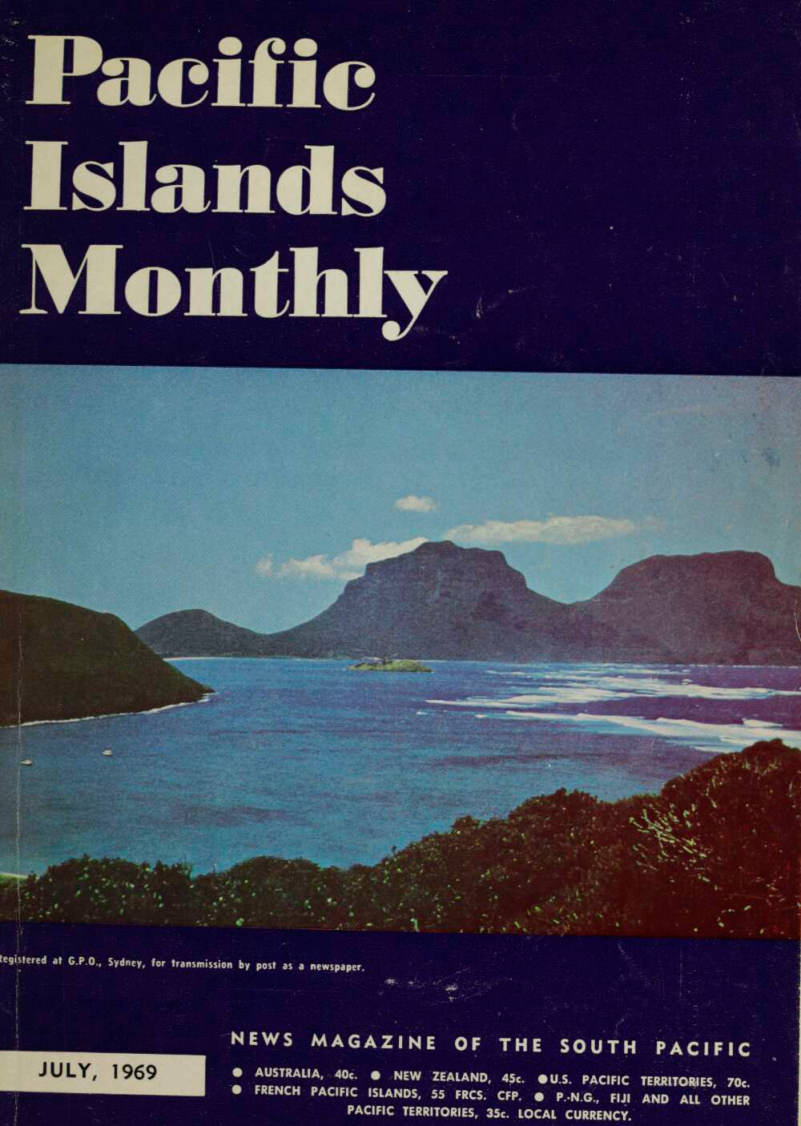 1
1 2
2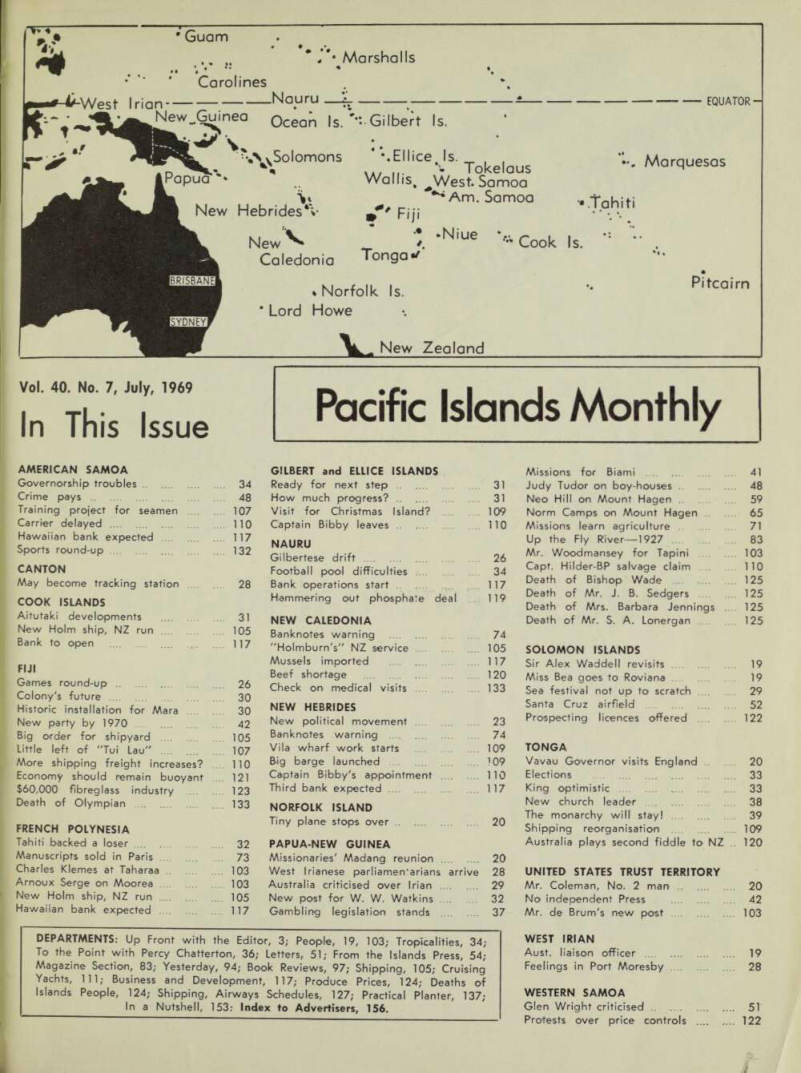 3
3 4
4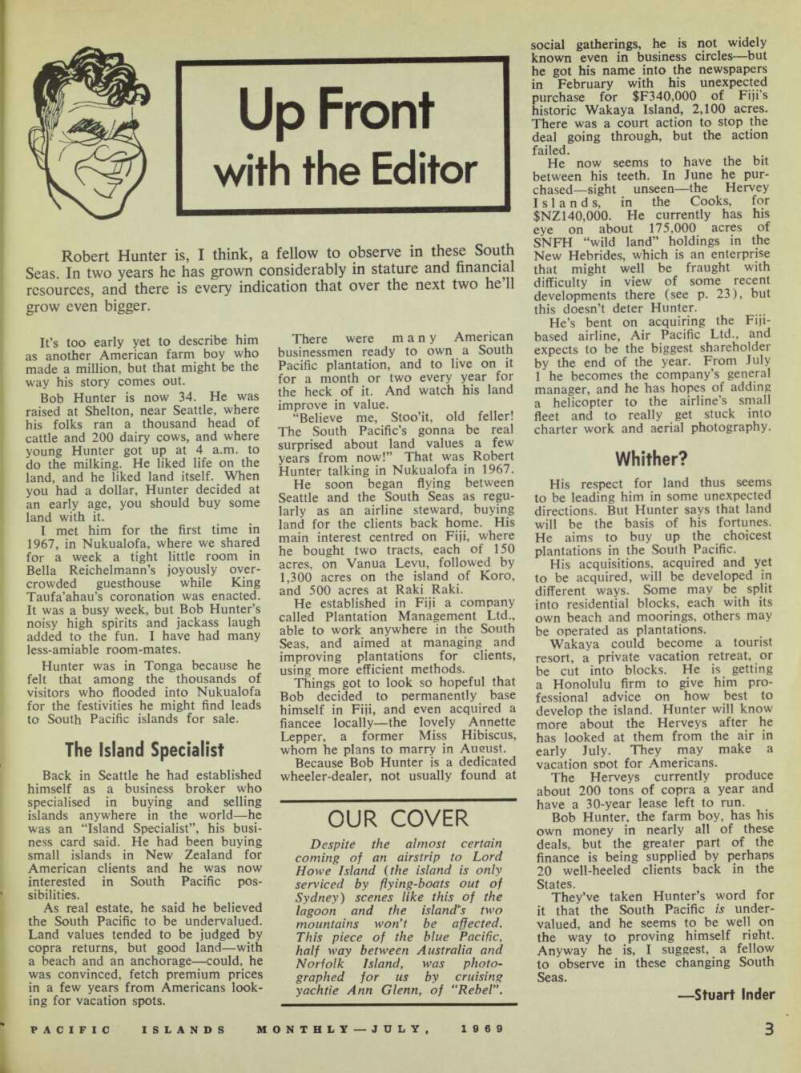 5
5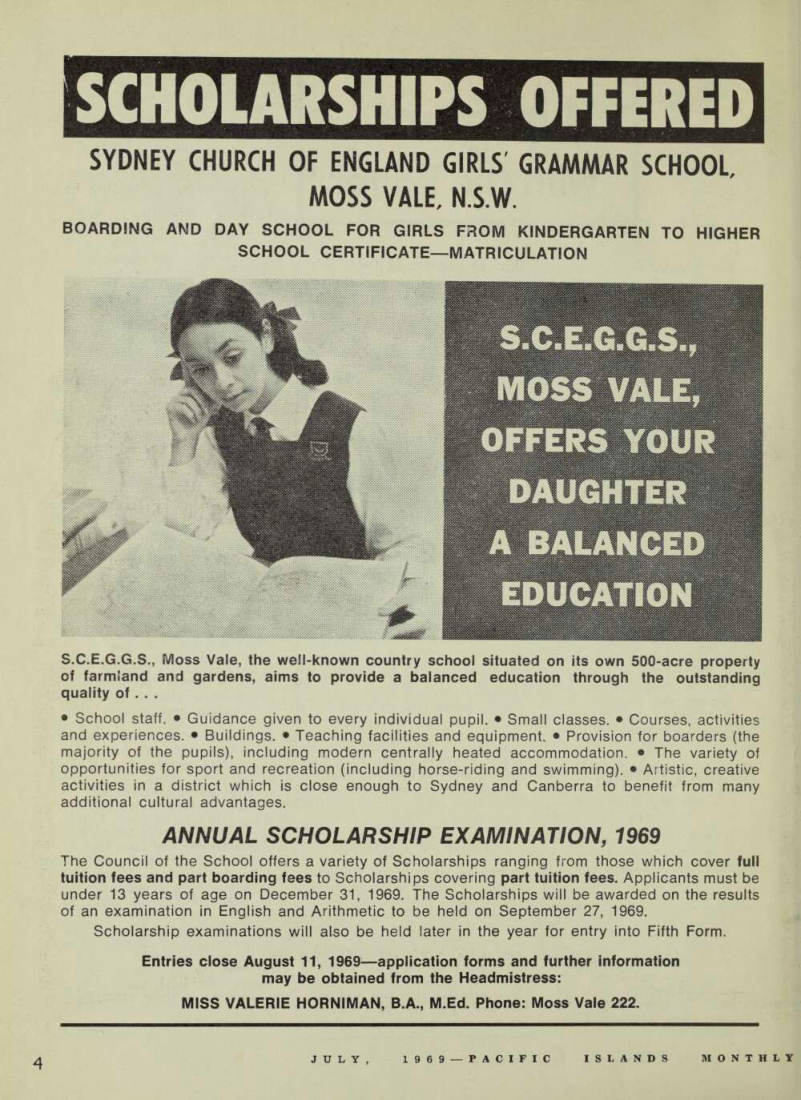 6
6 7
7 8
8 9
9 10
10 11
11 12
12 13
13 14
14 15
15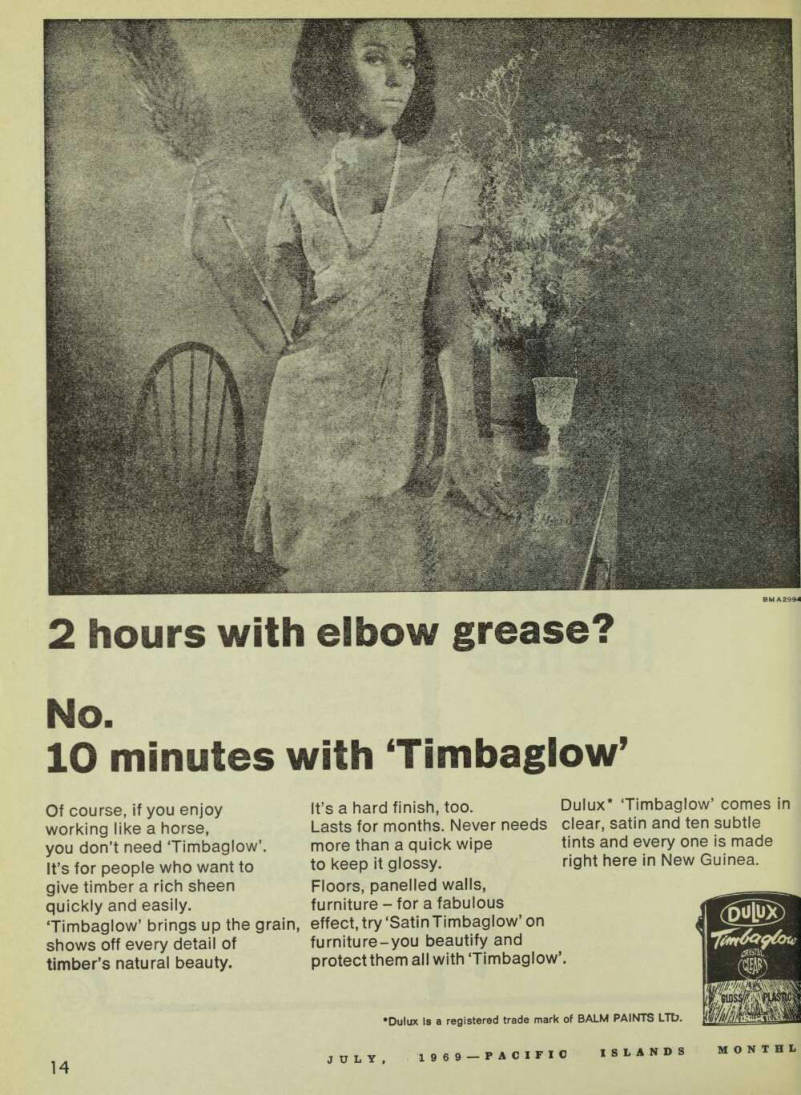 16
16 17
17 18
18 19
19 20
20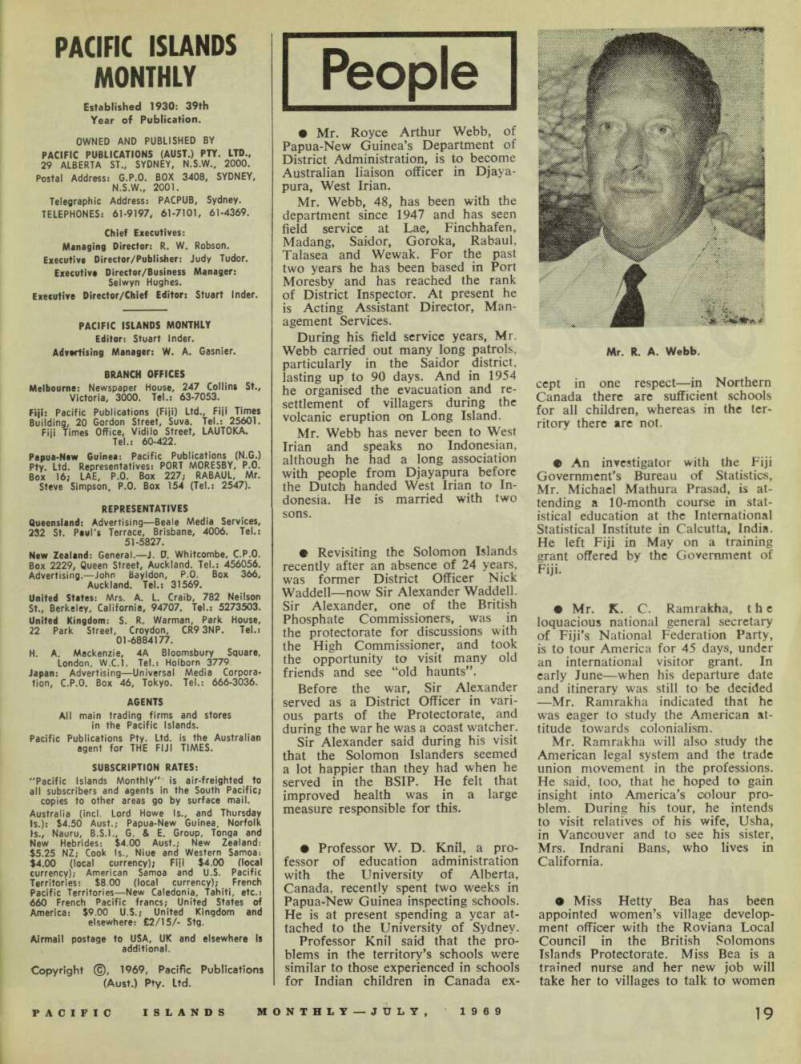 21
21 22
22 23
23 24
24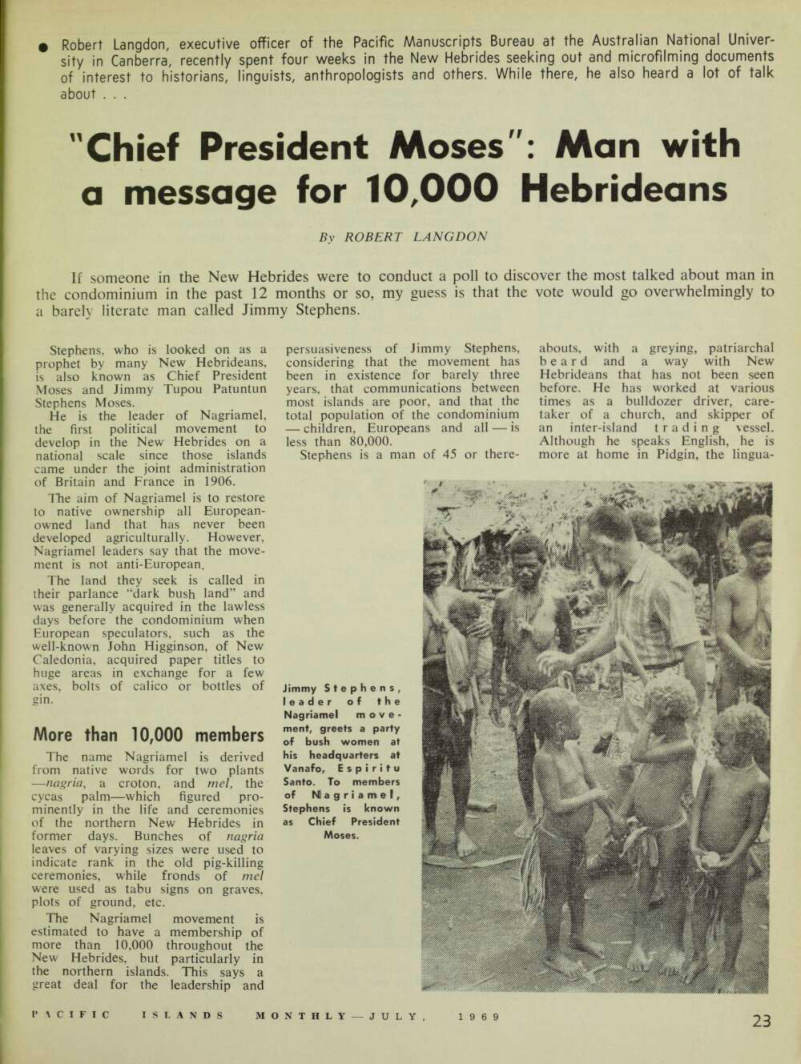 25
25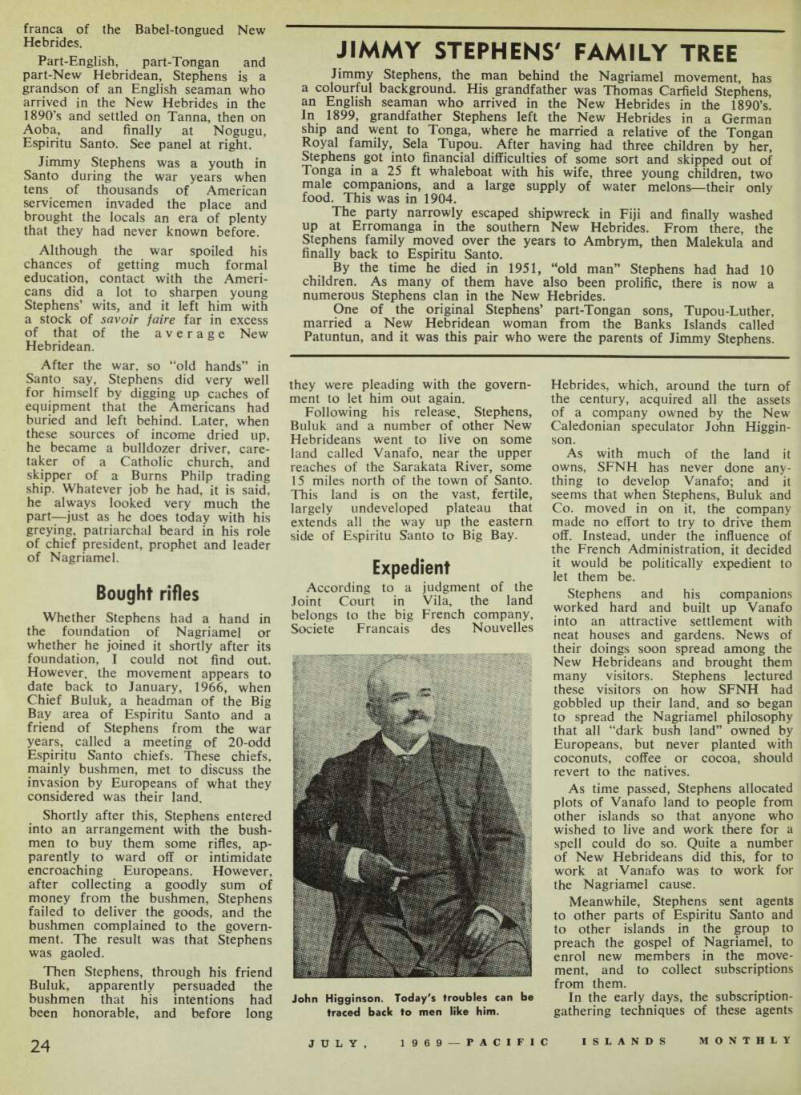 26
26 27
27 28
28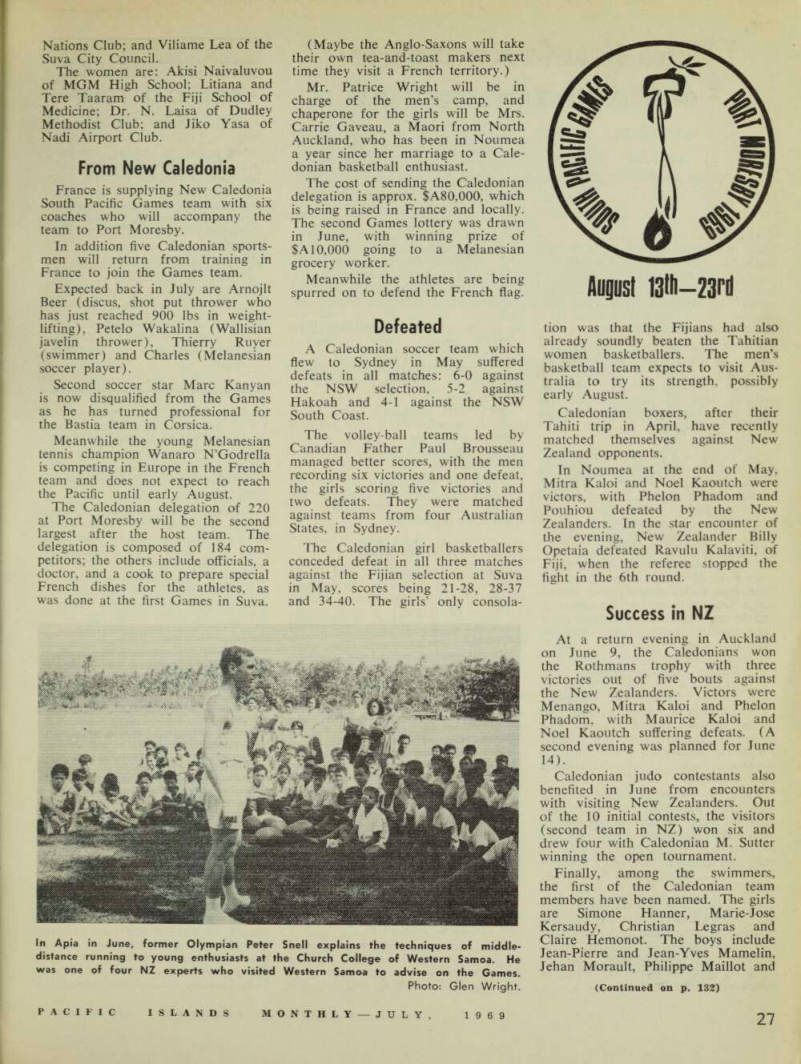 29
29 30
30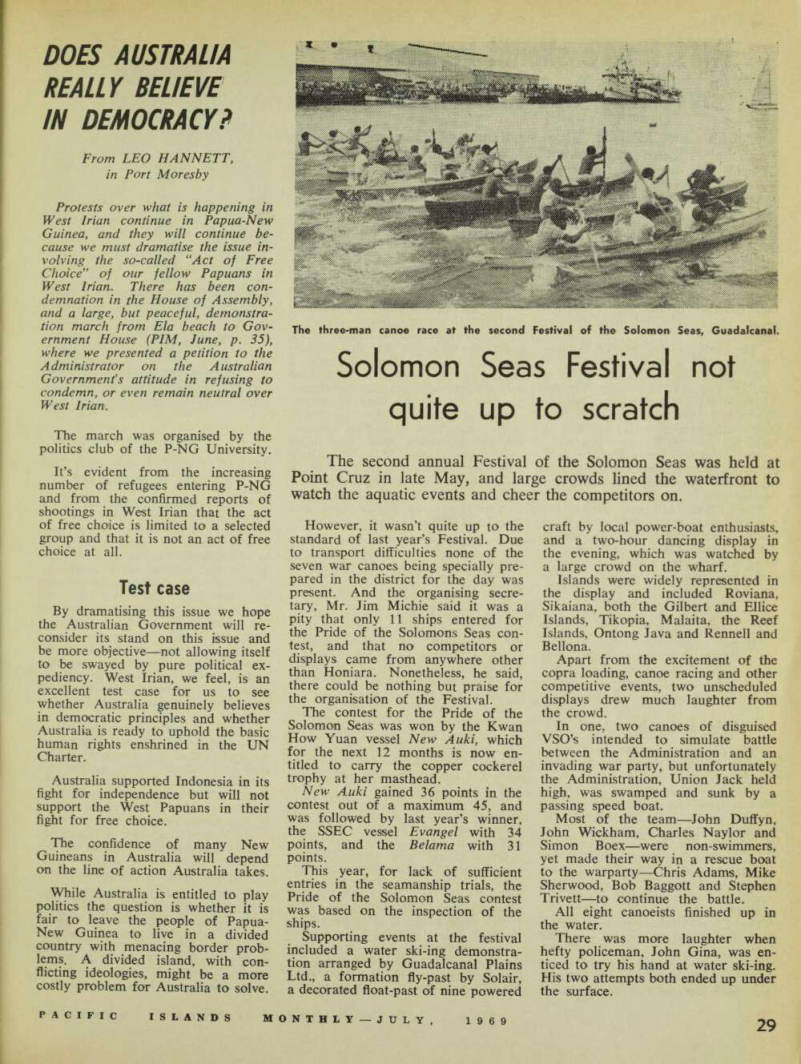 31
31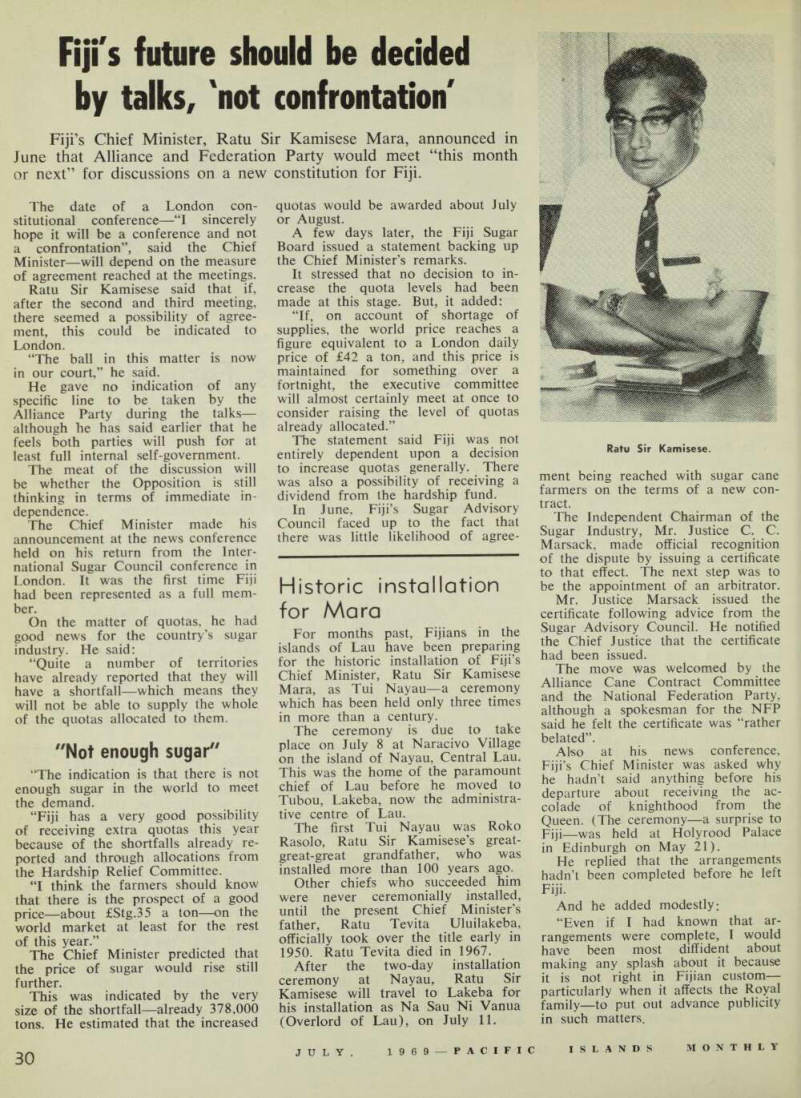 32
32 33
33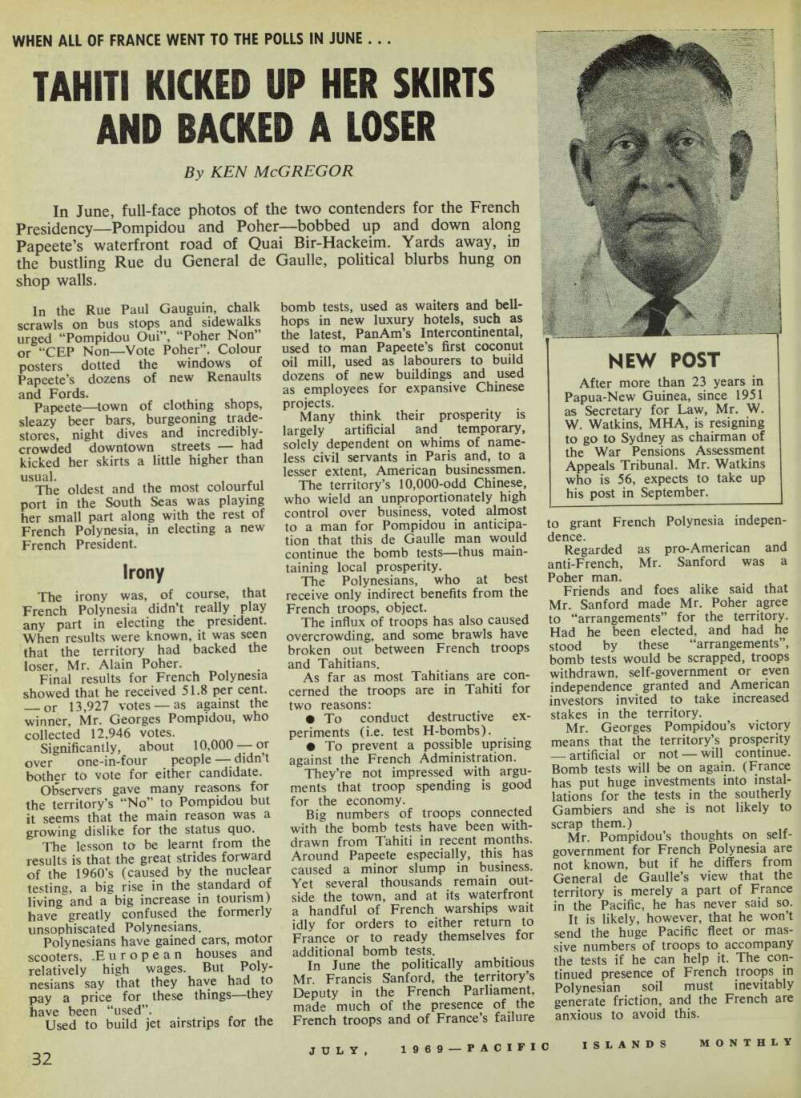 34
34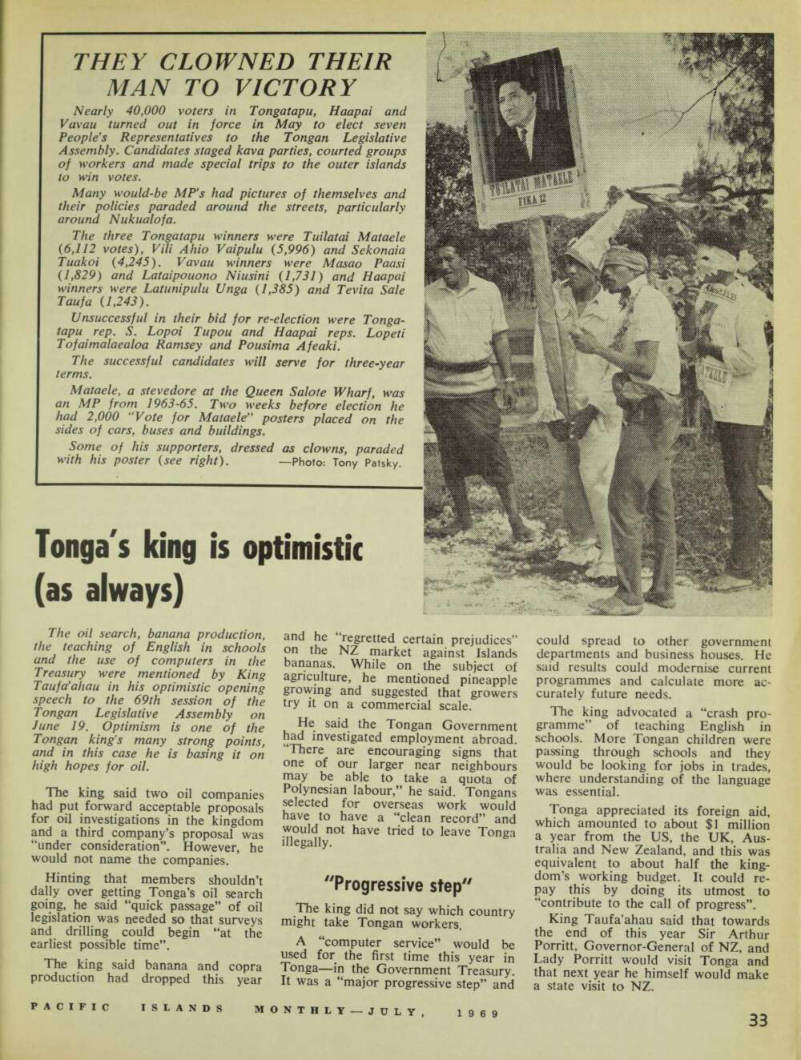 35
35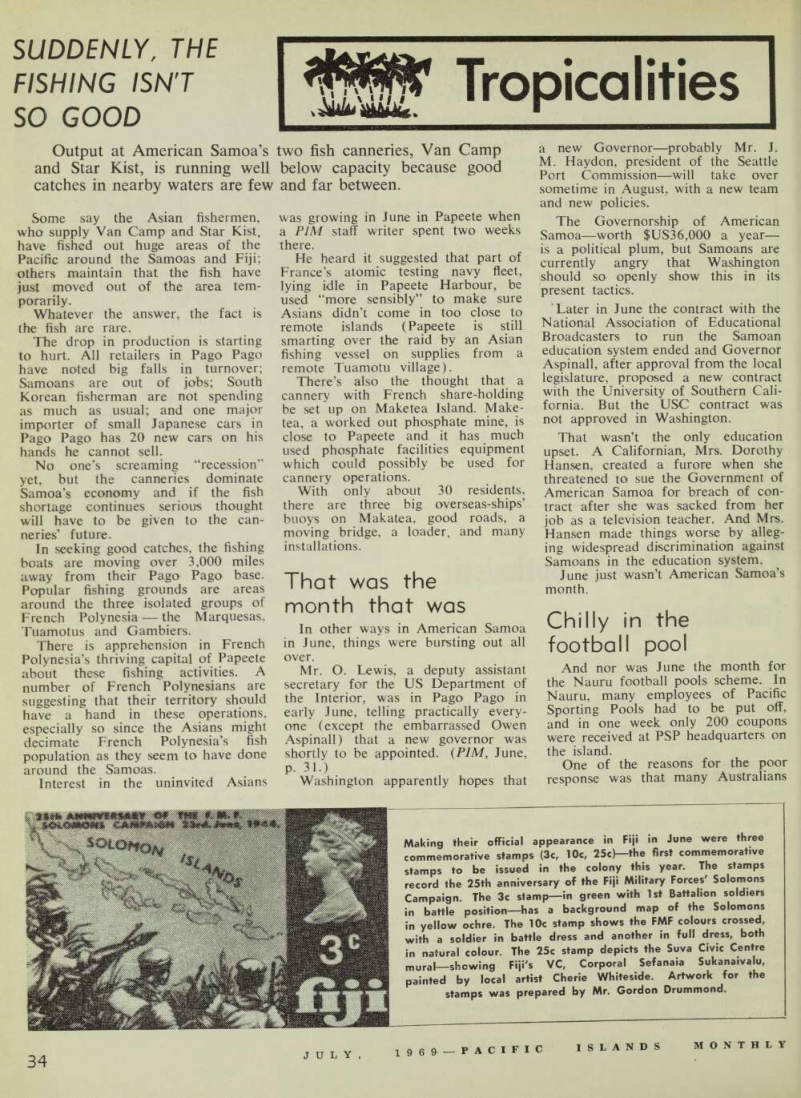 36
36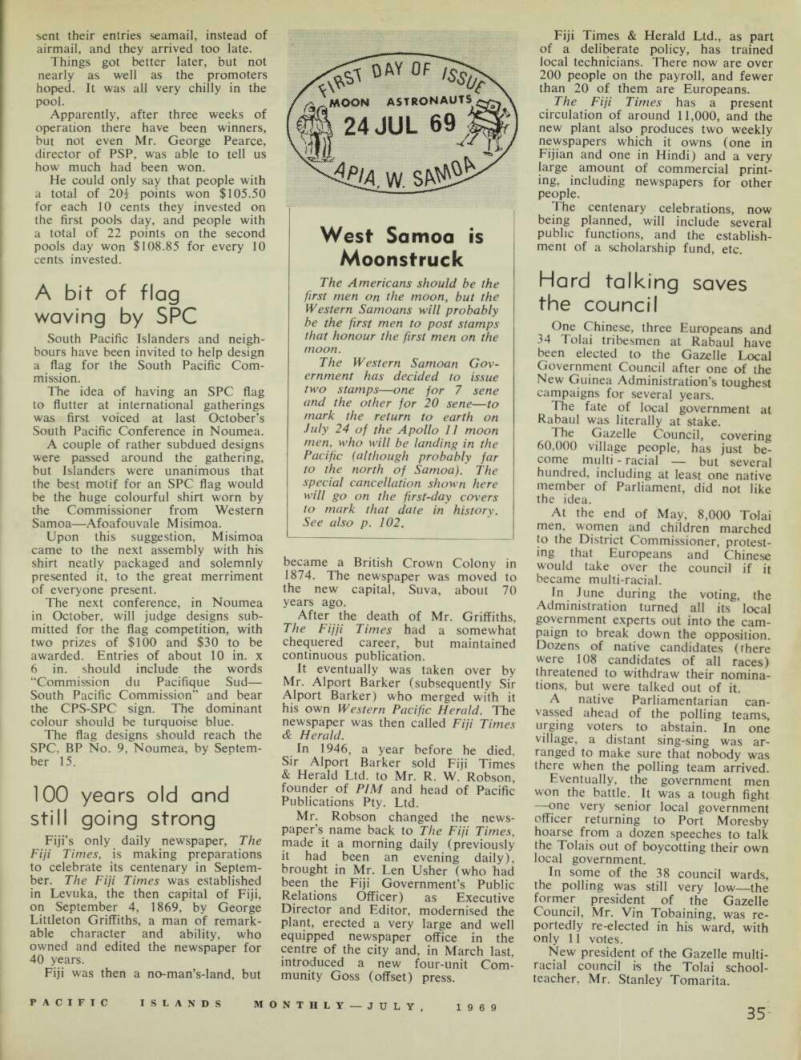 37
37 38
38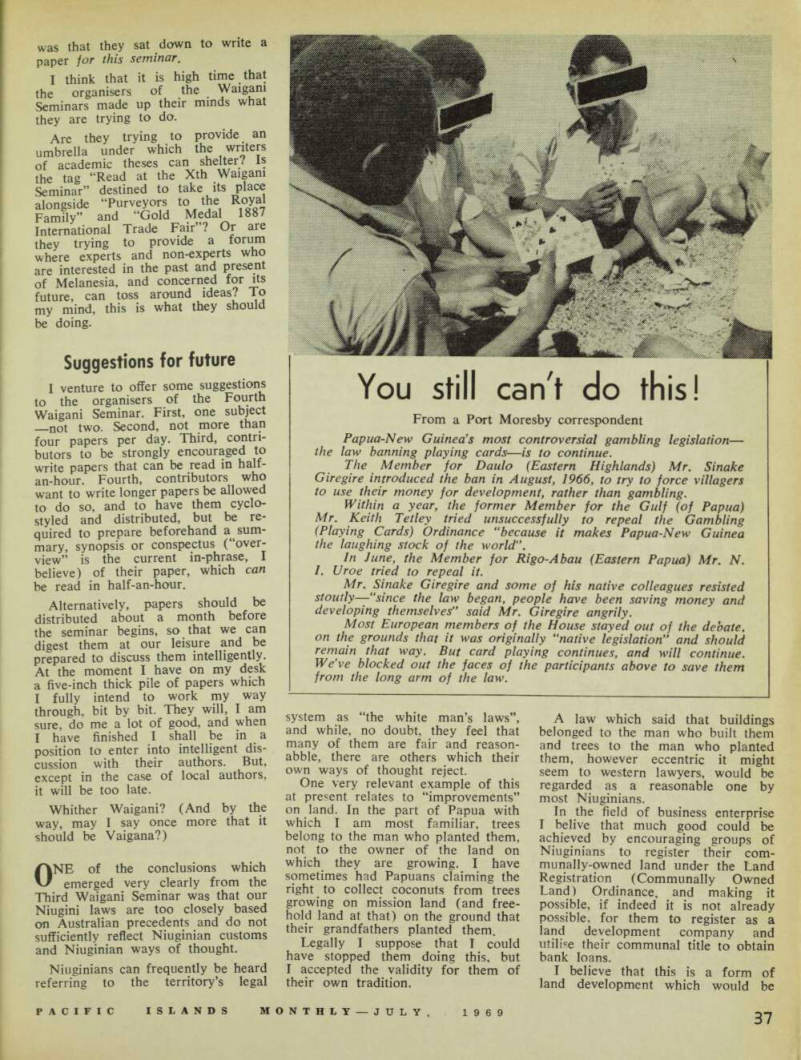 39
39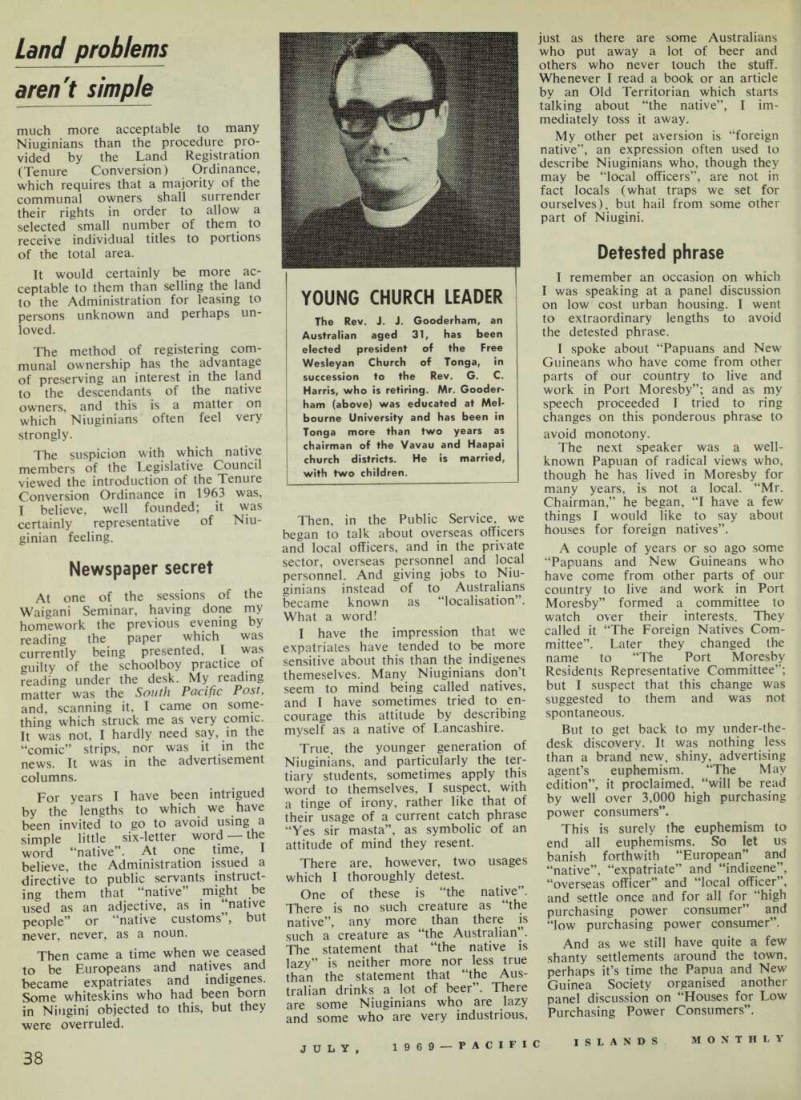 40
40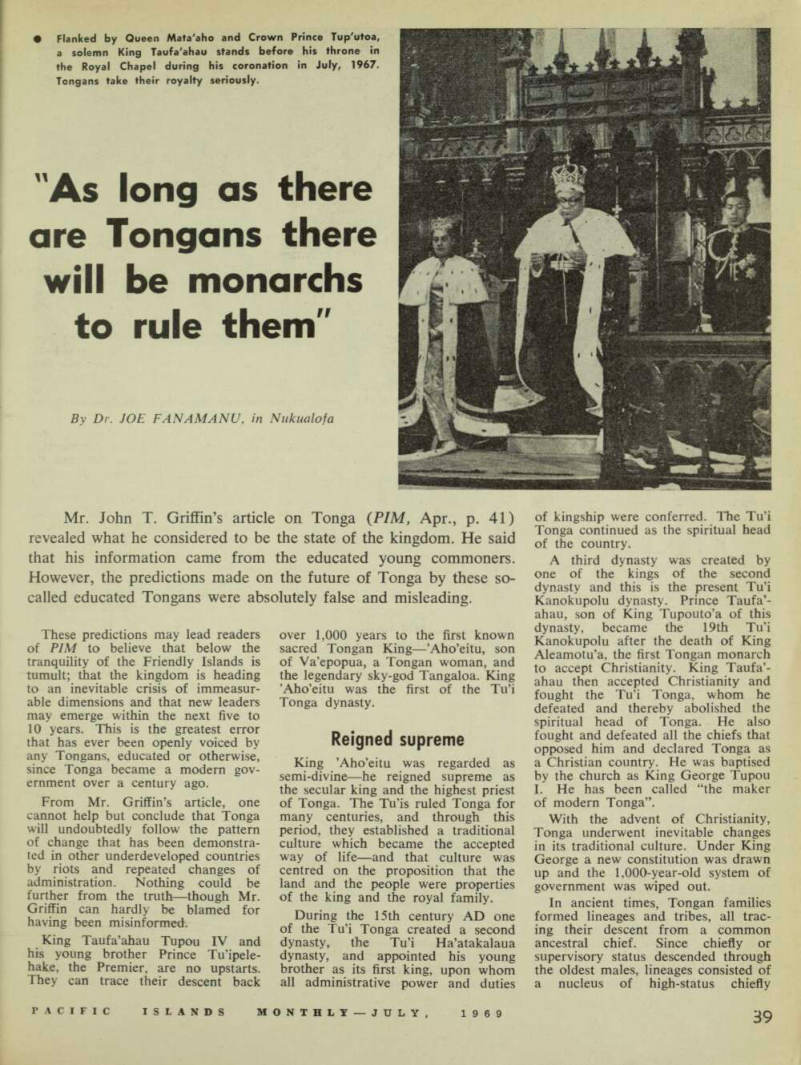 41
41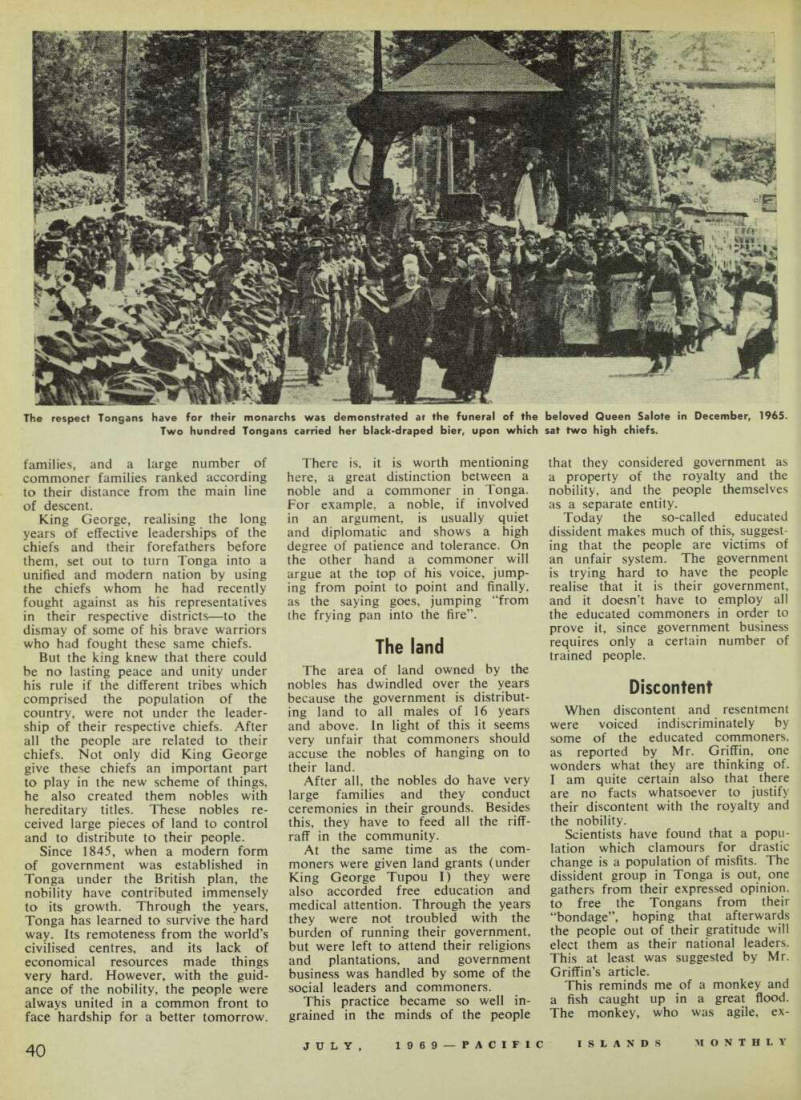 42
42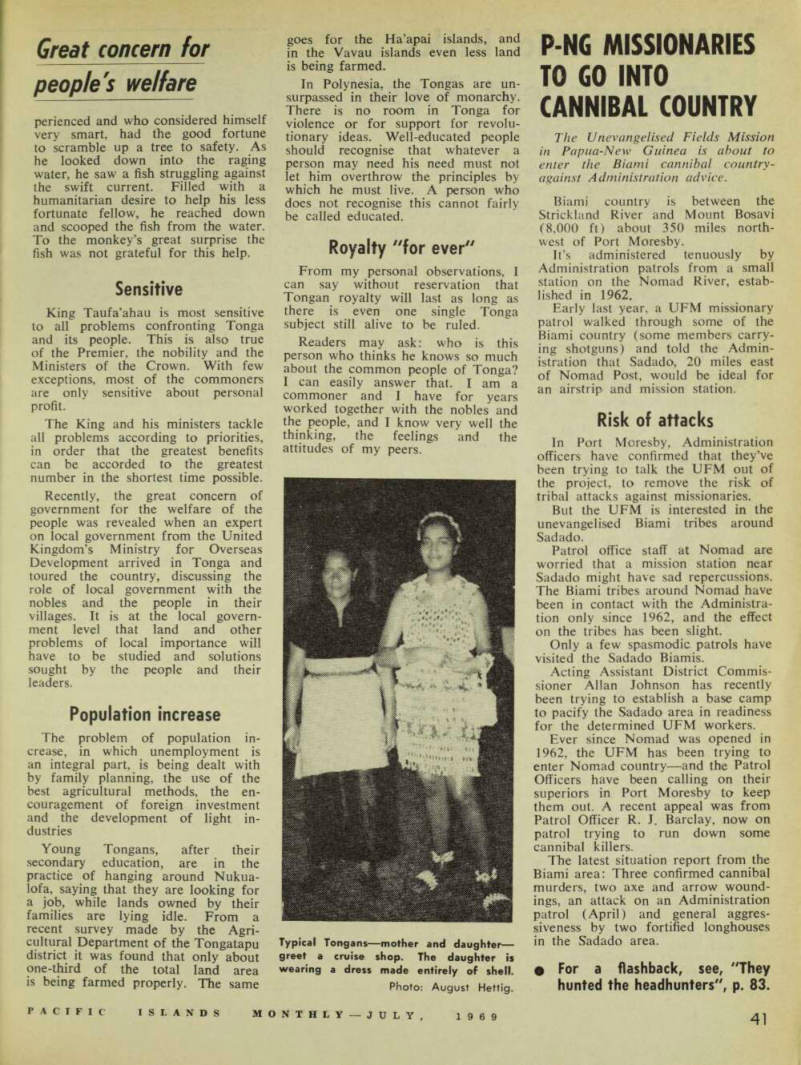 43
43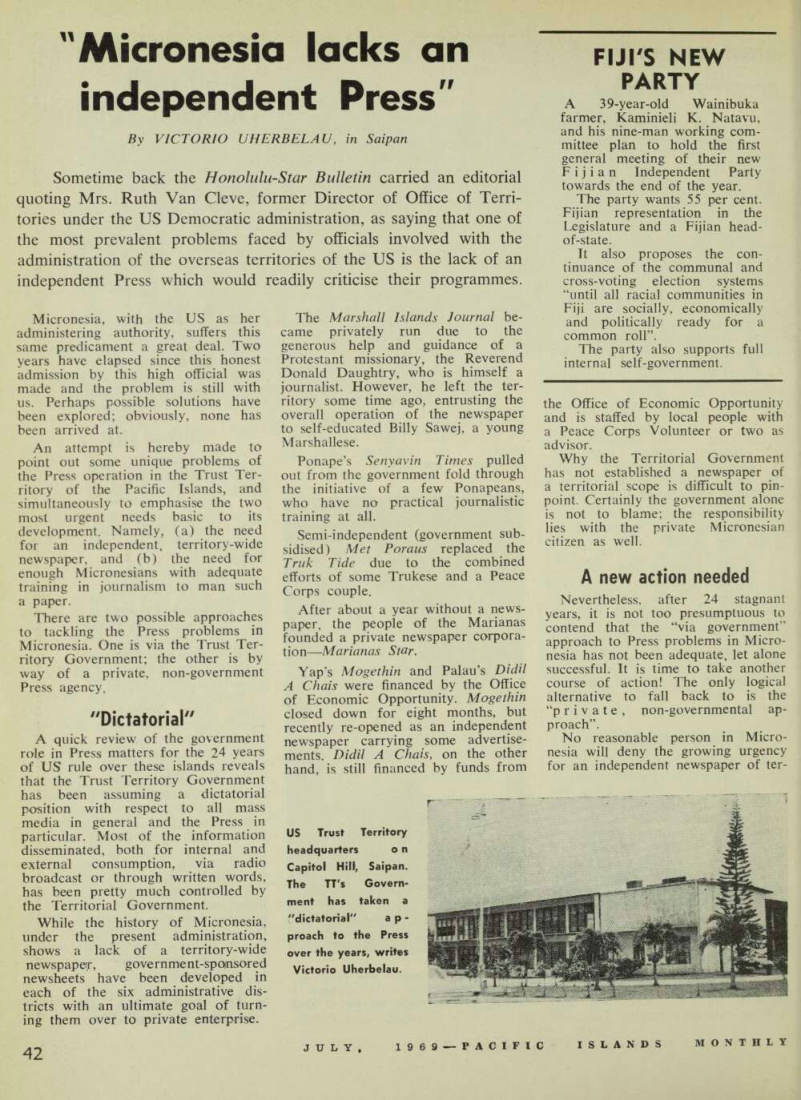 44
44 45
45 46
46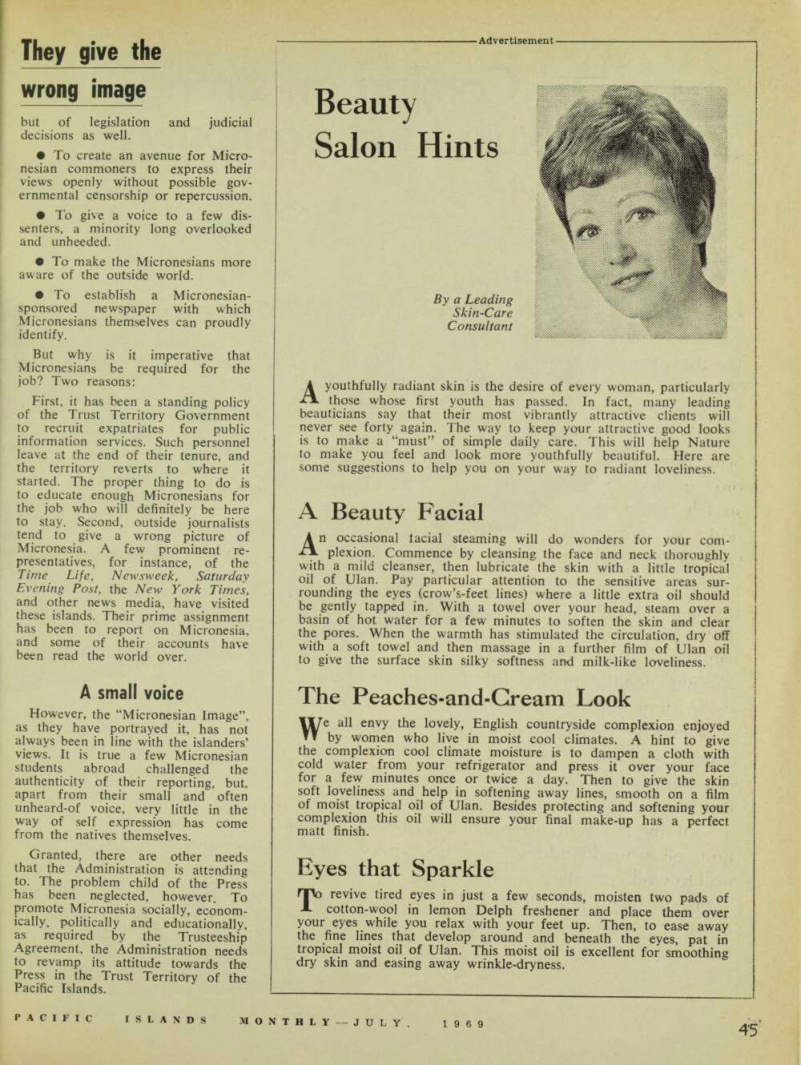 47
47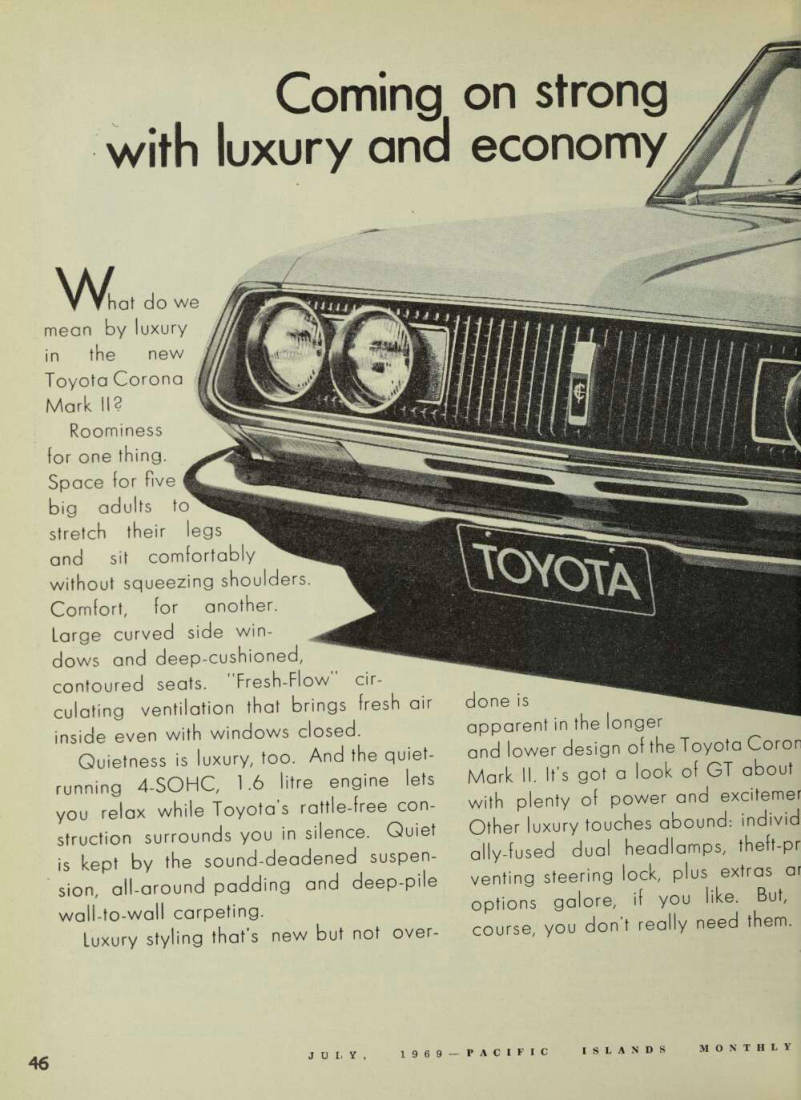 48
48 49
49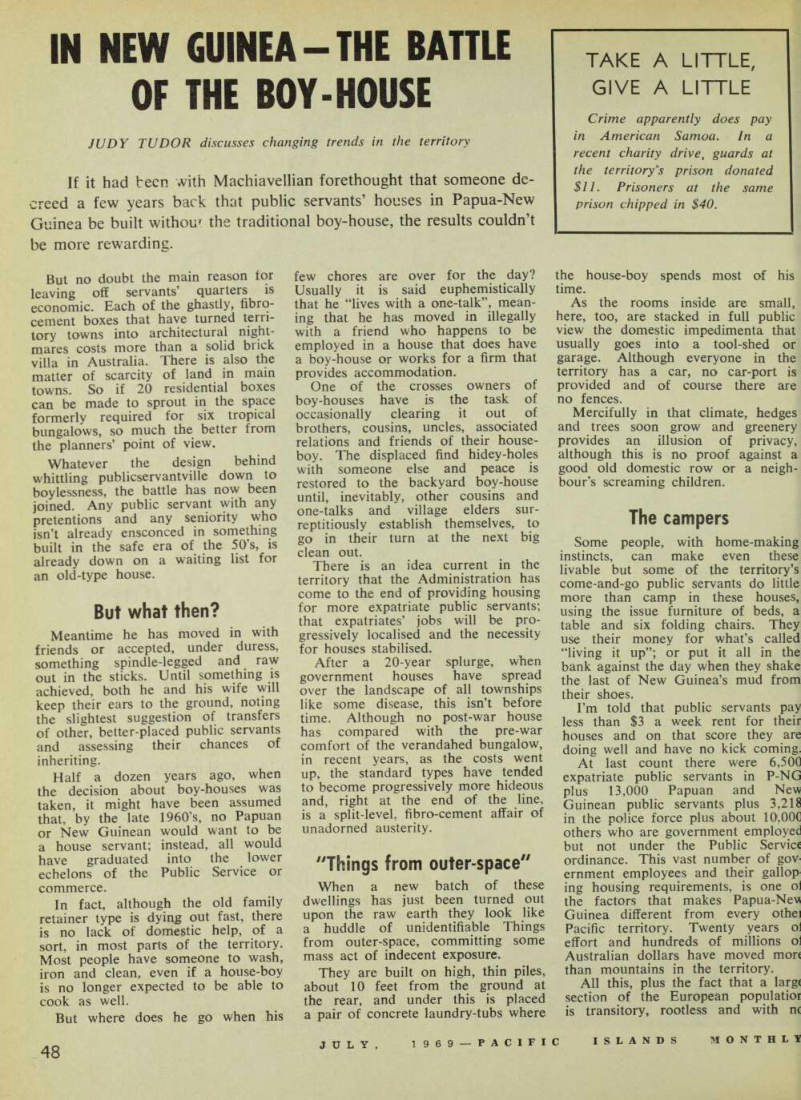 50
50 51
51 52
52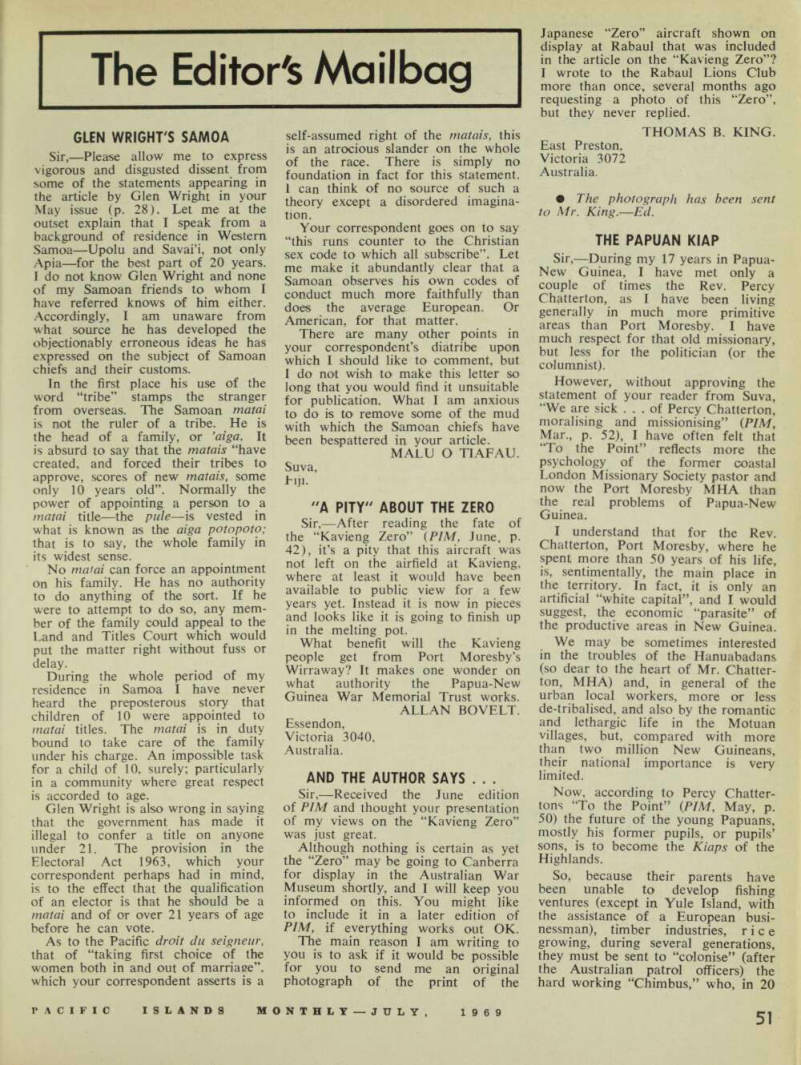 53
53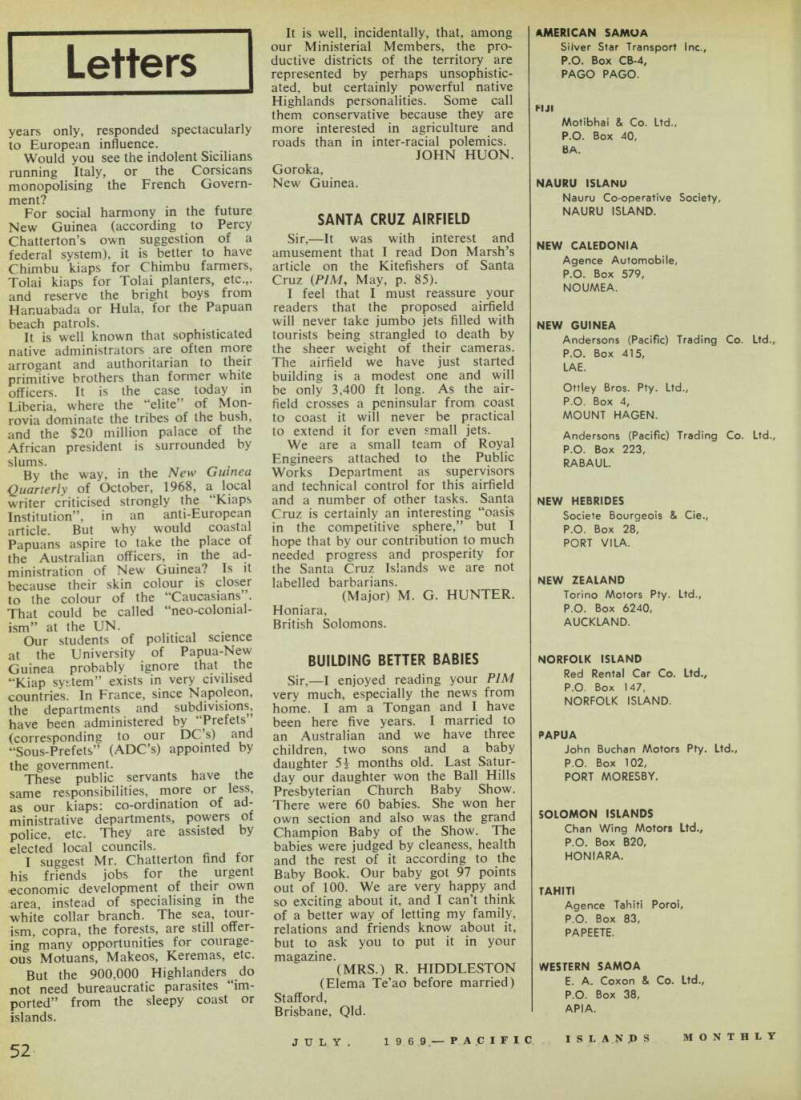 54
54 55
55 56
56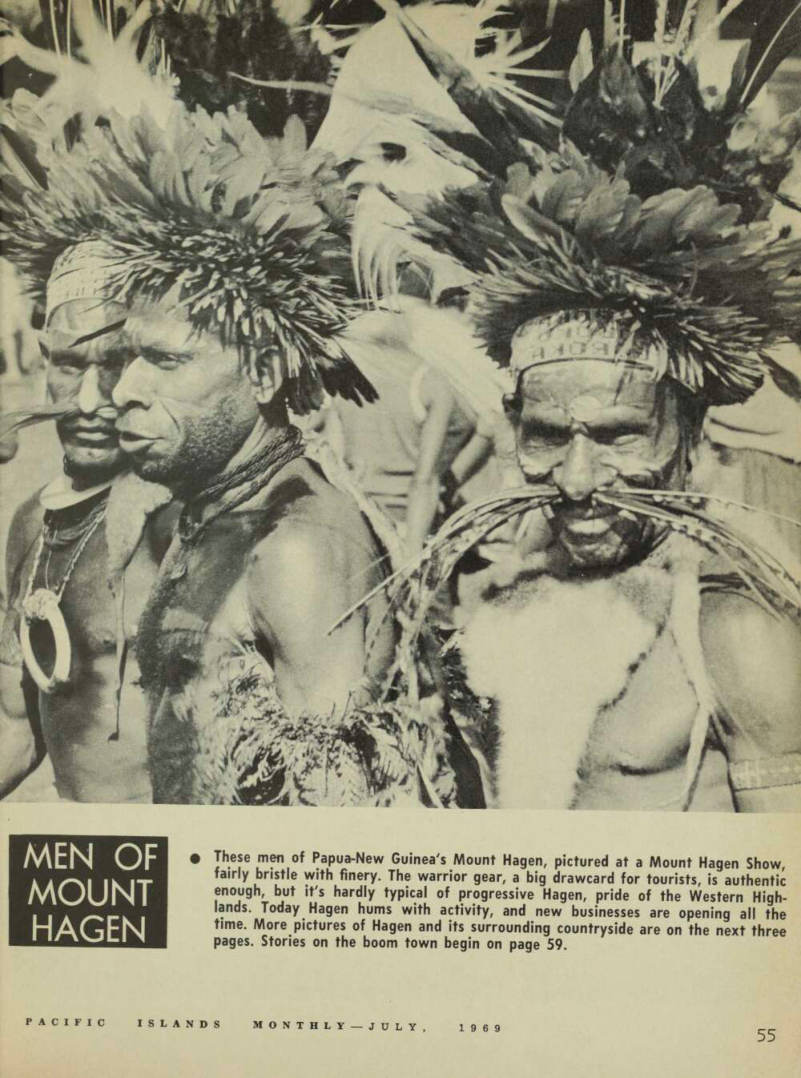 57
57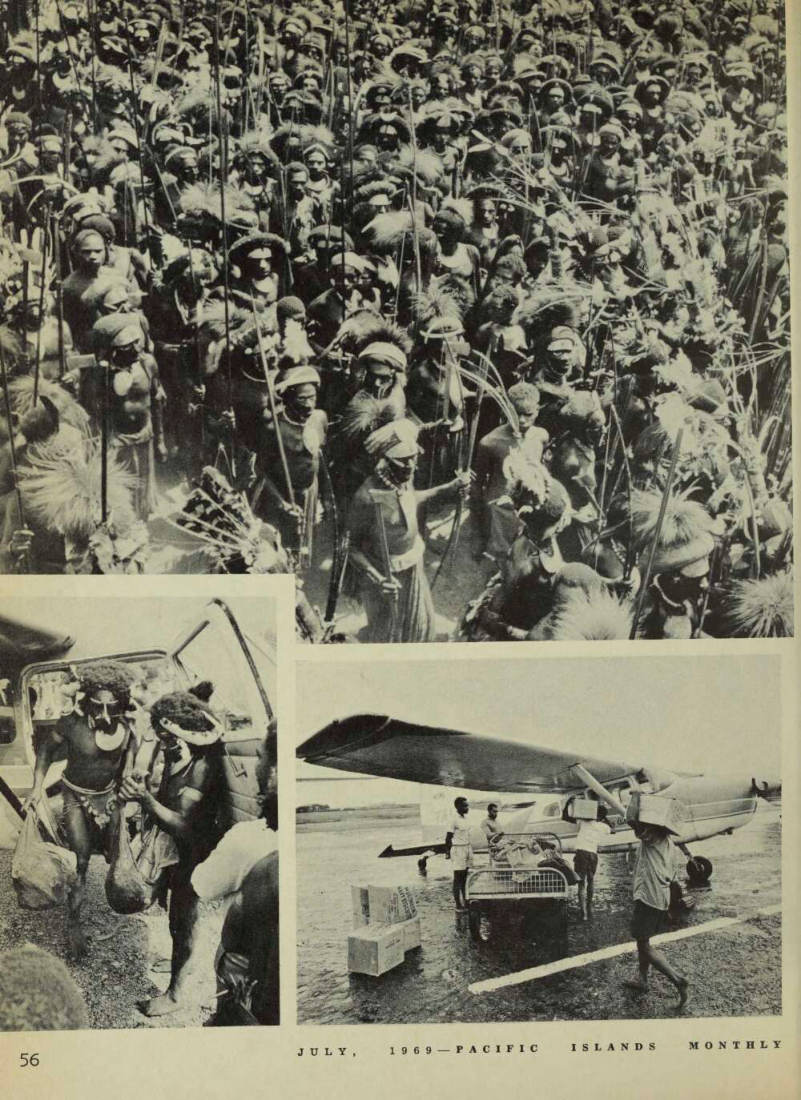 58
58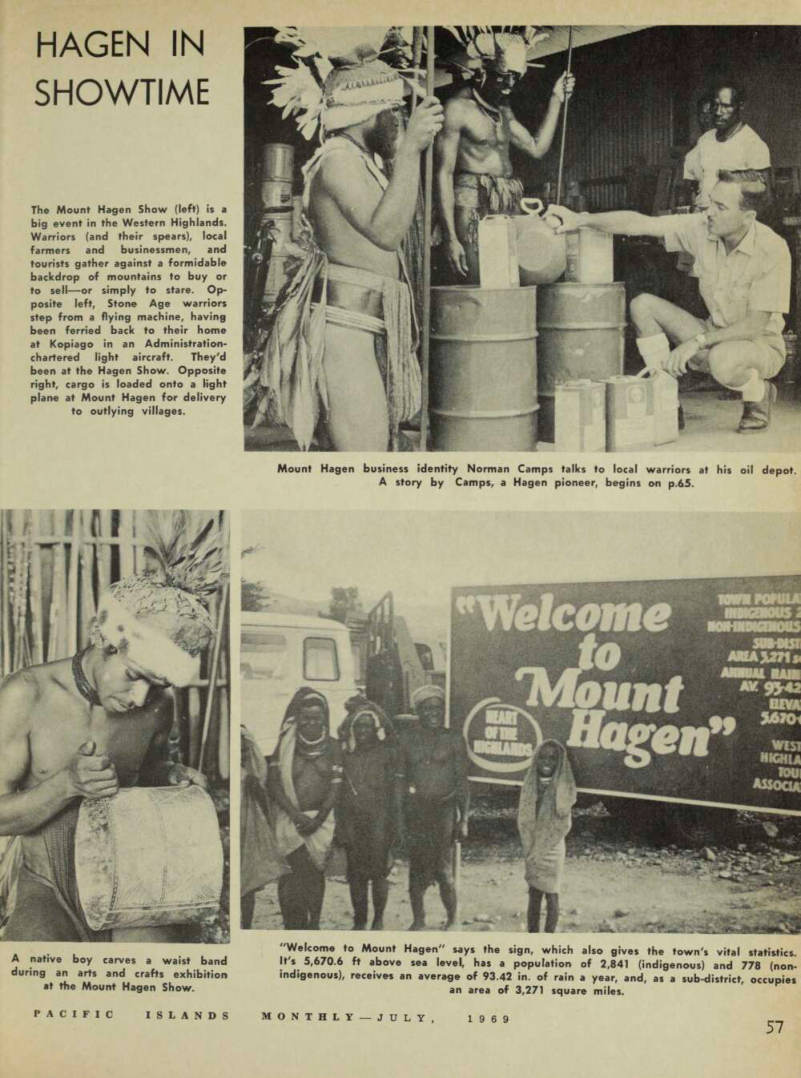 59
59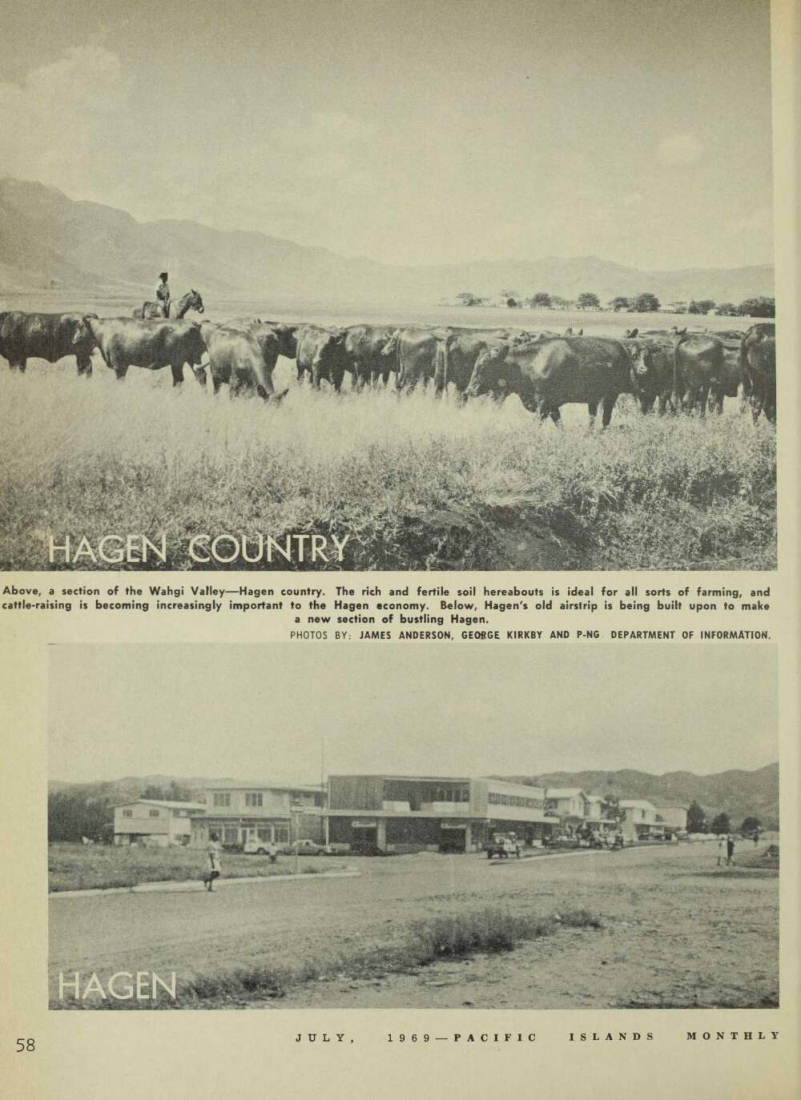 60
60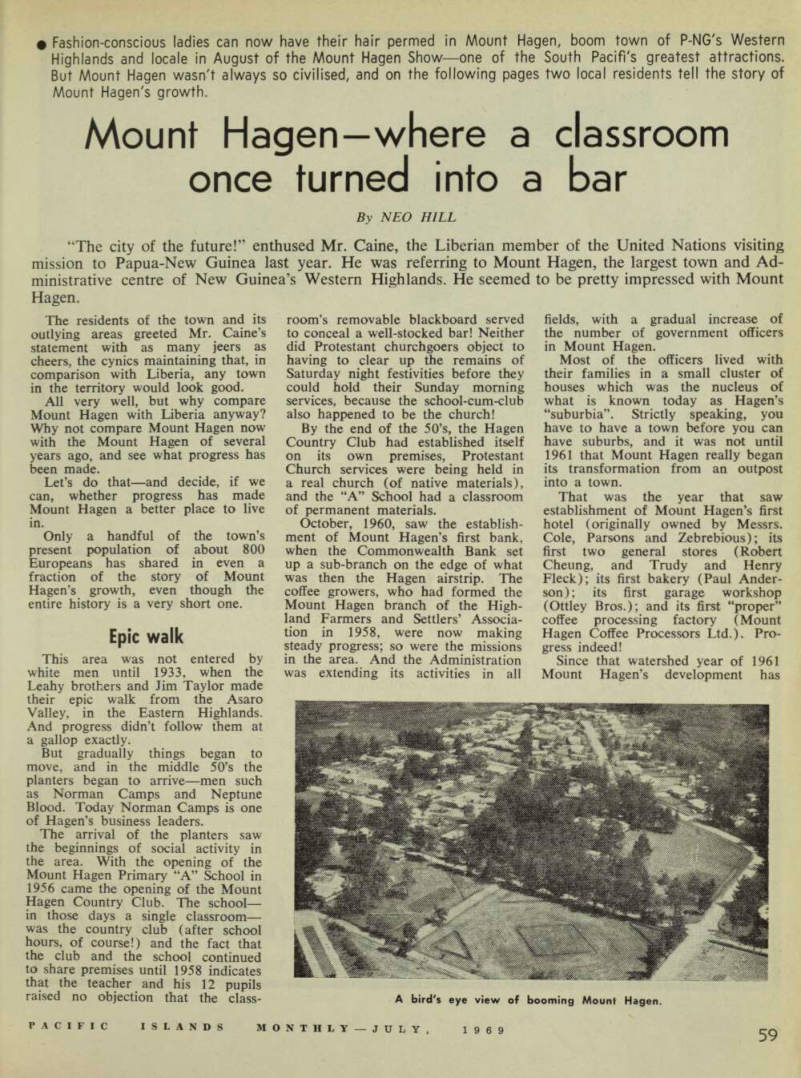 61
61 62
62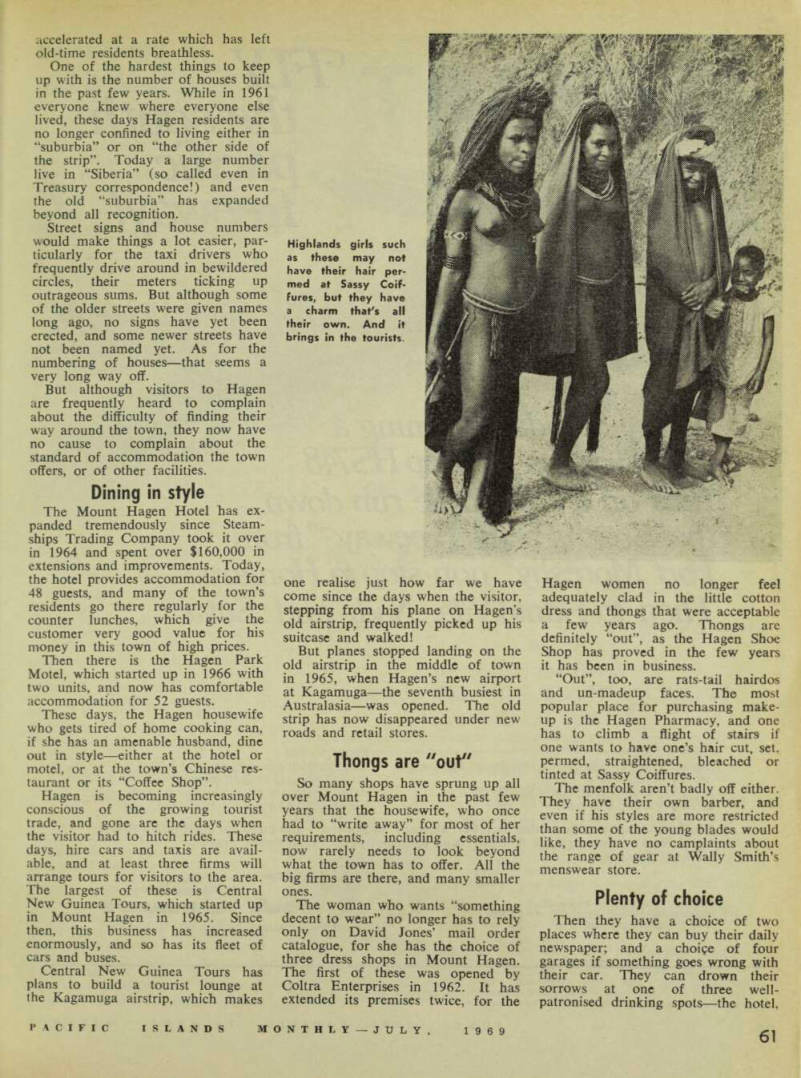 63
63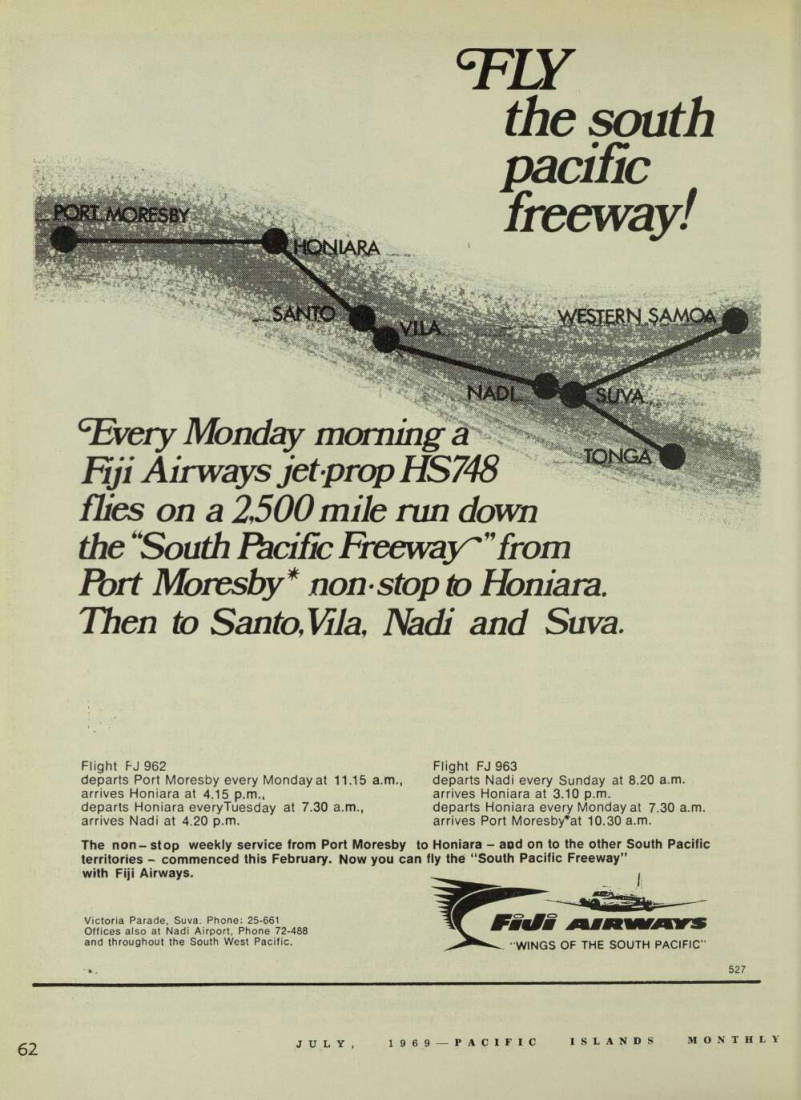 64
64 65
65 66
66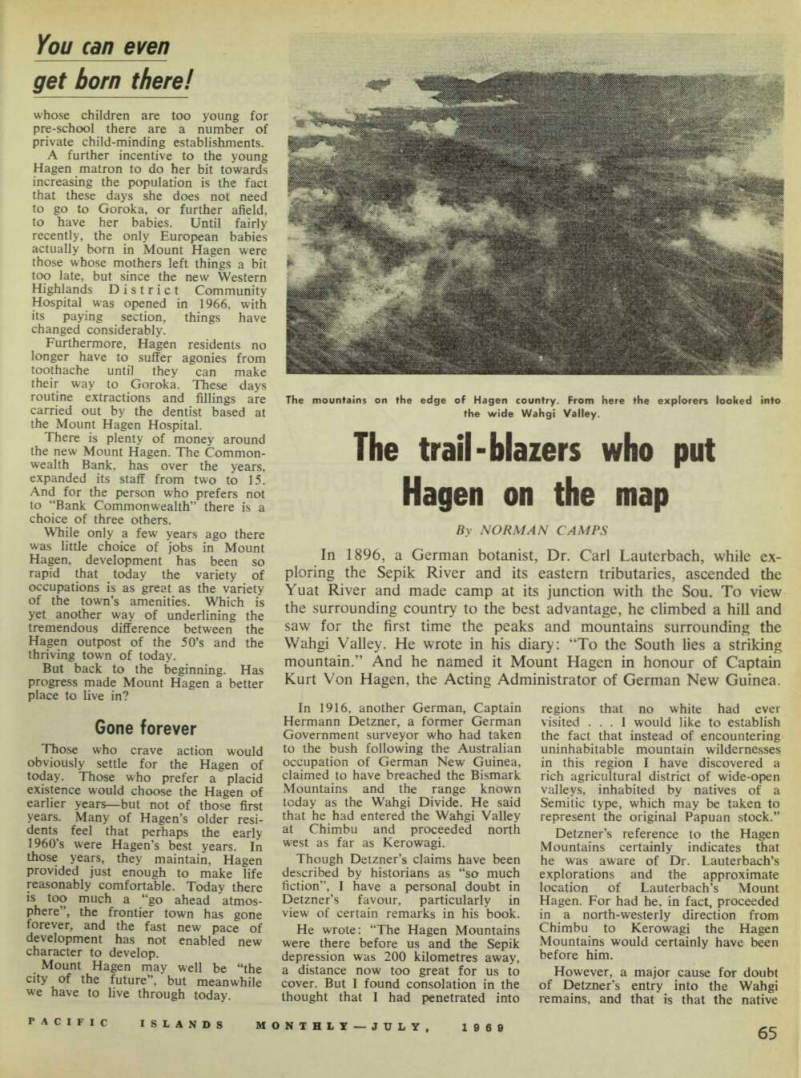 67
67 68
68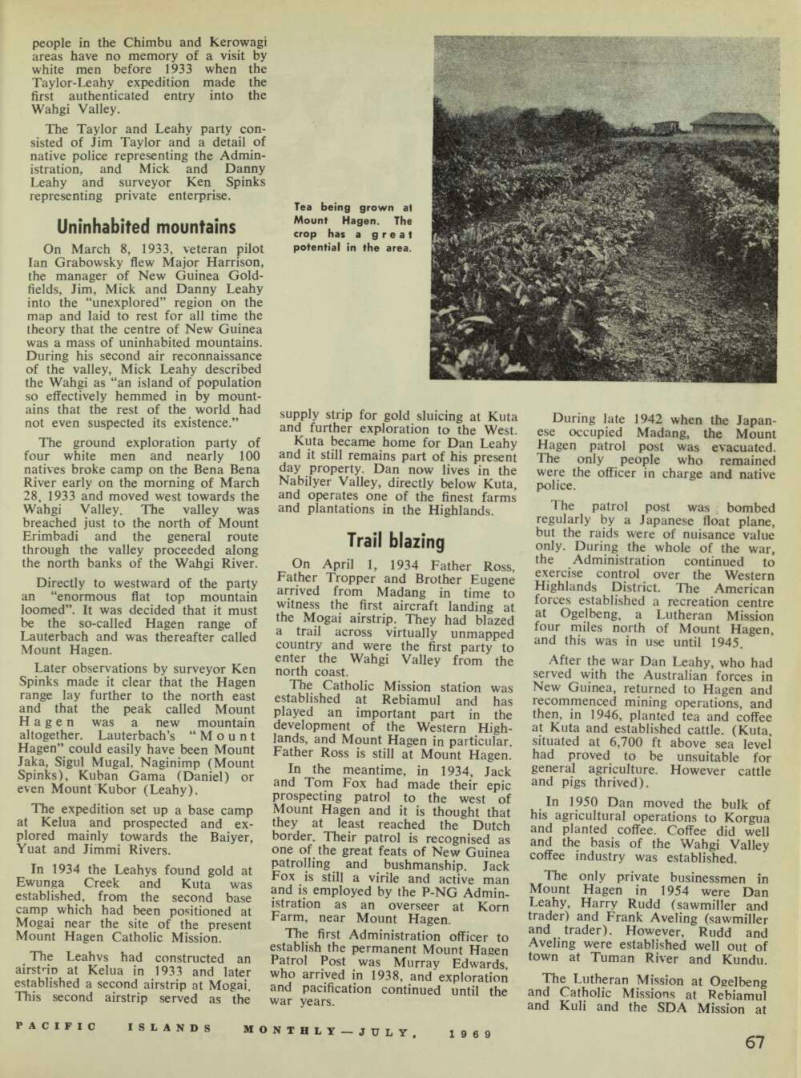 69
69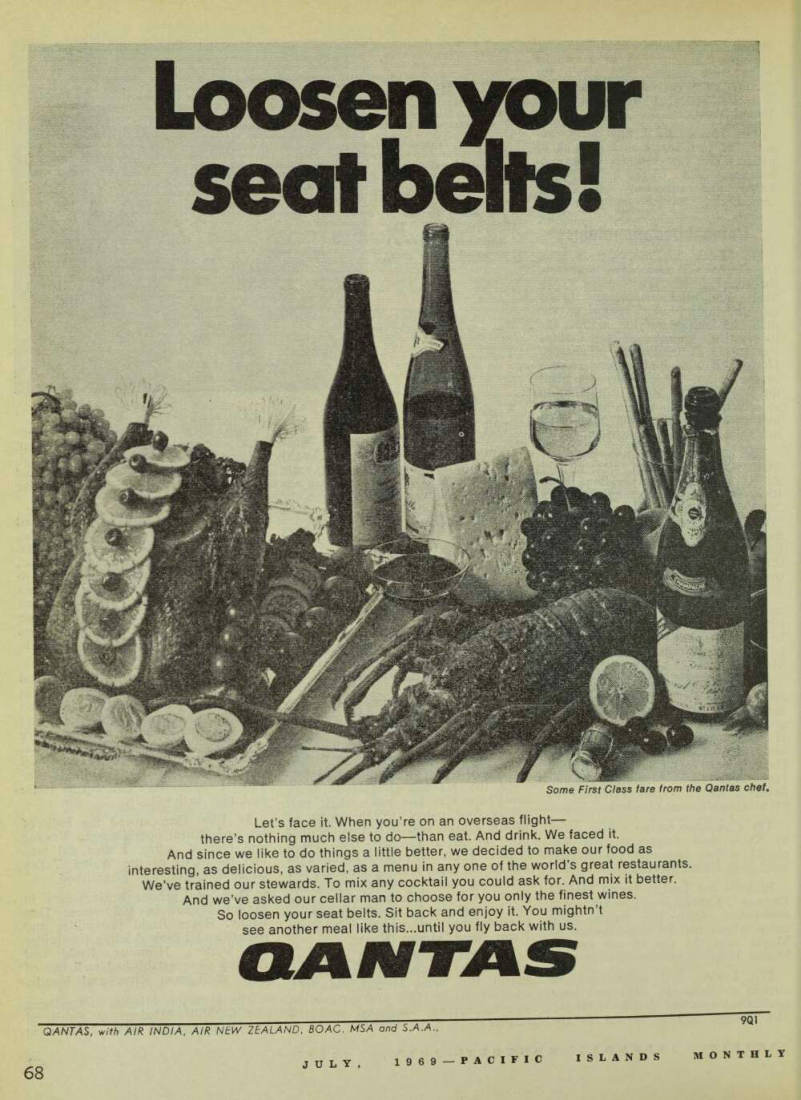 70
70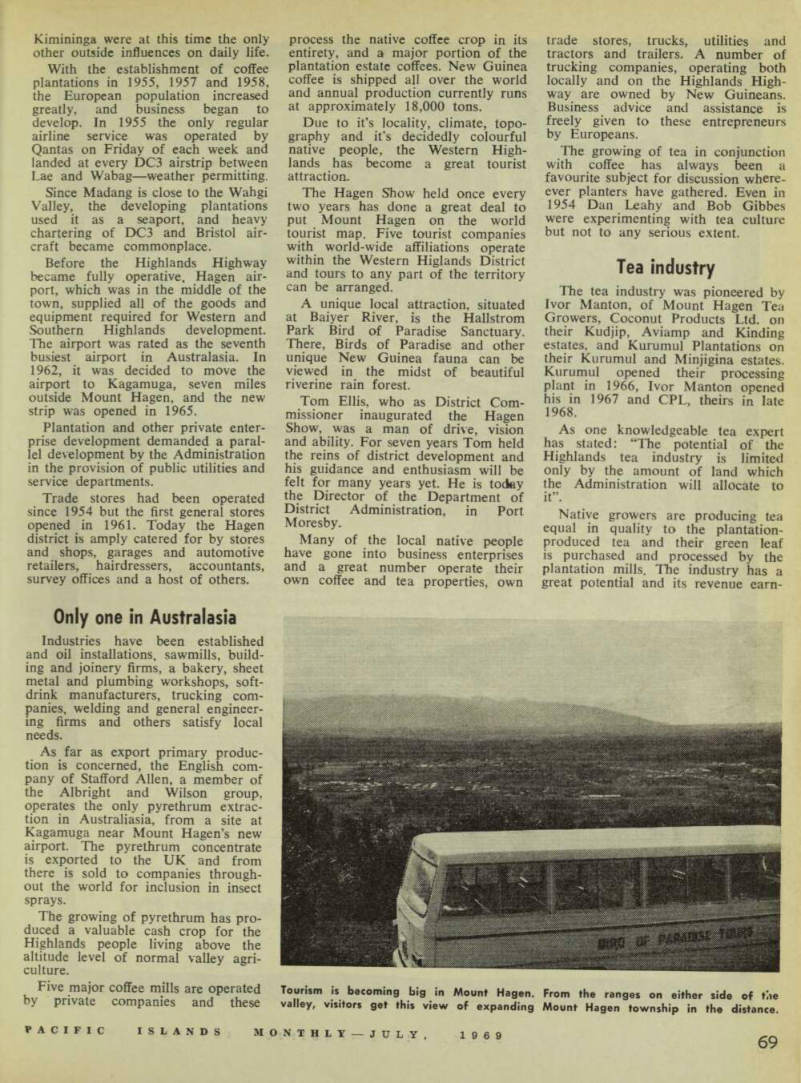 71
71 72
72 73
73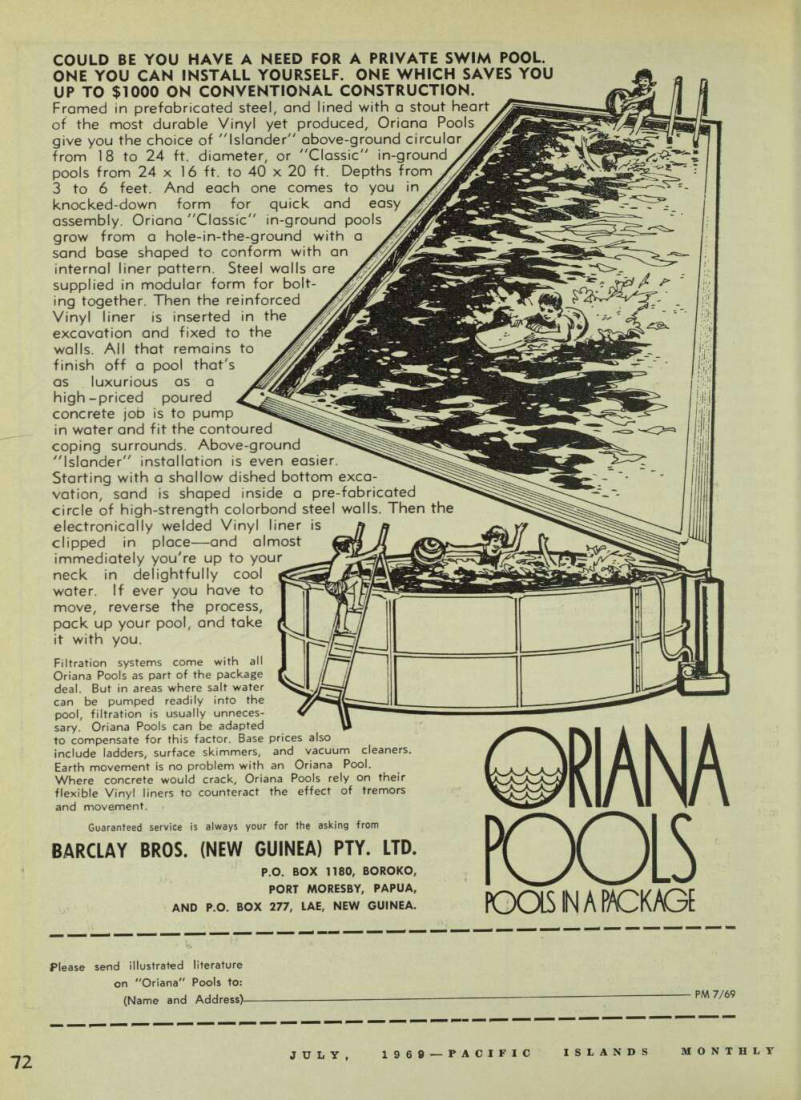 74
74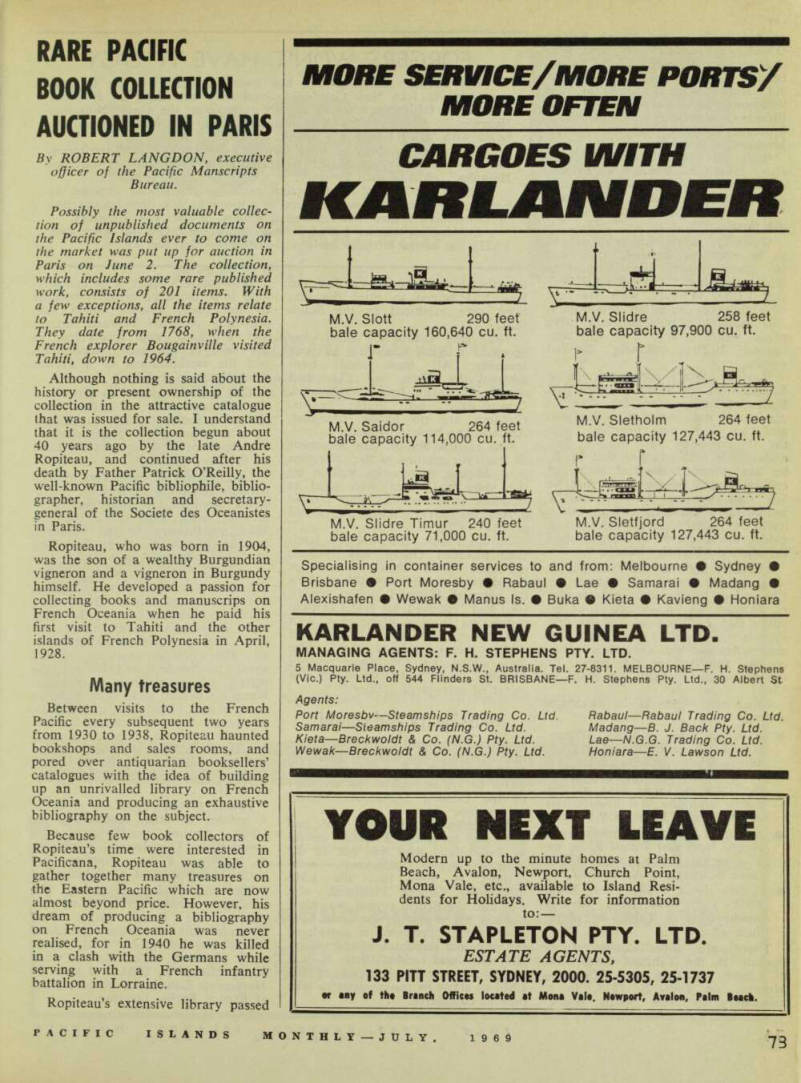 75
75 76
76 77
77 78
78 79
79 80
80 81
81 82
82 83
83 84
84 85
85 86
86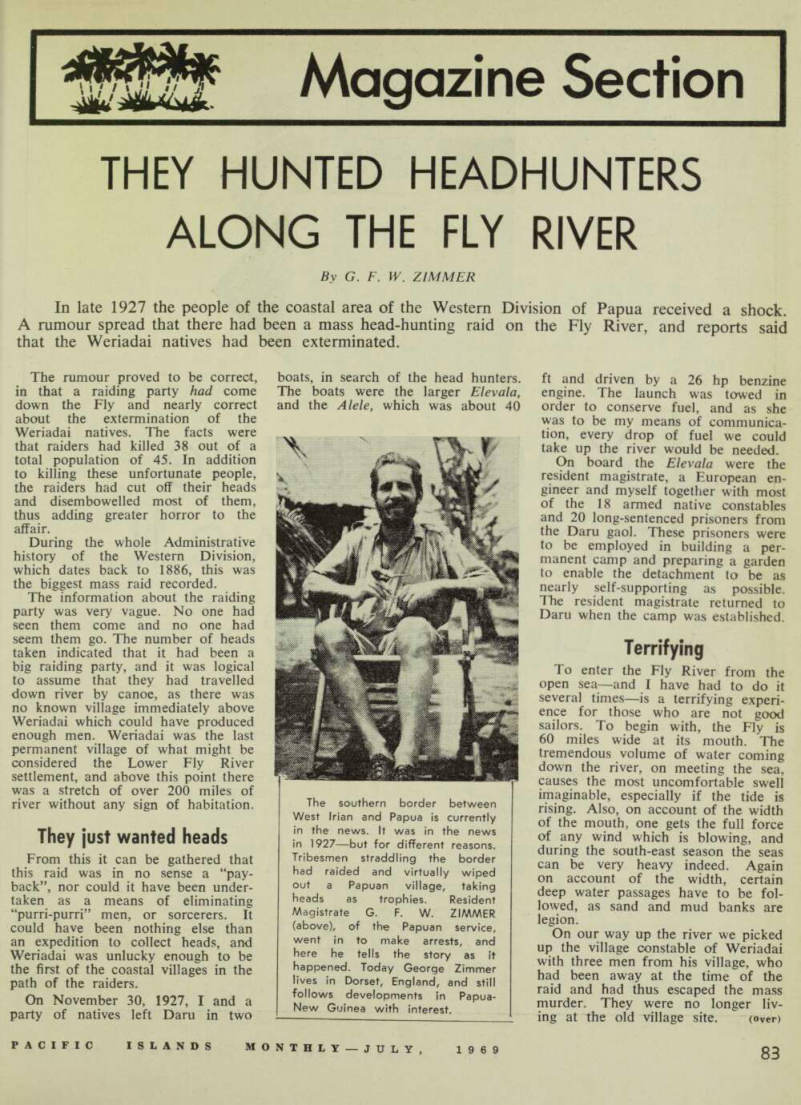 87
87 88
88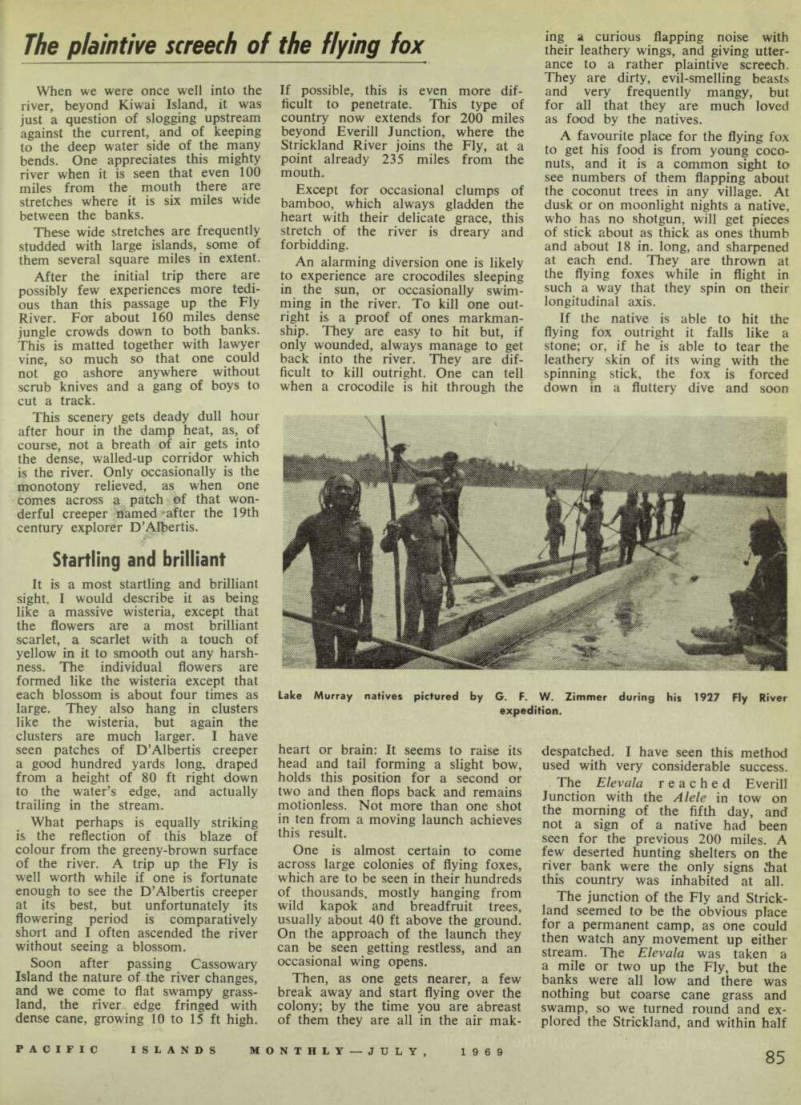 89
89 90
90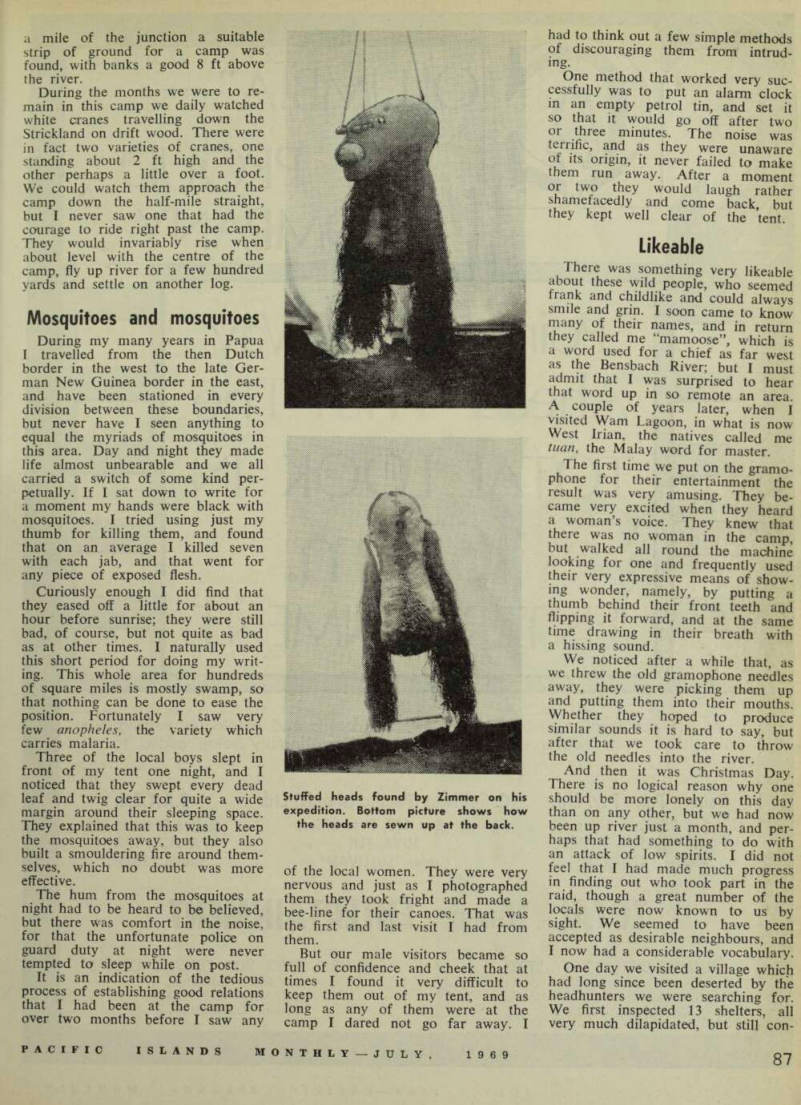 91
91 92
92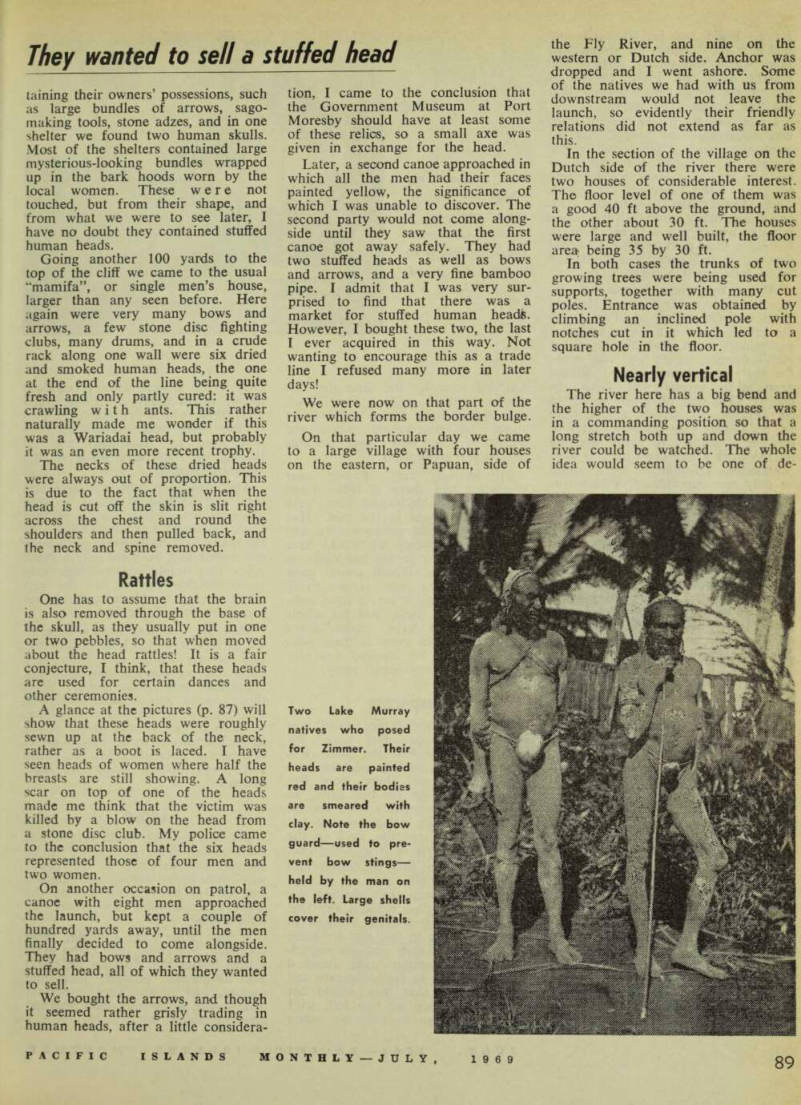 93
93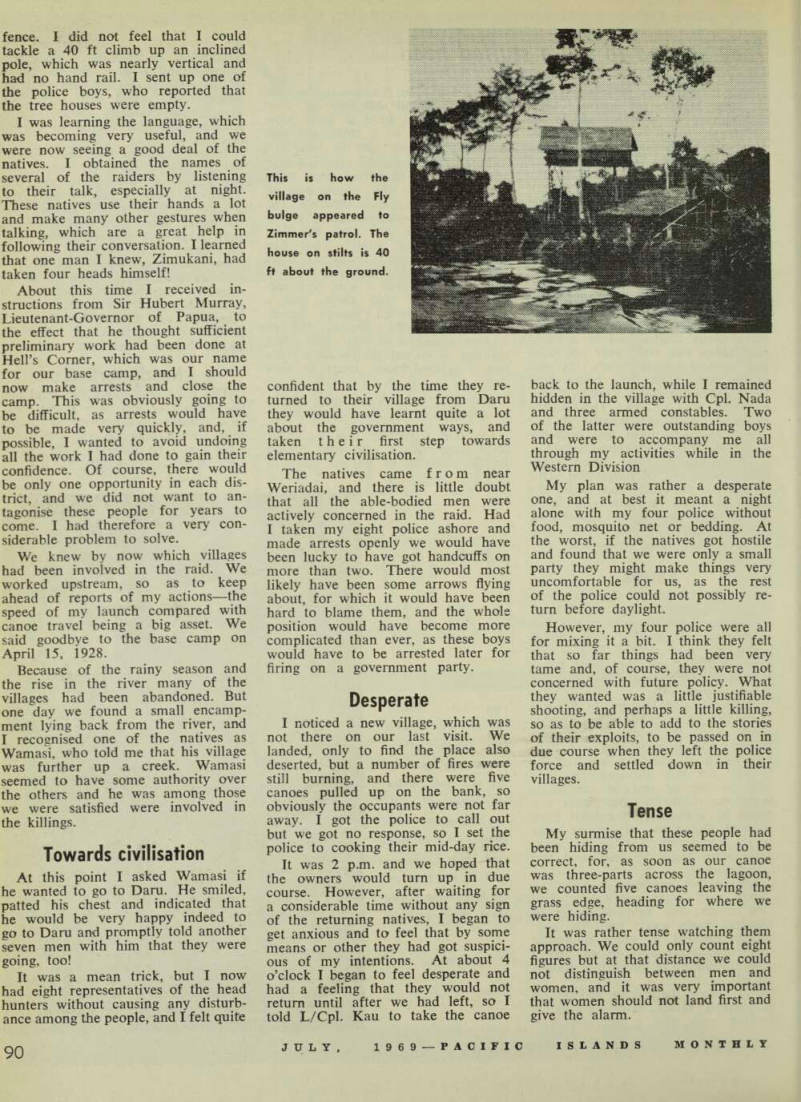 94
94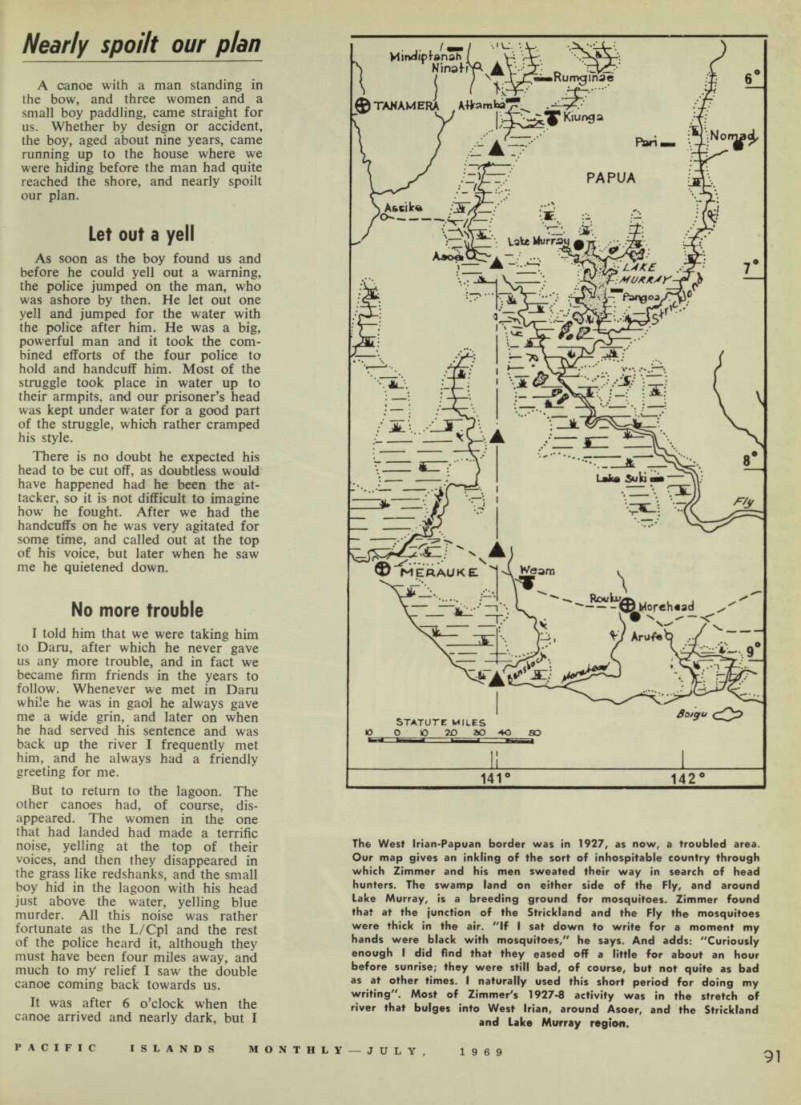 95
95 96
96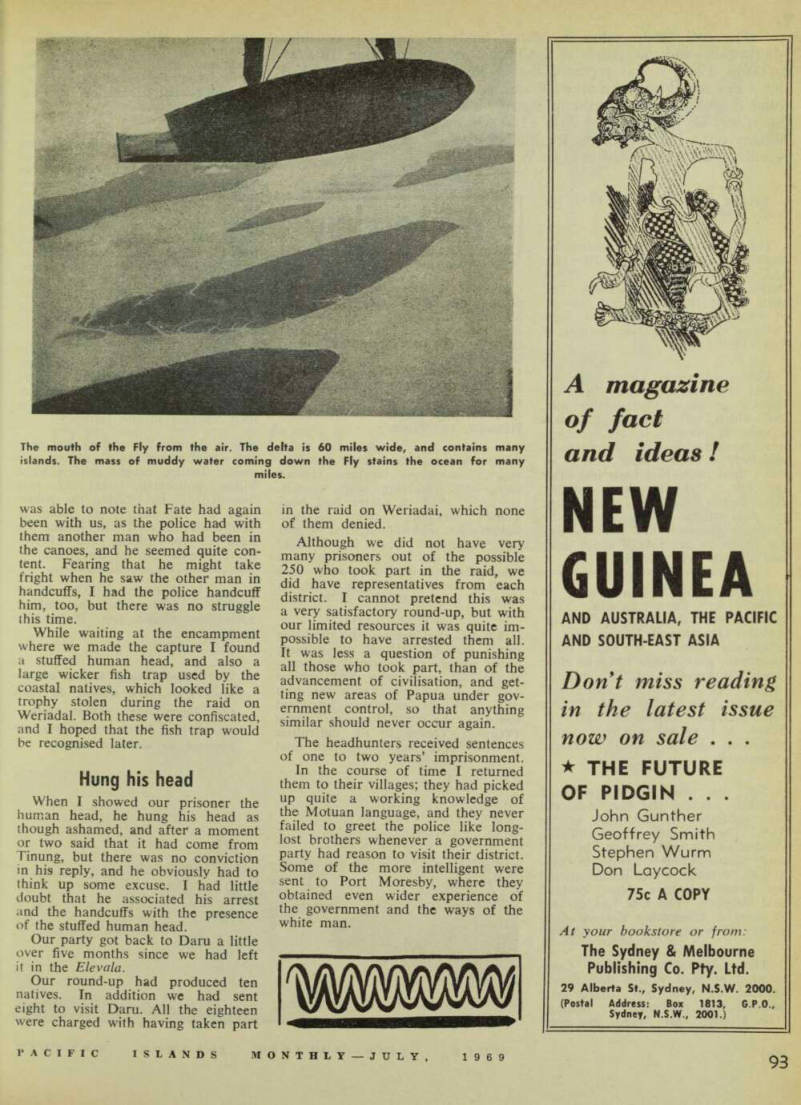 97
97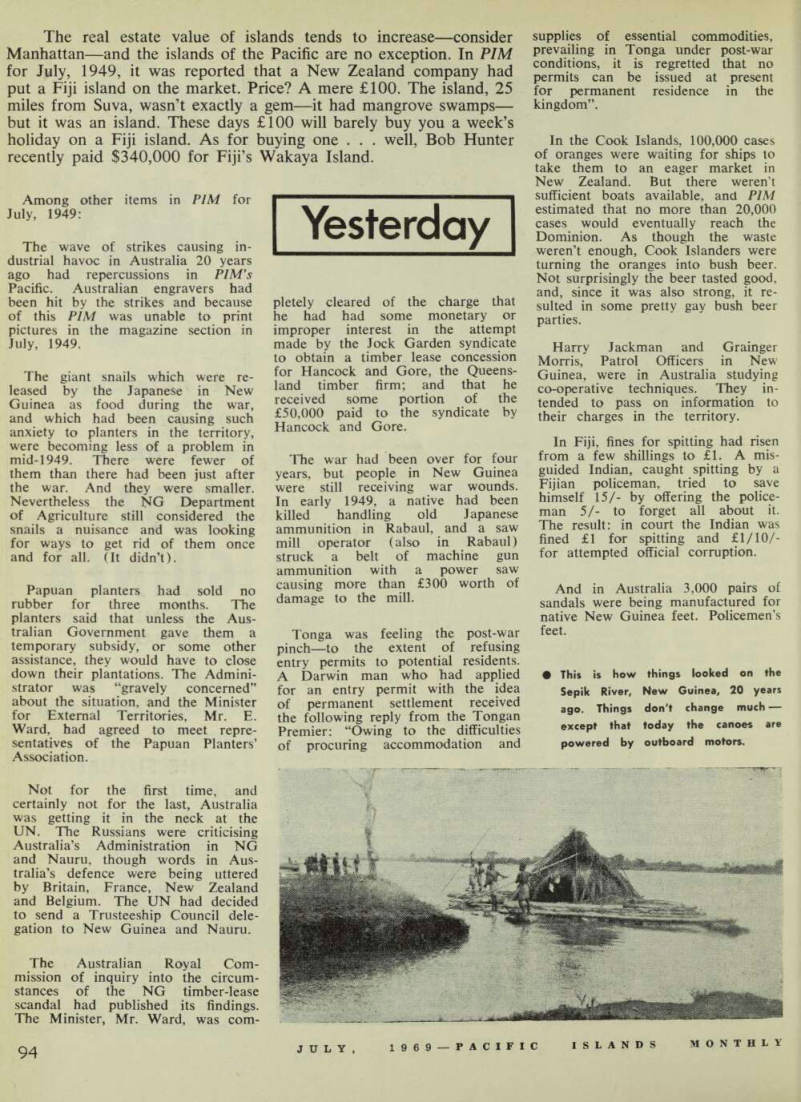 98
98 99
99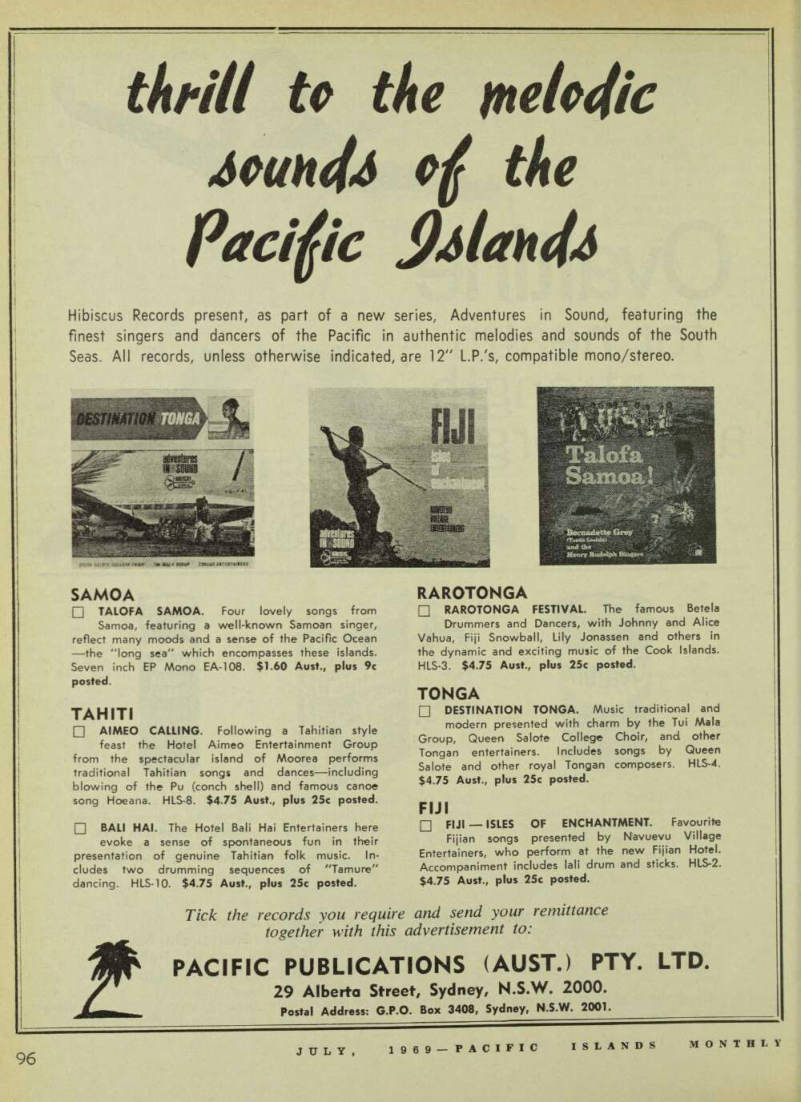 100
100 101
101 102
102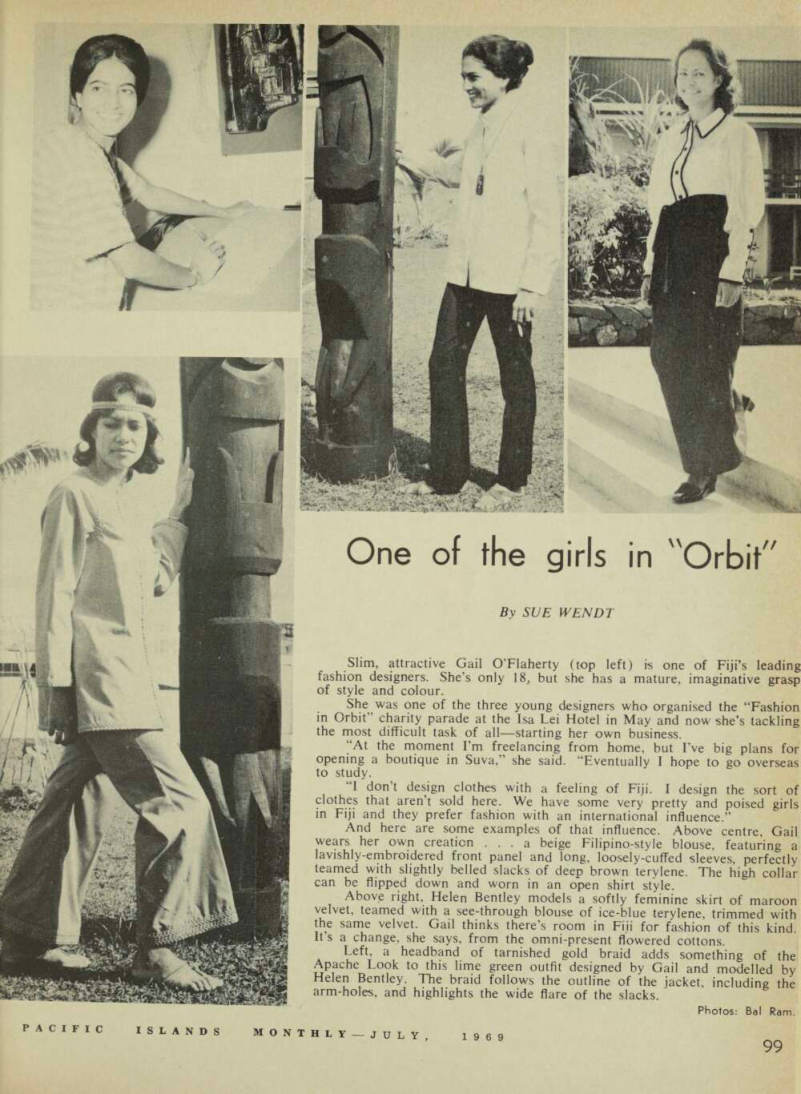 103
103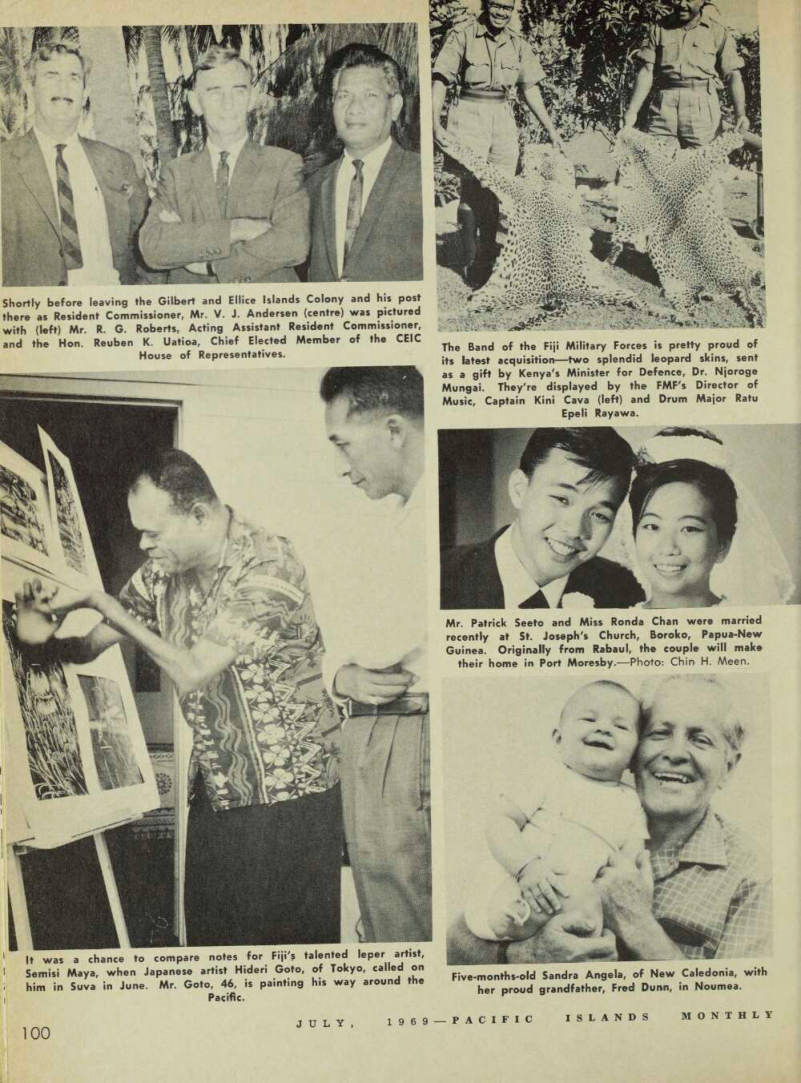 104
104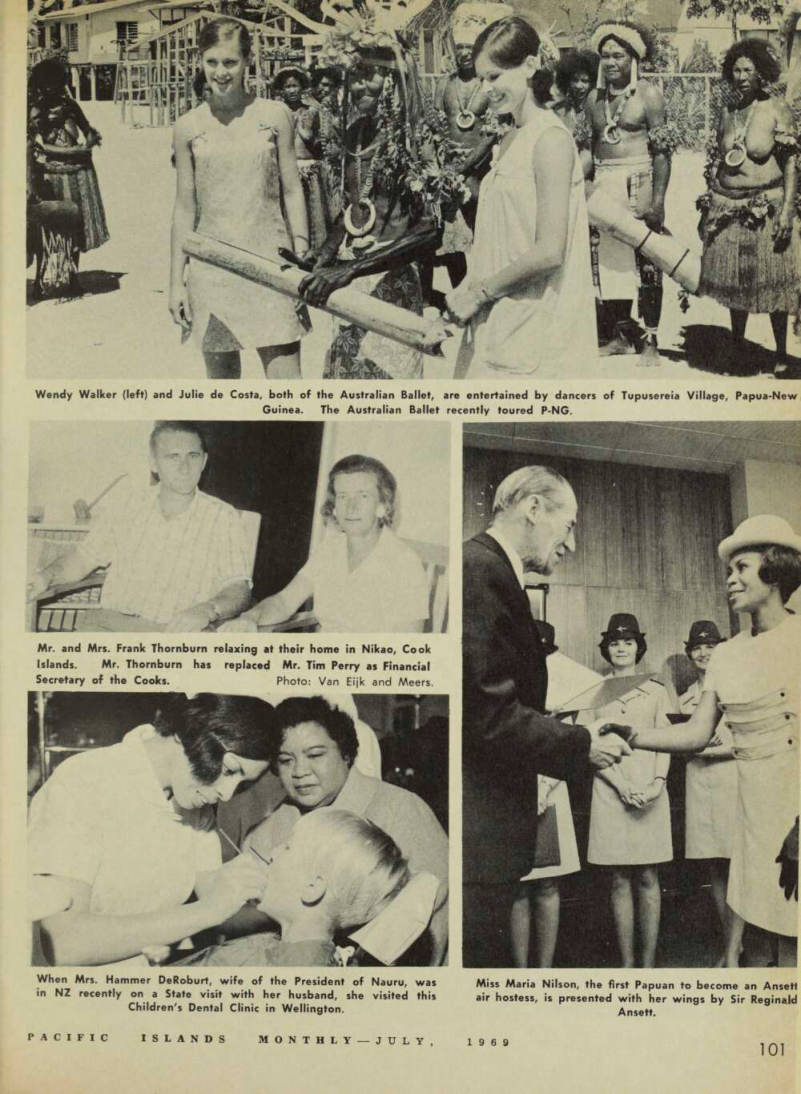 105
105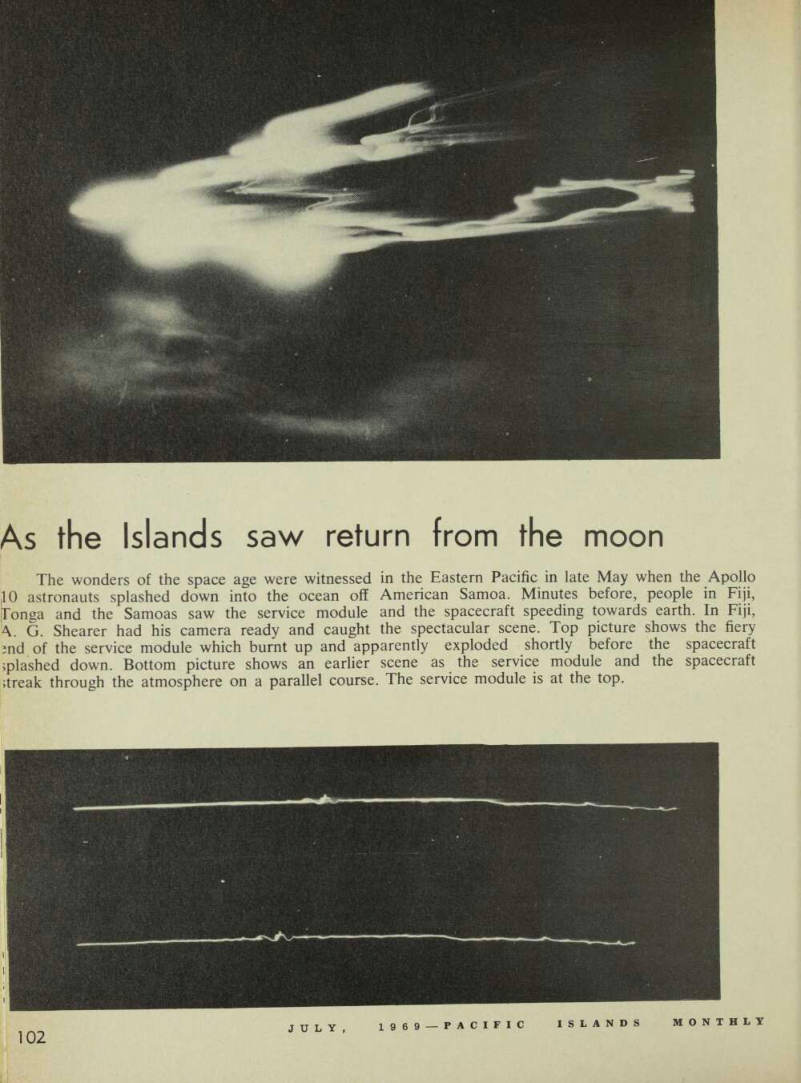 106
106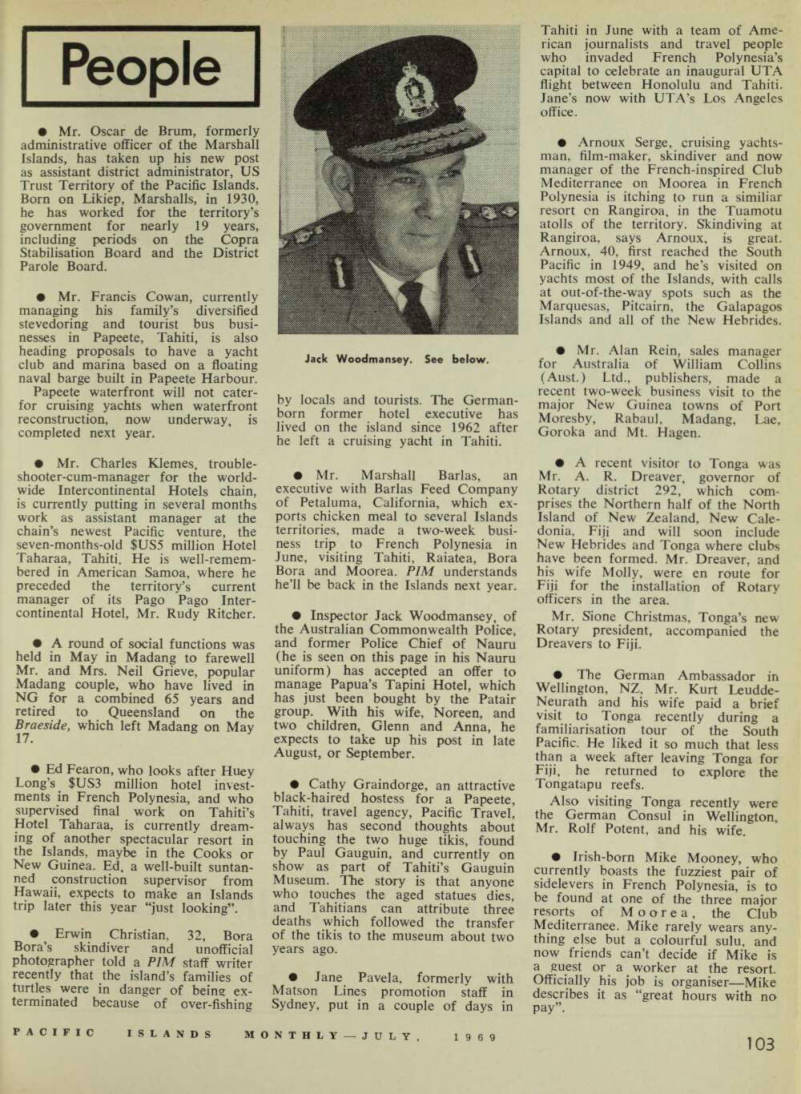 107
107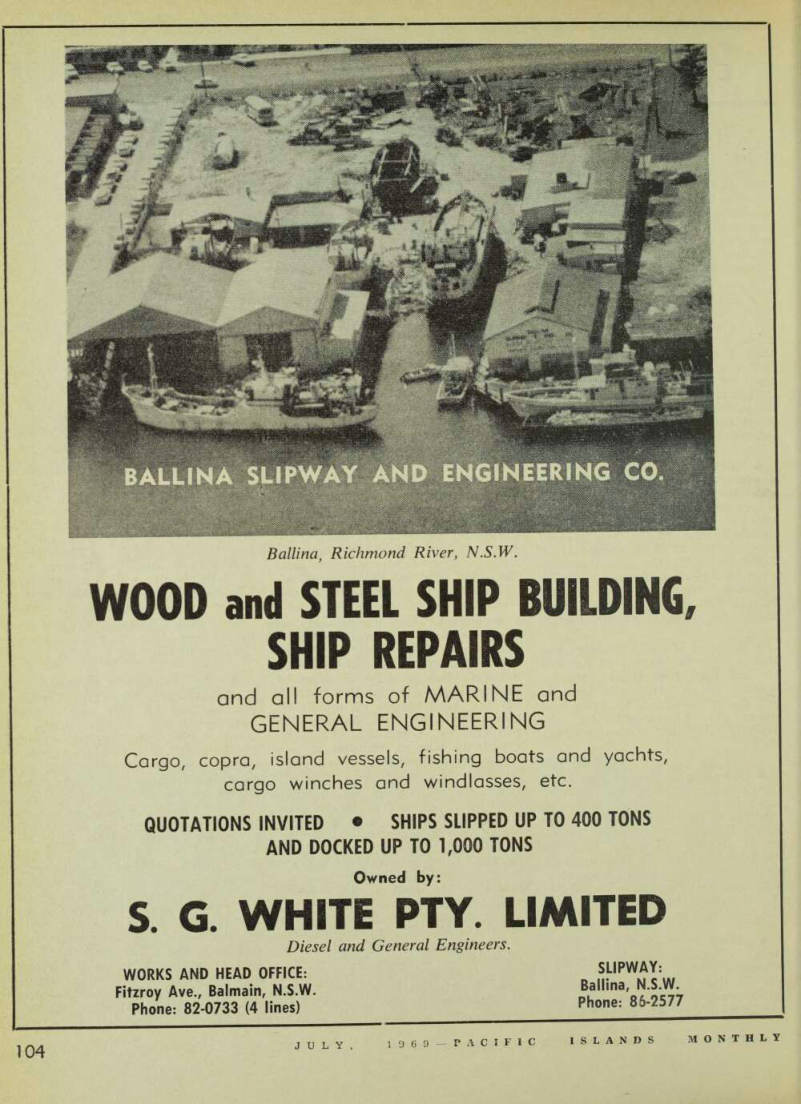 108
108 109
109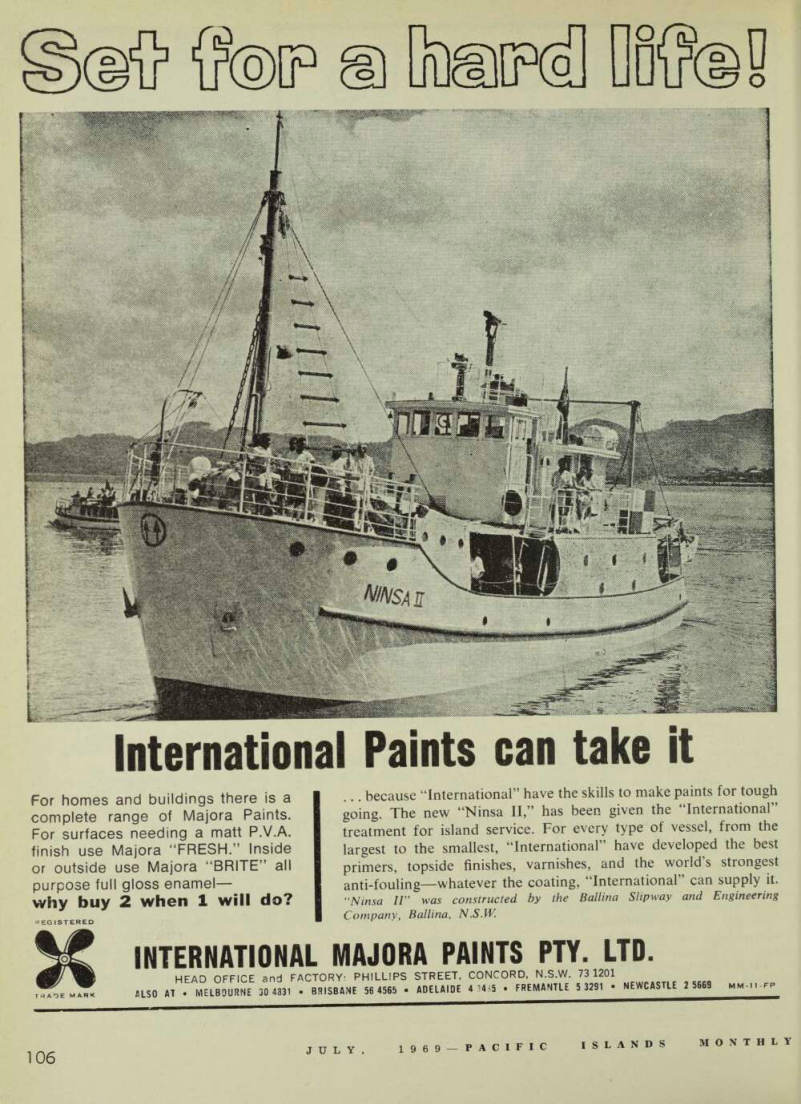 110
110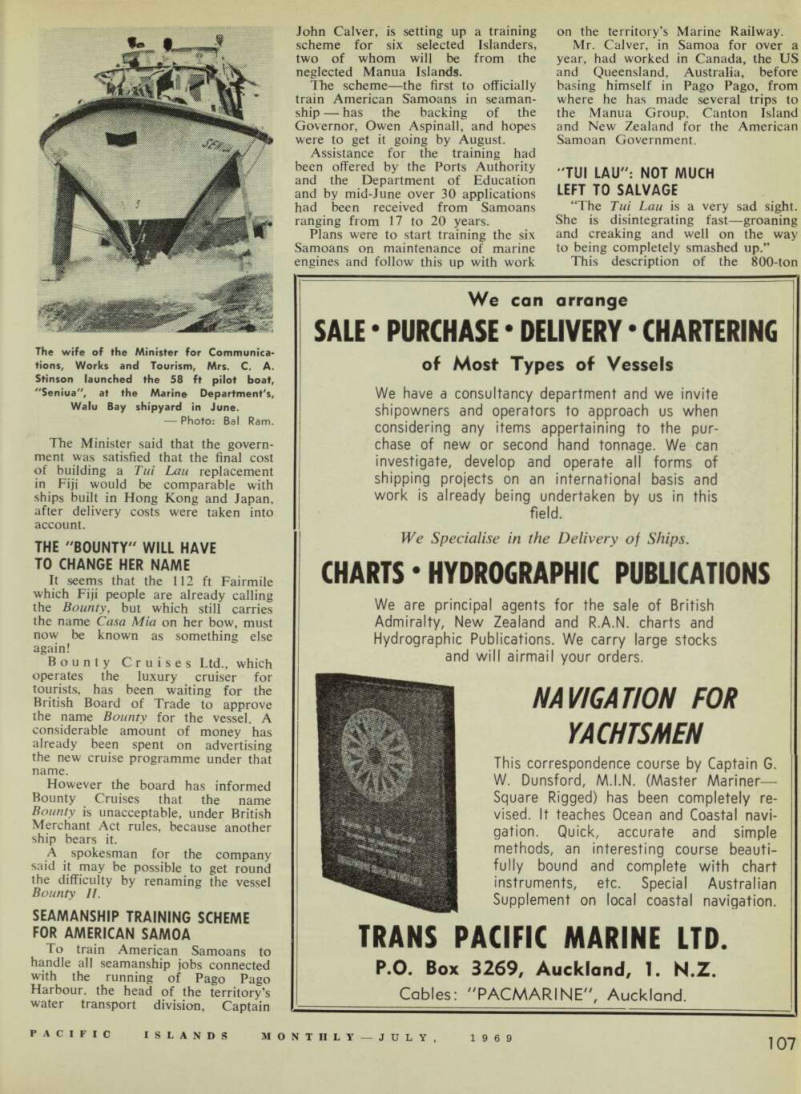 111
111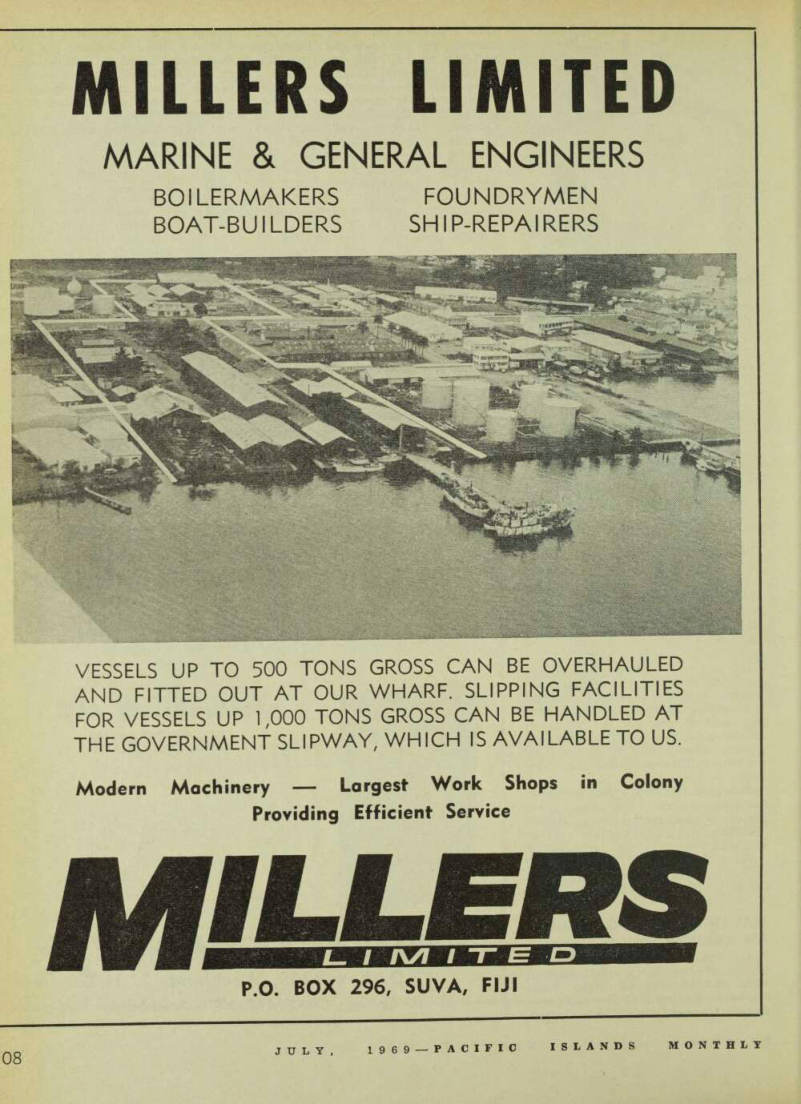 112
112 113
113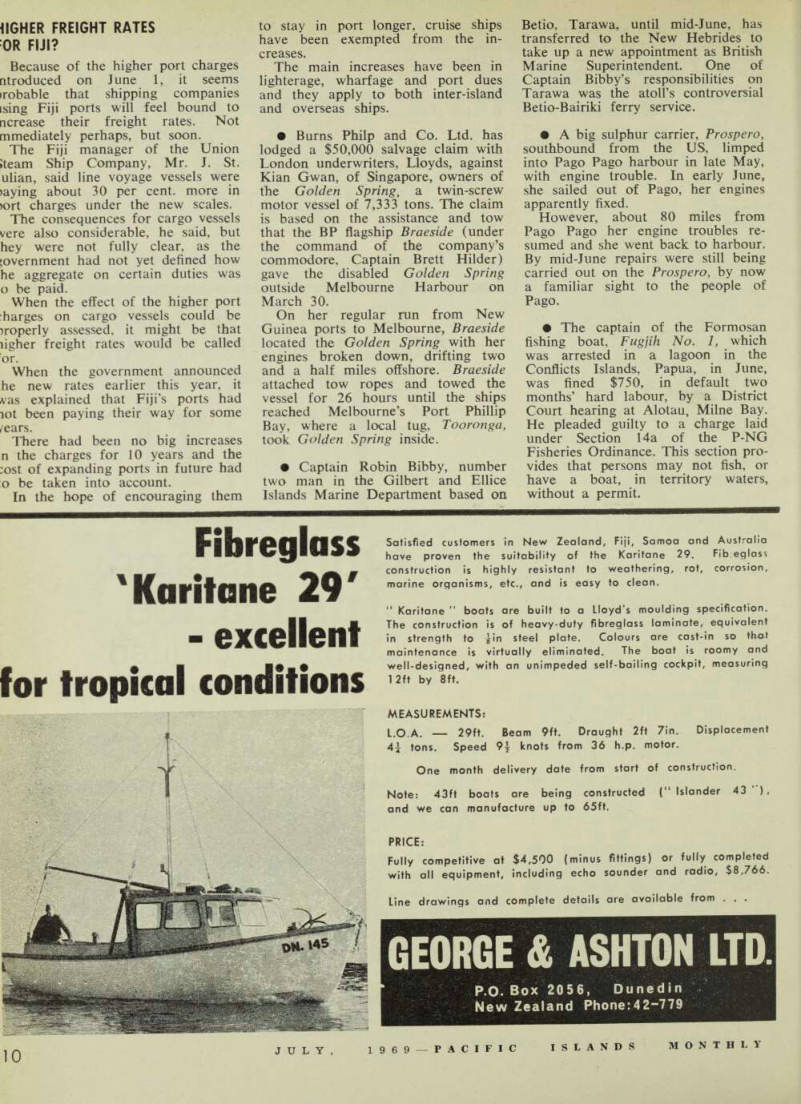 114
114 115
115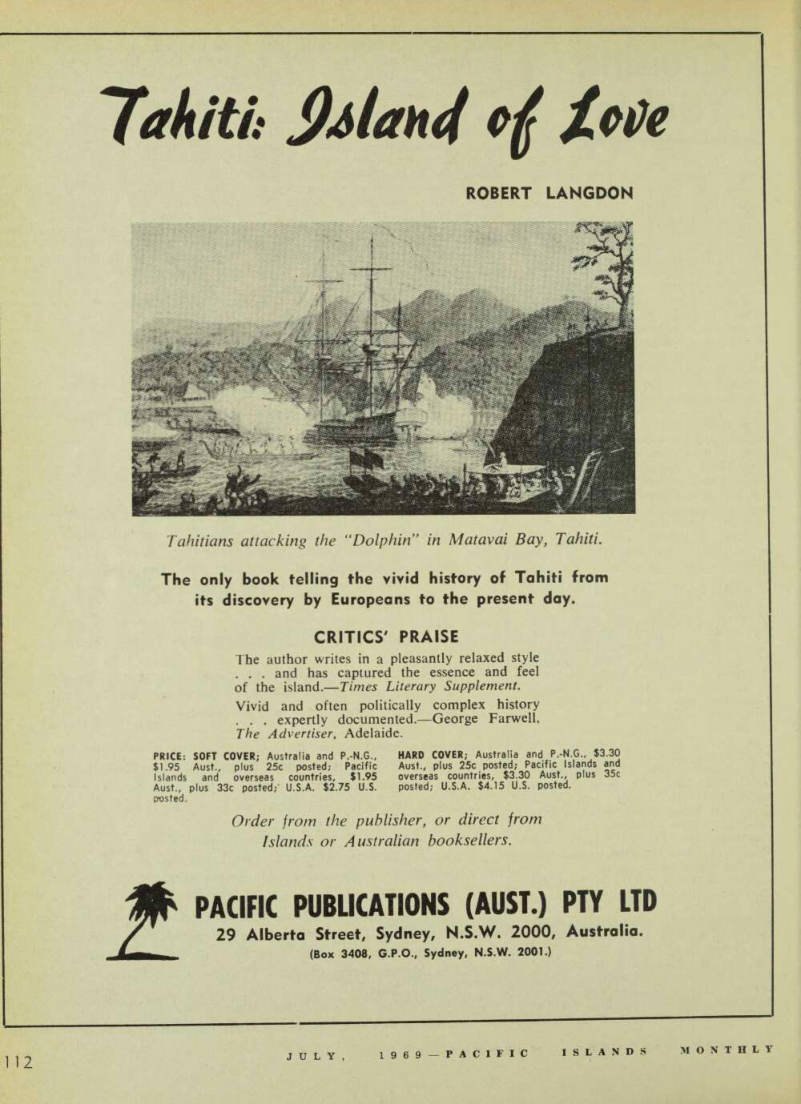 116
116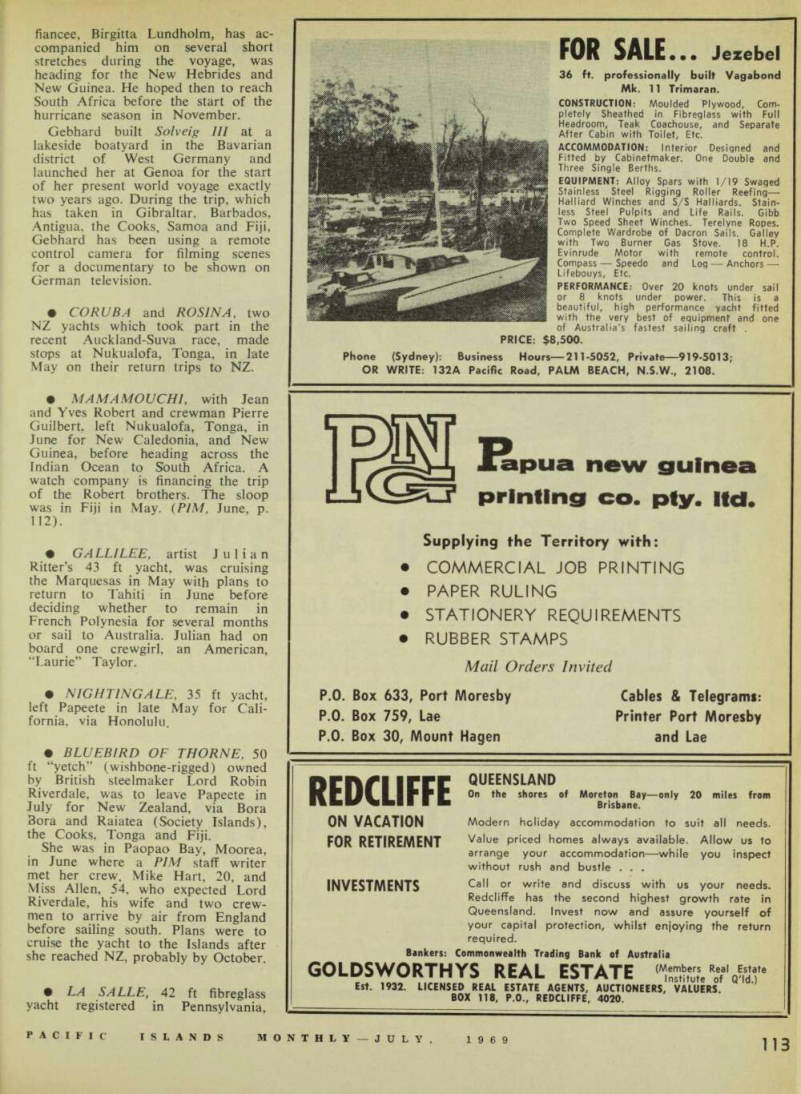 117
117 118
118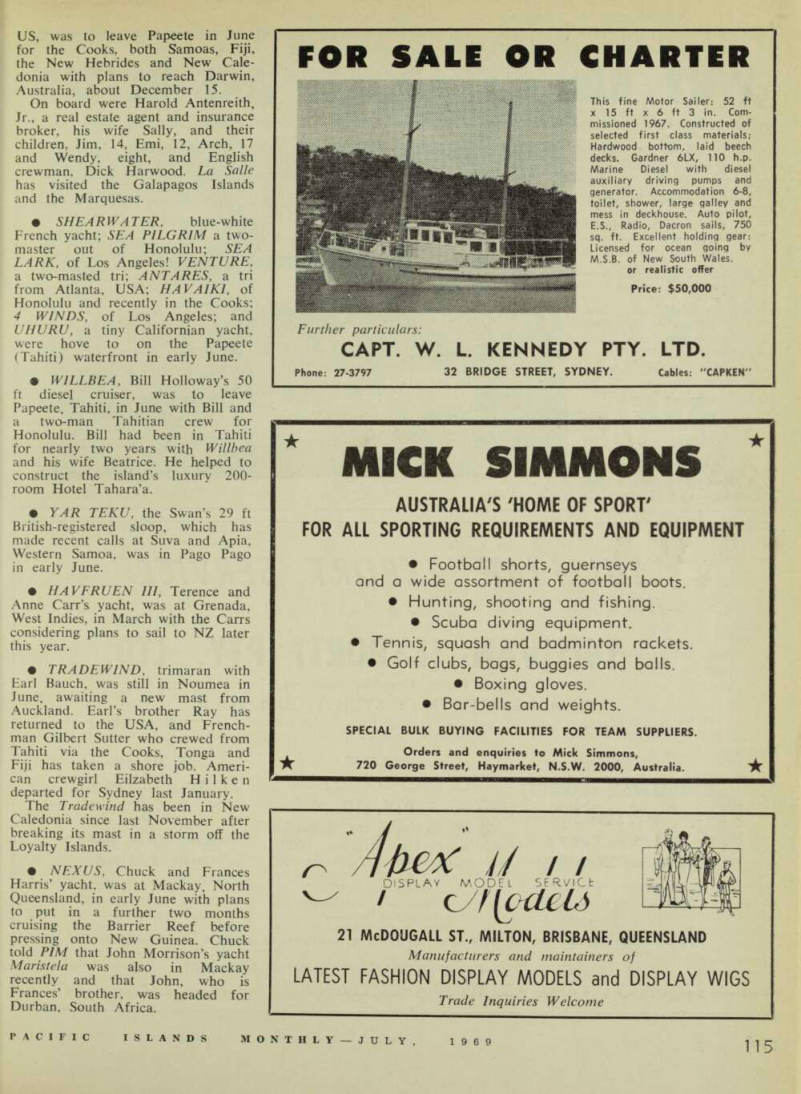 119
119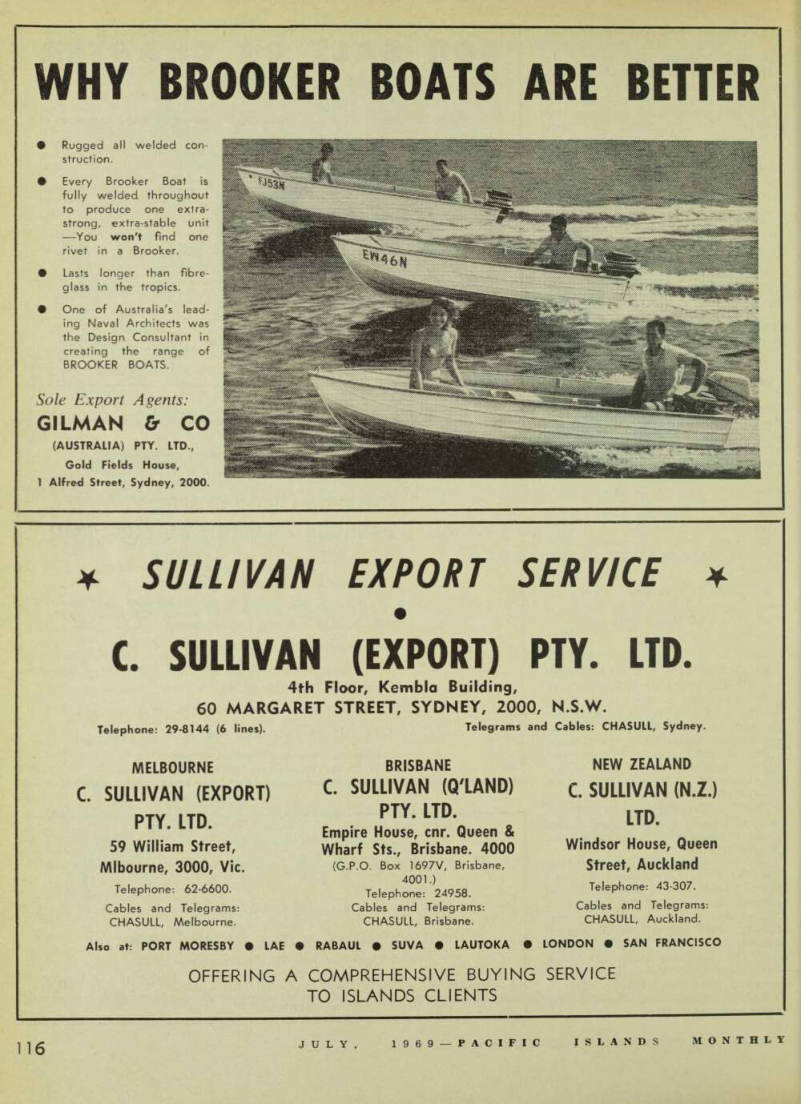 120
120 121
121 122
122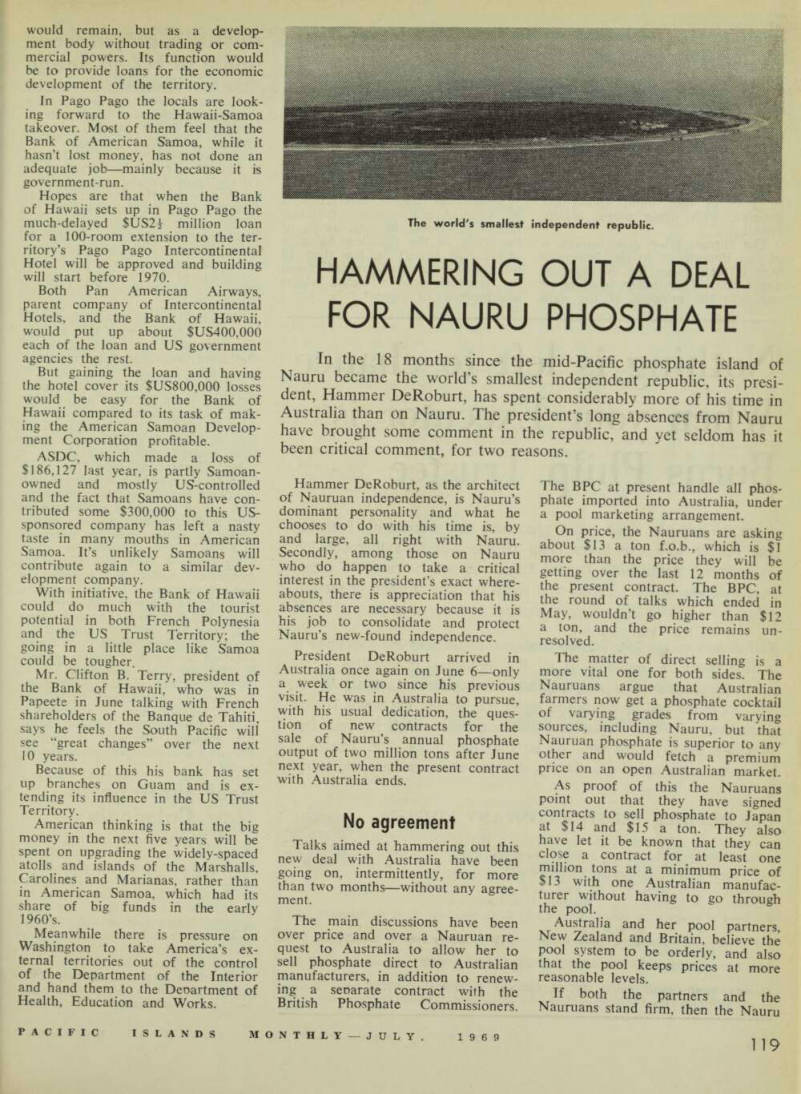 123
123 124
124 125
125 126
126 127
127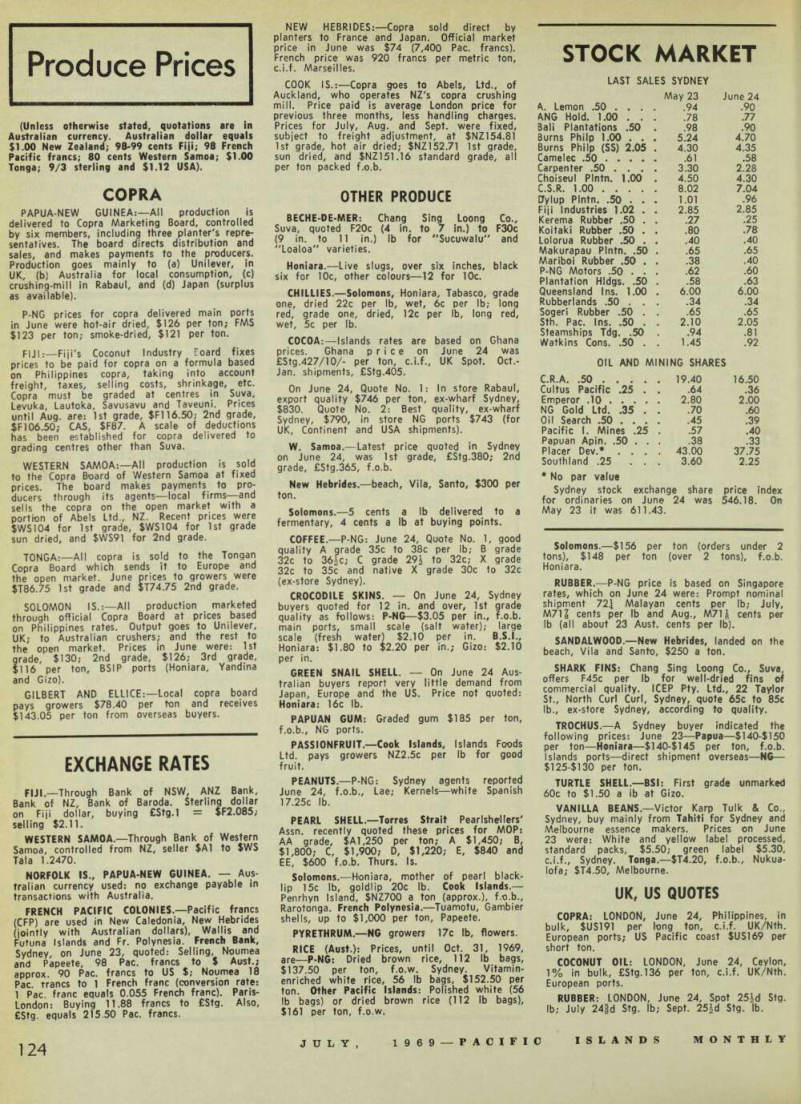 128
128 129
129 130
130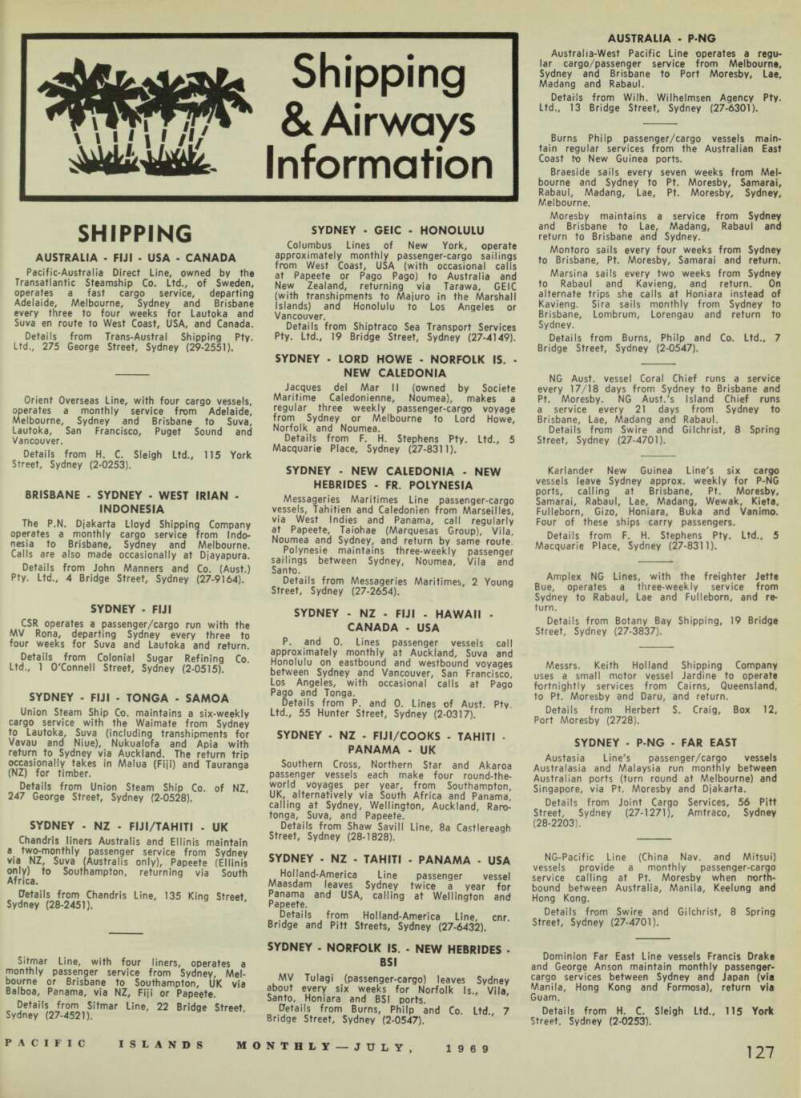 131
131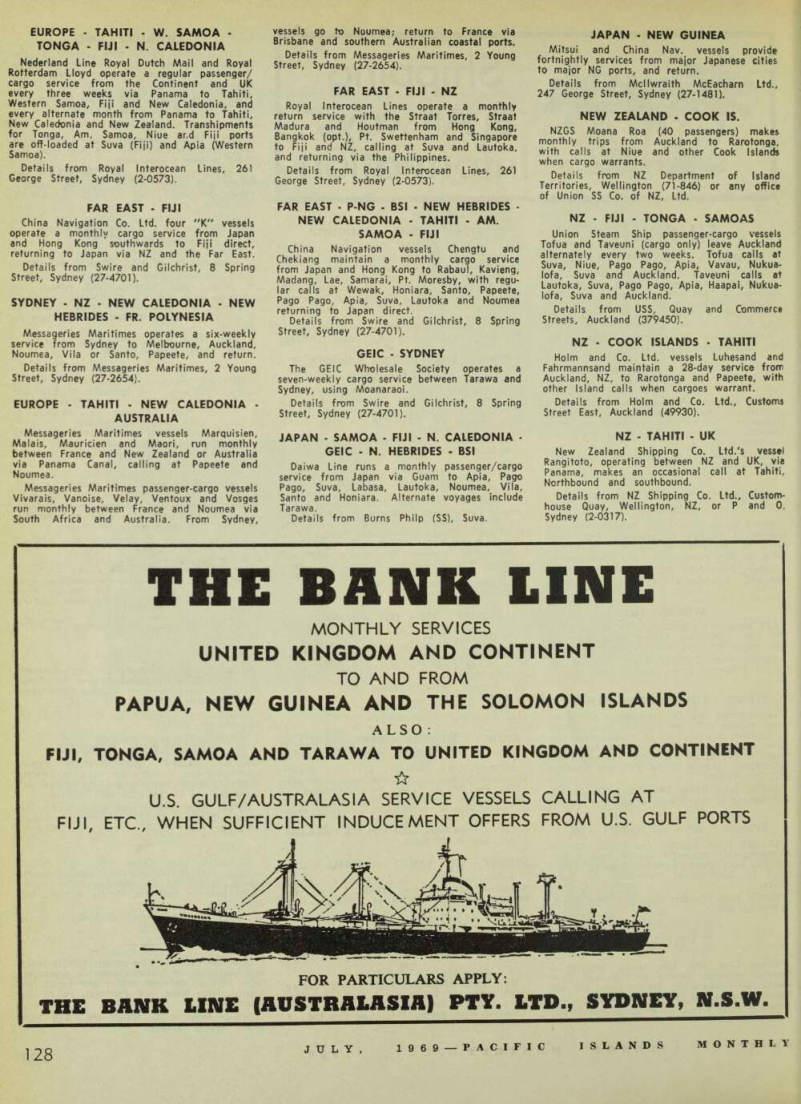 132
132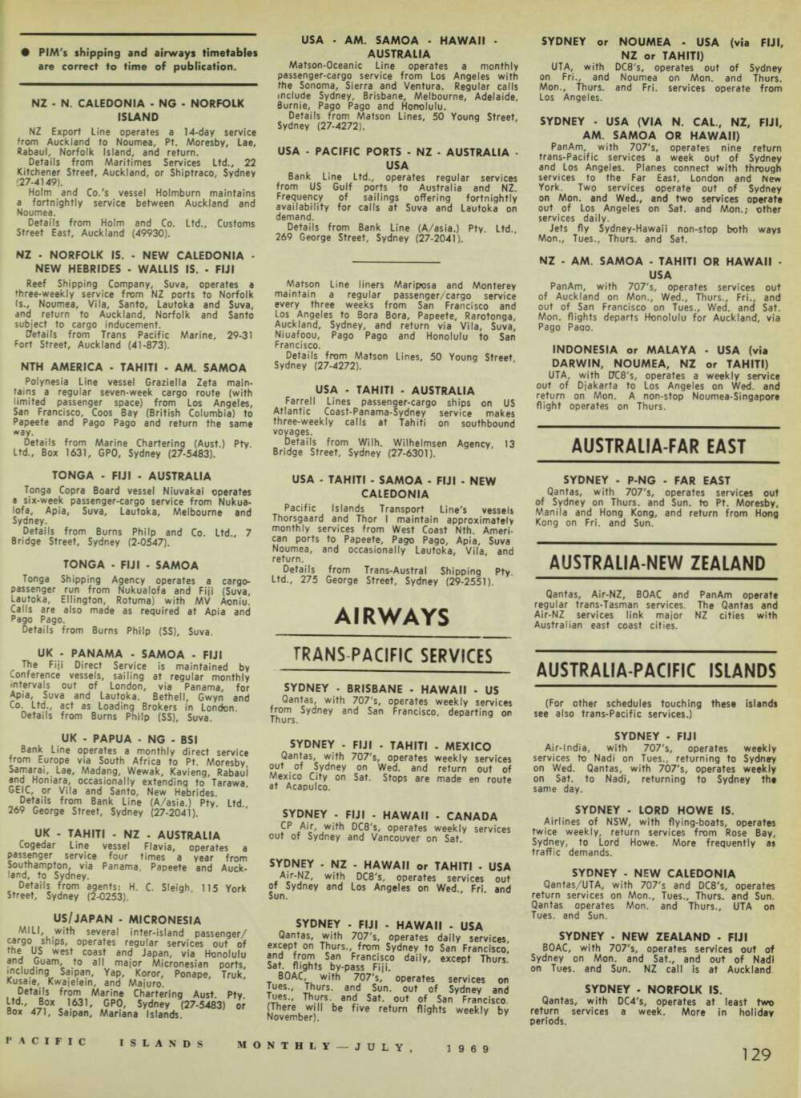 133
133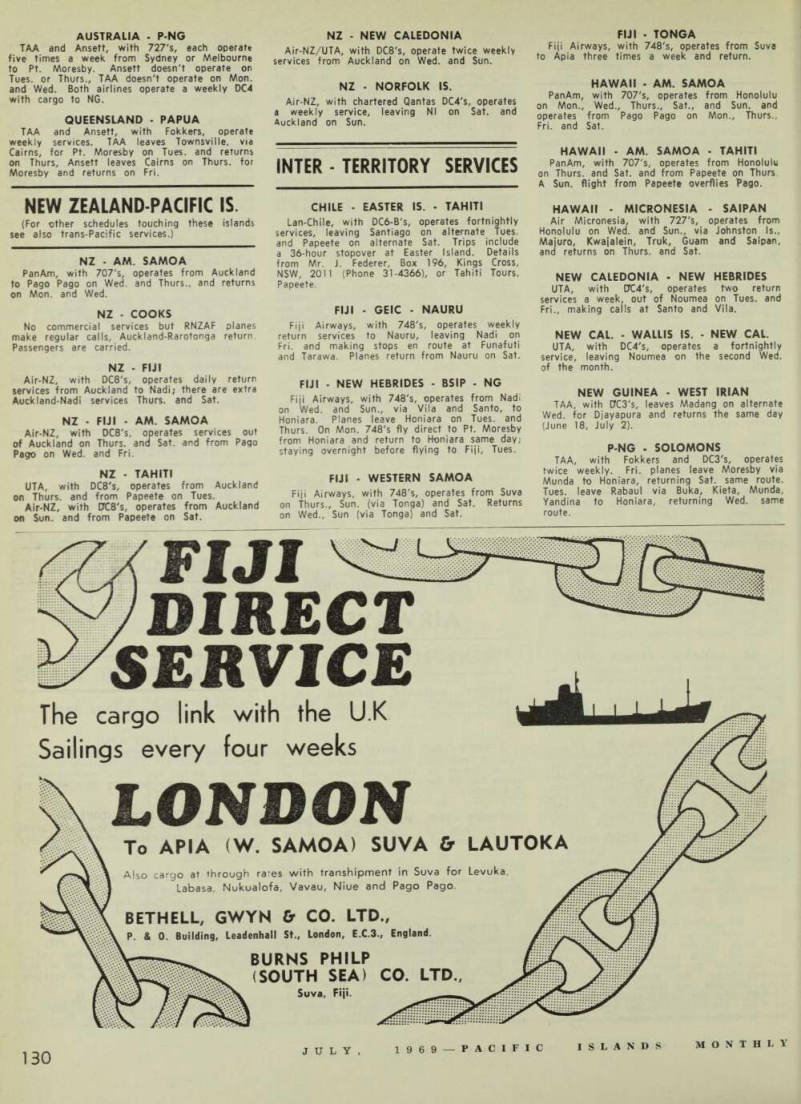 134
134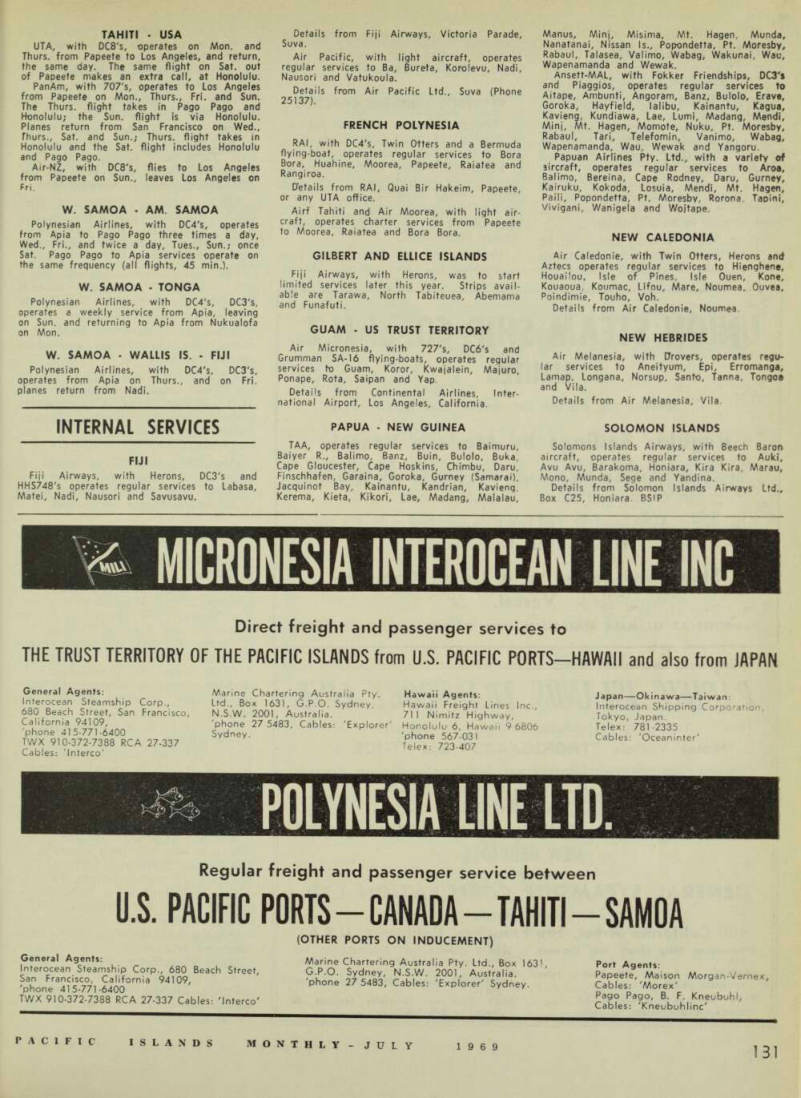 135
135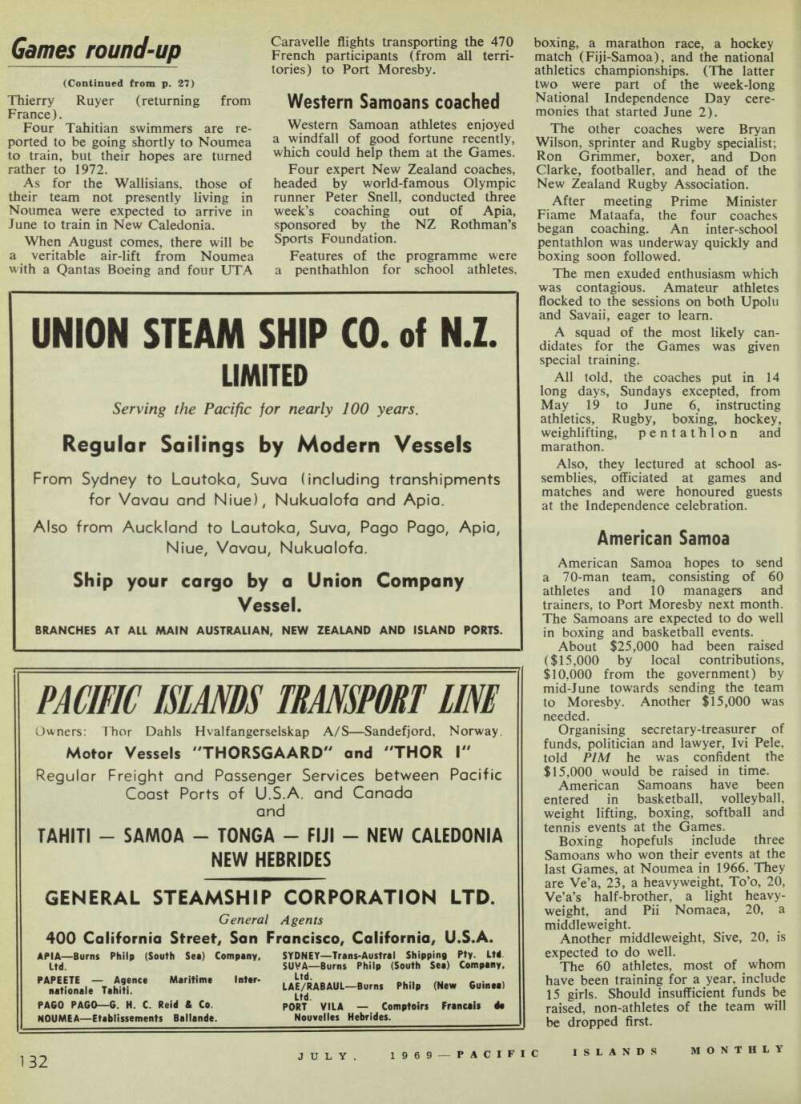 136
136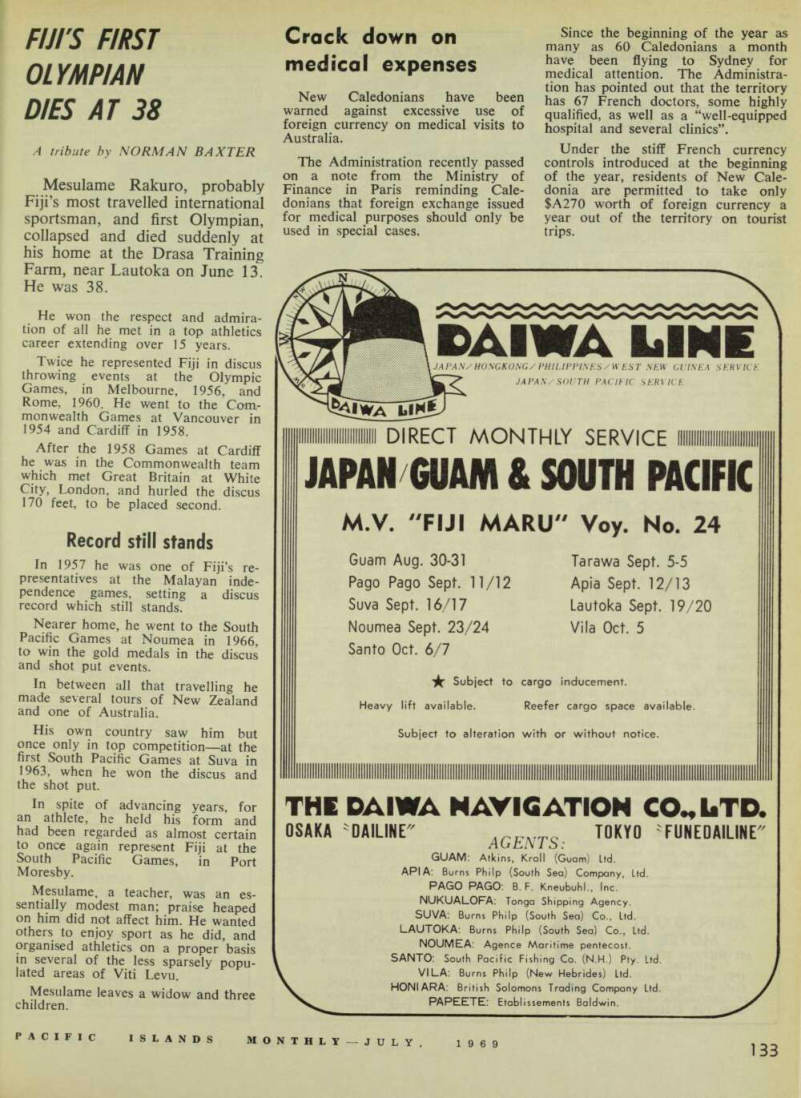 137
137 138
138 139
139 140
140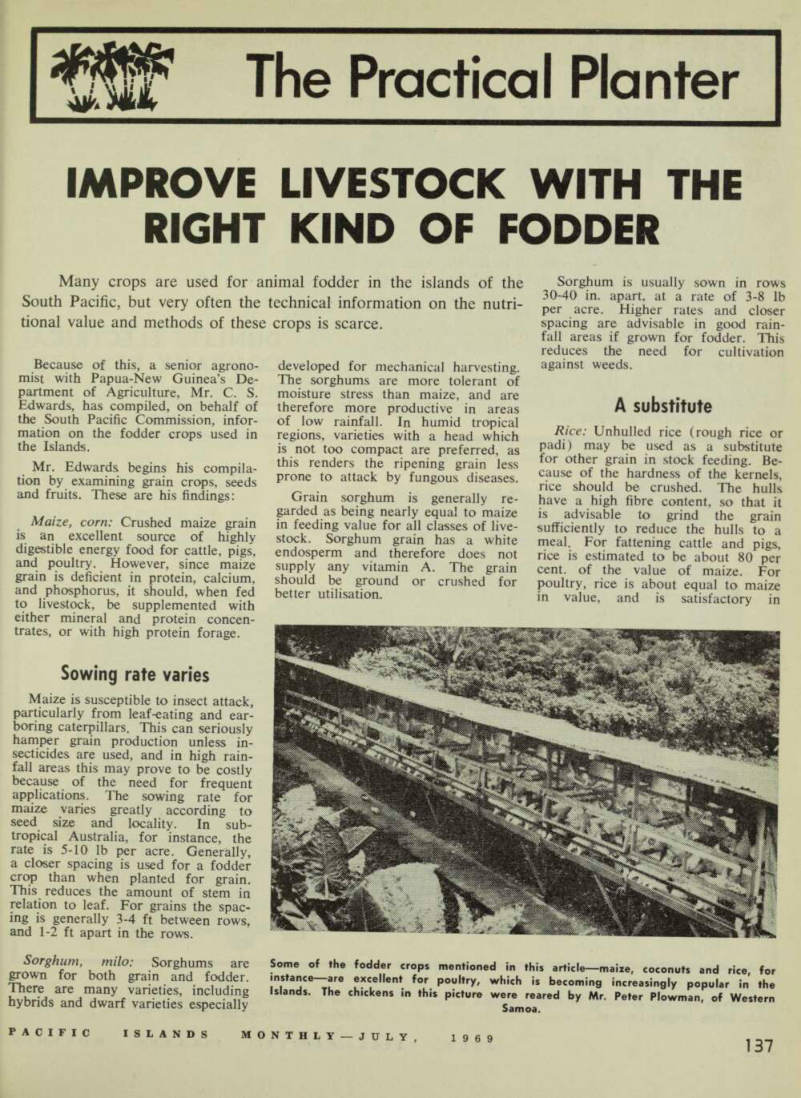 141
141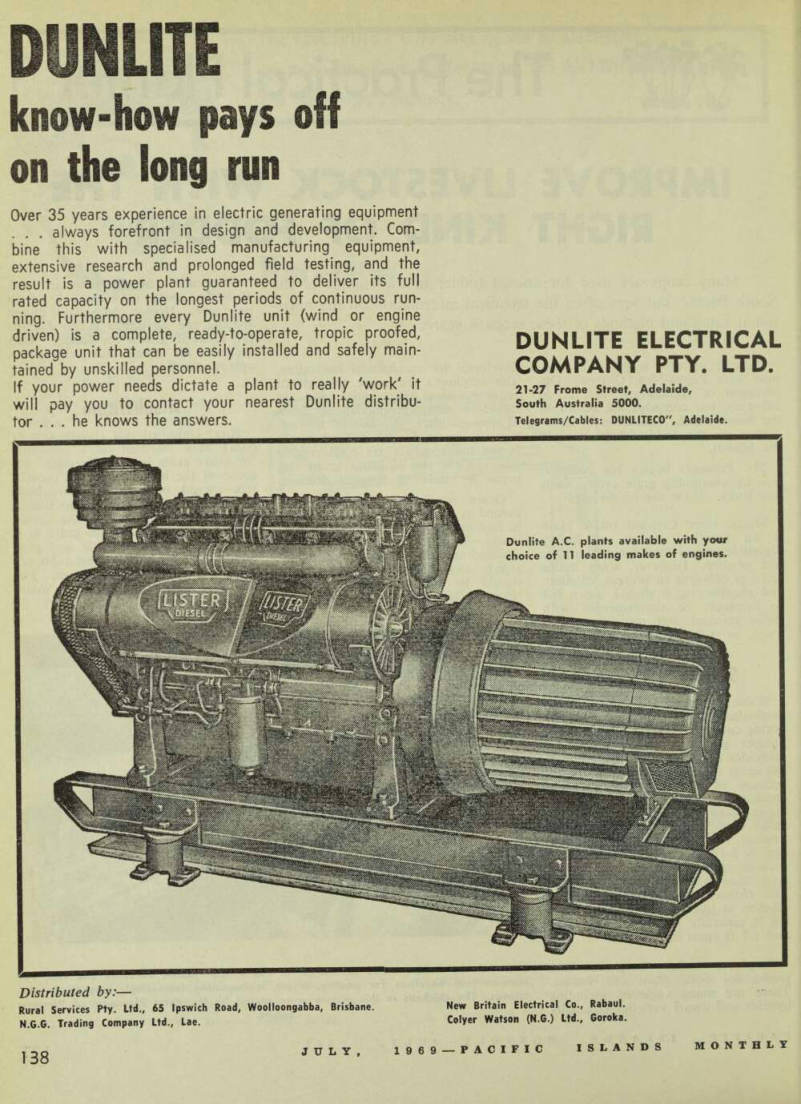 142
142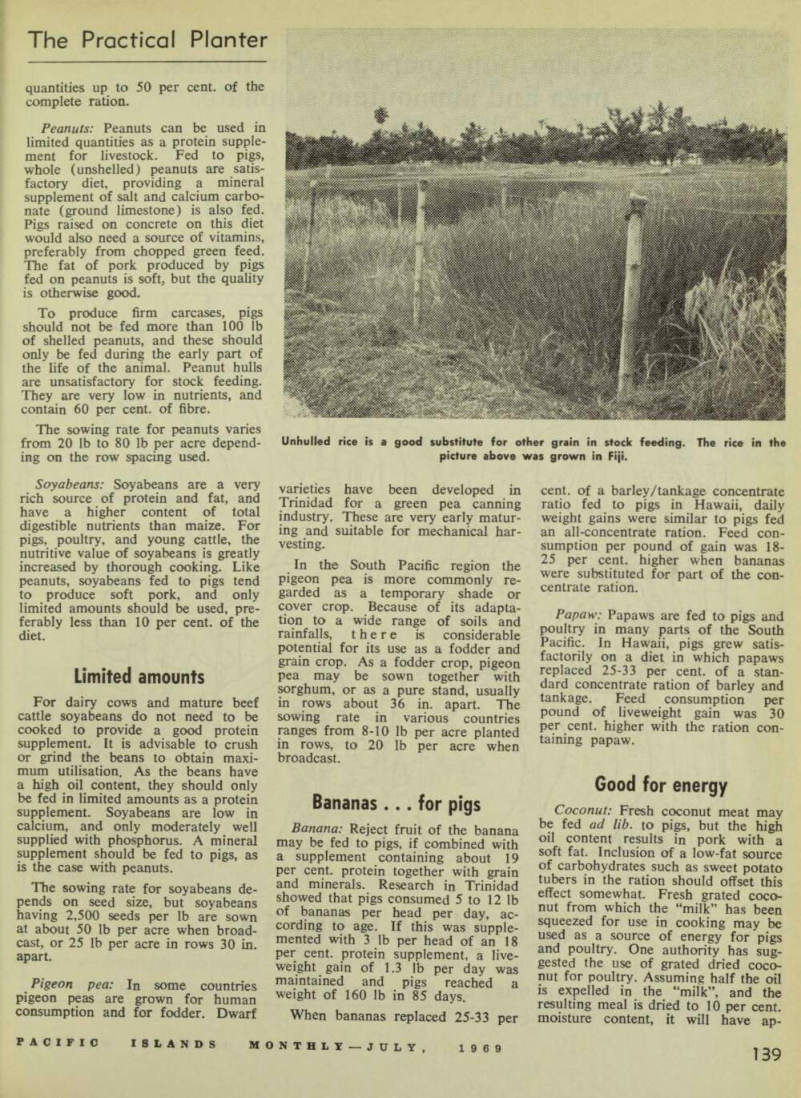 143
143 144
144 145
145 146
146 147
147 148
148 149
149 150
150 151
151 152
152 153
153 154
154 155
155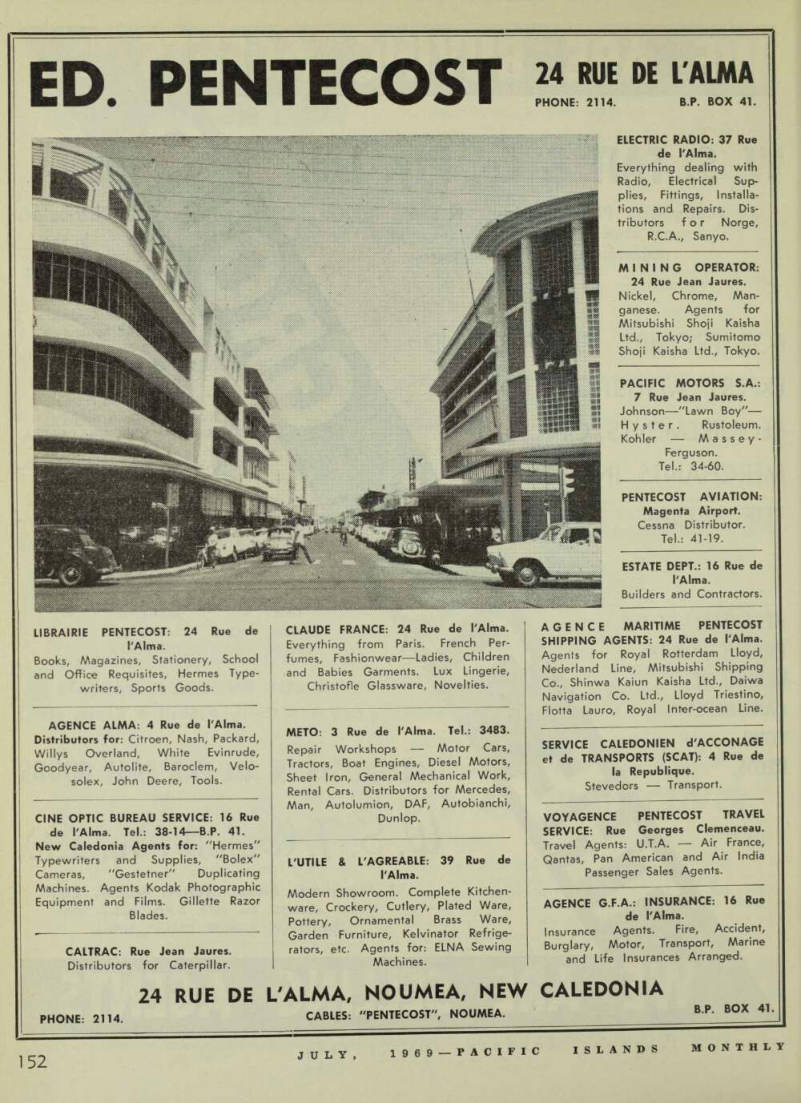 156
156 157
157 158
158 159
159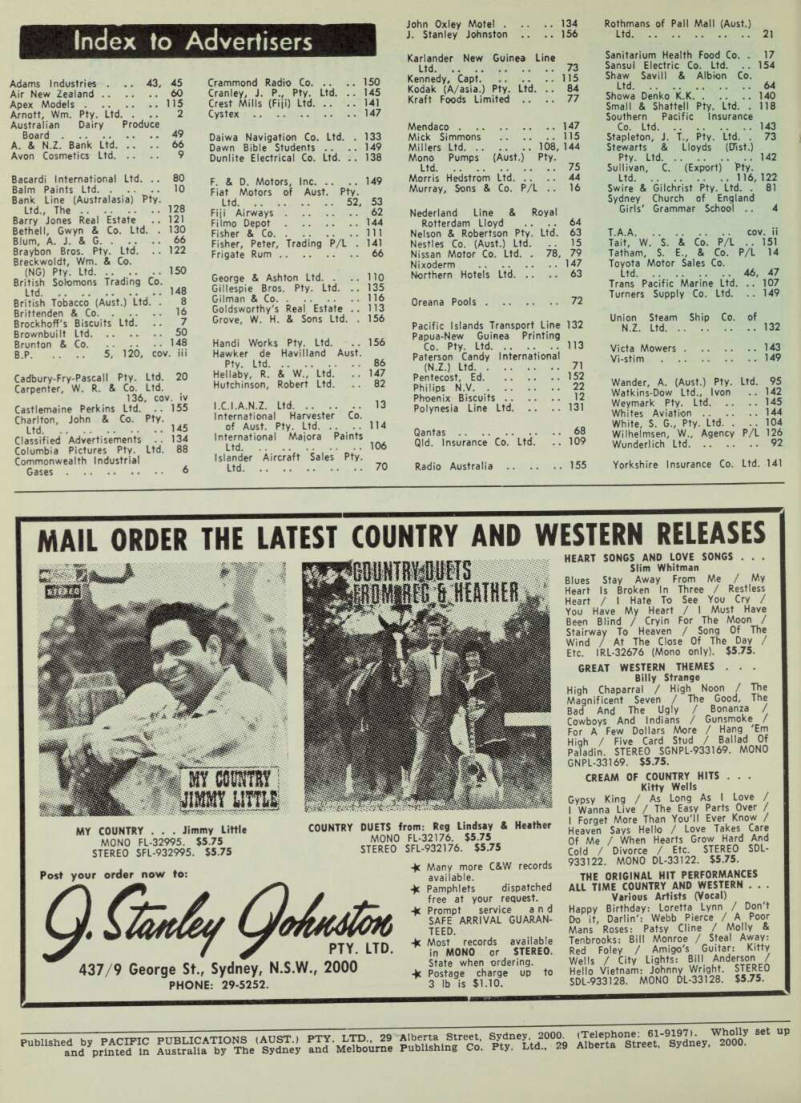 160
160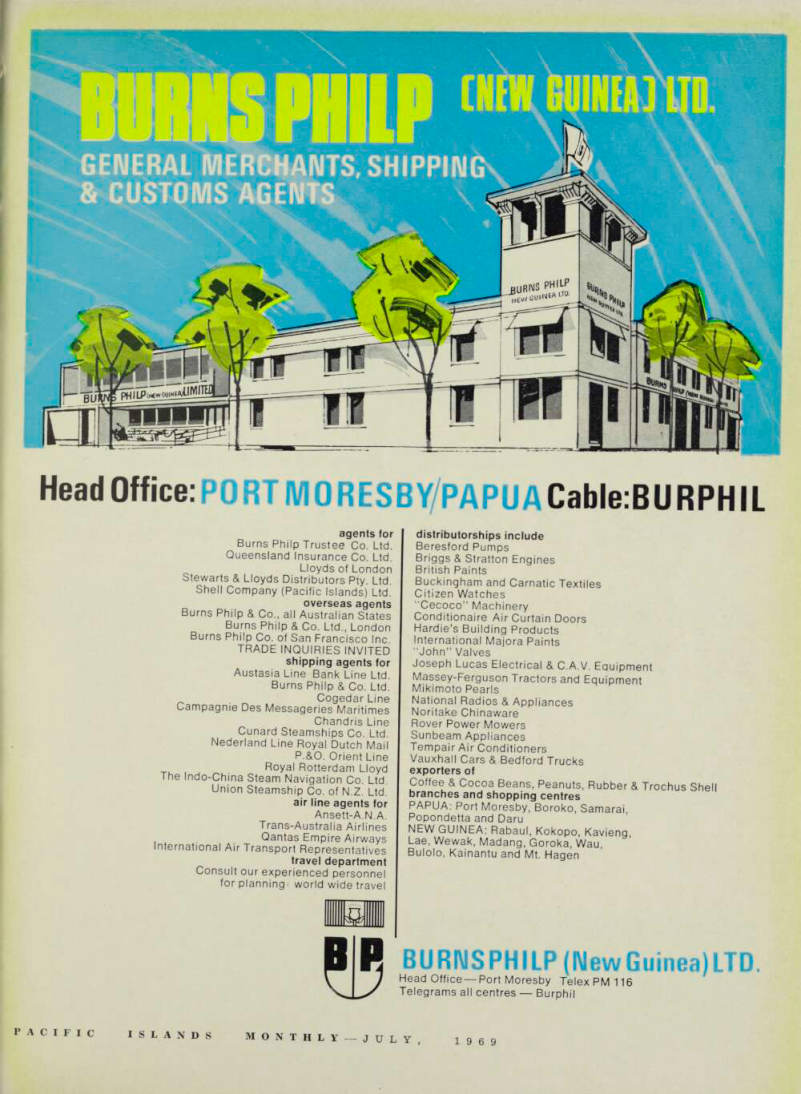 161
161 162
162 163
163