Chronology of events in Fiji Crisis
pp. 34-35 · Read in the full issue
THE following is a
chronology of events in
Fiji’s political crisis:
May 19: Indigenous Fijian gunmen led by George Speight, a bankrupt businessman and himself only part-Fijian, storm parliament and take Prime Minister Mahendra Chaudhry, his cabinet and members of parliament hostage on the first anniversary of Chaudhry’s election as Fiji’s first ethnic Indian premier.
Looting and rioting break out in Fiji’s capital, Suva, targetted at Indian businesses.
May 20: Speight declares himself
interim prime minister and denies that his men had beaten Chaudhry. The premier later collapses. Speight releases 20
hostages and five MPs are later allowed to go- May 21: The coup leader warns he will start executing hostages, including Chaudhry, unless he is allowed to rule the country.
May 22: Speight admits Chaudhry has been beaten up. The president, Ratu Sir Kamisese Mara, says he cannot guarantee Chaudhry will be retained as prime minister after the crisis is over.
May 23; Fiji’s powerful Great Council of Chiefs calls for the coup leaders to release their hostages.
The planned signing in Fiji in June of a new agreement between European Union member states and 71 former Africa, Caribbean and Pacific colonies is cancelled.
May 25; Fiji’s traditional chiefs call for Chaudhry to be replaced by an indigenous
Fijian. Despite the backing, the coup
leaders reiterate their refusal to release the hostages.
May 26; The United States warns that moves to replace the elected government appeared unconstitutional and would result in sanctions.
The coup leaders appeared poised for victory after emerging triumphant in a showdown with the army outside parliament.
May 27: President Ratu Sir Kamisese Mara dismisses the Chaudhry government,
Continued next page
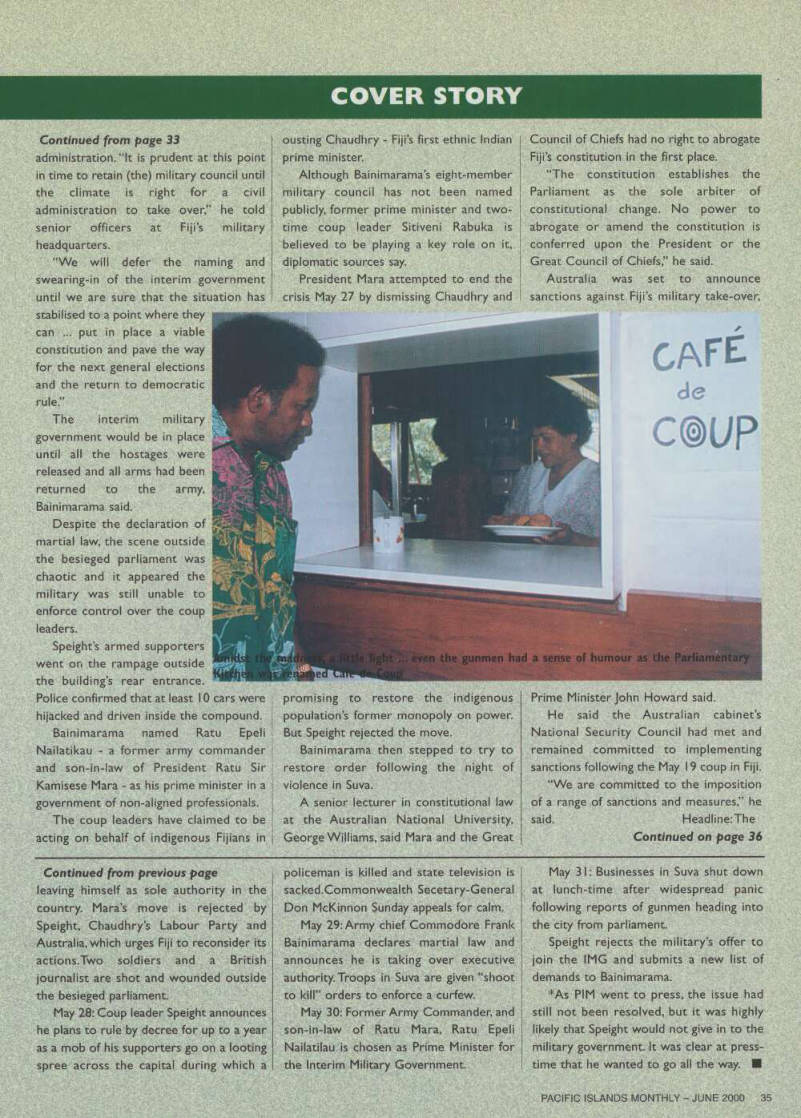
GCC Chairman Siteni Rabuka, back in greens again
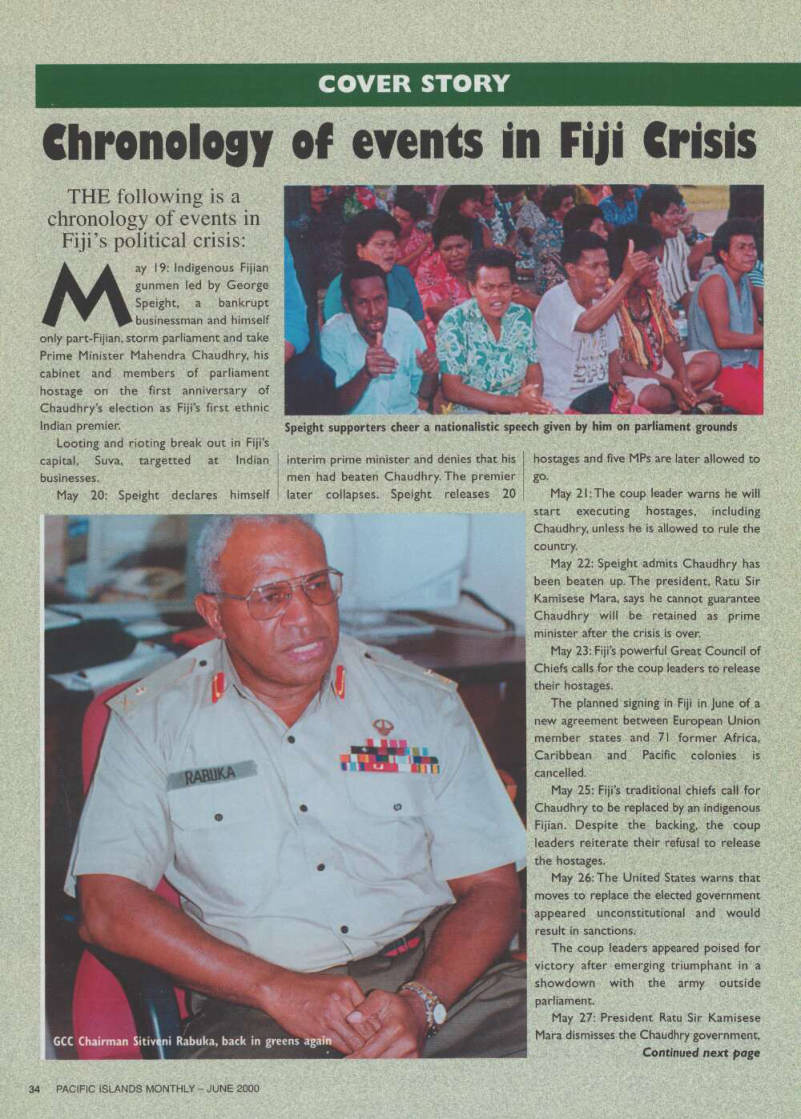
Speight supporters cheer a nationalistic speech given by him on parliament grounds
Continued from previous page
leaving himself as sole authority in the country. Mara’s move is rejected by
Speight, Chaudhry’s Labour Party and
Australia, which urges Fiji to reconsider its actions. Two soldiers and a British journalist are shot and wounded outside
the besieged parliament.
May 28: Coup leader Speight announces he plans to rule by decree for up to a year as a mob of his supporters go on a looting spree across the capital during which a
policeman is killed and state television is sacked. Commonwealth Secetary-General Don McKinnon Sunday appeals for calm.
May 29: Army chief Commodore Frank Bainimarama declares martial law and announces he is taking over executive authority. Troops in Suva are given “shoot to kill” orders to enforce a curfew.
May 30: Former Army Commander, and son-in-law of Ratu Mara, Ratu Epeli Nailatilau is chosen as Prime Minister for the Interim Military Government.
May 31: Businesses in Suva shut down at lunch-time after widespread panic following reports of gunmen heading into the city from parliament.
Speight rejects the military’s offer to join the IMG and submits a new list of demands to Bainimarama. *As RIM went to press, the issue had still not been resolved, but it was highly likely that Speight would not give in to the military government. It was clear at press time that he wanted to go all the way. ■