Telecommunication restructuring
p. 35 · Read in the full issue
needs careful analysis
WITH the advent of
globalisation, many
countries are moving quick to restructure their state enterprises to meet the chal lenges of a more open trading environ ment.
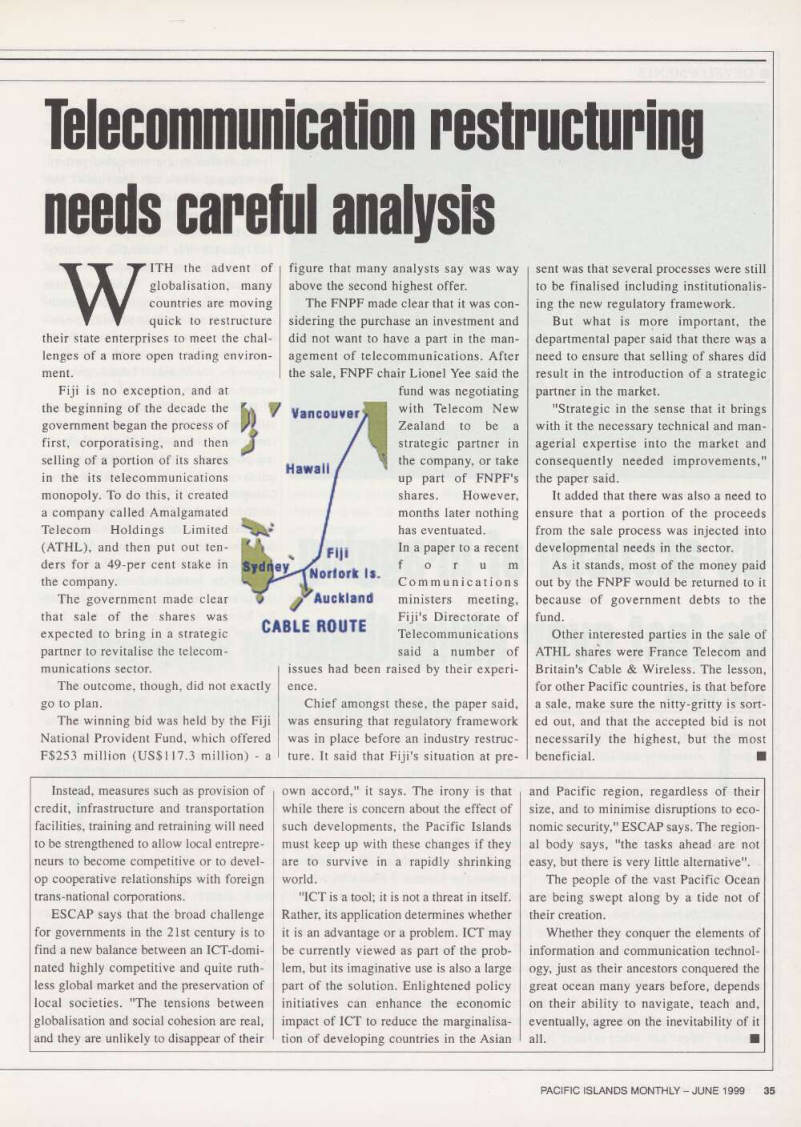
Fiji is no exception, and at the beginning of the decade the government began the process of first, corporatising, and then selling of a portion of its shares in the its telecommunications monopoly. To do this, it created a company called Amalgamated Telecom Holdings Limited (ATHL), and then put out ten ders for a 49-per cent stake in the company.
The government made clear that sale of the shares was expected to bring in a strategic partner to revitalise the telecom munications sector.
The outcome, though, did not exactly go to plan.
The winning bid was held by the Fiji National Provident Fund, which offered F 5253 million (U 55117.3 million) - a
figure that many analysts say was way above the second highest offer.
The FNPF made clear that it was con sidering the purchase an investment and did not want to have a part in the man agement of telecommunications. After the sale, FNPF chair Lionel Yee said the
fund was negotiating with Telecom New Zealand to be a strategic partner in the company, or take up part of FNPF's shares. However, months later nothing has eventuated.
In a paper to a recent forum Communications
ministers meeting,
Fiji's Directorate of Telecommunications said a number of
issues had been raised by their experi ence.
Chief amongst these, the paper said, was ensuring that regulatory framework was in place before an industry restruc ture. It said that Fiji's situation at pre
sent was that several processes were still to be finalised including institutionalis ing the new regulatory framework.
But what is more important, the departmental paper said that there was a need to ensure that selling of shares did result in the introduction of a strategic partner in the market.
"Strategic in the sense that it brings with it the necessary technical and man agerial expertise into the market and
consequently needed improvements,"
the paper said.
It added that there was also a need to ensure that a portion of the proceeds from the sale process was injected into developmental needs in the sector.
As it stands, most of the money paid out by the FNPF would be returned to it because of government debts to the fund.
Other interested parties in the sale of ATHL shares were France Telecom and Britain's Cable & Wireless. The lesson, for other Pacific countries, is that before a sale, make sure the nitty-gritty is sort ed out, and that the accepted bid is not necessarily the highest, but the most beneficial. ■