Heading back
pp. 35-39 · Read in the full issue

Focus On Vanuatu
Heading back into history
Vanuatu has once again in the past 12 months experienced the adverse effects of power struggles . Five years ago, former Prime Minister Walter Lini and his Vanuaaku Pati travelled a similar path
Reports by Patrick Decloitre
Is history repeating itself? Early in
1991, Walter Lini was still the presi dent of the then-powerful Vanuaaku Pati. He was also, and had been for the previous 11 years, prime minister of Vanuatu.
In August 1991, a few weeks before the general election that year, he was oust ed from Vanuaaku Pati, and one month later from prime ministership - on both occasions by Donald Kalpokas.
A few months later, in December 1991, the Union of Moderate Parties (UMP) came to power in parliament and elected Maxime Carlot as prime minister.
In the past 12 months - prior to, during and after the elections - UMP seems to have gone through a similar power crisis.
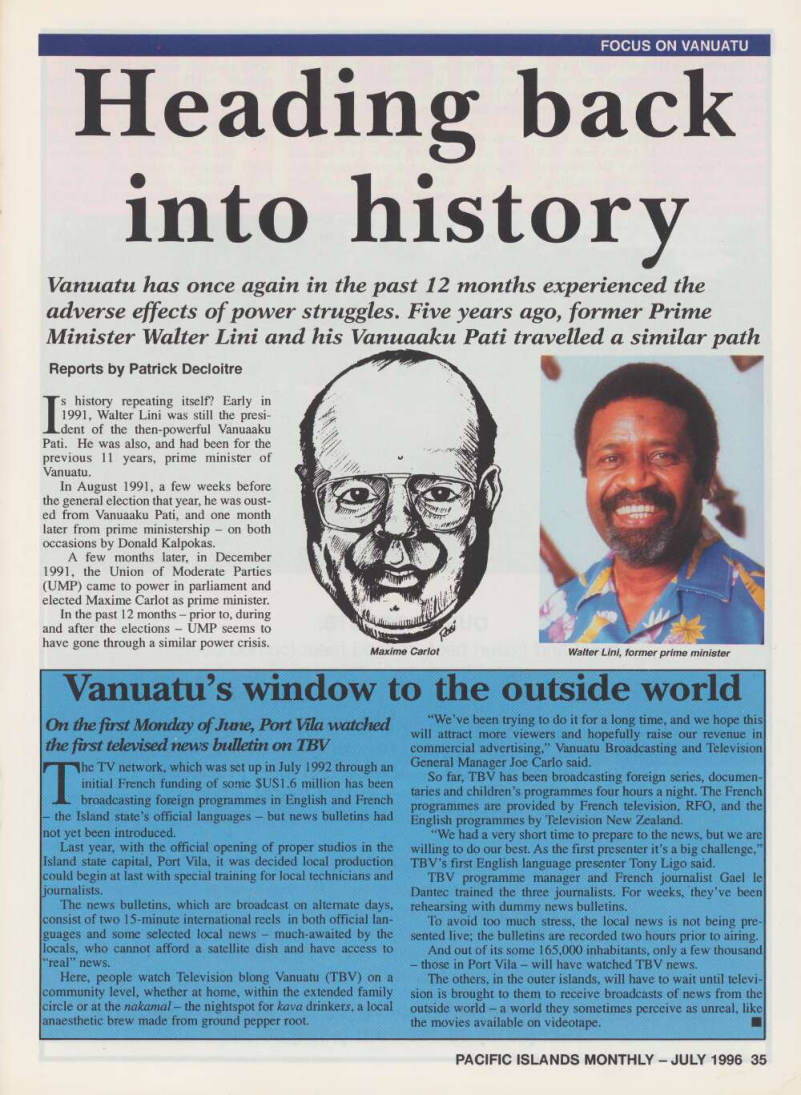
Maxime Carlot
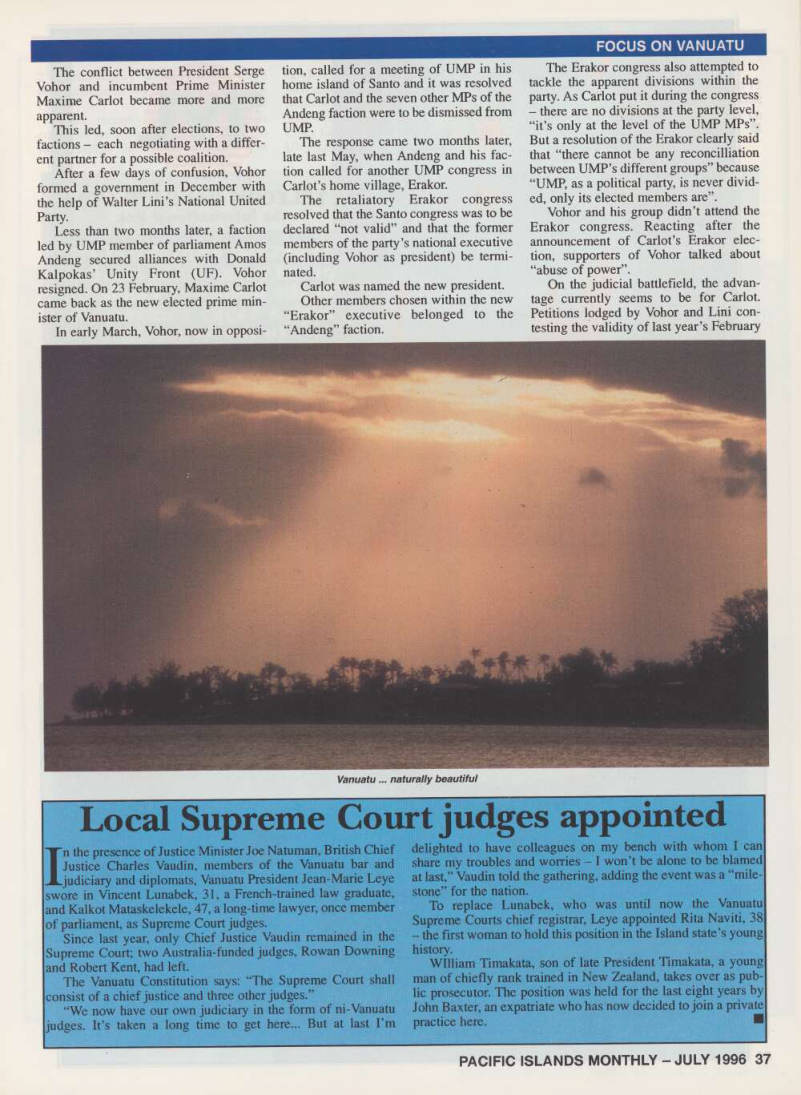
Walter Lini, former prime minister
The conflict between President Serge Vohor and incumbent Prime Minister Maxirae Carlot became more and more apparent.
This led, soon after elections, to two factions - each negotiating with a differ ent partner for a possible coalition.
After a few days of confusion, Vohor formed a government in December with the help of Walter Lini’s National United Party.
Less than two months later, a faction led by UMP member of parliament Amos Andeng secured alliances with Donald Kalpokas’ Unity Front (UF). Vohor resigned. On 23 February, Maxime Carlot came back as the new elected prime min ister of Vanuatu.
In early March, Vohor, now in opposi
tion, called for a meeting of UMP in his home island of Santo and it was resolved that Carlot and the seven other MPs of the Andeng faction were to be dismissed from
Ump.
The response came two months later. late last May, when Andeng and his fac tion called for another UMP congress in Carlot’s home village, Erakor.
The retaliatory Erakor congress resolved that the Santo congress was to be declared “not valid” and that the former members of the party’s national executive (including Vohor as president) be termi nated.
Carlot was named the new president.
Other members chosen within the new “Erakor” executive belonged to the “Andeng” faction.
The Erakor congress also attempted to tackle the apparent divisions within the party. As Carlot put it during the congress - there are no divisions at the party level, “it’s only at the level of the UMP MPs”.
But a resolution of the Erakor clearly said that there cannot be any reconcilliation between UMP s different groups because “UMP, as a political party, is never divid ed, only its elected members are”.
Vohor and his group didn t attend the Erakor congress. Reacting after the announcement of Carlot’s Erakor elec tion, of Vohor talked about “abuse of power .
On the judicial battlefield, the advan tage currently seems to be for Carlot.
Petitions lodged by Vohor and Lini con testing the validity of last year s February
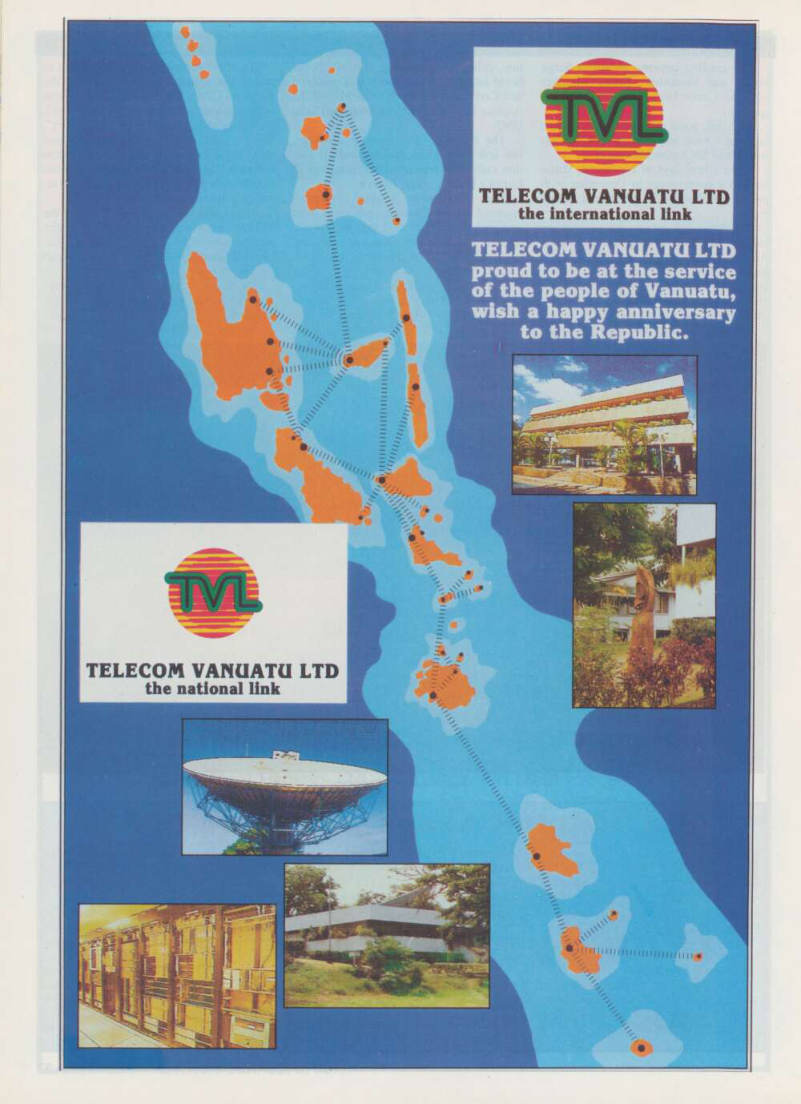
Vanuatu... naturally beautiful
23 parliamentary sitting seem to have been dismissed by Vanuatu’s Supreme Court.
More recently, before the Erakor congress, the Vohor side asked the court to rule whether the Erakor congress was
valid or not. But they finally withdrew their case because, upon request from the Andeng side, it was to be heard after the congress had taken place. The Supreme Court has to decide which faction of the UMP has the right to use the name, UMP,
its colours, logo and emblem.
The matter was first heard on June 12 by the newly appointed Justice Vincent Lunabek and should be heard again on July 22. ■
A leap of faith... a young land diver is about to make the plunge with the support of a carefully measured liana vine around his ankle