Befriending a dugong
pp. 56-57 · Read in the full issue
Marine
A dugong (also called a sea cow
or cowfish)
resembles a cross between a small whale and a sea lion. Once
hunted for food,
the marine mammals are now protected in Vanuatu,
although they
are still threatened with extinction. The
gouged hack of
EpVs dugong
hears testimony
to its worst enemy,
powerboat
propellers.
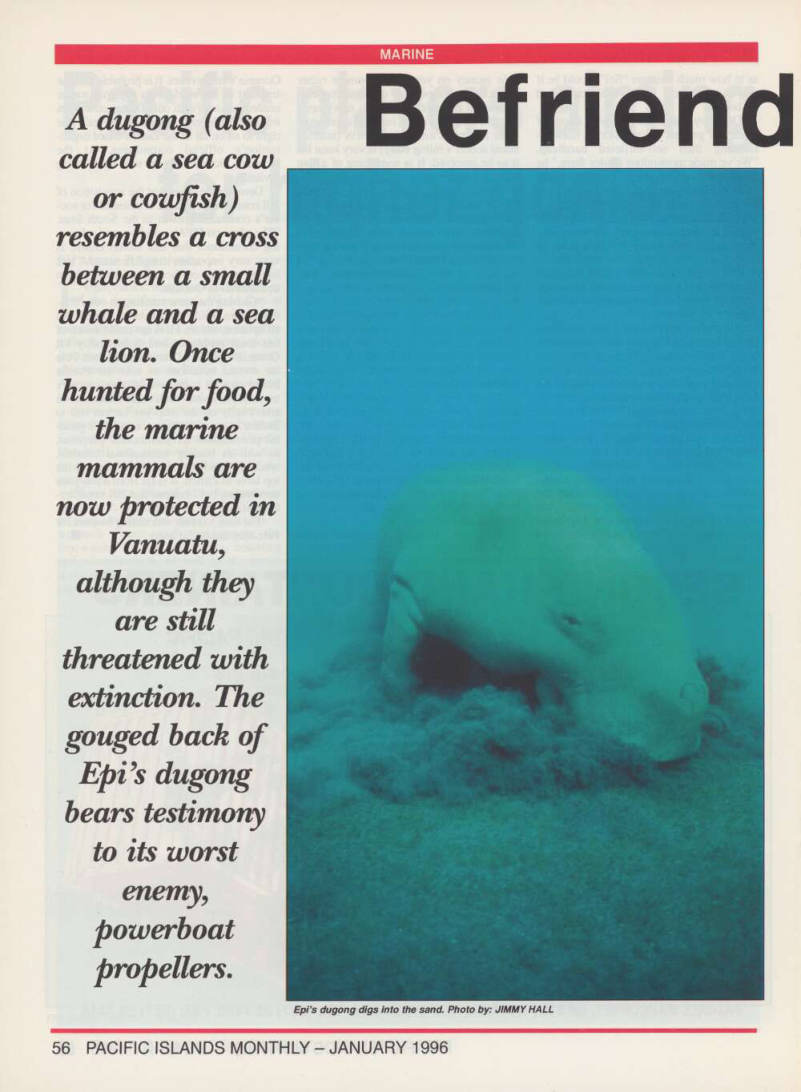
Epi’s dugong digs into the sand. Photo by: JIMMY HALL
By Darrel Nicholson
Sailors who call on the South Pacific Island nation of Vanuatu may want to consider one entry in Epi Island’s visitors’ log before don ning their snorkel gear: “Tickle the dugong at your own risk.”
Located 60 miles north of the coun try’s capital. Port Vila, Epi Island is the home of an extremely affectionate 1000-pound dugong. Two Peace Corps workers befriended the dugong a few years ago, and now yachtsmen visit Epi’s picturesque Lamenu Bay with the hope of swimming with him.
A dugong (also called a sea cow or cowfish) resembles a cross between a small whale and a sea lion. Once hunt ed for food, the marine mammals are now protected in Vanuatu, although they are still threatened with extinction.
The gouged back of Epi’s dugong bears testimony to its worst enemy, power
boat propellers.
Vegetarians, dugongs graze along the sea bottom. They are usually quite
shy, but Epi’s dugong is as gregarious as the friendly residents of Lamenu Bay village.
Not long after our 32-foot William Atkin ketch, Tosca, anchored in the bay, a smiling, local farmer named Jinny paddled alongside in his outrigger canoe and offered fresh bananas' The 10-foot long dugong soon surfaced nearby and cast a longing glance our way.
“Hemi hapi dugong ,” announced
Jimmy, speaking in the pidgin language
Bislama, Vanuatu’s official language, “Hemi laekem play.”
And so we played. And played. And played. With the watch-me nudges of a tireless five-year-old child, the dugong kept us in the water past sunset that first day. Sunrise the next day he returned, We named him Hapi Tumas, which means “very happy” in Bislama.
For three exhausting days we accompanied Hapi Tumas on his rounds across the shallow bay. After being repeatedly rubbed by his prickly back, we eventu
ally discovered what he wanted - a scratch under the flippers.
Willy, a local diver who seemed to know Hapi best, explained. “Mi tink it tickle. Yu makem smile.”
After much coaxing by Willy, I ten
tatively slipped one hand under Hapi’s
flipper as he snuggled up beside me.
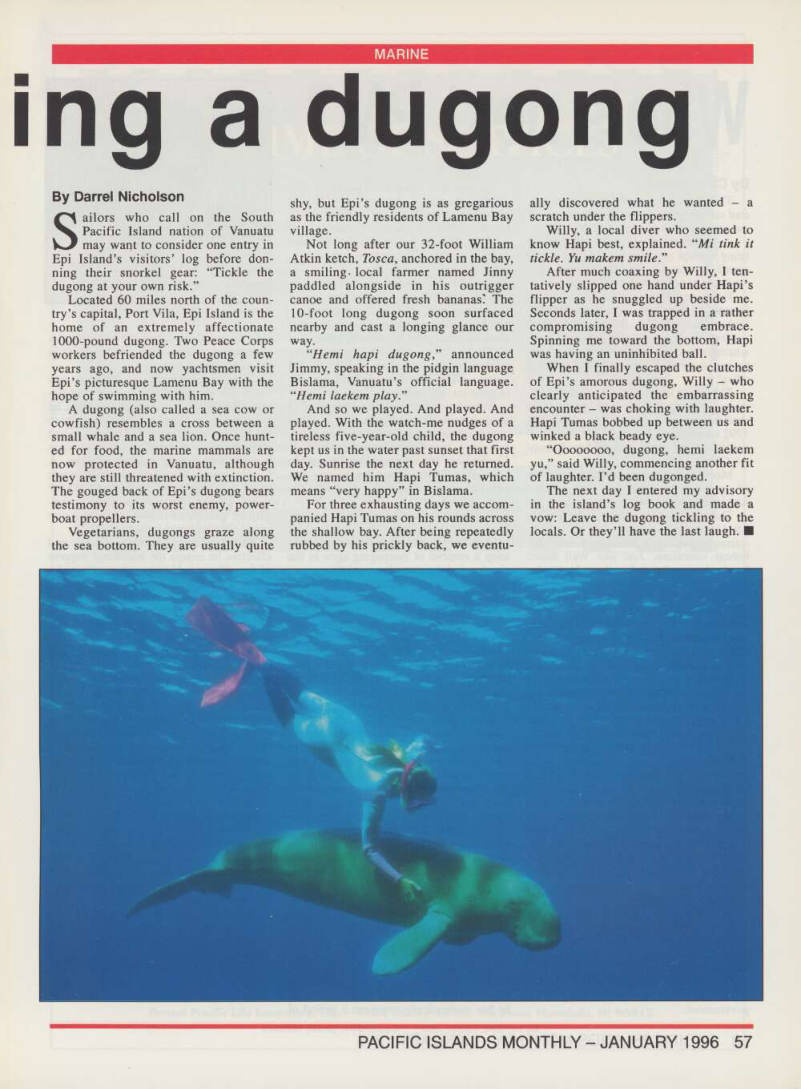
Seconds later, I was trapped in a rather compromising dugong embrace.
Spinning me toward the bottom, Hapi was having an uninhibited ball, When I finally escaped the clutches of Epi’s amorous dugong, Willy - who clearly anticipated the embarrassing encounter - was choking with laughter, Hapi Tumas bobbed up between us and winked a black beady eye.
“00000000, dugong, hemi laekem yu,” said Willy, commencing another fit of laughter. I’d been dugonged.
The next day I entered my advisory in the island’s log book and made a vow: Leave the dugong tickling to the locals. Or they’ll have the last laugh. ■