Tourism path
pp. 54-55 · Read in the full issue
INTERNATIONAL tourism is now rival ling any of New Zealand’s major export industries as the country’s largest earner of foreign exchange.
The country’s tourism industry is now looking back on 1992 as a year in which it set new records. Overseas visitor arrivals grew 10 per cent and, for the first time, topped one million in 12 months.
The New Zealand Tourism Board estimates that foreign exchange earn ings from overseas visitors in 1992 will top NZ$2.B billion, another record. By comparison, New Zealand’s largest ex port meat generates just over $2.7 billion a year.
The government-funded Tourism Board, with strong industry support, is working to a growth strategy that sees New Zealand in the year 2000 earning NZ$9 billion a year and employing at least an extra 120,000 people as a result of a trebling of visitor arrivals to 3,000,000.
A group of board members with extensive business experience was es
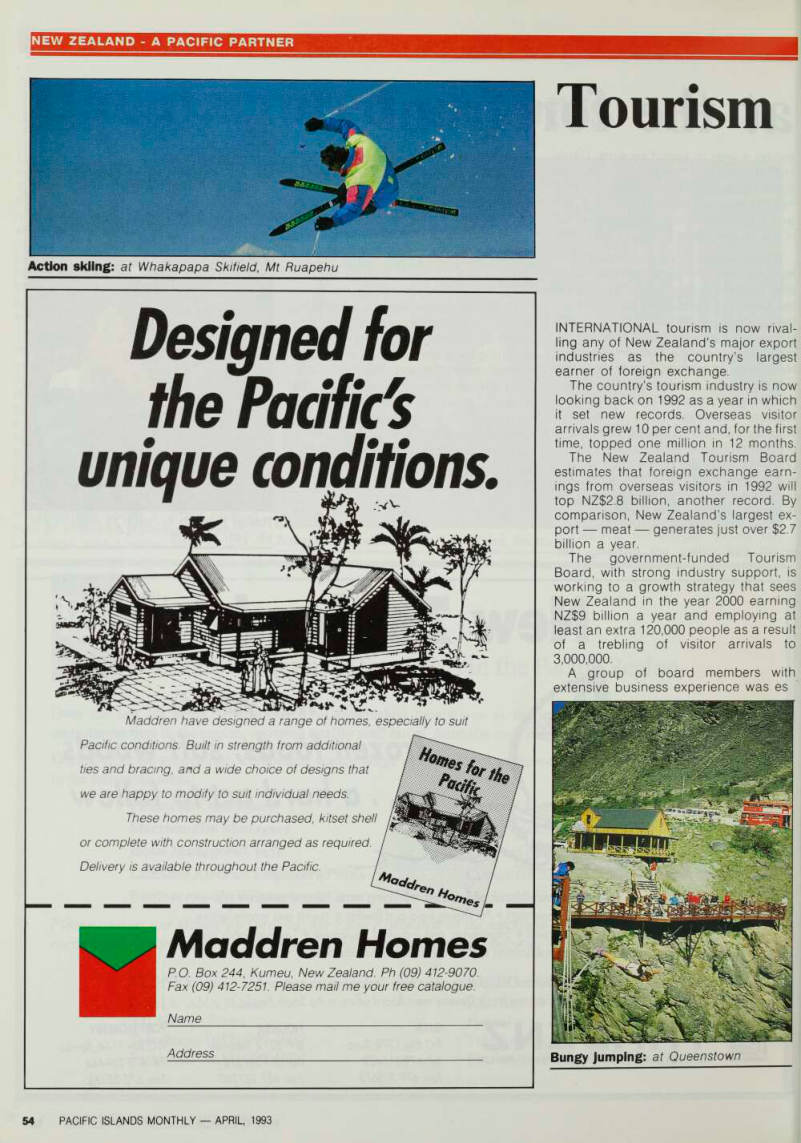
Action skiing: at Whakapapa Skifield, Mt Ruapehu
Bungy Jumping: at Queenstown
tablished at tne end of 1991 to take over the resources of the old Tourism Depart ment and give it a new marketing focus.
At the same time as it restructured its tourism agency, the New Zealand government created a new NZ$lO million per annum Tourism Marketing Joint Venture Fund. The Tourism Board can draw on the fund to go into new marketing activity with industry partners who are prepared to match its invest ment. The private sector has been investing about NZ$2 for every NZ$l the Tourism Board has put into new joint venture marketing activity. The expan sion of marketing activity
through these new joint ventures is the major driving force behind New Zealand’s latest visitor arrival record.
More than 83 per cent of the growth n visitor arrival during 1992 was from additional travel bookings generated by
new joint venture projects.
On a global basis, New Zealand’s tourism marketing effort is focussed on
six key regions Australia, Japan, North America, the United Kingdom, Central Europe, and Asia.
With a record year behind it, the New Zealand tourism industry is entering a
new development phase. Currently, the country has more than NZ$2.2 billion worth of tourism related development either in construction, or ready for
serious consideration by inves tors.
New Zealand’s first interna tional standard golf resort (Millbrook at Arrowtown, near Queenstown) has just opened and two more are proposed.
There are tourism-related har bour front developments under way in both Auckland and Wellington, and construction is expected to start on the country’s first casinos at Auckland and Christchurch before the year is out.
Tourism is on a growth path in New Zealand, and the Tourism Board is strongly committed to the concept of cooperative action by Pacific island nations to promote the tourism attrac tions of the region on a joint basis in major international tourism markets.
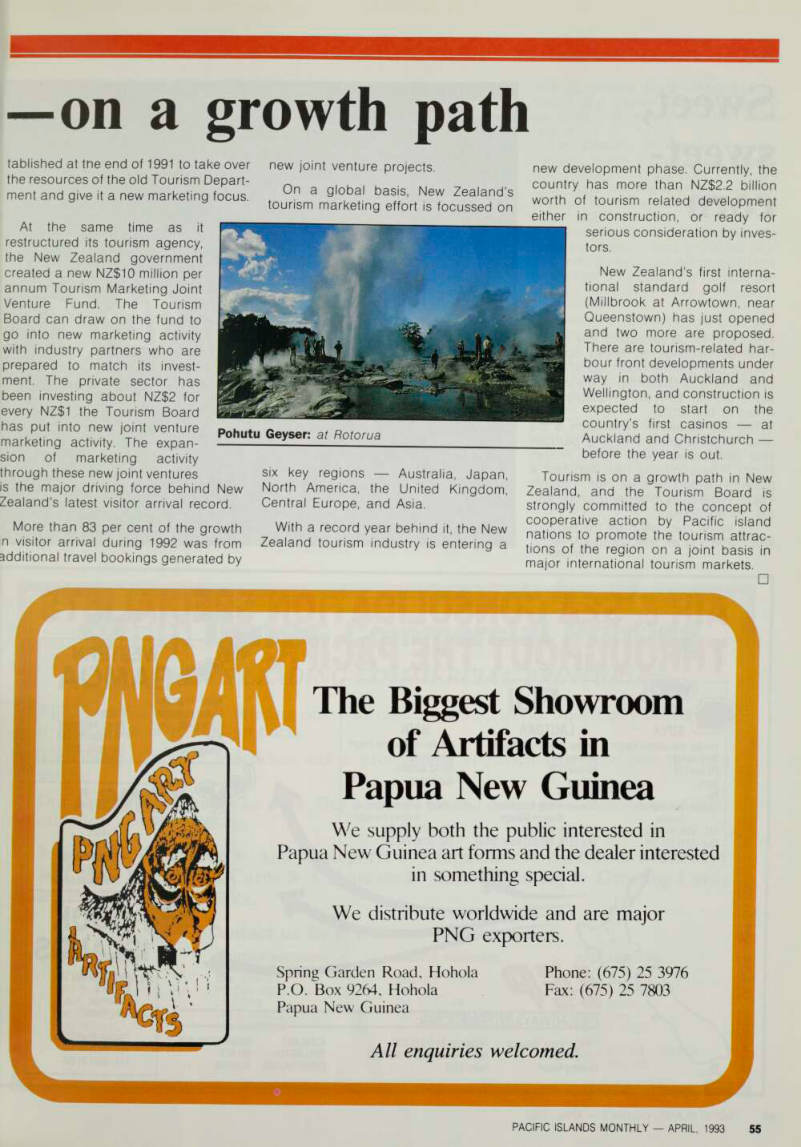
Pohutu Geyser: at Rotorua