An optimistic future
p. 33 · Read in the full issue
IN COMMERCE as in anything else, the beginning of a new year is the time to look ahead and see where we’re going, and the soundest predictions are often best arrived at by consulting the past.
I think anybody able to look back 20 years at the progress that has made in island economies will be fairly optimistic about the future.
And that’s despite the fact that the past year or two haven’t been very encouraging. The economic down turn has been worldwide, and everybody suffers until things pick
up again.
But pick up they will. I've been in
trade long enough to know they
always do.
When the revival occurs, the majority of the Forum nations won’t be facing some of the dilemmas they had under colonial administrations notably their dependence on large, tied grants from the metropolitan countries, usually with directions attached on what the money was to be spent on,
and subject to all sorts of bureaucratic checks and bal ances that removed any oppor tunity for local initiative. And forbade any chance of gaining : some practical experience on how to spend money to make more money, such as putting up venture capital.
The days are not really so far behind us when island admin istrations, and island com panies being directed by boards overseas, brought in expatri ates to work as clerks, counterhands and truck drivers and paid twice the local wage to get them plus fringe benefit such as subsidised hous ing and air fares home. The usual argument was that this has to be done because not enough locals were trained to till the jobs competently.
The moves to independence and the need for economies to be home-grown if they were to survive without bigger and bigger grants, changed that through the simple expedient of the emerging island govern ments restricting hundreds of job categories to locals only.
Both quality and speed of training followed almost auto matically, and what, in turn,
followed was the recognition by the expatriate firms that it was sensible and more efficient to localise, and to localise right to the top. It was the expatriates, not the islanders, who were forced to change their way of thinking.
These measures did not simply
safeguard local jobs they have
expanded the island workforce and island expertise, at all levels to top executive, to an extent
nobody could have contemplated.
I’ve seen it all happening, and wherever I go I deal with island business people and senior gov ernment officers who are on top of their jobs. Island economies have become stronger and the people
who manage the resources, whether at the work place or the government planning departments, are better able to roll with the punches in the tougher times we’ve been having.
These are some of the reasons why I am optimistic about the future. There is a firmer base of efficiency and initiative in our region. And when the opportunities present
themselves, they’ll be taken up.
It’s human nature for people to see problems before they see opportunities. It’s human nature to worry. It’s people with vision and initiative who convert in formation into opportunities, and that’ what will help pull the
region through.
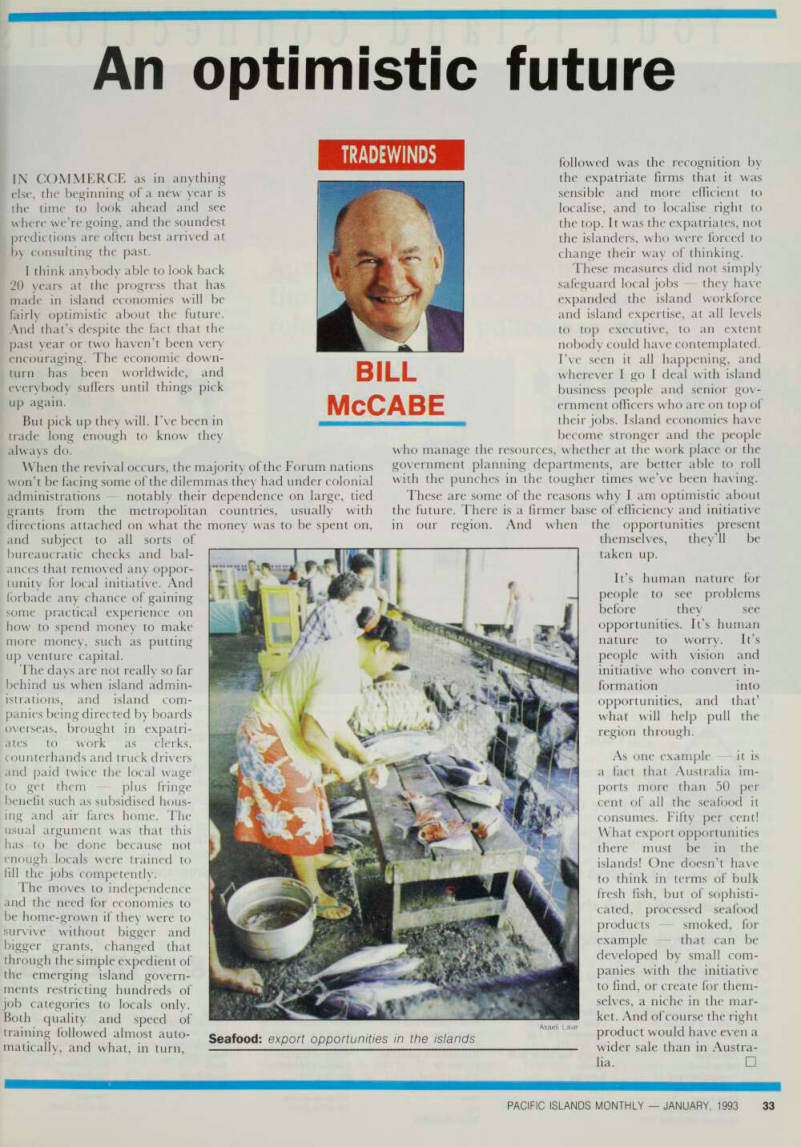
As one example it is a fact that Australia im ports more than 50 per cent of all the seafood it consumes. Fifty per cent!
What export opportunities there must be in the islands! One doesn’t have to think in terms of bulk fresh fish, but of sophisti cated, processed seafood products smoked, for example that can be developed by small com panies with the initiative to find, or create for them selves, a niche in the mar ket. And of course the right product would have even a wider sale than in Austra lia. □
Tradewinds
Bill
Mccabe
Seafood: export opportunities in the islands
Asaeli Lave