Sons
pp. 39-42 · Read in the full issue
Focus
Sons of the earth
A day in the life of Fiji’s canefarmer
By Lois Bhagwan
IT was another one of those dry August mornings. It was very hot. The sweet, milky tea was even hotter. Ragho Ram sat peeling a parrot mango. The wind was making dust dance outside his farmhouse.
It was 8.30 am and most of the morning chores had been done. “It’s drying up, but what can we do? It hasn’t rained for so long ...,' said Ram, his back to his 12-acre canefarm, in Votualevu, Nadi, the heart of Fiji’s sugar industry.
There were massive cracks in the earth and the sugarcane looked dry and dusty, seeming to have lost its juice and sweetness. Water is a big problem in Fiji’s sugarcane belt. Ram’s son-in-law, Rakeshwar Prasad, talked about irri gation aid. He recalled that through an agricultural aid scheme, aluminium pipes for irrigation were given to the Agricultural Research Station at Legalega, Nadi. Where are they?
“I wish that the agriculture people had allowed the farmers to use them,” he said. “We would have been glad to rent them. Then, not only would we not have a problem during a drought like this, but we could make our farms more pro ductive.”
The younger members of the family discussed the water situation. “We’re
lucky,” said Ram’s daughter-in-law,
Manjula. “At least we have running water when it’s working; or, there’s this well right in the middle of the compound. But you should see 'what some people have to go through to get water.”
There were poorer farmers nearby.
“We have three meals a day,” she said.
“There’s a little girl who goes to school with my daughters and unless (my children) give her some lunch, she goes
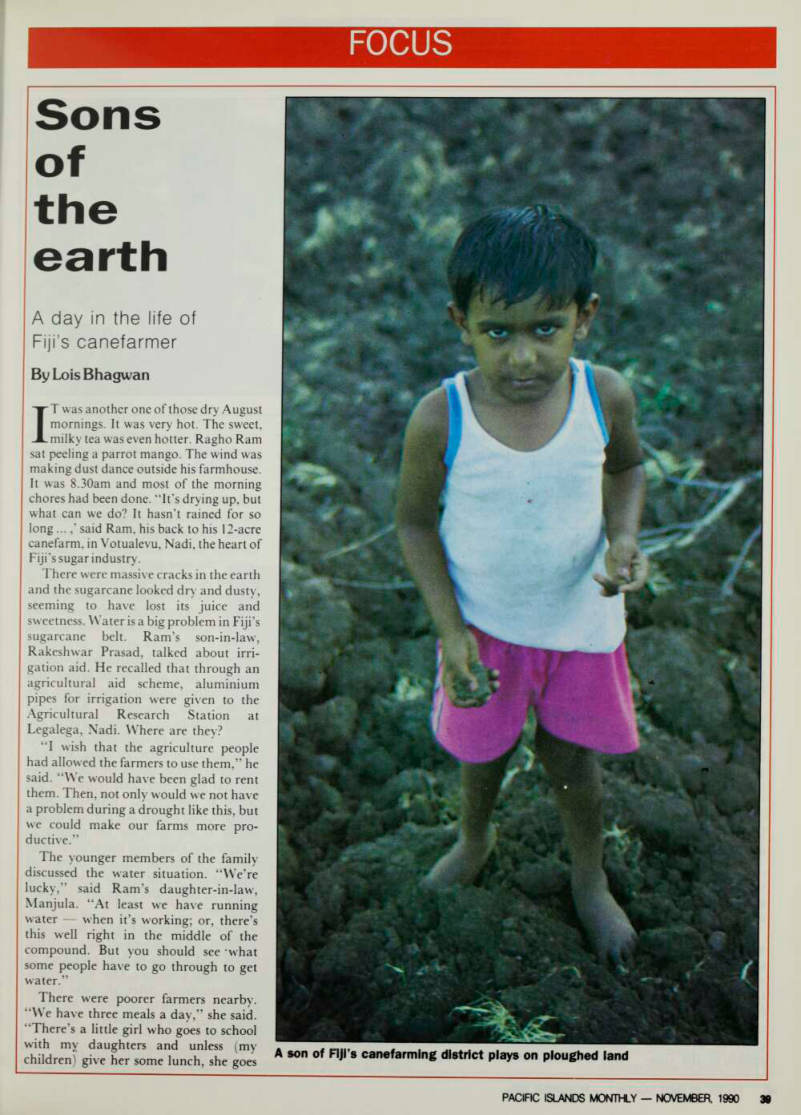
A son of Fiji’s canefarming district plays on ploughed land
without food for the day they’re
that poor.”
Several kilometres away, Sunita
Chand was having problem getting
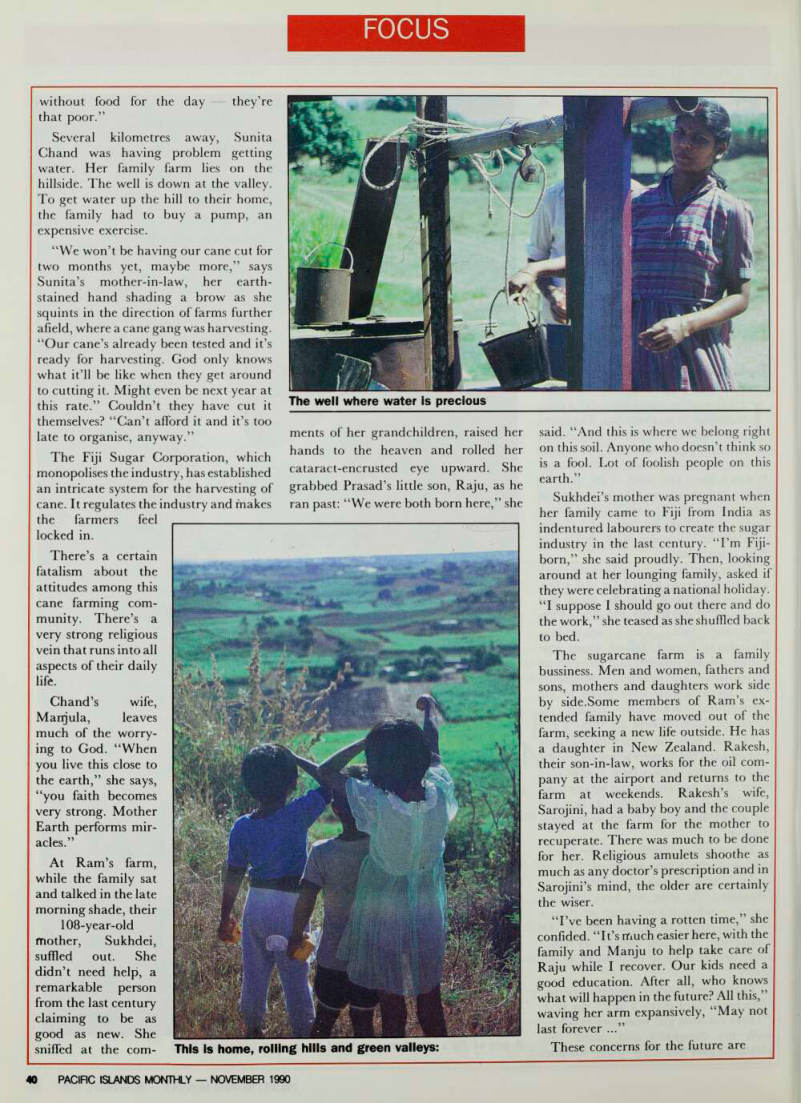
water. Her family farm lies on the hillside. The well is down at the valley.
To get water up the hill to their home, the family had to buy a pump, an expensive exercise.
“We won’t be having our cane cut for two months yet, maybe more,” says Sunita’s mother-in-law, her earth stained hand shading a brow as she squints in the direction of farms further afield, where a cane gang was harvesting.
“Our cane’s already been tested and it’s ready for harvesting. God only knows what it’ll be like when they get around to cutting it. Might even be next year at this rate.” Couldn’t they have cut it themselves? “Can’t afford it and it’s too late to organise, anyway.”
The Fiji Sugar Corporation, which
monopolises the industry, has established an intricate system for the harvesting of cane. It regulates the industry and makes
the farmers feel locked in.
There’s a certain fatalism about the attitudes among this cane farming com munity. There’s a very strong religious vein that runs into all aspects of their daily life.
Chand’s wife, Marrjula, leaves much of the worry ing to God. “When you live this close to the earth,” she says, “you faith becomes very strong. Mother Earth performs mir acles.”
At Ram’s farm, while the family sat and talked in the late morning shade, their 108-year-old mother, Sukhdei, sullied out. She didn’t need help, a remarkable person from the last century claiming to be as good as new. She sniffed at the com-
ments of her grandchildren, raised her hands to the heaven and rolled her cataract-encrusted eye upward. She grabbed Prasad’s little son, Raju, as he ran past: “We were both born here,” she
said. “And this is where we belong right on this soil. Anyone who doesn’t think so is a fool. Lot of foolish people on this earth.”
Sukhdei’s mother was pregnant when her family came to Fiji from India as indentured labourers to create the sugar industry in the last century. “I’m Fiji born,” she said proudly. Then, looking around at her lounging family, asked if they were celebrating a national holiday.
“I suppose I should go out there and do the work,” she teased as she shuffled back to bed.
The sugarcane farm is a family bussiness. Men and women, fathers and sons, mothers and daughters work side by side. Some members of Ram’s ex tended family have moved out of the farm, seeking a new life outside. He has a daughter in New Zealand. Rakesh, their son-in-law, works for the oil com pany at the airport and returns to the farm at weekends. Rakesh’s wife, Sarojini, had a baby boy and the couple stayed at the farm for the mother to recuperate. There was much to be done for her. Religious amulets shoothe as much as any doctor’s prescription and in Sarojini’s mind, the older are certainly the wiser.
“I’ve been having a rotten time,” she confided. “It’s much easier here, with the family and Manju to help take care of Raju while I recover. Our kids need a good education. After all, who knows what will happen in the future? All this,” waving her arm expansively, “May not last forever ...”
These concerns for the future are
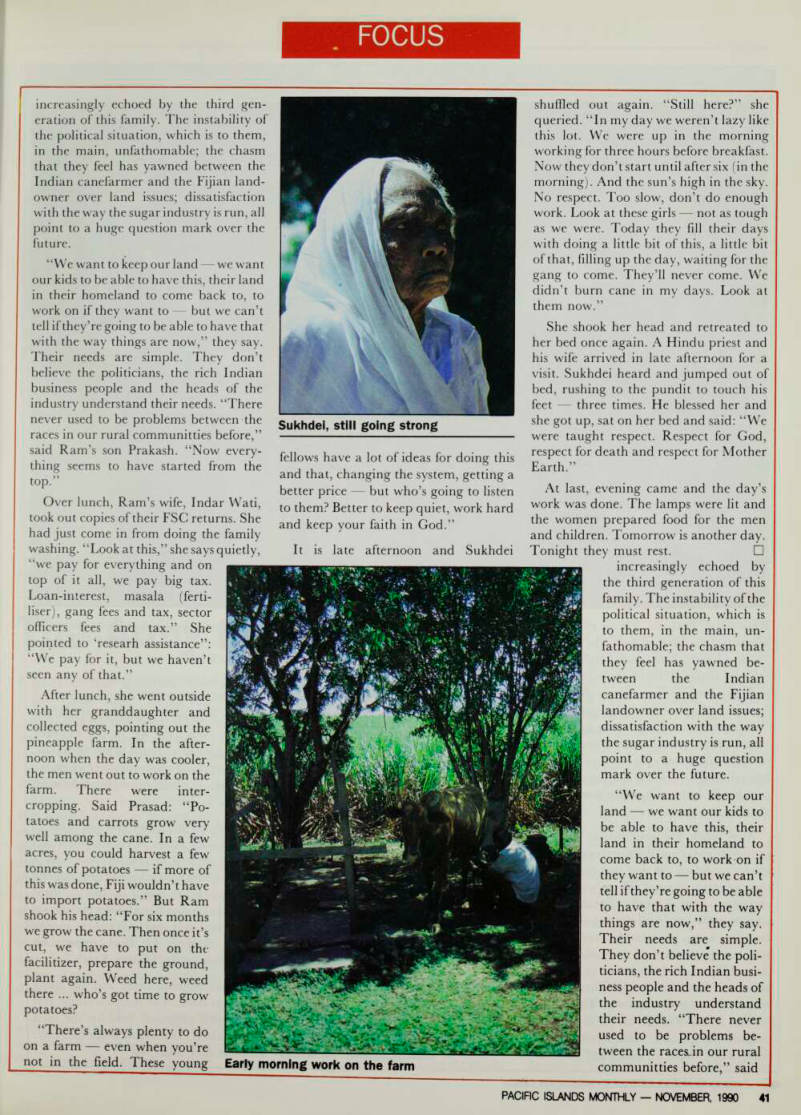
This is home, rolling hills and green valleys:
The well where water is precious
increasingly echoed by the third gen eration of this family. The instability of the political situation, which is to them, in the main, unfathomable; the chasm that they feel has yawned between the Indian canefarmer and the Fijian land owner over land issues; dissatisfaction with the way the sugar industry is run, all point to a huge question mark over the future.
“We want to keep our land we want our kids to be able to have this, their land in their homeland to come back to, to work on if they want to but we can’t tell if they’re going to be able to have that with the way things are now,” they say.
Their needs are simple. They don’t believe the politicians, the rich Indian business people and the heads of the industry understand their needs. “There never used to be problems between the races in our rural communitties before,” said Ram’s son Prakash. “Now every thing seems to have started from the top.”
Over lunch, Ram’s wife, Indar Wati, took out copies of their FSC returns. She had just come in from doing the family washing. “Look at this,” she says quietly,
“we pay for everything and on top of it all, we pay big tax.
Loan-interest, masala (ferti liser), gang fees and tax, sector officers fees and tax.” She pointed to ‘researh assistance”: “We pay for it, but we haven’t seen any of that.”
After lunch, she went outside with her granddaughter and collected eggs, pointing out the pineapple farm. In the after noon when the day was cooler, the men went out to work on the farm. There were inter cropping. Said Prasad: “Po tatoes and carrots grow very well among the cane. In a few acres, you could harvest a few tonnes of potatoes if more of this was done, Fiji wouldn’t have to import potatoes.” But Ram shook his head: “For six months we grow the cane. Then once it’s cut, we have to put on the facilitizer, prepare the ground, plant again. Weed here, weed there ... who’s got time to grow potatoes?
“There’s always plenty to do on a farm even when you’re not in the field. These young
fellows have a lot of ideas for doing this and that, changing the system, getting a better price but who’s going to listen to them? Better to keep quiet, work hard and keep your faith in God.”
It is late afternoon and Sukhdei
shuffled out again. “Still here?” she queried. “In my day we weren’t lazy like this lot. We were up in the morning working for three hours before breakfast.
Now they don’t start until after six (in the morning). And the sun’s high in the sky.
No respect. Too slow, don’t do enough work. Look at these girls not as tough as we were. Today they fill their days with doing a little bit of this, a little bit of that, filling up the day, waiting for the gang to come. They’ll never come. We didn’t burn cane in my days. Look at them now.”
She shook her head and retreated to her bed once again. A Hindu priest and his wife arrived in late afternoon for a visit. Sukhdei heard and jumped out of bed, rushing to the pundit to touch his feet three times. He blessed her and she got up, sat on her bed and said: “We were taught respect. Respect for God, respect for death and respect for Mother Earth.”
At last, evening came and the day’s work was done. The lamps were lit and the women prepared food for the men and children. Tomorrow is another day.
Tonight they must rest. □
increasingly echoed by
the third generation of this family. The instability of the political situation, which is to them, in the main, un fathomable; the chasm that they feel has yawned be tween the Indian canefarmer and the Fijian landowner over land issues; dissatisfaction with the way the sugar industry is run, all
point to a huge question
mark over the future.
“We want to keep our land we want our kids to be able to have this, their land in their homeland to come back to, to work on if they want to but we can’t tell if they’re going to be able to have that with the way things are now,” they say.
Their needs are simple.
They don’t believe the poli ticians, the rich Indian busi ness people and the heads of the industry understand their needs. “There never used to be problems be tween the racesdn our rural communitties before,” said
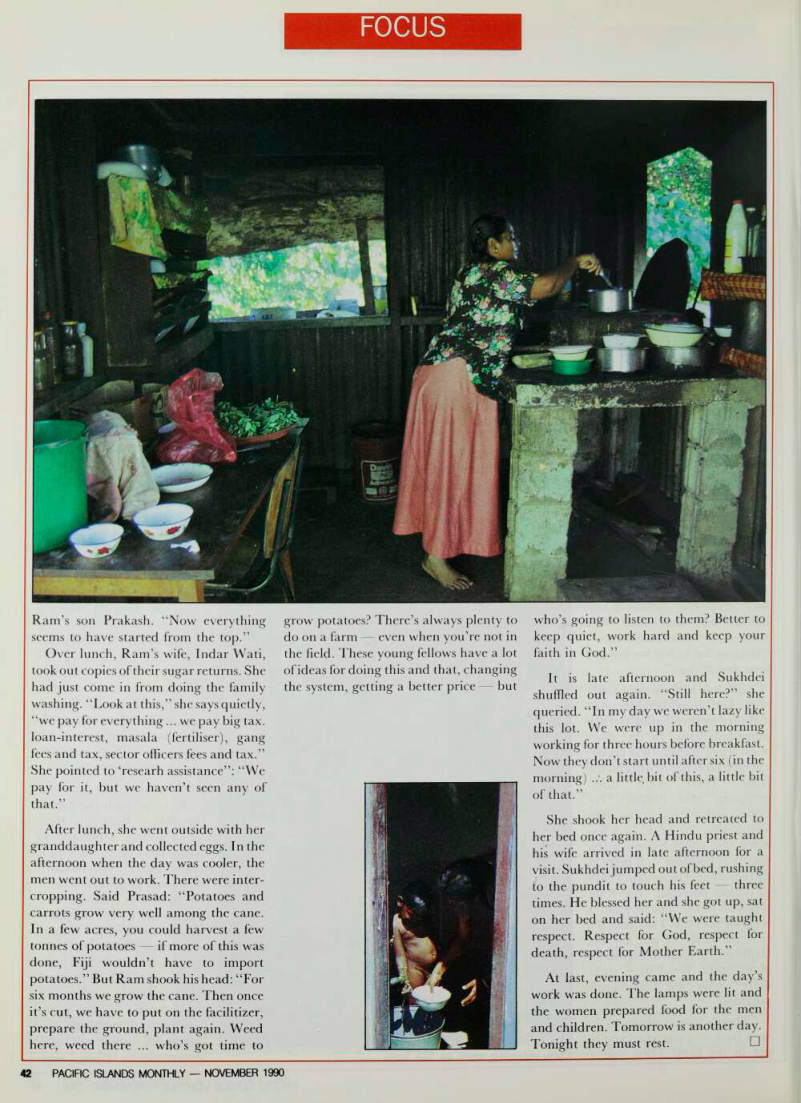
Sukhdei, still going strong
Early morning work on the farm
Ram’s son Prakash. “Now everything seems to have started from the top.”
Over lunch, Ram’s wife, Indar Wati, took out copies of their sugar returns. She had just come in from doing the family washing. “Look at this,” she says quietly, “we pay for everything ... we pay big tax. loan-interest, masala (fertiliser), gang fees and tax, sector officers fees and tax.”
She pointed to ‘researh assistance”: “We pay for it, but we haven’t seen any of that.”
After lunch, she went outside with her granddaughter and collected eggs. In the afternoon when the day was cooler, the men went out to work. There were inter cropping. Said Prasad: “Potatoes and carrots grow very well among the cane.
In a few acres, you could harvest a few tonnes of potatoes if more of this was done, Fiji wouldn’t have to import potatoes.” But Ram shook his head: “For six months we grow the cane. Then once it’s cut, we have to put on the facilitizer, prepare the ground, plant again. Weed here, weed there ... who’s got time to
grow potatoes? There’s always plenty to
do on a farm even when you’re not in the field. These young fellows have a lot of ideas for doing this and that, changing the system, getting a better price but
who’s going to listen to them? Better to keep quiet, work hard and keep your faith in God.”
It is late afternoon and Sukhdei shuffled out again. “Still here?” she queried. “In my day we weren’t lazy like this lot. We were up in the morning working for three hours before breakfast.
Now they don’t start until after six (in the morning) a little bit of this, a little bit of that.”
She shook her head and retreated to her bed once again. A Hindu priest and his wife arrived in late afternoon for a visit. Sukhdei jumped out of bed, rushing to the pundit to touch his feet three times. He blessed her and she got up, sat on her bed and said: “We were taught respect. Respect for God, respect for death, respect for Mother Earth.”
At last, evening came and the day’s work was done. The lamps were lit and the women prepared food for the men and children. Tomorrow is another day.
Tonight they must rest. □