Why Tjibaou
pp. 7-9 · Read in the full issue
Pacific
Islands
Monthly
Why Tjibaou
WHEN Pacific Islands Monthly asked Helen Fraser to profile Jean-Marie Tjibaou for the Man of the Decade cover story, her reaction was: “You’ve made the right choice. It was not to be the final justi fication to such a choice. But it was another agreement from someone who’s covered the region most of her life. (She now edits Pacific Report, a bi-monthly from Canberra). Fraser is an expert on the intricate politics that envelopes New Caledonia. She interviewed Tjibaou more times than any other overseas journalist, and was the last to interview him before he was assassinated last May. Fraser remembers Tjibaou as “a seductive figure even to those opposed to his ideas”. She said he had a wonderful sense of humour, which, at times, was “de liciously wicked”. These were the attractive qualities that marked Tjibaou’s life and his leadership, even at the most difficult times.
While other names came to mind and were seriously considered for the end of the decade laurel, it was Ijibaou, first a priest and later a freedom fighter, who stood out. He was a poet and liked music, often playing the piano into the early hours of the morning. As a leader he was charismatic, as an ordinary man he was spiritual. His courage was often infectious and someone once described him as “a visionary; no matter how turbulent and violent the events around him, (Tjibaou) seemed an oasis of calm and inspiration.” ma fW people said so many nice things about Ijibaou. There were no allegations of corruption as so common today in Pacific Islands politics. While Tjibaou had his weaknesses, he was not the kind of man you could pm a dirty tag on. He was Mr Clean, a unique freedom tighter whose main weapon was peace and who was l°y a l to the dream of finding Kanaks a better future with a new hope for their children.
The choice of Tjibaou was inevitable. For one decade he spent his life working for a final solution to the plight of his people. That he died because he found it was a tragedy. But the seeds he sowed are growing and his death didn’t change the achievement of the Matig non Accords, the comprehensive peace agreement that mally cost Tjibaou his life. The saddest part is that the ending, for him, was tragic; and that Tjibaou won’t be around for the harvest. n
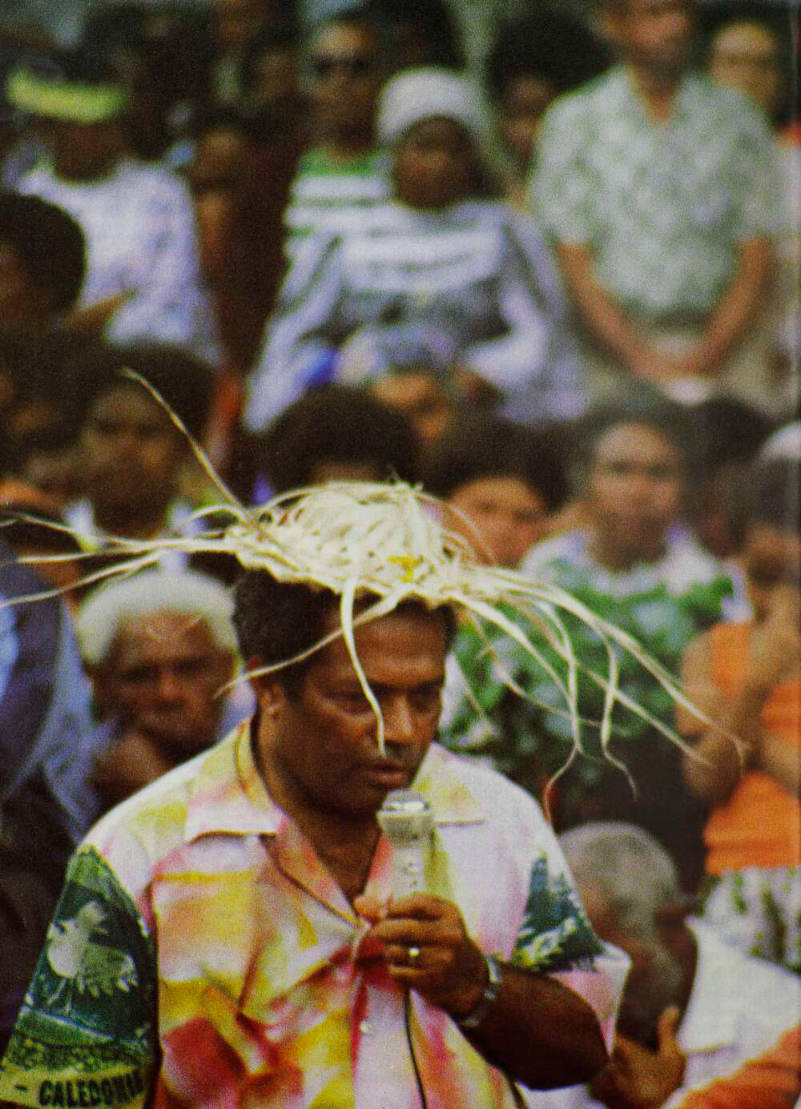
In the beginning: Tjibaou speaks in Noumea on November 24, 1982... before the killing started.