The Diro Factor
p. 10 · Read in the full issue
The disgraced former minister has much to gain
ON MARCH 9, Prime Minister Paias Wingti told a delegation of Papuans that their leader, Mr Ted Diro, would not be given the Deputy Prime Minister’s job. The meeting was the first time Mr Wingti had received an official delegation claiming to represent the Pap uan people; he has previously given the same message to party executives, and twice told Mr Diro himself he would not have the job.
Mr Wingti’s position is simple enough.
Mr Diro will not be promoted until he is cleared of five charges of lying under oath and other serious allegations now before a Commission of Inquiry investigating the PNG forestry industry. And Mr Wingti has maintained his stand under strong pres sure of the Papuans moving out, splitting his majority in Parliament and possibly losing him government; of letters from gangs threatening to burn down parlia ment house; of threats to his own life; and of Mr Diro’s Central Province electorate embarking on a mass (and possibly un controlled) demonstration.
Now it seems Mr Wingti had the sup port of the majority of the Papuans all along. At the March 9 meeting he had on his side Civil Aviation Minister Hugo Berghuser and Finance and Planning Minister Galeva Kwarara. Both are mem bers of the Papuan Bloc.
The next day nine members of the par liamentary wing of Mr Diro’s People’s Action Party (PAP) met and agreed to stay with the Government. Only three mem bers Mr Diro, his deputy Arum Ma tiabe and Daniel Itu were absent. The meeting sacked Mr Matiabe and launched a strong attack on the party executive, claiming it had been making “highly in flammatory and misleading statements” regarding the party’s position in govern ment without the knowledge or consent of elected members.
Mr Matiabe was accused of having failed to take on the role of party leader while Mr Diro was attending to what the meeting described as “personal prob lems”. Mr Diro was called on to return
from Australia for urgent meetings on the deputy leadership, his own problems and confirmation of the party’s loyalty to the Government.
Party president Mr Vincent Eri, his deputy, Professor John Waiko, and sec retary lan Glanville were strongly cau tioned and the meeting decided to make substantial amendments to the party con stitution to remove most of the powers vested in the executive.
Subsequent events have revealed that only a few groups in Port Moresby have been stirring Papuan emotions. A meet ing of Papuan premiers at Milne Bay in February strongly supported the Wingti Government and its emphasis on eco nomic development; and even in Central Province village leaders have called on their people to dissociate themselves from such movements.
Much of the support for Mr Wingti comes from the Papua bloc itself, which has the greatest number of ministers in the government. As one Papuan member put it, “There may be a few disgruntled lead ers but the region has not lost at all. In fact, they have got the best deal they will have in a long time.” D
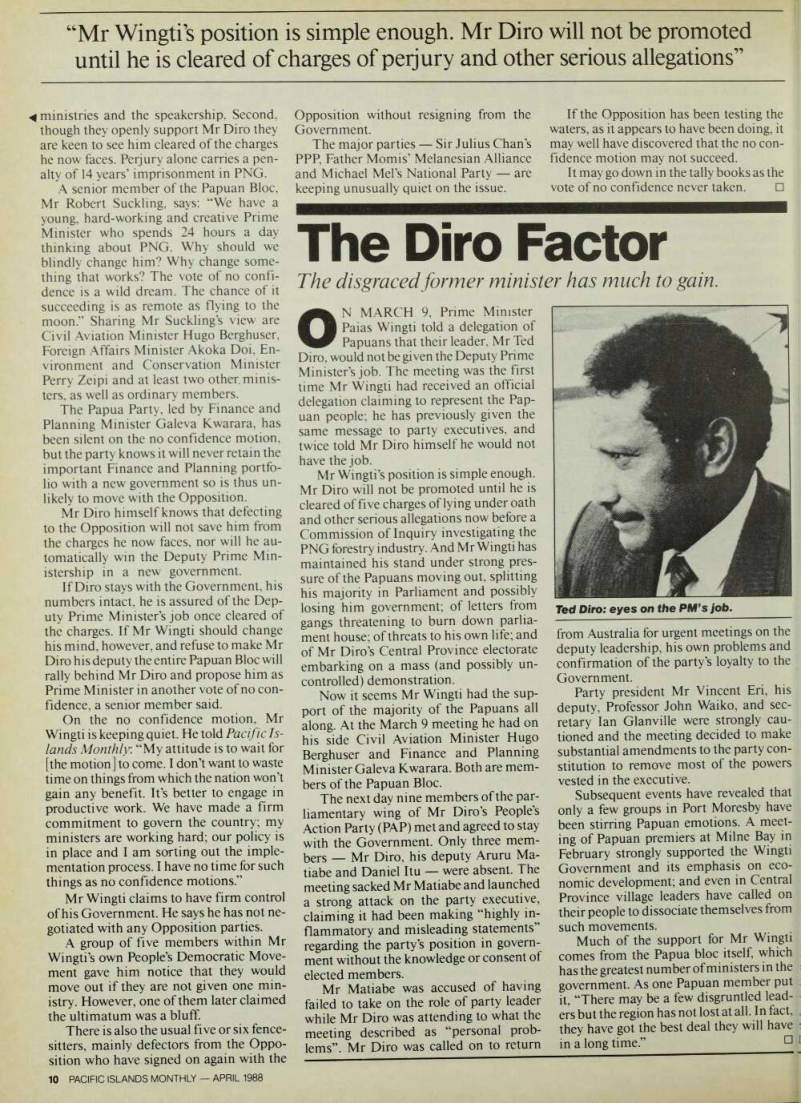
Ted Diro: eyes on the PM’s job.