Papua
p. 42 · Read in the full issue
New Guinea
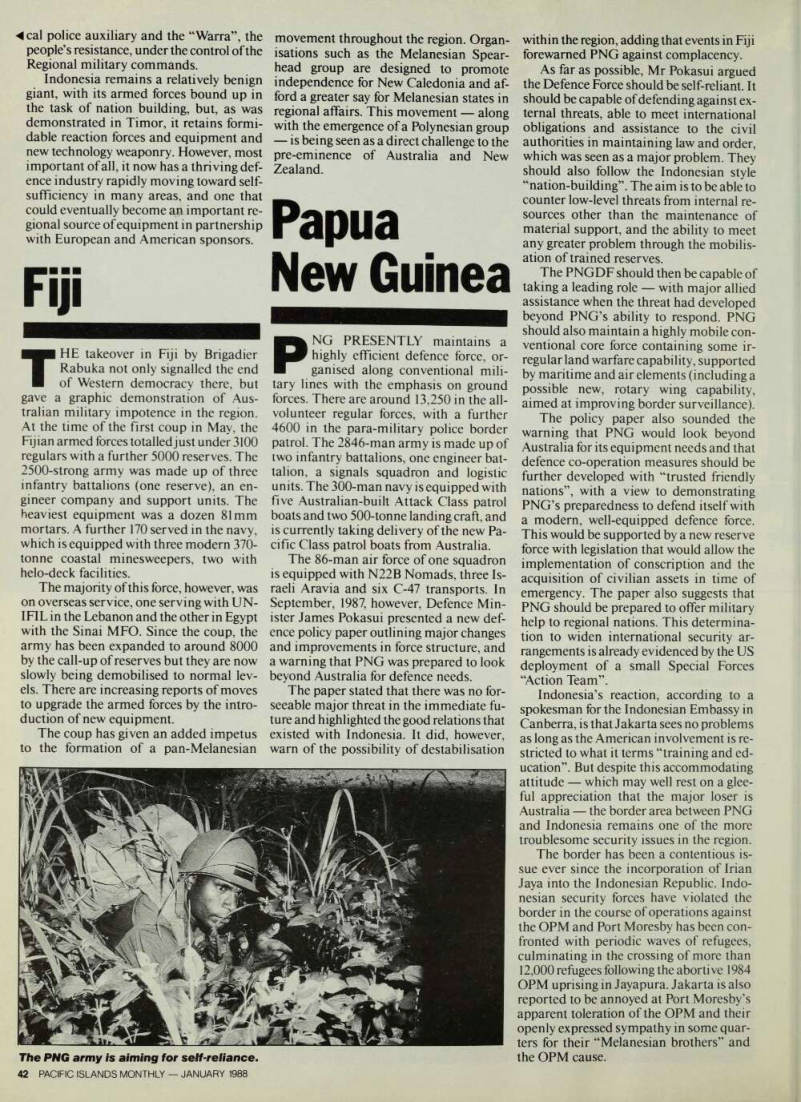
PNG PRESENTLY maintains a highly efficient defence force, or ganised along conventional mili tary lines with the emphasis on ground forces. There are around 13,250 in the all volunteer regular forces, with a further 4600 in the para-military police border patrol. The 2846-man army is made up of two infantry battalions, one engineer bat talion, a signals squadron and logistic units. The 300-man navy is equipped with five Australian-built Attack Class patrol boats and two 500-tonne landing craft, and is currently taking delivery of the new Pa cific Class patrol boats from Australia.
The 86-man air force of one squadron is equipped with N 228 Nomads, three Is raeli Aravia and six C-47 transports. In September, 1987, however, Defence Min ister James Pokasui presented a new def ence policy paper outlining major changes and improvements in force structure, and a warning that PNG was prepared to look beyond Australia for defence needs.
The paper stated that there was no for seeable major threat in the immediate fu ture and highlighted the good relations that existed with Indonesia. It did, however, warn of the possibility of destabilisation
within the region, adding that events in Fiji forewarned PNG against complacency.
As far as possible, Mr Pokasui argued the Defence Force should be self-reliant. It should be capable of defending against ex ternal threats, able to meet international obligations and assistance to the civil authorities in maintaining law and order, which was seen as a major problem. They should also follow the Indonesian style “nation-building”. The aim is to be able to counter low-level threats from internal re sources other than the maintenance of material support, and the ability to meet any greater problem through the mobilis ation of trained reserves.
The PNGDF should then be capable of taking a leading role with major allied assistance when the threat had developed beyond PNG’s ability to respond. PNG should also maintain a highly mobile con ventional core force containing some ir regular land warfare capability, supported by maritime and air elements (including a possible new, rotary wing capability, aimed at improving border surveillance).
The policy paper also sounded the warning that PNG would look beyond Australia for its equipment needs and that defence co-operation measures should be further developed with “trusted friendly nations”, with a view to demonstrating PNG’s preparedness to defend itself with a modem, well-equipped defence force.
This would be supported by a new reserve force with legislation that would allow the implementation of conscription and the acquisition of civilian assets in time of emergency. The paper also suggests that PNG should be prepared to offer military help to regional nations. This determina tion to widen international security ar rangements is already evidenced by the US deployment of a small Special Forces “Action Team”.
Indonesia’s reaction, according to a spokesman for the Indonesian Embassy in Canberra, is that Jakarta sees no problems as long as the American involvement is re stricted to what it terms “training and ed ucation”. But despite this accommodating attitude which may well rest on a glee ful appreciation that the major loser is Australia the border area between PNG and Indonesia remains one of the more troublesome security issues in the region.
The border has been a contentious is sue ever since the incorporation of Irian Jaya into the Indonesian Republic. Indo nesian security forces have violated the border in the course of operations against the OPM and Port Moresby has been con fronted with periodic waves of refugees, culminating in the crossing of more than 12,000 refugees following the abortive 1984 OPM uprising in Jayapura. Jakarta is also reported to be annoyed at Port Moresby’s apparent toleration of the OPM and their openly expressed sympathy in some quar ters for their “Melanesian brothers” and the OPM cause.