Rabuka Lays Down the Law
p. 16 · Read in the full issue
Fiji
Fijians grow used to some fundamental changes
SINCE the second mili tary coup of then-Colo nel Rabuka on September 25 and the official declaration of the Republic of Fiji on October 7, measures have been introduced restrict ing public and private activi ties on certain days.
An Bpm to Sam curfew was imposed immediately after the second coup, but the hours were later reduced to 9pm to Sam.
From Friday October 30, cur few hours were further reduced to 11pm to 4am.
Sunday has been declared the Sabbath and no trading, sports or commercial activity
are allowed. Effective from November 1, a Sunday Observance Decree dated Octo ber 20 stated that Sunday observance would begin at midnight on Saturday and end at midnight on Sunday. All picnics and outdoor gatherings are prohibited; no sport is allowed; no trade, retail or wholesale ac tivity is allowed, and no one is to engage in any office work; there is no public road transport, including buses and taxis; meetings and gatherings in public places except churches (which includes temples and mosques) are banned; no theatres are allowed to screen films, and no open-air entertainment is permitted; and hotels, bars and night clubs are closed except for bona fide tourists.
Fiji citizens used to their daily news papers at the breakfast table have had to become used to whatever news they hear on Radio Fiji, the national radio service.
The two daily newspapers, the Fiji Times and the Fiji Sun, were ordered to cease publication on the day of the second coup.
The Fiji Times was allowed to resume publication from November 6. It is now published with freedom of expression un der certain assurances it has given the mil itary Government.
The paper has said it will refrain from publishing anything that may incite eth nic antipathies or be prejudicial to public peace and order, and that great care and good judgement will be exercised in the selection and publication of letters.
The editor said the newspaper was not being censored, and was “more than pleased” to provide the assurances.
There was no indication from the pub lishers of the Fiji Sun on plans to resume publication.
Fiji citizens now pay an extra five cents for their newspaper. The price hike is to
cover increased costs due to two deval uations of the Fiji dollar.
Radio Fiji was allowed to broadcast music, commercials and news approved by the military command. No re-broadcast of any overseas news bulletin is allowed: Radio Fiji previously re-broadcast BBC
World News, Radio Australia News and the Voice of America.
The only commercial station in Fiji, FM 96 which was also shut down was later allowed to resume transmission after it agreed to abide by the same news guide lines as Radio Fiji. Ironically, people are now in the habit of tuning in to Radio Aus tralia or Radio New Zealand to learn what’s happening in their own country.
Meanwhile, people are adjusting and adapting to the presence of soldiers around them. Roadblocks and checkpoints manned by armed soldiers are a common sight and are routine for motorists, but what surprises most residents is that while Fiji has been expelled from the Common wealth and the country has severed its links with the Queen, the Fiji flag which has a replica of the Union Jack in the right hand corner still flutters from the flag poles of most Government buildings and other institutions. Fijian Government sta tionery still carries the OHMS stamp and Radio Fiji continues to play the British na tional anthem. □
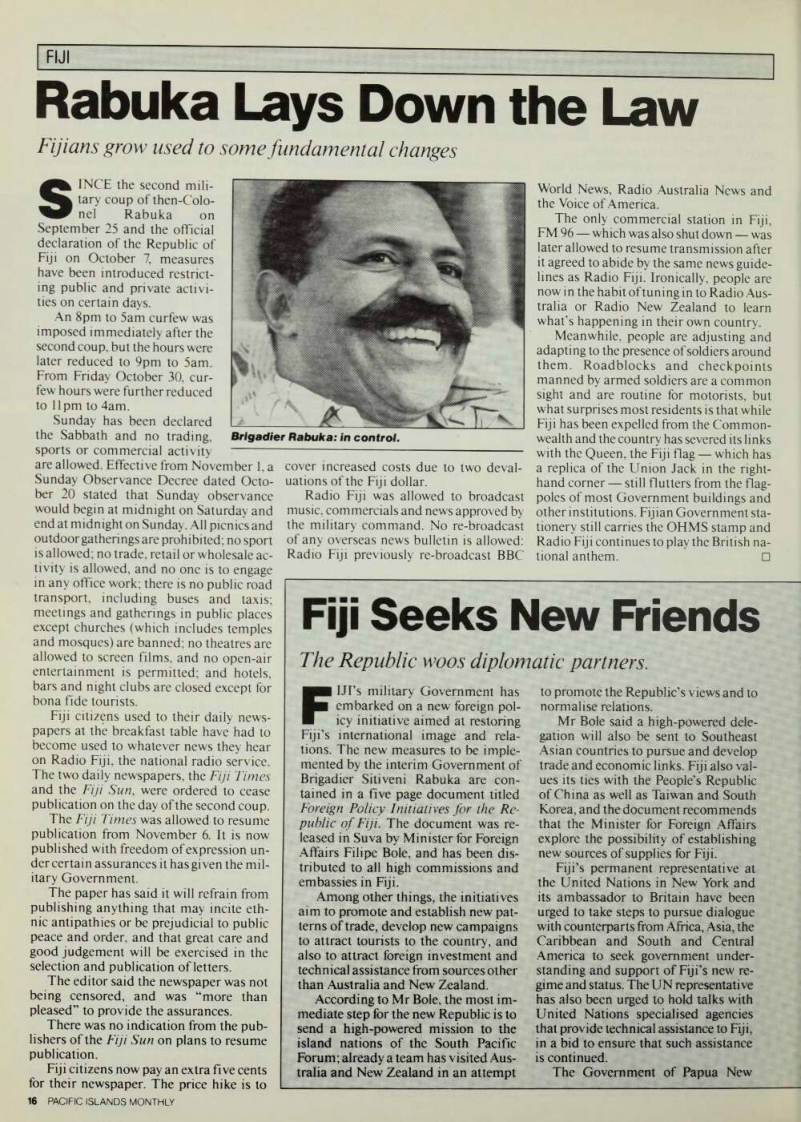
Brigadier Rabuka: in control.