Fiji Seeks New Friends
pp. 16-17 · Read in the full issue
The Republic woos diplomatic partners.
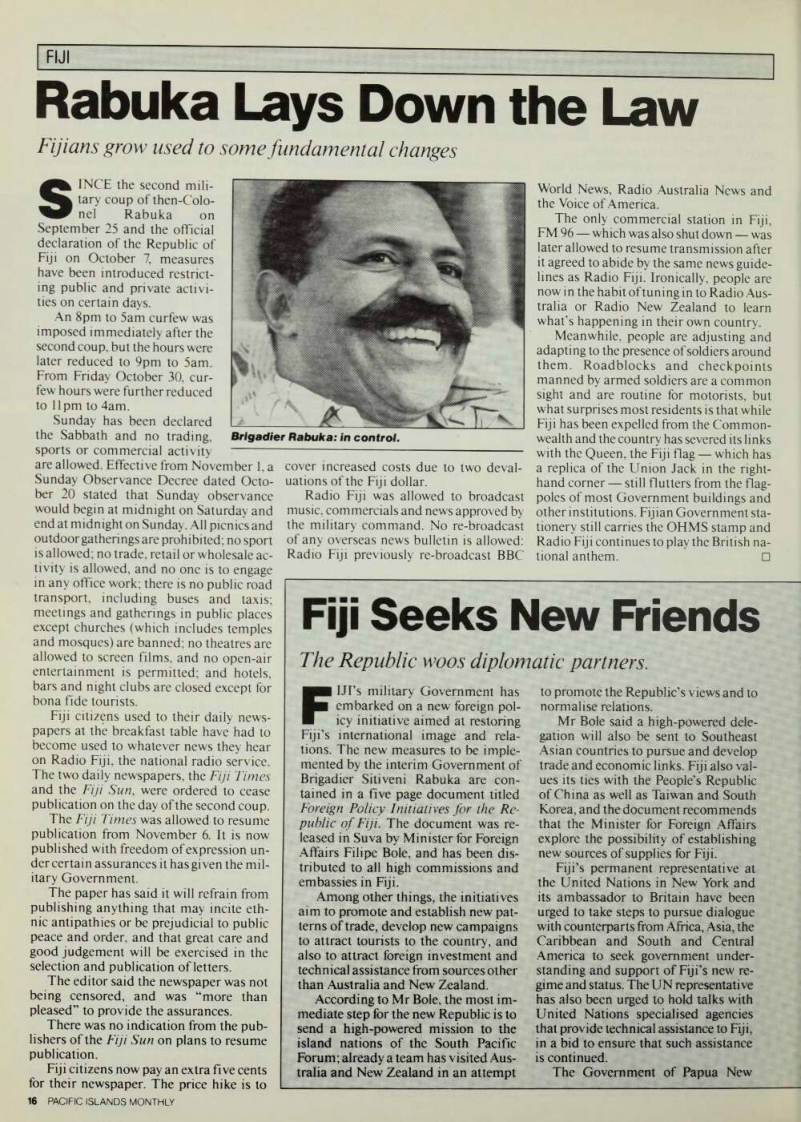
FIJI’S military Government has embarked on a new foreign pol icy initiative aimed at restoring Fiji’s international image and rela tions. The new measures to be imple mented by the interim Government of Brigadier Sitiveni Rabuka are con tained in a five page document titled Foreign Policy Initiatives for the Re public of Fiji. The document was re leased in Suva by Minister for Foreign Affairs Filipe Bole, and has been dis tributed to all high commissions and embassies in Fiji.
Among other things, the initiatives aim to promote and establish new pat terns of trade, develop new campaigns to attract tourists to the country, and also to attract foreign investment and technical assistance from sources other than Australia and New Zealand.
According to Mr Bole, the most im mediate step for the new Republic is to send a high-powered mission to the island nations of the South Pacific Forum; already a team has visited Aus tralia and New Zealand in an attempt
to promote the Republic’s views and to normalise relations.
Mr Bole said a high-powered dele gation will also be sent to Southeast Asian countries to pursue and develop trade and economic links. Fiji also val ues its ties with the People's Republic of China as well as Taiwan and South Korea, and the document recommends that the Minister for Foreign Affairs explore the possibility of establishing new sources of supplies for Fiji.
Fiji’s permanent representative at the United Nations in New York and its ambassador to Britain have been urged to take steps to pursue dialogue with counterparts from Africa, Asia, the Caribbean and South and Central America to seek government under standing and support of Fiji’s new re gime and status. The UN representative has also been urged to hold talks with United Nations specialised agencies that provide technical assistance to Fiji, in a bid to ensure that such assistance is continued.
The Government of Papua New
Guinea has become the first govern ment to accord the military regime in Fiji full recognition, according to an of ficial statement from PNG. The deci sion to recognise the military Government in Fiji had been made in the interest of maintaining regional stability and security as well as co-op eration among countries of the South Pacific.
The Republic of (South) Korea has given the new regime de facto recog nition, while the British Government has authorised its Suva-based High Commissioner, Mr Roger Balthrop, to maintain contact with ministers of the military Government. Explaining his Government’s position, Mr Balthrop said his country’s policy is to recognise states rather than governments—so the question of recognising the military Government in Fiji did not arise.
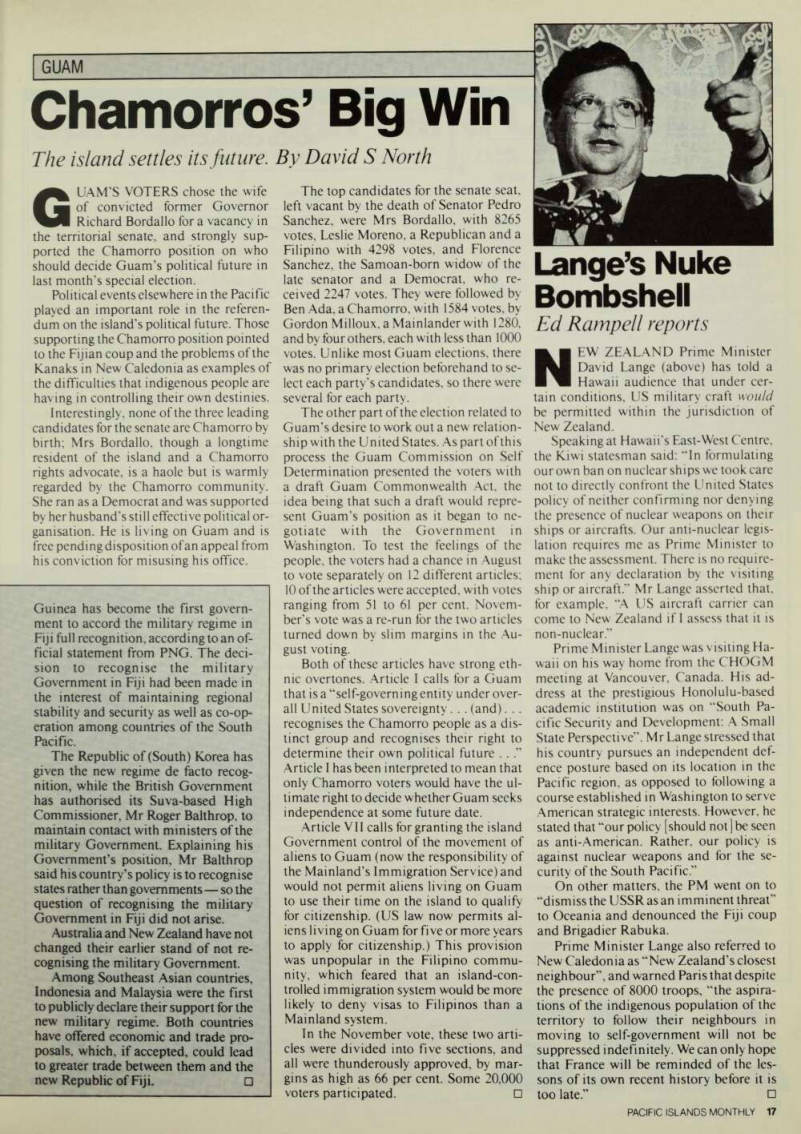
Australia and New Zealand have not changed their earlier stand of not re cognising the military Government.
Among Southeast Asian countries, Indonesia and Malaysia were the first to publicly declare their support for the new military regime. Both countries have offered economic and trade pro posals, which, if accepted, could lead to greater trade between them and the new Republic of Fiji. O