Public sector
pp. 44-45 · Read in the full issue

calls the tune
The over-riding factor in the construction in dustry in the island states of the South Pacific is the small size of the communities being served.
For example, Papua New Guinea, with a population of 3 million, has more people than all the other eleven remaining Forum island countries put to gether.
Not only are the countries small, but so is their spending power.
In Australia 1 in 2.88 people are working. The average
weekly wage is around $4OO, providing a per capita, per week spending of over $l3O.
Fiji, by comparison, (one of the more affluent island na tions) has an employment rate of only one in seven and per capita per week spending is closer to $9.
In larger countries, the driv ing force in the construction industry is the private sector.
The entrepreneur takes an eco nomic risk to develop a project for his own use or to rent to others.
In the islands, where private investment is limited, the en trepreneur faces a high risk factor in speculative building.
The most significant force in the industry in the islands, then, is the government sector. Many national governments, sup ported by rich international fun ding agencies and aid prog rams, are the ultimate clients in at least 75 per cent of the construction work taking place.
Some of the smaller island states can never be commer cially viable and survive either
on repatriated wealth from overseas workers or from aid donations. Most of these en joyed a significant spurt of construction activity at inde pendence.
Fiji, for instance, enjoyed a prosperous period for the four years immediately after inde pendence in 1970. The country has been able to achieve a very satisfactory performance by anybody’s standards in laying down an adequate infrastruc ture base, particularly in the areas of hydro electric power
(the s2oom Monasavu scheme), water, sewerage, roads, port and airport facilities.
The only sector with major private investment input has been tourism and this will be significant in all the island states for at least the next ten years. It should generate substantial capital inflow as well as a steady supply of tourist dollars.
Fiji’s tourism industry is in an upswing both in terms of visitor arrivals and hotel investment.
Gross receipts from tourism this year are estimated at s2oom which, in a country of 700,000, represents a major portion of foreign exchange earnings.
There has been a correspon ding change in the govern ment’s attitude to the industry over the last three or four years as a result.
The attractions of tourism development are many. It is labour intensive, it has high foreign exchange earnings potential, it is generally non urban with a high multiplier factor for other industries.
Tourists today can often be come investors tomorrow and, in Fiji at least, it’s one of the few industries in which the Fijians outshine the Indians.
However, overseas investors need security especially in re gard to land title, tax laws and government incentives.
Some island governments will have to work a little harder to build this kind of credibility if they are to encourage more investment. John Hill.
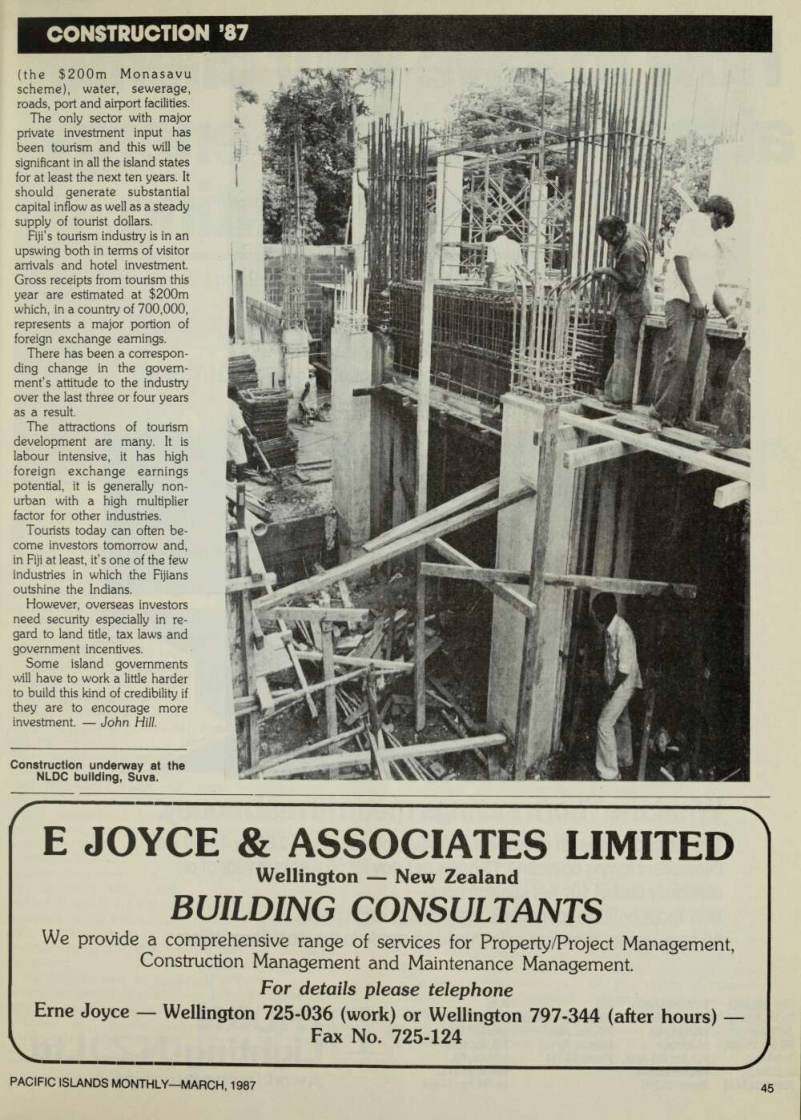
Construction underway at the NLDC building, Suva.