»et a tiny inkling of what an
p. 29 · Read in the full issue
immense job it must have been to establish a base on Palmyra, fwo-storey barracks, garages illed with launches, trucks and tractors and even an airstrip all •emain as testament to the effort that went into making 3 almyra a powerful defence butpost. Water-bound pill boxes and barbed wire fences ine the seaward coasts, backed )y gun turrets and rusting bombs, rockets and thousands )f M4O shells.
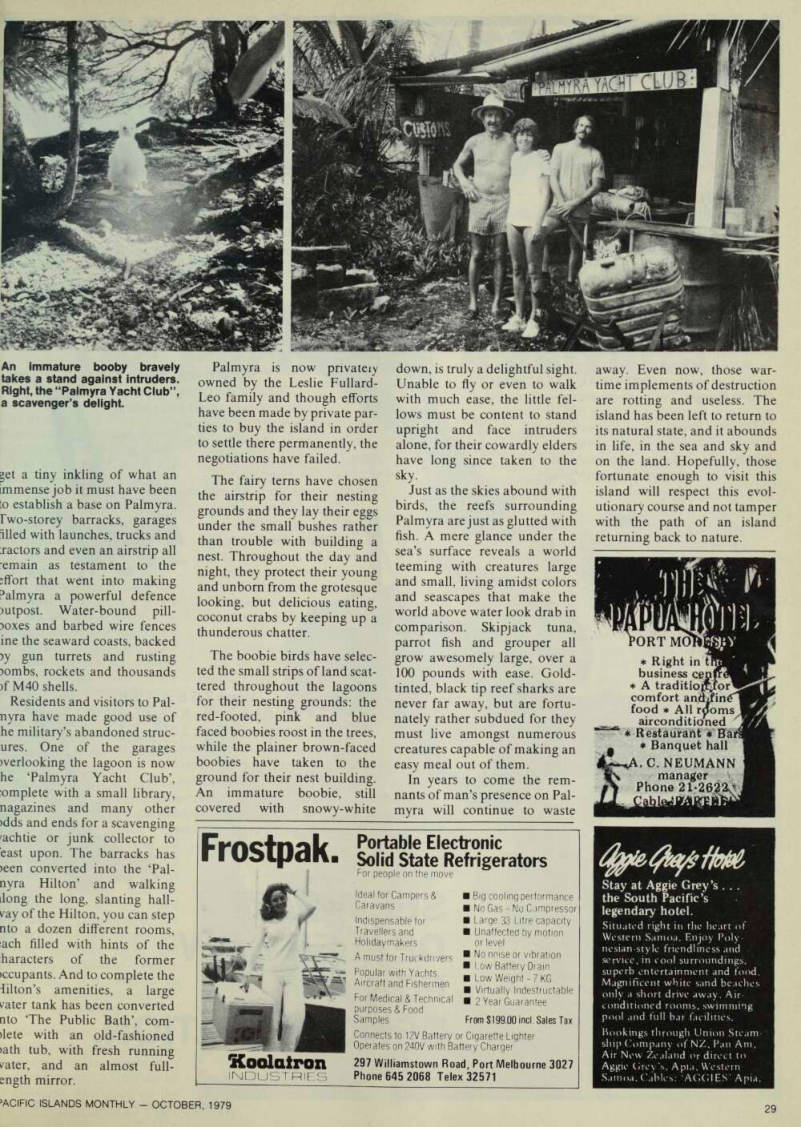
Residents and visitors to Pal nyra have made good use of he military’s abandoned struc ures. One of the garages werlooking the lagoon is now he ‘Palmyra Yacht Club’, :omplete with a small library, nagazines and many other )dds and ends for a scavenging 'achtie or junk collector to east upon. The barracks has >een converted into the ‘Pal
nyra Hilton’ and walking
Jong the long, slanting hall
way of the Hilton, you can step nto a dozen different rooms, ach filled with hints of the haracters of the former >ccupants. And to complete the
filton’s amenities, a large
yater tank has been converted nto ‘The Public Bath’, com >lete with an old-fashioned >ath tub, with fresh running and an almost full sngth mirror.
Palmyra is now pnvateiy owned by the Leslie Fullard- Leo family and though efforts have been made by private par ties to buy the island in order to settle there permanently, the negotiations have failed.
The fairy terns have chosen the airstrip for their nesting
grounds and they lay their eggs
under the small bushes rather than trouble with building a nest. Throughout the day and night, they protect their young and unborn from the grotesque
looking, but delicious eating,
coconut crabs by keeping up a thunderous chatter.
The boobie birds have selec ted the small strips of land scat
tered throughout the lagoons
for their nesting grounds: the red-footed, pink and blue faced boobies roost in the trees, while the plainer brown-faced boobies have taken to the ground for their nest building.
An immature boobie, still covered with snowy-white
down, is truly a delightful sight.
Unable to fly or even to walk with much ease, the little fel lows must be content to stand upright and face intruders alone, for their cowardly elders have long since taken to the
sky.
Just as the skies abound with birds, the reefs surrounding
Palmyra are just as glutted with
fish. A mere glance under the sea’s surface reveals a world
teeming with creatures large
and small, living amidst colors and seascapes that make the world above water look drab in
comparison. Skipjack tuna,
parrot fish and grouper all grow awesomely large, over a 100 pounds with ease. Gold tinted, black tip reef sharks are never far away, but are fortu nately rather subdued for they must live amongst numerous creatures capable of making an easy meal out of them.
In years to come the rem nants of man’s presence on Pal myra will continue to waste
away. Even now, those war time implements of destruction are rotting and useless. The island has been left to return to its natural state, and it abounds in life, in the sea and sky and on the land. Hopefully, those fortunate enough to visit this island will respect this evol utionary course and not tamper with the path of an island returning back to nature.
An immature booby bravely takes a stand against intruders.
Right, the “Palmyra Yacht Club”, a scavenger’s delight.