The Birds And The
p. 27 · Read in the full issue
Fishes Of Palmyra
American journalist Robin Pierson visited Palmyra Atoll in 1978, long before the world ever heard of the tentative US plans to use it as a dump for nuclear wastes. She ends her description of the atoll with a plea that now has a prophetic ring a plea against ‘tampering with the path of an island returning back to nature ’.
Sailing towards Palmyra,
propelled without choice by
awesomely large swells, search
ing for the small dredged chan
nel surrounded by dangerously
high coral heads, a newcomer does not know what to expect from this tiny atoll. Scattered with overgrown remnants of a past waiting to be untangled before the lush growth shrouds its secrets forever, Palmyra re veals traces of a large well fortified US World War II military base that was later
inhabited by families seeking
the romantic, idyllic existence thought to be found on uninhabited tropical islands.
Occasionally yachts also pass
through the island, and since the passengers on one ill-fated vessel were never seen after their arrival in Palmyra, an un easy feeling permeates the great solitude that envelops the atoll.
Passing through the one and only entrance into the other wise land-locked lagoons, it
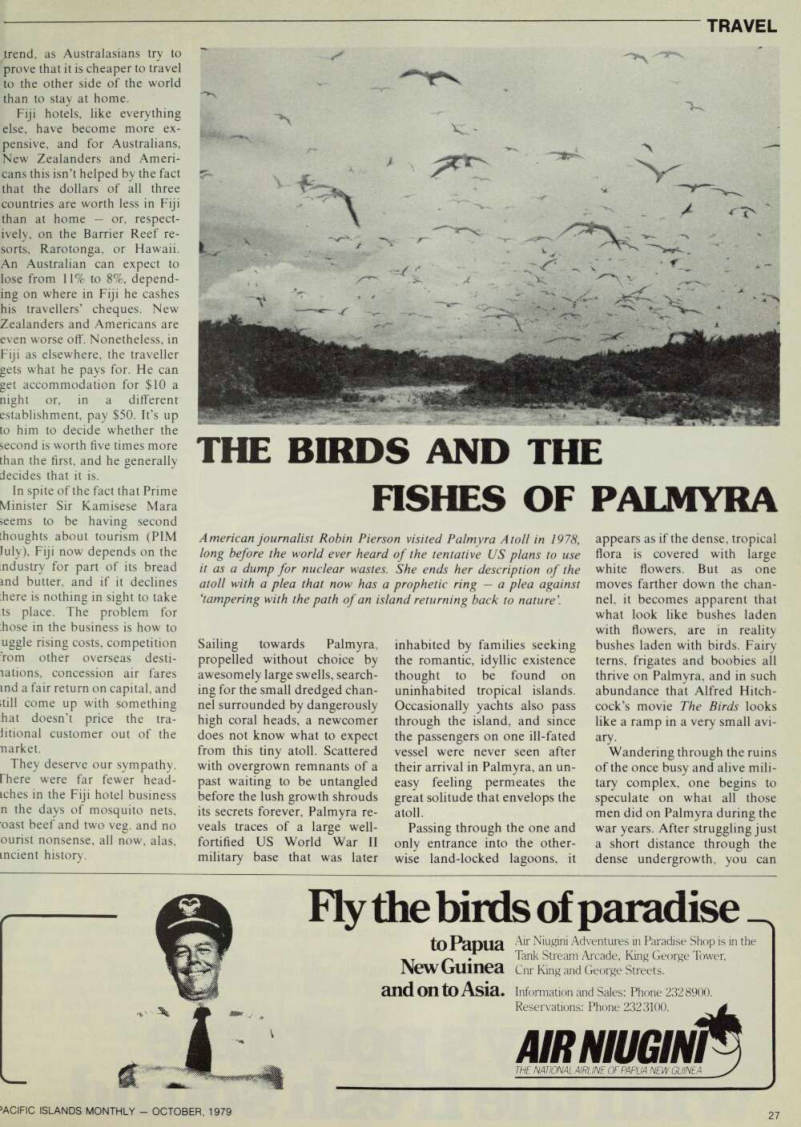
appears as if the dense, tropical flora is covered with large white flowers. But as one moves farther down the chan nel, it becomes apparent that what look like bushes laden with flowers, are in reality bushes laden with birds. Fairy terns, frigates and boobies all thrive on Palmyra, and in such abundance that Alfred Hitch cock’s movie The Birds looks like a ramp in a very small avi ary.
Wandering through the ruins
of the once busy and alive mili tary complex, one begins to speculate on what all those men did on Palmyra during the war years. After struggling just a short distance through the dense undergrowth, you can