And In P-Ng The Question
p. 21 · Read in the full issue
Is: Will Ministers Work?
Prom a Canberra correspondent Papua-New Guinea is to get an embryo ministerial system following next year’s general elections. Seven members of the new 94-man House of Assembly will be given titles of “Minis terial Member”, and each will be responsible for an Administra tion department, together with a departmental head, and will represent that department in the House.
This is one of a number of con stitutional changes in the territory which will flow from the announce ment by the Minister for Territories, Mr. C. E. Barnes, in Federal Parliament on October 26, that the Government accepted entirely the recommendations of the final report of the P-NG Assembly’s select com mittee on constitutional development.
This report, the committee’s third since 1965, was presented to the Assembly in Port Moresby in June ( PIM , July, p. 28). In it, the com mittee proposed that the seven be called “Ministers”, but Mr. Barnes said the Government preferred to make a change in title, although not in functions, because the new officers would not in effect exercise full executive responsibility. “Ministerial member”, and “assistant ministerial member” would be more appropriate, he said.
There will be no other deviations from the committee’s report, and the Commonwealth will amend the Papua and New Guinea Act next year in time for the arrangements to take effect when the new Assembly meets in May or June.
The seven ministerial members.
together with the Administrator and three official members, will form the Executive Council, the principal instrument of authority in the terri tory.
Assistant ministerial members will also be appointed (they will not be members of the council) who will replace the present parliamentary under-secretaries.
The ministerial members and their assistants will be nominated by the Administrator and by the House, with the help of a standing committee.
The members of the Executive Council will not publicly oppose policies approved by the council.
The other main changes in 1968 concern the territory budget. There will be a standing budget committee, comprising five elected members not appointed to office. Budget proposals from the House will be channelled through this committee to the council or the minister concerned.
Mr. Barnes' statement
Mr. Barnes said the new changes represented an important step towards self-government. He added: “As I have pointed out previously, the basic policy of the Government towards political development in P-NG is self-determination. This means that if they wish to do so the people of the territory are free to terminate their present territory status. On the other hand, they are free to remain an Australian territory for as long as they choose. The Gov ernment believes that the pace and nature of the changes which should be made at any time should accord with the wishes of the majority of the people, and that the scheme of government now proposed by the select committee does accord with the people’s wishes.”
The question now is will the system of ministerial members work any better than the system of under secretaries, which has been useless?
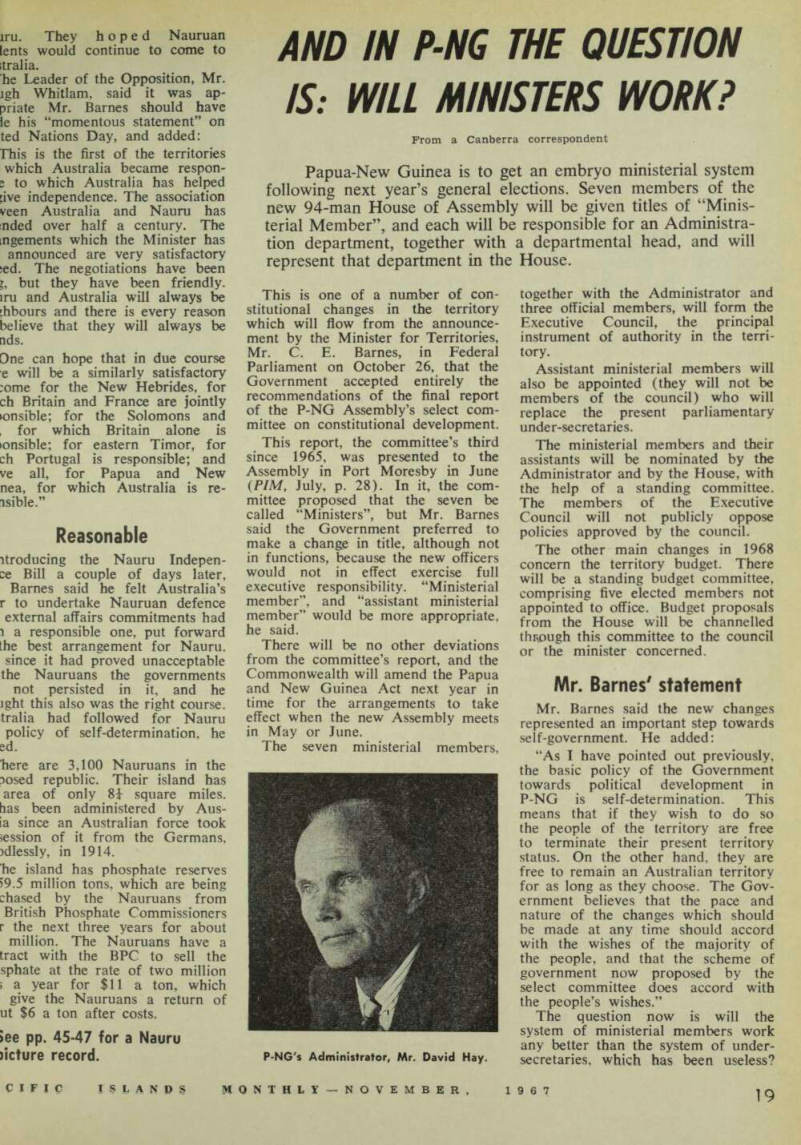
P-NG's Administrator, Mr. David Hay.