Monthly
Pacific Islands Monthly
tered at G.P.0., Sydney, for transmission by post as a newspaper.
Ovember, 1967
News Magazine Of The South Pacific
AUSTRALIA AND NEW ZEALAND, 40c LOCAL CURRENCY. FIJI, 3/6. FRENCH PACIFIC ISLANDS, 55 FRCS. CFP. U.S. PACIFIC TERRITORIES, 70c. P.-N.G. AND ALL OTHER
Pacific Territories, 35C Local Currency.
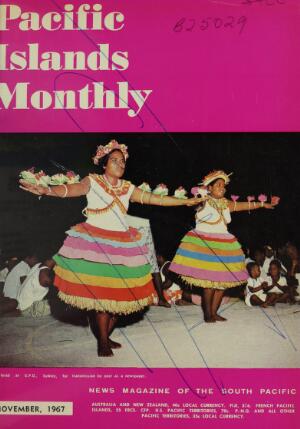
The Cover
It was announced in October it Nauru is to become in pendent soon. This month's ver picture was taken on juru by Ian Mitchell, of the istralian Department of Terri fies, and shows Gilbertese girls king part in a colourful atere”, or dance. There is a ? Gilbert and Ellice Islands mmunity working in the luruan phosphate industry— 2 basis of the island’s economy.
Advertisements & other items, pp. 2-16 (10 items)
November, 1967 Pacific Islands Monthl
every Friday
'V;f
NewTAAT-Jet
flights non-stop
between Sydney
and Port Moresby
every Friday
TAA increases its Bird of Paradise T-Jet services between Port Moresby and Australia. Now you can jet non-stop to and from Sydney every Friday or go via Brisbane every Tuesday, Thursday, Saturday and alternate Sunday. New improved Friendship connections! Fly TAA’s improved internal Friendship services to and from Port Moresby. Ry JAA fhe Take care to book TAA and we’ll take extra care of you.
Contact your nearest travel agent or TAA: Port Moresby 2101. Lae 2311. Madang 2478. Rabaul 2567.
Goroka 8. Mt. Hagen 4,Wewak 103.
Fly TAA the Friendly Way
TAA
BURNS PHILP (SOUTH SEA) CO. LTD.
GENERAL MERCHANTS AND SHIPOWNERS
SHIPPING, CUSTOMS AND FORWARDING AGENTS
iji:
JVA.
■VUKA.
kUTOKA.
kBASA.
kVU SAVU.
BA.
SIGATOKA.
TAVUA.
TAVEUNI.
BRANCHES
Samoa:
APIA.
PAGO PAGO.
Tonga:
NUKUALOFA.
HAAPAi.
VAVAU.
NORFOLK ISLAND.
NIUE ISLAND.
AGENTS FOR:
OVERSEAS AGENTS
QUEENSLAND INSURANCE CO. LTD.
URNS PHILP TRUST CO. LTD.
HELL COMPANY LTD.
BURNS, PHILP Cr CO. LTD., Sydney.
BURNS, PHILP Cr CO. LTD., London.
BURNS PHILP CO. OF SAN FRANCISCO
Shipping agencies
• The New Zeeland Shipping Co. Ltd., • Shaw Savill & Albion Co. Ltd. • Port Line Ltd. • Bank Line Ltd. • General Steamship Corporation Ltd. • Blue Star Line • Conard Line • Compagnle des Messageries Maritimes * British India Steam Navigation Co. Ltd. • Royal Interocean Lines • Nederland Line Royal Dutch Mail/Royal Rotterdam Lloyd.
EXCLUSIVE DISTRIBUTORSHIPS INCLUDE
• AKAI TAPERECORDERS
• DUNLOP PRODUCTS
• EPIGLASS PRODUCTS
• FERGUSON TRACTORS
• HELENA RUBENSTEIN
• HITACHI ELECTRONICS
• HOLDEN VEHICLES
• JOHNSON'S WAXES
• ROLEX WATCHES
• REVLON COSMETICS
• PENTAX CAMERAS
• SUNBEAM APPLIANCES
INTERNATIONAL AIR TRANSPORT ASSOCIATION REPRESENTATIVES for
QANTAS EMPIRE AIRWAYS LTD. AIR NEW ZEALAND UNION DE TRANSPORTS AERIENS :: ALITALIA PAN AMERICAN AIRWAYS
ASSOCIATED COMPANIES
BURNS PHILP (NEW HEBRIDES) LTD.
AUTOMOTIVE SUPPLIES CO. LTD
CORRIE & CO. LTD. • WROUGHT IRON AND STEEL
CONSTRUCTION CO. LTD. • BISH LTD.
SPECIALISED SERVICES
EXPERT ADVICE ON WORLD AND LOCAL TOURS
TRAVEL SHIPPING FORWARDING CUSTOMS
FORMALITIES INSURANCE.
REGISTERED OFFICE: SUVA, FIJI
Code Address: "BURNSOUTH"
/ m i . wrnmmmmmm I ■ ■ / m WStm . ■ . ::S.S ; : hvj SM ' *
NOW THE TOUGH ONES ARE
TOUGHER THAN EVER
PLUS THE SAFEST IN THEIR CLASS
First comes the Toyota Land Cruiser.
Same reliability, but now new safety features.
Safety designed and engineered to meet all the American safety regulations.
A powerful 6 cylinder, 145 HP engine is coupled with 4-wheel drive and a 3-speed DISTRIBUTORS: NEW GUINEA & PAPUA: THE PORT MORESBY FREEZING ( SUPPLIES CO., LTD., P.O. BOX 143 LAUTOKA / AMERICAN SAMOA. BURNS (SOUTH SEA) CO., LTD., APIA / GUAM; RICKY’S AUTO CO., P.O. BOX 1458, AG gear box with 2-speed transfer case to gi you power to get over the toughest terrai There are lots of Land Cruisers to choo from, 4-door wagon, the 2-door wagon, 2-do Canvas Top and Pickup.
LTD., MARY ST., PORT MORSBY, PAPULA / FIJI ISLAND; AUTOMOT .P (SOUTH SDA) CO., LTD., PAGO PAGO / WESTERN SAMOA; BURNS PF
% . c UPr ■ : I ext comes the Toyota Dyna. ota’s dual-wheel light truck. Lots :hanges here, like more engine, formance and improved starting, mgthened powertrain. And comand safety features. All new. ity of Dyna models to choose n, too. d choose the tough ones, made and safer from Toyota ... the est auto manufacturer in Asia.
JAPAN'S LARGEST AUTO MAKER
TOYOTA MOTOR
mm,si a.
28 r We created this for the
world’s most experienced airline
We created this as a modern tribal to ancient Greece This one has a bit of both and a substantial character of its own The Day-date combines the rugged precision of the GMT- !
Master with the elegance of the King Midas from the Benvenuto Cellini collection (a limited edition of men’s watches... inspired bythe works of Cellini... very expensive).
And the Day-date has distinctive features of its own. The Geneva-made Oyster case is hewn from a solid block of gold or platinum. The bracelet, also in solid gold or platinum, is designed specially forthe case. The movement has won the highest possible distinction for If rv / precisionandqualitya chronomet* I can normally obtain. A calendc shows the date and the day of th week spelt out in full.
The Day-date is available only I gold or platinum and is quite possib; the most brilliant timepiece in th world today. Wear it when you fly yoil jet to the conference at Brasilia, swii off your yacht in the Aegean, or addres the United Nations.
With a Rolex on your wrist, you ha\l entire worlds in your hands.
When a man has a world in his hands, you expect to find a Rolex on his wrist ROLES
1 7 GENEVA
Rolex watches are available through Burns Philp (South Seas) Co. Ltd., Suva, Lautoka and branches throughout the Fiji Islands I and the South Pacific. In New Guinea through Burns Philp (New Guinea) Ltd., Port Moresby and all branches in Papua/New Guinea.
Australian
butter & cheese
... help children grow faster
... give children more energy
f S-. 7 &
AUSTRALIA
n the rich pastures of Australia come the finest airy products including the finest cheese, butter, ; and canned or powdered milks. B Unsurpassed lavour, Australian butter gives you full Vitamin A D content. Australian cheese gives you excellent :entrated food value full of protein and rich alcium. B For energy, goodness and flavour Dse Australian dairy products.
Always look for the word 'Australia' on the label Trade Enquiries to: Your resident Australian Trade Commissioner or— Australian Dairy Produce Board,
G.P.O. Box 1657 N,
Melbourne, Victoria. Australia. 3001. 5
I m WM Look at a Ronson and you’ll see sophisticatioi
Light it and you'll see more
BOH
We spend seven weeks building every Ronson to stand out in the crowd. The deep gloss finish (we put on a thicker coating of chrome than is really necessary), the smooth, precision action. They show at once.
There’s sophistication, too, in the way a Ronson lights first time. Every time. And in its adjustable flame height. For cigarettes, cigars and pipes. Just twist the Varaflame wheel.
You’ll find 3,000 lights per filling (5second filling) a welcome improvement over your old lighter, too. Look at the Ronson range soon.
Recognised round the world for lighters and electrical products of quality.
0
HIGHSPEED
top of
the tree
iii
. . . that’s ICI Sporting Ammunition.
Tops for accuracy tops for reliability tops for hard hitting power and all round peak performance.
There’s an ICI cartridge for every shooter, whether it be ICI shotgun cartridges for dense, even patterns and economy, ICI rimfires for hard hitting accuracy and reliability, ICI centrefire for heavier game, or ICI slugs and pellets for lots of fun at low cost Get with the top shooters load up with the top ammo
SPORTING
AMMUNITION
Everything Remplo\
makes has one thine
in common-quality
South Pacific by
SMS
PPi ■ & ' ; - ■ k m Hi , i Luxurious Divan Sets and Spring Interior Mattresses. Deep, durable comfort.
Remploy also make a wide range of Industrial protective clothing, and such commercial and household products as Domestic Furniture, School Satchels, Brief Cases, Shopping Bags, Ironing Tables.
Remploy are represented in the
DEMKA PTY. LTD
Shell House, 2-12 Carrington Street, Sydney, New South Wales, Australia
r .
W 'A *
Men of tomorrow need
(that goes for all the family, too) Every minute they’re awake, they’re on the go.
Where do they get the energy? From the honest-to-goodness, natural foods they eat.
Foods like Weet-Bix at breakfast time. Every golden Weet-Bix flake is a whole wheat grain, mellowed by the sun and loaded with the energy that growing youngsters need.
Pour on icy cold milk. Top with fruit.
Breakfast’s ready a breakfast that helps to build men of tomorrow. mm*.
Weet-Bix
MALTED WHOLE WHEAT BISCUITS
«»»» :s W 2.6
*OO D
s If you knew how much the words peak-nutrition meant to your baby’s health and happiness, you would always feed him Heinz.
Only Heinz peak-nutrition process gives baby more vitamins, more protein than any other brand!
HEIN
BABY
FOODS
mmm*: Heinz gives your baby more to grow on
I would so much like to show
you the India I love
The India I love is an India of beautiful places, true. Places like the Taj Mahal, like Jaipur, the pink city, or Udaipur with its palace hotel on a lake. But even more than its varied beauty, its long and romantic history, it is the people of India who make India so wonderful to visit.
Our beautiful dark-eyed women, who wear the sari draped differently in every district of India —our craftsmen, skilful in silver and brass and wood, ivory, silk and precious stones.
And there is one quality we all have in common —we are courteous and friendly folk.
These are the qualities we value, as people must who have such a diversity of race and customs as we have among the many peoples of our land.
You'll see what we mean when you get in touch with your Travel Agent or with us at Air India. Our greatest pleasure is to help you.
The India I love begins with Air India.
Let me show you! 8 J I ■ IPir fi
■lt lit
K 1 A •* fe 30AC & Qantas
AIR-IMDIA
the airline that treats you like a maharajah worldwide A21087.1005C.
KRAFT
CM* kraft peanut butter
esSS
CH«
KRAFT
Just look at all the good things
KRAFT brings you from
Australia, the sunshine country!
Toasted cheese sandwiches. Strawberry Conserve on scones. Vegemite* on your breakfast toast. These are just some of the wonderful ideas you’ll enjoy when you buy fine Australian foods from Kraft. And these foods contain all of nature’s health-giving nourishment. . . help build strong and healthy bodies. Always look for Kraft, and know you’re buying the very best. for good food and good food ideas
KRAFT
Reg’d Trade Mark
KR39O/A
11l cantity
’eleradio GOA
HE LATEST
OF THE FAMOUS
ELERADIO FAMILY
worthy successor to the famous Model 3BZ, lich earned an enviable reputation in a multi-
TEE ERAD
60a icity of applications during World War 11, eluding the famous Coast Watching Service, ith the introduction of transistors AWA was )le to develop, in the Teleradio GOA, a unit that nploys the most modern techniques for battery :onomy, increased transmitter output and liability over a wide range of operating and ivironmental conditions, ne Teleradio GOA is small and lightweight and ith available accessories it is ideally suitable ir a wide variety of installation arrangements »r both mobile and fixed stations.
Applying radio communication to the Nation’s needs has been the expressed mission of AWA for over 50 years. Manufacturers of television and broadcasting equipment: communication transmitters and receivers: radio navigational aids; audio amplifying systems; electronic components: testing instruments; telephones; programme recording; television and broadcast receivers; data transmission systems; operation of space-tracking stations and training in radio technology.
Export Department
47 YORK STREET SYDNEY
GPO BOX 2516
N.S.W. AUSTRALIA
MALGAMATED WIRELESS (AUSTRALASIA) LTD
GEORGE PAGE PTY. LIMITED
P.O. BOX 25, PORT MORESBY, PAPUA
AWA AVIATION SERVICE
P.O. BOX 13, LAE, NEW GUINEA
INTERNATIONAL AERADIO LIMITED
215 VICTORIA PDE., SUVA, FIJI
PACIFIC ISLANDS
MONTHLY
Established 1930: 38th Year of Publication.
OWNED AND PUBLISHED BY
PACIFIC PUBLICATIONS PTY. LTD.,
29 ALBERTA ST. (G.P.O. BOX 3408), SYDNEY
TELEPHONES: 61-9197, 61-7101, 61-4369.
Telegraphic Address: PACPUB, Sydney.
Chief Executives: Managing Director: R. W. Robson.
General Manager: Selwyn Hughes.
BOOK PUBLISHING DIVISION
Editor: Judy Tudor.
PACIFIC ISLANDS MONTHLY
Editor: Stuart Inder.
Assistant Editor: Robert Langdon.
BRANCH OFFICES
Melbourne: Newspaper House, 247 Collins St.
Tel.: 63-7053.
Fiji: Pacific Publications (Fiji) Ltd., Fiji Times Building, 20 Gordon Street, SUVA. Tel.: 25601.
Fiji Times Office, Vidilo Street, LAUTOKA.
Tel.: 60-422.
Papua-New Guinea: Pacific Publications (N.G.) Pty. Ltd. Representatives; Mrs. Joan Carter, P.O. Box 16, PT. MORESBY (Tel.: 2504); The Manager, P.O. Box 227, LAE; Mr. Steve Simpson, P.O. Box 154, RABAUL (Tel.: 2547).
REPRESENTATIVES
New Zealand: J. D. Whitcombe, C.P.O. Box 2229, Queen Street, Auckland. Tel.: 76056.
United States: Mrs. A. L. Craib, 1631 80th Avenue, Oakland, California, 94621.
Tel.: LOckhaven 8-1201.
United Kingdom: S. R. Warman, Candlewick House, 116-126 Cannon Street, London, E.C.4.
Tel.: Mansion 3674/7.
H. A. Mackenzie, 4A Bloomsbury Square, London, W.C.l. Tel.: Holborn 3779.
AGENTS
All main trading firms and stores in the Pacific Islands.
Pacific Publications Pty. Ltd. is the Australian agent for THE FIJI TIMES.
SUBSCRIPTION RATES:
"Pacific Islands Monthly" is air-freighted to all subscribers and agents in the South Pacific; copies to other areas go by surface mail.
Australia (incl. Lord Howe Is., and Thursday Is.): $4.50 Aust.; Papua-New Guinea, Norfolk Is, Nauru, B.S.I., G. & E. Group, Tonga and New Hebrides: $4.00 Aust.; New Zealand: $4.50 NZ; Cook is., Niue and Western Samoa: $4.00 (local currency); Fiji; £2/-/- (local currency); American Samoa and U.S Pacific Territories; $8.00 (local currency); French Pacific Territories—New Caledonia, Tahiti, etc.: 660 French Pacific francs; United States of America: $9.00 U.S.; United Kingdom and elsewhere: £2/6/- Stg.
Airmail postage to USA, UK and elsewhere is additional.
1
FIC ISLANDS MONTHLY NOVEMBER, 1967
4
NOVEMBER, 1967 PACIFIC ISLANDS MONTH
'Ific Islands Monthly November, 1967
7
ITIC ISLANDS MONTHLY NOVEMBER, 1967
8
NOVEMBER, 1967 PACIFIC ISLANDS MONTHI
10
NOVEMBER. 1967 PACIFIC ISLANDS MONTH
11
F I C ISLANDS MONTHLY— NOVEMBER, 1967
13
CIFIC ISLANDS MONTHLY NOVEMBER 1967
Up Front
with the editor
A passing question in this month’s letters column wantin to know why PIM doesn’t include Hawaiian news in its page deserves more than a brief sentence in reply. The question real!’ invites us to define the South Pacific community.
HAWAII, of course, isn’t in the South Pacific. But if PlM’s coverage followed the strict geographic definition of the South Pacific as being all that part of the Pacific below the Equator, there would be some notable omissions and some irate customers.
We would have to exclude, for instance, many of the Gilbert Islands —including Tarawa, the main atoll of the British Gilbert and Ellice Islands Colony—and many of that colony’s Line Islands. We would not mention the island groups of the US Trust Territory—the Marianas, the Marshalls and the Carolines.
Nauru would barely scrape in.
In its 38 years, PIM has always reported on the affairs of these groups, together with those of the islands south of the Equator, from the east coast of Australia to the west coast of South America. Some have had greater attention than others—the US Trust Territory getting less than anybody, because, before the war, those islands were lapanese-held, and secretive about their affairs. And the bigger popula tion groups were, and are, south of the Equator.
Occasional articles
But never have we attempted to give any kind of coverage to Hawaii.
We do have an article on some aspect of Hawaiian life from time to time. (Recently we discussed at length the history of surfing in Hawaii, and an experiment on fish behaviour there. We published not long ago an article on mysterious rocks on Molokai, Hawaii as a tourist resort has occasionally been given on-the-spot treatment by staff writers en route to somewhere else).
I suppose you could say we pay about the same attention to Hawaii as we do to Easter Island (owned by Chile) in the far eastern corner
of the geographical South Pac and to Guam, which is also pari the good old USA, on the no western fringe of the Pacific ba In deciding what is the real Sc Pacific, the South Pacific G mission, too, has been aware difficulties. Although that Gov< ment-sponsored body is a Sc Pacific commission, it included fi its inception in 1947 the Gilbert Ellice Islands Colony in its area operations. It did not at the be: ning include the US Trust Territ of the Pacific Islands, although it cover American Samoa. Am© later asked if she could throw in US Trust Territory, because she those islands had the same kinds problems.
And this is what the definil finally seems to come down to. F concentrates on those islands of Pacific with the same kind problems. Problems are the island community of interest, even thoi no less than six metropolitan govc ments (Britain, America, Austra France, New Zealand and Chile) i one independent government, that Western Samoa, are involved v the solving of those problems, i often adopt different attitudes them.
These, to us, are the Islands, v a capital I. These are our busine; All of these island groups, e' nouveau riche Nauru, are faced v the long-term job of establishing viable economy in order to survi And they have to do it remote fr the rest of the busy world. Haw as an American State, has a gr deal more economic security tl Fiji or Western Samoa have at 1 moment, or are ever likely to ha In the realm of South Pac economics is the question of gett a continuous supply of trail European experts in fields such agriculture, health, and educati
enough of their own people are sd. While Islands economies are Lich a low level how do you :t the right people from better ies and conditions in America, ce or Australia? The State of aii hasn’t got that problem, but JS Trust Territory has.
Loses atmosphere
>u could go on and on with ar examples, brought about by South Pacific’s remoteness and jarth of natural resources. This i flavour of the South Pacific, an island has a pipeline to the Wide World it loses some of its sphere simply because it does idopt the same attitude towards problems. Thus Kieta, on ainville’s east coast, is true i Pacific in its attitude, but Port ;sby isn’t. Most Port Moresby le these days have a direct pipe to mainland Australia (whose ay newspapers come over their fences the same day), lich brings up the question of future of the South Pacific as community of interest. Of course Islands will change. They are »ing. Twenty years ago nobody awaii would have asked us for aiian news. e old atmosphere will go, and ing, and I am unable to convince If that there will always be that able community that PIM has yn a loose net around for nearly years—that community which Zealander R. W. Robson first sd in a practical way when he :hed, hesitantly, the Pacific ds Monthly. iere will, in fact, be more aiian news in PIM as the aiis of this shrinking world come r to the South Pacific com fy, and the South Pacific draws r to the world’s Hawaiis.
Stuart Inder
Advertisements & other items, pp. 16-18 (4 items)
14
NOVEMBER, 1967 PACIFIC ISLANDS MONTH!
15
CIFIC ISLANDS MONTHLY NOVEMBER, 1967
i li(j(inflij btijletl,
Super silent Caroma cisterns, proven in over 150,000 homes carry the seal of approval of the Design Council of Australia. Approved by Authorities in every State.
quiet—
for Ijomebof
MATCHING TOILET SEATS
TOILET ROLL HOLDERS
SHOWER HEADS
SAN ITARYWAR E
Trade Enquiries to:—
CAROMA SALES PTY. LTD.
83 Sydenham Rd., Marrickville, Sydney, N.S.W. 51 1341
Triple-wrapped packets
Qrnotts
FAMOUS
Biscuits
W.i . ::: m •.•Ki-isssssk \ \ K N x.
Os o o o o <* << V s-
. . for extra energy
There is no Substitute for Quality
16
NOVEMBER, 1967 PACIFIC ISLANDS MONTHL
This Issue
Eral
Morrison of Burns Philp 87 a Market Eases 127 rofit Rise Likely 128 enter Profit Drops 133 rniies" Do Better 136
Rican Samoa
to Nature 31 : Starts on New Warehouse ... 105
K Islands
of the Frisbies on Film 28 ging Social Conditions 30 ng the Water Problem 40 ers' Strike 21 •p Enthroned 23 ling Inquiry 23 ipion Swimmer Quits Colony ... 26 y Football 28 ;ers for Policemen 29 s Tailors 32 'sion Air Fares 59 Airways' New Plane 61 Facto" Marriages Cause Problems 75 Book by C. A. Perkins 95 i Blasted for Boat Passage 101 enter Shipping Run Ends 103 University Pictures 117
Ch Polynesia
r Ski-ing Record 28
Female Crusoe for Mehetia 30 Athletes Shape Well 70 Visit to "Typee" Valley 85 Pierre Loti Museum 91
Gilbert And Ellice Islands Colony
Socio-Economic Survey 125
Lord Howe Island
New Book 96
Nauru
Independence Soon 18 Pictorial Series 45-47 Interest in 1969 Games Marathon 71
New Caledonia
Higher Cost of Dying 30 Tourist Quotas Double 49 New Hotel at Noumea 55 Third Nickel Consortium 136
New Hebrides
New Plane Services 61 Lost Yachtsman Safe 109 Athletics Records Broken 121
Niue
Whitewashing Alofi 29
Norfolk Island
Spinning Factory 24 Laws to Protect Islanders 37 Night Aircraft Landings Soon 57
Papua-New Guinea
Constitutional Changes 19 BP Loses Shipping Subsidy 24 Sin in Port Moresby 28 Getting More, Enjoying it Less . 38 Attractive Madang 39 Investment Opportunities 42 Aviation Statistics 61 Motel for Port Moresby 61 Hotel Kerema Opens 61 Handicapped Children's Centre 79 Book by Maslyn Williams 98 Western District's New Ship 103 Ship for New Ireland 105 Army's Landing Barges 105 Search for Oil in Papua 125 "Steamies" Employees Sacked 134 Desiccated Coconut 134
Pitcairn Island
Satellite Trackers Arrive 104
Solomon Islands
Book by Dr. Fox 20 Islanders' Association in Sydney ... 29 "The Happy Isles" 48 Small Jet-planes on Inter-island Runs 61
South Pacific Commission
Conference in Noumea 25,119
Tonga
Views on Coronation 32 Not Enough Land for All 37 Fiji Airways New Service 61 Tourist Bureau 63 Queen Salote Wharf Opened 105
Western Samoa
Peace Corps, Potlatch, Hydro Plan 41 Bright Future for Tourism 56 Sir Guy Powles on Davidson's Book 65 Soap Factory 127
APARTMENTS: Up Front with the Editor, 14; Tropicalities, 28; The Editors' \ailbag, 32; To the Point with Percy Chatterton, 38; Port Moresby Personality, 0; Travel, 41; From the Islands Press, 73; Magazine Section, 85; Yesterday, 93; ook Reviews, 95; Shipping, Cruising Yachts, 101; People in Pictures, 117; eople, 121; Business and Development, 127; Produce Prices, 135; Shipping, urways Schedules, 139; Deaths of Islands People, 148; Practical Planter, 151.
Republicans Of Nauru
It's All Over Bar The
Shouting For The
Years of effort by Naum’s Head Chief Hammer Deßoburt culminated in the announcement in Canberra on October 24 that the phosphate island will get “full and unfettered” inde pendence as soon as legal arrangements can be made. It is almost certain the Nauruans will be able to declare January 31, 1968, as Independence Day. Nauru will thus become the second Trust Territory in the South Pacific to have been given independence. Western Samoa has been independent since January, 1962
Nauru now has to complete a draft constitution, set up a Nauruan constitutional convention to approve it, and terminate the trusteeship agreement with the UN. A Nauru Independence Bill, to allow the Nauru Legislative Council to establish the convention, was passed by Federal Parliament on November 1, and in the same week talks were going on in Canberra to complete the draft constitution.
The constitution
The constitution will follow the framework of proposals submitted to a Canberra conference in May (details PIM, June, p. 57). It will create the Republic of Naum with a President who will also be Chief Minister. There will be a Cabinet and an Assembly; a Nauru judiciary (with, possibly, appeals to the Aus tralian High Court); and a Public Service that will come under the Chief Minister’s control. Elec tions to the Assembly will be by universal suffrage, and the President will be elected by the Assembly, to hold office during the Assembly’s life.
If the complete machinery measures cannot be carried out in time for January 31 (and there is every chance that they won’t be) then the current Canberra talks will try to evolve a make-shift scheme which will allow independence celebrations to go ahead on that date, but with the establishment of a caretaker government to operate until the full details can be carried through.
The Nauruans could have had the details approved months ago, if the Head Chief had been willing to settle for partial independence, with Nauru linked to Australia by a Treaty of Friendship, giving Australia the right to run ISfauru’s defence
and external affairs. But Deßoburt held out for all or nothing ( PIM , July, p. 23, for a full report).
There might well be a treaty, but the Head Chief says it is up to Aus tralia to make the move. He told a Canberra news conference that he wanted Nauru to retain links with the Commonwealth, and hoped to apply for Commonwealth member ship after independence (Western Samoa has never applied).
He also told the conference that it was not Nauru’s intention to join the UN, as the country was too small. Nauru would have Australian currency if Australia would agree to this.
There would be five ministers besides the President/Chief Minister —the Ministers for Finance, Health/ Education, Justice, Works/Com munications, and Island Development.
Nauru had already begun to search for a Secretary for Island Develop ment, at a tax-free salary of $8,500, with free accommodation (and there are no duties or sales tax on goods landed in Naum).
Deßoburt's statement
To questions about the ability of the island to handle any trouble with the immigrant labour force, such as developed during the recent strike on Nauru, the Head Chief said he had no worries that the Nauruan police could maintain law and order.
No outside help had yet been needed.
He said that with independence there would be more than enough jobs for the island’s young people “for the next 25 years”, and there would be no problems about the Islanders having to leave for Aus tralia to find employment. But Nauru was short of trained people.
Asked whether he had any doubts
that independence could be esta lished by January 31, in view the technical difficulties, Deßobi replied: “I always have hopes, un a thing is proved impossible”.
Which, in a sentence, is t] Head Chiefs whole philosophy.
In Parliament
The independence announceme came as an anti-climax in Feder Parliament on October 24. The Ar tralian Minister for Territories, M C. E. Barnes, was an hour late wi his prepared statement because tl Prime Minister and the House we occupied with a domestic politic squabble about the misuse of Go eminent aircraft.
When this debate was adjourne most of the members on both sid of the House lost any further intere and adjourned too, leaving M Barnes to talk to only 19 member most of them on the Oppositic benches. But the visitors’ galleri were packed. Visitors included tl Head Chief, councillors Josep Detsimea and Buraro Detudamo, ar Professor J. W. Davidson, tl Nauruans’ constitutional adviser.
Mr. Barnes told the House thi the decision by the trusteeship powei —Britain, Australia and NZ—t grant Nauru full independence wi an historic one, and the choice w i theirs.
“We wish them well,” he said. “] after independence the Nauruan Goy eminent wishes to continue clos links with Australia, as forecast b the Nauruan delegation, the Au! tralian Government will be read to respond and to conside sympathetically any requests that ma be made for assistance.”
He said the Nauruans wished t maintain a Nauruan Office in Am tralia and would be happy to se an Australian Office established ii
Head Chief Hammer DeRoburt
iru. They hoped Nauruan lents would continue to come to itralia. he Leader of the Opposition, Mr. igh Whitlam, said it was ap priate Mr. Barnes should have le his “momentous statement” on ted Nations Day, and added: This is the first of the territories which Australia became respon -2 to which Australia has helped ;ive independence. The association veen Australia and Nauru has nded over half a century. The mgements which the Minister has announced are very satisfactory ;ed. The negotiations have been I, but they have been friendly, iru and Australia will always be jhbours and there is every reason believe that they will always be nds.
Dne can hope that in due course e will be a similarly satisfactory :ome for the New Hebrides, for ch Britain and France are jointly onsible; for the Solomons and for which Britain alone is onsible; for eastern Timor, for ch Portugal is responsible; and ve all, for Papua and New nea, for which Australia is re isible.”
Reasonable
Producing the Nauru Indepen ce Bill a couple of days later, Bames said he felt Australia’s r to undertake Nauruan defence external affairs commitments had i a responsible one, put forward the best arrangement for Nauru, since it had proved unacceptable the Nauruans the governments not persisted in it, and he ight this also was the right course, tralia had followed for Nauru policy of self-determination, he ed. bere are 3,100 Nauruans in the ?osed republic. Their island has area of only 8i square miles, has been administered by Aus ia since an Australian force took session of it from the Germans, )dlessly, in 1914. be island has phosphate reserves >9.5 million tons, which are being chased by the Nauruans from British Phosphate Commissioners r the next three years for about million. The Nauruans have a tract with the BPC to sell the sphate at the rate of two million i a year for Sll a ton, which give the Nauruans a return of ut $6 a ton after costs. >ee pp. 45-47 for a Nauru )icture record.
Advertisements & other items, p. 20 (1 item)
18
NOVEMBER, ] 9 § 7 --- P .4 C I F I C ISLANDS MONTHL
And In P-Ng The Question
Is: Will Ministers Work?
Prom a Canberra correspondent Papua-New Guinea is to get an embryo ministerial system following next year’s general elections. Seven members of the new 94-man House of Assembly will be given titles of “Minis terial Member”, and each will be responsible for an Administra tion department, together with a departmental head, and will represent that department in the House.
This is one of a number of con stitutional changes in the territory which will flow from the announce ment by the Minister for Territories, Mr. C. E. Barnes, in Federal Parliament on October 26, that the Government accepted entirely the recommendations of the final report of the P-NG Assembly’s select com mittee on constitutional development.
This report, the committee’s third since 1965, was presented to the Assembly in Port Moresby in June ( PIM , July, p. 28). In it, the com mittee proposed that the seven be called “Ministers”, but Mr. Barnes said the Government preferred to make a change in title, although not in functions, because the new officers would not in effect exercise full executive responsibility. “Ministerial member”, and “assistant ministerial member” would be more appropriate, he said.
There will be no other deviations from the committee’s report, and the Commonwealth will amend the Papua and New Guinea Act next year in time for the arrangements to take effect when the new Assembly meets in May or June.
The seven ministerial members.
together with the Administrator and three official members, will form the Executive Council, the principal instrument of authority in the terri tory.
Assistant ministerial members will also be appointed (they will not be members of the council) who will replace the present parliamentary under-secretaries.
The ministerial members and their assistants will be nominated by the Administrator and by the House, with the help of a standing committee.
The members of the Executive Council will not publicly oppose policies approved by the council.
The other main changes in 1968 concern the territory budget. There will be a standing budget committee, comprising five elected members not appointed to office. Budget proposals from the House will be channelled through this committee to the council or the minister concerned.
Mr. Barnes' statement
Mr. Barnes said the new changes represented an important step towards self-government. He added: “As I have pointed out previously, the basic policy of the Government towards political development in P-NG is self-determination. This means that if they wish to do so the people of the territory are free to terminate their present territory status. On the other hand, they are free to remain an Australian territory for as long as they choose. The Gov ernment believes that the pace and nature of the changes which should be made at any time should accord with the wishes of the majority of the people, and that the scheme of government now proposed by the select committee does accord with the people’s wishes.”
The question now is will the system of ministerial members work any better than the system of under secretaries, which has been useless?
P-NG's Administrator, Mr. David Hay.
Advertisements & other items, p. 21 (1 item)
19
CIFIC ISLANDS MONTHLY NOVEMBER, 1967
past, present and future
Frank new view of the BSIP— past, present and future
If there were any doubts that the remarkable Rev. Dr.
Charles Fox will be forgotten in the Solomons after his death, they can be dispelled. At the age of 89 he has just published a book which is his guarantee that he will be remembered.
'Y'HE Story of the Solomons came off the Melanesian Mission’s press, DOM Publications, in the Solomons in October, for the benefit of local schools. And what a fascin ating little book it is!
The two-paragraph preface by Dr.
Fox hardly does it justice. He writes: “Bishop Alfred Hill asked me to write something for our schools. I first taught Solomon Islanders and learnt to speak one of their languages in 1902, at St. Barnabas school, Norfolk Island; spent some months on San Cristobal in 1908; and finally settled in the Solomons, where I still live, in 1910. So I have known a good deal of their history.
“I offer this story to the new generation of our people—with one apology. I do not think I have done justice, through my ignorance, to the people of the Western Islands.
They are fine people; so is their art.”
Frank
The Story of the Solomons is a book of less than 100 pages but in it the author’s scholarship and his 60 years’ experience of the Solomons coalesce to produce a re freshingly frank and unexpected outline of modern Solomons’ history.
Dr. Fox manages to discuss develop ment of the Solomons through both Island and Western eyes. He is probably the only writer alive who could have successfully done this.
Although his narrative continually refers to “we”, meaning the Islanders, there is no doubt in the reader’s mind that he has also taken into account Western attitudes. The re sult is balance.
He is able to point to both the evils and advantages of colonialism; the evils and advantages of life in the Solomons before the coming of the European.
Dr. Fox, MBE, MA, Litt. D., is, of course, the grand old man of the Solomons. He was born in Eng land and educated in NZ. He has written a number of works, the best known of which are the Threshold of the Pacific (1924) and
Kakamora (1962). He lives at Taroaniara.
His short history begins with the European discovery of the Solomons in 1568; the early days of European contact, with their problems of head hunting, black magic and the slave trade; the effect of the missions (with a potted mission history from 1850 to 1950); the establishment of the protectorate and the appoint ment of the first Resident Com missioner in 1896; and the period of colonial rule from 1900 to World War 11. The war itself has a chapter; there is another on the Marching Rule cult; and finally a comparison between old ways and new. And there is not a dull word in any of it!
Extracts
Probably the best way to display the extraordinary flavour of the book is to give generous extracts from it. Here is a selection, quoted verbatim: • Burns Philp’s Handbook of 1899 says of the Solomons in those days: “They are stained with the blood of travellers, traders and missionaries.
Cannibals and headhunters, they murder all they can lay their hands on, feasting on their bodies and carry ing off their heads.” Nothing is said of what our people suffered at the hands of the Europeans. • A result of the Pacific War was that our islands became known to the outside world, because of the battles fought here; and indeed a new era began in our history, a new gov ernment with a set purpose to lead us to self-government; perhaps in time to independence. The war for us in the Solomons was the dividing line between the old and the new. Before that we had been known as “the can nibal islands”, though we were already largely Christians. This surprised the outside world, especially the Ameri cans. • Our land was the most im portant thing, and in the days of colonial government, there was a great fear that the Europeans would gradually take all our land. When
land was sold to the missions it w often because that land was full i evil spirits and haunted, as at Siot or Bungana. When it was sold planters we thought it would be r turned in the next generation, as w; our own custom, nor did we thii that land not used should belong i the government. These are ne ideas. • What sort of way of life is tl government leading us? To a Britii way or to one more natural to u Perhaps, without knowing, Coven ment and Church have been tryii to make us as British as possible wh« we are really Melanesians in characte more Asiatic than European. Tl way in which Melanesians think is di ferent from the European way ar much more like the way of Chri who, the Bible says, never spoke 1 the people except in parables. If Solomon Islander were asked, “E you think that English is a bett< language for us than Pidgin?” 1 might say: “I think it is better 1 plant taro than yams on the hills, meaning Pidgin is better for Me anesians. (Taro does not do well o the shore, nor yams on the hills.) 1 • Colonialism now has a ba name, but will be judged more sane] in time to come. It helped us whe we might have been exploited b stronger races, it could not do muc more. How could a divided an savage people, such as we were, b guided otherwise to better things When a people has been ruled b
Dr. Fox —a photograph taken several year ago.
iother race for the sake of gain, at is an evil thing, but there have en different motives in colonialism d not all have been bad. In our rlier years of colonial rule the ief thought was that it did so little r us in education and seemed to ve no real purpose or goal. It is without resources to do more. • What is worst in colonial rule the spirit of superiority in the rul y race; to think of those ruled as a lower plane, sometimes despised, metimes treated as children or olescents (untrue, as well as galling) d as incapable of ruling themselves, icy are only inferior to the ruling :e in knowledge, which the rulers lerit from centuries of civilisation, any Europeans think a man is ; erior because he is brown; not be ase he is poor, not because he is educated, but just because he is pwn. • Even in the days of fighting if ;re was much cruel and cowardly hting there was also courage, dar l and adventure. Our people were h in art, and drama, in merry isting and dancing, in the un itten and handed down stories, ey were in love with their farms, :y loved the sea; these things were aracteristics of our race. They re ined to be built upon in a happier ure. • We can and must adapt cur ves to this new way of life with ifidence in our future as we grow numbers and new knowledge, but ;r remaining Solomon Islanders; ;ping what was good in our old y of life.
Marching rule
3f the Marching Rule movement Malaita, Dr. Fox says it was only tly a cargo cult. It was sponsored a desire to return to the old way life and reject the British way life, strongly encouraged by the ;i-colonial talk of the friendly lericans. Part of the Solomons way life was village government: lien anything was to be decided : whole village met and everyone cussed it,” Dr. Fox writes, “last all the chief gave his decision. We 1 doubt the British way of count ; heads to decide, thinking heads t equally as wise.”
Fhe book has a bibliography, ich unfortunately has a number of nting errors, and which would be )re useful if it included fuller de ls of authors and dates. This per ps can be done in a later edition and there certainly will be one, for deserves to keep on selling.—Sl,
The Story Of The Solomons.
P.M. Publications, Taroaniara, BSIP. 35.)
Advertisements & other items, p. 22 (1 item)
20
NOVEMBER, 1967 PACIFIC ISLANDS MONTHL
Spanners in the works from Fiji's union leaders
Fiji's union leaders
From a Suva correspondent It began on Thursday, October 5. And the question Fiji people are still asking at month’s end is—when will it finish, this wave of industrial unrest which is bedevilling the colony at one of its most crucial times?
Self-government or independence are somewhere along the road.
Financiers overseas are considering pouring money into Fiji’s tourist in dustry. And given racial and in dustrial peace, Fiji has a big chance of making the grade, but its chances are being sold out by politicians and wild-cat trade unionists.
On October 5, in obviously planned combined operations, two unions—the Airport, Hotel and Cater ing Workers’ Union and the Municipal Workers’ Union—without warning brought out 800 men. Of these, 400 were members of the former union working on building projects in Suva, and nearly 400 were Suva City Council workers.
The claims
Five days later, Apisai Mohammed Tora, the airport workers’ leader, called out, again without warning, 96 Qantas employees at Nadi Air port.
The unions, both working on identical logs of claims drawn up by James Anthony, former graduate of the University of Hawaii and now working for his PhD at the Aus tralian National University, are ask
ing for what Fiji employers say is “the moon”.
They want a 40-hour week with a minimum wage for unskilled workers of £ll/6/8 a week; overtime at H times normal rate between 5 p.m. and 9 p.m., double time be tween 9 p.m. and 1 a.m., and treble time between 1 a.m. and 7 a.m., with double time on Saturdays and treble time on Sundays and public holidays.
They also want leave of 24 normal working days a year for employees with five years’ service; 36 days for employees with up to 10 years’ service and 21 days a year, plus three calendar months’ leave at the end of every three years for those with over 10 years’ service.
They want an education fund established, with the employers pay ing 3/- a week for each child of the worker. They are also asking for numerous fringe benefits of meal allowances, sick pay, and free trans port.
In every case the employers have rejected the log of claims as being unrealistic.
The Government meanwhile had in its hands a report by a UK economist, Professor H. A. Turner, on a wages, incomes and prices
Strikers outside Suva's new Travelodge in October. Bearded Apisai Mohammed Tora, the airport workers' leader, is on the right. The placard abuses Fiji's Labour Com missioner.
policy for Fiji, which called for the establishment of an Incomes and Prices Advisory Board, and actually suggested a brake on wage increases for unskilled workers because of the rapidly closing gap between the wages of the skilled and the un skilled (see p. 23).
To the brink
The strikers brought Suva to the brink of chaos on the morning of Wednesday, October 11. About a thousand people gathered at the Suva bus station and a lightning strike of bus and taxi transport workers began.
It was obvious that intimidation was playing its part and the atmos phere at the bus station began to thicken when Apisai Tora, after ask ing police permission to speak, harangued the crowd.
There was some nervousness in the city, which retained vivid re collections of December, 1959, when a similar situation developed into rioting which no one has forgotten.
Tora told the restive crowd he did not want a repetition of 1959.
But he congratulated the trans port workers on coming out on strike in support of his union. (Who brought them out is a mystery, be cause the Transport Workers’ Union hadn’t voted for it).
It was obvious the bus drivers didn’t want to strike, but few strikers can intimidate as effectively as the Fijian striker. The situation looked ugly but the police stepped in quietly and made “specials” out of buses with co-operative drivers.
The transport workers’ strike petered out from then on. It was not broken by the Government, as has since been suggested in some quarters.
But the situation did remain tense until late in the morning, when Fiji’s Chief Minister, Ratu K. K. T.
Mara, acted. Back only a few days from his world tour, he went on the air from the Fiji Broadcasting Com mission studios and in quiet tones made the Government’s position clear.
It was obvious from his first few sentences that there would be no repetition of 1959, when the Govern ment of the day handled the situa tion badly.
Mara's speech
“There were signs of unrest in Suva this morning,” Ratu Mara began. “Transport services have come to a halt. There are indications of the possibility of interference with essential services.
“There are also, unfortunately, indications of intimidation of some of the workers who are being forced by threats and not by peaceful persuasion to leave their jobs.”
His next sentence really meant something.
“Government will not tolerate this,” he said. “It will use all necessary powers to ensure that the law-abiding citizen can go on his peaceful way unmolested, unafraid and free to act as he wishes within the law!”
That lifted the tension like a curtain. Buses and taxis rolled again.
Nervousness disappeared and it
hasn’t been back. Public Safel) Regulations were imposed and they were still in force at the end oj October.
Behind the scenes, the unior leaders were having other problems Some of the strikers were getting s little impatient at the stalemate, and a little light in the pocket.
Sweet reason
On October 12 peace feelers and talks got nowhere. Then, almost out of the blue on Friday the 13 th, came sweet reason. All the builders and municipal workers would go back tc work while talks got underway.
The builders went back on that day, and the council workers reported for duty on the Monday.
Then there were hopes that the Qantas workers would go back, foi the airline offered to negotiate a wage increase which would be back-dated to August 1 if the workers would go back immediately.
But, on Sunday, October 15, the union rejected the offer.
And on October 18 they gave notice that they intended to bring out, after 28 days, the airport fire men. The firemen are an essential service, and as such cannot legally strike without having first given 28 days’ notice.
Qantas might bypass
The union also decided to boycott the Government’s board of inquiry into the dispute, which opened before an Australian judge, Sir Trevor Gould, and closed its public sittings on October 21 without a single union representative having been present.
Qantas, Fiji Airways, the Master Builders’ Association, the Fiji Em ployers’ Consultative Association, the Government’s Ministry of Finance, the Fiji Visitors Bureau and the City Council, all made written sub missions. But the workers’ case went by default. Even the Industrial Workers’ Congress, which has been regarded as a most responsible body by most employers, kept silent.
Qantas made some oral sub missions, through Mr. P. J. C. Rogers of their industrial relations depart ment, which contained an overt threat that Qantas would overfly Nadi if the strike continued.
The two building companies.
Cementation Overseas Ltd., who are building the new Travelodge Hotel and the Development Bank, and W.
C. Hines (Fiji) Ltd., builders of the new Government Buildings extensions and the new Suva Town Hall, began
When the Suva City Council's garbage collectors refused to work overtime on Saturday, October 7, the Suva Market was left in a vegetable strewn, smelly mess until the following Monday. It did not endear Suva to tourists from the liner "Mariposa", which can be partly seen in the back ground.
Photo: Nitin.
ks with the Airport, Hotel and itering Workers’ Union which, for good reason at all, caters for the ilding workers.
These were still in train on :tober 30, but talks which were to ve begun between the Municipal orkers’ Union and the City Council [lapsed before they began.
The Suva Mayor, Cr. Harvey mt, told the union the council mid not allow the union’s advisers, >ya and Company, to take part in : talks, although they would make filities available for the union to tisult its legal advisers, who could up office outside the conference Dm.
More trouble
The union reacted to the Mayor’s vision by walking out. The council ;n offered to allow the adviser be present at the talks but not take part in the discussions, but : unions’ reply to this was to give days’ notice of intention to strike.
And there it rested on October with Fiji facing a very uncertain ure —airport workers still out and municipal workers again threaten- The Fiji Government has made clear that unions can act freely thin legal requirements. They can rsuade others to strike by peaceful >ument but there must be no eats, no intimidation—and no ting.
Meanwhile behind the scenes the deration Party is indulging in its (ourite sport of fishing in troubled ters. (Its members comprise the •position in the Legislative Council,
but the Opposition is on strike too.
It walked out of the House on Sep tember 1 on a political issue).
The Federation’s propaganda sheets and journals have attacked the Gov ernment for what it calls intervention in the strikes, and its English language paper, published at Nadi, has increased its virulent attacks on members of the Government and on the Europeans in general.
Its leaders individually have given support to the striking unions who, curiously enough, have taken action to improve the workers’ standard of living against only European-con trolled organisations.
The only recruiting that has been done by the Airport Hotel and Cater ing Workers’ Union has been done among workers employed by Euro pean overseas firms.
The living wage
Two members of the Federation Party are acting as advisers to the striking unions.
The party has made no pronounce ment on this matter of a living wage for workers, but the big problem of course is that a sudden increase in wages of the kind envisaged in these logs of claims would bring on in flation. There was certainly no support in Professor Turner’s report for such a drastic uplift of wages and conditions demanded by the two unions.
Footnote: Both logs of claims by the Airport Hotel and Catering Workers’ Union, and the Municipal Workers’ Union, are identical, even to the mispellings.
Advertisements & other items, p. 23 (1 item)
21
ACIFIC ISLANDS MONTHLY NOVEMBER, 1967
Historic Suva Ceremony
The new Archbishop of Suva, the Most Rev. George Pearce, was enthroned before a crowded congregation in the Sacred Heart Cathedral, Suva, on October 22. It was a history-making ceremony because, for the first time in a Roman Catholic church in the Southern Hemisphere, the most solemn part of the ceremony, the canon of the Mass, was recited in English instead of Latin. It followed recent reforms in parts of the Mass procedure made at the Second Vatican Council.
Archbishop Pearce was born in Boston, Massachusetts, USA, in 1921. He was ordained a priest in 1947; assigned to Samoa as a missionary in 1949; and consecrated Vicar Apostolic of Samoa in 1956. He lived in Apia until his Fiji appointment.
Another enthronement in October was that in Honiara of the Right Rev. John Chisholm as 10th Bishop of Melanesia.
Inquiry On
Need Seen For
Fiji Retailing
Professor H. A. Turner, the British economist who in September sub mitted to the Fiji Government the results of a brief survey of wages, incomes and prices in the colony, commented in his report that the retail marketing situation in Fiji “seems to be an obvious case” for a form of public inquiry.
Following a request by the Fiji Government, Professor Turner was asked to do the survey by the UK Commonwealth Relations Office and Ministry for Overseas Development.
His terms of reference were to advise on the general level of wages and incomes and relativity between dif ferent grades in relation to economic development, and the methods which might be adopted for wage deter mination in relation to prices and economic needs.
He arrived on August 14 and sub mitted his report on September 17.
The Government asked for Pro fessor Turner because it suspected that recent wage increases indicated a trend which could not be supported by the colony’s economy.
In his report, Professor Turner said that it was most noticeable in Fiji that there appeared to be a strong price “ratchet”. Retail prices went up when there was a shortage
(Continued on p. 145)
local foodstuffs or when the ;d costs of imports increased, but did not come down (or did not : down as much) when local [y was restored or when import fell. Professor Turner produced iph to show this trend, i said that as a result of the hurricane in Fiji, the average of local foodstuffs rose 23 per between early 1964 and early , but it fell only six per cent, een 1965 and early 1966, and shown no further fall since, : from seasonal fluctations. t said the local merchandising tion might be a factor “in this omenon”, and added: i discussions and interviews,
many criticisms have been put to me of the Carpenter and Burns Philp groups, which have played a large role in the colony’s commercial evolution. It was suggested to me that they have a monoply power over local trade, that their profit margins are excessive, that they take large profits out of the colony while putting little back, that they are less efficient than they might be and that they discriminate against certain businesses or in favour of certain countries.
“I doubt very much whether this log of complaints is substantially justifiable. Quite clearly, for instance, a large part of the current industrial and agricultural development (as well as commercial investment) in the colony is being undertaken by members of these groups, and it seems that this is to some extent because intense competition from small traders in certain lines of busi ness is making them unprofitable for new investment in marketing.
“On the other hand, there are clearly understandings or agreements between the two groups as to profit margins in certain instances where this competition does not arise. I suspect rather that there is here a typical case of what economists call “obligopolistic competition”—i.e., a situation in which a market is dominated by two or three firms, no one of which dares cut prices in case this provokes cut-throat competitive warfare by the others, but in which the main firms raise prices together
in response to cost increases, and where competition takes the form not of price-cutting but of advertising, the rival acquisition of new busi nesses, etc.
“Such a situation may lead to a ‘ cost p i us ’ method of price-fixing which does not encourage efficiency, an( j re tail prices will in any case tend to he higher in these circumstances t h an under normal competition,
Public feelinQ
ruum, iceimy “i n any event, there is clearly so muc h public feeling on the marketj ng situation that it seems an obvious case for the type of formal public inquiry which is suggested in my concluding proposals, and which is already now being applied to wage disputes.” i n his concluding proposals, Pro feSsor Turner does not make a specific suggestion that an inquiry into the merchandising organisation be set up, but he leaves the matter to the government The companies referred to by Pro fessor Turner seem to be undisturbed by his remarks.
Chairman and managing director of W. R. Carpenter, Mr. C. H.
Carpenter, said at his Press con ference at Sydney in October (see p. 133) that Professor Turner had made it clear that he was quoting local talk, and Professor Turner himself “doubted very much whether this log of complaints is substantially justifiable”.
The companies’ attitude seems to be that if there is to be an inquiry they will worry about it when it happens.
Advertisements & other items, p. 25 (1 item)
23
% C I F I C ISLANDS MONTHLY NOVEMBER, 1967
Shipping Services
Loss Of Bp Subsidy Will
Bring Changes To P-Ng
By staff writer KEN McGREGOR Burns Philp and Co. Ltd.’s loss of its $400,000 annual subsidy from the Australian Government to run a shipping ser vice from Australia to New Guinea with Australian crews means no replacement will be bought for the company’s flagship Bulolo for the time being. There will also be some re-routing of BP’s ships in New Guinea.
In early November BP’s brokers were examining a Singapore offer to buy the Bulolo, which carries passengers and cargo on Australia- New Guinea runs. The Singapore offer is less than what BP’s asked for the ship over a year ago but it is understood the loss of the subsidy has obliged the company to consider lower offers for the ship, whose registration comes up in June, 1968.
Unregistered, the Bulolo would be hard to sell, other than for scrap.
News of the subsidy was an nounced by the Australian Govern ment in October. It was not un expected by BP’s, who had received the subsidy since 1955.
13 services to NG
The Government said “changing circumstances” had led to the decision to withdraw the subsidy.
Thirteen ships now served Papua- New Guinea and the withdrawal was unlikely to affect these services, it said.
The subsidy will be reduced in stages and completely withdrawn at the end of 1968. Special privileges granted to BP's to carry copra and Government-controlled stores also will be withdrawn on June 30, 1968.
The Bulolo’s subsidy would be the first to go in April; the Malekula’s on June 30 and the Moresby’s subsidy in December, the Govern ment decided.
BP’s other ships on the run— the Braeside and the Montoro —are not affected because they have Asian crews and do not receive subsidies.
The Tulagi operates the Norfolk Island-New Hebrides-Solomons run and it is also not affected.
When the Bulolo goes—and it is only a matter of time—BP’s passenger services to New Guinea will be severely curtailed. Bulolo has been very popular with round-trippers.
Bulolo carries 208 passengers.
Malekula and Braeside carry 24 people between them. The Montoro and Moresby carry only cargo.
Tulagi carries 12 passengers to the Solomons. BP’s feel the Braeside, which can carry more cargo than the Bulolo, is sufficient to meet their current cargo needs, and therefore won’t suffer by the Bulolo’s dis appearance.
Other changes likely
The company is doing a lot of re thinking about its ships, and it is likely there will be other changes before January, 1969, when opera tions will be without any subsidies.
BP’s feel they had legitimate reasons for receiving the subsidy, which in cidentally was taxable by about 40 cents to the dollar.
The company’s annual wages bill for shipping services is about $600,000, and is far in excess of other shipping competitors to New Guinea, who all use cheaper labour, in the form of Asian crewmen.
BP’s view is that new shipping companies to New Guinea have “picked the eyes out of the territory” by servicing only the big ports, but BP have continued a regular run to all small ports, particularly on the north coast of the mainland. Calls at these smaller ports are rarely worthwhile for freighters of the Malekula or Montoro size because there is so little cargo handled. With the subsidy gone and cargo privileges waived next year, BP’s is apparently reconsidering the value of these particular calls.
BP’s shipping fleet, owned by the parent company—Burns Philp and Co.—has shown an annual loss for many years now.
However, because the ships service BP stores and plantations in New Guinea, they indirectly contribute to
healthy profits of the big firm’s sub sidiary companies.
Therefore, despite general specula tion, there is no chance that BP’s will sell the entire fleet. While there are big BP trading interests in the islands BP’s need the ships—but not pas senger ships.
In the light of recent attempts by the Australian National Line to sail its ships overseas, it will be interest ing to see if the ANL will plug any gaps BP’s may be forced to leave in New Guinea in the near future.
And it will also be interesting to know what developmment will be offered by other lines which have been making noises in recent years for a piece of the NG passenger trade.
BP agreement
Under the agreement, BP ships had carried all copra produced in New Guinea—a valuable backloading for ships operating to New Guinea because more freight is carried in than taken out of the territory.
Now, with its copra privileges waived, BP expects to carry well over half NG’s copra and perhaps lose up to a quarter to its competitors,! in particular the China Navigation Company.
Up till April next year BP will carry about 80 per cent, of govern ment freight to NG; after April the company seems to be confident of keeping over half this business.
happen dept.
It was bound to happen dept.
IT’S taken quite a few years foi someone to wake up to it—bui now it’s happened.
An Australian firm, Fin 1 a v Industries, of Melbourne, plans tc take advantage of Norfolk Island’* duty-free status by opening a smal spinning factory on the island anc exporting the finished products tc Australia.
As a start, the company is sending 12 knitting machines to the island together with an engineer who wil supervise their installation and opera tion. He will also train local people to operate them, and, it is hoped eventually to take charge of them.
Nylon and other fibres will be spur at the factory.
“The amount of fibres importec and yarn exported is expected tc considerably increase the tonnage handled by the lighterage workers,’
Norfolk’s local paper, the Norfolk Islander, says.
- and the Islanders like it
SOUTH PACIFIC COMMISSION HAS A NEW LOOK
It's not an exclusive club now - and the Islanders like it
From a special correspondent in Noumea The decision by the participating governments to give Islands delegates a bigger voice in determining the work of the South Pacific Commission ( PIM, Oct., p. 22) resulted in the Seventh South Pacific Conference in Noumea in October be ing rather less lively than had been expected.
The decision was announced soon fter the conference began by the enior Commissioner for Great ritain, Mr. A. J. Fairclough. Dele ates from 17 Pacific territories ttended.
They were told that the participat ig governments —Great Britain, Aus alia, New Zealand, France, the fnited States and Western Samoa— ad agreed that the South Pacific Conferences should be held annually, nd that Islands delegates should ansider, debate and make proposals n both the SPC’s work programme nd budget for the following year, heir proposals would be subject to le final decision of the participating overnments, meeting in session at le end of the conference, Mr. Fairclough said the new ar angements were due to Fiji’s Chief linister, Ratu K. K. T. Mara, who ad pressed hard for the territories to xert influence on the commission.
However, Ratu Mara, who had reviously claimed that the SPC was an exclusive club of the metropolitan overnments”, said in reply that the lea was not entirely his, but the onsensus of opinion of delegates at ic conference in Lae in 1965.
Now a forum
The Cook Islands Premier, Mr. dbert Henry, said he was pleased a say that the SPC was not a club f the metropolitan governments any anger, but a forum for the expression f Pacific Islands opinion.
The other delegates made it clear ti one way or another that they were leased with the new arrangements— he only matter for regret being that he participating governments had not ncreased their contributions to the CPC budget over the $804,000 of ast year.
As it was France’s senior commis ioner. Mr. H. Nettre, who did the xplaining on the status-quo contribu
tions, it was generally assumed that the French Government had opposed any increase.
The presence of Ratu Mara and Mr. Henry at the conference showed that their governments regarded it as a matter of considerable importance to the Islands. Other “big guns” at the conference were the Governor of Guam, Mr. Manuel Guerrero, who acted as chairman; Mr. Gaston Flosse, mayor of Tahiti’s Pirae district and a member of French Polynesia’s Territorial Assembly; and Mr. V. R.
Singh, Fiji’s Minister for Social Ser vices.
Wide range
These delegates, naturally, were able to speak with a good deal more authority than many of those from the other territories; and they cer tainly spoke more often. However, it would not be true to say that the “big guns” dominated the conference in the same way as Ratu Mara did in 1965.
Topics covered in discussing the commission’s work programme ranged from witchcraft to lagoon fishing to combating the rhinoceros beetle.
On the subject of witchcraft, no one denied that this was still practised in the Pacific. But delegates agreed that if the remedies of the witch doctors were effective, then these should be studied so that science would know about them.
Another matter on which delegates were in general agreement was the amount of paper produced by the SPC publications bureau.
Mr. Henry (Cook Islands) com plained that he received so many SPC papers in his office that he never had time to read them all. What was worse, he could not always under stand those that he did read, and he urged that the publications be written so that they could be more easily understood. Many of the other delegates said much the same thing.
Evaluation programme
Mr. Guerrero said that so many publications arrived on his desk that he needed a secretary merely to file and record them all.
The SPC Secretary-General, Sir Gawain Bell, said that an evaluation programme on this subject was al ready in progress, and that it had already been decided to discontinue the monthly news summary, South Pacific News. He added that it might be possible to make a precis of a number of other documents that were now published in full. (Some delegates thought that Sir Gawain had selected for the axe one SPC publication which could in fact be understood by all and did serve a useful purpose.) Some of the liveliest exchanges of the conference concerned the question
Mr. Henry.
of reef and lagoon fishing. Delegates felt that the SPC had devoted too little attention to this in the past.
They complained that, although Islands communities depended on reefs and lagoons for subsistence, many of these areas were being fished out. Both conservation and regenera tion of fishing grounds were needed, they said.
Ratu Mara said that since an SPC fisheries conference in 1962, nothing had been done about fisheries re search.
Research was needed, he said, to provide an inventory of edible fish and other types of fish found in terri torial waters.
Hot spot
Mr. Flosse thought another SPC fisheries conference was so important that he suggested the possible deletion of other conferences to make it thoroughly feasible.
It was not long after these ex changes that a procedural change was introduced, which resulted in a cer tain amount of discomfiture for one or two SPC officials.
The delegates agreed to ignore the hundreds of pages of draft resolu tions and documents that had been put before them and concentrate on budgetary allocations for SPC activi ties during 1968, beginning with in dividual project officers.
• A series of photographs taken at the conference by Mr. Ben Goffman, of the SPC, appears on page 119.
When the amount set aside for a position was read out, the officer himself was often called upon to explain his duties.
It was rather like appearing before a tribunal, but without some of the rights which an individual has in such situations.
Ratu Mara questioned the SPC expert on rat control, Mr. E. J.
Wilson, on rat damage to coconut palms. When Mr. Wilson said there was not sufficient evidence to justify a claim that 30 per cent, of nuts were lost through rat damage, Ratu Mara said that if this was the case, Fiji would delay the introduction of banding of palms.
The New Hebrides representatives, on the other hand, said they were grateful to the commission for the help in running a recent rat control training course In the Condominium; while Governor Owen Aspinall (American Samoa) who was acting as senior commissioner for the United States in the temporary absence of Governor Carlton Skinner, said that the SPC Handbook on Rat Control was one of the best publications the commission had brought out—clear, unambiguous, and comprehensive.
And so the cross-examination con tinued.
"Most worthwhile"
When the SPC English language teaching specialist, Mr. George Pitt man, explained that a panel of experts had recommended the extension of his project, Ratu Mara exploded and said: “If this is the case, then we might just as well throw the whole programme out of the window.”
Mr. Nettre (France) in one of his repeated warnings, spelled out the dangers of employing specialists be yond a limited period, and said that the commission often failed to dis charge its experts once their duties were completed. Instead, the experts, themselves, recommended further periods of engagement. However, Governor Aspinall said that as far as American Samoa was concerned, the language-teaching programme was by far the most worthwhile and effective project the commission had ever undertaken.
After representatives of the US Peace Corps and United Nations De velopment Programme had been in vited to address the conference, the question of fisheries again came up when a committee appointed earlier in the conference to evaluate the SPC programme of activities for 1968 reported its findings.
On this occasion, there was an
(Continued on p. 137)
Ratu Mara.
se and even hostile debate on ler a proposed technical meeting sheries and a fisheries training e should be held in French r a of or t h a : :^oriaT t imeres™ ainly Pr ° mPted mch Polynesia argued strongly French Polynesia was the more ical place; while Mr. B. T. ;lona (US Trust Territory) >ed for Koror, ror finally won the vote as the appropriate location on the ids that it was handy to the West Center in Honolulu; it ly had a training institute; and insport for delegates was already ed. other major point of debate
was an SPC recommendation to ap point a specialist in mental health late in 1968. Nearly every delegate spoke on this topic.
Mr. W. Betu (Solomon Islands) doubted whether there was a mental health problem in his territory. But Western Samoa’s young lulai Toma had no such doubts about his; and this was the view of most other dele gates, who said that with rapid urbanisation, mental health was a growing problem.
After a suggestion had been made that one of the three psychiastrists already working in Fiji, Papua-New Guinea and New Caledonia should be employed as an SPC consultant, Western Samoa’s senior commissioner, Afoafouvale Misimoa, called on dele gates to “dig deep into their pockets” to appoint an SPC specialist. If they left it for even one more year, he said, it might be too late.
The conference voted in favour of the appointment.
This left delegates with only a few minor matters to discuss.
These included the question of whether future conferences should be “large” or “small” and whether or not they should be held in the same year.
No conclusion was reached on this —the matter being left in abeyance in the hope that the metropolitan governments would uncover a solu tion in time for the 1968 conference.
It semed to be assumed that the 1968 conference would take place in Noumea, although no one actually confirmed this.
The site of the 1969 conference is a somewhat ticklish matter. The Guamanian delegates at the Lae con ference in 1965 tentatively offered their territory as the venue for it, but there have been so many changes in SPC business since then that no decision has yet been made on their offer.
Pim To Cost More
The price of your PIM has gone up this month. In most islands readers will pay five cents a copy more over the counter. The increase is bigger in Aus tralia and New Zealand.
The increases do not mean greater re turns for the publishers. They merely cover rising costs of publishing and especially distribution. PIM goes by air freight to all Islands readers and it is our policy to charge a moderate price per copy. But our airfreight costs to many territories have made our sale prire uneconomic. The higher prices will enable us to distribute our airfreight costs evenly.
On the other hand, we are now offering concession rates for two and three-year subscriptions ordered direct from the publishers on renewal.
Advertisements & other items, p. 27 (1 item)
25
ACIFIC ISLANDS MONTHLY NOVEMBER, 1967
Fiji’S Human
Dolphin Slips
Through
The Net
As in football (see oppo
site), so in swimming. That,
anyway, is the reaction in Fiji to the news that 12-
year-old Fiji swim star
Olive Pickering is off to Australia to swim for a
Sydney club and eventually
qualify for the NSW state
championships stepping
stone to the Olympic Games.
She is to be trained by NSW coach John Down, who has recently been coaching in Fiji.
Mr. Bown arranged for her to go to Australia—indeed, her parents and her sister and brother are emigrating t°o —where it was hoped she would get better opposition in training and make greater progress than she could in Fiji.
"The greatest"
Olive is the greatest female swim prospect the colony has had.
She represented Fiji at the 1966 South Pacific Games in Noumea, and although she was much younger than all of the other women com petitors, she won two silver medals and one bronze. She later won five gold and four silver medals in NSW country championships.
Better training, harder opposition and a chance to get on to the bottom rung of the ladder to greatness are fine things for young Olive, whose whole life revolves around swimming.
But again, Fiji’s loss is somebody else’s gain. There is no question of professionalism here of course, but Fiji had hoped Olive would be the first-ever swimmer at an Olympics to have “Fiji” across her swim-suit.
Perhaps in 1968, or in 1972.
Now, obviously, this will not be.
If Olive makes the grade and does appear in an Olympic Games, she will be wearing “Australia” across her costume instead.
Australia, already one of the richest countries in the world in swimmers, will have gained yet another star at Fiji’s expense.
That’s no personal reflection on
Olive. But it rankles.-
A. F. Tinsley.
beleaguered
Fiji football beleaguered
From A. F. TINSLEY in Suva Rugby Union football is not just a game in the Crown Colony of Fiji. It is an obsession; almost a religion. Out of the colony’s 450,000 people (of whom over half are Indians, and Indians are soccer devo tees), there is a potential of some 25,000 Fijian Rugby players, and there is a regis tered Fiji Rugby Union playing list of 8,000 members in scores of clubs.
Thousands turn out every week to atch and cheer Rugby games played the typically Fijian style—hard, st, often unorthodox in tactics, ith tremendous flinging about of e ball, fantastic handling and often draordinarily fine kicking.
The game has been a national iort for many years, but only since iji sent a Representative XV to r ales in 1964 (the playing of which tonished the people of a country here Union is also a sporting ligion) has Fiji’s name become ally internationally known.
Tours galore
Fiji has been invited to send a am to tour England in 1970 for e English Rugby Union’s centenary lebrations. Next year, also, Fiji ill play the NZ All Blacks in Suva, id there will be a visit to Fiji by ritain’s famous Barbarians. Also in )68 Tonga will send a representative am to Fiji.
For these reasons, and because by r the greater percentage of Fiji ugby players are steadfastly loyal Union, the recent news that Aus alian Rugby League clubs are to nd “spotters” to Fiji to gauge the )tential there for introducing League the colony, came as a decided cal shock.
The Fiji Rugby Union issued a rongly-worded condemnation, ex •essing its “gravest concern and smav” that Australian League Ticials were planning to introduce sague into the colony.
Rugby Union, it declared, had a ace in Fiji life out of all pro 3rtion to the numbers actually aying; its importance to the ilony’s image abroad was enormous.
Derek Robinson, a noted Fiji ugby Union official, commented: fhe entry of League into Fiji can ily be at the expense of Union—the
two cannot exist side by side. Fiji is too small for both codes”.
Mr. Robinson is right.
Fiji people cannot pay high prices to watch Rugby, because the majority of its followers are young people unable to afford them. Rugby League would have to charge high prices, or at least prices higher than already charged, to make the game pay and to pay those who played it professionally.
Further, there are no suitable grounds surplus to those already required by Union players for big matches, and these total perhaps only half-a-dozen at the most.
But of course there is more to this battle than that. Under Union international rules, players who associate with League in any way other than as spectators are barred from playing Union again. Fiji has already suffered by losing good men for ever.
Three or four years ago Fiji lost some of its finest Union players to Rochdale Hornets and other Northof-England League clubs, some of them as a direct result of an advertisement published in Suva by the Hornets’ manager, inviting Fiji players to come to Lancashire for attractive wages.
Several went, and conquered
both their clubs and the public by their sterling play, their exemplary sportsmanship and their decent behaviour wherever they went, Understandably, although Fiji was happy that its image was enhanced in Britain, it was not so happy at the efflux of several fine representa tive players.
One who went to England three years ago to the Hornets was Apisai Toga, a great man physically and a great forward on the field. In the North he did as much as anyone to enhance Fiji’s image as a sporting country. He was never known to be out of order on the field, regard less of how severely he was provoked, Now Apisai is to play for Sydney’s St. George Rugby League Club for more money, perhaps, than he ever earned in his life. He was one Fijian who left England because he could not get along with the weather or food.
In a nutshell, Fiji cannot afford any further weakening of its player potential by Rugby League, especially with international tours com ing up, Fiji does not want League in the colony, nor does it want League promoters to entice its best players away, and “spotters” may be assured it will fight bitterly to prevent tbi;m doing it!
Apisai Toga, Fiji's burly star Rugby footballer who is to play for a Sydney Rugby League team, crashes through in a game in England.
Advertisements & other items, p. 29 (1 item)
27
ACIFIC ISLANDS MONTHLY NOVEMBER, 1967
T ropicalities
The Papua and New Guinea annual reports once used to state that there was no problem of prostitution in the territory because there was no system of organised brothels in the territory. They no longer make this naive statement, the Administration having perhaps learned that prostitution and brothels are not interdependent.
AS the Oxford English Dictionary makes it clear, prostitution does not necessarily entail hire or pay ment, and looked at this way there has always been some prostitution in Melanesia. In Port Moresby, sex has been available at moderate prices to men away from home since the end of the war.
But the trade has now moved from canoes and dark village houses into the town, and, as an inevitable adjunct to the revision of the liquor laws, into the pubs and taverns. It has, in short, become more open in Port Moresby.
Girls may be seen on Port Moresby’s street corners in two’s or three’s. While this sight does not represent any wild and sudden emula tion of Paris, or of the Susy Wong district of Hong Kong, it is a change from the days not so far back when the Papuan girl worked through a male procurer, and did not herself solicit. They now openly indicate to you in a bar or lounge that they are available.
Of course the old form of pro curing still goes on, in exactly the same words as are used in Rome, Paris or London. You can hear it on the steps of the Louvre, or in the bar of one of Moresby’s taverns.
“You are a nice man, I have sister
Yes, even Port
Moresby has
open sin now
at home . . . And much of the old unpaid prostitution still exists.
Relationships between males is not an uncommon Melanesian pastime.
It is only of very recent times that the male prostitute has become noticeable in public places in Port Moresby, leaning on the bar or mak ing a suggestive movement in the toilet. It appears that these New Guineans are interested in expatriates almost to the exclusion of their own race. Why is this? Perhaps some form of distortion in the sexual pattern can be expected because of the large, unmarried male population of Moresby, both expatriate and Melanesian.
Life of the Frisbies
on film—perhaps
pEOPLE in the Cook Islands and A elsewhere who have enjoyed reading the books of the late Robert Dean Frisbie and his daughter Johnny (now Mrs. Carl Heben streit, of Dunedin, New Zealand) will be interested in a New Zealand report that Universal Pictures, of Holly wood, is thinking about bringing out a film based on four of the Frisbie books.
The books are The Book of Buka Buka and Mr. Moonlight’s Island by Frisbie pere, and Johnny Frisbie’s Miss Ulysses from Buka Buka and The Frisbies of the South Seas.
The four books tell the story of the Frisbie family on various islands in the South Seas, but particularly in the Cook Islands.
Frisbie pere, an American, migrated to the Islands soon after World War I, He married a Poly nesian woman, had five children, and lead a dreamy, impecunious life in all sorts of out of the way places until his death on Rarotonga in November, 1949.
Frisbie, or Ropati, as the Islanders i knew him, always lived in the hope that he would one day write the Great South Seas Novel and make lot of money out of it for his family.
He never succeeded on either
Johnny Frisbie as a hula dancer.
Robert Dean Frisbie.
int, although there is much more the real South Seas in his writ ;s than in those of a number of ier much better known and better d Islands writers. The Book of ka Buka, for example, is an mds classic which must surely be ; for republication.
Fhe film that Universal Pictures > in mind will probably be called pati —if it is made. It has been iced on the studio’s production icdule. but the studio reportedly > until next May to decide whether will buy the necessary rights from ihny Frisbie and go ahead and ike it.
A, film about life on an atoll :h as Puka Puka would certainly different.
letting together in
le “big smoke”
YDNEY’S growing population of
young Solomon Islanders —about at present —living in the “bright tits” to complete their secondary tertiary educations, have formed association so they can meet, talk 1 cure a bit of their occasional mesickness.
Fwo young men from Honiara — lathan Quan, 19, an engineering dent, and Robert Leong, 19, who studying for his high school tificate formed the Solomon ands Students’ Society in Sep nber.
The objectives of the society are foster mutual friendship and derstanding, assist Solomon anders in matters affecting their crests, and arrange non-sectarian d non-political activities.
By late October, the society had id its first annual meeting and cted seven foundation members; sed about $l3O in funds; held its >t “annual” dinner; and had anged a charity festival in Honiara January 6 next year.
Mr. Quan told us that about 50 lomon Islanders were interested in
joining the society. This showed that Solomon Islanders wanted somewhere in Sydney to meet and talk about the Islands.
Many were overawed by Sydney and lived miles from each other, boarding or in flats, he said.
“We are aged between 13 and 25 years,” Mr. Quan went on. “There are more girls than boys and we have members from Honiara, the Russell Islands, New Georgia and Malaita.”
Heath Robinson
goes to Niue
NIUE was recently startled by a weird and wonderful machine.
It consisted of a heavy truck with a petrol-driven concrete mixer mounted on a tray, noisily mixing lime and water. This mixture was fed into a drum which was pressurised by a huge, roaring, mobile air compressor normally used with drills and hammers for digging up the Niue roads.
From this drum snaked yards of thick, black hose tended by overalled figures wearing masks, like men from outer space. With the clatter of the concrete mixer, the deafening roar of the compressor and the hiss of compressed air, Niueans could be excused for being alarmed.
But this giant spray gun, which in effect it was, was being used to whitewash the famous coral rock fences and walls around Alofi, an operation normally done by hand.
A certain amount of the whitewash missed the walls, and much of the green grass looked as if it had been dusted by frost. A very curious tropical sight, but that’s the price of progress.
Fashion note, with
a bite in it
FIJIAN policemen are among the biggest men in the world, and mosquitoes are among the smallest insects.
But big men are no more immune to mosquito bites than small men, and it could be that the mosquitoes will force the Fijian policemen before long to wear trousers after dark, instead of the picturesque sulus (serrated-edged kilts) that they have worn ever since the force was formed donkeys’ years ago.
Asked recently about a rumour that the sulus might be entirely re placed, Fiji’s Police Commissioner, Mr. R. T. M. Henry, smiled and said: “No fear! We want to keep them because they are a traditional
feature of the Fiji scene. Fijian policemen may, however, be pro vided with long trousers for night duty only, because of the mosquito bites which they suffer when wearing sulus which give no protection to their legs”.
Memories of
Mago’s sugar
TURNING over some forgotten articles in a storage cellar re cently Mrs. Zena Borron, of Suva, brought to light a big silver cup, of apparently heavy metal, and with this inscription: “From Levu and his people—their gift to Mr. Brown—with their love to him—togal oikarea—given at Mago, Christmas, 1887”.
Mr. J. S. K. Borron gives us the interesting bit of Fiji history which the cup represents. His father, Mr.
J. Meiklejohn Borron, took up the island of Mago (in the Lau Archi pelago) in 1872 and there grew, in
[?]nathan Quan (left) and Robert Leong.
It wasn't so long ago that the "big hair" of Fijian policemen gave way to short haircuts. Now it looks as if they may start wearing trousers at night to protect their legs from mosquito bites.
succession, cotton and sugar and then coconuts. Mago Island is still one of Fiji’s healthiest producers of copra.
Mr. J. M. Borron brought to Mago some 60 New Hebrides labourers, who worked the sugar plantation there for a number of years and then were repatriated to the New Hebrides.
Their leader was named Levu. The happy relationship between Mr. J. M.
Borron and his New Hebrides gang was shown in the presentation of the old silver cup, exactly 80 years ago.
Not many people know that sugar was ever grown on Mago. Mr. J. S. K.
Borron says that the mill which pro cessed the sugar-cane there was taken to Penang, in Viti Levu, when the plantations on Mago were turned over to coconuts.
Laws for the
hurrying Islands
SOME of the legislation passed during the 11th session of the Cook Islands Legislative Assembly in September threw interesting light on the territory’s changing social conditions, particularly on Raro tonga.
An amendment to the Transport Act, for example, now makes it compulsory for motor cyclists and their pillion or side-car passengers to wear safety helmets.
The introduction of this law follows the importation into Raro tonga over the past few years of about 1,000 Japanese motor cycles and motor scooters. These vehicles have almost replaced the humble pedal cycle on Rarotonga’s roads, which are also carrying many more trucks and cars than they used to.
The new law brings the Cook Islands into line with New Zealand and some other Pacific countries.
There was quite a debate on the amending bill in the Assembly—the Minister of Police, Mr. Apenera Short, saying that if the bill was passed, the government would probably arrange for the importation of safety helmets to be sold at landed cost, less tax.
Another bill which reflected the times was the Criminal Justice Bill, which provides for a Probation Officer and a Parole Board.
Cost of dying
to be higher
TARIFFS for funerals are to be raised in New Caledonia from January 1 next year.
This has prompted our Noumea correspondent to suggest that those seeking bargains had better get in early!
How About Thiski!
A French adventurer, Jean Pierre Marquant, 25, who set one of the world's crazy records by hiking across California's Death Valley in the heat of July, claimed another strange one on October 27 when he travelled 180 miles from Tahiti to Bora Bora on one water-ski. His time was seven hours five minutes. Marquant prac tised for the record by doing a daily flip between Tahiti and Moorea, a distance of 10 miles. He is a UTA flight steward.
Advertisements & other items, p. 31 (1 item)
29
ACIFIC ISLANDS MONTHLY NOVEMBER, 1967
Bougainville's Boudoir
She wants to play Crusoe in Bougainville's Boudoir
By Robert Langdon
Reports from Tahiti in early October that a 28-year-old Frenchwoman, Mrs. Jeannou Rouillere, planned to live the life ot a Robinson Crusoe on uninhabited Mehetia Island, 60 miles east of Tahiti, has pushed into the limelight a speck of Pacific r r a L C , S i? te that has not P revi °usly made news in the 38 years of PIM s existence.
Mehetia is a Robinson Crusoe’s paradise. It has a rich volcanic soil, luxurious vegetation, fish and fruit in abundance, and plenty of pigs, fowls and goats running wild.
It has no anchorage and the only landing place is so difficult to negotiate that many another would be Robinson Crusoe could easily be deterred from trying to establish himself there.
Yet despite the difficulty of land ing on it, Mehetia was once an important staging post in the com merce of Tahiti. In pre-European and early European times, all trad ing canoes proceeding from Tahiti to the Tuamotus used to make for Mehetia first to wait for a suitable wind.
In more recent times, the island was so rarely visited that the lonely islanders gradually moved to Tahiti in search of a gayer life and better employment opportunities. The island was finally abandoned in the early 1930’5.
Since then it has been visited only spasmodically by fishermen and copra cutters from Tahiti.
Volcanic cone
Mehetia is a bold volcanic cone rising steeply from the sea to a height of 1,427 ft. It is roughly circular in shape, about 12 miles in circum ference, and about 600 acres in area.
Its northern side is so steep that only some 200 acres are suitable for crops and human habitation.
Mehetia has been known to Euro peans for 200 years. Captain Wallis, of HMS Dolphin, who came upon it on June 18, 1767, called it Osnaburg Island, a blatant bit of flattery for King George IH’s second son.
As most of his crew were down with scurvy at the time, Wallis had high hopes of getting fresh food there. But when a boat party went in to reconnoitre, they found the only landing place guarded by about 100
men and a number of women, arme< with spears and sticks.
Although the Mehetians made wel coming signs for the visitors to g( ashore, the Englishmen thought bette: of it, and came away with only on< pig, two fowls and some fruit, whicl they obtained by barter.
However, what Wallis had seei of Mehetia convinced him that large] and more important islands must li( m the vicinity, and he therefore pushed on to the west until he dis covered Tahiti.
Two names
The French explorer Bougainville, who followed Wallis into the Pacific in the Boudeuse in 1768, made no attempt to land on Mehetia when he discovered it. But he added two more names for it to the map—Le Boudoir and Boudeuse Peak. No one now knows what prompted him to call it Le Boudoir.
The first Europeans to land on Mehetia were a boat party from the Spanish ship Aguila, commanded by Domingo Boenechea. They went ashore in November, 1772. Boenechea called the island San Cristobal. His description of it is still one of the most detailed and informative.
However, it was left to James Morrison, the boatswain’s mate of the Bounty, to record the part that Mehetia played in the Tahitians’ commerce with the Tuamotus.
Morrison said that the chief of Taiarapu, the easternmost district of Tahiti, employed a large canoe, with
many as 100 paddlers, to ply ularly between Tahiti and Mehetia.
In her,” Morrison said, “he sends i work and what European com dities he can raise as presents to chiefs, who, in return, send back , rls, pearl shells, stools for seats, □ws and pudding stools made of lanu, with dishes and trays of the le wood, matting, cloth, oil, hogs, , etc. —and she seldom returns lout a cargo.
By means of this island, they : Tahitians] have communication h. several others to the NE of dti, and taking advantage of northerly wind, reach Myetoo ;hetia] where they watch wind ting to stretch to the northward a group of small islands, the ital of which is called Tapoo 4ot much was added to the rature on Mehetia until the mid -o’s, when a rich English couple, d and Lady Brassey, called there ;heir private steam yacht Sunbeam. n her Voyage of the “Sunbeam ” ly Brassey said that the sailing ;ctories of the day had little to about how or where to land the island, and that when a boat ty from the Sunbeam tried to find anding place, both she and a lady npanion became quite sick because the “violent motion” of the boat the heavy swell.
Grave reception
however, it was evident from the t that the Mehetians had had nty of contact (indirect or other «) with Europeans, for when y saw the boat coming ashore they ed to the landing place in all ts of European clothes. 3n stepping ashore, the Brasseys re escorted to the house of a chief, o, with his pretty wife, received :m gravely and with much dignity.
The chief lavished gifts upon :m, while the rest of the natives Dught them pearls, shells, mother pearl, small canoes, fish-hooks, ung boobies, and all sorts of other ngs for barter.
“Perhaps, the greatest curiosity ;y offered us,” Lady Brassey wrote,
“was about six fathoms of fine twine, made from human hair.
“Before these islands were visited by Europeans, this was the material from which fishing lines were made; but it is now rarely used, and is consequently very difficult to pro cure.”
Lady Brassey said the natives seemed to know all about money and the ruling exchange rates.
However, most of the Mehetians seemed puzzled over why the Brasseys had visited their island at all.
“No sell brandy?” they asked.
“No.”
“No stealy men?”
“No.”
“No do what then?”
Lady Brassey added that the Mehetians’ knowledge of English was too limited for her to make them understand that she and her husband were “only making a circumnaviga tion in a yacht”.
Visit by scientist
After Lady Brassey’s descriptions, the literature on Mehetia is again pretty sparse until the early 1930’s when Dr. Kenneth Emory, of Hono lulu’s Bishop Museum, and a friend, Clifford Gessler, visited the island to see what maraes and other stone relics of the ancient Polynesians they could find.
Mehetia had no Mehetians by that time, but a group of unpainted, iron roofed houses still stood, with limes, oranges, bananas and papaws ripen ing around them on overgrown trees.
“Over Mehetia,” Gessler wrote, “hung an atmosphere of silence and desertion—silence despite the crow ing of cocks that have run wild in its forests, the song of innumerable mosquitoes, and the steady rumble of the surf.”
If the mosquitoes are still there, they will presumably welcome the arrival of Mrs. Rouillere with eager anticipation.
Mrs. Rouillere, who comes from Nice, on the French Riviera, is described as a “beautiful grev-eyed blonde”. She plans to live on Mehetia alone, without any link with civilisa tion.
She will get a boat to drop her off on the island, and will then live on what she can find there.
By all accounts, it should be a good hunting season for all parties!
Escapists * Footnote: Mehetia is privately owned. Mrs. Rouillere pre sumablv has the owners’ permission to go there.
Mehetia, the easternmost "high" stand in French Polynesia, is the [?]eak of a submarine mountain 12,000 ft high. There is no anchorage for ships, and only one reasonable landing place.
The only habitable land is on the Island's southern side—on the left of the picture.
And They Want To Go
Back To Nature
A Los Angeles couple made head lines in October with an announce ment that they were going to get away from it all on “a deserted island about 80 miles from Pago Pago".
The couple, Bruce Johnson, a fortyish health club director, and Shari Guam, a 22-year-old former nurse, arrived in Honolulu on October 12 and later went on to Pago Pago.
Johnson said that as a boy be used to play Robinson Crusoe by eating crackers in his backyard behind a blanket hung over a clothes line. He and Miss Guam wanted to revert back to nature, and they planned to land on their deserted island —apparently Rose Atoll, 125 miles east of Pago Pago—with only one camera, film and sound equip ment, and one bathing suit each.
They planned to take no food, medicine, weapons or communica tions equipment —and the only reason for the bathing suits was the camera.
Advertisements & other items, p. 33 (1 item)
31
ACIFIC ISLANDS MONTHLY NOVEMBER, 1967
The Editors' Mailbag
In Defence Of Suva's Tailors
Sir, —We refer to a statement by Mr. R. B. Narotam {PIM, Aug., p. 30) under the caption “In defence of Suva’s tailors”.
We are certain that many prominent tailors of Suva would join us in differing from the views ex pressed by Mr. Narotam in connec tion with the price and period of completion for making a suit.
We are one of the tailoring firms whose clientele includes several Governors of Fiji, as well as the Governor-General of New Zealand, and local and overseas personalities such as Mr. R. W. Robson and Mr. T. C. Read of your company.
We are proud to say that we have been able to produce most satis factory fitting and workmanship quite often within 24 hours, for which we have numerous references from satisfied clients.
We ourselves, as well as many good tailors of reputation in Suva, have maintained a 24 hours’ service for tourists or local clients in need, and we strongly detest the assertion by Mr. Narotam that “a suit made m 24 hours for, say, £FI7, is worse than ready-made”.
D. G. Billimoria
• n Managing proprietor Bilhmona & Co., Suva
Blushes Dept.
Sir, I have been meaning to write to you for a long time now to congratulate you on the excellence of PIM and the changes you have been making. Each edition seems to be more attractive, more interesting and more informative than the last.
Indeed, it must be one of the finest publications produced in Australia and is worthy of comparison with the best international magazines. My criticisms of several years ago have long since become irrelevant! With all best wishes for every future prosperity.
(Rev.) Ian D. Stuart.
Boroko, Papua.
That August Cover
Sir, —I wish to question your identification of the cover picture on the August issue. This view looks remarkably like that from the front lawn of the Relais de Kanumera at the Isle of Pines, south-east of
Noumea, even to the outrigger canoe in the left corner and the trading vessel at anchor.
(Dr.) G. L. Pickard
Vancouver, Canada Sir, —Somehow the sunset cover looked familiar to me, and I know it’s certainly not Noumea, as you reported. Maybe it would be good if you informed Qantas that the photograph was taken in front of the Hotel Relais de Kanumera on the Isle of Pines. I used to work there and remember it very well.
Congratulations for a very interest ing, objective magazine. But, why isn’t Hawaii included in PIM ?
John R. Baumgartner
Honolulu, Hawaii • Both readers are correct. Qantas wasn’t responsible for the caption error we were. Why isn’t Hawaiian news included in PIM? See “Up Front with the Editor”, p. 14.
Mental Tests
Sir, —I am enclosing a clipping from a local newspaper which re ports that 8,000 New Guinea High landers are being given injections as part of a health probe into a high mental deficiency rate in the Jimi Valley.
It amazes me why such experi ments have to be carried out amongst the poor primitive natives of the New Guinea Highlands when here in Australia we possibly have many thousands more people with a “high mental deficiency”.
My husband and I lived in the Solomon Islands for some years and always enjoy reading PIM.
Mrs. D. Corrie.
Mareeba, North Queensland.
Nauruan Beauty
Sir, —Your September cover picture of Miss Milka Philip, of Nauru, has solved a particular international problem which lately has been bothering me.
Ever since the controversial issue of Nauru’s independence was brought to the forefront I have been puzzled by Australia’s reluctance to grant the Nauruans independence. It is now apparent that the political and economic implications of Nauru’s rich phosphate deposits provide half the clue.
The other half, though mo subtle, is revealed by your cov photo. I can now appreciate Ar tralia’s reluctance; for what sa] country, or person, would be willii to forgo the exploitation of su< “natural resources” in the interest i international harmony and unde standing?
Kinza Cloduma
Canberra,
Act
Tonga's Coronation
, Sir, —I imagine you wish I won discontinue my subscription to PL or quit writing letters about certa articles. But I am interested ar often take exception to things read, and in the August issue, I real enjoyed reading about the coronatio: but as usual I take exception to son of your statements.
First of all it sounds like you a] making fun of the ceremonies. Aft< all, a coronation is something sped; and why shouldn’t the king want to really be something special? Yc mentioned their robes and finery. IS one ever mentions the plumed h; and sword-carrying of some gentl< man in Australia. I don’t recall h name, or who he was, but I d remember the picture and it wasn Sir Derek.
I realise I am not an authority o these things, but I have been to th South Pacific a number of times an seen things I wondered about. Fc instance, one time on my way to th Gilbert Islands we spent the night i Funafuti. On the plane with us ws a judge and some other high official on their way to try a case in th Gilberts. They were both fror England.
That night in Funafuti all of u peasants got cleaned up for dinne at the hotel but these two gentlemei really got dressed up in white shirts ties, dark trousers and cummerbund to have dinner with the administra tor, who was a bachelor at that time Nobody made fun of them, but sure seemed odd to me, especial!; because the weather was so very ho and I couldn’t see why men shouh dress so fancy to eat dinner together I also take exception to that las paragraph [of Stuart Inder’s report about the people of Tonga begging Again, I don’t claim to be ar authority on this subject, but I was there for two days the first time. Nc one begged from me, but instead they gave me things. One family gave me a big feast one evening, then wantec to load me down with gifts. They asked nothing from me. Everybody was so nice to me that I went back
(Continued on p. 147)
i week in 1964, arriving in time the first day issue of their tiful heart and island-shaped ps. Again no one begged from but I begged and received. While ng in line at the post office a g policeman had some first day rs so I asked if I could buy He refused to sell it, but gave me. stayed at the Beach House and d a wonderful time. The bed comfortable, the food delicious everybody was wonderful to me I am a nobody. It seems like people in Australia expect Hilton Is in the South Pacific. Take the s as they are. That makes things
jsting.
Gertrude Baker
; Verdes Estates, ornia, USA ;—Your excellent articles about fongan coronation were of great ;st to me. We, too, were there, how different our experiences ! We stayed in a Tongan home rom the centre of Nukualofa, be
yond the small area where homes have running water, so their only source is from cisterns—which were unequal to the increased demands, and some are polluted. It followed that we all became ill.
Our room was entered from outside in the early hours of Coronation Day, while we slept, and we were robbed of money, traveller’s cheques and personal possessions. The police were prompt, kind, full of promises and revealed that ours was not an isolated incident. No results followed our daily visits to the police station for information. f did recover an emptied case that had been stolen. A child had found it and was carrying fireworks in it.
The police still have it as “evidence”.
The police inspector promised us information the evening before we departed, and he did come, with more promises of mailing the information to us, and a request that I send him SUSIOO worth of secondhand clothing which he could sell for ST4OO, and to deliver his love to all of us.
Nothing has been received.
Tuesday evening we went down to the waterfront to see the tupakapahanava, and my daughter was deliberately struck in the stomach by a
man walking by in the crowd. At Wednesday’s feast at the Pangai, a woman attempted to pick my son in-law’s pocket!
On the other hand, we were honoured guests at our house (to which the robbery brought great shame) and highly honoured at the police station; ceremonies were given for us; strangers pressed upon us as gifts things we admired; children and adults clustered around us in villages for happy bilingual conver sations (with no hint of begging)' and small shell vendors helped me collect shells, instead of selling me theirs!
But why, oh why, were Tonga’s, distinctive ceremonies augmented by alien pomp? How much pipe for pure water, how much police effici* ency could the price of the gorgeous foreign trappings have purchased?
If Tonga now wants a tourist trade, officialdom must be prepared to serve and protect it better. There is a need for more attractions, possibly tourist participation in in digenous activities. Let Tonga be her unique, but best, self.
Josephine S. Thomson.
Cleveland Heights, Ohio, USA.
Advertisements & other items, pp. 35-38 (3 items)
33
CIFIC ISLANDS MONTHLY NOVEMBER. 1967
for your family than
No other spread
at any price
has more goodness
for your family than
ETA Table Margarine.
[ere’s why
ergy: No other spread at any ce is a better source of energy in ETA. trition:No other spread has more tritive value than ETA —and its food value satisfies appetites too.
Vitamins: ETA is a good source of vitamins A and D.
Quality: ETA is a wholesome food made from carefully processed ingredients and is foil wrapped to preserve its goodness. Blends smoothly for cooking, too.
When you change to ETA - you keep the change.
Electrolux
Kerosene
Deep Freezer
Electrolux kerosene-operated deep freezer conserves up to 100 lb. dry weight of pre-frozen packaged foods for many weeks in tropical ambient temperatures as high as 100 deg. Fahr. (38 deg. Cent.) or even higher, provided there is a drop at night. Even fresh foods (meat, game, fish, vegetables, butter, etc.) may be kept for several weeks or many times longer in C 80 than in an ordinary refrigerator.
Uses no ice or electricity. The Electrolux C 80 operates anywhere by kerosene, economically and with high efficiency.
Anywhere
in the Tropics . . i '■V'l k % Distributed by:
W. R. CARPENTER & CO. LTD.
NEW GUINEA CO. LTD., Rabaul, Madang, Lae, Mt. Hagen Minj, Goroka.
ISLAND PRODUCTS LTD., Port Moresby.
MORRIS HEDSTROM LTD., Fiji, Western Samoa, Tonga.
BURNS PHILP (N.H.) LTD., Vila, Santo.
E. V. LAWSON LTD., Honiara.
* It \ k i ■■j i
To make sure your cargo
gets to the Islands,we have
15 ships operating in the
area...
and we call at 18 major ports at least once a month. • Regular service from Japan direct to Lae and Port Moresby. • Monthly service from Japan and Hong Kong to New Guinea and Papuan ports, Noumea and Honiara, with regular calls at Santo and Vila, returning to Japan direct. • Monthly service from Japan and Hong Kong direct to Fiji, returning via New Zealand, Manila, Hong Kong and Shanghai. • Monthly service from Melbourne, Sydney and Brisbane direct to Port Moresby, then Manila, Keeking and Hong Kong. 9 Monthly service from main Australian ports direct to Rabaul, Lae and Madang, then Hong Kong, Okinawa and Japan. 9 Regular service from Sydney and Brisbane direct to Port Moresby and Samarai by “Papuan Chief.”
Papua and New Guinea: Steamships Trading Co. Ltd..
Port Moresby, Samarai, Lae. Madang, Rabaul.
Wewak: Burns Philp (New Guinea) Ltd.
Kavieng: Burns Philp (New Guinea) Ltd.
New Caledonia: Etablissements Ballande, Noumea. 8.5.1. P.: British Solomons Trading Co. Ltd.. Honiara.
New Hebrides: Les Comptoirs Francais des Nouvelles-Hebrides, Vila and Santo.
Fiji: Morris Hedstrom Ltd., Suva, Lautoka, etc.
Western Samoa: Morris Hedstrom Ltd., Apia.
Tonga: Morris Hedstrom Ltd., Nuku'alofa and Vava u.
Tahiti: Etablissements Donald, Papeete.
Japan: Butterfield & Swire (Japan) Ltd., Tokyo, Yokohama, Osaka, Kobe and Nagoya.
Eastern Managers: Butterfield & Swire, 9 Connaught Rd., Central, Hong Kong.
CN
SWIRE & YUILL PTY. LTD.
8 Spring Street, Sydney. Phone 27-4701. Agents for
THE CHINA NAVIGATION CO LTD
SYSOJS
TIE GREATEST
NAME IN
CIGARETTES
All over the world, on six continents, in 160 countries, on 100 airlines and 150 shipping lines, the swing is to Rothmans, the world’s largest-selling King Size Virginia. Rothmans choice mild tobaccos and finer filter are known throughout the world for the cooler, smoother, more satisfying taste they give. Try them now and you’ll agree, Rothmans King Size really satisfies.
WORLD'S LARGEST SEUING KINS SIZE VIRGINIA
35
ACIFIC ISLANDS MONTHLY NOVEMBER, 1967
round , Tonga's king says
Population explosion creates job problems
There's not enough land to go round , Tonga's king says
The kingdom of Tonga, with a total land area of only 269 quare miles scattered over 20,000 square miles of ocean, has un out of land for its rapidly-expanding population, according 3 King Taufa’ahau Tupou IV.
ie king told Tonga’s Legislative mbly in October that whereas ; were now 39,837 males in the dom who are, or will be, entitled ix allotments, there are currently 13,017 allotments to distribute lem. tax allotment is a bush area of icres and a town site of 2/sths an acre, which every Tongan mes entitled to apply for from 2rown (which owns all the land) i he attains the age of 16 and by becomes a taxpayer, ie king said the growing popula and shortage of land had created ablem which could not be pushed his is a major problem which government, the Legislative As ily and the entire kingdom must usly look to,” he said. : is obvious that it is no longer ble to rely, as we have in the on the land to provide for the s of the nation. wo-thirds of the entire male lation of this kingdom must find other than on the land. . . . me should waste their time and \y on worthless things.
X the present day, there are ! who have no tax allotments who are wasting their time from ling to night in billiard saloons, I to dances, movie shows and ; every night of the week.
Petty thievery
loney, with which to do these :s, is, of course, required, and rtunately must come from petty ery and similar crimes.” ie king said that because of the age of jobs, he felt the time come to establish a new govern department to seek ways of ing more employment. It would keep records of the unemployed the daily labourers, so that a )lete picture of the work force able for various projects would vailable.
It would be difficult, in a short time, to increase the number of people working in many of the avenues of employment that already existed for Tongans, he said.
However, there were others that could be greatly expanded.
The fishing industry was relatively untapped, with very few commercial fishermen operating.
House-building and engineering were other industries in which more people could be suitably employed; and the steady increase of tourists visiting the kingdom would also give more people the opportunity of employment.
The king said that those people who had land would have to do more to ensure that it was worked to the maximum.
Similarly, it was necessary to con sider increasing the teaching of tech nical and vocational subjects in schools, and reducing the teaching of subjects to prepare students for office jobs that did not exist.
“We must diversify our educational system to prepare students to work on the land, in industry and on the sea,” the king went on. ‘There are various departments in great nations such as the United States, the United Kingdom and the European nations whose objective it is to give assistance to developing countries such as Tonga.
UK representative
“With the establishment in the future of our own representative in Great Britain, we will be able to maintain a closer contact with departments such as these for guid ance and assistance in creating work for the unemployed.”
The king added that it was the desire of all parents to produce children who would be better educa ted, more responsible, better workers, and better citizens.
“However, we will not be able to do this if we do not plan our family so that we can suitably educate them according to our desires,” he said.
Footnote: A census in Tonga last November revealed that the kingdom’s population had increased by more than 20,000 to 77,429 in 10 years. By far the greatest increase was on the main island of Tongatapu, whose population rose from 31,261 in 1956 to 47,920 in 1966.
King Taufa'ahau.
Interests Of
Laws Will Protect
Norfolk Islanders
New regulations are to be intro duced on Norfolk Island to protect the interests of permanent residents against those of "mainlanders" at tracted to the island by the current tourist boom.
The Norfolk Island Council dis cussed the regulations with the Aus tralian Minister for Territories, Mr. C E. Barnes, early in October when he paid a brief visit to the island—his second since becoming Minister in late 1963.
As a result of the discussions, the island's immigration laws will be tightened to prevent the island being flooded with new settlers; and the electoral laws will be amended so that new settlers will not become eligible for election to the council until they have lived on the island for three years. They will, however, be able to vote in council elections, after six months' residence —if they qualify as permanent residents.
The proposed amendments to the electoral laws could prevent a com plete change in the composition of the council after the next elections in July, 1968.
Advertisements & other items, p. 39 (1 item)
37
DIFIC ISLANDS MONTHLY NOVEMBER, 1967
To The Point
With
Percy
Chatterton
Earning more, but enjoying it less
During my early years in Papua I found myself functioning not only as a schoolmaster, but also as an unofficial employment officer. There was no Department of Labour in those days, nor, for that matter, was there a Department of Education.
COME to that, there weren’t many job opportunities either. There were fewer than 500 Europeans in Port Moresby. There was minimal economic development, and a modest little public service geared to a Commonwealth grant of £40,000 per annum.
There were no Papuans in the Public Service proper, but a sprinkling were to be found around the Government offices. Most of them were, in effect, office boys, though the Government Printing Office and the telephone exchange stood out among the rest in their efforts to train Papuans for skilled jobs.
How it was once
The status of these Papuans was that of “administration servants”.
They received a small wage plus rations. They had no security of tenure, being liable to dismissal at a fortnight’s notice. And they had no pension rights, though it is only fair to say that those who worked for many years for the Government did in fact receive ex-gratia pensions.
The picture in the private sector was much the same. Papuans went round to the post office to collect the mail, made cups of tea and carried them round the offices, and did other menial chores.
In the stores they saved the Euro pean counter hands the fatigue in volved in getting such of the customers’ requirements as could not be reached from a sitting posture.
After all, this was the tropics, and one had to be careful not to engage in too much physical exertion in the interval between hanging up one’s solar topee on arrival at office or store and taking it down again on departure.
Such were the jobs to which a small proportion of my school leavers aspired in the 1920’s and 30’s, and my efforts to place the right bov in the right job were appreciated both by the boys and their em ployers.
I say “boys”, because although girls also attended school the idea of there being any other vocation than marriage for girls was unheard of. Indeed, teenage girls had to keep very close to mum’s apron strings until they were married off.
Most of the boys, too, on leaving school, became subsistence farmers and fishermen, for Hanuabada’s economy in those days might be described as a subsistence economy with money as an optional extra.
This is still the situation in many villages even today.
Papua’s pre-war missionary teachers are often blamed, both by Europeans and by Papuans, for the fact that they didn’t give more atten tion than they did to the teaching of English. There are several things which may be said in their defence.
Teaching of English
First, school hours were limited, and in my early years at Hanuabada a suggestion that the school week might be extended from four to five days was strenuously opposed by parents, on the ground, reasonable enough at that date, that their children had to learn to hunt, fish and grow food as well as to read and write.
Second, most of the modern methods of teaching English as a foreign language had not then been worked out, and of course there were no tape recorders or even long play records. There was practically no suitable reading material avail able; books in sufficiently easy English were infantile in content, and books suitable in content were written in too difficult English.
Third, most pupils had hardly any opportunity at all of using outside the classroom the English thev learned inside it, unless and until they took a job in town.
Fourth, an all-English curricuh would, at that time, have meant tl for the vast majority of our pup their schooling would have been dreary and meaningless waste time.
By basing our curriculum on t vernacular and teaching the ru ments of English as a subject, 1 produced no BA’s, but we also pi duced no misfits. The schooling c pupils received served to stimuli their interest in, and satisfy th curiosity about, the outside woi without unfitting them for, or mt ing them dissatisfied with, the life the village.
At the same time it did inculci some basic knowledge of simj English upon which those few w! entered European employment cot build. In those simpler days ] didn’t have to worry about “drc outs”. If our pupils dropped out school they dropped into an enviro ment in which they fitted and we happy.
Today's problems
I know that today’s problei cannot be solved in so simple manner. All I am saying is that! that time it was a sensible ai reasonable course to take.
We can hardly be blamed for n being able to foresee, back in tl thirties, that within the next decai the territory would be sucked into major war, colonialism would b come a dirty word, the Europe? population would increase tenfo and job opportunities maybe ! hundredfold, and an atmosphe would be created in which Papuai would be allowed and even ei couraged to aspire to jobs moi responsible than those of carrier round of tea and tenders of filii cabinets.
But let’s get back to those schoo
avers of mine who did get jobs, id especially to those who entered te service of the Government. Their iwly status as administration ;rvants continued into the fifties, hen a decision was reached to Imit indigenes to the Public Service, special division—the auxiliary [vision —being created for them.
Incidentally most of the founda on members of the auxiliary [vision were my ex-pupils of the venties and thirties. In the in srvening quarter of a century they’d arned quite a lot “on the job”.
They’d cured themselves of the ommie English I’d taught them and ad learned to talk like honest-to fod Australians, even to the extent P saying “good-night” when they leant “good-evening”.
Salaries must be geared
And now they went back to :hool. They attended evening lasses. They toiled over home-work i one-roomed houses, with their ounger children squalling round lem and, if they were lucky, their etter educated first-born helping lem over the hard bits. And finally mny of them qualified for admission ) the auxiliary division. As there r ere no overseas officers in this ivision, no great problem arose in stablishing a suitable salary scale Dr it.
But before long a new problem >omed. Some Papuans and New luineans were now reaching educa onal standards which qualified them 3r entry to the third and even the jcond division, and these local fficers received the same salaries as verseas officers, less certain “ex atriate” allowances.
Belatedly it was realised that this
process, if continued, would build up a fantastic salaries bill for some future indigenous government. The cry was raised that the salary scale must be geared to what the future economy of the country could afford.
Nobody seemed quite to know into what crystal ball we should peer to discover just what the future economy would be able to afford.
And the irreverent suggestion that the size of the Public Service might also have to be geared to what the future economy of the country could afford was brushed aside.
On September 10, 1964—“ Black Thursday”—a new Public Service structure was introduced. The auxiliary division was abolished and its members were transferred to the third division. Many more admini stration servants were taken into the Public Service. And a brand-new “realistic” salary scale for local officers was introduced.
The realism was so stark that most of the administration servants admit ted to the Public Service at this time had to be given “non-reduction allow ances” to prevent their remuneration
as public servants falling below the cash value of the pay and rations they had received as administration servants. Non-reduction allowances were also given to local officers already in the third and second divisions.
After a shocked pause, the Public Service Association lumbered slowly into action, and a year later the Public Service Arbitrator began to hear what became known as the local officers salaries case, the hearings of which dragged on wearily for 15 months.
Odd stories told
In the meantime, in an effort to meet widespread dissatisfaction and at the same time to short-circuit, if possible, the arbitration marathon, the Administration introduced, in July, 1966, a revised scale with a new component, a “family needs allowance”, designed to boost the pay of low-level local officers with families to support. Then, at long last, the local officers’ salaries case came to an end, and, in July of this year, a further revised scale, based
on the arbitrator’s finding, was in troduced.
Not long after this I began to hear some odd stories of local officers who were getting less in their pay packets than they got before all the ballyhoo began. I started to ask questions, and eventually asked one in the House of Assembly.
The answer came tardily, and when it did come revealed an astonishing state of affairs. Out of more than 12,000 local officers, 7,172 were receiving more take-home pay than before, 1,745 were receiving exactly the same, and 3,227 were receiving less.
How is it possible in this Alice in-Wonderland service to get a rise and find less in your pay packet?
Here is an actual case: “X” is a married man with a family to support. In 1964 he was an administration servant, on pay and rations. In 1965 he was admitted to the Public Service, and, as his salary on the Black Thursday scale would have been considerably less than the cash value of his pay and rations as an administration servant, he was given a non-reduction allow ance to bring his total remuneration up to its former level. His score now stood at Salary $640 Non-reduction allowance . $340 $9BO p.a.
In July, 1966, family needs allow ances were introduced, and “X” qualified for one. His non-reduction allowance was reduced accordingly, and his score now looked like this: Salary $640 Family needs allowance $290 Non-reduction allowance . $ 50 $9BO p.a.
In July, 1967, as a result of the lecision handed down by the arbitra te, he got a salary rise. His score :ard now reads: Salary $7OO needs allowance $230 allowance . $ 50 $9BO p.a.
But because his salary has gone ip he now has to make an increased ontribution to the retirement benefits und. So every alternate Friday he nds himself with 10 cents less in is pay than he got in 1965.
Ten cents may not seem a lot, but > a man trying to provide for a amily on less than $2O a week, very cent counts. And of course this
is not all. Since the beginning of this year he has had to pay two cents in the dollar income tax—the so-called mini-tax. His tin of bully beef costs him a third more than it did two years ago. And the mini mum charge for water in Port Moresby has just gone up 100 per cent., from 50 cents to $1 a month.
“X” and his mates are the new Light Brigade. Every time they get a rise their pay packets get lighter.
Those who are inclined, from their comfortable expatriate homes or their plush offices in the Department of Territories, to lambast the Public Service Association for not being willing to “accept the umpire’s decision” would do well to ponder the plight of the Light Brigade.
“X” needs their prayers. Any time now he may get another rise; and he just can’t afford it.
Advertisements & other items, p. 40 (1 item)
38
NOVEMBER, 1967 PACIFIC ISLANDS MONTHL
Attractive Madang
AAadang, a pretty town with a beautiful harbour, is not photo graphed as often as some of the other New Guinea towns. These pictures were taken by a Qantas photographer. The aerial view shows the Pacific in the foreground and Binnen Harbour in the centre, with the main section of the town in be tween. The white column in the right foreground and also in the lower picture is the Coast Watchers Memorial Lighthouse, which serves as warning to mariners and a monument to the many wartime Coast Watchers who risked their lives against the Japanese.
Advertisements & other items, p. 41 (1 item)
39
* A C I F I C ISLANDS MONTHLY NOVEMBER. 1967
Personality
Port Moresby
"Ronnie" Galloway, wife of the District Commissioner, Central District, arrived in the territory in 1947 when her husband was a patrol officer. Born in Brisbane, her life in P-NG has Included periods in many outposts.
She was the first white woman to settle in Tapini where she lived for four years, improvising with cooking and making her own bread. Sometimes six weeks passed before food supplies turned up.
She is a keen worker for the Red Cross and other charities. Her hobbies include tennis, golf and fishing. Mrs. Galloway has a son Anton, aged 15, who is going to school, in Brisbane.—SlßYL LLOYD.
They're Beating
The Cook Islands'
Water Problem
With the exception of Rarotonga, the southern group of the Cook islands has always lacked an adequate domestic and agricultural water supply. The shortage has be come of increasing importance in recent years now that the pineapple industry on Mangaia is being ex panded, coffee is being grown for export on Atiu, and a large-scale banana replanting scheme has been started on Aitutaki.
A LL these projects demand much more water than is available at present. (The atolls of the northern group are not so dependent on water as their only exports are copra and pearl shell).
Last March, Mr. D. J. Gilberd, who is an expert on the practical side of obtaining good water supplies, arrived at Rarotonga and later visited Aitutaki and Mangaia {RIM, May, p. 75). He wanted to determine the type of machinery necessary for drilling wells.
Mr. Gilberd estimated that sufficient water could be tapped on Aitutaki for agricultural purposes, and that there was enough on Mangaia to make the establishment of a small fruit juicing factory there a reality. The Mangaians want their own juicing factory so as to avoid future losses of pineapples which ripen before they can be shipped to the juicing factory at Rarotonga.
Orders for a drilling rig and other equipment recommended by Mr.
Gilberd have now been placed, at an estimated cost of SNZ 17,000. He will return to the Cooks in 1968 and 1969 and will establish water supplies on Mangaia, Aitutaki and Mitiaro.
Dr. Chan, a water expert from the South Pacific Commission, spent two months on Mauke recently, and left Rarotonga for Noumea at the end of August. He constructed a water reticulation system on Mauke, which will supply all the villages from a single well. The well relies on seepage, and the pure water is pumped to the surface by a windmill.
Dr. Chan will return to Mauke in November to complete the work and will then go on to Atiu to complete the well there.
Tt is understood that when an adequate water supply is assured on Atiu, a small coffee processing factory will be built there.
Corps-Potlatch revolution
Western Samoa girds its loins for the Peace Corps-Potlatch revolution
From an Apia correspondent The first two weeks of October may well be remembered as the fortnight that changed the course of Western Samoa’s history. In this period, legislation allowing the giant US firm of Potlatch Forests Inc. to set up business in Samoa was tabled in Parliament, and the first 85 United States Peace Corps volun teers arrived in Apia.
Potlatch plans to invest up to US 10,000,000 over the next five ;ars in developing a major timber dustry on the island of Savaii, but unoan leaders are being very cagey )out the whole deal.
Faced with the necessity of provid g improved living standards for an [ploding population when each year e costs of administration and welopment are growing faster than venue, the Government is aware at the proposed timber industry ill go a long way towards solving e country’s economic problems, at nobody likes the thought of the ain from the country in the years lead of the profits that will accrue om the exploitation of this natural source.
Social revolution
With the choice apparently be 'een foreign capital developing the nber industry, and inevitable onomic hardship under financial dependence, there is not much )übt that, after a lot of argument, Dtlatch will soon be setting up busi es in Samoa.
While Potlatch promises some sort economic revolution, the Peace orps holds the seeds of social volution.
Despite the 60 years of European Iministration before independence re years ago, European influence is been largely restricted to the pia area, and village life is still uch as it has been for the past mdreds of years. Few seconded ficers have lived anywhere but in wn and the great majority ended eir terms without ever having spent night in a village.
The Peace Corps will change all lis. Another 90 volunteers are ex ited in January, and most of the SO or so Peace Corps personnel will >end their two-year term in the
villages, living in a Samoan fale, eating Samoan food, speaking Samoan and being integrated into village life.
There is not much doubt that this intimate contact with well-educated and well-meaning Europeans will do much to provide the broadened out look needed to ease the transition now taking place from the narrow constraints of primitive village life to the confusing role of citizens of the world.
Nearly all the volunteers are uni versity graduates and those in the districts are being employed mainly in mission schools and on Govern ment projects such as rural health and public works.
They have been enthusiastically welcomed in Apia and have impressed everyone as a particularly fine group of young people. Their average age is 23.
There is, of course, some specula tion as to how well they will succeed.
“The only danger is that our people will spoil them too much,” said one Samoan official.
Market for fruit
PRODUCE marketing officials see a bright future for the marketing in New Zealand of fresh fruit and vegetables air-freighted from Western Samoa to Auckland.
Large quantities of papaws and other fruit and vegetables from Western Samoa are already being flown to New Zealand in the tem perature-controlled holds of Air New Zealand’s DC-8 jets for selling in Auckland’s produce markets. This produce is flown to New Zealand every Sunday on the weekly Pago Pago-Auckland service and is sold fresh to New Zealand merchants.
All the Western Samoan produce so far sent air cargo has arrived in ex cellent condition. It is exported from
Apia by the Produce Marketing Division of Western Samoa’s Depart ment of Agriculture, and by one pri vate Apia exporter.
Results of these early trial ship ments by air have been so encourag ing that the quantity and range of fruit and vegetables sent to Auck land will be greatly increased by next year. At present, the produce is flown from Apia to Pago Pago by Poly nesian Airlines DC-3 aircraft for trans-shipping to the Air NZ ser vice. But with the operation by PAL shortly of a DC-4, the capacity for moving air cargo between Apia and Auckland will be increased.
Big hydro scheme
WHILE Western Samoan depart mental estimates are being slashed; education faces retrench ment; reading and other develop ment works being restricted; and agri culture scraping the bottom of the barrel for more finance, it was re vealed in Apia at the end of Sep tember that the Public Works De partment is planning a new hydro scheme that would almost treble the country’s output of electricity and cost between li to 2 million tala.
The scheme involves tunnelling a water race through about a mile of mountain to divert water from Lake Afulilo and the Salani river to a power station situated on the shore of Fagaloa Bay.
A United Nations hydro-electric engineer is being recruited to assist in planning the scheme. He is ex pected to arrive in Apia in January.
Western Samoa's Prime Minister, Fiame Mata'afa, and three members of his government will visit Japan from Novem ber 1 to 5. Their visit is at the invitation of the Japanese Government.
Advertisements & other items, p. 43 (1 item)
41
ACIFIC ISLANDS MONTHLY NOVEMBER, 1967
Message for the Yanks: "Great
opportunities in New Guinea!”
An invitation for American capital to invest in Papua- New Guinea development has been made to American business men by Mr. Steven Rich, chairman of the Australia New Guinea Corporation. Mr, Rich, Sydney-based, made the invitation in a long and carefully prepared paper on New Guinea investments which he presented to a seminar arranged by the American Management Association in New York in September.
Mr. Rich surveyed the whole progress—political and economic— of Papua-New Guinea since the war and detailed specific opportunities for overseas investment.
He said that the USA held out the best prospects as a potential source of investment funds for New Guinea, and there were good oppor tunities for American capital. He discussed the attitude of New Guineans to foreign investment.
Among the points that Mr. Rich made were: • In their own environment the New Guineans live a relatively affluent and comfortable existence.
Subsistence production comprises an estimated 38 per cent, of total supplies produced in the territory, and provides basic supplies for many indigenes in the monetary sector. • By far the highest rates of growth within the monetary sector itself have been in the non-primary production fields. The economy is thus becoming less dependent on primary production, which contri buted an estimated 36 per cent, of the gross territory product in 1964/65, compared with 43 per cent, in 1960/61. • Together with direct expendi ture by Australian Government departments in the territory, the Aus tralian Government’s financial con tribution to territory development in 1966/67 was SlO7 million, and this year it is estimated at about $l2O million. This represents approxi mately $5O per head of population —a higher level of outside aid than that received by most other develop ing countries. However, if the terri tory’s development is to be speeded up in conformity with the World Bank’s recommendations, there will be need for further increases in the financial aid from outside. • The Government and the terri tory people realise that local capital
is inadequate to meet the require ments of development, and that over seas capital is essential if the territory’s development plans are to be successful. • To make a country attractive to foreign capital, three conditions are of foremost importance—political stability, favourable attitudes to foreign investment and a fast rate of economic growth. All these pre requisites for sound investment can be found in P-NG.
Investment attitudes
Mr. Rich said there appeared to “be no reason why this climate (of stable politics) should not continue future”, and he added: “The attitudes of the indigenous people to foreign investment have been free of the extremes evident in some other newly developed nations. There is a growing aware ness among indigenes of the benefits flowing from economic development and of the need to attract overseas capital to step up the development process.
“This awareness was recently demonstrated by the Development Capital Guarantee Declaration, which was adopted by the territory House of Assembly in September, 1966. . . .
I would like to quote it in full: “This House, recognising that the economic development of the Terri tory of Papua and New Guinea is dependent upon the steady inflow of outside capital, and, representing the people of the Territory of Papua and New Guinea, determines that such inflow shall be encouraged for the benefit of the territory and its peoples and invites and welcomes capital investment for developmental purposes and guarantees to the world that expatriate capital invested in the Territory of Papua and New Guinea for establishment of new in-
dustries, or the development of existing industries, shall not be subject to expropriation, nor to dis criminatory taxation or other like levies, nor to oppressive trading legislation, nor to unreasonable limitations on its repatriation, and solemnly charges future parliaments of the Territory of Papua and New Guinea with the obligation not to legislate in a manner inconsistent with this declaration unless that posed legislation has support of the majority of the electors of the terri tory expressed by a referendum, and resolves that this resolution, which shall be transmitted to the United Nations Organisation and to the Parliament of the Commonwealth of Australia, shall be known as the Development Capital Guarantee Declaration.”
Joint ventures
Mr. Rich said no restrictions were imposed in the territory on the pay ment of dividends or the repatriation of capital overseas.
He stressed, however, that the New Guinea Administration was also aware of the need for joint ventures with the New Guinea people, to avoid future trouble should all major investments be controlled by ex patriate and overseas capital. The Government was trying to encourage local participation in development projects financed by overseas capital, particularly development of natural resources.
Since the present ability of the New Guineans to take part in major projects was limited, the Government had sought local participation in large-scale investments by taking up a share of equity on behalf of the territory people, to be disposed to them later when their savings had increased sufficiently, or as a future
Mr. Rich.
itory government might deter le.
"he Administration was a partner a forestry venture, an oil palm ustry and had an option of 20 cent, interest in Conzinc’s
jgainville copper project,
rtr. Rich said most of the private estment in P-NG at present came m Australia. The UK was now second largest source of overseas lital, and there were also invest nts from Japan, Malaysia, North lerica and Europe, but in his view,
orth America, particularly the
A, holds out the best prospects a potential source of investment ids”.
Hie territory’s proximity to Aus lian and South-East Asian markets
»vided good opportunities for
icrican capital, and he understood it American investment there uld not be subject to the interest lalisation tax, which applied to estments in more developed jntries.
World bank decisions
In outlining some of the strong ints of the territory’s developing momy, Mr, Rich said many of the commendations of the World Bank ssion which visited the territory 1963 had already been imple mted, including; a Papua and New Guinea Development Bank; the appointment of an economic adviser with a small professional staff; the Pioneer Tax Incentives Ordinance 1965 —to encourage secondary industry; a Tourism Board to promote tourism;
• a Harbours Board and a Co ordinator of Transport; • recruitment and training of local teachers; • setting of salary levels in the Public Service in line with living standards and costs in the terri tory.
Opportunities listed
Mr. Rich told the American businessmen that a five-year develop ment plan based on the mission’s report was being prepared, and in cluded proposals to increase produc tion of major agricultural com modities by 80 per cent, and double the value of exports of all territory products. There were also plans to treble log production and the value of timber exports between 1965 and 1972.
A further mission had visited the territory this year to review progress since 1964 and examine ways of financing development. New projects being considered included a compre hensive transport survey of the terri tory by the UN, a telecommunica tions scheme, agriculture and livestock schemes and development of the hydro-electric potential of the Upper Ramu River.
Discussing investment opportunities in detail Mr. Rich said the main ones were in primary industry and mineral exploration and development. The territory’s vast timber resources as yet were little developed, and the
territory could become a major ex porter im the Asian Pacific region.
The availability of concession areas, low taxation rates and the stable political climate made it one of the most attractive timber investment areas in the South Pacific.
In agriculture both tea and oil palm offered good investment, and about 10 million acres of natural grasslands were suitable for cattle raising.
On mineral exploration. Mr. Rich said that at June 30 this year, 19 prospecting authorities were in force and a further 17 applications were being considered. Much interest had been aroused by the dis covery of low grade copra on Bougainville by Conzinc Riotinto, and present indications were that within a few years after mining had started mineral exports from Bougainville would be worth about $5O million, which was about equivalent to total territory exports in 1965/66.
Other prospects now being in vestigated included: • A gold-silver mineral lode on Misima Island, Papua—companies involved are Pacific Island Mines Ltd. (of Australia) and Cultus Exploration Ltd. (of Canada); • A low-grade copper deposit at Worangoi in New Britain (Ameri can Metal Refining Co. Ltd., have an interest); • A copper prospect near Bundi in the Eastern Highlands of New
(Continued on p. 146)
After years of comparatively little change, the Port Moresby business section is now on the move. This photograph (taken in September from Paga Hill by James Anderson) shows the wharf at left, the framework of the new Reserve Bank building in the fore ground, and in the background at right, the almost-completed multi-storey ANG House, the territory's tallest.
Guinea (Kennecott Explorat: Pty. Ltd.); • Nickel occurrences in the Pap basic belt region north of Owen Stanley Ranges (Ir national Nickel Co. of Can have done some work). • Offshore oil drilling was i starting in the Gulf of Papua.
Mr. Rich said the manufactu: industry was one of the fastest gr ing sectors, with a growth rate hi| than for the economy as a whole, In the year ended June 30, 1! there were 407 factories employ 10,786 workers and producing gc to the value of about $2l mill Ten years earlier there were factories, 3,394 workers in fad employment and the value of proc tion was only $4 million.
He said the great majority secondary industries were those ] ducing for the local market. T included the manufacture of cigare and tobacco, paints, industrial ga wire products, building mater concrete products, oil drums, bisc and cordials; the assembly electrical appliances; boat-build furniture-making, joinery, light gineering and the brewing of b These industries used in the it imported raw or semi-proces materials.
During 1965/66 output of dustries producing for local consul tion was about $37 million out c total output of $4B million.
Mr. Rich said that industries 1 appeared to have the best prosp< were those serving the growing 1c market.
Mr. Rich added: “Capital < ployed in the territory by and la has yielded, or hopefully will yh sufficient return to the investor make New Guinea a very attract proposition, and this same cap and enterprise has at the same ti contributed to the economic devel ment of the country in provid industry, jobs and opportunities the emerging nation. This two-v street seems to represent a good bi for the future”. • Polataivao Fosi, former hea weight boxing champion and MP the Gagaifomauga No. 3 in Sav Western Samoa, left Apia on Octol 10 by air for Uganda to attend thirteenth Commonwealth Pari mentary Conference.
Advertisements & other items, pp. 45-46 (2 items)
43
• ACIFIC ISLANDS MONTHLY NOVEMBER, 1967
fesf
acific
cean s:
(starting
SOON
c“!*, a "f f h .? 1?l"' J™ , ch ' r9 ' bargain-packed, best "first base" for your ,u : *° the U i K - ‘■"d Europe. Or West to Us Angeles, springboard {o {he States. Either way. East or West or most anywhere in between if it's 'round the Pacific pick up your AIR NEW ZEALAND ticket and jetaway' Anyplace Nona Kong, New Caledonia, Australia, New Zealand, Norfolk Wand? Fiji Samoa 9 ZEALAND* A "?,f cs °"V Playground in the Pacific, jet there with AIR NEW P^f^J N TU r«t% rt°° h lux " r . ious DC 8 Fi « Star jetliner. And after the racitic. The rest of the worlds awaiting —and so are we for we'll aladlv nrmnno your onward travel to anywhere in the world. See your local travel agent or nearest AIR NEW ZEALAND office.
and
m
fesf
m m
* New Zealand serve*
the whole
Pacific
mm mm
***THE FIVE STAR JETLINE
with QANTAS and BOAC
Nauru
Treescape And...
• The mid-Pacific phosphate island of Nauru, only 5,263 acres in area, has achieved its independence. It will now have to solve for itself the problem of how to rehabilitate its worked out phosphate lands. One-third of the island has so far been destroyed, and all but the circular green coastal strip will be destroyed in the next 30 years as the deep phosphate deposits are removed, leaving only coral pinnacles. Much of the island's centre is already like a moonscape, and nothing lives there. The Nauruans may bulldoze some of the coral flat and build an international airport to replace the present grass strip on the valuable coastal fringe. In PIM's own aerial picture above, the darker areas in the background are worked-out weathered pinnacles; the lighter area in the centre is currently being worked by draglines, and in the foreground is soil overburden carrying vegetation, to be removed when that area is worked.
Advertisements & other items, pp. 47-48 (2 items)
45
ACIFIC ISLANDS MONTHLY NOVEMBER, 1967
...Moonscape
travel
The Happy Solomons
AS part of a campaign to attract more tourists to the Solomons the Honiara Chamber of Commerce has published the BSIP’s first trave: brochure in colour.
The brochure promotes the Solomons as “The Happy Isles”, a sharp con trast with such terms as ‘The Cannibal Isles” and “Savage Solomons”, which were in current use a good deal less than a century ago when humar feasts, blackbirding and murders were the order of the day.
There’s nothing savage about the Solomons today, according to the brochure.
They’re “a string of tropical islands in the sparkling Coral Sea” with “a happy friendly people” and “youngsters shyly peeping from the village school. . .”
It’s a “wonderful world to explore.’ 1 Honiara’s small size and relative isolation from major air and shipping routes in the South Pacific are pros, not cons, the brochure says, because these two factors add to the “serene enchantment of the Solomon Islands” and make a “unique and off-the beaten-track holiday.” The brochure contains valuable facts, about such things as passports, visas, vaccinations, clothing, currency, accommodation, transport and shopping.
Prom November, some 20 Ameri can tourists are scheduled to visit Guadalcanal each month as part of a three-month South Pacific tour from San Francisco to San Fran cisco, via New Zealand, Australia, Papua-New Guinea, the Solomons, Fiji and Tahiti.'
Topless fashions are disappearing, but the old way of life is still to be seen at Langa Langa Lagoon, Malaita (below).
Friendly, Nickel-Happy New Caledonia
Doubles Its Tourist Quota
By Judy Tudor
New Caledonia, where the country and the economy is nickel-happy right now, is also getting ts quota of Pacific tourists. The local Office du Tourisme expects that by the end of December, he year of 1967 will have produced 14,000 visitors —just twice as many as in 1966.
r ery few of these paying omers are French —about 40 per L are Australian, 40 per cent. v Zealand, and 20 per cent. North erican. Some, no doubt, are lured e because it is an island on the ific circuit; most of those from tralia and New Zealand because s French and different—because imea is not Pacific Islands ich. as in Papeete; but French ich, as in Mediterranean, he similarities—such as the pre unantly Australian scenery, a lar colonial background and out :—they are willing to overlook lo not understand: If 95 per cent, visitors don’t speak French, then at 95 per cent, of the New Cale ians don’t speak English, either, i linguistic hiatus makes no irence to the friendliness, and laps it even enhances it. igger and better hotels, more and sr air-services that give the eller a variety of return routes , in the future, probably attract e Americans. But right now it is a reasonably Australasian pre e.
Three popular hotels
he three most patronised tourist Is in Noumea, in that order of e, are the Noumea, on the Baie Citrons, the Nouvata at Anse i, and the Chateau Royal a few dred yards further along, on >nin Point. The Noumea grew of what originally was a club; Nouvata seems to be a develop t of what was once known (and is) as The Bungalows; but the teau Royal is architect-designed, the picked position of all Noumea :1s right on Anse Vata beach, is ounded by green lawns, gardens, aresque coconut trees and two idfather banyan trees, opened about 15 months ago for the first months of its life ;ed as though it could turn out be a very expensive blue-tiled :e elephant. In more recent iths UTA has gone into partner with the private company that s it (40 per cent, by US interests.
. 1 w fife mr I
B/ Cb W Bj' M.
60 per cent, by local and French interests). UTA, or its hotel sub sidiary, runs it and it is believed now to be financially off the ground.
As well as glazed, blue-tile roof, marble floors, wedgwood-blue or cream carpets, crystal chandeliers and Louis XV furniture (not to say air-conditioning and a heated swimming pool), the original publicity promised that it would be a centre of French art and culture, including wine tasting in a “wine cave” and lessons in the French language.
Perhaps the new management has different ideas. When I spent four
days there in August, lessons in French culture or the French language seemed to be conspicuously absent and, judging by the expression on the one small girl I saw trying the swimming pool, the heat had been turned off there too. ■ i
Lovgiy Tooms
Nonetheless, I liked my gold-and white room with its neat bathroom; the quietness; the sun on the beach where, as it happened, I never had time to sit; and, despite the August chilliness, the marble-halls and their chandeliers. Furthermore, I imagine that a high proportion of the things that did not tickle my fancy can be attributed to the fact that some one alone, working to a tight business schedule, sees things in a different
Poolside—Nouvata Hotel.
light to that of a member of a party in Noumea to have fun.
But a few more smiling faces on the staff side would be an asset.
The small Melanesian who hauls around the baggage seems the only one unaffected by the decor; the rest are polite and chilly; or brisk and efficient, or withdrawn and pre occupied with large sheets of paper which they are perpetually conning over. Or so it seemed to me.
Hong Kong waiters
Outside the sun shines on the translucent green-blue of the sea and occasionally you have an old nostalgia for a fat Tahitian vahine waitress who will collapse into a chair, put her feet up and tell you, over your pamplemousse, that they are killing her.
But the opulent Chateau Royal restaurant is operated by a dozen Chinese waiters recruited in Hong Kong whose French is non-existent and their English sketchy. The menu is table d’hote and dinner costs 450 francs, which under the circum
stances is not outrageous if you can accommodate all that is available.
But even under the happiest circum stances, even at Chateau Royal prices, I rarely feel like eating 450 francs worth of food in one sitting.
My Chinese waiter is no help in
sorting anything out. I order sc and something that looks reasona familiar and then bow out, feel
frustrated—mostly, I think, by
French couple at the next table w had been there when I arrived £ had gnawed doggedly and wordles through five separate courses £ look good for a couple more.
During the day there is a sna bar down on the beach-side. The in the mornings, one may have r< and coffee, or even, if given to si things, bacon and eggs; and at nc an excellent buffet lunch. But if ) have any ideas of sneaking hi from work about 8 p.m. and hav a quiet sandwich and a beer th while you look out across the moi lit harbour, you can perish thought. The snack-bar closes ab 5 p.m., evidently with the idea nipping just such intentions in bud and forcing customers into restaurant.
Where else do you eat?
This is not, of course, peculiar the Chateau Royal. Proprietors hotels all the way from Korotc and Nadi, Fiji, to Honolulu hav« mortal fear of customers who live buns and tea in the snack-bar wl they should be ordering caviare £ champagne in the restaurant, £ they metaphorically turn their fa and physically shut the doors firr against this atrocious tendency on part of guests.
In Honolulu it does not mat very much—within a few yards any given spot there are dozens eateries. But in the South Pac
• The Chateau Royal and its beach
Everyone in Noumea, well-heeled tourist and local Melanesian alike, patronise the mini-buses which are fast, frequent and, as things go in Noumea, cheap. Fares any point are a flat 15 francs. They are individually owned and rigidly control and inspected by the authorities. City terminal (pictured) is in "Coconut Square" the city centre.
there are frequently miles betwec hotels, and usually no alternatives eating where you happen to 1 sleeping.
However, the Chateau Royal h: further shots in its armoury. For tl entertainment of its guests it h dinner-dances—perhaps two a we< —when the food is special (such Cantonese).
Now, there are times in one’s li when one wants neither to go to dinner-dance nor eat Cantonese foo but under the circumstances her there are but two alternatives: order a taxi and go look for som thing else, elsewhere in the town; avail oneself of room-service.
There may be people who fe that sitting crouched on a Louis X chair over a low, low Louis X coffee table, at 8.30 p.m., trying deal with (a) sweet-corn soup, (1 an omelette which is being rapid air-conditioned; and (c) tea th tastes of jasmine flowers, is exoi and really living-it-up, but I ji don’t happen to be one of tho people.
I come of a long line Presbyterian Macdonalds who, wh: they may not have regarded eatii in bedrooms as immoral, certain regarded it as lacking in stand] and something to be indulged in on in extremis.
Expansion plans
Part of the Chateau Royal’s initi trouble stemmed from the fact th it had too few rooms to support t] overhead on the rest of the establis ment. It is now planned to add 1; more rooms to the existing 78 and, this eventuates, and the compai can find the extra staff (not easy New Caledonia) it could go a loi way towards fulfilling those ear publicity promises.
Meantime, there are other tour expansion plans. Intercontinental, Pan-American subsidiary, has be< negotiating for a site either at An Vata or Baie des Citrons, where can build a 300-room hotel; bo Nouvata and Noumea hotels wa to add more rooms; and a direct of the Club Mediterranee has r cently visited New Caledonia wi the idea of building at Bourail on the Isle of Pines, Club Mediterranee is a chain “clubs” rather than hotels and w established originally around t] Mediterraneaan to give Europea: what euphemistically was describ<
an out-of-door, South Sea island pe holiday. As an extension of the )tion, a club was established on oorea, French Polynesia, in 1962, give Europeans a package-deal ok at the real thing; and since •66 a similar package deal of two seks has been offered at the same ah to Americans.
The deal includes air-fares, all msport, food, living and everything at goes with a get-away-from-it >liday except the liquor drunk at e bar.
The watch-word is “relax” and part the therapy is to wear bikinis or pareu, park your outer-world oney in the front office and wear string of shells instead —which you e supposed to use to barter for ose items not already covered in e package.
There is no reason to believe that tunger Australians and New alanders would not be happy to ke part in such whimsies too, if s price were not too steep. A New dedonia Club Mediterranee would obably do very well.
To help tourism along, the New dedonian Government, in co-opera m with airlines and hotels, plans a untry club at Dumbea, a few miles it of Noumea, with an 18-hole golf urse, bowling greens, swimming iols and horse-riding, and has iened a small hotel-school where it hoped to train some of the staff gently needed by the country’s owing number of'hotels.
But although tourism is on the ove it is unlikely that it will ever as dominant in the local scene as, r example, in Fiji and Tahiti, and is could very well be its enduring arm.
Someone said to me in Noumea cently that you could scrape the
hole island of New Caledonia down , sea level, and put it through a recessing plant, and that virtually /ery cubic yard would produce >me valuable mineral. This is so ;arly correct it doesn’t matter.
For one thing, New Caledonia has ic largest reserves of nickel ore in ie Western world and as well as ic present Nickel Co. that is respon se for 98 per cent, of the local :onomy, it soon should have another -International Nickel—which will ;e a chemical process to deal with wer grade ore. There is enough ore sight for both companies for the jxt 200 years.
All this being so, it is likely that urism will never be more than an teresting ornament to the New aledonian economy. With all due spect to those Pacific territories at are trying to get into the tourist t to give their people a “better ay of life”—that is where I think I tourist industries ought to remain. l NEW tourist hotel, fronting L on celebrated Coconut Square, is opened in Noumea. It is the ew Orleans, a refurbished version the historic Hotel de France, lich PlM’s Noumea correspondent ed Dunn says was “once the ►isiest dump in town”.
“The Hotel de France,” he says, fas famous for the fights that curred there every Saturday night, len clients, mostly Melanesians, ;pped into Coconut Square to settle ;ir differences.
“The building is easily one of the lest in New Caledonia, and, as the Dtel de France, it figured in many ivel books in the old days.
“Over the last 20 years, the busi ss fell into disrepute and in the it few years it became an ill-famed /e. It caused considerable annoy ce to the Catholic sisters who run j girls’ school across the way.
“The good sisters’ dormitory Dked down on the Saturday night ings-on and they must be relieved know that the establishment is w a tourist hotel where at least a nblance of respectability will have be observed.”
The New Orleans has 17 rooms d can accommodate 33 to 35 ests. Its tariffs are extraordinarily v for Noumea—3so to 450 francs A 3.50 to $A4.50) per day.
A bar, snack bar and reception ulities are on the ground floor.
Advertisements & other items, pp. 51-54 (4 items)
49
CIFIC ISLANDS MONTHLY NOVEMBER, 1967
51
IFIC ISLANDS MONTHLY NOVEMBER. 1967
Fiji Airways introduce their
A newconcept in
South Pacific air travel
fiji
Fiji Airways introduce their
new Hawker Siddeley
jet prop service.
iji Airways, most experienced airline in the South West acific, ushers in a new era in Fiji air travel. Operating oth internally and throughout the region, Fiji Airways’ 3W jet prop aircraft now provides you with the interational standard of service found in major airlines, significant step forward in an age of growing sophissation in travel and transportation.
NEW CONCEPT IN COMFORT
elax in the spacious pressurised cabin, in figureanned seats. Adequate head-room, individual amenity anels, air conditioning and attractive modern decor all ake for more comfortable travel!
NEW CONCEPT IN SPEED
iji Airways’ new jet prop service operates return flights 3tween Suva and Nadi regularly, covers the entire cuth West Pacific region, does it quicker, more conmiently than ever before. You cruise at jet speeds at jove-the-weather altitudes with the added advantage weather-mapping radar en route.
NEW CONCEPT IN PROVEN RELIABILITY
ighty Rolls Royce engines provide the power for Fiji irways’ Hawker Siddeley 748. The last word in depenibility, they guarantee you a smooth journey, guarane you stop-watch timetable precision - underlining yet jain the importance to Fiji air travel of the introduction the 748.
A NEW CONCEPT IN SERVICE
In the air, on the ground, Fiji Airways’ new Hawker Siddeley 748 means better service all-round. You can plan a more convenient schedule, get there faster. And the in-flight service is just what today’s high-flying traveller demands.
Many flights connect direct with international flights.
Existing aircraft still operate on some schedules.
“WINGS OF THE SOUTH PACIFIC’
Victoria Parade, Suva. Offices also at Nadi Airport and throughout the South West Pacific region.
SEE YOUR TRAVEL AGENT OR FIJI AIRWAYS
Frauds , Suva. Offers Duty Free
Shopping by Mail
Single Stone Diamond Engagement Ring. m 6 Diamond Eternity Ring Omega Seamastei Automatic Watch s: r At Prouds, Suva, you will see the finest collection of watches and jewellery in the Pacific. At Duty Free and low duty prices.
Famous Swiss watches including Patek Philippe, Omega, Tissot and Prouds own Envoy at almost half mainland prices. Fine jewellery including Diamond Engagement, Eternity Rings and Opals. A beautiful Mikimoto" Cultured Pearl collection at reduced duty prices. Binoculars from Zeiss and Spectator. Also Opera Glasses. French Perfumes from Christian Dior, Lanvin, Caron, Balenciaga and Le Galeon at reduced duty prices.
Safe delivery guaranteed, write for further information.
Irouds
The Triangle , Suva , Fiji. Telephone 2-2619 t P.O. Box 180, Suva A
ENGLAND—U.S.A.—EUROPE—CANADA—SOUTH AMERICA
SOUTH AFRICA—JAPAN
Australian International TRAVELCENTRE Pty. Ltd. will arrange steamer and air reservations on all principal services for travel anywhere.
BOOK NOW FOR 1967 AND 1968
STEAMER AIR RAIL MOTOR COACH RESERVATIONS COMPLETED Individual itineraries —a speciality—prepared FREE.
Tour Planning, Maps and Brochures Supplied.
Book Now With
AUSTRALIAN INTERNATIONAL TRAVELCENTRE PTY. LTD.
Carlton Centre, 55-63 Elizabeth Street, Sydney, N.S.W. 2000.
Phone: 25-6875 (six lines) Cables: TRAVAUST'
OFFICIAL PASSANGER BOOKING AGENTS
travel
52
NOVEMBER, 1967 PACIFIC ISLANDS MONTHL
With Uta!
All The Way
While mini-skirts in many parts of the world are getting minier and minier, the 19 air hostesses employed by UTA in Tahiti have been provided with a new uniform which takes their skirts right down to their toes.
The new uniform, called a "purutu", is a form-fitting, ankle length dress with lace-edged flounces, which seems to owe something to the mother hubbards that the English missionaries introduced to Tahiti in the early 19th century and something to the "fiesta" costumes worn by dancing girls in Seville. It's attrac tive, anyway.
Advertisements & other items, pp. 55-57 (3 items)
53
ACIFIC ISLANDS MONTHLY NOVEMBER, 1967
Fiji Airways
Anew
concept in
comfort
ms*
Fiji Airways
new jet prop
service.
Relax in the spacious pressurised cabin, in figure planned seats.
Adequate headroom, individual amenity panels, attractive modern decor all make for more comfortable travelling. But comfort doesn’t end there. There’s air conditioning, panoramic windows, toilet and galley facilities. Travelling Suva/Nadi or to any regional destination you’ve a smooth, comfortable journey ahead aboard Fiji Airways Hawker Siddeley 748 jet prop. o I
“WINGS OF THE SOUTH PACIFIC”
Victoria Parade, Suva. Offices also at Nadi Airport and throughout the South West Pacific region.
SEE YOUR TRAVEL AGENT OR FIJI AIRWAYS
SOUTHERN CROSS-NORTHERN STAR
Linking the
PACIFIC ISLANDS with . . .
England, West Indies, New Zealand,
Australia and South Africa • One Class liners, Southern Cross (20,000 tons) and Northern Star (24,000 tons) —airconditioned with the latest in amenities.
Regular sailings approximately every six weeks via Panama Canal and South Africa, calling at a selection of the following ports: Fiji, Rarotonga, Tahiti, Acapulco, Balboa, Curacao, Trinidad, Barbados, Miami (Pt. Everglades), Bermuda, Lisbon, Southampton, Las Palmas, Cape Town, Durban, Fremantle, Melbourne, Sydney, Wellington, Auckland.
For full particulars apply: — Fiji—Any branch or agency of Burns Philp (South Sea Co. Ltd.).
Cable Address: Burphil.
Tahiti. Messageries Maritimes, Papeete.
Cable Address; Messagerie Papeete.
SHAW SAVILL LINE
& m
Should you touch up a tan
on Waikiki before
you get to San Francisco?
Why not? Topping up your sun tan comes easy in a Pacific paradise like Hawaii.
Imagine. Ginger-golden beaches, palm trees and sleepy, soft music. And more.
Exotic foods and night life on a whole fleet of islands. Enjoy Hawaii for no extra airfare before flying on to San Francisco. This is the route that Qantas flies so often. 47 years of flying people have taught us when, where and how you like to fly. Go abroad with Qantas. And follow the sun.
Ask your local Travel Agent or Qantas for details.
AUSTRALIA’S WAY TO THE WORLD: AMERICA, ASIA, EUROPE AND AFRICA QANTAS, with AIR INDIA. AIR NEW ZEALAND. BOAC and S.A.A. 7Q6R
Anew
concept in
service
a v
Fiji Airways
new jet prop
service.
In the air, on the ground, Fiji Airways new Hawker Siddeley 748 means better service all round. You can plan a more convenient schedule, get there faster. And the in-flight service is just what today’s high-flying traveller demands. Hostess service, meals and refreshments add up to a new concept in service. Only on Fiji Airways new Hawker Siddeley 748!
WINGS OF THE SOUTH PACIFIC’
Victoria Parade, Suva. Offices also at Nadi Airport and throughout the South West Pacific region.
SEE YOUR TRAVEL AGENT OR FIJI AIRWAYS
travel
55
ACIFIC ISLANDS MONTHLY NOVEMBER, 1967
Chic entrant
Lovely West Samoan-born Georgina Pritchard, a descen dant of George Pritchard —a controversial figure in the South Pacific in the mid 19th century will represent Air New Zealand at this year’s International Air Hostess Quest at Surfers Paradise, Queensland, in November.
Miss Pritchard, 22, lived in Apia until the age of 13 when her family moved to Auck land. She finished her educa tion in New Zealand and has lived there since, working first as a nurse and then for the past year, as an air hostess with Air-NZ.
The South Pacific is her “beat” and she travels to Nadi, Pago Pago, Noumea, Sydney and Honolulu regularly.
George Pritchard, Miss Pritchard’s great, great-grand father, arrived in Tahiti as a London Missionary Society appointee in 1825. In 1837 he was appointed consul for the Society Islands and the Samoan Islands.
The French deported him from Tahiti in 1844 for oppos ing French protection over Tahiti and he was transferred to Apia as British consul there.
He lived in Samoa for many years.
Miss Pritchard with some lively Air New Zealand cargo —day-old chicks.
biggest future money-earner
Tourism seen as W. Samoa's biggest future money-earner
From R. F. RANKIN in Apia Most people in Apia now agree with Western Samoa’s Director of Economic Development, Mr. A. Gerakas, that tourism will probably be the country’s biggest single money earner by 1970, bringing in an income of SWS 1,400,000 or more.
The number of tourists has been increasing dramatically in recent months. In the first eight months of this year, the number of Ameri cans was up to 1,713 (an increase of 75 per cent, over the same period last year), and the number of New Zealanders rose to 1,021, an increase of 25 per cent.
The fact that tourism brings in cash without the labour of digging, planting and clearing required by agriculture gives it strong appeal.
And what with the vagaries of the overseas market and the setbacks of crop diseases and last year’s hurri cane, the bitter opposition of Samoan traditionalist politicians towards the disruptive influence of tourists has given way to a grudging acceptance of them.
So far both Government and private enterprise appear to be answering the challenge of this new industry well.
Association formed
Under the expert hands of Mr.
Gerakas, the Economic Development Department succeeded in getting legislators to agree to Western Samoa’s joining PATA; the depart ment dreamed up the very successful Heart of Polynesia Conference, which was held in Apia at the end of May and was co-sponsored by American Samoa and Tonga; and during the rest of this year the department is to spend $lO,OOO on brochures and publicity aimed at the North American market.
Meanwhile, businessmen and others interested in tourism have decided to form the Western Samoa Travel and Holiday Organisation.
The aims of the association are to promote and maintain tourist traffic to and within Western Samoa; to guard the interests of tourists when visiting Samoa; to encourage the improvement and development of travel and allied facilities for the service of tourists within Western
Samoa; and to protect the legitimate interests of members of the associa tion and the industry in general.
A steering committee set up to draw up a constitution and report back in October included Mrs. Billy Retzlaff and Messrs. I, Rumsey, O.
Moors, W. Hopewell, H. Clark, N.
Paul, R. Dickinson, P. Creevey, A.
Betham and R. Berking.
Western Samoa’s tourist facilities are now almost unrecognisable by comparison with what they were a year ago.
Aggie Grey’s hotel has been sub stantially enlarged, and the service, food and entertainment there in variably draw praise from guests.
Hazards for tourists
Where not so long ago, all a visitor could do was to hire a Gold Star taxi for a trip, now there are three or four operators in the tourist business who can keep a tourist occupied with special trips by taxi or mini-bus for days on end.
There are daily sightseeing tours by comfortable bus with skilled and beautiful guides.
There is a model village especially constructed for the tourist not far from the Prime Minister’s residence at Lepea.
And for those who really want to savour island life, one operator can arrange trips by jautasi (a long boat rowed by 30 or more oarsmen) to Manono, a small but lovely island within the reef at the western end of Opolu. Manono is the nearest thing to a South Seas paradise that anyone could find.
What the development of tourism means to the average villager is still hard to say.
Small boys still occasionally throw stones at passing vehicles; or get laughs by insulting amiable middle aged Americans in a language they do not understand.
Youths still sometimes put the squeeze on small parties they have accompanied up Mt. Vaea to Steven
jn’s tomb; and tourists’ sunglasses r purses sometimes disappear from le beach.
But all this is bad manners —not lalice, as some who have suffered isult or loss would have others be sve.
Most villagers seem to enjoy hav ig visitors and are more concerned ; their ability to provide proper aspitality than with the threat of ien culture to their customs and aditions.
Prime Minister Mataafa summed p the official Samoan view at the sitor conference in May. He said lat while Samoan leaders had been inscious for some time of the Dtential of the tourist industry, they ave also been concerned “at the feet a full-scale promotion of it ould have on the social structure.
Successful co-existence
“We are now satisfied that, with oper organisation and control, the vo can co-exist successfully, and i fact, give each other strength,” he Ided.
Samoa, then, is committed to the icouragement of the tourist in jstry under close government introl, and there is little doubt that le industry will flourish and bring ■osperity to many.
There is little doubt also that in lother 10 years or so, the people [ the bustling metropolis of Apia ill look back with longing to the ays when people had less money i their pockets but when life was lore relaxed and perhaps happier.
But such is the price of progress.
As UN educationist Dr. Chester Williams said a few years ago, the /erage Samoan villager, with his eative potential virtually untapped, living the life of a mere vege ible. But whether a wage slave ill be happier than a vegetable is aybody’s guess. kTORFOLK Island’s airport will soon be able to take night indings. A team of Australian department of Civil Aviation tech icians and linesmen have installed ixiway lights and an illuminated pproach landing system. These lould enable the Qantas and Air lew Zealand planes to have more exible schedules than in the past.
Advertisements & other items, pp. 59-60 (1 item)
Fiji Airways
Anew
concept in
speed
jf? Jp ' I
Fiji Airways
new |et prop
service.
Fiji Airways new jet prop service operates return flights between Suva and Nadi regularly, covers the entire South West Pacific region, does it quicker, more conveniently than ever before. You cruise at jet speed at above-the-weather altitudes with the added advantage of weather-mapping radar en route. With the introduction of this fast new jet prop service, flying now more than ever is the way to travel. Try it soon.
A
rsUi
WINGS OF THE SOUTH PACIFIC’
Victoria Parade, Suva. Offices also at Nadi Airport and throughout the South West Pacific region.
SEE YOUR TRAVEL AGENT OR FIJI AIRWAYS
Why do you think 200,000 people will choose New Zealand for their holidays this year?
It won’t be just the lakes, the golden poplars or the green pastures—although they’ll have something to do with it.
So will broad highways sweeping through astonishing countryside. And the geysers and the jet boats and new-look hotels. The list goes on and on. What it means is most people choose New Zealand because it gives you more —much more —holiday for your money.
If the exact holiday for you isn’t among the thousand-odd already packaged just say the word and we’ll construct an itinerary specially for you. More information or brochures or a chat wanted? They're all available from your Travel Agent. He's there to help you.
THE NEW ZEALAND GOVERNMENT TOURIST BUREAU
Sydney • Melbourne • Brisbane • Auckland • Wellington • Christchurch • London • New York • San Francisco • Los Angeles
New Zealand
JSIZIOI.B6
16700
year round?
Fiji's tourist industry asks . . .
Why not excursion fares all the year round?
By a staff writer
Some leaders of the Fiji urist industry are not very ippy about South Pacific excur m air fares. In September the ncession fares, which were in duced in April, were extended the International Air Trans it Association by another 12 onths to March 31, 1969.
HE Fiji tourist people certainly have no objection to the fares such—but to the period in which V apply.
Under the new arrangement operat ; from last April the return mrsion fare from Australia to Fiji about 30 per cent, less than the iinary return fare. However, it ;s not apply between April 1 and ly 31, and between August 22 1 October 22.
Unfortunately Australian school lidays occur in this second period, 1 under the old arrangements :ursion fares applied and many nilies from Australia spent a week two in Fiji during August and )tember.
Reluctant travellers
Fhis year Australians were actant to pay the ordinary fares Fiji if they could get 30 per cent, ce cuts at other times. Many /e put off their Fiji trips until ristmas. Some have cancelled Fiji idays for good and gone else ere.
Consequently, fewer beds were id than usual in September in i’s rapidly expanding hotels and era! hotel owners are satisfied re is good reason to run excursion es at this time. rhe tourist industry (but not the lines) argues that if air fare cuts available, families should be able get them not just at Christmas, ; all year round.
August and September are Fiji’s ik months for tourists and the ony has in the past had more )ple visiting it then than at ristmas. Now the set-up could reversed.
Apparently the two exception
riods were introducd to suit holi yers from the United States, rather in from Australia or New Zealand, ith more Australians and New alanders visiting Fiji than Ameri ns it is hard to see why the nericans should have holiday time jference over those “Down Under”.
The simplest solution is to have cursion fares all year round —an ;a opposed by most of the trans cific airlines.
>Apua-New Guinea’S Three
scheduled airlines—Ansett-MAL, LA and Papuan Airlines Pty. Ltd. flew 9,121,554 short ton miles ring 1966, actually 189,071 miles ;s than in 1965. This is stated in 2 Australian Department of Civil nation’s Report for 1966-67, which ntains some interesting statistics on • travel in the territory during 1966. though the report doesn’t say it, ison for the drop on mileage ap ars to be due to increased use of ad transport in the Highlands.
More passengers arrived at Lae an Port Moresby, and Madang ndled the greatest amount of ught and the biggest amount of craft movements.
Australia’s overseas airline, Qantas, its 1966-67 report, announced its st-ever 1055—51,510,130 —caused a 28-day strike by the company’s ots last November and December 7M, Jan. p. 133).
IHE Outrigger, a modern three storey motel in Van a m a escent, about a mile from Port oresby’s main business centre, will en about November 14.
Built by New Guinea Motels Pty. d. which is a local syndicate of isinessmen, the motel contains 36 in-bed units, all air-conditioned th separate bathrooms, refrigerators id telephones.
Tariff will be about $9 per person r bed and breakfast or $l6 double, anager of the motel is an old New uinea hand, Mrs. L. E. Barclay illar.
IHE Hotel Kerema, in the Gulf - of Papua, opened in early :tober with 15 beds, lounge and ning rooms and a 50 ft long bar. le hotel licensee is Mr. H. G. llson, The Gulf of Papua is one ; the more primitive off-the-beaten ack areas of P-NG and hasn’t yet weloped tourism. Most visitors are ere on business.
Advertisements & other items, pp. 61-62 (2 items)
59
ACIFIC ISLANDS MONTHLY NOVEMBER, 1967
Fiji Airways
Anew
concept in
proven reliability
Wm I RO
Fiji Airways
new |et prop
service.
Mighty Rolls Royce jet prop engines provide the power for Fiji Airways Hawker Siddeley 748. The last word in dependability, they guarantee you a smooth journey, guarantee you stop-watch timetable precision - underlining yet again the importance to Fiji air travel of the introduction of the 748. Yes, reliability takes on a host of meanings when you fly Fiji Airways jet prop in Fiji or through the South West Pacific. And every one of them benefits you. cr»
WINGS OF THE SOUTH PACIFIC’
Victoria Parade, Suva. Offices also at Nadi Airport and throughout the South West Pacific region.
SEE YOUR TRAVEL AGENT OR FIJI AIRWAYS
PLAN YOUR
LEAVE
Let our experts show you how to include interesting stopovers on your next visit by air to U.K.— Westward via Hong Kong, Bangkok, Athens, Rome and Paris or eastward via Papeete, Acapulco, Mexico City, Nassau and Bermuda.
Our personalised services include; • Air & Sea reservations throughout the world. • Hotel bookings. • Compilation of itineraries. • Chaining Visas. • Sightseeing tours. • Personal & baggage Insurance. • Hire or Rent-a-Car bookings. • Rail and bus reservations. • Supplies of brochures.
Write now to
AMTRACO
TRAVEL CENTRE
a division of American Trading and Shipping Co. Pty. Ltd.
17/19 BRIDGE STREET,
SYDNEY.
Travel Manager: D. B. JONES.
Telegraphic Address: "Amtraco", Sydney.
The Company with the world wide connections.
TRAVEL
LET US BOOK YOU
ANYWHERE
ANY WAY
ANY TIME
FOR ALL TRAVEL ARRANGEMENTS
Contact Mr. Walker or Miss Pope
NELSON & ROBERTSON TRAVEL SERVICE
197 CLARENCE STREET,
SYDNEY, N.S.W. 2000
Phone: 29-2871. Cables: "IVAN", Sydney. • New Guinea Representatives:
RABAUL TRADING CO. PTY. LIMITED
MADANG, LAE, RABAUL.
Planning a trip to Honiara, Solomon Islands?
CONTACT BLUMS HOMETEL
Self contained modern flats with Private toilet, shower, refrigerator and all modern facilities in each room. Low daily, weekly and monthly rates.
Cable or write: Blum's, Honiara, for bookings. Tours arranged.
What a wonderful way to see fascinating, friendly
FIJI ?
All year round you’ll find Fiji a wonderful holiday resort, and where better to enjoy it to the fullest than as a special guest of NORTHERN HOTELS!
Tariffs are planned to fit your budget—luxury suites, self-contained “Bures” or comfortable rooms—they’re yours to choose.
At fabulous KOROLEVU BEACH HOTEL —the resort that made Fiji famous— at the air-conditioned CLUB HOTEL, Suva, or at NANDI, LAUTOKA, TAVUA, BA, RAKI RAKI and SIGATOKA, wherever you travel around Viti Levu, the main island in the Fiji Group, you’ll find a warm welcome at a NORTHERN HOTELS hotel. Discuss your tour with your travel agent, he will be happy to make all arrangements, or if you prefer, write to us direct — NORTHERN HOTELS LTD., BOX 285, SUVA, FIJI
Rambler's Guide to
Norfolk Island
A stimulating tour of every point of interest on this second-oldest British settlement in the South Seas. Price 78c Aust., plus 7c postage (12c foreign) or $l.OO U.S., post free.
Available from: Pacific Publications Pty. Ltd. 29 Alberta Street (G.P.O. Box 3408), Sydney.
Small, fast jets give a new
look to Islands air routes
By a staff writer
Regular air services between several South Pacific ter ritories took on a modern look in September and October with the appearance at local airports of two small, fast jets.
The aircraft —a British Hawker Siddeley 748 turboprop 40-seater for Fiji Airways, and a French-built 76passenger Caravelle jet for UTA Air France both cut hours from previous scheduled times and carried over four times as many passengers as before.
These fast, modern jets commuting between island groups should en courage more visitors to see more of the South Pacific than they get by passing through Nadi or Tahiti airports. Up to now the only jets in the South Pacific have been on the trunk routes.
The travel industry expects that more tour groups or charter opera tors will take advantage of the new equipment and see Islands territories that have no international airports.
Within a month, the Fiji Airways 748 will be flying regularly from Suva to the GEIC, the Solomons, the New Hebrides, Western Samoa and Tonga. In the new year the 748 could be going through Tarawa in the GEIC to the Marshall Islands, providing a direct Fiji link with Guam, via the GEIC and the United States Trust Territory.
Noumea-Vila-Tahiti
UTA’s bigger Caravelle jets started twice weekly services from Noumea to Vila on September 15, and a Noumea - Vila - Tahiti return flight service by Caravelle, to link France’s South Pacific interests, is not so very far off.
On its first two flights to Vila and Honiara from Suva in October, the shiny $1 million-plus 748 carried 16 passengers. The Heron, which it replaced, could carry only eight passengers on this run.
A big crowd turned out to see the 748’s landing at Vila’s Bauerfield airport on September 20 for the first time. In the afternoon, several dis tinguished passengers, including the French Resident Commissioner, Mr.
J. Mouridan, went for a demonstra tion flight around Efate.
Five days later, it was the Caravelle’s turn, and it took over the Noumea-Vila run from the aged DC4 as from that date. On Sep tember 29 the Caravelle arrived again from Noumea and took both Resi dent Commissioners on a flight.
Champagne was served.
The 748 had its most colourful reception when it arrived on a prov ing flight at Tonga from Nadi on October 9. It flew via Pago Pago, American Samoa, and picked up Tonga’s first group of 39 Peace Corps volunteers.
Hundreds gathered at Tonga’s air port to welcome their new fast air link. Tonga Peace Corps Director Mr. Chuck Butler met the Peace Corpsmen and excited Tongans gazed at the gleaming jet.
An hour after landing, King Taufa’ahau was the first passenger aboard for a special flight over Tongatapu.
On November 8 the 748 will make
General manager of Fiji Airways, Captain A. J. R. Duffield.
first regular flight to Tonga, ra cing the DC3 service.
'he plane’s first regular flight to GEIC was expected at Tarawa October 22. It will return to Fiji next day and from then on run :nightly.
'he first 748 services from Fiji to stern Samoa were to have started October 28, but the Samoan ition authorities made it known ut a month earlier that Apia’s solo airstrip was still not up to idard to handle the new plane, lowever, it was thought in avia [ circles that there might be some ig more to it than that—that Air v Zealand, a shareholder in stern Samoa’s Polynesian Airlines lited, might want its yet-to-be vered DC4 operating before the appears on the Samoan scene.
Ir. Frank Nicol, Fiji Airways imercial manager, told PIM the two 748 Suva-Honiara flights “very promising” loadings, and yard bookings were “very en raging”. he jet was also available for ■ter, providing charter times did clash with regular services. Mr. hoi said he expected many ericans would fly with the 748 Honiara and then catch TAA ker Friendships through Rabaul New Guinea and on to Port •esby. .t Vila, the 748 also linked up i modern aircraft—the Caravelles tid travellers now had a fast ifortable ride from Suva to ney, via Vila and Noumea, if ’ wanted to see two extra terri js before arriving in Australia, iji Airways is owned by four :ies—Qantas, BOAC, Air New land and the Fiji Government— each has an equal share.
However, since 1958 Qantas have managed and virtually run the show with their own managers and main tenance men.
Qantas’ 1966-67 report says that Fiji Airways had a loss of £F71,605 for the year ended March 31, 1966.
Part of the loss was attributed to increased costs of operating the Heron aircraft—two of which will be replaced by the 748.
When Fiji Airways’ results to March this year are revealed in December they are expected to show a small profit.
While the arrival of the 748 is too late to influence these results, its operations should put the airline’s results well into profitability for 1967-68.
Fiji Airways Ltd. was first set up in late 1932 by Guinea Airways Ltd., of Lae, NG. However it lasted only a year.
Pioneer Australian navigator, the
late Harold Gatty, formed the present airline as his private company in September, 1951, A Dragon Rapide aircraft con nected Suva with Nadi and Lautoka.
This later extended to Labasa, on Vanua Levu.
With the aid of a considerable tax subsidy from the Fiji Government, Gatty made a tidy profit for six years. Gatty died in 1957 and his wife sold to Qantas. Qantas put in its own manager and replaced the De Havilland Drover fleet with Heron aircraft.
Domestic services were extended to Savusavu on Vanua Levu, and to Matei and Ura on Taveuni.
In the 1960’s regional services to other territories began and today the airline services the GEIC, the Solomons, the New Hebrides, Western Samoa and Tonga besides Fiji, BOAC and Air New Zealand bought into the company in January, 1960. The Fiji Government followed suit in March, 1965.
TONGA’S first Tourist Bureau, under the management of Mr.
R. M. Dowell, opened in Nukualofa recently. The bureau organises tours and entertainment and hopes in the near future to publish literature on Tonga’s tourist attractions.
Captain J. N. Weir, Boac’S
manager, South-West Pacific, for the past eight years, will retire at the end of this year and be re placed by Mr. Sidney Hildrew, at present BOAC’s manager for Lebanon, Syria and Jordan, based in Beirut.
In Suva in October the interior of Fiji Airways' HS748 is inspected by (from left) Mrs, D. Thorpe, Mrs. G. Ganley and Ratu David Togani valu, MLC.
UTA's Caravelle jet shows off its modern lines at Vila's Bauer field in September after a 45 minute flight from Noumea.
B—November, 1967—Pacific Islands Monthly
Advertisements & other items, pp. 63-67 (3 items)
travel
61
ACIFIC ISLANDS MONTHLY— NOVEMBER. 1967
Chrokge, BIG 6(7
▼ i ,
Six passengers. Big luggage space.
Big cargo capacity. It's versatile.
Now bigger than ever with its 300 h.p. Lycoming engine and big utility door that simplifies the loading of "outsized" cargo. With the utility door installed, the loading entrance is nearly five feet wide. For parachute dropping or photography, the door can be removed.
The Cherokee six-300 seats up to six passengers plus pilot in the Big cabin, roomier than most twins. Yet, at the same time carries a baggage load of 200 lbs. at a cruise speed of 168 m.p.h. With its 300 h.p.
Lycoming, it's power-packed for pleasure flying, property work, charter, business trips, freight or air ambulance.
And at $24,333 (less duty where applicable) the price is far less than you would expect for an aircraft in this class.
Point for point, the Piper Cherokee 6/7 is way out ahead of all the rest. Test fly yourself soon.
PIKER
For more details contact:
SOUTH PACIFIC AERO CLUBS
Port Moresby. Phone 5510—Colin Woodward
Also at Lae and Rabaui
MORRIS
HEDSTROM
LIMITED
HEAD OFFICE: SUVA, FIJI
LONDON OFFICE
Morris Hedstrom Limited Candlewick House, 116/126 Cannon St.,
LONDON, E.C.4.
AUSTRALIAN REPRESENTATIVE
W. R. Carpenter & Co. Ltd. (Merchandise Division) the A.&N.Z. Building 68 Pitt Street, Sydney, 2000
REGISTERED CABLE ADDRESS:
DEUMBA—SUVA, MORRISHED—LEVUKA, CAMOHE
SYDNEY, SUVAAAARK—LONDON, MORRISCO
NUKUALOFA, DEUBA—APIA, CODES: ALL
For Friendly Service and complete satisfaction it's Morris Hedstrom Ltd. in General Merchants Produce Buyers Importers and Exporters
Ship Owners
Plantation Owners Commission and Insurance Agents
AGENTS & DISTRIBUTORS FOR:
Adhesive Tapes, Ltd.
Bush Radios, Ltd.
Bowater—Scott Corporation, Ltd.
China Navigation Co.
John Dewar £r Sons, Ltd.
Electrolux Limited.
Evinrude Outboard Motors.
Ford Motor Co.
General Electric Co. Ltd.
Goodyear Tyre £r Rubber Co.
Guinness Exports, Ltd.
Medley, Thomas £r Co. Ltd, Imperial Chemical Industries, Ltd.
Matson Navigation Company.
Mobil Oil Australia Pty. Ltd.
Max Factor Gr Co. Inc.
Napier Bros. Ltd.
Parker Pen Company.
Ransomes, Simms £r Jefferies, Ltd.
Rootes, Ltd.
Smiths English Clocks, Ltd.
Tanqueray Gordon & Co. Ltd.
Toubmans, Ltd.
Yorkshire Imperial Metals Ltd.
Morris Hedstrom Limited are
LLOYD'S AGENTS
in Fiji and Samoa
FIJI - SAMOA - TONGA
-w * m
Holbrooks
it
PURE MflL
VINEGA
, r-4 r
PURE MALT
vinegar
• fft ol Wii.T JHO cm'l3 4l *n i pr 6 a. ol s V
HOLBROOKS-PURE MALT AND WHITE VINEGARS
;s Pure Malt Vinegar is brewed from Malt, Barley and other grains. Over 150 years of accumulated :e in England and Australia have allowed us to develop our brewing process to the stage where the finest of malt vinegars. If a bottle is held up to the light it will reveal quality, in the sparkling ty of colour. is White Vinegar is brewed from Malt and Distilled Alcohol. It can truly be said that it is crystal the last drop. available in 10 oz. and 26 oz. bottles.
Refer to Price List Nos. 2200-2222
(ravel
63
CIFIC ISLANDS MONTHLY NOVEMBER, 1967
development to independence
Another view on West Samoa's post-war development to independence
A letter from SIR GUY POWLES Sir, —I read with considerable interest your review of Professor Davidson’s Samoa Mo Samoa. I had already read the book, and been greatly impressed by it. Your review, however, has prompted me to suggest that Professor Davidson’s account of Samoa’s post-war development to independence should not be accepted as fully balanced and authoritative history.
THINK he would agree with this suggestion, because he makes it ir in his introduction that his own ticipation in some of these events I no doubt affected his presenta i, and he records his sincere hope t others would write their own :rpretation of these years, le says, as you quote in your iew, “history can only be written )ugh the process of progressive roximation”. I myself hope, once im released from the cares of ce, to attempt to play a part in historical process and to pro e my own account of this period, a default of being able to make extensive contribution to the ject at this stage, I hope you will nit me to use your columns to :e a few broad comments which n my point of view are necessary )rder to put the Samoan scene in ipective now that the Davidson k has come out. My comments inadequately prepared, are by no ms a review of what is a major arical work, and are jotted down hat he who runs may read, think that Professor Davidson ild have written two books—the being a history covering Samoa to 1947, and the second being own personal account of what calls his “passionate partisanship” be Samoan scene after that date.
history as autobiography
s to the history itself one can i this only with the greatest sure, appreciation, and regret, isure because of the graceful :, appreciation because of the Hence of the sheer historical petence, and regret because it not available earlier, when it Id have been an invaluable band it for the young administrator of early post-war years, ut, when history becomes auto raphy, the narrative inevitably hasises those events in which the sr personally took part or in ;h he was particularly interested, s Professor Davidson pays in-
Sir Guy Powles, who until 1960 was NZ High Commissioner of Western Samoa, here comments on Prof. J. W. Davidson’s book on the emergence of Wes tern Samoa, “Samoa mo Samoa”, which was re viewed in July PIM (p. 26).
Sir Guy now lives in Wel lington, and is New Zea land’s first Ombudsman, but his interesting com ments on a phase of Western Samoan history in which he himself played a prominent part are made in his personal capacity.
sufficient attention to the first Con stitutional Convention, at which he was not present, and overplays the second, at which he was.
He devotes much space to local government, in which he was keenly interested. His coverage of economic and social affairs is inadequate, while his study of local Samoan politics is intimate and excellent. Even here he misses the flavour of those politically fruitful years of 1951 to 1958, when he was not there.
Professor Davidson stresses the in adequacies of the New Zealand public servants in Samoa in such a way that his book appears to you [PIM’s reviewer, Stuart Inder] to show “how badly Samoa suffered at the hands of brash and uncouth New Zealand officials over a great many years”.
I cannot help feeling that this emphasis, both his and yours, is un fortunate, and does grave injustice to a group of men, the great majority of whom were honestly and loyally devoted to the cause and service of Western Samoa. I have had the opportunity of having some ex perience of colonial administrations, and I am quite sure that the New
Zealand officers in Western Samoa were good representatives of a historical period.
If they were ill-trained and ill prepared, which some of them were, it was not their fault. The fault lay with policies and attitudes at the political and governmental level in New Zealand, and the men in Samoa were just the instruments of a policy with which they had to do their best.
It was not such a bad best—judg ing by results, especially if one looks round the world today.
Not a classical situation
I think also that Professor Davidson fails to indicate that this was not a classic colonial situation.
In fact, the constitutional arrange ments under which Samoa operated after the passing of the 1947 Amendment Act were unique, indeed almost bizarre.
The legislature, which had full control of the public revenues, had an unofficial majority. The Public Service came (in 1949) under the control of an authority who was quite literally and legally responsible to no one. The High Commissioner whose acknowledged, perhaps self imposed, task was to develop Samoa to self-government or independence, had no powers whatever other than a veto.
In retrospect the whole exercise seems to have been one of most prolonged and, at times, exhausting persuasion. That important results were achieved was due largely to the basic commonsense and intelligence of the Samoan leaders and people, but the steady unremitting co-opera tion of the New Zealand officers provided an essential element.
In another respect, too, the Samoan situation was special.
Western Samoa was a Trust Terri tory of the United Nations, and the business of annually reporting on and debating the territory’s progress in the Trusteeship Council, together with the triennial visiting missions, had a profound effect on New
Devoted Public Service
ealand policy. This needs more :udy than Professor Davidson has iven it.
It would be interesting to argue le thesis that if Samoa had not een a trust territory she would not ave achieved independence when ad how she did. Samoa’s post-war istory was developed from dis assions and arguments in New brk, Wellington and Vailima, as ell as in Apia and the rest of amoa, whereas Professor Davidson ancentrates very much on the last vo.
I agree with PIM that the Samoan ;sires and attitude were not always > clear as Professor Davidson’s xount implies—nor does he make lequate allowance for the strong id understandable strain of con rvatism in Samoan thinking.
His much loved scheme for district id village government, upon which ; spent much time, was really pre :nted from coming to fruition by e opposition of the Samoan leaders the centre. Economic development the pace which Professor Davidson >pears to think warranted was pre mted by Samoan opposition to any hemes involving loan finance.
Public servants defended
Professor Davidson is justly critical the Public Service structure, but is should not lead to criticism of e individuals working under it. lere were many cases of selfless id devoted service on the part of ;w Zealand officers without which is difficult to see how much of e progress could have been made.
His criticism of the inadequate lining schemes in the Public Service wholly valid, but this was due the extraordinary fact that no one, it even the New Zealand Cabinet, d authority to direct the Public rvice Commissioner in Samoa to 1 anything about it.
Professor Davidson also rightly iticises the tensions that arose in s early days of the Samoan »islature over the position and tions of the official members, but overlooks the difficulties of hav g to attempt to govern without a ajority in the legislature, when 2 legislature had absolute control the purse strings.
The reference in your review to lediocre expatriates brought in on od salaries with fringe benefits such inexpensive Government housing”, I think, rather unfair. The salaries ;re, by New Zealand standards,
)t good, and it was necessary to duce officers to go to Samoa by e offering of these fringe benefits, tiich were openly advertised in iblic Service circulars and in the ess and were by no means oncealed”, as Professor Davidson iplies.
Of course, no one, not the least yself, would wish in any way to idervalue Professor Davidson’s eat services to Samoa. Indeed I ways regard his assistance and my sociation with him as most pleasant id rewarding experiences.
I write therefore just to point out at honest and devoted men can ffer about important matters. I too id my moments of “passionate irtisanship”, as Wellington well tew.
I hope that some day others will 1 in the gaps in the Davidson count, which will, however, always main a definitive work of great lue to all students of the passing colonialism, and of particularly >stalgic pleasure to the many old iamoan hands” who still cherish eir memories of Samoa and the imoans.
Guy Powles
'ellington, NZ
Advertisements & other items, pp. 69-72 (2 items)
65
CIPIC ISLANDS MONTHLY NOVEMBER, 1967
styling at comparable cost?
J
RECIPES S I
FOR MODERN Sfcf
HOUSING |p
PI i Hi What else could you use to get this
styling at comparable cost?
Right across Australia a new era in home design and construction has arrived. This trend is growing fast, creating homes like the one shown above. Those ‘sheer’ walls are Hardie’s Flat Sheets. Notice that you don’t see any sheet joins—they're achieved with aluminium joint moulding.
What else could give you this effect plus the economy of lightweight construction in elevated homes? Especially consider the suitability of Hardie’s Building Products for tropical living. They are completely unaffected by climatic extremes, cannot rot or rust, are immune to termites, need no maintenance. Dozens of homes are illustrated in Hardie’s Housing Report, 1967. Send for this stimulating photo-survey. Now —for the important part of our message.
TO HELP YOU BUILD HOMES LIKE THIS ...
So that you can benefit from these modern trends, we’ll give you recipes for success —a pace-setting collection of designs and plans prepared for us by a leading architect and contained in Hardie’s Recipes for Home Planning. These recipes show you where and how to use Hardie's sheets and panels. Send the coupon for the full collection.
On the practical side, Hardie’s Flat Sheets come in standard, thick compressed (up to 1" thick) and permanently coloured ‘Colorbord’ sheets. There’s also a range of Hardie's moulded panels and roofing.
BUILDING PRODUCTS
BURNS PHILP
(NEW GUINEA) LTD.
r——— -1 ■ Post this coupon for: ■ FREE HOUSING REPORT & RECIPE BROCHURE 1 I To James Hardie & Coy. Pty. Ltd., J Box 3935, G.P.0., Sydney. 2001
NAME
ADDRESS
8M751.NG86
& Co. Pty. Ltd.
MELBOURNE, AUSTRALIA
& v*
S. E. TATHAM
G.P.O. Box 8, Cables “SET"
Telephone 60-1125
SOME OF THE FIRMS
WE REPRESENT ARE
Sunshine Biscuits Sunrise (Confectionery) Flamenco. (Instant Coffee) Cremota (Quaker Oats, Jets) Marchants (Canned Soft Drinks) Hancock's (Spaghetti, Cereals) Melbourne Canning (Jams, Bleach) Water Wheel (Flour, Sharps, Wheat) General Food Corporation (Twisties) Edward Zorn (Margarine, Cooking Fats) Macßobertson's (Chocolates, Confectionery) Rodd (Cutlery) Palm (Mattresses) Esteel (Cookware) Vendolux (Cafe Bars) Warner-Drayton (Fans) Mitchell’s (Abrasives) Regent (Swiss Watches) Gainsborough (Furniture) Austramax (Pressure Lamps) Preservene (Soap Products) Charles Tims (School Requisites) Ascow and Philadelphian (Shirts) Lawn Chair and Tubco (Garden Furniture) Sunrise Lustretone (S.S. Sinks, Plumbers' Supplies) Electronic Industries (Electrical Household Appliances)
DIRECT ENQUIRIES WELCOMED
Associate Company
S. E. TATHAM (FIJI) LTD.
EXPORT AGENTS
PACIFIC ISLANDS
AGENTS
Australian buying and shipping agents for the Gilbert and Ellice Islands Colony Wholesale Society 1
SINCE 1924
Suva, G.P.O. Box 671.
Lautoka, P.O. Box 366
m i Corned Beef Corned Mutton Meatreat Sheep and Lamb Tongues Braised Steak Pat Dripping Pat Lard Sandwich Pastes Lamb and Green Peas Steak and Kidney Pudding Kegged Meats Frozen Meats Smallgoods Bulk Dripping and Lard
THE CHOICE
OF THE ISLANDS
‘PALM’
AND
Salisbury
CANNED MEATS
SPECIALLY PACKED FOR THE PACIFIC ISLANDS
WESTFIELD FREEZING CO. LTD.
Postal Address: Private Bag, C.P.0., Auckland, N.Z. Cables "FILALORA", Auckland
PRICE LISTS FORWARDED ON APPLICATION
W 962
Getting Married-New
Hebrides Style
A draft Joint Regulation designed to make New Hebridean marriages legally valid was discussed at a meet ing of the New Hebrides Advisory Council in September.
The regulation is intended to clarify what kinds of marriage will be acceptable for registration when the recently announced plan to register births, deaths and marriages in the Condominium is introduced (RIM, Oct., p. 28).
The regulation provides for legal recognition of three kinds of mar riage—marriage celebrated in a church by an ordained priest or minister, marriage by a District Registrar (i.e., a civil marriage, which does not at present ex|st for New Hebrideans) and marriage performed according to native custom.
The regulation would also provide that a marriage could only be registered if it were celebrated by a person legally authorised to officiate.
The Advisory Council will consider the regulation again at its next meet ing in December after local councils and clergymen have had an oppor tunity to study it. • See "De facto marriages a growing Fiji problem", p. 75.
Advertisements & other items, pp. 73-74 (2 items)
69
ONTHLY NOVEMBER, 1967
ACIFIC ISLANDS M
Cadbury's
a V % :: : I
*AIRy
milk
. . . because only Cadbury’s Dairy Milk Chocolate has a glass-and-a-half of pure, fresh, full-cream milk in every half-pound. It’s so smooth . . . so creamy. A good reason for
always saying C I want Cadbury’s’.
CADBURY'S
DAIRY MILK CHOCOLATE
the biggest selling block chocolate in Australia MD9/16/7
reliable communications
in the field
transistorised HF packset
□ SlMPLE—
anyone can operate It.
□ LIGHTWEIGHT
—weighs less than 20 lb. including batteries.
□ LOW COST—
sells for less than $l,OOO.
□ 29 CHANNELS.
□ WATERPROOF
and ROBUST.
□ SSB/AM/CW.
Now available for early delivery, the Racal ‘Squadcal’ TRA 906 Packset has been developed for use throughout the world wherever there is a need for mobile communications. Already tested and proven under all environmental and climatic conditions, the unit is lightweight yet strong enough to take the roughest treatment. In addition it will survive complete immersion in water. Range of up to 200 miles can be achieved and the unit can be maintained by relatively untrained personnel. Built to the same high standards for which RACAL is renowned. *Exclusive of any applicable Duty and Sales Tax.
A NAME TO COMMUNICATE
moßoo
RACAL ELECTRONICS PTY. LTD .
HEAD OFFICE: 75-77 Chandos Street, Crows Nest, N.S.W. Telephone 43 0664.
BRANCH OFFICE: Suite 22, 533 St. Kilda Rd., Melbourne, VIC. Tel. 51 5726.
Shaping Well
Tahiti Sprinter
For Next Games
French Polynesia’s champion
sprinter John Bourne, who won the 200 metres race in 22.4 sec. at the Second South Pacific Games in Noumea last Decem ber, looks as if he will be even harder to beat at the next Games in Port Moresby in 1969.
AFTER establishing a French Poly nesian record of 10.5 sec. foi the 100 metres on April 26, Bourne clipped a tenth of a second off it al a sports meeting in Tahiti on Sep tember 15. This makes his best time two-tenths of a second better that the South Pacific Games record foi the event, which was established bj J. Pothin, of New Caledonia, in Suv£ in 1963.
Bourne’s best time for 200 metre: (the French Polynesian record) i: also better than the Games recorc of 22.0 sec. established by Bruce Richter, of Papua-New Guinea, ir one of the semi-finals in Suva it 1963. Bourne’s best time, 21.8 sec. was set on April 26.
Another French Polynesian recorc that he holds is 50.5 sec. for the 400 metres, established on July 7, This however, is well below the Games record of 49.7 sec. set by P-NG’s C. Harrison in Suva in 1963.
In mid-September, the full list oi athletics records for French Poly nesia, with the record-holders anc dates they were established was:
Men
100 metres J. Bourne 10.45.* -j Sept. 15, 1967. 200 metres J. Bourne 21.85.* April 26, 1967. 400 metres J. Bourne 50.55.
July 7, 1967. 800 metres J. Golaz 2m. 1.75.
July 21, 1963. 1,000 metres J. Cervos 2m. 41.2 s May 31, 1964. 1,500 metres A. Toulliou 4m. 26.2 s June 29, 1963. 3,000 metres M. Faille and J. Guittor 9m. 46.55. Oct. 19, 1966. 5,000 metres J. Guitton —17 m. 15.4 s Nov. 9. 1966. 110 metres hurdles C. Tetaria 15.25.* Aug. 13, 1963. 400 metres hurdles P. Martin 58.55. Nov. 25, 1966.
High jump J. Salmon 1.95 metres (6 ft 5 in.)* April 28, 1965.
Long jump C. Tetaria 7.31 metres (24 ft.)* Dec. 13, 1966.
Triple jump M. Thunot 14.23 metres (46 ft BV2 in.) May 7, 1965.
Pole vault B. Balastre and S. Drollet 4.15 metres (13ft 7Ms in.)* Dec. 10, 1966 and Aug. 18, 1967 respectively.
Discos M. Bornes 37.76 metres 3 ft 10V 2 in.) Sept. 30, 1967.
Shot put J. C. Duaze 13.37 metres 23 ft 10»/ 2 in.) Aug. 29, 1966.
Javelin J. Mairai 53.24 metres 74 ft. 8 in.) June 30, 1965.
Hammer J. Deane 38.52 metres 74 ft 8 in.) Nov. 25. 1966. 1 x 100 metres relay Favereau, Mairai, •urne, Tetaria 43.75. Aug. 18, 1963. 1 x 400 metres relay Lichtle, Nouveau, mroy, Martin 3m. 31.35. Nov. 2, 56.
Women
80 metres Y. Temeharo 10.45. iril 19, 1967.
LOO metres D. Chaze —13 s. Nov. 1966.
JOO metres D. Chaze 27.95. Oct. 1966. 400 metres M. Prebault Im. 3.65.
Dec. 11, 1966. 800 metres M. Prebault 2m. 38.55.
Nov. 26, 1966. 80 metres hurdles N. David 12.65.
July 10. 1965.
High jump M. Hunter 1.47 metres ft 10 in.) May 25, 1966.
Long jump Y. Temeharo 5.10 ;tres (16 ft 9 in.) Dec. 10, 1966.
Shot put M. Tetuaiva 11.17 metres 5 ft 8 in.) Nov. 16, 1966.
Discus C. Maitere 34.52 metres 13 ft 3 in.) Nov. 26, 1966.
Javelin Y. Salmon 36.34 metres 19 ft 3 in.) Nov. 25, 1966.
I x 100 metres relay Tamui, Tefana, laze, Prebault 53.25. Nov. 25, 1966.
NOTE: An asterisk indicates that the ench P olynesian record equals or tters the South Pacific Games record.
Nauru's Champion To
Foster Marathon
Nauru's champion long-distance runner Robbie Morgan-Morris, who was a popular figure at the South Pacific Games in Noumea last Decem ber, hopes to take part in races in Suva and Noumea this summer to en courage local runners to compete in a marathon race at the Games in Port Moresby in 1969. No marathon has yet been held at a South Pacific Games, and at least four entries will be needed to stage one in Port Moresby.
Morgan-Morris, with his Games team-mate Tony Bowditch, will begin leave in Australia from about January. Both hope to run in Mel bourne.
Morgan-Morris and Bowditch are two of the keenest athletes in the Pacific, and are currently delighted with the showing of two promising junior distance runners, both Nauruans, aged 14 and 15.
“We don't expect to find a gold medallist for the next Games straight off the hook," Morgan-Morris said in a note to a friend recently, "but I personally believe that one of the young Nauruans will take a place medal in a distance event, maybe 800 metres."
Advertisements & other items, pp. 75-76 (2 items)
71
ACIFIC ISLANDS MONTHLY— NOVEMBER, 1967
Low Cost
PRE-FABRICATED
STEEL
SHEDDING
SEND FOR THE
FREE
CATALOGUE
&. PRICE LIST
DIRECT FROM FACTORY TO YOU
Ideal for churches, mission buildings, economy * dwellings, storage sheds, machinery sheds and all your building requirements.
Wall heights B', 10', 12', 14'. Clear spans 20' to 50'. Verandah or awning trusses 6' to 16'.
Ryson’s tubular steel frame buildings are easy to ship anywhere— easy to erect, too. Complete buildings erected on your prepared site.
For all building and shedding requirements— Ryson’s are right. Right for economy, versatility and ease of erection.
Lowest prices—highest quality.
RURAL CONSTRUCTIONS
RYSON RURAL CONSTRUCTIONS PTY. LTD.
85 Quay St., Sydney 2000. ’Phone 211.4669
WHOLLY AUSTRALIAN OWNED
M P 15.83
measure master
THt'm t l.i i t ctmilTiTi 11 ti IH nillHi i 1 ntTTL'f tim I ] IHI n!! i 1 m trrrf Made especially for those who value top craftsmanship and accuracy above everything, the Rabone Chesterman 2 and 3 feet folding boxwood rules are an object lesson in how good all rules should be. Built to last a lifetime, they'll measure up to anything.
Available from Ironmongers and Tool Dealers. 0 m §s $ MS
Rabone
Chesterman
Rabone Chesterman Ltd.
Birmingham 18, England.
r m i
INFORMATION IS NOT LIKE OIL
Searching for oil is sometimes chancy— you may strike it, or you may not.
Information is not like oil, however. It is there, waiting for you.
You can get the information you require about Australia through the Commonwealth Trading Bank of Australia.
With a network of over 1,000 branches covering every part of Australia, the Commonwealth Trading Bank can provide up-to-the-minute, accurate information on Australia’s economic structure, its markets, raw materials, primary and secondary industries, trade and investment opportunities.
To tap this wealth of information write to the Chief Manager, International Division, Commonwealth Trading Bank, Box 2719, G.P.0., Sydney, N.S.W., Australia, 2001.
COMMONWEALTH TRADING BANK
of Australia
From the Islands Press
FOR more than 30 years, Mr.
Paul Miller has made a hobby of taming sand cod, so that they will come to the beach [at Nananu-i-ra, Fiji] and eat out of his hand.
It is a kindly hobby, the fruits of which have given much plea sure to a great many people over the years. So much has been written about the tame fish that they can undoubtedly be counted as one of the colony’s tourist at tractions.
But, not for the first time in history, becoming trusting and docile has led to destruction. The tame fish, lying happily in the shallows beside beaches less hos pitable than Mr. Miller’s at Nananu-i-ra, have been easy prey to the spears of fishermen from nearby Malake.
So of Mr. Miller’s proteges, which last year numbered more than 25, only one now survives, and it has suffered a spear wound.
It is quite clear that unless the fishermen concerned can be persuaded to leave the tame fish unharmed, or unless some form of protection can be devised, the pleasure which has come from seeing the fish at Nananu-i-ra will be denied to all future visitors to Fiji, and a gracious, if small, feature of life in one part of the colony will be gone.— Editorial in “The Fiji Times”, Suva.
PASSING vessels have left their share of unusual coins [on Pitcairn Island] in the past and one collection viewed recently contains pfenning, rupee, sen, francs, lira, krone, peso, guilder, centimes, and one Isle of Man pound note which was left by Commissioner Cowell on his last visit.
When two heavy, well-sealed ammunition boxes of the new NZ decimal currency arrived on Pit cairn, [there were] a very busy two days making the change-over for both government offices and private citizens. Everyone was keen to see the new money and the general opinion was that it “looked good”. This was not the case with some of the old cur rency handed in.
Pitcairn has no banking facilities and it was obvious from the con
dition of some of the notes and coins that some novel and un usual places of safety had been used.
Notes were crumpled, rolled, folded in half (both ways), stapled, pinned, clipped, tied with string, fishing line, cotton, rubber bands, and contained in plastic bags, canvas sacks, cotton sacks, paper bags, tins, cigar boxes, etc.; some were new and uncreased, others fusty and mildewed, long hidden from the light of day, but all were worth their face value and were duly honoured.— News item in “Pitcairn Miscellany” , Pitcairn.
MORE than 500 villagers on Santa Isabel Island (Solomon Islands) had a feast recently— and all the meat came from one giant fish.
The Santa Isabel Islanders said they called the fish a sangarua in their own language, but were unable to identify it further.
They said it was caught with lines and nets and when it was placed on the beach it was so big that a five-year-old boy walked into its mouth without bending. The fish was 16 feet long, six feet wide and more than four feet high according to the description of the islanders.
They said that the mouth of the fish was about four feet by three feet. News item in “South Pacific Post”, Port Moresby.
THE remarks by the Commis sioner of Police [of Western Samoa] concerning liquor and clubs confirm a general belief that the liquor situation in this country is infinitely more sane and sensible than the laws purportedly regulating it and which have been openly flouted over the past few years.
The police several years ago. undoubtedly with the sanction of their Minister who is also the Prime Minister, embarked on a bold experiment. They felt that discrimination on the grounds of race and social position was both unfair and illogical.
They believed that the people of Samoa are just as capable of civilised drinking habits as people anywhere else in the world. And anyone who has seen the drunks
staggering out on the footpath at six o’clock in any New Zealand city would agree this is so.
A couple of the best clubs in Apia are as good as one would find anywhere in the South Pacific, the behaviour of patrons at all of the numerous clubs is generally very good, home brew ing has been eliminated, and generally speaking the police ex periment towards educating people to live with liquor has been suc cessful ...
The present policy of easy access to liquor in well-controlled clubs would appear to be the best possible in the circumstances both theoretically and, as results have shown, in reality.
The fact remains, however, that this policy has made a mockery of the law and the sooner the law is brought into line with actuality and the real needs of the country the better it will be for all concerned.— Editorial in “Apia Advertiser”, Apia.
TWO raids were made on vege table patches this week—both of them on Mrs. Gallie’s pro perty at Middlegate [Norfolk Island].
At least a sugar bag full of vegetables was taken on Monday evening. It was evident that at tempts had been made to pull them out but because the soil is so hard at the moment, the miscreants used steel fence posts lying nearby to get at them.
The second raid was made late on Wednestday afternoon.
Mrs. Gallic said: “I would willingly show people how to grow their own vegetables, but this sort of thing does discourage growers who are trying their best to sup ply the need of the people”.— News item in the “Norfolk Islander”.
HHHE [New Hebrides] Mala cological Society would like to remind all shell collectors that it is very important to replace any rocks they turn over, otherwise the eggs and larvae underneath will die and the area will soon be bare of shell life.
Also, it is best not to take large numbers of shells of any one species, however common, because it is very easy to denude the coast of shell life in this way.— Notice in the “British Newsletter”, Vila, New Hebrides.
Advertisements & other items, pp. 77-79 (2 items)
Cific Islands Monthly November, 1967
coupe
Smart Fast Safe
Comfortable
52 HP engine with 9.3 to 1 compression ratio. Safety features include reinforced body shell. Disc brakes on front wheels, self-centring drum brakes at rear. Excellent road holding. Non-reflecting covering on dashboard. Sealed-circuit cooling system assures comfortable use of this car under the most extreme climatic conditions.
coupe
m /•. fT m m ML A m
FIAT MOTORS OF AUSTRALIA PTY. LTD.
KERICAN SAMOA
Silver Star Transport Inc./
P.O. Box CB-4,
PAGO PAGO.
Motibhai & Co. Ltd., P.O. Box 40, BA.
WRU ISLAND
Nauru Co-operative Society,
NAURU ISLAND.
W CALEDONIA
Agence Automobile, P.O. Box 579,
NOUMEA.
W GUINEA
Andersons (Pacific) Trading Co.
P.O. Box 415,
LAE.
Ottley Bros. Pty. Ltd., P.O. Box 4,
MOUNT HAGEN.
Andersons (Pacific) Trading Co.
P.O. Box 223,
RABAUL
W HEBRIDES
Societe Bourgeois & Cie., P.O. Box 28,
PORT VILA.
W ZEALAND
Torino Motors Pty. Ltd., P.O. Box 6240,
AUCKLAND.
(RFOLK ISLAND
Red Rental Car Co. Ltd., P.O. Box 147,
NORFOLK ISLAND.
PUA
John Buchan Motors Pty. Ltd., P.O. Box 102,
PORT MORESBY.
LOMON ISLANDS
Chan Wing Motors Ltd., P.O. Box 820,
HONIARA.
HITI
Agence Tahiti Poroi, P.O. Box 83,
PAPEETE.
STERN SAMOA
E. A. Coxon & Co. Ltd., P.O. Box 38,
APIA.
growing Fiji problem
De facto marriages a growing Fiji problem
From a Suva correspondent There are two Latin words which everybody in Fiji knows, even the illiterate. De facto, meaning, in fact. Those two words signify a way of life in the colony which causes as much family tragedy as alcohol. And social workers are seriously concerned.
DE FACTO has become a euphemism for “living in sin”.
Such alliances number thousands in Fiji. Social workers know about many of them long before the neighbours do. They come to the attention of the general public when the neighbours have to intervene in some sordid beating up, or when the police are brought in and there is a court hearing. Or perhaps the de facto husband deserts his “wife”, who is then unable to support his children.
In court, a woman who might have been assaulted by a drunken man she lives with, invariably tells the magistrate she is married.
“Legally?” asks the experienced magistrate. Then she hesitantly admits that the marriage is not legal and adds, somewhat defiantly, “He is my de facto!” As if this were a sort of near-marriage—as if it were a term denoting respectability.
But courtesy titles give no legal protection, especially in regard to maintenance, and this is one of the big problems of the de facto arrange ments.
No legal claims
If the woman is prudent enough she can have the man declared the father of the child, so long as she does it within a year if he is a chance acquaintance. Then she can claim maintenance for the child.
But for herself she has no claim.
She must depend entirely on what he is prepared to give her.
If the couple have been living together for more than a year, and it can be proved that the man has supported the child, then a court order can be applied for in respect of any offspring not registered in his name.
But the man can leave her for another, more attractive and younger woman, whenever his fancy takes him. What would normally be ordinary family squabbles could lead to him walking out.
Thus the de facto wife lives in a permanent state of insecurity. She has an unconscious fear of a rival coming on the scene, or of an argument that will go too far.
Misery for children
Social workers find that the deserted de facto wife often makes no attempt to bring the man to book because she cannot produce any documents to support legal action.
Even when a maintenance order can be served there may be so little evidence about the man’s where abouts that the police are un enthusiastic about searching for him.
In the meantime there is great misery for the children.
Fiji social workers are continually campaigning among young women, warning them against living with men who will not or cannot marry them.
They point out that if marriage is possible, then a marriage licence from a registry costs only 10/-, and every woman intending to cohabit with a man permanently should get one in case she should ever need legal protection.
The social workers continually stress that women who have had a child by a man who is not their husband should have him adjudged the father, so they can base a claim for support if needed.
The social workers point out that there is a job to be done here by strong bodies in Fiji such as the churches and social organisations the Red Cross, the St. John Ambulance Brigade, the YWCA. During their contacts these organisations should hammer home repeatedly the dangers of de facto living.
Fiji survey needed
The problem can also be met, say the social workers, by an intensive survey of the incidence of de facto marriage in the colony.
Those who are involved closest with the problem say that it has
Examples of misery
own in recent years because of the eakdown of social sanctions with e growing urbanisation.
In village life, behaviour habits ;re controlled, and in any case egitimate offspring were absorbed to the family.
Poverty, due to low wages, high dng costs and families that are too rge, has caused some parents to ve away their daughters to men 10 will relieve them of the burden supporting them. The daughter, no education, has no earning »wer.
Here are some sordid examples of e misery occasioned by this form de facto marriage. • One father gave away his ughter at 16. When she was 19 is girl had a 2i-year-old retarded ild, plus a two-months-old baby, alf way through her second preg mcy the de facto husband joined s relations overseas.
Since court orders of this kind are »t reciprocal there has been no dress, and the father is now sup irting his daughter and her two ildren, together with several other ildren of his own, including a by aged six months. • A beautiful girl given away by r father now has an 18-months -1 child on her arm, but her de zio husband has legally married a fe of his choice. The young mother a cripple unable to work. She es in a chicken shed, and her rmer “husband” allots her 7/6 a ;ek! • A 16-year-old girl was given by r stepfather to his next door ighbour. Half way through her st pregnancy the de facto husband serted her and she worked for her ing; the baby died at birth. Man d girl lived together again, and dory has since repeated itself actly. • A girl asked a social worker, 10 has already borne many of her oblems, for “permission” to marry man of 40. A check by the social irker revealed that the prospective itor was already married, with four ildren.
And so it goes on.
Fiji’s social workers know only o well that even happy de facto arriages frequently end in heart eak—for instance, following the ath of the “husband” the children’s ritage can be in doubt, since the ather is not legal next-of-kin. Blood lations have a nasty habit of ap aring from the sidelines when the tate is to be divided.
Advertisements & other items, pp. 79-80 (2 items)
Acific Islands Monthly November, 1967
aren’t for sale.
The best souvenirs
You just take them.
Wherever your travels take you—Europe America, Australia, or a one-day tour you can take the best souvenirs.
In color, on Kodak color film. Kodacolor film for brilliant color prints. Kodachrome film for exciting color slides.
See your Kodak dealer about some Kodak color film today. All the best souvenirs are the ones you take with your own camera. Don’t forget to pack it.
Available from Kodak dealers - throughout the Islands. m pH KODAK (Australasia) PTY. LTD. 379-381 George Street,
SYDNEY.
Wonderful
How to Achieve the Wonderful Bloom of Youth
Don’t allow facial expression lines too much liberty. Do something about the first hint of tiny crinkles forming around your eyes. Care diligently for your neck and pay attention to the slightest slackening of pores on your cheeks. Preserve your complexion clarity and keep that youthful, velvety bloom on your skin. Here are some suggestions to help you become younger and lovelier every day.
Give your skin
a milky bloom
Contribute to the youthful beauty of your complexion by nourish ing your skin every day with a tropical moist oil which will assist nature in maintaining the natural oil and moisture balance on the com plexion surface and counteract the gradual loss suffered due to tempera ture extremes, sun, wind and time
itself. Stroke the moist oil of Ulan in an upward direction from the neck until the entire complexion is covered with a soft, dew-like film.
Used as a powder base, you will find that Ulan oil not only beautifies and protects the skin against drying,
wrinkle - making effects of the weather, but ensures that your make up smooths on evenly and has a remarkable finer finish.
Beautify your eyes
Reveal the full beauty of your eyes by blending a faint haze of eye shadow that matches the colour of your eyes along the lids.
Remember, though, that ideally the skin around your eyes should be as
smooth as a child’s, so before apply ing colour, pat a film of oil of Ulan into the delicate tissues with your fingertips. This moist tropical oil will assist nature in keeping the skin smooth and free from wrinkle-dry ness, and it will also enable you to blend eye shadow colours more successfully, lending the lids a wonderfully dewy look.
Defeat that
dry skin
Prevent skin dryness and flakiness from adding years to your complexion. Bring a soft, velvety loveliness to the skin by using this excellent oil mask once a week. Cut a mask from a piece of ordinary cotton fabric, leaving holes for your
eyes, mouth and nostrils. Now soak the cotton in a little oil of Ulan and place it in position over your face. Relax on your bed for twenty minutes with feet propped higher than your
head. Saturation of the complexion with this moist beauty fluid gives your complexion a youthful, fresh, satin-smooth beauty.
Advertisements & other items, pp. 81-82 (2 items)
77
ACIFIC ISLANDS MONTHLY NOVEMBER, 1967
strain! X
iliiiil
Mm : : ill -
wasmiimm ■iix®. ti
strain! X
' I* ‘ ? I KEEP YOUR BOAT CLEAN WITH INTERNATIONAL MARINE International’s world-wide marine experience has produced a range of paints that really takes the strain . . . that withstands the ravages of sun, salt and spray.
International marine paints have been proved to give better gloss retention, brighter colours and longer protection to wood, steel or alloy craft. Choose from the following;
INTERLUX MARINE UNDERCOAT
INTERLUX MARINE GLOSS, 15 COLOURS AND CLEAR
INTERLUX NON-SKID DECK PAINT (7 COLOURS)
INTERLUX SMOOTH DECK PAINT (7 COLOURS)
iNTERLUX ENGINE ENAMEL (5 COLOURS)
INTERLUX MARINE SURFACER UNDERCOAT-
QUICK DRYING
INTERNATIONAL SUPERFINE YACHT VARNISH
INTERNATIONAL 707 CLEAR LIQUID PLASTIC
SILVEEN ALUMINIUM ENAMEL
A comprehensive range of INTERNATIONAL PRIMERS, UNDERCOATS AND ANTI-FOULINGS is also available.
For application of these products refer to the International Boat Painter’s Manual
MAJORA PAINTS PTY.LTD.
HEAD OFFICE: PHILLIP ST., CONCORD, N.S.W. ’PHONE 731201 BRANCHES:—. MELBOURNE 30 4831 . BRISBANE 56 4565 • ADELAIDE 4 3435 • FREMANTLE 5 3291 • NEWCASTLE 2 5669 Over r /j of the world's shipping is painted with International Marine Paints
III?
POLY ONE-O-ONE
Marine full gloss
15 COLOURS
AND CLEAR
Moresby Centre
Helps Handicapped
Children
From SUSAN YOUNG, in Port Moresby Papua and New Guinea now ias its first centre for physically
landicapped children.
CHE centre, a Red Cross project, was officially opened recently by ady Casey, wife of Australia’s Gov rnor-General, Lord Casey.
The idea of building such a centre as born almost four years ago, when [r. Brian Hockings, then general jcretary of the P-NG Red Cross, icommended that a survey be made ) see how many physically handi ipped children there were who might mefit from skilled physiotherapy.
At first there were difficulties, be mse some villagers did not want i admit that they had handicapped lildren. But once their misgivings id been overcome it was established lat there were enough handicapped lildren to warrant the opening of pilot clinic within the Red Cross visional headquarters in Port loresby.
Word got around
So a room was specially adapted >r the purpose, help from the Port loresby Red Cross branch procured ic equipment and two voluntary lysiotherapists were found. The inic got under way in the middle I 1964. As word of it got around ie number of children being treated *ew rapidly.
The next big boost for the project ime early in 1965 when juniors of ie Australian Red Cross Society übbed together to buy a bus to ansport children to and from the entre. Next, the Australian olunteers Abroad organisation pro ded a physiotherapist (Miss Jan ogt is their latest worker in charge : the centre).
It was not long before 30 children week were being treated.
Since then, two Papuan women ive joined the clinic staff, and Red ross authorities say that the patient tention of these women has greatly ilped the successful treatment of the lildren.
The Red Cross began receiving
applications from all over the terri tory for children to be treated, and it was realised that more suitable premises were needed.
Lack of money held up this project, but eventually plans were drawn up by an honorary architect, Mr. J.
Wild; building began this March (the work was done at minimum cost by John Stubbs and Sons Ltd.) and re cently the centre was finished.
Children have helped
Appropriately, children have had a big hand in making the centre possible.
Australian schoolchildren contributed about $4,500 towards its cost, and a further $3,000 was collected by territory schoolchildren.
In recognition of this effort, the guard of honour drawn up to greet Lady Casey at the official opening was composed entirely of children—3oo of them—Representing all the schools in the Port Moresby area which con tributed to the centre’s cost.
Mr. Bob Clarke, the P-NG Red Cross general-secretary, who for much of the time has been the project’s organising power, working quietly in the background, estimates that the final cost of the clinic will be about $29,000. He hopes to go on to bigger things when funds permit. The Red Cross wants to make it into “a com plete welfare centre for handicapped people.”
Provision has been built into the design for two more buildings, which will house a centre for handicapped adults, plus a workshop.
The centre at a pinch could now step up its 30 children a week to 50.
Advertisements & other items, pp. 83-84 (2 items)
79
ACIFIC ISLANDS MONTHLY NOVEMBER, 1967
every purpose!
OFFERS YOU
a full range
of hardware
N 0.2258 Padlock No. 234 Padlock n N0.210/211 Streamlatch No. 245 Padlock No. 201 Nightlatch No. 203 Deadbolt No. 570 Series Cylinder Mortice Locks & Latches No. 400 Door Closer No. 402 Door Closer No. 137 Locking Lever Handle No. 590 Short Back Set Cylinder Mortice Deadlocks No. 270 Coin Machine or Cabinet Lock
INCLUDING
locks for
every purpose!
No. 2258 Padlock Safe, inexpensive 5-disc tumbler padlock. Solid die-cast case.
Brass shackle. 900 key changes.
No. 211 Streamlatch Solid brass cylinder and bolt.
Over 78,000 different key patterns.
Many popular durable finishes.
No. 234 Padlock 5-pin tumbler mechanism. 78,000 key changes. Solid extruded brass case, steel shackle.
No. 245 Padlock For heavy duty, top security. 5 pick-proof tumblers. 78,000 key changes. Solid extruded brass case. Shackle locks both sides.
No. 570 Series Cylinder Mortice Locks and Latches All moving parts are of solid brass, precisely machined and finished to give a lifetime of service.
No. 201 Nightlatch Solid brass bolt works on a double spring action. 78,000 key changes.
No. 400 Door Closer Pneumatic action. Specially designed for use on medium internal doors up to 70 lbs. weight.
"Hold-open” checking device holds door open at any desired angle.
No. 402 Door Closer Fast, positive pneumatic action.
Powerful internal spring. Easy to regulate closing speed. Exclusive “hold-open” feature.
No. 203 Deadbolt Ideal for back doors. 78,000 key changes.
No. 590 Short Back Set Cylinder Mortice Deadlocks For hinged or sliding metal or wooden doors.
No. 137 Locking Lever Handle 5-disc tumbler mechanism. Locks or unlocks with a 90° turn of key.
Actuating mechanism also engages or disengages with a 90° turn of lever handle when the assembly t is unlocked by the key.
No. 270 Coin Machine or Cabinet Lock 5-disc tumbler mechanism. 960 key changes. Adaptable to a wide variety of applications and functions.
Manufactured in Australia by
Ogden industries
PTY. LIMITED
Edward Street, Huntmgdale
Victoria, Australia .
* 0 * c ft s 4 \ f o o * EVERYONE IS TURNING TO MECCA DUPLICATING INK FOR
USE ON GESTETNER EXPRESS INKER □□□
For the first time ... a trouble-free New Zealand’made ink of consistently high quality □ The manufacturer’s 60 years experience in ink manufacture is your guarantee of complete satisfaction at a competitive price □
AVAILABLE FROM YOUR USUAL COMMERCIAL STATIONER
duplicating ink
Wholesale enquiries to the manufacturer:
MORRISON
PRINTING INKS & MACHINERY LTD.
WALLS ROAD, PENROSE, AUCKLAND
NEW ZEALAND
Preliminary NG
border marked
The West Irian-Papua-New Guinea border is now marked.
The second and final stage of demarcation was completed in September by joint Indonesian- Australian survey teams. Six meridian markers were placed on the border in the first stage, which was completed in Sep tember, 1966. In the second stage, eight markers were erected.
Early next year Indonesia and Australia will plan for more detail markings and when this is done the two countries will have to give official recognition to the joint survey.
Advertisements & other items, pp. 85-88 (1 item)
Trading Company Ltd.
STEAMSHIPS TRADING COMPANY
LTD
a Npjl 'Sgi.l v j£lLriENSfTB
TRADING COMPANY LTD.
)epartment Stores Wholesale & Retail Merchants lotor Vehicle Distributors automotive & Engineering Supplies uilders’ Hardware ►ffice Supplies & Equipment hipowners hipping Agents tevedores Customs & Forwarding Agents isurance Agents 'ravel Agents lipway Proprietors larine Engineers reneral Engineers efrigeration Engineers beet Metal Fabricators idustrial Gas Manufacturers old Stores artage Contractors uarry Masters übber Planters offee Planters opra Planters ocoa Planters offee Processors iwmillers imber Merchants Dwelling Manufacturers crated Water Manufacturers otel Proprietors
EPRESENTING
iel Exptrs. & Imptrs. Pty. Ltd. elding Equip.) an D'Albret/Orlane (Cosmetics).
V. Appleton Pty. Ltd. ico Louvres).
R.C. Engineering Pty. Ltd. (Mesh), stralian Hardboard Export Co. f. Ltd.
Im Paints Limited.
J
s TI
|.'i
iWM
,»: % i? fm / ii m
IMP
ii H / f| f - Ltd B.A.S.F. (Fertilizers).
Beaufort (Air Sea) Equipment Ltd.
Bonds-Wear Pty. Ltd.
Braemar Engineering Co. (O'ld.) Pty James Buchanan &. Co. Ltd.
Butterick & Vogue Patterns.
Center Products Ltd. (Door Equip.) Chivas Brothers Ltd. (Chivas Regal).
Cottees Ltd.
Cyclax (Australia) Pty. Ltd.
Cyclone K-M Products Pty. Ltd.
Dexion (Australia) Pty. Ltd.
Dinmore Pottery Pty. Ltd.
Email Ltd. (Electrical Appliances).
Eterna S.A. (Swiss Watches).
Fesq & Co. Pty. Ltd. (“Red Mill" Rum).
Hanimex Pty. Ltd. (Photographic).
Thomas Hardy &. Sons Ltd. (Wines).
Hawker De Havilland Marine.
Honda Motor Co. Ltd.
John Lysaght (Aust.) Ltd.
National Art Metal Co. Pty. Ltd.
Oliver Sportsgoods Ltd.
Outboard Marine (Australia) Pty. Ltd.
Peters Arctic Delicacy Pty. Ltd.
Petersville (Export) Pty. Ltd.
Phoenix Biscuit Co. Pty. Ltd.
Pioneer Chemical Pty. Ltd.
Prince Motors.
Ramset Fasteners (Aust.) Pty. Ltd.
Revel Industrial Products Ltd. (Furniture) R. J. Reynolds Tobacco Co. (U.S.A.).
Rolls Royce of Australia Pty. Ltd.
Rootes Motors Overseas Ltd.
Ruston & Hornsby (Aust.) Pty. Ltd.
Sher Power Tools Pty. Ltd.
S. Smith & Sons (Australia) Pty. Ltd.
Spartan Paints Pty. Ltd.
Tecalemit (Australasia) Pty. Ltd.
Victa (Export Division) Pty. Ltd.
Villiers (Aust.) Pty. Ltd.
Sidney Williams & Co. (Pty.) Ltd.
Wormald Bros. (Aust.) Pty. Ltd.
Wunderlich Limited.
HEAD OFFICE: PORT MORESBY, PAPUA
CABLE 'STEAMSHIPS” ALL PORTS
TELEX 115 PORT MORESBY, P O BOX 74
RANCHES IN: MADANG»POPONDETTA»LAE»RABAUL»SAMARAI*GOROKA»MOUNT HAG
"RADE ENQUIRIES: AUSTRALIA GREAT BRITAIN
AUSTRALIA
STEAMSHIPS TRADING COMPANY LTD
A.S.L HOUSE 171-175 CLARENCE STREET, SYDNEY
TELEPHONE 29-6166
CABLE "STEAMIES" SYDNEY TELEX 20076
PORTMAN WHOLESALE & OVERSEAS) LTC
40 DUKE STREET, LONDON W.l
/ Jz% Mm. t: I it H aa
This is it!
This is the DATSUN 1000! Sturdy, speedy, safe! With a smart new front grille! For one and ail DATSUN provides a rally-proven 62 HP engine which hits a stunning 135 kph! Also 5-passenger comfort, extra-tight turning and amazing economy! So test-drive a DATSUN 1000 today. It'll be the family favorite tomorrow!
BflSli NISSAN MOTOR CO.. LTD.
Available at: BOROKO MOTORS LTD. RABAUL GARAGE LTD. SUVA MOTORS LTD.
Port Moresby, Lae, Madang, Rabaul. Suva, Lautoka.
Mt. Hagen.
* s u 3S :i3 mm *0 °'<a UL
Flour that s
MILLED
FRESH
when called for by
your shipping agent.
seen; mm :k scores
BUNCO
“TOS"
B ..m .'-(K , 1 m y o s m m : >' £ * Milled fresh—when called for—then packed in clean, strong sacks or drums. That’s the reason why Mungo Scott’s have the largest output of any mill in Australia.
Mungo Scott’s skilled laboratory staff put to practice, every modern method to ensure you receive the finest quality entoleted flour.
Since 1894 . . . Mungo Scott “a good firm to do business with.”
We pride ourselves on documentation.
MUNGO SCOTT PTY. LTD.
Bakers Flour Sharps Meals Cake Flour Biscuit Flour Sponge Flour
Hmrai
Summer Hill, NS.W., Australia Cable & Telegraphic SUPERB Sydney
RBA94P
Melville’s cannibal valley
Typee Revisited: A Trek To
I It is now more than 120 years since the American novelist Herman Melville, then a young sailor, spent several months among the cannibals of Taipi Valley on Nukuhiva, Marquesas Islands, after deserting from a whaling ship. In those days, the valley supported a thriving population. Melville's experiences among the "Typees" provided him with the material for his first book. Today, the Taipi Valley is largely deserted and is seldom visited. Here one of its rare visitors,Australian yachtsman Ken Mills, tells what it is like . . .
By Ken Mills
Herman Melville will live long in the minds of all those who go down to the sea in small ships and no doubt many will recall one of his earlier books, Typee.
This book, first published in 1846, tells of the writer’s adventures as captive of a cannibal tribe who inhabited Taipi-vai, an enchanting valley on the island of Nukahiva, Marquesas.
RECENTLY I visited this remote valley, but unlike Melville, I lew what was on the other side of e Nukahiva plateau. Yet the ivenutre was nonetheless exciting.
It was early morning when I set f to climb the forbidding mountains irrounding the valley of Taiohae, id it was not until the sun was well ftv the zenith that I could look >wn on the tiny white yacht in [uch I had come *° Nukahiva, mg peacefully m the bay far below.
The hardest part of the trek over, continued on across sunburnt lling hills. Here and there a clump pandanus trees broke the monony; a herd of wild cattle grazed i a distant hillside; clouds raced dsc overhead. Some of the clouds emed so close that I imagined I and reach up and grab one of them ±ey were borne westward by the ssh trade wind.
Suddenly my eyes focused on a le of black volcanic rocks just to
the left of the track. Closer inspec tion showed that they were carved, but the carvings were not the doing of some recent passer-by.
They were grotesque faces, with huge gaping mouths and eyes sur rounded by crazy concentric circles.
Ancient fortress
Although some of the rocks were worn by ages of wind and rain, for the most part they were pretty much as they must have been in the days when the strong Taipi tribe waged war against the weaker tribes of the Haapa and Taiohae valleys.
I was standing on an ancient fortress, a sort of no-man’s land, beyond which no warrior dared trespass without fear of losing his life. Now there was nothing more fierce to be seen than a couple of mountain ponies nudging each other in the shade of a lonely pandanus tree.
As I walked along, the narrow path I passed a group of pae paes (house platforms) which showed that in times gone by many people must have lived on the plateau of Nuka hiva, mostly in the depressions between the ridges, and nearer Taipi vai than Taiohae valley.
Soon I was half-running, half sliding down the steep descent into lush Taipi-vai.
A silvery waterfall sparkled and ant-like figures were moving about on the black sand beach where the blue Pacific waves dashed themselves to a foamy death.
Except for the few iron roofs that reflected the waning sunlight, the scene must have been exactly the same as that which Melville saw more than 100 years ago.
Children giggled
Possibly many more people roamed the valley floor, maybe he even heard the crying of children.
Once down in the valley, I waded across a swiftly flowing mountain stream which meandered through its centre. People silently stared as I walked along a roadway towards a shop. Children giggled and some even stepped off the path to let me pass.
Then a woman’s voice called: “Attend!”
I spun round to see a middle-aged but well-preserved Polynesian woman hurriedly making her way towards me. “I am Koa Clarke,” she said in French. “Where have you come from?”
“I have walked over from Taiohae Bay after arriving from Tahiti in a yacht,” I replied as well as my poor French would permit. (Over)
In Taiohae, the chief port and settlement on Nukuhiva, this "signpost" indi cates that the distance to Mel ville's cannibal valley is 16 kilo metres.
“Well you must come and stay at my house,” she insisted. “Stay as long as you like”. I accepted this unexpected invitation and went with her to a two-storey house, the most luxurious in the valley.
Limited vocabulary
Mme, Clarke introduced me to Lucien, a Frenchman, who was staying with her. With my somewhat limited French vocabulary, I told them of my interest in the old Poly nesian culture, and Koa suggested that I take a ride with her up the valley, where she would show me an ancient temple—a relic of the times before the white man had left his unsavoury mark on the valley and its inhabitants.
I mounted one of the horses she fetched and slid into the unique wooden saddle as comfortably as my Western posterior would allow.
As we rode up the valley, it was not too hard to picture the many dark, healthy warriors whom Melville wrote about.
The many fruit and coconut trees by the wayside showed that the valley could once have supported a thriving community.
The many pae paes by the side of the narrow track could easily have been crowned with thatched huts,
although the brightly-coloured pareus which hung in the open windows of the few houses spoiled the image a little.
Suddenly we swung off the main track and the unshod ponies climbed the steep muddy hillside with the agility of mountain goats.
When we came to a clearing, Koa told me to dismount and follow her into the dense foliage 50 yards or so further up the hill.
To my amazement I found that we were in a level area of crumbling ruins surrounded by stone tikis, some six feet in height.
Further back, and half hidden, were more tikis. Some were upright but most of them had tumbled on to their sides.
Koa explained that this was the remains of what once was the temple of the Taipi tribe. It was here that they used to hold their sacrifices and occasionally decapitate an enemy warrior before devouring him.
From the descriptions in Melville’s Typee, I could almost have rebuilt the temple and filled it with hundreds of handsome warriors waiting to feast.
After a very uncomfortable and somewhat scaring ride back to Koa’s house, Lucien suggested that we take a swim in the river just in front of her house.
I stripped off and dived into the] cold, refreshing water. It helped stop the aches and pains from unac
customed horse-riding.
The water was deep and clear: and for almost half an hour I swam in the stream. But there was no Fay a way that Melville spoke about— only one Australian, one Frenchman and half-a-dozen brindle children of vague ancestry splashing and talking in a mixture of Polynesian, pidgin- French and a word or two of English, more often than not used completely out of context.
Difficult for ponies
Next day Koa and I set off to the end of the valley.
As we left the scattered huts of the village, the track became difficult even for the mountain-bred ponies to traverse.
Among the thick foliage beside the track I noticed scores of pae paes, most of them obviously had not been used for many years.
There were bridges and retaining walls to stop the rivulets washing away the gardens.
Koa dismounted and told me to do likewise. I followed her through dense undergrowth to where there was a larger than usual pae pae nestling beneath towering black cliffs.
A clear mountain stream ran through what must have once been the front yard.
This was the place where Mel ville had lived, according to Koa.
She showed me the different rooms, the remains of a stone oven, and the low walls that surrounded the house. Meanwhile, I slapped the an noying no-no flies from my legs and wondered if these pests had always
A Marquesan tiki.
The Marquesas Group, with a total land area of 492 square miles, is about 750 miles north-east of Tahiti.
Nukuhiva, with its Taipi Valley, is 14 miles long by 10 wide.
en in the valley. I concluded that the early days, when there was organised system of plantations, ; undergrowth must not have been thick and therefore the pests iuld not have been so numerous.
We wandered back to the horses d continued up the valley. Up and we climbed towards a magnificent terfall.
It fell some 2,000 feet in a silvery broken stream to a crystal clear d 1 at the bottom. Rainbows bounced the shining black wet volcanic :k face as the sunlight caught the irkling droplets of the cascading ter.
Hie noise of falls did not quite >wn out the sound of birds and ier wild life of the valley.
Fhe sweet scent of tiare Tahiti fted up from the greenness below; wreath of wind rustled among the :onut trees; and I was again taken :k to Melville’s book, Jut there was something missing! ere was no laughter of children ying in the river below. I could no fine young warriors roaming valley floor. No Fayaway.
Recruits for Mururoa
t was almost dark when we jrned to the village. Smoke was ling from the iron-roofed build s of the more fortunate, or, ier, the more wealthy inhabitants, I the aroma of cooking drifted of the open windows to mingle h the smell of wet undergrowth.
Relaxed on the verandah after ner, Koa told me how the French ruited workers in the valley for nuclear testing project at ruroa Atoll in the Tuamotus. hey stayed away for several nths and returned with big savings, lowever, money was of little use them in Taipi-vai; and some of m moved with their families to liti, where they were under the sion that living and employment ditions were better, lut from my observation I think 7 are mostly disappointed and are :ed to join the many poverty :ken natives who sleep in ragged, y blankets in the shop fronts of icete’s back streets. ’hey’d be better off staying at tie in unprogressive Taipi-vai.
Advertisements & other items, p. 89 (1 item)
85
ACIFIC ISLANDS MONTHLY NOVEMBER, 1967
dogs, pearl shell
Croc, skins, bikes, dogs, pearl shell tor 50 years they were his business
By staff writer KEN McGREGOR
Two days after joining Burns Philp and Co. Ltd. in June, 1915, as a junior clerk in the
firm’s Island shipping depart
ment, 16-year-old Bill Morrison was in strife.
He was attending a meeting in BP’s old offices in Bridge Street, Sydney, opposite their familiar head quarters of today. Colonel James Burns and other directors of the firm were present.
A short, red faced man called out “Harry”, once, twice and then three times—the last time glaring at Mor rison.
“My name’s not Harry, sir,” Mor rison told the man, hesitantly.
“1 don’t care what your name is, sonny,” the red-faced man said, “you’re in Harry’s old office and that’s good enough for me.”
The red-faced man, it turned out was Mr. Adam Forsyth, a BP direc tor, and such was the authority of such august personages in those days that it was several years before Bill Morrison was recognised as Bill instead of Harry.
Mr. Morrison told me this on his retirement from BP’s recently after nearly 50 years’ service.
Forty-six years of this time was spent buying, selling and handling Islands produce. For many years he was head of the firm’s produce department, and for the last three years he controlled BP’s shipping fleet as the general shipping manager.
Mr. Morrison in his time handled so many varieties of Islands produce that he took a good 10 minutes to remember them all.
The list is a veritable Who’s Who of Pacific Islands products—copra, pearl shell, green snail shell, beche de-mer, cocoa, coffee, ivory nuts, trochus, rubber, Papuan gum, turtle shell, gold, crocodile skins and Birds of Paradise feathers.
Supercargoes
“When I joined the firm, they still had two supercargoes Arthur Haynes, who covered the Marshall Islands, and Robert Etheridge, who worked in the New Hebrides,” Mr.
Morrison said. “Neville Chatfield, who had previously worked the Gilberts and Solomons, had just left.
“Etheridge was a naturalist, and whenever he was in the Hebrides, which was pretty often, he used to buy skeletons from the native burial grounds. He resold the skeletons to museums all over the world and died a wealthy man.
“Skeletons were probably the only
Taipi Valley from the sea. One hundred and fifty-four years ago, this area of the world was the scene of a colourful incident when an American, Captain David Porter, commanding the frigate "Essex", took possession of Nukuhiva for the United States. The United States never ratified his act of annexation, and 30 years later, France took possession of the whole group.
Mr. Morrison
hid was packed in women's bloomers
ling we didn’t buy over the years om the Islands.
“During World War I we did a rrific trade in dogs and push-bikes the Islands. These were the natives’ vourite articles in the Gilberts and [arshalls so the firm advertised in ustralia to buy old bikes and collect )gs.
“I can remember we shipped mdreds of both of them to the lands to the delight of the islanders.
“The produce manager about this ne was Mr. Walter Lucas who had unique way of selling the turtle ell we brought to Sydney from elanesia.
“There were always about six or ven wealthy German buyers. Mr. icas would invite them to inspect ir shipment of turtle shell, then i would ask them to sit around a g desk in his office. I would sit at e side of the room to see what was ing on.
“Mr. Lucas would pass each man small piece of blank paper. The lyers would write down their offers r the turtle shell and hand their pers back to Mr. Lucas who sat lietly at the head of the table.
“Mr. Lucas would compare the pers on his lap under the table and ere wouldn’t be a sound in the om.
“Then he would get up and say: Snider, the shell’s yours. Good arning, gentlemen’.
“He merely picked out the highest fer.”
Served in France
Mr. Morrison said that when the me method was later used to sell 3ry nuts, the buyers, who had sanwhile caught on, conspired to at Mr. Lucas by arranging before nd. who the successful bidder )uld be.
After writing their bids on the ;ces of paper handed to them by r. Lucas, all but the “chosen”
Jder crept from the room while r. Lucas was examining their bids.
When he looked up, he was sur ised to find himself confronted ly by the successful bidder.
In 1916 Mr. Morrison joined the jstralian Army and served in ance. He returned to Sydney and oined BP’s Island department in ptember, 1919.
Soon afterwards, he worked for 5 for three months at Noroflk and, and about 1926 he was sent the booming New Guinea gold ids to inspect dredges and handle
consignments of gold at Wau, Salamaua, Edie Creek and Bulolo, “I can remember flying in tiny planes with tough determined pilots such as Ray Parer, Bertie Heath, Orme Denny and lan Grabowsky,” he said.
Mr. Morrison said he handled shipments of gold worth up to £i million. His job was to sell the gold to the Royal Mint or gold purchasing firms.
“We used to pack the gold in cases,” Mr. Morrison said, “but there was one occasion when we used a pair of women’s bloomers when we ran out of the usual con tainers.
“We pushed one leg of the bloomers into the other and sowed up the bottom. Then we packed the gold into the leg and patched up the top when it was full. It was just like a huge plum pudding.”
After Mr. Morrison was ap pointed BP’s produce manager in the 1930’5, he travelled to all major New Guinea ports and the Solo mons.
One of the firm’s customers of this period whom he remembers well was Dr. J. R. Baker, an anthropo logist from the British Museum, who walked into the Sydney office in 1933 and asked for a shotgun.
Dr. Baker said he was off to Hog Harbour, Santo, New Hebrides, to hunt crocodiles and catch herma phrodrite pigs.
“Instead of the normal shotgun pellets he wanted a big round ball, so we bought him a single-barrelled shotgun and had big bullets specially made for him,” Mr. Morrison said.
“He told me the best way to kill crocodiles was to stalk up on them while they slept on the sand, make a noise and wait until their mouths opened. Then you shot them through the mouth and so saved their valuable skins from being damaged.
“It had always been the normal thing to shoot crocodiles through the eyes and we had never heard of this rather dangerous method before.”
Mr. Morrison said that Dr. Baker
returned from Hog Harbour with some of the biggest crocodile skins he ever saw with not a mark on their skins. He also collected his herma phrodite pigs, which were taken to the London Zoo.
Mr. Morrison recalls that rubber was very slow in picking up after World War 11, but that there was a great run on trochus, particularly from Manus. Good trochus shell fetched £5OO a ton and some ter ritorians made a fortune.
Mr. Morrison also remembers how pearl shell was once worth up to £l,OOO a ton, and when green snail shell, as big as your head, was worth big money as material for beautiful clasps and buttons.
“Plastics and synthetics like cultured pearls killed a lot of these products exclusive to the Islands,” he told me.
“I don’t think many of them will ever regain the popularity they enjoyed in my day and shortly before I joined BP’s.”
In terms of service, Mr. Morrison’s 50 years with BP are nothing out of the box. Many employees have worked equally as long, and far longer. The general manager, Mr. J.
Mitchell, for example worked for the firm for 75 years before retiring last year.
Mr. Morrison’s “premature” retire ment at 68 was due to serious eye trouble. He now plans to live quietly with his wife, Caroline, at his Rose ville home.
Next year, if an eye operation for Mr. Morrison is successful, they will make a world trip together and visit Mrs. Morrison’s relatives in England.
Crocodile skins
I asked Mr. Morrison, who is probably without peer as an expert on Islands produce, what was a good tip for the future.
“ I think crocodile skins are a good bet if you can get the crocs,” he said. “The prices of women’s hand bags and shoes made of crocodile skins are fantastic today and some one must be making big money.
“There are still plenty of crocs in New Guinea and the Solomons for hunters who are prepared to look hard for them.”
Advertisements & other items, pp. 91-94 (3 items)
87
CIFIC ISLANDS MONTHLY NOVEMBER, 1967
design trends
Wunderlich materials
set modern
The trend today is for modern design —low-cost maintenance-free building materials. The answer lies with asbestos-cement manufactured and supplied by Wunderlich Limited.
The vast range of asbestos-cement products includes flat sheets for walls and ceilings—profile sheets for
design trends
carports, gable ends, feature walls and garages—and corrugated sheets for roofing, walling and fencing.
Construction of economical flats, home units and residences demands modern design trends —in asbestoscement —by Wunderlich Limited.
Write for free, informative literature on asbestos-cement building products.
Wunderlich Limited Head Office: 393 Cleveland Street, Redfern, 2016. Australia.
Telephone 69 0366.
ASBESTOS-CEMENT PRODUCTS
AVAILABLE FROM AUTHORISED DISTRIBUTORS
BS-OCKHOff
biscuits from Brock • {ro[n the most varieties to choose from, ts . B rockhoff
J; VK
BROCKHOFF
i Crisp W
THUMPS
WKXXHOfF ““
RAIS
LUNCHEON
CLIX
A tender golden crisp cracker that tastes as if it is already buttered. The cracker you can eat by itself, or with savouries or dips.
BROCKHOFF
tfrl
EDINBURGH
SHORTBREAD
Made in the true Scottish tradition with fresh eggs, sugar and rich dairy butter.
brockhoff \
Savoury Shapes
SAVOURY SHAPES
These delicious, one-bite ready-made savouries are ready to serve anywhere, in the convenient tray pack.
SoZst-do,
BROCKHOFF
r VERSATILE CRACKER I
SALADA
A crisp, light, golden cracker to enjoy with all meals and snacks. The slight touch of salt brings out the full flavour of all spreads, toppings, & cheese.
Australia’s finest biscuits baked oven-crisp by Brockhoff.
Wrapped in MXXT/A, the most moistureproof ‘Cellophane’ in the world.
Look for the baker on the packet.
ARNOTT, BROCKHOFF, GUEST Pty. Ltd.
53-71 Huntingdale Rd., Burwood, E. 13, Victoria, Australia.
Cables ‘Brockbick ’ Melbourne.
Telephone 28 2888 "
89
ACIFIC ISLANDS MONTHLY NOVEMBER, 1967
Museum; Now
First A Gauguin
One For Loti
By a staff writer
The success as a tourist draw ird of the Paul Gauguin
luseum at Papeari, Tahiti, has
ispired that island’s tourist jthorities to draw up plans for similar museum to com lemorate the French novelist ierre Loti.
OTI, whose real name was Julien * Viaud, visited Tahiti as a young ival officer in the frigate Flore for veral weeks in 1872.
This glimpse of Tahiti in the later ys of Queen Pomare IV, when the and was still only a French protec rate and not a fully-fledged colony, spired him to write a romantic •vel describing an idyllic love affair tween himself and a young native '1 called Rarahu. It also painted vivid word picture of the Tahiti of ose times.
The novel was first published in iris under the title, Rarahu, Idyle *lynesienne, in 1879. It has since en republished in numerous French itions as the Mariage de Loti, and is 11 popular in the French-speaking )rld.
Translation
An English translation appeared in 25, but the story is rather too itimental for Anglo-Saxon tastes, d there are probably few English ;aking people these days who have sr read it.
The idea of building a museum to ti was first mooted after the Gov lor of French Polynesia, Mr. Jean :urani, returned from a visit to ris in July.
At a Press conference on his Paris p, Mr. Sicurani said that the iseum was “still in the realm of ;ams”, but that if it could be built, would house relics and documents the later days of Queen Pomare and of Loti’s connection with hiti. ; ‘At present,” the Governor went , “the Maison Loti project lacks patron, it lacks cash, and it lacks id for the building. But it does least have the precedent of the uguin Museum, which was opened Papeari two or three years ago.”
Since July, means have apparently ;n found to finance the museum
project, for early in September it was announced that the administrative council of Tahiti’s Office de Develop ment du Tourisme had decided to go ahead with it. An inquiry is now being made to determine how the project can best be carried out.
The Loti museum will be the second memorial to the French novelist in Tahiti. The first, a monument, was unveiled during the Bastille Day celebrations in 1934. The monument is at a spot known as Bain Loti (Loti’s Pool) in the Fautaua Valley, a mile or two from the centre of Papeete.
It consists of a stone pedestal, sur mounted by a bronze bust of Loti as he was when he visited Tahiti nearly a century ago. On the pedestal, carved in high relief, is a representa tion of Rarahu crowned with tiare Tahiti and holding a garland of the same blossoms.
In Loti’s day, the Bain Loti was much more of a pool than it is now, for in those days, there was a dam below the Fautaua Falls which made the pool a sizeable sheet of water.
Nowadays, the pool is just a wide place in the shallow Fautaua River with a picnic area beside it.
It was at the pool that the novelist first met Rarahu. As he put it in his atmospheric prose: “It was about noon on a calm and scorching day. . . The young Tahitian women who frequented the falls— drowsy with the heat—were lying on a grassy bank close to the stream, their feet dipping in the clear, cool water. . . Large black velvet butter flies marked with lavender eyes fluttered languidly past as though their sheeny wings were too heavy to bear them. The air was charged with heady and unfamiliar per fume. ..”
Loti’s Mariage de Loti induced many a young Frenchman to dream of migrating to Tahiti. One who actually did was the artist Paul Gauguin.
One might gather from reading Loti’s novel, and the many other exotic love stories that he subse quently wrote, that he was a bit of a cissy. Such was not the case.
Only 11 years before he died in 1923 at the age of 73, he offered to throw out of his window the seconds of a Bulgarian major who wanted to fight him because he had sneered at Bulgaria.
• The Paul Gauguin Museum at Papeari, Tahiti (above), was officially opened in June, 1965. The idea of it was first suggested by Father Patrick O'Reilly, the well-known historian of the French Pacific; the Singer-Polignac Foundation sponsored it; and the design was pre pared by a Parisian architect, Claude Bach. A notable feature is the library, with its tall, pyramidal roof. The monument to Pierre Loti (right) was unveiled beside the Bain Loti, near Papeete, in 1934. Our picture was taken at the unveiling.
Advertisements & other items, pp. 95-96 (2 items)
91
LCIFIC ISLANDS MONTHLY NOVEMBER, 1967
Resch’S
Z I?
-AKE OR
IXTURE TOBACCO
VACUUM TINS
such good rich flavour
-distinctive aroma
there's more of both in ERINMORE
Erinmore makes friends in any company. Smokers welcome its good rich flavour. Others, womenfolk especially, enjoy its distinctive aroma. This comes from the century-old blending process, secret to the makers of Erinmore.
No other tobacco can give you so cool and sweet a smoke.
ERINMORE
in Northern Ireland by Murray, Sons & Company Limited, Belfast Manufacturers of fine tobacco since 181
fresh ... sparkling ... cooling
RESCH’S
SPECIAL EXPORT
PILSENER
Specially brewed for tropical climates . . . never affected by even the hottest temperatures . . . refreshing . . . cooling . . . invigorating.
Yesterday
Marching Rule, a cargo cult movement in the Solomons, was in the news in PIM 20 years ago this month. United States wartime troops with large amounts of money to spend were thought to have started the movement, which began on Malaita and, over two years, had spread to Isabel, Guadalcanal and other islands. In North Malaita, natives had built 43 houses, which stood empty waiting for goods and cargoes to come from across the sea. The BSIP Government had gaoled 35 natives, not for being Marching Rule members, but for setting up illegal courts and imprisoning and fining other natives.
OTHER items in PIM, for November, 1947, included:
MEAT-STARVED territorians
in New Guinea were in for some relief because Mr. A. W.
Anderson, Sydney’s “sausage king”, was sending his ship, Wayama, to Lae and Rabaul with a cargo of meat, “Presum ably Mr. Anderson is not in this business for the good of his health, but if the venture is suc cessful and the territory is assured of a plentiful supply of fresh meat, territorians will rise up as one, and call his name blessed,”
PIM said.
Steamships Trading Co. Ltd., Burns Philp’s only serious competitor in Papua, reported a record profit of £34,314 and paid a 10 per cent, dividend for the year ended July 31, 1947. During
the Japanese invasion in 1942-44, the company had faced almost complete ruin but it had re covered and was in a sound position.
A CATALINA plane, owned by the Societe Francaise de Transports Aeriens du Pacifique Sud, had inaugurated a monthly air service from Noumea to Tahiti with calls at the New Hebrides, Fiji, Samoa, Tonga and the Cooks.
The single fare was £AIOO.
MR. Nicolas (“Tibby”) Hagen, well-known throughout the South Pacific in commerce circles, died in Noumea on November 3, aged 68, He was so well-known that when a friend in Paris sent out a cablegram addressed simply "Tibby, South Pacific”, it was delivered to Mr. Hagen in Nou mea within a few hours.
ALONE Japanese soldier had been captured on Guadal canal, where the war had been over for more than two years.
“He was an amazing figure—long, matted hair, clothing in shreds, his feet in bundles of rags bound with telephone wire,” said PlM’s Honiara correspondent. “His worldly goods were two water bottles, a broken American bayonet, and a Japanese trenching shovel.” remains of Alain Gerbault, -I- the noted French yachtsman and writer, had been transferred from Timor, where Gerbault died during the Pacific War, to Bora Bora in French Polynesia. A simple tomb was to be built on Bora Bora for him.
THE famous South Seas writer, Robert Dean Frisbie, was completing his novel, Dawn Sails North.
BECAUSE of an acute shortage of sacks and shipping services New Britain and New Ireland copra planters couldn’t sell their copra. Without financial re sources, they couldn’t buy sup plies. PIM said the big firms were not allowed to buy copra, the Copra Production Control Board wouldn’t advance money and the only bank in Rabaul, the Commonwealth Bank, would not finance the planters.
NATIVES around Finschhafen, New Guinea, were slouching around wearing Army boots many sizes too large for them.
“Although the Administration has now decreed that a native may wear anything he wishes, old residents, who love the country, resent any alteration in native attire,” PlM’s correspondent said.
“One reason is that it holds them to ridicule among visitors to the territory.”
A DECISION on where Fiji’s international airport should be built—Nadi or Nausori—was being awaited. PanAm and ANA airlines were both using Nadi.
Meanwhile 220 workers at Nadi Airport had gone on strike for a week after two workers were dis missed by the New Zealand Public Works Department.
New Guinea’S Wau Aero
drome, built on an incline so that planes had to land up-hill, was the scene of the wreck of a £50,000 Bristol freighter. The plane broke away down the slope and crashed into rough country.
• Alain Gerbault, from a painting by Sir John Lavery.
Advertisements & other items, pp. 97-98 (2 items)
93
CIFIC ISLANDS MONTHLY NOVEMBER, 1967
Australia supplies and Australia buys
Paper to Papua, sunglasses to the Solomons, commercial vehicles to New Caledonia, fuel to Fiji. The variety of Australian products selling in the Islands is wide. So is the range of services Australia makes available : consulting engineers, ship repairs, hotel outfitting and many others. Australia is a major trading country, exporting to world markets.
Australia is also a big import market. It is a source of investment capital for Pacific territories. It seeks an exchange of trade and tourists with the Pacific Islands Australia's fifth largest market.
For information on Australian products, manufacturers and agents, contact the Australian Trade Commissioner for the Pacific Islands. His address is 12th Floor, A.N.Z. Bank Building, 68 Pitt Street, Sydney, N.S. W. 'Phone 20372.
Australian Department of Trade and Industry
Book Reviews
Observant, happy traveller in multi-racial Fiji
In 1963 Charles A. Perkins, a Canadian, spent four months in Fiji with two American friends. Fiji—Many Flower ing Islands is the result. It is illustrated by some of Rob Wright’s
best photographs.
Personal experience plus homework id diligent research among the cal archives make up this essenti ly outsider’s view of the colony.
If it is a pretty idealistic view and le that would probably be denied r the professional sour-pusses of ji, it is not because the author does >t see the problems but rather that ; does not “believe that what is irk and unpleasant is necessarily »nificant”.
Perhaps, as a stranger, he sees ji’s problems in their right pers ctive—something that is denied the st of us who have perhaps been too ng in the Fiji bush.
Perkins’ book reflects the impres
sions of an observant traveller with an eye for the essential Fiji in gredient; it also reflects the impres sions of a happy traveller.
If he was ever infuriated about anything; or if he suffered the normal frustrations and irritations about get ting anything done in Fiji, it does not show. His journeys and his reflections are a pleasant odyssey among pleasant people who are ever willing to discuss their problems with sweet reasonableness. Although this is far from the view of Kai Vitis and other insiders, at least it is a view that will do Fiji no particular harm abroad and may do some good.
In the end one of the author’s
American companions asks: “Can everything be quite as peachy as it seems?” To which her husband (a university professor) replies: “I’m quite satisfied that my first feeling of social well-being has been borne out. This is a healthy community, capable of solving its problems.
Wouldn’t you say so, Charles?”
Charles agrees: “These people have come out of the experience of colonialism with a strong sense of their own worth—and a secure enjoy ment of the world’s affection. Even more important, perhaps, they don’t seem to have any emotional or economic instability among them selves . . . This can’t be compared with the West Indies, the Middle East or Africa.”
A lucky country
As well as settling that Fiji is a pretty lucky country, the author makes numerous excursions into 19th century Fijian history—something that has had scant attention from contemporary writers. He talks of the early missionaries, Cakobau, Ma’afu from Tonga, the great measles epidemic that followed close on the heels of cession, and the troubles of Sir Arthur Gordon, Fiji’s first Gover nor, who set about introducing a system of government that was to last almost a century and only now is being whittled away.
This and much more is set out in interesting fashion, interspersed with the personal encounters, or travels by sugar train, taxi or local schooner, and adds to the value of the book. It would have been even more valuable if the author had
added a detailed index.-
JT.
(FlJl—Many Flowering Islands. Collins. $4.75.)
[?]is photograph by Fiji PRO photographer Rob Wright is NOT in Charles Perkins' book, Fiji —Many Flowering Islands". But it will probably turn up in somebody's book one [?]these days, as few books are published on the colony that don't owe something to [?] camera work. The picture shows the Duke and Duchess of Kent watching a bilibili (bamboo raft) race on the Ba River during their visit to Fiji recently.
Advertisements & other items, p. 99 (1 item)
95
% C I F 1 C ISLANDS MONTHLY NOVEMBER, 1967
Chatty Volume
On Lord
Howe Island
In 1878, Captain Richard
Armstrong, a retired British naval officer, was sent to Lord Howe Island by the New South Wales Government to investigate persistent rumours of discord and discontent among the 100
people living there.
THE Lord Howe Islanders were a motley collection of shipwrecked and runaway sailors, get-away-from it-all types, and settlers with an eye for business, who had arrived on the island in dribs and drabs during the previous 44 years.
They had got along fairly well during the heyday of Pacific whaling, when numerous whalers put into their island for supplies. But with the decline of the whaling industry, life became more difficult.
In trouble
After Captain Armstrong made a report on their situation to the New South Wales Government, he was ap pointed resident Government repre sentative on the island—his job in cluding the posts of magistrate, post master, forest ranger, coroner, register of births, deaths and mar riages, clerk of petty sessions and officer-in-charge of Government boats.
Captain Armstrong’s appointment marked the beginning of a new and more orderly era for Lord Howe. He brought new plants and trees to the island, improved the scant harbour facilities, started new industries, built the first road, imported four New Caledonians to clear scrub, and even enticed a schoolteacher from a pass
ing ship to settle on the island and teach the local children.
When he found that the islanders had been brewing their own liquor from fig and banana leaves, he pro vided them with wine and spirits from his own resources.
But as Alan and Valrie Finch reveal in their new book, Lord Howe Island, even obliging, helpful fellows like Armstrong can get into trouble sometimes.
In 1881, an absconding debtor called Ponder arrived on the island from Noumea, with the idea of shipping guano from both Lord Howe and the nearby Admiralty Islets.
Ponder apparently took a great dislike to the captain, and by whis pering stories in certain ears he re kindled some silly grievances from the past. When some of the islanders complained to the New South Wales
Government early in 1882, a com missioner was appointed to inquir into their complaints. The result wa that Armstrong was removed fron his port.
Armstrong protested to the gov eminent that he had been unfair!; treated; a group of Lord Howi Islanders backed his protest with petition to the NSW Parliament; am newspapers fulminated in editorials In the end, a parliamentary com mittee looked into the whole affair found the captain had been unfairl treated, and voted him £3,000 a recompense for his damaged honou and dignity.
Kentia palm seeds
Captain Armstrong used the mone for farming in NSW and Tasmani and sponge fishing in Western Aus tralia, where he died in 1910.
Meanwhile, the development o Lord Howe Island’s unique Kent! palm seed industry was under way an industry that was the economi mainstay of the island until th current days of tourism.
The Finchs devote a good deal o space in their book to the palm seei business, and along the way they alsi go into most of the other prominer aspects of the island’s past.
They tell of the island’s discover in 1788 by Lieutenant Ball in th Supply; they discuss the treasure o 5,000 sovereigns which is suppose! to have been buried in 1830 afte the whaling brig George was wrecked
Lord Howe Island's two mountains, Mt.
Gower and Mt. Lidg bird, always make an impressive backdrop for photographs.
id they describe the island’s first ttlement in 1834.
Then there is the comedy about a dney taxi driver who made repeated ortive attempts to sail to Lord awe with his family; the tragedy Gower Wilson, who was lost at a after trying to reach Lord Howe am Sydney in a ketch; the story of * Francis Chichester’s ill-starred sit in a seaplane in 1931 while ing from New Zealand to Aus ilia; the tragic Catalina flying boat ash of 1948; and numerous ship ecks over the years.
But the Finchs’ book is not a story, nor are the historical aspects it always in chronological order, ic authors’ main aim seems to ve been to put together a chatty ok about the island to appeal to i hundreds of people from Austra who spend holidays there each ar.
The book has an attractive dust :ket and several excellent photo aphic illustrations, and being the ly book on Lord Howe on the arket, it is bound to sell well.
I would have liked it better if jre had been less about the island’s rly history and more about the anges of the past 20 years and the al “characters” whom one still
;ets on the island today.-
Kmcg.
LORD HOWE ISLAND. Rigby Limited, elaide. $3.75).
The of the attractions of Lord Howe and is that you don't have to try very hard to catch fish like this.
Tikopia Brought Up To Date
pROBABLY no anthropologist in the world is more closely identified A with a single place than is New Zealand-born anthropologist Dr Raymond Firth with the isolated Polynesian island of Tikopia (popula tion: 1,200-odd) in the Santa Cruz group of the Solomons.
After he first visited that island in 1928-29, Dr. Firth wrote his well-known study of kinship, We, the Tikopia; his account of Tikopian economics, Primitive Polynesian Economy; and his study of Tikopia’s pagan religious cycle, The Work of the Gods in Tikopia.
Since that first visit. Dr. Firth has been back to Tikopia on two occasions—in 1952 and 1966—and has found much more to write about, for the Tikopian way of life, like that of many another South Sea Island, has changed greatly in the past 30 years.
In 1956, for example, the last remaining pagans on Tikopia adopted Christianity following a disastrous epidemic, and Dr. Firth’s The Work of the Gods was thereby converted into an historical document.
The Work of the Gods in its original form has long been out of print. But Dr. Firth has now brought out a new edition, adding post scripts to most of the original chapters to compare the religious ceremonies he saw in 1952 with those of 1928-29, as well as an epilogue on the final eclipse of the traditional ritual, based on his visit of 1966.
The new edition of The Work of the Gods (Melbourne University Press, $8.75) is the first of three volumes on Tikopia religion which Dr. Firth is bringing out. The second volume, Tikopia Ritual and Belief (Allen and Unwin, $9.80), is a collection of papers published between 1930 and 1966. The third volume, yet to be published, will
be entitled Rank and Religion in Tikopia.
RL.
Advertisements & other items, pp. 100-102 (3 items)
96
NOVEMBER, 1967 PACIFIC ISLANDS MONTHLI
97
ACIFIC ISLANDS MONTHLY NOVEMBER, 1967
All Souls' School
Fifth Edition
HANDBOOK OF PAPUA AND NEW GUINEA
A reference book for businessmen, travellers, schools, universities and libraries. Government departments, tourists and territory residents. The latest edition contains full details of the structure of the administration including the names of officials, and, of special importance, a summary of the major political developments in the territory.
Price: $2.00 Aust., plus postage, 20c British Commonwealth, 35c Foreign, $2.75 U.S. posted.
From your bookseller or
PACIFIC PUBLICATIONS PTY. LTD.
29 ALBERTA STREET, SYDNEY (G.P.O. Box 3408).
Church of England boarding school for boys from Grade 3 to Matriculation.
ALL SOULS' SCHOOL
Charters Towers, North Queensland
Under the control of the Brotherhood of S. Barnabas.
Individual attention: classes average 25 boys each.
Modern brick opened 1964, Science Block 1965, Dining Hall 1967.
Ample proviskm for games: 5 ovals, 4 tennis courts, gymnasium and swimming pool.
Healthy climate: 1,000 feet above sea-level.
For Fees and other particulars apply to the Headmaster.
The Bro. M. A. P. Mattingley, M.A. (Tas.), Dip.lnst.Ed. (Lond.), First Term begins 30th January, 1968; boarders return by 29th.
M.A.C.E.
(Telephone 43 Charters Towers)
WILL MAN
SURVIVE?
The international scene presents a picture of doubts, fears and uncertainties as mankind lives in dread of global war.
WHAT IS THE FUTURE Wm^m
FOR MANKIND? -cod s answer
h A. D. NORRIS
Send coupon for FREE booklet: “‘The NUCLEAR AGE—will Man survive?”
Name Address Post to: BIBLE MISSION, P.O. Box 40, SEVEN HILLS, N.S.W., AUSTRALIA (A Free Bible Study Course is also available)
BOOK NEWS
LITTLE CHIMBU (created by Nancy Curtis of Mt. Hagen, TPNG, a year ago) who romped all over New Guinea having adventures with kokomo-birds and kind lady crocodiles, is to have a cousin, FIJI
JOHNNY.
Johnny is the result of the whole Curtis family (Bill, Nancy and the six-year-old twins) having spent three months at Korotogo, Fiji, at the beginning of this year.
Johnny is a little more sophisticated and a bit more of a scamp than Chimbu. He wears a sulu and not a bunch of leaves,- he plays with a ukelele and not a kokomo-bird; he sings for tourists,- runs a copra boat on a reef; meets a kind Indian cane-farmer with 10 daughters who looked long and sad (Johnny made them look short and happy); and a sugar-train that had got the sack because it
had lost its whilstle.—The Book Editor.
FIJI JOHNNY will be in colour and black and white. It will be available before Christmas. Price: $A1.95 plus postage.
OTHER TITLES AVAILABLE:
General
MANY A GREEN ISLE, by Judy
Tudor
Experienced Pacific editor, Judy Tudor; whose newsbeat has been the South Pacific for 25 years, presents a different kind of survey of the colourful South Seas.
Diverting, light-hearted, packed with incident, embellished with dry humour and cynical insight, but, above all, different because it is authentic. Illustrated 256 pages cloth bound. Price: $3.50 Aust., plus postage, 12 cents British Commonwealth, 34 cents Foreign, $4.50 U.S. posted.
QUEEN EMMA, by R. W. Robson
This is the romantic story of Emma Coe, who founded a commercial empire in then unknown New Guinea. Married a German officer before the turn of the century; and died tragically in Monte Carlo in 1913. Illustrated; 240 pp., cloth binding.
Price: $3.00 Aust., plus postage, 15 cents British Commonwealth, 27 cents Foreign, $4.25 U.S. posted.
PIM'S PACIFIC
A collection of stories that have appeared in the "Pacific Islands Monthly" in the last 15 years, written by people intimately connected with the area. This is the Pacific from the INSIDE looking OUT!
PlM's kind of Pacific. Illustrated, 220 pages, cloth binding. Price: $2.75 Aust., plus postage, 15 cents British Commonwealth, 27 cents Foreign, $4.00 U.S. posted.
For Children
LITTLE CHIMBU, by Nancy Curtis
This is the story of a small boy who lives in a round house at the bottom of a tall mountain on the big Island of New Guinea. Drawings in colour and black and white. Price: $1.95 Aust., plus postage, 8 cents British Commonwealth, 12 cents Foreign, $2.50 U.S. posted.
Reference
THE HANDBOOK OF PAPUA
AND NEW GUINEA
The sth edition, completely revised and enlarged, is a reference book for businessmen, travellers, schools, universities and libraries. Government departments, tourists and territory residents. Price: $2.00 Aust., plus postage, 20 cents British Commonwealth, 35 cents Foreign, $2.75 U.S. posted.
HANDBOOK OF FIJI
Second edition published 1965 —completely revised and up-to-date information on the Crown Colony of Fiji. A full tourist guide.
Price: $1.50 Aust., plus postage, 15 cents British Commonwealth, 25 cents Foreign, $2.00 U.S. posted.
PACIFIC ISLANDS YEAR BOOK
AND WHO'S WHO
The world's standard reference book on all Islands of the Pacific. The 10th edition is now in preparation and should be available in late 1967. The price for the 10th edition will not be less than $6.00 Aust. £ Order from the publishers, or direct from Islands or Australian booksellers.
Pacific Publications Pty. Ltd.
29 Alberta Street, Sydney, 2000. (Box 3408, G.P.0., Sydney, 2001). ★ Christmas is not too far away, so why not send a gift of Pacific books to friends overseas, and we will enclose a Christmas card with your compliments.
Readable Novel
On New Guinea
Patrol Officers
Although another novel abou New Guinea patrol officers migh well fill one with justifiable fore boding, The Far Side of the Sky
by Maslyn Williams, turns oul
in fact, to be a distinctly read able story that stands on its owi merits.
The Williams prose-style, beinj naturally on the rich side, fits th novel form better than some of th factual stories that he has ahead; written, and his characterisation I generally very good.
Because it seems to be inescapabl in this day and age, there is a fai slice of soul-searching among th four white characters in the story or “examination of motives an justifications” as it is called; an there is a great deal of abstrac thought attributed to the primitiv villagers who form the metaphorical and sometimes actual, opposin forces—and this is sometimes fa from believable.
Nonetheless, on the whole, evei hard-bitten New Guinea old-hand will find only a minor amount t< cavil about in this novel.
Convincing characters
Of the four white men in the storj the most important is Marshall, ai Assistant District Officer, an ex perienced field officer who manage to combine convincingly a superiont; complex about his work, a send mental attachment to the countr and its people, a perpetual “cross 1 against those in authority but pleasun when they recognise his expertise an< reputation. He is married but wedde( to his job; his wife remains in Sydne] and as a husband he is rated wa] down the ladder.
The others are Korbin, a not-quite qualified European doctor who work as a European Medical Assistant Scully, a young patrol-officer of ex emplary toughness and enterprise wh( is occasionally troubled by the fac that while last on leave in Sydnel he slept with Marshall’s wife; and finally, Father Herschell, an America® linguist, who provides the reasons for much of the tension in the novel anc also its climax.
Marshall, Scully and Korbin are
paring to set out into unexplored □ntain country on a two-montlis’ rol to bring the last of the primi people into contact with goveru it when Marshall is instructed that / will be accompanied by a holic priest, an internationally •wn expert whose visit is spon ;d by UNESCO. larshall is annoyed. What idiocy, thinks, to let an inexperienced, nown new chum go piddling about uistically among savages who ild as soon stave in a head as c at you. An academician! Worse priest who would without doubt useless in all practical matters, •sentminded, wearing spectacles when not in the way, would al s be sneaking off secretly to f. n A the same time Marshall was tsed that he, Marshall, had been irded as suffiicently skilled to lead party into unknown territory and the same time protect such a ility. ather Herschell, for his part, turns much as expected. The walking ost kills him, he is terrified most he time, not only of the country of being terrified. He has little in mon with the other three. And nays, secretly and otherwise. For of the time, however, he can himself in his work—recording age words, of strange languages, is Father Herschell’s recordings put an end to the patrol and limself,—JT.
He Far Side Op The Sky.
hire. $3.25.)
Advertisements & other items, pp. 103-104 (2 items)
99
CIFIC ISLANDS MONTHLY NOVEMBER, 1967
Keep Up With The 8.5.1. P.
"STORY OF THE SOLOMONS”
by C. E. FOX
The first account of the Solomon Islands from the point of view of a Solomon Islander.
“A book of outstanding interest, but one which is not recommended for the squeamish.^ — D.T-P.
Priced at $A1.35 / surface postage paid.
Orders now being received by
d.o.m. publications, Taroaniara, 8.5.1. P.
(Please quote PIM/l)
Know Your Neighbour
KEEP UP WITH THE 8.5.1. P.
FIRST annual report—hitherto they have been issued every other year.
FIRST with full colour illustrations of these Islands and their progress in the Twentieth Century. There are nine striking black and white photos too.
FIRST with a unique double-spread colour reproduction of Melanesian art, and six others in full colour, it is the first, too, to include progress notes on life in the Churches.
The BSIP Annual Report is essential reading for all who are concerned with the Pacific and its peoples—businessmen, economists, journalists, anthropologists, churchpeople, tourists—in fact everyone who is interested in the Solomon Islands.
The BSIP Annual Report includes a map of the islands and covers their geography, history and administration. There are chapters on occupations, wages and labour organisation, public finance and taxation, currency and banking, commerce, production, social service, legislation, justice, police and prisons, public utilities and public works, communications, press, broadcasting, films and information, and much other data including a review of progress in the 12 months ending 31st December, 1966.
SPECIAL ORDER FORM
BSIP Information Services Honiara, British Solomon Islands Protectorate, West Pacific Please reserve copies of the BSIP Annual Report 1966 for which I enclose crossed cheque or money order made payable to BSIP Accountant General for SA Name Address Anywhere within the BSIP SAI.OO post free. By surface mail to anywhere in the world $A1.20 post free. By second class airmail: All countries in Europe $A2.60; Australia, New Zealand, Fiji and Tonga $A1.50; Papua-New Guinea and New Hebrides $A1.35; GEIC $A1.65; New Caledonia $A1.55.
Prices are per copy and apply only to this offer. All orders must be accompanied by remittance.
MILLERS LIMITED
MARINE & GENERAL ENGINEERS
BOILERMAKERS FOUNDRYMEN
BOAT-BUILDERS SHIP-REPAIRERS
■ VESSELS UP TO 500 TONS GROSS CAN BE FITTED OUT AND OVERHAULED AT OUR WHARF AND
OUR SHIPWAY CAPABLE OF ACCOMMODATING
VESSELS UP TO 100 FT. IN LENGTH AND 70
TONS DEADWEIGHT.
Modern Machinery Largest Work Shops in Colony Providing Efficient Service
MILLERS LIMITED
P.O. BOX 296, SUVA, FIJI
Cruising Yachts
Pacific Shipping And
Underwater blasting opens up new sea lanes in Fiji
Underwater explosions to blast passages into lagoons which have never floated anything larger than an outrigger canoe have been almost commonplace in Fiji lately.
The man behind them all, Captain in Brown, is one of the South cific’s best known inter-island ppers. He has been spending nost as much time underwater as has on top of it in his well-known :ch Maroro.
The blasting away of coral reefs to prove boat passages and make ligation easier has been a “must”
Fiji for years, but a “must” which 5 remained little more than a >hful thought because of lack of ids to buy highly-priced explosives.
Except for a few occasions where explosives were lowered and detona ted to remove isolated coral heads, nothing was tried in Fiji until last year.
The underwater demolition busi ness did not really get under way until Stan Brown put some theories he had picked up over the years to TV personality Raymond Burr, who bought Naitauba Island in 1965.
Stan had been present during the war when a passage was blown through the reef into Canton Island’s lagoon by US Army engineers.
Later, he examined the passages blown at Tarawa, where the Ameri cans made a new harbour after the destruction of the old one in the famous Battle of Tarawa.
Useful lessons
He also saw a similar man-made passage in Noumea—another product of the war, where cost was of little account; and he saw what explosives could do in removing coral heads at Christmas Island in 1957 when the Royal Engineers improved the alighting area for the RNZAF Sunderlands associated with the nuclear bomb tests. The destruction in 1963 of Pelope Shoal, a naviga tional danger for ships using the port of Honiara, provided further useful lessons.
So when Stan put his theories to
Raymond Burr, he was anything but an armchair theorist. Mr. Burr listened, and put up the money for an experimental bang at Naitauba.
Several coral heads were removed from the boat passage at Naitauba, which was so improved that it can now be worked at all states of the tide instead of only from half-tide upwards.
Captain Brown then blew a passage into the small lagoon at Toberua Island, off the Rewa estuary, which Sydney company director Joe McHugh is converting into a tourist resort.
Then followed more work at Naitauba where another passage was cleared in the hope that small sea going craft could use the lagoon.
More work is still needed there but the passage has already been used by an overseas yacht which stayed several days.
Stan Brown’s next job was for the Shell Company, when he and other divers, working from the Maroro, removed large coral heads at Waiyevo on Taveuni so that the company’s new tanker, Sigawale, could berth there.
When the Government was given information on costs and the amount of coral removed, the new Marine
A big bang—and the ticklish job prepar ing for one.
partment employed the Maroro n to carry out underwater lolition elsewhere.
"he first job was to improve the ranee to the lagoon at Fulaga nd in the Lau Group. Several al heads were shattered, includ one which has accounted for jral local vessels, and now some the largest inter-island ships can into the lagoon, where previously f would have needed wings, leads have also been removed in ;ral boat passages at Kabara nd (Lau Group) and the anchor has been improved out of all ignition. n the islands where blasting has n place, the Fijians have been icing both for the better shipping ities and because each big bang s its toll of fish. Islanders have :r had so much fish with so little -t. larks have caught on too. They : learned that a big bang means eal, and no sooner has the spray sd down after an explosion than race in for the harvest, hey put on a polished performance Naitauba and Fulaga where olition work went on for days, before the last bang the sharks worked out the modus operandi remarkable degree.
At Waiyevo, a large black whaler shark made a practice of working the area early in the morning and taking any fish that were lying on the bottom.
Meanwhile, the Maroro divers have become aquatic explosion experts and they’ll go anywhere.
The only thing that stops them from doing even more work than they do is the price of explosives— £ 1,000-worth of commercial ex plosives is soon used up.
Last Of Carpenter
Ships Goes To Bottom
The sinking of the 7,500-ton passenger-freighter Lakemba in early October, after striking a reef off Vatulele Island, Fiji, brought an end to more than 20 years of trans pacific trading by W. R. Carpenter & Co. Ltd., and its subsidiaries.
The Lakemba sank in about 600 fathoms of water on October 8, four days after she had gone aground in the early hours on Cakaulekaleka Reef, about 45 miles from Suva (PIM, Oct., p. 23).
All passengers and crew were transferred safely by lifeboats to the cable repair ship Retriever, which responded to a call for help. The Lakemba was holed in three places and was thought to be hard and fast on the reef.
Salvage operations were under consideration when strong winds and high seas drove her off the reef and to the bottom.
All the passengers’ luggage had been salvaged, but her cargo of timber, stated to be worth £F300,000, had floated away.
The Lakemba, which had been on the Sydney-Fiji-Honolulu-Vancouver run for 21 years, was on her way from Suva to Lautoka when she hit the reef.
She was owned by Pacific Ship owners Ltd., a Fiji-registered sub sidiary of W. R. Carpenter Holdings but was making her last run for them as she had been sold.
The Lakemba was the last of a fleet of five trans-Pacific ships opera ted by Carpenter. The others were: Suva, Rabaul, Lautoka and Levuka.
The oldest, the Suva, operated before World War 11. She was finally sold for scrap about 18 months ago.
Rabaul (20 passengers) and Lautoka (30 passengers) were both sold to a subsidiary of P and O Orient Lines in the late 1940’5.
Levuka, a steamer built in 1945, was sold to the British Phosphate Commissioners and renamed the Triadic and subsequently used to service the phosphate islands of Christmas Island, Nauru and Ocean Island.
Southern Pacific Insurance Co.
Ltd., the insurance offshoot of Carpenters, did not carry any risk on the Lakemba —the vessel was fully insured with Lloyds of London.
New Vessel For
Western Co-Operatives
A $40,000 vessel to be used for trading activities in the Western District, is due in Papua-New Guinea soon.
The vessel is the 50 ft steel-hulled River Fly, which is being built at Ballina, NSW, for the Trans-Fly Shipping Society to transport produce to Daru.
China Navigation Co.
Has New Plans
Keelung in Taiwan (Formosa) is to be added to the list of stopping places for ships of the China Navigation Co. Ltd., on voyages be tween Japan and the South-West Pacific.
Announcing this in October, the company said it was also thinking of extending its schedules to take in Papeete.
The first service taking in Keelung will be by the Chefoo, scheduled to leave Japan about November 22 for Vila, Santo and Noumea, via
[?] "Lakemba" aground [?] Cakaulekaleka Reef, off Vatulele Island.
Keelung, Hong Kong and Papua-Ne Guinea ports.
A company spokesman said tl new service would reduce the freigl cost of commodities imported froi Taiwan, as cargo shipped at Keelur would be freighted at the direct rat i.e., the same rate as from Hor Kong.
“This represents a substantial sa ing over the amount of freight pa in the past when cargo was tra] shipped at Hong Kong,” the spoke man said.
“As most Taiwan products a] fairly competitively priced, it hoped that this new facility will h crease trade between the two areas Referring to the service which mi extend to Papeete, the spokesme said that the China Navigation C was keenly interested in the area.
It was proposed that the Chekian scheduled to leave Japan on Nover ber 5 and Hong Kong on Novemb 13, would call at Papeete, Pago Pag Apia and Suva after Papua-Ne Guinea ports.
The direct service to the area w eliminate transhipment of cargo Sydney.
The sailing of the Chekiang fro Japan will provide a pre-Christm delivery to Tahiti.
The spokesman said that if tl Chekiang’s voyage indicated a ne< for a regular service, the compai would give that question “vei serious consideration”.
Satellite Tracking
Team On Pitcairn
A six-man satellite tracking tea for the American Army Map servi has set up a base on Pitcairn Islai for six months.
The team arrived in the US Arr vessel FS 216 on July 15, and toi a week, with the Pitcairners’ he] to unload their gear and equipme and to set up camp at Palau Valle
French Liner On First
South Pacific Voyage
A Messageries Maritimes pi senger-cargo liner, which has be renamed Pacifique, left Marseil] on September 29 on her first voya to the South Pacific.
Formerly called Vietnam, t Pacifique was previously on the co pany’s Far East run. She is of 15,1 tons, is air-conditioned, carries 4 passengers, and has a speed of knots.
The Pacifique is due in Sydney < November 6, via Panama, Papet and Noumea. She will return Marseilles via Cape Town.
A Messageries Maritimes spok< man in Sydney said in October tt
decision had yet been made to the ship on a regular South ific run. he Pacifique is the second Messa es ship of that name—the first g part of the company’s fleet i 1899 to 1925.
Rehouse Will Ease
I 0 Pago Congestion
is underway on a new ),000 main dock transit ware >e at Pago Pago, designed to end e shortages in storage facilities *ago Pago’s docks.
Department of Public Works esman said in late September the new warehouse should be tied in eight months, ic warehouse will have about 00 square feet of floor space. : of this will be for general ly offices and cargo storage ities, and the other half for es, bonded storage, refrigeration ts and general storage, argoes handled will be those just 3aded from ships or cargoes ing to be loaded.
Ualofa's New
Ir? Opened
a colourful ceremony attended nore than 3,000 Tongans, King a’ahau Tupou IV opened the million Queen Salote Memorial rf at Ma’ufanga, Nukualofa, on ber 11. The day was the 49th /ersary of the coronation of the Queen Salote. ic new wharf extends more than yards from the shore along a
bitumen dual carriageway. It is of steel and reinforced concrete—the front stage being 300 ft across, with a depth of 40 ft at low water.
The main contractors, George Drew, of Oldham, England, removed large sections of the surrounding reef to enable liners of up to 50,000 tons to be accommodated.
By attracting larger ships and more frequent visits, the wharf is expected to give a big fillip to the export of copra and bananas, and also to the development of tourism.
It was designed by Messrs. Sand ford Fawcett, Wilton and Bell, of London, who have also undertaken major contracts in Fiji, the new Hebrides, the Solomons, the Gilbert and Elice Isands, and Pitcairn Island.
Work began in June, 1962.
The builders were Dew and Company.
Opening the wharf, the king said it was the largest single project ever completed in Tonga. It would place Tonga squarely on the main shipping routes from Europe and America to New Zealand and Australia. This
would most certainly attract more shipping to Tonga.
The king said that Tonga’s main roads were on the ocean, not high ways throughout the land as in the major Pacific Islands, “On this day Tonga is coming off the dirt road and travelling on the main highway,” he added.
The king unveiled a memorial plaque to Queen Salote, which was mounted on a 10-ton boulder, re covered from the sea floor recently by divers working on the project.
Motor Vessel For
New Ireland
The New Ireland Transport Society Ltd., took delivery of its new Si 40,000 70 ft motor vessel Ninsa 11 in Port Moresby in late September.
Built at Ballina, New South Wales, the Ninsa II will service New Ireland, Manus, New Britain and Bougain ville co-operatives, carrying general cargo and produce. Its owners are based at Kavieng, New Ireland, and represent 50 co-operative societies in the New Ireland District.
The "Pacifique" is a replica of her sister ship "Cambodge" pictured here.
cs under the name of the Amaz- Diabolo. ighlight is owned by John and id Glennie, of Blenheim, NZ, have been cruising the Pacific ; May, 1965. le Amazing Diabolo is a young ’ Zealand magician and hypnotist, lard Reid, who has worked pro onally in 17 countries.
TAMATEA, 48 ft sloop, left i on October 17 for Auckland, pered by her owner, Mr. Ross irane. imatea was formerly owned by Heath Hemphill, secretary of Defence Club, Suva, tie sloop was forced back to Suva lay by bad weather while on her attempted delivery voyage to kland ( PIM, June, p. 115).
KAIROS, 32 ft steel-hulled p with Mr. and Mrs. E. Koch, 'ed back in Hamburg, Germany, ntly after a circumnavigation— [ght to be the first ever by a nan couple. airos was in the Pacific in )-66. Her calls included Suva and avu. Fiji, New Zealand, Noumea Port Moresby.
MAR QUESA, 40 ft ketch i California with owner-skipper Harold Whilldin. his wife Pat crewman, Jamie Lopez, reached s on August 28, but was not wed to berth because she had e from Vavau, Tonga, an area sted with the rhinoceros beetle. • Quesa had to remain more than ile offshore and left after a day’s in the direction of Tonga.
• PROCAX, 34 ft Norwegian cutter, with Guy Cappeoiez and his wife on board, arrived at Rarotonga on September 19 from the Marquesas.
The young couple sailed from Belgium to Falmouth, England, last November. They arrived at Madeira after encountering a gale, and reached the Canary Islands in December.
Their next ports of call were Barbados and other West Indian islands, after they had been becalmed and then hit by a gale 500 miles west of the Cape Verde Islands.
They reached the Galapagos Islands nine days out from Panama, and took only 25 days from the Gala-
pagos to the Marquesas where they were made welcome at Hivaoa.
From Rarotonga they plan to visit Tonga, Fiji, and to spend the hurri cane season in New Zealand.
Their firs P« rt ' » f o in New Zealand will be Russell and Auck land. y£ss£ w 35 ft Hedley Nicol trimaran, owned by an 80-year-old Australian clergymen, the Rev.
Frederick Watts, arrived in Suva f rom Sydney on’ August 9.
He reported bad weather on an 18-day crossing. There were numerous deck leaks, particularly around the hatches, and the dinghy
; first smashed by waves crashing deck, then demolished when it put over the side as a sea hor. ir. Watts was hoping to use his t to carry Communion to the •e isolated islands in Fiji. > ASTROCYTE, 50 ft sloop led by Dr. and Mrs. Charles ild, left Suva for the New irides, New Caledonia and Aus ia on August 23. [strocyte arrived in Suva from :ualofa and Vavau in July and ained there a month making or repairs and re-provisioning. i REBEL, 35 ft trimaran, sailed Marvin and Ann Glenn, was in imea, New Caledonia, early in aber after a passage from Suva Kadavu. The Glenns planned to in Brisbane about the beginning November. ebel first arrived in Suva from :ua!ofa on July 26, and remained e a month, participating in several s sponsored by the Royal Suva ht Club. n August 26, the Glenns left a cruise of the Lau Islands, ;ing stops at Matuku, Totoya, eba, Veikai, Vanua Balavu, ;oba, and Koro. ntranced by the idea of playing inson Crusoe on an uninhabited id, they planned a stop at tiny cai. But, they found it nothing forbidding rock with “the barest scrub on sharp, guano-covered lades of limestone, and hundreds irds”. In addition, the anchorage most uncomfortable, and they j happy to leave it to the birds irst light the following morning, he yacht returned to Suva on ember 19 to spend a week pro ving and preparing for the pas te Kadavu and New Caledonia.
LORI, 34 ft sloop with Jim ard, will start on a cruise of the h Pacific from Marina del Rey, fornia, soon. Ballard spent a year le South Pacific a couple of years in the Los Angeles yacht Strider.
ARIADNE, 70 ft NZ motor r, owned by Tom Newland, is g refitted in Auckland, n leaving Tonga after the coro 3n, the yacht suffered a fire in engine room and was sailed :tly to Auckland. She made good age under sail. wner Newland reports that she be “better than ever” when the t is completed. is plans include a return to
Nukualofa, where he is contemplating going into business, and possible passenger work among the Vavau and Ha’apai groups of Tonga. • CYTHERA, 50 ft Australian ketch with Mr. Peter Fenton, his wife Pat and their daughter Penny, 13, reached Durban on September 25.
Cythera was in Port Moresby in May {PIM, June, p. 113). She made stops at Christmas Island, Cocos Islands, Mauritius and Reunion be fore reaching Durban.
The Fentons will stay in Durban a few months before setting off for
South America, the West Indies, California and back to the South Pacific.
The ketch made headlines in 1963 when she was stolen from Lord Howe Island and eight days later was rammed by a freighter at Norfolk Island in the act of recaptur ing her. • PRELUDE, 36 ft ketch with Bob and Jan Polston, is to leave Florida before the end of the year for the South Pacific, via the Virgin Islands. • MY ON lE, 36 ft ketch, with
Gehrman and his wife “Mike”, ited Suwarrow Atoll, in the Cooks, September. \iyonie (home port: Miami, irida) is on a second circum igation. She completed her first June, 1964.
Mter Suwarrow Myonie, was to ke a stop at Rose Atoll, American noa. • TREND AW AY, 35 ft ketch, h skipper Norman Baylay and wman Martin Gillard, was in Apia ently en route to Honolulu, ’.ndaway arrived in Apia on gust 25 after a 25-day passage m Suva. i STR 1D ER , American-built ap, was to leave Noumea in early tober for Brisbane, via the Isle Pines and “several stops on the y”. In Australia, skipper-owner . Robert Heacock and his wife n to travel extensively, leaving ider in Brisbane for a few months, n a note to PIM from Noumea, and Mrs. Heacock said; antrary to what we had been told, zes in Noumea are not any higher, general, than they are elsewhere the South Pacific.
They are on a par with Papeete )oth Noumea and Papeete have ribly high-priced fresh produce, h other food items cost the same in Tonga, Fiji, and Rarotonga. ‘Liquor and cigarettes are reason y priced and there is fortunately grand variety of wines ranging m really cheap to expensive. The :ht club has a good marina and >m for several visiting yachts to up. ‘The highlight of our stay in New ledonia has been our hiking and nping trip around the island. We ;nt one week with a New Zealand iple (here on their yacht Mauri •a) and saw and learned about
many things that the tourist who stays in Noumea misses.
“We packed the minimum of sleeping and cooking gear on our backs, took the bus to the ‘end of the line’ at Hienghene on the east coast, and started walking (hoping, of course, to get frequent rides)!
“Wearing shoes for the first time in over two years was a bit of a shock to the feet for us.
“Naturally we cannot go into the details of the trip here—but we found it great fun and extremely interesting, and the scenery on New Caledonia’s east coast magnificient.”
• FREE FLIGHT . American yacht, with Willie and Shirley Barnes, has been exploring the Galapagos Islands recently. Free Flight left Los Angeles in February; stayed in Acapulco for a month; and arrived at Wreck Bay, Chatham Island, Galapagos, on June 15. • CORSAIR 11, 53 ft South African ketch, arrived at Durban on October 3 with one more leg to go —the passage to Cape Town before completing a circumnavigation begun in April, 1964.
On board were the owners Mr.
(Continued on p. 116)
The Gehrmans of "Myonie".
and Mrs. Stanley Jeffrey, Californian Tom Thurston and South African Stewart MacLaren.
Corsair II made stops in the South Pacific in the Galapagos, Marquesas, Society and Cook Islands, Tonga, Fiji, New Caledonia and Thursday Island.
• Dawnbreaker, 41 Ft
moulded fibreglass trimaran, owned by Mr. and Mrs. Russell Garcia, of California, will remain in Pago Pago until March next year when the Garcias intend to resume a cruise of the South Pacific.
The Garcias, with Dr. and Mrs.
Ronald Schneider and their son Stephen, 14, of Hollywood, reached Pago Pago in Dawnbreaker recently, and then flew to Sydney for the Baha’i Intercontinental Conference from October 5 to 9.
Mr. Garcia, a composer and con ductor at Universal Film Studios, Hollywood, will work for the Aus tralian Broadcasting Commission in Sydney until March. He and his wife will live in Paddington, Sydney.
Dr. Schneider, a lawyer, will tour most Australian cities before flying on to East Africa with his family.
Dawnbreaker, which began her cruise from Florida, reached Pago
Pago via the Galapagos (Chathan Santa Cruz and Santa Maria Islands the Marquesas (Nukuhiva and O; Pu) Manihi in the Tuamotus, tb Society Group (Tahiti, Moore; Huahine, Raiatea, Tahaa and Boi Bora) and the Cooks (Rarotong; Aitutaki and Suwarrow).
She arrived at Suwarrow in earl September and found Tom Neal enjoying his return stay on the islan< • SKUNDA, 32 ft Tahiti ketcl with Susan and Bruce Lamb, of Lc Angeles, was wrecked on Tetiarc Island, 26 miles north of Tahiti, i June. • KELASA, 36 ft cutter froi Vancouver, British Columbia, reache Sydney on October 17 after a tram Pacific crossing which include several stops in the Marquesas an a short stay in Tahiti (PIM, July, i 113).
The cutter is skippered by M Harry Gilbert.
In The News This Month
ogee adne rocyte na Dea efoo ekiang imere ud •sair II ihera ru untless ivnbreaker Viajero dler’s Green e Flight 516 ;r ob Dan se W iros asa met temba
Lautoka Levuka Maroro Mar Quesa Mauri Koa Myonie Ninsa II Nirvana Pacifique Prelude Procax Rabaul Rebel Rendezvous Sigawale Skunda Strider Suva Tamatea T rekka Trendaway Valhalla
Vnushitelryy
World Cat Youth
Advertisements & other items, pp. 105-106 (3 items)
101
l G I F I C ISLANDS M O N T H L Y N O V E M B E R , 1967
102
NOVEMBER, 1967 PACIFIC ISLANDS MONTHL
Diesel Power
IN GOOD COMPANY-
uHcoimn
SCOIUHD
Motor Vessel
■ ! 1 "SEEKER
Owner;
P. Settree,
Huskisson,
N.S.W.
me me \ St, mmum neu scorn In company with continuous working craft throughout the world, "SEEKER" operates under reliable
DIESEL POWER
The excellently equipped and competent "SEEKER" is powered by a Gardner 6L38 Marine Diesel Engine with 2:1 reduction gear, set to develop 150 B.H.P. at 1,000 R.P.M. (This is a continuous rating), 6L38 Gardner Marine Diesel engines are designed for closed circuit fresh water cooling.
Generations of operators and owners throughout the world have, and still do, place their faith in Gardner diesel engine design performance and trouble-free economy.
MODELS
FOR
VESSELS
OF ALL
TYPES
marine propulsion diesel engines Gardner offers a range of engines virtually custom built for every type of craft —new or old. Full specifications are available from: Sole Agents for N.S.W., Papua, New Guinea and South West Pacific Islands.
& DICKINSON
PTY. LTD.
Telegrams: "FERREOUS", Sydney.
SALES SERVICE SPARE PARTS:
Herbert Street, Artarmon, N.S.W., 2064, Australia Telephone: 43-1215
POSTAL ADDRESS:
P.O. Box 21, Artarmon, N.S.W., 2064, Australia
Taken As Red
News of a sealed bottle with message inside, which drifted the way from the Gulf of ilifornia to Saipan, Mariana ands, reached PIM in October.
The bottle was found on ipan on July 28. The message side was in Russian, and read; his bottle was emptied and -own into the Gulf of Cali rnia from the ship Vnushi ryy on September 10, 1965. ie ship belongs to the USSR”.
Advertisements & other items, pp. 107-108 (3 items)
103
’ I F I C ISLANDS MONTHLY NOVEMBER, 1967
104
NOVEMBER, 1967 PACIFIC ISLANDS MONTHL
|ormineH
Don't paint it!
coat it with . . .
VERSATILE ALL-PURPOSE POLYURETHANE
PAINT ON PLASTIC
s-X
|ormineH
r r
GLOSS
-♦ vr or m Paint's a little out of date now Forminex plastic coatings are here. They'll cover anything . . . floors, furniture, timber, cement, boats . . . anything. And what a finish! Diamond-tough, with an incredible gloss, in colours or clear. For more information see your local dealer.
Available throughout the South Pacific from: ROBERT GILLESPIE NEW GUINEA PTY. LTD., BROWN & WOOD LTD., BURNS PHILP & CO. LTD., GILLMAN & CO. (AUST.) PTY. LTD., NELSON & ROBERSTON PTY. LTD., STEAMSHIPS TRADING CO. LTD., W. R. CARPENTER & CO. LTD., ISLAND PRODUCTS PTY. LTD., NEW GUINEA CO. LTD., MORRIS HEDSTROM LTD., HOME DECORATORS PTY. LTD., THEO. THOMAS & CO.
PTY. LTD., W.S.T. (SALES) PTY. LTD.
Inland Ho!
Two landing barges operated by the Papua-New Guinea Transportation Squadron spend a good deal of time ploughing through waters which are miles from the sea, and full of naviga tional hazards seldom ex perienced by “blue water” sea men. The squadron is a unit of the Australian Army. Its tasks include resupplying inland Army patrols from coastal bases, and moving stores, fuel and equip ment for Commonwealth and Administration departments into areas inaccessible to normal shipping. The barges (the one pictured is the “Jaba”) have a carrying capacity of 50 tons.
Advertisements & other items, pp. 109-110 (2 items)
105
IFIC ISLANDS MONTHLY NOVEMBER, 1967
Nedlloyd Lines
REGULAR SAILINGS BY FAST, MODERN, CARGO VESSELS
from CONTINENTAL PORTS via PANAMA to
PAPEETE, APIA, NUKUALOFA, SUVA and NOUMEA
from CONTINENTAL PORTS and U.K. via SUEZ to PORT MORESBY, HONIARA, RABAUL, LAE and MADANG
heavy-lift facilities—refrigerated space—cargo deeptanks
excellent passenger accommodation
MANAGERS •
NEDLLOYD LINES
NEDERLAND LINE - ROYAL DUTCH MAIL - AMSTERDAM
ROYAL ROTTERDAM LLOYD ROTTERDAM
other ports called at subject to sufficient inducement Ets. Donald Tahiti, Papeete.
W. R. Carpenter & Co., Suva.
Nelson & Co. Ltd., Apia.
Win. Breckwoldt & Co., Honiara.
For further particulars apply to agents
Ison & Co. Ltd., Burns Philp (South Sea) Co. Ltd., Agence Maritime Penteco* Noumea.
New Guinea Company Ltc Rabaul & Madang.
Nukualofa.
Burns Philp (New Guinea) Ltd., Port Moresby & Lae.
Increased POWER Greater RELIABILITY and PERFORMANCI
Ln ir*
Lem CRAMMOND CTR 66 TRANSCEIVER
r Q • For all Marine and Land based services where reliable long distance communication is essential. • Size 13 in. xl7 in. x 8 in. Weight 30 lbs. \ 12 or 24 Volts DC.
• P.M.G. APPROVAL.
CRAMMOND
IT’S all NEW! and features
* Fibreglass printed circuit boards for reliability. ★ Silicon Transistors.
SILICON Transistors, the latest advance in solid state circuitry providing GREATER RUGGEDNESS . r. GREATER
RELIABILITY.
. . . You'll like the New Styling, too
2-TONE BAKED ENAMEL FINISH
Transmitter input power 70 watts —50 watts Aerial Power. Tuni meter, plus tuning light for ease of transmitter tuning, transmitter channels—Receiver tunable 2-10 Megacycles a Broadcast Band with crystal locking provision on 5 channels. Fi 3 Watt Receiver Audio Power.
Automatic Noise Limiter. Full reverse polarity protection. L( battery drain. Gimbal Mounting Bracket. Fibreglass Whip Aerie and bases. Model CTR 66 L for services restricted to 25 Wal Aerial Power.
irrr
Mnfg. Co. Pty. Ltd.
463 VULTURE STREET, EAST BRISBANE.
QUEENSLAND, AUSTRALIA.
ALL ENQUIRIES DIRECT OR SEE YOUR LOCAL CRAMMOND AGENT
Lost Yachtsman
Safe In Samoa
A lone yachtsman, who was miss g on a voyage from the New ‘brides to Fiji, drifted ashore on vaii, the westernmost island of moa, on October 19.
The yachtsman is John Cotton, 43, no left Vila on September 8 in his ft concrete-hulled motor ketch, I Viajero". His ultimate destina >n was San Francisco.
After no news had been heard 5m him by the end of September, e British authorities in the New ‘brides asked other Islands terri ries to keep a look out for him.
Reports from Apia say that Cotton »t into difficulties after the motor his ketch broke down and the ast snapped. He then drifted until iking landfall on Savaii.
Advertisements & other items, pp. 111-118 (7 items)
109
CIFIC ISLANDS MONTHLY NOVEMBER, 1967
Karlander New
GUINEA LINE LTD.
MILFORD HAVEN ROAD, LAE, N.G. TELEPHONE 2381
Regular cargo vessels trading between
Australia, Papua, New Guinea and
Solomon Islands.
M » »
SPECIALISING IN CONTAINER SERVICES
AoPntC' PORT MORESBY—STEAMSHIPS TRADING CO. LTD.
RABAUL—RABAUL TRADING CO. LTD,
WEWAK—KARLANDER NEW GUINEA LINE LTD.
MADANG—B. J. BACK PTY. LTD.
LAE—N.G.G. TRADING CO. LTD.
HONIARA—E. V. LAWSON LTD.
Managing Agents:
F. H. STEPHENS PTY. LTD.
5 MACQUARIE PLACE, SYDNEY, NEW SOUTH WALES, 2000,
AUSTRALIA. TELEPHONE 27-8311
* Marine Conversions
Manifolds, Thrusts, Pumps, Propellers, Skegs, Glands and All Marine Fittings.
* Winches
All models from approximately 1 cwt to 2 ton to suit all boats, and special purposes.
* Anchors
From 3 lbs to 35 lbs. The pew "Mermaid" anchor with special grip horns and release ring. Also all sizes in "Reef Picks". i / f
Trailers
All models for Boats to 25 ft.
Box, Farm trailers, etc. Largest manufacturer in Australia. Biggest range.
New Super A.M.E.C. Jet for boats 14 ft.
Suitable to fit to most engines to 200 h.p. up to 40 m.p.h. Will run in 4 in. of water. ★
Jet
Units
of t to Spee
Molco Marine Products
by MOLLOY ENGINEERING CO. PTY. LTD.
590 Forest Road, Penshurst, Sydney, Aust.
Drambuie
PRINCE CHARLES EDWARD’S LIQUEUR
More and more people are asking for the hi&tonc liqueur from Scotland.
The ancient recipe for Drambuie includes old Scotch whisky, heather honey and delicate r^i Drambuie
STEEL BOAT
Have your NEW BOAT Designed ai Built Professionally IN STEEL.
COMMERCIAL CRAFT, FISHINi
CARGO, PLEASURE CRAF
YACHTS, CRUISERS
Our NAVAL ARCHITECTS will incorpora your own ideas and desires in up-to-th minute designs for modern construct methods.
We invite you to call and see o Vessels under construction and hulls coi pleted for sale. 40 ft CRUISING KETCH, designed by o Naval Architect. 20 ft Twin Bilge Keel YACHT, desigm by our Naval Architect. 25 ft CRUISER of popular design.
55 ft FAMILY CRUISING YACHT.
Look to:
STEEL MARINE CRAFT PTY. LT
for
“THE BOAT IN STEEL”
Address; 1-5 Carrington Road,
MARRICKVILLE, SYDNEY N.S.W.
Phone: 55-3211-2-3.
M. R. HORNIBROOK
(PTY.) LIMITED
SHIPBUILDERS
NEWSTEAD, BRISBANE 4006, QLD.
ZTr m Barge “Tom Welsby” built for Islands Transport Pty. Ltd.
Enquiries invited for Small Steel Ships and Barges. Dry Dock; Machine, Electrical and Woodworking Shops available.
PHONE: 51-1831
TELEX: 40358
Pour the mix
into this
Dairy Frost
machine...
In this can is Dairy Frost mix.
It needs no storage refrigeration!
No mixing.
* m ♦V* 1 vy Famous M 100 Counter model.
then lift the lever
and dispense
extra thick Frosty Shakes
or soft serve cones
Simple. Moneymaking!
Thick shakes earn big money.
With this Dairy Frost combination, they’ve never been easier to make.
Everything’s done. The mix is super-pasteurised.
Rich and creamy.
No storage refrigeration needed! No mixing.
No preparation. Nothing to be added.
It’s packed in I gallon cans.
It stays pure and fresh until it’s needed.
The Dairy Frost dispenser is fully automatic.
It’s easy to clean, simple to operate and engineered for a long, trouble-free life. You can rely on that.
It’s made by the largest manufacturer and distributor of thick-shake and soft serve machines in the Southern Hemisphere.
It’s worthwhile getting the full facts about Dairy Frost mix and Dairy Frost dispensers.
Write to the Export Department.
They’ll tell you all you want to know. JJJ|jyy ffQSt 13 South Street, Rydalmere, N.S.W. 2116. Phone 638-0401.
SSP
(Electric Fencers)
EVERYDAY “SPECIAL
FIELD" OUTFIT
For all-weather field operation, but is portable for strip grazing too. Complete with 6V dry battery, fence leads and clips. $34.90
The “SILENT COP“
BLOWFLY
TRAP
not only traps and kills the flies it prevents the birth o f millions more. No property or killing yard should b e without
EVERYDAY
PRODUCTS
FOR MANY
ISLAND NEEDS
UtMT
SCARE GUNS
L.P. GAS OPERATED
Flint or Battery Fired $74.50 Battery $5.40 extra
CARBIDE OPERATED
Flint or Battery Fired . $65 Battery $5.40 extra
"SILENT COP'
Traps. Price ...
PARMARK
Lightweight Transistorised Stock Controller 29" long $15.50 1U" long $15.00 (Batteries Inclusive)
Hamilton Knapsack
Fertilizer SPREADER
Spreads Fertilizer and Seeds over 30 ft. width. $7.50.
Above prices are for the Australian mainland. F. 0.8. and Packing extra.
TRADE INQUIRIES INVITED
EVERYDAY PRODUCTS PTY. LTD.I
105-107 Reserve Rd., Artarmon, N.S.W., Australia. - Please send me details of
NAME
ADDRESS I
P.I.M. I
Blowfly $5.25
The ONLY
Kerosine-operated
BATH HEATER
with ALL these worthwhile features -K Brass & Copper Construction ■fc Lifetime Durability -K Heavily Nickel Plated -K Neat & Compact —e asi I y installed -K Supplied with Cowl and Flue $54.00
C/ar6
POOLS EXPORTED ANYWHERE!
Family-size pools now Australian-made!
Clark Rubber Stores Ltd., the company which pioneered the introduction of above-ground swimming pools in Australia, announces that its 1968 Aqualine range is all-Australian!
These pools are in sizes and designs to suit all families, all purposes and, most importantly, most budgets. Australian manufacture drops prices, brings back-garden swimming within reach of many more families.
Aqualine above-ground pools give prestige and privacy, can be stored away in off-season, give a ready centre for family fun, entertainment.
CLARK FILTERS
KEEP WATER SPARKLING CLEAN
i
ALL POOLS COMPLETE WITH FILTER,
FILTER AID, AUTOMATIC SKIMMER,
VACUUM AND FLOATING HOSE,
LADDER, TEST KIT & CHEMICALS!
AT PACKAGED DEAL PRICES!
Even the largest pool erects in one
day. Easy-to-follow instructions are
supplied. Erect the pool, fill it, start your filter and swim! And one fill of water lasts all summer long!
AQUALINE POOLS ARE EXCLUSIVE TO CLARK!
OTHER PACKAGED DEALS FROM $127
$3OO Va h.p. high speed motor, self-priming, air release, pressure gauge. Max. pool size 15,000 gals. 6800
FILTER
Corrosionresistant pump, metal impeller, 1 A h.p. motor, heavy steel cover.
FILTERS
MAY BE
PURCHASED
SEPARATELY
DE LUXE
C-65
FILTER
AGENTS REQUIRED IN SOME AREAS! Contact Clark now!
M A FRACTION
DF THE COST OF
EXCAVATED POOLS
30' LONG. 15' WIDE—
-4 FEET DEEP!
Dval pool with C-65 filter, filter aid, ladder, side decks, auto skimmer, vacuum and floatng hose, chemicals. $9OO
IMPORTANT!
Because of the high efficiency of Clark filters and chemicals, one fill of water lasts all summer, your pool remains clean, clear, hygienic.
26' LONG, 15' WIDE
4 FEET DEEP!
r igure 8 pool with 6800 liter, filter aid, ladder, auto skimmer, vacuum and floating hose, Chemicals. $6OO
YES, WE EXPORT ANYWHERE
C/arA
RUBBER
STORES LTD.
A 4 54 i * 23 3*3
SEND NOW FOR SPECIAL QUOTATION
CkrUtmas Card*
From our large stock we can offer you a comprehensive range of Christmas cards showing both Papua-New Guinea (for your overseas friends) and traditional scenes.
Order your Christmas cards through: IMRpua new guinea printing co. ply. ltd. • COMMERCIAL AND JOB PRINTERS • STATIONERS
• RUBBER STAMP SUPPLIERS.
P.O. Box 633, Cables and Telegrams: 'Printer", Port Moresby Port Moresby
110
NOVEMBER, 1967 PACIFIC ISLANDS MONTH
111
CIFIC ISLANDS MONTHLY— NOVEMBER, 1967
112
NOVEMBER, 1967 PACIFIC ISLANDS MONTHL
113
kCIFIC ISLANDS MONTHLY NOVEMBER, 1967
115
I C I F I c ISLANDS MONTHLY NOVEMBER, 1967
for “Trekka”
Record sea trek for “Trekka”
The 20 ft yawl “Trekka” re cently became the first yacht to circumnavigate the world twice under different owners when she arrived back in California with Americans Clifford and Marian Cain.
John Guzzwell, a Canadian, went around the world in “Trekka” several years ago and wrote a book about it.
“Trekka” crossed the Pacific in 1965 and was last reported in Durban in early 1966 ( PIM, Mar., 1966, p. 111).
"Trekka" and the Cains in Honolulu 1965.
Advertisements & other items, p. 118 (1 item)
116
NOVEMBER, 1967 PACIFIC ISLANDS MONTHL
News In Pictures
THERE was an important development in the establishment of the Uni versity of the South Pacific in September when representatives from [?]arious Pacific Islands attended in Suva the first meeting of the interim council of the university. The university will start classes in Suva next yeaar in what was the old RNZAF station at Laucala Bay. Below, chairman of the council, Lord Morris, accepts a donation of £F5,000 for the university from Mr. B. M. Warden, manager of the Bank of New South Wales, Suva.
Above, Sir Norman Alexander, vice-chairman of the council, inspects a cheque for £F10,000 for the university from the CSR company and its subsidiary, South Pacific Sugar Mills Ltd. At left is Mr. Stuart Hermes, managing director in Fiji, and Mr. D. Slade.
Above, at a party in Sydney in October to celebrate the opening of new offices for Pan American Airways, nine entertainers from American Samoa gave a show.
Here, the Premier of NSW, Mr. R. W. Askin, clowns with four lovely girls from Pago, while Pulefano Lefolasa plays the guitar. At right, these three former pupils of the King George VI Memorial College at Honiara, in the Solomons, are now studying at Te Aute College, Hawkes Bay, NZ. They are, from left, Paul Hebala, of Santa Isabel, Albert Mahira, of Santa Ana, and Gena Te Kula, of Ranongga. All three have done well at sport and music in New Zealand and have formed themselves into a singing trio. They were photographed in the throne room of the old Legislative Council chamber in Wellington.
At a CSIRO fauna area near Canberra in October, 10 Papua- New Guinea Local Government council lors took an in terest in a kangaroo which was apparently looking for a fight.
The councillors were making a three-week
political education
tour of parts of Aus tralia, and are either presidents or vice presidents of their councils.
At the South
Pacific Conference
[?]resentatives from 17 Pacific territories and five [?]ropolitan governments attended the Seventh South Pacific Conference in Noumea in October. Above are [?] commissioners of four of the five metropolitan [?]ernments. They are (from left) C. Reseigh (Australia), Nettre (France), R. Q. Quentin-Baxter, (NZ) and J. Fairclough (UK). In the bottom picture (from left) [?] Richard Simete (Wallis and Futuna), Maxime Carlot [?]d Michael Ala (New Hebrides) and S. Langi Kavaliku [?]nga). In the picture at right are Benjamin T. [?]nglona (US Trust Territory) and Mrs. Taotafa Lutu [?]inall (American Samoa). Mrs. Aspinall, who is the [?]e of American Samoa's Governor, sat in as Samoan [?]resentative when the delegate failed to arrive be cause of transport difficulties.
Advertisements & other items, pp. 119-121 (2 items)
117
ACIFIG ISLANDS MONTHLY NOVEMBER, 1967
119
LCIFIC ISLANDS MONTHLY NOVEMBER, 1967
People
|NE of the most highly regarded " old traders of the South Pacific ands, Mr. Claude S. Israel, was in dney in October, enjoying what he lied his “second retirement” from M Mr. Israel went to Fiji from Aus ilia 62 years ago at the age of 16, d was a clerk in the employ of :nry Marks & Co. Ltd. Sir Henry irks was his uncle. When Morris idstrom Ltd. amalgamated with the irks Co. in 1920, Mr. Israel be ne the Lautoka manager of M.H., J was prominent in the sugar town 24 years. He founded the utoka Chamber of Commerce and s its first president.
Fhen he was in Australia for four irs as manager of the M.H. nch in Sydney; and in 1960, when W. R. Carpenter group pur ised Morris Hedstrom Ltd., Mr. id returned to Fiji, on retirement, was then 60 years old.
Jut he could not stay idle and he led Mr. Charles Sullivan, the Iney merchant, in C. Sullivan cific Islands) Ltd., of Suva, and ; managing director of the com y until October, when he again red.
Ir. Israel thus has been a leading of Fiji all his life and, for services as a Justice of the Peace, for membership of various Gov nent instrumentalities, he was le an MBE in a recent Honours’
His old Sydney friends gave a warm welcome in October and e trying to induce him to remain Sydney until December, so that r might help him celebrate his i birthday. » Mr. William Estall, a member he opposition in the Cook Islands islative Assembly, was appointed member of the Cook Islands inet in mid-September. While the nier, Mr. Albert Henry, was nt on a visit to New Zealand and Who is she? She’s a good example of the kind of femi nine beauty to be found in the Western Highlands of New Guinea, in local dress.
A Qantas photographer took
the picture at the Mt. Hagen show in August.
Noumea (for the South Pacific Con ference), Mr. Estall held the port folios of Works and Communica tions. His appointment to Cabinet was interpreted to mean that the Cook Islands Government had be come a semi-coalition government, as all previous Cabinet ministers had been members of Mr. Henry’s Cook Islands Party. • Mr. John Hawkins has replaced Mr. Richard Mann as United States vice-consul in Fiji. Mr. Mann has been transferred to the American Embassy in Tokyo. Mr. Hawkins, who came to Fiji from Stuttgart, Germany, has also held appointments in Thailand, Syria, Colombia, Egypt, Vietnam and France. • Charles Godden, of the British Secondary School in Vila, broke the New Hebrides record for the 100 metres race at a sports meeting in Vila on September 23. His time of 10.8 sec. bettered that of J.
Pothin, of New Caledonia, who re corded 10.9 sec. last year. Pothin holds the South Pacific Games record with 10.6 sec. On the same day as Godden’s outstanding performance, a men’s 4 x 100 metres relay team clipped 1.2 sec. off the previous best local time of 45 sec. • Mr. Trafford Smith, former Under-Secretary of State at the Commonwealth Office, has been ap pointed British Ambassador to Burma. Mr. Trafford Smith, who is well known in the Western Pacific, which he last visited in 1966, has been succeeded by Mr. James Morgan. Mr. Morgan has been serv ing with the British High Commission in Canberra. • The Chief Justice in Fiji since 1964, Mr. Justice R. H. Mills-Owens, has accepted the offer of an appoint ment as Puisne Judge, Hong Kong, where he previously served from 1956 to 1964. • The Rev, Emil F. Hannemann, an American Lutheran missionary, who worked in the Madang area of New Guinea from 1923 to 1956, passed through Sydney in mid- October on his way back to Madang for another year’s work. Mr. Hanne mann will be engaged in translating the Old Testament into the Bel language of the Madang district. A translation of the New Testament was completed in 1956. Mr. Hanne mann, who is from South Dakota, took a lively interest in native art and legends during his previous period in New Guinea. He is the author of Tibut: New Guinea Legends, which
was published some years ago by the New Guinea section of the Board of Foreign Missions of the American Lutheran Church. • Associate Justice Virgilio Roel, of the High Court of American Samoa, has been appointed to a position of the Board of Appeals and Review of the US Post Office Depart ment in Washington. Judge Roel arrived in Pago Pago in August, 1962. He was one of the top officials of the revived Boy Scout movement in the territory. • Dr. A. H, Penington, who has been the World Health Organ isation representative in the South Pacific (headquarters in Suva) for two years, has been transferred to Ethiopia. He left Fiji on October 20. He has a permanent link with the South Pacific—Mrs. Penington is the daughter of the late Dr. and Mrs.
Elizabeth Thieme of Western Samoa, and her brothers are Dr. Thieme, and Mr. Paul Thieme, of Apia. Dr.
Penington’s successor is Dr. John Hirshman. • The Tongan Government has engaged a Japanese fishmaster for its 101-ton deep-sea trawler, Pakeina.
He is Mr. S. Kawakami, a graduate of the fisheries department of Tokyo University. • Nearly 80 people from the Pacific Islands attended the Inter continental Conference of the Baha’i Faith, held in Sydney in early October. They included Mr. and Mrs. Suhayl Ala’i and family, Mr.
Albert King and Dr. and Mrs. Porter (American Samoa); Mr. and Mrs.
Alvin Blum (Solomons); Mr. and Mrs. Donald Hancock and family, Mr. Peter Woodrow, Mrs. W.
Vakarksabi and Miss R. Tekarabi (Fiji); and Mrs. and Mrs. Aritiera and Mr. Mote Kiaman (GEIC).
From the Mariana Islands came Mrs. W. Breaks; from New Guinea, Mrs. M. Bluett, Messrs. R. Hancock, George Larawin, Josep Tamun, John Francis, Miss V. Hoehnke and Mr. and Mrs. David Podger and family; from Tonga, Miss Latai Maka; from the Cooks, Mr. Niu Rua; and from Western Samoa, Mr. and Mrs. Niuoleava Luataga. Dele gates also came from Hawaii and Guam.
Principles of the Baha’i faith in clude the oneness of mankind, in dependent investigation of truth, equality of men and women, elimina tion of prejudices of all kinds, uni versal compulsory education and a universal auxiliary language.
Advertisements & other items, pp. 123-126 (2 items)
121
CIF I C ISLANDS MONTHLY-N O V E M B E R , 1967
ow-cost Housing
ousin (/) 0) ■Q O 3 O JQ (S XL (/) (3 5 o £ 52 c« O a > Q>
m m *
lOOonly Yes, £2OO is all you need for a 2-room house 10ft. x 20ft. edily erected by unskilled labour, aluminium construction ensures ability, hygiene, low-cost transportation, and easy extension if more rooms needed. Floor plans are designed to suit all requirements, complies with Deal housing standards. Ex-stock delivery is available in some areas.
il agents
iwak—Kuching & Sibu rie & Co. (Far East) Ltd., Box 401,Kuching, Sarawak. lei—Brunei Town rie & Co. (Far East) Ltd., Box 161, Brunei Town, State of Brunei/ 30. ah—Jesselton rie & Co. (Far East) Ltd., Box 399, Jesselton, Sabah. ah—Sandaken rie & Co. (Far East)., Ltd Box 419, Sandakan, Sabah. ua & New Guinea—Port Moresby, Wewack, Rabaul /.J. Beale, Coseley Buildings (New Guinea) P.O. Box 382, Port Moresby, Papua, New sa.
British Solomon Islands—Honiara British Solomon Trading Co. Ltd., P.O. Box 94 .Honiara, British Solomon Islands Protectorate.
Fiji—Suva Millers Limited, (General Merchants), P.O. Box 296, Suva, Fiji.
New Caledonia—Noumea Etablissements Ballande, P.O. Box 18, Noumea.
Ceylon—Colombo Mackwoods Limited, P.O. Box 91, Colombo.
Write to either your local agent or Cosley Buildings Ltd., England for free literature.
COSELEY BUILDINGS LIMITED.
Lanesfield, Wolverhampton, England.
W. H. GROVE
& SONS LTD.
Established 1896
P.O. BOX 490, AUCKLAND,
NEW ZEALAND.
ISLAND
MERCHANTS
REPRESENTING
MANUFACTURERS
THROUGHOUT THE
PACIFIC ISLANDS
In Fiji as
W. H. GROVE & SONS
(FIJI) LTD.
REEL
OVENS—
VARIOUS SIZES AVAILABLE:
TEN SHELF; 20, 30 and 40 TRAY.
Tray sizes: 29 in. x 16 in.
MILD STEEL CONSTRUCTION.
TWO MANUAL OIL-FIRED BURNERS.
GAS-FIRED MODELS ARE AVAILABLE.
Drive: 1-h.p. T.E.F.C. MOTOR WITH
REVERSING SWITCH.
SMALL & SHATTELL PTY. LTD., BAKERY ENGINEERS 41-49 JOHNSTON STREET - FITZROY - VICTORIA, 3065 - AUSTRALIA
TELEPHONES; 41-2167, 41-2168.
interest in Papuan oils
Business send
Development
Shares rise following renewed interest in Papuan oils
search for oil in and around Papua has resumed in a big way. Three huge corporations—Esso, British Petro um and Phillips—will spend up to $lO million looking for oil i the Papuan mainland and $l4 million over a two-year >riod off-shore drilling in the Gulf of Papua.
October, Phillips Australian Oil )any began off-shore drilling in a with a $7 million oil rig ar Conception, and British leum signed an agreement to up to $3.4 million in a )ut arrangement with Oil Search ed. Drilling started in varying s of water from four to 40 off-shore, about 200 miles -west of Port Moresby. 0 work boats —Biloxi and 1 Springs —serviced the huge diich is 400 ft long and has a cement of 11,000 tons. out 60 labourers and technicians perating the rig daily at a cost 0,000 a day to Phillips, Sunray, ipa and Canadian Superior Oil.
Search announced the BP nent and said it would cover mcession areas in Papua not ly farmed out to Esso, o Exploration and Production alia Inc. joined Oil Search early ear to drill four wells on Oil a’s concession areas around >tion Bay and the Taurama in the Gulf of Papua at a cost
of up to S 6 million ( PIM , Apr., p. 147).
Under the BP agreement, Oil Search will transfer to BP shares in the operating companies, Aus tralasian Petroleum Company and Island Exploration Company, so that after the programme is implemented Oil Search will have just over 50 per cent, of the capital in these companies.
Then Oil Search’s interest in the Esso farmout areas will drop from 50 per cent, to 25 per cent, should the Esso farmout be fully imple mented.
BP will be the operator for both companies.
Where and when Esso and BP sink their wells is completely up to them now, as it is their capital which will be spent.
The 50 cent shares in Oil Search were the subject of huge buying in October and September, and from a low of 13 cents in the middle of this year they topped 50 cents in early October and steadied later at 45 cents.
While British buyers have domina ted the buying, at least one Port Moresby businessman who bought more than 200,000 Oil Search early this year under 15 cents has yet to sell.
It is several years since the company’s shares reached par value but trading this year on all Aus tralian stock exchanges has been extremely heavy and with several new wells to be drilled in Papua, with more sophisticated equipment and better-informed technical know how, it is unlikely the shares will fall to their lower levels again for some time.
UK team to survey
GEIC's potential
A FIVE-MAN team of British experts is to spend several weeks in the Gilbert and Ellice Islands from late October to early December making a socio-economic survey and drawing up a plan for the future development of the colony.
The team will be headed by Sir George Mooring, a former Deputy Governor of Western Nigeria, British Resident in Zanzibar, and Permanent Secretary to the UK Ministry of Finance.
The team will survey the policies and practices of the government and of the Wholesale Society in all spheres of activity and will make recommendations for both short-term and long-term development.
Other members of the team are
[?]mar Conception", an 11,000-ton self [?]elled oil driller, began working in the of Papua in October for several over fill oil companies in the first offshore [?]h for oil in the territory. The drilling [?] capable of drilling in water depths [?] 600 ft to 25,000 ft. The first well spudded on October 8 at a depth 300 ft in limestone, 30 miles from the Papuan coast.
[essrs. Dennis Hollos, J. Inman, eorge Mcßobie and J. J. Keigwin.
Mr. Inman, who is now in the cono m i c Department of the ommonwealth Office, was previously conomic Adviser to the Secretary : State for the Colonies. His brief ill be economic and fiscal affairs i the GEIC.
Mr. Keigwin will examine the ElC’s education, health and social jvelopment.
id moan soap factory
iff to good start
VESTERN Samoa’s soap factory, which started production of undry soap early this year and put 5 first toilet soap on the market September, is doing good business.
General manager of Western imoa Trust Estates Corporation, ho built the factory, P. W. Kelly, ported that in the first two weeks ; September the sales of laundry iap had broken all records, and the les of toilet soap had “exceeded all :pectation.”
In that period the factory sold 400 cartons, each containing 28 irs, of laundry soap; and 26,760 ikes of toilet soap. Factory man ner G. Werner said he hoped that ;fore long the factory would be sup ying all Samoa’s soap requirements, nports of soap in 1966 amounted to rtr $lOO,OOO.
?opra market
ases slightly
CONTINUING good prices in late J September resulted in an 'erage monthly price of £Stg.7l/7/6 i.f. UK/Continent to be applied gainst October shipments, the ;puty chairman of the P-NG Copra [arketing Board, Mr. K. G. Oliver, id in Port Moresby on October 20.
Mr. Oliver said the upward trend mtinued strongly into the first half : October when prices, after reach g a high of £Stg.7B/8/8, eased imewhat.
He went on: “During the months : June and July the appreciable jcline in the supplies of laurics to ic two most important consuming eas in the world continued. Western uropean gross imports of the com ined copra and coconut oil during le two months were about un langed from the previous year but : the same time the imports of jmbined palm kernels and kernel il were down sharply.
“The total imports of the four
commodities declined about 20,00 G tons oil basis or 12.3 per cent, with practically all of the decline on account of palm kernels.
“The cumulative total for the first seven months of this year again shows the sharpest decline for palm kernels, though copra imports into West Europe and the US were also down appreciably.
“The reason for this development is twofold—the sharp decline in Philippine copra production with the corresponding reduction in exports from that source, and the civil war in Nigeria which has affected ship ments of palm kernels from the Eastern region and partly also from the mid-Western region.
“However, the overall supply position in laurics is currently expec ted to take a turn for the better with Philippine exports already showing signs of a sharp recovery.
“There remains the question of whether an improvement in the Nigerian situation is also imminent.
“Even though peace may be re stored soon it is believed by the Nigerian Federal authorities that a return to the normal export position could take up to a year, with for example, the necessity to reconstruct the docks at Port Harcourt.”
"Fair profit rise"
expected for BP's
DESPITE a drop in profits for w.
R. Carpenter and only a marginal profit increase for Steamships, Burns Philp and Co. Ltd., is expected to show a fair profit rise when its accounts are announced early in November. Indications of this were to be seen in the accounts of BP sub sidiaries which were to hand in October.
Nevertheless, many shareholders were apprehensive about BP’s results and in late October the BP $1 shares fell to the year’s low of $3.50 on Sydney and Melbourne Exchanges.
Carpenter’s comments on lower turnovers in Fiji, and BP’s loss of its shipping subsidy (see pp. 24 and 133) obviously influenced the share market, but it must be not forgotten that BP’s has a large and rich invest ment portfolio.
At balance date last year, the company held almost $39 million worth of shares in other companies, while net book assets were worth $4.83 a share—well above market estimation.
Last year’s profits—ss,o93,ooo— more than a full year. • More news of business and develop ment appears on p. 133.
Advertisements & other items, pp. 127-134 (8 items)
125
IFIC ISLANDS MONTHLY NOVEMBER, 1967
126
NOVEMBER, 1 967 PACIFIC ISLANDS MONTHL
Foods
GENERAL
“ “ ...bring you the good things in life Hill m MB aV Good things like Bluebird Potato Chips. American processed, salted, greaseless. T 1 crisp, crunchie potato chips. Bluebird another quality General Foods produc Trade enquiries to General Foods Corporation (N.Z.) Ltd., P.O Box 722, Auckland, N.Z.
{gnlinenlal Tyres
Famous throughout the World for Troublefree Service - High Mileage Outstanding Quality - Superior Comfort - Maximum Safety Proved under all climatic conditions on every kind of road in more than a hundred countries (gnllnenlal Gummi Werke Akliengesellschall Hannover - Largest and Leading Tyre Manufacturers in the Federal Republic of Germany
Sole Distributors:
Wm. Breckwoldt & Co.
PORT MORESBY
P.O. Box 409
SYDNEY
GJP.O. Box 5027, 2001.
Tel: 61-7110
Progress to greater profits
with dependable
Multiplo Poultry Equipment
INCUBATORS
144 egg capacity to large 100,000 egg units m
BROODERS
Electric and Gas heated battery brooders, Floor-type Electric hovers and Gas Brooders MULTIPLO have a complete range of upto-the-minute equipment to suit all hatching, laying, meat chicken production and processing needs. Small to large incu* bators; complete shedding and cage plants; processing equipment from drum pluckers to giant automatic chain-line systems; drinkers; feeders; debeakers and a complete range of modem poultry equipment. >1
EGG GRADERS
From manual type to large capacity mechanical units to answer all grading and egg handling problems
CAGES AND SHEDDING
Large range of laying cages, shedding and meat chicken plants PROVED IN THE FIELD TO MEET THE STRICTEST STANDARDS
OF RELIABILITY, UTILITY AND EFFICIENCY.
MULTIPLO—AUSTRALIA’S LONGEST ESTABLISHED AND LARGEST
POULTRY EQUIPMENT DESIGNERS AND MANUFACTURERS—
SERVING POULTRY PRODUCERS THROUGHOUT THE PACIFIC.
Australian Holidays . . .
Next time you are in Sydney for your leave let
C. V. HOLLAND'S USED CARS OF
ROCKDALE
solve your transport problems We have an extensive range of at least 150 models to choose from, all thoroughly prepared and warranted vehicles which we will guarantee to buy back at the termination of your holidays.
For further information please contact: Jack Swift, Used Car Manager.
C. V. HOLLAND PTY. LTD.
Authorised General Motors Dealers 601 Princes Highway, Rockdale, SYDNEY, 2216.
Phone: 59-3711
STILL .. . the Territory's
premier ccimera'radio store!
JUST ARRIVED: The sensational new OKI range of mono/stereo taperecorders—handbuilt by Japan's largest maker of quality telecommunications equipment. Alltransistorised, all solid-state, all QUALITY. Write for details.
CUSTOM DEVELOPING-PRINTING: Dissatisfied with the "sausagemachine"? Send your films to us for hand-processing by skilled European staff.
RABAUL PHOTOGRAPHIC
Box 164, Mango Ave., Rabaul, Papua-New Guinea Tel. 2677
THE
YORKSHIRE INSURANCE
CO. LTD.
(Incorporated in England)
Australian Control Office: 20 Queen St., Melbourne, 3000. Manager for Australia; H. N. Crawley.
ALL CLASSES OF INSURANCE
Including FIRE • ACCIDENT • GUARANTEE • MOTOR • WORKERS • MARINE PAPUA AND NEW GUINEA BRANCH: James Arcade, Cuthbertson Street, Port Moresby.
Manager, J. L. Walters.
CHIEF ISLAND REPRESENTATIVES
Port Moresby, James Services Pty. Ltd.; Rabaul, A.S.P. (N.G.) Ltd.; Lae, New Guinea Industries Pty. Ltd.; Madang, C. Sidaway; Manus, Edgell & Whiteley Ltd.; Honiara, 8.5.1. P., E. V. Lawson, Ltd.; Suva, Williams & Gosling Ltd.; Noumea, R. Laubreaux; Norfolk Island, Martin's Agencies; Apia, E. A. Coxon & Co.
Enjoy natural tasty foods
while you cut down saturated fats
* m « -T* m * ' m * 1 >** ■V .
Take these three pleasant sps to positive health while you enjoy tasty, flavourful foods: Miracle Table argarine, Miracle Safflower )il and Praise Mayonnaiseiral poly-unsaturated foods.
M hy cut down on saturated ts? Many doctors associate serious ailments with fatty eposits (cholesterol) in the oodstream, built up in part :he absorption of saturated s. Prudent medical opinion suggests that it’s wise to ice the diet by substituting poly-unsaturates. These :an lower the level of blood esterol which is thought to be associated with serious ailments. Now-enjoy fried oods, salads, richly spread ad and toast without worry.
3 steps
to cut down
saturated fats
Step 1: Use "Miracle" poly-unsaturated table margarine. Naturaltasting, spreads straight from the fridge. Developed after years of research and hospital testing.
Ml
ABLE
tabu
Miracle
afi.Bz.nn 6 Step 2: For deep frying, pan frying and salad dressing, use "Miracle"
Safflower Oil. Its pure, golden polyunsaturated goodness is sealed in a can for freshness.
Step 3: For cold dishes, garnishes, savouries, snacks, use "Praise"the finest mayonnaise you've ever tasted-poly-unsaturated, of course
'myonna
i? Ql NET
Two ways you
can succeed at an
“inside job”
without really
trying.
SUPSB
ENAMFL
When it comes to interior painting “Spring” and “Super Enamel” are an unbelievably hard-to-toss partnership. They have so much in common.
For instance, on repaint jobs both “Super Enamel” and “Spring” flow easily over most surfaces (on a new wall you don’t need sealers or undercoats —only “Spring”) to hide existing colours beautifully.
Both dry-off to a tough, mould-resistant finish.
As you’d expect, the ultra hard glossy finish of “Super Enamel” also defies scuffing, chipping, moisture and steam.
So while you’ll use “Super Enamel” mostly in bathrooms, laundries and kitchens, it’s also good for architraves and skirting boards. Its glossy finish contrasts beautifully with the elegant plastic matt finish of “Spring.”
What else have these two in common? A quick wipe-over with a cloth brings them up fresh and clean. And both come in hundreds of longer lasting colours.
How much longer lasting? The chances are that you’ll “get tired” of the colours long before either “Super Enamel” or “Spring” grow weary. So choose the colours carefully.
8MA.4368.5/ SE.I
nr m ii ■x x ■ N Robert Hutchinson has a name for making the very best flours, sharps and meals Robert Hutchinson nas many years of know-how in producing quality flours, sharps and meals.
These products are brought to you in jute, calico and hessian sacks, flour and meal also being available in drums. An important feature of Hutchinson flours and sharps is that they are entoleted, a process ensuring outstanding keeping qualities even under the most adverse conditions.
Write Robert Hutchinson for full details: ■ Baker’s Flour ■ Wheaten Sharps ■ Wheaten Meal ■ Biscuit Flour h Cake Flour ■ Hutmill Stock & Poultry Food.
Robert Hutchinson Limited
Hartington Street, Glenroy, Victoria, Australia. Telephone 306-7261. Telegraph “Hutmiir
I
eating Jellies ever!
made in minutes—
they’re “fast dissolving!”
TllothgM CJuriee.*
Just watch the kids go for these fresh fruity flavours of Mother’s Choice jellies. You’ll love them too. Mother’s Choice Jellies are Superfine for fast dissolving. They mix in minutes - make a whole pint from every pack.
True fruit flavours . . . Raspberry, Strawberry, Lime, Lemon, Orange, Pineapple, Port and Tropical Fruit, Which one would you like today?
Enjoy these wonderful Mother's Choice Jellies with all your desserts.
And he sure to try Mother's Choice Spanish Delight and Mother's Choice Flummery too.
They're delicious!
SUPERFINE
OISSOLV
SK £ 9^
TEA TIME
Enjoy the fresher, livelier flavour!
There’s nothing so refreshing as a cup of Kinkara Tea! Kinkara has a fresher, livelier flavour ... and you can enjoy it often because Kinkara gives you more cups to the pound. Kinkara has been preferred in Australia for over 60 years... try it and you’ll see why so many families "start the day well with Kinkara”.
KINKARA
reA
NEt UB
Now
available
in
quarter
pound
packs
the fresher, livelier tea
127
ACIFIC ISLANDS MONTHLY NOVEMBER, 1967
129
' I F I C ISLANDS MONTHLY—NOVEMBER, 1967
130
NOVEMBER. 1 9 6 7 -PACIFIC ISLANDS MONTHL
131
CIFIC ISLANDS MONTHLY NOVEMBER, 1967
132
NOVEMBER. 1967 - PACIFIC ISLANDS MONTHL
First WRC profit
drop in 23 years was "not so bad"
Although difficulties with
and trading resulted in a profit
)p for the W. R. Carpenter oup for the year ended June the first downturn in 23
its, Carpenter’s new chairman
1 managing director, Mr. C.
Carpenter, believes that in the mmstances it is “not such a 1 result”.
'o offset the Islands position, e were increases in Islands chandising turnover, the Aus ian-based subsidiaries achieved an roved result overall, the company ived increased income from its istment portfolio, and its liquid fion is so strong that it will in ise the final dividend from 1\ cent, to 8J per cent., making a 1 of 16 per cent, for the year. he company called a special news ference in October—only its md general Press conference ever, a good piece of public relations k— to present a preliminary jment of profit. A final report be available early in November, he news conference also allowed Sydney Press to take a closer : at the new chairman, who «eded his brother, Mr. R. B. penter, who died on October 3. the conference it was also an nced that Mr. W. R. (Randolph) penter had been appointed jty managing director and general lager, and that Mr. S. S. Proud, Id also be general manager.
Details
lr, C. H. Carpenter, friendly and ing but admitting to some trepida at suddenly finding himself in the position and with a Press con nce on his hands too, asked ismen to “treat me kindly”. They ted him kindly, and in return Mr. penter gave frank replies to Jtions on the report, and made e predictions about the future of big firm’s activities. e said the percentage of the all profit which had come from ids activities was not yet known, would be available with the final •es.
The holding company’s pre liminary figures show a profit after taxation of $4,773,261, compared with $4,862,340 for 1965/66. The 16 per cent, dividend (15 per cent, last year) will absorb $2,400,000, or about 52 per cent, of the net profit for the year.
Among the reasons for the lower returns from the Islands were rising costs, lower prices, particularly from copra, and a fall in the copra tonnage. The rising costs were par ticularly in wages.
A drought and hurricanes in some of the major copra producing areas had reduced tonnages, and in Fiji there was a “mounting impact” on the community of the prolonged recession in world sugar prices.
Islands subsidiaries had produced a total of 10,917 tons of copra for the year, which was a decline of 652 tons. Cocoa produced was 1,092 tons, which was an increase of 64 tons. An increase in cocoa prices compensated for the weakness in copra prices, nevertheless there was a total fall of about $300,000 in revenue from Islands produce.
Copra prices had since become firmer, and cocoa was “fully firm”.
Merchandising
In Fiji, because of the adverse economic factors, there was an over all fall of about three per cent, in the annual rate of turnover of the merchandising companies, and a lower rate of profitability generally.
But in Papua-New Guinea mer chandising turnover had increased overall by about six per cent. Auto motive sales had made an increasingly significant contribution.
However, because of extensive remodelling of the group’s mer chandising structure in New Guinea during the year, with heavy costs, there had been reduced profit for the merchandising group. Trends since June suggested an improved merchandising return next year. The loss of the Lakemba had been re ported since the close of accounts, but she had been fully insured with Lloyds of London (see also p. 103).
Substantial development expendi ture had been made in the past year and the benefits from this were expected to be reflected progressively in earnings of future years. The first plucking of tea from the New Guinea Highlands estate would be made in the first half of 1968.
“As it would not be economic to create production facilities to handle the small amount of leaf that will be available initially, arrangements have been made at satisfactory prices
for the sale of the leaf to another local processor,” the preliminary re port added.
In answering questions at the news conference, Mr. C. H. Carpenter said that the position of sugar in Fiji was “still very bad”. And as a result of the poorer condition of Fiji generally there had been a drop of eight to 10 per cent, in the total tonnage of goods passing through Fiji ports, and this had affected the economy.
He hoped that tourism would play an increasing role in Fiji’s economy, and Carpenters would increase its investment in this field. Tourism, too, meant an increased turnover in the stores.
Tourism
“We have land and facilities for investment in tourism in Fiji,” said Mr. Carpenter. “We have some major sites.”
He agreed that the company was also interested in developing tourism in New Guinea, but was reluctant to give details. He said he could sum up the Carpenter interest in tourist possibilities everywhere by saying that “if there is anything in it for us we will be in the tourist industry.
If there is no money in it, we don’t want it!”
Mr. Carpenter said that he could see some further improvement com ing in copra prices, which were already much higher.
“Nobody knows why this should be, or how long they will stay good,” he added.
Mr. C. H. Carpenter.
Commercial trouble
at Mt. Hagen
Listeners to the abc were fascinated to hear the following Australia-wide radio broadcast on October 25: “At Mount Hagen in the Western Highlands of New Guinea, nine native employees at a big retail store Lave accepted the sack rather than work under certain Europeans who they allege spoke to them like dogs.
The entire native staff of Steamships Trading Company Limited, twenty two in all—went on strike yesterday, •claiming that they were habitually
sworn at and humiliated by a number of Europeans.
“The ABC’s Mount Hagen corres pondent says the striking employees had a meeting with company staff and an officer of the Administration’s Department of Labour, and were told their grievances would be attended to if they returned to work. How ever, most of the strikers refused to resume duty until the Europeans concerned were spoken to by the management.
“Thirteen of the native strikers were back at work today, but nine were dismissed.
“The ABC correspondent, herself an employee at the Steamships Trad
ing store at Mount Hagen—was a sacked this morning, allegedly having reported the strike to ABC news. The correspondent, M Janet Whish-Wilson, said the m ager had paid her off after tell her it was because of her ne report.
“Mrs. Whish-Wilson was an of! worker in the store. Her husband a surveyor with the Lands Dep< ment in Papua/New Guinea,”
A PIM New Guinea correspond afterwards reported that another the dismissed workers later retun to work, leaving eight out of a —plus the ABC’s corresponde PlM’s correspondent said there v no proof of the allegations agai the European staff and theref none was dismissed; the strikers w dismissed because they refused labour officer’s reasonable instruct to return to work pending an vestigation of their allegations.
In itself, the Mt. Hagen strike v of no national significance, but fact it got so much publicity cau: controversy in the territory. Mi employers asked: “Doesn’t this s of reporting stir up industrial trout and give others ideas? In the terests of sound labour relations th things shouldn’t be publicised”.
Many employees had differ ideas. And thus the Hagen strike whatever its cause, or its rights wrongs—revealed some of the tee ing troubles of industrial relations the emerging territory.
They'll run new
coconut project
Mr. Hans J. Rothkirch ■
arrive in Rabaul in Novem to manage a desiccated coconut p ject being established by the W.
Carpenter Group at Ulaveo, in Kokopo area of New Britain plantation property owned by a C penter subsidiary, Island Esfc Limited.
Mr. Rothkirch has spent his wc ing life in the Philippines. His f experience was on a sugar estate wl he first went as a young man fr Germany. Since then his experie has covered many agricultural asp< including plantation management i extensive manufacture of desicca coconut.
Assisting Mr. Rothkirch in management of the new desicca coconut project will be Mr. C. W, (Granger) Johnson, who has tal an active part in the executive m agement of the W. R. Carper Group’s interests in New Guinea a number of years.
More recently he has been
isible for the implementation of group’s successful executive cadet ling scheme.
n'rd consortium for
Caledonian nickel
FERNATIONAL Nickel Com >any of Canada has been granted ole in a third consortium to oit low-grade untapped nickel ore isits on New Caledonia, lis follows close on the heels of September 18 announcement that er Aluminum of New York, and territory’s sole nickel miner, jte Le Nickel of France, would i a second consortium to mine Caledonia’s precious nickel Oct., p. 123). inging in Kaiser and Inco fulfils ;ar-old promise by the French eminent to end the monopoly nickel deposits held by Le el for about a century, the third consortium, Inco will a 40 per cent, interest to explore develop areas outside Le Nickel’s concessions. Inco’s areas are m to contain huge amounts of ?rade nickel ore, but may have r deposits. le other 60 per cent, of the artium will be owned by French s, not yet identified, and Ugine mann, a big French aluminum, and chemical concern, which nickel for making stainless steel, is thought big Australian nickel opments may have influenced French Government to step up Station of New Caledonia’s ore.
■eamies"
ss better
SPITE directors’ predictions of "educed profits, Steamships Trad- Co. Ltd., New Guinea’s third st trader, has announced a small ase in profits for the year ended 30, 1967. The directors in aer did not indicate why profits better than anticipated, eamies” made $981,231 net , as compared with $960,705 ae previous year. Final dividend ye 2.5 cents per 50 cents share to December 15 to make final md distribution for the year 10 ent., or five cents a share, e dividend rate dropped sharply ist year’s 13.4 per cent, and is irst time since 1951 the com s dividend has been less than aer cent. ires bought under the recent 5 par issue will not be eligible ividend.
When the shares slipped from 90 cents to just above par after the directors’ predictions of reduced profits earlier this year ( PIM , June, p. 129) it was generally predicted that if the shares did not rise, then the company would be taken over.
The shares have certainly not risen much—they steadied at about 60 cents in late October—but take-over offers have not eventuated, either. As tU , . long as the company s shares remam at this low level it is vulnerable to take-over bids. Stock Exchange talk was that one big supermarket chain was still more than interested.
“Steamies” difficulty is that it has. big capital, collected through borrow ing, tied up in development projects which have not yet begun earning anything like the 20 per cent, the company consistently achieved in the past. If New Guinea’s political situa^ *ion rema i ns favourable to trading, . there is no reason why it f h ° uldn company s currently
% tZ,u 1 pay ‘ ng
oft m about six months and earning rates would be regained by June , 1969. J B y then, shareholders can probably expect their shares to have recovered to the Si mark.
Advertisements & other items, pp. 135-137 (4 items)
133
C I F I C ISLANDS MONTHLY NOVEMBER, 1967
134
NOVEMBER, 1967 PACIFIC ISLANDS MONTH
Safeguard ?
Does YOUR Will
Provide this
THAT-
The No matter how carefully prepared the rest of a Will may be, it often “falls down” in one vital respect—the choice of its Executor. Anyone who makes a friend or relative responsible for his or her Estate is taking needless risks. Probate, taxation, finance and management are tasks for professional Trust Officers, and not for those who lack ability, experience and time.
Take this simple, effective precaution. Ask for the Burns Philp Trustee brochure at any B.P. Branch. It explains why practical men and women appoint a professional Executor. Read it thoroughly and you will not hesitate to place full responsibility where it belongs—in the capable hands of Bums Philp Trustee.
Trust Officers at Head Office are responsible for the business affairs of Islands clients. Every few months a senior Trust Officer visits Papua-New Guinea. If you need urgent advice, write to Burns Philp Trustee. No obligation at all.
BURNS PHILP TRUSTEE
COMPANY LIMITED
Executor • Administrator • Trustee Attorney • Agent.
Head Office: 7 Bridge Street, SYDNEY 2000 Telegrams: "BURNSTRUST”, SYDNEY.
Also Registered Offices at Melbourne, Brisbane, Port Moresby (Papua), and Vila (New Hebrides).
Canberra Agent: BURNS PHILP TRUSTEE COMPANY (CANBERRAt LIMITED, Suite 11, Landtrust Building, East Row, CANBERRA CITY, A.C.T. 2601. 9.551
KINKELDER Spraying Equipment
Produced by Leading European Specialists in Plant Protection There is a model for
EVERY
PLANTATION,
CROP,
BUDGET and Most makes of Tractors With the "KINKELDER" LOW VOLUME mist blowing system you can SAVE UP TO 40% on your Spraying Costs— Write for free brochure describing this system to: Sole Distributors for Pacific Islands —
KERR BROTHERS PTY. LIMITED
4 O'Connell Street, Sydney 2000.
P.O. Box 3838, G.P.0., Sydney 2001. Cable Address: "Carefulness"
Established Cable Address:
1870 "WEYSEAS. SYDNEY "
Place yourselves in the hands of Specialists for your requirements in
FRESH FRUIT & VEGETABLES
POTATOES & ONIONS
★ We invite your inquiries WEYMARK & SON (Overseas) Fty. Ltd.
14-18 STEAMMILL STREET, SYDNEY, N.S.W. 2000
135
IFIC ISLANDS MONTHLY NOVEMBER, 1967
Produce Prices
(Unless otherwise stated, quotations are in Australian currency. New Zealand $1 equals 5A1.24, Western Samoa $1 equals $A1.24, 8/- Sterling equals SAI; 1 pa’anga (Tonga) equals SAI; 5,381 rupees Ceylon equals SAI; 98 Pac. Frs. equals SAI and 5U51.125 equal SAI.)
Copra
PAPUA-NEW GUINEA:—AII production Is delivered to Copra Marketing Board, controlled by six members, including three planters’ representatives. The board directs distribution and sales," and makes pay ments to the producers. Production goes mainly to (a) Unilever, in UK, (b) Aus tralia for local consumption, (c) crushing mill in Rabaul, and (d) Japan (surplus as available). Prices generally tally with ruling rate in Philippines with premiums for hot-air dried.
P-NG Board’s purchase prices for copra delivered main ports in October were hot-air dried, $126 per ton; FMS, $123 per ton; smoke-dried, $l2l per ton.
FIJI:—The Fiji Coconut Industry Board fixes the prices to be paid for Fiji copra on a formula based on that for Philippines copra, and taking into account freight, taxes, selling costs, shrinkage, etc. The copra must be graded at centres in Suva, Levuka, Lautoka, Savusavu and Taveuni. Prices in Suva to Nov. 12 were; Grade one, £F6I/17/6; grade two, £FS7 and grade three, £F49/2/6. A scale of deductions has been established for copra delivered to grading centres other than Suva.
WESTERN SAMOA:—AII production is sold to the Copra Board of Western Samoa at fixed prices. The Board makes payments to producers through its agents —the local firms—and sells the copra on the open market with a portion to Abels Ltd., NZ. Last prices in October were SWS96 for grade one, SWS9I for grade one sun dried, and SWSB3 for grade two.
TONGA: All copra is sold to the Tonga Copra Board which sends it to Europe and the open market. October prices to growers were $T99.50 first grade and $T87.50 second grade.
SOLOMON IS.; All production marketed through official BSI Copra Board, at prices based on Philippines rate. Output goes to Unilever, UK; to Australian crushers; and the balance on to the open market. Prices on Oct. 13 were: Ist grade, $120; 2nd grade, $116; 3rd grade, $lO6 per ton, BSIP ports (Honiara, Yandina and Gizo).
GILBERT AND ELLlCE:—Production marketed in Europe through official Copra Board, at prices based on Philippines rates less freight, etc. The Copra Board subsidises the price at $67.20 per ton for first grade.
NEW HEBRIDES:—Copra sold direct by planters to France and Venezuela. Official price on Oct. 28 was $B4 (8,400 Pac.
Francs). French price then was 1,030 francs per metric ton, c.i.f., Marseilles.
COOK IS.: —Copra goes to Abels, Ltd., of Auckland, who operate the only NZ copra crushing mill. Price paid is average London price for previous three months, less handling charges. Prices for October, November and December, have been fixed, subject to freight adjustment, at $NZ132.93 first grade, hot air dried; $NZ130.97 first grade, sun dried and $NZ129.51 standard grade, all per ton packed f.o.b.
Other Produce
BECHE-DE-MER: Chang Sing Loong Co., Suva, quote F 2- (4 in. to 7 in.) to F3/- (9 in. to 11 in.) lb for well processed commercial varieties.
COCOA: —Islands prices are usually based on the rates for Ghana cocoa.
On Oct. 26 these were app. £ Stg.23B/15/per ton, c.i.f., Sydney (Oct. to Mar. ship ment) .
On Oct. 27, Quote No. 1: In store Rabaul, export quality $460 per ton, ex wharf Sydney, $5lO, and declining. Quote No. 2: Best quality, ex-wharf Sydney, $5OB, in store NG ports $477 (for UK, Continent and USA shipments).
VV. Samoa. —Latest prices quoted in Sydney, on Oct. 25, were: Grade 1, £ Stg.24o, grade 2, £Stg.222/10/- per ton, f.0.b., Apia.
COFFEE.—P-NG; Oct. 27, Quote No. 1, good quality A grade 37c to 40c per lb; B grade 36c to 38c; C grade 35c to 36c; X grade 36c to 39c and native X grade 33.5 c to 34c.
Crocodile Skins. On Oct. 27
Sydney buyers quoted for 12 in. and over, first grade quality as follows: P.-N.G.— $2.90 per in., f.o.b. P-NG ports, small scale (salt water); large scale (fresh water) $l.BO per in. 8.5.1., Honiara: $1.89 per in. Gizo: $2.10 per in.
GREEN SNAIL SHELL.—Sydney buyers quoted: Oct. 27, No. 1, Ist grade, $5OO, f.o.b. Islands ports, 2nd grade, nom., $240 on wharf, Sydney. Honiara: 16c lb.
PAPUAN GUM: New Guinea graded gum $lB5 per ton, f.0.b., Samarai, un graded gum $174, f.0.b., NG.
PEANUTS.—P.-N.G.: Sydney agents re ported Oct. 27, f.0.b., Lae; Kernels— white Spanish 15c lb.
PEARL SHELL.—Pished by Japanese and Australian interests around Cape York and Broome, North Australia, for mainly cultured shell production. Shells were scarce in July. Two Sydney buyers, on Oct. 27, quoted these prices: Sound $1,650 per ton, D grade $l,lBO, E grade, $650, EE $470 (in store Sydney).
Solomons. —Honiara, mother of pearl blacklip 15c lb, goldlip 20c lb.
Cook Islands.—Penrhyn Island, SNZ7OO (approx.), f.0.b., Rarotonga.
RICE (Aust.): Prices, until Mar. 31. 1968, are—P.-N.G.; Dried brown rice, 112 P bags, $l2B per ton, f.o.w. Sydney or Melbourne. Vitamin enriched white rice, 56 lb bags, $142 per ton, f.o.w. Brown,
40 lb bags $l3B per ton. Other Pa< Islands: Polished white (56 lb bags) dried brown rice (112 lb bags), $l5O ton, f.o.w.
RUBBER.—P-NG price is based Singapore rates, which on Oct. 21 w Prompt nominal shipment 49% Mala cents per lb, c.i.f. (14.31 Aust. cen Nov. MSOVsC (A14.54c) and Dec. M 5( (A14.71C).
SHARK FINS: Chang Sing Loong Suva, offers P4/6 per lb for well-dried of commercial quality. ICEP Pty. I 22 Taylor St., North Curl Curl, Sydi quote 65c to 85c lb., ex-store Sydi according to quality.
TROCHUS.—Sydney buyers indies the following quotations to Islands ] ducers: Oct. 27 Papua $175-j per ton; N.G., 8.5.1,—5150-$l6O per f.o.b. Islands ports—direct shipment overseas markets.
TURTLE SHELL.—BSI: first grade marked 90c a lb at Gizo.
VANILLA BEANS.—Victor Karp Tull Co., Sydney, buy mainly from Tahiti Sydney and Melbourne essence mak Prices on Oct. 27 were: white and yel label processed, standard packs, $6 green label, $6.40 c.i.f. Sydney.
Uk, Us, Ceylon Quotes
COPRA: LONDON, Oct. 24, Philippi in bulk, SUS 247 per long ton, c, UK/Nth. European ports. Malayan c.i.f. UK/Nth. European ports, UQ.
Pacific Coast, Philippines, SUSI9S short ton. CEYLON: Spot, 1,215 Ruj per long ton.
Coconut Oil: London. Oct.
Ceylon, 1% in bulk, £Stg.l2s per ' c.i.f., UK/Nth. European ports.
Rubber: London, Oct. 21, I
19%d Stg. lb; Oct. 14-9/16d Stg. lb Jan. 15-11/16d Stg. lb.
Exchange Rates
FlJl.—Through Bank of NSW. ANZ Bank, Bank of NZ, Bank of Baroda.
Australia on Fiji, basis £FI: buying $A2.2225, selling $A2.26. Fiji-London, basis £Stg.loo: b. £FII2, s. £FIIO/15/-. NZ- Fiji, basis £FI: b. $NZ1.7923, s. $NZ1.8147.
WESTERN SAMOA.—Through Bank of Western Samoa. Australia-W-Samoa, basis
Swsi: B. $A1.2363, S. $A1.2454. Nz-W.
Samoa, basis SNZI: b. SWSI.OOSO, s. par.
Fiji-W. Samoa, basis £FI: SWSI.BIB2, s.
SWSI.BOIB. W. Samoa-London, basis £Stg.l: b, $W52.0200, s. SWS2.OIOO.
Norfolk Is. And Papua-New
GUINEA. —Australian currency used: no exchange payable in transactions with Australia.
French Pacific Colonies.—Pacific
francs (CPF> are used in New Cale donia, New Hebrides (Jointly with Aus tralian dollars), Wallis and Futuna Islands and Fr. Polynesia. French Bank, Sydney, on Oct. 27, quoted: Selling, Noumea and Papeete, 98 Pac. francs to $ Aust.; 240 Pac. francs to £ Stg., approx. 90 Pac. francs to US $; Noumea 18 Pac. francs to 1 French franc (con version rate: 1 Pac. francs equals 0.055 French franc). Paris-London: Buying 13.66 francs to £Stg.
Stock Market
Last Sales
Sydney
Sept. 27 Oct. 26 A. Lemon .50 . . . .75 .77 ANG Hold. 1.00 .99 1.00 Bali Plantations .50 .48 .52 Burns Philp 1.00 . . 3.98 3.75 Burns Philp (SS) 2.25 4.00 3.90 Camelec .50 . , . .58 .58 Carpenter .50 . . . 2.00 2.06 Choiseul Plntn. 1.00 2.90 2.55
C.S.R. 1.00 ...
4.45 4.65 Dylup Plntn. .50 . .58 .60 Fiji Industries 1.12 . 2.60 2.30 Hackshalls .50 . . 1.41 1.50 Kerema Rubber .50 .19 .19 Koitaki Rubber .50 1.08 .85 Lolorua Rubber .50 .42 .38 Makurapau Plntn. .50 .42 .47 Mariboi Rubber .50 .28 .32 Plantation Hldgs. .50 .40 .39 Queensland Ins. 1.00 4.50 4.90 Rubberlands .50 . . .26 .21 Sogeri Rubber .50 . .60 .60 Sth. Pac. Ins. .50 . 1.66 1.60 Steamships Tdg. .50 .62 .60 do. new ... .59 .56 Watkins Cons. .50 . .65 .73
Oil And Mining Shares
C.R.A. .50 ... .
8.34 9.90 Emperor .10 . . . . .51 .66 NG Gold Ltd. .35 . .53 .51 Oil Search .50 . . .32 .39 Pacific I. Mines .25 .50 .47 Papuan Apin. .50 . .25 .34 Placer Dev.* . . . 33.80 33.00 * No par value Sydney stock exchange share price dex for ordinaries on Oct 26 433.76. On Sept. 27 it was 410.29.
Advertisements & other items, pp. 138-140 (3 items)
136
NOVEMBER, 1967 PACIFIC ISLANDS MONTH
imea conference
(Continued from p. 26)
cvcvcvcvc
THE BANK LINE
MONTHLY SERVICES
UNITED KINGDOM AND CONTINENT
TO AND FROM
PAPUA, NEW GUINEA AND THE SOLOMON ISLANDS
ALSO ;
FIJI, TONGA, SAMOA AND TARAWA TO UNITED KINGDOM AND CONTINENT ☆
U.S. GULF/AUSTRALASIA SERVICE VESSELS CALLING AT
FIJI, ETC., WHEN SUFFICIENT INDUCEMENT OFFERS FROM U.S. GULF PORTS &
S&J T
Villi
FOR PARTICULARS APPLY:
THE BANK LINE (AUSTRALASIA) PTY. LTD., SYDNEY, N.S.
GENERAL AGENTS
680 Beach Street, San Francisco, California 94109.
Telephone: 415-771-6400 ITT 910-372-7388 RCA 27-337 Cables: "INTERCO"
POLYNESIA LINE LTD.
MOTOR VESSEL "CRAZIELLA ZETA"
Regular Freight and Passenger Service between
Pacific coast Ports of U.S.A. —Canada and Tahiti—Samoa (other ports on inducement)
ERIK MURER,
Box 1631, G.P.0., Sydney, N.S.W. 2001, Australia.
Telephone: 27-8505 Cables: "EXPLORER-Sydney".
PORT AGENTS
PAPEETE: Mai son Morgan—Vernex, Cables—"Morex".
PAGO PAGO: B. F. Kneubuhl, Cables —"Kneubuhling".
Shipping, AirWays
Information
Shipping Timetables
• PlM's shipping and airways schedules are revised each month just before publication from infor mation supplied by the shipping and airways companies. Detailed information on ships' sailing dates should be obtained from shipping agents.
Brisbane - Sydney -
West Irian - Indonesia
P.N. Djakarta Lloyd Shipping ny operates a monthly cargo service ndonesia to Sukarnapura, Brisbane, ' and Melbourne with three 12,000eighters. ils from John Manners and Co.
Pty. Ltd., general agents, 4 Bridge dney (27-9164).
Sydney - Fiji
operates a passenger/cargo run the MV Rona, departing Sydney three to four weeks for Suva and a and return. ils from Colonial Sugar Refining Co.
O'Connell St., Sydney (2-0515).
EY - FIJI - TONGA - SAMOA n Steam Ship Co. maintains -weekly cargo service with the te from Sydney to Lautoka, Suva ing transhipments for Vavau and Nukualofa and Apia with return ney via Auckland. The return trip nally takes in Malua (Fiji) and iga (NZ) for timber, ils from Union Steam Ship Co. of 7 George St., Sydney (2-0528).
Ydney - Fiji/Tahiti - Uk
idris liners Australis and Ellinls in a two-monthly passenger service Sydney via NZ, Suva (Australis Papeete (Ellinis only) to Southamp turning via Suez. ils from Chandris Line, 135 King dney (28-2451).
Fdney - Geic - Honolulu
nbus Lines of New York, operate imately monthly passenger-cargo s from West Coast, USA (with nal calls at Papeete or Pago Pago) tralia and New Zealand, returning rawa, GEIC (with transhipments to in the Marshall Islands) and lu to Los Angeles or Vancouver, ils from American Trading and ig Co. Pty. Ltd., 19 Bridge Street. (27-4149).
Ey - Lord Howe - Norfolk
Is. - New Caledonia
aes del Mar n (owned by Societe ne Caledonienne, Noumea), makes liar three weekly passenger-cargo from Sydney or Melbourne to [owe, Norfolk and Noumea.
Us from F. H. Stephens Pty. Ltd., luarie Place, Sydney (27-8311).
Sydney - New Caledonia -
New Hebrides - Fr. Polynesia
Messageries Maritimes Line passenger cargo vessels, Tahitien and Caledonien from Marseilles, via West Indies and Panama, call regularly at Papeete, Taiohae (Marquesas Group), Vila Noumea and Sydney, and return by same route.
Polynesie maintains three - weekly passenger sailings between Sydney, Noumea, Vila and Santo.
Details from Messageries Maritimes, 2 Young St.. Sydney (27-2654).
SYDNEY - NZ - FIJI - HAWAII ■
Canada - Usa
P. and O. Lines passenger vessels call approximately monthly at Auckland, Suva and Honolulu on eastbound and westbound voyages between Sydney and Vancouver, San Francisco, Los Angeles, with occasional calls at Pago Pago and Tonga.
Details from P. and O. Lines of Aust.
Pty. Ltd., 55 Hunter St., Sydney (2-0317).
SYDNEY - NZ - FIJI - TAHITI -
Panama - Uk
Southern Cross and Northern Star passenger vessels each make four round the-world voyages per year, from Southampton, UK, alternatively via South Africa and Panama, calling at Sydney, Wellington, Auckland, Rarotonga, Suva, and Papeete.
Details from Shaw Savill Line, 8a Castlereagh St., Sydney (28-1828).
Sydney - Nz - Tahiti -
Panama - Usa
Holland-America Line passenger vessel Maasdam leaves Sydney twice a year for Panama and USA, calling at Wellington and Papeete.
Details from Holland-America Line, cnr.
Bridge and Pitt Sts., Sydney (27-6432).
Sydney - Norfolk Is. - New
Hebrides • Bsi
MV Tulagi (passenger-cargo) leaves Sydney about every six weeks for Norfolk Is., Vila, Santo, Honiara and BSI ports.
Details from Burns, Philp and Co. Ltd., 7 Bridge Street, Sydney (2-0547).
Sydney - Papua - New Guinea
Australia-West Pacific Line operates a regular cargo/passenger service from Mel bourne, Sydney and Brisbane to Port Moresby, Rabaul, Madang and Lae.
Details from Wllh. Wilhelmsen Agency Pty. Ltd., 13 Bridge St., Sydney (27-6301).
Burns Philp passenger/cargo vessels maintain regular services from the Aus tralian East coast to New Guinea ports.
Bulolo maintains a six-weekly service from Sydney and Brisbane to Pt. Moresby, Samarai, Lae, Madang and Rabaul.
Braeside sails every eight weeks from Melbourne, Sydney and Brisbane to Pt.
Moresby, Samarai, Rabaul, Kavieng, Port Moresby, Sydney.
Malekula maintains a seven-weekly service from Sydney and Brisbane to Pt. Moresby, Lae, Madang, Lombrum, Lorengau, Rabaul and Bougainville ports.
Moresby maintains a seven-weekly service from Sydney and Brisbane to Pt.
Moresby, Samarai, Rabaul, Kavieng, Lae, Madang, Wewak, Kavieng, Rabaul.
Montoro sails every eight weeks from Melbourne and Sydney to Pt. Moresby, Samarai, Rabaul, Kavieng, Wewak, Alexishafen, Madang, Lae and Pt.
Moresby.
Details from Burns, Philp and Co. Ltd., 7 Bridge Street, Sydney (2-0547).
China Navigation vessel Papuan Chief leaves Sydney every two and a half weeks for Brisbane and Port Moresby. Alternate trips include a call at Samarai.
Details from Swire and Yuill Pty. Ltd., 2 Spring St., Sydney (27-4701).
Karlander New Guinea Line cargo vessels Sletfjord, Saidor, Sarang and Sletholm leave Sydney approx, weekly for P-NG ports, calling at Brisbane, Pt.
Moresby, Rabaul, Lae, Madang, Wewak, Kieta, Fulleborn and occasionally Gizo, Honiara, Buka and Vanimo.
Details from F. H. Stephens Pty. Ltd., 5 Macquarie Place, Sydney (27-8311).
Sydney - P-Ng - Far East
Austasia Line’s passenger/cargo vessels Australasia and Malaysia run monthly between Australian ports (turn round at Melbourne) and Singapore, via Pt.
Moresby and Djakarta.
Details from Blue Star Line (Aust.) Pty. Ltd., 32-34 Bridge St., Sydney (27-1271).
Australia-West Pacific Line vessels maintain a regular passenger-cargo service from Adelaide, Melbourne, Sydney, Brisbane to Port Moresby, Madang, Rabaul and Lae then Taiwan, returning to Aus tralia via Rabaul, Madang and Lae.
Details from Wilh. Wilhelmsen Agency, 13 Bridge St.. Sydney (27-6301).
China Navigation Co. Ltd. cargo vessels Woosung, Wenchow and Wanliu call monthly at Rabaul, Lae and Madang on their way north from Melbourne, Sydney and Brisbane to Hong Kong, Okinawa and Japan.
China Navigation Co. Ltd. vessels Changsha and Taiyuan provide a monthly passenger-cargo service calling at Pt.
Moresby when northbound between Aus tralia, Manila, Keelung and Hong Kong.
Details from Swire and Yuill Pty. Ltd., 8 Spring St., Sydney (27-4701).
Dominion Far East Line vessels Francis Drake and George Anson maintain monthly passenger-cargo services between Sydney and Japan (via Manila, Hong Kong and Formosa), return via Guam.
Details from H. C. Sleigh Ltd., 115 York Street, Sydney (2-0253).
Europe - New Guinea - West
Irian - Bsip - Geic
Nederland Line Royal Dutch Mail and Royal Rotterdam Lloyd operate a service every six weeks from Europe and London via Suez to Port Moresby, Honiara or Tarawa (alt. voyage), Rabaul, Lae, Madang, Alexishafen, Wewak, Sukarna pura, Biak, Manokwari and Sorong.
Details from Royal Interocean Lines, 261 George St., Sydney (2-0573).
Europe - Tahiti - New
Caledonia - Australia
Messageries Maritimes vessels Marquisien, Malais, Mauricien and Maori, run monthly between France and New Zealand, via Panama Canal, calling at Papeete and Noumea.
Messageries Maritimes passenger-cargo vessels Vivarais, Vanoise, Velay, Ventoux and Vosges run monthly between France and Noumea via Suez Canal and Aus tralia. From Sydney, vessels go to Noumea: return to France via Brisbane and southern Australian coastal ports.
Details from Messageries Maritimes, 2 Young St., Sydney (27-2654).
EUROPE - TAHITI - W. SAMOA -
Tonga - Fiji - N. Caledonia
A regular passenger-cargo service every three weeks from the Continent and UK, via Panama, to Tahiti, Fiji and New Caledonia, calling at Western Samoa and Tonga every second voyage, is operated jointly by Nederland Line Royal Dutch Mail and Royal Rotterdam Lloyd.
Details from Royal Interocean Lines, 261 George St., Sydney (2-0573).
Far East - Fiji
China Navigation Co. Ltd. vessels Kwangsi, Norman, Nanchang and Kwangtung operate a monthly passenger cargo service from Japan and Hong Kong southwards to Fiji direct, returning to Japan via NZ and the Far East.
Details from Swire and Yuill Pty. Ltd., 8 Spring St., Sydney (27-4701).
FAR EAST - FIJI - NZ - SYDNEY Royal Interocean Lines operate a monthly passenger-cargo service with the Tjimanuk, Tjitarum and Tjiliwong from Hong Kong and Singapore to Fiji and NZ, calling at Suva and Lautoka, and returning via the Philippines.
Details from Royal Interocean Lines, 261 George St., Sydney (2-0573).
Far East - P-Ng
China Navigation vessels Kweilin and Ninghai maintain a regular monthly passenger/cargo service from Japan to Lae and Pt. Moresby, thence Tasmania, Melbourne and Fremantle.
Details from Swire and Yuill Pty. Ltd., 8 Spring St., Sydney (27-4701).
FAR EAST - P NG - BSI - NEW
Hebrides - New Caledonia
China Navigation vessels Chefoo, Chengtu and Chekiang maintain a monthly cargo service from Japan and Hong Kong to Rabaul, Kavieng, Madang, Lae, Samarai, Pt. Moresby, with regular calls at Wewak, Honiara, Santo and Noumea returning to Japan direct.
Details from Swire and Yuill Pty. Ltd., 8 Spring St., Sydney (27-4701).
JAPAN - SAMOA - FIJI - N.
Caledonia - N. Hebrides - Bsi
Daiwa Navigation runs a monthly passenger/cargo service from Japan via Guam to Apia, Pago Pago, Suva, Lautoka, Noumea, Vila, Santo and Honiara.
Details from Banno Oceania Ltd., Suva.
New Zealand - Cook Is.
NZGS Moana Roa (40 passengers) makes monthly trips from Auckland to Rarotonga, with calls at Niue and other Cook Islands when cargo warrants.
Details from NZ Department of Island Territories, Wellington (71-846) or any office of Union SS Co. of NZ, Ltd.
NZ - FIJI - TONGA - SAMOA Union Steam Ship Co. passenger/cargo vessels Tofua and Matua depart from Auckland alternately every two weeks for Fiji, Tonga and Samoa.
Tofua maintains a service every four weeks from Auckland to Suva, Pago Pago, Apia, Niue, Vavau, Nukualofa, Suva, and return to New Zealand (usually Auck land).
Matua maintains a service every four weeks from Auckland to Lautoka, Apia, Nukualofa, Suva, and return to New Zealand (usually Auckland).
Details from USS of NZ, Quay and Commerce Sts., Auckland (40-430).
Nz - New Caledonia ■
Norfolk Island
Holm and Co. Ltd., vessel Holmburn provides a two-monthly service from NZ to Noumea and Norfolk Island and return.
Details from Holm Shipping Co., Cus toms Street East, Auckland (49930).
New Zealand - Tahiti - Uk
New Zealand Shipping Co. Ltd. vessels Ruahine, Rangitoto and Rangitane, operating between NZ and UK, via Panama, make a call every two months at Tahiti, northbound and southbound.
Details from NZ Shipping Co. Ltd., Customhouse Quay, Wellington, NZ.
Nz - Tahiti - Cook Islands
Holm and Company’s passenger-cargo vessel Magga Dan maintains a two monthly service from Auckland, NZ, to Papeete and Rarotonga, with calls at Lautoka, Suva, Apia and Nukualofa when cargoes warrant.
Details from Holm and Co. Ltd- Customs Street East, Auckland (49930).
Nth America - Tahiti -
Am. Samoa
Polynesia Line vessel Graziella maintains a regular seven-week route (with limited passenger space) Los Angeles, San Francisco, Coos (British Columbia), Papeete and Pago and return the same way.
Details from Interocean Steal Corp., Box 1631, GPO, Sydney (27-J
Tonga • Fiji - Australia
The Tonga Copra Board 1 Niuvakai operates a seven-T* passenger-cargo service from Melb and Sydney to Lautoka, Suva, Apia, Pago and Nukualofa.
Details from Burns Philp and Co. 7 Bridge Street, Sydney (2-0547).
Tonga - Fiji - Samoa
Tonga Shipping Agency operati cargo-passenger run from Nukualofa Fiji (Suva, Lautoka, Ellington, Rot with MV Aoniu. Calls are also mai required at Apia and Pago Pago.
Details from Burns Philp (SS), S UK - PANAMA - SAMOA - FI The Fiji Direct Service is maint by Conference vessels, sailing at re monthly intervals out of London, Panama, for Apia, Suva and Lau Bethell, Gwyn and Co. Ltd., act as ] ing Brokers in London.
Details from Burns Philp (SS), UK ■ PAPUA - NG ■ BSI Bank Line operates a monthly i service from Europe to Pt. Moi Samarai, Lae, Madang, Wewak, Kai Rabaul and Honiara, occasionally ex ing to Tarawa, GEIC, or Vila and S New Hebrides.
Details from Bank Line (A/asia.) Ltd., 269 George St., Sydney (27-204 UK - TAHITI ■ NZ - AUSTRAL!
Cogedar Line vessel Flavia, opera oassenger service regularly Southampton, via Panama, Papeete Auckland, to Sydney.
Details from agents: H. C. Sleigh York St., Sydney. (2-0253).
Usa - American Samoa - F!
Australia
Matson-Oceanic Line operates monthly passenger-cargo service fron Angeles with the Sonoma, Sierra Ventura. Regular calls include Sy Brisbane, Melbourne, Pago Pago Honolulu.
Details from Matson Lines, 50 7 St.. Sydney (27-4272).
Usa - Australia
Pacific Australia Direct Line’s vi maintain a monthly service West Coast Nth. American to Sydney, Melbourne and Ade! occasionally calling at Honolulu, and Lautoka.
Details from Birt and Co. Pty. 2 Castlereagh St.. Sydney (2-0313).
• PlM's shipping and airways timet are correct to time of publicatio
5A • PACIFIC PORTS - NZ •
Australia - Usa
z Line Ltd., operates regular s from US Gulf ports to Australia Z. Frequency of sailings offering htly availability for calls at Suva lutoka on demand, ils from Bank Line (A/asia.) Pty. 169 George St., Sydney (27-2041). ion Line liners Mariposa and ■ey maintain a regular passenger/ every three weeks from San 3co and Los Angeles to Bora Bora, e, Rarotonga, Auckland, Sydney, ‘turn via Noumea, Suva, Niuafoou, ’ago and Honolulu to San Francisco. ils from Matson Lines, 50 Young Sydney (27-4272).
Sa - Tahiti - Australia
ell Lines passenger-cargo ships on lantic Coast-Panama-Sydney service three-weekly calls at Tahiti on ound voyages. ils from Wilh. Wilhelmsen Agency, dge St., Sydney (27-6301). i - TAHITI - SAMOA ■ FIJI •
New Caledonia
fic Islands Transport Line’s vessels aard and Thor I maintain approxl monthly services from West Coast \merican ports to Papeete, Pago Apia, Suva, Noumea, occasionally a, Vila and return, ails from Trans-Austral Shipping Pty. !75 George St., Sydney (29-2551).
Advertisements & other items, pp. 141-142 (3 items)
139
IFIC ISLANDS MONTHLY NOVEMBER. 1967
NOTE: Because of the closure of
the Suez Canal since the Israeli- Arab war last July ships normally using the Canal on Europe-South Pacific runs have been diverted around South Africa or through the Panama Canal.
140
NOVEMBER, 1967 PACIFIC ISLANDS MONTH
Airways Timetables
:rnational Dateline is crossed be- Nadi and Honolulu.)
;ans-pacific services
EY - BRISBANE - HAWAII - US QANTAS (with 707’s) : Dep. Syd. 0945, arr. Bris. 1100, 1145, arr. Honolulu 0025, dep. 5, arr. San Francisco 0830.
Dep. San Francisco 1100, arr. lolulu 1410, dep. 1500, arr. Bris. 0, dep. 2115, arr. Syd, 2230.
DNEY - FIJI - HAWAII - USA QANTAS (with 707’s) Fri., Sat., Sun.; Dep. Syd. 0945, , Nadi 1535, dep. 1620, arr. Hono i 0025, dep. 0145, arr. San Francisco 0 (to Vancouver alt. Sun.).
Wed., Fri., Sat.: Dep. Syd. 1900, , Nadi 0050, dep. 0135, arr. Hono -1 0940, dep. 1100, arr. San Francisco 5.
Wed., Fri., Sun.: Dep. San Francisco 0, arr. Honolulu 2310, dep. 2359, . Nadi 0415, dep. 0500, arr. Syd. 0.
Fri., Sat.: Dep. San Francisco 1100, Honolulu 1410, dep. 1500, arr. ii 1915, dep. 2000, arr. Syd. 2210.
By BOAC (with 707’s) Thurs., Sun.: Dep. Sydney 1900, . Nadi 0050, dep. 0135 Wed., Fri., u. (cross Dateline) arr. Honolulu
Tues., Thurs., Sun. 0940, dep. 1100, arr. San Francisco 1745.
Tues., Thurs., Sat.: From London, New York, dep. San Francisco 2000, arr.
Honolulu 2310, dep. 2359 (cross Date line) arr. Nadi Thurs., Sat., Mon. 0415, dep. 0500, arr. Sydney 0710.
SYDNEY - FIJI - TAHITI - MEXICO By Q ANT AS (with 707’s) Mon.: Dep. Syd. 1000, arr. Auckland 1445, dep. 1545, arr. Papeete* 2240 Sun. dep. 2340, arr. Acapulco 1130 Mon., dep. 1230, arr. Mexico City 1320.
Wed.; Dep. Syd. 2100, arr. Nadi 0250, dep. 0340, arr. Papeete 0955 Wed., dep. 2230, arr. Acapulco 1020 Thurs., dep. 1120, arr. Mexico City 1210 (to London).
Tues.: Dep. Mexico City 2200, arr. Aca pulco 2250, dep. 2350, arr. Papeete* 0400 Wed., dep. 0500, arr. Auckland 0830 Thurs., dep. 0930, arr. Syd. 1035.
Sat.; Dep. Mexico City 2200, arr. Acapulco 2250, dep. 2350, arr. Papeete 0400 Sun., dep. 0500, arr. Nadi 0740 Mon., dep. 0825, arr. Syd. 1035. (Asterisk indicates technical stop only.)
Sydney - Hawaii (Via N. Cal,
FIJI, NZ OR AM. SAMOA) - USA
By Pan American Airways
(with 707’s) Tues., Wed., Frl., Sun.; Dep. Sydney 1730 (arr. Nadi 2320, dep. 2359), Honolulu arr. Tues., Wed., Frl., Sun. 0805, dep. 1000 for Los Angeles, arr, 1655.
• PlM’s shipping and airways schedules are correct to time of publication.
Mon.: Dep. Syd. 1600 for Noumea (arr. 1930, dep. 2030), Pago Pago (arr. 0145, dep, 0235), Honolulu (arr. Mon. 0840, dep. 1000), Los Angeles, arr, 1655.
Thurs.: Dep. Sydney 1600 for Auckland (arr. 2045, dep. 2145) for Honolulu, arr. Thurs. 0815, dep. 1000 for Los Angeles, arr. 1655.
Sat.: Dep. Syd. 1600 for Auckland (arr. 2045, dep. 2145), Pago Pago (arr. 0205, dep. 0245), Honolulu (arr. Sat. 0845, dep. 1000), Los Angeles, arr. 1655.
Sun., Mon., Wed., Fri.: Dep. Los Angeles 2030 for Honolulu, Nadi, arr. Tues., Fri., Sun. 0515, dep. 1615, and Sydney,’ arr. 0830.
Sat.: Dep. Los Angeles 2030 for Honolulu, Pago Pago, arr. Sun. 0510, dep. 0610, Noumea, arr. Mon. 0755, dep. 0845.
Sydney, arr. Mon. 1035.
Tues.: Dep. Los Angeles 2145 for Hono lulu, Auckland, arr. Thurs. 0745, dep. 0825 for Sydney, arr. 0930.
Thurs.: Dep. Los Angeles 2030 for Hono lulu, Pago Pago, arr. Fri. 0510, dep. 0610, and Auckland, arr. Sat. 0845, dep. 0930 for Sydney, arr. 1035.
Sydney - New Caledonia -
Fiji - Tahiti - Usa
UTA-French Airlines (with DCB’s) Wed.: Dep. Syd. 0940, arr. Noumea 1320, dep. 1435, arr. Nadi 1720, dep. 1805 (cross Dateline), arr. Papeete 0020 Wed., dep. 1000, arr. Los Angeles 1955.
Pri.: Dep. Los Angeles 2345, arr. Papeete 0610, dep. Sun. 0800 (cross Dateline), arr. Nadi Mon. 1035, dep. 1120, arr.
Noumea 1215, dep. 1330, arr. Syd 1545.
Pri.; Dep. Noumea 1435, arr. Nadi 1720, dep. 1805, arr. Papeete 0020 Pri., dep. 1000, arr. Los Angeles 1955.
Wed.: Dep. Los Angeles 2345, arr. Papeete 0610 Thurs., dep. 0800 Fri. (cross Dateline), arr. Nadi 1035 Sat., dep. 1120, arr. Noumea 1215, dep. 1330, arr.
Syd. 1545.
SYDNEY - NEW ZEALAND - FIJI •
Hawaii - Canada
By Canadian Pacific Airlines
(with DCS’s) Alt. Sun. (Nov. 12, 26): Dep. Syd. 1800, arr. Nadi 2355, dep. 0040 Mon. (cross Dateline) arr. Honolulu 0850 Sun., dep. 1010, arr. Vancouver 1735.
Alt. Fri.: Dep. Vancouver 1800, arr. Hono lulu 2145, dep. 2245 (cross Dateline) arr. Nadi 0305 Sun., dep. 0345, arr.
Syd. 0600.
Alt. Sun. (Nov. 19, Dec. 3): the DCS’s will end and start at Auckland, leav ing at 2105 and arriving at 0640.
NOTE: CPA operate a weekly Toronto- Honolulu run (Fri., Sat.) and a Vancouver-Honolulu run four times a week (Sun., Wed., Fri., Sat.).
Sydney - Nz - Hawaii Or
Tahiti - Usa
AIR-NZ (with DCS’s) Wed., Fri.: Dep. Syd. 1500, arr. Auckland 1945, dep. 2100, arr. Honolulu 0720, dep. 0830, arr. Los Angeles 1525.
Sun.: Dep. Syd. 1815, arr. Auckland 2300, dep. 2359, arr. Papeete 0655, dep. 0800, arr, Los Angeles 1750.
Wed., Sun.: Dep. Los Angeles 2000, arr Honolulu 2315, dep. 0030, arr. Auck land 0715 Fri., Tues., dep, 0900, arr Syd. 1005.
Fri.; Dep. Los Angeles 2000, arr. Papeete 0215 Sat., dep. 0330, arr. Auckland 0715 Sun., dep. 0900, arr. Syd. 1005.
New Zealand - Tahiti - Usa
By Pan American Airways
(with 707’s) Sat.: Dep. Los Angeles 2359, arr. Papeete 0615 Sun., dep. 0700, arr. Auckland 1015.
Mon.: Dep. Auckland 2355, arr. Papeete 0640 Mon., dep. 0750, arr. Los Angeles
Australia-Far East
Sydney - P-Ng - Philippines -
Hong Kong
QANTAS (with 707’s) Thurs.: Dep. Sydney 0900, arr. Pt. Moresby 1235, dep. 1335, arr. Manila 1625, dep. 1710, arr. Hong Kong 1855.
Fri.: Dep. Hong Kong 2100, arr. Manila 2240, dep. 2325, arr. Pt. Moresby 0625 Sat., dep. 0725, arr. Sydney 1055.
Australia-New Zealand
Brisbane - Auckland
QANTAS/AIR-NZ (with 707’s and Electras) Twice weekly both ways.
Brisbane - Wellington
QANTAS (with Electras) One service weekly, both ways.
Melbourne - Auckland
QANTAS/AIR-NZ (with Electras) Three times weekly, both ways.
Melbourne - Christchurch
QANTAS/AIR-NZ (with Electras) Three times weekly, both ways,
Melbourne - Wellington
QANTAS/AIR-NZ (with Electras) Three times weekly, both ways.
Sydney - Auckland
QANTAS/AIR-NZ (with 707’s and DCB’>) Daily both ways.
BOAC (with 707’s) Twice weekly, both ways.
PAN AMERICAN (with 707’s) Two services weekly, both ways.
Sydney - Christchurch
QANTAS/AIR-NZ (with DOS's and We) Daily both ways.
Sydney - Wellington
QANTAS/AIR-NZ (with Electras) Daily both ways.
Australia-Pacific Islands
Sydney - Fiji
AIR-INDIA (with 707’s) Tues.: Dep. Sydney 1045, arr. Nadi 1640.
Wed.: Dep. Nadi 0800, arr. Sydney 1015.
Sydney - Lord Howe Is.
AIRLINES OF N.S.W. (with Flying-boats) About twice weekly from Rose Bay. Time of departure depends on high tide in the lagoon at Lord Howe Is.
Sydney ■ New Caledonia
QANTAS/IJTA (with 707’s) Pri.: Dep. Sydney 1100 for Noumea 1430 >. dep. 1545 for Sydney, arr. ' Mon.: Dep. Syd. 1100, arr. Noumea dep. 1545, arr. Syd. 1735.
Sydney - N. Caledonia - Fiji.
Uta-French Airlines (With
Caravelle) Tues.: Dep. Noumea 1200 for Sydney, 1420, dep. 1600 for Noumea, arr. : Wed.: Dep. Noumea 0930 for Auck] arr. 1320, dep. 1500 for Noumea. 1705.
Sydney ■ New Zealand - Fi
BOAC (with 707’s) Mon., Sat.: Dep. Sydney 0900, arr. A land 1345, dep. 2130, arr. Nadi (Tues., Sun.).
Tues., Sun.; Dep. Nadi 0505, arr. A land 0755, dep. 0930, arr. Syd. thence London via Singapore.
Sydney - Norfolk Is.
QANTAS (with DC4’s) Mon., Wed., Sat.: Dep. Sydney 0800, NI 1445. Flight extends NI-Auckl NI Wed., Sat. only (See “NZ—Pa Islands”).
Thurs., Sun.; Dep. NI 1445, Sydney, 1845.
Mon.: Dep. NI 1600, arr. Syd. 2000.
Australia - P-Ng
Trans Australian Airlines and An ANA each operate from Sydney or bourne to Pt. Moresby and return four a half times a week, with Boeing 72
Northbound
Ansett-ANA: Mon., Wed.: Dep. Syd. ( arr. Bris. 0740, dep. 0820, arr.
Moresby 1110.
Fri.: Dep. Syd. 0700, arr. Bris. ( dep. 0850, arr. Pt. Moresby 1140.
Sat.: Dep. Melb. 0715, arr. Syd. ( dep. 0910, arr. Pt. Moresby 1250.
Alt. Sun. (Nov. 12, 26); Dep. 0630, arr. Bris. 0740, dep. 0820, Pt. Moresby 1110.
TAA: Fri.: Dep. Melb. 0700, arr. 0825, dep. Syd. 0910, arr. Pt. Mor 1250.
Tues., Thurs., Sat., alt. Sun. ( 19, Dec. 3): Dep. Syd. 0700, arr. ] 0810, dep. 0850, arr. Pt. Moresby ]
Southbound
Ansett-ANA: Mon., Wed.; Dep.
Moresby 1200, arr. Bris. 1440, 1545, arr. Syd. 1655, dep. 1800, Melb. 1910.
Fri.: Dep. Pt. Moresby 1230, arr. ] 1510, dep. 1615, arr. Syd. 1725, 1800, arr. Melb. 1910.
Sat.: Dep. Pt. Moresby 1340, arr. 1710, dep. 1800, arr. Melb. 1915.
Alt. Sun. (Nov. 12, 26): Dep.
Moresby 1200, arr. Bris. 1440, 1545, arr. Syd. 1655, dep. 1800, Melb. 1910.
TAA: Fri.: Dep. Pt. Moresby 1340, Syd. 1705, dep. 1800, arr. Melb. 1 Tues., Thurs., Sat., alt. Sun. (Nov.
Dec. 3): Dep. Pt. Moresby 1230, Bris. 1510, dep. 1545, arr. Syd. 1 dep. 1800, arr. Melb. 1910.
NOTE: Both airlines will operate e: services over the Christmas/New 1 period, from Nov. 25 to Feb. 10. details see local travel agents.
TAA and ANA each operate a we DC4 from Sydney to P-NG with ci only.
ANA: Thurs., Dep, Syd. 1930, arr. I 2205, dep. 2320, arr. Pt. Moresby ( Fri.
Dep. Pt. Moresby 0800, arr. Bris. 0, dep. 1735, arr. Syd. 2015.
Sat.. Dep. Syd. 2000, arr. Bris. 2235, ». 2300, arr. Pt. Moresby 0600 Sun., ». 0735, arr. Lae 0900.
Dep. Lae 0600, arr. Pt. Moresby 5, dep. 0845, arr. Bris. 1545, dep. 5, arr. Syd. 1925.
Queensland - Papua
TAA (with Friendships) Dep. Townsville 1215, arr. Cairns 0, dep. 1415, arr. Pt. Moresby 1635.
Dep. Pt. Moresby 1445, arr. CaL ..s 5, dep. 1800, arr. Townsville 1855.
LNSETT-ANA (with Viscounts) ; Dep. Cairns 1615, arr. Pt. Moresby 5.
Jep. Pt. Moresby 0835, arr. Cairns 5.
W Zealand-Pacific Is.
Nz - Am. Samoa
Y Pan American Airways
(with 707’s) )ep. Pago Pago 0610, arr. Auckland . 0845. 3ep. Auckland 2140, arr. Pago Pago . 0205.
Nz - Fiji
l-NZ (with DOS’s and Electros) (except Wed., Sun.): DCS dep. ikland 2130, arr. Nadi 0020.
Electra dep. Auckland 2030, arr. li 0025.
Electra dep. Auckland 2300, arr. li 0255. (except Mon., Thurs.): DCS dep. li 0505, arr. Auckland 0755.
Electra dep. Nadi 1000, arr. Auck i 1355. : Electra dep. Nadi 0505, arr. Auck i 0900.
E; Mon., Sat. flights ex-Auckland rues., Sun. flights ex-Nadi are ;d by BOAC.
Nz - Fiji - Am. Samoa
AIR-NZ (with DCS) Dep. Auckland 2030, arr. Nadi 0025 a., dep. Nadi 0200 (cross Dateline), . Pago Pago 0540 Sun.
Dep. Pago Pago 0715 (cross Date s), arr. Nadi Mon. 0855, dep. Nadi 0, arr. Auckland 1355.
Nz - New Caledonia
AIR-NZ (with Electras) Dep. Auckland 1315 for Noumea, . 1540.
Dep. Noumea 1645 for Auckland, . 2105.
Nz - Norfolk Is.
Z (with Qantas DC4’s on Charter) Sat.: Dep. NI 1600, Auckland, arr. 5. , Sun.: Dep. Auckland 1030, arr. 1330.
Nz - Tahiti
-French Airlines (With Dos’S)
Dep. Auckland 2345 for Papeete oss Dateline), arr. Fri. 0635. : Dep. Papeete 0725 for Auckland oss Dateline), arr. Fri. 1055.
Inter - Territory Services
Chile - Easter Island
Lan-Chile, with DC6-B’s, operates fort nightly services from Santiago to Easter Island, with a three-day stopover on Easter Island before returning to Chile.
Details from LAN-Chile, Santiago.
Fiji ■ Gilbert & Ellice Islands
Fiji Airways Ltd. (With Hs74B)
Alt. Sun. (Nov. 19, Dec. 3): Dep. Nadi 0830, arr. Funafuti 1130, dep. 1215, arr. Tarawa 1545.
Alt. Mon. (Nov. 20, Dec. 4); Dep. Tarawa 0800, arr. Funafuti 1130, dep. 1215, arr. Nadi 1515.
Fiji - New Hebrides - Bsi
Fiji Airways Ltd. (With Hs74B)
Thurs.: Dep. Suva 0700, air. Nadi 0745, dep. 0830, arr. Vila 1015, dep. 1100, arr. Santo 1200, dep. 1245, arr.
Honiara 1550.
Fri.: Dep. Honiara 0730, arr. Santo 1030, dep. 1115, arr. Vila 1215, dep. 1300, arr. Nadi 1630, dep. 1715, arr. Suva 1800.
Fiji - Tonga
Fiji Airways Ltd. (With Dos’S)
Tues., Thurs.: Dep. Nadi 0615, arr. Suva 0700, dep. 0800, arr. Nukualofa 1200.
Dep. Nukualofa 1245, arr. Suva 1445, dep. 1600. arr. Nadi 1645.
Sat.; Dep. Nadi 0845, arr. Suva 0930, dep. 1000, arr. Nukualofa 1400. Dep.
Nukualofa 1445, arr. Suva 1645, dep. 1730, arr. Nadi 1815.
NOTE; From Nov. 8 an HS74B will gradually start taking over from the DC3.
Fiji ■ Western Samoa
FIJI AIRWAYS LTD. (with Herons) Sat.: Dep. Nadi 0615, arr. Suva 0700, dep. 0750 (cross Dateline), arr. Apia Fri. 1300.
Fri.; Dep. Apia 1350 (cross Dateline), arr.
Suva Sat. 1700, dep. Sat. 1730, arr.
Nadi 1815.
Hawaii - Am. Samoa - Tahiti
By Pan American Airways
(with 707’s) Tues.; Dep. Honolulu 1300, arr. Pago Pago 1710, dep. 1755, arr. Papeete 2145.
Tues.; Dep. Papeete 2255, arr. Pago Pago Wed. 0105, dep. 0145, arr. Honolulu 0750, dep. 0900 for Los Angeles, arr. 1555.
New Caledonia - New Hebrides
UTA (with Caravelles) Mon.: Dep. Noumea 0900, arr. Vila 1005, dep. 1050, arr. Noumea 1155.
Fri.: Dep. Noumea 1345, arr. Vila 1450, dep. 1535, arr. Noumea 1640.
Air Melanesia runs connecting flights with the Caravelle from Vila to Santo, and return with a Drover.
New Caledonia - Wallis Island
Uta-French Airlines (With Dc4'S)
Monthly service (second Wednesday) Wed. (Nov. 15, 29): Dep. Noumea 0800, arr. Wallis 1530.
Monthly service (following Friday) Fri. (Nov. 17, Dec. 1): Dep. Wallis 1000, arr. Noumea 1530.
P-Ng - Solomons
TAA (with Fokker Friendships Tues.: Dep. Pt. Moresby 0700, arr. 0800, dep. 0840 for Buka, IV Yandina, Honiara, arr. 1630 Wed.: Dep. Honiara 0730 for Ya: Munda, Buka, Rabaul, Lae, Pt. M( arr. 1415.
The Fokker calls at Yandina on alh Tuesdays (Nov. 14, 28), and W< days (Nov. 15, 29).
New Guinea • West Iriac
TAA, using DOS's, flies fortnightly Lae, via Wewak, to Sukarnapura returns the next day (Nov. 21, De
Tahiti - Usa
Uta-French Airlines (With Dc
Wed.: Dep. Papeete 1000, arr. Los A 1955, dep. Wed. 2345, arr. Pi Thurs. 0610.
Fri.: Dep. Papeete 1000, arr. Los A: 1955, dep. Fri. 2345, arr. Papeete Sat.: Dep. Papeete 0810, arr. Hoi 1340. dep. 1505, arr. Los Angeles
Pan American Airways (With 1
Thurs.: Dep. San Francisco 1400.
Honolulu 1815, arr. Papeete 2340.
Fri-: Dep. Papeete 0130. arr. Hoi Fri. 0650, dep. 0900, arr. Los Aj 1555 Fri.
Sat.: Dep. San Francisco 2200, dep Angeles 2359, arr. Papeete 0615 Mon.: Dep. Papeete 0750, arr. Los Ai Mon. 1735, arr. San Francisco 1950.
W. Samoa - Am. Samoa
Polynesian Airlines Ltd.
(with DCS) Daily; Dep. Apia 1600, arr. Pago dep. Pago 1705, arr. Apia 1745.
Mon., Wed., Thurs., Fri.: Dep. Apia arr. Pago 0840, dep. Pago 0905, Apia 0945.
Sun.: Dep. Apia 0445, 0545, arr. 0525, 0625, dep. 0630, 0730, arr. 0710, 0810.
W. Samoa - Tonga
Polynesian Airlines Ltd.
(with DCS) Sun.: Dep. Apia 0830, arr. Tonga 1130.
Mon.: Dep. Tonga 1215, arr. Apia 1515.
W. SAMOA - WALLIS IS. - FI,
Polynesian Airlines Ltd.
(with DCS) Tues., Dep. Apia 1330 (cross date arr. Nadi 1630 Wed., dep. 0345 T] arr. Wallis Is. 0630, dep. 0700 I dateline), arr. Apia 0940 Wed.
Fri.; Dep. Apia 0645 (cross dateline), Wallis Is. 0725 Sat., dep. 0745, Nadi 1045, dep. 1145 (cross date arr. Apia 1700 Fri.
Internal Services
Fiji
Fiji Airways, with Herons, DC3’s a HS74B operates regular service; Labasa, Matei, Nadi, Suva and Savu Details from Fiji Airways, Vic Parade, Suva.
French Polynesia
RAI, with DC4’s and a Bermuda fl; boat, operates regular services to Bora, Huahine, Papeete, Raiatea Rangiroa.
Details from RAI, Quai Bir Hal Papeete, or any UTA office.
Jam - Us Trust Territory
i American Airways, under contract, SAl6’s and DC4’s, operates regular :es to Guam, Koror, Kwajalein, :o, Pagan, Ponape, Rota, Saipan, and Yap. ails from any Pan-Am office.
Papua - New Guinea
4, with Fokker Friendships, DOS’s, Otters and Aztecs, operates regular es to Baimuru, Baiyer R., Balimo, Buin, Bulolo, Buka, Cape Gloucester, Hoskins, Daru, Finschhafen, Garaina, :a, Gurney (Samarai), Jacquinot Kandrian, Kavieng, Kerema, Kieta, Madang, Malalaua, Manus, Minj, la, Mt. Hagen, Nissan Is., Popon- Pt. Moresby, Rabaul, Talasea, g, Wakunai, Wau and Wewak. >ett-MAL, with Fokker Friendships, and Piaggios, operates regular es to Aitape, Ambunti, Angoram, Bulolo, Erave, Goroka, Hayfield, i, Kainantu, Kagua, Kavieng, iawa, Lae, Lumi, Madang, Mendi, Mt. Hagen, Momote, Nuku, Pt. sby, Rabaul, Tari, Telefomin, Vanimo, g, Wapenamanda, Wau, Wewak and aru. man Airlines Pty. Ltd., with DOS’s Piaggios, operates regular services to Balimo, Bereina, Cape Rodney, Gurney, Kairuku, Kokoda, Losuia, lagen, Paili, Popondetta, Pt. Moresby, la, Tapini, Vivigani, Wanigela and ipe.
New Caledonia
ANSPAC, with Herons and Aztecs tes regular services to Hienghene, ilou, Isle of Pines, Kone, Kouaoua, lac, Lifou, Mare, Noumea, Ouvea, [imie, Thio, Tiga and Voh. ;ails from TRANSPAC, Noumea.
New Hebrides
Melanesia, with Drovers, operates ar services to Aneityum, Epl, nanga, Lamap, Longana, Norsup, >, Tanna, Tongoa and Vila, tails from Air Melanesia, Vila.
Solomon Islands
gapode Airways, with Apache and aircraft, operates regular services uki, Avu Avu, Barakoma, Honiara.
Kira, Marau, Munda, Sege and ina. tails from Megapode Airways, PO Box Honiara, BSIP.
Advertisements & other items, pp. 143-148 (7 items)
141
I F I C ISLANDS MONTHLY NOVEMBER. 1967
©Aiwa Line
ST
DIRECT MONTHLY SERVICE
JAPAN GUAM & SOUTH PACIFIC
M.V. "SAMOA MARU" V-2
Dep. JAPAN November 30.
GUAM December 5.
APIA December 15.
PAGO PAGO December 15-16.
SUVA December 18-19.
LABASA December 19-20.
LAUTOKA December 21-22.
NOUMEA December 24-26.
VILA December 30.
SANTO December 31- January 1.
Heavy lift, reefer space available.
Subject to alteration with or without notice.
Next Sailing — M.V. “Tokai Mam” V-2, end December.
THE DAIWA NAVIGATION <O., LTD.
OSAKA: "DAILINE" TOKYO: "FUNEDAILINE"
AGENTS:
GUAM: Atkins, Kroll (Guam) Ltd.
APIA: Burns Philp (South Sea) Company, Ltd.
PAGO PAGO: B. F. Kneubuhl.
NUKUALOFA: Tonga Shipping Agency.
SUVA: Banno Oceania Ltd.
LAUTOKA: Banno Oceania Ltd.
NOUMEA: Agence Maritime Pentecost.
SANTO: South Pacific Fishing Co. (N.H.) Pty. Ltd.
VILA: Burns Philp (New Hebrides) Ltd.
HONIARA: British Solomons Trading Company Ltd.
PAPEETE: Etablissements Baldwin.
UNION STEAM SHIP CO. OF N.Z.
LIMITED
Serving the Pacific for nearly 100 years.
Regular Sailings by Modern Vessels
From Sydney to Lautoka, Suva (Including transhipments for Vavau and Niue), Nukualofa and Apia.
Also from Auckland to Lautoka, Suva, Pago Pago, Apia, Niue, Vavau, Nukualofa and from New Zealand to Port Moresby direct.
Ship your cargo by a Union Company Vessel.
BRANCHES AT ALL MAIN AUSTRALIAN, NEW ZEALAND AND ISLAND PORTS.
PACIFIC ISLANDS TRANSPORT LINE
Owners: Thor Dahls Hvalfangerselskap A/S—Sandefjord, Norway.
Motor Vessels "THORSGAARD" and "THOR I"
Regular Freight and Passenger Services between Pacific
Coast Ports of U.S.A. and Canada
and
TAHITI - SAMOA - TONGA - FIJI - NEW CALEDONIA
NEW HEBRIDES
GENERAL STEAMSHIP CORPORATION LTD.
1 Bush Street, San Francisco 4, California, U.S.A.
APlA—Burns Philp (South Sea) Company, SYDNEY —Trans-Austral Shipping Pty. Ltd.
General Agents Ltd.
PAPEETE Agence Maritime Inter- SUVA —Burns Philp (South Sea) Company, Ltd.
Rationale Tahiti.
PAGO PAGO—G. H. C. Reid & Co.
NOUMEA —Etablissements Ballande.
LAE/RABAUL—Burns Philp (New Guinea) Ltd.
PORT VILA Comptoirs Francais de Nouvelles Hebrides.
AUSTRALIA-WEST PACIFIC LINE
m
KID GLOVE SERVICE
Exporters /Importers. Your cargo to and from Papua/ New Guinea is assured “Kid Glove Service” when entrusted to Australia-West Pacific Line.
By advanced, modern techniques in cargo handling, the proven service of A.W.P.L. is still second to none in the Papua/New Guinea Trade.
Your cargo is treated V.I.P. when shipped A.W.P.
For further enquiries, please contact A.W.P.L. Agents:— Sydney and Melbourne — Wilh. Wilhelmsen Agency Pty. Ltd.
Brisbane and Adelaide—Gibbs Bright & Co. Pty. Ltd.
Lae, Rabaul, Madang—New Guinea Company Limited.
Port Moresby—lsland Products Limited.
AUSTRALIA WEST PACIFIC LINE
1
FIJI DIRECT SERVICE
VIA PANAMA
Regular Sailings every four weeks
London to Suva & Lautoka
Through Bills of Lading to LAB A S A - LE V U K A - A P lA-P A G 0 PAGO
NUKUALOFA -VAVAU - NIUE
For further particulars apply to BETHELL, GWYN & CO. LTD. BURNS PHILP Beaufort House, Gravel Lane, (SOUTH SEA) CO. LTD.
London, E.l. Suva.
Keep your family safe
from mosquitoes
Tt is of the utmost importance to keep your family safe from mosquitoes. The spread of malaria, directly attributable to the bite of the female mosquito, is still one of the costliest diseases known to man, killing a million people a year.
Today malaria is fought on a global scale at its source— with the eradication of the mosquito itself. Programmes for control are made easier by the fact that the insects must breed in water. The elimination of any possible breeding sites near the home, such as old tins and bottles, roof gutters, flower pots, fire buckets and drains, is a natural precaution to observe.
The mosquito is also a carrier of such serious diseases as yellow fever, dengue, encephalitis and filariasis.
There is no need, however, for you or your family to run formidable risks. Tremendous scientific advances made by A.N.I. Chemical Research now place the powerful effects of high-potency Pea-Beu aerosol insecticide at your disposal, an ideal means for eliminating the mosquito menace and for rapidly killing all insect pests on a pattern similar to fumigation.
As mosquitoes prefer shadowed and darkened areas, always spray the Pea-Beu fine mist spray towards pelmets, curtaining, the shadowed sides of furniture and dark room corners where mosquitoes lurk. The wide “umbrella-spreading” action of this concentrated insecticide will keep all your home and family safe from these disease-carrying pests and ensure that every mosquito is killed off. Pea-Beu is pleasantly perfumed, and can be sprayed freely with safety throughout the home.
142
NOVEMBER, 1967 PACIFIC ISLANDS MONTH
143
I F I C ISLANDS MONTHLY NOVEMBER, 1967
144
NOVEMBER, 1967 PACIFIC ISLANDS MONTH
ed seen for inquiry on retailing in Fiji
145
CIFIC ISLANDS MONTHLY NOVEMBER, 1967
(Continued from p. 23)
ed seen for inquiry on retailing in Fiji
Opportunities in
146
Opportunities in New Guinea (Continued from p. 43)
NOVEMBER. 1967-PACIFIC ISLANDS MONTH
Index to Advertisers
Industries . 77, 125, 146, 156, 158, 163 idia International .. 11 5w Zealand Ltd. . .. 44 Distributors 154 iuls' School 97 amated Wireless itralasia) Ltd 13 , Brockhoff & Guest Ltd 90 , Wm. Pty. Ltd. .. 16 lia & New Zealand k Ltd 137 Man Dairy Produce d 5 Man Department of le & Industry .. .. 94 International Travel re Pty. Ltd 52 W. Jno 163 Line (Australasia) Pty. , The 138 I, Gwyn & Co. Ltd. 145
A. J. & G 60
in Bros. Pty. Ltd. ..152 /oldt & Co. Wm. ..126 Solomons Trading Co. l6l n & Co 160 1, 134, 160, cov. Mi . Information Services 99 y-Fry-Pascall Pty, Ltd. 69 ion Company Pty. Ltd. insert iter, W. R. & Co. Ltd. 34, cov. iv idelphian Bible Mission 97 Rubber Stores ll4, 115 ied Advertisements .. 148 mwealth Trading < 72
Coseley Buildings Ltd. . 122, 123 Crammond Radio Co 106 Cystex 159 Dairy Frost Pty. Ltd 112 Daiwa Shipping Line .. ..141 Drambuie Liqueur Co. . ..110 Dunlite Electrical Co. Ltd. .. 150 Everyday Products Pty. Ltd. 113 Ferrier & Dickinson Pty.
Ltd 102 Fiat Motors of Australia Ltd 74, 75 Fiberglass (A/asia.) Pty. Ltd. 108 Fiji Airways Ltd. . 51, 53, 55, 57, 59 Filmo Depot Ltd 160 Forminex Pty. Ltd 104 Frigate Rum 160 General Foods Corp, (N.Z.) Ltd 126 Gillespie Bros. Pty. Ltd. .. 157 Grove, W. H. & Sons Ltd. 124 Haig, John & Co. Pty. Ltd. 162 Handi Works Pty. Ltd. 161 Hardie, James & Co. Pty.
Ltd 66 Harris, Keith & Co. Ltd. .. 164 Heinz & Co. (Aust.) Ltd., H. J 10 Hellaby, R. & W., Ltd. ..159 Holland, C. V., Pty. Ltd. .. 128 Hornibrook, M. R. (Pty.) Ltd. 11l Hutchinson, Robert Ltd. .. 13l
1.C.1.A.N.Z. Ltd 7
Industrial Products Pty. Ltd. 15 International Majors Paints Pty. Ltd 78 Karlander New Guinea Line Ltd 109
Kerr Bros. Pty. Ltd 135 Kodak (A/asia.) Pty. Ltd. .. 76 Kraft Foods Limited .. 12 Lees Trading Co 158 Marrickville Holdings Ltd. 33, 129, 132 Mendaco 159 Millers Ltd 100, 156 Molloy Engineering Co. Pty.
Ltd 110 Montres Rolex SA 4 Morris Hedstrom Ltd 64 Morrison Printing Inks and Machinery Ltd 80 Multiple Incubator & Brooder Pty. Ltd 127 Mungo Scott Pty. Ltd. .. 84 Murray, Sons & Co. Pty.
Ltd 92 Nederland Line & Royal Rotterdam Lloyd .. ..106 Nelson & Robertson Pty. Ltd. 60 New Zealand Govt, Tourist Bureau, The 58 N.G. Aust. Line 35 Nissan Motor Co. Ltd. . 82, 83 Nixoderm 159 Northern Hotels Ltd 60 Ogden Industries Pty. Ltd. . 79 Pacific Islands Society, The 163 Pacific Islands Transport Line 143 Pacific Publications Pty.
Ltd. .. 97, 98, 99, 156, 160 Papua-New Guinea Printing Co. "Pty. Ltd 116 Polynesia Line Ltd 138 Prouds (Fiji) Ltd 52 Qantas 54 Qld. Insurance Co. Ltd. .. 162 Rabaul Photographic .. 128 Rabone Chesterman Ltd. .. 72 Racal Electronics Pty. Ltd. . 70 Reckitt & Colman Pty. Ltd. insert
Remploy Ltd 8"
Ronson Products Pty. Ltd. .. 6 Rothmans of Pall Mall (Aust.) Ltd 36.
Ryson Rural Constructions Pty. Ltd 71 Sanitarium Health Food Co. 9 Sear & Gunn Sales Pty. Ltd. 16?
Shaw Savill & Albion Co.
Ltd 54 Small & Shattell Pty. Ltd. .. 124 Southern Pacific Insurance Co. Ltd 158 Stapleton, J. T„ Pty. Ltd. . 159 Steamships Trading Co.
Ltd 81 Steel Marine Craft Pty. Ltd. 110 Sullivan (Export) Ltd. . .. 164 T.A.A cov. ii Tait, W. S. & Co. P/L ..149 Tatham, S. E., & Co. P/L 67 Tooth & Co. Ltd 92 Toyota Motor Sales Co. Ltd. 2, 3 Trans Pacific Marine Ltd. .. 107 Tulloch Ltd 157 Turners Supply Co. Ltd. .. 162 Twiss & Browning & Hallowes (Export) Ltd. .. 156 Union Steam Ship Co. of N.Z. Ltd 143 Vactric Electrical Appliances Ltd 152 Vi eta Mowers 163 Vi-stim 158, Watkins-Dow, Ivon Ltd. 154 Westfield Freezing Co. Ltd. 68 Weymark Pty. Ltd 135 Whites Aviation 160 Wilhelmsen, W., Agency P/L 144 Wunderlich Ltd 88 Yorkshire Insurance Co. Ltd. 128 Zeiss, Carl, Pty. Ltd 108
Advertisements & other items, p. 149 (1 item)
147
’ ! F I C ISLANDS MONTHLY NOVEMBER, 1967
I I tIW (Continued from p. 32) -
Deaths Of Islands People
Mr. George M. Taggart
Mr. George M. Taggart, a former economics adviser on the High Com missioner’s staff of the United States Trust Territory, died at his home in the Virgin Islands in July. He was 64.
Mr. Taggart spent more than 20 years in the Pacific. During World War II he was a commander in the United States Navy and went ashore with the First Marine Division in the invasion of Saipan.
He led a varied career, including movie-making in Alaska and the South Pacific, and diving for pearls in French Polynesia.
An accomplished sailor, he is mentioned in numerous yachting books.
In the mid-1930’5, with two other Americans, Richard Maury and Russell Dickenson, he sailed almost
around the world in the five-t schooner Cimba.
The three men pooled their sources for the trip and had doze of adventures and misadventures a three-year trip which includ many stops in the South Pacific, p ticularly French Polynesia.
The 35 ft Cimba, with the thi young men aboard, finished up on Fiji reef, where she was dragg off unscathed, and sold. Mr. Mai wrote a book about the trip, cal] The Saga of Cimba.
Mr. J. M. Cook Mr. James M. Cook, who died the Guam Naval Hospital early October following a short illness, h been Director of Transportation the United States Trust Territc since 1962.
He is survived by his wife Doni
Advertisements & other items, pp. 150-152 (5 items)
148
NOVEMBER, 1967 PACIFIC ISLANDS MONTHL
Classified Advertisements
Per line, 60c Aust.; Minimum rate, 4 lines.
FOR SALE
FLEETS. 50 ft steel workboat, built 1963, in survey, 2 way radio, echo sounder, £12,500. 49 ft carvel bridge deck cruiser profess, built 1960, twin 6LW Gardners, automatic pilot, 2 way radio, shower, two toilets, stainless steel refrigeration cabinet 36 cu. ft, £lB,OOO. Fleets, Rowe’s Building, Edward St., Brisbane, Q’ld.
Cable: “Fleets”, Brisbane.
MARINE ENGINE, G.M. 671, 160 H.P.
with twin disc box. Surveyed by N.S.W., M. ready to install. $A2,400 f.o.b.
J. Bryant, 14 Jetty Rd„ Ryde, 2112, N. Aust.
LARGE, pneumatic rubber-tyred cradle, capable of slipping vessels up to 100 feet!
Steel wheels can be adapted to work on rails. Also medium sized hardwood cradle, steel wheels, will slip vessels up to 50 or 60 feet. For particulars, phone or write: Manager, Aquarium, Matua St., Walu Bay, Suva, Fiji.
TIMBER WORK BOATS, designed and built. Let us quote for your requirements.
Bindley & Roberts, Menai, Sydney, 2232.
Aust.
BODEN’S BOAT DESIGNS. The well
known Naval Architect. Cecil E. Boden, has compiled two excellent Boatbuilding Books for the amateur builder. One is a manual on Boatbuilding, the other a Design Book describing and pricing over one hundred boats to build. These books can be yours for $3.20 including postage. 3 Rawson Place, Sydney, N.S.W., 2000, Australia.
CONCRETE BOAT HULLS, for commercial and pleasure craft of all sizes. Advantages include one piece construction, solidarity and flexibility; minimum maintenance: no teredo worm, rot or rust: easy to repair.
For quotations or information leaflet write: Ferro Cement Ltd., P.O. Box 2393 Auckland, N.Z.
CONCRETE BLOCK MACHINE. Makes
blocks. slabs, edgings, screen-blocks, garden stools—up to 8 at once and 96 an hour! Only SA7I. Send for leaflets.
Forest Farm Research, Londonderry
N.S.W.. 2753.
TRADE ENQUIRIES
MAIL ORDER. Whatever you might want from Hong Kong fPhotographic and Cine Equioment. Transistor Radios. Household Appliances. Chinese Brocades. Plastic Flowers. Cultured Pearls, etc.) we can supply you. Right prices and personal care assured Please write us for quotations. Filmo Depot Ltd.. 313 Marina House, Hong Kong. Established in Hong Kong since 1936.
HAND MADE fish net. Please submit nylon size, mesh eye, depth, length. Right price supply. All enquiries welcome.
Morrantile Co.. Box 131. Hong Kong.
ACCOMMODATION
SUN, SURF, HOLIDAY. New 8 storey luxury home units. Ocean front, one block from shops, large pool, full service optional, covered car park, elevator realistic tariffs. Sahara Court, Surfers Paradise, Q’ld., 4217.
Books, Magazines, Etc
POSITION VACANT
HOTEL MANAGER/CHEF or married couple. New Guinea Highlands hotel requires Manager/Chef or married couple.
Must be experienced and able supply references. Good salary plus percentage net profit. Apply; Mr. Nolen, P.O. Minj, New Guinea.
STAMPS & COINS
STAMPS purchased at highest prices; Lists available —Aust., N.Z., Fiji & Pacific, Papua-N.G., Australian States. Send 17- Postal Note. P. Downie, 94 Elizabeth St., Melbourne, Vic., 3000.
STAMPS, wanted, mint or used, British Solomon Is., Christmas Is., Cook Is., Fiji, Nauru, Norfolk Is., N.Z., Papua-N.G., Pitcairn Is., Tonga. St. George Stamps and Coins, Box 27, P. 0., Beverley Hills, N.S.W., 2209, Aust.
TOP PRICES PAID FOR ISLAND
STAMPS. Current issues, old accumulations (used or unused i, covers, collections.
Seven Seas Stamps Pty. Ltd.. Sterling Street, Dubbo, N.S.W., 2830, Aust.
HIGHEST PRICES paid for Island stamps and all kinds of philatelic covers. P. Lee, P.O. Box 1000, Canberra City, A.C.T., 2601, Australia.
TOP PRICES OFFERED for regular supplies of used stamps of Pacific Islands.
Stamps required on paper—as torn from envelopes—from offices, banks, missions, etc. State quantity available monthly and price required or send sample for best offer to: Severn Stamp Supplies, 2, Lea St., Kidderminster, Worcs, U.K.
USED POSTAGE STAMPS of all Pacific Islands, Papua-New Guinea, New Zealand and Australia. Best price airmailed. Kuna & Co., Box 77, P.O. Clarence St., N.S.W., 2001, Australia.
DEATHS
COUCH, VERONICA PHYLLIS. Pas
away September 28, in St. ' Vince Hospital, Melbourne. Formerly of Oc< Island, Central Pacific where she \ infant welfare officer before her marria She leaves a husband, daughter and i (of cancer).
BOOKS, MAGAZINES, ETC
ALL BOOKS AND JOURNALS ON Al
TRALASIA AND THE PACIFIC BOUG]
AND SOLD. Catalogues issued and s< free on application. Correspondence : vited. Berkelouw, 114 King St., Sydn 2000. Telephone: 28-7874.
ELECTRO SCIENCE KIT
Discover the wonderful world of electricity with FUTURE
SCIENTIST “ELECTRO SCIENCE"
kit. Fully equipped kit will enable you to do hundreds of exciting experiments.
Complete with manual $10.75 Plus 45c for postage and handling l f ooo’s MORE!
SCIENCE, ASTRO,
ARTS & CRAFTS,
STUDY GAMES,
NEW MATH.,
BIOLOGY,
HOBBY. Etc.
For full Giant Catalogue, of these and many more exciting science and hobby items, send 20c to:
MODERN SCIENCE SUPPLIES
Dept. P. 1.. Box 3702. G.P.0., SYDNEY or 85 William Street, SYDNEY. 31 392?
WE ARE BUYING AGENTS
Since
1890 r. S. TAIT & Co. Pty. Ltd.
1 Macquarie Place, Sydney, N.S.W., 2000
POSTAL ADDRESS: Box 5315, G.P.0., Sydney 2001.
TELEGRAPHIC ADDRESS: "Success", Sydney.
•R PROMPT, CAREFUL AND
PERT ATTENTION TO
3UIREMENTS OF
iRCHANTS IN
& rs
in the
Pacific of:
E PACIFIC
A*
ARDLESS OF THE
(DUCT, OR THE
SIN, WE
I SUPPLY A
IR M
DS.
"FULDA" Tyres f '"MYNOR" Cordials "ROWCO" Scrubcutters "SEBEL" Steel Furniture "RIVIERA" Casual Shoes
"MISS MUFFET" Jams
"NOBEL" Intercom Phones "HOADLEYS" Confectionery "FAIRWAY" Fibreglass, Lifebuoys, Rafts, etc.
'PLASTEVIC" Vinyl Antifouling Paint
AND
CANNED FISH
BISCUITS
GROCERIES
DRIED PRAWNS
STOVES
TORCHES
TOOLS
EDIBLE OILS
PAPER PRODUCTS
STAINLESS STEEL SINKS
KEROSENE IRONS
KEROSENE REFRIGERATORS
OREGON TIMBER
TOYS
TEXTILES
BLANKETS
SACKS
CIGARETTES
WE SELL ON WORLD MARKETS
Coffee • Cocoa • Shell • Copra, etc.
SPECIALISTS IN ALL FAR EAST GOODS
W. T. Pt\j. J 165.
31 Macquarie Place, Sydney, N.S.W. 2000 POSTAL ADDRESS: Box 5315, G.P.0., Sydney 2001.
TELEGRAPHIC ADDRESS: "Taitco". Sydney.
WE ARE SELLING AGENTS
Dunlite c solve
farm and plantation
power problems
m i *». %
DISTRIBUTED BY:
Rural Services Pty. Ltd., 65 Ipswich Road, Woolloongabba, Brisbane.
N.G.G. Trading Company Ltd., Lae.
New Britain Electrical Co., Rabaul.
Colyer Watson (N.G.) Ltd., Goroka.
Whatever the electric-power needs Dunlite can it it, with
YEARS OF EXPERIENCE +
THE WIDEST AND MOST
COMPREHENSIVE RANGE OF
ELECTRIC POWER GENERATORS
Over 30 years of continuous research and deve ment in the field of generating equipment produced power plants guaranteed to deliver t full-rated capacity even on long periods of i tinuous running. All Dunlite plants are simple design, rugged in construction and are compl ready-to-run package units with no special inst< tion requirements. Maintenance can be easily car out by unskilled personnel. There are over models in the Dunlite range, engine and wind-drh A.C. and D.C., single and 3-phase, with capaci from 1 to 125 KVA—one of which can exactly your own power needs. Dunlite Power Plants in regular supply to the Administration of the Te tones of Papua and New Guinea.
Ask your nearest distributor for further detc
DUNLITE
ELECTRICAL COMPANY PTY. LTD.
21-27 Frome St., Adelaide, South Aust. 5000.
Cables/Telegrams: "Dunliteco", Adelaide.
149
IFIC ISLANDS MONTHLY NOVEMBER, 1967
150
NOVEMBER, 1967 PACIFIC ISLANDS MONTH
with the right fertilisers
The Practical Planter
You can lift your copra yield with the right fertilisers
The use of fertilisers to produce better results in South Pacific coconut plantations was one : the subjects discussed at a technical meeting on coconut production, organised by the South acific Commission recently.
E meeting was attended by agricultural experts from all the Pacific, and was held at iroa Atoll, French Polynesia, e experts listed the coconut ing soils of the South Pacific the main nutrient deficiencies have been detected in them. ; are: Coral soils of atolls: Serious encies of nitrogen and iron; am deficiencies of manganese DOtassium.
Black, brown and red-brown loams over coral (as in New sa, the Solomons, New Hebrides Fiji): Slight deficiencies of »en and potassium.
Red to yellow clays and clay s over coral (as in New Guinea he Solomons): Serious deficiency otassium; slight deficiencies of >en and phosphorus.
Volcanic ash soils (as in New sa, the Solomons, New Hebrides Fiji): Deficiencies of nitrogen sulphur.
recise detection needed
Deep red latosolic soils (as in Guinea, Fiji, French Polynesia, Solomons, New Caledonia and Cook Islands): Deficiencies of ?en, phosphorus and potassium.
Alluvial soils (as in New ea, the Solomons and New ides): Deficiencies of nitrogen, sium and sulphur.
Coastal dune soils (as in :h Polynesia): Slight deficiency trogen. e experts pointed out, however, the deficiencies listed might not be present and that they t vary in intensity. They there recommended several methods iagnosis for the more precise tion of deficiencies and assess
ment of fertiliser requirements for particular areas.
T , ... , ..
These methods are the observation of visual symptoms, plant analysis, and soil analysis.
Nitrogen deficiency, the experts said, could be detected by pale green to yellow/orange leaves, particularly among old leaves. This condition is
accentuated by prolonged dry weather.
The symptoms for other nutrient deficiencies are * Yellowing or bronz ing of the margins and tips of leaflets followed by necrosis. Old leaves affected. • Sulphur: Leaves yellow to orange. All leaves affected. Few liv
ing fronds below horizontal posit Copra usually thin and rubbery tall varieties. • Iron: Pale green to yel leaves. All leaves affected.
On the subject of detec deficiencies and assessing fertil requirements by plant analysis, experts said: “This method is most useful diagnostic tool, but use of standardised sampling ] cedures is essential. Detailed inst: tions for sampling of leaves and waters should be obtained from analytical laboratory”.
On soil analysis, they said: “ r method can be useful but interpr tion of results is difficult”.
The experts recommended thai the correction of nutrient deficiem the type of fertiliser, rate, timing application and placement must related to local conditions, inclu< a consideration of economic fac as well as soil texture and dim “The benefit of fertilising may reduced or lost in the absence adequate drainage and maintenan they said.
General principles
As a guide, they suggested planters should follow these gen principles: • Nitrogen: On coral soils, young coconuts, annual applica of nitrates of cyanamide will be benefit. For older palms legi cover crops should be establis] On other soils alternative source! nitrogen can be used. Rates, aco ing to age, of 50-200 gm. of N palm annually are suggested. • Phosphorus: Triple su phosphate (up to 500 gm. per p depending on age) should be i annually. • Potassium: Annual applicat of muriate of potash at rates of kg. per palm will be effective. • Sulphur: Annual application 100-500 gm of sulphur, accordin] age, are the most economical m( of correction, • Iron and manganese: In yo palms 10 gm. of ferrous sulp] and 5 gm. of manganese sulp] should be applied in the husk planting and this treatment shoulc repeated after one year. When palms are two or three years 200 gm. of ferrous sulphate and gm. of manganese sulphate sh( be added to the broken husk, mature palms 400 gm. of fen sulphate and 100 gm. of mangai sulphate should be placed in a 1 at the base of the palm every tl or four years.
Advice On Palm Replacement
Coconut planters who are replacing ageing palms with new ones should apply appropriate fertilisers to the soil to obtain the best possible growth in the young palms.
rjIHIS is one of the recommenda- A tions on replanting made by agricultural experts attending a tech nical meeting on coconut production at Rangiroa, French Polynesia, re cently.
The experts agreed that the pro duction of many coconut plantations in the Pacific was declining to an uneconomic level due to old age and reduced fertility, and that 10 to 15 years were needed after replanting began before an overall increase in production was achieved.
They therefore recommended that owners of ageing plantations should give priority to replanting pro grammes, bearing in mind that: ® Underplanting has been shown experimentally to be feasible, but the treatment of an old stand, to ob tain the most economic renewal, will depend on local conditions. • In areas of poor soils and high light intensity (e.g. many atolls) com petition occurs between the old and the young palms for soil moisture and nutrients. • Where soils are fertile, the com
petition between the old and young palms is mainly for light.
The experts said that the compe tition in poor soils began in the second year after replanting. Therefore, thin ning of the old palms should begin in the second year with half the palms removed by three years, and the remainder when flowering begins.
On fertile soils, thinning could be gin at the end of the second year, with half of the palms being removed two years before flowering is expected to begin, and the remainder when the first palms have entered into pro duction.
Thinning should be done selec tively, removing first the least pro ductive palms distributed at random in the old stand.
“As soil nutrients will have been depleted by the old plantations even on fertile soils,” the experts said, “appropriate fertilisers are needed to obtain the best possible growth of young palms.”
They added that in some circum stances, the replacement of coconuts by alternative crops might be more profitable.
Advertisements & other items, pp. 153-154 (3 items)
151
MFIC ISLANDS MONTHLY NOVEMBER, 1967
152
NOVEMBER. 1967 PACIFIC ISLANDS MONTH
Braybon
PAINTER
m
BSZi
is ft
QUICKLY AND EFFECTIVELY
sprays any paint, varnish, lacquer, enamel, oil, bitumen, soap, polish, glue, insecticide, etc. —WITHOUT
BLOW-BACK OR MISTING.
Enquiries:
ftv ft, l M "S f* W &f, yf*t ■fi,M t, £ *), & #J 3- fP & **£& AM n.
VACTRIC ELECTRICAL APPLIANCES LTD.
BOX 526, G.P.0., SYDNEY.
BRAYBON
PORTABLE
PETROL ELECTRIC SETS
for DOMESTIC APPLIANCES
and POWER TOOLS
w [*»U mm Manufacturers
BRAYBON BROS. PTY. LTD.
27-33 WASHINGTON ST. SYDNEY
Market prospects and problems
of a new tea industry
/hat are the market prospects and problems of the infant New Guinea tea industry? PIM asked a well nown firm of tea experts for some answers and for predictions based on their experience. The firm repared this article for the Practical Planter section.
What are the market prospects for New Guinea tea, and how should it be manufactured?
Jow that New Guinea is becoming involved in tea production these questions are important, 'he problems are going to be many, for world tea consumption is getting lower, prices are fall ig and the supply of tea increasing. Yet the problems for New Guinea are not insurmountable.
about 12 to 18 months there will probably be between one million two million pounds of New iea tea to be disposed of, and it lot be stressed strongly enough important it is that only high ity New Guinea tea should be on the London market. First » will affect future sales.
'e would recommend that New tie a tea be withheld from the don market as long as possible I the quality tea is made that f Guinea can, without doubt, luce due to her ideal climatic iitions. In the meantime teas ild be disposed of locally in New nea, or privately in Australia, or taps as far afield as Hong Kong, ;apore and Japan. But not, we at, in London, although there be no doubt that the future t lie in London.
Australian quality
is obvious that the Australian ket does not buy the best teas he world, and even New Zealand 5 a higher standard tea than Aus a. The average price for teas keted in Australia at the moment omewhere between 27c and 35c lb. idonesia is making its teas of a ier quality month by month and e are available to the Australian ket at 25 cents and 30 cents per We must not forget the friendship trade developing between Aus ia and Indonesia, which is a very e tea-producing country.
Lis in itself strongly supports our v on the importance of the idon market, where high quality is bought. New Guinea can pro e tea as good as. and better than, best teas available from Ceylon, ch is commanding and always has
commanded extremely high prices at the London auctions.
Type of manufacture
In the meantime the type of manu facture best suited to New Guinea must be decided on. There are many different types of manufacture, but we will discuss four main types:
Orthodox
This means using conventional rolling, hard withering. At the moment this method is still widely used on Ceylon estates, but this is being superseded by the Rotovane, or continuous type, manufacture and we would therefore not recommend orthodox manufacture for New Guinea.
C.T.C.
This is being used throughout the Assam and Dooars districts of North India. As these estates are situated at near sea level and are in no way similar to New Guinea, we would not recommend this type of manu facture. There is no doubt that the main advantage of C.T.C, manufac ture as used in North India is that some automation is possible, and where tremendous rushes, i.e. large crops, are harvested for two or three months of the year with as much as 100,000 to 200,000 lb of leaf per day, C.T.C. is suitable. But with the even distribution of rainfall and climatic conditions of New Guinea, rushes will not be a problem. Any way, at the moment, Australian buyers are not willing to accept large quantities of C.T.C., and therefore we feel that C.T.C. will have to be ruled out.
Practical Planter
Rotovane/C.T.C.
This type of manufacture is proving most successful in Africa, parts of South India and in the low grown states of Ceylon, but again we feel that the same arguments as used for C.T.C. manufacture can be applied for this, and we would not recommend it.
Rotovane/Orthodox
This we feel would be the type of manufacture suited to New Guinea, It would produce a quality tea without reducing the size of the leaf to dust, and the end product would be acceptable for both Aus tralia and overseas. The better quality teas could be sold overseas and the poorer teas in Australia.
Experiments needed
The fact is that only by experiment can the real answer be found on the most suitable manufacture for New Guinea. The next 12 to 18 months should be used for experiments before people commit themselves to spending a large amount of money.
In Ceylon there is a Tea Research Institute and there are experimental stations at present working in Africa —bodies backed by the various gov ernments—but we feel that New Guinea has got an opportunity to start its own experimental station immediately in the Highlands and this would be of tremendous benefit to the whole industry. There is no reason why tea, like coffee, shouldn’t be one of New Guinea’s best exports and a mere $1 million or $2 million spent by the Government at the out set would have great advantages in the long run.
And now let us look at some of
tactical Planter
other considerations for a New lea tea industry. an a new tea industry survive out a Government subsidy ar to the one for coffee? We ve it can. ost of production will of course ugh, and it will go higher as lards for the New Guinea worker The New Guinea worker now aid 70 cents a day, against the an or Ceylonese labourer’s wage M-\ but oil costs 70 cents a >n against 15 cents in India, e are enormous costs of air and freight in New Guinea and the of producing a pound of New lea tea will be excessive. Cost reduction in New Guinea could letween 25 cents and 35 cents lb.
Could be profitable
ill, we see no reason why quality should not be manufactured h will fetch a price of 50 cents 0 cents per lb on the London :et. Even with high freight rates Australia and London, New lea tea could be sold profitably, e presume that freight rates will jduced once an all-weather road ailt between the Highlands and coast. This road should surely bring down the cost of oil, food, ling materials and other es als. ;w Guinea should look into the sr of a tea association. There is in New Guinea at present, iugh we believe that two such Nations are being discussed. This lost unfortunate, because New ea should have a united tea >try if it is to avoid the problems ed throughout the rest of the tea 1 nally, the first sale of any large tity of New Guinea tea has itly been completed—4,ooo lb airumul tea sold into Australia very reasonable price. Let us that this will be a forerunner mny more sales in Australia.
Advertisements & other items, pp. 155-156 (3 items)
153
CIFIC ISLANDS MONTHLY NOVEMBER, 1967
154
NOVEMBER, 1967 PACIFIC ISLANDS MONTH!
/Are weeds in sugar cane your problem?
SE
LEX
BRAND
WATERPROOF Sr^COVERS
Made to any size from:
NYLEX REINFORCED P.V.C.
★ ROTPROOF
★ WATERTIGHT
★ FULLY FLEXIBLE
Write for prices and samples to:
ALDEX DISTRIBUTORS
P.O. Box 43, Homebush, N.S.W., Aust.
PHONE: 760303 SYDNEY.
30
COFFEE COVERS
p
ssl
/Are weeds in sugar cane your problem?
Or weeds in rice? Whatever your problem, big or small, your IWD distributor will have the chemical to solve it easily, effectively and economically. For weeds in rice—Weedar MCPA and Stam F-34.
Insects in rice (including Rice Yellows)—lWD DDT 20% Emulsion and Malathion 50%.
Weeds in sugar cane—Weedone 57.
Flies and mosquitoes—Nuvan and Diazinon.
Total vegetation control in drains—Phytazol D On roadsides, around buildings and paved areas—Phytazol A (Medium term control) or Dalam A (Long term control).
See also the range of Sprayrite spraying equipment—the most comprehensive range available.
FOR DETAILED INFORMATION, SEE YOUR NEAREST IWD WEEDONE DISTRIBUTOR OR OUR TECHNICAL SALES REPRESENTATIVE.
SIAN 0. RODGER, PH. 25-383, SUVA. P.O. BOX 840. SUVA. FIJI.
IVON WATKINS-DOW LTD New Plymouth (N.Z) <3^oon>
Maintenance
Workboat
Getting
Boat To Suit
Your Needs
One reads much about routine
maintenance, fuel consumption,
and general operation of work boats. But what of the original selection of the craft, the power unit, and the performance ex
pected or required?
WORK boats are general utility vessels and many “work” features can be included to suit the owners’ requirements at the time of building. The correct power can be installed for maximum speed at about 85 per cent, of engine output, which is often the best fuel consump tion point.
Installing the engine for’ard gives spacious room amidships but im pairs efficiency. With amidships in stallation normal efficiency results.
Finally the engine can be installed right aft, driving for’ard to a V-drive return box and back through the conventional stern tube with a nor mal propeller shaft. The latter scheme gives maximum space for cargo, etc., and, provided the engine is not ultra-heavy, it is in a good safe position. Among other things, it keeps water and exhaust pipes short and the noise right aft.
Some owners prefer twin-screw for safety reasons. Naturally this is more expensive, though very good for manoeuvring. Also the question of reliability arises, which may well outweigh any extra costs.
A small auxiliary set can be of use if the boat operates in remote or semi-remote areas. Otherwise an alternator running off the main en gine can give batteries extra boost.
With a new boat the fitting of steering gear is easy, and one has the
choice of positive, i.e. manual, or hydraulic gear. Controls also can be manual or hydraulic.
Exhaust systems vary and Islands owners have distinct preferences in this regard.
Exhaust systems
Dry exhausts have their ad vantages particularly when overhead.
Wet exhausts are usual, that is with circulating water going into the ex haust pipe for silencing and cooling, the wet section being of special rubber which does not rot.
With a new craft, install up-to-date stern or underwater gear (propeller shaft, bracket, rudder, etc.). Excel lent shafting is now available, and very fine propeller alloys. However, it is advisable to fit anode pads near the propeller.
On the original electrical section, good batteries are essential, and while the nickel alkaline type are excellent trouble-free units, there are very good reliable lead-acid types.
Fuel tanks can be “built in” on a new craft, preferably of fairly heavy gauge black iron, with con sequent saving of space.
The general building of a work boat, whether of timber or steel, should be supervised by a reputable, competent Naval architect ex perienced in this type of craft, to ensure that both materials and workmanship are entirely satisfac tory.
Tip On Drilling
PORTABLE ELECTRIC drills can often cost the operator a lot of “skin” and broken bits when the drill suddenly breaks through the work. A simple method of overcom ing these accidents is to clamp a piece of hardwood to the back of the work. This permits the break through to be achieved more slowly and evenly, and prevents the drill jamming in the job and breaking.
It also eliminates the chuck wear which occurs when the drill jams and twists in the chuck.
Advertisements & other items, pp. 157-168 (12 items)
155
CIFIC ISLANDS MONTHLY NOVEMBER. 1967
156
NOVEMBER, 1967 PACIFIC ISLANDS MONTHL
Hhnessy Brandt
•Advertisement
Soften
Those
Forehead
Lines
Cherish the smooth serenity c your forehead by firmly coaxin a film of vitalising night crear into the skin from brow to hail line, using the fingers of bot hands in upward movement; Now, placing the hands on th centre of the forehead wit fingers interlocked, pull t h fingers apart, so that the Ula vitalising night cream is smoothe across the forehead to ease awa any vertical lines.
R-E-L-A-X
in Big City Comfort
( Wherever you are in the )
IN INVITING FOAM-RUBBER UPHOLSTERED
LOUNGE CHAIRS FROM
MILLERS LIMITED
From their headquarters in Suva Millers are constantly shipping to islands in the Pacific, items of furniture ranging from expertly - sewn cushions to luxurious lounge suites. Convertible divans, cupboard units . . . whatever you require can be made to order by Millers 7 experienced craftsmen. And don't forget MILLERS stock a delightful range of Fijian raintree in tables, trays, bowls and novelties. k A
SUVA
LAUTOKA
G.P.O. Box 296, Suva.
Rambler's Guide to
Norfolk Island
A stimulating tour of every poinl of interest on this second-oldesl British settlement in the South Seas. Price 78c Aust,, plus 7c postage (12c foreign) or $l.OO U.S., post free.
Available from: Pacific Publications Pty. Ltd. 29 Alberta Street (G.P.O. Box 3408), Sydney.
HHNESSY BRANDT
ESTABLISHED IN COGNAC SINCE 1765
Over 200 years of experience and the finest stocks of aged Cognac in the world. hinnessy
y simple
construction
minimum
maintenance
easier to
transport
proved hygiene
TROPICAL BUILDINGS
for PERSONNEL, PRODUCE
and PUBLIC UTILITIES
TULLOCH Kingstrand buildings with their flexible modular design are readily adaptable to a wide variety of tropical building requirements. Their simple, economical method of construction, by local labour, and their immunity to corrosion, fire and insect attack are also advantages in tropical areas.
The inherent strength of the construction method used and the minimum maintenance requirements make a TULLOCH Kingstrand building a proposition well worth investigating to meet your needs.
Write for comprehensive literature and technical information.
TULLOCH
building products division
TULLOCH Kingstrand aluminium sheets reflect sun’s rays and tests show interior room temperatures are up to 10% cooler than buildings constructed of other materials.
Precision fabrication and standardisation of parts, together with step by step instructions and provision of all necessary tools, ensure minimum finishing cost.
The smooth surface finish of TULLOCH Kingstrand aluminium sheets will not harbour vermin or fungus; will not accumulate grease or dust; can be wiped clean with a damp cloth . . . ensure an easily maintained standard of hygiene. m
HOUSES
STORES
HOSPITALS
’ULLOCH LIMITED, Concord Rd., Rhodes, N.S.W. 73 0477 SPECIALISTS IN METAL BUILDING MATERIALS
ARS
eo
THf
V Gillespie’s Anchor Flour is milled from selected high quality Australian wheats and is entoleted for purity. Its consistent high quality has made it the best-known, most asked-for brand of flour in the Islands. (Entoletion is a special purifying process which reduces the risk of insect infection.)
CILLESPI E S
FLOUR
GILLESPIE BROS. PTY. LTD., ANCHOR FLOUR MILLS, SYDNEY, 2000. Cable Address: Gillespie, Sydney.
GILLESPIE BROS. (Q'LD.) PTY. LTD., Albion, 4010, Brisbane.
fel
r. m-, , ! ■ . k .
BBS
■* '%\#M sA A •.
OVEN FRESH
JWKRfR
QUALITY BAKED BY LEES TRADING COMPANY
' WACAI/1 CTDCCT I AIIT/M/A rill
23 NASOKI STREET., LAUTOKA FIJI
Advertisement'
Beautify Your Hai
Your hair will be alive wit highlights and exquisite ne 1 beauty. It will look clearer an more youthful, free of a dulling film and glowing wit rich deep-down tones and lustr when shampooed with the moder ‘Peek-In’ Glow shampoo b Delph.
taMNO
Vigour Renewed
WITHOUT OKMTIOH
If you feel old before your time or suffer from nerves, brain and physical weakness, /on win find new happiness and health In an American medical discovery which restores youthful vim and vigour quicker than gland operation. It is a simple home treatment In tablet form, discovered by an American doctor. Absolutely harmless and easy to take, but the newest and most powerful In vigor ator known to science. It acts directly on your glands, nerves and vital organs, builds new, pure blood, and works so fast that you can see and feel new body power and vigour In 34 ts 48 hours. Because of its natural action on glands and nerves, your power and memory often Improve amazingly.
And this amazing new gland and rigour restorer, called VI- -Btlm, has been tested and proved by thousands in America, and Is now available at all chemists here. Get Yl-Stim from your chemist to-day. Put it to the test. See the W# improvement In 34 hours. Take the full bottle under the guarantee that it must make you full of vlm, vigour and energy, and feel 10 to 30 years younger, sr money back. % ww o I • To restore
Vi-Stim’?ts 4
5$
Specialising in Pacific Islands
Insurances
FIRE • MOTOR VEHICLE • MARINE • HULLS AND CARGO
• EMPLOYER'S LIABILITY.
Bonds—in accordance with Administration Ordinance —COPRA insured from drier to buyer—and all other classes arranged at lowest current rates.
Established Agencies throughout the Territory of Papua and New Guinea.
RABAUL, T.N.G. —Managing Agents: New Guinea Co., Ltd. Island Representative: J. V. Harten, Rabaul Branch.
SUVA, FlJl—Colony of Fiji Branch Office: McGowan's Building, Margaret Street, Suva. Branch Manager: L. M. Rolls.
SOUTHERN PACIFIC INSURANCE CO., LTD.
Head Office: The Wales House, 66 Pitt Street, Sydney 2000.
. / » m
jmee^ST3
HELLABY’S
CANNED MEATS 3
ff
CROWN
" PACIFIC
'ARROW
W *RO m HcLLA£y m
Rid Kidneys of
PoisonsiAcids
If you suffer from Rheumatism, Sleepless Nights, Leg Pains.
Backache, Lumbago, Nervousness, Headaches and Colds, Dizziness, Circles Under Eyes, Swollen Ankles. Loss of Appetite or Energy, you should know that your system Is being poisoned because germs are impairing the vital process of your kidneys.
Ordinary medicines can’t help much, because you must kill the germs which cause these troubles, and blood can’t be pure till kidneys function normally.
Stop troubles by attacking cause with Cystex—the new scientific discovery which starts benefit In 2 hours. Cystex must prove entirely satisfactory and be exactly the medicine you need or money back Is guaranteed. Get Cystex from your chemist or store today.
HH
MUM
If you cough, wheeze, can’t breathe or sleep well due to Asthma, Catarrh or Bronchitis attacks, get MENDACO from your chemist or store today.
MENDACO works through the blood and bronchial tubes to dissolve and remove offending phlegm congestion. Then your cough is curbed, you can breathe freely, sleep like a baby, and regain natural energy.
Satisfaction or money back is guaranteed. Save this notice.
Fiery Eczema
OuicklyGurbeo
Don't let ugly, disfiguring rtmples, Ecsema, Acne, Rlngrorm, Psoriasis, Blackheads or Itching, Cracking, Peeling, Bumng Sain Troubles make life nlserable and spoil your fun, son’t be embarrassed and feel nferlor because of a bad skin, fow every chemist has a new Lmerlcan Hospital Discovery sailed Nixoderm that stops the tch in 7 minutes, kills germs md fungus and in 24 hours begins to heal the skin soft snd smooth. No matter how long r ou have suffered or what you lave tried, get Nixoderm from r our chemist to-day under posl- Ive guarantee to return your aoney If not entirely satisfied
YOUR NEXT LEAVE
Modem up to the minute homes at Palm Beach, Avalon, Newport, Church Point, Mona Vale, etc., available to Island Residents for Holidays. Write for information to: —
J. T. STAPLETON PTY. LTD.
ESTATE AGENTS,
133 PITT STREET, SYDNEY, 2000. 25-5305, 25-1737 or any of the Branch Offices located at Mona Vale, Newport, Avalon, Palm Beach.
BURNS PHILP (New Hebrides) LTD.
REGISTERED Office: VILA, NEW HEBRIDES
Branch office at SANTO
Exporters, Importers and General Merchants
Commission, Shipping and Custom Agents
Representatives for BURNS PHILP TRUST CO. LTD QUEENS- LAND INSURANCE CO. LTD., and LLOYD’S OF LONDON, Agents ? es PETROLES shell DES ILES FRANCAISES DU PACIrIQUE, and numerous overseas manufacturers of all classes of merchandise.
Sydney Agents: BURNS, PHILP & CO. LTD., 7 Bridge St.
San Francisco Agents; BURNS-PHILP CO. OF SAN FRANCISCO INC. 311 California St.
London Agents: BURNS, PHILP & CO. LTD., 35 Crutched Friars, E.C.3.
Fifth Edition
HANDBOOK OF P-N.G
Completely revised and enlarged It is a reference book for businessme travellers, schools, universities ai libraries, Government department tourists and territory residents. The late edition contains full details of tl structure of the administration includii the names of officials, and, of speci importance, a summary of the mai political developments in the territory Price: $2.00 Aust., plus postage, 2i British Commonwealth, 35c Foreign, $2.; U.S. posted.
From your bookseller or
PACIFIC PUBLICATIONS PTY. Lit
29 Alberta Street, Sydney (G.P.O. Box 3408).
cvcvcvcvcvcv
AIRVIEWS OF
NEW ZEALAND
Photographs of every district . . also pictorial ground scenes. Repr sentative views of South Pacii Islands.
Pictures supplied for use in bool or feature articles—send for prii list.
WHITES AVIATION LTD.
C.P.O. Box 2040, Auckland, New Zealand.
Introducing
CORRASCOPE FI LA
in Beautiful Colon
50 ft. (8 mm.) 100 ft. (16 mm.)
200 DIFFERENT SUBJECT
Japan Hong Kong Philippine Veitnam Bangkok Singapore Borneo Ceylon India Teh Greece France Italy S Switzerland Netherlands Eng U.S.A. Panama Peru Be Honolulu Tahiti Fiji; Etc Catalogues Upon Reauest
FILMO DEPO'
313 Marina House, Hong Kong.
if it 9 s a
better
IS tutt
you 9 re
trnttiitty
say
ifi
IVs blended Overproof, underproof, in quarts, pints & 5 oz. flasks.
AND BOTTLED BY JOHN WALKER AND SONS LTD.
F2039J
BRITISH SOLOMONS TRADING CO. LTD.
P.O. BOX 94, HONIARA.
GUADALCANAL.
GIZO.
WESTERN SOLOMONS,
Wholesale and Retail Merchants, Shipowners, Airline.
Shipping, Customs and Insurance Agents. Importers and Exporters of all Island Commodities and Produce.
CABLES: "TRADE"
OVERSEAS AGENTS:
JAPAN:
Mitsui & Co., P.O. Box 822,
TOKYO.
AUSTRALIA:
D. A. Gubbay Pty. Ltd., 149 Castlereagh Street,
SYDNEY 2000.
I.A.T.A. Representatives through the GUADALCANAL TRAVEL SERVICE for:
U.S.A.:
Burns Philp Company, 311 California Street,
SAN FRANCISCO.
UNITED KINGDOM:
Morris Hedstrom, Candlewick House, Cannon Street, LONDON.
Qantas
T.A.A.
Ansett-A.N.A.
Fiji Airways
U.T.A.
8.0.A.C.
Alitalia Lufthansa
AGENTS FOR THE FOLLOWING
Jank Line Ltd.
Ihina Navigation Co. Ltd.
Jaiwa Line Holland Australia Line (arlander Line (Gizo) .loyds Triestino \Aessageries Maritimes Pacific Islands Transport Line J . 0. Orient Line loyal Interocean Lines Shaw Savill & Albion Co. Ltd.
Sitmar Line \.M.P. Life Assurance .loyd's of London Yorkshire Insurance (Sub- Agents) Shortland Development Ltd.
A.N.Z. Bank (Gizo) British Motor Corporation Honda Scooters & Motor Cycles Fordson Tractors McCulloch Chain Saws Johnson Outboard Motors Shell Oil Co.
Hawker De Havilland Little Ships Boat Finishes Selleys Products Black & Decker Pty. Ltd.
Coseley Prefab. Buildings C.S.R. Building Materials Cyclone Products Klinkii Plywood MMM (Aust.) Pty. Ltd.
Harp Beer Beefeaters Gin Dewars Whisky Gordons Gin Heinekins Beer Martell Brandy San Miguel Beer Tooheys Brewery Long Life Milk Noritake China Willow Ware Mikimoto Pearls Fitwear Knitwear Time and Life Magazine Newsweek Magazine Taft Industries Canon Cameras
EMAIL Ltd.
E.M.I.
G.E.C. (U.K.)
Hoover Ltd.
Longines Watches Rolex Watches Seiko Watches Philips Electrical Co.
Toshiba Radios, etc.
Weston Electronics 8.5.1. P. Copra Board British Phosphate Commission Burns Philp & Co. Ltd.
Alfred Grant (Real Estate) Interflora
n s / / PJ h s f/ V i!i4 V.
HANOI
r M m
WPtmpetro/
alia's best selling non-electric Iron! For reliability, ease of ling, and excellence of quality at a low price, you can't beat HANOI. It's simplicity itself to operate—NO PUMPING IS IRED. IT'S IMPOSSIBLE TO OVERFILL THE FUEL TANK and Filling does approximately 2 hours effortless ironing. Attractively ted in nickel plate. Spare parts always available.
The PORTABLE OUTDOORS COOKER at a sensible price!
Twin independent burners for fast cooking. Twin tanks for double capacity. Steel case, when opened, acts as triple-wind shield. Rustproof. Noisy or silent burners as required. Small or large porcelain enamel ovens also available separately. HANOl—the lowest priced QUALITY Twin Burner Portable!
Better buy HAN DU Available at leading stores or direct from manufacturers: — J«||| IMAB IfC p , Com P° Rd - Salisbury North, Ph. 47 2121 WWVI WVRIVW * f y BRISBANE, QUEENSLAND, AUSTRALIA
BABY NEEDS THIS HELP
TO KEEP HAPPY & WELL!
Unhappy babies can't tell you what makes them cry with pain and discomfort.
Even the most attentive mother sometimes is at a loss to know how to comfort her little one. So frequently it's teething trouble that causes crankiness, feverishness and other distressing symptoms. You can relieve these troublesome upsets by giving your baby Fisher's Teething Powders. Since 1876 mothers all over Australia have found Fisher's Teething Powders the most effective and soothing aid to baby's sore gums, digestive disturbances and intestinal upsets due to teething. The original Formula is further improved in accordance with the latest medical knowledge.
Another great virtue of Fisher's Teething Powders is their safety. They do not contain Calomel, Opiates, Bromides or any harmful substances. Even if the babe by mischance should eat several, they could do no harm.
By giving your baby a Fisher's Teething Powder as needed, you not only keep the little one happy and well, but save yourself dll those upsets and nervous tensions that beset a mother when her baby suffers distress. Be sure to get a supply of Fisher's Teething Powders from your chemist or store. Only 2/6 or 25c for 20. If you have any difficulty buying Fisher's Teething Powders, write direct to Fisher & Co. Manufacturing Chemists, 17 May Street, St. Peters, N.S.W., Australia.
FACADE BOOKSHOP
PING'S ARCADE, RABAUL, T.N.
P.O. Box 542 Fiction, Penguins and Pelicans, techn and specialised texts, juvenalia, docks, magazine subscriptions.
Write for our comprehensive catalog)
For an up-to-date coverage of new and plantation equipment. 1967-68 Edition
"POWER FARMING TECHNICAL ANf
Price: $2.50 post free.
Available from: "POWER FARMING", Box G.P.0., Sydney, Aust.
don’t be vague
ask
Cor
Haig
/ Scotch
Haig
VWhislw & s ?ark,nch
PINT
Haig Scotch Whisky
H 4910
TURNERS & GROWERS LTD.
AUCTIONEERS FRUIT & PRODUCE MERCHANTS
AUCKLAND, NEW ZEALAND
WE SPECIALISE IN THE EXPORT TO THE TROPICS
OF NEW ZEALAND PRODUCE, POTATOES, ONIONS,
APPLES AND FRUITS IN SEASON
All Inquiries to our Export Organisation:
Turners Supply Company Limited
Box, 1370 Cables Auckland, N.Z. “Tusco”, Auckland
QUEENSLAND INSURANCE CO. LTD.
(Incorporated 1886 in Australia) Assets Exceed $40,000,000.
Head Office: QUEENSLAND INSURANCE BUILDING, 80-82 PITT STREET, SYDNEY.
Specialists in South Sea Fire,
Apply FlJl—Branch Office, Suva: R. Quartermaine, Manager and at
LAUTOKA, BA, LEVUKA, LABASA—Burns
Philp (South Seas) Co. Limited. Resident Officer at Lautoka: S. D. Sharma.
NOUMEA—W. Johnston.
VILA Burns Philp (New Hebrides) Limited.
SANTO —Burns Philp (New Hebrides) Limited.
PAPUA & NEW GUINEA, PORT
MORESBY —D. J. Granter, Manager for Papua & New Guinea.
Marine & Accident Insurance
to:—
PORT MORESBY, SAMARAI, LAE,
MADANG, RABAUL, KAVIENG—Burns
Philp (New Guinea) Limited. Resident Officer at Rabaul: A. Leong. Resident Officer at Lae: J. D. Maclean.
HONIARA (8.5.1. P.): Wm. Breckwoldt & Company.
PAGO PAGO: Burns Philp (South Sea/ Co. Ltd.
OTHER SOUTH SEA ISLANDS: Burns
Philp (South Sea) Co. Ltd.
Also at any of the Company’s Offices in Australia or N.Z.
Advertisement
Lemons
For Beauty
0 keep your skin clear and fair you need the natural insing and bleaching tonic of ions. Ask your chemist for bottle of lemon Delph, the ;st type skin freshener used beautiful women throughout world. Lemon Delph makes complexion, neck and elders fair and lovely as it Its out plugged pores, closes m to a beautifully fine ture. Lemon Delph freshener excellent for a quick cleanse to quell a greasy nose. A e brushed on the hair after ir shampoo will give it the mour of sparkling diamonds, s is a luxury skin freshener, mser and tonic.
Turn grass into lawn easier with a ’67
ICTA
i Obtainable from: SUVA MOTORS LTD., Suva, Lautoka.
ISLAND PRODUCTS LTD., Port Moresby.
NEW GUINEA CO. LTD., Rabaul, Madang, Lae, Mt. Hagen, Minj, Goroka.
Pacific Islands Society
ox 2434, G.P.0., Sydney, 2001.
Phone: 59-1778. icial and cultural centre for those ted in the Pacific Islands, liar meetings and social gatherings ectures, are held at the Feminist Rooms, 7th Floor, 77 King St. on the last Thursday of each at 8 p.m.
JNO. BAKER
>r Veterinary Instuments
iKERS 4-BLADE STATION-KNIFE
Field made. 4 in. stag haft. $4.45, postage extra.
)GE PATTERN CALF DEHORNER
ible for calves up to 12 months' old. &28.50 postage or freight extra.
FEYSTONE CATTLE DEHORNER
illustrated). For grown cattle, very ig. $31.75, postage or freight extra.
V. JNO. BAKER PTY. LTD.
’itt Street, Sydney, N.S.W. 2000, Aust.
Phone: 27-7584
SEAR & GUNN SALES PTY. LTD.
44 Hotham Parade, Artarmon, N.S.W., 2064, Australia • Manufacturing specialists of builders' hardware and plumbers' brassware. • Pre-fabricated, pre-tested, bath and shower, shower and sink sets complete with cocks and spouts. • Full range of copper and brass sewerage fittings, low and high pressure brassware, etc. • Quotes quickly supplied for housing projects, motels, hotels and hospitals.
Free Brochures Supplied Upon Request
• To Islands Cordial-makers . . . Pastryooks . ,
FOLLOW THE EXAMPLE OF
Confectioners . . . Canners
AUSTRALIA'S LEADING FOOD PROCESSORS
WHO FOR 30 YEARS HAVE CONSISTENTLY USED
GOLD BADGE
FINE QUALITY
ESSENCES and EDIBLE COLOURS
BAD
BRAND
co Samples are available fot manufacturers SpecWWsts Producing highly concentrated soluble essences for the I industries and invite your enquiries, either direct or through your usual buying channel:
KEITH HARRIS & CO. LTD
Sefton Road, Thornleigh, N.S.W Cables Kehar, Sydney 1015 Ann Street-, Valley N.T, ( Cables: Keharbris, Brisban
★ SULLIVAN EXPORT SERVICE *
C. SULLIVAN (EXPORT) PTY. LTD.
4th Floor, Kembla Building,
60 MARGARET STREET, SYDNEY, 2000, N.S.W.
Telephone: 29-8144 (6 lines). Telegrams and Cables: CHASULL, Sydney.
C. SULLIVAN (Q'LAND) PTY. LTD.
318 Adelaide Street, Brisbane 4000 Telephone: 84958. Telegrams and Cables: CHASULL, Brisbane.
C. SULLIVAN (N.Z.) LTD.
Windsor House, Queen Street, Auckland Telephone: 43-307. Telegrams and Cables: CHASULL, Auckland.
Offices at: LONDON, SAN FRANCISCO,
AND AT SUVA AND LAUTOKA, FIJI;
RABAUL AND LAE, NEW GUINEA.
iad Office: Port Moresby/ Papua Cable Address; burphii..
AGENTS FOR:
Burns Philp Trustee Co. Ltd.
Queensland insurance Co. ltd.
Lloyds of London Stewarts & Lloyds Distributors Pty. Ltd.
Shell Company (Pacific islands) ltd.
OVERSEAS AGENTS:
Burns Philp & Co. Ltd., all Australian States Burns Philp & Co. Ltd., London Burns-Philp Co. of San Francisco Inc.
TRADE INQUIRIES INVITED
SHIPPING AGENTS FOR;
Bank Line Ltd.
Burns Philp & Co. Ltd.
Cogedar Line Campagnie Des Messageries Maritimes Crusader Shipping Co. Ltd.
Cunard Steamships Co. Ltd.
Nederland Line Royal Dutch Mail P. & O. Orient Line Royal Rotterdam Lloyd The Indo-China Steam Navigation Co. Ltd.
AIR LINE AGENTS FOR:
Ansett-A.N.A.
Trans-Australia Airlines Qantas Empire Airways International Air Transport Representatives
TRAVEL DEPARTMENT:
Consult our experienced personnel for planning world wide travel.
DISTRIBUTORSHIPS
INCLUDE:
Beresford Pumps Briggs & Stratton Engines British Paints Buckingham & Carnatic Textiles Canon Cameras "Cecoco" Machinery Conditionaire Air Curtain Doors International Majora Paints "John" Valves Joseph Lucas Electrical & C.A.V. Equipment Land Rovers & Rover Cars Massey-Ferguson Tractors and Equipment Mikimoto Pearls National Radios & Appliances Noritake Chinaware Pioneer Chain Saws Rover Power Mowers Sunbeam Appliances Tempair Air Conditioners Vauxhall Cars & Bedford Trucks
EXPORTERS OF:
Coffee & Cocoa Beans, Peanuts, Rubber & Trochus Shell.
BRANCHES and SHOPPING
CENTRES:
PAPUA; Port Moresby, Boroko, Samarai, Popondetta and Daru.
NEW GUINEA; Rabaui, Kokopo, Kavieng, Lae, Wewak, Madang, Goroka, Wao, Bulolo, Kainantu and Mt. Hagen.
SHOPPING CENTRE
W.R.CARPENTER & CO.LTI
0/
GENERAL
V A* * *: =r^r=^==
NTS
i For more than 50 years the W. R. brought progress and service to the salers and retailers; as buyers of island pro3uC^ ,ll sUilr'as copra, coffee and cocoa beans; and by creating industries and facilities which have contributed to the economic development of the area.
The Group is a buyer of merchandise from world markets, and holds many valuable agencies. These include • ELECTROLUX • NISSAN/DATSUN • DEWARS WHISKY • FORD • GORDON'S GIN • VICTA MOWERS
• EVINRUDE OUTBOARD MOTORS • CHRYSLER
Associated companies of Group in the Pacific Isl ' include:
PAPUA/NEW GUINEA
Island Products Limited New Guinea Company Limite Coconut Products Limited Boroko Motors Limited
FIJI
W. R. Carpenter & Co. (Fiji) Morris Hedstrom Limited Island Industries Limited Suva Motors Limited
W. R. CARPENTER & CO. LT
HEAD OFFICE: 68 PITT STREET, SYDNEY, N.S.W., AUSTRALIA
CABLE ADDRESS:
TELEPHONE;
LONDON OFFICE:
116-126 CANNON STREET, E.C.4.
157
I F I C ISLANDS MONTHLY NOVEMBER, 1967
158
NOVEMBER, 1967 PACIFIC ISLANDS MONTHI
159
:iFIC ISLANDS MONTHLY NOVEMBER. 1967
160
NOVEMBER, 1967 PACIFIC ISLANDS MONTH
161
3 I F I C ISLANDS MONTHLY NOVEMBER, 1967
162
NOVEMBER, 1967 PACIFIC ISLANDS MONTH
163
I F I C ISLANDS MONTHLY NOVEMBER, 1967
Published by PACIFIC PUBLICATIONS PTY. LTD., 29 Alberta Street, Sydney. (Telephone: 61-9197). Wholly set up and printed
printed in Australia by The Sydney and Melbourne Publishing Co. Pty. Ltd., 29 Alberta Street, Sydney.
Fic Islands Monthly November, 1967
Page scans (168)
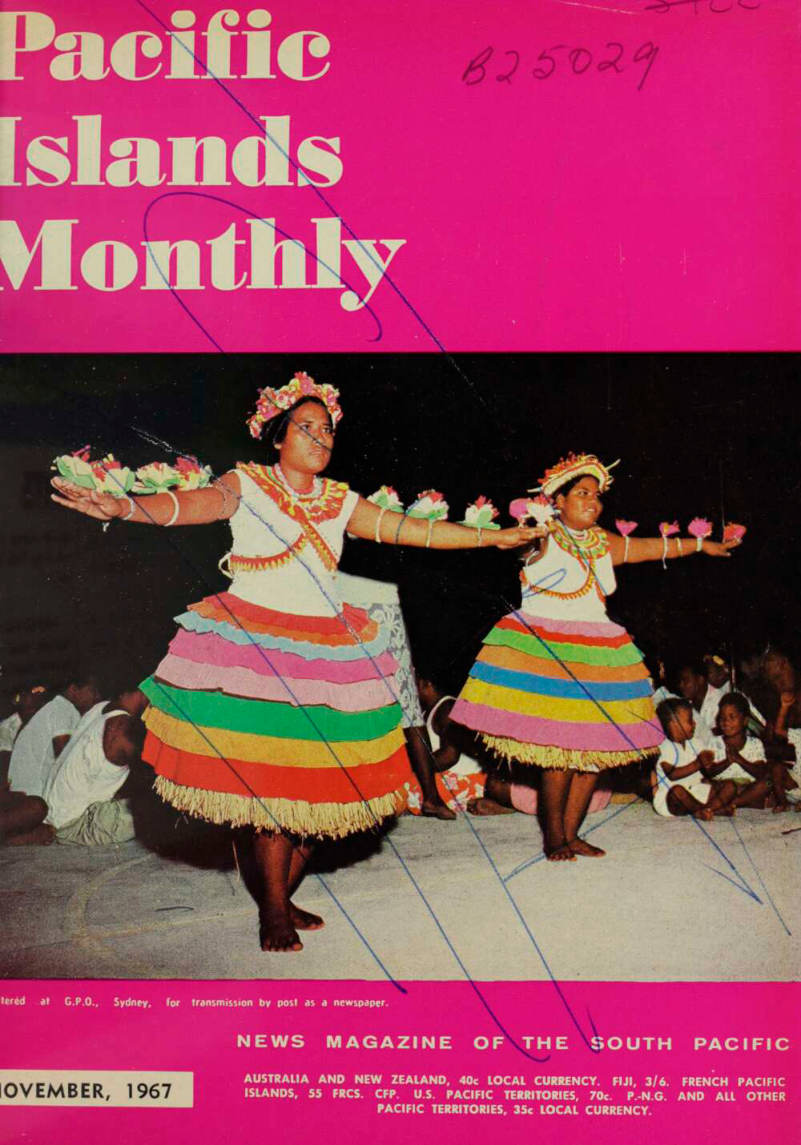 1
1 2
2 3
3 4
4 5
5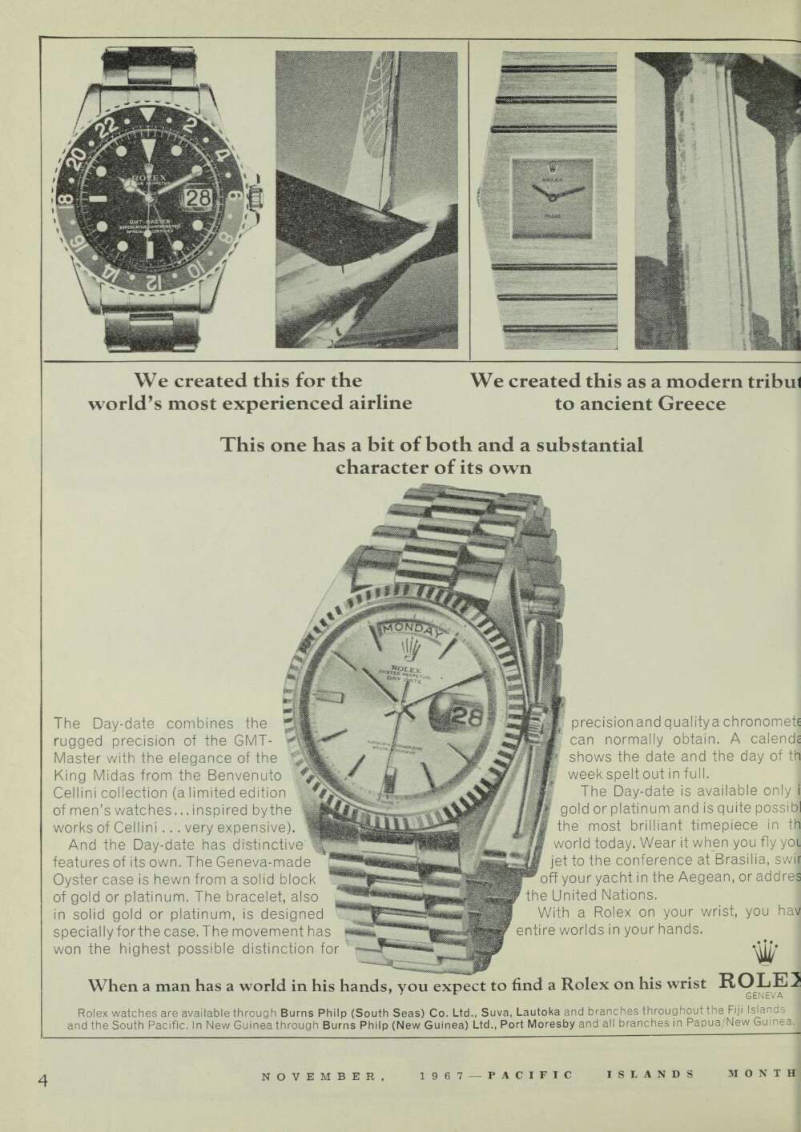 6
6 7
7 8
8 9
9 10
10 11
11 12
12 13
13 14
14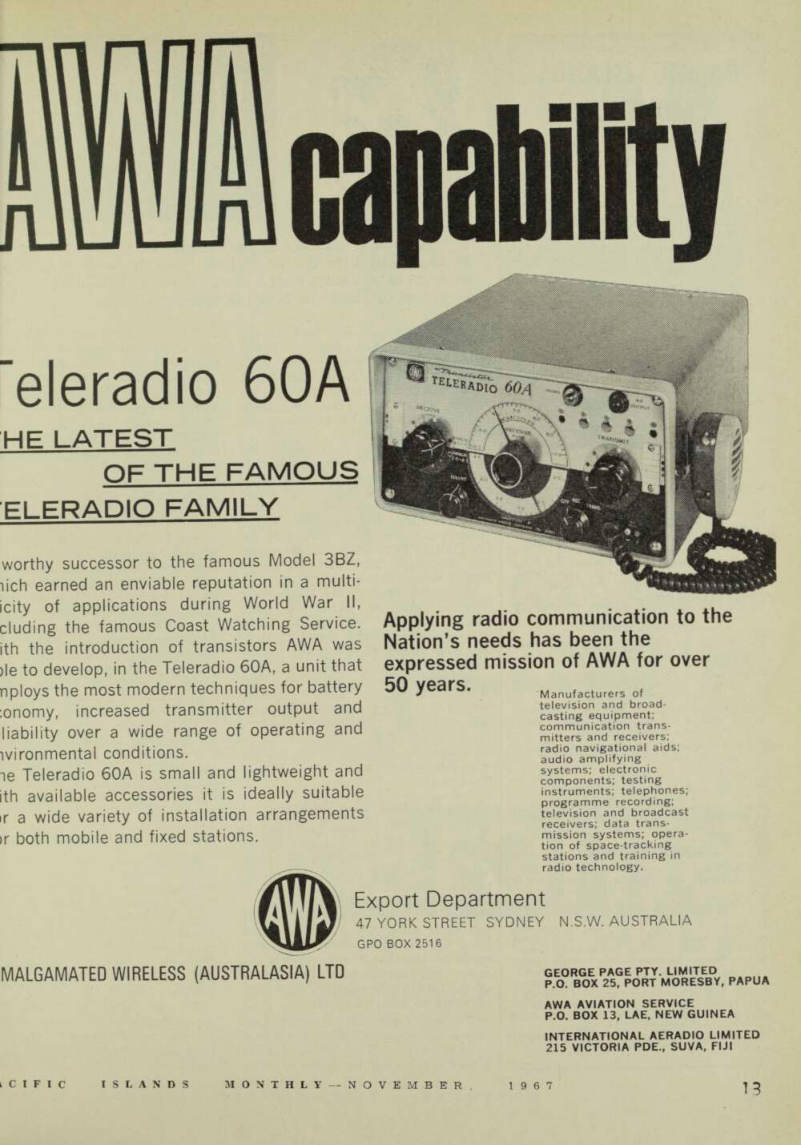 15
15 16
16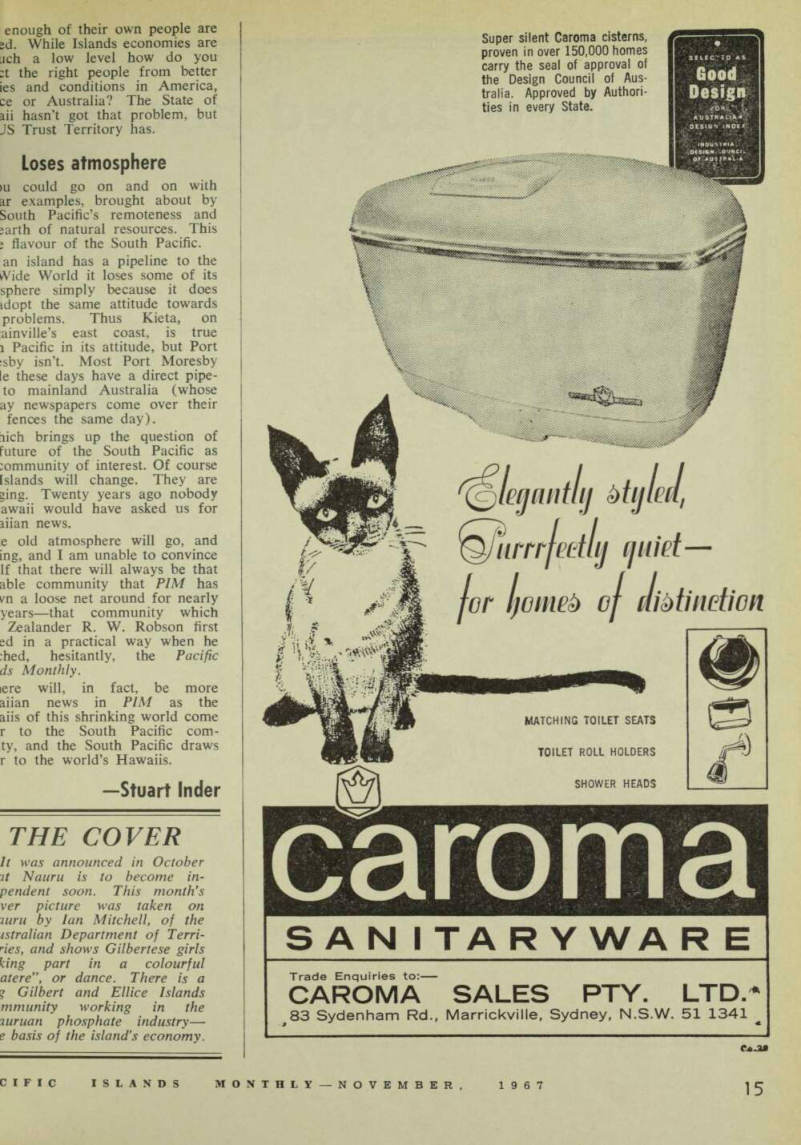 17
17 18
18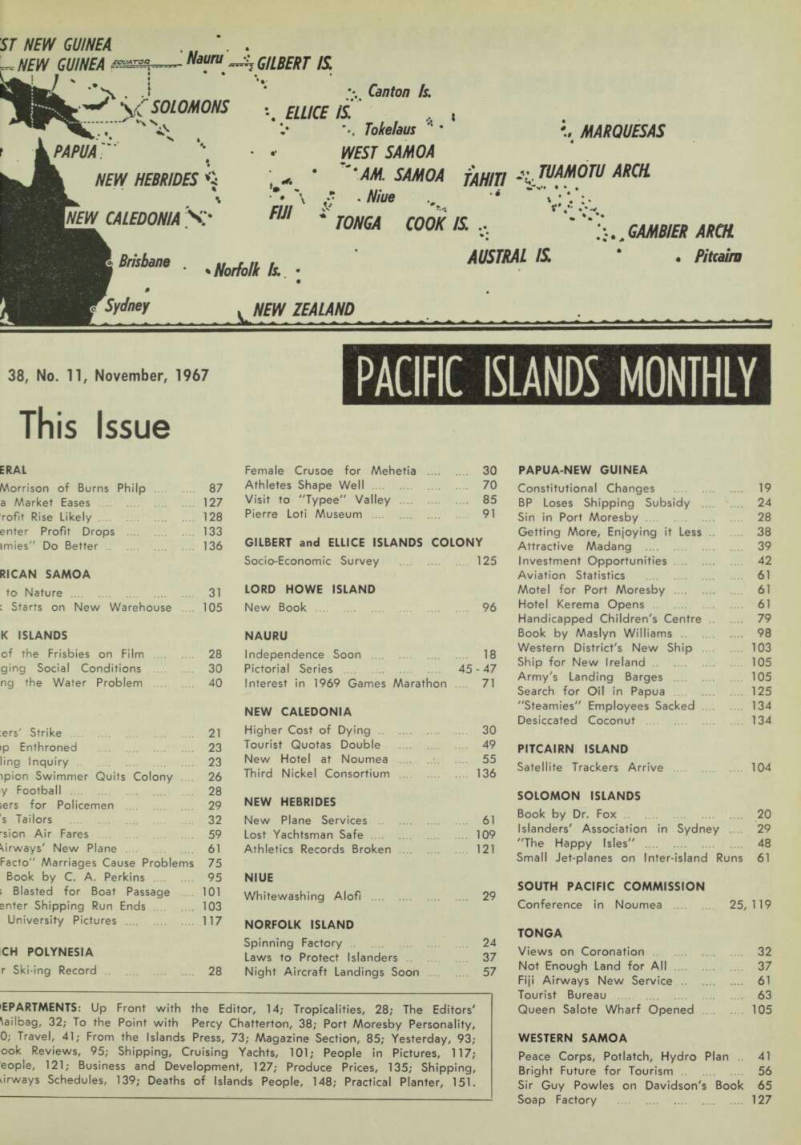 19
19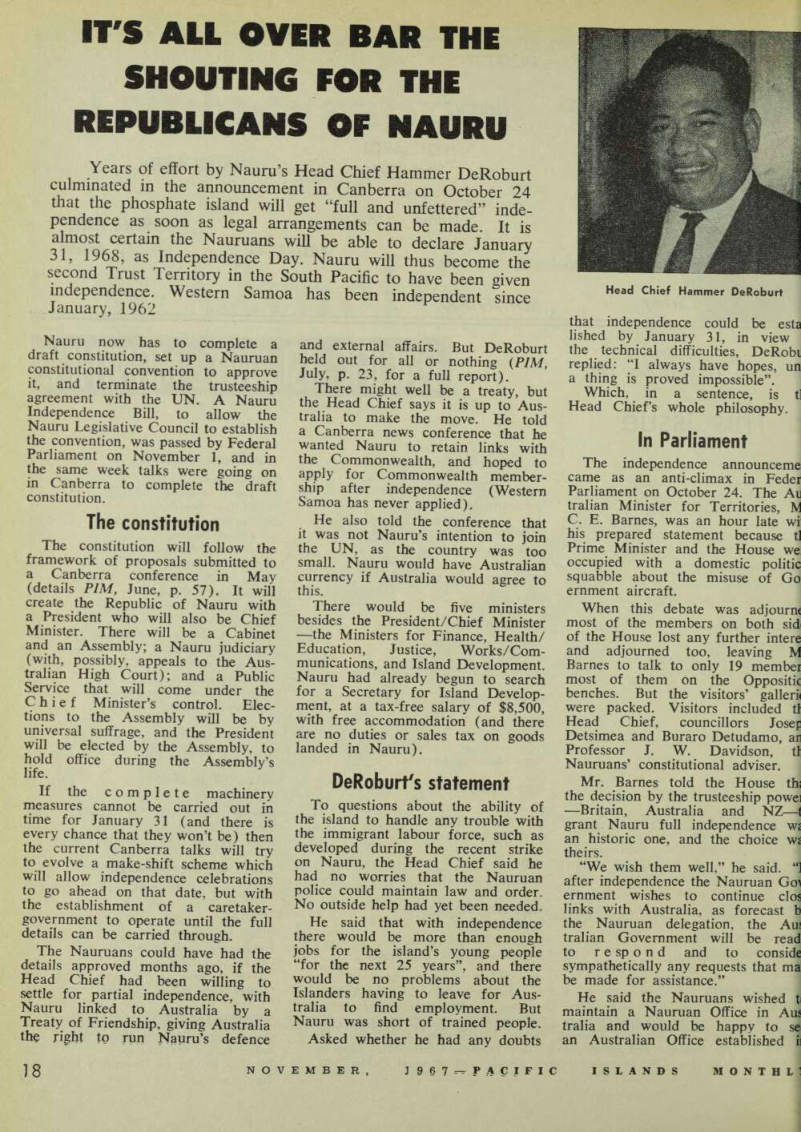 20
20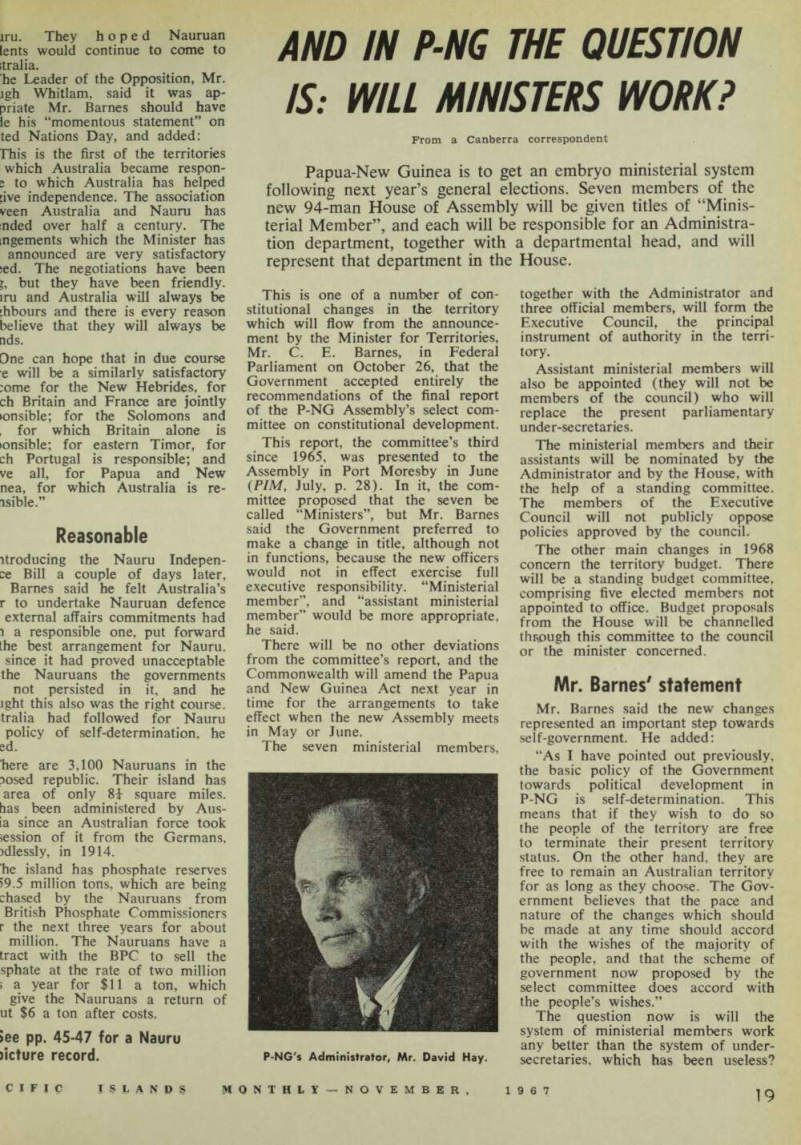 21
21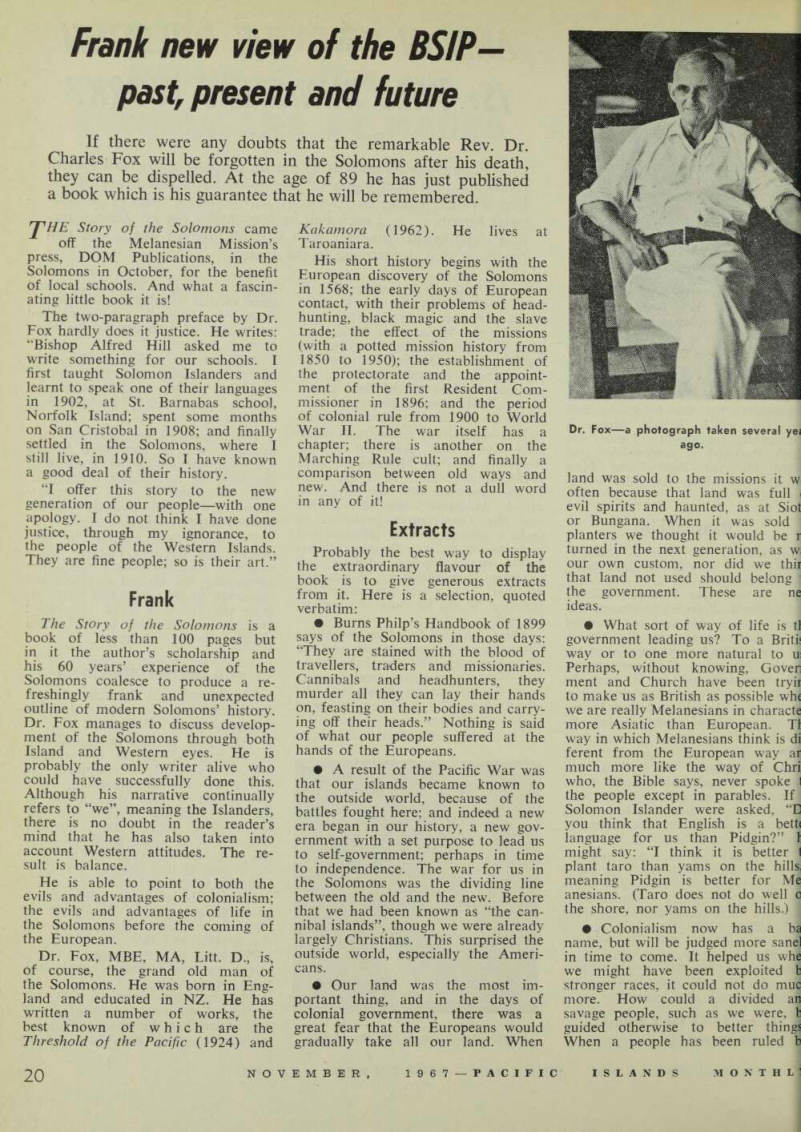 22
22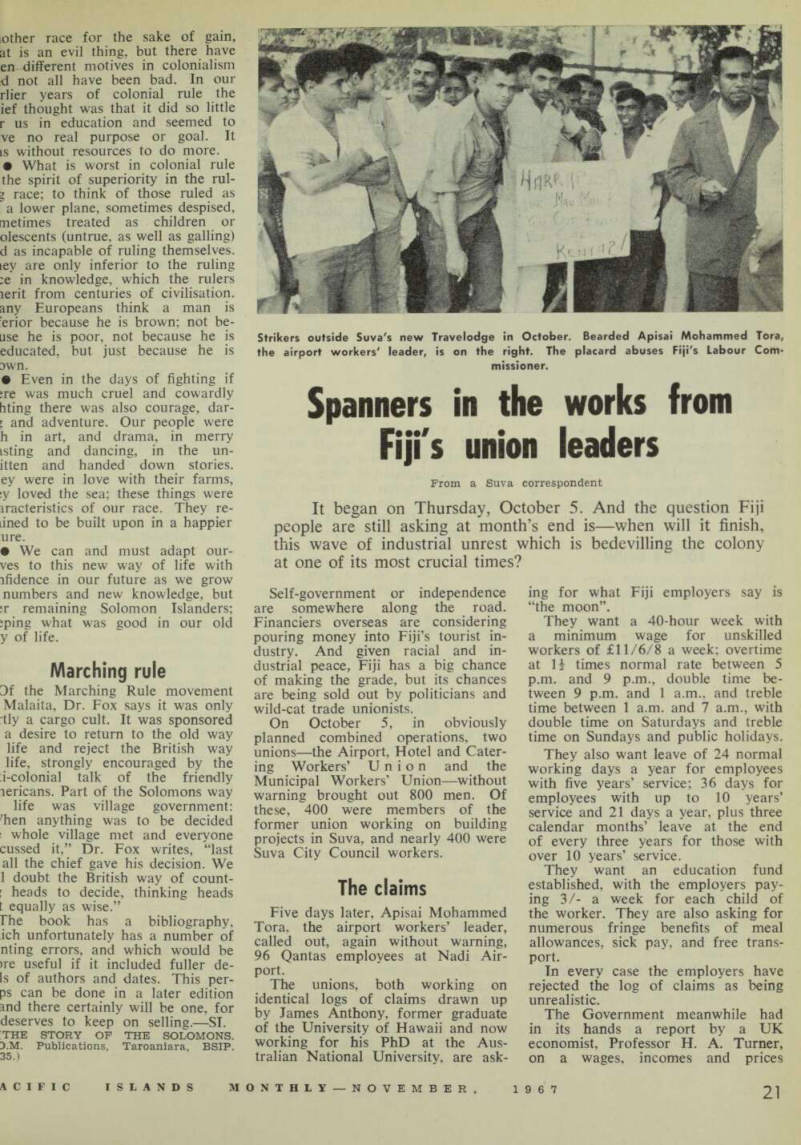 23
23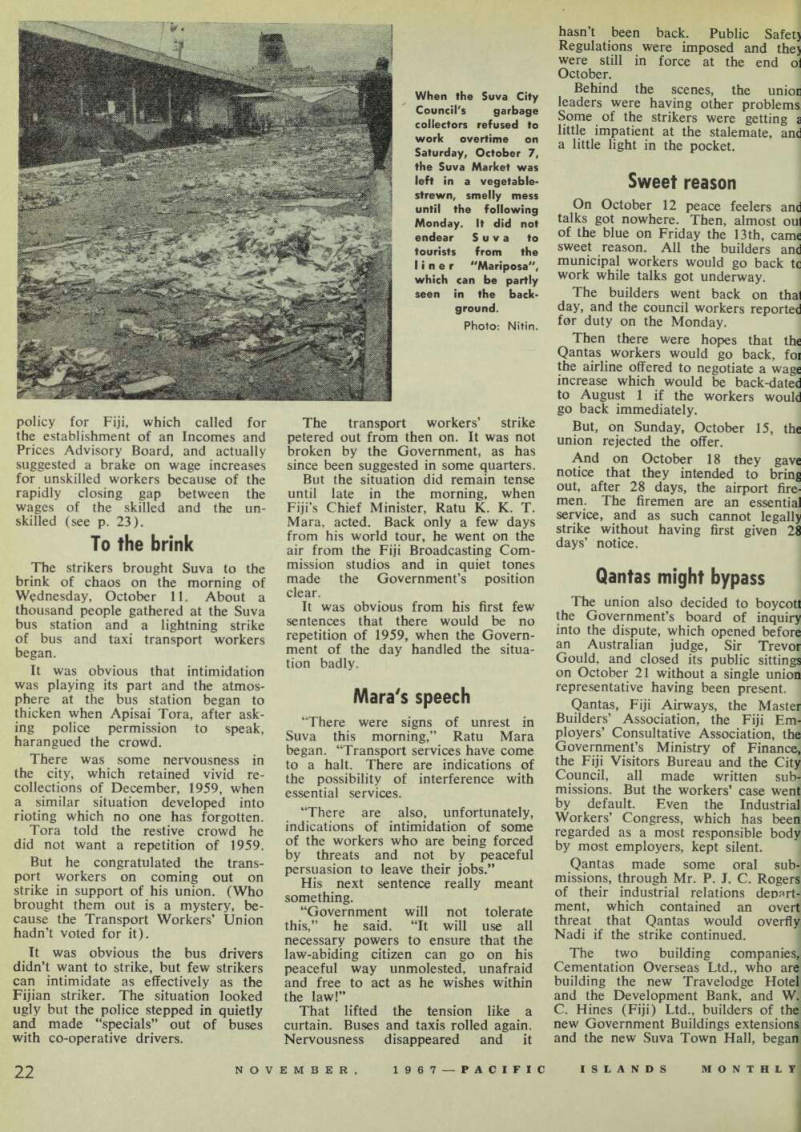 24
24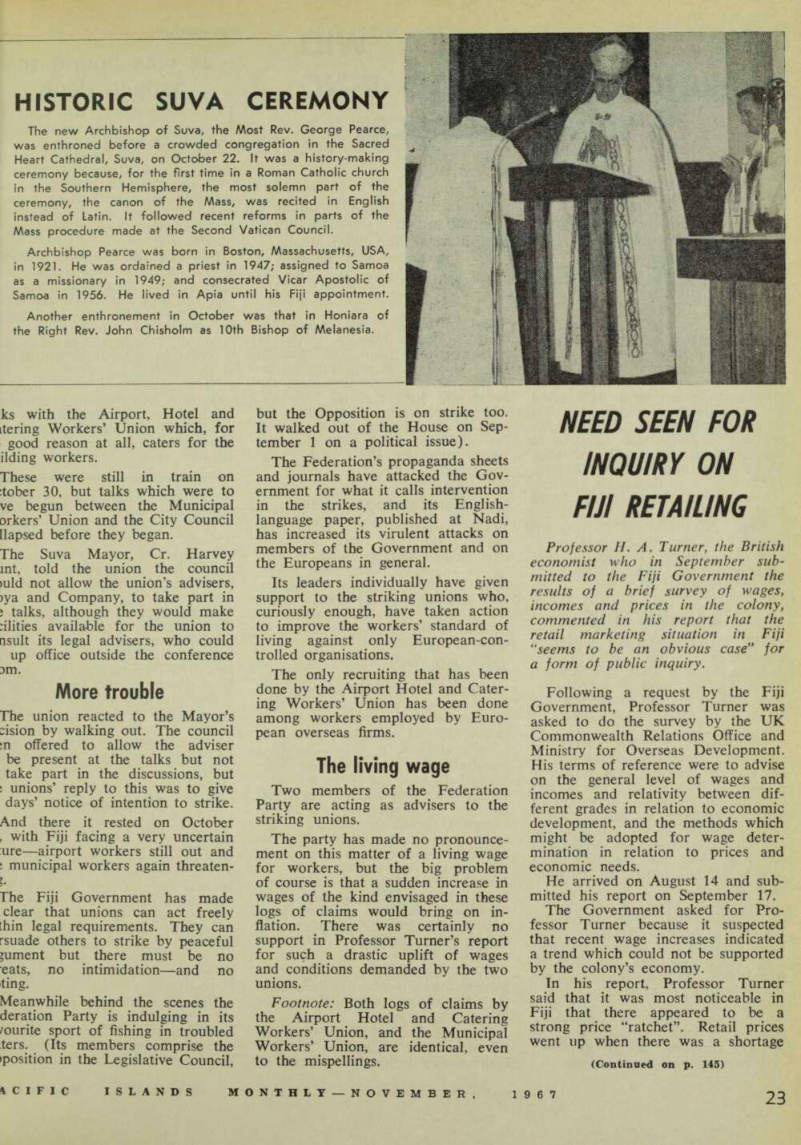 25
25 26
26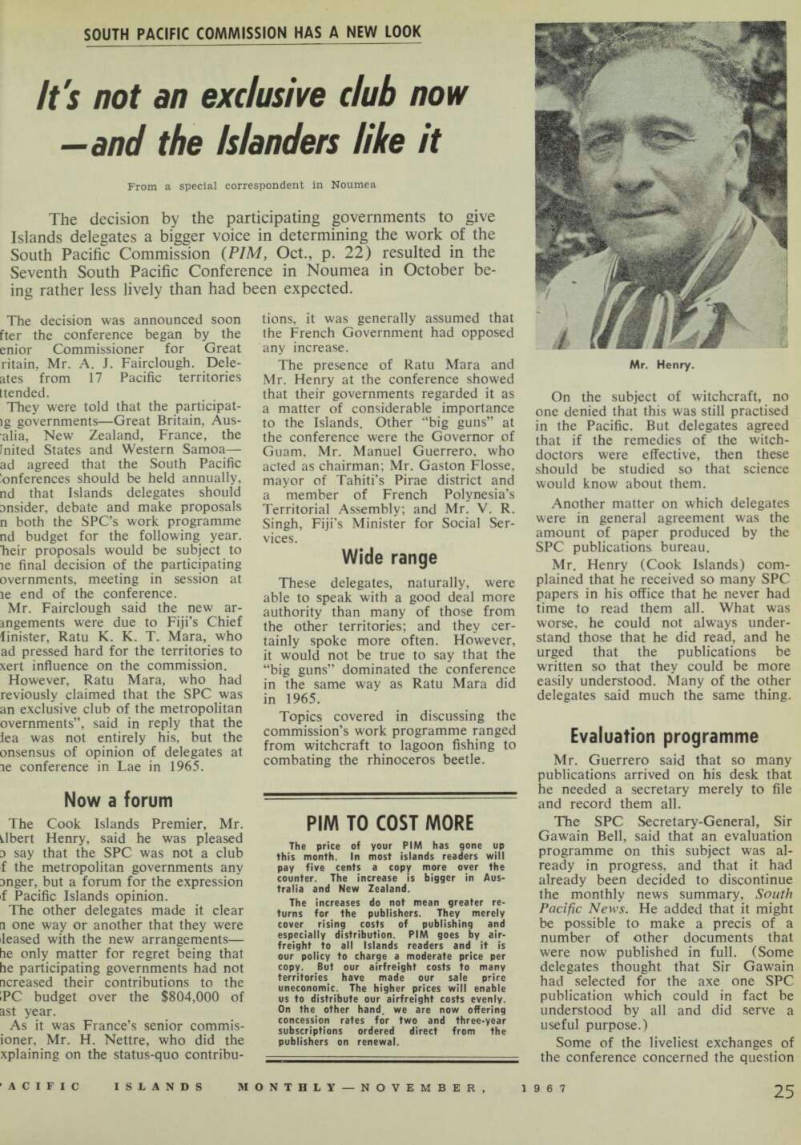 27
27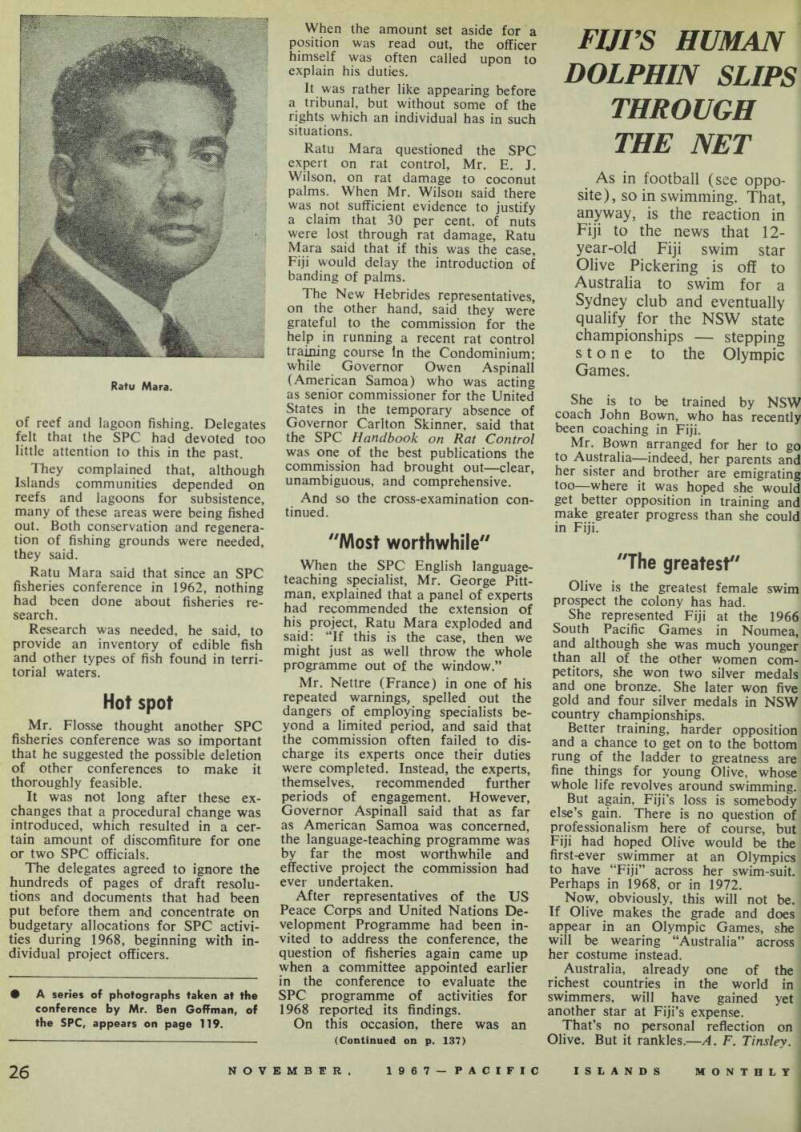 28
28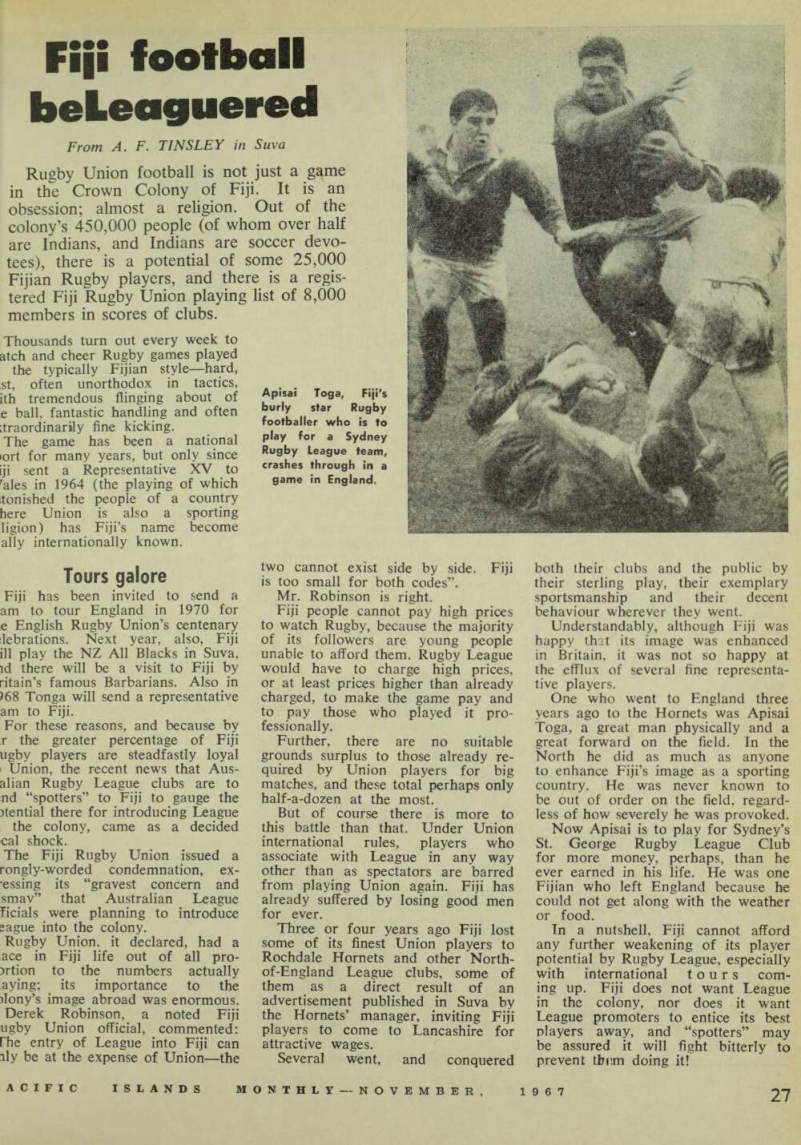 29
29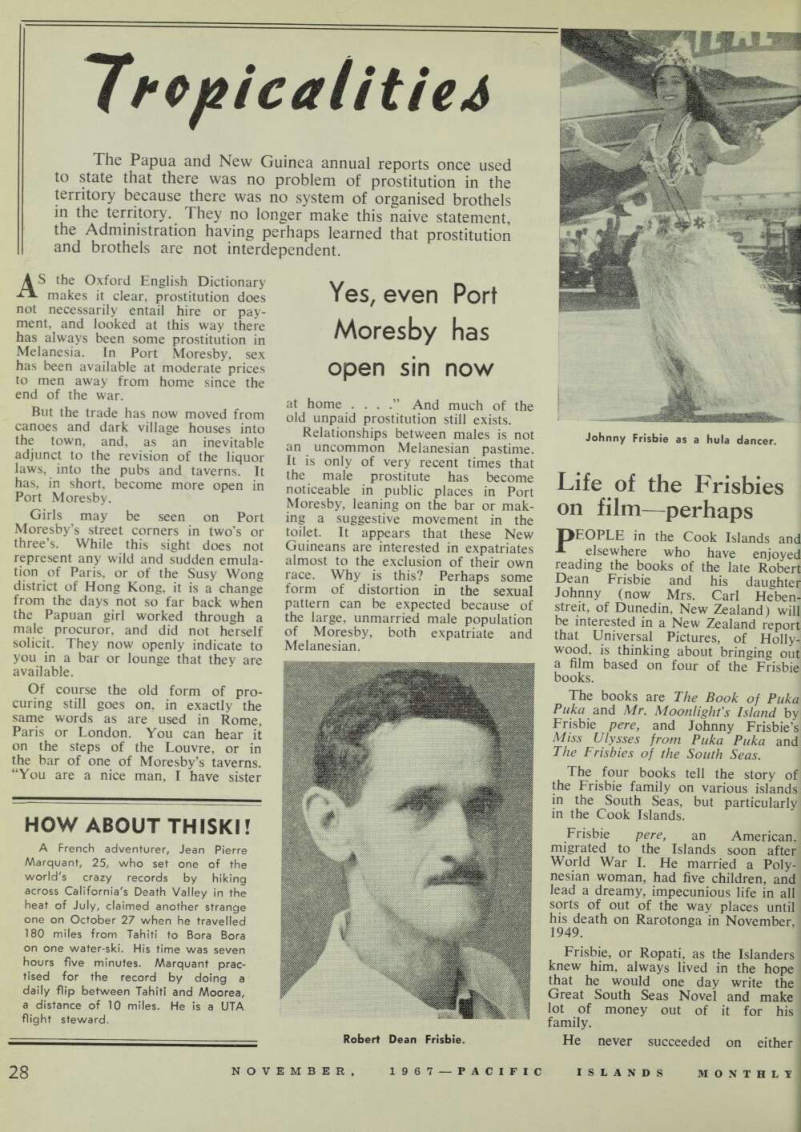 30
30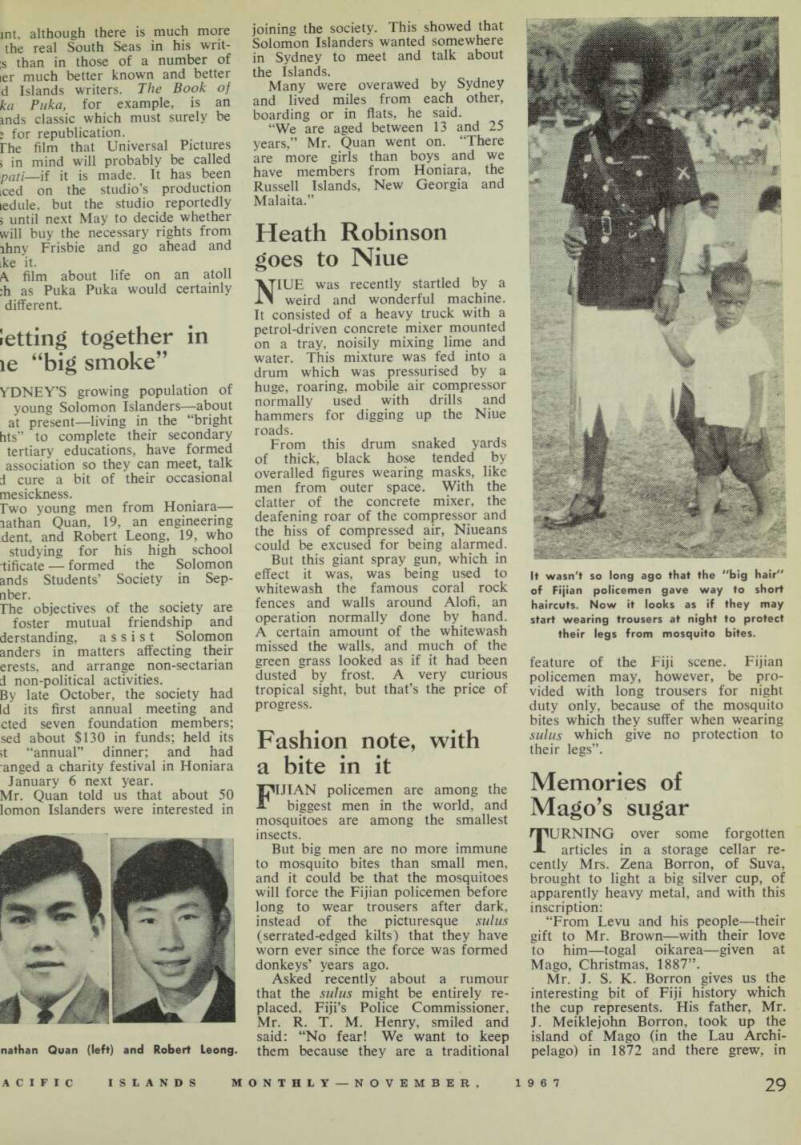 31
31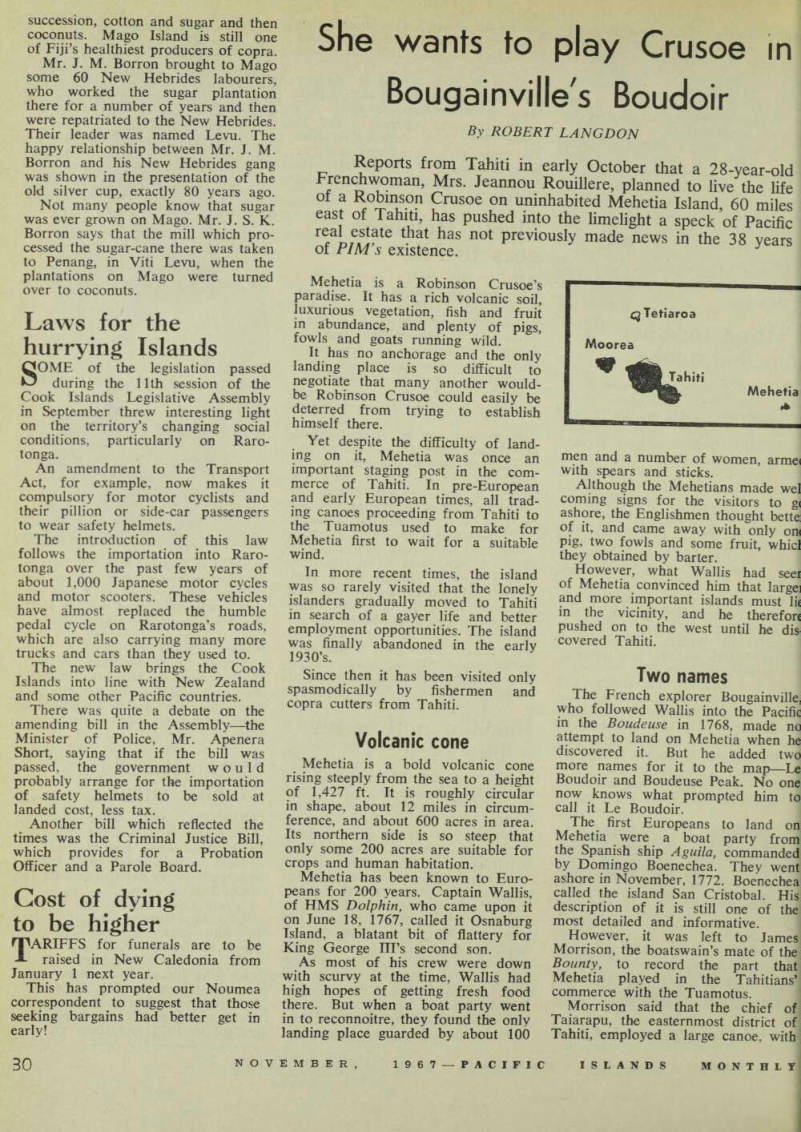 32
32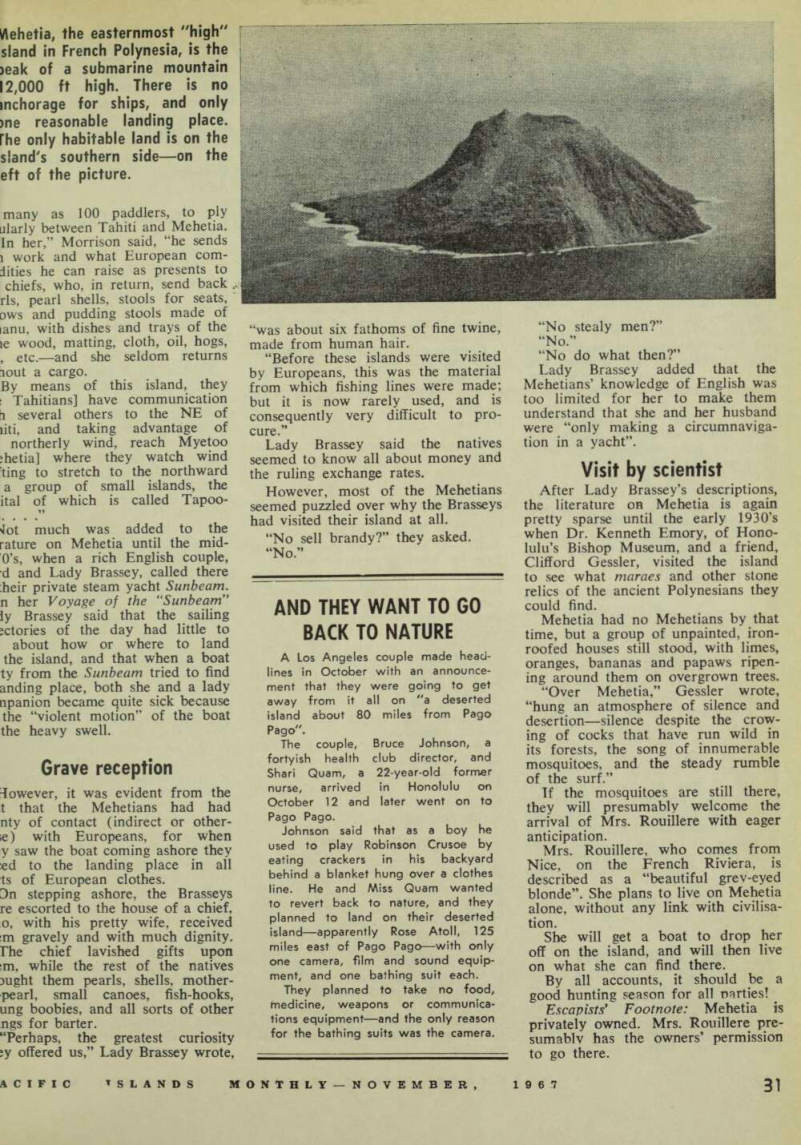 33
33 34
34 35
35 36
36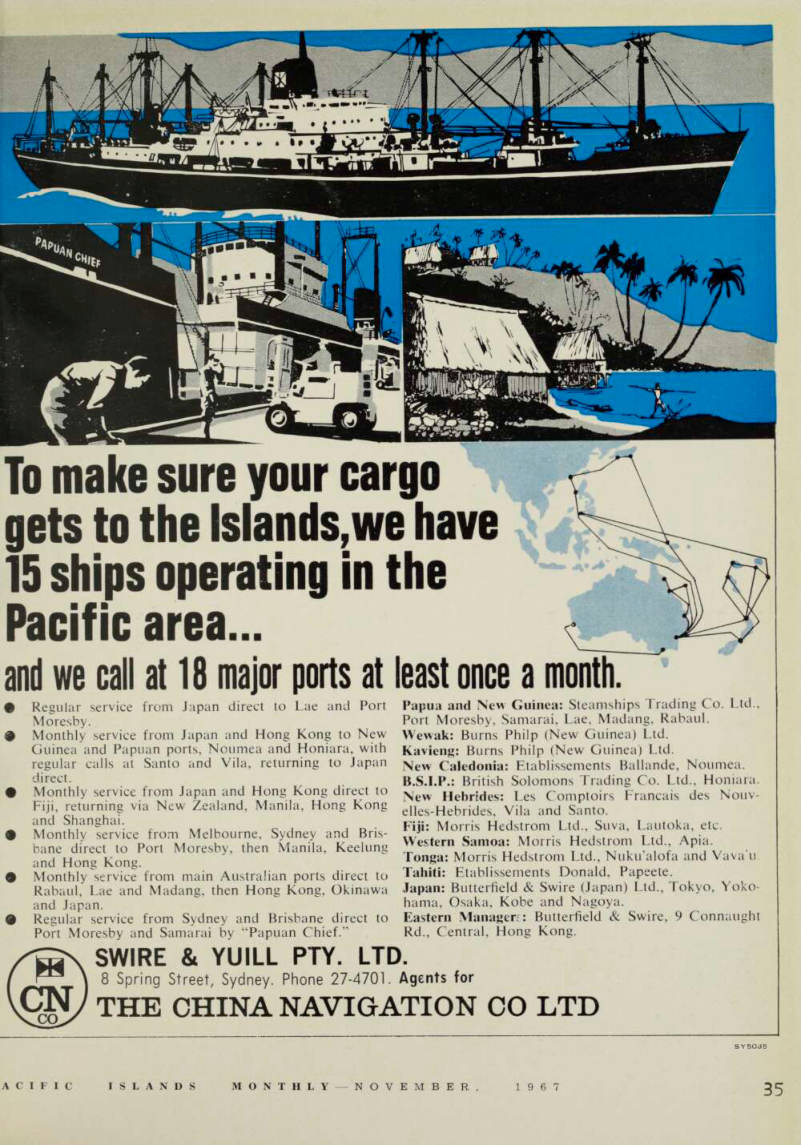 37
37 38
38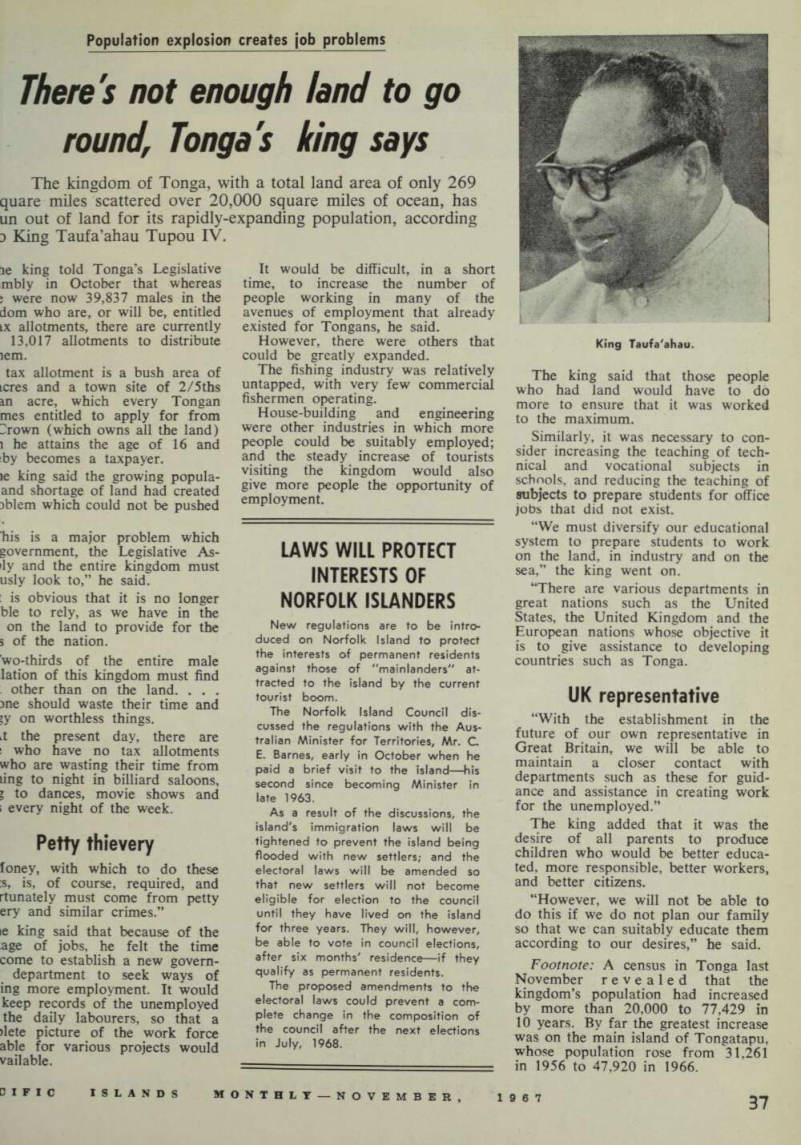 39
39 40
40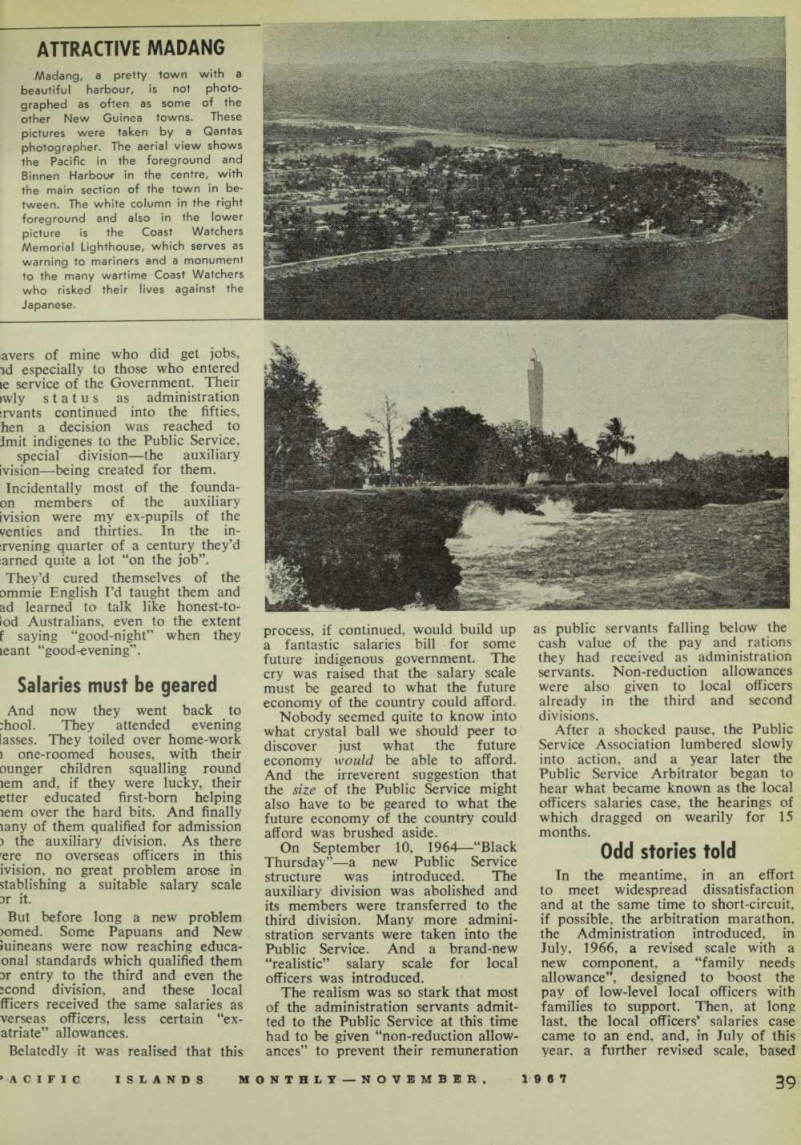 41
41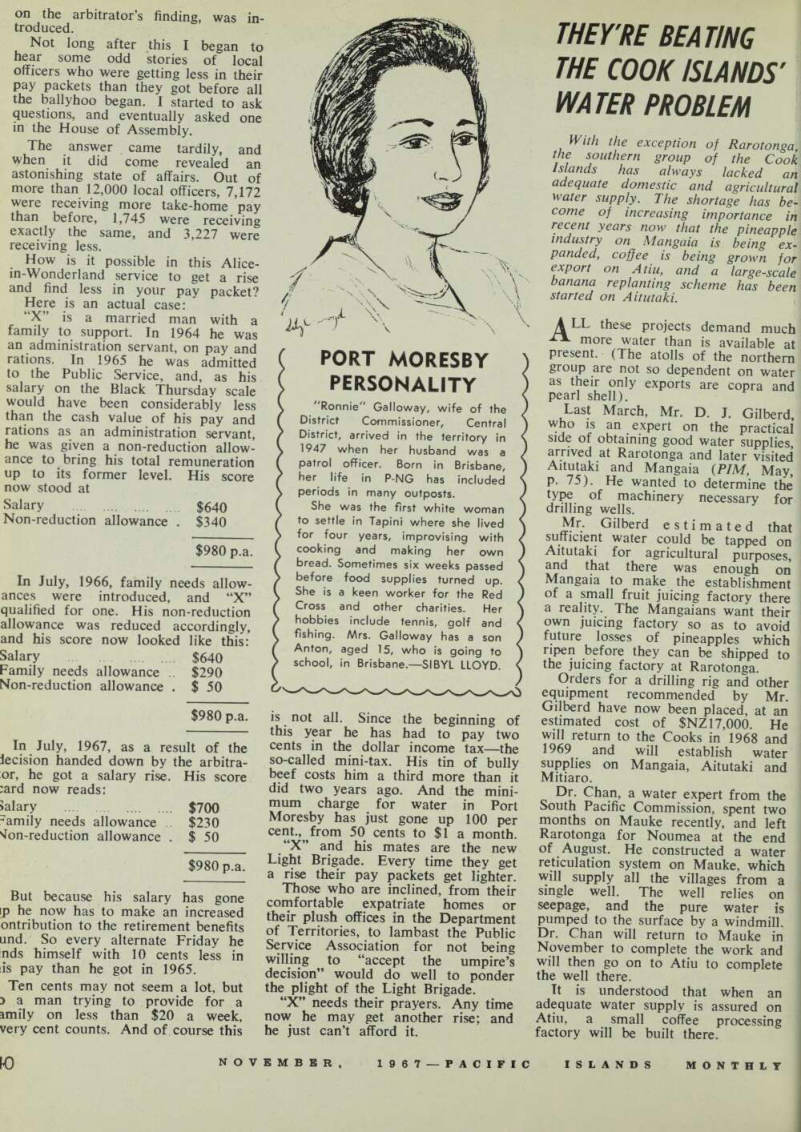 42
42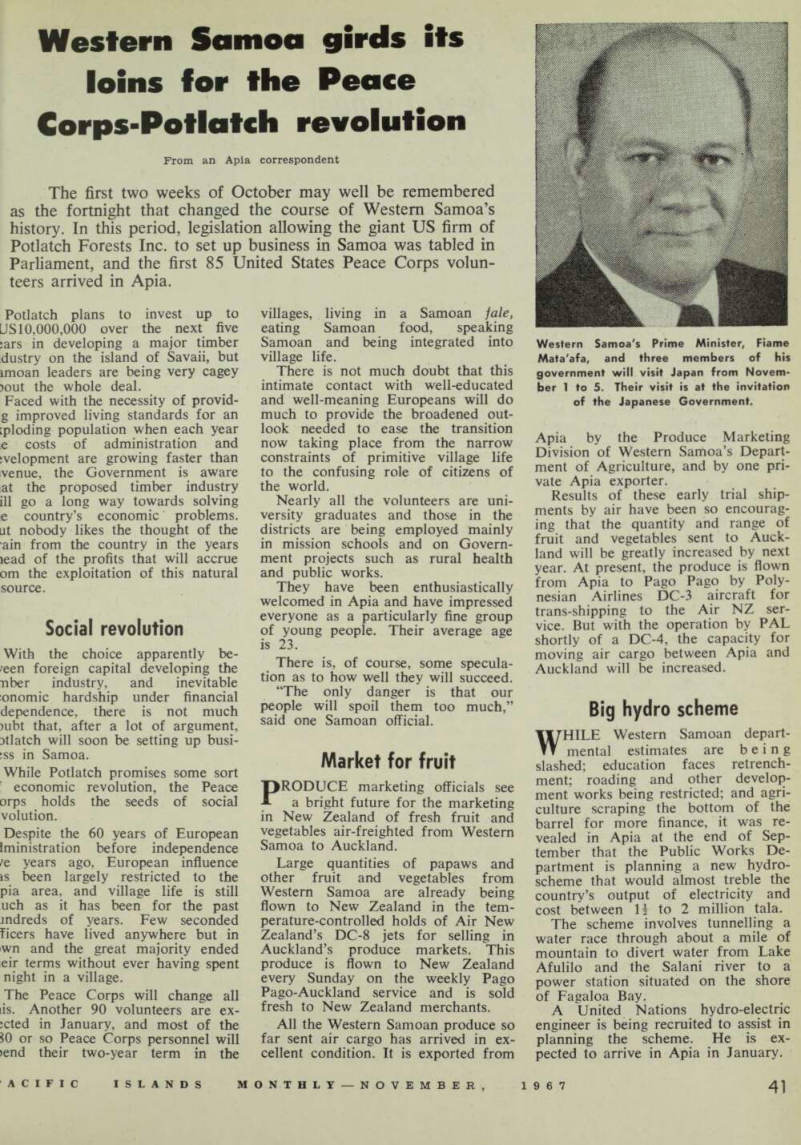 43
43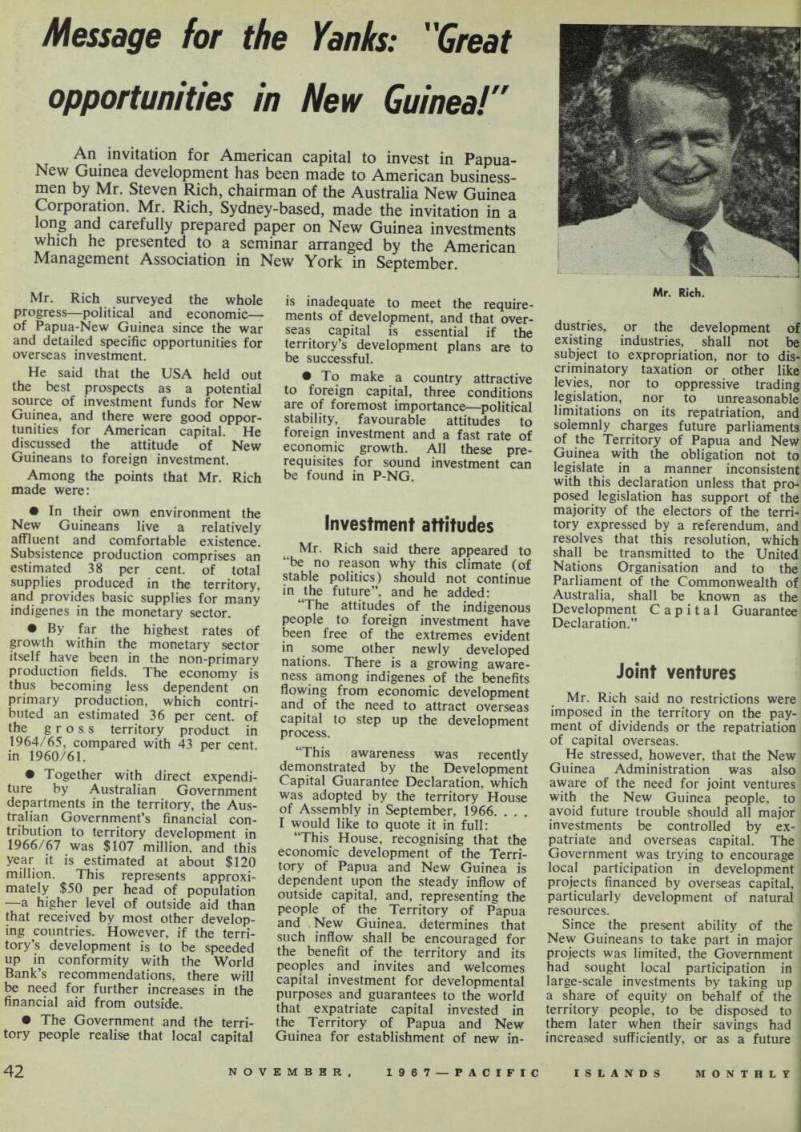 44
44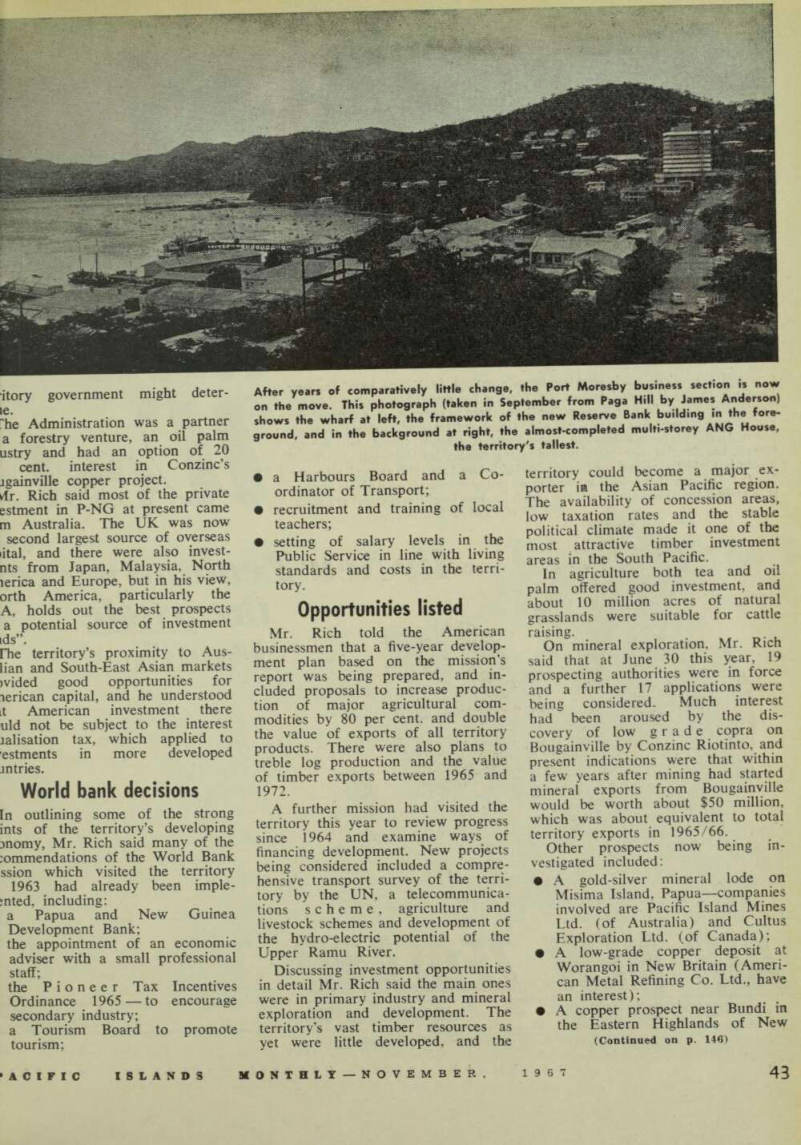 45
45 46
46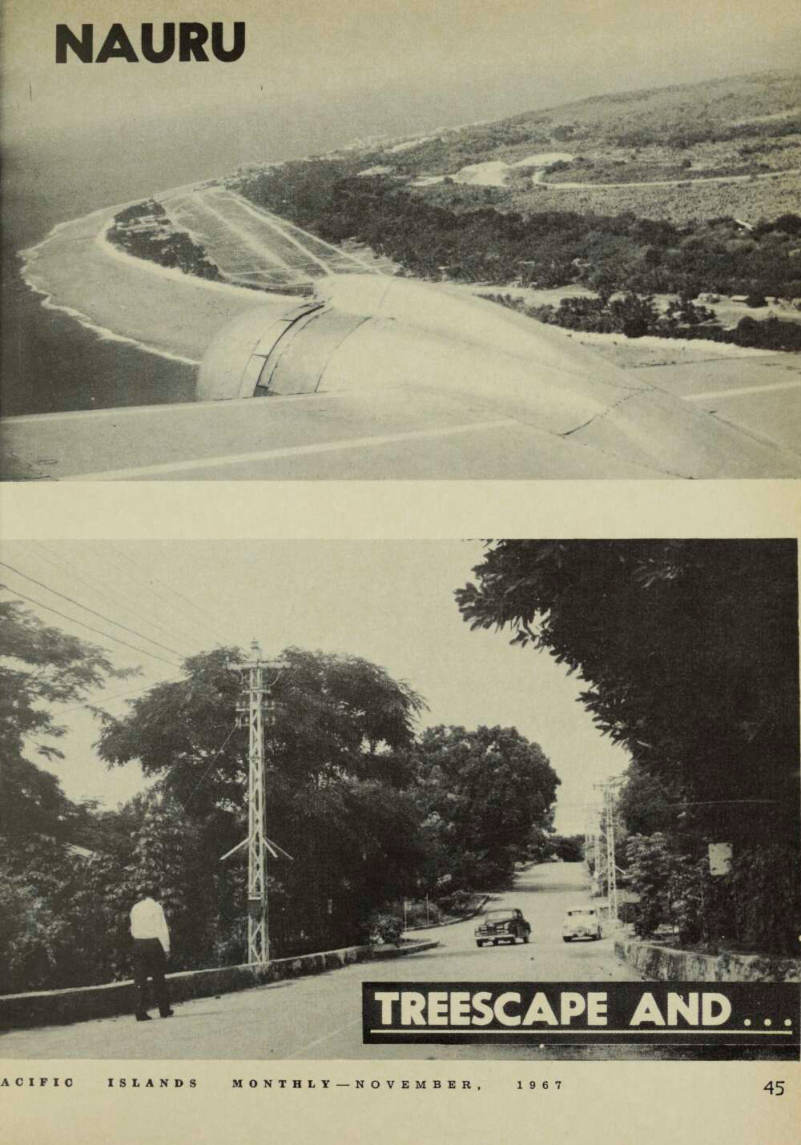 47
47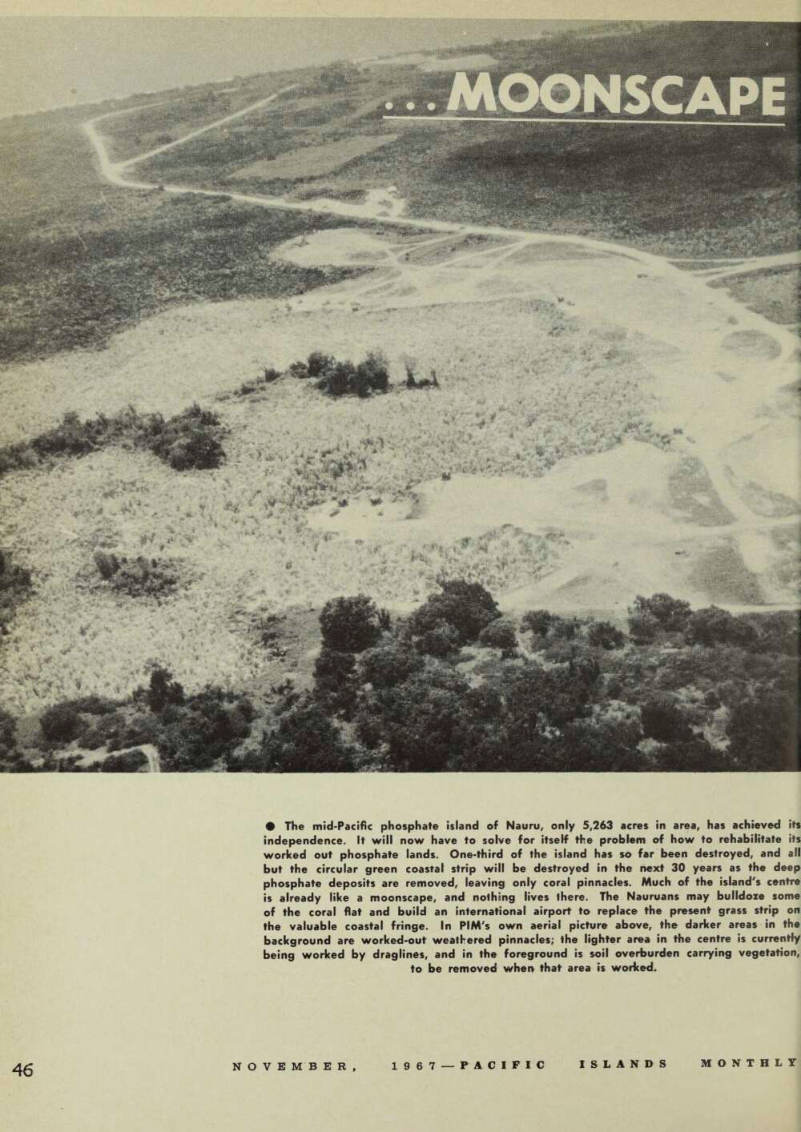 48
48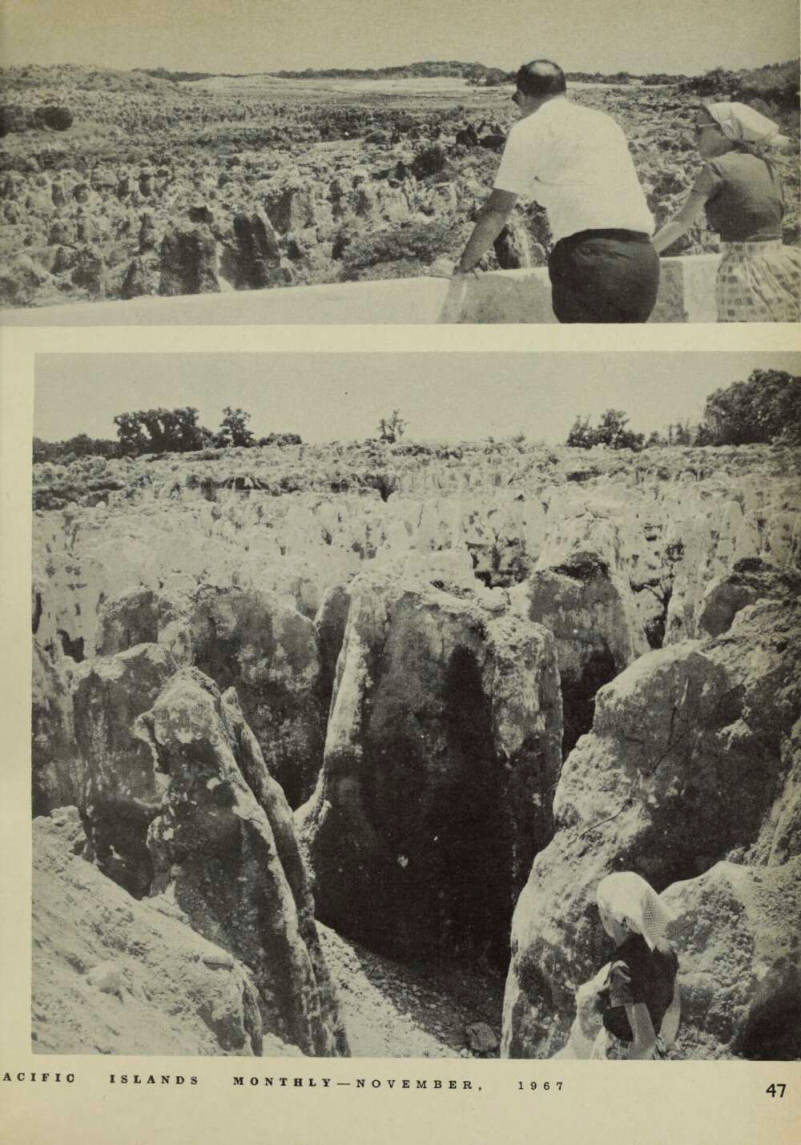 49
49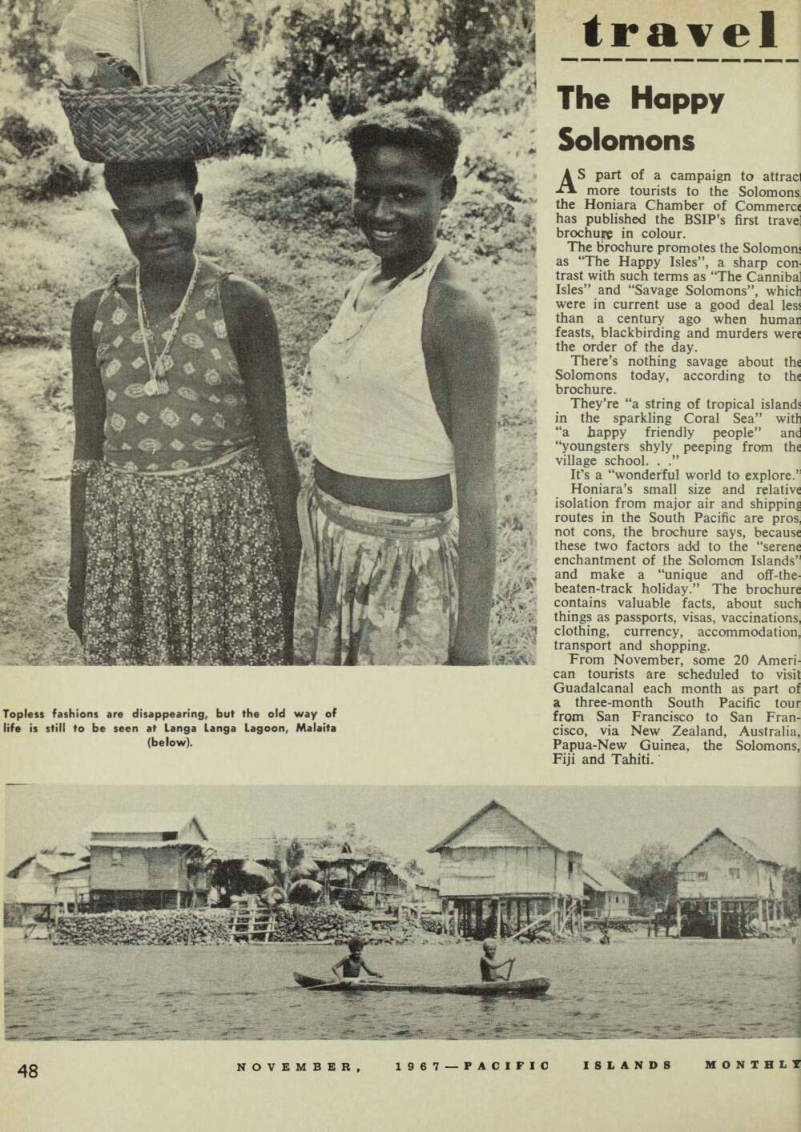 50
50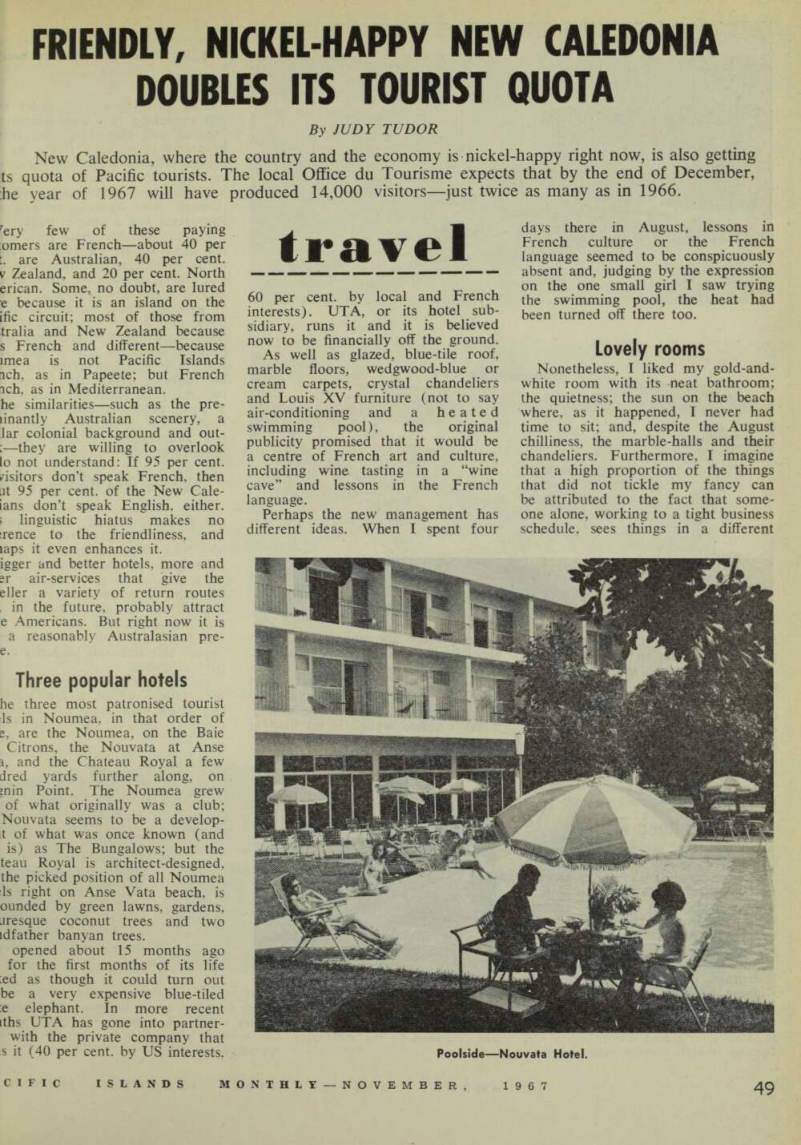 51
51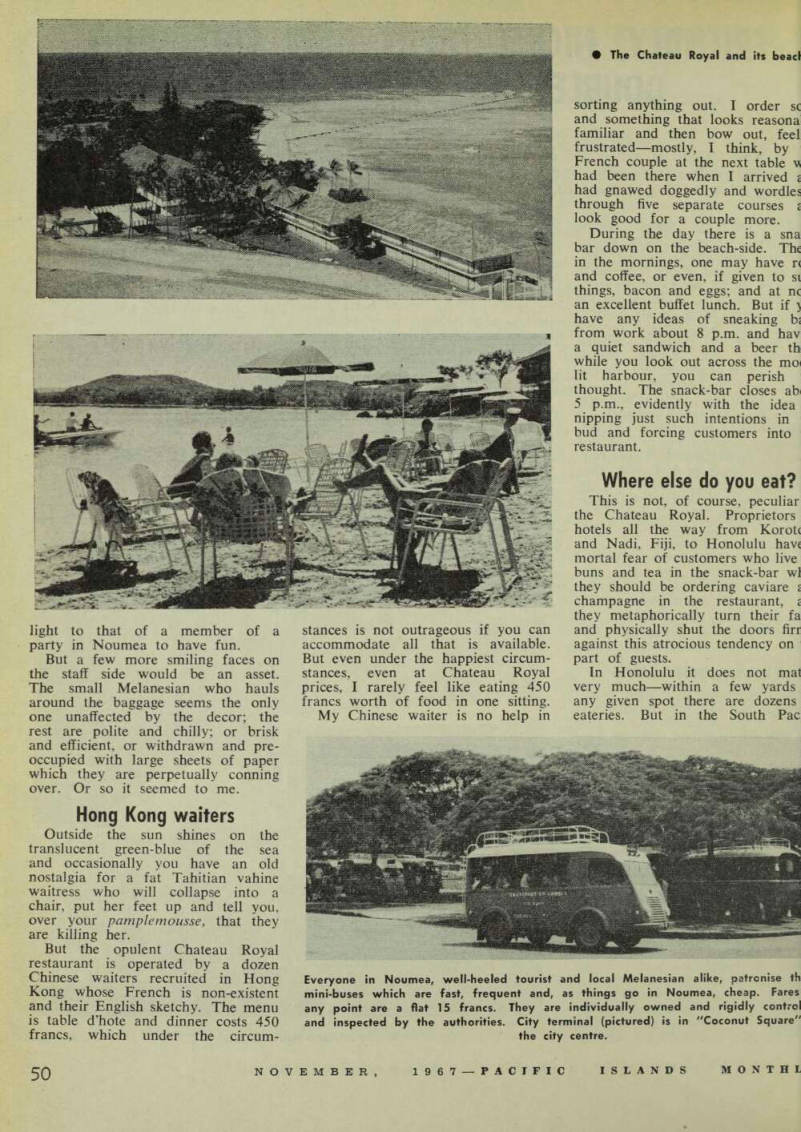 52
52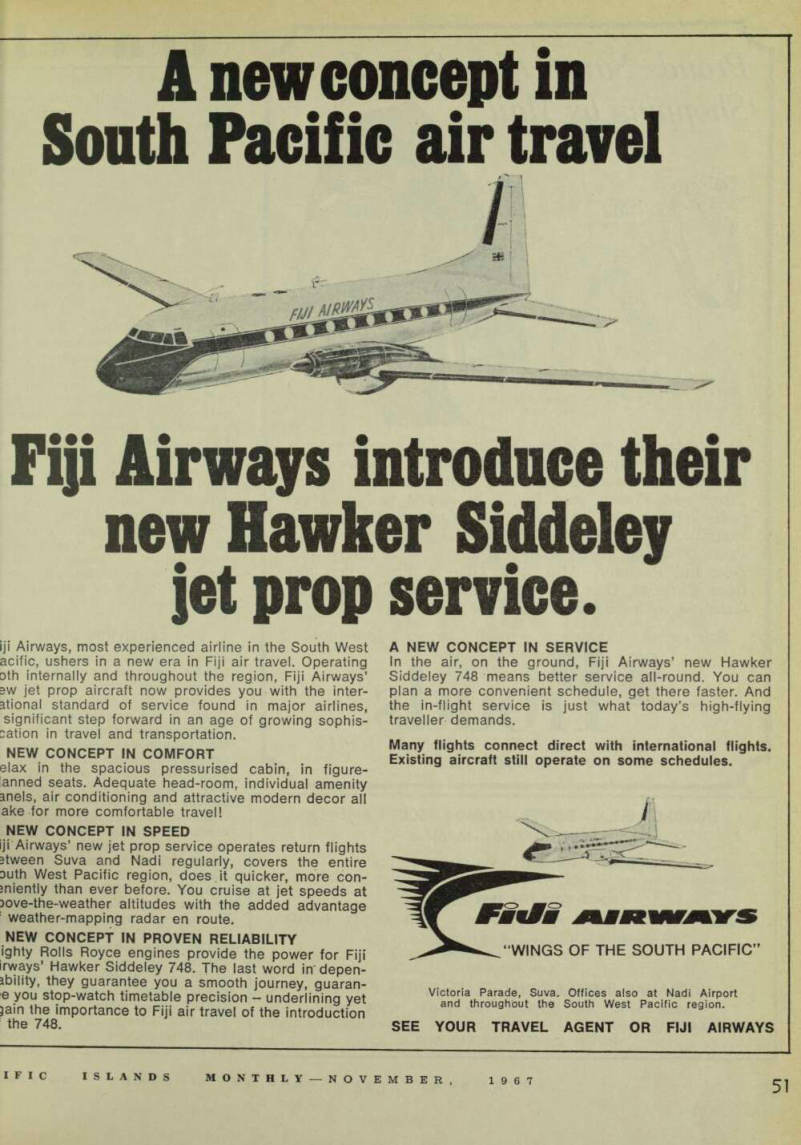 53
53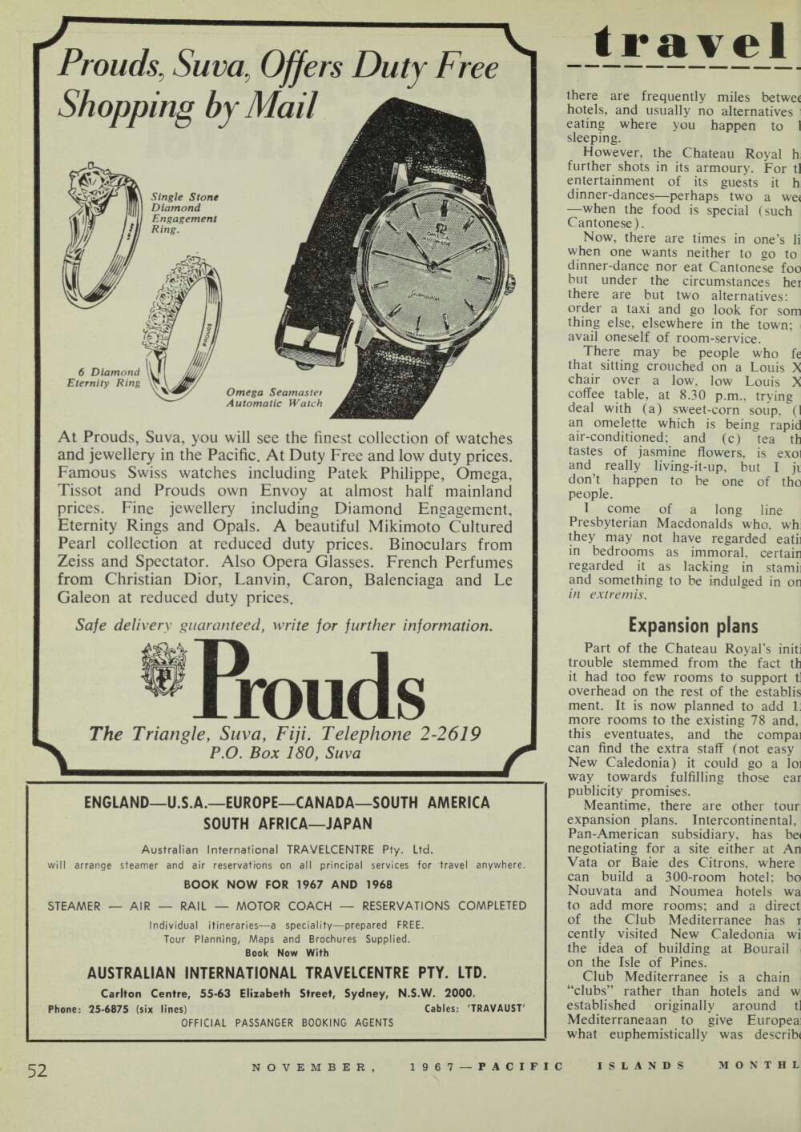 54
54 55
55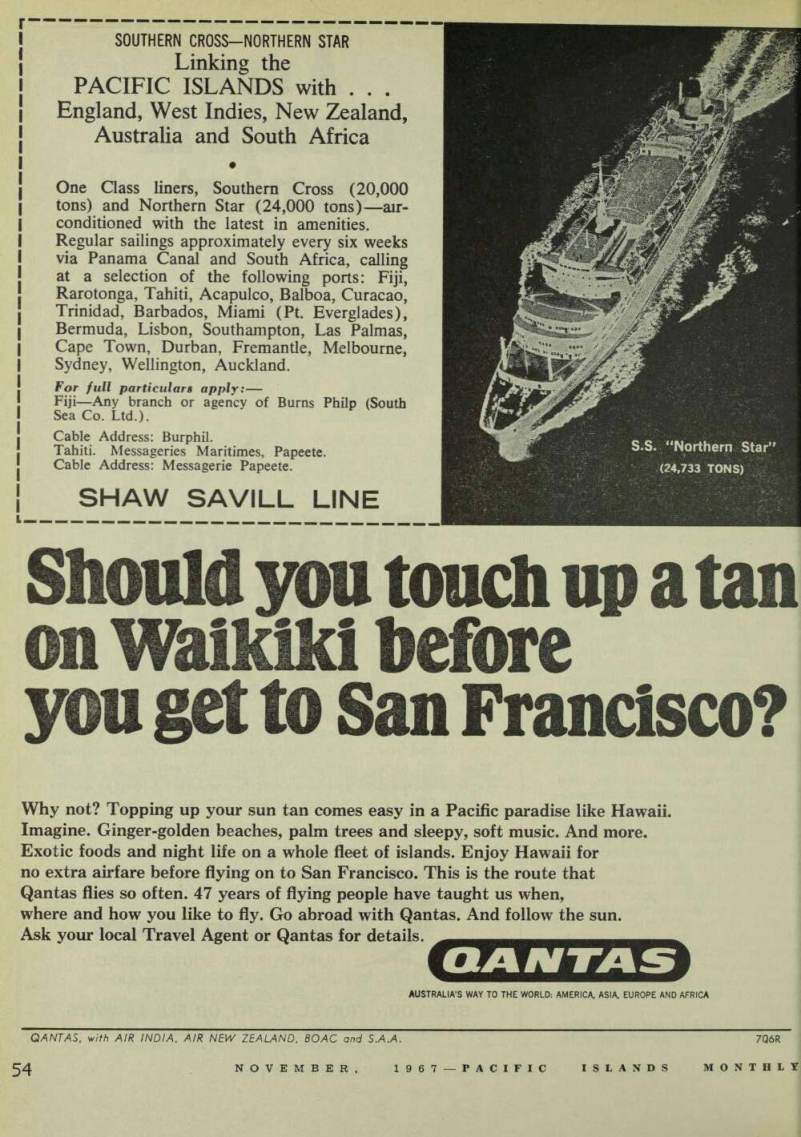 56
56 57
57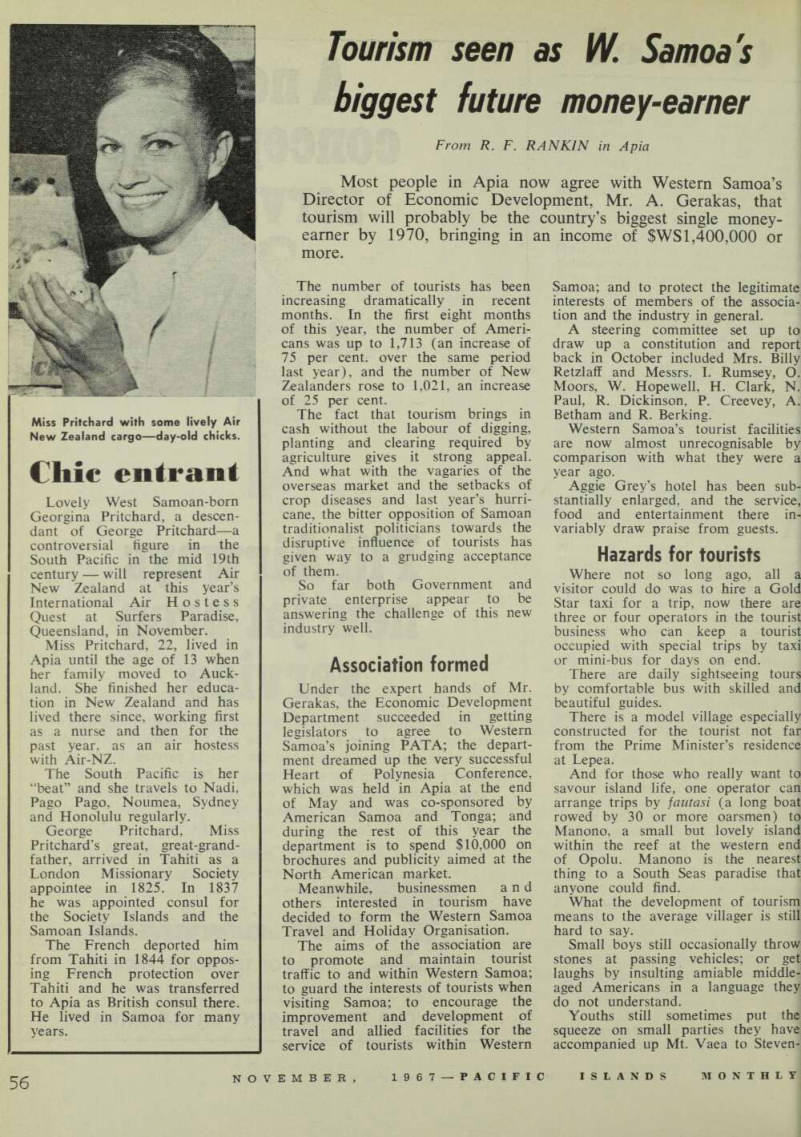 58
58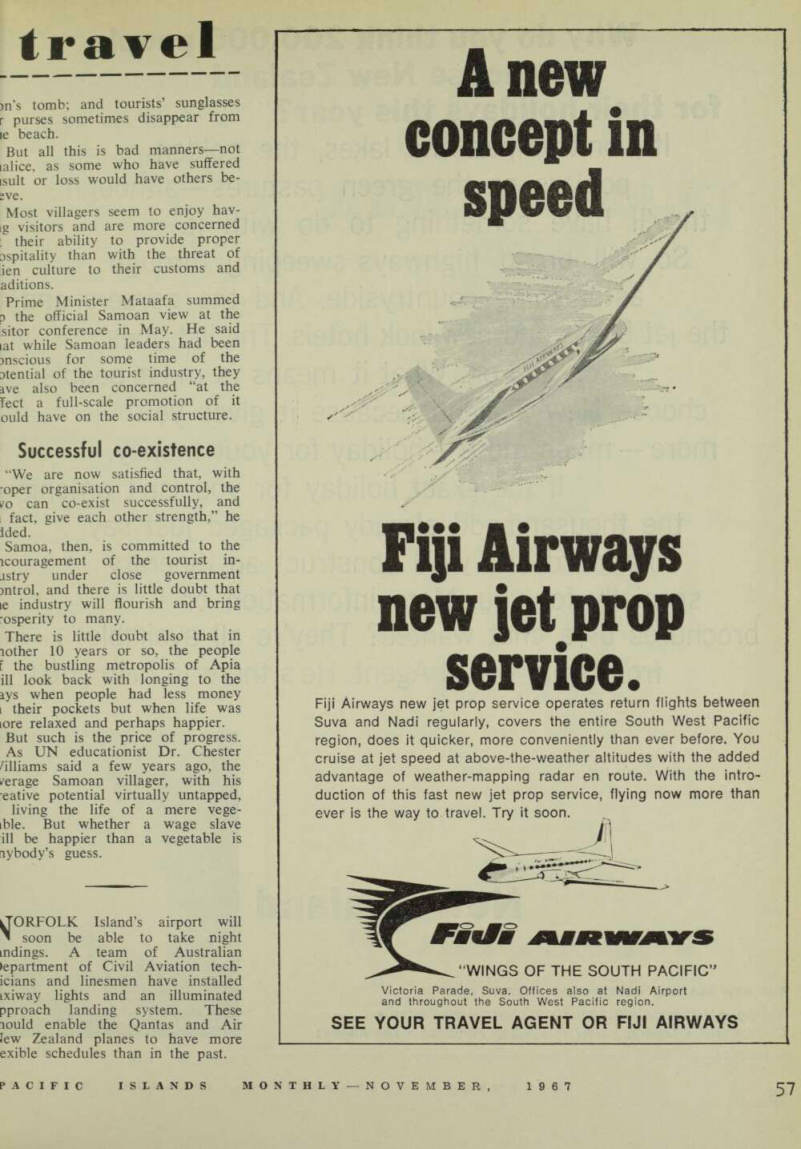 59
59 60
60 61
61 62
62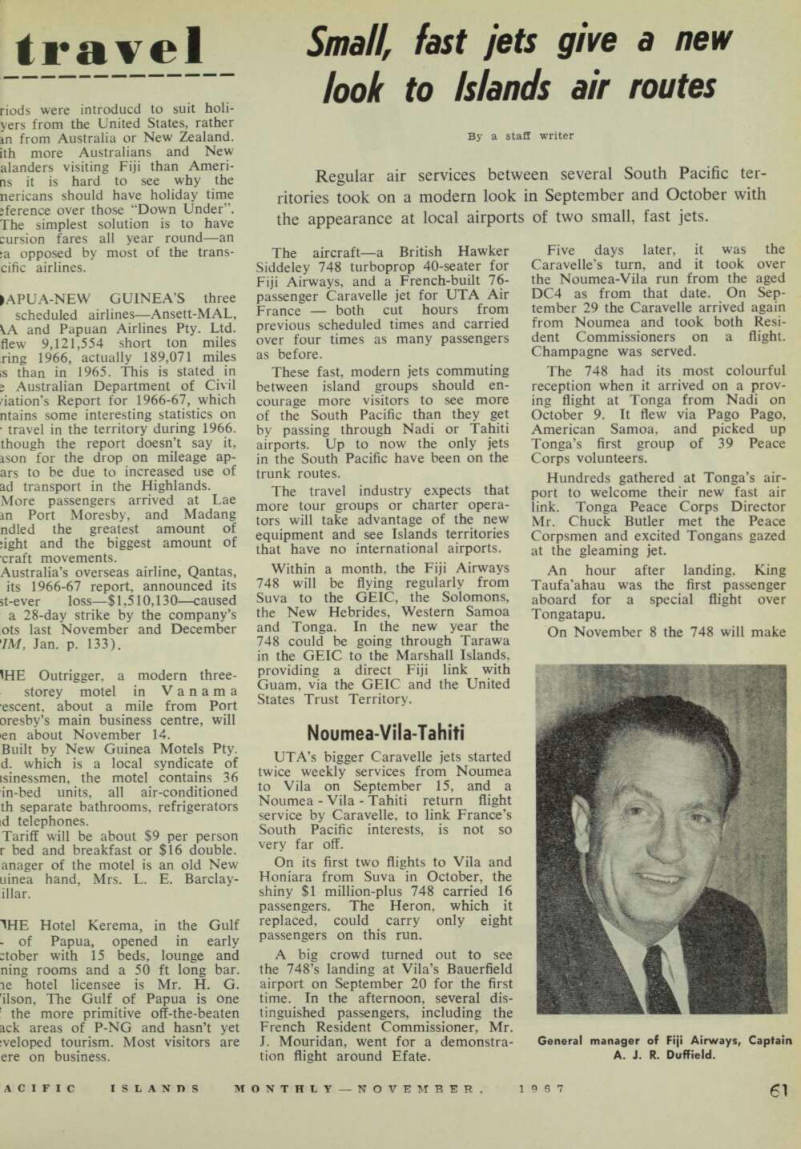 63
63 64
64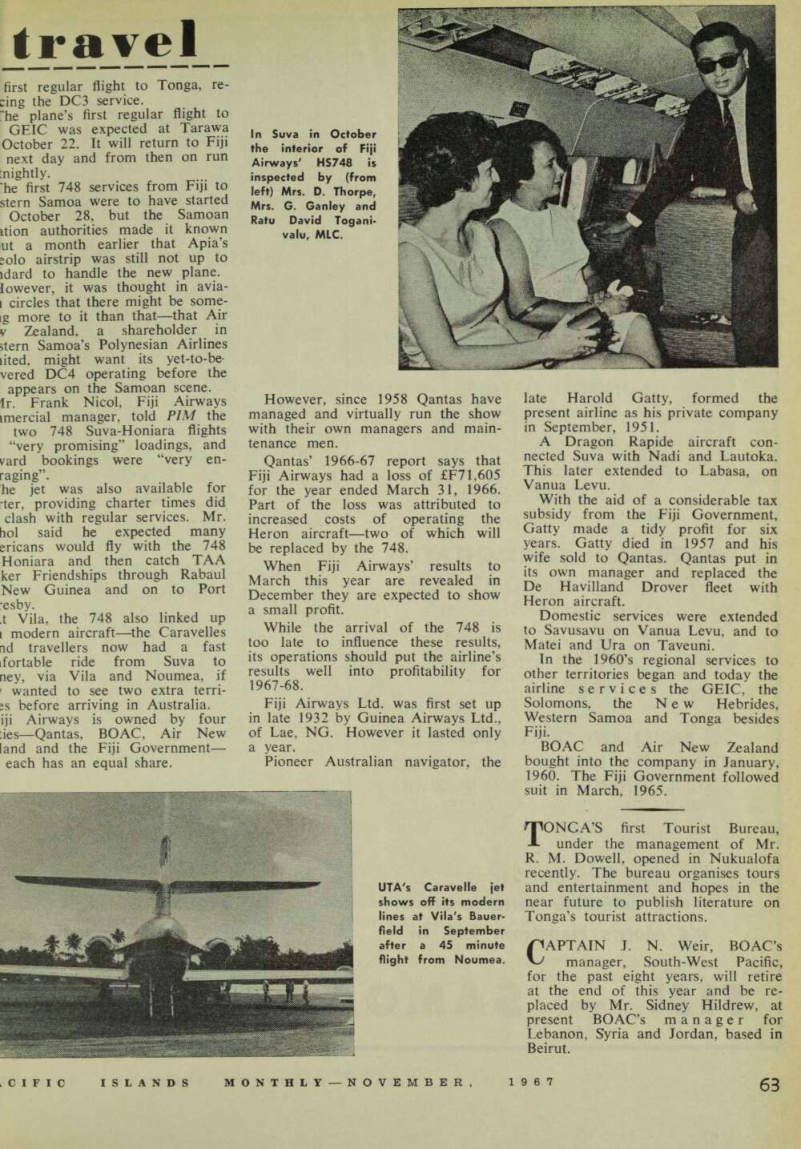 65
65 66
66 67
67 68
68 69
69 70
70 71
71 72
72 73
73 74
74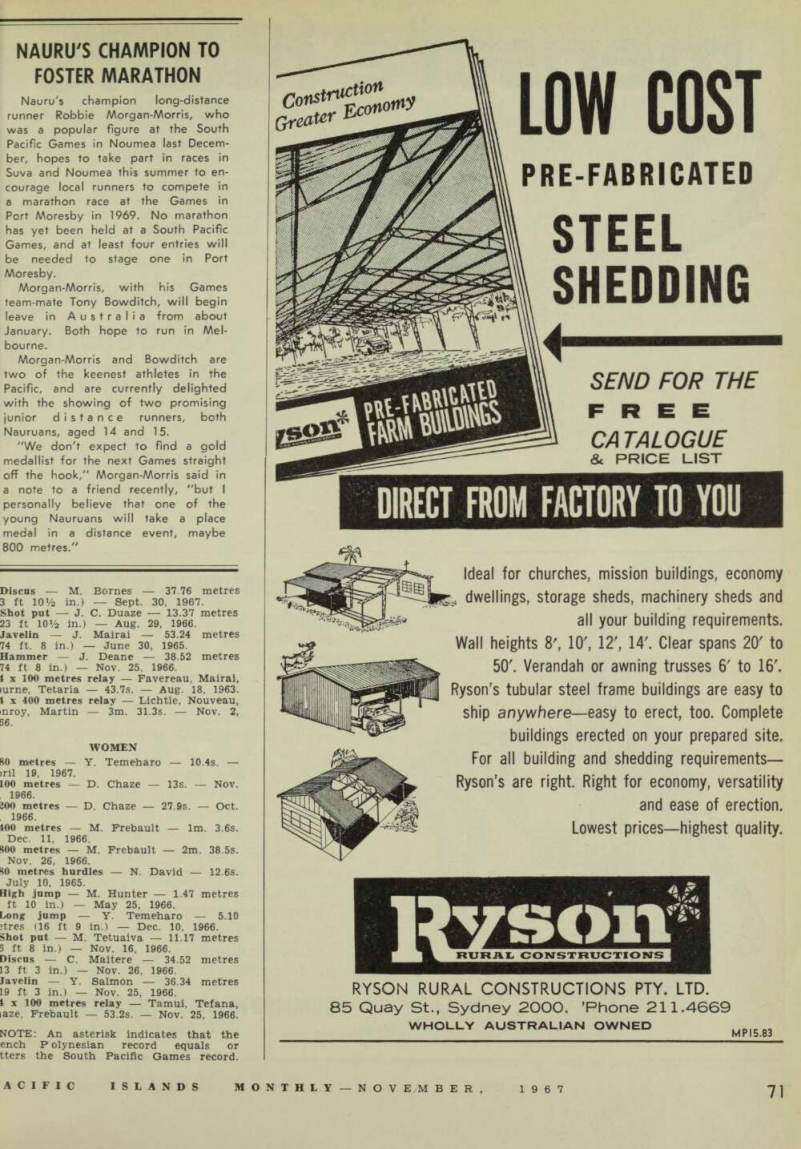 75
75 76
76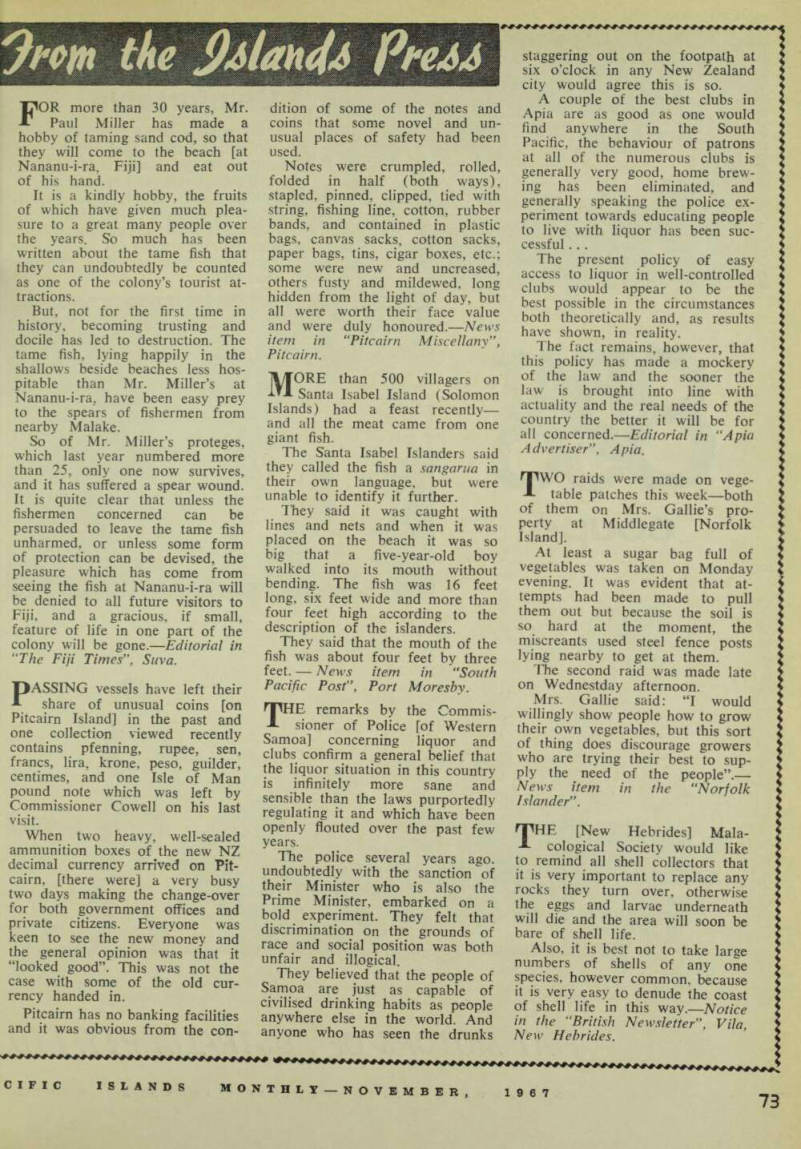 77
77 78
78 79
79 80
80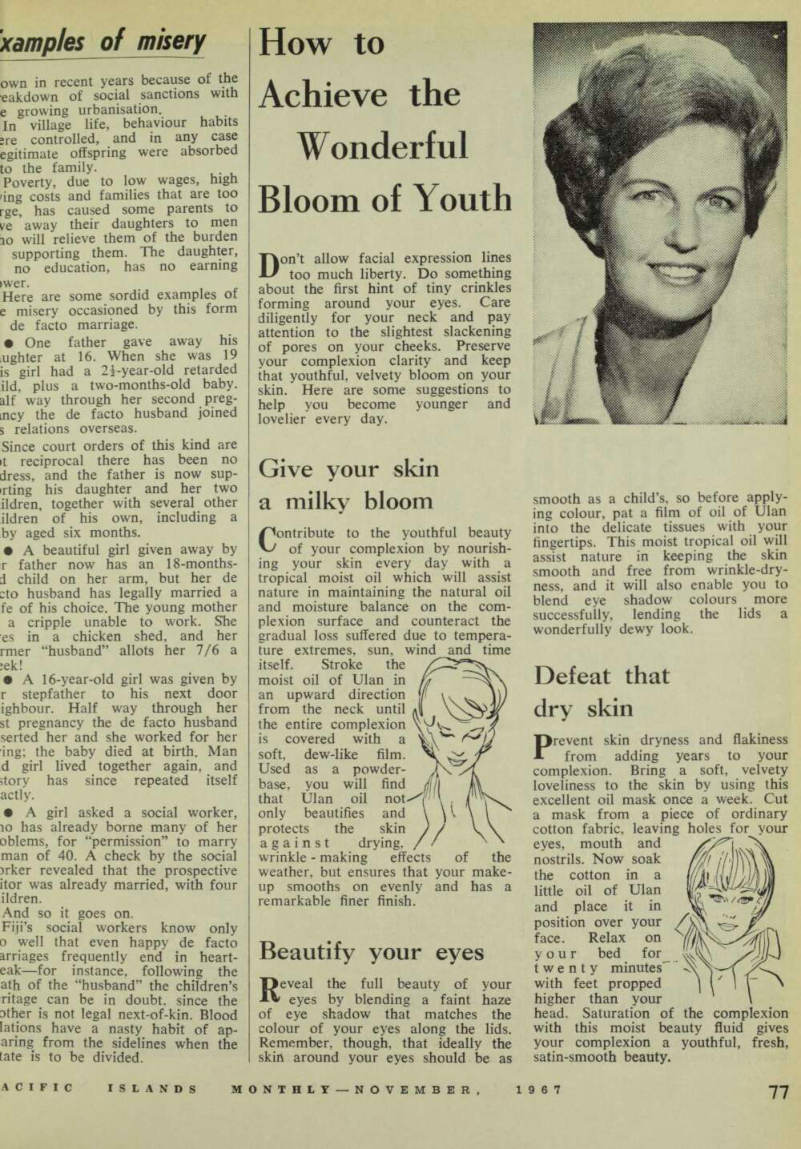 81
81 82
82 83
83 84
84 85
85 86
86 87
87 88
88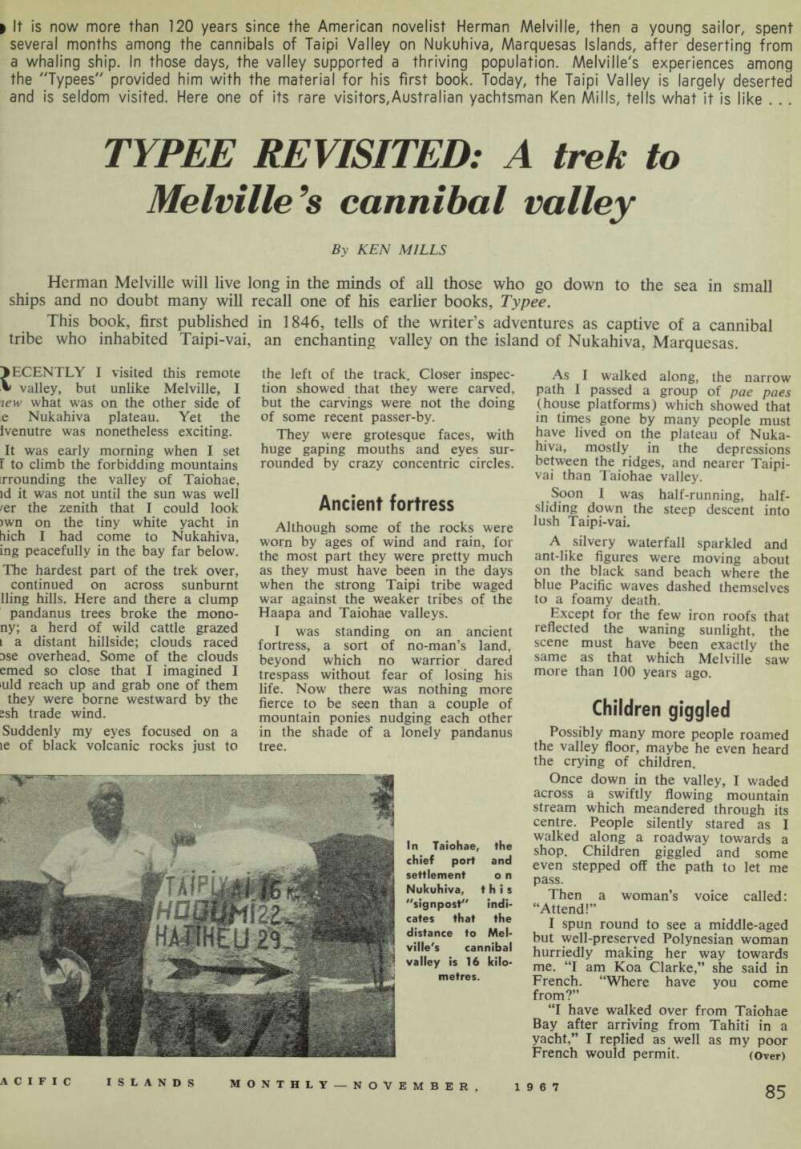 89
89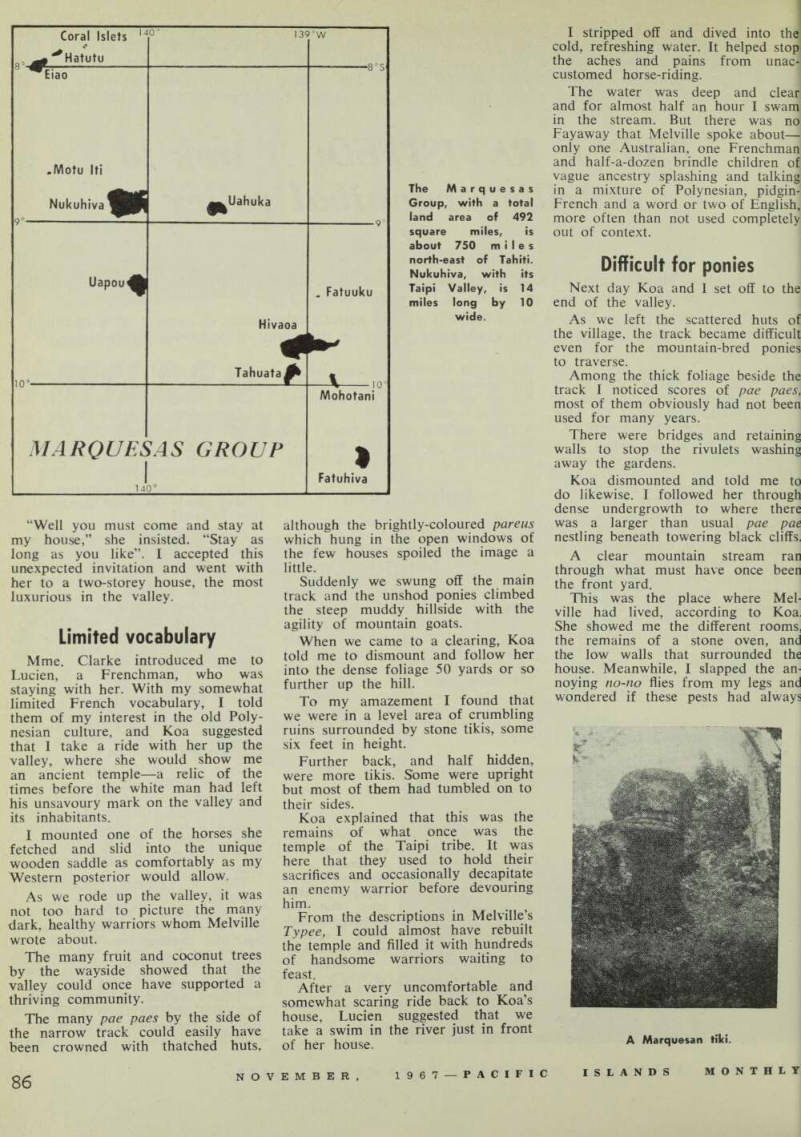 90
90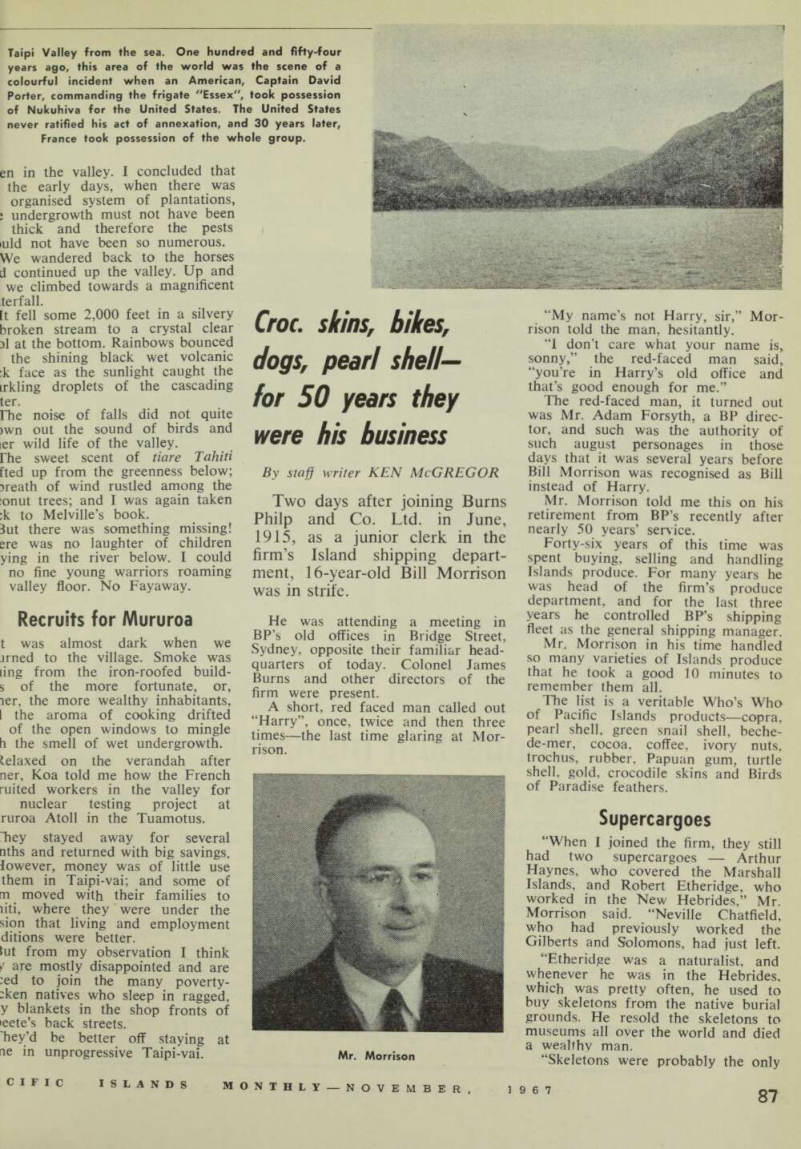 91
91 92
92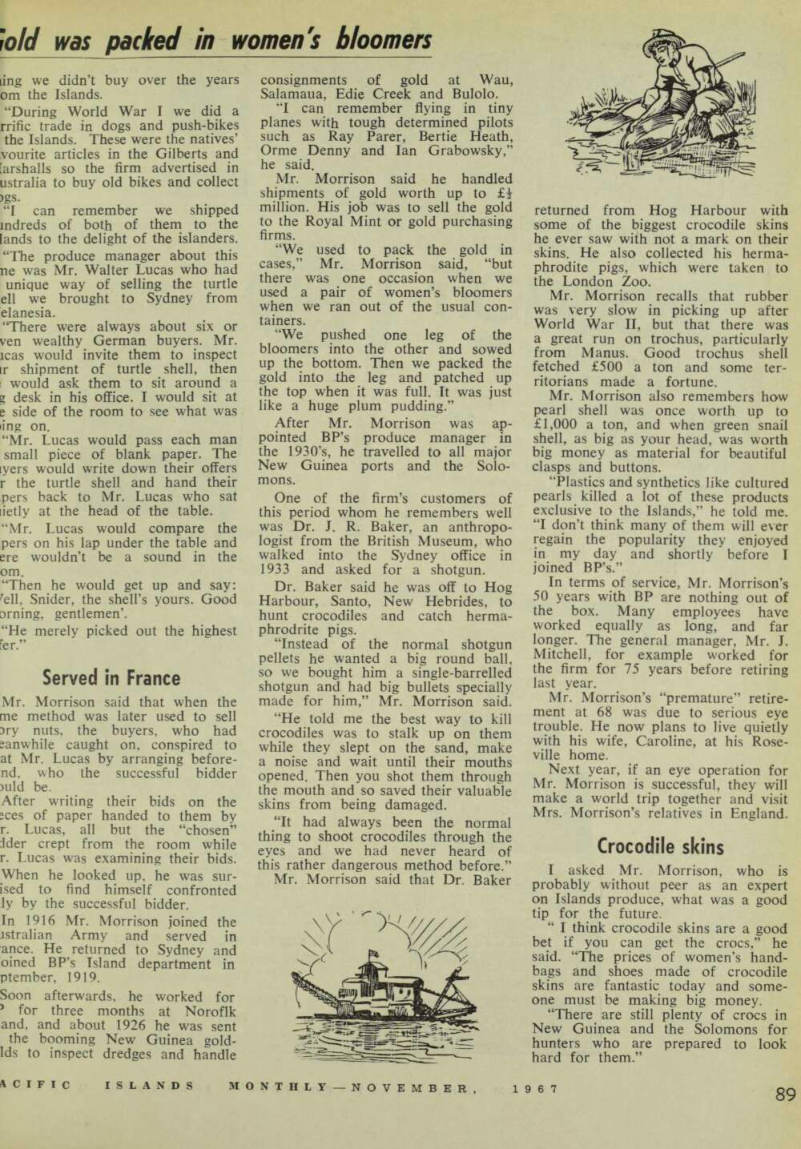 93
93 94
94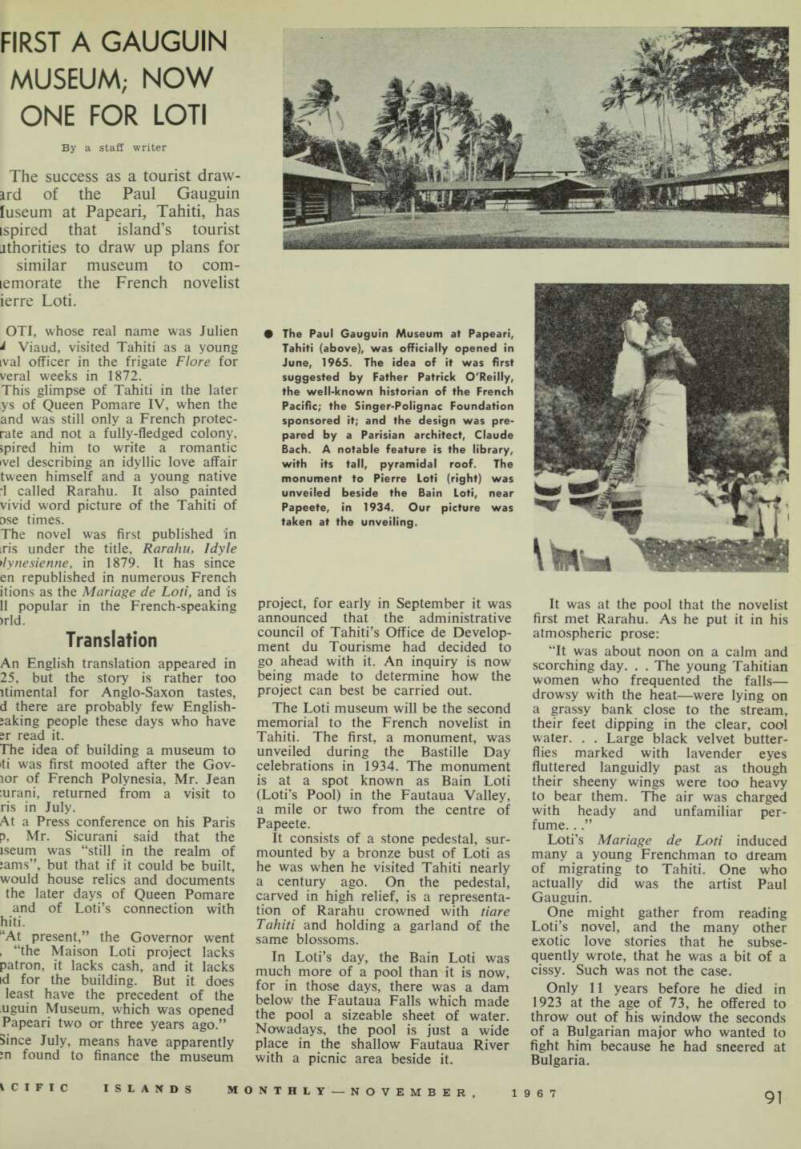 95
95 96
96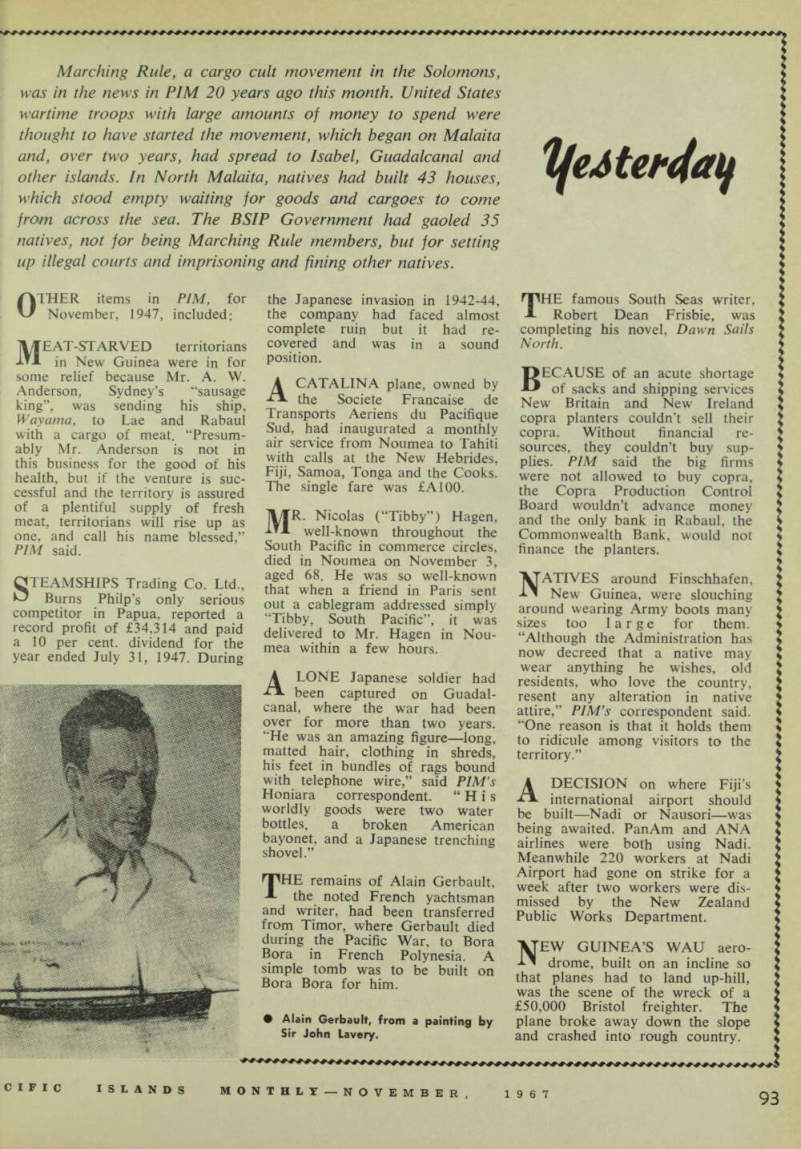 97
97 98
98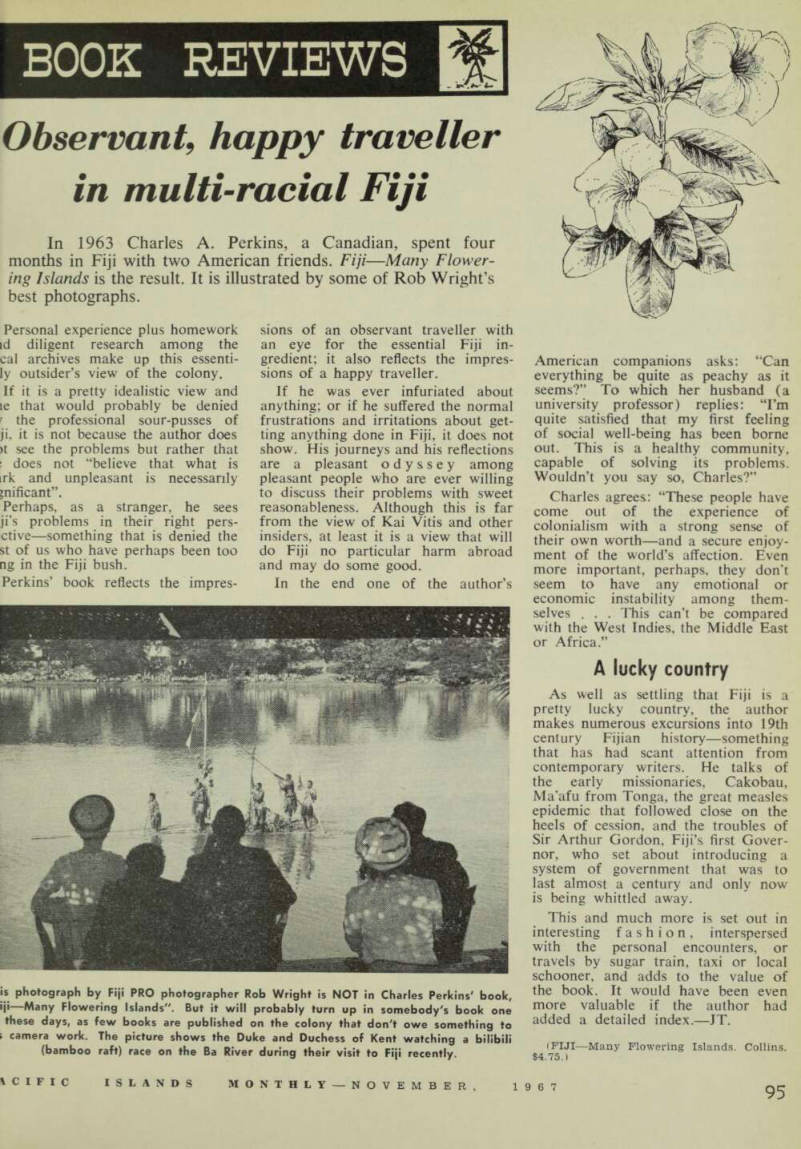 99
99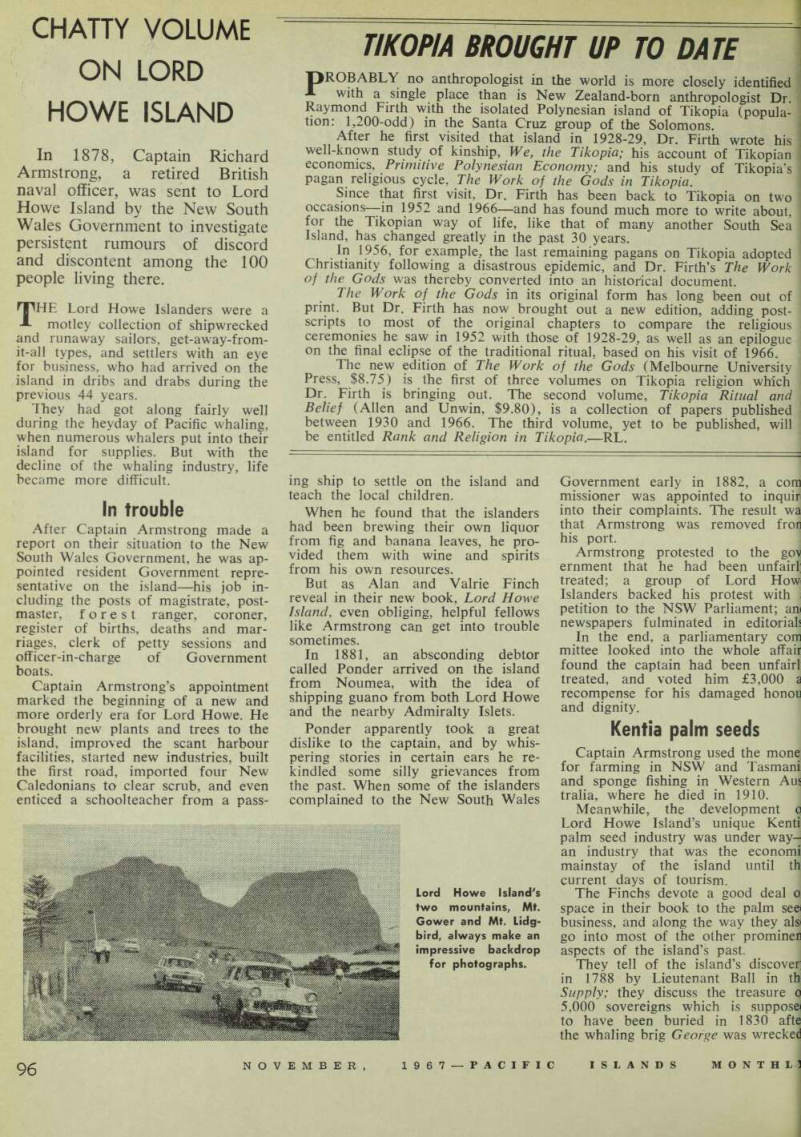 100
100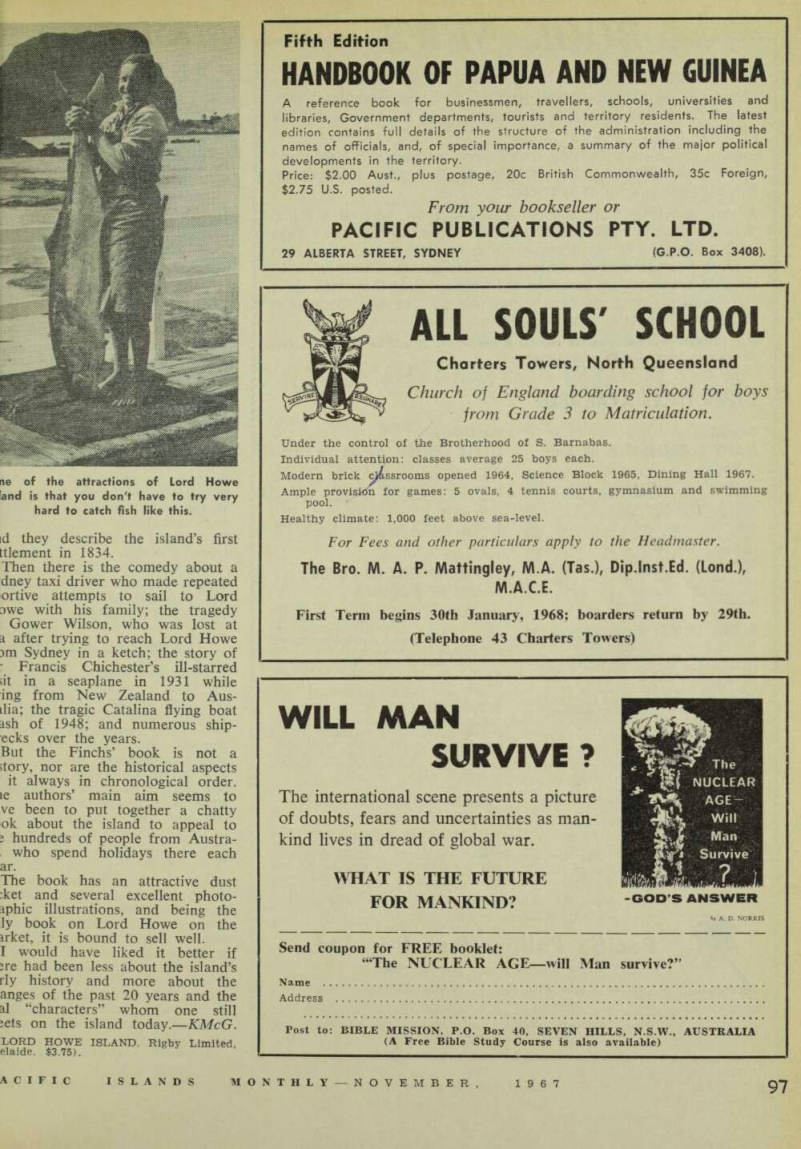 101
101 102
102 103
103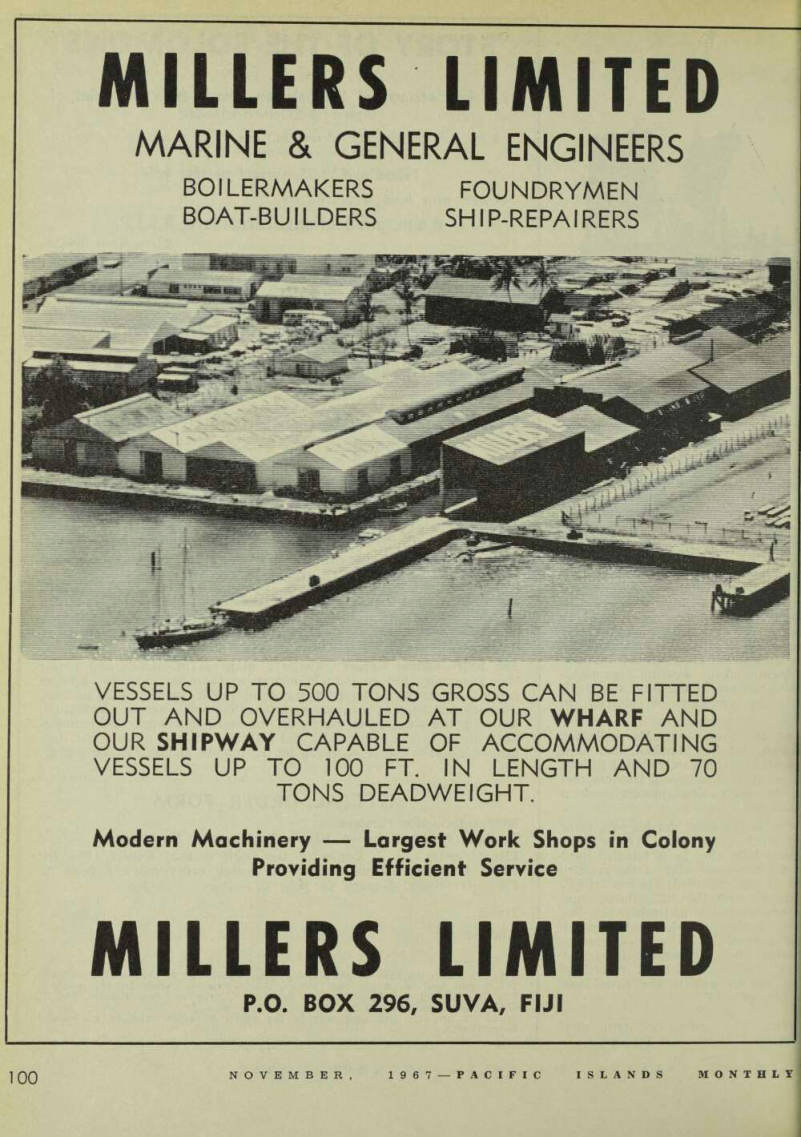 104
104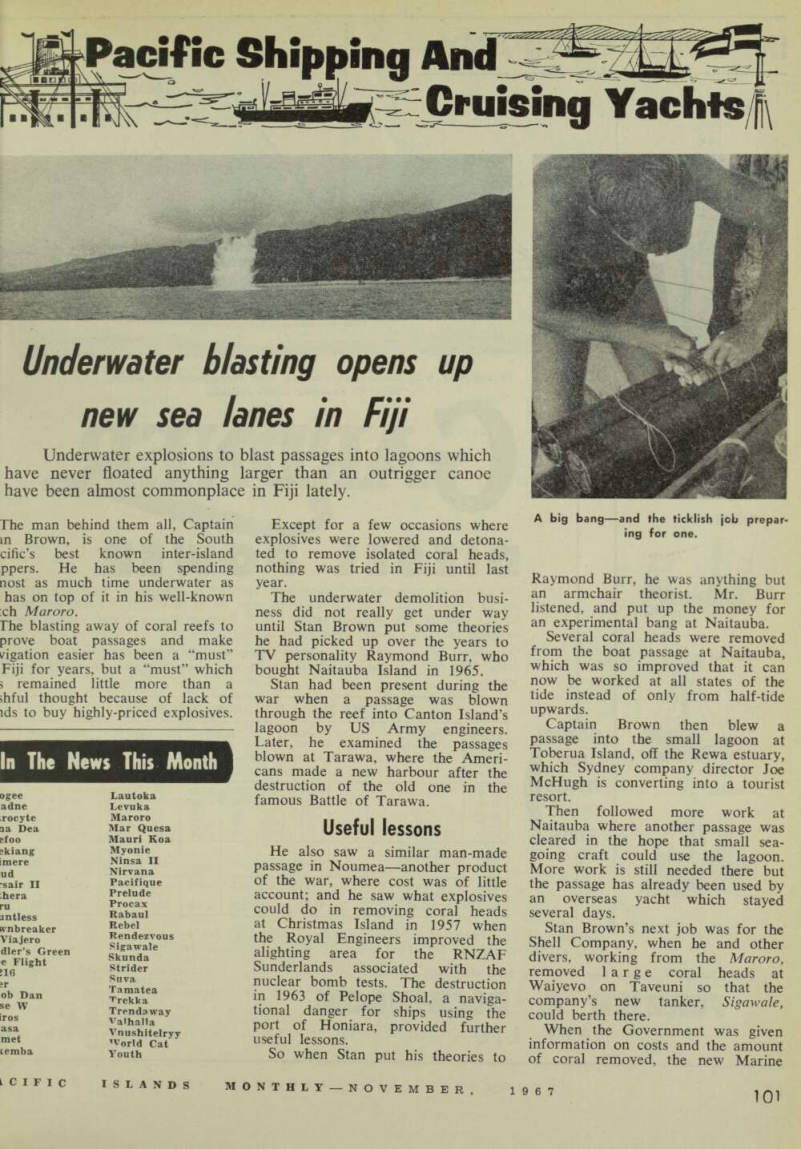 105
105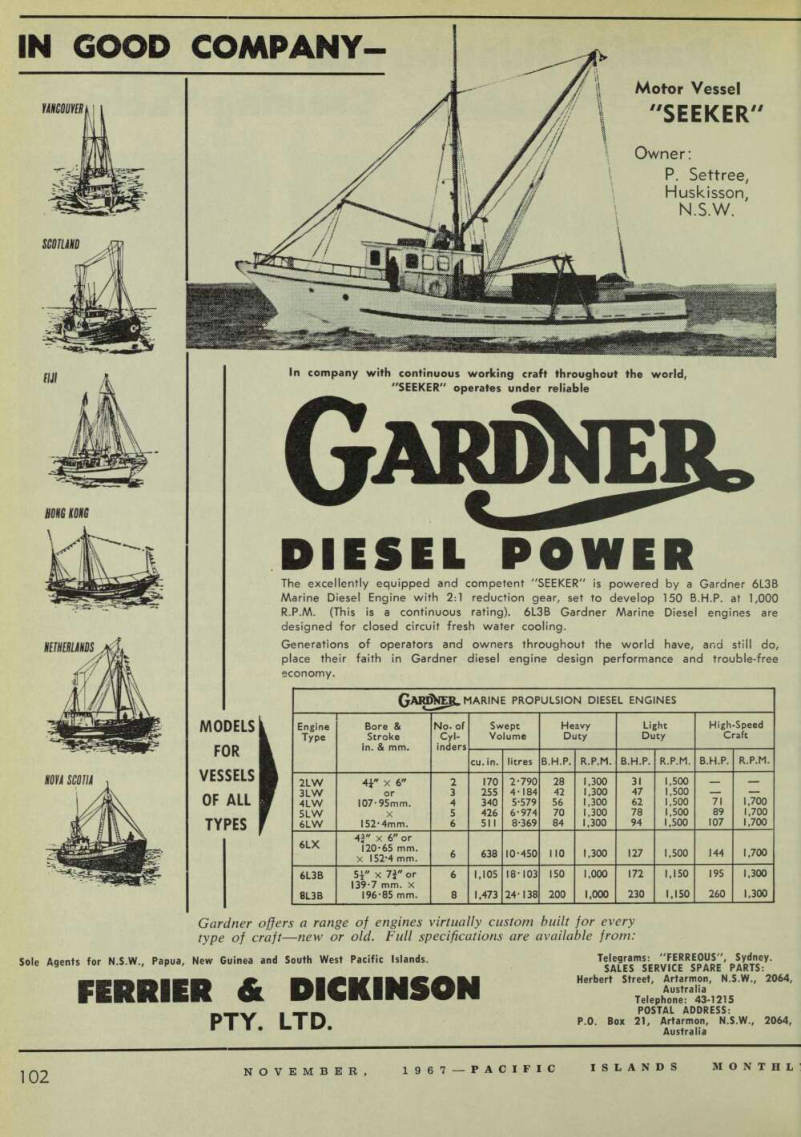 106
106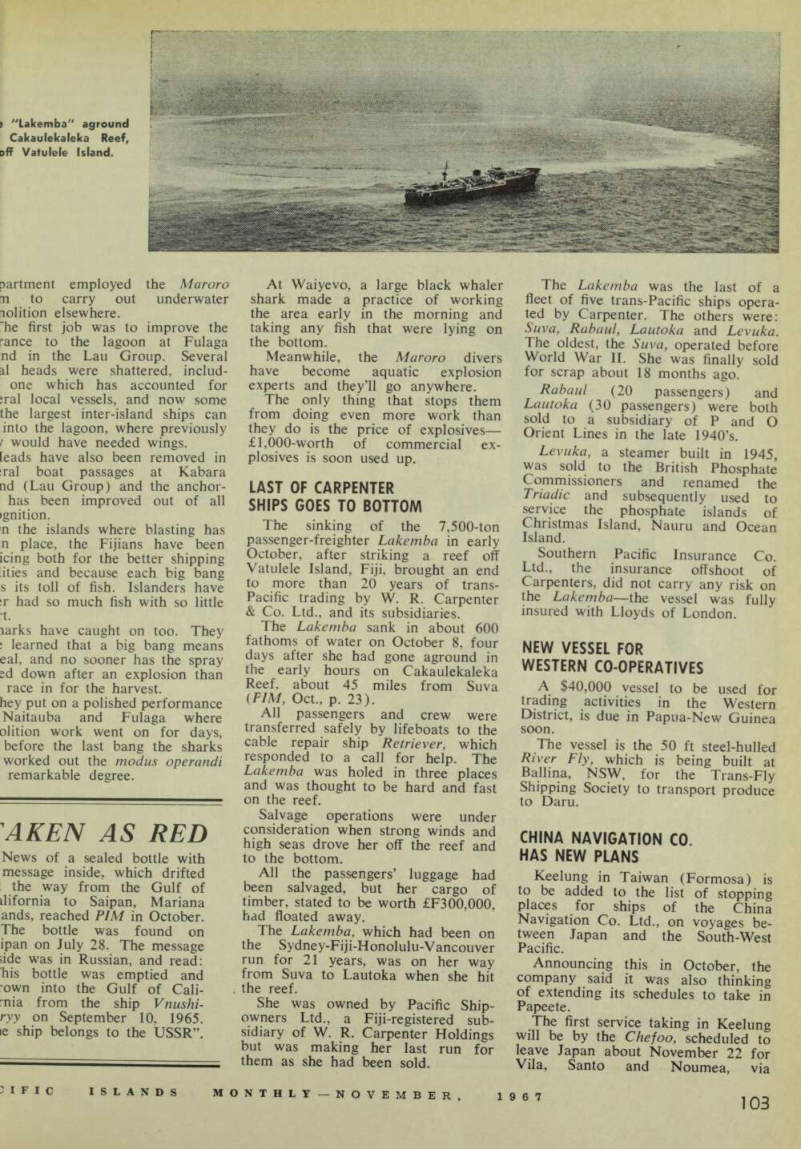 107
107 108
108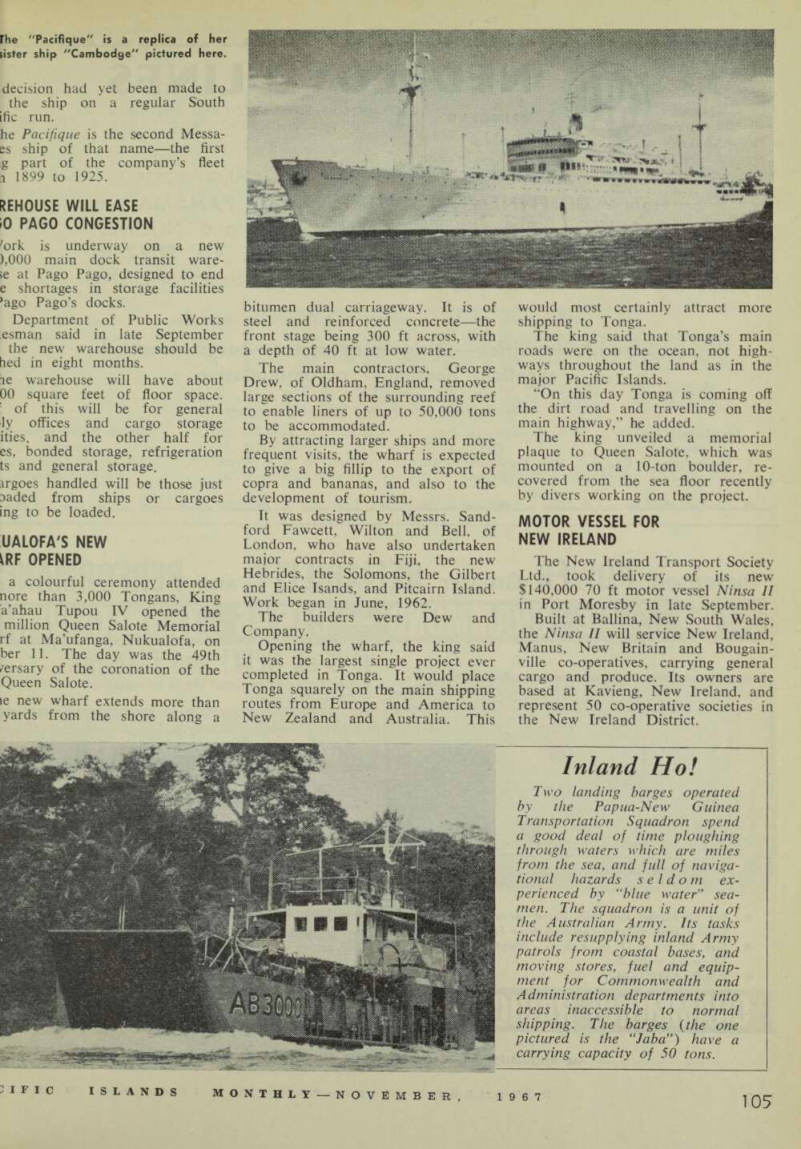 109
109 110
110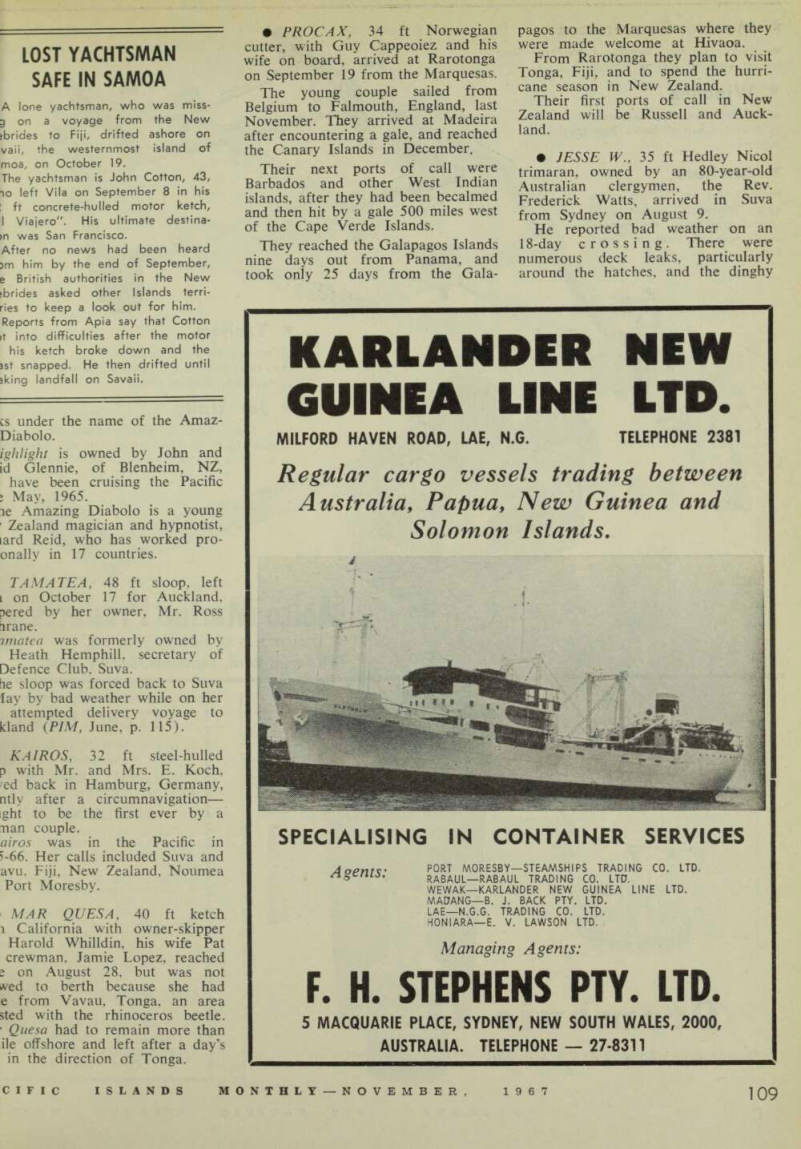 111
111 112
112 113
113 114
114 115
115 116
116 117
117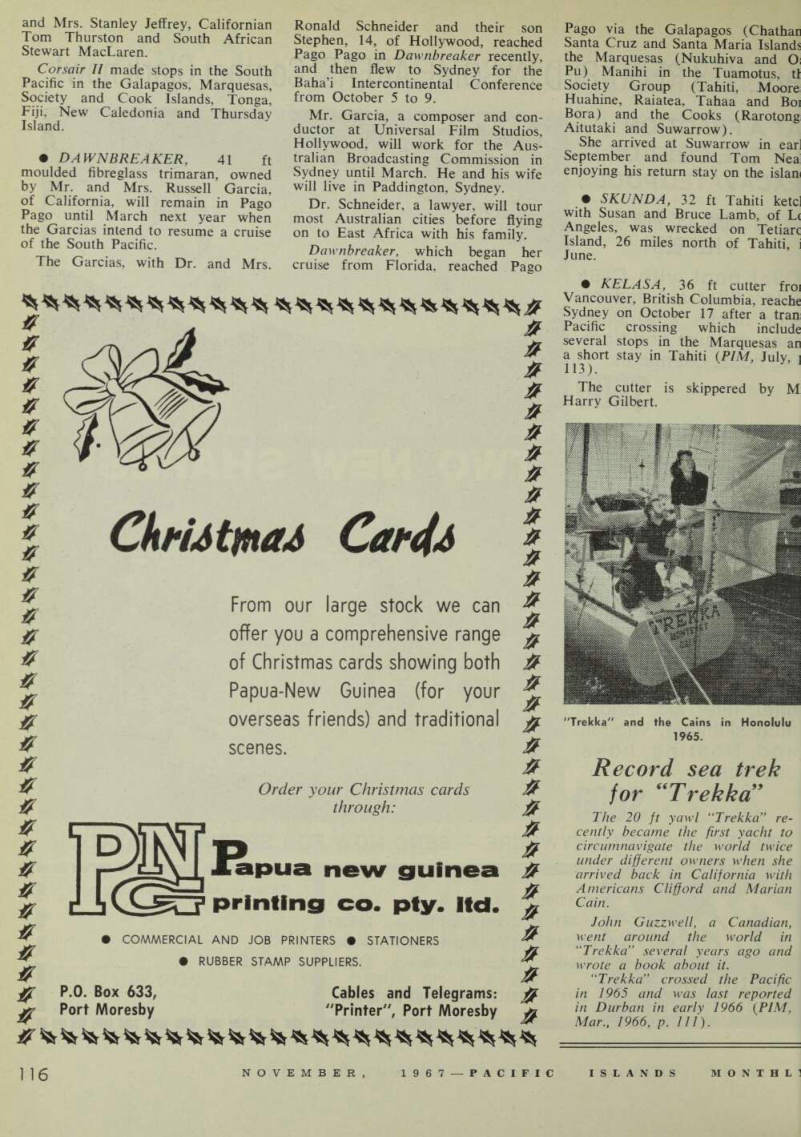 118
118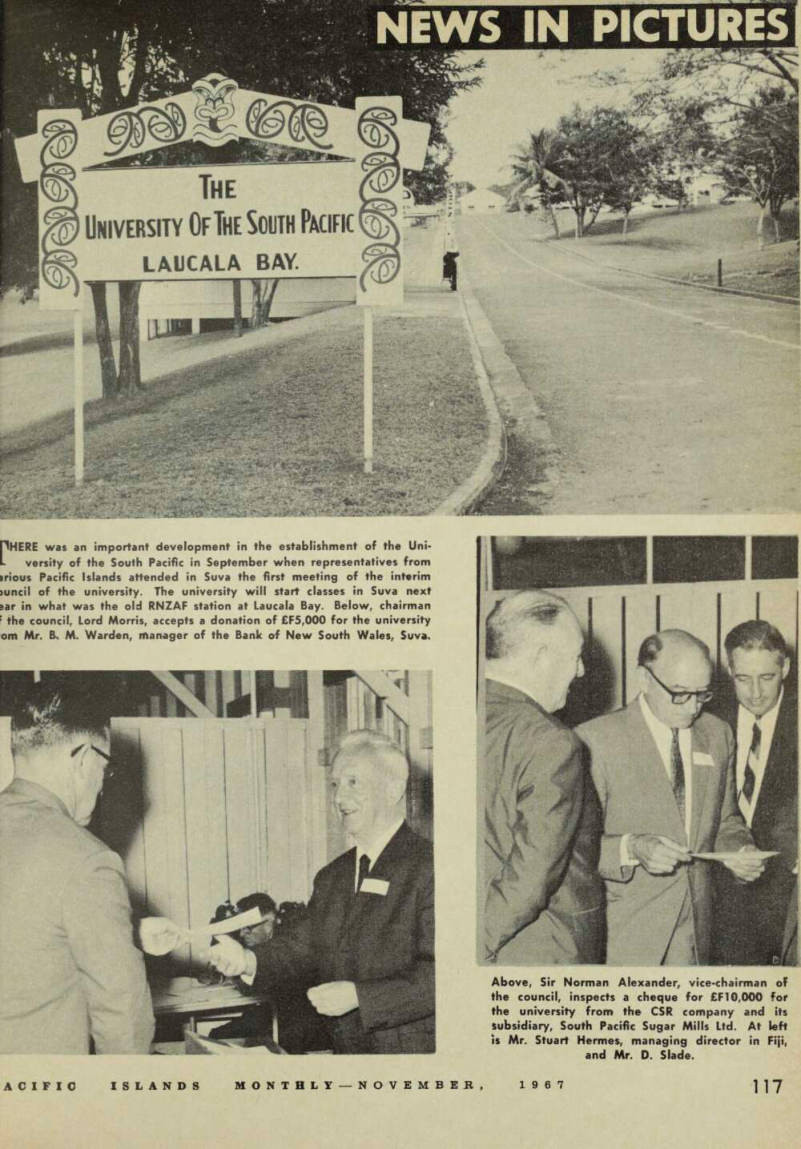 119
119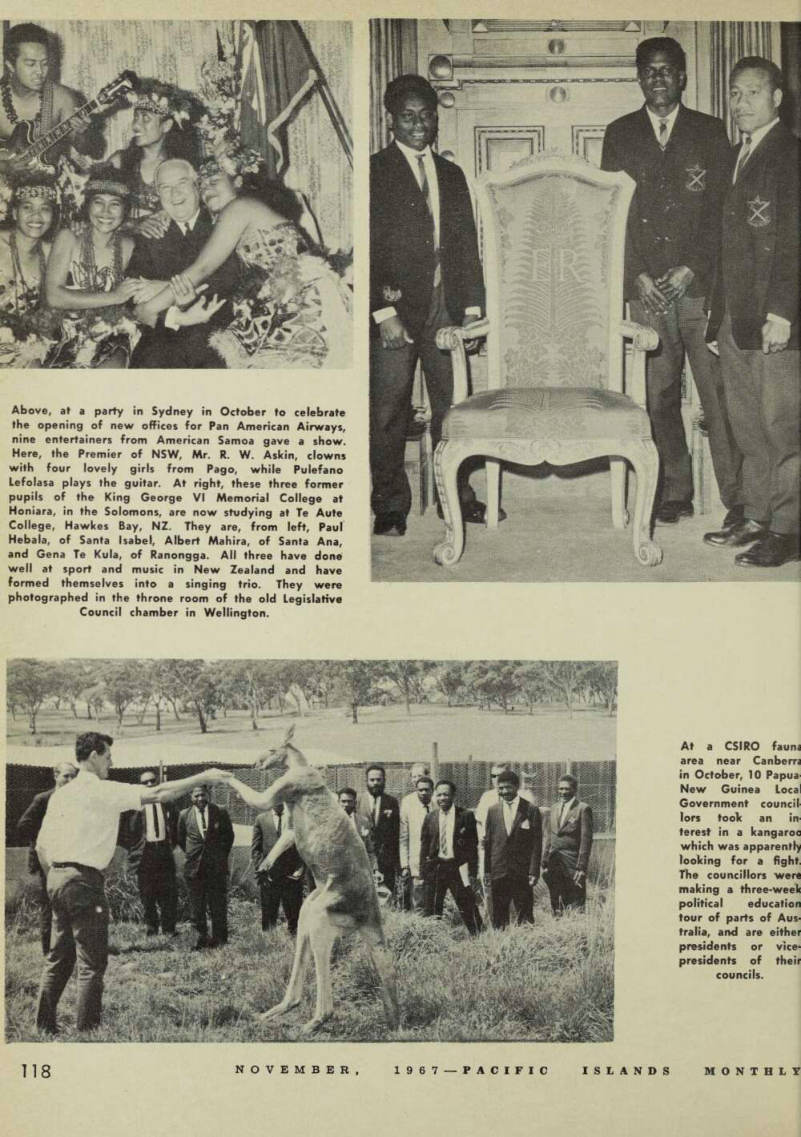 120
120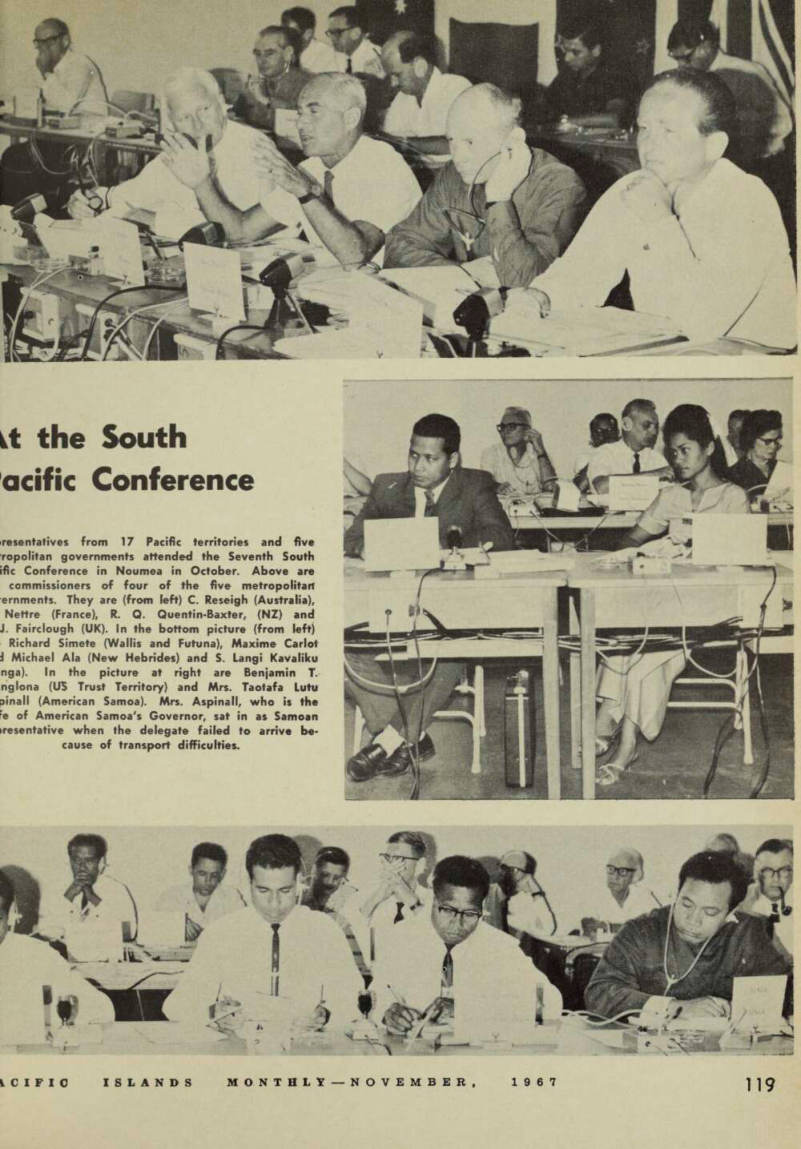 121
121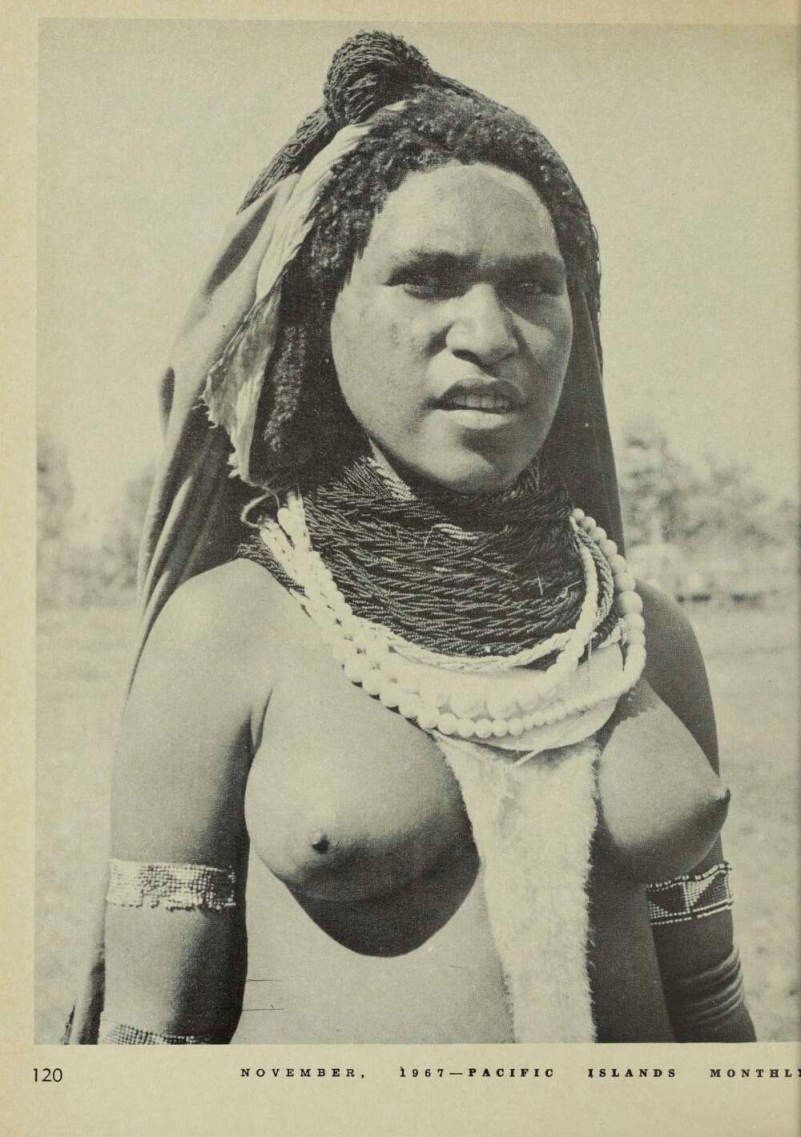 122
122 123
123 124
124 125
125 126
126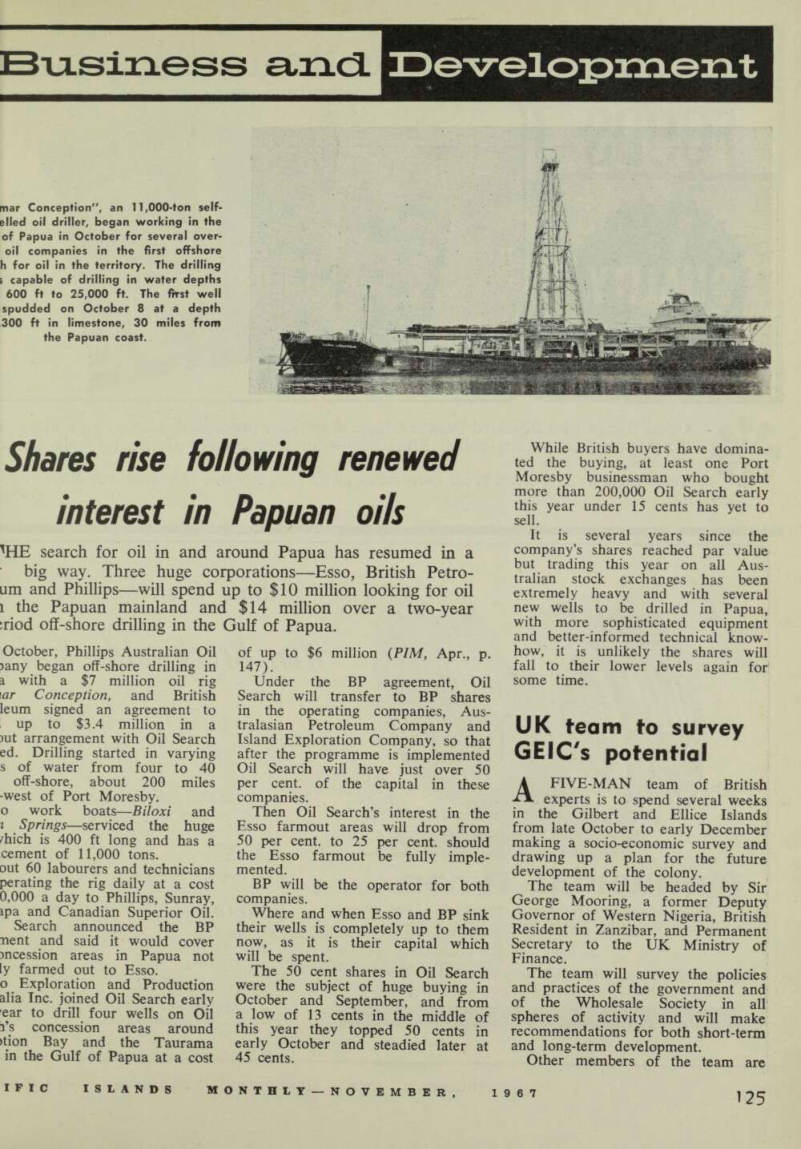 127
127 128
128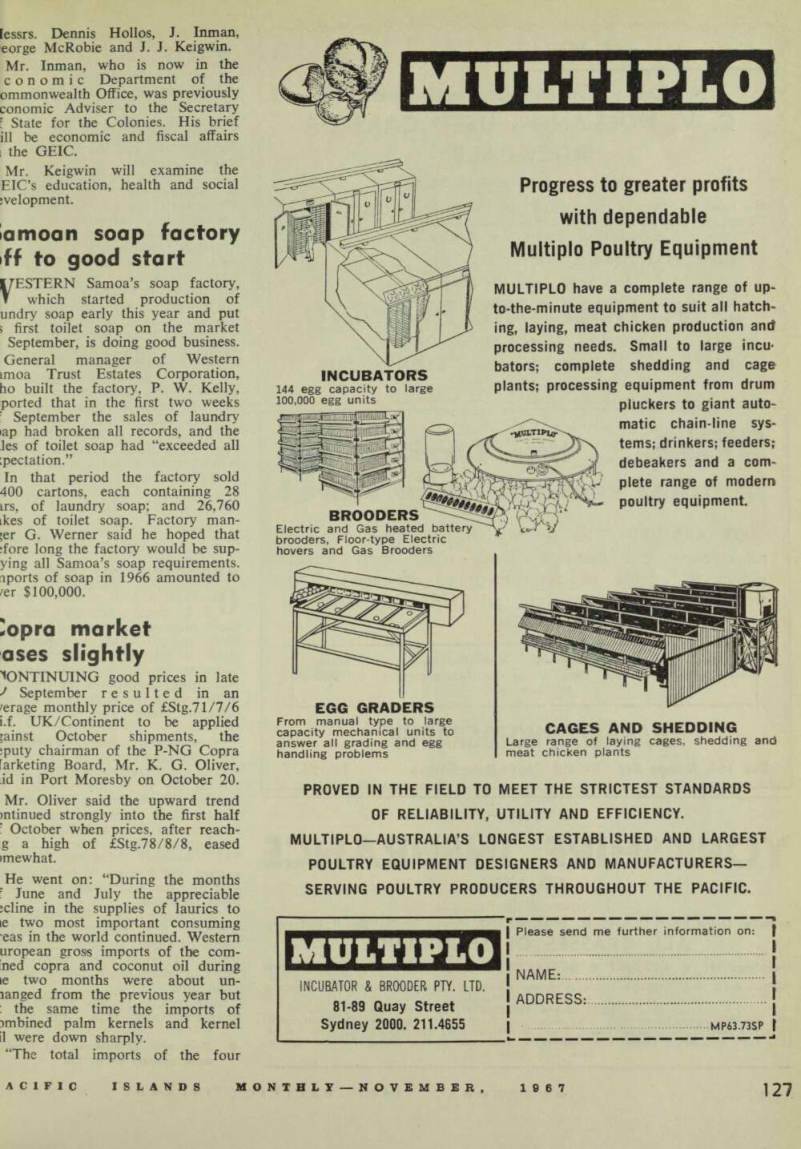 129
129 130
130 131
131 132
132 133
133 134
134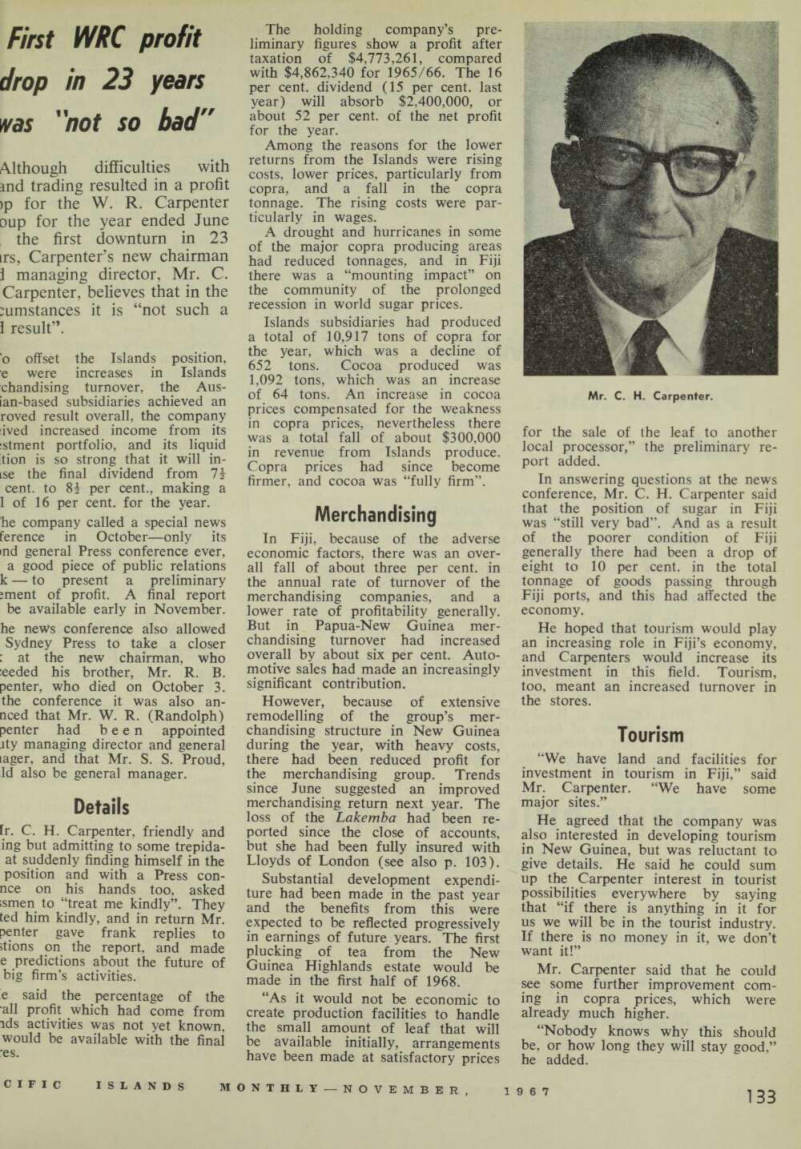 135
135 136
136 137
137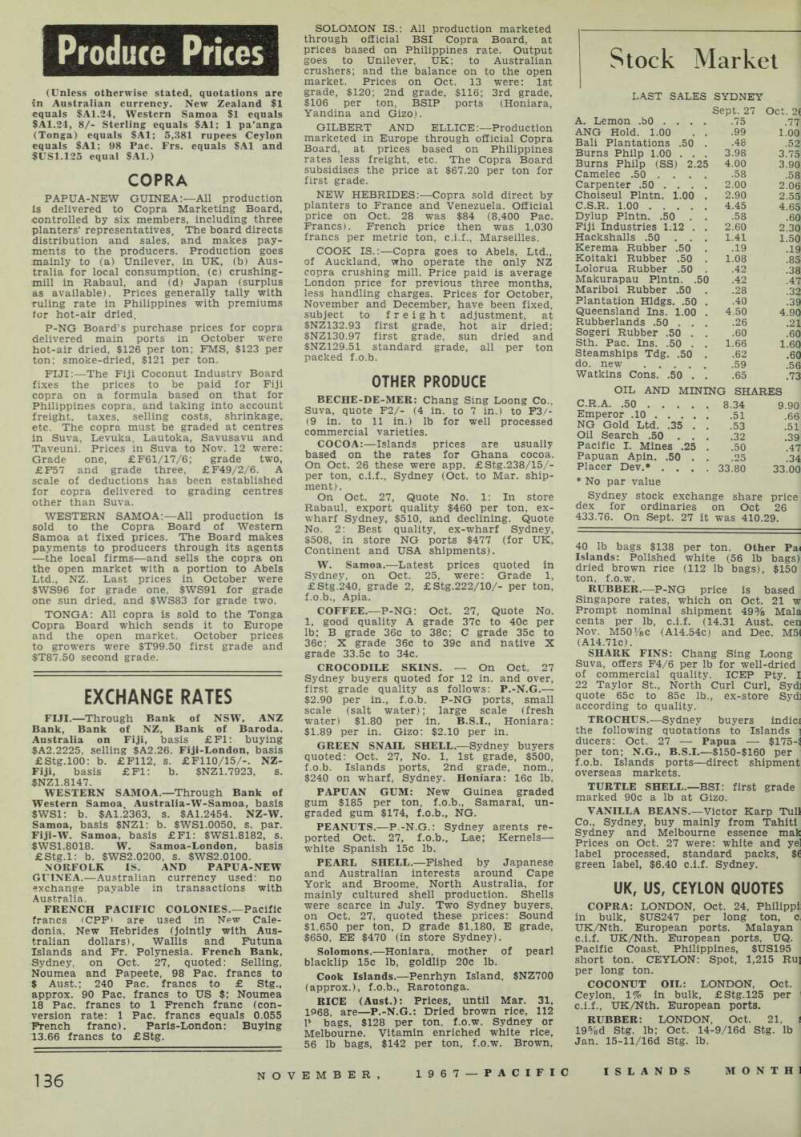 138
138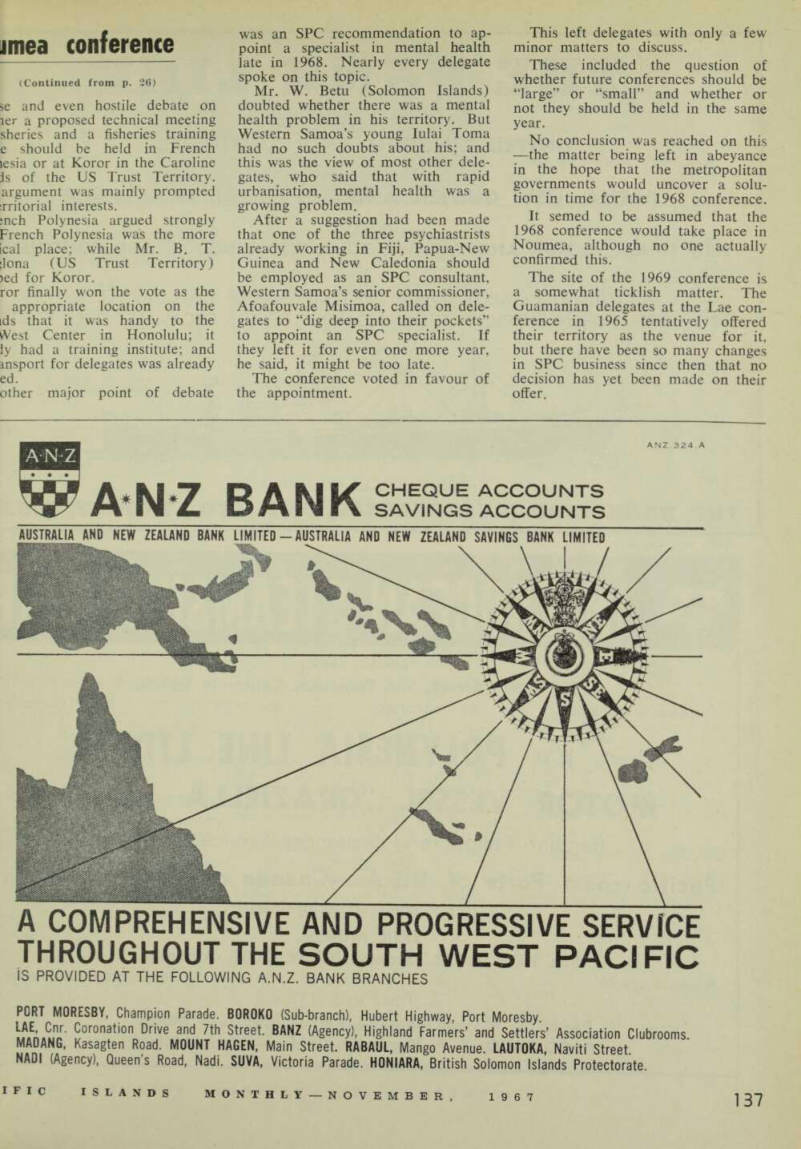 139
139 140
140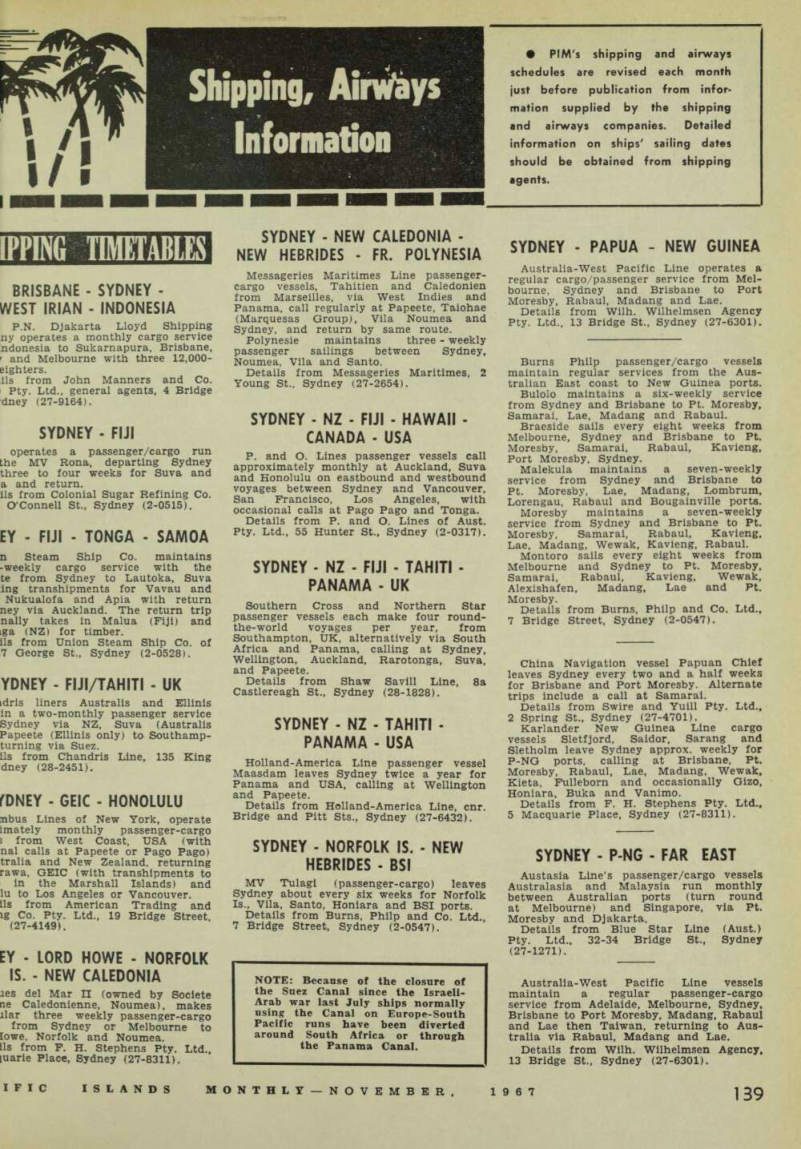 141
141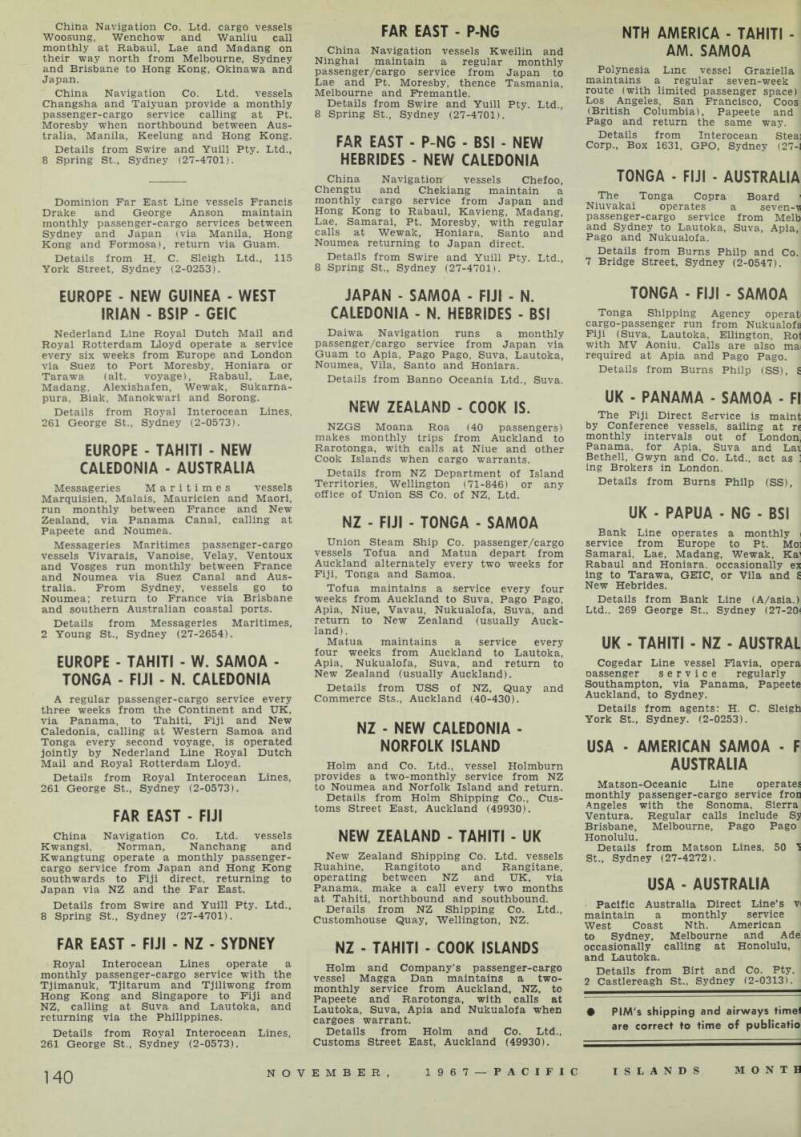 142
142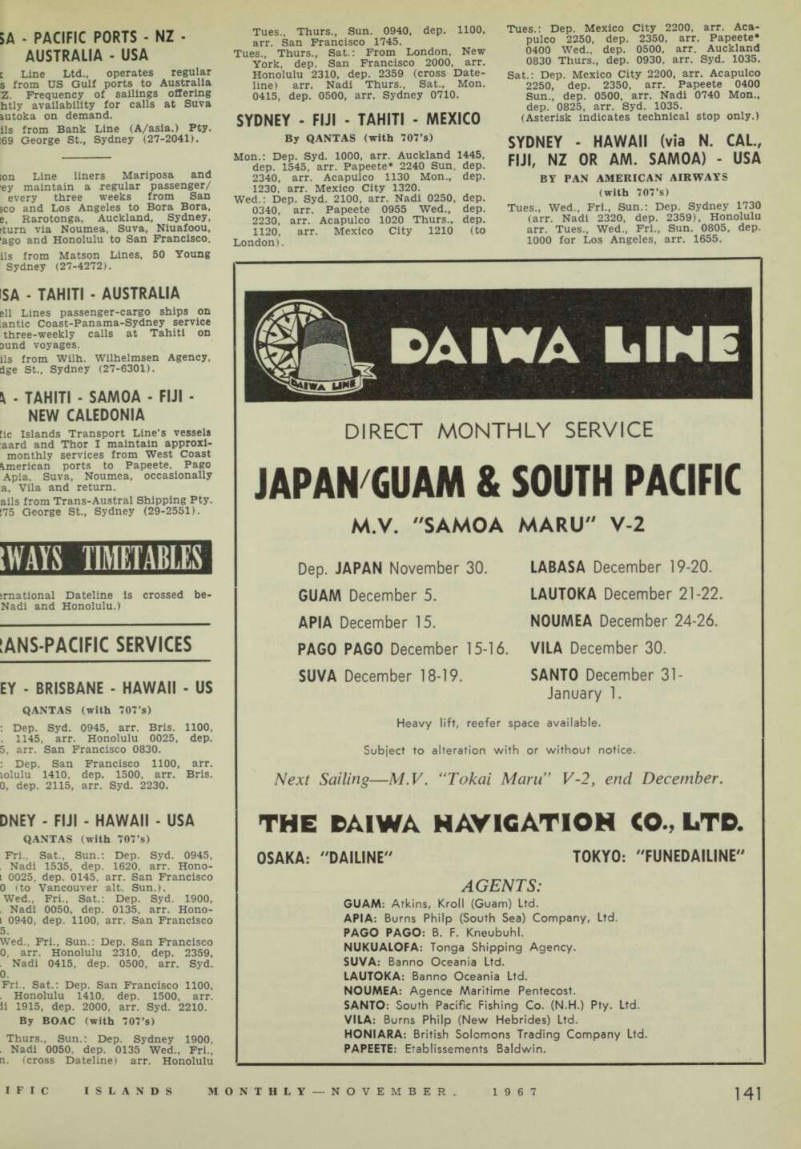 143
143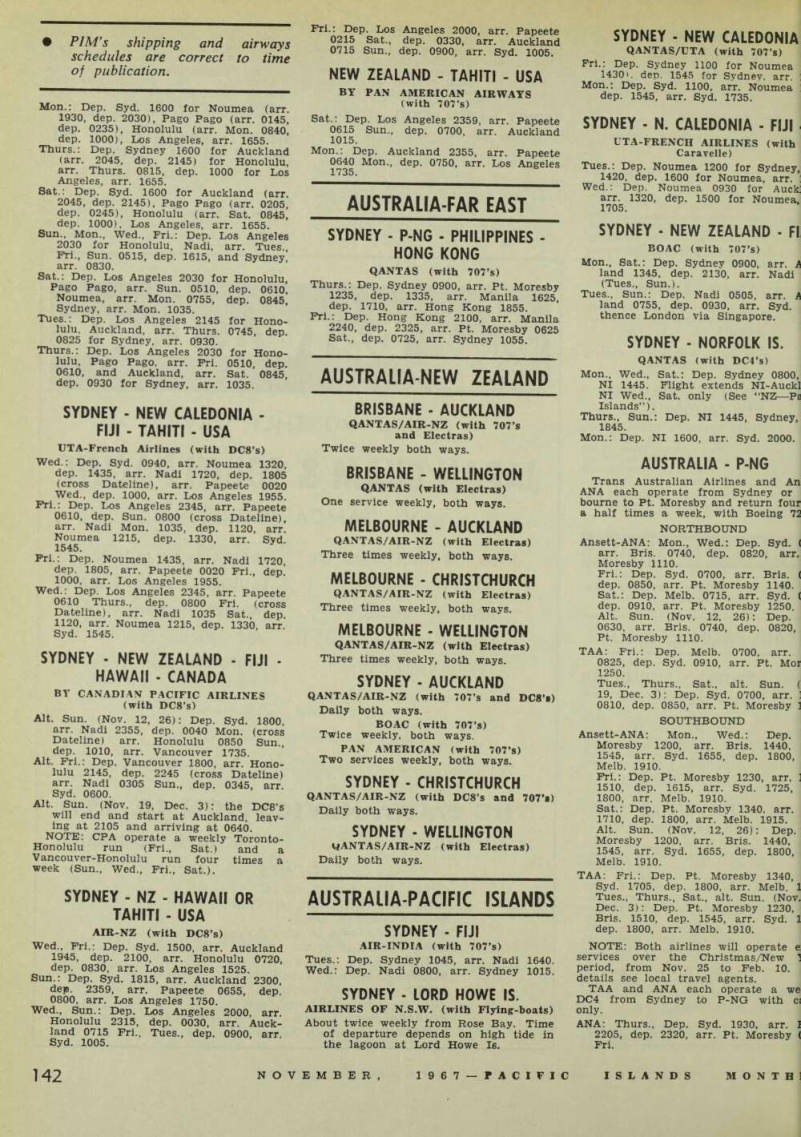 144
144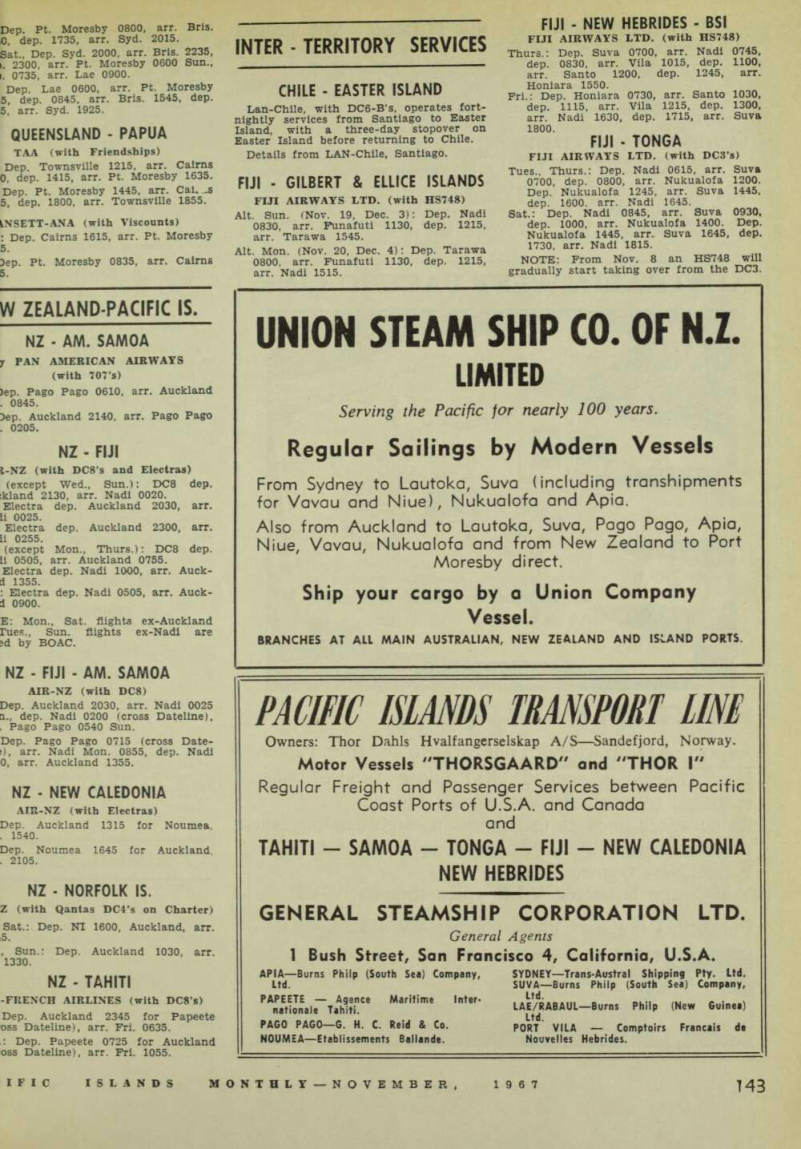 145
145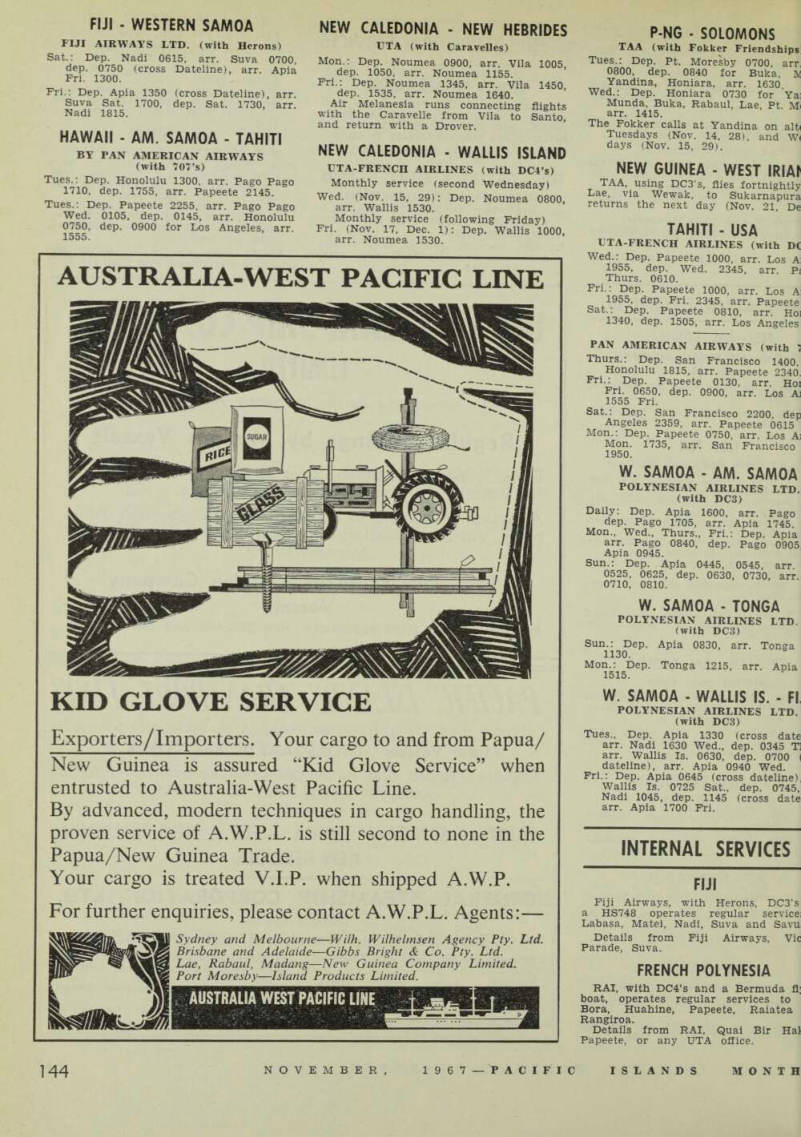 146
146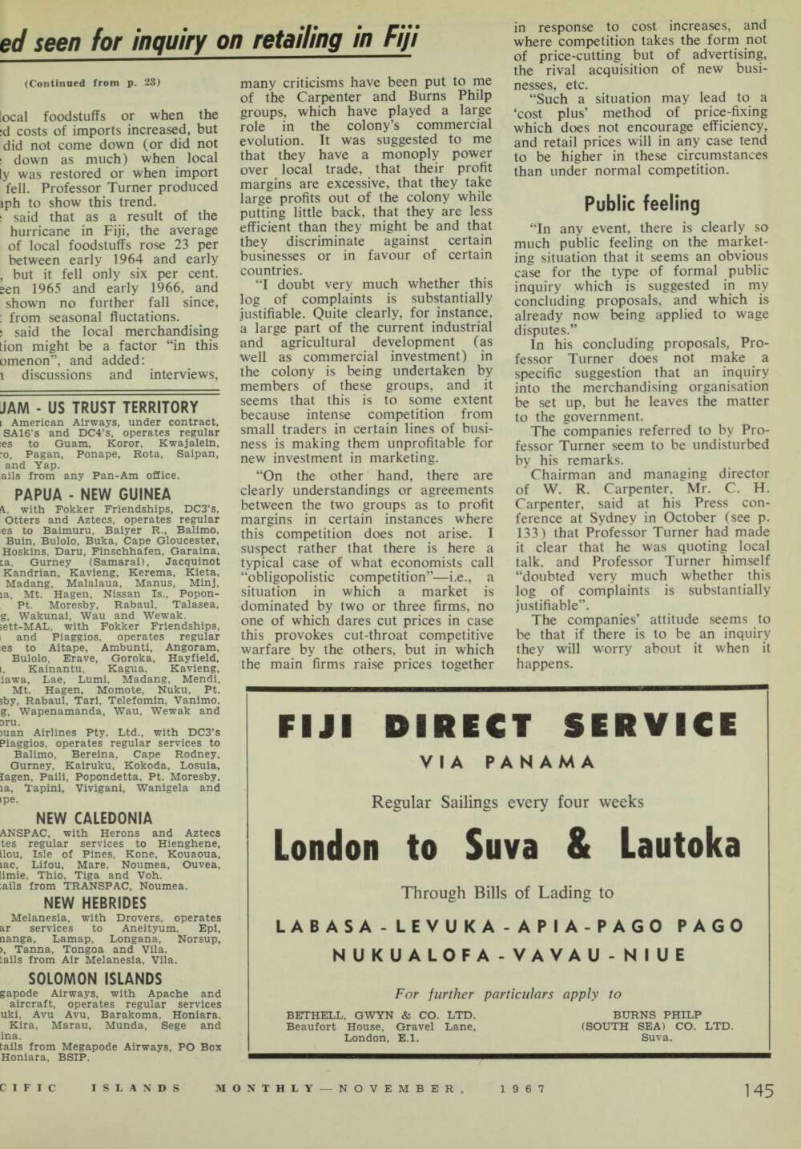 147
147 148
148 149
149 150
150 151
151 152
152 153
153 154
154 155
155 156
156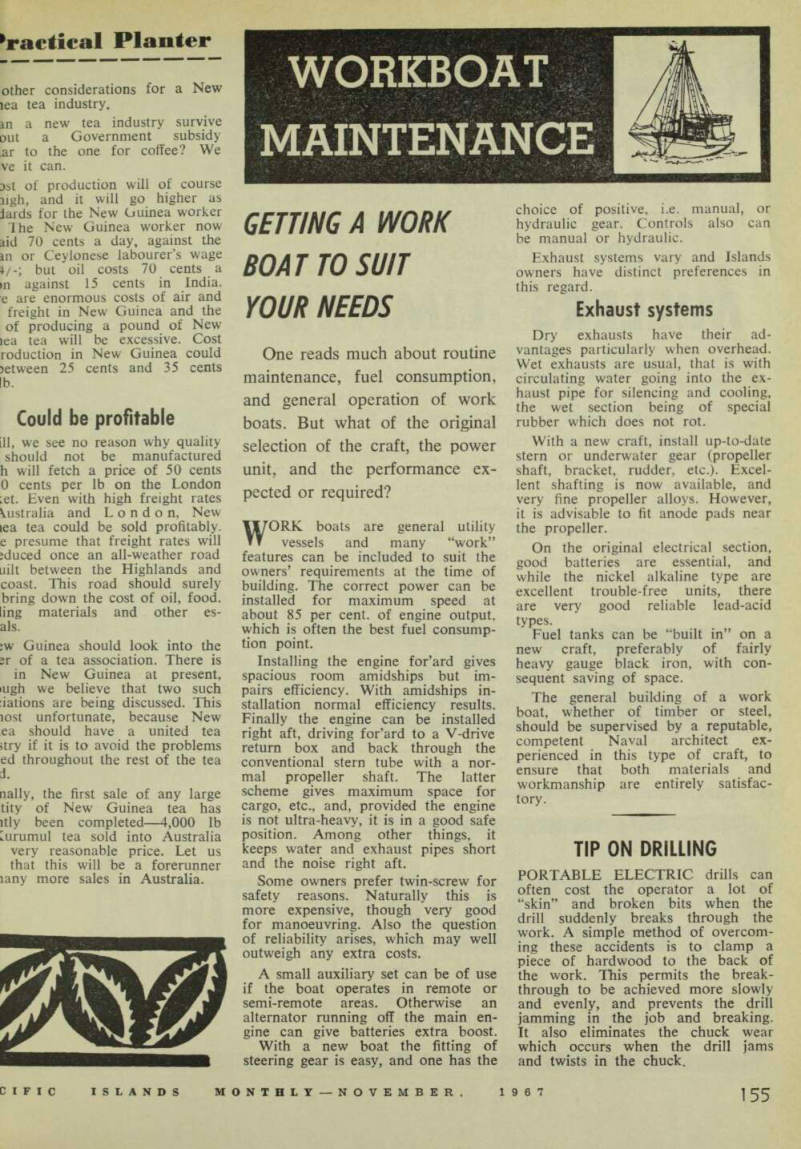 157
157 158
158 159
159 160
160 161
161 162
162 163
163 164
164 165
165 166
166 167
167 168
168