Leftist MP Arouses Fury
pp. 21-145 · Read in the full issue
The Calwell Party In New Guinea
Leftist MP Arouses Fury And Threats
The planters of the New Guinea Highlands aren’t likely to forget the visit, late in July, of the Australian Labour leader, Mr. A. A. Calwell, whose entourage included Mr. Clyde Cameron, the unpredictable, tub-thumping Labour member for Hindmarsh (SA) in the Australian Parliament.
MR. CALWELL gave the New Guinea-ites soothing words and comforting assurances.
At Rabaul, Kokopo, Madang, Lae, he went on record as saying that capacity for self-government is many decades away ahead of the New Guinea natives, and that the country’s future clearly lay in an amiable, well-planned partnership between Europeans and New Guineans.
Comforting, because the Labour Party hopes that after next elec-
tion Mr. Calwell will be Australia’s Prime Minister.
But, whatever political good was achieved by Mr. Calwell was promptly undone by the belligerent Mr. Cameron, who seemed to hate the NG planters on sight, and came near to blows with them in lively scenes in the Highlands centres.
The planters were not to know that Mr. Cameron is one of a small group of persistent trouble-makers and socialist haters in the Australian Parliament who never are taken seriously by Press or public.
Calwell Was Warned!
If they had known his history, their collective blood pressure would not have been stirred —they would have seen him for what he is—just a politician apparently designed by nature and the party-politics system for the entertainment of the public.
But let there be no sympathy for the unhappy Mr. Calwell. He was warned.
Before he left Sydney, he was interviewed by a group of moderate Labourites, and urged to keep Mr.
Cameron out of his party. They said Mr. Cameron almost certainly would be so eager to advance his extreme Leftist ideas in P-NG and express his hatred of private enter prise, that he probably would em barrass the Party’s leaders.
“But Cameron asked if he could come with me,” Calwell is reported to have replied. “I couldn’t put my self in the position of saying that he couldn’t—now, could I?”
And so he took the 47-years-old ex-union organiser along, and allowed him to sit in at his meet ings with planters and natives.
There were some brushes between Mr Cameron and individual planters and traders in the Lae and New Britain areas. And, by the time the party had moved around via Kavieng and Manus to Madang, Mr. Cameron apparently had be come convinced that the unfor tunate natives were being held in poverty and servitude by organised Au c tralian exploitation—a mental process typical of any trade-union trained, political economist who knows nothing of New Guinea history and conditions.
Mr. Cameron had some spirited
exchanges with NG residents in Madang; but skin and hair really began to fly when he met the men of the Highlands.
Goroka Didnt Like Him
On Friday night, July 29, District Commissioner Seale gave a recep tion at his home to the Labour trio. (Mr. Calwell, Senator Dittmer and Mr. Cameron.) Some of the coffee-planters there found in the Hindmarsh MP a type of politician —full of half-baked economic Leftist theories which he tried to apply to a country of which he knew nothing —which they particularly disliked.
There were some heated exchanges before the party broke up.
On Saturday, July 30. 15 members of the executive committee of the Highlands Farmers and Settlers’
Association accepted Mr. Calwell’s invitation to meet him in the Dis trict Office, and discuss Highlands affairs.
(Continued on page 141)
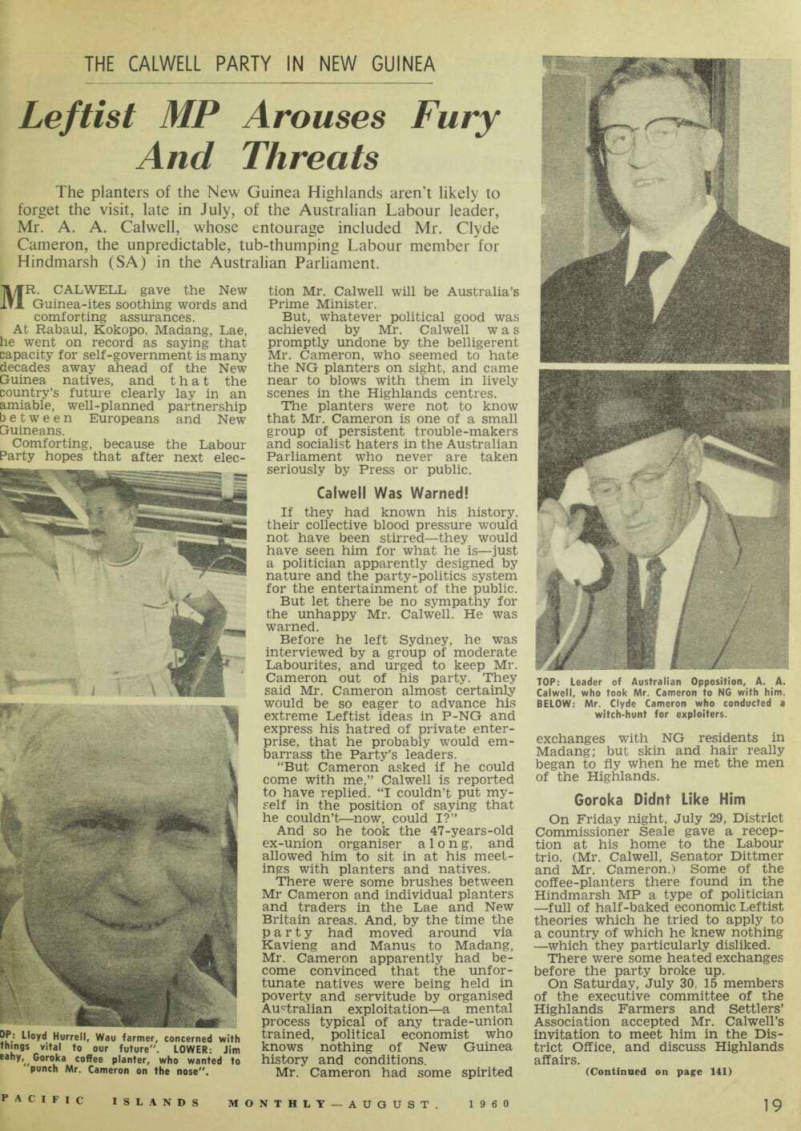
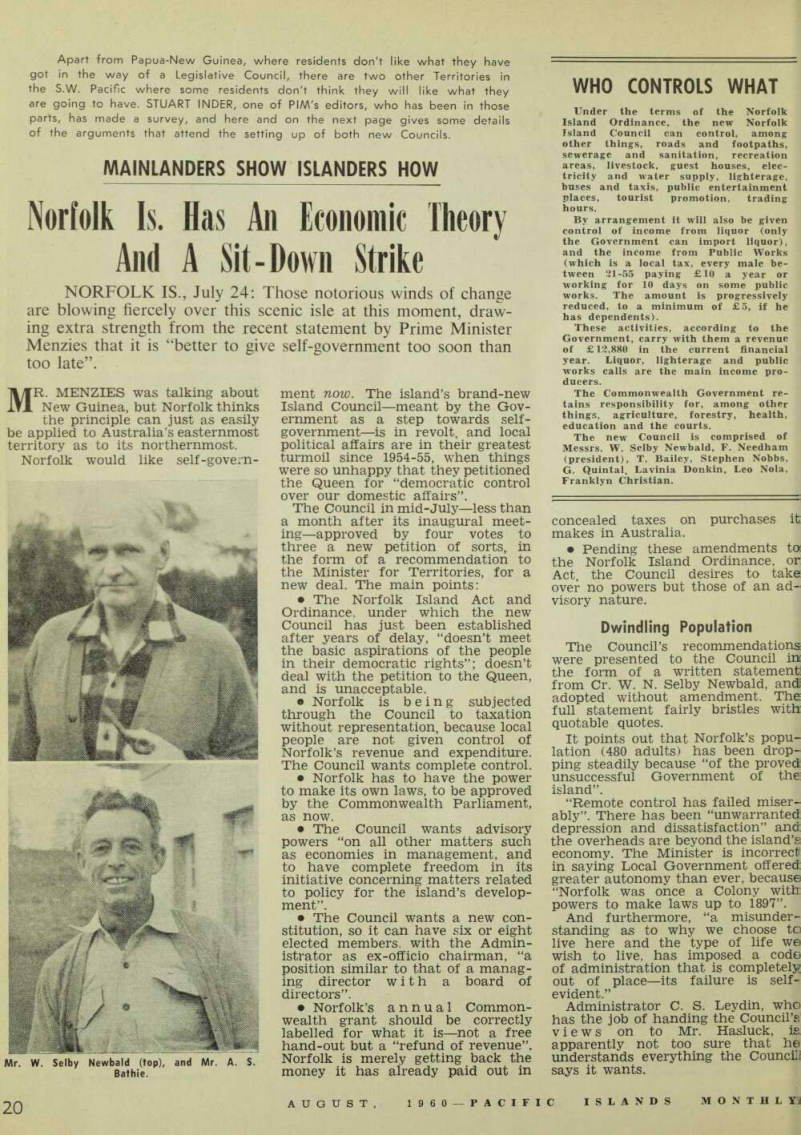
OP: Lloyd Hurrell, Wau farmer, concerned with things vital to our future”. LOWER: Jim eahy, Goroka coffee planter, who wanted to punch Mr. Cameron on the nose”.
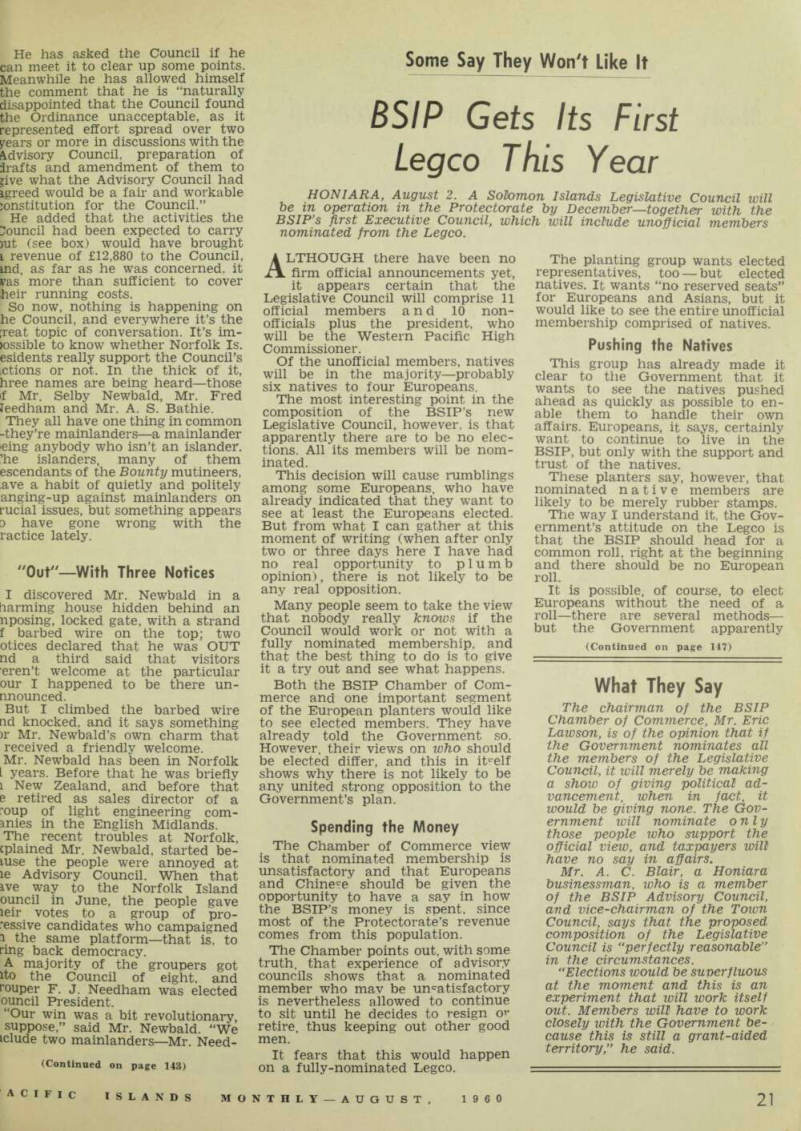
TOP: Leader of Australian Opposition, A. A.
Calwell, who took Mr. Cameron to NG with him.
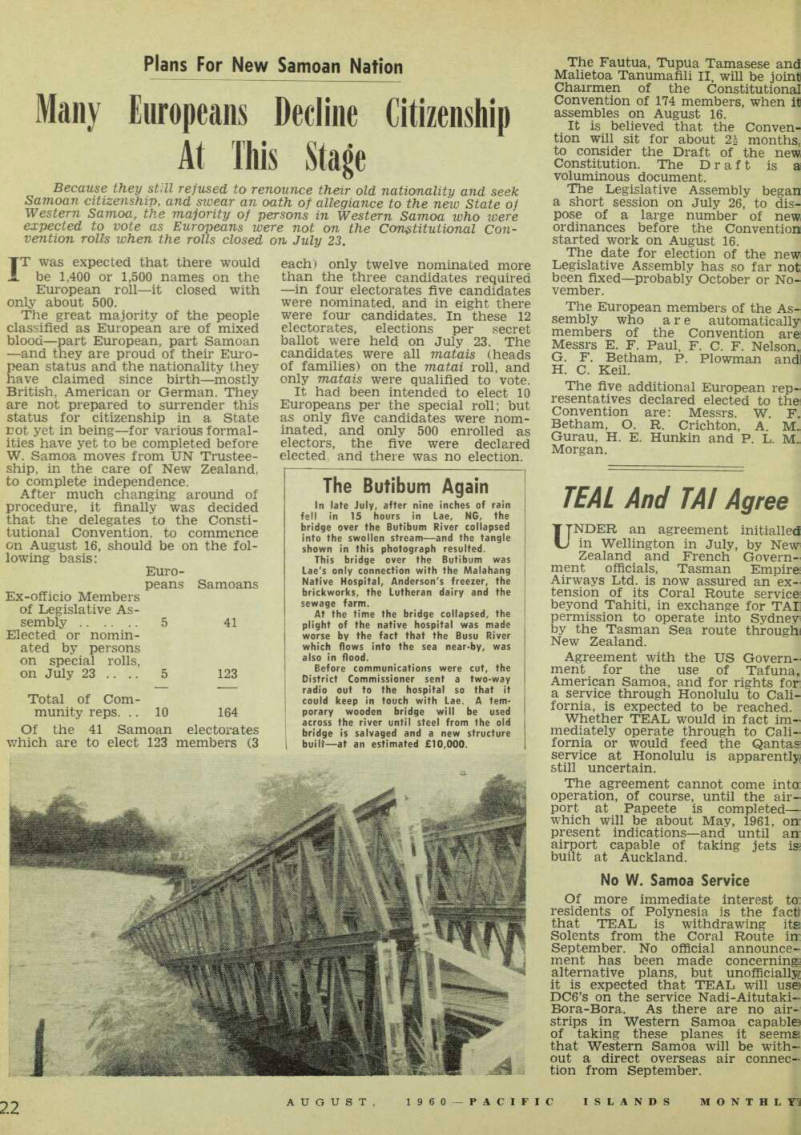
BELOW: Mr. Clyde Cameron who conducted a witch-hunt for exploiters.
rnfortunately, Mr. Calwell took . Cameron with him.
Tiat executive probably knows re about that section of New inea than any other body of men. includes three former District nmissioners, Jim Taylor, George Jathead and lan Downs.
Ir. Downs said that the planters mgly resented the persistent sug tion that they were exploiters. the contrary, they wished to ’k in close harmony with the ives, and assist in building up a Iti-racial society; but it would ’ery difficult to build the economy ;he country in an atmosphere of icurity.
Ir. Calwell said families should encouraged to stay in New nea; people should be encouraged invest—he deprecated all the : about people being kicked out I their property confiscated.
Mr. Cameron then directed a series of apparently hostile ques tions at Mr. Downs—all designed to show that the planters were against better living standards for natives.
Mr Downs said he had no views about the formation of labour unions among the natives but obviously there could come a point when the employment of manual labour was uneconomical. “Then ” he said, “one would use machinery and reduce employment.”
Race Confused With Economics
“Do you think there should be a lower rate of compensation for a native killed than for a white man
killed?” demanded Mr. Cameron.
By now, tension was mounting.
The planters sensed the ignorance and prejudice behind the question.
Mr. Downs replied that compen sation was fixed by law, and the Association accepted the law, what ever it was.
“That doesn’t answer my ques tion,” insisted the MP. “I want your own views.”
Mr. Downs patiently explained the difference in standards of living and in earning powers, as between whites and natives.
“You are still avoiding an answer to my question,” said Mr. Cameron.
The audience began to buzz angrily.
“I think you are over-preoccupied
with the racial aspect,” said Mr.
Downs. “This is an economic, not a racial matter. If the men are doing the same work, and getting the same wage, they should get the same compensation.”
“I am not trying to relate it to cost in industry, but to find out what is just and morally right,” demanded Mr. Cameron.
Mr. Downs said there was no argument about morals—the question was purely economic.
By this time the listeners’ indl “What n do you mean by ‘just and moral’ ”? someone shouted.
“All men are born equal,” replied Mr. Cameron, “and, irrespective of colour and race, should be treated as equal.”
There was a chorus of angry in terruptions, each planter striving to show the Southern politician in a phrase the differences in economic standards. One voice rose above the others: “Who is not treating natives as equals?” Mr * Cameron: The Government fixe , s £lo ° for death of a native, and an Australian gets approxi fnately £3,000. That’s not equal, is lt * he cned triumphantly, There was a mixed dm of angry clamour and derisive laughter.
Mr - Calwell's Embarrassment
Mr. Calwell turned angrily to Mr.
Cameron. “We must stop this,” he said. “We are not here for this. You set up these questions, and start a debate. It must stop.”
“I’m just trying to get him answer my questions,” said Mi Cameron, defensively.
He turned back to Mr. Downs and fired questions about indenture* labour, Legislative Council, issues a rations, which showed the sam kind of thinking as the questioi about compensation.
Interjections became more fre quent, and louder.
Above the din, Mr. James Leahj the executive vice-president, shouted “He doesn’t know what he’s talk ing about.” Mr. Calwell tried t bring the meeting to order.
Mr. Leahy: “Do you think we ar keeping the country back and treat ing the natives as coolies, just t exploit them?”
“Of course not,” replied M: Calwell, soothingly.
But the meeting was out of hanc The planters at last were face t face with the type which so fre quently accuses them in Souther newspapers and discussions, and t whom they never get a chance t reply.
“You have only been scratchin the surface of conditions in th; country for the last week,” said M Neil Lattier to Mr. Cameron. “Yo know nothing about the economy c the Territory.” Mr. Cameron’s repl was drowned in the noise.
Mr. Leahy: “You have come her with the wool over your eyes, ani you won’t have it pulled off.”
Outside, after the meeting brob up, Mr. Leahy announced that, : the opportunity occurred, he woul take pleasure in punching M!
Cameron right on the nose.
Mr. Hurrell Speaks Out
There was a somewhat simils scene on Monday, August 1, at Wai where Mr. Calwell followed the sam procedure of discussing problem with local settlers, but again ur wisely allowed the provocative M] Cameron to have too large a shar in the talk.
One of Wau’s most respected dis trict planters, a former ADO and candidate at the forthcoming Legis lative Council elections, Mr. Lloy Hurrell, met the trio, and dis cussion warmed up when Mr. Hurre asked what security the Australia* “thinkers” proposed to give to th planters who had invested their a* in New Guinea.
For example, said Mr. Hurrell. Ml Cameron, in Rabaul, had asks natives a series of questions, whic suggested to the natives that in cei tain circumstances they should ro possess the land they had sold t the planters. Did that indicate hOL the Labaur Party would act, if came into power?
Mr. Cameron: “Don’t you thin the settlers should be compelled t return unused land to the natives?
“Probably, but not at the sam price,” replied Mr. Hurrell. “Sure!? a man is entitled to his profit.”
“Haven’t you got land on a years lease?” asked Mr. Camerox
Mr. Hurrell; “That is so.”
Mr. Cameron: “Well, what are you mplaining about?”
“Rats!” replied Mr, Hurrell. Could •t Mr. Cameron see that if he ex essed the land policy of the Labour irty in New Guinea, there was no surity for settlers, lease or no ise.” rhe new wage rate was discussed, r. Hurrell said this was the thin d of the wedge, directed to forc ? private enterprise out of the .mtry.
Senator Dittmer asked why, then, I the employers agree to it.
Hr. Hurrell: “We were advised to vage what we could!” \ngry discussion took place be een Mr. Hurrell and Mr. Cameron.
Hr. Calwell: “You came to put xrint of view, but all you are do : is arguing with us. We have icr people to see.”
Hr. Hurrell rose and walked yards the door. “Right—you see ;m,” he retorted.
Hr. Calwell and the Senator tried placate Mr. Hurrell.
A bloke like that comes and tells that we are obliged to provide much higher wages,” he said, nting at Mr. Cameron. “What ;s he do, besides politics, for a ng?”
The Senator: “There is no need be insulting.”
Hr. Hurrell: “Yes there is. These tters are vital to our future. We re got to fight back, or lose all.” imid the uproar, the Senator (tested; “We have received you h courtesy.”
Hr. Hurrell: “You and Mr. Calwell, . But not this bloke. He’s red-hot i-inst any man earning his own ng, and standing on his own two C.
I am red-hot against exploita i of these natives,” shouted Mr. neron.
Exploitation, rubbish take a , at the overdraft in my bank ik ’ retorted Mr. Hurrell—and rched out.
Wau Old-Timers' Plan
l party of five was waiting to et the trio. Mr Calwell begged Cameron to be quiet and not any more questions. ’here entered Messrs. M. J. Leahy years in the Territory), Austin land (29 years), Joe Bourke (35 rs) S. j. Barker (34 years), and
Nitcherlem (30 years).
*hey submitted, to the Labour >, an interesting plan. It was t the properties of all Europeans he Territory be gradually nation ed (taken over by the Go vern al in the next 60 years, and dually handed over to the natives, ler conditions which would give m tuition in running such in >tries, and in self-government, that way. many problems that
v were troubling Administration,
-native thinkers, and Europeans ose future and estates were
threatened, could be solved.
Mr. Cameron heartily endorsed the plan.
Mr. Calwell was more cautious. He said the Constitution did not pro vide for nationalisation. He said that he would argue that a Parlia mentary Committee be set up to make an examination of the whole administrative and self-government policy in New Guinea, as it would be developed over the next few decades.