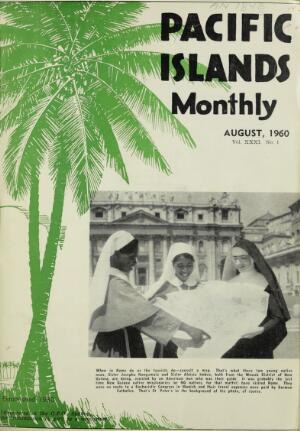
Pacific
Islands
Monthly
August, 1960
Vol. XXXI. No. 1
Established 1930
[Registered at the G.P.O , Sydnt ij,
When in Rome do as the tourists do—consult a map. That's what these two young native nuns. Sister Joscpha Nangumaia and Sister Aloisia Imbue, both from the Wewak District of New Guinea, are doing, assisted by an American nun who was their guide. It was probably the first time New Guinea native missionaries (or NG natives, for that matter) have visited Rome. They were en route to a Eucharistic Congress in Munich and their travel expenses were paid by German Catholics. That's St, Peter's in the background of the photo, of course.
Advertisements & other items, pp. 2-6 (5 items)
Acific Islands Monthly-August, 1960
Now.mTAA serves the Territory
*O-' TA w. %
NEW
GUINEA
AND
PAPUA
6
KWESB
Now.mTAA serves the Territory
TAA, Top Australian Airline —already the largest single domestic airline in the British Commonwealth —now flies the routes, between Australia and the Territory of Papua and New Guinea, formerly served by Qantas. Soon TAA will also fly to 44 places within Papua, New Guinea, Dutch New Guinea and the neighbouring islands. More people fly TAA to more places on more flights because they know that TAA offers more of everything that “Service” means. Next time you fly, fly TAA. Reservations and information at any authorised Travel Agent or TAA Office.
FLY TAA THE FRIENDLY WAY
The Coleman Company Inc.
60 YEARS
WORLD
WIDE
PROGRESS
1 I I
LI OKS
THE HYDRO -CARBON CO
WUUAM
M.
B From its humble beginning in 1900, providing gas lighting service for the tent cities of the Oklahoma boom territory, The Coleman Company has become an international organization. For many years, it has provided service, comfort, convenience and more of the good things in life for millions of people in all parts of the world.
Coleman products have crossed the seven seas, travelled to the Arctic and Antarctic, brought light and warmth to peoples on every continent. Coleman products have climbed mountains, explored jungles, served gallantly on the beaches of Normandy, and along the ridges of Korea. And they have made daily living much better for three generations of people everywhere on earth.
As we celebrate this 60th Anniversary and look back on the millions of outing products, heating and air conditioning units bearing the Coleman name, we renew our pledge to you and to all our customers everywhere to make every Coleman product “the best of its kind”.
It is with pride and satisfaction that we, as the Pacific Islands Representatives of the Coleman Company, congratulate them on achieving their 60th Anniversary.
ROBERT GILLESPIE PTY. LTD., Sydney
ROBERT GILLESPIE (N.G.) LTD., Lae, Madang, Rabaul, Port Moresby PEARCE & CO. LTD., Suva for Fiji Islands
TARGET SHOOTING IS GOOD SPORT!
On the inside of each new ICI .22 Rimfire Cartridge pack there is a practice target.
Your retailer also has free five-bull practice targets. Ask for them each time you buy .22 Rimfires— your perfect partner for good shooting.
The new colourful packs in the ICI range contain the same high-quality .22 Rimfire Cartridges famous the world over for consistent accuracy and excellent performance. *SS
SPORTING CARTRIDGES
Manufactured by
IMPERIAL CHEMICAL INDUSTRIES OF AUSTRALIA & NEW ZEALAND LTD.
You get
only from engines kept carbon-free
■: 3!
C Zj \ 'j ZS Mobiloil Special reduces carbon deposits . . . actually lifts your engine's power capacity.
Under the toughest stress and strain, Mobiloil Special will protect your engine against wear . . . keep vital parts clean . . . release every ounce of engine power.
DECARBONISING
#9l
M°bi|ga s
Mobilub r icotio« 4u.
Mobiloil
SpeciaC
M 599.32 Drain and refill NOW at your LOCAL MOBILGAS STATION
THE CHINA NAVIGATION CO. LTD
(A British Company incorporated within the United Kingdom.)
Passenger Liners:
M.S. "SINKIANG"
M.S. "SHANSI"
M.S. "SOOCHOW'
Regular services between Australia, Papua-New Guinea and Solomon Islands
Pao^c
Regular monthly service with
the modern motor ships:
"CHENGTU"
"CHEFOO"
"CHEKIANG"
(Cargo only)
Connecting Japan, Hong Kong,
New Guinea, New Hebrides, New
Caledonia, Fiji and Tonga, thence
return Japan direct. ■ fSisipis;:
■ Site ■' 81
mmd For further particulars please apply to Agents or refer to the weekly advertisements in the “South Pacific Post”.
AGENTS:
PAPUA: Steamships Trading Co. Ltd., Port Moresby, Samarai.
Cables: "Steamships".
NEW GUINEA: Colyer Watson (N.G.) Ltd., Lae, Madang, Rabaul.
Cables; "Colyeram".
NOUMEA: Etablissements Ballande, Rue de L'Alma, Boite Postale 18, Noumea.
HONIARA: British Islands Trading Corporation.
VILA: Les Comptoirs Francaise des Nouvelles-Hebrides.
JAPAN; Butterfield & Swire (Japan) Ltd., Tokyo, Yokohama, Osaka, Kobe. Cables: "Swire".
FIJI: Morris Hedstrom Ltd.
SANTO: Les Comptoirs Francaise des Nouvelles-Hebrides.
APIA: Morris Hedstrom Ltd.
NUKUALOFA: Morris Hedstrom Ltd.
TAHITI: Etablissements Donald.
EASTERN MANAGERS; Butterfield & Swire Ltd., 1 Connaught Road Central, Hong Kong. Cables; "Swire".
General Agents in Australia
SWIRE & YUILL PTY. LTD.
6 BRIDGE STREET, SYDNEY.
CABLES: "SWIRESHIP". BU 1712.
1
ISLANDS MONTHLY AUGUST, 1960
Acific Islands Monthly August, 1960
4
AUGUST, 1960 PACIFIC ISLANDS MONTHL
People
Quietly and unobtrusively—in contrast with the prevailing visita tion of political VlP’s—the Chair man of the Burns Philp group of companies, Mr. James Burns, visited all the main centres of Papua and New Guinea, in the liner BuMo, in July. It was not reported that he sought interviews anywhere with native representatives on the sub ject of self-government; but he met most of the leading citizens, official and non-official, during his tour, and showed a lively interest in the economy of the Territory. The dif ficulty of making a profit out of shipping services under today’s con ditions is a topic dealt with very frankly each year by the BP chair man; but the Big Firm has other substantial interests there, especi ally planting and merchandising. * * * Appealing for lay Anglicans to go to P-NG “to serve as good examples in secular jobs’’, the Rev. Douglas Jones, of the New Guinea Anglican Diocese, at St. John’s Cathedral, Brisbane, in July, said “New Guinea is no South Africa, but there are some Europeans there who behave as if it were”. What natives saw of Europeans now would decide their attitude when self-determination was granted to them by Australia.
Some Europeans do not seem to recognise this and so they give a woefully wrong impression he added.
Latest in a number of Indian appointments this year to senior Fiji Government posts, is the elevation of Mr. R. H. Bechan from Senior Customs Examiner to first Indian
The man who looks after the interests of the Tokelau Islanders—Mr. H. L. Webber. He has his office in Apia, but visits the three atolls every time a plane or a ship goes there. The Tokelaus are New Zealand territory but for convenience, authority is delegated through NZ's High Commissioner in Western Samoa, and through him, to a special Tokelau Officer— currently Mr. Webber. Photo: J. P. Shortall.
Collector of Customs. He is a Bachelor of Arts (gained in NZ) and, before joining Customs in 1952, served with Fiji Education Depart ment. * * * In July, countless NZ homes and offices received a pocket-sized illus trated booklet showing how the Lepers’ Trust Board allocated £64,000 last year to fight leprosy in the Western and Central Pacific.
It was all part of the appeal launched annually by Mr. P. J.
Twomey, the Board’s Secretary, who for 35 years has been collecting money and goods in New Zealand for Islands’ lepers. He is known everywhere affectionately as “The Leper Man”. Now an elderly man, Mr. Twomey says he thinks his days of usefulness are drawing to a close —but his friends won’t hear of it. * * * The new member of the P-NG Education Advisory Board, Mr.
Frederick Boski Tom, appointed to fill a vacancy in late July follow ing the retirement of Mr. A. A.
Roberts, formerly Director of Native Affairs, is an outstanding New Guinean teacher. Before the war, he taught at Malaguna and Nordup schools, New Britain. Sent to Gona (Papua) as a carrier for the Japs after they occupied Rabaul, he escaped, joined the Australian forces, and was wounded serving with the Papuan Infantry Battalion. At war’s end, he joined Sogeri Education Centre teaching staff, then trans ferred to Keravat and now is teach ing at Lavongai, New Hanover. A fluent speaker in English, he was a P-NG delegate to the 1956 South Pacific Commission Conference in Suva, * * * A small colour party, Captain A. N. Maitoga, Sergeant Alan A.
Whiteside, Staff Sergeant Sam Weller Waqairatu, and Staff Sergeant Sanaila Rabuku, representing Fiji Military Forces, received special cheers at a military parade in Kuala Lumpur, Malaya, on August 1, which marked the end of the “emergency” there. Malayan people remembered with gratitude the assistance Fijian jungle-fighters of the Ist Battalion gave them against Red terrorists between 1952 and 1956. * * * By the July Milos, Mr. K. H.
Dalrymple-Hay, well known BSI businessman and non-official mem ber of Advisory Council, left the Protectorate for a long holiday. His many interests throughout the Solomons will be managed during his absence by Mr. Bob Firth, who recently retired from the post of BSIP Taxation Officer and who has spent over 30 years in the group. * * * When the UN “hoo-hah” over P-NG “independence” was at its height, in June-July, Australian newspapers sent swarms of special
writers to the Territory to get colourful feature stories of the re actions of Europeans and natives to the development. One correspondent, Frank O’Neill, went on to Dutch NG and, as his paper, Sydney Sunday Mirror, headlined it, “Uncovered One of the World’s Strangest Success Stories”. He described how at Biak he met 32-years-old Herman Womsiwor, of the local native co operative, who is a Biak Councillor, has timber interests, and speaks pre cise English. Dutch, Malay, Biak and Japanese. A village boy when the Dutch left Biak in the face of in vasion in 1942, he was forced to work as an airfields labourer during the Jap occupation, then became a ■house-boy for the Americans when US forces recaptured it in 1944.
Smuggled out of Biak in a US soldier’s kitbag, he travelled the victory road to Tokio in the van guard of the Allied Army as a unit “mascot”. After the war, he worked in Japan for the American civil service, then returned to Biak and applied his Yankee “know-how” to becoming a multi-lingual native leader and prosperous businessman.
In Port Moresby's most important wedding of the year, Miss Janet Normoyle, only daughter of Police Commissioner and Mrs. Chris Normoyle, was married at St. John's Church of England, July 23, to Mr. lan Robertson. The bridegroom is First Officer on the "Changte" and the young couple will live in Sydney.
Another journalist,, Canberra political columnist Don Whitington, drew attention on his return, to the Gilbertian questions on luggage put by Customs to travellers to P-NG, and also to the permit system— both of which have long riled Terri torians. Whitington pointed out that he went to Canada and USA as a civilian during war-time with far less fuss than going to P-NG last month. Sample questions he had tc fill in: Are you landing motor cars vans or trucks? (This to air passengers whose luggage is limited to 35 lbs, unless they pay excess) Animals or animal products (includ ing meats, salami, cheese, skins, wool hair, horns, hoofs, bones, dried blood and feathers) ? Even P-NG residents leaving the Territory temporarily (even for Australia) must get a re entry permit before leaving.
Keeping an eye on Australia’s con siderable trade with the Central and Eastern Pacific Islands is part ol the duties of Mr. H. C. Menzies Commonwealth Government Trade Commissioner at Wellington, NZ. He made a swing around Fiji, Tonga Samoa and Tahiti in July. * * * For the past four years, a com prehensive film coverage of life and developmental activity in P-NG has been shot by the Australian De partment of Interior Film Division under the guiding hand of Mr Maslyn Williams, senior producer One documentary, Growing Up With Guba , tracing a young natives growth from boyhood to manhood and the effect education is having on a typical NG community, has
Mr, H. H. Gassmann has had an adventurou[?] life since he escaped from his native Bavaria[?] by hitch-hiking into Italy just before th[?] balloon went up in Europe in 1939. in July[?] he and Mrs. Gassmann (above) arrived in Por[?] Moresby to take over the management of Note[?] Papua. Both have been in the hotel or catering[?] business since just after the war, and this is[?] Mr. Gassmann's second spell in the Territory Ten years ago he was catering officer for BGE[?] at Bulolo. Since then he has studied the hote business at first hand in the United Kingdom the Continent and Australia.
Papuan Prints Photo
come in for some heady praise after screenings on TV in Australia in July. It has been entered for the Italia Prize (international TV’s documentary “Oscar”). * ♦ * Loaded with more than 500 speci mens of marine life she collected during a two-months’ working holi day in New Caledonia, Miss Elizabeth Pope, Curator of Worms and Echinoderms at the Australian Museum, returned to Sydney by Tahitien on August 4. Mostly she collected sea urchins and sea stars from parts of the NC coast, but she also brought back samples of coral that become phosphorescent when exposed to ultra-violet light.
She obtained them from Noumea Aquarium, the only place in the world which has the coral among ex hibits. * * * On August 26, the day after the Australian Academy of Science’s Symposium on Natural Products mds in Sydney, 21 delegate inter lational chemists (including three tfobel Prize winners) will make a ;our of Papua and New Guinea. Two Administration officials, Mr. J. S.
Vomersley, Chief of Botany Division, md Mr. D. W. P. Murty, Agricul ural Department’s principal :hemist, will squire them for a week iround main Territory centres, in iluding the Highlands. * * * So far, Fiji has escaped the bane ►f the professional party politician, >ut a move in that direction was ipened by Mr, James Anthony last nonth during the sugar crisis.
Vorkers, small businessmen, those lit by the cane dispute, and people nterested in the cause of labour hould get together to form a ohtical party, exhorted Mr. Anthony t a public meeting he called in >uva on July 18. Youthful Mr. mthony is secretary of Wholesale nd Retail Workers’ General Union nd was a prominent figure in the il workers’ strike that preceded the )ecember disturbances.
[?]tist John Boustead of Tonga, Tahiti and Fiji, [?] th (right), Hugh Aspinall of Nanu-i-Ra, at a recent Polynesian Association party -Photo by Leicagreaph Co.
Highlight of the 75th anniversar of the Roman Catholic Mission a Yule Is., Papua, in July, was th< announcement that the Rev. Fathe Eugene Klein, MSC, had beei appointed new Bishop, as success© to Bishop A. Sorin, who died u April last year. A Frenchman fron Alsace-Lorraine, he has been i missionary in Papua for 11 years The Rev. Fathers Navarre am Verius, with the Rev. Brothe Gaspara, founded the mhsion o] July 4, 1885, landing at Yule Is. fron a small boat sailed up from Cook town by one of the most picturesqu characters of that period, “Yanke Ned”. * * * Two top officials in the Solomon returned to Honiara from leave u July —Mr. A. M. Wilkie, BSII Financial Secretary and Chairma] of the Trading Corporation boan who had spent his five months’ leav in UK; and Mr. D. S. Corner, Man ager and Secretary of the Protect orate Copra Board, who had thre months in Australia. * * * A man much respected and trustei by New Britain natives, Mr. G. I (“Bob”) Hall, became Magistrate a Port Moresby in July, after six year as Rabaul Magistrate. How he. toe trusts New Guineans was illustrate! a couple of years ago when h adjourned a case to a ship’s hoi where native witnesses were work ing, some of whom (including th winch operator) had been hostile t the cou r t. Mr. Hall waited unti the winchman raised a two-ton sling load clear of the deck, then de liberately walked beneath it. Ther
District Commissioner H. L. Williams, of Madan District (left), with Major-General Denzi[?] Macarthur-Onslow who was one of the mid[?] winter VIP's visiting New Guinea recently. A the same time that DC Williams was spread[?] ing the welcome mat for the Army, Sir Gile[?] Chippindall was also arriving at Madang on th[?] first flight there of a TAA Fokker Friendshi[?] aircraft. Everyone met up at the Madan Residency later—but it goes to show that i[?] NG's open season for Visiting Firemen, even good DC can't be in two places at once.
Photo: Pat Robertsor
could easily have been an “accident", and the natives knew it—but the Magistrate’s trust was recognised and it changed their attitude to the court. ♦ ♦ * No one can say Captain Norman Pearson doesn’t know the NZ-Fiji- Tonga-Samoa circuit—when Union Co.’s Tofua berthed at Auckland on July 31, Skipper Pearson completed his 101st trip around the Central Pacific Islands in her. With Union Steam Ship Co. since 1925, he has commanded Tofua during the whole of her eight and a half years’ career, except for short leave periods. He was Number One on USS Co.’s Matua for a short time before go ing to UK in 1951 to bring out Tofua. * * * A Fijian teacher, Kaminieli Navatu, and a Suva medical officer, Dr. Lindsay Verrier, have combined to start a new enterprise, Farmers Agencies Ltd., to market native pro duce. One of the items mentioned by the Burns Commission Report was the Fijians’ great need for organised marketing. Often Fijian farmers bring their bananas, yams or yaqona to Suva and sit about the market for days until these are sold. Kaminieli hopes to change all that by accepting the whole con signment and selling it on com mission. A trained teaoher since 1952, he taught in various Viti Levu districts, then went to Funafuti, G & E Group, for a time. Last year, deciding to study marketing in NZ, he went to Auckland and worked in the city markets as storeman, tally man, and salesman. When he re turned to Suva, Dr. Verrier assisted him to organise the new company.
The Dutch Interior Minister (Mr.
Edzo Toxopeus) will visit Australia 111 , October for talks on joint problems in the New Guinea Admin
[?]Aboard the "Tulagi" in July, returning to Honiara, BSIP, after leave in New Zealand, was Archdeacon H. C. V. Reynolds, of the Melanesian Mission. Archdeacon Reynolds will act as Vicar general of the diocese in August, when Bishop A T. Hill makes an extended visit to Australia.
istration. The Minister will make a fact-finding trip to Dutch Nev Guinea and will visit Australian Ne\* Guinea.
Hon. Eugene F. Paul, one of thi best-known men in Western Samoj —he is at present Minister foi Finance in the Territory’s more-or less Provisional Government—was ii New Zealand in July, and obliged t< undergo medical treatment there The Constitutional Convention ii which Mr. Paul is deeply interested is due to commence its sittings ii mid-August, but it was doubtful, a the end of July, whether he wouk be there for the opening session. * * * Among the VlP’s who have beer observing Australia’s depressing temperatures from the comforting sunlight of New Guinea, in the pas month, have been the High Com' missioner for South Africa, and hii wife. Mr. and Mrs. Hamilton visitec various Territory centres. Normally they reside in Canberra, where then were many snowfalls in July. * * * The five natives, or part-natives who drafted the 2,000 word; “objective” of the newly-formec Papua and New Guinea Worker; Association, and presented it in Juh to Minister Hasluck, were: Reuben Taureko, aged 32, j resident medical officer in the nativi section of Port Moresby’s Tauranu Hospital, who was trained for sever years at the Suva Medical School Sampson Topatiliu, 36, an Adminis tration clerk in Rabaul; Hinaks Goave, aged 35, an Administrator clerk in Papua; Kahu Suggoho, 30 on the staff of the Taurama Hospital
Mrs. F. Binskin, of Binskin Is., Bagga, via Gizo BSIP, writes to say that she is not "70-ish", a Geologist John Grover stated in his article page 57, June "PIM", and sends this photo graph along to prove it. She is 66 —born a Roviana Lagoon where, she says "our old Nor man Wheatley home is now Munda airfield".
was educated in Papua and at the Suva Medical School; Elliot Elijah, 34, a teacher in a Port Moresby native school. Taureka and Suggoho, by virtue of the fact that they gained a diploma at the Suva Medical School, are locally called “Doctor”,
A 6th Division veteran of World War 11, Mr. “Blue” Russell, and Patrol Officer Jock Aitken, with 80 natives, made a seven days’ march in June, to Karamui Plateau, in an uncontrolled section of the Eastern Highlands, New Guinea. Since then, using only native labour and hand tools, they have constructed an air strip 2,200 ft long and 150 ft wide, in the midst of heavy jungle. Pilot Dol. Williamson took a single mgined Otter in onto the air-strip m July 15. and since then the air strip has been used fairly regularly.
On June 21, at the Roman Catholic Church, Port Moresby, Miss A. Seedsman was married to Mr.
J. O'Rourke.
Papuan Prints Photo.
Mrs. Pat Tudor, who has been carrying on a [?]rade store and a coffee plantation at Kainantu, New Guinea Eastern Highlands, since the death [?]f her first husband, sold her interests recently [?]nd in July married Dr. A. Gray, an Administra [?]ion medical officer who has been doing re [?]earch into the mystery disease kuru at Okapa, [?]n the Eastern Highlands. Dr. and Mrs. Gray [?]xpect to leave for the United Kingdom in October.
Advertisements & other items, pp. 7-16 (4 items)
Vegemite
YOUR FAMILY
NEEDS VITAMIN Bl
EVERY DAY!
Get Vitamin Bl in many different
ways, with delicious:
VEGEMITE
% SPREADS so SMOOTHLY on toast DELICIOUS on biscuits SO NOURISHING in sandwiches Every member of the family needs Vitamin B x every day for
VITALITY.
Vegemite is the only pure concentrated yeast extract, and yeast is the richest known natural source of Vitamin B l the vitality vitamin.
But remember! The body cannot store up Vitamin B x —it needs
a fresh supply daily. So enjoy
Vegemite every day— for Vitality.
KR3 ENRICHES gravies
A A
NEW TWIST!
GOLDEN
BIRD
MADE FROM
THE VERY
FINEST
IMPORTED
TOBACCO
Keeps longer! Smokes better in humid conditions long storage life!
First Class Tobacco. Golden Bird special Twist is made from highest grade overseas tobacco leaf as used in expensive pipe tobacco. It is not bitingly strong but smokes sweet and mellow. Any pipe smoker would enjoy Golden Bird in his pipe.
Uniform Quality. Golden Bird is well made by modern, improved machines, each twist being of regular shape and even weight.
Highly Mould Resistant. “Golden Bird” was tested b', the C.5.1.R.0. Here is the text of the report: “The failure to develop mould growth within four weeks at 90% relative humidity at 77° F. temperature indicates that the samples submitted have manifested a considerable resistance to attack by moulds.” (Mould grows fastest at this temperature).
Special Packing. To guard against the effects of high humidity and to ensure complete smoking satisfaction.
Golden Bird is supplied in moisture-proof, sealed polythene bags of 3 lbs. Packed in 30 lb. outers and in 90 lb. shippers.
GOLDEN BIRD fine imported twist tobacco, manufactured by
LEONARD NORMAN PTY. LTD.
15/19 AMELIA ST.. WATERLOO, SYDNEY. N.S.W.
Cables and Telegrams: “LENORM” SYDNEY.
BUY AUSTRALIAN BUY GOLDEN BIRD
8/6 lb. f.o.b. Sydney Special prices for contract quantities.
A: : m z Concentrated Germicide
dec
m
yos
*L S *r.
?°OKf S
Australia's
Best Selling
GERM
KILLER
now conies to you!
PICCANINNY
a Fresh as a new day Piccaninny’s new disinfectant brings ‘Hospital-clean’ protection to your home. Every time you dean use Piccaninny Pic-a-lyptus. Australia’s most popular germ-killer, is now available to you in the large economy priced bottle.
Powerful, safe and fragrant.
AT ALL ISLAND STORES
Made by Piccaninny Manufacturing Company, Manly, N.S.W., Australia. . . a disinfectant and deodorant
PIC-A-LYPTUS
m 04/ms \ AT
your
attention
please!
. . Announcing the departure of flight No. 335 on the Bird of Paradise route to Sydney via . .
Going south this year? A mainland furlough, meeting old friends or seeing your children at school, is an event to look forward to.
Make it a carefree holiday. Let the Commonwealth Savings Bank’s Travellers* Cash System take care of all your holiday finances.
Call at any of the following branches for further information: — Port Moresby Goro\a Madang Rabaul Kavieng Wewa\ Honiara Bulolo Lae Norfolk Island % SB. 128.83
Pure, safe, nourishing
milk for your baby . . .
Give your baby a wonderful start in life give him the best milk money can buy pure wholesome Carnation.
Doctors all over the world recommend Carnation Milk for babies. They know Carnation is the safest, purest, most easily digested form of milk for baby’s bottle. Wonderfully nourishing, it’s no wonder Carnation is the largest selling brand of milk in the world.
Carnation Milk is so easy and convenient to use and it never varies. Every can from first drop to last is pure, wholesome, safe cow’s milk. Ask your Doctor or Baby Health Centre about Carnation for your baby.
Free illustrated folders on formula preparation in English, German or Italian are available from Carnation Co., 252 Swanston St., Melbourne, Vic.
(arnation
Milk
from contented cows .
EVAPORATED
milk
MILK IN ITS MOST CONVENIENT FORM
The Pacific Islands Society
(Founded 1937) Visitors from the Pacific Islands to Sydney, or persons interested in Islands affairs, are invited to communicate with the Honorary Secretary of the above Society which was formed to constitute a social and cultural centre for those interested in the Pacific Islands.
Regular meetings and social gatherings, with lectures, are held at the Feminist Club Rooms, 7th Floor, 77 King St., Sydney, on the last Thursday of each month, at 8 p.m.
Address for correspondence;—
THE PACIFIC ISLANDS SOCIETY,
Box 2434, G.P.0., Sydney.
BIND YOUR COPIES
OF "P.1.M."
Volume 30 of "Pacific Islands Monthly" was completed with the July, 1960, issue and we now offer an attractive folder (embossed in gold on a green background) to bind the full 12 copies. It has a hard, durable cover and opens out flat for easy access.
PRICE 17/6
(Postage: British Empire, 1/3; Foreign, 2/3.) Send your order and remittance to
PACIFIC PUBLICATIONS PTY. LTD.,
Box 3408, G.P.0., Sydney, Australia.
visitTA HTTI
and HAWAII
on your way
to the U.S.A.
or the U. K.
Now it’s easy to include both the Paradise Isle of French Oceania and Hawaii on your eastbound journey to the United Kingdom or United States —and at only slight added cost!
Fly to Tahiti by the airline of your choice. After an exotic interlude in Tahiti, continue via luxurious South Pacific Air Lines to Hawaii and connecting services to your final destination.
For full information and reservations, see your travel agent.
UTM
A/P
I PI
A Scheduled U.S. Certificated Air Line Fly with the Dollar Flag • Pioneer in Pacific Luxury Travel m y- %
My Dad is smart . . .
When he opened an A.N.Z. Cheque Account he and Mum began something they call a budget. It’s certainly made a difference there is money to meet regular accounts now! Dad says he likes the friendly A.N.Z. Bank service. Mum and I agree, because we opened easy-to-operate A.N.Z. Savings Accounts at Dad’s Bank. We now save time, effort and money.
A#Z J ilka, cdz
AN. Z BANK
AUSTRALIA AND NEW ZEALAND BANK LIMITED
AUSTRALIA AND NEW ZEALAND SAVINGS BANK LIMITED Cheque Accounts —Savings Accounts
ANZ646.2FC
mYi
MILK
m
mm i
• . . because there is a glass and a half of pure, fresh, full-cream milk in every half pound of Cadbury’s Dairy Milk Chocolate woa/zFc/s
•an pro
KRAFT^CHEESt
:.v Australia’s finest processed cheese
KRAFT CHEDDAR
AVAILABLE IN 2 OZ., 4 OZ., 12 OZ.
BLUE CANS, AND 8 OZ. BLUE CARTONS o: KR.2
FLY ONE JETLINE
AHA
iiiTMuit ifiiiiM fine QAMTAt
AROUND
THE WORLD
AUSTRALIA'S ROUND-THE-WORLD AIRLINE
V Q 50.74.119 /
August, 1960 Pacific Islands Monthli
9
ACIFIC ISLANDS MONTHLY AUGUST, 1960
10
AUGUST, 1960 PACIFIC ISLANDS MONTHLI
Pacific Islands Monthly
Publisher:
R. W. Robson.
Editors:
Judy Tudor Stuart Inder
Manager:
Selwyn Hughes.
ELEPHONES; General Business, Editorial, Advertising, Subscriptions:
Aaa 9197-8, Ma7101, Ma 4369.
G.P.O. Box 3408, Sydney.
Registered Address for Telegrams adiograms. Cables: "Pacpub", Sydney.
Annual Subscription Rates:
(Includes surface postage except where stated) i Pacific Is. —Papua-N.G., Fiji, Samoa, Norfolk, Nauru, B.S.I., Cook Is., Tonga, G.&E. Grp., Niue, New Hebrides, and other Br. Pacific Islands . ..£140 ench Pacific Territories (N.
Caledonia, Fr. Polynesia); and Dutch N.G £17 0 i Australia and N.Z. . £110 0 i U.K., British Common wealth Countries, and Foreign (40/- Stg.) . .. £2 10 0 i U.S.A. and U.S. Pacific Territories ($6.00 U.S.) . £2 12 6 ngle Copies (postage extra) 2 6
Branch Office, Papua
New Guinea
scific Publications (New Guinea) Ltd., leatre Building, Fourth St., LAE, New Guinea. Tel.: Lae 2577.
Miss Pat Robertson, Manager.
Branch Office In Fiji:
ji Times Building, Gordon St., Suva.
Tel.: 4043.
Representative In N.Z.:
J. D. Whitcombe, P.O. Box 5179, Auckland. Tel.: 22.570.
Representative In U.K.:
'• D. Ashburn, 13 Rood Lane, London, E.C.3. Tel.: Mincing Lane 8633.
ELBOURNE OFFICE: Newspaper House, 17 Collins St., Melbourne, Victoria.
Tel.: 63.7053.
SENTS; All main trading firms and stores in the Pacific Islands.
Fiji Times Agency In Australia
Jcific Publications Pty., Ltd., is the JStralian agent for THE FIJI TIMES, of Suva, Fiji.
Contents
No. 1. Vol. XXXI.
August, 1960
PEOPLE: Personal Paragraphs of Islands' Interest 5 Fiji's Battle of the Sugar-Cane 17 A Timetable for Burns Plan of Reform 18 Calwell Party Visit Raises NG Blood Pressure 19 Norfolk Island and BSIP have Legco Birth Pangs 20 Europeans and Western Samoa Citi
zenship 22
Another Oopa for Paris 22 The Long-term View of Copra 23 COMMENTARY; A Look at the Pacific and World Affairs 25 The Editors' Mailbag 27
Territories' Talk-Talk 29
It was a Wild Night at Avatiu 33 Those Cock-eyed New Guinea Ideas 35 More Hotels, Fewer Tourists In Fiji with R. W. Robson 39 The 10 Tambus of NG Film Censor
ship 45
SYDNEYSIDER At Home Base 49 New Angles on Robert Louis Ste venson 55
Fred Archer Differs with the Experts 57 A Tribute to the Late W. W. Cameron 60 RNZAF Sunderlands Still Doing a Vital Job 65 Who Were the Guilty Men of Rabaul Tragedy? 73
Magazine Section:
Tropicalities, 77; Saibai is Sinking, 79; Two Men with Islands Stories, 80; Norfolk Is. Had a Merchant Navy, 82; Book Reviews 84 This Month's News of Ships and Yachts 97 PACIFIC REPORT: Round-up of the Month's News and Pictures (Index p. 17) 113
Obituaries: G. S. Hill; Mrs. J.
Dutton; Paul Boutonnet; Percy S.
Allen; W. W. Cameron; J. P.
Maharaj; Nihlu; Francis Joseph; M.
K. Swamy 145 Sports Review 146 Shipping and Airways Timetables 149 Commerce and Produce 157
Advertisements & other items, pp. 17-18 (3 items)
A Product of Pacific Publications Pty. Ltd., 29 Alberta Street, Sydney
(29 Alberta Street is 10 yards from the intersection of Goulburn Street and Wentworth Aventie.)
16
AUGUST, 1960 PACIFIC ISLANDS MONTHLT
Manufactured
TO WITHSTAND
ALL TROPICAL
CONDITIONS
r f ' * C ft
BRITISH PAINTS LIMITED
w r s w SJ»
COLOUR
y»
AIL
the only
guaranteed
one-coat,
enamelised
roof paint
Its long-lasting, brilliant gloss completell supersedes ordinary roof paints that ss quickly lose their gloss.
Roof-Lusta enamelised roof and structure colours are light-fast . . . they withstanr tropical sun, lashing rain, dust-lades winds and salt sea spray.
Dust doesn't accumulate on Roof-Lusta'i hard, glossy surface.
Roof-Lusta is non-poisonous drinking water alway remains fresh and pure when you use Roof-Lusta colour!
Your home will be at least 10 degrees cooler inside you use Roof-Lusta heat-reflecting "Aluminium" so eas to apply with brush or spray. And Roof-Lusta offeii maximum resistance to all fungus and mould growth.
Roof-Lusta protects and decorates all roofs . . . Galvanizes Iron, Corrugated Asbestos Cement, Structural Iron am Steel, and all metal surfaces . . . choose from the level; selection of colours available from your nearest Britis Paints Limited depot or store.
IMPORTANT: For maximum protection again;.: fungus and mould growth always treat new o previously painted surfaces with British Paini: Limited's anti-mould solution.
Enquiries are invited from storekeepers to act as authorised agenn for British Paints quality products.
Write to British Paints Limited, Box 43, P. 0., Bankstown, N.S.WfI Australia.
Indian Lawyer
Battle of The Sugar-Cane
Fiji Defied By An Elusive
At the end of the first week in August, it seemed that sufficient Indian cane-growers in Fiji were breaking away from the stubborn, anti-CSR leadership of the Indian lawyer, Mr. A.
D. Patel, to enable the Colony’s four big sugar-mills to begin crushing in mid-August. But Mr. Patel still was fighting all classes in Fiji in his attempt to prolong the deadlock.
Police and troops were sent to Labasa, August 10. (See p. 147.)
THE milling of a magnificent cane crop should have commenced on June 21, to enable Fiji to supply the world with its raw-sugar quota of 199,000 tons, worth about £8 millions.
The late start—for which “the Patel gang” is primarily responsible —will rob Fiji of some of those millions. Even if the Cuba-USA quarrel should result in Fiji’s sugar quota being increased, Fiji now will be unable to take advantage of it.
The Fiji deadlock goes back into 1959—see July PIM, page 29.
It was created partly by CSR Co. fumbling and ineffective propaganda in its relations with the contract cane-growers; and partly by an anti - CSR Co. drive directed by Mr. A. D.
Patel, which in character and pur pose has become more suspect in recent months.
Mr. Patel succeeded in rallying all the contract cane-growers (95 per cent. Indian, 5 per cent. Fijian) to a unanimous refusal to supply cane on terms offered by CSR Co.
In M a y-J un e the Company apparently recognised that a com bination of circumstances over which it had no control had created some genuine grievances among cane-growers; and in early June it made substantial concessions which apparently would allow the cutting and crushing operations to begin on
June 21. A section of the growers then were fully prepared to cut cane; but the Patel influence remained dominant, and a final agreement was avoided by an extraordinary series of hedgings and twistings.
Milling did not begin as planned.
Late in June, the Company put off some 1,400 mill-workers who had been standing by, and closed down the mills. (Lautoka, Ba, Penang, Labasa).
Mr. Patel did not conceal his pur pose. He declared in June they would drive the “greedy” and “monopolistic” CSR Co. out of Fiji, for the good of the colony, and carry on the great sugar industry there by means of small crushing plants and co-operative effort.
Fiji generally jeered at the fan tastic plan. The Fiji Times pointed out the strong resemblance between the ideas of Mr. Patel, in Nadi, and those of Messrs. Castro and Guevara in Cuba.
An increasing proportion of the growers became impatient with, the deadlock—they could see economic ruin approaching. So could most Fiji business men. Tempers became frayed.
Attempt to Murder
High Official
Although more and more cane growers, led by moderates like Vijay Singh, MLC (one of the most alert and influential Fiji-Indians), J. P.
Bayly and Adhodhya Prasad, showed readiness during July to be gin cutting, the Governor and CSR Co. struggled for complete agree ment, rather than breakaway. They knew that very ugly, subversive elements were behind the no-com promise section, and they feared disorder, burning and shooting.
Their fears were justified on July 12, As Western Commissioner H. G. R. McAlpine stepped from his car at his home two miles from Lautoka at 11 p.m., someone fired two barrels of a shot-gun at him from a distance of 50 feet, wounding him seriously in groin and hand.
The miscreant escaped. The Com missioner is making a good recovery.
This has been followed by several cane-fires, deliberately started.
Public reaction to the shooting was strong, and representatives of all the cane-growers were finally brought to still another meeting with CSR Co., in Lautoka, about July 21.
The Elusive Patels
The Company made further con cessions—in regard to the propor tion of each man’s cane to be taken, and extension of the crushing season another fortnight, to a date in January next.
On Saturday, July 23, complete verbal agreement was reached. It was decided that it should all be put into a formal document, to be signed at a further meeting at 2 p.m. on Sunday, July 24.
The canegrowers were to meet at 11 a.m., at Nadi, and then go on to sign the agreement in Lautoka.
But next day, the Patel group ducked and dodged; and despite the utmost efforts of the moderates, they could not be brought to a meeting.
So, after a couple of adjourn ments, the moderates met the CSR men late on July 24, and the growers who signed included J. P.
Bayly (Fiji Kisan Sangh), Vijay R.
Singh (Labasa Kisan Sangh), Isikeli Nadalo (Nadroga Fijian Growers), Maleki Dakui (Ra Fijian Growers) and Ratu M. Latianara (Ba Fijian Growers). It was estimated that they represented 65 per cent, of growers.
Anticipating that the Patel section (about 35 per cent.) would ulti mately sign, a settlement was offici ally announced in the Fiji Times on Monday morning, July 25.
Within 24 hours, it was known that the “Patel gang” would not sign; that it had been joined by Mr. D. B.
Lakshman; and that it was prepar ing a new set of conditions for sub mission to the Company. Why the head of the Millworkers’ Union (Mr.
Lakshman) should have joined Mr.
Patel in this enterprise, no one at tempted to explain—it served only
(Continued on page 147)
Mr. Vijay Singh, MLC.
to make confusion more con founded.
By the end of July, the deadlock was in four dimensions. • The Government and the busi ness community were expressing growing uneasiness at the prospect of grave economic trouble. • The CSR Company was grimly waiting. (It announced on August 2 that the July 24 agreement repre sented the final limit to which it could go—the further proposals of the Patel-Lakshman group had been rejected.) • The moderate section of cane growers, led by Messrs. Vijay Singh, J. P. Bayly and Adhodhya Prasad, were anxious to get on with cane cutting, and publicly blamed Mr.
Patel for the continued deadlock. • The small group led by Messrs.
Patel and Koya were as uncertain and elusive as ever—their attitude so strange as to arouse throughout the Colony considerable speculation about their real motives, associations and purpose.
One thing now was clear. Even if the mills commenced crushing in August, the effect of the revenues lost in June and July, plus the general economic difficulty of over population and insufficient produc tion (as described in the Burns Re port) would be felt severely within the next 12 months.
American Sugar Markets
Asked on July 26 whether any approach has been made by USA to purchase the surplus of sugar in Fiji, the Secretary for Colonies said that full information was recently provided to USA on behalf of all Commonwealth countries as to sugar available if required. This included information about Fijian sugar.
Pacific Report
Turn to these inside pages
for more highlights of the
month's news: Madang Puts on Good Show—ll 3; A Giggle for Mr. Calwell —114; Cook Is. R.C. to Retire: Other Side of Tahiti Glamour—ll7; Pit cairn’s New Radio Station—llB; Tafuna Airport Progress—ll 9.
Cook Islands Show Fiji How— -121; TRANSPAC Doubles Its Capital; Norfolk Island’s Shakes —122; More Drunks and Hooli gans in Fiji—l 23; Japs versus Koreans in Pago Dispute—l 27.
NG Club in 20th Year—l 29; More Crime in W. Samoa—l3l; 200 Lopevi Natives Won’t Be Going Back —133; That Money-tree of Kinjibi—l37; The Winter Plagues of New Guinea —138.
Advertisements & other items, p. 19 (1 item)
17
ACIFIC ISLANDS MONTHLY AUGUST, 1960
Timetable For Burns
Future Of Fiji
Timetable For Burns Plan Of Reform
WHAT consideration is being given by the Colonial Office and the Fiji Government to the Burns Commission Report on Fiji’s problems, and when did the Min ister expect to make a statement of policy regarding the Burns re commendations, were questions asked in the House of Commons on July 25.
The Colonies Minister (Mr.
Macleod) replied: “Decisions on many of the minor recommendations in the Burns Re port have been reached.
“But on the major issues—notably, the proposals for the reorganisation of the land, and the future of the separate Fijian Administration — the Government of Fiji wishes to allow ample time to obtain the con sidered views of the general public, or members of the Legislative Coun cil, and on those matters affecting particularly Fijian rights, and the
interests of the Fijian authorities and people.
“The Fijian Affairs Board has already spent much time in study ing and discussing the report. It is being considered by Fijian Provincial Councils at special meetings this month, by the Council of Chiefs in August, and by the Legislative Council in September or October.
“In the meantime, a development plan for Fiji based on the recom mendations in the Report, is being prepared.
“I do expect to make a statement later in the year, when I have con sidered the recommendations of the Fiji Government on the major issues.”
Fijian People Not Happy
Up to the end of July, a number of the Fiji Provincial Councils had considered the Burns Report re commendations.
No official reports have been pub lished; but unofficial reports in dicate strong opposition among the Fijians to the proposed changes in the Fiji Administration.
All reports show a strong anti- Indian sentiment. The Ba Council —one of the most powerful—formally resolved to oppose any part of the Burns Report which “helped the Indians”.
There appears to have been a sharp upsurge of alarm that the position of the Fijian landowner now is threatened by the rapid growth of the Indian population, and that the British-controlled Government tends to side with the Indians.
An outstanding figure among the younger Fijian leaders is Ratu K. K. T. Mara, MA, a prominent official in the Fijian Affairs Dept.
He is strong, quiet, purposeful and outspoken; and he has very definite ideas about the Burns Reform Plan.
So far, he has not been antagonistic but he has been very critical; and as the Plan moves forward slowly through the Provincial Councils, he is in the lead of those Fijians who require clarification and reassur ances.
The Governor is in constant com munication with the Fijian leaders, especially Ratus Mara, Penaiaj Ganilau, E. Cakobau, and others.
Ratu Mara acknowledges that the?
Indians now are a permanent estab lishment in Fiji; but he flatly re fuses to contemplate any plan in which the future of Fiji depends on greater unity between Fijians and Indians, and the withdrawal of the= Europeans. In his view, the Euro peans must always be there, to hold the balance fairly and justly be tween the two bigger communities.
Ratu Mara, an outstanding figure among the younger Fijians.
Workers of the world unite —and that includes women, too. The 50 or so shown here, with placards and brollies, took the bit between their teeth in late July and made Fiji history as the first group of women to ever go on strike there. (Strike was settled soon after.) They are employees of the G. B. Hari clothing factory at Walu Bay, Suva, and here they are marching to the Labour Department office. The dispute was nominally concerned with the dis missal of one woman employee but the opportunity was taken to present other alleged grievances.
Photo: Stinsons.
P-NG Tax Appeal
Dismissed!
The appeal by the New Guinea Taxpayers against last year’s Taxation Ordinance, on constitu tional grounds (one of which questioned the validity of the Papua and New Guinea Act) was dismissed by the Full Bench of the High Court on August 10. The action was initiated in July, 1959, and argued in Melbourne in June, 1960.
No appeal to the Privy Council appears possible because the High Court is the final arbiter in Australian Commonwealth constitutional issues.
Leftist MP Arouses Fury
The Calwell Party In New Guinea
Leftist MP Arouses Fury And Threats
The planters of the New Guinea Highlands aren’t likely to forget the visit, late in July, of the Australian Labour leader, Mr. A. A. Calwell, whose entourage included Mr. Clyde Cameron, the unpredictable, tub-thumping Labour member for Hindmarsh (SA) in the Australian Parliament.
MR. CALWELL gave the New Guinea-ites soothing words and comforting assurances.
At Rabaul, Kokopo, Madang, Lae, he went on record as saying that capacity for self-government is many decades away ahead of the New Guinea natives, and that the country’s future clearly lay in an amiable, well-planned partnership between Europeans and New Guineans.
Comforting, because the Labour Party hopes that after next elec-
tion Mr. Calwell will be Australia’s Prime Minister.
But, whatever political good was achieved by Mr. Calwell was promptly undone by the belligerent Mr. Cameron, who seemed to hate the NG planters on sight, and came near to blows with them in lively scenes in the Highlands centres.
The planters were not to know that Mr. Cameron is one of a small group of persistent trouble-makers and socialist haters in the Australian Parliament who never are taken seriously by Press or public.
Calwell Was Warned!
If they had known his history, their collective blood pressure would not have been stirred —they would have seen him for what he is—just a politician apparently designed by nature and the party-politics system for the entertainment of the public.
But let there be no sympathy for the unhappy Mr. Calwell. He was warned.
Before he left Sydney, he was interviewed by a group of moderate Labourites, and urged to keep Mr.
Cameron out of his party. They said Mr. Cameron almost certainly would be so eager to advance his extreme Leftist ideas in P-NG and express his hatred of private enter prise, that he probably would em barrass the Party’s leaders.
“But Cameron asked if he could come with me,” Calwell is reported to have replied. “I couldn’t put my self in the position of saying that he couldn’t—now, could I?”
And so he took the 47-years-old ex-union organiser along, and allowed him to sit in at his meet ings with planters and natives.
There were some brushes between Mr Cameron and individual planters and traders in the Lae and New Britain areas. And, by the time the party had moved around via Kavieng and Manus to Madang, Mr. Cameron apparently had be come convinced that the unfor tunate natives were being held in poverty and servitude by organised Au c tralian exploitation—a mental process typical of any trade-union trained, political economist who knows nothing of New Guinea history and conditions.
Mr. Cameron had some spirited
exchanges with NG residents in Madang; but skin and hair really began to fly when he met the men of the Highlands.
Goroka Didnt Like Him
On Friday night, July 29, District Commissioner Seale gave a recep tion at his home to the Labour trio. (Mr. Calwell, Senator Dittmer and Mr. Cameron.) Some of the coffee-planters there found in the Hindmarsh MP a type of politician —full of half-baked economic Leftist theories which he tried to apply to a country of which he knew nothing —which they particularly disliked.
There were some heated exchanges before the party broke up.
On Saturday, July 30. 15 members of the executive committee of the Highlands Farmers and Settlers’
Association accepted Mr. Calwell’s invitation to meet him in the Dis trict Office, and discuss Highlands affairs.
(Continued on page 141)
OP: Lloyd Hurrell, Wau farmer, concerned with things vital to our future”. LOWER: Jim eahy, Goroka coffee planter, who wanted to punch Mr. Cameron on the nose”.
TOP: Leader of Australian Opposition, A. A.
Calwell, who took Mr. Cameron to NG with him.
BELOW: Mr. Clyde Cameron who conducted a witch-hunt for exploiters.
rnfortunately, Mr. Calwell took . Cameron with him.
Tiat executive probably knows re about that section of New inea than any other body of men. includes three former District nmissioners, Jim Taylor, George Jathead and lan Downs.
Ir. Downs said that the planters mgly resented the persistent sug tion that they were exploiters. the contrary, they wished to ’k in close harmony with the ives, and assist in building up a Iti-racial society; but it would ’ery difficult to build the economy ;he country in an atmosphere of icurity.
Ir. Calwell said families should encouraged to stay in New nea; people should be encouraged invest—he deprecated all the : about people being kicked out I their property confiscated.
Mr. Cameron then directed a series of apparently hostile ques tions at Mr. Downs—all designed to show that the planters were against better living standards for natives.
Mr Downs said he had no views about the formation of labour unions among the natives but obviously there could come a point when the employment of manual labour was uneconomical. “Then ” he said, “one would use machinery and reduce employment.”
Race Confused With Economics
“Do you think there should be a lower rate of compensation for a native killed than for a white man
killed?” demanded Mr. Cameron.
By now, tension was mounting.
The planters sensed the ignorance and prejudice behind the question.
Mr. Downs replied that compen sation was fixed by law, and the Association accepted the law, what ever it was.
“That doesn’t answer my ques tion,” insisted the MP. “I want your own views.”
Mr. Downs patiently explained the difference in standards of living and in earning powers, as between whites and natives.
“You are still avoiding an answer to my question,” said Mr. Cameron.
The audience began to buzz angrily.
“I think you are over-preoccupied
with the racial aspect,” said Mr.
Downs. “This is an economic, not a racial matter. If the men are doing the same work, and getting the same wage, they should get the same compensation.”
“I am not trying to relate it to cost in industry, but to find out what is just and morally right,” demanded Mr. Cameron.
Mr. Downs said there was no argument about morals—the question was purely economic.
By this time the listeners’ indl “What n do you mean by ‘just and moral’ ”? someone shouted.
“All men are born equal,” replied Mr. Cameron, “and, irrespective of colour and race, should be treated as equal.”
There was a chorus of angry in terruptions, each planter striving to show the Southern politician in a phrase the differences in economic standards. One voice rose above the others: “Who is not treating natives as equals?” Mr * Cameron: The Government fixe , s £lo ° for death of a native, and an Australian gets approxi fnately £3,000. That’s not equal, is lt * he cned triumphantly, There was a mixed dm of angry clamour and derisive laughter.
Mr - Calwell's Embarrassment
Mr. Calwell turned angrily to Mr.
Cameron. “We must stop this,” he said. “We are not here for this. You set up these questions, and start a debate. It must stop.”
“I’m just trying to get him answer my questions,” said Mi Cameron, defensively.
He turned back to Mr. Downs and fired questions about indenture* labour, Legislative Council, issues a rations, which showed the sam kind of thinking as the questioi about compensation.
Interjections became more fre quent, and louder.
Above the din, Mr. James Leahj the executive vice-president, shouted “He doesn’t know what he’s talk ing about.” Mr. Calwell tried t bring the meeting to order.
Mr. Leahy: “Do you think we ar keeping the country back and treat ing the natives as coolies, just t exploit them?”
“Of course not,” replied M: Calwell, soothingly.
But the meeting was out of hanc The planters at last were face t face with the type which so fre quently accuses them in Souther newspapers and discussions, and t whom they never get a chance t reply.
“You have only been scratchin the surface of conditions in th; country for the last week,” said M Neil Lattier to Mr. Cameron. “Yo know nothing about the economy c the Territory.” Mr. Cameron’s repl was drowned in the noise.
Mr. Leahy: “You have come her with the wool over your eyes, ani you won’t have it pulled off.”
Outside, after the meeting brob up, Mr. Leahy announced that, : the opportunity occurred, he woul take pleasure in punching M!
Cameron right on the nose.
Mr. Hurrell Speaks Out
There was a somewhat simils scene on Monday, August 1, at Wai where Mr. Calwell followed the sam procedure of discussing problem with local settlers, but again ur wisely allowed the provocative M] Cameron to have too large a shar in the talk.
One of Wau’s most respected dis trict planters, a former ADO and candidate at the forthcoming Legis lative Council elections, Mr. Lloy Hurrell, met the trio, and dis cussion warmed up when Mr. Hurre asked what security the Australia* “thinkers” proposed to give to th planters who had invested their a* in New Guinea.
For example, said Mr. Hurrell. Ml Cameron, in Rabaul, had asks natives a series of questions, whic suggested to the natives that in cei tain circumstances they should ro possess the land they had sold t the planters. Did that indicate hOL the Labaur Party would act, if came into power?
Mr. Cameron: “Don’t you thin the settlers should be compelled t return unused land to the natives?
“Probably, but not at the sam price,” replied Mr. Hurrell. “Sure!? a man is entitled to his profit.”
“Haven’t you got land on a years lease?” asked Mr. Camerox
Mr. Hurrell; “That is so.”
Mr. Cameron: “Well, what are you mplaining about?”
“Rats!” replied Mr, Hurrell. Could •t Mr. Cameron see that if he ex essed the land policy of the Labour irty in New Guinea, there was no surity for settlers, lease or no ise.” rhe new wage rate was discussed, r. Hurrell said this was the thin d of the wedge, directed to forc ? private enterprise out of the .mtry.
Senator Dittmer asked why, then, I the employers agree to it.
Hr. Hurrell: “We were advised to vage what we could!” \ngry discussion took place be een Mr. Hurrell and Mr. Cameron.
Hr. Calwell: “You came to put xrint of view, but all you are do : is arguing with us. We have icr people to see.”
Hr. Hurrell rose and walked yards the door. “Right—you see ;m,” he retorted.
Hr. Calwell and the Senator tried placate Mr. Hurrell.
A bloke like that comes and tells that we are obliged to provide much higher wages,” he said, nting at Mr. Cameron. “What ;s he do, besides politics, for a ng?”
The Senator: “There is no need be insulting.”
Hr. Hurrell: “Yes there is. These tters are vital to our future. We re got to fight back, or lose all.” imid the uproar, the Senator (tested; “We have received you h courtesy.”
Hr. Hurrell: “You and Mr. Calwell, . But not this bloke. He’s red-hot i-inst any man earning his own ng, and standing on his own two C.
I am red-hot against exploita i of these natives,” shouted Mr. neron.
Exploitation, rubbish take a , at the overdraft in my bank ik ’ retorted Mr. Hurrell—and rched out.
Wau Old-Timers' Plan
l party of five was waiting to et the trio. Mr Calwell begged Cameron to be quiet and not any more questions. ’here entered Messrs. M. J. Leahy years in the Territory), Austin land (29 years), Joe Bourke (35 rs) S. j. Barker (34 years), and
Nitcherlem (30 years).
*hey submitted, to the Labour >, an interesting plan. It was t the properties of all Europeans he Territory be gradually nation ed (taken over by the Go vern al in the next 60 years, and dually handed over to the natives, ler conditions which would give m tuition in running such in >tries, and in self-government, that way. many problems that
v were troubling Administration,
-native thinkers, and Europeans ose future and estates were
threatened, could be solved.
Mr. Cameron heartily endorsed the plan.
Mr. Calwell was more cautious. He said the Constitution did not pro vide for nationalisation. He said that he would argue that a Parlia mentary Committee be set up to make an examination of the whole administrative and self-government policy in New Guinea, as it would be developed over the next few decades.
Norfolk Is. Has An Economic Theory
Mainlanders Show Islanders How
Norfolk Is. Has An Economic Theory And A Sit-Down Strike
Apart from Papua-New Guinea, where residents don't like what they have got in the way of a Legislative Council, there are two other Territories in the S.W. Pacific where some residents don't think they will like what they are going to have. STUART INDER, one of PIAA's editors, who has been in those parts, has made a survey, and here and on the next page gives some details of the arguments that attend the setting up of both new Councils.
NORFOLK IS., July 24: Those notorious winds of change are blowing fiercely over this scenic isle at this moment, draw ing extra strength from the recent statement by Prime Minister Menzies that it is “better to give self-government too soon than too late”.
MR. MENZIES was talking about New Guinea, but Norfolk thinks the principle can just as easily be applied to Australia’s easternmost territory as to its northernmost.
Norfolk would like self-govern-
ment now. The island’s brand-new Island Council—meant by the Gov ernment as a step towards self government—is in revolt, and local political affairs are in their greatest turmoil since 1954-55, when things were so unhappy that they petitioned the Queen for “democratic control over our domestic affairs”.
The Council in mid-July—less than a month after its inaugural meet ing—approved by four votes to three a new petition of sorts, in the form of a recommendation to the Minister for Territories, for a new deal. The main points: • The Norfolk Island Act and Ordinance, under which the new Council has just been established after years of delay, “doesn’t meet the basic aspirations of the people in their democratic rights”; doesn’t deal with the petition to the Queen, and is unacceptable. • Norfolk is being subjected through the Council to taxation without representation, because local people are not given control of Norfolk’s revenue and expenditure.
The Council wants complete control. • Norfolk has to have the power to make its own laws, to be approved by the Commonwealth Parliament, as now. • The Council wants advisory powers “on all other matters such as economies in management, and to have complete freedom in its initiative concerning matters related to policy for the island’s develop ment”. • The Council wants a new con stitution, so it can have six or eight elected members, with the Admin istrator as ex-officio chairman, “a position similar to that of a manag ing director with a board of directors”. • Norfolk’s annual Common wealth grant should be correctly labelled for what it is—not a free hand-out but a “refund of revenue”.
Norfolk is merely getting back the money it has already paid out in
concealed taxes on purchases it makes in Australia. • Pending these amendments toi the Norfolk Island Ordinance, or Act, the Council desires to take; over no powers but those of an ad visory nature.
Dwindling Population
The Council’s recommendationsE were presented to the Council in the form of a written statement from Cr. W. N. Selby Newbald, andf adopted without amendment. The full statement fairly bristles with quotable quotes.
It points out that Norfolk’s popu lation (480 adults) has been drop ping steadily because “of the proved unsuccessful Government of the island”.
“Remote control has failed miser ably”. There has been “unwarranted depression and dissatisfaction” and the overheads are beyond the island’s economy. The Minister is incorrect in saying Local Government offered greater autonomy than ever, because “Norfolk was once a Colony with powers to make laws up to 1897”.
And furthermore, “a misunder standing as to why we choose to live here and the type of life w© wish to live, has imposed a code of administration that is completely out of place—its failure is self evident.”
Administrator C. S. Leydin, who has the job of handing the Council’s views on to Mr. Hasluck, is. apparently not too sure that he understands everything the Councili says it wants.
Mr. W. Selby Newbald (top), and Mr. A. S.
Bathie.
He has asked the Council if he can meet it to clear up some points.
Meanwhile he has allowed himself the comment that he is “naturally disappointed that the Council found the Ordinance unacceptable, as it represented effort spread over two years or more in discussions with the Advisory Council, preparation of drafts and amendment of them to jive what the Advisory Council had igreed would be a fair and workable jonstitution for the Council.”
He added that the activities the Council had been expected to carry >ut (see box) would have brought i revenue of £12,880 to the Council, md, as far as he was concerned, it vas more than sufficient to cover heir running costs.
So now, nothing is happening on he Council, and everywhere it’s the Teat topic of conversation. It’s im jossible to know whether Norfolk Is. esidents really support the Council’s ctions or not. In the thick of it, hree names are being heard —those f Mr. Selby Newbald, Mr. Fred leedham and Mr. A. S. Bathie.
They all have one thing in common -they’re mainlanders—a mainlander eing anybody who isn’t an islander, ’he islanders, many of them escendants of the Bounty mutineers, ave a habit of quietly and politely anging-up against mainlanders on rucial issues, but something appears a have gone wrong with the ractice lately.
"Out" —With Three Notices I discovered Mr. Newbald in a harming house hidden behind an nposing, locked gate, with a strand f barbed wire on the top; two otices declared that he was OUT nd a third said that visitors eren’t welcome at the particular our I happened to be there un rmounced.
But I climbed the barbed wire nd knocked, and it says something )r Mr. Newbald’s own charm that received a friendly welcome.
Mr. Newbald has been in Norfolk L years. Before that he was briefly i New Zealand, and before that e retired as sales director of a ■ oup of light engineering com anies in the English Midlands.
The recent troubles at Norfolk, cplained Mr. Newbald, started be tuse the people were annoyed at le Advisory Council. When that ive way to the Norfolk Island ouncil in June, the people gave leir votes to a group of pro ressive candidates who campaigned i the same platform—that is, to ring back democracy.
A majority of the groupers got ito the Council of eight, and rouper F. J. Needham was elected ouncil President.
“Our win was a bit revolutionary, suppose,” said Mr. Newbald. “We iclude two mainlanders—Mr. Need
(Continued on page 143)
ham and myself.” (The two topped the poll), Mr. Newbald said an income of £12,800 to run the commitments the Council was expected to take, wasn’t enough. You wouldn’t look at a busi ness under the terms the Council was given.
“We would only find ourselves in debt, so there is no point in taking over Local Government on those terms. We’ll dig our toes in, right at the beginning.”
What will happen if the Minister rejects the Council’s recommenda tions? Will the groupers resign?
“We will take the matter to the people and ask them what they want us to do.’”
It's A Norfolk Is. Theory Mr. Newbald estimates that Norfolk provides the Australian Government with at least £40,000 a year through purchases the islanders make in Australia. (Nearly all Norfolk’s im ports come from Australia.) He says the Australian companies supplying the goods pay all kinds of taxes to Australia as a result of their sales.
And islanders paid income tax on their Australian holdings.
All this was islanders’ money, so the annual grant was merely a way of giving it back to them on the pretence that Australia was being generous.
Thanking the courteous Cr. New bald, I got into one of Norfolk’s three taxis to set out in search of Cr. Needham, and found myself talking to the courteous Cr. Leo Nola, who happened to be driving it. He’s the only other mainlander of the eight councillors, but since he is married to an islander some people forget it.
Said Mr. Nola: “The Council can make a go with a revenue of £12,800. I would try it. There is no use simply sitting down. The Council has to come up with something con structive. They’re just up in the clouds. The things the Administra tion has kept from us. such as educa tion, are the things that would run us into debt, anyhow.”
Mr. Nola said a lot of people, in cluding him, didn’t understand Mr.
Newbald’s theory about hidden charges being owing to Norfolk from the Australian Government. Norfolk
bought some things from Hongkong, too, but Norfolk would have a hard time trying to convince the Hong kong Government that it should hand over the taxes in them to Norfolk.
Mr. Nola located Council President F. J. Needham for me just as he was setting off from the Cascade Bay jetty at the wheel of a battered truck.
Mr. Needham, who came from New Zealand 14 years ago, obligingly stepped down for a few words. There doesn’t appear to be any personal animosities—just a difference of opinion.
It was a crisis year in Norfolk, Mr. Needham said. It was now or never, politically. Remote control had been given a fair trial. The islanders knew something was wrong but didn’t know what to do about it, and couldn’t offer anything better than what the Council was doing.
“We gave them our platform and they voted for it.”
Minister's Interest in Antiquities
Mr. Needham said Mr. Hasluck’s only interest in Norfolk was the early convict-built buildings at Kingston He spent money on them, but not on things that counted.
The Council was being offered a third of the island’s revenue, but all the headaches. It was just a trap.
It couldn’t make the thing work on the money offered.
He added that the Council was prepared to fight on the issue, and if necessary send another petition to the Queen.
I found Mr. A. S. Bathie at the other end of the island leaning on the counter of the Government’s liquor bond store, which looks like a well-stocked bottle department of a Sydney hotel.
Mr. Bathie is a mainlander, too, an Australian, but he isn’t a Councillor. However, he was a mem ber of the old Advisory Council (not one of whom was re-elected), and in Norfolk he has the reputa tion of being the real leader of the opposition, even if he hasn’t a seat for himself.
He likes to write colourful letters on the subject of the Council to Norfolk News, which is a roneoed Administration news-sheet on Nor folk affairs.
He pointed out that on the voting at the election the Council “didn’t represent the majority”, as the group’s total was less than the combined total of the opponents, whose votes had been split.
Said the energetic Mr. Bathie, as I lined him up against a wall for a photograph, “There isn’t an Island Council. It’s all just Newbald.
They’re going to take on the whole Australian Government, but they won’t beat ’em!”
And a lot of people on this island are saying that if there could be another election the islanders may take a different view of things.
But they could be wrong, too!
Who Controls What
Under the terms of the Norfolk Island Ordinance, the new Norfolk Island Council can control, among other things, roads and footpaths, sewerage and sanitation, recreation areas, livestock, guest houses, elec tricity and water supply, lighterage, buses and taxis, public entertainment places, tourist promotion. trading hours.
By arrangement it will also be given control of income from liquor (only the Government can import liquor), and the income from Public Works (which is a local tax, every male be tween 21-55 paying £lO a year or working for 10 days on some public works. The amount is progressively reduced, to a minimum of £5, if he
has dependents).
These activities, according to the Government, carry with them a revenue of £12,880 in the current financial year. Liquor, lighterage and public works calls are the main income pro ducers.
The Commonwealth Government re tains responsibility for, among other things, agriculture, forestry, health, education and the courts.
The new Council is comprised of Messrs. W. Selby Newbald, F. Needham (president), T. Bailey, Stephen Nobbs, G. Quintal, Lavinia Donkin, Leo Nola, Franklyn Christian.
Advertisements & other items, p. 22 (1 item)
20
AUGUST, 1960 PACIFIC ISLANDS MONTHL
Legco This Year
Some Say They Won't Like It BSIP Gets Its First Legco This Year
HONIARA, August 2. A Solomon Islands Legislative Council will be in operation in the Protectorate by December—together with the BSIP’s first Executive Council, which will include unofficial members nominated from the Legco.
ALTHOUGH there have been no firm official announcements yet, it appears certain that the Legislative Council will comprise 11 official members and 10 non officials plus the president, who will be the Western Pacific High Commissioner.
Of the unofficial members, natives will be in the majority—probably six natives to four Europeans.
The most interesting point in the composition of the BSIP’s new Legislative Council, however, is that apparently there are to be no elec tions. All its members will be nom inated.
This decision will cause rumblings among some Europeans, who have already indicated that they want to see at least the Europeans elected.
But from what I can gather at this moment of writing (when after only two or three days here I have had no real opportunity to plumb opinion), there is not likely to be any real opposition.
Many people seem to take the view that nobody really knows if the Council would work or not with a fully nominated membership, and that the best thing to do is to give it a try out and see what happens.
Both the BSIP Chamber of Com merce and one important segment of the European planters would like to see elected members. They have already told the Government so.
However, their views on who should be elected differ, and this in itself shows why there is not likely to be any united strong opposition to the Government’s plan.
Spending the Money
The Chamber of Commerce view is that nominated membership is unsatisfactory and that Europeans and Chinese should be given the opportunity to have a say in how the BSTP’s money is spent, since most of the Protectorate’s revenue comes from this population.
The Chamber points out, with some truth, that experience of advisory councils shows that a nominated member who may be unsatisfactory is nevertheless allowed to continue to sit until he decides to resign or retire, thus keeping out other good men.
It fears that this would happen on a fully-nominated Legco.
The planting group wants elected representatives, too but elected natives. It wants “no reserved seats” for Europeans and Asians, but it would like to see the entire unofficial membership comprised of natives.
Pushing the Natives
This group has already made it clear to the Government that it wants to see the natives pushed ahead as quickly as possible to en able them to handle their own affairs. Europeans, it says, certainly want to continue to live in the BSIP, but only with the support and trust of the natives.
These planters say, however, that nominated native members are likely to be merely rubber stamps.
The way I understand it, the Gov ernment’s attitude on the Legco is that the BSIP should head for a common roll, right at the beginning and there should be no European roll.
It is possible, of course, to elect Europeans without the need of a roll —there are several methods — but the Government apparently
(Continued on page 147)
wants to keep away from elections until the natives are in a better position to understand them, and have had experience of them in their local councils.
It thinks elections could follow when experience is gained, and that it might be a good idea, as one of the first steps, to try to elect natives to the Honiara Town Council (which is a local government body, with some native members, but all are selected).
The Government sees the proposed composition of the Legislative Coun cil as anything but perfect but at least a start, and something on which to build quickly.
It thinks the Executive Council would in fact be the beginnings of a Cabinet, for the time when Cabinet Government would operate.
In its decision to add unofficial members to the Executive Council, it certainly is in advance of Papua- New Guinea, where unofficial mem bers have been fighting for years for a place in the Executive Coun cil, without result.
Sir John Gutch's idea In my view, the whole decision to push ahead in the BSIP with a Legislative Council at this stage—no matter how unsatisfactory it might be—is a lesson to some other terrl tories It is due to the nolicy of Sir John Gutch, the High Commissioner, who believes that it is better to be too early than too late. And he has held this view a lot longer than Prime Minister Robert Menzies, who ex pressed it only a few months ago in relation to New Guinea policy.
Sir John first mooted the pos sibility of a Legco in an address he made to the Advisory Council in November, 1958, at a time when there was no real demand for a Legco, and the subject has been kicked around a lot since then.
In February, 1959, the Govern ment sent out a long document to all interested bodies, outlining the Government’s thoughts on consti tutional developments and inviting the public’s views.
This document gave a very clear account of what the Government had in mind for a Legco and. in fact it seems the final composition will almost exactly follow the views so openly expressed in that docu ment.
This frank method of handling the problem before a clamour had been allowed to grow, has no doubt kept opposition down, and the changeover is likely to be pretty smooth.
It is possible that the Advisory Council has already had its last meeting, or certainly the last but
one, and that one won’t be of any great significance.
Admittedly there can be many a slip, etc., but the next few months should prove whether or not Sir John’s policy is as good as it certainly looks at this moment.
What They Say
The chairman of the BSIP Chamber of Commerce, Mr. Eric Lawson, is of the opinion that if the Government nominates all the members of the Legislative Council, it will merely be making a show of giving political ad vancement, when in fact, it would be giving none. The Gov ernment will nominate only those people who support the official view, and taxpayers will have no say in affairs.
Mr. A. C. Blair, a Honiara businessman, who is a member of the BSIP Advisory Council, and vice-chairman of the Town Council, says that the proposed composition of the Legislative Council is “perfectly reasonable” in the circumstances.
“Elections would be superfluous at the moment and this is an experiment that will work itself out. Members will have to work closely with the Government be cause this is still a grant-aided territory,” he said.
Advertisements & other items, p. 23 (1 item)
21
ACIFIC ISLANDS MONTHLY AUGUST, 1960
Many Europeans Decline Citizenship
Plans For New Samoan Nation
Many Europeans Decline Citizenship At This Stage
Because they still refused to renounce their old nationality and seek Samoan citizenship, and swear an oath of allegiance to the new State of Western Samoa, the majority of persons in Western Samoa who were expected to vote as Europeans were not on the Constitutional Con vention rolls when the rolls closed on July 23.
IT was expected that there would be 1,400 or 1,500 names on the European roll—it closed with only about 500.
The great majority of the people classified as European are of mixed blood—part European, part Samoan —and they are proud of their Euro pean status and the nationality they have claimed since birth—mostly British, American or German. They are not prepared to surrender this status for citizenship in a State not yet in being—for various formal ities have yet to be completed before W. Samoa moves from UN Trustee ship, in the care of New Zealand, to complete independence.
After much changing around of procedure, it finally was decided that the delegates to the Consti tutional Convention, to commence on August 16, should be on the fol lowing basis; Euro peans Samoans Ex-officio Members of Legislative As sembly 5 41 Elected or nomin ated by persons on special rolls, on July 23 ... 5 123 Total of Com munity reps. .. 10 164 Of the 41 Samoan electorates which are to elect 123 members (3
each) only twelve nominated more than the three candidates required —in four electorates five candidates were nominated, and in eight there were four candidates. In these 12 electorates, elections per secret ballot were held on July 23. The candidates were all matais (heads of families) on the matai roll, and only matais were qualified to vote.
It had been intended to elect 10 Europeans per the special roll; but as only five candidates were nom mated, and only 500 enrolled as electors, the five were declared elected, and there was no election.
The Fautua, Tupua Tamasese and Malietoa Tanumafili 11, will be joint Chairmen of the Constitutional Convention of 174 members, when it assembles on August 16.
It is believed that the Conven tion will sit for about 2i months, to consider the Draft of the new, Constitution. The Draft is a voluminous document.
The Legislative Assembly began a short session on July 26, to dis pose of a large number of new ordinances before the Convention started work on August 16.
The date for election of the new Legislative Assembly has so far not been fixed—probably October or No vember.
The European members of the As sembly who are automatically members of the Convention are: Messrs E. F. Paul. F. C. F. Nelson,, G. F. Betham, P. Plowman andl H. C. Keil.
The five additional European rep resentatives declared elected to the: Convention are: Messrs, W. F.
Betham, O, R. Crichton, A. M..
Gurau, H. E. Hunkin and P. L. M..
Morgan.
The Butibum Again
In late July, after nine inches of rain fell in 15 hours in Lae, NG, the bridge over the Butibum River collapsed into the swollen stream—and the tangle shown in this photograph resulted.
This bridge over the Butibum was Lae's only connection with the Malahang Native Hospital, Anderson's freezer, the brickworks, the Lutheran dairy and the sewage farm.
At the time the bridge collapsed, the plight of the native hospital was made worse by the fact that the Busu River which flows into the sea near-by, was also in flood.
Before communications were cut, the District Commissioner sent a two-way radio out to the hospital so that it could keep in touch with Lae. A tem porary wooden bridge will be used across the river until steel from the old bridge is salvaged and a new structure built —at an estimated £lO,OOO.
TEAL And TAI Agree
UNDER an agreement initialled in Wellington in July, by New Zealand and French Govern ment officials, Tasman Empire: Airways Ltd. is now assured an ex tension of its Coral Route service; beyond Tahiti, in exchange for TAJ] permission to operate into Sydney' by the Tasman Sea route through!
New Zealand.
Agreement with the US Govern ment for the use of Tafuna, American Samoa, and for rights for a service through Honolulu to Cali fornia, is expected to be reached.
Whether TEAL would in fact im mediately operate through to Cali fornia or would feed the Qantas service at Honolulu is apparently still uncertain.
The agreement cannot come into: operation, of course, until the air port at Papeete is completed— which will be about May, 1961, orr present indications —and until am airport capable of taking jets is? built at Auckland.
No W. Samoa Service
Of more immediate interest to: residents of Polynesia is the facti that TEAL is withdrawing its Solents from the Coral Route irr September. No official announce ment has been made concerning alternative plans, but unofficially it is expected that TEAL will us© DC6’s on the service Nadi-Aitutaki- Bora-Bora. As there are no air strips in Western Samoa capable of taking these planes it seems that Western Samoa will be with out a direct overseas air connec tion from September,
Copra's Lokg-Term
No Boom in Sight
Look Is Fair
DURING July and early August, copra prices rose, but not as much as might have been ex pected in view of the fact that Messrs. Khrushchev and Lumumba joined with Dr. Fidel Castro in pro viding the kind of world tension that traditionally benefits this market.
According to figures issued by the P-NG Copra Marketing Board in early August, the price of copra on the London market between the be ginning and end of July, improved to the extent of £Stg.4 (from EStg.66/16/4 to £Stg.69/16/3) ; how ever, consumers did not show any signs of being stampeded into panic mying. And the average for July vas lower than June.
Probably they are waiting until eopra stabilises at that “sensible”
Mice that was mentioned in PIM n June—a price that it has now lust about reached, although for a :ommodity sold on the world market, vho can say when it has ‘stabilised”?
London c.i.f. prices for Straits- Borneo copra, published in PIM in he last 12 months, are interesting n that they show that the rot >egan to set in in April.
Prices, at the beginning of each nonth, have been: September, 1959, ‘Stg.B3; October. £Stg.94; No vember, £Stg.94; December, £Stg.B6; (anuary, £Stg.93; February, £Stg.9l; tfarch, £Stg.9o; April, £Stg.B3/10/-; tfay, £Stg.Bo; June, £Stg.7s; July, ■Stg.6B/10/-; August, £Stg.7o/10/-.
A bad typhoon in the copra pro lucing area in the Philippines at :nd of June had no apparent affect >n copra prices, up to the end >f July, although if much damage vas done to the plantations, this ould be felt in the coming months.
Seed Crushers Meet The Annual Congress of Inter lational Seed Crushers’ Association vas held this year in London, July 9-22, and was addressed by Mr. r. C. A. Faure of Unilever Raw Materials Division. Although Mr. r aure’s short-term survey didn’t ndicate any new boom in any of he edible-oils producing commod
ities, in the long term it seems that it would be foolish to neglect those coconut trees —yet. He calculates that by 1975 world consumption of all edible oils will have risen by 16 million tons per annum on present figures.
There seems to be n 6 reason to suppose that copra will x not have its share of this increased consump tion —and in territories where palms are already 50 or more years old, it seems to suggest that a vigorous replanting scheme might be in order.
Mr. lan McDonald, of the P-NG Copra Marketing Board, calculates that by 1970, Indonesia will be a copra importing country instead of an exporting one, for no other reason than its over-age trees, half of which are already 50 years old, or older.
Banno Bros. Copra Business
The entry of the Japanese firm of Banno Bros, into copra buying in Fiji has not developed into any kind of copra war.
Bannos and Island Industries Ltd. (a W. R. Carpenter & Co. subsidiary) have agreed to pay the same price; and the WRC company has agreed to grade all copra and pass it over its weighbridge. The grower then decides who he will sell it to.
That’s on the surface; underneath the competition probably is still as keen as ever—which is as it should be. Even producers who sell all their copra to Island Industries, feel that having another buyer in the Colony is a very good thing.
The Japanese firm buys only at Suva and Lautoka, but seems to be prepared to buy even the smallest quantities. It stores its copra in rented premises at Walu Bay in dustrial area and ships it out in chartered ships, which load mainly with ore and top up with copra.
It is possible that if they stay in the copra business Bannos will in stall the gear to do their own moisture-content grading.
Nz Commissioner
Mr. J. B. Wriqht, whose appoint ment as New Zealand High Com uissioner in Western Samoa was [?] tly confirmed. This informal motograph was taken in July dur ng an official visit Mr. Wright made O[?] the NZ dependency of the Tokelau 'stands .
Photo: J. P. Shortall.
Pouvanaa A Oopa's
Son For Paris
In a general election in French Polynesia at the end of June, Marcel Oopa, son of the former Deputy, Pouvanaa a Oopa, was elected to represent French Poly nesia in the French Chamber of Deputies—a result regarded as embarrassing for the French Ad ministration. riIHE voting was 10,081 for Marcel A Oopa, who represented the RDPT (Rassemblement des Populations Tahitiennes) which is Leftist and Nationalist; about 8,000 for the candidate of the Union Democratique Tahitienne, which is pro-de Gaulle and associated with the party in power in France (United Nouvelle Republique); and about 3,000 for other candidates who attracted votes which, otherwise, might have gone to the UNR and defeated Oopa.
The vote for Oopa is regarded as against France and for Tahitian nationalism.
Strong Feeling For Oopa Snr.
Pouvanaa a Oopa was for some years a very prominent figure in French Polynesia. Finally, he be came Deputy for that Territory and his party attained a dominant place in the local Assembly in 1958-59, and he was placed at the head of the local government. His party thereupon introduced income taxa tion, and a Tahiti-for-the-Tahitians policy.
This led to local rioting, inter vention by the Governor, and dethronement of the Oopa admini stration.
Several months later, there was a startling development, when a group closely associated with Oopa tried to set Papeete afire one night, using “Molotov cocktails” (bottles of petrol). Oopa was arrested and, after very lengthy delay, was sentenced in 1959 to eight years’ imprisonment and banishment from Papeete for 15 years.
Oopa had many friends in Poly nesia, and the French evidently saw danger in his continued presence there. One night, he was taken from the gaol at Papeete, placed aboard a small French war ship, and transferred to an overseas liner. He was taken to some country overseas presumably France—where he now is serving his sentence.
Among the people who sup ported Oopa were a number who maintained that he was “framed”.
The vote suggests that a certain amount of strong feeling still exists regarding Oopa and his fate.
Advertisements & other items, p. 26 (1 item)
Morris Hedstrom Ltd.
(Artist's impression of Morris Hedstrom's modern new store under construction Thomson Street. Suva.)
General Merchants, Produce Buyers, Importers and
Exporters, Ship Owners, Plantation Owners, Commission
and Insurance Agents.
HEAD OFFICE :: SUVA, FIJI
AUSTRALIAN REPRESENTATIVE: LONDON OFFICE:
Morris Hedstrom (Aust.) Pty. Limited,
Wales House,
27 O'Connell Street,
SYDNEY
REGISTERED CABLE ADDRESS:
Morris Hedstrom Limited,
Barclay's Bank Buildings,
73 Cheapside,
LONDON, E.C.2.
Deuba—Suva, Morrished —Levuka, Morstrom —Sydney, Suvamark —London, Morrisco —Nukualofa, Deuba —Apia.
CODES: All.
SOLE AGENTS FOR;
A. B. Bahco Primus Products British Drug Houses Ltd.
China Navigation Co. ‘Chula’ Copra Dryers Electrolux Limited Ford Motor Co.
General Electric Co., Ltd.
Goodyear Tyre & Rubber Co.
Morris Hedstrom Limited are Imperial Chemical Industries Ltd.
Matson Navigation Company Max Factor & Co., Inc.
Pacific Islands Transport Line Ransomes Sims & Jefferies Ltd, Rootes Ltd.
Vacuum Oil Co. Pty. Ltd.
Yorkshire Imperial Metals ►’S AGENTS in Fiji and Samoa For Friendly Service and Complete Satis faction it’s Morris Hedstrom Limited in
FIJI - SAMOA - TONGA
Commentary
in
Doctorates
HRADUATES of Central Medical UT School, Suva, before the Second World War were known as fative Medical Practitioners. After he war when the word “native” be ame suspect—a nasty term, a slave erm, a term of derision —graduates martly became Assistant Medical )fficers.
But there they remain officially -so far as the institution itself is oncerned.
In some of the Territories to 'lnch these young men returned fter graduation, there were varia ions on the theme—in Samoa, for sample, they are Samoan Medical ►fficers or Samoan Medical Prac tioners (SMP). But it has been ift to Papua-New Guinea to take le next step into the academic nknown and go flat-footed for the onorific title “Doctor”.
This wasn’t a step into a dream orld designed by the graduates lemselves, but, as we understand , fully approved a year or so ago y the Administration itself.
The reason suggested for this was lat the use of “Doctor”, instead of MO, gave the Practitioners added irestige”. (Only those with warped inds might see it as a neat piece : wool-pulling over the eyes of ustralia’s UN critics. Newspaper ories from P-NG during the recent >ate of publicity have been TPered with quotes from a MS graduate who is locally called octor. Some of these may have und their way back to the places here they will do the most good.) The question, of course, is—what a doctor? It is about 50 years nee a famous American humourist, Litt.D., told the story of how, hen an emergency call went out r a doctor to attend a beautiful •ling female he was beaten to the aw by a Ph.D. and a LL.D. None eless, the term doctor still con res up for most of us, the picture a medical practitioner—although e medical practitioner in question more likely to be an MB than i MD.
In these days, when no one is in ner to any one else (only “dif rent”), the cult of adopting some indie to one’s name has assumed tradoxical and fantastic propor 3ns—and the easiest handle of all adopt is that of Doctor.
Think of the current crop of ibhcity-boosted Doctors who spring ost readily to your mind, and it’s a aipel to a beaker of carrot mice ere will not be a practising
medical practitioner amongst the lot of them.
If the P-NG Administration wants to carry its prestige-creating system even further than it has, there is no legal reason why it cannot label all its native school teachers “Doctor”; its native politicians and Cargo Cult rebels similarly.
And there is no denying that a native member of the Legislative Council, with the title of Doctor (of something), would give real class to that institution and would, as well, look extremely well when morsels from his contribution to debate were reported in Australian news papers.
Fully qualified medical practi tioners in British countries are re cognised by the British Medical Association. The BMA does not re cognise graduates of the CMS in Suva as eligible to join the Asso ciation.
However, for 20 years before P-NG decided to send students to the School, graduate NMP’s were going out into their own communities and, without any European handle to bolster their “prestige”, doing the magnificent job for which they had been trained.
The original concept of the Central Medical School training was to pre pare young native men to serve their own people and to lead them into en lightenment. It was never intended, at any stage, to make of them imitation Europeans; the crux of the whole scheme was that the NMP’s should remain of their own communities.
It is hard to see what P-NG is going to gain except ultimate ridicule—by departing from these simple rules and by handing out meaningless doctorates like a mail order university or some under privileged member of the Afro- Asian bloc. ☆ ☆
Mr. Hasluck Meets Some
P-NG Old-Timers
ris probable that Territories Minister Hasluck returned to Australia in July with his Terri tories thinking modified a little as a result of his meetings with the Australian pioneers in Papua and New Guinea.
He appears to have talked to a few solid men, with down-to-earth opinions about the P-NG future— Mick Leahy, and Colin Sefton and Fred Archer, for example—and he must have learned some of the home truths that were conspicuously
absent from his planning and talking five or six years ago, when he drove District Commissioner lari Downs out of office because Downs held stubbornly to the view that the only practicable way of inducing the natives to conform to European standards was to enlist and hold the goodwill and co-operation of well-selected European settlers.
Since then, in 1958 and 1959, Mr.
Hasluck was shown—in the hard way—the nature of his errors.
We gather that Mr. Leahy pulled no punches. He apparently told the Minister that the Europeans would be pushed out of New Guinea within a few years unless the Government revised its thinking about the potentialities of Brown Brother.
Mr. Archer said much the same thing, in biting phrases. He has written it out for the PlM— see his article elsewhere in this issue. We hope it may be read by a few of the mischievous visionaries—mostly survivals of the Eddie Ward era— who have been bedevilling P-NG Administration for the past 10 years. Minister Hasluck not only has treated these idealists with tenderness—he also has allowed odds and ends of them to burrow into the P-NG Administration. (Over)
Mr. Leahy had some interesting comment about Epineri Titimur, the Matupi native who told the Minister in Rabaul that the Aus tralians had been too long in New Guinea, and asked when would they get out? Mr. Leahy, knowing his natives, said that Epineri did not think that one out on his own ac count. Already, Mr. Archer had placed it on record that Epineri was merely the mouthpiece of a group of “shrewdies” in Matupi village.
The fact that Mr. Hasluck— supported by the Prime Minister — has stated publicly that it will be another 30 years before natives can take any significant part in P-NG government shows that •Canberra Top Brass actually is ignoring the screeching newspapers and the yelping Pink visionaries that cluster around UNO.
But that is not enough.
If these natives are to be kept in order, and African-type troubles avoided, Canberra and Port Moresby must leave far more power and responsibility with the District Commissioners, and the latter must get a few new ideas, and a new spirit—and perhaps a few new men —into the District field staffs. It is there that weakness lies, and there where most of the damage has been done —and it is there we must look for reform, if the Leahys and Seftons and Archers are to remain in New Guinea, and really bind Australia to this strategically valuable fringe of archipelagoes. ☆ ☆ ☆
Norfolk Will Need To
Do Better Than This!
r!AT current agitation on Nor folk Island about wanting self government right here and now is all good healthy letting-off of steam. But it is to be hoped that the Norfolk Island Council is not really so naive as to believe that the tactics it has chosen will achieve the result that it wants.
The island began Local Govern ment in June, but almost from the first it has adopted a policy tantamount to a sit-down strike.
It declines to take up the reins of Local Government until the Aus tralian Government agrees to hand over the entire island, with the Ad ministrator included in the deal apparently, to the islanders, to run just as they wish. In the meantime it will act in an advisory capacity, only.
Council members don’t want taxa tion without representation. They will raise all revenue and decide how to spend it, and make all the laws, too. To be sure, they admit that their laws will need to be approved by the Commonwealth Parliament, but since, at the same time, they make it clear that re mote control from mainland Aus tralia is definitely “out”, presumably
even Federal Parliament will need to watch its step!
There are many Pacific territories which know just how Norfolk must feel about Government, and remote control, and money shortages and wastages, and all the other anomalies calculated to frustrate all Islands residents everywhere.
Others also know about “no taxa tion without representation”, and would be quick to tell Norfolk people, who have no income tax, anyhow, that they have nothing special to complain about. That principle has been dead for decades.
Where the Norfolk Island Council is making its mistake is letting its indignation at bureaucracy, and its natural impatience to see greater autonomy, become confused with the hard facts of life.
The facts of life for Norfolk are that the island is forced to live on a subsistence diet because it has piecious few markets —certainly none of importance—and little immediate hope of finding any.
The island is virtually at the end of the line with transport, a fact which makes it harder for it to export goods cheaply, or import tourists easily. And the tourist trade may be the only real hope of improving Norfolk’s unhappy economic plight—if it could find some way of making a success of it.
In the meantime it will be forced to depend on subsidies from the mainland (£33,000 in 1958, out of a total revenue of £69,000) like many territories everywhere.
If Norfolk were to be allowed to free itself from Australia, in the manner which the Council says that it wishes, the local people might soon see for themselves that a lot of nonsense is being talked. It cannot be argued that Norfolk is not cap able of helping to solve some of its problems; or that it might not make a better fist of it than Canberra has, so far. But it will be hard to convince the objective observer that the present arrange ments for Local Government do not give the Council a chance to prove itself.
What the Council has to do is to pick up the reins of what it has got, and get the horse moving. When it shows that it knows enough to stay in the saddle, no doubt the Australian Government will be only too pleased to throw open the paddock gate, in the hope that both horse and rider will gallop off to all those distant, greener fields— and not come back! ☆ ☆ ■&
42 Minor Reforms For
Bedevilled Fiji
THE Government of Fiji has an nounced that it now has dealt with 42 out of the 124 recom mendations made by the Burns
Commission, as part of the Burns Plan for administrative reform and developmental activity in the archi pelago. The 42 are mostly minor and insignificant. They show that the Governor is not ignoring the Report—as too many highly-placed people in Fiji are inclined to do — but there is no discernible reason for complacence.
The Colony’s plight is due to a combination of unusual factors; • There is too much dependence on one industry (sugar), which is economically dominant. • There has been a phenomenal growth in the immigrant Indian population, but little growth in the means of feeding it. • The Fijians, although virile and socially desirable, are unlike the In dians, in that they cling to £ village communal way of life, and lack the spirit of private enterprise: • The Government has created a special Administration, for the Fijian community alone. • The land generally belongs tc the Fijians, and too large a pro portion is not used. • The Colony’s economic mach inery is mostly owned by Australian corporations, which have little voice in administration and no share whatever in government.
For these reasons, the Colony socially, politically and economic ally, is out of gear. Development has not gone forward with popula tion. The available productioi organisation is not sufficient t« maintain a suitable standard oi living for the people. Yet Fiji under effective developmental con< trol, could feed three times th t present population.
Within the 124 Burns recommeni dations there are major plans am reforms, calculated to put thi Colony back into the high gear a development and progress. Bu their implementation awaits (aj acceptance by the Legislative Count cil and (b) the appointment of Development Commissioner wit!; sufficient power to integrate thr over-all plan and to co-ordinatt bureaucratic report-writing am Colonial Development Fund grant with private enterprise and mans gerial drive.
Nothing likely to change the pio ture in Fiji can happen withou (a) and (b). The implementatioc of the 42 minor recommendation represents little beyond the outpu of busy departmental minute writers.
The main job lies ahead. Mean while, as shown by the article o: page 17, the unfortunate countir is bedevilled by a sugar industr deadlock, caused partly by sec; tional and industrial misundeij standings, and partly by somethin that is beginning to look suspc ciously like subversion.
An Ex Officio Doctor
The famous Yankee docto”, S. M. Lambert, who on behalf of the Rockefeller Foundation did so much to get hookworm under control in the South Pacific in the 1920’s and who also helped rejuvenate the Suva Medical School, arrived in Fiji in 1922 and recorded that he was “. . . a dog without a collar, medically speaking”. (See “Pack age Deal in Doctorates”, this page, and “One Man’s Paradise”, p. 80).
Official Fiji was suspicious of the doctor, and in the year of his arrival a law was passed which, according to Lambert, was for his special benefit. It stated, in effect, that no American could practise medicine in Fiji without a “special permit”.
He wrote in his book (Yankee Doctor in Paradise ) : “The special permit was far less potent than a chauffeur’s licence and my official status, if any, somewhat lower than that of the NMP. Until 1937, I was not legally qualified (in Fiji), to treat anything but hookworm. . .
When Dr. McGusty came to power in Suva (as Chief Medical Officer), he huffed and puffed and said, ‘All nonsense’—and proceeded to get me a respect able licence. In 1937, the Empire discovered that I was in Fiji, and I joined the British Medical Association.”
Advertisements & other items, pp. 27-28 (2 items)
25
ACI F I c ISLANDS MONTHLY AUGUST, 1960
26
AUGUST, 1960-PACIFIC ISLANDS MONTHL
The Editors' Maillay
Plunge-Back Into
NG Aviation History
Mr, John Watson (27 Merivale Street, South Brisbane, SI, Q’ld.) collects data on pioneer aviation in the Pacific Islands and he has a jouple of curly questions for any Mew Guinea Territorian who can assist: The first concerns the “Prisoner )f War” mail that was dropped over Port Moresby on or about April 28, 1942, and which came from Rabaul. 3e says that the Rev. Harry Voyce las gone on record to the effect hat that mail did not, in fact, go ’rom Rabaul; but Mr. Watson says hat there is too much evidence igainst this theory.
He thinks that “Tolala”, or one of he other half-dozen survivors of he Rabaul tragedy, might be able o clear up this point by recalling ust when the Japanese gave per nission for their 22nd Battalion s OW’s and their civilian internees o write home. He would like to mow also what Japanese squadron lew the mail to Port Moresby and Iropped it?
Going even further back into New Jumea history, Mr. Watson would ike some details of two now de unct air companies. The first, >apuan Airways, apparently of >alamaua, which operated a DH6O jrcraft, with registration of VH JLE, in 1932. The second, Rabaul Lirways, which operated a Genairco
Vh-Uny), In 1933.
Can any reader help on any of hese matters?
\'s a Masalai
Last January, “Tolala”, writing bout the magical powers of certain lonoliths found in New Guinea de snbed one on Jame Island, Buka assage. He said that he had been Did that the monolith had been ttnbuted to “Children of the Sun” pre-historic people who were sup osed to have lived in those parts nee.
Gordon Bladen, of MV Arawe, now jnds us this photo of the Jame ;one. with these notes: “The stone is shaped something ke a large artillery shell, and it is ; t m the ground in front of Fred ichers old home on the approxi mate south-eastern side of Jame. ‘y he nearby Petats Island people id me that the stone was origin dy set in the ground at the northern Jame and that it is a ..“H 16 Pproran people stole the tone, and when the Petats people
found out, a bit of a dust-up occurred; they recaptured it and erected it at its present site.” [A masalai is a spirit that is thought to inhabit certain streams, rocks, trees, etc. It may sometime manifest itself in animate form, also —for example, as a cassowary.]
Oldster's View of
A Changing World
An old friend, Mr E. W. Harrison, of Fergusson Island, Eastern Papua, says in plain and brutal language what a good many of our senior citizens are thinking today: Having long passed the allotted three score years and ten, I live with a crowd of memories.
Too well do I remember the days of the great British Empire, built on the sweat and blood and achieve ments of our fighting ancestors — and now being frittered away by a rabble of herring-gutted politicians, many of whom are not even of decent British stock.
Now, we are being regarded with contempt by races which once we despised. We have become, as Brown Brother puts it, “something noth ing”. Gone is our old-time pride in race, and in our strength, and in our maintenance of the Pax Britannica, under which all men and all nations got justice and freedom.
Our young men today seem more interested in seeking racecourse winners, and the pursuit of females who are more famed for good looks than good morals.
And now we are to hand Papua back to the natives who, at this stage of their evolution, are not capable of governing a hen-roost.
It is hard to believe that there could be so much national deteriora tion within the lifetime of one man.
When Meilish Reef
Claimed the "Mindini"
The report in May “PIM” of the death of Mr. Hugh Ellis O’Keeffe, who was engineer on the BP steamer “ Mindini” when that vessel was wrecked in March, 1923, brought hack memories for Mr. R. C.
Kerkham, secretary and a director of Bums Philp (South Sea) Com pany in Suva.
Mr. Kerkham, then manager of BP’s branch at Makambo, near Tulagi, BSIP, was on the ship dur ing that last voyage; and so were his wife and five children, ranging in age from eight to one. After three years in the Solomons they were due for leave in Sydney, and in the first week of March they em barked on ’“Mindini”. Capt. William Voy was Master, and the voyage promised to he routine. It wasn’t, and Mr. Kerkham tells why: Two days out and at about 4.30 a.m. on March 8, 1923, all hands were rudely awakened by a severe grating and bumping sensation and then the ship came to a dead stop —all in the space of perhaps 20 seconds.
The Mindini had grounded on Meilish Reef, which is plainly marked on most maps, and is about 300 miles due east of Townsville.
It is uninhabited, alone in a vast amount of ocean and little more than a sand cay.
The immediate reaction of all on board was to wonder how badly damaged we were. Were we sitting on the reef, with the ship’s bottom torn out, and 300 miles from the nearest inhabited land?
Luckily for those on board, the situation was found to be not so fearful as it might have been.
Three hours after the stranding, all the passengers and most of the crew were transferred to the life boats and set out on a comparatively smooth ocean. After about five hours afloat the leading boat safely negotiated an entrance through the outer reef and a landing was made on a sandy stretch which covered the centre of the atoll.
Improvised shelters were erected to shield us from the sun’s heat, by
(Continued on page 139)
Monolith at Jame Island.
using tarpaulins, oars, boat hooks, SgM an a d tTeas P t re ?n r the t ?e S e? end tbat The atoll was devoid of any useful ta| e onh? a scattertoe at f r tuft| re sel SSL scatterm S °f tufty, rank weather Mellish Reef
sea so itVas^ttte S St M?
ence spared the Mindini survivors such an experience since most likely
none would have survived to tell the tale.
The weather situation was made more alarming since the month of March in those latitudes is con sidered to be the cyclonic period of the year.
An interesting feature of this atoll is that it is nothing but a vast nest for armies of sea fowl of many descriptions who lay their eggs in profusion, hatching them amongst the grass tufts previously mentioned.
The screeching of these birds all night long, which seemed like a concerted protest against the in vasion of their sanctuary, made
3ep impossible. The birds circled st over our heads in thousands.
Meanwhile the Mindini was pound g heavily on the reef and all hope her recovery was abandoned. She, th her cargo, eventually became total loss.
In 1923 wireless telegraphy was it so very old and all survivors eculated as what would have been eir fate had the wreck occurred few years earlier. Immediately the Indini “hit”, the wireless officer d sent out his SOS signal, re iving prompt response from feral sea and land stations, rhe news was flashed to Towns le (Queensland) that morning and at evening the Australian news pers published an account of the eck. The steamer which eventu y came to the rescue of the sur rors was the British Phosphate mmission’s Nauru Chief. rhe survivors were only about 36 ars on Mellish Reef, then all hands re safely delivered aboard the cue ship bound for Samarai, where •angements had been made by the ners to connect with another isel of the BP fleet, the SS ninda. transhipment was made without y hitch and Morinda. with the litional passengers on board, pro ved on her journey from Samarai Cairns.
Cairns we joined what was then :arded as the luxury steamer lother of the BP fleet) Marella the last stage of the journey to fney via Brisbane. )n arrival at the three Australian ms we were beseiged by reporters particulars, and some rather ■bled reports were spread.
Sydney was reached at long i trip from Tulagi having taken t about double the time it should re taken under normal conditions
Advertisements & other items, pp. 29-30 (2 items)
27
ACIFIC ISLANDS MONTHLY AUGUST, 1960
Australia-West Pacific Line
\TV at
stay
y - ♦ % Ml *** \\\Z Delightfully situated in magnificent grounds overlooking Suva's beautiful harbour, the Granc Pacific Hotel is the social centre of Fiji.
Specially designed for the tropics. Excellent cuisine, attentive service by trained Indian waiters and servants. Tariff Singles £2/15/- to £3/15/-* Doubles £7/10/- to £B/10/- Telephones in every room.
Hotel in the process of complete modernisation.
Under the new Managemen of: CATHAY HOTELS LTD., Singapore
Cables: GRANPACIF SUVA
AUSTRALIA-WEST PACIFIC LINE
MM
M.V. MILOS”
Linking PACIFIC ISLANDS
with
the FAR EAST and AUSTRALIA
Further particulars may be obtained jrom: MANAGING AGENTS IN AUSTRALIA: WILH. WILHELMSEN AGENCY PTY. LTD., 30-32 Pitt St., Sydney. Phone; BU 6301.
Branch Office at Melbourne: 51 William St. Phone: MA 3031.
AUSTRALIAN AGENTS: Brisbane & Adelaide; Gibbs, Bright & Co. . , .. , , m ISLAND AGENTS: Madang (New Guinea)—Strachan & Strachan. Lae (New Guinea) —Buntings. Rabaul (New Britain;—Town Transport Limited. Honiara (Solomon Islands)—British Solomon Islands Trading Corporation. Espiritu Santo (New Hebrides) —D J. Gubbay and Co. (New Hebrides) Pty. Ltd. Vila (New Hebrides)—Wm. Breckwoldt & Co.
FAR EASTERN AGENTS: Dodwell & Co. Ltd., Manila, Hong Kong & Japan.
Territories TALK-TALK
With Tolala
A reader with an enquiring turn of mind writes: “You have several times mentioned Choiseul Plantations Limited and its estates in Bougainville. How come the name? Surely Choiseul Island is part of the British Solomons
TRUE. Your geography is quite correct, according to present day boundaries. The company was formed in the early 1900’s and started off at Lutee on Choiseul, but later was unable to expand owing to no more freehold land being available.
In December, 1912, the Company’s Island Inspector (W. H. Lucas) in company with J. W. Campbell, one Df the company’s plantation man agers, proceeded to Bougainville in the Sideia, chartered from the Solomon Islands Development Co., md skippered by W. J. Buckley (of whom we still hear occasionally) co look for pastures new in German territory.
The result of this tour, which re ceived every assistance from Ger nan officialdom, was the selection if areas at Soraken, Baniu, Teo lasino and Arigua. All have proved ?ood investments, as the Company’s balance sheets show annually It may be coincidental but in Bougainville there are several com lanies other than Choiseul with nisleading names.
A coffee plantation was started ifter War I by a Sydney syndicate m land at the rear of Raua planta tion. It was called Rugen Harbour 3 lantations. Now, Rugen Harbour is ocated down the south coast of 'Jew Britain.
Just before War I a chap named Dogswell, who at one time was a government official in the Gilbert md Ellice Group, spent a consider ible time looking for suitable coffee and and he picked on some near which gave the company its lame. But there was a hitch in the legotiations, and ultimately the and behind Raua was selected. (In cidentally, Cogswell made most of lis inspections in a craft called the fella, with a young chap named Mackay as skipper. Mackay was ater murdered by natives on the louth coast of New Britain just prior co War I.) Another mis-named company is hat controlling Numa Numa. It is called the Buka Plantations and Frading Co. It has no property on Buka —only at Numa Numa and Bonis, both on Bougainville.
And there is Toimonapu, down che south coast of Bougainville. It aras originally owned by the New Britain Corporations Ltd., started n the German days by a Sydney company, but later taken over by BP.
There may be others in various spots; but I cannot remember them at the moment. . . . Anyway. . . .
What’s in a name? The dividends are just as sweet.
"They Fade Away . .
When thinking of these old-estab lished plantations, it is only natural to think, too, of the men of 40-odd years ago who were engaged on the work of planting up these areas: Felling, clearing, lining out and planting the many thousands of coconuts which are now symetrical lines of palms yielding comfortable revenues to shareholders.
Not so long ago, I entered the Sydney office of BP in Bridge Street and there, on each side of the entrance are the War Honour Rolls containing many of the Company’s staff from the various islands who
joined the Forces to fight for Freedom. Of special interest was the list headed “Solomon Islands” for War I: Annandale, S. Gillies, N.
Campbell, A., Harding, F. G.
MC. Mackay, D. R.
Campbell, J. W. Shelley, P.
MM. Thomas E. L G Elrington, H. Wood, J. H.
Evans, H. P. Wright. E. A. M.
The first four names are of men who, to my knowledge, all at one time had connections with CPL in Bougainville, the first three have gone west”. Mackay and Wright were killed in action, and with the exception of one, I know not where the others are.
Does anyone want to comment?
That Matter of Titles
A name that has lately appeared much in the P-NG news is that of “Dr. Reuben Taureke”, the president of the P-NG Workers’ Association.
He is, I understand, a very capable and efficient Papuan who completed a course at the Central Medical School in Suva, Fiji, and the in sistent references by journalists to him as “Dr. Taureke” are doubtless as much embarrassing to him as to the bona fide medicos. From what I hear of his character, he is the last person to have any desire to sail under false colours.
There is going to be a lot of Press utterances about P-NG in the future, so let us step off on the right foot; otherwise the Territory and Australia are going to suffer from an epidemic of over-zealous Australian editors urging on their “Special Representatives” for some thing “sensational”, interspersed with human interest stories, which could do a great deal of harm to the present situation. (See “Com mentary”, page 25).
On the Political
Chopping Block
I was rather alarmed at a head ing appearing in the South Pacific Post (19/7/60) : “ALP view: NG Major issue for next election”. It was quoting a Sydney message from ALP officials, prior to the arrival in P-NG of their leader (Mr. A. A. Calwell).
This did not add up for me after Calwell’s urge for a Joint Parlia mentary Committee to go into the NG situation, with the inference that it would be treated as a non par ty issue.
However, more recent reports of the ALP tour of NG do not indicate that politics are to be left out of the argument, and it must be con fusing for the interrogated indigenes, who have paraded before these various VlP’s on “Fact-Finding Missions”, to sort out Arthur from Martha. (Or is it Arthur from Paul?) Ostensibly these tours are made
This is Jawing Muttu Gware, 23, of Butibum village, Lae, sitting at his desk in the office of the "New Guinea Times Courier". He's a cadet journalist, the first in the Territory.
Muttu, was a clerk at Malahang Native Hos pital before joining the "Times Courier". He's responsible for the Pidgin English page in that newspaper.
Muttu's brothers and sisters are all bright youngsters. An elder brother is a teacher at a Mission school in Mendi; a sister is a teacher at Lae Administration school. Another brother is a trainee technician of the Posts and Tele graphs Dept., and the baby of the family is still at school.
Muttu is an Assistant Cub Master and treasurer of his village Sports Club.
Photo; Pat Robertson.
for the purpose of gathering am munition to be fired in the Federal Parliament; each according to their individual lights. But what of the Territory? Is it to be made a chop ping-block for political differences?
Definitely NO! (We hope.)
Wot! No Integration?
Much has been written (and pub lished, more’s the pity) by Australian “Special Representatives” of the Press who are “covering” the New Guinea situation, about “racial dis crimination”, “disintegration” and so forth. Seemingly it is in an effort to create a Jim Crow, Deep South controversy in the Territory.
Something that nobody, of any colour, worried about, or even gave thought to a few years ago. (No one was atomic-conscious before the bomb dropped, either.) If these industrious Press Repre sentatives are on the ball (and I have no reason to suspect they are not), a few Rabaul current socio logical happenings should make them change their tune and depict the other side of the coin.
For instance; A wedding is set clown for this month (August) be tween a European businessman and a, coloured lady from a neighbouring island which, according to my Rabaul scout, will out-glamourise any previous nuptial ceremony.
Guests will number (so it is ex pected) many hundreds, including the Best People of both eras. The bridal gown is being created by Rabaul’s leading couturier and jatering is to be on a lavish scale.
There are various instances of mutual attraction being demon strated between the two sexes of the multi-racial community, which a few years ago would have been dealt with from an official level. But these days, a few eyebrows are raised and Officialdom says; “What 3an we do?”
Then last month at a reception in Rabaul to the First Gentleman
and Lady of the Land there was present the wife of a native Member of the Legislative Council. Said to be the first occasion for such an appearance at an official function.
She was accepted. It was quite de rigueur. (But one cannot forget the eyebrows that were lifted a few years ago when Administrator J, K.
Murray entertained some local chieftains at Government House. It was not de rigueur at that time.) Actually there has been more dis integration, racial discrimination or what-have-you since we Australians took over than there was in the old German days when it was common practice for Europeans to have their native female companions.
Hence the reason in those days for nearly every plantation to have appropriate guest houses for the accommodation of itinerant bachelors who might call in for a night’s rest.
A Blue Nose Policy during the late Military Occupation days banned this particular racial integration and later, in the Civil Administra tion time, the Law called for official marriages to be performed; other wise it was an offence.
The whole world is clamouring for racial integration, which one presumes includes the mating of both European sexes to native opposite numbers, so we can’t do very much about it but accept it — and try to like it.
More About The Mortlocks In my mail this month came a letter from Mrs. Frances Kroening dealing with the Mortlocks. She points out that the Group was originally owned by Queen Emma, “who wished to give them, as a wedding present, to my father and mother; but my father, Joseph Highley, insisted on paying a nominal sum and had a bill of sale made out”.
The correct particulars regarding the ownership of the islands, she writes, are: “Firstly wholly owned by my father; on his death the property was left in equal and un divided share to my mother and my self. My share was expropriated after the First World War; this ex propriated share was acquired by Goodson, later. On my mother’s death, I inherited her share. In about 1928. the Government resumed most of the Mortlocks, leaving two small islands which were jointly owned by Goodson and myself; later Burns, Philp & Co. took over Good son’s share, and recently I have purchased BP’s share”.
Continuing, Mrs. Kroening writes: “I was born on the Mortlocks and lived until I went to school (in Australia and England); after returning from school and during the holidays I visited the Mortlocks often; also later with my husband several times. . . Since returning to Toboroi, in 1950, I have wanted to
go over to the Mortlocks but the only vessels going there were gov ernment trawlers and although I enquired verbally several times . . . they were unable to assist me.
“It is only since the Bougainville Company has made a run out there that I have had the opportunity of going. In the last 12 months I have been twice. Some of the natives still living are from my childhood days.
They are a happy-go-lucky crowd and have asked me to go out and build up the old home again.
“All they want is medical services; someone to sell their copra to (in cidentally the whole of the Group was planted in coconuts by my parents), a government school and otherwise to be left in peace.”
Left in Peace
The punch-line in Mrs. Kroening’s message is “to be left in peace”. Or so it seems to me. And it opens up a vast line of thought, which stems from the definition of the various cliches we are using these days in connection with “self-government”; “native independence”; “Freedom”.
Is the native conception of these qualities the same as ours? Do they visualise “civilised standards of living” on the same plane as we ultra-moderns do? And are they straining at the leash to enter the modern rat-race for the accumula tion of money and to become absorbed in the present-day strife for economic and political supremacy?
Some of them, perhaps. But a great number, I suggest have ideas very much along the same lines as the Mortlock Islanders.
Advertisements & other items, p. 32 (1 item)
Ansett-Ana
Finest flight south...
OLDEN ORCHID FLIGHT
NON-STOP TO
BRISBANE - SYDNEY
srfll
- CONNECTIONS
ON AUSTRALIA’S
AIRLINE NETWORK
ANSETT-ANA GOLDEN ORCHID FLIGHTS
LAE - PORT MORESBY - BRISBANE - SYDNEY
EVERY TUESDAY AND ALTERNATE SATURDAY
AND EVERY FRIDAY VIA TOWNSVILLE
ANSETT-ANA introduces yet another fine service, the colourful, luxurious Golden Orchid flights South. One booking takes you anywhere on Australia’s biggest airline network . . . you enjoy the spacious comfort of international DC6B’s and the superb personal service and greater experience of the nation’s finest crews.
Fly the Golden Orchid flight
ANSETT-ANA
... System of the Golden Jets
Who Killed the Cocky?
A New Guinea white cockatoo which caught the wrong plane came to an unhappy end re cently at the hands of Sydney quarantine officers.
Cocky was from the Eastern Highlands of NG, and his owner, an American missionary, in tended to send him by Qantas air-freight to Los Angeles via Manila and Hongkong to escape all the restrictions of Australian quarantine regulations.
Unhappily, he was shoved on a south-bound plane, arrived in Sydney unaccompanied and without any of the right papers, was pounced on by Customs officials —and kaput.
Advertisements & other items, pp. 33-34 (1 item)
Complexion
(Advertisement)
Steaming
To clean and freshen the complexion, ease away crows’ feet and unwanted expression lines and put more life into your skin, try complexion steaming. With a towel over your head, steam over a basin of hot water in which add a tablespoon of lemon delph.
Beforehand, anoint the skin with oil of ulan so, as the hot water opens the pores, and the lemon bleaches, the oil is able to penetrate. After steaming, tone with lemon delph and finish with the ulan. . . . Margaret Merril
» V V- £l s Philips Radio From powerful portable sets to large ‘ Bandspread * instruments capable of mains or battery operation, Philips make a tremendous range of first-class radios. Buy Philips, and you buy for tomorrow as well as today 1 Philips Tape Recorders Increase your enjoyment of everyday living. Capture your children’s first words ... your family’s laughter.
Re-live your happiest moments with a Philips Tape Recorder. Designed and developed by the world’s finest sound engineers, it will record and reproduce every sound with complete fidelity.
Complete your home entertainment
PHILIPS
cfc
For complete home entertainment, radio alone is no longer enough.
Modern families now have tape recorders, record players and records to give them a fuller, happier life. In these fields of home entertainment, as in radio, the name Philips has won world-wide acceptance as the symbol of all that is most outstanding in technical achievement, in reliability, and in value for money. Only Philips can offer such a comprehensive range of equipment, with every instrument carefully matched for use with any other in the range. See . . . and hear . . . Philips complete home entertainment equipment at your dealer’s now !
PHILIPS
Value for money
Names of Philips ’ Agents/Distributors can be found on page 131.
'u-O* Philips Record Players Philips make many superb record players with and without self-contained amplifiers, or for use in combination with Philips radio to give outstanding stereophonic reproduction. Philips record players are the pinnacle of modem technical achievement.
Philips Records The world’s greatest soloists, conductors, and orchestra* record the music of all continents for Philips - many of them exclusively. World-wide experience and supenoi technical equipment enajle Philips recording engineers to capture for ever great performances that live again whenever you play Philips records. o
Wild Night
When the Tidal Waves Hit
In Avatiu
By R. Boyd
The tidal waves that spread right icross the Pacific in May, following levastating earthquakes in Chile, caused some excitement when they lot amongst a trio of visiting yachts it Rarotonga, Cook Islands.
JJUNDAY, May 22, was a pleasant 5 enough day, particularly when you had just spent three rather lectic weeks at sea.
Three yachts had left Whangerei, n Northern New Zealand on the ame day, April 30, and I had sailed ,s crew on one of them, Nina, now wned by Theo Buckthought. On oard as well were Theo’s wife, Mary, nd their four young sons. We tied p at Avatiu Harbour on the north ide of Rarotonga on the afternoon f May 21, and were followed, early he next morning by Kehua. Patsy ean could be expected any time.
'ahiti, an American ketch, was Iready in port.
We spent most of Sunday drying ails, etc., and generally relaxing ut at 9.15 that night our relaxa ion was disrupted in the most larming manner.
Returning to Avatiu in response ) a telephone call, I was astounded ) see three boats sitting high and ry, held upright only by their looring lines and the frantic efforts f those on board, using spinnaker □oms and what-not for legs.
Two tidal waves had been experi enced and, as I arrived, the third ave came surging in. There seemed ) be no chance of an early let-up, ) it became imperative to get the imily ashore. This was made com aratively easy when the tide surged at again, and I was able to walk it to the boat and place the kids i the dinghy, floating alongside i a couple of feet of water.
A hospitable bystander rushed lem off to bed in her nearby house, ad they knew very little of the laos that followed.
It wasn’t necessary for me to use le dinghy to go back aboard Nina; just walked out and climbed up le bobstay! Theo was working vali atly with a boom and I set about iing the same. It was impractical > think of heading for sea (where e would no doubt have been safe) >r the other two boats were tied p in front of us and each of us was 'cured with half a dozen lines. All e could do was try to keep in ie narrow channel and hope that ir lines would weather the terrific rain they were called upon to and.
As the waves continued to surge
in and out it became obvious that something had to give. Kehua was soon performing acrobatics with only a stern line holding her, dragging her bilges noisily and dis dainfully across every available stretch of shallow water, and try ing hard to wreck herself.
At one stage she lay right down on her beam-ends. Tahiti soon joined in the fray and was rushing hither and thither, doing her best to poke her bowsprit through the other boat’s topsides. She managed to crack five of Kehua’s good kauri planks before she came to grief her self, and sank.
Masts Snap
The bowsprits on the other two boats snapped off like matchsticks as the boats charged one another, and on board we were completely helpless. The night was so dark it was impossible to see what was go ing on ashore. Our thanks went out to the kind fellow was left his car lights burning for four hours, and directed at us.
When one wave surged out, Kehua and Tahiti leaned towards each other, their rigging tangled and as they came upright again, there was a sound like a rifle shot as the New Zealand boat’s mainmast snapped off near the base.
On board Nina we had managed to keep things fairly well under control until Tahiti came back wi f h sufficient force to break our star board chain. This left us virtually without any bow line, and as the waves had now been going on for a couple of hours without any sign
of a respite, we took the advice of a knowledgeable local and pulled the yacht as far as possible up the beach, making fast to a convenient power pole.
Kehua by this time had climbed half-way up the stone jetty, and her crew, having made everything fast, had abandoned ship, first strip ping off the broken mast and rigging.
Having done quite some damage to everybody else, Tahiti holed her self several times on a large, coral head, and settled sedately on the bottom. Throughout it all, “Smithy”, her owner and lone crew, never lost his sense of humour.
At its worst, the tide had been rising and falling a maximum of about 12 ft but at 3 a.m. the surges had settled down to about three or four feet, and the interval, which had been as little as seven or eight minutes, was considerably greater.
The worst was over.
Some Got Away to Sea Things had not been good at the other harbour —Avarua—either.
Fortunately only one of the local trading boats, Dohiri, was in port, and her flat bottom had saved her from serious damage. The Union Co. launches, warned beforehand, had to put out to sea, where they spent a day and a half killing time and catching a few fish.
Next morning, the surges were still running fairly consistently, though much smaller and with many hands, and a jeep to tow her, Nina was soon back in the water.
About midday the harbours again began to emp'y out, so Nina and
Morning saw “Nina” refloated, hut “Tahiti” and “Kehua” the worse for the experience of the dark hours.
Dobiri put to sea, to see it out ini safety. The Dobiri remained out for the night, but with the uncertainty of a broken rudder fitting, it seemed! best for Nina to head back in. Our 1 entrance was rather more sedatei than the exit, when we had shot out,, literally “on the crest of a wave.”' Nina has never moved faster.
Back in harbour we spent a mod erately fiuiet night, and by Tues day, in spite of another warning: over Radio Australia, things werei virtually back to normal and our thoughts turned to the question of the repairs that must be carried out.
Advertisements & other items, p. 35 (1 item)
33
ACIFIC ISLANDS MONTHLY AUGUST, 1960
Cake And Kara For
The President
We don't know how close Mr. ten Moran has come to creating an all-time record, but it must be very close. On June 25, over 100 guests celebrated his 35th year as president of the Poly nesian Association of Sydney, and at the same time, his 60th birthday. Over all these years, Len Moran has become the best-known of all Sydneysiders to hundreds of Islands people visiting that city—and it seems to have been a youth-preserving process. As this photo graph shows, those 60 birthdays sit easily on the Moran shoulders.
Guests from Samoa, Tonga, Tahiti, New Caledonia, New Zealand and Fiji were present at the anniversary party.
A number of gifts, including a gold wristlet-watch from Association mem bers, were presented.
Entertainment included a kava cere mony and dancing by Tahitian, Samoan and Maori girls.
Photo by Leicagraph Co.
Advertisements & other items, p. 36 (2 items)
34
AUGUST, 1960 PACIFIC ISLANDS MONTHL
oriertke GILBEY’S!
m i m mm m I ■ ••• > mm - -%5; m I
axiv
■- V m If it’s your deal lead with a bottle of Gilbey’s Gin and take tricks for the rest of the evening. There’s something about the clean , fresh taste of Gilbey’s that goes with the game. In the tall bottle or the cool glass — that’s Gin !
oriertke GILBEY’S!
THE INTERNATIONAL GIN
Tree! Gilbey’s Guide to Cocktails and long drinks that break the ice.
Write to Gilbey’s Limited, Rosslyn Street, West Melbourne, Australia, for your copy.
DON’T SAY GIN—SAY GILBEY’S
by the bottle ... by the case 74
Cause Of Cockeyed
Australians Need Educating
Cause Of Cockeyed Ideas On P-NG
“What’s needed isn’t just more ichools for promising Papuans but more schools for backward Aus tralians.”
A very senior officer of the Ad ninistration smiled as he spoke.
But it was a bitter smile (wrote Mr.
Douglas Wilkie, a correspondent of Melbourne “Herald”, in a despatch rom New Guinea in July). aE told me of the anger, resent ment and even despair of the white community here when tewspaper clippings come back from Lustralia of stories about the way lew Guinea natives are kicked round, exploited, segregated and iscriminated against.
The trouble is that a few of these bories —a very few—are true. Others re true, but false in so far as they ppear in quite a different light 'hen set in a fuller context.
The sum total of truth and ilsity is trifling when weighed gainst the enormous patience— normous is the only word —kindess and goodwill shown by a vast lajority of the whites in their very day dealings with natives.
Australian Second-Raters
Main exceptions are a residual nd fast vanishing breed of old me planters who have been too >ng in the country for the good f their lives, and newly arrived lungsters who have come to take ;mporary jobs in shops or work a building contracts.
They include second-raters in ustralia who delight in their first ranee to shout and shove around rnieone whom they can at last itisfy themselves is inferior to lemselves.
They also include foremen trades men who don’t take easily to the isk of supervising native labourers id junior tradesmen.
Doubtless the exasperation of the hiding foreman would be just as ircibly expressed down south if he ime up against the same sort of lefficiency and seeming sullenness i a weird mob on the job.
But add to this the human T)blem of dealing with people
hose temperament, language and
istoms he had not begun to under and and he may be tempted to be )me a raving nigger-driver or sack ie lot.
In fact, neither of these altern aves is allowed to eventuate but ie end compromise is good for either black nor white.
It inspires officialdom’s earnest
but, alas, impracticable desire that anyone coming up to wield any sort of authority in New Guinea —especially a little brief authority—should first be pushed through a course of primitive anthropology.
The White Man's Burden The overall result of Australia’s experiment in paternal colonialism is unlike anything attempted else where by the white man in the tropics.
Elsewhere the white man has taken up his burden in return not only for commercial profit but for an assurance of living conditions made tolerable by cheap native labour and financial privileges allowed him by his Government back home.
White settlement in New Guinea was a response to some of these inducements. It is not mere coincid ence that the 20,000 Australians in New Guinea outnumber the Aus tralians in Northern and Central Australia, which would be even more thinly populated today but for cheap aboriginal labour to lighten the white man’s unnatural burden.
But in New Guinea the burden is growing heavier proportionately as compensations for bearing it tend to decline.
Native labour, always inefficient, seems likely to become more ex pensive and under external political pressures—more unreliable faster than it becomes less in efficient.
NG Taxes and Wages Residents claim that the taxes they now pay direct and indirect are higher than in Australia, which doubtless looks good in the UN Trusteeship Council but not so good to the man who suffers the discom forts of New Guinea in order to save enough money to enjoy later the fair share of civilisation back home.
After more than half a century of “colonialism” Port Moresby still has much of the atmosphere of a frontier town in the midst of a curious sociological experiment—a halfway house between Charters Towers and Singapore.
It is a freak combination in which the comforts of Singapore are parodied in a few ramshackle forms and in which the white man’s burden is evident in the Australian doing much of the sheer physical labour while his wife bears the brunt of her own house-work.
Most housewives have native domestic help but more and more are finding that an automatic wash ing machine has economic ad vantages over employing a native “boy” at £2/10/- a week, plus pro viding him with quarters, medical care and rations for himself and as
many dependants as he can muster.
If the process continues until most of the whites find themselves going down economically as the black man comes up socially, they will begin to move out—all but a few dedicated civil servants.
It has not come to that. But it will unless Australia shows more psychological and practical sympathy with New Guinea settlers who are earnestly trying to help the native Papuans to share a common burden.
"Discrimination"
LMscnmmarion Until the native has been taught there will inevitably be cases of “discriminations” such as those against natives likely to spit betel nut juice in cinemas or to bring their skin ulcers and worse into club swimming pools.
Past Australian Governments and Australian taxpayers may be to blame for the persistence of betel juice and ulcers. But why blame the New Guinea whites for an elementary act of apartheid based not on dif ferent shades of skin colour but different levels of culture and hygiene?
On first impressions, I would prefer to judge the majority of New Guinea whites by a young Australian father working here, who told me his daughter would soon be going to primary school, I asked him if it was a mixed school for both whites and natives.
“I never thought of asking,” he said. “I expect so.”
His expectations were admirably correct but his not having troubled to ask wa»s perhaps even more ad mirable
Advertisements & other items, pp. 37-40 (2 items)
35
ACIFIC ISLANDS MONTHLY AUGUST, 1960
Camoquin
PARKE-DAVIS
Effective Single Dose Treatment for
MALARIA
SPECIALLY FLAVOURED TABLETS AVAILABLE FOR
CHILDREN
Adult Dose —2 Tablets to be taken on the same day of every week.
CHILDREN:
Infants and Toddlers— Up to 2 years of age— V2 tablet (50 mgm) of INFANT FORMULA CAMOQUIN, as a single weekly dose. —From 3 to 4 years—l tablet (100 mgm) of INFANT FORMULA CAMOQUIN, as a single weekly dose.
Older Children —7 to 10 years—l ADULT FORMULA Tablet as a single weekly dose. —ll to 16 years— lV2 ADULT FORMULA Tablets as a single weekly dose. —Over 16 years—2 ADULT FORMULA Tablets as a single weekly dose.
IMPORTANT:— CAMOQUIN should be taken immediately after or during a full meal.
Obtainable from all chemists and suppliers of
PARKE-DAVIS products
PARKE, DAVIS & CO., SYDNEY
TAIKOO DOCKYARD
HONG KONG
1 1 Above; M.V.
"HERVAR", one of two motor cargo vessels built for Messrs.
Bruusgaard Kiosterud Drammen, Norway.
SHIP AND ENGINE
BUILDERS AND REPAIRERS
(DOXFORD AND SULZER LICENCEES)
SALVAGE OPERATORS
Left: M.V.
"TARAWERA",
refrigerated motor cargo vessel built for the Union Steam Ship Co. of New Zealand Ltd. m 118 Right: "LUNG SHAN", one of two bunkering vessels built to the order of Shell Tankers Ltd., for use in Hong Kong, supplying fuel and lubricating oils to ships at harbour moorings.
General Representatives
AUSTRALIA:
SWIRE & YUILL PTY. LTD.
6 Bridge Street,
SYDNEY
NEW ZEALAND:
C. W. F. HAMILTON & CO., LTD.
Lunns Road, Middleton,
CHRISTCHURCH
w/m at Subtle, captivating r* unforgettable. 9/
TOSCA
f I
4711 "TOSCA"
Perfumed Cologne, Perfume, Talcum Powder Imported direct from Cologne Representatives: Robert Blau (Australia) Pty. Ltd,, Box 4711, G. P. O. Sydney.
1C ■at I=s / V IP
Fresh Foods
The C 80 will conserve up to 100 lb. dry weight of pre-frozen packaged foods.
Even fresh foods may be kept for several weeks or many times longer in the CBO than in an ordinary refrigerator.
Cold Drinks
Up to 80 bottles can be stored in the four wire baskets supplied with the C 80; beer and all kinds of soft drinks are rapidly and economically cooled even in places where there is no electricity available.
The C 80 cooling unit carries a 5-yeai guarantee; the chest and other parts are guaranteed for one year.
KEROSENE-
OPERATED
The C 80 is the first cooler in the world to operate without electricity or blocks of ice. Economic in use pays for Itself in a short time.
ELECTROLUX
W. R. CARPENTER & CO. LTD., The Wales House, 27 O'Connell St., Sydney. BL 5421 AGENTS: New Guinea Co. Ltd., Rabaul, Madang, Lae, Kavieng, Kokopo. Island Products Ltd., Port Moresby. 5.C.1.E., Moumea. 8.5.1. P. Trading Corporation, Honiara, Gizo. Burns Philp (NH) Ltd., Vila, Santo. F. J. R.
Simmonds, Norfolk Island. leclcc lux: A Swedish quality product
More Hotels :: Fewer Tourists
From Some Notes Made In Fiji
By R. W. Robson
One gets the impression that Fiji is not doing all that might he done to stimulate the tourist traffic, and that the stream of tourists moving through the archipelago this 1960 season ' is less than in previous years.
r[ERE does not seem to be any authority or agency in Fiji with the necessary power, or imagina tion —or funds —to really sell Fiji’s tourist attractions to the world.
It is a pity. The world wants what Fiji has to sell; and Fiji desperately needs the revenues brought by tourism.
However, the industry which owns and operates hotels in Fiji is doing its share. The reproach, that tourism cannot be fully developed in Fiji because there are not enough hotels, can no longer be employed. Never have I seen so much hotel-building going on in Fiji at one time.
The Cathay interests have made the great, barracks-like addition to the Grand Pacific on the southern side, as shown in the accompanying photograph. It may not be aesthetic—artistic people wail that it is not in conformity with the “beautiful front” of the famous old GPH —but it does pro vide a couple of score of additional bedrooms, all most modernly equipped with private bathrooms and tropical amenities. The rest of the hotel has had a real face-lift —there is a new bar in the big central lounge, and another new bar and a modern beer-garden on what was formerly the bare lawn at the northern end.
Northern Hotels’ new Club Hotel, very modern, air-conditioned and expensive, has been extended right along the Gordon Street frontage, from Victoria Parade to Joske Street. This has allowed the lounges and dining-room on the ground floor to be extended, and five more very modern bedrooms to be added to the top floor.
Out on the southwest coast, at Korolevu, Sir Hugh Ragg’s famous beach resort has been catching so much “American millionaire stuff” that additions have had to be made.
A new storey is going onto the main central block, where are the offices and dining-rooms; and this means that there will be air-conditioned bed-room suites in the main build ing. as well as in the hures which extend along the beach.
There is furious building activity at Lautoka.
For some reason, the bureaucratic gods which preside over these things refused Northern Hotels permission to build another hotel there; but did give permission to the Cathay in
terests. So a big Cathay hotel, with an impressive design, now is taking shape near the Post Office, directly opposite the Northern Club.
Northern Hotels, not discouraged, now are re-modelling their well known Lautoka Hotel on its southern side, to provide more lounging space, beer-gardens, and other amenities— quite a face-lift, in fact.
In the more crowded part of Suva, at the intersection opposite the Lilac Theatre, where Waimanu Road
joins Marks Street and Toorak Road, a large, old building is being re-modelled and added to by Fiji Builders Ltd,, for Messrs. Bhanabai & Co., and a large sign says that this is to be “a residential hotel”.
On present indications, it is not after the tourist traffic; but it looks as if it will provide substantial additional hotel accommodation for more modest travellers.
When and Why They
Burn Sugar-cane
In many countries which grow sugar-cane, the farmers set the cane-crop on fire immediately they are ready to cut it. There is a great blaze as the dead, dry leaves or fronds are swept away; but the masses of blackened cane which are left are bare and accessible, and apparently undamaged, and cutting is easy and quick.
They are not cutting cane in Fiji at the moment (July)—but, when
ABOVE: With the additions, the new Club Hotel, Suva, now extends right along Gordon Street from Victoria Parade (where this photo was taken) to Joske Street, in the distance. BELOW: The addition on the southern side of the Grand Pacific Hotel, Suva. There are also small additions on the northern side.
they do, they don’t usually follow the burning method. The cutters fight their way through the cane’s heavy foliage, chop top and bottom, and leave all the debris to be burned after the cane is removed.
But sugar cane is a favourite re sort of hornets; and, when the hornets get busy and scatter the cutters, the technique changes. The banks of cane are then set afire; out come mongoose, rats and a few toads—but mostly the hornets and the toads go up with the trash in flame and smoke.
In Queensland they usually put a fire through the cane, and on some of the farms this year they are ex perimentally trying out big new machines which not only cut the cane off the ground, but also chop it up into short lengths, which then are piled into trucks, and taken straight to the crushers. It could mean that one of these days the human cane-cutter will be super seded.
Indian Diplomat Has
Served Fiji Well Fiji will really miss this man, Mr, D. K Bhasin, Commissioner for India in that Colony, when he moves on shortly to another sphere of duty.
Mr. Bhasin, and his charming and very beautiful wife, have not only been hospitable hosts at countless all-community parties at the Indian Residency in Suva; they also have been among the most-welcomed guests at every kind of ceremony and social gathering.
Mr. Bhasin has served India well,
both before and after independence, in all kinds of diplomatic posts in Asia and the Middle East, and his courtesy and kindness, and talent for saying the right thing at the right time, have won for him hundreds of friends all over the world.
The later occupants of the Com missionership in Fiji—and more especially Mr. Bhasin—have done a great deal to create good relations between the Fiji Indians and the other races in the Colony. A foolish man, in that position, could have done irremediable harm.
There are hot-heads in the Indian community here, just as elsewhere; but the influence of Mr. and Mrs.
Bhasin has been consistently on the side of tolerance and moderation.
And there is plenty to be tolerant about. There still are in Fiji too many of the old-style Britishers, who are incredibly prejudiced against all non-European races.
A Little Sidelight
on Racial Relations Two miles from Nadi, in north west Fiji, there live two families, both long established in Fiji—a European and an Indian family.
They are near neighbours, and good friends. The two family heads are cultured men, and enjoy a chat on public affairs. On special occasions, like feast days and birth
days and public holidays, the families visit each others houses, and celebrate in time-honoured fashion.
Not long ago, an elderly relation of the European family died at their house there. On the day of the funeral, the Indian, with his wife and daughter, came in to offer their condolences, and brought with them a beautiful wreath.
The head of the European family was out, but his friends chatted quietly with the Indian family, in the lounge. Suddenly, a back door opened, and a visiting European woman came in. She was an elderly missionary.
She stopped in the lounge, took a look around, and hurried through the front door. She met a man com ing in. “I’m not staying in there,” she was heard to say. “The place is full of Indians!”
The other Europeans—the head of the family had now returned— were sick with shame and em barrassment. The Indian man waved their apologies aside, said he “quite understood”, and he and his family made a quiet and dignified with drawal.
That Indian is a professional man, and a leader of the Indian cane-growers in the dispute with the CSR Co. I had expressed surprise at his apparent dislike of Europeans generally, and of the CSR Co. in particular. A friend then told me of the above incident—he was pre
Mr. Bhasin.
Top shows one of the main streets at Lautoka; and the main part of the big Lautoka Hotel is at right centre. The southern portion of the hotel, which is undergoing structural alteration, is on the right. Lower picture shows the new Cathay Hotel in Lautoka, being built opposite Northern Club.
sent and witnessed it. So we should not judge too harshly— there often is more in these things than meets the eye.
Good Cheap Houses For Artisan Classes of Fiji Nothing is better calculated to promote “peace, order and good gov ernment” in any community than plenty of suitable housing; and, in that respect, the Fiji Administra tion and its instrumentalities are doing a praiseworthy job.
Here are photographs of dwellings newly erected in selected areas at Laucala Bay, Lami, and other suburbs of Suva, designed to pro vide a modest wage-earner with a suitable place in which to live.
For example, the neat little house shown in the centre photo, has two bedrooms, a kitchen and sitting room, bathroom and lavatory, elec tric light and city water; a Euronesian and his wife and child Dccupy it at a rental of £6/10/- per nonth; and the regular payment )f that rental gradually gives them complete ownership.
These housing projects are the special hobby of Mr. John Falvey, VTLC, who is assisting the Govern nent Housing Authority in vari ms ways. He takes an active in erest in their promotion and de
velopment. Millers Limited are carrying out the work at Laucala Bay, and a special enterprise headed by young Brian Derrick is creating a neat little suburb at Lami, over looking the Bay of Islands.
This is all to the good. Some very dreadful slums—the only resort of unfortunate Indian families—have been tolerated at the back of Suva for too long—these housing projec f s should be the counter to them.
Fiji Now Is Eating
Home-grown Capons
For some months now, every three weeks, 2,000 day-old chicks have been taking off from Sydney in a trans-Pacific airliner for Suva, Fiji Three months later, they are fat capons, dressed, cellophaned and frozen, ready for the chef.
Every hotel and restaurant in Fiji and scores of private citizens, are reaching out for this attractive new line in locally-produced food— the demand persistently outstrips the supply.
This is the praiseworthy private enterprise of Mick Boulton and Vic Jackson, two young men of Suva, Fiji-born and formerly facing apparently dead-end jobs.
Their initiative and energy gained for them the support of the De partment of Agriculture and the
Industrial Loans Board; they acquired suitable land out at Lami; built suitable brooder, weaning and fattening houses; brought in elec tricity and water; introduced gadgets for automatic feeding and watering got the peculiar kind of equipment that removes feathers, helps clean the birds and deep freezes them— and now the business is running like a well-oiled machine.
Mick Boulton showed me over the establishment—separate sheds where gentlemen fowls (he calls them “boys”) at various stages of growth sit in clean wire cages, and eat, and eat, and eat.
It is essentially a place for males; but in one little house, all by itself, there sat a dozen “girls”, immobil ised in small wire cages of peculiar construction. Food and water go in at one end, and brown eggs come out at the other. The egg is auto matically guided from the hen into a padded channel, and rolls down a little ramp under her floor into a compartment in front of the cage. To see the consternation on the face of the “girl” as the new laid egg appears suddenly in front of her, is alone worth the price of admission.
At present, most of the consider able quantity of food needed for these thousands of capons is im ported; but the two young men are actively planning local production —which, of course, will further stimulate local industry.
It is part of an all-out effort which Fiji is expected to make in the job of feeding itself and cor respondingly reducing imports.
Examples of [?]rtisans’ houses [?]hat are being [?]ilt by housing [?]uthorities in Suva,Fiji.
Top: A vista of [?]eat white [?]ottages, over - [?]ooking Laucala Bay, Centre: Typical [?]ottage at Lau [?]ala Bay.
Lower: One of [?]he cottages at [?]he new suburb at [?]ami.
Mick Boulton and helper, with a capon, just dressed, labelled and frozen.
Advertisements & other items, pp. 42-46 (3 items)
Serplv
kLLY DEVELOPED FOR
ISLAND USE . . .
WATERPROOF
DRY-ROTPROOF
PLYWOOD
New Material with a Hundred Uses!
Cemac Chemists have developed a patented PERMANIZING Process which makes "Seaply"
completely and permanently rotproof—and proof
against attack by lyctus and anobium borer as well.
At the same time this process improves the strong, tough and waterproof qualities for which genuine "Seaply" is famous.
PERMANIZED "Seaply" is the ideal material for constructing boats, yachts, ships—and ashore for hundreds of jobs, from complete buildings to an odd piece of furniture.
PERMANIZED "Seaply" retains all its natural, timber beauty. It can be polished or painted in the normal manner, and worked as easily as standard "Seaply".
Seaply is now available in two grades: Standard, and Permanized. If you are in any doubt as to the grade you require for your job we will be pleased to post you full information, together with typical samples.
Also available: plans for dinghies and launches you can build yourself.
"PERMANIZED" is patented (prov.) patent 41948/58. This process has been approved by the Division of Wood Technology, N.S.W. Forestry Commission, as complying with the provision of the Timber Marketing Act.
SERPLV
CEMAC PTY. LTD.
PERMANIZED
STANDARD
695 Gardeners Road, Mascot N.S.W.
FOR THE COMFORT AND CONVENIENCE OF
\H// '
Power
oo oro OQ We feature here one of our most popular diesel sets for application to the average bungalow, which is available in 240 or 110 volts A.C. current. All sets are tropicproofed electrically and are simple to install Skilled labour is not required
* BRAYBON
p BROS Pty. Ltd
'ULTJL 21-33 WASHINGTON ST.. SYDNEY
Telephone MA 6853
PRICE: £325
TELEGRAMS: “Brayboman”, F. 0.8. Sydney. (Push Button, Electric Start Model.)
PLEASE WRITE DIRECT FOR FURTHER INFORMATION
• To Islands Cordial-makers
FOLLOW THE EXAMPLE OF
. Pastrycooks . . . Confectioners . . . Canners . .
AUSTRALIA'S LEADING FOOD PROCESSORS
WHO FOR 30 YEARS HAVE CONSISTENTLY USED
COLD
BRAND
AND
CO. LTD.
GOLD BADGE
FINE QUALITY
ESSENCES and EDIBLE COLOURS
We are Flavouring Specialists producing highly concentrated soluble essences for the food industries and invite your enquiries, either direct or through your usual buying channels.
KEITH HARRIS & CO. LTD.
Samples are available for manufacturers Sefton Road, Thornleigh, N.S.W.
Cables: Kehar, Sydney 1015 Ann Street, Valley N. 1., Qld, Cables: Keharbris, Brisbane
Countries where
TELE RADIO
5A and 5B
RADIO TELEPHONE UNITS
are fh use
Northern Rhodesia Ethiopia Kenya Tanganyika Nigeria
ASIA :
North Borneo India Sumatra Dutch New Guinea
ISLANDS OF
THE PACIFIC :
New Caledonia New Hebrides Papua, New Guinea Santa Cruz Group Society Islands Line Islands Western Samoa Solomon Islands New Britain Gilbert and Ellice Group Eiji Islands In addition A.W.A. T e J e ra di° 5A and 5B are in use in all parts of the Commonwealth and i n New Zealand.
ON LAND
The A.W.A Teleradio 5A removes the barrier of isolation in outback areas. In the remote islands of the Pacific, or in the many sparsely settled areas of the world, the 5A can be an invaluable help.
AT SEA
Small ships engaged in any trade can benefit by fitting the A.W.A. 5A radiotelephone. There is a widespread network of shore stations available for speech communication. Trained operators are not required.
The Teleradio 5A uses the most modern valves and design features to provide simplicity of operation and efficiency.
Distributed in New Guinea by: Pacific Productions Ltd., Port Moresby, (P.O. Box 25, Tel. 2726) With A.W.A. service available at:
PORT MORESBY • LAE • GOROKA
Manufactured and Guaranteed by
AMALGAMATED WIRELESS (AUSTRALASIA) LIMITED
47 YORK STREET, SYDNEY
ES26-59
41
ACIFIC ISLANDS MONTHLY AUGUST. 1960
43
ACIFIC ISLANDS MONTHLY AUGUST, 1960
Papua-N. Guinea
No Sex or Bottle Fights
The 10 Tambus Of
Film Censorship
The Papua-New Guinea Adminis tration is, as far as we know, the ynly one in the Pacific which censors novies for its native population.
Opinion is divided about this and tome people see it as excessive paternalism, and point out that the tame things are being cut out of Urns now as were cut out 30 years igo when the NG natives were far ess sophisticated.
Others feel that it is a good thing lot to “put ideas in the natives’ leads”.
Probably the most interesting w pect of the whole thing is that he films P-NG natives are allowed o see are those most favoured by he natives of the Eastern Pacific :ho have an open choice in the riatter. The favourites are noisy Vestems and anything of the fast 'loving cops-and-robbers variety )here the goodies always win out ver the baddies in the end.
CHE wide-eyed native audience in the small Port Moresby theatre cheered and shouted, as a band f cowboys thundered across the :reen. Close behind came a horde f whooping Indians.
Each time a horseman plunged •om his saddle, whether pursued or ursuer, the cheering grew to a 'enzy.
Five minutes later the film was ffieduled to show a settler being )alped.
Still later, there was a sequence I a waggon-train massacre, in hich women and children were illed.
These scenes, however, got no irther than the cutting room of le Papua-New Guinea Administra on’s chief censor, the man re jonsible for all films shown to the erritory’s native population.
Plenty of Action Wanted A senior Administration officer “Natives like to see enty of fast and furious action in teir films. Within reason, we cater i these tastes. But while we don’t ‘lieve in being too severe, we don’t ‘lieve in putting ideas in their Jads, either.”
Although legislation forbids Papua ew Guinea natives to see un snsored films, it leaves what should J “cut” to the censor’s discretion, he Department of Native Affairs, Dwever, has drawn up a list of itegories it considers taboo:
• Scenes of strife between natives and Europeans. • Scenes showing excessive brutality. • Assaults with knives or bottles. • Repulsive drunkenness. • Assaults on women by men; women fighting. • Children or disabled people be ing ill-treated. • Scenes likely to bring the laws of Papua-New Guinea into con tempt. • Sordidness. • Cruelty to animals. • Suggestive gestures of a sexual nature.
“All but a small proportion of the Territory’s indigenous population are still very primitive in their out
look,” said the Chief Censor. Mr.
T. Aitcheson, “and many would not understand that a film is an enter tainment medium only.
“They adopt many of the things they have seen on the screen, just as European children ape their favourite cowboy star, or play-act ‘cops and robbers.’ ”
Native Affairs officer, Mr. Ken Chester, who censors all films shown at Port Moresby’s Badili “native theatre”, believes prolonged action in any form is what the native theatre-goer wants to see.
“Westerns are a great favourite, closely followed by crime and war films,” he said.
“Singing cowboys, and anything to do with horses are also very popular. (Over)
“Science fiction, however, is not wanted. The native cannot grasp ust what it’s supposed to be all ►bout.”
“I would not pass anything that howed continuous, brutal violence r wanton destruction,” said Mr.
Jhester.
“A gunfight between police and ank robbers, or cowboys and ndians, for instance, would be Iright, but not a brawl in a back lley with broken bottles and base all bats.
“A bloodless fist-fight would pass, lit I would cut a one-sided fight i which a man is shown being lercilessly beaten by others.
It's OK To Bathe “While an ordinary embrace be sreen a man and a woman, or a lot of a woman in a bathing istume would be suitable, pro bative sex, such as a belly dancer ■ lurid love scenes, would be ex uded.”
On films with racial themes, Mr. tiester pointed to South Africa’s cent racial riots and segregation cidents in America as the sort thing banned.
“But recently we passed a film on au Mau terrorism in Kenya and is went very well,” he said.
“And,” he added, “while the theme is black against white, the audi ice applauded the parts showing itive terrorists being rounded up id gaoled.”
Mr. Chester said this apparent ►preciation of European justice nning out was strongly evident long the majority of natives who to pictures.
“Almost all films have the dom ant theme of the hero triumphing er the villain. I don’t believe the ►tives get tired of seeing this. In ct, they seem to cheer loudest in wboy films when it is the Indians 10 are getting killed.”
Criticism has, from time to time, en levelled against this censorship licy on the grounds that it is criminatory. Most European eatres in the Territory show films isored in Australia, and not for tives, so they therefore exclude tives from the performances, Fhe manager of Port Moresby’s pua Theatre, Mr. A. Carter, said 3y could not continually show the ’t of films seen in native theatres. ‘Our European patrons would soon : sick of singing cowboys and rilling Indians,” he said.—AAP uter.
Advertisements & other items, pp. 47-48 (2 items)
45
ACIFIC ISLANDS MONTHLY AUGUST, 1960
The Best Drink
Satisfies the most discriminating!
O % J-
llfe
er Products of perfect fermentation!
CARLTON BREWERY (FIJI) LTD
SUVA, FIJI
i ■
■III
■ I 'HE
JZR
m *m LK
MONT BLANC
MILK PRODUCTS
Yours For Qualify Flavour and Value
Pasture fresh Products from one of Australia’s
most modern Milk Food Producers.
MONT BLANC and JERSEY COW Sweetened Condensed MILK.
Prepared from pure, creamy cow’s milk, keeps its wonderful flavour right to the bottom of the can.
MONT BLANC Evaporated unsweetened MILK.
It’s richer, creamier and retains all its smooth, farmfresh flavour right to the last drop.
SWEETENED condensed MILK in TUBES.
Stops waste. Just the thing for picnics, boating, camping. Keeps for a long period, stays fresh.
TONGALA MILK PRODUCTS LIMITED
MELBOURNE AUSTRALIA
MONT BLANC. Natural pure whole MILK.
Use straight from the can. Sterilised for added purity and long lasting qualities.
MONT BLANC CHOCREAM.
A delicious blend of milk and chocolate that may be used for iced drinks or as a topping for Ice Cream or desserts.
MONT BLANC Reduced Cream.
It’s rich—it’s pure—it’s wholesome —Serve it straight from its flavour-saving gold-lined can.
Associate of BERNESE ALPS MILK CO.,
SWITZERLAND
TMB/240
Queen Goes Home
3ueen Salote Tupou, of Tonga, io has been visiting New Zealand d Australia in recent months, and io spent some time in Sydney ;embling historical material on nga from library records, was jsented with a silver tea-service the Tongan community in Auck id prior to her return to Nukua a aboard Tofua in mid-July
New Food-Fish For Islands Rivers
riTHE successful cross-breeding of JL ocean salmon with fresh-water trout, to produce a new strain of fresh-water fish—a feat recently achieved by Japanese marine biologists—could have considerable interest in certain Pacific Islands’ territories, where edible fresh-water fish could add to the diet of ex panding populations.
The new Japanese variety is the result of cross-breeding male ocean salmon with fresh-water sockeye or blue-back trout. In the initial ex periment some 3,500 trout eggs were
put in a tank into which salmon were introduced. Fifty per cent, of the eggs were successfully fertilised.
The advantages of a large edible variety of fresh-water fish which can be easily trapped, over a similar type of ocean fish, are obvious. The trout-salmon cross is a far larger fish than the Tilapia— which has been introduced into many Island territories in recent years—and is said to be far superior in flavour.
The successful experiments were carried out by the Hokkaido Fishery Incubation Station.
Advertisements & other items, pp. 49-50 (2 items)
47
ACIFIC ISLANDS MONTHLY AUGUST, 1960
If you buy tyres
All over the world Smart people —
START the day right
with a Kiwi Shine
From New York to Timbuctoo— From Birmingham to Hawaii— From London to Papua Smart people start the day right with a Kiwi Shine.
Kiwi puts a gleam on your shoes that lasts all day.
They're well worn, but they’ve worn well, thanks to
KIWI
If you buy tyres
You cannot buy BETTER QUALITY than
HARDIE
. . . the BEST TYRE for miles Prices are keenly competitive and the range includes passenger, truck, tractor, grader and industrial tyres in all wanted sizes.
Write for details!
Sole distributors throughout the Pacific Islands:
KERR BROS. PTY. LTD.
4 O’CONNELL STREET, SYDNEY
P.O. Box 3838, G.P.0., Sydney. Cable Address: “Carefulness”.
s i s
°T BECAUSE IT HAS
of
oT GREATER STOP-START
ROAD GRIP!
BECAUSE IT IS
STRONGER. SAFER
AND MORE STABLE
ON ROUGH ROADS
v
BECAUSE T GIVES
STEEP
GRAPE
BETTER MILEAGE
AND MORE
SAFE RECAPS!
m % P? m > *4 More people, the world over, ride on Goodyear Tyres than on any other make
Deep, safe Goodyear
tread and 3-T nylon
cord body make this
Australia’s biggest
selling nylon tyre ...
In just 12 months Goodyear Imperial has firmly established itself as the finest car tyre ever built in Australia. Here’s why ... it is stronger than any previous tyre. That means it lasts longer, that it resists bruise breaks and damage. You get more recaps on this tyre. Cooler running Nylon Cord is tempered like steel by the exclusive Goodyear 3-T process for greater strength and longer tread life.
The new tread design gives unequalled traction, adjusts instantly to every condition of driving. No matter where or how you drive you’ll get greater performance, more safety and longer wear from Goodyear Imperial than from any tyre you’ve ever used.
AVAILABLE NOW AT YOUR
GOODYEAR DEALER, GARAGE
OR SERVICE STATION
good/year
ny(ctt
THE FINEST TYRE EVER BUILT IN AUSTRALIA C225G
Why Travel To Europe
Sydneysider At Home Base
Why Travel To Europe To Freeze To Death?
And nvw the winter of our discontent . The season for gales, flu, rain and cold ; for end-of-financial-year blues ; and, on July 31, I.T. (for Income-Tax) Day.
yrow, in regard to the latter, there has been a change this year, with the Tax-Gatherer diom one usually visualises as an verstuffed Shylock hacking pounds f flesh from most tender parts, ppearing in the unaccustomed dis uise of Santa Claus.
This is due to Treasurer Holt’s budget of almost a year ago. ilthough it was, on the whole, a lothing-for-Nobody, he did relent d the extent of a 5 per cent, rebate n personal income-tax..
Most taxpayers forgot all about bis, but when the Income-Tax Re am forms were handed out this ear, there it was at the bottom of age three, in the tiniest type in the rinter’s repertoire: “Less 5 per cent, sbate”.
Taxpayers were inclined to over >ok it altogether, but in his Faery ay role, the old Tax-Gatherer bent ver backwards and has promised i deduct it himself in the cases here taxpayers have suffered from oor eye-sight.
In this country, of course, we not nly have Pay-As-You-Go taxation -which means that the Federal 'reasurer gets his rake-off, through ix stamps or group certificates, as Don as you have earned anything; ut in the matter of finding out ow much you owe, it is also a Do t-Yourself scheme.
There, in a tiny square on page iree, too small to fit the average ixpayer’s handwriting or income, i a space reserved for “Taxpayer’s alculation Based On His Own In- Dme”, and here you figure just hat you reckon the damage is.
You then compare it with your ix stamps (or group certificate) nd, in a space on page one, you rite in what extra you owe the
ax-Gatherer; or alternatively, what
ou think he owes you.
This year, due to Mr. Holt’s muni ficence, it is calculated that five out of six taxpayers are owed some thing, and that in the State of NSW alone it will total no less than £3O million.
You will be pleased to know that your Sydneysider (according to her private calculation on page 3), is one of the five, and that at this very moment, the Commonwealth of Australia is in the unhappy posi tion of owing her £B6/19/-.
It will, no doubt, take six months before this magnificent sum is back in my hands; and although my Conscious will know perfectly well that it is all my own hard-earned dough, by then my Sub-Conscious, like the Sub-Consciouses of all those other five-out-of-six taxpayers, will be perfectly convinced that it is a beautiful, free handout from the wonderful, generous Australian Gov ernment.
And, for a Government Depart ment, I think that’s pretty good psychology.
(For those with devious minds, who might be led to think that £B9/19/- is one-twentieth of the tax I pay, and who then are tempted to go on to calculate me (some fabulous income—let me disillusion them. Due to some horrible shocks of a few years ago, when I was forced to perform on page one, on the line reserved for “Additional Amount Payable to the Taxation De partment”—all due to Provisional- Tax, which is a longer and bitterer story—the accounts department here has instructions to take, not only the amount the Government says I
My Friend The Witch
[?]OCTOR: A piece of cartoon com [?]ent by “The Sydney Morning [?]erald’s cartoonist Eyre Jr. Accord [?]ng to the pop-song of a year or [?]o ago, my friend, the witch-doctor, [?]of only told me what to say, hut [?]that to do as well. Mr. K. does [?]right in both departments.
owe it out of each month’s salary cheque, but a nice, round, extra sum as well. This extra is designed to cushion me against the worst slings and arrows of the Taxation Depart ment, and this, if my figuring on page three is correct, has paid dividends this year).
Wanted Some Winter Grit Six months ago, I was writing about snow-bound wanderings in Europe. We had, I think I said, the long white roads of France to our selves, as we worked our way down through Normandy, to the Mediter ranean, into Spain and on to Barce lona—the snow and ice still with us.
I don’t know what excited me so much about that. The same thing is currently happening in all parts of NSW that are over 3,000 ft eleva tion, in one of the coldest winters since heaven knows when.
Yesterday dozens of vehicles were held up on the Western Highway near Lithgow (one of the most miserable holes in NSW), because they couldn’t negotiate the snow and ice on the road.
The difference between here and Europe, of course, is that (1) we aren’t used to it; and (2) winter grit.
The motoring Antipodean visitor to Europe—England, anyhow— in summer, is struck at once by some thing new on the roads—the gravelled area that appears every mile or two, between the road-edge and the fields, where vehicles can pull off the road out of the way of the ceaseless traffic. These areas are called, and labelled, “Lay-bys”. (In Australia a lay-by is a very different thing—it’s a form of deferred pay ment for goods, used mostly by vomen. You see something you want, pay a deposit of a few shillings in the £, the shop puts it away and keeps it for you for from three to six months at no extra charge.
Huge sections of retail business are devoted to “Lay-bys”—and there is no counterpart of this type of merchandising in Europe).
But back to motoring: The visitor to Europe in winter sees something else besides lay-bys that’s different.
Beside the roads, at frequent inter nals, especially on hills and curves, are piles of fine gravel. On the Con tinent they are just there; in the UK they have little notices stuck an them: “Grit”; or sometimes, ‘Winter grit”.
The drill is that when your car wheels won’t grip, you scatter the ?rit on the ice or snow—then, Bob’s your Uncle, off you go.
If the freeze lasts long enough, or is extensive enough, local road gangs come out and do it for you— as they did in France and Spain after the first day or so of the big January freeze up.
But in Australia—no winter grit: so when it freezes on the Table lands, road traffic halts until the thaw —fortunately rarely more than a few hours.
Central Heating is
Just for Sissies
By and large, the Australian has not yet learned to fiddle with his climate to the same extent as in Europe, America or even South- East Asia.
Probably the most enervating,
dehydrating and tropically fatiguing place on this earth is a London de partment store during the mid winter sales; and there is scarcely a hotel or public institution worthy of the name, from Gibraltar to John O’Groats, which is not equipped with central heating. (At the other end of the scale, some of the hotels, restaurants and public places in tropical Asia are so ferociously air conditioned that they strike ice into your marrow, and send you scuttling for cardigans and sweaters).
In Australia however, particularly from Sydney northwards, it’s a
xation to grin and bear it, even : the temperature soars to 110 egrees in summer, and icy westerlies ring on pneumonia in winter.
The idea has some merit in a [imate that has three very cold lonths, two steaming Turkish-bath lonths, and seven other months of scellent weather, but taken to ex emes, it is not calculated to make ■iends, or influence overseas visitors -except against us.
Twice during the month I’ve had ) go out to the Overseas Terminal b Kingsford-Smith airport. Once to ieet a pre-breakfast arrival: and ?ain, to farewell a Fiji friend, he Fiji friend had been held up lere for four hours when I arrived.
He was purple in the face and as walking around stamping his ;et for fear they’d drop off with hat he imagined might be frost- Ite. He told me, with a glazed look i his eye, tha f he had had 17 cups f coffee (nothing stronger is mailable, of course) in the sloppy, lain-store style cafeteria, in order > try to keep the cold out.
Even more recently, an American mrnalist has had a tilt at the ime establishment—he says it’s the orst International Terminal in the orld. This is, from my own expen se, an exaggeration; but so little saggeration that it doesn’t matter. ; is, anyhow, the only airport, of ny international pretentions what yer, where a policy of deliberately 'ying to freeze customers to death i pursued.
On none of my winter excursions out there have I seen as much as one small electric radiator in the whole barn-like fibro and wood ex tent of it.
The Thirteen-and-Four
That Isn’t There
The time is rapidly coming when, in the currency sense, we will be on the same level as the Spaniards, Italians. Greeks, Indians and others who find it necessary to carry around wads of filthy little notes and pockets full of worthless metal coins in order to transact the business of the day.
But instead of pesetas, drachma and the rest, we’ll be carying suit cases of £1 and 10/- notes in order to cope with the grocer and the butcher and baker.
According to figures issued re cently by the Victorian Institute of Public Affairs, the Australian £ of today will buy only what 10/- bought in 1948-49; and only what 6/8 bought in 1940.
In this race to inflationary ex tinction, we are closest to the UK, whose £ is worth only 37 per cent, of what it was, in the buying sense, before the war. Both of us compare unfavourably with New Zealand, whose £ is worth 42 per cent, of its pre-war value; America, whose dollar is worth 49 per cent., or Canada, wffh a dollar worth 50 per cent.
Even better off are the Swiss, with a franc that is worth 55 per cent, of its pre-war value; and West Ger many (we beat them, remember in World War II), with a mark that buys 52 per cent, as much as the pre-war mark.
The Victorian Institute also sup plies the recipe for dealing with this galloping inflation: • Business management should promote good industrial teamwork and employee relations upon which an enthusiastic effort could be based. • Management should aim at reasonable and not excessive profits and charge reasonable and not excessive prices. • Employees should make efficient use of their working time, also the materials and equipment they use; they should observe rules and keep a look-out for ideas to increase efficiency. • Government should have a responsi bility to give real leadership to combat inflation. They have a duty to re strain their spending to what the economy could afford.
What a hope! In mid-July, and affecting the August-October quarter, the basic-wage, cost-of-living ad justments went up 18/- per week in Victoria (where they have removed control on rents), 7/- in Adelaide, 6/- in Hobart, 5/- in Perth, 3/- in Sydney and 2/- in Brisbane; the NSW Miners’ Unions have asked the Arbitration Court for a 35-hours week and the NSW Government (Labour) is supporting them; Iron workers’ Unions are asking for the same thing; Federal unions are petitioning the courts for three weeks’ annual leave (four weeks for shift workers) instead of the pre sent two; some of the big industrial companies have been announcing some of the biggest profits ever; some of the most fantastic take over bids in the history of the Com monwealth are cause for current comment; while any private in vestor who is getting less than 10 per cent, on his investment feels that he’s being got at.
Who amongst the above is going to make the first sacrifice in the business of Putting Value Back into the Australian £—a catch-cry, I seem to remember, from the elec tion policy of a fellow named Menzies, before the Liberal Party romped home in a landslide vic tory in 1949.
Why fly yourself when you can go by jet? American collectors are [?]homing interest in New Caledonian native birds, and small shipments are [?]eing made by air. This container holds 40 little finches all set to make he Pacific crossing from Noumea.
Photo: Fred Dunn.
The Frightful Fungus of
The Torrid Tropics
Amongst the 57 waste - paper basketsful of Australian newspaper clippings—covering the outpourings of politicians, special correspondents and self-appointed experts on cur rent affairs in New Guinea—that have poured into this office in the last month, this gem of up-country journalism is the only one that has brought even a fleeting grin to the collective, editorial mug: Mrs. B. Blank, of Belmore Street, who is on three months’ holiday on Nieu Island, New Guinea, is hav ing a lovely holiday, but is feeling the heat somewhat.
Her daughters received some snapshots on Tuesday, taken with the houseboy and various members of the community there.
Mrs. Blank, who took her iron and a pair of blankets in case of need, is sending them back quickly, for, in a matter of one or two days, a fungus grows on blankets, and the iron goes rusty. It’s good to know it’s warm somewhere.
Advertisements & other items, pp. 51-54 (2 items)
49
ACIFIC ISLANDS MONTHLY AUGUST, 1960
S. E. Tatham & Co. Pty. Ltd.
SINCE 1924
★ Columbine Caramels ★ Macßobertson's Confectionery ★ Lifeguard Condensed Milk ★ Keidon Canned Meat ★ Preservene Soap Products ★ Mac's Lilydale Cider ★ Twisties Cheese Krackle Snaps ★ Wing Lee Chinese Foods Available at all Leading Stores throughout the Pacific Export Agents for Pacific Islands: S. E. TATHAM & CO. PTY. LTD.
Phone: 60-1125 414 COLLINS STREET, MELBOURNE Cables; "Set", Melbourne ★ Buyers and Shippers ★ Pacific Island Traders
0$ & o to U» O K Over 60 Years Experience as
SHIP OWNERS - ISLAND MERCHANTS -
IMPORTERS & EXPORTERS
Merchandise Purchased For Clients From All Parts Of The World At Best Factory & Wholesale Prices.
Original invoices supplied-
SOLE AGENTS FOR:
Skandia Diesel Engines.
Archimedes Outboard Motors.
Aster Canned Fish.
El Trust Shot Guns.
Avrika Axes.
Cocoa Beans, Coffee, Trocas Shell and All Island Produce Sold On World Markets At Best Prices. -Quotations on request.
DISTRIBUTORS OF:
• Trade Blankets. • Bush Knives. • Cotton Piece Goods. • Rayon Piece Goods. • Copra Sacks. • And All Trade Requirements.
New Hudson Bicycles.
Take Advantage of Our Branch Office: NELSON & ROBERTSON PTY. LIMITED, Stanley Street, Brisbane—Cables: “Ivan”, Brisbane. or our N.G. Representatives RABAUL TRADING CO. LIMITED, Rabaul and Lae Guinea—Cables: “Ivan”. Rabaul; “Ivan”, Lae.
South New
NELSON and ROBERTSON PTY. LTD.
PLANTATION HOUSE, 197 CLARENCE ST., SYDNEY. BOX 5316 G.P.O.
Cables: “Ivan”, Sydney.
(aatisoiiie.
The convex hummock disc reduces the risk of damage to k the cutters w MO
WORLD
The convex hummock disc protects
the driving
shaft of the engine ■
The Mower With The Hummock Disc
In addition to this unique rotary cutter, Ransomes offer a full range of hand and motor lawn mowers and gang mowers for lawns of all sizes, parks, golf courses, airfields, etc.
Write for illustrated literature.
RANSOMES SIMS & JEFFERIES LTD., IPSWICH, ENGLAND DISTRIBUTORS: Morris Hedstrom Ltd., Suva, Lautoka and Levuka, Nukualofa, Apia.
Ba.
TRIPLE-WRAPPED
MOISTURE-PROOF
PACKETS
f ! » *' % w* 1
* tmsg& m **'
■* «» o ft* 0 *e * tfr * % *
WHEN NOT IN USE,
KEEP IN A CLOSED
TIN TO MAINTAIN
CRISP FRESHNESS
Qrnotts
Biscuits
There is no Substitute for Quality
X/EXMA/5
New Job For Mr. Pitt
Mr. L. K. Pitt, former treasurer and lately secretary to the Cook Islands Administration, has been appointed to the position of Financial Secretary to the Government of Western Samoa.
Mr. Pitt was to take up his new appointment in July.
He has held various positions in the Cook Islands Administration since 1939, and succeeded Mr. L. M.
Cook as Treasurer there. He again succeeds Mr. Cook in the Western Samoa post.
Advertisements & other items, pp. 55-56 (2 items)
53
ACIFIC ISLANDS MONTHLY AUGUST, 1960
Buying
We have been providing efficient
W. S. TAIT & CO.
PTY. LTD.
8 Spring Street, Sydney Cables: "SUCCESS'
and
WE specialise the quirements of the Pacific Islands.
The experience of 70 years blended with the vigour of youth offers YOU world-wide buying and selling network which cannot be excelled.
SELLING
SERVICE
1890
/ Australia's best selling non-electric Iron! For reliability, ease of handling, and excellence of quality at a low price, you can't beat the HANOI! It's simplicity itself to operate—NO PUMPING IS REQUIRED. IT'S IMPOSSIBLE TO OVERFILL THE FUEL TANK and • one filling does approximately 2 hours effortless ironing. Attractively finished in nickel plate. Spare parts always available. • Better buy HAND I! Available at leading The PORTABLE OUTDOORS COOKER at a sensible price!
Twin independent burners for fast cooking. Twin tanks for double capacity. Steel case, when opened, acts as triple-wind shield. Rustproof. Noisy or silent burners as required. Small or large porcelain enamel ovens also available separately. HANOI —the lowest priced QUALITY Twin Burner Portable! stores or direct from manufacturers: —
GHEE
Compo Road, Rocklea, Phone 47 2121
V+yM BRISBANE QUEENSLAND AUSTRALIA
New Angles
It's hard to believe But there are some . . .
On Rls
And Samoa
COUNTLESS people usually wearisome folk, trying to show erudition or an acquaintance with iterary greatness—h av e written >ooks about Robert Louis Stevenson, tfost are buried deep in the mouldy itore-rooms of forgotten libraries.
Here is a new one, that deserves i better fate.
Stevenson was notable for two or hree unusual things. He probably /as the thinnest man ever to chieve literary greatness—he did ome of his finest work when, bviously, he should have been dead, iinong a thousand writers, he was he man who presented the Poly lesian in his most lovable light, nth great kindness and under fcanding. And he spent the last few ears of his life on a property he ought, named Vailima, in Upolu, Western Samoa, and his tomb now i a famous place, on top of a steep ill near Vailima, outside of Apia.
RLS lived at Vailima with a uriously mixed bag of a family r hich comprised his wife, Fanny, ho was Mrs. Osborne before she as divorced and married Steven m; his mother, a stern old Calvin - ;tic Scotchwoman, who seems to ave imposed a rigid moral code pon Vailima; his two step-children, >obel and Lloyd Osborne, both of horn achieved some fame, after LS died in December, 1894; and a right boy who was Isobel’s son by er first marriage.
Isobel acted as secretary to RLS i the later years of his life, and as very closely associated with le Vailima household. She married man named Strong early in her fe, but the marriage failed, and l 1914 she married Edward Salis iry Field, an American oil magnate, be always was intensely interested l South Pacific Islands affairs.
Fought Over Samoans Isobel Field carried on a lively, iteresting correspondence with the abhsher of the Pacific Islands onthhj, mostly about Samoa. Before le died, in 1953, at the great age 95, she wrote a book, This Life ve Loved, which gave many in mate glimpses of RLS, as she had sen him in the last few years of is life.
Oyer 30 years ago, Mrs. Else Noble aldwell, an American writer, fol ding a wander in the South acific, wrote for Los Angeles Times i article about the Samoan Mau. his came under the notice of Mrs
Isobel Field, and she sharply challenged Mrs. Caldwell s conclusions.
The two women then met and verbally fought on the subject of the Samoans. Out of this arose an enduring friendship.
In her later years, Teuila (as Mrs, Field was known to her close friends) made available to Mrs. Caldwell a great deal of new and hitherto unpublished material about RLS and his wife Fanny, and their life together, especially in the Polynesian Islands. Mrs. Caldwell and Mrs.
Field decided to put it all into a book; but Teuila died before the book was finished. Mrs. Caldwell completed it. „ T i We now have the finished volume,
Last Witness for Robert Louis Stevenson. Not only does it round out the domestic history of the famous author—it also is a lively, well-written account of conditions in Hawaii, the Gilbert and Ellice Islands, the Marquesas, on the little ships between the archipelagoes, and ir * Samoa, as seen by Stevenson and hi s family group, Students of Stevensonia and their name is legion—cannot afford to be without this book. But, apart altogether from Stevenson, it is well worth reading, because of what it tells about the Islands.—R. (last witness for Robert louis STEVENSON, by Elsie Noble Caldwell.
University of Oklahoma Press, Oklahoma usa. us price, $5.) ’
Advertisements & other items, pp. 57-58 (2 items)
55
ACIFIC ISLANDS MONTHLY AUGUST, 1960
Nestle
s V. * m N 446-59 % Go I
BALTIC SIMPLEX MACHINERY
Applications
FERTILISER BROADCASTERS
We illustrate our Model 18 3 Point Linkage Broadcaster.
We manufacture a full range of Broadcasters covering 3 Point Linkage and Motor Truck attachment models, also self contained machines with steel or wooden hopper.
Hopper capacities up to 12 cwt. Spreading rates up to 1 ton or more. Whatever the fertilizer you may wish to spread, we have a machine for the purpose. s £
JACKO STEAM
BOILER
Available in three models. For solid fuel or oil firing, ideal for low cost steam production for any purpose, heating, cleaning, honey extraction, fat rendering, etc.
HAMMER MILL GRINDERS
We have a full range of hammer mills with horsepower requirements ranging from 3 h.p. to 35 h.p. or more. Outputs up to 4 tons per hour are possible. If you have any material at all to be shredded or ground, we invite your enquiry.
THRESHERS AND WINNOWERS
Illustrated above is the "Little Wonder" combined thresher and winnower which will thresh and c'ean practically any small seed or cereal grain. The "Little Wonder"
Winnower is a similar machine for seed cleaning. For hand or power operation, it may be fitted with bagging elevator. All metal construction, widely used for treating paddy rice.
EARTH MOVING EQUIPMENT
We have a full range of low cost earth moving equipment, our self tipping trailer type tractor scoop being illustrated above.
We also have a 3 Point Linkage Ripper Scoop, which rips, scoops, dumps and spreads without the operator leaving the tractor seat.
DAIRY MACHINERY
We illustrate the Baltic Separator, available in capacities from 10 to 120 gallons per hour. Our Dairy Machinery Range includes the Simplex Domestic Type Milking Machine, suitable for 1 to 10 cows, or the Simplex Milking Machine for larger Commercial dairies.
Enquire about our full range of Dairy Equipment including welded bails, vats, milk coolers, etc.
Enquiries invited from Agents or Stockists in all areas.
We also supply :—
MOWERS, HAY RAKES, HAY BALERS, SAW BENCHES,
SLASHERS, BUCKRAKES, ENGINES,
SPRAY IRRIGATION EQUIPMENT.
SHEARING MACHINES,
BALTIC SIMPLEX MACHINERY CO. LTD.
Showrooms: 446-450 FLINDERS STREET, MELBOURNE
Offices and Factory: 210-220 HALL STREET, SPOTSWOOD, VIC. 608-614 HARRIS ST., SYDNEY - 179-181 MARY ST., BRISBANE
Are Being Spoiled
ills Ideas Differ Front Those Of The Australian Experts
How And Why The NG Natives Are Being Spoiled
4 LL this nonsense that is being \ broadcast by wandering visionaries, visiting politicians nd sensation-seeking reporters bout the natives’ supposed craving )r self-government is building a ackground of native restlessness lat could become dangerous.
With practically all the old isciplines withdrawn, and these literate, often insolent, and merally undependable urbanised atives left to develop socially in ay way they please, we are getting a increasing community of blacks ho are openly hostile to the whites.
Top Administration panders more ad more to the Canberra Thinkers, ho want to break down every cial and cultural barrier between aropean and Native.
Thus encouraged, insufficiently :perienced patrol officers who do ost of the field work nowadays in U show increasing hostility to iropean private enterprise. They ve us the impression that they fait the day when the last of the anters and storekeepers and con actors will be driven out and they the products of the School of icific Administration—can be left one to run the country for the dives.
We Old-Timers watch all this img on with increasing anxiety, id wonder where it will end.
Several months ago, Mr. Fred P. Archer, old planter and old soldier, sold his plantation properties in Buka Passage, Bougainville District of New Guinea, and settled down for a while in Rabaul. He has been 38 years in New Guinea.
With lively interest and in creasing dismay, he has watched and heard the development of the self-government or “New Guinea for the New Guineans” campaign in the Territory and in Australia.
Finally, he let blast with his well-worn typewriter; and, from the bombardment, we have compiled the following examples of Old-Timer sentiment.
What can we do? We know that these natives generally are utterly incapable of anything like self government—they have no back ground of tradition, or culture, or training which can contribute any thing to the task of running the country. We know this, because we have lived for decades in close association with these people, and we know how they think.
Under proper control, they are dependable and trustworthy in simple things, and even lovable.
But, released from control—in the way that the whole screaming pack of press, and politicians and visionaries are trying to do —they can be as dangerous as any African Mau-Mau.
While I have known many fine natives in my time, from all over New Guinea, I would consider them quite incapable of self-government for many years. Many are shrewd enough to despoil the European if given the opportunity, however.
Old Brigade Shuts Up
Keep them under control for another couple of generations, so that they can get a bit of family and communal experience and education to steady them, and they probably could share the job of government with the Europeans.
Most of the older public servants
here know the natives as well as do the Old-Timers of private enterprise.
But with the present Canberra type calling the tune, the older PS brigade just shuts up, and does its job, and accepts the natives as brothers and equals—and counts the months until retirement and pension.
It is quite amusing to read that sundry VlP’s are assuring Australia that there is opportunity in New Guinea for the profitable investment of many millions of pounds. With all this clamour for native self government, who in his senses would invest in this country? Many Old- Timers I know are asking them selves if it would not be best to sell out and get out.
The dominant Administration type declares that the country’s resources can be developed by “native peasantry”, assisted by Government instrumentalities. What nonsense!
The very best stimulant to native enterprise and higher living standards is the establishment among the native communities of successful European businesses and plantations —the people now being hunted away.
Let the native see how wealth is created, and the good things of life acquired, and he soon will emulate the European. The history of every Colony has proved that that is the policy to follow—a sound mixture of benevolent administration, busi ness and primary production, with practical help of the backward, in digenous people.
Tolais Know the Drill But whenever anything like that has been suggested in New Guinea, the Australian papers have been filled with the anguish of the visionaries, who insist that the poor native is being exploited by the well-endowed European planter.
Here in Rabaul, we are surrounded by examples of how not to govern a native race that is at once very backward, and very shrewd and cunning.
These Tolais, for example. They have not missed a beat of all the self-government music that has been played since Mr. Hasluck started up his band about five years ago.
Languages here have no barriers for us—what is said and done in the villages is passed on to us.
There are sections of these Gazelle Peninsula natives who, having in terpreted the various Ministerial assurances in their own way, are simply waiting now for the day when they can kick out all the Europeans, and seize their property. That may sound far-fetched, but it is the literal truth.
These Tolais are completely au fait with all the rubbish that has been prin f ed in the newspapers and broadcast by radio. We call it
Fred Archer.
rubbish; but the Tolais accept it at its face value.
How else do you explain all these incidents the defiant rooting-out of surveyor’s pegs, the apparently irresponsible claims to plantation land, this refusal to sell or lease land for the Rapindik airstrip, these refusals to pay tax, this final suc cessful appeal of the Tolais against the imposition of village taxes?
Both Minister and Administrator were asked publicly here by a certain native how much longer the Aus tralians would be here —said they’d been here 50 years now, which in his opinion was too long. From
my sources of information in Matupi village, I can say that this question was organised and asked quite seriously, because certain village “shrewdies” really want to know when the Australians are leav ing, and how soon they can move into well-paid Government jobs, Certain high officials in Moresby seem to be greatly impressed with a n East Coast Buka native named Anton Kiari, and he has been made a member of the local District Advisory Council, and a sort of un official patrol officer—with power to report! Anton had quite an mter view with Mr. Hasluck. Those who
have known him for some years often wonder whose side he is on!
Great care should be exercised wher such appointments as this are con templated. All along the East Coast of Small Buka is touchy country where Cargo Cult seems to thrive and where Sorcery is believed in bj the locals. For some time after the war the natives were pro-Jap anc anti-European.
Many Native Affairs officials very little of the native communities they are supposed to influence ano direct. Patrols among the native:: are far too infrequent and to« hurried. Without properly conducteo patrols it is quite impossible t» know what goes on.
Then there is too much changin? round of officials in the Districts Much of what the officials do knov is rusty, old-time stuff—they ar out of touch with these dangerous sentiments seeping through t h whole native population as a resull of Canberra weakness and news paper sensationalism.
Most of the news they now ge from the outside districts come; from immature patrol officers, wlk race through their patrols, gathe only a little down-to-earth infon mation, but write voluminous re ports of the trip, spiced with highr sounding anthropological notes. Som of the stories about these yoimr gents out in the outer districts male me tired. .
No, the picture is not pretty. To many good men are packing up an leaving, and taking with them m only their money but their exper," ence of this country and the;j prestige among the natives. The are being replaced by Chinese am itinerant company managers.
This handsome Roman Catholic[?] church in Rahaul (St. Francis.
Xavier), is one of the newer addi tions to a town which already has some distinctive modem churches ., Photo: Gordon Bladen.
Advertisements & other items, pp. 59-60 (3 items)
57
ACI F I C ISLANDS MONTHLY AUGUST. 19 0 0
August, 19 6 0 -Pacific Islands Monthl
dunt VlaSufA.
is a "must" for
tropical baking
% Aunt Mary’s Baking Powder is always fresh and maintains its full strength. It never deteriorates in its airtight container, that’s why your cakes and pastries will have an extra lightness and stay fresh longer when you use Aunt Mary’s Baking Powder. You also cook with the important, and in the tropics, the vital advantage of adding the rising agent when you do your mixing—that is the right time —the best time for sure results.
You’re in for a wonderful treat when you try Aunt Mary’s Tomato Sauce, Tomato Juice, Jellies, Custard, Baked Beans, Spaghetti, Lemon Butter and Canned Soup.
When Bill Cameron
A Tribute
Was Salamaua
By Eric Feldt
William Wallace Cameron died in T ictoria on July 10, and his death ' reported elsewhere. In the worldly ense, he never became either rich r famous, but to old-timers of the arly Morobe Goldfields, NG, he will Iways remain one of the best loved f them all . This is a tribute from ne of his mates of that time be mg before.
IALAMAUA, New Guinea, 30 years 5 ago. A narrow strip of sand just above sea-level connecting le hilly peninsula with the main nd, and inhabited by less than a undred whites. With the Govern ient buildings, the Bank, Car mters and BP Stores, the pub, a :w Chinese trade stores, and then line of saksak huts along the ia-beach where the isthmus idened; native labour quarters on ie harbour side, opposite, separated r swamp.
Not a promising setting, and life as crude and primitive, without nenities but, by God, it was leerful. To the old-timers who fed there, it was a place with more ippiness per head of population an any other ever had.
The secret? We were all young.
Salamaua began as a burning, fly tten, mosquito-ridden beach where mers were dumped ashore, and am where those with labour set r for Edie Creek. Those without uted in frustration and dis •pointment.
But when the transients had ne, and those who worked out one nm quickly had returned to other cupations, established miners re amed and made good money, ilamaua was then the port which
supplied them End to which they came for a spell on the beach.
Its permanent inhabitants were not in the big money—they worked m jobs, and most worked hard, but they were hugely cheerful. Who, then, would epitomise Salamaua?
The Onlv Job Available ° Availab,e JNOt the heads of the mining companics who passed through; nor of the trading firms; nor the Government. It was the barman at the pub—Bill Cameron, He was one of those whom history does not record but whose influence was felt right through the community, for he was a Personality in his own right.
Bill Cameron arrived in Salamaua in 1928, with no money and no
prospects and took tbp rmi-u rm
fngfSln at the pSh^e
then in his late twenties and hp had been many things his first iob was “making Irish confetti” as he called making bricks And when he left the brickworks, he did many jobs all the while teaching himself juggling and finally travelled Aus traha and New Zealand on the halls u , ntil the growing popularity of films closed the act. (In the bar, he would slide a glass along the counter so that it wobbled to rest before a customer, sometimes to the customer’s horror if he were a miner down from the Creek slaking a thirst.) Bu t he was more than a juggler
(Continued on page 6i)
The late Bill Cameron.
le was a crowd entertainer with a eady wit and a cheerful outlook on ife. There was no club in Salamaua, md it would have been cheaper to irink at home, but we all went to he pub for it was the club and the mblic forum and Bill was its master )f ceremonies.
His was the personality that drew ill together after work, while we lad a beer and talked of this and hat—mostly that, as it was a virtu dly womanless community then.
Stories of Bill are numberless, lis was not the brilliant wit of Tesey Browne (who was in world lass —all types come to a goldfield) •ut he had a ready and copious low of good-natured witticism, pliced with commonsense.
Anecdotes lose their flavour in the etching; the good natured raillery f the voice is lost and the atmos phere cannot be reproduced. But rhen, say, the Ashton brothers, formic Neal, Vesey Browne and a bw others were down from the ireek, life was high, wide and hand 3me: No one was exempt from de ation at Bill’s hands and, as Kiap, took my share. I remember re larking once when I was about ) go on long leave, that I would o a trip to the East and might T to get some tiger shooting.
“Do the tigers hang around the ntrances to the bars and other laces of entertainment?” Bill asked.
“No,” I replied.
“Then why shoot them?”
For five years, Bill was in the a r an d the bar was the centre f the town. Then he left, saying
that if he didn’t, he would be a barman all his life, and the bar thenceforth became just a drab drinking place, without the sparkle and good fellowship it had had.
With Ernie Bowden, Bill went goldmining. There was no good ground left by then, and they worked on poor ground and the bills came in regularly. Once, a note on their account asked for an early settle ment. Bill wrote back that things were tough and that when they got their bills, they put them in a hat and paid the one that was drawn out first. “And,” Bill wrote, “if BP’s got nasty, their name would not go in the hat.”
The partners struggled on, then Bill acquired two small leases on Edie Creek just where it falls into the gorge. It was not rich ground— there were many big boulders in it and it was hard to work —but it was a good living and a bit more.
Beer at 3d per Litre Bill had a car, a wreck with no mudguards and no muffler, in which he drove along the Edie Road, a fearsome experience. One night, with Allingham alongside him, the lights failed. Bill drove on slowly, then there was a bump, the car stopped and they got out gingerly and found one wheel over a deep drop.
“You were nearly the late Mr.
Allingham then,” said Bill cheer fully, and backed the car on to the road again.
He prospered sufficiently to go to the Olympic Games in Berlin. On his return, his tales were colourful.
He had been at the opening, and watched the heavy, black clouds
THEY ADD UP TO 139 YEARS: These four long-time residents of New Guinea can claim, amongst them, 139 years residence in the Territory.
From left to right are: Messrs. Roy McGregor (34 years in NG); John Gilmore (40 years); Tony Pym (34 years); and Bill Cahill (31 years).
All are now residents of Madang and district. The photo was taken recently in the lounge of the Hotel Madang with one of the new Polaroid cameras, which develop and print a photograph within about half a minute of its being taken.
lowering over the arena while wait ing for Hitler to declare the Games open. Bill turned to the American friend alongside him. “Adolf is go ing to get a wet arse, same as us,” he said.
A German behind him tapped his shoulder: “The Fuhrer gets what ever weather he wants,” he told Bill.
“And sure enough,” Bill told us, “the clouds broke up and the sun came through. I began to wonder about Hitler myself.”
Hitler was then regarded as just a big-mouthed rabble-rouser; per haps it would have been better if responsible statesmen had shared Bill’s dubiousness about him.
But Munich made up for Berlin.
In a beer garden, Bill found the best beer he had ever tasted, at threepence a litre. He settled him self down.
“What time do you close?” he asked the waiter.
“We stay open all night,” the waiter told him. “Then, when does your licence expire?’’ Bill asked.
But perhaps the highlight of his by TP?S ft S• f ° r a commission in the RAF which he signed, de- Ownir-? hlmself as GOld Mlne ° Back on the Edle, Bill showed signs of going the way of most bachelors. We wondered how he would ever conform to the discipline of matrimony but in Dorothy he had the right partner.
All seemed set fair when the war came. Bill joined ANGAU and served as a Warrant Officer on the carrying lines and when the war ended, went back to the Edie.
But a cliff had broken awnv onri a landslide covered the wash on his claim. He tried to workTt agafn but the slip and rising costs beat him ’ and moved to g Wau he worked while trying to plant up some land. His health was now fail- At the last, he tod a Tob at WaS toally Sent SoUth to » . f A fJ d . now he 18 g° ne > as Salamaua w!* 18 gone ’, and there are few - elt A 0 rem ember him as he was
Jf 1 . frand old days—young,
bng , ht and full of life, not the pale weak man he was at the last, But we few will think of him first, when we recall old days in Salamaua. y
When Mr. and Mrs. Bill Fleming, above, left Lae, New Guinea, early in July, they took with them many good wishes and many memories.
Mr. Fleming went from Rabaul to Lae in June, 1941, and was in charge of Public Works, constructing new buildings for the new capital, as Lae was to be.
His wife followed later, arriving in Lae three days before Pearl Harbour. She was all set to go to work for Sir Ramsay McNicoll when the news came, but was evacuated to Australia a week later.
Mr. Fleming stayed on in Lae, and later walked up the Markham to Bulolo and Wau with other civilians. With two companions he then walked to Bulldog, and blazed the trail for the rest who got themselves out from Wau, after air trans port stopped. From Bulldog he rafted to Motu Motu in Papua, and finally finished up in Port Moresby where he was dis charged from the NGVR and evacuated to Australia for two months' rest, after which he joined the RAAF.
He served with No. 2 ACS squadron at Port Moresby, Nadzab, Morotai and Borneo. After discharge he went back with civil administration in January, 1946, for about 12 months, when he was seconded to Commonwealth Works, with which he remained until his recent retirement.
Photo: Pat Robertson.
Advertisements & other items, pp. 61-66 (4 items)
59
ACIFIC ISLANDS MONTHLY AUGUST, 1960
£p4tMl/
Cuts fine lawn and jungle growth
with equal ease!
• Automatic Height Adjustor * Foldaway Handle • Safety Ring Guard * 3.6 H.P. Victa Engine Obtainable from: SUVA MOTORS LTD., Suva, Lautoka.
ISLAND PRODUCTS LTD., Port Moresby.
NEW GUINEA CO. LTD., Rabaul, Madang, Lae, Kavieng, Kokopo. 7,
beer in
handy cans
FOSTER’S LAGER
VICTORIA BITTER
mm Enjoy the convenience of beer in cans. HANDY CANS are ideal for all occasions, especially out-of-doors, because they’re light to carry, compact, and unbreakable. HANDY CANS are quick to chill, too, and retain all the world famous flavour of Foster’s Lager and Victoria Bitter. You’ll like them.
Distributed throughout the Pacific Islands by: — Burns Philp & Co. Ltd., W. R. Carpenter Cr Co. Ltd., Morris, Hedstrom Ltd., Nelson & Robertson Pty. Ltd., Steamships Trading Co. Ltd.
Mmu
sntiii
It you cough, wheeze, can’t breathe or sleep well due to Asthma, Catarrh or Bronchitis attacks, get MENDACO from your chemist or store today.
MENDACO works through the blood and bronchial tubes to dissolve and remove offending phlegm congestion. Then your cough Is curbed, you can breathe freely, sleep like a baby, and regain natural energy. Satisfaction or money back is guaranteed. Save this notice.
RidKjdneysof
Poisons&Acids
If you suffer from Rheumatism Sleepless Nights, Leg Pains Backache, Lumbago, Nervous ness. Headaches and Colds Dizziness, Circles Under Eyes Swollen Ankles, Loss of Appetite or Energy, you should know that your system is being poisoned because germs are impairing the vital process of your kidneys Ordinary medicines can’t help much, because you must kill the germs which cause these troubles, and blood can’t be pure till kidneys function normally Stop troubles by attacking cause with Cystex—the new scientific discovery which starts benefit in 2 hours. Cystex must prove entirely satisfactory and be exactly the medicine you need or money back is guaranteed. Get Cystex f rom your chemist or store today
f i ery Eczema
QuicklyCurbeo
Don’t let ugly, disfiguring Pimples, Eczema, Acne, Ringworm, Psoriasis, Blackheads or Itching, Cracking, Peeling, Burning Skin Troubles make life miserable and spoil your fun.
Don’t be embarrassed and feel inferior because of a bad skin.
Now every chemist has a new American Hospital Discovery called that stops the itch in 7 minutes, kills germs and fungus and in 24 hours begins to heal the skin clear, soft and smooth. No matter how long you have suffered or what you have tried, get Nixoderm from your chemist to-day under positive guarantee to return your money if not entirely satisfied
WEBSTER'S
WORK
WONDERS WITH
ARROWROOT
. . . and for even brighter taste, top off ideas . . .
The only glucose-
enriched milk arrowroot biscuit.
Webster’s Milk Arrowroot biscuits with your own spreads or borrow our “Hello people! I’m a WEBSTER’S Milk Arrowroot biscuit . . . full of health and flavour and glucose-enriched. I’m good fun, too: even butter, jam or honey combines with me to give you a bright and exciting taste; and to be really gay, try me with butter and honey, sprinkled with nuts. Or two of me, stuck together with chocolate icing ... or try my special party-dress for kiddies: honey or jam sprinkled with hundreds and thousands. Webster’s MILK ARROWROOT . . ask for me by name or look for my pack at your store.
Webster’s MILK ARROWROOT ... my manufacturers guarantee my quality . . . and oh yes ... I taste better.”
MILK ARROWROOT BISCUITS
If quality is important to you, insist on Webster s quality-first biscuits from DAVID WEBSTER & SON’S
PTY. LIMITED, BRISBANE, QUEENSLAND.
Attention, Essence Users!
BLUE ARK" ESSENCES WILL PRODUCE
A BETTER PRODUCT !
Established 1882 * 1 G <** O A U. kj < V Unsurpassed for—
★ AERATED WATERS AND CORDIALS
★ SYRUPS
★ CONFECTIONERY
★ CAKES, BISCUITS AND PASTRY
Orders should be placed through your usual Islands’ Agents
ALFRED LAWRENCE
& COMPANY PTY. LTD.,
437 Kent Street, Sydney, Australia World-wide Suppliers of Essences and Edible Colours
tester
TRIPLE
SEALED
for the
TROPICS
The superior quality of Fountain Self-Raising Flour is maintained from the mill to your kitchen by the special 3-individual wrap-
ping-for-the-tropics packs. 2 lb.
packets or 2 lb. and 7 lb. tins.
FOUNTAIN Self-Raising FLOUR
Fountain Self-Raising Flour is a FIRST
PRIZE WINNER at the ROYAL EASTER
SHOW, SYDNEY.
Try this Prize-Winning
Recipe for Scones 3 cups Fountain Self-Raising Flour 1 teaspoon of salt 1 teaspoon of butter, i pint of milk Sift flour three times with salt added. Rub in butter with fingertips. Mix with a knife. Knead well and bake for 15 minutes in a moderate oven.
Other Famous Fountain Products Rich, Red
FOUNTAIN
TOMATO SAUCE
Vacuum sealed.
Vitamin-filled
FOUNTAIN
TOMATO JUICE.
FOUNTAIN
SOUPS, SPAGHETTI
and
BAKED BEANS
W. C. DOUGLASS LIMITED, FOVEAUX STREET, SYDNEY, AUSTRALIA. n«ir
B R
COLONIAL
N So T E m % & vO- C& pP
MUTT
CORNED
BRONTE" & "COLONIAL" BRAND
SPECIALLY PACKED FOR THE PACIFIC /STANDS
CORNED BEEF CORNED MUTTON SHEEP TONGUI
CORNED BEEF with CEREAL. ROAST MUTTON OX TONGUE
MINCED BEEF LOAF CURRIED MUTTON
ROAST BEEF
CURRIED BEEF
Available in 12-oz., 16-oz. and 2-lb. cans.
Products of THE COLONIAL WHOLESALE MEAT CO. PTY. LTD.
Canning Factory:
STATE ABATTOIRS. HOMEBUSH. SYDNEY
N.S.W., AUSTRALIA
TELEPHONE: UM 8436. CABLES; "WOOLMILL," SYDNEY
61
ACIFIC ISLANDS MONTHLY AUGUST, 1960
64
AUGUST, 1960 PACIFIC ISLANDS MONTHL
A Mission To The Happy Atolls
NZ's Flying-Boats Still Do A Vital Job
To the residents of Suva the big Sunderland flying-boats of the Royal New Zealand Air Force are a familiar enough sight overhead and not much notice is taken of their comings and goings. A good deal more notice is taken of them, however, at the far end of their journeyings from Laucala Bay.
By J. P. Shortall
WHETHER the visit is because of some distressed mariner, some island with an urgent medical case, or some community threatened by an erupting volcano or stricken by a hurricane, all would sorely miss the RNZAF flying-boats if they were withdrawn. And there is a strong feeling in the RNZAF that, whatever new aircraft New Zealand may adopt as a main replacement for the obsolete Sunderlands, one or two of them will continue in service for just such jobs as these.
In July I was the guest of the RNZAF on one of its more routine missions—the quarterly communica tions flight to New Zealand’s most distant tropical outliers, the Tokelau Islands, 300 miles north of Western Samoa, where the Sunder lands provide a regular means of official contact between visits of the government-chartered ship.
The operation began with a “briefing” on the day preceding departure from Laucala Bay, and reporting time was set at 6 a.m. next day, take-off time 7 a.m.
In fact, aircraft “Tango” was off the water at 6.57 a.m. with me,
tricked out in an inflatable life jacket, firmly braced in a midships position between captain and co
pilot on the flight-deck, and mulling over the significance of a notice sewn on the captain’s back. It read: “No. 49 Laucala Bay, Flight-Lieutenant Potts, date due 30/7/60”, but it turned out that it was the Mae West, and not Flight- Lieutenant Graham Potts, that was “due” on the said date—for routine inspection, nothing more.
The air speed indicators settled at 125 knots, confirming that speed is not one of the Sunderland’s attributes. The course on the gyro compass was 070 degrees, with north point of Nairai Island below at 7.25 ajm., simultaneously with coffee on the flight-deck. Next, the Matson liner Monterey below to starboard at 9.12 a.m. northbound, having left Suva at 5.45 p.m. the previous day.
Some of the 61 islets that make up the atoll of Fakaofo. This is the southern point of the atoll ; lagoon on the right, and the village islet four miles along the reef which ex tends to the right at top of photo.
RNZAF Sunderland, on the lagoon at Fakaofo.
Tonga’s volcanic Niuafo’ou—better known to some as Tin Can Island —with its elevated crater lake (which could accommodate a Sunderland at a pinch) below at 9.45 a.m., a spectacular sight from the air.
An hour later, Saturday changed back to Friday as the invisible International Date Line was crossed somewhere near ITil degrees West longitude, and we were on the water at Satapuala at the western end of Upolu, Western Samoa, at 11.42 a.m.
High Commissioners and
Mooring Buoys
Two days later we were airborne again at 7.20 a.m., on the real purpose of our mission. With 1,800 gallons of gasoline in her tanks the Sunderland was ready for the round trip to the Tokelaus. She carried a 600 lbs replacement aircraft moor ing buoy, about 500 lbs of freight, and a lot of sundry luggage in her bomb bay, and an official party in the small ward-room.
The party was made up of New Zealand’s High Commissioner in Western Samoa, Mr. J. B. Wright; the District Officer for the Tokelaus, Mr. H. L, Webber, who has his headquarters in Apia; a surgeon specialist; a Samoan Medical Prac titioner; the Director of Education in Western Samoa, Mr. Leggart; Radio Technician Peterson of the Western Samoa Post and Telegraph Department: and the Rev. Father L. Lemay, SM, Provincial of the Marist Fathers in the South Pacific Area (and lately named Bishop of the Northern Solomons to replace Bishop Wade).
The Tokelaus are politically a part of New Zealand, the Western Samoa Government having no jurisdiction whatever over them.
But as a matter of administrative convenience, the Governor General has delegated his authority to the High Commissioner of Western Samoa as a separate function.
Under his control is the District Officer, Tokelaus, who handles the external business of the three atolls. Again as a matter of con venience his office is located at Apia rather than in the Tokelaus, but he visits the group with every ship or aircraft that goes there.
Coral Circlets, Happy People
The islands each have their own entirely native administration, and all three are of equal status. There is no central native government for the entire group; each is its own self-centred little community, and enly in its dealings with the outside world —the sale of copra and woven pods, and the purchase of manu factured goods, and in the admini stration of services supplied by New Zealand—does the District Officer come into the picture. r JP 10 Happy Atolls would be a fitting title for the three little
circlets of coral, sand, and palmcovered islets which form this group There are other atolls as beautiful as these, when seen from the air on a bright sunny day, but there are none with a happier or more contented population.
When New Zealand’s Governor General paid a visit some time ago the people took the opportunity to make it clear that they were seeking no independence, whatever Samoa might be doing in that respect.
The RNZAF has laid a buoyed aircraft-mooring in Nukunono lagoon a quarter of a mile from the village and has beaconed the coral heads in the vicinity of the landing area. At Fakaofo and Atafu there are no moorings. Coral heads are beaconed but the aircraft must use
its own anchor, and the only suit able anchorages are a mile or more from the villages, with the local canoes providing the transport Marnin fnr Frrnr INO mar 9 ,n for trror The two latter lagoons, smaller than Nukunono, contain numerous coral heads, and at Atafu especially the landing area is fairly restricted, These coral heads are clear enough from a thousand feet up, but are often invisible to the pilot once he comes in low for a landing, so he must get his bearings clearly estab lished before he sets down, or he could quickly find himself on a reef —as happened at Nukunono with a taxi-ing Sunderland two years ago.
It was beached and repaired and flown out some weeks later. (Over)
“Tango” was on the water at [ukunono at 9.20 a.m. after several ircuits, and a double canoe (with mat-covered platform and two fhite-covered armchairs) manned y chanting paddlers garlanded in reenery, and escorted by three ther craft similarly manned, was oon heading out from the shore.
With this flotilla went the High Commissioner for a quick pre iminary official welcome at the
landing point, while the aircraft disgorged the 600 lbs mooring buoy plus one man from the RNZAF Marine Section to attach it to its chain.
At 10.35 a.m. “Tango” was air borne again and 25 minutes later we were anchoring in Fakaofo lagoon. Ashore there was the official welcome and a meeting of the Island Council with the Ad ministrative visitors.
Doctor and education officer made their rounds, while the aircrew settled down to the business of bartering for mats, hats, fans, carved model canoes, carved trinket boxes, and shells. The favoured currency: khaki shorts, cigarettes, nylon fishing lines and hooks, lengths of lavalava material, and soap.
As the single official store at each island appeared to be out of all these items, and as no new supplies could arrive before the next ship in September, goods rated much higher than cash in trading value.
Trading a-la-Tokelau is a sort of house-to-house social occasion, with good feelings and swarms of bright eyed children all around, drinking nuts to the fore, and even the well used sleeping mats whisked to the
ABOVE: Going ashore in a big canoe at Fakaofo. The High Com missioner is second from right.
AT LEFT, UPPER: All that re mains of the former American LORAN radio-navigation station at Atatu —the concrete water tank and catchment-roof.
LOWER: Pigs keep to the right— that islet is reserved for them. If one is allowed to cross over the bridge to the village islet on the left, its owner is fined 4/-.
bartering area if the buyer looks like a sucker who will fall for a less-than-new mat when supplies of new ones are short.
There are howls of mirth and no hard feelings if the visitor spots the ruse and turns thumbs down.
No Co-operation from the Rats
It was from Fakaofo that the New Zealand Government, intent on im proving the lot of the people, launched a scheme to shift some of the 700 inhabitants to another roomier nearby islet a mile along the reef. But it hasn’t been a success. Polynesian like, everyone is quite happy where he is, thank you! The other islets will do for copra making.
Only Europeans from the world outside feel cramped on the few acres of the existing residential islet. Water is a problem at the other islets —but the people just like living together in any case.
Rats cause serious copra losses and it was hoped that a project to progressively band each palm with a broad aluminium band would meet the problem, but that project hasn’t proved quite so simple, either.
The palm tops are close together and the rats, which often live up there permanently, leap from palm-top to palm-top. If all the rats could somehow be grounded, while all the palms were banded, the scheme might work—but the rats won’t co-operate.
If plane-day is an exciting time for the Tokelau children, it’s a busy one for the three Catholic Sisters who run one of the two schools at Nukunono where the flying-boat returns for the night.
They provide the breakfasts and the evening dinners for visitors and aircrew, from food mainly brought in the aircraft.
All hands are quartered in the mission priest’s residence, a quarter of a mile away, and all the cooked food is sent along there by runners.
The priest, at present is Father P.
Desrosiers, SM, of Canada.
WHO Is There Here at Nukunono, and at neighbouring Atafu, the World Health Organisation has been con ducting an interesting experiment in mosquito control. At Nukunono a fungus brought in from Singapore has been scattered round the 30 islets, and at Atafu an insecticide has been used in a special way.
Dieldrin powder, cement and sand were mixed and formed into half inch cubes. These cubes have been scattered in water holes to slowly exude their dieldrin at a rate sufficient to kill all mosquito larvae over a long period.
Dr. Marshall Laird of New Zealand, npw of McGill University, Canada, initiated the experiment in 1958 and he was back early this year to check on results. He found
that the cubes are retaining their activity for longer than estimated and that the results at both atolls appear very satisfactory.
Most, if not all, of the Nukunono population start the day right at the sound of the church bell at 5.30 a.m. and the same bell sees that aircrews are up, fed, and off to a bright and early start for Atafu where a woman awaits the services of the visiting sugeon.
Off the water at 8.28 a.m. and down on Atafu at 9.3 a.m. Canoe ashore to the smiling welcome, and the round of official business.
There’s time, too, to take a look at
what once was a US Navy LORAN radio-navigation station. Twelve years ago I called there in the schooner Tagua, and there was then the usual impressive American lay out of buildings. The station was dismantled in 1952—and today the whole area is thickly overgrown with quite large trees and under growth. Three of the four tall pole masts still stand (the other was chopped down and taken to the village as a flag pole). Only a few concrete emplacements, the out line of a tennis court, and a roofed over concrete water tank, remain to tell the tale.
Advertisements & other items, pp. 68-74 (2 items)
Radio-Communication
NEDERLAND LINE ROYAL DUTCH MAIL ROYAL ROTTERDAM LLOYD
AMSTERDAM, HOLLAND ROTTERDAM, HOLLAND
Regular Sailings by Fast, Modern Cargo-Vessels
Between
MADANG, LAE, RABAUL, PORT MORESBY
and HONIARA (8.5.1.)
and SOUTH and NORTH EUROPEAN PORTS, including U.K. and vice versa, either direct or with transhipment in owner's option.
Vessels are equipped with refrigerated and (deep) freezing cargo space.
Also equipped with facilities for self-loading and discharging of heavy cargo of up to 240 tons.
For further particulars apply to the Agent :— BURNS PHILP (NEW GUINEA) LTD. WM. BRECKWOLDT & CO. NEW GUINEA COMPANY LIMITED Port Moresby and Lae Honiara Rabaul and Madang
SHIP-TO-SHIP
SHIP-TO-SHORE
INTER-ISLAND
RADIO-COMMUNICATION
is an Essential BE SURE WITH THE FINEST EQUIPMENT AVAILABLE
CRAMMONDS "CTR 20"
Latest in the Crammond range is that 50 watt CTR 20, the most powerful radio telephone manufactured. It is designed and built specially for the Fishing Industry, Available in 24 volt D.C., 240 volt A.C.
CRAMMOND
RADIO
Manufacturing Co. Pty., Ltd.,
101 WICKHAM ST., VALLEY,
QUEENSLAND
PAPUA & NEW GUINEA AGENTS:
PACIFIC RADIO & ELECTRICAL
P.O. Box 193, Port Moresby
cc *
Better have a Gin”
A rz & \ / V
cc Better still, have a s
GORDON’S”
It’s Gordon’s for choice with men and women everywhere who appreciate a better gin because Gordon’s* has that full smoothness and fine, distinctive flavour that only perfect distilling can achieve.
*ASK FOR IT BY NAME
V
Gordons
feciN
GORDON’S STANDS SUPREME
IMPORTED FROM LONDON, ENGLAND
STOP BAD BREATH
with COLGATE
WHILE YOU
Fight Tooth Decay All Day!
/ ■m A
Colgate Dental Cream
CLEANS YOUR BREATH
while it
CLEANS YOUR TEETH
Use Colgate Dental Cream to stop bad breath and fight tooth decay. Colgate’s active, penetrating foam gets into hidden crevices between your teeth, removing decaying food particles, the cause of much bad breath and tooth decay.
Protect your teeth the Colgate way.
To stop bad breath, to fight tooth decay, to keep your teeth sparkling white, brush your teeth with Colgate.
Children love its extra minty flavour.
You will love it too.
JUST ONE BRUSHING
WITH COLGATE
STOPS BAD BREATH INSTANTLY
FIGHTS TOOTH DECAY ALL DAY
KEEPS TEETH SPARKLING WHITE
TEETH
AND
WHITE
FOR
FRESH BREATH . . . MORE
PEOPLE BUY COLGATE
* THAN ANY OTHER DENTAL
CREAM IN THE WORLD! J
0
WIOI
The UNITED
Insurance Co. Ltd.
(Inc. In New South Wales)
FIRE, MARINE AND ACCIDENT
INSURANCES EXPERTLY
ARRANGED
PAPUA AND NEW GUINEA
Branch; 18a Central Ave., Lae.
O. V. Spurrier, Manager.
FIJI
Branch: McGowan Building, Thomson Street, Suva.
C. H. Cornish, Manager. m mm &
iiil SHtO
HlandsMadeYouno
Vigour Renewed
WITHOUT OPERATION
If you feel old before your time or suffer from nerves, brain and physical weakness, you will And new happiness and health in an American medical discovery which restores youthful vim and vigour quicker than gland operation. It Is a simple home treatment In tablet form, discovered by an American doctor Absolutely harmless and easy to take, but the newest and most powerful Invlgorator known to science. It acts directly on your glands, nerves and vital organs, builds new. pure blood, and works so fast that you can see and feel new body power and vigour in 24 to 48 hours Because of Its natural action on glands and nerves, your power and memory often improve amazingly.
And this amazing new aland and vigour restorer, called VI- Stim has been tested and proved by thousands In America, and Is now available at all chemists here. Get Vl-Btlm from your chemist to-day. Put it to the test. See the big improvement In 24 hours. Take the full bottle under the guarantee that it must make you full of vim, vigour and energy, and feel 10 to 20 years younger, or money b.ct r „
Vi-Stimr^
YOU GET WHAT YOU SEE
Qotlel
FRANKE & HEIDECKE • BRAUNSCHWEIG • GERMANY Taking pictures with the ROLLEI is pure joy. Nothing photographic will seem difficult; there will be no trouble in focusing, no guesswork in framing and composing the picture the superbright „Rolleiclear" focusing screen always shows the preview of the picture to be, always visible in exact negative size, colorful, with maximum sharpness,brightand brilliant, exactly as it will come out.
You get what you see This is the important feature of the ROLLEI. Perfect design, precision and quality are accepted as taken for granted with this world-famous camera.
Any Rollei Dealer will be glad to demonstrate the entire Rollei line —top models Rolleiflex 3.5 f, 2.8 f and Tele-Rolleiflex. 3*5
W. H. GROVE & SONS LTD.
Established 1896.
Island Merchants
16-18 FANSHAWE STREET, AUCKLAND
Telegraphic and Cable Address: “Grove”, Auckland. P.O. Box 490, Auckland, New Zealand Entrust your requirements to the firm with more than 60 years' practical experience in the Island trade.
REPRESENTING MANUFACTURERS
THROUGHOUT FIJI, SAMOA, TONGA, NEW HEBRIDES, NEW CALEDONIA, SOLOMON ISLANDS, SOCIETY ISLANDS, COOK ISLANDS, NIUE, PAPUA,
NEW GUINEA, ETC.
SHIPPERS OF ALL CLASSES OF NEW ZEALAND MANUFACTURES AND PRODUCTS SPECIALLY PREPARED FOR THE ISLAND TRADE WE HANDLE ALL KINDS OF ISLAND PRODUCE IN FIJI as: W. H. GROVE & SONS (FIJI) LIMITED
TAKE A CLOSER LOOK !
If you are looking for a new export market take a close look at New Guinea. Others have and have been enthusiastic with the potential. Enthusiastic, too, with the results they have achieved by placing their distribution in the hands of Colyer Watson. We at Colyer Watson specialise in selling top class merchandise specialise, too, in marketing coffee, cocoa and shell throughout the world.
Distributors of:
Humber, Hillman and Sunbeam Cars. Commer Trucks; Willys Jeeps and Trucks. V.B.W. Tools. Coventry-Victor Engines.
Bentall Coffee Machinery. British Ropes Ltd. Rental Soaps.
Charles Hope Refrigerators. Primus Appliances. Vaughan Radio- Telephones. Sherwin-Williams Paints. Robbialac Paints. Killrust Paints. Nordex Hardboard. Ushers Green Stripe Scotch Whisky.
Agents for:
The China Navigation Co. Ltd. New Guinea Australia Line.
The Hong Kong New Guinea Line. Lombard Insurance Co. Ltd.
Union Assurance Society Ltd. <7 35 \
COLYER WATSON (a£) LTD.
k.
RABAUL • MADANG • GOROKA • LAE
GENERAL MERCHANTS
PLANTATION PROPRIETORS
SHIP OWNERS
ASSOCIATED WITH:
Colyer Watson Pty. Ltd., Sydney, Melbourne, Brisbane, Fremantle Colyer Watson & Co. Ltd., Wellington, Auckland, Christchurch
BWtR
For a lifetime of hard wear in all types of weather insist on only Genuine WARDEN proofed Duck The protection of your property is assured because WARDEN is guaranteed
waterproof, rotproof and colourfast.
Your guarantee is branded on the selvedge.
Manufactured by
BRADFORD COTTON
MILLS LIMITED
Mission To The Happy Atolls
69
‘ACIFIC ISLANDS MONTHLY-AUGUST, 1960
And Who Were The
More Light on the Sacrifice of Civilians In Rabaul in 1942
And Who Were The Guilty Men ?
Recently, “PIM” had access to official records nearly 20 years old; and now we can say positively something we had always suspected namely, that in jew places in Australian history are there worse examples of sheer, bumbling incompe tence than the way in which certain high officials of Canberra ( Administration ) and Melbourne (Army) directed operations in New Guinea and Papua between December, 1941, and February, 1942, when the Japs invaded.
By R. W. Robson
AS the result of this stupidity and inefficiency, hundreds of good men many of them my personal friends—were sacrificed, Their lives were literally thrown away.
Here is the picture as we knew it in 1942-43.
The Japs’ air force came down upon Rabaul on January 21, 1942; and on January 23, the Jap army landed.
By late December, 1941, it had Deen quite clear that they were Doming, and that their style of mak- :ng war was a style peculiar to the Dreed—namely, they treated war- Dnsoners with bestial cruelty, and ;hey tortured and murdered their civilian prisoners.
Australia had nothing in the way )f armaments in New Guinea to ippose the Asians. Her fighting livisions were away in the Middle iast. In Rabaul there were eight Wirraway training planes; half-alozen old-style guns at Praed omt; one battalion of Australian citizen Forces, half-trained and ill- ’Quipped Most of the women and children vere removed from the area, to Australia. But most of the male sivmans remained; and the adminiitrative officials and the “armed lervices were ordered by the fire- Generals and Colonels of n t T S^ay posts”.
Why? No one ever has explained .•... „ „ , , Administration of Rabaul area vas taken over by Mr. Harold Page, Tovernment Secretary, in Decern- Administrator, sir Walter JcNicoll, was lying in Lae, very u *
Under Page’s direction, the Rabaul community did the best it could, When the Japs came in, and simply wiped out the defences in an hour or two, Page assembled the civil community (which in eluded many Chinese women and children) in a valley at Namanula, near Rabaul, got some supplies together, and quietly surrendered to the enemy commander. At first, there were in the prison camp at Namanula 900 soldiers, 100 ad ministrative officials, 250 civilians and 350 mission people.
Hundreds of soldiers and civilians however, rather than submit to the tender mercies of the Asians preferred to make a break for it’ and scattered into the inhospitable] hopeless jungles of New Britain westward of Rabaul. The Japs hunted them down without merev —134 of them were systematically slaughtered where trapped in one angle of the South Coast. That was the massacre of Tol Plantation, a thing of infamy which forever can be quoted against the so-called “gentlemen of Japan”.
Of the Rabaul civilians placed in prison camps, a few were murdered, but the great majority were shipped away north in the Montevideo Maru; and all died when the Jap ship was torpedoed off the Philip pines by an American submarine.
They included many of Rabaul’s best known citizens of 1941.
Down here in Aust. we got little authentic information about events in Rabaul until the Japs had been rooted out; but late in 1943 and in 1944, as PIM began to assemble the stories of New Guinea survivors, we began to ask how it came about
that so many civilians were left in Rabaul, to fall helplessly into Jap hands. It was not like Harold Page to let that happen—he was a man of strength and purpose—and so were R. L. Clark and other civilians of his type.
Then we learned about the Herstein —a big, modern Norwegian motor-ship of about 10,000 tons, quite capable of carrying every European in Rabaul to North Queensland. She was in Rabaul loading copra from January 15 to January 20; and she was left there to be sunk by the Japs. Why?
They Did Ask
Next, we found out that Harold Page did ask Canberra for per mission to evacuate the whole Rabaul community on the Herstein —and had been instructed to re main at his post.
This seemed unbelievable. Even before the war was over, and all the crippling embargoes laid on journalists by bureaucrats in the name of security were removed, I personally applied at Canberra for information.
It was quite an experience to observe how the bureaucrats of 1944-46 ganged up on me to protect the bureaucrats of 1941-42 against the publicity which their blundering arrogance called for. Every inquiry I made was efficiently side-tracked.
When this hull of the "Herstein" was raised from Rabaul Harbour bed in 1957 (by Japanese salvage ex perts) it naturally created a lot of atten tion and many memories were revived.
The late Harold Page.
But I kept after them. I was joined in the hunt late in 1945 by Gordon Thomas (“Tolala”) mirac ulously saved from the Rabaul prison camps of 1942-45, who knew what had happened, but lacked documentary proof. One or two newspapers supported our demand for an inquiry.
Finally, a question upon notice was asked in the Australian Parlia ment: Would the Government hold an inquiry and ascertain why 300 whites were not evacuated from Rabaul, but were left to perish when the Japanese arrived?
On June 18, 1946, the then Minister for Territories (Mr. E.
Ward) replied, loftily, that the whole of the facts associated with the occupation of the Rabaul area were known to the Government, “which considers that a further inquiry is therefore unnecessary”.
The Chifley-Ward Socialists then were in power. The Liberal and Country members of Parliament decided to have a show-down; and Messrs. H. L. Anthony and J. P.
Abbott led a very strong attack upon the Government on June 18— they especially demanded that certain papers of 1942 be tabled, and the public informed how and why the Rabaul civilians were sacrificed.
“The people responsible for that Rabaul blunder may be still in the Army,” said Mr. Abbott. “The documents asked for by Mr Anthony should be produced to the House, so that we can see who was responsible. The Curtin Govern ment was in power when those civilians were lost. . . . Those civilians were massacred by the inefficiency of the Minister for External Territories at that time, and inefficiency of his Department.”
They Ganged Up
But it was no use. The Labour members ganged up on the Opposition, just as the bureaucrats bad ganged up on me; the motion was defeated by a party vote; and the matter was never officially revived, so far as I know.
The PIM, however, never has =iven up. We knew that there were some very guilty men sheltering somewhere behind the secret files that hundreds of good New Guineans had been lost because of their bumbling; and that we should ?et no official help in learning their names, and holding them up to
public obloquy.
Now, after 14 years, we can carry the matter a little further.
W e have learned that it is ° n recor d that on January 15, 1942, Mr. Page (incidentally, he 3ame out of World War I as Major Page, DSO, MC) sent a long radio despatch to the Minister for rerritones and the War Cabinet, pointing out that the enemy would occupy the area within a few days; “° g°°d purpose whatever .ould be served now by keeping the
civil population there; and he asked to r directions as to the withdrawal nffipir? l^ S f£ nd Tsji Vll adl n lnistrat . ive officers to the New Guinea mam- U Seven ? ays was t su s k j, eight d< ATr J r? P f S land ® d - . . v.o IC L n( ? • m . entlon h , ls to evacuate St 6 wv! 13 ?/’ l S lt h r S been stated by both Mr. S. A. Lonergan and Mr. Gordon Thomas (both of whom are still around to support their claim) that Mr. Page then had this plan definitely in mind.
Usual Bureaucracy
™„ , 7 The situation in Rabaul clearly was desperate—but Mr. Page’s appeal went the usual slow, bureau- Cr r^ C f£ Und icfv, On the 16th (Friday) it was bem l? considered hi Canberra. It reached Prime Minister Curtin, and went on to the Chiefs of Staff”.
On the 17th, a Saturday, Canberra radioed Page that the matter would have to go before War Cabinet. !t was emphasised in this message that the “Chiefs of Staff” considered it important that Government officials should remain at their posts until directed to leave.
On Sunday, 18th, although the Japs were bearing down upon Rabaul, there still was time for the Rabaul community to escape on the Herstein. But nothing must intertere with the precious week-end of the Australian bureaucrats!
By Tuesday, January 20, these
bemused “Chiefs of Staff” had decided it was “undesirable” that unnecessary civilian personnel should remain in Rabaul if there as trans P° r t available to remove them : but no withdrawal of ad ministrative personnel was allowed.
A long-winded, sanctimonious sounding message to this effect was prepared in Canberra on Tuesday fo r radio despatch. But it never reached Mr Paee the Tananp«?P got to Rabaul first Ja P anese Foollnn nt
Peeling of Rage
Knowing now the circumstances and the dates—which fully bear out all our suspicions of 1944-46 it is impossible not to experience a feeling of rage—even after 15 years —that such incompetent fools should have had charge of the nation’s affairs at that critical time. and have escaped the consequences of their blundering. So far as we know, these “Chiefs of Staff” never were called to account for their action in throwing the Rabaul com munity to the Jap wolves. On the contrary, some of them were later given higher rank, and promotions, and decorations, and fat pensions, The Rabaul tragedy is not the only example of their in competency. A little later in 1942, in connection with the evacuation of civilians from Port Moresby, and the change there from civil to military administration, there was a series of incidents which have been kept carefully hidden from critical eyes.
Advertisements & other items, pp. 76-78 (1 item)
Toormac
w ;> j >• *
Only TWO
heaped tablespoons
make a PINT of
FULL CREAM
MILK!
Manufactured by.
BRITISH UNITED DAIRIES
PTY. LTD.
141 OSBORNE ST., SOUTH YARRA,
VICTORIA, AUSTRALIA.
Cables “HANDBURY” MELBOURNE.
OJU 16
TOORMAC
FULL CREAM
POWDERED MILK
Available in Enjoy full-cream, full-flavoured milk whenever you want it!
Simply sprinkle two heaped tablespoons Tooralac Full Cream Powdered Milk on a pint of cold or tepid water, whisk for a few seconds . . . and you’ve delicious fresh-tasting milk for economical cooking or drinking! Comes in easy-to-open tins . . . made only from pasteurised full-cream milk in one of the world’s most modern factories at Toora, Victoria.
Enquiries direct or through our Sales Promotional
DEMKA PTY.
3 lb. ro tL
C *CAM
°*RED
iK 12 oz tins Representatives for the Pacific Islands :
LIMITED
o.io farrinaton St.. Svdnev. New South Wales, Aust
DUNLOPJ Much more for your money
DUNLOP B 5
CAR TYRES
The exclusive, scientifically staggered tooth design ensures longer, even tyre wear and gives better grip on all surfaces.
DUNLOP
WINTERTREAD TYRES
Designed to give dry-weather traction on wet, greasy highways.
It’s dry-charged!
DUNLOP
BATTERY
The lowest-priced top-grade battery. New, long life permic separators. Its life and guarantee do not begin until installed in your vehicle.
TOUGH,
LONG WEARING
DUNLOP
TRUCK TYRES
All Dunlop truck tyres have the exclusive Vultanic Tread to give slow, even wear under' the toughest conditions. For miles more service choose from this Dunlop range . . . Dunlop Lug, Highway, Roadster and Roadtrak Major. For your ute there are Highway and Roadtrak Major Light Truck Tyres.
I
Today you’ll use a (punlop) product
MUNGO SCOTT PTY. LTD.
Established 1894
AUSTRALIAN
M
SYDNEY
AUSTRALIA
FLOUR MILLERS
SUMMER HILL, NEW SOUTH WALES
Cables & Telegraphic Address: SUPERB, Sydney
COCOA &
COFFEE
GROWERS
The ONE Revolutionary
advance in 50 years
COA/TRpL
with the MARINO
BLOWAMIST
4 TO 8 TIMES FASTER
THAN OLD METHODS
All insect and fungus pests are quickly destroyed by the Blowamist its powerful distribution by air of micronized chemical particles ensures penetration of the killing agent right into the smallest fold or crevice. The Chemical preparation stays on the leaves and stems there is no "run off" this is a definite advantage over liquid sprays.
For hormone weed control the Blowamist is way ahead.
Large areas can be covered in an amazingly short time.
In Queensland, results obtained by Blowamist users have been truly remarkable. Misting is unquestionably the modern method of pest control.
The Blowamist weighs only 32 lbs. and it offers complete and easy control for the operator.
MARINO “MOWALL”
The ONE BIG
MOWER .
. . . that will keep all tropical growths in check. The tougher the work, the better job it does. Slashes down 1 inch thick, 6 feet tall weeds. i If you prefer to dust instead of mist, Marino Products Pty.
Ltd. have desgined an outstanding Dusting Attachment for use with the Blowamist or it can be supplied ready to use as a duster. Capacities up to 4 lbs. per minute are available.
Principal Ports
£92 / o'o ( Dusting attachment at small extra cost)
MARINO PRODUCTS
Pty. Ltd.
BAMBIL STREET, BULIMBA, BRISBANE
Distributors in New Guinea and Papua — PAPUA: Steamship Trading Co. Ltd., Pt. Moresby & Samarai.
RABAUL, MADANG & GOROKA: Colyer Watson (N.G.) Ltd.
LAE & WAU: New Guinea Goldfields Ltd.
Tropicalities
Pacific Islands Monthly
Magazine Section
Well, there’s still corn in Egypt. Or money in the Aus tralian Treasury, anyway. June 15 was a great day for the Higher Brass in the Papua- New Guinea Public Service salary increases all round to the tune of £5OO or £6OO per year were announced. What’s more, they were retrospective to December 3, 1959. Every one will be collecting from £250 to £3OO back pay.
Enough to buy the baby a couple of dresses. r[ESE were some of the in creases : The Assistant Administrator’s salary is increased from £3,125 to £3,725. Director of Public Health, from £3,050 to £3,625. Then down the scale a notch, in “A” Group, heads of Treasury, Native Affairs, Education, Agriculture and Law have a salary rise of £585 to £3,585.
Directors of Lands and Works are upped £535 to £3,385; while the lower orders in group “C”— chiefs of Civil Affairs, Forests, Posts and Tele graphs and Customs—benefit to the
tune of another £525 to their salaries to £3,225 per annum.
The new Collector of Taxes eats the profits to the tune of £3,100 per annum which is £5OO more than he expected when he started, The two “Statutory Appointees”— I* l3 '! is the Public Service Com missioner and the Commissioner of Titles—have salary increases of £625 and £6OO respectively—to £4,125 and £3,700, also respectively. they are “different” in that they don t get the additional £4OO B/IlCl £450 per B.nmiin thS-t IS
Uving
m the Wllds of the Territory, All th e others do get this allow ance—as well as housing con cessions, three months leave every 21 months and long leave of about three times that every half dozen years.
Life in the Territory can be tough—but there are some corn pensations.
How to be a MIC Qualifications required to be a MLC (or MLA in some territories) apparently do vary.
It is a curious fact, and probably a demonstration of the differing social setups in these territories, that six of the seven elected repre sentatives in Tonga are lawyers, five out of six in Fiji are lawyers, while in the Cooks the elected members are business men, and in Western Samoa only men of title rate.
In New Guinea there’s been no set pattern, although there was one lawyer in the last Council, and there will be one in the next—Mr.
C. P. W. Kirke, who is standing unopposed for the Papua Electorate.
Bush Beer News A straight-faced extract from a recent Cook Islands official news sheet, concerning Mangaia Island: “Native oranges are ripening well but because of blemishes will not be shipped (to New Zealand). They have many uses for home consump tion, though.”
My word they have—as the chief judge of the High Court there has noted of late! —J.
Peace Declared in Apia
The birds were singing along the Apia waterfront in July, when that famous South Seas hostess Aggie Grey declared peace with PIM roundsman Jim Shortall.
It happened this way. About six years ago, the PIM man interviewed a very irate American who alighted from an aircraft in Fiji after visit ing Tahiti and way-points.
The American had strong feel ings about all hotels south of Honolulu. He demanded his private bath and oceans of hot water and all the other super-duper luxuries that go with the nickel-plated, streamlined king-sized-tariff hotels in that neck of the woods. What he said, toned down several notches, was recorded in PIM.
Aggie duly read it, and admits she blew her top. Her coconut radio went on the air and the writer was smartly traced.
Next time he showed up in Apia, he knew all about it—and the next time after that, too. Aggie’s Hotel
ACCORDING TO FRED. One of the exhibits at the recent Goroka Agricultural Show (New Guinea) was this effort by the local radio amateurs. Natives, who couldn't have known what it was all about, stood six deep round the hut on both days of the Show listening to the strange noises and the disembodied voices being pulled out of the air by local “hams". It was by way of Being a Pan-Pacific effort, too, as that frail looking contraption on the left (it was made of pieces of bamboo), was an aerial built from specifications supplied by VR2CC (Fred), Raki Raki, Fiji. Come in VR2CC (Fred), and take a bow!
was quite definitely full as far as he was concerned.
Well, the sentence has been served; peace was declared in July, there was a nice room waiting along the road to the Tokelaus, and the famous Aggie Grey even looped her arm round the PIM man’s waist for a photo.
We now report: The Coral Route hotels are OK! , ,
Wicked Magic in Hotel-
Room Numberina Koom iNumoermg ISAT in my room in the Club Hotel, opposite the Fiji Times office, and stared dismally at my typewriter. It had been a frustrating day—nothing had gone right, and—because I had “stuck my nose into the sugar dispute”—a loyal follower of Mr. Patel had publicly cursed my name.
There was a hesitant knocking at the door. More ear-bashing, I supposed. I strode over and threw the door open.
Outside, a wide-eyed Indian artisan stared at me, alarmed. He had just removed the figure “8” from the door, and was replacing it with the numeral “13”.
I closed the door and left him to it. Life’s like that. I felt I had earned the “13”. * * * There was a party that night in the hotel’s new Starlight Room. It was a really bright party, and a gentleman staying in the hotel en j°yed very much - Quite late> he took hig fuddled way to bed. He was about to enter No. 6 when he observed that the number was “11”.
“Must be tight,” he murmured, “Could ’a’ sworn my room was right here”.
He ambled along a corridor, located No. 6, and went in. A some what scraggy American tourist, oldish, but still prepared to believe the worst of men, screeched shrilly, and reached frantically for a gown, The gent fell out backwards and
hurried away, mouthing apologies.
“Gripes, I am tight,” he assured his agitated shadow.
Eventually, thoroughly bemused, he was rescued by one of the hotel staff, and led gently back to No. 11.
Neither he nor I had been told that, with the addition that day of five new bedrooms to the hotel’s accommodation, all rooms had been re-numbered, and five had been added to whatever we thought we had.—RWR You Don't Have to Seek
the Pacific
F’S not the nightingale that’s singing in Berkeley Square these days (or nights). It’s the soft sound of the surf and Hawaiian music that you get.
Well, according to an advertise ment in the London Daily Mirror, anyway.
According to the ad. boys, June 25 was the date for the opening of the Beachcomber—Europe’s First Poly nesian Restaurant—at the May Fair Hotel, Berkeley Square. As well as the Hawaiian music and sound of the surf you can have “fabulous South Sea Island cuisine and Pacific-style drinks” (bush beer and fermented coconut toddy?). For stick-in-the-muds, Chinese and European food is served as well.
A reader in Devon, who sent us the clipping (it’s got a funny little figure at the top of it, like a cross between a tiki and a frog) re marks: “Well, with the May Fair Hotel, anything is possible—they once actually got a nightingale to sing in the Square”.
Seems to us that the owners of the restaurant have got their ideas from seeing too many Hollywood movies and that it would be a bit lush for real beachcombers like our mob down here.
Samoan Custom Boosts
Airline Business
SAMOA’S two small competing airlines might find that their best friend in the drive for busi ness is Samoan Custom..
On occasions lately, aircraft have been fully booked by parties of Samoans on social visits to the neighbouring territory, complete with whole roasted pigs, platters of taro, breadfruit, yams, and Samoan food delicacies.
The excess “baggage” has often cost as much as the fares.
Then, in the good old Islands way, custom requires that the visited parties—complete with whole roasted pigs, platters of taro, breadfruit, yams, and Samoan food delicacies — must repay the visit a week or so later.
An airline official at Faleolo, glancing at the face of roasted pig in Julv as it was carried past him towards the aircraft, said to a PIM correspondent: “That looks like the same bloke that came in last Tues day!” Could be, too.
Crossqviz
Across
1, —What was the subject of Homer's "Iliad"? 5. —A bird from the "Arabian Nights"? 8. —ln "A Midsummer Night's Dream", who squeezes the love potion on Titania's eye-lids? 9. —Of which of the United States is Juneau the capital? 10. —Which British parliamentarian secured the abolition of the slave trade? 12. —What country is ruled by King Baudouin? 13. —What is the most malleable of all metals? 14. —Which British queen led a rebellion against the Romans in the first century? 18. —What flower is associated mainly with Holland?
(For Solution see page 87)
20. —From which musical does the song "The Surrey with the Fringe on Top" come? 21. —Who was the Muse of Comedy? 22. —Who directed the films "Odd Man Out" and "The Third Man"?
—Do W N
1. —What system of estimating heaviness is used in dealings with the precious metals? 2. —Who wrote the play "The Emperor Jones"? 3. —What group of nine volcanic islands in the Atlantic belong to Portugal? 4. —What mollusc found off California yields a table delicacy and richly-coloured mother-of-pearl?
6. —What is the term for the bones enclosing the brain? 7. —Who composed the opera "Cavalleria Rusticana"? 11. —What would be the rank of the officer in command if a ship was flying a flag bear ing the red cross of St.
George on a white ground? 12. —Which English poet wrote the sonnet "If I should die"? 15. —Who captained the "Golden Hind"? 16. —What is the musical term for the simultaneous and har monious union of sounds of a different pitch? 17. —What was the family name of the father and son who were the second and sixth Presidents of the United States? 19. —What State of the USA was settled by the Mormons?
Saibai: It's Sinking, But
It's Still Home
The Torres Strait island of Saibai only one and a half miles from the New Guinea mainland although it is Queensland State territory is slowly being submerged.
By Dora Elizabeth Burchill
A ROCK wall has been built along the beach to keep out the seas from the 40 yard wide and one mile long Saibai, but every year the water in the village well be comes saltier.
Two hundred coloured people live on the island now, but 400 others have already turned their backs on Saibai for life at a new home directly south on the Australian mainland at Cape York Peninsula.
They moved in 1948, not because the island was sinking but because of malaria. Although the swamps are sprayed, mosquitoes continued to be the menace of Saibai. For three months of the year they are almost anbearable; bad enough during the lay but at night like hordes of fly ng ants. The natives then exchange ;heir lava lavas for long cotton ;rousers.
Fires are made with a certain ;imber that keeps smoking. When moving away from the village, a imb of this smoking timber is carried to ward off attacks by ;roops of zinging mosquitoes.
The big 1948 trek to the mainland vas led by Bamaga, last of the VTamooses (head man) bringing his ;ribe, like Moses of old, to the 3 romised Land. By sea and land ;hey travelled under his faithful, ;heerful leadership, eventually ;ettling on an area of plain country vhich was named after him.
They Love The Mainland At first the people were homesick mt now they love Bamaga and have 10 desire to return to Saibai, and t seems likely that those who clung o their Islands home when the trek >egan will one day join them. For Bamaga is no shanty town; rather t is the rooting of an ideal.
Today, 400 Saibai islanders live here under the protection of the Uist. Government in rent free, neat umber houses surrounded by gardens of colourful shrubs and vegetable plots. In the school the hildren are taught civic pride. The mildings were made from local imber milled on the spot.
The latest development is tobacco growing, and an experimental plot las proved successful.
On Saibai itself, the people live n corrugated iron huts with wooden ioors; and still remaining are a few ncturesque grass huts adroitly hatched from coconut palm leaves.
The children attend school in a modern fibro and timber building, and are taught by a native Govern ment teacher. All are under the care of the Q’ld. Govt, and the Church of England. The people are highly religious, attending services regularly in the handsome lime stone Holy Trinity Church, presided over by an ordained priest trained at the native Theological College at Moa Island, Torres Strait.
Owing to the nature of Saibai, agriculture is limited. Sweet potatoes and pumpkins are raised on elevated plots of earth shovelled in from the edge of swamp land, the ring of water surrounding pro viding moisture during the dry season.
The are mangoes and coconuts in season. Barramundi weighing up to 40 lbs, turtles speared on the reefs and dugongs hunted in shallow waters provide excellent food.
On one recent hunt, 11 dugongs were speared. These remarkable sea cows weigh half a ton and pro duce six gallons of oil. The oil is procured by rendering down the meat in four gallon petrol drums.
It has highly medicinal qualities and is sent from Saibai Island to Thursday Island for use in the Tuberculosis Hospital.
A local nurse is in charge of a Medical Aid Post at Saibai and daily radio contact is made with Thursday Island, and the General Hospital when necessary. Thursday Island is the medical headquarters for Torres Strait.
Cedar Canoes
Outrigger, dugout canoes still used on this part of the far North Australian coast are made from cedar from New Guinea.
Forty to fifty feet long, and two feet wide, they have masts—made of the straight, tough limbs of mangroves—as tall as Thursday Island pearling luggers. The crew sit on a six foot square platform in the centre of the boat, and the outrigging (also made from man
(Continued on page 93)
The Saibai islanders, in the Torres Strait, within sight of the New Guinea mainland, build their dugout canoes of cedar and equip them with sails.
>ves) extends fifteen feet each e. k strong guest of wind can be n coming from nor’east 200 yards ay, and to save the boat sinking m the pressure of the wind the w take to the outrigging until las passed. Saibai Island’s nearest nt to New Guinea is about one i half miles, where natives can seen walking along the beach. )m the nearby New Guinea inland villages the natives come ce a week to trade with the inders. They also come from up ; rivers, bringing coconuts,
bananas, yams, sago, geese and pigs.
In exchange they receive rice, flour, soap, calico, bullets, and other commodities. Such goods as rice, flour and sago are kept dry in narrow timber boxes shaped like a long stick, and lined with palm leaves.
This trading is a very agreeable arrangement, for the nearest “shop ping centre” for the New Guinea natives is 50 miles away at Daru, headquarters of the West. District of Papua, where the regular cargo boat from Port Moresby terminates its run. Saibai islanders row across to the New Guinea mainland for fresh water or to hunt wild pigs in the bush with their mongrel dogs.
Though good church com municants, one hear references to belief in evil spirits on Saibai.
Recently I heard of a young man who went across from Saibai to New Guinea to get some hair oil from the Puri Puri man there so that a certain girl he sought to woo would be attracted to him by the pungent scent.
I didn’t hear how he got on.
They'll Settle for a Feather
Feather for a Sail
SOUTHERN kids may de mand their ten-guinea radio-controlled toy fire engines, and their 20-guinea toy cars, hut the Tokelau kids will settle for less.
At Nukunono, in July, the little hoys were having a whale of a time with tiny canoes carved from scraps of driftwood and each fitted with sails made from a pair of feathers from the tail of an island rooster.
With the feather mast-and sail combination properly ad justed, these craft could sail with the plushest toy canoes of more sophisticated lands— with nothing to go wrong.
One Man’s Paradise
Basil Hall Recollects
For These Two Men, Island Memories Make These Two Stories . . .
It was a perennial argument in Suva as to whether Frank Exon, of Telecommunications, or Dr. S. M. Lambert, the local representative of the International Health Division of the Rocke feller Foundation, had the thickest lenses in his spectacles.
ONE introduced me to the other, and so I met the man who later wrote that delightful book, A Doctor In Paradise, which was pub lished in 1941 after Lambert had left Fiji An American of vivid personality, spectacles made little difference to the doctor’s many activities, although on one occasion I remember they played a part in an inquiry into his fitness to drive a motor car.
I was with him that day, and he had already scared seven bells out of me the day before during a drive along the coast, when, talking two hundreds words to the minute, his eyes seemed to be everywhere but on the road.
It was only a matter of time before we hit something, and the fact that the impact when it came was limited to a glancing blow that scored the side of a ramshackle timber lorry, could as easily have been the doctor’s fault as a case of carelessness on the part of the Indian lorry driver.
The police inspector looked as if he might have his own ideas, but in the end, after a court case, the doctor got away with it—as he
did so many times in the 20 years he spent fighting hookworm, yaws and other tropical complaints.
I had first met Lambert at a Rotary luncheon in Suva in 1938, and was at once given to understand that he liked Australians; at least, those of us who had no theories of their own on tropical medicine.
He knew plenty of people in Aus tralia, for it was in Northern Queensland that he took over his first hookworm campaign in 1918, before going on to tackle the same thing in Papua and New Guinea.
Blazed a Path
In the years between, Lambert and the team of experts who grew up round him, blazed a path through the South Pacific to the lasting benefit of those who live there.
Hookworm may still give cause for anxiety in outlying parts, but there are now few examples as bad as they were in the Rewa and Navua districts of Fiji, where, at the beginning of the Twenties, 95 per cent, of the population was in fected. An ailment as old as man kind, the Greeks were ravaged by the same blood-sucking scourge that was known hundreds of years be fore Moses told the Children of Israel to watch what they were do ing.
As Lambert used to say, “The investigation of hookworm is no job for a florist”. It’s a sordid, smelly but specialised business that only an enthusiast in the field of public health would undertake.
To mention Dr. Lambert is to think of the Central Medical School in Suva that has become one of the best known things of its kind in the world. But it’s worth remember ing that the present school was not the first institution to train Fijians to look after the health of their own people. Better equipped and more comprehensive, the present school grew out of the one Lambert helped to found in 1928, which, in turn, was an enlargement of the original school begun in 1884, to provide selected Fijians with a three year course in practical medicine and surgery.
Thus much had been done before
One Man's Drive
The top photograph, taken by the author during his visit to the island of Serua, Fiji, with Dr. Lambert in 1938, shows the famous Pacific medical man with Fijian leader Ratu Aseri.
Dr. Lambert’s drive and initiative helped raise the status of the Central Medical School in Suva, which now trains all Islands students in medical subjects. Below , these students from the school watch a resident doctor make his rounds at the Colonial War Memorial Hospital, Suva, which is a valuable training ground for them.
the Rockefeller Foundation sent Lambert into the South Seas, but it remained for someone to arrive like Lambert, with a talent for organisation, together with a know ledge of the medical problems of the whole area. For not only his own principals, but so many dif ferent administrative bodies had to be persuaded, that the common fight against disease required a medical training centre, where Mel anesians, Micronesians and Poly nesians could study side by side.
From Everywhere
Last year’s attendance roll was )3, made up of representatives from practically every island group south )f the Line, including all parts of yew Guinea.
Had Lambert been writing this, he vould have mentioned the names )f many who worked with him in ;he early days, for underneath a >oisterous, wise-cracking manner ay a streak of genuine modesty.
And what he taught he practised rhe day his Buick hit that timber ruck we were headed for Serua, on he south coast of Fiji’s Viti Levu, inhere one of his Fijian doctors rom the school was doing a medical urvey. It was characteristic of .ambert that he made a point of reeting the doctor at Serua before hakmg hands with Ratu Aseri and lis son, who were both waiting to erry us out to their island home.
I always remember the picture f Serua’s twin hillocks, as seen cross a strip of water that dries ut at low tide. It’s an important lace; the headquarters of a family f chiefly rank whose ancestors chose position that was easy to defend, Dr the same reasons that prompted
(Continued on page 93)
Cakobau, the last “King” of Fiji, to establish himself on the 20-acre island stronghold of Ban.
Soon in Stride Lambert was hitting his stride even before the formality of the welcoming kava ceremony was done, and just as he once “ballyhooed a Yankee’s message” to a hookwormy part of Australia, so now he edged the customary polite exchanges aside in order to get to the reasons for his visit.
I noticed in the discussion on TB that followed, that the views of the Fijian doctor were treated with the utmost respect. This was part of a policy designed to build up the standing of the Central Medical School and those who had graduated from it.
No one who has seen the work of these men in the field doubts the ability of the Islands races to absorb and practise what they learn. But in Fiji the native doctor —or Assist ant Medical Officer as the term went —has to contend with obliga tions that go back a long time.
Here everything belonging to the family or clan is more or less common property, and the pre scriptive rights of “kere kere” had the same meaning in Serua as in other parts of the Colony.
“What my brother has is mine,” they say. and so the tailored shirt or lava lava, a fine new wrist watch or anything else belonging to a visiting relative can be demanded by connections in remote degree.
In most cases, the victim sees to
it that the score is evened up in some vay, but Lambert’s sense of fitness vas outraged by the thought of his foung doctors returning from patrol n little more than their birthday suits, and he was forever plugging ;he theme that professional stand ng deserved a better reception.
During his lifetime Dr. Lambert ;ave everything he had to the jeoples of the Pacific, and the laradise he knew grew up around dm.
Out Of The Sky
Walter Brooksbank Remembers
The Day They Dropped Out Of The Sky
When the United States Naval Attache at that time invited me to accompany him on a flip around New Guinea and the Solomons, I was delighted. Apart from the opportunity of seeing again a part of the world my j heart ’ 1 wou ld be able to meet once more quite a number of old friends.
WE set off from Melbourne in the US Ambassador’s aircraft—a more elegantly-appointed air craft I had never seen—and it gave me a further thrill to find that our pilot was one of “Doolittle’s boys”.
Could we perhaps, I suggested, in clude Kavieng in the itinerary? (The DC there was a particular friend of mine).
There was quite some demur at this. The airfield there had not been in use for some time and reports on its condition were fairly con tradictory. But to Kavieng we headed. I was grateful.
But I was in a sorry state of mind when, after circling around Steffen Strait, whose waters dis played a fascinating wealth of iridescent colours, we straightened up for our approach to the Kavieng strip.
To my borrow, I saw it was covered with secondary growth, and that it was difficult at first to pick out the line of the runway!
When at last it became sufficiently defined I saw, to my further con cern, many pools of water.
I was now trying to make myself as inconspicuous as possible Obviously we would have to give Kavieng a miss and, thanks to me, we would have wasted a lot of fuel.
But the pilot had been looking it 9 ver > too—and he decided to give it a go! It was a case of placing your trust in the Almighty, and in the skill of one of “Doolittle’s boys”.
With our flaps now protruding well out, we swooped down towards the rough strip.
I needn’t have worried. Our
landing-wheels certainly sent up
showers of spray, but we made what, in the circumstances, could be called a splendid landing.
Deathly Silence
Not a soul was in sight. (The explanation came later: our teleradio-message had been held up). A deathly silence hung over the surrounding jungle. It was broken, presently, by the croaking of a solitary frog. Soon, deafening our ears, the banjo-solo swelled to the volume of a large orchestra — the frog kingdom had doubtless been startled by our intrusion into the peaceful routine of their lives, but had at last accepted the re assurance of one of the more courageous of its members!
In time we heard the sound of a jeep approaching. Then other cars came in view, and people.
“They dropped out of the sky,” someone said. “Miraculous.”
What did he mean?
We soon learned. One of the European residents had to have an operation urgently. In the temporary absence from Kavieng of the only qualified surgeon, nothing could be done about it. Would it be possible for us to change our plans and take the patient to Rabaul?
We certainly could, said the US Naval Attache!
So soon there was quite a crowd of people at the airfield, accompany ing the still figure of a middle-aged man on a stretcher. His face was ashy-grey and he was barely conscious. Bending over the stretcher, as it was now about to be lifted into the aircraft, was a woman who was obviously his wife.
A blend of love and tenderness,
(Continued on page 95)
This is how Kavieng looked from the air not long after the war, when landing on its air strip held some terrors in the particular in stance referred to by the author. Kavieng today has greatly expanded, and has many new homes and buildings.
be expression of her face was :mching; in her eyes shone the teadfast light of faith.
She had assembled some of her usband’s personal things into a irge kitbag—jealously guarded over y a young native house-boy, whose ame appeared to be Dewdrop.
His First Flight
Obviously, from his nervous antics ad wide-eyed wonderment, he had ever so much as been inside an rcraft. How would he fare on his rst flight, I mused?
Just as we were about to take f, I saw that Dewdrop’s seat-belt as dangling loosely beside him. I ent to fix it. I bore no scapel in y hand, but well might I have me, because from the look of fear bich had mounted into his eyes, seemed likely that Dewdrop was mvinced that he, and not his aployer, was to be operated on!
With a struggle to regain self mmand, his lips now ceased their livering and his jaws clamped gether with the snap of a rat ap! He was steeling himself to idure what was about to come!
“Don’t be too rough on him, Doc!” id one of the aircrew, an terested spectator.
I gave Dewdrop what I hoped to a reassuring tap on his shoulder, id then, his eyes devouring my ery action, I proceeded to fasten s seat-belt. I can still hear his ;h of relief when I returned to 7 seat.
Excitement, Joy
Any doubts I had as to how iwdrop would behave on his first ?ht were soon to be dispelled. He is taking to the air like a duck water. As he bobbed about in his citement and joy, dismissed ugether from his mind now parently was any thought of the in for whom we had dropped out the sky.
Dur flight over the open sea mied interminable, and I heaved sigh of relief when at last I saw immg up out of the mist, the ■rmdable but welcome outlines of Dse two volcanoes, The Mother d The Daughter, standing itinel over Rabaul. rhere had been no slip-up in
communication this time, for an ambulance-truck, ready to transport the stretcher case to Namanula hospital, was waiting at the airfield With Dewdrop—a somewhat reluc tant Dewdrop, I thought—ensconced in a seat beside the driver, soon it was obscured by clouds of dust kicking up behind.
Waited for News We had not intended to remain at Rabaul any longer than it took to refuel. But when that was com pleted we found ourselves lingering on. How had the Kavieng man fared at the hospital?
Earlier than we had expected, the news came through. It has been successful! The thoughts of all of us, I sensed, centred upon the patient’s wife. It was news she deserved to hear.
.We set about to resume our interrupted journey, and it was in Melbourne that there came a sequel.
The discovery was made by one of the aircrew that the flap of the starboard wing of the aircraft—the Ambassador’s aircraft had been damaged. We gathered around to inspect it. Clearly, it was decided, the damage could only have been caused at that unscheduled landing we had made on the Kavieng air field.
Me again! it seemed to me that the best thing I could do now was to exercise a demarche as grace fully as possible!
I turned, and then felt a sudden tap on my shoulder. It was the pilot.
“I know how you must feel about it!” he said. “But, I kinda reckon it was worth it!”
Advertisements & other items, p. 83 (1 item)
81
ACIFIC ISLANDS MONTHLY AUGUST, 1960
Hurricane Proofed
Norfolk Island's Merchant Navy
It Was Home Produced And Hurricane Proofed
By Raymond Hoare
Although the first sight of Norfolk Island’s tall pine trees delighted early Navy men, the trees were found to have too many knots for the tall spars of the sailing ships of the day and virtually all of the Island’s shipping has come from outside.
With one exception — the “Resolution” — which was built, launched and worked from Emily Bay as NTs first and last venture into a home-produced Merchant Marine.
THE idea was born in the years preceding 1923, when Islands’ produce was in strong demand on the New Zealand market. “Let’s have a stout, well-found schooner of our own!” was the cry. So popular was the idea, that a com mittee was formed and shares taken up by several who were able to afford them. This was surely a worthy and profitable venture.
So she could be fitted out after launching, it was necessary to have a vessel of shallow draft to enable her to enter Emily Bay through the narrow opening in the reef.
Later it was decided to build and launch her at Emily Bay, the only protected anchorage at Norfolk Island.
Plans were procured, argued over, altered here and there and finally a start was made. Resolution was to be 61 ft 6 in. overall, with a beam of 17 ft and a depth of 7 ft 5 in.
She was to be 59 tons gross and 29 tons nett.
Men were sent into the bush for natural bends to form the stem and ribs. A Norfolk pine, selected for the keel, was felled, and wTh dif ficulty, the 70 ft log was taken to the
building site, pit-sawn, adzed to shape and squared up.
As the ship took shape, it was decided that full-size natural bends were too difficult to find, so com posite ribs—that is, ribs made up of sections of natural bends—were used instead. Most of the timbers were pit-sawn on the site, Norfolk pine being used for the keel and planking while framing was of island-grown olive and ironwood.
Bounty Descendants
At last, in 1926, the hull was finished, and, with the words, “I name thee Resolution ”, spoken by the then Administrator’s wife, Mrs.
Leane, the ship slid down the ways and settled in her natural element.
She was then schooner-rigged, and with a crew of Islanders, captained by Parkins Christian (a descendant of Fletcher Christian of Bounty), Resolution was ready to meet the long rollers of the Pacific.
Some concern was felt as she was towed through the gap in the reef —there had already been dis cussions as to whether the sails should be used to help her through the passage.
As she had no engine and the wind was somewhat abaft the beam, it was decided to have some sail to assist those towing. This proved a mistake, as the ship had no way on her and the general effect of the added sail was to make the vessel travel sideways, like a crab, and she struck the coral on her starboard side and bumped heavily three times before getting clear.
With produce stowed in her hold,, Resolution then set sail on her ■ first trip to Zealand..
Head winds and calms caused the; voyage to be rather protracted (some i say she took 10 days to make the; 600 miles), and a great deal of her cargo was spoiled. Although funds; were, by this time, at a low ebb, aj (very) second-hand engine was; fitted in Auckland and once more; Resolution put to sea.
Despite the motor the ship con tinued to make poor passages. Soon/
''Resolution", the start of Norfolk Island's merchant navy, was certainly stout, as shown by this photograph of her ribs during her construction. Where possible natural bends were found in the bush. A big Norfolk pine went into the keel. Most of the timbers were pit-sawn on the site. Below, the "Resolution" goes down the slips, presumably with a cheer from the throng. Photo was taken at the time by local resident Mr. Roy Bell.
, writ being nailed to her mast on ler final trip to Auckland.
As there were no further funds orthcoming from Norfolk Island, he was heavily in debt. This led to he ship being put up for sale. 1Z shipwrights inspecting Resolu ion pronounced her “30 per cent, tronger than normal construction”.
In September, 1927, she was pur hased by Burns Philp (South Sea) ltd. and after minor alterations she ailed for Vavau, Tonga. Based there tie was employed in the Niuafoou leppels trade until, in October, 529, Burns Philp transferred her to iji for inter-island trade based on evuka.
It is said that during this stage f her career she was caught in a urricane and tossed up among the alms of a coconut plantation. But samined and pronounced undam ped, Resolution resumed her normal fe.
In October. 1941. the old war orse was again transferred, this me to New Hebrides and based on ila.
Hurricane Proof
In March, 1948, she was making le 60-mile voyage from Emae to ila when she was caught in hurri me weather, and with her engine ly now a 30-hp Fairbanks Morse) nt of order and extensive amage, was driven to the east Dast of New Caledonia. She was )wed back to Vila by the Aus ■alian ketch Avalon (herself now o more) where she arrived on pril 6. Repaired, the ship entered pain the New Hebrides inter land trade.
Just over a year later. Resolution isappeared mysteriously from her toorings in Vila harbour and after >me fruitless searching fur L her held it was found that she had ist sunk at her anchorage, pparently no attempts were made
to raise the vessel—possibly it was considered uneconomical.
But one can’t help wondering if, somewhere along the rocky cliffs or perhaps on one of the few beaches of this seagirt isle of Norfolk, there may be barnacle-encrusted timber from Resolution come home to rest at last.
The "Resolution" in Emily Bay, looks proud after her fitting out.
The Marching Song
of the East Irian Peoples' Republic
Well, It had us a little bit worried, The day all the Tanbadas went.
But the new chaps are jolly fine fellows, If you don’t mind that Muscovite scent.
It’s ‘Comrade’, remember, not ‘Master’— Although it’s a bit of a bore— But one foolish fellow said ‘Kongkong’, And he ain’t around any more.
So we’ve scrubbed the Australian ensign— The new one’s a regular beaut!
And it’s fun to hoist a red laplap, And raise the right fist in salute.
Self-government’s great for the people— Or that’s what the commissars say— But they’ve cut out the soap and tobacco, And we’re working a 12-hours day.
They allow us a ration of vodka— Boy, wouldn’t those missions perform!— But we get good and full every evening, When production’s exceeding the norm.
They’ve cute little flats at the commune, And not charging the chaps any rent, And they’re building a palace of culture, Of Czechoslovakian cement.
We’re drilling on Ela beach oval— It’s really all rather fun— For next year’s assault on the mainland; And then watch those Taubadas run!
They’ve erected a sort of memorial, (Big Brother’s idea of a lark), To some fellows called Menzies and Hasluck, In the middle of Stalin State Park.
—P.M.G.
Minj, T.N.G.
Remember?
Do Yon Remember?
Twenty years ago the Second World War was just on a year old.
The phony stage had ended and, in the Pacific, the French possessions had still not got themselves out of the dilemma occasioned by the
collapse of Metropolitan France.
Here are some other extracts from
the August issue of “PIM”, 1940:
W*H ! rt : In Papua they were objecting to new taxes (2V 2 per cent, primage, 3V 2 per cent, on gold, and 5 per cent, on rubber—when the price was 8y 2 d per lb, or more). Mer chants and planters said that it was a “class tax”—designed to get the Adminis tration out of bother with its pensions account which was £9,000 in the red that year. The budget, which just had been announced. provided for revenue of £176,809 and expenditure of £183,212. * ♦ ♦ The copra industry in the South Pacific faces the biggest crisis of its history, said “PIM”. “The European copra market has disappeared. Great Britain has six months supply. Even if there were markets, freighters cannot be spared from urgent war work to lift copra from Island ports.
Governments are now planning to give sustenance relief to planters, in the hope that plantations somehow can be carried on until a market is available.” * * * Seems that bombers cost less 20 years ago. Fiji raised enough in one day— £4o,oo0 —to buy two of them. Two gold mining companies and the sugar company Weighed in with £lO,OOO each and there were other handsome donations from firms and individuals. About that time, the London Press reported that there was already a Colonial airfleet operating, in that £1,600,000 had been subscribed from the Empire (yes, they called it that, 20 years ago), which was sufficient to buy 40 bombers and 160 Spitfires. These days, of course, not one jet plane worth a damn seems to cost less than the whole £1,600,000. ♦ ♦ * Nothing’s new, of course. “PIM” re ported in that issue that Indian agitators had caused unrest among Fiji cane growers and, as a result, sugar produc tion would be much smaller than usual.
The CSR company had introduced, the year previously, a new system of paying growers for their cane. The growers were convinced, by agitators, that they were being got at, and they stopped planting cane. * * * Crew members of a Messageries Mari times vessel, on a voyage between Mar seilles and Australia, and in an Eastern, Polynesia port when France capitulated, were still trying to sort themselves out.
French officers and Madagascan sailors argued for days as to whether they should return to their families or sail into a British port. Finally they did the latter —where the ship was taken over by the British Admiralty, but the men were given a completely free choice as to whether they should join de Gaulle, or be returned to France.
Advertisements & other items, p. 85 (1 item)
83
ACIFIC ISLANDS MONTHLY— AUGUST, 1960
The Month's New Reading
With Judy Tudor
Like everyone else in this age, authors, too, are gadding about. They still write stories from the home front; but they also roam far and wide to provide exotic backgrounds for their plots and their stories.
THIS month’s collection provides a case in point, and there is no longer any excuse for not know ing something about what goes on in the world, even if you, person ally, never leave the haven of your own fireside chair.
You can learn something about the Spanish character; about the Arabs as a people and a political force; about the wiles of the North African: what happens when Greek meets Greek; and what a pack of newshounds are like when gathered for the kill at an Austrian mountain resort.
It all tends to broaden the mind; and, perhaps, encourages us to stick our noses into other countries’ hi i ci TIPQQ In the reading sense, there is nothing of much moment in this dull, mid-year period, but most of the books offering are entertaining and readable.
Buffoon in Old
School Tie
THE larger catastrophe of World War 11, which began in the year that saw the end of the Civil War in Spain, has largely blotted out detailed memory of that earlier conflict. Except, of course, for the Spaniards who lived through it; and those of other nationalities who, at the time, and for frequently mis guided reasons, went to Spain and took sides.
Spanish politics, even today, are still something of an enigma. Gen eral Franco’s dictatorship, as the last remnant of Fascism in Europe, is naturally calculated to make those who normally see Pink, see Red; and he has, undoubtedly, a short way with those who buck the regime.
The average middle-aged Spaniard whom you meet casually, is full of fun. will talk about almost anything under his pleasant sun, will go to extraordinary lengths to be friendly and helpful—but will pull down a metaphorical steel shutter over his face if the conversation veers towards what he did in the Civil War.
The younger intelligentsia, who missed the Civil War, will some times discuss current politics, but few harbour revolutionary ideas.
Dictatorship is not ideal, they say, but in the present state of Spanish
development, it is the only solution.
They will quote chapter and verse to show how much better off Spain has been since Franco than before.
The visitor who goes to Spain, ex pecting a patriot burning to save his country from the yoke of re pression, to be lurking behind each bush, would be sadly disappointed The overwhelming mass of Spaniards, young or old, are united about one thing: anything—dicta for ship, if you want to call it that — is better than Civil War and the political chaos that preceded its out break in 1936.
As a background to this almost universal frame of mind in present day Spain, and the adequate reasons for it, you might search much further and fare worse than The Spanish Pimpernel, by C. E. Lucas Phillips, the British writer who has already achieved best-seller class with Cockleshell Heroes, the Escape of the Amethyst and other ad ventures based on real-life war time escapades.
It can be said of this story— and no doubt will be said by those Pinks we spoke of, who see Red — that it is biased and presents only the brutality of the Republican forces. This is, of course, true to a certain extent, as the story is of an Englishman, Christopher Lance, who was living in Madrid at the time the Civil War began, and through a long chain of circum stances, found himself smuggling out of the country, victims whom the Republicans had marked down for death.
Civil War Brutalities
As such it is a ghastly chronicle of the cruelties and inhumanities of this side; but if it makes the reader feel any better, he may with assur ance tell himself that the sins and brutalities on the Franco side were unlikely to be one whit less. There is a facet of the Spanish character which we other Westerners, for want of a better word, call “cruel”. (Although a few years later, the Germans, by their acts cancelled any right to be called civilised.) The Spanish War was the cul mination of 300 years of bad gov ernment and half a dozen acute years of muddled narty-politics. In 1931, King Alfonso XIII went into exile to pave the way for a blood less revolution and the establish ment of a Republic. This, however, did not suit the revolutionaries
amongst the Spanish political parties, and at a later stage Largo Caballero, “the Spanish Lenin”, was declaring; “Spain must be destroyed in order to make it ours; on the day of vengeance we shall not leave a stone upon a stone.” Other revo lutionary-minded citizens wanted to see “waves of blood that would redden the seas”. They got what they wanted.
The 12 parties that formed the Left, and ran the first Republican Government after Alfonso’s exile spent their time unprofitable fight ing one another and persecuting the Church and were defeated at the next election. But the Rightist gov ernment that followed did no better and in 5i years there were 26 changes of government. Spain was totally unsuited to the western pat tern of parliamentary democracy.
At the beginning of 1936, the Leftist parties formed the Popular Front and in the elections in Feb ruary of that year, were returned to office in the Cortes (Spanish parliament). The Popular Front was composed of a medley of parties in-
Spinning his hooked blade in th[?] air, this young Samoan knife[?] dancer prepares to catch it behind[?] his back A photograph from “People in th[?] Sun”, a pictorial study of Pacific people by Lyndon Rose, with photo[?] graphs by Ronald Rose, which wi[?] be published in October by Angu[?] and Robertson Ltd., Sydney.
eluding Socialists, Anarchists, home rule parties of Basques and Cata lans who joined up for their own political ends, and, of course, Com munists. As the Civil War got into Its stride, and Russian advisers were brought in, the Communists, yho had at first been a very small party, indeed, assumed more and more power.
A Mixed Bag
On the other side of the fence, he Right wing parties were just as nixed a bag. They included Liberals, Radicals, the old Carlist party and -something quite new—the Spanish r alange. Like the Communists, the r alange started off as a very minor >arty, and assumed more and more tower as time went on.
There were two other traditional orces in Spanish politics the Jhurch and the Army. However, ince the exile of Alfonso in 1931, he Church had suffered extra rdinary persecution and at the ime of the outbreak of Civil War r as virtually broken. To show one 3lf in the habit of a nun, or the arb of a priest was to invite mrder from the first mobster one let.
The Army at this stage had a isproportionate number of officers, nd one General in every 100 fidiers. It was more interested in olitics than fighting efficiency, but s general inclination was towards le Right.
However, the Republicans had iken care of this, to a certain ex ;nt, and had promoted some Gen •als and senior officers, out of sight, ne so promoted—to be GOC anaries—was General Francisco ranco.
The triumph of the Popular Front the February, 1936, election was dlowed by the release of political risoners who immediately formed lemselves into armed bands to llage, assassinate, burn convents id churches. At the same time, each ilitical party and each big trade lion trained its own private army r the same purpose.
The real Civil War was triggered i July 18, when the military garri n in Spanish Morocco revolted, id to it, to take charge of affairs, iw General Franco. They rose, so icy declared, not against the law, •ut for the law. so that law and ithority should rule ... for the fety of the people”.
This was the background against tiich Christopher Lance—Criminal i. 1 to the Spanish Republicans; vanish Pimpernel to the rest of e world—operated in the first 18 onths of the Civil War. In the last months he rotted in a Republican ison as Franco’s forces pushed the into their final corner yond Barcelona.
H , e J was a civil Engineer and 3r ked,fo r a firm that was based i English and Spanish capital. In e years between 1931 and 1936 he
had surveyed railways, built bridges dams and hydro-electricity projects all over Spain and Morocco; he and his wife, Jinks, had made friends amongst the foreign colony in Madrid and amongst the Spanish themselves.
Just Their Usual Form
They had become inured to the explosiveness of Spanish politics and during the first of the troubles in 1936, refused to take them seri ously—it was just “part of the usual form”. But as Franco’s forces crossed from Morocco and began a drive on Madrid—a drive that was to take years, bogged down just 46 miles from the capital—even the ebullient Lance, was forced to take note.
His own business had been “nationalised”, but he soon was made an honorary member of the British Embassy staff and when the Madrid Embassy was thrown open for English nationals, his was the self-appointed task of running the show.
But instead of the 300 or so British subjects who were expected to take refuge in the Embassy, hundreds of others, marked down as political targets, suddenly dredged up from somewhere, some slim claim to British protection.
Most of these people could not speak English, some had been, in the past, actively anti-British; but were bewildered, human beings in great fear—many of them had seen members of their families butchered before their eyes—and as such they had claims on Lance’s sympathies.
Assuming, like a cloak, the de ceptive inanity of the foreigner’s idea of an Englishman abroad, act ing the cheerful buffoon, jollying the Spanish officials along, understand ing these people and their foibles, their sacred siesta and the Spanish way of doing and looking at life, he manoeuvred hundreds of people out of the country under the noses of officialdom.
But by the end of the 1937 summer, even Lance could see that the pitcher could go to the well too often. He chose three desperate cases to be “shipped”—then he would go back to England himself.
Last Throw The last case, the son of Franco’s chief of staff, was the most desperate of all—his life was “balanced on a knife edge”—the difficulties of get ting him away almost insuperable.
But after incredible feats of bare faced daring, it was accomplished— the last instructions given the young man being that he must not show his face until he reached a neutral port, and then he was to disappear, silently.
Unfortunately, the young man not only got off the ship to stretch his legs in Gibraltar, but he made a political speech leaving a trail a mile wide that led directly back to Lance.
The fat was in the fire now, and in early October. 1937, Lance was arrested by the Republicans. The Civil War dragged on for almost another 18 months and as Re publican territory shrank and shr a nk towards the southern Pyrenees, so was his prison shifted, and so also did his lot become more miserable and desperate.
In the winter of early 1939, as the result of the war became clear, the Republicans began to dispose of their prisoners. Each morning 30 or so in Lance’s prison were killed by machine-gun—those not killed mercifully in the first effort, being shot in the head by revolver, at short range. Lance’s number on’the list Was 250. (Over)
It was midnight when he was kicked out of his cell for the last time. With a Cockney prisoner who also had run foul of the Communists, he was taken a long way into the mountains, where they met an tndian prisoner. It was, thought Lance, evidently to be a British affair, with their bodies —for inter lational reasons—buried far in the Pyrenees where they were unlikely ;ver to be found.
Then out of the darkness came i strong, English voice: “I’m skrine Stevenson,” it said. “I’m form the British Embassy, and I’ve :ome to take you home.” (SPANISH PIMPERNEL. Published by [einemann. Australian price, 22/6.)
Monsoon in
Somaliland
)NE thing you can be sure of con cerning thriller writer Victor Canning is that you are never are where, in a literary sense, he > going to pop up next.
Last time, we seem to remember, r e left him in Majorca; now, in 'he Burning Eye, his characters re disporting themselves in ad entures on an isolated spot on the omaliland coast. And as far as one m see, the background is authentic aough in both cases. This despite le fact that Mr. Canning himself ves in an Elizabethan farmhouse i Kent, and raises hens and carna ons when he is not writing thrillers The old Cambria had been badly owed in Bombay and when she tet the full force of the monsoon l the Arabian Sea, she took on a erce list. The captain had only le solution—to make for a small lettered port on the Somaliland )ast, put the dozen passengers Jhore, and try to restow the cargo.
Everything went according to plan, ccept that Suguli, the port in ies f ion, proved to be even more )d-forsaken than anticipated (it as in charge of one Italian officer iffering from malaria), and on te evening following the landing the passengers and the ship’s )ctor, Cambria quietly turned Ttle in the harbour and sank with 1 hands.
Within a few days the survivors id inadvertently got mixed up ith local politics, which with the imali chiefs were of the direct, mple but final kind. WTh all these gradients, Mr. Canning manages dish up quite a repast of colour, an d interesting background.
BURNING EYE. Published by StoUghton ’ Ltd - Australian
hriller With
ultural Background
I ARY STEWART is also one X who in the writing sense, gads. e f - My Br °ther Michael, set m that country which Byron
Shelley (and others) wotted of. To wit—Greece.
This is a story of the land of the Gods in high summer, when the grass on the Parnassus is withered brown, and the heat hangs over the Aegean Sea like an electric blanket. In time it is modern—with sufficient of the ancient thrown in to provide a short university course in Classical Greece.
There is now quite a school of this sort of thriller—fast-moving modern story against a more cultural back ground, and in this field Mary Stewart is very good, indeed. It isn’t everyone’s meat, of course. Some people prefer to take their classics straight, and their thrillers in the same way—the sex and the beat ’em-up-and-leave-+hem-for-dead of the tough American school.
Camilla Haven, in Athens on holi day and to forget one love affair soon finds herself involved in another with Simon Lester, who h in Greece to find out what really happened to his brother, Michael, 14 years before.
Michael was a member of a special force that “fed” the Greek guerillas during the German occupation.
Although it had been supposed that he had been killed in the course of duty, Simon soon learns that he had, in fact, been murdered.
Michael, too, was something of a classical scholar and the enigmatic message he was able to send before his death is finally unravelled under dramatic circumstances 14 years later on the slopes of Mount Parnassus. (MY BROTHER MICHAEL. Published by Hodder and Stoughton. Ltd. Australian price, 18/9.)
Pope, in Private
A POTENTIALLY famous writer has to be really quite far-seeing in order to provide successfully for any future volume of “Selected Letters”.
Alexander Pope, the satirical poet of the early 18th century, seems to have been just that man—either by providentially keeping copies of his correspondence with friends; or by having the sort of friends who kept his letters—quite rare in these modern days, in our experience.
Pope, in fact, seems to have gone a step further and actually edited the first volume of his own “Letters” and had them published, by a ruse, in his own life time.
And why not? What writer worth his salt has not fathered some literary gem in private that he con siders worthy of a bigger audience?
Pope just carried things to a logical conclusion.
Oxford University Press has quite recently produced a volume of Pope’s letters in the World Classics series.
Although uniform with the other pocket-sized volumes in the series, this small book packs in about 400 pages of the poet’s prose—sufficient to show not only what kind of man
Pope was, but to give interesting ex cursions into the times in which he wrote.
It was, as is clearly shown by some of his letters to the acknowledged female wits of his day, a somewhat bawdy period and the poet’s letters are not confined only to thoughts on a higher plane.
The Oxford University Press has now over 500 books in this particular series, but alas, even the cost of reading the classics has gone up considerably and the smart little volumes can no longer be bought for a couple of bob.
(Letters Of Alexander Pope.
Published by Oxford University Press.
Australian price, 12/9.)
Golden Age of
Arab Influence
THE well-produced picture and story book called The Arabs, re cently published by Harry B.
Ellis, Middle East correspondent of the Christian Science Monitor, is de signed mainly for children, but their parents will find it interesting, too.
Ellis shows how, as long ago as 3 500 BC, the nomadic people of the Arabian Peninsula began to spill out from their fearsomely arid land to populate the more fertile parts of the Middle East, and to become the Babylonians, the ancient Egyptians of the Nile Valley, the Hebrews of Palestine, and others.
But it was not until a child called Mohammed was born in Mecca about the year 571 AD that the necessary spiritual impetus was given to these nomadic people to found an empire.
The Golden Age of the Arab Em pire lasted six centuries, at a time when Europe was experiencing a dark age and when local kingdoms were little more than partly-civilised tribes. In its hey-day, Arab influ ence reached from China to Spain, and Baghdad was the cross-roads of the world.
During this period, when Euro pean cultural life was at a stand still, all the great works of Greece and other ancient civilisations were being translated into Arabic, and with other books on history, medicine, philosophy, astronomy and geography, were being funnelled into Europe through Spain.
One hundred years after the death of Mohammed, in 732 AD, the Arabs reached their northern-most point and were defeated at Tours, in France, by the grandfather of Charlemagne.
But the Moors (as the Arabs were called in North Africa) stayed in Spain until the 16th century, although their influence was on the wane 200 years before that.
Today, Moorish culture is grafted permanently onto Southern Spain; the dark skinned people, the ancient Martello towers that mark every headland, and the magnificent Moorish buildings that are now
preserved as national monuments, are all reminders of Arab influence.
Cordova, in its day. was the seat Df Arab learning; the point from ivhich the arts and sciences were lisseminated to ignorant Europe.
The Arab Empire began its in jvitable period of shrinking when ;he Mongols destroyed Baghdad in L 258; but the Arab Empire was dif ’erent to other empires that have •xisted before or since: It had its nspiration in a religion, and ilthough the Empire it created no onger exists, as such, Islam, the eligion, goes on. About one person >ut of six in the world today is a Joslem. (THE ARABS. Published by Brock ampton Press. Australian price, 15/6.)
Fhe Man With
lo Ethics
FT is well-known, of course, that L newspaper men are, by and large, a poor lot. And that when hey get into the lone-wolf, foreign orrespondent class they’ll stop at othing to get their sensational tory. As my old grandmother used d say, they’ll skin a louse for its ide.
However, even knowing these lings, Paul Townend’s sensafion reating and sensation-seeking in irnational correspondent Paddy Porchbearer of Truth) Chipper eld, needs at least two glasses of idka before you can get him down ith a gulp.
For, of all the nasty purveyors of msationalism for the uninhibited lasses, he’s The Lot, and the only ling that really keeps the reader egging away through his dirty oings in The Man on the End of le Rope is the virtual certainty tat something unpleasant will catch p with him in the end. In this le reader is, in a way, correct; but i the other hand he is wrong, also, i fact, the end is quite a trick.
High on the face of an Austrian p swings a man at the end of an pinist’s rope. Weather, circum ances and other factors, some igmeered by the Torchbearer him ;lf, combine to keep him there some me.
Who is he? He could be a climber ho had failed on the mountain ice before; but it could also be a mous European playboy, lately dis ipomted in love. But whoever he , handled right, he’s news.
Apart from the uncertainty of lowing whether the fellow gets off ie rope alive, and whether the irchbearer gets his just deserts, the ory also contains a lot of stuff ?• newspaper ethics; Whether s right to feed the masses what iey want—that is, tripe. Or whether ie should run a “responsible, sober” •urnal and slowly go bankrupt, it is a question that newspaper :opnetors have been pondering for ie last couple of generations, and hich most of them have been solv
ing to the quiet content of their bank-managers. (THE MAN ON THE END OP THE ROPE. Published by Wm. Collins, Ltd.
Australian price, 13/3.)
Two For
The Schoolroom
TWO recent additions to the grow ing list of the “Simple English Reader’’ type of book, are Stories of Old Samoa and Pawidu Gets His Goal. The latter is de signed for school reading in Papua- New Guinea native schools; and we presume that the collection of Samoan folk tales is primarily for youngsters in that Territory. How ever, both could be used equally well in Australian or New Zealand primary schools.
Fanaafi Ma’ia’i, who wrote Stories of Old Samoa, has had a brilliant academic career. In 1957 she became Western Samoa’s first university graduate. After gaining her MA with first-class honours at Victoria Uni versity College, Wellington, NZ, she went to London on a James Mac intosh scholarship and is currently completing a doctorate of philosophy at London University’s Institute of Education. She will then return to NZ, to become lecturer in Education at Victoria College. (Published by Whitcombe & Tombs Ltd., NZ price, 3/6.) Pawidu is written by David Powys, a school-teacher in New Guinea, and it is published by Dominie (NG) Ltd., whose parent company in Sydney is a supplier of all school requisites.
Small readers for New Guinea native schoolchildren have been published by or for the South Pacific Commission, but this is, we think, the first excursion of private
enterprise into the business of pub lishing school books for NG children.
There should be considerable scope for this sort of thing in a Territory of two million natives who are mak ing their first fumbling escape from total illiteracy. (Price of Pawidu Wins His Goal is 2/9.)
Troubles Follow A
Canadian Vision
ONE warm summer’s day, a young girl called Valerie Rivard, re ported to her neighbours in a small French-Canadian community on Canada’s St. Lawrence River that she had seen a vision on the beach. They believed it to be the Virgin Mary.
The vision threatened to turn the strong Catholic community up-side down, as many of the locals saw their village becoming as famous as Lourdes and Fatima. Others saw no good in the business.
In time, however, because of the strange forces at work, the problem was overcome and the villlage settled down to normal life again. Peace lasted 12 years. Then an American journalist, with a contempt for the Catholic Church and its miraculous claims, arrived at the village to ex pose the child’s vision as a fraud.
What happens then is told in The Empty Shrine, a novel of a miracle and its aftermath which New York born author William Barrett handles with great feeling. Apart from its religious angles, in which Barrett does a good public relations job for the Catholic Church, the book con tains a wonderfully detailed pen picture of village life among the French-Canadians simple people, hard working, narrow minded, shrewd. The book is of special in
erest to Catholics but is recom
mended for anybody looking for a
ood novel. (THE EMPTY SHRINE. Published by [einemann, Ltd. Australian price, 22/6.)
that’s New In Paper Backs
THE YELLOW SNAKE, by Edgar Wal ce. There aren’t enough modern thriller riters to keen supply near demand. This irticular Wallace is a dip back to the ■ehistoric times of 1926. A classic of its nd—maybe. But a bit dated, at that.
Jreat Pan).
King Solomon’S Ring, By Konrad Z.
irenz, was first published by Pan in 1957 ?beo it was reviewed here). This is the cond printing of what experts claim is e most fascinating animal book ever.
Ire At Pan).
The League Of Gentlemen, By John
land. The Rank Organisation has made movie with an array of Britain’s best ting talent based on this story of a gang ex-Commando officers who turn their nds to crime—and especially bank rob
Ry. (Great Pan).
IHE ISLAND DOCTOR, by Rona Randall, slight little trifle about love and so forth the glamorous Caribbean. (FONTANA, How Spine).
HIRACLES, by C. S. Lewis. If you don’t ieve in miracles, Dr. Lewis tells you y you should. The biggest miracle of is the Christian belief that God be ne Man. Once believing this, all other racles are easy. (FONTANA).
)Octor At The Crossroads, By
zabeth Seifert. According to modern, ion-for-females, it is a terribly glorious ng to fall in love with a doctor, marry ‘ or work with one. It probably proves it all women—especially novelists—fall love with their doctors. But a GP’s life i be fraught with frightful pitfalls— -1 Miss Seifert here tells us some of
M. (Fontana).
lARCH THE NINTH, by R. C. Hutchin- This one is also about doctors, but erent: No glamour. This American tor, in Europe with a relief organisa i, performs an operation on a wanted war criminal, and thereafter puts iself on the wrong side of the fence. 5 whole thing is complicated by the fact t the American falls in love with the :i’s wife. (FONTANA).
Our copies from Wm. Collins (Over si, Ltd. Australian prices for the above all 3/9.)
Advertisements & other items, pp. 87-92 (7 items)
85
A C I F I C ISLANDS MONTHLY AUGUST, 1960
Burns Philp (New Guinea) Ltd.
BURNS PHILP (NEW GUINEA) LTD
GENERAL MERCHANTS
GENERAL SHIPPING
& CUSTOMS AGENTS
Agents for:
Burns Philp (South Sea) Co. Ltd.
Burns Philp (New Hebrides) Ltd.
Burns Philp Trust Co. Ltd.
Queensland Insurance Co. Ltd.
The Shell Co. of Australia Ltd.
Lloyds of London Stewarts & Lloyds (Distributors) Pty. Ltd.
Australian Agents: Burns, Philp & Co. Ltd. (All States) London Agents: Burns, Philp & Co. Ltd., London, E.C.3.
San Francisco Agents: Burns Philp Co. of San Francisco
EXPORTERS OF:
COFFEE BEANS, COCOA
BEANS, PEANUTS, RUBBER
and TROCAS SHELL
OVERSEAS
TRADE
ENQUIRIES
INVITED
For service throughout the Islands
HEAD OFFICE:
PORT MORESBY
BRANCHES:
Port Moresby Kainantu Samarai Madang Kavieng Kokopo Wewak i \ Goroka / \ Rabaul / \ Bulolo /
\ Daru /
\Wau / .
Lae ISk'
• • 0© fertiliser Sfj' Bp 5$ BP \
ELECTRICAL
GOODS
TRACTORS
AND
machinery 41 or.
STATIONERY
°4, *fs
FLOOR COVERINGS
Sugar
BURNS PHILP (NEW GUINEA) LTD.
The longer lasting
batteries that really
save money!
<5 S'
BEREC
TRADE
MARK
Factory Representatives:—
DEMKA PTY.
LIMITED
Shell House, 2-12 Carrington St., Sydney, N.S.W.
For the finest Quality Flavourings and Perfumes %
ISLANDS REPRESENTATIVES:
DEMKA PTY. LTD.
2-12 Carrington St., Sydney contact the
HOUSE OF
FREE TECHNICAL SERVICE
Don't hesitate to write immediately on all your technical problems.
AAS.7II
Solution to Crossquiz from page 78
87
ACIFIC ISLANDS MONTHLY AUGUST, 1960
Beauty
Lemons for
To keep your skin clear and fair and your hair brilliant, you need the natural cleansing and bleaching tonic of lemons. Ask your chemist or store for a bottle of lemon delph, the latest lemon-type skin freshener that beautiful women are now using.
Lemon delph bleaches yellowness of the hands and neck, beautifies the complexion as it melts out plugged pores and closes them to a beautifully fine texture. Lemon delph is excellent for a quick cleanse or to quell a greasy nose. A little lemon delph brushed on the hair after your shampoo will give it the glamour of sparkling diamonds.
—ADVERTISEMENT.
out rodents
with
aluminium rat guards
N OW is the time to protect your coconut trees by installing 2S Aluminium Rat Guards.
These Aluminium Strips can be placed around trees at convenient heights from the ground to prevent attacks on coconuts by rats.
These guards are easy to install, do not involve much cost or labour, are a deterrent to the ral population and can save valuable coconut crops from destruction.
Further details about Aluminium Rat Guards can be obtained from our Agents;
Alcan Australia Limited
(Incorporated in Australian Capital Territory) OCEAN HOUSE, 34 MARTIN PLACE. SYDNEY, N.S.W.
'/ r A| r-
A LOAN
Sales Agents: New Zealand: RICHARDSON. McCABE & CO. LTD., Wellington, Auckland, Christchurch.
Fiji, Western Samoa and Tonga: MORRIS HEDSTROM LIMITED, Suva, Fiji.
Cook Islands: A. B. DONALD LTD., Rarotonga, Cook Islands.
French Oceania: ETABLISSEMENTS DONALD TAHITI,
Papeete, Tahiti.
New Caledonia and New Hebrides: ETABLISSEMENTS
BALLANDE.
Territory of Papua—New Guinea: BURNS PHILP (NEW GUINEA) LIMITED. Port Moresby.
LONDON MONTREAL CALCUTTA SYDNEY BRUSSELS
EXPORTERS . . . Catering to the South Pacific
C. SULLIVAN (EXPORT) PTY. LTD.
66 Pitt Street, Sydney (Corner of O’Connell and Pitt Streets) Telephone: BL 5071 (6 lines). Telegrams & Cables: CHASULL, Sydney.
C. SULLIVAN (Queensland) PTY. LTD. 318 Adelaide Street, Brisbane Telephone: B 4958. Telegrams & Cables: CHASULL, Brisbane.
C. SULLIVAN (N.Z.) LTD.
20-22 Swanson Street, Auckland Telephone: 43-307. Telegrams & Cables; CHASULL, Auckland.
Offices at: London, San Francisco, Hong Kong, and at Suva and Lautoka, Fiji; Rabaul and Lae, New Guinea
BUYERS OF ISLANDS PRODUCE
You can qualify for
a big future through
Merchants, Bankers and business ■ ■ gßKfe I organisations are always seeking the fully qualified man. YOU can be ||■ ImBI ■ that man successful prosperous, with a bright future simply by studying at home in your spare time. The Hemingway Robertson Institute will gladly assist you in your ambition. Since 1897, H.R.I. has been preparing ambitious men and women for all business positions. Our tuition is simple, practical and modern and up-to-the-minute with the latest, thus ensuring success.
S'nder Bl.it.S. You Make iVo Experiment To H.R.l.—Please send me informative literature FREE!
SSvminytvtiy MMvhcrtson Institute
Consulting Accountants - - - Professional Tutors 126 BANK HOUSE - BANK PLACE - MELBOURNE Offices all Capital Cities, Newcastle and Launceston
Train*’
sslll l car „ , So‘« e cover*'- K>P C ° 4 ' uV" °r9 a ? l° c& Ve eP' n<3 n\\rl rut»'‘ ieS Bookke P a Oa' 'f and S' a *'° n Go rreSp Uov , T - Bes ,ne s.\es> n, jl £ Se»"9. *,•*»£ A P' aC ' lC !< c° urS ® T> aVe ' m- R o\e So"9°? a Coe' 8p 5 ' 06 !; 5 cVl?n a.s , ''| ab - l eas.
SSSrr* •— * V' 6 "'
88
AUGUST, 1960 PACIFIC ISLANDS MONTHLtS
89
ACIFIC ISLANDS MONTHLY AUGUST, 1960
He's Interesting The French In Becke
French journalist and author Freddy Drilhon, who has two hooks and a number of outstanding illustrated articles on the Pacific in leading European magazines to his credit , recently travelled to his mother’s homeland, Scotland.
While there, he met one of Britain’s best known authors of the older generation, Sir Compton Mackenzie, who is also editor of “The Gramophone” and president of the Siamese Cat Club.
They eventually got to talking about the Pacific, in French, which the Scotsman speaks like a native. “J’ai des livres d’un auteur du Pacifique que vous ne connaissez prohahlement pas”, Mackenzie said (“I’ve got some books by a Pacific author with whom you’re probably not acquainted”).
He was astonished and delighted when Freddy replied: “I guess you mean Louis Becke”.
Looking keenly at Freddy, he said, “Wonders never cease! How ever did you get to know about him?”
As a matter of fact Drilhon has been a constant reader of “PIM” since he was correspondent for Reuters and the French News Agency, and newsman on Radio Noumea after the war. “PIM” aroused his interest in Becke, and when in Australia he made a point of intro ducing himself to one or two people in Sydney who may fairly claim to know something of the life of our old trader and supercargo.
Freddy is now trying to arouse interest in Paris in this rather neglected Australian writer, who lived for a few of his productive writing years in Normandy.—LEW FRIDAY.
Advertisements & other items, pp. 93-98 (5 items)
91
ACIFIC ISLANDS MONTHLY AUGUST, 1960
Caterpillar
q —x: 22^ \ when, where and the way you need it! . . . No, you'll not need mechanical service on Cat Diesel Tractors very often, but, when you do, service is close by. Give us a call, and our factory-trained serviceman will be there in short order, equipped with labour-and-money-saving tools to cut your down time to a minimum. He'll carry the Caterpillar spare parts you need for a perfect repair job, too. And these parts have the precision fit and fitness of ones that came on your Caterpillar Diesel Tractor.
Caterpillar and Cat are Registered Trademarks of Caterpillar Tractor Co.. U.SA Full information & prices from
CATERPILLAR
Hast ingOjeer mG
HD425
HASTINGS DEERING
(NEW GUINEA) PTY. LIMITED
Milford Haven Box No. 61 Road, Lae, New Guinea Telephone: Lae 2487 • Port Moresby, Papua Box No. 138 Telephone: Kone 4328
ifyooumbccr YoauioM eoipw lagbr goiden iOJS rgY/rrox
WAYS
JtpuTM** ftediffew*
I wL
GROVE
BDIIOINOS
ICTII
.mil’
4%
W. H. GROVE
& SONS LTD.
Established 1896.
P.O. BOX 490, AUCKLAND,
NEW ZEALAND.
ISLAND
MERCHANTS
REPRESENTING
MANUFACTURERS
THROUGHOUT THE
PACIFIC ISLANDS
In Fiji as:
W. H. GROVE & SONS
(FIJI) LTD.
50 TR
FOR
GILLESPIES
Gillespie’s Anchor Floor Is milled from selected high quality Australian wheats and is entoleted for parity. Its consistent high quality has made it the best-known, most asked-for brand of flour In the Islands. (Entoletlon Is a special new 1 purifying process which re- ■ duces the risk of insect Infection).
NCHOR
FLOUR
GILLESPIE BROS. PTY. LTD., ANCHOR FLOUR MILLS, SYDNEY Cable Address: Gillespie. Sydney.
Everyone
fine, healthy baby
And Glaxo babies are perfect specimens of health and happiness because Glaxo has all the nourishment of mother’s milk at its best.
ligi
SLIPWAY^
SSV :■ AND ~Ss'-wS:Ss
I Ballina, Richmond River, N.S.W.
WOOD AND STEEL SHIP BUILDING,
SHIP REPAIRS
AND ALL FORMS OF MARINE
AND GENERAL ENGINEERING
Cargo, Copra, island vessels, fishing boats and yachts, cargo winches and windlasses, etc.
QUOTATIONS INVITED
Ships slipped up to 300 tons Owned by:
S. G. WHITE PTY. LIMITED
WORKS:
10 Lookes Ave., Balmain, N.S.W.
Phones: WB 2170, W 82171, W 82119.
Diesel and General Engineers
SYDNEY
CITY OFFICE:
30 Grosvenor St., Sydney.
OL. ha . Dll CHAO
Saibai Is Sinking
93
One Man's Paradise (Continued from page 81)
'CIFIC ISLANDS MONTHLY AUGUST, 1960
Saibai Is Sinking (Continued from page 79)
Out Of The Sky
95
ICIFIC ISLANDS MONTHLY AUGUST, 1960
Out Of The Sky (Continued from page 81)
96
AUGUST, 19 6 0 -PACIFIC ISLANDS MONTHL.
Paohc Shipping And Cruising Yachts
The full-rigged ships, which once took part in the Australian wheat and Chilean nitrate trades, and were thus part of the Pacific scene, may he seen again.
N recent years those maritime nations which still maintain sail powered training ships—and the nited Kingdom is about the only ajor Power that does not —have, rough the Sail Training Associa- Dn, organised a race from the iglish Channel to Lisbon each mmer. One took place this July.
The Association is now trying to ganise a Pacific race for 1961. rere will be some technical diffi- Ities in fitting it in with train g routine, but such a race would use great interest.
Japan has three vessels — Shin ku Maru, of 2,777 tons gross, and e sister ships Nippon Maru and izo Maru, each of 2,283 tons; Chile .s the four-masted steel schooner •meralda, of 3,040 tons displace snt; and some of the other South nerican countries have vessels.
The US and European countries ight arrange entries, too. The US >astguard has the barque Eagle— rmerly Horst Wessel seized from jrmany as war reparations. Such race would perhaps start from pan. • OUT SAILING: The Chilean meralda, mentioned above, made a Liise to French Polynesia recently, aving Valparaiso she called at ister Island, anchored in a bay Moorea to spruce-up, then moved ross to Papeete just after the ;e-May seismic wave disturbances, om there she sailed for her home rt, via Rapa.
» They’Ll Make History: The
hippy-built Suva-registered 128-
n trading ketch-cum-yacht
Macuata, which had a somewhat eventful passage from Fiji to New Zealand following her recent pur chase by Auckland boa + builder Roy Lidgard, will almost certainly be used as a film-prop later this year.
James Fitzpatrick, of Travelogue fame, is producing a movie on Cap tain James Cook’s life and voyages, and some of the scenes will be shot in New Zealand waters. The vessels
Endeavour and Discovery —or “mock ups” of them—will appear in the film. Macuata is reported now to be undergoing the necessary dis guise.
Now building in a shipyard at Lunenburg, Nova Scotia, is a re plica of the famous HMS Bounty for another film to be entitled Mutiny of the Bounty. We know of at least two earlier films on the subject, the first called In the Wake of the Bounty, which was shot by the Australian Charles Chauvel at Pitcairn, Tahiti, and elsewhere in the early 1930’5; and the better known Mutiny on the Bounty, from the Nordhoff and Hall books.
The vessel now building will be 118 ft 0.. a. by 100 ft w. 1., 30i ft beam, will carry 10,000 s. ft of canvas and, unlike her name-sake, will have a 300 hp diesel motor. She will be manned by a crew of 25.
O Training Cruise: The Jap
anese merchant-marine turbine powered 2,430-ton training vessel Taisei Maru, already known in South Pacific waters, was making her first cruise as far south as Wellington, NZ, in July. Commanded by Captain Ginzo Tanaka, the 12-year-old vessel had a crew of 42, 22 officer in structors, 39 navigation cadets, and 45 engineer cadets aged about 23-24 years. The cadets spend the last year of their training period at sea.
Originally built as the merchant ship Otar a Maru, this vessel was purchased by the Ministry of Trans portation, converted to her present function, and renamed in 1953. She has two steam turbines direct geared to a single shaft.
Another Japanese merchant marine training ship, the 3,171-ton motor vessel Ginga Maru was also heard operating on shipping radio frequencies in July and was appar ently in South Pacific waters.
• For Oceanographic
CRUISE: The 701-ton refrigerated vessel Viti, once a Fiji Government vessel but recently engaged in run ning quick-frozen green vegetables from Tasmania to the Australian mainland, has been chartered for an oceanographic cruise to French Polynesian waters.
The cruise is believed to be a joint New Zealand-French operation.
Viti is scheduled to sail for Papeete in September and will be operating in that area for about two months, sea sampling and sounding.
• Tow May End In Court:
Not many cases involving maritime law are heard in New Zealand courts, but it is possible that there may be one of some interest in connection with the unsuccessful towage of two pontoons from Auck land to Tasmania by the Tongan tug Hifofua recently.
Captain G. W. Dunsford, of Auck land, contracted to deliver the
Grandmother of them all—the "Nusa". (See page 107.) Photo: G. Bladen.
itoons for their owners. He en- ;ed the Tongan tug to do the on a towage agreement.
Vhen the pontoons broke adrift the Tasman the tug owners imed that the cause was Act of d and that the contract therem became void. They then imed salvage to tow the pontoons the nearest convenient port v Plymouth Captain Dunsford reyed the right of holding the tug lers to the original contract. till reserving this right, a new tract was then made on different ns, and the tug set out to again ?mpt delivery of the pontoons, at a time. But in heavy wea her first pontoon developed a leak. k, and almost hauled the tug m with her when the shpgear ed to operate immediately. he owners of the tug then de- ;d to withdraw from the job; tug was recalled to Tonga via :kland, and the second pontoon lay undelivered at New Plymouth late July. hless there is an adjustment, of court, it is likely that Capi Dunsford will seek compensai on the basis of the first con- :t which he maintains required tug owners to deliver the toons. It could be an interestmaritime legal case. Weather in Tasman Sea in mid-winter is ideal for easy towage and the its which took place were Dably no cause for surprise. - is possible that the remaining toon may now be taken in tow a New Zealand coaster which been sold to an overseas buyer,
Target Cleared: The
sian rocket target area, centred 3 3° miles west of Palmyra, declared safe for navigation m on July 8, immediately after Russians had fired the second
of two rockets. The first was fired on July 6.
The original announcement said that the area would be unsafe for navigation from July 5 to July 30.
According to American reports, the two rockets landed in the defined area. • HELP YOURSELF: According to a Government notice published in Rarotonga, the owners of the remains of the wooden, Australian built, 304-ton vessel Rannah, which has been on the reef close eastward of the entrance to Avarua Harbour since 1954, have renounced all claims.
The wreck is considered an eye sore and will be demolished by the Government, but for a period of three months from June 21 any per sons who wishes to help themselves to portions of the wreck may do so.
Rannah was originally taken to the Cooks by Mr. D. C. Brown, a Rarotonga trader. Anchored off shore in a blow, her cable parted and she drifted high onto the reef.
She was surrendered to the insur ance underwriters, and by them sold to a New Zealand syndicate who wanted her engines.
Having stripped these and other equipment, the syndicate re-sold the hull for a small sum to other Rarotonga interests, who hoped to salvage most of her timbers, but the vessel was very solidly fastened and the timber —Australian hard wood —was very tough, so only a part of the hull was dismantled.
Since then the wreck has repre sented a menace, as it could pos sibly be thrown into the Avarua Harbour in heavy weather. • ON THE WAY: When this appears Moana Roa, the new New Zealand Government vessel for the NZ-Cook Islands trade, should be on her delivery voyage via Panama to
Buckthought family—Theo, Mary, and their four boys, Norman, Dick, Donald and Alan, pre [?]ng to leave Rarotonga on their trip to Tonga. They were accompanied on this return half of their Island cruise by Mr. Keith Saul, of Whangarei, NZ. (See page 111.)
larotonga and Auckland. She com peted trials on July 12. Her cargo rom the UK will include some new ;enerator sets for the Rarotonga tower station, motor vehicles, and ither general cargo.
She is probably the first vessel to iring a direct UK cargo to Raro onga in many years.
It was announced on July 16 that le Government vessel Maui Pomare, t present on the Cooks run, will e offered for sale as soon as the ew ship arrives. • PERSONAL: Mr. Len Colton, f Maui Pomare is still out of action Plowing an accident in Auckland i mid-May. He had been promoted > Chief Engineer early in the year hen the former Chief, Mr. F. J. vans, was sent to Scotland to super se the installation of machinery i the new Moana Roa.
Mr. R. Sheppard, lately Chief igineer of Suva-registered Bahinda, is joined Maui Pomare until Mr.
Diton is again fit for duty. • INTO THE BREACH: As a re lt of South Pacific Trading Com tny’s two-masted schooner Tiare aori breaking a connecting rod id cylinder head in June, the 135n motor vessel Dobiri, also based the Cook Islands but owned by iptain Hugh Williams, took over e schooner’s petrol run from ipeete to Rarotonga.
Dobiri took some tomatoes to ipeete on the east-bound run. She is to be in Papeete over the period the July celebrations.
• For Survey In Japan: The
ibaul-based wooden motor ssel Piri, 263 tons, purchased a ar ago from ICI after operating • many years in the trans-Tas m explosives trade, left New itam for Japan in June with a rgo of scrap metal
After undergoing a refit there she will return with a general cargo.
Piri is owned by a syndicate headed by Mr. Frank Dyer.
• New Ng Small Craft; The
48-ft workboat recently completed for the Papua-New Guinea Admin istration by Capricorn Charters, ship builders of Maryborough, Q’ld, arrived in Port Moresby after an uneventful delivery voyage in early July.
The vessel has been named Aimara and will be used in the Port Moresby area. • FOR RABAUL: The 225-ton steel twin-screw motor vessel Inaha, built 1923, cleared Auckland on July 3 for Rabaul direct. She was pur
chased by New Britain Electric Co., of which Mr. A. Avenall is head.
No information as to her future trade was available in Auckland in July.
Captain M. Calder was in com mand, with ex-part-owner Lewis Graham as chief engineer and some Suva men as crew. • HANDED OVER: Also from Auckland, on July 7, went the 243ton wooden vessel Aranui, for de livery to new owners at Tahiti as recently reported.
Captain Ron Barnett, who de livered the 209-ton Foxton to other owners at the same port recently, was in command. Aranui was owned by Winstane Ltd., of Auckland, and
ABOVE: "Pin”, the [?]baul-owned ex-ex [?]sives vessel, is now Japan for refit. [?]ee this page.)
RIGHT: “Viti”, the [?]ip that during the [?]r was Fiji's navy [?]d which was sold [?]ter it to a group of -servicemen who [?]ed her in the trans [?]sman trade, will he French Polynesian [?]ters in September a scientific job. [?]ee page 97.)
lad been in the coastal cement rade.
• Showing The Flag: The
loyal Navy’s submarine HMS I nchorite, 1,385 tons surface dis ilacement, a unit of the Fourth Submarine Squadron whose base is ,t Sydney, visited Suva, Apia, and fukualofa in July, causing a great eal of interest in each port.
Commanded by Lieutenant W. L.. )wen, the black-painted, 280-ft raft, with 522 painted on her tall treamlined conning-tower, took lembers of the RNZAF and a few ther people on a short cruise out f Suva while some of Anchorite’s ersonnel boarded a RNZAF Sunder md flying-boat for a detection Kercise.
The submarine had a total com lement of 64. Most of the men were dieted with the RNZAF during le stay at Suva.
• Narrow Squeak: The
lartered Banno Line freighter icharran, owned by Williamson & 0., of Hongkong, touched the reef i the west side of Suva main issage as she left that port for autoka in heavy rain in the early Durs of June 29, under a local lot.
The ship returned to the wharf id a diver made a day-long ex nination of the after part of the arboard side. No damage was und and the ship was making no ater so she sailed after a delay about 30 hours..
• In Western Samoa: Cap
in Charles Smith, head of the estern Samoa Marine Depart ent and Apia’s Harbour Master, Id PlM’s roundsman in July that :e port’s new pilot boat, being lilt locally at an estimated cost of ,000-£9,000, should be completed ’ mid-1961.
Designed by James Miller & Sons, Fife, Scotland, from sketches bmitted, the 115-hp, single-screw, knot launch will measure 541 ft x ft x 4i ft draught and will lvc a small forehold for light >use cargoes.
Captain Smith said that five new arine lights have been established local waters since last September id work is in hand on another.
Apia had 102 overseas ve-sels rough the port last year, totalling 5,000 tons, all of which are sub set to pilotage. The Harbour aster’s duties also include the sur y of about 30 local small craft.
• She Serves The Fleet;
ie Japanese tuna-fleet mother ips which call at Suva between ily and November each year are uipped to meet almost all the needs the vessels which they tend. They rry large quantities of machinery ares fishing gear such as the big ass buoys, light buoys, and radio lacon buoys, cartons of frozen
■it-fish, and foodstuffs—mainly
rice, barley, beancurd, and canned Japanese mandarins.
They also have well-equipped hospitals and a pool of spare key men to provide replacements while the sick are under treatment.
Dr. Hajime Hatoyama, of the mother-ship Tenyo Maru No. 3, said in Suva in July that he and his assistant handle about 30 cases per day, mostly men from the fishing vessels rather than the mother ship’s own crew or workers.
On an average there are only one or two serious accident cases per month. In the event of major operations men from other depart ments of the ship with war-time
medical experience are called in as male-nurses to assist.
One, or perhaps two fishing vessels are serviced by the mother shiP at sea each day. On an aver a^e each fishing vessel returns to m °ther-ship at about three ?lf ek J y r A in ( w £ eri . the y have ab^ t s i! tons ° f fisb aboard, dr H! e N °‘ ? wil i S a ™ t to £ s . of bait a ™i of ic iL from J the mother-ship be ween the end of May and the time that she hands over to her relief, Koyo Maru in September, by whin she will have taken aboard—and transhipped—her quota of 5,700 tons of fish other than sharks. (Over)
• Those Handy Buoys:
hose 12-in., net-covered, luna ngline glass buoys mentioned ige 103, have more uses than even e Japanese may have figured.
In the Tokelau atolls in July it a s noted that probably every cond household had one of them mging up as a fresh water cen tner. The projecting eye, to which e fishing line is normally attached, d been knocked off to leave a con nient hole.
Many of these buoys, presumably it by the Pago Pago-based tuna et, come ashore on the reef und coasts of the three atolls— d perhaps a few might even be ved ashore when the lines are d within canoe-reach of the mds.
» Beep-Buoys, Too: Less
fful to a Tokelau housewife but hnically more interesting, are the lio-beacon buoys used by the la longliners in poor weather. A i-shaped object enclosing a neat ;le radio transmitter and with a t whip aerial, these buoys are ached to the commencing end the 50-mile longline. fhe transmitter sends an identi ty signal—usually a letter and a ure —during one minute in every ee. When the entire line is laid the ship tunes the beacon-buoy on her direction-finding receiver i the ship cruises back to the
starting end to commence picking up the line. In bad weather it may
srxr-
The beacons operate in the band 1605-2850 kc/s and have a daylight range of about 50 miles. The beacbn signals, incidentally, are a clue as to whether tuna long-liners are operating in your vicinity. Some of these beacons may be heard almost any night—when the range is naturally much greater—in the Fiji area during the fishing season. The little transmitters are crystal-controlled and have an output power of 3 watts. The buoys weigh about 16 kilograms. • THE BIG LIFT: A good many people in Fiji would be surprised to know that the 209-gross ton local
vessel Adi Keva was brought from Holland where she was built in iq?7
gs- H HSS
V* 0 ane
rQis^Prove this happened we
takpn^ l^ sear( f. * or a P hoto ptm J? l Tvyr tlme ’i a PP eared Snf/jH. >? lay l ’ 1939 ’ but unfor has - lo ?® been disposed ° f and the on smal block destroyed, The shi P was then named Le Pnoque— which means The Whale and was on delivery to Noumea. We d ° n °t know what the vessel’s dis- Placement tonnage was at the time °. f the lift . bu t even 20 years later it would be classed as an interest ing heavy lift.
• Doing The Rounds- Ran
tain G. W Dunsford of Aucktod'
shipbroker and representative for Pacific Islands Shipbuilding Com pany of Hongkong in Island areas other than New Guinea, visited Fiji and New Caledonia in July, and was likely to visit the Solomons and New Hebrides in August on his re turn from Hongkong, where he went to complete the business of order ing a new 500-tonner for the Northern Steamship Company of Auckland. He was investigating new ship or second-hand ship tonnage requirements in the Islands.
E This Month’S Bottle:
This month’s bottle message comes from Mauke, Cook Islands. The bottle was tossed overboard by French lone-handing yachtsman Guy Clabaut, of the yacht Eole at a point just south of that island
[?] 80-man detachment of Seabees from Mobile [ ?]truction Battalion 10 have been on Canton [?]d since May building a telemetry-tracking [?]on. The Seabees will be there till end of year, and will construct four radar towers, buildings to house personnel and gene [?]rs, put in several miles of underground [?]e and will repair existing roads and con [?]t some new ones. It all has to do with [?]e Sam's Project Mercury—the “National [?]nautics and Space Administration's manned [?]e vehicle programme".
[?]e US Navy cargo carrier, “Pvt. Frank [?]rca", shown here, was taken out of moth for the job of carrying building supplies food for the personnel. The other picture [?]the detachment's own signboard. —US Navy photos.
May 2 last, and was found in 5 last week of May by a gentle m named Kimiora, who had the Dd sense to pass it on to the right arter.
Phis was a short and unexciting ft voyage.
» Veteran’S Watery Grave:
e old Nusa, which has been part New Guinea’s seascape since • German days, was expected, in ly July, to be shortly taken out e Rabaul harbour and scuttled, lat remained of her, that is—she i already been pretty thoroughly pped of anything valuable, ler last owners were Messrs, n Pak and Freddie Chan. Accord to Mr. F. Werner, of Bialla ntation (he and Mr. Janke, of dlo Plantation, Kerevat, are be ed to be the only old German lers left in the Territory although re are a number of part-German dents), Nusa was originally the rol vessel of German District icer, New Ireland. usa was “captured” when the tralians landed in New Britain 1914 and expropriated with the of German-owned property It been reported that when she a German patrol vessel she had s mounted on her, but Mr. ’ner says that this was not so, tough the Australians may have mted one gun after her cap ne was the oldest vessel afloat md the Territory—the date of building, and her builder are, e uncertain, although in July i her age was put at 54 years, wooden construction, 85 ft long of 112 tons gross, 53 tons net. ler latter days she was powered i Ruston Hornsby 204-hp diesel.
• Correction. Please: A
couple of Suva correspondents have already taken us to task for in accuracies in the paragraph about the sale of Moala to R. G. Symes’ interests in BSIP (PIM, July, page 109), which we reported had been sold through the agency of Cap tain W. L. Kennedy, Sydney.
Moala was one of four ketches (Taveuni. Macuata and Koro being the three others) which were built about the same time, but by Charles Whippy, Suva boat builder, and not by Millers Ltd., as stated.
The ketch Koro, which sounded like Cora in the telephone message we received, appeared in that latter disguise—and there just isn’t any such ship, not ex-the Whippy yard anyhow.
[?]ymayne", which arrived in Honolulu July 7, r should be back in home port at Vancouver.
In The News This Month
Aid Keva Aimara Aranui Archorite Arewa Babboon Babinda Carla Manus Collegiate Rebel Dobiri Eagle Enticer II Eole Esmeralda Fiesta Flying Fish Fortune Foxton Galatea Haunui Hifofua Ina Inaha Incharran Iwa Janis Kaio Maru Kehua Kinga Maru Koae Koyo Maru Macuata Margaret
Maui Pomare Moana Roa Nanyo Nina Nippon Maru Nusa Otara Maru Patsy Jean Pennella Piri Rannah Readwill Romayne September Song Shintoku Maru Silver Cloud Southern Maid Stardust Tahiti Tahoe Taire Maori Taisei Maru Te Matai Tenyo Maru No. 3 Tiburon Trade Winds Viti Wanderer Wanderer 111 Whence White Squall Wild Goose
Advertisements & other items, pp. 100-108 (7 items)
MONEL shafts five /oncer service
Monel* shafts are renowned for their rugged strength, stiffness and freedom from whip. These characteristics are very important since a good, stiff shaft reduces vibration, transmits more power to propeller and thereby increases speed and efficiency. Of still greater importance is the fact that Monel retains these properties indefinitely, because Monel cannot rust and is not corroded by fresh or salt water.
That is why a Monel shaft, stronger than others when new, is still in perfect condition after years of continuous service.
Further information on Monel propeller shafting will gladly be forwarded by: WRIGHT & COMPANY PTY. LTD., 81 Clarence St., Sydney Sole Australian Distributors of Monel :: :: Phone: BX 1211 (Six Lines) * Monel is a registered trade-mark covering a rich nickel alloy, mined in Canada and rolled in Great Britain.'
CARGO VESSELS
Photo shows the 60 feet K Class Copra Vessel, built by us for Steamships Trading Co. Ltd. of Port Moresby, here carrying 420 bags of copra on a draft of only 5 feet 6 inches These vessels and also 40 feet Army Workboats are in regular production in our yards.
For all types of Island vessels
BJARNE HALVORSEN LTD.
John Street, North Sydney, N.S.W. Cable Address: "BERRYSBOAT", Sydney. s 1 •H m
THE
YORKSHIRE
INSURANCE
CO. LTD.
(Incorporated in England)
ALL CLASSES OF
INSURANCE
Including
Fire Accident Guarantee Motor Workers Marine
PAPUA AND NEW GUINEA BRANCH
James Arcade, Cuthbertson St., Port Moresby.
Manager, 0. S. Pudney.
CHIEF ISLAND REPRESENTATIVES
Port Moresby . . . E. A. James & Co. . Rabaul A.S.P. (N.G.) Ltd. r. ae . Paul Hyman Madang Roy Macgregor Manus ... Edgell & Whiteley Ltd.
Honiara, 8.5.1. P. . . E. V. Lawson, Ltd. £ uva Williams & Gosling Ltd.
B 0""" .•. • R- Laubreaux
Norfolk Island A. E. Martin A P ,a E. A. Coxon & Co.
WHITES PICTORIAL REFERENCE
OF NEW ZEALAND
A superb complete visual reference of New Zealand of over 400 pages of whole page representative aerial views of cities, towns and counties, with informative and useful text and maps. Standard binding, ENZ6/6-. De Luxe presentation, £NZ7/7/-.
Also available 10 in. x 8 in. (NZ7/6d) or larger aerial black and white prints Norfolk Island, Apia, Rarotonga, Papeete, AAoorea. Coloured enlargements suitable decoration—send for full price list.
WHITES AVIATION LTD.
C.P.O. Box 2040, AUCKLAND,
New Zealand
BOAT DESIGNS
FOR THE
AMATEUR
Over 100 Plans of
All Types of Craft
Work Boats, Launches, Runabouts, Ski-boats, Sailing Yachts, Dinghies, etc.
Send 2/6 plus 8 d postage for fully illustrated catalogue to: —
NAUTICAL SERVICES PTY. LTD.
Ist Floor, 3 Castlereagh St., Sydney. 'Phone 8W5177
INTRODUCING THE NEW FULLY
IMPORTED, CUSTOM MADE BY
SWEDISH ENGINEERS
25 h.p
A—2so—A
—a proven newcomer The Archimedes 25 h.p. has joined a distinguished family, a family with traditio For nearly 50 years our factory has been designing and building outboard motor which have become known and recognized in every part of the world. Years befo the outboard enjoyed its present universal acceptance, we produced the now legendar B-3 and B-23 twenty-horsepower models, infinitely superior to anything else the available. Many of these motors are still running today.
A Whole Range of Refinements The new 25 h.p. is distinguished by many exciting technical refinements, including O Hard-chromed light alloy cylinders < Highly efficient, tropicalized magneto • Built-in generator with 12-volt, 50 watt take-off plug ® Efficient induction silence 9 Underwater exhaust 9 Rubber suspension 9 New cooling system giving fully-flushed cylinders 9 Cooling jackets and pipe protected internally against corrosion • Thermostat control of cooling water flow • Diaphragm fuel pump • A reliable Bin carburettor • All bearings are of ball, roller or needle type • Helical transmission gears • All exposed shafts, bolts, nut springs, etc., made of stainless steel • Shock-absorbing rubber propeller boss © Both manual and automatic tilting 9 Ang of tilt easily adjusted O Remote control connections for throttle and reverse • Separate 5-gallon fuel tank with level indicate There are now 6 models to choose from 25 h.p. to 3 h.p. for both pleasure and commercial usage ARCHIMEDES is the only Outboard Motor specially constructed for the Tropics. This fac has been proved time and time again for many years' continuous operation in the Islanc For demonstrations, spares PAPUA: Steamships Trading Co, Ltd., Port Moresby, Samara and service contact your local LAE AND RABAUL: Rabaul Trading Co. Ltd. dealer SEPIK RIVER: Peter England Trading MANUS: Edgell & Whiteley Ltd.
MADANG: New Guinea Lutheran Mission Sole Agents:
NELSON & ROBERTSON PTY. LTD.
Plantation House, 197 Clarence Street, Sydney
CABLES: "Ivan", Sydney TELEPHONE: 8X2871 (10 line Trade Enquiries Invited from Other Areas
STEAMSHIPS TRADING COMPANY LTD.
PAPUA, PORT MORESBY and SAMARAI
Wholesale Cr Retail Merchants, Shipowners, Planters, Sawmillers, Slipway Proprietors, Engineer Cordial Manufacturers, Bakers and Pastrycooks, Cold Store and Ice Manufacturers, Shipping,
Customs and Insurance Agents.
MANAGING AGENTS for;
AGENCIES:
COCOALANDS LTD.
ACME BAKERY COMPANY
MARIBOI RUBBER LTD.
RUBBERLANDS LTD.
KEREMA RUBBER LTD.
NEW GUINEA-AUSTRALIA LINE
CHINA NAVIGATION CO. LTD.
LOLORUA RUBBER ESTATES LTD.
HARVEY TRINDER (N.G.) LTD.
SOLE DISTRIBUTORS for:
INTERNATIONAL HARVESTER CO. OF AUST. LTD
ARMSTRONG-HOLLAND PTY. LTD.
Earth Moving and Logging Equipment.
FOWLER ENGINEERING PTY. LTD.
Transportation and Material Handling Equipment.
WILLYS-OVERLAND EXPORT CORPORATION
Jeep Vehicles.
HILLMAN, HUMBER AND SUNBEAM CARS
International Motor Trucks.
International Industrial Tractors and Equipment McCormick-International Farm Tractors anc Equipment.
Australian Agents:
NELSON & ROBERTSON PTY. LTD., 197 Clarence St., Sydney and Stanley St., South Brisbane
You too, tan save
on your m bills!
TOORALAC
FULL CREAM
POWDERED
MILK
Available in 3-lb. & 12-oz.
TINS
Enquiries direct or through our Sales Promotional Representatives for the Pacific Islands:
DEMKA
PTY. LIMITED
2-12 Carrington Street, Sydney, New South Wales, Aust.
Enjoy full-cream, fullflavoured milk whenever you want it! Simply sprinkle two heaped tablespoons Tooralac Full Cream Powdered Milk on a pint of cold or tepid water, whisk for a few seconds . . . and you’ve delicious freshtasting milk for economical cooking or drinking! Comes in easy-to-open tins . . . made only from pasteurised full-cream milk in one of the world’s most modern factories at Toora, Victoria.
Manufactured by: BRITISH UNITED DAIRIES PTY. LTD. 141 OSBORNE ST., SOUTH YARRA, VICTORIA. AUSTRALIA.
Cables "HANDBURY" MELBOURNE. OJU 14
IlSSfe
MU*
• TUGS
• PUNTS
• BARGES
• LAUNCHES
• COASTERS
• PONTOONS
• WORKBOATS
One of four Dumb Barges 60 ft. long by 20 ft. beam.
Send your enquiries to:
WALKERS LIMITED
SMALL CRAFT SECTION
P.O. Box 211, Maryborough, Qld., Aust.
KERR BROTHERS FOR BLAXLAND CHAPMAN LAUNCHES
You have the choice of nine sturdy Blaxland Chapman engines to power your Chapman Launch.
Modern, sleek Chapman Launches hold unchallenged supremacy for reliable and long trouble free service in all climates under all conditions. They are clinker built in 12 ft., 14 ft. and 16 ft. open and 16 ft. and 18 ft. half cabin deluxe models.
Sole Pacific Distributors:
KERR BROS. PTY. LTD.
4 O'CONNELL ST.,
SYDNEY
Box 3838, G.P.O.
Cables; "Carefulness", Sydney.
KB2
Specify
CUMMINS
Marine Diesels
for more
PROFIT
Cummins complete line of rugged, light-
weight, compact, powerful marine diesel engines is available for use in warping tugs, draggers, trawlers, towboats, loggers, seiners, ferries, tug boats, fire boats, oyster boats, offshore haulers and pleasure boats.
Cummins engines are available in 24 models from 100 h.p. to 1,120 h.p. for correctly matched power to type of boat, size, speed and type of work.
Cummins marine diesel engines carry a oneyear warranty and are approved by the American Bureau of Shipping, Lloyd’s Register of Shipping and the Board of Steamship Inspection (Canada).
To keep your operating cost to a minimum,
Cummins engines have four-cycle operation,
wet-type replaceable liners, dirt protection, and the PT Fuel System which insures dependability and fuel economy. Cummins white marine diesels give high visibility in dark holds and make maintenance easier.
For an added margin of safety at sea, Cummins marine diesels operate on safe #2 diesel fuel.
Available in Sterling and U.S. currency .
This is the “Jorge Nelson”, a trim fishing boat that plies the waters of the South Atlantic.
The “Perola da Costa”, one of the The “Nova Leirosa”, of the ancient many Portuguese sardine boats port of Peniche uses a 200 h.p. equipped with Cummins. Cummins NH-6-M.
Sole Distributors :
CUMMINS DIESEL SALES & SERVICE
(AUSTRALIA) PTY. LIMITED
ASSOCIATED COMPANIES, BRANCHES, WORKS AND AGENCIES THROUGHOUT THE WORLD 52-54 Phillip Street, Sydney. BU 4721-22 MELBOURNE: Princes Highway, North Clayton. 746-8691. BRISBANE: Links Avenue, Eagle Farm. M 3191. ADELAIDE: 303 North Terrace, Adelaide. W 5861. PERTH: Norma Industrial Estate, Melville. MJ 2406. TASMANIA: Mr. S. Peters, P.O. Box 824 H, Hobart.
to tame
Lightning!
to save the wealth of
the South Pacific
It takes fifteen years for a coconut palm to become fully productive. It takes less than a second for lightning toi reduce it to a charred stump.
This lesson was quickly learnt by the Lever men, who pioneered the copra industry in the South Pacific. Consequently, wherever possible, they planted their palms in soil containing ironstone. They worked on the theory that the ironstone would help to disperse and tame the tremendous electrical charges and thus save the trees.
Of course there were many other hazards plant disease, insect pests, and the devastation of war.
But through the years, hazards and uncertainty, economic uncertainty, have been pushed steadily into the background. This is due in great measure to the role played by the Unilever organisation in developing the economy of the islands. By promoting the world-wide sale of products made from copra, Unilever is working to make the future of this area more secure.
Each year the bulk of all copra exported from the Pacific is bought by Unilever. And each year, ships that take out the copra bring in a wide range of famous Unilever products, ranging from toilet soaps to packaged foods . . . products synonymous with good health and better living the world over, Unilever’s simultaneous export and import, a unique two-way traffic, assures for the Pacific area continued prosperity and future progress.
These famous Unilever products are available throughwholesale, retail and indent houses in all areas Representatives for the Unilever Organisation, Lever Brothers Pty. Ltd,, J. Kitchen & Sons Pty. Ltd. and: World Brands Pty. Ltd.
EXPORT DIVISION,
J. KITCHEN & SONS PTY. LTD,
SOLVOL
PEPSODENT
REXONA
CONTINENTAL SOUPSt
MELLAH DESSERTS
RINSO
LUX TOILET SOAP
LUX FLAKES
LUX LIQUID
LIFEBUOY
SUNLIGHT SOAP
PERSIL
SURF
VELVET
PEARS SOAP
JK.62FPI
99
CIFIC ISLANDS MONTHLY AUGUST, 1960
101
V O I F I C ISLANDS MONTHLY AUGUST. 1960
103
ACIFIC ISLANDS MONTHLY AUGUST, 1960
104
AUGUST, 1960 PACIFIC ISLANDS MONTHL
105
CIFTC ISLANDS MONTHLY AUGUST, 1960
August, 196 0 Pacific Islands Monthl
News of Cruising Yachts
• Los Angeles-Papeete Race: A
Los Angeles-Papeete Race which had been planned to take place in June-July this year did not eventuate due to lack of in terest and to other shorter and long established Pacific Coast yachting races taking pride of place. • COLLEGIATE REBEL, a big steel schooner with long overhangs, said to be about 105-ft. 0.a., dropped in to Pago Pago with a broken main boom in June, and following repairs, sailed for Ponape.
According to our information this yacht sailed from a Florida port last February and after transitting Panama Canal called at the Galapagos and Papeete, where a number of crew left, and some more left at Pago Pago.
The skipper then was Mr. Ingemar Eng dahl, and the yacht was apparently on
e sort of scientific collecting expedition lie Carolines, where she had contracted ie in July.
WILD GOOSE was in Papeete in July, to be of 300 tons, this motor yacht variously reported as from Seattle Vancouver and owned by a lumber on named Wyman, who was aboard members of his family. Future move ts unknown.
TE MATAI, an American yacht with persons aboard, called at Penrhyn d Papeete on June 30.
TIBURON of the US still lay in Pago in July and owner Ed Vessey was ring from a badly poisoned leg origi ig from a coral scratch. Ed was still ng two crewmen to help continue the ?e.
SILVER CLOUD with John Grieve, Miller, Selwyn Daniels and Ray nas aboard, arrived at Suva from on July 18. This 36-ft. Auckland r was to continue westward to Vila, aea, and Brisbane at the end of July had been made at Moorea, Huahine, tea, Tahaa, Borabora, Maupiti, and Pago between Papeete and Apia, lart five-day run was made from Apia iva.
JANIS, 28-ft, cutter of Sydney, with a Slovacek lone - handing, reached on July 19 from Apia and was to nue west at the end of the month calls at Noumea and Brisbane.
WANDERER of Auckland, with Tom Nora Buchanan and Pat Ganley d, was to clear Papeete about July or Huahine, Borabora, Rarotonga, a, Suva, and Auckland.
WANDERER Hi with Eric and Susan ck of England aboard on their second was at Rarotonga early WHENCE and the Lopez family of the rnyed at Suva on July 17. This yacht Apia June 20 but called at the Lau
Group en route, claiming stress of weather.
As Apia is a Rhinoceros beetle infested port and Kanacea in the Lau is not a port of entry, the Fiji quarantine authori ties were investigating this call in July.
They have announced that strong action will be taken against yachts which contra vene the regulations and thereby endanger the coconut plantations through inad vertent importation of the dangerous Rhinoceros beetle pest. • BABBOON, the US-owned schooner which has been in Suva since late last year, was to clear for California about July 27. Aboard were to be Harry Mc- Pherson of Suva as skipper. Gene Laughlin of the US as navigator, and crew-men Maxwell Hoeflich of Suva and Charles of the UK the ex- MARLYN, which returned to Auckland from Suva early July. • INA, flying the flag of West Germany and manned by an ex-German Navy man with one leg missing, was in Papeete in July and westbound. This is a cutter of about 38-ft. • PENNELLA of England, a ketch of about 40-ft., manned by Ed Rankin of Australia and his wife, left Moorea for Apia June 11. Mr. Rankin has been serv ing with the RAF. • KOAE and the Taylors of California cleared Moorea for Raiatea and Honolulu June 13. • GALATEA of Vancouver was in Papeete in July. No details
• Fortune, Flying Fish, And Iwa
(reported July “PIM” as EWA) of the US were all in Papeete late in June. No de tails. • TRADE WINDS. Tonga - registered ketch, left Apia July 14 for Tarawa and Vila, where it is hoped the 120-ton ketch may be sold. With owners Athol Rusden and Maceij Bochinski were five others.
Ted Copsey has disposed of his share in the vessel and was in Honolulu with his wife on holiday in July. (Over)
[?]lifofua , the Tongan tug which had some mid-Tasman Sea adventures recently—see page 97.
MARGARET, 26-ft. cutter of New land, was considered to be overdue on tassage from Auckland to Papeete in SEPTEMBER SONG, a 40-ft. American It manned by a couple named Lees overdue and the subject of a search late June having failed to arrive at rak, New Guinea, from Hollandia, h coast of Netherlands New Guinea. search was called off in early July a Hollandia reported that the NNG lorities had information that the yacht headed for Fiji. LATER: Honiara, BSIP, rted her missing early August, between andia and Suva; BSIP ships asked to lookout for her.
READWILL of Sydney, 29-ft. con ;d lifeboat, with A. Svedlund, Jim n, and Roy and Reg Milford aboard, h suffered a broken mast near Bora and went on the reef while entering ua, Rarotonga, early June, is expected ! at the latter port undergoing repairs about September.
HAUNUI, a 48-ft. launch which left land for Nukualofa late in May was subject of search inquiries in June, is believed to have put back to an- New Zealand port.
SOUTHERN MAID, the graceful yacht has been the floating home of Miles i, his wife and couple of youngsters, jrt Moresby for the last two years, there for Cairns on July 5. This is a cruising holiday for the Lewis y and they expect to return to Port »by in a few months, where the skip -5 a pilot with Papuan Air Transport, The holiday route was expected to iirns, Townsville, Brisbane, Noumea, :y and home—all in three months, them, as far as Townsville, went Scary and Lennie Lawrence. Fellow 5 in the Department of Civil Aviation been wondering why the latter has cultivating a beard in recent months ow the secret is out. (Owner-skipper wears one permanently).
And Then There Were Seven
irrival of WANDERER 111 i n Raro from Moorea on the morning of 30 brought the number of cruising 5 there at that moment to seven t)ly something of a record. KEHUA, F JEAN and NINA, which had been since late May, had all left Whan- New Zealand, together at end of They had been in Rarotonga since fay—two of them just in time for the waves (see elsewhere). WANDERER from the UK; and of the other three rere there, READWILL is Australian; IT is American; and TAHOE. 37-ft., schooner with owner-skipper Reg and one crew member, is originally Vancouver, BC. (INA left for Tonga soon after ar -9f WANDERER HI and from there robably sail westward to Fiji and Brisbane. KEHUA will probably be r way to Tahiti by the time this is TAHOE will probably stay in Raro for some time. er news of NINA was that she had 1 in Suva, four days out from Nuku on July 27. The yacht had spent eeks in Tonga, after a nine days e from Rarotonga. As well as owner r, Theo Buckthought, wife and four sons (see page 99), Keith Saul was ird. They expect to clear Suva for a in mid-August.) REWA, another NZ yacht bent on nga, had to put back to Whangarel
T r ;±" al " ,a ”‘ : Sh ' lh ' n • FIESTA of Panama left Honolulu June 16 for Fanning Island and French Polynesia. Aboard were Martin" VitouTek his wife Ann and their three children, Georgina, Clinton and Tere and one crew- • ENTICER II arrived in Honolulu from Japan aboard a freighter June 20. She is NANYO ° f , t . he ! r e,y 45 - f ° ot ketcb NANYO of Honolulu, also built in Japan.
The owner, Carl Gillette, plans on sailing her m the Hawaiian Islands with the possibility of heading south later.
HSalv’T" v ‘
7, 12 days out of Borabora. Aboard the 66 MitcheM ar n SChoone 4 were skipper Bill Sargent' lßlernard B 1 ernard Wills, Dick Snelt. l I Da ” iels - and R oy Alton.
Auckland to Papeete took the CARLA
MANUS 13 V 2 days. Destination of the schooner is San Francisco where the boat will remain. She formerly belonged to Mr Jack Thurston of New Britain, who took her down to Sydney about 18 months ago. .ROMAYNE arrived Honolulu July 7, days from Moorea. Aboard were Nipper Riddel and crew of five. Will depart for homeport Vancouver, BC, in a few weeks. • WHITE SQUALL, 33 ft. ketch of Auck land, arrived at Honolulu July 11, 26 days out of Moorea. Aboard were Ross and Doreen Norgrove and crewman Doug Duine. 6 • STARDUST of Sydney, the big con verted Fairmile which left Suva June 19 for Apia via Wallis and Futuna, arrived at Apia July 5 and cleared again for Pago Pago and Tahiti on July 14. Two ad ditional crew members sought in Suva were still being sought in Apia.
Advertisements & other items, pp. 109-114 (7 items)
107
cI F I c ISLANDS MONTHLY-AUGUST, 1960
Tilley
KEROSENE
PRESSURE
\ V / / r
irons
smoother
faster!
★ EASY TO USE.
★ DRAUGHTPROOF- USE IT IN OR OUT OF DOORS.
★ NO WIRES OR FLEXES.
★ COMPLETE AND SIMPLE HEAT CONTROL
★ BURNS 4 HOURS ON ONLY |rd PINT
OF KEROSENE.
If you have any difficulty In obtaining TILLEY Products , please contact your nearest representative for further information.
REPRESENTATIVES
Mr. K. WITHERINGTON, 2 Burns Philp Buildings, SUVA.
AUSTRALIA & NEW GUINEA:
T. H. BENTLEY Pty. LTD. 1092 Mt. Alexander Rd., Essendon. Victoria.
DUTCH NEW GUINEA
. m * zsr ** <r s r T Itliii 4 iy ii j m » Wt: t m m ■
BROADSIDE SLIPWAY
Length: 400 ft. Lifting Capacity: Up to 3,500 weight tons
SCHEEPSWERF-KONIJNENBURG, MANOKWARI, NETHERLANDS
NEW GUINEA
Postal Address: Scheepswerf Konijnenburg.
Telegraphic Address: REPAIRS MANOKWARI.
Telephone: 50, 51 and 91.
Code: ABC sixth edition.
Banker: Nederl. Handel Mij N.V. Agentschap AAanokwari.
Builders of all kinds of small craft; Lighters, Hopperbarges, Houseboats, Tugs, etc. Repairers for The Royal Dutch Navy, The Dutch New Guinea Government, The Royal Packet Navigation Co. A, S. O.
QUEENSLAND
INSURANCE
CO. LTD.
(Incorporated 1886 in Australia)
Assets Exceed £13,000,000
Head Office:
QUEENSLAND INSURANCE
BUILDING, 80-82 PITT STREET,
SYDNEY.
Specialists in South Sea Fire, Marine & Accident Insurance Apply to:— FlJl.—Branch Office: J. F. Drury, Manager.
Burns Philp (South Sea) Co. Ltd.
NOUMEA.—W. Johnston.
VlLA.—Burns Philp (N.H.) Ltd.
SANTO.—Burns Philp (N.H.) Ltd.
NEW GUlNEA.—Manager for the Territory of Papua and New Guinea, R. D. Kennedy.
PORT MORESBY—SAMARAI—LAE
—MADANG—KAVIENG—RABAUL.
Burns Philp (New Guinea) Ltd.
Resident Officer at Rabaul: K. Johnson.
Resident Officer at Lae: D. J. Granter.
HONIARA (8.5.1. P.)
Wm. Breckwoldt & Company.
Burns Philp (South Sea) Co. Ltd.
G. H. C. Reid & Co.
OTHER SOUTH SEA ISLANDS
Burns Philp (South Sea) Co. Ltd- Also to any of the Company’s Offices in Australia or N.Z.
PAGO PAGO.
Don't forget
the Mustard
MDI
PENTA
5 H P. 4 CYCLE MARINE DIESEL
WATERCOOLED WEIGHT 285 LBS. REVERSE
AND REDUCTION GEARS
The Ideal Engine For Boats Up To 20 Ft. Or
As Auxiliary Engine For
Sailing Craft
PATENT CQR ANCHOR
The C.Q.R. Anchor is famous for its positive efficiency and ease of
handling.
PORTLIGHTS, ALOIS SIGNALLING
LAMPS, ANCHORS, CHAIN, TOILETS,
VENTILATORS, NAVIGATION LAMPS,
COMPASSES, BAROMETERS, PETROL
FITTINGS, STEERING WHEELS,
WINCHES, PUMPS, SEARCHLIGHTS,
LIFEBUOYS, LIFEJACKETS, DISTRESS
FLARES AND ROCKETS.
One third the weight three times the holding power
MORLASTIC
The patent Plastic Emulsion Sealer and Adhesive In paste form and used with calico, canvas or other textiles.
Makes an impenetrable coating for boat hulls, cabin tops, truck tops or even on galvanised roofs. Brush coating will seal small leaks.
PRICE quarter gallon 27/7; half gallon 51/3; 1 gallon 96/-
W. KOPSEN & CO. PTY. LTD.
376-380 Kent St., Sydney
Phone: 8X6331 (11 lines) Cables: KOPSEN", Sydney
MARINE DIESEL ENGINES
We offer a range of Marine Diesels—l 2 to 145 H.P 16 B.H.P. 2-cylinder. Robust, positive, 2-1 Reverse Reduction gear. Simple Automatic Hand Starting. Fresh Water Cooling. Very accessible. CAV Equipment.
Economical and easily operated. Accepted by Lloyds
& M.O.T.
This 100 per cent. Marine Diesel engine has been based on the design of the Worldfamous Handybilly petrol kerosene engine which has proved so successful over the past 20/25 years and retains all the most desirable features and characteristics. Ideal for Islands operation.
STuarT
% mm Type RJD2
• GOOD DELIVERIES
• AMPLE SPARES AVAILABLE
For the discriminating owner who wants the utmost efficiency in normal or auxiliary power, we offer the STUART 100 per cent. Marine Diesel Engine rated 9/11 h.p.
This unit is of typical STUART high quality and finish. It is smooth running, quiet and has no smell, objectionable fumes or overheating problems.
It is compact, yet extremely accessible, with wide crank case doors. It is equipped with electric starting and easy raised hand starting.
THORNYCROFT (Aust.) PTY. LTD.
Box 2622, G.P.0., Sydney. FF 4224. Cables: "Thornmotor", Sydney.
THE NEW
CHULA COPRA DRYING MACHINE
Constructed for capacities between 1,500 lbs. and 13,500 lbs., the new Chula Copra Dryer is built up in units of 1,500 lbs. Thus the capacity of the drying chamber can be increased as required by adding additional units. The design ensures easy loading and unloading, and reversible air-flow control gives uniform drying. An efficient oil burning machine, the new Chula has automatic control and is fully safeguarded against fire risks.
Tyneside Foundry & Engineering Co. Ltd. also provide:
• Solid FuelCopraDryers (Wood,Husk,etc.)
• Dessicated Coconut Processing Machinery • Rubber Machinery Reduced in cost...
Efficient in operation...
Requires minimum labour You are invited to write for full details and name of your nearest agent
NEWCASTLE UPON TYNE, ENGLAND
sr t X
as/oa/'fa &/
How refreshing to sit at ease with a glass of sparkling cool K.B. Lager . . . truly "lager as you like ft" . . . truly the favourite of men and women everywhere!
Tooth's
Lag
•REWED AND BOTTLED BY TOOTH & CO. LIMITED
108
AUGUST, 19 6 0 -PACIFIC ISLANDS MON T H K
109
CIF I C ISLANDS MONTHLY AUGUST, 1960
110
AUGUST, 19 6 0 -PACIFIC ISLANDS MONTHL
111
IFIC ISLANDS MONTHLY— A U G U S T , 1960
112
AUGUST. 1960 PACIFIC ISLANDS MONTH L.
Pacific Report
Madang's Show Was Almost Aquatic
The month’s round-up of news and pictures of people and events, from PIM correspondents in the South Pacific.
By all the rules of the game, the Madang Show (July 9-10), should lave been a wash-out because it started raining late Saturday after loon and turned on something nighty like a cloudburst on Sun iay morning.
But when it comes to Agricultural ind Horticultural Shows, Madang ioesn’t let a few inches of rain spoil he fun. True, the sports programme >n Sunday afternoon was held on an >val dotted with small lakes and niniature canals, but that bothered lobody, least of all the competitors.
Madang has its own individual ouch about staging shows and hough its population is small com- Jared with a number of other Terri ory centres —somewhere around 800 Australians in the township and iround the adjoining district, and ,000 to 7,000 natives —it can rouse ip some mighty fine exhibits and un a Show programme with just he right quality of zip and zest.
Any other centre, for instance, ?ould find it hard to match the First *rize Group European Exhibit put n by Kulili Estates (Mr. W. M. liddleton). It occupied floor space f over 1,000 square feet and had verything from a model copra drier nd model cocoa fermentery to oultry, goats and a display of rchids which would have set the ead of any city florist spinning with nvy. If you want an answer to the uery about what New Guinea lantations can produce, drop in on ae Kulili exhibit next year.
The Ambenob Native Local Gov rnment Council carried off the First 'rize for a Native Group Exhibit, •onting its attractive thatch pavilion r ith an eye-catching 14 ft model anoe which would rate a place in ny museum, also demonstrations of ago making and the making of clay ots.
And to show that local skill is not limited to canoes, the exhibit also included a neat model of a coastal trawler.
But the real significance of the Council exhibit was in the wealth
of its produce. Everything edible was there, coconuts and cocoa, yams and bananas, rice, pumpkins and pawpaws and all the other fruits and vegetables that grow in the rich soil around Madang.
The Bogia Sub-District and Kar Kar Island, though handicapped by having to ship all their exhibits to Madang by sea, didn’t let that cramp their style, either. Kar Kar islanders had the bright idea of ex hibiting a scale model of the island complete with 6,011 ft Mt. Kunugui and a volcanic crater (which the tag described as the “second largest volcanic crater in the world”).
The Madang Association of Native Societies Ltd. also had a stand and, with a shrewd eye for business, mounted a trade store on one of its flat-top trucks and had a very nice Saturday afternoon’s trading out of the venture. (Over)
[?]P: Some of the people who attended the 1960 [?]adang Agricultural Show. LOWER: It was [?]ght up their alley—an archery competition for [?]ative competitors at Madang Show, on July 9 and 10.
Photos: K. Vellacott-Jones.
But the highlight of the whole Show was the Opening Parade and Choir Competition in which 20 choirs competed, with the Madang Girls’
Schools winning the Madang Cup.
Led by the Royal Papua and New Guinea Constabulary Band (its first Show-time visit to Madang), 600 school children in colourful school uniforms and each choir carrying its own banner, put on a first-class precision march, singing while they marched.
They , were followed by decorated commercial and two native floats, entered by Ambenob Native Local Government Council. One float de picted a Council meeting with the President hard at work convincing his fellow-councillors on some knotty point; and the second had a road building gang busy shovelling gravel and cement, and wielding picks and shovels with energy. —From P-NG Public Relations Office.
Only a Giggle For
Conscientious Mr. Calwell
After sitting up all night in a plane—one of the major discom forts of an air-trip to New Guinea —the conscientious Mr. Calwell, Federal Labour Leader, on July 23 went straight from the Lae airport to the Lae native market.
According to a Reuter report, he jplashed through puddles and large ireas of mud to shake hands and ;alk with “the milling native crowd”, le interrogated the various groups ibout how much they earned, how nuch tax they paid, and whether hey liked Australia.
Says Reuter: “He spoke to many lative women carrying naked babies, iut they only giggled and turned way when he tried to question hem.”
And again: “An 18-years-old r oman school-teacher came forward d shake the Labour leader’s hand, he told him in perfect English she arned £3/19/3 per fortnight, and ked her work very much. But she ouldn’t find any answers when Mr. alwell asked for her feeling on ;lf-government.”
And much more to the same effect.
One can imagine the thoughts f the experienced District Com dssioners who have to stand 'ound and listen while Australian Dliticians, with as much knowledge f native psychology as they have of le binomial theorem, treat New uinea natives as if they were jwspaper - reading, trade - union mscious Australian electors.
However, Mr. Calwell did have the lurage to lift his voice and declare
a new kind of art form—a non-competitive [?]ry in the Madang (NG) Agricultural Show, in [?], by Mr. G. Katahanas, a teacher at a local [?]ool. He said that it was experimental, but [?]variant of early Byzantine jewel mosaic", group is supposed to represent a native [?]ily of mother, father and child. The figures [?]drawb against a white background and [?] "filled-in" with pulverised brown glass that is brushed on.
Photo: K. Vellacott-Jones.
it New Guinea is incapable of f-government for a long time to ne , . . 30 years, he said in one ce.
e Other Side of
med Tahiti's Glamour
■ravel folders, irresponsible writers, i “shorts”—all present Tahiti as ! of the most desirable and ex ng places in the South Sea inds. There almost always is de ted a very comely young lady, h a beckoning eye and a hula pe. hat is one side of the picture, e is another. We quote from a ort made to the Legislative As ibly of the Cook Islands by its ief Medical Officer, in June. Cook inds, a New Zealand Territory, rahiti’s’ nearest neighbour; and, i Tahiti, the Cooks are occupied an attractive branch of the ynesian race. lie CMO told the Assembly that re has been a disturbing increase venereal disease in the Cook inds, and it seemed probable that is being spread by cases from liti, with which there is air and communication. The report Is: [f there is no improvement, the O will recommend that all sengers and crews of ships com from Tahiti be medically ex ined.”
'ahiti will not like that! ■he CMO added that probably all
leprosy cases remaining under treatment at the special centre on Aitutaki Island, in the Cooks, would be discharged this year. There has been much improvement in the situation; but there were reasons for believing that an infected house, as much as an infected person, could be a source of new cases.
Mr. Nevill To Retire from Cl
Mr. G. Nevill announced at the Cook Islands Legislative Assembly in June that he will retire early in 1961 from the post of Resident Commissioner.
Mr. J. M. McEwen (New Zea land Secretary of Island Territories), who attended the session, referred to the progress made during Mr.
Nevill’s administration.
“It is a long time since one Resident Commissioner has spent nine years in the Cook Islands,”
Mr. McEwan said. “In that time there have been plenty of worries and anxieties, but no other nine years have shown such progress.
The Cook Islands people in time will realise how much they owe this Resident Commissioner. He hasn’t been able to do all he wanted—the Department and the Treasury (in Wellington) have often said, ‘no’.
“However, he can leave with the satisfaction of a job well done, and the knowledge that there has been greater progress during his term of office than at any other time.”
Copra Brings Tonga
£ll Millions P.A.
The Tonga trade report for 1959, just published, shows an increase in copra exports from 13,834 tons worth £1,031,265 in 1958 to 15,901 tons worth £1,558,075 last year.
The tonnage fluctuates with climate, and 1958 and 1959 were not good years. The production level was 27,332 tons in 1957, and 18,796 tons in 1956.
Of last year’s exports, 8,300 tons were shipped away from Nukualofa, 4,618 tons through Vavau, and 2,983 tons through Haapai. Total export duty collected amounted to £155,808 on a total f.o.b. export value of £1 558,075.
The Premier, Prince Tungi, watches his little kingdom’s copra production very jealously. He refused
Tupou (Manu) Taunaolo, the Fiji Visitors Bureau rep resentative who holds the im portant Nadi Airport post, re cently visited New Zealand as a guest of the New Zealand Holiday and Travel Associa tion. He is seen here at a function at a conference at Brents Hotel, Rotorua.
Photo: John Scott Studios, Rotorua.
to tie it to any of the big concerns which would like to purchase Tonga’s whole output. Instead, he always is seeking new ways in which to Tonga’sereater Srofit Tonga ’ to longas greater pront.
Tonga’s total exports in 1959 were rh°e rt^domTeconX a d ° minateS ? liry x „ . 17?nnn a pa Lc^?'? iSS? wSSvJm?? 1 o?7 172,000 cases of them, worth £215,314.
The Tongan farmer will try anything on the NZ consumer—the year’s figures show the export, from Tonga to NZ, of fruit-juice (£7,732), fungus (£9,958), water -melons (£6,776), pineapples (£939), peanuts (£81).
ij p af J: n Ctatmn NCW KdUlO JidTiOn r Pitcairn ror * ITCalin Pitcairn Island should have gre atly improved radio communications facilities with the outside world by the end of the year.
Although the Pitcairn Groui>only the one island of which is permanently inhabited, the others being Ducie. Henderson, and Oeno —comes under the direct control of the Governor of Fiji, all radio con tact is at present via Rarotonga (Cook Islands) and even then there are often occasions when contact cannot be established over the 1,900 miles separating those two points.
During the war years, the Roya New Zealand Navy established ; fairly powerful morse transmitte at Pitcairn and staffed it. At thi end of the war this station wa available for the use of the island But the island had no trained tech nical staff capable of maintainim the station, and the amount of radii traffic did not warrant the expens of hiring overseas staff. So tha station was left idle and a mud smaller and simpler marine-typ transmitter was purchased. It hat a power of only 50 watts.
Since then a young Pitcairnei Thomas C. Christian, has traine in radio with the NZ Post an Telegraph Department and serve: as a radio officer in Union SS Cc vessels. He is now to return to th island to install and man a 250-wat modern station, as the Navy static; is now obsolete.
In July, Mr. Christian was in Fi discussing some of the Island’ peculiar problems with the Fiji Gov ernment, to assist in choosing th sort of equipment best suited fc the job. The new transmitter shoul, be able to maintain reliable contac with Suva, 3,000 miles away.
Thomas Christian is one of Pit cairn’s two licensed radio “hams’
His call-sign is VR6TC. The othe licensed station—Vß6AC—is owne: by Mr, Floyd McCoy, who latell has been visiting the United State: The new Pitcairn station will b 90 per cent, financed by a Colonis Development and Welfare Fum grant.
Mr. D. Lopian, merchandising manager for t[?] Gilbert and Ellice Islands Wholesale Societt who paid his first visit to Fiji recently Wh[?] the Society's vessel "Tungaru" made a tr[?] purchasing voyage to Suva. Mr. Lopian tou over his present post four years ago. Til CWS serves as buying agent for about 30 c[?] operative societies throughout the colony.
t More Money For
ok Is. Broadcasts
Jroadcasting hours have been bi ased from one to two hours per 3k in the Cook Islands recently, i this may extend to four hours, t any organised scheme of educa lal broadcasts, as recommended the Stace-Belshaw Report several rs ago, must be further delayed, ause “there are other more press priorities for government funds”.
Tie Rarotonga station operates 4965 kc/s, in the 60-metre band, m 6 p.m. to 8 p.m, on Wednes rs, local time. This is equal to 0-0630 GMT, Thursdays.
sanese Research
erest in Tonga
. Japanese university professor I six students arrived in Nukua i, Tonga, in July, aboard the :ean ship Pusan.
'he team, from Kyoto University, leaded by Professor Yabuuchi, a ogist, and it will carry out re rch into the animals and plants Ponga. The group left Osaka on ie 10, and will be in Tonga until Member. he University sought permission send the expedition when Prince igi was in Japan last year; and request was subsequently roved by the Tonga Govern it.
port Construction
Pago Pago
n American ship was in Pago o at the end of June discharg further construction machinery be used on the Tafuna Inter lonal Airport job. The latter is pressing steadily, if slowly. he latest consignment of equip it was said to have come from ronesia, where it had been used the American nuclear bomb-test nds.
More and More Children:
An Embarrassment
Within six years, according to the officials, the number of children in the Cook Islands demanding school facilities will have doubled.
In Rarotonga alone there will be a demand for 46 new classrooms and 42 more teachers.
The Administration is biting its finger-nails and insisting that the provision of more public funds for more schools and teachers is very, very difficult.
It is a familiar pattern, repeated ad nauseum in practically all the South Pacific Territories. (Over)
New Guinea High ds' answer to the [?]ive housing problem, [?]se two houses, on [?] Snow McFarlane's [?]apeve Coffee Estate, side of Goroka, are [?]de of big, river [?]hed stones, cemented [?]ether, and with [?]tched roofs. The [?]ises are neater and more durable than local bamboo and [?]ss variety, but one rateful inmate, when [?]ed how he liked [?]m, said that they [?] "cold too much" at night.
What a change from 40-50 years 3. when practically every official every Territory told a story of indling population and native in ference to life!
stable Co-op. Effort
Cook Islands
r orty-five co-operative societies re been established in the Cook mds since the first was organ i in 1955, and there has been cancellation. >f the 45 now registered, 27 are age societies of the thrift and a type; there is one consumer iety; two processing and market societies, 14 school savings .eties; and a co-operative union ch is the bank for all the other eties. he processing and marketing eties increased their export is to £ll,OOO last year, as corn ed with £4,000 in the previous r. The holdings of the savings eties rose from £ll,OOO to £19,000. erne 230 loans, of a total value of 15, were made to members dur the year, mainly for house ding.
Planes Are Back
Lae, NG
ameras clicked and some eyes e even wet when Qantas said i-bye to New Guinea early in . Captain Ross Christianson took last DC4 out of Lae to Sydney; Captain J. G. Morton, who flew first DC3 from Sydney to Lae n Qantas began its Bird of idise service on April 2, 1945, ; the last Constellation out of ; Moresby it it was a case of “the King dead —Long live the King”, because Lae people were to see the big planes back, this they thank Mr. Reg. stt who said he’d put Lae back :he map—and did—by deciding in the DC6’s through to termin there instead of Port Moresby.
Vlien Qantas introduced Super stellation aircraft to the Bird ’aradise Service 18 months ago, terminated at Port Moresby use Lae was unsuitable for these 'aft. A shuttle service with nasters operated from Port esby to Lae], big crowd gathered at the Lae linal to welcome TAA’s first t in on July 10 —a real test on iden slippery strip—and watched interest as the big ’plane, after larging passengers, went through paces of take-offs and landing. isett-ANA was similarly welthe following Tuesday, iring the first week of July, TAA ■ some of the local residents * first taste of inter-Territory surised travel when they were
invited to accompany Sir Giles Chippindall (Australian Director- General of Posts and Telegraphs and a member of Australian National Airlines Commission) and his party on an “evaluation and goodwill flight” from Lae to Madang and Goroka, in a Fokker Friendship air- TAA had intended flying the Friendships from Port Moresby to Lae, as Qantas has flown Sky masters, but when Ansett decided to terminate the DC6 service at Lae, TAA followed suit.
It is now for TAA to decide whether or not to put the Friend ships on the internal services—and Territorians who feel that they have had their share of DC3 freighter travel, hope that they do.
The evaluation flight continued on to Rabaul and back to Port Moresby where Sir Giles said that the trip had been of great value.
The flight from Lae followed the Markham Valley and across the range to Madang. At Goroka a huge crowd welcomed and inspected the ’plane. And, as the photograph shows, some of the spectators inspected the TAA party, too.
Cook Islands Can
Show Fiji How
Political and material progress in the Cook Islands in recent years was described by the Resident Com missioner. Mr. G. Nevill (who is to retire early next year) at the third annual session of the Cook Islands Legislative Assembly, in June.
Mr. Nevill said that there is now an unofficial majority of 22, com pared with only four official mem bers in the Assembly.
“This places the Cook Islands in a unique position among dependent Islands territories,” he said.
“Although Fiji raises the bulk of the money required by government from local taxation, Fiji is still governed by an official majority.”
The average annual value of Cl exports over the last ten years has been £400,000, whereas in the im mediately preceding ten years the average was £llB,OOO. Export values for 1959 rose by £94,000 over the previous year.
“New Zealand is doing far more for the Cook Islands on a popula tion basis than any country, includ ing Great Britain,” said Mr. Nevill.
“Even progressive Western Samoa spent a total of only £459,174 last year on health and education, or approximately £4/10/- per head of population, compared with New Zealand’s £288.570, representing £l6 per head of population.”
N. Caledonia's Viet-Namese
Choose The Reds
Viet-Namese in New Caledonia had only until July 22 to decide whether they wished to return to South or North Viet-Nam, or re
July was change-over month in Papua-New Guinea aviation (see story this page). These two photographs were taken during the time Qantas was bowing out, and Ansett-ANA and TAA were bowing in.
At Right: Air
hostesses meet their first native baby. BE LOW: A New Guinea Highlander meets his first Knight—Sir Giles Chippindall.
Photos: Pat Robertson.
main in New Caledonia; and it believed that the majority chose 1 return to North Viet-Nam (Con munist). They have been heavii buying portable goods, sheet blankets, footwear, etc.
It would seem that in leaving tH announcement of the rec e n “accord”, signed at Hanoi betwee France and North Viet-Nam, to tl New Caledonian government, Frani wishes to dissociate herself fra the affair. In this way, any objectic which South Viet-Nam might mal could be handled.
More Internal Air
Services For N. Caledonia
New Caledonia’s internal air-lir Transpac, has doubled its capit: (now at 16 million francs, £80,000) and is to buy another plai —a De Havilland Heron.
The company already runs Heron, which is its chief work-hors Two De Havilland Dragons are al. in the service of Transpac.
It is hoped that in the near futui the company will extend its actf ities in New Caledonia. At preser most of its efforts are confim to services to the Loyalty Islam and the He of Pines, with one se vice to the west coast of Ne Caledonia.
Main hold-up has been lack suitable air-strips in New Caledon country districts. Existing strips ai suitable only for very light plane However, the civil aviation depar ment in New Caledonia has ai nounced plans to expedite construi tion of strips long enough to tal Transpac’s planes.
Extension of Transpac services the picturesque east coast of Ne Caledonia would be of benefit to tt tourist industry.
A 650-Page
Samoan Dictionary
Pratt’s Grammar and Dictiona of the Samoan Language —first put lished in 1862 and long out of prii —has just been reprinted by t; Malua Printing Press in WesteE Samoa.
It is of interest to students the Samoan language in that contains many old Samoan won now not much used.
The book contains over 650 pag? is well bound and costs £S.3.
Orders should be sent direct to tl publishers with sufficient added t overseas postage.
Norfolk Island is
Still Shaking
In late July, Norfolk Island w still feeling occasional earth tremo. following a quake that was felt the island on May 20.
The May movement was dee seated and located about 130 mil
th-east of the island. It caused ut five tremors immediately on folk, bringing down some water ks, cracking windows, and doing ticular damage in the Adminis ion building at Kingston, which onvict built. wo chimneys on the main build had to be completely demolished i safety precaution, orfolk’s Acting Government retary, Mr. John Powell, esti :ed that about £l,OOO worth of iage had been done to Norfolk perty all told. orfolk is well out of the earth ke fault line and tremors are are occurrence.
Mystery Flare Sighted
By "Tulagi"
A mystery flare burning on the sea puzzled the officers of Burns Philp’s Tulagi on July 19.
The flare, of the type that auto matically lights on contact with the sea, was sighted from several miles off about 7 p.m., when the vessel was about 60 miles out from Sydney en route for Norfolk Island.
Tulagi circled the area on the lookout for any small ship in dis tress, but found nothing. It reported the presence of the flare to other shipping, but there was no explana tion forthcoming. One possibility
may have been that it washed over board from a passing foreign ship.
Flares of the type can burn for four or five hours.
Educational Facilities
Improving in Fiji
Since the end of the Second World War, substantial progress has been made in providing facilities for basic education in Fiji.
The Education Department’s re port for 1959 shows that whereas only 14.1 per cent, of the total popula tion was attending school in 1946, the figure had risen to 20.6 per cent, by 1959.
The total school roll increased by
[?]n the mid-thirties, Australian [?]iter and zoologist, A. J. Marshall, [?]ote an excellent hook about the [?]w Hebrides which he called “Black [?]sketeers”. [?]his photograph, taken over 20 [?]rs later, shows that they still [?]st. On the other hand, and while [?] rest of the brown and black [?]rld is clamouring for self-govern [?]nt and independence; or more [?]eign aid; or more health, educa [?]and social services; nothing [?]re is heard from the New [?]brideans now than when Marshall [?]te his book. [?]he odd thing, perhaps, is that [?]st residents of the Hebrides, mch, native, British and others [?]ld probably think twice before [?]y disturbed the status quo. [?]his old musketeer, shown here, [?]ulates he is about 90, though his [?]mory is now admittedly poor. He [?]nt to Queensland to work in the [?]ar industry about 1890. He bought musket, a Snider, at McDonald's [?]e at Havannah Harbour and says [?]t with it he shot at the first [?]sionary who landed there.
Photo: Reece Discombe.
)9.8 per cent, over the period, as gainst a population increase of 44.2 sr cent.
In 1959, 2,351 teachers were em oyed, of which 1,799 were in gov •nment service and the remainder l non-government schools.
The situation is, however, still far om satisfactory. The report shows lat there was an estimated short ;e of 121 teachers in Indian schools, 1 in Fijian schools.
Government expenditure on educa on rose from £123,000 in 1946 to ~015,000 in 1959.
Of the 568 schools in the Colony . 1959, only 37 were government vned, but 487 others were financi ly aided by the government. These ere owned by 17 private or Mission ■ganisations.
lore Samoan
ananas For N. Zealand
There has been improvement in imoan banana exports to New aaland, due mostly to greatly in eased production on the island of rvai’i, whose share in the total mana shipments overseas in eased from 27 per cent, to 55 per mt.
Up to July 9, a total of 269 769 ises of Samoan bananas had been lipped this calendar year, and it believed that the total for 1960 >uld reach 600,000, compared with ie record 800,000 cases shipped in 159.
From September on, three earners per month will lift the ■uit, as against the two monthly a-rriers at present.
More Drunks and
Hooligans In Fiji Now
Even allowing for the steady in crease in population, the crime rate in Fiji is increasing even faster according to the Police Report for 1959, recently published.
Insufficient police is given as one reason for this, (The situation has improved somewhat since the report was written).
Though murders and attempted murders dropped from 32 in 1958 to 24 in 1959, even this figure was con sidered to be alarming in a country with a population of less than 400,000.
Most of these crimes took place in country districts, especially in north-western Viti Levu, “where a general atmosphere of fear prevails in some areas of Indian settlement.”
There is intimidation and lack of confidence in the police in such areas, with the result that crimes are often not reported, and when reported are more difficult to detect.
In Suva, there was a marked in crease in the incidence of hooligan ism (the report covered the period of strike violence) not directly re sulting from liquor; and in the last four months of the year there was also a marked increase in drunk and disorderly cases.
The removal of restrictions on the sale of beer in 1958 had not shown any immediate increase in such crimes.
The police are still seeking a sub stantial increase in manpower. (Over)
Santa Gertrudis Improve Fiji Cattle Industry
As the result of the importation of four valuable Santa Gertrudis bulls from Australia in [?]55, and 10 heifers of the same breed from the United States in 1958, the Fiji Department of [?]riculture is making important progress in improving the strain of beef cattle in the colony, [?]e production of more beef cattle for local consumption is one of the leading recommendations the Burns Report published this year.
The Santa Gertrudis are now being crossed with Zebu and other strains and the improvement the resulting progeny under Fiji's tropical conditions has been very marked. The Colonial [?]gar Refining Company has been working closely with the government in the project.
Santa Gertrudis bulls are currently worth up to £4,000 in Australia, where the King Ranch Texas introduced them some years ago. —Dept, of Agriculture photo.
jps Versus Koreans
i Pago Pago Dispute
Travellers from American Samoa early July reported that the ipanese fishing vessels supplying na to the Van Camp cannery at igo Pago had ceased operations, ie to a dispute.
The dispute was said to be associ ed with the engagement of South orean fishing vessels, also to supply e cannery.
To protect its own extremely valu ile tuna export trade to the United ates, the Japanese Government nits the annual tuna catch by a iota system.
On last advice the quota of fish lich Japanese vessels could supply the American-owned Pago Pago nnery was 12,000 tons per annum, m Camps wanted more fish, so ice 1958 they have engaged some Iditional South Korean vessels to pply the extra amount. It now ►pears that the Jananese a v e try g to prevent this' extra delivery fish.
It is unlikely that South Korea uld supply anything like enough ssels to deliver all the fish re ared by the cannery, so the Jap- Lse are in a strong negotiating ►sition. They are the only people
with the know-how and equipment to do the job.
The Japanese fleet at Pago Pago is supplied under contract by a Tokyo organisation; but the boats actually have many different owners.
Each boat-owner is paid for the fish actually delivered to the cannery, the price varying with variety, on a non-cure no-pay basis.
The Pago Pago cannery-owners have also tried to encourage fishing by local interests. One rather un satisfactory local trading craft was fitted out but, partly due to lack of finance and perhaps more due to lack of know-how, has not been very successful. This boat appeared to be laid up in July.
War on Fiji's
Rhinoceros Beetle
The campaign initiated against the rhinoceros beetle on the island of Moturiki by the Fiji Coconut Pests Board, as soon as the presence of the beetle was discovered, has been proceeding vigorously.
Everything on the island (which contains four square miles, and lies between Viti Levu and Ovalau) likely to provide the beetle with a breeding-place has been systematic ally destroyed, and employees of the Board, assisted by the Moturiki islanders, have climbed thousands of
alms and sprayed the crowns with isecticide.
Little more can be done, short of itroducing a predator; and a de mdable predator against the rhino ;etle has yet to be found, although ientists still are searching the opical world for one.
Every known method of attack id eradication has been employed r the Fiji Government since the ietle was discovered at Lami, just ;st of Suva, in 1952; but the pest ls spread slowly through the coco it palms in the southeast of Viti ivu. There is much casual traffic tween the east coast and the arby islands of Ovalau and Motu fi; and the appearance of the pest . Moturiki, while deplorable, was it surprising.
The record of Viti Levu since 1952 ows that the pest can be in some gree controlled by constant watch- Iness and attack, but cannot be adicated.
ore Work For
le Fire Brigade
A. native who used a hurricane np to see if the tank of a jeep re full when filling it from a drum; d accidents to two war-time ics in Lae, NG, in July, provided Tk for the local fire brigade, der Chief Fire Officer Ed. Siggs.
Flames from the top of the hurri ae lamp which the native used lited the petrol fumes and a fierce e blazed in the tank of the jeep, blanket was placed over the mth of the tank by the fire officer, d this smothered the fire.
H Voco Point an old barge be iging to New Guinea Industries s being cut up for scrap when 7 torches ignited a large quantity petrol which had been left in the
fuel tank. Large columns of smoke and fire shot into the air and threatened many small ships anchored close by. This fire was brought under control by smothering it with foam.
At Goudie’s warehouse in Milford Haven Road, Lae, several native workers almost choked when the cap of an old war-time cylinder was removed to see what it contained.
It contained a yellowish-green coloured gas, believed to be the poisonous chlorine type, which wafted through the premises, affecting the five natives working there.
Fire Officer Siggs, when called, used a gas mask before entering the building, but Sub-Inspector Paton, who followed him was almost overcome by the fumes. He was taken to hospital and treated with oxygen.
The fumes removed plating from coins and brass on the uniforms of the police, and was smelt hundreds of yards away from the warehouse.
The cylinder was later buried safely and two other cylinders from the warehouse were similarly treated.
D«! f rans Lonterence brumes c KaM/k L rrencn racitic Development Late in July, there was proceeding, in Paris, an economic conference to consider the future welfare and development of the French Possessions in the Pacific—notably, New Caledonia, French Polynesia and the New Hebrides.
Those attending included Messrs, Pechoux (French High Commissioner in the Pacific), Kauma
(vice-president of the Government Council in New Caledonia), Ohlen (President of the NC Territorial Assembly) Lenormand (Deputy for New Caledonia) and Senator Lafleur (New Caledonia).
It was reported that the confer ence was examining a Five Year Plan to provide better sea and air communications, development of the tourist industry, exploitation of the iron, nickel and chrome deposits in New Caledonia, encouragement of agriculture and deep sea fishing, in tensive prospecting in New Hebrides to ascertain the mineral resources of the group with special attention to manganese,
NIG flub
Vjuu
Reams 20th Year
The New Guinea Women’s Club of Sydney, originally intended as a war time focal point for Territorians who had been evacuated to Sydney, has now completed its 19th year of existence. And after the annual general meeting in July, Mrs. M. L.
Foxcroft was re-elected for the 14th year in succession as President.
All other office-bearers of last year were also returned unopposed—a cosy sort of arrangement which makes for the smooth running of any organisation, The President’s report for 1959-60 showed that the Club had had its usual successful and useful year, and through good housekeeping, had finished it in a sound financial posi tion.
Weekly meetings and special
A photograph of five generations of a Papuan family of Yule Island appeared on page 8, June "PIM". This photograph, sent in by David T. Toutaiolepo, shows five generations of a Tongan family of Pangai, Ha'apai Group.
From left to right: Mrs. Malia Ma'ukavakimu'a with her daughter, Mrs. Sapate Afeaki; her grandson, Mr. S. Pousima Afeaki (son of Mrs. Afeaki); her great-granddaughter, Mrs. Vika Folau (daughter of Mr S. Pousima Afeaki); and great-great-granddaughter, Siosiana Folau (three months old infant, daughter of Mrs. Folau).
Old records of the Catholic Mission in Tonga show the old lady was born on October 24, 1867, at Lapaha, Tongatapu. Her parents moved from Tongatapu to Ha'apai, while Malia was a child, to take charge of the Catholic Mission there. Malia grew up and married a Ha'apai man, and has remained there all her life.
The daughter, Mrs. Afeaki, is 73 years old; S. Pousima Afeaki is 46 years old and is a well known lawyer in the Kingdom, and a representative member for Ha'apai in Tonga's Parliament.
unctions continued to be held at tie Feminist Club Rooms, 77 King treet, Sydney, although early in le period a threatened substantial ise in rentals made the situation isecure.
The continuing rise in costs of all jrvices, rents, etc., is a source of ncertainty to many small organ ations. such as the Women’s Club, hose revenue is derived from mem os’ subscriptions and from dona ons.
Officers-bearers, 1960-61, will be: resident, Mrs. M. L. Foxcroft; ice-President, Mrs. J. Edwards; reasurer, Mrs. H. Carr; Secretary, tiss V. Thwaite; Committee, esdames J. Whiteman. N. Laws, A. reen, C. Bennie and L. Clark.
Mrs. H. H. Page has again agreed be Patroness of the Club.
rowth of Disorder,
rime in W. Samoa
Crime in Western Samoa has in eased alarmingly during the past w years. This is shown by Police e Court records.
The records show much dis mesty, like thefts, burglaries, rgeries, etc., and also crimes of alence, and offences caused by the cessive consumption of home ade liquor, and home-brewed beer tie potent “Fa’amafu”).
High Court Judge Marsack has st imposed ten years’ imprison ent upon a young Samoan for anslaughter—he had been charged th murder. He and companions, wling drunk, were passing through e village of Falefa; and the village ief and his son protested strongly ainst the noise. There was a fight, id the hoodlums killed the chief id injured his son.
A war between factions in the lage of Vaipuna ended in a battle, lich lasted for hours. The Court ntenced a faction leader to six mths’ gaol for disorderliness, and villagers to six weeks.
The Samoa Bulletin of July 22, mmenting on the growing law ;sness, said: “European and Samoan planters e suffering very appreciable losses Dm thefts of their products and some cases have to patrol their mtations day and night to protect eir properties.
“Only recently cases have become town where, over long periods ousands of pounds worth of goods d produce were systematically )len by organised gangs of em- Dyees and workers; where cheques sre forged by office employees; id where traders in outside dis cts have absconded with large lounts of their employer’s cash.” pie Police Department seems un le to cope with this ever-increas g crime-wave—there is not suf :lfnt personnel available to con- Dl the people and prevent offences,
particularly in the districts outside Apia.
One contributing factor may be that prisoners at Tafaigata prison, near Apia, are pampered—they are extremely well fed and do very little hard work, so that a prison sentence really is no deterrent.
The various churches in the Terri tory seem unable to influence their adherents against crime and the matai system offers no solution.
This is a depressing commentary upon the preparations being made to give national independence to Western Samoa.
Crocodile Horrors In
Papuan Swamps
Two rogue crocodiles believed to be responsible for eight native deaths in the Marshall Lagoon area of Papua, near Port Moresby, in the last two years, are still evading capture, reports Reuter.
One crocodile is reported by natives to be more than 16 feet long.
An administration Fisheries Division officer, Mr. Andy Quinlan, said the 16-footer had killed five people. In the most recent attacks, it sank a canoe and carried off a young girl, and attempted to snatch a woman from a native lakatoi.
This month (August) Mr. Quinlan is attempting to net or shoot the crocodiles.
200 Lopevi Natives
Won't Be Going Back
In late July it looked certain that the native population on Lopevi, the New Hebrides’ latest active volcano would not be allowed to return, but will be settled permanently else where.
Lopevi, a 4,700-ft volcanic cone,
almost Fuji-like in its classical pro portions, blew the whole of one side out of itself in June and sent a stream of lava and swirling ash down into the sea, to produce clouds of steam.
The flow luckily passed between two of the three widely separated villages on the island, and there were no casualties. The entire population of more than 200 was taken off to nearby Paama Island.
It seems now that land will be obtained on the larger Epi Island,
» the south, to re-settle the Hagers permanently.
New Hebrides Senior Geologist, !r. C. Williams, inspected Lopevi . late July. A PIM correspondent, eece Discombe of Vila, who went ith the party, reported that there ere nine active vents in operation id huge clouds still coming from le main crater. At night, a glow »uld be seen from as far as 50 lies off.
Discombe said the party found irivelled and blackened trees, many them cut off at ground-level, and le bodies of crabs, birds and native ms that had been baked in the rrifying heat.
Lopevi is in the same area as mbrym, which has been notorious ir its volcanic activity over the ;ars. A severe eruption there in 13 caused many deaths and laid a,ste most of the island.
Name of
ortuguese Origin
One of the common words in the icific is Beche-de-Mer, the name the sea-slug, or trepang, found many places, and dried and sold China, where it is held in high teem as a foodstuff.
Most people think the name is :ench, and pronounce it accord gly. It is not. In French, it would ean sea-spade, which is meaning ss.
Actually, according to a new book ’rofessor W. P. Morrell’s Britain ’ the Pacific Islands) it is a cor iption of the name Bicho-de-Mar, bich was applied to the sea-slug mdreds of years ago by the Jrtuguese.
fficial Battle Honours
)r Fiji Regiment
The Fiji Infantry Regiment has ;en granted Battle Honours in re >ect of campaigns in the South acific 1942-44, the Solomons, and ougainville.
Claims for such honours, which ay be emblazoned on the Regi ental Colour of the Ist Battalion, iji Infantry Regiment, were lodged
with the Secretary of State some time ago.
Such honours are not lightly granted and are subject to full in vestigation.
Routine Survey of
P-NG Judicial System
The system under which justice is administered in Papua and New Guinea is to be examined by Pro fessor David Derham, Professor of Jurisprudence in the University of Melbourne, and his report and recommendations will go directly to the Australian Minister for Terri tories.
The Minister reports that this is a routine survey, and it was arranged after discussions with the Territory’s Chief Judge, Mr. Justice Mann, late in 1959.
There has been no real check-up on the judicial system in recent years, although the administrative system has been changed in many respects, following the military occupation and the administrative union.
The judicial system is completely independent of the administrative authority—the judges are respon sible directly to the Governor- General of Australia.
West New Guinea's
Self-Government Plan
Provided that no major changes are made in the present plans, the Western New Guinea Council will materialise in 1961, according to an official statement by the Nether lands New Guinea broadcasting system.
The Council will be accommodated in 1962 in a new building at Hollandia. Provisional accommoda tion will have to be found in 1961 to seat not only the complete Coun cil, but also the large audiences expected.
Pacific School For
Boatbuilders
The South Pacific Commission will this month open a school for boat-builders at Auki, Malaita, in the British Solomons.
It is expected that 24 native Islanders, from six Pacific Terri tories, including Papua-New Guinea, will be enrolled as the school’s first students.
Committee Reviews
Fiji's Liquor Laws
The Governor of Fiji has set up a committee to look into possible revisions to the Colony’s liquor laws, as recommended by the Legislative Council in May.
The committee comprises Mr. C. S. de C. Reay, CBE (Chairman); the Rev. S. G. C. Cowled, CBE; Dr. G.
Hemming, MBE; Adi Laisa Ganilau; Mr. Justin Lewis; Mr. A. D. Leys, CBE; Mr. Chanand Mishra; Mr.
Raoji D. Patel; Sister Ramsamuj; Mr. J. B. Takala; Ratu Julian Toganivalu; and Mr. Alfred Wendt.
Mr. E. Twentyman, Clerk of the Legislative and Executive Councils will be Secretary. (Over)
Commandant J. Gitton [?] civvies) of the French [?]vy ship "La Capri [?]euse", in an informal [?]oment at a Sydney ilynesian Assn, party [?] president Le n [?]oran's birthday (see [?]sewhere). With the [?]mmandant are three [?]ilors from Tahiti chard Vii, Fritz Fare [?]iro and Jacques Bam idge.
Photo by Leicagraph
This is an addition to Rabaul's police station, and to the new buildings of the now completely re built town. The town was, of course, completely wiped out during the war, and for eight years after it no permanent building was done because no one could decide whether Rabaul —because of its volcanoes —should be where it had been, or some place else in New Britain.
Photo: Gordon Bladen.
The terms of reference are: To make a general review of the work ing of the liquor laws and punish ment of offenders, and any other relevant laws including the law re lating to methylated spirits, and among other matters to consider licensing hours, including the pos sibility of differing hours in dif ferent parts of the colony; the need for other forms of licences, such as restaurant licences and off-licences; the inter-relation of publicans’ licences and the provision of accom modation; the increase or relaxation of restrictions on consumption of liquor by persons of different ages, sexes, and classes; the consumption of liquor in public places; access of women to bars; and to make re commendations.
N. Caledonia Is
Short of Meat
New Caledonia’s meat strike in August is entering its seventh week.
An early settlement seemed unlikely, as the French High Commissioner and the heads of the local govern ment were then in Paris attending “an economic conference of French Pacific possessions”.
The trades unions notified the local government that they are not in favour of any increase in the meat prices, but in July some of the smaller graziers appeared to be weakening, as increasing supplies of meat were reaching Noumea.
A certain amount of Australian
sausages and other smallgoods were appearing on the Noumea market and selling at 2/6 lb, as against 107lb, local product.
There were no big imports of meat from the New Hebrides, as had been expected.
Only Japan Buying
NC Nickel Ore
A rather sober note was struck in an article published in July ir one of Noumea’s leading news papers, and taken from an in dustrial newspaper in Japan.
The five smelting companies ir Japan which import New Cale donian nickel ore have fixed 161,00 C tons of ore as their need for the
tree months, July to September, 60. For the period October, 1960, March, 1961, the total quantity be imported will not be more tan 310,000 tons.
Japanese importers have again iggested a revision of the price of ckel ore. A request from New aledonian mining interests that ie percentage of ore being ex ited should be reduced from 3 ;r cent, to 2.8 per cent, was not ;cepted by the smelting interests Japan.
It is pointed out in the article tat Japan imports a considerable lantity of concentrated nickel om Canada, and any increase in te production costs of producing ckel from New Caledonian ore in ipan would make the Canadian iports a dangerous rival. Japan the only country importing New aledonian nickel ore.
lore Value In
-N. Guinea's Exports
In a Press hand-out from Port [oresby, at the end of July, it was anounced that Papua and New uinea’s exports in the nine months ided March 31 were £12,963,247,
as compared with £11,539,024 in the previous year. Most of the gain had been eaten up by the increased value of imports, now at £14,981,850.
The figures are of doubtful significance. Under inflation, values shift around erratically. The real test of whether a country is in creasing the overseas sales of its products is to quote quantities, not values.
Here, for what they are worth,
are the figures of the nine months showing values only of the main ex-
ports; 9 months 9 months 1959-60 1958-59 £ £ Copra, etc. .. 6,570.775 6,049,358 Cocoa 1,234,092 1 083,712 Plywood, etc. 1 243,221 931,726 Rubber .. 1,032,799 837,799 Gold 479,947 533,660 Coffee 512503 302,373 (Over)
lans Soon For A
lew "Southern Cross"
Plans for a new Melanesian [ission vessel Southern Cross, to jplace the 71-ft vessel which ran ground on March 31, will be dis issed by Bishop A. T. Hill, Bishop [ Melanesia, when he visits Sydney : August.
Bishop Hill will have talks with r. H. W. Bullen, general secretary the Melanesian Mission, who will avel from Auckland to meet him.
Southern Cross VIII, which ran ’round at Maravovo, Guadalcanal, as built by S. G. White Pty. Ltd., Ballina, NSW, at a cost of 0,000. and was launched in 1958. le was declared a total loss follow g the grounding. She was fully in red.
The Mission hopes it can get a new ssel within 18 months, and mean lile it is making use of its other r o vessels MV Baddeley and MV mabu Twomey.
While Bishop Hill is in Sydney he 11 also undergo an operation, and 11 remain in Australia until ;tober to attend the Anglican uth Pacific Conference in Sydney, legates will come from the Deeses of Polynesia, Melanesia, ;w Guinea and Carpentaria. One
slanesian clergyman. Canon
imund Kiva, is accompanying shop Hill to the conference as a legate, and later he will do putation work in Australia for ree or four months.
During Bishop Hill’s absence >m Honiara, Archdeacon, H. V. C. ynolds will be acting Vicar Gen ii of the diocese.
Troubles of a Multi
Racial Society
A section of the Suva City Coun cil is demanding that at least some of the new Suva streets which are now being officially named should have Indian names. Hitherto, the names adopted have been either Fijian or European, Councillor Ram Lakhan pointed out that the Indians now comprise the largest single community in Fiji. He moved that some Indian names be used.
Councillor B. D. G. Lawlor re minded them that they were in Fiji, and not England or India or Australia, and he was in favour of all names being Fijian.
The Council voted by seven (five Europeans, one Fijian and one Chinese) to six (five Indians and one European) against the motion.
But the indications were that, if other than Fijian names are used in future, the Indians will have a share of same.
How to Pay Skilled Men
In Small Colonies
According to a British Colonial Office announcement at the end of July, the British Government—sub ject to the approval of Parliament and after consultations with Colonial governments may establish a scheme whereby the difference be tween local salary rates, and the rates necessary to induce overseas skilled staff to serve in the Colonies —may be shouldered by the British taxpayer.
Many territories cannot afford to
pay the rates demanded by skilled staff, and yet the services of the latter are essential for the develop ment of the territories concerned.
This proposal may be of special interest to Fiji.
"Money-Tree of Kinjibi"
Not Fruiting Well
The announcement in Australian newspapers that Kinjibi Holdings Ltd. a company formed to produce coffee in New Guinea, has apparently lost half its subscribed share capital of £283,000, brings a wry smile to the ageing face of the PIM.
A very few years ago, a company promoter in Sydney started selling “share units” in a New Guinea High lands coffee enterprise. After one look at some of the promotional literature, PIM suggested that the set-up should be investigated. The promoter retaliated instantly with a writ claiming damages of £lOO,OOO.
Editors call this a “stop writ”. It means that, while the plaint is still unheard by a Court, any comment on the issue involved is sub judice,
Vila, New Hebrides, some of the old Tonkinese stores in the Zone Maritime have been con [?]med and are being demolished. On the site shown in this picture, a new building for the Edouard Pentecost interests of New Caledonia, will be erected.
Photo: Reece Cfiscombe.
and punishable. It is a familiar de vice.
PIM was silenced. A group of companies using the generic name of “Arabica Coffee” proceeded with share-selling. They seemed to prosper. In due course, the writ was withdrawn.
Various people in New Guinea, in cluding the Assistant Administrator, issued warnings. No one took any notice.
Next, the company promoter re ferred to appeared in New Guinea, and bought “Kinjibi”, the Minj coffee plantation of Messrs. Matthews and Ferguson, for a sum that greatly comforted those deserving pioneers —said to be between £70,000 and
£Loo,Ooo.
The ensuing share or unit selling publicity campaign in Australia simply lifted the roof-tops. “The money-tree of Kinjibi, its profits earn for you and me”, carolled the propagandists, in hour-long TV and radio advertisements. The promoters promised 20 per cent. p.a.
The PIM commented sourly and the finance editors of some leading
Australian newspapers issued urgent warnings. But to no effect—those ones who are “born every minute” rushed to buy Kinjibi shares.
Kinjibi paid one dividend of 15 per cent. —and then the little group who had done the promoting seemed to disappear. So also, it appears, has £141,000.
The shareholders who now have taken over the plantation have had the assets revalued. They get a total of £161,550, against which they set debts of just under £20,000. That leaves £141,000, which is almost exactly half of the subscribed capital of £283,000. They say they are care fully examining an “Establishment Account” of about £91,000,
Lami Home-Builders Fight
A Cement Factory
A small but devoted band of resi dents of Lami, an attractive suburb on the western side of Suva, is warring against the new cement factory.
A company representing some of
the largest Australian corporation} in Fiji was formed several month* ago to produce cement in tin Colony and, because of transpor and raw material considerations, i site for the factory was selectee on the western side of Lami.
People who have established at tractive homes there do not like tht project. Despite the owners’ asi surances to the contrary, they ex pect to be beset with cement dust With Mr. Ken Witherington in th van, they are campaigning agains the project, and trying to indue; the Governor, even at this lat hour, to cancel the permit to buil< the factory there.
On July 26, in the House of Com mons, the Colonies Minister wa asked what he was going to d about a petition against the cemen factory at Lami. He protested tha he had seen no petition, but h understood two petitions ha* reached the Governor.
Cheaper Fuel For Madang
The north coast of the Nbt Guinea mainland is now gettin cheaper aviation spirit, mota spirit, diesel oil and lighting kero sene. A bulk petroleum installatior built at Madang by the Shell Com pany at a cost of £167,000, wa formally opened by the Adminis trator, Brigadier Cleland, on Jull 27.
The new installation can carr two million gallons, and supplie will be brought directly to Madam from Singapore. Madang harb<pu soon will be capable of handlini tankers up to 18,000 tons.
Winter Plagues in NG
This is the open season for visit ing VlP’s—mostly politicians—t Papua-New Guinea. The visit o Mr A. A. Cal well and party is dea. with on page 19, this issue.
One 24-hours’ hop behind Ml Calwell was his Deputy in Parlis ment, Mr. E. G. Whitlam, MP. H also had an itinerary which em braced all the P-NG centres, and a* eagerness to discuss native griev ances and ambitions.
The silently cursing officials wan to know why the Labour Oppose tion’s Leader and Deputy Lead* cannot travel together, instead ( demanding two separate trave organisations to take care of them But no one has the answer.
Three days before Mr. Calw© there arrived, on July 19, anoth* Parliamentary VIP—Mr. W. C. Wenu worth, and his wife. They are en joying a three-weeks’ tour, visitim most of the centres and crossin into Dutch New Guinea. He is no VIP enough to warrant the Calw© treatment; but he still has to H taken care of by harassed official!, in relation to transport, accommo
lation, receptions, official visits to istitutions, and so on.
Only the previous week, Port loresby had said farewell to Terri fies Minister Hasluck, who had pent five strenuous days flying all per the Territory, seeking Euro ean and native opinions on his lans for the re-constitution of the egislative Council, and keeping Ticialdom really busy. He person ly interviewed many natives, some ith opinions and some very much ithout.
He has made it clear that he is completed a plan for re-con itution of the Legislative Council, herein the official majority will be itained, but wherein there will be rger representation of both Euro jan and native communities, •obably through some elective stem. He said that nothing more •uld be done however until they id received the decision of the Full snch of the High Court. (See 18).
G Native Wages Up
Finally just to keep the Territory i its toes the result of investiga ms by the Native Employment )ard, extending over ten months, is made known on July 22.
Unskilled native workers in Port oresby. Rabaul and Lae are to ceive a weekly wage of £3 per week, stead of the basic wage of 25/r month, plus food, housing and importation.
The chairman of the Board, Mr.
Caterson, had been conferring in cent weeks with Mr. W. A. Lalor io represents the Papua and New linea Workers’ Association, and r. J. P. Coneybeer, a Brisbane ad cate, who represents seven groups Territories employers; and finally ey agreed on the £3 per week.
The Board is now trying to fix a sic wage outside the three main litres.
Fhe £3 per week rate represents a e in the cost of native labour; t it is not as much as at first pears, because under the old rangement the cost of housing, id and transport could have been >se to £2 per week per labourer
Advertisements & other items, p. 115 (1 item)
113
ACIFIC ISLANDS MONTHLY AUGUST, 1960
Take a Bow, Madam
President
Not a little of the success of this year’s Madang Agricultural Show can be attributed to Mrs.
Roma Bates (widow of the late District Commissioner C. D.
Bates), who was 1960 President —the first woman Agricultural Show president in Papua-New Guinea.
Her fresh and vigorous approach was everywhere apparent, according to a Madang correspondent, and she left noth ing to chance —especially not in the Public Relations Depart ment which worked overtime to produce a news-sheet (Show News ) that was distributed to every household in Madang and kept everyone au fait with what went on.
Let’s hope it’s the thin edge of the wedge; if a woman can run an agricultural show she can run other things, and men have had far too much to say in the Territory, anyway. What about a Women for Legco Movement?
Not for the one coming up, which will just go through the same old motions, but for Mr.
Hasluck’s this-year, next-year, sometime (or never) new fangled Legislative Council.
Advertisements & other items, pp. 116-128 (13 items)
Skin Balm
fN JARS
mi
w
OR TUBES
your hands deserve the
PROTECTION of
PARKE-DAVIS
SKIN BALM
Available from Your Chemist
only For 1% total of its cost I you can make your home 15° cooler
WITH ALUMINIUM FOIL
SISALATION
ANOTHER
PRODUCT
SISALKRAFT DISTRIBUTORS PTY. LTD.
115
&CIFIC ISLANDS MONTHLY AUGUST, 1960
Warnock Bros. Limited
R 1
For that well-groomed look
There is nothing so excellent for keeping the hair smooth, glossy and healthy as Yardley Lavender solidified brilliantine. It gives your head that sleek look of grooming which is so desirable, and you will like the clean fresh tang of the perfume. Use it regularly and beware of imitations.
YARDLEY
LAVENDER BRILLIANTINE
Warnock Bros. Limited
AUCKLAND, N.Z.
Manufacturers of well known brands of Laundry Soap
KIA ORA" AND "NATURU"
Also: "Foam" Soap Powder Detergent "Electric" Pumice Sand Soap Obtainable from Auckland and Island Merchants
ELECTROLUX
) m rr jr£V N
MODEL L 73
... the refrigerator
with a difference...
ELECTROLUX
the universal
refrigerator
for every
household need.
• A convenient full-width frozen storage section. • Trays with easy release handles for ice cubes, ice cream, frozen desserts. • Rustless food shelves with special provision for upright bottle storage. • Vitalisers to keep fruit and vegetables fresh and dewy crisp. • Glacier blue porcelain enamel lining with oven-baked enamel exterior in Cream or Polar White. • A special compartment in the door for butter or cheese . . . racks for eggs and for bottles. Chrome plated cover strips protect the front edges of these racks. • The cabinet interior is illuminated with an electric light which comes on and goes off automatically when the cabinet door is opened or shut. The light can be connected to a 6v. or 12v. battery ... to your own homelighting plant ... or to a town supply.
Motorless, ever-silent freezing unit has no moving parts and is guaranteed
for FIVE (5) YEARS.
See your local Electrolux agent now: NEW GUINEA CO. LTD., Rabaul, Madang, Lae, Kavieng, Kokopo. ISLAND PRODUCTS LTD., Port Moresby. 5.C.1.E., Noumea. 8.5.1. P. TRADING CORP., Honiara, Gizo. BURNS PHILP (N.H.) LTD., Vila, Santo. F. J. R. SIMMONDS, Norfolk Island
W. R. CARPENTER & CO. LTD.
THE WALES HOUSE, 27 O'CONNELL STREET, SYDNEY, NSW PHONE 8L5421
ADVERTISEMENT
End Dry Skin
Wrinkles form because the skin contracts, making it hard for the little oil ducts to feed and protect the surface skin.
Those of you with dry skins should take a little care.
Smooth oil of ulan over the face and neck daily, before you make-up and again before retiring. This hygroscopic (moisture attracting) oil will give the complexion a youthful bloom and is the finest protection against wrinkle dryness. Your store or chemist will have oil of ulan. . . . Margaret Merril
* Established 1870 Cable Address:
“ WEYSEAS, SYDNEY
Place yourselves in the hands of Specialists for your requirements in
FRESH FRUIT & VEGETABLES
POTATOES & ONIONS
★ We invite your enquiries
WEYMARK & SON (Overseas) Pty. Ltd.
14-18 STEAMMILL STREET, SYDNEY, N.S.W.
SHIPWRIGHTS AND SAILMAKERS
ENGINEERS AND BOILERMAKERS
MOTOR DEALERS AND MECHANICS
HARDWARE MERCHANTS
JOINERY AND FURNITURE MANUFACTURERS
TIMBER MERCHANTS
BUILDING CONTRACTORS
PLUMBERS
No job is too big nor too small for us to tackle
A KEEN PRICE AND FIRST-CLASS WORKMANSHIP
GUARANTEED
Sole Distributors for: —
Vauxhall Cars Bedford Trucks Chevrolet Cars Rover Cars Land Rovers Frigidaire Refrigerators Johnson Outboard Motors Firestone Tyres Vesta Batteries Coseley Prefab. Buildings Allis Chalmers Tractors Priestman Excavators "Coles" Diesel Electric Cranes Galion Graders Taylor "Jumbo" Cranes Broomwade Compressors Ruston & Hornsby Engines Hoover Appliances Belling Electric Stoves B.A.L.M. Paints G.E.C. Radios S.K.F. Ball Bearings
MILLERS LIMITED, Suva & Lautoka, Fiji
G.P.O. Box 296, Suva Cables; “LUMBA”, Suva
UTo • W f/l
HELLABY’S
CROWN BRAND
canned meats
& AY HELLARY
AUCKLAND
ii
Tropic tests” prove extra durability
of Taubmans glossy enamels!
(All Taubmans paints now in Spectrocolor)
m IL_ at. ■ 1 1 * rm
“Weatherometer” test demonstrates the amazing
durability of Butex Full-Gloss!
Sample panels of Butex Full-Gloss were put in the most severe “climate” an outside paint ever has to endure. In Taubmans Weatherometer, the temperature was turned up to 100°, the humidity to 95%. The panels were bombarded with ultraviolet rays for the equivalent of 5 years" ordinary wear! But when the panels were removed, not one showed any sign of flaking or cracking.
Use Butex on any outside surface. Butex is the only paint that gives years more beauty, years more protection against tropical erosion. 40 colours in a full-gloss enamelised finish. Start painting this weekend with Butex Full-Gloss. Easy to use!
A gallon covers approx. 800 sq. ft.
Butex for outside
w taubmans
Bute*
“Sun-drench” test demonstrates the extra fade-
resistance of Revelite colours!
Sample panels of Revelite and other glossy enamels were left exposed to blazing sun for months on end more sun than an inside paint would ever meet in years of wear! While other paints faded, Revelite Full-Gloss and Semi-Gloss stayed colour-bright!
Revelite enamels are tough, wipe sparkling clean in a minute.
Use Revelite Full-Gloss or Semi-Gloss on all inside woodwork and on walls and ceilings in the hardest worked rooms in your house kitchen, bathroom, children’s rooms. 42 colours in Full-Gloss and Semi- Gloss. And both finishes are so easy to apply! A gallon covers approx. 800 square feet.
Revelite for inside
taubmans
Revelite
ESPECIALLY FORMULATED FOR THE TROPICS
T 82244 R
Witt m fas.
'Si
BOOST YOUR SPIRITS!
Beat boredom Q,\& vi*' ?
Vv\ivS
Refr eS
guw * *H C ,Q liS F.l* Chew P.K. Gum.
Good chewing relieves monotony.
Gives you a nice little lift.
Brighten up dull moments.
TURNERS & GROWERS LTD.
AUCTIONEERS FRUIT & PRODUCE MERCHANTS
AUCKLAND NEW ZEALAND
WE SPECIALISE IN THE EXPORT TO THE TROPICS
OF NEW ZEALAND PRODUCE, POTATOES, ONIONS.
APPLES AND FRUITS IN SEASON
All Inquiries to our Export Organisation:
Turners Supply Company Limited
Box 1370, Cables: Auckland, N.Z. “Tusco”, Auckland.
MORRIS HEDSTROM
(AUST.) PTY. LTD.
We are Australian Agents for:
MORRIS HEDSTROM LTD., Fiji, Tonga,
West Samoa.
W. R. CARPENTER (FIJI) & CO. LTD., Suva,
MILLERS LTD., Fiji.
NEW GUINEA CO. LTD., Rabaul, Kavieng, Madang, Lae.
ISLAND PRODUCTS LTD., Port Moresby.
MANDATED AIRLINES LTD., Lae.
8.5.1. TRADING CORPORATION, Honiara,
Guadalcanal.
G.&E.I.C. WHOLESALE SOCIETY, Tarawa.
MORRIS HEDSTROM
(AUST.) PTY. LTD.
ISLAND MERCHANTS
Wales House, 27 O'Connell St., Sydney Box No. 2512, G.P.0., Sydney. Phone: BL 5421 Cable Address: "Morstrom", Sydney Bank of New Zealand, Sydney; Bank of New South Wales, Sydney.
11 Next to myself I like B.V.D. best."
Specialising in Pacific
Islands Insurances.
FIRE—MOTOR VEHICLE—MARINE
—HULLS AND CARGO-
EMPLOYER’S LIABILITY.
BONDS—in accordance with Administration Ordinance—COPßA insured from drier to buyer—and all other classes arranged at lowest current rates.
Established Agencies throughout the Territory of Papua and New Guinea.
RABAUL, T.N.G.
Managing Agents: New Guinea Co., Ltd.
Island Representative: G. D. A. Kent, Rabaul Branch.
SUVA, FIJI.
Colony of Fiji Branch Office; W. R. Carpenter & Co. (Fiji), Ltd., Bldg., Suva.
Branch Manager: R. W. Connolly.
Southern Pacific Insurance
Co., Ltd.
Head Office: The Wales House, 66 Pitt St., Sydney.
YOUR NEXT
LEAVE
Modern up to the minute homes between Dee Why and Palm Beach available to Island Residents for Holidays.
Write for information to:—
J. T. STAPLETON
PTY. LTD.,
ESTATE AGENTS,
133 PITT STREET, SYDNEY.
BL 5305, BL 1737
or any of the Branch Offices located at Dee Why, Narrabeen. Mona Vale, Avalon or Palm Beach.
/m fan Smite
Buying Agents for all Pacific Territories
and Authorised Agents for
LOTUSLAND
INNERSPRING
MATTRESS
The Lotusland "40"
Winker Innerspring Mattress has soft, flexible prebuilt borders which cannot sag or break down with use; attractive, uniform button tufting. The spring unit is manufactured entirely in the Lotusland Factory. Look for the "40" Winker label.
POPE
PRODUCTS
Pope products are made in the largest and most modern organisation of its kind in the Southern Hemisphere. They include: Washing Machines, Wringmaster Wringers, Refrigerators, Wimbledon Lawn Mowers and Electric Motors.
MASSE
DRY-FRESH
BATTERIES
They're One-Pak. Everything including drycharged battery, polythene bottles, each with its own pourer, containing acid of correct specific gravity ready to pour.
Springs into life immediately acid is added. Has Permassep Separators and Massaloy Plate grids.
V
ROBERT GILLESPIE PTY. LTD.
22 YOUNG STREET, SYDNEY
Phone: BU 2221 Cables: “Robergill”
ALSO 334 QUEEN STREET, BRISBANE, QUEENSLAND.
Associate Companies ROBERT GILLESPIE (N.G.) LTD. ROBERT GILLESPIE (FIJI) LTD.
Lae, Madang, Rabaul, Port Moresby Victoria Parade, Suva
August, 1960 Pacific Islands Monthlti
117
C I F I C ISLANDS MONTHLY AUGUST, 1960
118
AUGUST, 1960 PACIFIC ISLANDS MONTHL
119
C T F I C ISLANDS MONTHLY AUGUST, 1960
120
AUGUST, 1960 PACIFIC ISLANDS MONTH LJ
121
CIFIC ISLANDS MONTHLY AUGUST, 1960
122
AUGUST, 1960 PACIFIC ISLANDS MONTH L.
123
ACIFjfC ISLANDS MONTHLY AUGUST, 1960
August. 1960 Pacific Islands Monthu
125
ACIFIC ISLANDS MONTHLY AUGUST, 1960
A Dream of the South
Seas
Pacific Islands newspapers and administrations receive re quests for information and for pen friends from all over the world. A quaint and rather touching sample reached the Fiji Public Relations Office from across the Iron Curtain recently and read as follows: Dear Sir Governor, Excuse me, I make bold to dis turb you. I am sorry I interrupt your work. I’m sorry I write this letter to you. I am the Polish boy and love the geography very much. For that reason I am thirsty to have the pen friend from exotic country. I want to correspond with the girl or the boy staying on Fiji Islands. I have not the address and send the letter to you because you know the people in your country.
Only you can help me. Perhaps I am the tactless boy but for give me, Sir. I am sorry for this letter but really didn’t meant to hurt you.”
As the PRO noted in replying to the letter and sending with it some literature on Fiji, not many 18-year-old boys in the Pacific could write as good a letter in Polish.
Advertisements & other items, pp. 129-130 (2 items)
127
ACIFIC ISLANDS MONTHLY AUGUST, 1960
"Bosclip"
Into the manufacture of this machine has gone many years of experience on hair clippers. 240 V A.C, AND 110 V A.C. 50 Cyc.
Mfs. Bosclip electric hair clippers. • Snap-on combs. • J.B. Clipper oil.
Aust. Distributors of:
• WISS (U.S.A.) BARBER SCISSORS, ETC.
• Agent: BURMAN HAND CLIPPERS.
"BOSCLIP"
ELECTRIC HAIR
CLIPPER
Unlimited power, twin control, tailored balance grips, feather touch adjustable blades for superior tapering, large hanger loop, long life double pole sealed switch. Spare parts always available.
Made in Australia
BOSELEY CLIPPER Co. Pty. Ltd.
45-47 Meeks Road, Marrickville, N.S.W. Cables BOSCLIP
AGENTS AND DISTRIBUTORS WANTED.
A. B. DONALD LTD.
AUCKLAND, NEW ZEALAND
Cables and T'grams.: "KINGDOM" Auckland. P.O. Box 1509.
Fruit, Grain €r Produce Merchants. General Merchants. Shipowners tr Island Traders
PACIFIC ISLANDS BRANCHES
General Merchants (Wholesale & Retail) & Shipowners Importers & Exporters
ETABIISSEMENTS DONALD TAHITI
QUAI DU COMMERCE, PAPEETE. Telegraphic address: "DONALD, PAPEETE"
Branches throughout the Marquesas Islands.
A. B. DONALD LTD.
RAROTONGA COOK ISLANDS
Branches throughout the Cook Islands.
BURNS PHILP (SOUTH SEA) CO. LTD.
Registered Office: SUVA, Fiji
Code Address: “BURNSOUTH”.
GENERAL MERCHANTS AND SHIPOWNERS
BRANCHES:
Fiji:-
Suva.
Levuka.
Lautoka.
Labasa.
Savu Savu.
• Queensand
Ba.
Sigatoka.
Tavua.
Samoa:-
Apia.
Pago Pago.
Tonga:-
Nukualofa.
Haapai.
Vavau.
Rotuma Island.
Taveuni.
Norfolk Island. Niue Island.
Agents for:—
Insurance Co. Ltd. • Burns Philp Trust Co. Ltd.
Shell Company (P. 1.) Ltd.
ALSO AGENTS AND REPRESENTATIVES FOR:
• N.V. Appelton Pty. Ltd. (Naco Sunsash Louvres). • Ardath Tobacco Co. • Brush International Ltd. • A. J. Caley & Sons (Confectionery). • Dunlop Rubber Co. Ltd. • General Motors-Holden's Ltd. • Charles Hope Ltd.-Cold Flame
Refrigerators.
• Hercules Cycle & Motor Co. Ltd. • Huntley & Palmers Ltd. (Biscuits). • Joseph Lucas (Exp.) Ltd.
• Massey-Ferguson (Export) Ltd.
Shipping,
•S. Maw Son & Sons (Surgical
Dressings).
• McAlpine Refrigeration Ltd.
• McLeay Duff & Co. (Whisky). • Mullard (Overseas) Ltd. (Radios). • OXedar Ltd. (Oils & Mops). • S.F. Appliances Ltd. • Robinson, Thomas & Son Pty. Ltd. • Slazengers (Aust.) Pty. Ltd.
• Sleepmakers Pty. Ltd.
• Standard Motor Co. • Stewarts & Lloyds (Aust.) Pty. Ltd.
Forwarding Agents
Shipping Agents for
THE NEW ZEALAND SHIPPING CO. LTD.
(Regular First Class. One Class and Tourist Class Passenger Services from NEW ZEALAND PORTS to
UNITED KINGDOM, via PANAMA.)
SHAW SAVILL & ALBION CO. LTD.
(Regular First Class. One Class and Tourist Class Passenger Services from NEW ZEALAND PORTS to the UNITED KINGDOM, via PANAMA; and via AUSTRALIAN
PORTS and SOUTH AFRICA.)
PORT LINE LTD.
(One Class Passenger Service from NEW ZEALAND
PORTS to UNITED KINGDOM, via PANAMA.)
BANK LINE LIMITED
GENERAL STEAMSHIP CORPORATION LTD.
(Pacific Islands Transport Line. M.V. “Thor I” and M.V. “Thorsisle”.)
BLUE STAR LINE
(Regular One Class Passenger Service to UNITED
KINGDOM.)
CUNARD LINE
(General Passenger Agents for Trans-Atlantic Services, Canada and U.S.A., to and from Europe.)
COMPAGNIE DES MESSAGERIES
MARITIMES
(Regular First Class and Tourist Class Passenger Services from FRENCH OCEANIA to MARSEILLES, via PANAMA.)
BRITISH INDIA STEAM NAVIGATION
CO. LTD.
ROYAL INTEROCEAN LINES
(Regular sailings to U.K./EUROPE, via PANAMA and SUEZ. First Class, Tourist Class and One Class Passenger Services.)
ASSOCIATION REPRESENTATIVES for
Also INTERNATIONAL AIR TRANSPORT
QANTAS EMPIRE AIRWAYS LTD. :: TASMAN EMPIRE AIRWAYS LTD.
TRANSPORTS AERIENS INTERCONTINENTAL
[?]rogress—Or Something
The number of persons in the 3 apua-New Guinea Public Ser vice at June 30 totalled 3,957. r ive years ago, total number of mblic servants in the Territory 1,918. That is, there has been in increase of over 2,000, or 100 )er cent., which is close to in edible. It is a good or bad hing, which ever way you lappen to look at it; and how r ou look at it, of course, de )ends on whether you are in it, ir out of it.
During the year, 473 new ►fficers joined. 230 resigned, in luding 55 women who left to be named. There are now 334 latives in the PS, all in the Auxiliary Division”. During the r ear ending June 30, 68 persons ormerly members of the Com nonwealth Public Service were Lbsorbed by the P-NG Public service.
Advertisements & other items, pp. 131-136 (7 items)
129
IC IFIC ISLANDS MONTHLY AUGUST, 1960
130
AUGUST, 1960 PACIFIC ISLANDS MONTHLT
lor kitchen, laundry, bathroom!
m m am s m
low-cost luxurious walling
Another new colour has now been added to ‘Duradec's’ existing colour range—Daffodil—to give new colour beauty to wallings. ‘Duradec,’ a decorative plastic-coated asbestos-cement sheeting, is priced to fit modest budgets—ask for it to highlight your kitchen, bathroom or laundry.
Six waste-saving sheet sizes available: 6 x 3, 6' x 4', 7' x 3', 7' x 4’, 8 ' x 3', 8' x 4'.
EXCITING DURADEC COLOURS. Choose from: DAFFODIL,
GREY, PINK, BLUE, GREEN, BLACK.
FREE BOOKLET from . .
83.DD.10
BAPTIST STREET, REDFERN. MX 2411
(Advertisement)
Beauty Article
You may have recently read the beauty article which told of the amazing complexion rejuvenation referred to as entration treatment. This is an extract from that article; “The improvement in her appearance following this entration treatment was really amazing. Within minutes her skin was milky clear and youthfully beautiful. A complexion lovelier then Helen had ever known before was revealed.”
This entration milk as it is known is now able to be purchased at stores and chemists in the Pacific area.
I
PHILIPS
. > : "its*
designed for your comitr
PHILIPS
4*-
your home, youT family
J IP
Representatives in the South Pacific area I m <*«
glands.
British Solomon Islands Trading Cotp. Honiara Burns Philp (New Guinea) Ltd., Samarai.
Burns Philp (Mew Hebrides) Ltd., Vila and Lugarfflfe. H .
Burns Philp (South Sea) Co. Ltd., Nuku Aiofa, Vlrvau Burns Philp (South Sea) Co. Ltd, Pago PO9O Eas ' Bums Philp (South Sea) Co. Ltd, Apm, Comptolrs Frangais des Nouvelles «£h«des, V'lq1 and Lugan ie.
Etablissements Ballande, Noumea, New Caledonia.
Fiji Trading Co. Ltd., Suva, Fiji Islands; Rarotonga Wholesalers, Rarotonga, Robert Gillespie (New Guinea» Ltd., Kabaut, ...
Societe Franco Oceanlemve, f Manokworl, filak, SeroeL Mores!
Nlgimij N.V., Hollandia, . 3 P' Fak-Fak, r-?" ' TT'JTZjZ T Im* - —**
G. B. HARI & COMPANY LTD.
G.P.O. Box 170. Renwick Road, Suva, Fiji Cables: "Nivas", Suva. Phone 4039 Exporters of textiles, general merchandise and clothing, including PARADISE brand shirts, shorts, and trousers, made in their own modern factory for all the islands of the South Pacific.
Gilbert & Ellice Samoa New Hebrides Tahiti
G B HARI & Co Ltd
exporting
from FIJI Cook Is Niue
Tonga
New Caledonia
ASSOCIATES
G. B. HARI & COMPANY (INDIA)
188 KHETWADI BACK ROAD, BOMBAY 4.
EXPORTERS OF TEXTILES AND GENERAL MERCHANDISE
Now you can buy the world’s
CAMERA
VIUIUIU
SELF DEVELOPING
CAMERA
prints its own
picture in
sixty seconds!
Mil
The Polaroid self-developing camera is the sensational American invention which has revolutionised photography. All you do is snap your picture, and 60 seconds later you take the finished permanent print right out of the back of your camera! So foolproof anybody can use it!
• HIGHLANDER 80A £4B/10/-
2\" x pictures
• PRESENTATION 800 £B3/15/-
3£" x 4£" pictures
• PATHFINDER 110 A £llO
(professional) x 4}" pictures We have all Polaroid films and accessories. Let us demonstrate this fabulous camera for you.
Distributors for Papua and New Guinea
BURNS PHILP (New Guinea) LTD.
Port Moresby Samara! Madang Rabaul Wau Lae Obtainable in Fiji from
MORRIS HEDSTROM LTD.
SUVA
ep/ii
131
See also advertisement on page 32.
ACIFIC ISLANDS MONTHLY AUGUST, 1960
August, 1960 Pacific Islands Monthl
133
ACIFIC ISLANDS MONTHLY AUGUST, 1960
134
AUGUST, 1960 PACIFIC ISLANDS MONTHLW
Out Of The Mouths
Of Babes, Etc.
Even the Australian kids are having a go now over “the New Guinea question”. In a Parliament of Youth session in Melbourne in July, in which representatives of 50 secondary schools participated, the pro position was; “Is New Guinea ready for self-government?”
Chong Guan Chock, a Malayan student attending Coburg High School, said it was “. . . like Malaya, Indonesia, India, Ghana and the Belgian Congo”. (Yes, he did say Congo; poor bloke obviously hasn’t been catching up on his home work lately.) A Trinity Grammar lad said no—and that all the pressure today for NG self-government was external. The natives them selves didn’t want it.
Backing him up, a 16-year-old said: “We should not be bullied out of our responsibilities by other Asian powers who want to move in themselves.”
Opinion on the subject was divided, but by and large, the youngsters weighed in with more sensible arguments than most of their elders who have been spouting out of the top of their hats on the same subject.
Advertisements & other items, pp. 137-138 (3 items)
135
ACIFIC ISLANDS MONTHLY AUGUST, 1960
Going places?
Vour trip will be much happier if you know that every detail has been settled in advance but there is no need to do it vourself. Much time and trouble can be saved by letting the Hank of New South Wales Travel Department assist you.
What the “Wales” Travel Department offers you Whether your journey is in Australia or overseas, the “Wales' will gladly plan itineraries, make transport bookings and hotel reservations, arrange travel finance, and, for trips overseas, advise on passport, visa, and taxation clearance procedure.
Travel finance The modern way to carry money safely is by Bank of New South Wales Travellers’ Cheques, which are readily accepted by all banki and by principal tourist bureaux, transport offices, hotels, restaurants and stores.
FIRST AND LARGEST TRADING BANK OPERATING IN AUSTRALIA NEW ZEALAND. FIJI, PAPUA AND NEW GUINEA These services are available through all branches of the
BANK OF
NEW SOUTH WALES
I INCORPORATED IN NEW SOUTH WALES WITH LIMITED LIABILITY I
■MMMn
*M47o
E
Marine Propulsion
DIESEL ENGINES
The Popular Choice in the Islands for all Makes of Craft
for
ECONOMY DEPENDABILITY
LONG LIFE
Tried and Proved for over 20 years
ILLUSTRATED
LW SERIES
3 CYLINDER GARDNER
MARINE
42 B.H.P. AT 1,300 R.P.M.
WITH
REVERSING & REDUCING
GEARS
HEAVY DUTY
COMMERCIAL RATINGS
28-42-56-70-84 B.H.P.
AVAILABLE FOR PROMPT
DELIVERY
i 1717/1
Sales, Service and Spare Parts, Catalogues
From
FERRIER & DICKINSON PTY. LTD.
SOLE AGENTS FOR PAPUA-NEW GUINEA & SOUTH WEST PACIFIC ISLANDS Herbert St., St. Leonards, N.S.W.
Telegrams: “FERREOUS”, Sydney Telephone: JF 1215
136
AUGUST, 1960 PACIFIC ISLANDS MONTHLIT
Off—Almost
P-NG Tax Clearances Off—Almost
The clearest thing about Papua- New Guinea Press Statement No. 45 is the heading which says: “Territory Taxation Clearances Discontinued”.
The statement then goes on to say, in paragraph one. that the Minister for Territories has approved the abolition of Territory Taxation Clear ances—“which would be welcomed everywhere”.
In paragraph two, the Administrator of P-NG says that Tax clearances are a means of protecting public revenue and although local conditions permit a general relaxation, amending legis lation to be placed before the Legis lative Council will permit the Chief Collector of Taxes to require a clear ance before departure from the Terri tory “where such action appeared necessary”.
Any relaxation of the present stupid blanket requirement on tax clearances will be welcomed. As matters have stood, a traveller from Australia to P-NG had to get a tax clearance be fore leaving, and one in the Territory before he returns. A Territorian travel ling to Australia has had to get clear ances both ends.
Australia invented the “tax clear ance” in the early 1930’s when an absconding financier hopped the country via New Zealand without pay ing his tax. Since then NZ, Fiji and— latterly—New Guinea have followed suit, and are the only countries we know which drive the visitor of more than a few hours to go through the same hoops. The rule in Australia for transit visitors going off somewhere else is that if they don’t take the first available transport to that place, they must get a tax clearance.
Advertisements & other items, pp. 139-140 (3 items)
137
&CIFIC ISLANDS MONTHLY AUGUST, 1960
138
AUGUST, 1960 PACIFIC ISLANDS MONTHL
Flour,
PLAIN AND
SELF RAISING
ESTABLISHED 1868
Agents for Fiji, Tonga and Samoa;
C. SULLIVAN (PACIFIC ISLANDS) LTD., Suva,
Fiji.
BURNS PHILP (New Hebrides) LTD.
Registered Office: VILA, NEW HEBRIDES Branch office at SANTO
Exporters, Importers and General Merchants
Commission, Shipping and Customs Agents
Representatives for BURNS PHILP TRUST CO. LTD., QUEENS- LAND INSURANCE CO. LTD., and LLOYD’S OF LONDON, Agents for SOCIETE DES PETROLES SHELL DES ILES FRANCAISES DU PACIFIQUE, and numerous overseas manufacturers of all classes of merchandise.
Sydney Agents: BURNS PHILP & CO., LTD., 7 Bridge St.
San Francisco Agents: BURNS-PHILP CO. OF SAN FRANCISCO INC., 215 Market St.
London Agents: BURNS, PHILP & CO., LTD., 35 Crutched Friars, E.C.3.
Won’t like It Anyway
A piece of brief comment by Sydney " Bulletin” in a July Issue: Dalwell and Whitlam are off to 'Tew Guinea. Why they are brav ng the discomforts of the iourney is hard to say. They ilready know that whatever the Mienzies Government thinks or Jays is wrong. Perhaps they vant to keep an eye on each ither—their most recent utter mces on New Guinea are very lard to reconcile.
Advertisements & other items, pp. 141-146 (7 items)
Reef Claimed Mimlini'
139
Reef Claimed Mimlini' (Continued from page 27)
THLY AUGUST, 1960
ICIFIC ISLANDS MON
Dealerships Available
FOR
BRIGGS AND STRATTON
AIR-COOLED MOTORS
The Australasian Distributor for these world-renowned American Motors, is appointing dealers in selected and protected areas.
Consideration will be given to established outlets with selling and service facilities. Ability to carry local stocks is essential.
Interested parties are invited to send details today of their business, coverage and facilities to:
THE MANAGING DIRECTOR,
PERKINS STEEL & ENGINEERING PTY. LTD.
16 Parramatta Road, Lidcombe, N.S.W., Australia
FOR OVER
FOR OVER 50 YEARS
tough, reliable S. & L.
PIPES and FITTINGS have been specially made for gas, water, steam, etc,
STEEL MERCHANTS and
DISTRIBUTORS also of
GALVANISED IRON
plain or corrugated
ELECTRODES and WELD-
ING EQUIPMENT JOHN
VALVES and SAUNDERS
VALVES (specially suited for difficult fluids).
50 YEARS
STEWARTS AND LLOYDS
'HictribuTOßS) PTY. LIMITED Agents for NJew Guinea Territory: Burns Philp (N.G.) Ltd. Fiji Agents: Burns Philp (S.S.) Co. Ltd., Suva
ML THE
0
UTEST
hews FROM
Order now from your Nearest Supplier
HOT PACKS
CANNED FRUITS
16-oz. Vegetables & Steak. 16-oz. Steak & Kidney Pudding. 16-oz. Steak & Tomato. 16-oz. Irish Stew. 16-oz. Beef Steak Pudding. 8-oz. Irish Stew. 8-oz. Steak & Kidney. 8-oz. Vegetables & Steak. 8-oz. Vegetables & Sausages.
COLD MEATS
12-oz. Trim (Pork & Beef). 12-oz. Camp Pie. 12-oz. Corned Beef W/C. 12-oz. Tap«r Corned Beef. 6-lb. Taper Corned Beef W/C. 6- Taper Corned Beef. 12-oz. Taper Corned Beef W/C. 12-oz. Al-Tayib Hal a I Corned Mutton. 12-oz. Al-Tayib Ha> a I Curried Mutton.
SAUSAGES
16-oz. Beef Sausages. 16-oz. Oxford Sausages. 16-oz. Cambridge Sausages. 16-oz. Pork Sausages. 8-oz. Vienna Sausages. 4-oz. Vienna Sausages. 8-oz. Frankfurters.
TONGUES
12-oz. Sheep Tongues. 12-oz. Lamb Tongues. 12-oz. Calves' Tongues. 12-oz. Lunch Tongues. 2-lb. Ox Tongues.
CONDENSED MILK
14-oz. Sweetened Condensed Milk. 14i-oz. Unsweetened Evaporated Milk. 12-oz. Chocream. 8-oz. Reduced Cream. 14-oz. Natural Milk. 7- Tubes Sweetened Condensed Milk.
CANNED FISH
12-oz. Flair Fish Cutlets. 16-oz. Peaches. 16-oz. Pears. 16-oz. Apricots. 16-oz. Grapes. 16-oz. Fruit Cocktail. 16-oz. Cherries. 16-oz. Loganberries. 16-oz. Gooseberries. 16-oz. Raspberries. 16-oz. Solid Pack Apple. 29-oz. Peaches. 29-oz. Pears. 29-oz. Apricots. 29-oz. Two Fruits. 29- Grapes. 30- Crushed Apples.
"RIVERMEDE" BUTTER
56-lb. boxes Bulk Butter. 1-lb. pats Butter.
I-lb. pats Butter. 12-oz. tins Butter. 16-oz. tins Butter.
MUSHROOMS
8-oz. Sliced Mushrooms.
FRU»T JUICES
16-oz. "Berri" Tomato Juice. 30-oz. "Berri" Tomato Juice. 16-oz. "Berri" Orange Juice. 30-oz. "Berri" Orange Juice. 16-oz. "Berri" Grapefruit Juice. 30-oz. "Berri" Grapefruit Juice. 16-oz. "Berri" Apricot Nectar. 30-oz. "Berri" Apricot Nectar.
PEEK FREANS BISCUITS
In 4 lb. Tins and 8 oz Packets.
Bourn Vita Cream, Caramel Crunch, Cheddar Crackers, City Crackerette, Custoda, Custard Creams, Digestive Ovals, Ginger ■Slice, Honey Snaps, Lattice, Treasure, Vita Weat, Wafers, Wilton Raspberry Cream, Dairy Milk Arrowroot, Wheat Crunch.
STOP PRESS
AVAILABLE NOW!
"IMPERIAL"
CAMP PIE
IN A 12-OZ.
SQUARE CAN
Just turn the key provided and there you have that easy slicing, smooth textured delicious “IMPERIAL”
Square Camp Pie.
MARGARINE
56-lb. boxes Cake Margarine 56-lb. boxes Pastry Margarine.
DRIPPING
16-oz. Tins Dripping, 37-Ib. Tins Dripping.
AGENCIES: EASTERN TASMANIA FISHERMAN'S CO-OP. 50CII
Tasmania. (Flair Canned Fish). TONGALA MILK COMPANY, Victoris ("Jersey Cow" and "Mont Blanc" Condensed Milk). PORT HUO 1
FRUITGROWERS CO-OP. ASSOCIATION LTD., Tasmania. ("Huoncry
Canned Fruit ard Jams). PEEK FREAN (AUST.) PTY. LTD. (Biscuii Manufacturers).
W. ANGLISS & CO. (AUST.) pty. lti
RIVERSTONE MEAT CO. PTY. LTD.
'■lmperial" House, 255-257 George Street, Sydney, N.S.W.
REDBANK MEAT WORKS PTY. LTD.
154-206 Stanley Street, South Brisbane, Queensland.
It pays to be
practical about
Executorship
You may realise that your Will is the most important document that you will ever sign. However, you may not fully appreciate the vital role that its Executor must play. If you choose the most capable Executor now, your family will be provided with a most effective safeguard.
Appoint Burns Philp Trust Company Limited to look after your affairs. The Company’s experience in handling Estates of all sizes, and the knowledge that nthing can interfere with its energetic, prudent and sympathetic administration, automatically relieve you of further worry on this score.
A 20-page booklet is available at all branches of Burns Philp (South Sea) Limited, Burns Philp (New Guinea) Limited, Burns Philp (New Hebrides) Limited, or from the Trust Company’s nearest office.
DIRECTORS: James Burns Joseph Mitchell P. T. W. Black Eric Priestley Lee MANAGER: L. S. Parker
SECRETARY; E. R. Overton, F.A.S.A.
BURNS PHILP TRUST COMPANY
LIMITED
Executor • Trustee • Attorney Head Office: 7 Bridge Street, Sydney.
Telegraphic Address; “BURNSTRUST”. Box 543, G.P.O.
Also Registered Offices at Melbourne. Brisbane, Port Moresby (Papua), and Vila (New Hebrides).
If you are
ordering new
rainwater
tanks
• • Order a Lysaght TECT- A-TANK unit for every tank ! Suspended inside the tank, it releases crystals which deposit a corrosion-inhibiting film on inside walls. Will not affect water. Lasts a lifetime. Costs only a few shillings. Obtainable from all new tank suppliers.
Insist on TECT-A-TANK with every Lysaght Water Tank you buy!
LYSAGHT
mm m Trade inquiries to: JOHN LYSAGHT (AUSTRALIA) PTY. LTD.
Offices in Sydney, Newcastle, Melbourne, Brisbane, Adelaide, Fremantle
TT7BC
See TRACTION in ACTION
See the one ton, 4-wheel-drive International truck I ■ .
Where bad roads and rough tracks make /our work difficult then an International □ 11-wheel-drive truck is your answer.
You'll travel safer, too, for the 4-wheel drive gives outstanding traction and as well better control on wet, muddy roads.
Powerful, reliable, 6 cylinder, 135 H.P. engine is flexible, economical, and easy to service. The AA-120 4-wheel drive model carries one-ton payload and the AA-160 4-wheel drive model has 3i ton capacity.
Power take-off from both trucks transfer case drives pumps, generators or winches.
Buy a truck designed for rugged conditions. Buy International all-wheel drive trucks. □
IDI
To move big payloads safer, and more reliably in rugged conditions, buy 4-wheel-drive International Trucks.
DISTRIBUTORS:
DUTCH NEW GUINEA; H. Englebert n.v., Hollandia. SOLOMON ISLANDS: Mr. K. H. Dalrymple Hay, Honiara. NEW CALEDONIA: Agence Automobile, Noumea. TAHITI; Hintze & Company, Papeete. NEW HEBRIDES: Kerr Bros. Limited, Sydney. FIJI; Niranjan's Service Station, Suva. PAPUA AND NEW GUINEA: Steamships Trading Company Limited, Port Moresby and Samarai.
Dealers: New Guinea Goldfields Ltd., Wau and Lae. Rabaul Trading Co. Ltd., Rabaul.
INTERNATIONAL HARVESTER
International Harvester Company of Australia Pty. Ltd. District Sales Offices in Capital Cities of Australia. Works: Dandenong, Geelong and Port Melbourne , Victoria.
PIM 298-32
140
AUGUST, 1960 PACIFIC ISLANDS MONTHL.
Calwell Party In NG
141
THLY AUGUST, 1960
C f F I C ISLANDS MON
Calwell Party In NG (Continued from page 19)
142
AUGUST, 1960 PACIFIC ISLANDS MONTHL
NTs Economic Theory
143
NTs Economic Theory (Continued from page 21)
CIFIC ISLANDS MONTHLY AUGUST, 1960
144
AUGUST, 1960 PACIFIC ISLANDS MONTH II
Deaths Of Islands People
Mr. George Sidney Hill
When Mr. George Hill died in the rench Hospital at Vila on July i, there passed on one of the best lown and well-liked identities of ie New Hebrides. His death oc irred a week before his 66th rthday.
During his 40 years in the Pacific, i knew well some of the other rritories. He was on Nauru for 7 e years, to 1925, then at Vila ith Burns Philp (SS) Co. Ltd. ransferred to NG, he was BP anager at Salamaua in the 1926 •Id-rush days, but resigned and mt gold-seeking himself, staking e first leases for Kaindi Syndi -te. After two years without get ig into the “big money”, he left e mainland and went across to avieng to work on Ted Bishton’s antation, Ulol Nono, In 1929 he returned to the New ebrides with his wife (Mildred cCoy, of Vila, before their mar ige in 1926) and began business a trader. Then, with the virtual llapse of the copra market, he ined the Condominium Service 1931. He became Treasurer in 35 and shepherded Condominium lances until he retired in mid -54, to live at his property at ack Sands, along the coast 3m Vila, Mr. Hill left a widow and an opted son, Minto.
Mrs. Jean Dutton
Much sympathy was expressed in •rt Moresby with Mr. James Dut q, a constabulary officer who has en a resident of the Territory r 12 years. His wife, Mrs. Jean itton, died on July 14, after giv ? birth to their fourth child. She is held in much esteem in the iands capital.
Mr. Paul Boutonnet
Mr. Paul Boutonnet, Director of e Societe Le Nickel, in New Cale nia, died there on July 13, aged years. He had suffered a series heart attacks. Mr. Boutonnet is well known in the international lelting industry but he had only en in New Caledonia one year, ifore that, he had served in many iportant positions, especially in e steel works of Lorraine ranee).
Mr. Percy S. Allen
Mr. Percy S. Allen, well-known years ago as a writer on Paci- Islands affairs, died in his sleep July 13, aged 85. He was on ie Sydney Morning Herald staff r 30 years, and retired in 1941. ; had many old friends among icific Islanders and in the news per world.
Mr. Allen was the compiler and itor of Stewart’s Handbook of e Pacific Islands, which was pub
... , , , , hshed fairly regularly between late Mr d w* 21 Fame®’Whyte* 1 pro 6 duced about IMS theTSS&JSte of Fiii Samoa Tnvnn pfr -Rnfb books now are greatly sought after by collectors. -i nr p* a iv yrTPTD p\~kt
Mr. W. W. Cameron
An old identity of the NG gold fields, Mr. W. W. (“Bill”) Cameron died at North Balwyn, Melbourne, on July 9, aged 60.
Going to Salamaua in 1928, he was employed by Salamaua Trad mg Co. and at the hotel. Then he
worked Boomerang gold lease, Edie Creek, in partnership with Mr.
Ernie Bowden, until the war when he served with ANGAU, as a warrant officer.
Affprwn rHc !” ining ’ then’farming at Wau. re
wTaUh g"SSS!S
weaim pept. of Works, he joined officer^^La^^ 011 &S natlve labour Last year / in m.health, Mr.
Cameron was sent to Greenslopes Hospital (Qld.), then transferred to Heidelberg Hospital (Vic.), and had been in and out of hospital ever since. He is survived by his widow, Mrs. Dorothy Cameron, daughter Anne and son Sandy, (See tribute, page 59). p y (Over)
Nihlu, Of Wewak, Ng
A New Guinea paramount chieftain who was decorated for outstanding service to the Allies during World War II died in Wewak in July.
He was Nihlu, one of the most influential native leaders in New Guinea’s Sepik district. He held the Loyal Service Medal.
Mr. Francis Joseph
Working with a logging company at Invercargill, NZ. Mr. Francis Joseph, of Lautoka, Fiji, was killed in July by a falling tree.
Before he retired from the ring in 1953, he was a popular boxer both in Fiji and NZ. Going into the butchery business, he was at Tavua for a time, then became manager of Lautoka Meat Co. Last year, he returned to NZ as manager of young David Joseph, featherweight cham pion of Fiji, and when the boxing contract ended he stayed on in the I>ominion.
Only 32, Mr. Francis left a widow, son and daughter.
Mr. J. P. Maharaj
One of the biggest funerals at Suva for some years was attended by all sections of the community when 80-years-old Mr. J. P.
Maharaj died on July 24.
Arriving in Fiji in 1904 —from Northern India, he joined A. J. C.
Patel Bros., merchants, as partner.
Later he commenced business on his own as a general merchant.
For some years he was president of the Ayra Samaj and managed the affairs of that organisation’s schools in the Southern District.
He is survived by his widow, four daughters and two sons.
Mr. M. K. Swamy
For many years secretary-treasurer of the Fiji Indian Association and u prominent, active member of the Indian community, Mr. M. K.
Swamy died in hospital in Suva on July 30. He was 50 years old.
Born in South Africa, he went to Fiji as a youth and later became a teacher. He was subsequently partner in Pacific Trading Co., and then formed his own firm, Fiji Agencies.
Mr. Swamy is survived by his widow, a son (a university law student in South Australia) and two daughters.
Advertisements & other items, p. 147 (2 items)
145
ACIFIC ISLANDS MONTHLY AUGUST, 1960
iete jooil
3or
comp
Aeruice Always send to
McILRATH'S
Sydney's leading grocery and provision store
FOR QUALITY, PRICE AND SERVICE
202 Pitt Street, Sydney, Australia Cable Address: “ROTUNDA”, Sydney Our efficient Island order staff specialise in attention to every order —large or small —and your requirements have the same personal attention, as if you shopped in person.
We stock and supply a complete selection of quality groceries and provisions at competitive prices together with leading brands of Australian ales, wines, spirits, tobacco and cigarettes at competitive “in bond” prices.
Wheat, bran, pollard, laying mash, poultry pellets, potatoes and onions also available.
ALL PRICES F. 0.8. SYDNEY—NO BUYING COMMISSION OR ADDITIONAL CHARGE FOR ORDINARY CASES OR PACKING.
Special Order Forms Post Free on Request
Centenarian Dies
An Indian who died in Nadroga, Fiji, at the end of July, was over 100 years of age. He was Ram Badan Maharaj and had gone to the Colony as an indentured labourer in 1900.
When he had completed his in denture, he became a farmer and later a shopkeeper. He is survived by one daughter and five sons, one of whom is in tne 'ndian Air Force.
Sport Review
Golf Tournament
By Correspondence
IN June, 250 associate members of 14 golf clubs in Papua, New Guinea, Fiji and Samoa took part in a novel tournament, with none of the members of one club seeing the members of the other.
The idea was sponsored by the industrial division of J. Kitchen and Sons Pty. Ltd., and was called the Lux Toilet Soap Pacific Islands Trophy—ultimate winner of which was Mrs. Norma Thomas, from Vatukoula Club, Fiji, with an ex cellent score of 44 Stableford points.
Mrs. P. Webb, of Madang, NG, was runner-up with 43 points.
The Competition had to be played Stableford over 18 holes, in one day, before June 26; six players from each club had to participate to be eligible. Winners’ cards were then forwardred to the Sydney head office of the company for final judg ing.
Reports from the various clubs indicated that some clubs struck bad weather on the day they had set aside for the tournament, while others had exceptionally good con ditions.
Islands Sport Goes
International
DURING July, a Papua-New Guinea team was taking part in the polo-crosse championships, played this year at Mundooram, in the Central West of NSW: and, two soccer teams from Hollandia, Nether lands New Guinea were visiting Port Moresby, P-NG.
The P-NG polo-crosse team didn’t win the championship, but their captain-manager, Mr. Col Sefton, from the Koitaki Club, said that the games had provided valuable experience for the players.
The four other members of the team were Tom Stewartson and Ray Catford, of Port Moresby; and Joe and Mike Collins, of Goroka.
The two soccer teams from Hollandia where this brand of football is taken very seriously in deed—flew into Moresby on July 16 for a four-day visit. One was a native team, the other mixed Euro peans and natives. They played Port Moresby teams in various com binations of native and non-native during their visit.
The visitors took with them to PM a public relations officer, a cine photographer, a native information officer and a team manager.
Fiji's Olympians
IN Fiji, late July, it was certaii that Sitiveni Moceidreka woul( represent Fiji in the sprint event at the Olympics. It was hoped tha: sufficient money would be forthconr ing to send discus-thrower Mesulami Raukuro as well. Early August, witl the Government weighing in witl £F2SO towards sending the tw< athletes and a manager, and thi Fiji Amateur Athletic Associatioi still receiving donations from well wishers for the same purpose, i seemed that Sitiveni would not haw to go alone.
AUGUST 8: Sitiveni arrived u Sydney by Qantas today and wil run in Australian pre-Olympic trad trials here before going on to Rome With him was his manager-coach Eric Harrington, who is paying hi own fare to Rome and who raise* £790 for Sitiveni in his home towi of Nadi. Discus-thrower Mesulam Raukuro is also going to Rome, bu will travel through Honolulu an* America.
A Cricketer Who
Likes Uniforms
From Norman Baxter, in Suva FIJI’S guitarist-cricketer, Petert Kubunavanua (Kubu for short)' loves a uniform. For the last 1 or 15 years he has worn four—al official.
Petero, a more than competeni wicketkeeper with tours of NZ ant NSW under his belt, is a hkeabl fellow.
His first uniform was that of ; constable in the Fiji Police Force Then he went off, in 1948, to N: with a Fiji cricket team, and on hi return went over to the Army oi secondment.
In his long service he was ii Malaya fighting Communists for ; few years. Early in 1958 Petero de? cided he had had enough of unit forms, so he picked up his gratuit; and left the Army with some idei of becoming a magistrate in thi Fijian administration.
But the call of a uniform was toi great. In a few weeks he was wear ing the outfit of a Customs office and was on duty at the gates lead: ing into Suva wharf. Apparentlf there were not enough smugglers t: satisfy Petero’s craving for excite ment, so he joined the Special Conr stabu'lary as well.
Because of his previous experii ence he soon rose in the ranks, am in the December riots served wit!: distinction. When calm returnee Petero packed his bags and went tl NSW with the Fiji cricket team
rning something of a reputation th his guitar off the field as he ,d with his cricket on it.
Not long back in Fiji Petero de led the Customs uniform was too lin —white with only a shoulder dge—so he went back where he irted. Now he is again a police m (full-time) and a sergeant in ■uctor at the Police Training hool.
Occasionally he is called out for tier duties and if he serves a luey” he is so pleasant about it at the recipient feels he has been ne a favour.
hey're Now Taking
0 Tennis
lOR many years cricket officials in Fiji have claimed, with some truth, that theirs was the only ort in which all races in the ilony took part, but now tennis is lerging as a rival. \ newly-formed Suva Lawn Tennis sociation has gone about things a practical way to ensure that e different races all came together.
Only two or three weeks ago they irted a fully-organised competi >n on a non-racial basis, with dians and Europeans predominat ? at present.
There are a few Chinese, and a rinkling of Fijians. The latter th their well known flair for ball mes are expected to take the me up in increasing numbers.
Who knows but that one day a jian may be the dominating figure 1 the centre court at Wimbledon.
men's singles champion of Lae (NG) Bowling [?]b—Mrs. Kitty Serafmi —is a popular Lae [?]ntity, widely known for her good works, [?]c interest and public spirit. As president of Lae Red Cross Society she is a real working [?]ce, not just a figurehead. She is an active [?]mber of the Lae Advisory Council. In sport, [?]s Serafmi is a foundation member of the [?]ling club and has several times been president.
Advertisements & other items, p. 148 (1 item)
146
AUGUST. 1960 PACIFIC ISLANDS MONTHLT
(Continued from page 145)
Fiji Cane-Cutting To Start
Stop Press
SUVA, Aug. 10 —Labasa growers today are preparing to cut cane and the CSR mill there is getting ready to begin crushing.
Government has warned that in terference with cane-cutting will not be permitted. Police have been drafted to Labasa. Army Reservists have been called up for duty if required.
Advertisements & other items, pp. 149-150 (3 items)
Sugar-Cane Battle
147
Sugar-Cane Battle (Continued from page 17)
BSIP’s New Legco (Continued from page 21)
ACIFIC ISLANDS MONTHLY AUGUST, 1960
148
AUGUST, 1960 PACIFIC ISLANDS MONTHL
Step on board for
the time of your life
to and from America
m
Sailing Dates Northbound
S.S. MARIPOSA S.S. MONTEREY
Matson service makes you feel you’re America’s special guest. Life on board these yacht-like ships is the peak in sheer travel pleasure. Each stateroom is blessed with its own hi-fi, private
bath and toilet, push-button air-conditioning.
The food’s marvellous, the entertainment is fun of the first order. It’s First Class comfort all the way in these stabilized ships superb travel-
value for your money.
MARIPOSA
MONTEREY
MARIPOSA
MONTEREY
MARIPOSA
SYDNEY
Oct. 26 Nov. 18 Dec. 9 Jan. 7 Jan. 25
AUCKLAND
Oct. 29 Nov. 22 Dec. 13 Jan. 10 Jan. 28
SUVA
Nov. 1 Nov. 25 Dec. 16 Jan. 13 Jan. 31
PAGO PAGO
Nov. 2 Nov. 26 Dec. 17 Jan. 14 Feb. 1 and sailings approx, every 3 weeks thereafter.
See your Travel Agent or Sydney: 82 Elizabeth Street . Fiji: Morris Hedstrom Ltd., Suva Auckland: 73 Queen Street • Samoa: B. F. Kneubuhl, Pago Pago Tahiti: Etablissements Baldwin, Papeete WM im H^M|9
YISI
Shipping Time-Tables
Sydney-Papua-N. Guinea
11 sailings are approximate and may vary by as much as two weeks. [V Montoro sails from Melbourne for ney, Brisbane, Port Moresby. Samarai. iaul, Kavieng, Wewak. Madang, Lae, t Moresby. Next Sidney sailing: Aug. (after docking in Melbourne), Oct. 17 prox.).
V Malekula sails from Sydnev for [bane, Port Moresby, Samarai, Rabaul ieng, Wewak. Alexishafen, Madang, , Sydney. Next Sydney sailings: Aug.
Oct. 11 (approx.).
V Malaita sails from Sydney for Bris e. Port Moresby, Samarai, Rabaul, ibrum, Lorengau, Madang. Lae, Samarai, bane, Sydney. Last Sydney sailing: . 15. Next Sydney sailing: Sept. 28 ?rox.).
V Bulolo sails about every six weeks: ney, Brisbane, Port Moresby, Samarai, Madang, Lombrum, Rabaul. Last ney sailing: Aug. 8. Next Sydney sail : Sept. 19, Oct. 31 (approx.). ;tails from Burns, Philp and Co., Ltd., •idge Street, Sydney. 5 Pakhoi: Leaves Sydney for Bris ;. Port Moresby, Samarai, Lae, Port esby, Sydney. Next Sydney sailing: . 26 (then withdraws from this service).
V Soochow; Leaves Melbourne for ley, Brisbane, Pt. Moresby, Samarai, aul, Kavieng, Madang. Lae. Port esby, Sydney. Last Sydney sailing; . 12. Next Sydney sailings: Sept. 23, 22 (approx.).
V Shansi: Leaves Melbourne for Sydney, bane, Port Moresby. Samarai, Lae. ang, Wewak, Rabaul, Sydney. Last ley sailing: Aug. 6. Next Sydney sail : Sept. 28, Nov. 25 (approx.).
V Sinkiang: Leaves Sydney for Bris ;. Honiara !BSIP). Rabaul, Kavieng, aul, Lae, Sydney. Next Sydney sailing; 28 (after returning from British Phos :e Commission charter trip to Central fic). [tails from New Guinea Australia Line re and Yuill Pty., Ltd., agents), 6 ge St.. Sydney.
V Elizabeth Boye; Leaves Sydney thlv for Port Moresby, Lae, Rabaul. : Sydney sailings: Aug. 24, Sept. 24
Tox.).
[tails from Karlander (NG) Line (F.
Stephens Pty., Ltd., agents!. 176 Day Sydney. (Ts Malacca and Matupi maintain a lar service between Australian ports, la-New Guinea, and Borneo. ilacca: Dep. Sydney Aug. 16, Brisbane 18-20, Port Moresby Aug. 25, Rabaul 29, Lae Sept. 2, Madang Sept. 4, lakan Sept. 15, Jesselton Sept. 17, Tan- Mani Sept. 26, Miri Sept. 28, Labuan . 30; return to Sydney via Wallace Bay, ns, and Brisbane. itupi: Dep. Tanjong Mani Aug. 26, via , Labuan, Wallace Bay and Queens ports, Sydney Sept. 24-28, Adelaide 7, Melbourne Oct. 9-14, Sydney Oct. ), Pt. Moresby Oct. 27, Rabaul Nov. 1, Nov. 5. Madang Nov. 7, 18, Jesselton Nov. 20, Tanjong Mani 23.
Details from Blue Star Line (Aust.) Pty., Ltd. (agents), 17-19 Bridge St., Sydney.
Sydney-Netherlands NG
Three weeks service by MV’s Sigli, Silln doeng, Sibigo and Sinabang carrying pas sengers and cargo from East Australian ports to Hollandia, Biak and Sorong, NNG (with call at Manokwari alternate trips), thence Borneo, Bangkok, Singapore, thence Australia direct. Next Svdney sailings: Sigli Aug. 19, Sinabang Sept. 9, Silindoeng Oct. 8, Sibigo Nov. 4.
Details from Royal Interocean Lines, 255 George St., Sydney.
Netherlands NG—Papua-NG
The Dutch KPM Line operates MV Arfak (70 tons) from Hollandia, NNG. on the sth of each month (approx.) to Wewak,
Madang and Lae, in P-NG; and MV Karossa (2,000 tons) from Merauke (south coast of NNG) about every six weeks to Port Moresby (P-NG), Sorong (NNG). Dili (Portuguese Timor), and Singapore, with passengers and cargo.
United Kingdom-Australia-
Port Moresby
The Federal Steam Navigation Co., Ltd., has extended its regular quarterly UK- Australia service to Port Moresby.
The vessels sail from Liverpool via Suez to Sydney, Brisbane, Townsville, Cairns.
Port Moresby. Next vessel: Middlesex: Port Moresby, arr. Oct. 7.
Sydney agents: Birt and Co. Pty., Ltd., 4 Bridge St. Port Moresby agents: Burns Philp (New Guinea), Ltd.
Europe - BSI - Papua-N.G. -
Netherlands NG
A new direct service from the Continent and London, via Panama Canal to BSI, Papua-New Guinea and Netherlands New Guinea was inaugurated in June jointly by Nederlands Line Royal Dutch Mall and Royal Rotterdam Lloyd. There will be an approximate four to five weeks schedule.
MV Mataram: From Continent via Panama, due Honiara Sept. 29, Pt. Moresby Sept. 30, Rabaul Oct. 4, Lae Oct. 7, Madang Oct. 10, Hollandia Oct. 12, Biak Oct. 16.
Manokwari Oct. 21, Sorong Oct. 24; return to Europe via Singapore.
MV Bintang: Dep. London Sept. 17, due Honiara Oct. 31, Port Moresby Nov 3, Rabaul Nov. 5, Lae Nov. 7, Madang Nov. 8, Hollandia Nov. 9, Biak Nov. 13, Manok wari Nov. 19; thence Europe, via Singapore.
MV Schelde Lloyd: From Continent, dep.
Australia-NZ-Fiji-Canada-USA
Sailings of P. & O. and Orient Line Passenger Ships
London Oct. 15, due Honiara Nov. 22, ] Moresby Nov. 25, Rabaul Nov. 29, L Dec. 2, Madang Dec. 4, Hollandia Dec.
Biak Dec. 11, Manokwari Dec. 16, Soro Dec. 19; thence Europe via Singapore.
Details from Royal Interocean Lini 255 George St., Sydney.
Far East-Sth. West. & Centr
Pacific
The China Navigation Co . Ltd., vess Chefoo, Chekiang and Chengtu maintain 5 to 6 weeks’ service from Japan to Hor kong thence southwards through P-I ports, BSI, New Hebrides, Fiji and N Caledonia; usually return to Japan dire Chekiang: From Japan via Hongkong c Wewak Aug. 20, Madang Aug. 24, Lae A' 28, Kavieng Aug. 31, Rabaul Sept. 2. !
Moresby Sept. 11, Honiara Sept. 14, Sai Sept. 18, Suva/Lautoka Sept. 21, Noum Sept. 31, thence direct to Japan, arr. G 20 (approx.).
Chengtu: Dep. Japan Sept. 3, via Hoi kong, Rabaul Sept. 20, Madang Sept.
Lae Sept. 26, Pt. Moresby Oct. 3, Sai Oct. 10, Suva/Lautoka Oct. 13, Noum Oct. 21, thence direct to Japan, arr. Nl 8.
Chefoo: Dep. Japan Sept. 30, via Hoi kong, Kavieng Oct. 17, Rabaul Oct.
Madang Oct. 22, Lae Oct. 25, Pt. Mores Nov. 1, Honiara Nov. 4, Santo Nov.
Suva/Lautoka Nov. 11, Noumea Nov. thence direct to Japan, arr. Dec. 15.
Details from China Navigation Co., L (Swire and Yuill Pty., Ltd., agents),, Bridge St., Sydney.
The Australia-West Pacific Line moc vessels Arcs, Citos, Delos and Milos ma< tain regular services between Austral:! ports and Japan. Northbound vessels o at Manila, Hongkong and Japan; soui bound vessels call at any or all of 1 following: Hongkong, Manila, Sandak; Madang. Lae, Rabaul. Brisbane, Sydnr Melbourne and Adelaide, with quartes calls at Gizo (opt.), Honiara and Vai koro. in BSIP; and at Santo and V:' Now Hebrides.
Delos: From Japan, via Hongkong, N/ Borneo ports, Rabaul Sept. 5, Lae Sept...
Brisbane Sept. 14, Sydney Sept. 18. DC Sydney Oct. 12, via Manila and Hongko for Japan, arr. Oct. 29 (approx.).
Arcs: Dep. Japan Sept. 4 via Hongko* Nth. Borneo ports, Lae Sept. 24, Brisbgi Sept. 30, Sydney Oct. 3. Dep. SydU Oct. 25 for Manila and Hongkong.
Milos: Dep. Japan Sept. 20, via Hon kong, Nth. Borneo, Madang Oct. 6, Rabc
Himalaya
Iberia
Orsova
Iberia
Sydney
depart From From From Oct. 8
Auckland
arr/dep Japan and Panama Japan and Oct. 11
Suva
arr/dep Far East and Far East Oct. 14
Honolulu
arr/dep Aug. 26
U.S.A.
Sept. 27 Oct. 19
Vancouver
arr/dep Aug. 31-Sept. 1 Sept. 15-16 Oct. 2-3 Oct. 24-25
San Francisco
arr/dep Sept. 3-4 — Oct. 5-6 Oct. 27-28
Los Angeles
arr/dep Sept. 5 — Oct. 7 Oct. 29
Honolulu
arr/dep Sept. 10 Sept. 21 Oct. 12 Nov. 3
Suva
arr/dep Sept. 17 Sept. 28 Oct. 19 thence Japa:
Auckland
arr/dep Sept. 20 Oct. 1 Oct. 22 and Far Eai
Sydney
arrive Sept. 23 Oct. 4 Oct. 25 Nov. 30 Details from agents: P. and O.-Orient Lines of Aust. Pty., Ltd., , 2-6 Spring St., Sydney.
;. 7, Honiara Oct. 10, Vanikoro Oct. 13, ito Oct. 16, Vila Oct. 18, Brisbane Oct.
Sydney Oct. 24. Dep. Sydney Nov. 9 Japan, arr. Nov. 23. itos: Dep. Japan Sept. 28, via Hong g, Nth. Borneo ports, Rabaul Oct. 20, Oct. 23, Brisbane Oct. 29, Sydney Nov.
Dep. Sydney Nov. 23 for Japan, via lila and Hongkong. etails from Wllh. Wllhelmsen Agency Ltd., 30 Pitt St., Sydney, or Islands nts (Buntings, Lae; Town Transport, iaul; Strachan and Strachan. Madang; P Trading Corp., Honiara; D. J. ibay and Co., Santo; Wm. Breckwoldt Co., Vila).
Sydney-New Hebrides-BSI-
Bougainville, Etc.
V Tulagi makes a round trip Norfolk Vila, Santo, Honiara and BSI ports, gainville ports, leaving Sydney about ; every six weeks. Next Sydney sailings: t. 8 (tentative), Oct. 21 (approx.), etails from Burns, Philp and Co., 7 ige Street, Sydney.
Sydney-New Caledonia-
New Hebrides-Tahiti
jssels of Messageries Maritimes Line, ing from Marseilles, via West Indies Panama, call about every six weeks 3 apeete, Vila (New Hebrides), Noumea Sydney, and return by same route, present on this run are the motor 's, Tahitien and Caledonlen and a •tered vessel, Melanesien. Next Sydney ngs; Melanesien Sept. 28, Caledonien . 7, Tahitien Dec. 15.
V Polynesle (Messageries Maritimes) ntains about monthly passenger sail between Sydney and Noumea and New Hebrides (Vila and Santo). Last icy sailing: Aug. 12. Next Sydney ngs: Sept. 2, Sept. 23, Oct. 21.
Hails from Sydney agents: Messageries Himes, 36 Grosvenor Street, Sydney.
. Zealand-Fiji-Tonga-Samoa
V Tofua maintains a service from tland to Suva, Nukualofa, Vavau, !. Pago Pago. Apia, Suva and return luckland. Last Auckland sailing; Aug.
Text Auckland sailings: Sept. 6, Oct. 4.
V Matua maintains a service from eland to Lautoka, Suva, Nukualofa, Suva, Lyttelton, Wellington and re to Auckland. Next Auckland sailings: 25, Sept. 22.
Halls from all offices of Union Steam i Co. of NZ.
Sydney-Pacific Ports-
Panama-UK
law Savlll’s one-class all-passenger * Southern Cross makes four round world voyages per year, two west id. then two east-bound, calling at and Tahiti every trip. Next voyage; Southampton Sept. 8, via Capetown, icy Oct. 14-16, Wellington Oct. 19-21, i Oct. 25, Papeete Oct. 29-30, thence Panama Canal to Southampton, arr. 23. Following voyage; Dep. Southamp- Dec. 6 (Papeete Dec. 30, Suva Jan. 5).
N. Zealand-Cook Is.
ie passenger vessel Maul Pomare atains a monthly (approx.) service he rn Auckland, NZ, and Cook Group ids.
Details on application to NZ Govern ment Department of Island Territories, Wellington, or to any office of the Union SS Co. of NZ, Ltd.
N. America-Tahiti-Central
Pacific-NG
Pacific Islands Transport Line’s vessels Thorsisle and Thor I maintain a regular service from Pacific Coast North American ports, with sailings over 35-40 days. Some ports depend on cargoes offering.
Thorsisle: From USA, Papeete Aug. 23- 25, Pago Pago Aug. 29-31, Apia Aug. 31- Sept. 2, Suva Sept. 5-6, Noumea Sept. 8-9, Brisbane Sept. 12-14. Rabaul Sept. 19-20, Santo Sept. 24-25, Apia (open), Pago Pago Sept. 29-30, Los Angeles Oct. 14-15, San Francisco Oct. 16-17.
Thor I: Dep. San Francisco Sept. 19, Los Angeles Sept. 20-22, Papeete Oct. 2-4, Pago Pago Oct. 8-10, Apia Oct. 10-12, Suva Oct. 15-17, Lautoka Oct. 18-19, Noumea Oct. 21- 22, Vila Oct. 23-24, Townsville, Rabaul, Lae.
Apia (all open), Pago Pago Oct. 28-31, Los Angeles Nov. 10-12, San Francisco Nov. 13.
Details from General Steamships Cor poration Ltd., 432 California St., San Francisco, USA, and Islands Agents.
US-Tahiti-Pago Pago-Fiji-
Australia
Matson-Oceanic Line of San Francisco operates a regular five-weeks passenger cargo service from Los Angeles with the Ventura, Sierra, Sonoma and Alameda, Southern terminal ports vary with cargoes offering. Vessels call at Papeete, Pago Pago, Suva, Sydney, Brisbane and other Australian ports depending on cargoes.
Next Sydney sailings for USA: Sierra Aug. 29, Sonoma Sept. 17.
American Pioneer Line has eight ships (Pioneer Gem. Isle, Glen, Reef. Cove, Star, Tide, Gulf) on Australia - Panama -US Atlantic Coast service with calls at Papeete on southbound voyage. Sailings approx, every 3 weeks.
Sydney-Fiji-Vancouver
Pacific Shipowners, Ltd., of Suva (sub sidiary of W. R. Carpenter and Co.) operate a service three times yearly with the 10,000 ton, 98-passenger vessel Lakemba along the above route. Accommodation is entirely first class, two-berth cabins, with calls at Suva, Lautoka and Honolulu.
Next Sydney sailing: Early Dec.
Details from American Trading and Shipping Co. Pty., Ltd., 10 Bridge St., Sydney.
Sydney-Fijl
MV Rona (4,500 tons) leaves Sydney approximately every three weeks for Suva and Lautoka, with cargo and passengers (first class accommodation for eight). Next Sydney sailings: Aug. 19, Sept. 15.
Details from Colonial Sugar Refining Co.
Ltd., 9 Bent St., Sydney.
Sydney-(or NZ)-North
America
Cargo vessels Waihemo and Waitomo, and others, operated by the Union Steam Ship Company of NZ. Ltd., main tain a monthly service across the Pacific, from Sydney to Vancouver and USA ports, via Suva, Lautoka, Nukualofa and Apia, as cargoes offer. Occasional calls are made
at Fanning Island. They have limited passenger accommodation. Next Sydney sailing; Waitomo Sept. 9.
The Waitemata, from NZ ports, makes 3-4 trips yearly to Vancouver (via Raro tonga and Papeete).
UK-Panama-Fiji
The Fiji Direct Service, with various vessels, maintains sailings at regular monthly intervals out of London, via Panama, for Suva, Fiji, and occasionally to Lautoka. Bethell, Gwyn and Co., Ltd., act as Loading Brokers in London, and Burns Philp (South Sea) Co., Ltd., are agents in Fiji. Cargo for transhipment at Suva to Samoa and Tonga is handled on wards by the Union Steam Ship Co. of NZ Ltd.
Sailing dates from London for 1960 (sub ject to alteration without notice) are as follows: Aug. 25, Sept. 22, Oct. 20, Nov 17, and Dec. 15.
North America-Tahiti-N.Z.-
Sydney-Fiji-Samoa-Hawaii
Matson Line’s Mariposa and Monterey make round passenger trips from US Pacific Coast ports to New Zealand and Australia, via Pacific Islands ports.
Mariposa: From San Francisco and Los Angeles, at Papeete Aug. 23-25, Auckland Aug. 31-Sept. 1, Sydney Sept. 4-7, Auckland Sept. 10. Suva Sept. 13, Pago Pago Sept. 14, Honolulu Sept. 19-20, Van couver Sept. 26, San Francisco Sept. 28.
Monterey: Dep. San Francisco Sept. 2, Los Angeles Sept. 3-4, Honolulu Sept. 9, Papeete Sept. 15-17, Auckland Sept, 23, Sydney Sept. 26-30, Auckland Oct. 3-4, Suva Oct. 7, Pago Pago Oct. 8, Honolulu Oct. 13-14, San Francisco Oct. 19.
Details from Matson Lines. Berger House, 82 Elizabeth Street, Sydney.
FarEast-Fiji-NZ
Royal Interocean Lines operate a service from the Par East (Singapore) to Fiji, NZ, and Australia, with three vessels call ing periodically at Suva and/or Lautoka.
They are Van Cloon. Van Nort, and Van Neck. Next calls at Fiji: Van Neck, Lautoka Aug. 30, Suva Sept. 1; Van Cloon, Lautoka Oct. 8, Suva Oct. 10; Van Nort Lautoka Nov. 11, Suva Nov. 13.
Sydney-Tahiti-Europe
The Nederland Line Royal Dutch Mall’s MV Johan van Oldenbarnevelt (quarterly) and MV Oranje (irregularly) sail from Sydney for Europe, via NZ, Tahiti and Panama Canal, giving Sydney-Papeete con nection in eastbound direction only. Last Sydney sailing: Johan van Oldenbarnevelt Aug. 12 (at Papeete Aug. 22-23). Next Sydney sailing; Oranje Oct. 11 (Papeete Oct. 18-19).
Details from Royal Interocean Lines, 255 George St., Sydney.
The Italian Sitmar Line (Panama flag' MV’s Fairsea and Castel Felice sail from Sydney for Europe, via NZ, Papeete and Panama at irregular intervals, with east bound calls at Tahiti. Next Sydney sailing: Fairsea Jan. 12, 1961.
Details from Navcot Aust. Pty., Ltd., 58 Margaret St., Sydney.
Tonga-Fiji Shipping Service
The Tonga Shipping Agency, as agents for the Tonga Copra Board, operates a regular monthly cargo and passenger
service between Nukualofa and Suva wii MV Aoniu, 500 tons gross. Turn-round Suva is usually two days, and the Agen there are W. R. Carpenter and Co. (Fit Ltd.
Next scheduled departure dates frc Nukualofa are: Sept. 17 (after survey Auckland, NZ), Oct. 8, Nov. 5, Dec. (leaving Suva about four days later each case).
Advertisements & other items, pp. 151-154 (4 items)
149
C I F I C ISLANDS MONTHLY AUGUST, 1960
Pacific Isiams Transport Im
FIJI DIRECT SERVICE
VIA PANAMA
Regular Sailings every four weeks
London to Suva & Lautoka
Through Bills of Lading to LABASA - LEV U KA - APIA - PAGO PAGO
NUKUALOFA - VAVAU - NIUE
For further particulars apply to BETHELL, GWYN & CO. LTD. BURNS PHILP 138 Leadenhall Street (south sea) co. ltd.
London E.C.3 Suva
PACIFIC ISIAMS TRANSPORT IM
Owners: Thor Dahls Hvalfangerselskap A/S Sandefjord, Norway Motor Vessels "THORSISLE" and "THOR I"
Regular Freight and Passenger Service between Pacific Coast Ports of U.S.A. and Canada and TAHITI - SAMOA - TONGA - FIJI - NEW CALEDONIA
NEW HEBRIDES - NEW GUINEA
GENERAL STEAMSHIP CORPORATION LTD.
General Agents 432 California Street, San Francisco 4, California, U.S.A.
PAPEETE—Etablissements Donald Tahiti.
SUVA—Burns Philp (South Sea) Company, Ltd.
PORT VlLA—Comptoirs Francais des Nouvelles Hebrides.
APlA—Burns Philp (South Sea) Company, Ltd.
NOUMEA —Etablissements Ballande.
LAE —Burns Philp (New Guinea) Ltd.
SYDNEY—Birt & Co. (Pty.) Ltd.
S.S. SOUTHERN CROSS
EUROPE, WEST INDIES,
NEW ZEALAND, AUSTRALIA
AND SOUTH AFRICA
The 20,000 tons all Tourist Class liner s.s. SOUTHERN CROSS emphasises the modern trend in travel with the latest in amenities: • Every cabin air-conditioned • Two swimming pools • Unencumbered sports decks • Children's play rooms and deck • Spacious lounges • Airconditioned Dining Rooms • Orchestra • Cinema Theatre • Stabilisers.
For full particulars apply FIJI Any branch or agency of Burns Philp (South Sea Co. Ltd.).
Cable Address: Burphil. TAHITI Etablissements Donald Tahiti, Papeete. Cable Address: Donald, Papeete,
SOAC
‘stopover 1 plan
gives you a choice of
27 EUROPEAN
(HIES
... at little or no extra air fare!
ROME . NAPLES • VENICE
MILAN . GENEVA . ZURICH
BASLE . MADRID • LISBON
BARCELONA • VALENCIA
PARIS • NICE • BRUSSELS
LYONS • LONDON . VIENNA
MARSEILLES • ATHENS
LUXEMBOURG • ISTANBUL
AMSTERDAM • SALZBURG
FRANKFURT • INNSBRUCK
DUSSELDORF • MUNICH
Fly BOAC by Rolls-Royce powered Comet jetliner to London via the colourful East and Continental Europe—and enjoy a fascinating sightseeing tour on your way. By BOAC and associated airlines you can visit a selection of these cities and break your journey at little or no extra air fare. 5 Comet services weekly from Sydney—3 from Melbourne.
For full details of Luxury or Lowfare services, see your Travel Agent or Qantas Empire Airways Ltd., C BOAC General Sales Agents in Australia ).
BOAC
WORLD LEADER IN JET TRAVEL
BRITISH OVERSEAS AIRWAYS CORPORATION WITH AIR-INDIA, QANTAS, TEAL,
S.A.A. AND C.A.A.
A49.AUB4N
150
AUGUST, 1960 PACIFIC ISLANDS MONTHU
151
C I F I C ISLANDS MONTHLY AUGUST, 1960
Airways Time-Tables
Transpacific Services
1. Australia (or NZ)-Fiji-
Hawaii-N. America
(First and Tourist Class available betwe Australia and North America; First a Economy between San Francisco and UB
By Qantas Empire Airways
(Boeing; <O7 Jets)
Northwards
Tues.: Sydney (dep. 5 p.m.), Nadi, F (arr. 10.50 p.m., dep. 11.40 p.m.), Hon lulu (Hawaii). San Francisco.
Wed. and Sat.: Sydney (dep. 5 p.m.), Ns (arr. 10.50 p.m., dep. 11.40 p.m.), Hon lulu, San Francisco, New York, Londc FrL: Sydney (dep. 5 p.m.), Nadi (a; 10.50 p.m.. dep. 11.40 p.m.), Honda San Francisco, extending to Vancouv Sun.: Dep. Sydney (5 p.m.), Nadi (a: 10.50 p.m., dep. 11.40 p.m.), Honda San Francisco.
Southwards
Mon. and Fri.: London, New York, S Francisco, Honolulu, Nadi (arr. 5 a.r dep. 5.40 a.m.), Sydney (arr. 8.30 a.m Tues.: San Francisco, Honolulu, Ns (arr. 5 a.m., dep. 5.40 a.m.), Sydn (arr. 8.30 a.m.).
Sat.; Vancouver, San Francisco, Honolu.
Nadi (arr. 5 a.m., dep 5.40 a.m Sydney (arr. 8.30 a.m.).
Sun.; San Francisco, Honolulu, Nadi (a 5 a.m., dep. 5.40 a.m.), Sydney (a: 8.30 a.m.). (Note: International Dateline crossed b tween Nadi and Honolulu.) Qantas Super-Constellation aircrai under charter to TEAL, from Melbour and Auckland connect at Nadi on Wedne days with Qantas northbound flights, a. on Thursdays with southbound fligb (see table 17).
TEAL Jet-Prop. Lockheed Electra a craft from Auckland, NZ, connect wi Qantas northbound flights at Nadi Tuesday, Friday and Saturday (fro Christchurch) and at Nadi on Wednesdi (to Auckland) and Sunday (to Chris church) for southbound flights.
Qantas Fri. service ex-Sydney Conner with BOAC London service at San Fra cisco (dep. Sat.).
BOAC service ex-London Mon. Conner at San Francisco Tues. with southboui Qantas service; ex-London Sat. Conner QEA southbound ex-San Francisco Sun.
By Pan American Airways
(With Intercontinental Jet Clippers*) ( Mon. and Thurs.; Dep. Sydney 5 p.m. t Nadi (arr. 10.40 p.m., dep. 11.55 p.mc Honolulu and Los Angeles (arr. Mo and Thurs. 5.25 p.m.). Connections Honolulu for San Francisco, Portias and Seattle.
Tues. and Sat.: Dep. Los Angeles 9.30 p.:. for Honolulu, Nadi (arr. 5.10 a..
rhurs. and Mon., dep. 6.30 a.m. Thurs. md Mon.) and Sydney (arr. 8.50 a.m. fhurs. and Mon.). hternational Dateline is crossed be ;n Nadi and Honolulu.) Pan American B-377 (Stratocruiser) ised on connecting services Auckland, i, Tafuna (American Samoa), and olulu (see table 20).
Jy Canadian Pacific Airlines
(With Super DC-6B Aircraft) •y Fri.: Sydney (dep. 1 p.m.), Auck ind, Nadi (arr. Sat. 3 am., dep. 4 .m.), Honolulu, Vancouver, (thence by iritannia aircraft on to Amsterdam, rr. Mon 11.35 a.m.). ■y Sat.: Dep. Amsterdam (by Britannia) t 11 p.m. for Vancouver (dep. by DC- B 1.30 p.m. Sun.), Honolulu, Nadi arr. Wed. 6 a.m., dep. 7 a.m.), Auck md and Sydney (arr. Wed. 5 p.m.). rote: Crosses International Dateline en e.)
Sectional Services In
Pacific
2. Sydney-New Guinea
ans Australia Airlines and Ansett-ANA ate from Sydney to Lae and return DC6B’s. TAA runs the service Satur , Tuesdays; Ansett-ANA Mondays, sdays. Each operates the Friday ce alternately.
Northbound
First and Tourist Classes Sat. (TAA) 3ep. Arr. ey, 9.45 p.m. Brisbane, 11.45 p.m.
Sun. Sun. sep. Arr. >ane, 12.45 a.m. Pt. Moresby, 6 a m. )ep. Arr. loresby, 6.45 a.m. Lae. 7.45 a.m.
First and Tourist Classes
Mon. (A/Ana)
3 ep. Arr. ey, 9.45 p.m. Brisbane, 11.45 p.m.
Tues. Tues. >ep. Arr.
'ane, 12.45 a.m. Pt. Moresby, 6 a.m. )e P- Arr. loresby, 6.45 a.m. Lae, 7.45 a.m.
First and Tourist Classes Tues. (TAA) )e P- Arr. ey, 9.45 p.m. Brisbane, 11.45 p.m.
Wed. Wed. )e P- Arr. ane, 12.45 a.m. Pt. Moresby, 6 a.m. >e P- Arr. loresby, 6.45 a.m. Lae, 7.45 a.m.
First and Tourist Classes Thurs. (A/ANA) >ep. Arr. sy, 8.20 p.m. Brisbane, 10.20 p.m.
Thurs. Fri. >ep. Arr. ane, 11.20 p.m. Townsville, 2.15 a.m.
Fri. •ep. Arr. sville, 3.15 a.m. Pt. Moresby, 6 a.m 'ep. Arr (oresby, 6.45 a.m. Lae, 7.45 a.m.
First and Tourist Classes Fri* 'ep. Arr. ;y, 9.45 p.m. Brisbane, 11.45 p.m.
Sat - Sat. ep. Arr. ane, 12.45 a.m. Pt. Moresby, 6 a.m.
'ep. Arr. [oresby, 6.45 a.m. Lae, 7.45 a.m.
AA; Aug. 19, Sept. 2, 16, 30, Oct. 14. :c.; A/ANA: Aug. 26, Sept. 9, 23, Oct’ etc.
Southbound
First and Tourist Classes Sun. (TAA) Dep. Arr.
Lae, 9.30 a.m. Pt. Moresby, 10.30 a.m.
Dep. Arr.
Pt. Moresby, 11.30 a.m. Brisbane, 4.45 p.m.
Dep. Arr.
Brisbane, 5.30 p.m. Sydney, 7.35 p.m.
First and Tourist Classes Tues. (A/ANA) Dep. Arr.
Lae. 9.30 a.m. Pt. Moresby, 10.30 a.m.
Dep. Arr.
Pt. Moresby, 11.30 a.m. Brisbane, 4.45 p.m.
Dep. Arr.
Brisbane, 5.30 p.m. Sydney, 7.35 p.m.
First and Tourist Classes Wed. (TAA) Dep. Arr.
Lae, 9.30 a.m. Pt. Moresby, 10.30 a.m.
Dep. Arr.
Pt. Moresby, 11.30 a.m. Brisbane, 4.45 p.m.
Dep. Arr.
Brisbane. 5.30 p.m. Sydney, 7.35 p.m.
First and Tourist Classes
Fri. (A/Ana)
Dep. Arr.
Lae, 9.30 a.m. Pt. Moresby, 10.30 a.m.
Dep. Arr.
Pt. Moresby, 11.30 a.m. Townsville, 2.15 p.m.
Dep. Arr.
Townsville, 2.55 p.m. Brisbane, 5.40 p.m.
Dep. Arr.
Brisbane, 6.25 p.m. Sydney, 8.30 p.m.
First and Tourist Classes Sat.* Dep. Arr.
Lae, 9.30 a.m. Pt. Moresby, 10.30 a.m.
Dep. Arr.
Pt. Moresby, 11.30 a.m. Brisbane, 4.45 p.m.
Dep. Arr.
Brisbane, 5.30 p.m. Sydney, 7.35 p.m. * TAA: Aug. 20, Sept. 3, 17, Oct. 1, 15, 29, etc.; A/ANA: Aug. 27, Sept. 10, 24, Oct. 8. 22, etc.
2A. Qld.-New Guinea
Cairns-Pt. Moresby-Cairns
TAA, with Fokker Friendship (First Class Only) Alt. Mon.: Dep. Cairns 3.10 a.m., arr. Pt.
Moresby 5.30 p.m. (Aug. 22, Sept. 5, 19, Oct. 3, 17, 31, etc.).
Alt. Tues.: Dep. Pt. Moresby 7.35 a.m., arr. Cairns 10.05 a.m. (Aug. 23, Sept. 6. 20, Oct. 4, 18, Nov. 1, etc.).
Townsville-Pt. Moresby
Townsville
A/ANA, with DC4 Airfreighter (Air Cargo Only) Alt. Mon.; Dep. Townsville 12.15 p.m., arr.
Cairns 1.15 p.m., dep Cairns 2.15 p.m., arr. Pt. Moresby 4.45 p.m. (Aug. 29, Sept. 12. 26, Oct. 10, 24, etc.).
Alt. Tues.: Dep. Pt. Moresby 7.35 p.m., arr. Cairns 10.05 p.m., dep. Cairns 11.05 p.m., arr. Townsville 12.05 p.m. (Aug. 30, Sept. 13, 27, Oct. 11, 25, etc.).
3. P-NG Internal Services
Operated by Qantas
Port Moresby-Kikori-Baimuru
(DH Otter) Via Yule Island, Kerema, Baimuru, Kikorl; Alt. Tues.. returning same day via Baimuru, Kerema, Yule Is. (Aug. 23, Sept. 6, 20, Oct. 4, 18, etc.).
Port Moresby-Kikori (Dh Otter)
Via Yule Is.. Baimuru: Alt. Tues. return ing same day (Aug. 30. Sept. 13, 27.
Oct. 11, 25, etc.).
Via Ihu, Baimuru. Kikori; Alternate Thurs. (Aug. 25, Sept. 8, 22, Oct. 6, 20,
etc.), ret. via Baimuru, Kerema the same day.
Port Moresby-Daru (Dcs)
Via Baimuru: Alt. Thurs, returning same day via Balimo (Aug. 25, Sept. 8, 22 Oct. 6, 20, etc.).
Via Kerema, Baimuru: Alt. Wed. (Aug. 31, Sept. 14, 28, Oct. 12, 26, etc.), returning alt. Fri. (Aug. 19, Sept. 2, 16, 30, Oct. 14, 28. etc.).
Port Moresby-Samarai (Dh Otter)
Port Moresby. Abau, Samarai each Mon., departing Port Moresby 8.15 a m., re turning same day.
Alt. Wed.: Port Moresby, Samarai, depart ing Port Moresby 8.15 a.m., returning same day (Aug. 24, Sept. 7, 21, Oct. 5, 19, etc.).
Alt. Sat.: Port Moresby, Samarai, depart ing Port Moresby 8.15 a.m., returning same day (Aug. 20, Sept. 3, 17, Oct. 1, 15, 29, etc.).
Alt. Sac.: Port Moresby, Samarai, Esa’ala. departing Port Moresby 8.15 a.m., re turning same day (Aug. 27, Sept. 10, 24, Oct, 8, 22, etc.).
Lae-Madang-Wewak-Manus
Kavieng-Rabaul Service
(Dcs)
Mon.: Dep. Lae 6.30 a.m., Madang arr. 7.35 a.m. Wewak, Manus, Kavleng Rabaul, arr. 3.45 p.m.
Tues.: Dep. Rabaul 6.30 a.m., Kavleng, Manus, Wewak, Madang, Lae, arr! 3.55 p.m.
Thurs.: Dep. Lae 6.30 a.m., Madang, Awar, Wewak, Manus, Kavleng. Rabaul. arr. 4.05 p.m.
Fri.; Dep. Rabaul 6.30 a.m. Kavieng, Manus, Wewak, Madang, Lae, arr. 3.55 p.m.
Central Highlands (Dh Otter)
Fri.: Lae (7.45 a.m.) to Wabag, calling at any of; Goroka, Nondugl, Minj, Banz, Mt. Hagen, Baiyer River, Kainantu,
Wapenamunda. Wabag. Arrival back at Lae depends on stops made.
Lower Highlands
(DH Otter) Tues.: Lae (7.30 a.m.) to Goroka, calling at any of Gusap, Aiyura, Kaiapit, Rintebe. Kainantu, Goroka, Arona.
Arrival back at Lae depends on stops made.
Lae-Bulolo-Wau
(DH Otter) Mon.; Dep. Lae 7.30 a.m., arr. Wau 8.10 a.m.
Mon.: Dep. Wau 8.25 a.m., via Bulolo, arr.
Lae 9.25 a.m.
Wed., Sat.: Dep. Wau 925 a.m., via Bulolo, arr. Lae 10.25 a.m.
Wed., Sat.: Dep. Lae 8.30 a.m., arr. Wau 9.10 a.m.
Pt. Moresby-Wau-Bulolo (Dcs)
Sun.: Dep. Pt. Moresby 7.20 a.m., arr.
Bulolo 8.30 a.m.
Wed.: Dep. Pt. Moresby 8.20 am., arr.
Bulolo 9.30 a.m.
Sun.: Dep. Bulolo 8.50 a.m., arr. Wau 9.05 a.m., dep. Wau 9.35 a.m., arr.
Pt. Moresby 10.40 a.m.
Wed.; Dep. Bulolo 9.50 a.m.. arr. Wau 10.05 a.m., dep. Wau 10.35 a.m., arr.
Pt. Moresby 11.40 a.m.
Madang-Goroka-Madang (Dcs)
Mon., Thurs.; Dep. Madang 10.30 a.m., via Mt. Hagen and Minj. arr. Goroka 1 p.m., dep. Goroka 1.20 p.m., arr.
Madang 1.55 p.m.
Madang-Lae (Dcs)
Sun.: Dep. Madang 7 a.m., arr. Lae 8.05 a.m.
Pt. Moresby-Mt. Hagen-Madanq
(Dcs)
Tues. and Fri.: Dep. Pt. Moresby 7.30 a.m., via Goroka. Minj, arr. Mt. Hagen 11.10 a.m.; dep. Mt. Hagen for Madang (either direct or via airfields as re quired) 11.40 a.m.
Madang-Pt. Moresby (Dcs)
Tues. and Fri.; Dep. Madang 7.30 a.m., via Goroka, arr. Port Moresby 10.20 a.m.
New Guinea-New Britain
(Dcs)
Tues., Fri.; Dep. Lae 10.30 a.m., Finsch hafen 8.10 a.m., arrive Lae 8.45 a.m.
Tues.. Fri.: Dep., Lae 10.30 a.m., Finsch hafen 11.30 a.m.. Rabaul arr. 1.45 p.m.
Wed.*: Dep. Lae 11.30 a.m. Finschhafen 12.30 p.m., arr. Rabaul 2.45 p.m.
Wed.; Dep. Rabaul 6.45 a.m. direct to Lae, arr. 9.15 a.m.
Sun.; Dep. Rabaul 5.45 a.m., direct to Lae, arr. 8.15 a.m.
Sun.: Dep. Lae 10.30 am., Finschhafen 11.30 a.m., Rabaul 1.45 p.m. * Calls Hoskins and Jacquinot Bay before Rabaul, on request, on Wed.
Rabaul-Buin-Rabaul (Dcs)
Thurs.: Dep. Rabaul 6.30 a.m.. Buka, Wakanai, Aropa, arr. Buin 10.30 a.m., dep. Buin 11 a.m., Aropa, Wakenai, Buka, arr. Rabaul 3 p.m.
Rabaul-Hoskins-Rabaul (Dcs)
Alt. Mon.; Dep. Rabaul 9 a.m., via Jacquinot Bay, arr. Hoskins 10.55 a m.. dep. Hoskins 11.15 a.m., arr. Rabaul 12.20 p.m. (Aug. 29, Sept. 12, 26, Oct. 10, 24, etc.).
Services By Mandated Airlines
(Scheduled flights with DCS Aircraft) Mon.: Depart Lae 7 a.m. for Goroka, Madang, Wewak, Madang, Rabaul— remaining overnight Dep. Lae 7 a.m. for Goroka, Wau, Pt.
Moresby, Wau, Lae.
Tues.: Depart Rabaul 7 a.m. for Madang, Wewak, Madang, Goroka, Lae.
Wed.; Depart Lae 7 a.m. for Goroka, Madang. Wewak, Momote, Kavieng.
Rabaul.
Dep. Lae 7 a.m. for Goroka, Wau, Pt.
Moresby, Wau, Goroka, Lae.
Dep. Madang 7 a.m. for Minj, Banz, Mt. Hagen, Madang.
Thurs.: Depart Rabaul 7 a.m. for Kavieng, Momote. Wewak, Madang. Goroka, Lae Dep. Madang 7.30 a.m. for Goroka, Wau, Pt. Moresby, Wau, Goroka, Lae.
Fri.; Dep. Lae 7 a.m. for Goroka, Madang, Wewak, Momote, Kavieng, Rabaul.
Dep. Lae 7 a.m. for Goroka, Wau, Pt.
Moresby, Wau, Goroka, Lae.
Dep. Madang 7 a.m. for Minj, Banz, Mt. Hagen, Madang.
Sab.: Dep. Rabaul 7 a.m. for Kavieng. Momote. Wewak, Madang.
Goroka. Lae.
3A. P NG - Netherlands NG
LAE-HOLLANDIA (Neth. New Guinea) Qantas. with DCS aircraft Dep. Lae 11 a.m. alt. Wed. (Aug. 31. Sept. 14, 26, Oct. 12. 26, etc.), calls at Madang and Wewak, and arr. Hollandia 3.30 p.m.
Dep. Hollandia 10 am. alt. Thurs. (Sept. 1, 15, 29, Oct. 13, 27, etc.) and with calls at Wewak and Madang, arr. Lae 3.50 p.m.
Biak (Nng)-Lae
Netherlands New Guinea Airlines, with DCS aircraft De Kroonduif NV (Netherlands New Guinea Airlines) maintains a fortnightly service between Biak. Hollandia and Lae with Dakota DC3 aircraft. The airline is a private company operated with the assistance of the Dutch Government.
Dep. Biak, alt. Thurs. 6 a.m., arr. Hollandia 8.10 a.m.; dep. Hollandia, 12.30 p.m., arr.
Lae 4.30 p.m.
Dep. Lae alt. Fri., 10 a.m., arr. Hollandia 1 p.m., dep. Hollandia 2 p.m., arr.
Biak 4.10 p.m. (Dep. Biak Aug. 25, Sept. 8, 22, Oct. 6, 20, etc.; dep. Lae Aug. 26, Sept. 9, 23, Oct. 7, 21, etc.)
Nng Internal Services
Netherlands New Guinea Airlines DCS aircraft link Biak with Hollandia, Lae (see above), Sorong. Merauke, Tenah Merah, Kaimana. Manokwari. Noemfoer, Kebar and Ransiki; Twin Pioneer to Seroei, Genjem and Wamena; and Beaver to Steenkool. Fakfak, Kaimana, Teminabuan, Sorong, Ajamaroe, Napan, Wisselmeren, Kokonao, Wasior, Inawatan, Nabire, Arso, and Kokas.
4. Aust.-Netherlands NG
KLM Royal Dutch Airlines (Super Constellation Service) A weekly service between Sydney (dep.
Fri. 3.45 p.m.) and Holland with calls at Biak. NNG (arr. Sat. 1.05 a.m., dep 2.15 a.m.), Manila (Philippines) and Amster dam (arr. Sun. 3.20 pm.). Dep. Amster dam Sat. 6.35 p.m., via Manila and Biak (arr. Tues. 12.05 a.m.) for Sydney (arr.
Tues. 12.20 p.m.).
DC7C aircraft dep. Biak Tues. and Sat. at 2.45 a.m. for Japan, Alaska and Amster dam (arr. Wed., Sun., 1 p.m.). Dep. Am sterdam Wed. and Sat. 10.50 p.m. for Alaska, Japan and Biak (arr. Sat . Tues. 12.25 a.m.).
5. N. Guinea-Solomons
Qantas, with DCS aircraft Mon.; Dep. Lae 6 a.m. for Rabaul, Buka, Munda, Yandina, Honiara (BSD, arr. 5 p.m. same day.
Tues.: Dep. Honiara 7 a.m. for Yandin Munda, Buka, Rabaul, Lae, arr. 3. p.m. same day.
6. Sydney-Noumea
Qantas, with Electra International Fortnightly service, every alt. Fri.. wi tourist and first (sleeper-chairs) classes.
Dep. Sydney alt. Fri. (Aug. 19, Sept. 2, ■ 30, Oct. 14, 28, etc.) 10 a.m., a Noumea 2.30 p.m., same day.
Dep. Noumea same day (alt. Fri.) 4 p.i arr. Sydney Fri. 7 p.m.
7. Paris-Sydney-Noumea-Fij
Fr. Polynesia-USA
TAI, with DC6B and DC7C aircraft Dep. Paris by DC6B every Sun.
Athens, Teheran, Karachi, Bangk: Saigon. Djakarta, Darwin. Sydi (arr. Wed. 8.10 a.m., dep. 9.10 a.n Noumea (arr. 3 p.m.).
Dep. Noumea by DC7C every Wed. p.m. for Nadi, Bora Bora (a Wed. 7.55 a.m., dep. Thurs 7.45 pm connects with Papeete by RAI flyii boat, see Table 24), Honolulu, 1 Angeles.
Dep. Los Angeles by DC7C on reti flight, Sat. for Honolulu, Bora B> (arr Sun. 8.55 a.m., dep. 10 p.m connects with Papeete by RAI flyii boat —see Table 24), Nadi, Noun (arr. Tues. 6.30 a.m.).
Dep. Noumea by DC6B every Tues. 10 a.m. for Sydney (arr. 3.05 p.m., d 4.15 p.m.) for Darwin Djakai Saigon, Bangkok, Karachi, Teher Athens and Paris (arr. Thurs. 7 p.m.). (Note. Crosses International Dateline tween Nadi, Fiji, and Bora Bora, Frei Polynesia.)
8. Sydney-Lord Howe Is.
Ansett Flying Boat Services Pty. Ltd with Sandringham Flyingboats Regulai return flight from Rose Bay h each Tuesday and Saturday (with ex flight Thursday as required).
9. Sydney-Norfolk Is.
Qantas. with Skymaster Alt. Sat. (Aug. 27, Sept. 10, 24, Oct. 8, etc.); dep. Svdnev 8 a.m.. arr. NI 2 p.m.; dep. NI next day, alt. Sun. (A 28, Sept. 11, 25, Oct. 9, 23), 2.45 p for Sydney, arr. 6.45 p.m. (Flight tends NI-Auckland-NI. See table below.)
10. New Caledonia-New
Hebrides
TAI with DC4 aircraft Tues. and Thurs.: Dep. Tontouta (N. Ci at 7 a.m., arr. Vila 8.55 a.m., < Vila 9,30 a.m., arr. Santo 10.45 aj dep. 12.15 p.m., arr. Vila 1.30 p.m., t Vila 2.05 p.m., arr. Tontouta 4 p.mi
11. New Caledonia-Fiji-
Wallis Is.
TAI with DC4 aircraft Monthly, from Noumea on Sept. 11, < 9, Nov. 13, etc.
Dep. Noumea, Sun., 6.30 a.m., arr. M 11.35 am., dep. 12.55 p.m.. arr. W r Is. 3.45 p.m. Dep. Wallis 7 a.m. M\ arr. Nadi 9.50 a.m., dep. 11.10 p: arr. Noumea 2.15 p.m. same day.
12. Norfolk Is.-Auckland
EAL, by Qantas Skymaster (Charter) Sat. (Aug. 27, Sept. 10, 24, Oct. 8, 22, !tc.). Dep. Norfolk 4 p.m., arr. Auck and 7.45 p.m. Ret. next day, Sun. ;Aug. 28, Sept. 11. 25, Oct. 9, 23, etc.). )ep. Auckland 10.30 a.m., arr. Norfolk .30 p.m.
13. Auckland-Sydney
AL, with Jet-Prop. Lockheed Electras y (except Sun.): Dep. Auckland 9.30 ~m., arr. Sydney 11.55 a.m. y (except Sun.): Dep. Sydney 1.30 r. arr. Auckland 7.25 p.m.
13A. Auckland-Brisbane
AL, with Jet-Prop. Lockheed Electra ; Dep. Auckland 8.30 a.m., arr. Bris ane 11 a.m. : Dep. Brisbane 12 noon, arr. Auck ind 6.30 p.m.
138. Auckland-Melbourne
AL, with Jet-Prop. Lockheed Electra .: Dep. Auckland 8.30 a.m., arr. Mel ourne 12 noon. .: Dep. Melbourne 1.15 p.m., arr. uckland 8 p.m.
14. Sydney-Christchurch
VL, with Jet-Prop. Lockheed Electras . Sun.: Dep. Sydney 9 a.m., arr. hristchurch 3 p.m. •s., Sun.: Dep. Christchurch 4 p.m., :r. Sydney 6.25 p.m.
l. Christchurch-Melbourne
IL, with Jet-Prop. Lockheed Electra : Dep. Christchurch 4 p.m., arr. Mel >urne 7 p.m. s. Dep. Melbourne 8.30 a.m., arr. aristchurch 3 p.m.
16. Sydney-Wellington
IL, with Jet-Prop. Lockheed Electra , Fri., Sat.; Dep. Sydney 9 a.m., arr. ellington 3.10 p.m. , Fri., Sat.: Dep. Wellington 4.30 m. arr. Sydney 7.10 p.m.
17. Melbourne-NZ-Fiji
i, with Super Constellation chartered from Qantas : Dep. Melbourne 7 a.m., arr. Auck nd 3 p.m., dep. Auckland 4.15 p.m., r. Nadi 9.30 p.m. Return, same route, flowing day. mnects at Nadi with Qantas Boeing et service from Sydney to USA.)
18. Auckland-Fiji
L, with Jet-Prop. Lockheed Electras md Qantas Super Constellations ; Dep. Auckland 6.30 p.m., arr. idi 10.25 p.m. *: Dep. Auckland 4.15 p.m., arr. Nadi 10 p.m.
Dep. Auckland 11 a.m., arr. Nadi 55 p.m. : Dep. Nadi 11 a.m., arr. Auckland p.m. 3.*: Dep. Nadi 11 a.m., arr. Auck id 4.15 p.m.
Dep. Nadi 4 p.m., arr. Auckland p.m.
* Wednesday flight ex - Auckland, and Thursday flight ex-Nadi are operated by Qantas under charter to TEAL.
18A. Christchurch-Fiji
TEAL, with Jet-Prop. Lockheed Electra Sat.: Dep. Christchurch 3.45 p.m., arr.
Auckland 5.30 p.m.. dep. Auckland 6.30 p.m., arr. Nadi 10.25 p.m.
Sun.: Dep. Nadi 11 a.m., arr. Auckland 3 p.m., dep Auckland 4 p.m., arr.
Christchurch 5.45 p.m.
19. Fiji-Western Samoa
TEAL, with Solent Flyingboats Dep. Suva alt. Thurs., 9 a.m., crosses Date line, arr. Satapuala (Western Samoa) Wed. 1.55 p.m.
Dep. Satapuala Mon. at 8 a.m., crosses Dateline, arr. Suva Tues. 10.55 a.m. (Dep. Suva Aug. 18, Sept. 1, 15, 29; dep.
Apia Aug. 22, Sept. 5, 19, Oct. 3.)
20. NZ-Fiji-Am. Samoa-
Hawaii
Pan American Airways, with 8377 (Stratocmiser) aircraft Dep. Auckland 4.45 p.m., Mon. and Thurs., arr. Nadi 10.10 p.m.; dep. Nadi Tues. only 11.30 a.m., crosses International Dateline, arr. Tafuna (American Samoa) 3.50 p.m. Mon.; dep. Tafuna 5 p.m., arr. Honolulu 6.20 a.m. Tues.
Dep. Honolulu 10 p.m. Mon., arr. Tafuna 9.05 a.m. Tues.; dep. Tafuna 10 a.m., crosses International Dateline, arr. Nadi Wed. 12.45 p.m.; dep. Nadi 6 a.m., Thurs. and Mon., arr. Auckland 11.40 a.m.
21. Fiji-Tahiti
TEAL, with Solent Flyingboats Dep. Suva 9 a.m. alt. Thurs., crosses Inter national Dateline, arr. Satapuala (W.
Samoa) 1.55 p.m. Wed.; dep. Satapuala 2.30 a.m. Thurs., arr. Aitutaki (Cook Is.) 8 a.m.; dep. Aitutaki 9.30 a.m. arr.
Papeete (Tahiti) 2 p.m. (Dep. Suva Aug. 18, Sept. 1, 15, 29.) Dep Papeete 7.30 a.m. alt. Sun., arr.
Aitutaki 11 a.m.; dep. Aitutaki 12.30 p.m., arr. Satapuala 5 p.m.; dep. Sata puala 8 a.m. Mon., crosses International Dateline, arr. Suva 10.55 a.m. Tues. (Dep. Papeete Aug. 21, Sept. 4, 18, Oct. 2.)
22. Fiji Internal Airways
Fiji Airways, Ltd., with Heron and Drover Aircraft and Beaver Amphibian Suva-Nadi-Suva; Two flights daily morning and afternoon.
Suva-Labasa-Suva: One flight daily.
Suva-Labasa-Suva (via Matei, Taveuni): One flight—Mon.
Suva-Labasa-Suva (via Savusavu): One flight—Thurs., Sat., Sun.
Suva-Savusavu-Suva: One flight—Mon.
Suva-Ura (Taveuni)-Suva: One flight Wed., Sun.
Suva-Matei-Suva: One flight—Sat.
Suva - Savusavu - Labasa - Savusavu - Matei-Suva: One flight—Tues.
Suva - Matei - Labasa - Matei - Savusavu - Suva; One flight—Fri.
Suva-Levuka-Suva: Return flights Tues. and Thurs.
Suva-Kadavu-Suva: Return flights alternate Mon. mornings (Aug. 22, Sept. 5, 19, Oct. 3, 17, 31, etc.) and alternate Fri. afternoons (Aug. 19, Sept. 2, 16, 30, Oct. 14, 28, etc.).
Details from Fiji Airways, Ltd., Suva.
22A. Fiji-Tonga
Fiji Airways, Ltd., with Heron aircraft On a non-scheduled basis, with flights generally departing Nausori (near Suva) on the morning of each fourth Thursday (Sept. 8, Oct. 6, Nov. 3, etc.) and depart ing Fua’amotu, Tongatapu, on return flight on the following Saturday morning (Sept. 10, Oct. 8, Nov. 5, etc.). Flying time is about three hours each way. Tourist Class only, with 44 lb baggage allowance. The airline leases the only accommodation house in Nukualofa, Tongatapu, and arranges reservations.
Details from Fiji Airways, Ltd., Suva.
23. N. Caledonia-Loyalty Is.
Internal Service
TRANSPAC, with Herons and Rapides Noumea-Mare: Tues. (dep. Noumea 2 p.m., arr. Mare 4 p.m.) and Thurs. (dep.
Noumea 8 a.m., arr. Mare 10 a.m.).
Noumea-Ouvea: Wed., Thurs. and Sat. (dep. Noumea 8 a.m., dep. Ouvea 10.30 a.m.).
Noumea-Llfou: Tues., Wed., Sat., (dep.
Noumea 8 a.m., dep. Lifou 10 a.m.), Thurs. (dep. Noumea 11 a.m., dep. Lifou 1 p.m).
Noumea-Kounie (Isle of Pines): Mon., Wed., Sat. (dep. Noumea 10.30 am., dep.
Kounie, noon).
Noumea-Koumac; Mon., Sat. (dep. Noumea 1 p.m., dep. Koumac 4 p.m.); Wed. (dep. Noumea 2 p.m., dep. Koumac 5 p.m.). Note: On this flight a call will be made at Plaine des Gaiacs if re quired.
24. French Polynesia Inter-
Island Service
Rescan Aerlen Interinsnlalre with flyingboats Service to the Leeward Group (Isles Sous le Vent).
Sun.; One morning (dep. 7 a.m.) flight Papeete-Raiatea-Bora Bora (arr. 8.45 a.m.); and one morning (dep. 10 a.m.) return flight Bora Bora-Papeete-Bora Bora (arr. 4.15 p.m.).
Mon.: One morning (dep. 8 a.m.) flight Bora Bora-Raiatea-Papeete (arr. 10 a.m.).
Wed.: One morning (dep. 6.30 a.m.) return flight Papeete - Raiatea - Bora Bora - Papeete (arr. 10.45 a.m.).
Thurs.: One afternoon (dep. 3 p.m.) flight, Papeete-Bora Bora (arr. 4.15 p.m.).
Fri ; One morning (dep. 7.30 a.m.) flight Papeete-Raiatea-Bora Bora (arr. 8.45 a.m.) and one afternoon flight (dep. 12.15 p.m.) Bora Bora-Raiatea-Papeete (arr. 2 p.m.).
Booking agents in Tahiti: Messageries Maritimes, Quai Bir Hakeim, Papeete.
25. Hawaii-Tahiti
South Pacific Air Lines, of Honolulu, with Super-G Constellation aircraft Pending completion of Papeete Airport, SPAL aircraft lands at Bora Bora and the final 140 miles of the route is by Bermuda flyingboat of the local RAI service. (See table 24.) Mon.: Dep. Honolulu 10 p.m., arr. Bora Bora 7.30 a.m., Tues., connects with RAI service for Papeete.
Tues.; Connection from Papeete by RAI service then dep. Bora Bora 10.30 a.m., arr. Honolulu 8 p.m.
Tahiti agent: John Lynch, Hotel Grand Faugerat, Papeete.
Advertisements & other items, pp. 154-158 (6 items)
152
AUGUST, 1960 PACIFIC ISLANDS MONTHL.
153
C ! F I C ISLANDS MONTHLY AUGUST, 1960
Ship - Air - Rail
5
TOURS PLANNED
EXCURSIONS
HOTELS COACHES
TRAVEL SERVICE
For all shipping and airlines to and from the Pacific, Australia, Europe, U.S.A., Japan, etc.
Our Expert Advice Free :
EUROPEAN EXPRESS
COMPANY
Dalton House, 115 Pitt Street,
SYDNEY
Telephone BW 8663-4
Classified Advertisements Per line, 4/-; Minimum rate, 4 lines.
POSITION WANTED
ENGLISHWOMAN, 37. no ties, in Austra with 2V 2 year old son (charmer), woo appreciate advice re employment P/N Islands where son welcome. Matriculatt well-read, much office experience; fo children; travelled; ex-wartime WAAF; years tropics. Free to go anywhere. Pro ably holidaying P/NG area October. B 24, C/o Box 3408, G.P.0., Sydney, Au ENGLISHMAN, 52, single, good educati employed New Guinea Mainland four yea desires change. Experience stores, costi records, office routine, native supervisi Solomon Islands or Rabaul, N.G., ai preferred. Please write first instan “Qualified”, C/- Box 3408, G.P.0., Sydn
N S.W.
ACCOMMODATION
SYDNEY: The Stratford Manor Private Hotel is generally praised for Delightful Accommodation, Genuine Hospitality and Restful Informality. £AI/5/- per Person Daily Bed/Breakfast. Children up to 12, half rate. Own car-park free. 24 Goodchap Road, Chatswood —12 minutes car City. Phone: JA 8910.
FURNISHED FLATS. Cremorne. Sydney Water frontage, large, comfortable, two bedrooms, linen and cutlery, 10 minutes to city. Enquiries; Nelson & Robertson Pty. Ltd., G.P.O. Box 5316, Sydney. Aust.
DRIVE YOURSELF CARS
FIJI HIRE - DRIVE LTD. Modern cars accommodating 5. 6 and 9 passengers.
Minimum formalities. Rates include insurance and free mileage plan. Aircraft and ships met. Queen’s Road, Walu Bay, Suva (P.O. Box 299). Cables: “Hiredrive”, Suva. Also at Lautoka.
BOOKS, MAGAZINES
ALL BOOKS AND JOURNALS ON AUS-
TRALASIA AND THE PACIFIC BOUGHT
AND SOLD. Catalogues issued and sent free on application. Correspondence invited. Berkelouw. 114 King St.. Sydney.
Telephone: BW 1874.
FREE AND POST FREE—64 page illustrated Bargain Catalogue. Stern’s (Dept.
P.l.j, 200 George St.. Sydney, Australia.
TRADE ENQUIRIES
C. S. & JOHNSON YOUNG CO.. P.O. Box 3038, Hong Kong. Cable address; “Cisij”.
Hong Kong Manufacturers’ Representatives. Inquiries cordially solicited. Prices on application. Samples available.
FOR SALE
NORFOLK ISLAND. Furnished house, three bedrooms, lounge, dining room, etc. 13 acres freehold land. Fruit in season.
T. F. Buffett, Norfolk Island.
FLEETS. Half cabin launches; 28 ft. diesel sloop, built 1954, coppered, £1,250; 40 ft., 62 ft., 66 ft., diesel workboats; 300 ton, 500 ton and 1,800 ton diesel cargo ships.
Fleets, 2nd Floor, Rowe’s Bldg., Edward St., Brisbane, Q’ld. Cable: Fleets, Brisbane, Australia.
WANTED TO BUY
PRETTY SEA SHELLS for U.S. Dollars in lots of $lO.OO to $20.00. also buy whole collections. E. L. Mauseth, Alden, Minnesota, U.S.A.
PENFRIENDS WANTED
FIJI —“The Crossroads of the Pacific”.
Headquarters, World’s leading Society (Est. 1933) providing world-wide correspondents interested in British Colonies and Pacific Islands study and friendly exchange of ideas and hobbles as Philately, Conchology, etc. Write for specimen copy Club journal “Island Life” and application form, to Secretary, South Sea Island Correspondence Club, Natuvu. Fiji Is.
BOOK MISCELLAKY
We Search the World Successfully for Rare and Out-of-print Boa ANTHROPOLOGY AND NUTRITION (Charles P. Mountford) Vol. 2. Records of American/Australian Scientific Expedition to Arnhem Land—just published. Illustratl £6/6/-, postage 5/-.
WHITE MAN’S SHOES (Olaf Reehen). New novel of the Pacific Islands. 18/9, posti 1/6.
IMPRINTS OF THE FIJI CATHOLIC MISSION, Including the Loreto Press. Limi edition. Illustrated. £2/15/-, Postage 1/-.
NEW HEBRIDEAN PAPERS—Scientific Results of the Oxford University Expedition the New Hebrides, 1933-34 (Baker, Harrison and Others). Includes the following subje —Botany, Ornithology, Natural History, etc. Illustrated. Bound together. £2/" postage 3/9.
COP THIS LOT (Nino Culotta). Hilarious sequel to “Weird Mob”. 17/6, postage I Also new and secondhand Books on Australia, Art, Natural History, Gardening, Orchi Biographies, and General Literature. Lists free.
We are Specialists in Microscopes, Prismatic Binoculars and Day and Night Astronom: Telescopes, Magnifiers, Compasses, Barometers, etc.
N. H. SEWARD PTY. LTD.
457 Bourke Street, Melbourne, Australia. MU 6129
VINYLFLEX TILES
for floors and walls
★ BEAUTIFUL
★ LONG WEARING
★ COOL
★ EASY TO CLEAN
Available from all island traders
154
AUGUST, 1960 PACIFIC ISLANDS MONTHI
155
CIFIC ISLANDS MONTHLY AUGUST, 1960
156
AUGUST, 1960 PACIFIC ISLANDS MONTH
Pacific Commerce and Produce
From Gold-Getting To Cattle-Farming
Ulolo Co.'S Service
To New Guinea
4 fter investigations extending over irs, and with the cordial co eration of the Papua and New linea Administration, Bulolo Gold edging Ltd., of New Guinea, has luired a lease over 17,000 acres in 3 Leron Plain area (on the upper irkham, about 60 miles from Lae), d is proceeding with the estab -liment of a cattle industry.
' is hoped eventually to run about 10,000 head of beef cattle there, and to establish a cannery, to :e care of the Territory’s domestic ;ds in both fresh and canned beef.
Phis interesting announcement— ich involves policy as well as per mance—was made late in July the Co.’s general manager, Mr.
E. Gazzard. It directs attention the way the discovery of gold i permanently enrich an un reloped country, especially through i goodwill of a big company, with eng resources and good manage nt behind it.
How It All Started thirty-five years ago, an Admin tion official, Mr. Cecil J. Levien, ided that there was rich gold in Bulolo River flats, in the newly covered Morobe goldfield. He ained a lease; left the public ser ai and succeeded in interesting Adelaide syndicate in his pro t. Out of that was born Guinea Id NL, Guinea Airways Ltd., and phenomenally successful Bulolo Id Dredging Ltd., which at one e operated eight dredges on those s, and obtained many millions of inds worth of gold. ls the gold petered out, the Com ly used its accumulated resources enter a partnership with the stralian Commonwealth Govern nt, and establish the highly suc sful Commonwealth New Guinea fibers Ltd., which now is cuttf ag >p and klinkii pine from lie robe hills, and converting it into wood, worth millions per annum, ’o house a very large staff em yed by the two Companies, the del town of Bulolo, with every enity, was built in the Lower 1010 Valley. .t the moment, the shrinking gold iness, and the expanding timber iness are running side by side the Bulolo Valley, low, the Company is extending operations to large-scale cattle
farming in the Leron area, some 40 or 50 miles from Bulolo, where the wide Markham Valley begins to rise into the foothills of the Ramu ranges, which are the beginning of the New Guinea Highlands.
Every traveller who flies from Lae to Goroka looks down on this magnificent rolling country and ex claims, “Surely that should be the home of a great cattle industry”.
Other Pioneers The first man to think that way was pioneer Michael J. Leahy, one of the original discoverers of the Highlands. After the war, “Mick”— instead of taking his profits and get ting out, like any other wise man— ploughed his money back into the Zenag hills, overlooking the Upper Markham, and established new pastures, and new herds of good Australian cattle to feed thereon.
Mr. Leahy got all his thanks from the Administration in one day—the day that the Administration appealed to the High Court against the verdict given in Mr. Leahy’s favour by the Territory Supreme Court. (Mr. Leahy had successfully sued the Administration for damages, claim ing that his herds had been gravely damaged by the Queensland cattle tick, through the alleged careless ness of Administration officials.) It is to be hoped that the Bulolo Company’s association with the Administration in relation to cattle farming will be a little happier than that of Mr. Leahy Bulolo Gold Dredging Ltd. gave magnificent service to New Guinea
in developing the gold dredging in dustry, and establishing the ply wood industry; and it probably will add now to the good record with cattle-farming.
It is worth noting that another Morobe company, New Guinea Gold fields Ltd., while not a sensationally successful gold-getter, similarly has used its gold resources to establish other permanent industries, notably timber-getting and coffee-growing. (Over)
Fmnpror Minp Produces A
tmneror mine rroauces a
Million And More To Come
A million pounds worth of gold was taken from the Emperor mine, north-west Vitl Levu, Fiji, in the year ended June 30. 1960 According to Mr. M. J. Cody, chairman of directors, there is every indication of a lot more to come. Costs have risen steeply in recent years, but development work has shown that the field is far from worked out and that the life of the mine will go much beyond the predictions of some years ago.
NGG Ltd.'s Production
.’.j Down in July Although New Guinea Goldfields Ltd.’s Golden Ridges mill treated more ore in July (4,507 tons) than in June (4,222 tons), the assay was lower and production dropped —1.119 oz fine gold and 1,799 oz silver against 1,250 oz fine gold and 1,980 oz silver in June.
Comparison of other workings showed; Golden Ridges alluvials, 45 oz bullion (40 ? z J n alluvials 165 oz bullion 726 oz); tributes. 98 oz bullion J ? pr ° du ?® d 202,424 su. ft. in July (175,352 su. ft. the previous month). i__ m i, . r . i i Jap. iViarKeT Tor islands fWlalyp anfj C<iwa Dpanc . 26 I. BeanS . .
A ready market exists in Japan for Islands-grown maize and soya beans, according to Mr K. Nagashima, manager in Fiji for the Banno organisation.
In Suva in July, he said that Japan was importing these from Red China, but supplies were erratic. If Fiji farmers were interested they could establish an export market in this produce. Bannos operate a direct shipping service from Central Pacific territories to Japan.
ORE FROM FlJl.—Bannos would commence open-cut mining for iron and manganese ore on a trial basis in the Wainivesi area of Tailevu, Viti Levu. about November, Mr. Nagashima said. The trials follow surveys made by the company’s geologists there.
Bannos have been shipping ores from Fiji for several years, but this is the first time the company has mined on the southeast side of Viti Levu.
In July - negotiations were proceeding for a site on which stockpiles of ore could be established prior to shipment. Most likely the deposit would be in Laml area near Suva A weighbridge would be erected there within the next few months in readi ness for the first shipment.
COPRA, TOO.—Would Bannos be ex panding their copra-buying business in Fiji to areas other than the main ports?
Mr. Nagashima was asked. But he had no comment on that question in July, though he pointed out that since Bannos entered the copra-buying field in June the situation for the small producer had im proved. Before that, buyers had shown little enthusiasm in purchasing small lots; now business was keen.
Mr. Nagashima would not comment on a report that Bannos might purchase a small inter-island copra trading ship for use in Fiji waters,
Tariff Could Cripple
K]r D .
NG Peanut industry Queensland peanut growers have put a ca^e to the commonwealth Tariff Board for a duty on NG pea nuts to protect the indU stry, last year worth £4,000,000 to the northern State. The Board is expected to ma ke its recommendation late in August, Meanwhile, when Opposition Leader Arthur Calwell was in the Territory in July, Mr. Tom Leahy, who has a 150-acre farm 35 miles from Lae, in the Markham Valley, buttonholed him and gave him SO me facts about NG peanut growing.
“costs have got growers down to bedrock now and an Australian tariff would cripple the NG i ndus try. We’d have to pack up and get out .. said Mr Lea hy.
Australians seemed to think labour in p . NG was « dirt cheap”, he continued, b U t that’s all wrong. It costs him £5,000 to maintain a native labour force of 100.
His turnover last year was £lB,OOO which returned profit after taxation of £9OO.
Growers’ profit margin is only Vzd a pound.
In Brisbane on August 1, chairman of the Queensland Peanut Marketing Board (Mr. N. J. McAlister) announced that there has been a phenomenal increase in the demand for peanuts in Australia during the past six months. Some 1,800 Queensland growers produced a record 34,000 tons last year; the crop just har vested will run to about 20,000 tons.
Koitaki Rubber Shareholders
Have Done Nicely
Koitaki Para Rubber Estates. Ltdi Papua, is making another bonus issue, th second in three years: this time 1 for ] raising ordinary capital to £150,014.
Preliminary accounts to June 30 indicat net profit of not less than £35,000, agains £28.986 for 1959, state directors. The will recommend final dividend of 1114 pe cent, on the increased capital; interii dividend was 1714 per cent.
Koitaki shareholders have done ver well for themselves over the last few year Three years ago, the 20/- paid shares wei on offer in the market at 45/- but in vestors were nervous of rubber compani* generally and buyers held off. Then, i 1957, the company repaid 15/- a share capiti and made a 3 for 1 bonus issue. Aft* this move, shareholders still had 20/- ( capital in four 5/- shares and 15/- J hard cash. Dividend has been at 35 p< cent. The 5/- shares are now quoted i 30/-. Thus, Islands investors who bougl at 45/- in 1957 have made a 200 per cen capital gain, plus a very acceptable yie) throughout the period.
Progress of ARC'S New
Well at lehi
Australian Petroleum Co. Pty., Ltd/ lehi well, in Papua, which was spudded : on June 22, was down to 1,018 ft. in limi stone formation in July. Torrential rail fall of nearly 40 in. in one week retard* progress, but the lost time has been r covered.
Plantation Holdings Will
Issue 1 For 4 At Par
To finance further expansion, Plantatio Holdings, Ltd., Papua-New Guinea, w make a new issue at par of 5/- ordina: shares, on the basis of 1 for 4 held i August 22.
The company recently purchased tv more plantations. Matanator and Ravaliei 18 miles outside Rabaul. Shares allotti for this purchase (85,000 ordinaries ai £40,000 cash) ranked for dividend fra July 1, but will not participate in the ne issue.
The issue has been underwritten 1 Ronald Walton and Co., of Sydney Sto< Exchange. Shares are payable in full i application by September 23. The iss< will raise paid capital to £208,752.
Despite recent falls in copra and cocc prices, current earnings continue to favourable, directors say—which is wl' the company’s 5/- shares continue to quoted on ’Change at around 9/6.
Bulolo Gold Dredging Has
Another Good Year
Bulolo Gold Dredging Ltd.’s quarter report issued in July showed that open tions for the 12 months ended May I 1960, topped 1959 figures in yardage work* gold won and total value, as follows; 1959 1960 Yardage dredged and sluiced 4,903,098 5,726,© Ounces fine gold . .. 20,380 22,8 Value in US currency $713,300 $799,2 Increased yardage handled by Dred: No. 5, with better throughput at the Wi<£ bosh sluicing operation, accounted for tt increase in the gross value.
Estimated net profit from operations New Guinea for the year is $470,000, aft’ allowing for taxation. In addition, tt company received dividends from Comma) wealth New Guinea Timbers, Ltd. ($354,8 net after tax), and Placer Developmei; Ltd. ($50,300), amounting to $405,100.
Sawn timber output of South Pact; Timbers, Lae, NG, was maintained atd satisfactory level, whilst veneer products
creased. This greater throughput of neer in turn permitted production by 1G Timbers, Bulolo, to be increased dur j its fiscal year ended June 30.
Consolidated net profit of Placer De lopment, Ltd., and its subsidiaries is imated at $1,250,000 (48 cents per share) ■ the year ended April 30, 1960, re nted the company in July. This corn red with $1,152,000 profit last year.
W. G. Mitchell Very
Correction W. G. Mitchell Very Much Alive
In June PIM, page 157, a staff correspondent put Mr. W. G.
Mitchell into a group of Burns Philp and Co. Managers who have now departed this life.
This—naturally—was startling for Mr. Mitchell and his wife, and Mr. Mitchell writes to say that he hopes “none of our re lations and friends, children, grandchildren or great-grand children” read the PIM.
We apologise, and take this opportunity of restoring Mr.
Mitchell to the land of the liv ing.
Mr. Mitchell was in charge of all Burns Philp and Co. in terests in the then extremely important Morobe District of New Guinea from 1927 until war put an end to civilian life there in February, 1942. He is still with the old firm—but now with the South Sea Company —at Norfolk Island.
Advertisements & other items, pp. 159-160 (3 items)
157
CIFIC ISLANDS MONTHLY AUGUST, 1960
Better Rum
Z2ZZ
If it s a
Overproof, underproof, in y ’ /l/fittdpd quarts, pints and 5 oz. flasks "* OHWUVU^
'JJ00033333303J00030ZZJ3000
VENTURA TRADING CO. PTY. LTD.
247 GEORGE STREET, SYDNEY
Island Merchants and Buying Agents
SOLE AGENTS FOR:
• ARMSTRONG SIDDELEY DIESEL ENGINES
• AJAX LIQUID ALARM RELAYS
• NORMAN PETROL ENGINES
• DUNEDIN ENGINE TESTING EQUIPMENT
• HOLLANDIA CANNED FISH
Distributors for all plantation, farm, trade requirements and merchandise.
Highest Prices obtained for Cocoa, Coffee, Shell and other produce handled on consignment.
Write direct to our Islands Export Manager with over 35 years experience in the Islands.
CABLES: VENTURA SYDNEY
158
AUGUST, 1960 PACIFIC ISLANDS MONTH LJ
Economic Outlook
kURING the month, the share market ’ edged up to a new peak on trading, spread over a near-record range of cks —index of ordinary shares touched .11 on August 8.
Pith a new Federal budget due this nth, it would not have been surprising note a levelling off of the market, in icipation of the Government applying ther monetary restraint (some credit trictions were announced early in ;ust). The Government’s three-point icy to check inflation, at the beginning 1960, has not been noticeably effective, vever, near full employment, good re trade results, undiminished car regis ;ions, and. most significant, upward :istics for the building and construc tal industries have all contributed to uoyant economy. ilands businessmen as well as Australian orters will welcome the August an ncement that an Australia-NZ con ative committee on trade is to be estab ed, for it means NZ will adjust her hod of valuing goods for customs duty poses from next year.
Z, on parity with Sterling herself, has ays regarded all £’s as equal, so that 100 worth of imports from Australia e never been reduced to their valent of £ Stg.Bo and this has meant lability for duty on the difference, i, for instance, was under similar dicaps, too.) Exporters claimed that lost them a lot of trans-Tasman ness to competitors in other countries.
Sydney Sales Prices
July 11/60 Aug. 8 Plantations . . 16/3 14/6 ns Philp ... 94/- 96/6 ns Philp (SS) . . 64/- 64/- £83/17/6 £83 ip Plantations . 13/- 12/6 Industries . . . 19/3 18/cshalls 16/- 16/ri Timber ... 21/3 22/- ;ma Rubber . . . 11/3 11/aki 30/- 30/rua 13/- 12/iboi 10/- 10/9 folk Is. Whaling . 7/6 7/7 fic Is. Timbers . 7/- 8/tation Holdings . 9/6 9/6 snsland Insurance 99/- 97/berlands ... 7/3 7/6 i. Pac. Insurance 28/- 25/9 i. New . . . mships Trading . 23/- 53/3 23/- 55/3 t. Carpenter Hold. 30/- 30/9 or Oil ... . 4/3 4/6
Oil And Mining Shares
Fiji
July 9 '58 July 11, ’60 Aug. 8 'eror . . b5/9 b4/3 b3/9 ma... b39/- S43/9
Papua-New
Guinea
•lo . . . b35/b40/b41/- G. Ltd. bl/9y a b2/4 b2/3 Search . b2/6 b4/ny 2 b5/of N.G. b7d b4d b4d I. Mines . bl30/sl20/lan Apin. b9d s3/6 b3/10 '• opt- - bBVad blOd b8y a d er Dev. b86/6 3y Creek b4d bll5/b3d bll5/b3d
Islands Produce
(Unless otherwise stated, quotations are In Australian currency. Aust. £ equals approximately 16/- Stg., NZ. or W.
Samoa: 18/- Fiji; 20/- Tonga, Solomons & WPHC areas; 196 Pac. Frs.; 5U52.25.)
Copra
The British Ministry of Food 9-years Contract, which governed Copra prices in Papua and New Guinea. Fiji. Western Samoa. Solomon Islands, and Gilbert and Ellice Colony (and. to some extent, in Tonga and Cook Islands) expired on De cember 31. 1957: since when each Terri tory has made its own arrangements for collection and marketing of copra.
PAPUA - NEW GUINEA:—AII production is delivered to Copra Marketing Board, controlled by six members, including three planters’ representatives; and the Board directs distribution and sales, and makes payments to the producers. Production goes mainly to (al Unilever (under con tract covering 1960), (b) Australia (for local consumption) and (c) crushing-mill in Rabaul. Prices generally arranged In accordance with ruling rate in Philippines market, with premiums for hot-air dried.
From July 1. 1960, P-NG Copra Board’s Tentative Purchase Prices, for copra delivered main ports- Hot-Air Dried. £A6S per ton; FMS. £A63/10/- per ton; Smoke-Dried, £A62/10/- per ton.
PUT:—No Government control—producers sell where they wish. Bulk of copra goes to crushing-mills in Suva. On August 8 price was: HAD £FS7/7/6, FMI £FS2/2/6,
Pm2 £Fs4/17/6.
WESTERN SAMOA;—Official Copra Board receives all production, and sells same and makes payments to producers.
Large proportion goes to Unilever, at Philippines PM grade rates, plus pre miums up to £S3 per ton for hot air dried. Prices since March. 1959, have been: Hot-air dried, £867/13/8 per ton; sun-dried No. 1, £865/3/8; sun-dried No. 2, £B6l/13/8.
TONGA:—Sales are under Government control. Part of production goes to Europe, under arrangement with Unilever con trolled by Philippines prices, and part on to open market.
SOLOMONS:—AII production marketed through official Copra Board, at prices based on Philippines market. Price de clared as from August 1: Ist grade, £A6O; 2nd grade. £ASB/10/-; 3rd grade, £AS6 per ton, f.0.b., BSIP ports.
GILBERT AND ELLlCE:—Production marketed in Europe through official Copra Board, at prices based on Philippines rates, less "stabilisation fund” charges, etc.
E. SAMOA: —Producers receive 7 cents lb. ($U5156.8 or £A7O/4/6 approx, per long ton). Periodic bonus, if average proceeds exceed Govt, buying price and expenses.
NEW HEBRIDES:—Price on August 1 was £A43/15/- (8.750 Pac. francs) per ton de livered Vila/Santo. French price on August 5 was 92,000 Metrop. francs per metric ton, c.i.f., Marseilles.
COOK IS. AND NIUE IS.: Subject to the provisions of the copra contract be tween the Cook Islands and Niue Island shippers and Abels. Ltd., of Auckland, who operate the only New Zealand copra crushing mill, the price paid is the average London price for the previous month, less handling charges. The actual price paid to producers varies widely from Island to Island, ranging from £NZ3O to £NZSO per ton.
TOKELAUS: Price is based on the average London price for the month prior to shipment to Auckland crushers.
Other Produce
COCOA;—lslands prices are based on the rate for Ghana cocoa which on August 9 was £Stg.223/15/- per ton. c.i.f., Sydney.
W. SAMOA:—Nominal price quoted in Sydney on August 11: £S2IS, f o b., Apia, grade 1; £S2IO, grade 2.
P.-N.G.: August 10.—Quote No. 1: £260- £265 (best quality). Quote No. 2: £255 (medium grade).
COFFEE;—P.-N.G.: Aug. 10, good quality A grade, per lb, 4/2 to 4/3; B grade. 4/1; C grade. 4/- c.i.f., Sydney.
In early August world coffee prices were: Tanganyika A grade, £Stg.32o; Kenya A, £Stg.39o. B, £Stg.37o; Uganda Robusta, £Stg.l32; all per ton, c.i.f., Sydney.
PEANUTS: P.-NG,, August 10, Kernels: White Spanish 1/6 lb del. buyer’s store; Red Spanish, 1/4; Virginia Bunch, 1/7V 2 .
In Shell, 1/- lb.
RUBBER: —P.-N.G price is based on Singapore rate, which on August 9 was: No. 1 RSS, spot, 104 7 / 8 Straits cents per lb (37-5/64d Aust.).
VANILLA BEANS: Victor Karp Tulk & Co., Sydney, advised August 10: White and yellow label, processed, standard packs. 46/9; green label, 45/3 c.i.f.. Sydney. This represents a sharp fall in the market.
RICE (Aust.):—New prices from May, 1960—P.-N.G.: Dry brown and dressed, 112 lb bags, 5 tons and over, £56/10/per ton, f.0.w.; under 5 tons £57 per ton. Vitamised and enriched white. 112 lb bags, 5 tons and over, £63 per ton, f.0.w.; under 5 tons, £63/10/- per ton.
Other Pac. Islands: Dry, brown, etc., £66 per ton f.0.w., Sydney or Melbourne.
PEARL SHELL. -Firm nuntations for Aus tralian White M.O.P. Shell in August by Sydney independent shell agents were: Sound' £ AB5O, D £A6OO, E £A3OO, EE £A2OO (in store Sydney). Penrhyn Island: Approx. £ NZSOO, f.0.b.. Rarotonga. Mani hiki Island: Lagoon still closed. N.G.: Last Sydney sales of Black-lip M.0.P., several months ago, were at £292 per ton.
TROCHUS: Quote No. I.—Papua-N.G. and 8.5.1. £l9O per ton, c.i.f., Sydney.
Quote No. 2: £lB5 per ton.
GREEN SNAIL SHELL.—Buyers are offering up to £475 per ton. but supplies are lagging.
CROCODILE SKINS: 12 in. and over, small-scale, first quality No. 1 quote: 12/per in. No. 2 quote: 11/6 per in.
PAPUAN GUM: £BO per ton del. buyer’s store. Sydney.
BECHE-DE-MER: Chang Sing Loong Co., Suva, quote 2/- to 4/- lb for well processed commercial varieties.
SHARK FINS: Suva merchants offer 3/per lb for well-dried fins of commercial quality.
Londor and US Quotations
Copra: London, August 8, Philippines, in bulk, $193.50 US per long ton, c.i.f., UK/ Nth. European ports. Straits/Borneo, FMS, delivered weights. c.i.f. UK/Nth. European ports, £Stg.7o/10/- per long ton. (£1 Australian is equal to about 2.25 US Dollars ) Coconut Oil: London, Aug. 8, Ceylon, 1%, in bulk, £Stg.loB per ton, c.i.f., UK/Nth.
European ports. Straits, 3%, £Stg.lo2 c.i.f.
Rubber: London, c.i.f., August 9, RSS No. 1, Spot, SOVad Stg. per lb.
Advertisements & other items, p. 161 (1 item)
159
cI F I C ISLANDS MONTHLY AUGUST, 1960
Index to Advertisers
Adams Industries 31, 87, 117, 131 Alkan Ltd. ... 88 Angliss, W., & Co. 140 Ansett-A.N.A. ... 30 A.N.Z. Bank ... 11 Arnott, Wm. ... 52 A. 44 Ballina Slipway . 96 Baltic Simplex . . 56 Bank of N.S.W. . 135 Berec Ltd 86 Bethell, Gwyn . . 149 Blau, Robt. ... 37 Blaxland-Rae . . 103 B. 152 Bosley Clipper Co. 127 Bradford Cotton Mills Ltd. ... 72 Braybon Bros. . . 42 British Dairies 74, 102 Brunton & Co. . 138 British Paints . . 16 B. 85, 128, 138, 141 Cadbury 12 Carlton Breweries 45, 60 Carpenter Ltd. . 38, 116, cov. iv Carnation Milk Co. 9 Cemac Pty. Ltd. . 40 C'wealth. Bank . . 8 Colgate 68 Colonial Meat . . 64 Colyer Watson . . 71 Crammond Co. . . 66 C. Co. . . . 156 Cummins Diesel . 104 Cystex 61 Donald Ltd. ... 127 Douglas, W., Co. . 63 Dunlop Rubber 74 European Express 153 Franke & Heidecke 70 Frigate Rum . . 157 Gardner Eng. . . 136 Gilbey, W. & A. 34 Gillespie Bros. . . 94 Gillespie, R. . 1, 126 Glaxo Lab. ... 95 Goodyear Tyre Co. 48 Gordon's Gin . . . 67 G.P.H. (Suva) . . 28 Greenson Photo graphies ... 134 Grove Ltd. . . 70, 94 Halvorsen, B. . .98 Handi-Works Co. . 54 Hari, G. B. . . . 132 Harris, K. ... 42 Hastings D’iesels . 92 Hellaby Ltd. . . 119 Hemingway Robert son Institute . 90 1.C.1 2 International Harvester . . .144 Kitchen, J., & Sons ... 106 Kerr Bros 47 Kiwi Polish ... 47 Kopsen & Co. . . 110 Kraft Food Co. . 5, 13 Lawrence, A. . . 62
Lysaght, J. ... 142 Mcllrath's ... 14* Mac. Robertson . 16C Malleys Ltd. . . . 6C Manokwari Slip way 105 Marino Products . 7 1 Matson Lines . . 145 Mendaco 6‘ Millers Ltd. . . .115 M. H. Ltd. . 24, 12: Mungo Scott ... 71 Nautical Services 9* Nestles 5; N. Aust. Line . •
N.G. Co 6<
Nile Products . . 12- Nixoderm ... 6 Norman, Leonard . j N. & R. . . 50, 10 Pacific Islands Transport Line 141 Parke Davis . 35, 11 Perkins Diesels . 131 Philips . . . 32, 131 Piccaninny Wax , P. I. Society . . . 1 Qantas 1 Qld. Insurance . 10 Ransomes, Sims & Jeffries Ltd. . . 5 Reckitt & Coleman IQ Seward Ltd. . .15 Shaw Savill . .15 Sisalcraft . . . .11l South Pacific Air lines II S. P. Brewery . . 5 Stapleton, J. . . 12 Steamships Tr. . . 1C Stewarts Lloyd . 12 Sthn. Pac. Ins. . 12 Sullivan Ltd. . . 9 T. . . . cov.
Taikoo Dockyard 2 Tait, W. S. . . . £ Tatham, S. E. . £ Taubman's Ltd. . 12 T.E.A.L. . . . cov. i Thornycroft Co. . 1!
Tilley Lamp Co. . 10 Tillock & Co. . .5 Tongala Milk . . a Tooth & Co. . . 11 Turners Supply Co i: Tyneside Eng. . . 1' United Insurance . 6 Vacuum Oil Co. . .
Ventura . . . . li Victa Mowers . . I Vi-Stim . . . . ( Warnock Bros. . 1' Webster, D. . . . t Walkers Ltd. . . 1( Weymark P/L . . 1 Whites Aviation . f Wilhelmsen, W. . ; Wrigley's ... 1:1 Wright & Co. . . 1 Wunderlich ... 1 I Yardley ... 1 I Yorkshire Ins. . . a
Advertisements & other items, pp. 162-164 (3 items)
Published bv PACIFIC PUBLICATIONS PTY. LTD., 29 Alberta Street, Sydney. (Telephone: MA9197). Wholly set up and Published
Published the Sydney and Melbourne Publishing Co. Pty. Ltd.. 29 Alberta Street. Sydney.
Columbines
Enjoy!
(IH- .! • I n
the glucose rich caramel
that gives quick energy
SOLE PACIFIC AGENTS
S. E. TATHAM & CO. PTY. LTD. 414 Collins St., Melbourne Z 614
New Zealand ..... different but not distant
Whakarewareiva, Rotorua New Zealand New Zealand ... different but not distant Of all the places you can be this week, none has quite as much as New Zealand to delight and enchant you. The wonderful thing is nowadays we're only hours from almost anywhere on earth—and in New Zealand there are no vast distances between attractions. The best holiday on earth —any week.
FLY
NEW ZEALAND'S INTERNATIONAL AIRLINE
in association , with QANTAS and > BO AC*
c n I
CAPITAL £10,000,000
*&H4l Oljfa *4
ERAL
mo
ASSOCIATED
COMPANIES:
ERCHANTS
Forty-six years of Development and Service in the Pacific Islands
NEW GUINEA:
New Guinea Co. Ltd., Rabaul, Madang, Lae, Kavieng.
Mandated Airlines Ltd., Lae.
Coconut Products Ltd., Rabaul.
PAPUA:
Island Products Ltd., Port Moresby.
Wholesalers and Retailers.
Buyers for Island trade of all classes of merchandise from World Markets.
Buyers of Island Produce: Copra, Cocoa and Coffeebeans, etc.
Agents for Australian!
European and American
Manufacturers including!
Electrolux, Chrysler, Fordi McCallum's Whisky, Victo Mowers, Enfield Engines.
FIJI:
W. R. Carpenter & Co. (Fiji) Ltd.
Morris Hedstrom Ltd., Suva.
Suva Motors Ltd., Suva.
Island Industries Ltd., Suva.
BUYING ENQUIRIES
LONDON: Morris Hedstrom Ltd., 73 Cheapside, London, E.C.2.
SYDNEY: Morris Hedstrom (Australia) Pty. Ltd., 27 O'Connell St., Sydney.
CARPENTER & CO. LTD
27 O'Connell St., Sydney, Austrolio Established 1914 Cable Address;
"CAMOHE"
Telephone: BL 5421 Postal Address: G.P.O. Box 168, Sydn
Page scans (164)
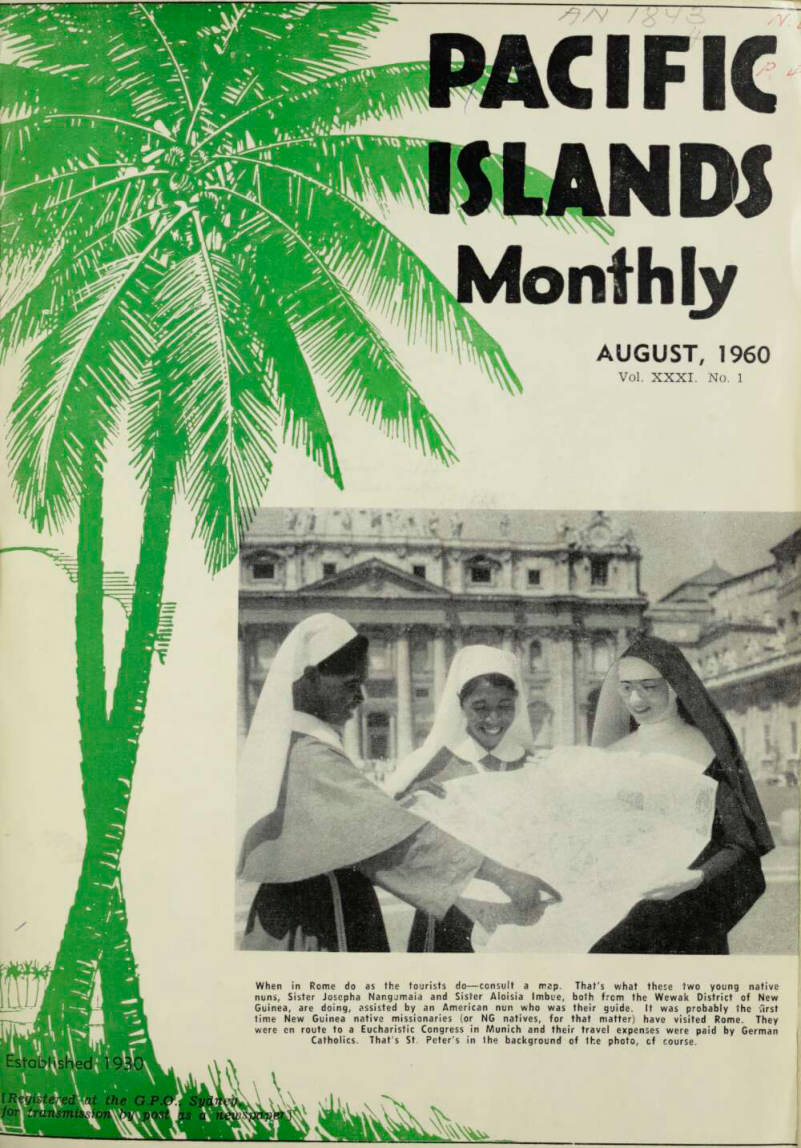 1
1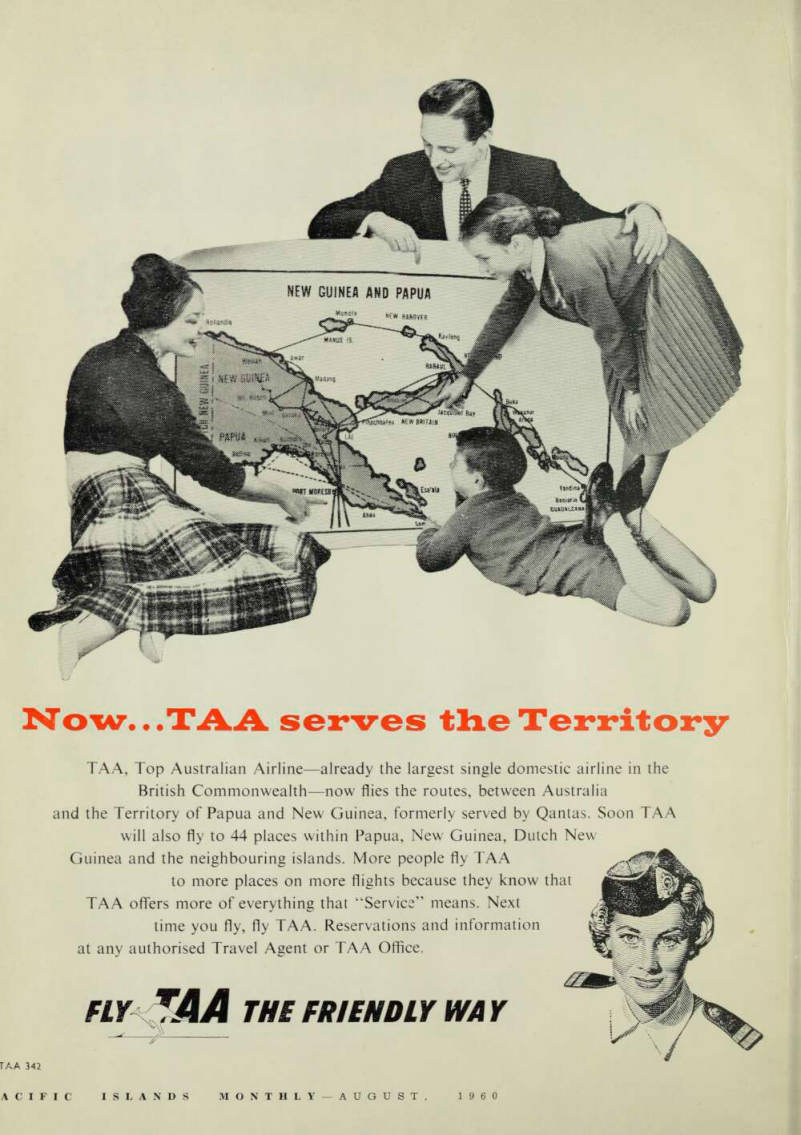 2
2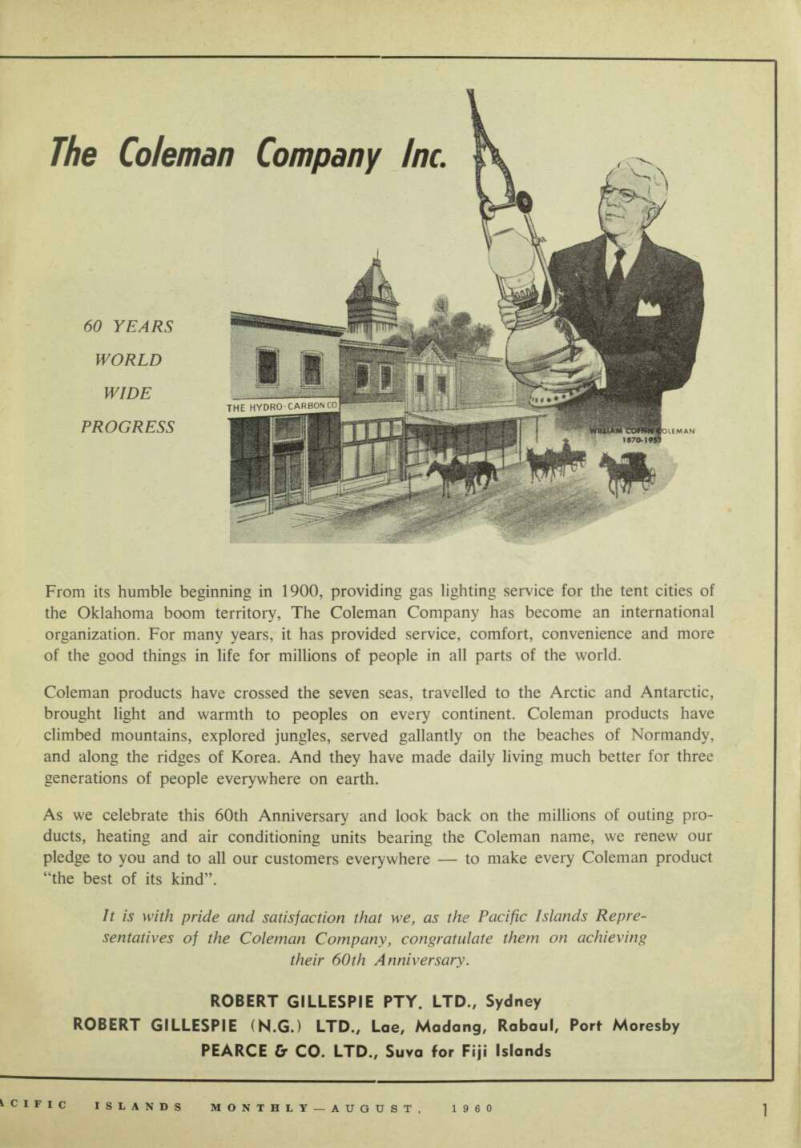 3
3 4
4 5
5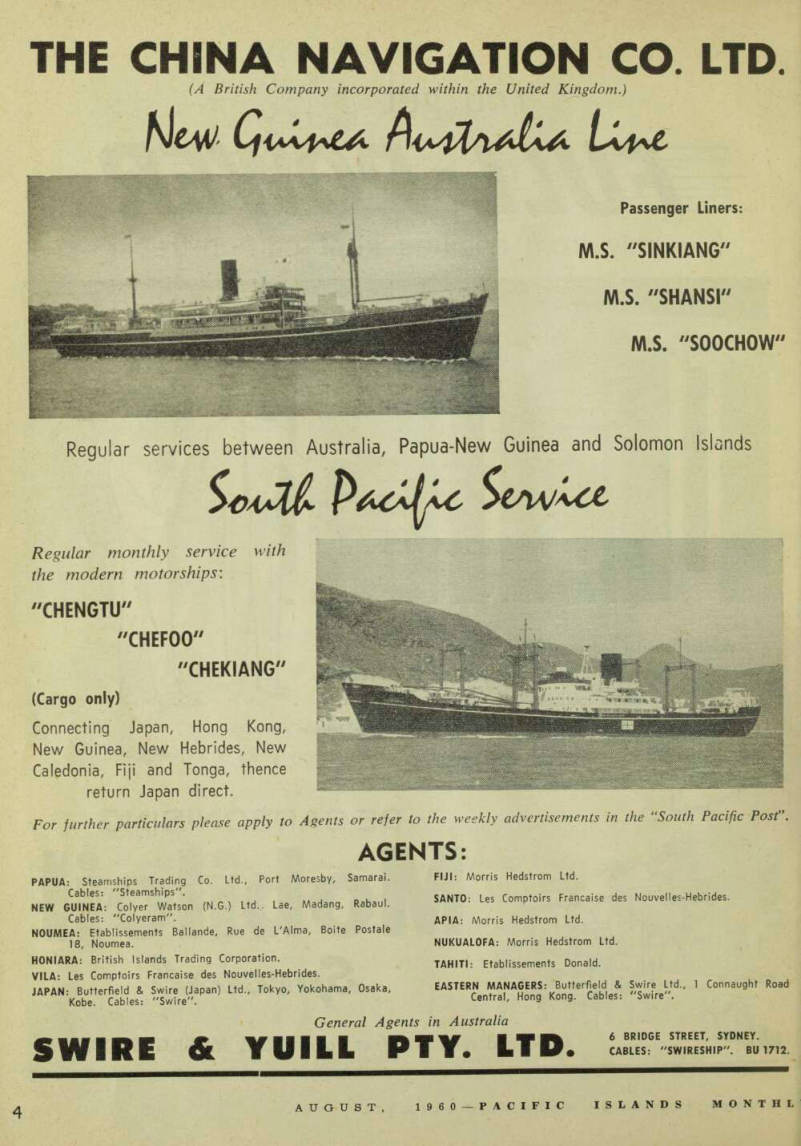 6
6 7
7 8
8 9
9 10
10 11
11 12
12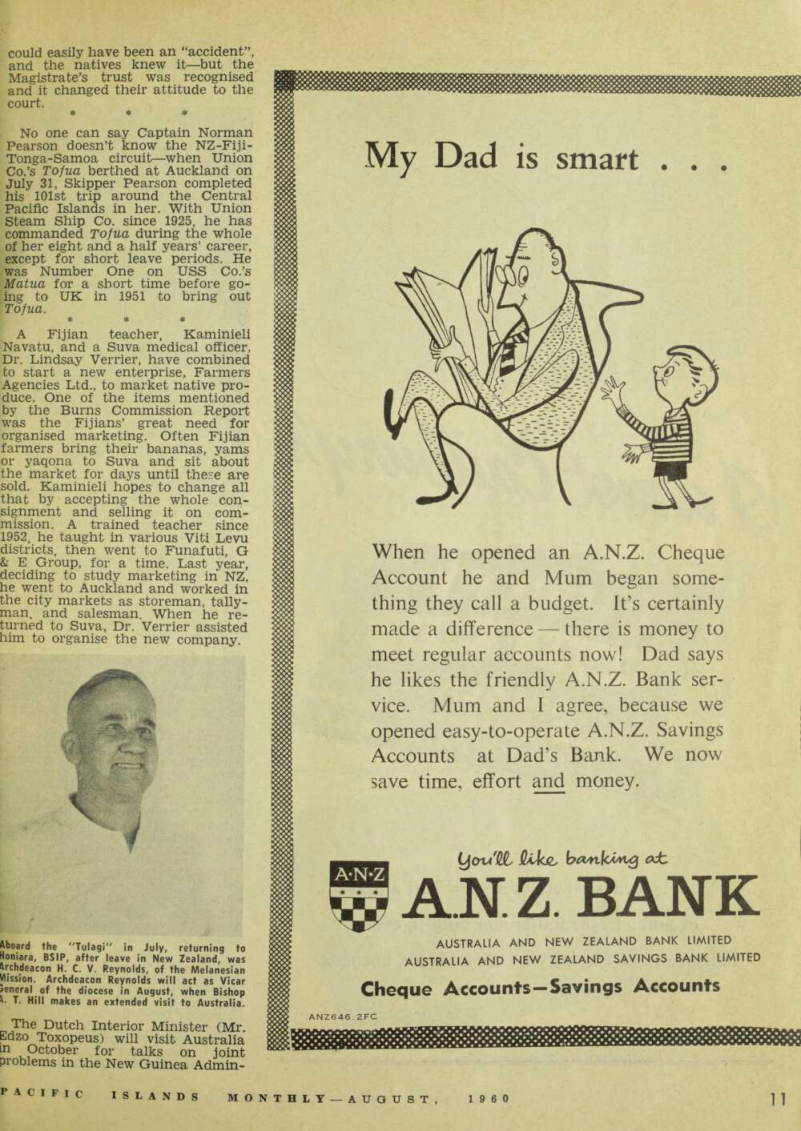 13
13 14
14 15
15 16
16 17
17 18
18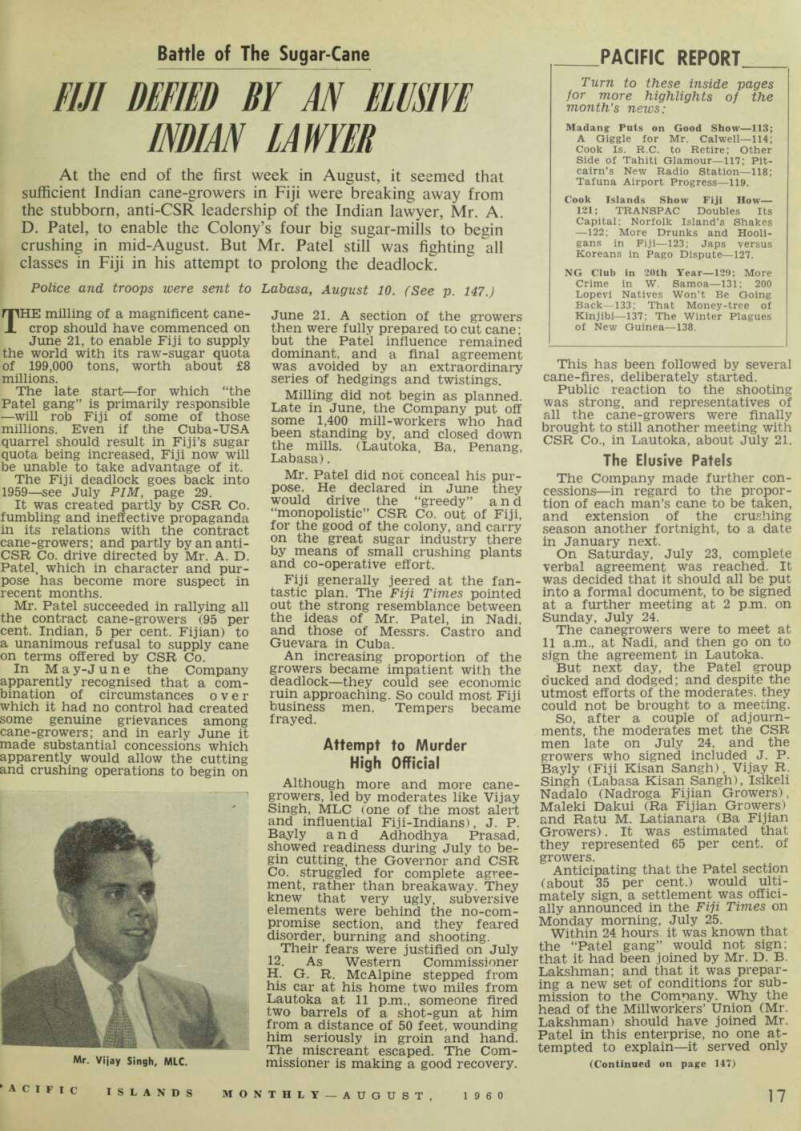 19
19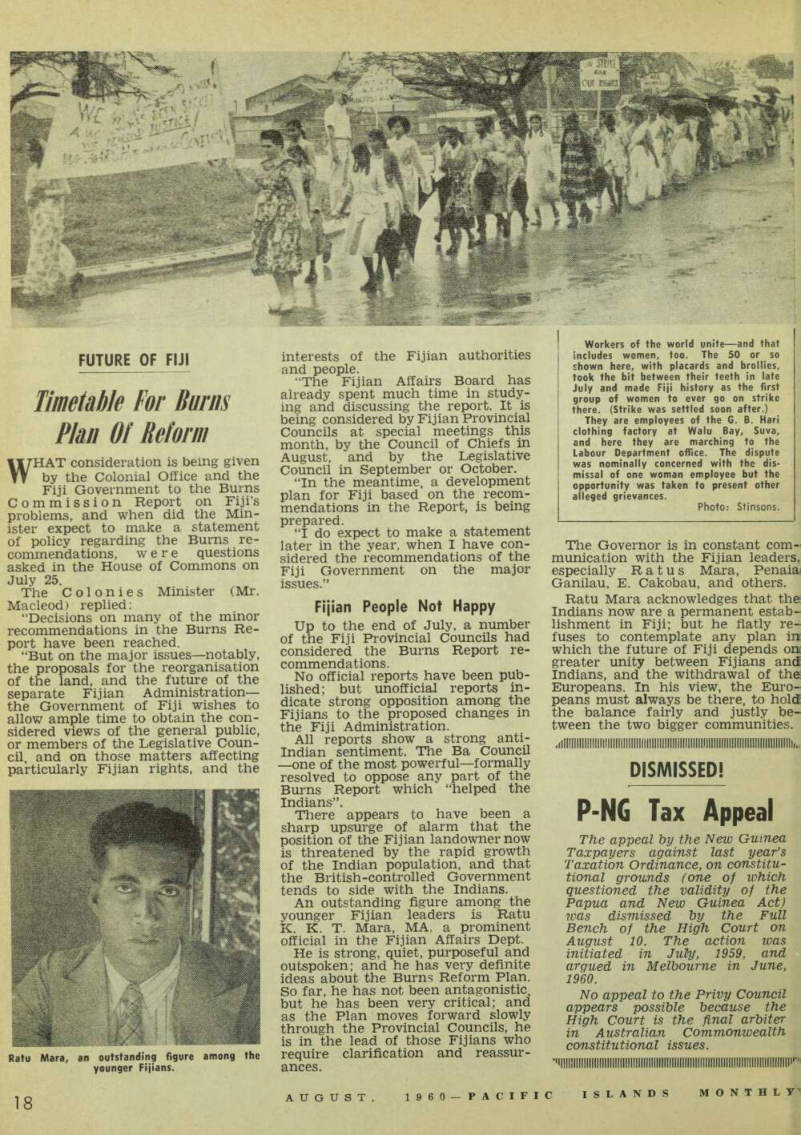 20
20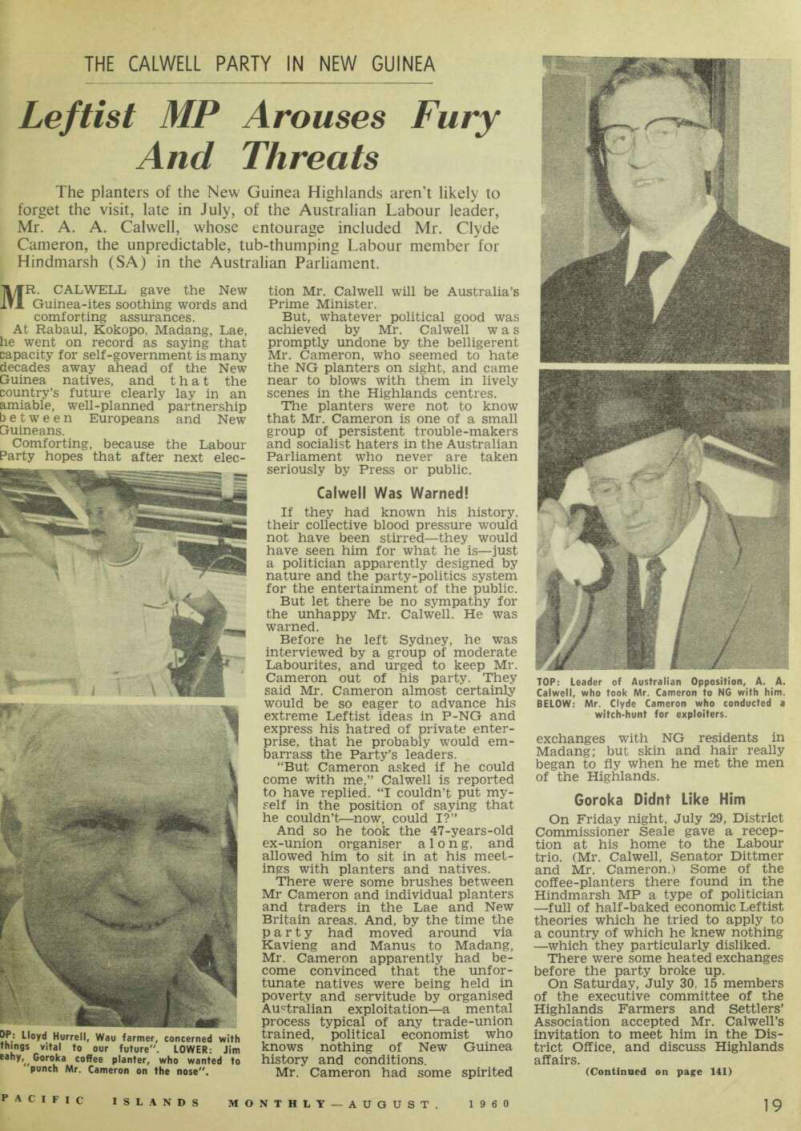 21
21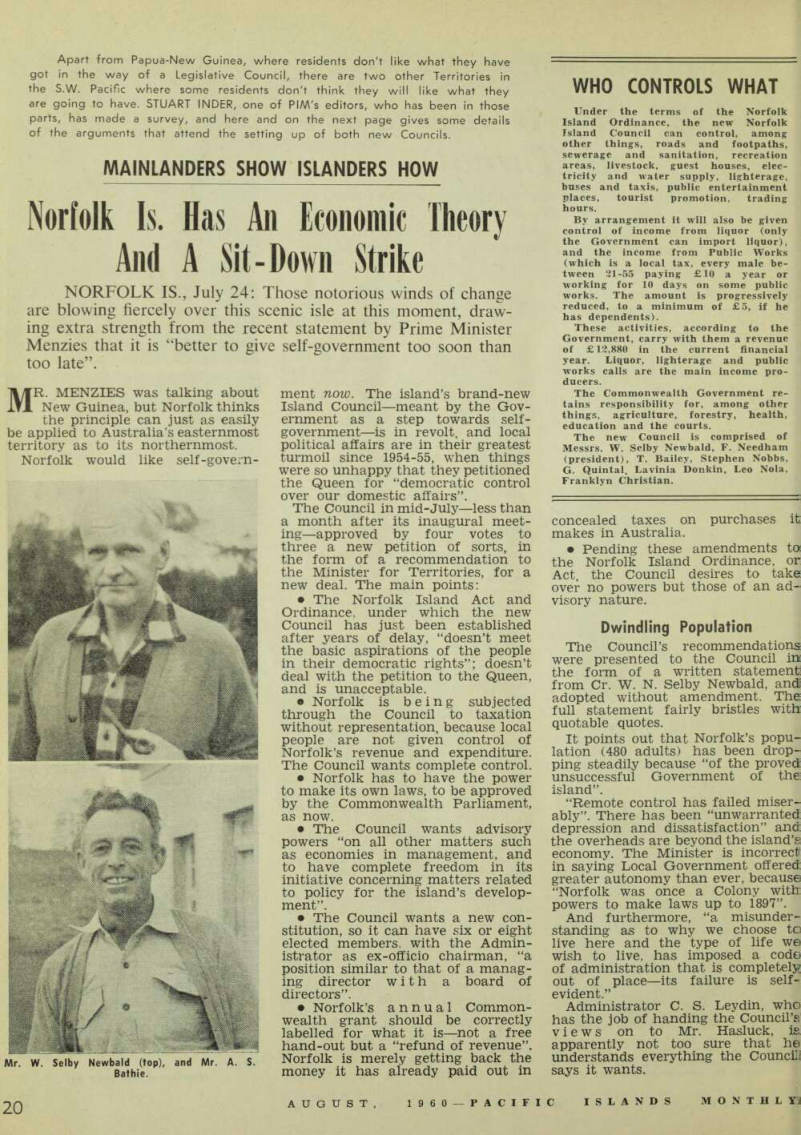 22
22 23
23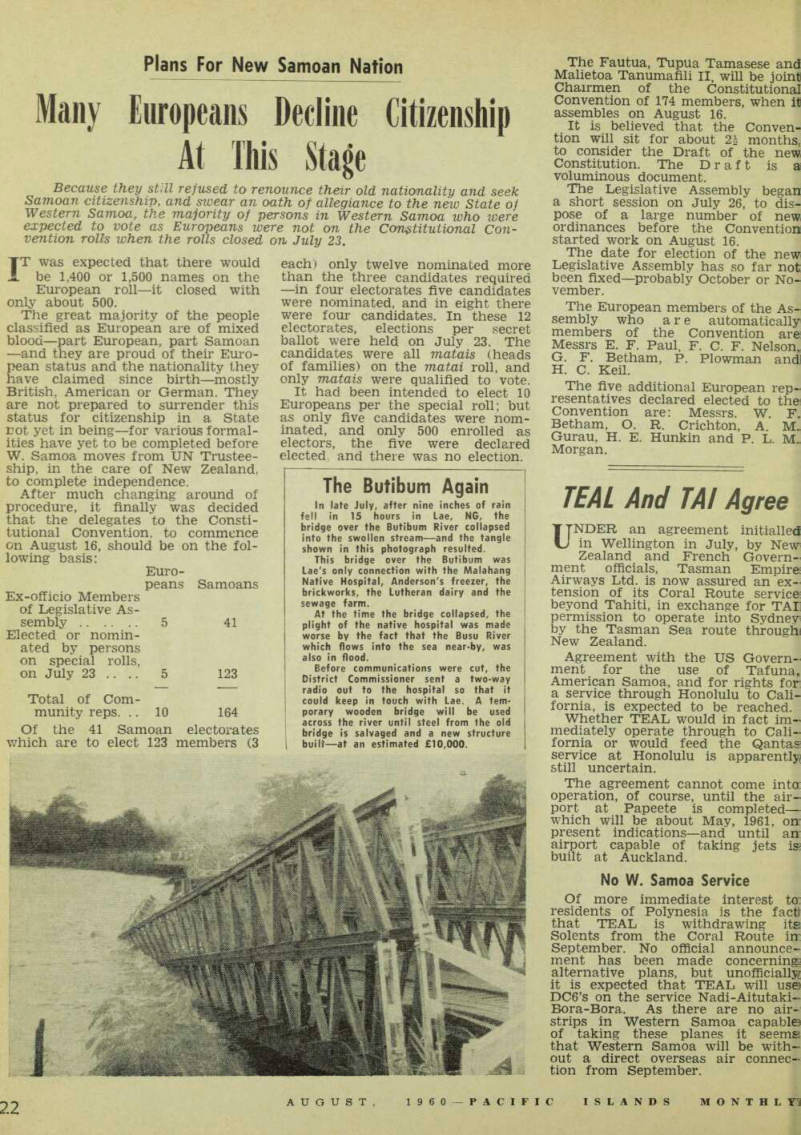 24
24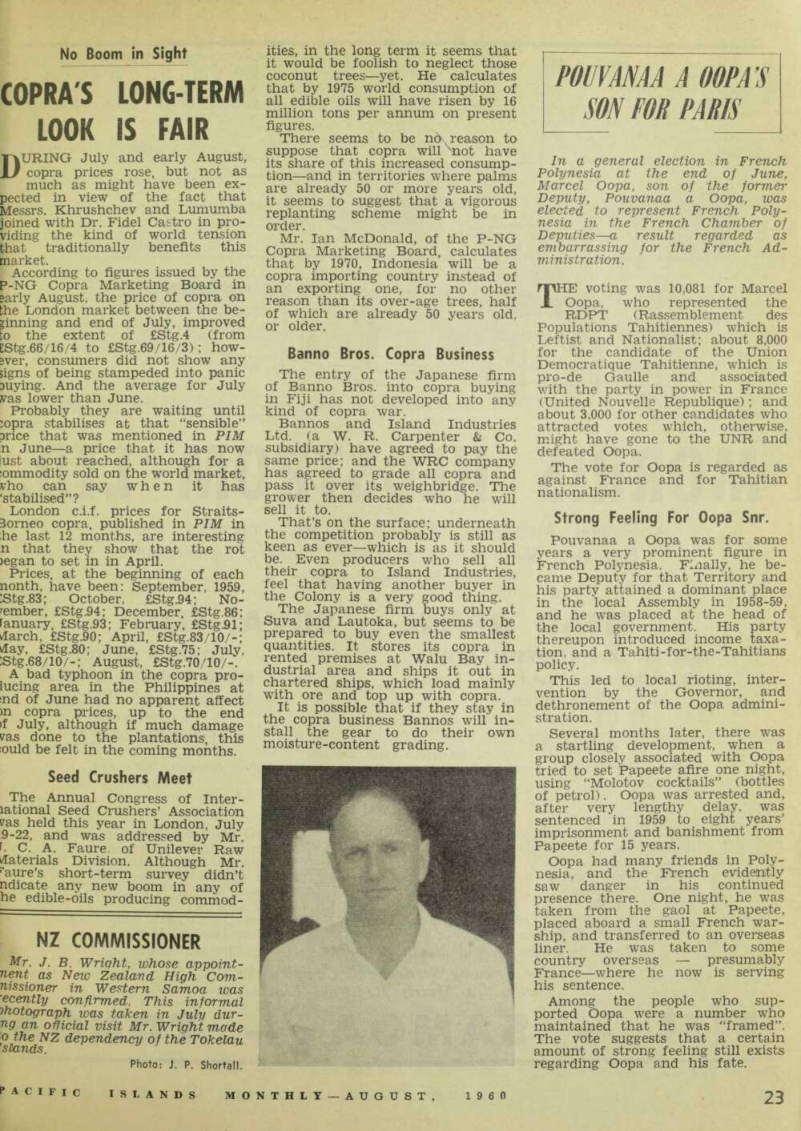 25
25 26
26 27
27 28
28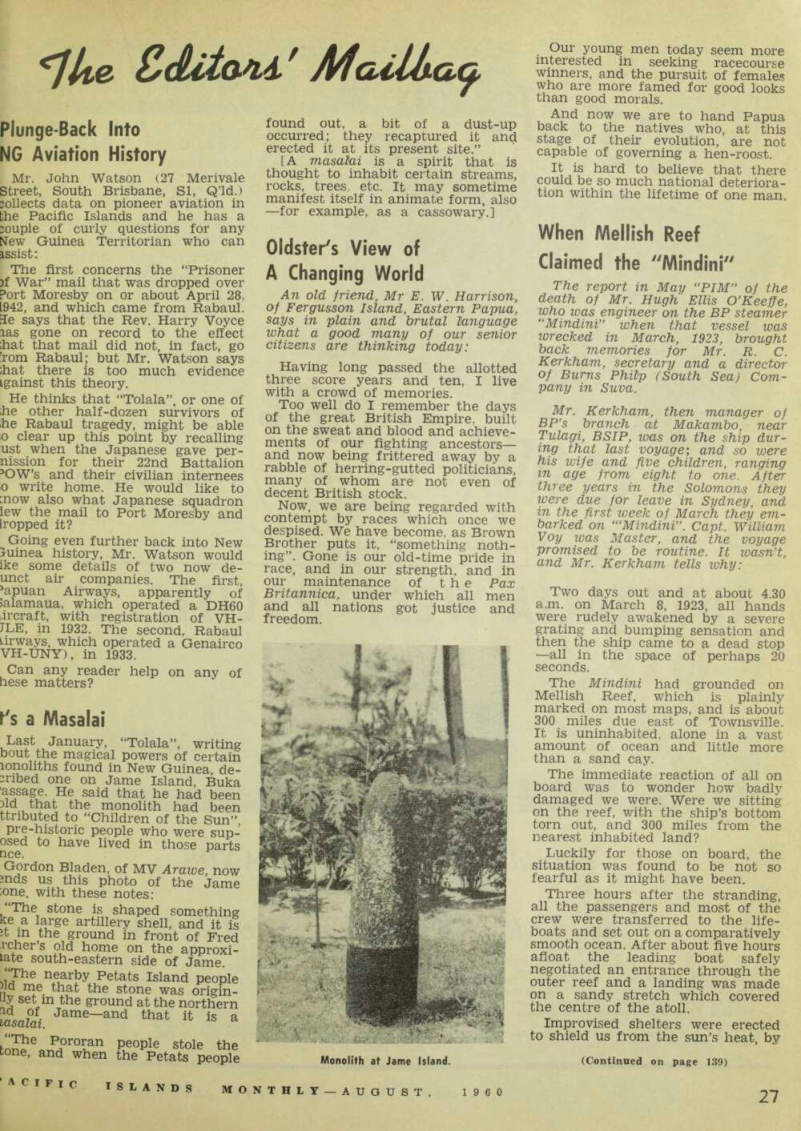 29
29 30
30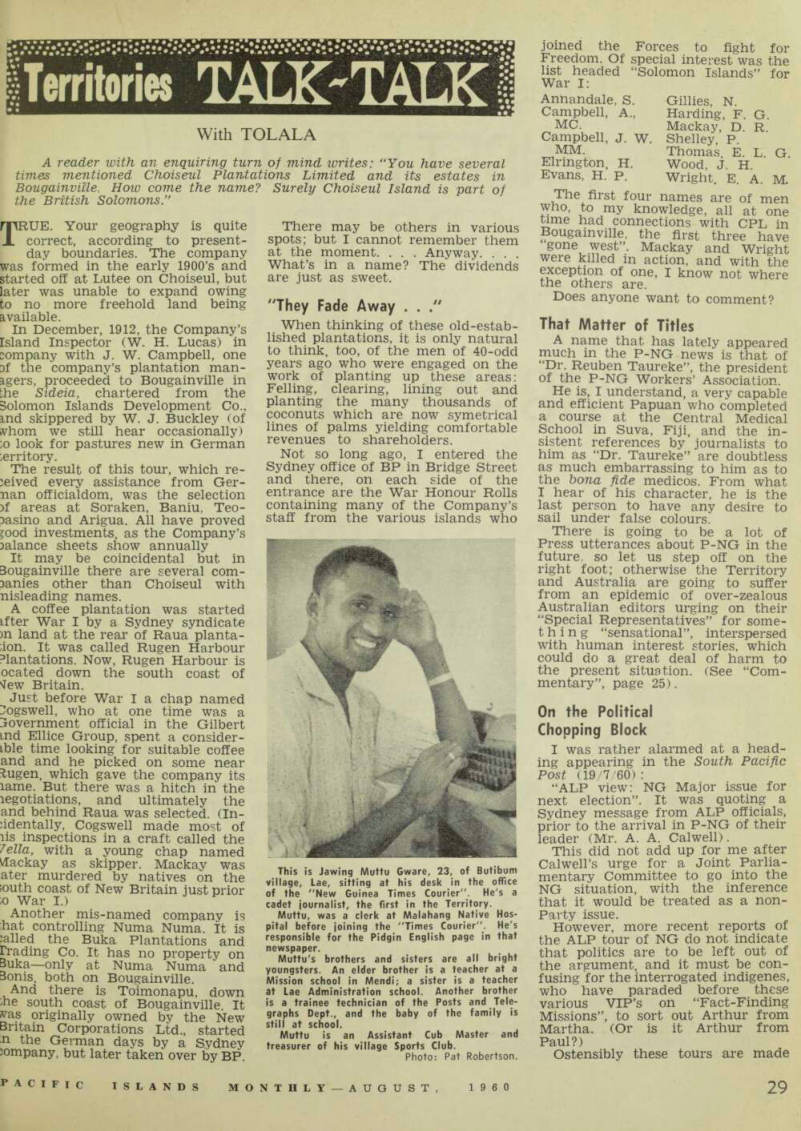 31
31 32
32 33
33 34
34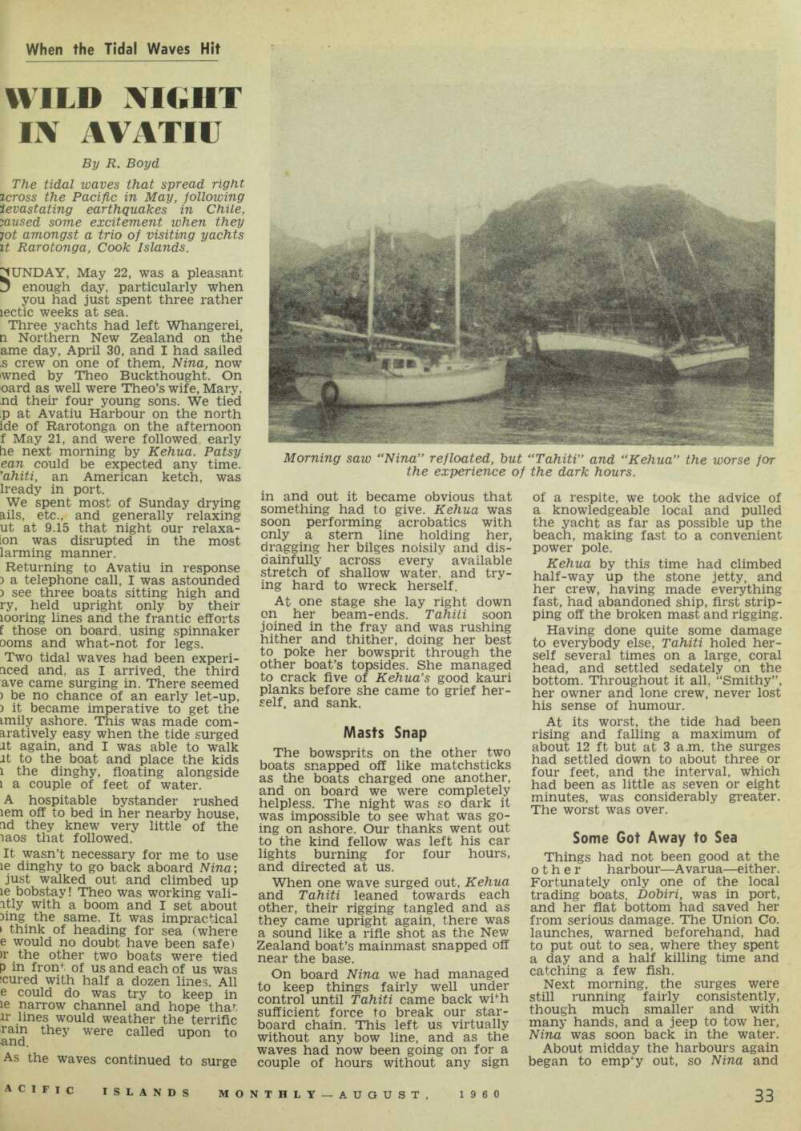 35
35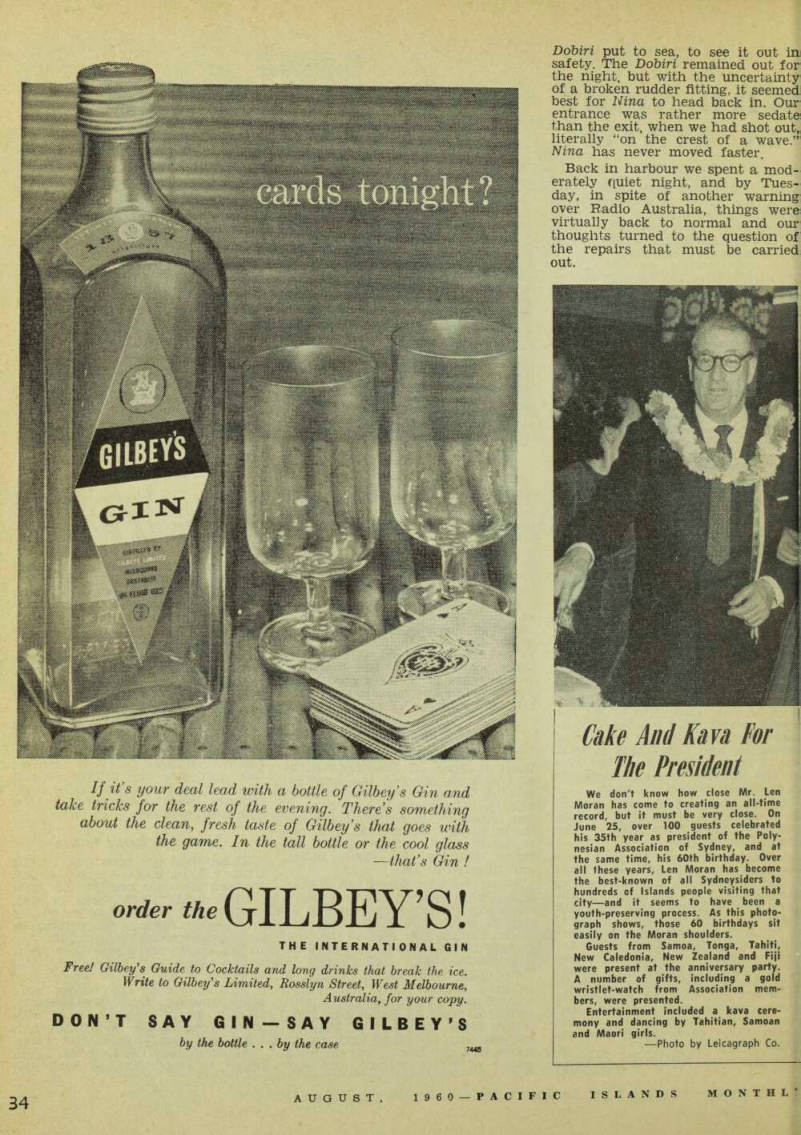 36
36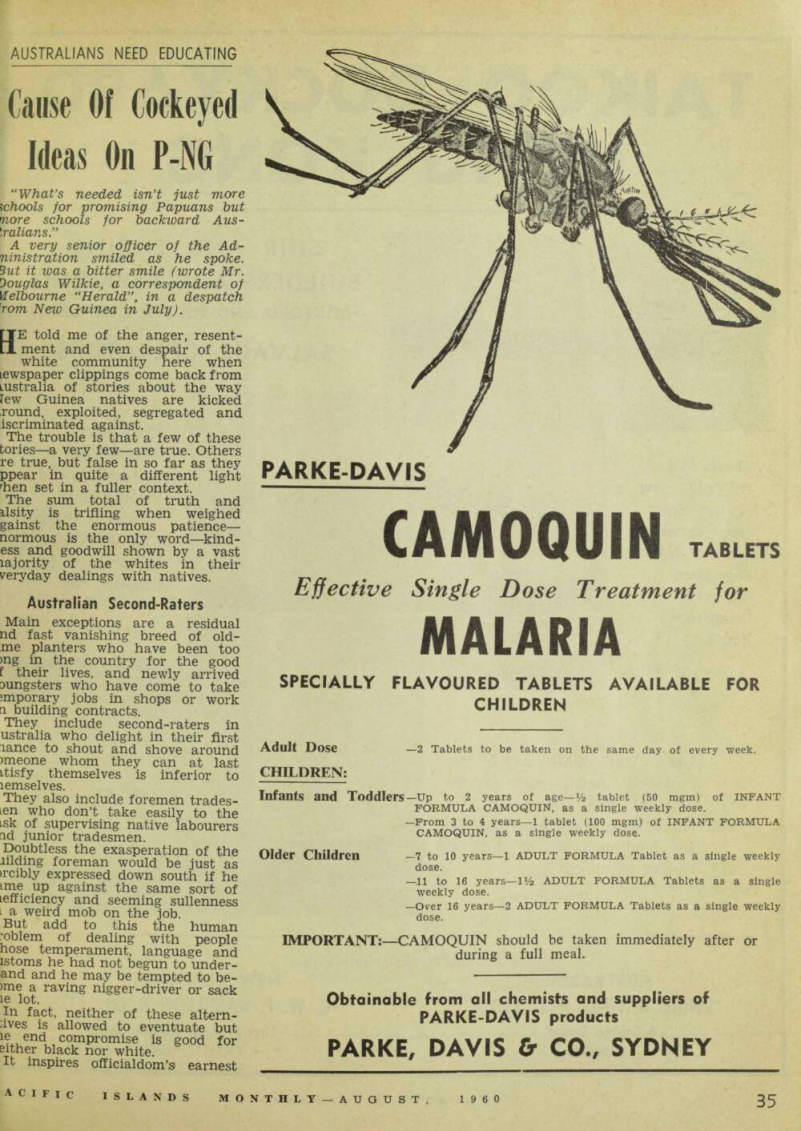 37
37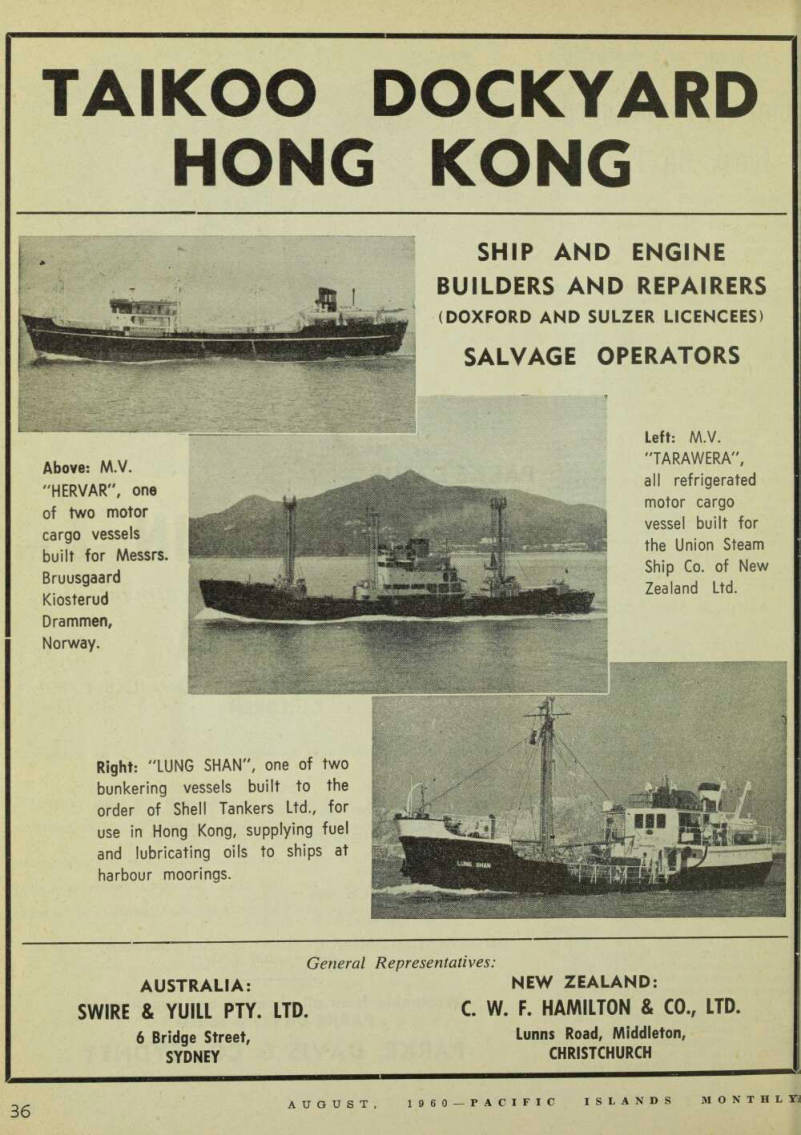 38
38 39
39 40
40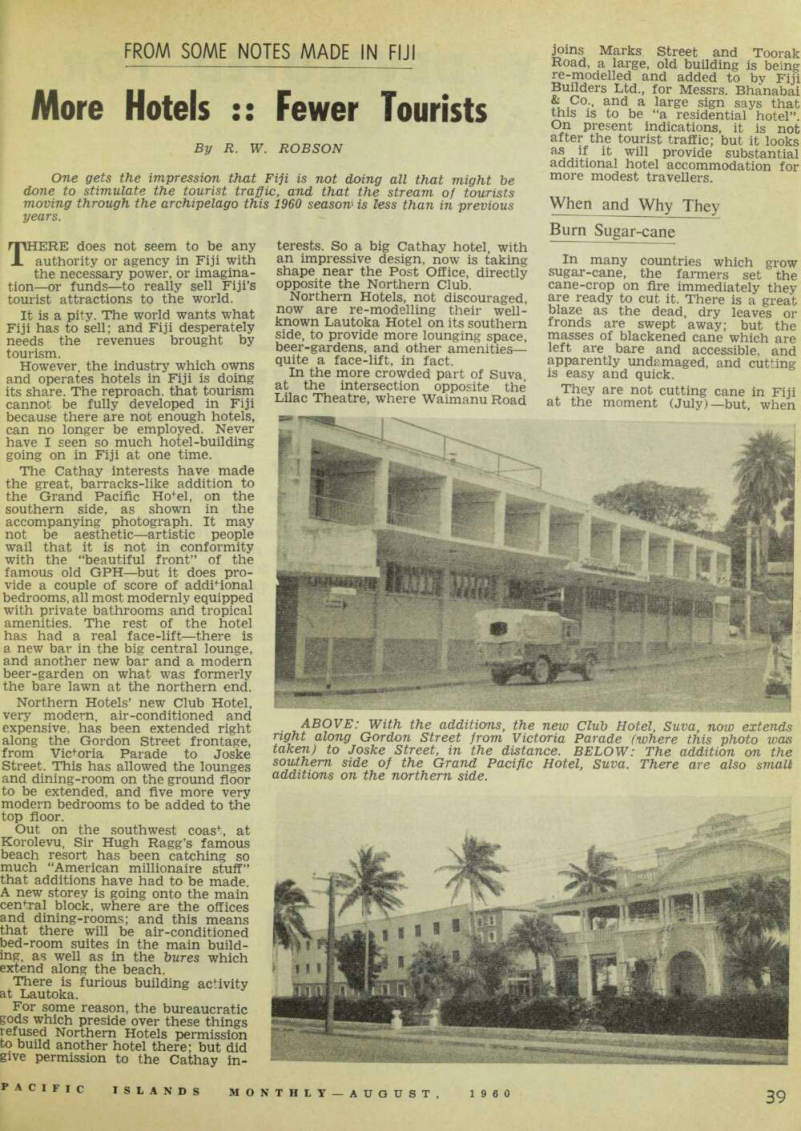 41
41 42
42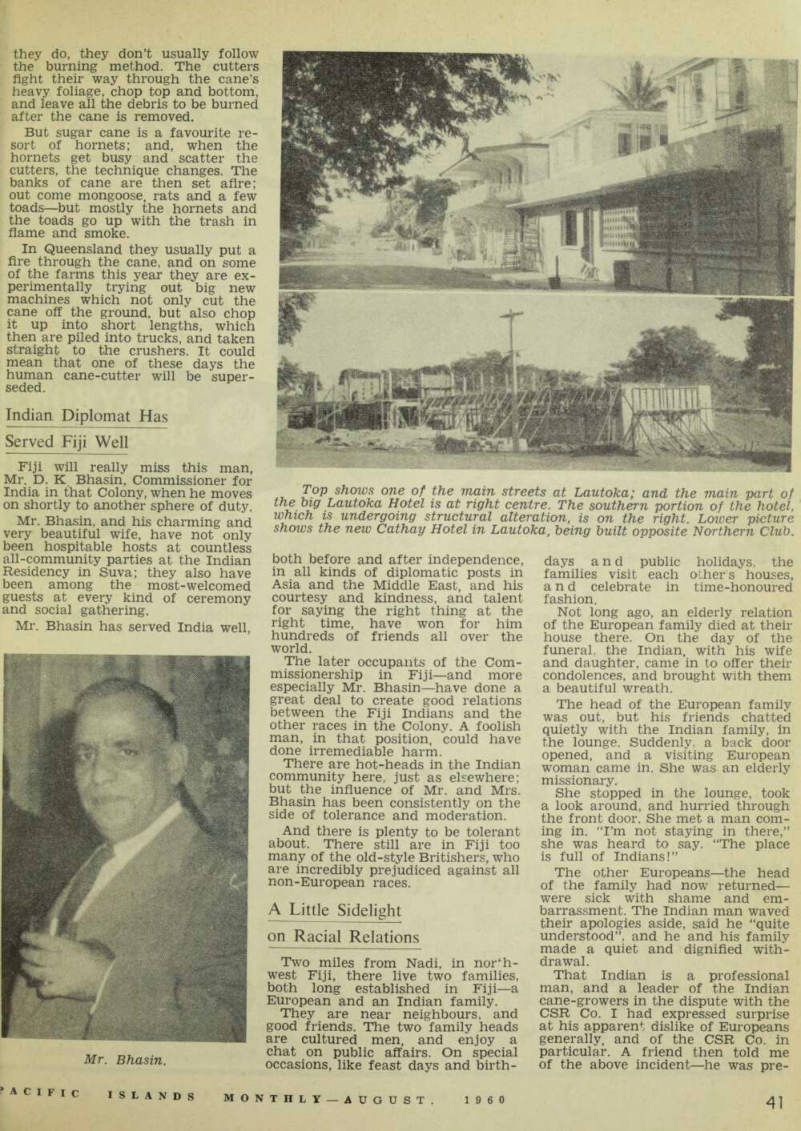 43
43 44
44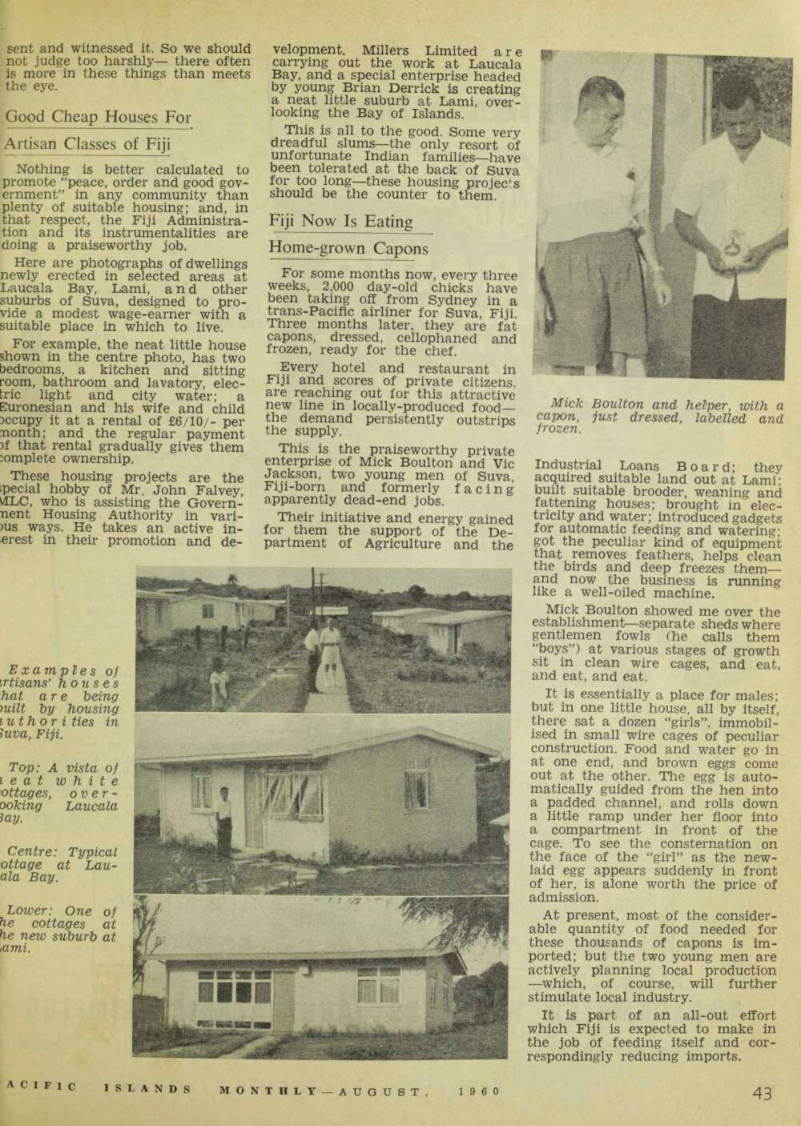 45
45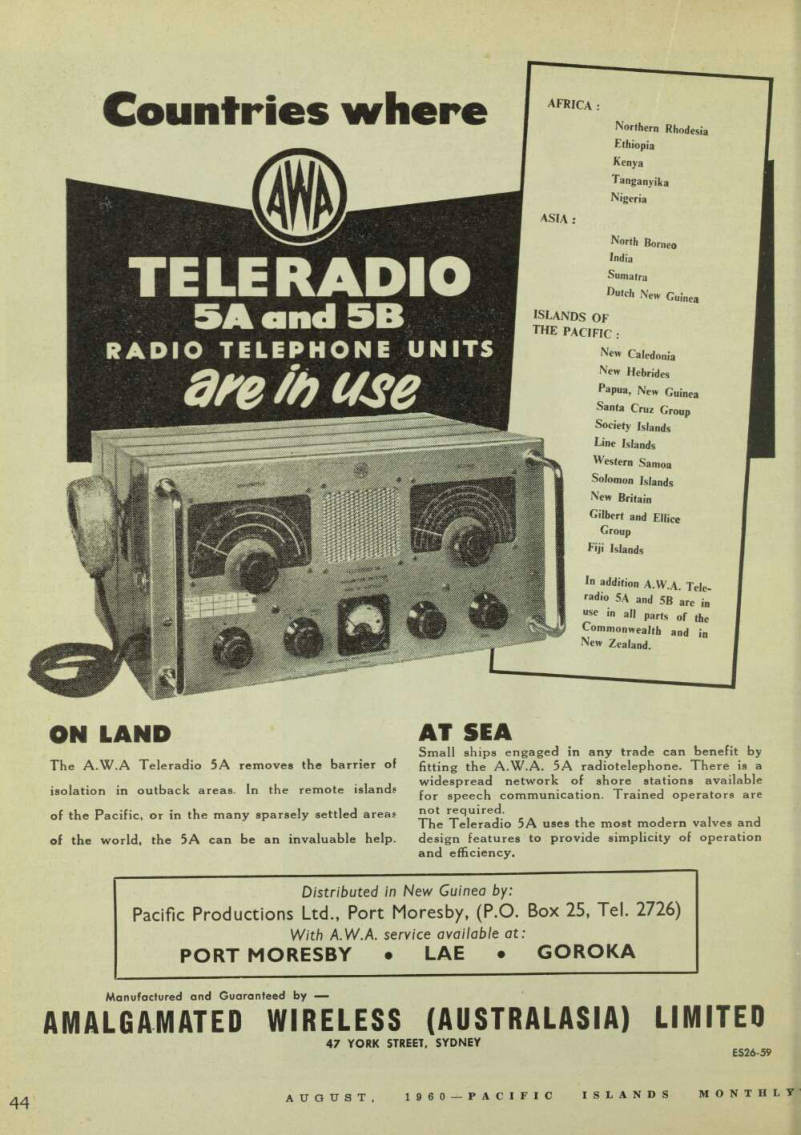 46
46 47
47 48
48 49
49 50
50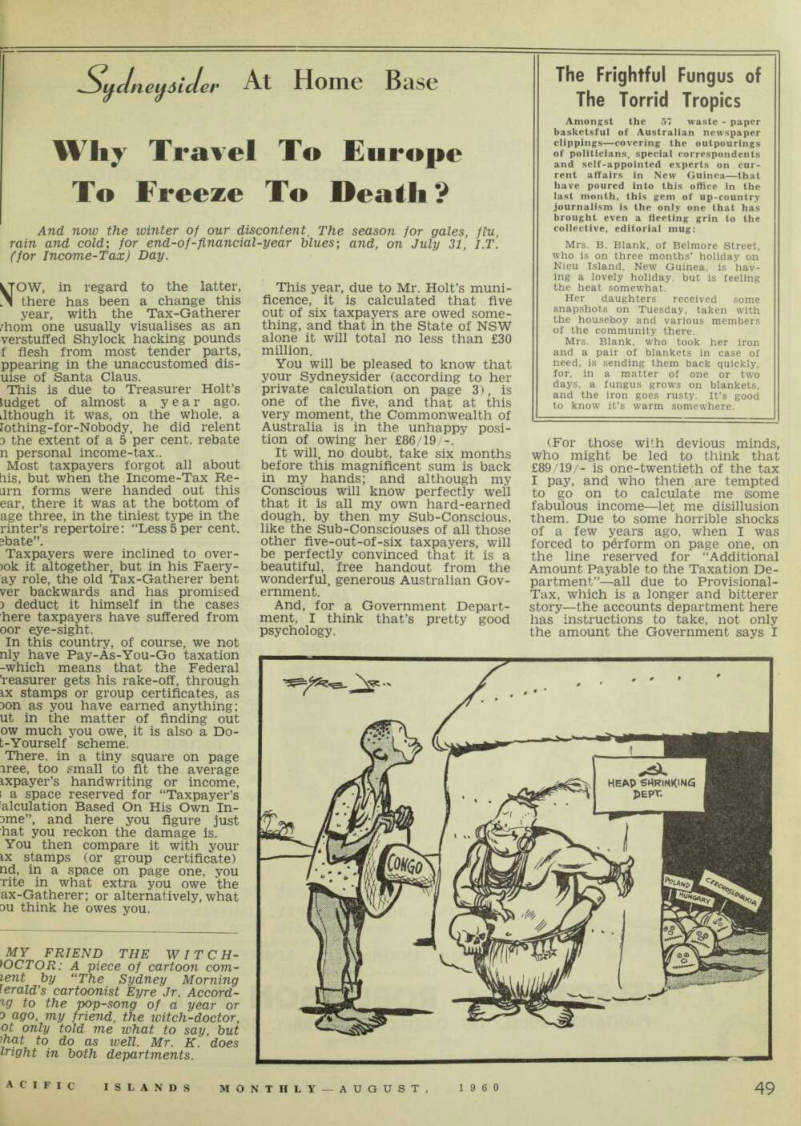 51
51 52
52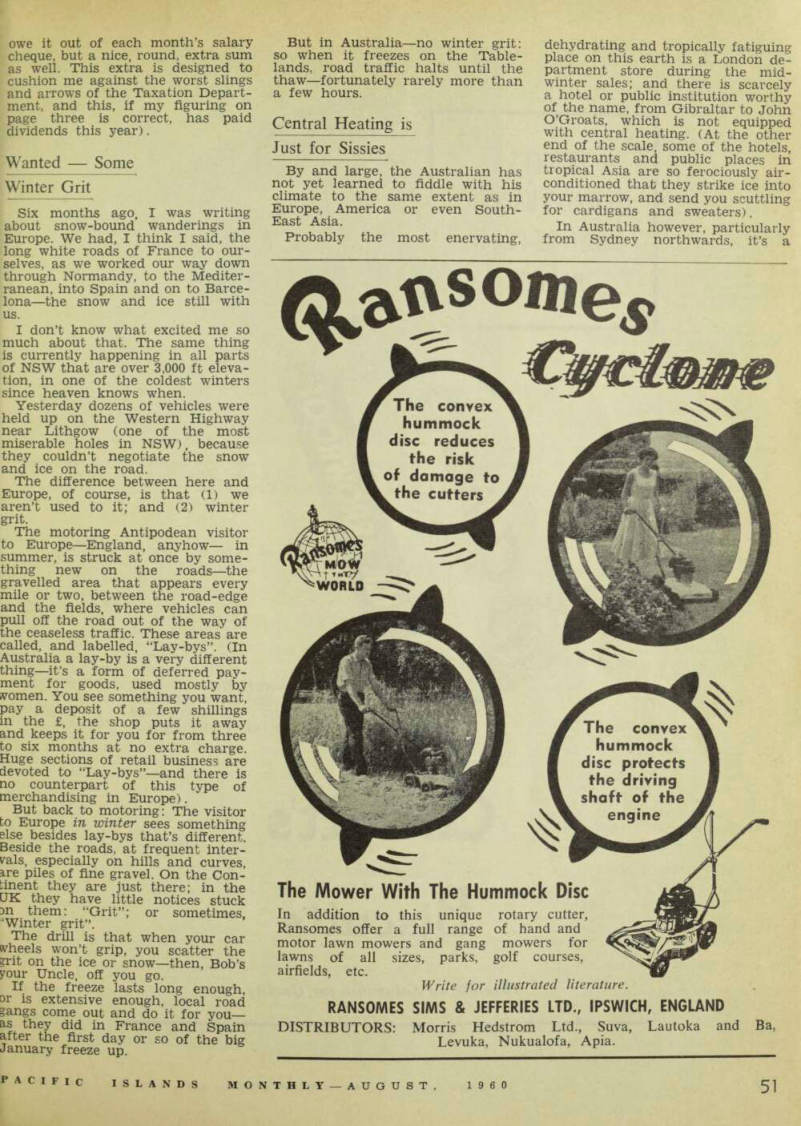 53
53 54
54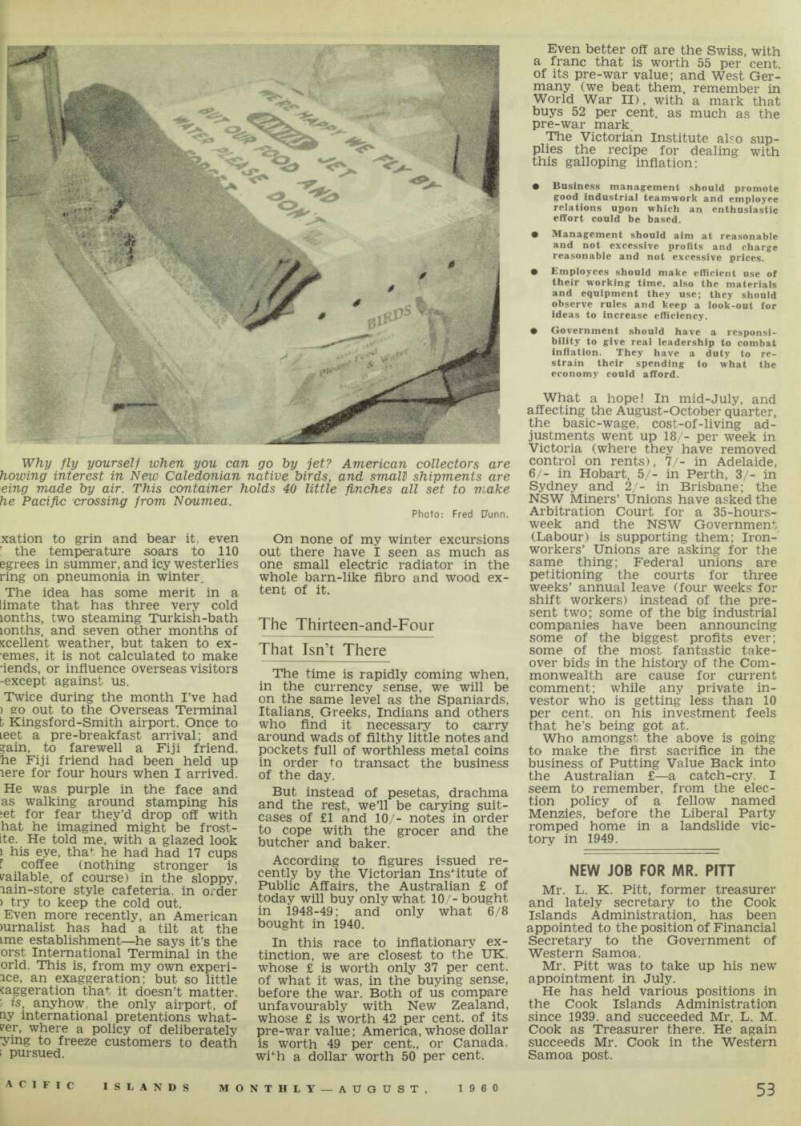 55
55 56
56 57
57 58
58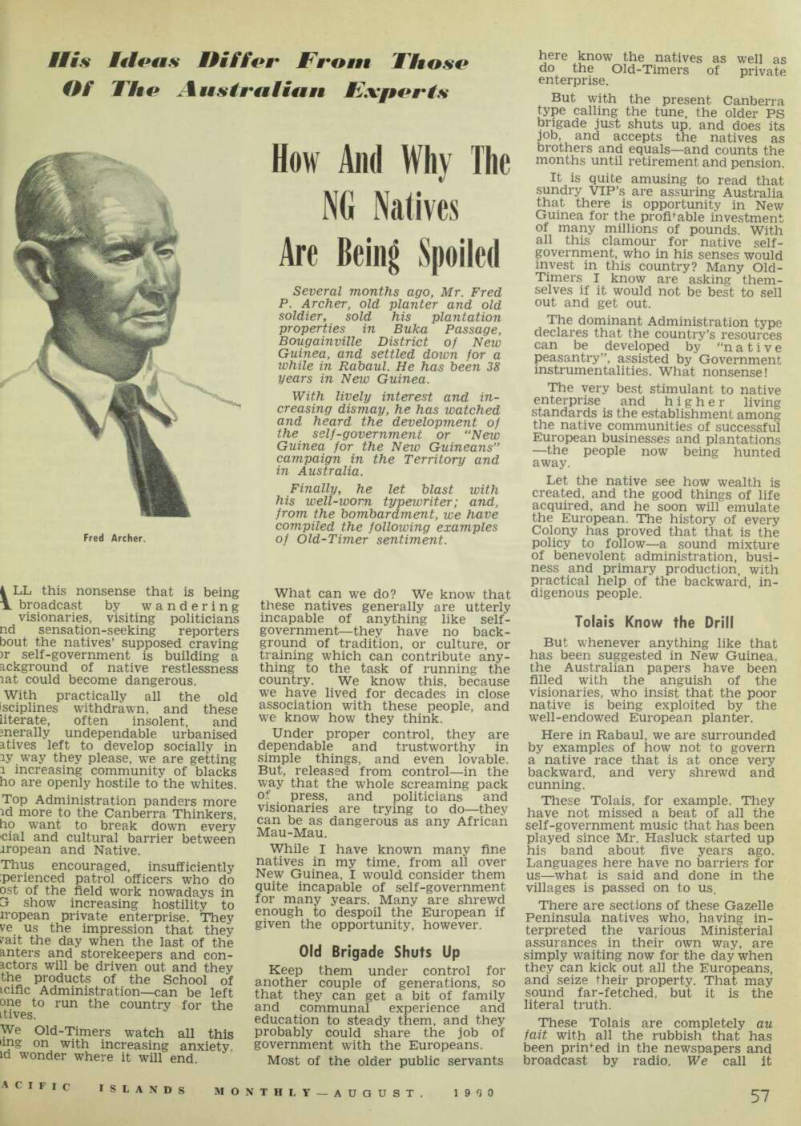 59
59 60
60 61
61 62
62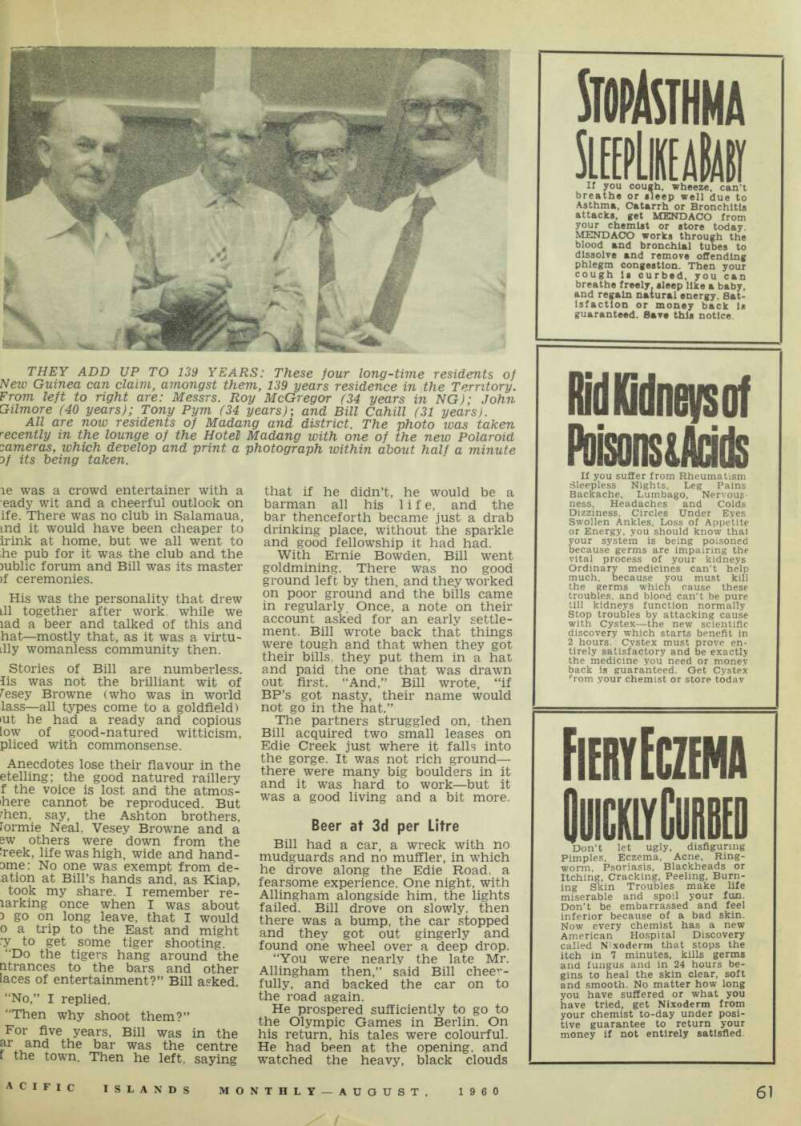 63
63 64
64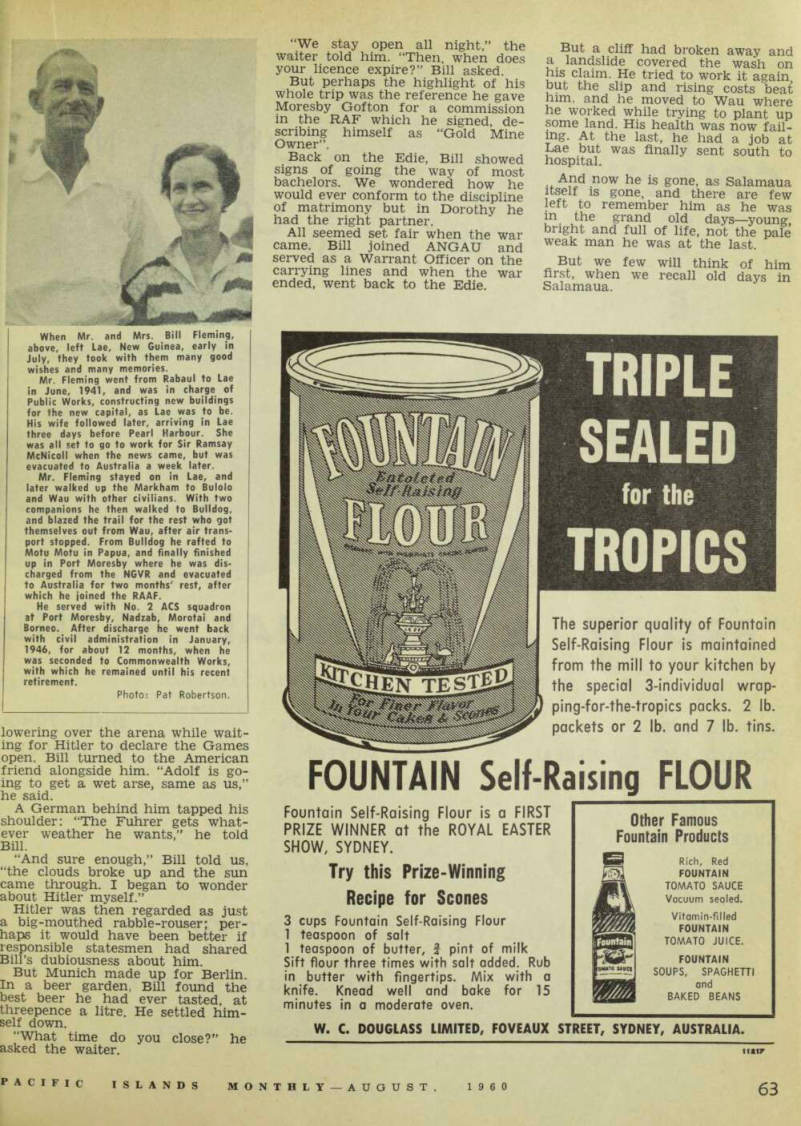 65
65 66
66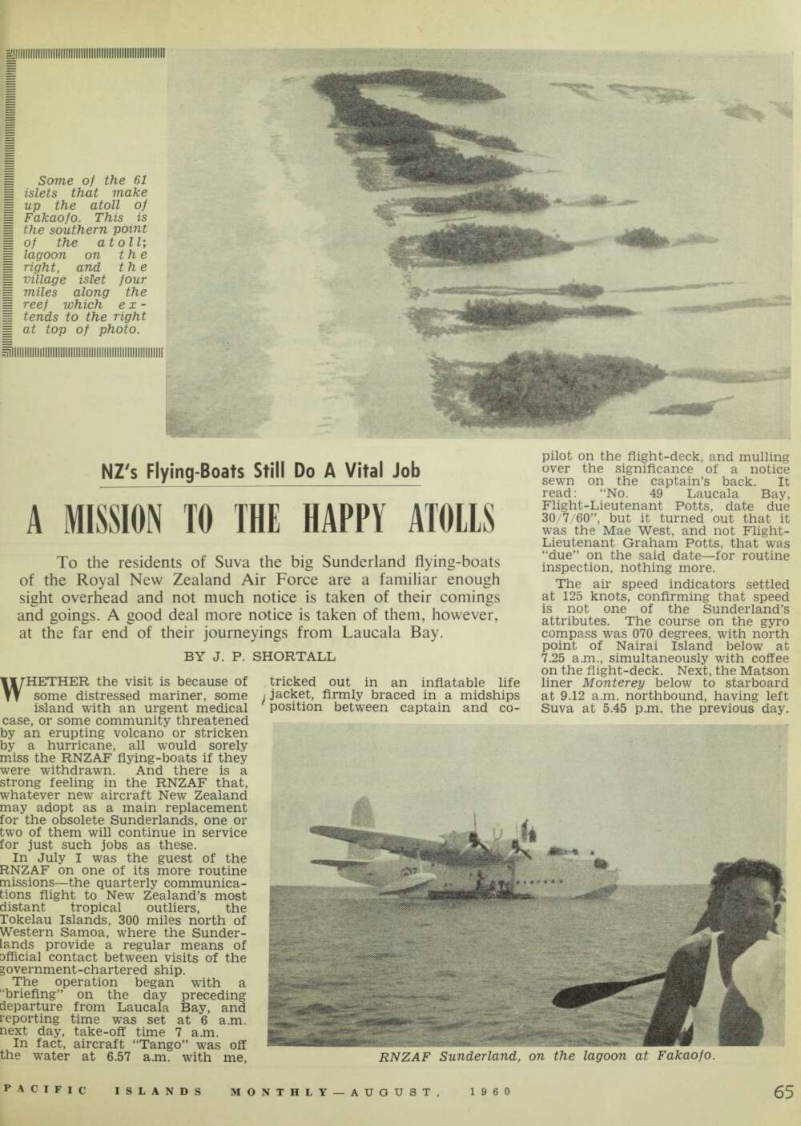 67
67 68
68 69
69 70
70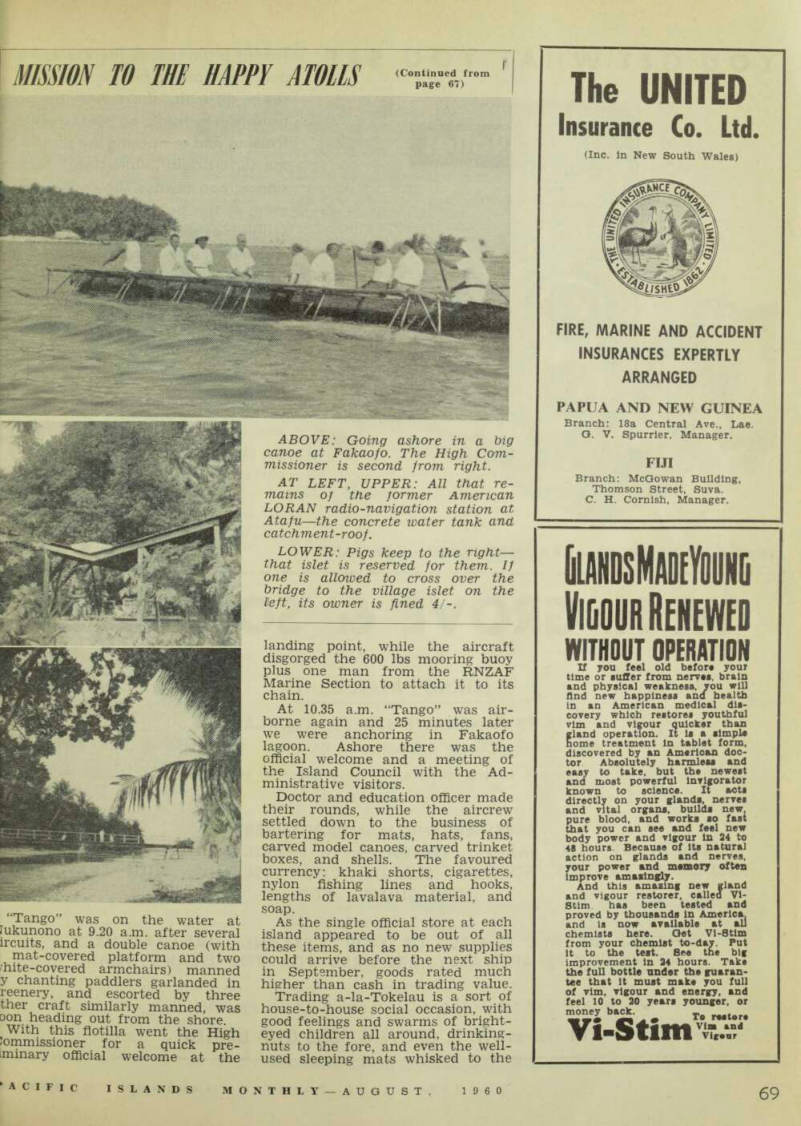 71
71 72
72 73
73 74
74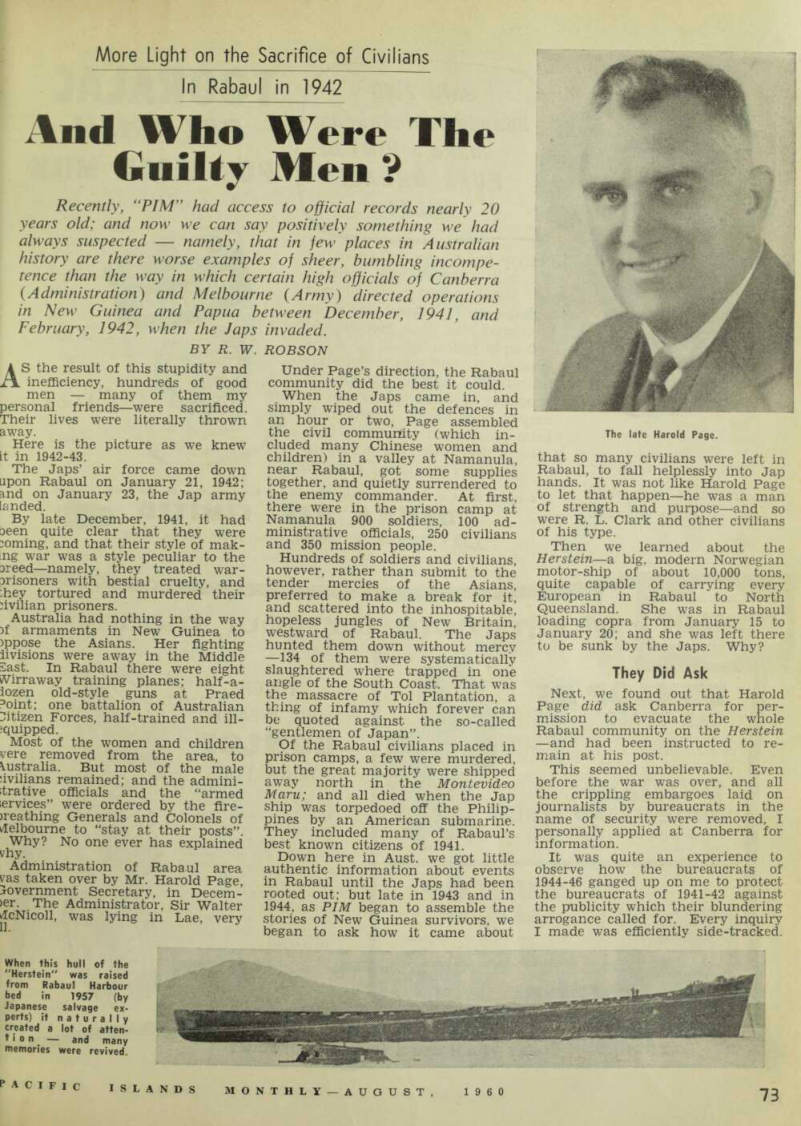 75
75 76
76 77
77 78
78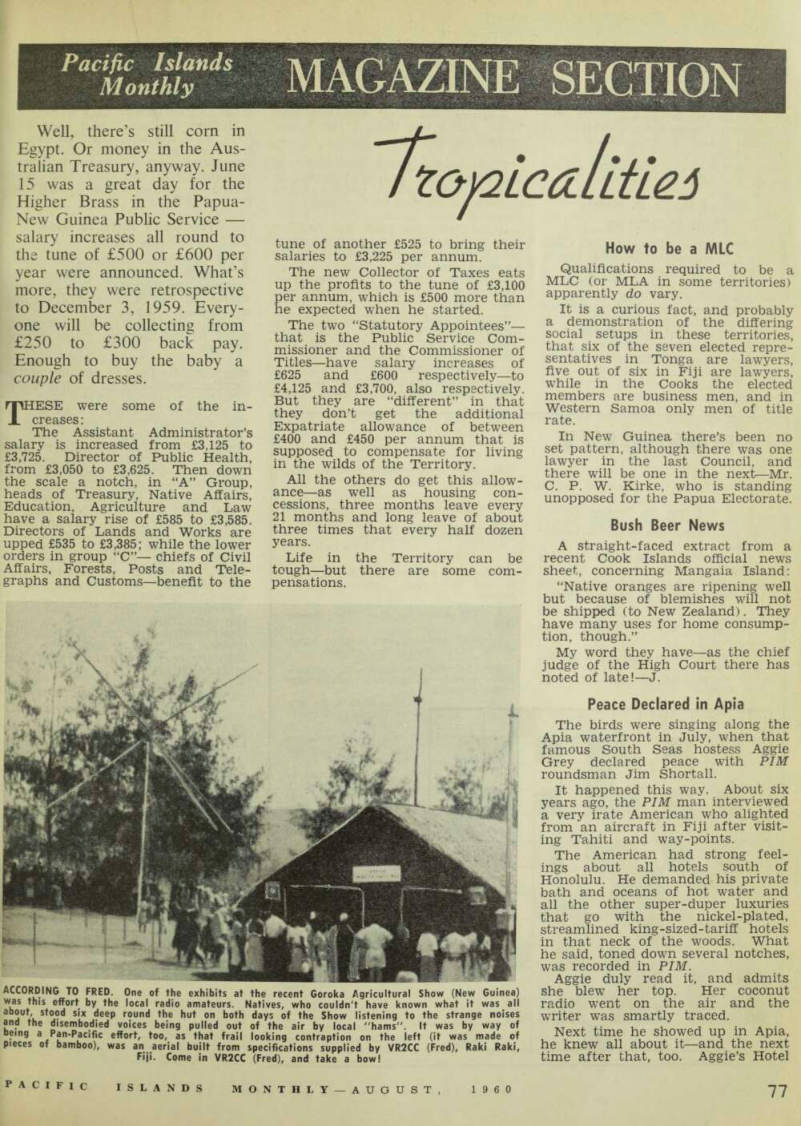 79
79 80
80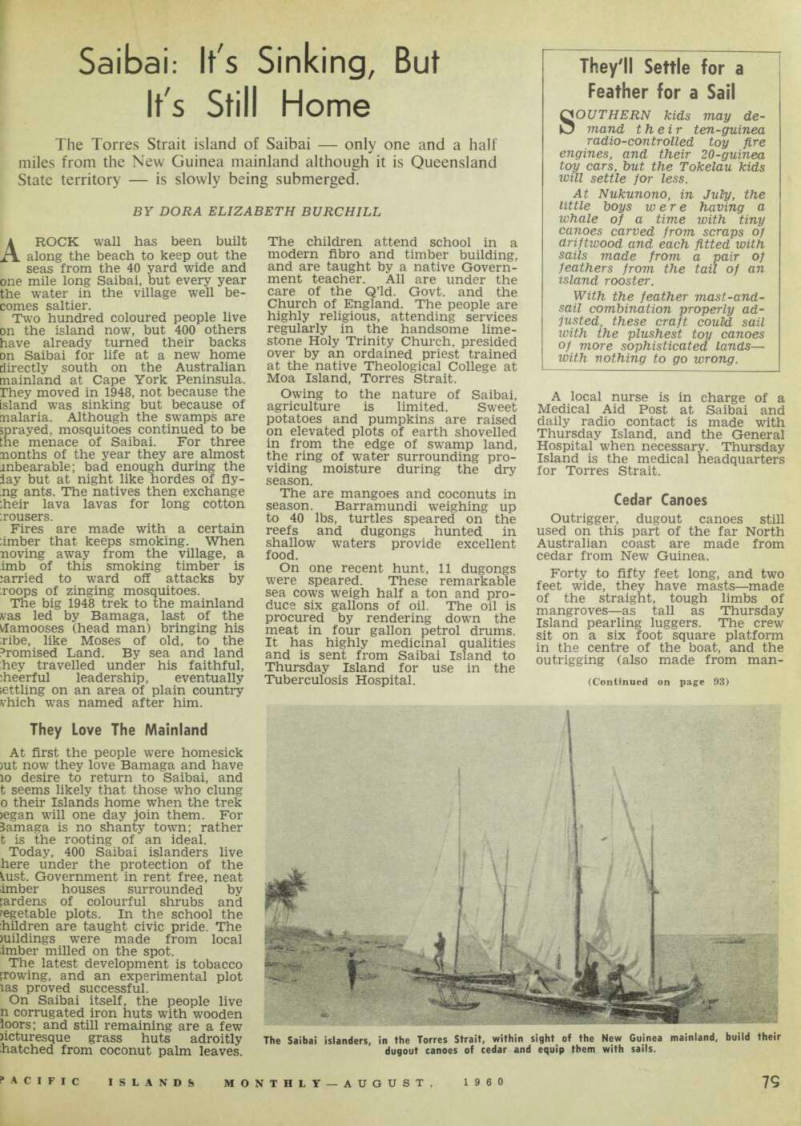 81
81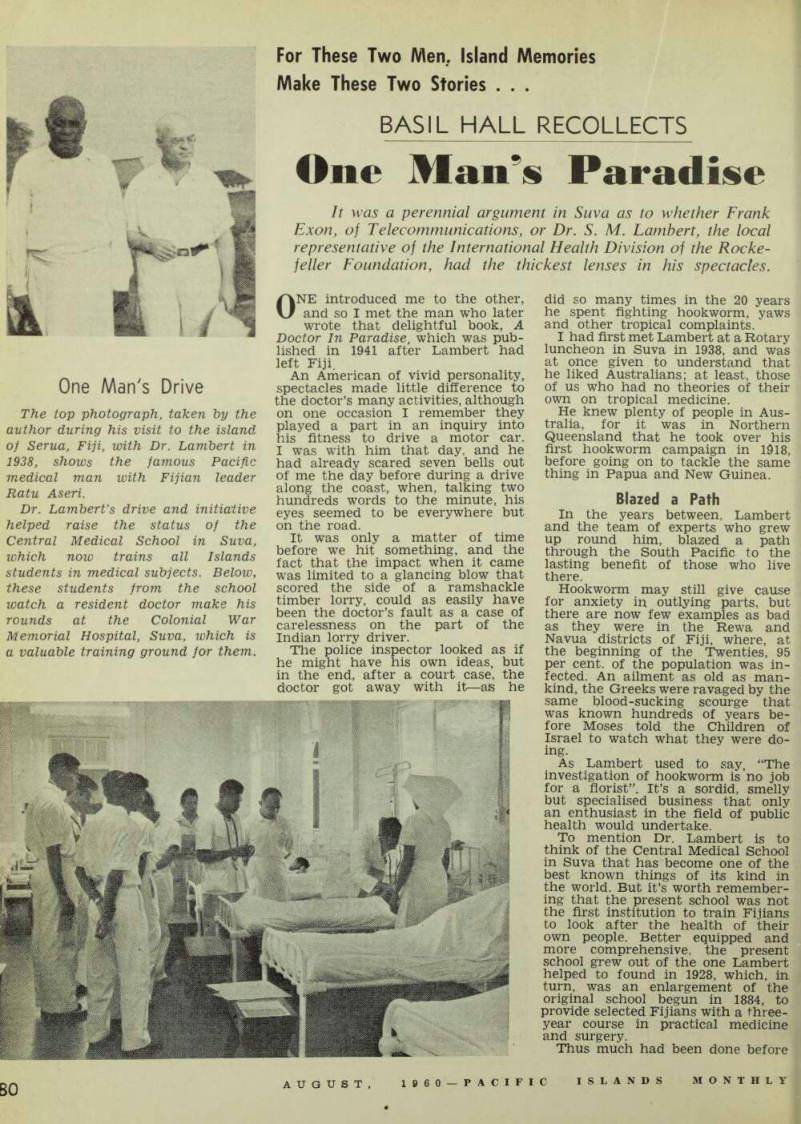 82
82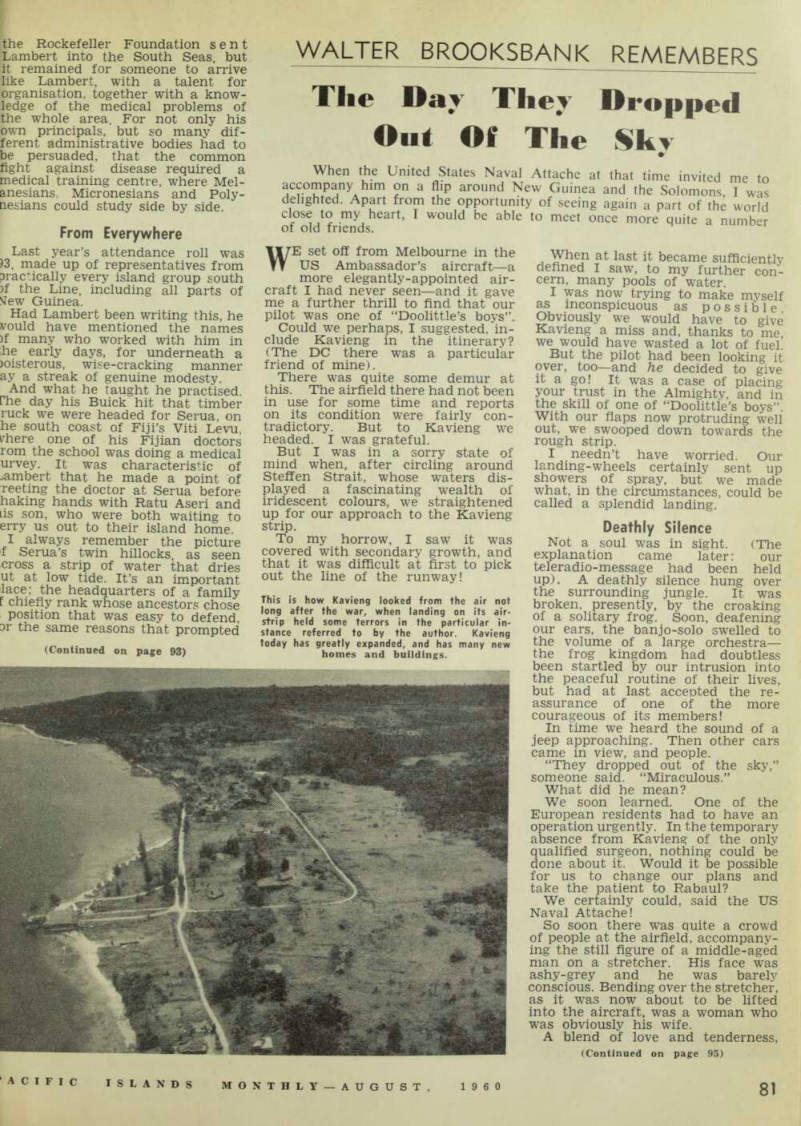 83
83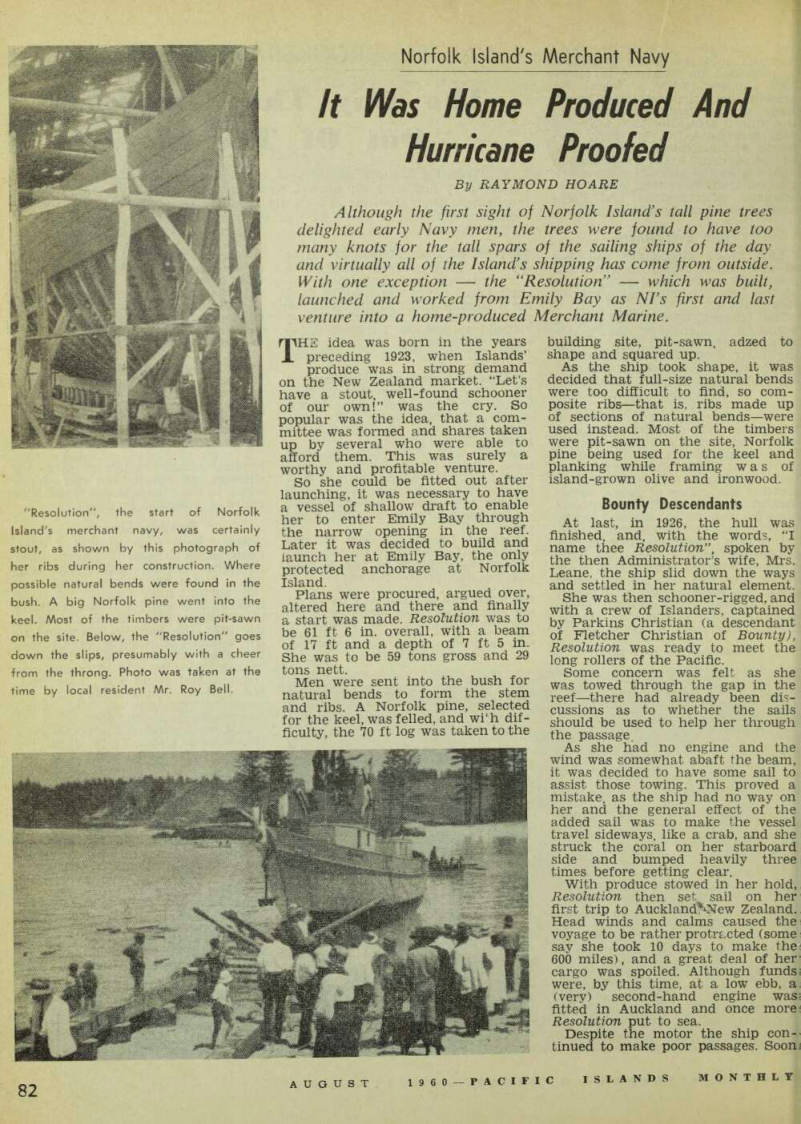 84
84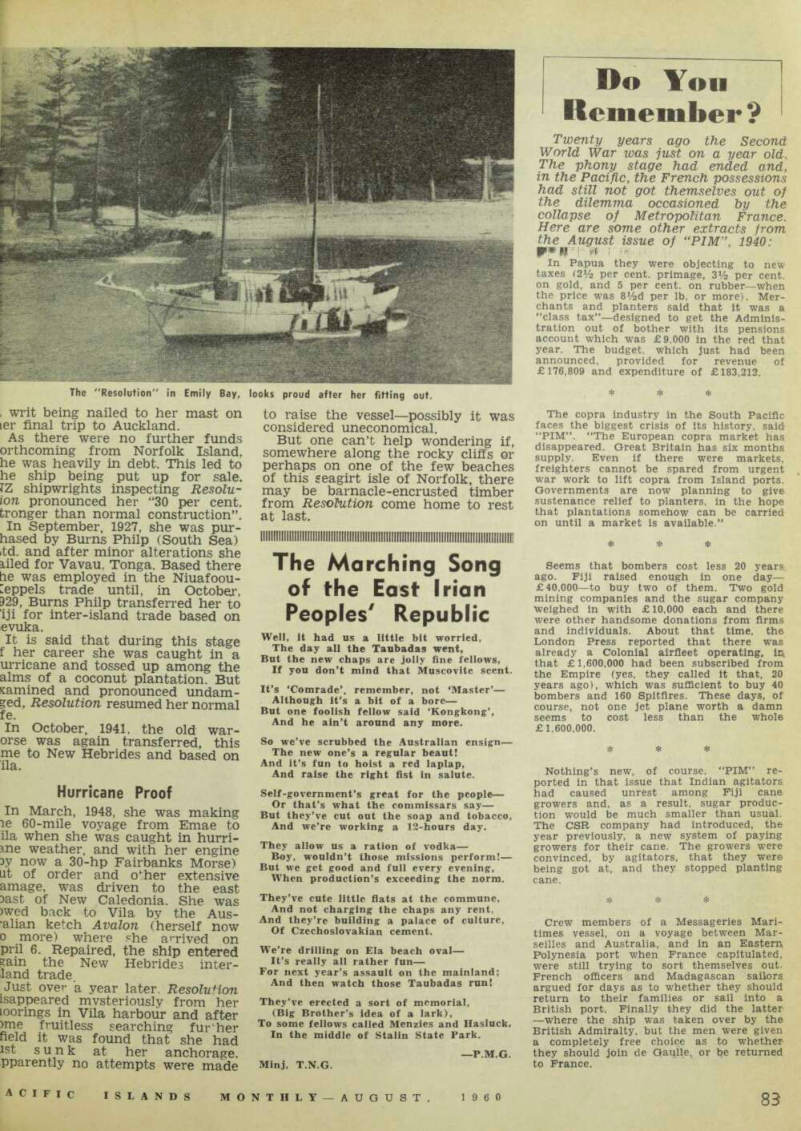 85
85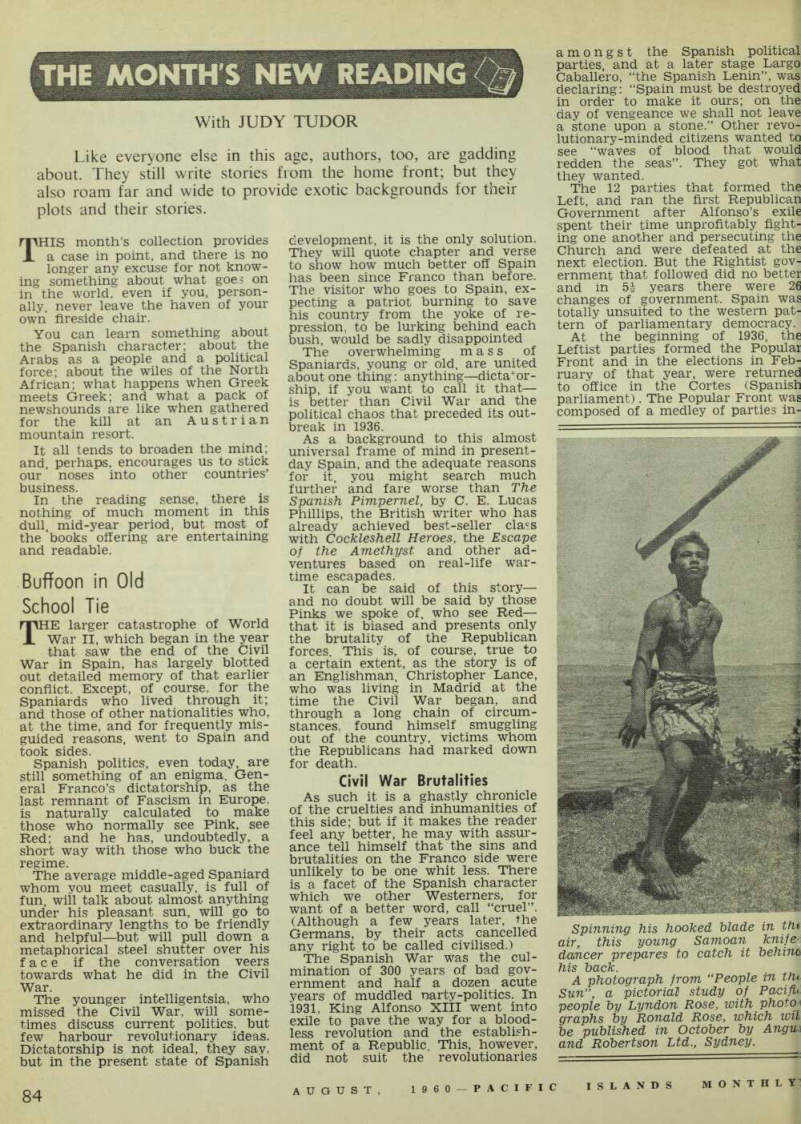 86
86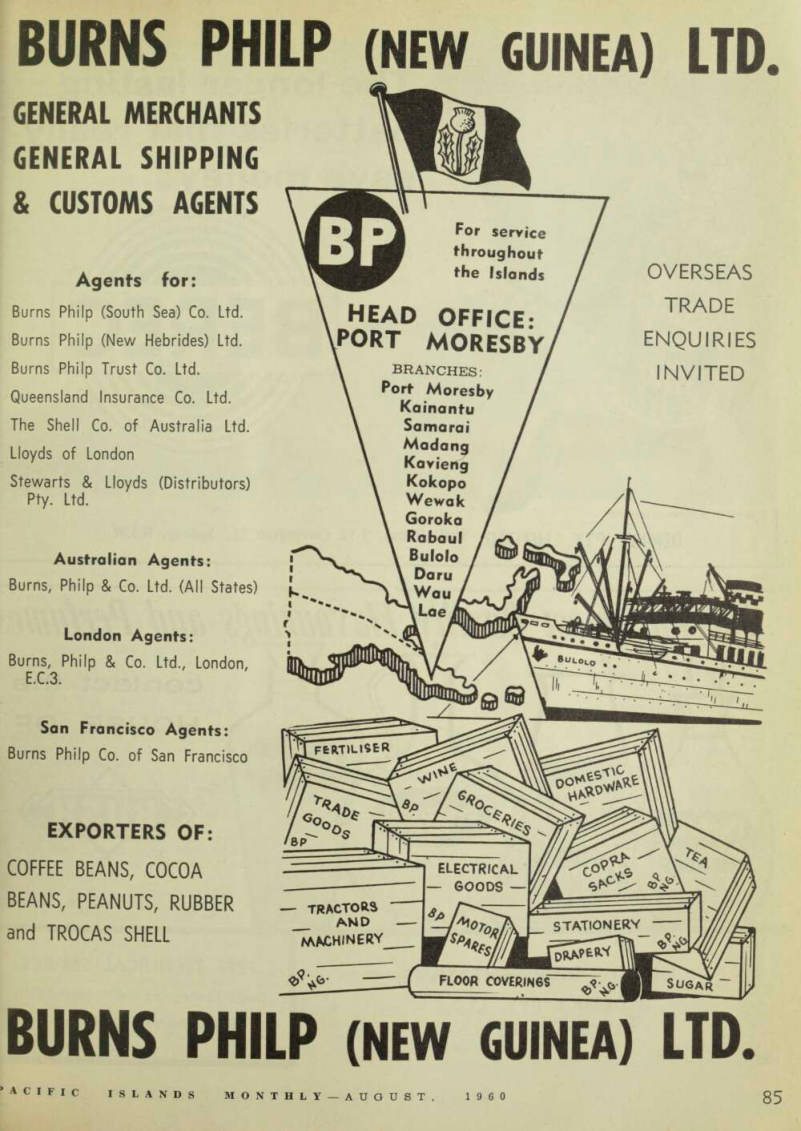 87
87 88
88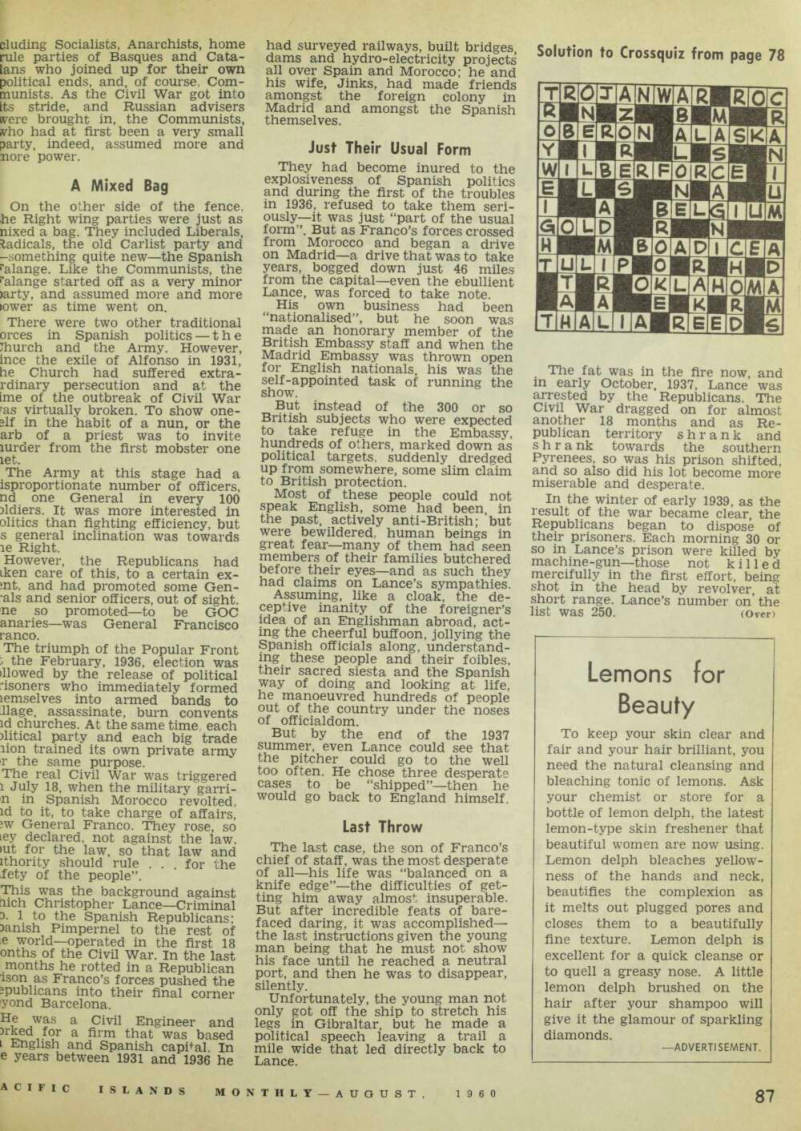 89
89 90
90 91
91 92
92 93
93 94
94 95
95 96
96 97
97 98
98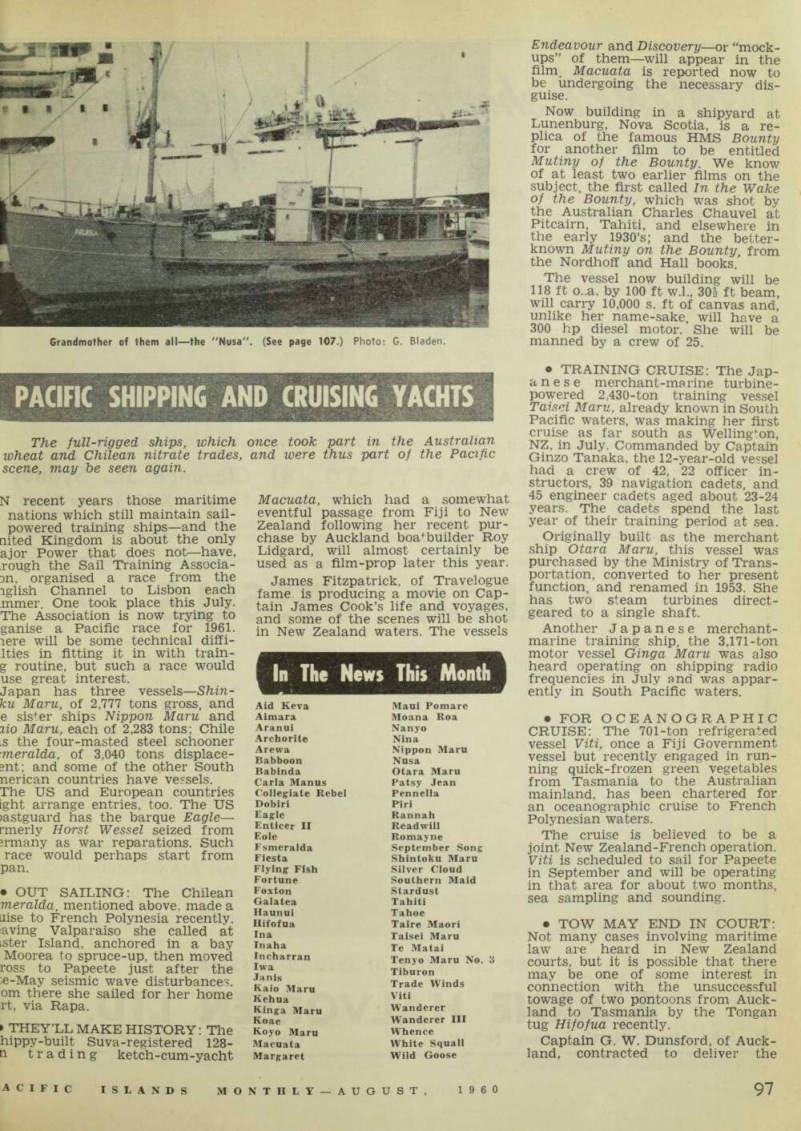 99
99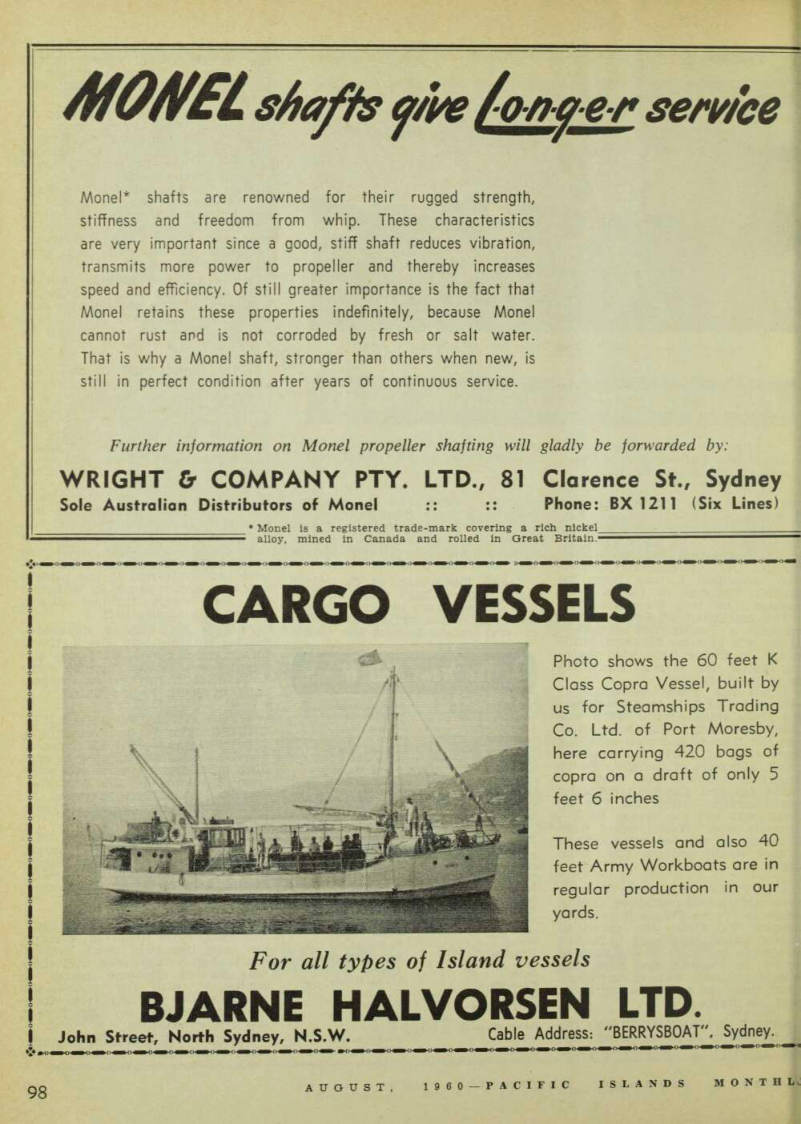 100
100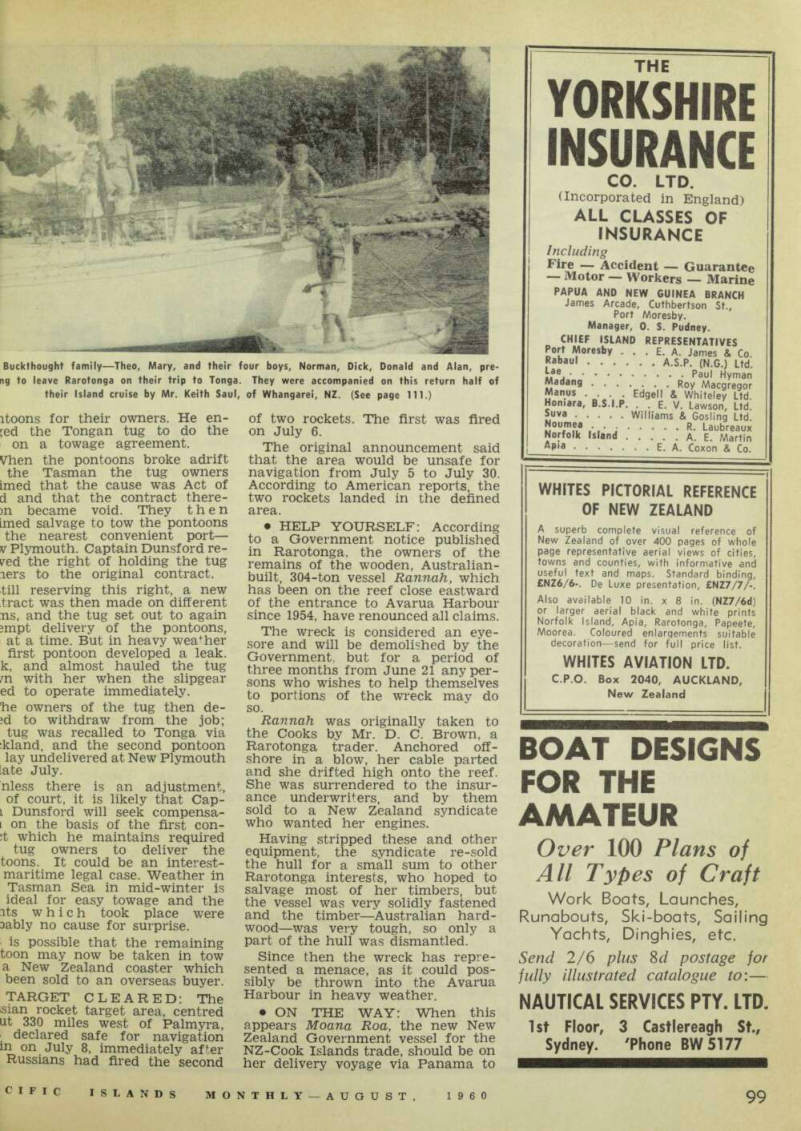 101
101 102
102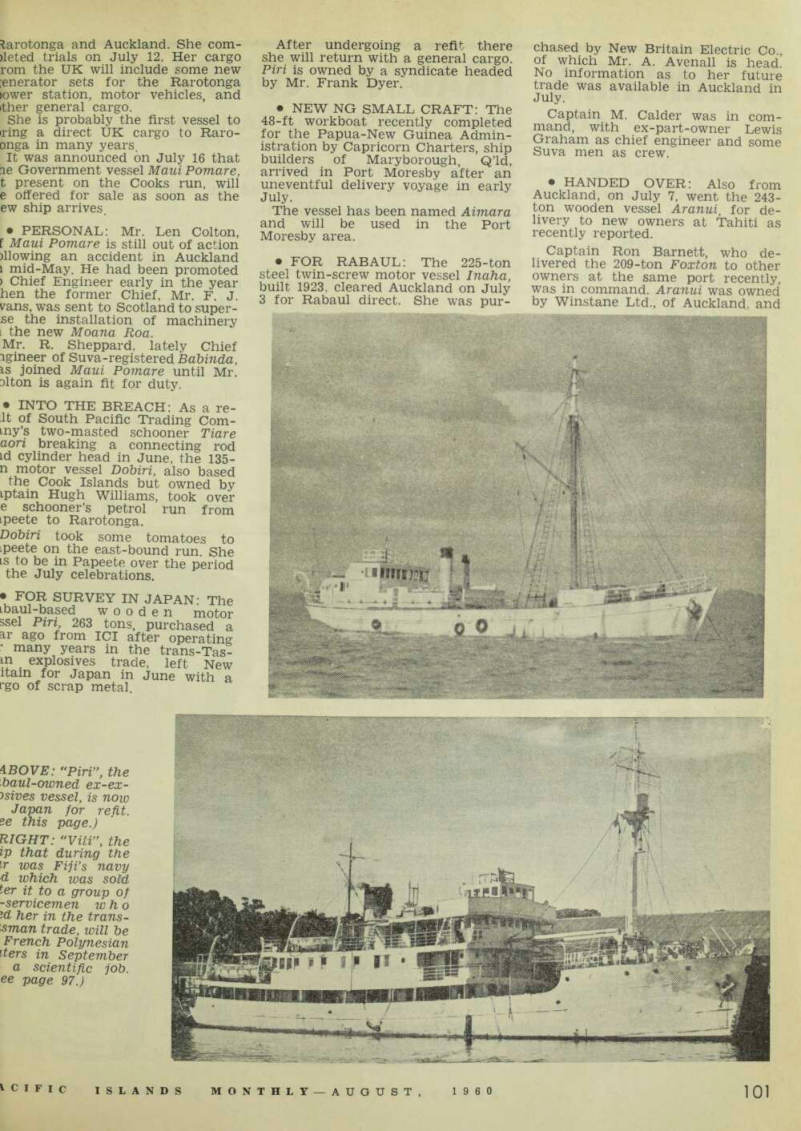 103
103 104
104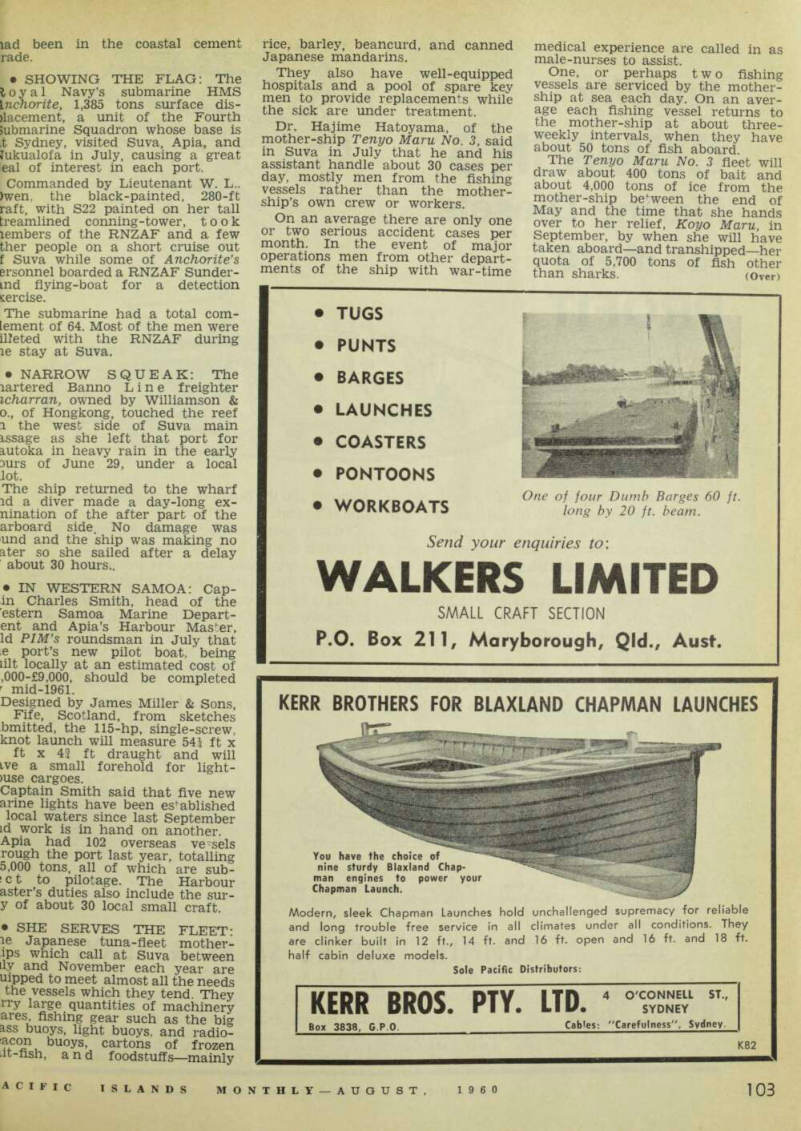 105
105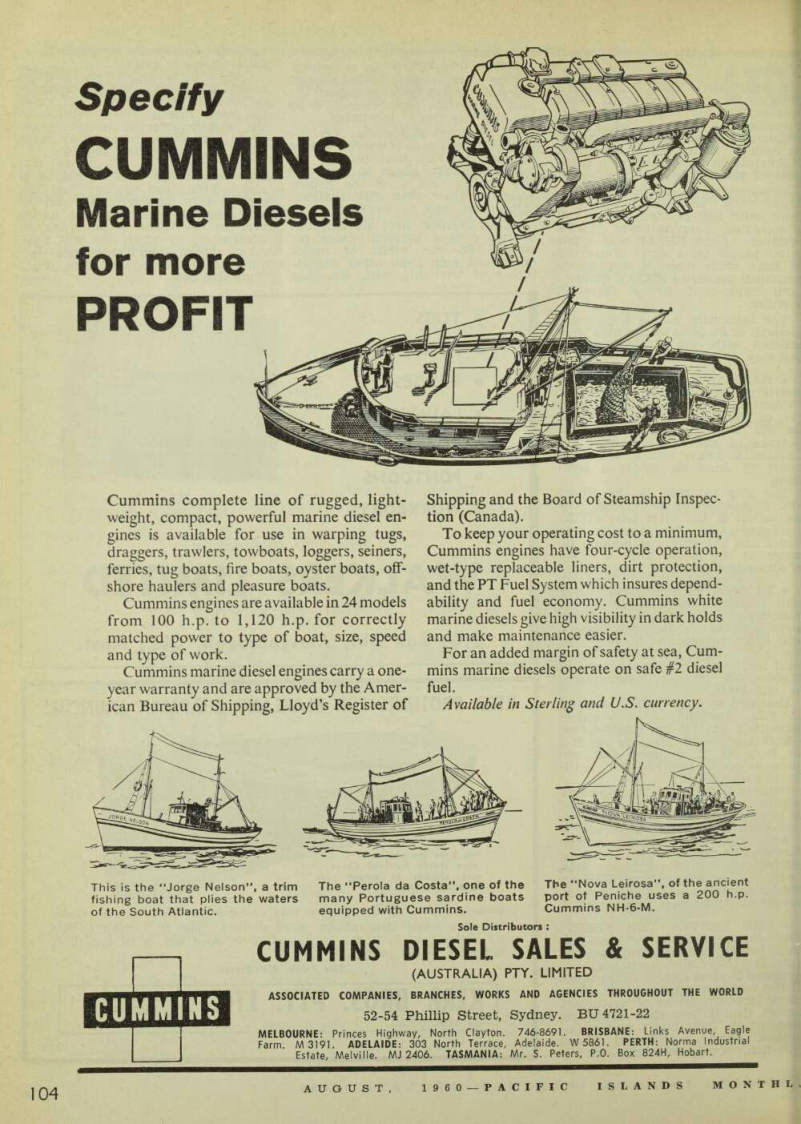 106
106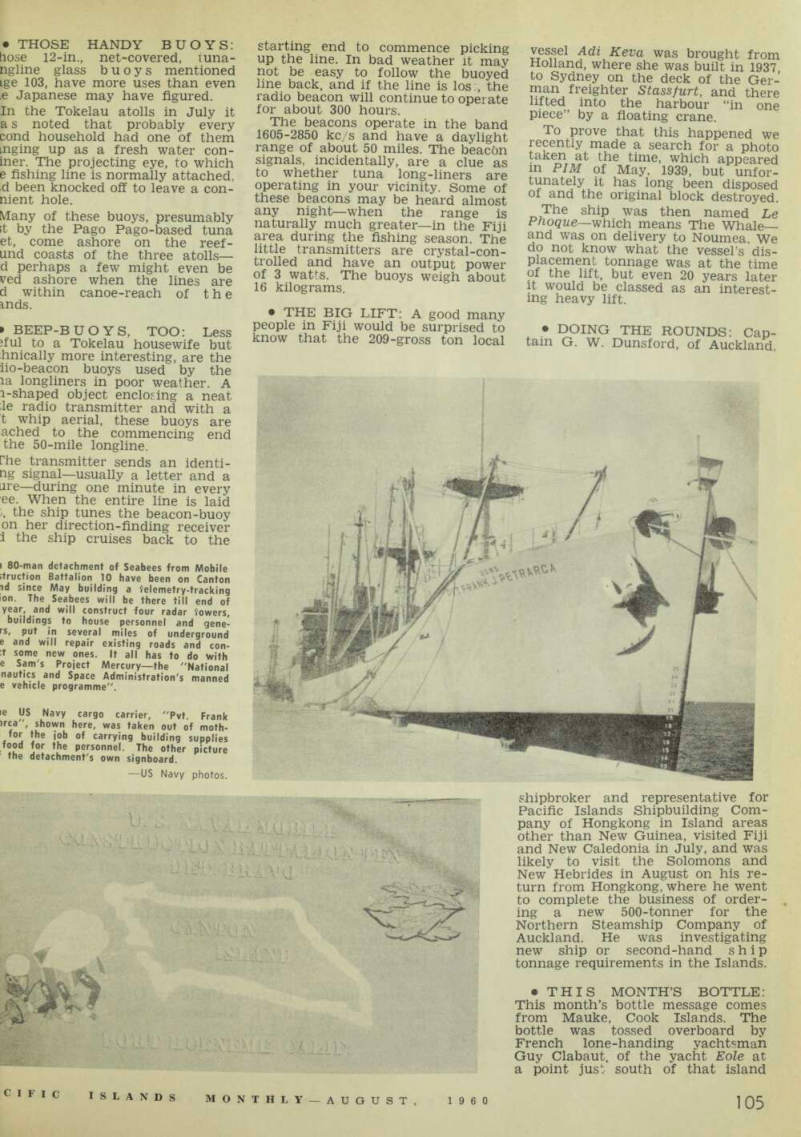 107
107 108
108 109
109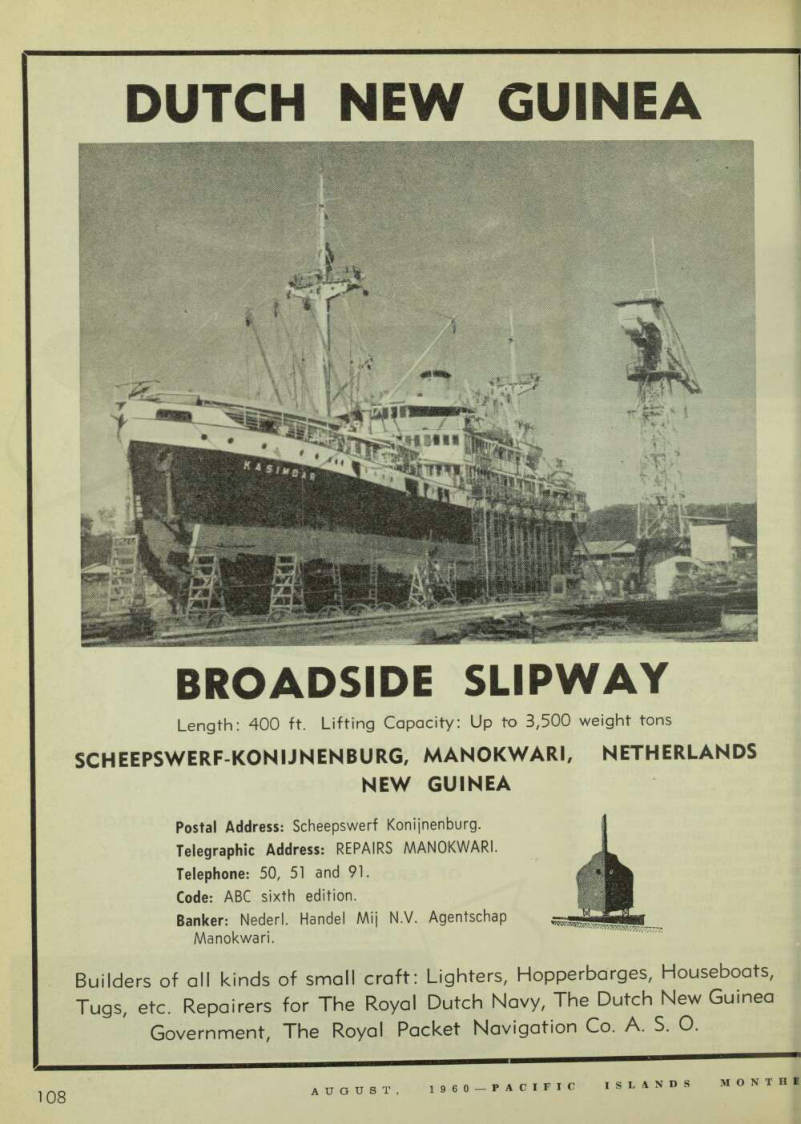 110
110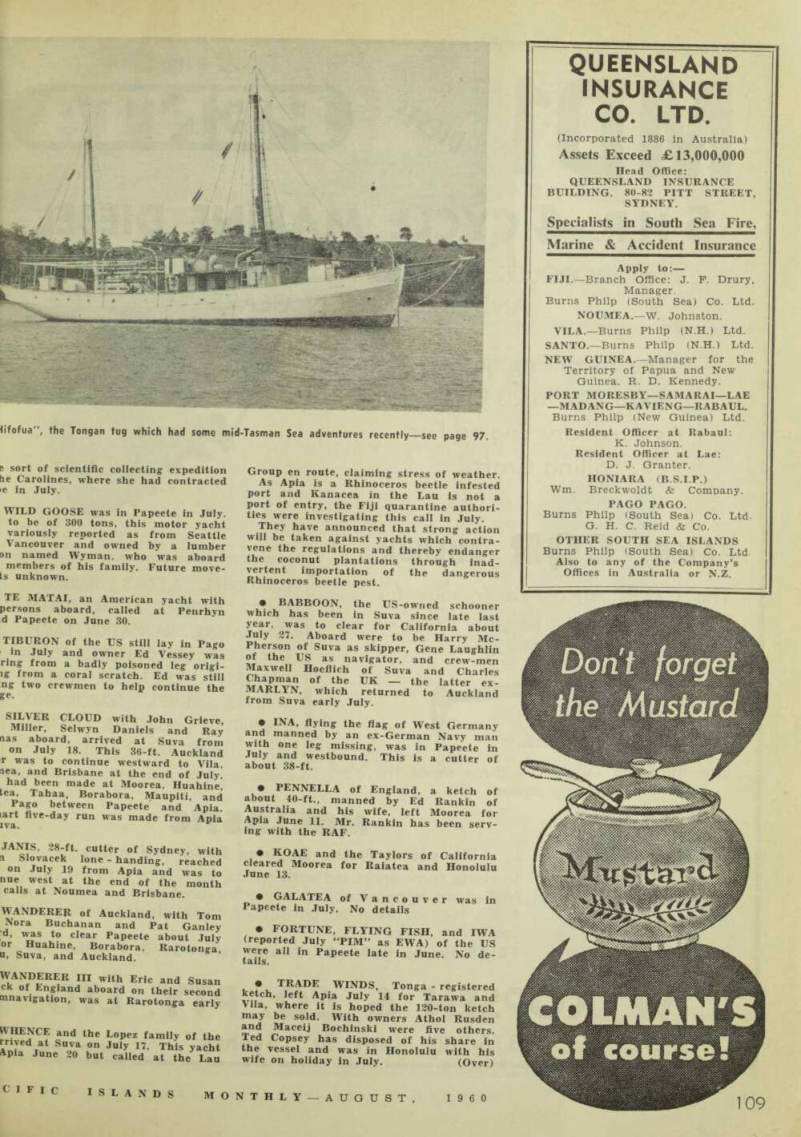 111
111 112
112 113
113 114
114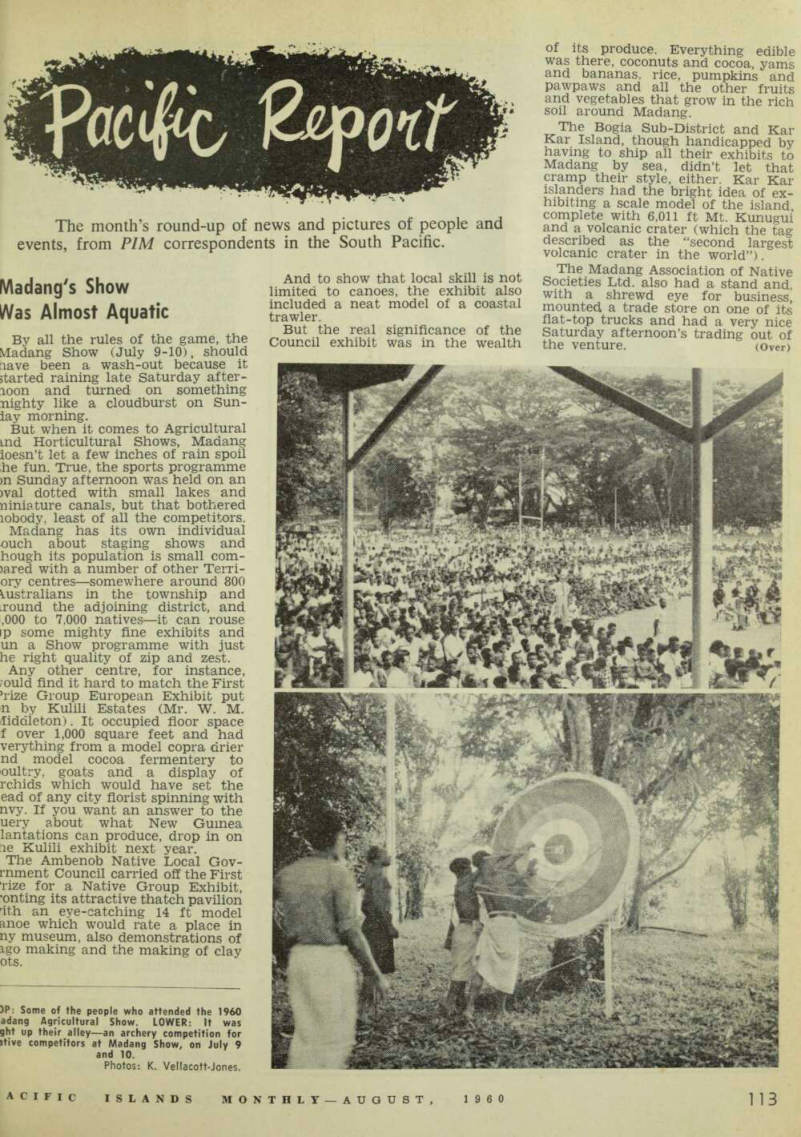 115
115 116
116 117
117 118
118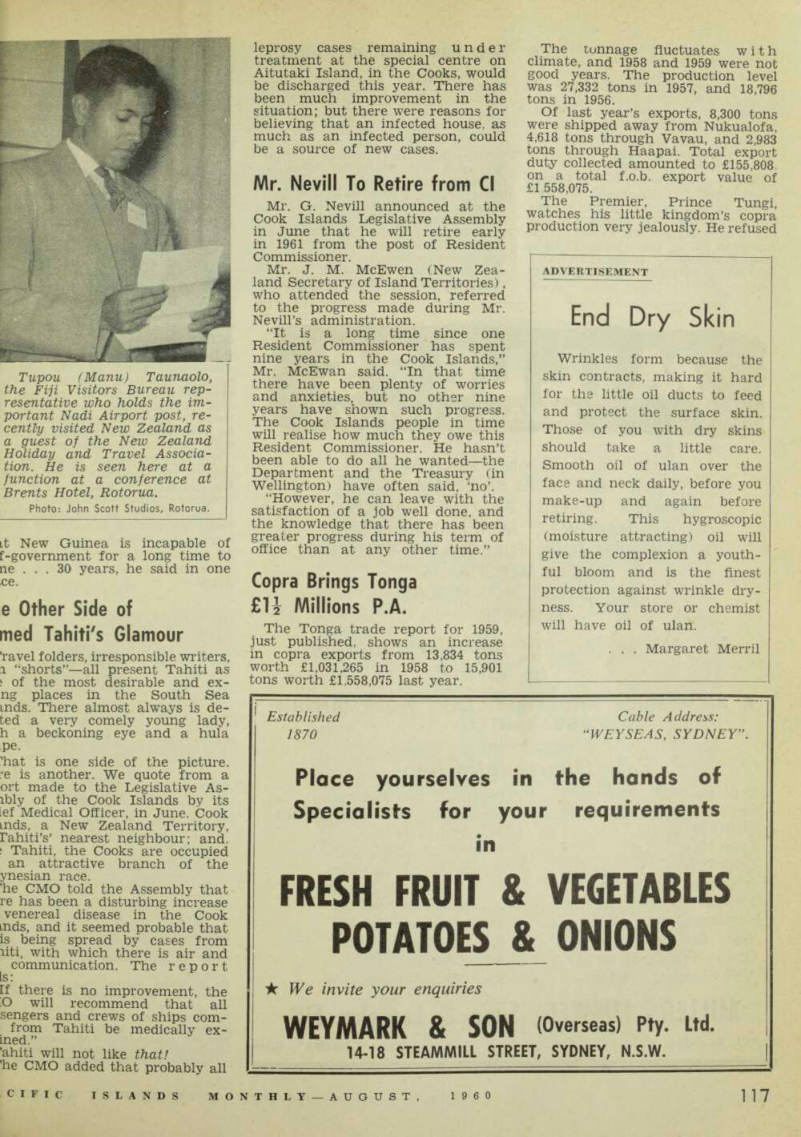 119
119 120
120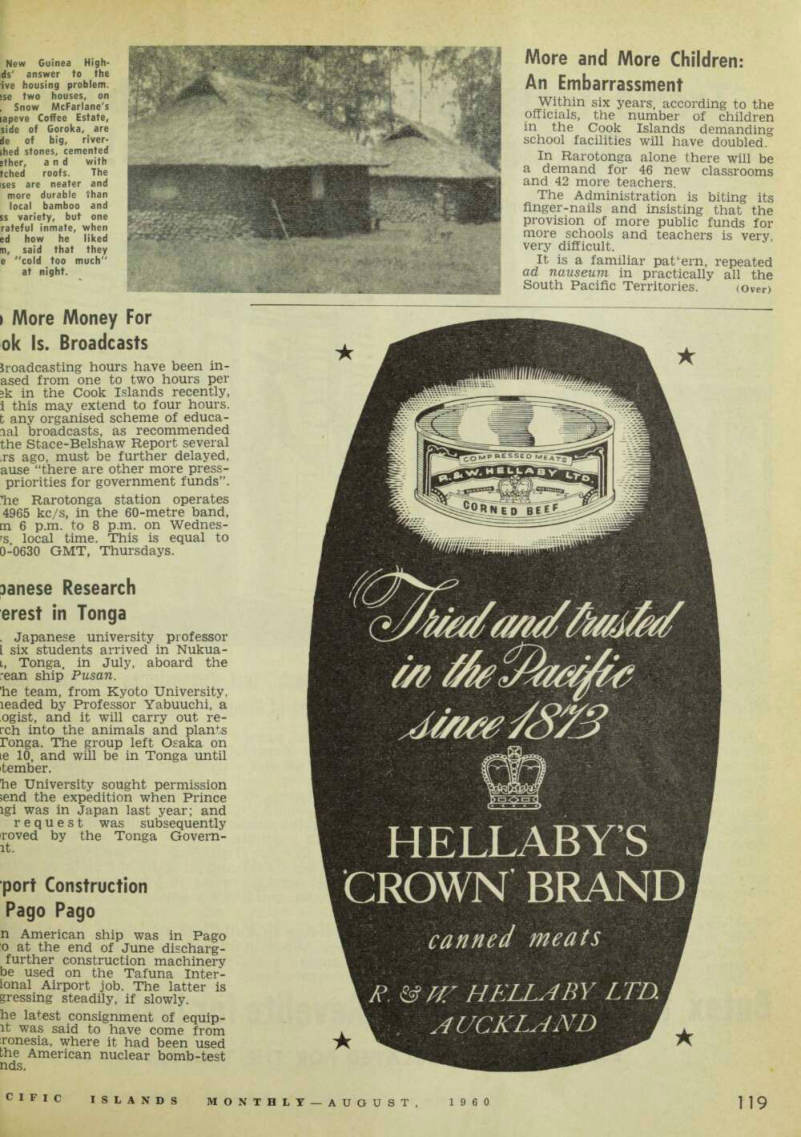 121
121 122
122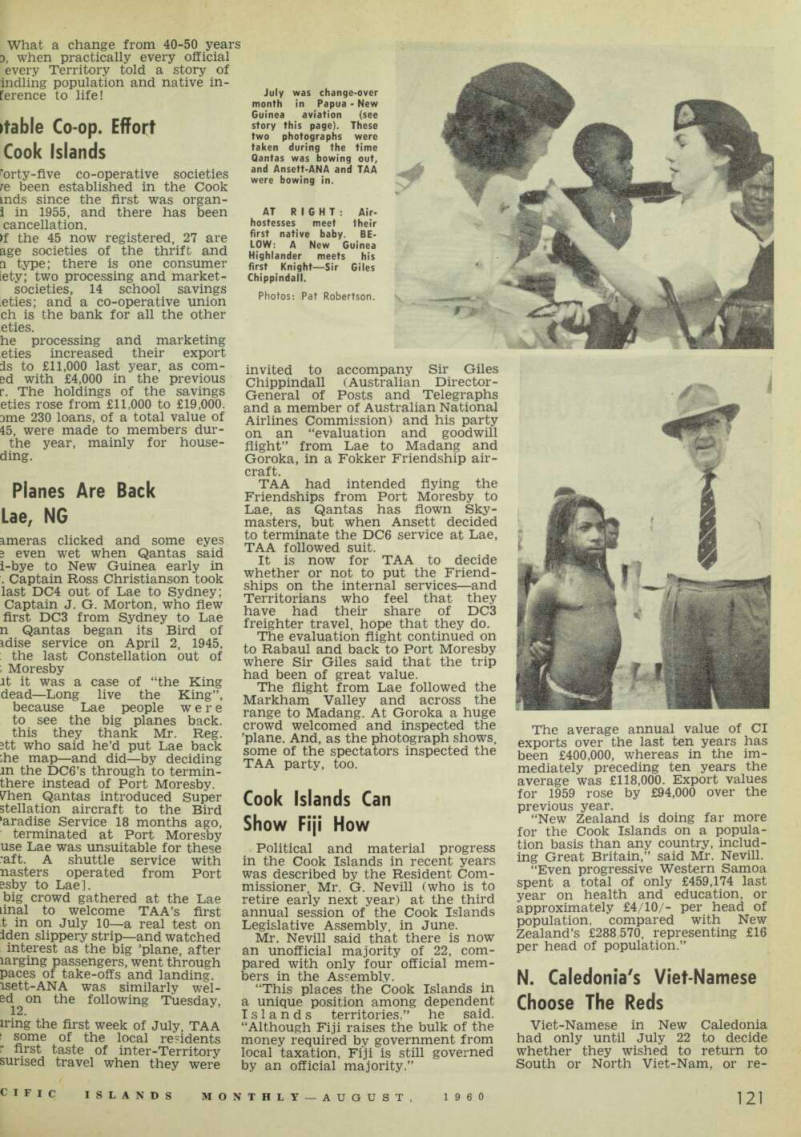 123
123 124
124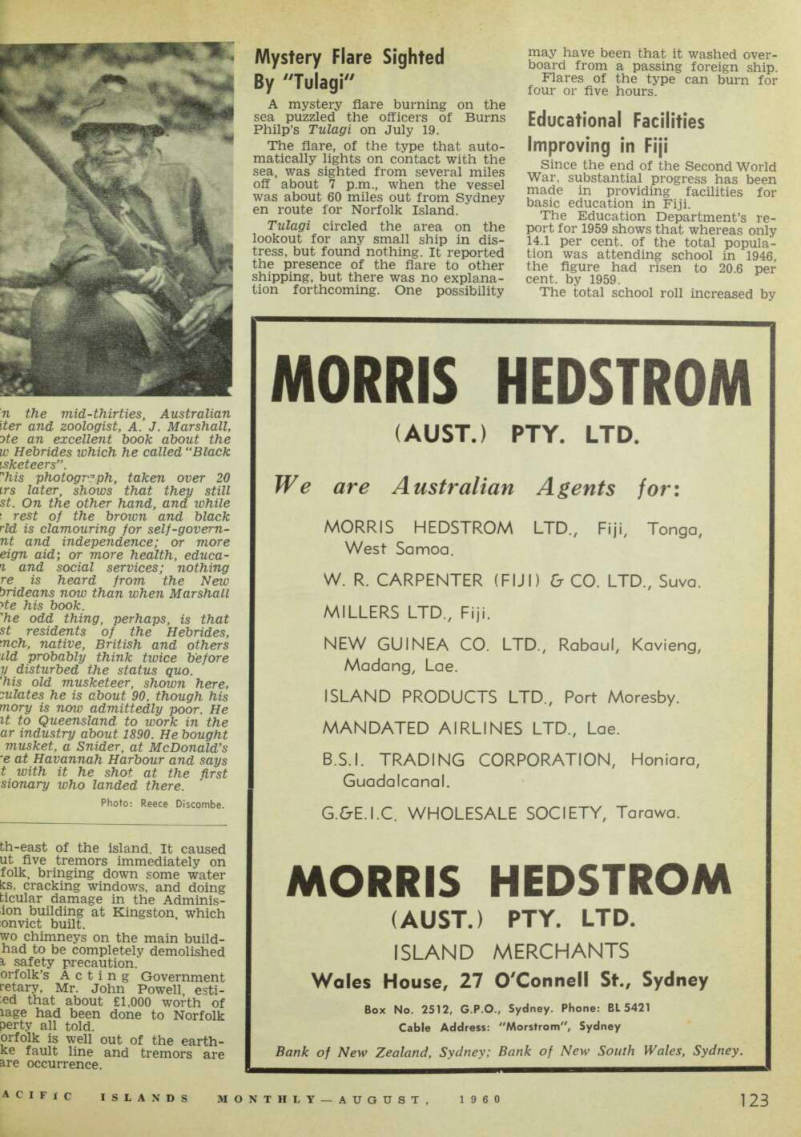 125
125 126
126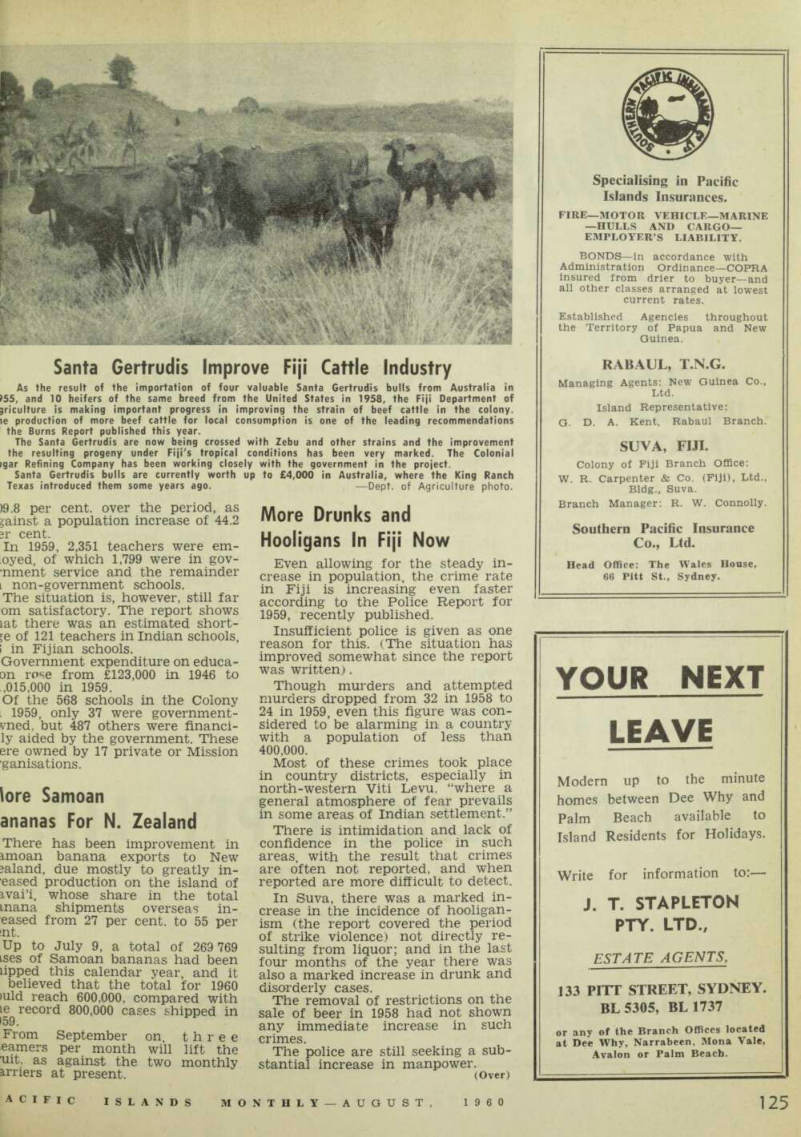 127
127 128
128 129
129 130
130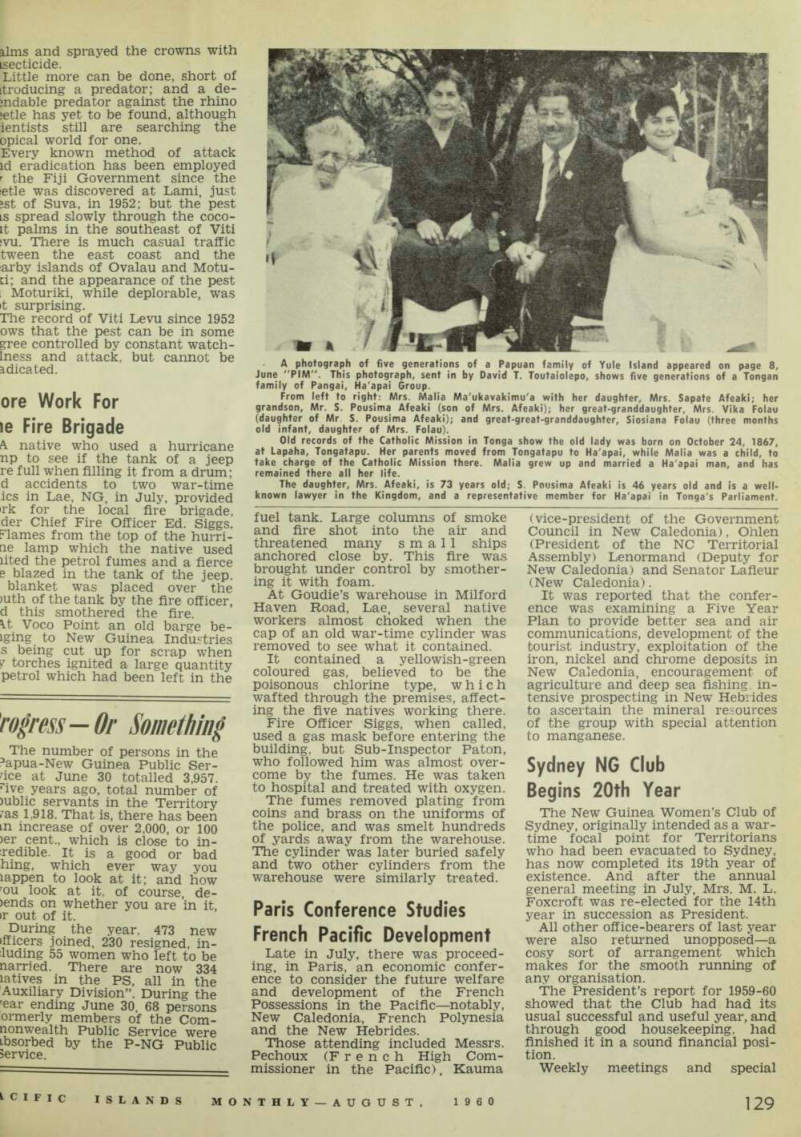 131
131 132
132 133
133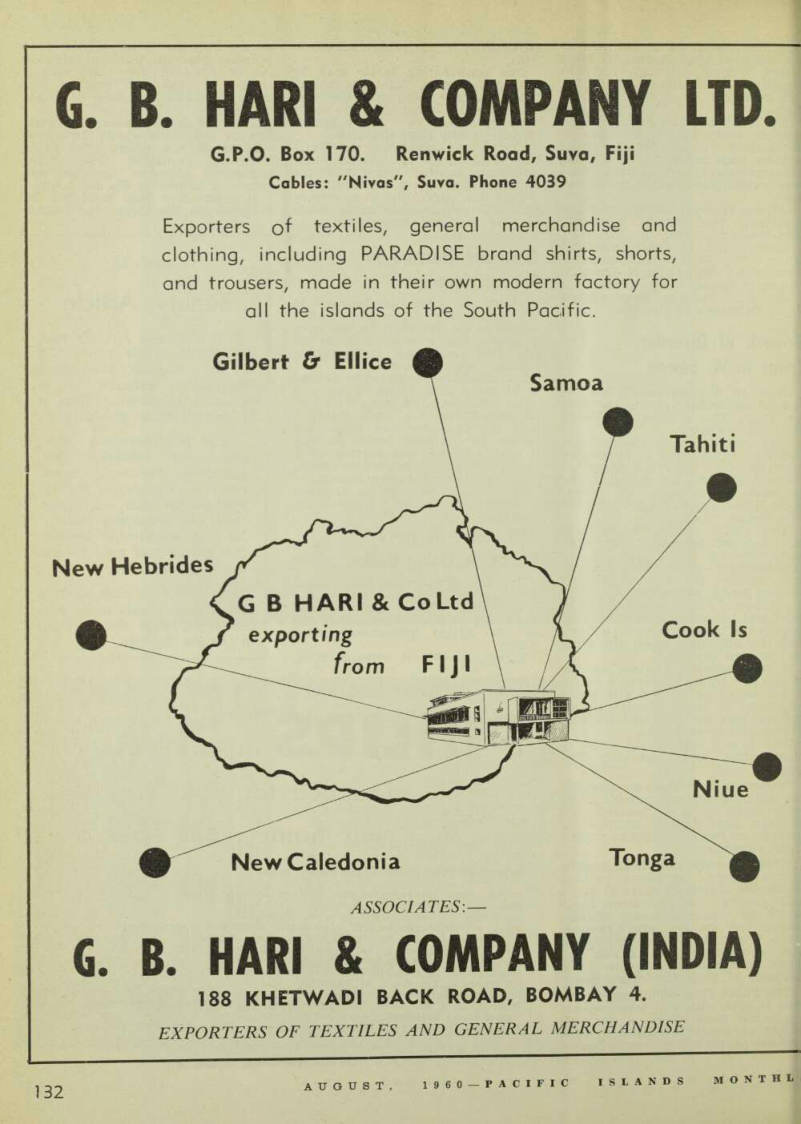 134
134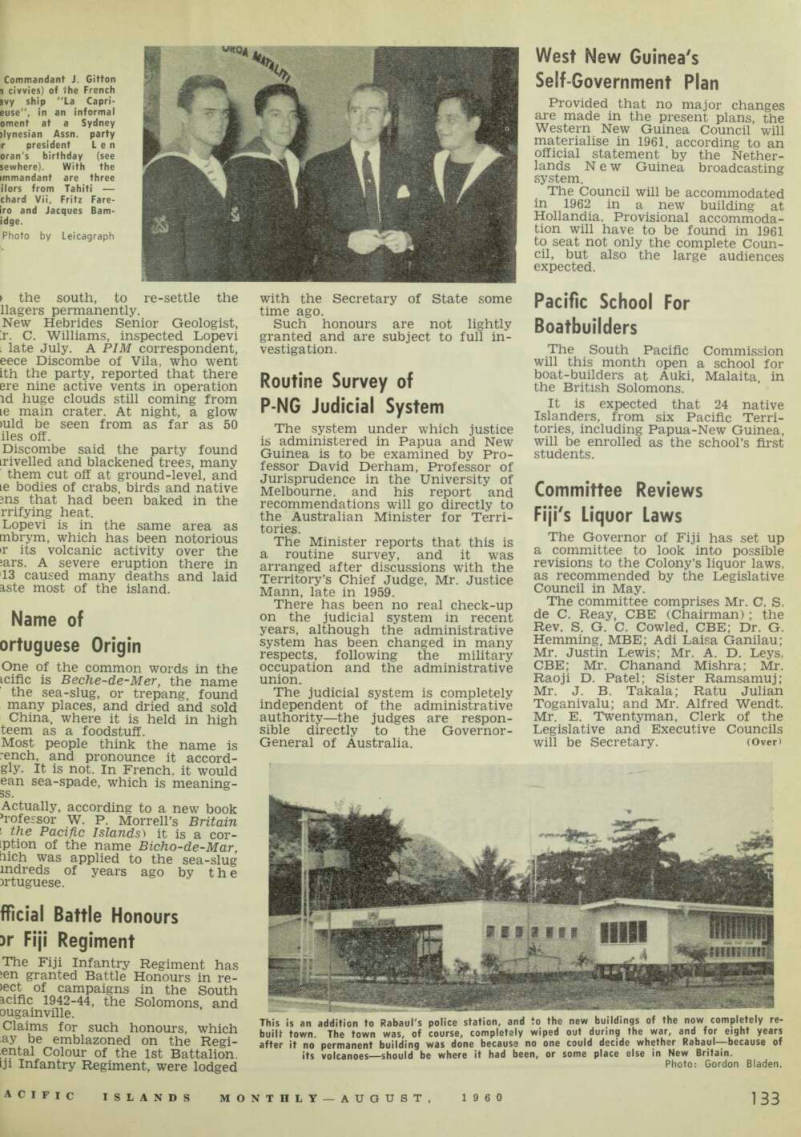 135
135 136
136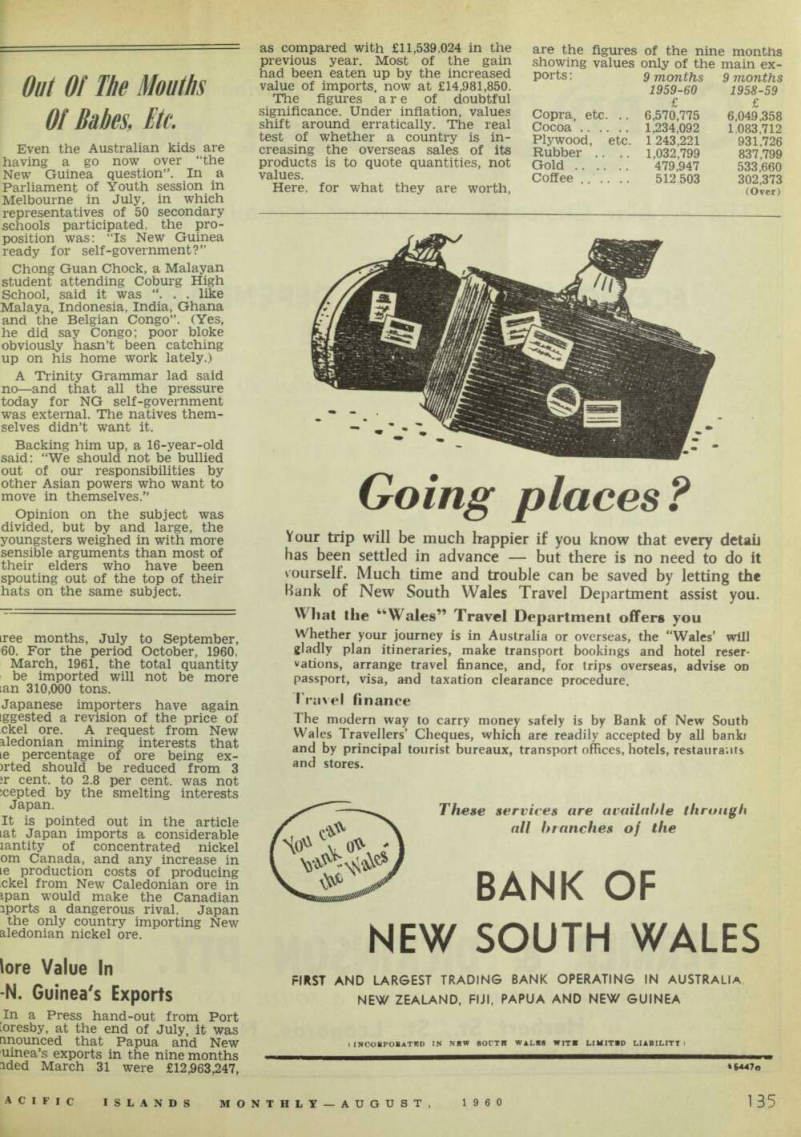 137
137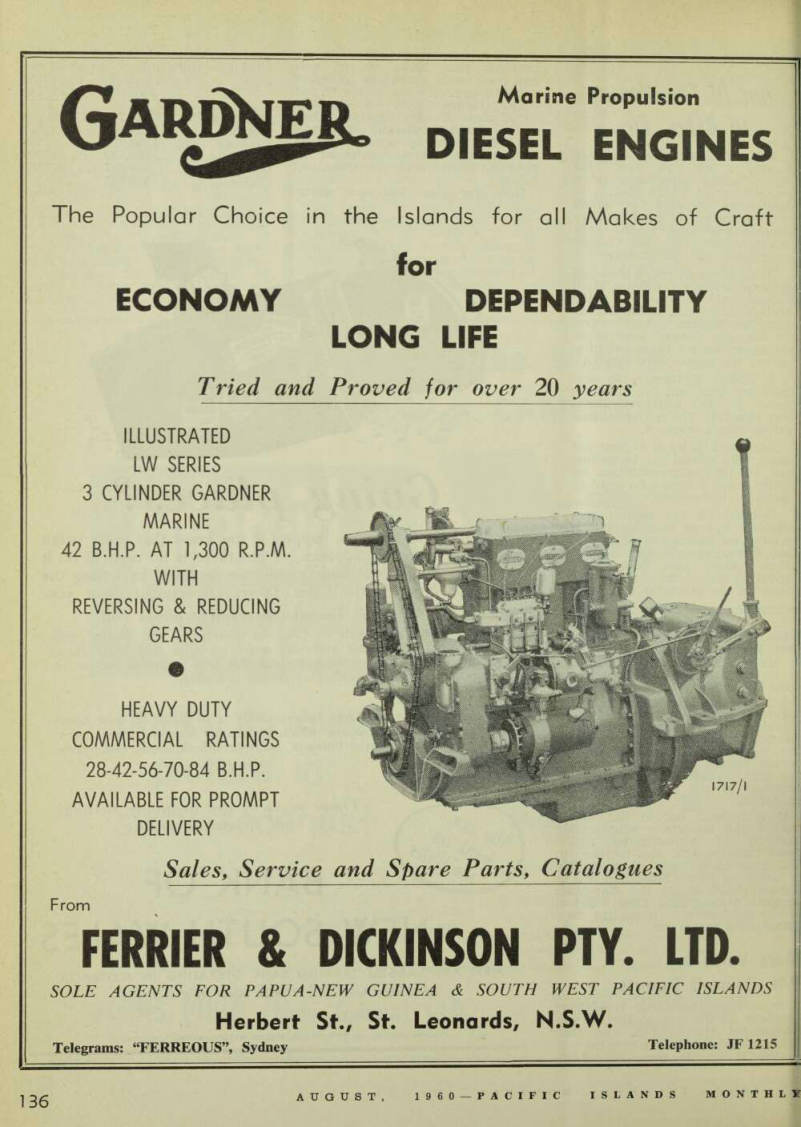 138
138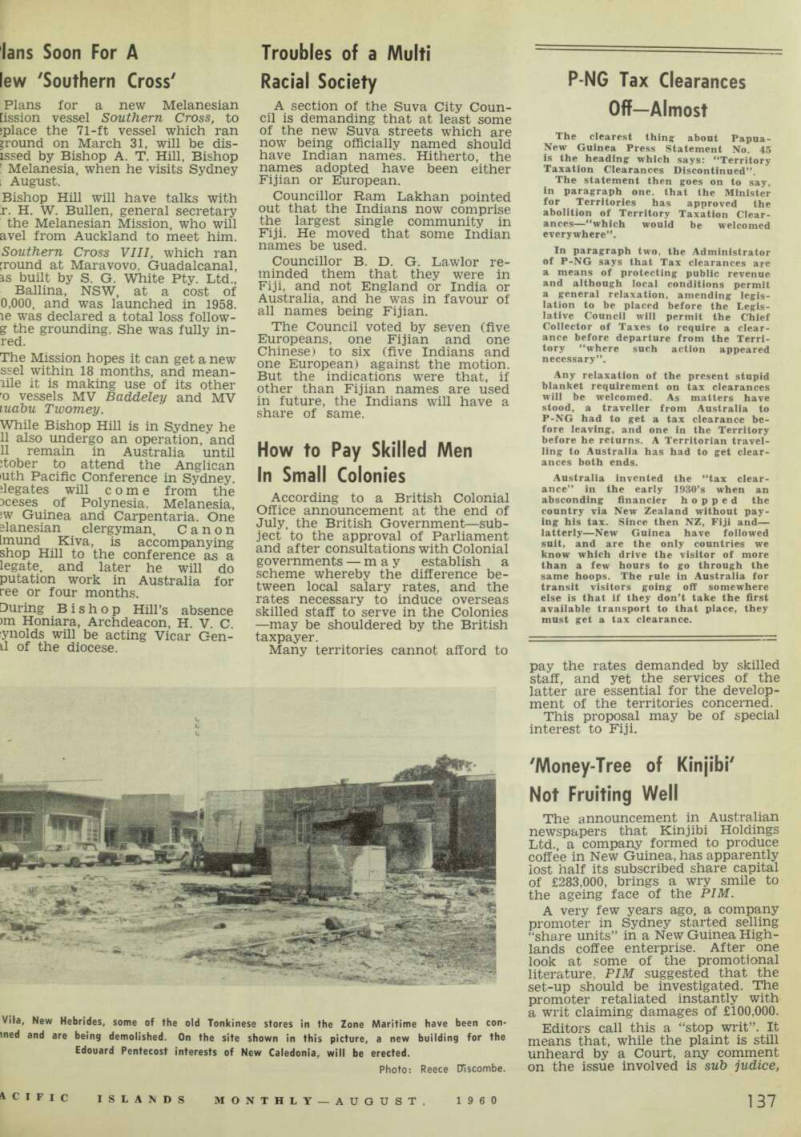 139
139 140
140 141
141 142
142 143
143 144
144 145
145 146
146 147
147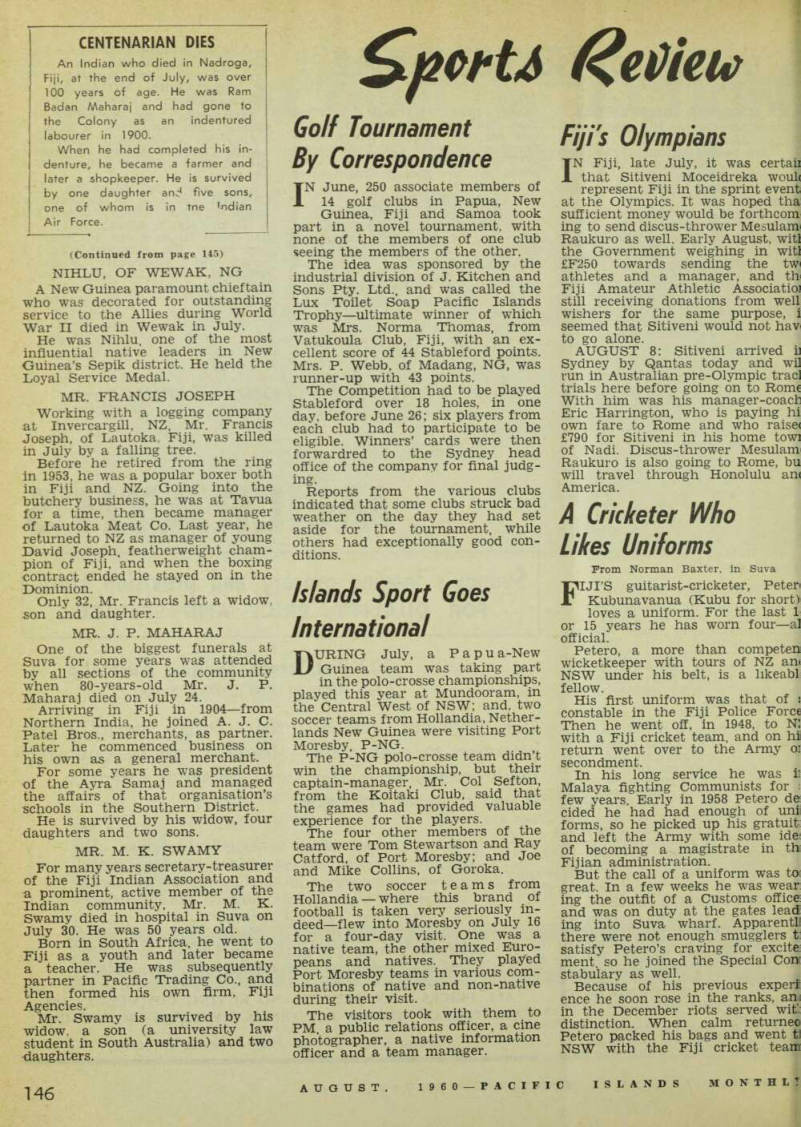 148
148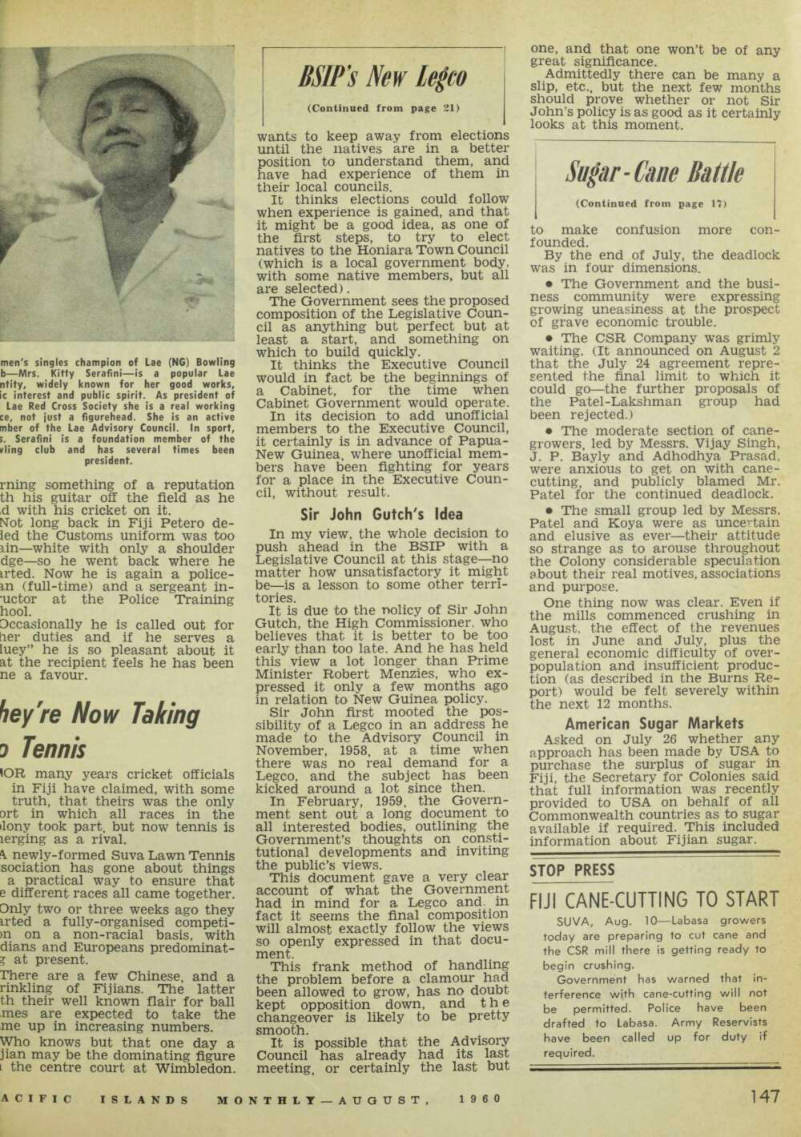 149
149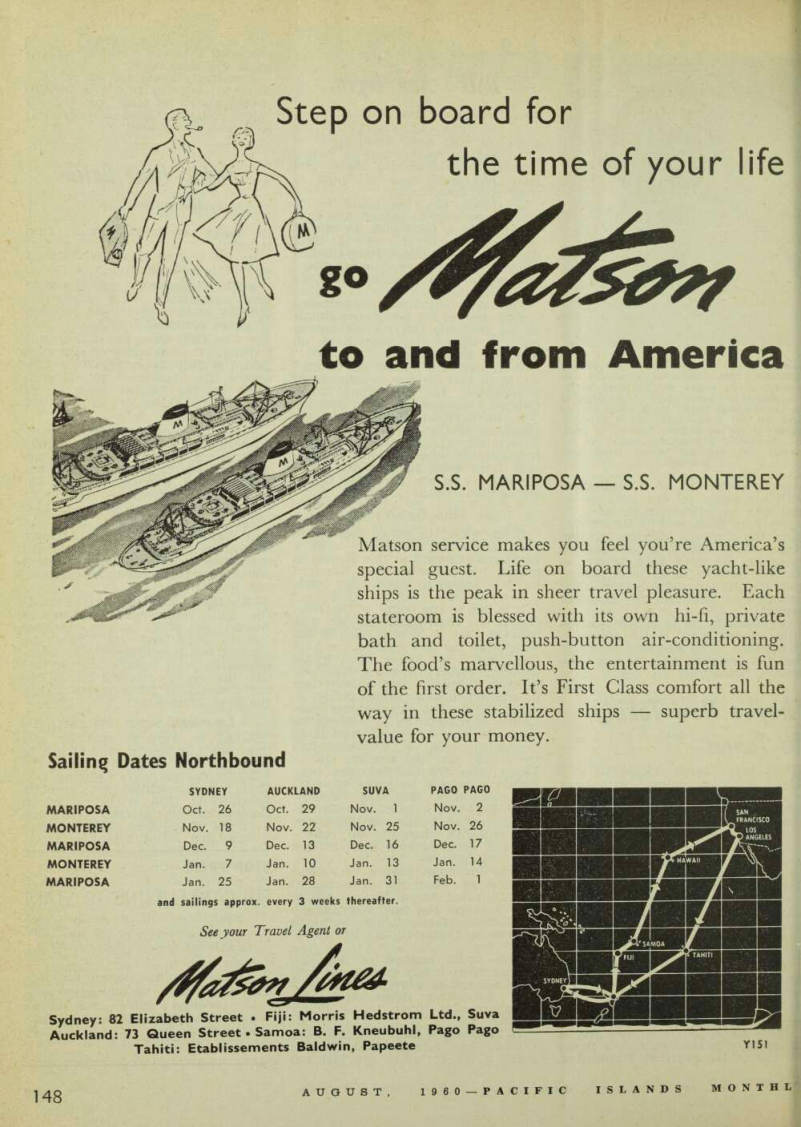 150
150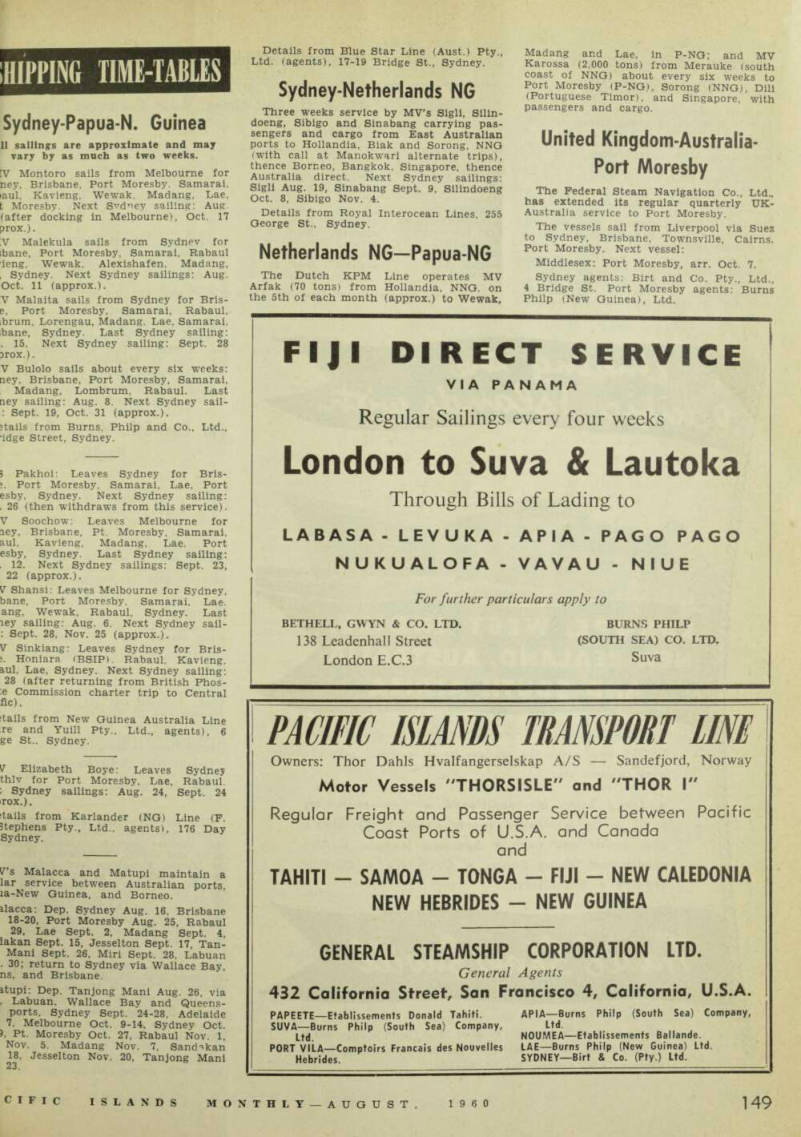 151
151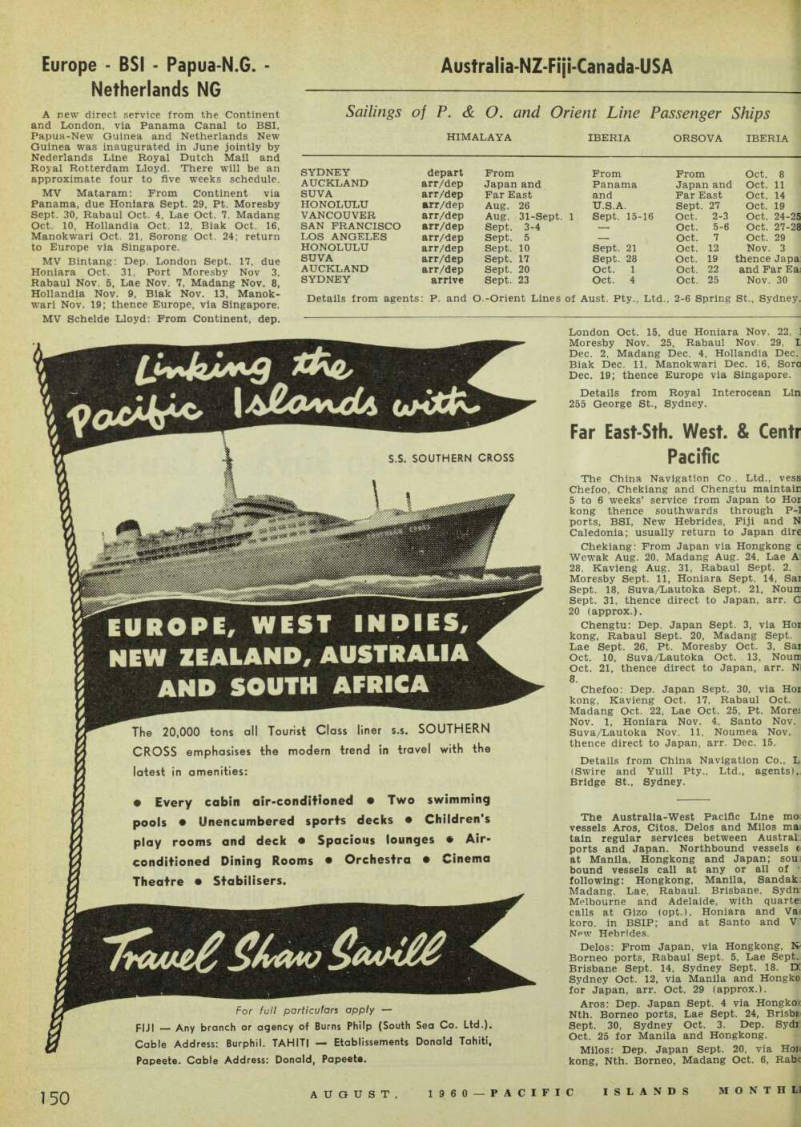 152
152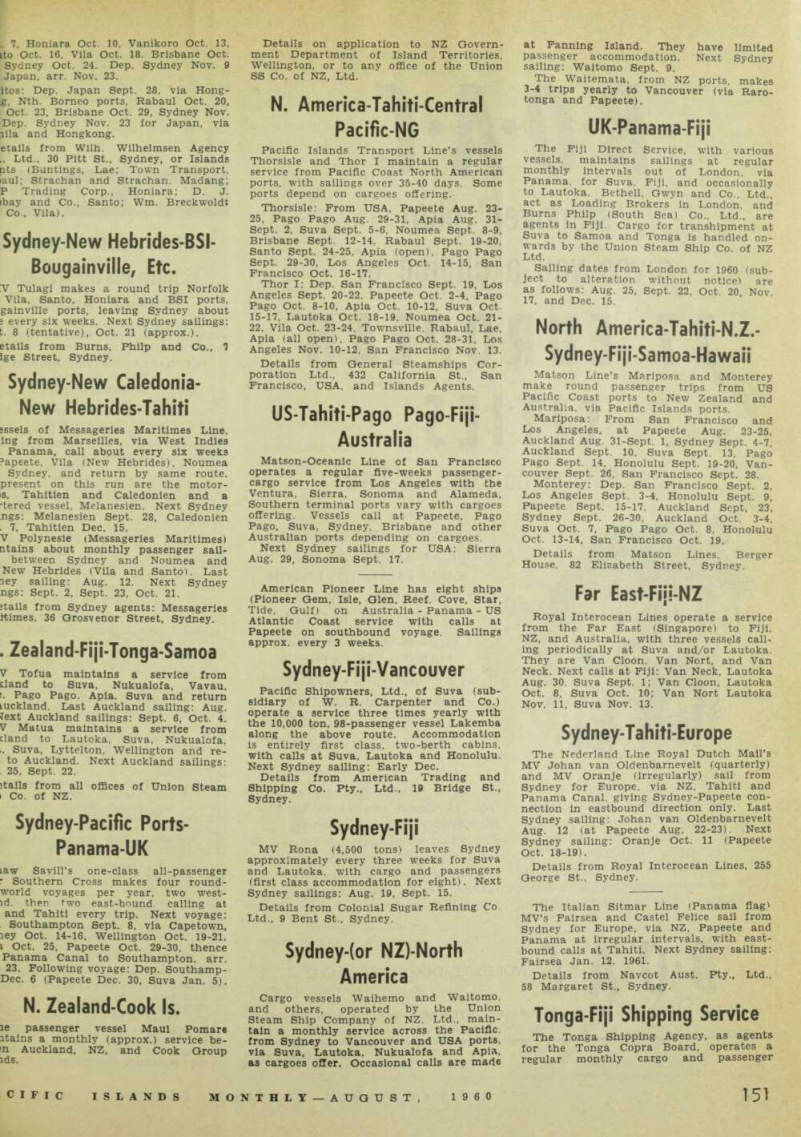 153
153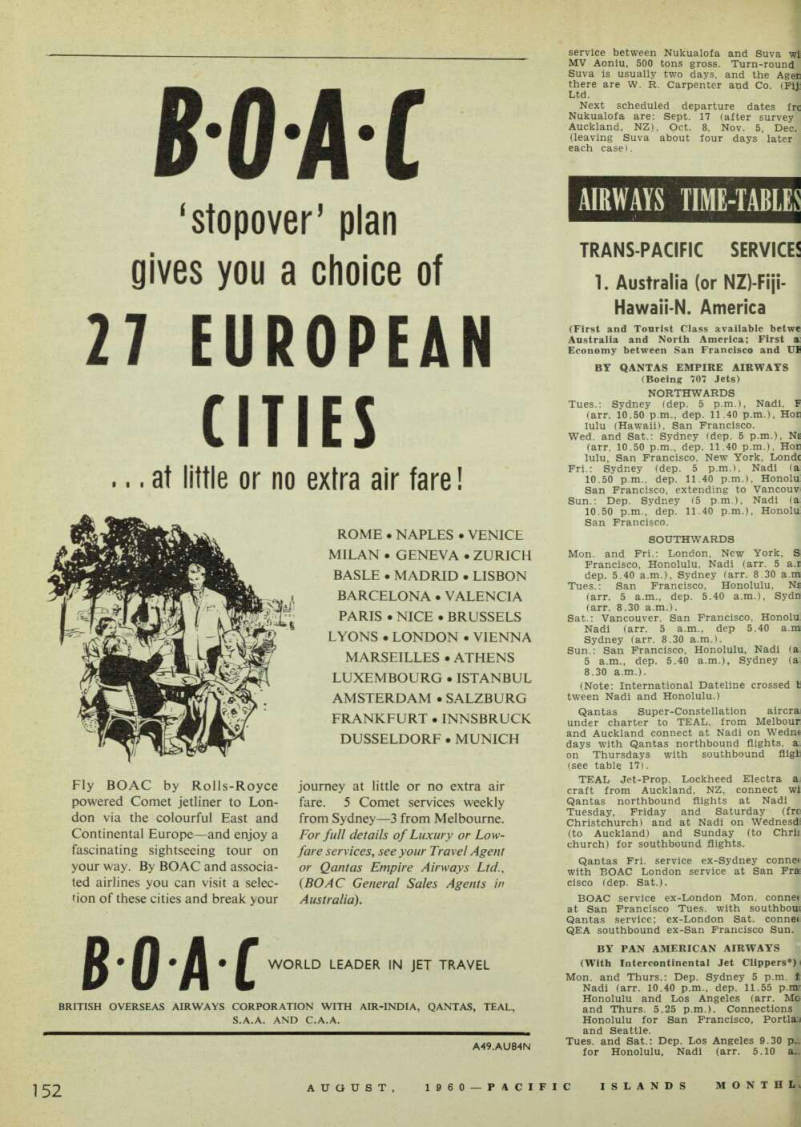 154
154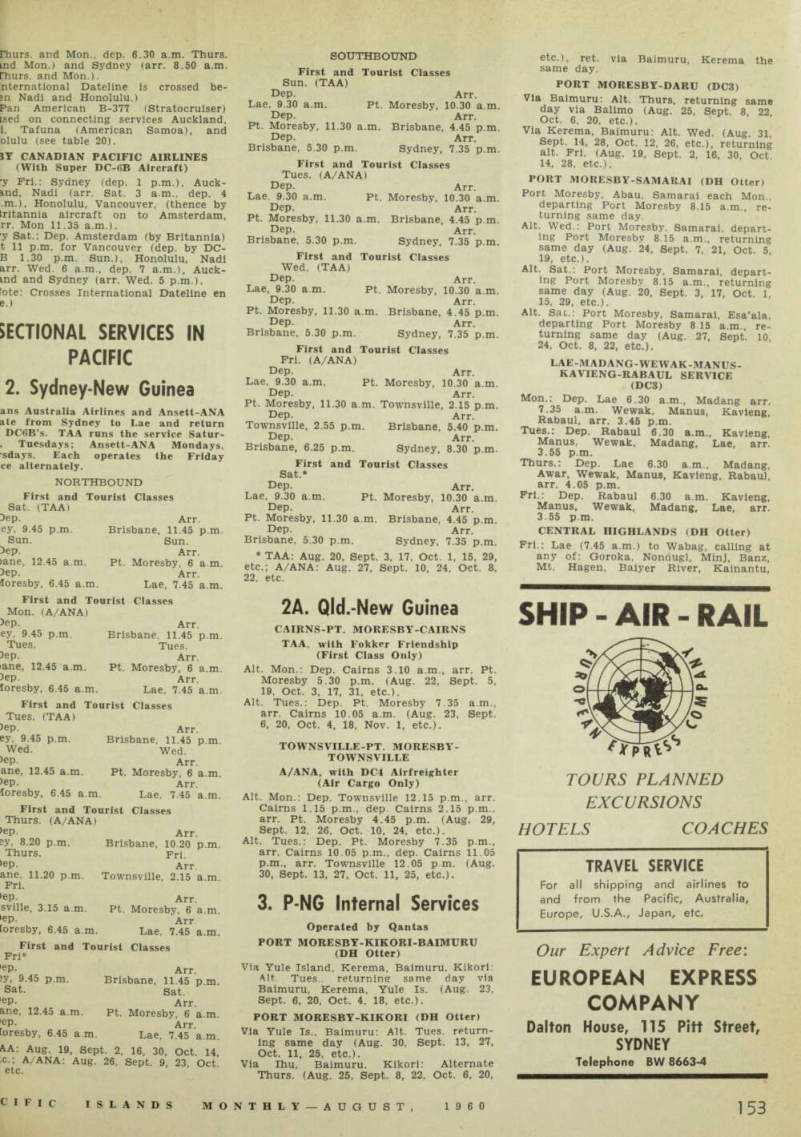 155
155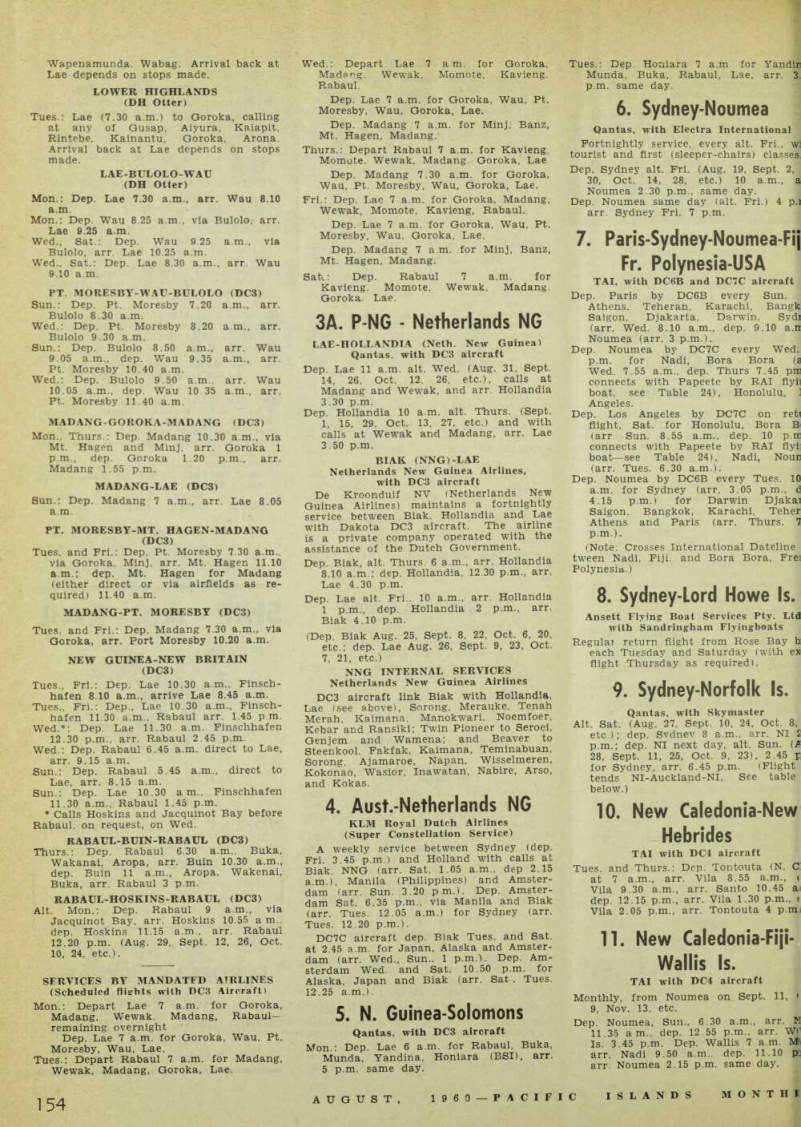 156
156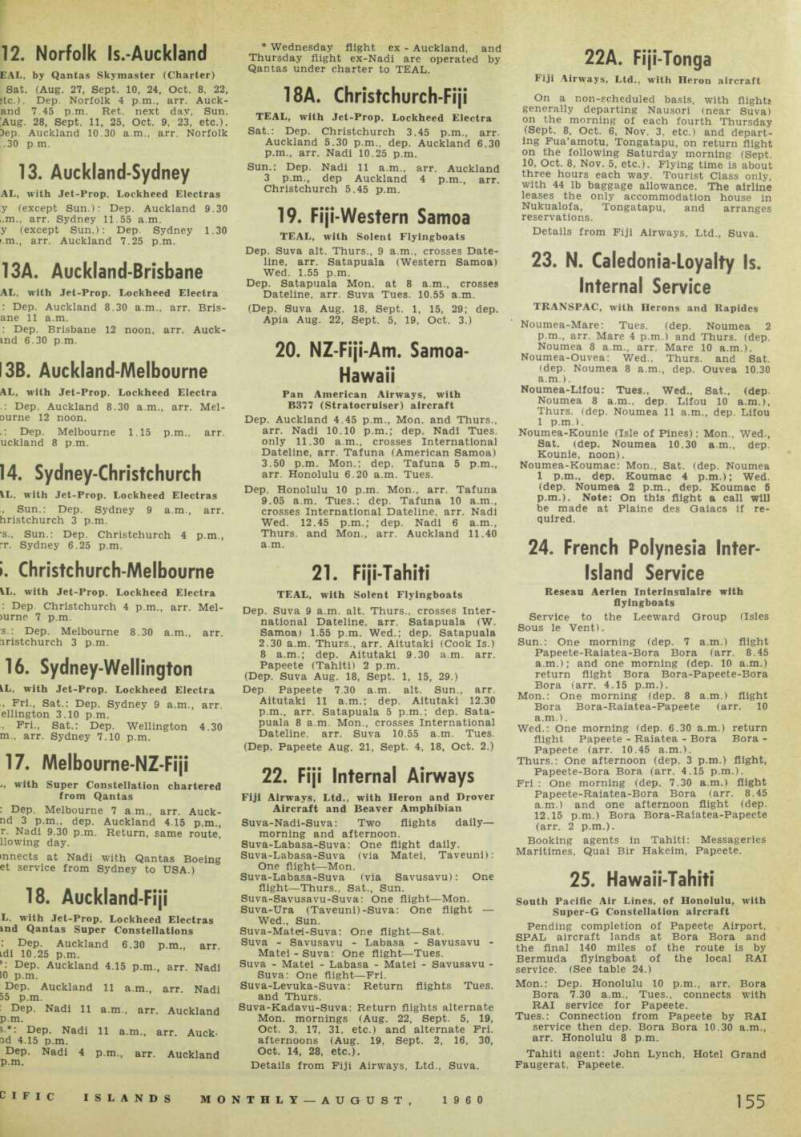 157
157 158
158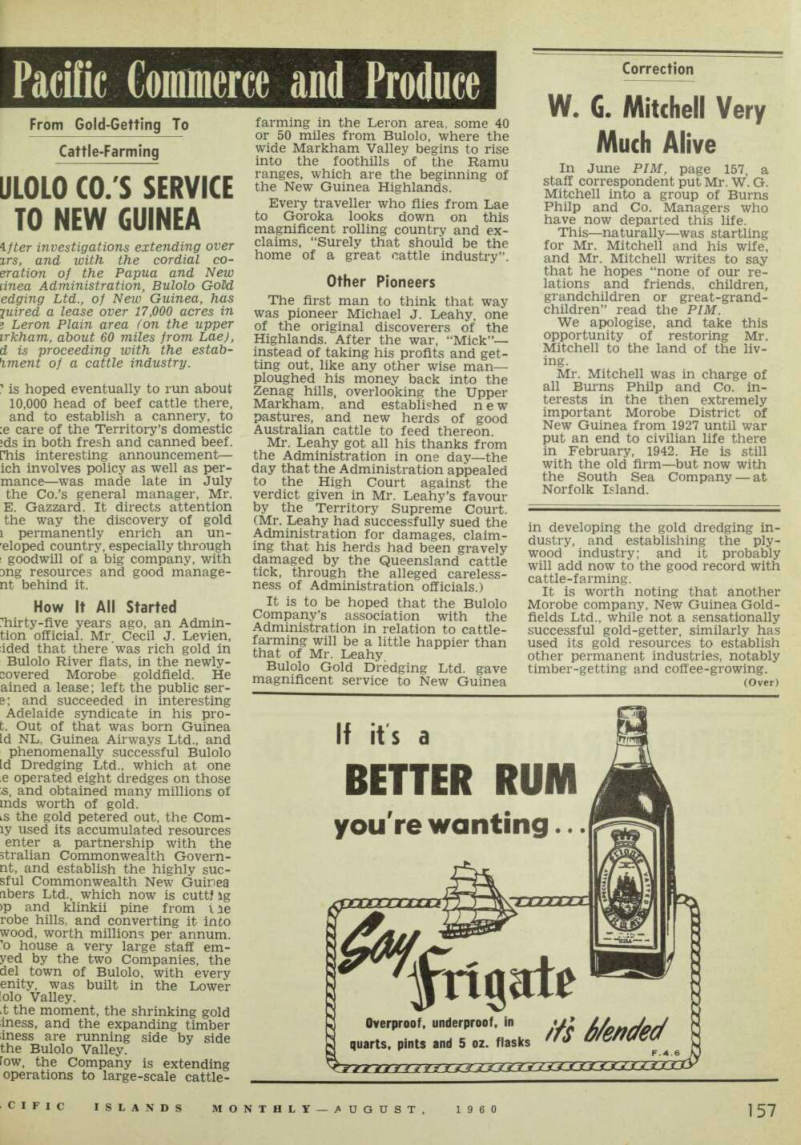 159
159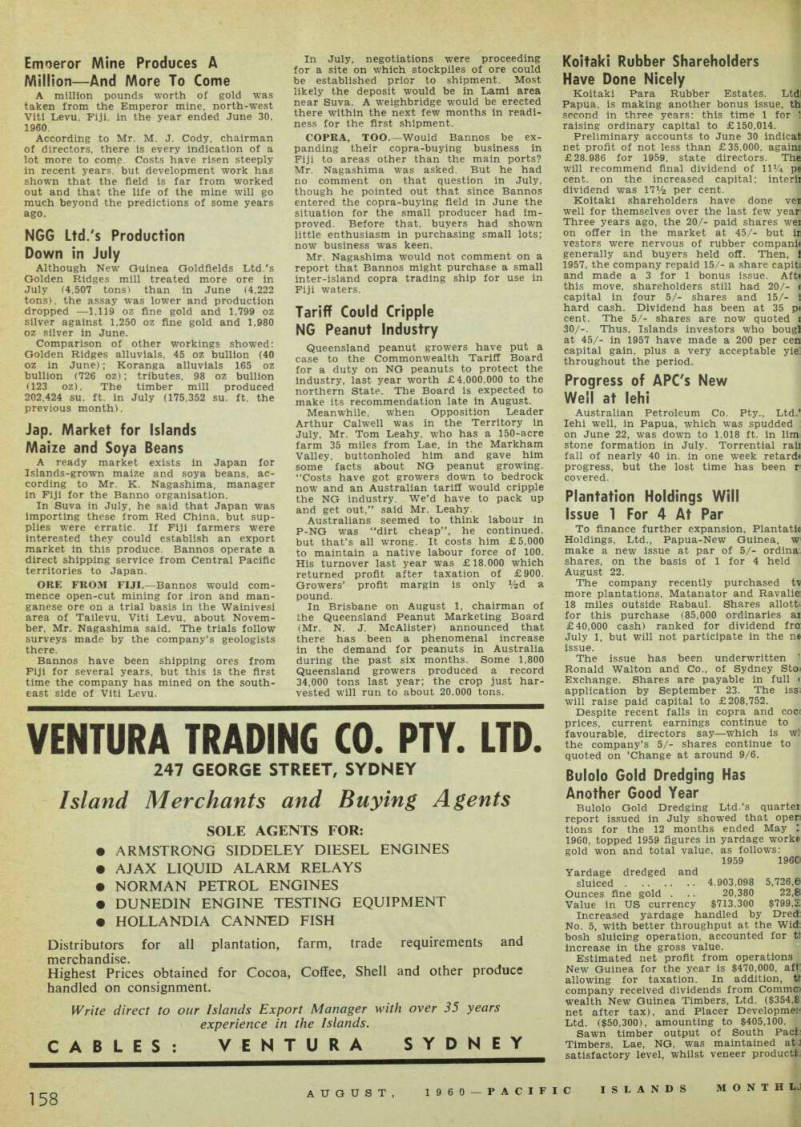 160
160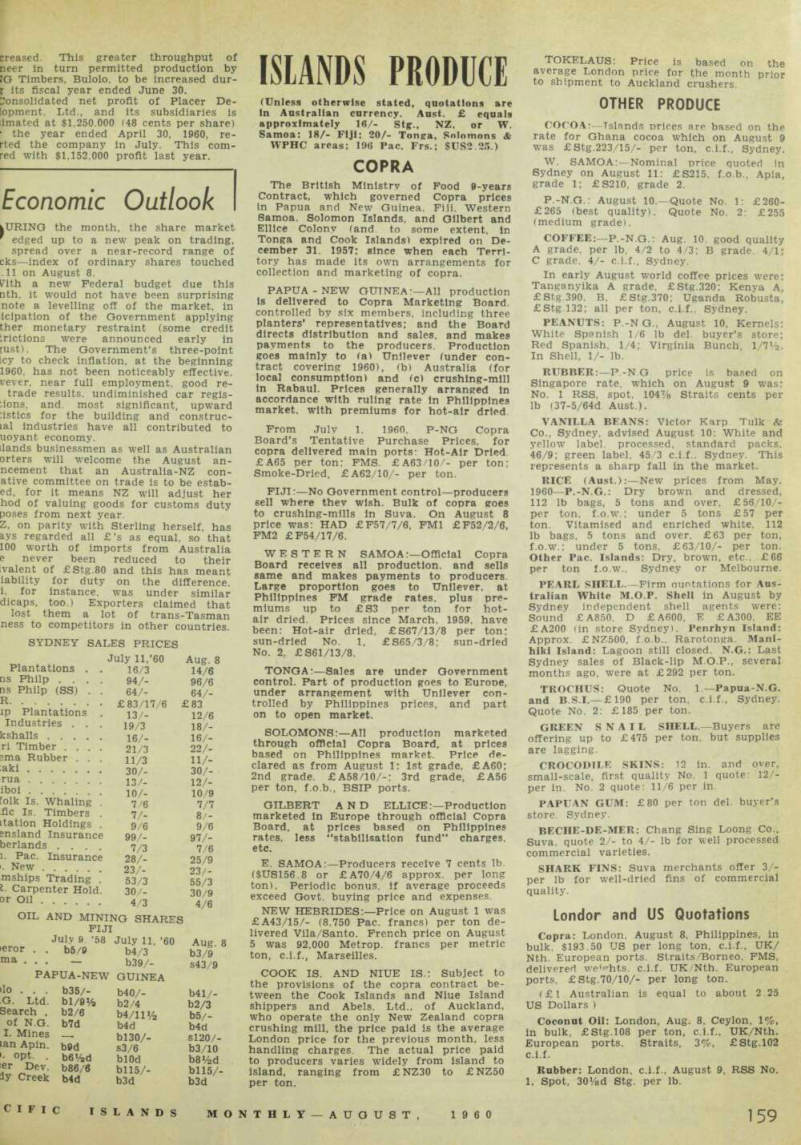 161
161 162
162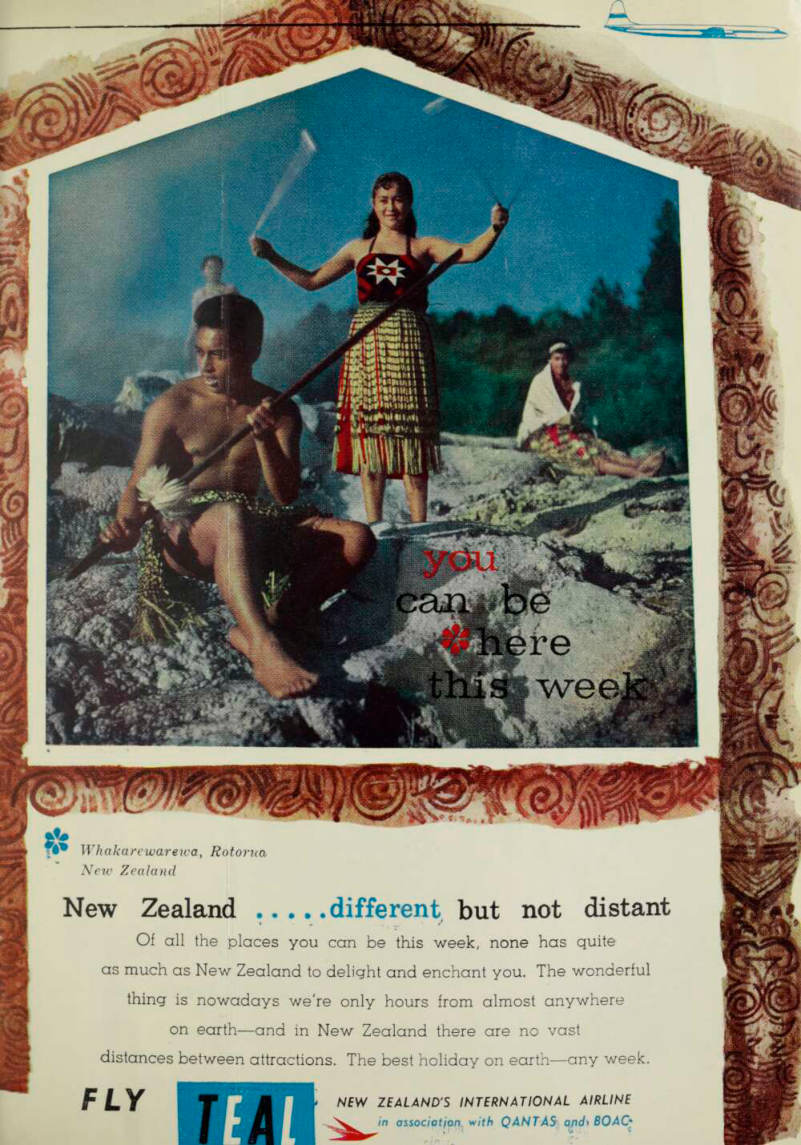 163
163 164
164