Strong Men Wept
pp. 37-42 · Read in the full issue
(When This Island Girl Was Christened)
schooner “Tahitienne,” after
many vicissitudes, had arrived in Rarotonga. (See paragraph, news section, this issue.) She had weath e/ed a three-days' gale, wnich blew her off her course, out with her new owner, Mr. Dick Brown on board, she had completed the voyage without serious mishap.
Then the islanders decided that the “Tahitienne” should depart this life and, spiritually re-born and re
christened, begin afresh with a clean
record. This is how William Bond tells the story.
A FEW days after making port the schooner was being loaded and pre pared for her first trading voyage to the northern islands. Early in the morning a deputation came aooard to inform the owner that a large number of visitors were on their way to per form the “official” welcome ceremonies and help in rechristening the vessel.
Thanking the deputation for their kindly interest, Mr. Brown politely ex plained, however, that it was not possible to receive visitors on this occasion, there being confusion enough already with the loading of cargo and general preparations for departure. But, he said, he would be only too pleased to see them some other time.
Hardly were the words out of his mouth than a commotion began ashore.
A great horde of garlanded natives were seen approaching the wharf, with much singing, laughter and banging of drums, and bearing baskets of cooked foods.
Dick Brown’s eyes bulged as he grasped the rail, breathing heavily. “You can’t do this to me!” he gasped. “Stop them!
For heaven’s sake stop them!”
The spokesman smiled serenely. “YOU try to stoo them,” he said. “It’s more than we can do to stop that crowd!”
SO it came to pass that for the rest of that day, teeming humanity swarmed over the schooner from hold to mastheads—leis, roast pork, big drums and all. And, during these cele brations there occurred the most extra ordinary—and to some residents, the most heart-rending—incidents ever witnessed in Rarotonga.
Each group of visitors had separately decided upon a new name for the schooner and each proceeded with song and speech-making to rechristen her, concluding with the breaking of a bottle of rum over the bows. As the precious elixir trickled down to mingle with the tide, “000-h’s” and Aaa-h’s” and stifled groans could be heard above the cheers, and watchers on the wharf wrung their hands while strangled, swallowing sounds issued from their tortured throats.
The master and crew faced the ordeal bravely; they forced sickly smiles at the
(Continued on Page 40)
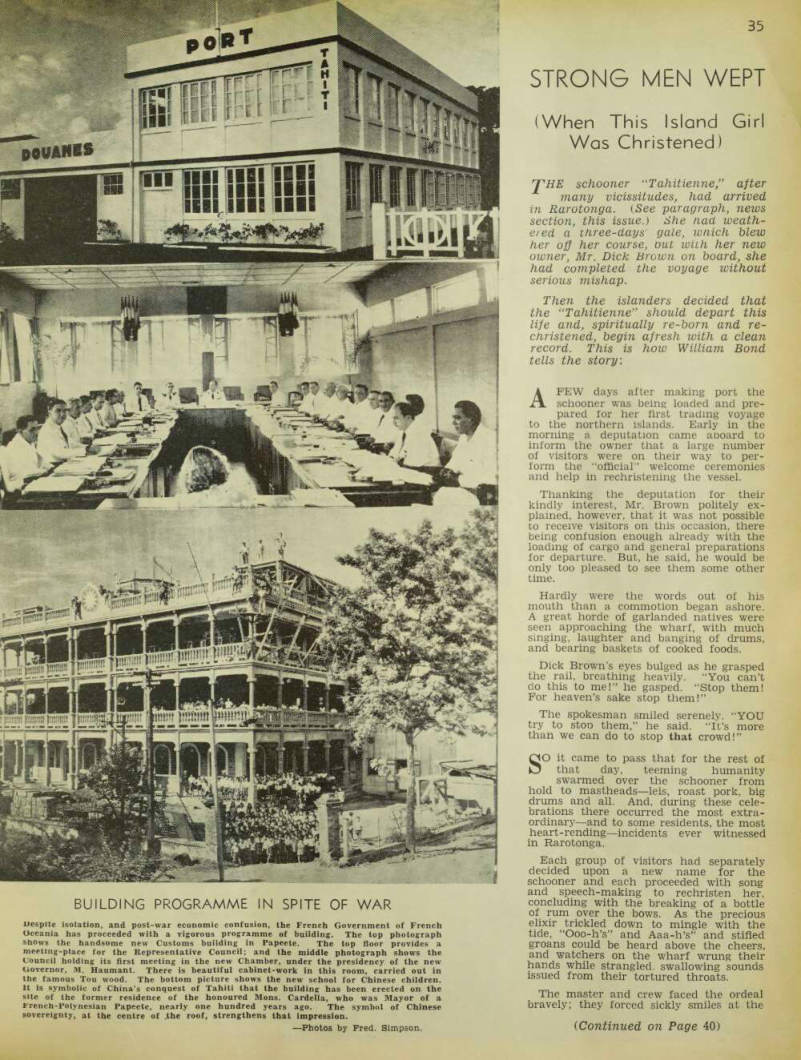
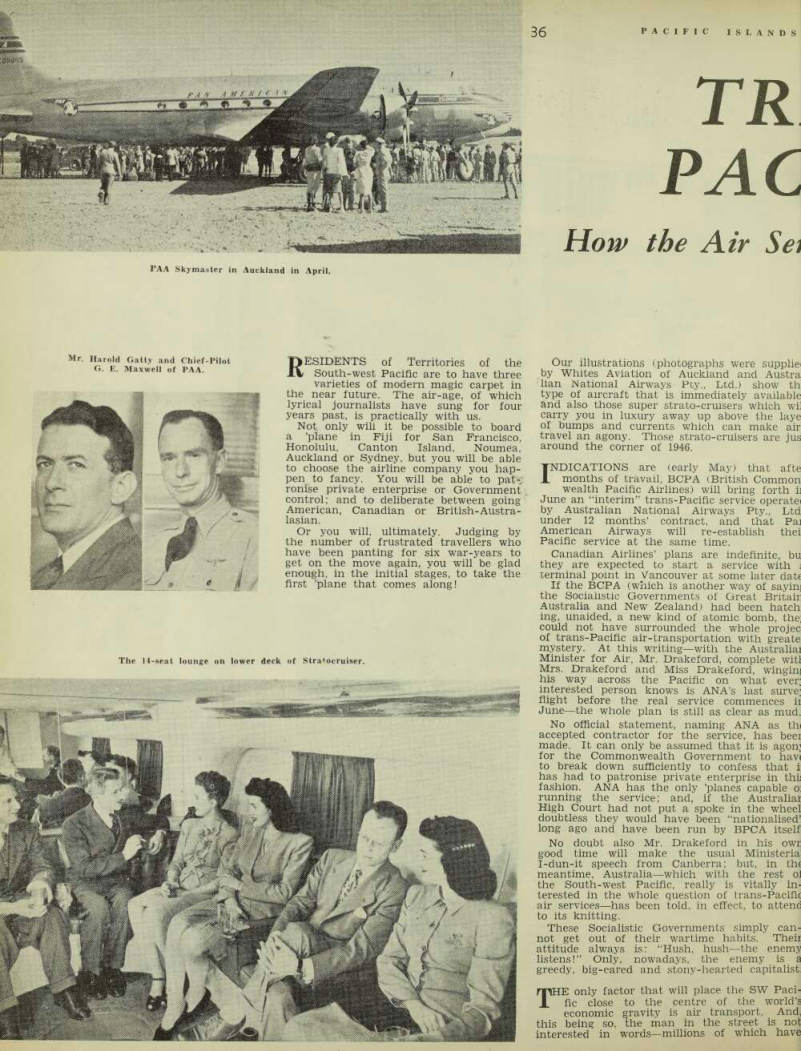
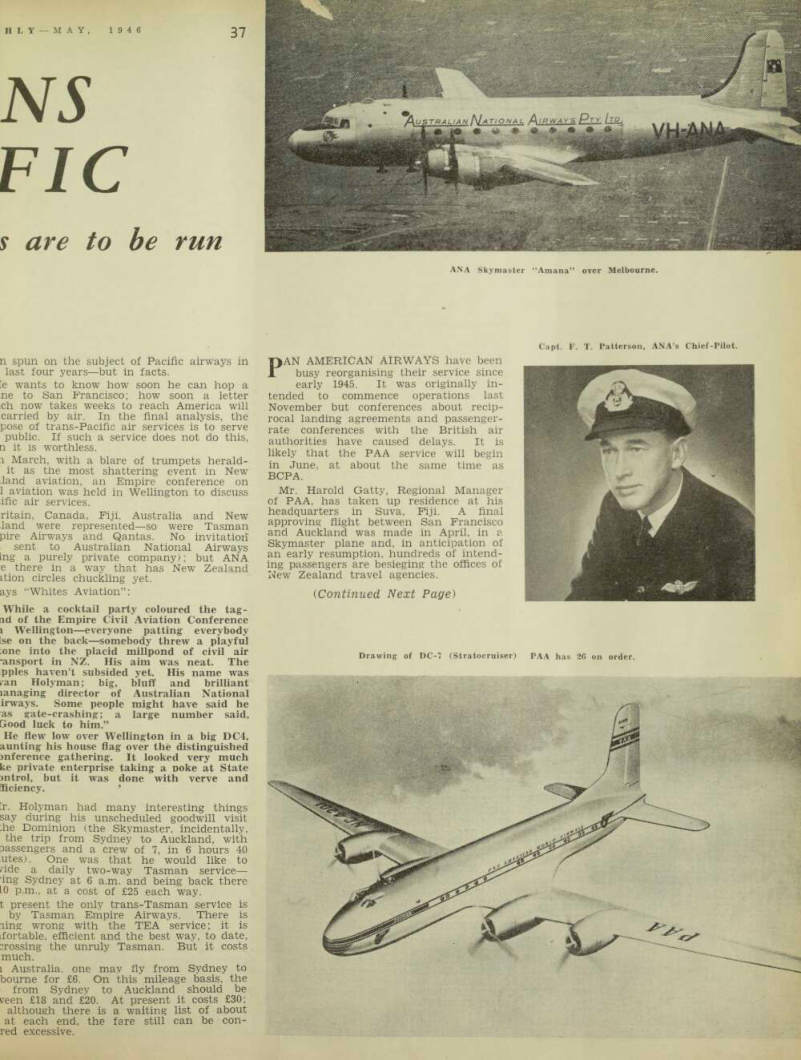
Building Programme In Spite Of War
Despite isolation, and post-war economic confusion, the French Government of French Oceania has proceeded with a vigorous programme of building. The top photograph shows the handsome new Customs building in Papeete. The top floor provides a meeting-place for the Representative Council; and the middle photograph shows the Council holding its first meeting in the new Chamber, under the presidency of the new Governor, M. Haumant. There is beautiful cabinet-work in this room, carried out in the famous Tou wood. The bottom picture shows the new school for Chinese children.
It is symbolic of China’s conquest of Tahiti that the building has been erected on the site of the former residence of the honoured Mons. Cardella, who was Mayor of a french-Polynesian Papeete, nearly one hundred years ago. The symbol of Chinese sovereignty, at the centre of the roof, strengthens that impression. —Photos by Fred. Simpson.
barbaric sacrifices being made in their honour, by these benighted people.
THE climax to the whole moving drama came when the Manihiki Islanders took the stage for their turn. The shark-skin drums roared into action as the masters and mistresses of the hula waggled their knees and shim mied and shook. Their headman out spoke the other spokesmen.
“This is a great day for Manihiki!” he shouted. “I feel so happy I could put mv foot right through that blankv drum!”
He strode proudly forward bearing aloft —a bottle of rum in EACH hand! He leaned over the bow and swung a mightv left, right, at the stem as he shouted, “I name you ‘Vaine Manihiki’!”
The sailors closed their eyes, dug their finger-nails into their horny palms, and sagged at the knees. Dick Brown rocked on his heels and reached out for solid support. Thus was the former schooner “Tahitienne” rechristened—while strong men wept with silent emotion.
AT the end of an unforgettable day the schooner set sail from the holy waters of Avarua Harbour, to once more fill her hold with pearl-shell and copra among the northern atolls.
Proudly she bears her new names— among them such romantic ones as “Vaine Manihiki” (Manihiki Girl) and “Taku Vaine Akaperepere” (My Loving Girl).