Guinea Airways, Ltd.
(which pioneered and has since conducted the aerial transport service on the New Guinea goldfields) has had not such a good year as previously. Gross revenue fell to £77,694, from £95,618 in 1931. Net profit is £13,053 against £28,725 the pre vious year.
The amount allowed for depreciation the past year is not shown. In 1931 it was £15,009. A transfer of £2,000 from general reserve is made, increasing the amount available with £145 brought for ward to £15,198. Quarterly dividends, each of 1/- a share, absorbed £15,000 and £198 is carried forward, A reduction in freight rates was made during the year, and in these circum stances the result is considered satis factory by the directors.
Fourteen new aerodromes have recently been established, embracing Papua as well as New Guinea, and are being used by the company’s aeroplanes.
Within the past five years rates charged for passengers and cargo have been reduced by 60 per cent. The actual quantity transported in 1932, inclusive of dredge material for the Bulolo Gold Dredging, Ltd., amounted to 8,357,511 lb. or 4,178 short tons, which is 232 tons more than for 1931. Passenger traffic was also greater, 3,919 persons having been carried, as against 2,455 the previous year.
The report adds: “The company’s sound financial position has been maintained, and the directors therefore recommend that a dividend of 1/- a share be paid on the 30th instant.”
Capital is £75,000, and with the transfer of £2,000 to profit and loss, general
reserve is £18,000. Sundry creditors at £12,726 are £1,679 less. Fixed assets and stores at £59,807 show a reduction of £5,108. Debtors owe £5,894 less at £18,570 and the cash holdings have been increased by £6,176 to £26,347. —“Sydney Morning Herald.”
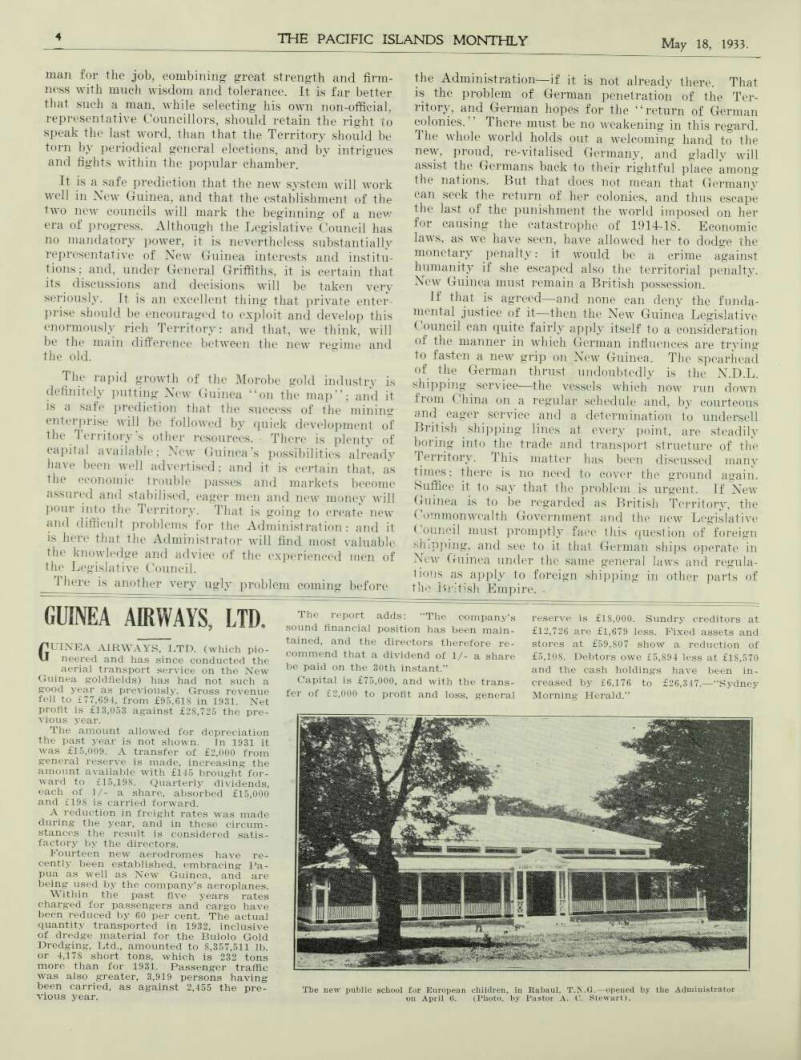
The new public school for European children, in Rabaul, T.N.G. —opened by the Administrator on April 6. (Photo, by Pastor A. C. Stewart).