Muuuoi, I


Pacific Islands Monthly
Pim
* 85c Aust $1.25 US
Cfp 130
Registered for posting as a publication Category B
Our Cover
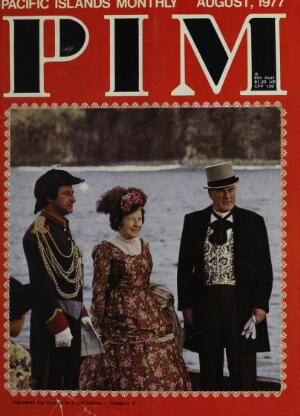
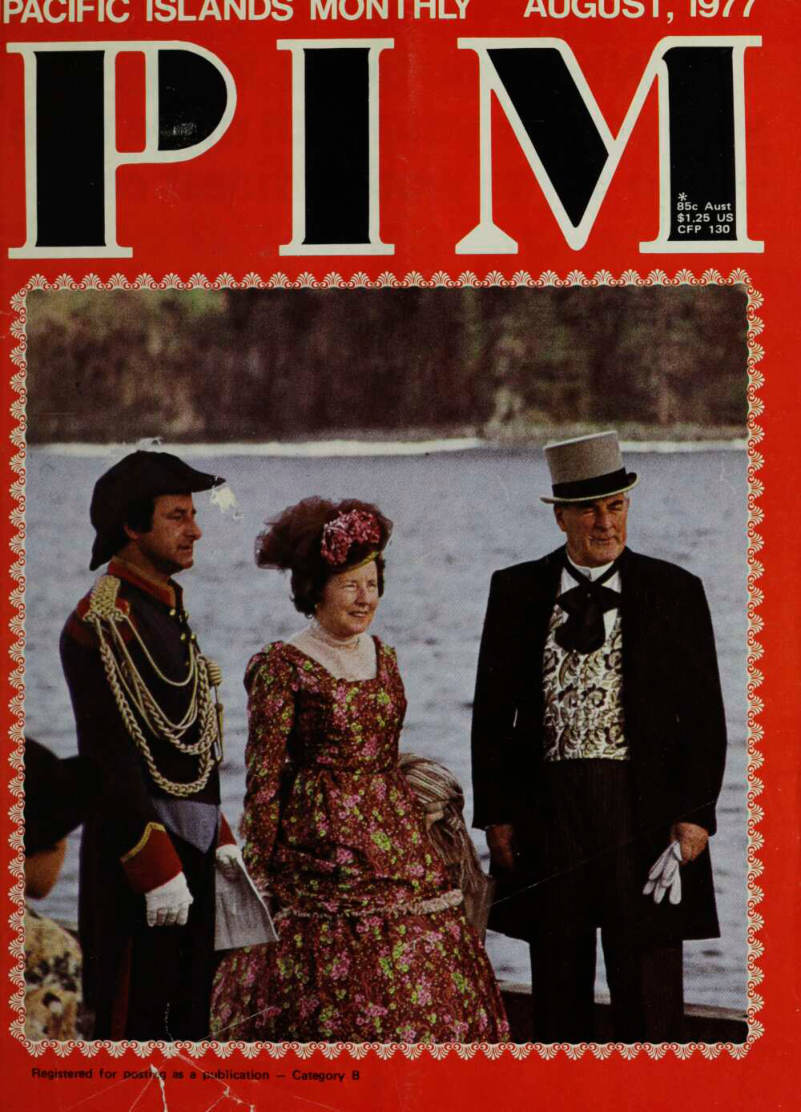
Norfolk Islanders, who are trying to ensure a happy future, feature largely in this month’s PIM. The cover pic ture records a solemn mo ment in the islanders’ com memoration in June of the 121st anniversary of the ar rival of the Pitcairners on Norfolk. The picture, taken by Pastor Laurence Gilmore of the Seventh-day Adventist Church, shows Cr Blucher, president of the Island Coun cil (in cocked hat) as Captain Denham RN, and Admin istrator O’Leary (alias storekeeper Mr Stewart) and Mrs O’Leary in welcoming mood as they greet the Pit cair n e r s in the co m memorative charade. “Nor folk: From hell-hole to heaven-on-earth” begins on page 38.
Advertisements & other items, pp. 2-4 (1 item)
one of the world’s finest cars.
When you buy a Toyota
we promise you much more than
m We'll be the first to admit that at Toyota we make some of the world's finest cars.
You only have to look at them to see that.
And driving them just goes to confirm your first opinions.
But there's more to buying a car than buying a good one. You also have to be sure you can keep it that way.
Which is why Toyota have always insisted that their after-sales service be as good as the cars themselves.
In the Pacific Islands area alone we have over fifty designated outlets to provide everything you might need, from a simple service to a major overhaul. So get yourself a Toyota and get a lot more than a car.
And that's a promise.
TOYOTA
SERVICE
TOYOTA
The Toyota range includes: Toyota 1000, Toyota Corolla, Toyota Celica, Toyota Corona, Toyota Corona Mark 11. Toyota Crown To
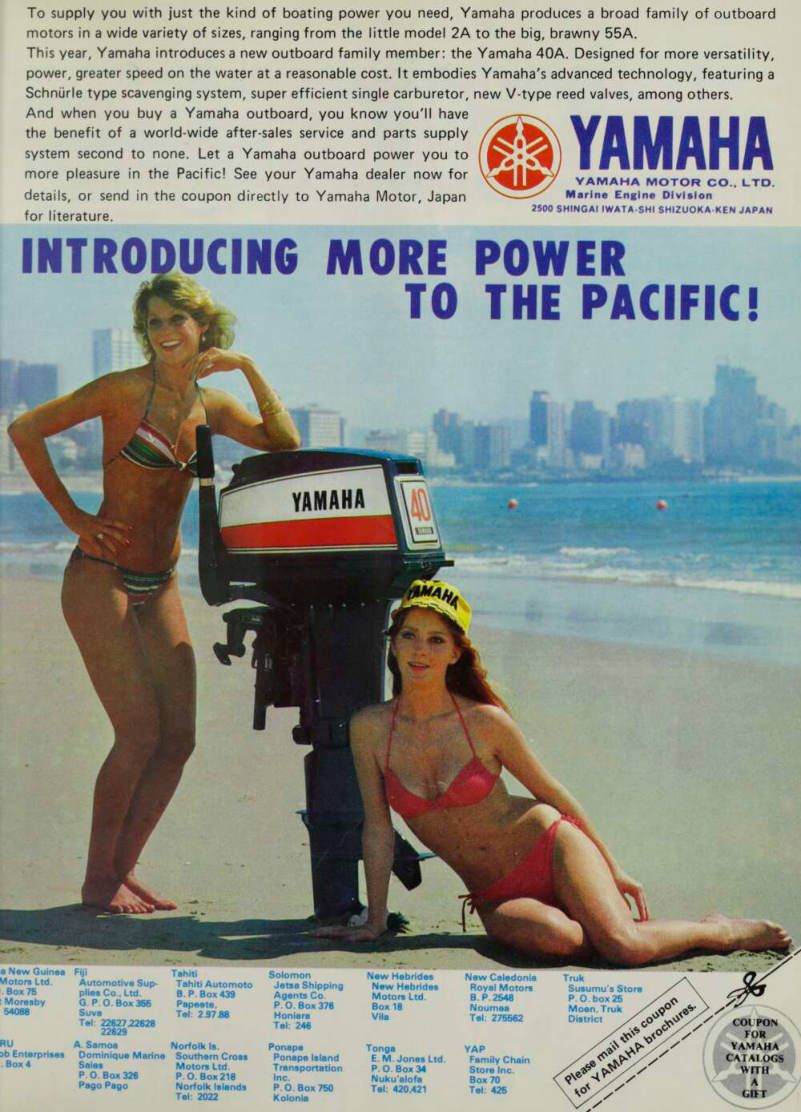
To supply you with just the kind of boating power you need, Yamaha produces a broad family of outboard motors in a wide variety of sizes, ranging from the little model 2A to the big, brawny 55A.
This year, Yamaha introduces a new outboard family member: the Yamaha 40A. Designed for more versatility, power, greater speed on the water at a reasonable cost. It embodies Yamaha's advanced technology, featuring a Schniirle type scavenging system, super efficient single carburetor, new V-type reed valves, among others.
And when you buy a Yamaha outboard, you know you'll have the benefit of a world-wide after-sales service and parts supply system second to none. Let a Yamaha outboard power you to more pleasure in the Pacific! See your Yamaha dealer now for yamaha motor go details, or send in the coupon directly to Yamaha Motor, Japan Marine Engine Division for literature. 2500 SHINGAI ,WATASHI SH ' 2UOKA * EN JAP<
INTRODUCING MORE POWER
TO THE PACIFIC!
YAMAHA
LTD.
YAMAHA
\ i a New Guinea Motors Ltd.
Box 75 : Moresby 54088 RU sb Enterprises . Box 4 Fiji Automotive Supplies Co., Ltd.
G. P.0.80x 355 Suva Tel: 2262722628 22629 A. Samoa Dominique Marine Sales P. O. Box 326 Pago Pago Truk Susumu's Store P.O.box 25 Moen.Truk District
Moen.Truk / jf* y
District / r Cp ycP / yy' \y s
COUPON
FOR
YAMAHA
CATALOGS
WITH
GIFT
Invest in precious metals.
Of the eight precious metals, it takes four to make a Parker 75 pen. The silver, gold, platinum and ruthenium aren’t there just for show. They make it work better. And they make it a gift to treasure. What you could call a lifetime investment.
Sterling silver gives the case heft and balance.
We use our own special alloy of 14ct gold for the nib, because few other metals resist ink corrosion as well, and still provide such responsiveness as you write.
For the tip that touches the paper, we developed an alloy of platinum and ruthenium that resists wear so well, we don’t know how long a tip will last.
It’s even more exceptional.
The nib can turn 360° to write at the angle most natural to you.
Quite an investment, the sterling silver Parker 75.
There’s a nylon nib version and matching ball pen or pencil.
Also rolled gold or Vermeil, which is 14ct gold on silver.
The distinctive arrow clip identifies every Parker model.
tPARKER
World's most wanted pens
Pacific Islands
Monthly
FOUNDED BY R. W. ROBSON IN 1930
Published Monthly By
Pacific Publications (Aust.) Pty. Ltd.,
76 Clarence Street, Sydney 2000.
Post Address: G.P.O. BOX 3408, SYDNEY,
N S W. 2001
Telegraphic Address: PACPUB, Sydney.
Telex 21242 Telephone: 29 6693 Publisher; Stuart Inder.
Manager: John Berry.
Advertising Manager: Alan Batt.
EDITOR: John Carter
Subscription Rates
“Pacific Islands Monthly" is airfreighted to the majority of subscribers and agents in the Pacific Islands and the
Usa.
Australia (including Norfolk Island) $10.50 Aust. New Zealand $11.50 NZ ($10.50 Aust). Fiji $10.75 Fijian ($10.50 Aust). Papua New Guinea, New Hebrides, Tonga, Cook Islands, Western Samoa, Gilbert Islands, Tuvalu, Niue, Nauru and Solomon Islands $10.50 Aust.
American Samoa, Northern Marianas, Micronesia, Guam and Hawaii $15.00 US or $12.00 Aust. US Main land and Canada $17.00 US or $14.00 Aust. New Caledonia and French Polynesia 1,600 CFP or $13.50 Aust. United Kingdom 9.50 or $12.50 Aust. Japan 4,500 Yen or $12.50 Aust. Elsewhere $14.00 Aust.
Note: Overseas remittances in Australian dollars should be by bankdraft payable at Sydney Australia.
Representatives
Fiji: Distribution and subscriptions Desai Bookshops, P.O. Box 160, Suva, Fiji. Telephone: Suva 23036.
Advertising, Fiji Times & Herald Ltd., 20 Gordon Street, Suva. Telephone: 312 111. Telex: FJ2124.
Papua New Guinea: Advertising and Distribution PNG Post-Courier, P.O. Box 85, Port Moresby. Inquir ies: Post Newsagency, Telephone 24 2148.
French Polynesia: Distribution Hachette Pacifique, 10 Ave Bruat, Papeete.
New Caledonia: Distribution Depot Centre de Presse Michel Pentecost, 8.P.C2 Noumea.
United Kingdom: The Herald and Weekly Times Lim ited, 8-10 Clifford’s Inn, Fetter Lane, London EC4AIBU.
Telephone; 01 831 6041. Telex: London 21989.
Japan: Advertising Universal Media Corporation, C.P.O. Box 46, Tokyo. Telephone: 666 3036.
New Zealand: Pacific Publications, C.P.O. Box 2229, Auckland. Advertising enquiries: International Media Representatives Ltd, P.O. Box 3880 Auckland. Tel. 73 880. Telex: NZ21157. (Auck. 40).
Hawaii and U.S. Mainland only: PIM, Hawaii, 2812, Kahawai St., Honolulu, Hawaii, 96822. Second class postage paid at Honolulu, Hawaii. US Advertising Rep resentative, Joshua B. Powers, Jr, Powers International, Inc 551 Fifth Ave, New York, New York 100 017 Tele phone 867 9580. Telex 236514. Pub. 952480.
Victoria: Advertising Pacific Publications (Aust.) Pty.
Ltd., Herald and Weekly Times Building, 2nd Floor, 61 Flinders Lane, Melbourne. 3000. Telephone: 252 1565.
Brisbane; D Wood, Anday Agency, Box 1918 G.P.0., Brisbane 4001. Telephone; 44 3485; 44 1546.
Printed in Australia Copyright ©, 1977, Pacific Publications (Aust.) Pty. Ltd.
Printed by Paramac, Mitchell Rd, Alexandria.
Copyright ©, 1977,
Pacific Publications (Aust.) Pty. Ltd.
Printed by Paramac, Mitchell Rd.,
Alexandria PIM is distributed in Australia and New Zealand by Gor don & Gotch. Australian cover price is recommended retail only.
Registered at the G.P.O. Sydney for transmission by post as a publication category B.
Vol. 48 No. 8
August 1977
Up Front
with the Publisher
The Banaban appeal to the British High Court for justice over Ocean Island phosphate ended last year in a great moral victory for the Banabans, who had the satisfaction of hearing a British judge condemn the British Government and the British Phosphate Commissioners (who include Australia) over many aspects of their treatment.
Unfortunately, when it came to a cash settlement, the legal niceties of the com
plicated, long-running case prevented
the judge, Sir Robert Megarry, from meeting the Banabans’ very substantial claim for back royalties.
But he did find that the Banabans were entitled to compensation from the BPC for the damage to their land by the ex traction operations, and suggested that these be “neither nominal nor very large”. He fixed no specific sum.
And Sir Robert did make it clear that
despite the purely legalistic considera
tion, Britain should make some financial recompense to the islanders for its treat ment of them. Again, he suggested no
figure.
The Banabans, all but about 50 of whom these days live on Rabi Island in Fiji, and who are Fiji citizens, now have
some figures.
In May, Britain announced that she, Australia apd New Zealand (through the BPC) would make available SAIO million (£6.5 million sterling) to the Banabans as an ex-gratia payment on condition that no further claims would be made arising out of past events.
And in July, just as this issue of PIM was going to press, I heard from London that the BPC had offered the Banabans SAI.S million for the damage to their land, in the case where the sum was to be “neither nominal nor large”.
The Banabans have said they will ac cept the $lO million on condition that they have immediate independence for Ocean Island, which is part of the Gilbert Islands colony.
I understand they have no intention of accepting the $1.5 million offered as damage settlement, regarding it as
almost derisory.
What this means is that we can expect the Banaban issue to be continued for a long time yet. But it will be indepen dence for Ocean Island, not necessarily the financial issue, which is likely to be
the major sticking point because it takes the whole matter into a far more emotive area, of brother against brother.
It really started back in 1886, when Britain and Germany cosily agreed to divide the Western Pacific into “spheres of influence”. On the “British side were Ocean Island and the Gilbert Islands.
Britain in 1892 declared a protectorate over the Gilberts, but did nothing about isolated Ocean Island until it annexed it in 1901. The sole reason for annexation was that rich phosphate had been dis covered there. It has been administered as part of the Gilbert Islands ever since.
The Banabans (the occupiers) left Ocean Island for Rabi at the end of World War II because the island had been made virtually uninhabitable by the war.
The Banabans are not Gilbertese, but their histories and families are intertwin ed.
The Banabans’ claim for the separa tion of Ocean Island from the Gilberts is not new. They formally asked Britain for it as long ago as 1968 and were rejected.
It has come up several times since, in cluding in the UN.
The Gilbertese are strongly, perhaps
irrevocably, against separation. In the
Gilberts it is a live public issue. But they have offered the Banabans a 15-point plan which would enshrine in an inde pendent Gilbertese constitution the right of the Banabans to live on Ocean Island at any time, to have “belonger” status in the Gilberts, to have a local seat in the Assembly, and for Ocean Island to have a share of the finances. But the land it self, they say, is “part of the body” of the Gilberts.
The Banabans reject the plan. They in sist that Ocean Island, as their ancestral home, is part of their own body. That Britain, not an independent Gilberts, must decide on the island’s future, since it was Britain which changed its course.
The fact that the Gilberts are ap
proaching independence from Britain
has strengthened the Banabans’ resolve.
As both sides are sincere I find it im possible to predict what turn this deep division will take, or to know what in fluence a final decision may have on the attitudes of other islanders in the Pacific.
Colonial chickens are coming home to roost. — Stuart Inder.
Advertisements & other items, p. 6 (1 item)
into memories
Turn moments
m % Sr mm m
ID G E
pOS***
cap t : /2 0^ pplN ls col° r no pop 20
take your pictures
on Kodak film*
See your photo dealer now.
K6l-5076
In this issue
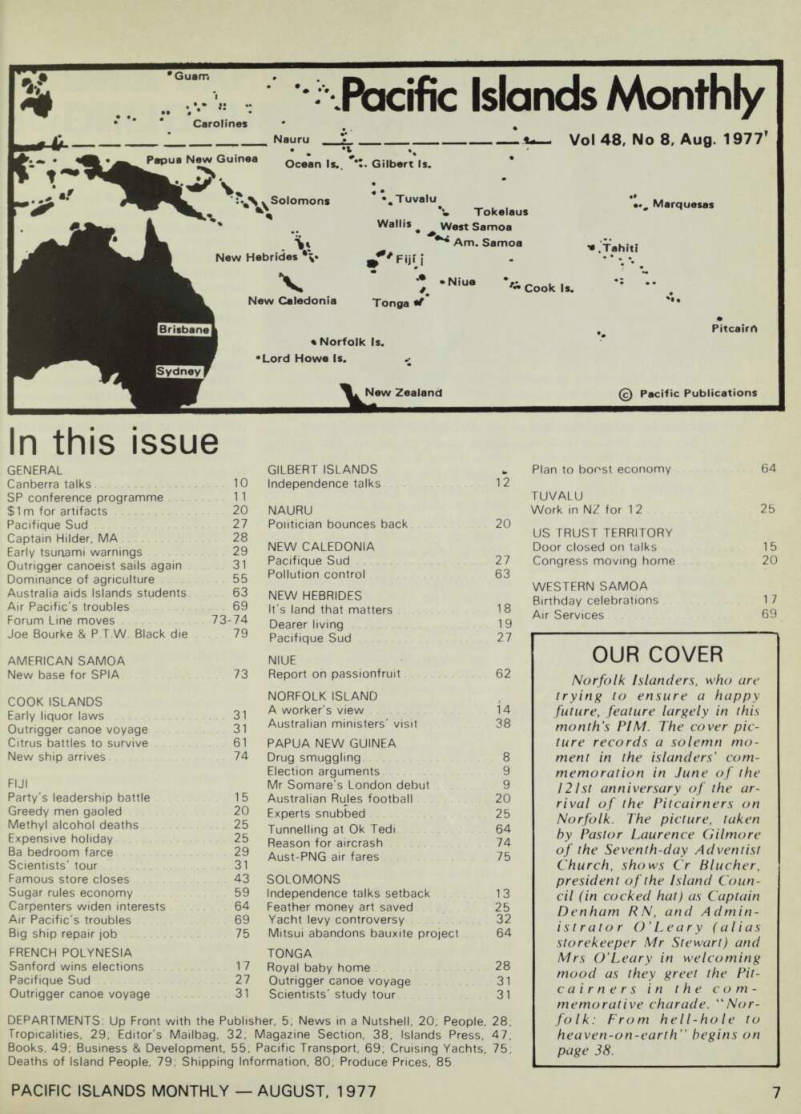
General
Canberra talks 10 SP conference programme 11 $1 m for artifacts 20 Pacifique Sud 27 Captain Milder, MA 28 Early tsunami warnings 29 Outrigger canoeist sails again 31 Dominance of agriculture 55 Australia aids Islands students 63 Air Pacific's troubles 69 Forum Line moves 73-74 Joe Bourke & P.T.W. Black die 79
American Samoa
New base for SPIA 73
Cook Islands
Early liquor laws 31 Outrigger canoe voyage 31 Citrus battles to survive 61 New ship arrives 74
Fiji
Party's leadership battle 15 Greedy men gaoled 20 Methyl alcohol deaths 25 Expensive holiday 25 Ba bedroom farce 29 Scientists' tour 31 Famous store closes 43 Sugar rules economy 59 Carpenters widen interests 64 Air Pacific's troubles 69 Big ship repair job 75
French Polynesia
Sanford wins elections 17 Pacifique Sud 27 Outrigger canoe voyage 31
Gilbert Islands
Independence talks 12
Nauru
Politician bounces back 20
New Caledonia
Pacifique Sud 27 Pollution control 63
New Hebrides
It's land that matters 18 Dearer living 19 Pacifique Sud 27
Niue
Report on passionfruit 62
Norfolk Island
A worker’s view 14 Australian ministers' visit 38
Papua New Guinea
Drug smuggling 8 Election arguments 9 Mr Somare's London debut 9 Australian Rules football 20 Experts snubbed 25 Tunnelling at Ok Tedi 64 Reason for aircrash 74 Aust-PNG air fares 75
Solomons
Independence talks setback 13 Feather money art saved 25 Yacht levy controversy 32 Mitsui abandons bauxite project 64
Tonga
Royal baby home 28 Outrigger canoe voyage 31 Scientists' study tour 31
Plan to boost economy 64
Tuvalu
Work in NZ for 12 25
Us Trust Territory
Door closed on talks 15 Congress moving home 20
Western Samoa
Birthday celebrations 17 Air Services 69
DEPARTMENTS: Up Front with the Publisher, 5, News in a Nutshell, 20; People, 28; Tropicalities, 29; Editor's Mailbag, 32; Magazine Section, 38, Islands Press, 47, Books, 49; Business & Development, 55; Pacific Transport, 69; Cruising Yachts, 75, Deaths of Island People, 79; Shipping Information, 80; Produce Prices, 85
Problem - Drug Smuggling
AS A NEW NATION PNG HAS A NEW
From GUS SMALES in Port Moresby
One of the side issues of nation hood in Papua New Guinea has been a dramatic rise in the importance of Port Moresby as an air gateway to Australia.
There’s no need to consult the latest statistics a then-and-now comparison of the crowds using the grossly-overtaxed Port Moresby air terminal tells the story.
The rise in activity has created a fear among authorities at Australian east coast airports that PNG could provide a new staging point for the drug trade or for other illegal op erations which rely on international transport links. And. this, in turn, is worrying PNG authorities who fear that it could well lead to the upsurge of a drug problem in their own country.
Drugs are a problem almost non existent in PNG so far, but the Government and the police re cognise a vulnerability requiring early protective action.
The heavy volume of air traffic which links Port Moresby with Cairns. Brisbane and Sydney is not new in itself and has always formed one of the busiest regional links in the Pacific. And for more than 10 years, too, Qantas has had various Australian-based flights staging through PNG on world links.
But, despite the density of the traffic, PNG for years was little more than a terminus for an Australian regional structure.
Neither the onward opportunities nor the local background existed to develop PNG as an illegal drug gateway to Australia. The past two years have brought a marked change in the situation because of the emergence of PNG as a focal point in a new travel region.
This is a natural result of PNG’s political independence, introducing its own links with other countries and including the establishment of its own airline.
In the high-flown prose of airline public relations, “Air Niugini’s beautiful bird of paradise is a wise old owl” actually a hard-worked Boeing 707 “which spreads its
wings to fly to Japan, the Philip pines. Hong Kong and Australia”.
Qantas has a share of the wider action through Port Moresby, too, and potential exists for reciprocal flying rights to be negotiated or taken up by Cathay Pacific, Philip pine Airlines and Japan.
Papua New Guineans themselves are ranging further afield than ever before. The PNG Chinese com munity is consolidating its links with Hong Kong, Australians in PNG are increasingly looking northwards rather than to their own country for holidays and business, and an as sisted employment scheme for Filipinos has brought close as sociations with Manila.
The result is that Port Moresby, once a sort of airline cul-de-sac, has become a meeting place and gate way between Australia and southeast Asia.
The situation is fine for tourism, for business and for commercial ac tivity in general, but it has also cre ated a drug smuggling potential for Australia and ultimately a poten tial drug problem for PNG itself.
It is typical of PNG’s non-in volvement with the drug scene that the discovery not so long ago of a field of cannabis growing wild (ge nuinely) hardly raised a ripple.
There was no rush to destroy it, no rush to get at it, and very little general interest.
Today, the position is a little tighter, and there have been prosecutions for cultivation, for
possessing seeds and for possessing leaf. There has been a recent prosecution, too, for possession of heroin.
But all in all the number of drug convictions in the past two years or so can be counted on the fingers of two hands, and fines of up to $600 have been the general penalty.
All the prosecutions have involv ed non-nationals of PNG, mainly Australians.
The PNG Police Commissioner, Mr Pious Kerepia, is convinced however that a drug squad is essen tial to nip in the bud any potential trouble.
Australian police commissioners he met during the recent conference of commissioners in Melbourne told him strongly, he reported later, that they feared PNG could become a springboard for drug smuggling into Australia.
As a result, the Australian com missioners themselves are more than anxious to extend what aid they can to PNG to keep tabs on the situ ation.
Mr Kerepia already has an embryo drug squad which he de scribes vaguely as “not a proper one”. He is looking to outside skills for support, but the countries which could best help — including Australia — have their own staffing problems and cannot release men easily for long-term secondment.
The best Mr Kerepia can hope for at present is that Australia will pro vide skilled men to undertake specific investigations or counter measures which might be required.
This offer was agreed to in principle at the Melbourne conference, and it has already worked well in other
specialised police fields, including
some murder investigations in PNG.
Mr Kerepia also hopes to as semble a pool of information on anti-drug work from the experience of the United Kingdom, the Philip pines, Australia and New Zealand.
He believes this will provide his country with a basis for developing procedures best suited to its own re quirements.
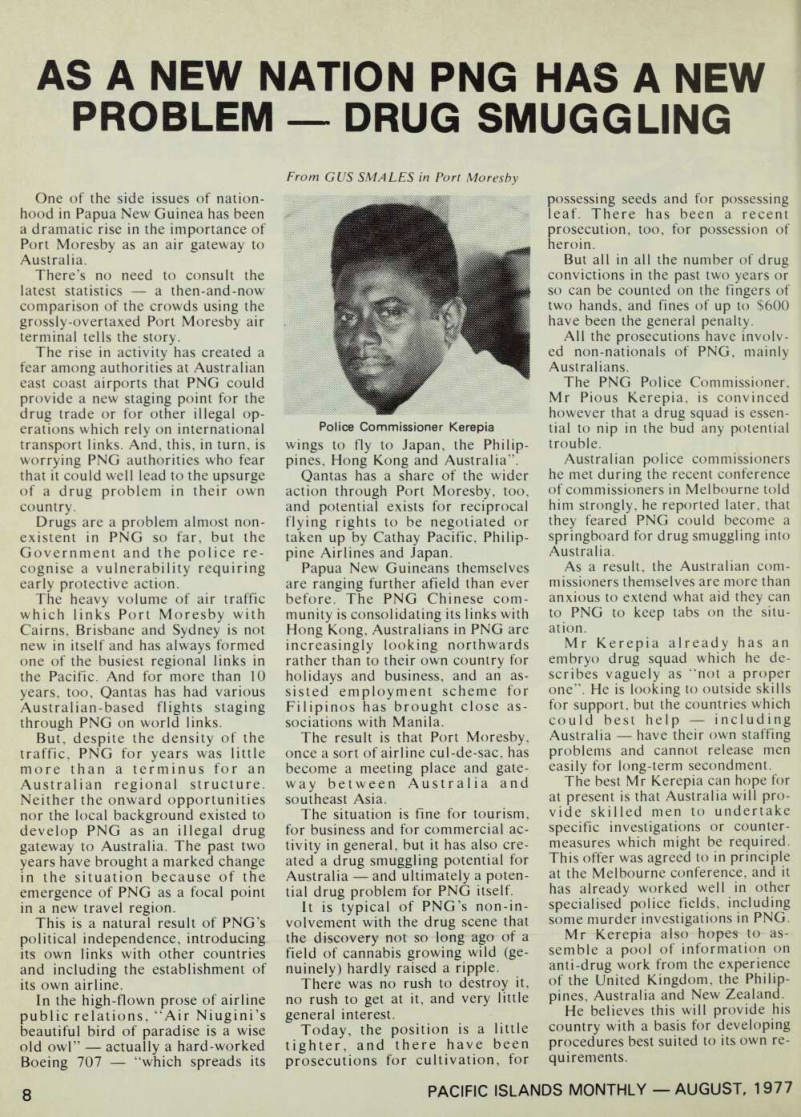
Police Commissioner Kerepia
poll for
Eventful poll for
Png
Whatever government emerges from Papua New Guinea’s first elec tions since independence, nobody could complain that the elections themselves were without incident.
Even before voting began on June 18, about 500 demonstrators were in the Port Moresby streets de nouncing alleged bias in the elec toral office because only 18 of the country’s 109 electorates would use ballot papers carrying photographs of the candidates. The chief elec toral commissioner, Mr James Mileng, told the crowd that his of fice had attempted to provide photographs of all 871 candidates but the technical problems had been too great.
Then, when the capital’s noisy, carnival-style three days of voting were over, the demonstrators were out again, about 1 500 of them this time, demanding Mr Mileng’s re signation and the extension of the voting period by two more days. But Mr Mileng stood firm again, point ing out that the election time table for the whole country would not permit an extension.
As he spoke, vote-collecting teams were setting out by foot-track, road, aircraft, canoe and ship to try and ensure that everyone in mountains, plains, and along the coasts had the chance to vote.
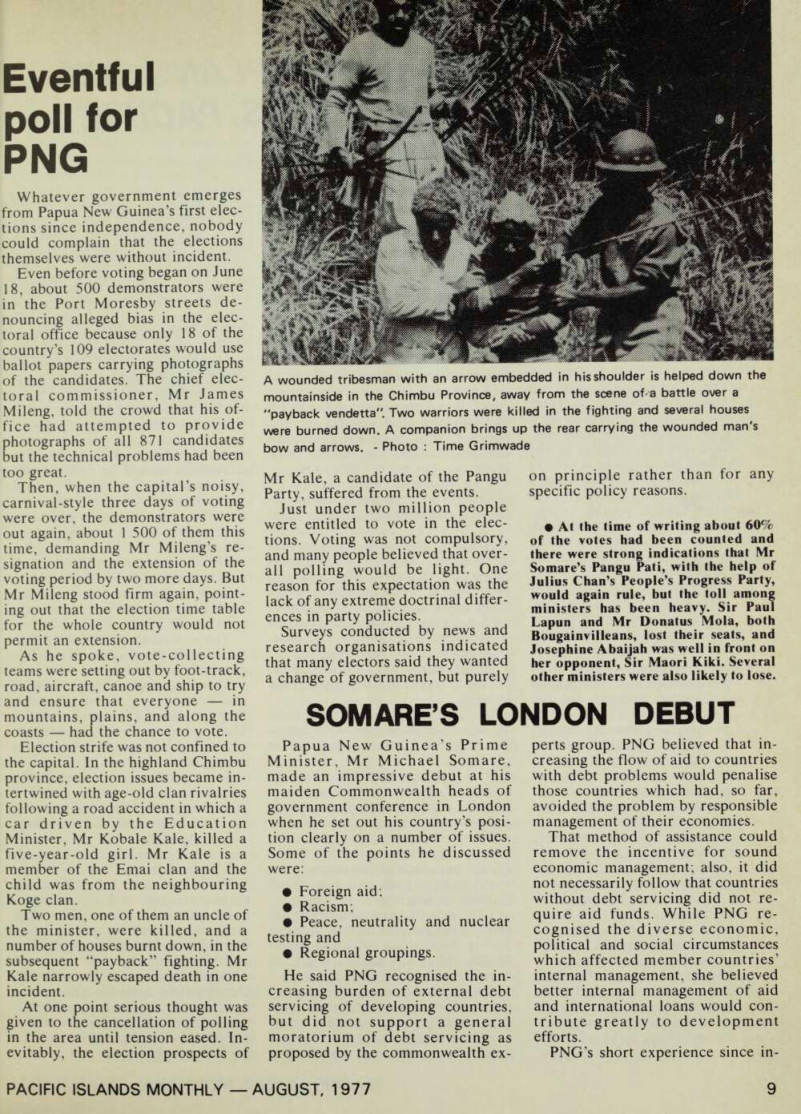
Election strife was not confined to the capital. In the highland Chimbu province, election issues became in tertwined with age-old clan rivalries following a road accident in which a car driven by the Education Minister, Mr Kobale Kale, killed a five-year-old girl. Mr Kale is a member of the Emai clan and the child was from the neighbouring Koge clan.
Two men, one of them an uncle of the minister, were killed, and a number of houses burnt down, in the subsequent “payback” fighting. Mr Kale narrowly escaped death in one incident.
At one point serious thought was given to the cancellation of polling in the area until tension eased. In evitably, the election prospects of
Mr Kale, a candidate of the Pangu Party, suffered from the events.
Just under two million people were entitled to vote in the elec tions. Voting was not compulsory, and many people believed that over all polling would be light. One reason for this expectation was the lack of any extreme doctrinal differ ences in party policies.
Surveys conducted by news and research organisations indicated that many electors said they wanted a change of government, but purely
on principle rather than for any
specific policy reasons.
• At the time of writing about 60% of the votes had been counted and there were strong indications that Mr Somare’s Pangu Pati, with the help of
Julius Chan’s People’s Progress Party,
would again rule, but the toll among ministers has been heavy. Sir Paul Lapun and Mr Donatus Mola, both Bougainvilleans, lost their seats, and Josephine Abaijah was well in front on her opponent, Sir Maori Kiki. Several other ministers were also likely to lose.
A wounded tribesman with an arrow embedded in his shoulder is helped down the mountainside in the Chimbu Province, away from the scene ofa battle over a "payback vendetta". Two warriors were killed in the fighting and several houses were burned down. A companion brings up the rear carrying the wounded man's bow and arrows. Photo : Time Grimwade
Somare’S London Debut
Papua New Guinea’s Prime Minister, Mr Michael Somare, made an impressive debut at his maiden Commonwealth heads of government conference in London when he set out his country’s posi tion clearly on a number of issues.
Some of the points he discussed were; • Foreign aid, • Racism; • Peace, neutrality and nuclear testing and • Regional groupings.
He said PNG recognised the in creasing burden of external debt servicing of developing countries, but did not support a general moratorium of debt servicing as proposed by the commonwealth ex
perts group. PNG believed that in creasing the flow of aid to countries with debt problems would penalise those countries which had, so far, avoided the problem by responsible management of their economies.
That method of assistance could remove the incentive for sound economic management; also, it did not necessarily follow that countries without debt servicing did not re quire aid funds. While PNG re cognised the diverse economic, political and social circumstances which affected member countries’ internal management, she believed better internal management of aid and international loans would con tribute greatly to development efforts.
PNG’s short experience since in
dependence in economic man agement indicated that approach.
For example, she had. as one of her tools of economic management, her hard currency policy and stabilisa tion funds for her four major com modities. which had benefited her during recent world economic crises.
PNG felt it was important that economic policies of countries affected should be reshaped to stimulate exports. Those efforts would be greatly stimulated if industrialised nations made real efforts to reduce the stiff tariff and non-tariff barriers which continued to discriminate against a number of export commodities of the poor nations.
Mr Somare said PNG encouraged the formation of regional groupings within the commonwealth to foster economic co-operation and unders tanding of issues of common con cern. That was the objective of the South Pacific Forum and its offshoot, the South Pacific Bureau for Economic Co-operation. He hoped the forum would be re cognised fully by the commonwealth countries as a regional organisation.
He said PNG would like to see both the Indian and South Pacific Oceans as zones of true peace and neutrality. She would oppose nuclear testing and any military build-up through the rivalry of super powers in those areas.
In the commonwealth there were developed countries and developing countries, whose interests did not necessarily coincide. The problems which prevailed in member nations were many and varied. To move close to finding solutions meant each one had to be prepared to com promise. if necessary.
PNG would not recognise or deal with any government which practis ed racist policies. PNG was firmly against the present situation in South Africa and considered the presence of South Africa in Namibia (South-West Africa) illegal. PNG deplored the actions of Idi Amin, and looked to the African states to take a firmer action against Uganda.
“We would like to see majority rule in South Africa and Rhodesia and welcome efforts made by the United States and the United Kingdom Government to negotiate a settlement there,” Mr Somare said.
Canberra Plans Big
Year For S. Pacific
From a Canberra correspondent
The South Pacific is not often dis cussed in the Australian Parliament, although Papua New Guinea generally gets its fair share.
But 1977 looks like a big year for the South Pacific as far as Canberra is concerned. An Australian parlia mentary delegation was visiting several countries in the area during July.
In addition the influential Senate Committee on Foreign Affairs and Defence is conducting an inquiry on “the need for an increased Australian commitment in the South Pacific’’, the first inquiry on the region conducted by the Australian Parliament. One was started some years ago, but never completed.
The committee’s terms of reference on “the need for an in creased commitment” suggest there is a healthy recognition by Australian parliamentarians that there is such a need in some areas more than others. It also seems to represent a welcome move away from more paternalistic attitudes and a growing recognition of Australia’s obligations to its near neighbours in the South Pacific.
At this stage, the committee is ex pected to report to parliament about October.
Its recommendations could have an important influence on the future direction of Australian policies in the South Pacific.
It is perhaps symbolic that the committee did not receive an over whelming response to its requests and advertisements for submissions.
There is a continuing interest among Australians in the South Pacific but much of this seems to re main superficial and too often centred on tourism.
The lack of response probably reflects the general lack of concern among Australians with the South Pacific. It is considered a stable, friendly part of the world.
The Senate committee’s enquiry is, therefore, a good opportunity for greater attention to be drawn to some of the area’s problems, Australia’s role and the future
development of international rela tionships in the region.
It is particularly interesting that the committee has apparently re ceived no response from some of the big Australian companies estab lished in many areas of the Pacific.
The companies have been criticis ed by the committee’s chairman.
Senator Peter Sim (Liberal, WA) for their failure to respond. He has warned against the companies developing an “ugly Australian” im age among the nations of the South Pacific because of this sort of at titude which is not altogether new. At least one member of the committee has said he believes the companies should be called before the committee. If the inquiry is to be comprehensive it will be essential that the committee does hear from companies like Carpenters and
Burns Philp.
One submission from Professor H C. Brookfield of Melbourne University, provided some pointed criticism of Australian commercial activities in Fiji.
There was also a fairly disap pointing response from the academic community.
The first people to appear before the committee were from the Department of Foreign Affairs.
They placed emphasis on Australia’s
expanding diplomatic relations in the region: • A consulate now established in Honiara; • The announcement that a High Commission will be established in Apia and • A proposed consulate in the New Hebrides.
These will give Australia an ex tensive network of diplomatic rep resentation in the region, sup plementing its offices in Papua New Guinea, New Caledonia, Nauru, Fiji and New Zealand.
Emphasis was also placed by the Development Assistance Bureau on Australia’s rapidly-expanding aid commitment to the South Pacific; $l5 million was programmed for the current year.
The committee’s inquiries indi cated that probably about $l3 million will be spent though it could be more.
It was made clear to the com mittee that this will not reduce the total of $6O million committed over the current three-year period.
Perhaps the most important aspect of evidence presented by the Department of Foreign Affairs is the awareness by the department of the importance to Australia of the South Pacific as well as Papua New Guinea. Australia has come a long way in this respect in just a few years.
To this extent, the committee has already covered a lot of familiar ground the traditional issues such as Australian economic dominance in the region, trade, aid and so on.
But the committee has also ven tured into some important new areas.
They questioned officials of the Department of Foreign Affairs on Law of the Sea issues. These are im portant to Australia and probably of even greater significance to the Is land nations of the Pacific.
Members of the committee have raised questions about the “200 mile economic zone” as it might affect trade and communications. It might also raise problems in the Islands with the development of resources of the sea and seabed.
This, in turn, raises the issue of how the proposed “zone” can be policed and the right to resources defined.
Some pertinent questions have
also been asked about prospects for increased defence co-operation be tween Australia and its Island neighbours.
There is already some co-op eration. But, with the new “econ omic zone” concept and with poten tial for increased difficulties over fishing rights, there may be more scope for such co-operation. Sur veillance, if it is to be effective, might be an area for some co-op eration it will obviously be an enormous and complex task.
The committee has also shown in terest in the problems of cultural preservation in the South Pacific at a time when tourism is having an in creasing impact on traditional cultures and lifestyles.
It is unlikely that the committee will be able to provide any solution
to these problems but they might be able to suggest some guidelines for future Australian policy. That, in it self, could be of value to the govern ment.
Another issue, potentially of even greater significance in the future than in the past, is immigration poli cy.
There are, currently, some rum blings among Islanders in Australia about alleged off-handed treatment by Australia.
While they may have received the same visa treatment as anybody else, some are beginning to ask whether Australia should show a little more recognition of the particular needs of Islanders.
This might be an area where “an increased commitment’’ will be con sidered by the committee.
Proposals have also been put to the committee for a significant health research programme on such problems as diabetes and hyperten sion among Islanders as develop ment is stepped up. It is an idea in which members of the committee showed considerable interest.
The committee has asked Foreign Affairs for some supplementary material directed more specifically to its reference. As a result. Foreign Affairs will go back before the com mittee later.
The whole inquiry raises some in teresting issues as to the role of parliamentary committees in such an important area. These com mittees do, on some occasions, have influence on government policy.
They can certainly act as a sound
ing board for community reaction.
But a committee such as the Senate Committee on Foreign Affairs and Defence has a particular problem.
As a committee, members have no right to overseas travel to pursue such a reference. Its perspectives could, therefore, be limited and this, in itself, could limit the value of its findings.
However, one of the committee members is travelling through the South Pacific with a parliamentary delegation. Another member is making a visit to the region under his private overseas travel entitle ment as an MP.
It also emphasises the problem facing the committee since it re ceived almost no response from the Pacific Islands despite adver tisements in newspapers.
Nevertheless, they are trying to draw on the expertise of Islanders in Australia. For example, they will be having discussions with the High Commissioners of Papua New Guinea and Fiji in Canberra.
With vital new issues relating to international economic develop ments and signs of some significant changes in the Island nations, the Senate committee’s report could come at a critical time for Australia’s relations with the na tions of the region.
A lot of people hope that its scope will be broad enough and influence sufficient to consolidate the begin ning of what seems to be a new ap proach by the Australian Govern ment to relations with the South Pacific.
SPC’s budget contribution changes
Australia and New Zealand will pay more, and the seven other participating governments less, into the 1978 operating budget of the South Pacific Commission.
Changes in the assessed contributions to the budget were agreed at the 1977 meeting of the SPC planning and evaluation committee which met in Noumea in May. The 1978 budget was fixed at slightly more than SA3 million, up about 15% over the 1977 figure.
The committee was pleased to note that the governments of Australia, France, New Zealand and the United Kingdom had agreed to contribute generously to SPC’s skipjack tuna survey and assessment programme over the next three years. Help is also expected from Japan and the United States.
Themes for discussion at the next South Pacific Conference to be held in Pago Pago, American Samoa, September 23-30, will be "Recent developments in international consideration of the Law of the Sea and their implications for South Pacific countries and territories”, and "A Pacific approach to rural development”. Sub-themes in the latter discussion will be “Appropriate technology for development”, “Education for rural life”, and “Employment creation in the rural sector”.
The Gilbertese plan a home-made
constitution for independence
By Professor David J. Murray
When the Gilbert Islands achieve their independence, probably in June next year, they will have a con stitution which will be completely home-made and will dove-tail with their traditional customs and their peculiar position living on specks of land in nearly two million square miles of ocean.
The islanders began work on framing their constitution in March last year and the whole process peaked in April this year with the Constitutional Convention on Tarawa, a meeting which went on for three weeks and attracted one of the largest gatherings in Gilbertese history. It was an important part of a continuing attempt to involve the people closely in devising a con stitution which would be generally understood and to which people would be committed.
In March. 1976, separate dis cussion groups were formed, in itially, on the invitation of the Governor. Mr John Smith, and dur ing the succeeding months these groups had meetings and extended
their membership.
In August, the Governor submit ted a list of questions to the meeting of the House of Assembly in order further to stimulate discussion. The list of questions there were 52 in both English and Gilbertese ver sions was entitled 'Questions to be answered before an Indepen dence Constitution can be Drafted’.
The questions covered basic issues about the form of institutions and distribution of authority, and though, as some commented at the time, they were oriented towards a Westminster model of parliamen tary government, they raised alter native possibilities.
The choice of questions reflected, in part, the discussions in the differ ent discussion groups, and the ideas put forward by them.
Following the meeting of the House of Assembly, the Council of Ministers agreed to a proposal that an advisory Constitutional Conven tion should be convened, and also that the Governor should invite a
Professor Murray, who is Professor of Public Admin istration at the University of the South Pacific, had a front row seat at the conven tion as official Adviser.
long list of national associations and bodies on each island to send rep resentatives to the convention.
Before the meeting of the re sulting Constitutional Convention, a team went to each of the islands to help explain certain of the issues in volved.
The convention opened on April 21 and was attended by 165 rep resentatives. Among them were rep resentatives of national associations, such as the trade unions, co-op eratives, civil servants and churches, and also representatives from each of the islands, presidents of island councils, representatives of women’s clubs and old men’s and is land associations.
Gilbertese on Nauru sent a rep resentative but those on Rabi Island in Fiji, though invited to send rep resentatives, did not do so, and. similarly, the Banabans on Ocean Island declined to send anyone as part of the Ocean Island group.
The convention met in the maneaba or traditional meeting house of the Teinainao Urban Coun cil on Tarawa, and was conducted, as it was put, in traditional maneaba
s ‘V le - Speaker ot the House of Assembly Ten Rota Honono P res ' ded , wl ! h asslstance trom Ten Reuben Uatloa The daily meetings aroused great interest, and, with the public allow ed to be present, there was a regular throng of people around the maneaba and sjtt ing on the fringes, Y et, despite the size of the gatherj ng> tbere was a well-informed and order y discussion of the major issues , and it was conducted throughout with the aims of developing a consensus that fitted the inter ests of all in the Gilberts ( and noticeably, was thought to fit , he wishes of the Banabans). , , . , The P hrase tha < recurred in almost every contribution was that thmgs must be right tor everyone ! ro ™ Makl " ,n the north to Arorae m the south. u The discussion was structured on the insistence ot the Unimane (or representatives trom the old men s associations trom the islands), aro , Ul ;d the 52 questions prepared and distributed the previous year, Initially, in considering these. there was tension between rep resentatives from the other islands and those they called the Young men of South Tarawa : but after a week of discussions there was a marked coming together ot the dit ferent groups and a mutual re
cognition —explicitly expressed
of the valuable contribution each had to make. In the upshot, with the possible exception of the decision in favour of a combined office of head of state and head of government (as currently in Nauru), the unanimity of the convention, in support of re commendations, gives to these a substantial degree of moral authori ty. even though the convention had. explicitly, only an advisory role.
In its recommendations, the con vention broke some new ground while in other ways it favoured a Westminster model of constitution.
The convention supported a unitary form of government, with an enlarg ed legislature cabinet executive, neutral public service, independent audit, and judicature.
What was new were the devices favoured in order to involve the public more in the process of government, particularly taking ac count of the difficult circumstances of the dispersed islands of the Gilberts.
Thus, it was recommended that the candidates for head of the ex ecutive should be nominated by the members of the Assembly from among themselves, but that the elec torate as a whole should then elect the head of the executive.
They also recommended that members of the assembly should be subject to the recall in order to keep them responsive to Island needs: and there was insistence that the proceedings of the House of As sembly should be arranged to ensure adequate discussion of bills and policy proposals in all the islands before a decision was taken on them.
Here they proposed that, nor mally, legislation should be con sidered initially in one session of the House, but that further discussion should be deferred to the ensuing session, and for proposals to be referred, in the meantime, to each of the islands.
One of the striking features in deed of the convention was the con cern to fashion a constitution that reflected the peculiar circumstances facing a country dispersed over nearly two million square miles of ocean and one also that accorded with the traditions of the Gilbertese people.
A report in English cannot ade quately convey the attention given to finding processes that expressed what seemed to agree with the un
derstanding and expectation of peo ple in Gilbertese society, nor the significance of recommendations on appropriate words or descriptions for institutions, offices and pro cesses that are unfamiliar to the Gilbertese, but seen as a necessary part of the independence constitu tion of the country.
It is unusual in the history of Bri tain’s dependencies for a constitu tion to be developed in a society where there is a single relatively homogeneous culture.
This has given to the people of the Gilbert Islands a chance to develop a constitution which is more adapted to their culture than is often possible, and the work of the Con stitutional Convention formed an important step in fashioning such a constituion.
The convention report has since been submitted to the House of As sembly but no final decisions can be taken on an independence con stituion until after a further general election.
Row looming in Tuvalu
All is not smooth sailing as the 7,000-plus inhabitants of Tuvalu, formerly the Ellice Islands, move towards political independence.
In a letter to Dr David Owen, British Foreign and Commonwealth Secretary, Mr Isakala Paeniu, member of the House of Assembly for Nukulaelae Island, has called for the removal of the Chief Minister, Mr Toalipi Lauti,for alleged irregularities in his conduct of the proceedings of the constitutional committee.
Among claims made by Mr Paeniu are that there was no clear majority” for the adoption by the House of the report of the constitutional committee, that the report was tabled in the House in the first place against the advice of the constitutional committee, and that the Chief Minister, as chairman of the constitutional committee, was responsible for suppressing majority decisions of the committee, including one favouring two House of Assembly members for each of Tuvalu’s eight island constituencies, instead of one as at present.
Solomons independence
plan holed on Gilberts reef
From a Honiara correspondent
The constitutional conference be tween the British and Solomon Is lands Governments which was to open late in June has been postpon ed indefinitely.
Announcing this, the British Government said that certain ques tions should be “reconsidered on both sides”.
The hitch in what was hoped would be a smooth advance by the Solomons to their promised politi cal independence in 1978 centres on the presence in the islands of about 3 000 Gilbertese, resettled there over the past 20 years on the initia tive of the British from their over crowded home islands in the old Gilbert and Ellice Islands Colony.
The British are demanding that the draft constitution be amended to provide for automatic citizenship for the Gilbertese.
The Chief Minister, Mr Peter Kenilorea, has been particularly flexible on the citizenship issue. But some backbenchers in the Legisla tive Assembly have not been so rea
dy to accept the Gilbertese. Their view is that the British brought them in and that it is therefore a British responsibility to get them out.
Accordingly, they are digging their toes in on the existing constitu tional provisions for citizenship, under which the country’s Gilber tese residents would have to make special application within a year of
independence for registration as
citizens.
British sensitivities on the ques tion of the Gilbertese are understan dable. Still smarting from the cuts they took in connection with the Banabans’ case, Britain’s rulers are in no mood to expose themselves to new accusations of callousness and neglect in the related matter of the interests of Gilbertese residents in an independent Solomon Islands.
Another difference between the two sides concerns a down-payment of $2 million by the British to the Solomons on independence.
A statement issued by the Chief Minister’s office shortly after the Solomon Islands’ delegation return ed in May from financial talks in London described this as “the im portant point that remains to be set tled’’.
The statement said that without such a settlement, the delegation “would feel unable to recommend to the Legislative Assembly that the proposed constitutional conference should take place at the end of June”.
Heavy Tonga Quake
Damage in Nukualofa was widespread after an earthquake hit Tonga about midnight on June 22 and continued for about three minutes. No loss of life was re ported.
In the Vuna wharf area the floor of the terminal building sank into the sea. The front of the wharf was cut off from the road and subsided about .6 m (about 2 ft). The side tower of the residence of the Prime Minister. Prince Tu’ipelehake, was partly demolished. A tower of the Free Wesleyan Church was damag ed .
Half Lives, And Thinks
Nimmo’S Norfolk: How The Other
Eight months after the release of the Nimmo Royal Commission re commendations, the future political, social and economic organisation of Norfolk Island still hangs in the balance.
Two recommendations in partic ular continue as topics of frequently heated debate among the island’s 1 600 residents the imposition of income tax at Australian mainland rates so Norfolk Australians do not remain a privileged group subsidis ed by mainland Australian tax payers, and Norfolk’s incorporation with the electorate of Canberra so its residents have a vote in the na tional parliament.
The taxation proposal is the more
controversial and provokes highly
emotive public relations and in spired language from island busi nessmen ominously predicting the end of the so-called unique “Nor folk way of life”. However, their motives for condemning the Nimmo proposals are suspect when it’s pointed out that most are wealthy, some are millionaires, and all would have a lot to lose in personal and company tax payments.
Many of Norfolk’s annual 20 000 visitors are overwhelmed by the is land’s natural beauty and the casual conventions of its residents and un wittingly support the campaign against radical change. What they are not told by the anti-Nimmo ac tivists however, is that Nimmo’s re commended changes will continue to preserve the island as a naturally conserved holiday retreat from Australian and New Zealand big city bustling, while at the same time providing presently non-existent social welfare services comparable with those received by needy Australians.
Such changes would undoubtedly benefit the vast majority, although the anti-Nimmo propaganda refutes the need for Australian welfare handouts such as the aged pension and unemployment benefit with the bland assertion that the Norfolk community looks after its own aged, and the claim that there is no real unemployment on the island any way.
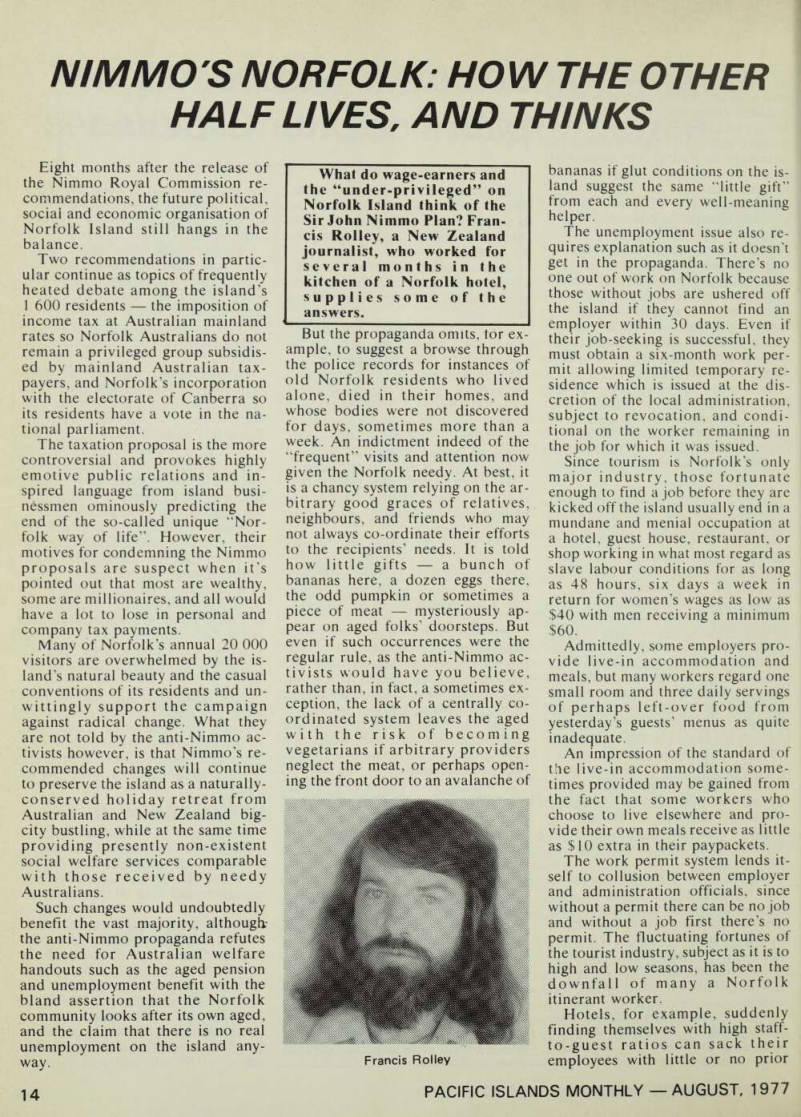
What do wage-earners and the “under-privileged” on Norfolk Island think of the Sir John Nimmo Plan? Fran cis Rolley, a New Zealand journalist, who worked for several months in the kitchen of a Norfolk hotel, supplies some of the answers.
But the propaganda omits, tor ex ample, to suggest a browse through the police records for instances of old Norfolk residents who lived alone, died in their homes, and whose bodies were not discovered for days, sometimes more than a week. An indictment indeed of the “frequent” visits and attention now given the Norfolk needy. At best, it is a chancy system relying on the ar bitrary good graces of relatives, neighbours, and friends who may not always co-ordinate their efforts to the recipients’ needs. It is told how little gifts a bunch of bananas here, a dozen eggs there, the odd pumpkin or sometimes a piece of meat mysteriously ap pear on aged folks’ doorsteps. But even if such occurrences were the regular rule, as the anti-Nimmo ac tivists would have you believe, rather than, in fact, a sometimes ex ception, the lack of a centrally co ordinated system leaves the aged with the risk of becoming vegetarians if arbitrary providers neglect the meat, or perhaps open ing the front door to an avalanche of
bananas if glut conditions on the is land suggest the same “little gift” from each and every well-meaning
helper.
The unemployment issue also re quires explanation such as it doesn’t get in the propaganda. There’s no one out of work on Norfolk because those without jobs are ushered off the island if they cannot find an employer within 30 days. Even if their job-seeking is successful, they must obtain a six-month work per mit allowing limited temporary re sidence which is issued at the dis cretion of the local administration, subject to revocation, and condi tional on the worker remaining in the job for which it was issued.
Since tourism is Norfolk’s only major industry, those fortunate enough to find a job before they are kicked off the island usually end in a mundane and menial occupation at a hotel, guest house, restaurant, or shop working in what most regard as slave labour conditions for as long as 48 hours, six days a week in return for women’s wages as low as $4O with men receiving a minimum $6O.
Admittedly, some employers pro vide live-in accommodation and meals, but many workers regard one small room and three daily servings of perhaps left-over food from yesterday’s guests’ menus as quite
inadequate.
An impression of the standard of the live-in accommodation some times provided may be gained from the fact that some workers who choose to live elsewhere and pro vide their own meals receive as little as $lO extra in their paypackets.
The work permit system lends it self to collusion between employer and administration officials, since without a permit there can be no job and without a job first there’s no permit. The fluctuating fortunes of the tourist industry, subject as it is to high and low seasons, has been the downfall of many a Norfolk itinerant worker.
Hotels, for example, suddenly finding themselves with high staff to-guest ratios can sack their employees with little or no prior
Francis Rolley
notice. International Labour Organ isation conventions don’t yet apply to Norfolk and there are no trade union branches on the island through which unfairly treated workers may seek redress.
Nimmo recommends that ILO worker protection be extended to Norfolk, thus giving rise to another source of opposition from island business owners. But the problems of a summarily-dismissed employee would even go beyond the interna tional organisation’s influence.
A quaint local Norfolk admin istration ordinance which clearly appears to restrict the right of an Australian taxpayer to seek work in a part of his country compels an employee to leave the island for at least three days before returning to take up another job, even if he, somehow, obtains a work permit for his new occupation.
Since Norfolk is isolated by hundreds and hundreds of miles of open sea in all directions, and its only transport link with the outside world is by air, the airline fares forced on the unfortunate employee are formidable, and this is doubtless
intended by the administration as a restraining control on ambitious employees whose job-changing might otherwise endanger occupa tion rationalisation on the island.
A federal electorate of Norfolk with about 1 000 adults on the roll is impracticable and discriminatory against the vote-value of mainlan ders, so Sir John Nimmo made the best of a bad selection of alterna tives by recommending Norfolk’s inclusion in the electorate of Can berra.
The anti-Nimmo advocates claim with some reason that their political voices would be lost among the needs of the far greater number of national capital voters. However, the Liberal member for Canberra, John Haslem, who recently visited Norfolk, has given assurances that island residents “could not have a better member if Nimmo’s re commendation is adopted” and says he hopes “to have the opportunity of occasionally going across to the is land to represent the people there.”
In the context of the less practical alternatives, Norfolk Australians might not be unfairly compromised on this recommendation.
Leadership Battle In Fiji
Fiji’s electoral rolls have been revised and the country is all set for its second general election in six months. But if the country is ready, the National Federation Party, which held most seats in the last parliament, is not; at least it wasn’t towards the end of June when lawyer Karam Ramrakha, the party’s general secretary, said he would no longer serve under the leadership of another lawyer, Siddiq Koya.
Mr Ramrakha left no room for compromise on the Ramrakha-Koya issue. He said the party had to look for a moderate and neutral leader to form a united front. Fie alleged Mr Koya had failed to see that unity prevailed in the party. His faction was prepared to settle its differences with Mr Koya’s faction for the sake of the party, and he was prepared to pay any price to see there was unity.
About the same time Mr Koya appealed to his rivals in the fight for the leadership not to go ahead with plans to split the party. He claimed Mr Ramrakha, and the party president, Mrs Jai Narayan, had plans to split the NFP. The NFPshould get together in a crucial period when the country was going through strains and stress.
The Prime Minister, Ratu Sir Kamisese Mara, no doubt smiled to himself to see the NFP party leadership at each other’s throats for the result of the last election showed that his Alliance Party had its problems. He promised after the election the Alliance would mend its fences, and claimed a short time ago it had done so. Only the ballot box will tell.
Mr Ramrakha, when he made his attack on Mr Koya, said the question was whether Mr Koya should lead a divided party.
The deputy leader of the National Federation Party, Mr Atunaisa Maitoga, in an effort to bring some commonsense to a ridiculous situation within his party, called for the resignation of Mr Koya, Mr Ramrakha and Mrs Narayan. Mr Maitoga, who was doing his best to reunite a divided party, said that while the three were in office there would be no lasting solution to the internal strife which was destroying the party.
Closes On
‘Open Door’
Micronesia
From a Honolulu correspondent
Under the aura of the new “open door” policy of the government of President Jimmy Carter, officials from the US Government and Micronesia met for four days in Honolulu in late May for continued discussions of the future political status for Micronesia.
These were the first such talks to be held since the disclosure of the CIA bugging of previous negotiating sessions, a practice which has been condemned and foresworn by the Carter administration, with its widely-heralded promise of open government.
However, in spite of the public claims for openness and candid ex pression, the US officials declared the meetings closed to the press and public, claiming that the Microne sians none of whom was ever identified insisted on it being that way.
Since this meeting was billed a$ a “round-table discussion” and not a continuation of the formal negotia tions, no one expected any concrete proposals or conclusions. Rather, the participants regarded the meet ing as a “feeling out” session, with each side looking for a change in the posture of the other, and in the end finding none.
Heading the US team was Am bassador Philip Manhard, a newcomer to international diploma cy, whose credentials for the post seem to be his seven years spent as a prisoner of war in North Vietnam, making him the longest-held cap tive. (Since he was not in military service at the time of his capture, one is forced to speculate about the nature of his assignment in Indo- China.) Standing by to assist Mr Manhard were nearly 30 high-ranking rep resentatives from the federal departments of State, Defence, In terior, Justice, and Commerce, and from the US Coastguard.
On the Micronesian side were 72 official delegates representing various groups within Micronesia;
the Trust Territory Administration, the Congress of Micronesia, the Joint Committee on Future Political Status, the Law of the Sea Delega tion, each district administration, each district legislature, and district Political Status Commissions from the Marshall Islands and Palau.
After polite and perfunctory opening statements by the US delegation and the Congress of Micronesia, the critical issues began to surface; Micronesian demands for a full account of the CIA bug ging activities in Micronesia, and the breakup of the TTPI through separate negotiations with Palau and the Marshall Islands.
In response to the Micronesian demands for release of the US Senate investigative report on the CIA bugging activities, the Micronesians were told, in effect, to bug off.
Mr Robert Oakley, a Deputy As sistant Secretary of State, left no doubt with his pronouncement that “the issue is closed”. So much for the anticipated openness of dis cussions.
Assistant Secretary Oakley also presented the current US policy regarding the unity of Micronesia, which is no different from the old policy under the previous admin istrations: the US insists on some form of political unity for the rest of Micronesia, having already made separate arrangements with the new Commonwealth of the Northern Marianas.
Maintaining all the while that the US was not threatening, Mr Oakley proceeded to underscore what might result from any further frag mentation of Micronesian unity; “We are concerned that a departure from the concept of some form of unity would complicate the pro vision of aid and services and make their administration more cumber some and expensive.”
In plainer talk, the US will cut the purse strings unless the US-imposed unity of Micronesia is maintained. No amount of diplomatic language can disguise that message.
In the face of US insistence on preserving the unity of Micronesia, the delegations from the Marshalls and Palau persisted throughout the four days in making their demands for separate negotiations.
Advertisements & other items, p. 16 (1 item)
Introducing the Chief.
The Australia-Papua
New Guinea Trade Link-
Chief Container Service.
New Guinea Australia Line and Conpac have combined services with the Papua New Guinea Shipping Corporation to form Chief Container Service.
The CCS fleet will consist of three new, self-sustained, fully-containerised vessels: • “PAPUAN CHIEF” —New Guinea Ai iQtrall ino • “CORAL CHIEF” —Papua New Guinea Line • “NIMOS” —Conpac Chief Container Service links the Australian ports of Sydney, Melbourne, and Brisbane with all of the major ports in Papua New Guinea Port Moresby, Samara!, Lae, Madang, Wewak, Kieta, Rabaul, and Kavieng; and Honiara in the Solomon Islands.
For an efficient and regular cargo link between Australia and Papua New Guinea, come and meet The Chief.
CHIEF
CONTAINER
SERVICE
AGENTS FOR NGAL & PNCL.
AGENTS FOR CONPAC.
SYDNEY AGENTS: Interocean Swire Pty. Ltd. 8 Spring Street, Sydney. Phone 2-0522. BURNS PHILP & CO. LTD. Sydney: 51 Pitt St., Phone 241 -3851 Melbourne; 356 Collins St., BRISBANE AGENTS: Interocean Swire Pty. Ltd., 444 Queen Street, Brisbane. Phone 31-1551. Phone 67-8941. Brisbane: 133 Mary St.. Phone 31 -0391 MELBOURNE AGENTS: Interocean Swire Pty. Ltd., 158 City Road, South Melbourne. Phone 62-2151. Bums Philp (N.G.) Ltd.
GENERAL AGENTS: John Swire & Sons Pty. Ltd., 8 Spring Street, Sydney. Phone 27-9351. Port Moresby, Lae, Rabaul, Madang, Kavieng, Kieta.
PAPUA NEW GUINEA PORTS: Steamships Trading Co. Ltd., Bums Philp (N.G.) Ltd. at Kavieng and Wewak.
SOLOMON ISLANDS PORTS: E.V. Lawson Pty. Ltd.
ISO 78R
15Th Birthday, World Debut,
For Western Samoa
From an Apia correspondent
Three solid days of festivities to mark the 15th birthday of Western Samoa as the first independent Polynesian state, and the visit by the country’s Prime Minister to London for the Commonwealth conference, have been the top recent talking points here.
The independence celebrations began with a formal flag-raising ceremony at the Fono, Parliament, and a speech by the Head of State, His Highness Malietoa Tanumafili 11. He made it clear where Samoa, as it attempted to achieve self-suffi ciency, stood in the world.
He said: “Western Samoa is proud to have joined the United Nations last year. We are a small country and we have no quarrel with anyone.
We have old friends and we are gaining new friends. We have a basic policy of universalism in our foreign relations.
“We see Western Samoa’s place as a member of the Third World. We share the aspirations of the Third World. We have a close affinity with the non-aligned movement.
“We will strive in our relation ships with other nations, large and small alike, to achieve a better world free from wars, tensions and poverty.
“We pledge to work closely with our neighbours in the region and those countries outside the region who extend to us the hand of ge nuine friendship.”
He also pointed to the problems ahead, both political and economic, especially the need to meet the aspirations of the rising generation.
“If leadership fails in this task, these issues will themselves find people to articulate them. The end result might not be as we would want,” His Highness said.
Western Samoa’s Prime Minister, Tupuola Efi, recently returned from the Commonwealth conference in London with new experience, con tacts and knowledge of the major issues facing the world today. It was his first international conference and, as such, he was careful in mak ing any judgments on its worth.
One positive aspect of his London vist was the way in which he was able to sort out a number of issues affecting relationships between his country and New Zealand. The con ference allowed him and the New Zealand Prime Minister, Mr Robert Muldoon, to get down to some hard talking, in particular on problems of transport and immigration.
As the Attorney-General, Mr Neroni Slade, who also went to Lon don, pointed out, the conference allowed the Prime Minister to come closer to major world issues. He said it was one thing to read about Africa in the newspapers, but it was another to hear “the great leaders of Africa” talk about the “very human, very important” issues facing them.
Sanford Wins In Tahiti
Results of the elections for French Polynesia’s Territorial Assembly, announced in June, showed a convincing win for the parties led by Territorial Deputy Francis Sanford.
M Sanford’s Front Uni won 13 seats, sympathisers of the Front Uni 3, the conservative RPR 10, and Independents 4. With supporters, M Sanford is expected to control at least 18 of the 30 seats.
The new Assembly has unanimously approved the draft Territorial Statute giving greatly increased internal autonomy. M Sanford’s personal standing as the man who brought internal autonomy to the Territory formed the basis of the election campaign of the Front Uni.
As a result of the consensus achieved on the new Statute before the elections between all local political parties and the French Government, the election campaigns were low-key affairs, with interest focused on personalities rather than issues.
Pro-independence candidates fared badly, and only managed to score 1.4% of the Tahiti vote.
In the New Hebrides, land

is what it’s all about
By PIM staff writer MALCOLM SALMON
It is said that when subordinates began to outline some problem to France’s famed World War I com mander, Marshal Foch. they would regularly be cut short with the ques tion: "De quoi s’agit-il ?” “What’s it about?” In this way, Foch hoped to do away with long explanations and at once get to the heart of the matter.
A fair answer to Foch’s question in relation to today’s situation in the New Hebrides would be: “Land.”
And the land situation in the con dominium is hotting up.
Several documents recently cir culating in the New Hebrides elo quently demonstrate this.
The first is a letter signed by Chief P Poilapa of Mele Village in the southwest of Efate Island. The letter is addressed to Mrs Sylvia McMichael. managing director of Tara plantation, which is about 10 miles from Vila and two miles from Mele village. The chief’s letter says: “The Chief and People of Mele village demand the return of the land at present occupied by your company in Mele land.
“We need not tell you of the past history as to the acquiring of the land and definitely believe that it was through devious means that your predecessors acquired this land. The history of how land has been fraudulently taken by Euro peans in the past in our islands is not a new tale and we know that you cannot deny it.
“We know that your argument for the freehold of this land would be based on the decision of the Joint Court. However, we wish to inform you that we do not regard the Land Titles in the Joint Court as valid, because they contain a foreign and colonial seal in which none of our forefathers had any role to play.
“We claim what we know is ours, and that we are the rightful owners.
“We hereby give you three months notice as from this date (March 3. 1977) to vacate this land.
Failing that we will be forced to take action.” (A petition along similar lines was
sent on the same day to the French and British Resident Com missioners in Vila.) The reply to Chief Poilapa’s letter was written by Mr L. N. Nevels.-Jr, an American attorney operating out of Honolulu, who is attorney to Mrs Sylvia McMichael. It says in part; “Your letter to Mrs McMichael has been turned over to me for reply.
“As you must have anticipated, it is impossible to do otherwise than reject your claim. Permit me to give you the reasons therefore.
“You are quite correct in believ ing that my client relies upon her Court Title to support her freehold interest in the lands of Tara Planta tion. But it goes beyond that.
“My client, as do practically all other fair-minded persons, of every racial, religious and political back ground, believes that all people have an inalienable right to select their own government, their own leaders and their own laws. No man should be dominated by an alien philosophy which (if he understands it at all) he inherently disagrees with. All honourable men will agree that New Hebrideans are no excep tion. that they are entitled to govern themselves, in their own way, with their own institutions, and that they should be encouraged and assisted in taking their place as an indepen dent nation in this 20th century ...
“Any humane and understanding person will recognise the yearning of some New Hebridean leaders to restore an earlier, simpler, satisfy ing way of life. That same unders tanding person will feel great sor row that it cannot be done, however much the desire may be there.
“However well-intentioned the people who advocate a return to ‘custom’ may be, such a return is im possible.
“When you become self-govern ing and independent, as will surely happen soon, you will be a very small nation among more than 180 other independent and self-govern ing nations of the world in this 20th century. If the 20th century with all its upheavals, miseries and successes has taught us anything, it has taught us that nations are interdependent ; none can survive by itself, in a shell, unrelated to many, if not all, other nations. What happens in Zanzibar or Angola or the United States has some effect upon the New Hebrides, whether its people like it or not. A typhoon in the Philippines has a pronounced effect on the New Hebrides . ..
“Thus, the New Hebrides will have to realise, as an independent nation, that it has to live in the world community. To do this it must earn the respect of at least a goodly number of 'that world community . . . Indeed, the New Hebrides will for some time be very dependent
upon the goodwill of and the invest ment from many other countries and the citizens of those countries.
“It is always tempting, in the crea tion of a new country, to try to get a ‘head start’. The simple way of doing this is for the new government to take the lands and property from former colonials. They have no votes, no political power. Prac tically all new governments are tempted to do this. But it has grave consequences. Consider the lack of success of those new nations who have done so in the past 20 years Zaire, Tanzania, Uganda. Papua New Guinea, Angola, and others.
Each of these has suffered tremen dous hardships with more to follow.
“They have antagonised the re sponsible nations of the world (perhaps without intending to), they have suffered revolutions, breaka way movements, assassinations, coups d’etat, economic disasters beyond the scope of other new na tions. Many of these disasters are directly related to the suspicion and contempt held for governments which take other people’s lands. It would be tragic if the New Hebrides starts its independent status with these same potential problems, it would be pathetic if it did not learn from the sad experiences of other recently-founded countries.
“A nation, no less than an indi vidual, must honour commitments given in the past, whether those commitments were made by them selves or by others ... (Mr Nevels was writing primarily about the New Hebrides situation.
His views on the present state of Papua New Guinea are so wide of the mark that he needs a good law yer himself to protect him from the justifiable indignation of the PNG Government. PNG is not unsuc cessful, nor is it suffering undue hardships, assassinations, coups, revolutions, nor has it lost the good will of other nations).
Things had also been stirring on Pentecost Island where in February a council of custom chiefs on the is land declared itself the government of the island. Father Walter Lini, president of the Vanuaaku Party (formerly New Hebrides National Party), was invited by the council to visit Pentecost and to counter-sign the declaration.
A French company, Thevenin et Cie (Thevenin & Co.) reacted by
virtually threatening to take the law into its own hands to protect its in terest in Pentecost’s Lonorore Plan tation “if forced to”. The Thevenin statement follows in full:
‘Declaration Of Posi
Tion By Thevenin Et Cie.”
“The following statement is made by Thevenin et Cie as the lawful, ad judicated owner and long-time possessor of some 2 500 acres of land known as Lonorore Plantation, Pentecost Island, new Hebrides.
“Thevenin et Cie and its pre decessors, starting prior to 1904, with foresight and creative effort, brought forth from the Pentecost bush a productive plantation. Many years ago Thevenin et Cie by due process of law before a properly constituted tribunal had its land ti tles adjudicated and confirmed.
“Thevenin et Cie was voluntarily established under French law; it and its predecessors voluntarily submit ted their persons, their businesses and the lands of Lonorore Planta tion to the jurisdiction of the Con dominium Government. Thevenin et Cie has obeyed that government’s laws and will continue to obey them so long as that government performs those acts for which it was primarily created namely, to protect the persons and property rights of those over whom it exercises jurisdiction.
“Thevenin et Cie acknowledges the legitimate desire of the New Hebridean people to govern them selves; Thevenin et Cie endorses the political principle that all people are entitled to select their own leaders and to submit themselves to
laws appropriate to their own cultures and aspirations. No man should be prohibited from the exer cise of these natural rights.
“Thevenin et Cie is well aware that the obtaining of self-govern ment is for any people a process dis tinguished by slogans, statements, oratory and sometimes promises of impossible dreams. This is partic ularly so where, as in the New Hebrides, there exists an enormous diversity of languages, customs, economic conditions and objectives.
When these difficulties are combin ed with a most rudimentary in frastructure and a severe shortage of trained personnel with which to op erate a 20th century government, it is to be expected that those striving for self-government and indepen dence will seek to enlist adherents by making insupportable statements and by promising popular, though irrational, acts. This is human nature and can be endured.
“However, when representatives of some of the people usurp political authority; when a few people resolve to take without compensation the property of others, this is another matter. Such has recently been the case.
“At a meeting held on February 10-1 I. the Vanuaaku Pati at Quat napni. Pentecost unilaterally declared itself the government of Pentecost Island and in addition solved to take Lonorore Plantation and distribute it to one or more of the adherents of the Vanuaaku Pati.
This action was further magnified by the publication in the March
• continued on p. 89
»77 issue of the Vanuaaku Pati’s lew Hebridean Viewpoints’ of a story of Lonorore Plantation dis iguished by outright falsehoods,
ilf-truths and insupportable con
usions.
“So that there will exist now and the future no misunderstanding, hevenin et Cie makes the following ;clarations in response to the ac 3ns of the Vanuaaku Pati and the >1 itical situation now extant in the ew Hebrides; “I. That so long as the Con >minium Government shall fulfil ; primary functions of protecting e personal liberties and property E>hts of those dwelling within or iving business interests in the New ebrides, Thevenin et Cie will con lue to obey the laws of the Con >minium Government.
“2. That in the event the Con iminium Government shall at me future time cease to exercise ich primary functions, or shall ibstantially modify its past con pts of private land ownership, or all surrender its jurisdiction over e New Hebrides, or any portion ereof, to another body politic, hevenin et Cie reserves its natural id inherent right to reject such langes. Any government which irectly or indirectly permits its •ior solemn adjudications to be sregarded, either by its own of fals or by surrender of jurisdic on to a successor government, ereby releases its subjects from the ity of continued support.
“3. For more than 70 years past hevenin et Cie and its predecessors title have by their conduct ex nplified and exercised all indicia f ownership of the lands of onorore Plantation. They have, oreover, complied with all laws ider which freehold title to these nds has arisen.
“Thevenin Et Cie Is The
'Wner Of Lonorore Plan
Ation. It Will Not Sur
Ender The Freehold
Itle To Its Lands To Any
Erson Or Body Politic
/Hatsoever
“4. Thevenin et Cie desires to be a 3od neighbour to all persons. It, :cordingly, will not interfere with
the selection of its neighbours’ leaders nor with the formulation of its neighbours’ laws. It seeks with all persons peaceful and mutually beneficial trade and harmonious relations. But it EXPECTS AND DEMANDS in return that all per sons act towards Thevenin et Cie in the same manner, respecting its rights and property.
“5. Thevenin et Cie hereby con stitutes itself a body politic in ad dition to being a business entity. As such body politic Thevenin et Cie hereby undertakes to protect the lives, liberty and property of all those who shall now and in the future voluntarily dwell within the boundaries of Lonorore Plantation, if such protection shall not be pro vided by the Condominium Govern ment as constituted on March 1, 1977.
“These Declarations are State ments of Position. Thevenin et Cie and those with it associated, now and in the future, are entitled under natural law to select their govern ment just as its neighbours are en titled to select theirs. In the event, and only in the event, that the Con dominium Government is unable or unwilling to perform its primary functions above described will these Declarations take precedence over Thevenin et Cie’s voluntary support of the Condominium Government.
“Thevenin et Cie (signed) Donald Thomas Bowden, a sub ject of Her Gracious Majesty Queen Elizabeth II of Great Bri tain.”
In his pamphlet “Land and Politics in the New Hebrides’’, which was sponsored by the United Nations Development Programme, a leading Vanuaaku Party member,
Barak Sope, wrote; . the major
land problem in the New Hebrides is maldistribution of land between Europeans and New Hebrideans.
Although New Hebrideans hold 64 per cent of the land, they are 95 per cent of the population. Europeans own 36 per cent of the land and comprise only 3 per cent of the population.
“The ownership is justified on political grounds. It is a political problem, and any steps taken to solve it entail political conse quences.”
The documents reproduced here are proof enough that the last has not been heard of the politics of land tenure in the New Hebrides.
Vanuaaku Party’s
resolution
The Vanuaaku Party, formerly
the National Party of the New Hebrides, decided at its congress in June that the July constitu tional conference, scheduled for Paris, should be held in the New Hebrides.
A congress resolution said: “Such a conference, since it con cerns the life and future of the people of Vanuaaku (New Hebrides) should be held in Vanuaaku.” The resolution added that the party could not afford to send a full delegation to Europe.
The French/Bislama language fortnightly, Nabanga, reacted sharply to this decision in its issue of June 18. In a major article on the Vanuaaku Party congress,
signed by J.M., Nabanga said: “In
London or in Paris ... of course, it is not possible to stage de monstrations which might in timidate or strive to convince the negotiators on the other side of the table.
“If there were a summit con ference in Vila, the Vanuaaku Party could make use of certain means of pressure ...”
Dearer living in the New Hebrides
Increases in import duties in the New Hebrides will send up the prices of cigarettes, tobacco and cars. A hike in vehicle licences will also make motoring dearer and will make transport charges dearer.
Telephone charges are also up.
The tax on raw tobacco has been lifted from FNH 400 to FNH. I'soo a kg, on cigars from FNH 2,000 to FNH 3,000 a kg and on cigarettes from FNH 1.130 to FNH 1,700 a kg. The duty on stick tobacco is unchanged.
The duly rate on vehicles from I,lOOcc to 1,500 cc has been in creased from 20% to 30% . and on
vehicles over 1,500 cc it is now 35% .
New vehicle licence rates are: motor-cycles, 100 cc or under, FNH 1,200; over 100 c c FNH 1,500, cars, I lOOcc or under, FNH 2,000. over 1,100 cc, FNH 3,000; over 1 ,500 cc, FNH 5,000; trucks, up to one tonne, FNH 3,000; one to three tonnes, FNH 5,000; over three tonnes,
Fnh 8,000.
Half rates apply to vehicles five years old, taxis and others used on islands other than Efate and Santo.
Telephone rental charges rise to FNH 10,000 a year, and the charge for local calls rises from 8c to 10c.
Nutshell
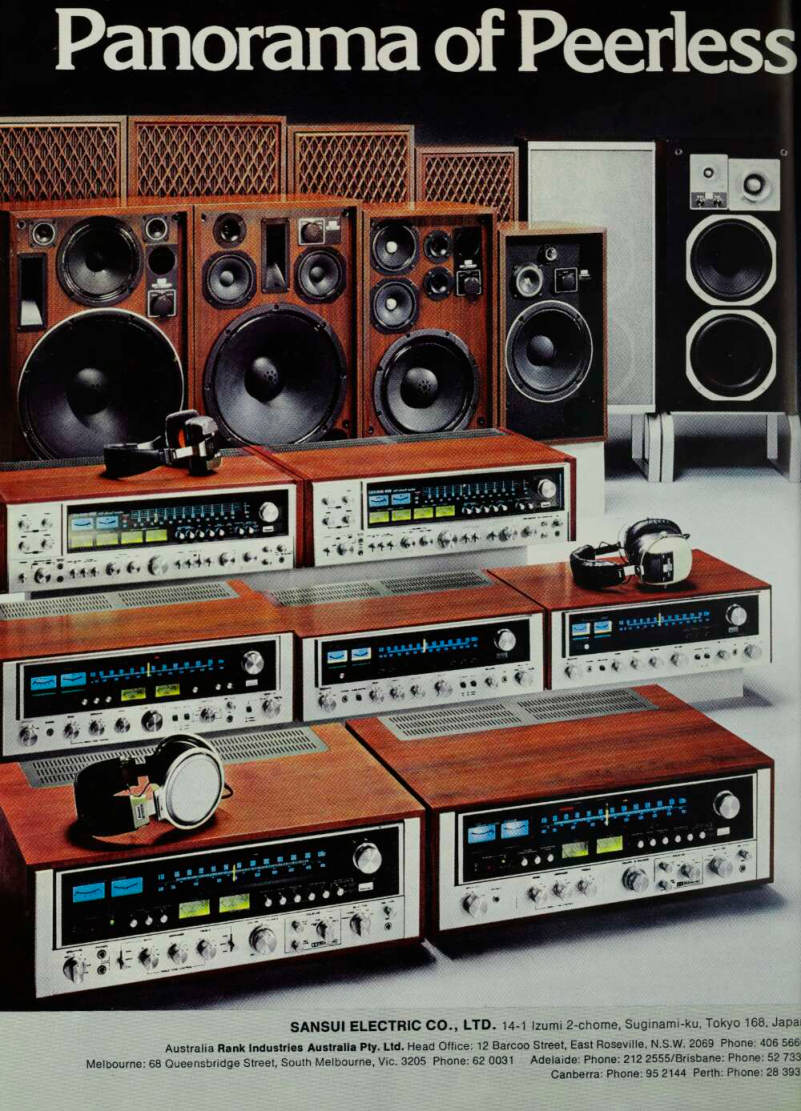
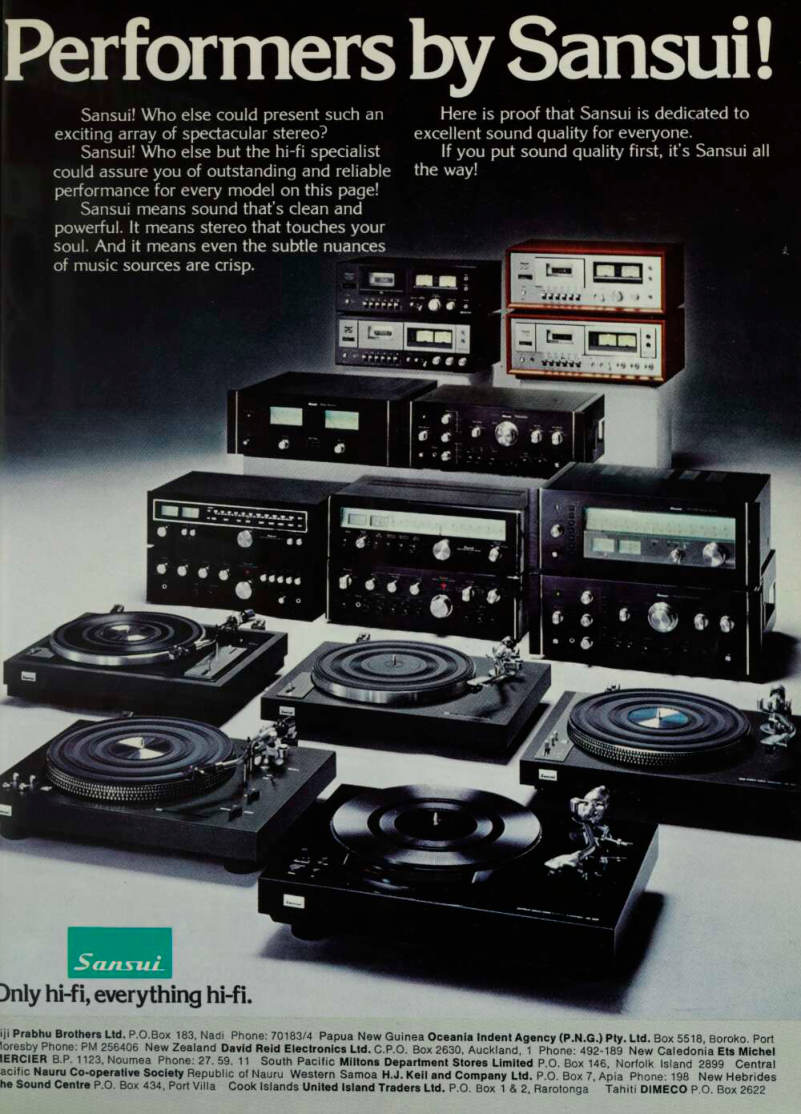
The
News
In A
Nutshell
A Bouncer!
Nauru MP Rene Harris lost his seat in parliament through a court conviction for assault but he bounced back in no uncertain manner when the by-election was held. He polled 95 votes in his Aiwo constituency, a majority of 32 over his three opponents Reginald R. Akiri (41), John C. D. Bill (12) and August D.
Deiye (10). The Deputy Speaker, Derog
Gioura, lost his seat through a Supreme Court order which ruled that his election for the Übenide constituency was in valid. Kennan R. Adeang was declared elected in his stead. The Member for Yaren, Leo Keke, was elected Deputy
Speaker.
Moving House
The Congress of Micronesia is moving house from Saipan to Ponape, with a first session in its new abode scheduled for August 15-20. The COM will lead a general exodus of Trust Territory government departments as the standing decision that Ponape should be the new capital is put into effect.
All correspondence to the COM should now be addressed to Kolonia,
Ponape.
A Burning Question
A huge banyan tree collapsed and fell across the main road on the Island of Makira in the Solomons. No one was hurt but the tree blocked the road. Two trucks and a trailer travelling from Kira Kira were trapped on one side and another vehicles was stranded on the other side. How to clear the road? Set fire to the tree. The fire burned for two
days!
Tragic Coincidence
Paul Tatamat, 28, a taxi driver of Nguna, New Hebrides, was found dead
in bed in May at the Foyer-Hostel, Vila.
A post mortem failed to discover the cause, and organs from his body were sent to Australia for scientific exam ination. Four years ago his brother Wilfred, a police sergeant, was found dead in bed in Santo.
Boys Wanted!
Dick Kidby, a former Melbourne busi nessman with a lifelong interest in foot ball, has thrown in his lot with the Papua New Guinea Office of Sport, a govern ment agency, and is helping to promote Australian Rules football in PNG.
To help get his plans moving he sent circulars- to 83 high schools in PNG to assess their requirements for 1978. One of the early answers received said: “Dear Sir; Thank you for your interest, but we wish to advise that this is a girls’ school.
Our only requirements for 1978 are
boys.”
The Road Back
Japanese-born Taicho Futemma, 71, was a tailor in Vila before World War 11. When the war broke out he was in terned in Australia and was repatriated to Japan at the war’s end. He had left behind in Vila his wife, their three sons and two daughters.
He returned to Vila on a visit in May, found his wife, and learned that they now had more than 60 grandchildren and great grandchildren.
Both he and his wife had since remar ried, but in both cases their partners had since died.
Million For Artifacts
A huge collection of South Pacific ar tifacts fetched nearly $1 million at auc tion at Christies, London, in June.
A spokesman for the auctioneer said highlights included a heavily tattooed shrunken Maori head with black hair and a plugged nose, and a red and yellow Hawaiian cloak made from half-a million parrot feathers.
The collector, Mr James Cooper, haunted British dealers’ shops for years to accumulate the items. He never set eyes on the countries from which they came.
Killer Flu
At least 14 people were reported dead late in June after an outbreak of in fluenza in the remote Sambanga area of Kabwum district in Papua New Guinea’s
Morobe province.
Gaoled For Greed
Mr Colin Perrier, a Fiji magistrate, was in no mood to be lenient when two young men appeared before him on charges relating to the theft of NZ School Certificate examination papers.
He said they had caused “total disrup tion of the lives of several thousand” young people at a critical time of their lives. He sentenced Rajendra Narayan, 20, to four years’ gaol for having stolen the papers and Subhas Chand, 19, to
three years for having received the papers. Narayan’s father had received the papers in his capacity as chief super visor for Rishikul School, and put them in a carton under his bed. Narayan took some of the papers, selling a set of book keeping papers to a boy for $2O and a set of biology papers to another person for $25. He gave the rest of the papers to Subhas Chand, who sold them to four other people, who copied them and then returned them. The court was told that because of their action 3 000 students re ceived their School Certificate results late and 19 students were disqualified.
Mr Perrior said Narayan and Chand had been motivated solely by greed.
Pamela S Victims
About 1500 Mortlockese, their home islands ravaged by last year’s Typhoon Pamela, could be relocated on some is lands in'Micronesia’s Ponape district if local leaders agree. The Mortlock Is lands lie about 306 km (190 miles) south of the Truk district centre, Moen.
Ponape’s new weekly newspaper, Pohnpei Spotlight, said a survey by the Truk department of agriculture had shown that no food crops could be grown on the affected islands for at least five years. The typhoon victims are at present on a welfare programme which will cut out before the end of the year. 9 more on p. 25
This peculiar contraption with the two pretty girls was PNG's centre-piece at an Asian Trade Fair in Melbourne in June. It's a good example of Papua New Guinean traditional art wedded to a modern mode of travel - the helicopter. The girls are Joyce Wickham, Air Niugini's senior in ternational stewardess (left), and Eva Arni, PNG Office of Tourism public rela tions officer. They were hostesses at the fair. The PNG National Arts School made the fabric and the art work was done by Arts School Artists Kauage and Akis - PNG Post-Courier picture.
"Experts" Not Wanted
Papua New Guinea’s North Solomons provincial government refused in June to see a consultant group appointed by the national government in Port Mores
by. Two representatives of McKinsey
Consultants had gone to the North Solomons capital of Arawa to discuss problems of provincial government with local leaders.
North Solomons Premier. Dr Alexis Sarci. said: “We don’t want consultants to tell us what provincial government is about. We know what we want.”
Appointment of the group, at a re ported cost of K 1 ().()()() a week for 15 weeks, plus K I ().()()() expenses, was also attacked by the deputy speaker of the National Parliament, Mr John Kaputin. who served on the constitutional plan ning committee which drew up docu ments outlining the powers and func tions of provincial governments. Mr Kaputin described the appointment of the McKinsey group as “another exam ple of a deal” in which consultant groups were exploiting the country through wantoks (relatives) who are or were working as advisers to the government.
Deadly Drink
Two Fiji dockworkers died and one became seriously ill after drinking methyl alcohol at Kings Wharf. Suva.
Several others also drank the liquid. The two who died were Manasa Koromo. 36 and Eparama Vakacabeqoli. 40. The police later issued a warning that about 45 litres of the methyl alcohol was miss ing from the wharf, and that it was deadly if consumed. The dead men left 1 1 children, aged from 3 to 18. The Fiji Waterside Workers'and Seamen's Union immediately moved to put $1 ()()() into a trust fund for the children’s benefit.
Chief Sues Usa
A Palauan chief has launched a multi million dollar lawsuit against the US and
Trust Territory governments claiming
his land is being occupied illegally. Ac cording to the Micronesian News Ser vice. Thomas Orrenges. head of the Ochedarechei clan in Angaur, a phosphare-rich island in southern Palau, has charged the US and TT governments with illegally taking away land owned by his and another clan.
Orrenges claimed that the US Coast Guard, which built a LORAN naviga tional radio station and airport on the land in 1952. has never paid rent.
He claims that the island has always been owned by the people and clans in Angaur “from time immemorial up to the present”, and that there is no public land in Angaur. It says the two govern ments had recognised the Angaur peo ple's ownership until about 1952 when the so-called “German deed” surfacr ed. “The “German deed” was re portedly signed in 1908 by a number of Angaur representatives to sell two-thirds of the 9.6 sq km (3.3 sq m) island to the
Germans. Six chiefs are said to have “signed” it with crosses.
The Angaur lawsuit maintains that “there was no such sale”, and that even if there had been one it was “a direct result of coercion, force and duress”, and therefore invalid.
Chief Orrenges and his clan are said to have been the recipients of one of the TT’s largest war claim settlements. $U5250,000, for postwar damage done by the US military to the clan’s property.
Preserving An Art
A group of customary leaders in Santa Cruz. Solomon Islands, fearing that the art of making the feather money unique to their area may die out. have formed a company to preserve it. Feather money is used in a number of places in the Solomons’ outer eastern islands, but is only made on Santa Cruz, and at present by only a handful of people A standard length of the money is made from the feathers of 1500 birds and may take a year to weave. It is a tra ditional way of settling bride price and customary trade.
Get Out Of The Office
Present training programmes for com munity workers in the Pacific Islands are “too office- and classroom-orientated”, according to a group of specialists in social work from five Pacific countries who met recently in Madang, Papua New Guinea. They said after their fortnight long meeting: “Too often one hears the complaint that field staff spend more time in their offices than with the people in the village, and perhaps this reflects the bias of current training institutions.
We feel that the major emphasis should be on field training and field work ex periences, with less time spent on study ing theory based on conditions in bigger countries overseas.” The meeting, spon sored by the South Pacific Commission, grouped people from the Cook Islands.
Fiji, the New Hebrides. Papua New Guinea and the Solomon Islands.
Cure For Drugs
A senior magistrate in Papua New Guinea proposed in May that Papua New Guinean youths should do a two year period of “national service” work ing on the land. Mr Francis Iramu made the proposal, saying that from what he had seen in the courts PNG could be on the way to a serious drug and organised crime problem. Much of the situation stemmed from dissatisfied young people who were trying to find a place in the community. Under his proposal, when a youth turned 18 he would begin a two year community work period in his home area.
Mr Iramu said he believed his pro posal conflicted with citizen freedoms laid down in the national constitution.
In the overall national interests, however, he believed the proposal re quired close government examination.
The Sting
Bernard Narokobi. who is fast earning a reputation as the Third-World philosopher of Papua New Guinea, in a newspaper article in May praised the mosquito for bringing sickness and death to early White settlers. He wrote: “I feel Papua New Guineans owe a lot to the mosquito.” Whites in Port Moresby, reacting to the statement, accused Mr Narokobi of taking an uncharitable at titude. They said: “He would think us nasty-minded if we gloated over the chronic sickness which the mosquito has brought to his own people.”
Critics of Mr Narokobi recalled that several years ago President Amin of Uganda established a decoration which he called the Order of the Mosquito. He said he selected the name because of the suffering the mosquito had brought to Whites in Africa.
Tuvaluans In Nz
Nine men and three women from Tuvalu have gone to New Zealand to work. They were the first Tuvaluan re cruits to work in a foreign country other than those engaged on a regular basis for the phosphate workings on Nauru. It was the first opportunity for overseas employment since Tuvalu (then the Ellice Islands) separated from the Gilbert Islands. On the way they spent three days in Suva where they were X
rayed.
$5Oo 000 Holiday!
The cost of a 36-hour shutdown at Fiji’s two biggest sugar mills, Lautoka and Rarawai. cost the Fiji Sugar Cor poration about $5OO 000. The mill workers refused to work on the Queen's Birthday holiday on June 13. The 500 workers involved gave notice late in the preceding week that they would not work that day. However, they did not break the law. even though they broke an agreement the Fiji Sugar Corporation had with the Fiji Sugar and General Workers’ Union. The question of work ing on a public holiday was not one of the items in a certificate of dispute, although the question of the rate of pay for a public holiday was. The dispute has still to be adjudicated.
$5Oo 000 Fall
A 70-tonne ore hauler worth more than SASOO 000 was destroyed in a spec tacular 100-metre fall at the Bougain ville copper mine. The truck was being inspected by a mechanic at the side of the pit when it moved forward and plunged over the edge. No driver was aboard. The accident was the third at the mine in four days: in the two others, dri vers escaped injury when a loaded ore hauler went over a steep slope, and an oil tanker left the road as it approached the mine complex.
Cost of the three accidents was esti mated at more than SAI million.
Advertisements & other items, pp. 21-26 (1 item)
and made one
We took three
of our best
of the greatest.
i * 44 U wovieen c c * y
SA-C6O
* o Pioneer's new CX-7000 cassette-receiver offers most of the truly great features found in our individual stereo components.
Integrated amplifier. FM/AM tuner. Frontloading cassette-deck. Naturally, having everything in one super-compact unit 2.0/nV) and super selective (60dB) tuner section. An automatic pilot signal canceler is included for preventing sound deterioration in the high frequency range and, of course, PLL MPX (Phase-Locked Loop Multiplex) circuitry.
Cassette handling is really a "super snap" due to the front-loading tape mechanism with built-in auto-stop. And making your own music tapes is super easy because Pioneer’s exclusive vertical-hold compartment allows you to check tape content and movement while the tape selector enables the optimum use of either chrome or normal tape. All controls are up front (where the user is) and built-in Dolby* reduces tape hiss and noise in the high frequency range.
Pioneer s new CX-7000 cassette-receiver.
Not just another audio product, but a giant step forward in music listening enjoyment.
Its the super component for super hi-fi value.
We re also offering matching speakers and turntable. They're super, too. ‘Dolby is a trademark of Dolby Laboratories, Inc. increases operational convenience and offers super value all the way.
Power is a super substantial 25 watts per channel, min. RMS, at 8 ohms from 20 to 20,000 Hz with no more than 0.3% total harmonic distortion. The high performance phono equalizer assures the wide dynamic range necessary to reproduce clean musical nuance.
The CX-7000 presents a new dimension in FM/AM enjoyment. In most listening areas, reception is less than ideal. So, Pioneer features a super sensitive (11.2 dßf/ mm i
The Super Component
Australia Pioneer Electronics Australia Pty.
Ltd., 178-184 Boundary Road, Braeside, Victoria 3195, Tel: 90-9011, Sydney 93-0246, Brisbane 59-7457, Adelaide 433379, Perth 24-9899 Fiji Islands Brijlal & Company, G.P.O. Box No. 362, Suva, Fiji Islands Tel: 22258 New Zealand Fountain Marketing Ltd., Maidstone Street. Auckland, New Zealand Tel: 763-064 Norfolk Island Burns Philp (Norfolk Island) Ltd., Norfolk Island, South Pacific New Hebrides Burns Philp (New Hebrides) Ltd., Vila, New Hebrides Nauru Island Jacob Enterprises, P.O. Box No. 4 Republic of Nauru Tahiti Est. PERFECT. B P. 594, Papeete, Tahiti Tel: 20 407 New Caledonia Menard Freres Ville, B P. H2Cedex, Noumea, New Caledonia Tel: 27.52.22 American Samoa Traspac Corporation, P.O. Box 1477, Pago Pago, American Samoa 96799 Tel: 633-5224 Rarotonga South Seas International Ltd., P.O. Box 49, Rarotonga Cook Islands Tel: 2327
SANSUI ELECTRIC CO., LTD. 14-1 Izumi 2-chome. Suginami-ku. Tokyo 168, Japai Australia Rank Industries Australia Pty. Ltd. Head Office: 12 Barcoo Street. East Roseville. N.S.W. 2069 Phone: 406 566( Melbourne: 68 Queensbridge Street. South Melbourne, Vic. 3205 Phone: 62 0031 Adelaide: Phone: 212 2555/Brisbane: Phone: 52 733 Canberra: Phone: 95 2144 Perth; Phone: 28 393:
Performers by Sansui!
Sansui! Who else could present such an exciting array of spectacular stereo?
Sansui! Who else but the hi-fi specialist could assure you of outstanding and reliable the way! performance for every model on this page!
Sansui means sound that’s clean and powerful. It means stereo that touches your soul. And it means even the subtle nuances of music sources are crisp. s fsn ■■ ■■■ • Here is proof that Sansui is dedicated to excellent sound quality for everyone.
If you put sound quality first, it’s Sansui all * rfffff. • * ***••• f t f f » t € * *3 * • •••« < * 4 * * i* i • o i %. * * < ' r % UH * /
Sansui.
)nly hi-fi, everything hi-fi
iji Prabhu Brothers Ltd, P.0.80x 183, Nadi Phone: 70183/4 Papua New Guinea Oceania Indent Agency (P.N.G.) Pty. Ltd. Box 5518, Boroko Port loresby Phone; PM 256406 New Zealand David Reid Electronics Ltd. C.P.O. Box 2630, Auckland, 1 Phone: 492-189 New Caledonia Ets Michel lERCIER B.P. 1123, Noumea Phone: 27. 59. 11 South Pacific Miltons Department Stores Limited P.O. Box 146, Norfolk Island 2899 Central acific Nauru Co-operative Society Republic of Nauru Western Samoa H.J. Keil and Company Ltd. P.O. Box 7, Apia Phone; 198 New Hebrides he Sound Centre P.O. Box 434, Port Villa Cook Islands United Island Traders Ltd. P.O. Box 1& 2, Rarotonga Tahiti DIMECO P.O. Box 2622
Come up to kool The cool refreshing taste of menthol.
COUNT ON VICTA
TOTURN GRASS INTO LAWN
VICTA
UTILITY 160
MOWER
A Tough, rugged, lightweight and low priced, a mower without grass-catcher designed to handle the full range of grass cutting jobs from heavily weeded and long grass areas to fine lawns. Cuts close to trees and fences and new side chute sends the cut grass safely to the side. Powered by 160 cc Mark 4 2-stroke Victa engine with the easy pulfZip Starter, multiposition height adjuster, fold-down handles and many more exclusive Victa features make the Utility a popular lightweight mower. f
VICTA
SUPER 24
MOWER
The big mower for big grass with a giant 61 cm (24") cut. It's the mower for the big grass cutting jobs and municipal parks and gardens, sports grounds, roadside growth control as well as property owners with large areas of land. Solid construction, easy manoeuvrability and giant rear wheels handle rough ground effortlessly. Two free-swinging blades on the cutting disc absorb shock when hard objects are encountered, protecting the engine from damage.
Powered by a special power-boosted Victa 160 cc 2-stroke engine with the exclusive easy pull Zip Starter and many more features to make the big mowing jobs easier.
When you want tough reliable grass cutting, Victa has the mower for any job. And every Victa mower is backed by the widest service and spare parts network in the business.
Victa
TURNS GRASS INTO LAWN
L 83.8646
Pacifique Sud
With Helen Rousseau
Top attention in Noumea in re cent months is focused on that col ourful live show the great elec tion spectacular complete with riot squad gendarmes flown in from Tahiti, a top Fijian naval trainee, changes in the joint French UTA- Australian Traveland tourist ven ture, and yet another load of pro mises from Paris and INCO authori ties on a new nickel project. Sand wiched in between these top stars were Japanese honeymooners and a Sydney churchman’s warning of the “rising level of frustration" among the indigenous Caledonians and Hebrideans.
Of course, plenty of drama can be expected in Noumea up until the territorial elections in September.
Now that the show is on the road, it is really the best time for tourists to visit the island and see the fun at first hand. French elections are al ways lively and passionate and the Pacific context gives the added riva lry of Paris and local interests inside the territory and suspect Anglo-Sax on agents all around outside.
After the gathering under the cir cus tent of the pro-Administration forces on April 17. latest act in the carefully-scripted election scenario was a totally new spectacle on June 15 in Noumea’s central square.
Some 100 people gathered for a meeting of the PALIKA (Kanaka Liberation Party) and were greeted by Paris’ latest import, a brigade of gardes mobiles (riot squad gen darmes) complete with helmets, huge shields, truncheons and rifles.
This confrontation over a meeting on land rights around the east coast town of Poindimie was given full press coverage: no one could deny that the scene appeared ideal elec toral propaganda to support the popular Paris argument that the French presence is required in New Caledonia to maintain law and order. From the tourist point of view the central square, bordered by Qantas and the Australian Con sulate, is ideal for watching such
military spectaculars.
The latest nickel episodes can also be regarded as fitting into this pre-electoral drama. For over 10 years, the New Caledonians have been entertained with promises, the big stick and the carrot, to help them vote the right way. And now their newspapers are urging them to have hope “for another five years".
The French love five-year plans, and under the latest agreement sig ned in June, Canadian INCO is to make further feasibility studies for a possible nickel treatment plant among the lateritic ore of the Goro- Port Boise area in southern New Caledonia.
Over the past eight years, the Caledonians have benefited from great French investment for the im portant role that Paris has drafted out for the territory. New Caledonia has been described by one governor as the “aircraft carrier for the beam ing out of French civilisation" into the Pacific. And just what kind of merchandise this “aircraft carrier” it to send out will be interesting to see as French ships step up their calls around the Pacific. New friends are being made in political and defence spheres. It is interesting to note that the Noumea press re cently featured a young Fijian naval trainee, Esala Teleni, whose photo was headed "Fiji; the first com mander" with the explanation that after next March he would com mand a ship in the Fiji Navy. Could this press reference be a veiled hint to Caledonia Melanesians not to count on support from France’s friends in Fiji or does the interest relate to prospective customers for defence deals?
Men who know about these things say it is much more fun to do arms deals with the French rather than the Russians or Americans.
Someone who had another idea of the French military activity in New Caledonia was the Rev John Mavor of Sydney who, in a June submission to the Australian Senate Standing Committe on Defence and Foreign relations, suggested Australia
should try to avoid “a second Timor" in the South Pacific. Mr Mavor sensed a "rising level of frustration" among Caledonian and Hebridean indigenes. He explained that the recent fighting in Timor followed upon the islanders being trained militarily and he saw parallels in the military training going on in New Caledonia.
Also in June, Australian Prime Minister Malcolm Fraser visited the French President and Prime Minister in Paris. As Mr Fraser well knows, not least among French in terests in Australia are the develop ment of uranium and the sale of military hardware.
Deals of another kind, in the tourist field, were in progress in late June between the French and Australian partners in the Island Holidays joint venture in New Caledonia and New Hebrides.
While no official statement was forthcoming at that stage from the Australian side, Traveland, Noumea sources reported that after one year’s operation on a 50-50 basis the French side UTH (hotel arm of UTA airlines) was negotiat ing to take back a major share of this partnership. The venture was set up in 1976 to enlist Australian man agerial expertise in boosting tourist traffic to the Chateau Royal hotel and the Isle of Pines.
UTA airlines is also working hard at its Tokyo end, where the Japanese are assembling possible planeloads of young Nippon bridal couples to fly down for a wedding where they would say oui, oui or hai, hai before the Mayor of Noumea. Since all French weddings must be per formed in a civil ceremony, ir respective of what happens in a church, there is quite a stream of marriages performed in the Noumea Town Hall. Amid the multi-lingual stampede, the authorities will have to watch that no Miss Sakuko-san Blossom finds herself unexpectedly married to Leon the lion-hearted from the Wallis Islands.
People
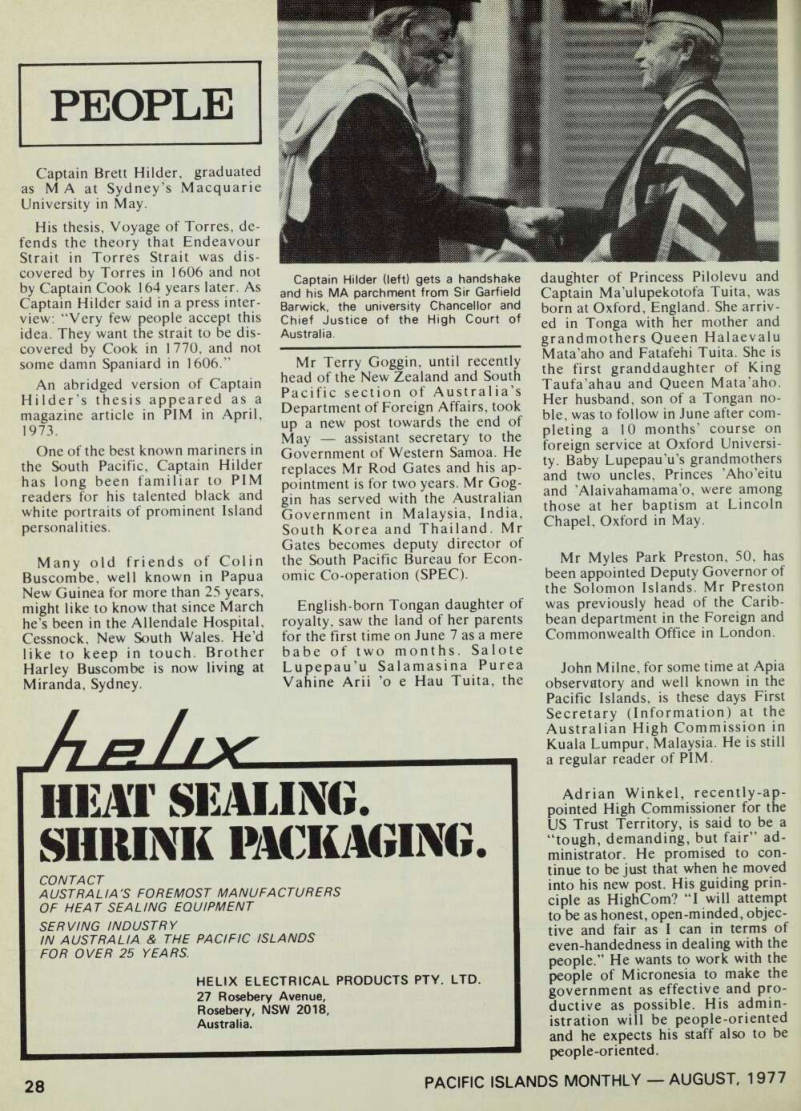
Captain Brett Hilder, graduated as M A at Sydney’s Macquarie University in May.
His thesis, Voyage of Torres, de fends the theory that Endeavour Strait in Torres Strait was dis covered by Torres in 1606 and not by Captain Cook 164 years later. As Captain Hilder said in a press inter view: “Very few people accept this idea. They want the strait to be dis covered by Cook in 1770, and not some damn Spaniard in 1606.”
An abridged version of Captain Hilder’s thesis appeared as a magazine article in PIM in April, 1973.
One of the best known mariners in the South Pacific, Captain Hilder has long been familiar to PIM readers for his talented black and white portraits of prominent Island
personalities.
Many old friends of Colin Buscombe, well known in Papua New Guinea for more than 25 years, might like to know that since March he’s been in the Allendale Hospital, Cessnock, New South Wales. He’d like to keep in touch Brother Harley Buscombe is now living at
Miranda, Sydney.
Mr Terry Goggin, until recently a, o n ot aVs?™ ha's May assistant secretary to the Government of Western Samoa. He replaces Mr Rod Gates and his ap pointment is for two years. Mr Gog gjn h as serV ed with the Australian Government in Malaysia, India, South Korea and Thailand. Mr Gates becomes deputy director of the South Pacific Bureau for Econ omic Co-operation (SPEC).
English-born Tongan daughter of royalty, saw the land of her parents for the first time on June 7 as a mere babe of two months. Salote Lupepau’u Salamasina Purea Vahine Arii o e Hau Tuita, the
daughter of Princess Pilolevu and Captain Ma’ulupekotofa Tuita, was born at Oxford, England. She arriv ed in Tonga with her mother and grandmothers Queen Halaevalu Mata’aho and Fatafehi Tuita. She is the first granddaughter of King Taufa’ahau and Queen Mata’aho.
Her husband, son of a Tongan no ble, was to follow in June after com pleting a 10 months’ course on foreign service at Oxford Universi ty. Baby Lupepau’u’s grandmothers and two uncles. Princes ’Aho’eitu and ’Alaivahamama’o, were among those at her baptism at Lincoln Chapel, Oxford in May.
Mr Myles Park Preston, 50, has been appointed Deputy Governor of the Solomon Islands. Mr Preston was previously head of the Carib bean department in the Foreign and Commonwealth Office in London.
John Milne, for some time at Apia observatory and well known in the Pacific Islands, is these days First Secretary (Information) at the Australian High Commission in Kuala Lumpur, Malaysia. He is still a regular reader of PIM.
Adrian Winkel, recently-ap pointed High Commissioner for the US Trust Territory, is said to be a “tough, demanding, but fair’’ ad ministrator. He promised to con tinue to be just that when he moved into his new post. His guiding prin ciple as High Com? “1 will attempt to be as honest, open-minded, objec tive and fair as I can in terms of even-handedness in dealing with the people.” He wants to work with the people of Micronesia to make the government as effective and pro ductive as possible. His admin istration will be people-oriented and he expects his staff also to be
people-oriented.
Captain Milder (left) gets a handshake and his MA parchment from Sir Garfield Barwick, the university Chancellor and Chief Justice of the High Court of Australia.
Advertisements & other items, p. 28 (1 item)
JleJjjc
HEAT SEALING.
SHRINK PACKAGING.
CONTACT
AUSTRALIA'S FOREMOST MANUFACTURERS
OF HEAT SEALING EQUIPMENT
SERVING INDUSTRY
IN AUSTRALIA & THE PACIFIC ISLANDS
FOR OVER 25 YEARS
HELIX ELECTRICAL PRODUCTS PTY. LTD.
27 Rosebery Avenue, Rosebery, NSW 2018, Australia.
Tropicalities
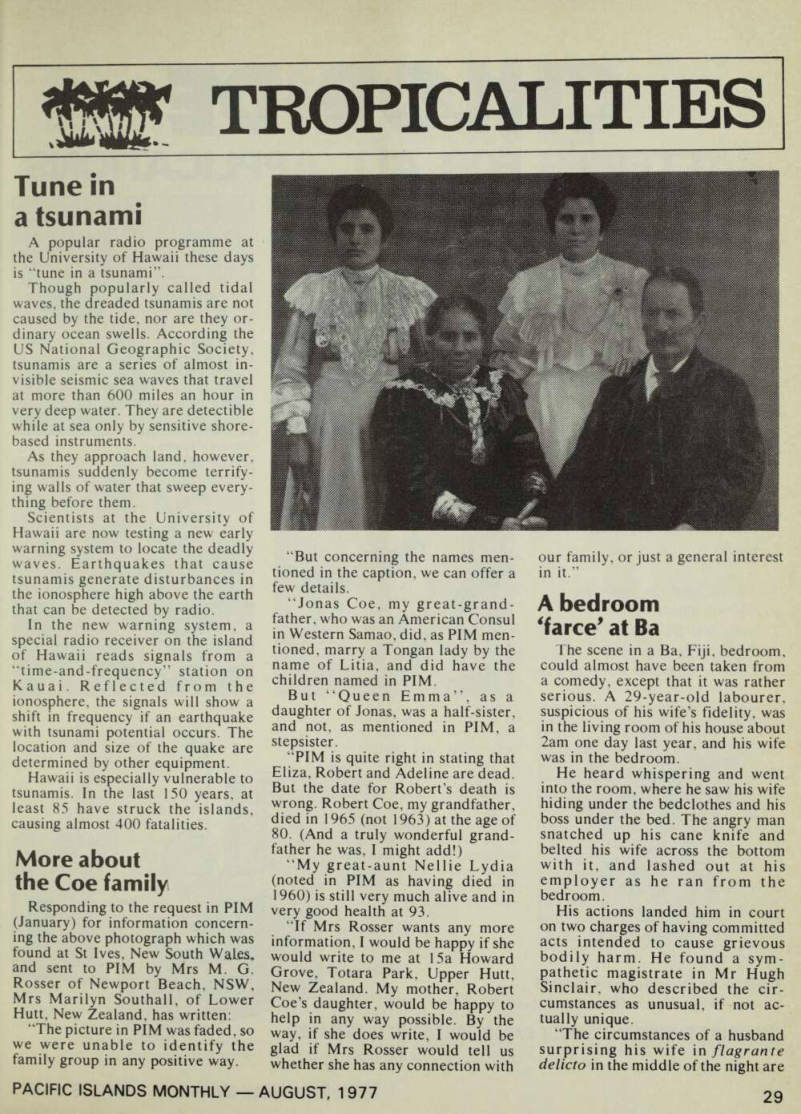

Tune in
a tsunami
A popular radio programme at the University of Hawaii these days is “tune in a tsunami”.
Though popularly called tidal waves, the dreaded tsunamis are not caused by the tide, nor are they or dinary ocean swells. According the US National Geographic Society, tsunamis are a series of almost in visible seismic sea waves that travel at more than 600 miles an hour in very deep water. They are detectible while at sea only by sensitive shore based instruments.
As they approach land, however, tsunamis suddenly become terrify ing walls of water that sweep every thing before them.
Scientists at the University of Hawaii are now testing a new early warning system to locate the deadly waves. Earthquakes that cause tsunamis generate disturbances in the ionosphere high above the earth that can be detected by radio.
In the new warning system, a special radio receiver on the island of Hawaii reads signals from a “time-and-frequency” station on Kauai. Reflected from the ionosphere, the signals will show a shift in frequency if an earthquake with tsunami potential occurs. The location and size of the quake are determined by other equipment.
Hawaii is especially vulnerable to tsunamis. In the last 150 years, at least 85 have struck the islands, causing almost 400 fatalities.
More about
the Coe family
Responding to the request in PIM (January) for information concern ing the above photograph which was found at St Ives, New South Wales* and sent to PIM by Mrs M. G.
Rosser of Newport Beach, NSW, Mrs Marilyn Southall, of Lower Hutt, New Zealand, has written: “The picture in PIM was faded, so we were unable to identify the family group in any positive way.
“But concerning the names mentioned in the caption, we can offer a few details.
“Jonas Coe, my great-grandfather, who was an American Consul in Western Samao, did, as PIM mentioned, marry a Tongan lady by the name of Litia, and did have the children named in PIM.
But “Queen Emma”, as a daughter of Jonas, was a half-sister, and not, as mentioned in PIM, a stepsister.
"PIM is quite right in stating that Eliza, Robert and Adeline are dead.
But the date for Robert’s death is wrong. Robert Coe, my grandfather, died in 1965 (not 1963) at the age of 80. (And a truly wonderful grandfather he was, I might add!) “My great-aunt Nellie Lydia (noted in PIM as having died in 1960) is still very much alive and in very good health at 93.
“If Mrs Rosser wants any more information, I would be happy if she would write to me at 15a Howard Grove, Totara Park, Upper Hutt, New Zealand. My mother, Robert Coe’s daughter, would be happy to help in any way possible. By the way, if she does write, I would be glad if Mrs Rosser would tell us whether she has any connection with
our family, or just a general interest in it.”
A bedrOOMl
af Ra ■ dl Dd The scene in a Ba, Fiji, bedroom, could almost have been taken from a comedy, except that it was rather serious. A 29-year-old labourer, suspicious of his wife’s fidelity, was in the living room of his house about 2am one day last year, and his wife was in the bedroom.
He heard whispering and went into the room, where he saw his wife hiding under the bedclothes and his boss under the bed. The angry man snatched up his cane knife and belted his wife across the bottom with it, and lashed out at his employer as he ran from the bedroom.
His actions landed him in court on two charges of having committed acts intended to cause grievous bodily harm. He found a sym pathetic magistrate in Mr Hugh Sinclair, who described the cir cumstances as unusual, if not ac tually unique, “The circumstances of a husband surprising his wife in flagrante delicto in the middle of the night are
productions and form the basis of the subject of numerous theatrical many farcical situation comedies,”
Mr Sinclair said.
But the realities of life, as such, were serious.
“The man, to all accounts, a faithful husband and good father to five children who surprises his wife in such a situation can well be ex cused from not appreciating the comical aspect of such situations to others,” Mr Sinclair said.
"It is understandable for such a man to act in anger, for his mind to be temporarily warped by his hor ror, and to act i I logical ly in his anger.”
Mr Sinclair said a deterrent sen tence was not appropriate. He sen tenced the man to 12 months’ im prisonment on each charge, to be served concurrently, then suspend ed sentence for 18 months.
There was a happy sequel. The court was told the husband and wife were reconciled and had moved elsewhere.
Claret for the
stomach’s sake
As was the case in a number of other Pacific Island countries in the past, the Cook Islands had a series of acts and regulations which either forbade or restricted the sale of alcoholic liquor.
These prohibitions grew in the main from the desire of the mission aries to shield the indigenous peo ples from the evils of the demon grog- However, there were always those who sought means to satisfy their thirst. On February 5, 1905, the Re sident Agent at Mangaia wrote to the Resident Commissioner: “Clause 22 of the Statute of Mangaia is very clear as far as the prohibition of liquor as a beverage is concerned and indeed I cannot see why it should be regarded as a beverage as at least two of the Euro peans on the island are quite unable to take it in moderation. Infinitely better for them, therefore that they should not have it at all. But I do not think this applies to claret. which is taken with meals and therefore is really a food. The new liquor law of your Rarotonga Island Council seems to make an exception in favour of claret”.
There were some odd attitudes to the matter of racial origins as far as
allowing access to alcohol was con cerned. In 1904, The Rarotonga Is land Council enacted an ordinance to regulate the sale of spiritous li quor, section 5 reading “No spiritous liquor shall be sold or given to any Native inhabitant of any Polynesian island, except on the written permission of the Resident Medical Officer. For the purposes of this ordinance all Chinamen shall be deemed to be Native inhabitants of Rarotonga.”
Over the years, there have been some notable hard drinkers residing in the Cook Islands but in 1911 they must have been quite exceptional.
On July 17, 191 1, the Governor in New Zealand assented to an or
dinance prohibiting the importing
except under conditions of an American cod-liver oil extract. The ordinance included the following statement, “And whereas in the opi nion of the Governor the im portation of a medical preparation stated to contain 17% alcohol and called or known as ‘Wampole’s Ex tract of cod-liver oil’, prepared by Henry K. Wampole and Co (Incor porated), Philadelphia, United States of America, into the said is lands is likely to be injurious to the inhabitants by reason of their using the same as drink of an intoxicating
nature
Lae the last outpost
Last January this column gleefully reported that more than 12 months after independence, the Papua New Guinea Post Office was still postmarking local mail with TP & NG, which means “Territory of Papua and New Guinea,” and which ceased to be meaningful years ago.
Well, we can report that things are improving. We’ve just got a let ter from a government department in Lae, franked TPNG. They’ve got rid of that “and”. Perhaps next year they’ll go to work on the “Territo ry”.
Siers is
sailing again
New Zealander Jim Siers, who sailed an outrigger canoe, the Taratai from the Gilbert Islands to Fiji in 1976, plans another adven ture to prove a point. He is sailing
another vessel, built in Fiji, to New Zealand the long way round, follow ing the path of ancient Fijians. He intends to make landfalls in Samoa, Tonga, the Marquesas and the Cook Islands.
His vessel, the Taratai II was launched at the Regent Hotel, in Nadi Bay, by the Tui Nadi, Ratu Napolioni Dawai, who splashed ya qona over her. Many people, in cluding Gilbertese, helped Siers to build the boat, which has a hull of marine dakua, a present from the Pacific Lumber Co, of Lautoka.
Siers said the ancient Fijians pro duced a beautiful pottery called lapita. Pottery found in the Mar quesas, and dated to the beginning of the Christian era had since been identified as having been made in the Rewa delta, or that the materials from which pots were made came from there. There were those who felt that pottery made in Fiji was traded to Tonga and from there taken on a voyage which finished in the Marquesas.
Scientists tour
the Islands
The Royal Society of New Zea land has organised a scientific ex pedition to the outlying islands of Fiji and Tonga. Seventeen scientists interested in botany, biology and geology among other things have been visiting Ata and Fua in the Tongan Group and the Lau Islands of Fiji.
Two additional projects involved a linguistic survey of island dialects and the recording and documenta tion of Lau music.
The scientists, from universities, government departments and museums set off aboard the Depart ment of Scientific and Industrial re search vessel Tangaroa on June 15.
The Tangaroa, which also carries out oceanographic surveys in the nearby regions, was due to return to Wellington on July 29.
Many of the islands have rarely been visited by scientists. The ex pedition continued the Royal So ciety’s policy of fostering scientific research in the South-west Pacific region. The last expedition in 1969 marked the Bicentenary of Captain James Cook’s first voyage to the region.
Expedition leader was J. V. Eade of the New Zealand Oceanographic Institute.
Advertisements & other items, p. 30 (1 item)
Chloride
BATTERIES FOR ALL APPLICATIONS
A generous statement? Maybe, but then Chloride is equipped and qualified as such . . always ready to offer advice, guidance and service on your battery requirements.
As it goes way beyond automotive batteries. No matter what the problem . . if it's a question of power . . battery power . . it's one for Chloride. It could be as small as a battery for a hearing aid the size of a coat button, or a power station battery weighing 40 tonnes.
Again, it could be a no break D.C. power system for a computer or emergency lighting for a hospital.
No matter what the application . .
Transport, Industrial, Communication, Defence, Mining, Marine, Recreation . . .
Make Chloride power work for you. \
fee
I Telecommunications Chloride Batteries Australia Limited P.O. Box 141, Bankstown. N.S.W. 2200 Australia. Telex: 21262
CHLORIDE THE WORLD'S MOST EXPERIENCED BATTERYMAKER.
* Emergency Lighting Electric vehicles V i K r Automotive Engine Starting 1 «»» I Bill
Editor’S Mailbag
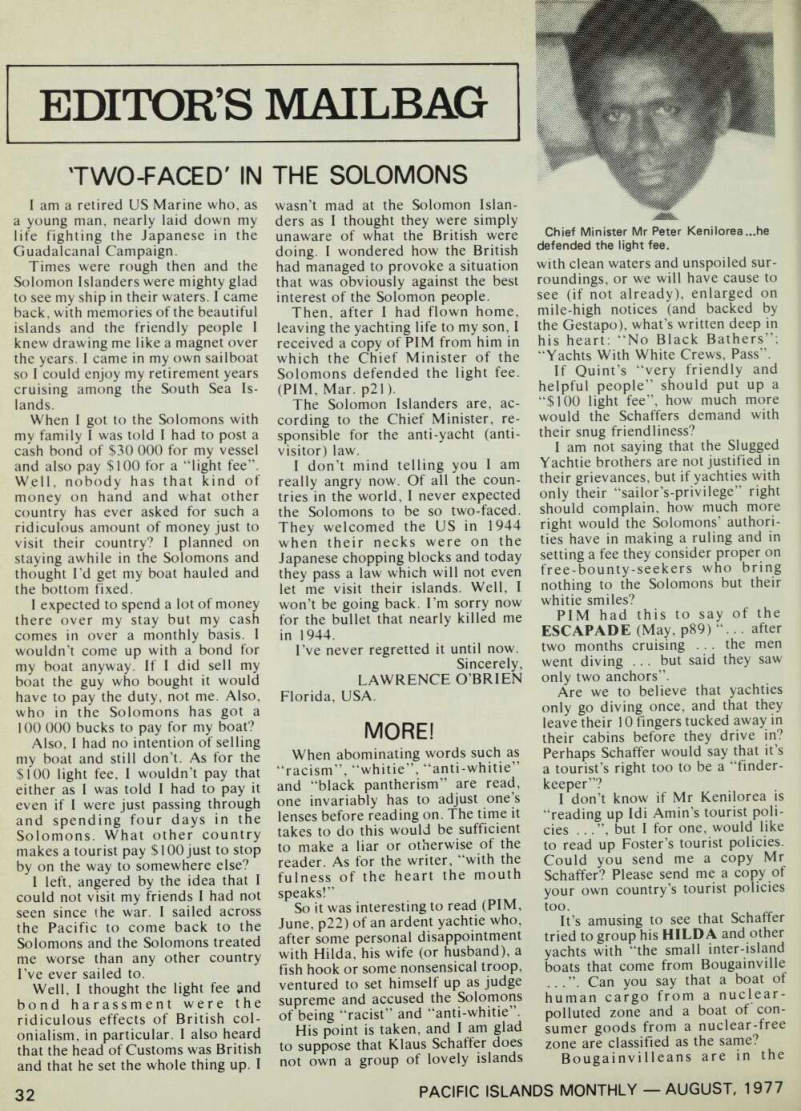
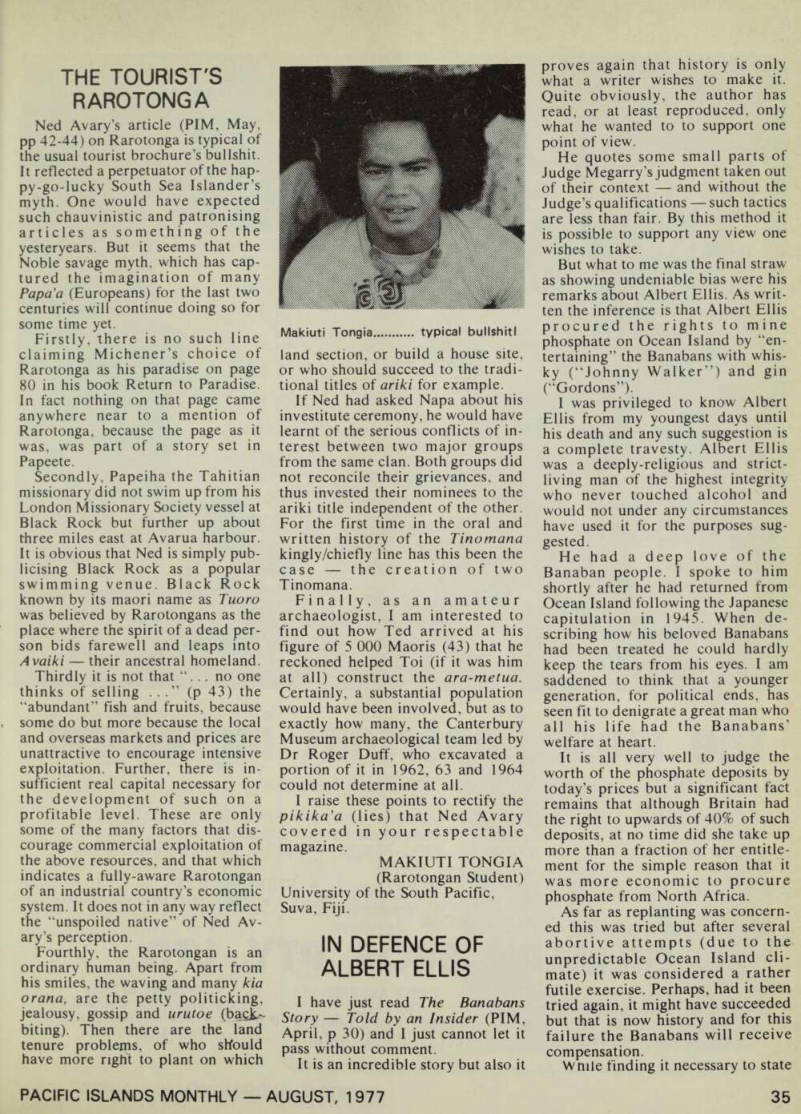
'Two-Faced' In The Solomons
I am a retired US Marine who, as a young man, nearly laid down my life fighting the Japanese in the Guadalcanal Campaign.
Times were rough then and the Solomon Islanders were mighty glad to see my ship in their waters. I came back, with memories of the beautiful islands and the friendly people I knew drawing me like a magnet over the years. I came in my own sailboat so I could enjoy my retirement years cruising among the South Sea Is lands.
When I got to the Solomons with my family I was told I had to post a cash bond of $3O 000 for my vessel and also pay $lOO for a “light fee”.
Well, nobody has that kind of money on hand and what other country has ever asked for such a ridiculous amount of money just to visit their country? I planned on staying awhile in the Solomons and thought I’d get my boat hauled and the bottom fixed.
I expected to spend a lot of money there over my stay but my cash comes in over a monthly basis. I wouldn’t come up with a bond for my boat anyway. If I did sell my boat the guy who bought it would have to pay the duty, not me. Also, who in the Solomons has got a 100 000 bucks to pay for my boat?
Also, I had no intention of selling my boat and still don’t. As for the $lOO light fee, I wouldn’t pay that either as I was told I had to pay it even if I were just passing through and spending four days in the Solomons. What other country makes a tourist pay $lOO just to stop by on the way to somewhere else?
I left, angered by the idea that I could not visit my friends I had not seen since the war. I sailed across the Pacific to come back to the Solomons and the Solomons treated me worse than any other country Eve ever sailed to.
Well, I thought the light fee and bond harassment were the ridiculous effects of British col onialism, in particular. I also heard that the head of Customs was British and that he set the whole thing up. I
wasn’t mad at the Solomon Islan ders as I thought they were simply unaware of what the British were doing. I wondered how the British had managed to provoke a situation that was obviously against the best interest of the Solomon people.
Then, after I had flown home, leaving the yachting life to my son, I received a copy of PIM from him in which the Chief Minister of the Solomons defended the light fee. (PIM, Mar. p2l).
The Solomon Islanders are, ac cording to the Chief Minister, re sponsible for the anti-yacht (anti visitor) law.
I don’t mind telling you I am really angry now. Of all the coun tries in the world, I never expected the Solomons to be so two-faced.
They welcomed the US in 1944 when their necks were on the Japanese chopping blocks and today they pass a law which will not even let me visit their islands. Well, I won’t be going back. I’m sorry now for the bullet that nearly killed me in 1944.
I’ve never regretted it until now.
Sincerely,
Lawrence O’Brien
Florida, USA.
More!
When abominating words such as “racism”, “whitie”, “anti-whitie” and “black pantherism” are read, one invariably has to adjust one’s lenses before reading on. The time it takes to do this would be sufficient to make a liar or otherwise of the reader. As for the writer, “with the fulness of the heart the mouth
speaks!”
So it was interesting to read (PIM, June, p 22) of an ardent yachtie who,
after some personal disappointment
with Hilda, his wife (or husband), a fish hook or some nonsensical troop, ventured to set himself up as judge supreme and accused the Solomons of being “racist” and “anti-whitie”.
His point is taken, and I am glad to suppose that Klaus Schaffer does not own a group of lovely islands
with clean waters and unspoiled sur roundings, or we will have cause to see (if not already), enlarged on mile-high notices (and backed by the Gestapo), what’s written deep in his heart; “No Black Bathers”; “Yachts With White Crews, Pass”.
If Quint’s “very friendly and helpful people” should put up a “SIOO light fee”, how much more would the Schaffers demand with their snug friendliness?
I am not saying that the Slugged Yachtie brothers are not justified in their grievances, but if yachties with only their “sailor’s-privilege” right should complain, how much more right would the Solomons’ authori ties have in making a ruling and in setting a fee they consider proper on free-bounty-seekers who bring nothing to the Solomons but their whitie smiles?
PIM had this to say of the ESCAPADE (May, pB9) . after two months cruising . . the men went diving .. . but said they saw only two anchors”.
Are we to believe that yachties only go diving once, and that they leave their 10 fingers tucked away in their cabins before they drive in?
Perhaps Schaffer would say that it’s a tourist’s right too to be a “finder
keeper”?
I don’t know if Mr Kenilorea is “reading up Idi Amin’s tourist poli cies ...”, but I for one, would like to read up Foster’s tourist policies.
Could you send me a copy Mr Schaffer? Please send me a copy of your own country’s tourist policies too.
It’s amusing to see that Schaffer tried to group his HILDA and other yachts with “the small inter-island boats that come from Bougainville Can you say that a boat of human cargo from a nuclear polluted zone and a boat of con sumer goods from a nuclear-free zone are classified as the same?
Bougainvilleans are in the
Chief Minister Mr Peter Kenilorea...he defended the light fee.
SOLOMONS, and there’s no fear of epidemics or unauthorised non medicinal cure-seekers coming from there. Remember, restrictions are put up only because of tear, not because of the number of gold teeth the other has.
I am reminded of a poem by the Cook Island poet, M. Tognia: Yet long ago you saw me as no different from the smell you throw.
Now you pretend not to remember
Why?
Let me assure Schaffer that the Solomons waters are not fenced.
Sail through. But remember, if you stop over, you are no longer in your own front yard.
Charles Galamuri
Honiara.
And More!
I wish to add a few comments on the subject of the $100 fee now im posed on yachts visiting the Solomon Islands. It is well known in Honiara that this tax was initiated by Mr John Green, an adviser to Customs and formerly Chief Customs Officer. This was done, not as an act of the legislature, but sim ply by the broader application of an existing regulation designed for large commercial ships.
Ostensibly, this tax is a light duty which serves to obtain funds for the maintainence of aids to navigation from those who benefit from them.
In fact the money collected does not go into a fund for such purposes but simply into general government revenue.
The actual aids to navigation in the Solomons are few and far be tween as well as poorly maintained.
That this tax is discriminatory against yachts is clearly apparent.
Local vessels, which make the most use of the aids to navigation, such as they are. pay no light dues nor are visitors arriving by other modes of transport similarly taxed.
The initiation of this tax by Mr Green was not surprising. For a number of years as head of Customs he would arbitrarily require visiting yachts to post a bond for 30% of the value of the vessel. Supposedly, this was to prevent sale of the vessel lo cally without paying duty. The Solomon Islands are hardly a market for yachts and with the tiny number of locally-owned private
yachts it would be impossible for a resident to buy one without every one’s knowledge. In any case it is the obligation of the buyer who imports it, not the seller to pay duty. The real purpose of the bond was to harass yachties whom Mr Green did not like the look of.
Mr Green’s personal dislike for yachties is part of a broader picture.
For many years the colonial civil servants in the Solomons have regarded the Protectorate as their own private club and have actively discouraged tourism, anthro pologists and other visitors whom they felt might intrude in their pri vate domain. It was most surprising to see Mr Kenilorea’s personal let ter responding to such tourism and even more so to see him defend it.
Apparently, the colonialists have done an effective brainwashing job for they now have a Melanesian de fending blatantly colonialist poli cies. It was equally surprising to see Mr Kenilorea’s thinly-veiled sar casm towards ’globe trotters’ and his attitude that such visitors should be happy to pay such a tax because it helps the people of the Solomons.
The ‘Globe Trotters’, whom Mr Kenilorea deprecates, are simply human beings responding to the quite admirable urge to experience, understand and appreciate the world in which they live. To dis criminate against such persons is not only contrary to basic human rights but contrary to the wishes of the people of the Solomon Islands who, outside Honiara, are most happy to see the occasional visiting yacht.
Asa yachtsman myself I pay my own way and have no objection to reasonable fees for services ren dered. I do, however, object to a discriminatory rip-off totally out of line with international standards.
Finally the benefit to the people of the Solomons is highly questiona ble. The Government of the Solomon Islands utilises almost all of its resources to maintain its own existence. The village people who consititute 90% of the population receive so little from the govern ment they would hardly be aware if it ceased to exist. As it is the Government of the Solomons owes its existence to international charity and as a taxpayer of one of the con tributing nations I feel I have more than done my part.
I am not happy to pay SIOO sim ply to enter the Solomons in my boat and I am sure Mr Kenilorea would not have been either had he been charged a similar amount upon en tering New Zealand to receive his education.
The light dues for yachts entering the Solomon Islands is a harsh, dis criminating and unjust tax and should be abolished. If the Govern ment of the Solomons is incapable of perceiving this then outside advice on how to run their country is ob viously in order.
M. J. Swinburn
Oliveh, Auckland, NZ.
More letters on p. 35
The Tourist's
Rarotonga
Ned Avary’s article (PIM, May, pp 42-44) on Rarotonga is typical of the usual tourist brochure’s bullshit.
It reflected a perpetuator of the hap py-go-lucky South Sea Islander’s myth. One would have expected such chauvinistic and patronising articles as something of the yesteryears. But it seems that the Noble savage myth, which has cap tured the imagination of many Papa’a (Europeans) for the last two centuries will continue doing so for some time yet.
Firstly, there is no such line claiming Michener’s choice of Rarotonga as his paradise on page 80 in his book Return to Paradise.
In fact nothing on that page came anywhere near to a mention of Rarotonga, because the page as it was, was part of a story set in Papeete.
Secondly, Papeiha the Tahitian missionary did not swim up from his London Missionary Society vessel at Black Rock but further up about three miles east at Avarua harbour.
It is obvious that Ned is simply pub licising Black Rock as a popular swimming venue. Black Rock known by its maori name as Tuoro was believed by Rarotongans as the place where the spirit of a dead per son bids farewell and leaps into Avaiki — their ancestral homeland.
Thirdly it is not that “... no one thinks of selling ...” (p 43) the “abundant” fish and fruits, because some do but more because the local and overseas markets and prices are unattractive to encourage intensive exploitation. Further, there is in sufficient real capital necessary for the development of such on a profitable level. These are only some of the many factors that dis courage commercial exploitation of the above resources, and that which indicates a fully-aware Rarotongan of an industrial country’s economic system. It does not in any way reflect the “unspoiled native” of Ned Av ary’s perception.
Fourthly, the Rarotongan is an ordinary human being. Apart from his smiles, the waving and many kia orana, are the petty politicking, jealousy, gossip and urutoe (bagjj>biting). Then there are the land tenure problems, of who should have more right to plant on which
land section, or build a house site, or who should succeed to the tradi tional titles of ariki for example.
If Ned had asked Napa about his investitute ceremony, he would have learnt of the serious conflicts of in terest between two major groups from the same clan. Both groups did not reconcile their grievances, and thus invested their nominees to the ariki title independent of the other.
For the first time in the oral and written history of the Tinomana kingly/chiefly line has this been the case the creation of two Tinomana.
Finally, as an amateur archaeologist, I am interested to find out how Ted arrived at his figure of 5 000 Maoris (43) that he reckoned helped Toi (if it was him at all) construct the ara-metua.
Certainly, a substantial population would have been involved, but as to exactly how many, the Canterbury Museum archaeological team led by Dr Roger Duff, who excavated a portion of it in 1962, 63 and 1964 could not determine at all.
I raise these points to rectify the pikika'a (lies) that Ned Avary covered in your respectable magazine.
Makiuti Tongia
(Rarotongan Student) University of the South Pacific, Suva, Fiji.
In Defence Of
Albert Ellis
I have just read The Banabans Story Told by an Insider (PIM, April, p 30) and 1 just cannot let it pass without comment.
It is an incredible story but also it
proves again that history is only what a writer wishes to make it.
Quite obviously, the author has read, or at least reproduced, only what he wanted to to support one point of view.
He quotes some small parts of Judge Megarry’s judgment taken out of their context and without the Judge’s qualifications such tactics are less than fair. By this method it is possible to support any view one wishes to take.
But what to me was the final straw as showing undeniable bias were his remarks about Albert Ellis. As writ ten the inference is that Albert Ellis procured the rights to mine phosphate on Ocean Island by “en tertaining” the Banabans with whis ky (“Johnny Walker”) and gin (“Gordons”).
I was privileged to know Albert Ellis from my youngest days until his death and any such suggestion is a complete travesty. Albert Ellis was a deeply-religious and strict living man of the highest integrity who never touched alcohol and would not under any circumstances have used it for the purposes sug gested.
He had a deep love of the Banaban people. I spoke to him shortly after he had returned from Ocean Island following the Japanese capitulation in 1945. When de scribing how his beloved Banabans had been treated he could hardly keep the tears from his eyes. I am saddened to think that a younger generation, for political ends, has seen fit to denigrate a great man who all his life had the Banabans’ welfare at heart.
It is all very well to judge the worth of the phosphate deposits by today’s prices but a significant fact remains that although Britain had the right to upwards of 40% of such deposits, at no time did she take up more than a fraction of her entitle ment for the simple reason that it was more economic to procure phosphate from North Africa.
As far as replanting was concern ed this was tried but after several abortive attempts (due to the unpredictable Ocean Island cli mate) it was considered a rather futile exercise. Perhaps, had it been tried again, it might have succeeded but that is now history and for this failure the Banabans will receive
compensation.
Wnile finding it necessary to state
Makiuti Tongia... typical bullshit
the above I am genuinely pleased that the United Kingdom.
Australian and New Zealand governments are making a further payment to the Banabans and I feel sure that if he were alive today Sir Albert Ellis would have been the first to express his pleasure. I am also sure that had the present generation of Banabans known Sir Albert personally they would have appreciated him for the very fair, kindly and lovable man that he really was.
Glen B. Johnston
Herne Bay,
The Intrepid Eka
It was with considerable interest that I read the article by Jane Gregor Intrepid was the Word for 'Eka\ Author of At Home in Fiji (PIM, June, p 52).
I am one of Eka’s grand-nieces. I too have a great love of the Pacific Islands, and, as you can see from my address, I live on one. Like Eka, my sister in New Zealand, (Mrs) N. B.
Gardner, is gifted with the paintbrush. Now that her family is grown up, she does many oils of the NZ bushland. In particular, she paints the famous NZ kauri trees, and landscapes of the early Kauri milling days.
We are the granddaughters of the late William Gordon-Cumming. one of Eka’s “travelling brothers”, and still have letters written to the family in NZ from Scotland, and of course some of her books. They were a great source of interest to us as children, and I still enjoy reading them. I often wish I had the same ability to record my impressions of the Islands today.
Our mother inherited many of Eka’s qualities, and instilled in us a great love of nature, art, writing and reading. I frequently read modern stories of the Pacific Islands in which the authors refer to Eka’s books, which are still a well of infor mation. They are difficult to obtain, but occasionally one turns up in the secondhand bookshops in Sydney.
But one pays for them dearly!
I always read and enjoy PIM, finding it interesting and infor mative. I hope it will continue to be unbiased in its views of the emerging independent Islands.
(Mrs) E. Cahill
Port Vila, New Hebrides.
A Reason For
The Levy
Other letters on the subject of the Solomons light fee in clude one from a “sometime yachtie” signing himself lan Powers, of Wellington, NZ.
Mr Powers claims the light fee was imposed at the behest of a government official, who was annoyed, when he visited the Honiara Yacht Club, to find that yachties were sitting at the table which he was in the habit of using. The visitors refused to move and the of ficial left.
“A few days later / happen ed to return to the club only
to notice that there was not a single sailing vessel left in the basin,” Mr Powers writes, and added that he asked a long stand in g member what became of all the yachts and he replied that the official had made so much trouble for them that they had left.
Mr Powers alleged that the official took a law assessing a navigational levy on freighters of so much a ton and claimed yachts had to pay it.
“Also, since it was merely a few cents per ton which would have troubled no one he stipulated there was to be, for yachts, a $lOO minimum!”
Advertisements & other items, pp. 34-37 (1 item)
Goodbye Ah
TRACTION HI-MILER HI MILERGB
For rugged 'stop-go' delivery work. Gives longer mileage and easier steering.
Round shoulder tire for highway trucks.
Assures extra traction on all surfaces, wet and dry.
TRACTION 100
With 3-T cord, stronger than steel, developed for bus and highway trucks.
SUPER ROAD LUG
Abrasion resistant extra-thick tread and deep-grooved, sharp angle lugs assure positive traction on all types of road surfaces.
ALL SERVICE
A non-directional mud and snow tire.
Reduces skidding and weaving. ► * I
til
I
vS v
m 9: W
THE RIGHT TIRE FOR EVERY JOB
HIGHWAY - ON/OFF THE ROAD - CROSS COUNTRY
m m a o H] 9 I ■■ ■■ m 000 1W 1 BP m m
jwmmM
Of AUSW4I
m m mm s
KG«r
i V m rm m* nr ■■ 25* w.
the most important ingredient
BREAD FLOURS:
CAKE FLOURS:
BISCUIT FLOURS:
SPECIALITY FLOURS:
• MAINTOP —high protein bread flour • ANCHOR —bakers flour • MEDlUM—cake and pastry • SPONGE—sponge cakes • SPECIAL CAKE —madeira and cup cakes • STRONG —cracker biscuits ©MEDIUM —Shortbreads • SOFT —sweet biscuits • RYE flour • RYE meal • KIBBLED RYE • SHARPS —roti and chapati flour • 100% STONE GROUND
WHOLEMEAL
GILLESPIE BROS. PTY. LTD.
in-nil nrripr parip ADDRESS* BRISBANE OFFICE: PHONE: 6604933. TELEX: GILBRO ■ AA26618. PHONE. 2b
Advertisement
Restore a satiny
smoothness to
your complexion
The scientific development of a trop-
ically moist oil blend that helps protect the skin against premature signs of age has made complexion loveliness a reality for women in many parts of the world.
AS YOU grow older and pass the late twenties the natural fluids in the skin which keep it soft and smooth begin to diminish in supply, a loss further exaggerated by their evaporation from the surface of your complexion through harsh climatic conditions.
Supplement
natural skin fluids
and bring beauty
to your skin
Regular supplementing
of these vital softening fluids with a tropically moist oil blend, smoothed over the complexion each day, simulates their action on the skin surface and brings to the complexion benefits similar to those supplied by nature herself. The complexion is brought to a state of balance, and thus can reward you with a softer, smoother, more supple skin which can be the basis of a superlatively beautiful complexion for many years to come.
Re-discover
fresh, natural
loveliness
As you smooth on this tropically moist Oil of Ulan you will notice that it penetrates quickly and leaves no greasy feeling. Stroke Oil of Ulan on to the face and neck into any dryness and tiny lines
. . . even tired looking
skin, prone to wrinkle dryness, takes on a fresher, softer more
youthful appearance
that you may have believed could never be
achieved again.
Special care
each day can influence skin
beauty
Oil of Ulan softens and improves the appearance of your skin because it creates a moist environment for the tiny cells of the stratum corneum or, outer layer of the skin, which are daily finding their way to the surface. Every day presents itself therefore with an opportunity to recreate the vital balance of oil and moisture in which these new cells need to exist.
Once Oil of Ulan moist oil blend achieves this balanced condition your skin can resume a suppleness and pliant softness, characterised in the soft, dewy bloom of a youthful looking complexion.
Magazine
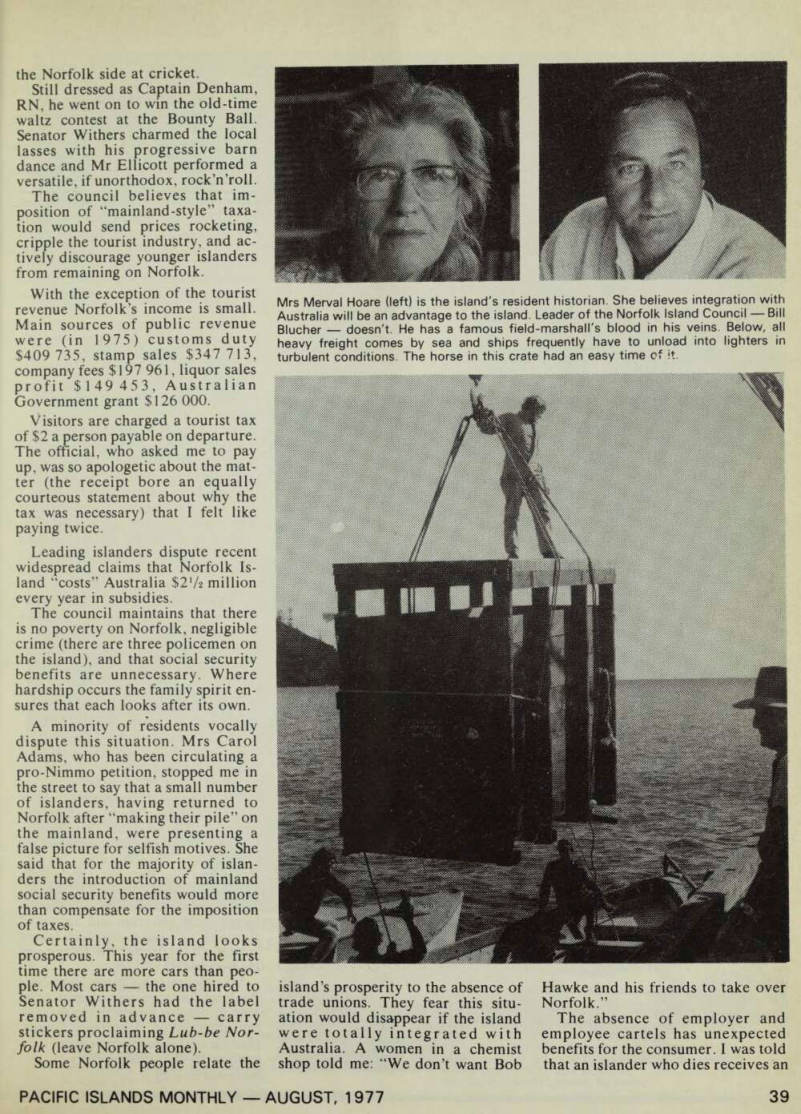
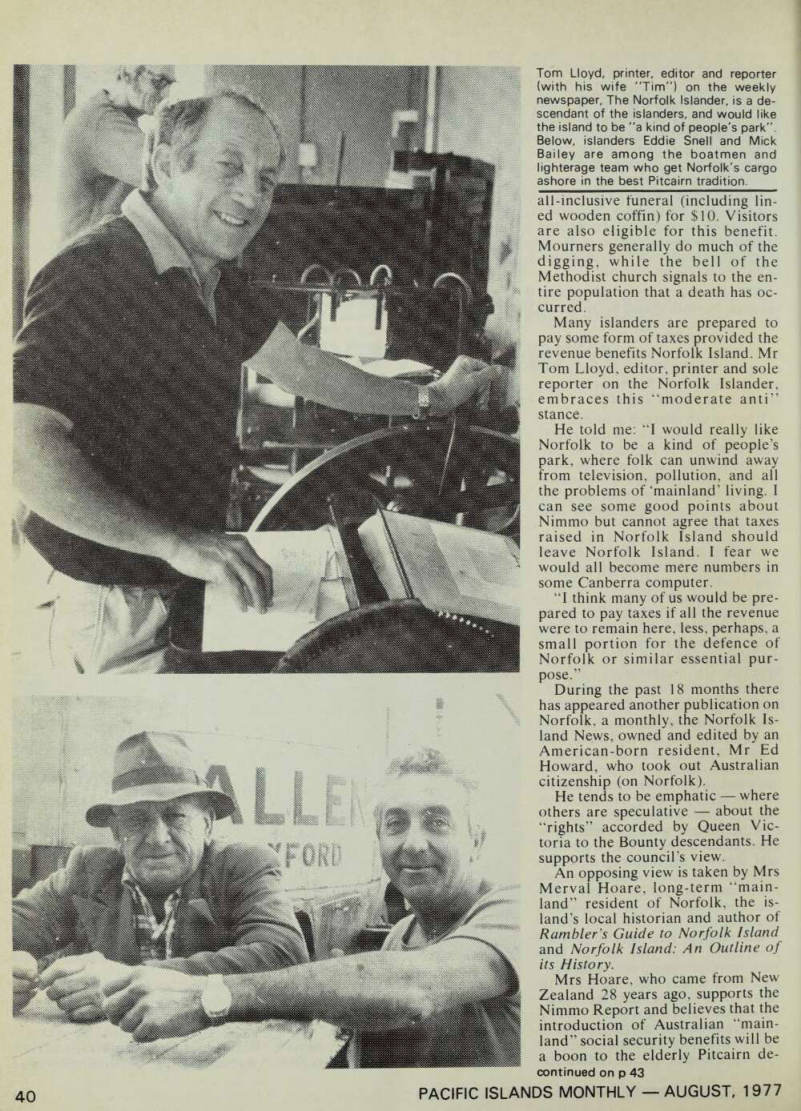

Norfolk: From hell-hole to heaven-on-earth
Norfolk Island, 7 676 km north-east of Sydney, is the second oldest British settlement in the South Seas, having been occupied within a few weeks of the first British settlement at Sydney in 1788. It became a vile penal colony until 1856 when the descendants of the Bounty mutineers moved there from Pitcairn, and turned it into their own particular paradise. Recently a paper called the Nimmo Report has threatened to change the island's life style, and this article outlines the arguments, against the background of the Norfolk Island tradition.
By Alan Gill
The Australian Minister for Ad ministrative Services, Senator Reg Withers, and Federal Attorney- General. Mr Bob Ellicott, were guests of honour at Norfolk Island’s 121st Anniversary Day celebrations on June 8.
The grander-than-usual celebra tions also marked the Queen's silver jubilee.
Bounty mutineers may have seiz ed one of her ancestor’s ships but their descendants are today the monarch's most loyal subjects. And with good reason —the bid to avoid total integration into Australia (and become liable for Australian taxa tion) is based partly on the claim that in the 19th century Queen Vic toria had given Norfolk to the Pit cairners.
At the traditional picnic in the now-roofless former gaol. Cr Bill Blucher. standing just inside Gallows' Gate, reminded the guests of the settlement’s origin as a penal colony.
"At one lime the penalty for being hungry and borrowing your neighbour's bread was transporta tion to this hell-hole that we now regard as a paradise and our heaven on earth.”
Clearly. Cr Blucher, president of committees on Norfolk Island Council, is unwilling to see his “paradise” go a message con veyed to Senator Withers and Mr Ellicott as they tucked into their sucking pig and other delicacies.
A few hours earlier Cr Blucher. in
the uniform of Captain Denham.
RN, who with the departing convict settlement's commissariat storekeeper had facilitated the Bounty descendants’ arrival, joined the Administrator of Norfolk. Mr Desmond O’Leary, and Mrs O’Leary at Kingston jetty.
Mr O’Leary, alias Mr Stewart (the commissariat storekeeper) and his wife wore period costumes hired in Sydney. It was a popular touch for the first time an Administrator had participated in. rather than merely watched, the re-enacted arrival of the Adams, Christian.
Young. Evans. McCoy. Quintal, Buffett. Nobbs and other families from Pitcairn.
The day before the celebrations, the two visitors from Canberra had attended an open meeting of the Norfolk Island Council to discuss the Royal Commission into Norfolk Island (the Nimmo Report), which recommends that Norfolk's popula tion of 1500 should have a voice in the Federal Parliament, be eligible for Australian welfare benefits and pay Australian taxes.
Cr Blucher, who has the blood of that famous German Field Marshal (remember Waterloo) and also that of the Christian and Quintal mutineer families said islanders had their own “distinct culture, history and bloodlines” and it was absurd to regard Norfolk as a bit of Australia 1 000 miles out in the Pacific.
He told the two ministers that he
and his colleagues did not feel deprived by not having the vote.
The two ministers asked council members what they considered to be their present nationality and status.
Cr John Rives said: “We are de facto Australians. I like to think we have the protection of Australia in our external needs.” Cr Greg Quin tal told the ministers: T always classify myself as a Norfolk Islander not as an Australian ... I intend no disrespect by this.”
Cr Roy Smith said: “We are Australian, and have proved it in two world wars, but are a different type of Australian.”
The two ministers were given vot ing papers relating to the poll taken some weeks earlier which purported to show that the majority of islan ders wanted Norfolk to remain “a distinct and separate Territory of Australia, with its own system of laws, benefits and taxes”.
Senator Withers suggested that the poll had been conducted in an unsatisfactory manner and did not meet Australian requirements for a secret ballot. In a subsequent radio interview he appeared to express himself more forcefully, considering the poll “totally and utterly value less”.
Happily, courtesy still reigns supreme on Norfolk. On the day after the council meeting, Cr Blucher acted the convivial host to the two ministers at the Bounty pic nic, and applauded Senator Withers’
“all-comers” team which trounced
the Norfolk side at cricket.
Still dressed as Captain Denham, RN, he went on to win the old-time waltz contest at the Bounty Ball.
Senator Withers charmed the local lasses with his progressive barn dance and Mr Ellicott performed a versatile, if unorthodox, rock’n’roll.
The council believes that im
position of “mainland-style” taxa
tion would send prices rocketing, cripple the tourist industry, and ac tively discourage younger islanders from remaining on Norfolk.
With the exception of the tourist revenue Norfolk’s income is small.
Main sources of public revenue were (in 1 975) customs duty $409 735, stamp sales $347 713, company fees $197 961, liquor sales profit $149 453, Australian Government grant $126 000.
Visitors are charged a tourist tax of $2 a person payable on departure.
The official, who asked me to pay up, was so apologetic about the mat ter (the receipt bore an equally courteous statement about why the tax was necessary) that I felt like
paying twice.
Leading islanders dispute recent widespread claims that Norfolk Is land “costs” Australia S2V2 million every year in subsidies.
The council maintains that there is no poverty on Norfolk, negligible crime (there are three policemen on the island), and that social security benefits are unnecessary. Where hardship occurs the family spirit en sures that each looks after its own.
A minority of residents vocally dispute this situation. Mrs Carol Adams, who has been circulating a pro-Nimmo petition, stopped me in the street to say that a small number of islanders, having returned to Norfolk after “making their pile” on the mainland, were presenting a false picture for selfish motives. She said that for the majority of islan ders the introduction of mainland social security benefits would more than compensate for the imposition of taxes.
Certainly, the island looks prosperous. This year for the first time there are more cars than peo ple. Most cars the one hired to Senator Withers had the label removed in advance carry stickers proclaiming Lub-be Nor folk (leave Norfolk alone).
Some Norfolk people relate the
island’s prosperity to the absence of trade unions. They fear this situ ation would disappear if the island were totally integrated with Australia. A women in a chemist shop told me; “We don’t want Bob
Hawke and his friends to take over Norfolk.”
The absence of employer and
employee cartels has unexpected
benefits for the consumer. I was told that an islander who dies receives an
Mrs Merval Hoare (left) is the island's resident historian. She believes integration with Australia will be an advantage to the island. Leader of the Norfolk Island Council - Bill Blucher - doesn't. He has a famous field-marshall's blood in his veins. Below, all heavy freight comes by sea and ships frequently have to unload into lighters in turbulent conditions. The horse in this crate had an easy time of it.
all-inclusive funeral (including lin ed wooden coffin) for $lO. Visitors are also eligible for this benefit.
Mourners generally do much of the digging, while the bell of the Methodist church signals to the en tire population that a death has oc curred.
Many islanders are prepared to pay some form of taxes provided the revenue benefits Norfolk Island. Mr Tom Lloyd, editor, printer and sole reporter on the Norfolk Islander, embraces this “moderate anti” stance.
He told me: “I would really like Norfolk to be a kind of people’s park, where folk can unwind away from television, pollution, and all the problems of ’mainland’ living. I can see some good points about Nimmo but cannot agree that taxes raised in Norfolk Island should leave Norfolk Island. I fear we would all become mere numbers in some Canberra computer.
“1 think many of us would be pre pared to pay taxes if all the revenue were to remain here, less, perhaps, a small portion for the defence of Norfolk or similar essential pur
pose.”
During the past 18 months there has appeared another publication on Norfolk, a monthly, the Norfolk Is land News, owned and edited by an American-born resident, Mr Ed Howard, who took out Australian citizenship (on Norfolk).
He tends to be emphatic where others are speculative about the ‘Tights” accorded by Queen Vic toria to the Bounty descendants. He supports the council’s view.
An opposing view is taken by Mrs Merval Hoare, long-term “main land” resident of Norfolk, the is land’s local historian and author of Rambler’s Guide to Norfolk Island and Norfolk Island: An Outline of its History.
Mrs Hoare, who came from New Zealand 28 years ago. supports the Nimmo Report and believes that the introduction of Australian “main land” social security benefits will be a boon to the elderly Pitcairn de
continued on p 43
Tom Lloyd, printer, editor and reporter (with his wife "Tim") on the weekly newspaper, The Norfolk Islander, is a de scendant of the islanders, and would like the island to be "a kind of people's park".
Below, islanders Eddie Snell and Mick Bailey are among the boatmen and lighterage team who get Norfolk's cargo ashore in the best Pitcairn tradition.
Philip Island
scendants now eligible for a “miserable $l5 a week” from the Senior Citizens’ Fund (previously known as Distressed Persons’
Fund).
She points out that many main land residents already pay Australian taxes on their pensions and other income but are unable to claim benefits.
Mrs Hoare does not believe that Norfolk was officially ceded to the arriving Pitcairn Islanders.
She says that according to George Hunn Nobbs, the first pastor of the Pitcairn community, who arranged and personally led the migration from Pitcairn to Norfolk (in 1856), articles of cession were read to him by Captain Stephen Fremantle, of HMS Juno, and later handed to the Magistrate, Frederick Young.
This document, often quoted as evidence for the islanders’ “rights” to Norfolk, was discovered by Mrs Hoare after a lapse of more than 100 years among Bishop George Augustus Selwyn’s papers at the Auckland Institute and Museum.
The document outlines the dis tribution of land for various pur poses but makes no reference to “ownership” or legal rights by Pit cairners in their new homeland.
Advertisements & other items, pp. 41-42 (1 item)
any gas, anywhere, any time.
p, i ■ * » > i / \ \ % ft * . > » Wi \ * ' I i.» Hb e \mw% i
THE COMMONWEALTH INDUSTRIAL GASES LIMITED,
GASES EXPORT DEPARTMENT, 138 BOURKE ROAD, ALEXANDRIA, N.S.W.,
AUSTRALIA 2015. CABLES “CIGAS”—TELEX AA25475 SYDNEY.
■ C/G NEW GUINEA PTY. LIMITED. Lae: Mangola Street, LAE (P.O. Box 93). Phone 2641 Port Moresby. Racecourse Road, Hohola (P.O. Box 1636 Boroko) Phone 53870.
■ THAI INDUSTRIAL GASES LIMITED, Bangkok:
22/26 Poochaosmingprai Road, Prapradaeng, Smutprakarn.
Phone 940708. Telex AMCO TH 2541. ■ C/G FIJI LIMITED, Suva: Vetaia Street, Lami (P.O. Box 687).
Phone 361011. Lautoka; Vitogo Parade (P.O. Box 601). Phone 61105.
•ASSOCIATED COMPANIES
■ P.T. INDUSTRIAL GASES, INDONESIA, DJAKARTA:
P.O. Box 124/JNG, Pulo Gadung. * ■ HONG KONG OXYGEN AND ACETYLENE CO. LTD.
Hong Kong; 41 G Ma Tau Wei Road, Kowloon. * ■ SOXAL P.O. Box 241, Singapore, Telex 21150.
■ NEW ZEALAND INDUSTRIAL GASES LIMITED,
Wellington: P.O. Box 30337, Lower Hutt, Wellington, N.Z. * ■ MALAYAN OXYGEN SDN BERHAD, V Box 633 P.O. Kuala Lumpur. Malaysia.
Get the world's latest control
engineering developments
in Singer controls from Australia.
Buying Singer controls from Australia is like searching the world for the latest control -engineering developments. Because we’re part of the great Singer organisation Our controls and control systems include the latest advances made by over 6000 Singer scientists, engineers and technicians around the world. Singer controls give your product the best possible performance and a competitive edge in increasingly competitive markets. jaml43lc
Electronic
Submersible
Pump
Has neither seal nor glands. The Impeller Is driven by a magnet, and will pump a large variety bl solutions.
Powered by a subtractions! ball race motor. Capacity: 13 63 litres at 914 mm (nett head) Ideal lor fruit juice dispensers and ice cube makers Available with simple two wire connection for easy installation in marine bilge situations. Fully automatic level control, solid state componentry and is completely encapsulated. Moulded in high impact material with dual teflon seals. Capacity 5500 litres per hour
Positive Pump •
Magnetic
Coupled Pump
A 12-ton positive pump that has been precision engineered to meet the water circulation requirements of the marine and caravan Industries. Especially suited to applications such as bilge pumping, bait tanks, water for galleys and showers.
uiiiDP
Tl>€ tik Th« A*P ft P A*P Line Line nc
Thermostatic
Pressure Regulators
Constant Pressure
Expansion Valve
Expansion Valve
The Singer-AP range can meet your pressure regulation needs in crankcase pressure regulation, head pressure control, air cooled condensors and hot gas bypass.
A 90° angle valve suited for use in automotive air conditioning systems, combining compactness, lightness and extremely high reliability Available rated at IVj to 3 lons R-22.
Available with bleed slot for off-cycle unloading. Ideal lor split system and window air-conditioners
Filter Dryer
Receiver
SINGER
Refrigerant driers are employed to remove solids contaminants, water and acids. Stores refrigerant to balance varying demands. Is availble in varying sizes and capacities for automotive airconditioning and commercial refrigeration systems.
CONTROLS LIMITED
Thermostatic
Expansion Valve
Compact flare type device tor general use in the commercial refrigeration and airconditioning areas Incorporates all of the most up to date automotive technology for commercial
A slice of Fiji’s history
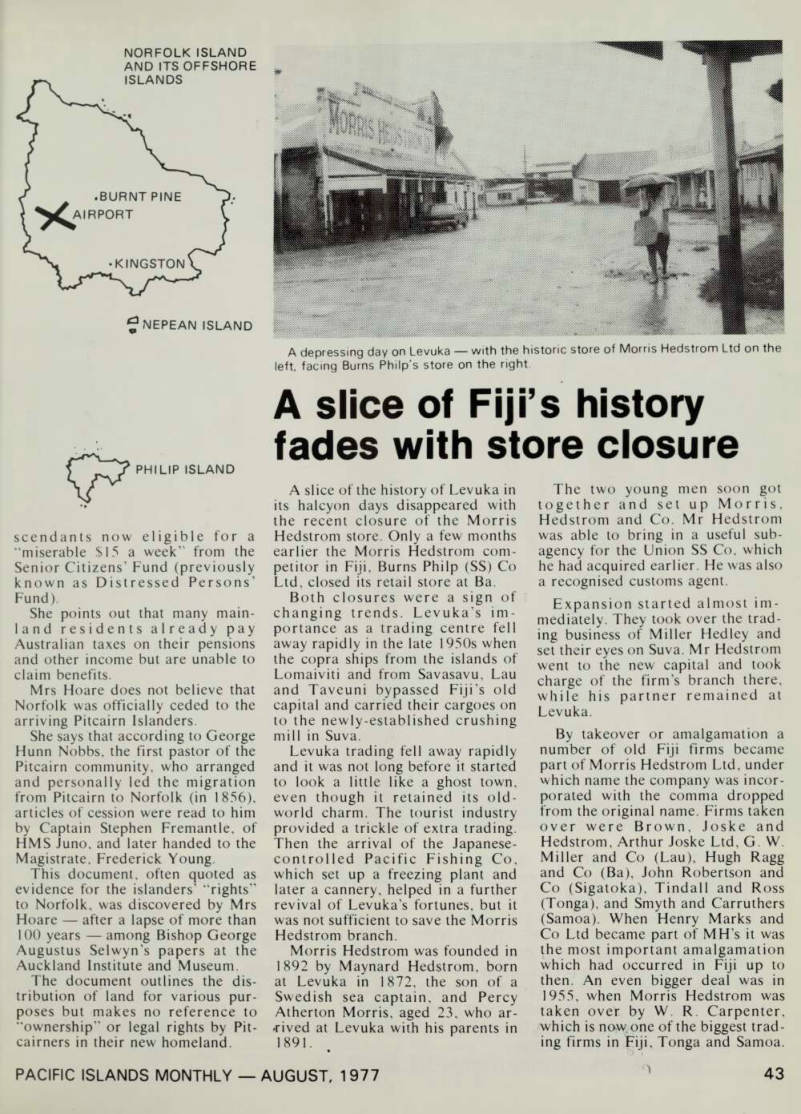
fades with store closure
A slice of the history of Levuka in its halcyon days disappeared with the recent closure of the Morris Hedstrom store. Only a few months earlier the Morris Hedstrom com petitor in Fiji, Burns Philp (SS) Co Ltd, closed its retail store at Ba.
Both closures were a sign of changing trends. Levuka’s im portance as a trading centre fell away rapidly in the late 1950 s when the copra ships from the islands of Lomaiviti and from Savasavu, Lau and Taveuni bypassed Fiji’s old capital and carried their cargoes on to the newly-established crushing mill in Suva.
Levuka trading fell away rapidly and it was not long before it started to look a little like a ghost town, even though it retained its old world charm. The tourist industry provided a trickle of extra trading.
Then the arrival of the Japanese controlled Pacific Fishing Co, which set up a freezing plant and later a cannery, helped in a further revival of Levuka’s fortunes, but it was not sufficient to save the Morris Hedstrom branch.
Morris Hedstrom was founded in 1892 by Maynard Hedstrom, born at Levuka in 1872, the son of a Swedish sea captain, and Percy Atherton Morris, aged 23, who ar rived at Levuka with his parents in 1891.
The two young men soon got together and set up Morris, Hedstrom and Co. Mr Hedstrom was able to bring in a useful sub agency for the Union SS Co, which he had acquired earlier. He was also a recognised customs agent.
Expansion started almost im mediately. They took over the trad ing business of Miller Hedley and set their eyes on Suva. Mr Hedstrom went to the new capital and took charge of the firm’s branch there, while his partner remained at Levuka.
By takeover or amalgamation a number of old Fiji firms became part of Morris Hedstrom Ltd, under which name the company was incor porated with the comma dropped from the original name. Firms taken over were Brown. Joske and Hedstrom, Arthur Joske Ltd, G. W.
Miller and Co (Lau), Hugh Ragg and Co (Ba), John Robertson and Co (Sigatoka), Tindall and Ross (Tonga), and Smyth and Carruthers (Samoa). When Henry Marks and Co Ltd became part of MH’s it was the most important amalgamation which had occurred in Fiji up to then. An even bigger deal was in 1955, when Morris Hedstrom was taken over by W. R. Carpenter, which is now one of the biggest trad ing firms in Fiji, Tonga and Samoa.
A depressing day on Levuka - with the historic store of Morris Hedstrom Ltd on the left, facing Burns Philp's store on the right.
Advertisements & other items, pp. 44-46 (1 item)
That’s what the u.s. Environmental Protection Agency figures show. The Honda civic
placed first among the hundreds of 1976 cars tested. On the highway, in the city and in combined driving situations.
Top fuel economy is just the start. All-round operating costs are equally low. Thanks tc a rugged, clean-burning OHC engine which delivers snappy acceleration. Elegance is second to none-both inside and out.
Famous Honda engineering also gives you: Enough roomy comfort to relax four adults A spacious trunk. Exceptional handling ease. A dual braking system featuring servo-assisted front disc brakes, independent strut suspensions.
All of this quality performance is yours in three exciting models—the 2-Door Sedan, 4-Door Sedan and Hatchback.
Own the 1976 economy champ—the Honda Civic.
HONDA
HONDA MOTOR CO.. LTD. TOKYO, JAPAN
PAPUA NEW GUINEA: Steamships-Machinery P.O. Box 1, Port Moresby/TAHITI: Societe Tahitienne d’lmportation des Produits Honda B.P. 1665-Papeete/FIJI ISLANDS: Coral Island Motors P.O. Box 48, Suva/U.S. TRUST TERRITORY: United Micronesia Development Assn. P.O. Box 238, Saipan, Mariana Islands 96950/COOK ISLANDS: Cook Islands Motor Center Ltd. P.O. Box 74, Rarotonga/AMERICAN SAMOA: Samoan Holiday and Travel Center P.O. Box 968, Pago Pago/AMERICAN SAMOA: Haleck’s Service Center P.O. Box 1138. Pago Pago/GUAM: Mark’s Motor Co., Inc. P.O. Box DV. Agana / WESTERN SAMOA: Motor Distributors (Samoa) Ltd. P.O. Box 576, Apia/SOLOMON ISLANDS: British Solomons Trading Co., Ltd. P.O. Box 114, Honiara/NEW CALEDONIA: Establissements Ballande Boite Postale No. C 4 Noumea Cedex/TONGA: E.M. Jones Limited P.O. Box 34, Nuku’alofa/TARAWA; Gilbert & Ellice Islands Development Authority P.O. Box 488, Beito/NIUE ISLAND: S. Jessop & Sons Ltd. P.O. Box 71, Alofi South/NAURU: Nauru Cooperative Society, Republic of Nauru, Nauru Island Central Pacific/NEW HEBRIDES: Tropex International Ltd., P.O. Box 139, Port Vila.
m ■
Crystal-Clear Days
of Pure Stereo Sound!
Akai’s ultra-compact System-A Series stereo comes through like sunlight on a clear summer day, naturally bright and clean. Innovative Akai engineering perfectly matches each audio source’s sound spectrum for undistorted performance between Turntable, Receiver/ Cassette Deck and your choice of speakers. In all, purely professional component quality, complete with Akai’s vertical display rack. System-A stereo is designed to be your island of enjoyment. *1 t 4JS 4*3 « Australia Akat AutyaWefcty X'i£'. Place Denison St. CamperUq^n,*% N S W 2050 Tel Svensson (N.G.) Ltd., P O Box 705; Tel 2275 Fiji Islands; Motibhai & Company Ltd.. PO Box 9175 Nadi Internal tonal Ajitj/irf Tel 72-165. New Zealand; Pye Ltd . Consumer Product Division. 110 ML Rd Eden, Auckland Tel 686-437/ New Caledonia: Menard Freres, BP. tW: 2 752 22 Tahiti: I Tablissements Comimpex. PO Box 200. Papeete Tel 204 7/ /New Hebrides Island; Burns Philip (New Hebrides) Co.. Ltd . Port Vila, New Hebrides Island /Nortork Island Burns Philip (Nortork Island) Co . Ltd PO Box 21, Norfolk Island /Samoan Islands: Burns Philip (South Sea) Co. Ltd, PC Box 129, Pag©. Pago American Ap / a Western ■samoa Mariana islands: J C Tenorio Enterprises P.O S&kjFnosv Security Electrical Co Ltd . P.O. Box 174, Honiara tes: JPS
SYSTET!II\
Audio & Video
Enterprises Ltd , P.O. Box 15. Rarotonga Te!
AKAI
AKAI ELECTRIC CO., LTD.
Tokyo, Japan
Islands
From The
Press
From a letter by Esau Tuza in the Solomons News Drum on the projected tour of the
Solomons by American evangelist Ralph Bell:
. . . a crusading campaign is at heart a colonial campaign. It has in its fabric the misconception that Christ can and must redeem a certain culture rather than seeing Christ at work in any given cultural context . . . This idea will give the local people a religious “cargo myth” blessing can only come from outside, and above all from the States!
From an interview with M. Merrot, official of the Land Survey Department, Vila, and a keen
stamp collector, as reported in Nabanga:
In M. Merrot's large red stamp album, even though he has a practically complete collection of New Hebrides stamps, they don’t take up much space —only about 30 pages in tact. He remarked: "The Condominium postal service has had the good sense not to go in for philatelic inflation like certain other countries, which flood collectors with an unending stream of new issues. When a country releases too many stamps philatelists tend to lose interest, if only because the whole thing becomes too expensive.”
From The Fiji Times; He (Mr Apisai Tora, union secretary) objected to the action taken by his members being described as a strike. “This is not a strike, but an extended stop-work meeting, which may be extended indefinitely,” he said.
From an interview with Francis Sanford, Tahiti’s deputy to the French National
Assembly, in Journal de Tahiti, Papeete:
Ah, if only Francois Mitterand had become President of the Republic . . . Today we would have had internal autonomy without any fuss it would have been agreed as between decent Frenchmen. I'll always remember him saying at Papeete Town Hall “If I spoke from the heart. I’d say stay with us. But speaking from my head, using my powers of reasoning, I say: Make up your own minds. You have the right to choose whatever status you wish ...”
From Mary A. Browning’s column in
Micronesian Independent, Majuro, Marshall
Islands: When the newly appointed Liaison Officer of the Congress of Micronesia, Leo A. Falcam, walked into his Washington office suite last September it contained 1) a telephone, and 2) several cartons of COM publications. The cartons provided a stand for the phone, and a borrowed chair completed the arrangements while Falcam began making his contacts.
A warning to bank bandits, maybe, in the Norfolk Island Government Gazette: It is notified that the Commonwealth Bank will be holding a pistol shoot on Wednesday, 18 May, 1977. at Garnet Point, between the hours of 4.00 pm and 5.30 pm. Persons are warned to keep clear of the area during the shoot.
From the New Hebrides News: Visitors to Fonah Village. North Ambrym, to watch the famous Rom Tatabi dance on May 14. also watched seven young men each kill a pig to receive the name "Mwal”, the first step in pig killing . , . The Rom Tatabi dance is normally performed when more than one young man is prepared for it.
The first stage towards it is circumcision. Then he has to look for a Rom Tatabi costume, which is made only by people who have gone through the stages. The costume, made from special banana leaves and fine bush materials must be bought with a specially-made headdress and pigs . . .
From a letter by Geoffrey Price, Master of Lodge Melanesia, in the Solomons News Drum: The Masonic Lodge has been broken into for the fourth or fifth time this year. This is generally the work of vandals and it has not been to their advantage as there is little or nothing of value in this lodge. The general public seem to have the idea that the Masonic Order is a secret society, verging on black magic and composed of a hard drinking set. This is by no means the case and some of our government officials and ministers would do well to learn their facts before going into print on this matter . . .
From “The scourge of the bottle”, a series of anti-drink articles by the Tonga Minister of Police, the Hon ’Akau’ola, in the Tonga Chronicle; .. . Unfortunately, no self-respecting Tongan drunk likes to be detained without putting up a struggle, particularly if there is an audience readily available. Should there be ladies present, the situation develops into a momentous struggle. I put it to you —what is the Tongan male subconsciously still trying to prove?
From the Samoa Times; Some referees in the sub-unions rugby competition for the S.
V. MacKenzie Shield are only “walk-arounds who know nothing about rules” and are a big discouragement to the game, sub-union players and officials complained. The players said that they were tired of trying to play a decent game when an overweight referee, who was always “miles away” from the ball guessed at a decision . ..
Garden parties at Government House, Suva,
in the “old days” as recalled by Mrs Iverna McCaig in The Fiji Times; ... In those early days one felt very special just to drive up to the big gracious building with one’s prettiest frock on. bought just for the occasion. Women and men of those days were much more formal and etiquette was seen to be very important . . . With the band playing in the background, it was always a pleasure to sit on the lawn looking at the ladies’ frocks and talk the afternoon away. Now everything is changed, of course, and people are much more modernised.
Women are just as well groomed and the parties are just as nice but a lot of the grandeur is missing. For instance no one minds if you don’t wear gloves or a hat. People do seem much happier these days at the garden parties . . .
From the Cook Islands News: The hotels and motels on Rarotonga are really full of visitors. It’s getting to the stage now, that if you want a night out. it pays to book a week in advance.
Advertisements & other items, p. 48 (1 item)
Sony stereo swimming.
Take your
The cool and refreshing sound of stereo.
You can have it with you always with this portable model by Sony. The CF-580.
There's plenty of power (5.8 hefty watts) to drive four speakers. And the matrix stereo circuitry gives you genuine stereo and excellent separation with cassette or FM.
Twin microphones allow you to record in true stereo, too.
It's so hip, so cool, so Sony.
The Germans, the colonial
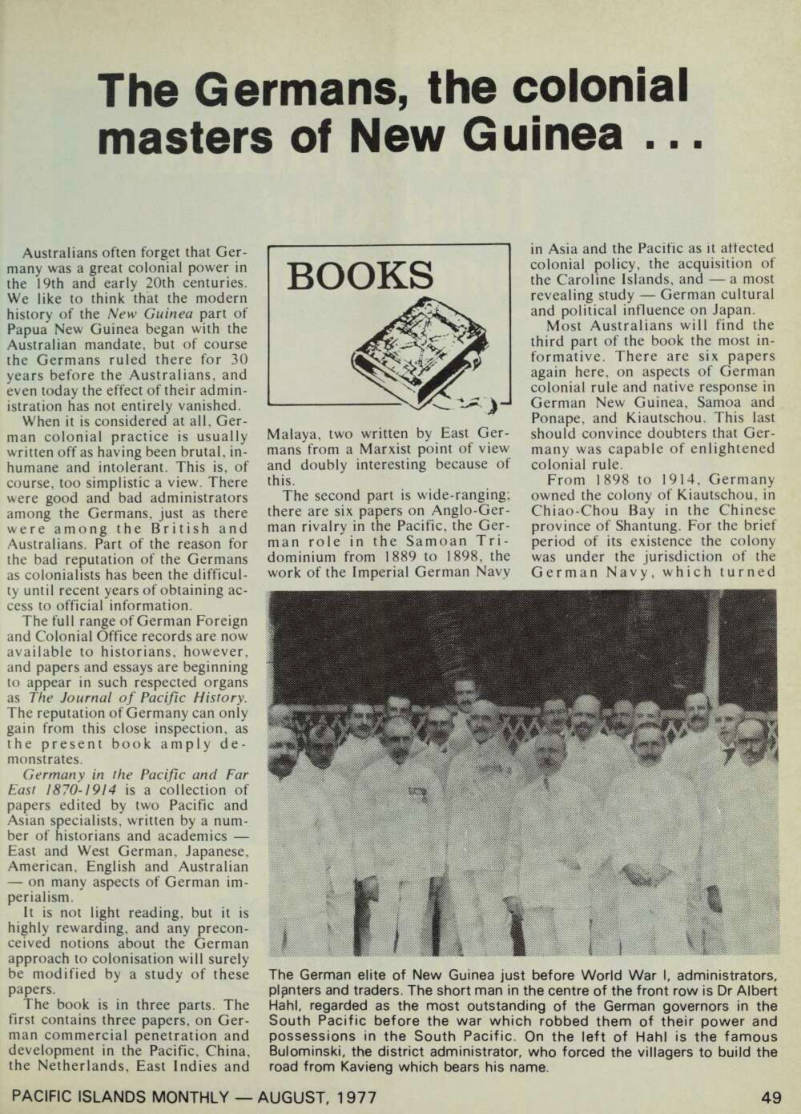
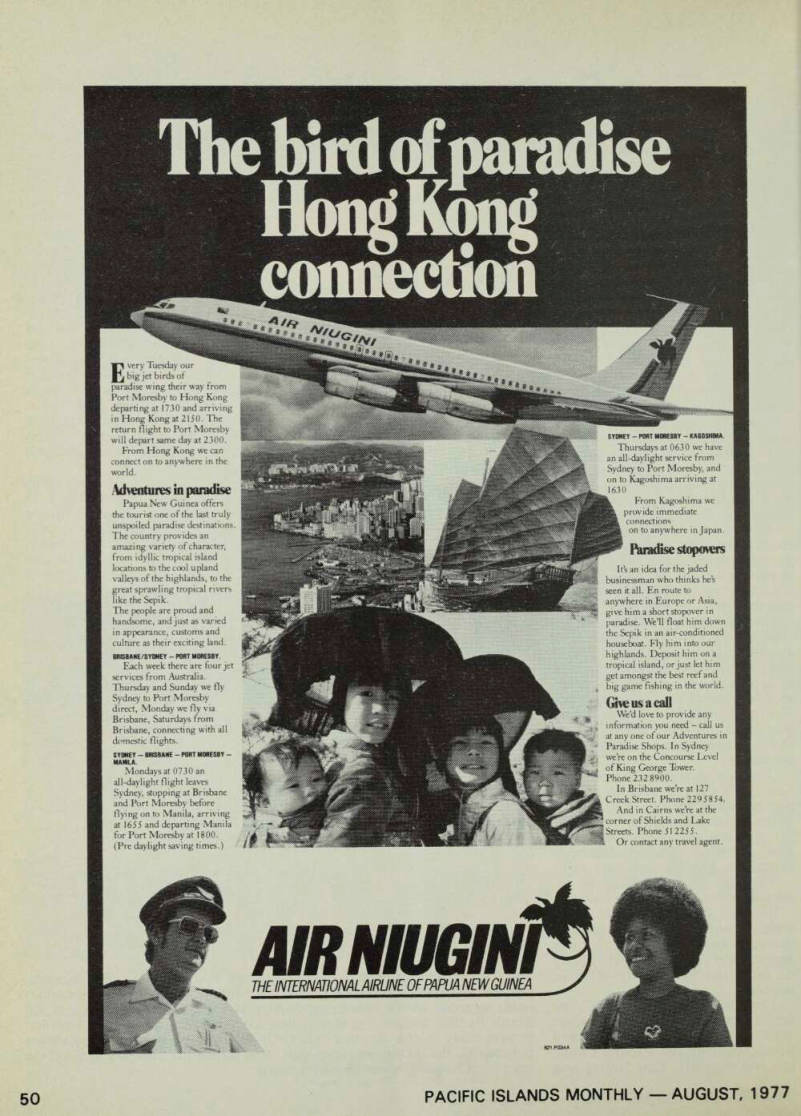
masters of New Guinea ...
Australians often forget that Ger many was a great colonial power in the 19th and early 20th centuries.
We like to think that the modern history of the New Guinea part of Papua New Guinea began with the Australian mandate, but of course the Germans ruled there for 30 years before the Australians, and even today the effect of their admin istration has not entirely vanished.
When it is considered at all, Ger man colonial practice is usually written off as having been brutal, in humane and intolerant. This is, of course, too simplistic a view. There were good and bad administrators among the Germans, just as there were among the British and Australians. Part of the reason for the bad reputation of the Germans as colonialists has been the difficul ty until recent years of obtaining ac cess to official information.
The full range of German Foreign and Colonial Office records are now available to historians, however, and papers and essays are beginning to appear in such respected organs as The Journal of Pacific History.
The reputation of Germany can only gain from this close inspection, as the present book amply de monstrates.
Germany in the Pacific and Far East 1870-1914 is a collection of papers edited by two Pacific and Asian specialists, written by a num ber of historians and academics East and West German, Japanese, American, English and Australian on many aspects of German im perialism.
It is not light reading, but it is highly rewarding, and any precon ceived notions about the German approach to colonisation will surely be modified by a study of these papers.
The book is in three parts. The first contains three papers, on Ger man commercial penetration and development in the Pacific, China, the Netherlands, East Indies and
Malaya, two written by East Ger mans from a Marxist point of view and doubly interesting because of this.
The second part is wide-ranging; there are six papers on Anglo-Ger man rivalry in the Pacific, the Ger man role in the Samoan Tri dominium from 1889 to 1898, the work of the Imperial German Navy
in Asia and the Pacific as it affected colonial policy, the acquisition of the Caroline Islands, and a most revealing study German cultural and political influence on Japan.
Most Australians will find the third part of the book the most in formative. There are six papers again here, on aspects of German colonial rule and native response in German New Guinea, Samoa and Ponape, and Kiautschou. This last should convince doubters that Ger many was capable of enlightened colonial rule.
From 1898 to 1914, Germany owned the colony of Kiautschou, in Chiao-Chou Bay in the Chinese province of Shantung. For the brief period of its existence the colony was under the jurisdiction of the German Navy, which turned
The German elite of New Guinea just before World War I, administrators, planters and traders. The short man in the centre of the front row is Dr Albert Hahl, regarded as the most outstanding of the German governors in the South Pacific before the war which robbed them of their power and possessions in the South Pacific. On the left of Hahl is the famous Bulominski, the district administrator, who forced the villagers to build the road from Kavieng which bears his name.
Kiautschou into a great commercial centre to rival the British colony of Hong Kong, for Anglo-German rivalry in China at this time was in tense. The navy made Kiautschou into a model colony, the most suc cessful that Germany ever had.
Three of the papers concentrate on German New Guinea. One, by Peter Sack, a German scholar who has made a particular study of Ger man New Guinea land laws, and en titled Law, Politics and Native “ Crimes ” in German New Guinea , is an excellent account of the methods the Germans employed to punish and control native unrest the punitive expedition, naval strength, the formation of a native police force, the use of the whip and the death sentence.
The second, by Ingrid Moses, is entitled The Extension of Colonial Rule in Kaiser Wilhelmsland , an examination of the ways by which the Germans, using few people, es tablished and maintained power and authority over a wild land and its wild inhabitants, .while the final paper Colonial Missions and Im perialism: The Background to the Fiasco of the Rhenish Mission in New Guinea , by Klaus-J. Bade, is a fascinating study of the work of the missions in general and the Rhenish Mission in particular.
At the beginning of World War I, after 27 years of devotion and zeal, the Rhenish Mission was able to claim just 96 parish members among the New Guinea people!
Probably the most valuable feature of this admirable book is the great wealth of source reference material it contains. Out of a total of 417 pages, 36 are devoted to chapter notes and 63 to a detailed guide to archival sources and a select bibliography. This section will appeal mainly to the specialist.
In all. an important book that de serves a wider readership than it will probably get. It is expensive but well produced. University of Queensland Press is today the lead ing University Press in Australia and is issuing some of the best books to be published in this country.
Even at $25 you should purchase the present volume if you are seriously interested in Pacific
history.
James Sinclair
(GERMANY IN THE PACIFIC AND FAR EAST 1870-1914. Edited by J. M. Moses add P. M.
Kennedy. Published by University of Queensland Press. $25.)
Advertisements & other items, p. 50 (1 item)
Hong Kong
The bird of paradise
connection
Wmmm
Every Tuesday our big jet birds of paradise wing their way from Port Moresby to Hong Kong departing at 1730 and arriving in Hong Kong at 2150. The return flight to Port Moresby will depart same day at 2300.
From Hong Kong we can connect on to anywhere in the world.
Adventures in paradise
Papua New Guinea offers the tourist one of the last truly unspoiled paradise destinations.
The country provides an amazing variety of character, from idyllic tropical island locations to the cool upland valleys of the highlands, to the great sprawling tropical rivers like the Sepik.
The people are proud and handsome, and just as varied in appearance, customs and culture as their exciting land.
BRISBANE/SYDNEY - PORT MORESBY
Each week there are four jet services from Australia.
Thursday and Sunday we fly Sydney to Port Moresby direct, Monday we fly via Brisbane, Saturdays from Brisbane, connecting with all domestic flights.
SYDNEY - BRISBANE - PORT MORESBY -
MANILA
Mondays at 0730 an all-daylight flight leaves Sydney, stopping at Brisbane and Port Moresby before flying on to Manila, arriving at 1655 and deporting Manila for Port Moresby at 1800. (Pre daylight saving times.) I;:- I
SYDNEY - PORT MORESBY - KAGOSHIMA
Thursdays at 0630 we have an all-daylight service from Sydney to Port Moresby, and on to Kagoshima arriving at 1630 From Kagoshima we provide immediate connections on to anywhere in Japan.
Paradise stopovers
It’s an idea for the jaded businessman who thinks he’s seen it all. En route to anywhere in Europe or Asia, give him a short stopover in paradise. We’ll float him down the Sepik in an air-conditioned houseboat. Fly him into our highlands. Depxwit him on a tropical island, or just let him get amongst the best reef and big game fishing in the world.
Give us a call
We’d love to provide any information you need - call us at any one of our Adventures in Paradise Shop®. In Sydney we’re on the Concourse Level of King George Tower.
Phone 232 8900.
In Brisbane we’re at 127 Creek Street. Phone 2295854.
And in Cairns we’re at the I corner of Shields and Lake I Streets. Phone 512255.
Or contact any travel agent.
AIR MUCIN,
THE INTERNAWNALAIRUNEOF PAPUA NEW GUINEA
... and Papuans, as Williams saw them
Williams saw them
F. E. Williams, a South Australian and Rhodes Scholar, was appointed assistant government anthropologist in the Papuan Public Service in 1922, and in 1928 he suc ceeded Dr Walter Strong as govern ment anthropologist, a position he held until his death in 1943 in a wartime aeroplane crash in the Owen Stanley mountains.
Most anthropological writings are difficult, indeed repellent, for the general reader, for ethnographers as a class employ a strange vocabulary of words and terms which mean lit tle to the non-professional. A few, however, have written books and essays that have a wide appeal the personality of the author comes through, the language is clear and sometimes brilliant, and one is en tertained while being educated.
The books of Bronislaw Malinowski are prime examples how superbly he titled them! Coral Gardens and their Magic; Argonauts of the Western Pacific, The Sexual Life of Savages (you will be disappointed if you are looking for titillation) who would not want to read them? And F. E.
Williams, too, wrote the kind of
ethnographical books that must ap peal to anyone with a deep interest in the people of Papua New Guinea and their culture.
He published four books (recently re-issued) Orokaiva Magic, Orokaiva Society, Papuans of the Trans-Fly and Drama of Orokolo.
They are just as rewarding as those by the more celebrated Malinowski.
He also wrote over 40 reports, papers and essays. The books are available at most public libraries, but the shorter works are not easy to locate. They were mostly issued as slim bound monographs, or ap peared in professional journals.
This present book, therefore, is to be welcomed, for it presents a number of the most important of Williams’ essays, together with an introduc tion and notes by Erik Schwimmer. himself an anthropologist who has worked in the field in Papua New Guinea.
The title essay. The Vailala Mad ness, is of fundamental importance, for the “Madness” was the first re corded outbreak of what is known today as cargo cult, and Williams was the first ethnographer to study and describe the phenomenon. The
titles of the other essays in this col lection bear apt testimony to the range of his professional interest, and his use of words; Trading Voyages from the Gulf of Papua, Bull-Roarers in the Papuan Gulf Sex Affdiation and its Implication, Natives of Lake Kutubu, Papua (what a pity it is that the editor did not also include the superb Report on the Grasslanders printed as an appendix to the Papua Annual Re port 1938-39, and a must for anyone interested in the people of the Southern Highlands and that most enchanting of Papuan lakes, Kutubu) and the delightful Creed of a Government Anthropologist.
I believe that this book should be on the shelves of every library of PNG interest. It is a pity that the editor is not able to give us much in formation about Williams the man.
He is a curiously elusive figure. He lived for his work and thought nothing of spending six months at a time in the gloomy swamps of the Papuan Delta and similar un salubrious parts, studying the life of the people.
Young Papua New Guineans who are curious about the vanished customs of many of their tribes should cherish the work of F. E.
Williams. His school of anthropolo gy is not fashionable today, and few ethnographers probably read him, but to my mind his accounts are far more valuable than the streamlined efforts of many of the modernists.
His writing is warm and sym pathetic, but tinged with wry wit.
I recommend this book most high ly. It is well printed and bound, with a list of all Williams’ publications and a good bibliography. As prices go these days it is not overly ex
pensive at $lB.OO.
James Sinclair
(THE VAILALA MADNESS AND OTHER ESSAYS. By Francis Edgar Williams, with an introduction by Erik Schwimmer. Published by University of Queensland Press. >18.)
F. E. Williams
Painless lessons for kiddies
Two new books from Australian publishers offer good value to any one casting around for ideas on gifts for children.
Latest in the series of picture sto ries by photographer Axel Poignant and his writer wife, Roslyn, is Children of Oriporo, set in the village of Fetuna on the island of Raiatea, French Polynesia.
A simple children’s adventure story, it achieves a measure of quite painless instruction concerning a number of features of Polynesian life for example, the im provisation of a fishing net from palm fronds, and the cooking of fish on pre-heated stones.
The pictures, in both colour and black and white, are admirable.
They include a particularly good ac tion shot of a canoe wreck which features in the story.
Olaf Ruhen’s The Day of the Diprotodon sympathetically evokes
the process of extinction of the diprotodon, the huge prehistoric an cestor of such pouched marsupials as the kangaroo. These gentle, her bivorous creatures fed on the lush grasslands which, some 50 million years ago, were to be found in what is now the desert country of South Australia around Lake Callabonna.
They died out because a sudden climatic change brought drought to their home region, destroying the vegetation and drying up the lakes at which they watered.
The veteran Sydney author teams in the book with a young Victorian artist, Peter Pavey, whose sensitive drawings contribute greatly to the
overall effect of the work.
F.L.S.
(CHILDREN OF ORIPORO. By Axel and Roslyn Poig nant. Published by Angus & Robertson. PO Box 177, Cremorne Junction, NSW, 2090. $6.95. THE DAY OF THE DIPROTODON. By Olaf Ruben. Illustreted by Peter Pavey. Published by Hodder & Stoughton (Austrelia), 2 Apollo Place, Lane Cove, NSW, 2066. $4.96.)
Advertisements & other items, pp. 52-54 (1 item)
Where every flight
Pan Am’s Pacific*
is a 747
wtv/vvi im m V '. ■; Pii Bl Now that’s a comforting thought.
Big spacious 747 s on every Pacific flight.
That makes choosing an airline a lot easier. Especially when you consider the other advantages we offer.
Flights to the USA every day of the week from Sydney, except Wednesdays.
From Melbourne, it’s 5 times a week.
Plus our First Class Upper Deck Dining Room. From Australia, it’s the only First Class dining room in the skies.
And talking of wining and dining, all First Class passengers now have a choice from four superb main courses.
In Economy it’s three.
Pan Am is not only the all-747 airline but also the first 7475 P airline. With the first ever non-stop services from Sydney to San Francisco and from Auckland to San Francisco. These flights connect in San Francisco with Pan Am’s non-stop flight to London.
Experience makes the difference, years experience SYDNEY- 2331111 MELBOURNE; 6544788, CANBERRA: 48 9184, BRISBANE; 221 7477, AUCKLAND: 364232, NADI: 72100, NOUMEA: 275757, PAGO PAGO: 32364, PAPEETE: 29640, PORT MORESBY: 2131, SUVA: 22641. 065.P.142A
FORESTMILL
PORTABLE
SAWMILL
Latest design features mean - faster production - less maintenance • easier to operate and service.
Powered by diesel engine or electric motor. & Forestmil •* Portable Sawmill 1 Forestmil produces any size accurate timber ready to use up to 12" x 9" x 24'.
Purchase price and operating cost of Forestmil is less than other sawing equipment with similar production capacity.
Forestmil reduces timber waste also reduces log transport cost. Timber is sawn direct from the log in the forest.
Forestmil can be moved to a new location in one hour.
Forestmil will saw hardwood or softwood from logs any diameter.
Over 1000 Forestmils are sawing timber in 23 countries.
For literature and prices please contact manufacturers.
til
MacQuarrie Industries Pty.Ltd.
P.O. Box 20, Coburg 3058, Victoria, Australia.
Phone: 350-3411. Telex: 33729. Cables: Macbound, Melbourne.
m
Silvan
manufactures
sprayers.
No matter what your application be it spraying citrus or your tallest trees, for tea, coffee or cocoa plantations - small crops or pasture spraying. ■
LINKAGE TO TRAILED MODELS
BOOM OR AIRBLAST
ALL TANKS OF HEAVY DUTY FIBREGLASS
WITH CAPACITIES FROM 44 TO 660 GALLONS.
TELL SILVAN WHAT YOU HAVE TO SPRAY AND LET US ADVISE YOU.
BOX 153, PO SOUTH MELBOURNE 3205 VIC. AUST.
TELEX AA 34741 SILBYP
TEL: 692779 690 2592
With water everywhere, Islanders

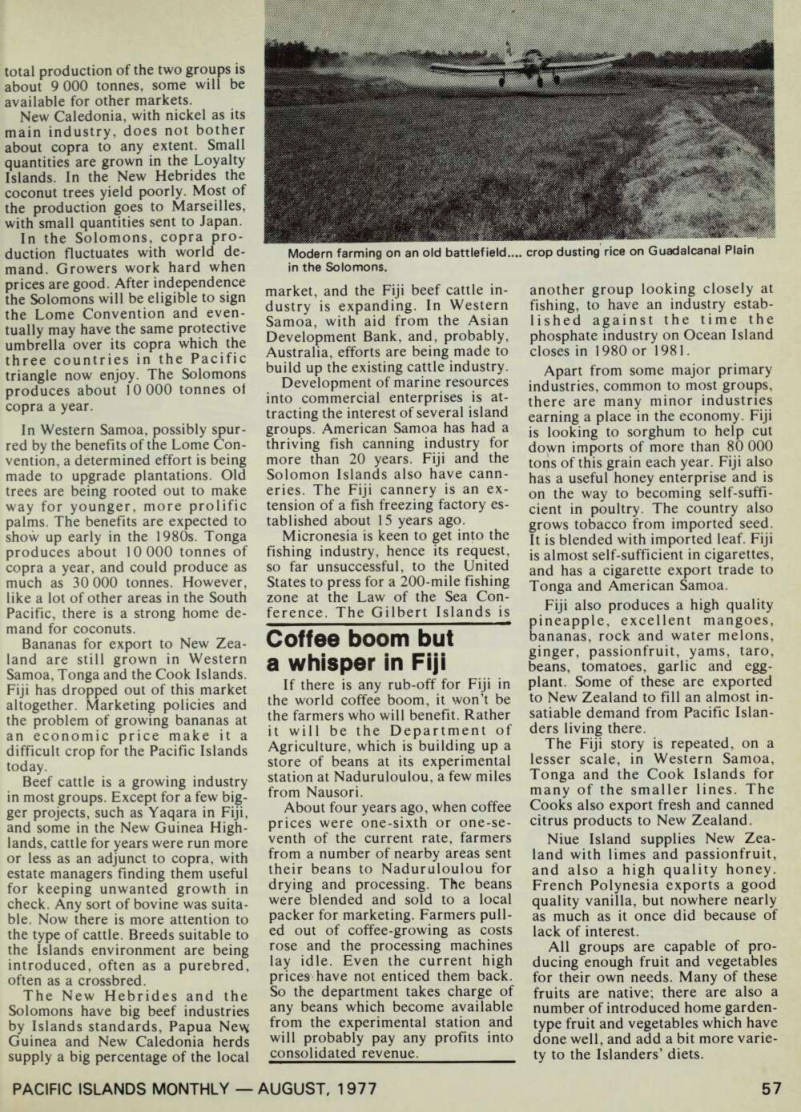
Business
With water everywhere, Islanders are still tillers of the soil
By Norman Baxter
The economy of the South Pacific Islands, almost without exception, is based on agriculture and will be for many years in spite of the encroach ment of western influences. There is profitable mining in some groups, and growing secondary industries in others, but from whatever angle the picture is looked at it always comes back to agriculture.
Although copra is no longer king overall, it is still an important in dustry and still the main one for most of the groups. The introduc tion of crops from other tropical areas has given a boost to the econ omy of some groups.
Beef cattle projects are being ex tended throughout the Pacific, with most Island governments aiming at supplying their own needs and building up export markets in the not too distant future. The pig in dustry, so long the source of meat for the Islanders, is also being ex panded in many areas.
Rice, another introduced crop, is rapidly becoming a staple food in a number of groups. There are a num ber of big rice projects under way, or in the pipeline. As with beef, rice projects are aimed at making the countries concerned self-supporting in this commodity and perhaps building up an export trade as in the Solomons.
The rice industry, on a per capita basis, is probably more advanced in the Solomons than anywhere else in the Pacific. Fiji has been slowly building up a rice industry for many years, with some speeding up re cently. Fiji has a natural rice bowl in the Rewa Valley, where sugar was grown for more than 70 years. CSR Ltd introduced rice as an alterna tive when it closed the Nausori mill in 1959, but farmers did not take kindly to the change and the indus try did not flourish in that area as it should.
However, there has been a new approach in the last three or four
years, and with other areas of Viti Levu and Vanua Levu likely to become paddy fields, Fiji could become self-supporting in rice in a few years.
Papua New Guinea is now reaping the benefit from the introduction of coffee, cocoa, tea and palm oil, world prices for which are booming.
Like all booms, however, there is bound to be a recession, and it is pleasing to see that efforts are being made to build up stabilisation funds to act as cushions when prices come down.
Copra is no longer the major pri mary industry in Papua New Guinea, the biggest copra producer in the South Pacific. But it is still an important crop there. It is also im portant in Fiji, where sugar has been the main primary industry prac tically since Cession in 1874, and it remains the main primary product in most of the other countries in the South Pacific.
Fiji, Western Samoa and Tonga as associate members of the European
Economic Community, enjoy a uni que protection under the Lome Convention, signed in 1975. Subject to certain conditions, prices for commodities they send to the EEC are stabilised at the average price of the previous four years. To qualify, the money a commodity earns from exports to all destinations must be 7‘/2% of export earnings from all commodities. But for the least developed, land-locked and Island countries, the figure is only 272%, and that covers Fiji, Western Samoa and Tonga. Papua New Guinea 1 which has also joined the Lome Convention, can expect simi lar benefits when her associate status is ratified.
The Gilbert Islands and Tuvalu may have a new market for their copra in the Marshall Islands, where a processing plant has been established at Majuro. The Marshall Islands Development Authority has made tentative arrangements to buy 6 800 tonnes of copra a year from the Gilberts and Tuvalu. As the
total production of the two groups is about 9 000 tonnes, some will be available for other markets.
New Caledonia, with nickel as its main industry, does not bother about copra to any extent. Small quantities are grown in the Loyalty Islands. In the New Hebrides the coconut trees yield poorly. Most of the production goes to Marseilles, with small quantities sent to Japan.
In the Solomons, copra pro duction fluctuates with world de mand. Growers work hard when
prices are good. After independence
the Solomons will be eligible to sign the Lome Convention and even tually may have the same protective umbrella over its copra which the three countries in the Pacific triangle now enjoy. The Solomons produces about 10 000 tonnes of copra a year.
In Western Samoa, possibly spur red by the benefits of the Lome Con vention, a determined effort is being made to upgrade plantations. Old trees are being rooted out to make way for younger, more prolific palms. The benefits are expected to show up early in the 1980 s. Tonga produces about 10 000 tonnes of copra a year, and could produce as much as 30 000 tonnes. However, like a lot of other areas in the South Pacific, there is a strong home de mand for coconuts.
Bananas for export to New Zea land are still grown in Western Samoa, Tonga and the Cook Islands.
Fiji has dropped out of this market altogether. Marketing policies and the problem of growing bananas at an economic price make it a difficult crop for the Pacific Islands today.
Beef cattle is a growing industry in most groups. Except for a few big ger projects, such as Yaqara in Fiji, and some in the New Guinea High lands, cattle for years were run more or less as an adjunct to copra, with estate managers finding them useful for keeping unwanted growth in check. Any sort of bovine was suita ble. Now there is more attention to the type of cattle. Breeds suitable to the Islands environment are being introduced, often as a purebred, often as a crossbred.
The New Hebrides and the Solomons have big beef industries by Islands standards, Papua Nev* Guinea and New Caledonia herds supply a big percentage of the local
market, and the Fiji beef cattle in dustry is expanding. In Western Samoa, with aid from the Asian Development Bank, and, probably, Australia, efforts are being made to build up the existing cattle industry.
Development of marine resources into commercial enterprises is at tracting the interest of several island groups. American Samoa has had a thriving fish canning industry for more than 20 years. Fiji and the Solomon Islands also have cann eries. The Fiji cannery is an ex tension of a fish freezing factory es tablished about 15 years ago.
Micronesia is keen to get into the fishing industry, hence its request, so far unsuccessful, to the United States to press for a 200-mile fishing zone at the Law of the Sea Con ference. The Gilbert Islands is
another group looking closely at fishing, to have an industry estab lished against the time the phosphate industry on Ocean Island closes in 1980 or 1981.
Apart from some major primary industries, common to most groups, there are many minor industries earning a place in the economy. Fiji is looking to sorghum to help cut down imports of more than 80 000 tons of this grain each year. Fiji also has a useful honey enterprise and is on the way to becoming self-suffi cient in poultry. The country also grows tobacco from imported seed.
It is blended with imported leaf. Fiji is almost self-sufficient in cigarettes, and has a cigarette export trade to Tonga and American Samoa.
Fiji also produces a high quality pineapple, excellent mangoes, bananas, rock and water melons, ginger, passionfruit, yams, taro, beans, tomatoes, garlic and egg plant. Some of these are exported to New Zealand to fill an almost in satiable demand from Pacific Islan ders living there.
The Fiji story is repeated, on a lesser scale, in Western Samoa, Tonga and the Cook Islands for many of the smaller lines. The Cooks also export fresh and canned citrus products to New Zealand.
Niue Island supplies New Zea land with limes and passionfruit, and also a high quality honey.
French Polynesia exports a good quality vanilla, but nowhere nearly as much as it once did because of lack of interest.
All groups are capable of pro ducing enough fruit and vegetables for their own needs. Many of these fruits are native; there are also a number of introduced home garden type fruit and vegetables which have done well, and add a bit more varie ty to the Islanders’ diets.
Modern farming on an old battlefield... crop dusting rice on Guadalcanal Plain in the Solomons.
Advertisements & other items, pp. 55-56 (2 items)
?ilTrITt ■ a
USP agricultural school for W. Samoa
The University of the South Pacific now has a second campus, in
,h, t ; '! reem c m , S ' g S ed ‘ n „ ■ ' 1 r .r ,er go , u T P ac| f |c j ° f uTroptcai Sip^hoo. a of A 4^ a uitu e r e the The agreement means that as well as acquiring its first campus outside Fiji, the USP now has its first fully professional school. Not only will programmes in agriculture at degree and diploma level be taught, but the university will seek to develop. substantially, the nucleus of research and consultancy strengths of the college leading to a regional centre of excellence.
The former principal of the College. Dr Felix Wendt, a Samoan,
becomes the first Head of the USP School of Agriculture. 1° Edition to the present facili ties at Alafua. the Western Samoan Government has earmarked a 100acre site on whjch the universit d - ei °p a The government has pledged to contribute SWSI 30,000 for each of the next f,ve V ears to a special development budget for the USP School of Agriculture, The college has been in existence since 1966, and has graduated about I 30 diploma holders, many from countries other than Western Samoa. In 1975, in collaboration with the USP, it established degree level teaching.
Get amongst
it with a Stihl
Chain Saw.
9 © OB
££LhJ-
STIHL OSS
The really professional saw for the farmer or contractor to get amongst heavy timber. Plus, a variety of power tools - Earth augers; Cutquik; Brushcutter; etc - to simply attach to your 08S power head (56 c.c.) Weight: 7-9 Kgs.
Bar lengths: 35, 43, 53cms.
STIHL
STIHL 051 AV (Anti - Vibration)
Easy to handle with plenty of power. Fitted with electronic ignition and safety hand guard. Weighs 10.5 kgs; 89cc power unit. Bar lengths 43, 53,
63, 75, 90cms.
For further information on these models or any of the Stihl range contact the Stihl Distributor in your area.
STIHL
PAPUA NEW GUINEA
BOUGAINVILLE.
Morgan Equipment Pty. Ltd., P.O. Box 252, Arawa,
RABAUL
Morgan Equipment Pty. Ltd., P.O. Box 1234,
BOROKO
Morgan Equipment Pty. Ltd., P.O. Box 5243.
Morgan Equipment Pty. Ltd., P.O. Box 1729.
FIJI
SUVA
Carpenters Tractor & Equipment, Private Mail Bag.
SUVA
Coral Island Motors, P.O. Box 48, Walu Bay.
NEW ZEALAND
WELLINGTON
C.M. Malfroy & Co. Ltd., P.O. Box 1031,
SOLOMON ISLAND
HONIARA
Foxwood (8.5.1. Timbers) Ltd., P.O. Box 8.
NEW HEBRIDES
PORT VILA.
Roy Gallimore & Associates, P.O. Box 179.
NORFOLK ISLAND
Cameralines Limited, P.O. Box 29.
AUSTRALIA
Stihl Chain Saw (Aust) Pty. Ltd., 41 Barry St., Bayswater. Victoria.
SC7O
a whisper in Fiji
Coffee boom but a whisper in Fiji
If there is any rub-off for Fiji in the world coffee boom, it won’t be the farmers who will benefit. Rather it will be the Department of Agriculture, which is building up a store of beans at its experimental station at Naduruloulou, a few miles from Nausori.
About four years ago, when coffee prices were one-sixth or one-se venth of the current rate, farmers from a number of nearby areas sent their beans to Naduruloulou for drying and processing. The beans were blended and sold to a local packer for marketing. Farmers pull ed out of coffee-growing as costs rose and the processing machines lay idle. Even the current high prices have not enticed them back.
So the department takes charge of any beans which become available from the experimental station and will probably pay any profits into consolidated revenue.
Advertisements & other items, p. 58 (1 item)
Mono
B and C type borehole pumps ■ large or small water supply.
Mono E type borehole pumps for small village or domestic water supply.
Mono 09 Series general purpose pumps for water, septic, liquid manure, etc.
Mono CP Series general purpose pumps for electric, diesel, even bicycle drive.
O Mono D, H and L industrial pumps used in mining, food processing, refining, and more.
Mono CP Series pressure systems for household or village use. n jj In the Pacific Islands, only Mono Pumps
can make this broad a statement.
Pumps for liquids of every viscosity-fresh and sand waters, sludge, wastes, effluents, sewage, even corrosive and abrasive solids in suspension. Available for petrol, kero, diesel, electric or
tractor PTO drive.
MONO
(AUSTRALIA) PTY. LTD.
Head Office and Works: ‘Mono House’, 338-348 Lower Dandenong Road, Mordialloc, Victoria, Australia, 3195. Phone: 905211. Cables: ‘MONOAUST’, Melbourne.
AGENTS:
Papua New Guinea PORT MORESBY: Mr. Peter Bell, Steamships Machinery Pty. Ltd., P.O. Box 1, Port Moresby. LAE: P.O. Box 564. Phone 242811. RABAUL: P.O. Box 89.
MADANG; P.O. Box 606. GOROKA: Steamships Trading Co. Ltd., P.O. Box 30.
BOUGAINVILLE: Steamships Trading Co. Ltd.
NORFOLK ISLAND: Mr. Bruce McKenzie, P.O. Box 120. Phone 2015. Cable 2229 1100.
New Hebrides VILA: Mr. Reece Discombe, P.O. Box 56. Phone 2273. 344-P-126 R
Sugar Rules The Economy
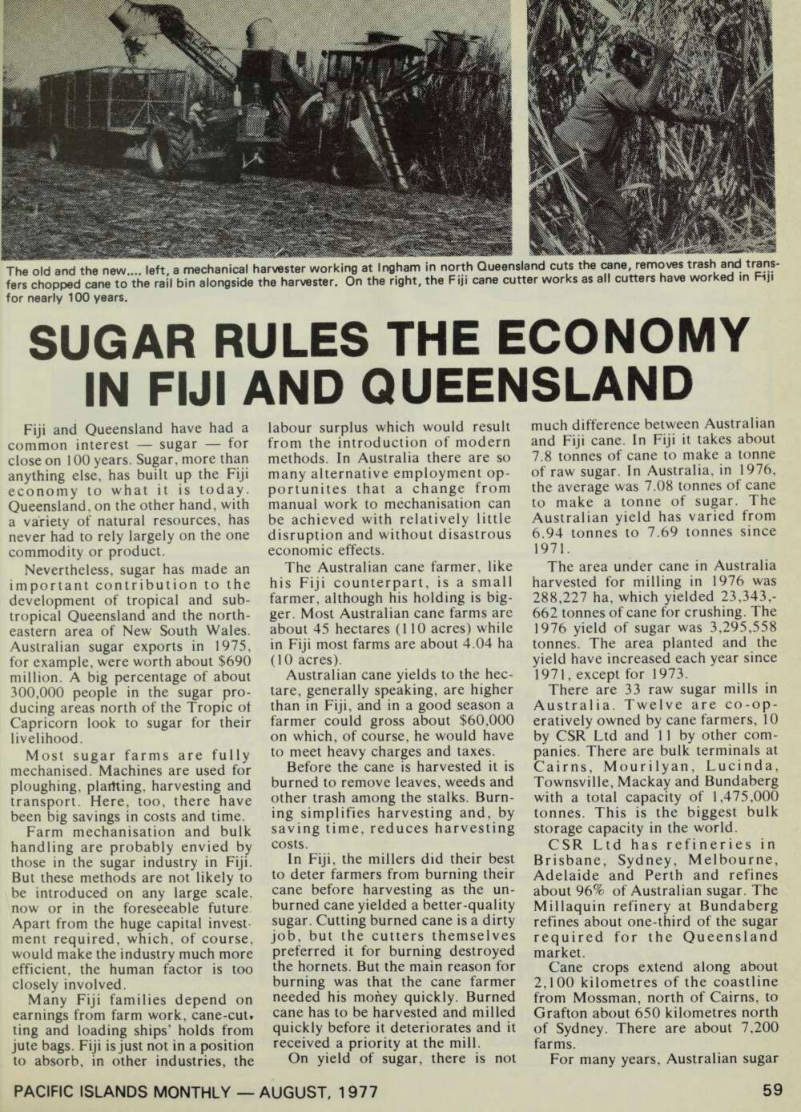

In Fiji And Queensland
Fiji and Queensland have had a common interest sugar for close on 100 years. Sugar, more than anything else, has built up the Fiji economy to what it is today.
Queensland, on the other hand, with a variety of natural resources, has never had to rely largely on the one
commodity or product.
Nevertheless, sugar has made an important contribution to the development of tropical and sub tropical Queensland and the north eastern area of New South Wales.
Australian sugar exports in 1975, for example, were worth about $690 million. A big percentage of about 300,000 people in the sugar pro ducing areas north of the Tropic of Capricorn look to sugar for their livelihood.
Most sugar farms are fully mechanised. Machines are used for ploughing, plartting, harvesting and transport. Here, too, there have been big savings in costs and time.
Farm mechanisation and bulk handling are probably envied by those in the sugar industry in Fiji.
But these methods are not likely to be introduced on any large scale, now or in the foreseeable future Apart from the huge capital invest ment required, which, of course, would make the industry much more efficient, the human factor is too closely involved.
Many Fiji families depend on earnings from farm work, cane-cut. ting and loading ships’ holds from jute bags. Fiji is just not in a position to absorb, in other industries, the
labour surplus which would result from the introduction of modern methods. In Australia there are so many alternative employment opportunites that a change from manual work to mechanisation can be achieved with relatively little disruption and without disastrous economic effects.
The Australian cane farmer, like his Fiji counterpart, is a small farmer, although his holding is bigger. Most Australian cane farms are about 45 hectares (110 acres) while in Fiji most farms are about 4.04 ha (10 acres).
Australian cane yields to the hectare, generally speaking, are higher than in Fiji, and in a good season a farmer could gross about $60,000 on which, of course, he would have to meet heavy charges and taxes.
Before the cane is harvested it is burned to remove leaves, weeds and other trash among the stalks. Burnin g simplifies harvesting and, by saving time, reduces harvesting costs.
In Fiji, the millers did their best to deter farmers from burning their cane before harvesting as the unburned cane yielded a better-quality sugar. Cutting burned cane is a dirty job, but the cutters themselves preferred it for burning destroyed the hornets. But the main reason for burning was that the cane farmer needed his money quickly. Burned cane has to be harvested and milled quickly before it deteriorates and it received a priority at the mill.
On yield of sugar, there is not
much difference between Australian and Fiji cane. In Fiji it takes about 7.8 tonnes of cane to make a tonne of raw sugar. In Australia, in 1976, the average was 7.08 tonnes of cane to make a tonne of sugar. The Australian yield has varied from 6.94 tonnes to 7.69 tonnes since 1971.
The area under cane in Australia harvested for milling in 1976 was 288,227 ha, which yielded 23,343,- 662 tonnes of cane for crushing. The 1976 yield of sugar was 3,295,558 tonnes. The area planted and the yield have increased each year since 1971, except for 1973.
There are 33 raw sugar mills in Australia. Twelve are co-op eratively owned by cane farmers, 10 by CSR Ltd and 11 by other com panics. There are bulk terminals at Cairns, Mourilyan, Lucinda, Townsville, Mackay and Bundaberg with a total capacity of 1,475,000 tonnes. This is the biggest bulk storage capacity in the world, CSR Ltd has refineries in Brisbane, Sydney, Melbourne, Adelaide and Perth and refines about 96% of Australian sugar. The Millaquin refinery at Bundaberg refines about one-third of the sugar required for the Queensland market.
Cane crops extend along about 2,100 kilometres of the coastline from Mossman, north of Cairns, to Grafton about 650 kilometres north of Sydney. There are about 7,200 farms.
For many years, Australian sugar
The old and the new... left, a mechanical harvester working at Ingham in north Queensland cuts the cane, removes trash and trans fers chopped cane to the rail bin alongside the harvester. On the right, the Fiji cane cutter works as all cutters have worked in Fiji for nearly 100 years.
was sold in three distinct categories to the domestic market, under the various agreements (Com monwealth Sugar Agreement, Inter national Sugar Agreement, US Sugar Act, etc) and the residual world free market.
Under drastically changed cir cumstances, Australia now develops long-term export contracts with established customers. Anything left over is sold on the free market on the basis of ruling world prices.
The Sugar Board, set up in 1923, subject to the Queensland Minister for Primary Industry, has an almost complete control of the industry, and also has power to control, man age, operate and maintain the bulk sugar terminals.
The Queensland Government, as owner of all sugar produced, con tracts with CSR Ltd and the Milla quin Sugar Co to refine and dis tribute sugar for the home market. It also contracts with CSR Ltd to finance the sugar crop and market all exports of Australian sugar.
Local cane prices boards draw up awards for each season governing the conditions relating to the supply and delivery of cane to the mills, payment and fixing individual farm peaks. These awards, if there is no appeal, are binding.
In 1975 favourable marketing prospects led the Queensland Government to approve an increase in industry capacity of about 10%, which brought in another 38,000 ha.
All the raw sugar produced in Australia is pooled for marketing.
Sugar industry income available for distribution to growers is the total proceeds obtained from sales of home consumption sugar and ex ported raw sugar, less costs of refin ing, transport, export marketing and other marketing costs incurred on behalf of the sugar pool.
Fiji has a similar system.
The sharing of sugar industry in come between growers and millers is determined by the Central Sugar Cane Prices Board. The division has been about two-thirds to growers and one-third to millers, but can vary slightly according to the quali ty of cane grown and the efficiency of sugar milling. The methods of payment for cane and raw sugar, by placing premiums on quality, play an important part in promoting farming and milling efficiency.
Advertisements & other items, p. 60 (1 item)
Windmills
all girls are not alike.
When it comes to efficiency, simple operation, lowest running costs and a long and trouble free life, Portals equipment is without equal no-one ever regretted buying quality and to insist on Portals plant is to secure value second to none.
For pools the latest permanent sand media ranges include stainless steel "C Series" plants for the smaller pools, the "H Series" for medium to large pools and horizontal or gravity filters suitable for even the largest complexes. Write to us for all water supply or industrial fluid treatment needs. nor are water and swimming pool treatment plants.
Portals
Portals Water Treatment (NZ) Ltd P.O. Box 13-558, Auckland 6, New Zealand Candy House, 11 Spring Street, Onehunga, Auckland Telephone: 661-079 (7 lines) Telex: NZ 21175 Telegrams: Portals Auckland.
PCI-PATERSON CANDY. PERMUTIT, BOBY. STELLA-META
PORTACEL. HOUSEMAN-HEGRO ALL PORTALS GROUP.
E 3398
SOUTHERN CROSS
GALVANISED STEEL
PRE-FABRICATED
WATER STORAGE
TANKS
** Capacities from 2,000 to 300,000 gal.
J VERY STRONGLY MADE !! !
16 gauge sheets heavily galvanised.with angle steel )attens inside and out isidewideover. lapping joints.
Inside ladder ncluded with every tank.
SOUTHERN CROSS
WQ n
WINDMILLS
STILL THE CHEAPEST
WAY TO' PUMP WATER
NO POWER COSTS///
• Heavily Galvanised • Automatic Governing Towers from 20 ft. to 60 ft.
Full details and prices available from:
SOUTHERN CROSS MACHINERY PTV LTD
39 GRANVILLE AVE., GRANVILLE, 2142, AUSTRALIA.
Telex: AA22663. Telegrams: 'SOCRQSS'.
A Warning In Fiji
A warning that mechanisation might come to the Fiji sugar indus try because labour was getting close to pricing itself off the market was sounded by Mr J. S. (lan) Thomson in his report on the 1976 season. Mr Thomson is independent chairman of the Fiji sugar industry. He said an inevitable demand for mechanical cane harvesting would follow con tinuing rising labour costs.
"It (mechanisation) will be difficult to resist, and one and all should remember that it is the growers themselves who pay for har vesting labour out of their share of the sugar proceeds,” Mr Thomson said. “Harvesting is a grower’s cost and a grower’s responsibility under the current sugar cane contract.”
Cooks’ Citrus Industry
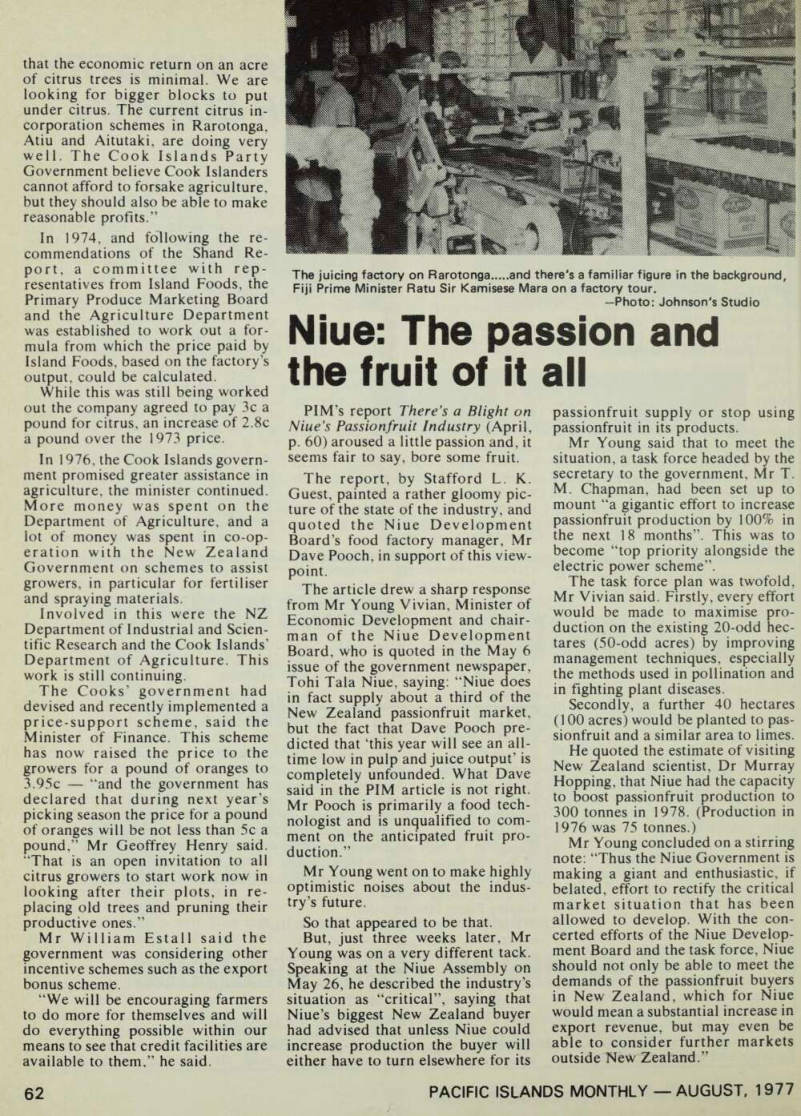
Battles For Survival
By W. H. PERCIVAL on Rarotonga
For the last few years the citrus industry in the Cook Islands has been ailing as orchardists struggled to meet ever-rising costs and con tinually grumbled about the low prices received for their produce.
Today, everything costs a lot more from fertilisers to farm machinery and, on top of the “nor mal” hazards of bad seasons and tree and fruit diseases, came a dearth of labour as the able-bodied emigrated to New Zealand. Many citrus growers, whose plantations proved to be uneconomical, gave up the struggle and went to New Zea land to live and work and make some money.
The Cook Islands Government leaned over backwards to correct the situation with various aid schemes, even to the extent of using government labour to prune the fruit trees.
Since the end of World War 11, citrus, particularly oranges, has been a major export and the chief market was always New Zealand.
Then the oranges became unpopular with the NZ buying public which preferred more attractive-looking fruit from other countries, so it was decided to export orange and pineapple juice instead.
In 1961, Island Foods Ltd. a sub sidiary of W. Gregg and Co of Dunedin. NZ, set up a fruit juicing and canning factory in Rarotonga.
The policy was to gradually phase out the export of oranges and in crease the factory’s input of the fruit.
During the first years of operation only fruit below export grade was sent to the factory, but, as the scheme gained momentum, export quality oranges were also taken.
Thus, the number of bushel cases of oranges exported to New Zealand fell progressively from more than 63 000 in 1971 to only 970 in 1975.
At the same time the value of citrus juice exported to New Zea land climbed from just over $5OO 000 in 1971 to more than $9OO 000 in 1975. In the same period of 1971-75 juice exports to Fiji and Tahiti totalled almost $1 million.
The latest figures available January-June, 1976 show juice exports to New Zealand worth more than $255 000.
Came a bumper crop in 1973 due to good weather and, the govern ment claimed, their incentive schemes.
On the other hand, for the last few years the juicing factory has not been getting the amount of citrus it expected and Island Foods Ltd will close down in August.
The government has hopes of
negotiating satisfactorily with other
major New Zealand food processors to replace Greggs Ltd and has as sured the citrus growers that there will be continued processing of fruit in the Cook Islands after Greggs’ withdrawal.
A new government scheme in volves the planting of 100 acres a year with new citrus trees, starting this year. More government funds will be needed to increase the out put of seedlings, and more equip ment will be needed if the necessary land area can be obtained.
In the debate in the Legislative Assembly in late May, Minister of Agriculture Mr William Estall, said: “It is now an established fact
that the economic return on an acre of citrus trees is minimal. We are looking for bigger blocks to put under citrus. The current citrus in corporation schemes in Rarotonga, Atiu and Aitutaki, are doing very well. The Cook Islands Party Government believe Cook Islanders cannot afford to forsake agriculture, but they should also be able to make reasonable profits.”
In 1974, and following the re commendations of the Shand Re port, a committee with rep resentatives from Island Foods, the Primary Produce Marketing Board
and the Agriculture Department
was established to work out a for mula from which the price paid by Island Foods, based on the factory’s output, could be calculated.
While this was still being worked out the company agreed to pay 3c a pound for citrus, an increase of 2.8 c a pound over the 1973 price.
In 1976, the Cook Islands govern ment promised greater assistance in agriculture, the minister continued.
More money was spent on the Department of Agriculture, and a lot of money was spent in co-op eration with the New Zealand Government on schemes to assist growers, in particular for fertiliser and spraying materials.
Involved in this were the NZ Department of Industrial and Scien tific Research and the Cook Islands’
Department of Agriculture. This work is still continuing.
The Cooks’ government had devised and recently implemented a price-support scheme, said the Minister of Finance. This scheme has now raised the price to the growers for a pound of oranges to 3.95 c “and the government has declared that during next year’s picking season the price for a pound of oranges will be not less than 5c a pound,” Mr Geoffrey Henry said.
“That is an open invitation to all citrus growers to start work now in looking after their plots, in re placing old trees and pruning their productive ones.”
Mr William Estall said the government was considering other incentive schemes such as the export bonus scheme.
“We will be encouraging farmers to do more for themselves and will do everything possible within our means to see that credit facilities are available to them,” he said.
Niue: The passion and
the fruit of it all
PI M’s report There’s a Blight on Niue’s Passionfruit Industry (April, p. 60) aroused a little passion and, it seems fair to say, bore some fruit.
The report, by Stafford L. K.
Guest, painted a rather gloomy pic ture of the state of the industry, and quoted the Niue Development Board’s food factory manager, Mr Dave Pooch, in support of this view
point.
The article drew a sharp response from Mr Young Vivian, Minister of Economic Development and chair man of the Niue Development Board, who is quoted in the May 6 issue of the government newspaper, Tohi Tala Niue, saying; “Niue does in fact supply about a third of the New Zealand passionfruit market, but the fact that Dave Pooch pre dicted that ‘this year will see an all time low in pulp and juice output’ is completely unfounded. What Dave said in the PIM article is not right.
Mr Pooch is primarily a food tech nologist and is unqualified to com ment on the anticipated fruit pro duction.”
Mr Young went on to make highly optimistic noises about the indus try’s future.
So that appeared to be that.
But, just three weeks later, Mr Young was on a very different tack.
Speaking at the Niue Assembly on May 26, he described the industry’s situation as “critical”, saying that Niue’s biggest New Zealand buyer had advised that unless Niue could increase production the buyer will either have to turn elsewhere for its
passionfruit supply or stop using passionfruit in its products.
Mr Young said that to meet the situation, a task force headed by the secretary to the government, Mr T.
M. Chapman, had been set up to mount “a gigantic effort to increase passionfruit production by 100% in the next 18 months”. This was to become “top priority alongside the electric power scheme”.
The task force plan was twofold, Mr Vivian said. Firstly, every effort would be made to maximise pro duction on the existing 20-odd hec tares (50-odd acres) by improving management techniques, especially the methods used in pollination and in fighting plant diseases.
Secondly, a further 40 hectares (100 acres) would be planted to pas sionfruit and a similar area to limes.
He quoted the estimate of visiting New Zealand scientist, Dr Murray Hopping, that Niue had the capacity to boost passionfruit production to 300 tonnes in 1978. (Production in 1976 was 75 tonnes.) Mr Young concluded on a stirring note: “Thus the Niue Government is making a giant and enthusiastic, if belated, effort to rectify the critical market situation that has been allowed to develop. With the con certed efforts of the Niue Develop ment Board and the task force, Niue should not only be able to meet the demands of the passionfruit buyers in New Zealand, which for Niue would mean a substantial increase in export revenue, but may even be able to consider further markets outside New Zealand.”
The juicing factory on Rarotonga... and there's a familiar figure in the background, Fiji Prime Minister Ratu Sir Kamisese Mara on a factory tour.
Photo: Johnson's Studio
Noumea’s smelter
No smoking for Noumea’s smelter
From PAUL STERLING in Noumea Visitors to New Caledonia are probably surprised by the clouds of red dust that can be seen hanging in the sky over Noumea. It is an unusual sight in a Pacific Island, but at the same time an indication of the territory’s major industry, the pro duction of nickel and ferro-nickel.
But a decision by the Legislative Council to introduce a programme of gradual reduction of atmospheric pollution could greatly improve the aspect of the city by 1982 and banish the clouds.
The legislation, good news for in habitants and visitors, has been an unpleasant surprise for Mr Jean Lanchon. general manager of the Societe Le Nickel. It was introduced after the visit of Mr Rebiere, an ex pert from France, invited by the Territorial Assembly to examine the city's pollution problems in Febru ary.
Opinions on the cost of pollution control are varied. The council has estimated the operation at SA3O million, while the company con siders that the programme, to be completed by the end of 1981, will cost nearly twice as much. Op erations will include drying and pre-heating ore, adding extra filters to furnaces and feeding tubes, seal ing the internal roads and stocking areas and adding a 101 metre chimney to the generating plant.
In addition, the company will have to pay for the cost of installing automatic control and analysis equipment to be set up both within the installations and in the town it self.
The council’s decision has limited dust production at 150 milligram mes for future installations. Mr Lanchon. in a press conference following the announcement, indi cated that limits for modern in stallations in France were less stringent. French industrial towns were subject to pollution from several independent sources. He also said that the programme would reduce profits by roughly 10% and thus affect the taxes payable to the territory’s budget. He expressed the
opinion that the legislation could also be an added discouragement to prospective investors in new smelt ing installations.
Undoubtedly, the people of Noumea have suffered from exagge rated pollution in the past, unex pected in the general environment of a South Pacific island. The com pany has made certain efforts over the last 10 years to reduce this.
Australia aids
Islands’ students
A total of 73 Australian scholar ships have been awarded this year to students from Fiji, Western Samoa and Tonga.
The awards are almost evenly divided between the three countries, with Fiji having 26, Western Samoa 24 and Tonga 23.
They have been made under Australia’s South Pacific Aid Programme (SPAP), the Com monwealth Co-operation in Educa tion Scheme (CCE), and the Com monwealth Scholarship and Fellow ship Plan (CSFP).
Advertisements & other items, p. 63 (1 item)
General Manager
(WPS]
A new shipping organisation, the Pacific Forum Line Limited is presently in the process of formation and is now at the stage where the appointment of a
(SHIPPING COMPANY)
is required. It is envisaged that the Line will inifiafly operate a number of ships in the South Pacific area and will be headquartered in Apia (where the appointee will be expected to reside).
The General Manager will have the responsibility for the effective and profitable management and development of the Line and its associated services in accordance with the policies and directions of the Board.
Applications are invited from people who have shipping industry experience at a senior mangement level. First hand knowledge of shipping requirements of the South Pacific is sought. As the Pacific Forum Line is supported by most South Pacific nations the General Manager must be able to understand the unique needs of these countries and be capable of establishing a new organisation and developing it rapidly to a high level of efficiency.
The appointment is initially on a contract basis and a most attractive compensation plan is offered.
Applications must be in writing setting out a detailed work and personal history. Interview arrangements will be notified to each suitable applicant.
REPLIES; In writing, quoting Ref. no. A 626 should be addressed to:
Ross Hardington,
W. D. Scott & Company Pty. Ltd.,
Management Consultants,
C.P.O. Box 2186,
AUCKLAND,
New Zealand.
Your reply will be in confidence. Your interest will not be disclosed to anyone without your permission.
Tonga’s economy
Bank plans to boost Tonga’s economy
A South Pacific mercantile bank wishes to set up in Tonga and bring with it new industries which will create employment, King Taufa’ahau Tupou said in his speech from the throne when opening the 1977 session of Tonga’s Legislative Assembly. He did not name the bank.
He referred to it after saying the Bank of Tonga had helped the coun try’s development, but there were some requirements with which it could not cope. Thus, it was con sidered necessary to set up the Tonga Development Bank which would assist people in fields outside the services offered by the Bank of Tonga.
The mercantile bank’s intended ventures included introduction of an aircraft assembly firm for amphibious planes to sell in other parts of the world. It also intended to bring in a ship-building firm from Canada which specialised in build ing aluminium boats for fishing, cargo carriage and patrol work.
The king said there was another company interested in setting up a pharmaceutical firm, which would package medical drugs from North and South America for re-export to Asia. Still another company the mercantile bank hoped to introduce was one which would process coconut oil to make salad oil, paints and varnish, margarine and other products which Tonga now im ported.
“The same bank is also interested in extending the airfield to accom modate large international jet aircraft,” the kind said. “It is also interested in establishing an airline to improve communications with the United States and Asian coun tries, with perhaps improved con nections to other jet airfields in the Pacific.
“The bank also intends launching a satellite to improve com munications between Tonga and other parts of the world, for much of its activities will depend to a large extent on instant communications over long distances. The com munications will be with countries
where financial trading is estab lished and investments and other commercial businesses provide ser vices necessary to the functions of the bank.”
A slipway was also envisaged.
The king said Tonga had always wanted an extension to the airfield and construction of a slipway. In the past they were just visions. Today, he was pleased to say, they were beginning to materialise. Interest in their construction had been re ceived from four sources. Negotia tions were in progress to work out details of the venture. Countries showing interest in the slipway were Australia, West Germany, Japan and Canada.
The possibility of setting up a sugar mill was being investigated by an expert made available by the Taiwan Government. A sugar indus try could eliminate an import and supply nearby markets in Samoa and Niue. The results of a feasibility stu dy by an Australian firm about set ting up a cannery were nearly finish ed. Canning was expected to start with tomatoes and then go on to other produce and fish.
There was also an investigation into new markets like Honolulu for agricultural produce.
Mitsui abandons
Rennell bauxite
The doubtful delights of a major mining operation on their island has been lost to the people of Rennell Island in the Solomons with the June decision of two foreign com panies not to go ahead with a $3OO million bauxite-alumina project there.
The companies are Mitsui Mining and Smelting Co of Japan and Pacific Aluminium Pty of Australia.
The latter company is a wholly owned subsidiary of Conzinc Rio tinto of Aust Ltd.
Their “no-go” decision ended seven years of study of the project qnd shattered seven years of piled up dreams for Rennellese inhabi tants.
But is the decision a total loss?
Some people here see a bright side to it. They feel that the Rennellese, who have been less affected by Western influences than most Solomon Islanders, would have been worse off if the project had gone ahead, with a giant smelter spewing fumes into their midst and bulldozers flattening their gardens.
Main factors deterring Mitsui, which had a 50% interest in the pro ject, from going ahead were the con tinuing slackness in the Japanese aluminium industry, and the difficulties of raising finance in the current economic situation.
Carpenter widening
its Fiji interests
Kanacea Island, in central Lau.
Fiji, owned by Morris Hedstrom, one of the Carpenter companies, is for sale for SFS million. It has been advertised in London. Kanacea is about three miles long and about 2V 2 miles wide. It is a copra pro ducing island and requires a work force of about 60. Its highest point is about 253 metres above sea level.
Kanacea is one of several pri vately-owned islands in the copra areas in the eastern islands of Fiji.
Others include Mago, Naitauba.
Katafaga and Laucala.
W. R. Carpenter is expanding its Fiji interests and at the same time will improve the cash flow should the sale of Kanacea Island go through at the price sought $5 million. Early in May, the group paid $F740,000 for a controlling in terest in the Desbro steel rolling mill, Suva, and will now spend more than $1 million to expand it. The Fiji public will be offered at least 10% of the shareholding in the mill after it has been reorganised.
Tunnelling for
treasure at Ok Tedi
Australia’s Broken Hill Pty Co Ltd was reported ready in June to begin a major phase in the Ok Tedi copper prospect in Papua New Guinea.
The company said the new stage involves the driving of two tunnels one of 270 m and the other 540 m into the ore body at Mt Fubilan.
The work requires removal of more than 9 000 tonnes of material, which will be crushed and sampled.
More than 140 drill holes had already been sunk at the time of the announcement.
Advertisements & other items, pp. 65-66 (1 item)
mazoa
r >
wpasft
M a- ■T II :• ..w- , r W, <UP» \ m. 1977 Toyo Kogyo Co., Ltd.
This page tells a lot about Mazda technology.
Just a few of the searching tests a Mazda has to pass before it ever goes into production. Many more follow, both during manufacture and after. The result. Superior, high-quality products. Cars like the newly released Mazda 323. A car everyone’s talking about because of its versatile, economical performance and stylish good looks. And like all Mazdas, a car that you can own and drive with confidence. Because Mazdas are made right.
Right from the beginning.
The Climatic Testing Laboratories Here a range of driving conditions can be simulated, from stop-start city driving to sustained high-speed highway running. The tests are conducted in a wide range of temperatures and under different atmospheric conditions. So you can be sure your Mazda will be expertly tuned to run smoothly in the country where you live.
Body Testing Laboratories This is one of the facilities that crash tests our car bodies. Impact and torsional effects can be accurately measured by computers simulating collisions at 30-60 m.p.h. Dummies electronically wired tell us what happens to passengers—and as a result —provide our design engineers with valuable information about the safest interiors and bodies.
Tests such as these helped us to design the light, crash resistant, semimonocoque body found on all Mazda passenger cars.
Sound Testing Laboratories Nobody likes noise. Least of all Mazda.
That’s why we are working hard to make our cars quieter —from the outside and the inside. The car below is in our anechoic test chamber. Here the whole car is subjected to vibration through a machine that creates a variety of different shakes and thumps.
Ultra-sensitive microphones pick up every sound made, then amplifies it for thorough analysis. This way we can get rid of excessive noise and vibration before they annoy you and your passengers. r a
mazoa
Quality through superior technology FIJI ISLANDS Nlran)ans Autoport Ltd. G.P.O. Box 450. Suva TEL: 22691 NEW CALEDONIA Socl6t6 Riviere et Bernanos 27, Rue de Sebastopol, Noumea PAPUA NEW GUIN P.N.Q. Associated Industries Ltd. P.O. Box 1394, Boroko TEL: 255788 NEW ZEALAND Mazda Motors ol New Zealand Ltd. Otahuhu, Auckland. P.O. Box 22-472 TEL: 69-099 Buncombe Bay Garage P.O. Box 220, Norfolk Island TEL: 2097 8. 5. 1 P Solomon Motors Ltd. P.O. Box 20. Honiara TEL: 313 TAHII Comptolr Polynesian B P 628, Papeete The trademark MAZDA in this advertisement stands for AUTOMOBILES MAZDA as far as France and her territories are concerned.
THE SMALL CAR
FULL OF
f. s* m -
ISUZU
- 4 t ■■■
ISUZU GEMINI
The rugged little Isuzu Gemini! All the style, features and comfort you expect from the Japanese plus General Motors parts, service and unbeatable 12 months or 20,000 km warranty.
Its got the looks, the style, the performance and handling ... the reliability to set it way ahead of its competitors. Check out Gemini now!
O Four-on-the-floor O 1600 cc engine O Flow-through ventilation O Power assisted disc brakes O Hazard warning light O Radio O Bucket seats O 2-speed wipers O Electric clock O Headlight flasher O Anti-theft steering lock O Cigar lighter O Optional air conditioning available V.- .
Papua New Guinea Wamp Nga Motors, Mt. Hagen Dawapia Motors, Rabaul
Fiji
Burns Philp (South Sea) Co. Ltd.
General Motors Serving you in the South Pacific Western Samoa O. F. Nelson and Co. Ltd.
G 149 n
Air Pacific is the meat in a
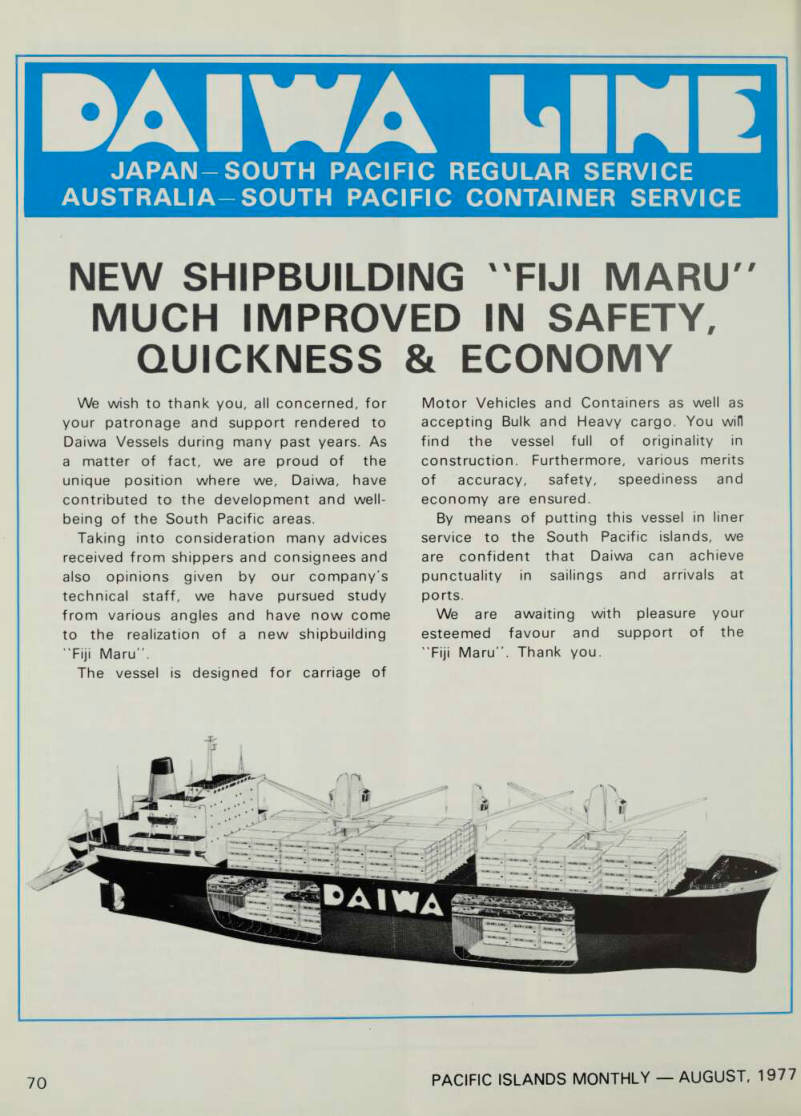
Pacific Transport
Air Pacific is the meat in a New Zealand-Samoa sandwich
By Norman Baxter
Political and social considera tions, rather than cold economic facts, dictated the way Air Pacific worked and caused its failure as a regional airline, the airline’s chair man, Mr Don Aidney, Suva busi nessman and accountant, told the annual Fiji tourist convention.
He also spelled out just how Air New Zealand has a tremendous ad vantage over Air Pacific on flights between Fiji and NZ, even though Fiji has unrestricted rights for as many services as it wishes between Fiji and Auckland, a matter which has rather exasperated the Fiji Prime Minister, Ratu Sir Kamisese Mara.
Mr Aidney’s comments about the failure of Air Pacific as a regional carrier came only a few days after Western Samoa and New Zealand reached agreement in principle for a service from Western Samoa to New Zealand, via Tonga. The Tonga- Auckland leg of such a service would eat into the monopoly Air Pacific enjoys, with two operators a profit for each would be problematical.
Mr Aidney hit the nail on the head when he said the original regional concept was slowly being eroded by member countries setting up their own flag airlines. Some of those operators, although hardly successful for their owners, had vir tually driven Air Pacific out of the market in some sectors.
Air Pacific had to operate as a Fiji-based airline through the region where regional operations were via ble or complementary to Fiji’s needs and development. It also had to run its operations on a viable financial basis. There were restraints on Air Pacific, including limited facilities which had not kept pace with the rapid development of aircraft re quiring more demanding standards for airfields and equipment.
Because of finance and other difficulties, almost all regional air
fields, including Nausori, were barely adequate even for the aircraft which Air Pacific now operatfd.
Some airfields had load restrict! ms.
For that reason, flights f.om Nausori to Auckland had to sacrifice six passengers, which rep resented about $1 000 a flight.
Delays could prevent a flight going at all because of the risk of being caught in darkness at Nukualofa.
Firm passenger bookings out of Tonga and Tarawa were difficult because there were no telephone connections and no telex.
Small aircraft services were ex pensive. The Trislanders used on in ternal services would run at a loss of $l7O 000 this year. Air Nauru was charging about half what Air Pacific regarded as the minimum economic fare it could offer and had effec tively driven Air Pacific out of the Fiji-Tarawa and Fiji-Nauru trade.
Air Pacific had been accumulat ing losses for the last three years. In the last financial year it lost $1.2 million, but this year was budgeting to break even. Air Pacific also plan ned to re-equip as the BAC 11 1 was reaching the end of its technical development life. He believed the trend for airlines to switch to bigger aircraft and overfly Fiji would favour Air Pacific which would pro vide some regular connections with
Australia and New Zealand. Air Pacific was now studying what its next generation of traffic would be. [Ratu Sir Kamisese Mara, speak ing after the mini South Pacific For mum in Rotorua in March, 1976, said Fiji was at a disadvantage in having Australian and New Zealand partners in Air Pacific. She had to exchange her national rights for airline co-ordination. Fiji had tied up her civil air rights for the sake of a regional airline associated with Air NZ and Qantas.] Mr Aidney described the agree ment on rights between NZ and Fiji as looking fine on paper, and prob ably suiting Air Pacific’s needs and abilities at the time it was signed (four years ago). But it was a very carefully-negotiated agreement in deed for NZ.
It gave Air NZ, as the nominated carrier for NZ, unrestricted rights to fly from any point in NZ, any number of passengers, any number of times, in and out of Nadi. Air NZ could pick up as many passengers as it wished from Fiji or put down as many as it wanted there for all Air NZ’s important onward destinations such as Honolulu, the US, Canada, the UK, Hong Kong, Japan, etc.
In return the agreement gave Fiji unrestricted rights to fly as many services as it wished between Fiji and Auckland provided the aircraft called on the way at any one base in Tonga, the New Hebrides, New Caledonia or Norfolk Island.
Mr Aidney did not say so in so many words, but it is not hard to im agine how many passengers from Fiji would want to go to NZ via the New Hebrides, New Caledonia or Norfolk Islands.
Mr Aidney said that Fiji, to fly through any of those countries would have to negotiate rights, and he considered NZ knew that France was most unlikely to give Fiji rights between Noumea and New Zealand.
The Norfolk Island airstrip could
not accommodate the BAC 111, and the New Hebrides was in the wrong direction.
Fiji also had rights to fly to Niue and Rarotonga and through those is lands to American Samoa, French Polynesia, Easter Island and San tiago.
“This not only ensured that because of the limitations at the air fields they required us to call at, we could operate nothing bigger than a BAC 111 or an HS 748, but also re quired us under international rules to charge a higher fare than the direct Nadi-Auckland fare because of the extra milage involved”, Mr Aidney said.
The operation of the service at all (to Auckland) was entirely depen dent on the goodwill or the policy of some other country. Yet that agree ment was described by NZ during recent talks as being “The most general bilateral agreement Fiji has”.
“If this is so, God help us with the rest”, Mr Aidney said.
It was fairly easy to spell out the effect. Air Pacific’s revenue on its Auckland run was a little more than $1 million a year. Air NZ’s was something like $l2 million, plus more than another $5 million earn ed from traffic put down and picked up in Fiji for onward destinations.
Air Pacific had no more than 7% of the traffic.
NZ must have been feeling in a generous mood about the time of the tourist convention because an Air Pacific representative. Mr Kit Naidu, was able to announce that from August there would be six flights a week from Nausori to Auckland three direct and three through Tonga.
The NZ Prime Minister. Mr Mul doon. stopped off in Western Samoa in June for the independence celebrations while on the way to London for the Commonwealth conference. He took time out from the festivities to talk about air ser vices with the Western Samoa Prime Minister, Mr Tupuola Efi.
After this conference it was an nounced that Western Samoa would be the base for two new services with at least one of them operated by Polynesian Airlines in which the Western Samoa Government has an equity of more than 70% . The ser vices will be from Faleolo Airport, about 40 km from Apia, to Rarotonga, and to Auckland, via
Fua’amotu in Tonga. The service to Rarotonga will be operated by Polynesian Airlines with HS74B tur bo prop aircraft, and is scheduled to start on November 2.
The airline to operate the service to Auckland is not yet known, but Polynesian already has a leg in, with support from Mr Muldoon. Mr Muldoon said he and Mr Efi had agreed in principle on a Boeing 737-200 series aircraft for the Apia- Fua’amotu-Auckland service. He did not say which airline would op erate the service, but significantly, tacitly gave his support to Polyne sian Airlines when he said. “If Polynesian Airlines can be fitted in. then good”.
The link between Faleolo and Raratonga will be welcomed by businessmen and tourists, for it will bring the Cook Islands back into the regional network.
T)n November 1. Polynesian Airlines will standardise the days of operation on two of the three weekly services to Nadi. Days of operation to Nadi at present often change so that aircraft can connect with Air
NZ flights. That arrangement has had an adverse effect on the move ment of tourists.
Polynesian Airlines will operate from Apia to Nadi on Tuesdays and Thursdays, returning the same day.
The third weekly service will be timed to connect with Air NZ ser vices from Nadi to Auckland.
Cruise Ships May
Be Withdrawn
The Pacific Far East Line luxury cruise ships, Mariposa and Mon terey, may be withdrawn within the next year if the US Government de cides not to renew subsidies for them. They have been on the service since late in 1956, operating round voyages from San Francisco and Los Angeles to Honolulu. French Polynesia, the Cook Islands, New Zealand, Australia, Fiji, Niuafoou, Pago Pago and Honolulu and back to the US west coast.
The services ran at six-week inter vals till fairly recently, when they were withdrawn occasionally for the Alaska cruise trade. The subsidy for the Monterey expires in December; for the Mariposa five months later.
Old Aoniu
Is For Sale
Williams Trading Co (Fiji) Ltd has offered the ship Taoniu, 500 tonnes, for sale, but hopes to buy a replacement of about the same size in Europe. Williams Shipping bought the Taoniu from the Tonga Government for $90,000, and is asking for “something less” than $150,000 for its resale. The ship was
Mr Muldoon
known as the Aoniu when owned by Tonga, which bought her in 1958.
Tonga had operated her on trade routes covering Samoa. Tonga and Fiji. Williams Shipping kept her on the same run for about two months, but found this unprofitable, and confined her to operations within Fiji.
Pending sale of the Taoniu and acquisition of a new ship, Williams Shipping Co is operating that ship and another cargo-passenger ship, the Komaiwai, from Suva to Rotuma, northern Lau and Taveuni ports.
New Ships
For Micronesia
Micronesia celebrated United States Maritime Day by having the keel laid in Kobe, Japan, for the first of seven new field trip ships. The ceremony was in the Hashimoto yard where the ships will be built.
The first ship should be launched late in August and delivery is ex pected in November.
The ship. 66 tonnes dwt with a displacement of 1219 tonnes will be 56.4 metres long. It will be powered with twin screws and GM diesel motors 0f'455 hp, providing a speed of 1 1 knots. She will carry 660 ton nes of tuel, water, cargo, etc, and has accommodation for passengers and their baggage.
Roading Costs
Worry The Tongans
Finance is an inhibiting factor in the development of good, hard wearing roads in Tonga. With bitu men now costing more than $5O (or P5O) a barrel, compared with about P2O four years ago. there is not the same mileage as there was for the money.
Increasing traffic is demanding good roads, otherwise there is a hea vy bill for maintenance. Tonga’s Director of Works, Mr Chris Wilford, says there is little purpose in surfacing a road with bitumen unless the road is rebuilt and drain ed to a standard which will not un dermine the bitumen. A reseal coat of bitumen is needed on a busy road every six years, and it costs about P 5,625 a kilometre.
That is beyond the resources of Tonga, which finds it difficult to maintain coral roads. Under its 1965-70 development plan, Tonga spent P294,0000n roads. Under the
second plan, 1970-75, road ex penditure was $198,516.
About the only hope of getting a decent internal system lies with a grant from the UK. With that in mind, the Tonga Cabinet has ap proved an approach to the UK for permission to use a substantial part of the next grant for road construc tion. Then there might be some progress in alleviating the road dust problem.
New Centre For
Samoan Airline
Pago Pago-based South Pacific Is land Airways is building a new maintenance and administrative centre at Tafuna airport. American Samoa, on 280 square metres of land leased from the government.
The company will be able to un dertake round-the-clock main tenance of its fleet of aircraft, which now operates more than 140 scheduled flights weekly to nine is lands and four countries. SPIA will soon increase the number of flights to Tonga, and expects to open up new routes, possibly between Pago Pago and Rarotonga.
Launching Near For
Forum Line?
The South Pacific Regional Ship ping Council has called on the Pacific Forum Line to start op erations before the end of 1977, with one or more ships. The line came a step closer to realisation at Suva on June 16 when rep resentatives of eight governments signed a memorandum of unders tanding and company documents to set up the line, which will have its headquarters at Apia.
Ministers from the Cooks, Fiji, the Gilberts, Nauru, New Zealand.
Tonga and Western Samoa, and the acting High Commissioner for Papua New Guinea in Fiji, signed the documents. The new company members pledged to take an equal number of shares. The documents were signed during the fifth meeting of the council, which comprises ministers responsible for shipping in the countries of the SP Forum. It was set up in 1975 to find out how to improve shipping services in the South Pacific.
The Suva meeting was conducted by'the Nauru Minister of Island Development and Industry, Mr Kenas Aroi. Apart from Nauru and the other signatories to the docu
ments, Australia and Niue were also represented at the meeting.
Twenty-five members of the staff of Nauru Pacific Line have been told to find other jobs, which sig nifies that Nauru Pacific is closing down, at least so far as an Australian administration base is concerned.
PIM has heard that the Nauru Is land Council, which runs the ship ping line, is disposing of the ships.
This, thinks PIM, means that Nauru, as well as signing the memorandum setting up the Forum Line, is closing down its operation and placing its ships under the Forum Line’s flag.
Trimming Union
Sails For Forum Line
New Zealand maritime unions are likely to be more friendly to the Pacific Forum Line following a visit to New Zealand by a two-man delegation from Western Samoa Mr Vaovasamanaia Filipo, the Finance Minister, and Mr Neroni Slade, the Attorney-General. They met the president of the NZ Federa tion of Labour, Sir Thomas Skinner, representatives of five maritime unions, and the NZ Transport Minister, Mr McLachlan.
On their return they reported the unions had accepted, and had given support to, the concept for the op erations of the line. Mr McLachlan assured them there would be no trouble from the unions against any ship of the line. That attitude was also adopted by Sir Thomas
Fruit And Veg
Downed An Aircraft
A Nomad aircraft crashed sec onds after climbing from Wewak runway in Papua New Guinea because fruit and vegetables placed in the rear compartment without the pilot’s knowledge put the centre of gravity outside specified limits. The pilot had previously checked the loading.
The weight was insufficient to overload the aircraft, but it was enough to put it off balance. The aircraft stalled into the ground after take-off and became a total loss.
An investigation was carried out by the PNG Civil Aviation Agency, Australian Government aircraft fac tory experts and Douglas Airways.
The upshot of the investigation was a recommendation that warning signs in English, Pidgin and Motu be placed over the appropriate com partments of light aircraft operating in PNG. The signs should indicate that nothing should be loaded there without permission from the pilot
Another Ship
For The Cooks
The 407-tonne Mataora. ex- Fiducia, a steel-hulled. Dutch-built vessel, arrived at Rarotonga in June from Antwerp (Belgium), Vigo, in northern Spain, and Panama to enter the inter-Cook Islands trade.
Mataora was acquired by the Cook Islands shipping company of Silk and Boyd Ltd under an arrangement with the Cook Islands Government.
Suva Firm’S
3Ig Repair Job
One of the biggest ship repairs un iertaken in the Pacific Islands has ?een carried out by Millers, of Suva, m a Japanese tuna fishing boat, the Daio Maru, 437 tonnes. The Daio Vlaru had run aground on a reef in he Gilbert Islands in November, 1976, and had been towed 1,980 km o the ship-repair yard.
Millers engineers and repair yard itaff had to make a complete over laul of the engine room, refrigera ion unit, electrical system, propul ;ion machinery and steering gear.
Major repairs were required to the teel. The job cost $200,000 in abour and materials.
Marine Pacific Ltd and Salvage s acific Ltd refloated the Daio Maru n January, and the tow to Suva was mdertaken by Marine Pacific, fhere was one stop on the way at farawa.
Mjstralia-Png
R Ares Are Up
A new structure of air fares be ween Australia and Papua New Guinea came into force on July 15. fhere were increases in normal first md economy class fares to about the lame level as those applying on limilar short-haul routes in the South Pacific, while group rates vere reduced. A new excursion fare s lower than normal economy fares This new fare, an advance >urchase excursion fare, offers a iiscount of about 30% off the nor nal economy class fare, and ranges fom $143 return between Cairns md Port Moresby to $236 return between Brisbane and Port Moresby md S2BB between Sydney and Port Moresby.
The discount for group travel for 15 or more passengers has been ifted from 10% to 33% .
The new first class, economy class md advance purchase excursion ares, with the kina equivalent in are: Sydney-Port Moresby-Sydney Ist class, $648 (K 574): economy :lass. $4 06 (K 360); advance purchase. $2BB (K 255).
Brishane-Port Moresby-Brisbane Ist class. $530 (K. 470); economy ;lass. $3 32 (K 294); advance purchase. $236 (K 208).
Cairns-Port Moreshy-Cairns Economy class $194 (K 1 72); ad /ance purchase. $143 (K 1 27).
Negotiations
More
Fiji intends to negotiate with the United States and Australia for air rights to Pago Pago and Australia, according to the Fiji Minister for Tourism, Mr Jonati Mavoa. Previous bilateral talks with the US had given Fiji rights only to visit Pago Pago. Fiji has told the US Civil Aeronautics Board she wants rights to Hawaii or the mainland.
Advertisements & other items, pp. 68-72 (2 items)
Baiwa Lime
JAPAN-SOUTH PACIFIC REGULAR SERVICE
AUSTRALIA-SOUTH PACIFIC CONTAINER SERVICE
NEW SHIPBUILDING "FIJI MARU"
MUCH IMPROVED IN SAFETY,
QUICKNESS & ECONOMY
We wish to thank you, all concerned, for your patronage and support rendered to Daiwa Vessels during many past years. As a matter of fact, we are proud of the unique position where we, Daiwa, have contributed to the development and wellbeing of the South Pacific areas.
Taking into consideration many advices received from shippers and consignees and also opinions given by our company's technical staff, we have pursued study from various angles and have now come to the realization of a new shipbuilding "Fiji Maru".
The vessel is designed for carriage of Motor Vehicles and Containers as well as accepting Bulk and Heavy cargo. You wifi find the vessel full of originality in construction. Furthermore, various merits of accuracy, safety, speediness and economy are ensured.
By means of putting this vessel in liner service to the South Pacific islands, we are confident that Daiwa can achieve punctuality in sailings and arrivals at ports.
We are awaiting with pleasure your esteemed favour and support of the "Fiji Maru". Thank you. i t \
V
DAIWA LINE
ROLL-ON/ROLL-OFF CAR & CONTAINER SERVICE
JAPAN-SOUTH PACIFIC
PAPEETE-PAGO PAGO-APIA-SUVA
LAUTOKA-SYDNEY
NOUMEA-TARAWA-GUAM-TAI WAN
JAPAN - TAIWAN - GUAM
JAPAN-KEELUNG-GUAM BY
EXCELLENT CAR/CONTAINER-CARRIER
JAPAN-WEST IRIAN-DILI
HONG KONG-TAI WAN-WEST IRIAN-DILI
AGENTS:
GUAM: ATKINS, KROLL (GUAM) LTD.
TARAWA: G. & E. I. DEVELOPMENT AUTHORITY.
APIA: BURNS PHILP (SOUTH SEA) CO., LTD.
PAGO PAGO: KNEUBUHL MARITIME SERVICES CORP.
NUKUALOFA: PACIFIC NAVIGATION CO., LTD.
SUVA: BURNS PHILP (SOUTH SEA) CO., LTD.
LAUTOKA: BURNS PHILP (SOUTH SEA) CO., LTD.
NOUMEA: SOCIETE D'ACCONAGE ET DE
TRANSPORT D'OCEANIE (SATO)
SANTO: BURNS PHILP (NEW HEBRIDES) LTD.
VILA: BURNS PHILP (NEW HEBRIDES) LTD.
HONIARA: BRITISH SOLOMONS TRADING CO., LTD.
PAPEETE: AGENCE MARITIME DE FARE UTE.
HONG KONG: IKE MARITIME CO., LTD.
SINGAPORE: THE BORNEO CO., (SINGAPORE) LTD.
DJAJAPURA: P. N. PELAJARAN NASIONAL INDONESIA.
DILI: SANG TAI HOO
TAIWAN: FOR CARGO BETWEEN JAPAN/GUAM/TAIWAN &
SOUTH PACIFIC,
FORMOSA SHIPPING & ENTERPRISE CORP.
THE DAIWA NAVIGATION CO**LTD*
OSAKA: “DAILINE" TOKYO; "FUNEDAILINE"
HEAD OFFICE
DAIICHI KYOGYO BLDG.,
45, 2-CHOME, AWAZ AM IN AM l-DOR I,
NISHI-KU, OSAKA, JAPAN
TELEPHONE: (06) 531-0471 ~9
TELEX: 525-6324 & 525-6325
TOKYO OFFICE
SHIN-DAIICHI BLDG.,
4-13, NIHONBASHI 3-CHOME, CHUO-KU,
TOKYO, JAPAN
TELEPHONE: (03) 274-3251 ~8
TELEX: 222-3343. 23559
The
PWynesian
mangle
Western Samoa Niue Island hiji Tonga
Its place in
the Pacific has shifted
Because now the Polynesian Triangle fare brings a Polynesian holiday much closer. Now when you visit Fiji you can include Tonga, Niue and Western Samoa for very little extra! Talk to your travel agent about working in our Polynesian Triangle fare with your Fiji itinerary. Only U55266.00* (AU55229.00 or NZ5237.00) more to see three more islands in the beautiful Pacific. Our Polynesian Triangle fare is available all year round with no minimum stopover restrictions and may be purchased while you are in Fiji or before you arrive.
Contact your trave[ agent for more details.
Fare subject to change without notice. © Serving the heart of Polynesia
POLYNESIAN , ,
PO Box 599, Apia.
WESTERN SAMOA
*■ ■ f •* ExpressTreight Service between U.S. Pacific Coast Ports &
PAPEETE - APIA ■ PAGO PAGO
Full Container Service including Refrigeration
GENERAL AGENTS'
FURNESS INTEROCE4N
-CORPOR4TTON ;
465 CALIFORNIA STREET. SAN FRANCISCO. C A 94104 Cable: INTERCO’ • TWX 910-372 7350 • RCA 278 207
• TEL (415) 396 2000
AGENTS»
PAPEETE - MORGAN; Vernex Boite Postale 449, Papeete Phone: 309 Cables; MOREX PAGO PAGO - POLYNESIA SHIPPING SERVICES, INC., Pago Pago Phone; 633-5169 Cables; POLYSHIP APIA ■ UNION S.S. CO., of N.Z. Ltd., P.O. Box 50, Apia, Western Samoa Phone: 570 Cables: UNION
TRADE MARK
CAUTIONARY NOTICE:
e
SUBARU
Fuji Jukogyo Kabushiki Kaisha also trading as Fuji Heavy Industries Ltd., of 7-2 Nishishinjuku 1-chome, Shinjuku-ku Tokyo, Japan, wish it to be known that they are the owners of the trade mark and the trade mark device labels (as shown) and that the trade mark and the device labels are used by Fuji Jukogyo Kabushiki Kaisha on or in connection with vehicles; apparatus for locomotion by land, air or water.
The trade mark device label designated above as house mark device is used in respect of vehicles; apparatus for locomotion by land, air or water and is also used in connection with engines, motors, generators, agricultural machinery and their parts and accessories.
Proceedings will be taken against any third party found to be using the device marks or any closely similar mark on or in connection with vehicles; apparatus for locomotion by land, air or water and in the case of the house mark device, in connection with engines, motors, generators, agricultural machinery and their parts and accessories.
CAUTIONARY NOTICE:
Notice is hereby given that
St. REGIS - ACI PTY. LTD.
a company duly incorporated under the Companies Ordinance of the Australian Capital Territory, of 161 Arthur Street, Homebush, New South Wales 2140, is the sole proprietor in Papua New Guinea and elsewhere of the following trade marks:
1. SISALKRAFT
2. SISALATION
3. SISALTHENE
4. VAPASTOP
5.
Used in respect of the following: - Goods or materials for use in the building industry, - Goods or materials for use in the packaging industry.
The proprietor claims all rights in respect of the above trade marks and will take all necessary legal steps against any person or company infringing those rights.
SPRUSON & FERGUSON
Patent Attorneys, Esso House, 6.
Sydney, Australia.
KARERE
40' ferrocement auxiliary cargo ketch.
Range under power; approx. 2000 miles. Cargo hold: 800 cu. ft. Accommodation for four passengers and a crew of two.
Karere is one of a range of ferrocement commercial and pleasure vessels for sail and power.
For catalogue posted airmail send NZ$l by postal order to;
NEW ZEALAND FERROCEMENT SERVICES LTD.
P.O. Box 15-447, Auckland 7, New Zealand.
73
ACIFIC ISLANDS MONTHLY AUGUST, 1 977
Cruising
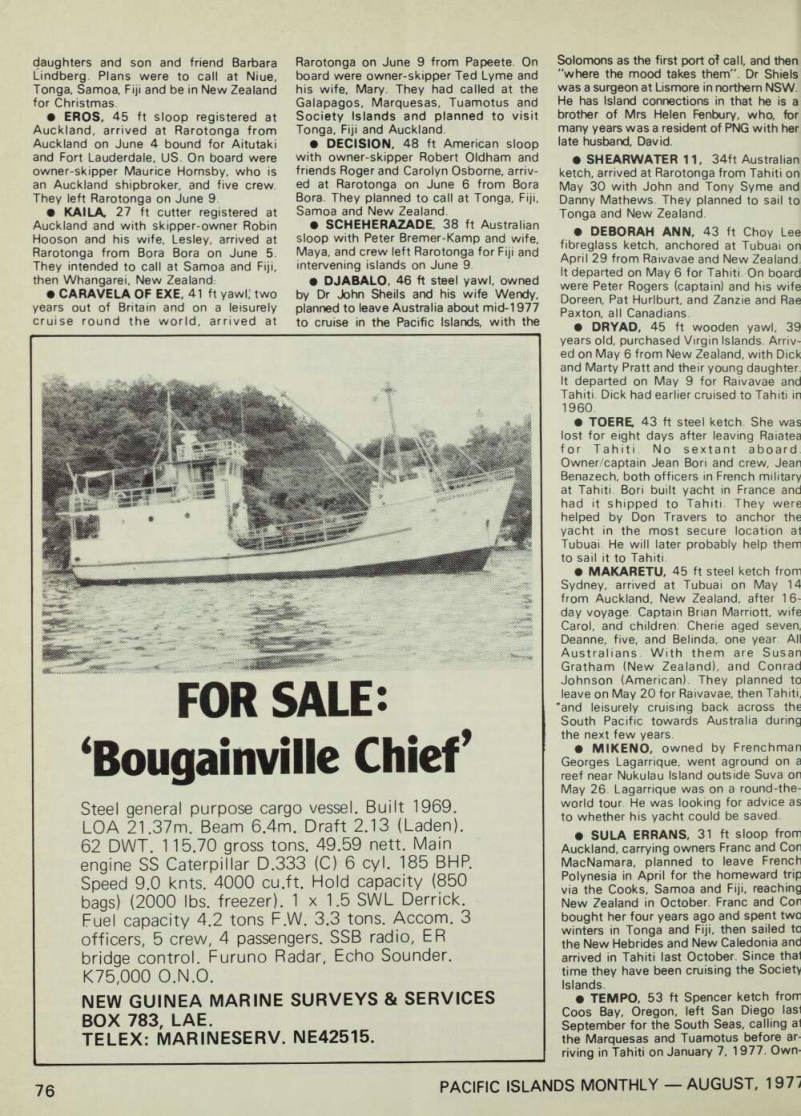
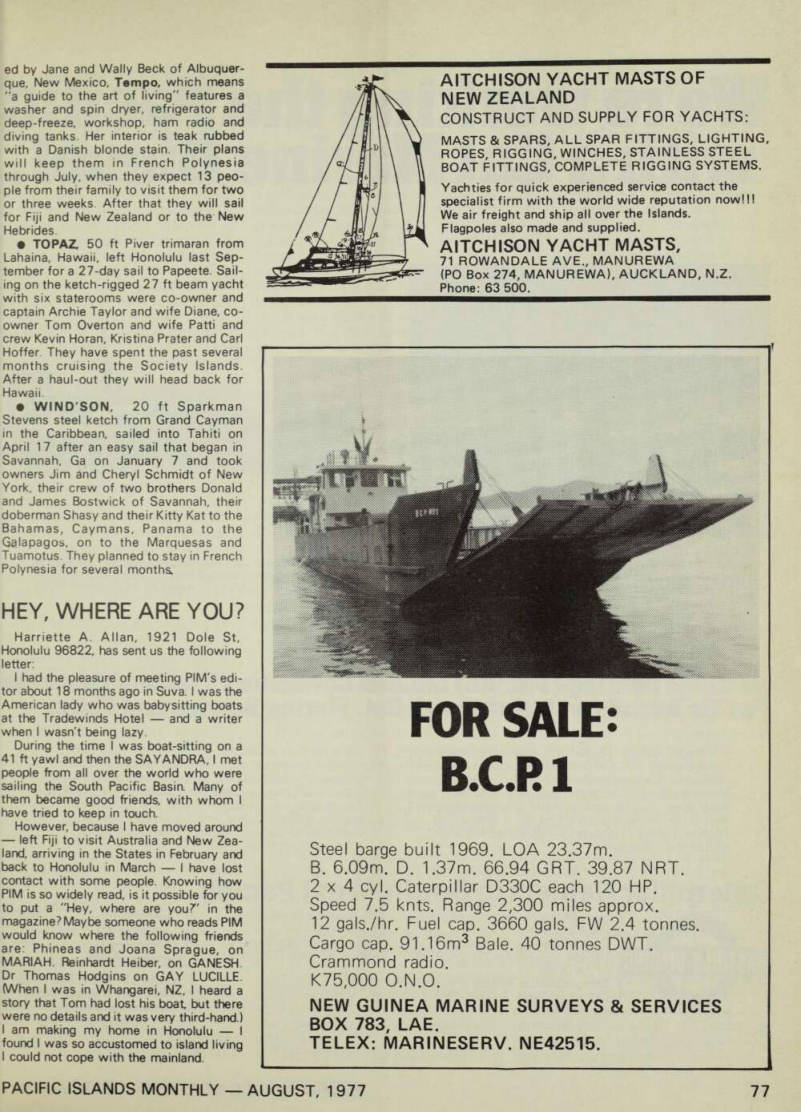
Yachts
To Yachties
A welcome and a helping hand has been extended to cruising yachtsmen visiting the Sydney area, by the newly-formed Sea Rescue organisation.
Though primarily formed as a rescue organisation, with voluntary patrols operating out of Botany Bay every weekend and public holiday, Sea Rescue will be happy to extend help and hospitality to visiting sailors.
On patrol days Sea Rescue monitors radio frequencies are 27.88 and 27.90 mHz or yachties may contact Max Allen on Sydney 668 9967 or John Collins —e- PIM. • GRACE, 1 1 m sloop from Los Angeles, arrived in Huahine in April from the Marquesas. Owner-builder-skipper Joe Parks left Los Angeles on Feb 1 with his brother Dave and Nick Kalionzes, sail ing to Huahine to join YANKEE GIRL, owned by another brother, Bob Parks.
Joe, his father and brothers built Grace in two years. They planned to sail to Rarotonga in June and return to Los Angeles via Hawaii. • HOKULE'A, 13.1 m long catamaran from Hawaii sailed into Papeete on May 24 after a fast 11-day trip from Kona.
Carrying owner-builder Joe Cabell, Randy Coon and Woody Cox, the Hokule'a left Hawaii in near-gale weather. She sailed about a quarter of the way in winds of five knots or less, and used the motor be tween winds. Cabell christened his unusual cat before the more famous canoe of the same name was finished Cabell plans to sail in French Polynesia for six months before returning to Hawaii. • JOLLY TAR, 9.8 m Atkins cutter from Hawaii, carrying the Woodrum family of Lon, Sue and Casey, BV2, has been in French Polynesia since Novem ber, 1976, on her second trip to those is lands. On this trip she has visited the Australs and Raivavae. After cruising in the Tuamotus and the Marquesas they in tend to return to Hawaii in October • LADY LEE, 13.1 m Atkins ketch from San Diego, which left home in February, was in the Marquesas and the Tuamotus before arriving in Tahiti in mid- May. Owners Truman and Jeanne Schmidt, who had no immediate plans for the future, were waiting for friends and their family to join them • NOA NOA, 9.8 m Rhodes design Bermuda-rigged ketch double-ender from Miami spent March in Tahiti before visit ing other Society Islands en route to Rarotonga and Samoa. Lynn Martin, "Foot” Young and Pamela Ingram bought the 42-year-old ketch three years ago.
They sailed from Miami for the Bahamas,
but a storm forced them to Cuba After cruising in the Caribbean, Noa Noa spent a year at Panama, then sailed for French Polynesia, minus the motor, which they got rid of in Panama • PAPILLON, 9.4 m Jim Brown sea running trimaran, which left San Diego in January, 1976, has been in French Polynesia since June, 1976 Owners Claes and Lillemor Nilson, from Stockholm, planned to sail to Suwarrow, Samoa and NZ • SEAFORTH, 1 1 m Angleman sea witch, from San Diego, limped into Papeete in mid-May with two-thirds of the mizzen mast missing and the main mast broken and split down the centre Owners Al and Joan Cox encountered a squall when about 960 km north-east of the Marquesas Winds gusted to 25 knots All the damage occurred in the squall They drifted to Hivo Oa, and then jury rigged Sea Forth for the trip to Tahiti • VERONIKA, 10 7 m steel sloop-rig ged double-ender from Stuttgart, Germa ny, left Tahiti at the end of May, after a year in French Polynesia, for Niue, Vavau, Fiji and New Zealand Gerd and Veronika Steidle, with cocker spaniel Bobo, bought their boat in Capetown in 1973 and sail ed the next year for Brazil They sailed 1 60 km up the Amazon and cruised in the Caribbean for a year before passing through the Panama Canal into the Pacific • WANDERLURE, 9 8 m schooner from Long Beach, California, with Art Hammond sailing single-handed, was in Bora Bora in May before sailing for Pukapuka, Suwarrow, Palmyra and New Zealand Art left Panama in January, 1976, sailing to the Cocos Islands, Galapagos, Easter Island, Pitcairn, the Marquesas, Tuamotus and Tahiti After cruising in the Society Islands fie sailed to the Cook Islands, then returned to French Polynesia to visit a number of is lands seldom called at by yachties These included Rapa, Mangareva and Hao, which is a French military base • WINDWAGON, 15 25 m ketch rigged auxiliary cruising yacht from Los Angeles, which spent several months in French Polynesia, had Rarotonga, Tonga, Fiji and New Caledonia next on her itinerary in the course of a world tour Owners Ron and Wendy Burke, who left home in November, 1976, visited the Marquesas before arriving in Papeete.
They hit the fringes of a cyclone, which broke the mizzen boom and knocked the dinghy overboard Windwagon was built in 1938 and was wrecked on a reef in Rarotonga in 1967 Ron and* Wendy bought the hull in 1975 With the Burkes are their son, Dustin, 2, Ron's brother Barry, Joe Jacaruso, of Los Angeles and Paulo Montaldi, of Milan. • MAVEI MARIE, 50 ft yawl, Rose de sign and built in Germany in 1 953, arrived at Rarotonga on June 3 from Bora Bora On board were owner-skipper Willy Binsfeld, his wife, Herta, their two
daughters and son and friend Barbara Lindberg. Plans were to call at Niue, Tonga, Samoa, Fiji and be in New Zealand for Christmas • EROS, 45 ft sloop registered at Auckland, arrived at Rarotonga from Auckland on June 4 bound for Aitutaki and Fort Lauderdale, US. On board were owner-skipper Maurice Hornsby, who is an Auckland shipbroker, and five crew.
They left Rarotonga on June 9. • KAILA 27 ft cutter registered at Auckland and with skipper-owner Robin Hooson and his wife, Lesley, arrived at Rarotonga from Bora Bora on June 5.
They intended to call at Samoa and Fiji, then Whangarei, New Zealand: • CARAVELA OF EXE, 41 ft yawl; two years out of Britain and on a leisurely cruise round the world, arrived at
Rarotonga on June 9 from Papeete. On board were owner-skipper Ted Lyme and his wife, Mary. They had called at the Galapagos, Marquesas, Tuamotus and Society Islands and planned to visit Tonga, Fiji and Auckland. • DECISION, 48 ft American sloop with owner-skipper Robert Oldham and friends Roger and Carolyn Osborne, arriv ed at Rarotonga on June 6 from Bora Bora. They planned to call at Tonga, Fiji, Samoa and New Zealand, • SCHEHERAZADE, 38 ft Australian sloop with Peter Bremer-Kamp and wife, Maya, and crew left Rarotonga for Fiji and intervening islands on June 9. • DJABALO, 46 ft steel yawl, owned by Dr John Sheils and his wife Wendy, planned to leave Australia about mid-1977 to cruise in the Pacific Islands, with the
Solomons as the first port of call, and then "where the mood takes them". Dr Shiels was a surgeon at Lismore in northern NSW.
He has Island connections in that he is a brother of Mrs Helen Fenbury, who, for many years was a resident of PNG with her late husband, David. • SHEARWATER 11, 34ft Australian ketch, arrived at Rarotonga from Tahiti on May 30 with John and Tony Syme and Danny Mathews. They planned to sail to Tonga and New Zealand. • DEBORAH ANN, 43 ft Choy Lee fibreglass ketch, anchored at Tubuai on April 29 from Raivavae and New Zealand.
It departed on May 6 for Tahiti. On board were Peter Rogers (captain) and his wife Doreen, Pat Hurlburt, and Zanzie and Rae Paxton, all Canadians. • DRYAD, 45 ft wooden yawl, 39 years old, purchased Virgin Islands. Arriv ed on May 6 from New Zealand, with Dick and Marty Pratt and their young daughter.
It departed on May 9 for Raivavae and Tahiti. Dick had earlier cruised to Tahiti in 1960, • TOERE, 43 ft steel ketch. She was lost for eight days after leaving Raiatea for Tahiti No sextant aboard.
Owner/captain Jean Bori and crew, Jean Benazech, both officers in French military at Tahiti Bori built yacht in France and had it shipped to Tahiti. They were helped by Don Travers to anchor the yacht in the most secure location at Tubuai He will later probably help them to sail it to Tahiti. • MAKARETU, 45 ft steel ketch from Sydney, arrived at Tubuai on May 14 from Auckland, New Zealand, after 1 6day voyage. Captain Brian Marriott, wife Carol, and children: Cherie aged seven, Deanne, five, and Belinda, one year. All Australians. With them are Susan Gratham (New Zealand), and Conrad Johnson (American). They planned to leave on May 20 for Raivavae, then Tahiti, ‘and leisurely cruising back across the South Pacific towards Australia during the next few years. • MIKENO, owned by Frenchman Georges Lagarrique, went aground on a reef near Nukulau Island outside Suva on May 26. Lagarrique was on a round-the world tour. He was looking for advice as to whether his yacht could be saved. • SULA ERRANS, 31 ft sloop from Auckland, carrying owners Franc and Con MacNamara, planned to leave French Polynesia in April for the homeward trip via the Cooks, Samoa and Fiji, reaching New Zealand in October. Franc and Con bought her four years ago and spent two winters in Tonga and Fiji, then sailed to the New Hebrides and New Caledonia and arrived in Tahiti last October. Since that time they have been cruising the Society Islands. • TEMPO, 53 ft Spencer ketch from Coos Bay, Oregon, left San Diego lasi September for the South Seas, calling a 1 the Marquesas and Tuamotus before ar riving in Tahiti on January 7, 1977. Own
ed by Jane and Wally Beck of Albuquer que, New Mexico, Tempo, which means "a guide to the art of living" features a washer and spin dryer, refrigerator and deep-freeze, workshop, ham radio and diving tanks. Her interior is teak rubbed with a Danish blonde stain. Their plans will keep them in French Polynesia through July, when they expect 13 peo ple from their family to visit them for two or three weeks. After that they will sail for Fiji and New Zealand or to the New Hebrides. • TOPAZ, 50 ft Piver trimaran from Lahaina, Hawaii, left Honolulu last Sep tember for a 27-day sail to Papeete. Sail ing on the ketch-rigged 27 ft beam yacht with six staterooms were co-owner and captain Archie Taylor and wife Diane, co owner Tom Overton and wife Patti and crew Kevin Horan, Kristina Prater and Carl Hoffer. They have spent the past several months cruising the Society Islands.
After a haul-out they will head back for Hawaii. • WIND'SON, 20 ft Sparkman Stevens steel ketch from Grand Cayman in the Caribbean, sailed into Tahiti on April 17 after an easy sail that began in Savannah, Ga on January 7 and took owners Jim and Cheryl Schmidt of New York, their crew of two brothers Donald and James Bostwick of Savannah, their doberman Shasy and their Kitty Kat to the Bahamas, Caymans, Panama to the Galapagos, on to the Marquesas and Tuamotus. They planned to stay in French Polynesia for several months.
Advertisements & other items, pp. 73-74 (2 items)
75
ACIFIC ISLANDS MONTHLY AUGUST, 1977
Bougainville Chief’
FOR SALE:
Steel general purpose cargo vessel. Built 1969.
LOA 21.37 m. Beam 6.4 m. Draft 2.13 (Laden). 62 DWT. 115.70 gross tons. 49.59 nett. Main engine SS Caterpillar D. 333 (C) 6 cyl. 185 BHP.
Speed 9.0 knts. 4000 cu.ft. Hold capacity (850 bags) (2000 lbs. freezer). 1 x 1.5 SWL Derrick.
Fuel capacity 4.2 tons F.W. 3.3 tons. Accom. 3 officers, 5 crew, 4 passengers. SSB radio, ER bridge control. Furuno Radar, Echo Sounder.
K 75,000 0.N.0.
NEW GUINEA MARINE SURVEYS & SERVICES
ROY 78*3 I AF
TELEX: MARINESERV. NE42515.
Hey, Where Are You?
Harriette A. Allan, 1921 Dole St, Honolulu 96822, has sent us the following letter; I had the pleasure of meeting PlM's edi tor about 18 months ago in Suva. I was the American lady who was babysitting boats at the Tradewinds Hotel and a writer when I wasn't being lazy.
During the time I was boat-sitting on a 41 ft yawl and then the SAYANDRA, I met people from all over the world who were sailing the South Pacific Basin. Many of them became good friends, with whom I have tried to keep in touch.
However, because I have moved around left Fiji to visit Australia and New Zea land, arriving in the States in February and back to Honolulu in March I have lost contact with some people. Knowing how PIM is so widely read, is it possible for you to put a "Hey, where are you?” in the magazine? Maybe someone who reads PIM would know where the following friends are: Phineas and Joana Sprague, on MARIAH. Reinhardt Heiber, on GANESH.
Dr Thomas Hodgins on GAY LUCILLE. (When I was in Whangarei, NZ, I heard a story that Tom had lost his boat but there were no details and it was very third-hand.) I am making my home in Honolulu I found I was so accustomed to island living I could not cope with the mainland.
Advertisements & other items, pp. 75-76 (1 item)
For Sale:
AITCHISOM YACHT MASTS OF
NEW ZEALAND
CONSTRUCT AND SUPPLY FOR YACHTS:
MASTS & SPARS, ALL SPAR FITTINGS, LIGHTING,
ROPES, RIGGING, WINCHES, STAINLESS STEEL
BOAT FITTINGS, COMPLETE RIGGING SYSTEMS.
Yachties for quick experienced service contact the specialist firm with the world wide reputation now!!!
We air freight and ship all over the Islands.
Flagpoles also made and supplied.
AITCHISON YACHT MASTS,
71 ROWANDALE AVE., MANUREWA
(PO Box 274, MANUREWA), AUCKLAND, N.Z.
Phone: 63 500.
FOR SALE:
B.C.R 1
Steel barge built 1969. LOA 23.37 m.
B. 6.09 m. D. 1.37 m. 66.94 GRT. 39.87 NRT. 2x4 cyl. Caterpillar D33OC each 120 HP.
Speed 7.5 knts. Range 2,300 miles approx. 12 gals./hr. Fuel cap. 3660 gals. FW 2.4 tonnes.
Cargo cap. 91.16m 3 Bale. 40 tonnes DWT.
Crammond radio.
K 75,000 0.N.0.
NEW GUINEA MARINE SURVEYS & SERVICES
BOX 783, LAE.
TELEX: MARINESERV. NE42515.
We're working the Pacific
with a Cat Marine Diesel.
* 1 "Loloho" - General purpose Harbour tug boat. Operated by Bougainville Copper Limited at Bougainville. Overall length 50 It. (15.24 m). Powered by a Caterpillar D 343 Marine Engine.
"M V. Kaunitoni" - An Inter-Island freighter. Operated by the Fiji Government. Overall length 134.3 ft. Displacement 628 tons. Speed 10 knots. Powered by a Caterpillar D 379.
Hastings Hearing (Pacific) Ltd.and Carpenters Tractors cover the Pacific islands waterfront with Cat. Marine Service and Parts.
Hastings Deering (Pacific) at Lae, Port Moresby and Bougainville and Carpenters Tractors at Suva are staffed by Caterpillar-trained technicians.
Working the Pacific waterfront day after day, year after year, you depend on reliable horsepower and first class dealer-support. You get it with a Cat Marine Diesel, Hastings Deering (Pacific) and Carpenters' Tractors.
While there's a Cat Marine Diesel in your craft you're backed up with Cat Plus, the total support programme offered only by your Caterpillar dealer.
Your local Hastings Deering (Pacific) or Carpenters Tractors dealer backs your Cat Marine Diesel engine with parts and service programmes designed to prevent, as well as shorten profitrobbing downtime.
Caterpillar Dealers in South-West Pacific.
HASTINGS DEERING
Lae: Milford Haven Road, Ph: 42 2355 Port Moresby: Champion Parade, Konedobu Ph; 24 3138 or 24 2098.
Bougainville; Itakara.
Industrial Park, ATawa, Ph: 95 9077 154 Queens Road, Suva.
Ph; 24 051-4, Cables; Carptrac Suva.
Telex: Carptrac FJ2191 Suva. iD6I4 Caterpillar. Cat and QJ are trademark* ol Caterpillar Tractor Co.
Guinea goldminer
Joe Bourke, New Guinea goldminer
Deaths
of Islands People
Yet another pioneer of the days Defore Papua New Guinea ever join ed the tourist circuit has departed with the death earlier this year of Joseph Michael Bourke. He was 78.
Joe was born at Ayr, Queensland, ind after service in World War I went to New Guinea in 1925 as a nember of the New Guinea Ex- Dropriation Board. He was transfer red to Wau in 1926 (he is the ‘Police Master Bourke’ in lon Idriess’ lomewhat fanciful Gold Dust and ishes).
Bill Royal and Dick Glasson had List discovered the fabulous gold of idie Creek. Joe soon decided that he life of a goldminer held more •romise than government service, nd he resigned in 1927 and went •respecting. For some years he had lis ups and downs not many men riade their fortunes on the oldfield, most barely making wages - and when he was offered a job in 4arch, 1935, prospecting wild ountry at the head of the Fly, Alice, Itrickland and Sepik rivers, he ac epted.
The 1935-37 gold prospecting ex •edition of the Oroville Dredging Company, under its American eader, the mining engineer Ward Villiams, is one of the great sagas of xploration in New Guinea, but it is lardly remembered today. Oroville /as a powerful company, prepared o spend heavily on a search of that nland country for gold. Ward Villiams gathered a small but ex • erienced party, including Joe lourke and Bill Korn from the /lorobe goldfield, and during the arious phases of the expedition mployed two aeroplanes piloted by ituart Campbell and Ken Garden, nd pioneered the technique of free- Iropping from the air to ground larties.
They went right up the Fly, estab ishing a basecamp and airstrip at viunga, beyond D'Albertis Junction /here the Alice River comes in nd today a government station and ey establishment in the huge Ok 'edi copper project.
In September, 1936, Joe Bourke.
Jill Korn and Wallace Kienzle
made an extraordinary walk to Telefolmin at the head of the Sepik, following the route of the discoverers, Charles Karius and Ivan Champion, on their wonderful North-West Patrol of 1926-27. They built the first airstrip at Telefolmin and used it as a base to explore and prospect the wild mountainous land in the very centre of mainland New Guinea. But they found no payable gold, and in June, 1937, the expedition was disbanded.
Joe went back to the Morobe goldfield and when the Pacific war came served in the NGVR and ANGAU until 1943, finishing the war in American small ships and inter-island cargo ships.
I first met him in 1948, when he was in the process of building his Wau Hotel. He was a bluff, genial man, with a warm, ready wit he and his wife, Billie, were kind to a young cadet patrol officer and later, when I was officer-in-charge of Mumeng patrol post, I got to know them very well. They were at the time manufacturing soft drinks in a modern little factory situated, of all
places, near the Watut-Bulolo River junction. In 1951, Joe founded South Pacific Brewery and in 1955, Morobe Hotels Ltd. He dabbled in goldmining at intervals (it seems once a prospector, always a prospec tor) and in fact was a very shrewd and successful businessman, After they left PNG some 10 years ago, Joe and Billie settled in the beautiful Bli Bli Valley, outside Nambour in Queensland, and, although he was in comfortable cir cumstances, Joe carried on various business activities more or less as a hobby. I received a letter from him in 1969, when I was stationed at Goroka in the Eastern Highlands, asking me for a photograph suitable for the jacket of a new issue of a lit tie 45 rpm gramophone record he had made some years before the story of Adam and Eve in Pidgin, He did an exceedingly robust and amusing version of this famous old item I have just listened again to the copy he presented me with and it is well-worth acquiring, if any copies still, survive, to hear Pidgin
“as she was spoke”.
James Sinclair
Mr. P. T. W. Black, of BP’s
Mr Percy Tasman Wulric Black, who spent 54 years in the employ of Burns Philp and Co Ltd, the last five as general manager, has died, aged 81. Along with his predecessor as general manager, the late Joe Mitchell, and the late James Burns, son of one of the founders of the firm, he helped to build BPs into the strong and profitable complex it is today.
Mr Black had no easy row to hoe to the top, even though his father, Mr P. G. Black, who joined BPs in the early 1 880 s, was also one of the early GMs in the firm’s history, and was general manager when his son set out on a career with the old firm.
In 1917, after education at Knox College, Sydney, and gaining his B.Ec degree at Sydney University, Mr Black went into a comparatively low position in the inspection department.
Then, like so many successful BP
men, he went to sea, starting as as sistant purser in the company’s ships, trading from Australia to the Pacific Islands. This job called for a knowledge of copra and other Is lands produce. He would go ashore in the landing boats at the remote is lands, check the quantity and quali ty of the produce, and pay the growers.
He became closely linked with Burns Philp (SS) Co Ltd after that company-was incorporated in 1920.
He was then placed in charge of the South Sea department at Sydney headquarters, succeeding Mr Mitchell who had been promoted to general manager. Mr Black joined the board of the South Sea company in 1942, and was appointed to the parent company’s board in 1947.
His position as general manager de manded that he sit on the board of many other subsidiary and as sociated companies.
Advertisements & other items, p. 77 (1 item)
79
ACIFIC ISLANDS MONTHLY AUGUST, 1977
Shipping
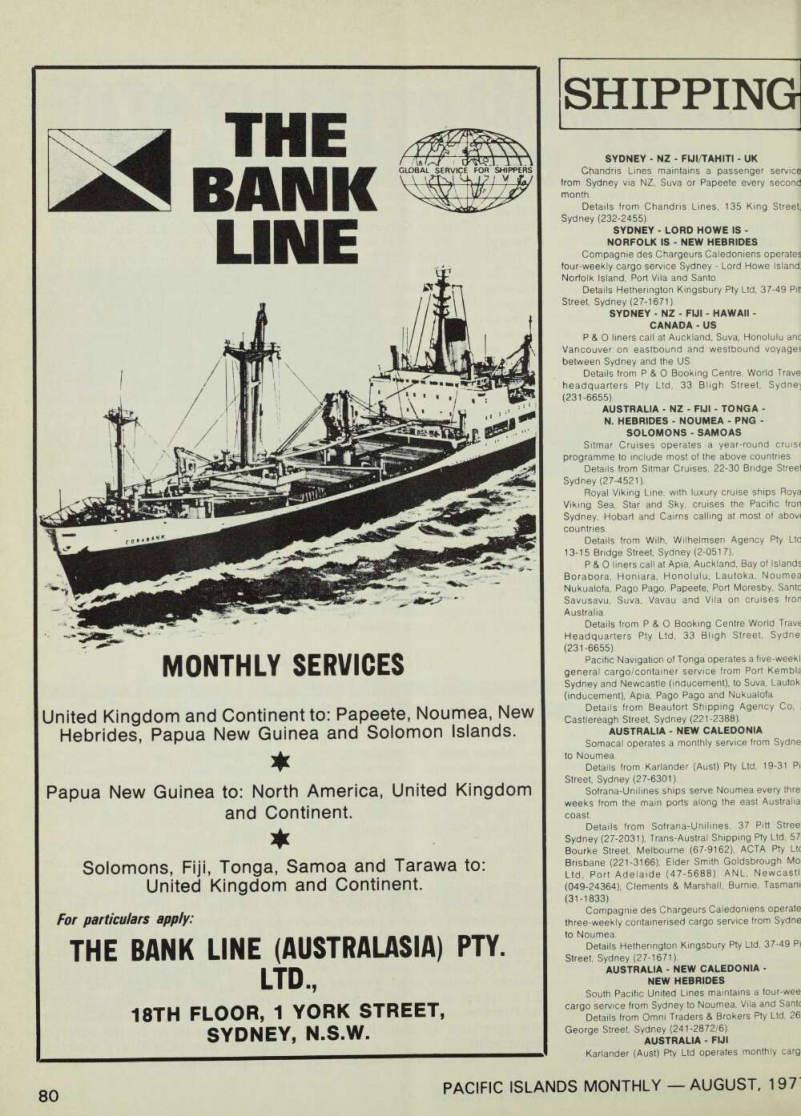
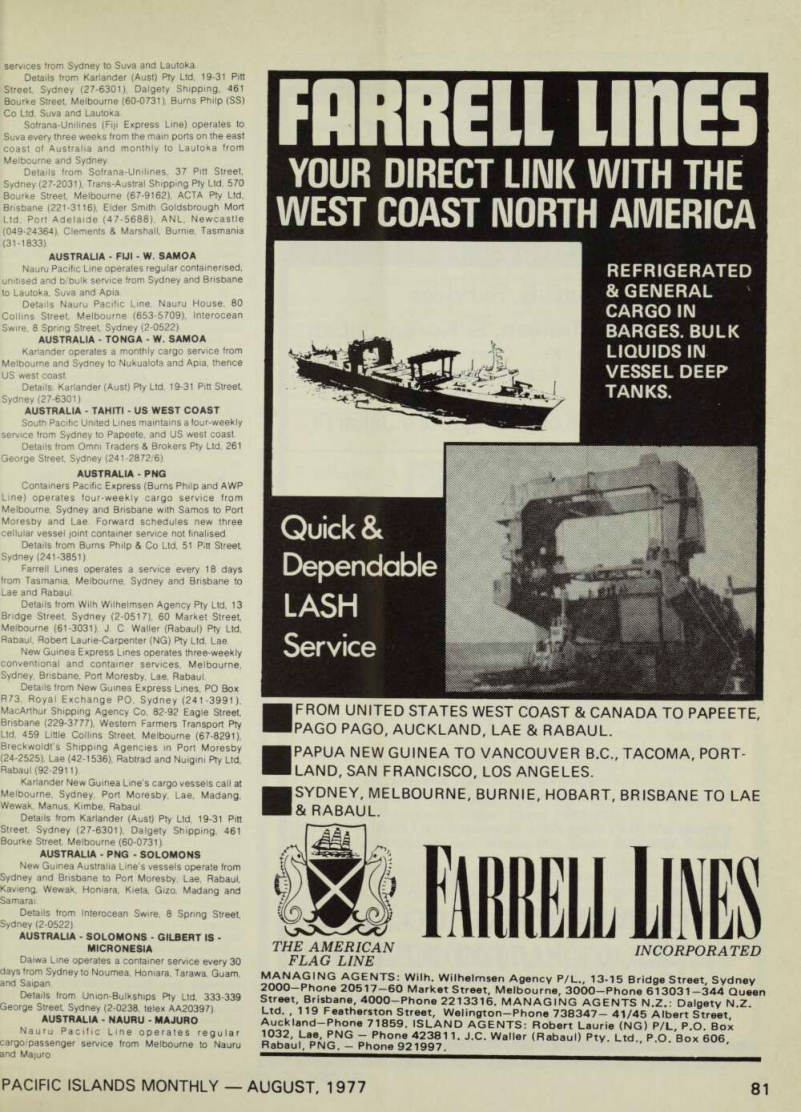
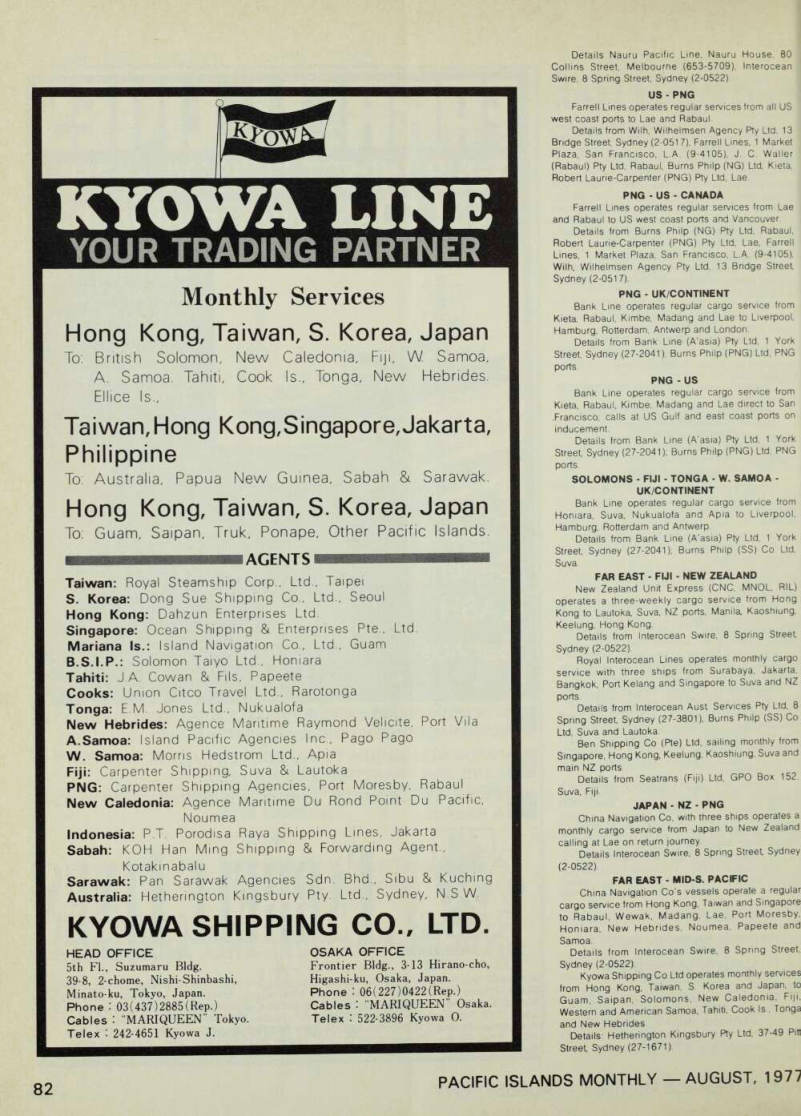
SYDNEY - NZ - FIJI/TAHITI - UK Chandris Lines maintains a passenger service from Sydney via NZ, Suva or Papeete every second month.
Details from Chandris Lines, 135 King Street, Sydney (232-2455).
Sydney - Lord Howe Is -
Norfolk Is - New Hebrides
Compagnie des Chargeurs Caledonians operates four-weekly cargo service Sydney - Lord Howe Island, Norfolk Island, Port Vila and Santo.
Details Hetherington Kingsbury Pty Ltd, 37-49 Pit!
Street, Sydney (27-1671).
SYDNEY - NZ - FIJI - HAWAII -
Canada - Us
P & 0 liners call at Auckland, Suva, Honolulu anc Vancouver on eastbound and westbound voyages between Sydney and the US.
Details from P & 0 Booking Centre, World Trave headquarters Pty Ltd, 33 Bligh Street, Sydney (231-6655), AUSTRALIA - NZ - FIJI - TONGA - N. HEBRIDES - NOUMEA - PNG -
Solomons -Samoas
Sitmar Cruises operates a year-round cruise programme to include most of the above countries.
Details from Sitmar Cruises, 22-30 Bridge Street Sydney (27-4521).
Royal Viking Line, with luxury cruise ships Roya Viking Sea, Star and Sky, cruises the Pacific fron Sydney, Hobart and Cairns calling at most of above countries.
Details from Wilh, Wilhelmsen Agency Pty Ltd 13-15 Bridge Street, Sydney (2-0517).
P & 0 liners call at Apia, Auckland, Bay of Islands Borabora, Honiara, Honolulu, Lautoka, Noumea Nukualofa, Pago Pago, Papeete, Port Moresby, Santc Savusavu, Suva, Vavau and Vila on cruises fron Australia.
Details from P & 0 Booking Centre World Trave Headquarters Pty Ltd, 33 Bligh Street, Sydne (231-6655).
Pacific Navigation of Tonga operates a five-weeki general cargo/container service from Port Kemble Sydney and Newcastle (inducement), to Suva, Lautok; (inducement), Apia, Pago Pago and Nukualofa.
Details from Beaufort Shipping Agency Co, ; Castlereagh Street, Sydney (221-2388).
Australia - New Caledonia
Somacal operates a monthly service from Sydne to Noumea.
Details from Karlander (Aust) Pty Ltd, 19-31 Pi Street, Sydney (27-6301).
Sofrana-Unilines ships serve Noumea every thre weeks from the main ports along the east Australia coast.
Details from Sofrana-Unilines, 37 Pitt Stree Sydney (27-2031), Trans-Austral Shipping Pty Ltd, 57 Bourke Street, Melbourne (67-9162), ACTA Pty Ltc Brisbane (221-3166), Elder Smith Goldsbrough Mo Ltd. Port Adelaide (47-5688) ANL, Newcastl (049-24364), Clements & Marshall, Burnie, Tasmani (31-1833).
Compagnie des Chargeurs Caledoniens operate three-weekly containerised cargo service from Sydne to Noumea.
Details Hetherington Kingsbury Pty Ltd, 37-49 Pi Street, Sydney (27-1671).
Australia - New Caledonia -
New Hebrides
South Pacific United Lines maintains a four-wee cargo service from Sydney to Noumea, Vila and Santc Details from Omni Traders & Brokers Pty Ltd, 26 George Street, Sydney (241-2872/6).
Australia - Fiji
Karlander (Aust) Pty Ltd operates monthly carg
services from Sydney to Suva and Lautoka.
Details from Karlander (Aust) Pty Ltd, 19-31 Pitt Street, Sydney (27-6301), Dalgety Shipping, 461 Bourke Street, Melbourne (60-0731), Burns Philp (SS) Co Ltd, Suva and Lautoka.
Sofrana-Unilines (Fiji Express Line) operates to Suva every three weeks from the main ports on the east coast of Australia and monthly to Lautoka from Melbourne and Sydney.
Details from Sofrana-Unilines, 37 Pitt Street, Sydney (27-2031), Trans-Austral Shipping Pty Ltd, 570 Bourke Street, Melbourne (67-9162), ACTA Pty Ltd, Brisbane (221-3116), Elder Smith Goldsbrough Mod Ltd, Port Adelaide (47-5688), ANL, Newcastle (049-24364), Clements & Marshall, Burnie, Tasmania (31-1833)
Australia - Fiji - W. Samoa
Nauru Pacific Line operates regular containerised, unitised and b/bulk service from Sydney and Brisbane to Lautoka, Suva and Apia.
Details Nauru Pacific Line, Nauru House, 80 Collins Street, Melbourne (653-5709), Interocean Swire, 8 Spring Street. Sydney (2-0522).
Australia - Tonga - W. Samoa
Karlander operates a monthly cargo service from Melbourne and Sydney to Nukualofa and Apia, thence US west coast.
Details: Karlander (Aust) Pty Ltd, 19-31 Pitt Street, Sydney (27-6301).
AUSTRALIA - TAHITI - US WEST COAST South Pacific United Lines maintains a four-weekly service from Sydney to Papeete, and US west coast.
Details from Omni Traders & Brokers Pty Ltd, 261 George Street. Sydney (241-2872/6).
Australia - Png
Containers Pacific Express (Burns Philp and AWP Line) operates four-weekly cargo service from Melbourne, Sydney and Brisbane with Samos to Port Moresby and Lae. Forward schedules new three cellular vessel joint container service not finalised.
Details from Burns Philp & Co Ltd, 51 Pitt Street Sydney (241-3851).
Farrell Lines operates a service every 18 days from Tasmania, Melbourne, Sydney and Brisbane to Lae and Rabaul.
Details from Wilh Wilhelmsen Agency Pty Ltd, 13 Bridge Street, Sydney (2-0517), 60 Market Street, Melbourne (61-3031), J. C. Waller (Rabaul) Pty Ltd, Rabaul, Robert Laurie-Carpenter (NG) Pty Ltd, Lae.
New Guinea Express Lines operates three-weekly conventional and container services, Melbourne, Sydney, Brisbane, Port Moresby, Lae, Rabaul.
Details from New Guinea Express Lines, PO Box R 73, Royal Exchange PO, Sydney (241-3991 ), MacArthur Shipping Agency Co, 82-92 Eagle Street, Brisbane (229-3777), Western Farmers Transport Pty Ltd, 459 Little Collins Street. Melbourne (67-8291), Breckwoldt’s Shipping Agencies in Port Moresby (24-2525), Lae (42-1536), Rabtrad and Nuigini Pty Ltd, Rabaul (92-2911).
Karlander New Guinea Line's cargo vessels call at Melbourne, Sydney, Port Moresby, Lae, Madang, Wewak, Manus, Kimbe, Rabaul.
Details from Karlander (Aust) Pty Ltd, 19-31 Pitt Street, Sydney (27-6301), Dalgety Shipping, 461 Bourke Street Melbourne (60-0731).
Australia - Png - Solomons
New Guinea Australia Line’s vessels operate from Sydney and Brisbane to Port Moresby, Lae, Rabaul, Kavieng, Wewak, Honiara, Kieta, Gizo, Madang and Samarai Details from Interocean Swire, 8 Spring Street, Sydney (2-0522).
AUSTRALIA - SOLOMONS - GILBERT IS -
Micronesia
Daiwa Line operates a container service every 30 days from Sydney to Noumea, Honiara, Tarawa, Guam, and Saipan Details from Union-Bulkships Pty Ltd, 333-339 George Street Sydney (2-0238, telex AA20397)
Australia - Nauru - Majuro
Nauru Pacific Line operates regular cargo/passenger service from Melbourne to Nauru and Majuro
Details Nauru Pacific Line, Nauru House, 80 Collins Street, Melbourne (653-5709), Interocean .' Swire, 8 Spring Street, Sydney (2-0522),
Us - Png
Farrell Lines operates regular services from all US west coast ports to Lae and Rabaul.
Details from Wilh, Wilhelmsen Agency Pty Ltd, 13 Bridge Street, Sydney (2-0517), Farrell Lines, 1 Market Plaza, San Francisco, LA. (9-4105), J. C Waller (Rabaul) Pty Ltd, Rabaul, Burns Philp (NG) Ltd, Kieta, Robert Laurie-Carpenter (PNG) Pty Ltd, Lae.
Png - Us - Canada
Farrell Lines operates regular services from Lae and Rabaul to US west coast ports and Vancouver.
Details from Burns Philp (NG) Pty Ltd, Rabaul, Robert Laurie-Carpenter (PNG) Pty Ltd, Lae, Farrell Lines, 1 Market Plaza, San Francisco, LA. (9-4105), Wilh, Wilhelmsen Agency Pty Ltd, 13 Bridge Street Sydney (2-0517).
Png - Uk/Continent
Bank Line operates regular cargo service from Kieta, Rabaul, Kimbe, Madang and Lae to Liverpool, Hamburg, Rotterdam, Antwerp and London.
Details from Bank Line (A’asia) Pty Ltd, 1 York Street, Sydney (27-2041); Burns Philp (PNG) Ltd, PNG ports.
Png - Us
Bank Line operates regular cargo service from Kieta, Rabaul, Kimbe, Madang and Lae direct to San .Francisco; calls at US Gulf and east coast ports on inducement.
Details from Bank Line (A’asia) Pty Ltd, 1 York Street, Sydney (27-2041); Burns Philp (PNG) Ltd, PNG ports.
SOLOMONS - FIJI - TONGA - W. SAMOA -
Uk/Continent
Bank Line operates regular cargo service from Honiara, Suva, Nukualofa and Apia to Liverpool, Hamburg, Rotterdam and Antwerp.
Details from Bank Line (A’asia) Pty Ltd, 1 York Street, Sydney (27-2041); Burns Philp (SS) Co Ltd, Suva.
FAR EAST - FIJI - NEW ZEALAND New Zealand Unit Express (CNC, MNOL, RIL) operates a three-weekly cargo service from Hong Kong to Lautoka, Suva. NZ ports, Manila, Kaoshiung, Keelung, Hong Kong.
Details from Interocean Swire, 8 Spring Street Sydney (2-0522).
Royal Interocean Lines operates monthly cargo service with three ships from Surabaya, Jakarta, Bangkok, Port Kelang and Singapore to Suva and NZ ports.
Details from Interocean Aust Services Pty Ltd. 8 Spring Street, Sydney (27-3801), Bums Philp (SS) Co Ltd. Suva and Lautoka, Ben Shipping Co (Re) Ltd, sailing monthly from Singapore, Hong Kong, Keelung, Kaoshiung, Suva and main NZ ports.
Details from Seatrans (Fiji) Ltd, GPO Box 152, Suva, Fiji.
Japan - Nz - Png
China Navigation Co, with three ships operates a monthly cargo service from Japan to New Zealand calling at Lae on return journey.
Details Interocean Swire. 8 Spring Street Sydney (2-0522).
Far East - Mid-S. Pacific
China Navigation Co’s vessels operate a regular cargo service from Hong Kong, Taiwan and Singapore to Rabaul, Wewak, Madang. Lae, Port Moresby, Honiara, New Hebrides, Noumea, Papeete and Samoa.
Details from Interocean Swire, 8 Spring Street, Sydney (2-0522).
Kyowa Shipping Co Ltd operates monthly services from Hong Kong, Taiwan, S. Korea and Japan, to Guam, Saipan, Solomons, New Caledonia, Fiji, Western and American Samoa, Tahiti, Cook Is., Tonga and New Hebrides Details: Hetherington Kingsbury Ry Ltd, 37-49 Pitt Street, Sydney (27-1671).
NORTH EUROPE - TAHITI - NEW CALEDONIA Hamburg-Sued operates monthly cargo services rom Hamburg, Dunkirk and Le Havre to Papeete, Noumea, via Panama.
Details from Columbus Overseas Services Pty Ltd, 333 George Street, Sydney (290-2966); Columbus Maritime Services, 17 Albert Street, Auckland (75-509).
North Europe - Tahiti -
N. Caledonia - Png
Compagnie Generate Maritime operates three Tiulti-purpose and three ro/ro cargo services a month rom North European and Mediterranean ports to >apeete and Noumea. Three multi-purpose ships call nonthly in Papua New Guinea.
Details from Compagnie General Maritime, 4-6 Bligh Street, Sydney (221-2522).
JAPAN - GUAM - FIJI - SAMOA -
N. Caledonia - N. Hebrides
Daiwa Lines runs a monthly cargo service from lapan via Guam to Suva, Lautoka, Pago Pago, Apia, /ila, Santo and Noumea.
Details from Burns Philp (SS) Co Ltd, Suva.
NZ - FIJI - TONGA - SAMOAS -
Tahiti
Union Steam Ship Co of NZ operates a fully containerised service Auckland-Suva-Pago Pagoevery 14-16 days.
A 28-day service by conventional ship is operated rom Auckland to Papeete, Apia and Nukualofa.
Details from Union Steam Ship Co of NZ Ltd, PO Box 12, Auckland, or from branch offices/agents in Fiji, Fonga, Samoa and Tahiti.
NZ - N. CALEDONIA - N. HEBRIDES -
Png - Si
Sofrana-Unilines with two ships operates to Vila md Santo, to Honiara and Papua New Guinea, and to Noumea.
Details from Sofrana-Unilines, 42 Customs Street ~nd (7-3279), PO Box 3614, Telex: NZ2313.
Nz - Png
Farrell Lines operates regular service every 18 Jays from Auckland to Lae and Rabaul.
Details from Dalgety NZ Ltd, 41-45 Albert Street, ~nd (7-1859), J. C. Waller (Rabaul) Pty Ltd, Babaul, Robert Laurie-Carpenter (PNG) Pty Ltd, Lae.
NZ - FIJI - NORTH AMERICA (WC) Crusader cargo ships call at Suva, Levuka and Honolulu on NZ-US west coast trips and at Suva and/or .autoka on US-NZ return trips.
Details from Blueport ACT (NZ) Ltd, PO Box 192, Wellington (739-029); Burns Philp ss) Co Ltd, Suva.
Nz - Fiji
Reef operates a regular 18-day service from ~nd to Suva and Lautoka.
Details from Reef Shipping Agencies Ltd, PO Box 3382, Auckland, NZ (7-1221-3).
Pacific Line with one ship operates monthly cargo service New Zealand, Lautoka, Suva.
Details: Sofrana-Unilines, 42 Customs Street, ~nd (7-3279) PO Box 3614, Telex: NZ2313.
Nz- Tonga
Warner Pacific Line services Onehunga - Nukualofa - Vavau - Haapai fortnightly, and Timaru - Nukualofa - Vavau monthly.
Details from Air Marine Service (NZ) Ltd, PO Box >505, Auckland (362-731).
Nz - W. Samoa
Warner Pacific Line services Onehunga - Apia svery 21 days carrying general and freezer cargoes md Timaru - Apia every 21 days carrying freezer :argo Details from Air Marine Services (NZ) Ltd, PO Box >505, Auckland (362-731).
Nz - W. Samoa - Tonga
Pacific Navigation of Tonga operates a four-weekly :argo service, Auckland - Nukualofa - Vavau - Apia - Nukualofa - Auckland.
Details from McKay Shipping Ltd, Downtown House, Queen Street, Auckland (33-656).
Nz - Cook Is - Niue
The Shipping Corporation of NZ Ltd with Toa Moana and Lorena, operates cargo services from to Rarotonga and Aitutaki (fortnightly) and Niue (monthly).
Details from the Shipping Corp of NZ Ltd, PO Box 3420, Auckland (379-430); Waterfront Commission, PO Box 61, Rarotonga, Lighterage and Stevedoring CoJ Aitutaki, Niue Govt Offices, Niue Island.
NZ - SE ASIA - PACIFIC ISLANDS Sofrana Fareast Lines operates a five-weekly service from Auckland to SE Asia, PNG, New Caledonia and Fiji.
Details from Sofrana Unilines, 42 Customs Street, Auckland (73-279).
UK - PANAMA - SAMOA - FIJI The Fiji Direct Service, cargo only, is maintained by Conference vessels, sailing at regular monthly intervals out of Avonmouth, via Panama, for Apia, Suva and Lautoka.
Details from Burns Philp (SS) Co Ltd, Suva.
UK/N. CONTINENT - TAHITI - N. CAL - N. HEB Bank Line operates regular cargo service from Hull, Hamburg, Bremen, Antwerp and Rotterdam to Papeete, Noumea and Vila.
Details from Bank Line (A'asia) Pty Ltd, 1 York Street, Sydney (27-2041); Ets AMAV, Papeete; Ets Ballande, Noumea, Burns Philp (NH) Ltd, Vila.
Uk/N. Continent - Png - Solomons
Bank Line operates regular cargo service from Hull, Hamburg, Bremen, Antwerp and Rotterdam to Port Moresby, Lae, Madang, Kimbe, Rabaul, Kieta and Honiara and, on inducement to Yandina, Tarawa and Nauru.
Details from Bank Line (A'asia) Pty Ltd, 1 York Street, Sydney (27-2041); Burns Philp (PNG) Ltd, PNG ports.
EUROPE - TAHITI - W. SAMOA - FIJI - N. CAL Nedlloyd offers regular cargo services from Northern Europe and UK to Papeete, Apia, Fiji anc New Caledonia.
Details Interocean Aust Services Pty Ltd, 8 Sprinc Street, Sydney (27-3801).
San Francisco - Honolulu - Micronesia
Nauru Pacific Line operates regular conventional/container service from San Francisco and Honolulu to Majuro, Nauru, Ponape, Truk and Saipan.
Details from Nauru Pacific Line, Nauru House, 8C Collins Street, Melbourne (653-5709), North American Maritime Agencies, 100 California Street, San Francisco, California 9411 (981-0343).
US - FIJI - TAHITI - NZ - AUSTRALIA Bank Line Ltd operates regular cargo services from US Gulf ports to Australia and NZ. Calls at Suva Lautoka and Papeete on demand.
Details from Bank Line (A/asia) Pty Ltd, 1 Yorl< Street, Sydney (27-2011).
Pacific Far East Line cruise ships operate from San Francisco, Los Angeles, Honolulu, Moorea Papeete, Rarotonga, Auckland, Opua (Bay of Islands) Sydney and return via Suva, Niuafoou, Pago Pago anc Honolulu to San Francisco.
Freight is carried on these passenger liners.
Passenger details from World Travel Headquarters Pty Ltd, 33 Bligh Street, Sydney (231-6655); freight details from Beaufort Shipping Agency Co, 2 Castlereagh Street, Sydney (221-2388) US - A. SAMOA - NZ - AUST - PNG Farrell Lines LASH ships operate regularly from US to Australia, via Pago Pago and Auckland, returning via PNG ports.
Details from Wilh, Wilhelmsen Agency Pty Ltd, 1( Bridge Street, Sydney (2-0517), 60 Market Street Melbourne (61-0301); Farrell Lines, 1 Market Plaza San Francisco, L A. (415-777-3300); Dalgety NZ Ltd Auckland (7-1859); Kneubuhl Maritime Services, Pag< Pago (633-5121).
Us - Tahiti - Samoa
Pacific Islands Transport operates a five/six weekly cargo service from North American west coas’ ports to Papeete, Pago Pago, Apia.
Details from Trans-Austral Shipping Pty Ltd, 19 Pit Street, Sydney (27-2441).
Polynesia Line operates container and genera cargo service from US west coast ports to Papeete anc Pago Pago Details from Polynesia Shipping Services Inc, PC Box 1478, Pago Pago (9-6799).
Advertisements & other items, pp. 78-82 (3 items)
Line
THE
\Ms~J i
GLOBAL SERVICE FOR SHIPPERS
v y,
LINE
R
MONTHLY SERVICES
United Kingdom and Continent to: Papeete, Noumea, New Hebrides, Papua New Guinea and Solomon Islands.
Papua New Guinea to: North America, United Kingdom and Continent.
Solomons, Fiji, Tonga, Samoa and Tarawa to: United Kingdom and Continent.
For particulars apply:
THE BANK LINE (AUSTRALASIA) PTY.
LTD.,
18TH FLOOR, 1 YORK STREET,
SYDNEY, N.S.W.
Your Direct Link With The
WEST COAST NORTH AMERICA
REFRIGERATED
& GENERAL
CARGO IN
BARGES. BULK
LIQUIDS IN
VESSEL DEEP
TANKS.
* FROM UNITED STATES WEST COAST & CANADA TO PAPEETE,
IPAGO PAGO, AUCKLAND, LAE & RABAUL.
PAPUA NEW GUINEA TO VANCOUVER 8.C., TACOMA, PORT-
LAND, SAN FRANCISCO, LOS ANGELES.
[SYDNEY, MELBOURNE, BURNIE, HOBART, BRISBANE TO LAE
& RABAUL.
THE AMERICAN
FLAG LINE
INCORPORATED
MANAGING AGENTS: Wilh. Wilhelmsen Agency P/L., 13-15 Bridge Street, Sydney 2000-Phone 20517-60 Market Street, Melbourne, 3000-Phone 613031-344 Queen Street, Brisbane, 4000-Phone 2213316. MANAGING AGENTS N. 2.: Dalgety N.Z.
Ltd. , 119 Featherston Street, Welington-Phone 738347- 41/45 Albert Street Auckland—Phone 71859. ISLAND AGENTS: Robert Laurie (NG) P/L P O Box 1032, Lae, PNG - Phone 423811. J.C. Waller (Rabaul) Pty. Ltd. P O Box 606 Rabaul, PNG. Phone 921997.
KYOWA LINE
YOUR TRADING PARTNER
Monthly Services
Hong Kong, Taiwan, S. Korea, Japan
To: British Solomon, New Caledonia, Fiji, W Samoa, A. Samoa. Tahiti, Cook Is., Tonga, New Hebrides.
Ellice Is.,
Taiwan,Hong Kong,Singapore,Jakarta,
Philippine
To: Australia, Papua New Guinea, Sabah & Sarawak.
Hong Kong, Taiwan, S. Korea, Japan
To; Guam, Saipan, Truk, Ponape, Other Pacific Islands.
Taiwan: Royal Steamship Corp., Ltd., Taipei S. Korea: Dong Sue Shipping Co., Ltd., Seoul Hong Kong; Dahzun Enterprises Ltd Singapore: Ocean Shipping & Enterprises Pte., Ltd.
Mariana Is.: Island Navigation Co., Ltd., Guam 8.5.1. P.: Solomon Taiyo Ltd., Honiara Tahiti: J.A. Cowan & Fils, Papeete Cooks: Union Citco Travel Ltd., Rarotonga Tonga: E.M. Jones Ltd.. Nukualofa New Hebrides: Agence Maritime Raymond Velicite, Port Vila A.Samoa: Island Pacific Agencies Inc., Pago Pago W. Samoa: Morris Hedstrom Ltd., Apia Fiji: Carpenter Shipping, Suva & Lautoka PNG: Carpenter Shipping Agencies, Port Moresby, Rabaul New Caledonia: Agence Maritime Du Rond Point Du Pacific, Indonesia: P.T. Porodisa Raya Shipping Lines, Jakarta Sabah: KOH Han Ming Shipping & Forwarding Agent., Kotakinabalu Sarawak: Pan Sarawak Agencies Sdn. Bhd., Sibu & Kuching Australia: Hetherington Kingsbury Pty. Ltd., Sydney, N.S.W.
KYOWA SHIPPING CO., LTD.
AGENTS
Noumea
HEAD OFFICE
sth FI., Suzumaru Bldg. 39-8, 2-chome, Nishi-Shinbashi, Minato-ku, Tokyo, Japan.
OSAKA OFFICE
Frontier Bldg., 3-13 Hirano-cho, Higashi-ku, Osaka, Japan.
Olgasill-KU, uapa it.
Phone : 06(227)0422 (Rep.) Cables I “MARIQUEEN" Osaka.
Telex : 522-3896 Kyowa 0. milldLU'hU, iurj'u, uapan.
Phone : 03(437)2885 (Rep.) Cables : “MARIQUEEN" Tokyo.
Telex ‘ 242-4651 Kyowa J.
HENRY CUMINES PTY. LTD.
EXPORTERS • GENERAL MERCHANTS
428 GEORGE ST., SYDNEY
CABLES: HENCO SYDNEY. G.P.O. Box 3949. PHONE: 25-3383.
For specialised and personalised buying service throughout the Pacific Islands and the East.
LOCAL AGENTS AND REPRESENTATION:
PAPUA NEW GUINEA.
PORT MORESBY: Mr. Tan,
P.O. Box 5445, Boroko.
Telephone 25 2542.
RABAUL: M. & C. Seeto, P.O. Box 131, Rabaul.
Telephone 92 2902.
MADANG: W. Double, P.O. Box 22, Madang.
Telephone 82 2696.
FIJI.
K. Witherington Ltd., P.O. Box 293, Suva.
Telephone 22 356.
NEW HEBRIDES.
John Lum & Associates, P.O. Box 65, Santo, Telephone 329.
SOLOMON ISLANDS.
Lo See War Ltd., P.O. Box 327, Honiara.
Telephone 399.
Resident Agents in other Pacific Territories.
Q E
offers expert insurance service
throughout the Islands
QBE INSURANCE
LIMITED
(FORMERLY—QUEENSLAND INSURANCE COMPANY)
Central Office: 82 Pitt Street, Sydney FlJl—Branch Office, Suva, Manager for Fiji: L.G.Liddell A.AM.
LAUTOKA—Sub-Branch Office: Bums Philp Bldg.
HONIARA (8.5.1. P.) —Breckwoldt & Company (5.1.) Pty. Limited.
NEW CALEDONIA—T. A. Hagen, Stc. W. A. Johnston, S.A.R.L. —Noumea.
NEW HEBRIDES— District Manager; G. F. Donnelly, Vila; Santo: Burns Philp (New Hebrides) Ltd.
TAHlTl—Arthur Chung: Immeuble 8.1., Front dc Mcr, Papeete.
NIUE, NORFOLK ISLAND, SAMOA, TONGA and other South Sea Islands—Bums Philp (South Sea) Company Ltd.
Q 1
n a a
SSLAND INSURANCE (P.N.G.) LTD
PAPUA NEW GUINEA-Head Office, PORT MORESBY.
General Manager: J.M.Dawe. Assistant Manager: R.Jackson,A.A.l.l.
District Managers at: ARAWA: J.Longbut LAE: W.J.Leonard MADANG: I.R.Martin MOUNT HAGEN: D.F.Carroll RABAUL: A.M.Tanner
THE PAPUA HOTEL
PORT MORESBY
• Right in the business centre • A tradition for comfort and fine food • All rooms air conditioned • Restaurant • Bars • Banquet Hall Telephone 24 2121 Cables PAPTEL
A. C. NEUMANN
Manager
W'
INTERNATIONAL
DATELINE HOTEL
TONGA
lli||
"Friendly Hotel" of the "Friendly Islands"
Situated along the Nuku'alofa waterfront. Only five minutes walk from town. Single, double, family suites, airconditioning, and hot and cold water showers. Pool, bar, restaurant, duty-free shop, tour desk and boutique.
Book through your travel agent or write to International Dateline Hotel, P.O. Box 62, Nuku'alofa Tonga.
Cable Address: “DATELINE''.
Represented Overseas by: Charles J. Henry and Associates Pty. Ltd.
Sydney and Melbourne. 29 7(
Regular Pacific Services
"Union South Pacific”, cellular container vessel. Reefer and general cargo from Auckland at approximately fortnightly intervals. Calls at Suva, Pago Pago, Apia and Nukualofa before returning to Auckland.
"Luhesand”, conventional reefer and general cargo. Monthly sailings from Auckland, calls at Suva, Apia, Papeete and Nukualofa.
jmimumon
JmUcompanq
Branches at all main Australian, New Zealand and Pacific Island ports.
PACIFIC ISLANDS TRANSPORT LINE
Owners- Thor Dahls Hval/angerselskap A/S—Sandefjord, Norway.
MS CAMELLIA VENTURE
Express Freight Service between Pacific Coast Ports of
U.S.A.
and
TAHITI and SAMOA
Full container service including reefers.
GENERAL STEAMSHIP CORPORATION LTD.
General Agents 400 California Street, San Francisco, California, U.S.A.
Phi., (Mk s«> LAE^AAAUL—Burnt Phi Ip (H.w Guinea) ltd.
PACO PACO-Polynesia Shipping Services Inc. PORT VlU—Comptoirs Francais de Neuvelles NOUMEA —Etablissements Ballande. Heft rifles.
83
ACIFIC ISLANDS MONTHLY AUGUST, 1977
Produce
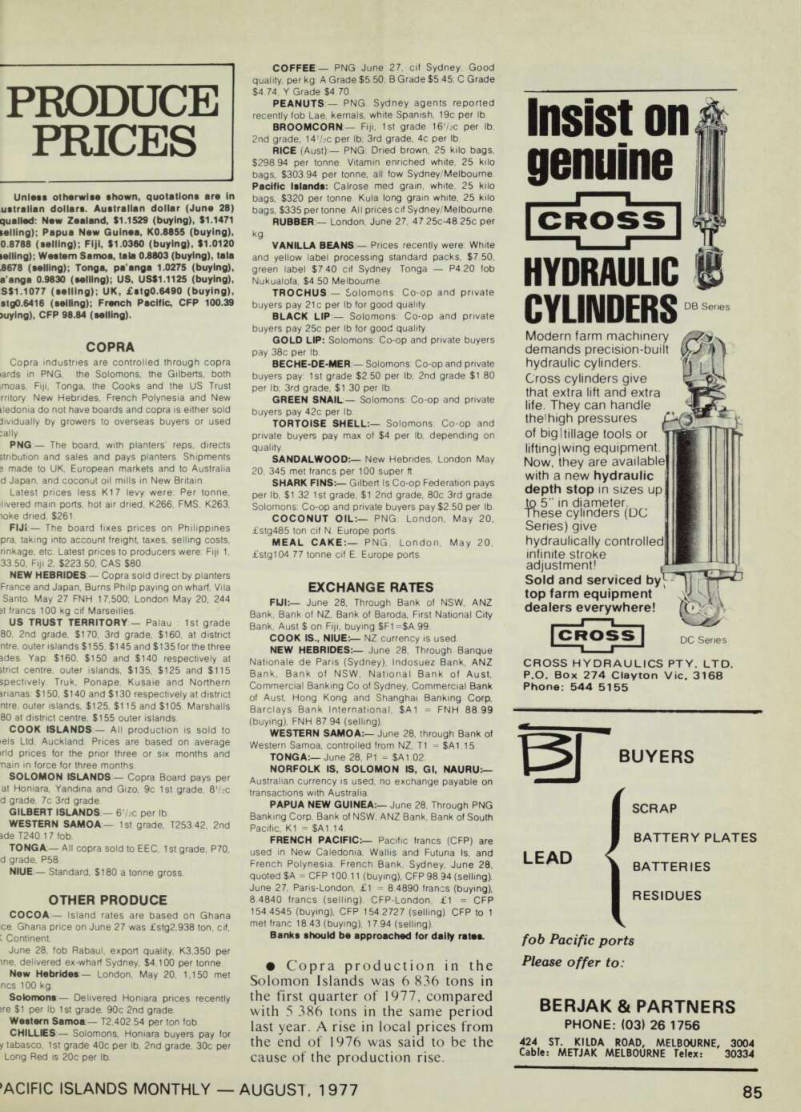
Prices
Unless otherwise shown, quotations are in ustrallan dollars. Australian dollar (June 28) quailed: New Zealand, $1.1529 (buying), $1.1471 selling); Papua New Guinea, K 0.8855 (buying), 0.8788 (selling); Fiji, $1.0360 (buying), $1.0120 telling); Western Samoa, tala 0.8803 (buying), tala .8678 (selling); Tonga, pa'anga 1.0275 (buying), a'anga 0.9830 (selling); US, U 551.1125 (buying), 551.1077 (selling); UK, £5tg0.6490 (buying), 5tg0.6416 (selling); French Pacific, CFP 100.39 >uylng), CFP 98.84 (selling).
Copra
Copra industries are controlled through copra iards in PNG, the Solomons, the Gilberts, both imoas, Fiji, Tonga, the Cooks and the US Trust rritory. New Hebrides, French Polynesia and New iledonia do not have boards and copra is either sold Jividually by growers to overseas buyers or used cally.
PNG: — The board, with planters' reps, directs Jtribution and sales and pays planters. Shipments ; made to UK, European markets and to Australia d Japan, and coconut oil mills in New Britain.
Latest prices less Kl 7 levy were: Per tonne, livered mam ports, hot air dried, K 266, FMS, K 263, loke dried, $261 FIJI — The board fixes prices on Philippines pra, taking into account freight taxes, selling costs, rinkage, etc. Latest prices to producers were: Fiji 1, 33.50, Fiji 2, $223.50. CAS $BO NEW HEBRIDES Copra sold direct by planters France and Japan, Burns Philp paying on wharf, Vila Santo. May 27 FNH 17,500; London May 20, 244 3t francs 100 kg cif Marseilles.
US TRUST TERRITORY Palau Ist grade 80, 2nd grade, $l7O, 3rd grade, $l6O, at district ntre, outer islands $155, $145 and $135 for the three ides. Yap: $l6O, $l5O and $l4O respectively at strict centre, outer islands, $135, $125 and $ll5 spectively. Truk. Ponape, Kusaie and Northern irianas: $l5O, $l4O and $l3O respectively at district ntre, outer islands, $125, $ll5 and $lO5. Marshalls 80 at district centre, $155 outer islands.
COOK ISLANDS — All production is sold to iels Ltd, Auckland. Prices are based on average •rid prices for the prior three or six months and nain in force for three months.
SOLOMON ISLANDS Copra Board pays per at Honiara, Yandina and Gizo, 9c Ist grade, Q'hc d grade, 7c 3rd grade GILBERT ISLANDS 6'he per lb WESTERN SAMOA— Ist grade, T 253.42, 2nd ide T 240.17 fob TONGA — All copra sold to EEC, Ist grade, P7O, d grade, P5B.
NIUE — Standard, $lBO a tonne gross
Other Produce
COCOA — Island rates are based on Ghana ce. Ghana price on June 27 was £stg2,93B ton, cif, ; Continent June 28, fob Rabaul, export quality, K 3.350 per me, delivered ex-wharf Sydney, $4,100 per tonne New Hebrides— London, May 20, 1,150 met ncs 100 kg.
Solomons — Delivered Honiara prices recently •re $1 per lb Ist grade, 90c 2nd grade.
Western Samoa— T 2.402.54 per ton fob CHILLIES — Solomons, Honiara buyers pay for /tabasco, Ist grade 40c per lb, 2nd grade, 30c per Long Red is 20c per lb
COFFEE— PNG June 27, cif Sydney. Good quality, per kg: A Grade $5 50; B Grade $5 45, C Grade 54.74, Y Grade $4.70.
PEANUTS PNG. Sydney agents reported recently fob Lae, kernals, white Spanish, 19c per lb BROOMCORN— Fiji, Ist grade 167? c per lb: 2nd grade, 14V?c per lb; 3rd grade, 4c per lb RICE (Aust): — PNG: Dried brown, 25 kilo bags, $298 94 per tonne Vitamin enriched white, 25 kilo bags, $303 94 per tonne, all tow Sydney/Melbourne.
Pacific Islands: Calrose med grain, white, 25 kilo bags, $320 per tonne. Kula long grain white, 25 kilo bags, $335 per tonne. All prices cif Sydney/Melbourne.
RUBBER London, June 27, 47 25c-48 25c per kg VANILLA BEANS Prices recently were: White and yellow label processing standard packs, $7.50, green label $7 40 cif Sydney Tonga P 4 20 fob Nukualofa, $4 50 Melbourne TROCHUS:— Solomons: Co-op and private buyers pay 21c per lb for good quality BLACK LIP Solomons: Co-op and private buyers pay 25c per lb for good quality.
GOLD LIP: Solomons: Co-op and private buyers pay 38c per lb.
BECHE-DE-MER Solomons Co-op and private buyers pay: Ist grade $2 50 per lb; 2nd grade $1 80 per lb; 3rd grade, $1.30 per lb.
GREEN SNAIL— Solomons: Co-op and private buyers pay 42c per lb.
TORTOISE SHELL: — Solomons: Co-op and private buyers pay max of $4 per lb, depending on quality.
SANDALWOOD:— New Hebrides, London May 20, 345 met francs per 100 super ft.
SHARK FINS: — Gilbert Is Co-op Federation pays per lb, $1.32 Ist grade, $1 2nd grade, 80c 3rd grade.
Solomons: Co-op and private buyers pay $2 50 per lb COCONUT OIL: PNG: London, May 20, £stg4Bs ton cif N. Europe ports.
MEAL CAKE:— PNG, London, May 20, £5tg104.77 tonne cif E. Europe ports.
Exchange Rates
FUI: — June 28, Through Bank of NSW, ANZ Bank, Bank of NZ, Bank of Baroda, First National City Bank, Aust $ on Fiji, buying SFI =$A.99.
COOK IS., NIUE: — NZ currency is used NEW HEBRIDES: — June 28, Through Banque Nationale de Paris (Sydney), Indosuez Bank, ANZ Bank, Bank of NSW, National Bank of Aust, Commercial Banking Co of Sydney, Commercial Bank of Aust, Hong Kong and Shanghai Banking Corp, Barclays Bank International. SAI = FNH 88 99 (buying), FNH 87 94 (selling).
WESTERN SAMOA: lune 28, through Bank of Western Samoa, controlled from NZ, T 1 = SAI 15
Tonga;— June 28, Pi = $A1.02
Norfolk Is, Solomon Is, Gl, Nauru'—
Australian currency is used, no exchange payable on transactions with Australia.
PAPUA NEW GUINEA:— June 28, Through PNG Banking Corp. Bank of NSW. ANZ Bank, Bank of South Pacific, K 1 = SAI 14 FRENCH PACIFIC: — Pacific francs (CFP) are used in New Caledonia, Wallis and Futuna Is, and French Polynesia. French Bank, Sydney, June 28, quoted $A = CFP 100.11 (buying), CFP 98 94 (selling).
June 27, Paris-London, £1 = 8 4890 francs (buying), 8 4840 francs (selling). CFP-London, £1 = CFP 154.4545 (buying), CFP 154.2727 (selling). CFP to 1 met franc 18.43 (buying), 17 94 (selling).
Bank# should be approached for daily rates.
• Copra production in the
Solomon Islands was 6 836 tons in
the first quarter of 1977, compared
with 5 386 tons in the same period last year. A rise in local prices from the end of 1976 was said to be the
cause of the production rise.
Advertisements & other items, pp. 83-88 (3 items)
85
ACIFIC ISLANDS MONTHLY AUGUST, 1 977
{Scrap
Insist on
genuine
HYDRAULIC
CYLINDERS
Modern farm machinery demands precision-built hydraulic cylinders.
Cross cylinders give that extra lift and extra life. They can handle the'high pressures of big (tillage tools or liftingjwing equipment Now, they are available with a new hydraulic depth stop in sizes up to 5” in diameter.
These cylinders (DC Series) give hydraulically controlled infinite stroke adjustment!
Sold and serviced by top farm equipment dealers everywhere!
CROSS
DB Series i DC Series
CROSS HYDRAULICS PTY. LTD.
P.O. Box 274 Clayton Vic. 3168 Phone: 544 5155 131
BUYERS
LEAD
{SCRAP
BATTERY PLATES
BATTERIES
RESIDUES
fob Pacific ports Please offer to:
BERJAK & PARTNERS
PHONE: (03) 26 1756
424 ST. KILDA ROAD, MELBOURNE, 3004
Cable: METJAK MELBOURNE Telex: 30334
CLASSIFIED ADVERTISEMENTS
EQUIPMENT/SAILS
Brokerage of Used/New marine equipment. Sails - Engines - Generators Winches - Rigging - Electronics - etc.
List your Used/New gear w/us for fast response. We ship anywhere.
A-1 INTERNATIONAL MARINE
EQUIPMENT & SAIL BROKERAGE
Div. of A-1 Marine Surveys PO Box 42, Redondo Beach California 90277 (213) 374-3200
CONCRETE BLOCK MAKER. Makes
blocks, flags, edgings, screen-blocks, garden stools - up to 8 at once and 96 an hour. $215 cif main ports.
Send for leaflets. Forest Farm Research, Londonderry NSW 2753 Australia.
GILBERT ISLANDS NATIONAL
SONG CONTEST
Compositions including the music, are invited from composers and those who are interested. Submit compositions to the Secretary, Ministry of Education, Training and Culture, Bikenibeu, Tarawa, Gilbert Islands, before the end of September, 1977.
The Song would contain six to eight sentences or two verses and a chorus, or three verses without a chorus arranged euphonically and rhythmically.
HIBISCUS HOTEL
HONIARA,
SOLOMON ISLANDS.
* In Centre of Town. * Quiet Location. * Air Conditioning. * Restaurant open till 11 p.m. * All Private Facilities. * Most Economical Rates.
PHONE: 205.
CABLES: HIBISCUS,
Box 268, Honiara.
Per L ine $3.00 A us t Minimum 4 lines.
FOR SALE
1. Steel LCT type barge built 1962.
LOA 24.4 m. Beam 7.62 m. Draft 1.82 m. 4 x 12 cyl. GM 671 diesels twin screw, 50 tons DWT.
Accom. 12 persons. The vessel is currently out of survey, but is mobile, K 12,000 ONO 'as is' Port Moresby. 2. Water/Fuel carrier built 1944.
LBP 36.58 m. Breadth 7.30 m.
Depth 2.74 m. Max draft 2.43 m.
DWT 230 tons M/E 2 x 204 HP.
Cyl. Ruston Hornsby. 6 cargo tanks. Dry hatch 30 tons.
K 25,000 ONO PNG.
3. Coastal vessel rebuilt 1975. LOA 26.2 m. B. 5.4 m. D.1.98m. GRT 104.62 Nett 44.12. DWT 85 tons.
M/E SS 6 cyl GM 180 HP. 8 knts. 125 tons cubic space.
Ix 2 ton SWL Derrick. Radar/ Radio. K 65,000 ONO. DeI.PNG.
NEW GUINEA MARINE SURVEYS &
SERVICES, Box 783, Lae.
TELEX MARINESERV NE42515.
SEARCH/RECOVERY
Missing vessel search. (Checked against key harbors around the world and US).
Repossessions - Disabled and/or Confiscated vessels - Deliveries - Commercial - Pleasure.
A-1 INTERNATIONAL MARINE
RECOVERY
Div. of A-1 Marine Surveys PO Box 42, Redondo Beach California 90277 (213) 372-8000 24 hours 3007
Stay at
Aggie Grey's the
South Pacific's legendary hotel Situated right in the heart of Western Samoa. Enjoy Polynesian-style friendliness and service, in cool surroundings, superb entertainment and food. Magnificent white sand beaches only a short drive away.
Airconditioned rooms, swimming pool and full bar facilities.
Bookings through Union Steamship Company of IMZ, Pan Arm Air New Zealand or direct to Aggie Grey's, Apia, Western Samoa. Cables: AGGIES, APIA.
LECTURER TO ASSIST IN
BIBLICAL STUDIES
The College is seeking a Lecturer to assist in the Biblical Studies Dept.
Though the Lecturer's specialisation may lie in Old or New Testament he or she will be required to offer courses in both Old and New Testaments. General ability and experience in teaching an advantage.
Applicants will need to be members of Churches which are members of the National Council of Churches (NZ) or its equivalents overseas, or members of the Roman Catholic Church. Applicants can be men or women, ministerial or lay.
The College scale of stipend and allowances (=Methodist-Presbyterian scale) will be paid, and a free house provided. There are attractive conditions of work and superannuation provision. Appointment is to take effect from February Ist, 1978.
Written applications closing on Ist August and enclosing a Curriculum Vitae and the names of two referees should be made to
THE WARDEN
St John's College 202 St John's Rd Meadowbank Auckland, 5
NEW ZEALAND
FLEETS 46ft. Fibreglass Ketch
Rigged Motor Sailer, profess,
bit. 1971, alum, masts & spars,
big wardrobe sails, 6 cyl. mar.
diesel, lengthy inventory
gadgets, Teak furniture, Master's
Stateroom. $105,000:00.
FLEETS 221 Esplanade Wynnum
Central, Brisbane. Cable FLEETS
BRISBANE
WANTED TO BUY
Sarongs, Carvings, Shells
from the South Pacific Islands.
Write BOX 2167 DARWIN
NT AUSTRALIA
Save hundreds of dollars
on Australia's most efficient
WALK IN, ALUMINIUM
COOLROOMS AND
FREEZE ROOMS!!
Hundreds already installed! The most economical supplementary coolrooms for bottles and food, providing the largest storage capacity of any comparable coolrooms of the same exterior dimensions. Five sizes—from 90-360 cu. ft. capacity; 16 models offering normal temp., two temp., deep freeze, or for pastry and ice storage applications. White vinyl interior, embossed rustproof aluminium exterior O SUPPLIED IN EASY-TO-ERECT, DO-IT-YOURSELF KIT FORM.
AVAILABLE FROM: Manufactured by:
AUSTRALIAN NEW CALEDONIA EXPORTS. 363 George St, Sydney, 2000.
BRECKWOLDT & CO., 276 Pitt St., Sydney, 2000.
HAGEMEYER (A'SIA), 59 Anzac Pde, Kensington, 2033.
GEOFFREY HUGHES & CO, 167 Macquarie St, Sydney, 2000.
NELSON & ROBERTSON PTY. LTD, 197 Clarence St, Sydney, 2000.
PETER FISHER TRADING PTY.LTD, 321 Pitt St, Sydney 2000.
E. RABOT (EXPORTS) PTY. LTD, 67 Castlereagh St, Sydney. 2000.
RABTRAD NIUGINI PTY. LTD., PO Box 1406, Lae.
A. RIETTE (PACIFIC) PTY. LTD., 300 George St., Sydney, 2000.
H. Y. KWAN (AUST) PTY. LTD. Box 2713, GPO , Sydney, 2001.
C. SULLIVAN (EXPORT) PTY. LTD., GPO Box 3373, Sydney, 2001.
W.S. TAIT & CO, PTY. LTD, 31 Macquarie Place, Sydney, 2000.
T 1
FRIGID CABINETS PTY. LTD.,
14A Duffy Ave., Thornleigh, N.S.W. 2120 Aust. Ph. 848 8292.
FCI
Do you want to do business in New Zealand?
Ask the bank which has
40% of the banking business
in New Zealand
The BNZ can give you full information on buying or selling in New Zealand and overseas. Rjl information on investment movement of money, transfers of dividends etc., is also readily available.
There are offices everywhere, more fran 400 in fact Whatever your financial or trade needs, the BNZ can help you.
Bank of New Zealand
Wellington -Head Office, International Dwaon, Box 2392.
Sydney-GPO Box 507, Sydney, N S W 2001 Melboume-GPO Box 528 E, Melbourne, Vc. 3001 Tokyo-Mr E. L. Banks, Bank of New Zealand Representative Office, Japan. Suite 240,lShiniTokyo Bldg, 3-1 ,3-Chrome, Marunouchi, Chiyoda-ku,VTokyo 100.
Singapore-Mr R. F. Warren, Bank of New Zealand Representative Office. South East Asia. Suite 230,23 rd Floor, Ocean Bldg, Cotyer Quay, Singapore 1 London-PO Box 402, LondonEC4P.4.H.E.
Fiji, Suva-25 Victona Parade. Abo at Labasa, Lautoka, NadiJSigatoka, Ba.
Associated Banks arrihe South Pacific.
Bank of Western Samoa. Bank of Tonga. 7 6
Total service 0n ...
plumbing supplies Fast
WATSON & CRANE
are organised to fulfil your needs
wherever you are in the South Pacific You can get all you need from one supply source: water taps, valves, copper tube, tools and a host of other fittings and related plumbing equipment for domestic, industrial and multistorey buildings.
Watson & Crane Pty Ltd have over 20,000 plumbing items in stock at their central warehouse located at Waterloo, NSW, Australia.
Years of experience in handling and shipping right throughout the South Pacific add up to another big reason for you to deal with Watson & Crane Pty Ltd.
Representatives call regularly at Papua New Guinea, the Solomons, New Hebrides and Frji (stands to personally discuss your requirements and appropriate credit arrangements.
Write, cable or telephone today for complete plumbers' supplies service.
Watson & Crane Pty. Ltd. 1037 Bourke Street, Waterloo,
NSW 2017.
Phone: Sydney 699-1333.
Telex: AA 25548.
Cables: "Watcrane" Sydney.
Pacific island distributors of Crane Enfield copper tube for water, sanitation, engineering, refrigeration and air conditioning.
Round gourmet
“Skillet”
r
THE HANDIEST NEW APPLIANCE
SINCE FRYPANS
Bacon and eggs for two? Simple for the Sunbeam "Skillet". Yet "Skillet" is big enough to roast a size 8 chicken to perfection. And to wash simply remove the control and dunk the pan in the sink.
Another first and it comes only from Sunbeam.
8 Speed
Power
Blender
THE APPLIANCE YOU CAN USE
EVERY MEAL
With powerful. Solid-state motor. Which means the exact blending action you need to — Whip, grate, mix, chop or liquefy. Stainless steel cutters give fast food preparation while switching from speed to speed without turning off . . .
Our Datsuns-
they Ve made us
a happy big Datsun family.
V rm UK Th Dependable transportation is something I take seriously. Being in the wholesale fresh foods business, I have 28 stores to supply every day. We use big trucks, air transportation and the family helps too.
There are six Datsuns in this family. They're used daily for business trips, deliveries and pleasure dri|Tng./My $oa the first to get atoat^un*s^ven■•years'' ' ago. After without any mechanical troubles, he bought another new model D&tsun this year.
My own Datsun 260Z handles well and rides comfortably on business trips around Belgium and to France. My daughter and her lerbeke family, and their Datsuns in Dottignies, Belgium. huk>and say that their Datsuns stadrt easily and give good fuel economy. My daughter-in-law, a Schoolteacher, likes her easy-todrive Datsun for getting to work.
We all enjoy good after-sales service from the Datsun dealer.
And with such reliable cars, were always able to have happy family gatherings on the weekends.
Datsun Distributors: Boroko Motors Ltd. P.O. Box 1259, Boroko, Port Moresby, P.N.G./Suva Motors Ltd. G.P.O. Box 34, Suva, Fiji/Morris Hedstrom Ltd. P.O. Box 189, Apia, Western Samoa/United Enterprises Ltd. P.O. Box 262, Honiara, British Solomon Island/Sirius Motors P.O. Box 34, Norfolk Island, South Padfic/Jacob Enterprises P.O. Box 4, Republic of Nauru/ Cook Islands Motor Center Ltd. P.O. Box 74, Rarotonga, Cook Islands, South Padfic/Pentecost Pacific S.A. P.O. Box 119, Port Vila, New Hebrides/Agence Alma S.A. B.P. A3, Noumea Cedex, New Caledonia/TAHl 11BULL S.A.R.L. B.P. 359, Papeete, Tahiti/ Gilbert Islands Development Authority (Supply Division) P.O. Box 488, Betio Tarawa, Gilbert Islands
DATSUN
m Product of NISSAN
Lew Hebrides
AND From p 19