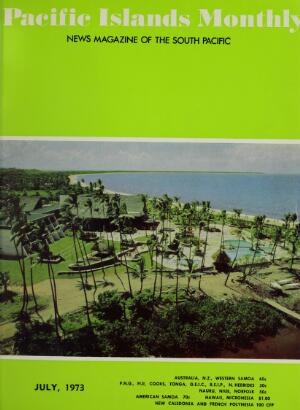
Pacific Islands Monthly
News Magazine Of The South Pacific
July, 1973
Australia, N.Z., Western Samoa 60C
P.N.G., FIJI, COOKS, TONGA, G.E.1.C., 8.5.1. P., N. HEBRIDES 50c
Nauru, Niue, Norfolk 50C
American Samoa 70C Hawaii, Micronesia $L.Oo
NEW CALEDONIA AND FRENCH POLYNESIA 100 CFP
Our Cover
The Americana Beach comber Hotel at Deuba, 30 miles from Suva, is one of the many new luxury resort hotels now being opened throughout South Pacific Islands. The A mericana group, a subsidiary of American Airlines, also operates the Intercontinental at Pago.
Advertisements & other items, p. 2 (1 item)
You’ll get more family fun out of the Mazda 808.
% 1b x You’ll get more family fun out of the Mazda 808.
Simply because we’ve put more into it.
IS Now, family motoring and fun motoring aren’t contradictions any longer.
They’re both part of a package in the Mazda 808.
The fun begins when you relax in the roomy comfort of front bucket seats; when the family finds ample leg space, head space, shoulder space the 808 is the widest and longest 1300 cc Mazda we’ve ever built. And take along all you’ll need for fun when you get there - trunk space is generous because the spare tire fits under the trunk bed.
Driving the Mazda 808 is as much fun as being driven in it. Hear the happy purr of the sprightly 1300 cc engine with its sporty overhead camshaft, and you’ll realize that you have a stablemate of the renowned Mazda rotaries. Rely on the positive dual circuit brakes* with discs up front. Whiz through the four gears of the floor-mounted stick shift, or leave the shifting entirely to our reliable automatic (optional).
Cruise for hours at highway speeds or turn off into bumpy country roads - either way you’ll appreciate the stable handling of the coil-andshock-absorber front suspension and the bias-mounted rear shock absorbers.
When we say that we’ve put more into the Mazda 808, we mean: carpeting**, child-proof door locks, door armrests, padded sun visors, flow-through ventilation, lockable fuel filler door, all as standard equipment. The windshield is made of laminated safety glass. The semimonocoque body with front and rear sub-frames is designed for safe controlled collapse under impact.
Test drive the Mazda 808 at your nearest Mazda dealer’s. But be sure to bring the family along. •Left-hand drive models only.
"Except in standard model sedan.
1973 TOYO KOGYO CO., LTD
,can Samoa/MAX HALECK, ,NC. Paso Pa 9 0, A.e.ican Sa.ca 96920 Fiji Caledon,a/SOCIETE RIVIERE ET BERNANOS 41 Rue de Sebastopol, Noumea New Gumea/PNG MOTORS L . ' 23?
Zealand/MAZDA MOTORS OF NEW ZEALAND LIMITED Auckland Western Samoa/H. & J RETZLAFF P.O. Bo . P if . ... . . . r Franrp anH her territories 3re concerned.
In This Issue
General
The games and Guam 15 SPC plans for Aust and NZ aid 30 Archipelagos seek greater sea control 45 New regional shipping service 86 Freight rates rise again 86 NZ's quiet revolution 91 Cocoa and copra prices boom 95
American Samoa
Award for Education Director 27 Fast work by dockers 87
Cook Islands
Harbour for Atiu 49 New regional shipping service 86 Cooks to go duty free 100
Fiji
Fighting inflation 15 Burns Philp training programme ... 35 Fiji seeks greater control of the sea 45 Fiji enters the container age 85 Links to outer islands planned 87
MZ building display 91
Bill for prices control 119 Sugar barracks fire 119
French Polynesia
Jim Boyack's Tahiti Letter 14
Silbert And Ellice Islands
.egislative Council meeting 9 Stamp issue pictures 55 Framing ship doomed 87 Commercial tuna for Christmas Is 93
Nauru
Enna G —problems on new run 86
New Caledonia
Nickel slump 10 Official protest over bomb tests 11
New Hebrides
Division over political future 8 Tax haven in jeopardy 8 Australia hands back land 9 First payout from Co-op Society ... 98
Papua New Guinea
Cabinet reshuffle 7 Growth of hand-weaving industry 21 Birth of new political party 23 The Panguna pig plague 33 Burns Philp trainee in Sydney 36 PNG seeks greater control of the sea 45 Percy Chatterton's column 46 Cocoa and copra prices boom 95 Shares offered Papua New Guineans 100 Murder acquittal 119 Adultery—a criminal offence? 119
Pitcairn Island
Problems with longboat 31
Solomon Islands
Election carve-up 3 Search for Japanese soldiers 5
Anuta joins the outside world 41 Kwaisulia, AAalaita big man 53
Tonga
Motor ferry disaster 15 Aid for Methodist training farm 100
United States Trust Territory
Marianas' talks 7 PACE ending on Eniwetok 7 Fishing industry for Marshalls 93 Micronesians share in new hotel 93 Development bank for Micronesia 95 New air service for Marshalls 99 Wartime airstrip to become commercial 100
Western Samoa
End of Casino era 29 Hotel bed tax to go 29 Health tax for outpatients 31 Investigation of liquor distribution 99 Reviving the banana industry ... 100
DEPARTMENTS: Up front with the Editor, iv; Tropicalities, 12; Editor's mailbag, 16; People, 25; From the islands Press, 51; Magazine section, 53; Yesterday, 56; MANA, 55; Book reviews, 75; Pacific shipping, 85; Cruising yachts, 90; Business and develop nent, 91; Produce, 100; Shipping and airways information, 109; In a Nutshell, 119; Deaths of Islands people, 121; Advertisers' index, 124.
Advertisements & other items, p. 4 (1 item)
always crispy-fresh and
Arnott’s Cracker Biscuits...
good to eat!
Always keep Arnott’s famous Cracker Biscuits handy for parties, for light snacks, for nibbling anytime.
They’re always crisp and fresh, ready to go with your favourite foods or just to eat straight from the pack.
The triple-wrapped packs keep the biscuits fresh.
Qrnott's /<■ Biscuits
There is no Substitute for Quality
Pacific Islands
Monthly
Pacific Islands Monthly
Editor: Stuart Inder.
Assistant Editor; John Carter.
Advertising Manager: W. A. Gasnier.
Circulation Manager: Barry Badger.
Subscription Rates:
"Pacific Islands Monthly" is airfreighted to all subscribers and agents in the Pacific Islands and the U.S.A.; copies to other areas go by surface mail.
Australia (incl. Lord Howe and Thursday Is )• $6.70 Aust., Papua New Guinea: $5.50 Aust.,' Fiii, Tonga New Hebrides, Gilbert & Ellice Islands, Solomon Islands, Nauru Island and all other Pacific territories: $5.50 (local currency); Western Samoa; $6.70 (local currency); New Zealand: $6.70 NZ; Hawaii, Micronesia and Guam: $12.09 US; US Mainland: $14.00 US; New Caledonia and French Polynesia: 1,100 CFP; United Kingdom: £3.25; Elsewhere: 56.V0.
Representatives
Fiji: A. F. Woods, Imex (Pacific) Limited, Suite ZA, Victoria Arcade, Suva, Fiji. P.O. Box 3117 Lami, SUVA. Telephone: 22-502. Telex: 2124'.
Papua New Guinea; LAE, P.O. Box 227- RABAUL, Mr. Steve Simpson, P.O. Box 433 (c/- Rabaul Photographic. Tel.; 2677.) French Polynesia: Distribution—Hachette Paci fique, 10 Ave Bruat, Papeete. ooo'o Z A a,a i?i d: . Pa £* f i c Publications, C.P.O. Box 229, Auckland. 379-494. Representative: John Speddmg, Civic House, 291 Queen St., Auckland Tel.: 379-494.
United Kingdom: I. B. Graham, Park House, 22 Park Street, Croydon, CR9 3NP Tel • 01-6884177.
Hn. e ,« eas c h ( ews P ap e , ; s (Agencies) Ltd., Cromwell N° us e, Pulwood Place, London, W.C.I Tel • 01-242-0661. Cables: WESNEWS, London, DS4.
J ap a n; Advertising—Universal Media Corpora tion, C.P.O. Box 46, Tokyo. Tel.: 666-3036. !tt r i a: Dt Adver V^ ng Pacific Publications (Aust.) Pty. Ltd., 33 Lonsdale Street, Melbourne, Vic. 3006. Telephone: 662-3263. ?^® e " s t ,an D d: Advertising—Beale Media Services, 232 St. Paul s Terrace, Fortitude Valley Old 4006. Tel.: 52-5827.
Srr ai L an ooc S X Main,and only; Mrs. W. A.
McGrath, 225 Queen Street, 178, Honolulu 96813. (Send change of address notices. Form 3579 and new subscriptions to P.O Box 2193 Honolulu, Hawaii, U.S.A. 96805).
Second class postage paid at Honolulu, Hawaii.
Copyright ©, 1973,
Pacific Publications (Aust.) Pty. Ltd.
July, 1973 Vol. 44, No. 7
Advertisements & other items, p. 5 (2 items)
Iii
PACIFIC ISLANDS MONTHLY— JULY, 1973
FOUNDED BY R. W. ROBSON IN 1930
PUBLISHED MONTHLY BY
PACIFIC PUBLICATIONS (AUST.) PTY. LTD.,
29 ALBERTA ST., SYDNEY, N.S.W., 2000.
Postal Address: G.P.O. BOX 3408, SYDNEY,
N.S.W., 2001.
Telegraphic Address; PACPUB, Sydney.
Telex 25168.
TELEPHONES: 61-9197, 61-7101, 61-4369.
Consulting Directors: R. W. Robson, Judy Tudor.
Chief Executives: Manager: Selwyn Hughes.
Publisher; Stuart Inder.
Director of Advertising: W. A. Gasnier.
Milk
One of the good things
to share
Smooth, creamy, delicious Cadbury Dairy Milk Chocolate. Nothing else rm* has the same great taste. Look for the famous purple wrapper and say Hf “I want Cadbury”.
Biggest selling block chocolate in Australia and New Zealand.
DAIRY
MILK
oco
CS2BA
Up Front
with the Editor
THE Rev Shirley Baker, the English missionary who got himself ap pointed Premier of Tonga from 1880 to 1890, and who was a controversial figure for a period both earlier and later than that, did the kingdom some important services as well as some monumental disservices.
Transcending his mistakes was his successful insistence that the infant kingdom should write into its Con stitution of 1875 guarantees that Tonga should remain under the con trol of the Tongans. Consequently the Constitution said, “It shall not be lawful for ever for anyone of this country, whether he be the king or any one of the chiefs or any one of the people of this land, to sell one part of a foot of ground of the king dom of Tonga’’.
The value of the Tongan land laws, which make it possible only for land to be leased, and then only by authority of the government, can be appreciated if one sits, as I do now, literally almost on the beach at Ha’apai, in Tonga, in admiration of the most beautiful South Pacific scenery I’ve found in 20 years of Islands travelling. And it’s virgin territory, untouched by hotels, tour firms, airports, brochures or even local curio sellers.
The only relic of European domi nation is the 10 ft bronze statue of Rev Baker himself, staring out across that fantastic turquoise lagoon from his tomb among the palms and frangi pani in the cemetery just along the beach from where I write. This is Baker country.
His labours began and ended here, although they took him down strange paths en route. But he would be content if he could hear the church bells that ring out all day Sunday here on Lifuka Island (as on other Tongan islands), and see for himself that Lifuka has not significantly changed since Captain Cook sailed through that very reef in front of Baker in 1777 and named this very island, “Friendly Island”. Tonga to day is the “Friendly Islands”, but the
name started here, among these friendly people.
Ha’apai is the central group of the scattered islands of King Taufa’ahau’s kingdom. Lifuka Island is the most important but not the largest of the Ha’apai group, for it is government headquarters and it is where most of the group’s population live.
The surrounding pattern of islands are mostly atolls with a subsistence economy, with no hospitals, few schools, and communication by small boat with Lifuka, if the weather is right. Yesterday, a mother died in childbirth in a small boat in which her relatives were taking her to Dr Bill Tufui’s tiny and dedicated Lifuka hospital; a common enough occur rence in these islands without a hos pital boat or proper communications.
Yet there’s contentment here among the people.
For the visitor, Lifuka is classic Hollywood South Seas that normally could only be provided on a movie set. Blue lagoons, fine white sand
beaches fringed by palms, clean fales on grassy banks, balmy breezes, nights that are sparkling clear and you can count the stars. There’s not three feet of bitumen on the whole island and the horse is the most common mode of long-distance transport. The fishing is superb, the swimming superlative, the reefs abound with shells.
What wouldn’t the world’s great tourist operators give to develop such an island? To put hotels on these beaches?
It doesn’t matter much, because Tonga is a kingdom that puts first things first, and it is not likely to be stampeded into developing Ha’apai the way the big operators would want it developed, to maximise financial returns.
There is no airstrip in the Ha’apai group, and ’Eua, south of Tongatapu, has priority before Ha’apai; and there is no hurry about ’Eua. Electricity is virtually non-existent in Ha’apai, and although there are plans to provide a larger plant, there is no hurry about that, either. There are plans to give Dr Tufui a decent hospital, but not just yet.
Tonga is prepared to develop tourism. It will give leaseholds to the right people, and has already done so in beautiful Vavau, the northern group, where the Port of Refuge Hotel has opened up that historic island to visitors.
There are plans for the same over seas company to develop another resort on one of the lovely beaches; of Tongatapu.
But there is no hurry about tying up the ends. And for that reason I believe that here on the Friendly Island, here in Cook country, life will continue as it always has, and! that it will remain a haven for those travellers wanting to escape the same ness of the regular tourist destination points, and who are prepared ta forego the use of drink waiters and plumbing for the opportunity to enjoy Islands life.
Stuart Inder
The Rev Shirley Baker.
Advertisements & other items, pp. 7-8 (2 items)
Acific Islands Monthly—July. 1973
Shot-of-Steam Iron
A revolutionary new concept in
A totally new concept in irons.
Cruises effortlessly over woollens, linen, cotton and all synthetics. Removes unwanted creases and wrinkles with a penetrating shot-of-steam —at the touch of a button.
Friction-free sole-plate has 36 steam holes. Cool, white comfortable handle reduces ironing fatigue.
ironing
183.4139
an invitation from
Winsto
td Architects. Builders. Merchants. Local Authorities.
Our display at the exhibition of N.Z. Manufacturers this year will feature:- Gibraltar Board the fire resistant wall/ceiling lining.
Gib-Panel a new modular walling system Gib-Vinyl - pre-finished wall linings in a wider range of patterns.
Mortaflex Products - concrete additives.
Novaflo - P.V.C. land drainage Novaroof - P.V.C. roofing.
Plimton Flooring Tiles - domestic and industrial applications.
Our expert staff will be available throughout the exhibition in Suva to discuss and advise on the use of these products.
Master distributors: Morris Headstrom,
Suva, Fiji
uiinsronE
BUILDING PRODUCTS
A A 1986
Pacific Islands Monthly
SUN ECLIPSED BY A NEW STAR IN
Solomons' Election Carve-Up
From a Honiara correspondent
The big question at the end of the general elections in the Solomons was: Who is to govern these rapidly-awakening islands? 6
, .With the last result known on June 14, alter a dragged-out three weeks of votmg beginning on May 22, the old guard had been carved up by a thorough cross-section of the community. The only publicly announced political party (Solomons United National, or SUN, party) appeared to have only its parliamentary leader HJ -f Governing Council, although David Kausimae was keeping quiet about the future. The campaigning m Honiara especially had shown that
there are many in the Solomons who passionately care who goes to the Governing Council for the next four years.
At the end of the last meeting of the Solomons’ first Governing Council in April, the Chief Secretary, Mr Tom Russell, said he hoped that a good proportion of the members would be returned in the general elections to provide continuity in the next House.
Six members—or 35 per cent—is
hardly a good proportion, especially when one member is undergoing a very strong challenge through a petition to the High Court for a re election. If he loses, the proportion would be 29 per cent.
The general elections dragged on for three weeks—from May 22 to June 12, with the last result not known until late on June 14. There were 24 electorates this time, in place of 17, which only made the performance by sitting members appear that much worse.
The six returned included two of the five chairmen of Governing Council committees which have served in place of the more usual ministers. The sixth, Sam Kuku, who stood this time for the Marovo and Kusaghe electorate in the Western District, was being challenged on quite valid grounds. He won by only two votes, and the candidate who came second says he has found nine registered voters who were re fused a vote by the Returning Officer because their names were not on his list of voters. Obviously, enough to tip the balance.
The only possible answer to the question posed at the beginning is that a new group of younger, better educated, more idealistic (to begin with, at least) and far more aggres sive Solomon Islanders is going to bid unbeatably for the reins of gov ernment. Its nucleus is in a small, tight group, largely civil servants, who spent months before the elections working out a coherent set of policies to present to most of the 24 electo rates.
The initial group and its later sup porters were staggeringly successful in that they appear to have gained an absolute majority in the House.
The crunch will come with a “caucus” meeting when members gather at the end of June before the first meeting of Governing Council
A newcomer to be reckoned with—civil servant leader Philip Solodia (right) who marched into promi nence when he headed this protest parade of civil ser vants through Honiara on December 1.
in July. Loyalty will be tested in the as-yet carefully obscured choice of a leader should the group govern.
In mid-June, the obvious contender was labour inspector, Philip Solodia, who tipped out the longest serving member of the two previous legisla tures, Mariano Kelesi, Chairman of Internal Affairs Committees, in the newly named Lau and Mbaelelea electorate at the extreme north end of Malaita, the Solomons’ most populous island. Mr Kelesi had served since 1961, first appointed and later elected.
Solodia is 35, born in the Lau Lagoon on north-east Malaita. After secondary schooling, he did what many of Melanesia’s past and poten tial leaders have done, he at first decided to enter the church. After training for the priesthood in Rabaul, New Guinea, he decided against it to join the Solomon Islands’ Labour Department in 1968 where he was reputed to be on an equal footing with another civil servant as the most senior local man.
It may be too early to look so closely at Solodia, but his quiet in tensity, the planning he put into the group which he and others formed last year in preparation for the elec tions, his activity as president of the Civil Servants Association, and the fire in his belly made him a logical choice.
Of the experienced men, perhaps the only opponent for Solodia would be Willie Betu, the Chairman of the Social Services Committee, a mode rate man of the same age from the sparsely-populated and rather back ward island of Santa Ysabel. Mr Betu, who at the beginning of the Governing Council’s three-year term was an unimpressive performer very much feeling his way, grasped the nettle later in its public meetings to speak with fervour and ability both on behalf of his electorate and in defence of his “ministry”. He was formerly an inspector of Anglican schools in the Solomons, has studied in Australia, and was first elected to the Legislative Council in 1967.
He now represents the West Ysabel electorate.
David Kausimae, Chairman of Natural Resources, might have been a contender but for the fact he ap pears to be unpopular with the new group. If a spirit of compromise and a desire to use all available talent prevails in the formation of a govern ment, he may retain his chairmanship and later this year become a minister.
But the frequently mentioned possi bility of his becoming Chief Minister, under the new constitution to be adopted by this new Governing Council in its first six months, has
been ruled out by the election results, if the talk around town is to be be lieved.
In the Solomon Islands fashion, none of these things has been publicly stated. The group does not exist, if public statements were to be the only means of deciding what was to happen. While its policies, its main members (numbering a likely 14 at least), and its ambitions are widely discussed, none of these was pub lished or aired in or on the govern ment newspaper or radio until the elections were well under way. Then the first references to the “group” began popping up in the radio news, but still there was nothing stated by it.
The formation of a political party, after the election might seem strange to Western observers, but the lack of unity among the Solomon Islanders, and their island or regional loyalties at best, probably were judged to be against any public announce ment of a party. If Solomon Islanders fear domination by foreigners, they also are jealous of the rise of their fellows. Besides, what political leader would care to fight an election over three weeks, knowing that every success or failure could effect the result of the succeeding polls?
In Honiara, where the passions were hottest among the candidates, the turnout of voters was the lowest —about 42 per cent. Elsewhere, it reached as high as 82 per cent. But Honiara’s large, floating population probably has a lot to do with that rather than disinterest, when you con sider that there are virtually no third generation residents —even children — in the town which was established only after the end of the Pacific
War, and where there is little in dustry to keep other than the civil service in one place.
In fact, the mobility of Solomon Islanders with their subsistence gar dens set up in different places, their small, easily-moved villages, and their so far happily retained ability to adopt or reject the cash economy as the mood takes them, constituted perhaps the biggest headache for the civil servants making up the voters’ registers. Not to mention the variety of names, traditional and Christian, by which many people are known.
After the elections, the biggest headache was the petition to the High Court to upset no less than five elections, with two or three more ex pected before hearings began on June 22. Petitions were based on the con fusion in the voters’ registers, on claims of bribery and treating, of undue influence on voters, and so on.
If they are successful, the first meet ing of the new Governing Council in July may have to be put off, al though there has been nothing said by government about what it would do.
Of the three expatriates elected, two have caused very severe reactions among a big proportion of Solomon Islanders.
One is a New Zealander, Father Peter Thompson, who is entering his third term. An Anglican priest, he is married to a Polynesian, and has been obviously popular in his electorate.
Perhaps most unpopular of the other two is a Fiji-Indian builder.
Moses Mohamid Razak, who won the Nggela election in the Florida Islands. Fear of the commercial ability of the Fiji-Indian and othei imagined or perceived characteristics is widespread in the Solomons where there has been a sprinkling of both Fiijans and Indians to provide trades men while the Solomons’ late efforts at educating its manpower for de velopment caught up.
There has been a very deliberate effort to find cause for upsetting hi election, and the Nggela people ii Honiara have been shamed by thei brethren for being “taken in” by ; foreigner. Razak was brought to th Solomons in 1965 by the Anglicai Diocese of Melanesia to work as carpenter, married a Solomon Is lander, and began building in Nggell two years ago.
Finally, an Australian “character is the third expatriate member, “Billi Page, who won the Roviana am Rendova electorate. Page was a suo cessful clock and watch maker ii Australia and is also said to be ai agronomist. He came to the Solo mons after the war as a crocodil shooter —to get away from it all
David Kausimae . . . keeping quiet about the future.
Advertisements & other items, p. 9 (1 item)
3
ACIFIC ISLANDS MONTHLY—JULY, 1973
Unearths 'Skeletons' In The Closet
Only ghosts on San Jorge . . .
.. But Search For Japanese Soldiers
Prom a Honiara correspondent
The Pacific War has far from lost ;s power to hurt, to cause pain and d cost money as well as continuing is a source of regret to some of its ;articipants—as witness the solution 3 the riddle of the lost soldiers of an Jorge.
The visit in May and June to the olomon Islands by a mission of 70 apanese to search for war survivors n San Jorge or other islands was lore than the bit of a giggle some bservers might see it as, 31 years fter the event.
The Japanese Government took it sry seriously indeed—to the tune of A 100,000, give or take a few yen, duch was the official, estimated )st of the air, sea and land search >read over three weeks and a day.
The finding early in June at Mufhu □int, on Santa Ysabel, about 20 tiles west of San Jorge, of mass •aves of some 20 or 25 Japanese as the then expected but hoped ;ainst evidence the Japanese officials ere looking for.
They were politely and very dis jointed indeed, and dismayed at e cost to the Japanese taxpayers— cording to unofficial comments om the mission—when it was dis ►vered in the final week that the ission to find live soldiers still dng in the bush was probably
doomed to failure from the start.
The cost of gathering some 1,600 individual remains which were dug up as part of the mission, but finding no live bodies, was apparently reckoned to be too much.
Two Solomon Islander members of the Defence Force during the war, Geoffrey Kuper and Bill Bennett, were forced by the visit to dredge up unhappy memories and to em barrass themselves and the country’s Japanese guests by recalling at last that they had personally, or through units of irregulars, killed most or all of the 37 men left on San Jorge in 1942.
The story goes that twice that number were in a flotilla of Japan ese craft doing damage where they might in September of that year.
Caught in Thousand Ships Bay, between San Jorge and the major island, Santa Ysabel, they took re fuge on San Jorge from three Ameri can air raiders which made a number of passes at the craft.
Seventy-five men were left with a leaking landing craft able to take only half of them, and the craft set off into the darkness leaving behind the sounds of sobbing, abandoned men. Despite promises by their comrades as they sailed away, no opportunity to return arose, and the
fate of the men was never known, until the beginning of June this year.
An ex-NCO, encouraged by the finding of a live Japanese soldier on Guam in the US Trust Territory last year, persuaded a Japanese tele vision crew to visit San Jorge late in 1972. They found enough relief to have the matter raised in the, Japanese Diet (parliament) and to’ induce the government to mount an expedition which arrived in Honiara on May 19 and 20 in two waves.
There were 70 of them, including a television filming crew and reporters from the three major Japanese news papers and the Kyodo newsagency, two high-ranking officials, former combatants and relatives of the dead, and university students as inter preters. In the Japanese way, the Honiara-based management of the Mitsui Mining and Smelting Co, the Taiyo Fishery Co, and the British Solomons Trading Co were heavily involved in organising the logistics.
The Solomons Government remained uninvolved, but for doubting co operation, and when the final mourn ing ceremony was held on June 9 at Tambea on Guadalcanal.
There are no written records of any incidents which followed the San Jorge “occupation”. Early in the search there were tales of foreign people having been “tamed” and used as labour on Santa Ysabel, and of gardens raided in quite recent times. But investigating parties, largely communicating by signs with villagers, could find only one old man who recalled a strange man living at the south-eastern end of Ysabel until 1952. It’s possible he was a lone survivor, but no proof was found.
Some of the Japanese searchers about to board a Solair Beechcraft Baron which bears on its side a message in Japanese that the war is over and help has come for any soldier still alive on San Jorge or Santa Ysabel. At the extreme left can be seen in the cargo hatch an amplifier used to broadcast messages when Captain John Seaton, of Solair, flew only 200 metres above the bush. —Photo: Chris Taboua, SI Information Service.
Then, on June 1, way off the general search tracks, came the first break in the silence when a small Japanese party flew to Kira Kira on San Cristobal to see former local coastwatcher, Geoffrey Kuper. He re called about 20 men being seen landing late in 1942 at Kumaibusi Bay, a small islet of Santa Ysabel directly across Thousand Ships Bay from San Jorge. He said they were killed “by local people”.
More revelations came from broad casting officer Bill Bennett, who, in 1942, was second-in-command to coastwatcher Donald Kennedy at Sege on New Georgia, 120 miles from San Jorge. He told an Aus tralian television team that he was operating the radio at Sege when Kuper’s report came in, but his re collection was of 25 men who were killed by one of Kuper’s Defence Force parties as they ate breakfast provided by “friendly” islanders.
He also recalled that seven Japan ese landed in a whaleboat at the southern end of New Georgia and were wiped out as they slept by a party he led around the end of 1942.
None of these incidents is part of any war history. Bennett also remembered how afraid his party was of the Japanese with their relatively-plentiful arms while his men had the odd .303 police rifle and a variety of traditional and imported hand weapons including the head hunting axes famed in recent New Georgia history. These axes were used to dispose silently of the whale boat party, an episode which Bennett related with a mixture of pride and unwillingness.
He also said how unlikely it was there would be any Japanese alive undetected for so long in the Solo mons bush because, unlike Guam with its very sophisticated society, most Solomon islanders still used the bush extensively for building materials, gardening and hunting.
Few areas of bush, even on sparsely populated Santa Ysabel, were able to hide evidence of strangers.
Relating these events set Bennett’s mind working later, and he resurrect ed memories of another raid on New Georgia he led which probably did away with the last but one of the San Jorge group. Early in 1943, a makeshift canoe with four Japanese entered the Marovo Lagoon. Using a single paddle and rough sail they moved about 20 miles northward to a small island where they were seen to land.
The locals were already warned to treat them well, and Bennett and a party infiltrated a congenial group which eventually charmed the only weapons from the Japanese—a .22
pistol and an officer’s sword—by admiring them and passing them around until they were spirited away.
Bennett shot the men as they tried to flee in their canoe after retrieving his party’s only rifle from its nearby hiding place.
Six days after Kuper had told his story in Kira Kira last month, a Japanese search party found the two mass graves at Mufhu Point, by a small stream where their whaleboat had been beached or wrecked. It was at this stage that the searchers lost hope.
Their leaflet drops from the air over San Jorge and Santa Ysabel, their broadcasts of messages from a low-flying aircraft with the sign in Japanese on the side, the messages left on trees such as that by a pre viously-hopeful brother of one soldier, and the food and drink caches, all were apparently a waste of time.
On June 7, the several hundred rice and copra bags full of bones were burned at Tambea, 20 miles from Honiara, and the ashes packed in boxes for return to Japan. Two days later, a shrine with an elaborate semi-circle of purple cloth was erected near the remains of a war time aircraft and adjoining Japanese timber monument at Tambea.
The boxes of ashes were stacked to form an “altar” covered in white
cloth. Above all was a large Risin Sun flag. On the boxes were stacke canned soft drink, bottled beer, an fruit as offering to the spirits of th dead. The representatives of bot governments, of Japanese fightin men, of relatives, of the “younge generation”, and finally Bill Bennei himself, now Solomon Islands Wai time Comrades Association chan man, laid small circlets of frangipai and palm as wreaths.
There were orations read i Japanese in front of the ashes, an the inevitable collapse of one frai looking veteran in a grey busines suit as he attempted his oration in th humid, hot still air.
“We have sent the missions twic to the Solomon Islands, but we coul not gather all the remains. At th point, we truly owe you sincei apologies for your deeds that yo believed would lead to national pr< sperity, and sacrificed yourselves fc your Lord,” said part of the memori: address by Mr Takeo Ishida, lead* of the government mission.
“We think you have been waitir earnestly for this day. We ca remember the imposing figures th you were and can feel your voio sighing how sad you are to be slee] ing in a foreign country for so lon ... we are eager to take you bao to our dear old home.”
Bill Bennett, leader of a party of irregu lars who killed some of the marooned Japanese, and now chairman of the Solo mon Islands Wartime Comrades Association, lays a wreath at an altar on the ashes of 1,600 Japanese war dead. —Photo: Philip Vahia, SI Informa tion Service.
Cabinet
reshuffle in PNG
A reshuffle is almost certain among ministers of the Papua New Guinea Government following the June Session of the House of Assembly (Which will last for three weeks from llune 18.
The reshuffle will probably follow the establishment of a Ministry of Justice, a proposal which is expected to be brought before this session for approval. This will bring to 18 the number of ministers in the Papua New Guinea National Coalition Gov ernment, At present there are 17 ministers.
However, recent changes in the legis ation relating to ministerial appoint nents provided for a further three Vlinisterial portfolios. This will bring he total number of ministers to 20.
A meeting of the Administrator’s executive Council (the Cabinet) luring the last week of May accepted i submission by the Chief Minister, Hr Michael Somare, on the creation >f a Ministry of Justice. During the une meeting of the House of Assembly, Mr Somare will seek official approval for its creation.
The word floating around the orridors of Konedobu (the adminis rative centre of government) is that he likely candidate is Dr John Guise, he present Minister for the Interior nd Deputy Chief Minister. Dr Guise i his early years, was a policeman, magistrate and also a social worker nd on many occasions has been out poken on the maintenance of a trong police force and the preserva on of peace and civil order.
In fact, his present ministry in ludes some of the sections proposed ) come under the new Ministry of astice such as the corrective institu ons service, children’s court and
ivenile delinquents.
Other changes in Cabinet proposed y Mr Somare are: Mr Julius Chan, Minister of inance, to become Deputy Chief linister as well, a suggestion likely y be fought strenuously by Dr Guise. lr Chan would lose part of his alicy-making authority. Mr Donatus tola to be made Minister of State isisting Mr Chan and to lose his Jrtfolio of Minister for Business De flopment; Mr John Kaputin to be Jpointed Minister of Business and ommerce, a new portfolio and a irprise appointment; Mr John Poe • be transferred from Minister for
Foreign Affairs and Trade to Interior Minister; seemingly a demotion. Mr Gavera Rea to become Minister for Foreign Affairs and Trade. He is at present Minister for Labour; Mr Paulus Arek, Minister for Informa tion to be Minister for Labour; Mr Pita Lus to be appointed to a new portfolio, Minister for Culture; a new minister to be appointed Minister for Information.
It is likely that the setting up of the Ministry of Justice will not come into effect until after self-government which is scheduled for December 1, 1973, as the transfer of powers over the Supreme Court and law will not be effective until after the Constitu tional Planning Committee has made its recommendations.
Dr Guise . . . may not take kindly to the transfer.
Peace Not
Pace In
Eniwetok
By the grace of the United States Air Force—it’s got tired of belting hell out of Eniwetok atoll in the Marshalls—the people of these islands, exiled to Ujelang atoll in 1948, should be back on their home land within a year.
Now the United States wants to take over two-thirds of Tinian Island in the Marianas to establish a joint service military base.
The people of Tinian, of course, living in those two-thirds—including the inhabitants of San Jose village— will have to move over into the 7,700 acres on the southern end of the island which the US military does not need.
In a statement detailing the US pro posal, Ambassador Haydn Williams, regretted the inconvenience this physical resettlement might cause.
The most definitive statement on Eniwetok so far came in the June sitting of the UN Trusteeship Council in New York by US representative William Schauffele.
He read to the council a statement issued by the USAF the same day saying: “A recent review of the PACE (Pacific Atoll Cratering Ex periment) programme, incorporating an analysis of new scientific data, concern of the citizens of Eniwetok and environmental considerations, have resulted in a decision that the
Continued on p 121
cratering explosions known as PACE 11, should not be carried out on the Eniwetok atoll . .
But it’s not quite the end of the TNT—2OO pounds of TNT will be exploded as part of a non-cratering mild explosive experiment linked to continuing studies involving seismic refraction surveys and core drilling.
A few days earlier parties involved in a lawsuit against the USAF for its activities on Eniwetok had agreed to the dismissal of the suit.
It seemed that a point had been reached where the US was willing to allow the Eniwetokese people to go home and they were ready to make the trip and start picking up the pieces—which are many as a result of two decades of nuclear and heavy TNT tonnage pounding.
It may have been the testimony of Dr Robert Kiste, visiting professor of anthropology at the University of Hawaii, and Ted Mitchell, a Saipan lawyer for the Eniwetokese, at hear ings on the environmental impact statement of PACE on Eniwetok in April, which brought the change of heart.
Kiste attacked a section of the statement which read: “At this time there are no permanent residents . . . the proposed tests would have no direct impact on inhabitants.”
Because the Eniwetokese had been promised they would be allowed to return, said Kiste, there was a definite direct impact. Comparing Eniwetok to Bikini, he said nuclear testing had “had a disastrous effect on the spirit and morale of the in habitants ...” Bikini was no longer a self-sufficient community as it had been before the tests.
And, at the hearings, there was a cry from the heart—from Smith Gideon, Eniwetok magistrate on Ujelang Island: “I do not know if you have made an attempt to com pare your sense of values—you who live in America or elsewhere—with ours.
“You live with gold and money and we have to depend on land and whatever life we can find on land and in the water. Without these we are nothing.
“We do not have to explain further that Eniwetok, with whatever land resources and whatever marine resources it has, is our homeland.”
Talks On Marianas' Future
The Marianas will have internal self-government, while the United States will remain responsible for defence and foreign affairs, under a tentative agree ment reached by the Marianas Political Status Commission and Mr Franklin Haydn Williams the personal representative of the US President after recent talks in Saipan. The talks do not pre-suppose that a new political set-up is “just round the corner”. There are many discussions ahead covering a wide range of matters, many of them of a technical nature. And any final agree ment will have to be endorsed by the people of the Marianas and the US Congress.
The tentative agreement provides for setting up a government in the Marianas under a constitution, to be drafted by a local constitution conven tion and approved by the people of the Marianas. The constitution will include a bill of rights.
The US delegation at the talks will support a request for the Marianas to have a non-voting delegate in Congress. Marianas residents will have the opportunity to become US citizens.
The US agreed in principle to help with a long term development pro gramme and the Marianas delegation acknowledged America’s need for land for defence.
The talks will continue at a technical level to discuss matters covered in the tentative agreement.
Advertisements & other items, p. 13 (1 item)
7
ACIFIC ISLANDS MONTHLY— JULY, 1973
Let's Have Some Philanthropy
In The New Hebrides...
From a VILA correspondent One at least of the New Hebrides’ administering powers can be presumed to have wel comed the sharp rap delivered by Australia at the UN last month over lack of political progress in the condominium.
Britain has made it very clear in recent years that her aim in the New Hebrides is self-determination as soon as it is practicable, and it is evident that, if it were not for the French presence, the territory would have advanced at the same rate as Britain’s other Western Pacific ter ritories, the Solomons and the Gilbert and Ellice Islands.
At the same time, and especially since French Premier Pierre Mes smer’s visit in 1971 (when he was Minister for Overseas Territories), there has been less effort than usual by either of the partners to conceal the fact that there are major dif ferences of opinion in their plans for the territory’s future.
Australia is perfectly well aware of this so that when Australian UN delegate Richard Rowe told a de colonisation sub-committee in New York, “One would imagine that with their vast wealth of experience in colonial administration the admini stering powers would be steadily progressing towards the stage of self determination; such, however, seems not to be the case”, he was pointing up the recalcitrant attitude of the French rather than levelling serious criticism at “joint” policy.
The problem, as usual, is inten sified by the discreet nature of con dominium administration, not dis similar to that of marriage: the partners may fight like Kilkenny cats in private but prefer to present to the neighbours a picture of harmony, mutual respect and affec tion. As far as the New Hebrides partnership is concerned there have, of course, been rumours of divorce on numerous occasions but Britain has not yet gone home to mother and seems unlikely to do so now until the partnership has run its course.
What then of the French attitude?
Why are they so keen to stay in the New Hebrides and to maintain the status quo in the shape of that anachronistic and stultifying docu ment, the Anglo-French Protocol of 1914? The answer can only be surmised at since, though they have never denied their intention to stay, sugaring the pill more recently with worthy but non-committal assurances that political progress will follow
economic and social development, they have never said why.
It seems most likely that the key to France’s attitude is concern that self-determination in the New Hebrides would lead to demands for the same in other French Pacific territories, particularly in nearby New Caledonia, with its vast nickel resources, where the civil unrest of the 1950 s and the continuing existence of autonomist elements re quire a comparatively large military presence to maintain French peace of mind.
There is also, of course, a very natural desire to protect and advance the interests of French nationals in the New Hebrides, a desire that con tinues to regulate French admini strative thinking on almost all matters, social, economic, and, most of all, political. Hence the French reluctance to make more than the most minor amendments to the 1914 Protocol, the instrument which can hardly help but provide the best protection to expatriate interests since this is what it was drafted to do.
But the niceties of small-scale power politics are likely to fade in importance against growing political consciousness among the islanders themselves. Education, perhaps the greatest of all levellers other than time and the grave, is the fuel that is getting the vehicle of political progress in motion. At the moment, with British and French politely con testing control of the wheel and the
foot of one of them pressed firmh on the brake pedal, progress is naturally somewhat erratic; but Nev Hebrideans already have a toe on th( accelerator.
Unless the three parties can read a considerable measure of agree ment on the road to be travellei there will be an increasing risk of ai accident.
This is not to say that such ai accident is likely to happen in th near future. While political con sciousness is strong among younge New Hebrideans, particularly in th urban areas, it is far from genen among the islands’ population and i confused for older people by th existence of cult movements like Jo Frum and Na Griamel.
But, as has been seen in so man developing countries, political cor sciousness, once established, ca develop extremely rapidly, especiall where the people concerned hav such very real grievances as have th New Hebrideans: more than a thir of their land has been alienated t a few dozen Europeans, they ha\ second class status and a general) low standard of living compared 1 the other elements of the populatio (French, British, Chinese, Vietnan ese), and they have no citizenshi] indeed no country, since the cond< minium, being a “region of joh influence” hovers in a kind of limh on the borders of international te ritorial status and law.
Mr Rowe’s remarks at the U
and the critical posture being assumed :by Australia towards the New IHebrides’ administration are not altogether surprising. A socialist government can be expected to show a greater interest in the welfare of emergent peoples.
However, one also suspects an element of enlightened self-interest.
Countries like Fiji and Tonga have already demonstrated that they are ao longer necessarily susceptible to avuncular pressures brought to bear ly the great nations. Mr Whitlam’s government could have more than an eye on a future where Britain’s iresence in the Pacific will be at he aid level, rather than govern mental, and the goodwill of newly ndependent Pacific Islanders could )e vital to Australia’s strategic con liderations.
In the Western Pacific, at least, here is quite a lot of leeway to make ip. Melanesian memories are long ind their opinion of Australia at •resent is probably based largely on nemories of sandalwooders and •lackbirders, rough tough planters, ind traders, some of whom have nanaged to double their profits in he New Hebrides in the 1971/72 icriod when cyclones and low copra •rices have brought most people in he islands to their financial knees.
A little genuine philanthropy would ot be unwelcome.
Crisis For A Tax Haven
The New Hebrides as a tax haven may be in jeopardy, PIM learns through a usually-reliable source over the coconut radio. Having disposed of the tax haven which was Norfolk Island, the Australian Government has turned its attention to the New Hebrides tax haven in a protest to the British Govern ment, partner with the French in the New Hebrides Condo minium. After Australia complained strongly about the New Hebrides being used by Australian companies as a tax haven, the British Government sent a senior Treasury official to the territory to investigate. He recommends in his report that the tax haven should be closed down. So far the British Govern ment is silent on the report.
... Yes, over land, says Australia
Keeping pace with its declaration that it wants to rid itself of the burdens of “colonial bossdom , the Australian Labor Government has moved to cure a headache which has troubled suecessive governments for 70 years Australian ownership of 25,000 acres of land in the New Hebrides.
Prime Minister Gough Whitlam announced in June that the government had agreed to hand over the land to the people of the condominium.
A communique issued jointly by the British and Australian governmerits said: The Australian and British governments have agreed in principle that Australian land in the New Hebrides known as the Commonwealth lands’ should be transferred to a land trust board to be set up by the British Resident Commissioner in the New Hebrides under Queen’s Regulations.
As part of a contract made in 1902 between the Australian Government and Burns Philp and Co Ltd, Burns Philp transferred the right of disposal of approximately 25,000 acres of land in the New
Hebrides, to which it held claims, to the Australian Minister for Ex ternal (now Foreign) Affairs, in return for an increase in shipping subsidy.
“Most of the land is registered in Burns Philp’s name and the company has continued to act as agents for the Australian Govern ment in dealing with the land, “It will be the duty of the Land Trust Board to further the use of the land vested in it from time to time for the benefit of the people of the New Hebrides, “The ‘Commonwealth lands’, with some possible exceptions to be agreed between the British Resi dent Commissioner and the Aus tralian authorities, will be vested in the board.
“In reaching this agreement the Australian and British govern ments have had very much in mind the interests of the New Hebri deans.
“Detailed discussions and negoti ations consequential upon the agreement will be held as soon as possible between the British Resident in Vila and the Aus tralian authorities.”
GEIC's shaky road to self-government
The Gilbert and Ellice Islands are bout to take another step on the Dad to internal self-government with ne important question still un solved—the wish of Ellice Islanders > separate from the Gilberts. But lere could be a new legislative set -13 in 1974, with a House of Assembly placing the Legislative Council.
The Legislative Council, at its iceting in June, referred to the llice Islanders’ aspirations during a ;bate on a motion asking for an irly reply from the UK Government i the separation question.
Some speakers adopted the attitude at separation merely needed formal •proval and that each group of ands should now go its own way. id grants from the United Kingdom ould be made in two parts—one r the Ellice Islands and one for e Gilberts.
Mr Ibeata Tonganibeia (Makin), aver of the motion, said if there is separation, both sides might ffer in many ways. But delay in ming to a decision was causing ich difficulty and hampering con tutional progress. Implementation the development plan could be
seriously affected if there was no answer from London soon.
The Acting Chief Secretary, Mr Dick Turpin, said the government was aware that separation was of great importance, and had urged the Secretary of State to deal with the question as quickly as possible. The Secretary of State had said from the start he hoped that the investigations into separation and constitutional advance could go forward together.
That remained the case.
The council passed the motion.
The council also debated recom mendations from a select committee which reviewed the constitution. One of the major proposals was a House of Assembly to replace the present Legislative Council, and to have a life of four years, against the Legisla tive Council’s present three years.
The composition of the House of Assembly would be similar to that of the Legislative Council, except there would be no public service members, other than the Chief Sec retary, the Attorney-General and the Financial Secretary. This more or less follows the system adopted in Fiji as it moved to what was, in
effect, internal self-government, and then independence.
A Council of Ministers, to replace the Executive Council, would have the same three officials, but no other public service members. They would have ministerial status and respon sibilities as members, along with the Chief Minister and between four and six ministers.
Another big change recommended by the select committee was to reduce the voting age from 21 to 18.
In the debate on the motion of thanks to the Acting Governor, Mr John Hunter, for his address at the opening of the council, Mrs Tekarei Russell (Tabiteuea North), said the time had arrived to see what Ocean Island could be used for in a few years. Was it to be left a mass of rock? Who would want to live on a bare island? She referred to the decision of the Ocean Island land owners to lease more land, and hoped that in dealings with the Ocean Islanders, the GEIC would adopt the “Pacific Way”. There had been too much talk about grabbing as much as could be grabbed.
Advertisements & other items, p. 15 (1 item)
Icific Islands Monthly—July, 1873
Treating Caledonian Maladie With
Miracle Drugs And Transplants
From a Noumea correspondent New Caledonians these days find their favourite pastime involves discussion of a puzzling new disease which is prompting lively debate over its origins, treatment and likelihood of post-operative success.
Liver trouble
Of course, French illnesses, at least the socially accepted ones, have always differed markedly from the Anglo-Saxon ones. While English-speaking people can expect sympathy by talking of a “headache”, to the gastronomically-minded French the surest way of arousing compassion, even admiration, is to mention problems encountered with the digestive system, or more specifically le foie (liver). And so, the much debated affliction currently raging in New Caledonia can be described as a severe dose of over-eating, which is now followed by a very lean period, to which the victim is finding it difficult to adapt.
While some local physicians have pronounced the patient now past the most painful suffering, others are less optimistic and warn that worse is yet to come. In the meantime, there is no lack of suggested cures and advice on how to best maintain the victim’s confidence through this critical period. But the simple fact remains: a man who has been eating extremely well, rejoicing over more promised feasting ahead, suffers a severe blow when told to fasten his belt and keep his chin up during the current nickel recession.
In a recent chat with selected journalists, French Governor Louis Verger is quoted as saying “the patient is beginning to get up; he still has more to suffer, but he is back on his feet”. Other commentators, including a leader of the Caledonian Liberal Movement (MLC) have insisted however “we must restore confidence, for the sick man sees his fever rising”.
Just as the specialists are divided in their diagnosis of the expected recovery rate, so there are differing views over the origins of the Caledonian maladie and the treatment which should be prescribed.
For economic advisers in the French Administration, the Caledonian maladie is caused mainly by disappoint ment over the failure of the promised new nickel factories to materialise. The administration also holds US dollar devaluations and the nickel market slump as responsible for the Caledonian malaise. However, Caledonians themselves from all political spheres are blaming Paris bungling in the treatment of the Canadian nickel company INCO and Japanese ore buyers, who have been thwarted in their recent dealings with the Territory.
Medical chart
Meanwhile, the victim’s medical chart gives an indica tion of the present situation. While the feverish past few years have brought the worry of spiralling prices and a cost of living index which rose up to nine per cent a year, prices are now stabilising, so that in the second quarter of this year the index remained stationary. About the same time, the level of employ ment has dropped, so that the five months to the end of March saw a two per cent drop in the number of registered employees.
This local drop in temperature and pulse rate has
been provoked by the reduction in nickel prices. May talks between Japanese buyers and Caledonian nickel ore exporters resulted in a further nine per cent drop in the ore price, while the level of sales contracts fell tc 1.5 million tons in this Japanese financial year, togethei with 400,000 tons left over from last year. Caledonian nickel ore sales to Japan in the 1972 calendar year had already dropped to 2.2 million tons.
The island’s sole nickel smelting factory is also hare hit, since the SLN company is facing increased difficulty in selling its output. In a bid to save this Rothschild controlled group, the Paris government has indicate* that special assistance will be extended to the SLN to maintain its current level of production.
Miracle finance drug
As the Caledonian condition deteriorates, thi guarantee of help from Paris is seen by the Frend Administration as the soundest remedy to speed up th patient’s recovery. While the territorial budget face an increasing deficit and is over-strained to meet th heavy build-up of the French public service on th island, Governor Verger has promised SA6O million this year for state-backed development projects. T Paris, the miracle drug is French finance, and if th Caledonians are content to accept this relief, no dout they will be bound in future by increased gratitude an indebtedness to the mother country.
But the spirit of Caledonian individualism is not s easily anaesthetised. The local autonomist elemen seeking greater control of local affairs, refuses to swallow this heavy dose of Paris aid and insists that the ten* tory should be allowed to develop its nickel resource without unnecessary restraint from Paris, so that th patient can rise quickly from his bed and walk freel; without being propped up by Parisian crutches.
Governor Verger exhorts the Caledonians to ha\ confidence in France and to work united and in harmon to secure future well-being. The Caledonians then selves, however, from all political groups, are shoutir their impatience at Paris and demanding the installatic on the island of a second nickel factory, such j Canadian INCO has been proposing to build for tl past seven years. Knowing the immense potential < their island, the Caledonians are insisting that the economy should develop, without waiting upon extern aid from metropolitan France.
Of course, this degree of economic independen does not fit Paris plans, which are geared to facilita the installation of big French companies to develop tl island. The massive influx of metropolitan Frem construction groups, public servants, not to forget extj troops of gendarmes, are all part of this plan to bri: a larger slice of France to the Pacific to transform t; island. But the heart transplant continues to show sig of rejection. The rugged Caledonian does not eas;j accept the polished organ from Paris.
In a final-hour bid to rally the confidence of I
patient, Governor Verger has returned to the island after April consultations in France with a new coating on the Paris pill to give it more local flavour. There are now fewer appeals to identify with metropolitan France, but rather new talk of a great projet Caledonien, to improve the human and social needs of the islanders.
As the Caledonian begins to receive this lavish treat ment in the intensive care unit, he continues to welcome visitors. The Crown Prince Akihito and Princess Michiko of Japan stopped down in the territory for a few hours twice in May—after all, Japan has not made any unfriendly noises about French nuclear tests. And then two chief executives flew out from the French state minerals bureau BRGM, which holds important nickel leases on the island. The much-loved French singer Sacha Distel visited the island in June, while boxers flew in from all around the Pacific to contest the Oceanic championships. The Australian Trade Com missioner for the Pacific Islands also flew in from Suva to see Mr Peter Appleton installed in the new post of marketing officer for Australian trade in Noumea.
But visitors must be carefully screened: Anglo-Saxons
of the Pacific are currently suspect for fear of spreading fresh infection, that dangerous infection most of them have acquired in the name of political independence.
Certainly, new champions of the Caledonian autonomist cause continue to surface, such as the newly created Union of Caledonian Youth (UJC). But local personal feuds and rivalry have always assisted the administration to eliminate these elements. With so many divisions among his 30,000-member clan, the old Caledonian of European origin is surely now one of a dying race. So it is the Paris plan that dominates and when the Caledonian patient reaches the convalescent unit, he will be able to gaze upon the grand nevtf Noumea Town Hall (currently under construction), the new memorial to General de Gaulle atop Mont Coffyn, the lavish new hotels presently under discussion and the massive new gendarmerie compound at the entry to Noumea.
Then, as the rough old pioneering Caldoch is slowly being put to rest, upon his burial mound Paris is intent upon building a new, refined, exciting society, that should be a glowing tribute to France in the Pacific.
• SLN'S smelting works where the fever is high.
Caledonia On Guinea Pigs' Side
The first official New Caledonum protest over French nuclear tests in the Pacific came out of Noumea in mid-June, when the local territorial Assembly passed a motion opposing the tests and thanking the Australian and New Zealand trade unions for sparing J\ew Caledonia during the boycott °* french' enterprises.
Ihe Caledoman territorial councillors expressed their “deep sympathy and solidarity towards the peoples subjected to the effects °iij* nuclear t( : sts ”‘ They also called for a meeting of ‘‘representatives of all Pacific countries, with a view to prohibiting all future atmospheric or underground testing r ! n the Fac fi c ”' I he text of the motion says that the assembly thanks the
Australian and New Zealand trade unions for their understanding of the position of our people and for having consequently spared New Caledonia from the boycott”.
The motion was presented by the largest group in the Assembly, the autonomist Union Caledonienne, led by deputy Roch Pidjot, Maurice Lenormand and Paul Griscelli. Voting was carried by 18 to 15 with the Union Multiraciale and Alain Bernut’s MPC group supporting the motion.
Voting against were Roger Laroque’s EDS, George Chatenay’s UD and Jean Deques ’ MLC, with two members absent.
The assembly pointed out that the “Mururoa nuclear tests have affected friendly relations between
France and South Pacific countries, and have upset the good relations between New Cale donia and its neighbours in the Pacific, especially Australia and New Zealand”. The Caledonians noted the harmful effects of radio active fallout on the environment and claimed that French Poly nesian islanders near to Mururoa were being treated like “human guinea pigs” and “enemies of France”.
The assembly motion also claimed that thermo-nuclear bombs are only arms of dissuasion and would not be able to guarantee France’s survival in an atomic war. Moreover, only 36 per cent of Frenchmen are in favour of nuclear tests, the Caledonians stated.
Advertisements & other items, p. 17 (1 item)
11
’ACIFIC ISLANDS MONTHLY—JULY, 1973
Tropicalities
cuckoos IN
Samoan
Nests
Shades of colonialism! After 11 more or less pleasant years as an independent country, Western Samoa has come full circle. Its government has evicted some of its top local civil servants from their state-owned houses to make way for expatriate personnel.
Eight senior civil servants have been de-housed, the government tell ing them the accommodation was re quired for expatriates, mostly United Nations experts, and that they should ( seek their own accommodation be cause they are locals.
Why were locals permitted to occupy government houses in the first place, and why the sudden policy reversal? One reason seems to be that more and more UN experts and other expatriates are being employed in Western Samoa and the govern ment is short of houses for them. So out go the locals who must have been chagrined to discover that, un like the bureaucrats in other countries, climbing to the top of the civil ser vice ladder doesn’t make tin gods of them. It’s argued for the government that jWestern Samoa badly needs overseas experts and locals have plenty of kiga (relatives) who can help with accommodation if they haven’t houses of their own.
There are those who suspect that the new Mataafa government had Something against some of the “evicted” public servants; that some of them became too involved in poli tics in the past, but no evidence has been produced to support the “pay back” theory.
Among the homeless ones are the Secretary to Government, the Direc tor of Education, Director of Broad casting, Director of Agriculture, the Legal Officer, Chief Plumber, Chief Electrician and a dental officer.
They can swallow one crumb of comfort, maybe, with the thought that in Fiji Suva-based civil servants have to find their own accommodation while around a dozen very nice $
houses have been standing empty, for months, awaiting occupation by some overseas experts. In some cases, the last tenant was an ex patriate officer whose job was localised. His house wasn’t.
itowers row
over row result They take their rowing seriously in Western Samoa. A decision to re run a disputed race of the famous fautasi (longboats) on Apia harbour was enough to spark off a riot by the Oti rowers from Fagaloa, who claimed they won and should be given the trophies.
Missiles included rocks, sticks and beer bottles, one of which burst on the trophy table beside a police super intendent who immediately set off for reinforcements.
By the time the police had matters under control they had arrested eight men. No one suffered serious in juries till later, when there was an other flare-up, and a man had his arm broken. Those involved were members of the crews of the Oti and the Manulele Tautala, from Apolima, whose boat was placed second.
The race was part of the annual independence celebrations, and there was confusion from the start. The boats started rowing before the offi cial start, and could not be stopped, in spite of a chase by police in a speed boat. Prime Minister Mataafa managed a temporary halt after three miles of the five-mile course were covered. But the boats quickly took off again, and no one really had a clear view of what was happening.
Apparently Oti crossed the line first.
The women rowed without a row.
Minerva’s got
a Iwo-eolonr eoin
The King and Government of Tonga and the South Pacific Forum notwithstanding, the Republic of Minerva, the only government never to have occupied the land over which it holds sway, is still in there and fighting. Not for it abject accept ance of Tonga’s coup with the raising of the Tongan flag over the few square yards of Minerva.
It’s still the republic and not only
that, it has now, “in co-operation with the Minerva Development Bank Ltd”, issued its own coinage. And they’re not common or garden stuff either. They’re the world's first two colour coins, pure gold on one side and pure silver on the other.
According to the Numismatic News Weekly, of lola, Wisconsin, USA, the Republic of Minerva—a new nation, a new coin, says the advertisement— has authorised the Letcher Mint, of Lancaster, California, to strike 10,500 SMin3s coins, of which 6,000 will be available to collectors at $35 each.
The obverse bears a sculptured bust of the ancient goddess Minerva in gold (24K) against a background and lettering of pure silver (.999).
The reverse in pure silver shows the republic’s Torch of Freedom in frosted relief against a mirror-like background.
It looks as if the Minervans, who, the advertisement says, have been forced to set up a government in exile “until the conflict is settled”, have stolen a march on the Tongans.
Their attractive coronation coin was only in palladium!
Fiji gets
til in fever
People in Fiji have become rather blase about visiting celebrities, but American actor and producer Gregory Peck can still manage to create quite a stir.
Mr Peck and his Anglo-American Film Company crew are in Fiji shooting scenes for Here there be Dragons, a film about the lone-world voyage of a young yachtsman, Robin Lee Graham.
Graham set out from Los Angeles when he was 16 years old, and spent several years sailing the oceans. One of his first ports of call was Fiji, and it is here the film begins. The team has been busy for the past few weeks in the Yasawa Islands, getting “al sea” scenes and some local colour Delighted islanders have taken pan with great enthusiasm.
In sophisticated Suva, the crev still found any number of people with a secret urge to get in the movies. They had no trouble re cruiting crowds to wave at the adventurous boy, played by youn| almost-unknown, Joseph Bottoms arriving in his yacht, Dove.
A lively island night scene at thi Royal Suva Yacht Club was delayec by a technical hitch when rain deluge* dancers and cameras two nights ii a row. The merry revellers lendin, life and colour to the scene cost Ml Peck about $7OO a night in fre:
drinks and supner, and they still had to try again.
Almost the whole film is being made “on actual location”. After Fiji the team goes to Darwin and Perth, Mozambique, other African ports, South America and the Galapagos and finally Los Angeles. The final scene is a wild storm in a tank in a London studio, where the film company has its headquarters. Mr Peck decided to do that one under controlled conditions. He has had experience in previous films of trying to get the real thing amid 20 ft waves. “It’s just too dangerous,” he said.
Mr Peck said he was not appearing in the film himself. He is keeping busy organising the transport of hundreds of tons of equipment and more than 30 film crew members from one point to the next, and dealing with the unexpected dif ficulties like the transport of four cats from Los Angeles to a yacht in Fiji, without letting their tiny paws touch Fiji ground (agriculture import regulations prevent it). A helicopter solved that one, but another problem besetting him is the sale of the yacht used in the Fiji section of the film.
No point in taking it on, he explained.
There are seven more dotted around the globe waiting for the team to catch up.
Rocket for
Ponape’s 3IPS
A bit of a shock was in store for the lawmakers who sit on Ponape’s District Legislature when District Ad ministrator Leo A. Falcam rose to make the closing speech in the legis lature’s session.
There was none of the usual plati tudinous waffle which so often marks such ceremonies. As far as Mr Fal cam—the first Micronesian to serve as District Administrator in Ponape —was concerned, the legislative mem bers spent far too much time talking about long hair and short skirts in stead of more pressing issues.
Mr Falcam said: “I will be less than honest with myself, with my responsibilities as the District Ad ministrator . . . and with the people of Ponape District if I do not indicate to this body my great concern and disappointment at the recent session of this legislature.
“We placed before this honourable body for your consideration several measures. We fully realised the numerous other areas of interest which the members of this body have . . . but in my judgment it is definitely more important to talk about a measure which will clearly
define our responsibilities with legis lative, judicial and executive branches . . . than to spend our precious time talking about whether or not a male resident of this district should or should not have long hair.
“I believe that it is more essential to consider legislation to establish an economic development planning com mission for this district than to legis late the proper length of someone’s hair.”
Note: All the talk about hair and skirts didn’t get the anti-longhairs and anti-mini types anywhere; both moves for curbing legislation were re jected.
Komc'iliing (biiiiit in
the I*oiiclokbi iiiisi in !
What’s the New Hebrides got that no-one else has? Whatever it is it’s causing some peculiar mutations in plant and animal life. There’s hardly a week goes by without news of the longest snake, the biggest this and the smallest that.
The latest to anpear are a dwarf coconut tree, a dwarf banana plant and a four-legged chicken. The coco nut tree, at Aronbaratu village on Pentecost, is only a foot high but has two bunches of fruit, one already mature. The banana plant on north Pentecost is two feet high and its bunch of fruit is already touching the ground.
As for the four-leeeed chicken it lives at Ngala on Epi. It was hatched about the end of April, is fighting fit and doesn’t seem to feel uncomfort able as it walks around on all fours.
Carefully nurtured, it might pro duce a new species although we sus pect there are already many four legged, breastless chickens in the world—judging by the chicken dinners we’ve had in most restaurants!
Oolala! Here’s
>livs ( aleilonie
New Caledonia is becoming in creasingly aware of overseas interest in its French elegance and charm so added publicity is now bei.ng given to the Noumea troupe of marching girls and the young beauty queen soon to be chosen as Miss Caledonie.
The Noumea majorettes have just had special training under the skilled baton of Danielle, a young captain sent out from Paris as national instructress to improve the repertoire of the Noumea marching girls.
Danielle was sent to the island for three weeks in April, after the enthusiastic local troupe had been performing for about three years at Noumea festivals and official ceremonies under the guidance of Mme Houde, a secretarial teacher at the Chamber of Commerce.
The Noumea majorettes are be coming something of a tourist attrac tion, as they have performed at the quayside for certain visiting overseas ships. Tourist publicity for the island is also expected from the election in August of Miss Caledonie 1973. The beauty queen is to be chosen from among young contestants sponsored by sporting and other associations throughout the mainland and offshore islands.
The successful candidate will fly on to Tokyo to take part in the elec tion of Miss International in October.
"Give up your habit" PNG's Chief Minister, Mr Michael Somare, told nuns at a meeting in May, expressing the view that their uniforms were no longer rele vant in modern Papua New Guinea. Later, in reply to criticism Mr Somare pleaded that it was a joke and used to give his audience something to think about. He added that, in his view, the habit, while suitable for cooler climates, must be un comfortable in tropical Papua New Guinea. In June, he again stuck his neck out when he said, while opening a dis play of artifacts at the territory museum, that their traditional values had been almost lost and partly destroyed by a Western cult known as Christianity. He stressed, however, that he was not attack ing the churches but some of their earlier activities. In the picture above, Mr Somare appears, not in a habit, but in a cape pre sented to him by the Suki people at More head during a tour of Western and Gulf districts. The cape is used for ceremonial occasions.
A Tahitian Trigger Sets Off A
Chain Reaction To The Bomb
From JAMES BOYACK IN Papeete.
If France is still seeking a “trigger” for its hydrogen bomb after seven years and 30 nuclear tests in the Pacific, the Tahitians who oppose such tests in French Polynesia no longer have a similar problem. Their “trigger” won’t help the French, however. In fact, it is an anti-missile device which gobbles multi-entry warheads like eggs for breakfast (allegedly).
Whether or not France is able to put its finger on the micro-technology of a miniaturised, deliverable H bomb, the Tahitian trigger has already set off a chain reaction. The power of the explosion will only become evident in coming days. Its fallout may be around for years.
The Polynesian trigger is a French journalist-politician. His military code-name Jean-Jacques Servan- Schreiber (JJSS). He is Tahiti’s autonomist National Assembly De puty Francis Sanford’s secret weapon and he arrived in Tahiti in mid-June to orchestrate the island’s first anti-bomb demonstration.
Servan-Schreiber is an unprece dented phenomenon in the French segment of local history. Although he represents only a splinter oppo sition group in the Paris parliament, his national role far exceeds his at tributed power. He has conquered the ears and eyes of France in his dual role of dynamic political gadfly and piquant journalist. In fact, journalism and politics are entwined in the dynamo which propels him to no less of a position than Prime Minister of France, his stated goal.
“I agitate for ideas,” he said in a locally-televised retrospective of his career. The idea which con sumes him today is that the “French nuclear enterprise is insane”. He comes here as one of eight activist representatives of “unofficial France” in what the group has termed “The Battalion of Peace”. Three of the eight members accompanied him to Tahiti where, in a television inter view, he promised “to debate the future of French Polynesia, of France and of all mankind”. From here, “the theatre of the folly”, he hopes to provoke a national decision against French nuclear tests in the Pacific.
The other four members of the
“Battalion of Peace” are somewhere in the Pacific trying to get to the nuclear test zone by boat to join other protest vessels there.
While Servan-Schreiber is the centre court player, those who have come here with him may have more effective impact on the local popu lation. The three are medical Dr Anne-Marie Fritsch, an assembly deputy, and two clergymen—Pastor George-Richard-Molard, of the French Reformed Church and the Dominican Rev Father Charles Avril. Missionary Christian Tahiti will not be able to ignore the church men, nor will it escape the emo tional plea of the woman, already televised, for France “to stop mort gaging the lives of unborn children”.
The two clergymen, while declar ing themselves political representa tives of only strong personal opinion, both reminded television viewers that all church groups in France, and most in the world, have voiced opposition to nuclear testing. Each is a high-ranking member of his own ecclesiastic community and both will wedge into the Polynesian com munion an unprecedented moral sensitivity to French nuclear tests.
It is a fact that no church organisa tion here has taken a public stand on those tests. (The Protestants did in ’63, but soon dropped the idea through lack of support, anywhere.) Servan-Schreiber and his battalion, if they accomplish nothing else (which can not be the case, at least locally), will have given the world its most well-organised, precise de monstration of the French nation’s feelings about its own bomb. Recent weeks have witnessed the protest occupation of Notre Dame Cathe dral and massive anti-bomb parades and meetings throughout France.
JJSS has set himself up in Tahiti as the spearhead of this movement.
His influence on the Tahitians, or on French Polynesia’s political ties with the Mere Patrie, has yet to be evidenced. His first days here have had an abstract, dumbfounding effect. He blazed in with his Bobby Kennedy-Suberfly auriole and to-date remains a distant, intimidating although politically welcome ally for Francis Sanford’s autonomie move ment. He arrived at 5 am and had
been film-interviewed by Tele-Tahiti at 10. At noon that interview of the four protesters had been transmitted by Radio Tahiti to all 120 islands.
During the evening Tahitian lan guage radio programme, most of that TV interview was translated into the one universal language of the islanders. Francis Sanford was impressed, gratified. He has been the leading political figure in French Polynesia for more than five years and he has had access to radio and TV not once (he gave a press con ference two weeks ago, it was filmed and a brief summary was played over his gesticulating lips—it was the first time he has seen himself on TV).
If Deputy Sanford had hoped to make the upcoming Papeete City Hall demonstration a political show case for his claimed autonomist majority, JJSS, and those accompany ing him made it immediately clear they did not share his ambition. “We belong to no political parties,” the clergymen ecumenically agreed. “We are evangelists of peace, witnesses of Christian morality.” JJSS: “Although we carry with us the moral, religious and political man dates of a nation, ours is not a par tisan enterprise, but a French en terprise.” He said, “No politics, please,” to the TV journalist asking for some.
Mr Sanford expects upwards of 8,000 for Tahiti’s first anti-bomb de monstration. He admits this is his greatest expectation. “It’s a poker game,” he told me. “We’ll have a few thousand, anyway. I hope it doesn’t rain.” He explained that party leaders all around Tahiti were beat ing the bush for bodies. Those in Moorea were doing the same. “But they’ll have to pay for their own transportation. We’re not organising anything on that end. They’ll have to walk, bicycle, take ‘Le truck’.”
And he confirmed that banners will aim only at the bomb. “I wouldn’t want to embarrass the clergy.
“The crowd will show the force of our movement,” he explained. He had resigned himself to the very high moral ground rules established by the JJSS party in its first hours here. No politics.
Fiji Fights
Inflation
from a Suva correspondent Fiji’s commercial community is currently running a wary eye over the government’s newest proposals to fight inflation.
The Suva Chamber of Commerce has appointed a special subcommittee to make a study of the proposals which have passed the House of Representatives and now go before the Senate.
Among the points which will come under particular scrutiny is a new formula for controlling prices. Some items deemed “essential” will have the actual price fixed at a particular level, instead of fixing the percentage of profit. During the price freeze (due to end June 29), the govern ment’s first phase in the anti-inflation battle, mark-up margins on imported goods were controlled. But this did not prevent prices rising.
If the overseas costs went up, or shipping costs rose, the actual price in Fiji increased correspondingly, although not the shopkeepers’ profit.
For people whose incomes were frozen solid, the fact that shop keepers did not actually make more money meant little. What they saw were rising prices, while their capacity to buy remained static.
There was plenty of bewilderment and heart-burning among wage earners and shoppers, as the volume of puzzled complaints and queries to the Fiji Consumer Council can testify.
In the June parliamentary session, the Minister for Commerce and Industries, Mr Mohammed Khan, admitted the freeze had not been
100 per cent successful. However, he claimed it had some effect, as shown by a drop of 1.3 in the con sumer prices index. Much of this drop can be attributed to lower prices for Fiji produce because of seasonal influxes and price controls.
Imported groceries, clothing and household effects all rose consider ably.
The freeze was designed as a breathing space to give government a chance to work out phase two of the anti-inflation campaign.
The Minister described restrictions planned for this next phase as “fairly severe”. Apart from price controls, all pay rises in the country will be limited to a maximum of eight per cent or $5OO a year. Workers will not be able to apply for rises until a year after their previous increase. And unions will be allowed to decide the distribution of a per centage increase among the workers.
Phase two also sees the introduc tion of a National Economic Council to advise a controlling economic body, the Prices and Incomes Board.
These two bodies will have wide ranging powers over Fiji’s economy.
The Riddle In Tonga Ferry Disaster
There is a dispute, which is likely to be resolved only by a marine inquiry, into the number of people who were aboard the Tonga registered inter-island ferry, Just David, when she foundered in the tiny harbour of ’Eua Island, a few miles from Tongatapu, on June 19.
Eight Tongans lost their lives— seven passengers, mostly children, and one police constable who valiantly swam from sho-e to help.
The Just David is a solid, 45 ft, 19 ton net motor vessel owned by Maafu Enterprises, of Nukualofa, operated by two partners—Layton Zimmer and Peter Warner. Its master was Mano Totau, 25, who
coincidentally was one of six teenage Tongans who in 1966 were marooned for 15 months on the uninhabited Tongan island of Ata, and who were rescued by Captain Warner in the Just David.
Just David was licensed to carry 24 passengers and a crew of five and Captain Warner said he believes she was carrying no more than 29 when she left Nukualofa on her three-hour voyage to ’Eua. But after the ship struck the reef and quickly sank, government sources on ’Eua reported to Nukualofa that 48 passengers plus the captain and crew of three had been rescued. The passenger book sank with the ship.
Death Of Ratu
Sir Edward Cakobau
Ratu Sir Edward Cakobau, Deputy Prime Minister of Fiji, died on June 25, just as this issue went to press. He underwent an opera tion in Auckland and returned to Fiji late in June to go into the CWM Hospital, Suva, Ratu Sir Edward, who was 64, had a dis tinguished career as a politician, civil servant, soldier and sports man. Full details in next month's
Pim.
political
The Games as Guam's political football
From a Suva correspondent
Leading South Pacific sporting bodies are seriously perturbed about arrangements for the Fifth South Pacific Games in 1975. Guam has been given an ultimatum to decide by June 30 whether the Games will go ahead in that territory, as it pro mised to do after the last Games in Papeete in 1971.
Guam currently has an allocation of US funds sufficient to stage the Games, and has better facilities than any other Pacific Island territory.
The Guam Senate wants the Games to go ahead there, but in recent months there has been political in fighting which resulted in Governor Carlos Comacho in February calling the Games off because, he said, the money could be better spent else where, He has turned his back on Mr Ted Nelson, Chairman of the Organising Committee of the Fifth Games, who insists that the money already earmarked for the Games, SUSI.S million, should be used.
Leading Fiji sporting official Mr Les Martin, who was Chairman of the First South Pacific Games in Suva in 1963, flew to Guam in June at the request of Pacific sporting officials anxious to resolve the impasse. Mr Martin told PIM in Suva that he could see no reason why Guam couldn’t meet the com mitment it gave at Papeete, but ob viously the other Pacific territories, including Fiji, had to know just where the Fifth Games were to be staged if they were not to be staged in Guam.
He said that France had made it clear that the Fifth Games would not go either to Papeete or Noumea, as they had had their turn, and he per sonally couldn’t see how Fiji could become involved at such short notice.
It might be possible, he said, for a mini-Games to be held perhaps in Vila—something not on the large scale required for a full South Pacific Games, and attended by fewer sports men than the regular Games. He added: “If Guam decides it is defi nitely off, then all the territories will simply have to get together again and decide what to do for the best,”
Mr Martin said that the recent death of Mr Don Barrett of Papua New Guinea was unfortunate as he had done a lot of work on planning for a mini-Games if the Guam arrangements fell through.
The Editor's Mailbag
Warders, Not Soldiers
We feel that Percy Chatterton (PIM, May, p 39), did not make the boo-boo in his monthly “Footnotes” article.
The photograph published opposite the “Men of the PIR” caption is actually a photograph of graduating prison warders—now called exultingly and somewhat ambiguously “Correctional Officers”—taken early in 1966.
Fourth and fifth warders from the left of the front rank are George and Michael who left the service in 1968/69. The uniform was of khaki drill—very pukka and cheap—now, we believe, subsequently replaced, and sandals were worn instead of the present “chic” shoes and sox. You will notice .303 rifles, too, still in use. Our PIR does boast of FN SLR models.
While we have never really worked out why prison warders are got up to be a para-military force, as ex-prison staff we do have a soft spot for the service and trust that you will point out that the men in the photo do not fall under the title of
PIR. (We must admit that to people not in the know the photograph certainly gives the impression of being a strong band of army men!)
R- Boivan
E. J. Whitaker,
Wanigela Plantation, PNG.
I would like to refer to your May issue and the “Footnotes” feature by Mr Percy Chatterton (p 38).
I would particularly draw your attention to the photograph captioned “Men of the PIR. . . .” etc. The men photographed are not of the Pacific Islands Regiment. They are, in fact, members of the Corrective Institu tions Branch.
I enclose a recent picture of PIR men on parade, please feel free to use it in any further articles you may publish concerning the Pacific Islands Regiment.
Mr Chatterton has used the term PIR to generally describe what is now the land element of the Papua New Guinea Defence Force. The PIR is in fact only the infantry arm of the land element, which also includes engineers, clerks, drivers, signallers,
ordnance, provost, electrical and mechanical engineers and cooks.
The Papua New Guinea Defence Force, which came into being on January 26 this year is a fully inte grated force which encompasses what was the Army, Navy and Air Force in Papua New Guinea.
D. J. Roylance (Major)
Public Relations Officer, Papua New Guinea Defence Force.
The Bomb
Recently I spent some three weeks in French Polynesia as a lecturer/ biologist on a cruise ship. Naturally, as a New Zealander, I made a number of inquiries concerning the feelings of the French Polynesians to these tests, mainly because of all the voices raised against the tests one that has been conspicuous by its absence is that of the French Poly nesians themselves.
While in French Polynesia I was not able to achieve much in terms of worthwhile information. However, when I returned to New Zealand I did receive quite a considerable number of documents concerning opinions and feelings of these peoples.
It did become obvious that information is suppressed from these people and that they really had very little voice in their own affairs.
I would like to add that I am in no way a member of any political party or affiliated to any pressure group.
I am a zoologist, the Assistant Director of the Otago Museum in New Zealand and one who is very much concerned for the welfare of these people.
J. T. Darby.
Dunedin, NZ.
New Hebrides Land
Your recent articles (PIM, March, p 101) about land promotion prob lems in the New Hebrides prompts me to write.
I head a growing group of indivi duals who are seeking legal redress over our purchase. We intend to go to court over the lack of registered titles and for what we feel, too often, was gross misrepresentation of the islands and property.
Everyone has had their say in this mess so far except the some 4,000 individuals who purchased. We are organising a New Hebrides Land Owner Association. As long as we are not organised we will continue to be buffeted by all concerned.
Our attorneys are confident over prospects for recovery. Any individual wishing to reach us may write PO Box 72 Phanßang, Vietnam.
Arthur C. Hayhoe,
Association Organiser.
Vietnam.
Below, the real PIR, reviewed by Port Moresby Lord Mayor Oala Oala-Rarua.
Advertisements & other items, pp. 23-26 (1 item)
prim
Paris, Rome, Tokyo—
wherever the jet routes meet, Peter Stuyvesant is there, A wide new world of taste.
Rich choice tobaccos.
Miracle Filter— so much more to enjoy! 20 1591 1671
E TOBACCOS
rich choic sizE
prim
•• m The International Passport to Smoking Pleasure,
WORLD COPYRIGHT.
I .•rtw. «• O' (/) !0
A World Of Vour Own
Yes, a new,soothing world of music. In your own living room. Kenwood realizes that technically sophisticated hi-fi buffs aren't the only lovers of good music.
Most people do appreciate music ... at reasonable prices. And that's why Kenwood continues to upgrade their less-expensive models along with audiophile-oriented luxury types.
Kenwood products illustrated above are new evidence of this policy.
KP-2022A Auto-Cut/Auto-Return Stereo Player: New tapered-pipe tone arm model with 4-pole motor and belt drive. Auto-mechanism decreases danger of record damage.
KR-2300 AM/FM Stereo Receiver: Compact 64W (into 4 ohms IHF) tuner/amp combination featuring low-noise FET, 3-gang variable capacitor, amplified 2-stage RF, etc. All-round low distortion plus ultrastable performance. Mike-mixing possible with
PHONO, AUX or TUNER.
KA-2002A Stereo Amplifier: Compact 46W (into 4 ohms IHF) S$ pre-main amp with semi-complementary SEPP circuitry for full power with negligible distortion. Includes inputs for 2 PHONOs, AUX and TAPE MONITOR switch.
Keep up with the world of sound. Let Kenwood bring the joys of a musical paradise into your home. /Tv the sound approach to quality
ENWOQD
For minute information, write to : P-SECTION, TRIO ELECTRONICS, INC. 6-17, 3-chome, Aobadai, Meguro-ku, Tokyo, Japan
The Portable Power
You've Been Waiting For!
gsm
In the wilds you want a dependable, lightweight power source. A generator built to take rough handling. the one-hand portable Kawasaki KG 600.
This "whisper quiet" 4-cycle air-cooled petrol engine economically handles a variety of recreation and light utility tasks. A.C. 110, 220 V and D.C. 12V output. It's designed for long, low-maintenance performance. The transistorised automatic voltage regulator insures stable power levels.
For your larger power requirements, Kawasaki makes the KG9OO and KGI3OO portable petrol generators.
KG6OO
Marketed by
PACIFIC DIESEL AND TECHNICAL AGENCIES
P-0. Box 7, 1 9 Carrington Road, Marrickville, N.S.W., Australia 2204 Telephone: 55 3473, 55 3867 Cable: DIESELTECH SYDNEY
Belter than ever!
ra\' ee uf I New iar...New labeL.New cap...and
New natural coffee
flavour from Nescafe’s
famous 43 beans!
The Flying Shuttle Brings
Money To The Chimbu
Although spinning and weaving are skills which are traditional to the people of the Islands the use of looms and cotton and woollen yarns are not. Papuans and New Guineans have for a long time spun various fibres and made them into string bags called bilums. Or they have woven kunai grass, sago fronds and bam boos and used them for walls and screens in buildings.
In 1965 something of a change took place with the introduction of Danish type 60 in. hand looms. Since that time, the weaving industry in Papua New Guinea has not looked back. Now, more sophisticated flying shuttle looms, and looms which can weave material up to 72 in. wide have been introduced and at last the world will see the product of the skilled Papua New Guinean hand weavers.
Weaving has taken its place along side the growing of cocoa, copra and coffee as another source of income, another way in which Papua New Guineans can benefit from a monetary economy. As production expands it is hoped that exports of woven goods will make a regular and useful contribution to foreign earnings.
One of the major problems that must be surmounted in the near future is that of raw material sup plies. At present all yarns and fleeces are purchased from Australia.
As soon as a type of sheep that will produce suitable wool, and will live and breed in Papua New Guinea can be found, the industry will be totally
self-supporting.
A worthwhile cottage industry has now been established. Although Administration support is by no means over, the people have shown that they are adept at learning new skills and that it will be only a few years before this will become a totally “localised” industry. Chimbu weavers in the township of Kundiawa where training was first carried out have produced some really excellent goods which show distinctive colour com binations and designs.
Articles incorporating the intricate use of reverse twill threading show the characteristic Chimbu “pas pas” diamond pattern which is most at tractive. Weavers in other towns and villages also show a surprising degree of colour sense and attention to detail which makes these textiles so
interesting.
Mr Paulias Matane, Secretary of PNG's Department of Business Development, who supplied this account of the progress made in the hand-weaving industry, can supply information on the avail ability of Papua New Guinean hand-woven textiles to anyone interested. (PO Box 3383, Port Moresby, PNG).
Since the introduction of weaving, units have been established in a large number of villages. In the Eastern Highlands there are looms being used in Lufa, Wonenara, Makia and in the Chimbu District at Karimui, Pari and Kundiawa. Around Port Moresby in the Central District, names that have a certain ring to them such as Rigo and Tuberseria are now well known because of their beautiful textiles.
Sales of handwoven goods have been and to a certain extent still are conducted through shops known locally as “haus blanket”. Trade stores and handcraft shops will soon
become the major outlets in PNG, where customers have most com monly been expatriate residents and tourists, although local inhabitants buy some blankets especially in the Highlands where it can be quite cold at nights.
Several exhibitions have been held in the past and sales at the Hagen, Goroka and Port Moresby shows have been very heartening. Now, however, with the growth in number of weavers and consequent increase in volume produced, new markets can be supplied. The USA, the European Economic Community, Japan and Australia are countries in which most effort will be made.
Since early this year it has been felt that the weavers had reached a stage of development where their goods could compete in overseas markets with textiles made by weavers of many generations stand ing.
However, to do this even on a small scale a lot of organising is needed. To supply a market which is sophisticated and already full of a wide choice of goods the major
• A worker at a hand loom.
concerns need to be fully under stood.
Continuity of supply, maintenance of high standards of quality and the establishment of fair and competitive prices were seen as the main points to be considered. As far as quality was concerned there were few prob lems. However, ensuring the con tinuity of sufficient quantity at a competitive price posed the bigger problem.
Throughout all centres of produc tion it was found that costs were different, prices were different and returns to the weaver were different.
To collect a quantity of woven goods sufficient to interest overseas buyers, it was obvious that changes had to be made. iMost of the weavers work at their homes in their villages, returning to certain centres to sell their finished goods and to buy new yarns. Now two centres act as material suppliers and finished goods purchasers. These are at Goroka and Boroko and although other places can handle overseas orders it is intended that these two should be the main whole salers for all markets.
The Hagen show on August 4 and 5 this year will see the introduction of a new range of handwoven tex tiles. Intended to be comprehensive in appeal and without restrictions on designs or colour combination, it allows the weaver’s individual charac teristics and traits to show them selves. Indeed the main attraction of these textiles is the individuality imparted to each piece. This is real hand-weaving where the weaver is the artist using cottons, wools and fleeces as his medium.
Altogether there are 16 items in the range which are described more fully in the brochure “Hand Woven Textiles of Papua New Guinea”.
They include blankets, rugs, pon chos and floor mats.
Ponchos are made in two different styles—“square” and “diamond”. In Pidgin the “square” poncho is known as a Kolsirt and the “diamond” one is Kito Kolsirt. The term Kolsirt means a garment to keep you from getting cold. Ponchos or Kolsirts are certainly effective at that! The floor mats are especially attractive and rather unusual in that they use a raw fleece on a thick cotton warp.
Combinations of natural white and coloured fleece are used on varying coloured warps but the most popular still remain natural white on white.
The welt is quite thick and the total effect is most pleasing. Lengths of material suitable for making into cushion covers and curtains are also available. Another material is ideal for dresses.
Advertisements & other items, p. 28 (1 item)
Package Convenience
■ You can order complete electric set
packages from your Caterpillar Dealer.
■ Plus add-on flexibility with other ac-
cessories and options.
■ One source of responsibility... op-
timum economic value from your Cat-
erpillar Dealer.
m is* *o*
JtfJ
2 -m - * |U • '
Support from Your
Caterpillar Dealer..
Final Assurance of Long-Term
Satisfaction with Cat Electric Sets
Prime Power KW*@ RPM 60 Hz 60 Hz 3
CARPENTERS
TRACTOR E EOUIRIVIEIMT
YOUR
CATERPILLAR
DEALER
FORMERLY CATERPILLAR DIV. SUVA MOTORS
SERVING THE SOUTH PACIFIC ISLANDS
TELEX; CARPTRAC FJ2190 SUVA. PHONE: Z 4051-4 3145 3150 3160
D33OC
D33OC T
D333C T
D 334 TA
D 336 TA
D342C
D342C T
D343A T
D343A TA
D 346 TA
D 348 TA
D 349 TA
D353E TA
D 3798 TA
D 3988 TA
□399 TA
50 @lBOO
60 @ 1800 75 @ 1800 55 @ 1800 90 @ 1800 135 @ 1800 175 @ 1800 190 @ 1800 115 @ 1200 160 @ 1200 185 @ 1800 275 @ 1800 360 @ 1800 550 @ 1800 720 @ 1800 330 @ 1200 440 @ 1200 665 @ 1200 875 @ 1200 40 @ 1500 50 @ 1500 60 @ 1500 45 @ 1500 75 @ 1500 110 @ 1500 150 @ 1500 130 @ 1500 100 @ 1000 130 @ 1000 155 @ 1500 225 @ 1500 280 @ 1500 445 @ 1500 605 @ 1500 265 @ 1000 330 @ 1000 535 @ 1000
705 @lOOO
•Ratings are with 85°F water to aftercooler on TA models except D 334, D 336 and 50 Hz D 346. 125/216, 125/216, 125/216, 125/216, 125/216, 125/216, 125/216, 125/216, 125/216, 125/216, 125/216, 125/216, 125/216, 125/216, 125/216, 125/216, 125/216, 125/216, 125/216, 230-460 230-460 230-460 230-460 230-460 230-460 230-460 230-460 230-460, 230-460, 230-460 230-460 230-460, 230-460, 230-460, 230-460, ,230-460, 230-460, 230-460, 115/200, 115/200, 115/200, 200-400, 200-400, 200-400, 200-400, 200-400, 200-400, 200-400, 200-400, 200-400, 200-400, 200-400, 200-400, 200-400, 200-400, 200-400, 200-400, 230/400 230/400 230/400 230-460 230-460 230-460 230-460 230-460 230-460 230-460 230-460 230-460 230-460 230-460 230-460 230-460 230-460 230-460 230-460
Socialism At The Grass Roots
true grassroots democratic party” is the claim made by the founders of a new political party in Papua New Guinea, the Social workers Party of Papua New Guinea.
According to the secretary, Mr Peter Kavo, it is a coalition of urban an ff rural workers, students and villagers. Mr Kavo, a research officer j he Australian Union of Students said the party advocated, stood an(i fought for “a strong and viable socialist Papua New Guinea”.
Its policy calls for the immediate replacement with local people of expatriates holding such positions as shop assistants, clerks, foremen an “ departmental managers. Another plank calls for a social services scheme, financed proportionately by government taxes on employers and increased taxation on expatriate wages, to be introduced immediately . Worker-control of industry and the establishment of cottage industries at village level are also provided for in the policy.
Advertisements & other items, pp. 29-30 (1 item)
From Furuno
A highly reliable compact spjicj state radar for small craft.
Simple installation and maintenance. 7" PPI scope. With magnifying lens. 6 ranges (1/2- 24n. miles). Automatic synchronization of display sweep and antenna rotation with no waveguide run between. Operates on DC 12, 24, 32 or 110 V. Low power consumption 160 W. v
FRS-24
• The future today with FURUNO's electronics technology.
B FURUNO ELECTRIC CO„ LTD.
9-52, Ashihara-cho, Nishinomiya City, Japan
CABLE: FURUNO NISHINOMIYA. TELEX: 5644-498
Bank of Hawaii is the bank of the Pacific.
You can bank on it... in Guam S&Tamuning t Koror Jf Saipan Roi Namur jjJ* Wake *2L Kwajalein JltPonape Tahiti*-®^it American Samoa.
All in all, we have 70 branches throughout Hawaii and the Pacific offering full banking services. May we help you?
Bank of Hawaii the bank of the Pacific • affiliate of Banque de Tahiti
People
• Our prolific Percy Chatterton, missionary extraordinaire and a man who has himself written many a telling work, has come up with another scoop—the Bible in Motu— a language common to many in Central Papua.
Percy Chatterton, with the help of Mr Ron Lean, hopes to have the first Motu Bible in printed form in time for the centenary of the landing of the first South Pacific Missionaries at Hanuabada later this year. Work ing at his usual zippy rate, he only started work on the translation for the Bible Society in May last year.
Hong Kong, hardly a bastion of the Christian faith but a source of high quality, has got the print job. • Mr T. E. Fitzgerald, who is now living in Levin, New Zealand, has been awarded the Queen’s Com mendation for Brave Conduct. He was in an Air Melanesiae aircraft which crashed in Tanna in October 19, 1972. Although partly dazed, and bleeding he ran several miles
for help and had a rescue party at the aircraft wreckage an hour and a half after it crashed. • Mr Arthur Jawodimbari, 23, a young Papua New Guinea play wright, has been awarded a three month scholarship to study theatre work overseas. He will visit the Philippines, India and a number of African countries, and possibly Eng land, Japan and the US. He is the author of five plays, and has won a play competition. He graduated BA from the University of Papua New Guinea in 1972 and is now studying for his MA degree. • Miss Gloria Gibbons, 23, was made acting High Chief Ibedul in Palau. She will sit in the Palau District Legislature and take part in proceedings with the rest of the traditional leaders of Palau. Miss Gibbons will relinquish the title when her brother, Ibedul Yutaka Gibbons, returns to Palau from the US Army. • Mr David Agir, new manager of Nauru Radio is the first Nauruan to hold the post on a substantive basis. He has been with the service since it opened in 1968, and was trained by two former managers, Graham Leggott and Des Telfer. • Mr John Smeeton has retired as manager of the government broad casting station at Daru, Papua New Guinea, and has been succeeded by Mr Kahi Vila. Mr Smeeton was in PNG for 30 years. • Mr A. D. Fry, director of Pacific Diesel and Technical Agencies, Marrickville, NSW, left Australia late in May for a tour of Papua New Guinea and the BSIP. His company distributes and services the V. M. air-cooled diesel engine range, Kawa saki lighting sets and Archimedes Penta outboard engines. On his tour he introduced a new range of Kawasaki lightweight petrol driven generator sets. • Lieutenant-Colonel G. D. W.
Irvine is now the commanding officer of the Ist Battalion, the Pacific Islands Regiment. He recently suc ceeded Lieutenant-Colonel R. G.
Lange, who has been posted to the Australian Army Staff College, Queenscliff, Victoria, and who lived in Rabaul before joining the Aus tralian Army. Lieutenant-Colonel Irvine, who went to PNG from a staff appointment at Army Head quarters, Canberra, has previous ex perience in PNG. He was posted to the PIR at Wewak in 1968, and five months later left it to raise the PNG Military Cadet School, which he commanded till February, 1970.
• Mr Michael Pfeiffer has been appointed resident director and manager of W. D. & H. O. Wills (PNG) Ltd, in succession to Mr Bill Goss. Mr Goss has returned to Aus tralia to become manager of the southern division in NSW for Wills, based in Canberra. Mr Pfeiffer is ex perienced in the tobacco industry in the Islands. For about three years he was manager of the Solomon Islands Tobacco Co Ltd, Honiara. In the sporting field he was assistant manager of the BSIP at the 1971 South Pacific Games in Tahiti. • Sister Mary Clementine, a missionary sister of the order of Our Lady of the Sacred Heart, recently celebrated the 75th an niversary of her arrival in the GEIC.
She is now 96 and in her 75 years in the GEIC has been away twice on short visits to Europe. Things were grim when she arrived in 1898.
“When we landed at Nonouti we found the local kitchen was stocked with two small saucepans, a few plates and a couple of spoons— among 12 missionaries,” she re called recently. There were special celebrations to mark the anniversary including a high mass at which her nephew, Bishop Guichet, presided. • Meleane Bese, a 23-year-old Funafuti girl, has been awarded the Royal Humane Society’s Silver Medal and Certificate of Honour, for saving the lives of a six-year-old child and its mother during Hurricane Bebe in October, 1972. Meleane, a Meteorological Office employee, clung to a tree for five hours, arms and legs wrapped round it because
Papua New Guinea has got its first full time trade union official and he's only 20. He is Mr Harry Manuambi (pictured), an apprentice motor mechanic with the Army before he became interested in trade unions. He has been appointed general secretary of the East Sepik District Workers' Association which has 1,600 members.
Mr Michael Pfeiffer.
the water was too deep to stand on the bottom, with the child and mother on her back. She had rescued them both as she was swept along by the tidal wave which took five lives. She was able to swim with them to the tree. ® Mr Matias Yaliwan, leader of the Mount Turn cargo cult in 1971 and founder of the Peli Association, has resigned his seat as representative of Yangoru-Saussia constituency in the PNG House of Assembly. His resignation came bv letter which left Speaker Barry Holloway in a quan dary. The signature on the letter was different from that which he wrote when he was sworn in as MHA 13 months ago. Mr Yaliwan cleared up the mvstery a few davs later, explain ing that he asked his clerk to sign it as he thought that was the correct thing to do. He promised to send a second letter of resignation signed by himself. ® Mr B. Hill, executive director of the Papua New Guinea Tourist Board, has resigned. He joined the in I°*9, and as executive director had full operation control of the board’s activities. ® A military tradition is continuing in a Fiii family. Officer Cadet Epeli 22, son of Patu Penaia who commanded the Fiii Battalion in Malava in 1955-56, has gone to England for a train ing course at the Foval Military Academy. Sandhurst. Wi f h him was Officer Cadet Kadavulevu, 25. son of Patu Tevita NaulWou and a nenfiew of the Governor-General of Fiii. Ratu Sir George The cadets are to graduate as commissioned officers in Nov ember. ® Mr Oala Oala Rarua, Lord Mayor of Port Moresby, and a former politician, has joined the board of PNG Motors Ltd. ® Mr Philip Snow, a former com missioner in Fiji and a keen cricketer, has been elected an honorary life member of the MCC for his services for international cricket. He was in Fiji from 1938 to 1952 and as his work took him to the various districts he founded district cricket associations. With the late Ratu Sir Lala S'ukuna he founded the Fiji Cricket Association. He captained the Fiji cricket team which toured New Zealand in 1948. He also wrote a book, Cricket in the Fiji Islands.
Since leaving Fiji in 1952 he arranged for that country to be the first non test playing country to be admitted
to the International Cricket Con ference of the test countries. He has represented Fiji at each annual con ference since then. Mr Snow is now a magistrate for Warwickshire and bursar of Rugby School. Apart from his book on Fiji cricket, he is the author of several historical and ethnographic works on the South Pacific, as well as the Bibliography of Fiji, Tonga and Rotuma. In 1974, Fiji will issue a set of postage stamps to mark the centenary of cricket there. Mr Snow has been asked to help design the stamps. © Fifita Fekitoa, a young Tongan is serving his indentures as a sheet metal worker with a Sydney stainless steel manufacturer, Dickson and Johnson Pty Ltd. When he finishes his apprenticeship he will return to Tonga where, with three brothers, he will offer a variety of metal trade services to Tonga and other Pacific Islands. • Ratu Apenisa Tuisavura, of Bau, Fiji, is now GI Tuisavura, the first of his race to join the US Army.
After completing basic training at Fort Ord, California, he was posted to Fort Gordon, Georgia, as a switch board operator and radio teletypist. © Mr Roger Burrow-Wilkes, Comptroller of Customs in the BSIP, has retired and gone home to England taking with him a letter of thanks from the Civil Servants’ Association.
The association thanked him for localising his department and putting himself out of a job. Mr Greene, the acting Comptroller is the only ex patriate left in the department. • Chief Nikolao Pula, first Samoan to be appointed Director of Education in American Samoa, has been awarded a “special certificate of achievement” by Stanford (California) University.
Chief Pula, who has been attached to the American Samoa educational system for 40 years, had studied at the university. • Ratu Sir Kamisese Mara, Fiji’s Prime Minister, returned to his old
university, the University of Otago in New Zealand in May and came away with a new cap and gown. He was given the honorary degree of Doctor of Laws. © Professor R. G. Crocombe, Pro fessor of Pacific Studies at the Uni versity of the South Pacific, Suva, is one of two overseas consultants who will assist the PNG Commission of Inquiry into Land Matters. The other is Professor R. James, of the Faculty of Law at the University of Dar Es Salaam, Tanzania. He is a leading authority on African systems of land tenure.
Fiji-born Mr Thomas Bernard, 26 (pic tured), has been appointed Fiji rep resentative of Fletcher International, the export division of Fletcher Industries Ltd, NZ. Previously the company serviced Fiji (and other Pacific Islands) from its Auckland office.
Advertisements & other items, pp. 32-34 (1 item)
* refrigeration
BRAYBON
PORTABLE POWER
FOR
_cold stores
* refrigeration
household
ir am m □ ■ <a 0 it
BRAYBON
PORTABLE PETROL ELECTRIC SETS
POWERED BY
FOUR CYCLE INDUSTRIAL ENGINES
'T>v DOMESTIC APPUAHQES
T.¥. Mm POWE
MODELS AVAILABLE:
1 K.V.A. 240 Volt 2 K.V.A. 240 Volt 3f K.V.A. 240 Volt 6 K.V.A. 240 Volt K.V.A. 240 Volt Write for obligation free brochure and C.I.F. prices Pacific Islands.
DIESEL ENGINE POWERED SETS ALSO AVAILABLE. CAPACITIES 3 K.V.A. TO 25 K.V.A. AT SHORT DELIVERY
PETER FISHER TRADING
PTY. LTD.
321 PITT STREET, SYDNEY, 2000, AUSTRALIA
TELEPHONE; 26-1109 CABLES: "FISHERION", SYDNEY
EXPORTERS TO THE PACIFIC
ISLANDS
Some of the firms and products we represent: GREENLITES waterproof matches RENA vegetables in glass jars REDHEADS safety matches MAURI BROS, yeast PMU food products TOOHEYS beer FRENCH KNIT car seat covers FRENCH KNIT ladies beachwear THREE STAR corned beef CRAVEN confectionery BROWNBUILT office furniture ADVANCE containers HARDIE'S building products SEBEL furniture BEARD beds and mattresses HUNTER DOUGLAS furniture KLINKII plywood STERLING bakery machinery WHITE ABBEY Scotch whisky BATA shoes SPC tinned fruit LIFESAVERS confectionery CHILTON lAN biscuits
MACHETTES
ATLAS plastic ware POLARIS stainless steel ware LUCKY STAR tinned pilchards and sardines FOSTER LAGER—Beer in bottles or cans.
VICTORIA BITTER—Beer in
bottles or cans.
BOND'S underwear BOND'S outerwear ANDY spotlights COUNTRY CLUB shirts WILLOW metal ware FILLETTA tinned fish PAULCALL tools PAULCALL woodcutting machinery ASTRA razor blades WENGER quality knives GLYNGORE tinned fish VAN DER LAAN tinned meat DEROPA gift paper WARBURTON FRANKI coolrooms DURABUILT prefabricated houses THREE X (XXX) tinned hake BRONTE tinned meat HEINEKEN beer
SHEATH KNIVES
GOLDEN STATE evaporated milk
AND MANY MORE
Greatest Stereo on Wheels!
Anybody with an ear for the exciting sounds of modern stereo, should get to hear one of these Clarion sets. They are the sets being chosen by those who want sound as good in their cars as they can get in their homes. Sound them out for yourself, and pick the quality model you prefer for
all-year-round driving pleasures.
«ss
PE-651A
Cassette stereo player and AM tuner Versatile combination with automatic tape reverse Tuner picks up popular AM stations with sparkling clarity
PE-650A
Much, much more! 4-track cassette player with automatic reverse for nonstop play Mono or stereo Plus FM Multiplex tuner.
PE-810A
The 4-track cassette stereo player that calls you when the tape ends. Quick, smooth operation.
PE-809A
4-track cassette stereo with a dynamic difference. Automatic reverse for continuous background music. Keep you entertained every mile. • ••• • ••• • ••• #••• • ••• • ••• • •••
HE-503P
The cream of the cartridge systems. 3-way entertainer. 8-track cartridges, AM or FM Good for playing anyplace thru triple power source choice flashlight batteries, AC or car's cig. lighter. Includes two dynamic speakers. Amazing stereo value in a new distinctive style! ,
CLARION
Manufacturer; CLARION CO., CLARION SHOJI CO.. LTD. 3-5. Kojimachi, Chiyodaku. Tokyo Tel; 12651 2931 Telex: J 22908 Overseas Branch Offices: CLARION SHOJI (EUROPA) G.M.B.H. 2000 Hamburg 76. Schoene Aussicht 35. West Germany Tel.; 220-7667. Telex: 214969.
CLARION SHOJI CO.. LTD. (U.S.A.) NEW JERSEY 37 Swan St.. Ramsey. New Jersey 07446. U.S.A. Tel : 201 825 0880, Tele.; 13805 CLARION SHOJI CO., LTD. (U.S.A.) LOS ANGELES 2306 Cotnei Ave.. Los Angeles. Calif.. U.S.A. Tel.: 213-272 H 79, Tele.: 259103426976 CLARION (MALAYSIA) SDN. BHD. l/2ms. Sayan Lepas. Penang, Malaysia. Tel.: 87 333. 87-334. Tele.; PG 255 IPenangV Fiji Islands BRIJLAL 8, CO. G.P.O. BOX 362, SUVA. FIJI ISLANDS TEL: 22258 New Caledonia CALDIS 80ITE POSTALE 407. NOUMEA NEW CALEDONIA TEL: 57 89 Tahiti COMIMPEX RUE DE COMMERCE. BOITE POSTALE 200 PAPEETE TEL: 20477
Australia AMALGAMATED WIRELESS (AUST.) LTD.
CONSUMER PRODUCTS DIVISIONS P.O. BOX 24 ASHFIELD, NSW., AUSTRALIA. TEL: 7975757
Last days
of a Samoa empire
After 63 years of operations, one of Apia’s landmarks, the Casino Hotel, has all but disappeared. About 75 per cent of the building has been demolished to make room for a new hotel on the same site.
The remainder has been retained for the time being as a temporary regional office of the United Nations Development Fund which has had its HQ in the building for a number of years.
There has been some controversy m parliament as to whether the old Casino should be retained or done away with but few eyebrows were raised when the contractors, Fletcher ( NZ) Ltd, started to pull it down.
It had deteriorated so badly that even extensive repairs would not have made it worth keeping.
The Casino was built in 1910 as ri 1 ding nouse for employees of c ueuische Handels und Plantagen Gesellschaft der Sudsee Inselm zu Hamburg —the D H. & P.G. that part of the Godeffroy empire that survived the post Franco-Prussian War crash of 1879.
The D.H. & P.G. continued to trade successfully from its Apia head quarters along the street from the Casino until the outbreak of World War I when a New Zealand con tingent landed in Apia and took over from the German Government.
This headquarters building, succes sively the home of NZ Reparation Estates that took over from the D.H. & P.G. and now serving the same purpose for Trust Estates Corpora tion, is of much more historic account
than the old Casino. It is still in a good state of preservation after 116 years of life and it is to be hoped that the Samoans’ new enthusiasm for rebuilding won’t sweep this building away.
In 1913, on the 100th anniversary of J. Cesar Godeffroy’s birth, a cairn was erected on the lawns outside the Casino boarding house to commemorate the fact that “here he founded the Samoan branch of his firm”.
No one knows why the cairn and the plaques were erected there instead of at the headquarters building but this mistake was rectified a few years back by the last New Zealand general manager of the Corporation, Mr P.
W. H. Kelly. During an earlier period when the Casino was threatened with demolition, he rescued the plaques ed had them erected on the stairway * he building. The old cairn, bj dd ® n by a huge bush, remained on theCasmo lawn.
The new hotel to replace the Casino will be called the Tusitala Hotel. It is being built in a joint ett vt • Samoan Government and Naviti Investments of Fiji. It is expected that the majority of shares wdl eventually be sold to the Samoan public but that Naviti will go on I*; , The Tusitala will have 100 rooms, will cost several million dollars and is expected to be completed this year, Construction is already well ahead.
Two other tourist hotels, Return to Paradise and the Lake Lanutoo, are also on the way and when all are completed it is expected that there will be a boom m the visitor industry,
• The Casino Hotel in its hey day. The bush in the centre of the lawn hides the cairn, a memorial to J.
Cesar Godeffroy, founder of the trading empire.
The sleeper's
tax to go
Amid reports of tourist dis satisfaction and opposition from hotel owners, Western Samoa’s Mataafa Government has finally come out with a surprise announce ment—the hotel bed tax of $1 a person per night will be abolished on July 1, after only a few months, Instead of this unpopular bed tax, the government will substitute an airport departure tax of 50c for each citizen and $1 for every other person It is a question of removing what the government probably feels is a thorny problem and substituting something less offensive. The govern ment has been made aware, largely due to the press, of visitors’ com plaints against the tax but did this necessarily mean all visitors opposed it?
The government has also been pressured by hotel owners who, along with tour operators generally agree that the tax has discouraged visitors from staying longer, or forced them to cut their stay and caused the can cellation of many tour groups. But to what extent were these allegations justified?
The Government learnt the tax was having an unpleasant effect on the country’s tourist industry Like other nations, Western Samoa’ needs the tourists for her development so the government decided the onlv sensible thing was to abolish the bed tax.
Planners
Without
A Plan
Australian and New Zealand delegates to the third meeting of the South Pacific Commission’s Plan ning Committee in Noumea early in May arrived for the meeting expect ing to be overwhelmed with sug gestions about the spending of the half million dollars their countries had given to the commission. Nobody had any ideas.
The only string which the donors attached to the gift was that it must be spent on regional projects and not on the commission’s overhead ex penses. That left a wide field for Island territories, all, presumably, eager to spend the windfall, but not one delegate had been briefed by his government although at past Con ferences the main burden of criticism has been a shortage of money and a plethora of projects. The Papua New Guinea delegate, Mr Tom Tubombom MHA, hadn’t been briefed on anything. He’d been given his plane ticket and told to attend.
With no previous experience of the SPC he was completely at sea.
And the same applied to most of the delegates. With the possible ex ception of Mr Akuila Savu, of Fiji, and Mr Eusebio Rechucher, of Micronesia, they were all new boys.
The lack of continuity among the planners indicates waning interest in the SPC by some of the Island governments who, maybe, see in the Noumea meeting an excuse for an outing for some well-behaved parlia mentarian.
It could also indicate that, not withstanding the vehemence with which the delegates to the Con ference stress that they are the arbiters when it comes to spending the money, they are willing to leave the job of planning to the per manent officials.
@ The Western Samoa Health Department recently introduced a tax of 10c a visit to the outpatients’ department by residents, and a slightly higher tax for non-residents.
The fees, the new minister explained, were to offset the $40,000 that had been owing to the Health Department by patients since 1970. The tax will also discourage visits by “loafers” who may be suffering from mere: scratches.
Advertisements & other items, p. 36 (1 item)
Up! Goes the
Otis cater for increasing demands with a fully equipped Fiji office serving the complete Pacific area. Lifts or escalators.
Dumbwaiters or preventive maintenance. Whatever your demands in vertical transportation - demand Otis.
G. B. Hari Building, 14 Pier Street, Suva. Phone 25-485.
Up! Goes the
demand for Otis
0T.33
is tough
Boat building is tough on Pitcairn
Pitcairn Islanders have brought their fleet back up to three with the completion of a longboat to replace the Reid Cowell which was wrecked last June as it put out from Little Bounty Bay.
Building a longboat does not sound much of a challenge—nor is it to the marine craftsmen of Pitcairn. But the accompanying frustrations must have been hard to take.
After advice on sources of supply for the various materials and com ponents for the longboat, the Pit cairners ended up ordering hardwood from New Zealand for the keel and Oregon pine for the planking; a diesel motor from Australia; a drive shaft and propeller from New Zea land; and the tail shaft, fuel tank and other parts from England.
The keel arrived from Australia in August, was laid and work began on the framing. The motor arrived in November on the ship which brought home Tom Christian from New Zea land where he had been recuperating from the injuries he received in the wreck of the Reid Cowell.
The drive shaft arrived from New Zealand but not the tail shaft and other parts from England, Another wait—and then it did arrive, but it was not the same size as the drive shaft from NZ. Plenty of files and scores of grinding man hours later the shaft parts were a match.
The propeller never did arrive but a spare was available.
Now comes another worry. The island’s population, reports Tom Christian, is down to 82, 10 less than a year ago. Of this number, 75—35 female, 40 male—are descendants of the Bounty mutineers.
Christian’s main concern seems to be that if the male population dwindles much further there will not be enough hands to go round to man the three longboats.
And without them there is no way of making physical contact with the few boats which anchor off this ruggedly inhospitable island.
Nearly 40 years ago there were over 200 people on Pitcairn, by 1960 the number was down to 144 and within three years it had dipped be low the 100 mark. If the trend con tinues the Pitcairn problem in the eyes of the UN Special Committee of 24 on Colonialism will solve itself.
Advertisements & other items, pp. 37-38 (1 item)
Buy and sell the world
with one phone call
Overseas trips to secure new markets or to investigate new trends may be beyond the financial resources of some companies ... yet the price of a local phone call can put you in touch with the world.
ANZ Banking Group will give you general or specific information about any country , . . it’s yours for the asking.
Get the facts on trade. Currency. Credit. Regulations and Legal Matters. Business transactions. Introductions.
Get through to the world through ANZ.
All enquiries to ANZ Bank, Administrative Headquarters, 351 Collins Street, Melbourne, Australia, 3000, telephone 62 0391, or to any ANZ branch in Fiji, Papua New Guinea, British Solomon Islands and New Hebrides.
All
AUSTRALIA AIMED NEW ZEALAND
BANKING GROUP LIMITED
INCORPORATING ANZ BANK AND ESiA BANK
ANZOSS
Import
m HE u
m hlim^EAl
Export
AIR NEW ZEALAND
AIR CARGO
KEEPS ITS COOL
With unique temperature-controlled cargo holds, AIR NEW ZEALAND air-freights cargo faster, fresher, better.
AIR NEW ZEALAND air cargo can handle practically anything; fish or meat or strawberries or flowers or medical vaccines. Each and every one at exactly the right transport temperatures - cool or cold, chilled or frozen. So take a fresh look at your import/export needs.
Talk to your Freight Forwarder today about air cargo by
AIR NEW ZEALAND.
AIR NEW IE ALAND XU
The moving part of your marketing arm Regularand frequent air cargo services, to and Zealand...
FIJI, SAMOA, TAHITI, NEW CALEDONIA, USA, AUSTRALIA,
HONG KONG, SINGAPORE.
ANZ.GE.B3
The porker
menace at Panguna
From Lynette Mckenzie
in Panguna No-one complained at first when one trotted down from Moroni village, dashed across the port-mine access road, then scrambled up the hill towards camp 10. Drivers were well aware of local customs on Bougain ville. They knew better than to hit a pig. Then it became a constant flow of four-footed traffic and drivers were finding it hard to miss one as they made the swing around the mountain road enter ing the mine at Panguna.
The pigs of Moroni are on the move. It is quite simple, their owner tells Bougainville Copper staff. He is so busy these day with his carry-out food business at the market, that he can’t spare any time for his pigs. It was his custom previously, on his way home in the evening, to collect vegetable peels and leftovers from the kitchen at camp 10. The pigs gave up the day-long rooting and snuffling about and grew fat.
Now, he explains, being smart animals they are simply attempt ing self-service, no doubt in the tradition of the owner’s business.
If the marauders had quietly munched out of the garbage bins at the camp, there would not have been much fuss. But instead they have gone whole hog! The hungry humans are rudely shoved aside in the dining hall; ignored are the security checks at the door as tons of black flesh push to the front of the line. If not served pronto, in they go and find their own tucker.
Most of the camp residents and staff are Highlands men whose respect and reverence for the pig is unequalled elsewhere in Papua New Guinea. Therefore, they were shocked when one BCP manager suggested that a few kicks and whacks with a stick might persuade the visitors that they were not welcome. Anyway, the cooks are cynical of such mild deterrents. “See, it’s not like having flies, rats or even cockroaches in the kitchen. These b- -- s are like elephants, they’d
stomp on you, beat anything to feed their faces”, moaned one.
At the last food foray the numbers had risen to 30. For lack of defence, naked aggression and pandemonium, it resembled a rugby scrum.
The ominous feature of what would be just a funny story, is, that the pigs have spread into the rest of Panguna. A report came in from a fellow at Karoona Creek who likened them to dogs with their nosy habit of robbing rubbish bins and shedding fleas.
A woman in the same residential area, fed up with her husband’s Sunday afternoon snoring, woke him up. The snoring grew louder and after a search they found the culprit, a huge porker asleep under the house.
A shift worker was eating his dinner in Karoona Haus, the single men’s quarters, the other night.
He asked his companion to pass the sauce. This was done, which prompted our diner to ask politely if working on the ball mills in the concentrator made one’s hands go that odd shape. The reply was a grunt!
After mutual discussions with BCP, the Moroni owners (now revealed as several) have agreed to mend the fences, round up the strays and employ a herder. But having tasted the miner’s life, these wily chaps won’t stay at home. Remember George Orwell’s Animal Farm? His pigs led the way with superior brain power!
But, the pig challenge can be met by the mining skills, techno logy and managerial expertise of Bougainville Copper. The answer lies in the laws of supply and demand. Keeping in mind world food shortages and modern trends —why not a merger? In Panguna’s vigorous productivity, there’s scope for both pork and porphyry. • Mr Nason Paulias, of Ratung village on the Gazelle Peninsula’s north coast, left school at the age of 12 to be a teaboy on a plantation, but returned to school three years later and completed his education.
Now he has been made acting Princi pal District Superintendent of Educa tion. He has taught at Mendi and Madang and in 1969 spent 11 months at the Claremont Teachers’ College in Perth. For the past three years he has been district superintendent in Manus, East Sepik and the East New Britain districts.
Advertisements & other items, pp. 39-40 (1 item)
Concentrated Pea-Ben
is lethal to flies, mosquitoes
and all insect pests .. .
Yet so pure it’s safe to spray anywhere With tropical weather providing ideal conditions for prolifically breeding flies and mosquitoes, serious outbreaks of disease can be spread by swarms of these insect invaders. Once more householders are urged to combat this threat to public health by killing every disease carrying insect seen. A.N.I. Research Chemists are constantly at work worldwide to ensure that Pea-Beu aerosol insecticide is effective in eliminating flies and mosquitoes from households. Pea-Beu is specifically formulated to contain Pyrethrins, one of the most powerful insecticidal ingredients known—deadly to flies and mosquitoes and yet harmless to man and his pets. rest with their irritating whine and inflicting painful toxic bites, mosquitoes pass on many serious disease including malaria, hepatitis, dengue and yellow fever, disfiguring elephantiasis and encephalitis.
Total Killing Power with Total Safety Controlling these dangerous diseasespreaders demands rapid destruction wherever they appear. Long-term research was needed to formulate the insect spray that combines high killing potential with complete safety for users, as powerful Pea-Beu aerosol does. Pea-Beu is particularly effective against flies and mosquitoes as the wide action spray ensures total coverage of any The Deadliest Traffickers of Disease Four centuries ago flies were suspected of spreading tropical ulcers.
Modern pathologists have proved they spread a whole list of infections, ranging from mild but unpleasant stomach upsets to infective hepatitis, bacillary, dysentery, typhoid and persistent ameobiasis. Worse still, flies transmit crippling scourges such as cholera, smallpox, poliomyelitis, opthalmia and trachoma. A highly efficient method of fly extermination is to use powerful Pea-Beu aerosol insecticide. A few short bursts of Pea-Beu in a room will kill all flies on the wing. The permeating action of Pea-Beu also spreads into hidden comers of the room, thus eliminating any hidden insects.
The mosquitoe’s record is just as grim. Besides wrecking your night’s
iiih
room. Pea-Beu’s efficient spray seeks out and destroys flies and mosquitoes before they have a chance to bring irritation and illness to your family.
A .
Pea-Beu-the safe, powerful insecticide
- & n S» m f —* 112 ft TSDY 6 2-berth, 2 3-berth, guest cabins with facilities and air-conditioning.
Captain’s quarters, cruise director’s quarters and crew’s quarters (6) all with facilities.
Large saloon, galley, bar, 24v and 240 v duplicate plants. Twin BL3 Gardner engines. 600 gals diesel, 1,400 gals fresh water, complete with all life saving equipment and full survey.
INQUIRIES TO: MANAGING DIRECTOR, TRADEWINDS MARINE LIMITED.
PHONE: 361166, SUVA.
Kerr Bros, the Lightburn people for
Pacific Islands
We are able to offer immediate delivery of the complete range of Lightburn products . . . concrete mixers, hydraulic jacks, electric power tools and electric washing machines.
Due to the high standard of their engineering and their outstanding reliability, these Lightburn products are being exported in ever increasing volume to over 70 countries.
LIGHTBURN
Exported to over 70 Countries For further information or supplies contact KERR BROTHERS PTY. LIMITED, 65 York St., Sydney, N.S.W. 2001 &
people at
Caring for people at $50,000 a year
In their own interest as well as for the good of the Islands, Burns Philp (South Seas), Pacific Island traders for 90 years, are pressing ahead with localisation measures.
Last year in Suva they selected eight school leavers to undergo an executive training programme.
Mr C. T. A. Black, manager of the Burns Philp South Seas division and a director of the company, says that the eight trainees were housed in bachelor quarters at the top of Waimanu Road, Suva, to provide a suitable environment for them. The quarters were supervised and each trainee was given his own room.
Some dropped out at the end of the first year but they have been replaced, the number of trainees for the moment being kept between eight and 10.
The trainees all attend the Der rick Technical Institute in Suva and, when not studying, they are paid to gain practical experience working in the merchandising, accountancy and other departments of Burns Philp stores.
“This is more a long-term type of training programme because the company won’t feel any material benefits from it for a number of years,” says Mr Black. “The scheme is quite expensive; it is costing the company about $50,000 a year. But we feel we have an obligation to do this type of thing, not only for our own good, but also for the good of the country”. The company is also training men for positions in the company’s technical departments like the motor division.
Mr Black says that in Fiji today the staff of 2,100 includes less than 2 per cent expatriates. They were in positions for which no locally qualified people were available. These would be replaced in time.
Local men in top executive positions now include Mr Phil Best, general manager of Burns Philp (SS) Ltd, Mr Lili Damu, manager of the timber division in Suva, and Mr Ranjit Singh, company secretary.
Burns Philp also has a training programme in Fiji entitled, “Caring for People”, a course developed by Australian management consultants, Talbot Smith and Associates. This
is geared to help employees become more effective in their work and for the company to get a better return fro ™ .
Mr Talbot Smith went to Fiji to start the course and a Burns Philp man was sent to Sydney to learn . ™ f.° cond uct it. Fie is now back m Fiji lecturing company employees on busmess procedures.
The course, Mr Black says, is primarily for people who, previously, had no chance to better themselves,
but who are of above average ability Burns Philp has the Fiji franchise for this course.
In Tonga, Burns Philp has an entirely local staff, except for the manager at Nukualofa who is also general manager for Tonga. The accountant at Nukualofa. Mr Kalepi Tupou, gained his degree in Sydney During the last year of his course Burns Philp employed him in their accountancy department in Sydney, “He is one of the most promising
Students sponsored by Burns Philp are among those shown at the language laboratory of Derrick Technical Institute, Suva.
indigenes we have,” says Mr Black.
He said it had not been necessary for a training programme in Tonga similar to that in Fiji because Burns Philp did not have such a sophisti cated operation there.
In Western Samoa the entire staff, except for the accountant, is made up of locally-born Samoan people. The staff training programme in Suva will eventually be extended to take in people from Western Samoa.
All positions of responsibility in American Samoa are held by ex patriate staff except for a local man in charge of shipping.
In the New Hebrides where the French and British hold conflicting views on the future of the country,
Burns Philp has not started a staff training programme. But they are making a special point of giving more responsibility to local people who show they have ability and are willing to carry responsibility. There are no local people in senior positions in the New Hebrides.
Burns Philp also uses the Talbot Smith programme in Papua New Guinea where the government has laid down time-tables for replacement of expatriates in many types of work.
These are all “lower down the line” jobs to supervisor level. Burns Philp have a crash programme for training local people for positions filled at present by expatriates. But it will be much longer before local people get into executive positions.
Advertisements & other items, pp. 41-42 (1 item)
75' Island Trading Vessel
m ■ BB
■III
& mrw i '**m»
■. „: iW't
Steel construction, ketch rig, 5 cyl. Gardner diesel, asking price $45,000.
Contact Selling Agent
BAKERS MARINA
SYDNEY 99-4251
serves the
Islands with expert
insurance service
and advice.
QUEENSLAND INSURANCE
COMPANY LIMITED
(Incorporated 1886 in Australia)
Head Office: 82 Pitt Street, Sydney FIJI Branch Office, Suva, Manager for Fiji: F. N. Davies (AAII).
LAUTOKA District Manager: U. Singh.
PAPUA-NEW GUINEA Branch Office, Port Moresby: Manager for Papua-New Guinea: D. J. Granter. District Managers at Rabaul: C. D. Dickings; Lae: R. Jackson; Mt. Hagen: G. F Donnelly.
HONIARA (8.5.1. P.) Breckwoldt & Company (5.1.) Pty.
Limited. , . „ T NOUMEA T. A. Hagen, Ste. W. A. Johnston, S.A.R.L VILA, SANTO Resident Officer for New Hebrides: R. J. Allsop.
TAHITI Arthur Chung: Immeuble B. 1., Front de Mer, Papeete.
NIUE, NORFOLK ISLAND, SAMOA, TONGA and other South Sea Islands Bums Philp (South Sea) Co. Limited.
Assets exceed $75,000,000 L 357
business world
Democrats in a business world
What impressed 26-year-old Veari Ani the most when he came to Sydney from Papua New Guinea for a seven weeks course in business manage ment was not the Harbour Bridge, or the tall buildings. It was the “happy relationship” between depart mental heads in Burns Philp’s branches, where he worked for four weeks, and the staff.
“What impressed me,” he said, “was the way the bosses worked with the staff. There was no conflict be tween them. Sometimes, the bosses even served customers when none of the staff was around, which is some thing I wouldn’t have seen back home.”
Ani, who was educated at his vil lage primary school in Hula and the high school, works in the business development section of the PNG Trade Industries Department. His de partment’s main job is to show the local people how to run a business.
Ani, who also spent three weeks at the Australian School of Pacific Administration at Mosman, NSW, said: “I really appreciated the way people treated me. They were so nice and no one ever hesitated to answer any question I asked. This way of communication makes me feel happy all the time and helps me a lot in my management course.
A well-known soccer player at home, Ani was a member of the PNG team which toured Australia in 1968, and has also played in several international games.
Mr Veari Ani.
Advertisements & other items, pp. 43-48 (1 item)
It’S Time For A Swan
Australia’s great beer
enjoyed in over 60 countries.
Full flavoured. Satisfying.
' ■ m. e * /. . m - - - r
SWAN
bradght
i m mm Now brewed a subsid Spri Pty. Ltd. ted,
f'-'-m /tawojss '
• - Jp^iM^wwHoa,^
UOftMM
Sp X3HOIS
» 133 is
?sJ»oiwnjj
I SIRS'
nwaw
P^SSS*
Swus
KfS*»
k^ 37 % #T33l§ art* v«v s 313 ‘SdS
QNV
-SfC ssnpw sn saa
lift
■•" . SN H
“^ isow
mm m h**i% |o’. ; - ■ g \mCV K ' I #» - ||% . ’ - j . ■ I iv ii i
asa
Sound has "heart”...
E CA
rO K
T pl<
T Di<
r[S!»*
ASSe^e
H You can feel it with TDK SO Cassette True High-Fidelity Sound Reproduction in cassettes has never been achieved until TDK SD cassettes. TDK, specialist in tape technology, developed SD cassettes only 4 years ago, and now they are favoured by audiophiles in as many as 93 countries. SD cassettes give the people such a true sound emotion as no other tape could. True High-Fidelity— that's what TDK has! • SD Cassettes are offered in both the popular C-60, C-90 and the C-30 type, as well as reel type 1800-SD and 1200-SD. *Also available low noise cassettes in C-30 C-40 C-60, C-90 and C-120.
&TDK
TDK ELECTRONICS CO., LTD.
DISTRIBUTORS WANTED FOR:
New Caledonia, New Hebrides, Tonga, West Samoa, American Samoa, Marquesas Nauru, Cook Islands, British Solomon Islands.
TDK Authorised distributors; Australia
CONVOY INTERNATIONAL PTY. LTD.
Cnr. Plunkett and Maclean Sts.
Woolloomooloo 2011 Sydney, Australia New Guinea & Papua Turner & Davey Electrical Pty. Ltd P.O. Box 255, Lae, P.N.G.
Tahiti
Ets. WIKING
132 Rue du Marechal Foch Papeete, Tahiti Fiji C. Maganlal & Co. 119 Vitogo Parade Lautoka, Fiji 2-14-6, Uchikanda, Chiyoda-ku, Tokyo, Japan
I UN LUnt I Ul
ii Ipilpiipp 1 i - 1 : 1 H \ 3 w % £ > % Vs yy ft *1 % 4 8» o 6 =2 0 r * «p w I % % > * % , i
Islands
Monthly
>IH.I/!\L*
keeps you informed on Pacific happenings
The Pacific is PIM!
For more than 40 years PIM has been reporting on events in the Pacific. Social and political changes, economic development, historical background, regular columnists and commentators personalities and travel.
You’ll read:— Become a part of PlM’s Pacific and subscribe now.
Rates and subscription form overleaf.
SUBSCRIPTION RATES;
Australia (including Lord Howe and Thursday Islands) $6.70 New Zealand .. .. $6.70 NZ Papua New Guinea $5.50 Aust.
Fiji, Tonga, New Hebrides, Gilbert and Ellice Islands, Solomon Islands, Nauru Island and all other Pacific Territories .. $5.50 Western Samoa .. .. .. .. $6.70 Hawaii, Micronesia, and Guam .. .. $12.00 US American Samoa .. $B.OO US U.S. Mainland .. .. .. .. .. $14.00 US New Caledonia and French Polynesia 1,100 CFP •United Kingdom £3.25 Stg. •Elsewhere $6.96 Aust.
Two years $12.65 $12.65 NZ $10.25 Aust. $10.25 (local currency) $12.65 (local currency) $23.25 US $15.25 US $27.25 US
2,150 CFP
£6.25 Stg. $12.20 Aust. •Airmail extra on application. All other subscription rates listed include air delivery.
Three years $18.60 $18.60 NZ $15.00 Aust. $15.00 $18.60 $34.50 US $22.50 US $40.50 US
3,150 CFP
£9.00 Stg. $19.30 Aust. nam® address
city/state/country/post code (please print)
Attached is my payment of for ~... years' subscription.
New □ Renewal □
PACIFIC ISLANDS MONTHLY
29 Alberta Street, Sydney, N.S.W. 2000, Australia (Postal Address: Box 3408, G.P.0., Sydney, N.S.W. 2001.)
B JULY, 1973—PACIFIC ISLANDS MONTHLY
It Took An Election To Bring
Anuta Into The Outside World
By Richard Feinberg
Its participation for the first time in the Solomon Islands’ general elections, in May and June, brought much more than usual attention to tiny Anuta in the Solomons’ Eastern Outer Islands.
Anuta is a Polynesian outlier, ap proximately 75 miles north-east of Tikopia, and the easternmost of the Solomons’ inhabited islands. It has been one of the most isolated Poly nesian environments left in the world.
The island is low and volcanic in origin, hardly more than half a mile in diameter and rising to a height of only slightly more than 200 feet. The population comprises about 150 people actually resident and another 30 or 40 distributed between Honiara, the Solomons’ capital, and the Russell Islands where they are working for Levers’ copra plantations.
According to the island’s traditions, the present inhabitants arrived around 14 generations ago in two canoes, one from Tonga and the other from a place called Uwea, which is probably Uvea or Wallis Island.
The Tongans, Pu Kaurave, and his son, Ruokimata, were the first two chiefs. Ruokimata, however, had no male offspring, so the chieftainship was transferred to Taroaki, the son of the Uwean immigrant. The present chiefs are contemporary representa tives of this line.
Two generations after the first canoes came two more, one from Samoa and one from Tonga. The Tongans are still represented, but the male side of the Samoans was wiped out when chief Tearakura and his brothers, in the sixth generation, slew the whole population but for some immediate family, referred to later. A final immigration from Rotuma, about six or seven generations back, com pletes the genetic picture if local traditions are to be believed.
Throughout the ages there has been contact between Anuta and its nearest neighbour, Tikopia. The original in habitants of Anuta are said to have died out as the result of a cyclone followed by drought and famine.
Oral tradition on Tikopia and later on Anuta says that the disaster re sulted from a dispute with an ancestor of Tikopia’s Number Three chief, the Ariki Ta'imako, who called on the spirits to bring the disaster upon the Anutans.
In later times, there were Tikopian
raids on Anuta but they were suc cessfully fended off, and most of the contact seem to have been pleasant.
The two islands today are culturally similar, their languages are mutually intelligible, and there has been a good deal of visiting as well as inter marriage and trade throughout the generations.
With the advent of more frequent calls by government ships, visiting has increased. Yet there have been several voyages in native canoes since World War 11, the latest taking place as recently as the mid-19605.
Over the generations there have been visits from other islands such as Nanumea in the Ellice group and Taumako in the Duffs, but they appear to have all been hostile (or at least regarded as such), quickly repulsed, and to have left no lasting mark.
There have been contacts with European ships for about six or seven generations. These generally stopped to obtain fresh fruit or recruit labour, and as there was no threat of their staying on the island to compete with the natives for control of its resources, relations were usually friendly. Never theless, there are reports of two ships
having been attacked by the Anutans and their crews slain.
The Anglican Church in the form of the Melanesian Mission is said to have come to the island in 1916 and been followed by immediate and com plete conversion. Anuta is now as devout a Christian community as one is likely to find and the church plays a major role in the economic and political life as well as the life cycles of individual islanders. The greatest changes have taken place through the church’s Western influence.
During World War II they had contact with American warships, one of which remained at the island for several weeks. Many of its crew spent a good deal of time on shore.
Recently, contacts with the outside world have become more frequent.
Government ships call every few months, there are sporadic visits from Japanese, Formosan, Korean and Chinese fishing trawlers, and in the past two years there have been short visits from one Russian and two American research ships, yet two or three months often go by without any visit from the outside.
There is one radio receiver on the island, used for picking up local ship-
Anuta joins the world
ping reports from BSIP’s broadcasting service, and a two-way radio capable of making contact with the district sub-station at Santa Cruz, 250 miles away, was operating during about half of my stay.
Despite conversion, no one, includ ing the catechist, has the slightest doubt that the traditional deities exist and respond to the performance of kava rites. There is still universal agreement that the bush is inhabited by spirits which wander about frightening people at night. And out side the sphere of religion traditional customs remain extremely strong.
Along with Tikopia, Anuta is unique among the Solomons in that it is still ruled exclusively by tra ditional hereditary chiefs. There are four kainanga, or major corporate groups, whose members are deter mined primarily by descent through the male line from a group of three brothers and one brother-in-law who slew the rest of the island eight or nine generations ago.
Aside from being stripped of its religious functions, the kainanga system appears to be little changed from former times. The system of rank and honour remains strong al though there is a sense of modesty in interpersonal relations which may not have been there before the church.
A type of extended family rather than the common nuclear family of European society is the elementary social and economic unit. And a classificatory system of kinship ac cording to which everyone living on the island is both termed and treated as a relative remains perfectly intact.
Along with their physical isolation and cultural conservatism, the Anutans are a fiercely proud, self reliant, and independent-minded people. Despite a devastating cyclone in February, 1972, which destroyed much of the island’s food supply, they rejected a shipment of govern ment relief supplies out of fear that it would be used to undermine their own sovereignty.
One of their greatest worries is that the central government will at tempt to impose a tax on the island.
They recognise the existence of a central government and appreciate its shipping service, medical assistance, and the opportunity it provides them to go to Honiara or the Russell Is lands to engage in wage labour.
Most adult males have at some time in their lives taken advantage of this opportunity for at least short periods, and when I left there were perhaps three dozen people living off Anuta.
Yet they hardly even consider
themselves to be part of the Solo mons, a fact which is reflected in their very language. When an Anutan travels to the Eastern District head quarters at Kira Kira (on San Cristobal, or Makira, in the main Solomons chain), or any point fur ther west such as Honiara or the Russells, he is said to have gone to Solomon as opposed to someone who has spent his time on Anuta and Tikopia.
Only two people on the island speak any proper English and no more than a small handful speak reasonably good Pidgin (the Solo mons’ lingua franca).
In December, 1972, the four Tiko pian and one Anutan chief (the second Anutan chief at the time was visiting relatives in Honiara and was unable to attend), at the personal in vitation of the district officer, at tended a local government council meeting in Santa Cruz, and agreed for the first time to allow the people of the two islands to register and vote in the general elections. This is clearly a step towards integrating Anuta into the Solomons, and as such is an important development.
Nevertheless, the Anutan people when I left had little idea of how the government is organised and func tions, much less the issues which were facing the electorate and the per sonalities likely to be vying for Government Council seats.
Hence, the Anutan’s voting in the election, while perhaps a significant symbolic act, is from the practical point of view of directing the running of the government, of little value.
It is a first step, but a great deal of time, patience and effort, especi ally in the realm of education, will be necessary before this tiny Poly nesian island can be brought into meaningful participation in the political processes of the Solomon Islands.
Advertisements & other items, p. 50 (1 item)
S. E. Tatham
£ w. 6^ % % 1
SOME OF THE FIRMS
Wi REPRESENT ARE:
Frappier (French Brandy) Huvet (French Brandy) Indika (Belgium Dairy Produce) Durobor S.A. (Belgium Glassware) Miroiterie Gen. de Belgiqe S.A. (Louvre glass and mirrors) City Engineers (U.K, Bicycles) F.H.I. Japan (Subaru Cars) Sunshine Biscuits Sunrise (Confectionery) Flamenco (Instant Coffee & Tea) Quaker Products (Oats, Jets) Merchants (Canned Soft Drinks, Cordials) Hancocks (Spaghetti, Cereals) Melbourne Canning (Jams) Water Wheel (Flour, Sharps, Wheat) A. P. & D. (Twisties, Twirlies) Edward Zorn (Margarine, Cooking Fats) Allens (Confectionery) Red Tulip (Fine Chocolates) Robert Timms (New Guinea Gold Instant Coffees and Teas) Highness (Canned Vegetables, Fruit S.P.C. (Abalone) Lunchtime (Honey) Wing Lee (See You Sauce) Hardings (Sauces) Magnet (Mattresses) Essteel (Cookware) Warner-Drayton (Fans) Mitchell's (Abrasives) Regent (Swiss watches) Austramax (Pressure Lanterns) Preservene (Soap Products) Lawn Chair; Tubco (Garden Furniture) Sunrise Lusterton (S.S. Sinks, Plumbers Supplies) Electronic Industries (Electrical Household Appliances) Jex (Steelwool) Arnbro (Folding Beds) Elmaco (Plastics —Electrical Fittings) B.X, (Plastics) Franklite (Light Fittings) J.J. Cash (Embroidered Labels) Disston (Saws) Supa-Swift (Motor Mowers, Tractors)
S. E. TATHAM
& CO. PIY. ITD.
ASKEW HOUSE, 364 LONSDALE ST.,
MELBOURNE, 3001, AUSTRALIA.
G.P.O. BOX 8—
CABLES "SET",
TELEPHONE: 601125
BUYERS FOR THE
PACIFIC ISLANDS
Va £ 1 5* 1 % Juices)
DIRECT ENQUIRIES WELCOMED
PAPUA NEW GUINEA: S. E. TATHAM (P.N.G.) PTY. LTD.,
LAE: MALEKULA STREET (P.O. BOX 1562).
PORT MORESBY: CNR. GOROA AND MUNAHU STREETS, GORDON
(P.O. BOX 6733, BOROKO).
FIJI: S. E. TATHAM (FIJI) LTD.,
LAUTOKA: P.O. BOX 366.
SUVA: G.P.O. BOX 671.
YOUR GUARANTEE
SINCE 1924
1 i i
FOR SERVICE
United Church's Appeal
The United Church in the Solomon Islands may have to curtail some of its work, and perhaps even close some of its smaller clinics because of the rising cost of living, demands for higher wages and the increasing cost of drugs and equipment. This pos sibility can only be averted if more interested groups of people will help to bear the financial burden, says the medical superintendent of the Helena Goldie Hospital, Munda, Dr F.
Guard. He said the work of the United Church would not be possible without “tremendous financial as sistance” from the Lepers’ Trust Board of NZ.
Advertisements & other items, pp. 51-52 (1 item)
naco
Weather Tested
Windows & Doors
The complete window and door system that weathers well.
Prolonged tests under extreme conditions have proven that Pillar Naco Sliding Windows and Doors have the strength to live a long, hard life.
The system is guaranteed against rattling, jamming and warping and conforms to Australian & American Code requirements for water peneair infiltration.
The system is strong on security features. Doors feature special upward locks and patented concealed security brackets.
And windows feature Ventilok —the exclusive security lock that allows a restricted opening for fresh air to circulate, yet ensures complete security.
PILLAR NACO PTY LIMITED
BOX 715 G.P.O.
BRISBANE, 4001
AUSTRALIA
naco
tration and * * Reg Trade Mark
r; Hi
Four Hi-Protin milk rings give
extra protein to help children grow.
Protein is vital in assisting the healthy growth of children.
HI-PROTIN milk rings also contain essential vitamins and minerals for balanced development.
HI-PROTIN is specially baked to assist the healthy development v of infants gums and jaws. 4.
Delicious HI-PROTIN, good for everyone-from baby to grandpa.
All enquiries: Arnott-Brockhoft-Guest Pty. Ltd., Burwood, Victoria, Australia, 3125
Kids love them
277
waive the rules
They want to waive the rules in order to rule the waves
Fiji has a common cause with Indonesia, the Philippines, Mauritius and Papua New Guinea—how to exercise greater control of the waters of an archipelagic state. A case is now being prepared to go to the United Nations conference on the law of the sea in November.
Fiji’s Attorney-General, Mr John Falvey, raised the matter for informal discussion at a recent Commonwealth law ministers’ conference in London, and was promised British Common wealth support for the principle of archipelagic control. At present, the generally accepted international law confines control of the sea within a three-mile limit round each island.
Australia, on behalf of Papua New Guinea, is expected to join Indonesia, the Philippines, Mauritius and Fiji, in urging the United Nations to adopt the archipelagic principle.
Three basic principles in the archipelagic theory are: • A state may draw straight base lines connecting the outermost con stituent islands and dry reefs and may use the lines for extending the territorial area; • Waters inside the baseline belong to the state; • Innocent passage of foreign vessels will be allowed according to national law, and current rules of international law and in fixed sea lanes.
For Papua New Guinea, adoption of the archipelagic principle would cover waters between the mainland and the outer islands, from Manus to Bougainville. In Fiji, the rule would give the government control of the 50 mile stretch between Viti Levu and Kadavu, There would also be control of the waters of the Koro Sea, through which international
sealanes pass.
The countries concerned would have exclusive rights to exploit marine resources, fish and seabed mineral and petroleum resources. They would be able to control security and pol lution. Foreign vessels using these waters would be subject to police and customs requirements in the public interest.
Advertisements & other items, p. 53 (1 item)
Science helps retain
(Advertisement) The modern scientific discovery of a tropically moist oil blend with remarkable
properties that helps pre-
serve the youthful characteristics of the complexion has given every woman the opportunity to care for her skin today and in the years ahead.
Science helps retain
the true beauty of the skin
At the moment your complexion is exactly what you and the life you lead have made it. Every baby is born with a beautifully soft skin and it is only later under the influence of depletory effects of harsh weather, airconditioning and unintentional neglect, that complexions start to fade, wrinkle or deteriorate in one way or another.
But today, science can assist the skin to a soft flawless beauty with the contribution of this unique beauty fluid that is used extensively throughout the world. In earlier times few complexions could escape the inevitable ageing process, but now the scientific discovery of this remarkable moist oil blend brings a new promise to every woman no matter what her age. Known in England and Europe as Oil of Ulay and in America as Oil of Olay this beautifying fluid is available here from pharmacies and beauty counters as Oil of Ulan.
Why Does Skin Show Age?
In order to maintain that dewy, youthful complexion far into the later years it is essential to understand how your skin functions and why coarse skin and tiny lines, which are symptomatic of the ageing process, occur.
The smooth, soft beauty of the complexion depends on an intricate and subtle blend of delicate oils and moisture contained within the skin itself. According to certain environmental conditions this precious moisture balance is lost at varying rates. The more of these delicate oils and moisture lost, the faster the skin shows signs of age. The ideal way to keep your complexion youthfully smooth and radiant is to ensure that the natural oil and moisture balance is maintained by regularly smoothing in a film of Oil of Ulan. This unique moist oil blend is similar in structure to the skin’s own natural fluids and penetrates into the surface quickly and completely leaving no greasy residue.
Women of all ages have found that by smoothing this moist oil blend over the face and neck each night and using it as a make-up base by day, their complexions became smoother and softer. Used regularly you will find that Oil of Ulan is indeed one of the truly amazing scientific discoveries of our time, assisting your complexion beauty to new radiance and helping to maintain its smooth, youthful loveliness into the years ahead.
Skin Care Consultants Advise: All complexions benefit tremendously from the balanced oil and moisture qualities of Oil of Ulan and its softening and smoothing values are of immense help, particularly if your skin is already showing those little tell-tale signs of age.
Always smooth it generously over your face and neck, paying particular attention to the sensitive wrinkle prone areas around the mouth and eyes.
* Footnotes
Who's To Mediate
Between Moresby
And The Village
|AUE to the exigencies of editorial and printers’ deadlines, my June Footnotes were des patched before the House of Assembly’s Speaker, Barry Holloway, returned from an African tour with something to say on the same subject, namely, local government.
If press and radio reports of his views are to be relied on, he and I seem to be in agreement on one point—that the present local government system should be scrapped.
We also seem to agree that there should be local government at what he calls “community” and I call “village” level. In rural Papua New Guinea these two terms may be regarded as synonymous in most cases. Exceptions would be in re-settlement areas and perhaps in situations where the people of a cluster of hamlets com prise a single community.
Where we differ, if 1 have understood him correctly, is that Mr Holloway would not have
intermediate level decision-making bodies between the community or village on the one hand and central government on the other.
He appears to envisage that community councils would make their plans and then go to sub district or district administrative headquarters to plead their cause and obtain the green light and the wherewithal to carry out those plans.
Experiences in the past lead me
to suspect that they would be told to come back next week, or perhaps to go home and wait to be called. And they would wait a long, long time.
I am irreverent enough to suspect also that the brown kiaps of tomorrow will procrastinate just as much as the white kiaps of yesterday did. And inevitably so if they are merely the agents of a remote, centralised decision-making process.
I continue to maintain, as I have always done, that the establishment of intermediate level decision-making bodies is the only way in which there can be any hope of establishing national unity in Papua New Guinea without bloodshed.
The question then arises, at what level? Some years ago I advocated a level between that of our
present districts, of which there are 18, and that of our present regions, of which there are four.
Borrowing a term from Dr John Guise I sug gested that these units might be called “provinces”.
Nothing came of the idea, largely, I think, because at that time the tide of opinion was running strongly in the direction of centralisation.
Now time has run out on us. It is too late to devise and establish new units, and we have to choose between district government and regional government.
My own thinking has moved in the direction of a rather reluctant acceptance of the con cept of district government. But 1 have noted within the last few days that a well-known and highly regarded New Guinean, Water house Woiwoi, has made a sub mission to the Constitutional Planning Committee favouring a regional rather than a district level of intermediate government.
I can only hope that the com
mittee has accepted in principle the concept of intermediate government, and is prepared to keep an open mind about the level at which it should be established until it has completed its
grand tour.
When Osmar White’s Parliament of a Thousand Tribes was first published in 1965, I shied away from it, repelled by what I felt to be the journalese tang of the title. However, when it reappeared recently in an updated paperback edition, I decided to risk the modest sum of $1.75 on it. 1 was subsequently very glad I had done so, for I found it to be a book well able to hold its own alongside others of the same genre, such as Souter’s Last Unknown and Ryan’s Hot Land,
With Percy Chatterton
in Port Moresby
and definitely an easier book to read than either of them.
In a sympathetic chapter on Indonesia, White points out that the Indonesians have made their slogan of “Unity in Diversity” work by accepting “the premise that diverse communities were entitled to order their own business of daily living according to their own cultural traditions.
A central ‘national’ government required merely that they should acknowledge the confederation of all Indonesian communities, pay tribute where necessary to protect the confederation from foreign interference and exploitation, and refrain from forcible intervention in the affairs of neighbouring communities which might have different standards”.
White adds, “Any form less totalitarian at the federal level, or less permissive at the village level, would have blown the Republic apart”.
I find myself wondering how the practice of putting mountain pagans into pants and building mosques for coastal Christians, which is what is reported to have been happening in Irian Jaya, can be fitted into this rose-tinted picture. How ever, the concept, even if it is not always perfectly practised by its progenitors, is attractive; and Osmar White is probably right in suggesting that Papua New Guinea may have more to learn from the Indonesian than from the Westminster model.
JpOR a couple of years, from 1968 to 1970, I used “Niugini” in this column as con venient shorthand for the clumsy “Papua and New Guinea”, which was then the country’s official name. Then “Pagini” enjoyed a brief blossoming. Finally, or as it now seems semi finally, the House of Assembly rejected both “Niugini” and “Pagini” in favour of “Papua New Guinea”. Now “Niugini” appears to be staging a comeback.
It has been chosen as the name for PNG’s National Air Line, which is to be called “Air Niugini”; and there are strong rumours that the National Coalition Government intends to try to persuade the House of Assembly to adopt it as the name of the country.
The spelling “NIU GINI” has a long history.
It first appeared in print in a series of school books in Motu, prepared by Rev W. G. Lawes and published by the London Missionary Society in the 1870 s and 1880 s, and was in common use all along the southern coast of what was then British New Guinea till Australia changed the name of its newly-acquired colony to “Papua” sarly in the present century.
It is not, as has been wrongly asserted by some, the Pidgin spelling of New Guinea. This
is “Nu Gini”, a spelling which no doubt derives from the fact that most of the pisinophiles in post-war New Guinea have been Americans. They wrote NU because they pronounced it NU—as in Noo Yark.
It is true that Father Mihalic, in the latest edition of his famous dictionary, admits “Niu gini” as an alternative spelling—but grudgingly, in small print, and with obvious disapproval.
So Papuans, faced with the prospect of having their identity submerged in a wider one, can at least take some comfort in the fact that the new name for their country, if “Niugini” is indeed adopted, is of Papuan, not of New Guinean, origin.
T WISH that a happier simile could be found for the process of nation building than that used by one participant in the recent Waigani Seminar, namely, the word “weld”.
The process of welding calls for the application of very great heat, and if steel could talk I think that it would tell us that being welded is a most unpleasant experience for the material subjected to this process.
I would not like to see my Papuan and New Guinean friends being welded into a nation or into anything else, particularly if the job is to be done by PIR welders.
Speaker Barry Holloway of the PNG Parliament is more hope ful than Percy Chatterton about the efficiency of tomorrow's
public servants.
Advertisements & other items, p. 56 (1 item)
Warburton Frank!
Save hundreds of dollars
on Australians most efficient
WALK IN, ALUMINIUM
COOLROOMS AND
FREEZE ROOMS
Hundreds already installed! The most economical supplementary coolrooms for bottles and food, providing the largest storage capacity of any comparable coolrooms of the same exterior dimensions. Five sizes —from 90-360 cu. ft. capacity; 16 models offering normal temp., two temp., deep freeze, or for pastry and ice storage applications. White vinyl interior, embossed rustproof aluminium exterior. • SUPPLIED IN EASY-TO-ERECT, DO-IT-YOURSELF KIT FORM • PETROL AND PETROL-ELECTRIC MODELS ARE AVAILABLE FOR AREAS WHERE POWER IS LIMITED OR NON-EXISTENT Available from: AUSTRALIAN NEW CALEDONIA EXPORTS (SILVER & BARDA), 363 George St., Sydney, 2000 and Branches.
BRECKWOLDT & CO., 276 Pitt St., Sydney, 2000 and Branches.
PETER FISHER TRADING PTY. LTD., 321 Pitt St., Sydney, 2000.
HAGEMEYER (A'SIA), 59 Anzac Pde., Kensington, 2033 and Branches.
MILLERS LIMITED, Thompson St., Suva, Fiji.
Manufactured by:
NELSON & ROBERTSON PTY. LTD., 197 Clarence St., Sydney 2000.
RABAUL TRADING CO. PTY. LTD., P.O. Box 219, Rabaul and‘Branches.
ROY GALLIMORE & ASSOCIATES, P.O. Box 179, Vila, New Hebrides.
S.E. TATHAM & CO. PTY. LTD., 364 Lonsdale St., Melbourne, 3000 and Branches.
C. SULLIVAN (EXPORT) PTY. LTD., 60 Margaret St., Sydney, 2000 and Branches.
W. S. TAIT & CO. PTY. LTD., 31 Macquarie Place, Sydney, 2000 and Branches.
WARBURTON FRANK!
199 Parramatta Road, Cnr. Skarratt Street, Auburn, N.S.W. 2144, Australia. Phone: 648-1711.
Powered by Kelvinator.
Five-year warranty on compressor. Early de-
livery.
■nrari
FT
MADE IN GERMANY
Petromax products exclusively available from:
Breckwoldt & Co.
Head Office: Hamburg / Germany f"" ••
3Bfc
r m 1 if a?
KiC our branches are;
irnviiT/
BRECKWOLDT & CO. (N.G.) PTY. LTD.
P.O. Box 222, RABAUL
P.O. Box 1549, Boroko, PORT MORESBY.
P.O. Box 185, MADANG.
P.O. Box 1188, LAE.
P.O. Box 72, KIETA.
P.O. Box 237, MT. HAGEN.
P.O. Box 178, WEWAK.
BRECKWOLDT & CO.
P.O. Box 47, APIA.
BRECKWOLDT & CO. (5.1.) LTD.
P.O. Box 140, HONIARA.
BRECKWOLDT S.A.R.L.
B.P. 65, NOUMEA.
of the Cooks
Atiu —it's the problem island of the Cooks
From W. H. PERCIVAL in Rarotonga
Atiu Island, an 11 square-mile hunk of rock, soil and sand, support ing a population of 1,460, is one of the small Cook Islands that is giving the Cooks’ Premier, Albert Henry, and the New Zealand Government a headache.
The problem is: Do we, or do we not, build a harbour for Atiu Island?
Atiu became important last year when a corporate farming scheme for pineapples was established there, replacing the citrus fruits that had been the island’s major exports for the last 20 years. Atiu’s pineapple crops are of major economic im portance to the Cook Islands—The Cooks’ economy needs all the sup port it can get, and the fruit juice canning factory on Rarotonga, Island Foods Ltd, needs far more pineapples and citrus than it is getting now. New Zealand could also use more Cook Islands’ fruit.
But to export Atiu’s pineapples a good harbour is needed. Atiu is of volcanic origin and has only a few small boat passages in its surrounding :oral reef. Past experience has proved that it is impossible to load visiting ships from these passages during ■ough weather.
Early in 1972, a group of local businessmen visited Atiu to look at ts pineapple industry. They were enthusiastic about the way the land itilisation scheme was working there, )ut were concerned about the delay n starting harbour improvements.
“The existing cut in the reef with ts protective concrete walls is com •letely inadequate,” Mr Bob Boyd, >ne of the businessmen, said.
Nothing more was heard of the matter ntil Premier Albert Henry answered uestions on the subject, posed by ie Member for Atiu, in the Legisla te Assembly Chamber in late March. lr Henry said that New Zealand ad given the Cook Islands $30,000 br the development of Atiu Harbour, ut that this had proved to be in ifficient. The money has not been sed.
A plan for the harbour had been repared by the Cook Islands civil ngineer after he had made an inspec on of Atiu, and it would cost 76,000 to carry his plan out.
The Cook Islands Government had len asked New Zealand to send a vil engineer to make another stimate. At that time NZ had no
engineers to send, so the Cooks Government enlisted the help of two UN engineers who were in the Pacific area at that time. The two engineers went to Atiu and then on to Bangkok where they completed their plan, which will cost more than $400,000.
Both the NZ and Cooks govern ments thought this amount “a bit ridiculous,” so NZ sent its top
Ministry of Works man, Mr Hali burton, to Atiu to do another estimate. Mr Haliburton’s harbour plan would cost $380,000.
All this was a bit staggering, and the matter came to a full stop until the visit of NZ’s Prime Minister Norman Kirk and Minister of Island Territories, Mr Phil Amos, to the Cooks in late April. Mr Amos visited Atiu and said he was impressed with the pineapple growing there. But he didn’t say much else.
Late in May the New Zealand Government asked for certain ad ditional information and for tests to be done locally. A team of NZ engineers is expected to make a final survey in July.
Advertisements & other items, pp. 57-60 (5 items)
49
&CIFIC ISLANDS MONTHLY—JULY, 1973
IfOSj
k I. 2 or 3 or mm 4 I or e«ch nx«
KEEP SLIM , 7P/M
and HEALTHY . . .
to/ce FO/?D P/iLS
Ford Pills and the Ford Pill diet chart help you to lose that extra weight.
Ford Pills are a mild laxative containing the gentlest of ingredients to rid your body of excess fluids and toxins.
AVAILABLE FROM CHEMISTS AND
STORES EVERYWHERE.
W
BML
BRITISH MEDICAL LABORATORIES,
115-125 Turrella Street, Turrella, N.S.W. 2205, Australia.
KEEP IN GOOD SHAPE
WITH . . .
MACKENZIES MENTHOIDS
Mackenzies Menthoids stop
muscular and rheumatic pain.
Take Menthoids as directed.
Available from Chemists and Stores everywhere.
CONTENTS 144
RHEUMATISM
ACHES AND PAIRS
LAXATIVE ■ HEADACB
SH*vr. N S W. I
w
BML
A product of BRITISH MEDICAL LABORATORIES
(A wholly Australian owned company) DISTRIBUTORS ARE BURNS PHILP, W. R. CARPENTER D. J. FOWLER, PETER JACKETT & CO., C. SULLIVAN 'EXPORT.
These MF distributors can
show you the MF6S is
acres ahead for a real ]ob of
good, deep ploughing
The MF6S Disc Plough is equally suitable for deep or shallow ploughing in hard or light soils. There’s plenty of clearance beneath the beam and between the discs for handling heavy surface trash without clogging. 26" or 28" plain discs or 28" notched discs available. Once-a-season lubrication is all the disc bearings ever need. You’ll find the MF6S an easy plough to set and adjust. Take your choice of 2, 3 or 4 disc sizes. Match the MF6S Disc Plough with the MFI6S Tractor and you have an unbeatable combination.
MF 73046 The exclusive Ferguson System gives precise inrn plement control and automatic weight transfer.
What’s more there’s plenty of lugging power available from the MFI6S, a choice of 8 or 12 forward speeds with Multi-Power changing on the move and multiple disc, oil-immersed brakes for positive stopping power.
MP Massey Ferguson Cl
From the
Islands Press
From the Samoa Times: After two songs were broken by a stuck needle on Wednesday night, the 2AP announcer apologised for the interruption. However, listeners have been arguing about precisely what she said. Some main tain that the announcer said, “We apologise for that scrappy programme”. Others argue that the announcer, in her usual grating voice, had said “scratchy not scrappy”. If anyone was listening to the same programme please write in and give us what she actually said as our listeners have taken a bet on it and would appreciate help to settle the argument.
From a letter by Sam Tranter in the Atoll Pioneer, GEIC: This letter is written to suggest to motorists and motor cyclists in particular, that they observe courtesy and slow down to 20 mph in the built-up areas where villages are located.
Saying "I'm sorry" to the relatives of a dead person is of very little value. To the authorities I suggest that fresh signs be put up to remind all persons that Speed 20 is a good slogan to go by when passing through populated areas.
Extract from an editorial in the Tohi Tala Niue: We want electricity, better roads, better housing, a car, a motorcycle, a radio and all the paraphernalia associated with progress. If you do, then get off your fat posterior and do something about it!
Extract from a letter in the Tohi Tala Niue: Your last week’s editorial leaves a lot to be desired.
Have a go at your own people by all means, but leave that obscene language out of it.
From the New Hebrides Group radio news: A very big feast was celebrated recently at Marae village on Emae for their new water tank. Report from Mr Kalo Tisomare says the oeople of the village were very pleased to get dean water for drink from the tank.
Extract from report in Micronitor about
Jnited Nations Visiting Mission:
Jtudents poured in with ideas, comments and criticism. \ few days later, a letter was sent to the local newspaper by i political science professor from the university, who loesn t know much about the Micronesian issues and always jrags in his classes came out openly and publicly criticising leavily on the Micronesian students saying that Aicro students are anti-American, but like the American noney. He said that as long as the Micros, students nd otherwise, accept US dollars, then we must assume they eally want us (the Americans with their dollars) to stay round and knocking the US is only a pastime because eachers are not keeping students busy in studies — I is a pastime used by all buffoons.
From a letter by Peter Kunduiu of Goroka in the Highland News: I personally think Goroka is an expensive town.
I think businessmen who own big shops prevail them selves to be proud of what they sell in their shops.
They sell them at higher prices and expect to make a fat profit in a minute. Another minute later they invest their money in Australia and when they get back they can buy very expensive cars made by Rolls Royce.
They never think of people who. are earning a living at local officers’ rates. . . .
From the Samoa Times: A cost conscious taxpayer has estimated how much one hour’s holiday by the public servants yesterday to watch the Maori All Blacks would cost the taxpayer. At an average of 50 sene an hour for each of the 3,000-odd workers, taxpayers will fork out 51,500 for the holiday. I wonder if that’s enough for one toilet and shower for the boys at Apia Park.
From the Samoa Times report of Maoris v Western Samoa Rugby test: Police had to restrain the mother of one of the (Western Samoa) players who tore on to the field with a stick because Barber roughed up her son.
From a letter by J. Taberannang Timeon, in the GEIC Atoll Pioneer: Mr Kirimaua . . . suggests that members of the public should try and make the labourers happy by being cheerful when they encounter them at their various points of duty or work. And how do we do that? Simply by waving to or smiling at them, and I suppose the reason being that our waving or smile will convey to these hard working people our deep and human appreciation for the work they are doing for the good of society— the kind of work that people in glasshouses wouldn’t like.
Advertisement in the Tonga Chronicle: REWARD. A small two-foot aluminium step ladder (Tu'unga) was taken from Tangaloa's fale, Ha'ateiho on Saturday. It belongs to Queen Mata'aho. $5.00 reward, for return of tu'unga. No questions asked. TANGALOA.
A letter by Disgusted in the Norfolk Islander: I sincerely hope that the five or so people who distorted and twisted the facts and put forward the “no” case in the referendum on the Quarantine Station issue are now fully prepared to accept the responsibility for their action—firstly, in what they have done to the lives and prospects of the farming community of Norfolk Island, and what they have done to the future of primary production itself.
Secondly, as the island produce declines and the cost of living rises, I hope they will also be prepared to make up the quarter of a million dollars in revenue that has now been lost to the Norfolk Island Administration. Mr Gee has recommended that the Quarantine Station now be placed on Christmas Island.
I suppose our loss is their gain. What a gain and what a loss.
51
*ACIFIC ISLANDS MONTHLY—JULY, 1973
South Pacific
THE BIG FLAVOURS COME TO THE
P
l §ingcr<n*
■fesiSSSS'
The red hibiscus symbol proudly marks the introduction of some of New Zealand's most popular soft drinks by Island Bottlers of Fiji Ltd., from their new modern factory.
In Apia in Western Samoa the same flavourful range is produced by the Apia Bottling Company and people everywhere are asking for these famous names
LEMON and PAEROA, TARTAN DRY GINGER
ALE and the colourful fruity range of JU'CY
SOFT DRINKS.
They're yours to enjoy . . . time after time.
Manufactured under franchise to Innes Tartan Ltd., Auckland, New Zealand by-
ISLAND BOTTLERS OF FIJI LTD.
W APIA BOTTLING COMPANY LTD.
WINNER OF AWARD FOR
OUTSTANDING EXPORT ACHIEVEMENT
DUNLITE
PORTABLE
POWER PACKS
Dunlite provides “on-the-job” power for any project! Dunlite 240 volt A.C. Power Packs weigh as little as 80 lbs., have capacities ranging from 500 watts (Va K.V.A.) to 5 K.V.A., and are made by Australia’s largest and most experienced generating set manufacturers. Available with either petrol or diesel engine, Dunlite Power Packs provide the world’s most dependable portable electric power. /
DUNLITE GENERATING SETS
give you totally reliable A.C. power and plenty of it!
Enjoy all the comforts of a city power supply. Dumite A.C. generating sets provide full 240 volt power to your home so you can use any electrical appliances at all. Famous Dunlite generating sets are powered by diesel engines of world-wide renown, and have output capacities from 2 K.V.A. to 350 K.V.A. You’ll get years of trouble-free operation from your Dunlite generating set, plus the comfort and convenience of an ample supply of electric power. •BELOW: Dunlite 6 K.V.A. Brushless Alternator Plant, powered by Lister 592 Diesel Engine.
DAVtY|DUNUTt
DUNLITE
ELECTRICAL COMPANY
DIVISION OF PYE INDUSTRIES
*See your local Dunlite Dealer or mail this coupon.
To: DUNLITE ELECTRICAL COMPANY,
2-22 HARGREAVES ST., HUNTINGDALE,
VICTORIA, 3166, AUSTRALIA.
Please post details of Dunlite Generating Sets.
Name Address
_DPS669/V
i ■ i i i 8 II II II II II
Magazine Section
Kwaisulia, Malaita big man
By Jim Boutilier
Solomon Island society of old was essentially egalitarian. Almost any man who worked hard, distributed his wealth, fulfilled his obligations, and enjoyed mana —that good fortune bestowed by the spirits—could rise to become the acknowledged leader or big man of his clan or village. Few figures in Solomon Islands’ history ex emplify this fact more vividly than Kwaisulia, the big man of Ada Gege in the Lau Lagoon of north-eastern Malaita.
North Malaitan social structure was based on patrilineal descent and the institution of the chief; an ex ception to the matrilineal organisa tion prevailing in most of the archi pelago. Thus, though he was re lated to the chiefly family of Sulu Fou, Kwaisulia was ineligible for the position of chief because the connec tion was on his mother’s side. He was forced to acquire power by other means.
He began by recruiting for service in Queensland as an indentured labourer in 1875. The schooner that carried him away was the Bobtail Nag from Brisbane. Her captain had just taken off the castaway, John Renton, a Scotsman, who deserted with four others in 1868 from an American ship taking on guano at McKean’s Island in the mid-Pacific.
They drifted ashore on Malaita and while his companions were killed by the Manaoba people, Renton was spared on account of his youth.
He came to be adopted by Kabau, the chief of the artificial island of Sulu Fou, and, by conducting him self in a helpful and unobtrusive way, he survived until his rescue. It seems likely that Renton was probably the figure upon whom Joseph Conrad based his character, Renouard, in the short story, Planter of Malata.
Kwaisulia worked for six years in
Queensland, probably in the Rock hampton district. During that time he became fluent in pidgin English, a facility which assisted him in becom ing a powerful “Passage Master” on his return to Ada Gege.
Because of the multiplicity of languages and dialects in the Solo mon Islands, labour recruiters, en gaging men to work in Queensland or Fiji, came to rely heavily on the services of islanders who could act as interpreters and procurers of labour.
When a labour vessel came to anchor in a “passage”, or spot on the coast where recruiting normally took place, the passage masters, like Foulanger of Walande Island, off south-eastern Malaita, or Mahooalla, alias “Billy Langa Langa”, of Mgwai Fou, would come aboard with eager recruits.
Kwaisulia acted with great con fidence and authority; persuading, cajoling, and enticing saltwater people and bushmen to engage. In some
cases, he convinced the skeptical or wary that his association with the Europeans would guarantee them favourable treatment, while, in others, such as the voyage of the schooner William Manson in 1894, he appears to have forced bushmen to recruit.
W. T. Wawn, an experienced labour recruiter, alleged that Kwaisulia and Foulanger were “simple crimps” who sold islanders to the highest bidder, but there seems little evidence to that effect.
Kwaisulia was handsomely reward ed for his services as an interpreter, procurer, guide and liaison. He took his share of trade goods from the recruits, received a commission from the recruiters, and levied a tax on the returns. As a consequence, his strong hold at Urassie Cove came to be well stocked with guns and ammunition, in addition to the usual supplies of tobacco, calico, mirrors and axes, With these firearms Kwaisulia established himself as a ramo or great
This is Stephen Galimama, of Sidu village on north Malaita, who was recruited for work in Queensland in 1905, possibly by Kwaisulia himself. Stephen was in Queens land until 1909 and then worked in a hotel in Suva, Fiji, until 1915.
Photo: Denis Fisk.
warrior, responsible for defending the interests of his people. His name, which means to “cut bits off”, denoted the fate of his victims who were bound and cut to pieces while still alive.
Slowly and steadily his prestige grew as he extended his power and authority over northern Malaita.
His greatest enemies were the neighbouring Manaobans. He fought them several times and at one stage succeeded in over-running the island of Fuana Fou and installing his nephew “Jackson” Kaa as chief.
When the Manaobans, in turn, secured a number of modern rifles from a Samoan labour ship and seemed likely to achieve military ascendancy, Kwaisulia requested that Ada Gege be annexed by Fiji.
Jock Cromar—that “derelict of the labour trade”, as Charles Wood ford, the Resident Commissioner for the Solomon Islands, described him —related the story of how Kwaisulia had offered to supply 50 fighting men to attack the Manaobans after they had treacherously murdered Arm strong, the government agent on the schooner Ariel.
The Sinerango people had put up a large quantity of shell money in re turn for a white man’s head, and, when the Manaobans delivered Arm strong’s skull, Kwaisulia allowed them to cross the Lau Lagoon, where his power was absolute, without com plaint because they were tambu and thus inviolate.
Cromar declined his offer of assis tance and when he went ashore to recover the government agent’s per sonal effects he found that the little finger on the dead man’s left hand had been cut off in order to remove his signet ring. Twenty-two years later the ring found its way into the pos session of the trader, Norman Wheatley, the uncrowned “King of New Georgia”.
At the height of his power Kwaisulia’s authority extended throughout the northern half of Malaita and possibly even as far as the Maramasike Passage. It is said that he could put 1,000 spearmen in the field and his command of events over a wide area was impressive.
In 1902 he ordered his son, who was known from his service in Fiji, as Kaiviti, to seek out two murderers who were hiding in the bush south of Ataa. The fugitives had hitherto eluded Woodford’s assistant, Arthur Mahaffy, and when they were cap tured the latter expressed his surprise and admiration.
“It is quite plain”, he wrote, “that Quisulia is able to keep order in this district and I impressed upon him
that he would in future be held re sponsible for the peace of this part of Mala (Malaita).
There is probably no other chief in the island who could send nine or 10 miles down the coast and effect, without any disturbance, the arrest of two malefactors who do not belong to his tribe. .
The end came dramatically. One day in 1911 Kwaisulia was fishing with dynamite. The fuse failed to sputter and when he held the charge up to his ear it exploded, blowing him to pieces. “A clearer case of effect following cause”, Woodford ob
served, ‘‘it would be difficult to imagine”.
However, five elders of Ada Gege convened in secret session and de termined that an old man of the island had brought about Kwaisulia’s death by giving him a charm which made him deaf.
Kwaisulia was a product of his age. The labour trade permitted him to achieve great prominence by ex ploiting his skills as in interpreter, manager and warrior. In so doing, he overshadowed the legitimate chiefs of the Lau Lagoon and became the foremost big man of Malaita.
When Kwaisulia was at the height of his power, it was said, he could put 1,000 spear men into the field. They would look like the Solomons spearmen in this picture taken long ago after a foray to a neighbouring island.
The GEIC is losing no time in issuing four new stamps for Christmas. The four stamps, pictured here, are due for release on September 24. But collectors of first-day covers who want a closer link with Christmas will have to wait until after Christmas Day. It is planned to issue first-day covers bearing the four stamps from Christmas Island on Christmas Day, that's if shipping schedules permit. The design on the four stamps is the result of a competition held in the colony and the artwork was completed by the well-known "stamp artist" Miss Jennifer Toombs who has designed many stamps for the Pacific Islands territories. Scenes set in the outline of a chambered Nautilus shell are from the left, an Ellice girl dancer, a canoe in a lagoon, evening over an atoll and Christmas Island
Advertisements & other items, p. 62 (1 item)
Goodfyear
r
Goodyear’s advanced tire technology is
contributing to many new transportation concepts.
ii Ifi
® ! r jj The first tires on the moon were built by Goodyear.
The fastest tires on earth were made by Goodyear. > V Now, Goodyear produces the world’s largest tires.
Boroko Motors Ltd.
P.O. Box 1259, Boroko Port Moresby, PAPUA NEW GUINEA Solomon Motors Ltd.
P.O. Box 20, Mendana Avenue, Honiara Guadalcanal, SOLOMON ISLANDS Societe Generale d'Automobiles B.P. 554, Noumea
NEW CALEDONIA
Coral Island Traders P.O. Box 296, Suva, FIJI Guam Tire & Supply Co.
P.O. Box 1486, Agana, GUAM Santo Engineers
Santo, NEW HEBRIDES
SOHECO
B.P. 208, Port Vila, NEW HEBRIDES
Morris Hedstrom Ltd.
Apia, WESTERN SAMOA
Morris Hedstrom Ltd.
Nuku'Alofa, TONGA Haleck Service Center P.O. Box 1138, Pago Pago
AMERICAN SAMOA 96920
Service Mobil B.P. 306, Papeete, TAHITI <
Yesterday
Was there ever a more volatile crop (marketwise and sometimes politically) than sugar. Twenty years ago there was a glut world-wide, and but for the British Commonwealth Sugar Agreement, Fiji growers would have had to take bedrock prices. Now, prices are at the other end of the scale, but with Britain in the Common Market, there is apprehension about stabilised prices, in spite of assurances.
Sugarless Western Samoa 20 years ago was enjoying record trade and there were abundant signs of great prosperity.
But there was a fly in the ointment— there was an acute shortage of beer.
Not a bottle could be obtained from the Government Stores at any price.
The NZ administrative authority had complete monopoly over the supply, and only persons approved by officials could receive alcoholic beverages —when they were available.
Qantas has been out of Papua New Guinea for many years, except for touching down at Port Moresby on Australia-SE Asia flights. But 20 years ago Qantas was the main carrier in the territory and made news when it withdrew the reliable old DC3s from the Sydney-Port Moresby run and replaced them with Sandringham flying-boats to operate twice a week, with one service going on to Rabaul. Also in the flying-boat game, TEAL (now Air-NZ) was forced to delay for a month a service it proposed to launch in July, 1953, between Laucala Bay, Suva, and Tonga. Now, the last flying-boat will soon be withdrawn from South Pacific services—that operated by Airlines of NSW between Sydney and Lord Howe Island.
The Mayor of Lautoka, Cr S. Hollander, was described by a fellow councillor, C. A. (Gerry) Adams as a "would-be basketball dictator" for denying a women's basketball team the right to use Churchill Park unless the team affiliated with the Fiji Basketball Association. There was a stormy debate and the council, by six votes to four, carried a motion of no-confidence in the mayor. The Mayor refused to resign and the six councillors who opposed him threatened to boycott future meetings till he did.
The defeat 20 years ago of a member of the Cook Islands Legislative Council, Mr W. H. Watson, was attributed to a rather extraordinary system of voting.
He had lived in the Cooks for many years and was an unsparing critic of the administration. PIM suggested that the bureaucrats had "ganged up" on him, and openly advocated the candidature of two of his rivals. As 72 of the 134 voters on the European roll were officials or their wives, Mr Watson was evidently at a dis advantage. It was suggested that no European should have the right to vote until he (or she) had lived there for three years (12 months was then the
qualifying period). They also suggested
that Euronesian (part-European) wives of European residents should have the right to vote for European candidates for the council. They believed that NZ public servants, and their wives, in the Cooks for three-year terms, had an overwhelming voice in local affairs under the voting arrangements.
The Fiji-lndians were the butt of much criticism for their lack of military effort during World War 11. So it was with some pleasure that their critics noted five of them joining the Fiji Battalion fighting the communists in Malaya, with another five soon to follow. There were a number of Indians willing to serve, but among the non-Christians the question of food was a problem.
It was a problem which could not be overcome till there were enough Indians to form at least a company so that they could have their own food and their own cooks.
Australia is hell-bent on forcing self government, soon to be followed by independence on Papua New Guinea, as were what PIM called "the extra ordinary crop of sociological nuisances and banner-waving cranks produced by World War II" 20 years ago. Talking about native advancement in the South Pacific PIM said Melanesians would not reach the Polynesian stage of development for a long time; and the responsible Europeans in charge (the British in Eastern New Guinea and the Solomons, the French in New Caledonia and the Dutch in Western New Guinea) should be left alone to carry out their duties during this period of
transition, without interference . . .
Suva's old Melbourne Hotel, a wooden building in danger of falling down, was advertised for sale 20 years ago.
It was believed that part of the property was to be taken over under Suva's town planning scheme to widen MacArthur Street. Well, the hotel was pulled down in 1972, and is being replaced by a multi-storey commercial
building, but MacArthur Street is still awaiting widening.
Queen Elizabeth II was crowned 20 years ago in June, and in the following July PIM carried a pictorial cover of celebrations in Papua New Guinea and Fiji. Suva took advantage of the occasion to hold a debutantes' ball.
In London, Queen Salote, of Tonga, attracted press attention. With her simple dignity and ready smile, even in heavy rain, she made friends wherever she went. A movie film of the celebrations in Fiji was flown immediately to London to form part of a film on coronation celebrations through out the Commonwealth.
Look in at Suva's swimming baths any day and you'll see swimmers of all races, but it wasn't always so, not even 20 years ago. PIM reported a debate in the Town Council over a resolution to renovate the small pool for the Indian community's use. They, it seemed, weren't able to use the large pool which had become known as the European baths. The motion was defeated. Said Cr W. G. Johnson during the debate, "I strongly deplore racial quarrels but the young folk who use the baths now just want to be left alone. If the baths are opened for all races the pleasure they now have will be lost."
Queen Elizabeth the Queen Mother and Queen Salote were chatting at a garden party in this 1953 PIM photo.
Advertisements & other items, pp. 65-72 (1 item)
for extra freshness
Come up to Kool
4 c * m i ■ m m 0. m T / U597-8/71
Notes with the purity of a nightingale’s call or the depth of a bullfrog’s complaint. This magnificent little cassette deck reproduces all, and better, because it has Dolby.'Dolby: An incredibly effective noise reduction system that makes natural sounds leap from the deck, especially with new chromium dioxide tape. It makes everything you record seem super-realistic like looking through a highly polished mirror.
Other sets have Dolby. But other sets don’t have the name Pioneer and extra quality features that go with the name. On the CT-4141 there’s a selector for your special chrome tapes. There’s automatic stop at tape-end in all tape travel functions. And there’s an ultra-smooth ferrite solid head (it just lasts and lasts).
We could go on and on, but your best bet is to flip on the CT-4141 at the nearest Pioneer dealers. —7' @ & 5 © a ®* *
Ofi PIONEER
Brlilal & Company, G.P.O. Box No. 362, Suva, Fiji Islands Tel; 222 58 Astronics Australasia Pty. Ltd. 161-173 Sturt Street, South Melbourne, Victoria 3205 Australia Hagemeyer (Australasia) N.V. P.O. Box No. 90, Lae, New Guinea Tel: 2718 P.O. Box No. 63, Rabaul, New Guinea Tel: 2633 P.O. Box No. 673, Madang. T.P.N.G. Tel: 2445 O. Box 1428, Boroko, Port Moresby, New Guinea Tel; 5784 Tee Vee Radio Ltd. P.O. Box No, 5029, Auckland, New Zealand Tel: 763-064 Burns Philp (South Sea) Co. Ltd. Norfolk Islands, South Pacific Jacob Enterprises, P.O. Box No. 4. Nauru Island Ets. PERFECT, B.P. 594, Papeete,Tahiti Tel: 20 407 Menard Freres, B.P. 123, Noumea, New Caledonia Tel: 52-22 Transpac Corporation, P.O. Box 1477, Pago Pago, American Samoa 96799 Tel: 2227 “DOLBY” is a trade mark of DOLBY LABORATORIES INC.
j i • m I**.. % * A m K .
L 4 r ; V to * * fm < X.
M • V t r^4 mi
Awake to this
weird and
wonderful world
The world of Papua New Guinea, the last place on earth where you can truly get away from it all.
Exciting, wildly exotic landscapes ... a profusion of plant and wild life seen nowhere else. Untamed, untrodden jungles. Acre upon acre of highly productive plantation land.
Exciting people. Like the "Mud Men" of the Eastern Highlands. Stone Age people being thrust in one lifetime into .the Space Age. A land of living legends, legends that are a part of everyday life, legends that in other countries died out centuries ago.
Papua New Guinea is the last frontier a Country that will fascinate, delight and inform you. And it is our home. We serve over fifty ports throughout the length and breadth of the land, with 150 flights every week, so when you come and make it soon, before it all changes see us.
A
AISJSETT
n
Serving the country-yesterday, today & tomorrow
AIRLINES OF PAPUA NEW GUINEA
in conjunction with ANSETT AIRLINES OF AUSTRALIA APOB3/PIM
t \d * * * * t »i< 3 (iK »v - ■•' * k v \* , > X' '- VV'" ; se.. '>. j >1 ■ ■ ■ m : * *KW?w
msf 'JSI
; '. ■ <*9 ■ &3K *r
and Cruiser
•m
FTOYOTA
Dyna ■A I
with
Get through
HOB
When the going gets roughest, depend on Toyota to get you through everytime.
Road conditions, water,extremes of heat and cold-nothing,but nothing stops Toyota from coming through for you with the biggest loads faster and more economically.
World-famous for the engineering excellence of its automobiles, Toyota also makes a complete line of rugged, versatile commercial vehicles designed to keep costs down profits rising The Toyota Land Cruiser defies all obstacles to get the job done.
The Dyna and Stout trucks come through better in the light and medium pickup categories while the Hi-Ace makes an excellent all-purpose vehicle.
For the big jobs, Toyota offers the heavy-duty truck - to keep profits rising load after load. And for the big family, Toyota offers two roomy station wagons - the trusty Toyota 1000 and the luxurious Corolla Make it a point to see your nearest Toyota dealer soon. When you do, ask him to prove how Toyota can ' keep coming through for you again and again.
TOYOTA Stout □ TOYOTA Truck TOYOTA Land Cruiser
rim
TOYOTA 1000
TOYOTA
Wi
TOYOTA Hi-Ace
TOYOTA Corolla
ISLANDS: COOM^LANDS^TRACMNG^CORPOR
It took time to perfect the
NEW Hystcr electrics.
Time to make the best.
Y J : :: V : - HP ' >v :
HYSTER
We could have added new Hyster electric trucks to our extensive lift truck range some time ago. After all. we knew what people wanted, and we had the dealer and service network to back our sales Australia-wide.
But long after electric lift trucks first hit the market, we were busy perfecting a better hydraulic system to overcome the oil leaks and minimise the battery drain other manufacturers weren't so concerned about.
We wanted to make ours the top performance electric. An easy-handling truck with a short turning radius. Longer fife between charges. Smoother deceleration. And single pedal control to keep the drivers happy.
Now we’ve built these advantages into a range of Hyster electric trucks with’load capacities of up to 10,000 lbs (5,000 kgs). We believe they re the world's finest, and they’re available from your Hyster dealer. Ask to see them in action. Or contact Hyster Australia Pty. Ltd., Ashford Avenue, Milperra, N.S.W. 2214. Telephone Sydney 77 0511.
HYSTER AUSTRALIA PTY. LTD.
HR39.84
<> m ■ * i r / >«3* I v so/ s* sHcrt^
So Superior H’s Sensational!
Discover the easy, delicious way famous chefs use to enhance the flavor of meat, poultry, fish . . . casseroles, stews and gravies.
There's no substitute for "vintage flavor"
Kikkoman the preferred soy sauce.
(tIKIKKOMAN SHOYU CO..LTD.
Nihonbashi, Tokyo 103, Japan
Enjoy world-famous
1 Get together over a San Miguel Export or San Miguel Pilsener.
Both have the taste that makes you want another.
PILSENER
BEER
NEW!
Easy open Rip Cap No opener needed.
Now brewed in Papua New Guinea by PNG Brewery Pty. Ltd. a subsidiary of San Miguel & Swan Holdings Limited, Spring Garden Road, Hohola, Port Moresby.
The taste that makes you want another
Mana
has been alive for four months now and some very encouraging and useful comments and suggestions have been received through letters and via the "coconut wireless" for which the editor is grateful. One critic has suggested that Islands’ writers should focus their attention more upon "protest" topics of relevance to the Pacific world. The editor believes that such kinds of writing have a place and will come, but it is better that they arise naturally rather than through direction. The proportion of these and other kinds of writing will find their own balance.
This month, MANA welcomes a new group of Pacific writers. New Guinea is represented for the hrst time by poets Ronald Angu and Walter Darius, and the New Hebrides by Jerry lakavi and Anne Stamford.
Other contributors are Konai Helu Thaman, of Tonga, Ata Ma’ia’i. of Western Samoa, and Alison Fong Sam Simpson and Makereta Sotuta, wife of a fermer missionary in New Guinea, all of Fiji. Marjorie Crocombe’s interview of Albert Wendt is continued.
Yhak Farn
By Alison Fong
T are dimmishing llln and blr onlv OU the rustling of the leaves is heard Children’s voices carrv nvpr evening air; a bicyck passes with i jangle of notes. Y P th Outside Mother +• call to the ‘‘"a generallv to d F “Yhak farn yhak farn ”
Eat rice) while the eldest daughter' standing over a not at tF? UB^ ter ’ ploughs loose the rice with ° V a wooden spoon h “Farn lov vhak farn” (r and eat rice) Y Mother rallc from the backyard rat P t 8 thrice The children B nlav nn iu'oP’ begins to ! i the l leaves the gate to walk around “the f a pa!king y plTcT d for* h ra?ks iS u r n?u ly cessfnl in P i,~ I^ ns ucround walks backhand 8 gate She has becLn l g e. Mie has become used to the
“toe sarng”, the ways of these Chinese children born in Fiji.
Meanwhile Father has finished puttering around, washing the clean ing cloths and flaying the sacks free of dust. The shop is shut and the round table is laid for the six mem bers of the family. The bowls are filled, the chopsticks ready. Father makes his way to his seat and sits down. Mother does the same, and the two girls take their places. The places of the two boys are empty.
Father picks up his chopsticks, lubricates them in his soup, takes his rice-bowl in one hand, and starts to manipulate the grains into his mouth. This is the signal for the others to start after the head of the house.
The young sister relates topics of interest from school. She is an swered by the busy clicking sounds of numerous pairs of chopsticks manipulating rice grains and pick
ing up P ieces of “soong”, those dlshes of meat and ve g etable s which accompany white boiled rice. The first few minutes are for eating. Only after . th e initial hunger pangs are alleviated does anyone speak. Father ‘ells of some event in his day in the shop. Father might say, Y “Those Fijian people, they are very rough”. ° r he mi § ht generalise with, “Those Indian people. You can never trust them”. Sweeping statements such as these do not really carry much malice. It is just that it recalls per haps one unpleasant incident. At other times Father might do a com plete volte-face and says generously: “That Indian boy has a lot of coml !? onsense ' He always pays you. Even ' The talk is $ about The *hop’ or the family, and during it the others add side comments while Mother eats silently. She does not speak often Half-way through the meal there are
ihree firm knocks on the backyard door. That is the pre-arranged “code” knock of the children. One of the girls slides back the bolt, and the vounger brother enters the yard, talking all the while like a garrulous cricket. The older brother has just returned from his afternoon jogging exercise so he goes to the tap and washes vigorously. Once inside, they fill their bowls and are soon assimi lated with those who are still eating.
The chirpy cricket of a younger brother is still talking. He gesticulates and acts how he carried out some prank. Father heroically tries to keep a straight face but he fails for our younger brother is a comedian.
Father eventually bursts into laughter and Mother laughs spontaneously for the first time during the meal.
“Dor jeh, ma”, (Thank you, ma) one of the children remembers to say as they leave the table and pick up their bowls, chopsticks, spoon and plates. But they remain in the vicinity of the table until their parents finish their meal. With a satisfied last click.
Father manoeuvres the few remaining grains of rice from the bowl to his mouth. He rests a while, then starts on his daily share of fruit, usually bananas, which he loves. Satisfied at last, he gets a few toothpicks and goes over to Mother.
“A toothpick, Mother?” he says.
He then chooses one for himself, sits down and starts cleaning his teeth with it. Washing up is left aside for a while. Now, with a full stomach, everyone contributes to the conver sation.
USP student, Alison Fong of Fiji, who is preparing a study of the Chinese community in Nausori.
Wara Long-Long
By Walter Darius
By calculation you are eight years old. 2 You entered by minority vote. 2 My people did not understand your ways.
Now they wish they had not accepted you.
“ Wara long-long” is your name.
Bitter is your taste, But sharp are your persuasions.
You know my country in so short a time.
Young and old, white and black, We are all your victims.
Your home is a freeze-box, Your shirt is a glass and tin container.
Your name is popular, “Wara long-long”.
Business must have you, For their lives are in your hand.
The church pastor is your enemy, For his people you dominate.
To the country, you are a problem, You have claimed the lives of many, You ruin the home of a family.
You, “Wara long-long”!
1 “Wara long-long” is Melanesian Pidgin for alcohol. 2it is only eight years since the consumption of alcohol was permitted by law m Papua New Guinea. . . . , 3 The recommendation to introduce alcohol was made by a Commission comprised almost entirely of expatriate Australians. New Guineans then had little part in the decision-making process.
Typical hotel scene in Papua New Guinea.
On The Run Through Melanesia
By Makereta Sotutu
DURING the war, we left Bougain ville in New Guinea to escape the Japanese. We went to Guadal canal in the Solomons in 1944. We were missionaries in Buka, which is an island near Bougainville. I had been teaching since I arrived there with my husband in 1928. That was the beginning of Christianity over there. The people did not know about Christ. They were just beginning to learn to read and write.
We lived on a hill on its own with the boys of the school. It was a Methodist Mission station called Scotland. Then in 1941 we heard that Pearl Harbour had been bombed by the Japanese and that there was a war on but we didn’t think that it would come to Buka. There was nothing to come to Buka for so we thought we would be all right. But, one Monday, when we were just getting ready for school and I was ringing the bell, one of the boys ran over and told me that there were three warships coming through the harbour. While the boy was talking to me there were planes flying over the house. They had different signs painted on them, not like the Aus tralian or New Zealand planes.
Each was a round thing like the sun, and it was then we realised that they might be Japanese planes.
We ran into the bush to hide but soldiers came ashore and destroyed everything in the school. They tore up papers and mosquito nets and even stoves were broken up. When we went back there was nothing left to wear or to eat. Everything had been taken or ruined. The next day we received a letter from Mr Jack Reid, the District Commissioner, telling us to get away from Buka but we didn’t go. We thought we would be able to look after ourselves so we stayed on till they bombed Sohano, the government station, and they machine gunned our station. Every European style building was machine-gunned.
Then we went to hide in the bush until we had to go to Bougainville on the orders of the District Com missioner.
VlfE went to Bougainville by canoe ” at night. At this time the Japanese had come to settle near Sohano on the other side of China town. They also came to Bougain ville but they didn’t catch up on us.
We had four policemen to guide us
and we went from one place to hn^h 16 h Wl l h . them - f ° j 54 , weeks - M y husband had joined the Coast- US at howeve h r en h SC l he W * th us however he knew where we were. ihe District Commissioner used to send messages to tell us where to go
• . Japanese. That was the
job of the Coastwatchers.
I had my five children with me.
The youngest was a girl of two and the eldest a boy of twelve. Then there were five Buka boys from the school.
They wouldn’t go home. You see, we were a sort of mother and father to them so they just wouldn’t leave us.
A Fijian family, Pacemaca and her two children, and two couples from Rabaul were also with us. Pacemaca’s husband had also joined the Coastwatchers. In our walk from place to place we were helped by the Coastwatchers so we were reasonably safe.
We were given tobacco and money to pay for labour to carry the little bit of luggage left after the Japan-
ese had destroyed our things. Ameri can planes used to drop food and clothing to us too and they helped US al ° ng Ht night With si S nals and all that. These were all arranged by the District Commissioner.
Our party made up a big family and there we were running away for our lives but the children thought it was a game. Even when the planes came to bomb Japanese camps they used to scream and clap their hands and think it was great fun. They were not afraid at all. While on the run for 54 weeks we got our food from the plantations owned by Burns phi, P and others. We had beef and pork from these places. 117’E had to walk from one side of *T Bougainville to the other but even when we got to the other side where we thought it would be safe. the District Commissioner was there waiting to send us on. The submarine to take us away was under the
surface waiting for us, but an un expected Japanese ship happened to be near the shore so we had to wait for two days for it to leave. When it finally went off we were told to go down in the night and board the submarine. We didn’t know where it was taking us. We just trusted in God.
There were four German Sisters, five Chinese ladies and a part-European lady, their children and ourselves.
It was rather nice travelling by submarine. The only thing you seemed to be conscious of was that the thing was not quite right for us you know, the air in it was rather thick. There was no movement be cause it was under the surface.
When it came up at night you could feel the movement just like an ordinary ship but under the surface it was all right. It was just like sit ting in a house.
On the second day the doctor thought we needed fresh air but, as soon as we came up to the surface an enemy plane spotted us so we had to go back under. We heard bombs being dropped some distance away and we could feel the vibra tions. We had to stay there the whole day, not moving at all until it was dark. Even then we didn’t go up again until we reached Guadalcanal on the third day.
WHEN we arrived in Guadalcanal at night we were told to get into a barge. Again, we didn’t know where we were going. We just trusted them. We were really surprised when the next morning we saw some Fijian boys, Europeans and others. We stayed in a hospital near Henderson Airfield. At last I thought we were safe but we soon found out how wrong we were. There was bombing on Guadalcanal every night. We were rather sorry to have come there; it was safer in Bougainville because nobody seemed to know where we were hiding. We never really came face to face with the enemy in Bougainville but there at Guadal canal we were closer to the enemy than ever before. We had to go into dugouts at night because of the bombings. I was really sorry we were brought to Guadalcanal because I realised how dangerous it was there.
From Guadalcanal we were taken to New Caledonia by ship.
AT' New Caledonia we had another kind of worry. We were put into prison! We were shut in one room and some Japanese prisoners were in the other room. There were
no beds, but we had grass to lie on and some sheets to cover us. The mosquitoes were awful in the place.
I think they were the largest mosquitoes I’d ever seen in my life.
The French put us in prison because we just didn’t understand each other.
The German Sisters couldn’t speak English and neither could the Chinese ladies so I was the only one trying to explain things to them. They didn’t understand me and I didn’t understand them so I must have said something wrong that put us all in prison! On our first morning in prison we were shown by sign language that we could go outside for a walk for an hour.
When we got outside we saw some Americans having a swim in the sea near the prison, so my friend, Pacemaca, and I tied some sheets together and got my son to slide down it with a note. Just as he was doing so an American landrover came by and when the driver saw us putting down the sheet with my son on it he jumped off and came to hold him.
He took the note, waved to us to pull him up and drove off. In the afternoon a man dressed in Chinese clothes came in with some other Chinese people to visit us. They gave us food and clothing and told us to expect them that night. They came and took us away to the American camp and the next morning we were taken to one of the French ships that was coming to Fiji. Even when we were getting on that ship they seemed to hate us. They wouldn’t let us go onto it. They chased us away but the American who helped us (probably a high ranking officer in the Navy) went to the captain who came down and took us into one of the rooms next to his cabin. Then the officers changed their attitude and they were kind to us.
A LL tha t time my husband was still ■Cv working with the Coastwatchers in Bougainville. We had only seen him on the night they came to put us on the submarine which took us to Guadalcanal. We didn’t see him again until a year later when he returned to Fiji.
I went back to teaching at Annesley, the Wesley school at Toorak, and later on I went to the Methodist School at Delainavesi and Davuilevu.
In 1946 my husband and I went back to Bougainville. We were shocked to see the place. It looked so bare. There was hardly anything growing. We had to start our work all over again. However, by 1949, everything was all right again, but my husband became very ill and we had to return to Fiji. This time though, we weren’t on the run.
Money!
By Ronald Angu
Now money is different.
If your pocket is full you are lucky, Lucky to get hold of things you want.
If you are old and thinking about exchange, l Just let it decay in your brain.
Because money is what they want.
Money made me poor and wanting.
Money made me naked to the tips of my toes.
Money made me steal.
Money made me murder.
Money made me put people in classes.
Money, you are disastrous.
1 The old people gained their power and prestige by exchanging valuable shells, feathers, ornaments or even women, but the young just want money.
Advertisements & other items, p. 75 (1 item)
67
PACIFIC ISLAND? MONTHLY—JULY, 1973
Lament
By Ata Ma'ta't
Emptiness surrounds me at the dawn of day, capturing me, reminidng me of my father's journey. He's gone, gone forever.
In his place I feel the thorns of loneliness; the erosion of a son's vision. In a new bare setting lies the Original Sin: bitter and sweet.
The morning dew is frightened away by the morning sun's rays; robbing the Power and the Glory that once nurtured this son's hope.
I have listened to your footsteps, ‘Masta’ Pastor; and taken your bread and wine, your incarnation, no more.
I have been to the four corners of God's house, singing, praying until my tongue was dry. No more.
How many hymns do I have to sing? Still the image of you, father, is buried underneath the earth of mortality.
Earth to earth, dirt to dirt, dust to dust.
I feel the warmth of the earth touching my feet, and hear the wind whispering, a mother grieving.
And in the end I see hope mirrored in my sister's tears, soothing, an echoing call. Listen: beyond FALEALUPO lie the dead. There, footsteps beat a tempo no man has heard.
"...beyond FALEALUPO lie the dead"
Advertisements & other items, p. 76 (1 item)
Pacific Islands Monthly—July, 1973
On the run . . . (Continued from p 67)
Suva Market
By Sam Simpson
At the centre of the city, Suva boasts a Market Its belly bursting obese.
A jostling throng, A merry motley of people.
Pacific peasants, noble and humble, Colourful as cocktail.
Bare feet, seared with clay Fresh from the teitei.
I hear someone say, Ya vica, sa vinaka.
Another, turbaned and toga Boasts an eastern flavour to savour Squatting like a yogi eating air.
Saris with a hue of blue and gold Bodies blessed with bangles and with beads, Odour of mystery and spices.
Fruit, root crops, vegetables Fresh from tree, soil, garden Mellow, blush and burden With sap, syrup and starch Ready for the housewife and kitchen.
Melody in tranquillity Witness to Fiji's rich diversity.
It is here that east and west Meet and fete with understanding.
Sam Simpson
Custom Stories Of The
New Hebrides
Introduced by ANNE STAMFORD
THE telling of custom stories is very much a live art in the New Hebrides. Fathers and mothers, uncles and aunts, grandfathers and grand mothers still tell the children stories in the evenings when they come home after a day’s work in the gardens and eat their last meal of the day before going to bed. The women too tell stories among themselves as they weave their mats and baskets out of pandanus leaves, and the men as they sit in the meeting house drinking kava until late at night.
Because of the tremendous diversity of language and culture in the New Hebrides there is great variety in the stories. Few are common to the whole group, though local variations of the same story may be found on several neighbouring islands, for example the Tagaro stories of Aoba, Maewo and northern Pentecost or the Qat stories of the Banks.
THE story that Jerry lakavi tells is with minor variations common to many parts of the group from the Banks Islands in the north, the Shepherd Group in the centre, to Jerry’s own island of Tanna in the south. It also has its counterparts in the rest of the world, in Europe and other areas outside the Pacific region.
It has therefore what may be called a theme of universal interest, that of marriage with someone not of one’s own people and of the heartbreak that follows the break-up of such a marriage.
Jerry lakavi comes from the island of Tanna in the southern New Hebrides, an island where herds of wild horses roam the white grass area in the north, where Yasour volcano throws up lava and volcanic ash, and where members of the John Frum cargo cult set up red painted crosses on the ash plain,
drill and train, and wait for the coming of John Frum, who will bring all the trappings and luxuries of the white man’s civilisation which have been kept from them. The John Frum people do not like to co operate with or accept anything from the present White administration but prefer to be left alone to lead their lives in their own way. They do not like their children to go to govern ment schools and still less to Vila, the capital of the New Hebrides.
Jerry lakavi
The Mysterious Maidens From The East
By Jerry Iakavi
ONCE upon a time there were six beautiful girls.
Their hair was as white as the waves and each had a pair of wings with which she could fly through the air. Although the people of Tanna tried to find out where these girls came from, they could not do so.
They only appeared during the daylight when the tide was low. They came from the east. When the tide rose, they flew off again, back towards the east.
The girls took no notice of men, but the men were strongly attracted by their beauty. One day a man decided to catch one of these girls to be his wife.
Just before the tide was low, the man went down to the beach and crouched down behind the big rock where the girls usually hid their wings when they came to look for shells on the reef. Eventually they arrived and left their wings on the big rock and went off to the reef. Then the man crept out, determined to take the wings of the youngest girl, who was perhaps the prettiest of all. He took the youngest’s wings and hid them in a cave.
When the tide was coming up, the pretty girls came ashore. When they reached the rock, the youngest found that her wings were missing. She told her sisters and they searched everywhere without success. By this time it was getting dark. Then the other five sisters said to the youngest, “We cannot wait any longer. We are going back to our island.” Then they put on their wings and began to sing their magic song. Just before they flew away, the eldest sister said to the youngest,
“You cannot come with us.” Then they flew away leaving her standing motionless on the rock with the tears running down her cheeks. As they disappeared into the distance, they turned and waved to their exiled sister.
When the man saw that the others had gone, he appeared to the girl and said she must go with him to his village.
Days and months passed and eventually they had a child. One day when the child was about six years old, the man told his wife to stay behind and look after the child as he was going to war. While he was away his wife decided to sweep the house. As she was sweep ing she found her wings under her husband’s pillow.
She took them and put them on and found that she could fly. Hastily she explained to her son that when his father returned he must tell him that she had gone back to her sisters. Then she kissed him and began to sing her magic song. Soon she flew away but when she was half-way between Tanna and her unknown island she felt sorry for her little son so she flew back once again to say goodbye to him for the last time.
This time when she flew away she did not return.
The child felt lonely and began to cry and when his father returned he found his son in tears. ‘‘Why are you crying, son?” he asked. When the son told him what his mother had said, the father too began to cry.
The two of them sat there motionless in their grief until they turned to stone.
Samoa’s Albert Wendt:
Pacific Personality
Samoa’s Albert Wendt: Poet and Author
Interviewed by MARJORIE CROCOMBE
(Continued from June MANA)
M.C. How far has your Polynesian background in fluenced your writing?
A.W. It has influenced it in every way. Not that I deliberately or consciously write from a “Polynesian” viewpoint (whatever that may mean!). Nearly all the things I have written have been about Polynesians (Samoans) and Polynesia. I include in this category pakeha (New Zealanders).
I am very “palagified” so, at times, I doubt whether I am Polynesian, or, to be more accurate, Samoan. But I am constantly surprised when I re-read my own work— I do belong to the South Pacific.
Speaking figuratively, I am “mongrel”—l am of two worlds in almost every way. Like many other Polynesians who grew up in two cultures, I am a “Polynesian mongrel”. In many ways, it is a very lonely position to be in because you can never again, no matter how hard you try, belong totally to either of the cultures you grew up in. You will always remain an outsider suffering from a frightening sense of un reality. It is a great position to be in though, as a writer who is trying to look objectively but compassion ately at both these cultures. All my work evolves out of and around this, and all of it is an attempt to find my way back into the culture I was born into in order to convince myself that I do belong. Being in this position also affords you the solitude, no matter how painful it is, which is so necessary to every artist (and to any mortal who wants to remain sane!) M.C. You have instituted an expressive arts programme at Samoa College. What is your philosophy behind it all?
A.W. The idea behind our expressive arts programme is very simple:—our students participate in the whole creative process from beginning to end; they individu ally must teach themselves whatever craft or art form they are interested in. (All our teachers do is help organise their activities and provide whatever materials they may need.) For example, last year in our song competition in Samoan, each of the four Houses com posed their own songs, taught themselves the songs, and performed them publicly. This year we hope to do the same thing in drama—the students will write their own plays and produce them. Too much teacher parti cipation (and domination) kills any creative programme.
We have numerous programmes—Samoan art and craft, dance music, visual arts, drama, poetry and oratory. There is no rigid separation between these.
We encourage our students to participate in as many of these as possible. Apart from visual arts and writing, all these activities are organised with the Houses.
Our whole programme is carried out in our spare
time—after school, evenings, and week-ends. In many of our activities we want our students to discover Samoa.
We hope that as artists they will use the richness of our own culture as a basis of their development. This may lead to the beginnings of a Samoan literature, con temporary art, music etc, which in turn will enrich our culture further.
Music, dance, oratory, poetry and crafts are all an integral part of our students’ lives at home. The highly academic school curriculum denies all this. Through our expressive arts programme we are trying to give our students a fuller, more balanced school life based on their cultural background, what they know and can relate to. If gifted artists emerge out of the programme, all to our good as a country. But the most important thing is the enrichment of the lives of our young people while they are at school, an enrichment rooted firmly in our own culture which, in the past, has been ignored, neglected and denied in the formal education process, M.C. Being Principal of Samoa College is an exacting job on its own. You are also active in many other com munity organisations, yet you have had time to write the first novel by a Samoan. How did it all begin and what is your setting for it?
A.W. My novel, “Sons for the Return Home”, took about two years to write. I wrote it during weekends and after school, whenever I had some free time, and finished it at Christmas 1971, Apart from the novel, I was also punching into shape a modest collection of stories and a slim volume of poems.
Every writer dreams of writing full time. I don’t think I’ll ever be able to do that. I want to participate in community affairs, not only out of a sense of duty, but I treasure the feeling of community which permeates all Samoan life. To cut myself off from this would be suicidal for me as a writer and as a person. Writing, important though it is for me, is only a part of my life.
Even my job, which earns me the bread to keep my aiga alive, is more meaningful because of this feeling of community, especially with the young people who make up our school family. One of the curses of modern life is that there are too many specialists and too few all rounders. In the context of our mini-island nations, general practitioners are more needed than “experts”.
In my own country, my ideal is an elderly man, who had little formal education, but who is one of the last of the great orators; he is also a master fale builder and song maker. “Sons for the Return Home” is set in New Zealand and Samoa. It is an attempt to write out of my system much of my New Zealand experience. A Samoan family migrates to New Zealand, spends about twenty years there and then returns home. A simple
love story holds the book together. I hope it’s an honest book. It at least tries to see New Zealand and Samoan societies from the viewpoint of a Pacific Islander. I think it’s going to upset and hurt (and even anger) many people in Samoa and New Zealand, even people I’m very close to and love. But it had to be written. I’m not much for compromising. To compromise with one’s integrity and honesty as a writer is a betrayal of one’s gift.
M.C. What is your message to others in the Islands who would like to write stories, poetry or music, create dance and drama, or paint?
A.W. No message as such. Just start now and keep working at it. It’s a lonely and difficult but enjoyable game. Just keep working, working, working, at it. Don’t worry about getting published or acknowledged. Any art form, if you work at it, is the most demanding form of self-discipline. Nobody can teach you, you’ve got to teach yourself—this is the only way you can discover the limitations of your talent, the only way you can pre serve, refine, and develop your own individual style and voice. And you’ve got to keep doing this until you go six feet down. Never become satisfied with your work.
And don’t sell out. True most of our mini-islander kingdoms are awaiting tourists (according to the gospels of our merchant prophets and experts and mini-leaders), but don’t sell out. The price is too high.
And don’t forget, brothers, art is for man’s sake.
It’s going to be rough going: the whiskey rot and flab, the grope of steel and hygienic plastic, the colonial technicolour Hollywood dream, all of the bourgeois death (and our so-called traditional societies are mightily bourgeois), are upon us. Perhaps we should go to our Christian churches and pray and sing and dance to our ancient gods. And sing up loud and clear no matter what incantation or chant or litany you may choose. And watch where you kneel—you may kneel on splintered, stained glass or on government sub sidised, mass-produced barbed-wire!
Writers’
Summer School
THERE is a good possibility of a summer school for Pacific Islands’ writers being held at the University of the South Pacific during the 1973 Christmas vacation. The university has applied to UNESCO for financial assistance under their creative arts programme to meet the costs of a summer school which would enable a promising or established Pacific Islands writer from each of the main countries ano territories of the Pacific to come to Suva for about four weeks in December and January.
A number of Pacific Islanders are now writing serious prose, poetry, short stories, novels, plays and other forms of written expression which both UNESCO and the university are interested in en couraging. There is also particular interest in enabling such creative material to be prepared for use on radio.
UNESCO has advised that it is very interested in the possibility and is seeking funds to finance it.
It may be some months before a final answer is known. UNESCO has also suggested that they may be prepared to finance similar creative arts work shops, perhaps at two-year intervals, with each one concentrating on a different theme —for example, painting, dance, music and so on.
my parents
You, the choice of my parents
By Konai Helu Thaman
You come clad in your fine mats and tapa cloths Your brown skin bursting with fresh perfumed oil And your eyes shining like stars in a clear night.
You, the choice of my parents; You will bring them wealth and fame With your Western-type education And second-hand car.
You do not know me, my prince Save that 1 am first-born and know no other man; I fit your plans and schemes for the future.
You cannot see the real me My face is masked with pretence and obedience And my smiles tell you that 1 care; I have no other choice.
The priest has left the altar The dancing has begun; I see myself dying, slowly To family and traditions; Stripped of its will and carefree spirit, Naked on the cold and lonely waters Of a strange family shoreline Alienated from belonging truly.
I love as a mere act of duty My soul is far away Clinging to that familiar ironwood tree That heralds strangers To the land of my ancestors.
I will bear you a child To prolong your family tree And fill the gaps in your genealogy.
And when my duties are fulfilled, My spirit will return to the land of my birth Where you will find me no more Except for the weeping willows along the shore.
A Tongan weaving pattern.
Advertisements & other items, pp. 81-82 (1 item)
essential
We tried to find
a couple of words
to describe our
i s v. m new
catalogue...
but we
could
only
find
one.
essential
The IBC/ESCA Engineering Guide and Reference Book—only $5.00 per copy (plus postage)—the largest and most comprehensive reference book ever available in Australia. 1868 pages, fully indexed, covering Automotive f^/£Mh Supply (including a High Performance Equipment MM// Section), Industrial Fasteners, Tools of Trade, Engineering Supplies, Electrical Section. Machin- M ' ery, Wire Rope, Steel and Tubing, Abrasives, Pump- B ,ng ; l m gation and Water Conditioning Equipment if F )(HlWl I?er< fl and Builders and Plumbers’Supplies. Packed with ™ technical information of all types.
H Please send me □ copies of the IBC/ESCA 1 Guide and Reference Book at on sale now only $5. t J£Si^ij^‘g^ssa:-, <profce “ * (plus 65C postage) * M 1 enC,OSe Che q u e/Money Order for $ m Name
A MUST FOR PURCHASING OFFICERS. TRADESMEN,GRAZIERS^**"--
FARMERS AND ALL HOME Postcode
..AN ABSOLUTE MUST FOR INDUSTRY OF ANY MONEY CHEERFULLY REFUNDED IF NOT COMPLETELY SATISFIED.
SPECIALISTS IN
EXPORT QUALITY...
JL M
‘SANDY’ ADJUSTABLE
ALUMINIUM VENTILATING
LOUVRE WINDOWS
SHOWERSCREENS
Made with • Sliding Doors • Folding Doors • Pivot Doors • Fixed Panels m r
‘SANDY’ ALUMINIUM
GLAZING BAR FOR
ECONOMICAL SIDEWALL
GLAZING
ALUMINIUM SHOPFRONTS,
ENTRANCES AND WINDOW WALLS
JAAAES SANDY & COY.
637 GARDENERS ROAD, MASCOT, N.S.W., 2020, AUSTRALIA.
Book Reviews
Can There Be National Birth
Without Pain In Melanesia?
Melanesia is as yet innocent of turmoil, but the seeds are present.
And with three-quarters of the popu lation likely to be under independent governments by the mid-70s, Mela nesia’s likely response is being de termined now—although it’s too early to predict the probable results.
That’s one of the messages in H. C.
Brookfield’s new study of the Mela nesian Islands, Colonialism, Develop ment and Independence, in which pro fessor Brookfield does for Melanesia as a whole what Professor C. D.
Rowley did for New Guinea in his deceptively-titled, The New Guinea Villager.
He escapes his discipline (he’s these days Professor of Geography at Montreal’s McGill University), to be come a social scientist who is also an observer of contemporary trends. The result is a penetrating wide-ranging look at Melanesia’s past, present and possible future.
Professor Brookfield’s breadth of interests include the impact of tran sistor radios on the population (“The true value of radio remains totally unexploited”), the problems of lan guage and the paucity of trained Islanders, and the perils of political fragmentation (“it leads very readily to competition between small political units for foreign enterprise and aid, and hence to acceptance of conditions which a stronger nation would be more likely to resist”).
“Melanesian political apathy seems now to be a dying phenomenon,” he says, “But Melanesia’s suspicions at the continued admission of foreign enterprise are finally growing. Ques tions will be asked about wider and wider fields of enterprise now domi nated by foreign concerns, and it is not surprising that activists are emerging who demand more radical solutions than gradualist solutions.
The difference between radicalism and gradualism in this context he thinks, is nothing more than different concepts of nationalism. In a section headed, “Towards the Night of the Generals?”, Professor Brookfield sub mits that in Australian New Guinea
at least, the hopes of some Mela nesians who wish to be rid of colonial domination and at the same time hold their country together, are frankly centred on the model of military takeover.
The reasoning is that the Army is an elite group nationally recruited and “whoever wishes to hold power in the coming years of organising a nation must have its loyalty”. He concludes that in at least some of the Melanesian Islands it is “unlikely that national forces—however small —will involve direct involvement in the government.”
Although the examples chosen out of context may give a different im pression, this is a well-balanced, well reasoned book that shows clearly how well the eggs are scrambled in Mela nesia by two revolutions—the revolu tionary force of colonialism as it sets out to transform another society through invasion, and the revolution of independence, as it strives to re tain, or take, local control and thus halt the trend. Neither force is un
scathed.
S. Inder.
(Colonialism, Development And
INDEPENDENCE. By H. C. Brookfield.
Cambridge University Press. £4.80p).
the key to the economy?
. . . and how much is geography the key to the economy?
Twenty-one dollars is a lot to spend on a book but anyone who wishes to take a closer look at the background to Professor Brookfield’s Colonialism, Development and Independence, recently published and likely to become a classic, will get full value in Melanesia, a Geographical Interpretation of an Island World (H. C. Brookfield with D. C.
Hart), a detailed study of the traditional and contemporary economies of Papua New Guinea, Fiji, New Caledonia, New Hebrides, Solomon Islands and Irian Barat.
Taking a geographer’s approach, the author first gives us a synthesis of relevant studies by himself and others in his discipline and by workers in other sciences. The corpus of knowledge has grown so rapidly during the last two decades that the general reader is greatly helped by this kind of expert summary.
The author then makes a geographical evaluation of the development process, using locational patterns to illustrate the problems of distance and lack of size (except for Papua New Guinea) and the difficulties which the present dual economies
present to the newly-independent governments.
Taking a dual economy to consist of a commercial system and a peasant system, with the former being or, at least, having the potential to be, the engine of development, the author details how and why the Islanders have only a very small share in the commercial system.
This is nothing new to most informed readers, but the author goes further by explaining the reasons for the tenacity of laissez faire capitalism after colonial rule has ended, He gives an excellent account of metropolitan control by Big Busi ness, eg the Rothschilds over New Caledonian nickel, and suggests that this pattern may, if continued, drive the Island nations to seek solutions that will not be in the best interests of both parties.
In quoting some Melanesian writers’ view that the Islanders are searching for a “viable dignity without holus bolus assimilation of alien culture and its values”, Prof Brookfield has pinpointed the central issue in Islands’ economics, and his assertion
that strident economic nationalism will arise unless urgent measures are taken to integrate Melanesians more closely with decision-making and ownership in the centralised enter
prises, especially in the towns, has already been proved by events since this book was published.
The new economic policy recently announced by the Somare Govern ment in Papua New Guinea, and one not very different already under way in Fiji ought to cause some serious and rapid re-thinking in Sydney, Paris, London and New York.
If it does not, then the Western nations’ changing role in the Pacific
may end up as no role at all. For the Islanders, it would mean loss of an opportunity to spread their econo mic eggs over several baskets—they would all end up in the Japanese one. For the Western nations, there would be politico-strategic as well
as economic implications.
Harry
Jackman.
'MELANESIA, a geographical
Interpretation Of An Island
WORLD. By H. C. Brookfield with D Hart. Methuen & Co Ltd. London. $2160)’
Advertisements & other items, p. 84 (1 item)
Sullivans For Service
OFFICES AT:
PORT MORESBY • LAE • RABAUL • KIETA • MOUNT HAGEN • BULUMA • SUVA • LAUTOKA • NOUMEA • HONIARA • PORT VILA
DAIWABANK SERVING YOU IN THE PACIFIC BASIN <¥ Head Office ; Osaka, Japan With 137 Branches throughout Japan Los Angeles Agency 555 South Flower St. Suite 4040 Los Angeles, Calif. 90071 Affiliated Bank P.T. BANK PERDANIA Djalan Raya Mangga Besar 7&9 Djakarta Our Correspondent Banks are in city— Apia, Suva, Lae, Madang Port Moresby, Rabaul, Wewak. Guam, all Principal cities in Australia and New Zealand Contact your banker or our office. 0 Sydney Representative Office Bth Floor Prudential Building 39-49, Martin Place, Sydney
THE DAIWA BANK LTD.
Head Office : 21, Bingomachi 2-chome, Higashi-ku, Osaka, Japan Overseas ; London, New York, Los Angeles, Frankfurt, Sydney
life that words only hide
Paintings tell a story of Islands life that words only hide
What’s wrong with Goaribari?
Why, Kurt Pfund, in Islands of Love, pick on the Trobriands? You know that the people who inhabit Goaribari have the same physical attachments as the people who live on the Trob riand Islands and use them for the same purpose. But Malinowski is easier to read than F. E. Williams, the Trobriand Islanders more used to giving glib answers to many questions, and the accommodation in the Trob riands is preferable to that on Goari bari.
Other than this, jex, (or as Rigbys call it, love) is no different there from anywhere else. The rise of Kurt Pfund and the rise of Rigbys as pub lishers has been concurrent, but Kurt knows more about New Guinea than Rigbys, and it is they, I am told, who chose the title. A pity. A bad title for a nicely-produced book. The originality of Kurt’s paintings are worthy of a more original title.
The excellent reproductions of Kurts paintings should sell the book to those who want it for this purpose and if the publishers think the title will sell the book to the prurient it is doubtful that it will.
I am sure that Kurt Pfund is well aware, even if his publisher is not, that women who “do not use any known contraceptive methods, have intercourse with many lovers, but do not conceive until they marry” are found, not only in the Trobriands, but in many parts of Melanesia, and in vestigators from Malinowski onwards have given some very simple ex planations for this fact.
The quoted statement is contained in Rigby’s blurb on the dust-jacket, so it seems to be a book in which we should separate the author’s intentions from the publisher’s interference.
To carp a little more, I’m sorry the book has a text at all: Kurt’s paint ings and their most excellent repro duction are themselves enough to make the book worth having in your collection. If a text had to be added, it might have been done by someone recognised as knowing something of the Trobriand people; Elliott Elijah could have done it, Charles Julius’s government reports might have been quoted (Charles wrote most read ably), or even Randolph Stow might have been induced to write something from his stay in the Trobriands.
This brings us to the crux of the matter. Is this a book about the Trobriand people illustrated by Kurt Pfund, or is it a book of Kurt’s paint ings with an accompanying text?
I have watched Kurt’s development as a painter from the day I first met him when he was poised on the top of a ladder doing some lettering on the front of a shop (to buy bread to enable him to keep up more serious painting), through the helpful period of Inga Burton-Bradley’s influence, up to the time of his secluding himself in his lovely retreat on the banks of the Laloki River off the Rouna Road.
His development has been rapid, and his later paintings show the result of his hard work. Kurt’s use of im pcisto sometimes gives the impression that he has used it heavily so as to cover structural defects underneath, and at one stage his use of contrap posio gave a sense of uneasiness. The photographing of his paintings has eliminated these nervous features.
Well now, having occupied most of this space writing what seems to be an adverse criticism of the book, let me say it is a beautiful book. How can anyone produce a book like this, nowadays, for the low price of $6.50? I have bought the book for myself and recommend that you do too. I think it is the best collection of reproductions of paintings to come out of New Guinea. If you want to find out about the way the Trobriand islanders live, there are other books which might satisfy you more, but buy it to enjoy Kurt’s paintings. From the heavy impasto of the past, he has. achieved a lightness and perception which has recorded in paint the life
of real people.
Peter Livingston.
(ISLANDS OF LOVE. By Kurt Pfund Rigby Ltd. $6.50).
Lasimai, one of Pfund's attractive black and white illustrations.
Advertisements & other items, p. 86 (1 item)
Clae sheds a little lighten the Deaerator problem
;Vc* m m gvi ■' > : ■ §k w mk sm>i Clae sheds a little lighten the Deaerator problem There really isn’t very much point investing in a generator capable of running a hospital if all you want to operate is a hatchery!
CLAE has a complete range of mighty Detroit and Bedford Generator Sets priced to suit any pocket —geared to suit every purpose. Electric power systems for the electronic age.
Generators to provide instant power for light, heat, cooking, labor-saving, profit-producing industrial and agricultural equipment.
Efficiency to provide the power you need at the lowest possible operating costs.
Dependability. Rugged construction and a simple, time-proven, basic design result in a degree of dependability unapproached in the field by any other of their kind.
Simple Maintenance. Design is easy for service technicians to understand. Fewer components require adjustment. All components readily accessible.
Protection for the Future. Designed to utilize commercially available Generator Set equipment to prevent obsolescence.
Consult with Clae, and let them solve your problems of power. m
THE POWER MOTORVATORS
,s® 10455
through colourful kiap country
Camera permits a nostalgic stroll through colourful kiap country
In the late 1950 s PIM published a magazine feature of James Sinclair’s photographs of his first contact with the wigmen of Papua taken during patrols in the Southern Highlands of Papua some years earlier.
Those photographs were in black and white. Now some of the same photographs, but in colour, appear in his newest book, Wigmen of Papua.
Like all Sinclair’s photographic work they are superb and the narrative that goes with them interesting, particu larly in the light of affairs in present day Papua New Guinea.
The photographs were taken in the years 1955-58 and the story too re lates to those years. But a great deal has happened since then. Political Papua New Guinea approaches in dependence and the focus of attention is upon that and the bright young men in Port Moresby who are soon to run the country.
Many of the young of the Huri and Duna have also moved into the
1970 s although the conservative
elders and middle-aged still live very much as they did when first seen by Sinclair. But they are not “copy” any more as they were in 1954 when Lavani Valley—or Hidden Valley or Shangri-La—was in all the headlines, a furore described by Mr Sinclair in his new book.
In 1954 the Australasian Petroleum Co in the course of its explorations for oil in Papua sent a patrol of which geologist John Zehnder was a member across the then unmapped Southern Highlands District. At the same time, the then Director of Native Affairs, Mr A. A. Roberts, was conducting an aerial survey from Tari to try to locate sites for airstrips so that the new district could be ex plored. ‘During one flight,” says Sinclair, “the [air] party located Lavani Valley.
This was a dramatically spectacular sight. From the air it appears to be completely isolated by its sheer moun tain walls from the country of the Huri and the Duna. In fact the valley is easy to enter, and contains only a few hundred wigmen exactly similar to jhose living on the outside.
“But this high valley seized the imagination of the press. When Roberts told of their flight into Lavani, and of the huge population in the country that the survey flights had traversed, the reaction was im-
mediate. The Director’s comments were distorted and magnified; some one used the magic phrase, ‘Shangri- La’ to describe ‘lost valley’, which, it was stated, contained teeming thousands of a new race never seen by a white man. Then the A.P.C. ex pedition returned, and Zehnder was found to have actually walked into ‘Shangri-La’.
“He was the hero of the hour, sub jected to his amazement to the type of personal publicity normally re served in our society for the pop singer and the sportsman. From all over the world journalists, scientists, film makers, and adventurers de manded permission of the Adminis tration to enter Zehnder’s valley.
“Zehnder, a level-headed, dedi cated geologist, was amused at all the fuss; not so the Administration. So unrelenting was the international in terest in Lavani Valley and the Duna country that the Administration felt constrained to accelerate its rate of development. A patrol was planned to search the land of the Duna for a strip si.e where a permanent station could be established, and to lay to rest the ‘Shangri-La’ myth. It was my good fortune to be given the respon sibility for this task.”
Things have changed too for James Sinclair in the last 15 years. He is the
author of a number of important books on New Guinea, including a biography of Jack Hides (The Outside Man); and the story of the New Guinea bush airline, Gibbes Sepik Airways (Sepik Pilot). He is one of the dwindling few Australians who were in Papua New Guinea both in 1955, when he took the photographs in his current book, and still there in 1973.
He is now District Commissioner of the Eastern Highlands District but like all ex-field officers no doubt looks back with nostalgia to the days when he was breaking new ground in memorable patrols into uncon trolled country.
In an introduction to Wigmen he says: “It is unfortunately becoming customary today in Papua New Guinea for the work of the ‘Kiaps’ or patrol officers to be slighted and even vilified. Generally this is done by academics of little practical ex perience of New Guinea and by the emerging generation of students whose mentors the kiaps were. Per haps this is inevitable. . . . But when the full history of the country comes to be written, the work of the kiaps will be seen in perspective as being an honourable and indispensable work without which the Papua New Guinea of the future might not have been.”
And so say all of us.
Judy Tudor.
(WIGMEN OF PAPUA. Jacaranda. $5.95).
Libraries in Australia, New Zea land, the US and Papua New Guinea are sponsoring a special project to concentrate on finding and copying unpublished documents relating to Papua New Guinea. The project was launched in April by the Pacific Manuscripts Bureau of the Australian National University.
Mr Kevin Green, Chief Archivist in PNG for six years till early this year is directing the project. It will be similar to the New England micro filming project organised by the bureau in 1970 under which documents relating to the activities of American whalers, sealers, sandal wooders and traders in Australia, New Zealand and the Pacific Islands in the 19th century, were microfilmed in several US ports, including Salem, New Bedford and Nantucket.
A wigman of the Southern Highlands.
brace of books on PNG
New paperbacks revive a brace of books on PNG
Because many long-established Australian publishers have been bought by, or given way to, overseas interests, one welcomes all the more an Australian-owned newcomer, Wren Publishing Pty Ltd of Mel bourne. Among recent Wren Paper backs are reprints of The Stolen Land by lan Downs and Green Armour by Osmar White, and a revised edition of White’s Parliament of a Thousand Tribes.
The Stolen Land starts off as a tightly-written balance of fiction and historical fact, but the second half is a confusion of sex and fantasy, a poor man’s John O’Hara. Cynical ex district officer planter, brown student rabble rouser, white female spy, UN intrigue, seduction, and a murderous riot—it’s all there.
Taken as a whole, the book is trivial. It has run into several edi tions, so there must be expatriates in New Guinea whom it helps to rationalise racial and/or sexual fears and who have recommended it as a handbook for newcomers.
Green Armour, first published in 1945, contains parts from the diary White wrote when he was a New Guinea war correspondent. It lacks the gut feeling of George Johnston’s New Guinea Diary, and there is none of the lyricism of Peter Ryan’s Fear Drive My Feet.
As a journalist’s account, however, it is very good, and the years have
not made it less so. The chapter about the supply route from the Papuan Gulf to Wau is superb; Harry O’Kane, now in his celestial abode, must be pleased, begorrah, that people are still reading about ‘his’ Bulldog Road.
Australians and Americans who served in the New Guinea theatre of war will enjoy this book.
As you would guess from its title.
Parliament of a Thousand Tribes has a lot to say about parochialism, dis like and distrust of central authority, and about economic, social and political differences among New Guinea’s many societies.
It is a carefully done report of political developments in New Guinea and Irian Barat, with revision and new material to bring the 1967 re print up to date. White is “not optimistic enough to believe that the early years of self-government will be orderly, peaceful and constructive”.
He expects that the people of the region will look beyond Australia for guidance in shaping their destiny be cause the foundations laid by Aus tralian policy are too insecure, too hastily designed, and too alien in conception to meet local needs.
And he concludes with a warning against too much centralism: “It is never either legitimate or prudent to deny to a natural grouping of human beings their right to be different.
Denial of that right is a mortal affront to the dignity of man, on whatever rung of the evolutionary ladder he may stand”.
Read this book, and also read Hank Nelson’s Papua New Guinea: Black Unity or Black Chaos, and you have had $3.25 worth of as good a coverage of political events, past and present, and a peep into the future, as you are likely to get from a boxful of much dearer books. Wren’s de serve our thanks for this revised and reasonably-priced edition.
And, just to keep the record straight, 1 am far more optimistic than Osmar White; PNG’s first in digenous government has so far coped very well indeed with the tasks handed over by Australia. Democ racy, supersonic aircraft, or inter national prestige are not essential to nationhood, but full bellies are.
Harry H. Jackman.
(THE STOLEN LAND. By lan Downs.
GREEN ARMOUR. By Osmar White.
Parliament Of A Thousand Tribes.
By Osmar White. All paperbacks published 1972 by Wren Publishing Pty Ltd, Melbourne. $1.75 each).
farewell to
And so we say farewell to yet another passing show
Thursday Island Nurse, the type of historical-autobiographical book that Elizabeth Burchill has written, typifies so many people’s attitude to the natives of the places in which they live and draw their incomes.
Apart from the photographs which illustrate the book, one could easily read it and not be made aware that there were any natural inhabitants on Thursday Island. Yes, an occasional passing mention, much as one de scribes vegetation! But none of the real interest of Thursday Island is contained in this book by a woman of experience in tropical places, an observant woman whose writing flows easily and is readable.
Instead of a book for white people about white people, surely Sister Burchill could have written something which might have helped to establish the fact that the island is populated by real people concerned about their own future, and who probably do not regard the white characters in the book quite as Sister Burchill does.
I kept asking myself, whether I was reading about Thursday Island, Port Moresby, Alice Springs, or Elizabeth Bay: the characters exist in all these places with different names. Oh, yes, very readable! But why do these nurses and missionaries who write this kind of book give the impression that they have never so much as spoken a word to a native of the place they write about? If I were a native of Thursday Island I should be offended at Sister Burchill s book, which on every page relegates the real Thursday Islanders to second There are dozens of books which do the same thing, books which it is time publishers stopped producing.
Peter Livingston.
(Thursday Island Nurse. By
Elizabeth Burchill. Rigby Ltd. $3.95).
Advertisements & other items, pp. 88-94 (2 items)
One dreadful day in 1945 a
single atom bomb fell on Hiroshima and destroyed a city of half-a-million—yet
THE TESTS FOR BIGGER
BOMBS CONTINUE!
"WILL MAN SURVIVE?"
Write to A.C.8.M., G.P.O.
Box 881, Adelaide, South Australia, 5001, for a FREE BOOKLET giving the answer to this question.
Pout Moresby
Revised for Port Moresby's Centenary
Yesterday and Today lan Stnart
(Soft cover edition) In this book, Port Moresby—-yesterday and today, lan Stuart has put together, in an entertaining fashion, the authentic and exhaustive account of the first 97 years of Papua New Guinea’s capital, its people and the material creations of those people.
There were wars, depressions, royal commissions, scandals, witch-hunts, pioneering fortitude, acts of self-sacrifice, self-reliance and bravery—all the normal behaviour of people thrown together in an isolated, tropical outpost.
Port Moresby is a mine of information for those seeking knowledge of the town or the Territory of Papua.
Available in bookshops throughout New Guinea or direct from The Publishers. Order form overleaf.
"PORT MORESBY" sells in Australia and P.N.G. for $3.9S Aust., plus 37c posted; Pacific Islands and overseas countries $3*95 Aust., plus 70c posted; U.S.A., $B.BO U.S„ posted.
Please send copy(ies) 'Tort Moresby" to name address city/state/country/post code for which payment of is enclosed.
Pacific Publications (Aust.) Ply, Lfd e# i 29 Alberta Street, Sydney, N.I.W. 2000. (Postal address Box 3408, G.P.0., Sydney, M.S.W. 200!) When ordering ask for our Pacific book catalogue
D JULY, 1973—PACIFIC ISLANDS MONTHLY
Minolta SR-TlOl minolta T~ 1 n r a *—~**4 mmolfa
HI-MATIC f
rT 3 OS 1
PERFECT PERFECTER PERFECTEST
Minolta has the perfect camera.
Its called the 16 QT “Spytinder” subminiature. Or the electronic exposure Hi-matic F. Or the full system SR-TlOl.
Whatever, wherever, whenever, you want to shoot...
Minolta has the perfect camera.
The SR-TlOl offers perfection in depth. A precision 35mm SLR. the 101 is backed by the Minolta system of over 150 accessories and fine Rokkor Lenses.
With the SR-TlOl you can do anything you want to do perfectly.
The Hi-matic F is perfection with speed. Automatic exposure and automatic flash ensure electronic accuracy at computer speed. Full 35mm format in a palm sized, speedy package.
The 16 QT is perfectly secret.
Shoot anywhere, anytime without being detected or carrying a lot of equipment. Just drop in a film cartridge and shoot.
Attach the “Spyfinder” eye piece and you can even shoot around comers.
The perfect camera...by Minolta What we call it depends on how you use it.
Minolta
Minolta Camera Co.. Ltd.. 30, 2-Chome, Azuchi-Machi. Higashi-Ku. Osaka, Japan.
•r.o o 9, P * I / o r .■ HP ■ ■we of msimm ■ £ i
HGm
pap * >* A « * > -w
the most important ingredient
BREAD FLOURS:
CAKE FLOURS;
BISCUIT FLOURS:
SPECIALITY FLOURS:
• MAINTOP —high protein bread flour • ANCHOR —bakers flour • 50/50 MEAL —brown bread • MEDIUM —cake and pastry • SPONGE —sponge cakes • SPECIAL CAKE —madeira and cup cakes • STRONG —cracker biscuits • MEDIUM —Shortbreads • SOFT —sweet biscuits • RYE flour • RYE meal • KIBBLED RYE • SHARPS roti and chapati flour • 100% STONE GROUND
WHOLEMEAL
GILLESPIE BROS. PTY. LTD.
HEAD OFFICE: BRISBANE OFFICE;
52 UNION ST., PYRMONT, SYDNEY, N.S.W. CABLE ADDRESS: ALBION, BRISBANE, QUEENSLAND. (G.P.O. BOX 2518, SYDNEY, 2001.) "GILLESPIE", (P.O. BOX 8, ALBION, BRISBANE, 4010.) PHONE: 660-4933. SYDNEY AND BRISBANE. PHONE: 6-1121.
KAVIENG
, RABAUL Ti
MADANG
J KIETA
LAE
PORT MORESBY
• HONIARA
K\ ••• • ••
SAMARAI
BRISBANE
SYDNEY
Weft on
the run...
24 hours a day
7 days a week!
It’s true! Our 4 ships “New Guinea Chief,”
“Island Chief,” “Coral Chief,” “Papuan Chief” are always on the run providing fast, regular, efficient services between Sydney, Brisbane, Port Moresby, Samarai, Lae, Madang, Rabaul, Kavieng, Kieta and Honiara.
And because of side-port unit-loading, all our ships stay on the run, with a minimum of ‘tied-up’ time in port. Side-port unit-loading is a fast, safe, efficient method of handling cargo.
If you would like to see how you could save money on unit-loading, let us show you our 20 minute film “Cargo Revolution” ... Then we will have your cargo on the run.
IT. Hr
□ New Guinea Australia Line
Member of the Swire Group PTY. LTD.
General Agents; PORT MORESBY—Steamships Trading Co. Ltd. SYDNEY—John Swire & Sons Pty. Ltd.
Agents at: SYDNEY —Interocean Swire Pty. Ltd. BRISBANE —Wills, Gilchrist & Sanderson Pty.
Ltd. PAPUA NEW GUINEA —Steamships Trading Co. Ltd. (for “New Guinea Chief' at Rabaul and Kavieng—Burns Philp (N.G.) Ltd.). HONIARA—E. V. Lawson & Co.
““ “ ” —* Tsoo4
The blue beyond. The earth below.
A path between the two. That only youth may
Making the endless blue and
bleach-white sands one...
HONDA.
A young man whose desire to reach the summit of success knows no limits. At work or at play, he thrives on new challenges, new ways to satisfy his zest for the active life. Every day more people are finding themselves in HONDA. Leader in motorcycles. Holder of the title of having 1 A of the world’s market. With sales in more than countries. By offering the right combination of power, performance, and ride in a wide range to suit every individual. It's all of what it takes to be a world leader in motorcycles
... HONDA!
15 m ft /. a® R ,4 ■n\ * n , m World's Largest Motorcycle’Manufacturer lloN|) i \ MOIi#R'Cp.,LTD. TOKYO, JAPAN , ff pPfVA NEW MWlnfc Co., Ltd. P s*Bo* BITORY: J.C. Tenorio Enterprise P v O. B6x 137. Saipan/ LSLANDSIsIand Bx% /TifoiMWKPl*P 1 * Gilbert & tfM&dsfands Development .Authority Ellice ,wfSTERN SAMOA; Distfibutdr (Samoa) Ltd. J? ; OT Box 1i jC'&pta / AMERICAN Haleck IftcPO Sox9 9 , Pago Pago*>TON GA: / CmrtMniM MCI flwn<r British' S n l«Mn</.TrnliTi( r.n ltd* O Honiara MPW GAI FrifilU IA: E.M. Jones Ftd. P.O fcox 34, Nukualofa / SOLOMON ISLANDST Brrtish'Solo/»l»nsrTr|(s|ng Ltdr P.O. Box 94. Honiara / NEW CALEDONIA Establissements Ballande, Noumea ■ —-■ -• ** * "
P.O. Box 92, Rarotonga/NAURU ISLAND / TAHITI:,Ets COMIMPFX P.O. .Papule /.COOK ISLANDS: Cook Islands Trading porporatjon Ltd. * .AND: Nauru Cooperative.jSociety f *' W|ir *v 8? ,* . v <’ JUjdßw ■ . ■- . ' , J v * r » " ■
Pacific Shipping
Fiji's Ports And Wharfies Need Big
Improvements For Container Age
Fiji should take itself into the con tainer age with a special wharf of about 1,000 feet and a back-up area of about 25 acres to stack and store containers, and to act as a container freight station. This is one of many recommendations made by a com mission of inquiry into Fiji ports.
Apart from occasional small parcels of containers in conventional ships, the handling of combo and cellular container ships should be at a new terminal in another part of Suva harbour. Existing wharf facilities at Suva, taking into account growth rates of shipping and cargo, should cater for conventional and unit re quirements up to 1977.
The report was released as Fiji was about to receive its first full container service by the Union Steam Ship Co of NZ Ltd in a Tarros dass ship. Suva can probably handle container ships of this size without too much difficulty, but a container ship needs special wharf facilities and loading and unloading areas.
As Suva’s narrow streets are not made for the prime movers required to handle container cargoes, the commission’s recommendation for a container area of 25 acres is timely.
In Lautoka, there is plenty of open land near the wharf area for a container depot, if and when Lautoka comes into the container scheme. The comparatively new wharves at Suva and Lautoka were well on the way to completion before container ships became fashionable.
Major recommendations were that a ports authority, under the Minister for Communications, Works and Tourism, should be set up, and that the authority be as independent and free of political influence as possible.
Fiji has its own Marine Department at present, which grew from an oft forgotten section of the Customs Department operating under the direction of the Harbour Master.
The commission suggests that the authority, consisting of up to nine members, should have control of
planning, developing, administering
and operating the port industry of Fiji, and have power to raise loans.
An authority would be the sole employer of waterfront labour, and would exercise direct supervision of every phase of wharf operations— on board ship and anywhere within wharf or harbour areas. That would do away with the Labour Utilisation Board.
The commission was critical of the present system of working ships. It said Fiji labour tended to be flabby,
lacking in formal and organised training and ignorant of modern methods of cargo handling and skill.
The waterside worker was an im portant unit and had much to con tribute to the progress and prosperity of the ports and country. He needed to be responsible, loyal and dedicated.
It was unlikely that private enter prise, including the shipping com munity, could provide a highly trained ports labour force. Therefore, in the port of Suva, the authority
The new Columbus Line container carrier, Columbus Canada in Sydney Harbour. She is one of three new container ships Columbus will put on the Australia-American west coast service which will call at the GEIC, when the containers can be landed at Tarawa. The Columbus Canada has capacity for 400 20 ft containers, of which 140 can be refrigerated. The ships have 35-ton capacity cranes, which enable them to unload independently, if necessary. They have a service speed of 18 knots.
GEIC will have the best shipping service it ever had when the Columbus Shipping Line solves the problem of landing containers at Tarawa from its new ships, says the managing director of Columbus Overseas Services Pty Ltd, Mr H. W. Rilk. Mr Rilk told PIM in mid-June that the new container ships were not yet calling at Tarawa because the line has not yet solved the problem of landing the containers.
"We are working on the problem and will come up with a solution," he said. Mr Rilk was reluctant to give a time for solving the problem, but he thought it could be overcome in about eight weeks.
should be responsible for all stevedoring and cargo handling, including the provision of mechanical aids, such as forklifts.
The commission also criticised the system of long working hours at wharves which were not conducive to good productivity. If every dock worker worked as required for his 10 hours, fatigue could have a serious effect on his health and physical endurance, which would be reflected in low productivity and a drop in performance standards.
Dealing with congestion in Suva and Lautoka, the commission said it was not the result of under capacity of shed space, but the end product of inefficiency, low produc tivity, bad work methods, delayed delivery and ineffective supervision and management.
A complete overhaul of cargo handling methods in the wharf area would benefit shipowners and the trading community.
Other points in the commission’s report were: © A passenger terminal building at Suva with facilities for customs, banking, restaurants, shops, visitors’ gallery and observation; © Division of cargo storage areas in Suva into transit storage and go down storage; @ Warehouses near the wharf to be transit sheds to be emptied as soon as possible to make way for new intakes or export cargo; © Warehouses furthest from the wharf entrance to be known as “go downs” and reserved to receive un delivered cargo from the transit shed; 9 Construction of a large storage complex for long-term storage needs of private enterprise, as close to the wharves as possible at both Suva and Lautoka; 9 Resiting of the local shipping terminal in Suva to a new area at Walu Bay, incorporating Princes Wharf and adjacent warehouses and roads into the present foreign trade area, and dredging Princes Wharf to give berthing for small ocean going ships; © Princes Wharf should serve lighters and barges from ships anchored in the harbour; © A security auxiliary police force should be set up; @ Operation of a Fiji-wide pilotage service; ® Improvement of the present wharf warehouse facilities at Levuka and a sliprail there for ships up to 200 tons; © The Government jetty at Labasa should be upgraded to common-user facility as soon as possible and a 10,000 square feet transit shed built.
Whether Labasa was declared a port
of entry or not, ships would still call there if there was enough cargo inducement; © The Government wharf at Savusavu should be upgraded.
Another Regional
Shipping Service
The groundwork is being laid for New Zealand and the Cook Islands to run a joint shipping venture. The Premier of the Cook Islands, Mr Albert Henry, who recently went to Wellington for talks with the New Zealand Prime Minister, Mr Kirk, said on his return to Rarotonga the New Zealand Cabinet had accepted the proposal in principle. He had accepted it on behalf of the Cook Islands.
Mr Henry said the Cook Islands would be represented on the board of the shipping line. It had been proposed that Cook Islands shares be available to growers. This would be considered by the Cook Islands Cabinet.
At present the New Zealand Government operates the Moana Roa and the Cook Islands Government the Lorena on NZ-CI services.
Up 60 Freight
Rates Again
It was the old, old story of rising costs which forced shipping companies in the South Pacific to hike freight rates in May, June and July. Ship pers’ bills are higher on the PNG- Australia, Australia and New Zea land to Fiji, Tonga and Samoa and Australia to Nauru and Majuro services. These higher costs, of course, are ultimately met by the users of the cargo carried.
PNG shippers fought hard to stave off higher rates after northbound shippers had a 12k per cent increase imposed in April. But they had to give way to the strong case made out by the shipping companies.
Increases effective on July 1 are: rubber, tea, copra, desiccated coco nut, 5 per cent; coffee, cocoa, peanuts, 10 per cent; timber, general and other commodity cargoes not specifically listed, 12k per cent.
July 1 was fixed for the rise to coincide with the conversion to metrication. The shipping lines con cerned are New Guinea Australia Line, Karlander New Guinea, New Guinea Express Lines and Containers Pacific Express. The new rates will be held at least till December 31. If, before then, market fluctuations place primary industry in serious financial difficulties, shipowners may be asked to reconsider the rates for
a particular produce.
The Union Steam Ship Co of NZ
Ltd. after raising rates from New Zealand by 12k per cent on July 1, warned of further increases, ex plaining that it was the first increase since February, 1972, and in holding rates fixed then it had incurred heavy losses. The latest rise was not enough to eliminate recurring losses. An ap plication has been made to the NZ Price Tribunal for a further increase to bring the service to a break-even position.
Karlander, Pacific Navigation Co and South Pacific United Lines operate services from Australia to Fiji, Tonga and Western Samoa, and all increased their freight rates. The increase for French-owned SPUL is nominal, however, while its ships are under a black ban by Australian maritime unions.
The increase, which also applies to cargo from those Islands to Aus tralia, does not mean a great deal because of the small amount of cargo carried.
The Nauru Pacific Line increased rates from Australia to Tarawa and Majuro by $3 a ton on May L General cargo is now $44 a ton and reefer cargo $66 a ton.
American Samoa Governor John M. Haydon filed an official protest with the Federal Maritime Commis sion over a proposed 23 per cent increase in shipping rates between American Samoa and the US main land. At the time he had not been directly informed of the rise, but he had learnt that General Steamship Corporation, on behalf of Pacific Islands Transport Line, intended to raise rates.
He had not been able to find out the intendons of Pacific Far East Line, which was the only other US carrier servicing Pago Pago from the US. PITL and PFEL carried the bulk of foodstuffs, supplies and con struction material for American Samoa. Both lines operate from US Pacific coast ports to a number of Islands in the South Pacific.
Worries For Emma G
As Tofua Retires
The Union Steam Ship Co of NZ Ltd withdrew the Tofua from service
when the 21-year-old passenger/
cargo ship returned to Auckland in June from her 261st trip to Fiji, Tonga and Samoa, The withdrawal was not unexpected as she had been running at a heavy loss for some time. She will probably be sold.
As she was withdrawn the Nauru Pacific Line introduced the Enna G to a run similar to that covered by the Tofua.
The Tofua’s withdrawal ends an era in South Pacific shipping. For
many years the Tofua and Matua were the main supply ships for Fiji, Samoa, Niue and Tonga. In fact, local calendars were often marked “Tofua Day” or “Matua Day”, so rarely did some island ports see an overseas ship.
The Tofua went into service in January, 1952. She had only two masters —Captain N. H. Pearson, who sailed her out from Scotland on her delivery voyage, and Captain Peter Bennett, who was masier of the Matua before he succeeded Captain Pearson. Captain Pearson retired in 1963 and died about a year ago.
The Nauru Pacific Line’s Enna G was strike bound in New Zealand before it could make its first voyage on its new run—Auckland-Fiji- Tonga-Samoa. She was about to leave Wellington, where she had been in dry dock, for Auckland, when 23 Fijian seamen walked off after a dis pute over pay.
Mr Vin Brown, NZ representative of Nauru Pacific Line, said the sea men walked off at the instigation of the NZ Seamen’s Union. The NZ union told the Wellington Harbour Board it was boycotting the Enna G.
The Island members of the crew are paid about SF9S a month.
Nauru Pacific Line flew 12 Nauruans to Wellington as an advance party to replace the strikers.
But the president of the NZ Sea men s Union, Mr W. Martin, said if Nauru Pacific was thinking of sail ing with a replacement crew, “they have got another think coming”. The Seamen’s Union declared the ship black when Fijians walked off.
Rust Bucket Will
Be Sunk
The Teraka, the GEIC training »hip, is doomed. She has apparently leve loped into a “rust bucket”, but his was not discovered till cadets ecently started to scrape rust away )efore repainting, and found some mall holes. A survey revealed ex ensive pitting and rusting, and soon ifter more holes were found. Initially hese holes were plugged and patched, •ut it was soon obvious that this vas useless, „ Government officials decided the eraka was no longer serviceable, ould not be repaired and should be unk. But a final decision has to come rom the Foreign and Commonwealth fffice in London.
Meanwhile cadets have removed s many useful items as possible 'om her.
The Teraka was bought from lorwegian owners in 1966 and ehvered to the GEIC in April, 1967. i May, 1970, the shaft broke when le was at Arorae, and she was towed
back to Tarawa and anchored in the lagoon.
The big question now is: Will she be replaced and if so, how quickly?
The GEIC economy needs the money her Teraka-trained seamen earn work ing for foreign shipping lines.
Fiji Plans Ship
To Link Outer Islands
The Fiji Government is concerned about lack of sea transport to outer islands. The people in those islands are often lucky to get one boat a month, according to the Prime Minister, Ratu Sir Kamisese Mara.
The government has decided to build a 125 ft ship, capable of carrying 150 passengers and cargo to service those islands in scheduled trips.
The government has not yet de cided whether to run the boat itself, or offer a bare-boat charter to a co operative society or similar organisa tion. The government will push ahead with plans for central loading points at various islands to make the most efficient use of the ship.
Sofrana Widens
Its Wake
Sofrana-Unilines, with two ships on long-term charter from Denmark, is rearranging a number of Pacific services. The Kirsten Bech, which arrived in Australia on June 18, and will be renamed Captain Magellan, will leave Melbourne every 28 days for Sydney, Noumea, Vila and Santo.
The Gerda Bech, due to arrive in Australia about the end of July, will become the Captain Scott, and will go on to a new service—Brisbane- Sydney-Noumea-Suva, leaving Bris bane every 28 days.
The Capitaine Bougainville, at pre sent servicing Papua New Guinea from New Zealand, will be transferred to a new service—Melbourne-Sydney- Suva-Lautoka, leaving Melbourne every 28 days. The Capitaine Bou gainville will be replaced by another
ship, the Atlanta, on the NZ-PNG service. The Atlanta will also be re named.
Sofrana-Unilines secured the con tract to carry grain from Australia to Fiji for the new flour mill in Suva.
The quantity is about 50,000 tons a year.
The line will sell one of its ships, the Capitaine Scott. The policy now > s .to use the English version of “cap tain” for new ships, and to phase out the French version, “capitaine”.
Shipping Briefs
• American Samoa dockers un loaded 120 containers and 11 lighters from the first LASH (lighter aboard ship), Philippine Bear, to call at Pago Pago. Their time of 28 hours won them praise from officials of the Department of Port Administration. The cargo arrived in good condition. There was no pilfering. Immediately the lighters were unloaded the dockers went to work to reload them with exports for the northbound trip. • The Melan Chine Shipping Co Ltd, of Honiara, will open up ship ping services to the more remote islands of the BSIP with a new $120,000 76 ft cargo ship now under construction in the Auckland boat yard of A. and G. Price Ltd. The ship is similar to landing craft used in World War 11. It is a twin-screw, self-propelled ramp cargo vessel powered by two 110 hp Gardner engines, which will give a cruising speed of eight knots. • Two French-owned ships, the Polynesie and Lara Viking, were “bomb bound” in June, the victims of a black ban imposed by Australian maritime unions as a protest against French testing of nuclear weapons.
Teraka, rust bucket.
Advertisements & other items, pp. 97-99 (2 items)
87
ACIFIC ISLANDS MONTHLY—JULY, 1973
Millers
MARINE AND GENERAL ENGINEERS
ill
•’ H IT
mm 1 m
THE "WAKAYA"
A standard 50 ft tug built for Marine Pacific Ltd to be used for berthing operations and inter-island barge towing. The propulsion unit in this tug is a 12V71M 340 H.P. G.M.
Detroit diesel, nozzle propeller, with a bollard pull of 6 tons.
Work in hand is Mission ship for Gilbert and El Islands, 86 ft. x ft. x 7 ft. 9 in. 1 ship is powered twin 180 H.P. T 6 I
LIMITED
SHIP BUILDERS TO THE PACIFIC
mm i m » A
ER tru
* a? ■i»* i I
THE MISSION SHIP
vin diesels, 2 x 20 K.V.A. alternators and is capable of a top speed of 10 knots.
It has accommodation for 12 crew and 10 passengers and has a cargo capacity of 70 tons. Also under construction is a 72 ft. flbreglassed wood hull tourist launch, two 40 ft. and two 30 ft. steel work boats and six 250 ton capacity barges.
mujm as
P.O. BOX 296, SUVA, FIJI. PHONE: 23031.
Cruising
Yachts
• TIARE, a 32 ft steel sloop from Antwerp, Belgium, returned to Port Moresby after a cruise to Rabaul via the Milne Bay Islands.
In mid-May, skipper Paul De Smet, his wife Vaea and son Paul Junior, sailed for Thursday Island then on to Indonesia and Singapore. © SUZIE 11, is a 36 ft fibreglass sloop from Stockholm, Sweden. Ulf Peterson, his dog, Suzie, and crew Jean Shelsher sailed from Kieta in April, on to Nisson Atoll then the Trobriand Islands to arrive in Port Moresby in early May. After a few weeks stay. Ulf plans to sail to Darwin, Bali, across the Indian Ocean to Mauritius then on to Durban. © NEREUS, a 23 ft ketch from Cairns, sailed into Port Moresby from Samarai early in May. On board was Axel Hart. After a couple of months stay, Axel plans to sail to Thursday Island and Darwin. • TAT HAT A, a 31 ft Fiver design trimaran sloop from New York, sailed from Fiji in January to Santo in the New Hebrides to numerous islands in the Banks, Torres and Solomon Islands, through the Louisiade Archipelago to Samarai and anchored at Port Moresby on May 27. Skipper Lou Loomie, a well-know Pacific artist and crew Diane Galiardi told PIM it was a “great trip with a lot of sunshine”.
Lou has had showings in woodcut prints in Fiji and Honiara and plans to have a showing in Port Moresby.
After a few weeks stay, Tathata plans to sail for Thursday Island.
Indonesia and Singapore. • VUMA, a 35 ft Piver-design Lodestar trimaran was built at Katumba. Three years ago, Bram Pieterse, a well-known Sydney night club entertainer and his wife Nan, left Sydney and cruised the east Australian coast to arrive in Port Moresby on May 28. Bram and Nan plan to sail to Samarai and the Solomon Islands after a few weeks stay. • SILMARIL, a 44 ft ketch-rigged Choy catamaran from Los Angeles, sailed from Fiji to the New Hebrides then direct to Port Moresby to arrive on May 28 with Kirk and Ines Nyby and crew T Eric Johnson and Fred
Bonde on board. They plan to sail for Timor, Bali then across the Indian Ocean to the Seychelles and up to the Red Sea. From there they plan to truck the yacht across Israel, from where they will cruise the Mediterranean. • WITCHITIT, 38 ft trimaran, with skipper Danny Swan and crew members Rosita Perez, Timothy Newsham, Michael Dennison and Detlaf Graff, on board arrived at Rarotonga on May 21 from Tahiti.
Mr Swan, a general contractor, built the tri in Hawaii last year, then sailed her to the Marquesas and the Society Islands. He signed on his present crew in the Society Islands after spending 10 months there, and his plans are to visit Tonga, Fiji and Australia. • MO ALA, 34 ft ketch, arrived at Rarotonga on May 28, leaking badly. On board was owner-skipper Australian Graham Tait. It took Mr Tait six years to build his ketch in Melbourne, and he had almost com pleted a circumnavigation started 3i years ago. His voyage took him to New Caledonia, New Guinea, Thursday and Christmas Islands, South Africa, St Helena, Ascension Island, the Azores, Britain, Madeira, the Canaries and the West Indies and Panama. Pacific ports of call were in the Marquesas and the Society Islands. • DELFIN, 42 ft ketch, with Mr and Mrs Stig Krogh, a Swedish couple, on board, arrived at Raro tonga on May 29 from Pago Pago.
With them was an American friend, Mr Eric Altree, and their English bull terrier, Tuffy. The Kroghs bought the ketch in San Francisco in 1970 and have since sailed her in the Pacific. Their plans were to visit American Samoa before returning home to Sweden.
@ MYONIE, 36 ft schooner, arrived at Rarotonga on June 4 from Tahiti with Americans Dr Gehrman and his wife on their third voyage round the world since 1960. Their present voyage took them to Jamaica, Panama and the Marquesas. Plans were to visit Tom Neale at Suwarrow, 9 AQUARIUS, 33 ft ketch, took shelter at Rarotonga from heavy winds on June 3. On board were Canadians Mr and Mrs Boulter and their two daughters aged two and three. They built Aquarius themselves in Australia where they have lived for the last nine years. Plans are to visit Tahiti, Hawaii and Vancouver before returning to Australia. • ORCA, a sloop, arrived at Rarotonga on June 3 during a circumnavigation. On board were owners Mr and Mrs William Truscott and crew Miss Vashti Holt. They left California seven months ago and called at Hawaii and Tahiti. They hope to visit Suwarrow before sailing to Fiji, Samoa and Australia. • MEI MARU, 30 ft ketch from San Francisco, with Dr Earl Hansen (captain) and Kathy Stephenson (crew) which left Kavieng, New Britain, in November, 1972, has since visited Witu, Madang, Manus, Hermit and Ninigo Islands, Jayapura, Biak and Manokwari. Next on its schedule are Ambon, Bali, Surabaya and Singapore. The Mei Mam left San Francisco in October, 1969. • LADY ARWEN, 47 ft yawl, an early May arrival at Rarotonga, carried owner-skipper, Adrian Hickey, an anthropologist, and Anne Hill, a nurse. They left Australia in August, 1972, and so far have called at New Caledonia, the New Hebrides, Fiji and Tonga. The next port of call is Papeete.
Windwaggon II which went on the reef about 20 yards west of the Avatiu harbour entrance on the night of April 29 (PIM June p 91). The 50-ton weight of the 63 ft ferro-cement sloop made it impossible to tow her off the reef with the MV Manuvai. The vessel is now a total loss. — Photo: Johnson's Studio.
Business and Development
New Zealand's 'Quiet Revolution'
Moves Into The Islands
A quiet revolution is taking place in the New Zealand economy. Not that the economy base for about 90 years—fat lambs, dairy produce and wool—is likely to be threatened by secondary industry for many years.
But manufactured goods have been earning a bigger slice of the country’s foreign exchange, and are becoming more important as the country learns the benefits to be gained from diver sification.
A vigorous Department of Trade and Industry is continually exploring world markets, often backed by trade missions. The country has sent a number of trade missions to the Pacific in the last 10 years, the latest in 1972 to Fiji in what was known as “New Zealand Week”. The follow up to “New Zealand Week” is a building and furnishing display in Suva from July 23 to 28.
In taking a building and furnishing exhibition to Suva manufacturers are showing they are prepared to com pete wich strong local industries.
Fiji, certainly, is not self-sufficient in these fields, but does supply a quantity of quality raw materials, and offers a good finished product.
Many of the New Zealand pro ducts will complement local industry; in other cases New Zealand has the manufactured article to finish off the Fiji house or piece of furniture.
New Zealand companies have set up subsidiaries involved with the building industry in Fiji, either to manufacture locally, or to distribute New Zealand-made goods.
Two NZ firms, Fletcher Industries and New Zealand Steel Ltd, hold 16 per cent of the equity in a steel rol ling mill now being built in Suva.
This mill may draw some of its steel billets from New Zealand. The $750,000 steel reinforcing mill aims at eventually supplying all Pacific markets.
New Zealand Steel Ltd, in four years, has become a successful
marketer of galvanised sheet in the Islands. It also makes the base material for decorative roof tiles, which are in demand in the Islands.
The latest figure for exports over 12 months by this company to the Pacific was $900,000. The company believes it can soon reach $2 million a year in the area.
Lockwood International, of Rotorua, is selling specially-built hurricane-proof homes in the Pacific.
They are built of treated radiata sheathed in aluminium. The company expects to top the $1 million mark in sales to the Pacific in the current year. The hurricane-proof house has already been tested in a number of “big blows” and none has had to be repaired. The house has a specialised interlocking system, which features
a unique anti-hurricane reinforcing
rod system, bolted invisibly inside the solid wall, from roof trusses to foundation blocks.
Alex Harvey Industries Ltd has an annual export trade with Fiji worth about $1 million. It has now set up a branch in Suva to make pvc pipes, polythene film, cans and louvres. Two Auckland firms in the
Harvey group, L. J. Fisher and Co Ltd and Harvey Tile Co, are making protected metal roof tiling for the Islands.
The appliance field is another where New Zealand has built up a big market. One firm recently won a $500,000 contract to air-condition the first stage of the Pacific Harbour project at Deuba. That firm has already installed air-conditioning plant in Tonga and Niue.
In the last five years, McAlpine Refrigeration Ltd. has seen exports to the South Pacific jump from $47,000 in 1967-68 to almost $700,000 in 1971-72.
Clyde Engineering Ltd, of Lower Hutt, has set up a branch in Suva to sell industrial machinery in the South Pacific.
New Zealand is in a good position to capture an even larger share of the Pacific market. Australian re valuation has helped. Regular ship ping services to more territories and rising standards of packaging, sales manship and distribution are all in her favour. Her traditional trading area was the triangle of Island groups to the north—Fiji, Samoa and Tonga
The steel rolling mill in which two Now Zealand firms are interested takes shape in Suva's Walu Bay.
and the Cook Islands—plus Niue.
Now she goes as far east as Tahiti and west to Papua New Guinea, taking in the BSIP, the New Hebrides and New Caledonia on the way.
Pacific export figures show how rapidly New Zealand’s trade in that area has increased. In 1971, exports were up 22.5 per cent on 1970, and were worth $26.2 million. Fiji trade, worth $10.41 million, was up 36 per cent on 1970. New Zealand was the principal supplier to Western Samoa, selling goods worth $3 million. In Tonga, with sales of $1.5 million, New Zealand had 37 per cent of the market.
The New Caledonia market was worth $4 million, French Polynesia $4.3 million and American Samoa $2.26 million. New Zealand was the second biggest supplier, next to the US, to American Samoa.
Veneer panelling
at Suva fair
Bond and Rundle Ltd are New Zealand’s largest manufacturers of veneered wood panelling and they’ll be prominent at the New Zealand Building and Furnishing Display at Suva.
The firm produces a wide range of plywood panelling, some in imported woods like teak, sapele and walnut, some in the high class woods for which New Zealand is famous. All Bond and Rundle products are treated against termites and fungus.
This Auckland factory also manu factures Corinite Tru-Grain, a life like reproduction of wood panelling which appeals to customers looking for economy and uniformity. The panelling is made from photographic reproductions of practically any quality wood you like to name. The blown-up photograph is fused, not glued, to a plywood or particle board base under pressure at very high temperature and it even feels like wood grain veneer.
Tuna for Christmas!
A commercial tuna fishing project at Christmas Island is under way, but still has a long way to go before it is an accomplished fact. The project which will cost about $1 million, has been before the GEIC Executive Council, which passed it on to /arious departments for further scrutiny. It will then be submitted o the Foreign and Commonwealth Jffice in London.
The plan was prepared by Mr Jim Jughson, Chief Fisheries Develop nent Officer, who based it on the esults of a 16 months’ survey by Mr John Watt, of the Fisheries
Development Office on Christmas Island, which showed substantial re sources of surface tuna, sufficient to start a pilot commercial project.
Mr Hughson’s plan calls for a fleet of 20 30-35 ft fishing boats, with a mother ship, and freezing capacity to handle fish while the mother ship is selling catches elsewhere.
Fishing industry
for Marshalls
The fish resources of Micronesia will be exploited by a joint enterprise, the Marshall Islands Development Authority (MIDA) and the giant San Francisco food firm, Del Monte Corporation. The two parties have been negotiating an agreement for several months. Del Monte has yet to formally accept the agreement, but as it was a party to negotiations, acceptance is not likely to be withheld.
The enterprise will come into full commercial operation in three stages: • Del Monte Marshalls (as the new company is expected to be named) will start fishing, using a refrigerator barge, formerly a US naval ship. In the first year frozen
fish will be exported and fresh fish supplied to the local market; • Shore facilities, including a reefer, boat repair facilities, and more modern equipment needed for a full-scale shore operation, will be installed; • Setting up a processing plant, including a cannery, if one seems feasible, and provided the present US tariff laws are amended to allow free entry of Micronesian goods.
In the initial period Del Monte and MIDA will own all the shares.
Later MIDA shares may be bought by Micronesians.
Congress of Micronesia represen tative, Mr Charles Dominick, who is chairman of MIDA, said: “Shore facilities, when finally constructed, will provide new jobs and enhance the economic growth of the islands”.
Micronesians share
in new hotel
Micronesians will be given a share in a new 200-room hotel—the Saipan Beach Inter-Continental Inn beside Tanapac lagoon. This was announced recently by Mr Edward Swofford, a vice-president of Pan American Air
ways, of which Inter-Continental is a subsidiary. The hotel will be built •on a 7i-acre property by Pacific Micronesia Corporation.
Another Inter-Continental venture iis a 250-room hotel at Momi Bay, :about 15 miles from Nadi Airport.
This hotel will be finished late in 1974. It will be managed by Hos ipitality Hotel Management Corpora- Jtion, of Texas.
Micronesians to get
development bank
A development bank, rather than general commercial banks, would best meet the needs of Micronesians, says Mr Peter T. Coleman, Deputy High Commissioner, and also chair man of the Bank of Micronesia. The board of the Bank of Micronesia, after a long study, is close to reaching a decision in favour of the develop ment bank.
The theory behind a development bank was that it made available lecessary capital on a long-range ligh-risk loan arrangement, rather han on a strict collateral and ;ecurity-directed loan basis. The alter type of loan was available at :ommercial banks in Micronesia.
The board’s recommendation, when lecided, will go to the Congress of Micronesia, which authorised setting ip the Bank of Micronesia.
Mr Coleman said it was hoped the levelopment bank would be in operation by 1974.
"ocoo and copra
prices boom
A combination of drought and ood has helped to lift cocoa and opra prices to the highest levels for ;veral years. There is a world bortage of both commodities.
The cocoa market started to spiral i April and in May reached almost jcord levels. The Papua New Guinea rice on May 3 was $742 a ton fob. y May 24 it had risen to $994. here was a levelling off later in ie month and by the third week in me the July/September shipment as quoted at $829 and the October/ lecember shipment at $784. The
[arket was continuing strong,
though not expected to exceed the [ay 24 price.
Two factors contributed to the 5e drought in the main growing eas of West Africa (Ghana and igeria) and South America (Brazil) id a rush by chocolate manufac rers and speculators for cocoa :ans. Papua New Guinea produc )n also suffered from the drought
but the high prices to some extent are offset by smaller shipments.
The drought is also expected to affect the yield from the main African crop, to be harvested later this year.
With production down, buyers are using up reserve stocks, recently estimated at barely sufficient for
three months. This will fulfil forecasts that world cocoa bean con sumption in the 1972-73 year (to September 30) would exceed produc tion by 126,000 tons, and that sup plies would have to come from dwindling reserves.
Drought in the Philippines and
flooding of the Mississippi River were the “bed fellows” which lifted copra prices to the highest level for at least 12 months. Two years ago a long-shoremen’s strike on the US west coast virtually eliminated the United States as a copra and coconut oil buyer, and Europe was unable to absorb the resultant glut.
Now the world is short of vege table oils because of the Philippines’ drought and the Mississippi River flooding which has disrupted the soya bean planting programme. It is unlikely that either source will return to full production for another year.
Meantime, Pacific Islands growers are starting to recoup some of the losses which hit them heavily over
the last two years. In Fiji, prosperity showed signs of returning to some of the embattled plantations with deliveries of 10,070 tons of copra to the mills in the first 19 weeks of 1973. In the first 19 weeks of 1972 the deliveries totalled 9,517 tons.
In 1972, depending on grade, the prices in the first five months ranged from $40.25 to $88.25. This year the range was $47.75 to $128.75, with sharp rises in April, followed by equally sharp increases early in May.
By May’s end the price for the best grade was $lB4.
In May in Papua New Guinea, prices were lifted by $l7 a ton and in the GEIC by $23.
Early in June Tonga growers got
an increase of $29.40 a ton, to take the first grade to $130.60 and second grade to $124.60. Those prices were double the February rates and an increase of $76.60 this year.
During May the demand for copra in the US was so strong that prices reached $3OO. The market was in clined to be erratic because buyers withdrew and later returned.
Sugar is also booming. Red China has become a customer in Australia’s sugar market and this has had an effect on world prices. With prices so high, however, producers should use history as their guide. The boom of 1963 deteriorated into something like a slump.
Advertisements & other items, pp. 102-108 (3 items)
Building and
Welcome to th
New Zealand
Furnishing Display
SUVA CIVIC CENTRE 23 28 JULY
See for yourself the superb craftsmanship of your nearest Pacific neighbour in almost everything you need in building materials, home furnishings and equipment.
Enjoy
the free
films, and
live shows
compered
Public \|> MW r admission I \ CoIUmDUS 6-9p.m..Mon.~Fri. 2-6 p.m.Sat.
Businessmen only 9am-lp.m.daily ENQUIRIES ID New Zealand Trade Commission Honson Building, Thomson Street, Suva PHONES: 23-083, 23-084 Be sure to be there, 23 28JULY! m fee*? w.
MORE PORTS / MORE OFTEN
with
!€£k RLJUUDER
KARLANDER NEW GUINEA LINE: Serving; Pt. Moresby, Samarai, Lae, Madang, Rabaul, Wewak, Manus Is., Kieta, Honiara, Yandina, Gizo, Vila, Norfolk Is., and Lord Howe Is.
KARLANDER KANGAROO LINE: Serving: Los Angeles, San Francisco,
Auckland, Melbourne, Suva, Lautoka.
AUSTRALIAN TERRITORY LINER SERVICES: Serving; Melbourne,
Sydney, Newcastle, Brisbane, Weipa, Gove, Thursday Is.
Managing Agents
KARLANDER (AUSTRALIA) PTY. LIMITED
19-31 Pitt Street, Sydney
General Agents Brisbane: F. H. Stephens Pty. Ltd.
Melbourne: F. H. Stephens (Vic.) Pty. Ltd.
Pt. Moresby: Carpenter Shipping Agencies.
Samarai: Burns Philp (N.G.) Ltd.
San Francisco: Transpacific Transportation Co.
Los Angeles: Transpacific Transportation Co.
Madang: B. J. Back Pty. Ltd.
Yandina: Levers Pacific Plantations Co. Ltd.
Santo: Burns Philp (N.H.) Ltd.
Lord Howe Is.: R. Wilson Leanda Lei.
Thursday Is.: Torres Industries Ltd.
Manus Is.: Edged & Whiteley Ltd.
Rabaul: Rabaul Trading Co. Ltd.
Honiara: E. V, Lawson Pty. Ltd.
Kieta; Breckwoldt & Co, Pty. Ltd.
Lae: N.G.G. Trading Company.
Wewak: Burns Philp (N.G.) Ltd.
Fiji: Burns Philp (S.S.) Ltd.
Gizo: British Solomon Trading Co.
Vila: Burns Philp (N.H.) Ltd.
Norfolk Is.: Burns Philp (S.S.) Ltd.
CARBORUNDUM
"Sandpaper Suppliers to the Pacific
MANUFACTURER:
CARBORUNDUM (NZ) LTD.
BOX 30069, TAKAPUNA NORTH,
AUCKLAND, NZ.
FIJI DISTRIBUTOR;
H. P. KASABIA BROS. LTD.
SUVA & BA.
tropic or temperate climate —Fibreglass Refrigerated
units by George & Ashton exceed
George and Ashton moulded fibreglass refrigerated units are unaffected by rust, rot, fatigue, weathering or corrosion. No joints to harbour vermin, so cleaning is easy. Used for any type of vehicle or as static storage units. Any size units can be supplied assembled or in prefabricated sections for easy shipping and erection on site.
Approved by N.Z. Depts * of Health and j r Agriculture.
GEORGE &
ASHTON
P.O. Box 2056, South Dunedin, New Zealand.
Phones 54-108, 54-109 George & Ashton (P. 1.) Ltd.
Box 296, Suva, Fiji.
Phone 26-249.
The Fiji Meats unit illustrated is the second supplied to this Company
BLUE WOOD!
WHOEVER HEARD OF BUIE WOOD?
Bond and Rundle have. We make it. As well as a wide range of conventional and unconventional decorative pannellings in real wood and manufactured surfaces.
Come along to the New Zealand Building and Furnishing Display at the Suva Civic Centre, and talk to Brian Pomeroy, our representative on the Scott Group stand.
See Bond and Rundle's Blue Wood, and at the same time look at our great range of cabinet handles and fittings by Hardware Products Limited, and timber mouldings by Bowater Kingston Limited.
NOW YOU'VE HEARD ABOUT BOND AND RUNDLE'S BLUE WOOD, COME ALONG AND SEE IT. ON THE
SCOTT GROUP STAND
NEW ZEALAND BUILDING AND FURNISHING DISPLAY,
SUVA CIVIC CENTRE JULY 23-28.
AN INVITATION FROM
MOTOR HOLIDAYS (NX) LTD.
WHEN YOU CAN ENJOY THE WORLD IN
MINIATURE IN NEW ZEALAND, WHY GO
FURTHER AFIELD FOR THE HOLIDAY OF
YOUR LIFETIME?
PIONEERS
FOLLOWING THE
SUN SINCE '6l
COMPETITIVE RATES
HIRE MOTOR
CARAVANS FROM $3O
PER WEEK
PLUS 10c PER MILE
NORTH - SOUTH
FERRY BOOKINGS
AVAILABLE
d
BOOK YOUR HOLIDAY
TOUR NOW
BOOKINGS AND ENQUIRIES
412 MT, EDEN ROAD, AUCKLAND. PHONE 600-288
SPECIALISTS IN FULLY- EQUIPPED
MOTOR CARAVAN TOURIST
RENTALS
AVAILABLE FROM AUCKLAND
AND CHRISTCHURCH
BAUXITE FIJI
FOR SALE
MARINE GEAR, MACHINERY, PLANT AND EQUIPMENT
PLANTS AND EQUIPMENT
QTY:
BULLDOZERS
KOMATSU hydraulic tilt dozer DISSA-1 Power shift with towering winch KOMATSU hydraulic tilt dozer DISSA-1 Power shift with 3 shank parallelogram rippers KOMATSU angle dozer DBSA power shift
TRUCKS
KOMATSU dump trucks HDIBO NISSAN 12 ton trucks 6TWI3SD
GENERATORS
MITSUBISHI Generator DU-125 NIGATA engine with alternator 300 KW NIGATA engine with alternator 500 KW 1 set 2 sets
DRILLS
FURUKAWA crawler drill CRD-5 with tools and spares FURUKAWA Leg drill 322 D FURUKAWA Hand drill 217 D
AIR COMPRESSOR
Portable air compressor AMR37O Portable air compressor AMR2SO
WASHING PLANT
Complete washing plant as per Kobe specification
CONVEYOR LINE
Complete conveyor structure with belt as per Kobe specification
LABORATORY
Complete set laboratory equipment Chemicals for laboratory
OTHERS
KOMATSU hydraulic motor grader GD37 Hydraulic truck crane NKIO KOMATSU international pay loader JH9OE KAWASAKI tyre roller KRIS
VALUE FOR SALE VALUE
SPARES YANAWAI
300 HP logging specification, operating weight 34 tons, specification and details available on request 300 HP logging specification, operating weight 34 tons, specification and details available on request 180 HP with Cummins NH22O engine, fitted with winch and logging canopy extras to jungle specification, operating weight 24 tons 16yd capacity, maximum payload 18 tons, vehicle weight 17 tons, Cummins NH22O, 230 HP jacabs engine, brakes, 5 speed constant mesh transmission Pay load 12 tons, 2 strokes D engine UD63 (240 P.C.S. at 2,200 rpm) all steel body with under body hoist, 3 axle, 2 axle drive Starter 24V, 55 KW, Generator 24V-300W output, 80 KW open, 100 KW protected, V2lO-220, rpm 1500-1800 as per specification (Details I available on request) f Weight 7940 lb, tractor motor BHP x 2 motor drive, enclosed gear speed 3.7 mp. Drill model 975 D-11.
Drill steel standard U" Rex, Bit size 23/4-3 inches Shank size , weight 56 lbs, length 27 9/16, Blow/min 1850 air consumption 113cft/min. Details available on request Shank size: 4}", weight: 41 lb.
Length: 27 7/31, Blow/min 2350 Air consumption 104.5 cfm/min Length 12.9 ft, width 5.6 ft, height 6.5 ft, weight 6,380 lbs, 4 wheels, air delivery 370 cfm Length 12.3 ft, width 5 ft, height 6.3 ft, weight 4,630 lbs, 4 wheels, air delivery 25 cfm Screens, vibrators, motors, classifers pumps, cables etc. (details available on request) As per specification (details available on request) As per detailed list available on request 120 HP Cummins engine, 6 forward 4 reverse constant mesh transmission tandem drive fitted with scarifier Boom 8.5 m lifting capacity 10.5 tons With standard yd and 4 yd
bucket, International V 8 charged
engine 300 HP 4 forward and reverse power shift Length 14'-9 15/16", width 7-9 2 , height front tyre dimension 825-20-12 PR x 5, Rear tyre dimension 825-20-12 PR x 6, Engine $ 670.00 $ 74,297.20 $ 670.00 $ 76,154.00 $ 150.00 $ 55,363.20 $ 750.00 $179,758.8 $ 90,582.00 $ 427.80 $ 10,089.00 $193,784.40 $1,924.56 $ 18,166.56 $ 566.50 $ 1,859.70 $ 566.50 $ 1,693.30 $ 458.70 $ 6,221.10 $ 547.54 $ 4,825.54 $760,494.80 $ 24,420.70 $ 850.00 $ 23,584.20 $ 200.00 $ 19,858.40 $ 49,987.20 $ 13,926.00
LIMITED
PLANTS AND EQUIPMENT
QTY:
Portable crushing and screening plant
SHOVEL DOZERS
KOMATSU SHOVEL dozers D 755
Portable forest mill Concrete mixer KNSO-16W Tone water pump NAS3 Air compressor Arc welder with accessories Chain saw CSIOO Oxy acetylene cutter with accessories 822 level and theodolite with accessories Welding machine complete with hoses Concrete mixer Electric welding machine Isuzu 6 ton service truck Toyota land cruisers
MARINE GEAR
Fibreglass workboat Steel Hull tug boat Steel Hull tug boat Steel barges Fibreglass speed boat Yamaha 0/B engine Yamaha 0/B engine Evinrude 0/B engine Punts Fuel Tanks Marine Buoy
OTHERS
Ropes, anchors, chains etc. 1 3 1 1 1 1 1 4 2 sets 3 sets 1 set 1 1 set 1 unit 2 units Capacity 20T/H. Feed opening 20" x 10", 4 size crushed metal 0 - 5 mm, 5 mm-25 mm, 25 mm-50 mm, 50 mm 175 HP Cummins NH22O, 2.6 cu. yd. bucket, power shift transmission, operating weight 18 tons, service double track growers, long reach lift arms, bush cab Powered by 1600 cc Volkswagen engine, 2 raw blades 30" & 16", Cuts up to 12" x 9" x 18' timber.
Production site 4,000 to 8,000 super feet in 8 hrs, weight of unit 1,610 lbs.
Tilting drum type mining capacity, 0.45m 3 Engine 11 HP diesel Liner size 47.5, displacement 45 1/m G.P.M. 11.8, Max Pressure 70kg/cm 2
2HP 22KW
Engine drive DC/ACD 2004 Pioneer GT-69 Traust theodolite, dumpy levels. Prismatic compass all Brit staff, etc. icu. yd 1971 model 1 L.O.A. 28', Draft 2\' With Perkins VB-510 Marine diesel engine 120/
160SHP
1 L.O.A. 40' LBP3B' Draft aft 5' speed free 9 knots. Bollard Pull 2.5 tons approx. Power steering and steering nozzle Engine Catt diesel D 334 TA 240 HPCR at 2,000 rpm 1 L.O.A. 30' 10" LBP 29'3" Draft aft 4' speed free 8 knots. Power steering, steering propeller engine Bedford T33om 110 HP Bollard Pull 1.25 tons approx. 3 Length overall 85' Beam 30' Depth 7' Draft loaded 4' depth in hold 9' 1 Twin 40HP engine 3 12HP 3 15HP 1 33HP 4 6 5 galls 1 1 can \" M.S. plate, 5' diameter 2' 6" deep, tension bar, 2 moving chairs, 2x3 ton concrete block
VALUE FOR SALE VALUE
SPARES YANAWAI
$ 29,534.40 $127,051.20 $ 4,892.58 $ 4,261.20 $ 3,034.80 $ 631.20 $ 1,789.20 $ 324.80 $ 1,983.93 $ 201.60 $ 530.00 $ 350.40 $ 10,746.15 $ 5,066.29 $15,692.26 $53,000.00 $30,000.00 $84,000.00 $ 2,100.00 $ 700.00 $ 800.00 $ 350.00 $ 400.00 $ 70.00 $ 422.86 $ 1,000.00
TERMS AND CONDITIONS FOR SALE
(a) The above machinery is for sale at Yanawai, situated near Savusavu in Vanua Levu on an "as is, where is" basis. (b) Consideration will be given for the purchase of all items as a "package deal" or each item individually. (c) Terms and conditions for payment purchases could be negotiated. (d) Vehicles, plant and machinery, may be inspected at Yanawai by prior arrangement at Bauxite Fiji Limited's Head Office, 17 Gumming St., Suva. Phone 23 851 or 23 852. (e) Transportation to the site from Savusavu will be provided by the company.
NOTE: The above prices are based on sales at Yanawai only and are open for negotiation.
Prices of some machines are inclusive of spare parts.
Further consideration will be given for all cash purchases.
Any further information or details concerning any item could be obtained on request to Mr. H. TAKAHASHI or Mr. R, C.
PILLAY at Bauxite Head Office, 17 Gumming Street, SUVA.
Phone 23 851 or 23 852 or write to P.O Box 1350, Suva Fiji
O®JL f *7'
s. o c fr 'P -o 2 H O lT> V 4/ e
76 Years' Experience
Selling
"SERVICE"
to the Pacific
NELSON & ROBER
PTY. LIMITED
(EstablishedlB9s)
PLANTATION HOUSE, 197 CLARENCE STREET, SYDNEY
CABLES; "IVAN", SYDNEY, BRISBANE. TELEX; AA22381, SYDNEY.
r ISLAND MERCHANTS
SHIPPING AGENTS
TRAVEL AGENTS
INSURANCE AGENTS
REAL ESTATE AGENTS
Branch Office: Nelson & Robertson Pty. Ltd., 303 Adelaide St., Brisbane, Old.
New Guinea Representatives: Rabaul Trading Co. Pty, Ltd., Rabaul Lae Madang Kieta.
95
IdFIC ISLANDS MONTHLY—JULY, 1973
97
ICIFIC ISLANDS MONTHLY—JULY, 1973
Business Briefs
@ An export-oriented for e s 1 industry, with most of the processing in Papua New Guinea, will be developed at Powell Harbour, Nev Britain, and also at Rabaul, if land is available. The PNG Government and the Open Bay Timber Co have completed negotiations to develop a large forest industry in the Open Ba> area. It is estimated the area has 256,300 acres of commercial forest The Open Bay Timber Co is a joint venture of Japanese (Sobu Adachi) and Australian (Thiess Bros) interests and the PNG Government ® Air New Zealand’s EPIC (earl> purchase individual contract) fare scheme between New Zealand anc Fiji got away to a flying start. In the first week EPIC became available 225 people used the scheme to gc from New Zealand to Fiji. For the August school holidays 22 returr flights a week were scheduled, com pared with 13 in August, 1972. Ir December there would be 21 flights compared with 14 in 1972. @ The Vila Urban Consumers Co operative Society in its first distribu tion has paid a bonus of 7c for ever] dollar. The total payout was $7,000 Some members received $l2O. Th< society has a turnover of $106,000 which makes it the largest society ir the New Hebrides. The committe< will build a modern store to catei for an expected increase in member ship and turnover. ® The New Zealand and Cool Islands governments will co-operat< in a joint venture to provide touris accommodation in the Cook Islandj through a consortium of the N 2 Tourist Hotel Corporation, Air Nev Zealand and the Cook Islands Govern ment. The two New Zealanc organisations will send representa
ftives to the Cook Islands to look at hotel sites. Construction of hotels is expected to start soon. • Lagoon Aviation Inc, of Majuro, and Marshall Islands Air Taxi Service have launched a new air taxi service for the Marshall Islands, using a Grumman Widgeon sea plane. The base will be the new Marshall Islands international air port at Majuro. The aircraft will carry five fare-paying passengers.
Plans call for a limited scheduled service in the Marshalls district. © A new pay scale has been agreed to for employees of the Gilbert-Ellice Islands Development Authority. Increases of 2ic an hour for some grades have been made retrospective to July 1, 1972. • Mr W. H. Lord, general manager of Burns Philp Finance Ltd, has been appointed to the board of the company. e American Airlines took over management of the Pago Pago Hotel in May. The hotel is now known as Pago Pago Americana. The managing director is Mr Henry Schaninck. A
Samoan will be appointed resident manager. © Mr Nigel Hunt, 31, who has held a number of executive positions with Jardine Matheson and Co Ltd in South-East Asia, has been ap pointed manager of the Hunts group’s tourist interests in Fiji.
Jardine Matheson, in 1972, bought a substantial minority share in Hunts. © The Japanese-owned bauxite mines in Vanua Levu, Fiji, have been closed because of continued world wide depressed prices for aluminium.
Persistent heavy rain also made operations difficult. The mine could reopen, but it won’t be for a long time yet. 9 The Western Samoa Govern ment has appointed a committee to investigate liquor distribution. At present the government controls all importation and distribution of liquor, which is sold to retailers and the public from the government’s liquor bond store. The committee will consider direct distribution by retailers, but it is not yet clear whether the government will remain sole importer.
® Fish cannery permits for Van Camp and Star Kist in American Samoa require the companies to reduce their discharge of waste in Pago Pago Bay by 80 per cent by January 1, 1974. The permits require the canneries to install huge holding tanks and purifying tanks in which the waste must be treated before it is dumped into the bay. The systems will break down oil, grease and solid materials. & The New Hebrides Development Company is to build a $300,000 abattoir at Vila. Primarily, it will process its own cattle and pig pro duces, but will also process the cattle of other breeders on a commercial basis. The abattoir will also buy cattle on the hoof. © Taro crops on the islands of Atiu and Mauke in the Cooks have been attacked by the Pythium fungus and may be wiped out this year. © The Cook Islands, apart from any financial aid it receives from New Zealand, is also entitled to foreign aid available to Pacific ter ritories. This point was cleared up
by the Premier, Mr Albert Henry, on a recent visit to New Zealand.
Under an agreement with the United Nations NZ has the responsibility of providing at least 1 per cent of financial aid in the Pacific. It had been thought that as the Cook Islands already received financial aid from NZ, it was not entitled to a share of that money. • The Cook Islands is getting on the duty free “band wagon”. The system will be the same as that of Fiji, where duty free items are avail able to local people as well as to visitors. The duty free lines will also be similar to those offered in Fiji. • The Western Samoa Trust Estates Corporation (WSTEC) is making a determined drive to revive an ailing banana industry. More than 2.000 acres of bushland inland of Mulifanua have been cleared for new suckers, of which some have reached the fruit-bearing stage. • The Papua New Guinea Government will soon offer shares in up to eight companies to Papua New Guineans through the Investment Corporation. Minimum investments will be $lOO for 100 shares. The shares cover a wide range. • Visitors to Western Samoa during the first four months of this year totalled 11,333. The total re presents all categories of visitors such as American Samoans visiting relatives or attending conferences.
The 1972 total was 46,356 while 42,907 came in 1971. This year, visitors will probably exceed the 50.000 mark. • One of two wartime 8,700 ft airstrips at the south end of Saipan in the Marianas will be renovated for use as the island’s principal com mercial airfield. Isley Field, as the site is now known, has not been used since 1949. The present field, Kobler, will be closed when Isley is again operational, possibly at the end of 1974. • The Agricultural Aid Fund of the Province of British Columbia, Canada, will provide $U536,250 for the Mahinae’s farm training project run by the Methodist Church in Tonga. Money will buy equipment, livestock, and pay some of the run ning expenses for four years. • Australia has opened the purse strings to give $450,000 worth of aid to the GEIC for a water supply system for Betio.
Advertisements & other items, p. 109 (1 item)
Portable Sawmill
Lm ML V-: 'M -'-V 4 m mskiM |L- -;y. rJ» 1
'Forest mil'
Produces house building or construction size timber direct from the log in the forest. Timber is ready to use without resawing.
Ideal for cutting useable timber from reject or first quality logs.
Standard 'Forestmil' will produce any size timber up to 12 in. x 6 in. x 18 ft. including boards, framing, bridge sizes, etc. It will cut hardwood or softwood from large or small logs or butts.
The 'Forestmil' is powered by a petrol or diesel engine.
Total weight 1600 lbs., dismantles into small sections. Only two men required to operate.
'Forestmils' are used by sawmillers, oil drilling companies, builders and contractors.
'Forestmils' are exported to 24 countries.
Manufactured by
MACQUARRIE INDUSTRIES PTY. LTD.
133-135 Bakers Road, Coburg. 3058 Victoria, Australia.
Phone: 35-6125, 35-6568.
Produce Prices
(Unless otherwise stated, quotations are in Australian currency. Australian dollar (June 13) equals New Zealand, $1.0689 (buying), $1.0644 (selling); Fiji $1.1049 (buying), West ern Samoa, T 0.8754 (buying); US, $1.4191, $1.4143; UK, 55.2333 np, 54.8696 np; French Pacific, 111.75 (buying) FP francs; Tonga un available.
Copra
Copra industries are controlled through copra boards in PNG, the Solomons, the GEIC, both Samoas, Fiji, Tonga and the US Trust Territory.
New Hebrides, the Cooks, French Polynesia and New Caledonia don't have boards and copra is either sold individually by growers to overseas buyers or used locally.
NEW GUINEA; The board, with planters' reps, directs distribution and sales and pays planters. Shipments are made to UK, European markets and to Australia and Japan, and coco nut oil mills on New Britain.
Latest prices, delivered main ports, were: hot-air dried, $144 per ton; FMS, $l4l per ton; smoke-dried, $139 per ton.
FIJI: —The board fixes prices on Philippines copra, taking into account freight, taxes, selling costs, shrinkage, etc. Prices recently were: Ist grade, $184; 2nd grade, $174; CAS, $l5l.
WESTERN SAMOA: The board makes pay ments to producers through its agents—local firms—and sells the copra on the open market with a portion to Abels Ltd., NZ. Recent prices per ton fob: Ist quality, $100; 2nd quality, $B6.
TONGA: All copra is sold to the board which sends it to Europe and the open market. Recent prices to growers were T 5130.60 Ist grade, and T 5124.60; 2nd grade, per ton.
Per coconut 1.2 seniti.
SOLOMON IS.: —All production through board at prices based on Philippines rates. Output goes to the UK, Japan, Australia and the rest to the open market. Recent prices were: Ist grade, $105; 2nd grade. $101; 3rd grade, $9l per ton at BSIP ports (Honiara, Yandina and Gizo).
GILBERT AND ELLICE— 3c per lb (Ist grade); 2c per lb (2nd grade).
NEW HEBRIDES; Copra sold direct by planters to France and Japan. Official market price on June 14 was $75. Marseilles 124 French francs (per 100 kilos) June 8.
COOK IS.: —Copra goes to Abels, Ltd., of Auckland, who operate NZ's copra crushing mill. Prices for July to September, packed shipping weights f.o.b. were fixed at $NZ177.09 Ist grade, hot-air dried, $NZ175.27 Ist grade, sun-dried, and $NZ173.90 standard grade.
US TRUST TERRITORY: SUS 102.50 (grade 1), SUS 92.50 (grade 2), SUS 82.50 (grade 3), de livered district centres; $90.00 (grade 1), $BO.OO (grade 2), $70.00 (grade 3), picked up outer islands.
Other Produce
BECHE-DE-MER: Chang Sing Loong Co., Suva, quote 60c Fijian per lb. (4 in. to 10 in.).
Honiara— Best price paid is $1 per lb dried, for Ist grade; 70 cents per ib for 2nd grade.
CHILLIES. —Solomons, Honiara, long red dried 12 cents per lb.. Tabasco 22 cents per lb. first grade.
COCOA. —lslands rates are based on Ghana prices. Ghana price on June 14 (April/June shipment) was spot £stg 576.00 ton, c.i.f.; UK, Continent.
June 14: In store Rabaul, export quality, $B6O per ton delivered ex wharf Sydney $935.
Solomons. —Delivered to Agriculture Dept, offices in Honiara and Auki 18 cents per lb. dry beans. In Gizo (Western District) the co-op. buys at 10 to 12 cents per lb., depending on quality, followed by a bonus.
COFFEE. —PNG: Good quality, A grade, 48k per lb; B grade, 45k/ C grade, 44k/ Y grade, 44c (ex-store Sydney).
W. Samoa. —Recently, WSTEC ground and dried beans, 45 sene per lb (to distributors), 50 sene per lb (to retailers).
CROCODILE SKlNS.—Honiara: $1.89 to $2.2f per inch.
GREEN SNAIL SHELL.— I 3-14 cents per lb.
PASSIONFRUIT. —Cook Islands, Islands Food!
Ltd. pays growers NZ2.5c per lb for goo( fruit.
PAPAW. —Cook Islands, Island Foods Ltd pays growers NZ2c per lb for good fruit.
PEANUTS. PNG: Sydney agents reportei recently f.0.b., Lae; Kernels—white Spanisl 19c lb.
PEARL SHELL. —Torres Strait Pea rlshellers Assn, has no recent quotes. Solomons.- Honiara, mother of pearl blacklip 15c It Cook Islands. —Penrhyn, 20-25 c per lb. de Rarotonga 33-35 c per lb. French Polynesia.- Tuamotu, Gambier shells, to $l,OOO per tor Papeete. Fiji. —3sc per lb.
PYRETHRUM.— NG growers 17c lb, flowers.
RICE (Aust.):— PNG: dried brown, 25 kil bags, $128.00 per metric tonne. Vitami enriched white, 25 kilo bags, $141.50 p« metric tonne, all f.o.w. Sydney/Melbourm Pacific Islands: Calrose med. grain, white, 5 lb bags, $l7O a metric tonne. Kulu lon grain white, 56 lb bags, $lB5 a metric tonni All prices f.o.w, Sydney/Melbourne.
RUBBER.— PNG prices are based on Singapoi rates which on June 1 were: No. 1 RJ (Malayan cents a kilo f.0.b.). May, 141.2! 134.25; June, 135.25-129.75, July, 133.2 128.25.
SANDALWOOD— New Hebrides, landed on tl beach, Vila and Santo, $lBO per ton "c consignment".
SHARKS FINS. Chang Sing Loong Co Suva, offers 75c per lb for Ist quality, 4i for mixed quality.
TROCHUS.— BSIP 7-10 cents per lb. Fiji 8 cents per lb.
TURTLE SHELL.— BSI: No market at presen VANILLA BEANS. Prices recently wen White and yellow label processed standai packs, $7.50; green label $7.40, c.i.f., Sydne Tonga.—sT4.2o, f.0.b., Nukualofa; $T4.50, M( bourne.
Uk, Us Quotes
COPRA.— LONDON, June 11, Philippines, bulk, SUS3OO per long ton, c.i.f.
Exchange Rates
FlJl. —Through Bank of NSW, ANZ Ban Bank of NZ, Bank of Baroda, First Nation City Bank. Sterling £ on Fiji $, buying £1 $F1.9725, selling £1 = $F1.9975. Aust. $ ( Fiji $, buying $A0.9026 = SFI, sellii
$A0.9228 = Sfi.
WESTERN SAMOA.— Through Bank of Weste Samoa, controlled from NZ, SWS. Tala 1 $A1.1387 (buying), $A1.1597 (selling)
Norfolk Is., Papua New Guinea.—Ai
tralian currency used; no exchange payable transactions with Australia.
FRENCH PACIFIC COLONIES.— Pacific fran (CFP) are used in New Caledonia, New Hebrid (Jointly with Australian dollars), Wallis a Futuna Is., and Fr. Polynesia. French Ban Sydney, on June 14, quoted: Selim Noumea and Papeete, Pac francs to the sAus 110.76 (commercial —export and import trar actions), 110.09 (financial)— nearly all oth transactions). Paris-London: Buying 11.09 francs to the £ (commercial); 11.0800 frar to the £ (financial). Also £ = 202.2272 On ing), 201.6868 (selling) Pac. francs; 5.50 C to 1 metropolitan franc.
Banks should be approached for daily quoti
Advertisements & other items, pp. 111-114 (1 item)
starts right here*
jggM H mm
Great stereo sauna
By buying one of Sansui’s famous stereo amplifiers, you can select exactly the right power, price and performance necessary for your own listening area.
You needn’t over-buy or under-buy in stereo—talk to your nearest Sansui dealer who will be happy to help you with selection. 0: 0: 0 : & AU-999 70/70 Watts, Distortion (max.): 0.4% AU-666 45/45 Watts, Distortion (max.): 0 • • •-m % % AU-101 18/18 Watts, Distortion (max.): 0 I AU-555A 33/33 Watts, Distortion (max.); 0.5% Fiji: PRABHU BROTHERS LTD., P.O. Box 183, Nadi. Tel; 70183 Papua/New Guinea: OCEANIA INDENT AGENCY. P.O. Box 5518, Boroko, Port Moresby. Tel: 56406 New Caledonia: MICHEL MERCIER, Angle Des Rues Alma-Sebastopol, B.P. 1123, Noumea. Tel: 59-11 et 40-78 New Zealand: TEE VEE RADIO LTD., Teerad House, 13, Midstone Street, Grey Lynn, Auckland 2. Tel: 753064 Fahiti: SERVONNAT, Rue des Polius, Tahitiens Pateete. Tel: 03-29 SANSUI ELECTRIC CO., LTD., 14-1, 2-chome, Izumi, Suginami-ku, Tokyo 168, japan
ANOTHER FIRST
m W Wunderplank now in long 14 foot lengths Wunderplank the high quality exterior walling with the look of today, is now available in lengths up to 14'0".
Wunderplank now gives you more cover, goes up faster, with less joints and wastage.
Available from your timber and hardware merchants in smooth plank lengths of 8'0", 9'o", 10'0", 12'0" and 14' 0" and in widths of Bf"and 1 Suitable for use on all types of buildings as exterior walls and gable infills ... as plank fencing, screens, etc. Wunderplank combines economy with in-built Wunderlich quality.
MADE IN AUSTRALIA. MARKETED BY C.S.R. BUILDING MATERIALS EXPORT SALES; 4 O'CONNELL STREET, SYDNEY, AUSTRALIA 2000
AVAILABLE FROM
Papua and New Guinea:
Steamships Trading Company Ltd
Norfolk Island:
Irvine's Building Supply Centre
Wunderplank
building products that have a
beautiful place in your plans
E323AY
The fun things in life.
Suzuki takes you close-up.
What makes Suzuki bikes the popular choice of fun-loving people 1 Clw i everywhere? A tradition of excellence. In the performance that characterizes going with a Suzuki. In the engineering that has made and continues to make Suzuki a choice of Grand Prix and pleasure-day champions. And in safety.
There’s no more sure, nor safer —nor more pleasurable way to get close-up to the fun in life. The same holds true for our other products. Rough-terrain, 4-wheel drive vehicles and outboard motors. On land and water, quality uncompromised when it’s Suzuki. $
SUZUKI
SUZUKI MOTOR CO,LTD
P.O. Box 116, Hamamatsu 430, Japan GUAM ISLAND CYCLERY • PONAPE LEO ETSCHEIT • YAP YAP COOPERATIVE ASSOCIATION - TARAWA GILBERT & ELLICE ISLANDS DEVELOPMENT AU- THORITY • NAURU CAPELLE & PARTNER • FIJI MOTIBHAI & CO., LTD. • TONGA MORRIS HEDSTROM LTD. • NIUE BURNS PHILP (SOUTH SEA) COMPANY, LTD. • WESTERN SAMOA TRANS PACIFIC DEVELOPMENT CO.. LTD. • NEW GUINEA & PAPUA TUTT BRYANT PACIFIC LTD. • BRITISH SOLOMON CHAN WING MOTORS LTD. • NEW HEBRIDES HENRI LEROUX • NEW CALEDONIA SUPERCAL • TAHITI ETS. EMILE A. MARTIN & FILLS • NORFOLK MARTIN’S AGENCIES LTD.
m i / v % 4r mmmrn * ! f li -9
Ulcin btjcr ist
Boac
Pacific Jet
News
"Oranges And Lemons"
(BOAC Supplement—Advertisement)
London's Nursery Rhyme Churches
By Jenny Alexander
Oranges and lemons, say the bells of St Clement’s.
You owe me five farthings, say the bells of St Martin’s.
When will you pay me? say the bells of Old Bailey.
When I grow rich, say the bells of Shoreditch.
When will that be? say the bells of Stepney. / do not know, says the Great Bell of Bow.
The first known record of this favourite London nursery song is dated about 1744, but over the years doubts have arisen regarding the exact identity of one or two of the churches mentioned in it.
Two churches claim to be the St Clement’s of the old rhyme. First there is St Clement Danes in the Strand (nearest Underground station: Temple), which stands on the site of an earlier church and is believed to be the final burial place of Harold Harefoot and other Danes who settled in the area in Saxon times. Oranges and lemons were sold in nearby Clare Market which stood, like the
church, just outside the walls of the City of London. In medieval times a tax was levied on goods imported into the city markets, and it was probably in order to evade payment that some of the fruit was landed up stream of the old city boundary. It was then carried to Clare Market through the church grounds, for which privilege a portion of the cargo was given to the church wardens. Those days are recalled by a service held annually at the church in March, at which pupils of St Clement Danes Primary School and other children in the congregation are presented with oranges and lemons.
The other claimant, St Clement
Eastcheap (Underground station:
Monument), no longer stands where its name implies. The church itself has not been moved, but the western end of Eastcheap was abolished more than 100 years ago and St Clement’s now stands at the corner of St Clement’s Lane and King William Street, close to the river Thames.
The southern boundary of the parish is actually in the river just below the old Spanish Quay, where barges once brought citrus fruit from the Mediterranean—and the oranges and lemons were sold in East Cheape (or East Market).
There is also dissidence about the bells of St Martin’s, but of the two most likely churches, only St Martin in-the-Fields (Underground station: Trafalgar Square) remains today.
The fields which, in Saxon times, surrounded the first chapel are no longer to be seen, but this church is
“Oranges and lemons, say the bells of St Clements”
splendidly situated at the north-east corner of Trafalgar Square. The church supports a youth organisation named “The Five Farthings Club”, so it is generally assumed that the bells of the song are here. They have long been renowned as one of the finest peals in London.
However, there is an alternative theory that the bells were those of St Martin Orgar, which once stood in Martin’s Lane close to Lombard Street (Underground station: Monu ment). This area is known to have been inhabited by moneylenders, and who are more likely to have sug gested “you owe me five farthings”?
The church of St Martin Orgar was damaged in the Great Fire of 1666 and the parish was united with that of St Clement Eastcheap nearby, but the site is still marked by a plaque on the railings of a small garden, probably once the graveyard.
The bells of Old Bailey are said to be those of St Sepulchre’s (Under ground station: St Paul’s), a church originally dedicated at the time of the Crusades in honour of the Holy Sepulchre of Jerusalem. It stands at the north-east corner of Holborn Viaduct, opposite the street known as Old Bailey and near the site of the old Fleet Prison to which debtors were sent. To them it must some
times have seemed that even the church bells were asking When will you pay me?” But there were many who heard a far grimmer message, for St Sepulchres bells (silent today because of the great cost of re P ai ™J§ them) were tolled as condemned men passed the church on their way from Newgate Prison to the gallows, There seems little doubt that the bells of Shoreditch are those of St Leonards m Shoreditch High Street (Underground station: Old Street!
Attempts early in the 18th century to raise money for rebuilding of the original medieval church were at first
unsuccessful and perhaps this inspired the words “when I grow rich”, for rebuilding was delayed until 1736. St Leonard’s bells have long been famous and are said to have pleased Queen Elizabeth I.
Stepney has grown considerably and is now divided into several parishes. However, St Dunstan’s in Stepney High Street (Underground station: Stepney Green) was the first parish church and stands on the site of one said to have been built by St Dunstan himself late in the 10th century. It is believed that the song refers to St Dunstan’s bells. Certainly in the 16th century they were held in some repute, for they were the four greatest of nine well-tuned bells from the Priory of Holy Trinity, Aldgate, and were considered worth buying second-hand when Holy Trinity was demolished. The bells were recast early in the 18th century.
There is no doubt at all that the Great Bell of Bow was one of the original peal of St Mary-le-Bow in Cheapside (Underground stations: Mansion House or Bank), where a church has stood on the same site since the 11th century. No bells could be more famous, for not only does one of them come into the nursery song but they also feature in the legend of Dick Whittineton (thrice Mayor of London), whom they are supposed to have encour aged to “turn again” when he decided to leave the capital in order to seek his fortune elsewhere. There is also the tradition that only those born within the sound of Bow Bells can claim to be true Cockneys. A new peal of twelve bells was recast from the metal of the old ones when the church was restored after World War 11. , As well as listening to the pealing of the bells, you can also hear the nursery song itself played on a caril lon. On weekdays, after the clock has struck 9, 12 noon, 3 and 6 o’clock, the bells of St Clement Danes ring out with the familiar notes of “Oranges and Lemons”. Many who hear the old melody find their thoughts going back to their own childhood and far beyond—to the days when children first sang the opening lines of the song: Gay go up and gay go down To ring the bells of London Town.
St Martin-in-the-Fields.
Airways chief collects knighthood
Mr Keith Granville, deputy chairman of the British Airways Board and former chairman of BOAC, received a knighthood in the Queen’s birthday honours. Sir Keith has spent his entire career with BOAC and in January, 1971, was the first member of the air line to be appointed chairman.
He was appointed deputy chairman of the British Airways Board in September last year and is currently president of the International Air Transport As
sociation, having begun his career in aviation in 1929 as a ten shillings a week trainee with BOAC’s predecessor, Imperial Airways.
Sir Keith told Pacific Jet News: “I regard this knighthood as being very much for British Airways— BO AC and BEA—for the fine work our airlines have done,” adding with a chuckle: “There are eight children in my family and now my wife finds she is married to a Knight Bachelor!”
Red Face!
Several readers wrote in to say. what’s this last month’s story about the facelift for BO AC sV CIOs Well, w ? s supposed to be Golf Oscar, the phonetic representation of GO, the last two letters of G-ASGO, the regis nation of the VCIO that has received the refurbishing where along the line my beautifully handwritten Golf Oscar got turned into Goy Oscas Red' faces “ ll ™“ n J a Someone suggested that a Goy Osca was a new type of bird well, maybe
he was right.
Ed.
Montreal Goes To Ground
By Robert Ottaway
Above ground, the profile of Montreal shares the character of most modern cities in the West— soaring skyscrapers drawing the eye up from the preserved old or the merely undeveloped, broad streets and tributary expressways.
But it is the heart of the city that beats differently, uniquely. For here, underground, is a sub-metropolis, unmatched in its scope by any other town in the world with every service and resource of twentieth-century living included in it.
The notion of separating people from traffic is as old as Leonardo da Vinci. For that chameleon genius had a vision of pedestrians on elevated walks, remote from the dust and rattle of carts and wagons at street level. It was a solution to congestion that has been taken up and adapted by many cities.
But Montreal has successfully re versed the concept. The motor-car keeps to the normal highways. People saunter down below, cocooned from noise and danger, insulated against extremes of winter cold and summer heat.
A visitor, without curiosity for the charms of old Montreal, could spend . entire stay in this vast cavern, without popping his head outside.
Every facility is on tap.
There are hotels, restaurants, bars, cinemas, swimming pools, sauna baths, barber shops, boutiques, food shops, and exhibition halls—and he may quite easily find that any busi ness appointments he must keep will be m the office reached by lift above his head.
And this is no static development.
It is spreading wider at the core of the city, keeping pace with the ex tension of the Metro system, which has a network of new lines planned up to 1978— and many of them will be completed to service the hordes of Olympic visitors, when Montreal plays host to the Games in 1976.
The original underground city was made under and around the Place Ville-Marie, which was built in 1912,
and it is from this ambitious nucleus that the tentacles are stretching out, with new building in progress over or near the subway exits and entrances.
Unlike most transformation scenes of this kind in urban centres, it did not demand the destruction of any valuable architecture from the past.
The site, scornfully known as “the hole”, was a seven-acre eyesore, the pit-yards of the Canadian National Railways surrounded by ageing and undistinguished buildings.
And it was the vision of planner Vincent Ponte, a Harvard-educated maker of cities, that was to be realised in Montreal. For years he had speculated and written about the pos sibilities of a weatherproof under ground city. So when an American developer, William Zeckendorf and his architect, 1. M. Pei, proposed that the pit-yard site should be used for a 42-storey cruciform office tower, Ponte argued that it should be rooted downwards and outwards. The plan was opposed on all sorts of grounds—even that it would tend to instil a “troglodyte mentality” in active, sporty Montrealers but Ponte, a kind of four-dimensional salesman, won through.
The complex cost more than sCan 100 m and there was much sceptical head-wagging about whether the cost could be recouped in rentals and leases. After all, most people are conditioned to window-shopping on streets. Would they flock to a traffic free cellar, however enticing the dis plays on offer?
They would, and they did. Enor mous care was taken with the light ing, so that there would be no feeling
of claustrophobia. The heating system—cooling in summer, of course —was devised to ensure that tem peratures stayed equable for strollers without overcoats. Doors that close automatically after being pushed open were installed at every entrance.
Boutiques and shop space were eagerly snapped up, and indeed most of Montreal’s large stores have branches there. And this concentra tion of shopping opportunities proved an immediate attraction. Occupancy turnover fell to nil, and crowds of more than 100,000 each day surge underground.
There the city dweller can eat superb meals—at least two of Montreal’s most sophisticated restaur ants are situated there—or have a drink at elegant bars. Indeed, one of sub-Montreal’s most agreeable features is that it has a flavour of the Gallic sidewalk cafe about it.
Heading south, he can stroll through a connecting corridor and an escalator that go under Dorchester Boulevard and arrive at the foyer of the Queen Elizabeth Hotel. Progres sing further, he finds himself in the concourse of the Central Station of Canadian National Railways.
From there, he can reach, through another passage lined with boutiques, the Place Bonaventure, with a huge and adaptable exhibition hall and another hotel. Bending to the right from there, he arrives at the Chateau Champlain Hotel and yet another station, the Windsor, of Canadian Pacific, used by thousands of daily commuters.
Just south of Place Bonaventure is Montreal’s tallest building, the Place Victoria skyscraper. Here, too,
Montreal's Le Metro is part of a multi billion dollar below-ground project linked to hotels, railway stations and office complexes.
one of its towers will be linked with the rest of the underground complex, complete with its own profusion of shops.
The thrust of the underground city has been given by Montreal’s Metro system, which was only five years old when Place Ville-Marie was completed. Now it covers 16 miles, but another 26 are planned. As it spreads, so will the sub-city—for all architects’ plans now embody with the world down below.
It is, in fact, a triumph of man over his environment, shaping it to his own ends without destroying any precious heritage from its past.
The underground system of Mon treal was envisaged centuries ago, when tunnels were built under the old city to protect its inhabitants from marauders. Now that defence system has been turned into a positive assertion of metropolitan values.
“Montreal,” said one of its French poets, in rough translation, “has a soul where it should be—under the skin”.
You can get there from the south Pacific area by taking BO AC’s trans pacific VC 10s as far as New York and changing on to a local carrier.
Advertisements & other items, p. 117 (1 item)
Boac^Sp
Mighty Jumbos Are Mighty Popular
Thirty-five million passengers flew on Boeing 747 s in their first three years of operations. Jumbos are now flying six million miles every week and in that time carry another 390,000 passengers somewhere around the world.
At the beginning of the year, 85 cities in 51 countries were already regular ports of call for the 194 superjets in service with 28 leading world airlines including British Air ways-BOAC.
On present schedules, BOAC 747 s operate six times weekly between Australia and Britain in each direc tion via the Orient. All these flights serve Sydney and, in addition, two of them call at Melbourne. BOAC 747 s are also seen at Perth and Darwin.
BOACs VC 10 flights five times weekly across the Pacific in each direction link at Sydney with the Jumbos to provide the only one air
line round-the-world service by this routing and enable connections to be made to Hong Kong, Singapore, Bangkok, Teheran, Bahrain, Tel Aviv and Rome.
Even more destinations are avail able by linking with VC 10s over the Kangaroo route through Australia (some at Brisbane, with which there is a link from Fiji, Vila and Honiara by Air Pacific BAC 1-11). These include Kuala Tumour, Calcutta, Delhi, Colombo, Kuwait, Abua Dhabi, Dubai, Damascus, Beirut, Cairo, Zurich and Frankfurt.
As well as those operating into the Pacific area, BOAC has 747 services between Britain and Africa and across the Atlantic between Britain and the USA and between Britain and Canada.
BOAC owns 13 7475, has two more on order and by 1976/77 ex pects to be operating a fleet of 23, and in the following year, 27.
September
Coming Events In Britain
Some highlights of the next few months
Son et Lumiere St Mary and St Eanswythe Parish Church, Folkestone, Kent, to 29 September. 1 Cricket: Gillette Cup Final Lord's, London. 1 Royal Highland Gathering Braemar, Aberdeenshire 6 Cardiff Horticultural Show Sophia Gardens Pavilion, Cardiff, Glamorgan, to 8 September. 6 International Sheep Dog Trials Bala, Merioneth to 8 September. 6 Mayflower Anniversary Celebrations Plymouth, Devon, to 9 7 BlackpooV' Illuminations Blackpool, Lancashire, to 28 October 8 Whitbread Round-the-World Yacht Race Start and finish Portsmouth, Hampshire, to early April 1974. , 12 Autumn Antiques Fair Chelsea Old Town Hall, London, to 23 September (exluding Sunday). , u .. u , 14 Royal National Rose Society Autumn Show Royal Horticultural Society Halls, London, and 15 September. 15 Horse Racing: St Leger tfoncaster, Yorkshire. 16 Battle of Britain Sunday. , . 17 Festival of British Theatre Various venues throughout the country, 20 Golf; 3 Ryder Cup Great Britain v United States Muirfield, East Lothian, to 22 September. , . . . 28 Newcastle Festival Newcastle upon Tyne, Northumberland, to 14 October.
October
4 National Gaelic Mod Ayr, to 7 October. 6 World and National Brass Band Championship Finals Royal Albert 8 Horse of the Year Show Wembley London, to 11 October.
13 Windermere Grand Prix, Windermere, Westmorland 15 Kensington Antiques Fair Town Hall, Kensington, London, to 16 Agricultural Society Autumn Show and Sale Balmoral, Belfast, to 18 October. . , M +n « 7 17 Norfolk and Norwich Triennial Festival Norwich, Norfolk, to 27 17 international Motor Exhibition Earls Court, London, to 27 October.
November
4 RAC Veteran Car Run London to Brighton, Sussex. , 10 Lord Mayor's Procession and Show Guildhall to Royal Courts of Justice, London.
December
3 Royal Smithfield Show and Agricultural Machinery Exhibition Earls Court, London, to 7 December. . , . Q 7 Richmond Championship Dog Show Olympia, London, and 8 28 Outdoor Life and Travel Exhibition Olympia, London, to 6 January. 1974
January
2 International Boat Show Earls Court, London, to 12 January (Press Day 1 January).
February
2 Rugby Football; Scotland v England Murrayfield, Edinburgh. 8 Cruft's Dog Show Olympia, London, and 9 February. 16 Rugby Football: England v Ireland Twickenham, Middlesex.
Shipping & Airways Information
Shipping
Aust. - West Irian
Karlander New Guinea Line with Slembe operates cargo service every nine weeks from Sydney to Jayapura.
Details; Karlander (Aust.) Pty. Ltd., 19-31 Pitt street. Sydney (27-6301).
Silk & Boyd Ltd operates charter service between Australia and West Irian with Manutea.
Details: Silk & Boyd Ltd, Rarotonga, Ets Donald, Papeete.
SYDNEY - NZ - FIJI/TAHITI - UK Chandris Lines, with Australis, Britanis and Elhnis, maintains a twice-monthly passenger service from Sydney via NZ, Suva (Australis), via NZ, Tahiti (Britanis and Ellinis). Patris operates a regular service, Singapore-Australia- Singapore combined with "Ship-Jet" service to London, Athens, Amsterdam and Brussels via Singapore.
Details from Chandris Lines, 135 King Street Sydney (28-9451).
Sitmar Lirie, with two liners, the Fairstar and the Fairsky, operates a passenger service from Sydney, Melbourne or Brisbane to South hampton, UK, via NZ, Papeete, Panama and Lisbon and alternatively via South Africa.
Details from Sitmar Line (Australia) Pty, Ltd 22-30 Bridge Street, Sydney (27-4521).
SYDNEY - LORD HOWE IS. - NORFOLK IS. ■ NEW CALEDONIA - NEW HEBRIDES Karlander operates 19-day service from Sydney to Lord Howe, Norfolk, New Caledonia and New Hebrides. Passenger accommodation available.
Details from Karlander (Aust.) Pty. Ltd 19- 31 Pitt Street, Sydney (27-6301).
Chargeurs Caledoniens, with the Port de France operates two-weekly cargo service Sydney-Noumea.
Details: Hetherington Kingsbury Pty Ltd 4 Bridge Street, Sydney (27-1671).
Sydney - Geic - Honolulu
Columbus Lines operates a three weekly cargo sailing from West Coast, US to Austra lasia, returning via Tarawa, GEIC and Honolulu to Nth. America. * rom C°l um bus Overseas Services Pty Ltd., 333 George Street, Sydney (29-2101)
Sydney ■ New Caledonia -
New Hebrides
Polynesia maintains three-weekly passenger sailings—Sydney, Noumea, Vila and Santo Service temporarily suspended because of union black ban.
Details from France Australia, 261 George Street, Sydney (241-2872/6) y SYDNEY - NZ - FIJI - HAWAII -
Canada - Us
c..r and J ?. ,ir l e ' s call re 9ularly at Auckland, Suva and Honolulu on eastbound and westbound vovages between Sydney and the US; occasional cans at Pago Pago, Tonga, Papeete, Yokohama, Vila, Hong Kong, Honiara.
Details from P & 0 Australia Ltd., 55 Hunter Street, Sydney (2-0317).
SYDNEY - NZ - FIJI - TONGA - VILA -
Noumea - Samoas - Tahiti
Shaw Savill's Ocean Monarch and Northern Star cruise in the Pacific sailing from Aus tralia and New Zealand calling at Suva, Lautoka, Tonga, Vila, Noumea, Pago Paqo!
Tahiti, Apia, Vavau.
Details: Shaw Savill Line, 8a Castlereagn St., Sydney (28-1481).
Australia - New Caledonia -
New Hebrides
Sofrana-Unilines operates Sydney-Noumea fortnightly, Sydney-Brisbane-Noumea every 21 days, Melbourne-Sydney-Noumea-Vila-Santo every 28 days.
Details from Sofrana-Unilines, 37-49 Georqe Street, Sydney (27-2031).
Australia - Fiji - Tahiti -
Mexico - Us - Nz
Karlander (Aust.) Pty. Ltd. operates three weekly cargo services from Melbourne and Syd ney for Suva, Lautoka, Tahiti, Los Angeles, San Francisco, Manzanillo and Auckland with side port door ships. Good Mariner, Good Navigator, Belle Isle, Wyvern.
Details from Karlander (Aust.) Pty. Ltd., 19- 31 Pitt Street, Sydney (27-6301); F. H. Stephens Pty. Ltd., 554 Flinders Street, Melbourne (62-3333); Burns Philp (SS) Co. Ltd., Suva and Lautoka.
Australia - New Caledonia - Fiji
Sofrana-Unilines starts a new service from end of July, Brisbane-Sydney-Noumea-Suva every 28 days.
Australia - New Caledonia -
Fiji - Tahiti
South Pacific United Lines with "Lara Viking" operates a regular service from Melbourne, Sydney, Noumea, Suva, Lautoka and Papeete.
Service temporarily suspended because of union black ban.
Details from France-Australia Holdings, 261 George Street, Sydney (241-2872/6).
Australia - South Pacific And
Coral Sea Services
Nauru Pacific Line operates cargo/passenger service to Fiji, Noumea and South Pacific ports.
Details trom Nouru Pacific Line, 227 Collins Street, Melbourne (654-4977); Interocean Swire, 8 Spring Street, Sydney (20-522).
Australia - Png - Bsip
Conpac Pacific Express (Burns Philp and AWP Line) operates three-weekly passenger cargo service from Sydney and Brisbane to Lae with Nimos, and from Melbourne and Sydney to Port Moresby and Lae with Tenos.
Details from Burns Philp and Co. Ltd. 7 Bridge Street, Sydney (2-0547).
New Guinea Australia Line's vessel Coral Chief operates every 15 days from Sydney to Brisbane and Port Moresby. Island Chief operates every 20/22 days from Sydney and Brisbane, to Lae and Rabaul, calling Kavieng alt. voyages; Papuan Chief operates every 21 days from Sydney and Brisbane to Honiara, Kieta
and Gizo; New Guinea Chief operates every 21 days from Sydney and Brisbane to Rabaul, Madang and Samarai. All are cargo services.
Details from Interocean Swire, 8 Spring Street, Sydney (20-522).
New Guinea Express Lines with two ships operates three-weekly (Moresby Express), Mel bourne, Sydney, Port Moresby, Lae; (Lae Ex press), Sydney, Brisbane, Lae, Rabaul.
D’etails from New Guinea Express Lines, 37 Pitt St., Sydney (241-1396) and 72 Eagle St., Brisbane (21-9333), Westralian Farmers Trans port Pty. Ltd., 459 Collins St., Melbourne (35-4366), Breckwoldt's Shipping Agencies in Port Moresby, Lae, Rabaul.
Karlander New Guinea Line's two cargo vessels call at Melbourne, Sydney, Brisbane, Port Moresby, Lae, Madang, Wewak, Manus, Kimbe.
Details from Karlander (Aust.) Pty. Ltd., 19- 31 Pitt Street, Sydney (27-6301).
Australia - Guam Via New Guinea
Ports
Nauru Pacific Line operates regular six weekly cargo services from Tasmania, Mel bourne, Sydney and Brisbane to Guam via New Guinea ports and returning via inducement ports. Rapid delivery to San Francisco via Guam trans-shipment is available.
Details from Naum Pacific line. 227 Collins Street, Melbourne (654-4977); Interocean Swire, 8 Spring Street, Sydney (20-522); Carpenter Shipping Agencies, New Guinea ports.
Australia - Hong Kong - Taiwan
Karlander (Aust.) Pty. Ltd. have been ap pointed general agents for the Taiwan National Flag Carrier the Eddie Steamship Co. Four vessels will operate an independent non conference service from Taiwan, Hong Kong to Brisbane, Sydney, Melbourne, Adelaide and Fremantle.
Details from Karlander (Aust.) Pty. Ltd., 19- 31 Pitt Street, Sydney (27-6301).
Australia - Nauru - Marshall
Islands - Geic
Nauru Pacific Line operates regular monthly cargo/passenger liner service from Melbourne and Sydney to Nauru, Majuro and Tarawa.
Details trom Nauru Pacific Line, 227 Collin* Street, Melbourne (654-4977); Interocean Swire, 8 Spring Street, Sydney (20-522).
Australia - Png - Far East
E. and A. Line passenger ships, Cathay and Chitral, make monthly round voyages from Melbourne, Sydney and Brisbane calling at Port Moresby, Manila Hong Konq, Keelung, Kobe, Yokohama (Tokyo), Guam and Rabaul.
Details from P & 0 Australia Ltd., 55 Hunter Street, Sydney (2-0317).
FAR EAST - FIJI - NEW ZEALAND New Zealand Unit Express (CNC, MOL, RIL) operates a three-weekly cargo service from Hong Kong to Lautoka, Suva, NZ ports, Manila, Kaoshiung, Keelung, Hong Kong.
Details from Interocean Swire, 8 Spring Street, Sydney (20-522).
Royal Interocean lines operates monthly pass enger/cargo service with three ships from NZ
to Bangkok, Pt Kelang, Singapore, Djakarta to Fiji (alt. months) and NZ.
Details from Interocean Australia Services, 261 George Street, Sydney (2-0573 y, Burns Philp (SS) Co. Ltd., Suva and Lautoka.
FAR EAST - PNG - BSI - NEW HEBRIDES -
Noumea - Tahiti - Samoa
China Navigation Co's vessels Chengtu and Kwantung operate a regular cargo service from Hong Kong to Rabaul, Wewak, Madang, Lae, Port Moresby, Honiara, New Hebrides, Noumea, Papeete and Samoa.
Details from Interocean Swire, 8 Spring Street, Sydney (20-522).
EUROPE - TAHITI • W. SAMOA - FIJI - N. CALEDONIA - BSIP - PNG - NZ Nedlloyd Lines offers regular sailings by fast, modern cargo vessels from Europe via Panama to Papeete, Apia, Suva, Lautoka, Noumea, Honiara, Port Moresby, Rabaul, Lae, Madang and New Zealand.
Regular sailings by carcarrier from Europe to Papeete, Noumea and Australia.
Details from Interocean Australia Services, 261 George Street, Sydney (2-0573).
North Europe - New Caledonia
Hamburg/Sued operates monthly cargo ser vices from Dunkirk and Le Havre to Noumea, via Panama.
Details from Columbus Overseas Services Pty. Ltd., 333 George Street, Sydney (29-2101).
Europe • Tahiti - New Caledonia
Messageries Maritimes operates five cargo services a month from north and Mediterranean European ports to Papeete and Noumea, one returning direct from Papeete, two returning direct from Noumea, one returning via Japan (after Noumea) and one returning via NZ (after Noumea).
Details from Messageries Maritimes, 332 Pitt Street, Sydney (61-6664).
JAPAN - GUAM - FIJI - SAMOA -
N. Caledonia • N. Hebrides
Daiwa Line runs a monthly cargo service from Japan via Guam to Suva, Lautoka, Pago Pago, Apia, Vila, Santo and Noumea.
Details from Burns Philp (SS) Co. Ltd., Suva.
New Zealand - Cook Is.
Lorena, owned by Cook Islands Shipping Co.
Ltd., operates three-weekly freight service be tween Auckland and Rarotonga with occasional calls at Aitutaki and Lyttleton.
Details: Silk and Boyd, Box 131, Rarotonga, or CIS Co., Box 448, Auckland.
NZ - FIJI - TONGA - SAMOAS •
Niue Is. - Tahiti
Union Steam Ship Co. of NZ Ltd. operates three vessels from Auckland, Tofua (passenger cargo), calls at Lautoka, Suva, Pago Pago, Apia, Vavau, Nukualofa, Suva, Auckland, every four weeks. Luhesand (cargo only) calls at Papeete, Apia, Nukualofa, Auckland every four weeks.
Waikare leaves Auckland/Tauranga at approxi mately five-weekly intervals for Lautoka, Suva, Niue Is., Apia, Nukualofa and Pago Pago. Other vessels are employed when required. In addition the Company operates a weekly service from Onehunga to Lautoka and Suva with Holmburn and Pukeko.
Details from any office of Union Steam Ship Co., Flii, To"aa, Samoa. Auckland.
Nauru Pacific Line starts a monthly service mid-June from Auckland to Lautoka and Suva, Western Samoa and Tonga.
Details from Nauru Pacific Line, 227 Collins St, Melbourne (654-4977); Interocean Swire, 8 Spring Street, Sydney (20-522).
NZ • NORFOLK - N. CALEDONIA - AUST USS Co's vessels Parera and Holmdale oper ate 26-day passenger-cargo service Auckland (Onehunga), Norfolk Is., Brisbane, Lyttelton, Auckland.
Details from Union Steam Ship Co. of NZ Ltd., PO Box 12, Auckland.
NZ - N. CALEDONIA - N. HEBRIDES - FUI - WALLIS IS. - NG - BSIP Sofrana Unilines with four ships operates monthly service to Vila and Santo; five weekly to Honiara and New Guinea; every 10 days to Noumea.
Details from Sofrana-Unilines, 42 Customs Street, Auckland (73-279), P.O, Box 3614.
Nz - Fiji - Us
Crusader cargo ships call at Levuka and Honolulu on NZ-US west coast trips.
Details from Blue Star Port Lines (Manage ment) Ltd., P.O. Box 192, Wellington (7-0179).
Nz • Fiji
Jean Philippe operates a regular 18 day service from Auckland to Suva and Lautoka.
Details from Reef Shipping Co. Ltd., P.O.
Box 13-315, Onehunga, N.Z.
Nz - Tahiti
USS Co. operates a 28-day service from NZ to Papeete.
Details from Union Steam Ship Co. of NZ Ltd., PO Box 12, Auckland.
TONGA - SAMOA - FIJI • AUSTRALIA Pacific Navigation Company Ltd. operates monthly cargo service between Nukualofa, Apia, Pago Pago, Suva and Lautoka with Tauloto 11, to Sydney.
Details from Burns Philp and Co. Ltd., 7 Bridge Street, Sydney (2-0547).
UK - PANAMA - SAMOA - FIJI The Fiji Direct Service, cargo only, is main tained by Conference vessels, sailing at regu lar monthly intervals out of London, via Panama, for Apia, Suva and Lautoka.
Details from Burns Philp (SS) Co. Ltd., Suva.
UK - PNG • BSIP - GEIC - N. HEBRIDES •
N. Caledonia
Bank Line operates a monthly direct cargo service from Europe, via the Panama Canal to Papeete, Noumea, Pt. Moresby, Samarai, Lae, Madang, Wewak, Kavieng, Rabaul and Honiara, occasionally extending to Tarawa, Vila, Santo, Kieta, Jayapura and Yandina.
Details from Bank Line (A'asia) Pty. Ltd., 269 George St., Svdney (27-2041).
Us/Japan - Micronesia
Transpacific Lines Inc., with several inter island cargo ships, and in connection with Pacific Far East Line, Inc., operates regular cargo services from the US West Coast/ Honolulu/Japan and major ports and major Far Eastern ports and Guam to all major Micronesian ports, including Saipan, Yap, Koror, Ponape, Truk, Kusaie, Kwajalein and Majuro.
Details from Transpacific Lines, Inc., PO Box 468, Saipan, Mariana Islands. 96950.
Us - Hawaii/Samoa - Australia
Pacific Far East Line operates monthly ser vice from Pacific coast ports with the Samoa Bear, Korea Bear, and America Bear to Sydney, Brisbane, Melbourne, Burnie, Auckland, Pago Pago, Honolulu, Los Angeles, San Francisco, Vancouver and Pacific northwest ports. All carry passengers. „ , Details from PFEL, 50 Young Street, Sydney (27-4272).
Us - Fiji/Tahiti • Australia
Bank Line Ltd. operates regular cargo ser vices from US Gulf ports to Australia and NZ.
Calls at Suva, Lautoka and Papeete on demand.
Details from Bank Line (A/asia) Pty. Ltd., 269 George Street, Sydney (27-204).
Pacific Far East Line cruise ships, Mariposa and Monterey operate regularly from San Fran cisco, Los Angeles, Honolulu, Moorea, Papeete, Rarotonga, Auckland, Sydney, and return via Suva, Niuafoou, Pago Pago and Honolulu to San Francisco. „ A . .
Details from PFEL, 50 Young Street, Sydney (27-4272).
Usa - Tahiti - Samoa
Pacific Islands Transport's Thorsisle operates a monthly cargo service from North American west coast ports to Papeete, Pago Pago, Apia.
Details from Trans-Austral Shipping Pty.
Ltd., 19 Pitt Street, Sydney (27-2441).
Cook Is. - Tahiti
Silk and Boyd Ltd. operates service from Rarotonga to Tahiti with Manuvai for general cargo and passengers.
Details: Silk and Boyd, Rarotonga, Ets Donald, Papeete.
Advertisements & other items, p. 119 (1 item)
Interocean-New Zealand Ltd.
\£>
STEAMSHIP OPERATORS • AGENTS • BROKERS
TEIEX. NZ3791 . ANS. BACK; PLYZETIM • TELEGRAPHIC ADDRESS: ZEAMARINER WELLINGTON • TELEPHONE: 71-976 . P.O. BOX 3637, WELLINGTON, N.Z.
LEVEL M. WILLIAMS PARKING CENTRE • BOULCOTT STREET, WELLINGTON
Airways
Trans Pacific Services
SYDNEY - FIJI - TAHITI - MEXICO Qantas, with 7075, operates twice weekly out of Sydney on Thurs. and Sun. to Mexico- City via Nadi, Papeete and Acapulco and return out of Mexico City on Tues. and Thurs.
SYDNEY - FIJI ■ TAHITI - CANADA Qantas, with 7075, operates weekly service out of Sydney on Fri. and return from Van couver on Fri.
SYDNEY - FIJI - HAWAII - CANADA CP Air, with DCS, operates twice weekly ser vices out of Sydney on Sat. and Mon. and Vancouver on Thurs. and Sat.
SYDNEY - NZ • HAWAII • US Air-NZ, with DClO's, operates from Sydney to Los Angeles, via Auckland, Honolulu Mon. and Sat., and returns same days. On Tues. and Fri. Air-NZ with DCS's operates the same route as above, returning on Wed.
SYDNEY - NZ - TAHITI - US Air-NZ, with DCSs, operates from Sydney to Los Angeles, via Auckland and Tahiti on Sun. and returns the same day and on Fridays SYDNEY - FIJI - HAWAII - US Qantas operates four times weekly between Sydney and San Francisco via Fiji and Honolulu on Mon., Wed., Fri and Sat. with 7478 s and return Mon., Wed., Fri. and Sat. 707 s operate three times weekly to San Francisco via Hono lulu on Tues., Thurs. and Sun. and return Tues., Thurs. and Sun. Additional 707 services Sydney/Nadi Tues. and Sat. and return.
BOAC, with VClOs, operates from Melbourne and Sydney to Los Angeles daily except Mon. and Wed., and Los Angeles to Sydney and Melbourne daily except Mon. and Sat.
Sydney • Fiji • Hawaii
American Airlines, with 7075, operates three daylight flights from Sydney to Nadi and Honolulu (Thurs., Sat., Mon.), returning from Honolulu to Nadi and Sydney Tue., Thurs. and Sat.
SYDNEY or NOUMEA - US (via FIJI,
Nz Or Tahiti)
UTA operates out of Sydney with DC 8-62 on Thurs. and Sun., with DC 10-30 on Fri. and out of Noumea with DC 8-62 on Sat. and Sun., with DC 10-30 on Fri. NZ on Thurs. and Sat.
SYDNEY - US (via N. CAL, FIJI,
Or Hawaii)
PanAm, with 7475, arrives Sydney from Los Angeles, via Honolulu and Nadi, on Sun., Tues. and Thurs. and leaves on return flight the same da PanAm, with 7075, operates four days a week return trans-P a c!f!c sp r vi''e out or svdnev and Los Angeles; Mon., Wed., Fri, and Sat. flights to Australia go to Melbourne and return to Sydney the same day. Mon. Sydney-LA flight is via Noumea and Honolulu. Jets connect with services to London, Europe and Far East. Jets fly Sydney-Hawaii non-stoo. Wed., Fri. and Sat. and Hawaii-Sydney non-stop Mon., Wed. and Thurs.
Brisbane . Fiji
Qantas operates a 707 direct from Brisbane to Fiji on Sat. and Fiji to Brisbane on Sun.
Melbourne - Fui - Us
Qantas with 707 s and 747 s operates Mei bourne/San Francisco via Fni and Honolulu on Mon., Wed. and Fri.; weekly 707 service on Sun. to San Francisco via Honolulu.
Melbourne - Fiji - Hawaii
American Airlines *»lth 7075, operates day light flights from Melbourne Tuesdays, leaving Honolulu on return Sundays.
MELBOURNE - NZ - TAHITI - HAWAII - US Air-NZ, with DCBs, from Melbourne to Los Angeles via Auckland and Tahiti on Wed., returning via Honolulu on Tues.
NZ - AM. SAMOA - TAHITI or
Hawaii - Us
PanAm, with 7075, operates out of Auck land via Tahiti on Mon., Wed., Fri and via American Samoa on Thurs. and Sat. Out of American Samoa, PanAm operates to the States on Thurs., Sat. and Sun. and out of Tahiti to the States on Tue., Thurs., Sat., Sun.
Auckland - Fiji - Hawaii
American Airlines, with 7075, operates out of Auckland to Honolulu, via Nadi on Wed., Fri. and Sun. and from Honolulu to Auckland, via Nadi on Mon., Wed. and Fri.
NZ • FIJI - HAWAII - US Air-NZ, with DClO's, leaves Auckland for Los Angeles, via Fiji and Hawaii on Thurs. and returns same day.
Fiji - Am. Samoa - Hawaii
American Airlines, with 7075, operates out of Honolulu to Nadi daily (Mon. and Wed. flights via Pago Pago), and from Nadi to Hono lulu daily (Wed. and Sun. flights via Pago Pago).
Australia-Far East
Sydney ■ Png - Far East
Qantas operates a 707 service from Brisbane on Tues. and return from Hong Kong Tues. A service from Hong Kong to Port Moresby operates on Fridays, and from Port Moresby to Hong Kong on Fridays.
Pacific-Far East
Nauru - Micronesia - Japan
Air Nauru operates a weekly service Nauru wl aP 'toX'? k ;2ri et Ka9oShima and re,Ur "' 22? e Co!L A sL Na &??n U . r “ Gover " me " t
Japan - Tahiti - Chile
* ir wi * h . 7075, operates Tues. and Uma ThSfi™ sin. Papee ' e ' Re,Urn from
Australia-Pacific Islands
5ei F ?Un ot sr a r nc S D he^ les to V chin 9 these islands >ee also trans-Pacific services).
Melbourne ■ Noumea - Honiara -
Nauru - Tarawa And Majuro
M il! Nau n u - °P erate s a twice-weekly service
Melbourne-Brisbane-Noumea-Honiara-Nauru and
return, using a Fokker F2B jet. Extra services are operated twice weekly to Majuro and fortnightly to Tarawa and return. d M? e, co , r.inf ir s , N , aur^i& u .. Governmenf
A Sydney - Fiji
Air-lndia, with 7075, operates weeklv on rV S S t 0 Nadi ° n Fri - returning to Sydney
Brisbane - Honiara
Air Pacific, with BACI-11, operates Fridays t H o on Ho r n a iara 0 Brisbane and Saturdays Brisbane
Sydney - Lord Howe Is
weeklv ne retnrn NSW - w,t J vinq-boats, onerates to Sd Howe. ces from Rose Bay ' Sydne '''
Sydney - New Caledonia
Qantas and UTA operate Svdney to Noumea «„ Orl M Wed ,7, Sun,; and Noumea to Sydney on Mon., Wed., Sat., Sun.
.Australia ■ New Zealand
BOAC, with VdOs, operates Mon. from Sydney to Auckland; on Sat. from Melbourne to Auckland.
Sydney - Norfolk Is.
Qantas, with DC4s, operates three times weekly. More in holiday periods.
Australia - Png
TAA and Ansett, with 727 s or DC9s, operate
7 times a week from Brisbane, Sydney or Melbourne to Pt. Moresby.
Mon., TAA DC9 T Jet service operates Towns ville via Cairns, for Port Moresby, returning on Tue. Port Moresby to Cairns, Townsville, Mackay, Brisbane, Sydney. Tue., TAA DC9 7.00 am Port Moresby to Honiara direct and returning same day to connect to Cairns, Townsville, Mackay, Brisbane and arriving in Sydney at 7.50 pm Tue. On Thurs., TAA Fokkers fly Townsville, Cairns, Port Moresby and return same day 12.20 pm Port Moresby, Cairns, Townsville, Mackay, Rockhampton, arrive Brisbane 8.40 pm.
Ansett, with a DC9, operates Wed, service Cairns-Port Moresby-Cairns-Townsville, and with a Fokker, a Thursday service Port Moresby- Cairns.
TAA has Fokker, DCS and Twin Otter air craft available for charter.
New Zealand-Pacific Is.
(See also trans-Pacific services).
Nz • Am. Samoa
PanAm, with 7075, operates from Auckland to Pago Pago on Thurs. and Sat., and returns on Wed. and Fri.
Nz - Fiji
Air-NZ operates a daily service to Nadi and return. On Thurs. the DC 10 operates to Nadi and returns on Sat. All other days are oper ated by DCB's.
Nz • Fiji - Am. Samoa
Air-NZ, with DCBs, operates to Pago Pago via Nadi on Tues. and Sat., and returns on Tues. and Fri.
Nz - Tahiti
UTA, with DC.B-62, operates from Auckland on Thurs. and Sat. and returns Wed. and Sat.
Air-NZ, with DCBs, operates weekly from Auckland on Sun., returning Sat,
Nz - New Caledonia
UTA operates weekly from Auckland on Sun. and returns on Sat.
Air-NZ, with DCBs, operates from Auckland- Noumea on Thursday and returns the same day.
Nz - Norfolk Is.
Air-NZ, with chartered DC4 operates to Nor folk Is. every Sunday. A Qantas service returns every Saturday.
Auckland - Sydney - Singapore
Air-NZ, with DCBs leaves Auckland via Sydney for Singapore on Tuesdays and Saturdays and returns same days. On Tuesdays the Syd/Akl sector is operated by DCIO.
Auckland - Sydney - Hong Kong
Air-NZ operates to Hong Kong from Auckland via Sydney every Wed. and Sun. On Wed.
DClO's to Sydney and DCB's to Hong Kong, on Sun. DCB's from Auckland/Sydney/Hong Kong.
Return service operates same day.
Nadi - Rarotonga
Air-NZ, with chartered HS74B, operates from Nadi to Rarotonga every Sunday, and returns same day.
Inter - Territory Services
Tahiti - Easter Is. - Chile
LAN-Chile, with 7075, operates weekly, leav ing Santiago Thurs., arriving Papeete Thurs. evening, dep. Fri. evening, arr. Santiaao Sat Stopover Easter Is. each way. As from May 7, additional 707 service between Santiago and Easter Is. each Monday, returning same day.
Fiji - Geic
Air Pacific, with 7485, operates from Suva to Tarawa via Nadi and Funafuti on Fridays and alternate Mondays and returns to Suva via Funafuti and Nadi on Saturdays and alternate Tuesdays.
Geic - Nauru
Air Pacific and Air Nauru each operate fort nightly between Nauru and Tarawa.
Nauru - Marshall Is.
Air Nauru makes a twice-weekly flight Nauru-
Majuro and return with a Fokker F2B jet.
Details: Air Nauru, 227 Collins St., Mel bourne.
Fiji - Western Samoa
Air Pacific, with BAC 1-1 Is, operates one service a week from Suva to Apia, returning the same day. This flight crosses the Inter national dateline.
Polynesian Airlines, with 7485, operates three services a week: Nadi-Apia Mon., Thurs., Fn.; Apia-Nadi Wed., Thurs., Sat.
Papua New Guinea - Singapore
Qantas, using 7075, operates from Port Moresby to Singapore via Darwin on Saturdays, and returns from Singapore via Darwin on Thursdays, arriving Port Moresby Friday.
Western Samoa - Tonga
Polynesian Airlines, with 7485, operates three » rvice L J weekl V from Apia to Tonga on Mon., Wed., Fri. Return service from Tonga on Tues., Thurs. and Sat.
FIJI - N. HEBRIDES - BSIP -
P. Moresby - Brisbane
Air Pacific, with BAC 1-1 Is, operates from Suva on Sun., Wed. and Fri., via Nadi to Vila and Honiara, the Sunday service extending to Port Moresby, and the Friday service extend ing to Brisbane, with return Saturday. Flights depart Honiara on Mon., Wed. and Sat. for Suva via Vila and Nadi, and return from Port Moresby on Mon. only.
Fiji - Tonga
Air Pacific with 748 s operates from Suva to Nukualofa five times a week.
Fiji - Wallis/Futuna
Fiji Air Services operates charter services to Wallis and Futuna Is.
Details: Fiji Air Services. p .O. Box 1259, Suva (22-666).
FIJI - W. SAMOA - COOK IS.
Polynesian Airlines (chartered by Air-NZ) with HS74Bs, operates on Sundays from Nadi
■to Rarotonga, via Apia (technical stop), return ing via Aitutaki and Apia. These flights cross the international dateline.
Hawaii - Am. Samoa - Tahiti
PanAm, with 7075, operates from Honolulu to Pago Pago on Wed., Fri. and Sat., to Tahiti direct on Mon. and Fri. and to Pago Pago on Wed. and Fri. On Wed. and Sat.
PanAm operates 707 s from Honolulu, Pago Pago and Papeete. PanAm, with 7075, operates to San Francisco via Los Angeles on Tues., Thurs., Sat. and Sun., to San Francisco from Papeete via Honolulu on Tue. and Sat., to San Francisco via Pago Pago and Honolulu on Sun. and Thurs. to Papeete flights operate from San Francisco via Honolulu and Pago Pago on Wed. and Sat. and to Papeete from San Francisco via Los Angeles on Mon., Wed., Fri. and Sat.
Hawaii - Micronesia - Okinawa
Continental-Air Micronesia with 727 s operates from Honolulu, Wed. and Sun. via Midway (fuel stop only), Kwajalein, Majuro, Ponape, Truk, Guam and Saipan; Tues. to Okinawa from Guam and Saipan. Return to Honolulu Wed. and Sat.
New Caledonia - Fiji
UTA operates with DCIO out of Noumea on Fri. to Nadi and returns on Mon. With DCS out of Noumea on Sun. and return on Sat.
New Caledonia - New Hebrides
UTA, with Caravelles, operates five return services a week, out of Noumea on Mon., Wed., Fri., Sat. and Sun. to Vila. Returning Mon., Wed., Fri., Sat. and Sun.
NEW CAL. - WALLIS IS. - NEW CAL.
UTA, with Caravelles, operates on the first second and third Tues. of each month from Noumea.
New Guinea - Irian/Java
TAA operates DC3s Madang to Jayapura and return alt. Tues.
Merpati DCS Jayapura-Lae alternate Tues days, returning Lae-Jayapura 10 am Wednes days.
Png - Solomons
Air Pacific, with BAC Ml, operates Sundays Honiara to Port Moresby and Mondays Port Moresby to Honiara.
TAA operates DC9 and DCS aircraft three times weekly. Tuesday aircraft leaves Port Moresby 7.00 am for Honiara returning same day for Port Moresby and continues to Cairns, Townsville, Mackay, Brisbane and Sydney. Wed nesday and Saturday aircraft leave Rabaul for Honiara via Buka, Kieta, Munda and Vandina, returning Thursday and Sunday.
TAA Fokker Friendship leaves Port Moresby direct for Kieta Mon., Wed., Fri. and Sat. returning Wed., Fri. and Sat. direct and via Buka, Rabaul and Lae on Tue. and Thurs.
Kieta, Moresby via Rabaul Sunday.
Tahiti - Us
UTA, with DCIO, operates from Papeete on Fri. and Sat., returning same days; and with DCS operates on Thurs. and Sun., returning Tues. and Sun.
PanAm with 7075, operates to San Francisco, via Los Angeles on Mon., Wed. and Fri.; to San Francisco, via Honolulu on Thurs, Sat.; and to San Francisco, via Pago Pago and and Honolulu, on Sat. and Thurs.; from San Francisco via Honolulu and Pago Pago, to Tahiti on Wed. and Sat., and from San Fran cisco, via Los Angeles, to Tahiti on Mon., Wed.
Fri, and Sat.
W. Samoa - Am. Samoa
Polynesian Airlines, with 7485, operates between Apia and Pago Pago (four services, Fn; three Mon., Tues., Thurs., Sat.; two Wed., Sun.).
Tonga - Niue - W. Samoa
Polynesian Airlines, with 7485, operates weekly service from Tonga to Niue, leaving Thurs., arriving Niue Wed., leave Niue Wed., arrive Apia same day. From August 9 a direct service from Apia to Niue and return will operate each Thurs.
Tahiti - Cook Is.
Air Tahiti with Piper Aztec, operates char
ter service from Papeete to Rarotonga.
Details from Air Polynesie, P.O. Box 314, Quai Bir Hakeim, Papeete, and UTA offices.
Internal Services
Fiji
Air Pacific, with HS74Bs, BAC 1-1 Is and Herons operates regular services to Labasa, Taveuni, Nadi, Suva and Savusavu.
Fiji Air Services, with Britten-Norman Islander and Beechcraft Baron aircraft, operates services to Castaway and Plantation village resorts (twice daily); The Fijian hotel, Korolevu Beach hotel and the Flagship Beachcomber hotel (twice daily Monday to Saturday); Levuka (twice daily Monday to Saturday); Lakeba (twice weekly, Monday and Fridays); Vatukola (twice weekly). Charter flights operate to anywhere in the Pacific.
Details: Fiji Air Services, P.O. Box 1259, Suva (telephone 22-666).
French Polynesia
Air Polynesie, with Fokker F 27 Friendship, DC4s, Twin Otters and Islanders, operates to Bora Bora, Huahine, Moorea, Rangiroa, Raiatea, Manihi, Marquesas, Maupiti and Tubuai, Austral Islands.
Details from Air Polynesie, P.O. Box 314 Quai Bir Hakeim, Papeete, and UTA offices.
Air Tahiti, with light aircraft operates shuttle service from Papeete to Moorea and charter service to Raiatea, Bora Bora, Huahine, Rangiroa and Manihi.
Gilbert And Ellice Islands
Air Pacific, with Herons, operates regular services between Tarawa, Butaritari, North Tabiteuea and Abemama.
Guam - Us Trust Territory
Continental-Air Micronesia with 727 s and DC6s operates regular service connecting Hono lulu, Okinawa and Guam with Saipan, Rota, Yap, Palau, Truk, Ponape, Kwajalein and Majuro.
Details from Air Micronesia, Saipan.
Air Pacific Inc. (not connected with the Fiji based Air Pacific) with Piper Navajo and a deHavilland Heron, operates regular services linking Guam, Saipan, Tinian, and Rota, and charter services are available to other Trust Territory islands.
Details, Air Pacific Inc., P.O. Box 7689, Tamuning, Guam, 96911, U.S.A.
Lagoon Aviation Inc. with Grumman Wid geons, operates charter services for the Mar shalls district, based on Majuro.
Papua New Guinea
TAA and Ansett operate throughout Papua New Guinea.
Aerial Tours operates in Central, Western, Gulf and Sepik districts.
T.A.L. (GV) —Territory Airlines Pty Limited —operates scheduled services and Charter flights from Goroka, Kundiawa, Madang, Wewak, Vanimo, Mt. Hagen, Mendi to Highlands, Sepik and Coastal areas. Talco Territory Travel Ser vice of Papua New Guinea—Twin Otter Tourist flights throughout Papua New Guinea.
Further details from T.A.L., P.O. Box 108, Goroka, Papua New Guinea.
Macair throughout Papua New Guinea.
Bougainville Air Services operates daily throughout Bougainville. Details: Arawa, Phone 956-159; Buka, Phone 16. Box 298, PO, Kieta.
New Caledonia
Air Caledonie, with Twin Otters, and Is landers operates regular services to Houai ou. Isle of Pines, Isle Ouen, Kone, Koumac Lifou, Mare, Noumea, Ouvea Touho, Mueo Belep, Tiga.
Details from Air Caledonie, Noumea.
New Hebrides
Air Melanesiae with Britten-Norman Islanders and Trislander operates to Santo, Malekula Norsup and Lamap), Aoba (Walaha and Longana), Pentecost (Lonorore), Erromanga, Tongoa, Aneityum, Tanna and Vila. Direct connections are available to and from Santo for all inter national flights arriving in Vila.
Details from Air Melanesiae, P.O. Box 72, Vila.
Solomon Islands
Solair, with Beech Barons and Islanders operates to Auki, Avu Avu, Babanakira, Bara koma. Bellona Is., Fera Is., Gizo, Honiara, Kira Kira, Marau, Munda, Parasi, Sege, Yandina, Santa Cruz, Mono, Rennell Is., Choiseul Bay, Ballalae and Ringi Cove.
Details trom Solomon Islands Airways Ltd., Box 23, Honiara, BSIP.
Tonga
Tonga Tourist and Development Co, with Britten-Norman Islanders, operates between Fua'amotu, Nukualofa, Tongatapu and Vava'u Monday to Saturday. From August 1, service will commence between Fua'amotu and Eua.
Aircraft available for charter.
Details from Tonga Tourist and Development Co, PO Box 91, Nukualofa, Tonga. (Cables:
Tongair).
New Ships For Bank Line
Corabank, first of the Bank Line’s six semi-container vessels, made her first appearances in Islands and Australian ports in May.
All six ships will be 15,250 tons dwt and will operate on Bank Line’s US Gulf/Australian run, with full capability for collecting copra in bigger quantities.
Bank Line, whose ships have picked up products and dropped cargo at Islands stops for over 50 years, claims the new ships will take 12 days off its New Guinea-UK haul.
The second new vessel, Meadow bank, will arrive later this year.
Advertisements & other items, pp. 121-128 (1 item)
Daiwa Line
DIRECT MONTHLY SERVICE
JAPAH-6UAM-SOUTH PACIFIC
GUAM-TARAWA-SUVA-NUKUALOFA-LAUTOKA
PAPEETE-PAGO PAGO-APIA-NOUMEA-SANTO-VILA
-HONIARA
JAPAN-WEST IRIAN-DILI
HONGKONG-DJAJAPURA-BIAK-MANOKWARI
SORONG-DILI
FLEET
"FIJI MARU" D/W 9.840 T
"ELLICE MARU" 9.935 T
"SAMOA MARU N 0.2" 9,7811
PALAU MARU" 6,494 T
TACOMA MARU" 30.952 T
"PAPEETE" 1T977T
"RYUKAI MARU" 3.787 T
"BAUXITE FIJI" 16.159 T
"BIAK MARU" 6.430 T
"HIEI MARU" 25.228 T
AGENTS:
GUAM: Atkins. Kroll (Guam) Ltd.
TARAWA; G. & E. I. Development Authority.
APIA: Burns Philp (South Sea) Co., Ltd.
PAGO PAGO: Kneubuhl Maritime Services Corp.
NUKUALOFA: Pacific Navigation Co.. Ltd.
SUVA: Burns Philp (South Sea) Co., Ltd, LAUTOKA; Burns Philp (South Sea) Co., Ltd.
NOUMEA: Agence Maritime et Aerienne Caledonienne.
SANTO: Burns Philp (New Hebrides) Ltd.
VILA: Burns Philp (New Hebrides) Ltd.
HONIARA: British Solomons Trading Company Ltd.
PAPEETE: Societe Acconage Tahitien HONG KONG: Ike Maritime Co., Ltd.
SINGAPORE; The Borneo Company (Singapore) Ltd.
DJAJAPURA: P. N. Pelajaran Nasional Indonesia.
BIAK: P. N. Pelajaran Nasional Indonesia.
SORONG: P. N. Pelajaran Nasional Indonesia.
DILI: Sang Tai Hoo.
THE DAIWA NAVIGATION CO., LTD.
OSAKA: "DAILINE"TOKYO: "FUNEDAILINE"
HEAD OFFICE: TOKYO OFFICE:
25-1, 4-CHOME, MINAMIKYUTARO- No. 20, 3-CHOME KANDA-NISHIKI-CHO
MACHI, HIGASHI-KU, OSAKA CHIYODAKU, TOKYO.
TEL OSAKA (244) 1281/90. TEL TOKYO (292) 2441-5.
o
ned 10yd Koninklljke Nedlloyd bv
REGULAR SAILINGS BY FAST, MODERN, CARGO VESSELS from EUROPE vio PANAMA to PAPEETE, APIA, SUVA, LAUTOKA,
NOUMEA, HONIARA, PORT MORESBY, RABAUL, LAE,
MADANG and NEW ZEALAND.
REGULAR SAILINGS BY CARCARRIER from EUROPE to PAPEETE,
NOUMEA and AUSTRALIA.
other ports called at subject to sufficient inducement
heavy-lift facilities —refrigerated space—cargo deeptanks
For further particulars apply to agents Ets. Donald Tahiti, Russell & Sommers (Wellington) Island Transport Ltd., Interocean Australia Services Papeete. Ltd., Wellington, N.Z. Suva. Pty. Ltd., Sydney.
Morris Hedstrom & Co. Ltd., O. F. Nelson & Co. Ltd., Agence Maritime et Aerienne Caledonienne Lautoka. Apia. S.A. A.M.A.C., Noumea.
Breckwoldt & Co. (5.1.) Ltd., Carpenter Shipping Agencies, Honiara. Port Moresby, Rabaul, Lae, Madang.
THE BANK LINE
MONTHLY SERVICES
U.K., CONTINENT to PAPUA-NEW GUINEA & SOLOMON ISLANDS PAPUA, NEW GUINEA to NORTH AMERICA & U.K., CONTINENT SOLOMON ISLANDS, FIJI, TONGA, SAMOA AND TARAWA to U.K„
CONTINENT
☆ U.S. GULF/AUSTRALASIA VESSELS CALL AT FIJI WHEN REQUIRED
VIS.
FOR PARTICULARS APPLY:
THE BANK LINE (AUSTRALASIA) PTY. LTD., SYDNEY, N.S.W.
PACIFIC ISLANDS TRANSPORT LINE
Owners: Thor Dahls Hvalfangerselskap A/S—Sandefjord, Norway.
MOTOR VESSEL "THORSISLE"
Regular Freight and Passenger Services between Pacific Coast Ports of U.S.A. and Canada and
TAHITI and SAMOA
GENERAL STEAMSHIP CORPORATION LTD.
General Agents 400 California Street, San Francisco, California, U.S.A.
APlA—Burns Philp (South Sea) Company. SYDNEY—Trans-Austral Shipping Pty. Ltd.
Lt “* SUVA—Burns Philp (South Sea) Company, PAPEETE Agence Maritime Inter- *•***. nationale Tahiti. LAE/RABAUL—Burns Philp (New Guinea) NOUMFA AG ?Tm : H ' C \ R D d .i & /°‘ PORT*’ VILA Comptoirs Francais de NOUMEA—Etablissements Ballande. Nouvelles Hebrides.
UNION STEAM SHIP CO. of N.Z.
LIMITED
Serving the Pacific for nearly 100 years.
Regular Sailings by Modern Vessels
From Auckland to Lautoka, Suva, Pago Pago, Apia, Niue, Vavau, Nukualofa. Also from Tauranga to Lautoka, Suva, Apia, Nukualofa. Regular sailings from Australia to New Zealand to enable transhipment of cargo to all the above ports.
Ship your cargo by a Union Company Vessel.
BRANCHES AT ALL MAIN AUSTRALIAN, NEW ZEALAND AND ISLAND PORTS.
FIJI ISLANDS
NEW HEBRIDES
. . International Hotel Group Development of Hotels at Fiji . . Nadi, Suva, Coral Coast New Hebrides . . Port Vila . . Investment possibilities available . . To receive our free Brochure
SOUTH PACIFIC FINANCIAL AND
MANAGEMENT LTD.,
167 MACQUARIE STREET,
14TH FLOOR,
SYDNEY, 2000, AUSTRALIA.
PAPUA
NEW GUINEA
PRINTING CO.
PTY. LTD.
Serving the Country from Aitape to Alotau Manus to Moresby Leaders in Commercial Offset and Letterpress Printing Stationery Office Supplies Office Equipment Rubber Stamps Self-Adhesive Labels In Fact;—Everything For the Office P.O. Box 633, Port Moresby P.O. Box 759, Lae P.O. Box 30, Mt Hagen P.O. Box 1239, Rabaul P.O. Box 466, Kieta
★★★ JF s. * Leading
SOUTH
AMERICAN
Brand
CORNED
BEEF
Sole Exporters to the Pacific Islands:
PETER FISHER TRADING PTY. LTD.
321 PITT STREET, SYDNEY, 2000, AUSTRALIA.
Telephone: 26 1109. Cables "FISHERION", Sydney.
When it pays
to be directs.
Why twiddle your fingers waiting for freight as it detours from port to port. Because time is money when you’re shipping freight Conpac helps you out by calling at fewer ports and offering a regular schedule as well. For example: From Melbourne/Sydney Conpac has a direct service to Port Moresby and Lae. From Lae our modern container ships go directly to Melbourne or Sydney. And there’s also a direct Sydney/Brisbane Lae service. Next time you freight choose the service that serves you best.
CONPHC
CONTAINERS PACIFIC EXP A ESS UNE
CONPAC AGENTS: Sydney, 7 Bridge Street, Phone 2 0547 Brisbane, 133 Mary Street, Phone 31 0391 Melbourne, 340 Collins St., Phone 67 8941 Port Moresby, Musgrave Street, Phone 2369 Lae, Terminal. Phone 4 2269
s'S $
FIRE
VEHICLE
SOUTHERN PACIFIC INSURANCE
COMPANY LIMITED
Head Office: Equitable Life Building, 80 Alfred Street, Milsons Point, N.S.W., 2061.
Specialising in Pacific Island Insurance requirements for over 30 years.
FIRE AND VOLCANIC ERUPTION • HOUSEHOLD COMPREHENSIVE • MOTOR » COMPULSORY THIRD PARTY • COMPULSORY WORKERS' COMPENSATION
• PUBLIC LIABILITY • MARINE
Enauiries invited for all classes of insurance from special representatives at: RABAUL; Jack T. Ray—Manager for Papua & New Guinea, Mango Avenue. P.O. Box 123.
LAE: R. H. Meyer—Manager at Lae, Kam Hong's Building, Central Avenue. P.O. Box 758. PORT MORESBY: H. A. K. McKee—Manager at Port Moresby, Maloney's Building, Cuthbertson Street. P.O. Box 136. SUVA-FIJI: L. M. Rolls—Manager for Fiji, McGowan's Building, Margaret Street, P.O. Box 521.
OTHER HANOI PRODUCTS!
'Handi' range of quality products also includes-. a portable Twin-Burner Stovette and 'Handi' Pumpless Petrol Iron.
HANOI handy!
No need to fumble and fume! Throw light on the subject with a 'Handi'. It's twice as bright as electric light. Completely stormproof. Simple and safe to use.
PRESSURE OPERATED
One filling gives 12 hours of brilliant 300 candle-power lighting. Built to last, with chromed, rust-proofed finish. Petrol or Kerosene models.
Ask for Handi! Everywhere!
I HANDI WORKS PTY. LTD.
Compo Rd., Salisbury North - Ph. 472122
[BRISBANE, QUEENSLAND, AUSTRALIA,
Continually growing
in popularity
HELLABY’S CANNED MEATS
‘CROWN’
‘PACIFIC’ HEQABY
‘ARROW’
m a A % ***o %
Illustration shows an 18 in. x 6 in. RSJ being curved to 90 in. diam. A 7 in. x 2\ in. Flat rolled to 72 in. diam.
COLD SECTION CURVING
The LARGEST and SMALLEST MACHINES under one roof
in AUSTRALIA
RING
We roll 1 in. x 1 in. x g in. angles to 9 in. diam. or 8 in. x 8 in. x 1 in. angles to 120 in. diam. and specialise in Rolling Sections.
O RSJ's 18 in. x 6 in. • CHANNELS 17 in. x 4 in. • TEES 8 in. x 7 in. • PIPES
• FLATS • SQUARES
ROLLING ENTERPRISES
a CS Pentex Street, Salisbury North, Brisbane, Qld. 4107. Phone: 46-3057.
MARAC INTERNATIONAL
OFFER A COMPLETE*
BUYING/FINANCE
SERVICE
FROM
NEW ZEALAND
MACHINERV
CANNED GOODS
TIMBER'FROZEN FOODS
SPRAY EQUIPMENT
BUILDING SUPPLIES
MARAC International offers a complete range of buying and financial services to importers of New Zealand products. We not only find the goods you want and at the right price but can assist you by providing payment terms as well.
Our wide contacts amongst New Zealand manufacturers and primary producers enable us to provide a complete variety of New Zealand merchandise from canned foods to factory machinery. Our representatives call frequently to your territory.
Want to get the full story in detail? Just post the coupon and we’ll reply post haste. mm©
INTERNATIONAL
POST THIS COUPON
To MARAC International Limited PO Box 366, Auckland, New Zealand Please send me complete details of your buying/finance service for New Zealand goods.
Address,
Vl/TO
% 589 i
Nutshell
In a Nutshell
Murder Acquittal. The
Papua New Guinea Supreme Court has acquitted four men of a charge of having murdered Dr Luke Rovin, a Bougainville public servant. But they were convicted of lesser charges of having caused him grevious bodily harm. They were also acquitted on alternative charges of having offered insult to Dr Rovin’s body. The men, with sentences in brackets, were: Upila Namaneho, 30 (2i years), Aole Rohoso, 49 (2i years), Martin Aole, 29 ( 2i years), and Siri Liston, 20 (2 years). They are all from Fainufu Village, near Goroka. The Crown alleged the men beat Dr Rovin to death after a car in which he and another public servant were travelling failed to take a bend in a road and knocked down a six-year-old village girl.
PRICE CONTROL.—The Fiji Parlia ment will soon discuss a bill to control prices, charges, remuneration, dividends and rents. The bill is a sequel to the 90-day freeze on prices and incomes, which ended on June 30. The bill proposes to give wide powers to a prices and incomes board. A national economic council will make reports and recommenda tions to the board, and will also advise it.
MAORIS’ TOUR.—The New Zealand Maori Rugby team had an indifferent tour of Western Samoa, Tonga and Fiji in May/June, with seven matches won out of 10. Tonga beat the Maoris in a test. In Fiji, the Maoris lost the first two matches, one 9-39, but recovered to win the last three, including two tests. Results (Maoris scores first); Western Samoa XV, 11-6; Western Samoa, 12-0; Vavau- Eua, 35-8; Tonga Patron’s XV, 15-0; Tonga, 3-11; Suva-Rewa, 9-39; Nadroga, 15-16; Fiji, 6-4; Nadi- Lautoka-Vatukoula, 19-14; Fiji, 9-3.
BAD NEWS! Western Samoa’s Court of Appeal has reversed a decision by former Chief Justice Rothwell, who had ruled that Samoa Printing and Publishing Company could claim losses in its tax state ment. Samoa Printing and Publishing Co had entered into an agreement with certain shareholders for the
purchase of Samoa Printing and Publishing Co. Chief Justice RothweU said the losses, which belonged to the old company, could be claimed by the new owners because they had not yet fully purchased the old company. But the Court of Appeal found that a change in ownership took place and therefore the new owners could not claim tax relief on the old company’s losses.
SEA SAGA.—The story of the miss ing GEIC fishermen ended in June with all accounted for, but with one dead. His identity had not been con firmed in a report from Kapingamar angi atoll, Ponape, which suggested that two men washed ashore, with one dead and the other near death might be Rui Tiare and Babeia Kamainga, reported missing from Tarawa on January 17. An “unreported” missing man who arrived at Buka in PNG in March and lived for some time with villagers until he was seen by a mis sionary was named as Tebuana, who left his home in the southern Gilberts in a 12-ft canoe on January 29. 89 HOMELESS. Eighty-nine people were left homeless after a fire swept through Fiji Sugar Corpora tion barracks, known as the Low Lines, at Lautoka, on June 7. The residents were able to save only a few personal belongings before the fire engulfed the 11-room building.
Some men, paid that day, lost their pay packets in the fire. Relief organisations provided food and clothing, and temporary shelter was made available. The cause of the fire was believed to be a faulty power line.
Second University.—Papua
New Guinea now has two univer sities. The PNG Institute of Techno logy has been renamed the PNG University of Technology, The word “technology” was retained to show clearly the specialist nature of the university. The territory’s first univer sity, the University of Papua New Guinea, concentrates on humanities.
The University of Technology, on a 500-acre site at Lae, offers courses in a number of technological fields, and has a total student enrolment of about 550.
Fire Brigade Limited.—The
fiery destruction of a sawmill at Lami, outside the city limits of Suva, late in May, again highlighted the need to give the Suva Fire Brigade a new charter. The brigade refused to answer a call for help because its first duty is to the ratepayers of Suva, and attendance at a fire at Lami would have left Suva unprotected.
Some years ago there was a death in a fire in the Lami area. The then Mayor of Suva had refused to take the responsibility of allowing the brigade to attend and leave Suva un protected.
Coronation Coin.—The Cook
Islands issued a sterling silver $2 coin on June 1 to commemorate the 20th anniversary of the coronation of Queen Elizabeth. The obverse carries a profile portrait of the Queen wearing the diamond tiara, a wedding gift from her grandmother, Queen Mary. The reverse, designed by David Cornell, London, is an adapta tion of the formal coronation portrait of the Queen in profile, wearing the imperial crown with gown and emblems of the Commonwealth countries, and holding the sceptre with cross in her right hand and orb in her left. The inscription at top is “Twentieth Anniversary of the Coronation” and the inner inscription is “June Second 1953-1973”. At the bottom are the words “Two Dollars”.
A special limited minting was ordered for collectors.
To Absent Friends. More
than 500 guests attended a party on Rarotonga at the Ministry of Social Services centre in May to celebrate the 46th wedding anniversary of Premier Albert Henry and Mrs Henry. They “toasted” the happy couple but there was no reply. The Premier and his wife were in New Zealand.
Changing Exams. Pacific
Islands education authorities are planning to set up a board for regional examinations to replace the Oxford and Cambridge, NZ univer sity entrance and other exams, which, they claim, have little relevance for Islanders.
Gaol For Adultery.—Kauka
Bongere lost an appeal in the Supreme Court in Port Moresby against a three-month gaol sentence for adultery. Mr Justice Williams, who refused the appeal, pointed out that adultery was not a criminal offence in Australia and other Western countries but it was an offence under PNG law insofar as native people were concerned. One of the reasons why the trial magis trate had gaoled Kauka was that such an act created a dangerous situ ation between the wronged husband and his wife. The magistrate had assessed the possible repercussions which might have followed the offence and the desirability of impos ing a sentence substantial enough to reduce the possibility of repercus sions.
Advertisements & other items, p. 130 (1 item)
Gold Badge
PROJECTS ANY FLAT IMAGE (4" wide or less)
UP TO 6 FEET WIDE
AMAZING HOME THEATRE
mt $l9 2 Actual photo of this high quality projector— Size 12" x 8"
FULL GUARANTEE WITH EVERY PROJECTOR
FOR ONLY
FOR ONLY $37
(plus 90c post and pack) (post free) Now . , . project a modest 4" wide illustration—and enlarge it monumentally up to 324 times its original picture area . . . breathtakingly sharp and clear! A 3£" x 3" illustration enlarges to 35" x 30" if screen is ft away from projector—larger picture if screen is further away. No films or negatives required. Projects anything flat—magazine or book pages, photos, diagrams, drawings, charts, coins, snapshots, postcards, stamps, etc. in crisp black-and-white or beautiful true-to-life color! Has adjustable professional-type lenses. Great fun for all ages—educational—safe— and simple to operate. But hurry! Special prices for limited time only! Agents who can stock a minimum of 6 of these projectors are required in all areas. Enquiries welcome.
TO: R. HALL, 19 MARK STREET, NEW FARM, BRISBANE, QUEENSLAND, 4005.
Please rush to me □ I Home Theatre Projector (I enclose $19.90) □ 2 Home Theatre Projectors (I enclose $37).
NAME ADDRESS
PIM 7/73
• To Islands Cordial-makers . . . Pastrycooks . . . Confectioners . . .Canners .
FOLLOW THE EXAMPLE OF
AUSTRALIA'S LEADING FOOD PROCESSORS \
WHO FOR 30 YEARS HAVE CONSISTENTLY USED
GOLD BADGE
FINE QUALITY
ESSENCES and EDIBLE COLOURS
We ore Flavouring Specialists producing highly concentrated soluble essences for the food industries and invite your enquiries, either direct or through your usual buying channels.
KEITH HARRIS & CO. LTD.
BA DC
BRAND
AND
OX Samples are available for manufacturers Sefton Road, Thornleigh, N.S.W.
Cables: Kehar, Sydney 1015 Ann Street, Valley N.l, Qld, Cables: Keharbris, Brisbane
Deaths of Islands People
Mr R. Kable Mr Ronald Kable, a former Fiji businessman, died in Australia recently, aged 62. He went to Fiji in 1930 to work on Vuna Estate, Taveuni, for the late Mr A. Tarte.
Nine years later he joined the Government Stores Department, and in 1952 became manager of Corbett’s butchery in Suva. He remained in that position till he retired in 1964, because of ill-health, and went to Australia.
Inoke Tukia Mr Inoke Tukia, a prominent Nukualofa businessman, died on May 12 after a long illness. After school ing at Tupou College and Tonga College, he joined the staff of Richel mann Bros. While working for Richelmann Bros he started a small business of his own, which included two shops. He also exported fungus to Hong Kong and husked coconuts to New Zealand. He leaves a widow, two sons and two daughters.
Mrs M. E. Riemenschneider Mrs May Elizabeth Riemen schneider who died recently in Fiji, where she had lived all her life, was a member of the Griffin family, an old-established European family in Fiji.
Mr R. R. Gell Mr Robert Rushton Gell, who died recently in London, was a Shaw Savill and Albion wireless officer for many years. In 1960, he married Mrs Mollie Ryan, a daughter of the late Sir Alport Barker, former owner of The Fiji Times.
Father W. Ross More than 5,000 people from the New Guinea Highlands attended the funeral of the Rev Father William Ross, 77, who died on May 20.
Father Ross, who celebrated the 50th anniversary of his ordination in 1972, spent 47 years in Papua New Guinea.
Rev Samisoni Vugakoto The Rev Samisoni Vugakoto, a Methodist Minister and also the chaplain of the Royal Fiji Military Forces died in Fiji in May, His vife died a few years ago.
Dr J. Mexsom Dr John Mexsom, Rural Services
Medical Officer in the New Hebrides since 1970, died on May 29, aged 34.
He was in Fiji from 1966 to 1969.
Mr A. C. Meldrum Mr A. C. (Sandy) Meldrum, who died in Sydney earlier this year, was a master mariner who served in Fiji and New Guinea. He was a prospector on the Morobe goldfields in the 19305. Mr Meldrum was 71.
Mr H. Storck Mr Harold Storck, of Suva, des cendant of an early European pioneer in Fiji, died suddenly on June 3, aged 45. He and his brother, Vince, ran the 00100100 Cruises in Suva for several years. About a year ago he left the cruise industry and formed a company, Hastorck Supplies, to make glass aquariums, showcases and furniture. He is survived by his wife.
Captain R. McCaig
Captain Robert McCaig, a well known Fiji mariner, died suddenly on June 4, aged 56. He worked on a number of inter-island ships and then joined the Marine Department, in which he held several appoint ments. He was traffic manager for Suva port when he died. Captain McCaig leaves a widow and four children.
Mr. G. Sutherland Mr George (Scotty) Sutherland, who worked in the Edie Creek gold fields of Papua New Guinea for more than 40 years, died recently at Port Macquarie, NSW. He went to PNG in 1924 and to Edie Creek in 1926.
He came back to Australia about three years ago for an operation, and then retired to Port Macquarie.
Captain W. and Mr D. McColm Captain William McColm and his son, Mr Donald McColm, both well known in Papua New Guinea, died within two weeks of each other in Queensland recently. Captain McColm was a coastal ship captain for Steam ships Trading, while his son was an estate manager. Mr McColm estab lished the Brahman cattle line at Bisianumu. Captain McColm was in his 90s when he died, and Mr McColm was 66.
Advertisements & other items, pp. 131-134 (3 items)
Peace Not
121
PACIFIC ISLANDS MONTHLY—JULY, 1973
PACE ON ENIWETOK
Continued from p 7
Ejmljfi
iMH
Line Advertisements
Per line, $1.15 Aust., Minimum rate. 4 lines.
Limited Stocks Available!
Pacific Islands
Monthly
CUMULATIVE
INDEX
VOLS. 1 TO 15
AUG., 1930— JULY, 1945
This index, prepared by a qualified librarian, is an invaluable tool to libraries and researchers.
There are nine sections, in 228 pages. In the biographical section alone there are 10,000 names listed and 200,000 entries relating to them.
PRICE: Australia and P.N.G., $25.00 Aust., plus 80 cents posted (includes registered postage); elsewhere, $25.00 Aust., plus $1.05 posted (includes registered postage); U.S.A., $30.00 U.S. posted (includes registered postage).
Available from:
PACIFIC PUBLICATIONS
(AUST.) PTY. LTD.,
29 ALBERTA STREET, SYDNEY,
N.S.W. 2000.
(Postal Address: Box 3408, G.P.0., Sydney, N.S.W. 2001).
POSITION WANTED
FAMILY MAN, 38 yrs. old, 12 years experience in South Pacific. Strong Accounting and Administrative background.
Wife competent Steno/Typiste.
Require position anywhere in South Pacific area. Hold current passports. References available.
Replies: P.O. Box 1924, Boroko,
T.P.N.G.
ALL BOOKS AND JOURNALS ON AUST-
RALASIA AND THE PACIFIC BOUGHT
AND SOLD. Catalogues issued and sent free on application. Correspondence invited. Berkelouw, 15-19 Boundary St., Rushcutters Bay, Sydney, 2011. Phone: 31-8215.
BODEN’S BOAT DESIGNS PTY. LTD.,
695 George St., Sydney, 2000. Get your Bodens Boat Designs and Boat Building Book from newsagents everywhere. Posted direct 5A2.20 surface mail.
ACCOMMODATION, SYDNEY. Adlen”,
1 & 2 bedroom, luxurious, fully furnished apartments to rent for 3 months or longer.
W. to W. carpets, balcony, auto, laundry, car-space, heated swimming pool. From $36 weekly. 10 min. to city. 39 Cook Rd., Centennial Park, 2021. Tel.: 31-6367.
CARGO/PASSENGER FOR SALE. 75 ft. x
18 ft. x 8 ft., ex Navy GPV, in full survey.
Passenger carrying Qld. coastal waters.
Blackstone diesel, 160 H.P., BV2 knots, 3 aux. diesels, cargo winch, derrick.
Suitable for copra and passenger carrying. $40,000. Full parts. K. Horbury, C - Post Office, Townsville, Qld. Australia 4810.
ISLAND VESSELS under construction 46 ft. G.P.V.S. cargo 15 tons Gardner powered. Enquires: Capricorn Charters, P.O. Box 189, Maryborough, Qld. 465'0.
FLEETS. Trawlers: 36 ft. $11,500; 50 ft. $30,000; 55 ft. refrigerated $40,000. Also pleasure launches from 21 ft. to 60 ft.
Fleets, Rowe’s Bldg., Edward St., Brisbane, 4000. Cable; “Fleets”, Brisbane.
CONCRETE BLOCK MACHINE FOR SALE.
Makes blocks, flags, edgings, screen-blocks, garden stools —up to 8 at once and 96 an hour. SAI2O c.i.f. main ports. Send for leaflets. Forest Farm Research, Londonderry, N.S.W., 2753.
PARK VIEW MOTEL—BRISBANE
Quiet location—opp. Botanic Gardens.
Single, double, family suites, all with refrig., air conditioning, phone, TV, radio, tea making facilities, from $lO. Pool and restaurant.
Phone 31-2695—Telex 40270.
Write for coloured brochure— Park View Motel, 128 Alice St, BRISBANE, Old., 4000.
DISTRIBUTOR ENQUIRIES
SOUGHT all areas
• Transmission Gears & Parts, Crown & Pinions & parts Single & Two speed to suit:— Bedford, Commer, Podge, Ford, International, Albion, Leyland • Wagner Wheel and Master Cylinders • Perfection Amercian Clutch Plates • American A.E.C. Universal Joints • Ball & Roller Bearings and Oil Seals Write to— F. & D. MOTORS (TRADING) PTY. LTD.,
TRUCK TRANSMISSION &
DIFFERENTIAL SPECIALISTS
277 Grey St., South Brisbane, Q. 4101
Turners Supply Co
FRESH FRUIT & VEGETABLES
suncourt
real
estate
mreinz estate as an investment, for vacations or retirement.
Anywhere in New Zealand* Write us: P.O. Box 22, Taupo, Phone 674 New Zealand
WANTED
FREEHOLD LAND
Am interested in buying a large tract of freehold land in the South Pacific.
Might pay cash. Please write: "PAM", c/- G.P.O.
Box 3408, Sydney, N.S.W. 2001, Australia.
FOR SALE
M.V. GILMOUR II
34 passengers, 15 tons cargo. Completed 1971, new Gardner 6LX engine installed 1972. Under survey to 10/73.
Negotiate $32,000.00.
Contact: The Business Manager, The United Church in Papua New Guinea and Solomon Islands, Salamo, Milne Bay District, P.N.G.
* & *%y 0* *
ARE
m : ft
CUM*'-
8 5®
JACK
SONS
GOOD FLAVOUR FOODS
available through our agents:
C. SULLIVAN EXPORT PTY. LTD.
ISLANDS HOME FOR SALE
FOR PRIVATE SALE: Large property at Korotogo, on select Coral Coast of Viti Levu, Fiji (near Sigatoka). Comprises: 2 allotments of Freehold Land (between 1 and 2 acres). 12-room, 2-storey Bungalow. 3-room caretaker's cottage.
Extensive lawns with many tropical trees.
Bungalow built 1971-72, on hill facing lagoon; all modern amenities; luxuriously furnished; 2 lounges, 3 dble-bedrms (2 airconditioned); 2 bathrms; extensive balcony.
Available Septr. Present price, $85,000.
For details write: "Fiji Bungalow", PO Box 3408, Sydney 2001, Australia.
NAMALE PLANTATION
ESCAPE
FROM THE ORDINARY
Here is an idyllic paradise where you can enjoy the unspoiled beauty and serenity of a working coconut plantation. This privatelyowned Pacific retreat has been designed for a maximum of 16 people. Gracious surroundings, friendly service, relaxed 'Bure' accommodation overlooking the sea with individual balconies and private facilities. Licensed cocktail bar. Entire plantation available to groups of 14-16 people.
Activities available include: Deep sea fishing, reef and shell hunting, skin diving, snorkelling, water skiing, hiking, turf tennis court, badminton, horse riding, croquet course and a beautiful tropical garden to relax in. Sports equipment available on a complimentary basis include aquascopes, snorkelling and fishing equipment, inflatable rafts, tennis racquets etc. Coastal tours by boat or mini-bus on request. Boats for hire. Baby sitting service also available.
Write for a Free Brochure to:
THE MANAGER,
NAMALE PLANTATION
SAVUSAVU, FIJI.
Or: Namale Plantation, P.O. Box 64, Suva, Fiji.
A SOOTHING
AID FOR BABY
You'll be delighted what a soothing and effective aid Fisher's Teething Powders are to baby's natural teething disorders. Sore gums, digestive disturbances and intestinal upsets quickly respond to Fisher's Teething Powders.
So safe too, if used as directed, they do not contain Calomel, Opiates, Bromides, or any harmful substances. Save yourself distress and keep the little one happy and well by using Fisher's Teething Powders as needed. Only 30c for 20 powders from your chemist or store.
Fisher & Co., Manufacturing Chemists (Est. 1876), 17 May St., St. Peters,
N.S.W. 2044.
PIM 807/72
Turners Crowe and
FRESH FRUIT & VEGETABLES
THE
YORKSHIRE INSURANCE
CO. LTD.
(Incorporated in England)
A MEMBER OF THE GENERAL ACCIDENT GROUP OF COMPANIES
ALL CLASSES OF INSURANCE
AUSTRALIAN HEAD OFFICE: 10-12 Spring Street, Sydney.
General Manager for Australia: J. Adam.
PAPUA AND NEW GUINEA BRANCH: Douglas Street, Port Moresby Manager: H. M. Harvey. , A „ „ CHIEF ISLAND REPRESENTATIVES fu? i' (N-G-.) Ltd.; Lae, Radio Cabs (Lae) Pty. Ltd.; Madang, W. Stokes; Manus, Edgell & mite ley Ltd.; Honiara, 8.5.1. P., E. V. Lawson Ltd.; Suva, Williams & Gosling Ltd.; Noumea, . Laubreaux; Norfolk Island, Martin's Agencies; Apia, E. A. Coxon & Co.; Vila, C. Sullivan (INI) Pty. Ltd.
SPECIALIST EXPORTERS
POTATOES ONIONS
GARLIC BLUEPEAS
FRESH FRUIT AND VEGETABLES
N.Z. DAIRY BOARD GHEE
GERRARD WIRE TYING EQUIPMENT
GENERAL MERCHANDISE COOLER
FREEZER
Current Quotations from:
Turners Supply Company Limited
P.O. Box 1370, AUCKLAND. Cables: "TUSCO" Auckland.
PACIFIC EXPORT DIVISION of TURNERS & GROWERS LTD. Wholesale Fruit and Produce Merchants, Auckland, New Zealand.
55 YEARS EXPERIENCE
TO THE
FUNERAL TRADE
H. H. WEBB
& CO. LTD.
Manufacturers and Distributors of
PRODUCTS
For details of our complete range of Funeral Directors 7
Requisites please
write to;
HEAD OFFICE:
206 WHITEHALL STREET
FOOTSCRAY, VIC.,
AUSTRALIA
CABLES: 'WEBCO' MELBOURNE
W. H. GROVE & SONS LTD.
ESTABLISHED 1896
ISLAND MERCHANTS
Exporters to the Pacific of Dairy Products and all New Zealand consumer and manufactured goods.
ENTRUST YOUR REQUIREMENTS TO THE
ESTABLISHED FIRM
P.O. Box 3718, Cables
AUCKLAND GROVE AUCKLAND
123
’ACIFIC ISLANDS MONTHLY—JULY, 1973
Index to Advertisers
Adams Ind 33, 45 Air New Zealand 32 Ansett Airlines 59 Arnott's Biscuits ii A. Bank 31 Bank of Hawaii 24 Bank Line 112 Baker's Marina 35 Bauxite 96, 97 B. 105-108 Bond & Rundle 95 Braybon 26 Breckwoldt, Wm. 48 British Med. Lab 49 Brockhoff's 44 Brunton 38 Cadbury iii Carborundum 94 Carpenter 22 Christadelphian Bible Mission 80 Clae Engine 78 Clarion Shoji 28
Colgate 40 Conpac 115 Daiwa Bank 76 Daiwa Line 111 Davey Dunlite 52 Fisher & Co. 123 Fisher, Peter 27, 114 Furuno Electric 23 George & Ashton 94 Gillespie Bros. 82 Goodyear 54 Grove, W. H. 124 Hall, R. 120 Handi Works 116 Harris, K. 120 Hellaby, R. & W. 116 Honda 84 Hyster 62
Ibc/Esca 73
Innes Tartan 52
|lnterocean-N.Z. 109
Jacksons Corio 123 Ikarlander Line 93
Kawatetsu 19 Kerr Bros. 34 Kikkoman 63 Macquarie Ind. 99 Marae 118 Massey-Ferguson 50 Millers Ltd. 88, 89 Minolta 81 Motor Holidays 95 N.Z. Breweries 104 N.Z. Information Service 92 Namale Plantation 123 Nedlloyd 112 Nelson & Robertson 97 Nestle 20 Nicholas 31 Nissan cov. iv Otis Elevators 30 Pacific Line 113 Pillar Naco 43 Pioneer Electric 58 PNG Printing 114
Old. Insurance 36 Ring Rolling 117 Rothmans 17 Sandy, James 74 Sansui Electric 101 Southern Pac. Ins. 115 South Pacific Financial 114 Sullivan, C. 76 Sunbeam 5 Suzuki 103 Swan Brewery 37, 64 Swire & Gilchrist 83 Tatham, S. E. 42 T.D.K. Electronics 39 Toyo Kogyo cov. ii Toyota 60, 61 Trade Winds Marine 34 Trio Electronics 18 Turners Supply 124 Union S.S. Co. 113 Warburton Franki 48 Webb, H. H. 124 Wilkinson Sword cov. iii Wills, W. D. & H. 0.
Wills, W. D. &H. 0. 57 Winstone's 2 Wunderlich 102 Yorkshire Insurance 123
Advertisements & other items, pp. 134-136 (3 items)
Published by PACIFIC PUBLICATIONS (AUST.) PTY. LTD., 29 Alberta Street, Sydney, 2000 (Telephone: 61-BH7]'• _ S6t UP
Published by PACIFIC PUBLICATIONS (AUST.) PTY. LTD., 29 Alberta Street, Sydney, 2000 (Telephone: 61-BH7]'• S6t UP and printed in Australia by The Sydney and Melbourne Publishing Co. Pty. Ltd 29 Alberta Street, 2000.
REGISTERED AT THE GPO SYDNEY FOR TRANSMISSION BY POST AS A NEWSPAPER CATEGORY B.
Australian price given on the front cover is recommended Australian retail price only.
■Acific Islands Monthly—July, 1973
A refresher course
in the art of shaving.
'* The finest lathers in the world.
W \k it* -j m The finest blade in the world ne finest double-edged azor in the world.
Wilkinson Svvond.The finest name in shaving.
r N r
a ,Cj
Wk m m * i» ; rm* i**sm s - 4m. 4 '■ > 14 IH * »V A »• -• r V * rsa "0 I *7 , *** B*
Kjl
w 11 i .••• r And wherever you’ll go in over 120 nations throughout the world you’ll find proud DATSUN drivers.
Perhaps the main reason is that DATSUN was designed to meet a wide variety of conditions—mountain roads and super highways, blistering suns and freezing temperatures. DATSUN is indeed the international car that has precision engineering and a stunning string of rally victories behind it.
Its superb handling, safety features and high speed efficiency make DATSUN the choice of young and old alike. DATSUN-the car that really satisfies the world over. % - H m *
DATSUN
faffiAickfflvom NISSAN
DATSUN distributor network covers the following areas: Fiji• T.P.N.G.• W. Samoa-New Caledonia• New Hebrides-8.5.1.P.-Timor-Norfolk- A. Samoa-Tahiti-Cook-Nauru - Tonga-Saipan-Guam-Australia-New Zealand
Page scans (136)
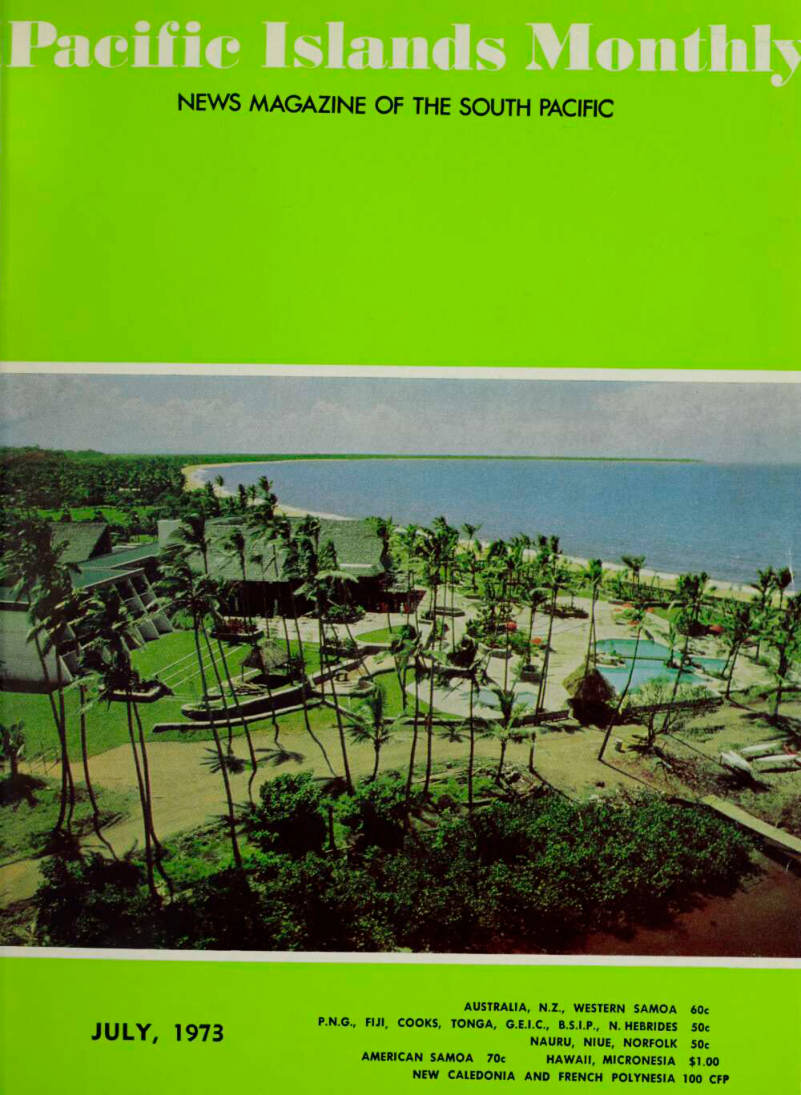 1
1 2
2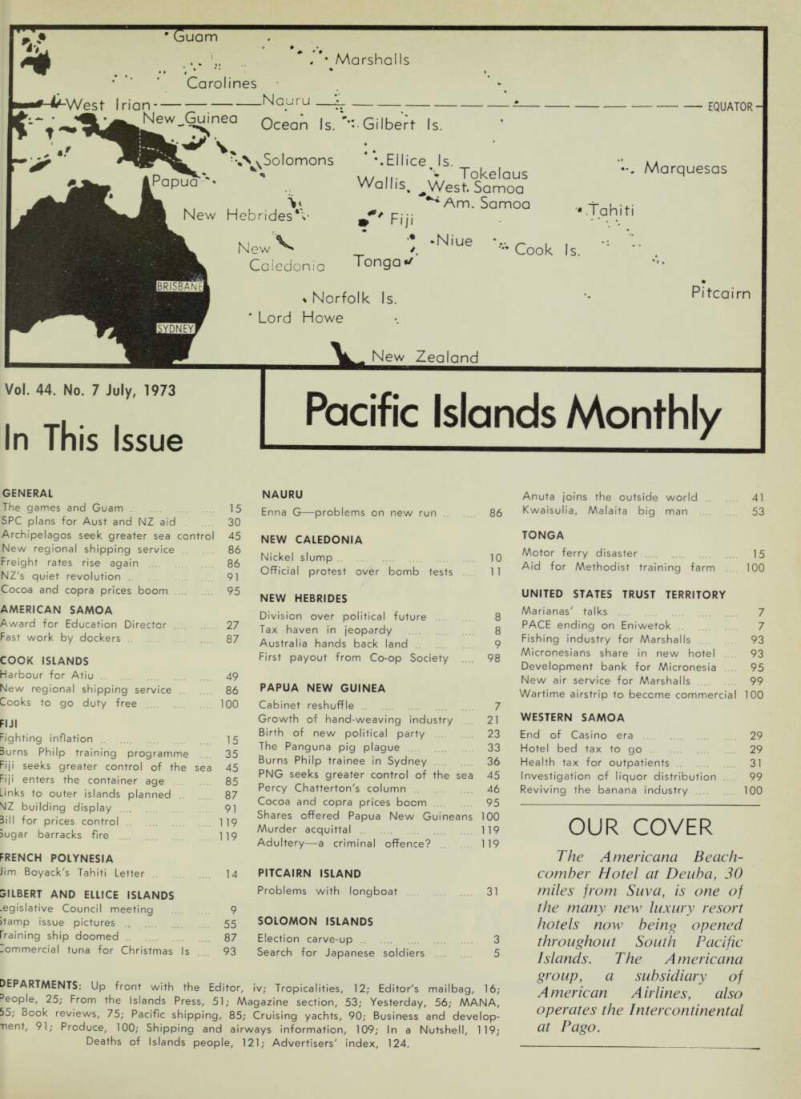 3
3 4
4 5
5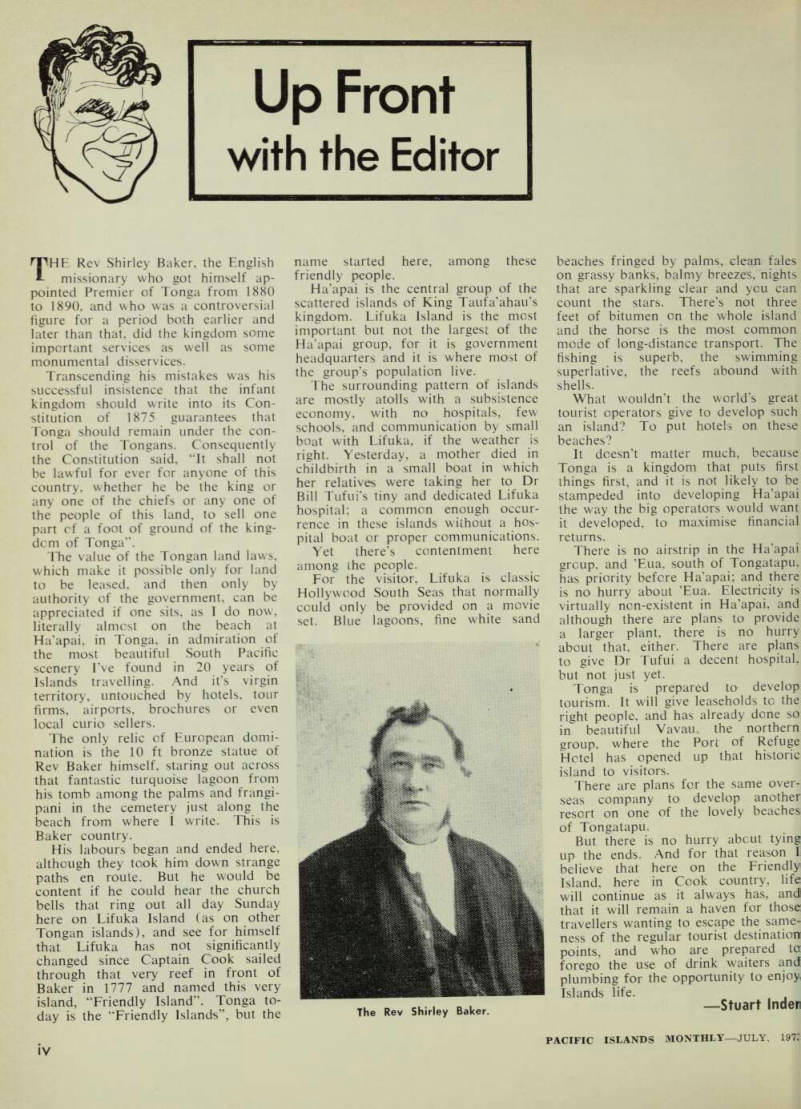 6
6 7
7 8
8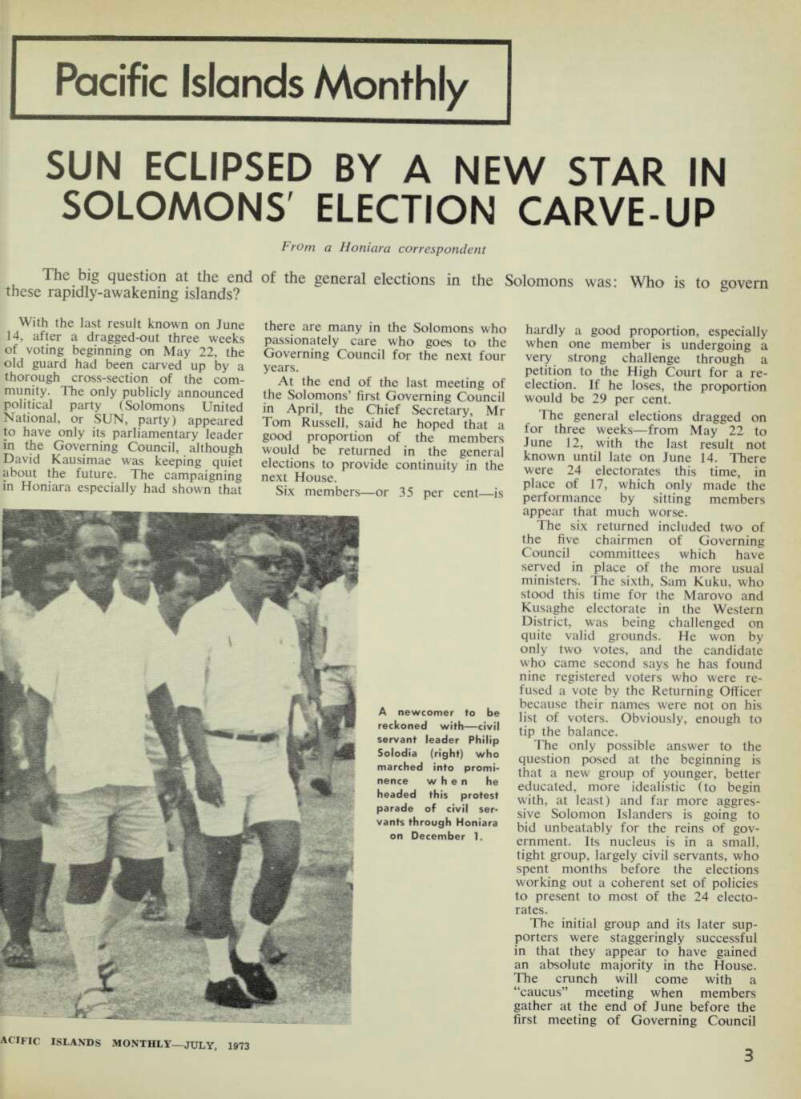 9
9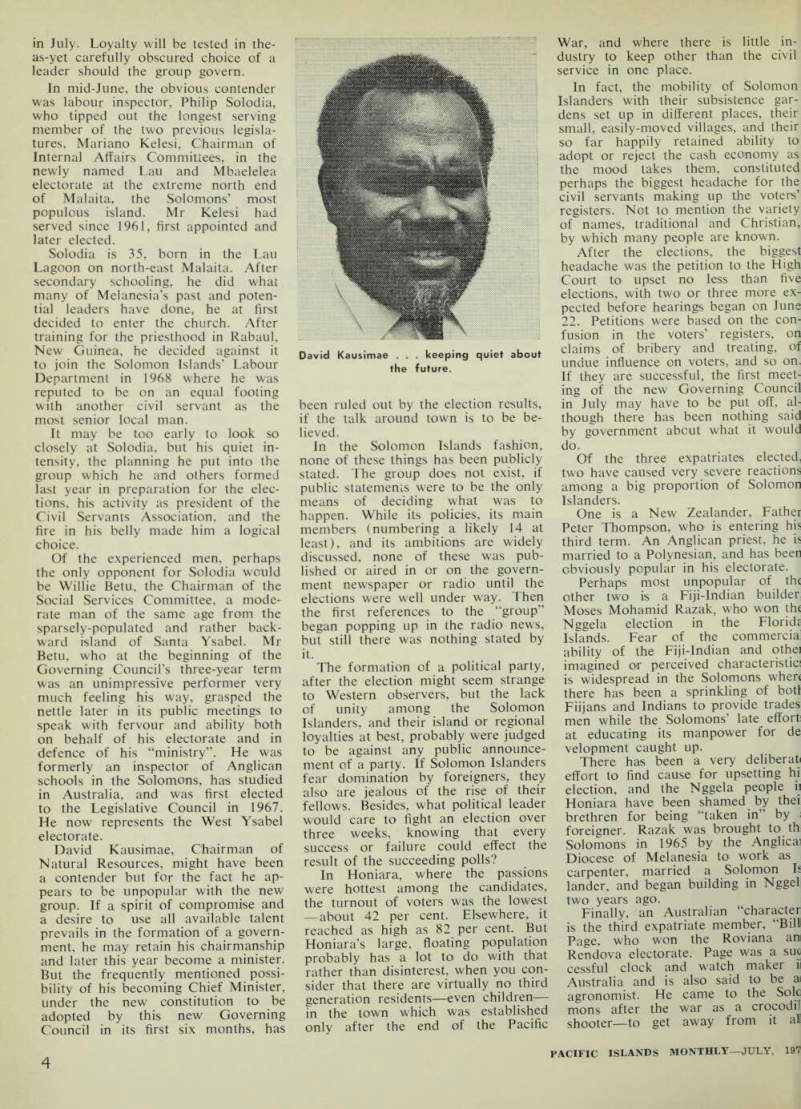 10
10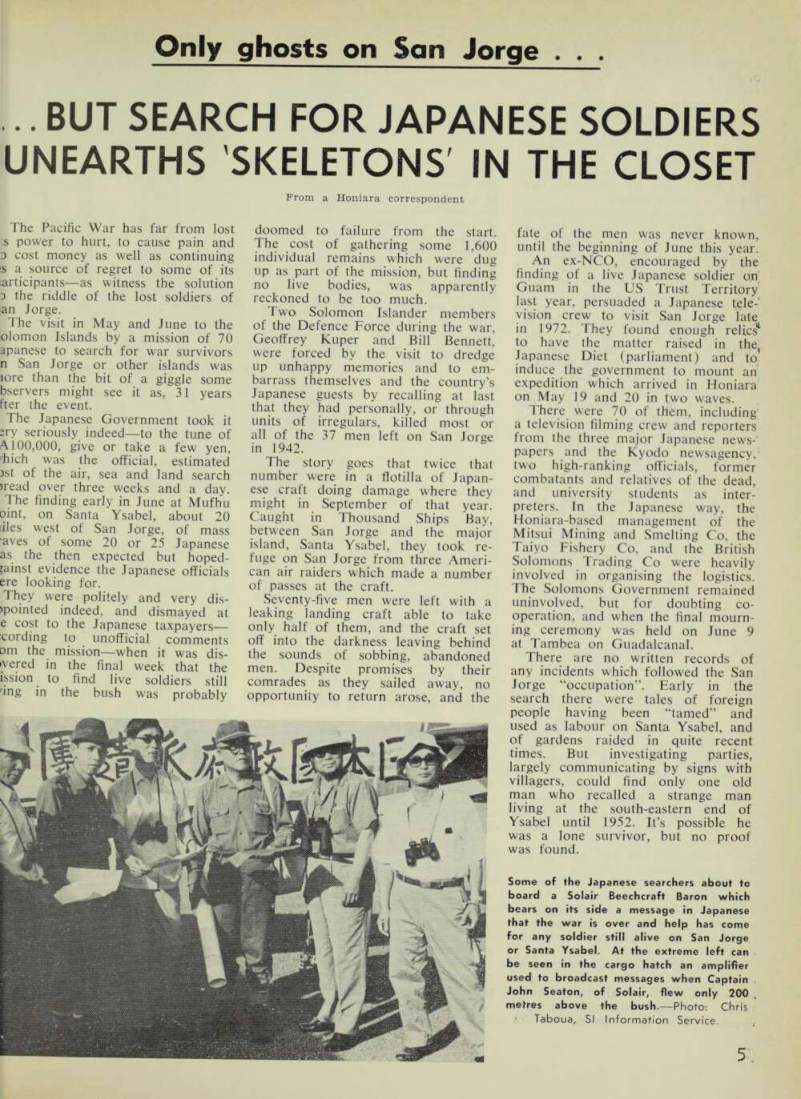 11
11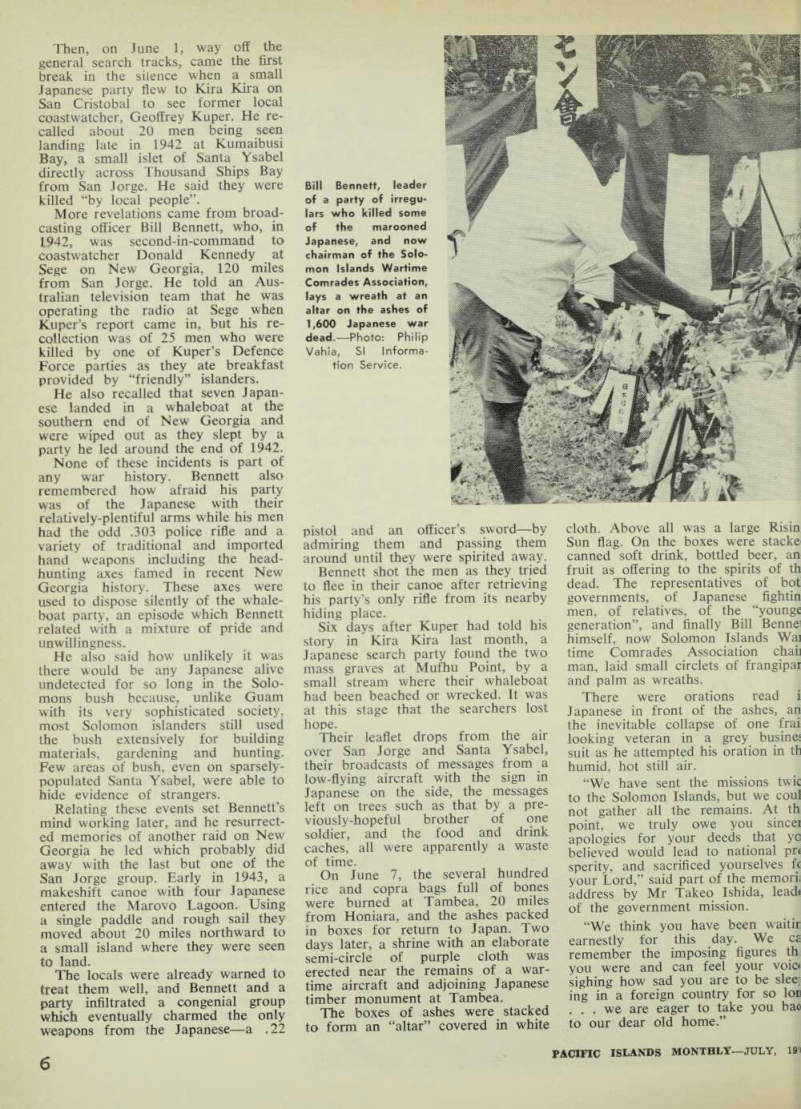 12
12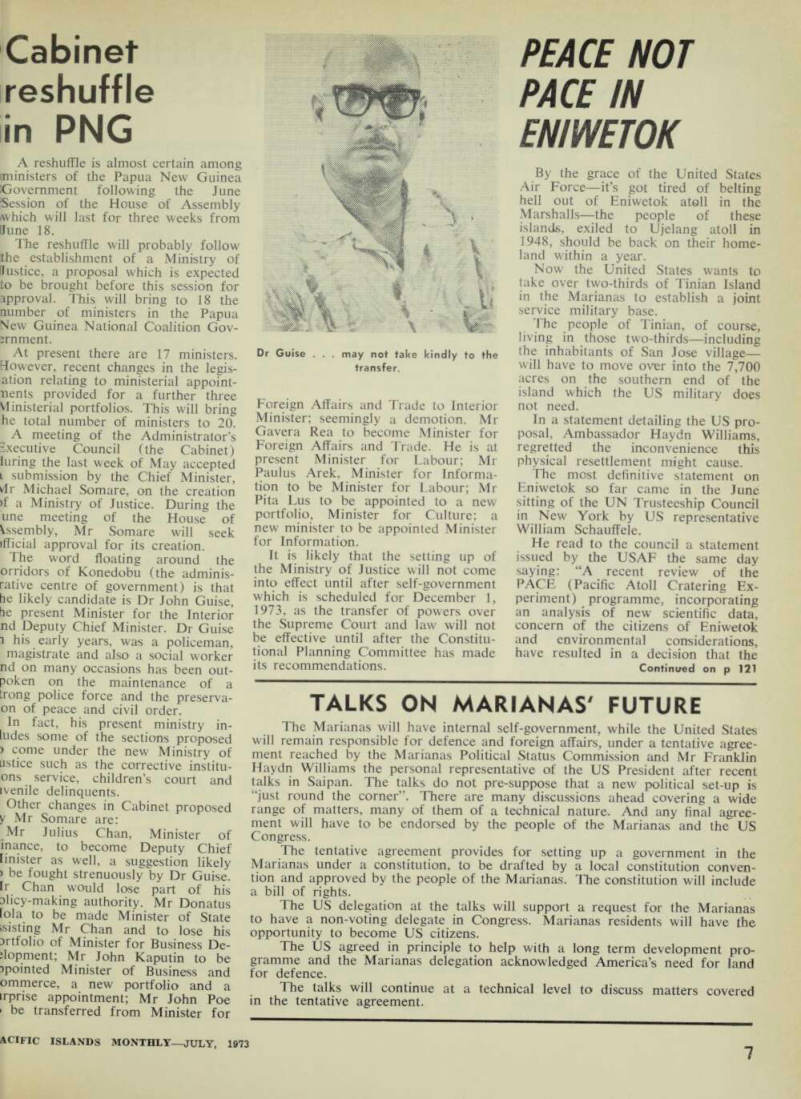 13
13 14
14 15
15 16
16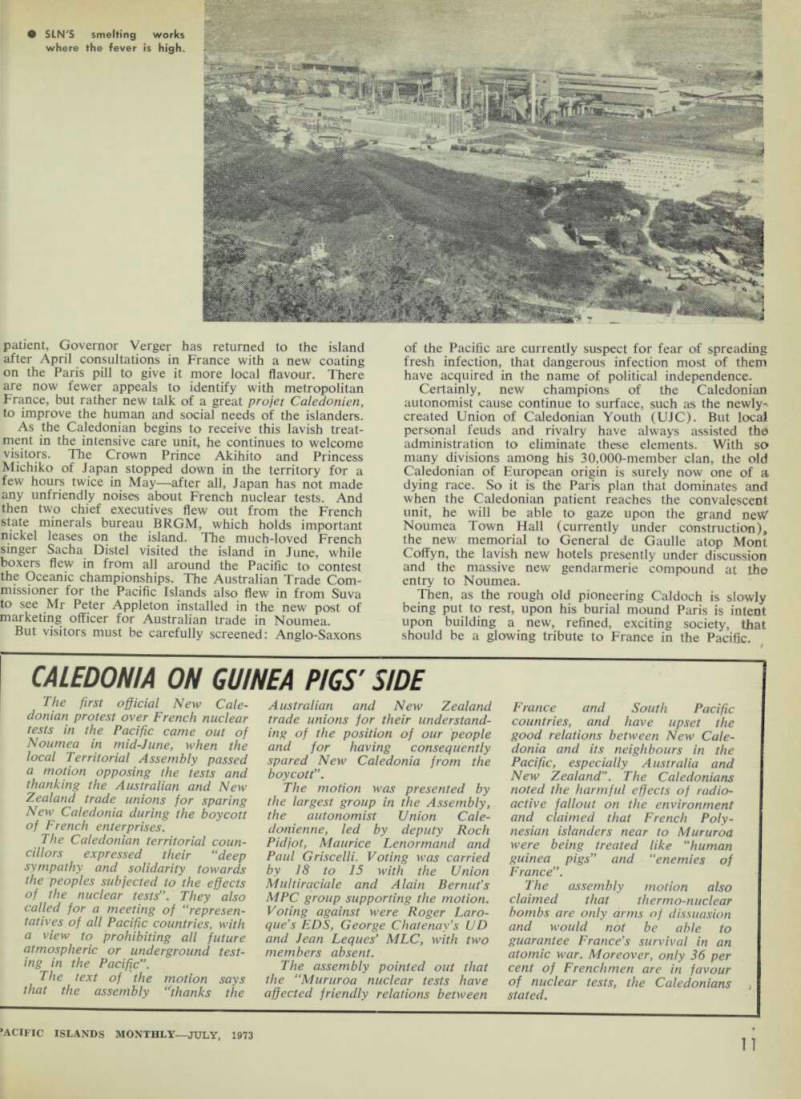 17
17 18
18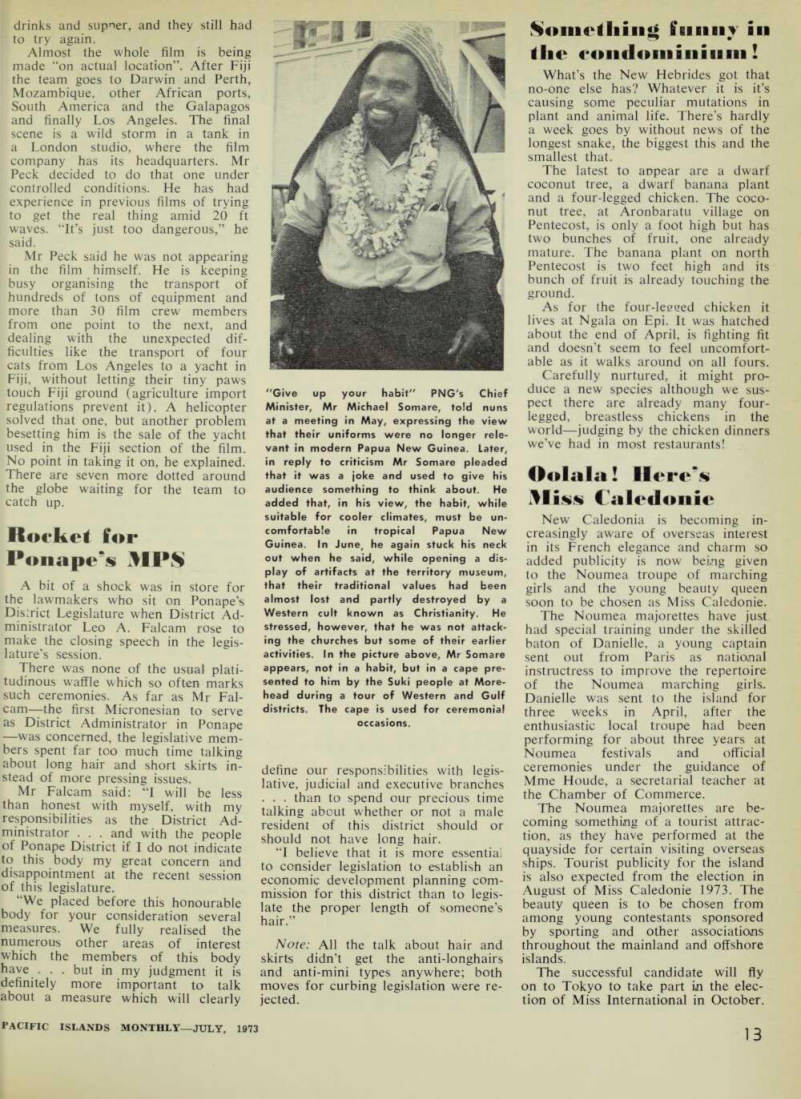 19
19 20
20 21
21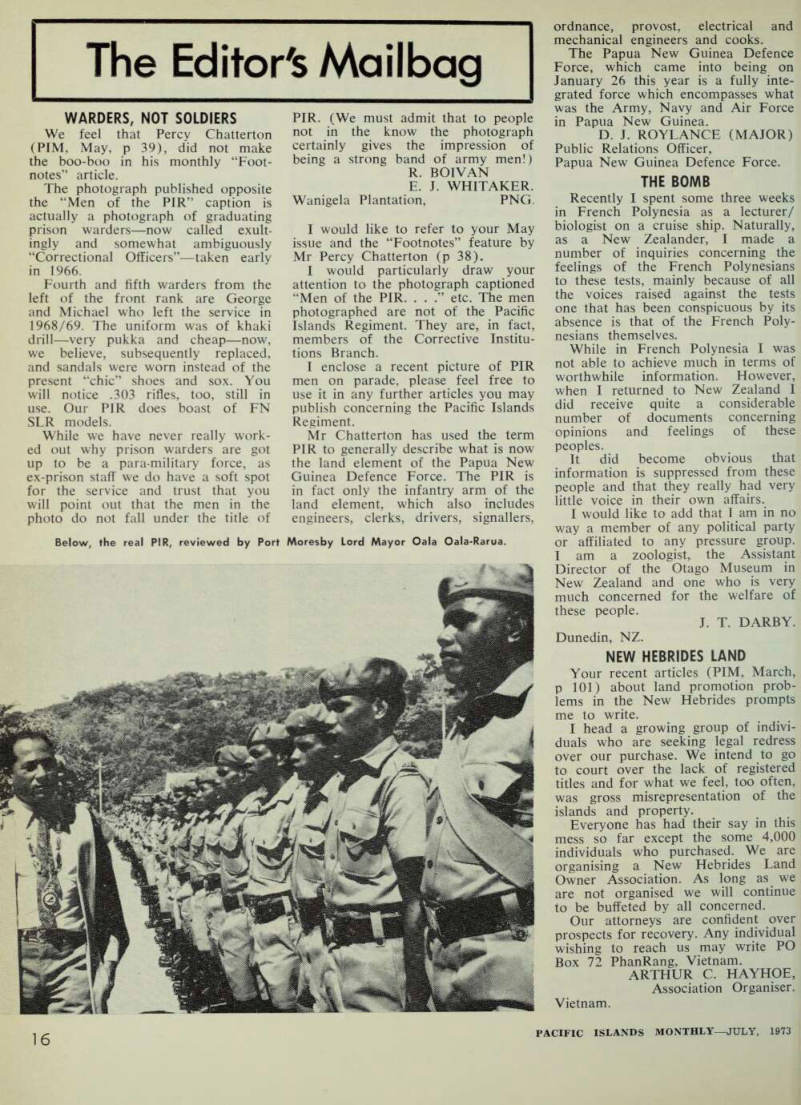 22
22 23
23 24
24 25
25 26
26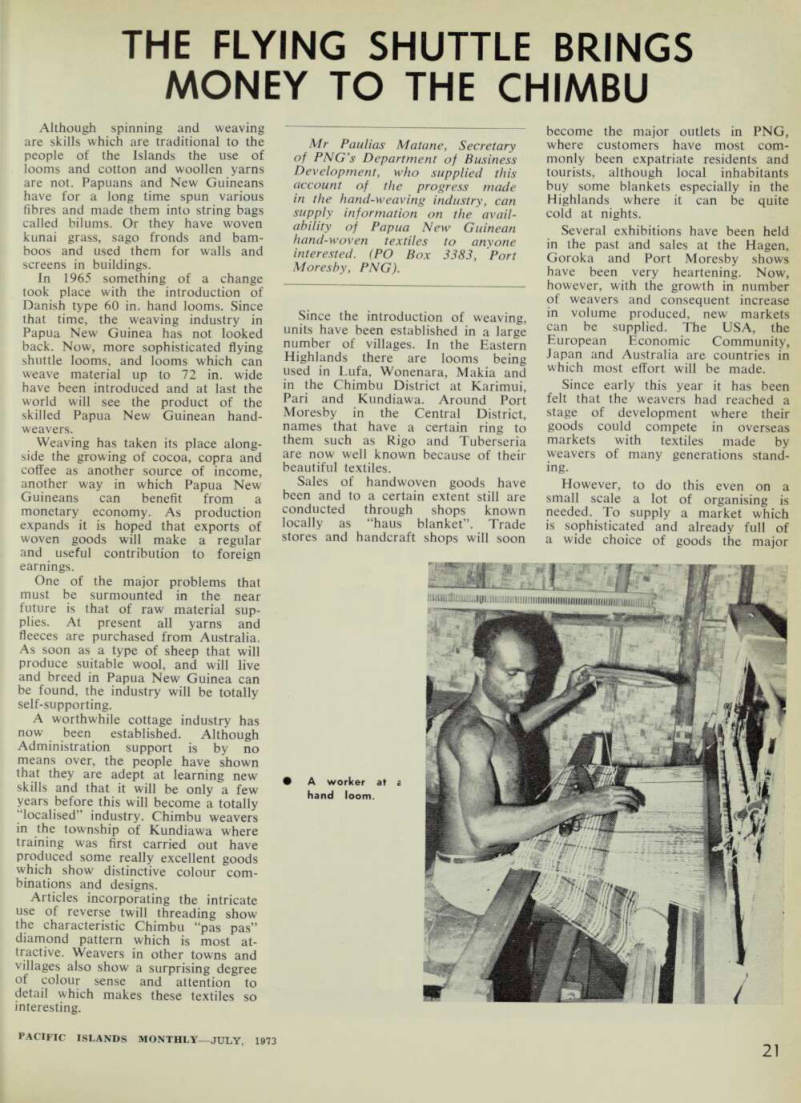 27
27 28
28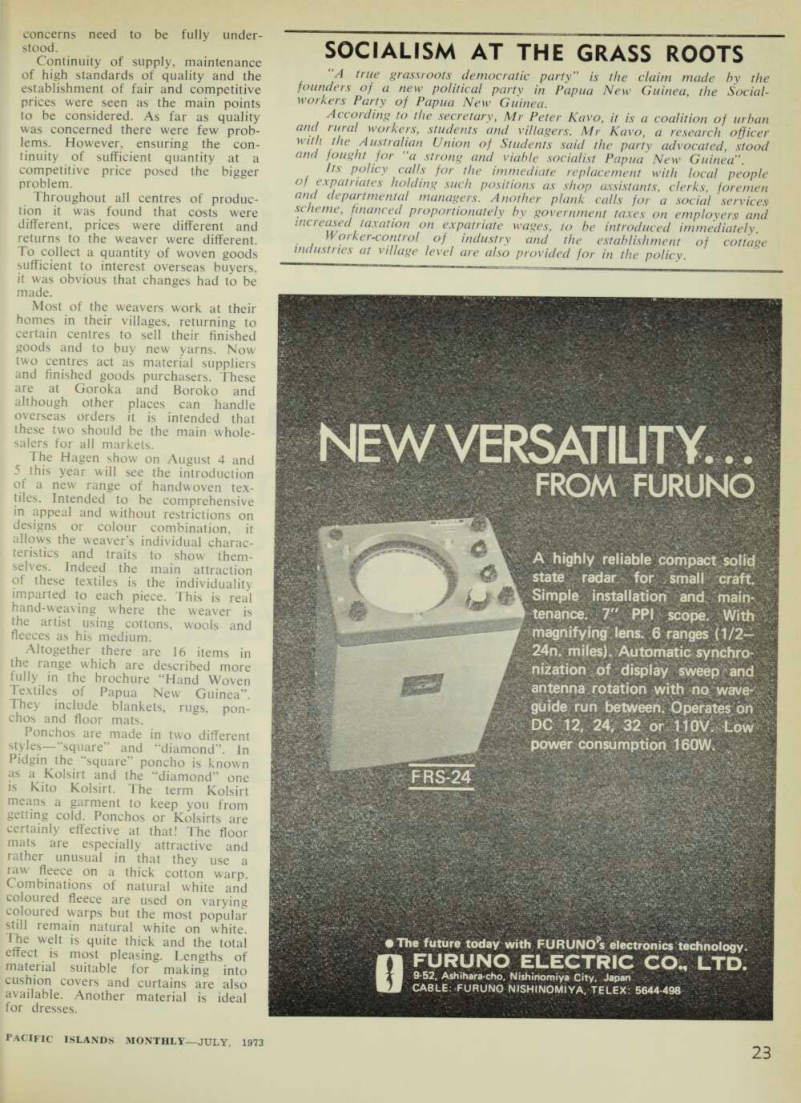 29
29 30
30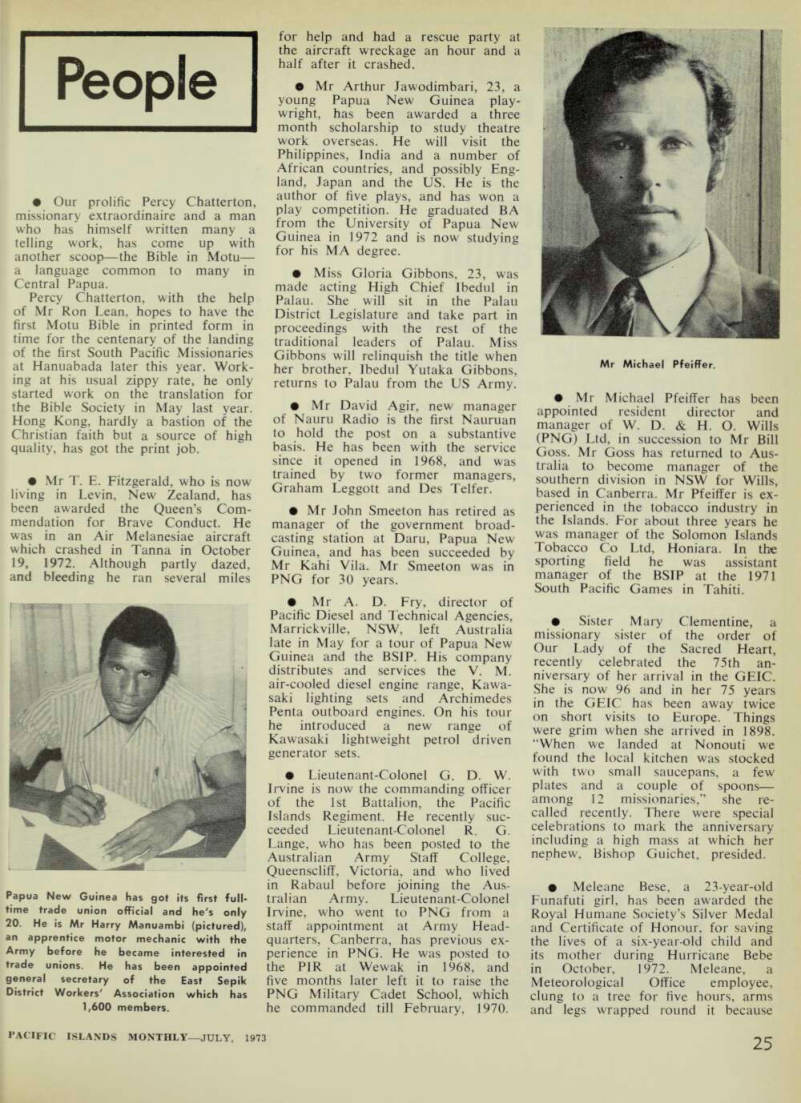 31
31 32
32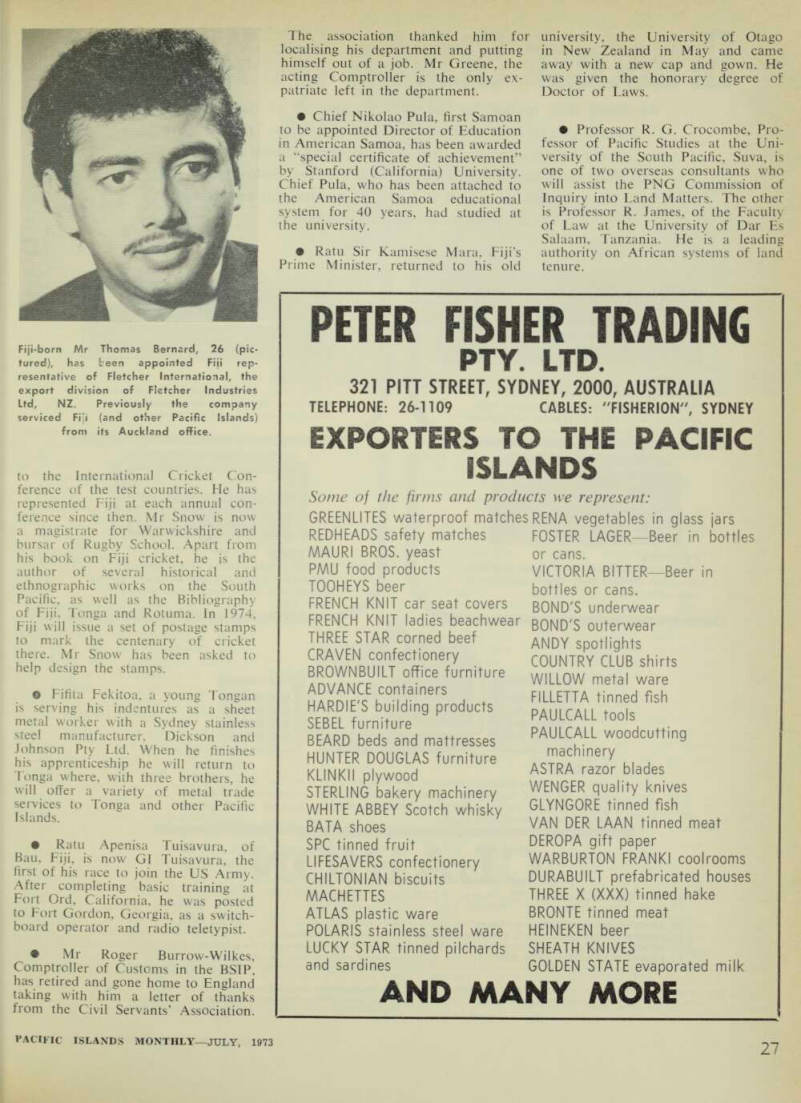 33
33 34
34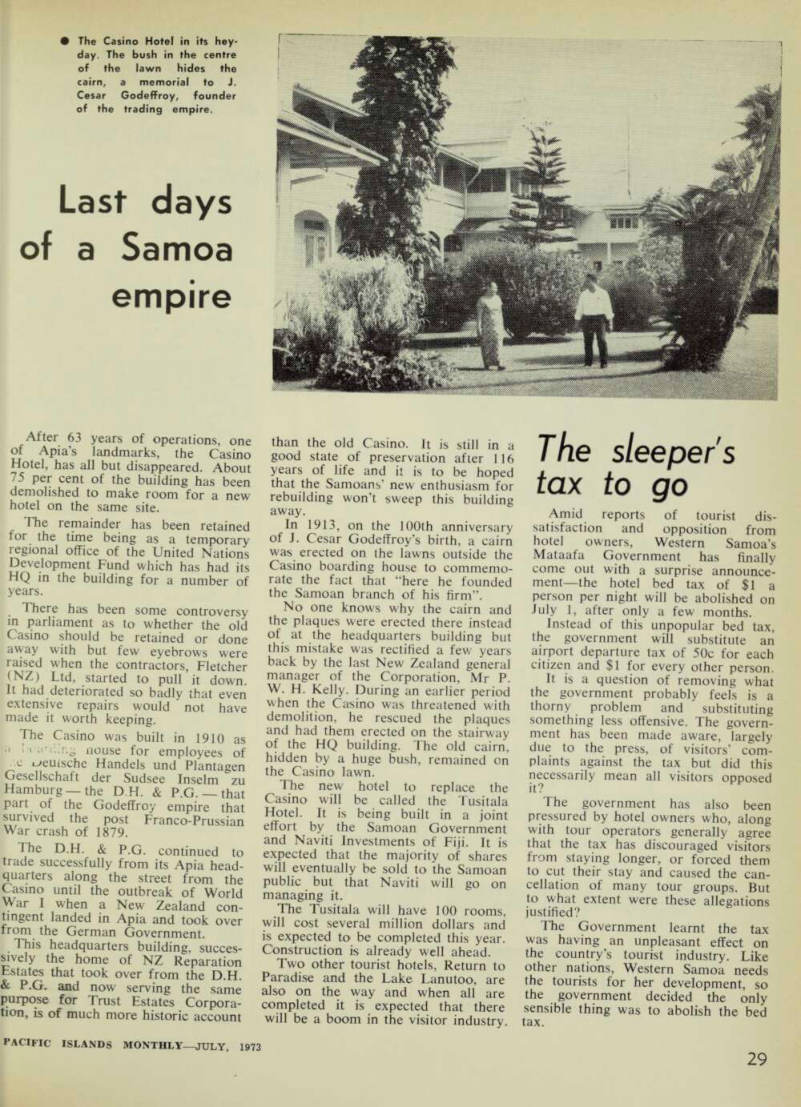 35
35 36
36 37
37 38
38 39
39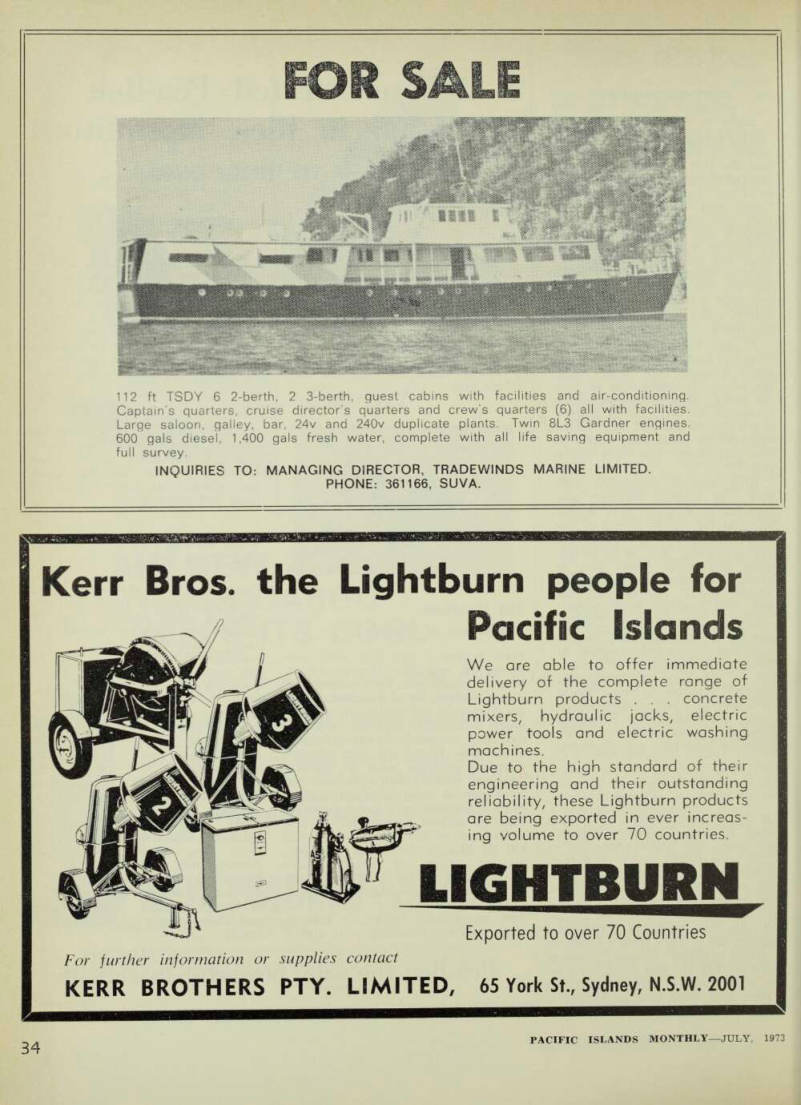 40
40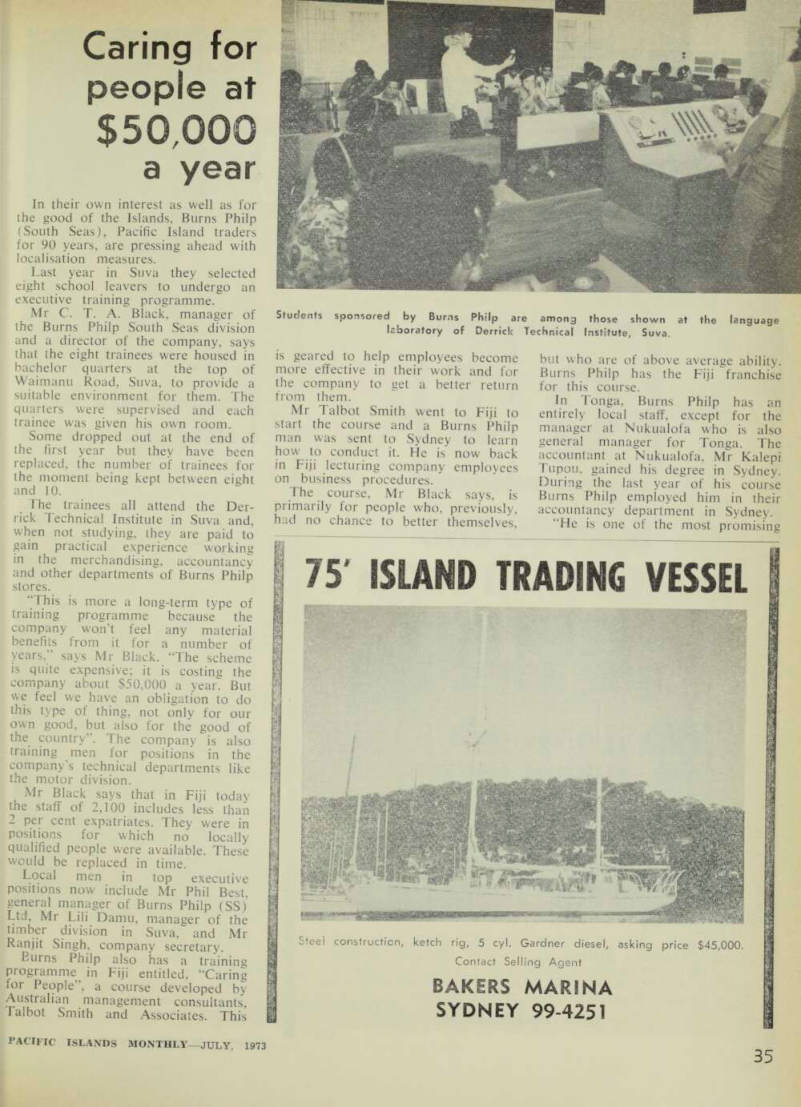 41
41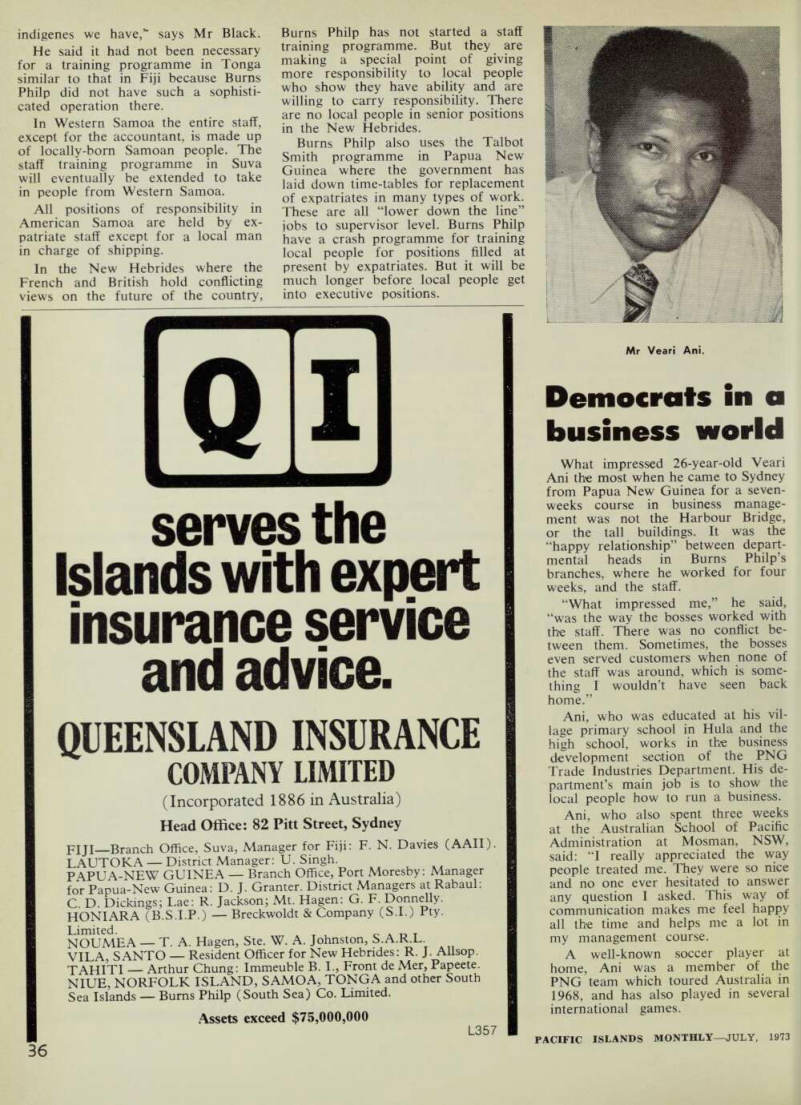 42
42 43
43 44
44 45
45 46
46 47
47 48
48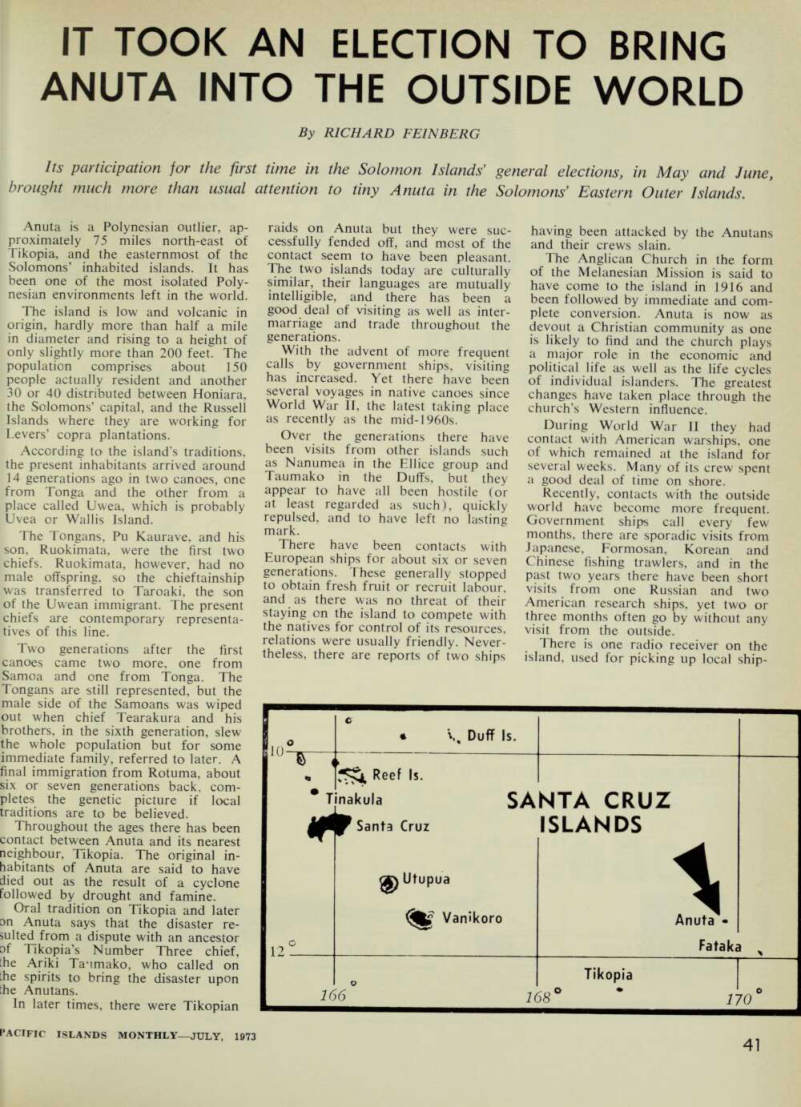 49
49 50
50 51
51 52
52 53
53 54
54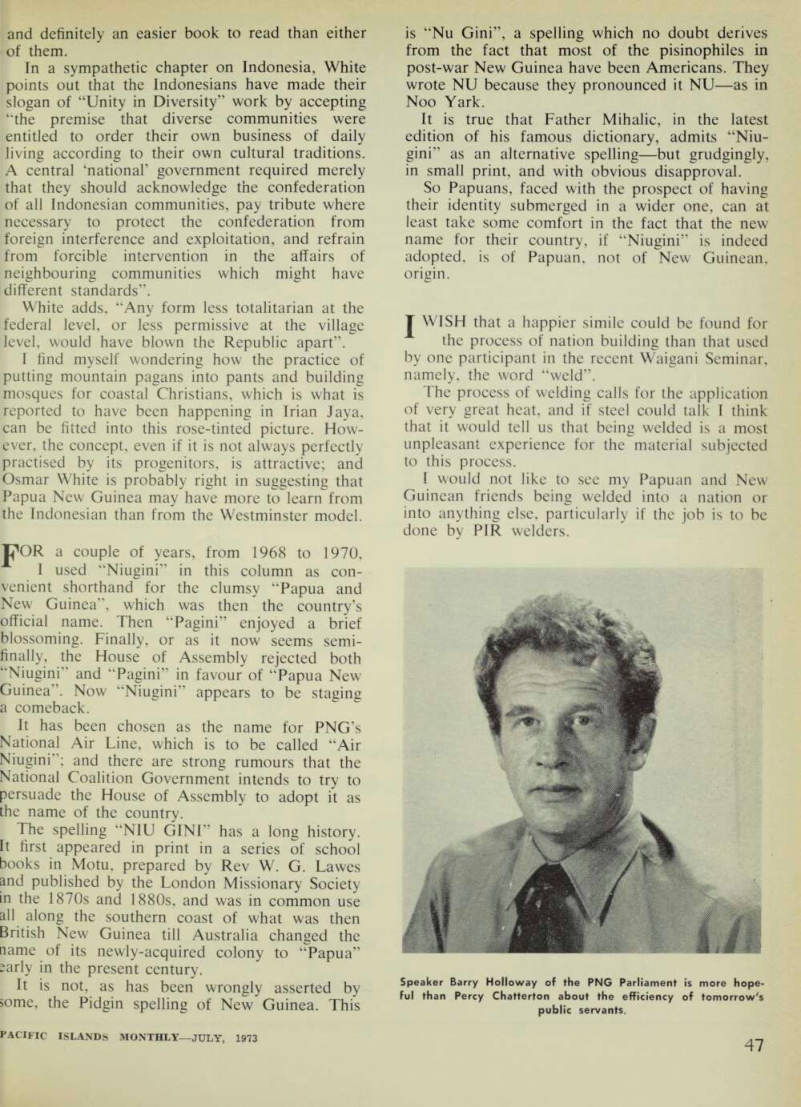 55
55 56
56 57
57 58
58 59
59 60
60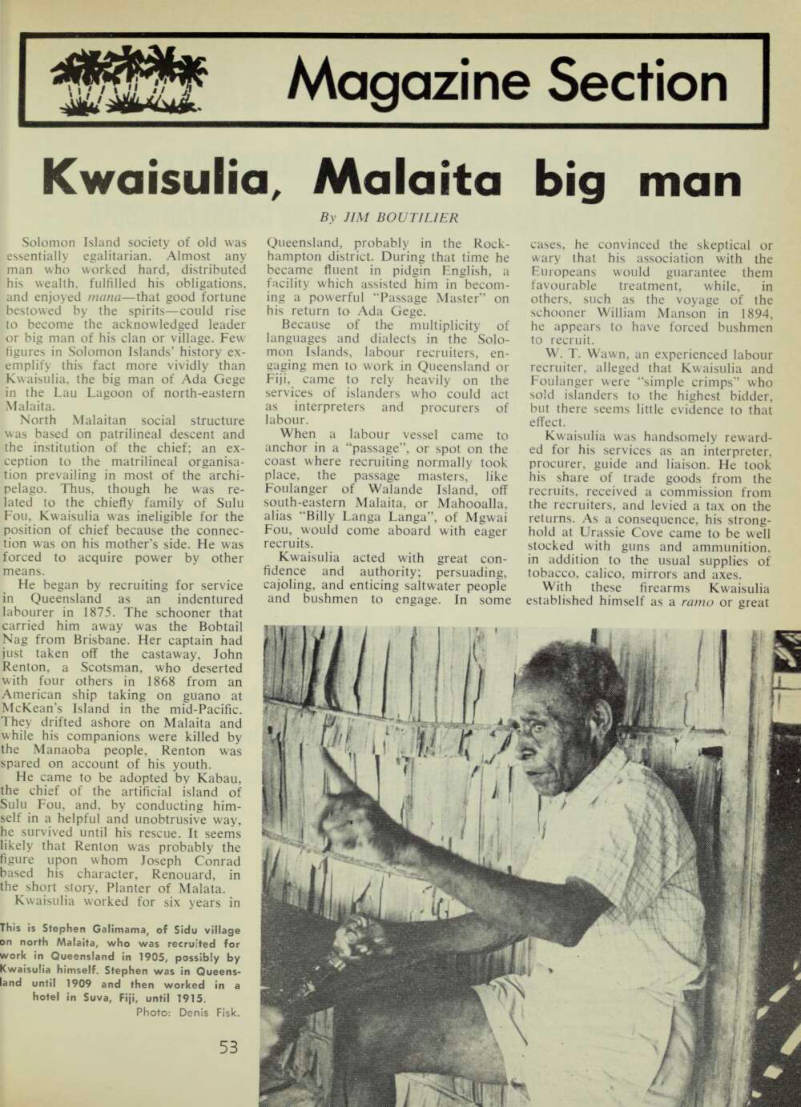 61
61 62
62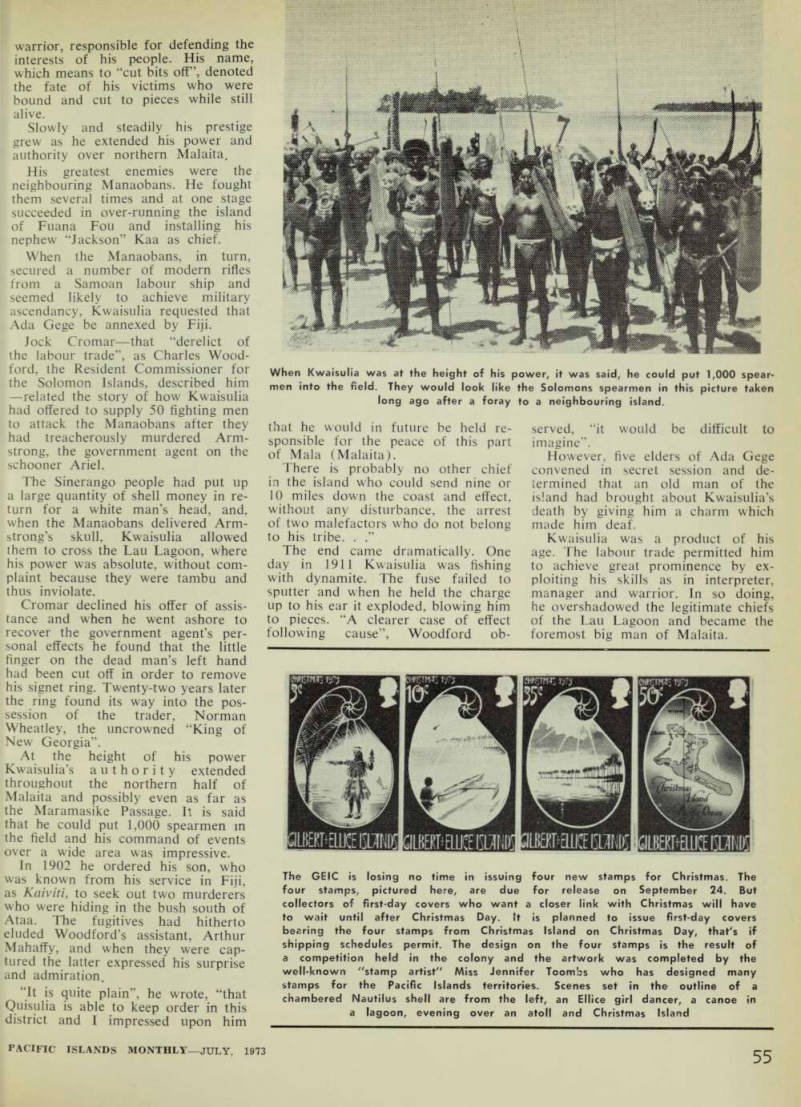 63
63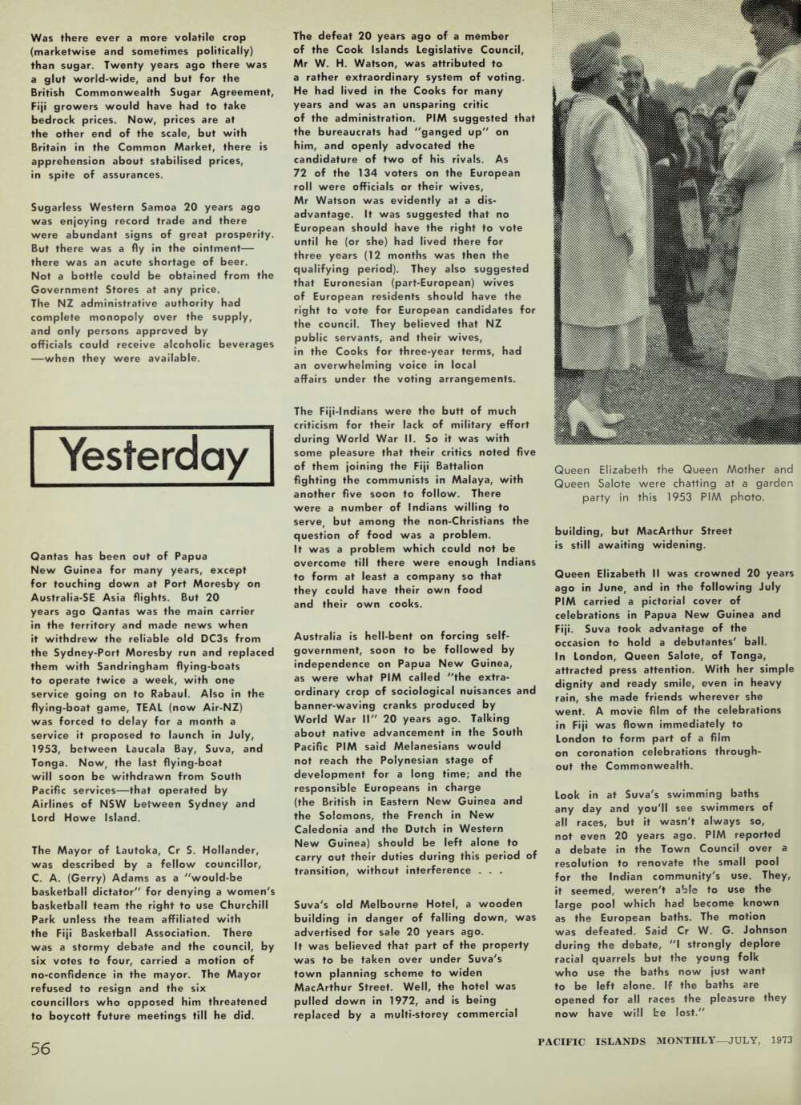 64
64 65
65 66
66 67
67 68
68 69
69 70
70 71
71 72
72 73
73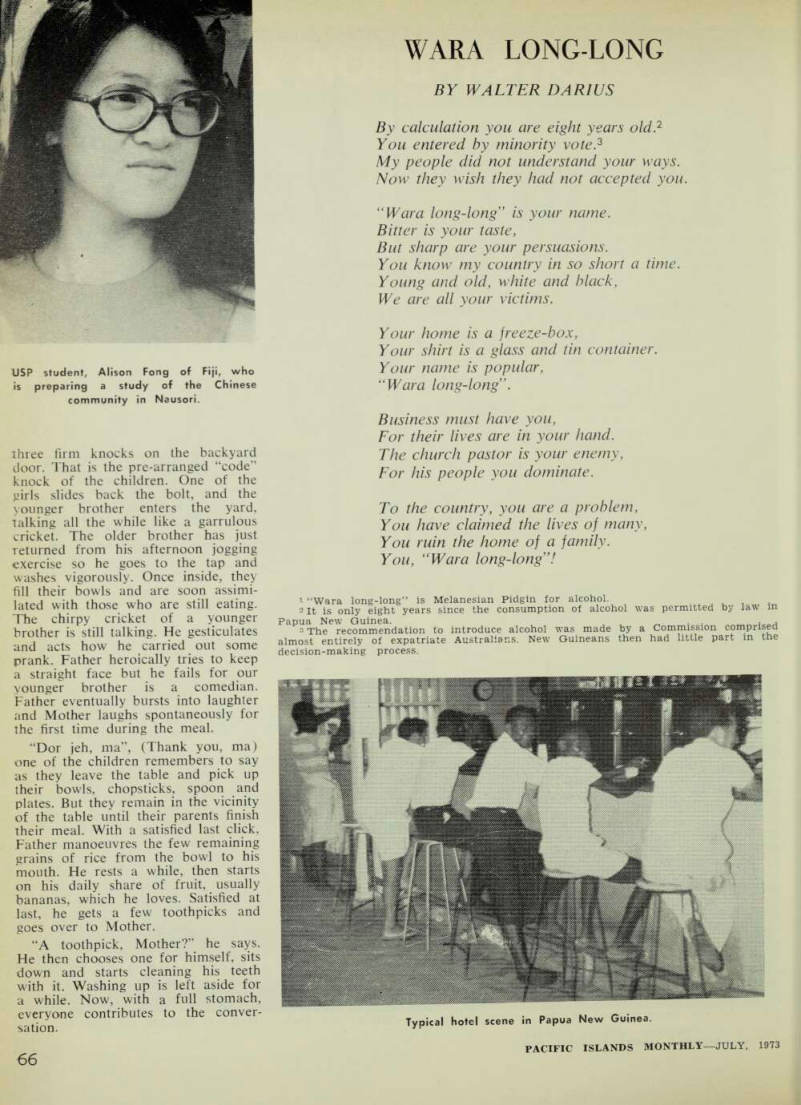 74
74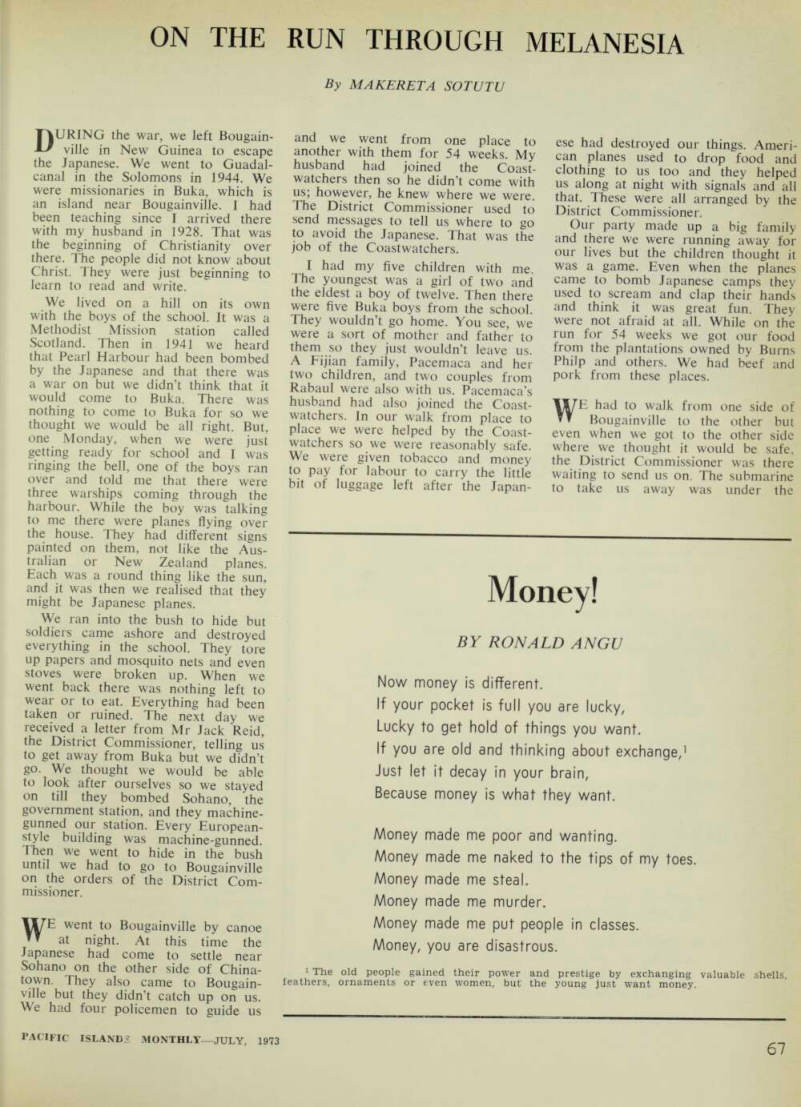 75
75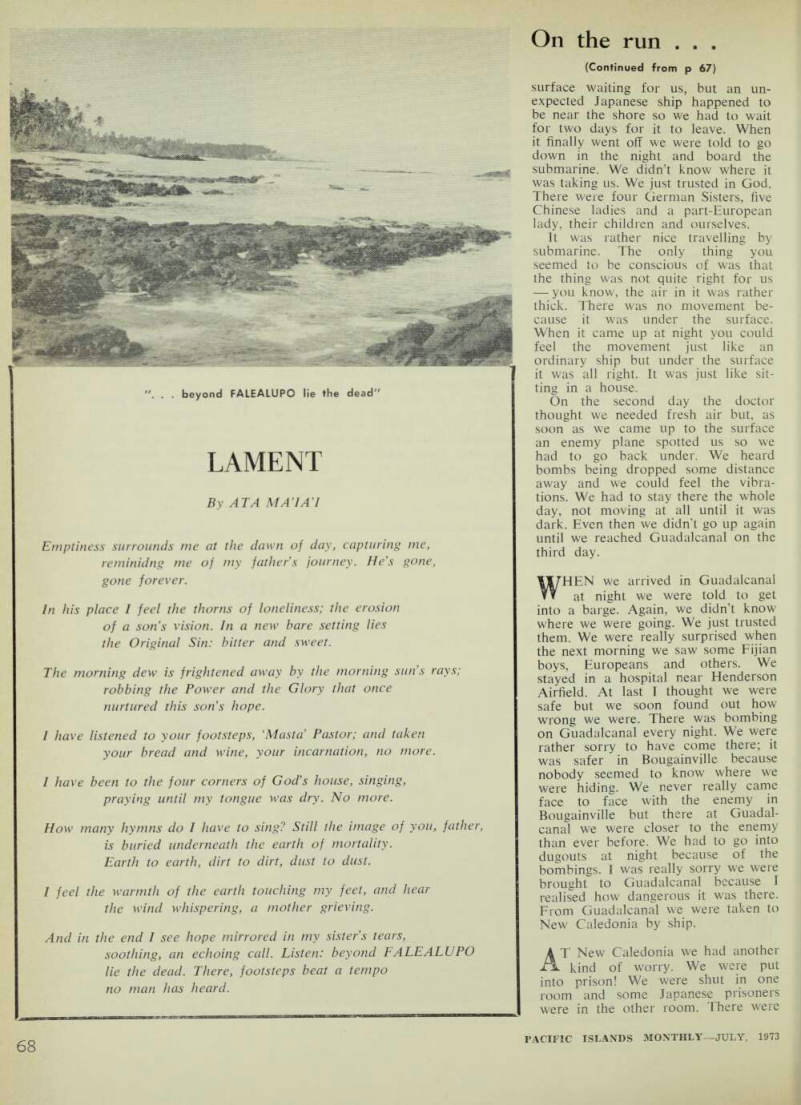 76
76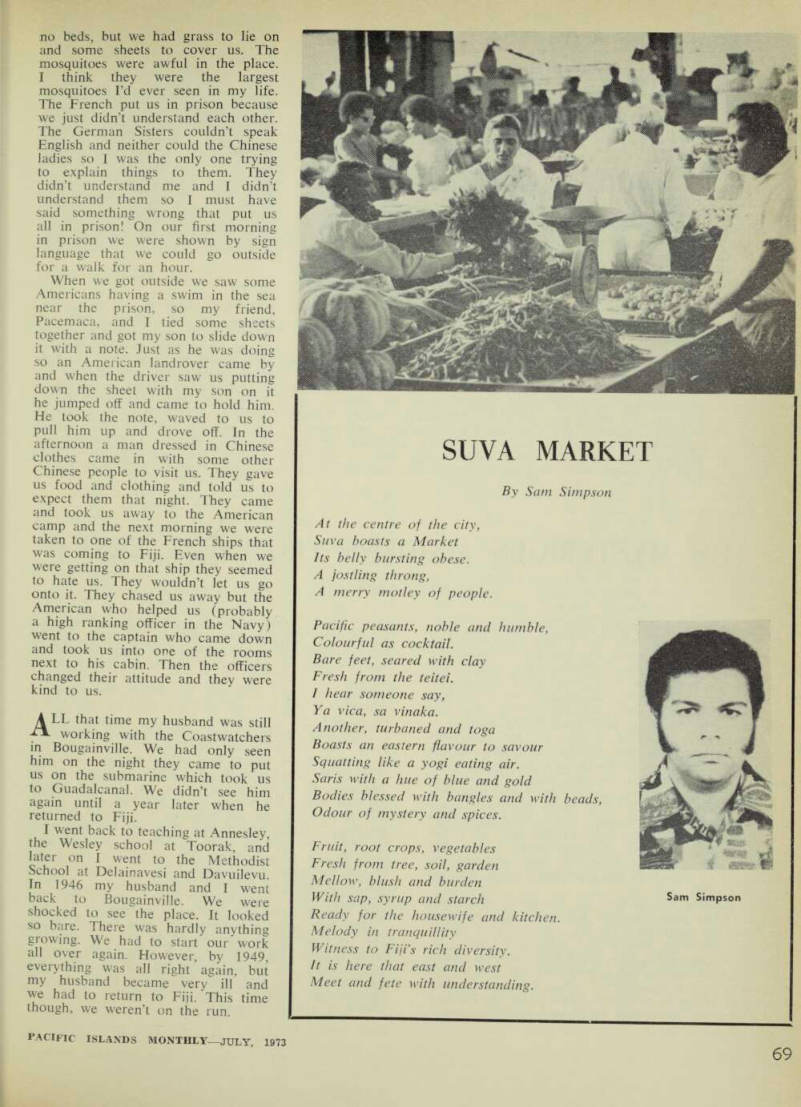 77
77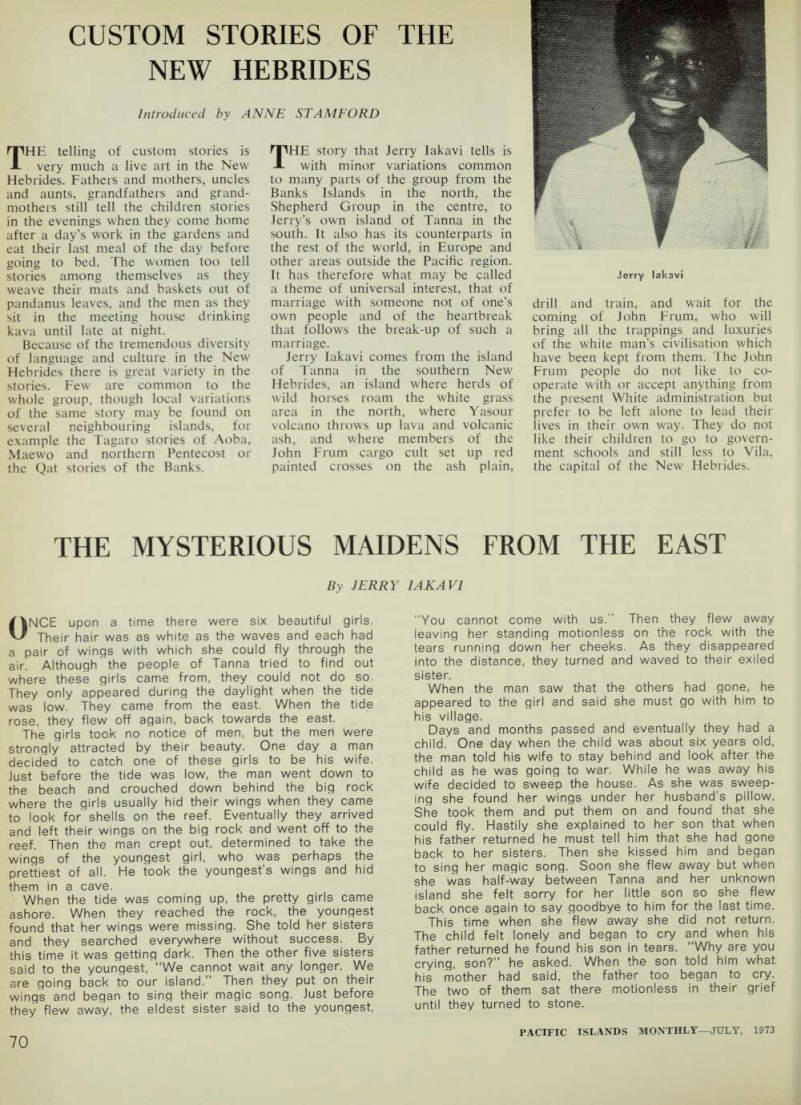 78
78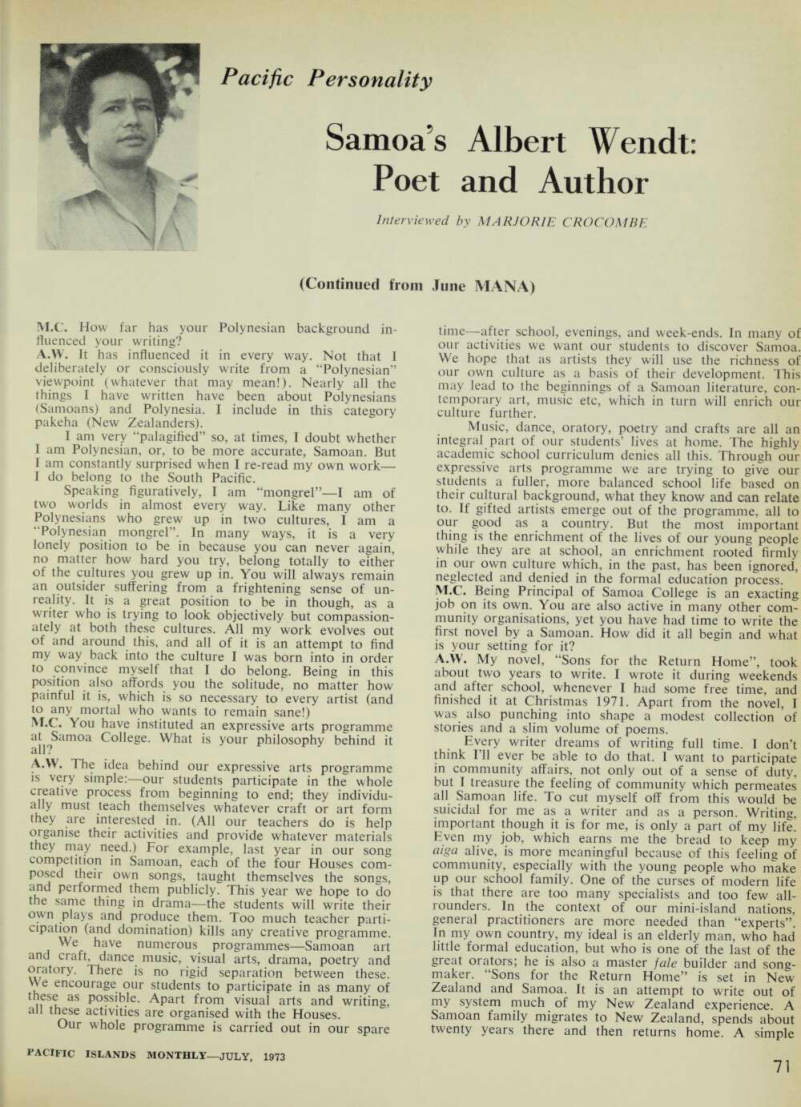 79
79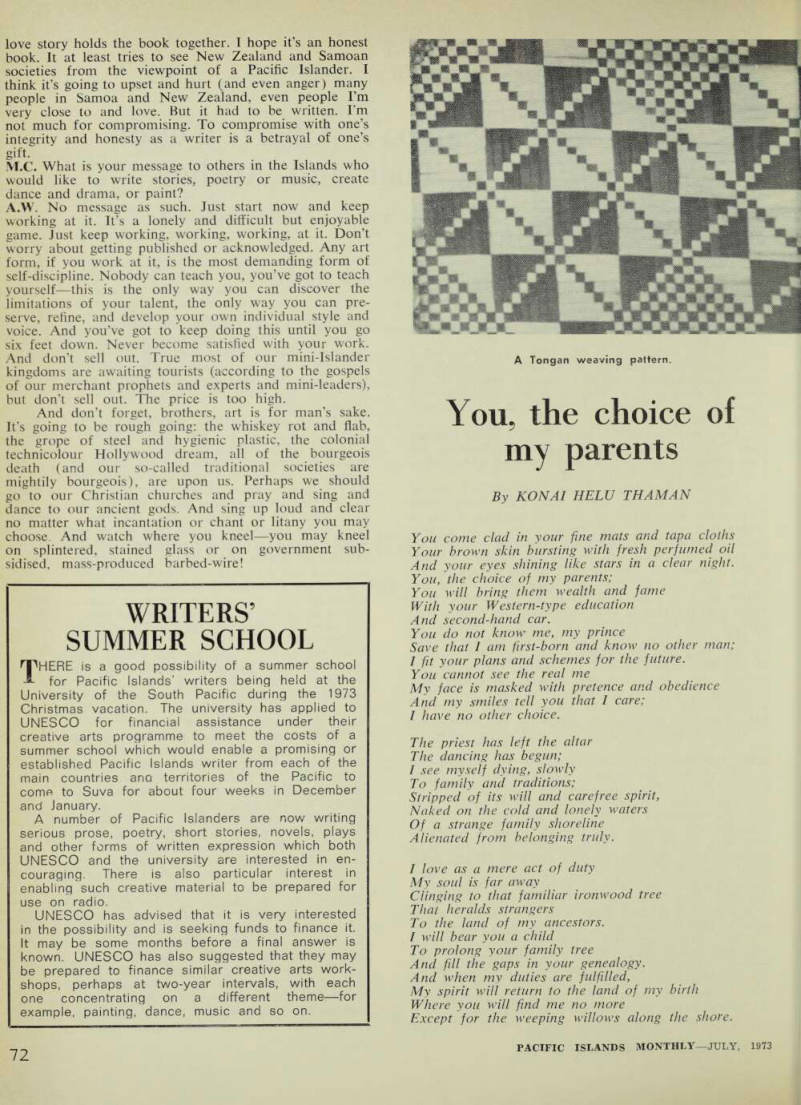 80
80 81
81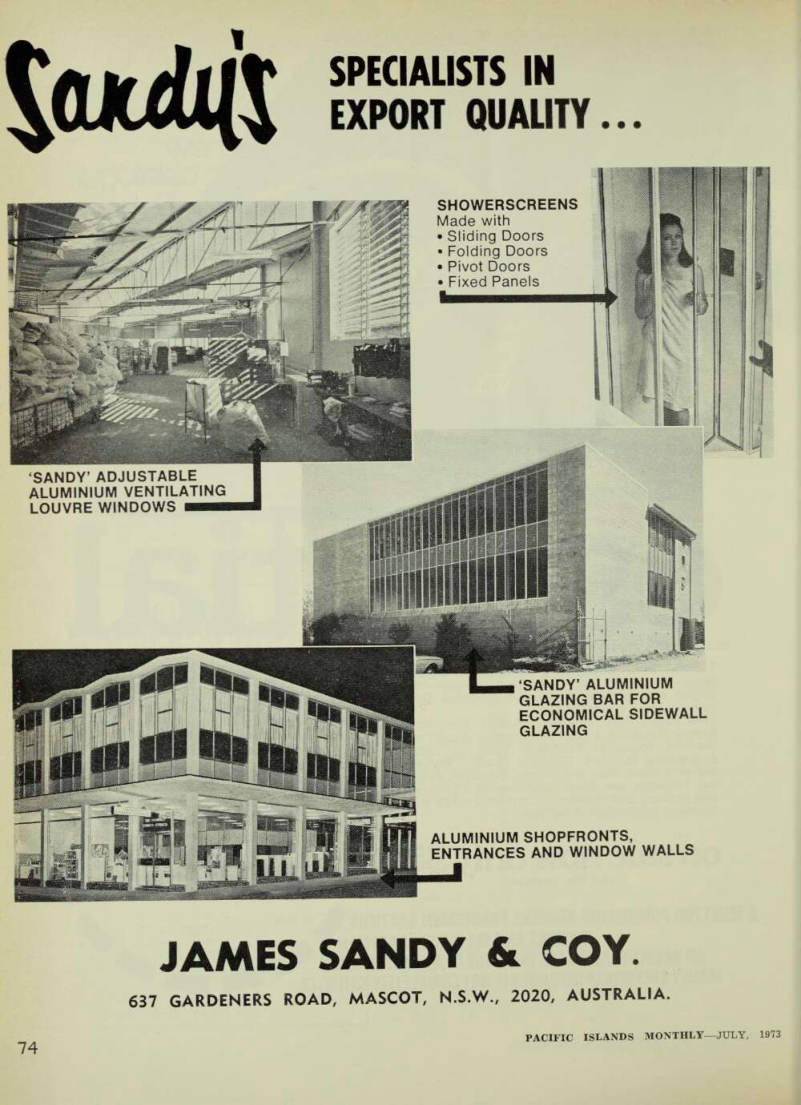 82
82 83
83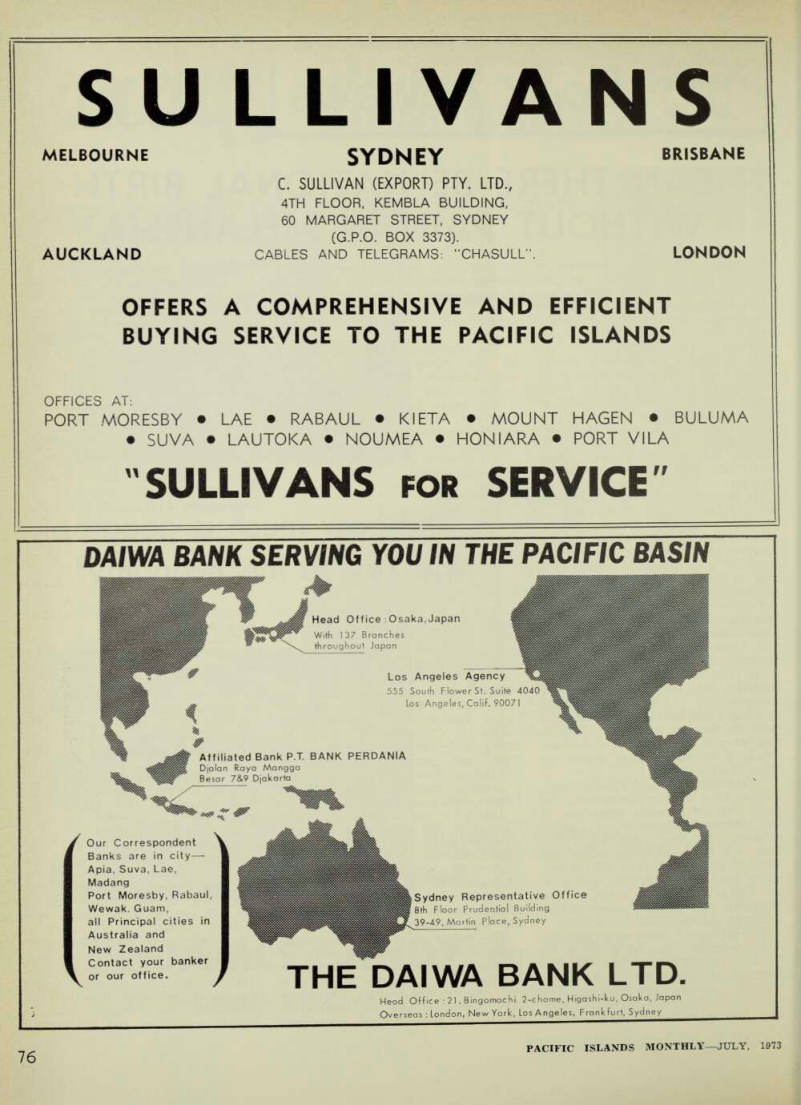 84
84 85
85 86
86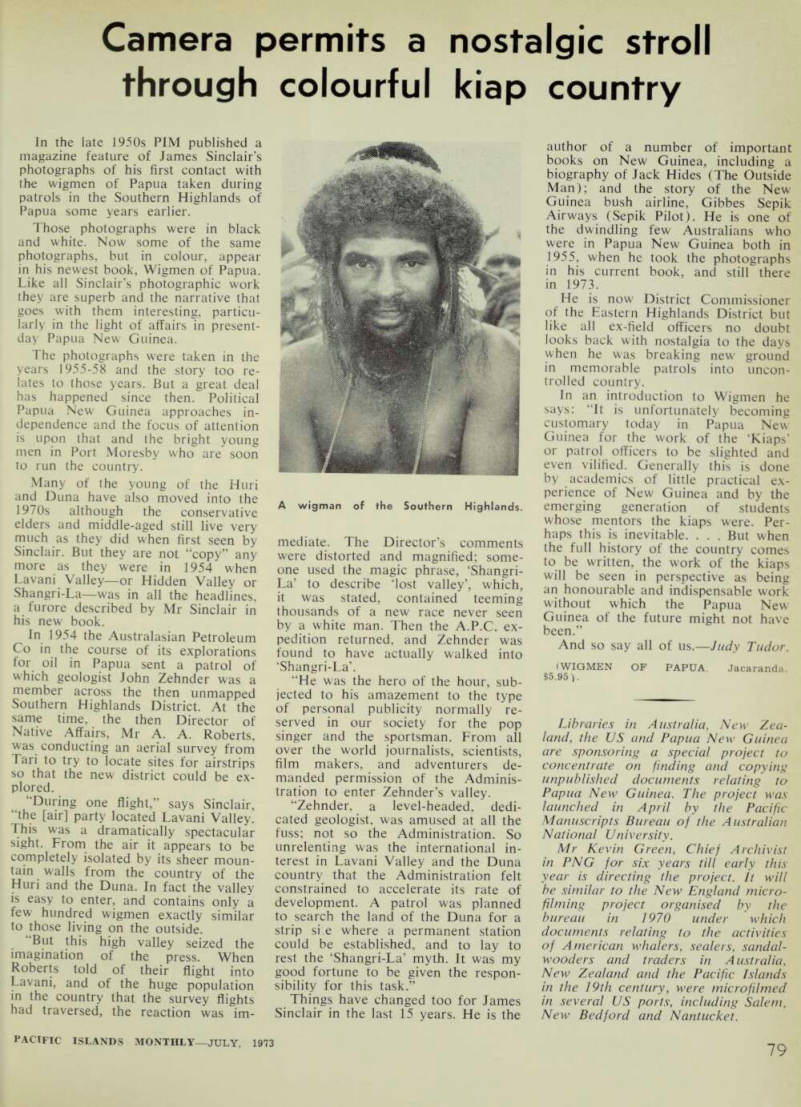 87
87 88
88 89
89 90
90 91
91 92
92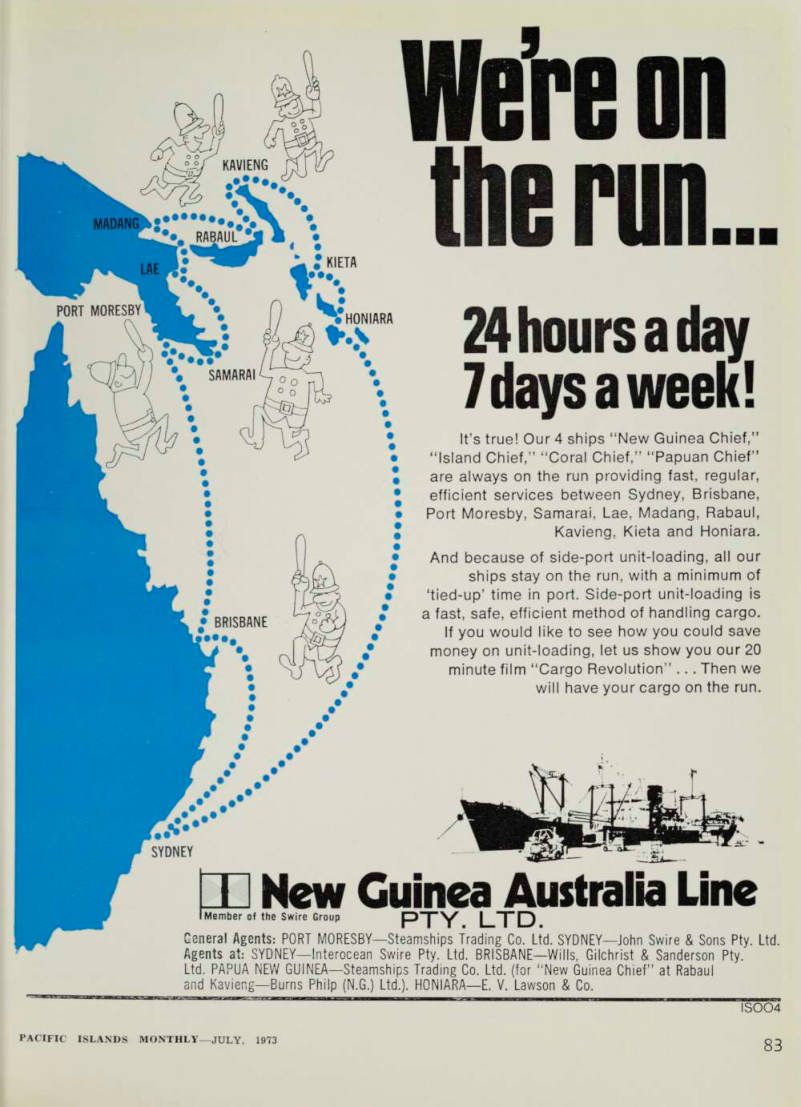 93
93 94
94 95
95 96
96 97
97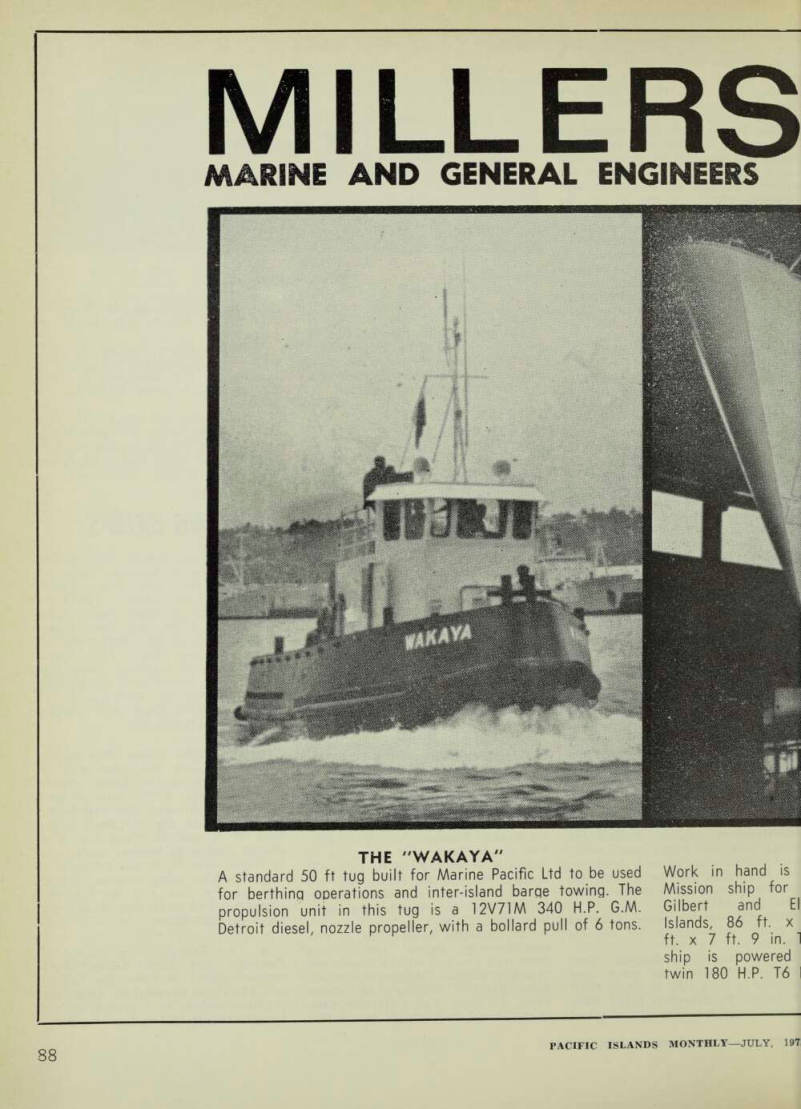 98
98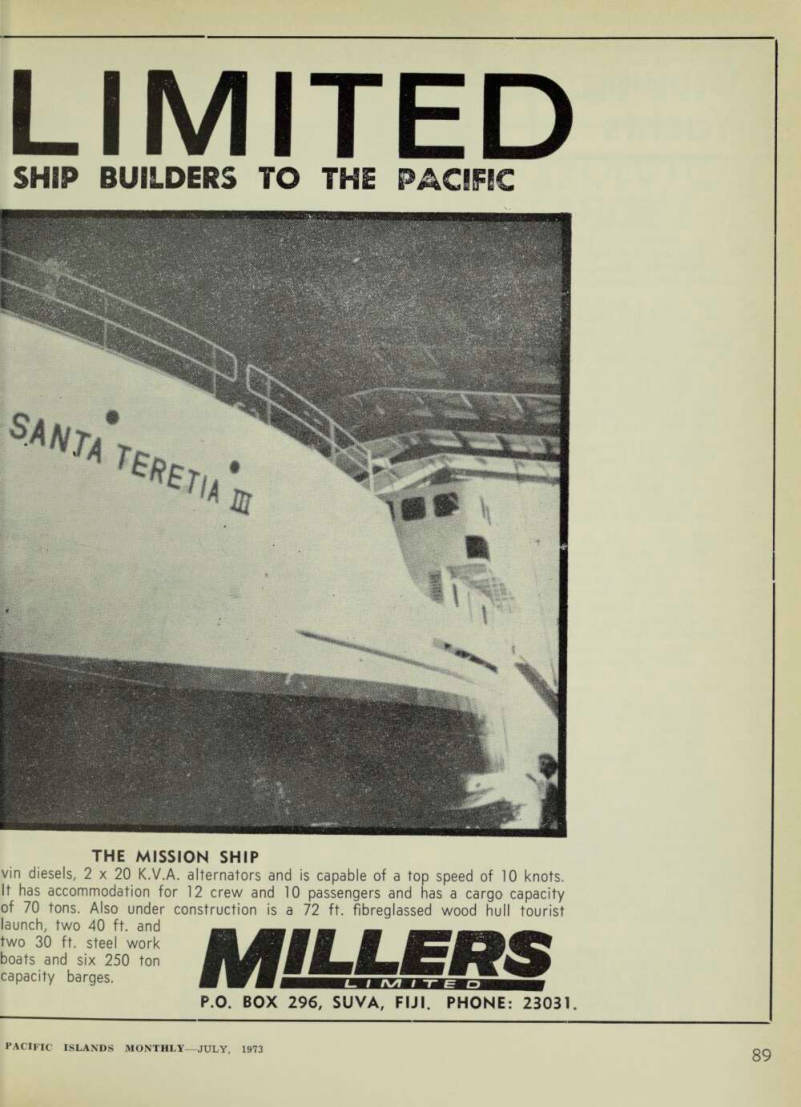 99
99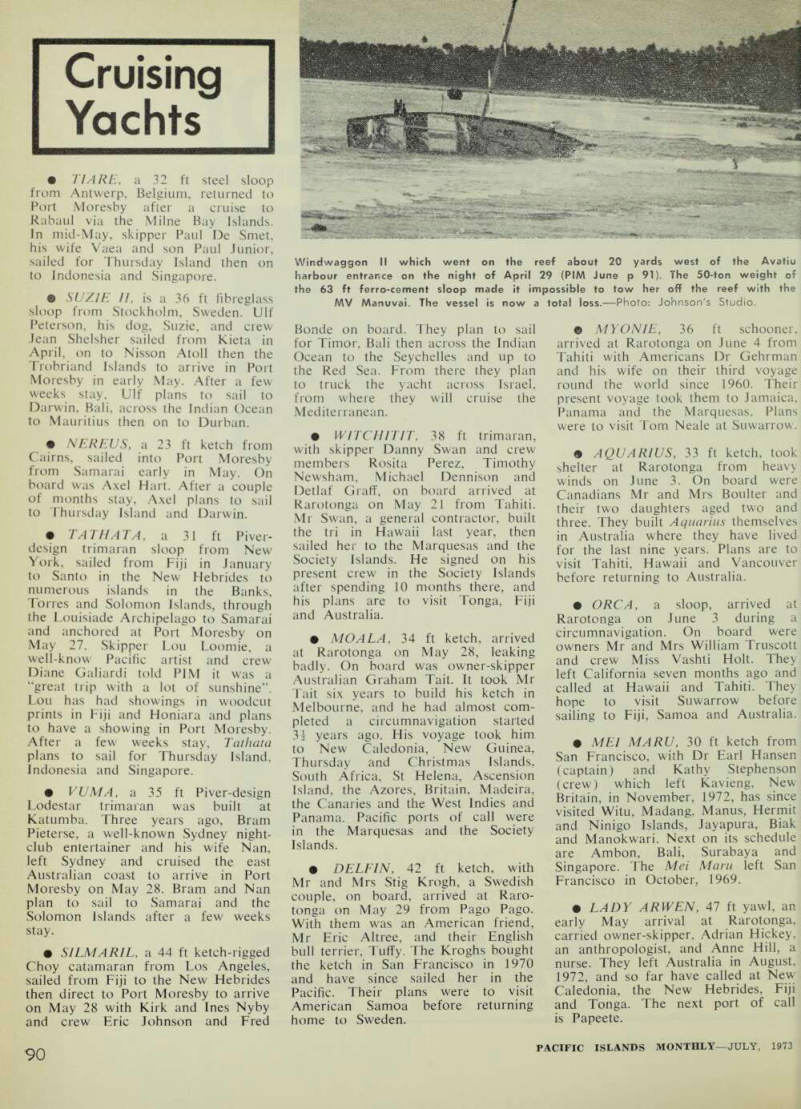 100
100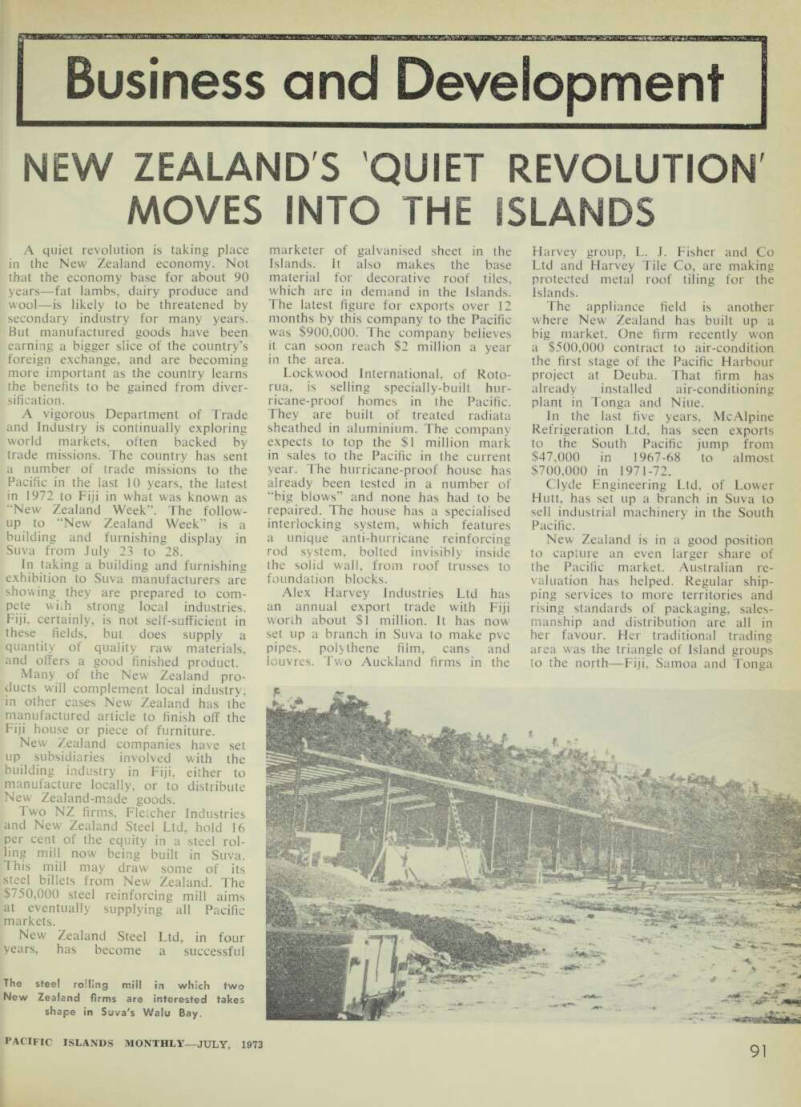 101
101 102
102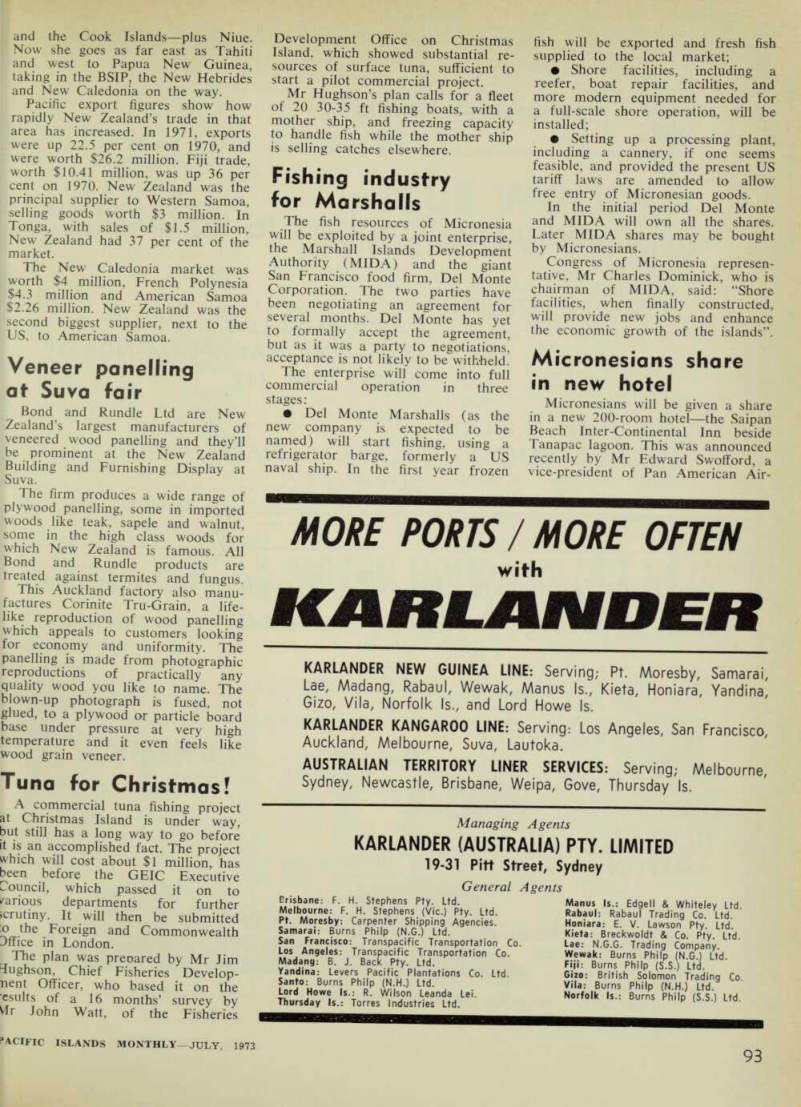 103
103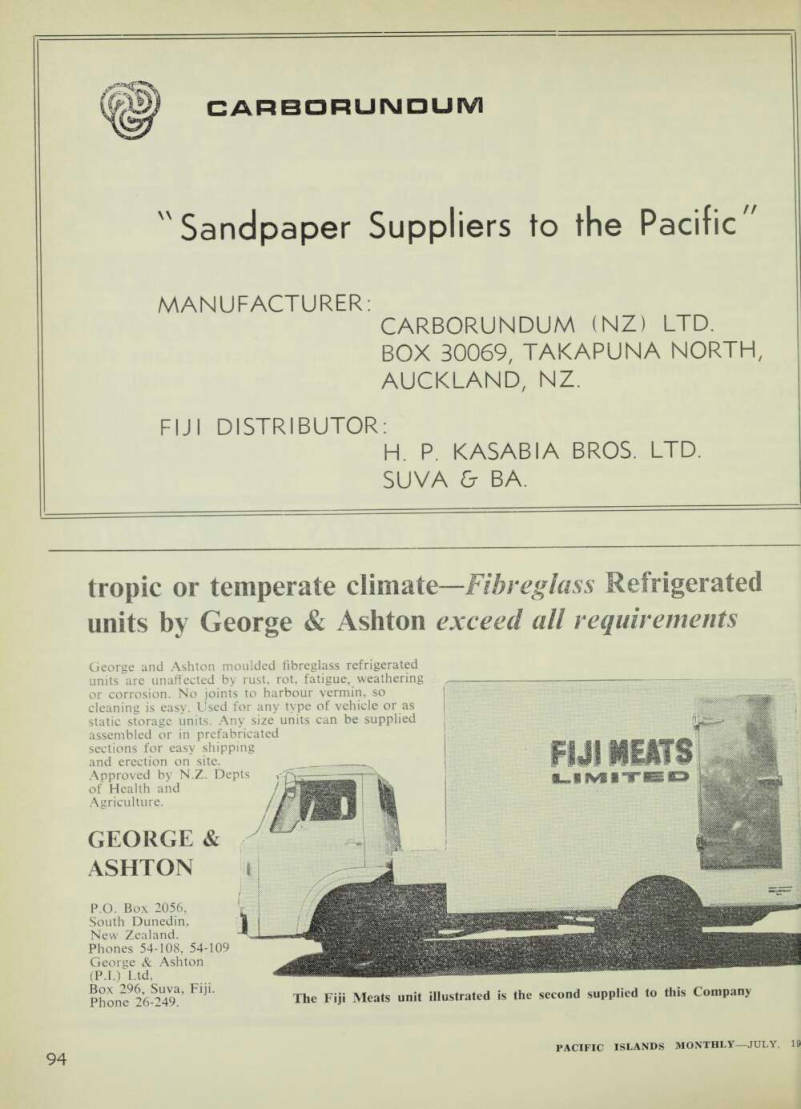 104
104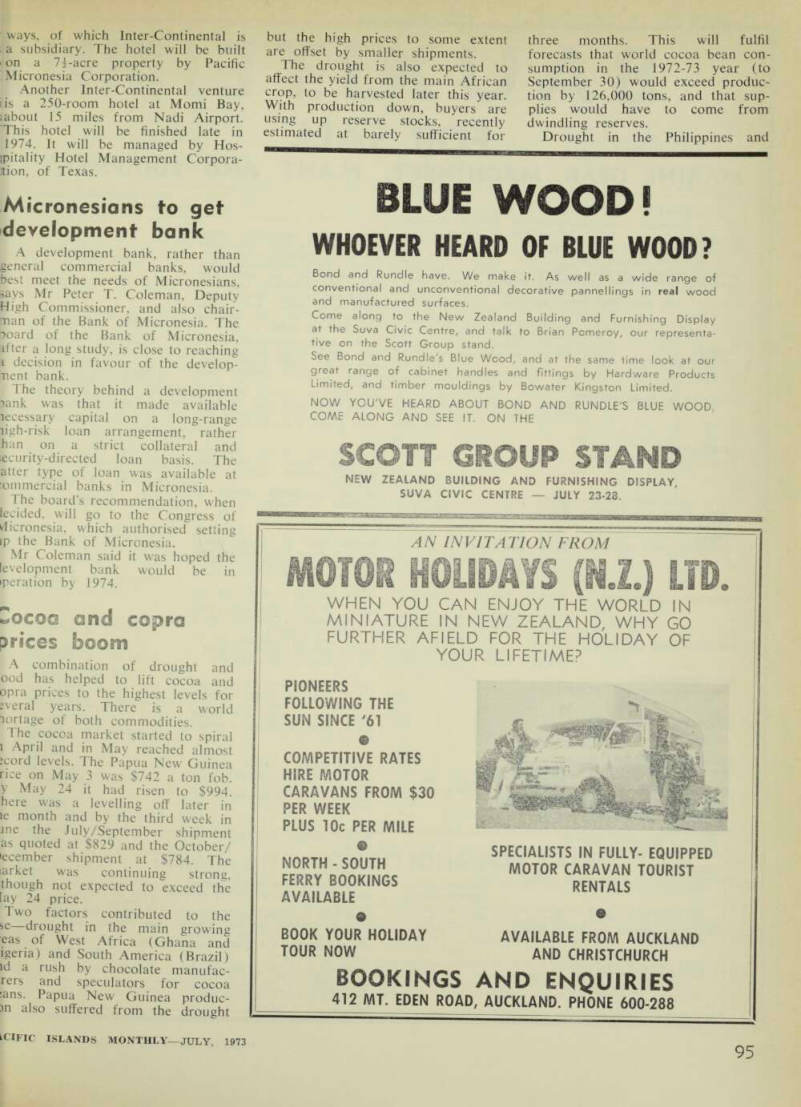 105
105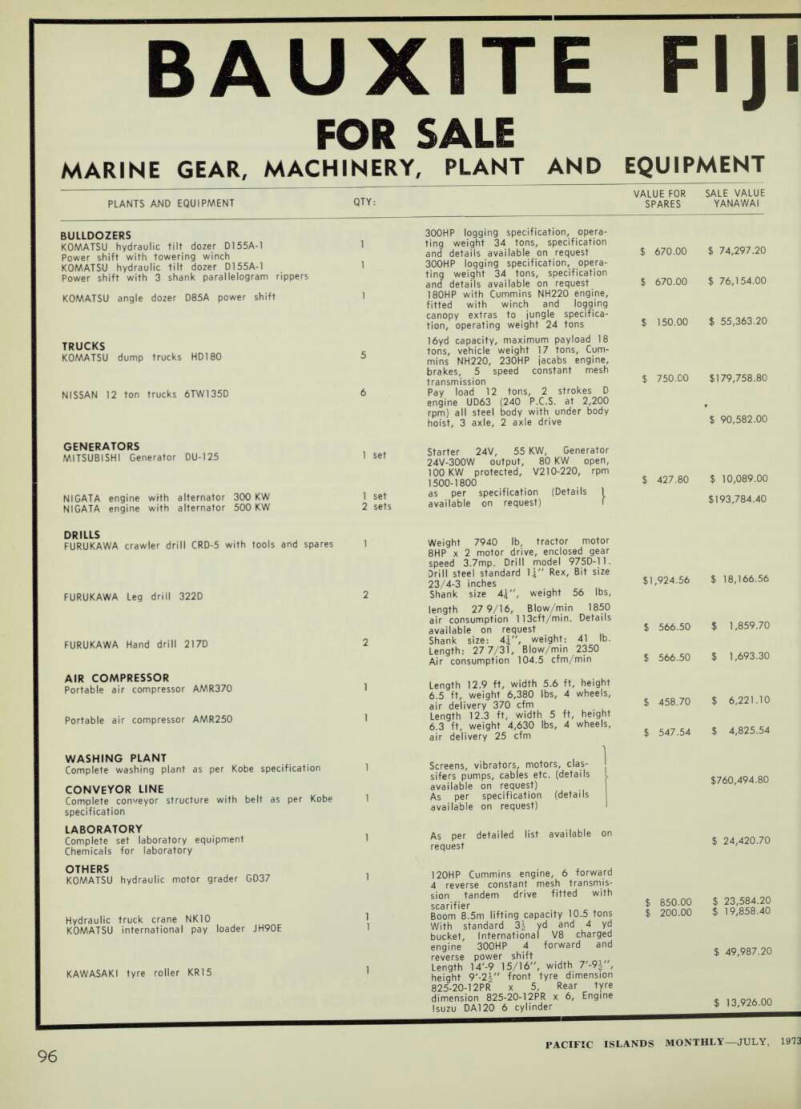 106
106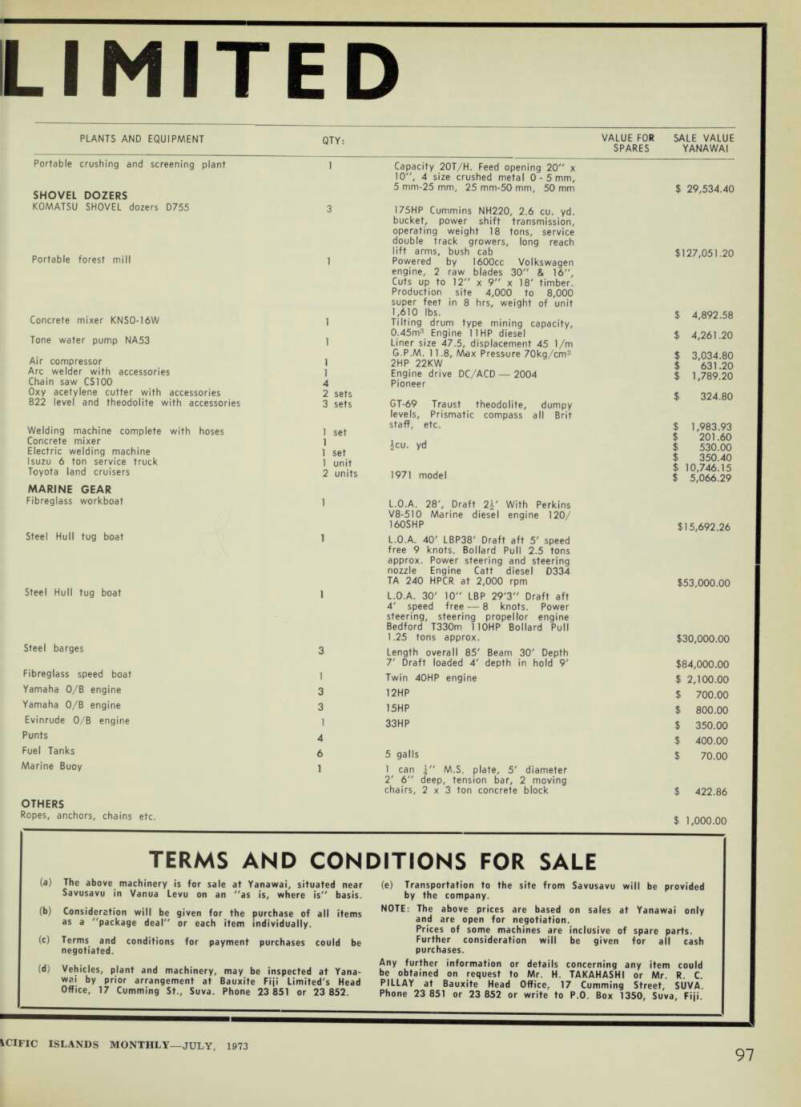 107
107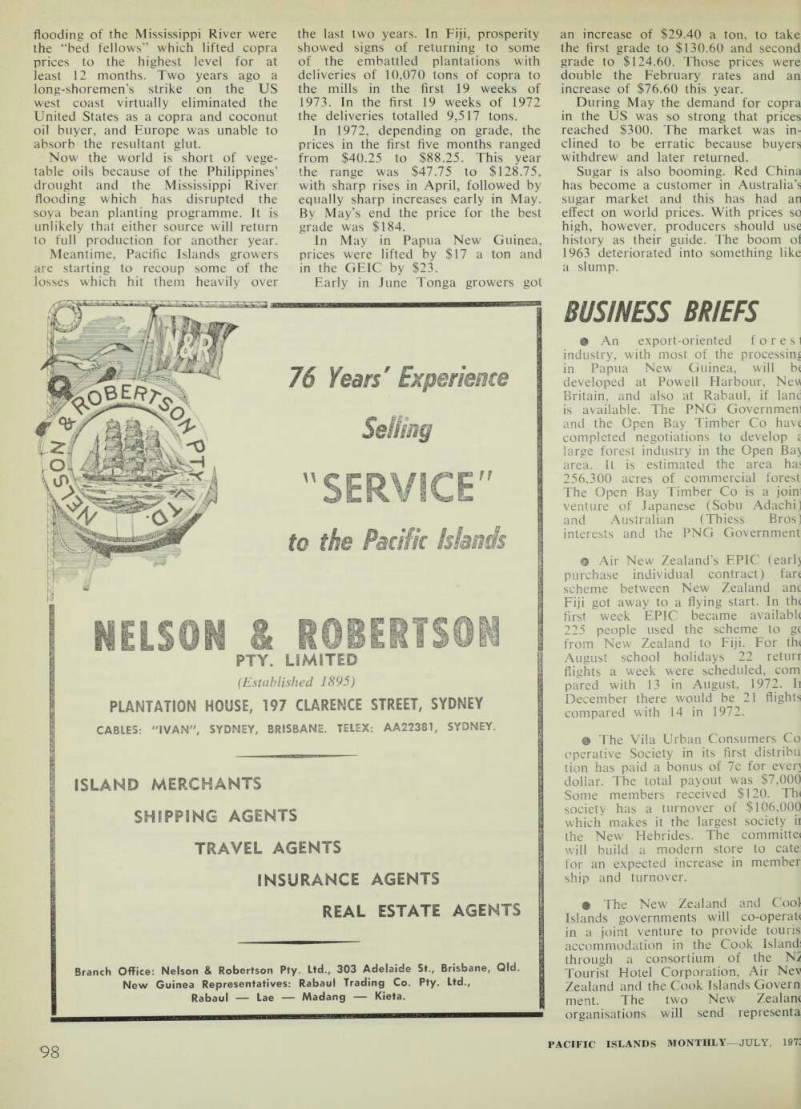 108
108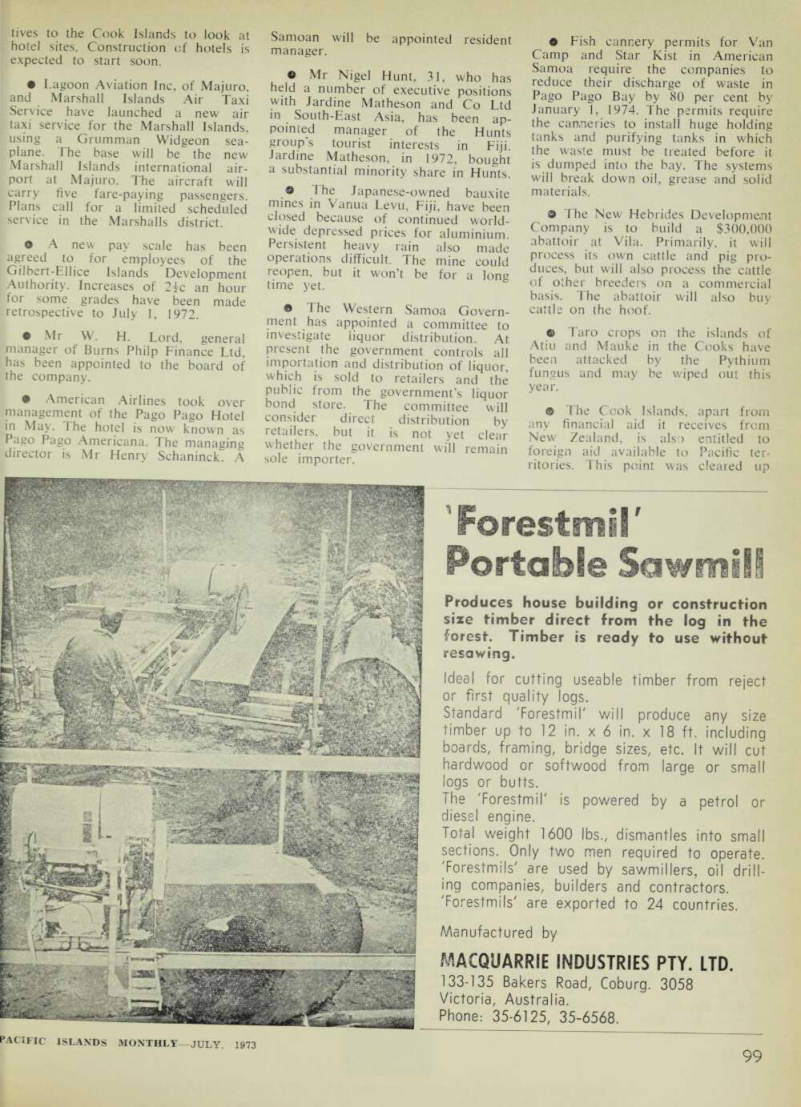 109
109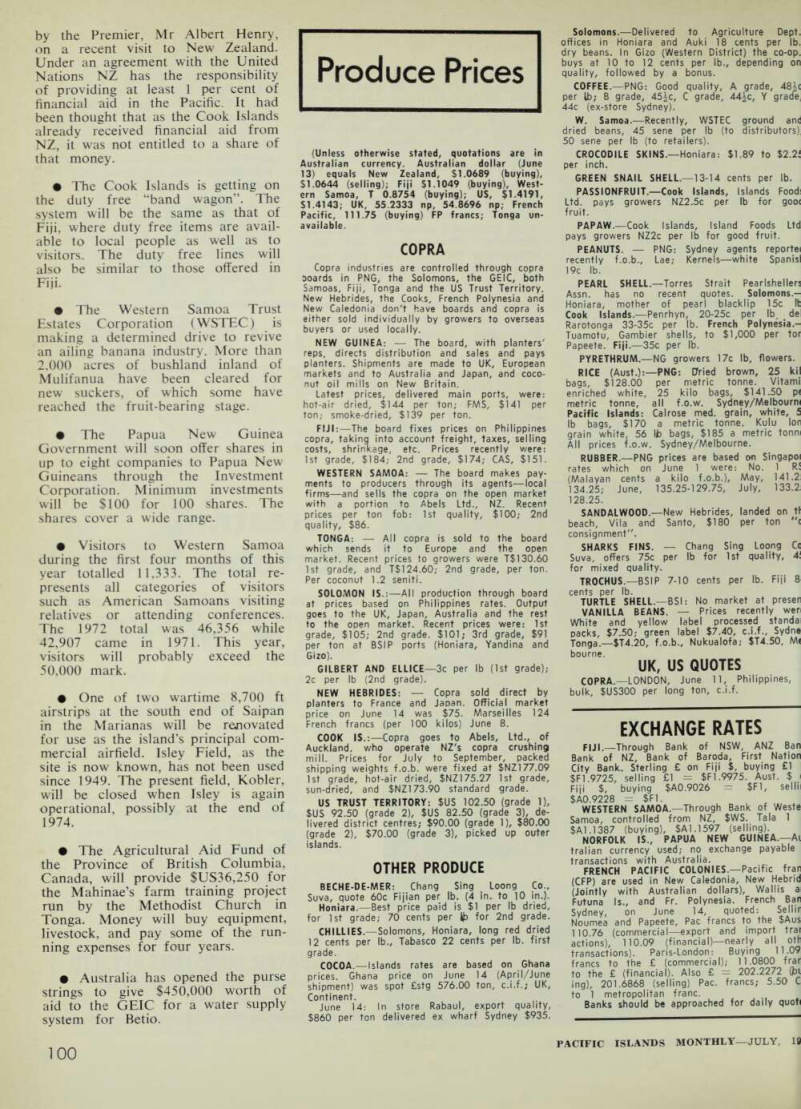 110
110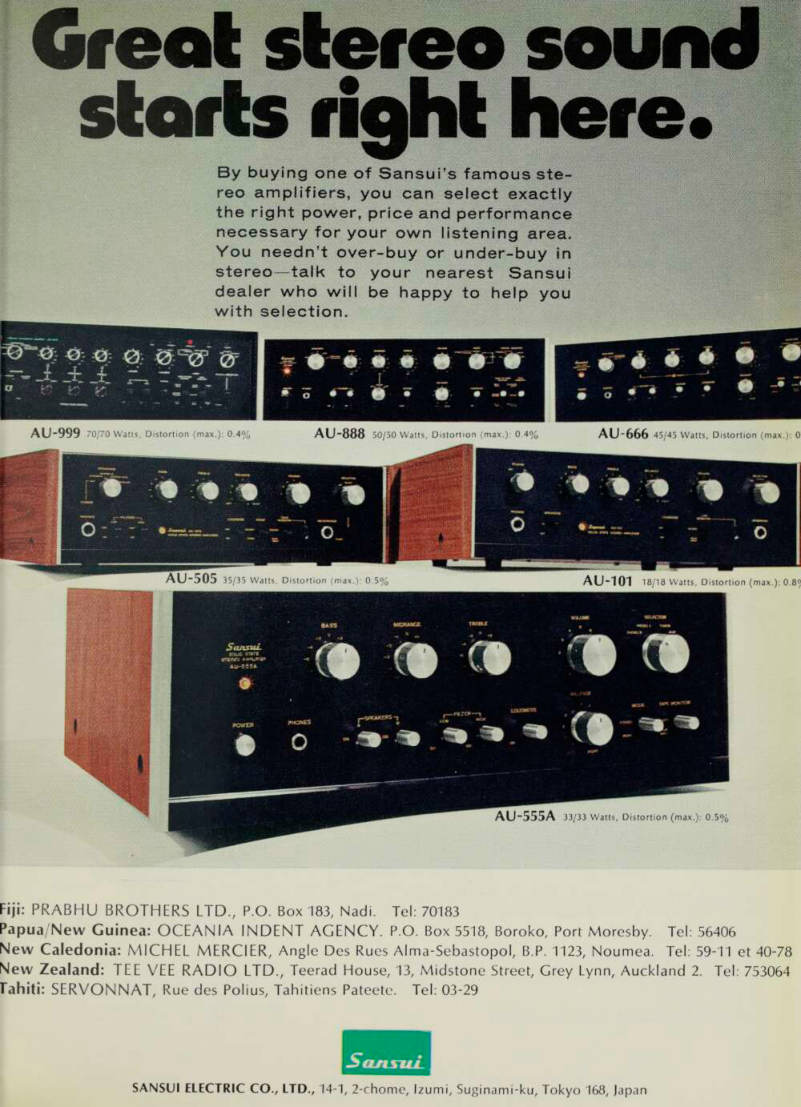 111
111 112
112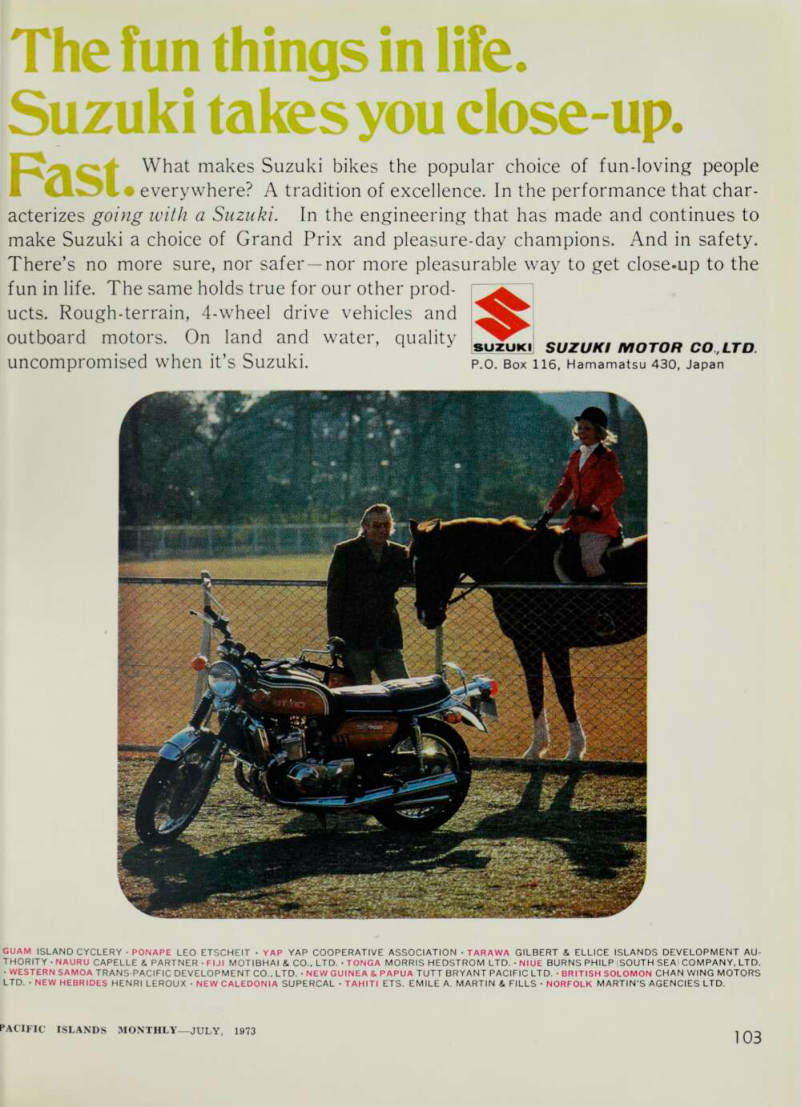 113
113 114
114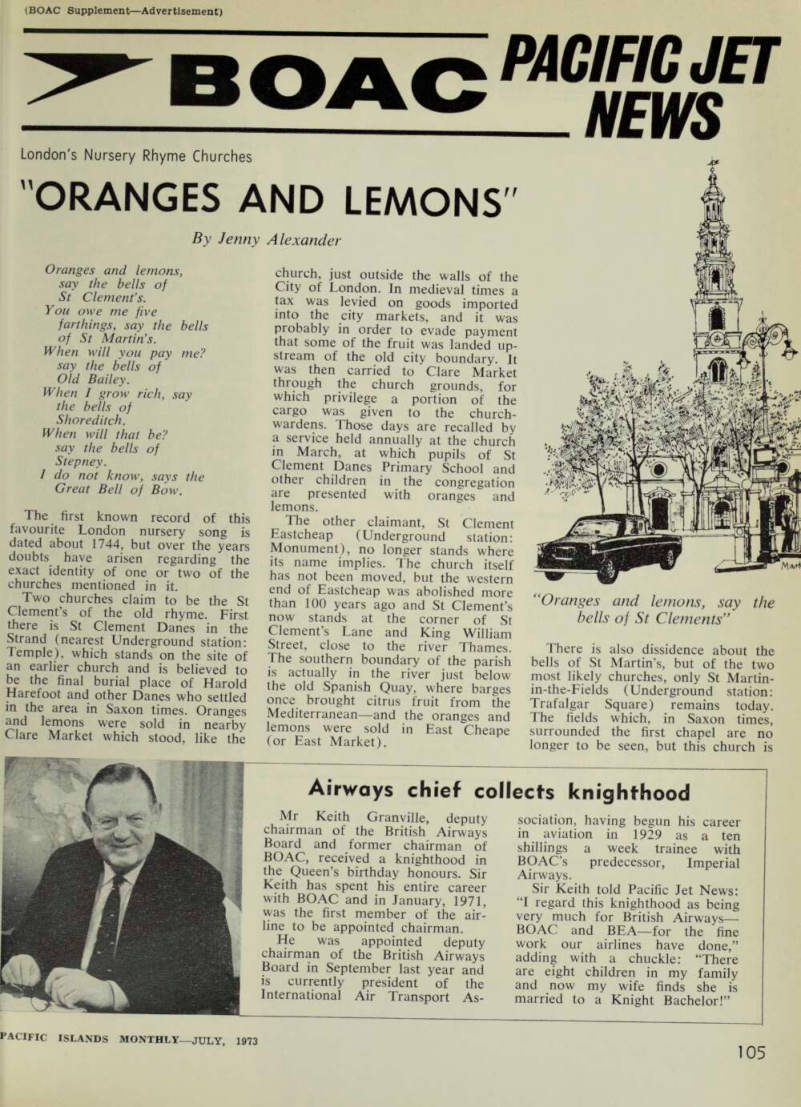 115
115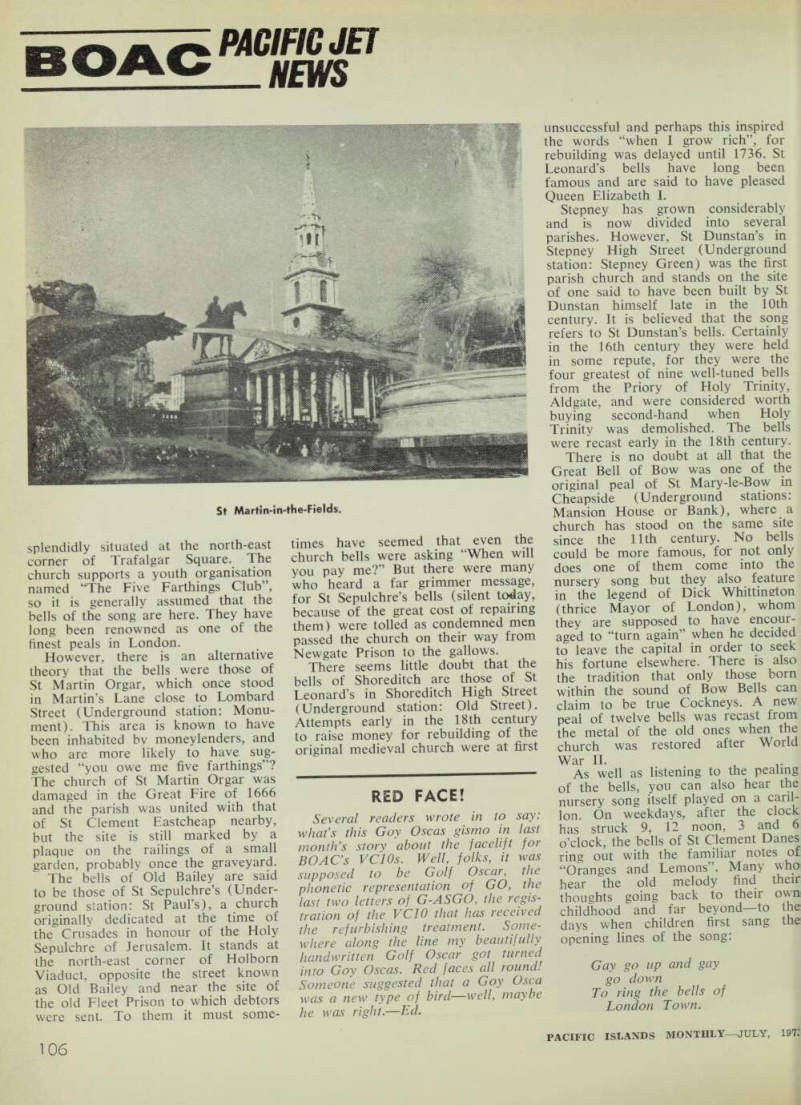 116
116 117
117 118
118 119
119 120
120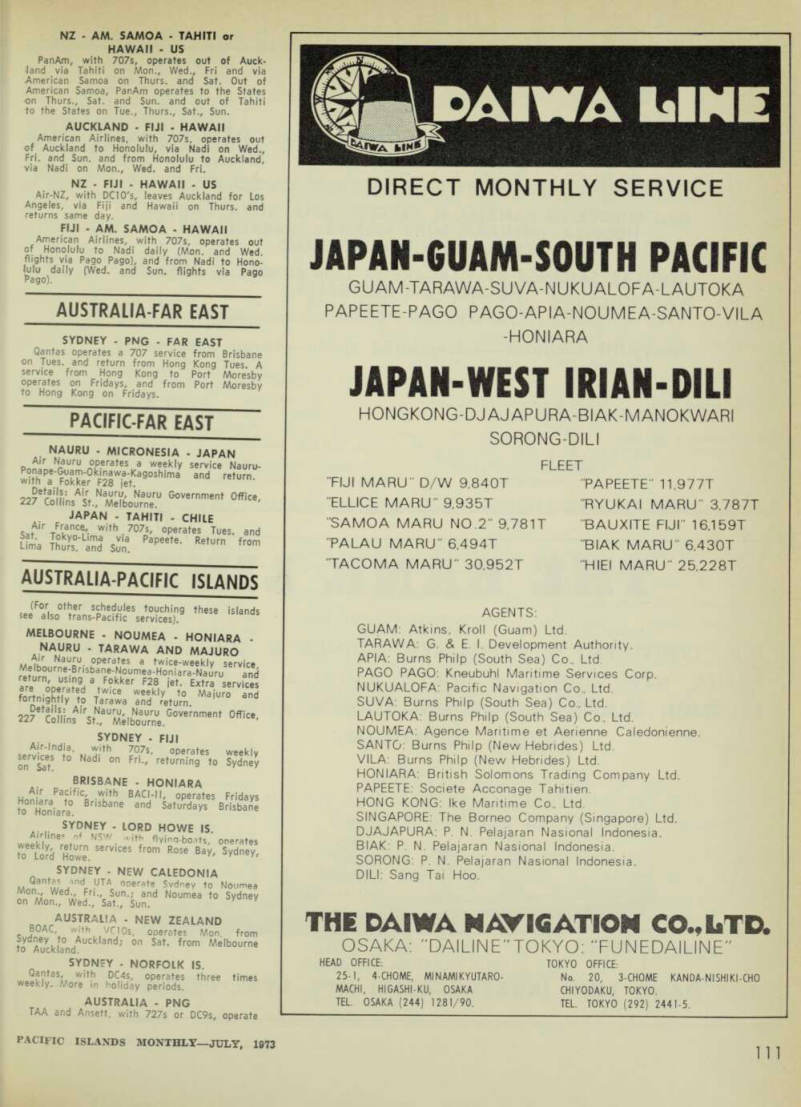 121
121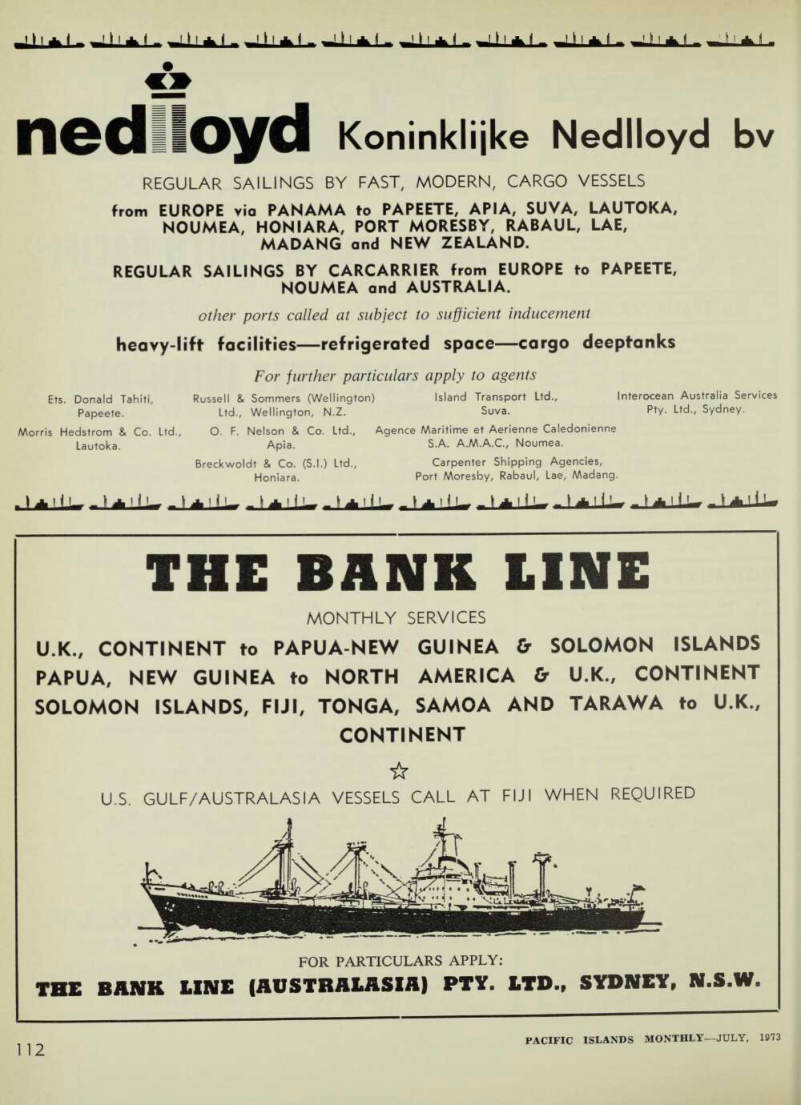 122
122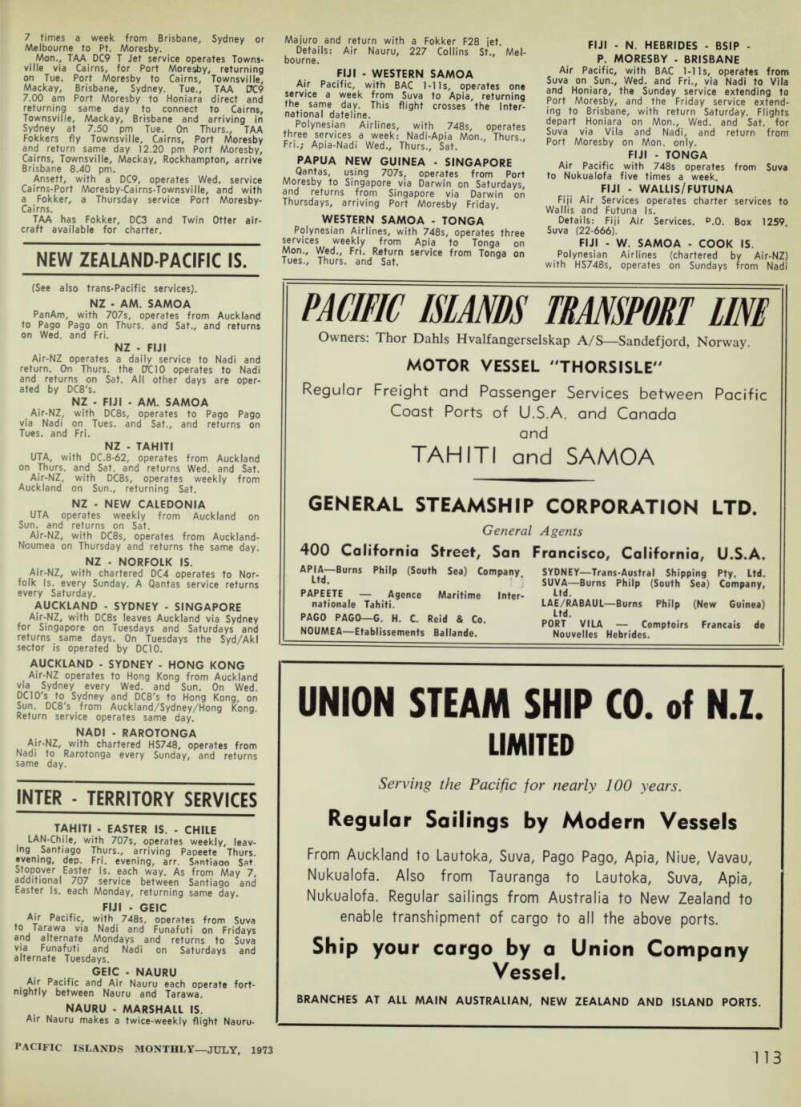 123
123 124
124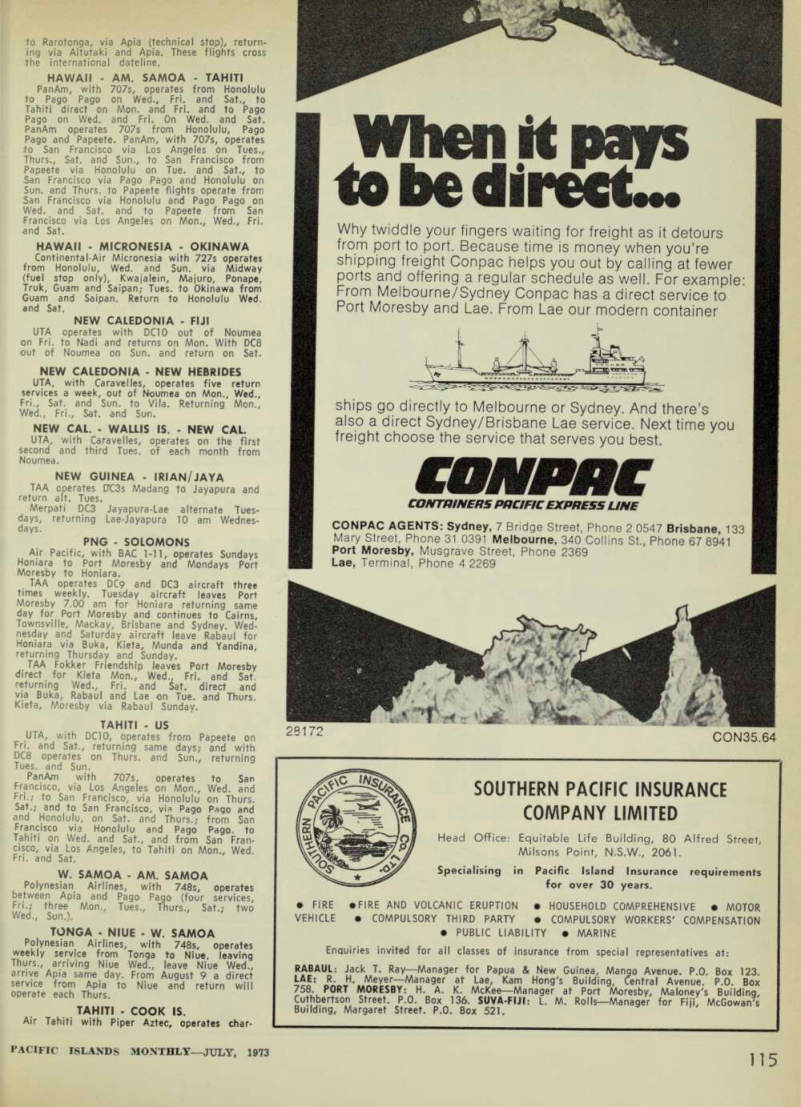 125
125 126
126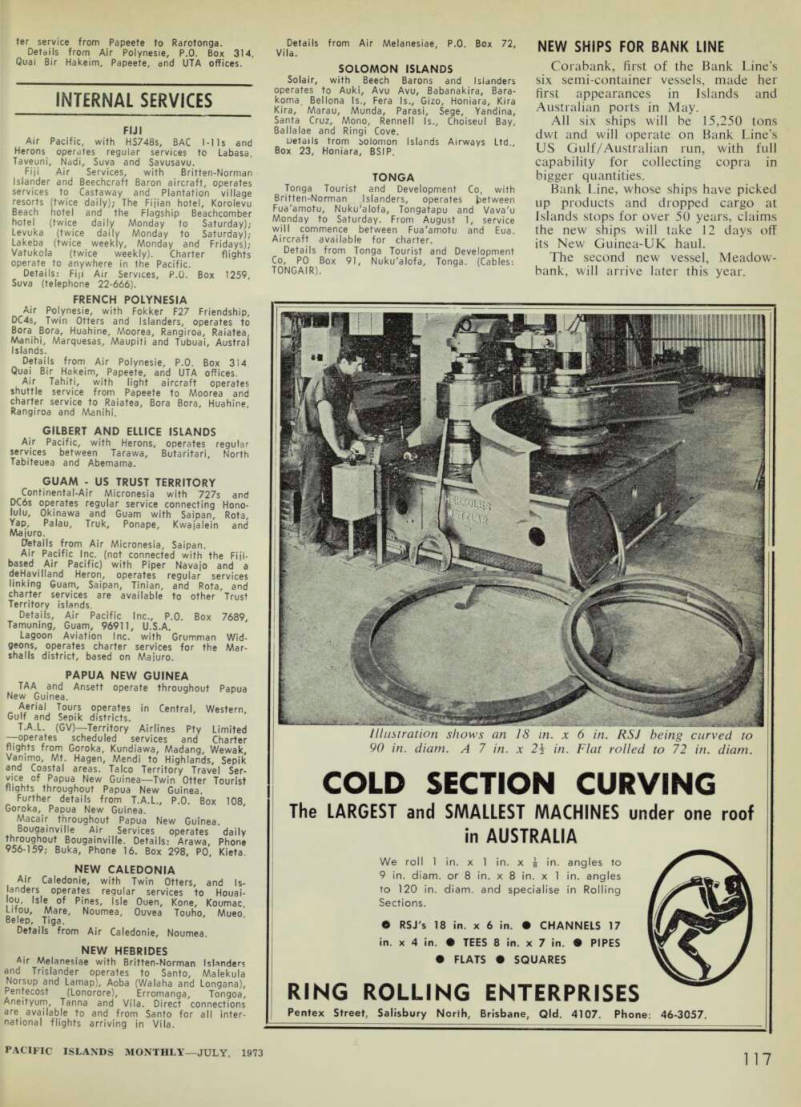 127
127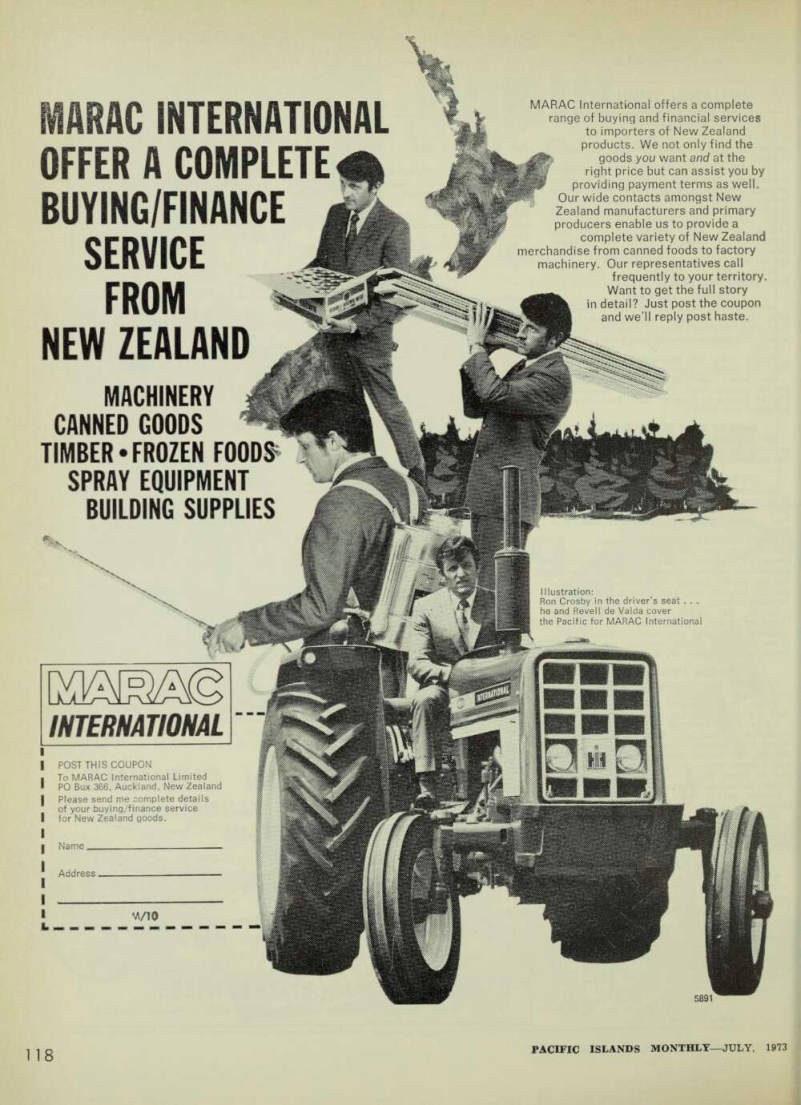 128
128 129
129 130
130 131
131 132
132 133
133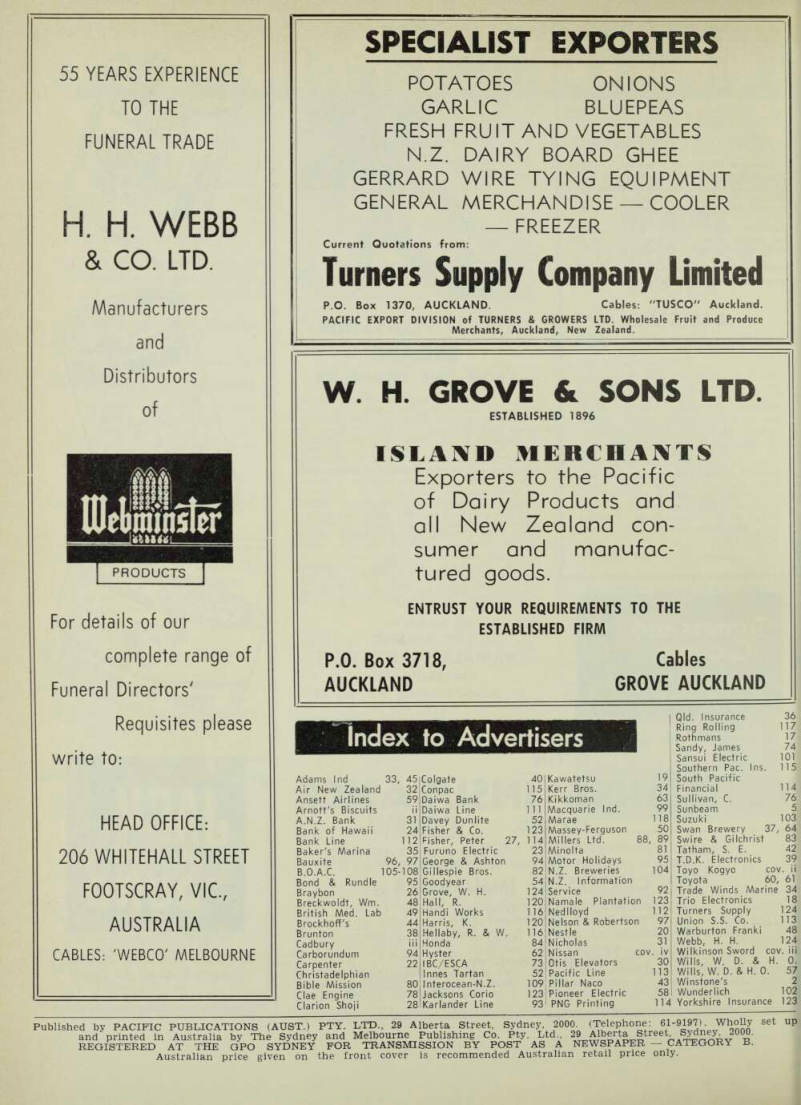 134
134 135
135 136
136