Pacific Islands Monthly
News Magazine Of The South Pacific
June, 1973
Australia, N.Z., Western Samoa 60C
P.N.G., FIJI, COOKS, TONGA, G.E.1.C., 8.5.1. P., N. HEBRIDES 50c
Nauru, Niue, Norfolk 50C
AMERICAN SAMOA 70c HAWAII, MICRONESIA $1 00
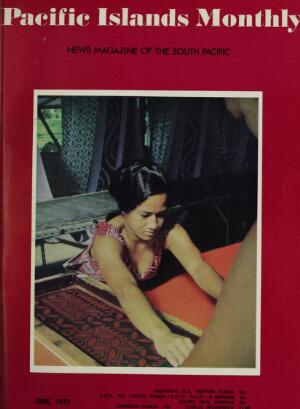
Our Cover
She's printing tapa designs on fabric at R. F. Rankin's Island Styles work shop just outside of Apia, Western Samoa. The workshop produces more than 40 different patterns on hundreds of yards of material every day, much of which is exported. All the designs are based on traditional motifs.
Advertisements & other items, pp. 2-3 (1 item)
the smallest, lightest
Introducing
system 35-SLR in the world.
■C v /W\ I 1 For years now a professional level 35mm SLR camera meant a heavy 35mm SLR camera So people who wanted the advantages of SLR’s had to bear the burden Then Olympus developed the OM-1. With the normal lens it has a weight and size at least 35% less than most other SLR’s. But we didn’t stop there.
When we made it lighter and smaller, we made it quieter and smoother too.
Original shutter-mirror design cuts noise and shock in the OM-1 to about halt the And we made it brighter. That’s because we reckoned the world’s most versatile 35mm camera system, with 38 optically impeccable lenses, a dozen interchangeable focusing screens, a complete range of macrophoto and photomicro equipment, and the lightest motor drive ever built - in total 280 pieces of top quality equipment we reckoned all that deserved the biggest, brightest viewfinder we could make. . nH After all, the Olympus OM system is going to change the way people think and feel about photography. So there’s no point in being small about it.
OLYMPUS
OM-1
Become a member of the South Pacific Creative Arts Society and participate in the surge of creative expression in the Pacific. As a member you will receive the annual book, MANA, which contains all the material published in the MANA section of the Pacific Islands Monthly, plus additional new poems, stories, reviews and comments on the arts in the South Pacific. The society is also promoting seminars, workshops, visiting artists and other activities in the creative arts.
Subscription : Life Membership $lOO Fijian or equivalent.
Foundation Membership $25 Fijian. (Available for the period 1973-75 and entitles the foundation member to a three-year membership of the society.) Ordinary Membership to addresses outside the islands served by the South Pacific Commission $4.
To addresses within Pacific Islands served by the South Pacific Commission $2.50.
A
Send your subscription to:
THE SECRETARY,
SOUTH PACIFIC CREATIVE ARTS SOCIETY,
BOX 5083,
SUVA, FIJI
Enclosed please find dollars (Fijian or equivalent) for membership of the South Pacific Creative Arts Society which also entitles me to receive the AAANA annual book of Pacific Islands creative arts.
Name
(PLEASE PRINT)
Address
A
Country
Type of membership Life □ Foundation □ Ordinary □
In This Issue
General
H Bomb for sale? 8 [Nuclear tests 8,9, 10 [islanders at Opera House 13 [Waigani seminar 14 [Burns Philp on film 15
American Samoa
[Museum housed 14 [Growth of the fishing industry 21
[Governor Haydon's plans 23
Cook Islands
.Wages rise 12 [New salaries for politicians 51 [Gloomy outlook for fruit 105
Fiji
[Master plan for tourism 11 [Vote against speaker 12 [Population increase ... 12 [lslanders at Opera House 13 Burns Philp on film 15 [The new Treasure Island 99 Potato crop controlled 103 Qantas flights foiled 107 [Chile air link 107
French Polynesia
James Boyack on the tests 8 H Bomb for sale? 8
Gilbert And Ellice Islands
[Missing fishermen found 11
Nauru
Ships purchase mystery 12 Regional shipping line move 83 New job for Kolle D 84 Work commences on Melb centre 100
New Caledonia
H Bomb for sale? 8 No women's lib 16 NZ's trade prospects 96
New Hebrides
Resident Commissioner change 12 New business fees regulations 103
Norfolk Island
Queen's visit 15 Mr Ralston dies 125
Papua New Guinea
Date for independence 5 Land for hotel 12 New DC for Bougainville 12 Airline agreement ... 12 Waigani seminar 14 Burns Philp on film 15 Dr Guise rebukes priest 15 Percy Chatterton's column 26 Lighter side of a famine 52 Murder on the Musa 57 New role for the Laurabada 90
Food prices—Rabaul v. Moresby 99 The duty-free question ... 105
Solomon Islands
Election campaigning 11 San Jorge's ghosts ... 16 Alasa'a mountain climb 16 Sixth Development Plan 45
Tonga
Islanders at Opera House 13 How Tonga has changed 39 Regional shipping line move 83
United States Trust Territory
Airline expanding 12 Talks postponed 16 Ship withdrawn from Transpac 85 Jetfoil for Guam 89 Japan's return to Micronesia 93
Western Samoa
Islanders at Opera House 13 Burns Philp on film 15 Mataafa's government takes stock 25
DEPARTMENTS: Up front with the Editor, 3; People, 12; In a Nutshell, 12; Topicalities, 14; Editor's mailbag, 29; From the Islands Press, 37; Magazine section, 57; Yesterday! 60; MANA, 69; Book reviews, 78; Pacific shipping, 83; Cruising yachts, 91; Business and development, 93; Produce, 108; Shipping and airways information, 117; Deaths of Islands people, 125; Advertisers' index, 128.
Advertisements & other items, p. 6 (1 item)
Su Lli Vans
MELBOURNE SYDNEY
C. SULLIVAN (EXPORT) PTY. LTD.,
4TH FLOOR, KEMBLA BUILDING.
60 MARGARET STREET. SYDNEY
(G.P.O. BOX 3373).
AUCKLAND CABLES AND TELEGRAMS: “CHASULL”.
BRISBANE
LONDON
OFFERS A COMPREHENSIVE AND EFFICIENT
BUYING SERVICE TO THE PACIFIC ISLANDS
OFFICES AT;
PORT MORESBY • LAE • RABAUL • KIETA • MOUNT HAGEN • BULUMA • SUVA • LAUTOKA • NOUMEA • HONIARA • PORT VILA
SULLIVANS for SERVICE
PmPUW. petrol
Australia's best selling non-electric Iron! For reliability, ease of handling, and excellence of quality at a low price, you can t beat the HANOI. It's simplicity itself to operate—NO PUMPING IS REQUIRED. IT'S IMPOSSIBLE TO OVERFILL THE FUEL TANK and one filling does approximately 2 hours effortless ironing. Attractively finished in nickel plate. Spare parts always available. / //I THE PORTABLE OUTDOORS COOKER at a sensible price!
Twin independent burners for fast cooking. Twin tanks for double capacity. Steel case, when opened, acts as trip e-wind shield. Rustproof. Noisy or silent burners as required. Small or large porcelain enamel ovens also available separately. HANOI the lowest priced QUALITY Twin Burner Portable!
Compo Rd., Salisbury North, Ph. 47 2121
BRISBANE, QUEENSLAND, AUSTRALIA
Pacific Islands
Monthly
FOUNDED BY R. W. ROBSON IN 1930
Published Monthly By
Pacific Publications (Aust.) Pty, Ltd.,
29 Alberta St., Sydney, N.S.W., 2000.
Postal Address: G.P.O. BOX 3408, SYDNEY,
N.S.W., 2001.
Telegraphic Address: PACPUB, Sydney.
Telex 25168.
Telephones: 61-9197, 61-7101, 61-4369.
Consulting Directors.- R. W. Robson, Judy Tudor.
Chief Executives: Manager: Selwyn Hughes.
Publisher: Stuart Inder.
Director of Advertising: W. A. Gasnier.
Pacific Islands Monthly
Editor: Stuart Inder.
Assistant Editor: John Carter.
Advertising Manager; W. A. Gasnier.
Circulation Manager: Barry Badger.
Subscription Rates:
"Pacific Islands Monthly" is airfreighted to all subscribers and agents in the Pacific Islands and the U.S.A.; copies to other areas go by surface mail.
Australia (incl. Lord Howe and Thursday Is.): $6.70 Aust., Papua New Guinea: $5.50 Aust.,- Fiji, Tonga, New Hebrides, Gilbert & Ellice Islands, Solomon Islands, Nauru Island and all other Pacific territories: $5.50 (local currency); Western Samoa: $6.70 (local currency); New Zealand: $6.70 NZ; Hawaii, Micronesia and Guam: $12.00 US; US Mainland: $14.00 US; New Caledonia and French Polynesia: 1,100 United Kingdom: £3.25; Elsewhere: 56.96.
Representatives
Fiii: Pacific Publications (Fiji) Ltd., Fiji Times Building, 20 Gordon Street, Suva. Tel.: 25601- Telex: 2124. Fiji Times Office, Cnr. Vitogo Pde, d ,^ amoi Ave ' LAUTOKA. Telex: 5144. Tel.: 60-422.
Papua New Guinea: LAE, P.O. Box 227- RABAUL, Mr. Steve Simpson, P.O. Box 433 (c/- Rabaul Photographic. Tel.; 2677.) French Polynesia: Distribution—Hachette Paci fique, 10 Ave Bruat, Papeete. **•* Zealand: Pacific Publications, C.P.O. Box 2229, Auckland. 379-494. Representative: John Speddmg, Civic House, 291 Queen St., Auckland, Tel.: 379-494. oU' te n I cin 9 (,o,n: I. B. Graham, Park House, 22 Park Street, Croydon, CR9 3NP Tel • 01-6884177.
Overseas Newspapers (Agencies) Ltd., Cromwell Fulwood Place, London, W.C.I. Tel.: 01-242-0661. Cables: WESNEWS, London, DS4.
Japan: Advertising—Universal Media Corpora tion, C.P.O. Box 46, Tokyo. Tel.: 666-3036.
Victoria: Advertising—Wilke & Co. Ltd. 37 Brown's Road, Clayton, Vic., 3168 Vel • 544-8222. ?~“"V an D d: Advertising—Beale Media Services, 232 St. Paul s Terrace, Fortitude Valiev Old 4006, Tel.: 52-5827. ai L and U S. Mainland only; Mrs. W. A.
McGrath, 225 Queen Street, 178, Honolulu , c . . 96813. (bend change of address notices. Form 3579 and new subscriptions to P.Q. Box 2193 Honolulu, Hawaii, U.S.A. 96805).
Second class postage paid at Honolulu, Hawaii.
Copyright ©, 1973,
Pacific Publication* (Aust.) Pty. Ltd.
June, 1973 Vol. 44, No. 6
Up Front
with the Editor
The descendants of the Bounty mutineers who these days occupy Norfolk Island (as well as Pitcairn) don’t now claim that Norfolk was given to them by the British Crown as an independent territory.
The discovery in 1963 of the original of a document read to the Pitcairners by Captain Fremantle, RN, shortly after their arrival in Nor folk in 1856, helped blow out that furphy. Contrary to popular belief, the document has nothing to say at all about Britain ceding the island to the new arrivals.
Nevertheless, Norfolk Island was in 1856 promulgated by the Crown as a “distinct and separate settlement”, and the islanders still like the way that phrase rolls smoothly off the tongue.
“Distinct and separate”. The spirit of the mutineers burns to this day, despite the fact that as long ago as 1914 the island was made an Aus tralian territory.
Revolt has never been far beneath the surface. Not the kind of revolt that calls for clandestine meetings, in flammatory speeches and bombs in cars—but revolt against imposed authority. The history of Norfolk Island since before the turn of the century is studded with royal com missions, petitions to the Queen, de mands for referendums, objections to Administrators or Federal Govern ment ministers, to certain laws or ordinances. The common basis is the islanders’ defiance of the authority imposed by Australia without proper consultation with them.
Three recent examples of this are the decision to cut off Norfolk Island as a tax haven (which in May was confirmed by the Commonwealth Treasurer), the moves to establish an animal quarantine on the island for the benefit of the Australian main land, and the decision (which over night became a fait accompli ) to transfer Australia’s control of the island from the Department of Ex ternal Territories to the Department of the Australian Capital Territory.
The whys and wherefores of these decisions don’t matter here. The point is that the islanders believe that yet again they are being imposed upon from the outside.
Legally Norfolk Island might be a
territory of Australia (although some islanders would dispute that), but none of them believes that the island was meant to be an Australian colony.
Don’t be surprised if the recent noises of revolt on Norfolk turn out to be in earnest this time. There are serious moves afoot to have the re lationship between Norfolk and Aus tralia defined once and for all.
Norfolk is not an island state, such as Tasmania; nor a dependency and an electorate, such as Lord Howe Island; nor an integral part of the Commonwealth, such as the Northern Territory.
Norfolk is outside the Common wealth Constitution, which gives it only a backhanded reference in sec tion 122, when it says parliament may make laws for the government of any territory, and “may allow the rep resentation of such territory in either House of the Parliament to the extent and on the terms which it thinks fit”.
Norfolk Islanders don’t have the vote, or a seat in parliament, or pay Australian taxes. Without claiming to be a constitutional lawyer, I can’t see that Norfolk is anything better than a colony dignified by the title of territory, and which may or may not get a fair deal, depending on what the Australian parliament “thinks fit”.
And what is the future of this colony?
There’s also a growing view on Norfolk that the time has arrived for the islanders to decide what they want and go after it boots and all, if necessary by direct appeal to#the United Nations.
It certainly is time.
Exactly two years ago in this column I commented that Norfolk had to do some serious thinking about where it was headed politically, and I named some of the alternatives. I also asked whether the Common wealth had thought through some of the political problems associated with Norfolk.
In view of Prime Minister Whit lam’s well-publicised aversion to Aus tralia having colonies, and his moves to review the Australian constitution in its entirety, he now has the oppor tunity to discuss the future with Nor folk’s pioneers before they send up the Jolly Roger again.
Stuart Inder
Advertisements & other items, p. 8 (1 item)
taste the real
BROCKHOK
MS'
SHOW
8 oz.nu in \ \ 3 hp -t richest taste The freshest, n^ c
oV-ea>>i«nc.V
“ „dw\ched mc> lWin9 with s u s a ' a , B rockholt
I »Toa'^ a *Se V o..ea.
1 anv^' 016^' There’s value, variety and quality in
BROCKHOFF BISCUITS
5546/8x6 1 /4
New Guinea names the dates
Pacific Islands Monthly
Last month PIM spelt out the plans of Australian Minister for External Territories Mr Bill Morri son, for self-government and independence in PNG. Mr Morrison didn’t mention PNG’s Constitutional Planning Committee, which is a key to PNG’s internal constitutional problems. Here we publish a special PIM investigation into progress made by that committee.
Papua New Guinea’s Constitutional Planning Committee (CPC) has just begun an arduous “meet the people” tour of the country. By mid-August, it will have held public meetings in over 90 centres throughout every district. Meanwhile several hundred discussion groups have been estab lished through the Government Liaison Branch (formerly “Political Education”) and these report direct to the CPC their views on constitu tional issues. To help them, the groups use specially prepared illu strated discussion papers.
All this is a process designed to involve the people in formulating the home-grown constitution the com mittee will recommend to the House of Assembly early next year.
The CPC itself mainly comprises prominent government back-benchers and opposition members from all parties, led by Father John Momis (Bougainville regional who, as deputy to the ex officio chairman, PNG Chief Minister Michael Somare, is de facto chairman.) 1 l n addition to the Chief Minister, there are two other ministerial mem bers, both chairmen of previous select committees on constitutional development, but official duties have restricted their participation. 1 The CPC has its own offices, full time executive and legal officers, and three permanent consultants—two of them academics with experience in PNG and other Pacific states, and one a New Guinean law graduate, i The idea of such a committee
working independently owes much
to precedents elsewhere in the Pacific.
Experience in these other areas was (fid by the late Professor Jim Davidson, who was a consultant to the CPC until his sudden death in March. In PNG, however, the idea aas been elaborated, especially in public participation. The committee *opes that as a result the constitution
will be seen by New Guineans as belonging to them, and it will thus be more likely to avoid the fate of many independence constitutions drawn up by British Colonial Office lawyers for African countries.
But this imaginative approach has not been easy to implement.
PNG is both more populous and ethnically diverse than other Pacific states, and has a party system which, though lacking deep community roots, strongly affects the institutions of central government and has pro
duced a volatile situation between government and parliamentary op position.
Lately the CPC has developed an esprit de corps and a sense of com mon purpose, but these have been forged only in the process of long discussions behind closed doors and in two public crises.
The discussions have not yet resulted in much substantive decision making. Apart from a tentative plan for citizenship, and declared general support for new district-level govern ment, the CPC seems to have devoted most of its time to exploring the issues raised by its comprehensive terms of reference, before it gets down to the task of direct con sultation with the people.
Presumably the decisions will flow from September onwards, when the pressure will be on.
The viability of the CPC, as in most such bodies, depends on the hard work of about half its member ship of 15. But it depends most of all on its deputy chairman, Fr.
Momis, who combines considerable intellect and political ability with a deep sense of commitment to the idea of a constitution which will, in his frequently expressed phrase, “embody the felt needs and aspira tions of his people”.
Personally, he also has much at stake for, in seeking a viable frame work for PNG as a whole, he must also satisfy his Bougainville con stituents that their future lies in a larger Papua New Guinea nation, and not in any breakway movement.
The point has probably now been reached where the CPC’s survival is assured, not least because of the ex pectations it has aroused among the people. That survival has also owed much, however, to the relationship between Momis and Somare.
Although unlike in temoerament and other ways, both are essentially
nationalist and democratic in out look, and respect each other’s qualities. Their ability to get along has certainly helped the CPC to emerge strengthened from its two major crises.
The first of these had its origins in a row during the March meeting of the House of Assembly over the timing of independence (PIM, April, P 8).
Bitterly resenting the defeat of its attempt to put back the date by referring the matter to a referendum, the opposition United Party made it clear in the lobbies of the House that it would retaliate by boycotting the CPC—a tactic it had already used to delay the formation of the CPC last year.
The “official” pretext, however, was a complaint about the operation of the CPC, especially the role of its advisory staff, and allegations that the government was using the CPC as a “rubber stamp”. The United Party called for an additional con sultant to act as a kind of watchdog.
It made no attempt to substantiate these allegations after Fr. Momis denied them in detail.
It later appeared that they stem med less from any genuine grievance about the CPC than from suspicions which may well have been sown by advisers to the Leader of the Op position, Mr Matthias ToLiman; and to the discontent of Mr Tei Abal, who is a CPC member, at the govern ment’s failure to recognise his status as Deputy Leader of the Opposition by providing him with a personal assistant.
Thus the dispute was settled by an agreement that Mr ToLiman should receive regular personal briefings similar to those provided the Chief Minister, and that Mr Abal could have an assistant who might also advise other United Party members, outside the CPC, if they wished.
Fr. Momis and most members, how ever, preferred the CPC to continue to work as a team and to be served by its staff accordingly.
The second crisis arose when Aus tralian pressure to increase the pace of constitutional change became such
that the CPC believed it was being virtually ignored.
It issued a statement strongly con demning the Australian attitude, and the apparent willingness of officials in the Chief Minister’s Office to go along with it.
Matters came to a head when the Australian Minister for External Ter ritories, Mr Morrison, insisted on holding constitutional talks on April 28 despite requests from PNG for their deferment because there had been too little time to prepare for them. The CPC’s representatives withdrew in protest.
Fr. Momis also complained that in pushing ahead with power trans fers and other matters, officials were seeing problems only in “bureau cratic, legalistic and technical terms”, at the expense of important political considerations, and that some had never accepted the CPC.
In a reply marked by its concilia tory tone, the Chief Minister thought that the CPC had over-reacted to the talks and said that no firm agreements had been made.
While generally defending his officials, he did not deny some specific charges relating to the hold ing of the talks. He did deny another charge that officials had tried to undermine his confidence in the CPC by criticising it.
Underlying this public row, two issues stand out.
First, it is clear that the CPC was worried from the start that, as powers were transferred and began to be exercised in advance of con stitutional decisions, its options could be pre-empted, and vested interests created even in temporary arrange ments.
Conservative members, who did not want things rushed anyway, were thus joined by their more radical col leagues who wanted to examine the scope for making conditions more suitable for PNG.
The ministers, on the other hand,
growing in confidence, seemed coi tent to go along with bureaucrat! planning in the course of havir their powers extended. From the viewpoint, the CPC appeared undul obstructive. The government coul not stand still waiting for a coi stitution. The CPC’s stand must : times have seemed unrealistic.
However, there are perhaps ev« greater dangers for the government and the country—if, in getting ( with governing, the government n only ignores the opposition, but al: grows remote from its own bac benchers.
There has been recent evidence this, both in the United Party reactu to the timing of independence, ai in the announcement that a numb of coalition supporters in the Hou were involved in starting a ne party.
Secondly, the Australian Lab Government never accepted the id implicit in the declared timing self-government as “December 1973, or as soon as possible thei after”.
It decided firmly for December and the PNG ministers apparem agreed on this date even if the cc stitution would not be ready. Wh; ever New Guineans believed, Ai tralia saw the constitution as son thing for independence, and Decern! self-government would open the w for independence in mid-1974 whatever the internal opposition mij be.
But from the joint communiq which was issued following furtl talks on May 19 at which the Cl was fully represented, it is now cb that the PNG Government has co to a compromise with the CPC, a that Mr Morrison has seen the nec sity to accept it (See time-table, p vious page.) Under a two-stage formula, forr self-government will be introduo in December, with few instii tional changes, and then comple;
When independence comes to Papua New Guinea, one of the country's closest friends could be New Zealand whose Prime Minister, Mr Norman Kirk, has made early contact with Mr Somare and promised assistance. This picture was taken when Mr Somare called on Mr Kirk in Wellington in April and presented him with this carved tribal mask.
Photo: NZ Information Service.
in May, 1974, with the new consti tution.
Furthermore, the Australian Parliament, instead of enacting the constitution itself, will be enabling the Governor-General to assent to the constitution already passed by the House of Assembly next April. It is a welcome approach, which re cognises the New Guinean desire for a home-grown constitution whilst en suring the legal validity of the process.
As for independence, the com munique mentions that the constitu tion will include provisions for the transition period. Australia will un doubtedly still push for 1974, but it may now have to accept a date at least a few months later than it would have preferred.
In the task of constitution-making there is, meanwhile, room for more co-operation all round.
Some New Guinea ministers do not seem to have fully grasped what the CPC is all about; although, in the long run, Mr Somare has re mained faithful.
At various times, some bureau crats have been opposed to it, and the United Party suspicious.
The CPC has not helped by keep ing so much to itself. Its motives ap pear to have been the desire to main tain freedom of action and to avoid undue pressures. But the contacts it has assiduously cultivated with the people at large have been sadly lack ing in respect of both government and opposition leaders not immediately involved in its work.
Remedial action will be needed if unbridgeable gaps are not to open up when the CPC’s proposals start to come forward later this year.
And there is also an obvious lesson in all this for the Australian Government.
By pushing too hard and too avertly, it in no way helps the Papua New Guinea Coalition Government, md belies its declared wish to be rid )f the colonialist image.
Papua New Guinea will be indepen ient soon enough, but it will become 10 with harmony only if Australia larnesses the mood of change, ather than pushes it to intolerable imits.
Independence
Timetable
The June meeting of the PNG House of Assembly will be asked to ratify the following constitutional timetable, which was agreed to by the PNG and Australian govern ments in Port Moresby in May; December, 1973: Formal self government will be introduced by amendments to the Papua New Guinea Act passed by the Australian Parliament.
February, 1974: Final report and draft constitution of the Constitu tional Planning Committee to be tabled in the House of Assembly.
The constitution will include pro visions for the transition from self government to independence.
April, 1974: House of Assembly in special session to consider and adopt the constitution. The bill will be reserved for assent by the Australian Governor-General.
May, 1974: Australian Parliament will remove from the Papua New Guinea Act those parts which have been in cluded in the PNG constitution as adopted by the House of Assembly.
The Governor-General will assent to these changes and to the PNG con stitution.
Busy Png Cabinet
From a Port Moresby correspondent An annual bill of $3O million for he Army was more than PNG could [fford, Chief Minister Mr Michael >omare said after a Cabinet meeting lad agreed on the position to be aken by PNG in resumed talks on lefence with Australian officials.
Cabinet had agreed that planning
(Continued on p 125)
after independence should be on the basis of a defence force separate from the police, Mr Somare said, but it was unlikely that a third battalion would be raised for the defence force.
Facilities and services would be shared with other government agen cies such as civil defence and the fire services whenever practicable.
Papua New Guinea has adopted a set of principles covering a new mining policy which will be incorpo rated in legislation. Main points in the new policy are a tax of about 50 per cent on profits from large mines, elimination of long tax holi days, a proportion of royalties for landowners, options for the govern ment to buy into major mining ven tures, use of locally produced goods and services in mining projects, and training and employment of local people in mining projects.
The government has accepted an offer by the Peru Government to provide technical help in developing the OK Tedi copper mine near the junction of the borders of Papua, New Guinea and West Irian. They will advise on geological, engineer ing and financial aspects of a pro posal by Kennecott Corporation to develop the mine.
PNG’s Transport Minister Mr Bruce Jephcott has warned European owned trucking companies that their businesses would be “localised” if their drivers were involved in attacks on weighbridge station officers.
The warning came after a weigh bridge officer had alleged that two officers were shot in the legs on the Lae road near Goroka by a Euro pean riding “shotgun” on a truck.
The shooting was said to be one of many incidents in a war between truck drivers and weighbridge officers attempting to stop trucks to weigh them. Overweight trucks have been blamed for breaking up the road surface.
Helicopter Res C U E.—An
irmy helicopter from Lae was called n to rescue 12 people from a launch vhich was breaking up in heavy seas • n Mitre Rock, near loma off the north :oast of Papua about the middle of tfay. Eight men, three youths and >ne woman were in the launch, the ►0 ft Kauri. No one was injured, >ut the launch was badly damaged md unsalvageable.
Advertisements & other items, p. 11 (2 items)
7
*ACIFIC ISLANDS MONTHLY— JUNE, 1973
*cold stores
BRAYBON
PORTABLE POWER
FOR
*cold stores
refrigeration
appliances
* milking
machines
plant
BRAYBOM^'''—
PORTABLE PETROL ELECTRIC SETS
POWERED BY
FOUR CYCLE INDUSTRIAL ENGINES
DOMESTIC APPLIANCES
T.V. AND POWER TOOLS
MODELS AVAILABLE:
1 K.V.A, 240 Volt 2 K.V.A. 240 Volt 3i K.V.A. 240 Volt 6 K.V.A. 240 Volt 7* K.V.A. 240 Volt Write for obligation free brochure and C.I.F. prices Pacific Islands.
DIESEL ENGINE POWERED SETS ALSO AVAILABLE. CAPACITIES 3 K.V.A. TO 25 K.V.A. AT SHORT DELIVERY
Braybon Bros
PTY. LTD.,
2 ROTH WELL AVENUE, CONCORD WEST 2138 Tel.: 73-3246.
Bomblasts And Fall-Outs
Between Pacific Friends
Pressures, by boycott and court action, to persuade the French to abandon their nuclear tests are being exerted from all over the Pacific. Below Jim Boyack, author of PlM's regular Tahiti Letter, reports on atti tudes from inside French Polynesia.
As likely as not. Premier of the Cook Islands, Albert Henry, will stop the shipment of manure to Tahiti.
He has already disallowed the arrival of Tahitian rugby players in the Cook Islands. The Cook Islands Premier, through the good offices of has departmental secretary, gained for himself the privilege of being the first to punish the French Polynesians for the nuclear tests expected to take place in their backyard soon.
Two mid-May air charters from Tahiti to the Cooks at the last minute were denied permission to land, in the words of a Cook Island govern ment telegram, “pending outcome of international activities concerning nuclear protests”.
It must be assumed that the inter island schooner “Manutea”, the mari time link between these nearby ter ritories of Anglo-Saxon and French Polynesian cousins, will have its Tahiti run cancelled for the same reason. Tahiti will thus be denied its regular shipment of natural fertiliser, just as it is no longer receiving Aus tralian meat, rice, milk, butter, flower, sugar and animal foods, etc (thanks to the Australian dock workers’ nuclear boycott).
Most Tahitians don’t understand why. Those who represent more than 80 per cent of the unionised work force here have expressed their dis satisfaction by organising a counter boycott which, at the moment of this writing, has affected only Qantas Airlines. The 51 sections of the French Polynesian Trade Union Federation voted 50-1 (only the teacher’s union dissented) to strike back in kind (blow for blow) at boycotting countries, wherever in the world they may be.
For the moment, only Australia among the major powers is boycotting France. The result is that UTA-French Airlines planes are by-passing Sydney, while the Qantas flight between Mexico and Australia, which usually refuels in Tahiti, is getting back and forth via Fiji and Honolulu.
New Zealand and Fiji seem to be waiting for the International Court at the Hague to rule on the French tests before they fall into the boycott
parade. (Their boycott should be effective before this is printed). Anti test industrial action in either of these countries would result in UTA’s over flying them.
It would also bite into the $7 mil lion export trade (1972) from New Zealand to Tahiti, and force Air New Zealand to fly from Auckland to Los Angeles on a route other than that which leads to a counter-boycotting Tahiti.
The local union action is not unanimous.
Several unaffiliated unions, in ad dition to the teachers, have expressed dissatisfaction with the federation’s counter-boycott. Those who oppose it include the piece work dock workers. They are linked by contract to the two largest French unions which have come out in support of the Australian anti-test action. Two taxi unions also condemned the federation stand.
Interestingly, unlike the French unions, the dissenting groups here did not express opposition to the tests themselves. They left that end of the disaccord to French Poly
nesia’s National Assembly Deputy Francis Sanford. In Paris, Sanford on several occasions in recent weeks, loudly protested the Polynesian fire works. He asked Prime Minister Pierre Messmer in writing whether or not the tests would be halted, saying “they endanger life and com promise France’s position in this part of the world”.
Following up the French theme that the tests are innocuous, he re quested the French government leader to transfer the nuclear programme to the metropolitan part of the republic.
A few days later the Paris National Assembly debated the whole subject of atomic dissuasion as it related to France. This debate allowed the State Secretary for Defence to make the first official confirmation that France was going ahead with its Pacific ex periments.
Sanford jumped in at the end of the argument to express fears on behalf of the populations which live within a 230-mile radius of the point of explosion, notably the Gambiers.
Senator Pouvanaa A Oopa joined his
legislative colleague later in May by writing an open letter to the French people. The letter repeated Sanford’s idea, expressed to the Prime Minister the week before, of a national referendum on whether the French people were agreeable to nuclear tests in their own country.
In this context of French Poly nesian protestation (Sanford tech nically represents 54 per cent of the local population, if the results of the election three months ago in which he was re-elected are a barometer), President Charles Taufa’s union federation took its very firm stand against all boycott of French goods, communications, etc.
But it took the federation two lengthy communiques (separated by several days of pro and con news paper debate), a radio statement by Taufa in Tahitian and French, and a television discussion in which Taufa occupied centre stage, to clarify the federation’s exact reasons for the counter-action.
In a further explanation for my thick head, Taufa said, “Their [the Australians] boycott only affects the Polynesian and Caledonian popula tions. It doss not hit the French state directly. This is the only reason for our counter-boycott.
“If the Australian unions cannot understand our position and do not cease their action against us, then we must conclude that they have motives other than French nuclear tests; that their motives are more political than environmental; that the tests are only an excuse.”
Then he weighed in with the cruncher that finally aroused me from my naivete: “And if this is the case, then they are provoking a second Pritchard affair.”
George Pritchard was a local mis sionary turned British Consul who did his best for several years until 1842 to stop France from establishing a protectorate over Tahiti. This foreign affairs hassle incredibly quickened the fall of King Louis Philippe and with him the end of French monarchy. The French even tually arrested this first Anglo-Saxon to oppose their Pacific presence.
Delicately-diplomatic French being a problem for me, I did not under stand the counter-boycott announce ment communique paragraph which said, La Federation des Syndicates de Polynesie Francaise believes that the attacks of which France is currently the butt on this point (the tests) hide, in fact, a deliberate desire to hinder the economic development of French Polynesia.
It should have occurred to me that who says “economic” means “political” in a place like Tahiti, (Continued next page.)
without natural resources or one substantial industry.
The CEP is French Polynesia’s eco nomy. It pays salaries to about 2,500 people, supports another 500 through contracts with private companies and is eventually the basis for almost every exchange of lucre on the island.
The “Pritchard” clarification came as a verbal footnote to the federa tion’s second communique. It some what contradicted Taufa’s earlier statement to me that the counter measures were motivated not by politics, but because of economic hardships which the Australian and a possible New Zealand boycott would impose on the Tahitian worker.
I say “somewhat contradicted” because Taufa did make it clear that his unions’ action must not be con structed as a political position in favour of the tests. “We’re neither for nor against the bomb,” Taufa said.
“We only want to defend the interests of the French Polynesian worker. He is the only one who will suffer from the boycott of foodstuffs and other necessities.”
He explained that those French military here responsible for the tests are, for the most part, fed for free with stocks directly imported from France. Any food shortages caused by anti-test boycotts would mean higher prices (such as for emergency meat imported from the United States) for the salaried consumer. The merchants are allowed a 25 per cent mark-un no matter what their cost price. The boycott for them would be at most a paper-work inconvenience, even a mini-boom because 25 per cent of a higher price is a larger profit.
Taufa stressed the fact Pacific Experiments Centre (CEP) personnel
would be little affected, and he called on the Australian boycotters to cease actions which affect the Pacific.
“Let them protest wherever and however they want. Let them go to the Hague, sail to Mururoa, take action against Metropolitan France.
But they must face our reality and leave us alone in the Pacific. We do not contest their right to protest in any other way.”
The seven small dissident unions of dock workers and taxi drivers, associated with Francis Sanford’s autonomist movement, took the op posite view of the economic repercus sions of Pacific basin boycotts.
They said in a newspaper release that they were convinced that Aus tralian and New Zealand workers intended “neither to attack the local worker nor to compromise his stan dard of living or his interests”. Such is their economic politics.
There were sidelights to the boycott argument. The local union federation, sensing itself out of step with the world labour movement, sought to communicate its exact position to the Australian confederation. To this end they were preparing a lengthy resume of the position which led them to decide on the counter-boycott. This they were going to mail to Australia, but I had the inadvertent misfortune to mention to the union official who told me this that there were no more mail planes to Sydney. (I did not have the indiscretion to go so far as to say this was in part his federation’s fault.) This surprise revelation led to the alternative decision to telephone the Australian unions. The federation took measures to leam the appropriate Sydney telephone numbers from the horse’s mouth, but thus alerted the
Sydney union horses that a call could be expected from Papeete. At the last minute it was decided that since the Australian unions now knew the Tahiti people wanted to come to end-the-boycott terms, the Australians could damn well telephone Tahiti themselves! After all, it was reasoned, they started the fight!
Another incident concerned the New Zealand Attorney-General, Di Martin Finlay, who spent two hours in Tahiti on his way to the Hague to seek an injunction against the French tests. He arrived here incognito two hours after the Aus tralian boycott, and thus the counter boycott had become effective. Finlay spent a secret two hours at Faas Airport, during which one membe of his party asked for but could no receive an out-of-stock item at th« Duty Free Shop. Owner Madami Pelletier, confirming with an ANi official that the man was a VIP, wa distraught. She decided to give, a free gifts, small silver spoons witl Tahiti inscribed to each member a the party to compensate for the om man’s disappointment. The gifts wer accepted. A witness to this seen swears Madame Pelletier was ir formed only afterwards of th attorney-general’s identity and des tination!
Footnote: Territorial Assembll President Gaston Flosse, in Franc with a Gaullist mission (which e* plained to journalists the simple log:; of why the CEP must stay), cok firmed —the first French official tf do so—that Eiao Island, in th Marquesas, is being prepared fo underground nuclear tests at tli soonest moment. This was fin reported here in this column lac year.
'We’Re Neutral , Say Pitcairners!
The people of Pitcairn Island, all 80-odd of them, have declared their neutrality amid all the schemozzle over the French nuclear tests. Their homes are less than 1,000 miles from the test zone. If anything went wrong with the big bang, they might get the lot but they refuse to join the millions of protesters.
In his weekly radio chat on May 8 with the Voice of Prophecy, the Seventh-day Adventist Church's international radio production centre in California, Tom Christian reported the arrival of Fri, the nuclear test protest yacht, which is on the way to the test zone.
Fri, with 10 men and three women on board, reached the island with a leaking hull and faulty motor. Repairs were needed and the islanders agreed to try to cast an engine bearing for Fri.
Said Tom, making sure the world understood the Pit cairners' position, “We're neutrals in this thing. We are helping the crew of this vessel as an international act of courtesy\ the same kind of help we would give any ship in distress. That s as far as it goes."
A Gold Lining
Even A Nuclear
Cloud Can Have
From a special correspondent
Every cloud has a silver lining, so they say. But in the case of the French nuclear bomb cloud, it is a matter of looking for the gold lining.
Of course, anyone who can make gold, even silver, out of a nuclear cloud would be inclined to conceal this lucrative fall-out from protesting observers. And since all’s fair in love and war, the best strategy is to plant decoys and send the enemy off on false tracks by talking about national indepen dence, maintaining the world equilibrium for peace, even accus ing opponents of political subver sion and lust for power.
The sale of arms is big business in France: every Frenchman dreams of having a gun and on attaining certain official posts he may even become eligible for a second one. But more signifi cantly, on the world market France is in the third position, behind the Soviet Union and the US, as a source of arms sales. There are no export statistics released on this delicate subject to prove the wealth of the French arms industry, but French writers have openly claimed this world distinction.
Moreover, a whole section of the Defence Department, the Delega tion Ministerielle pour I’Armement, is devoted to the arms export trade.
While Australia has already bought such equipment from France, in the form of Mirage jet planes, it must also be remem bered that Rhodesia, South Africa, Libya, South America and a whole string of African nations are assiduous clients. A version of the Mirage can carry the bomb.
There is little doubt that if France can make its H-Bomb operational (ie, small enough) it will be in a position to market it.
After all, France has not signed the Vienna agreement for the non proliferation of nuclear weapons. (At this point the French bombs must be tested in the atmosphere for technical reasons.)
If some nations are worried about radioactive fall-out from the Tahiti tests, one wonders what will be their reaction when any banana republic or dictator, for a few bars of gold, could acquire an opera tional French H-Bomb.
Some observers have been un able to comprehend the unwaver ing determination of the Paris Government over its nuclear weapons policy. The intransigent attitude of the Paris authorities in refusing to heed the fears of Pacific peoples has been a shock.
The world is likely to witness a great struggle by all nations to acquire nuclear power and tech nique: it must be recognised that the potential French role in this race has been skilfully camou flaged by the Paris authorities.
Effective tactics have been em ployed to divert outside critics, eg, top members of the French Government have charged that Australia’s real motive in seeking to have the Tahiti tests banned is not to fight radioactive fall-out, but to drive France out of its three Pacific territories (Tahiti, Wallis and New Caledonia). And in these territories, since the radio and TV are state-controlled and the Press obedient, only the Paris version of the plot receives coverage.
To add credibility to their goal, the French have even gone so far as getting an Australian consul, Allan Edwards, recalled from Noumea in February, 1972, on charges of so-called interference in the island’s internal affairs and championing the autonomy cause.
This builds up the image of an "enemy” threat from Australia and puts Australia on the defensive to prove that she does not wish to eliminate France from the Pacific.
By such manoeuvres, the Paris bureaucrats hope to gain sufficient time to perfect the bomb, and keep their critics confused in the tiring duel of inconclusive debate.
At the same time, France is un concerned about action in the UN,
(Continued next page.)
for she has staunch allies there: the independent French-speaking African states who rely heavily on French economic aid always use their influence within the Afro- Asian group to prevent discussion or vote on issues which might embarrass France. A good example of this is how the UN committee on decolonisation has never included the French Pacific territories in its list of “non self governing territories to be investi gated”.
France continually challenges the right of outsiders to meddle in her own internal affairs and in matters of national defence, claim
ing that her nuclear testing is being carried out among Pacific territories which are an integral part of France. To claim these overseas territories as an integral part of France raises the interest ing guestion of why these islands should be receiving assistance from such bodies as the South Pacific Commission and the UNDP.
How can a metropolitan country— one central state —that is not underdeveloped, be entitled to this help?
How can New Caledonia, for example, be an integral part of France, with the Paris Government having hoped for the island's nickel development to earn some SUS3OO million annually for France (current Sixth Plan), when at the
same time the territory is seeking aid from the SPC and UNDP to develop its fisheries exports? How can France have its. cake and eat it too? It suits France to be one indivisible republic for the bomb tests, but not for foreign aid.
Only the French territories, among the 17 island groups re ceiving SPC aid, are claimed as integral parts of any of the five big nations sponsoring the SPC.
Hawaii is. an integral part of the USA and yet this island does not seek aid from the SPC.
Obviously, there are many issues hidden behind the nuclear cloud. But for the Paris tacticians, the most brilliant aspect of that cloud must surely be the gold lining.
Advertisements & other items, p. 14 (1 item)
Cloud's gold lining
10
PACIFIC ISLANDS MONTHLY —JUNE, 19(
Cloud's gold lining (Continued from previous page.)
Fiji tourism
Master plan for Fiji tourism
I This year’s Fiji Tourism Conven tion saw the unveiling of a master plan for developing the country’s dourist industry.
I The plan was the most important subject at the convention, but there >was an absence of burning debate ibecause most people were still in the (process of studying the 232-page tome. Another reason was that most people found it generally acceptable as a guideline for the next eight years.
A slowdown in the tourist growth rate and its causes—airline politics, domestic industrial strife and inflation among them—turned out to be a Ihotter topic.
The job of the four consultant firms who wrote the plan, formally entitled the Tourism Development Programme but christened the Master Plan by the Minister for Tourism, Ratu Penaia Ganilau, was not to consider whether or not Fiji should develop tourism.
They wrote their reports from the point of view that if Fiji wants tourism, this is the best way to do it.
Which was all right with convention delegates, who were after all there by virtue of the fact they were involved or interested in tourism development and growth. Except perhaps for the Deputy Prime Minister, Ratu Sir Edward Cakobau, who said in a pre pared speech read by another Govern ment representative—he was ill in hospital—that he welcomed the slow iown in the industry’s growth. He laid he felt tourism might have ilready sown the seeds of social un ■est in Fiji and stresses and strains vere beginning to appear in the social md economic structure of the lountry.
However, he saw the slackening as i period of consolidation which could esult in a more stable base to make i broader advance into the future, md criticised the prophets of doom vho moaned they did not know what he country was coming to.
A more agressive note was struck »y Ratu Penaia when he outlined the faster Plan’s recommendations for a •20 million investment programme or building 8,000 extra hotel rooms.
Te plan saw tourism as a $74 mil ion a year industry by 1981 and Iredicted it would have 38 per cent of he labour force within the next three ears. [ Other predictions included a visitor
(Continued on p 123)
total of 800,000 by 1981, plus 50,000 cruise ship passengers and 18,000 scheduled liner passengers. The plan warned that capital on the scale of $2OO million would not be attracted to Fiji unless financial and tax incen tives were made available for all types of tourism enterprises.
Recommended incentives included development of a mortgage insurance programme, 50 per cent Customs duty rebate on capital expenditure on im ports for tourist developments and tax credit of up to 10 per cent on capital expenditure on tourist development in remote areas.
The plan is not entirely on the side of the foreign capitalist.
It recommends at least 25 per cent of the equity for tourist developments should be locally owned and where local citizens could not take up this equity, the government had a case for doing so. In some instances land could be leased for hotel and other developments on a participation rent basis.
Where the plan saw the little local man fitting in to get his share of the golden tourist crop was through a
wide range of subsidiary services, ranging from growing food for hotels to boat building and repair, manu facture of fibreglass products, furni ture making and providing fresh flowers for tourist centres and hotels.
And side benefits included preser vation of culture through a national cultural institute, preservation of his toric buildings and development of parks and reserves for the interest and enjoyment of locals as well as visitors, and development of communications and travel facilities for use by every one.
The plan warned about the need to ease the impact of tourism on Fiji society. Tourism development should be integrated and balanced with the country’s overall social and economic development, the economic benefits needed to be spread, accommodation had to be limited where it could damage culture and environment and visitor attractions made available to residents.
As Ratu Penaia put it, Fiji had to guard against the exploitation of its people for commercial gain to the extent that it bred a new race of grinning and money-grabbing bell hops.
The plan divided Fiji into a series of development regions, which caused a little heartburning. Some people in
outer areas, where large-scale accom modation development was not recommended, felt Viti Levu and the Coral Coast were getting all the advantages as usual.
Reasons for not developing some areas were environmental. The plan warned that not only would Fiji traditional life suffer harm if change came too quickly, but the physical environment was particularly vul nerable to ecological disruption.
Carefully-sited development and the establishment of a parks and reserves programme was recom mended.
Some of this feeling was reflected in resolutions from the convention which urged protection from pollu tion, opposed establishing an oil re finery near Nadi, endorsed a move to preserve historic buildings and asked hotels and the government to help encourage and retain the cul tures of the South Pacific.
The delegates’ only worry seemed to be that the government might accept the plan as a bible instead of a guide. Although both the consul tants and Prime Minister Ratu Sir Kamisese Mara have stressed the plan must be flexible there are still fears this attitude may not filter through to the civil servants who will deal with development details.
Back
From
Davy Jones
From a Tarawa correspondent
Never give up for lost, a GEIC fisherman who goes missing at sea. He is likely to turn up weeks, even months later, thousands of miles away.
PIM, in May, reported that six men, in three pairs had survived long ocean drifts, and that another pair was re ported missing. This last pair is Rui Tiare and Babeia Kamainga, who were reported missing on January 17, and of whom nothing has since been heard.
Another pair, from the Ellice Is lands, brothers Foua, 40 and Fati Taiti, 21 of Tokelau Village, Nunu manga, drifted to New Hanover, in northern New Guinea. Their saga be gan on February 27, when, in 10 ft canoes, they joined the fishing fleet, but decided to fish further away.
They were caught in unfamiliar cur rents and swept out to sea. They transferred to one canoe and ex isted on raw fish and rain water during their monotonous drift.
Once their hopes were raised when they saw what they believed was a
Japanese fishing ship, but they were un able to attract its attention. They man age to get within 200 yards when it suddenly sailed away in the opposite direction.
On their 30th day out they saw New Hanover, but with only one paddle and with Fati suffering from swollen fingers it took them two days to paddle ashore. The odd part about their disappearance was that they were never reported missing.
Nakau and Anterea and Nabuti Tabutoa and Taraia Tekataba, all from Teaoraereke, in separate pairs, and missing at different times, drifted into Samoan waters. Each pair was picked up by a Taiwan fishing ship, Nakau and Anterea were to be taken to Pago Pago and Nabuti and Taraia were landed in Western Samoa.
Nakau and Anterea were returning to Tarawa after a fishing trip when their engine broke down.
Nabuti and Taraia drifted for 44 days before they were picked up.
Ellice Island brothers Foua and Fati Taiti.
Playing rough in the Solomons
With self-government and then independence looming, the Solomon Islands are in the midst of a boots-and-all, with-few-holds barred, election campaign. It’s all very gentlemanly in the rural areas but Honiara is \vhere the action is. Not even the most experienced of political observers believed things could get so bitter in so short a time. Slanging your opponent is run of the mill but rough play was introduced early candidates’ posters being torn down at night. Complaints have Been lodged with the police about all sorts of infringements and once-good friends are no longer talking to each other. There are six candidates but only two seem to matter as far as a winner is concerned—Peter Salaka, the sitting member and trade union leader, and his young challenger, Ashley Wickham. Both are from the Western Solomons and both have had some schooling in Australia. Salaka, Communica tions and Works Committee chairman in the last Govco, bills himself as the workers' friend and the “Apostle of progress”. He is certainly clothing some of the people—with T-shirts bearing election slogans Wickham is hoping for support from the public service and the educated elite , and he hasn t been slow in deprecating the business activities of some members of Govco who managed to further their business interests while in office. The other four candidates are, Colin Bentley president of Salaka’s Honiara Workers’ Association, who could split the workers vote; teacher Stephen Sipolo, believed to have the backing of the so-far silent Solomons United National Party; Moses Pitakaka civil servant who may get support from outer islands groups in town • and unemployed mechanic Paul Belande, the rank outsider
Advertisements & other items, p. 15 (1 item)
11
“ACIFIC ISLANDS MONTHLY—JUNE, 1973
Nutshell
In a Nutshell
PNG’S BARGAlN.— Leasing land in Mary Street, Port Moresby, to Travelodge New Guinea Pty Ltd has brought a nest-egg to the PNG Gov ernment. The company will begin work later this year on a S 5 million hotel which, if the option is taken up, will eventually be controlled by the government. The nest-egg consists of a cash price of 5i55,000 for the lease plus a five per cent equity. The PNG Investment Corporation and the Local Officers’ Superannuation Fund will also take shares and if, and when, the government exercises an option on additional shares it will own 51 per cent of the company.
Cooks Wage Rise.— Aii Cook
Islands’ public servants salaries were increased by 15 per cent on May 2.
The last increase was in November, 1971, when they received a 10 per cent rise with a promise of a further five per cent some time in the future.
The recent increase includes the promised five per cent, plus a new 10 per cent rise.
Airline Expanding. —Con
tinental-Air Micronesia is planning to spread its wings outside the Trust Territory and Guam by adding American Samoa, Funafuti and Tarawa to its routes. Continental, the parent airline, has been awarded by the United States Civil Aviation Board a certificate for a new service linking Guam, Saipan, Osaka and Tokyo. Japan Air Lines has been granted reciprocal rights for the same route. Air Micronesia has added a second 727 to its Guam-Koror-Yap service and also increased its twice weekly service between the Trust Territory and Honolulu to a thrice weekly service.
POPULATION UP.— Fiji had an estimated population of 545,205 at the end of 1972, an increase of about 10,000 on the figure at the end of 1971. The population of the various racial groups at December 31, 1972, with the 1971 figure in brackets, was: Fijian, 236,694 (231,042); Indian, 277,248 (272,040); part-Europeans, 9,673 (9,497); Polynesians, Mela nesians and Micronesians, 6,914 (6,679); Rotumans, 6,726 (6,643); Chinese, 4,263 (4,325); Europeans, 3,477 (4,600)); others, 210 (531). The drop in the European population is attributed to expatriates and their
families leaving Fiji at the end of their contracts.
MARITIME MYSTERY.— According to a reliable source in London, “Nauruan interests” have bought four motorships in the 2,000-ton dwt range from Cyprus companies. But Nauru Pacific Line’s Melbourne representa tives denied that the ships were bought by the Nauru Government, which creates a major shipping mystery. Who has bought the ships and where will they operate?
Built in Hungary in the late 19605, three are of 1,950 tons and renamed De Gele Tulp, De Blauwe Tulp and De Rode Tulp. The fourth, owned by Tpaz Maritime, is 1,750 tons dwt and has been renamed De Paarse
Tulp.
Png Plane Crash.— Four
people were killed when a SDA Mis sion Cessna aircraft crashed on April 23, soon after taking off from Goroka airport. They were the pilot, Lawrence Shields, of Lae, and Matthew Singoi, of Musau Island, New Ireland, and two of his children, a girl and a boy.
Mr Singoi’s wife, and two more of their children, and SDA mission ary, Mr C. Townend, were injured.
METERS AT LAST.— At long last Fiji taxi drivers have been told to fix meters to their vehicles. The dead line is August 1. The number of
complaints about overcharging and
other malpractices from tourists forced the government to intervene and order the fitting of charge meters.
IMMOVABLE. —Fiji’s House of Rep resentatives early in May passed a motion of no-confidence in Speaker Raojibhai Patel, but Mr Patel is not going to resign. The voting against him was 21-15, with one abstention in a house of 52. Mr Patel is relying on a provision in the constitution which requires a two-thirds majority to re move him, and says this would re quire at least 35 votes.
PNG’S AIRLINE.— After a deal of wrangling with Chief Minister Michael Somare getting hot under the collar over the “arrogant” attitude of Australia’s Minister for transport and Civil Aviation Mr Jones, Papua New Guinea’s govern ment has come to terms with the Australian Government over PNG’s national airline.
It’s on and is scheduled to operate under its own flag on December 1.
The result was an agreement that PNG should hold a 60 per cent in terest in the airline, Australia (through Qantas and TAA) 24 per cent and Ansett Transport Industries the remaining 16 per cent. PNG will have the right to buy out the Aus
tralian Government and Ansett.
Under the agreed set-up, Qantas will provide top management. PNG will have four nominees on the board, including the chairman, Australia two and Ansett one. No Australian air line will be allowed to operate inter national air services out of PNG.
When PNG becomes independent, Australia and PNG will negotiate an agreement covering the Australia- PNG route, a particularly lucrative one. Till then, the PNG airline will fly the Port Moresby-Brisbane route under its own colours, sharing it with Ansett and TAA.
Australia will give PNG all its Department of Civil Aviation assets.
PEOPLE. —Dr Alexis Sarei, a Bou gainvillean and formerly personal as sistant to PNG’s Chief Minister, Mr Somare, has been appointed acting District Commissioner of Bougainville —and the appointment has no anti-ex patriate undertones. He succeeds Mr Bill Brown, who will go on leave and, on return, will be posted elsewhere.
According to Mr Somare, the change was in the pipeline long before Mr Leo Hannett called for the removal of three expatriates from the
island. “The Bougainville politicians,
although in favour of Dr Sarei’s appointment, have expressed regret at the loss of Mr Brown from the island,” said Mr Somare. Dr Sarei, who comes from Gagan village on Buka, has acted as the Chief Secre tary’s trouble-shooter on two recent occasions—leading a three-man study group to the Gazelle Peninsula, which resulted in legislation to cure the peninsula’s ills, and investigating the troubles of the Trobriands when the Kiriwina chiefs fell out. 9 Mr Colin H. Allan, Britisl Resident Commissioner in the Nev Hebrides, has a new job. He’s th« new Governor of the Seychelles, s group of nearly 90 islands in th* Indian Ocean. Date for his takeove from the present governor, Sir Bruo Greatbatch, is November and it’s ex pected that, in common with othe governors, he will be knighted. Hii successor in the New Hebrides wil be Mr R. W. H. de Boulay, Coun sellor and Head of Chancery in th) British Embassy in Paris. He ha worked in Nigeria, London and in thi British Embassies in Washington an< Manila. He is 51. • Miss Eleanor Emery, head c the Pacific Dependent Territories Department in London, has been ap pointed British High Commissioner to Botswana. She is the first womai to head a British diplomatic missioj overseas. She visited the Pacifir several times.
The Opera House Sets The Seal
On The Arts Of The Islands
From VICTOR CARELL in Suva
Probably the most outstanding re sult of the very successful South Pacific Festival of Arts in Suva last year is the official invitation to many of the countries to perform in the Sydney Opera House during its open ing festival this October. The Queen will perform the ceremony on October 20, at 2.30 pm.
The countries that have been in vited by the official opening com mittee and the Opera House Trust are: Fiji, the Cook Islands, New Zealand, the Banaban peoples who now live on Rabi Island, Western Samoa, Tonga, New Hebrides, British Solomons and Papua New Guinea.
It was also hoped to include Niue because of the very real and strong impression they made in Suva. How ever, limitations of finance for the very heavy travel costs are not likely to allow this.
Strong groups will come from the Solomons, the Banabans and the Cook Islands National Arts Theatre.
They all captivated every audience who saw them perform. Both Papua New Guinea and Fiji will have very good representations. Fiji will have the magnificent Royal Fiji Police Band and a company of specially prepared dancers are being chosen and their repertoire selected for the first time in Fiji on a national basis.
From New Zealand will come a magnificent Maori dance group, Mawai Hakona, from the Upper Hutt, beautifully led by Dovey Katene Horvath.
In Sydney these groups will liter ally fill the city with joy—the joy of the South Pacific. In their planned programme they will take a part in the opening. They will give two performances in the main auditorium of the Opera House and six perform ances daily for three days at open air lunch-hour sites in the city. They will perform in 16 suburban theatres and halls and also perform in Hyde Park and the Sydney Town Hall as well as in schools and universities.
On the middle Saturday, October 27, they will take part in the Waratah Parade through the city and on the next day they will be an important part of the giant ecumenical service to be held at the Domain.
In the ecumenical service each country has promised to give a local, beautifully - made handicraft at the “Offering”. Tonga will give an im pressive cross in beautiful tapa 100 ft by 50 ft while Fiji will give masi on a comparable scale made in the shape of the Star of David.
After the Sydney performances the groups will split into two. One half will go to Canberra to perform in the magnificent Canberra Theatre while the other will go to Melbourne.
This group will be sponsored by the City of Melbourne in association with the Opera House Trust and the Elizabethan Theatre Trust and give two performances in the Melbourne Town Hall and one in the famous Myers Bowl (which holds 50,000 or more). Then, in association with the
Victorian Racing Club, they will all perform at this year’s Melbourne Cup.
Three of the Islands outstanding poets, Albert Wendt, of Western Samoa, Hone Tuwhare, of New Zealand, and John Kasaipwalova, a Trobriand islander, have been offici ally invited to read their poetry. As well as appearing at the Opera House, they will give readings at the three universities in Sydney, in the North and South Side Festivals at Chats wood, Sutherland and Bankstown, and also during a lunch-hour break in Martin Plaza. The prize-winning play, Pritchard, which was a promi nent feature of the Arts Festival, is also scheduled for short seasons in Sydney suburbs.
The Royal Fiji Police Band will, without doubt, have its most exciting overseas tour ever. This wonderful group will not only play in the main auditorium of the Opera House; they will also give a number of important concerts in and around Sydney. They will be the lead band in this year’s special Opera House/Waratah Festi val parade and also at the giant ecumenical service. Then they will go to Melbourne to play at the Derby Day, the Myers Bowl and be THE BAND at this year’s Melbourne Cup.
This recognition of the wealth of culture and entertainment in the South Pacific by the Opera House and the NSW Government is a matter of great satisfaction to all the countries concerned.
White wings on the harbour —Sydney's multi-million dollar Opera House stands out in the centre of this picture of Sydney Harbour.
Tropicalities
All things
to all men
at Walgani
The Law, as a subject for dis cussion, can be as dry as the desic cated contents of a family solicitor’s deed box. But “Law and Develop ment in Melanesia”, the subject for the annual Waigani Seminar, the seventh in the series, held at the University of Papua New Guinea’s Waigani campus from April 29 to May 4, was anything but that.
All sorts of ideas emerged from it. There was even an attack on the Bougainville Copper agreement and one got the idea that the seminar, to some, was a kind of springboard for Papua New Guinea’s take-off into independence.
The seminar is obviously all things to all men. To politicians such as Australia’s William Morrison, Minister for External Territories, who gave a policy speech on the form of future Australian aid to PNG, and Paul Lapim, PNG’s Minister for Mines, who spoke on the country’s future mining policy, the seminar offers an ideal forum for making policy statements.
At the other extreme is the academic from abroad, for whom the seminar is a pleasant overseas trip, an occasion to renew former friend ships and a chance to present yet another erudite paper to add to his long list of publications.
Between these two extremes are people like George Chan (a former SPC environmental health officer) trying to “sell” his ideas on converting pig manure into gas; consultants trying to drum up future business; and UPNG law students who have been bribed into presenting papers by being offered exemption from certain university examinations.
Of about 80 speakers, a quarter were Papua New Guineans or Pacific Islanders. With speakers such as Michael Somare, the Chief Minister, questioning the relevance of Papua New Guinea’s laws; with Margaret Mead returning from the country’s past to look forward to its future and with Father John Momis, MHA Bougainville Regional, pressing the case of the “people” against that
monolithic Bougainville Copper, there was certainly plenty of variety.
One thing the seminar did was to pinpoint current burning issues in Papua New Guinea. The Bougainville copper project lurked behind all the sessions, and where it was not intro duced by speakers it was invariably introduced by questioners.
One participant, with international legal experience, described the agree ment between the PNG Government and Bougainville Copper as perhaps the most one-sided agreement of its type, and if the sentiments of the session on mining agreements is any indication PNG will very soon be seeing a re-negotiation of this agree ment.
Certainly Kennecott Copper, who are currently negotiating with the government over a proposed mining operation on the Fly River, will not get a repeat of the Bougainville-type of agreement.
The armed forces’ role in PNG’s future development was also an important issue. An evening session devoted to constitutional develop ment which included Margaret Mead, Bernard Narakobi, legal officer with the Constitutional Planning Com mittee, and Ulf Sundhaussen of UPNG as speakers ended up by largely ignoring constitutional development and focusing on Sund haussen’s paper on PNG’s armed forces.
Questioner after questioner com mented on the army’s expense, on its relevance and on fears of an army takeover in the future. Could this evening session and its discussion of the role of the armed forces have contributed in any way to the Chief Minister’s statement of May 17 that PNG’s defence expenditure would be reduced?
Another major issue was the relevance for the future development of the country of the laws and legal system which PNG has inherited from Australia. Many examples were given of the conflicts which occur between traditional and imported values and laws, and at times it seemed that the more enthusiastic PNG speakers would throw out the whole legal system in order to re place it by something “home-grown”.
The Chief Minister’s statement in his opening address that “We want to build a framework of laws and procedures that the people of Papua New Guinea can recognise as their own—not something imposed on them by outsiders”, must have had the Chief Justice quaking in his shoes at the thought of the work which lay ahead.
Permanent home
for old Samoa
Right from the day the United States took over American Samoa in 1900, people talked of establishing a museum in Pago Pago, But that’s all it was, talk, until 1969 when Jean Haydon landed in the territory with her husband, John M. Haydon, the new governor.
The hospitable Samoans loaded them with gifts which Mrs Haydon displayed in the reception area at Government House, One visitor re marked that the reception area looked like a museum, so a museum it be came with Mrs Haydon scraping together every cent and all the help she could get.
The collection, still in Govern ment House, officially became the museum on January 1, 1970. With the backing of Chief Tuiomanufiea, the governor’s police aide, and members of the Women’s Intercultural Society, museum items were collected and mounted.
In the first year more than 5,000 schoolchildren and tourists saw the collection. It grew and then came the thought, “Whoever heard of a
public museum in a chief executive’s house?”
Mrs Haydon cast around and so did the governor and their choice fell on the old Post Office. Governor Haydon, who believes in preserving historic buildings, had it restored.
Today, it’s worth looking at and it now houses the museum. Anthropo logist Margaret Mead dedicated the site by pouring kava over it in 1971 and the museum was officially opened on April 17 this year.
It contains more than things Samoan though that section is already well filled, pride of place going to a 400-year-old fine mat which the Samoans say took more than 100 years to weave at the rate of six square inches a year. That wouldn’t have brought the manufacturers much had they been on piece-rates.
One group is completely out of this world—a collection of moon rocks brought back by Apollo 11.
There’s also a cannon from the Hawaiian ship HMS Kamailoa, the only warship in King Kalakaua’s fleet, and gifts presented to the people of American Samoa by Pope Paul VI also find a place.
Off the museum proper is an audio visual room which is also a com munity meeting place, and plans are afoot for adding an art gallery wing, a gift shop—maybe not a very good idea when you realise what some of these gift shops become—and an area for handicraft-making demonstrations.
Mrs Haydon is chairman of the board of trustees and the curator is George Vaiaoga, but Mrs Haydon plans to localise all positions. She’ll resign as soon as the museum is going well, and hand everything over to the Samoans.
If anyone has any relics of Samoa’s past, the museum trustees would be glad to have them.
Islanders! meet
BPs, Kim star
Island traders Burns Philp and Co Ltd have gone into the film business, making two colour documentaries with the same hero in each—the com pany.
After being around for 90 years playing a large part in the opening up and development of the Islands, the company has decided it’s time to introduce the company to the people and the people to each other. There’s no studio, just the Islands, the people, Burns Philp’s stores, all featured along with the company’s many activities management training, travel, tourism, vehicle sales and repairs, timber operations, cattle breeding, coastal shipping, pig
farming, cocoa, copra, passionfruit bottling, cross-fertilisation of palm trees and, of course, the stores. Two separate films will tell the tale, one titled, for the present, Enterprise South Pacific, and the other Enter prise New Guinea.
Australian film director John Kingsford-Smith, a nephew of the Kingsford-Smith, is doing the direct ing and he has taken his team all over the field of Burns Philp’s activities, in Suva, Taveuni, Vila, Western Samoa, Port Moresby, Lae, Goroka and Rabaul. Both films are 16 mm colour and each runs for 25 minutes. They should be ripe for screening in the Islands—and maybe later in Australia from July.
Says BP’s general manager Mr Maurice O’Connor, about his com pany’s incursion into the film world, “We have been so deeply involved for so long in doing business for the Islands and Australia that we think it is now time to tell a story which will, we hope, interest everyone in the Pacific. We have been for some 90 years—we are today—and we intend to continue to be involved with many people in many fields and at many levels in the Pacific; we think it’s time we introduced some of them to each other—on film!”
A royal chance
(or Norfolk folk
Those Norfolk Island folk who are worried over plans the Australian Government might have for their future—a quarantine station, new taxation, etc—might like to resurrect the petition which they intended to send to the Queen asking for her help to establish their constitutional posi tion.
The petition was organised around the middle of last year and then
abandoned for several reasons, the main ones being that not enough people signed it (there were 387 names, mostly those of Pitcairn de scendants), and great things were hoped for with the change of govern ment at Canberra.
But there are ominous signs that the new Labor Government will be more covetous of its rights, real or assumed, over Norfolk than the last one was. So, if the 387 signatories want to take their pleas to the Throne, now’s their chance. The Queen’s com ing to Norfolk around next February.
According to a statement from Buckingham Palace, the Queen, the Duke and Princess Anne will be in New Zealand for the Commonwealth Games. Then on or about February 8, the Britannia will steam north to Norfolk Island and Papua New Guinea.
According to The Norfolk Islander, the visit is the culmination of efforts by the Norfolk Island Council to in vite a member of the Royal Family to the island for Bi-Centenary Year.
Dr Guise on
priest-politicians
“You can’t be a priest and a poli tician at the same time,” PNG’s Minister for the Interior Dr John Guise told Father T. Cope, president of the Samarai Citizens’ Association, obviously forgetting the dual role played by Father John Momis.
Dr Guise was rebuking the priest for his criticism of the government’s fire fighting services in Samarai, What had aroused the good father had been a fire which destroyed a $lO,OOO house at Samarai while the fire fighters were struggling to gain entry to the locked fire pump house to get the equipment. When they finally managed to get the hose con
Film director John Kingsford-Smith (left) on location on Taveuni, Fiji.
nected to the hydrant they found it wouldn't screw on and it had to be held by hand. By then there was little left.
"Administrative procrastination,” cried Fr Cope, who alleged that the people had been trying for three years to get adequate fire fighting equip ment but without success.
Jumping in to defend the Fire Service, Dr Guise said Samarai was adequately covered and he was pleased with the overall development and efficiency achieved by the service in recent years.
However, he revealed that the key to the pump house was in the custody of the Customs Officer in charge of the fire service, but the officer had gene on leave without telling anyone where the key was.
"1 would like to warn Mr Cope,” said the minister, “that he must re member that he is a priest of the Anglican Church and therefore should keep to his priestly duties rather than delving into matters of politics.”
The good doctor must have for gotten that a priest’s task is to save his parishioners from a fiery fate!
Laying San
Jorge’s ghosts
Will San Jorge’s ghosts turn out to be Japanese soldiers?
Spending three weeks in the Solo mons are about 70 Japanese Govern ment officials, ex-soldiers and their relatives, and television cameramen and reporters, who landed on May 19 and 20 in two chartered aircraft to look for survivors of Japanese troops who could still be hiding in the jungles of Santa Ysabel or San Jorge.
PIM told in January of the “ghosts” of San Jorge, which lies adjacent to Santa Ysabel in the middle
of the main Solomons chain. The story of the 37 Japanese troops, who were abandoned there in September, 1942, because a landing barge which had been holed could not carry them off, has enhanced the island’s reputa tion if anything.
This major mission, led by seven officials from the Japanese Ministry of Welfare, grew out of the finding last year of Sergeant Yokoi on Guam in the US Trust Territory. The pub licity he received with his emotional return to Japan and a massive wel come enabled a Fukuoka City clerk, Mr Mamoru Kimura, 55, to interest a television team to go with him to San Jorge.
Mr Kimura was in charge of a unit of 38 which did escape San Jorge in the leaky landing barge to get to Guadalcanal. He never was able to carry out his promise to the other 37 to return for them.
The television team last year found traces of the soldiers on San Jorge, and it was enough to have his quest raised in the Japanese Diet and to get government backing.
In May, after discussions with the Solomons Government, and with Japanese company men from Taiyo and Mitsui Mining, in Honiara, 24 members of the mission were off to San Jorge and Santa Ysabel to search for about two weeks. They’d primed the pump with two airdrops of leaflets, telling any survivors that the war was over.
San Jorge is an uninviting island, virtually uninhabited, and with poor vegetation due to its soil being loaded with nickel, according to reports from geologists in the 19505.
Santa Ysabel, the much larger ad joining island, is a very rugged piece of land, sparsely populated, but prob ably more inviting eventually to the soldiers who were forced to exist
without supplies in an alien land as hope of being picked up disappeared.
Other parties from the mission were hiring boats to visit the islands of Savo and the Russells, Kolom bangara, New Georgia and Vella Lavella, Rendova, Malaita and Guadalcanal, to search for remains and to hold commemorative cere monies.
An 11-strong television team and reporters was expected to record their journeys which should continue until June 12, when they are due to fly home.
A climb to
a pagan past
Four men on Malaita in the Solomons believe they are the first for 200 years to have climbed the mountain home of pagan spirits in the West Kwara’ae area.
One of them, Edwin Misi, said that about 200 years ago pagans climbed the 2,000 feet to the top of Alasa’a mountain to worship and give offerings to their gods. Since then, no one in the area wanted to climb the mountain because they were scared of it and because it was taboo for women and children to climb up to the top.
The three other men with Edwin Misi who climbed the mountain on April 20 were Loemae, Isaiah, and Maeaku of Rako village in West Kwara’ae.
They found bones on top of stone altars where they said the pagans had offered mainly pigs and human flesh to the spirits.
The climbers marvelled most at a huge round rock at the very top of the mountain. The stone glittered when the sun shone on it.
In the past when pagans saw< reflections of the setting sun coming from the mountain, they believed their gods had accepted their prayers and offerings. The people nowadays suspect the glitter comes from a diamond on the head of a huge snake.
New hitch in
US TT talks
A new item introduced by the Com gress of Micronesia’s Joint Committee on Future Status has once again pui the damper on progress of the talk 1 : with the United States. The commit] tee now wants all public land in Palau to be returned to the traditional chief: in trust for the people. Although the US has already made it clear that all Micronesian land belongs to th*i Micronesians, it has been decided to postpone the next round of talks untit around September.
No need for women's lib in Noumea
Caledonian girls don’t have to fight for their rights, they are freely given equal opportunity with the boys—at least when it comes to playing soccer or doing national service in the armed forces.
The first four young women recruits have just volunteered in Noumea to do their national service in the French army.
It’s certainly a novel way to see Paris and spend training time living in France.
As for the playing of soccer, enterprising young enter tainer, Billy Joe, has offered a handsome trophy for local teams to compete in a women’s soccer championship.
It all seems to show that women can easily have equality on the sportsfield and parade ground, at least.
Advertisements & other items, pp. 21-24 (1 item)
The best tobacco
money can buy
KING SIZE
tC |Ai
FILTER TIPPED
RDTHMANS-FAMOUS FDR QUALITY SINCE 1890
Notes with the purity of a nightingale’s call or the depth of a bullfrog’s complaint. This magnificent little cassette deck reproduces all, and better, because it has Dolby.'Dolby: An incredibly effective noise reduction system that makes natural sounds leap from the deck, especially with new chromium dioxide tape. It makes everything you record seem super-realistic like looking through a highly polished mirror.
Other sets have Dolby. But other sets don’t have the name Pioneer and extra quality features that go with the name. On the CT-4141 there’s a selector for your special chrome tapes. There’s automatic stop at tape-end in all tape travel functions. And there’s an ultra-smooth ferrite solid head (it just lasts and lasts).
We could go on and on, but your best bet is to flip on the CT-4141 at the nearest Pioneer dealers. @ & © a • *
fiD PIONEER
Briilal & Company, G.P.O. Box No. 362, Suva, Fiji Islands 1 Tel: 222 58 Astronics Australasia Pty. Ltd. 161-173 Sturt Street, South Melbourne, Victoria 3205 Australia Hagemeyer (Australasia) N.V. P.O. Box No. 90, Lae New Guinea Tel: 2718 P.O. Box No. 63, Rabaut, New Guinea Tel: 2633 P.O. Box No. 673, Madang, T.P.N.G. Tel; 2445 .O. Box 1428, Boroko. Port Moresby, New Guinea Tel: 5784 Tee Vee Radio Ltd. P.O. Box No. 5029, Auckland, New Zealand Burns 6 Rh°fp 4 (South Sea) Co. Ltd. Norfolk Islands. South Pacific Jacob Enterprises, P.O. Box No. 4, Nauru island Ets. PERFECT, B.P. 594, Papeete,Tahiti Tel: 20 407 Menard Freres, B.P. 123, Noumea, New Caledonia Tel. 52-22 Transpac Corporation, P.O. Box 1477, Pago Pago, American Samoa 96799 Tel: 2227 .£• “DOLBY” is a trade mark of DOLBY LABORATORIES INC.
ITS TIME FOR A SWAN
Australia’s great beer
enjoyed in over 60 countries.
Full flavoured. Satisfying.
* * W / mm. ... . uum I v-/ ci vjy i imvj LJI cwci y I ly. a subsidiary of San Miguel & Swan Holdings Limited, Spring Garden Road, Hohola, Port Moresby.
Relax with a Swan.
Big enough to build a meal on!
swear by
The Next 5 Pages
Are 'Faa Samoa'
Fishermen swear by hustle and heaven
From Bette Thompson
in Pago Pago .. a ew years ago, Samoans did little fishing. Trolling and bottom fishing with a hand line from a canoe to catch fish for one’s family was the extent of local fishing efforts in American Samoa. Today Samoans are taking to sea in fully-equipped boats and making their living bv catching fish.
The reasons for such little use of the sea’s resources were: (1) catch ing fish to sell was a new concept to Samoans, and (2) technology wasn’t available.
Progress first began in 1969 with the establishment of the Office of Marine Resources. Stan Swerdloff, present Director of Marine Re sources, said, “Naturally we’ve had some problems, but we managed to get funds appropriated and the small boat project underway. Presently there are 14 24-ft plywood Samoan fishing boats (a modified version of the open square transom Oregon Dory) in the water, two under con struction and six on order”. Response trom the Samoan community has been so enthusiastic that 50 groups most of which represent a single village, are on a waiting list for boats.
The effect on the Samoan people is good,” said Swerdloff. “We now have 50 full-time fishermen, whereas before we had none. And for the nrst time in many years, the people are getting a sufficient supply of fresh fish protein.”
By the end of 1973 there should be 20 boats heading out of Pago Pago harbour in search of snapper, grouper, jacks, and tuna. Being a fisherman is hard work. “You’ve got
to get in there and hustle every day,” says fisherman Wally Thompson.
Wally, single, 27, and a one-time bouncer at the Don Ho show in Honolulu, is owner of the Makerita, one of the most successful boats in the harbour. “My biggest catch for an 18-hour trip was 800 lb, but I’ve got an ambitious crew,” he said with pride. “Our average catch is about 400 lb a day.” Wally, who comes from Swains Island, still remembers those days when he and two other men trolled in a canoe with pearl shell lures—a big ,«ten from the $4,500 Samoan fishing boats equipped with radios, depth sounaers and other sophisticated equipment now being used.
Although it has been considered a bad year for skipjack and tuna, Wally and the other fishermen have found no difficulty in making monthly pay ments on their government-financed boats. If the tuna catches increase, the Van Camp and Star Kist can neries offer an unlimited local market.
Ten months ago the first fishing boat was bought by High Chief Tufele from the Manua Islands to provide fish for his village. The fish are sold at relatively low prices, but still make a profit in excess of the $l2O monthly payment. All that is required of a man for eligibility in the programme is the desire to fish.
Financing is done through the gov ernment or with the Development Bank of American Samoa. Once these arrangements are made, the potential fisherman helps the builder in the construction of his own boat, which takes about three weeks. This
not only helps his working knowledge of the boat when repairs are needed, but gives him a sense of pride in his vessel.
The neophyte fishermen are taken for trips in a 28 ft training boat and later trained on their own craft; how ever, the training programme has been understaffed, according to Swerdloff, but is now getting a boost with the arrival of 11 VISTA volun teers for one year tours of duty from all parts of the US and includes three marine biologists who will concen trate on fishing surveys, one market ing specialist, one master marine mechanic and six fishing instructors.
Starting in September, the Com munity College will offer a com mercial fishing training course where students will spend half their time in class and the other half in the “field”. Studies include English, maths, marketing, boat - building, engineering and fishing. Local funds totalling $36,000 will be put into the programme and The National Sea Grant Foundation has approved a grant of $63,000 for a commercial fishing training course.
“There is a definite need for more diversified methods and it is hoped that fishing will be done with more modern types of gear,” said Swerd loff. Research and development capabilities increased with the arrival
Wally Thompson, owner of one of the most successful fishing boats in Pago Pago, enjoys a rest with his crew. Left to right are, Wally Jennings, Fitu Tuilata, Etaule Nouata and Wally Thompson.
Photo: Bette Thompson.
of a 50 ft survey vessel and a 28 ft demonstration training boat in 1972.
“WeTe really happy now that the new Samoan Fish Market (Star of the Seas Fisheries) is open,” said Wally sitting on the Makerita, having a beer with his three crew members.
“Now there is no hassle trying to sell our fish. Sometimes wed come back late in the day—no stores open, no one on the dock—we’d end up having to take the fish back to our
village. Since the new market is operating we now bring the catch in, have it weighed and collect 55c a pound.”
Wally keeps a sharp eye on the men loading his fish onto the scales.
His 18 hours at sea resulted in a 390 lb catch. The market which opened in March has dockside fuel ling facilities, electrical power and fills the general service needs of the fishermen.
“I always give a fish to our village priest,” said Wally. “I feel someone is looking after my boat and all the boats that head out to sea.” Washing down the boat and the big spools of white fishing line, he glances at the sky. “Weather looks good—guess we’ll head out again this afternoon.”
Wally has a good thing going, as have most of the fishermen who are making a better livelihood now than previously. A year before the Dory project, 4,000 lb of fish was caught.
Ten months after the first boat was launched, 100,000 lb was brought in.
The programme has proved that islanders can fish commercially and that other islanders will flock to markets to buy their products. To other island communities wanting to progress in their fishing, Stan Swerdloff suggests, “It is best to stay in the concept of the island’s culture and to work with skill levels avail able”.
If one were to ask Wally Thomp son’s advice to other fishermen, his comment is likely to be, “Get in there and hustle”.
• Samoan fishing boats unload their catches at the convenient dock at the rear of the Star of the Seas fish market. Photo: Bette Thompson.
To tax or not to tax the tourist
From FELISE VA’A in Apia
The implementation of a hotel tax in Western Samoa a few months ago proved unpopular among the tourists and among certain people here. The tax was SWSI a day for all tourists staying at a hotel, and was added to the total cost of accommodation.
The amount itself doesn’t matter very much, especi ally as most Western Samoan hotels are not as ex pensive as those overseas. But the tourist is likely to dislike any increased spending through taxation.
When the tax was first implemented, a number of tourists left in disgust, preferring to shorten their holi days here than pay what they considered was an unjust tax. They even wrote letters to local newspaper editors expressing their disgust. They seemed to say, You wanted us. So why discourage us from coming here by imposing this unnecessary tax?”
Even a large number of people here sympathise with the tourists, agreeing that the hotel tax would result in discouraging tourists from coming to Western Samoa.
A lot more were undecided.
But this is not all, for yet another tax, a departure tax of SWSI a person, was to have been introduced on April 15. Implementation was delayed, however, be cause Cabinet had yet to give its approval. When Cabinet finally considered the matter, it found that the proposed tax was not at all simple; that it raised some
ticklish questions. For instance, must the departure tax apply only to tourists (that is to say, aliens) or must it apply to both tourists and citizens?
Having failed to resolve the question, Cabinet re ferred it to one of its sub-committees, which will analyse it in further detail. , . . .
Both the hotel and departure taxes are beginning to affect the attitudes of government planners and public.
On the one hand, it has been generally agreed that tourists should be encouraged to come to Western Samoa. Tourism has already become the second largest industry here, the largest being agriculture. On the other hand, tax imposition might discourage tourists from coming here. , , .
So there is a conflict here between the desire to en courage more tourists to come and the desire to raise more revenue from the tourists.
This conflict is typical of the many that are to be: found in Samoan society, conflicts caused by two dif ferent sets of values, those of Samoan tradition and I those of Western civilisation. These conflicts will deepen i if Western Samoa does not modify its culture to adapt! to special conditions existing in the modem 20th centui^M W °TTis is the task reserved for outstanding leaders withi understanding, foresight and tolerance.
The Governor Will Be Out Of
A Job By 1976
From JOHN CARTER, PlM’s Assistant Editor, in Pago
Magazine owner-publisher and amateur diplomat, Mr John M.
Haydon is hoping to organise himself out of his job as Governor of Ameri can Samoa by 1976. That has been his main ambition since taking up the job in August, 1969, he told me over drinks at Government House.
But, he said, his first task was to make the territory more of a going concern than it was when he took over. He’s had his headaches and obstacles—many, say some people, of his own creation through failure at the outset to understand Samoan customs and traditions—but he thinks he’s succeeded and when a new con stitution is adopted and a local governor heads a self-governing American Samoa he will take over a viable community.
Washington will not let all the reins go. An American hand will still be on the fiscal brake, which will please most of the Samoans who would hate to think they were pad dling their own canoe without rescue being at hand if the canoe capsizes.
Governor Haydon thought his job might end earlier than it did. There were plans to elect the governor and lieutenant governor in 1974 and Governor Haydon had anticipated this by allowing the Fono to sit in on the job of drafting this year’s budget. He also put its members on salary to attract those really fitted for the job. Previously, government service had the pick of the bunch as few were attracted to the legislature when there was no salary.
Although the winds of change, which have blown out the colonials from so many territories, didn’t even amount to a gentle zephyr in Ameri can Samoa, the Samoans managed by last November to get around to the idea of electing their own governor in 1974. That was until the eve of the November elections when about 40 of the highest chiefs des cended on the governor and asked to be relieved of the job of electing the governor. They felt they were being rushed and that they wouldn’t be ready by 1974 to think for them selves.
There are those in Pago Pago who say that the chiefs’ about-turn was the result of propaganda from the governor’s office. This is denied, however. Mr Haydon wouldn’t mind
in the least getting back to his magazine in Seattle, he said.
But 1976 is now a firm date. “By then,” said Governor Haydon, “we will be well on the way to self-govern ment. American Samoa will be depen dent on United States financial aid for many years to come, however.
There is no express desire in the country for independence.
“It’s not likely that Samoans, who have the entree to the United States with no bars at all, except that they can’t vote in a presidential election, are going to throw away that privilege lightly.”
Plans for localisation of jobs are being drawn. Already a number of good jobs are occupied by Samoans and attempts are being made to persuade educated Samoans working in the United States to return to their homeland. This year SUS2OO,OOO is being provided for scholarships for Samoans to attend US schools and
this will be increased to SUS3OO,OOG a year.
The streamlining of the legislature is also underway. At present there are two Houses, the House of Represen tatives elected by popular vote, and the Senate elected by the Matai. They will be merged into one House.
Expansion of the territory’s eco nomy is being speeded up. Under Governor Hay don’s administration there have been rapid strides.
“My primary wish,” he said, “was for things to happen just as they are happening. Economic weakness was one of the problems when I arrived here. In 1969 the total budget was something over $ll million made up of two-thirds contribution from the United States and one-third local.
The local contribution alone for the 1974 budget will be more than $l2 million.
“There are many things in the capital improvement programme but there isn’t enough money to do the things we’d like to do. There’s a tremendous amount going into the water and sewerage systems, roads and telephone equipment. It won’t be long now before that equipment comes and we’ll tie up a completely new telephone system by the end of June. This alone will cost several hundred thousand dollars, but that’s pretty well financed out of the com munications revolving fund.”
One of American Samoa’s big problems has been water supplies, but this will be solved soon with a scheme centred on Tafuna Plain where underground water will be tapped through four wells and piped to the harbour area at a cost of around $3 million. Another job to be tackled is that of too few schools but a programme costing nearly sli million will take care of that.
About $3 million will be spent on the airport to cater for the Jumbo jets; $3 million on roads and the creation of an 80-acre industrial park complete with shopping centre was started last year. The upgrading of roads, however, is a 20-year job, which is surprising on an island only 18 miles long and five miles wide at its widest part.
The governor hopes that the majority of these schemes will be completed by 1976 after which the
American Samoa has acquired its own official seal, a picturesque conglomeration of Island symbols—the talking chief's staff, which signifies strength; the fly whisk, which signifies wisdom; and the kava bowl for friendship. A literal trans lation of the motto "Samoa Muamua Le Atua" is "Samoa, but God comes first", and, PIM was told, emerged from the "distilled wisdom of the Legislature", which approved the seal in March. There was a country-wide contest for the design and the end result is a design by a Palagi in the Education Department drawn from the ideas produced by the competitors.
territory’s spending spree will be over. The locals will have to bridge the gap after that. The governor is already helping to build the bridge by attracting new industries to help the export trade and create new jobs.
At present the government, with 3,503 local employees on the roll at the end of 1972, is the biggest employer. Then come the fish can neries and the can manufacturers.
Star Kist employs a 600-strong Samoan workforce with a $1.6 million payroll as well as 102 fishing boats with 1,500 Oriental fishermen, who spend a small portion of their wages in Pago Pago. Van Camp, with 113 fishing boats and 2,260 Oriental fishermen, employs 775 Samoans who are getting $1.2 million in wages.
A watch assembly plant, milk pro ducts manufacturing plant and a clothing factory opened in 1972, creating 130 jobs, and there are hopes of bringing in a jewellery manufacturing company, furniture and more clothing factories. Much of their products will go to the US mainland. The fish factories were responsible for most of the export revenue ($52,220,000) but the watch
assembly factory earned $1,448,264.
No wonder Governor Haydon did some crowing recently which upset the Western Samoans. In a televised interview with English TV personality Alan Whicker, the governor was alleged to have compared life in American Samoa with that in West ern Samoa, much to Western Samoa’s disadvantage—and disgust when they got to hear of it.
Western Samoa Prime Minister Mataafa was annoyed and said so.
It wasn’t that the governor had ex aggerated the prosperity of one and the poverty of the other, but that he shouldn’t have made comparisons.
But the fact remains that living standards in American Samoa are higher than those across the water.
For one thing, the American Samoa budget this year works out at more than $l,OOO a head and American Samoa must be the only Island ter ritory with a more than favourable trade balance—imports in 1972 $24,114,332, exports $53,749,997.
All this raises an interesting point.
Western Samoa is independent and proudly so as she pointed out when reacting to Governor Haydon’s com ments on her poverty,. American Samoa is a dependency—a dirty word these days. The majority of American Samoans are satisfied with their lot.
A nucleus of younger, well-educated American Samoans are toying with the idea of working for independence; and their views may make more sense; when the territory begins to paddle:
its own canoe and has to pay more bills with its own money.
Could Western and American Samoa come together? After all, they are one race. The thought is never openly voiced in Western Samoa, but it’s noticeable that whenever Prime Minister Mataafa refers to American Samoa, he always calls it Eastern Samoa and its people as “Our people over there”.
In any merger, however, the Ameri can Samoans would feel themselves very much the junior partner. The high chiefs in Western Samoa are “higher” than those in American Samoa. Three of the four Royal Sons are in Western Samoa.
But, as Governor Haydon says earlier in the piece, who’d want to throw away the privilege of free entry into the United States?
Governor Haydon.
Advertisements & other items, p. 28 (1 item)
Mr New Leaiand Imumme
Import
m NEW. ZEALAND
NEW.
Export
AIR NEW ZEALAND
AIR CARGO
KEEPS ITS COOL
With unique temperature-controlled cargo holds, AIR NEW ZEALAND air-freights cargo faster, fresher, better.
AIR NEW ZEALAND air cargo can handle practically anything: fish or meat or strawberries or flowers or medical vaccines. Each and every one at exactly the right transport temperatures - cool or cold, chilled or frozen. So take a fresh look at your import/export needs.
Talk to your Freight Forwarder today about air cargo by
AIR NEW ZEALAND.
MR NEW lEAIAND IMUMME
The moving part of your marketing arm Regular and frequent air cargo services, to and from New Zealand...
FIJI, SAMOA, TAHITI, NEW CALEDONIA, USA, AUSTRALIA,
HONG KONG, SINGAPORE.
ANZ.GE.B3
Whither
Mataafa's government
When Governor Haydon leaves American Samoa, he’ll leave a cleaner, neater capital than he found when he came in 1969.
Then it was run-down and seedy looking. Today, there’s hardly a decrepit building to be seen, all because of Hay don’s belief that a can of paint and a few nails and roof shingles can work wonders. Somerset Maugham’s Sadie Thompson’s house, which is now a general store, looks better than it did in Sadie’s day.
Many cans of paint and a new, multi - storied, air - conditioned bank building have improved the business area out of all recog nition, but the most glamorous addition of all has been imported.
It is a traditional Korean pavi lion, rococo in gold and red, which is the recreational centre for the Korean fishermen.
From FELISE VA’A in Apia Western Samoa’s new Mataafa Government has been surprisingly reticent about its goals and policies.
Official channels have often been approached about possible policy statements from Prime Minister Fiame Mataafa but the reply has always been the same, “Nothing yet”.
Silence by the new government is hardly surprising. When it first took over, late in February the cabinet ministers concentrated most on bring ing themselves up-to-date on depart mental situations, familiarising them selves with departmental progress and their predecessors’ policies. All this took much time. Presumably, they have now finished most of this work and are settling down to for mulating their own policies.
The question now remains whether the new government’s policies will differ greatly from their predecessors’.
Reliable sources say some changes are expected but that, by and large, the new government will continue most if not all the projects already started by the Tamasese Government.
In some cases, the new government supports them, in others it is com pelled to because of the commitments already made.
Biggest problem seems to be mainly economic in origin. For example, it will have to look into problems such as world prices for agricultural ex ports, high cost of living in an en vironment characterised by “slave” wages, economic development, repay ment of government loans and others.
Basically, the government can do little about fluctuating world prices for copra and cocoa, but the Agri culture Department can certainly do something about improving the banana industry though even here the question of prices is also a general one. Samoan planters feel they are being exploited by the sole New Zea land importer, Fruit Distributors, for while New Zealand distributors of Samoan bananas are making a big, big profit, the producers have to con tent themselves with little, relatively speaking.
It would appear—and this has been recognised by some members of Cabinet like the present Minister of Finance, Sam Saili—that one of the soundest solutions to agriculture’s problems would be more industrialisa-
tion based on local requirements and conditions.
Another pressing problem is the rapidly increasing costs of foodstuffs and other products. Almost all im ported products are affected by in creased costs which are still below the limits set recently by the price tribunal but are a constant source of worry to consumers.
“Another price review will have to be made soon,” a member of the tribunal said recently. Now it looks as if employers must raise wages soon, or the government may be forced to do something drastic, like introducing a minimum wage scale, for instance.
However, the government may find answers such as, (1) Mataafa believes in leaving business alone. (2) Re forming the established order must be a slow process.
Minister of Finance Sam Saili has found that previous government bor rowing is a headache. Just before he left for the ECAFE and ADB meet ings in Tokyo and Manila in April, he expressed his concern at the extent of the previous government’s borrow ings which totalled SWSB.9 million at December 31, 1972. Further, negotiations on other loans had already started.
Saili said he was powerless to do anything as the country had already been committed to these loans but that, where possible, he believed the present circumstances required a comprehensive review of the develop ment plan, a change in priorities and more emphasis on the productive sectors of the economy.
Political and social problems do not yet pose a serious threat to Western Samoa, Some of these are already manifest, others are in the latent stage but they are not likely to be explosive, as yet, as compared with the economic problems.
The new government certainly has a task ahead. Perhaps it is just begin ning to realise it.
Prime Minister Mataafa.
Footnotes
T OOKING back over the history of local goveminent in Papua New Guinea’s 28 post war years, one gets the impression of a large measure of failure of the system to commend itself to the people it was intended to involve in the process of decision-making and in the development of the country.
Of course, there are some councils which have been successful and have done much good work in developing their areas. But the failure of a number of others to do so is evidenced both by large-scale resistance to the payment of tax by villagers, who consider that they are not getting good value for their money, and, more importantly, by the emergence of unofficial bodies seeking to compete with the official councils in the field of local government.
The best known of these is the Mataungan Association of the Gazelle Peninsula of New Britain. But there are others, notably the Nemea
Landowners Association in east ern Papua, and the movement led by former university student John Kasaipwalova in the Trobriand Islands.
In passing, it is interesting to notice a certain inconsistency in governmental attitude towards these movements. While the present government has reversed the tough line taken by its pre decessor towards the Mataungan Association and has leant over
backwards in its efforts to placate it, it has sent riot squads into the Trobriands; and the Minister for the Interior, Dr John Guise, has issued a stem warning to Nemea’s leaders that the government “will not tolerate” their activities. Yet, as I under stand it, both these Papuan movements are trying to do exactly what the Mataungan Association has been allowed to get away with; that is, provide an unofficial alternative to official local govern ment. Is it the government’s view that Papuans can be browbeaten but not Tolais? Well, Dr Guise should know.
A characteristic common to all these break away movements is that they do not seek to em brace all the people living in a certain geographical
With Percy Chatterton
in Port Moresby
Lets Get
Down To
Village Level
area, but only those who subscribe to their views —and their funds; and this would seem to be a very odd and difficult basis for local government.
To some extent, perhaps, the post-war adminis tration and the government it dominated is responsible for this unorthodox view of local government, since, in the early years of official local government councils, these councils did not include under their jurisdiction everybody in the area they covered, but only those who lived on traditionally-owned land. For many years I lived
next-door to the headquarters of the Hiri Local Government Coun cil. But I was not required to pay tax to it, nor was I under its jurisdiction, because my house was built on “alienated land”, that is, on land which had been bought by the administration from its tradi tional owners and leased to the mission body I worked for.
These councils were loosely de scribed as “mono-racial”, but this label is not really correct. Non
indigenes who were living on traditionally-owned land under some, generally informal, form of permissive occupancy, were under their jurisdic tion equally with the indigenes living on the same land.
Later, the relevant legislation was amended to provide for the setting up of what were, again loosely, called “multi-racial” councils. These were councils with authority over their whole area and all the people in it, irrespective of whether they lived on traditionally-owned or “alienated” land.
But by that time the harm had been done, and Paguineans had become accustomed to the idea of local government as an institution which included! some and excluded others living within a par
ticular geographical area under its authority. The breakaway bodies currently making their appear ance have merely built on and extended an already existing concept, unwittingly generated in the 1950 s and 1960 s by the then-existing official system.
What is wrong with local government? Why has it become so unpopular? And where do we go from here? 1 suggest that our present troubles are, in part at any rate, due to the fact that in the ’sos and ’6os local government councils were established on purely economic foundations. Whether or not a council should be established, and if so what should be its size and what area it should cover, were questions decided on grounds of economic viability rather than of social acceptability. More over, “economic viability” was conceived of purely in terms of western economics. The possi bility that Paguineans might, in fact, prefer to turn out en masse and build roads with their own hands rather than pay tax so that somebody else could be employed to build them, was not taken into consideration.
This attitude was, of course, just a part of the overall governmental attitude of the period, which
envisaged development as a purely economic
process. I am happy to be able to remember that mine was one of the first voices to be raised against this point of view, but the pleas which I and others made for more consideration to be given to social and political factors in develop ment planning fell on deaf ears until quite late in the life of the second House of Assembly. Now, fortunately, the point of view which we advocated in vain has been incorporated in the National Coalition Government’s development policy.
But to get back to local government. In my view, most of the present local government councils are too big or too small. They should be scrapped, and to take their place there should be development at two levels. On the one hand the “area authorities” currently being established at district level should become district councils and should be given more power. On the other hand we should go back to the earlier, now abandoned, concept of village councils.
Village councils worked well in pre-war Papua and in Papua New Guinea’s early post-war years.
On the southern coast of Papua, and probably elsewhere, they were a formalisation of the system which had operated in pre-contact times, when the headmen of the various descent groups which
made up the village got together to regulate and control the life of the village. In fact they were at one and the same time both village councils and village courts.
Village courts are much in the news just now, and it looks as if at long last we are to have them; or perhaps it would be more accurate to say that the fact that we have always had them is at last to be officially recognised, and they are to be brought under some sort of control.
This is a step which I believe should have been taken long ago. However, the discussions which took place at the Seventh Waigani Seminar showed that there is a conflict of opinion on this issue among Paguineans themselves, some being in favour of, and some against, the plan for the regularisation of village courts.
To my mind, one of the great advantages of village courts is that they can operate in the ver nacular. There has been much argument about the suitability or otherwise in a Papua New Guinean setting of the introduced and only marginally modified western law which our courts administer.
But, as I see it, a major weakness of our present system is not in the kind of law which is adminis tered but in the fact that it has to be administered through the medium of interpretation, and some times of multiple interpretation.
In view of the almost universal dependence of our courts on interpretation, it is almost incredible that during nearly a century of colonial rule there has been no serious attempt to train court in terpreters for their extremely difficult job, or to give them a status and working conditions which would attract competent and reliable men to this profession—for it is a profession and a highly skilled one at that.
As a result, much interpretation in our courts has been inadequate, some of it has been just plain bad, and some has almost certainly been corrupt.
Many years ago, an elderly villager sought my advice on an incident which had occurred in his village which had upset him very much indeed.
After listening to his story I told him, “If what you have told me is true, I think that you have a very good case, and that if you go to court with it you will probably win”.
Looking me straight in the eye, he replied with great simplicity and without the least realisation of the enormity of what he was saying. “Oh, no,” he said, “I can’t do that. I couldn’t afford to pay the interpreter.”
Advertisements & other items, p. 32 (1 item)
Cool Comfom
WILD COLOURS
1973 FRENCH KNIT RANGE OF CAR SEAT COVERS AND BEACH WEAR ARE THE "IN THING"
GIVE YOUR CAR THE BIG LIFT WITH RELAXARIDE . . . THE SUPERIOR CAR SEAT COVER
fxmch
Kwt
NYLON
RELAXARIDE
Js"' rC
■ ' " < ■ " : - - ■V
AVAILABLE FROM:
FRENCH KNIT PTY. LTD., French Knit House, 18 Commonwealth Street, Sydney, 2000. Cable; Knitmills.
TRADE ENQUIRIES:
PETER FISHER TRADING PTY. LTD., 321 Pitt Street, Sydney, 2000. Cable: Fisherion.
Mercedes Benz 300 SL Roadster by courtesy of Mr. Adrian Ashton, Melbourne, Victoria.
The Editor's Mailbag
Gilbertese Writing And Mana
The Gilbertese are well-known for their expertise in writing with emotion and wit in the difficult disciplines of their own poetic form. It is good, therefore, to see in your new feature, MANA, a Gilbertese writing poetry in English, and heartening that the writer is a potentially important per son—a ‘trainee minister of the Gilbert Islands’.
I read the poem with interest, as I presume I was meant to, as being the “spontaneous overflow of power ful feelings”, since nowhere is it stated or suggested that the feelings or the incident related are second hand. However, if you will compare the poem with the enclosed extract from Sir Arthur Grimble’s book, A Pattern of Islands, first published in 1952, I think you will agree that the one is simply a twisted version of the other.
I have put in italics phrases which are either exactly the same as or very slightly different from those in the poem. In addition, it may be of in terest to note that the spelling “aa” for the long “a” sound is never used in modern Gilbertese, except in per sonal names. The only example of «f • s P ell * n S “baangota” meaning shrine that I have ever seen is in Grimble s work. Every other source, including both dictionaries, gives bangota”. . The distasteful conclusion seems inevitable that either Grimble dis honestly and without acknowledge ment copied Te Maunaa’s work or that the reverse is true.
Incidentally, what is a ‘trainee minister’? If Te Maunaa is to be a pastor of the GIPC, he has odd senti ments. If he is to be a politician, his status will be of great interest to the Gilbertese people here who are cur rently trying to decide whether to recommend to the Constitutional De velopment Committee that under the new Constitution there should be Ministerial Members as a possible preliminary to the appointment of full Ministers at an unknown date in the future.
Here are the examples. They are from A Pattern of Islands, Murray paperback edition, pp 135-137.
“The pagan was a gentle old fel low, recognised in his village for te akoi, which means, broadly, loving
kindness, and I was curious to know his reasons for remaining pagan.
He pointed to a rectangle of coral slabs planted edgewise beside his dwelling. ‘See there!’ he said. ‘That was the baangota (shrine) of my ancestors. My father’s skull was buried there, and his father’s, and his father’s fathers’ to five generations. I buried them so that their crowns stood forth above the sand. I saw them near me as I lay down to sleep; every evening I went down and an nointed them with oil; and I spoke to them, and they answered me, and / was happy with them. Thus it was until those men came and took them away from me.’ ‘Those men’ were a white mission ary and a rabble of native teachers whom he had trained to his ways. ‘lt began in this manner,’ the old man went on. ‘The white missionary sent a teacher to me one day, and the teacher said to me, “Thou shalt root up the skulls of thy baangota and throw them away.” ‘And this was my word to the teacher; “ These are the skulls of my fathers. They hurt no man and I love them. Why should I root them up and throw them away?” ‘The teacher answered, “Thy baan gota is an offence to the Christians who dwell in this village, for it is a sin in the eyes of our God. the only true God.” ‘But I said to him, “I beg thee, let each man turn away content with his own spirits. I am content with mine. Leave me alone with them.”
‘He answered, “Other men have obeyed the voice of the white mission ary and thrown away their skulls.
Thou alone in this village hast re fused.” ‘I said, “ The voices of my fathers are more precious to me than the voice of the white missionary. They are my roots and my trunk. I die without them. I beg thee, leave me alone with them.” ‘But he rose in anger, saying, “If thou art stiff-necked, our God will come to this village and destroy it because of thee.” ‘And the people of the village heard him and were afraid. They said to me, “We beg thee to throw away the skulls, lest we be destroyed because of thee.” ‘But I answered, “Fear not. My spirits will protect all of us from the anger of that cruel God. What kind of God is he who will not let me love my fathers? Is he a slave without ancestry?”
(Mrs) Vivienne Hayward
Bikenibeu, Tarawa, GEIC. • This is an edited version of Mrs Hayward’s letter, which contains further examples of material in the poem identical with the stories told by Grimble, in A Pattern of Islands.
We passed Mrs Hayward’s letter to Marjorie Crocombe, editor of MAN A. She forwarded a reply from poet Maunaa Itaia, together with her own comment and a comment from
• Hanging from the roof of this house on Northern Tabi teuea in the Gil berts is a basket, which illustrates vividly that the baangota still exists. The basket suspended be neath a turtle shell contains the bones of Kourabi, a long-dead monarch of Beru.
The bones are taken out at in tervals, anointed with oil and then returned to the basket after being venerated.
Letters
the Rev John Garrett, of Suva, one of Maunaa s teachers at the Pacific Theological College, Suva.
First, the reply from Maunaa Itaia: “May I thank Mrs Hayward for her response to my poem, The Last Night of My Ancestors. She is right.
It was after reading Grimble’s account of the ‘baangota’ that I was moved to express my deep emotional feelings in poetic form. On the original copy of this poem I noted Grimble’s chapter as the basis of this poem. Un fortunately, I left off this note on the copy that was given to Mrs Crocombe for publication. As a begin ner, therefore, I am grateful to Mrs Hayward for putting me on the right path. I learn tremendously by this unconscious mistake.
“I also appreciate Mrs Hayward’s drawing the readers’ attention to the ‘incorrect’ spelling of ‘baangota’ as far as 'modern Gilbertese’ is con cerned. However, I do not accept this correction. As a poet I feel that for correct pronunciation and clarity’s sake the use of double ‘a’ is better, and to this mother root I cling. This is perfect Gilbertese, because the pronunciation is clear.
“Lastly, I am interested that Mrs Hayward is shocked by the end of the poem. These deep emotional feelings are Gilbertese and they are part of me.”
Mrs Crocombe comments: “Plagiarise means ‘to take and use another person’s thoughts, writings, inventions as one’s own. The material recorded by Grimble was not his ‘thoughts’; he merely recorded Gilbertese thoughts given him by his Gilbertese informants. If Grimble were alive today, being the man he was, he would probably be delighted that a Gilbertese would want to carry on again in a new form (as Grimble himself had done) the ideas of an earlier generation of Gilbertese, to produce something new yet essentially indigenous”.
Mrs Crocombe adds that the last two verses of Itaia’s poem had been interpreted in dramatic form in Suva the previous week. These two verses had been Maunaa’s feelings, and she said the example of the dramatic group interpreting them was ‘merely another form of the poem’. A song, even a film, could also be made from the same theme.
Rev John Garrett, one of Maunaa’s teachers, comments: “Maunaa is in training for the Congregational ministry. He has be come deeply interested in the tradi tions of his own people, which he has found recorded in Grimble’s writings.
What he finds in Grimble is simply a convenient echo and translation of all kinds of material that have been with him since childhood. He does not operate, and cannot be expected to do so, in accordance with European imported notions of ‘copyright’. To think that the folklore of the Gilbertese is the property of Grimble would amuse Grimble. Maunaa has a prior right to it —just as all Pacific Islanders have a prior right to what is theirs. In other words, what Maunaa has re-worked is as much his property as the phosphate on Ocean Island is the property of the Banabans”.
Mana
Congratulations on PlM’s new feature MANA.
That’s good forward thinking and shows publishing bravery when so few Pacific area publications dare to go out on a limb in such a venture.
It also shows sincere concern for the primary necessity of poets, writers and artists to be published—to be exhibited. I applaud you for it, and as a PIM addict look forward more than ever to my copy each month.
It occurs to me that writers in NZ could well offer some assistance to their colleagues in Pacific Islands who may (as probably all writers do) feel they’re working in a vacuum.
Are there ways in which we can help? Possibly not only in advice regarding publication (their ap
pearance in MANA shows that you have managed this aspect for them quite well) but in personal discussion regarding basic technique. Perhaps too, not only in the “in print” spheres, but in the arts of radio and television writing, both of which have yet to make an appearance in Pacific Islands I shall be travelling through PNG, BSIP, New Hebrides and Fiji at the end of this year and the beginning of next and should be pleased to meet writers who are interested in the New Zealand scene, in writing and in writers from other areas. In the meantime, of course, I should be delighted to correspond with any col leagues with problems.
John Gundry,
Writers Representative,
NZ Producers, Directors and Writers Guild
(National Committee).
19 Fraser Road, Devonport, Auckland F, NZ.
I was most interested in your feature on MANA. MANA is a fas
cinating phenomenon.
Jim Boutilier.
History Department,
Royal Roads Military College,
FMO Victoria BC, Canada.
This letter is to let you know how delighted I am to learn about MANA section to appear in future copies of
Pim.
I have lived in Papua New Guinea and travelled extensively throughout Melanesia and have always taken a keen interest in the art and written
expression of Island peoples.
I am now buying the PIM every month instead of reading it at the library.
(Mrs) Susi Robinson Collins
Auckland 5.
I read PIM every month with in terest and now that you have intro duced MANA I enjoy it even more.
Peter Mcquarrie
Tarawa.
Lid Off Geic
The interest that the well-informed and timely article on political issues in the Gilbert and Ellice Islands (PIM, March, p 23) has aroused in Tarawa and reflected in your Mailbag column (PIM, May, p 29) has been intense.
Your Mailbag correspondent who talked of “putting the cat among the pigeons” and “everybody here is having to sign the Official Secrets Act again” is not exaggerating the effect that your original article has had on the bureaucratic “top brass” in Bairiki, Tarawa.
A veritable witch-hunt has been
Maunaa Itaia.
Letters
going on in governmental circles to discover the author of this “seditious” piece, and the kind of probing that it has initiated has been official and thorough as well as devious and silly, it appears.
But there is one very important and serious reason why an article expressing political comment, even if fairly objectively put forward, as in the case of your article, should cause such a stir here. It is to be found in the following statement contained in a lengthy government circular of last year: “With immediate effect no officer may write to the press (or otherwise publish), speak in public, lecture or broadcast on any matter which may be regarded as of a political or administrative nature without first obtaining permission in writing from his Head of Department. . . . Heads of Department should refuse permis sion in any case where the comments or views to be expressed are not in accordance with Government policy.”
It is significant that our official newspaper the Atoll Pioneer has made no mention of the important article in PIM nor the considerable stir which it has engendered. Significant, when one remembers that such archaic, restrictive and damaging colonial regulations still hold sway and are condoned, one assumes, by the “Mother of the Free”. How hypocritical we are to point our liberated fingers at totalitarian states!
It is shameful that we are only able to express ideas and impart informa tion freely and without interference (Ref Article 10. Universal Declara tion of Human Rights) by means of anonymous articles and letters in your columns, but we are grateful to you for the opportunity, nevertheless.
Long may the PIM print reasoned thinking from all quarters.
Iraorao Ii.
Tarawa.
Islander Migrants
In Up front with the Editor (March PIM, p 3) you stated: “Any French man or American, providing he is white, can walk into a job in Aus tralia and take up residence without any special reason or qualification”.
This is a distortion of the facts.
If a Frenchman or American wants to come to this country for permanent residence, he has to make application to the Australian representatives in his country and give details of such
things as his education, the languages he speaks, his qualifications and whether he has any relatives in Aus tralia. If it turns out that the details he has supplied aren’t correct, he runs the risk that his application won’t be accepted.
He also has to go for an interview (nowadays lasting about an hour) with an Australian representative who attempts, by counselling and quest ioning, to find out what his prospects are for successful settlement in Aus tralia. If the interviewer feels that successful settlement isn’t likely, he tries to discourage the applicant from continuing with the application.
The applicant also has to undergo a medical examination to ensure that he’s free of diseases to which Aus tralian’s aren’t immune and that he isn’t likely to become a charge on public funds. He’s also expected to have a clean political and police record.
If, after these checks, the applicant seems to be suitable for settlement in Australia, he has to produce a valid French or American passport so that a visa to enter Australia can be stamped in it. He has to leave for Australia within a reasonable time after the visa has been issued, otherwise it’s no longer valid and he must make a new application.
Even if a Frenchman or American is admitted to this country lawfully, he has no absolute right to remain in this country as long as he isn’t naturalised. The Minister for Immi gration has wide powers, under the Migration Act, to order the deporta tion of immigrants who disobey our laws or who become a charge on public funds. Hundreds of such Europeans are deported every year— far more, in fact, than non-Euro peans, as the following table shows.
• Source: Commonwealth Parliamentary Debates, vol 74, p 1703 (29 and 30 September, 1971).
It’s clear, therefore, that there is no policy of “open slather” for Euro peans.
You also stated: “A Cook Islander, or an Indian, will get a visitor’s permit and no encouragement to stay permanently”. I don’t have any figures on immigration from the Cook Islands, but thousands of Indians and other non-Europeans are admit ted for permanent and long-term residence every year, as the follow ing table shows:
Nationality of permanent and long-term
• Source: “Australian Immigration: Consolidated Statistics” (Canberra, 1971).
Your magazine also carried (p 11) a statement that “the new Australian Government made much capital, before . . . the December elections, out of extracting racial bias from Australia’s immigration policy”. This isn’t my impression. I would say that Whitlam & Co deliberately evaded mentioning the subject at the elec tions, no doubt because they knew very well that if their policy on this question was ever placed fairly and squarely before the Australian people, it would be rejected and their political futures would go down the drain with it. Whitlam didn’t mention it in his policy speech—in fact as far as I know he has never explained or defended in public his views on non-racial immigration at all—and the issues which won him the election were the usual bread-and-butter ones' like employment and social services and the abolition of conscription.
Malcolm H. Brandon.
Canberra, ACT, • The requirements of language, qualifications, health, a clean record and a valid passport for intending migrants are normal requisites. The point was that no special difficulties are placed in the way of Europeans wanting to migrate to Australia, but skin colour is taken into account with intending applicants from some other areas, including the Pacific. Labor’s immigration policy was outlined in a
Prime Minister Whitlam
1966-67 . .
Europeans deported 518 Non-Europeans deported 53 1967-68 . . 370 50 1968-69 . . 364 54 1969-70 . . 427 64 1970-71 .. 590 153
arrivals Malay- Pakis- Singa- India Ceylon sia tan pore 1967-68 1809 663 1178 161 368 1968-69 . 3201 919 1510 114 480 1969-70 . 3553 979 2396 160 636 1970-71 . 3415 972 2374 191 584
long speech delivered to the Perth Press Club by Mr Whitlam on October 24, 1971. He said among other things that the policy would avoid “discrimination on any grounds of race, or colour of skin or nationality”. He gave as an example of “damage to Australia’s relations” the decision by the Liberal Govern ment to refuse to allow NZ citizens who are also Islanders to visit Aus tralia without visas, and said the decision could not be justified.
You Splendid People
PIM is a great pleasure to me. If I cannot spend more time in the South Pacific (work you know, etc) at least I can keep my memories and impressions alive through your maga zine. Occasionally I run across a person or place known to me from my travels of 71 (South Pacific Games—Tahiti, the Samoas, Tonga and Fiji) and of 72 when I attended and spoke before the First South Pacific Judicial Conference (I’m a probation officer and told the judges of the juvenile probation system in Los Angeles County—as you’ll re member, the judges’ sessions were “closed” so your reporter covered one of the “open” sessions running at the same time—on narcotics as I remember).
I wish to tell you, everyone of the South Pacific, how much I value your life and of my sincere and constant hope that it remain un spoiled. There is a calm beauty in the people I met on my travels and, not surprising, I found these splendid people in places of incomparable beauty. They have “the good life” courtesy of Nature. May Man never tamper with your life as he has with ours.
Thank you for the pleasure you send me inside the covers of each copy of PIM, Since I spent the bulk of my time in American Samoa, I do occasionally wish there was more material covering that particular corner of the South Pacific but Western Samoa is also dear to me and Felise Va’a does a capital job from Apia. Please tell him so for me.
James Ladd Patterson.
2640 Via Pacheco, Palos Verdes Estates, California, 90274,
Usa.
This Correspondence
Now Closed
Mr Graeme Kent’s letter (PIM, May, 29) objects to criticisms in my review of his book, Company of Heaven. His book is, as I said in my
Letters
review (PIM, March, p 81) a useful introductory description of mission history in the Pacific area, but it does contain an unusual number of errors and a reviewer is obliged to note this.
In fact, I only pointed out a small sampling of them.
His denial that he spells the word “Tubou” inconsistently is ridiculous.
On p 163 it is “Tubou”; on p 165, line two it becomes “Tobou”, as on p 168, last line. A namesake is spelt “Tubou” on p 122, “Tuhou” on p 126 and “Tukou” in the index.
Again he implies innocence about “Cakobau”, but whereas it is cor rectly spelt on p 129, line one, para graph four, three lines down it be comes “Cakabou”.
Some of the other spelling errors not mentioned in my review include “Congratgational” for “Congrega tional” (p 226); “Mendara” for “Mendana”; “curture’ for “culture” (p 228); “threkeld’ for Threlkeld” and Tinomano” for “Tinomana” (p 229); “Tuamoto’ for “Tuamotu” (p 230).
I could list a number of other points about the book which need modification if it is reprinted. In the meantime it remains a useful intro duction.
Marjorie Crocombe (Mrs)
Suva.
Book Prices
Thank you very much for your excellent book review on two of our boatbuilding books (PIM, Apr, p 75).
We were delighted with the re viewer’s comments, but we note that there was apparently a misunder standing concerning the price.
In the title reference at the end of
the review, Ferrocement Boat Con struction is listed as $l5 and Boat Building and Repairing with Fibre glass has no price mentioned. Actu ally, each book is priced at $U59.95.
Gordon A. Reims.
Sales Manager, International Marine Publishing Co, Camden, Maine,
Usa.
• The price given in PIM of SAIS was obtained from a big Sydney bookshop as its retail price.
Hey, Air Nauru
Your article “Small airline with big ideas and a big breakfast” (March, PIM, p 105) prompts me to wonder why Air Nauru has not considered rights into Santo.
They fly Tontouta/Honiara almost right over Santo, which has been abandoned by the international carriers UTA and Air Pacific. The Fokker F2B could use Pecoa airfield and surely passengers would find it convenient coming from Melbourne or Brisbane to have a direct flight.
Northbound there would be the Japanese businessmen from our local fishing industry returning home. The southern businessman would go to Vila to join Air Pacific or UTA by our local carrier, Air Melanesia, which in effect would be “fed” from both Vila and Santo.
Certainly Air Nauru would be welcomed by local citizens thoroughly fed-up with the bottleneck through Vila—let’s see if Mr Clodumar would like to take this suggestion one step further.
Ken Hutton.
Santo, New Hebrides.
Pioneer Futa
I would like to point out a small error in the article entitled “A Modem Socrates Builds his Athens”, which
• And this was the start of the "small airline with the big breakfast" (see letter above).
A smiling Presi dent Hammer DeRoburt was wreathed in smiles and a lei while Brisbane's Lord Mayor, Aid Clem Jones, looked on.
This picture was taken in 1970 during the festive flight for the new Jet.
appeared in the April issue of PIM.
Futa Helu was not ‘a student of Tupou College’ as Stuart Glauber man stated. Futa attended Tonga High School; in fact he was one of the pioneering students of that school.
Konai Helu Thaman
Geography Department University of California Santa Barbara.
Reaction To Fiji
You may be interested in the fol lowing letter I have sent to Burns Philp, Suva, following the holiday I and my family have just spent in Fiji: “I am writing to thank you for the arrangements made by your office in connection with my family’s recent visit to Fiji. We could not fault the arrangements made and we thoroughly enjoyed our stay in Fiji. In particu lar, the days we had at the old capital of Levuka and at Namale Plantation, near Savusavu, were some of the happiest we have ever spent on holiday anywhere.
“In case you are interested in general comments as well as praise (constructive, I hope), we had only two adverse reactions: “The Fijian Hotel—just another big hotel, disinterested staff, in stark contrast with Fiji hospitality in the other places (in particular, excellent friendly service at Travelodge in both Suva and Nadi, which surprised us, as we had expected indifferent “Big City” treatment).
“Prices at Nadi Airport’s so-called duty-free shop, which are outrageous, and must give Fiji a bad name with the transiting passenger. For ex ample, the bar prices—6o cents for a Scotch, 30 cents for a can of Fanta (in the duty free area!), and the price of a pair of Zeiss binoculars (Sl2O at the “Duty Free” compared with $93 at an ordinary store in Sydney).
“I didn’t mean to end with a sour comment, but thought you might be interested. Again, many thanks for making our holiday a memorable one.”
Michael Batten
Sydney.
Radio Australia
Visiting Australia recently I was astonished at the lively, intelligent and interesting news broadcasts on the Australian Broadcasting Commis sion’s TV channel.
Our only source of morning news is the ABC overseas radio service, and from listening to it over a period of years one concludes the Commis sion’s main purpose is to give as-
Letters
surance that all’s right with Empire.
We hear that foreign heads of state have left home for meetings in far-off places. We hear of their arrival for the meetings. We hear of their de parture after the meetings, which are described by both parties as cordial and useful. We hear that they have arrived back home and are expected to report on the trip.
At New Year we hear that the Pope regrets there is strife in the modern world—and so endlessly on and on, with rarely a thing you’d ever chat to the neighbours about.
We’d be interested to hear what’s really happening and to know what’s going on in Australia and the Pacific, as well as in Cairo. On the mainland the ABC provides provocative com ment and first-hand reports from around Australia and the world. Are real events and controversies thought to be too strong a medicine for the children of the islands?
Frustrated Listener
Norfolk Island.
Pim's Role
I really appreciate your monthly magazine because it is our only link with the rest of the Pacific. Here we seldom get news of Pacific territories especially on the government-owned and controlled radio or TV. We are aware of every detail of a strike oc curring in Paris but we don’t know almost anything of what is happen lnB in our neighbours’ islands.
PIM has a prominent (and, above all unique) part to play in acquainting Pacific Islanders with Pacific facts.
Michel Hugon
Papeete, Tahiti.
Paging W. A. Cowie
For some research I am doing on pk?fi tm r as Isla P d m the Central Facihc I am trying to trace Mr W A Cowie. Mr Cowie was involved in the r^° C 5 U?atl 2 n by Britain of Christmas ' s ,^ nd >" th e 1930s. If you have his address I would appreciate your send ing it to me. If he is deceased please give date and place of death if you have it. Mr Cowie was the subject PIM eVera artideS ° Ver the years in
Lester Gaynor
152 Burgess Avenue, Westwood, Mass. 02090,
Usa.
Advertisements & other items, pp. 36-40 (1 item)
Skillet
■ I V
New round gourmet
The handiest new appliance
since trypans
Bacon and eggs for two? With a Sunbeam “Skillet” it’s easier than ever. Just the right size. Yet “Skillet” is big enough itself to roast a size 8 chicken to perfection. And it washes easier than a plate.
Just remove the control and dunk the whole pan in the sink.
“Skillet” is another great new idea from Sunbeam. Handier for small families and singles. It looks like a frypan, cooks like a frypan.. But it has a talent of its own. It’s designed to be versatile, to be both compact and roomy. “Skillet” looks beautiful cooks beautifully Nobody but Sunbeam can offer you a Round Gourmet Skillet. Its ahcniiiteiv on its own. It only comes from Sunbeam.
I D O A 1 f?A
mmm ri**6c m
■ u °Ream
A
(arnation
PRODUCT
Now you can enjoy Peacock Full Cream Sweetened Condensed Milk... a top quality condensed milk made by the producers of Carnation Evaporated Milk. It’s on sale at your local store at a value-for-money price.
'M
Keep those * Growing Older”
signs at bay
The one possession that no woman would ever think of exchanging is the gift of a smooth flawless complexion.
Yet it is surprising that some women virtually surrender this prize possession as they grow older, in the mistaken belief that the outward signs of age are an inevitable result of the ageing process.
However, with the discovery of a tropically moist oil blend, modern science has provided the means whereby flaky patches and fine lines can be alleviated and the complexion assisted to retain its youthful softness and smoothness.
Everyone is born with a smooth, flawless baby-soft skin which is sustained through the early years by a plentiful supply of natural oil and moisture (sebum). As we grow older the body processes slow down, the glands do not produce sufficient fluids, and unless special care is taken the skin will deteriorate and wrinkle dryness will result.
Restore Skin Radiance How to restore that ‘baby’ bloom and counteract ageing skin? The answer
—use this moist oil blend to supplement the diminishing supply of natural fluids and restore smoothness and radiance to the skin. Known here as Oil of Ulan, the moist oil blend is identical in structure to the skin’s sebum and is thus able to merge readily with it and achieve the ideal level necessary to maintain a soft, naturally fresh complexion beauty.
An inevitable film of this moist oil blend should be smoothed over the face and neck each morning before applying make-up to ensure that your cosmetics will stay matt, and to protect your complexion through the day against the effects of the weather and artificial elements such as airconditioning. At night smooth your Oil of Ulan moist oil blend generously into the complexion for it will then exert its remarkable smoothing and softening influence on your skin while you are asleep.
Good .morning Qw
G °od morning!
- • y/^Z f '%■ :i ■
ii >r
I •■V ■ I > :; -
Spr*
You’ll get just as many good mornings out of the new-look Weet-Bix pack as you got out of the old one.
And a hearty helping of 100% whole grain Weet-Bix natural wheat goodness.
So you see, nothing important has changed.
SANITARIUM HEALTH FOOD CO., SYDNEY, AUSTRALIA.
7082
Islands Press
From the Islands Press
From the New Hebrides British Newsletter: When the sea near Vauleli village, Paama, became infested with sharks, the villagers, after catching two medium-sized ones with lines, set out to catch a bigger one. Using a whole piglet for bait, Mr Mahit Billy and a group of men secured their hook to a canoe with a strong nylon line. Next morning both piglet and canoe were gone.
From a letter by W. T. McCoy in The Norfolk Islander: ... By King George V and two lords a declaration was signed in 1913/14 that altered the status of Norfolk Island without even one word to the inhabitants of the island; which is fair enough to ask—would any of these three know any more about the Norfolk Islanders, their hopes and ambitions than they would know of a colony of apes in the Brazilian forests. Three or four months ago we heard of another change in the status of Norfolk Island; being switched from the Department of Territories to the control of the Federal Territory. This also was carried into effect without even a by-your-leave to the present residents of the island. Apart from the picture it conveys of a paddock of store cattle being sold, what does this last switch mean?
From Tohi Tala Niue: Certain people have been critical of the Government’s decision to give priority to the construction of a permanent terminal building at the airport ahead of what they consider to be other more urgent projects, such as the village latrine scheme. Temporary facilities at Hanan (the airport site), they argued, are adequate.
From Friends of Micronesia Newsletter: Congressman Timothy Olkeriil, of Palau, described the present economic situation: "Our economy is not only weak, •tagnant and imbalanced, it is also parasitic. As such, »ur economy is a false economy. It has no balance af trade, and our imports exceed exports by about 13 to 1.
It is an economy which would come tumbling down once its foundation, the US federal grants, are removed."
From a letter by V. Taumoepeau in the
Fonga Chronicle:
[refer to photographs of contestants for the coming yliss Rugby 1973, published in your paper 'ecently May I respectfully suggest that all con es taut s be requested to forward their statistics to ton for publication to assist us overseas readers n assessing for ourselves the most beautiful of them all.
Vy comments are that Tonga does have beauties to satisfy the eyes of the admirers.
From the Atoll Pioneer, GEIC: The year (1972) saw the family planning target exceeded —one-third of the female population aged between 15 and 44 years, were using contraception under the supervision of the Medical Department; and family planning moved from campaign status to its rightful place in the normal public health service.
From a report in The Fiji Times of non-meetings of Suva City Council committees for which there were no minutes: Cr Allan (the Mayor) referred to three finance committee meetings last year which did not take place and said there were no minutes for them either. He said that in future council officers would record minutes for all committee meetings whether they took place or not.
From the New Hebrides group news: The opening of the trenches for this work (telephone cable laying in Boulevard Higginson, Santo) gave rise to the discovery of many items—44-gallon drums, Coca-Cola bottles (empty), concrete tanks and many remnants of the Americans were found under the streets of Santo.
From the Atoll Pioneer, GEIC, report of a soccer match, Police A and Bikenibeu: Two opposite players had a good boxing contest during the second half, and to the surprise of everybody they were not sent off the field.
Then, to the disgust of spectators, a fullback from the Police team threatened the referee for some reason best known to himself, and was not sent off either.
Following this incident, the spectators started shouting at the Police players to such an extent that one of the Police players got so hot he challenged the spectators. Without hesitation, a spectator stepped on to the pitch and gave the player a good punch on the face. The game, in spite of these incidents, proceeded. The referee, by the look on his face, wished he had never agreed to referee the game in the first place.
From the Tonga Chronicle: Haapai police have started clamping down on people who behave disrespectfully and in an unbecoming manner in compliance with the order in the public places law at the Governor’s Office compound at Pangai, Haapai. On April 5, at Pangai, Magistrate S. Tuakoi found guilty Mosese Maka of Ifu, Vavau, a greaser on the interisland vessel Fonualei and Penisimani Lalahi of Haafeva, a labourer at the Agriculture Depart ment at Pangai for standing and smoking within the Governor’s Office Compound. Both were fined S2O each and in default four months’ imprisonment.
From a letter by the Rev M. E. Basden, Savusavu, in the Fiji Times: Now that Cyclone Juliette has deoarted it seems fairly likely that Hurricane Romeo may be travelling hot on her tail.
The ardent attentions of Hurricane Romeo could have an even more devastating effect on this locality.
Advertisements & other items, p. 42 (1 item)
Bright new label
; 1
AM CONTENTS 50 MADE IN AUSTRALIA
Brymay
Waterproof matches
. .. i
Bright new label
and still the only matches in
the world that light when wet
Greenlites are made for your part of the world.
They’re tropical matches— waterproof matches.
Ask for them.
MADE IN AUSTRALIA BY BRYANT & MAY
Tonga not changed? Of course it has!
By Roger Cowell
Many of my friends say that Tonga has not changed. That it is still a case of Tonga monu’ia —“fortunate Tonga”. Certainly, there is still plenty of food, no one goes hungry and within the village community the stranger can ask at any house and be given something to eat. But it is ridiculous to think of Tonga as un changing.
In the years since 1969 the eco nomy has taken a severe battering.
Heavy rains in 1971/72 saturated the gardens, reducing crops and ruining most village roads. Even Nukualofa reading is disgraceful for a capital city.
Copra prices are down to 50 per cent of the 1969 level, and nuts are occasionally bought for about 1c each. Many villages no longer con tribute bananas for export, and the sheds are locked up except for meetings of a kava club, dances or films. Mangoes failed this year, as rains washed away the blossoms.
Breadfruit were late and small. Even village people are buying food from the town market. Watermelons at 20 to 50c each in 1969, now sell at Si to $1.50. Pineapples, once sc, now go for 40 to 50c each. The list of high priced food is endless.
But material goods are now even more widely sought, so the only answers in village minds are tourism or work overseas.
Tourism is booming. In 1969 there was a dribble of cruise ships, and handcraft was laid out along the waterfront. But it was pleasant enough, and one could stroll by, just looking at the goods, with no com pulsion to buy. In the villages there was a little weaving of baskets for the cruise ships or to send overseas, but working in the gardens and tend mg the crops, were the main sources of living. In my area a small dance group or “floorshow” was developing under the tutelage of a local woman who sometimes took them to perform at the Dateline Hotel. Evening enter tainment in the village comprised the weekly film and, periodically, con certs of Tongan dancing, at which the performers would be rewarded by the audience in the form of coins or notes a custom known as fakapale.
The money raised might be collected for church building or some local project.
On my latest visit I found cruise ships arrived almost every day in December-! anuary. Several “tour
In 1969 a young New Zea lander, ROGER COWELL, lived in the village of Ha’alalo, about eight miles from Nukualofa, Tonga’s capital. He taught at the Roman Catholic primary school at Houma, not far from the famous blowholes of the same name.
Three years later he returned to visit the village and found changes all along the line, not all of them good. In this article he writes about some of them.
companies” now organise the trips to scenic spots (the Blowholes, Flying Foxes, etc) and the so-called floor shows. People now buy space in long temporary shelters to sell their hand crafts. Perhaps it is all more efficient, but I was irritated and disappointed to find an almost universal hard-sell attitude. There is a continual pester ing with “buy this basket” or “neck lace for your girlfriend”, and so on.
Sellers buttonhole visitors to force attention on the wares and are openly resentful of lookers-on who don’t buy. I preferred to shop in the quiet of the women’s group, Langa Fonua, whose craft is of good quality and price.
But perhaps one cannot blame the sellers. Tourism is the livelihood of many now. In my village, many women do little else but make baskets, table mats, floor mats and tapa cloth,
assisted by sons, daughters, nieces, cousins and anyone else they can rope in. Several times our household worked through the night making table mats to sell in town and send to Fiji. The floor was strewn with pan tapa, dyes, cotton, and table mats in various stages of completion. One house in the village is also the centre for making “Tongan carvings”, and the local dance group now goes regu larly to town to perform for tourists.
It is the best in Tongatapu and the dancing is usually very good, but spoilt by a scripted, trite commentary over the sound system referring to hems in a way foreign to Tonga: “. . . now we come to the Tongan hula dance or tau’olunga. . . .”
I suspect that its days are numbered as a distinctively Tongan form. Many young Tongans prefer the continual bubble and pop of “Beautiful Sun day” and other hit tunes. When I was collecting and replaying Tonga tunes, many of the children were bored or irritated, and asked indignantly: “Haven’t you got any Palangi tunes?”
Their staple evening fun is the hulohula (ordinary dance), and the girls spend hours with their hair in rollers, lavishly applying lacquer sprays, and worry that their dress is too old or too drab.
These modern dances have com-
Traditional dances like this staged in Nukualofa will always have their appeal, but are the youngsters foresaking tradition for modern "pop"? Photo: Sheree Lipton.
Fox-hunting teenagers
pletely replaced village concerts of Tongan dancing which provided pleasure and funds in 1969. But with so little money circulating, even these are a luxury, the tourists a better bet.
The turn from Tongan dancing was already evident in 1969. Small child ren who had yet to master tau’olunga were regarded with amused tolerance when they did go-go instead, but now they are often actively encouraged in modern dances.
The method of making music has also changed. In 1969 only a few halls had better than banjoes and acoustic guitars, and then only in the towns. Now, even in the villages, dance attendances drop unless electric guitars blast the night air, however tuneless and badly played. The sivi hiva or song contest, sponsored by the local radio station was poorly attended this year and written off by many as the worst in years. The sounds of electric guitars from the nearby Vuna Hall almost drowned out the Tongan singing and drew people away from this nice popular event.
Many Tongan parents, especially in the villages, are worried and con fused about their children. Many boys and girls aimlessly wander out until all hours, perhaps having home brew or spirits, and neglect manners and respect. There is openly acknowledged low-cost prostitution, tuli fokisi (liter ally, fox hunting) among teenagers, and fighting at the dances is not un common. One man with whom I spoke said he returned to Tonga after four or five years, and commented how cheeky the kids had become.
Certainly, a European can go vir tually nowhere in Tongatapu without being surrounded by unkempt small children begging for money or to have their photos taken, or to “sing a song’’—all for a price. I was thrilled with the contrast of Ha’apai, where no child ever asked me for money or photos. Some even expressed pleasure at my taking photos of their country, seeing it as a compliment.
Parents ask what is wrong, where have they failed, but I don’t think that is the point. The truth is that the present is rapidly catching up with Tonga, bringing her into line with the rest of the world, in attitudes, aspirations and youth culture.
But there is still much that I love about Tonga. There are still many kind and generous people, and I had great fun talking to them, especially the small children. We often went by bus to neighbouring villages for basketball and volleyball contests and,
Talk Around The Kava Bom
win or lose, between towns the bus was filled with raucous, undoubtedly happy singing. There were the pleasures, too, of the singing and feasting at family times of Christmas and New Year, when hospitality was lavish: chicken, pig, talo, kumala, pineapple, crab, corned beef, fish, tomatoes, the lot. At Christmas and New Year my village was further enlivened by the wandering singers and musicians who went from house to house and were given food as a reward for their entertainment.
Travel overseas is more common for Tongans than it was even four years ago. In 1969 I knew nobody in my area who had been overseas or for whom it was a remote possibility in the future. But since 1969 over a dozen had been to New Zealand, Australia or USA, scraping to get the fares and hunting for sponsors and permits.
The man with whom I stayed worked for over a year in the town market, for 80c a day, so he could go to New Zealand for six months.
There he worked long hours at West field Freezing Works, and went back to Tonga with a large amount of money to pay his children’s high school fees, and to build a cattle farm on his ‘api\ He now has 18 head of cattle, and has fenced all his property himself. But his case is ex ceptional. He is a fine leader in the village (being a church catechist), and never wastes his resources. By contrast, many who work overseas spend most of it on drink and betting, neglecting to send or take home money for their families. There is a good Tongan proverb for wasted work: Fangota fa’u ki he kato ava — shellfish put in a broken basket.
A kava club remains a focal point of evening activities and I spent many nights discussing topics ranging from Vietnam to banana growing, land problems, changes and future pros pects. With the discussions went periodic servings of kava and singing of the various groups. It struck me as very like a small pub, but with more discussion and few cliques. At times there were seven or eight groups in the banana shed or the club house, each of four to 10 people, who each paid, say, 20c for an evening’s kava, prepared by some girls and women who stayed in one corner.
Often the girls would serve the kava, too, putting up with frequent teasing and banter.
When I first returned, conversation about Tongan society was guarded, but after many visits we talked more freely. Some felt that the bush areas were neglected in comparison with the town, and suggested that the gov ernment was more concerned with the nobles, and the development of Nukualofa. One man felt the nobles’ land should be more extensively dis
tributed to alleviate the shortages among commoners and he felt that the government should assist only those who have no land or business to go to New Zealand on sponsored work schemes.
I count myself lucky to have seen it in 1969, on the verge of great change, and again in 1972-3, in the middle of upheaval. I fear for Tonga’s future—so many people and so few resources—but at the same time 1 love these islands and my friends there, and hope that solutions will be found to spare the people future shocks.
Advertisements & other items, pp. 44-48 (1 item)
4
*T m fail a
IPS
. mm i V...
E ■ •' r 0 N 639
Cool, easy-to-lay
Vmylflex floor tiles
Vinylflex floor tiles are unaffected by tropical conditions— they go on looking good as new. embossed, smooth surface and marbleised patterns— suitable for homes, offices, shops and commercial buildings.
Floor tiles are much easier to lay. and over a hundred fashion colours to choose from, Stockists: T.P.N.G.
Steamships Trading Company Limited, Port Moresby, Lae. Samarai, Madang, Goroka, Mt. Hagen, Rabaul, Kieta.
Bowmans (P. & N.G.) Pty. Ltd., Port Moresby, Kieta.
FIJI AND WESTERN SAMOA: Burns Philp (S.S.) Co. Ltd.
The Vinylflex range includes When you want wall-to-wall comfort ask for CSR Vinylflex Floor Tiles.
csr Vinylflex'
VINYL ASBESTOS FLOOR AND WALL TILES
MARKETED BY C.S.R. BUILDING MATERIALS
Export Sales 4 O'Connell St.. Sydney, Australia 2000
025PE322E
PAPUA NEW GUINEA
Ela Motors Limited, P.O. Box 75,
PORT MORESBY
Branches and Dealers throughout Papua New Guinea
FIJI. TONGA. WESTERN
SAMOA AND OTHER SOUTH
PACIFIC TERRITORIES
Motor Division, Burns Philp (South Sea) Co. Ltd., P.O. Box 355,
SUVA. FIJI
Branches thrqijghout the region
These MF distributors,
can show you, the greater
the load on the MF2I Trailer
the better the grip!
The all-steel, hydraulictipping MF2I is a “goanywhere” unit with large section tyres to give good flotation on wet ground and MF’s famous rear axle design.which puts 25% of the load on the tractor’s rear wheels. The bigger the load, the better the grip! Capacity is 3 1 /2 tons, tray area 60 square feet. A powerful hydraulic ram tips the tray to 56 degrees for fast, clean unloading. Everything about this trailer is planned for one-man operation. What’s more, it’s built for years of tough work in the field or on the road.
MP Massey Ferguson MF 73045 X
«S p[l no Pill keep S W M*y SrotNr. NSW L J
KEEP SUM, TRIM
and HEALTHY . . .
take FORD PILLS
Ford Pills and the Ford Pill diet chart help you to lose that extra weight.
Ford Pills are a mild laxative containing the gentlest of ingredients to rid your body of excess fluids and toxins.
AVAILABLE FROM CHEMISTS AND
STORES EVERYWHERE.
BML
BRITISH MEDICAL LABORATORIES,
115-125 Turrella Street, Turrella, N.S.W. 2205, Australia.
KEEP IN GOOD SHAPE
WITH . . .
MACKENZIES MENTHOIDS
Mackenzies Menthoids stop
muscular and rheumatic pain.
Take Menthoids as directed.
A vailahle from Chemists and Stores everywhere.
tfgj
'JL*
lenthoifls
CONTENTS 144
RHEUMATISM
ACHES AND Mill
LAXATIVE • HEAOACe
Hb J to 4 MtnlhoJA *n timn • Hoy.
BML
A product of BRITISH MEDICAL LABORATORIES
(A wholly Australian owned company) DISTRIBUTORS ARE BURNS PHILP, W. R. CARPENTER, D. J. FOWLER, PETER JACKETT & CO., C. SULLIVAN EXPORT.
V- \ % sa i m
GOODfYCAR
TRACTION HI MILER
For rugged 'stop-go' delivery work. Gives longer mileage and easier steering.
HI-MILER G 8
Round shoulder tire for highway trucks.
Assures extra traction on all surfaces, wet and dry.
TRACTION 100
With 3-T cord, stronger than steel, developed for bus and highway trucks.
SUPER ROAD LUG ALL SERVICE
Abrasion resistant extra-thick tread and deep-grooved, sharp angle lugs assure positive traction on all types of road surfaces.
A non-directional mud and snow tire.
Reduces skidding and weaving.
I K I m Si m id ii T\ »
THE RIGHT TIRE FOR EVERY JOB
HIGHWAY - ON/OFF THE ROAD - CROSS COUNTRY Boroko Motors Ltd.
P.O. Box 1259 Boroko, Port Moresby
Papua, NEW GUINEA
Solomon Motors Ltd.
P O Box 20, Mendana Avenue, Honiara Guadalcanal, SOLOMON ISLANDS Societe Generale d’Automobiles B.P. 554 Noumea
NEW CALEDONIA
Coral Island Traders P.O. Box 296 Suva
FIJI
Guam Tire & Supply Co.
P.O. Box 1486 Agana
GUAM
SOHECO
B.P. 208 Port Vila
NEW HEBRIDES
Morris Hedstrom Ltd.
Apia
WESTERN SAMOA
Haleck Service Center P.O. Box 1138 Pago Pago
AMERICAN SAMOA 96920
Service Mobil B.P. 306 Papeete
TAHITI
Santo Engineers Santo
NEW HEBRIDES
Morris Hedstrom Ltd.
Nukualofa
TONGA
Q 641
but first the accounting!
A new regime is coming to the BSIP but first the accounting!
From a Honiara correspondent
Around now the Solomons people are going to the polls to elect their new parliamentary representatives and take another step along Indepen dence Road with the ministerial system instead of committees headed by chairmen. Who will be the ministers? Will they be the Chairmen, most of whom gave an account of their stewardship at the last meeting of Governing Council? Or, there may be a clean sweep with new comers taking over the reins! The debate, on the second annual review of the Sixth Development Plan, re vealed weaknesses and failures in the plan which may be reflected in the election results. Certainly, the people in the so-called neglected areas, which the plan hasn’t touched, will need convincing that a complete change isn’t the best plan.
The ’flu nearly chopped the debate short after only one member, Solo mon Mamaloni, had spoken. Known on the cocktail round as the Taiyo ’flu (because Solomon Taiyo skipjack fishermen returning from Japan were said to be the first to come down with it in March), it laid low two members who were prepared to speak on the first day and left a vacuum.
The chairman appeared about to put the question when George Pugeva leapt to his feet to ask for the debate to be adjourned to the next day.
At one stage only 12 out of 20 were in Govco, a bare quorum. Mama loni’s rational comment was that while the 6DP had raised the hopes of many, it had also disappointed some, because of the plan’s aim to develop the areas which would respond best. Known as “opportunity areas”, the term has now become a dirty one, because of repeated attacks on the plan’s neglect of people in areas difficult to develop—the “back ground people” as labelled by their particular champion, Johnathan Fifi’i from Kwaio on Malaita, the former leader of the post-war Marching, or Masina, Rule movement.
Willie Betu (Santa Ysabel) com plained of pockets of unrelated development which could not be linked and said the system of priorities was wrong because western ideology was not good for the Solomons, The people must develop in their own way and own time. He was also un happy that each project in the 6DP had to be approved by London. “We
should let them know that this country has a legislature quite capable of handling the grants-in-aid,” he said.
The review gave the following revised selected physical targets for 1973: Area under coconut (bearing trees only, and a guesstimate until
there is an agricultural statistics survey this year and in 1974) — 89,000 acres, increase of 4,500 over last year; annual copra output, 25,000 tons, increase of 4,200 tons; cocoa output, 100 tons, increase of 37 tons; rice output (milled), 3,000 tons, in crease of 2,000 tons; palm oil output,
Breast Feeders Not Wanted
20.000 tons in 1980; cattle stocks, 17.000 head, increase of 2,000; timber output (log equivalent), 8.800.000 cu ft, no change; fish out put, 7,500 tons, increase of 700 tons; bauxite, 1,200,000 tons in 1980; road network, main roads 190 miles, in crease of 19, and feeder roads 245 miles, increase of 22; educational enrolment, primary scheduled schools 20,000, increase of 800, primary registered schools 6,300, a slight drop of 74, secondary 1,434, increase of 113, technical/vocational 460, in crease of 14, tertiary (overseas) 98 actual compared with target of 99 last year; indigenous higher-level manpower stock degree 31 (26), diploma 142 (132), form IV/V 966 (719); employment (including ex patriates) 15,080 compared with 14,454 last year.
Grant-in-aid for 1971 amounted to $1,845 million, and that estimated for 1972 was $1,714 million. How ever, the results of two cyclones, the drop in copra prices and produc tion, the recession in the Japanese timber market and a high rate of imported inflation necessitated sup plementary grant-in-aid of $345,000.
Then, taking into account losses due to currency transactions, the total grant-in-aid for 1972 was $1,848 mil lion, For 1973, the Planning Unit estimated that a grant-in-aid of $1,878 million would be enough. This is more than the $1.7 million projected in the 6DP but the increase “is brought about by factors beyond con trol of the Protectorate”.
Father Thompson said low prices for copra and the people’s failure had affected the development plan as much as the cyclones. Copra earnings brought development rather than subsidies which could turn the people into “breast feeders” instead of food eaters. While extension services did much good work, the biggest effect came from building roads to markets. Sometimes, he thought it was better to halve the bigger departments and put the money into roads and shipping.
The litany of development through communications and marketing arrangements was chanted by most other speakers, encouraged to repeat it by the 6DP review’s backing of this often-quoted truism in Govco.
In the scattered Eastern Outer Islands, as Dr Dawea Taukalo pointed out, development was put back weeks or months simply by ships breaking down.
Mr Mariano Kelesi took the op portunity to report to Govco on long awaited moves to help the poorly staffed, sometimes unpopular, and generally struggling local government councils. As he said, there was plenty of evidence that they needed help, and that 17 councils for 160,000 people (excluding Honiara which has a town council) were too many.
Rate collection was slow and difficult,
People were dissatisfied, and councils did not have properly trained staff.
A review of local government, using an expert from Papua New Guinea to assist, has been going on and will continue in months to come. The Financial Secretary told Govco that he himself favoured a system of financing of local councils by giving a block grant to each for its over heads, and further grants based on the number of people who actually paid their council tax.
Mr Smith’s own introduction of the 6DP review was a way of wrapping up the debate. He said Govco could
Urban housing failure
in general be well pleased with the development it had initiated and seen carried out—ss per cent of the administrative sector had been com pleted, 35 per cent of the develop ment sector and 35 per cent of the social sector also. Few plans, he said, could record greater success at the half-way point.
Malaria eradication had been very successful so far, and the population was growing at more than 5,000 in a year, having reached 170,000 in mid-1972, a feature which could well need attention in the 7DP. En couraging progress had been reported with cattle, and the national herd was growing according to plan with local markets for fresh and frozen meat established. The first exports (to Nauru) had gone in March, One failure had been the provision of urban housing for the lowest in come groups. The Housing Authority had achieved much, but government needed more vigour in its approach, Mr Smith said.
Actually, the government has been charged with far more than lack of vigour by the architect manager of the authority who resigned early this year, Don Woolard. He is now on the faculty of architecture at the University of Queensland. In a fiercely partisan letter to Kakamora Reporter he accused the Public Works Depart ment of “actively engaging in attempt ing to destroy the success of the Housing Authority . . . with the full knowledge of the Governing Council”.
He outlined what he believed was necessary to finance and indepen dently establish the Authority so it could build housing for the lowest income group.
Mr Smith also said that the Solo mons would be admitted as a mem ber of the Asian Development Bank, government hoped, and the Chairman of Commerce and Industry Committee Gordon Siama had gone to attend the bank’s April meeting. Seeking a loan was more dignified than begging for a grant, and it was true that much pressure was put on the Solomons Government by those who gave aid to develop as they thought the Solo mons should, he said. “In this plan and in future plans, however, the council and the legislature which succeeds it must clearly insist on its right to decide for itself the pattern of development in the Solo mons,” Smith said.
Advertisements & other items, pp. 49-54 (1 item)
Peter Fisher Trading
PTY. LTD.
321 PITT STREET, SYDNEY, 2000, AUSTRALIA
TELEPHONE: 26-1109 CABLES: "FISHERION", SYDNEY
EXPORTERS TO THE PACIFIC
ISLANDS
Some of the firms and products we represent: GREENLITES waterproof matches POLARIS stainless steel ware REDHEADS safety matches MAURI BROS, yeast PMU food products TOOHEYS beer FRENCH KNIT car seat covers FRENCH KNIT ladies beachwear THREE STAR corned beef CRAVEN confectionery BROWNBUILT office furniture ADVANCE containers HARDIE'S building products SEBEL furniture BEARD beds and mattresses HUNTER DOUGLAS furniture KLINKII plywood STERLING bakery machinery WHITE ABBEY Scotch whisky BATA shoes SPC tinned fruit LIFESAVERS confectionery CHI LT ON lAN biscuits
MACHETTES
ATLAS plastic ware LUCKY STAR tinned RENA vegetables in glass jars WALKER frozen meat BOND'S underwear BOND'S outerwear ANDY spotlights COUNTRY CLUB shirts WILLOW metal ware FILLETTA tinned fish PAULCALL tools PAULCALL woodcutting machinery ASTRA razor blades WENGER quality knives GLYNGORE tinned fish VAN DER LAAN tinned meat DEROPA gift paper WARBURTON FRANKI coolrooms DURABUILT prefabricated houses THREE X (XXX) tinned hake BRONTE tinned meat HEINEKEN beer
SHEATH KNIVES
pilchards and sardines
AND MANY MORE
we runa
business
We are New Zealand's biggest exporters of industrial and automotive parts. We already serve the Pacific because New Zealand is an integral part of the Pacific so we're in your backyard. And that cuts transport times and costs. Keep things simple. Any automotive part you want, we've got.
Right next door.
Motor Specialties Industries Ltd.
Group Export Division Box 22059, Otahuhu, Auckland, N.Z.
Distributed by
B' mm SPECIALTIES LTD
HEAD OFFICE 80-90 ANZAC AVENUE AUCKLAND 1
a m m
mm l
■ 111
ALUMINIUM
VENTILATING
L
JAMES SANDY & COY.
637 GARDENERS ROAD,
MASCOT, NSW 2020, AUST.
VRE
ows
IN THE HOME
Add beauty and sunshine to your home by installing Australia's most economical, attractive louvre windows... Sandy adjustable all-louvre windows.
Every modern feature is incorporated-in them, and they can be fitted with plain or figured glass blades ... also, temperature reducing folded aluminium blades.
IN INDUSTRY
The most practical answer to provide weather-resistance and controlled ventilation to factories, offices and stores is the use of Sandy Adjustable Aluminium Louvres. They are most economical in installation and offer durability at such low cost!
If you’re going to Lae, book in at the Huon Gulf Motel, just down the road from Lae Airport.
The Huon Gulf is individually airconditioned in every suite. There’s a swimming pool to cool you down after your trip and attentive service for top standard meals in the modern restaurant and for liquor service to your table, suite or poolside.
A member company of Ansett For family groups there are family suites with interconnecting doors to adjoining suites.
Make the Huon Gulf Motel your base in Lae.
Book direct or through any office of Ansett Airlines of Papua New Guinea.
HUOn GULF mom
Markham Road, Lae. Phone: Lae 3204.
Transport Industries Limited.
AHO/129A
SOLVE YOUR ISLAND BUILDING PROBLEMS
with the GEORGE HUDSON “THERMA-PANEL SYSTEM
The complete building system with virtually no limit to the range of design, purpose and size. Hospitals, offices, schools, shops, homes, any commercial or industrial buildings.
Simple easy erection — no need for skilled labour. * Regd, Trade Name.
For detailed brochure contact:
A. RIETTE (EXPORT) PTY. LIMITED
300 GEORGE STREET, SYDNEY 2000. Cables: Ramaritime, Sydney.
SOLE PACIFIC AGENT
PENTA-VITE'
THE ABC OF
VITAMINS
/ (551 Nicholas / Vitamins are essential for the healthy growth of young children.
And an insufficient intake of the right kind of vitamins can sometimes lead to illnesses of one kind or another. ‘Penta-Vite’ products are specially designed to provide the daily requirements of the important vitamins when the diet is inadequate. ‘Penta-Vite’ Infant Formula supplements baby’s milk diet when breast feeding has ceased. And ‘Penta-Vite’ Syrup, with extra Vitamin C and iron, can be of special value if toddlers are a little pale and off their food. ‘Penta-Vite’, Australia’s leading infant vitamin supplement. From chemists only.
Nicholas Proprietary Limited 699 Warrigal Road, Chadstone.
Vic. Aust. 3148.
NPII4
S. E. TATHAM & CO. PTY. LTD.
ASKEW HOUSE, 364 LONSDALE ST.,
MELBOURNE, 3001, AUSTRALIA.
G.P.O. BOX B—CABLES "SET”
TELEPHONE: 601125
Buyers for the Pacific Islands
AND IN
PAPUA NEW GUINEA: S. E. TATHAM (P.N.G.) PTY. LTD.,
LAE: MALEKULA ST. (P.O, BOX 1562).
PORT MORESBY; CNR. GOROA & MUNAHU STS., GORDON
(P.O. BOX 6733, BOROKO).
FUI: S. E. TATHAM (FIJI) LTD
LAUTOKA P.O. BOX 366,
SUVA G.P.O. BOX 671,
YOUR GUARANTEE
FOR SERVICE
SINCE 1924
Doubled salaries and back
pay for Cooks politicians
Cook Islands politicians have voted to more than double their salaries and allowances, and made the increases retrospective to April 1, 1972. The annual bill is now $98,500, an in crease of $57,200 on the pre-April 1, 1972, figure of $41,300. The Opposi tion made some protests about the increases when the Legislative As sembly debated the bill, but there was no suggestion any would refuse to take the new salary.
These are the new salaries and allowances, with the old rates in brackets: Premier, Mr Albert Henry, $B,OOO salary ($6,000), representation allow ance, $2,000 ($500); ministers, $6,500 salary ($4,000), representation allowance, $1,500 ($200); Speaker, $5,000 salary ($2,500), allowance, $5OO ($100); members, salary, $2,000 ($500). The sitting allowance for members was repealed and an allow ance of $5OO substituted. The premier and ministers will no longer receive specified travelling allowances. The cabinet will fix these from time to time. The bill also provided an ad ditional non-accountable allowance to cover incidental expenses.
Mr Henry said a person elected to represent his people should be given sufficient money to do every thing he could for them. He felt the rewards provided were satisfactory, but time would tell Opposition members waxed wrath ful over the increases, Dr Robati (Rakahanga) declaring that if the people had been told about the salary increases before the elections, the Cook Islands Party would probably not have won.
Dr Tom Davis, Opposition Leader, charged that the increases were at the expense of the outer islands and other points made by the Opposition were that members should work to help the people and not just for monetary rewards; the money would be better spent on water and power supplies for the outer islands; the increases were too high, especially with the rise in the cost of living.
For the government, Minister of Financial Services Mr G. A. Henry said that, percentagewise, the Premier was getting less than anyone else. Ministers, and the Premier in particular, were on duty 24 hours a day. The work load had increased and a boss should get more than his servants.
Mr A. P. Short, Minister of Justice and Land Development, said the Cook Islands politicians were some of the lowest paid in the world. The premier and ministers could not establish businesses, but opposition members could. If public servants received increased salaries, ministers should as well.
Mr Albert Henry said he was patron of many organisations and it cost him thousands of dollars every year to meet his public duties.
.. But Not In
The Marshalls
Up in Majuro in the Marshall Islands, the District Administrator, Mr Oscar Deßrum, vetoed a Nitijela (council) measure which would have doubled the salaries of legislators who live in Majuro from $l5 to $3O a day, and given the same members an “incidental allowance” of $2O a day, at present only provided to outer island delegates to the Nitijela.
Mr Deßrum wrote to Nitijela Speaker, Allan Anien, that it was “. . . . not in keeping with the Trust Territory Code of Ethics established by the Congress of Micronesia to ‘give a full day’s labour for a full day’s pay’.” He also said that some members of the Nitijela received a full day’s pay for only a “few minutes’ work”.
Other factors which led to the veto were low copra prices, decreasing incomes and increasing prices in the outer islands and a cutback in pro grammes and projects because of binding problems. He also failed to see the need for the $2O a day incidental allowance as it would go to members with no apparent real need for it. The $2O allowance was less difficult to justify for outer islands members as they had to pay for food and housing and had other expenses while living at the district centre.
Mr Deßrum said many Marshallese workers earned between 60c and 70c an hour, while supporting big families. Thus taxes could not justifiably be used for incidental ex penses for legislators who were already making $l5 each day while serving in the Nitijela.
Advertisements & other items, p. 55 (1 item)
Design Award
Why Naco
Louvre
Windows won
the Good
Design Award
mmm r
• ••• £ ' □ Sunsash Louvre Windows conform to Australian CAS3 (1970) and U.S. Standard A. 134.1 (1960) Residential Window Code requirements in terms of water penetration, airfiltration, structural sufficiency and stiffness requirements. □ Proven features —Trouble-free operation because the heavy gauge paired operating bars are protected within the channels.
Double riveted assembly provides life-long strength and reliability.
Precision hot forged special alloy bearings ensure that there is no friction between clips and channels.
PILLAR NACO PTY LIMITED
BOX 715G.P.0.
BRISBANE, 4001
AUSTRALIA
D
naco
m riM9
There Was A Lighter Side To
Feeding Starving People
With winter approaching, the people of the Southern and Western Highlands of Papua New Guinea are wondering if, after a long, hot summer, nature will again inflict on them the hunger pangs of last winter when the worst frost in living memory killed their crops and brought famine. Another visitation will, however, find a little more preparedness. The authorities have been studying a report of a survey of the frost-damaged areas carried out by a team of staff and students from the University of Papua New Guinea. What they found on the serious side is contained in the report. There was also a humorous human side. That is related below by Dr John P. Powell of the university’s Education Department.
It is difficult to credit, especially when one is enduring the oppressive heat of Port Moresby, that places so close to the equator could experience more than 20 consecutive nights of frost. As a result thousands of food gardens were destroyed and a serious famine situation was created. In earlier times large numbers of people would inevitably have died but the prompt action of the NiugLnian and Australian Governments in organising a relief programme averted disaster and there has not been a single authenticated case of a death from starvation.
Most of the relief supplies were flown in by the RAAF whose pilots displayed great skill in bringing down their large aircraft safely into small and unfamiliar airfields located in some of the world’s most hazardous flying country. This was the biggest air lift carried out in Papua New Guinea since the war and enabled food to be supplied even to the most remote of
villages extremely quickly. Cargoes
were unloaded at high speed and it was not uncommon for Caribous to land and take off in less than two minutes.
It was an astonishing sight to see the giant Hercules transports landing at Mendi in a choking cloud of lime stone dust. Some of the smaller bush airstrips, accustomed to one or two aircraft a day in normal times, pre sented scenes reminiscent of London Airport with a constant circuiting of RAAF and commercial machines seeking a landing and up to 75 movements a day. Such a level of activity demanded constant main tenance work on the airstrips and at one station the patrol officer had given strict instructions to the labourers to stop what they were doing and get off the strip as soon as they saw a plane approaching. He was taken literally and we watched in alarm as one man calmly abandoned his wheelbarrow and walked away leaving a Caribou pilot to hop over the obstacle as best he could.
In the more remote areas the RAAF helicopters were the centre of interest and the cause of much amusement to onlookers.
To save time they kept their engines running while unloading and the blast of air from the rotor blades frequently blew into the air the asgras —a bunch of leaves used to preserve modesty at the rear—of men hurrying away with the cargo. This invariably produced hoots of ribald laughter from the crowd.
Many men were in considerable difficulties with their dress since the frost had destroyed most of the Cordyline leaves traditionally used as asgras. All manner of bush materials and oddments of clothing were pressed into service to keep up appearances. The indestructible fibre glass rice bags were used for this purpose as well as for the making of attractive shoulder bags and bilums for the women.
At Mendi we were politely asked to leave the hotel because we were thought to be incorrectly dressed ourselves: one wonders for how much longer such absurd and inappropriate regulations will be tolerated by Niuginians. Close to Mendi we also heard for the first time the story about “government by the Selfs.” It seems that many people are saying that at one time Niugini was ruled by the Germans but they left and the Australians took over, but soon they are also going and the country will be run by a new group of people called the Selfs! It is now certain that independence will come to Niugini long before most of its people have any understanding of its meaning. Not that this matters very much since such constitutional changes are unlikely to make any impact upon the daily lives of the village people.
Although Pidgin is spreading rapidly throughout Niugini and seems destined to become the national language it is still not widely under stood in more remote areas and this makes communication a tricky prob lem. My own command of Pidgin is still lamentably imperfect and some puzzled looks resulted when I said to two men who had been assisting us: Behain yupela laik kaikai mipela? (Would you like to eat us later?) One garden which we weie examining contained a dozen chickens inside a large kunai fence and we wondered what they were being given as food.
Their owner spoke no Pidgin so one of the students pointed at the chickens, clutched his stomach and then pointed to his mouth. After this pantomime was repeated several times the owner concluded that we wished to eat one of his fowl and started in pursuit of one in the hope of cornering it. We all tried to indicate that this was not what we meant but our wild gestures only served to spur him on to greater efforts. We had it for supper that night.
It was obviously a time of plenty when these Highlanders garbed themselves.
Advertisements & other items, pp. 57-62 (1 item)
Monthly
Islands
MAGAZINE
keeps you informed on Pacific happenings
The Pacific is PIM!
For more than 40 years PIM has been reporting on events in the Pacific. Social and political changes, economic development, historical background, regular columnists and commentators, personalities and travel.
You’ll read:— ♦ A big magazine section • Extracts from the Islands Press • Fascinating historical articles Island creative writers ♦ Tropicalities ♦ Shipping and cruising yachts News of sport Letters from readers Shipping, airways' schedules Business and development news Regular big picture section Plus all the latest Pacific news and views Become a part of PlM’s Pacific and subscribe now.
Rates and subscription form overleaf.
SUBSCRIPTION RATES:
Australia (including Lord Howe and Thursday Islands) $6.70 New Zealand . .. .. .. .. .. $6.70 NZ Papua New Guinea $5.50 Aust.
Fiji, Tonga, New Hebrides, Gilbert and Ellice Islands, Solomon Islands, Nauru Island and all other Pacific Territories . .. $5.50 Western Samoa .. .. .. $6.70 Hawaii, Micronesia, and Guam .. .. $12.00 US American Samoa .. $B.OO US U.S. Mainland .. .. .. .. .. $14.00 US New Caledonia and French Polynesia 1,100 CFP “United Kingdom .. .. .. .. .. £3.25 Stg.
“Elsewhere $6.96 Aust.
Two years $12.65 $12.65 NZ $10.25 Aust. $10.25 (local currency) $12.65 (local currency) $23.25 US $15.25 US $27.25 US
2,150 CFP
£6.25 Stg. $12.20 Aust. •Airmail extra on application. All other subscription rates listed include air delivery.
Three years $18.60 $18.60 NZ $15.00 Aust. $15.00 $18.60 $34.50 US $22.50 US $40.50 US
3,150 CFP
£9.00 Stg. $19.30 Aust, name address
city/state/country/post code (please print)
Attached is my payment of for years' subscription.
New □ Renewal Q
PACIFIC ISLANDS MONTHLY
29 Alberta Street, Sydney, N.S.W, 2000, Australia (Postal Address: Box 3408, G.P.0., Sydney, N.S.W. 2001.)
8 JUNE, 1973—PACIFIC ISLANDS MONTHLY
% *:■ ■ m i : w
AUSTRALIA'S,
MOST EXPERIENCED
EXPORT FLOUR MILLERS
FAMOUS SINCE 1868
r? .* ,; f ?
PRODUCERS of bruntons i I #.“!« v«^ V itUUUI
; FLOORS, SHARPS, ETC.
VWSS
0 KG NET (110.23
» mzz —
•sya
rHe *m(H4nk) ' i 4
ISntor? I
BRI*™ 5
sr:
S'fDHEY HSW
"ii
O *^COHPPMVprf.
H.S.'R-
MIS
TOBRWTS
o «
'• m W "h-i
Kenwood Makes Your Home a Home
is also a standout. A 24-pole synchronous motor, employed exclusively for fool-proof arm operation, electrically controls auto-play, auto-return, auto- Creative craftsmanship is the key to this transformation. Kenwood ingenuity brings concert hall sounds directly into your living room. A new world of sound emanating from this decor-blending music system makes your home a home.
Power-horse for the system is the 95W Kenwood KA-4004 Stereo Amplifier incorporating Pure Complementary Direct-Coupling Circuitry, PNP Can-Type Sealed Transistors, Nichrome-Covered Resistors, and numerous other superb technological features.
Revolutionary Electrical Automatic KP-3021 Turntable repeat and auto-stop functions.
And, of course, a good sound reproduction system is a prerequisite to well-balanced audio. Kenwood's highly-compatible2-Way 2-Speaker KL-3090 Damped Pipe Duct Bass Reflex Speaker System ensures rich, crisp natural tones.
Bring new life into your home. Enrich your home life. Make yours a Kenwood.
Ihe sound approach to quality the souna aw M , r minu.a information, write to: P-SECTION, TRIO ELECTRONICS, INC. 6-17, 3-chome, Aobadai, M e g uro-ku,Tokyc, Japan
We put off today...
what others leave
until tomorrow!
This is due to side-port, unit-loading—a fast, efficient, safe way to handle cargo. Our 4 ships, “New Guinea Chief,” “Island Chief,” “Coral Chief,” and “Papuan Chief,” are specially designed for side-port unit-loading, and to save ‘turn around’ time in port they carry their own ‘on board’ forklifts to speed the loading and discharge procedure. If you would like to see how side-port unitloading can save you money on our Sydney, Brisbane, Port Moresby, Samarai, Lae, Madang, Rabaul, Kavieng, Kieta and Honiara services let us show you our 20 minute film “Cargo Revolution” ... and you will see how we can “put off today what others leave until tomorrow”.
New Guinea Australia Line Pty. Ltd
Member of the Swire Group * General Agents: PORT MORESBY—Steamships Trading Co. Ltd. SYDNEY—Swire & Gilchrist Pty. Ltd.
Agents at: BRISBANE—WiIIs, Gilchrist & Sanderson Pty. Ltd. PAPUA-NEW GUlNEA—Steamships Trading Co. Ltd. (for “New Guinea Chief” at Rabaul and “Island Chief” at Kavieng—Burns Philp (N.G.) Ltd.).
HONlARA—British Solomons Trading Co.
Com operated laundrettes, hotels,
motels, schools, hospitals.
Wascomat Washer extractor WMEA IBIS K Press Wolf Cloth Cutting Machines Our Agencies cover your every need.
MAN LOVE TULLIS IBIS
POLYMARK PASSAT
ELECTROLUX
CENTURION
For all your commercial laundry requirements in 1973.
Durkopp Sewing Machines
you require
textile & drycleaning
machinery ?
UNION SPECIAL WOLF DURKOPP EVEREST
HELIOT LEBOCEY RELIANT
Offer the finest range of equipment available.
P «r P.O. Box 12170, Auckland, N.Z.
LTD
TUCK
MICHAELIS
Branches at Wellington, Christchurch, Tauranga, Rotorua, Dunedin.
Magazine Section
An Untamed Papua Through The
Eyes Of A Murdered Man
By Robert Langdon
A T daybreak on September 20, 1895, John Green, acting private secretary to Sir William MacGregor, Lieutenant-Governor of British New Guinea, was called from his bed at a camp on the bank of the Musa River, on the north-east coast of what is now called Papua.
Following an anxious guard, he hurried to the bank and there saw between 30 and 40 large canoes com ing up the river, each full of armed natives. There were about 400 of them, all fine, big men, decked out m war gear. They were the same men who, three weeks earlier, had killed John Clarke, the leader of a group of miners who had set out from Samarai to prospect for gold near the headwaters of the River Mambare.
And in Green’s view, they were ob viously bent on more rapine and murder.
“I called the Governor,” Green wrote later in a letter to his family and we prepared for a fight. But they us as if we were not worth looking at. The swish of about 300 paddles in the water and the weird and savage appearance of such a number of men all decked out in war gear was a sight I shall never forget.
“As soon as they had passed we sent two policemen to follow along the bank to see that they did not land aigher up and come on us at the rear.
We cleared a space around our camp o have a good fighting ground. But n half an hour the police returned o say that the canoes had gone on ip the river. . .
The spot where this incident >ccurred was about 20 miles from the nouth of the Musa River. For the
previous few weeks, MacGregor,
jreen and a detachment of Papuan puce had ben busily exploring the nd thereabouts while the govern ment vessel Merrie England, which iad deposited them there, made a As the Merrie England was now ue back at the mouth of the Musa,
MacGregor ordered his camp to be struck at once, and he and his party headed for the river mouth with the idea of getting the Merrie England’s steam launch to go in pursuit of the armed warriors. The launch, with a whale boat and a river boat in tow, set out at 6.30 next morning with MacGregor, Green, several other European officials, and all available native police.
“We steamed steadily up the river until midday seeing traces on each bank of the war party ahead of us,”
Green said in the letter to his family.
“Every garden was ruined, all the sugar-cane cut down and the taro pulled up. After lunch when turning a bend we came suddenly on to the armada’ coming down the river again. They pulled in hurriedly to the
bank and landed. We tooK not the slightest notice of them, but simply steamed past them. We saw five dead bodies in their canoes, and roast legs, arms, ribs, heads, backbones, etc, partly eaten.
“When we passed them all, the launch anchored and we let go our tow ropes and put out our oars. We then made straight for the canoes, determined to shoot the occupants down like pigs, should they offer any resistance to us. But they saw that we meant business and ran up on the bank going into the scrub. While half of us watched the bank the other half cut up the canoes, such splendid canoes, all brand new, evidently specially prepared for the expedition.
“Those furthest down the river tried to get away down the river with their canoes but we ran them down with the launch.
“Not a single canoe escaped us. We smashed 25 to pieces and sent 13 down the river intending to pick them up on the morrow and take them to the mouth of the river.
“We camped for the night on the bank of the river, putting lanterns on both sides of the river to prevent any one passing during the night. We kept a strong guard.
“[Next morning], Sunday 22nd, the steam launch was sent up the river again ... to see if any natives were about. While steaming along we saw a place where a crowd of natives had evidently been preparing to swim across the Musa. We did not stop, but steamed around the bend about a mile and then landed.
“We wefit overland to where we thought they would land and met about 50 just as they landed. We waited until they saw us and then fired into them, killing three and wounding several. We chased them through the scrub and wounded several others.
“We shot them without any com punction, as the sight of dead men, women and children on their canoes the previous day had driven all feel ings of mercy away. We found one
Sir William MacGregor
young fellow lying on the track with a broken leg, from a bullet. We bound his leg up and took him on board with us. I felt so sorry for him. He cried so bitterly when we took him aboard, poor fellow, I sup pose he thought he was to be killed and eaten at once. Such a nice-look ing, young fellow. After lunch the governor set his leg.”
MacGregor and his party learned from their captive that the native ‘armada’ had come from a place called Maisina, about 60 miles from the mouth of the Musa towards the River Mambare. MacGregor visited that area a day or two later, and while there he told Green that he wanted him to return to Port Moresby in the Merrie England, get supplies for 10 police for four months, and then return to the Mambare to pro tect the European miners and their carriers who had recently gone to the Mambare to prospect for gold.
Green’s job would be to set up a government station “alongside the villages where Clarke’s murderers lived.”
In the letter to his family, Green described the governor’s announce ment as “a bombshell in my ear”.
But within a few weeks, he was hard at work building a station at the junction of the Mambare and Tamata Creek, and for several months there after, he was able to maintain some semblance of law and order among the warlike tribes.
However, the Papuans became in creasingly resentful at the continued invasion of their territory by Euro pean miners, and party after party was attacked as they made their way upstream. Seven miners were mur dered towards the end of 1896 and three others were forced to take to sea on rafts.
Finally, in January, 1897, the Papuans’ audacity reached a climax when they murdered Green and most of his native police while they were building new quarters on somewhat higher ground than their original station. Those who escaped the mass acre hurried to a nearby miners’ camp for assistance, but the miners were only able to retrieve Green’s body and bury it near one of the buildings of his first station.
When Sir William MacGregor learned of Green’s death he lamented to a friend that Green had been the best man he had—“the most intelli gent, the most persevering, and the most in sympathy with native work.”
“I have no one fit to succeed Mr Green,” Sir William added. . . . “It is not an easy matter to see how to make the best of the present situa tion. . . .”
Considering MacGregor’s high
praise for his murdered ex-secretary, Green has merited surprisingly little space in most reference books on Papua New Guinea—possibly because little first-hand information has been available on his career. This, however, is no longer the case, for the Pacific Manuscripts Bureau has recently tracked down a thick sheaf of Green’s letters, which cover virtually every
day of his career in Papua until a few weeks before his death.
The letters, which are all to mem bers of his family in Healesville, Vic toria, begin in September, 1892, when Green was in Cooktown en route to Papua—and a job on a plantation at Kapadi. He was there for about 15 months before joining the adminis tration staff. He served in Port Moresby in a variety of capacities before MacGregor appointed him acting private secretary and took him on some of his arduous patrols—the last being the one to the Musa River.
Wherever he went, whatever he was doing, Green wrote voluminous letters to his family, some of them being more than 100 pages long. These letters have now been copied on microfilm for the bureau’s member libraries. They fill more than 1,600 frames, which means that there are some 3,200 pages.
The letters will undoubtedly be of considerable value to students of the Papua of Sir William MacGregor’s time.
Diaries of a pioneer New Hebrides missionary A valuable record of the early days of the Presbyterian Mission at Aneityum, New Hebrides, is con tained in the diaries of the Rev Dr John Geddie for the years 1848-58.
A microfilm copy of the diaries has recently been made available to the Pacific Manuscripts Bureau in Can berra for the making of copies for its member libraries by the Rev James Stuckey, General Secretary of the Australian Presbyterian Board of Missions in Sydney.
One of the Papuan canoes of the type used by the Papuans in their murderous forays described by John Green in his letters to his family.
Advertisements & other items, p. 64 (1 item)
the most important ingredient
iii
a a ms
GOO
■ f*-; ■■• ■ ■ ;*&%■.' m m>
JwnEY
*mee OF AUSTRALIA
25 KG if? ii B . 3* A
the most important ingredient
* luiwmp—high protein bread flour
BREAD FLOURS:
CAKE FLOURS:
BISCUIT FLOURS:
SPECIALITY FLOURS:
MAINTOP —high protein bread flour • ANCHOR —bakers flour 50/50 MEAL brown bread I MEDIUM -cake and pastry SPONGE -sponge cakes • cppPIAL CAKE —madeira and cup cakes ’ • STRONG —Packer biscuits . MEDIUM -Shortbreads • SOFT —sweet biscuits • RYE flour • RYE meal * KIBBLED RYE • SHARPS—' rati and chapati flour • 100% STONE GROUND
WHOLEMEAL
GILLESPIE BROS. PTY. LTD.
" BRISBANE 01
BRISBANE OFFICE:
Yesterday
If anyone has reason to turn his thoughts back to events of 20 years ago it's that well-known New Guinea personality, J. K. McCarthy, who like dozens of district commissioners before and after him, had a few anxious moments while doing his job.
PIM, of June, 1953, relates one of these which it called the "Raluana Scuffle". The story, as many still do in PNG, centred around the Tolais and the introduction of local government.
The Tolais didn't want it but some accepted it and also the distasteful job of paying taxes.
The Raluana folk refused to join the system although they raised taxes themselves and then spent the money as they pleased. District Commissioner McCarthy went to investigate along with other officers. Things got out of hand and McCarthy and the others found themselves surrounded by a howling mob. The DC got a blow on the ear from a wooden crutch of a crippled schoolteacher called Tuvi; Native Authorities Officer Ken Williamson and Native Land Commissioner W. J. Read were knocked down and the whole party, unarmed, had to fight with their fists to keep off the howling mob. Eventually, the police got the upper hand and gaol sentences were later handed out.
The last word in the story came from an old resident—" Such things would have been impossible under the Wisdom and Griffith regimes. They opened the way to all this nonsense when they started their new policies after the war."
That was about the only big headline making story that month although there were plenty of other happenings and situations which are still around in a South Pacific—which, in every other way, has changed so much in two decades—like the rhinoceros beetle, for instance.
A story from Fiji, which was rapidly becoming infested by the pest, told of the "possibility" of controlling the beetle by parasites or by interesting giant toads in the idea of adding the beetle to their diet, or by getting the help of mongoose 'mongeese, mongooses) who might be persuaded to eat the beetle grubs. The toads had been brought into Fiji to clean up sugar cane pests and the mongoose came as a ratcatcher.
It wasn't a success story. The
rhinoceros beetle is still there. So are the mongoose and the giant toad.
Tonga is still hoping that it might strike oil. Twenty years ago there was nearly a gold rush when a gold strike was reported on the island of Eua.
A nugget weighing several ounces had been dug up. Alas, all is not gold that glisters (Shakespeare). It turned out to be a piece of an old church candlestick, or something like it. And it was bronze, not gold.
With tongue in cheek, PIM printed an amusing story about a New Guinea patrol officer on holiday in Sydney.
He caught the eye of a girl in a hotel lounge and, through a waiter, invited her to join him. She did and they spent a pleasant afternoon motoring around the city environs. Returning to their meeting place, the patrol officer said, "Well, don't let's part so soon. What about a little kai-kai?" Replied the young lady: "All right, I don't mind, but don't you think we might have some thing to eat first?" For some reason which escapes us, the story was headed "Censor, Ahoy!"
Back to a more serious vein—New Caledonia was in the news, not over its political upsets, but over a scheme to bring in up to 1,000 Japanese workers to work in the nickel and chrome mining industries. The workers would have come in under an indenture system. But, shades of Mururoa, the French were a bit nervous over Australia's reaction to exploding a nuclear —sorry, bringing so many Japanese into the South Pacific, so Chief Secretary Mr Biros went to Canberra to talk to the Australian Government.
Ha, ha. Now the Aussies go to Paris.
Well, Australia didn't like it at all.
There aren't any Japanese labourers in New Caledonia!
Still on New Caledonia, Noumea had a town council election around this time.
Only a third of the electorate bestirred themselves to get up and vote and they must all have been right-wingers because only the Union Party candidates led by Mr Daly and Mr Laroque got in.
PIM forecast a spot of political in fighting between the council and the Council General which was dominated by the Leftists. One casualty in the election was Henri Sautot, who, in 1940, led the South Pacific French rally to De Gaulle and was an ex-governor of New Caledonia. He lost his job as Mayor of Noumea.
Last year, Western Samoa celebrated its first 10 years as an independent country. Twenty years ago, few would have forecast that, except, perhaps, the United Nations Trusteeship Council which was working hard to make all
dependences independent—those that the
Russians didn't have of course, like Estonia and Latvia. So, in May, 1953, a UN mission found itself in Western Samoa where it spent 12 days.
The Samoans were courtesy itself— but cool. PIM reported a noticeable absence of special social functions and the Hon Tamasese pointed out that any future self-government must be formed in accordance with Samoan tradition and not just based on European ideas. The Samoans, he said, believed their political ideas were truly democratic —which is what some of the UN representatives' countries were not.
Tonga's stately Queen Salote was also in the news —with a picture showing her with her son Crown Prince Tungi (now King Taufa'ahau Tupou IV) listen ing to farewell speeches before she left for London and the Coronation of Queen Elizabeth. It's almost legend now, how Queen Salote won the hearts of the Londoners —and those millions watching on television —as she rode in the procession, smiling and handing out regal waves in the pouring rain.
There was another mention of Tonga then, a proving flight by Tasman Empire Airways (TEAL) from Suva to Nukualofa.
The flight by a Solent, subsidised by the Tongan Government, was the prologue to a regular service by TEAL between Suva and Nukualofa, but not so regular by today's standards — 12 flights a year, two per month every second month. The fares were to be £l3/13/- single and £24/12/- return.
Since then, of course, Nukualofa got its own ai'field with regular flights from Suva by Fiji Airways, later Air Pacific,
Keith McCarthy ... he got a blow behind the ear.
Advertisements & other items, pp. 67-74 (1 item)
“A full house? Sorry, I think my five /
aces beat that.” ‘‘l hate to challenge the word of a lady,”
I said. “But I can only see two aces.”
“Ah, but in my version of poker, twos, threes and one-eyed jacks are wild.
I think these sixty-two matchsticks are mine,” she smiled, raking in the pot.
“Could you spare one of them? I think I need a Benson & Hedges,” I sighed. 1 » V Benson & Hedges. When only the best will do. 016 P 31 1C,73
The Astonishing Sony CF-550A
with unique Matrix Sound Stereo System
Here's the secret of Sony's Matrix Sound Stereo System The CF-550A combines 4 speakers in one enclosure. These speakers point in different directions and are driven by different, matrixed signals. Direction and delay are balanced so that the various sounds blend in front away from the set to reproduce rich, natural stereo. In fact, the stereo separation is so wide and deep that if you shut your eyes, you'll think you're listening to two, separate stereo speakers.
In a single, compact unit that you can carry anywhere, easily, Sony gives you the following set of remarkable features: A sensitive FM stereo/FM-AM tuner Stereo recording on cassettes direct from tuner Live stereo recording with 2 built-in mikes Rich, dynamic stereo sound from tuner or cassette Ever heard anything like that? Hearing is believing and the place to hear all about it is at your Sony Dealer's. Ask him for an audition. You'll be astonished! u
v Jr 1
' Ti 1 Ti f
CF-550A
m m % V. #- Z'
Rilll
We'd like to take you
bock through time
to the stone age
To Papua New Guinea. To the land of primitive rituals, of living legends. To the Islands inhabited by Stone Age people being thrust in one lifetime into the Space Age.
Rough it in untamed jungles. Sleep in an outpost in the wilderness. Tread where no other feet have ever been. See the traditional tribal dances performed as they were many centuries ago.
Or relax in the air-conditioned comfort of your first-class hotel. Laze by the swimming pool. Fly with us from town to town. And wander dreamily through spectacular landscapes, amidst a profusion of plant and wild life seen nowhere else on earth.
Whatever you do, discover the Past now—before it’s swallowed up by the Present. Discover the most delightful, fascinating and informative country of the Twentieth Century . . . With us!
A
ETT
Serving the country-yesterday, today & tomorrow
ANSETT AIRLINES OF PAPUA NEW GUINEA
in conjunction with ANSETT AIRLINES OF AUSTRALIA
APOBI/PIM
m m Va. h <r a i re &yspjib%\ ■ *v ■ 14 •*’V/ t #fe *** m i : ? >)
Half the fun in driving
a Toyota is feeling
how well ifs made.
When Toyota puts a car together, they put it all together.
Like engines that deliver more power and more miles, and do it on less gas. Interiors that seem to shorten the longest trip.
And styling that keeps heads turning in your direction.
But that's only half the story.
Every Toyota you can buy comes complete with a suspension system that smooths out the roads.
Starting and cruising speeds that leave others behind. Cornering that keeps you glued to the road.
And brakes that stop you dead in your tracks.
That s the fun half. And it's all tooethor of one soon and get that great Toyota
TOYOTA 1000
New TOYOTA Corolla
TOYOTA
PAPUA NEW GUINEA: L LA MOTORS LIMITED, Scratchley Rd , Badili, Papua U.S. TRUST TERR ITORV MICROLCORPORATION P-0 Box 267, Sa,pan FIJI ISLANDS: AUTOMOTIVE SUPPLIES CO., LTD , G.P.O. Box 355. Suva AMERICAN SAMOA BURNS PHILP (SOU I H SLA) CO LTD Pago Pago WESTERN SAMOA: BURNSPHILP (SOUTH SEA) LTD PO Box 188 Apia GUAM RICKY's AUTO CO PO. Box 1468, Agana NEW HEBRIDES: NEW HEBRIDES MOTORS LTD ,P O. Box 18, Vila SOLOMON ISLANDS: S „ E !? V,CE STATION PTY Ll U • P ° Bo * 1 74 - Honiara NEW CALEDONIA: SOCIETE DTMPORTATION AUTOMOBIL EDU PACIFIC, B P 438, Noumea TAHITI: ETABLISSEMENTS E.A. MARTIN & FILS, B.P. 61 Papeete COOK ISLANDS' COOK ISLANDS TRADING CORPORATION LTD , P O Box 92, Rarotonga
as ota **■> ■ m % i ■■ ssss sa SiS»p=S! B ' t l I o o c u 09 3 s
Bp (I
|*gS w v\. rx \ x* f^> ~~z ■\ 90 f-k
cm ID m n r n □ \IW A for the lively, alert Burns Philp family For most of 90 years Burns Philp people have been busy learning new things. Know-how is an important part of the company’s tradition, so it is not surprising that much of our modern effort is devoted to education and training.
This effort is visible almost everywhere in the Islands.
Training local managers, sponsoring students at near and distant schools, on-the-job training in specific skills —these are all part of it. They lead to better opportunities for individuals and better service by all the Burns Philp companies.
Best of all, the fun of education never ends. There is always something new to know, something more difficult to do, something challenging to discover. That keeps Burns Philp alert and lively.
DOING GOOD BUSINESS FOR THE ISLANDS
BURR/ PHILP
GROUP OF COMPANIES
PRINCIPAL OFFICE— 7 BRIDGE STREET SYDNEY NSW 2000 AUSTRALIA
Enjoy world-famous
I liguel
Get together over a San Miguel Export or San Miguel Pilsener.
Both have the taste that makes you want another.
No opener needed.
NEW!
Easy open Rip Cap
PILSEHSft
EXPSfi 1 ' Si6B Bilß L Now brewed in Papua New Guinea by PNG Brewery Pty. Ltd a subsidiary of San Miguel & Swan Holdings Limited, Spring Garden Road, Hohola, Port Moresby.
makes you
Mana
is an organ of the South Pacific Creative Arts Society of Suva, and is edited by Marjorie Tuainekore Crocombe. For details of where to send contributions, see p 73. This month's contributors include Tautalatasi Malifa, of Western Samoa, Neal Engledow, of American Samoa, Mostyn B. Habu," a teacher at Selwyn College, Honiara, British Solomons, and John Saunana, also of the Solomons.
Albert Wendt, interviewed by Marjorie Crocombe, is himself a regular contributor to MANA.
The Change
By Tautalatasi Malifa
TN this world of change, we, the J- young generation find it very hard to accept our traditional way of life. With the strong inflow of west ern influence, our ideas and attitudes change and what was laid down by our fathers for our sakes, is rejected and discarded.
Without realising it, we have be come what they do not want us to be; we are a different people with foreign ideas. No longer are we the centre and hope of our fathers and forefathers; nor are we the respon sible young people whom they very much depend upon. We are the young generation that tends to question authority, who fail to realise the importance of living within the family circle; who ignore the observance of Sunday as a day of rest.
If these are faults, then who is to blame? Our stars or ourselves? . with the strong influx of Western influence, our weak, small culture is
in , danB f r of , bein 8 obliterated and f. 0I ? ance - Th f articles of our culture L ha C We used t 0 fash >°" with *? ving
ss6£?s
possession of fine mats tapa ’ and such valuables meant prestige and a rich consciousness of being Samoan Now, they are only articles which can be sold to ge/ money In our struggle to retain our culture it is taught in schools, but the resull is frivolity and superficiality T However, in order for our culture to survive it has to adapt to the con- T hat 18 . . es ern *° P er "
art, where we, the young generation of self-discipline. In our struggle to achieve freedom - forget our f We are tben cast , off from society, fr ° m the f lan ’ and ld f® stra y d °B s !£ am the . streets . seeking remnants tbe P reviou s nights supper. We llk , e , to be ? ble to acce Pf our * radmc > nal law ? and meet our cultural de f mand |’ but u * I s extremely difficult, We fe ! that !t sh ° uld be the aim of every Samoan youth to meet these demands.
The revolutionary changes are so F 6 alread Y Part of our world bas deteriorated. The bonds between
our realisation, for we are involved in these acts and the effects of the acts we launch against our fellow men are the destruction and disin tegration of our way of life.
The pride and morality of our closely-knitted society is breaking down, and the community is losing its dignity and identity. There is also a breakdown in the family spirit, so that we want to become individuals, independent of the ties of traditional life, setting up one’s laws and worship ping one’s idols.
Often, people talk about equality and fraternity; that all people possess the same rights. This is true to a certain extent, but no two people are the same. People have different quotas of intelligence and capabilities.
It would follow then that some people are more capable of doing a certain job than others. A kingdom con sisting of only kings would never function. Hence a society needs to have leaders or superiors and its working class. Our society has these and yet we are not functioning pro perly, because we are trying to imitate someone else’s way of life.
Why? The western way of life suits western people and our way of life should suit us.
Good relations between teacher and pupils and between pupils themselves are spoilt by acts of disrespect and discourteousness and we, the young people, float lifelessly like objects being blown about by the wind, but unlike these we bite and hate, trying insidiously to hurt one another. Our primitive instincts come to the fore and we become brutal, violent and greedy, the very trends of wes ern society as depicted in violent films. Money, the god of the western world, has become our God.
Before, our togetherness in our society, in our families, village or community had let no opening to outside influence, but now money and western attitudes to money have cut into our organisation, and like a knife unzipping our solid structure, we are falling apart.
Where then is our hope? This lies within ourselves, the young people.
Our culture and traditions offer rich philosophical and practical views which are capable of making a better Samoa. It is our job and our direction to find and carry out what our elders had failed to weave into our society to make it more meaningful not only to us, but also for those who will be the young generations of the future.
In doing so, we will be helping our society, and most important, our selves.
Birth Of A Melanesia House
BIRTH OF A MELANESIAN HOUSE ... our top photograph shows a group of men from Canala, New Caledonia, working on the framework of a round house. How does the roof stay up? By an intricate criss-cross of beams, as shown (centre).
And the finished result of skilled workmanship—a brand new house, bottom.
IN May, 1972, a group of men from Canala, New Caledonia, built a small traditional house on the campus of the University of the South Pacific in Suva, as one of New Caledonia’s contributions to the South Pacific Arts Festival. Because of their skill, the same group has been chosen to build a complex of six traditional houses in the grounds of a major tourist hotel in Noumea. The large round house represents the father, the banana-shaped one represents the mother and the small huts, the children, symbolising the structure of Melanesian family groups. The traditional houses will provide local foods—taro, yam, breadfruit and pork cooked daily in an underground oven, and will also include room for dancing and relaxation.
Decoration of the various extensions of the hotel will
also be done by the group and the Polynesian artist, Aloi Pilioko.
The supervisor of the buildings is the Mayor of Canala, Mr Emile Nechero, who has been noted for his contribution to social work. He is assisted by Mr Lucien Nedenon, a member of the Council of Elders.
Both men are dedicated to preserving Melanesian styles of building and they erected a superb traditional house in the grounds of the Noumea Museum. Mr Nechero told artist Michoutouchkine who helped make the arrangements, that although young people in New Caledonia today do not know the traditional building methods, “as soon as they are shown what to do, their fingers suddenly find the old movements, and it is exciting to see how they rediscover the way to the tradition”.
“In an era of concrete,” writes Michoutouchkine, “it is exciting to see this initiative, especially as the entire responsibility has been left with the Canala group.
They work with a marvellous spirit, relaxed and proud of their beautiful achievement.”
The Pointed Bone
Short story
By Neal Encledow
EPELI helped Mere through the narrow entrance into the dark ened bure and escorted her across the earthen floor to where their two mats lay. Mere did not even bother to remove her clothes but gently lay down, pulling the covers over her extended stomach. Epeli looked sympathetically into her anguished eyes and asked, “Is there anything I can get you? The bus ride was long and dry, would you like some water?”
She nodded painfully and within a few minutes Epeli returned with a glass and helped Mere lift her head to drink. When she finished she lowered her head and shut her eyes. Epeli wiped her forehead with a damp cloth and said, “There, that should make you feel better. I have to go tell the men about the trip to the hospital.
Try to get some sleep. I’ll be back soon.”
Outside, Epeli’s long strides carried him quickly across the village green to the bure where all the men were spending their afternoon drinking yaqona. Epeli was popular in the village. He was not too bright, so instead of asking questions, he just did what was expected of him; caring for his garden, helping his neighbours and going to church each week. He and Mere had been married just over a year and even when she was not ill, he hated to leave her side. He hoped the men would not keep him long, but it was his responsibility to inform them of their trip to town.
He also knew his burden was hard to bear for his broad shoulders and
that his friends would share his con cern with sympathy.
When he entered the bure the mur mur of conversation died as each man in turn looked up at Epeli. The village chief gestured and Epeli joined him in the position of honour in front of the tanoa. The men glanced down as Epeli stepped over and around them to reach the chief.
As he sat, Epeli felt the chiefs arm reach across his broad back.
“Epeli, first have a drink to wet your throat and then tell us what happened at the doctor’s”.
Epeli clapped a muffled sign of respect when he was handed the bilo.
The dry sandy taste of the liquid blended well with the dust left in his mouth from the bus ride and quenched his thirst. To commend his effort the men all clapped three times in unison and then sat silently waiting.
Epeli spoke low and looked down as he told his story. He was tired and disappointed and found it difficult to look anyone in the eye.
“My friends, I am strong in body alone. My heart is weak and pains from worry about my wife and my first child which she carries. My mind is weak and confused because I have tried everything and nothing helps.
I have taken Mere to nurses and doctors but they tell me that they can find nothing wrong. They give her shots and pills that don’t work and send us home to suffer. I cannot sit by and watch my wife die. I hope that you, my chief and my friends
here might suggest what I should do next.”
“And did this doctor in town also have nothing to say?” asked the chief.
“He said only what the others have told me. He can find nothing wrong, but still Mere weakens and will either die or lose the baby unless she im proves. 1 am so frightened, there is only one month till the child is due and I must keep trying till the end.
I pray every minute, but God has grown tired of my pleas and refuses to help. What else can I do?”
Again a murmur spread through the men as each leaned to his side to consult his neighbour. Only one man, off in a corner, sat silently looking straight ahead. It was Peni, a young friend of Epeli’s. The two of them had gone to school together and had
Neal Engledow
it not been for Peni, Epeli would have had to quit before he did. Peni had an idea, but knew his position in the discussion. Not only had he to allow the chief to speak first, but all his elders as well. Besides, he was held in disfavour by the village. Despite his intelligence he had been con sidered a trouble-maker in school, thinking that all that was worth learn ing could be learned in the village.
He saw no need to discuss Shakes peare or memorise multiplication tables and was not afraid to say so to his teachers. He was a proud Fijian, a bit arrogant at times, but willing to share with and give help to any other Fijian.
After a few minutes brought no comment from the others, Peni called Epeli’s name. With piercing eyes and a confident voice he said, “Epeli, you have done everything but the right thing. The doctors and the nurses with all their shots and pills can’t solve this problem. For once they have even admitted that they don’t know what is wrong. This is a Fijian problem and has to be solved in a Fijian way. There is only one thing left—the thing you should have done first—go see old Samu.”
Epeli looked around to see if everyone was in favour of Peni’s idea.
He would have followed the advice anyway, but with the consensus of the village, he could be sure that he was on the right track.
“He is right, Epeli,” the chief finally spoke. He reached over beside the tanoa, took three bags of yaqona and handed them to Epeli. “Take these to Samu and tell him your problem.
You have wasted enough time and must go now. Mere has only a short time to regain her strength and give you a healthy baby.”
Epeli said his farewells and as he left reached down and grasped Peni’s shoulder. A flicker of gratitude shone in his eyes as he stared at his friend.
IT' was dusk when he left and he had to rush to reach Samu’s before dark. Samu was a strange old man, building his bure in privacy away from the village. Like Peni, only more so, Samu was a proud Fijian. His long white hair gleamed against his dark scaly skin. His eyes sparkled behind the wrinkles of his aged face giving the impression of vitality tempered with wisdom.
Samu was tending his garden when Epeli arrived. He turned and watched as the young man came through the dense jungle shading the trail. “Ah, at last, I have been expecting you,” he said as Epeli approached. “Come in the bure and we’ll talk.”
They sat facing each other in the centre of the bure. Samu just smiled
and looked at Epeli’s worried face at first but soon said, “Don’t frown so, my son, your troubles will soon be over. Would you like me to help you with my tanoa?”
“Please, I must find the answer to my problem somehow,” Epeli said as he reached over and placed the yaqona beside Samu. “I only hope that your tanoa will not fail like the doctors I’ve seen.”
The old man was excited with the challenge. With child-like motions he crossed the room and returned with the large wooden tanoa that hung in a special place on the wall. Then he slipped out of the bure and brought a bucket of water and a straining cloth. As he sat to mix the drink the look of excitement and anticipation left his face. He began a chant with words that seemed strange and foreign to Epeli. As he sang he circled the edge of the tanoa
with the straining cloth and stared into the mixture.
Epeli also looked into the liquid and was amazed when the opaque brownish yaqona turned to a dark blood-red. When Samu’s chant finished the liquid was so glossy that Epeli could see Samu’s reflection across from him. Samu’s gaze went beyond the surface. He began telling Epeli about the shapes and things which were beyond ordinary perception. “I see your wife, tossing in bed. Her head pains her so she cannot sleep.
She has a girl child in her womb.
But you came because you may lose both mother and child. The doctors have been unable to help because your wife’s illness is unknown to their medicine. The cause is not un known to me!” Samu glanced up but Epeli responded with a pleading look on his face.
“I see a village,” Samu continued
“The magic needed to cause death is very strong . .
when his eyes returned to the tanoa, “the one downstream from here. In the village three women live by them selves in a bure. There is a grand mother, a mother and a daughter who is about your age. The three of them have very strong, but very strange powers. They live alone because love means nothing to them. They wish only to live together and practise their selfish and evil magic. They come from a long line of women witches that make love only to pro create, and kill all male offspring.
They consult a tanoa to discover the best man to bear their children. The daughter is old enough to bear and the tanoa has told them that you would be the best father. It said that the child would inherit your strength, and that your first child would be a female. The girl tried to attract you, but you were already in love with Mere and would have nothing to do with her. Now that Mere is pregnant, she has no chance of bearing your first child unless either Mere dies or the child is still-born—or both.”
“And she has cast a spell to kill Mere?” Epeli asked anxiously. “I would gladly go to her if Mere could be spared.”
“She doesn’t want you, Epeli, she only wants your first-born.”
“Can you stop her then?” Epeli asked in a frightened voice.
“The magic needed to cause death is very strong. There is nothing I can do.”
“But, there must be something!”
Epeli insisted.
“To cast the spell of death, the dead must be defiled. Your only choice is to plead with the girl, but she is evil and I doubt that that would help. She has robbed the grave of a chief. She has taken one of the bones from its resting place, chanted over it and buried it, pointing towards your bure. You must either get her to remove the spell, or force her to tell you where the bone is, dig it up and cast it into the river.
Only then does Mere have a chance to live.
“Oh thank you, Samu! I’ll go immediately and do just what you said!”
“No. Don’t go yourself. If the girl sees you, she will flee. Send someone you can trust to watch her. See where she goes, how she spends her time and find how best to surprise her alone.”
“I’ll do it! Thank you. Samu. With out you my wife would surely die.”
Running back to the village, Epeli decided to ask Peni to be his spy.
Peni was smart, he would not be caught and he would be more than willing to help. When he arrived, Epeli went straight to Peni’s bure with his request. Peni agreed and left that night. All Epeli could to then was to wait and try to comfort Mere.
ON the afternoon of the third day after the visit to S'amu, Peni returned. “I have watched her every day since I left. Epeli, I found that she bathes alone, about an hour before sunset everyday, in a secluded spot upstream from the village. You can recognise the spot because of a huge rock jutting from the far bank.
There is also a fallen tree on which she hangs her clothes. If you leave now, you can catch her there today”.
Epeli took time out only to tell Mere where he was going and that if he were successful, her headaches would be gone by nightfall. After kissing her feverish lips, he was off.
He reached the bathing spot in plenty of time, found a good hiding place behind a bush and waited.
Within half an hour he heard the sound of footsteps along the trail.
He spread the branches apart just enough to see and watched as the girl approached. As she sat down on the fallen log to rest before undres sing Epeli came out from hiding and sneaked up on her.
When he grabbed her arm, she rose and tried to pull away. “Stop!
Stop, I won’t hurt you!” Epeli claimed as he struggled to hold her. “Just tell
me what I want to know and I’ll let you go”.
“Let go! Let go!” the girl shouted.
“I know nothing! Let go, you’re crazy!”
“Listen,” Epeli said as he grabbed her other arm and started shaking her. “I know what you are trying to do to Mere. You must stop or you’ll die before she does.”
The girl screamed and began kick ing Epeli. In turn he slapped her and demanded her secret. She tried to scratch his face and he fought to keep her claws at bay. Finally in the excite ment they tripped and fell against a log. Epeli got up, but the girl just lay sideways across the log crying. Epeli reached down to help her up, but felt warm blood when he touched her side. He tried to lift her but with each movement she screamed in agony.
Epeli felt the area on the log beneath her body and found a sharp broken branch jutting into her side like a long knife. He realised that she was hurt badly and would probably bleed to death unless help was found. He stood in confusion for a minute before remembering his original mission.
“You’ll die,” he told her. “I won’t help you unless you tell me where you hid the bone.”
The girl only looked at him and cursed.
“It’s no use cursing me, you are the one going to burn in hell. Tell me! Only you can save Mere. There’s no use her dying. You will never bear a child after this.”
The girl thought for a moment but said nothing.
“If you don’t tell me, I will drag you back and forth across that log!
Then you’ll really know what pain is like. I don’t want to hurt you any more, but if you force me . . .” Epeli leaned forward to grab the girl, but she screamed, pleading, No! no! I’ll tell, just don’t hurt me anymore. The bone is in my bure, underneath my mat. Look beneath the pillow. Please, when you get to the village, please send help!”
Epeli barely heard her last words.
He ran as fast as he could and reached the bure just after dark. “I must hide till everyone goes to sleep”, he thought, forgetting the girl stretched painfully across the log.
Within two hours the bure’s solitary kerosene light was out. To be sure that everyone was asleep, he waited another anguished hour before enter ing.
He stood at the door till his eyes adjusted to the dark. Looking around
he saw the girl’s empty mat, walked slowly to it and kneeled down to lift the end where the pillow lay. The earth below was soft and damp and the digging was easy.
Just as Epeli’s fingers touched something hard, he heard a sound across the room and turned to see the girl’s mother light a match. He realised that the woman had probably been awake the whole time thinking that Epeli was her daughter. The woman just started with her mouth open, when she saw Epeli’s face in the dim light. He turned quickly, snatched up the bone and ran out of the bare.
He went straight to the river and tossed the bone in the water. Only then did he remember the girl on the log and decided to take the river trail home. When he reached her, she was cold and stiff. He felt guilty as she might have lived if he had sent help from the village. “Well,” he thought, ‘she got what she deserved.”
And he continued his journey home.
ENTERING his bure, he saw in the dull kerosene glow that Mere lay peacefully asleep in her bed. As he approached he noticed her deep breathing and saw that she had a relaxed smile on her lips. All his effort at once seemed worthwhile as this was the first good night’s sleep she had had in months. He slipped quietly into his own bed and fell into a troubled sleep.
When he awoke he found that Mere was up and had prepared breakfast. When he sat down to drink a hot cup of tea. Mere came over, hugged him hard and said, “Please tell me how you did it. I feel wonderful. You saved my life.”
The horror of the previous day returned immediately to Epeli’s mind.
Despite his happiness for Mere, his smile melted from his face, as he told the story. When he finished, Mere was nearly in tears and sadly asked, ‘Will they take you to prison?”
“I don’t know,” answered Epeli.
Epeli spent his day in the normal routine helping several men clear bush for the village garden. The men were all glad to hear that Mere was improving, but only one man noticed the fear behind Epeli’s smile. That one person was Peni.
He tried to get close to Epeli all day to ask what had happened, but chance never left them alone. On the way back to the village he took Epeli aside and asked for the story. By the time they reached home the two friends shared a sad silence.
Peni was the first to notice the big black car sitting by the highway.
“Here comes trouble,” he said pointing at two policeman approaching.
The officers arrived and asked Epeli his name. “I’m sorry,” the older policeman said, “but we have to take you in for questioning. A young girl in the next village was killed last night and her mother claims she saw YQu jn their bure." ~, ’ , As they walked to the car, Mere rushed toward the police officers. She grabbed the senior one by the arm and pleaded, E)on t take him. He didn t mean to do it. She was evil, she was trying to kill me.
While the officer explained that they were only taking Epeli in for questioning, Peni, Epeli and the other officer reached the car.
“You should have told Mere to keep quiet,” Peni commented. “You should have denied everything—tell them that the old lady was mistaken in the dark. I would have backed y° u U P- I would have told them that y° u , wer .f, at m y * ast night. The whole village would have been behind you. Wc know thcit you did wti&t you had to. We understand . . . we’re Fijian. The law doesn’t care that yesterday Mere was dying, and today s k e j s on way to recoV ery. The law doesn’t care about your child. The j aw doesn't care that that girl was evil, or t hat she tried to kill Mere.
The law doesn’t understand ... the law is not Fijian. The law wouldn’t listen to Samu, it doesn’t believe in magic.”
heritage
To my lost heritage
By Mostyn B. Habu
Alas, you pitiful old bones, By your own seeds unknown, Scorched, drenched, endured, Lifeless, helpless, cruelly defaced.
The clouds of Estralla Bay With lightning and thunder herald The tide of a surging flood.
Alas, old bones lie stranded.
The sands of Point Cruz trembled, The palms of Nukapu blooded, The heavens rang abroad, Wonder of incarnated awe.
A son from his mother torn, His father first to have gone, Upon the bones a shadow cast, The shadow of a stranger.
A Santa Ana (Solomons) canoe paddle (decorative).
Mana Contributions
AAANA is a vehicle for Pacific Islands' writers and artists to publish their work. Its editorial committee comprises Islanders from Western Samoa, Tonga, Fiji, New Hebrides, the Solomons, American Samoa and the Gilbert Islands. Material for publication must be sent direct to MANA's editor, Marjorie Crocombe, South Pacific Creative Arts Society, Box 5083, Suva.
Purgatory On Pacific
Paradise
(Dedicated to the protesters of the French Nuclear Tests in the Pacific.)
By John Saunana
The cylinder of man-made thunder, A red balloon of flickering lightning, Sets ablaze a benign Pacific with arsenic fragrance of Purgatory, Denuding a Polynesian Paradise atoll hideaway, By computerised earth tremors and tidal waves.
The daylight sun skims on spools of red spittle, Which refracts filtrates by the ominous sunset abuse, In a stealthy swooping wings of a floating swizzle A lone seagull scoops stained heavenly manna on its crumbling beak, And the “Bonito” swivels dizzily in the underwater world.
No life’s worth a dime in the march of Francaise Civilisation, Of Scientific and Technological inventions, Fused in the vanishing soul and condensing chalice of Communion wine, The hues of human resurrection jealously guarded by a mute revitalised Napoleon.
Inhospitable dark clouds of compressed TNT, Of velocity one-million-and-one megatons, Buffeting Mururoa “Vive la France” Gifts in Santa Claus dome-shaped mushrooms, Mururoa nuclear “Fall-Out” accessories for the mamas and the papas, „ And Francaise Pandora Chests of artificial skulls and limbs for the stillborn . . .
Samoa’s Albert Wendt:
Pacific Personality Samoa’s Albert Wendt: Poet and Author
Interviewed by MARJORIE CROCOMBE
M.C. Could you pinpoint the beginnings of your in terest in writing?
A.W. I guess I have always been interested in literature.
Like most children I was fascinated by oral literature— stories, poems, chants, legends and myths of our own people. Samoa was and still is extremely rich in its oral traditions, and I was lucky to have the grandmother I had. I attribute my continuing interest in listening to good yarns (and to writing my own yarns and fables) to her. She was steeped in Samoan culture and the Bible, and spoke fairly fluent English. Every night she would reward us with fagogo. I didn’t realise until I read Aesop’s fables and Grimm’s fairy tales in English years later that some of grandmother’s stories were from these collections, but she was telling them the fagogo way in Samoan. Her style and versions of these stories were better than the originals. She also taught me one important thing: respect for the power of words, and admiration for people who have the gift for words.
She also instilled in me an unshakable love for things Samoan, (especially in my twelve years in New Zealand).
Mele Tuaopepe, my grandmother, was one of the great est story-tellers I have ever heard. (She died at the age of ninety-five about five years ago and she is still my most precious ghost). Many of our old people like her are gone, and I pity those young people who miss much of the richness in our culture.
M.C. Did you get the chance to write at school?
A.W'. In primary school, in Samoa, I was fed on New Zealand primary school curriculum. Education in any colonial situation is usually devoted to white-washing so-called “natives”, to cutting you away from your own culture and trying to make you despise that culture.
The production of imitation palagi seems to be the main aim. The process is one of castration.
I got a New Zealand Government scholarship at the age of thirteen and went to a boarding school. My interest in literature grew as I mastered English, and read and read. I was again lucky to strike a very dynamic teacher who loved literature and who made it alive for me. He was one of the few English teachers, through out my whole schooling (including university), who was interested in more than just getting us to write correct paragraphs or essays about dull topics like the farming industry. My obsession with reading was primarily an escape from boarding school. I started writing a few poems—not much good, just little projects—and got them published in the school annual. Most of the time, I toed the line, a quiet, withdrawn Islander trying to do well academically, hoping eventually to become degreed and bewigged in preparation for the triumphant return home. Boarding school I quite liked but looking back on it now, I wouldn’t like my own children to attend
boarding school, especially a single-sex school hooked on rugby football.
At training college, I wrote a few poems, articles and stories, helped run the college newspaper, and specialised in the teaching of art. Near the end of my enjoyable time there, I decided to concentrate on writing, knowing I couldn’t do both art and writing well.
M.C. What about when you were at university?
A.W. The typical university atmosphere and academic life does much for any writer. I did some serious writing mainly to impress the girls and keep myself from drowning in all that academic deadness. 1 majored in history because it was less harmful, I think. (Even today I don’t read much history in history books, so much of it is nonsense, especially much of the stuff about the Pacific Islands.) I got published for the first time in the so-called literary magazines and journals, and got really serious about the writing game (and it is a game, and not an end-all God of one’s life) with the help, friendship and encouragement of friends like Jim Baxter, the poet. These friends made me feel less lost and lonely in New Zealand and in the city. They helped me sort out, for myself, the real from the deadly self-destroying crap. Got a degree to satisfy my country and family and the New Zealand Government.
If anybody wants to be an artist of any sort he or she should avoid the type of colonial primary school, the rugby high-school, and the factory-type university I went through. (But here again, it was perhaps my protest against all this which led me to writing). If you are unfortunate enough to go through these inhuman educational mills, you’ll come out with a mountain of standardised, homogenised and deodorised rubbish you will have to unlearn in order to find your vision and voice again. (Ironical that I now find myself in the teach ing game and running a high school when I don’t agree with much of the education we’re inflicting on our kids!) M.C. Did your experiences in New Zealand contribute or detract from your creative inclinations?
A.W. My whole New Zealand experience was and still is very important in my writing. After all, New Zealand was twelve years of my life and I am a New Zealander more than I care to admit to myself. I did feel an outsider there much of the time, but I think that was why I wrote then and am still writing now.
Most writers create from this standpoint of the out sider. If I was satisfied with what I am now and my life now—which is all too damn bourgeois—l’d die as a writer, die inside. I believe it is important to remain angry and dissatisfied with one’s unreasonable condi tion in any unreasonable and indifferent planet populated by very unreasonable talking creatures. In many ways,
my writing is an attempt to stay alive as an individual, bring some measure of order and meaning to the mess around me. An attempt to be a whole person.
New Zealand is my second home. I visited it re cently after an eight year absence, and found myself feeling quite at home there. (In the eight years I was away from it, I did miss it.) I can’t deny or dismiss the very meaningful but often painful time I spent growing up there. My work, I think, belongs in the mainstream of New Zealand literature.
M.C. How do you find creativity in the Islands schools?
A.W. Very few high schools modelled on the British/ New Zealand type models (and most educational institu tions in our islands are like this) are conducive to creative work in the expressive arts. The typical high school in New Zealand and the Pacific Islands is a factory geared to squeezing kids through the School Certificate and University Entrance machines, and it is usually run by petty, unimaginative and pedestrian middle-aged tyrants and teachers who’ve been teaching too long. What hope do kids have therefore to remain young, alive and creative! As teachers and adults we pay a lot of lip service to the expressive arts in our schools.
The typical school curriculum, however, is overloaded with irrelevant soul-destroying crap, and there’s little time and freedom left for young people to express and develop their individuality and style and talents. This is especially horrifying in the Pacific Islands where the curriculum is largely unrelated and contrary to our needs and ways of life. So-called education does not cater to the real needs of young people—it does little to help them cope with their problems concerning love, honesty, self-respect, identity. All we want to do is turn them into “good students” who toe the inane line and become “good” plumbers, “good” pastors, “good” obedient citizens. We kill their creativity and imagination by drowning them in oceans of trivia and irrelevance.
We kill them further in the islands by educating them away from our own cultures. By the end of high school, we have successfully turned most of them into middle aged young people, and, in the islands, we have also turned them into very willing wearers of the white collar noose, chasing the soulless bourgeois dream of respectability in a palagi house, life insurance, a car, savings in the bank, 2.3 kids per family, concrete and plastic and glittering steel. (Our vanity as failed middle aged teachers and parents is astounding!). In our islands, we have betrayed and are betrayed because we have been successfully colonised as individuals—betrayed the visions and ideals of independence.
M.C. What then is the role of the teachers college and university in the expressive arts? Did your degree in history influence some of your creative work? Say, for example, your historical poem “Inside Us the Dead” that was published in Landfall.
A.W. Training colleges and universities should play an important role as catalysts in the development of the expressive arts—but most of them don’t. The Univer sity of the South Pacific should allow itself to develop into one of the centres of this in the South Pacific. At the moment, it certainly isn’t. USP is a unique university in that it has, as students, groups from all over the Pacific, All these young people go to USP, with cultural backgrounds extremely diverse and rich in expressive arts. To ignore this would be a major catastrophe for us. USP, through its extension programme, should also participate in the development of the expressive arts in our region. It would be an “epic” tragedy for the South Pacific if USP merely ossified into another factory mass-producing technicians and so-called “professionals”.
The fact that I have a degree in history matters very
little to me, and, consequently, little to my writing. In a major way, all creative writers are historians. The most revealing and meaningful “histories” about a peo ple are the stories, poems, myths, plays, novels and so on written by themselves. “Inside Us the Dead”—a series of eight poems—is not a straight historical poem, it is a fictional history of my family, at the same time it is a history of palagi penetration and cultural change in the Pacific. It was written to try to understand my own family and country and why the Pacific is what it is now.
The real “histories” of our region have yet to be written. We must write them, and whether these “histories” take the form of straight history or poetry or drama or novels, all to the good. It is also time that we, as Pacific Islanders, reviewed and openly criticised the work of outsiders about us. Our region has been far too long a goldmine for outside research workers, Ph.D students, Hollywood myth-makers, colonial ad ministrators and clerks, transient revivalist preachers, sailing economists, bar-room journalists and UNO “ex perts”. Too many lies and myths have been written about us by these people. Such nonsense ranges from the condescendingly racist to the insanely romantic. (We have also been responsible for perpetuating quite a few lies about ourselves).
• The final part of this Interview will be published next month.
A piece of Fijian masi (tapa).
Advertisements & other items, pp. 83-85 (1 item)
Pout Moutsiiy
Revised for Port Moresby's Centenary
Yesterday and Today lan Ktnarl (Soft cover edition ) In this book, Port Moresby—yesterday and today, lan Stuart has put together, in an entertaining fashion, the authentic and exhaustive account of the first 97 years of Papua New Guinea’s capital, its people and the material creations of those people.
There were wars, depressions, royal commissions, scandals, witch-hunts, pioneering fortitude, acts of self-sacrifice, self-reliance and bravery—all the normal behaviour of people thrown together in an isolated, tropical outpost.
Port Moresby is a mine of information for those seeking knowledge of the town or the Territory of Papua.
Available in bookshops throughout New Guinea or direct from The Publishers. Order form overleaf.
"PORT MORESBY" sells in Australia and P N G. for $3.95 Aust., plus 37c posted; Pacific Islands and overseas countries $3.95 Aust., plus 70c posted; U.S.A., $B.BO U.S., posted.
Please send copy(ies) "Port Moresby" to name address
city/state/country/post code
for which payment of is enclosed.
Pacific Publications (Aust.) Pty. Ltd.,
p 29 Alberta Street, Sydney, N.S.W. 2000. (Postal address Bo* 3408, G.P.0., Sydney, N.S.W. 2001) When ordering ask for our Pacific book catalogue
D JUNE, 1973—PACIFIC ISLANDS MONTHLY
New Kodak
pocket Instamadc
camera
The little camera for big pictures
❖ Camera measures: 4 Vi" x 2 x T Small enough to slip into your pocket. Light enough to carry anywhere. So simple to use—just drop in the new 110-size film cartridge, aim, and shoot. Yet it takes big 3V2" x AVz" color pictures. Choose from the range of five new Kodak pocket Instamatic camera outfits—each complete with wrist strap, Kodacolor II film, magicube and instructions. There’s one priced to suit your pocket. See your local Island photo dealer.
KODAK (Australasia) PTY. LTD, K6l/4391
Book Reviews
From the emotions of Ulli to a simple descriptive Paulias
I was honest enough to read right through The Night Warrior and Other Stories, edited by Ulli Beier, and wonder why a man of his ex perience in Africa as well as New Guinea still makes everything he edits seem as though he had not edited it but written it from beginning to end. The essential Ulli Beier is the same in Africa as it is in New Guinea.
He sees life through the same eyes in both places, and has the same chips on his shoulder. The extra ordinary thing about Ulli Beier is that he is so efficiently able to ex press his point of view, his literary style, and the chips on his shoulder, through the pens of others both in Africa and in New Guinea. It is, no doubt, some sort of an achieve ment to have established precisely the same assembly line in Papua New Guinea as he had previously in Africa. But, except as a form of personal publicity, what good is it?
How many in a country like Papua New Guinea, to whose people the stories might have some appeal, but where the majority are illiterate, will be able to read them? And who in the big literate world has time for curiosities?
The Night Warrior is a collection of 13 short stories written by 10 Papua New Guinea authors. As exercises in recording observations and emotions the stories have been well executed. As literature they are neither one thing nor another. By no stretch of the imagination can they be described as Melanesian literature, and although they are written in a form of English, it is doubtful if they qualify as English literature.
In some cases the English is obscure enoueh to be meaningless to anyone but the person who wrote it.
No doubt the writers savour these passages, but there is nothing more unfair to a reader than to present him with something, which, through no fault of his own, he cannot under stand.
The French had a different ap proach in encouraging literature pro-
duction among their emerging people. They said in effect, “We have given you the world’s most wonder ful language: when you have mastered it, you may attempt to use it.” Ulli Beier’s attitude seems to be the reverse of this, and the result is that he has succeeded in producing something that is nothing: it is neither fish nor fowl. I think it should be pointed out that the time is long past when it was thought kind to condescend to authors because they were black: James Baldwin and company made sure of that.
Of the stories themselves, what is there to say? If you have read any of Ulli Beier’s previous collections, you have read these. The authors have different names, the situations are different, the localities are dif ferent, the emotions, the things observed, the reactions are the same old Ulli Beier transmitted to the
writers by Ulli Beier’s efficient process. All that one can hope is, that after this exercise it is Ulli Beier’s intention that his elite may emerge from the present influence, think for themselves, observe for themselves, encourage their own emotions, study to develop their own literate indi viduality, and achieve their own chips on their own shoulders.
There is not space to deal with each of the stories in The Night Warrior, and I think it would be unfair to select one or two for individual criticism. It remains then only to say that the book is an interesting collection within the limits imposed by the editor. We owe a kind word to Ulli: perhaps he may have aroused a desire for sincere writing in someone of his collection.
The same Ulli, however, should re member the precept that art lies in concealing the artist.
What a relief it was then to turn from the vicarious emotions of Ulli Beier to the dignified English and pure description of Paulias Matane in My Childhood in New Guinea. It is a simple expression of sincerity.
Matane was asked to write about his life and he has done it. There are no literary frills and no attempt at profundity but he has written a book full of interest and vitality. I found that his story interested me right from the first simply-stated para graph: “My story begins in the early 1930 s on the north-eastern tip of the island of New Britain. ...” No devices, just a simple statement and the reader wants to find out what happened on this island. And Matane maintains this interest throughout.
I think that Matane, with his des cription of the events which attended his own birth (learned, of course, later, from relatives) and the reactions of his family, has done in a simple way what many learned students have attempted to do. Unlike an account written by an anthropologist, Matane’s description of the beliefs and fears of his people at childbirth are pre sented as natural events. He has done
Paulias Matane
in his human way more than the scientific investigator has done be cause the attitudes he describes are accepted as the only thing possible under the circumstances. There are no analyses because it is not that sort of book.
Although the book is written in the simplest of English, for an in experienced writer, Matane has writ ten into the book more of his own character than is usually found in this kind of short, descriptive auto biography. Matane emerges as a person, inquiring and accepting the realities of his existence. That, no doubt, is why he became a person of importance in his country’s govern ment. This attitude has enabled him to write in great detail of events and hys J ca ! surr °undings in My Childhood m New Guinea. Much can be learned from the book, even by those who think they know about the restless people of the north eastern tip of New Britain.
It is a pity that Matane’s book and more like it were not written 20 years ago. Such books published then and read by the country’s admini strators might have helped in bring ing about better understanding, and stln e H;n ontl f t0 u a greater under standmg of each other by the people who are still, in spite of pending self government, living in isolated tribal groups knowing nothing, and caring nothing, of the essential life-style of the next group. Books written as Matane has written his, stating simply the customs and beliefs and doings of his people and himself, may do more than politics in bringing about unity in Papua New Guinea.
Don t look for skilful literary pro wess in the book, but read it. You are Sare ?, nj ’ oy il 1 sh °uld like to see My Childhood in New Guinea read m schools in both Papua New Guinea and in Australia. Perhaps Oxford might get someone else on to . J°b of doing for another area what Matane has done for his. —Peter Livingston.
Ue Night Warrior—And Other
Padfic lE Wrif P ROI S ? APUA NEW GUINEA.
Sfi ter T s Senes - General editor: Ulli fl 50) ™ Ja caranda Press. 90 pages. childhood in new guinea p y rp Pa V 1 1 1 o as Matane. Oxford University Press. 112 pages, illustrated. $4.25.)
Wartime Tahiti placed
on the record
When Hitler’s war broke out in Europe in September, 1939, the French residents of Tahiti and the surround ing islands could not work up much excitement about it.
As Dr Emile de Curton, one of the residents of the time, explains in his new book Tahiti 40, there were no newspapers in Tahiti in those days, and those received from France were generally two months old. The only news items that appeared in the government news bulletins were the rare official despatches received by the radio station, and these were re peated in a few lines and without commentary. Such radio receivers as existed in Tahiti did not regularly pick up the news broadcasts from Australia, America and Japan; most Frenchmen, in any case, did not know enough English to make much sense of them; and the few residents who did took the view that it was not “their” war—that they had not come to Oceania to worry about affairs on the other side of the world.
“Seen from Papeete,” Dr de Curton says, “the phoney war could not but seem other than dull and the battles whose feeble echo occasionally reached us from time to time were not sufficiently important or dramatic to maintain a state of continuing tension that could overcome the unchanging calmness of the Islands climate.”
In the circumstances, everyone went about their daily affairs much as they had always done. In Dr de Curton’s case, his business was to administer and provide medical assistance in the Leeward Islands of the Society Group —Raiatea, Tahaa, Borabora and Huahine—in the dual role of Medicin administrateur. There, life went on at an even more relaxed pace than in Tahiti. Inter-island communications were non-existent and the lack of economic development in the archipe lago was “accentuated by chronic under-administration,” which, as Dr de Curton puts it, “paralysed every individual initiative.”
It was in this atmosphere that Dr de Curton, not knowing anything of the dramatic events that preceded it, heard the news that France had fallen, that the armistice with Germany was signed, and the war “finished”. How ever, in continuing to go on his rounds, he found the local Poly nesians remarkably optimistic; and far from having to convince them of the need to continue the combat, it
was they who inspired him with the idea of doing so.
Three weeks after the armistice, at a somewhat mournful party on Raiatea to celebrate Bastille Day (July 14, 1940), one chief after another made the point that, although the Germans had overrun France, they had not defeated France’s over seas territories, that the islands’ people were not vanquished, etc, etc.
From this point onwards, Dr de Curton became one of the leaders of a movement that soon rallied the people of French Polynesia behind the Allies and the Free French forces of General de Gaulle.
It is the story of this movement — a somewhat blundering movement at first, for no one was quite sure who they should rally to—that Dr de Curton tells in his book.
The broad details of that story were outlined, uniquely, in the pages of PIM at the time—how Governor Chastenet de Gery issued a proclama tion on June 25, 1940, stating that French Oceania and the rest of the French empire would fight on, but how he failed to do anything positive about it; how a Committee of Free France forced his government to hold a plebiscite on Tahiti and Moorea in which only 18 people voted to re main under the Petain government and 5,564 threw in their lot with de Gaulle; how Governor de Gery was thus forced to resign; how a pro visional government of four men was then formed; how the government was later taken over by a military officer, Edmond Mansard; and how Dr de Curton himself took charge when Mansard became incapacitated through sickness.
Dr de Curton supports his story with reproductions of 30-odd key documents —proclamations and the like—which he apparently preserved through the turmoil and has kept down the years. In many cases, his copies are very likely the only ones now in existence so their publication in his book gives it a particular value.
Among the many interesting points he makes is that in the plebiscite to decide the alignment of the territory, those who voted for de Gaulle were mainly Protestants, the Catholics having abstained. This, he says, was a carryover from the days of religious rivalry dating back to the famous Pritchard affair of the 1840 s.
Subsequently, the various authorities
had to tread warily to ensure that there was not a second Pritchard affair.
Another point that the author makes is that one of the most enthusiastic supporters of the Free French movement was Francis San ford, now French Polynesia’s re presentative in the French parliament, a leading autonomist, and a devout anti-Gaullist.
Dr de Curton’s book unfortunately stops short at, and barely mentions, what was undoubtedly the most extra ordinary side of his career in French Oceania. In June, 1941, after he had held the governorship for eight months, he and several of his top aides were arrested by a Gaullist envoy, Commandant Richard Brunot, who had been sent to the French Pacific as Governor-General.
Dr de Curton and his confreres were interned on Moorea, and Brunot himself assumed the governorship, until he, in turn, was removed from office three months later by another Gaullist envoy, Rear-Admiral d Argenlieu.
The background to the so-called Brunot revolution” and its after math is still something of a mystery.
In one of his books, General de Gaulle dismissed it all in a few lines and Or de Curton says in his: “But that s another story.” He goes on to say that the Brunot affair “no doubt merits ... a more detailed study and a less summary analysis. ...”
And it is more or less on this note that he ends his book.
One can only hope that one day Dr de Curton will also favour the world with his side of that strange other story.”
Tahiti 40 is the 31st book (in French) to be published by the irrepressible Societe des Oceanistes, Musee de I’Homme, Paris. Another of its recent publications is Archeo k)gie des Nouvelles-Hebrides by Jose
Garanger, a thorough-going analysis
of archeological work in the Anglo- French Condominium. Prices for the two books are not available. —Robert Langdon.
Advertisements & other items, p. 88 (1 item)
essen
We tried to find
couple of words
describe our
new
catalogue...
but we
could
only
find
one...
a to to *3* :
essen
The IBC/ESCA Engineering Guide and Reference Book—only $5.00 per copy (plus postage)—-the largest and most comprehensive reference book ever available in Australia. .. 1868 pages, fully indexed, covering Automotive Supply (including a High Performance Equipment Section), Industrial Fasteners Tools of Trade.
Engineering Supplies, Electrical Section, Machinery Wire Rope, Steel and Tubing, Abrasives, Pumping! Irrigation and Water Conditioning Equipment and Builders and Plumbers’ Supplies. Packed with technical information of all types.
on sale now only $5?
ESCA
I
**ADUIMLOP COMPANY
(Plus postage —Surface Mail 65c. Airmail $2.50) Please send me □ copies of the IBC/ESCA Engineering Guide and Reference Book at $5.00 each. Plus postage. (Protected for mailing by heavy duty carton.) I enclose Cheque/Money Order for $ Name Address Postcode
I MUST FDR PURCHASING OFFICERS,TRADESMEN,
FARMERS AND ALL HOME HANDYMEN ,
AN ADSOLUTE MUST FOR INDUSTRY OF ANY DESCRIPTION MONEY CHEERFULLY REFUNDED IF NOT COMPLETELY SATISFIED.
POST COUPON TO IBC/ESCA LTD., STATION RD, YEERONGPILLY, BRISBANE, OLD. 4105, AUSTRALI
Rabi Island Story
English author/artist Pearl Binder, who in private life is Lady Jones, wife of British MP Sir Elwyn Jones, QC, has recently been visiting Rabi Island, in Fiji, home of the Banaban people of Ocean Island, and plans to write a book. It will be a per sonal account of the Banabans and the phosphate story.
and spanked
Novelists - thanked and spanked
A Polish novel about New Zealand is quite unusual. A Polish novel about New Zealand in the 1860 s, and published in 1872, is a unique find in the history of New Zealand literature.
Because Tikera, or Children of the Queen of Oceania, was written in Polish, it went unread by New Zea landers, and has had no influence on writing in New Zealand.
This 1972 edition is the first English translation of Tikera, and it brings to English-speaking readers perhaps the best New Zealand novel of its period,. It is edited and introduced by Dennis McEldowney and translated into English by Jerzy Podstolski.
Wisniowski, the author, was born in 1841 in Poland. At the age of 17 he started wandering throughout Europe and the Pacific. He was in New Zealand for about a year, in 1864-65, half-way through 10 years of conflict between the pakeha set tlers and some of the Maori tribes.
Tikera is more than just a historical oddity which happened to have been written in Polish. Wisniowski, through the eyes of his main character, a young Polish seaman, gives us excit ing impressions of New Zealand during the time of the Pakeha-Maori Wars of the 1860 s. Very perceptive glimpses into pakeha attitudes towards Maoris are given, also authentic descriptions and analyses of a Maori village, life in Auckland and New Plymouth in those unsettled pioneer times when most pakeha settlers were set on acquiring land at the expense of the Maori tribes. It is obvious from the novel that Wisniowski pos sessed some of the European arro gance towards so-called “natives”.
However, his treatment of his Maori characters is fairly detached and sympathetic, ahead of its time.
Wisniewski’s attitude to the Wars is quite definite: he condemns them as wars of conquest, attempts by settlers to suppress the Maori people and take over their land.
Tikera is more a series of episodes than a well-rounded novel. Most of the episodes are alive with great imaginative power and design; some are sketchily written and, con sequently, monotonous. Asa whole, the novel is well worth reading though. It is a lively adventure story
Unless Otherwise Stated All
Book Prices Are In Australian
Currency.
which also gives us much information about New Zealand at that time.
Tikera is a unique discovery for English-speaking readers, especially those readers interested in the history of the New Zealand novel. We must thank Jerzy Podstolski, a senior lec turer at the Library School in Wel lington, for bringing to us, in Eriglish, this novel.
Dennis McEldowney provides us with a very learned and helpful in troduction to this edition of Tikera.
He puts Tikera into its rightful place in the history of New Zealand litera
ture.-
Albert Wendt.
(TIKERA, by Sygurd Wisniewski. Oxford University Press. $7.15.)
Perils Of Paul
Even for someone whose know ledge of the Pacific comes out of a school atlas, Scatter Pearls, a novel by newcomer lan Short, is a fantastic clutter of the impossible. Middle-aged Peter, the hero, standing on the coast somewhere near CofFs Harbour, northern NSW, one day sees an Islands canoe drift in. It contains one unconscious female and some oyster shells which not only have sustained her all the way across the Pacific but contain valuable pearls.
When the heroine opens her eyes she calls Peter “Paul”. Now, many years before, Peter and his twin brother Paul had been sailing their yacht around French Polynesia when it had been wrecked in a storm. In order to save his brother, Paul had nobly cast himself off on a hatch cover and left Peter alone in the 7 ft dinghy, so it had been assumed that Paul had been drowned.
But with this providential arrival of the woman, Peter perceives at once that it may not have been so.
Nor was it. Paul, on his hatch-cover, had finally made a deserted island (which had a lake full of pearls in its centre) and years afterwards the woman, sole survivor of a wrecked cruise ship, was cast up on the same island.
She and Paul lived happily for the next three years and then, unfor tunately, a bit of cave fell on Paul, squashed him flat and his girl friend thereupon commenced her 3,000 mile canoe journey which, naturally, took her straight to Paul’s old home town,
with Peter on the beach waiting for her.
The story thereafter concerns itself with the return to Pearl Island to re trieve Paul’s pearls and the efforts of some baddies to prevent it.
The writer is said to be a promis ing young Australian author. So he might be if he confined himself to things he knows about. In the mean time he might take another look at that school atlas. Pearl Island, he says, was somewhere in 120-135 E
Long. According to our navigation that puts it somewhere south of Dar win or in NW Australia’s Great Sandy Desert. On the other hand, if he really means W. Long, that would locate the island somewhere around the French nuclear test zone in the Tuamotus. A lousy choice of location, whichever way you look at it, even
for a lake full of pearls.
Judy Tudor
(SCATTER PEARLS, by lan Short.
Hale. $4.30).
For Moresby's centenary
In 1873 Captain John Moresby, RN, discovered Port Moresby and to mark the centenary of that event, a second edition of lan Stuart’s Port Moresby—-Yesterday and Today has been published. The first edition was published in 1970 but this has now been brought up to date by the author, who is Rector of Port Moresby; the extensive maps have been revised but the historic endpapers reproducing Cuthbertson’s original survey map of the town have been retained.
The edition is limp bound but otherwise is in the same format as the first. Its new style, at a lower price, makes it a somewhat handier book than the original board and cloth edition.
We are aware, of course, that many Papuans are now disposed to deny that Captain Moresby discovered any thing, and are reluctant to allow ex patriates any of their vanities in this department. Certainly, according to the experts, Man—now called by the outsider labels of Papuan and New Guinean—has been established in the big island of New Guinea for at least 30,000 years, having drifted down from SE Asia when the last ice-age had about 15,000 years to run and the sea level was much lower than it is today.
The first arrivals probably walked across land bridges in what is now the Arafura Sea—or the Banda or Flores Seas—and later arrivals may have come by canoe in coastwise voy ages along more extensive islands than we know today. About this we can only make educated guesses based on 20th century scientific knowledge.
We do know that Papuans were well established in villages like Hunua bada, Pari, Tatana and others when Moresby and his men, in the old Royal Navy three-masted steamer Basilisk cautiously crept through the uncharted break in the reef on February 20, 1873.
What Captain Moresby did do was discover Port Moresby for the rest of the world, as other Western navi gators had been discovering other parts of the New Guinea mainland coast and the offshore islands and archipelagoes for two centuries past.
John Moresby named the almost land-locked harbour after his father, Admiral Sir Fairfax Moresby—the inner part, Port Moresby, and the other Fairfax Harbour, and so they still remain although if the Papua New Guineans follow the pattern of their African cousins, there could be a lot of name changing in the years ahead.
Among those who were most in terested in Moresby’s discovery was the Rev A. W. Murray of the London Missionary Society which had a station on Australia’s Cape York. At the end of 1873 four Rarotongan teachers were landed at Port Moresby and a year later came the first white settlers, the Rev William and Mrs Lawes and their small son. Other white missionaries followed; so did traders, gold seekers, planters, mer chants, lieut governors, civil ser vants, adventurers, soldiers—a page ant 100 years long. This is what lan Stuart’s book is about —the people, the places and events that have all gone to making the port and, more particularly, the city that stands upon its shores.
Port Moresby is doubtless in for some changes in the immediate future and in the long term. But its first century of history as Port Moresby, as distinct from a scattering of primi tive villages, is fixed, immutable. lan Stuart has done an excellent job of putting it all into this readable book.
This revised edition has 368 pages, plus 20 pages of photographs and maps, and an extensive index and bibliography. Pacific Publications
(Aust) Pty Ltd, at $3.95.-
Judy
Tudor.
Advertisements & other items, p. 90 (1 item)
Papua
NEW GUINEA
PRINTING CO.
PTY. LTD.
Serving the Country from Aitape to Alotau Manus to Moresby Leaders in Commercial Offset and Letterpress Printing Stationery Office Supplies Office Equipment Rubber Stamps Self-Adhesive Labels In Fact:—Everything For the Office P.O. Box 633, Port Moresby P.O. Box 759, Lae P.O. Box 30, Mt Hagen P.O. Box 1239, Rabaul P.O. Box 466, Kieta P.O. Box 411, Goroka
Pacific Shipping
Nauru And Tonga Make First
Move For A Regional Shipping Line
A new passenger/cargo service on the New Zealand-Fiji-Tonga-Samoa run may give the Union Steam Ship Co of NZ Ltd the “out” it is looking for with the Tofua. Nauru Pacific Line has withdrawn the Enna G from its Australia-Pacific Islands tourist cruis ing and cargo service to become the South Pacific regional line’s unof ficial spearhead.
The Enna G left Sydney early in May for its last cruise, carrying 38 passengers, The cruise ended in Auck land, with the passengers being flown back to Sydney. The Enna G then went into dry-dock and is scheduled to start its new monthly service about the middle of June.
The new service is a joint oper ation by Nauru Pacific Line and Tonga’s Pacific Navigation Co Ltd.
It has the blessing of other countries in the proposed regional line set-up, Fiji, Western Samoa and the Cook Islands, which do not operate com mercial shipping services to other countries. The idea of a regional line has been gaining ground in the South Pacific for some time.
Officials of Nauru Pacific Line see the service as a rationalisation of shipping in the region. After the service is established, Tonga and Nauru will be looking to other island groups to join in. In this sense it is a pilot project for a passenger-cargo service. Nauru Pacific is looking for a full passenger list each voyage. ..«^, Nauru Pacific official said: Were confident of getting 100 pas sengers—that’s all that the ship can handle—out of Auckland each voy age”.
That should not be too difficult if the popularity of the Tofua is any guide. It was never easy to get a passage out of Auckland in the Tofua, particularly during the New Zealand winter.
The Enna G will be replaced by the Rosie D on the Australian-South Pacific service.
The advent of the Enna G to this run means one of two things—a paral lel service with the Tofua, or with drawal of the Tofua. The USS Co
has not been happy with the Tofua’s performance and has been looking for a replacement or, possibly, an excuse to withdraw the Tofua. If looking for an excuse, the Enna G could be the answer.
But as the Enna G goes on to the run, the USS Co is about to launch an experimental container service from Auckland to Fiji, Western Samoa and Tonga with the Tarros class Union South Pacific. The ship will carry general, reefer and freezer cargo. The USS Co is ‘‘going it alone” with this service after having unsuc cessfully offered the governments of Fiji, Western Samoa and Tonga a share in a line to service the three groups.
A Sydney spokesman for the USS Co, speaking about the experimental service, said there was a number of problems associated with it. These would become apparent at each port.
The USS Co had asked the Islands governments to provide facilities for the container ships, but there had been no progress with them, pro bably because they did not know how the service would work.
“We are trying this service so that the Islands governments and every body concerned will see what is hap pening”, he said, ‘Then we will be able to make any decision in the face of knowledge whether this is a projection or practical”.
The ship carries just over 100 20 ft containers, but it is not expected there will be that many on board for the first trip. After all, the con tainer ship will be only one of six ships the USS Co uses to service Fiji, Tonga, Samoa and Niue Island.
The containers are discharged by using the ship’s gantry and specialised trailers which move on and off the ship over a stern ramp. Trailers, prime movers and forklift will be carried from port to port to make the ship self-sufficient.
The assistant general manager of the USS Co, Mr D. C. Jury, in a paper recently presented to a Mel bourne conference of the International Cargo Handling Association, said: “These vessels are currently operating elsewhere in conditions not dissimilar to those which apply in the Pacific Islands trade, and we decided they offered an immediate prospect of im proving the service to our clients, and the financial result to ourselves.
“Their principal feature is the abi lity to work at any existing wharf structure with only the minimum of modifications. Virtually, all that is required to operate at a wharf is 50 ft of ordinary berthing space on which the vessel’s own stern ramp can be landed”.
The service will be basically one
A Tarres class container ship.
way, as the Islands are exporting very little to New Zealand. The Fiji banana trade, which has been declining for 15 years, dropped away even further after Hurricane Bebe in October.
The Tarros ship has been chartered on a bare boat basis for three years, but the USS Co has the option to drop it after six months, if necessary.
On the other hand, if it is successful, there is likely to be another ship chartered.
As the service is about to be launched the USS Co is reviewing freight rates between New Zealand and the Pacific Islands. These rates are well under Australian rates. The Sydney spokesman said rising wages and the rising cost of running ships , yere reasons for the review.
A Nice Chore
For The Kolle D
The Kolle D, the new 33,000-tot heavyweight of the Nauru Pacifii Shipping Line, has landed a nia chore —hauling woodchips for th( next 12 months from Tasmania tc Japan. .
She will begin sailings on this long term contract when she returns fron a north-east Russian port nea Vladivostok to which she is nov carrying wheat loaded in Westen Australia.
Described by NPSL officials i: Melbourne as “a conventional, prc duction line bulk carrier and nothin else”, the Kolle D made her maide; voyage from Nauru to ; Australia i
April and May carrying phosphat
which was offloaded at Portlanc Victoria, and Port Lincoln, Sout Australia.
According to officials there are n immediate plans to operate her mt or out of Sydney or Melbourne. Ii deed, it would be difficult to bnn her into Melbourne; the phosphai berth at Yarraville is too far u\ stream for a fully-laden ship the su of the Kolle D.
Narrow Escape
For Koreans
Near-tragedy stalked the Nam H; 278, a Korean fishing ship, two da. after it went aground on Nair Island reef in the Koro Sea, bn Seamen tried to follow salva. workers who rejoined their own vess; the tug Wallacia, by jumping ove board and allowing themselves to swept into a calm area. The Korea got into difficulties, and were beii swept away as a rescue party, usu a wooden skiff and lifeboat, pluck them from the water. The skiff w swamped and upset. But the crew 23 was saved and taken to Suva.
The liferafts were from the Man
Pacific tug, Wallacia, and the skiff was from the Shinpo Maru, a UN tuna research ship. The Wallacia tried to pull the Nam Hae 278 off the reef, but the heavy seas made the task impossible, even though sal vage workers did manage to get pumps aboard.
The first salvage attempt was abandoned, but further attempts were to be made when the seas abated.
But the Nam Hae 278 was taking a pounding on the reef. She was holed and flooded.
The ship went aground on April 25. Initially, she reported she was on a reef off Koro Island, about 30 miles north, and ships and aircraft wasted hours searching for her.
Grief Among Crew
Of Grethe Reith
The German line, Orion, took more than the Grethe Reith when she with drew the ship from charter to Trans pacific Lines Inc, of Micronesia. She took the Micronesian seamen manning her as well. The seamen have several months of their contracts to run and will work these out, probably on an Atlantic service.
Some of the seamen, believed to be seven out of nine, did not want to go with the Grethe Reith and end up in Europe as did other Micronesians, bound by 12-month contracts. An attempt was made in San Francisco, by a representative of Friends of Micronesia, to prevent the Grethe Reith leaving there some time ago.
The police were called in but had to stand aside.
The Grethe Reith then picked up cargo at Vancouver and Seattle, and left for Europe carrying the Micro nesians. One, however, was suffering from a hernia and after an operation in San Francisco he was flown back to his native Ponape.
Friends of Micronesia, a California based organisation, has expressed concern about the plight of Micro nesian seamen serving in European owned ships. In the first four months they get SUS 42 a month; an equal amount is kept in case the seamen jump ship or if they have to be re patriated because of illness. Some of them eventually get $lOO a month, but the majority earn $B5. German sea men serving alongside get four times as much, and enjoy greater fringe benefits.
A number of Micronesians served on the three Reith ships when they were operating in the Pacific, but few lasted the 12 months of their con tract. Altogether it is estimated there are 50 Micronesians serving in Orion ships. As their contracts were signed
with Orion, and not with Transpacific, they can be required to serve anywhere in the world, Few, if any, Micronesians would ffi C^anrS nB win a .er ShiP “ Altogether, it is not a happy situation. Before the Grethe Reith left the US west coast. Friends of Micronesia spoke with several lawyers about the seamen having to go to Europe. The lawyers all said there was no legal remedy. The only thing the seamen could do was jump ship. hide till it left port and then give themselves up. The US immigration
authorities would then have to fly them home,
Png's New . Type Fishing
Cargo Craft
N- will get its first all fibreglass fishing-cargo boat when work finishes on such a craft in Brisbane later this year, The $40,000 44 ft boat will service copra and other plantations from a Port Moresby base. She has been ordered mainly because of her main tenance-free advantages, which are rapidly giving boats of this kind a healthy slice of the new Islands small boat market.
Advertisements & other items, pp. 92-96 (1 item)
Equipment Co.
This is the Z-Dnve Transom Unit—a stern drive especially designed for power inputs up to 78 bhp (diesel) at 4,500 rpm and 130 bhp (petrol) at 5.000 rpm. Use it tor pleasure craft—or for work boats Either way it’s a 5pomted star in marine engineering Ease of installation Fitting is simple and well within the scope of the do-ityourself" enthusiast. No complicated and expensive gear required Copes complete with close coupling kit Performance Fabulous flexibility at all engtne speeds Light and compact Reliability Built to stand the high torque of a diesel engine, and heaviest of punishment from long periods at high throttle Special safety device tilts the drive should the skeg foul on underwater obstruction preventing damage to lower unit
Accessibility
By using the standard swivelling gear, the unit can oe cranked into its "parked" position from inside the boat Service Our after-sales service ;is second to none Price: $4BO f o b. Sydney Options include, power tilt and propeller Please send me details of 7-Dnve Transom tJnit Name Address Date
Albacore Marine
Equipment Co.
41 Hoskins Ave , Banksfown, N.S W Australia 2200
Throughout
the Islands
are foremost in
General Insurance
QUEENSLAND INSURANCE
COMPANY LIMITED
(Incorporated 1886 in Australia)
Head Office: 82 Pitt Street, Sydney FIJI —Branch Office, Suva, Manager for Fiji: F. N. Davies (AAII) LAUTOKA District Manager: U. Singh.
PAPUA-NEW GUINEA Branch Office, Port Moresby: Manager for Papua-New Guinea: D. J. Granter. District Managers at Rabaul: C. D. Dickmgs; Lae: R. Jackson; Mt. Hagen: G. F. Donnelly.
HONIARA (8.5.1. P.) Breckwoldt & Company (5.1.) Pty Limited.
NOUMEA T. A. Hagen, Ste. W. A. Johnston, S.A.R.L.
VILA, SANTO Resident Officer for New Hebrides: R. J, Allsop.
TAHITI Arthur Chung; Immeuble B. L, Front de Mer, Papeete.
NIUE, NORFOLK ISLAND, SAMOA, TONGA and other South Sea Islands Burns Philp (South Sea) Co. Limited.
Assets exceed $75,000,000 M 379
MILLERS
MARINE AND GENERAL ENGINEERS
i i m i « i tM I '"i ‘' m Uk '~m~ -
THE "WAKAYA"
A standard 50 ft tug built for Marine Pacific Ltd to be used for berthing ©Derations and inter-island barqe towing. The propulsion unit in this tug is a 12V71M 340 H.P. G.M.
Detroit diesel, nozzle propeller, with a bollard pull of 6 tons.
Work in hand is tht Mission ship for tht Gilbert and Ellict Islands, 86 ft. x 21 ft. x 7 ft. 9 in. Thi: ship is powered b twin 180 H.P. T 6 Kef
LIMITED
SHIP BUILDERS TO THE PACIFIC
I 4 r %n 4 • € m
lii ■
■ Ns
THE MISSION SHIP
vini diesels, 2 x 20 K.V.A. alternators and is capable of a top speed of 10 knots.
It has accommodation for 12 crew and 10 passengers and has a cargo capacity of 70 tons. Also under construction is a 72 ft. fibreglassed wood hull tourist launch, two 40 ft. and two 30 ft. steel work boats and six 250 ton capacity barges. ... iiMicyiaoocu WWU null lUUFU
MILLERS
P.O. BOX 296, SUVA, FIJI. PHONE: 23031.
D D A <D
MARINE PROPULSION DIESEL ENGINE
■ 6LX Marine Engine with "shallow" type Twin Disc MG.509
gearbox showing
gearcase support members with in-
tegrally constructed
bearer feet.
THE CHOICE OF THE DISCERNING OWNER
The Gardner Marine Diesel Engine sets the standard by which all other engines are judged and is the only choice for the owner requiring complete dependability, efficiency and durability second to none. Designed and built from the start as a true marine engine.
The complete range of Gardner engines from 56 to 230 hp are now available for immediate delivery.
For information on availability—or technical data —contact:
KNOX SCHLAPP
PTY
LTD
135-139 McEvoy Street, Alexandria, N.S.W. 2015. Tel.; 699-8333.
Telex: AA20483. Telegrams: "Knoxschlap", Sydney.
Agents in N.S.W. and Pacific Islands for Gardner Diesels.
SUB DISTRIBUTORS: SHERWOOD ENGINEERING, RABAUL,
S. A. HEATH & SONS, PORT MORESBY.
Write for literature on our complete range of marine diesel engines 'Name r Address Code
POST THIS COUPON TODAY!
The Sea-Jet
Age Coming
To Trust Territory
Joe Mitchell would have smiled.
Not with a smirk but with one of those “I told you so” grins his close friends appreciated well.
A $3 million 250-passenger “jet foil” to whiz Japanese visitors around Guam ... a 7,300-ton container-car ship ordered for Guam-Japan runs . . . big increases in trade and interest in the Central Pacific from Australia and the US . . .
Mr Mitchell, one-time general manager of the Burns Philp empire, pioneered regular Australian shipping services to the Central Pacific sea mass that boasted such outposts as Butaritari, Yap, Koror, Ponape, Nauru, Bent and Guam some 75
years ago. As a strapping young man he sailed to these areas from Sydney in long-forgotten ships such as the Titus and Tambo.
Ironically, with Joe dead some years now, only one survivor of those adventuring BP days lives—Neville Chatfield, a former company super cargo and personal friend of Joe, who is now in a northern NSW nursing home.
The Jetfoil destined for Guam is the same type as one projected for carrying people between Lautoka and Suva for Fiji Hydrofoil. No orders have yet come from Fiji (PIM, Apr, P 83).
Marianas Jetfoil Inc has gone one
HMAS Paluma, the 336 ton coastal survey ship which has become well known from the Great Barrier Reef to New Britain during the last 10 years, has been decommissioned.
Paluma, with her crew of 29 has been widely appreciated for friendly contacts with ships in her area, and has been engaged in a constant programme of updating charts with the aid of modern equipment such as
electronic fixing aids, sonar, current meters and echo sounders, Paluma will be succeeded by the even more modern and efficient sur vey ship HMAS Flinders, a larger vessel now nearing completion at Williamstown Naval Dockyard, Mel bourne. The Navy has had a Paluma since 1884, but the name will now disappear, at least for a time,
further and ordered a jetfoil for delivery from Boeing Aerospace in 1975. Company president Ricardo J.
Bordallo says it will carry Japanese honeymooners and American tourists around Guam. The service would be expanded to Rota and Saipan later.
Daiwa Navigation, which in recent years has greatly expanded its ser vices from Japan through most of the South Pacific, announced the con tainer-car ship in May. The ship will carry 268 2(>-ft containers and space for 420 small passenger cars at speeds of 18 knots. Called Ponape Maru, the ship will start service next February.
Daiwa has operated its Guam run since 1960. On its South Pacific run is a NYK ship on space charter, among other company vessels. Guam remains the key port for the US Trust Territory and exporters in Japan, the US and Australia are currently closing ranks to get bigger shares of this market.
Seatrain Lines, which operates direct container services from the West Coast US to Guam and Kwajelein, offered in May to expand its Micronesian service. The offer followed a report from Transpacific Lines to pull at least one of its vessels off the run.
It was made by Seatrain’s presi dent, Frank Troxel, to High Com missioner Edward Johnston.
The offer included several pro posals to upgrade trans-shipment services in Micronesia. Seatrain is operating these services to Saipan and Ebeye.
Meantime, the TT Government is understood to have urgently requested a UNCTAD report called Multi national Shipping Enterprises. It is understood the government wants to study an examination of the success ful West Indies Shipping Corporation
• An artist's impression of the type of jetfoil destined for Guam.
• Above, HMAS Paluma pictured at Rabaul.
in the report while considering pro posals from Nauru to amalgamate some services.
Micronesia will also be a large part of the second-half of a world wide study being made to see how much of man’s pollution the seas can absorb. Scripps Institute of Oceano graphy’s ship Melville will begin a nine-month survey of the Pacific in this month.
In an extremely thorough study of the Atlantic, scientists have found the seas can absorb more refuse and by products of fossil fuels used in in dustry, than previously thought. • The Lopevi, a Geological Survey touring ship, went aground on the Eliza Mary Reef, off Crab Bay, East Malekula one morning in April while on the way from Vila to Santo. She refloated on the next high tide and continued her trip, apparently un damaged.
New Lease Of Life
For Old Laurabada
The Laurabada, part of the maritime scene in several roles in Papua New Guinea for almost half a century, recently sailed from Port Moresby for the last time. Her owner, English-born Anthony Pike, who bought her late last year, sent her to Singapore to be refitted as a luxury cruiser for wealthy tourists.
Mr Pike has not said where he will operate her, but has unbounded faith
in her as a money-earner for he said, “I reckon we could get about $250 a day from tourists wanting to get to places off the normal tourist beat”.
In her 49-year career she was at various times a “floating Govern ment House”—because the Lieutenant- Governor of Papua, Sir Hubert Murray spent so much time on her— HMAS Laurabada, as a naval patrol ship, Administration yacht, and a trading vessel.
Wharfies Surprised
Cook Islanders
Fumes from the winches of the Manutea gave a number of Cook Islands’ seamen their first indication of the industrial state of the Sydney waterfront. The Manutea, chartered by Silk and Boyd, of Raro tonga, to carry general and freezer cargo to Freeport Indonesia Inc, at Amamapera, West Irian, arrived in Sydney late in April to load.
Strikes are outlawed in the Cook Islands, so it was with some amaze ment the Maori crew saw the wharfies walk off because they did not like the fumes. But it was no surprise to Captain Alan Clark, who had once lived in Sydney. It was a small engineering problem, which was soon overcome, but not soon enough for work to resume the day the wharfies walked off. A weekend intervened and loading resumed on the Monday morning.
The Manutea is on a six months’ charter, which could be extended if there is cargo offering, and indica tions are that it is. Her owners said a few weeks ago, when Captain Hugh Williams was granted a licence tc operate the Moana in the Cooks, thai there was not enough room foi another ship. One, or even both oi their ships (the other is the Manuvai] might have to look overseas foi charter work.
Advertisements & other items, p. 98 (1 item)
Sale.
CHARTER.
CARGO VESSEL. Lloyds Classification, about 900 tons dwt, built 1961. About 48,000 cu. ft cargo space plus about 2,300 cu. ft freezer space. Derricks 10 tons and 5 tons.
Indicating about $A155,000.
CARGO VESSEL. About 350 tons dwt; fully classed Lloyds. One hold, two hatches. $A85,000 or reasonable offer.
REFRIGERATED CARGO VESSEL. 120 ft x 24 ft, twin diesel. Vessel unemployed. Survey expired but engine room, etc., maintained. Owners inviting offers.
LICENSED PASSENGER VESSEL. Suitable survey, charter work. 55 ft x 16 ft 6 in, 6V71 G.M. diesel. Accommodates 13; in full survey; radar, etc. 5A50,000.
CATERMARAN TYPE FERRY VESSEL. Licensed 147 passengers on fibreglass seating. Twin diesel $A46,000.
AUXILIARY KETCH. 55 ft x 14 ft 6 in x 6 ft 6 in, powered by twin diesel engines.
Accommodation for 9. Large refrigeration capacity. Licensed for tourists but very suited private cruising. $A53,000.
We obtain independent surveys of any craft we offer and subsequently arrange delivery either on ship's deck or by sea as desired. Enquiries welcomed concerning vessels we have for charter.
CART. W. L. KENNEDY PTY. LTD.
Shipbrokers Established 1931
32 BRIDGE STREET, SYDNEY, AUSTRALIA
Phone: 27-3797.
Cables: "Capken" Sydney.
SAFE TROUBLE FREE
BOATING WITH BROOKER
• Aluminium boats from 10 to 14 ft. • Direct shipment arranged. • Send coupon to Ardneil Trading for comprehensive brochure showing complete details and c.i.f. prices.
NAME
ADDRESS
ARDNEIL TRADING PTY. LTD. 42s president avenue, KIRRAWEE, N.S.W., 2232. PHONE: 521-2909. CABLE: "ANSTRADE", SYDNEY.
Cruising
Yachts
• VIM, 42 ft light displacement cutter from Los Angeles, with Larry Rusth on board, arrived back in Port Moresby from Cairns late in April. • RUAKURI, 32 ft cutter from Auckland, sailed from Port Moresby for Vila late in April. She was in Port Moresby for eight months. Frank Bowels and his crew, Warwick Smart, plan to sail back eventually to New Zealand. • KARIE L, 31 ft ketch, which arrived in Port Moresby from Syd ney, left late in April for Indonesia, via Torres Strait, carrying Len May and Lindsey Rogers. • PANDORA, 36 ft Nicol-design Cavalier, of Port Moresby left for a cruise to the Solomons in mid- April, carrying John De Lang, his ,? wife and young daughter. • THALASSA, a West German sloop, was scheduled to leave Suva early in May for the New Hebrides, New Guinea and across the Indian Ocean. She left the Mediterranean about two years ago, and was in Suva for about six months. ® Three overseas yachts were in Suva early in May with no indication when they would sail. They were TABOO, a Fremantle, Western Aus tralia, catamaran, ELIZABETH a 60-years-old steel hulled ketch, and GEMINI, a small sloop. All have been there several months.
U, Of Thorne, A
blue-hulled 50 ft yawl, dropped anchor at Rarotonga for three days in April.
On board were skipper John Hilton, son John, Brian and Lesley Hinkel Claudia Boswell and Don Gillet. The yawl left Auckland on March 23 and three days out was hit by a storm that lasted 36 hours. There was no damage but the women crew members did not enjoy the voyage.
Bluebird of Thorne left for Bora Bora and the USA and was expected to arrive in the USA by May 19.
The yacht called at Rarotonga in 1971 when the previous owner, Lord Robin Riverdale, was on board.
• LORELEI 111, 47 ft trimaran, arrived at Rarotonga in April from Tahiti. On board were owner-skipper Andreas Propst, wife Jean, and their three children, Anthony (14), Andreas (13) and Andrew (11). Mr Propst is a car mechanic from Augsburg, Bavaria, and Mrs Propst, a Scot, is a nurse. Their trimaran was built in Cornwall and they have been sailing for six years on their circumnaviga tion After leaving Scotland they spent four years visiting the Mediterranean, the Caribbean and South American ports. Pacific ports of call were the Cocos and Galapagos Islands, the Marquesas and Tahiti. They educate their children on board as correspon dence course lessons take too long to reach them. After about a month in Rarotonga they plan to call at Tonga, Fiji and New Zealand. • AMATO AN A, 38 ft ketch, ar rived at Rarotonga on April 17 from Papeete with owner-skipper Tom Alwin and his wife, Lynn, on board.
Both are Australians but have lived in Canada for the last five years.
Their voyage started from Vancouver in July last year and they spent three months in Hawaii and then four months in Tahiti. Mr Alwin, a ship wright, built the ketch himself. His wife is a computer operator.
Amatuana is an Australian aboriginal word for porpoise. After a fortnight in Rarotonga plans were to visit Suwarrow Atoll, where dwells Tom Neale, sole inhabitant, and Post master; then on to American and Western Samoa, Tonga, Fiji and Noumea, before returning home to Sydney after an absence of seven years.
• Wind Waggon 11, 65 Ft
ferro-cement cutter, 50 tons gross, went on the reef when attemnting to enter Avatiu Harbour, Rarotonga, at nieht on April 28. On board were owner-captain R. L. (Dick) Trethe way, Bob Sweinhart, Jill Turner and Linda White, all US citizens. All got ashore safely, but a Cook Islands man, trying to assist them, stepped upon a crown of thorns starfish and had to be given medical treatment.
“The crew were splendid,” said Dick Tretheway. “All remained calm, and the girls got out the life jackets and carried out the drill. I’d sail with them anywhere.” Also on board the yacht was an electric organ belonging to Dick Tretheway, and it was brought ashore suffering some salt water damage. By the following morning it was seen that there was little hope of salvaging the $U563,000 yacht as a large hole had been stove in the star board side and there was no equip ment available to lift the cutter, plus
its many tons of sea water, to safety.
Members of the Boy’s Brigade did what they could to salvage gear from the wreck on Sunday, April 29, but their attempts had to be abandoned due to heavy rain. By May 1 the yacht was breaking up and its owner had abandoned all hope of salvaging it. Dick Tretheway began his voyage in Wind Waggon II from Los Angeles on February 27, 1972, and called at Hawaii before spending 10 months in the French Polynesian islands. He sailed from Papeete and Bora Bora to Rarotonga with an American crew he had signed on in the French islands. He had called at the Cook Islands in 1968 in his ferro-cement yacht, WIND WAGGON I, which he built himself. A retired lawyer from Los Angeles, Mr Tretheway expected to be back in California in June. • MARAKIHAU, 56 ft three masted schooner, arrived at Raro tonga on April 28 with a sick captain on board. Skipper D. Chubb was given hospital treatment at Rarotonga.
Also on board were Mr Chubb’s wife, Carmen, their two daughters Helen and Cherie, and Mr Bob Edgar. The schooner left New Zealand in April, 1968, and had almost completed its five-year circumnavigation. Calls were made at Australia, Indonesia, Africa, Brazil, West Indies and Panama before re-entering the Pacific. The Chubbs plan to sail directly to New Zealand. • BEAR BA LOO, 35 ft sloop registered in London, arrived at Rarotonga on April 27 with co owners John Boon and John Heslop on board. They sailed from the UK last August and made calls at the Canary Islands, West Indies, Panama, Easter Island, Pitcairn, Mangareva and Tahiti. After a week in Raro tonga, they planned to visit New Zealand, arriving in Auckland by the end of May. • PAULMARKSON, the 60 ft ketch-rigged motor sailer which called at Rarotonga last October, returned to Rarotonga in April from Bora Bora with skipper-owner Reginald Mossman, a New Zealander, and crew member Miss Jeane Harrys of Bora Bora on board. Mr Mossman said that he had changed his original plans to call at Honolulu, and possibly the US, and that it was good to be back in Rarotonga. Since leaving Rarotonga he had called at Papeete, Raiatea, Tahaa and Bora Bora, and his plans were to sail back to New Zealand after spending about a month in Rarotonga.
Advertisements & other items, p. 100 (1 item)
in popularity
DAIWA BANK SERVING YOU IN THE PACIFIC BASIN r Head Office ; Osaka,Japan With 137 Branches throughout Japan Los Angeles Agency 555 South Flower St. Suite 4040 Los Angeles, Calif. 90071 Affiliated Bank P.T. BANK PERDANIA Djolan Raya Mangga Besar 7&9 Djakarta f Our Correspondent Banks are in city— Apia, Suva. Lae, Madang Port Moresby, Rabaul, Wewak. Guam, all Principal cities in Australia and New Zealand Contact your banker or our office.
Sydney Representative Office Bth Floor Prudential Building 39-49. Martin Place, Sydney
THE DAIWA BANK LTD
Head Office ; 21. Bmgomachi 2-chome, Higashi-ku, Osaka, Japan Overseas : London, New York, Los Angeles, Frankfurt, Sydney
Continually growing
in popularity
HELLABY’S CANNED MEATS
‘CROWN’
‘PACIFIC’ HELLABY
‘ARROW’
% • a il ft
Business and Development
Armed With The Yen, Japan Takes
The Road Back To Micronesia
Last month PIM, in several articles, told how the Japanese had begun to play an important part in the development of Papua New Guinea. Billions of yen are being poured into the country and the Japanese have become partners with the government in several projects. Below, Dr Albers relates a similar story with regard to Micronesia where once the Japanese reigned supreme.
By Dr Henry H. Albers
What are the prospects for eventual Japanese political and military control in Micronesia?
The islands that make up Micro nesia have played a major role in Japanese history. Japan acquired them in 1914 from a Germany at war in Europe and unable to defend its Pacific territories. The islands soon became stepping stones for an ex panding Japanese empire. The initial development was essentially economic, but later military goals became a primary consideration.
Micronesia provided strategic bases from which Japan launched war against the United States and ex tended its domain throughout South east Asia and the surrounding Pacific.
Late in World War II the United States returned through a series of island invasions. Such Micronesia islands as Eniwetock, Saipan, Peleliu, and Angaur became the names of the major battles of this period. One of them, the island of Tinian, has gained a place in history as the site from which the US bomber, the Enola
* Dr Henry H. Albers is chairman and professor of the Department of Management at the University of Nebraska, USA. He has served as a consultant with the United States Forces, the South Pacific Commission and the Trust Territory of the Pacific. He has also served as a con sultant and lecturer on economic development in Korea, Okinawa and Fiji, and is the author of a number of management books including a widely-used basic textbook, which has been translated into eight languages.
Gay, took to the air to drop the atomic bomb on Hiroshima.
Micronesia has been administered since 1947 as a US Trust Territory under a United Nations trusteeship agreement. A major consideration for the United States, as for the Japan ese earlier, is the strategic location of Micronesia for military purposes. The Marshalls have been used as missile
testing sites and there are plans for US military bases in the Marianas (Tinian and Saipan) and the Western Carolines (Palau).
Japan has at least partially re established itself in Micronesia through her post-war economic endeavours and has again become a major power in the Pacific. Japanese automobiles, beer, cameras, electronic equipment, motorcycles and household goods can be found in large volume throughout Micronesia. Japanese tourists are arriving in increasingly large numbers as improved transport facilities and tourist accommodation are made available. Such islands as Saipan, Ponape, and Palau are becoming highly attractive places in the sun for an affluent Japanese middle class.
All of this points to a future in which Japan is likely to play a primary rather than a peripheral role in the economic development of Micronesia.
The Japanese economic penetration of Micronesia has occurred in spite of a number of obstacles. Foreign investment in Micronesia other than US is for all practical purposes pro hibited by the trusteeship agreement which requires that all members of the UN except the administering authority be accorded equal treat ment. There are restrictions against land ownership by non-citizens of Micronesia and alien labour cannot be imported except under certain conditions. There are good reasons to believe that some of these restric tions will be relaxed in the not-too distant future.
Japanese business enterprises will probably be permitted to invest in Micronesia much as they now do in
The Japanese are returning to Micronesia, but will they ever create towns like this one, Garapan on Saipan, pictured in its heyday in the 1930s when it housed more than 10,000 Japanese? There were sake saloons and geisha houses. Today, it doesn't exist. It was destroyed in the American invasion in 1944.
Guam. The restriction against land ownership will undoubtedly remain;
however, satisfactory long-term leas-
ZLT^ en 5 e £ if" c USed t 0 ° V T come this difficulty. Some controls governing the use of alien labour SSL| “ k raP economic development will bring severe preskind nfUT importation of this A • th<=»n tu Again then what are the prospects m[litarv n ro a ntrnf Pa n ne M- ohtl( r a ) and Micronesia?
Pacifi? as ihfi 1 rptnm Janan W J** °^ nawa to oT Taiwan t r pi i the status Nixons with which the pffJrf nf he t- rapid y with which the affairs of nations can
a* defeated feDan^mieh,'’ 0t
reeained hv , T ell K be come a woHH n Sr ! h u™ bC ‘ Pacific nower P thrrmJif WC aS 3 endeavon? thr ° Ugh economic Alfhnnoh w ru a that Tan™ Sn dllJ U likelihood that Japan will develop an arsenal
of strategic thermo-nuclear weaponry, there is indication that she will soon begin to provide a larger share of conventional military forces in the Pacific.
Such a consequence could give rise to ' hc re-establishment of Japanese military bases in Micronesia as well as some measure of political control.
Any Japanese re-entry would probably be entirely peaceful. The process mi B h t be S m Wlth a mutual Pacific security arran g ement between the Umted Stat «s and Japan. Micronesians would undoubtedly be invited to P ar A tlcl P ate m the proceedings.
An important consideration in this resp - ct 18 that Micronesia may not survive as a unified political entity he StatUS !*'}*, with the . S ‘ a ! es are concluded. The reason is • cu tu ™ 1 ’ social > economic, and P°l} tlca I forces are pulling Microne !£ a P art * .
Mananas are seeking close political ties with the United States.
The Palauans are asserting a special
independence by a strong opposition to US military bases on their islands, Marshallese leadership has shown some inclination to pursue a separate policy. All of these things give testimony to the possibility that the parts can become more important than the whole Some of the islands might even welcome Japanese military bases if they are given adequate monetary compensation. The strategic factors that brought the Japanese to Micro nesia in 1914 could prompt the pay ment of a high economic price for similar privileges. The Japanese economic thrust into some of these islands provides a strong foundation for this sort of thine Such arrangement, whether US or Japanese, would not necessarily mean a loss of political control by the Micronesians over their own internal affairs. The resulting econo mic potential could give them more real freedom than they presently possess.
Advertisements & other items, p. 102 (1 item)
Klinkii
KERR BROS
THE HBIsK
PEOPLE FOR THE PACIFIC ISLANDS
It Pays to Buy WEEKS the
Big Value Trailer Range!
From 3 ton up to 10 ton, 2 or 4 wheels, tipping and non-tipping. Weeks trailers are specially designed for heavy duty work and long life. From the Weeks range, you will find a trailer to suit your particular carrying application. For further details, please write to
KERR BROS. PTY. LTD
ISLAND MERCHANTS,
65 YORK STREET, SYDNEY.
n &
CABLES: CAREFULNESS, SYDNEY.
Looking for an
INTERIOR
PLYWOOD
that won’t get eaten by insects?
KLINKII
PRUFPLY
Ivfade by Commonwealth New Guinea Timbers Ltd, Bulolo, New Guinea Available from plywood suppliers in the Territory & Pacific area ft • r-
Buy NZ goods and you'll get
the know-how as a gift
From KATHLEEN HANCOCK in Wellington
Lloyd G. Brown of Vibrapac Masonry (Wgtn) Ltd, will lead the New Zealand trade delegation to Fiji, Western Samoa and American Samoa in July, and he will also launch New Zealand’s building and furniture dis play in Suva during the week July 23-28.
As president of the Wellington Manufacturers’ Association, Mr Brown is well aware of the need to encourage two-way trade between New Zealand and her Pacific neighbours.
As managing director of Vibrapac Masonry he is up to his eyebrows in the export of his own kind of ex pertise—concrete technology, plant design, chemicals and other allied products involved in the manufac ture of concrete masonry blocks. He lectures in this area of knowledge as far afield as Mexico and the US.
As chairman of the Technical Cor respondence Institute he also has an awareness of New Zealand’s capacity for training both Kiwis and Pacific Islanders in trade technology. “New Zealanders have a great reputation as teachers,” says Mr Brown. He thinks it’s a good idea to get Island children into technical schools young enough to make them really familiar
with New Zealand technical termino logy.
“We already share a common language,” he says. “If we can work from the same standards and build ing codes, that’s half the battle towards reaching a position where
both Islanders and Kiwis can reap a benefit.”
Lloyd Brown reckons New Zea landers have a bright future in ex port. Ten years ago, he says, export of manufactured goods and processed foods was in its infancy, but now it’s rolling. And with the steady march of Island territories towards indepen dence he thinks Island business firms are less likely to confine their buying to Australian sources, and New Zea land salesmen less likely to have to face a running battle with Australian oriented purchasing officers. Prices and quality, he says, are right on.
The New Zealand salesman should be able to develop island markets on a much bigger scale than in the past.
A solid improvement in shipping between NZ and Fiji will also help to improve this, he says. The Holm burn and the Pukeko have been brought in to service this run, with the Tofua still supporting. “There’s twice as much space,” he says, “and this helps Island businessmen main tain high-frequency sales which they couldn’t do before with infrequent and often uncertain shipping.”
When he comes over to Suva in July, Lloyd Brown won’t just be pro
Mr Lloyd G. Brown, leader of the NZ trade delegation to the Islands.
moling NZ trade. He’s deeply in volved within the Islands themselves, both in manufacture, in training Islands personnel in building and production techniques on the spot, and in fighting for higher aesthetic standards in Pacific building ventures.
He has set up a factory in New Caledonia for the Pentecost Group and exports aggregate for precast concrete products and masonry to that territory. Another factory in the Cook Islands is almost completed.
Here especially, he’s keen to see local people trained in modern techniques —“We New Zealanders have a responsibility. We can’t live next door to poverty. It's up to us to share our knowledge.”
Mr Brown is a man who can get quite passionne, as the French have it, over concrete masonry. What is to most people an ordinary concrete block is to him an exciting break through in low-cost building methods.
And this without spoiling an en vironment he obviously loves. He likes to see airy, open structures that fit into the Islands environment. Ex periments in outlying districts in Mexico have convinced him of the aesthetic possibilities of concrete masonry as a means of housing Islands peoples. The use of crushed coral with cement is the logical answer to the search for a low cost, permanent, attractive building material. He is appalled by the intrusion of corrugated iron into the Island scene.
NZ trade
prospects in
New Caledonia
Last year’s Australian/New Zealand trade union boycott of French ship ping had a lot to do with a change in the pattern of New Caledonian importing methods. A big increase in trans-Pacific air freight coming into the affluent French island can largely be accounted for by a switch from New Zealand to the US as a supplier of fruit, vegetables and meat to this food-conscious country. For New Caledonians the changeover means even higher prices than usual for their airborne foodstuffs. But in this rich country pay packets are fat enough to cope and housewives are simply adjusting to yet another jump in the cost of living.
The US has emerged on the New Caledonian scene as a big supplier of pip fruit. New Zealand Apple and Pear Board export figures to New Caledonia have dropped a whopping 33 per cent since the boycott. Dairy products haven’t been hit quite so
Canada takes timber orders
hard, possibly because the price between the New Zealand and the US product would be just too much, even for the well-heeled New Cale donian.
New Zealand’s timber trade has fallen off the bough, too, in the rapidly-expanding French Pacific ter ritory. New Caledonia has long been New Zealand’s best South Pacific customer for timber and pre-cut houses—well ahead of the next in line, Guam and Tahiti. But post boycott figures show a sharp drop.
Some of this decrease is probably due to an easing off of domestic building in and around Noumea, now that the housing shortage has been contained. But it’s significant that the mighty Societe le Nickel has imported pre-cut houses from France instead of from New Zealand for its initial building programme at the big new mining project at Poum. In the past nearly all this business came to New Zealand. And likewise Canada is getting the sawn timber orders that Kiwi firms formerly collected.
Efforts made by New Zealand over the last 10 years to build up trade with her richest Pacific island neigh bour seemed at the beginning of last year to be bearing fruit. In 1970 New Zealand sales to New Caledonia had increased sevenfold of 1964 figures. But now the Kiwi exporter seems to be almost back at square one in New Caledonia. And his French customers are looking to Common Market countries for the canned foods and manufactured goods that NZ factories were supply ing in rapidly increasing quantities in pre-boycott days.
On the face of it, Australian unions were equal partners with their New Zealand brotherhood in boycotting French shipping last year. Australian trade union leader Bob Hawke said that his unions’ ban on French ship ping was “totally effective”. But a funny thing happened on the way to the docks. Not only did Australian ships, manned by Australian seamen, continue to supply New Caledonia and Tahiti (New Zealand’s second biggest customer in the Pacific islands) but traders also used space in chartered non-French vessels to lift goods to Noumea and Papeete.
Australian exporters not only held their trade. They built it up and dealt very effectively with the increasingly dangerous NZ competition.
There’s a big public relations job to be done if New Zealand is to re capture her lost trade in this market.
But the effort will be worth it. This French territory has the highest wage
rates in the South Pacific. To the locals money is no object, but quality is all important. And in 1969 New Caledorua spent $30.85 per head on New Zealand foodstuffs and manufactures compared with $15.20 spent Regular refrigerated shipping between New Zealand and New Caledonia is at last being reestablished by Sofrana Unilines. Last year’s long overdue appointment of a New Zealand consul-general should
help to get trade moving again. And the revaluation of the Australian dollar may regain for the Kiwis some of the ground lost to Australian com petitors.
Your New Caledonian is a thrifty fellow at heart, in spite of that bulg ing pay packet. He doesn’t find it easy to bypass low prices combined with high quality. Hopefully, his good will can be salvaged from the wreck age. With the application of common sense and a lot of hard work, New Zealand could start coming back into the New Caledonian trade picture this year.
Advertisements & other items, pp. 104-106 (1 item)
Edsun
for
positive control
Suitable for a wide range of domestic and industrial applications 'from boats to boilers' Edsun Gas Cocks provide maximum efficiency wherever gas or liquid flow control is vital.
Manufactured to Australian Standard Specification A. 72 for Towns; L,P. Gas; Natural Gas; Low pressure water reticulation and Rural fire fighting equipment, Edsun Gas Cocks are available in cast and hot pressed brass. Sizes from Vs" to 2" M & F.
EDSUN
YORKSHIRE
IMPERIAL
* A product of Yorkshire Imperial Australia Pty. Ltd. *144 Milperra Road, Revesby, N.S.W., 2212. Tel: 77-0561 lelbourne: 569-0859, Brisbane: 36-0455, Perth: 24-1017, Adelaide: 57-4445
FD/2B
FREE PARKING
Any beach is yours for the taking in a 4 seat Lake Buccaneer.
LAKE AIRCRAFT SOUTH PACIFIC & AUSTRALASIA LTD.
CA MELITCO, BOX 213, PORT VILA, NEW HEBRIDES.
Cables: "MELTRUST", Vila. Phone: 511. Australian Agent: Phone, Sydney 605-1478. New Zealand Agent; Phone, Auckland 58-2651.
LYSAGHT STATHAM
I.YS»'CH7
ill l SIU) ASK FOR DETAILS FROM YOUR LOCAL DISTRIBUTOR Manufactured by:
STATHAM LTD.
i
NAME .
J ADDRESS
P.O. BOX 70, CHARLESTOWN, 2290, I LS/SES
AUST. TELEX: AA28056.
P.I.M.
Save hundreds of dollars
on Australians most efficient
WALK IN, ALUMINIUM
COOLROOMS AND
FREEZE ROOMS
Hundreds already installed! The most economical supplementary coolrooms for bottles and food, providing the largest storage capacity of any comparable coolrooms of the same exterior dimensions. Five sizes —from 90-360 cu. ft. capacity; 16 models offering normal temp., two temp., deep freeze, or for pastry and ice storage applications. White vinyl interior, embossed rustproof aluminium exterior. • SUPPLIED IN EASY-TO-ERECT, DO-IT-YOURSELF KIT FORM • PETROL AND PETROL-ELECTRIC MODELS ARE AVAILABLE FOR AREAS WHERE POWER IS LIMITED OR NON-EXISTENT Available from: AUSTRALIAN NEW CALEDONIA EXPORTS (SILVER & BARDA), 363 George St., Sydney, 2000 and Branches.
BRECKWOLDT & CO., 276 Pitt St., Sydney, 2000 and Branches.
PETER FISHER TRADING PTY, LTD., 321 Pitt St., Sydney, 2000.
HAGEMEYER (A'SIA), 59 Anzac Pde., Kensington, 2033 and Branches.
MILLERS LIMITED, Thompson St., Suva, Fiji.
Manufactured by:
NELSON & ROBERTSON PTY. LTD., 197 Clarence St., Sydney. 2000.
RABAUL TRADING CO. PTY. LTD., P.O. Box 219, Rabaul and Branches.
ROY GALLIMORE & ASSOCIATES, P.O. Box 179, Vila, New Hebrides.
S.E. TATHAM & CO. PTY. LTD., 364 Lonsdale St., Melbourne, 3000 and Branches. , . „„ C. SULLIVAN (EXPORT) PTY. LTD., 60 Margaret St., Sydney, 2000 and Branches, . , , W. S. TAIT & CO. PTY. LTD., 31 Macquarie Place, Sydney, 2000 and Branches.
® WARBURTON FRANK!
199 Parramatta Road, Cnr. Skarratt Street, Auburn, N.S.W. 2144, Australia. Phone: 648-1711.
Powered by Kelvinator.
Five-year warranty on compressor. Early < livery.
PROJECTS ANY FLAT IMAGE (4" wide or less)
UP TO 6 FEET WIDE '"A-jSSfJtt™"
AMAZING HOME THEATRE
w Actual photo of this
high quality
projector — Size 12" x 8"
FULL GUARANTEE WITH EVERY PROJECTOR
Now . . project a modest 4" wide illustration —and enlarge it monumentally up to 324 times its original picture area . . . breathtakingly sharp and clear! A 3£" x 3" illustration enlarges to 35 x 30" if screen is ft away from projector—larger picture if screen is further away. No films or negatives required. Projects anything flat —magazine or book pages, photos, diagrams, draw-
FOR ONLY $l9
2 FOR ONLY $37
(plus 90c post and pack) (post free) ings, charts, coins, snapshots, postcards, stamps, etc. in crisp black-and-white or beautiful true-to-life color! Has adjustable professional-type lenses. Great fun for all ages—educational—safe— and simple to operate. But hurry! Special prices for limited time only! Agents who can stock a minimum of 6 of these projectors are required in all areas. Enquiries welcome.
TO: R. HALL, 19 MARK STREET, NEW FARM, BRISBANE, QUEENSLAND, 4005.
Please rush to me □ I Home Theatre Projector (I enclose $19.90) □ 2 Home Theatre Projectors (I enclose $37).
NAME
ADDRESS
Treasure Island—New Name In Fiji
“Destination —Treasure Island,” newest resort in the Fiji’s, will soon be marked on the maps and passage tickets of overseas visitors.
About 100 workmen are busily changing the face of this once-un inhabited island of Eluvuka in the Mamanuca group, a 12-acre out cropping of white sand beaches, coral and coconut palms located about 10 miles south-east of Lautoka.
It is a bustling place today. About half of the planned 33 bure style duplex cottages have been com pleted, Each cottage will consist of two units of two rooms each, a total of 66 rooms built of durable materials to withstand even hurricane violence.
Work is also underway on the large central long house, which will com bine the service facilities, including dining area, lounge, bar, dance floor, kitchen, stores and office.
A novel 45,000 gallon water storage facility will be an integral part, built around two 165 kilowatt generators, with the water acting as a sound proofing agent. The entire resort will have electricity.
The development is under the three way ownership uf the Tui Vuda, Ratu Josaia Tavaiqia and his toka toka Nakelo, Mr Dan Costello and Beachcomber Cruises and Mr and Mrs Harry Hunt.
New hotels are also planned in the New Hebrides and the Eastern High lands of New Guinea.
An American hotel investment chain will build two new hotels, each with 200 rooms, in Taseriki Park, Vila.
The first is expected to be finished in 1975. Work will then start on the second hotel. Two well known hotel chains. Intercontinental and Sheraton, will manage the hotels.
The Eastern Highlands Hotel will
be near Goroka Airport. Fairly strict conditions have been laid down, one of which is that it must be used’ as a residential hotel with restaurant facilities and parking space. A limited liquor licence only will be allowed.
The height of the building is restricted to 20 feet above the site’s highest point. All building plans will be subject to a height clearance by the Department of Civil Aviation, Anot her condition is that the successful tenderer for the hotel construct two residences with domestic quarters at an estimated value of $31,000.
• At left is one of the new cottages on Treasure Island with a bure-type roof.
Japanese tourists
prefer the Islands
Tahiti has captured the Japanese imagination more than any part of the Pacific. In a survey conducted by Air France on the eve of its Tokyo/Papeete inaugural flight, re sults showed that 30.1 per cent of the people interviewed would like to visit Tahiti, as against 26.4 per cent for Hawaii and 23.1 per cent for North America.
The majority of Tahiti fans, how ever, plumped for incorporating Fiji, New Caledonia and Australia in their trip as well, while a lesser number preferred to include the United States, and only a handful said they’d call at Hawaii, or just go to Tahiti alone.
The motives for going to Tahiti?
Pure tourism won hands down, and the majority favoured going during Japan’s winter. Organised tours were preferred by a slight margin to do-as you-please holidays.
Buy Your Peanuts In Rabaul
If you want to live on pumpkin tips, sweet potatoes, taro, bananas and peanuts, it is obvious (according to figures recently released by the PNG Statistician) that you will be far better off in Rabaul than in the other territory towns. You will probably also be far better off than people in many of the other Pacific Islands.
March quarter retail prices show that in Rabaul pumpkin tips retailed at 5.4 c per lb (7.3 c in Port Moresby); sweet potatoes at 2.1 c; taro at 4.7 c (10.6 c per lb in Moresby); bananas at 3.8 c per lb (twice as much in Moresby); and peanuts at 16.2 c per lb (a whopping 48.4 c in Port Moresby).
When it comes to imported food, Rabaul is sometimes a cent or two higher than Moresby—due to freight—but all of these goods, mostly imported from Australia, are at exorbitant prices in relation to the low wages of the average Papuan and New Guinean. That übiquitous article that universally makes the taro, the stringy yam, the sago, the manioc, the sweet potato go down—to wit, the 12 oz can of corned beef —costs about 62c in Port Moresby, 61c in Lae, 63c in Rabaul, 59c in Madang and 66c in Goroka.
Gone are the days, but still well remembered, when the same article always cost 1/- (10c) across any trade-store counter. The present extra ordinary price for the same lowly article should make PNG get cracking on that beef industry and fast.
In the unessential pleasure department what Port Moresby gains on the swings it loses on the roundabouts. A carton of 2 doz stubbies (small bottles) of beer costs $6.34 in Port Moresby; $6.43 in Rabaul.
Cigarettes at 35c for 20 and black stick tobacco at approx 10c a stick are the same in both places but you can chew a pound of betel nut in Rabaul for 10.7 cents. The same pleasure in Port Moresby, will cost you 34.5 cents.
Work Begins
On Nauru's
Centre Tower
From Christopher Beck in Melbourne On one of Melbourne’s choicest pieces of real estate, work has begun on the long-awaited Nauru Centre.
At the moment it is nothing more than a huge hole in the ground bounded by Collins, Exhibition and Little Collins streets in what is known as the city’s “Paris end”. Soon pouring of the concrete foundations will begin and the first of its 51 stories will start pushing skyward.
It will be the city’s tallest building, an honour it will wrest from BHP House, and just pipping the towers in the mammoth Collins Place project, diagonally across the road.
Originally, the Nauru Centre tower was to have been 47 storeys—just a fraction shorter than those in Collins Place —but in the final, revised plans four more levels have been added.
Nauru Government officials say the increase in height was motivated purely by economics and not by one upmanship.
The building while conservative in design, promises to be one of Mel bourne’s architectural triumphs, rival ling the AMP, Eagle Star and BHP buildings. Its face will be of con crete faced in a white, round aggre gate which will be specially quarried at Lavers Hill, some 140 miles south west of Melbourne.
According to the building’s designers this is ideal for the job because dust and grime have difficulty adhering to it.
This facade will be complemented by dark brown metal window frames and windows which have a coppery exterior tint, an effect achieved by using parallel panes of glass.
The Centre was first mooted two years ago and the plans for the building were publicly unveiled about 18 months ago. Construction is starting behind time, so the building will be finished later than had been
planned.
One reason for delay has to do with the purchase of additional land to enlarge the site. The additional acquisition, a building at 89 Collins Street, has allowed the developers to increase the height of the building by virtue of the increased plot ratio.
None of the land at S 9; Collins Street
will be occupied by the tower build ing, but it will form part of a plaza at its base. At present the building is still being leased and its demoli tion date is being negotiated with the Melbourne City Council. The whole site is reported to have cost $A5m.
Although it will be mid-1975 before the building is completed, occupancy will take place in three phases. Some of the tenants in the low-rise section can expect to move in at the end of this year or early next year.
The whole of the building has not yet been let. Indeed, the Nauru Local Government Council, for whom it is being built by Civil and Civic, has to appoint letting agents. Consequently no rental figures are available. Even so negotiations are under way with two large firms—one of which says it wants to lease 15 floors.
The offices of the Nauru Govern ment are almost certain to occupy the building’s top floors. However, the offices of the Nauru Pacific Ship ping Line, Air Nauru and the repub lic’s phosphate operation are likely to be located in the lower part of the building, primarily because they need to be more accessible for customers and clients.
The whole project will cost some where between $A3Om and $A35m.
It is by far the biggest investment ever made by President Hammer Deßoburt’s government. On its suc cess will hinge the practicability of similar office-type inner city develop ments in Australia or, perhaps, New Zealand.
Certainly, Nauru Government officials are keen to see the project become a smash success, but they are cautiously not looking too much further than that at present. As one government official said recently: “It is hard to see us going elsewhere with a project of similar magnitude in the next few years.”
PNG doubles
its croc exports
Papua New Guinea has an export unique in the South Pacific Islands —crocodile hides, the export of which more than doubled last year with a total of 45,153 skins compared with 21,135 sold in 1971. The increase re ally came from Papua where an unusually long dry season made for better hunting. Catches totalled 32,500 compared with only 8,204 in 1971. The New Britain total was 1,213 against 674 the previous year but on the New Guinea mainland hunters accounted for only 11,440 a drop of 817.
Out to protect such valuable export, PNG sent its “croc” expert, Mr Max Downs, chief of the Wildlife section of the Agriculture Department, to a meeting of the International Union for the Conservation of Nature, Survival Services Commission, in Zululand, Africa, late in March. Mr Downs was one of eight world experts on wildlife attending the meeting which dealt with the framing of conservation and industry programmes for international projects on crocodiles.
PNG’s crocodile skin industry is recognised as one of the best in the wor ld.
Icl/iH/laFc' ISianuciS
Iiquicj Qss6Ts
A number of Pacific Islands groups may be sitting on undersea treasure chests of oil and minerals which could make them wealthy in their own right. They need to be careful about signing away any of these rights, even though they are not financially equip ped themselves to undertake ex pensive searches, Seabed resources will engage the attention of the law of the seas con ference later this year; it is at this conference Islands administrations
press their claims to natural resources to prevent foreign exploitation, or at least to say who will carry out ex ploration.
They are in a strong bargaining position. As known sources of energy are expected to run out early in the 21st century, the search for oil and natural gas is expected to intensify.
The Tokelaus have attracted atten tion from Russia and the United States. Research ships from those countries have established that manga nese deposits on the Maniheke Plateau, near the Tokelaus, are some of the best in the South Pacific. US and NZ scientists will investigate these deposits to see if they can be mined commercially. A Russian research ship first found these deposits several years ago. Since then there have been further investigations by the Scripps Institute of Oceanography of the US.
As land deposits of manganese be come exhausted there will be a definite move to commercial undersea mining. Several big US corporations are gearing to lift minerals from the seabed.
Businesses cheaper
in the bush
Inflation and Town v Country argu ments are dealt with in new regula tions in the New Hebrides governing business fees. In the country, business fees are substantially lower than in the towns as the regulation was de signed to relate fees to the size of the business.
Inflation. —The licence fee for a trading bank is now $2,000, formerly $500; for a wholesale petroleum dis tributor, $l,OOO, against $300; and for real estate agents $4OO, against $75. All of these would be town businesses.
Town v Country. —A bakery licence in Vila and Santo is now $250, compared with $125 previously, but in other places it remains at $25.
A general retail licence in the two towns is now $3OO, $125 previously, while in the country it has been mar ginally increased—from $25 to $3O.
Dry days in
Micronesia
Several districts in the US Trust Territory are short of water because of drought. The Trust Territory Director of Transportation and Com munications, Mr Joe Beadles, has arranged to get US Navy barges from Guam to haul water to the affected districts.
Yap was first on the schedule to receive water, followed by Palau, Ponape and the Marianas. The barges 93 per cent of those growing potatoes
are capable of hauling 277,000 gal lons of water in one load, and off loading in about an hour. The barges were self-propelled, but their engines were rendered useless some time ago in Vietnam and they were towed to Guam and from Guam to the “dry” districts by government vessels.
Fiji controls
potato crop
Fiji is to exercise stricter control this year over potato cropping in the Sigatoka Valley. The National Mar keting Authority is the sole importing licensee. The authority, to encourage
farmers to plant potatoes, will supply the seed on a credit basis.
The farmers will be required to pay a deposit of $3 a bag when plac ing orders for seed. The remaining costs will be deducted from the sale of the potatoes, or paid in cash when the seed is collected. The farmers will also have to sign an agreement for the authority to market the crop.
The Fiji Department of Agricul ture was forced to take stronger con trol measures this year. In 1972, about 300 acres were grown by Sigatoka farmers, the Agriculture Minister, Mr Doug Brown, said.
Although farmers had asked the authority to market their crop, and
signed contracts, many farmers did not honour their contracts. As a result, orderly marketing was dis rupted and the authority found it difficult to sell the potatoes. In spite of that experience, the authority would again guarantee markets.
PNG fights shy
of duty-free trading
Papua New Guinea officialdom is trotting out similar arguments to those advanced in Fiji in the late 1950 s against duty-free facilities. It took three or four years to convince the Fiji Government that duty-free trading could be a bonanza—what was lost in customs duty would be more than offset by higher income tax revenue.
PNG’s Finance Minister, Mr Julius Chan, replying recently to a request from the New Britain Tourist As sociation asking the government to consider duty-free facilities as an added incentive to tourism, said PNG would incur considerable loss. The gains from increased tourism would need to be substantial to offset the loss of revenue which was financing a number of productive projects.
However, he did mention possible approaches to duty-free shopping which were under consideration. These included a duty-free concession in each major port outside Port Moresby.
It is interesting to note that PNG’s Finance Secretary, Mr Harry Ritchie, was Financial Secretary in Fiji when the country went “duty-free” on luxury items on January 1, 1963. Has Mr Ritchie become conservative in his thinking, or does Mr Chan not bother to seek his advice?
Emperor's
gilded variety
Diversification has paid off for Emperor Mines Ltd, which operates the gold mines at Vatukoula, Fiji, through a subsidiary, Emperor Gold Mining Co Ltd. In the first six months of the current financial year, to December 31, 1972, the group earned a net profit of $402,190. In 1971-72 the group net loss was $35,000, while in 1970-71 it was more than $500,000.
The gold-mining activities produced $156,960 of the latest profit, and the diversified operations of forestry, quarrying, gravel supplies, drilling and general trading yielded $245,187.
According to Mr Jim Kelly, general manager of Emperor Gold Mining Co, even better times are ahead with high gold prices.
Towards the end of May, prices were soaring to new records. On May 21 the London price was $112.50 an ounce.
Advertisements & other items, pp. 108-112 (3 items)
Corned
FIJI ISLANDS
NEW HEBRIDES
. . International Hotel Group Development of Hotels at Fiji . . Nadi, Suva, Coral Coast New Hebrides . . Port Vila . . Investment possibilities available . . To receive our free Brochure
SOUTH PACIFIC FINANCIAL AND
MANAGEMENT LTD.,
167 MACQUARIE STREET,
14TH FLOOR,
SYDNEY, 2000, AUSTRALIA.
★★★ m / Leading
SOUTH
AMERICAN
Brand
CORNED
BEEF
Sole Exporters to the Pacific Islands:
PETER FISHER TRADING PTY. LTD.
321 PITT STREET, SYDNEY, 2000, AUSTRALIA.
Telephone: 26 1109. Cables "FISHERION", Sydney.
James Gready Pty. Ltd.
GLASS-JUG WASHERS
• HYGIENIC • LIFT OFF DOOR • HEAVY DUTY
• RELIABLE • CHANGEOVER COMPONENT SERVICE
We also manufacture: • S.S. URINALS • TANKS, VATS • SPECIAL PURPOSE EQUIPMENT • FOOD PROCESSING EQUIPMENT • S.S. BAIN MARIE UNITS • S.S.
FOOD TROLLEYS • JAFFLE COOKERS • PORTABLE S.S. BAR-B-Qs.
James Gready Pty. Ltd.
Pentex St., Salisbury North, Brisbane, Qld. 4107. PK. 47-3966
DUNLITE GENERATING SETS
0il?s^ E A R ND o mrE A x R p D ORT achievement give you totally reliable A.C. power —and plenty of it!
DUNLITE
PORTABLE
POWER PACKS
Dunlite provides “on-the-job” power for any project! Dunlite 240 volt A.C. Power Packs weigh as little as 80 lbs., have capacities ranging from 500 watts (Vz K.V.A.) to 5 K.V.A., and are made by Australia’s largest and most experienced generating set manufacturers. Available with either petrol or diesel engine, Dunlite Power Packs provide the world’s most dependable portable electric power.
V.
Enjoy all the comforts of a city power supply. Dun'ite A.C. generating sets provide full 240 volt power to your home so you can use any electrical appliances at all. Famous Dunlite generating sets are powered by diesel engines of world-wide renown, and have output capacities from 2 K.V.A. to 350 K.V.A. You’ll get years of trouble-free operation from your Dunlite generating set, plus the comfort and convenience of an ample supply of electric power. ‘BELOW: Dunlite 6 K.V.A. Brushless Alternator Plant, powered by Lister SR2 Diesel Engine. m
P*VEY|OUWUTf
d DUNLITE
ELECTRICAL COMPANY
DIVISION Of PTE INDUSTRIES
*See your local Dunlite Dealer or mail this coupon.
To: DUNLITE ELECTRICAL COMPANY,
2-22 HARGREAVES ST., HUNTINGDALE,
VICTORIA, 3166, AUSTRALIA.
Please post details of Dunlite Generating Sets.
Name Address -
DP5669/V
m
AUSTRALIA’S FOREMOST
GLASS MERCHANTS AND
MIRROR MANUFACTURERS
• SHEET, FIGURED ROLLED & PLATE
GLASS
• "ARMOURPLATE” GLASS
• ANTI-GLARE & HEAT ABSORBING
GLASS
• LAMINATED & TOUGHENED
AUTOMOTIVE GLASS
• GLASS LOUVRE BLADES
• GLAZING BARS
• "COPPERBAK" MIRROR—
CUT-TO-SIZE & STOCK SIZES
• FRAMED & UNFRAMED
DECORATIVE WALL MIRRORS
• CHEVAL MIRRORS
• VANITY TABLE MIRRORS
• ONE-WAY VISION MIRRORS
• SHOP FRONTS
• ENTRANCE DOORS & SCREENS
• "ARMOURPLATE” DOORS
• "AQUALITE” SHOWER SCREENS
• "U-RECT-IT” STORE EQUIPMENT
• "COWDROY” & "LIDCO” SLIDING
GLASS DOORS & WINDOWS
• WINDSCREENS. TRUCK & CAR
LAMINATED OR TOUGHENED
ORDERS AND ENQUIRIES THROUGH THE GENERAL MERCHANTS IN YOUR AREA
FRANK 6. O’BRIEN LTD.
General Glass Enquiries
45 Davies Road, Padstow, N.S.W. 2211.
Motor Glass Division
634 Botany Road, Alexandria, N.S.W. 2015.
Cable: FOBRON, Sydney.
FG50.44
Don't let your
family down
You've worked hard to give them a home, schooling and security. Don't let that hard-won security erode away because you continued to overlook making out a Will. With a properly planned Will, you can be certain in the knowledge that your property will eventually pass to the people you specify, and also that your Estate will be as large as possible after probate and duties. In this regard, we invite you to take advantage of the advisory service we provide, entirely free of obligation. Our specialists in Estate Planning will be delighted to help you plan your Will most efficiently, or to discuss it fully with your solicitor or accountant that a. the
BURNS PHILP TRUSTEE
COMPANY LIMITED
■XECUTOR • ADMINISTRATOR • TRUSTEE • ATTORNEY • AGENT Hjl Office: Mr. A. W. Cooper, Resident Manager, Rodwell Road, Suva. Telephone: 311 777.
Head Office: 51 Pitt Street, Sydney 2000.
Telephone: 241 1021. Telegrams; "BURNSTRUST," Sydney.
Brandies and/or Registered Offices: Parramatta (N.S.W.), Canberra, Melbourne, Brisbane, Adelaide, Fremantle (W.A.), Port Moresby (Papua).
BP4C
Bank of Hawaii is the bank of the Pacific.
You can bank on it...
in GiiamS&Tamuning*
KororJfYapJfSaipan
Roi Namur ittf JL Kwajalein JltPonape Tahiti-St*- % American Samoa.
All in all, we have 70 branches throughout Hawaii and the Pacific offering full banking services, May we help you?
Bank of Hawaii the bank of the Pacific® » affiliate of Banque de Tahiti
104
PACIFIC ISLANDS MONfHtY—JUNE, 197$
Gloomy Outlook For Islands Fruit
The outlook for Islands fruit on the New Zealand sideboard is gloomy.
Banana imports are dropping and supplies of oranges from the Cook Islands will be limited for a few years. New Zealand will make an effort to lift Cook Islands orange production, and will probe the price structure of fruit imported from that S r( ?up. . • "^ me Minister Norman Kirk, m the Cl after the South Pacific Forum at Apia, said there seemed to be too much of a gap between the pnce pmd in the Cooks, about 2Jc per lb, and 20c in NZ. He would like to know why growers were asked
to use cases which cost 80c each, instead of cheaper cartons. Nor could he understand why it cost more to ship bananas to NZ from the Cl than from Ecuador.
New Zealand will send special agriculture and agronomy teams to the Cook Islands to help lift fruit production. The work will cost about 130,000, but is expected to start pro ducing results in about 18 months, and could bring the orange juice factories back into full production, The Premier, Mr Albert Henry, said an average minimum yield from each orange tree was five cases, but on many plantations the yield had
dropped to two and a half cases because plantation workers had either gone to NZ or worked on the Raro tonga airport construction, where they earned better money. His government would take over any neglected plan tations. With new plantings and the NZ assistance, production should treble in about five years.
The banana industry in Fiji, West ern Samoa and Tonga, the traditional suppliers to the NZ market, is ailing, to say the least. Apart from hurricane damage, which knocked production back about 12 months, plant disease is rife. Fiji (Bebe) and Tonga (Juliette) both suffered hurricanes in the last eight months.
The Union Steam Ship Co of NZ Ltd is known to be unhappy about the virtual one-way trade. Ten and 20 years ago they could have expected substantial return loads of bananas for NZ. New Zealand has started to take increasing quantities of bananas from Ecuador, from where there is an assured supply, although the quality does not reach that of the Islands grown fruit. But banana growing in Ecuador is a highly sophisticated industry, while in the islands it is largely a village industry.
Fruit Distributors Ltd, under an agreement made in 1951, has sole import rights for fresh citrus fruits, bananas and pineapples. This agree ment will expire in October, 1976.
Fruit Distributors is not happy with the banana situation in the Islands, and sees little hope of improvement.
There will always be bananas for local consumption in the Islands, but the export trade looks like dying away.
Honiara will
ban stubbies
No-deposit one-trip stubby bottles are unpopular with the authorities in Australia. They prefer a stronger bottle on which a deposit is paid, giving an incentive to return them and help to control pollution. The Honiara Town Council objects to them on hygienic grounds.
The council has given local manu facturers of soft drinks 12 months’ notice to use only glass long-necked bottles instead of the stubbies. Hon iara Town Clerk Sidney Melville says they are hard to clean because of their shape—even a hand bottle washer could not clean them thoroughly. Anyway, they were not intended to be used more than once.
One manufacturer says he only uses stubbies to meet competition, while another says he has machinery and equipment which cleans them thoroughly.
Advertisements & other items, pp. 113-114 (1 item)
Breckwoldt & Co.
EXPORTERS
to the Pacific Islands!
PTY. LTD.
276 Riff- Street, Sydney 2000
Box 5027, G.P.0., Sydney. Cable Address: "BREWO", Sydney.
Pacific-Islands Branches:
P.O. Box 222, RABAUL.
P.O. Box 1549, Boroko, PORT MORESBY.
P.O. Box 185, MADANG.
P.O. Box 1188, LAE.
P.O. Box 72, KIETA.
P.O. Box 237, MT. HAGEN.
P.O. Box 178, WEWAK.
BRECKWOLDT & CO.
P.O. Box 47, APIA.
BRECKWOLDT & CO. (5.1.) LTD.
P.O. Box 140, HONIARA.
BRECKWOLDT S.A.R.L.
B.P. 65, NOUMEA.
Head Office:
BRECKWOLDT Cr CO., HAMBURG/GERMANY.
Offices at: Milan, London, Antwerp, Kuala Lumpur, Bangkok, Hong Kong.
Enquiries from Australian Manufacturers invited.
BRECKWOLDT & CO.
(N.G.) PTY. LTD.
i 4
M.Tt'.'jiT
o <
CADBURY
DAIRY MILK
CHOCOLATE...
ONE OF TODAYS
GREAT TASTES
Cadbury’s Dairy Milk Chocolate. There’s a glass and a half of pure, fresh, full-cream milk in every half-pound. Nothing else has the same great taste.
Smooth, creamy, delicious. Look for the famous purple wrapper... and say “I want Cadbury’s”.
The biggest selling block chocolate in Australia and New Zealand.
SSbupn
Business Briefs
• There will be no cheap all-in clusive charter flights by Qantas from Australia to Fiji. Qantas hoped to start the flights in October, but abandoned the plan when Fiji travel agents did not back it. The Fiji Government also refused an applica tion by Qantas for exclusive rights for charters to Fiji for 12 months.
Fiji asked Qantas to include outer islands in the itinerary, but Qantas refused on economic grounds. Qantas proposed to take tourists to Fiji for a week, put them up in hotels and provide breakfast, as well as sight seeing for less than SA2OO. • Fiji and Chile have agreed on route rights for both countries to operate services between Nadi and Santiago. Lan-Chile, the Chile air line, will probably operate beyond Nadi, travelling east. Expected calls on the way to Nadi are Easter Island and Tahiti. Lan-Chile is equipped to launch a service almost immediately, but it may be some years before Air Pacific is in a position to fly a Nadi- Tahiti-Easter Island-Santiago service on its own account. • Ansett Airlines is offering a twice-weekly all cargo service to Port Moresby to give overnight deliveries from Australia. Electra aircraft will be used. The aircraft will leave Mel bourne at 10 pm on Tuesdays and Thursdays, stop at Townsville and Cairns, and arrive at Port Moresby at 9.20 am the next day. The aircraft will have a capacity of 15 tons, twice a week. At present there is a 21-ton capacity on daily jet flights between Australia and Port Moresby. • The French airline UTA and Japan Airlines will jointly operate a Tokyo-Noumea link next year. • The Vila Consumers Society with a net surplus of $10,900 in the last financial year, is easily the biggest co-operative store in the New Hebrides. The annual meeting decided to distribute a bonus of 5c in the $ on each member’s turnover. More than $4,000 was set aside for future development, including a new per manent store. • Papua New Guinea will get enough coffee export stamps to enable it to export all available coffee in the current coffee year. At a meeting of the executive board of the Inter national Coffee Organisation in London, Australia asked for the stamps. The board also discussed the future of the ICA, which will expire on September 30, 1973. The present
agreement may be extended in a modified form.
O Pan American World Airways will build a 250-bed hotel in Fiji, start to build a resort hotel in the New Hebrides in July, and is “actively” looking for suitable sites in Western Samoa, Tonga and the Cook Islands.
These projects are part of a Pacific wide development programme by Intercontinental Hotel Corporation, a PAA subsidiary.
PAA’s rival, American Airlines, and Americana Hotels, have signed a 20-year management contract with the Pago Pago Intercontinental Hotel.
They are now negotiating a similar agreement for a new 200-room hotel on Denarau Island, in Nadi Bay, Fiji. The Pago Pago has 89 rooms at present and is being enlarged to 188 rooms. • Associated Mills Ltd, of Port Moresby, has been granted a pioneer certificate to set up a flour and stock feed milling industry in Papua New Guinea. The Minister for Trade and Industry, Mr J. Poe, said products from the mill would represent a big import replacement. Associated Mills planned an initial investment of 51.3 million in two mills, rising to 54.8 million by 1983. The enterprise would create 70 jobs for Papua New Guineans. • Nauru’s basic wage for men has been increased by $6 a week, bring ing the total to 530.75, an increase of 24.24 per cent. The rise was back dated to July 1 last year and the republic’s wages bill for the first pay-out after the increase was $135,000, the biggest pay-out since the wages review in 1962. • Time is running out for owners of watches sent for repair to Bums Philp’s store in Santo in the New Hebrides. The company has warned that if the watches are not claimed within one month, they’ll be sold to defray costs. The notice lists 40 watches, all deposited between 1969 and 1971. Some of the owners stand to lose two watches. • Newson Advertising and Market ing Ltd, of Fiji, recently won two first prizes and two second prizes in the brochure and poster competitions held at the 1973 Fiji tourism convention.
International airlines, government tourist agencies, hotels and travel agents from all parts of the South Pacific entered. The first prizes were for the best brochure, “Today’s Fiji” for the Fiji Visitors Bureau, and for the best poster, for the Tonga Visitors Bureau. The second prize brochure was for the Tonga Visitors Bureau and the second prize poster was for Air Pacific.
Advertisements & other items, p. 115 (1 item)
Completely
Start precautions against
disease carrying insects with . .
The Insect Spray
that is
Completely Safe,
Completely
Effective
m
Rigid testing selects only
pure, safe ingredients In formulating insect sprays, the aim is maximum effectiveness against many species of pests with maximum safety for humans and pets. A.N.I.
Research Chemists are at work worldwide to ensure that concentrated Pea- Beu aerosol insecticide satisfies in all respects. Its active insecticidal ingredient is pyrethrins . . . proven the most potent insect-killing substance available. All raw materials must conform to rigid specifications of chemical purity. A programme of progress checking then operates at every stage of processing from mixing the insect-killing concentrate and highgrade ‘carrier’ to injecting the propellant which produces Pea-Beu’s highspeed spray. Rigid quality control of every stage of manufacture ensures that Pea-Beu is brought to you in the purest, safest and most effective form.
Because of this Pea-Beu is also really effective against every type of insect pest including flies and mosquitoes.
Pyrethrins: Nature’s
pest control
From the small, innocent-looking white Pyrethrum daisy, modern chemistry extracts pure pyrethrins.
This syrupy fluid is so deadly to all insects, even the microscopic quantities carried in droplets of Pea-Beu spray kill instantly on contact. Yet pyrethrins are absolutely
m s m harmless to the human system, even in infants. Pea-Beu aerosol insecticide is also guaranteed safe near any warm-blooded domestic animal and near food. Even in the pure state, the odour of pyrethrins is neither overpowering nor unpleasant.
Harmless to spray
freely anywhere
As a powerful space spray, Pea-Beu effectively rids any room of dangerous flies, mosquitoes and other biting insects and plays a major role in family health-protection. In addition it is perfectly safe to spray in kitchen cupboards or on pantry shelves, with no risk of food contamination. The unique strength of the Pea-Beu formula kills the toughest cockroach and colonies of ants rapidly too, yet cannot affect humans or pets in anyway.
Pea-Beu aerosol insecticide is so strong it is effective in
killing flies, mosquitoes and
every type of insect pest.
Powerful Pea-Beu kills all insects — yet it’s so pure it's safe to spray anywhere.
taaU
£3CJp.
Pea-Beu-the safe, powerful insecticide
Produce Prices
(Unless otherwise stated, quotations are in Australian currency. Australian dollar (May 17) equals New Zealand, $1.0689 (buying), $1.0644 (selling); Fiji $1.1079 (buying), West ern Samoa, T 0.8754 (buying); US, $1.4191, $1.4143; UK, 55.4816 np, 55.1146 np; French Pacific, 115.94 (buying) FP francs; Tonga un available.
Copra
Copra industries are controlled through copra boards in PNG, the Solomons, the GEIC, both Samoas, Fiji, Tonga and the US Trust Territory.
New Hebrides, the Cooks, French Polynesia and New Caledonia don't have boards and copra is either sold individually by growers to overseas buyers or used locally.
NEW GUINEA: The board, with planters' reps, directs distribution and sales and pays planters. Shipments are made to UK, European markets and to Australia and Japan, and coco nut oil mills on New Britain.
Latest prices, delivered main ports, were: hot-air dried, $127 per ton; FMS, $124 per ton; smoke-dried, $122 per ton.
FIJI:—The board fixes prices on Philippines copra, taking into account freight, taxes, selling costs, shrinkage, etc. Prices recently were: Ist grade, $146.25; 2nd grade, $136.25; CAS, $115.25.
WESTERN SAMOA: The board makes pay ments to producers through its agents—local firms—and sells the copra on the open market with a portion to Abels Ltd., NZ. Recent prices per ton fob: Ist quality, $100; 2nd quality, $B6.
TONGA: All copra is sold to the board which sends it to Europe and the open market. Recent prices to growers were T 5107.20 Ist grade, and T 595.20 2nd grade, per ton.
Per coconut 1.2 seniti.
SOLOMON IS.: —All production through board at prices based on Philippines rates. Output goes to the UK, Japan, Australia and the rest to the open market. Recent prices were; Ist grade, $105; 2nd grade. $101; 3rd grade, $9l per ton at BSIP ports (Honiara, Yandina and Gizo).
GILBERT AND ELLICE—2c per lb (Ist grade); l£c per lb (2nd grade).
NEW HEBRIDES: Copra sold direct by planters to France and Japan. Official market price on May 8 was $BO. Marseilles 125 French francs (per 100 kilos) May 11.
COOK IS.:—Copra goes to Abels, Ltd., of Auckland who operate NZ's copra crushing mill. Prices for April to June, packed shipping weights f.o.b. were fixed at $NZ129.80 Ist grade, hot-air dried, $NZ127.91 Ist grade, sun-dried, and $NZ126.49 standard grade.
US TRUST TERRITORY: SUS 102.50 (grade 1), SUS 92.50 (grade 2), SUS 82.50 (grade 3), de livered district centres; $90.00 (grade 1), $BO.OO (grade 2), $70.00 (grade 3), picked up outer islands.
Other Produce
BECHE-DE-MER: Chang Sing Loong Co., Suva, quote 60c Fijian per lb. (4 in. to 10 in.).
Honiara. —Best price paid is $1 per lb dried, for Ist grade; 70 cents per lb for 2nd grade.
CHILLIES.— SoIomons, Honiara, long red dried 12 cents per lb.. Tabasco 22 cents per lb. first grade.
COCOA. —Islands rates are based on Ghana prices. Ghana price on May 17 (Mar./May) shipment) was spot £stg 565.00 ton, c.i.f.; UK, Continent.
May 17: In store Rabaul, export quality, $BBO per ton delivered ex wharf Sydney $940.
Solomons.— Delivered to Agriculture Dept.
offices in Honiara and Auki 18 cents per lb. dry beans. In Gizo (Western District) the co-op. buys at 10 to 12 cents per lb., depending on quality, followed by a bonus.
COFFEE.—PNG: Good quality, A grade, 48£c per lb; B grade, 45£c, C grade, 44£c, Y grade, 43£c (ex-store Sydney). »V. iamoa.—Recently, WSTEC ground and dried beans, 49 sene per lb (wholesale).
CROCODILE SKlNS.—Honiara: $1.89 to $2.25 per inch.
GREEN SNAIL SHELL.—I 3-14 cents per lb.
PAPUAN GUM.—Graded gum $215 per ton, f.o.b.
PASS lON FRUIT.—Cook Islands, Islands Foods Ltd. pays growers NZ2.5c per lb for good fruit.
PAPAW.—Cook Islands, Island Foods Ltd. pays growers NZ2c per lb for good fruit.
PEANUTS. PNG: Sydney agents reported recently f.0.b., Lae; Kernels —white Spanish 17.25 c lb.
PEARL SHELL. —Torres Strait Pearlshellers' Assn, has no recent quotes. Solomons.— Honiara, mother of pearl blacklip 15c lb, Cook Islands.—Penrhyn, 20-25 c per lb. del.
Rarotonga 33-35 c per lb. French Polynesia.— Tuamotu, Gambier shells, to $l,OOO per ton, Papeete. Fiji.—3sc per lb.
PYRETHRUM.—NG growers 17c lb, flowers.
RICE (Aust.):—PNG: Dried brown, 25 kilo bags, $128.00 per metric tonne. Vitamin enriched white, 25 kilo bags, $141.50 per metric tonne, all f.o.w. Sydney/Melbourne.
Pacific Islands: Calrose med. grain, white, 56 lb bags, $l7O a metric tonne. Kulu long grain white, 56 l|b bags, $lB5 a metric tonne.
All prices f.o.w. Sydney/Melbourne.
RUBBER. —PNG prices are based on Singapore rates which on May 3 were: No. 1 RSS (Malayan cents a kilo f.0.b.). May, 135.25- 128.75; June, 132.50-126.75; July, 131.25- 126.00.
SANDALWOOD. —New Hebrides, landed on the beach, Vila and Santo, $lBO per ton "on consignment".
SHARKS FINS. Chang Sing Loong Co., Suva, offers 75c per lb for Ist quality, 45c for mixed quality.
TROCHUS.—BSIP 7-10 cents per lb. Fiji 8-9 cents per lb.
TURTLE SHELL.—BSI: No market at present.
VANILLA BEANS. Prices recently were: White and yellow label processed standard packs, $7.50; green label $7.40, c.i.f., Sydney.
Tonga.—sT4.2o, f.0.b., Nukualofa; $T4.50, Mel bourne.
Uk, Us Quotes
COPRA.—LONDON, May 4, Philippines, in bulk, $U5309.25 per long ton, c.i.f.
Exchange Rates
FIJI. —Through Bank of NSW, ANZ Bank, Bank of NZ, Bank of Baroda, First National City Bank. Sterling £ on Fiji $, buying £1 = $F1.995, selling £1 = $F1.970. Aust. $ on Fiji $, buying $A0.89 = SFI, selling $A0.91
= Sfi.
WESTERN SAMOA.—Through Bank of Western Samoa, controlled from NZ, SWS. Tala 1 $A1.14 (buying), $A1.15 (selling).
Norfolk Is., Papua New Gulnea.—Aus
tralian currency used; no exchange payable in transactions with Australia.
FRENCH PACIFIC COLONIES—Pacific francs (CFP) are used in New Caledonia, New Hebrides Jointly with Australian dollars), Wallis and Futuna Is., and Fr. Polynesia. French Bank, Sydney, on May 17, quoted: Selling,, Noumea and Papeete, Pac francs to the sAust.,. 114.36 (commercial— export and import trans actions), 113.98 (financial)— nearly all other transactions). Paris-London: Buying 11.4150* francs to the £ (commercial); 11.4100 francs to; the £ (financial). Also £ equals 207.9545 (buy ing), 207.0027 (selling) Pac. francs; 5.50 CFP ! to 1 metropolitan franc.
Banks should be approached for daily quotes..
Advertisements & other items, pp. 117-120 (1 item)
Minolta
Hi-matic F minolra i mmolfa
HI-MATIC F
SR lOt //*■ 3 *
PERFECT PERFECTER PERFECTEST
Minolta has the perfect camera.
It’s called the 16 QT “Spyfinder” subminiature. Or the electronic exposure Hi-matic F. Or the full system SR-TlOl.
Whatever, wherever, whenever, you want to shoot...
Minolta has the perfect camera.
The SR-TlOl offers perfection in depth. A precision 35mm SLR. the 101 is backed by the Minolta system of over 150 accessories and fine Rokkor Lenses.
With the SR-TlOl you can do anything you want to do—perfectly.
The Hi-matic F is perfection with speed. Automatic exposure and automatic flash ensure electronic accuracy at computer speed. Full 35mm format in a palm sized, speedy package.
The 16 QT is perfectly secret.
Shoot anywhere, anytime without being detected or carrying a lot of equipment. Just drop in a film cartridge and shoot.
Attach the “Spyfinder” eye piece and you can even shoot around comers.
The perfect camera...by Minolta.
What we call it depends on how you use it.
Minolta
Minolta Camera Co.. Ltd.. 30, 2-Chome. Azuchi-Machi. Higashi-Ku. Osaka, Japan.
The finest Flours and Sharps
in the South Pacific."
SV
*mdf
\V ff \ o o Q Seafoam Mills at Brisbane, Toowoomba, Roma, Maryborough, Rockhampton
SEAFOAM FLOUR MiLLS
Queensland's largest flour milling organisation a division of
The Queensland Co-op Milling
Assn. Limited
Head office—Box 7, P.O. South Brisbane, Old.
Cable Address: "Seafoam", Brisbane. manufacturers of
High quality products from Queensland
hard wheats
SEAFOAM (High protein baker's flour) TOPIC (protein rich)
EXCELSIOR
SILVERSPRAY
(export flours)
SHARPS andMEALS
All products manufactured to suit your requirements—Enquiries welcome.
■■ an i: i s . \(
ftl
e
BAC/2382/72
A
isr*
below;
the two. That only youth may
blue and
••• A young man whose desire to reach the summit of success knows no limits. At work or at play, he thrives on new challenges, new ways to satisfy his zest for the active life. Every day more people are finding themselves in HONDA. Leader in motorcycles. Holder of the title of having % of the world’s market. With sales in more than 15\ countries. By offering the combination of power, and ride in a wide mm » 6 : * i to m /.
I /V '• v;
* : / mv I I World‘s Largest Motorcycle 'Manufacturer fi
HONDA MOWITQ), LT». TOK\T). JAM
Box 137. Saipan f e L9- 8
NEW GU
* F>mI%LANDS
Ejlicelsfltlts / I ■PagdPago’^fC^lQAi E M Jones Cld. fox M. Nukualofa/SOLOMON IS LAN DST British Solomons'" Trpdirrg JSo., L{d7 PX). Box 94, Honiara /jNEW/ C t&: Ballande. Noumea / TAHITIr.Ets. CDMIMPEX P t>. Papeete P O. Box 92, Rarotonga / NAURU ISLAND: Nauru - : /Xfc •" j - * SA
W\ E.M. Jc
News
Boac
Pacific Jet
London Still Swings
(BOAC Supplement—Advertisement)
By Sue Wendt
It is sometimes said that Swinging London of the sixties has become the myth of the seventies—and that if indeed London does still go the way of the pendulum, it doesn’t do it much more energetically than any where else. I refuse to believe it.
By most standards and for any age group, London must be the do your-own-thing capital of the world.
And I mean any age group. I remem ber hearing a rather conservative Fiji politician say London was the only place in the world where he felt he could walk down the street in bare feet, without a coat, collar or tie and not feel uncomfortable. That’s the least of it. London, if not the only place, is certainly one place where you could walk down the street wear ing next to nothing, with a lion cub on a leash and singing Hare Krishna at the top of your voice and the pas sing populace would hardly turn a hair of their frizzed, shingled, Afro blow-dried heads.
Thirty year-olds look twenty in London and the forties brigade looks v u er y much with it and anyone older than that needn’t despair. It’s simply a matter of joining in. Age is a frame of mind in London and it’s never too late to be up with the latest.
Descriptions are a bit tricky though because as soon as they’re “in”’ they’re out. Trendy was still fairly acceptable when I visited a short time ago, but you could tell it had lost popularity with your actual trend setters. People still said “sooper'” and pottered awkwardly about on elevated clogs, men and women both.
Pemale legs had disappeared almost completely and the dedicated bird watcher had switched his glance from calf and thigh (camouflaged now by flared trousers or Oxford bags, for work or play) to higher things (not much camouflaged by skimpy skinny knits and Jean Harlow satins).
Some of London’s avant designers seemed to think the whole world was emaciated—and if it wasn’t, it should be. Searching for something
trendy in men’s tee-shirts (not for me) was an embarrassing business, since my shopping list said “size 40 chest . The male of the species has apparently shrunk in Europe. I went from one men’s store to another, to be greeted with quizzical looks by sparrow-chested bodyshirt clad assistants who said “No madam, only size 1 and 11—but they’ll
stretch”. Stretch they did. Upwards, giving focus to the navel. It’s the same with female garb. The tighter the better and if you’re built like Diana Dors, you should be ashamed.
Some boutiques are more like dis cotheques and trying on clothes can be a mite trying if you like to primp and posture in private. Dressing rooms have gone communal, so you’re likely to be lumped in together with a whole bevy of young things strug gling in and out of tighter-than-skin jeans and gypsy skirts and jump-suits.
But it’s fun—and that’s London.
This great, gay, monument-studded city has a thousand faces, depending
Shopping in London's Portobello Road.
on one's own inclinations and, of course, financial resources.
It can be potted pate and truffles from Fortnum and Mason’s or his and hers Bentleys from Harrods (where you can buy anything else you fancy, including an elephant); lunch at the Savoy Grill and a box seat at Jesus Christ Superstar; jewel lery from New Bond Street, art treasures from Sotheby’s and numerous other sybaritic diversions.
For travellers on shoe-string budgets, London is made up of less costly, though not less memorable, pleasures.
My London was the Proms and colour telly and all those Sunday newspapers; listening to the hippy minstrels in the tube stations; putting money in the “Save St Paul’s Cathedral” collection box and queuing to see the crown jewels; watching the horsey set proceed down
Rotten Row and seeing—astonishing spectacle!—the English throw off their clothes in public places at the first hint of watery sun.
It was fabulous Indian curries for less than a dollar; take-away spare ribs from the corner Hot Pot; pick ing poppies on the way to Henley; seeing Mia Farrow in her first stage role; visiting Shakespeare’s birthplace; long twilights, fat strawberries and soft summer rain. It was a train trip to the New Forest, with mossy woods, new foals and purple heather on the moors, and quiet ales at pubs with names like The World Turned Up side Down.
London offers endless entertain ments for visitors with limited funds.
They can buy special-rate tourist tickets for travel on the famous red buses and they can live, if they have to, on fish and chips and Wimpey burgers, not to mention Scotch eggs
and cold pork pies. They ca,n see the changing of the guard at Buckingham Palace quite free of charge and join in a host of uniquely London activites—the King’s Road fashion circus, for instance, exploring the West End and Soho, heckling the soap-box orators at Speakers’ Corner, discovering the tucked-away alleys of St James’s and Fleet Street —without spending a penny.
London is expensive for Londoners and can be more so for visitors. But the man who said “I’d sooner be poor in London than rich anywhere else” voiced the sentiments of thousands of travellers irresistibly drawn, like moths to a flame, to the British capital each year.
Swinging mightn’t be the now-type word anymore, but from this visitor’s viewpoint, the spirit it was used to denote seems alive still, and flourish ing.
For the convenience of travel agents and our passengers we publish a complete schedule of BOAC services into and out of Nadi. All flights are operated by VCIO aircraft.
To Nadi From
London
Depart
Arrive
Fit. No.
Via
Tue
1300
0520 (Thu)
BA591
Jfk/Lax/Hnl
Wed
1300
0520 (Fri)
BA591
Jfk/Lax/Hnl
Thur
1300
0520 (Sat)
BA591
Jfk/Lax/Hnl
Fri
1300
0520 (Sun)
BA591
Jfk/Lax/Hnl
Sun
1300
0520 (Tue)
BA591
Jfk/Lax/Hnl
New York
Tue
1705
0520 (Thu)
BA591
Lax/Hnl
Wecf
1705
0520 (Fri)
BA591
Lax/Hnl
Thur
1705
0520 (Sat)
BA591
Lax/Hnl
Fri
1705
0520 (Sun)
BA591
Lax/Hnl
Sun
1705
0520 (Tue)
BA591
Lax/Hnl
Los Angeles
Tue
2130
0520 (Thu)
BA591
Hnl
Wed
2130
0520 (Fri)
BA591
Hnl
Thu
2130
0520 (Sat)
BA591
Hnl
Fri
2130
0520 (Sun)
BA591
Hnl
Sun
2130
0520 (Tue)
BA591
Hnl
Honolulu
Wed
0100
0520 (Thu)
BA591
Thur
0100
0520 (Fri)
BA 591
Fri
0100
0520 (Sat)
BA591
Sat
0100
0520 (Sun)
BA591
Mon
0100
0520 (Tue)
BA591
Sydney
Tue
1815
0005 (Wed)
BA594
Thur
1815
0005 (Fri)
BA594
Fri
1815
0005 (Sat)
BA594
Sat
1815
0005 (Sun)
BA5°4
Sun
1815
0005 (Mon)
BA594
Melbourne
Tue
1600
0005 (Wed)
BA594
Syd
Thur
1600
0005 (Fri)
BA 594
Syd
Fri
1600
0005 'Sat)
BA 594
Syd
Sat
1600
0005 (Sun)
BA594
Syd
Sun
1600
0005 (Mon)
BA594
Syd
From
Nadi
TO
Sydney
Depart
Arrive
Fit. No.
Via
Tue
0605 0830 BA591
Thur
0605 0830 BA591
Fri
0605 0830 BA591
Sat
0605 0830 BA591
Sun
0605 0830 BA591
Melbourne
Tue
0605 1050 BA591
Syd
Thur
0605 1050 BA591
Syd
Fri
0605 1050 BA591
Syd
Sat
0605 1050 BA591
Syd
Sun
0605 1050 BA591
Syd
Honolulu
Mon
0105
0915 (Sun)
BA594
Wed
0105
0915 (Tue)
BA594
Fri
0105
0915 (Thu)
BA594
Sat
0105
0915 (Fri)
BA594
Sun
0105
0915 (Sat)
BA594
Los Angeles
Mon
0105
1830 (Sun)
BA594
Hnl
Wed
0105
1830 (Tue)
BA594
Hnl
Fri
0105
1830 (Thu)
BA594
Hnl
Sat
0105
1830 (Fri)
BA594
Hnl
Sun
0105
1830 (Sat)
BA594
Hnl
New York
Mon
0105
0800 (Mon)
BA 594
Hnl/Lax
Wed
0105
0800 (Wed)
BA594
Hnl/Lax
Fri
0105
0800 (Fri)
BA594
Hnl/Lax
Sat
0105
0800 (Sat)
BA594
Hnlaax
Sun
0105
0800 (Sun)
BA594
Hnl/Lax
London
Mon
0105
2150 (Mon)
Ba5°4 Hnl/Lax/Jfk
Wed
0105 2150 fW c D)
Ba5°4 Hnl/Lax/Jfk
Fri
0105
2150 (Fri)
BA 594
Hnl/Lax/Jfk
Sat
0105
2150 (Sat)
Ba504 Hnl/Lax/Jfk
Sun
0105
2150 (Sun)
Ba594 Hnl/Lax/Jfk
Advertisements & other items, p. 122 (1 item)
Boac News
114
PACIFIC ISLANDS MONTHLY —JUNE, 1971
n aat PACIFIC JET
BOAC NEWS
(BOAC Supplement —Advertisement)
Postcard" Bay
"Picture Postcard" Bay
For someone visiting Los Angeles for the first time, chances are good that the first look at a sunset over the sea will be from a seacliff tower ing over the breakers of Santa Monica (“Picture Postcard”) Bay.
“Picture Postcard Bay” is a grace ful arc of curling white surf and sandy beaches 20 miles in length, stretching out on either side of the pleasant resort city of Santa Monica.
Santa Monica, or more precisely, its seacliff Palisades Park, is where the famed Wilshire Boulevard meets the sea—an abrupt end after an hour’s drive from downtown Los Angeles.
It lies a few miles to the north of Los Angeles International Airport, where five times weekly BOAC VCIO ets arrive from and depart for Aus xalia, Fiji and Honolulu.
The town has fine beaches, a yacht )asin, ocean piers, and many fine lotels and motels. Its climate is one >f the best for year-round pleasant less. The annual average temperature s 16 degrees and the average high is 16. Sea breezes keep the air fresh and lean.
Santa Monica acquired its seacliffs
in an interesting manner. The Santa Monica Mountains loom green at the north; the late Will Rogers’ ranch, now a state park open for visitors’ is on a shoulder of the mountain.
From the foot of the range, foothills slope gently down to the city’s site.
Over the ages, the ocean waves chonned off the end of the mountains and the foothills, leaving a neatly cut-off line of seacliffs towering as high as 160 feet above the breakers.
From a mile along the cliff brink, Santa Monica has laid out a park landscaped with flowers, lawns and subtropical palm trees.
From the Palisades Park vantage point, “Picture Postcard Bay” begins from the south at the high wooded headlands of Palos Verdes, site of Marineland of the Pacific and its famed Bubbles, the whale.
Beach towns with yacht marinas and fishing piers line the bay. Santa Catalina Island with its own famed
Avalon Bay looms some 22 miles offshore. To the north the sweep of curling surf and sand continues past beach park after beach park to the bold outline of Point Dume.
Directly below the cliffs is Santa Monica’s own beach playground, an exceptionally wide strand stretching several hundred yards to the surf.
The 1,680-foot municipal pier is another favourite with vacationers.
They walk out on it through a fas cinating jumble of boat rooms, marine stores, tackle shops and cafes specialising in sea food. Bait and tackle are available for fishing from the pier or one may go out on a deep sea sportfishing boat for albacore, yellowtail and sea bass. When not sightseeing, one of the favourite pleasures of visitors in Santa Monica is lounging on the beaches of Pali sades Park, beneath the palm trees, watching the colours change on ‘Picture Postcard Bay”.
"Picture Postcard Bay". Millions of inland visitors get their first look at the beautiful Pacific Ocean from seacliff Paradise Park in Santa Monica, California.
BOAC takes good care of Chinese art treasures
Chinese art treasures
Chinese art treasures worth SA2O million have been flown from Peking to Paris by the BO AC division of British Air ways.
The treasures are on view in the French capital during the northern summer and will afterwards be exhibited in Lon don.
This is the first time the Chinese have permitted such ancient items—some date back to 1500 BC— to be sent to a western country.
Travelling on the flight via Dubai to Le Bourget were two representatives of the History Museum in Peking and a Lhinese-speaking member of the British Foreign Office. • T J^ e o?<P AC °-B-cargo jet car ried 3/8 items weighing four tons.
Advertisements & other items, p. 123 (1 item)
Boac^S 47
115
*CIFIC ISLANDS MONTHLY—JUNE, 1973
(BOAC Supplement—Advertisement)
Microfilm Replaces
Technical Manuals
The BOAC division of British Air ways is to buy some $A260,000 worth of microfilm equipment to enable the airline to replace the bulky engineer ing and maintenance manuals for its fleet of VC 10, Boeing 707 and Boeing 747 aircraft.
Caps Microfilm of London are making to BOAC specifications 180 reader and reader printers for 16 mm microfilm. These will enable BOAC to replace on microfilm the 700 copies of the technical manuals held by more than 80 line stations as well as at various Heathrow Air port locations.
Although other airlines have made more extensive use of microfilm, the BOAC equipment is more techno logically advanced than any other in service. Its purchase enables BOAC to end an expensive paper revision system of the manuals.
Cabin Facelift For Boac's Vc10S
BO AC’s super VC 10s, which oper ate trans-Pacific services, are getting a complete cabin facelift.
The new decor will comprise mid night blue carpet, with sea green mottling; off-white window surrounds marbled with a soft green pattern, white ceilings and ivory racks.
Seats upholstered in magenta and mauve mosaic pattern will be fitted in the first class cabin. In economy, seats will be orange or blue mosaic design.
A feature of the economy seating will be that the middle will be con vertible to a table with two glass holder insets and a vinyl-covered top of beige with black surrounds.
The refurbishing is expected to take two years to complete, the work be ing done as the aircraft come in for major checks.
Planespotters’ note: Watch out for G-ASGO (Goy Oscas)—it’s the first one to have received the treatment.
The Boac
VC10.
September
Coming Events In Britain
Some highlights of the next few months
July
Chichester Festival Theatre Season (to September), Chichester, Monarchy 1000 Celebrations (to September 29). Bath, Somerset.
Glyndebourne Festival Opera (to August 15). G >y' ,de bour ne J.
Royal Academy Summer Exhibition (to July 29). RoyaT Academy, et Lumiere (to October 20, excluding Sundays and Mondays).
York 3 Festival h and 3 Mystery Plays (to July 8, excluding Sundays).
Aldeburgh Festival of Music and the Arts (to July 2). Aldeburgh, Chester Festival and Mystery Plays (to July 8). Chester, Cheshire.
Lawn Tennis Championships (to July 7). Wimbledon, London. 2 Royal Agricultural Show (to 5). National Agricultural Centre, Kenilworth, Warwickshire. 3 Llangollen International Musical Eisteddfod (to 8). Llangollen, Denbighshire. 4 Henley Royal Regatta (to 7). Henley-on-Thames, Oxfordshire. 5 Cricket: 3rd Test Match— England v. New Zealand (to 7,9, 10).
Headingley, Leeds, Yorkshire. 11 Royal Tournament: Displays by the Armed Forces (to 28). Earls Court, London. 11 Golf: Open Championship (to 14). Troon, Ayrshire. 14 Son et Lumiere (to September 22). Royal Observatory, Greenwich, London. 14 Motor Racing: British Grand Prix. Silverstone, Northamptonshire. 20 Henry Wood Promenade Concerts (to September 15). Royal Albert Hall, London. 23 Royal International Horse Show (to 28). Wembley, London.
26 Cricket; Ist Test Match— England v. West Indies {to 28, 30, 31) 31 Royaf V Lancashire’ Agricultural Show (to August 2). Ribby Hall Preston, Lancashire.
August
4 Cowes Week (to August 11). Cowes, Isle of Wight, Hampshire. 6 Royal National Eisteddfod (to 11). Ruthin, 9 Cricket: 2nd Test Match—England v. West Indies (to 11, M, m Edgbaston, Birmingham, Warwickshire. F . n ., nade 17 Edinburgh Military Tattoo (to September 8). Castle Esplanade 18 Roya^ U 'Scottish Academy Festival Exhibition (to September 16) S a k r,, L rd i "tsr Ma 0 . C ch-in^. ) nd ßr^, ts, a 7„t. a s , '( t o 25/ 27. 28, Lord's, London.
September
)„ 5 22 >- Muirfield East Lothian,
October
8 Horse of the Year Show (to October 11) Wembley, London. 17 International Motor Exhibition (to 27). Earls Court, London.
November
4 RAC Veteran Car Run. London to Bri 9 h !?J/ S us , s . ex j,. va i Courts 10 Lord Mayor's Procession and Show. Guildhall to Royal co Justice, London.
Advertisements & other items, p. 124 (1 item)
Boac Hews
PACIFIC ISLANDS MONTHLY —JUNE, 19'
m a a PACIFIC JET
(BOAC Supplement —Advertisement)
Shipping & Airways Information
Shipping
Aust. • West Irian
Karlander New Guinea Line with Slembe operates cargo service every nine weeks from Sydney to Jayapura.
Details: Karlander (Aust.) Pty. Ltd., 19-31 Pitt Street, Sydney (27-6301).
Silk & Boyd Ltd operates charter service between Australia and West Irian with Manutea.
Details: Silk & Boyd Ltd, Rarotonga, Ets Donald, Papeete.
SYDNEY - NZ - FIJI/TAHITI - UK Chandris Lines, with Australis, Britanis and Ellinis, maintains a twice-monthly passenger service from Sydney via NZ, Suva (Australis), via NZ, Tahiti (Britanis and Ellinis). Patris operates a regular service, Singapore-Australia- Singapore combined with "Ship-Jet" service to London, Athens, Amsterdam and Brussels via Singapore.
Details from Chandris Lines, 135 King Street Sydney (28-2451).
Sitmar Line, with two liners, the Fairstar and the Fairsky, operates a passenger service from Sydney, Melbourne or Brisbane to South hampton, UK, via NZ, Papeete, Panama and Lisbon and alternatively via South Africa.
Details from Sitmar Line (Australia) Pty. Ltd., 22-30 Bridge Street, Sydney (27-4521).
SYDNEY - LORD HOWE IS. - NORFOLK IS. - NEW CALEDONIA - NEW HEBRIDES Karlander operofes 19-day service from Sydney to Lord Howe, Norfolk, New Caledonia and New Hebrides. Passenger accommodation available.
Details from Karlander (Aust.) Pty. Ltd., 19- 31 Pitt Street, Sydney (27-6301).
Chargeurs Caledonians, with the Port de France operates two-weekly cargo service Sydney-Noumea.
Details: Hetherington Kingsbury Pty. Ltd., 4 Bridge Street, Sydney (27-1671).
Sydney ■ Geic - Honolulu
Columbus Lines operates a three weekly cargo sailing from West Coast, US to Austra lasia, returning via Tarawa, GEIC and Honolulu to Nth. America.
Details from Columbus Overseas Services Pty Ltd., 333 George Street, Sydney (29-2101).
Sydney - New Caledonia -
New Hebrides
Polynesia maintains three-weekly passenger sailings—Sydney, Noumea, Vila and Santo.
Details from France Australia, 261 George Street, Sydney (241-2872/6) SYDNEY - NZ - FIJI - HAWAII -
Canada - Us
P and 0 liners call regularly at Auckland, Suva and Honolulu on eastbound and westbound voyages between Sydney and the US; occasional calls at Pago Pago and Tonga.
Details from P & 0 Australia Ltd., 55 Hunter Street, Sydney (2-0317).
SYDNEY - NZ - FIJI - TONGA - VILA -
Noumea - Samoas - Tahiti
Shaw Savill's Ocean Monarch and Northern Star cruise in the Pacific sailing from Aus
tralia and New Zealand calling at Suva, Lautoka, Tonga, Vila, Noumea, Pago Pago, Tahiti, Apia, Vavau.
Details: Shaw Savill Line, 8a Castlereagn St., Sydney (28-1481).
Australia - New Caledonia -
New Hebrides
Sofrana-Unilines operates Sydney-Noumea fortnightly, Sydney-Brisbane-Noumea every 21 days, Melbourne-Sydney-Noumea-Vila-Santo every 28 days.
Details from Sofrana-Unilines, 363 George Street, Sydney (29-2385).
Australia - Fiji - Tahiti -
Mexico - Us - Nz
Karlander (Aust.) Pty. Ltd operates three weekly cargo services from Vie bourne and Svd ney for Suva, Lautoka, Tahiti, Los Angeles, San Francisco, Manzanillo and Auckland with side port door ships. Good Mariner, Good Navigator, Belle Isle, Wyvern.
Details from Karlander (Aust.) Pty. Ltd., 19- 31 Pitt Street, Sydney (27-6301); F. H. Stephens Pty. Ltd., 554 Flinders Street, Melbourne (62-3333); Burns Phi Ip (SS) Co. Ltd., Suva and Lautoka.
Australia - New Caledonia -
Fiji - Tahiti
South Pacific United Lines with "Lara Viking" operates a regular service from Melbourne, Sydney, Noumea, Suva, Lautoka and Papeete.
Details from France-Australia Holdings, 261 George Street, Sydney (241-2872/6).
Australia - South Pacific And
Coral Sea Services
Nauru Pacific Line operates cargo/passenger service to Fiji, Noumea and South Pacific ports.
Details from Nauru Pacific Line, 227 Collins Street, Melbourne (654-4977); Interocean Swire, 8 Spring Street, Sydney (20-522).
Australia - Png - Bsip
Conpac Pacific Express (Burns Philp and AWP Line) operates three-weekly passenger cargo service from Sydney and Brisbane to Lae with Nimos, and from Melbourne and Sydney to Port Moresby and Lae with Tenos. details from Burns Philp and Co. Ltd., 7 Bridge Street, Sydney (2-0547).
New Guinea Australia Line's vessel Coral Chief operates every 15 days from Sydney to Brisbane and Port Moresby. Island Chief operates every 20/22 days from Sydney and Brisbane, to Lae and Rabaul, calling Samarai alt. voyages; Papuan Chief operates every 21 days from Sydney and Brisbane to Honiara, Kieta and Gizo; New Guinea Chief operates every 21 days from Sydney and Brisbane to Rabaul and Madang, calling Kavieng alt. voyages.
All are cargo services.
Details from Interocean Swire, 8 Spring Street, Sydney (20-522).
New Guinea Express Lines with two ships operates three-weekly (Moresby Express), Mel bourne, Sydney, Port Moresby, Lae; (Lae Ex press), Sydney, Brisbane, Lae, Rabaul. details from New Guinea Express Lines, 37 Pitt St., Sydney (241-1396; and 72 Eagle St,, Brisbane (21-9333), Westralian Farmers Trans port Pty. Ltd., 459 Collins St., Melbourne
(35-4366), Breckwoldt's Shipping Agencies in Port Moresby, Lae, Rabaul.
Karlander New Guinea Line's two cargo vessels call at Melbourne, Sydney, Brisbane, Port Moresby, Lae, Madang, Wewak, Manus, Kimbe.
Details from Karlander (Aust.) Pty. Ltd., 19- SI Pitt Street, Sydney (27-6301).
Australia - Guam Via New Guinea
Ports
Nauru Pacific Line operates regular six weekly cargo services from Tasmania, Mel bourne, Sydney and Brisbane to Guam via New Guinea ports and returning via inducement ports. Rapid delivery to San Francisco via Guam trans-shipment is available.
Details from Nauru Pacific Line, 227 Collins Street, Melbourne (654-4977); Interocean Swire, 8 Spring Street, Sydney (20-522); Carpenter Shipping Agencies, New Guinea ports.
Australia - Hong Kong - Taiwan
Karlander (Aust.) Pty. Ltd. have been ap pointed general agents for the Taiwan National Flag Carrier the Eddie Steamship Co. ruw. vessels will operate an independent oui> conference service from Taiwan, Hong Kong to Brisbane, Sydney, Melbourne, Adelaide ano Fremantle.
Details from Karlander (Aust.) Pty. Ltd., 19- 31 Pitt Street, Sydney (27-6301).
Australia - Nauru - Marshall
Islands • Geic
Nauru Pacific Line operates regular momnlv cargo/passenger liner service from Melbourne and Sydney to Nauru, Majuro and Tarawa.
Details from Nuunj Pacific Line, 227 Collins Street, Melbourne (654-4977); Interocean Swire, 8 Spring Street, Sydney (20-522).
Australia - Png - Far East
E. and A. Line passenger ships, Cathay end Chitral, make monthly round voyages from Melbourne, Sydney and Brisbane calling at Port Moresby, Manila, Hong Kong, Keelung, KoDe, Yokohama (Tokyo), Guam and Rabaul.
Details from P & 0 Australia Ltd., 55 Hunter Street, Sydney (2-0317).
FAR EAST - FIJI • NEW ZEALAND New Zealand Unit Express (CNC, MOL, RIL) operates a three-weekly cargo service from Hong Kong to Lautoka, Suva, NZ ports, Manila, Kaoshiung, Keelung, Hong Kong.
Details from Interocean Swire. 8 Spring Street, Sydney (20-522).
Royal Interocean lines operates monthly pass enger/cargo service with three ships from NZ to Bangkok, Pt Kelang, Singapore, Djakarta to Fiji (alt. months) and NZ.
Details from Interocean Australia Services, 261 George Street, Sydney (2-0573)? Burns Phllp (SS) Co. Ltd., Suva and Lautoka.
FAR EAST - PNG - BSI - NEW HEBRIDES -
Noumea - Tahiti - Samoa
China Navigation Co's vessels Chengtu and Kwantung operate a regular cargo service from Hong Kong to Rabaul, Wewak, Madang, Lae, Port Moresby, Honiara, New Hebrides, Noumea, Papeete and Samoa.
Details from Interocean Swire, 8 Spring Street, Sydney (20-522).
EUROPE - TAHITI ■ W. SAMOA - FIJI - N. CALEDONIA - BSIP - PNG - NZ Nedlloyd Lines offers regular sailings by fast, modern cargo vessels from Europe via Panama to Papeete, Apia, Suva, Lautoka, Noumea, Honiara, Port Moresby, Rabaul, Lae, Madang and New Zealand.
Regular sailings by carcarrier from Europe 1o Papeete, Noumea and Australia.
Details from Interocean Australia Services, 26] George Street, Sydney (2-0573).
North Europe - New Caledonia
Hamburg/Sued operates monthly cargo ser vices from Dunkirk and Le Havre to Noumea, via Panama.
Details from Columbus Overseas Services Pty. Ltd., 333 George Street, Sydney (29-210 I).
Europe - Tahiti - New Caledonia
Messageries Maritimes operates five cargo services a month from north and Mediterranean European ports to Papeete and Noumea, one returning direct from Papeete, two returning -direct from Noumea, one returning via Japan (after Noumea) and one returning via NZ (after Noumea).
Details from Messageries Maritimes, 332 Pitt Street, Sydney (61-6664).
JAPAN - GUAM ■ FIJI - SAMOA -
N. Caledonia - N. Hebrides
Daiwa Line runs a monthly cargo service from Japan via Guam to Suva, Lautoka, Pago Pago, Apia, Vila, Santo and Noumea.
Details from Burns Philp (SS) Co. Ltd., Suva.
New Zealand - Cook Is.
Lorena, owned by Cook Islands Shipping Co.
Ltd., operates three-weekly freight service be tween Auckland and Rarotonga with occasional calls at Aitutaki and Lyttleton.
Details: Silk and Boyd, Box ]3l, Rarotonga, or CIS Co., Box 448, Auckland.
NZ - FIJI - TONGA - SAMOAS ■
Niue Is. - Tahiti
Union Steam Ship Co. of NZ Ltd. operates three vessels from Auckland, Tofua (passenger cargo), calls at Lautoka, Suva, Pago P Q go, Apia, Vavau, Nukualofa, Suva, Auckland, every four weeks. Luhesand (cargo only) calls at Papeete, Apia, Nukualofa, Auckland every four weeks.
Waikare leaves Auckland/Tauranga at approxi mately five-weekly intervals for Lautoka, Suva, Niue Is., Apia, Nukualofa and Pago Pago. Other vessels are employed when required. In addition the Company operates a weekly service from Onehunga to Lautoka and Suva with Holmburn and Pukeko.
Details trom any office of Union Steam Ship Co., Fill, Tonga, Samoa, Auckland.
Nauru Pacific Line starts a monthly service mid-June from Auckland to Lautoka and Suva.
Western Samoa and Tonga.
Details from Nauru Pacific Line, 227 Collins St, Melbourne (654-4977); Interocean Australia Services, 261 George St, Sydney (2-0573).
NZ - NORFOLK - N. CALEDONIA - AUST.
USS Co's vessels Parera and Holmdale oper ft® . 26 ‘ da Y Passenger-cargo service Auckland Auckland 3 ), ,s -' Br ' s^ane / Lyttelton, Details from Union Steam Ship Co. of NZ Ltd., PO Box 12, Auckland.
NZ - N. CALEDONIA - N. HEBRIDES - FIJI - WALLIS IS. - NG - BSIP Sofrana Unilines with four ships operates monthly service to Vila and Santo; five weekly to Honiara and New Guinea; every 10 days to Noumea.
Details from Sofrana-Unilines, 42 Customs Street, Auckland (73-279), P.O. Box 3614.
Nz - Fiji - Us
Crusader cargo ships call at Levuka and Honolulu on NZ-US west coast trips.
Details from Blue Star Port Lines (Manage ment) Ltd., P.O. Box 192, Wellington (7-0179).
Nz - Fiji
Jean Philippe operates a regular 18 day service from Auckland to Suva and Lautoka.
Details from Reef Shipping Co. Ltd., P.O.
Box 13-315, Onehunga, N.Z.
Nz - Tahiti
USS Co. operates a 28-day service from NZ to Papeete.
Details from Union Steam Ship Co. of NZ Ltd., PO Box 12, Auckland.
TONGA - SAMOA - FIJI - AUSTRALIA Pacific Navigation Company Ltd. operates monthly cargo service between Nukualofa, Apia, Pago Pago, Suva and Lautoka with Tauloto 11, to Sydney.
Details from Burns Philp and Co. Ltd., 7 Bridge Street, Sydney (2-0547).
UK - PANAMA - SAMOA - FIJI The Fiji Direct Service, cargo only, is main tained by Conference vessels, sailing at regu lar monthly intervals out of London, via Panama, for Apia, Suva and Lautoka.
Details from Burns Philp (SS) Co. Ltd., Suva.
UK - PNG - BSIP - GEIC - N. HEBRIDES -
N. Caledonia
Bank Line operates a monthly direct cargo service from Europe, via South Africa, to Pt.
Moresby, Samarai, Lae, Madang, Wewak, Kavi eng, Rabaul and Honiara, occasionally extend
ing to Tarawa, Vila, Santo, Kieta, Djayapura and Yandina. Sailings from UK/Continent in May/Aug. and Nov. will be via South Africa, but all other sailings will be via Panama and will call direct at Papeete and Noumea before Port Moresby.
Details trom Bank Line (A'asia) Pty. Ltd., 269 George St., Svdney (27-2041).
Us/Japan - Micronesia
Transpacific Lines Inc., with several inter island cargo ships, and in connection with Pacific Far East Line, Inc., operates regular cargo services from the US West Coast/ Honolulu/Japan and Guam to all major Micro nesian ports, including Saipan, Yap, Koror, Ponape, Truk, Kusaie, Kwajalein and Majuro.
Details from Transpacific Lines, Inc., PO Box 468, Saipan, Mariana Islands. 96950.
Us - Hawaii/Samoa - Australia
Pacific Far East Line operates monthly ser vice from Pacific coast ports with the Samoa
Bear, Korea Bear, and America Bear to Sydney, Brisbane, Melbourne, Burnie, Auckland, Pago Pago, Honolulu, Los Angeles, San Francisco, Vancouver and Pacific northwest ports. All carry passengers.
Detai's from PFEL, 50 Young Street, Sydney (27-4272).
US - FI J l/TAH IT I - AUSTRALIA Bank Line Ltd. operates regular cargo ser vices from US Gulf ports to Australia and NZ.
Calls at Suva, Lautoka and Papeete on demand.
Details from Bank Line (A/asia) Pty. Ltd., 269 George Street, Sydney (27-204).
Pacific Far East Line cruise ships, Mariposa and Monterey operate regularly from San Fran cisco, Los Angeles, Honolulu, Moorea, Papeete, Rarotonga, Auckland, Sydney, and return via Suva, Niuafoou, Pago Pago and Honolulu to San Francisco. „ .
Details from PFEL, 50 Young Street, Sydney (27-4272).
Usa - Tahiti - Samoa
Pacific Islands Transport's Thorsisle operates a monthly cargo service from North American west coast ports to Papeete, Pago Pago, Apia.
Details from Trans-Austral Shipping Pty.
Ltd., 19 Pitt Street, Sydney (27-2441).
Cook Is. - Tahiti
Silk and Boyd Ltd. operates service from Rarotonga to Tahiti with Manuvai for general cargo and passengers.
Details: Silk and Boyd, Rarotonga, Ets Donald, Papeete.
Advertisements & other items, pp. 125-127 (1 item)
Interocean-New Zealand Ltd.
STEAMSHIP OPERATORS • AGENTS • BROKERS
TELEX. NZ3791 • ANS. BACK: PLYZETIM • TELEGRAPHIC ADDRESS: ZEAMARINER WELLINGTON • TELEPHONE: 71-976 • P.O. BOX 3637, WELLINGTON, N.Z.
LEVEL M. WILLIAMS PARKING CENTRE • BOULCOTT STREET. WELLINGTON
nedlioyd Koninklijke Nedlioyd bv
REGULAR SAILINGS BY FAST, MODERN, CARGO VESSELS from EUROPE via PANAMA to PAPEETE, APIA, SUVA, LAUTOKA,
NOUMEA, HONIARA, PORT MORESBY, RABAUL, LAE,
MADANG and NEW ZEALAND.
REGULAR SAILINGS BY CARCARRIER from EUROPE to PAPEETE,
NOUMEA and AUSTRALIA.
other ports called at subject to inducement
heavy-lift facilities —refrigerated space—cargo deeptanks
Ets. Donald Tahiti, Papeete.
Morris Hedstrom & Co. Ltd., Lautoka.
For further particulars apply to agents Russell & Sommers (Wellington) Island Transport ltd.. Interocean Australia Services ltd., Wellington, N.Z. Suva. P'V- Ltd., Sydney O. F, Nelson & Co. Ltd., Agence Maritime et Aerienne Caledonienne Apia. S.A, A.M.A.C., Noumea.
Breckwoldt & Co. (5.1.) Ltd., Carpenter Shipping Agencies, Pr>rt AArrrpshv. Rabaul. Lae, Madang.
THE BANK LINE
MONTHLY SERVICES
U.K., CONTINENT to PAPUA-NEW GUINEA & SOLOMON ISLANDS PAPUA, NEW GUINEA to NORTH AMERICA & U.K., CONTINENT SOLOMON ISLANDS, FIJI, TONGA, SAMOA AND TARAWA to U.K.,
CONTINENT
U ☆ ,S. GULF/AUSTRALASIA VESSELS CALL AT FIJI WHEN REQUIRED &
FOR PARTICULARS APPLY:
BANK LINE (AUSTRALASIA) PTY. LTD., SYDNEY, N.S.W.
PACIFIC ISLANDS TRANSPORT LINE
Owners: Thor Dahls Hvalfangerselskap A/S —Sandefjord, Norway.
MOTOR VESSEL "THORSISLE"
Regular Freight and Passenger Services between Pacific
Coast Ports of U.S.A. and Canada
and
TAHITI and SAMOA
GENERAL STEAMSHIP CORPORATION LTD.
General Agents
400 California Street, San Francisco, California, U.S.A.
APlA—Burns Philp (South Sea) Company Ltd.
PAPEETE Agence Maritime Internationale Tahiti.
PAGO PAGO— G. H. C. Reid & Co.
NOUMEA—Etablissements Ballande.
SYDNEY —Trans-Austral Shipping Pty. Ltd.
SUVA —Burns Philp (South Sea) Company, Ltd.
LAE/RABAUL —Burns Philp (New Guinea) Ltd.
PORT VILA Comptoirs Francais de Nouvelles Hebrides.
UNION STEAM SHIP CO. of N.Z.
LIMITED
Serving the Pacific for nearly 100 years.
Regular Sailings by Modern Vessels
From Auckland to Lautoka, Suva, Pago Pago, Apia, Niue, Vavau, Nukualofa. Also from Tauranga to Lautoka, Suva, Apia, Nukualofa. Regular sailings from Australia to New Zealand to enable transhipment of cargo to all the above ports.
Ship your cargo by a Union Company Vessel.
BRANCHES AT ALL MAIN AUSTRALIAN, NEW ZEALAND AND ISLAND PORTS.
Airways
Trans Pacific Services
SYDNEY - FIJI - TAHITI - MEXICO Qantas, with 7075, operates twice weekly out of Sydney on Thurs. and Sun. to Mexico City via Nadi, Papeete and Acapulco and return out of Mexico City on Tues. and Thurs.
SYDNEY - FIJI - TAHITI - CANADA Qantas, with 7075, operates weekly service out of Sydney on Fri. and return from Van couver on Fri.
SYDNEY - FIJI - HAWAII - CANADA CP Air, with DCB, operates twice weekly ser vices out of Sydney on Sat. and Mon. and Vancouver on Thurs. and Sat.
SYDNEY - NZ - HAWAII - US Air-NZ, with DClO's, operates from Sydney to Los Angeles, via Auckland, Honolulu Mon. and Sat., and returns same days. On Tues. and Fri. Air-NZ with DCS's operates the same route as above, returning on Wed.
SYDNEY - NZ - TAHITI • US Air-NZ, with DCBs, operates from Sydney to Los Angeles, via Auckland and Tahiti on Sun. and returns the same day and on Fridays SYDNEY - FIJI - HAWAII - US Qantas operates four times weekly between Sydney and San Francisco via Fiji and Honolulu on Mon., Wed., Fri and Sat. with 7478 s and return Mon., Wed., Fri. and Sat. 707 s operate three times weekly to San Francisco via Hono lulu on Tues., Thurs. and Sun. and return Tues., Thurs. and Sun. Additional 707 services Sydney/Nadi Tues. and Sat. and return.
BOAC, with VClOs, operates from Melbourne and Sydney to Los Angeles daily except Mon. and Wed., and Los Angeles to Sydney and Melbourne daily except Mon. and Sat.
Sydney - Fiji - Hawaii
American Airlines, with 7075, operates three daylight flights from Sydney to Nadi and Honolulu (Thurs., Sat., Mon.), returning from Honolulu to Nadi and Sydney Tue., Thurs. and Sat.
SYDNEY or NOUMEA - US (via FIJI,
Nz Or Tahiti)
UTA operates out of Sydney with DC 8-62 on Thurs. and Sun., with DC 10-30 on Fri. and out of Noumea with DC 8-62 on Sat. and Sun., with DC 10-30 on Fri. NZ on Thurs. and Sat.
SYDNEY ■ US (via N. CAL, FIJI,
Or Hawaii)
PanAm, with 7475, arrives Sydney from Los Angeles, via Honolulu and Nadi, on Sun., Tues. and Thurs. and leaves on return flight the same days.
PanAm, with 7075, operates four days a week return trans-Pacific service out of Sydney and Los Angeles; Mon., Wed. and Fri. flights to Australia go to Melbourne and return to Sydney the same day. Mon. Sydney-LA flight is via Noumea and Honolulu. Jets connect with services to London, Europe and Far East. Jets fly Sydney-Hawaii non-stop. Wed., Fri. and Sat. and Hawaii-Sydney non-stop Mon., Wed. and Thurs.
Brisbane - Fiji
Qantas operates a 707 direct from Brisbane to Fiji on Sat. and Fiji to Brisbane on Sun.
Melbourne - Fiji - Us
Qantas with 707 s and 747 s operates Mel bourne/San Francisco via Fiji and Honolulu on Mon., Wed. and Fri.; weekly 707 service on Sun. to San Francisco via Honolulu.
Melbourne - Fiji - Hawaii
American Airlines, with 7075, operates day light flights from Melbourne Tuesdays, leaving Honolulu on return Sundays, MELBOURNE • NZ - TAHITI - HAWAII - US Air-NZ, with DCBs, operates from Melbourne to Los Angeles via Auckland and Tahiti on Wed., returning via Honolulu on Tues.
NZ - AM. SAMOA - TAHITI or
Hawaii - Us
PanAm, with 7075, operates out of Auck land via Tahiti on Sun., Tues., Thur., at Sat. and via American Samoa on Thurs. and Sat.
Out of American Samoa, PanAm operates to the States on Thurs., Sat. and Sun. and out of Tahiti to the States on Tue., Thurs., Fri., Sat., Sun.
Auckland - Fiji - Hawaii
American Airlines, with 7075. operates out of Auckland to Honolulu, via Nadi on Wed., Fri. and Sun. and from Honolulu to Auckland, via Nadi on Mon., Wed. and Fri.
NZ ■ FIJI - HAWAII - US Air-NZ, with DClO's, leaves Auckland for Los Angeles, via Fiji and Hawaii on Thurs. and returns same day.
Fiji - Am. Samoa - Hawaii
American Airlines, with 7075, operates out of Honolulu to Nadi daily (Mon. and Wed flights via Pago Pago), and from Nadi to Hono lulu daily (Wed. and Sun. flights via Pago Pago).
Australia-Far East
Sydney - Png - Far East
A 707 service operates from Brisbane on Tues. and return from Hong Kong Tues. A service from Hong Kong to Port Moresby operates on Wednesdays, and from Port Moresby to Hong Kong on Fridays.
Pacific-Far East
Nauru - Micronesia - Japan
Air Nauru operates a weekly service Nauru- Ponape-Guam-Okinawa-Kagoshima and return, with a Fokker F2B jet.
Details: Air Nauru, Nauru Government Office, 227 Collins St., Melbourne.
Japan - Tahiti - Chile
Air France, with 7075, operates Tues. and Sat. Tokyo-Lima via Papeete. Return from Lima Thurs. and Sun.
Australia-Pacific Islands
(For other schedules touching these islands see also trans-Pacific services).
Melbourne - Noumea - Honiara -
Nauru - Tarawa And Majuro
Air Nauru operates a twice-weekly Melboume-Brisbane-Noumea-Honiara-Nauru and
return, using a Fokker F2B jet. Extra services are operated twice weekly to Majuro and fortnightly to Tarawa and return.
Details: Air Nauru, Nauru Government Office, 227 Collins St., Melbourne.
Sydney - Fiji
Air-1 ndia, with 7075, operates weekly services to Nadi on Fri., returning to Sydney on Sat.
Brisbane - Honiara
Air Pacific, with BACI-11, operates Fridays Honiara to Brisbane and Saturdays Brisbane to Honiara.
Sydney - Lord Howe Is.
Airlines of NSW, with flying-boats, operates four times weekly, return services from Rose Bay, Sydney, to Lord Howe.
Sydney - New Caledonia
Qantas and UTA operate Sydney to Noumea Mon., Wed., Fri., Sun.; and Noumea to Sydney on Mon., Wed., Sat., Sun.
Australia - New Zealand
BOAC, with VClOs, operates Mon. from Sydney to Auckland; on Sat. from Melbourne to Auckland.
Sydney - Norfolk Is.
Qantas, with DC4s, operates three times weekly. More in holiday periods.
Australia - Png
TAA and Ansett, with 727 s or DC9s, operate 7 times a week from Brisbane, Sydney or Melbourne to Pt. Moresby.
Mon., TAA DC9 T Jet service operates Towns ville via Cairns, for Port Moresby, returning on Tue. Port Moresby to Cairns, Townsville, Mackay, Brisbane, Sydney. Tue., TAA DC9 7.00 am Port Moresby to Honiara direct and returning same day to connect to Cairns, Townsville, Mackay, Brisbane and arriving in Sydney at 7.50 pm Tue. On Thurs., TAA Fokkers fly Townsville, Cairns, Port Moresby and return same day 12.20 pm Port Moresby, Cairns, Townsville, Mackay, Rockhampton, arrive Brisbane 8.40 pm.
Ansett, with a DC9, operates Wed. service Cairns-Port Moresby-Cairns-Townsville, and with a Fokker, a Thursday service Port Moresby- Cairns. . , .
TAA has Fokker, DCS and Twin Otter air craft available for charter.
New Zealand-Pacific Is.
(See also trans-Pacific services).
Nz - Am. Samoa
PanAm, with 7075, operates from Auckland to Pago Pago on Thurs. and Sat., and returns on Wed. and Fri.
Nz - Fiji
Air-NZ operates a daily service to Nadi and return. On Thurs. the CTCIO operates to Nadi and returns on Sat. All other days are oper ated by DCS's.
Nz - Fiji - Am. Samoa
Air-NZ, with DCBs, operates to Pago Pago via Nadi on Tues. and Sat., and returns on Tues. and Fri.
Nz - Tahiti
UTA, with DC.B-62, operates from Auckland on Thurs. and Sat. and returns Wed. and Sat.
Air-NZ, with DCBs, operates weekly from Auckland on Sun., returning Sat.
Nz ■ New Caledonia
UTA operates weekly from Auckland on Sun. and returns on Sat. . . , Air-NZ, with DCBs, operates from Auckland- Noumea on Thursday and returns the same day.
Nz - Norfolk Is.
Air-NZ, with chartered DC4 operates to Nor folk Is. every Sunday. A Qantas service returns every Saturday.
Auckland - Sydney - Singapore
Air-NZ, with DCBs leaves Auckland via Sydney for Singapore on Tuesdays and Saturdays and returns same days. On Tuesdays the Syd/Ak sector is operated by DCIO.
Auckland - Sydney - Hong Kong
Air-NZ operates to Hong Kong from Aucklano via Sydney every Wed. and Sun. On Wedl DClO's to Sydney and DCS s to Hong Kong, on
Sun. DCB's from Auckland/Sydney/Hong Kong.
Return service operates same day.
Nadi - Rarotonga
Air-NZ, with chartered HS74B, operates from Nadi to Rarotonga every Thursday and Sun day, and returns same days.
Inter - Territory Services
Tahiti - Easter Is. - Chile
LAN-Chile, with 7075, operates weekly, leav ing Santiago Thurs., arriving Papeete Thurs. evening, dep. Fri. evening, arr, Santiago Sat Stopover Easter Is. each way. As from May 7, additional 707 service between Santiago and Easter Is. each Monday, returning same day.
Fiji - Geic
Air Pacific, with 7485, operates from Suva to Tarawa via Nadi and Funafuti on Fridays and alternate Mondays and returns to Suva via Funafuti and Nadi on Saturdays and alternate Tuesdays.
Geic - Nauru
Air Pacific and Air Nauru each operate fort nightly between Nauru and Tarawa.
Nauru - Marshall Is.
Air Nauru makes a twice-weekly flight Nauru- Majuro and return with a Fokker F2B jet Details: Air Nauru, 227 Collins St., Mel bourne.
Fiji - Western Samoa
Air Pacific, with BAG 1-1 Is, operates one service a week from Suva to Apia, returning the same day. This flight crosses the Inter national dateline.
Polynesian Airlines, with 7485, operates Nadi-Apia Fri., Mon. and Apia-Nadi Wed., Sat.
From July three services a week: Nadi-Apia Mon., Thurs., Fri.; Apia-Nadi Wed., Thurs., Sat.
Papua New Guinea - Singapore
Qantas, using 7075, operates from Port Moresby to Singapore via Darwin on Saturdays, and returns from Singapore via Darwin on Thursdays, arriving Port Moresby Friday.
Western Samoa - Tonga
Polynesian Airlines, with 7485, operates three services weekly from Apia to Tonga on Mon., Wed,, Fri. Return service from Tonga on Tues., Thurs. and Sat.
FIJI - N. HEBRIDES - BSIP -
P. Moresby - Brisbane
Air Pacific, with BAC 1-1 Is, operates from Suva on Sun., Wed. and Fri., via Nadi to Vila and Honiara, the Sunday service extending to Port Moresby, and the Friday service extend ing to Brisbane, with return Saturday. Flights depart Honiara on Mon., Wed. and Sat. for Suva via Vila and Nadi, and return from Port Moresby on Mon. only.
Fiji - Tonga
* i Pa ?'t ic ith , 748 s operates from Suva to Nukualofa five times a week.
Fiji - Wallis/Futuna
... A ' r . Services operates charter services to Wallis and Futuna Is.
Sum S ' rVi “ s ' 6 ° X 1259 ’
FIJI - W. SAMOA - COOK IS. u>, i+ P K oly u n c e 4!. a o n Airlines (chartered by Air-NZ) with HS74Bs, operates on Thursdays and Sun days from Nadi to Rarotonga, via Apia (tech mcal stop), returning via Aitutaki and Apia.
These flights cross the International dateline.
Hawaii - Am. Samoa - Tahiti
PanAm, with 7075, operates from Honolulu *° Pa 9o Pago on Wed., Fri. and Sat., to Tahiti direct on Mon. and Fri. and to Pago Pago on Wed. and Fri. On Wed. and Sat PanAm operates 707 s from Honolulu, Pago Pago and Papeete. PanAm, with 7075, operates to San Francisco via Los Angeles on Tues., Panltt Sa *’ and 1 -' t 0 San Francisco from Papeete via Honolulu on Tue. and Sat., to San Francisco via Pago Pago and Honolulu on Sun. and Thurs. to Papeete flights operate from San Francisco via Honolulu and Pago Pago on Wed. and Sat. and to Papeete from San Francisco via Los Angeles on Mon., Wed., Fri. and Sat,
Hawaii - Micronesia - Okinawa
Continental-Air Micronesia with 727 s operates from Honolulu, Wed. and Sun. via Midway (fuel stop only), Kwajalein, Majuro, Ponape, Truk, Guam and Saipan; Tues. to Okinawa from Guam and Saipan. Return to Honolulu Wed. and Sat.
New Caledonia - Fiji
UTA operates with DCIO out of Noumea on Fri. to Nadi and returns on Mon. With DCS out of Noumea on Sun. and return on Sat.
New Caledonia - New Hebrides
UTA, with Caravelles, operates five return services a week, out of Noumea on Mon., Wed., Fri., Sat. and Sun. to Vila. Returning Mon., Wed., Fri., Sat. and Sun.
NEW CAL. - WALLIS IS. - NEW CAL.
UTA, with Caravelles, operates on the first second and third Tues. of each month from Noumea.
New Guinea - Irian/Jaya
TAA operates DC3s Madang to Jayapura and return alt. Tues.
Merpati DC3 Jayapura-Lae alternate Tues days, returning Lae-Jayapura 10 am Wednes days.
Png - Solomons
Air Pacific, with BAC 1-11, operates Sundays Honiara to Port Moresby and Mondays Port Moresby to Honiara.
TAA operates DC9 and DC3 aircraft three times weekly. Tuesday aircraft leaves Port Moresby 7.00 am for Honiara returning same day for Port Moresby and continues to Cairns, Townsville, Mackay, Brisbane and Sydney. Wed nesday and Saturday aircraft leave Rabaul for Honiara via Buka, Kieta, Munda and Yandina, returning Thursday and Sunday.
TAA Fokker Friendship leaves Port Moresby direct for Kieta Mon., Wed., Fri. and Sat.
returning Wed., Fri. and Sat. direct and via Buka, Rabaul and Lae on Tue. and Thurs.
Kieta, Moresby via Rabaul Sunday.
Tahiti - Us
UTA, with DCIO, operates from Papeete on Fri. and Sat., returning same days; and with DCS operates on Thurs. and Sun., returning Tues. and Sun.
KanAm with 7075, operates to San Francisco, via Los Angeles on Mon., Wed. and Fri.; to San Francisco, via Honolulu on Thurs.
Sat.; nod to San Francisco, vi Pago Pago and and Honolulu, on Sat. and Thurs.; from San Francisco via Honolulu and Pago Pago, to Tahiti on Wed. and Sat., and from San Fran cisco, via Los Angeles, to Tahiti on Mon., Wed.
Fri. and Sat.
W. Samoa - Am. Samoa
Polynesian Airlines, with 7485, operates between Apia and Pago Pago (six services, Fri.; three Mon., Tues., Wed., Thurs., Sat., Sun.).
Tonga - Niue - W. Samoa
Polynesian Airlines, with 7485, operates weekly service from Tonga to Niue, leaving Thurs., arriving Niue Wed., leave Niue Wed., arrive Apia same day. From July a direct service from Apia to Niue and return will operate each Thurs.
Tahiti - Cook Is.
Air Tahiti with Piper Aztec, operates char ter service from Papeete to Rarotonga.
Details from Air Polynesie, P.O. Box 314, Quai Bir Hakeim, Papeete, and UTA offices.
Internal Services
Fiji
Air Pacific, with HS74Bs, BAC 1-1 Is and
Herons operates regular services to Labasa, Taveuni, Nadi, Suva and Savusavu.
Fiji Air Services, with Beech Baron antt Norman Islander aircraft, operates 12 services per week (twice daily Mon. to Sat.) to Ovalau Is., Korolevu, Natadola, Deuba and Castaway Island resort. There is also a new service twice weekly Mon. and Fri. dep. Nausori 0900 arr.
Lakeba 1025, dep. Lakeba 1040, arr. Nausori 1200. Charter flights operate to anywhere in the South Pacific.
Details: Fiji Air Services, P.O. Box 1259, Suva (telephone 22-666).
French Polynesia
Air Polynesia, with Fokker F 27 Friendship, DC4s, Twin Otters and Islanders, operates to bora Bora, Huahine, Moorea, Rangiroa, Raiatea, Manihi, Marquesas, Maupiti and Tubuai, Austral Islands.
Details from Air Polynesie, P.O. Box 314, Quai Bir Hakeim, Papeete, and UTA offices.
Air Tahiti, with light aircraft operates shuttle service from Papeete to Moorea and charter service to Raiatea, Bora Bora, Huahine, Rangiroa and Manihi.
Gilbert And Ellice Islands
Air Pacific, with Herons, operates regular services between Tarawa, Butaritari, North Tabiteuea and Abemama.
Guam - Us Trust Territory
Continental-Air Micronesia with 727 s and DC6s operates regular service connecting Hono lulu, Okinawa and Guam with Saipan, Rota, Yap, Palau, Truk, Ponape, Kwajalein and Majuro.
Details from Air Micronesia, Saipan.
Air Pacific Inc. (not connected with the Fiji based Air Pacific) with Piper Navajo and a deHavilland Heron, operates regular services linking Guam, Saipan, Tinian, and Rota, and charter services are available to other Trust Territory islands.
Details, Air Pacific Inc., P.O. Box 7689, Tamuning, Guam, 96911, U.S.A.
Lagoon Aviation Inc. with Grumman Wid geons, operates charter services for the Mar shalls district, based on Majuro.
Papua New Guinea
TAA and Ansett operate throughout Papua New Guinea.
Aerial Tours operates in Central, Western, Gulf and Sepik districts. .
T.A.L. (GV)— Territory Airlines Pty Limited —operates scheduled services and Charter flights from Goroka, Kundiawa, Madang, Wewak, Vanimo, Mt. Hagen, Mendi to Highlands, Sepik and Coastal areas. Talco Territory Travel Ser vice of Papua New Guinea —Twin Otter Tourist flights throughout Papua New Guinea.
Further details from T.A.L., P.O. Box 108, Goroka, Papua New Guinea.
Macair throughout Papua New Guinea.
Bougainville Air Services operates daily throughout Bougainville. Details: Arawa, Phone 956-159; Buka, Phone 16. Box 298, PO, Kieta.
New Caledonia
Air Caledonie, with Twin Otters, and Is landers operates regular services to Houai lou, Isle of Pines, Isle Ouen, Kone, Koumac, Lifou, Mare, Noumea, Ouvea Touho, Mueo, Belep, Tiga.
Details from Air Caledonie, Noumea.
New Hebrides
Air Melanesiae with Britten-Norman Islanders operates to Santo, Malekula (Norsup and Lamap), Aoba (Walaha and Longana), Pentecost (Lono rore), Erromanga, Tongoa, Aneityum, Tanna and Vila. Direct connections are available to and from Santo for all international flights arriving In Vila.
Details from Air Melanesiae, P.O. Box 74, Vila.
Solomon Islands
Solair, with Beech Barons and Islanders operates to Auki, Avu Avu, Babanakira, Bara koma Bel lona Is., Fera Is., Gizo, Honiara, Kira Kira, Marau, Munda, Parasi, Sege, Yandma, Santa Cruz, Mono, Renneli Is., Choiseul Bay, Ballalae and Ring! Cove.
Details from Solomon Islands Airways Ltd., Box 23, Honiara, BSIP.
Advertisements & other items, pp. 129-132 (2 items)
Daiwa Line
DIRECT MONTHLY SERVICE
JAPAN-GUAM-SOUTH PACIFIC
GUAMTARAWA-SUVA-NUKUALOFA-LAUTOKA
PAPEETE-PAGO PAGO-APIA-NOUMEA-SANTO-VILA
-HONIARA
JAPAN-WEST IRIAN-DILI
HONGKONG-DJAJAPURA-BIAK-MANOKWARI
SORONG-DILI
FLEET
"FIJI MARU" D/W 9.840 T
"ELLICE MARU" 9.935 T
"SAMOA MARU N 0.2" 9,7811
"PALAU MARU" 6.494 T
TACOMA MARU" 30.952 T
"PAPEETE" 11,9777
"RYUKAI MARU" 3,787 T
"BAUXITE FIJI" 16.159 T
"BIAK MARU" 6.430 T
"HIEI MARU" 25,2287
AGENTS:
GUAM; Atkins, Kroll (Guam) Ltd.
TARAWA: G & E. I Development Authority.
APIA: Burns Philp (South Sea) Co., Ltd.
PAGO PAGO: Kneubuhl Maritime Services Corp.
NUKUALOFA: Pacific Navigation Co., Ltd.
SUVA: Burns Philp (South Sea) Co.. Ltd LAUTOKA: Burns Philp (South Sea) Co., Ltd.
NOUMEA: Agence Maritime et Aerienne Caledonienne SANTO: Burns Philp (New Hebrides) Ltd.
VILA: Burns Philp (New Hebrides) Ltd.
HONIARA: British Solomons Trading Company Ltd.
PAPEETE: Societe Acconage Tahitien.
HONG KONG: Ike Maritime Co., Ltd.
SINGAPORE: The Borneo Company (Singapore) Ltd.
DJAJAPURA: P. N. Pelajaran Nasional Indonesia.
BIAK: P. N. Pelajaran Nasional Indonesia.
SORONG: P. N. Pelajaran Nasional Indonesia.
DILI: Sang Tai Hoo.
THE DAIWA NAVIGATION CO.. LTD.
OSAKA: "DAILINE'TOKYO: ''FUNEDAILINE"
HEAD OFFICE: TOKYO OFFICE:
25-1, 4-CHOME, MINAMIKYUTARO- No. 20, 3-CHOME KANDA-NISHIKI-CHO
MACHI, HIGASHI-KU, OSAKA CHIYODAKU, TOKYO
TEL OSAKA (244) 1281/90. TEL TOKYO (292) 2441-5.
MORE PORTS / MORE OFTEN
l€A RLJUUOER
KARLANDER NEW GUINEA LINE: Serving; Pt. Moresby, Samarai, Lae, Madang, Rabaul, Wewak, Manus Is., Kieta, Honiara, Yandina, Gizo, Vila, Norfolk Is., and Lord Howe Is.
KARLANDER KANGAROO LINE: Serving: Los Angeles, San Francisco,
Auckland, Melbourne, Suva, Lautoka.
AUSTRALIAN TERRITORY LINER SERVICES: Serving; Melbourne,
Sydney, Newcastle, Brisbane, Weipa, Gove, Thursday Is.
with
Managing Agents
KARLANDER (AUSTRALIA) PTY. LIMITED
19-31 Pitt Street, Sydney
General Agents
Brisbane: F. H. Stephens Pty. Ltd.
Melbourne: F. H. Stephens (Vic.) Pty. Ltd.
Pt. Moresby: Carpenter Shipping Agencies.
Samarai: Burns Philp (N.G.) Ltd.
San Francisco: Transpacific Transportation Co.
Los Angeles: Transpacific Transportation Co.
Madang: B. J. Back Pty. Ltd.
Yandina: Levers Pacific Plantations Co. Ltd.
Santo: Burns Philp (N.H.) Ltd.
Lord Howe Is.: R. Wilson Leanda Lei.
Thursday Is.: Torres Industries Ltd.
Manus Is.: Edged & Whiteley Ltd.
Rabaul: Rabaul Trading Co. Ltd.
Honiara: E. V. Lawson Pty. Ltd.
Kieta: Breckwoldt & Co. Pty. Ltd.
Lae; N.G.G. Trading Company. in I- . D DU. SKI fl \ I Wewak: Burns Philp (N.G.) Ltd.
Fiji: Burns Philp (S.S.) Ltd.
Gizo: British Solomon Trading Co.
Vila: Burns Philp (N.H.) Ltd. ti.-f.ll. 1- - D /C C I frl Norfolk Is.: Burns Philp (S.S.) Ltd.
ULTRA HICH FREQUENCY ANTENNA SYSTEMS by A.E.A Gains from unity to 9.5 db—all broadband for multicoupling.
DUPLEX
AND
MULTI
COUPLERS
Field proven economical
design for
your application. \ A.E.A. Equipment will ensure the best performance from your UHF system—our engineering services are at your disposal.
MOBILE
ANTENNAS
d.
For all locations and applications —gains from unity to 4.5 db ref. i monopole A 1 Plus new low loss cables and connectors. —ex stock.
ANTENNA ENGINEERING AUSTRALIA PTY. LTD.
Garden Street, Kilsyth P.O. Box 191, Croydon, Vic. 3136, Aust.
FOR SALE OR CHARTER
GENERAL PURPOSE UTILITY/SURVEY VESSEL
& DC
aafefea
r M. V.
SHALFORD
PROF 1 L E
E
MAIN DEC
is i-a^i ;ngine r Q.J.JI.. aD-14] Cate r pillar
CHEW% ACCOM
CREWs ACCOM.
O ib r ii m
LOWER HOLD
LENGTH:
BREADTH:
DRAUGHT:
CONSTRUCTION:
ENGINES:
117 feet 20 feet feet Galvanised Steel 2 x 365 Cat. D 343 220/440V AC 50 cycles, 35 K.V.A.
FUEL CAPACITY: 11,000 imperial gals.
WATER CAPACITY: 8,000 imperial gals.
NAVIGATION EQUIPMENT: SSB Radio, 100 watts;
Furuno Radar 32 miles,- Echo Sounder 200 ftm. ; Automatic Pilot 14 knots ACCOMMODATION: Air-conditioned quarters for 16 men,- L.S.A. for 20 persons
POWER:
SPEED:
RANGE: 5,500 miles VESSEL IS IN SOUND CONDITION AND AVAILABLE IMMEDIATELY. IDEAL FOR CONVERSION
TO A FAST PASSENGER BOAT
CHARTERS (SINGAPORE) PRIVATE LIMITED
ROOM 21, WISMA INDONESIA, 435 ORCHARD ROAD, SINGAPORE 9.
Tourism Plan
Continued from p 11
Deaths of Islands People
Mr A. Fuller Mr Arthur Fuller, who spent 36 years in the Colonial Service, died recently at Auckland. In Fiji he worked in the Post Office and the Treasury. He opened the first post office on Pitcairn and introduced several pictorial stamp issues for that island. Later he spent seven years in the GEIC as Accountant-General.
Mrs N. Tuti Mrs Naomi Tuti, wife of Bishop Dudley Tuti of the Diocese of Mela nesia, has died at Buala Hospital on Santa Ysabel at the age of 34. She died shortly after giving birth to her eighth child.
Mr W. E. Ralston Accountant for the Norfolk Island Administration, Mr Willian Edward (Ted) Ralston, of Harpers Road, has died in the Norfolk Island Hospital.
Mr L. Williams Mr Lawrence Williams, Chief Post master of Fiji, died late in April, aged 46. He was born at Levuka, and in 1944 joined the P and T Department as a bank teller.
Mr J. C. Mullaly Mr John Charles Mullaly, soldier, civil servant, planter, sportsman, pro minent public figure in Papua New Guinea, died recently in a private hospital in Sydney, aged 78. He went to Rabaul in 1922 as a civil servant and served in a number of depart ments before buying Natava Planta tion, near Rabaul.
He and his family lived there both before and after World War 11.
While at Natava he was prominent in a number of public movements
and in sporting circles. As a politician he was a original member of the first Legislative Council of the Territory of New Guinea. He became an executive member of that council.
He was a foundation member of the Planters’ Association of New Guinea, and president for a number of years.
Father L Joset The Rev Father L. Joset, of the Roman Catholic Mission in the GEIC, died suddenly in April, aged 48. He went to the GEIC in 1952, and worked in Tabiteuea, Nauru and Nanumea. In 1967 he was appointed superior of the mission and Vicar- General of the Diocese of Tarawa.
Mr Maurice de Gaillande Mr Maurice de Gaillande, who spent his working life as a civil servant in the New Hebrides, died recently, aged 62. He was born in New Cale donia and went to the New Hebrides when he was 17. At various times he was head of the Customs Department, Treasurer, head of the Postal Depart ment and Condominium Cashier.
Mr Kalsunak Kaltoa Mr Kalsunak Kaltoa, who died recently in the New Hebrides, saw the ceremonial acceptance of Christianity by the chiefs of his tribe about 90 years ago. He was believed to be 96.
Sister M. Dionisia Sister Maria Dionisia, first Fijian Superior-General of the Fiji con gregation of the Sisters of Our Lady of Nazareth, died late in April, aged 71. She was born at Navunisole, Tailevu and spent most of her work ing life at the Nabala mission station in Macuata.
Advertisements & other items, pp. 133-136 (3 items)
PNG names the date
125
*ACIFIC ISLANDS MONTHLY—JUNE, 1973
PNG names the date (Continued from p 7)
Yorkshire Insurance
THE
CO LTD.
(Incorporated in England)
A MEMBER OF THE GENERAL ACCIDENT GROUP OF COMPANIES
ALL CLASSES OF INSURANCE
AUSTRALIAN HEAD OFFICE: 10-12 Spring Street, Sydney.
Group Manager for Australia: J. Adam.
PAPUA AND NEW GUINEA BRANCH: Douglas Street, Port Moresby Manager: H. M. Harvey.
„ , CHIEF ISLAND REPRESENTATIVES
|' Ltd "‘ Lae ' Radio Cabs (Lae ) Pf V- Ltd -; Madang, W. Stokes; Manus, Edgell & Whiteley Ltd.; Honiara, B.S 1.P., E. V. Lawson Ltd.; Suva, Williams & Gosling Ltd.; Noumea, R. Laubreaux; Norfolk Island, Martin's Agencies; Apia, E. A. Coxon & Co.; Vila, C. Sullivan (INT) Pty. Ltd.
t
Line Advertisements
Per line, $1.15 Aust., Minimum rate. 4 lines.
YOUNG ENGLISH DOCTOR and girlfriend seek transport on yacht to Pacific Islands.
Suggestions re cruising in Pacific welcome, paying or working. Dr. P. Bartnicki, 113 St. Johns Road, Canley Heights, 2166, Sydney. Phone: 72-4329.
WANTED—SAILING YACHT. Large sea-
going yacht from 90 feet up to be used as floating home. Must have sound hull and engines. Staterooms and living areas should be spacious and well appointed.
Price must be extremely reasonable. Age and style of boat no barrier if in sound condition. Send photographs and information to: Graham Johnson, G.P.O. Box 999 Suva, Fiji.
CONCRETE BLOCK MACHINE FOR SALE
Makes blocks, flags, edgings, screen-blocks garden stools —up to 8 at once and 9( an hour. SAI2O c.i.f. main ports. Sen< for leaflets. Forest Farm Research, Lon donderry, N.S.W., 2753.
JINGSING & CO, 1 Leighton Rd, 148 Hong Kong, G.P.O. Box 15792. Processor, exporter: Fishnet, seagrass, rattan, bamboi wares, foodstuff, farm produce am Oriental charms.
YOUNG ITALIAN MAN would appreciat friendly correspondence and, eventually stamp exchange with residents in an; independent Island. Write to: Giovann de Santis, Casella Postale 97, 70100 Bari Italy.
BRITISH GRADUATE, late twenties, widel; travelled, seeks managerial position any where in Pacific area preferably in tourisr or timber. Reply: C. Carden, Box 40f Rabaul, P.N.G.
FLEETS. Trawlers: 36 ft. $11,500 ; 50 fi $30,000; 55 ft. refrigerated $40,000. Als pleasure launches from 21 ft. to 60 f Fleets, Rowe’s Bldg., Edward St., Brisbam 4000. Cable: “Fleets”, Brisbane.
MODEL STEAM ENGINES. Plans. Cast
ings, material for locos, marine, stationar and beam engines. Illustrated Catalogui $A2.00. O. B. Bolton, G.P.0., Box 174' Sydney, 2001.
COLLECTION OF BOOKS on the Pacifl Islands. Self addressed envelope tc Box 662, Rotorua, New Zealand.
DISTRIBUTOR ENQUIRIES
SOUGHT all areas
• Transmission Gears & Parts, Crown & Pinions & parts Single & Two speed to suit:— Bedford, Commer, Podge, Ford, International, Albion, Leyland • Wagner Wheel and Master Cylinders • Perfection Amercian Clutch Plates • American A.E.C. Universal Joints • Ball & Roller Bearings and Oil Seals Write to— F. & D. MOTORS (TRADING) PTY. LTD.,
TRUCK TRANSMISSION &
DIFFERENTIAL SPECIALISTS
277 Grey St., South Brisbane, Q. 4101
ALL BOOKS AND JOURNALS ON AUST-
RALASIA AND THE PACIFIC BOUGHT
AND SOLD. Catalogues issued and sent free on application. Correspondence invited. Berkelouw, 15-19 Boundary St., Rushcutters Bay, Sydney, 2011. Phone: 31-8215.
BODEN’S BOAT DESIGNS PTT. LTD.,
695 George St., Sydney, 2000. Get your Bodens Boat Designs and Boat Building Book from newsagents everywhere. Posted direct 5A2.20 surface mail.
BUILDING AND HARDWARE Business
for sale. For further information write: Box 248, Honiara, 8.5.1.
WIDE RANGE TRACTORS & MACHINERY.
Challenge front loaders with hydraulic or trip buckets, high lift dozer blades. Pork lifts. Rear end buckets, suit most agricultural or industrial applications. Write for literature to: David Evans Group, “The Big Machinery Yard”, Box 54 P. 0., Boonah, Q., 4310.
FOR EQUITY PARTICIPATION. 500 acres
freehold Efate, New Hebrides with one mile ocean/beach frontage suitable hotel site, subdivision,, and/or agriculture, near good airstrip. Apply by letter stating amount available for investment. To Ocean/Beach, Box 68, P.O. Vila. This advertisement is under the hand of the owner who wishes to participate in the development of the property.
Turners Supply Co
FRESH FRUIT & VEGETABLES
-9813
WHAT'S THE MATTER
WITH BABY?
Most probably it's teething troubles and the surest way of soothing baby's sore gums, digestive disturbances and intestinal upsets, is to give baby Fisher's Teething Powders. You'll be delighted how effective they are—and so safe too, if used as directed. Fisher's Teething Powders are available from your chemist or store —only 30c for 20 powders. Fisher & Co., Manufacturing Chemists (Est. 1876), 17 May St., St.
Peters, N.S.W. 2044.
PIM 806/72
FOR SALE
M.V. GILMOUR II
34 passengers, 15 tons cargo. Completed 1971, new Gardner 6LX engine installed 1972. Under survey to 10/73.
Negotiate $32,000.00.
Contact: The Business Manager, The United Church in Papua New Guinea and Solomon Islands, Salamo, Milne Bay District, P.N.G.
11 I AMERICAN (single) with a cordial, non-materialistic, humanitarian philosophy also, intelligent and innovational minded, seeks opportunity to relocate to a more serenely tranquil way of life amongst the enviable Pacific Islands. Free homesteading information sought also.
Please write to: MR. G. ROLLER, 3795 Mission Blvd., San Diego, California, 92109, U.S.A.
suncourt
real
estate
mreinz estate as an investment, for vacations or retirement.
Anywhere in New Zealand?
Write us: P.O. Box 22, Taupo. Phone 674 New Zealand
MARINE GEAR
SCOOP PURCHASE NAVAL EQUIPMENT
by weight ' bronze P r oPs and shafts. 5 aluminium, 28 ft. x 9 ft. life boats titted 1 4 in. shaft. 28 in. prop. 10 SKVA, 415 V, 3PH-240v IPH gen. sets. 3 15KVA 415 V 5° 9M ' Se,S ’ 20 Maywest distr ess, 5.0.5., 500K/cs, dinghy radio sets! o Perkins S6M, 120 h.p. marine diesels, 2:1 hyd. box and all stern gear. FORDSBERG PTY.
LTD., Box 16, P. 0., Croydon Park, N.S.W.. 2133, Australia.
NAMALE PLANTATION
ESCAPE
FROM THE ORDINARY
Here is an idyllic paradise where you can enjoy the unspoiled beauty and serenity of a working coconut plantation. This privatelyowned Pacific retreat has been designed for a maximum of 16 people. Gracious surroundings, fri " ce, relaxed 'Bure' accommo- : . "'in niuiviuudi balconies and private facilities. Licensed cocktail bar. Entire plantation available to groups of 14-16 people.
Activities available include: Deep sea fishing, reef and shell hunting, skin diving, snorkelling, water skiing, hiking, turf tennis court, badminton, horse riding, croquet course and a beautiful tropical garden to relax in. Sports equipment available on a complimentary basis include aquascopes, snorkelling and fishing equipment, inflatable rafts, tennis racquets etc. Coastal tours by boat or mini-bus on request. Boats for hire. Baby sitting service also available.
Write for a Free Brochure to:
NAMALE PLANTATION,
SAVUSAVU, FIJI.
Or: Namale Plantation, P.O. Box 64, dation the sea with individual
THE MANAGER,
Suva, Fiji.
WANTED
FREEHOLD LAND
Am interested in buying a large tract of freehold land in the South Pacific.
Might pay cash. Please write: "PAM", c/- G.P 0 Box 3408, Sydney, N.S.W. 2001, Australia.
PARK VIEW MOTEL—BRISBANE
Quiet location—opp. Botanic Gardens.
Single, double, family suites, all with refrig., air conditioning, phone, TV, radio tea making facilities, from $lO. Pool and restaurant.
Phone 31-2695—Telex 40270.
Write for coloured brochure Park View Motel, 128 Alice St, BRISBANE, Qld., 4000.
YOUR NEXT LEAVE
Modern up to the minute homes at Palm Beach, Avalon, Newport, Church Point, Mona Vale, etc., available to Island Residents for Holidays. Write for information
J. T. STAPLETON PTY. LTD.
ESTATE AGENTS,
133 PITT STREET, SYDNEY, 2000. 25-5305, 25-1737 also Box 32, P. 0., Avalon Beach, Sydney 2107. 918-2221.
SPECIALIST EXPORTERS
FRESH FRUIT AND VEGETABLES
N.Z. DAIRY BOARD GHEE
GERRARD WIRE TYING EQUIPMENT
GENERAL MERCHANDISE COOLER
FREEZER
Turners Supply Company Limited
POTATOES
GARLIC
ONIONS
BLUEPEAS
Current Quotations from:
P.O. Box 1370, AUCKLAND.
Cables: "TUSCO" Auckland.
PACIFIC EXPORT DIVISION of TURNERS & GROWERS LTD. Wholesale Fruit and Produce Merchants, Auckland, New Zealand.
FOR SALE
NEW HEBRIDES
CENTRE OF PORT VILA
ON THE BAY
Freehold land of 47 acres with house.
Beautiful spot for residential flats, office building.
Write: AGATHIS S.A., P.O. Box 171 Port Vila, New Hebrides.
Turners and Growers
FRESH FRUIT & VEGETABLES
—— 9828
« * & V *
ARB
mu & y> $ r\\PS>^ v m mm
JACK
SONS
GOOD FLAVOUR FOODS
available through our agents:
C. SULLIVAN EXPORT PTY. LTD.
W. H. GROVE & SONS LTD.
ESTABLISHED 1896
ISLAND MERCHANTS
Exporters to the Pacific of Dairy Products and all New Zealand consumer and manufactured goods.
ENTRUST YOUR REQUIREMENTS TO THE
ESTABLISHED FIRM
P.O. Box 3718, Cables
AUCKLAND GROVE AUCKLAND
*'S
SOUTHERN PACIFIC INSURANCE
COMPANY LIMITED
Head Office: Equitable Life Building, 80 Alfred Street, AAilsons Point, N.S.W., 2061.
Pacific Island Insurance requirements for over 30 years.
Specialising
>FIRE AND VOLCANIC ERUPTION • HOUSEHOLD COMPREHENSIVE • MOTOR • COMPULSORY THIRD PARTY • COMPULSORY WORKERS' COMPENSATION
• PUBLIC LIABILITY • MARINE
Enquiries invited for all classes of insurance from special representatives at: RABAUL- Jack T. Ray—Manager for Papua & New Guinea, Mango Avenue. P.O. Box . H. Meyer—Manager at Lae, Kam Hong's Building, Central Avenue. P.O.
Box 123.
Box 758 PORT MORESBY: H. A. K. McKee —Manager at Port Moresby, Maloney s Building Cuthbertson Street. P.O. Box 136. SUVA-FIJI : L. M. Rolls—Manager for Fi|i, McGowans Building, Margaret Street. P.O. Box 521,
127
ACIFIC ISLANDS MONTHLY—JUNE, 1973
Index to Advertisers
Adams Ind. 35, 107 Air NZ 24 Ansett Airways 63 Ansett Hotels 48 Antenna Engineering 123 Ardneil 90 Arnott's 20 Bacardi HI Bank of Hawaii 104 Bank Line 118 8.0.A.C. 113, 114, 115, 116 Braybon 17 Breckwoldt, Wm. 105 British Med. Lab. 43 BrockhofF's 4 Bryant & May 38 Brunton 53 Burns Philp 66, 67, 103 Cadbury 106 Carnation 34 Classified 126, 127 Clae Engines 84
Colgate Palmolive 40 Com. N.G. Timbers 94
C.S.R. 41
Daiwa Bank 92 Daiwa Line 121 Davey Dunlite 102 Fisher & Co. 126 Fisher, Peter 45, 100 Frank O'Brien 102 French Knit 28 George Hudson 48 Gillespie Bros. 58 Goodyear 44 Grove, W. H. 128 Hall, R. 98 Handi Works 2 Hellaby 92 Honda 112
1.8.C./E.S.C.A. 80
Interocean-N.Z. 117 Jacksons Corio 128 Karlander Line 122 Kennedy, Capt. 90
Kerr Bros. 94 Knox Schlapp 88 Kodak Lake Aircraft 97 Marine Charters 124 Massey-Ferguson 42 Michaelis Tuck 56 Millers Ltd. 86, 87 Minolta 109 Motor Specialities 46 Namale 127
Nedlloyd 118
Nicholas 49 Nissan cov. iv Olympus cov. ii Pacific Is. Transport 119 Pillar Naco 51 Pioneer Electronic 18 PNG Printing 82 Q'ld. Co-op. Milling 110 Qld. Insurance 85 Ring Rolling 101 Rothmans 17
Sandy, J. 47 Sanitarium 36 Sony 62 Southern Pac. Ins. 128 South Pacific Finance 100 Stapleton, J. T. 127 Statham 97 Sullivan, C. 2 Sunbeam 32 Swan Brewery 19, 68 Swire & Gilchrist 55> Tatham, S. E. 50( Toyota 64, 65« Trio Electronics 541 Turners & Growers 127' Turners Supply 126, 127< Union S.S. Co. 1191 Warburton Frank! 9ff Wilkinson Sword cov. in Wills, W. D. & H. 0. 6lf Yorkshire Imperial 96 Yorkshire Insurance 12S
Advertisements & other items, pp. 136-138 (2 items)
Published by PACIFIC PUBLICATIONS (AUST.) PTY. K^J l^e A pJ^ h^ e co Ltd°°3» Sberta” Street, 9 Sydliey W MOO.
in the art of shaving.
A refreslier course
The finest lathers in the world m The finest blade in the world. 'Hf / id le finest double-edged azor in the world.
Wilkinson SwonLThe finest name in shaving.
m Biiii & I j* * * r K i •*v-- v t
rlii.
V if'*
wraiw#
y *>r er you’ll go in over 120 nations throughout the world you’ll find proud DATSUN drivers.
Perhaps the main reason is that DATSUN was designed to meet a wide variety of conditions—mountain roads and super highways, blistering suns and freezing temperatures. DATSUN is indeed the international car that has precision engineering and a stunning string of rally victories behind it.
Its superb handling, safety features and high speed efficiency make DATSUN the choice of young and old alike. DATSUN—the car that really satisfies the world over. m N 3
DATSUN
tyPit/iffiuckswm NISSAN
DATSUN distributor network covers the following areas; Fiji-T.P.N.G.-W. Samoa-New Caledonia• New Hebrides-B.S.LP.-Timor-Norfolk A. Samoa-Tahiti-Cook-Nauru - Tonga-Saipan-Guam-Australia-New Zealand
Page scans (138)
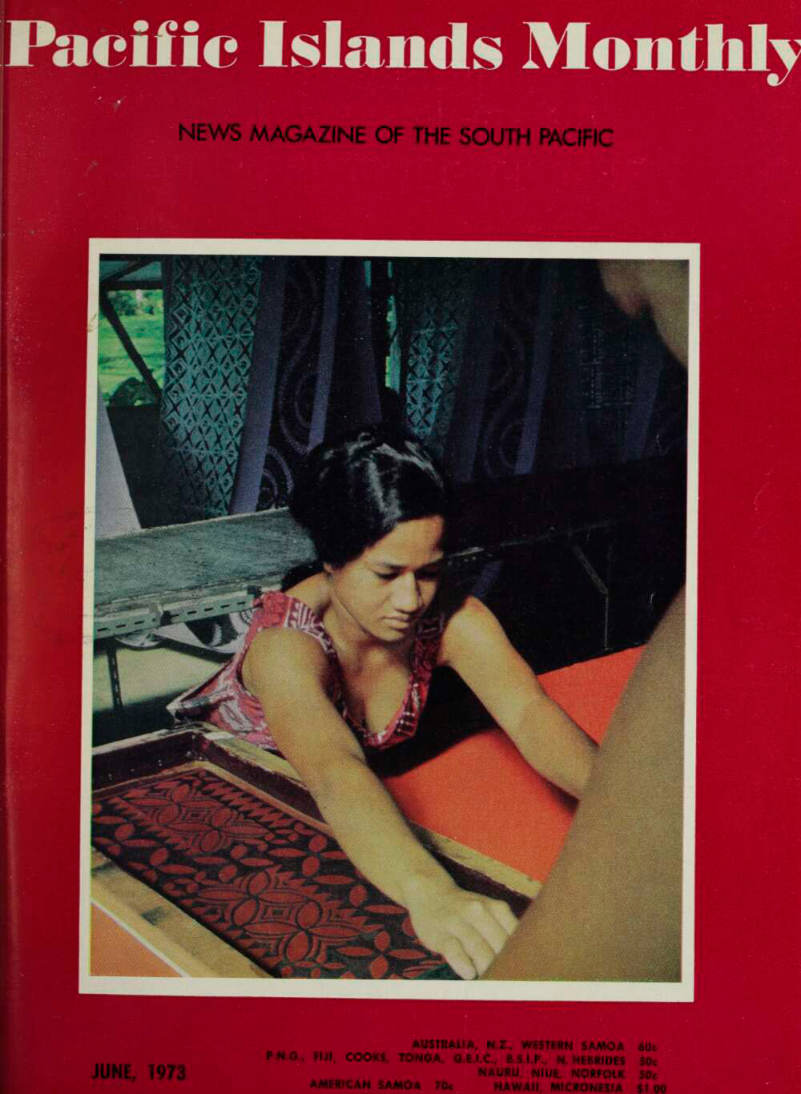 1
1 2
2 3
3 4
4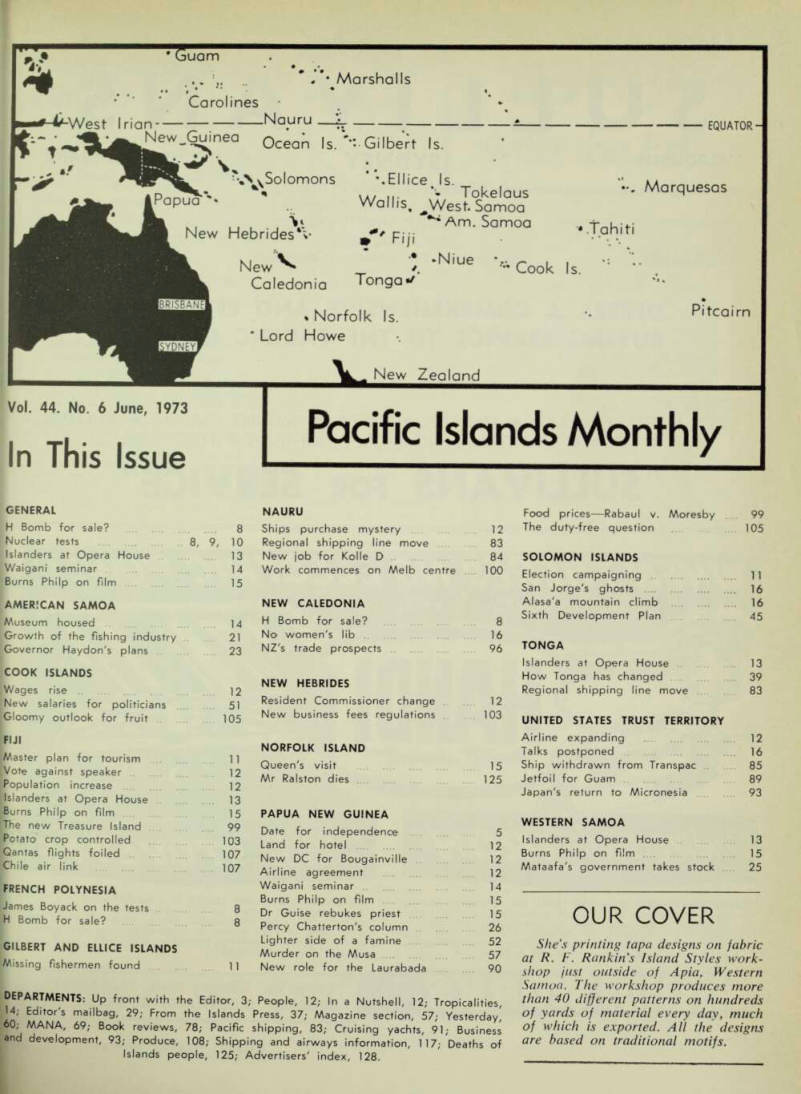 5
5 6
6 7
7 8
8 9
9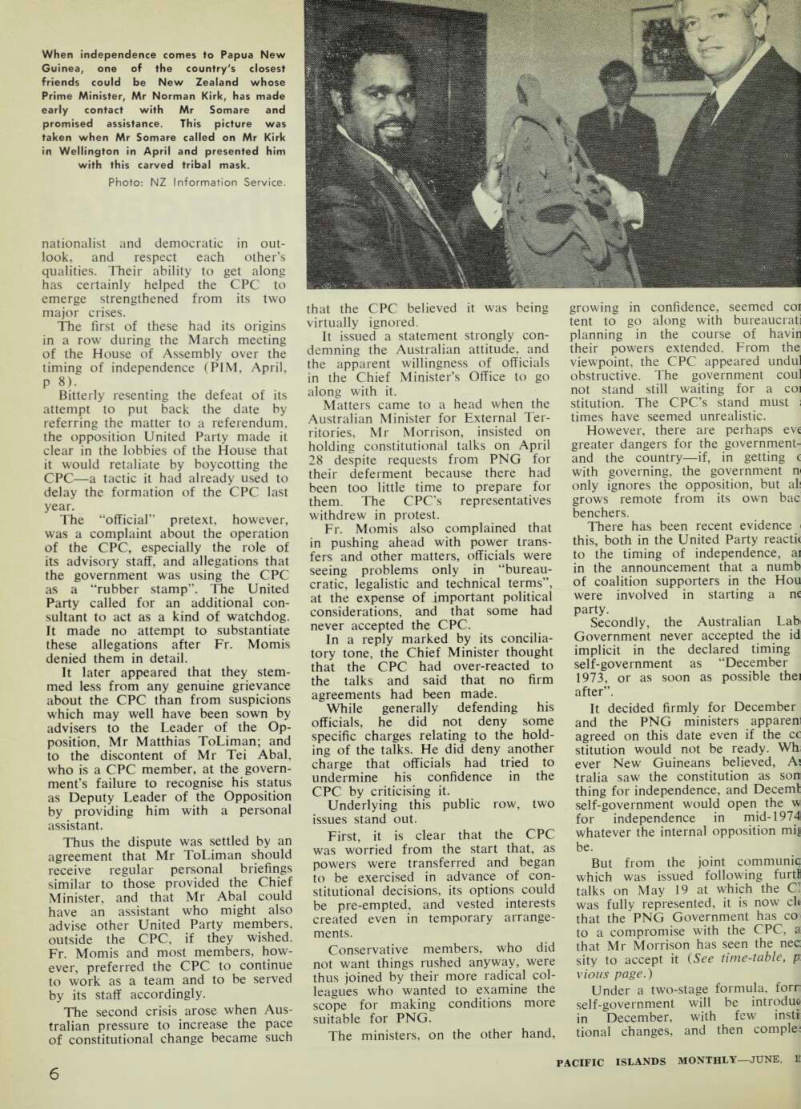 10
10 11
11 12
12 13
13 14
14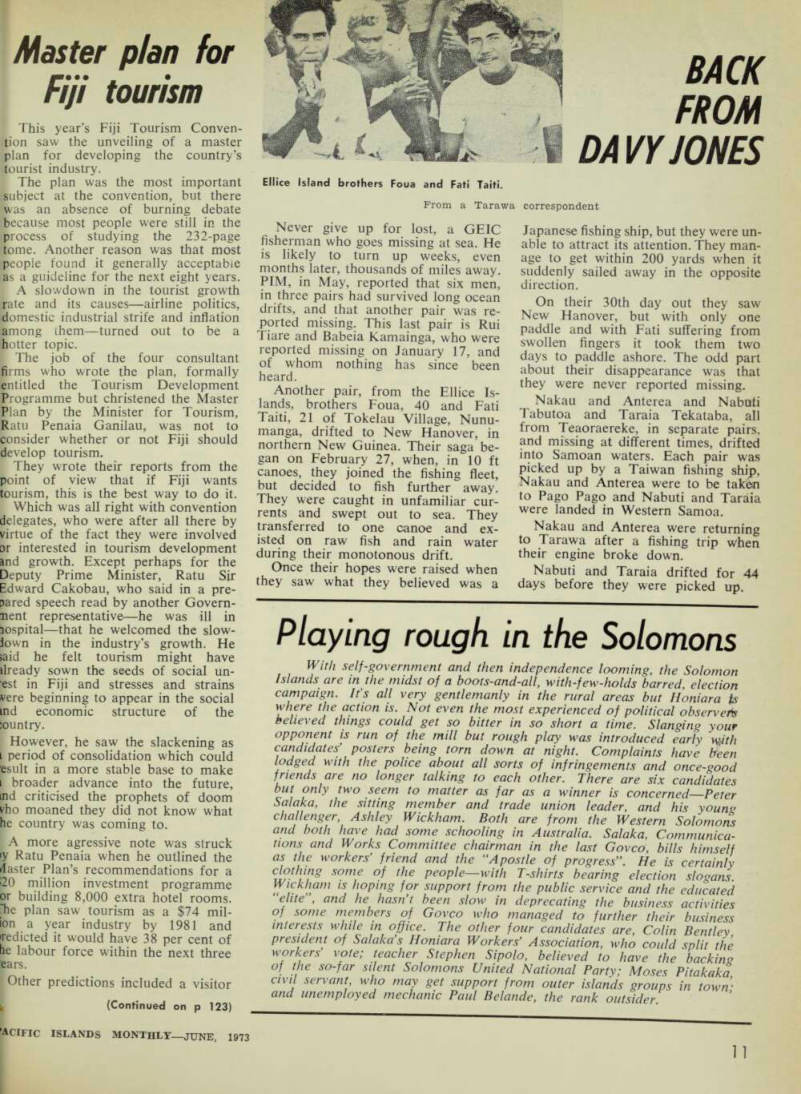 15
15 16
16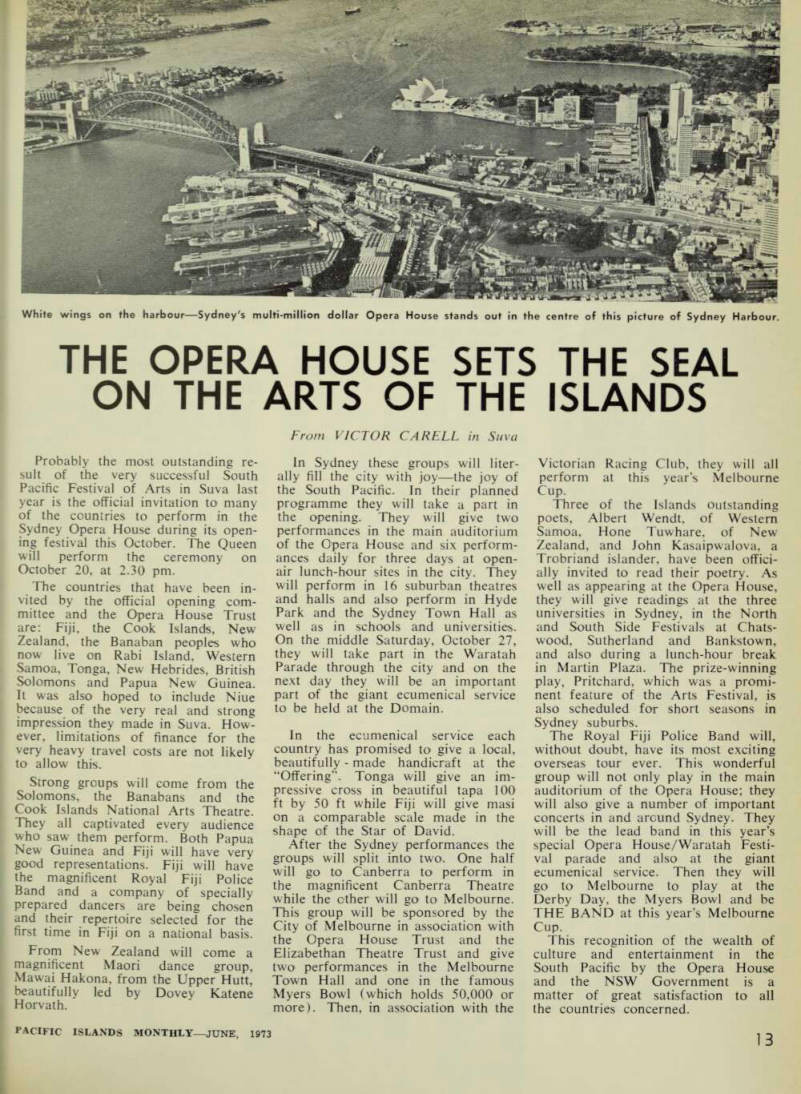 17
17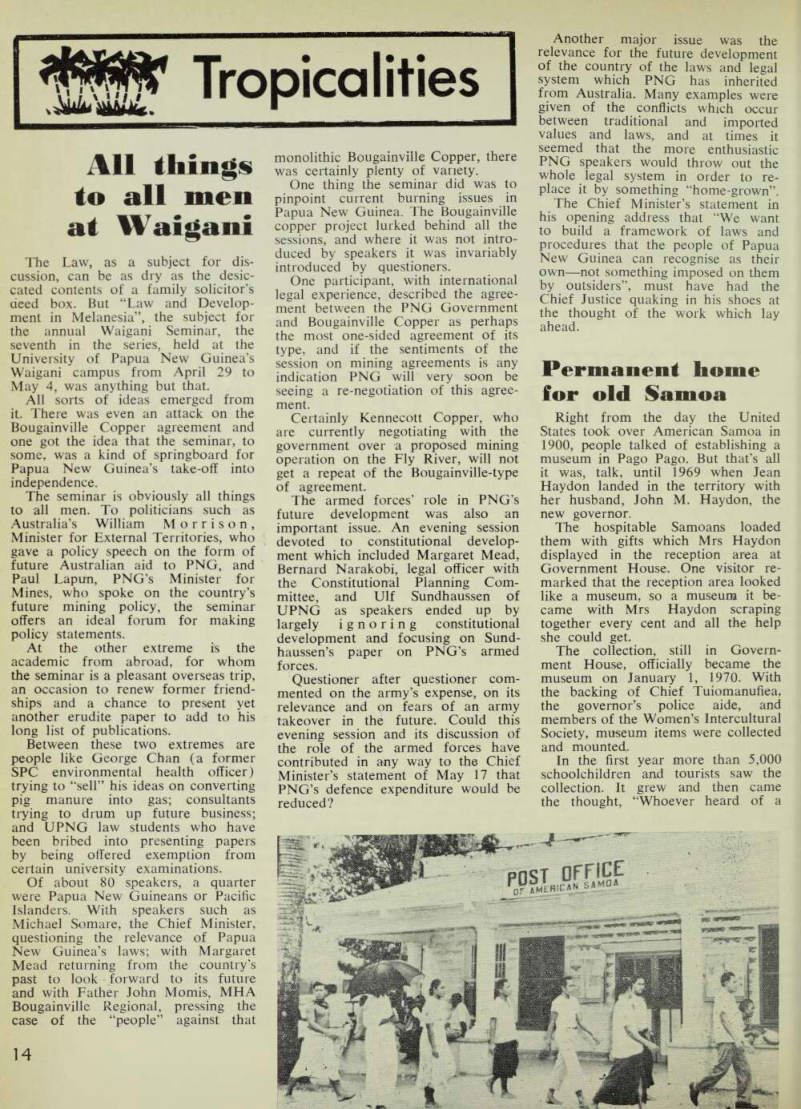 18
18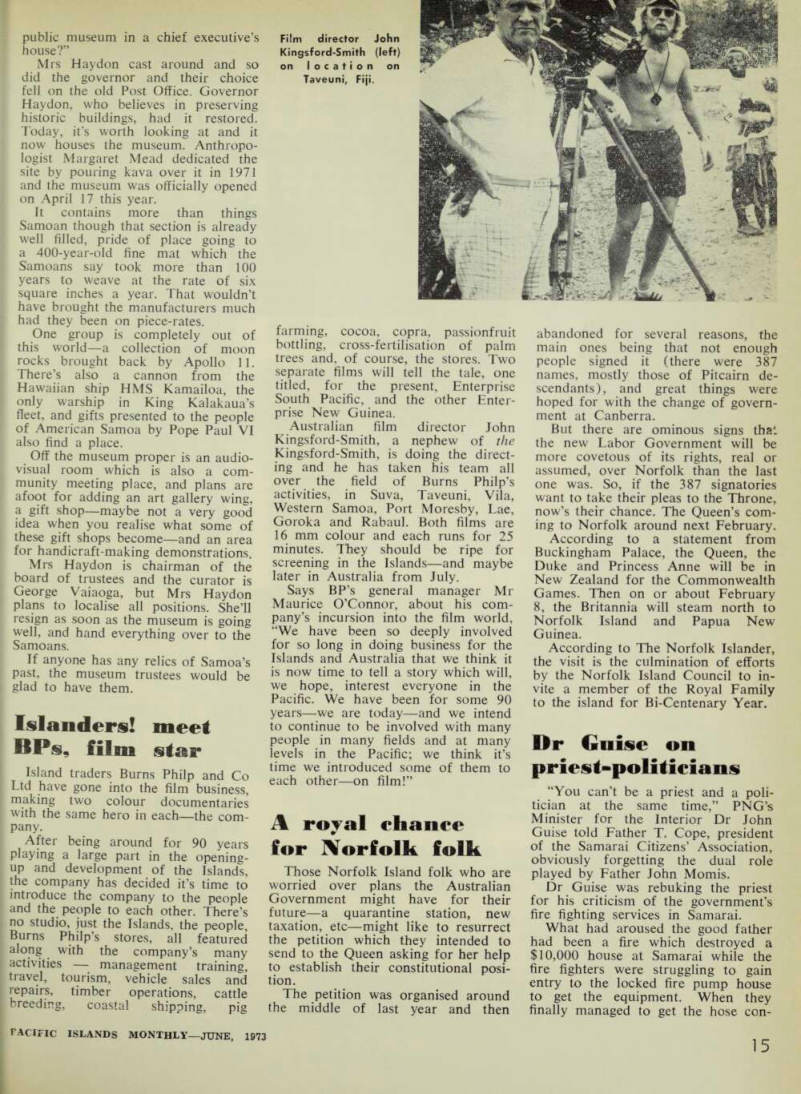 19
19 20
20 21
21 22
22 23
23 24
24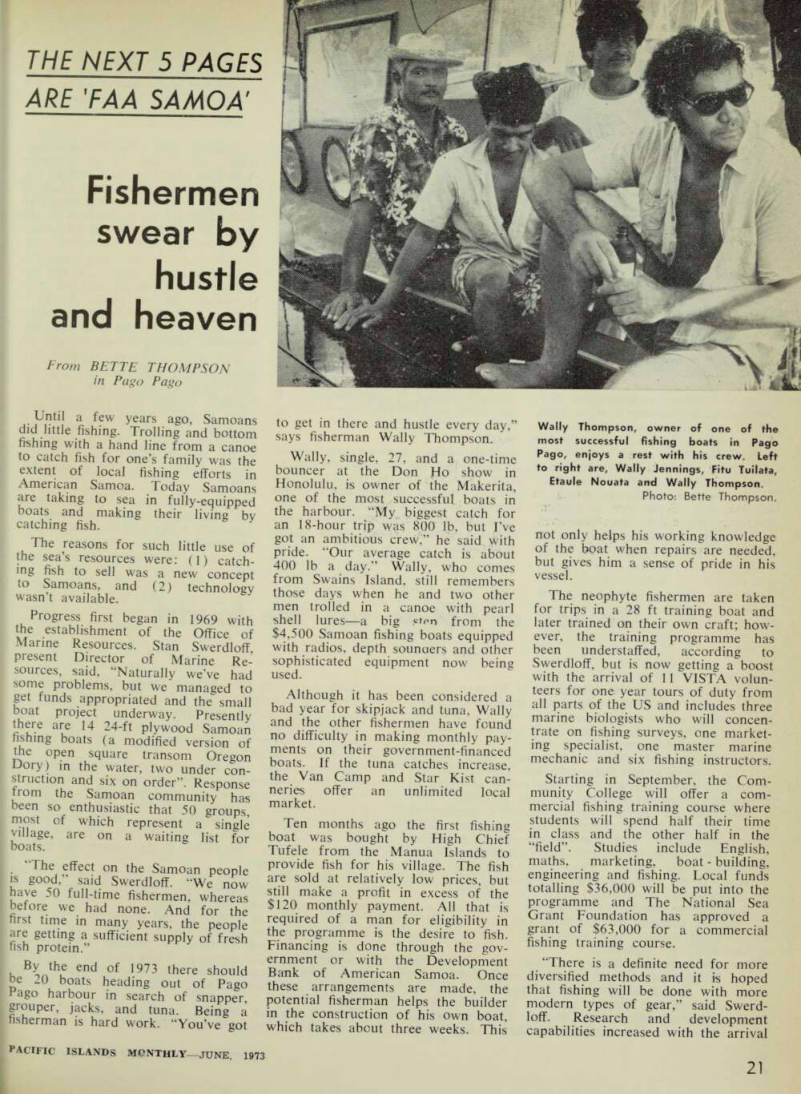 25
25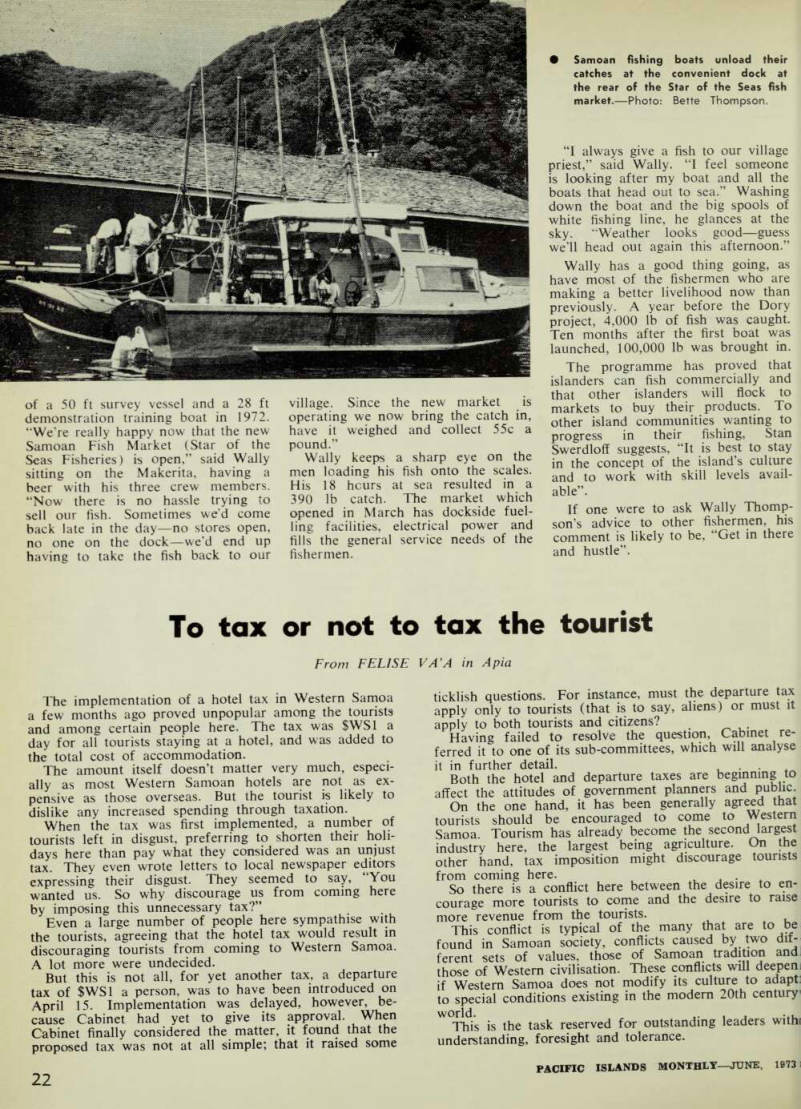 26
26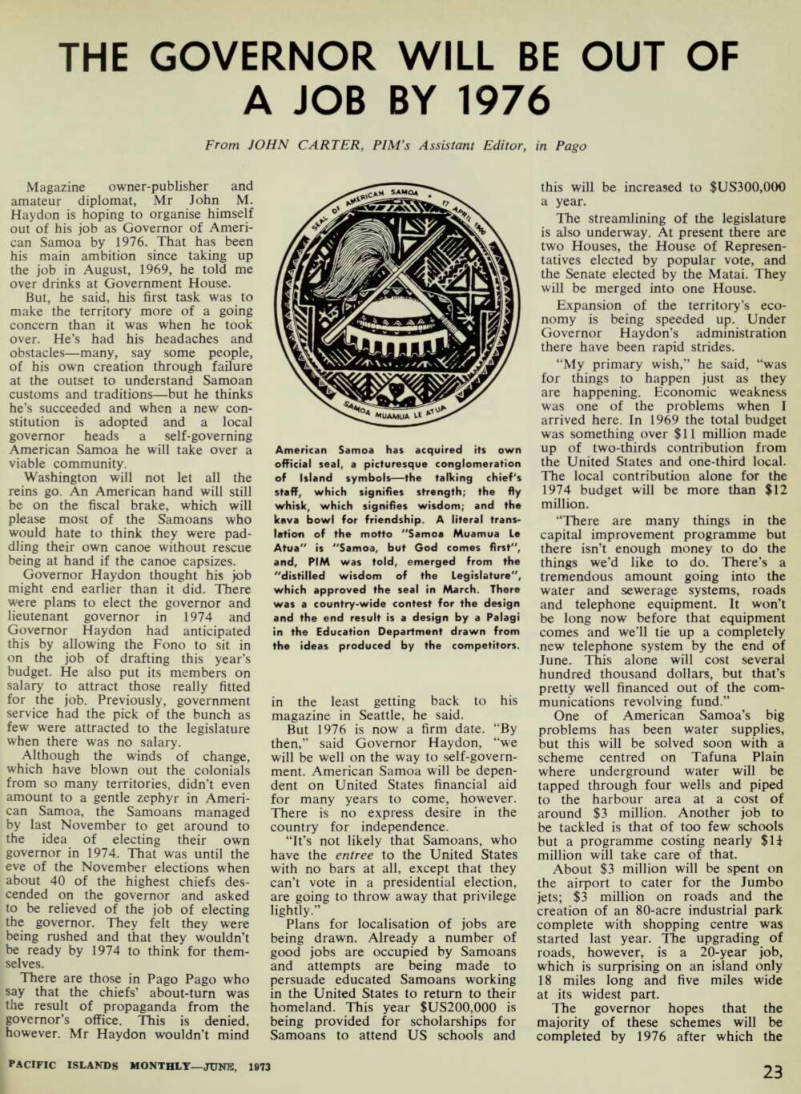 27
27 28
28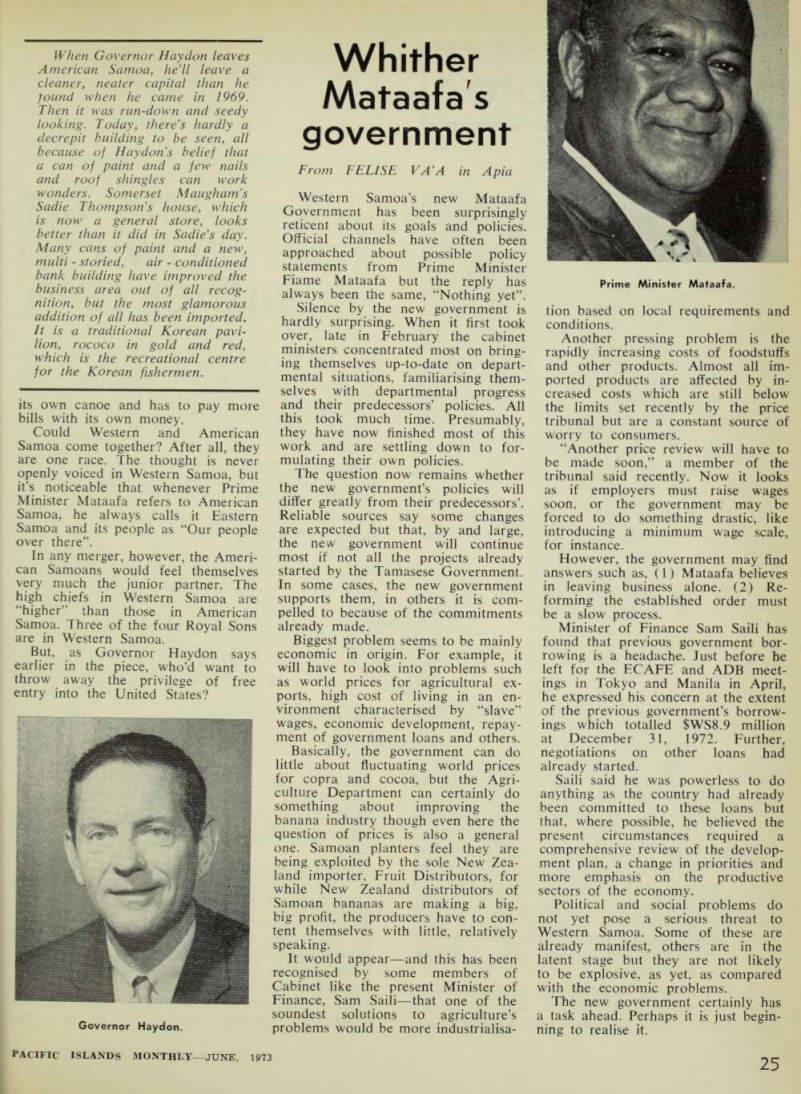 29
29 30
30 31
31 32
32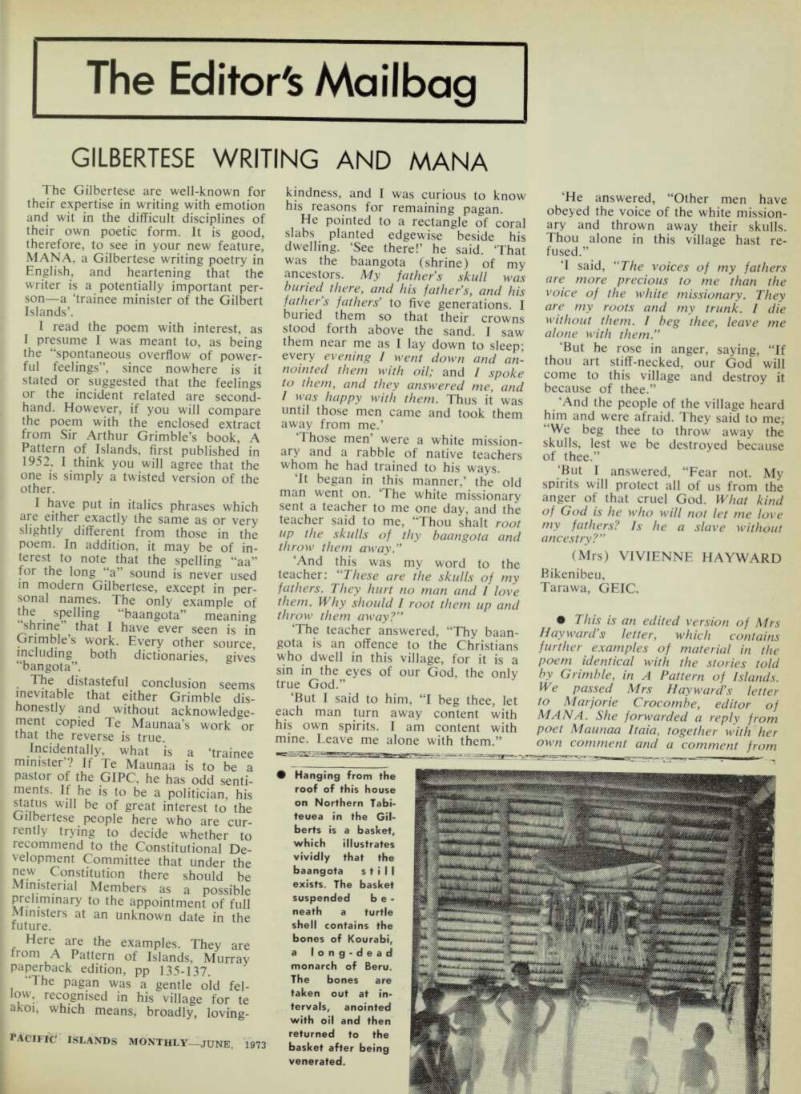 33
33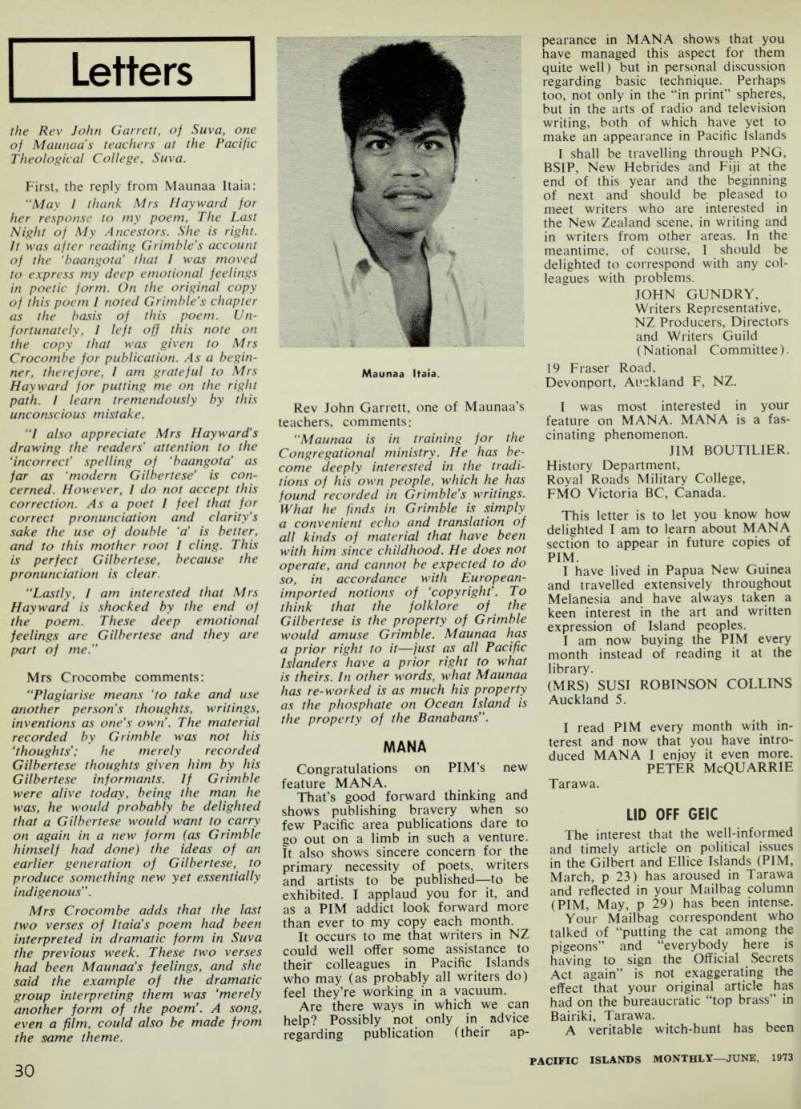 34
34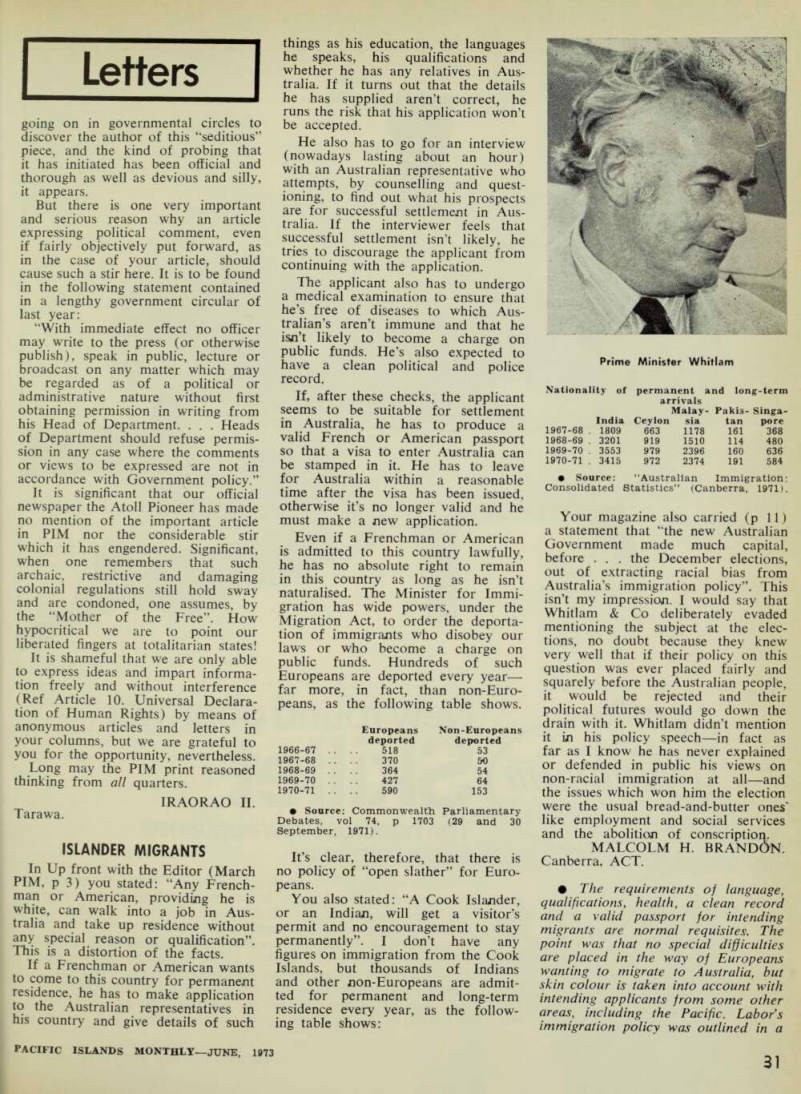 35
35 36
36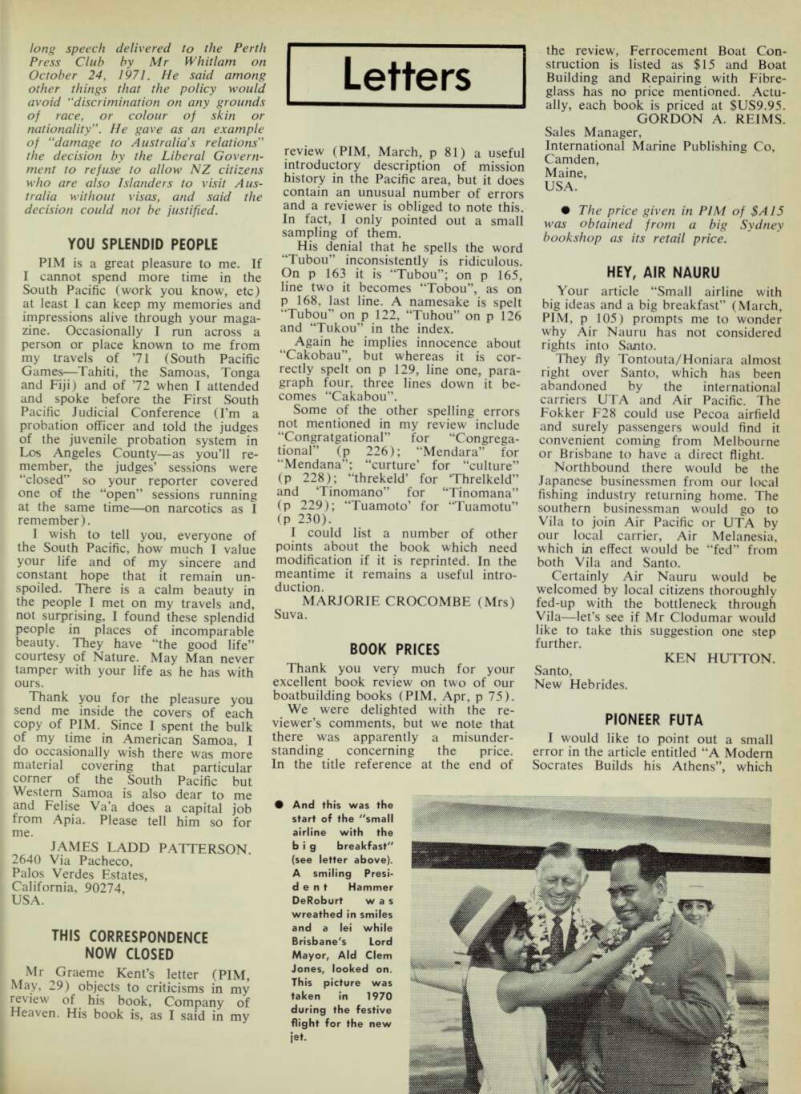 37
37 38
38 39
39 40
40 41
41 42
42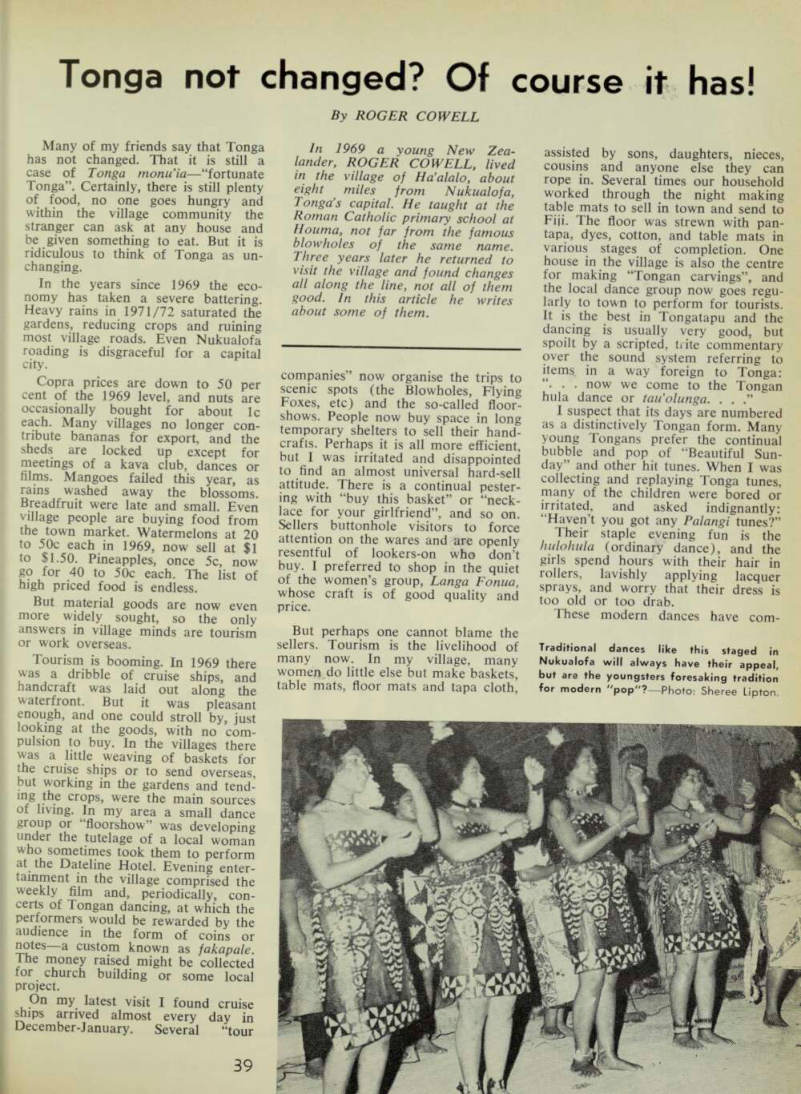 43
43 44
44 45
45 46
46 47
47 48
48 49
49 50
50 51
51 52
52 53
53 54
54 55
55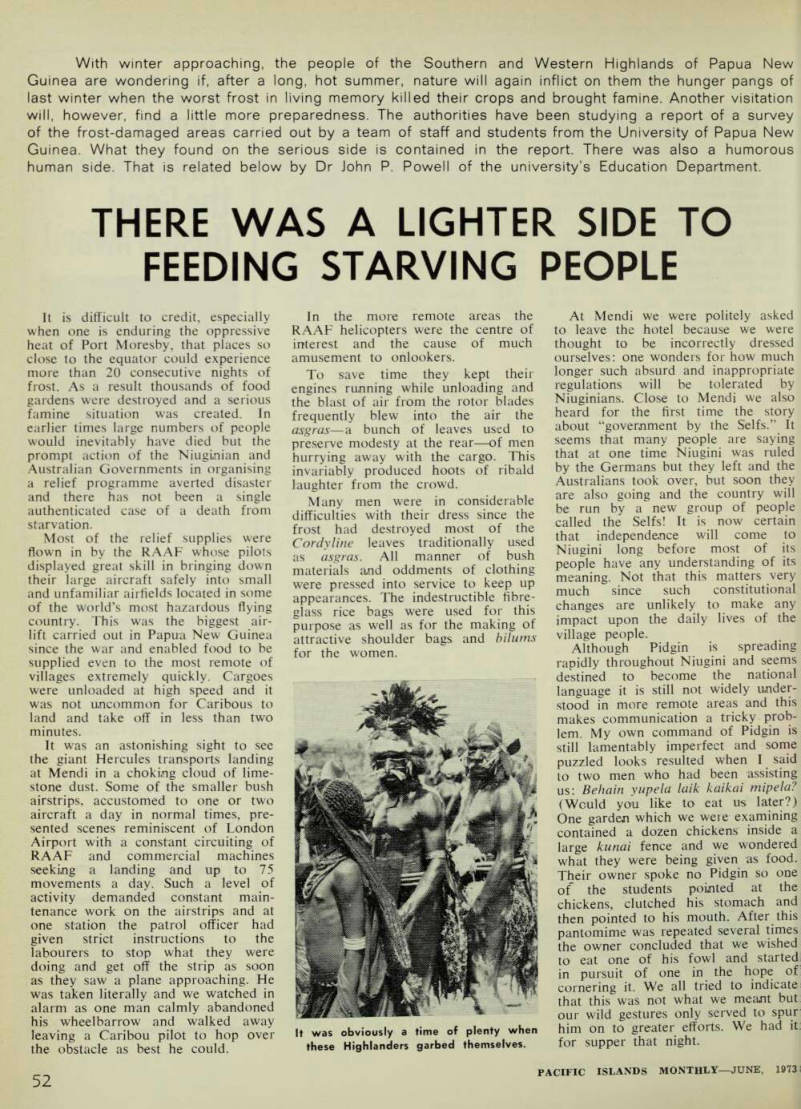 56
56 57
57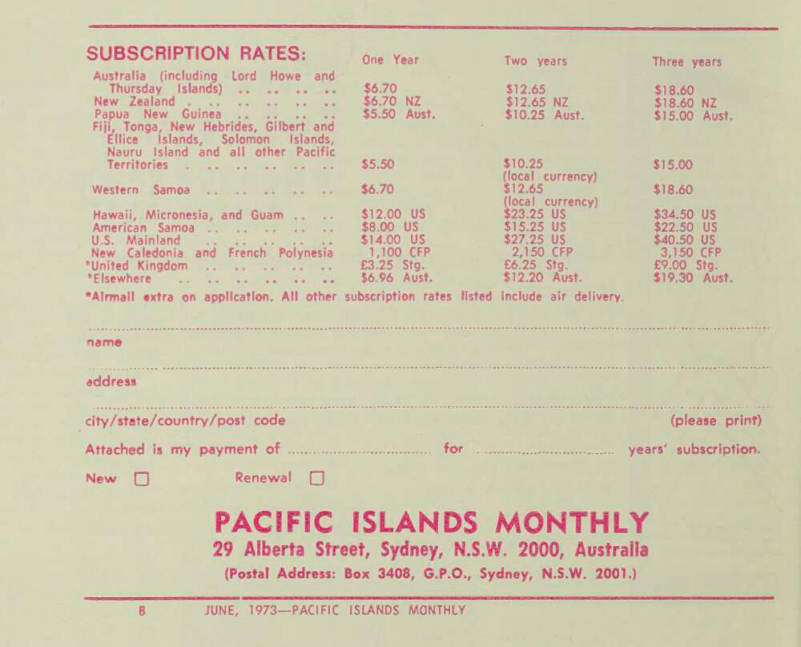 58
58 59
59 60
60 61
61 62
62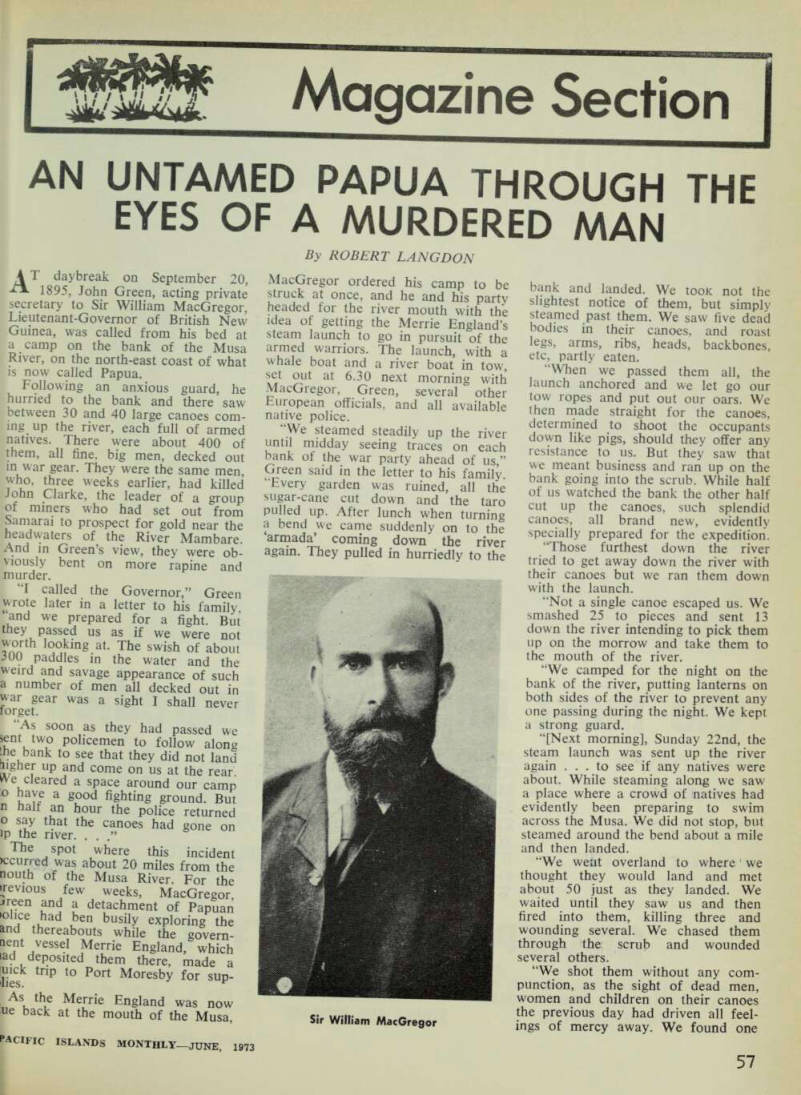 63
63 64
64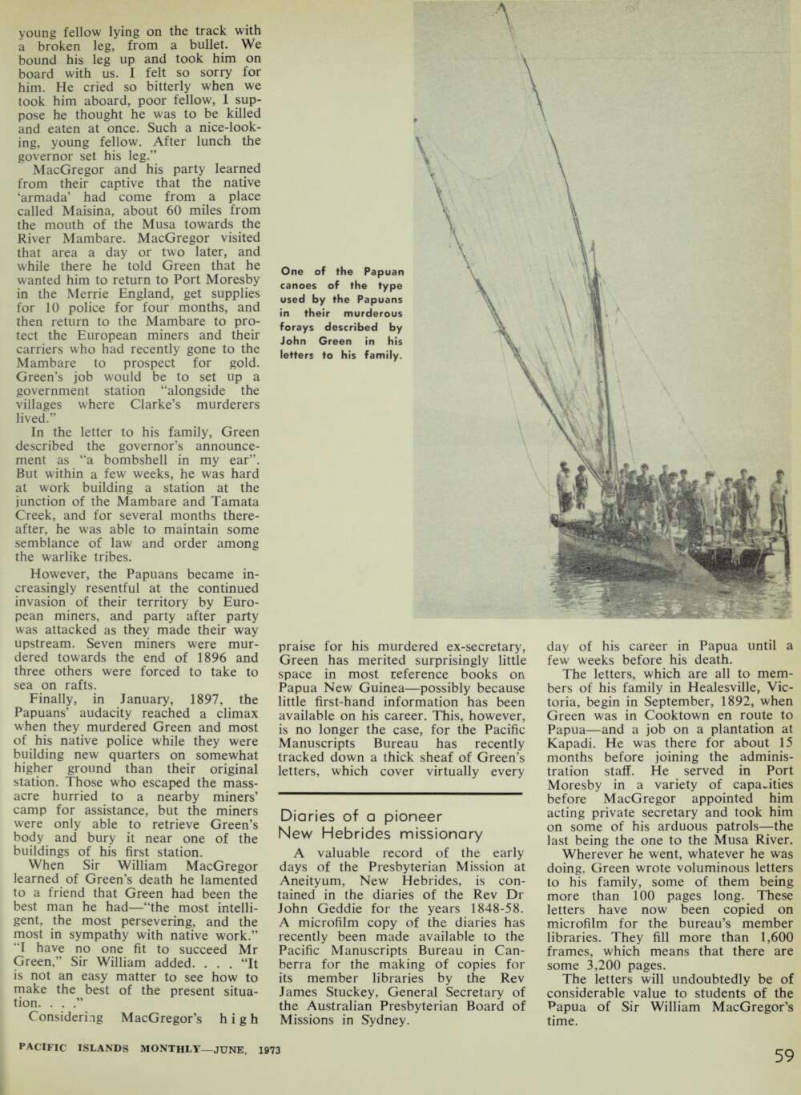 65
65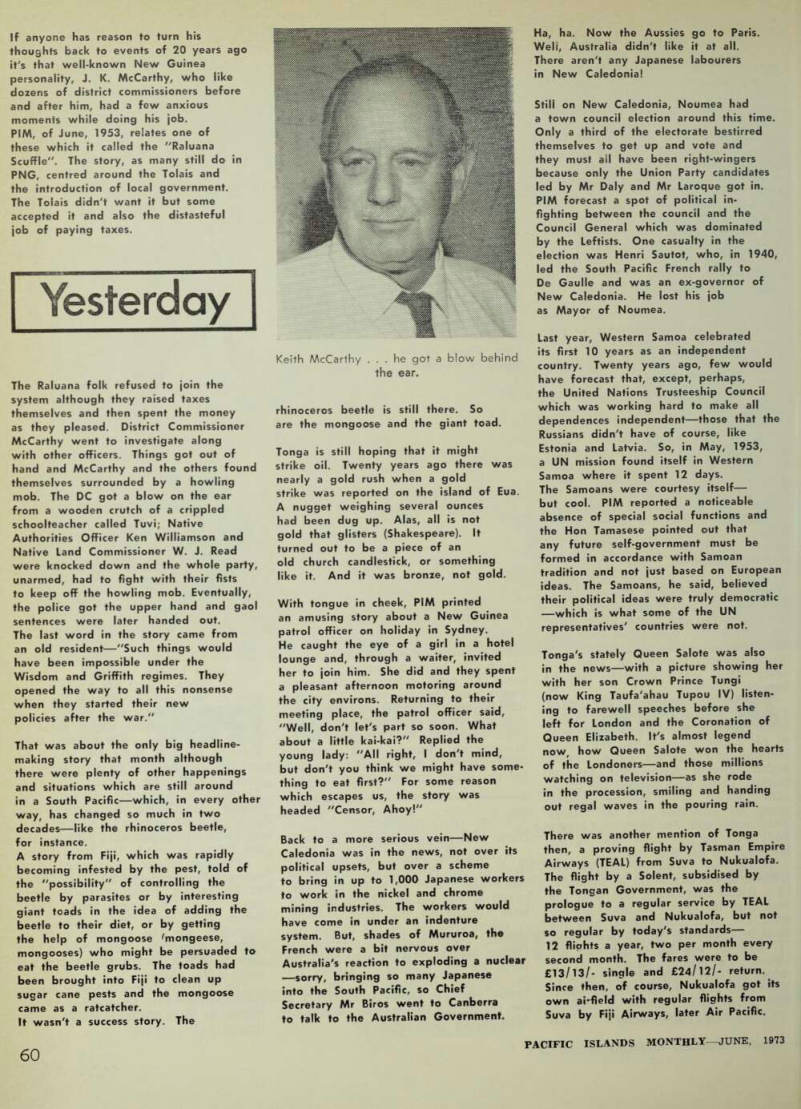 66
66 67
67 68
68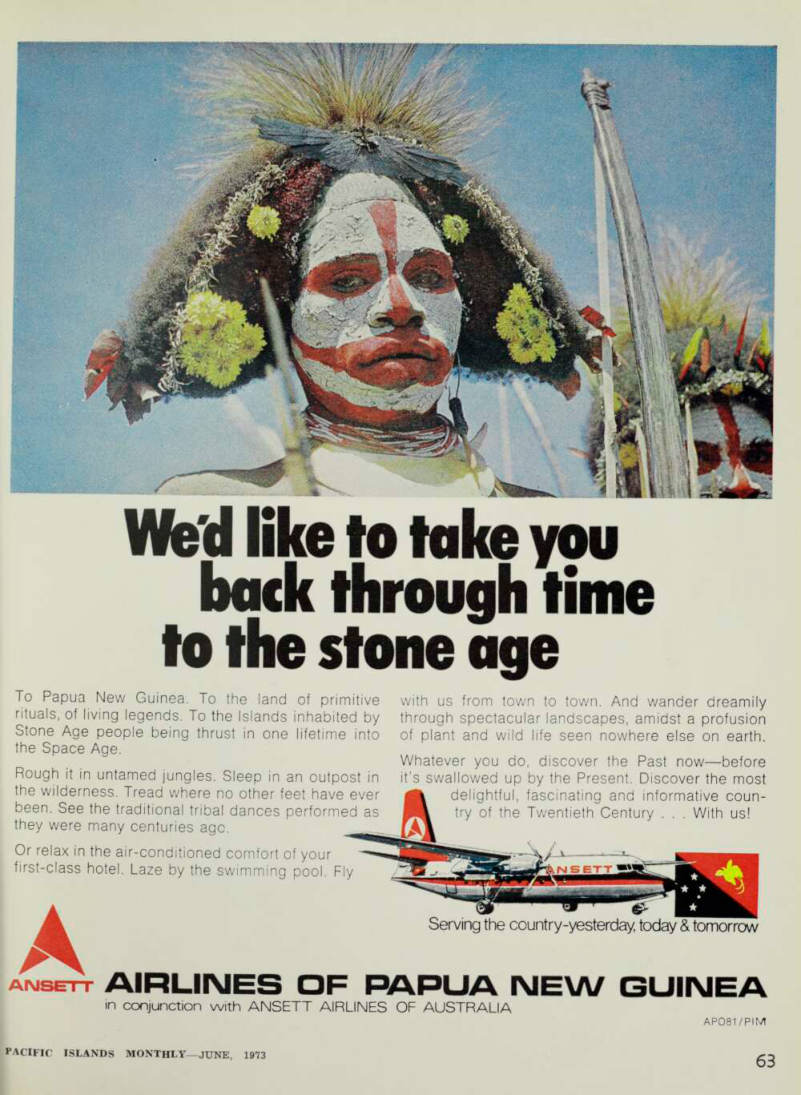 69
69 70
70 71
71 72
72 73
73 74
74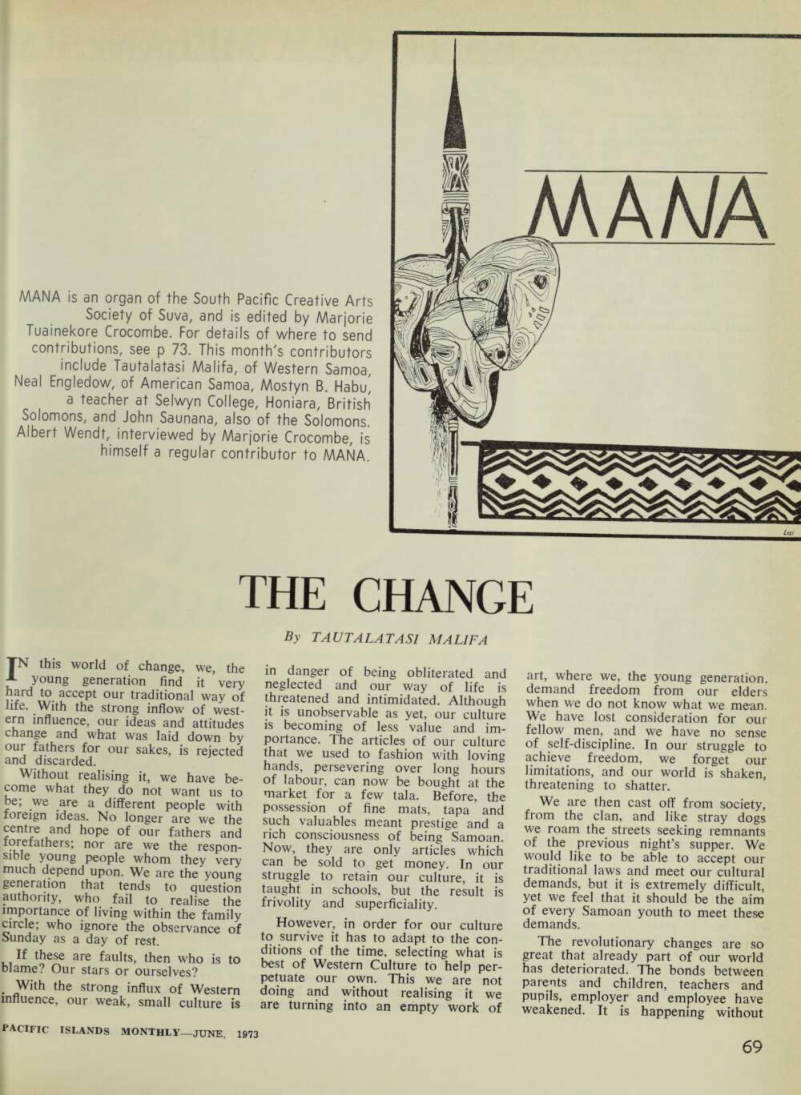 75
75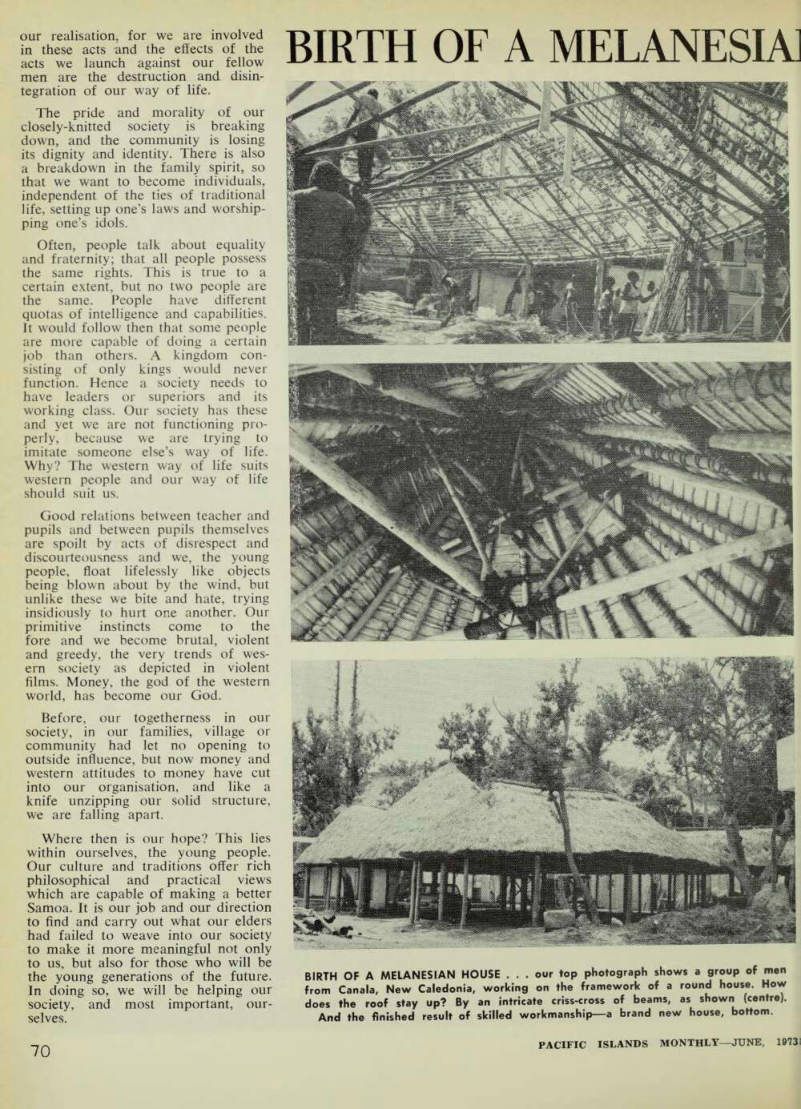 76
76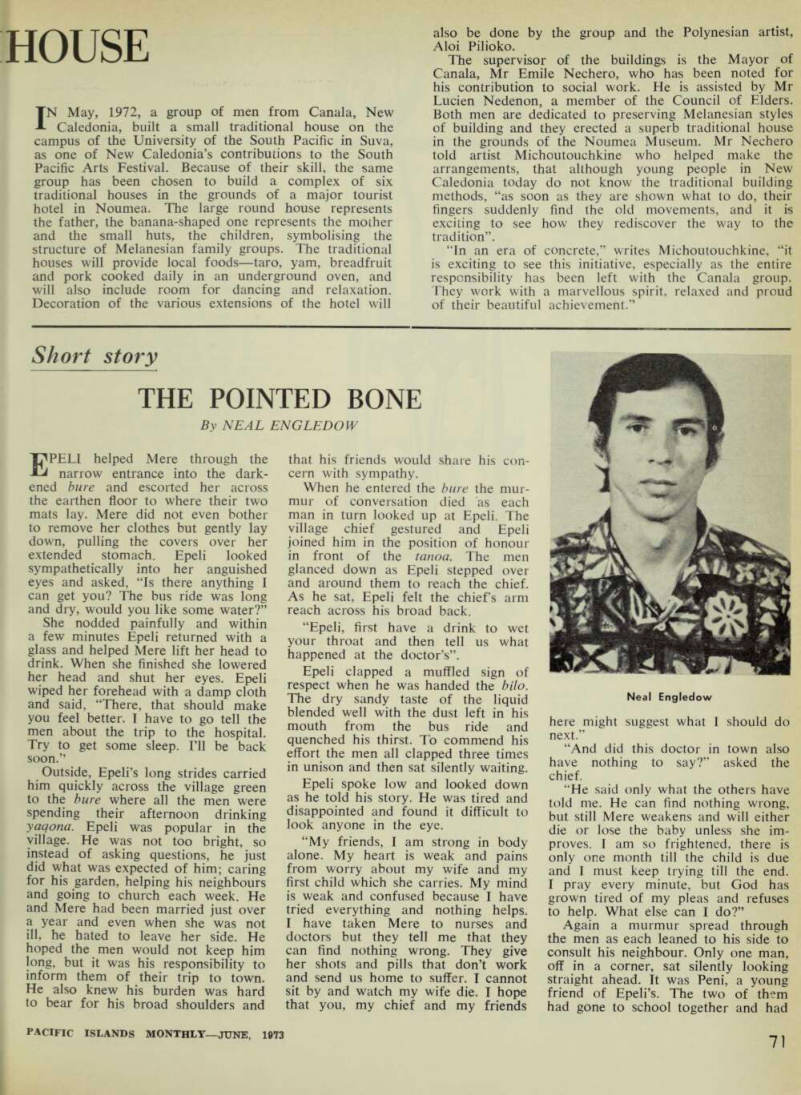 77
77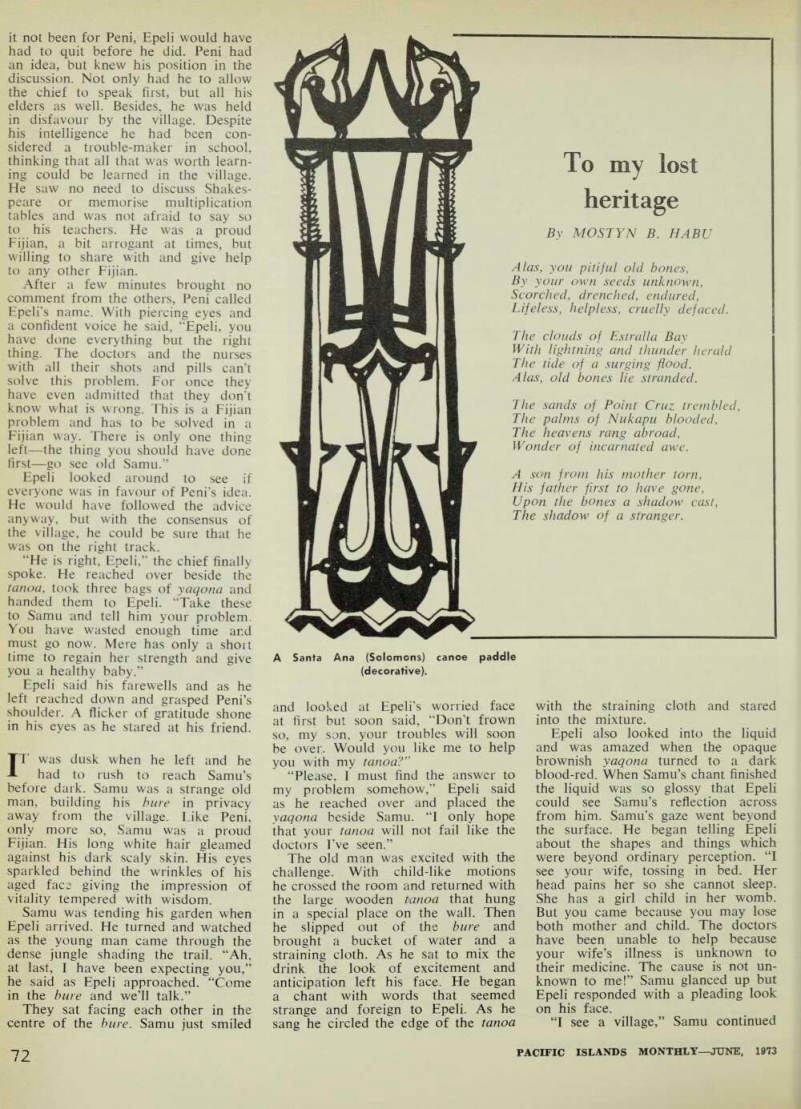 78
78 79
79 80
80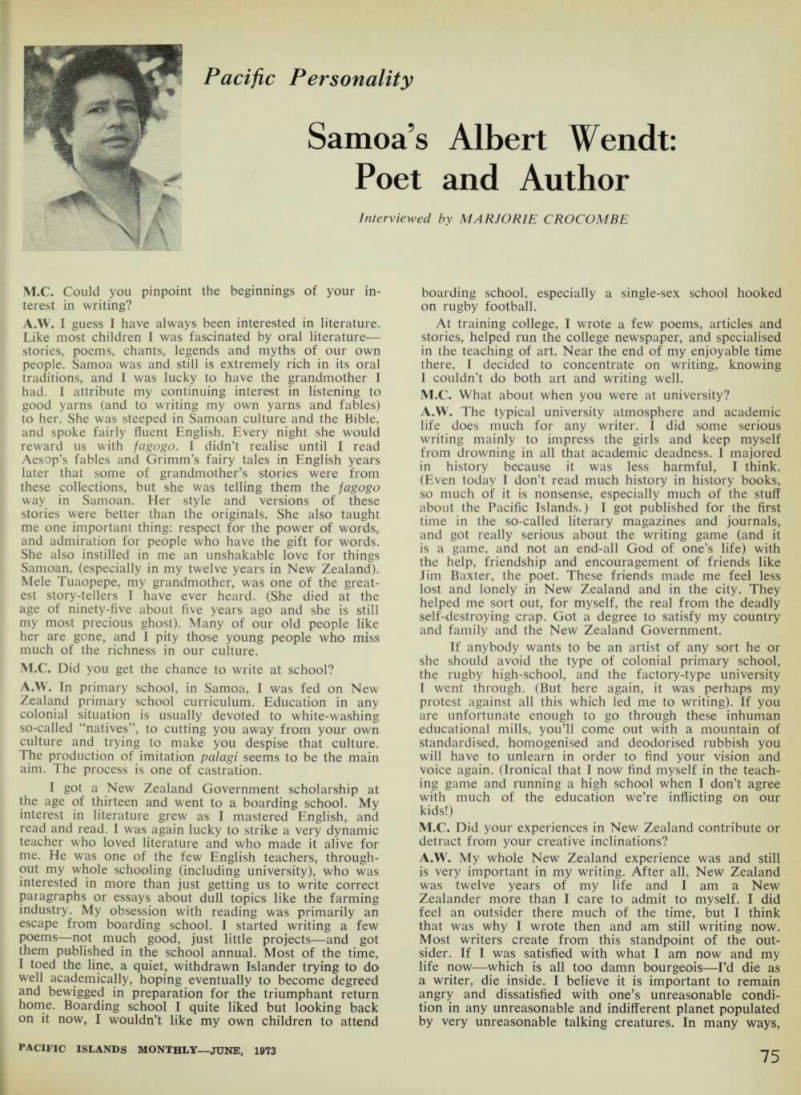 81
81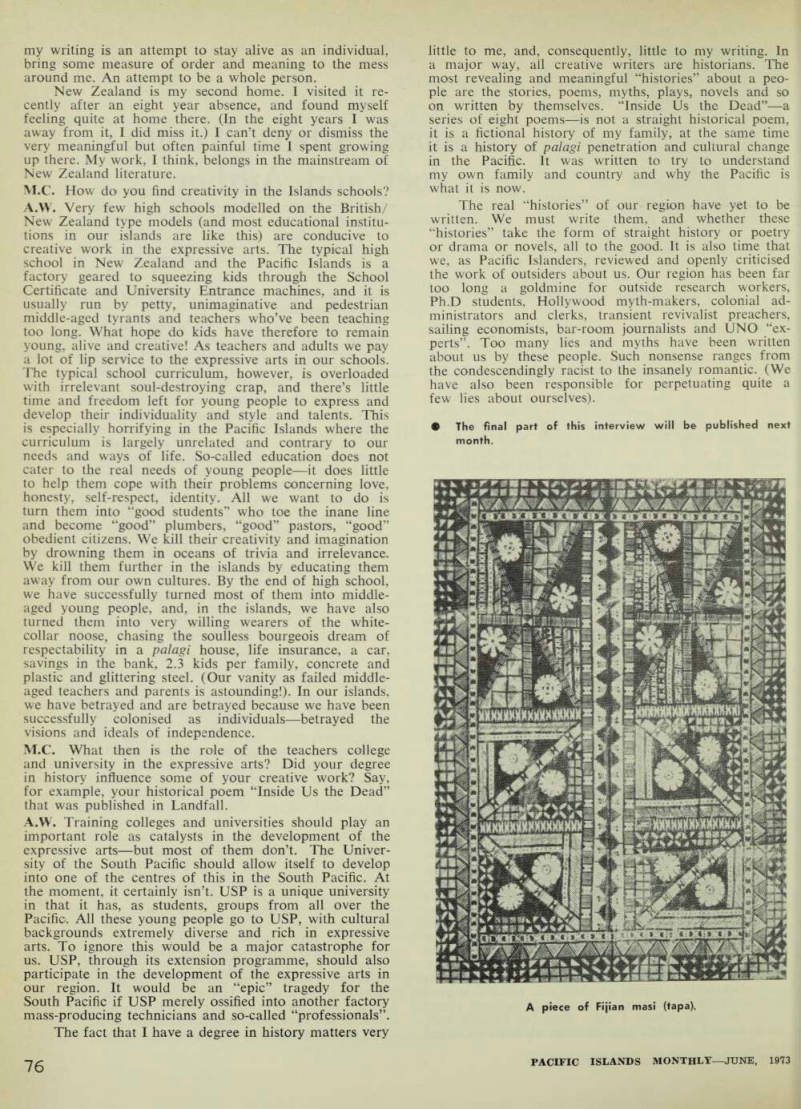 82
82 83
83 84
84 85
85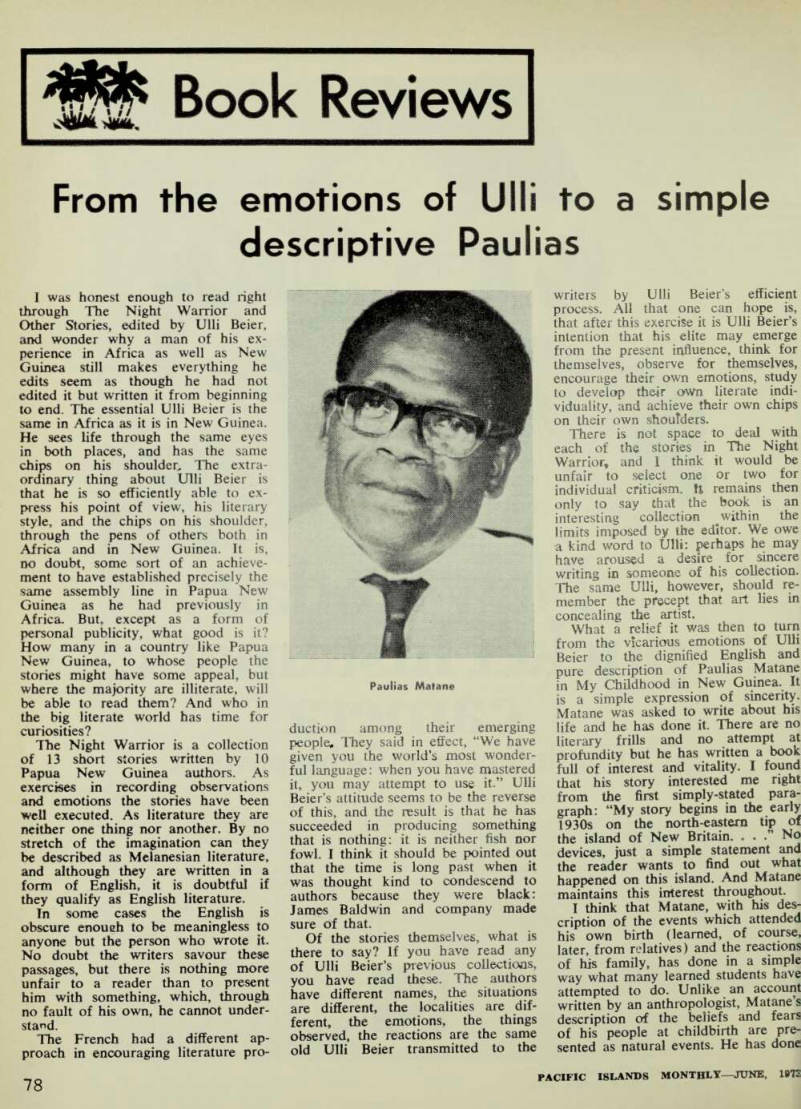 86
86 87
87 88
88 89
89 90
90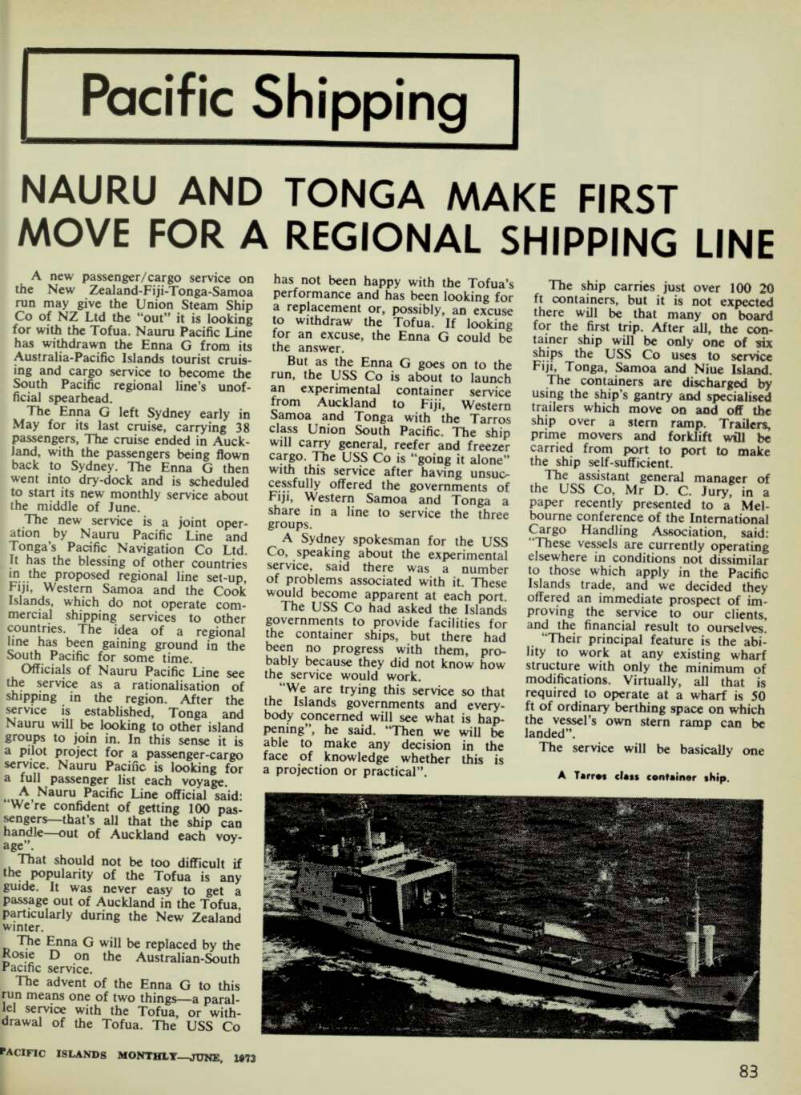 91
91 92
92 93
93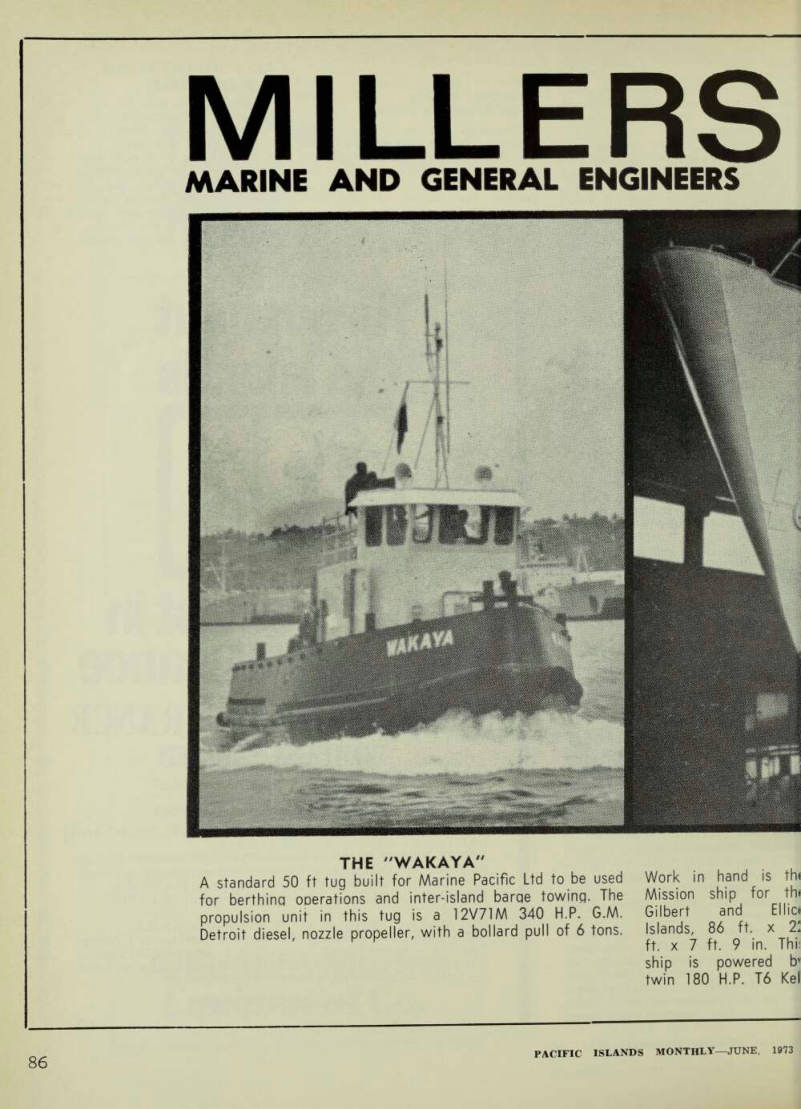 94
94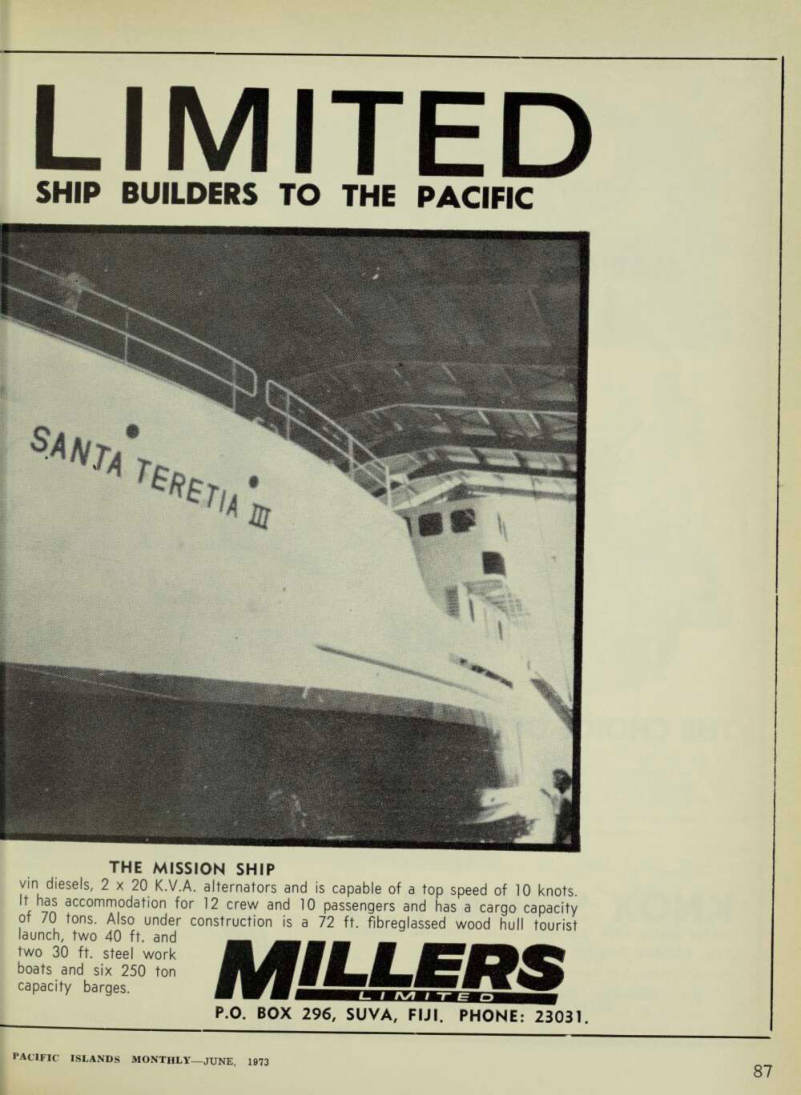 95
95 96
96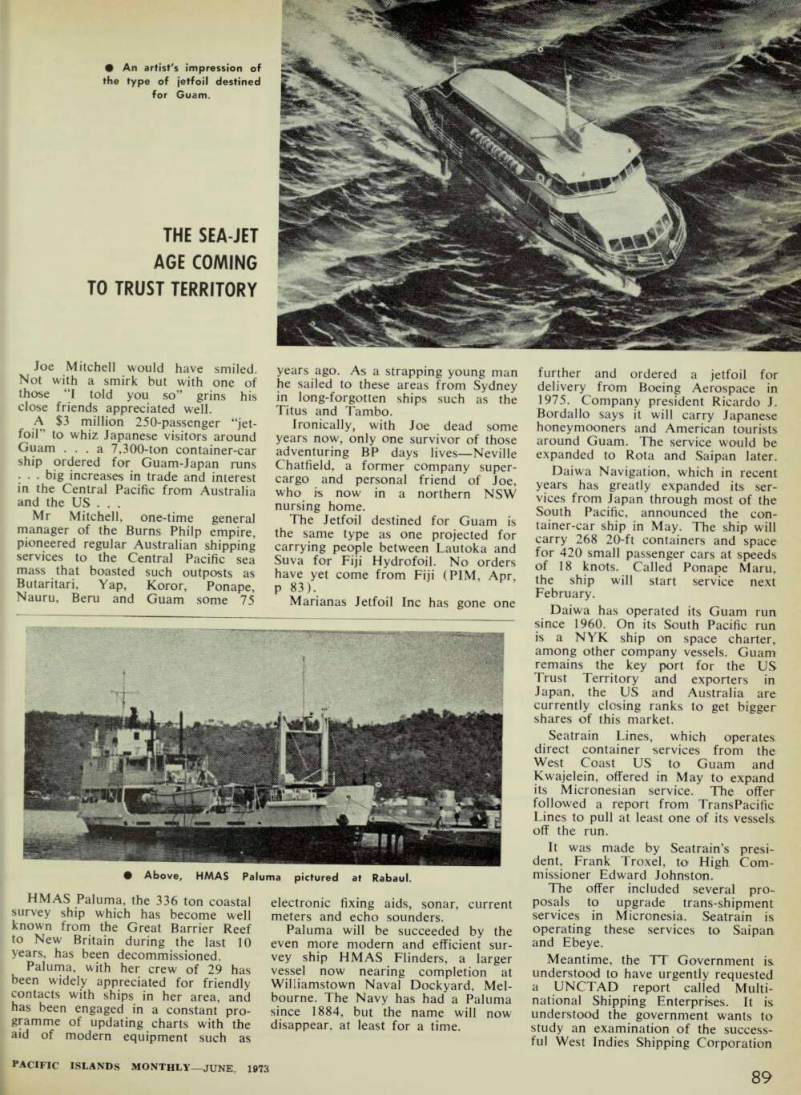 97
97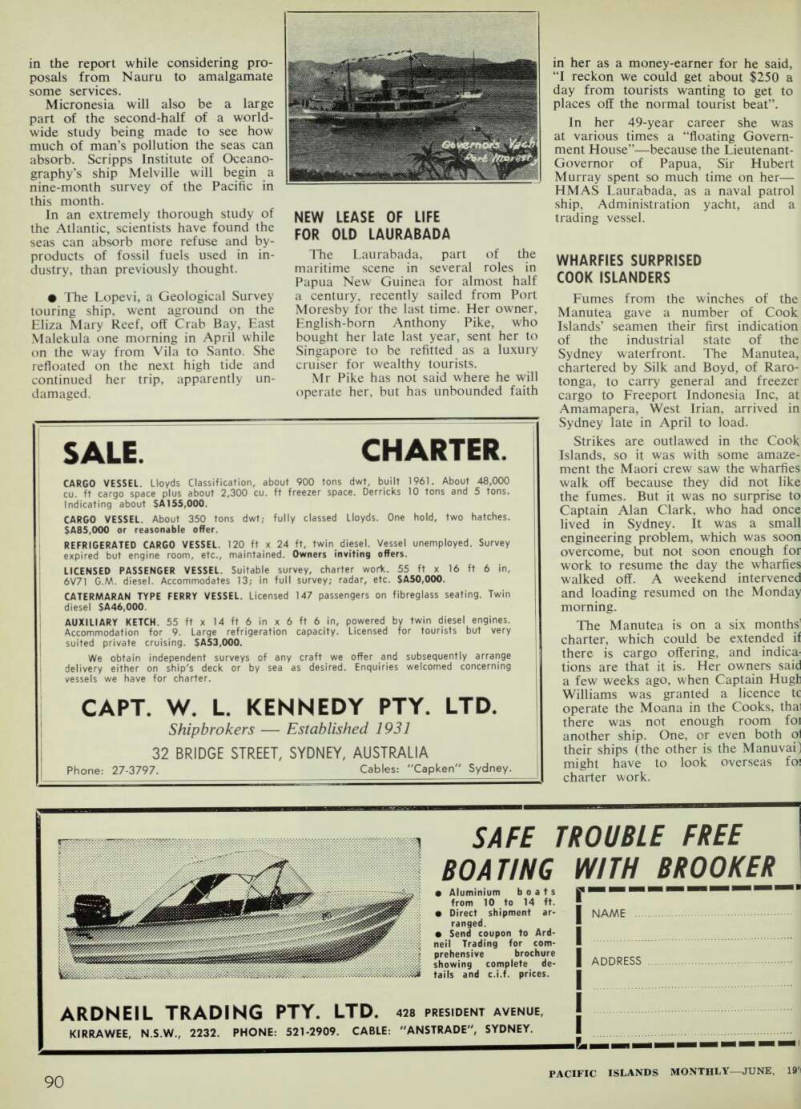 98
98 99
99 100
100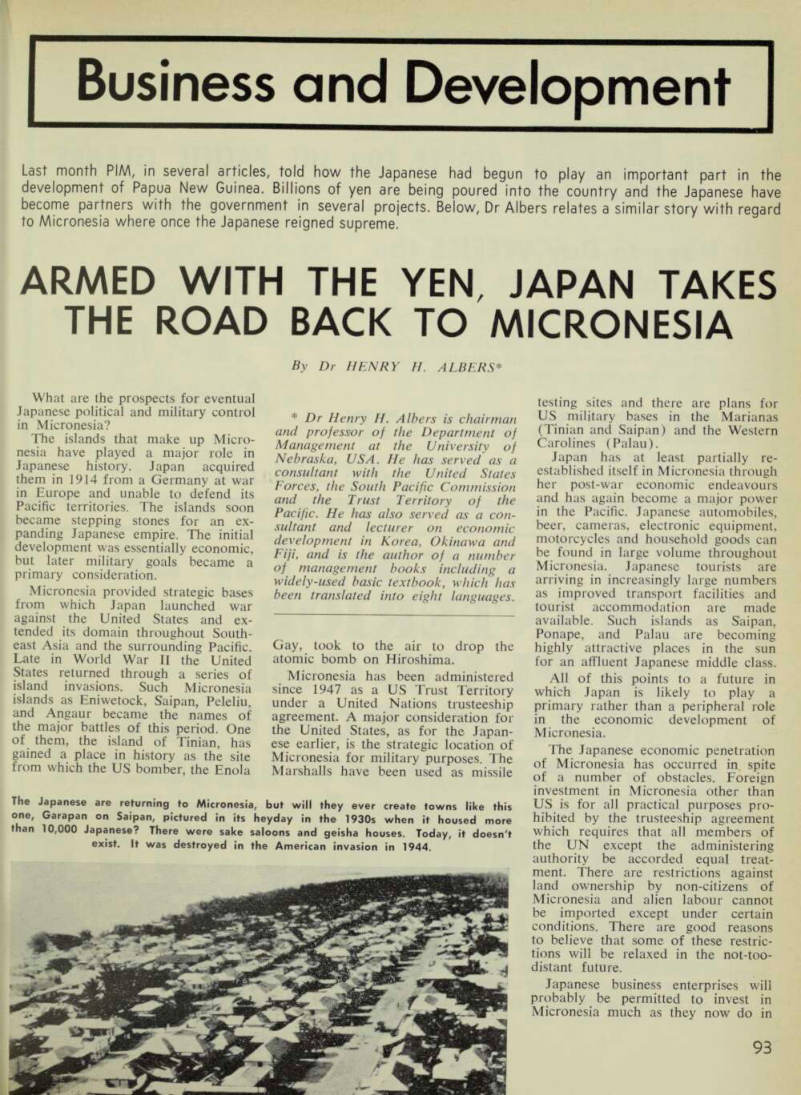 101
101 102
102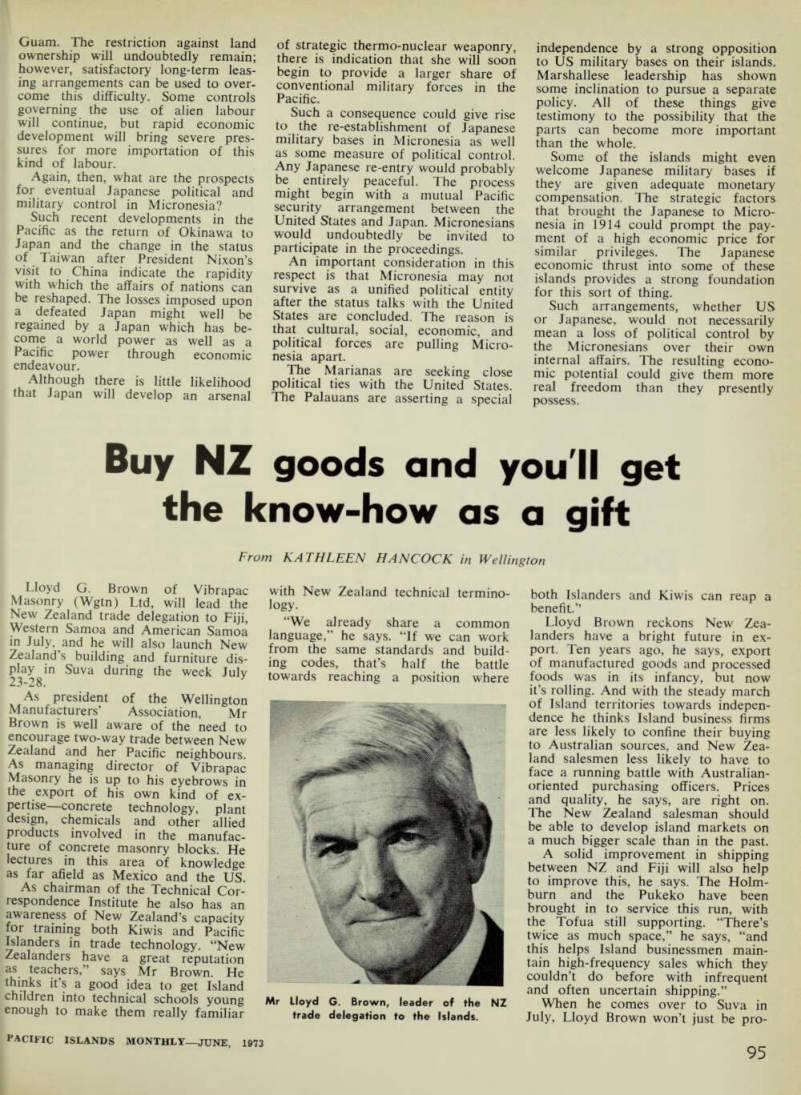 103
103 104
104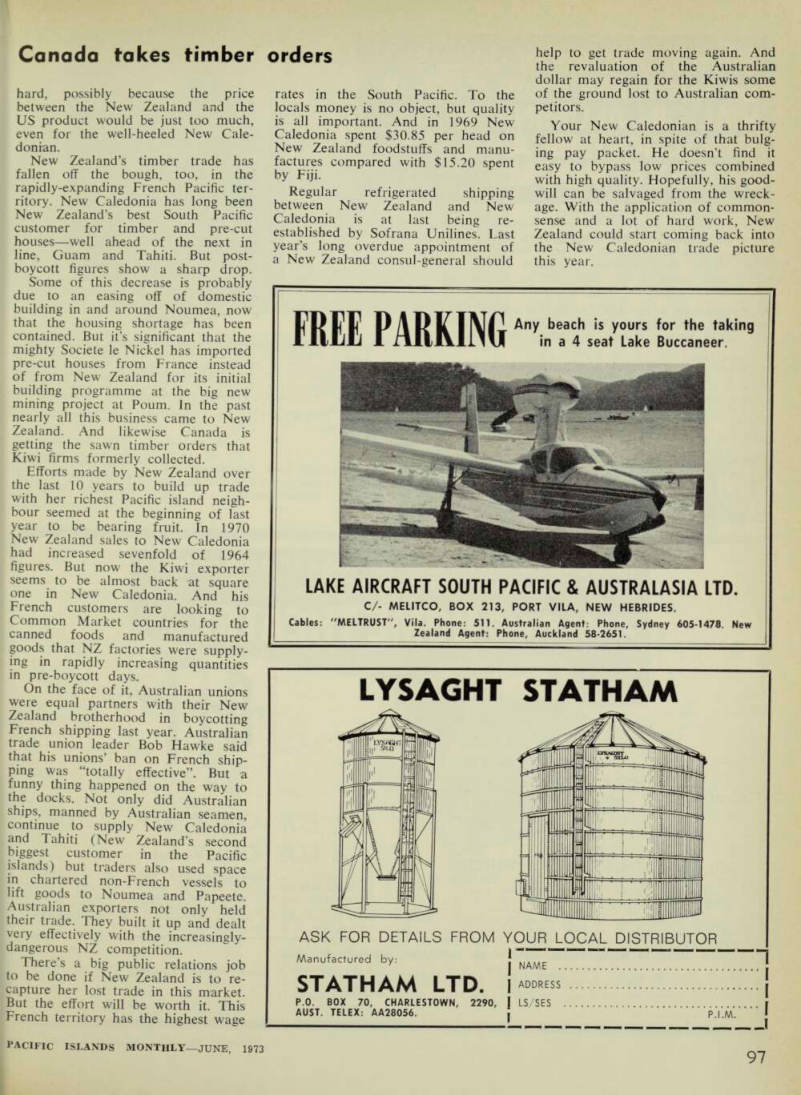 105
105 106
106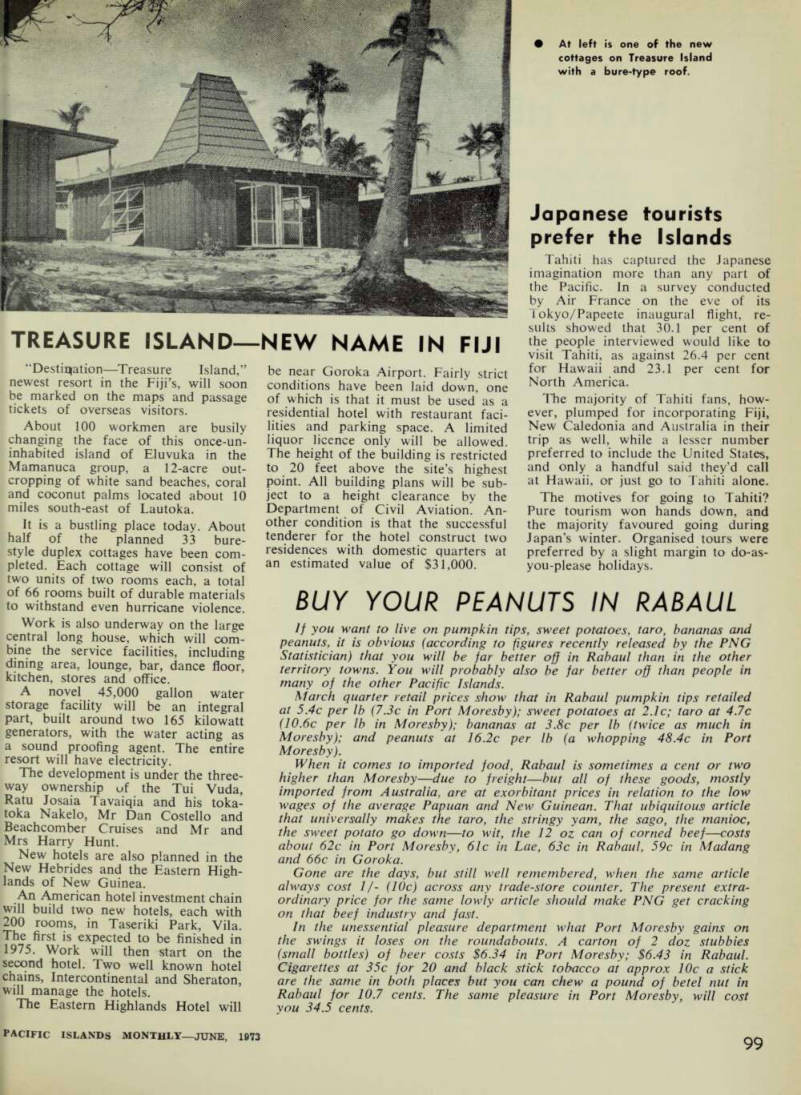 107
107 108
108 109
109 110
110 111
111 112
112 113
113 114
114 115
115 116
116 117
117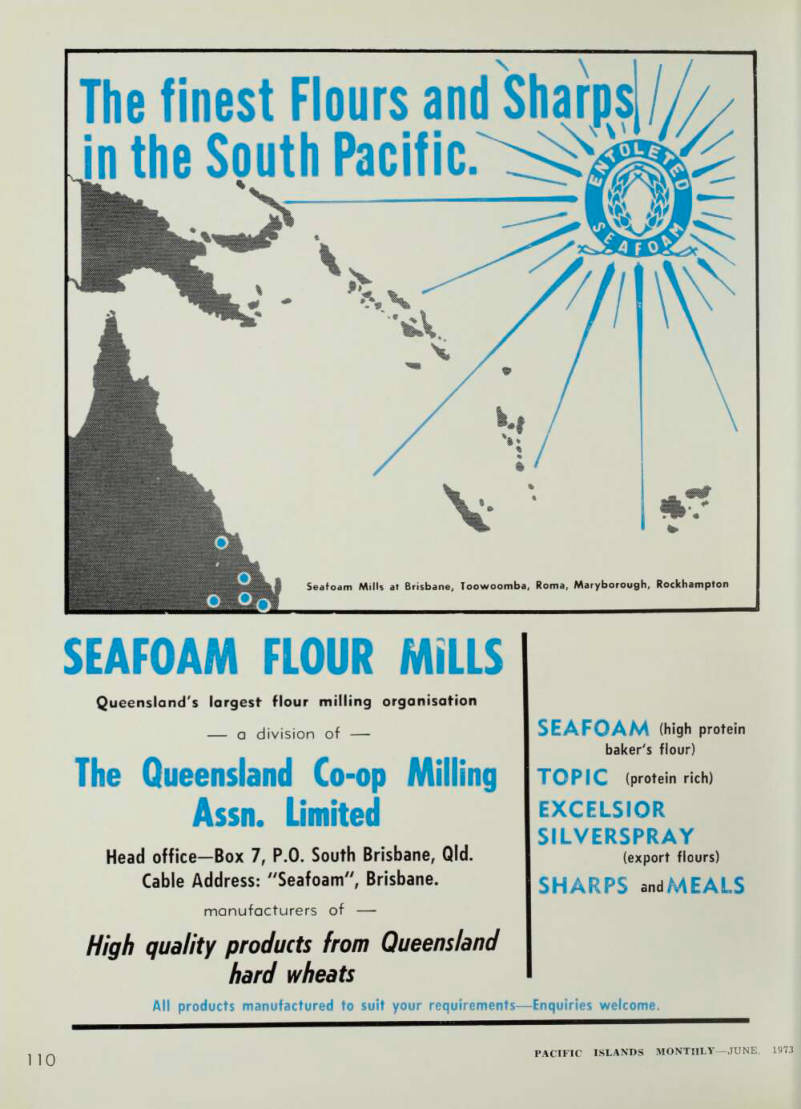 118
118 119
119 120
120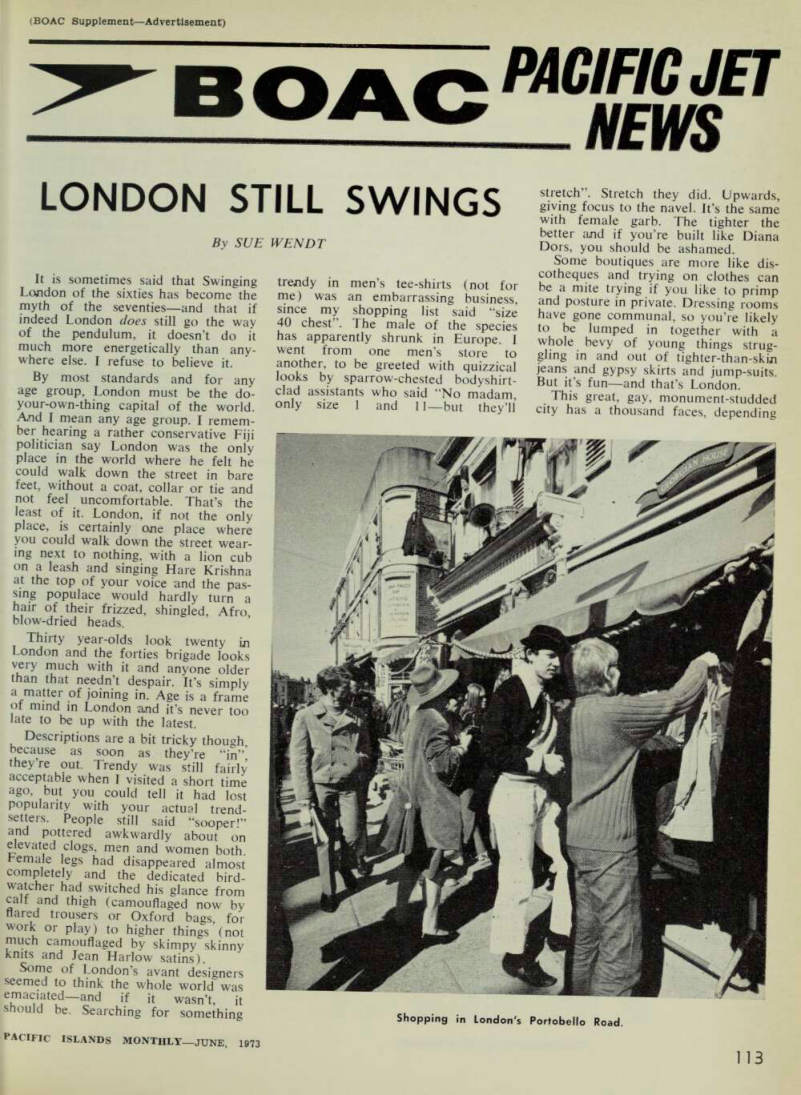 121
121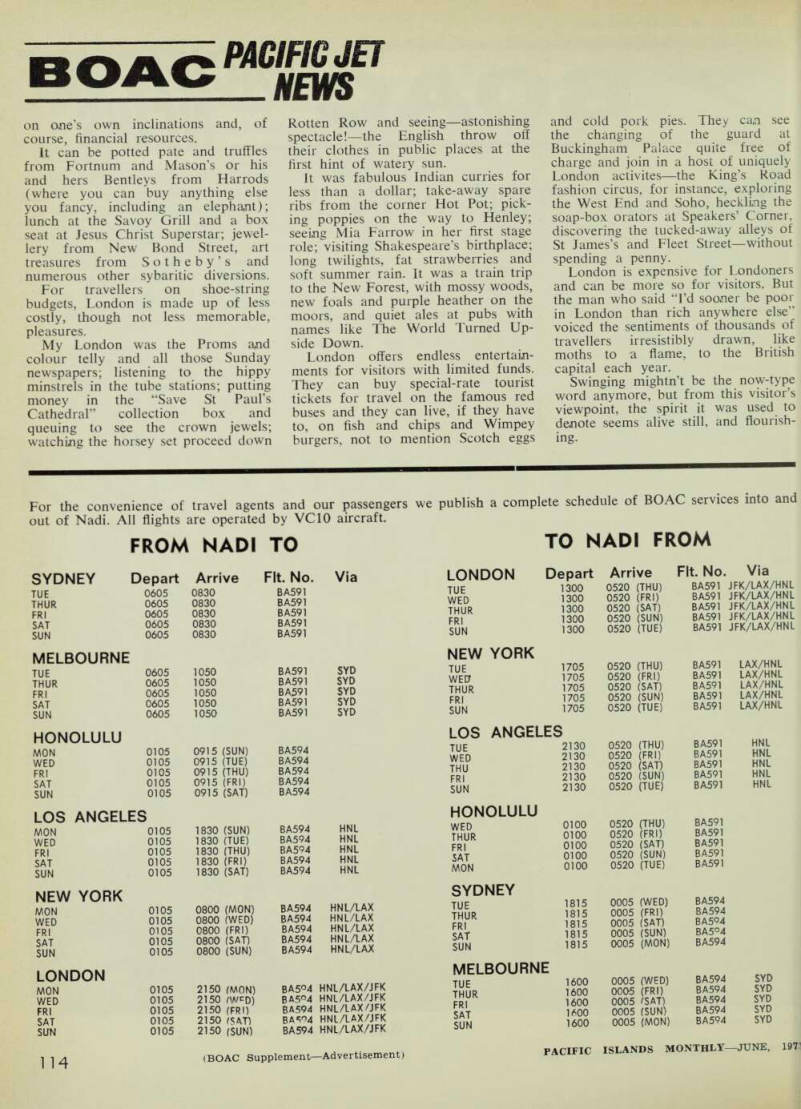 122
122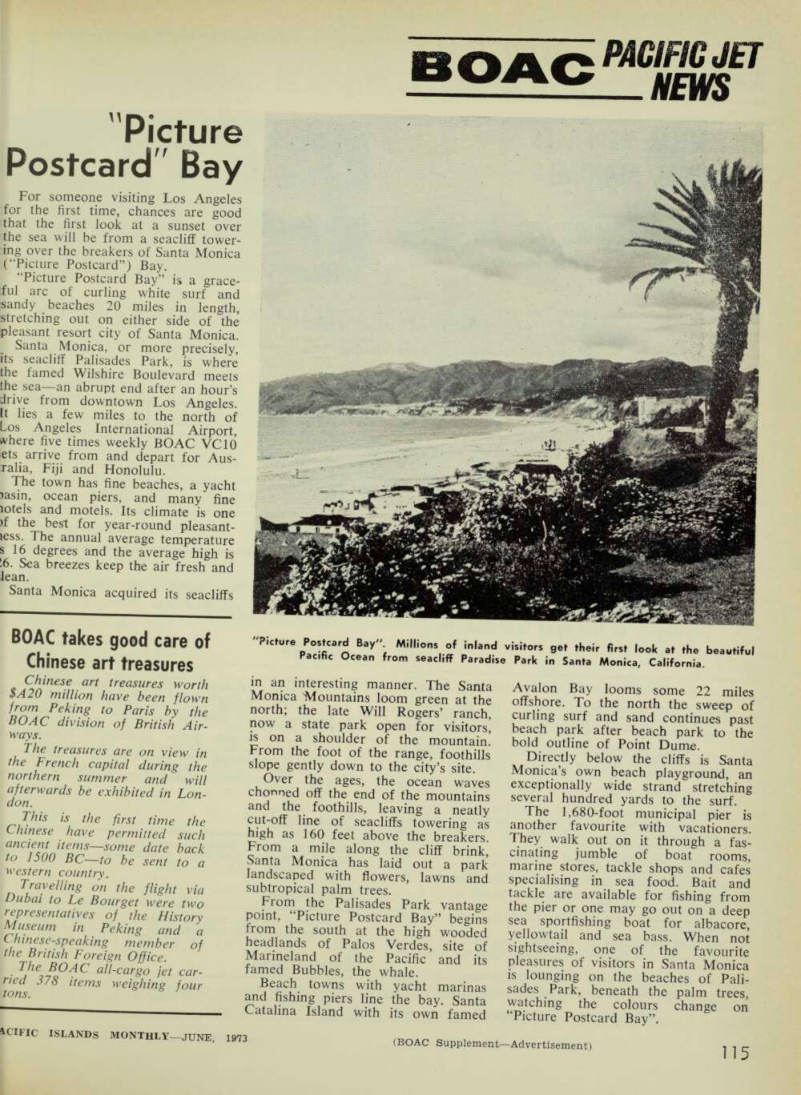 123
123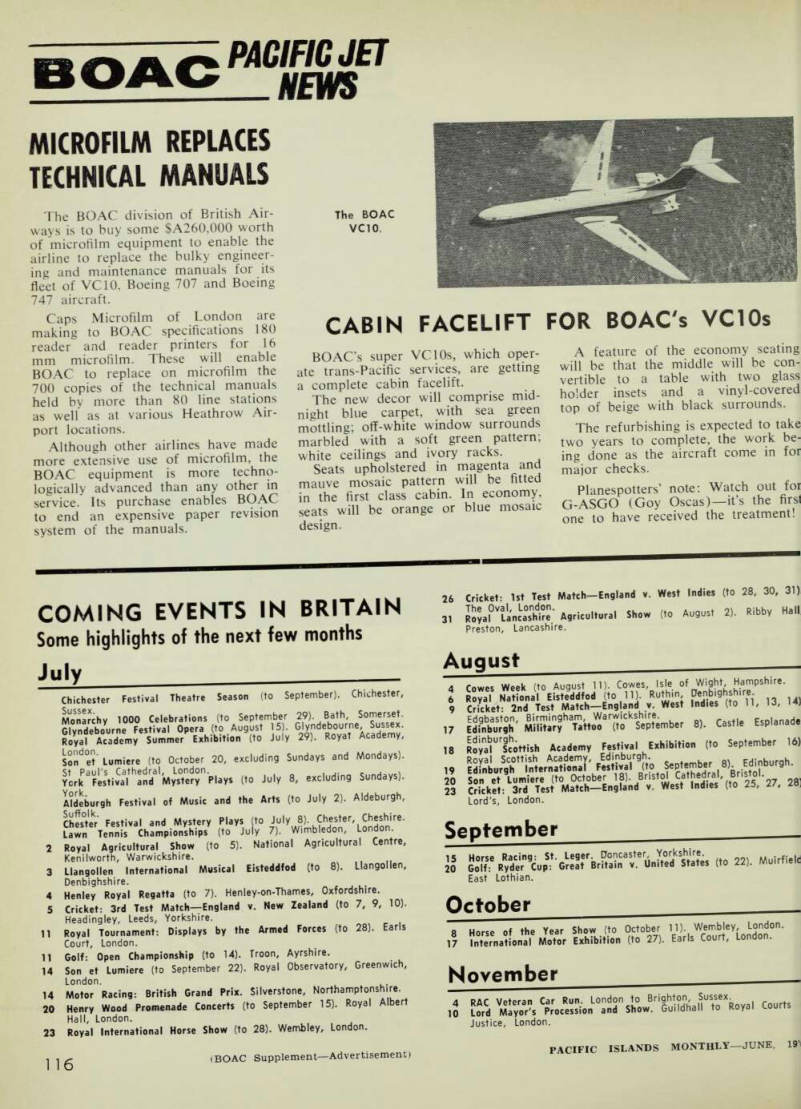 124
124 125
125 126
126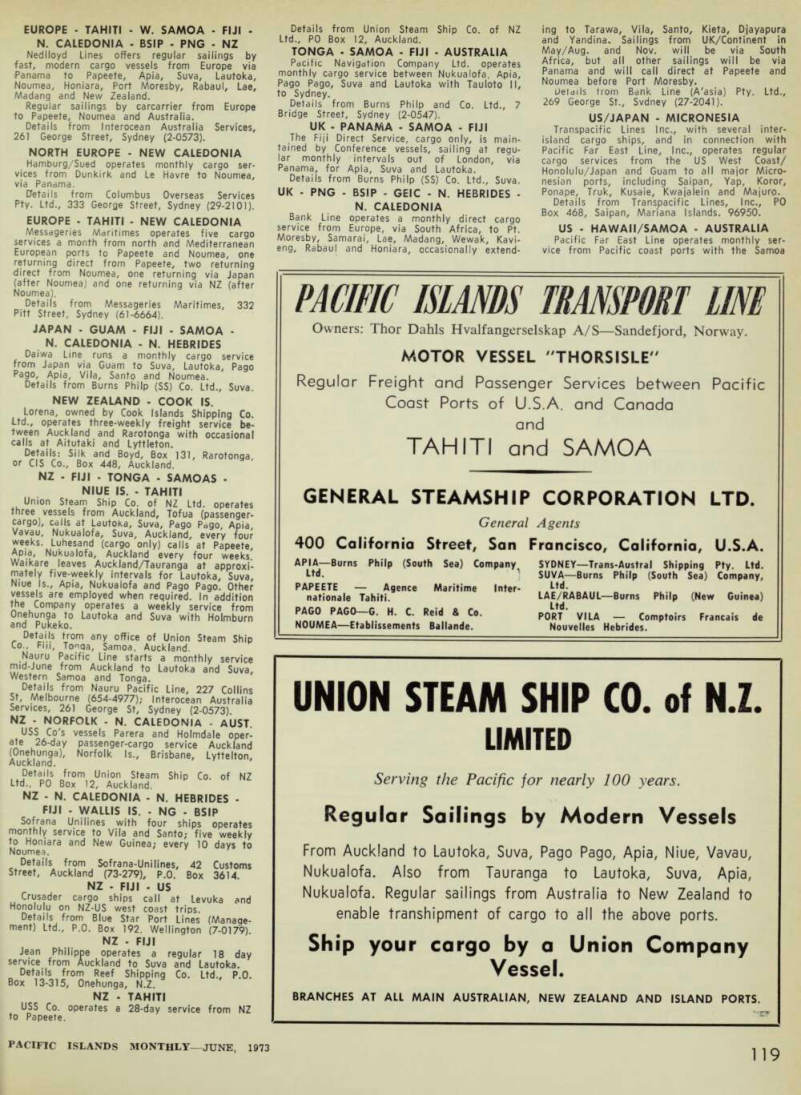 127
127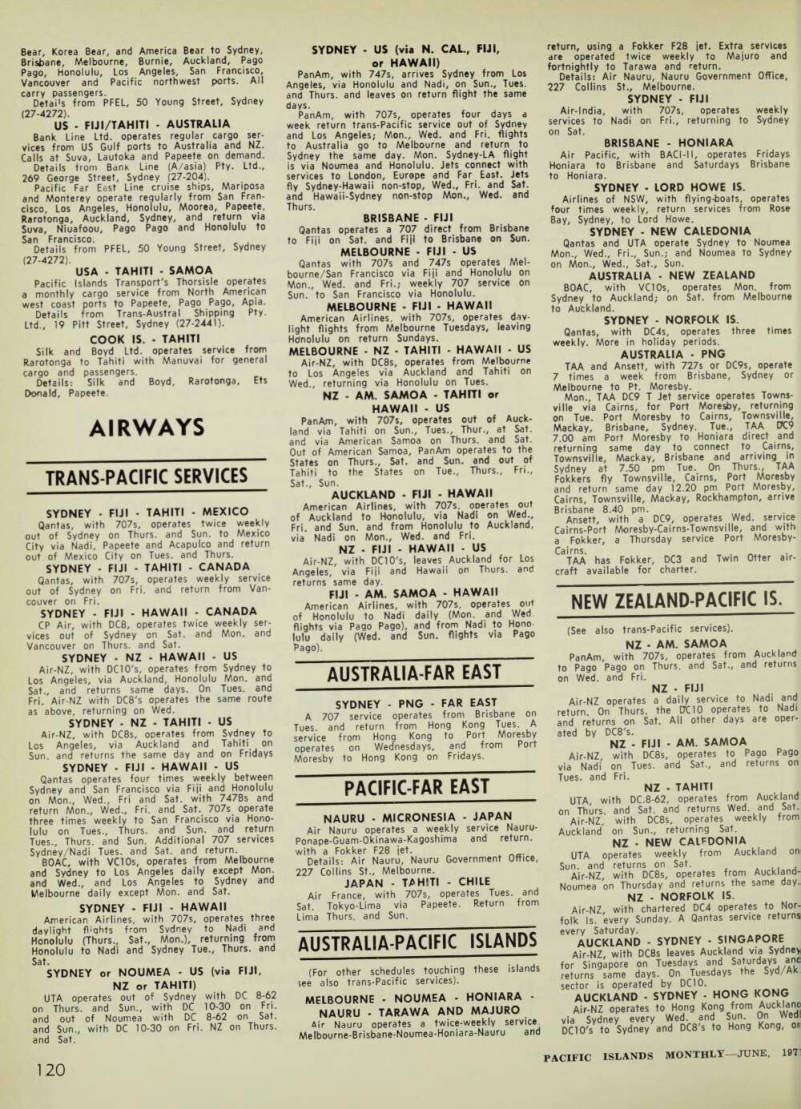 128
128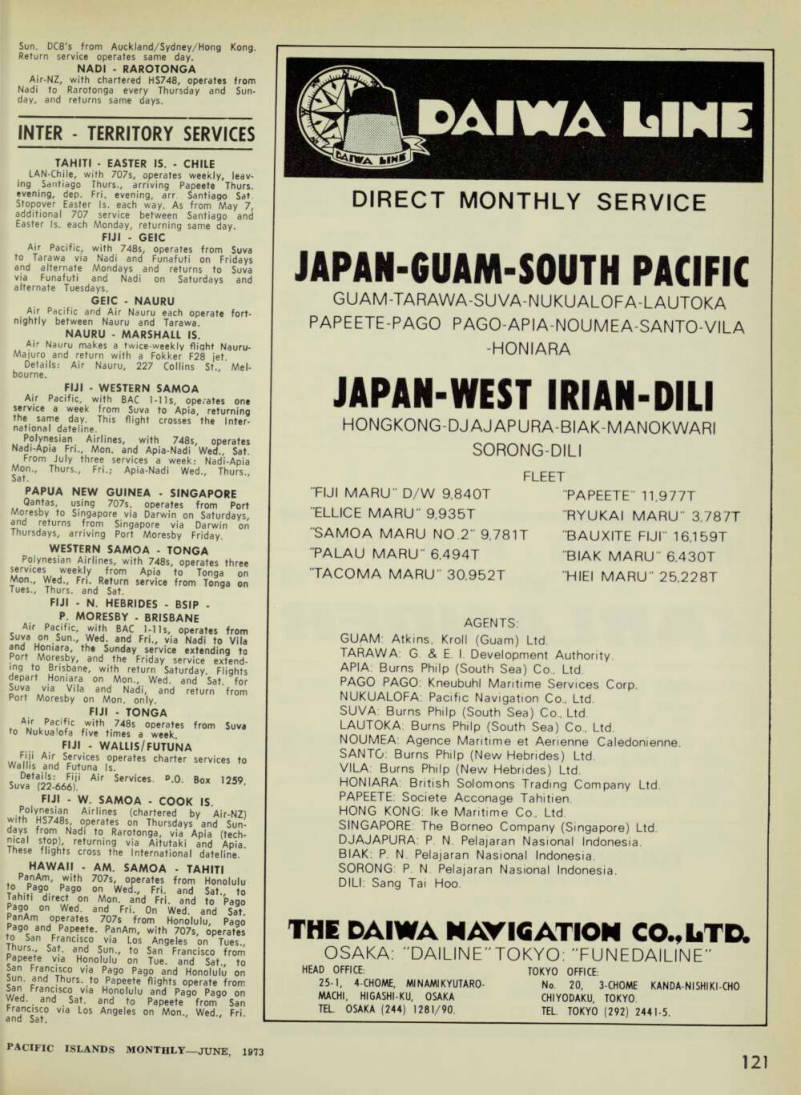 129
129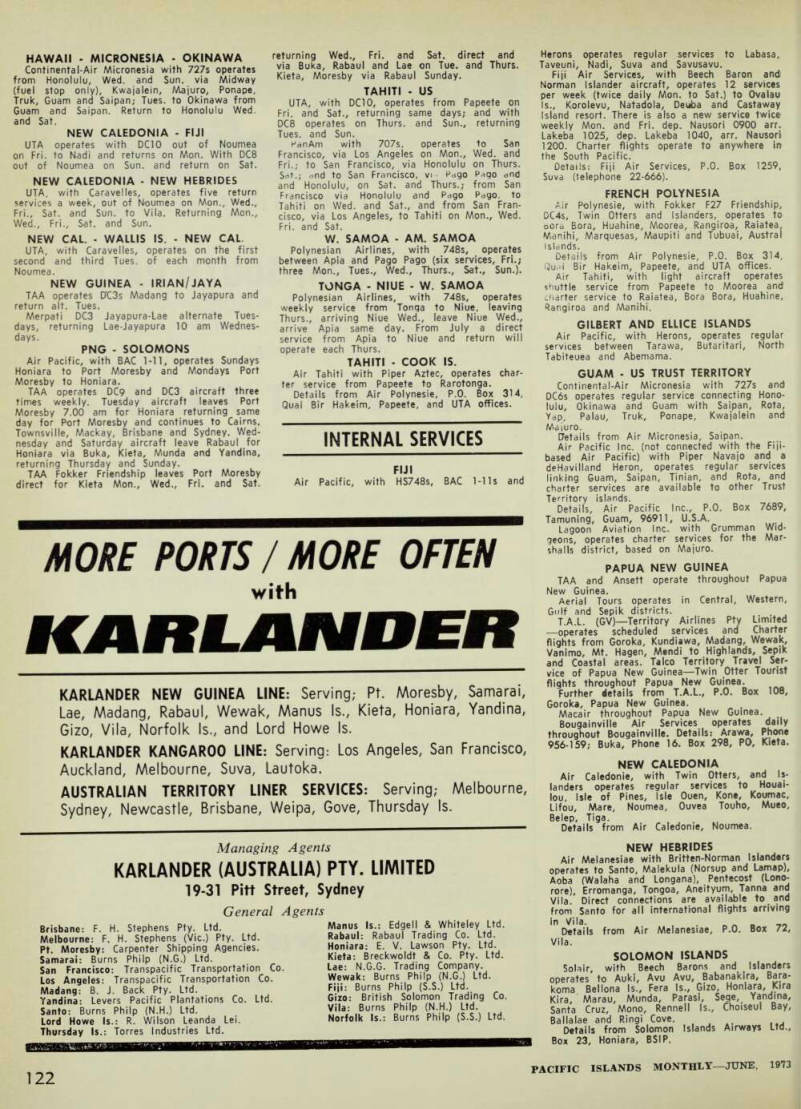 130
130 131
131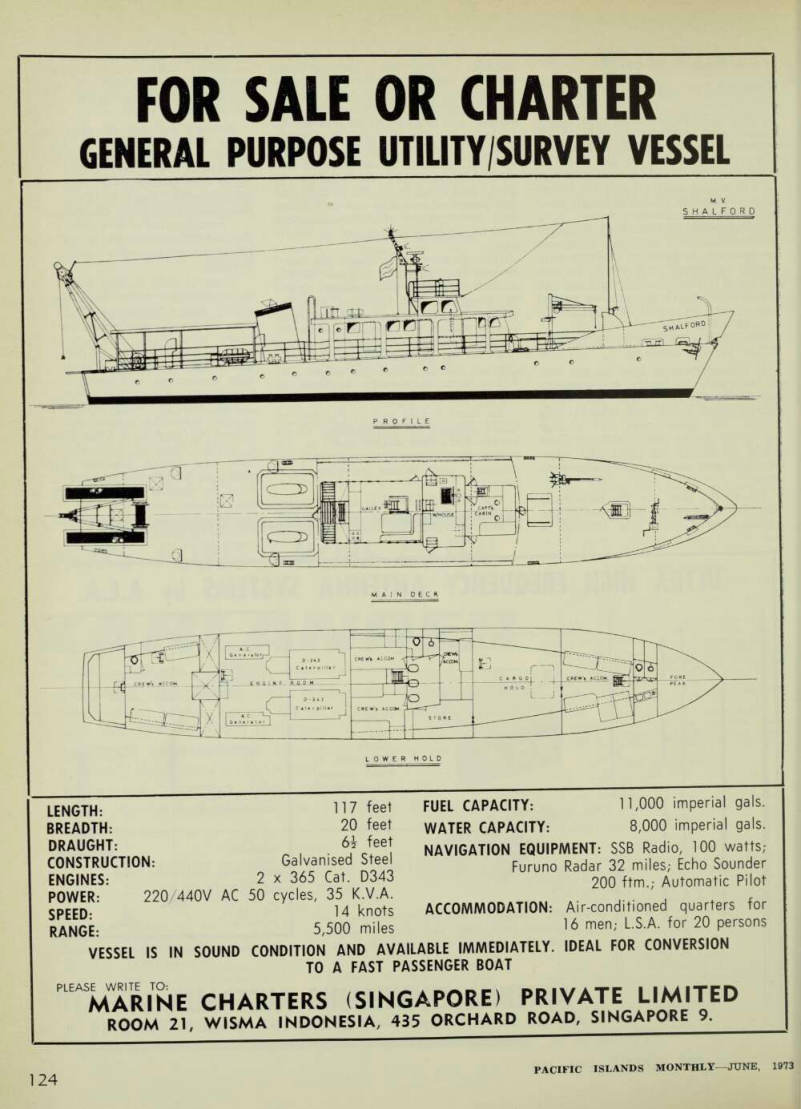 132
132 133
133 134
134 135
135 136
136 137
137 138
138