Pacific Islands Monthly
News Magazine Of The South Pacific
May, 1973
Australia, N.Z., Western Samoa 60C
P.N.G., FIJI, COOKS, TONGA, G.E.1.C., 8.5.1. P., N. HEBRIDES 50c
Nauru, Niue, Norfolk 50C
American Samoa 70C Hawaii, Micronesia $L.Oo
NEW CALEDONIA AND FRENCH POLYNESIA 100 CFP
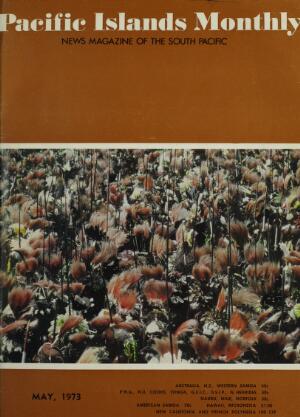
Our Cover
It’s not a garden but a bird’s eye view of a gathering of warriors with their Bird of Paradise head-dresses at the Mount Hagen Show in the New Guinea Highlands.
Advertisements & other items, p. 2 (1 item)
Everybody’s Choice
TEAC Hi-Fi Equipment
People who choose TEAC products are making a sound decision.
Experts choose TEAC. They know of TEAC's superior engineering in magnetic recording, from data and professional audio recorders.
TEAC products are consistently superior. Performance is tops.
Newcomers to home recording choose TEAC. They know our reputation is sound and based on quality. And by simple comparison they can see for themselves how and why TEAC components are the best.
From cassette data and professional recorders to the most modern home entertainment systems, everyone is making the sound decision -for TEAC!
How about you? * * * % 9 * J % S O c if* r m Him 4* a
In This Issue
General
South Pacific Forum 6 Transpac sued 83 Shipping lines go metric 85 Foreign investment in Hawaii 95 Australia and NZ drive for trade 99
Feasibility study of fishing industry 101
Pacific air fare cuts 101 Air Pacific to fly to Brisbane 103
American Samoa
Mew legislation 8
frade with Western Samoa 105 Jan on kegs of beer 105
Zook Islands
Judget plans for 1973 25
view Bishop for Rarotonga 33
When the Cooks nearly became French 57 view Fishermen's Co-operative 101
: Iji
Lnti-strike legislation 5, 43
nflation 6 Witchcraft in sport 9 erries to replace barges 85 imber industry recovers from Bebe 99 Liming for sugar record 103 axation shake-up 103 Lir Pacific comes to Brisbane 103 uva-Nadi road costs more 105 earch for copper 105 lotel expansion on Coral Coast 108
French Polynesia
James Boyack's Tahiti Letter 10
Gilbert And Ellice Islands
Fishermen adrift 13 Ellice recovers from hurricane Bebe 21
Nauru
Nauru Pacific Line alters service 87 Diver recovering 126
New Caledonia
Territorial Assembly game 26 Pacific supremacy 27
New Hebrides
Loss of inter-island trader 87 Dolphin mystery 125
Norfolk Island
Quarantine station upset 37
Papua New Guinea
Village justice 13 Kokoda Trail 15 Land Commission 15 Percy Chatterton's column 38 Morrison on PNG's future 47 Freight rates rise repercussions 83 First Papuan second mate 83 Japanese tourists 85 Japanese investment 93 PNG on show at Japanese trade fairs 97
Duty-free shopping plans 105
Instant coffee processing factory ... 105
Pitcairn Island
Census figures ... 23 Afforestation programme 105
Solomon Islands
Council ends in the blues 8 New voters in general elections 23 Discovering AAalaita 53 Dr Fox leaves 126
Tonga
Tonga Visitors Bureau rep in Australia 33 Latest royal baby 35 Running out of land 41 New copra market 100 Oil drilling postponed 105
United States Trust Territory
Micronesia's pin-up 12 War compensation 14 Navigational aid stations to close 85 Fishing permits revoked 105
Western Samoa
Compensation landmark 12 Film censorship 13 Japanese business boom 95 Trade with American Samoa 105
•EPARTMENTS: Up front with the Editor, 3; Topicalities, 12; Editor's mailbag, 29; eople, 33; From the Islands Press, 51; Magazine section, 57; Yesterday, 60; Mana, 9; Book reviews, 79; Pacific shipping, 83; Cruising yachts, 91; Business and evelopment, 93; Produce, 108; Shipping and airways information, 117; In a Nutshell, 125; Deaths of Islands people, 127; Advertisers' index, 128.
Advertisements & other items, p. 4 (1 item)
by A.E.A.
HIGH FREQUENCY
ANTENNA SYSTEMS
The DELTA antenna —a new approach to short-medium distance radio communications.
This broadband high angle antenna type comes in directional and omnidirectional versions. It has been field proven in a variety of difficult HF applications. We will forward technical data on request. *c- Vertical LPDA The deltas join A.E.A/s product line of highly effective broadband HF antennas, for medium-long range communications in difficult locations —dense jungle to rocky, mountain terrain, or desert sites. Installations tough enough for tropical hurricanes, or the freezing gales of Antarctica.
A.E.A. produces a wide range of antenna accessories, support structures, hardware, wideband RF transformers, baluns and terminations.
Antenna Engineering has the answers to your communications antenna problems, from VLF all the way through microwaves. Complete design, manufacturing, installation and system maintenance service.
Broadband Monopole
ANTENNA ENGINEERING AUSTRALIA PTY. LTD.
Garden Street, Kilsyth, Vic. 3137. (P.O. Box 191, Croydon, Vic. 3136)
Pacific Islands
Monthly
FOUNDED BY R. W. ROBSON IN 1930
Published Monthly By
Pacific Publications (Aust.) Pty. Ltd.,
29 Alberta St., Sydney, N.S.W., 2000
Postal Address: G.P.O. BOX 3408, SYDNEY,
N.S.W., 2001.
Telegraphic Address: PACPUB, Sydney.
I Telex 25168.
Telephones: 61-9197, 61-7101, 61-4369.
I Consulting Directors.- R. W. Robson, Judy Tudor.
Chief Executives: Manager: Selwyn Hughes.
Publisher; Stuart Inder.
Director of Advertising: W. A. Gasnier.
Pacific Islands Monthly
Editor; Stuart Inder.
Assistant Editor; John Carter.
Advertising Manager: W. A. Gasnier.
Circulation Manager: Barry Badger.
L ... Subscription Rates:
Pacific Islands Monthly" is airfreighted to all subscribers and agents in the Pacific Islands and the U.S.A.; copies to other areas go by surface mail. ’
Australia (incl. Lord Howe and Thursday Is.); 56.70 Aust., Papua New Guinea: $5.50 Aust.,- Fiji, Tonga, New Hebrides, Gilbert & Ellice Islands, Solomon Islands, Nauru Island and all other Pacific territories; $5.50 (local currency); western Samoa.- $6.70 (local currency); New Zealand: $6.70 NZ; Hawaii, Micronesia and Guam: $12.00 US; US Mainland: $14.00 US; Caledonia and French Polynesia: 1,100 $6 ? 96 Umted Kingdom: £3 - 25 ' Elsewhere:
... „ , Representatives
Mli: Paafic Publications (Fiji) Ltd., Fiji Times Building, 20 Gordon Street, Suva. Tel.: 25601; S'vil T l m A ?f T^ iCe V ( T nr - Vitogo pde ' and Namoli Ave, LAUTOKA. Telex: 1144. Tel.: 60-422.
RABAIiI N Mr G r M: C - LAE ' P - Box 227 ' KABAUL, Mr. Steve Simpson, P.O. Box 433 (c/- Rabaul Photographic. Tel.: 2677.) French Polynesia: Distribution—Hachette Paci fique, 10 Ave Bruat, Papeete.
Z * ala , n . d: Pacific Publications, C.P.O. Box 222 - Auckland. 379-494. Representative: John Speddmg, Civic House, 291 Queen St., Auckland, Tel.; 379-494.
United Kingdom: I. B. Graham, Park House, 22 Park Street, Croydon, CR9 3NP Tel • 01-6884177. 2onc S 0 eaS c Newspapers (Agencies) Ltd., Cromwell Fulwood Place, London, W.C.I Tel • 01-242-0661. Cables: WESNEWS, London, DS4.
J ap a n: Advertising—Universal Media Corpora tion, C.P.O. Box 46, Tokyo. Tel.: 666-3036.
Victoria: Advertising—Wilke & Co. Ltd. 37 Browns Road, Clayton, Vic., 3168 'Tel • J 544-8222. ?o aen c s J an n : Advertising—Beale Media Services, 232 St. Paul s Terrace, Fortitude Valley, Old 4006. Tel.: 52-5827. and U.S. Mainland only,- Mrs. W. A McGrath, 225 Queen Street, 178, Honolulu, rc j . 96813. [send change of address notices. Form 3579 and new subscriptions to P.O. Box 2193 Honolulu, Hawaii, U.S.A. 96805).
Second class postage paid at Honolulu, Hawaii.
Copyright ©, 1973,
Pacific Publications (Aust.) Pty. Ltd.
May, 1973 Vol. 44, No. 5
Up Front
with the Editor
“Jim Davidson is a living man. He lives for the people of the Pacific. He came to help us at the time of our awakened consciousness. He leaves us his strength.”
The words are those of Father John Momis, the Bougainvillean deputy chairman of the Papua New Guinea Constitutional Planning Com mittee, paying tribute in Port Moresby to Professor J. W. Davidson, who died suddenly in that New Guinea city on April 8. Tributes like that were made about Jim Davidson all around the Islands and later in Can berra at a crowded memorial meeting.
His formal obituary on p 127 out lines his impressive academic career, but it doesn’t reveal what a human bloke he was, or tell of the extra ordinary variety of friends he had, or of the clever intrigues he was party to, or repeat even one of the stories of Pacific personalities and affairs that Jim was forever updating and exchanging.
Jim Davidson loved to gossip always relevant, well-informed and in formative gossip, with an occasional superb touch of malice just when it was needed—and he shared his stories with everybody.
Gossip, to Jim, was the stuff of con temporary Pacific history in an area noted for its orators and talking chiefs and not for its writers. Islanders revel in the spoken word, as Jim did, and it was Jim’s warm and informal verbal involvement that made him the complete Pacific historian.
On his death he was still the only man to have held a university chair in Pacific History, and nobody who follows him can have both the same personal attributes and the unique era in which Jim was able to practise them. The 23 years in which he held his Canberra post with the Australian National University will, I think, when the record is closed, prove to be the most vital years of political develop ment in the Pacific Islands. In these years the Islands became independent or self-governing, or have almost be come so, and Jim Davidson has been a key, yet unobtrusive figure in the political attainments of many of them.
There is no Island leader who was not his friend.
I regret, among many regrets at Jim’s death, that the Pacific will not have a full record of these years written by Jim himself from the point of view of his personal involvement.
What a fascinating, living record such a history would have been.
We can hope that the role of a dedicated contemporary historian will be carried on by some of the Pacific Island students who will now be able to continue their higher education in Australia as a result of the Davidson Memorial Fund being launched by the Australian National University to pro vide scholarships. The decision to establish this fund was made at the Canberra memorial meeting a few days after Jim’s death.
But, meanwhile, many of us shall retain the warm picture of the lanky, slightly-stooped New Zealander with the big grin, occasional stutter and limp handshake, who could be de pended upon to wear outrageously in formal dress of beach shirt, brief shorts and rubber thongs while every body else stupidly sweated it out in long sleeves and tie.
Some people you miss, and Jim is one.
Stuart Inder
Jim Davidson.
Advertisements & other items, p. 6 (1 item)
Qrnotts/ Biscuits
m r *k m. m •SB* fie Mk m m m mmm M m n wm v:J-
Give your family
these all-time favourites
from Arnott’s
Everybody likes them! Nourishing Milk Arrowroot... tasty Nice... delicious Coconut Bar... the egg-and-butter goodness of Scotch Finger... they’re all-time family favourites from the great big Arnott’s range. Taste them!
The triple-wrapped packs keep the biscuits fresh.
Qrnotts/ Biscuits
There is no Substitute for Quality
Pacific Islands Monthly
Exercises In Parliamentary Chaos
From a Suva correspondent
After Hurricane Bebe came a Istorm of another kind—Fiji’s biggest ■ constitutional upset since indepen dence with, at the centre of the [controversy, industrial relations legis lation with which the government [hopes to curb wildcat strikes. The [crisis came when the Government [attempted to introduce the measure and the Opposition, the National [Federation Party, objected.
The crisis kicked off with a scene unprecedented in the 800 - year [tradition of Westminster-type parlia mentary practice that Fiji opted to [stick with at independence in 1970.
This was when the Speaker, Mr Raojibhai Patel, who holds one of the 19 Opposition seats, tried to have the 33 members of the ruling Alliance Party locked out of the chamber.
Then he told the parliament’s staff— the Clerk, Hansard reporters, Mace Bearer and Sergeant-at-Arms— to have nothing to do with a meeting convened in his absence.
He holed up tight in the Speaker’s chamber, along with the Mace, which he wouldn’t allow to be removed to its place in the chamber, and ignored [appeals to emerge made by the Deputy Prime Minister, Ratu Sir Edward Cakobau. The Mace is the traditional symbol of authority in British parliaments.
It was entertaining for the packed public and press galleries, but there were serious undertones.
The controversial legislation (the Trade Disputes Bill) was published in March as a solution to the wildcat strikes which began snowballing a year ago and which are now un doubtedly causing the Fiji economy serious harm.
The Trade Disputes Bill empowers the Minister of Labour to declare certain strikes illegal if they occur before all other means of settling disputes are exhausted. Union leaders inciting anyone to join such strikes could be gaoled, or fined, or both, and so could the strikers.
The Fiji Trades Unions Congress voiced loud objections. The Oppo sition NFP, which draws a lot of
support from some union circles, de cided on a crusade. The Opposition stand, cried its Whip, lawyer Karam Ramrakha, was to “use every consti tutional means in our power to oppose this bill”.
The first day, the government couldn’t get the bill to its first read ing because Mr Patel, on a motion by Mr Ramrakha, ruled that it would be out of order, as it hadn’t been distributed early enough.
The bill got its first reading next day, but the Speaker ruled, again on a motion of Mr Ramrakha’s, that it would still be out of order and would have to await its second reading until the following day.
Then, after the House and in furiated Government members had worked through the rest of the agenda for the day, Mr Ramrakha declared that, as a member of the House business committee, he had the right to move that the House adjourn sine die (indefinitely) on the ground that there was no more business for it to deal with! He maintained that because the second reading of the Trade Disputes Bill had been ruled out of order, it wasn’t now an item of business.
To the Government’s anger, Mr Patel agreed, and ruled out of order an attempt by the Deputy Prime Minister to amend Mr Ramrakha’s motion so that the House could adjourn only until 9.30 am next day.
But a vote was taken on Mr Ram rakha’s motion for adjournment sine die and was lost by 28 votes to 12.
The Government had refused to ad journ.
Mr Patel sat in his chair, ponder ing, and then pointed out that the House was sitting around with nothing to do. Mr John Falvey re plied that there were two messages from the Senate and the second read ing of the Trade Disputes Bill still pending. But the Speaker’s per functory response was to declare the House adjourned sine die, as Mr Ramrakha had wanted, and he cut short a howl of Government protests by striding out of the chamber be fore anyone could get another word in.
“He left his chair so fast I thought he had tripped and fallen,” Minister of Finance, Charles Stinson, said later. “He forgot to bow to the House.”
The Opposition yelled with joy over their third victory in stalling the bill.
Mr Ramrakha, and Mr Apisai Tora, a Fijian NFP member and secretary of the strike-happy Airport Workers’
Union—a union which the bill singles out for restrictions on striking— grabbed hands exclaiming: “We’ve won the first round!”
Unless a counter-strategy could be devised the Government now faced a delay of weeks in getting what it re garded as top priority legislation into the law books. Besides the Trade Disputes Bill, there was its prices and incomes freeze legislation to con sider, announced by Minister for Commerce and Industry Mr Moham med Khan a few days before. This was to freeze wages, prices, rents, and other cost increases for 90 days from April 1, followed by another 60 days if necessary.
The Government thumbed through the parliamentary rule book and an nounced over Radio Fiji that night
that the House would meet at 9 am the next day “in accordance with the provisions of the standing orders of the House and of the Constitution”.
But the Opposition wasn’t having any. Mr Ramrakha retorted the same night that the Speaker had adjourned the House sine die, and if the Gov ernment was dissatisfied with that ruling it had to impeach the Speaker or challenge his decision in court.
The Opposition, he said, wouldn’t be in parliament the next day.
Nor was it. And the chamber had been locked on the Speaker’s instruc tions, and the staff told not to attend.
Chaos reigned.
The chamber finally was unlocked, and the Deputy Speaker, Mr Vijay R.
Singh, took the chair, but soon ad journed the meeting in what he described as the “somewhat unusual circumstances”. But after lunch the Government at last responded with positive counter action and held a meeting of the House without Speaker, Mace or Opposition. It was then adjourned till 9.30 next day, Friday.
Mr Patel announced (outside the House, of course) that the meeting
was “a nullity”, and called what he described as an “emergency meeting” of the House for Friday.
On Friday, Mr Patel, the Oppo sition and the Government were all in their seats. But the crisis was still unresolved; the Speaker wouldn’t accept the legality of the previous day’s proceedings. Now followed a whole day of adjournments, private talks and fruitless shufflings about as the Government tried to break the procedural deadlock. Mr Patel finally stunned the Government by adjourning until the Monday.
Tempers ran high over the week end. Monday was another day of stalemate in the House over pro cedure. The Government announced that the country was “being held to ransom by the Opposition in seeking to defer important State matters”, and that Mr Patel had made “clearly illegal decisions” in adjourning.
The House was adjourned by Mr Patel, until Tuesday afternoon, by which time a deal had at last, some how, been arranged. Mr Patel was back in the Speaker’s chair and the minutes of the previous Wednesday and Thursday were approved.
At this point Mr Patel announcec that he had been “embarrassed” a having been accused by the Govern ment of partiality in the House; a: a result it was impossible for him tc stay in the chair “under a cloud o suspicion” and he would withdrav from the House for about a week.
Mr Speaker therefore rose, with drew, and was replaced by Depub Speaker Singh. And the House pro ceeded, to its own surprise, finally t< get to business.
As an anti-climax, the Trade Dis putes Bill then easily went throug] both the House of Representative and the Senate. The House mad some minor amendments, the Senat none.
Nevertheless, the Govemmen couldn’t even get through the Hous a motion of no confidence in th Speaker after the Opposition refuse to extend the sitting time, and debat on it was adjourned till May 1. A: Opposition member, Mr James Mad haven, has meanwhile issued a wri seeking a Supreme Court declaratio; that the Government acted illegall in convening the House after th Speaker adjourned it on April 5.
Protests
Massive Bomb
Australia and New Zealand in April were planning widespread sanctions, including trade union action against French commerce and air and shipping links, as a protest if France continues with nuclear testing in the Pacific.
There are reports from Papeete that France may retaliate (see p 10). Australian Attorney- General Senator Lionel Murphy told the Paris Government that the tests had “physically affected everyone living in Australia” and that the Australian Academy of Science believed there was danger of death and disability if there were more explosions.
Advertisements & other items, p. 7 (1 item)
5
ACIFIC ISLANDS MONTHLY—MAY, 1973
Unhappily chasing the Fiji costs spiral
Fiji, battling to combat inflation, imposed a prices, rents and wages freeze for 90 days from April 1, and can extend another 60 days if needed. The freeze even includes company dividends. Breaches can bring fines up to $2,000. The Goven ment said Fiji's inflation rate in 1966 was 0.3 per cent, but it rose to 6.5 in 1971 and to 9.1 in 1972. The recent cost squeei on Fiji householders is described in this report from SEONA MARTIN, in Suva.
Jone Ratulevu’s family learnt about inflation the day his wife served potatoes instead of dalo.
Dalo is a traditional staple food in Fiji, much preferred by most people to potatoes or even other island root crops such as cassava and kumala.
Rebellious muttering echoed among the Ratulevu family’s dinner plates when potatoes were served. “Dalo is $2 a bundle in the market this week. Potatoes are 12c lb. We eat potatoes,” Sala Ratulevu said firmly.
Rapidly spiralling costs are pushing traditional Fiji foods off the table, to be replaced, if at all, by foreign foods which are cheaper or can be bought in smaller quantities.
Shoppers were recently faced with the prospect of buying bunches of Fiji-grown bananas for 50c a dozen, or imported New Zealand apples for 30c lb.
Not that imported foods are cheap.
The cost of almost everything has risen significantly in the past 12 months, particularly since hurricane Bebe wiped out many Fiji crops in October. The consumer prices index rose almost 17 points from January
last year to January this year, almost double the rate of increase for the previous year. From October to January the index increased an average of four points a month.
Or as Susana, mother of four school-age children, put it: "I spend more money in the market each week, but still my basket gets .no heavier.”
The Government statistician re ported a modest increase of three tenths of a point in the consumer prices index between January and February. He put it down to slightly cheaper food as crops begin to re cover after the hurricane and changes i,n some school fees.
But rents still showed an upward trend, continuing a pattern which has worried urban dwellers and store keepers for the past two years. Even cool drinks have gone up, as any school child trying to stretch his pocket-money knows.
“What I dislike most is finding two or three cents added to things in the supermarket from one week to the next,” a Suva shopper complained.
“When you ask why, you are told it is ‘because of the freight’.”
Shopkeepers explain freight rate
go up several weeks, or even month; before the increase shows on th shelves. As old stock is used up, ne l stock at a new price is put out. Nc all increases are in the “two or thre ce,nts” bracket.
A distraught New Zealander bac in Fiji after a week’s home leave wj stunned by a quick trip to the supe market to stock up supplies the da she returned.
“I only bought two things—a doze eggs and a pound of lamb piece Eggs were up 12c a dozen, the mei had risen 4c lb,” she said.
Another shopper gleefully spied
carton of cream in a city store aft* it had been unavailable for mar weeks. She said she was just reachir for it when the price stopped her.
“It was 30c a carton. Last time bought it, the price was about 20 certainly no more than 22c. I decide the family had done without creaj when we could not get it, so th* could go without now.”
Some of the most bitter commerr about inflation come from isolat*
Continued on p 11
village people, who bear the brunt of ordinary increases and extravagant freight costs.
Even in the most subsistence com munity which could almost support itself with food, people still need to buy such things as soap, benzine for outboards, kerosene for lamps, and baby food—not to mention tea, sugar, utensils and other commodities civilisation has made necessary to the contemporary Fiji Islander.
Small communities operating co operative stores cannot buy in huge amounts and sometimes lose whole sale price advantages. It costs them extra to bring the goods by truck or boat from the nearest town, where the goods have already been freighted.
The main complaint of these vil lagers is that their costs keep in creasing but they have no wages to go up correspondingly.
A representative of Fiji’s active Consumer Council was told recently by an embittered village leader: “Every time there is a strike in Suva the wages go up. Then the prices go up. We have to pay the higher prices too, but who can put our wages up?
We do not earn any steady wages.”
The villagers sell produce from time to time, or get occasional work, but because of their isolation and life-style a steady income is almost
an impossibility.
Two years ago inflation was a word economists and smart sixth-formers knew. Now every Fiji housewife, breadwinner and remote villager knows its meaning and its effect.
Successful, worthwhile,
but so dull!
From PI M’s Assistant Editor, JOHN CARTER, in Apia
There’s never been such a gathering of South Pacific j leaders as there was at the Fourth South Pacific Forum I here on April 17—a three-day meeting of leaders of I seven countries, with two more as observers. But it was iso dull that some journalists used their imagination to ■ create headlines—and produced the only discordant note, a protest by NZ Prime Minister Norman Kirk at leakages from the secret sessions and at reports of clashes between i Forum members which Mr Kirk said never took place. : You couldn’t blame the reporters, perhaps. It was non information that was doled out by a spokesman at the end of each day’s closed meeting. There surely had to be something dramatic when you got together the President lof Nauru, the Prime Ministers of Australia, NZ, Fiji, Western Samoa, Tonga and the Cooks, with the Chief Minister of Papua New Guinea and the Leader of [Government in Niue as observers.
There was initial apprehension among Island leaders fin case Australia and NZ tried the Big Brother act at the meeting, but Mr Gough Whitlam and Mr Kirk, with ■strong teams, got down to business with an air of “we’re I all equals”.
Only two agenda items were expected to create fire- I works—French nuclear tests, and a complaint from Fiji I Prime Minister Ratu Sir Kamisese Mara that Australian and NZ trade unions were interfering in Fiji’s sovereignty in their objection to Fiji’s industrial relations legislation |(see p 5).
The Forum condemned the tests, reaffirming “strong ■opposition to these tests which expose peoples as well as their environment to radioactive fallout against their wishes and without benefit to them, and which demonstrate deplorable indifference to their future well being”. Western Samoa promptly cabled the resolution to France, and Mr Whitlam promised to speak to British Prime Minister Ted Heath when he saw him in London, where he was headed after Apia. There was talk of [members joining an action against France before the International Court, planned by Australia, if costs weren’t [prohibitive.
Ratu Mara protested against trade union interference under the head of “regional co-operation”. Outside the meeting place—the Western Samoan Prime Minister’s official residence at Pilot Point—he had already been rather bellicose, voicing his suspicions of Australia’s motive in proposing that the Islands should send their Labour ministers to a conference around October, which would also involve Asian ministers. Ratu Mara considered this a move to defuse the trade union issue at the Forum. But the Australian meeting had been suggested before Ratu Mara’s complaint was made, and observers expected a row to develop between Fiji, Australia and NZ Prime Ministers over the point.
It didn’t materialise. Ratu Mara mentioned the matter ■late on the first day, then slept on it. Next day he got what he termed a sympathetic hearing from all, and [accented the Australian plan for a conference about
[October.
Some of the visiting Journalists cabled stories about Ratu Mara having jeopardised the Forum’s future, which he didn’t. Ratu Mara knew that such a hot potato was bound to be handled “in the Pacific way”, with members coming to agreement after talking around it. Messrs Whitlam and Kirk themselves settled down quickly to this “Pacific way”.
With the trade union matter disposed of, the Forum continued with run-of-the-mill stuff on regional shipping, civil aviation, telecommunications, education and the South Pacific Bureau for Economic Co-operation (SPEC).
There were complaints of persistent illegal fishing by foreign ships, mainly Japanese and Russian, in Island waters, and NZ agreed to present a detailed analysis at the next Forum. Again, a regional Island shipping line was discussed as a way of improving services and pro moting trade, but it was agreed that work on this, being done by SPEC, should be integrated with the regional trade study SPEC is also engaged in.
PNG’s Chief Minister Michael Somare was keenly interested, and it is probably no coincidence that PNG’s interest comes at a time when PNG freight rates are going up again. Australia agreed to provide an expert to help with the investigations, which will include a study of the present joint service operated by Tonga and Nauru. The next Forum should, finally, have something to get its teeth into on shipping.
SPEC was given another job— to co-ordinate UN and other agencies in planning an adequate telecommunica tions network. SPEC will also help Fiji, Tonea and Western Samoa achieve an association with the European Economic Community.
But, in the words of the official Forum spokesman, Premier Albert Henry of the Cooks, the “most exciting” part of the Forum was the discussion about the South Pacific Commission. Australia and NZ announced that each planned to offer $250,000 to the SPC as a voluntary contribution to the 1974 budget, both leaders stressing that the money was not for salaries or overheads. As Mr Kirk put it bluntly outside the Forum, “It’s a challenge to the SPC to produce action, which it hasn’t done up till now, always claiming that lack of money has affected it. So now we offer the money to give it the chance to be effective, rise to the occasion and revive itself. But we don’t want the half million dollars soaked up in everyday work of the commission.”
Inside the Forum, Messrs Whitlam and Kirk got promises of Forum backing for a move at the next South Pacific Conference (in Guam in September) to change the SPC budgetary system to one of voluntary contributions.
Under the present system of fixed percentages, any one SPC member can veto an increase by other members— as France did in 1972 (PIM, Nov, p 24). This was perhaps the most significant Forum decision. It was a demonstration of the Forum as a pressure group.
Changes for the SPC are certain. Australia has made proposals in a confidential document now being studied by governments, with this matter of voluntary con tributions the main change suggested. It does not propose, as some observers have suggested, a merger of the SPC and the Forum, The Fourth South Pacific Forum was a success, because Australia and NZ are now firmly committed to regional co-operation. Prime Minister Whitlam who is the first Australian Prime Minister to attend a Forum, spelt it out for PIM, exclusively, this way: “Australia is anxious to plav a constructive, helpful role in the South Pacific, especially in view of the economic activities of certain firms in the past. Australia has renentlv established a SAIS million three-year (1972-75) aid programme for the South Pacific. My government plans to take greater interest in the South Pacific. Regionalism will be the keynote of Australian foreign policy in the ’7os. Australia is anxious to assist in developing regional co-operation in all ways possible in Asia and the Pacific. The Forum itself has a great role in bringino this about.”
He added that Australia was looking for ways of improving the access of less-developed countries in the Pacific to the Australian market.
Blues note to Solomons
council swansong
From a Honiara correspondent The last meeting, in April, of the Solomon Islands’ Governing Council before the general elections in May and June ended on something of a blue note.
Quite obvious was the unhappy ac ceptance by members of the loss after two years and nine months, come July, of the Financial Secretary. John Smith, who has been appointed Governor of the Gilbert and Ellice Islands. Mr Smith himself has not looked overjoyed at his elevation in the middle of the execution of the Sixth Development Plan, and the early stages of putting together the Seventh Development Plan the “People’s Plan” as it has already be come known, because of consultation down to local government and even village level. (The 6DP will end in 1974, and be followed immediately by the 7DP.) The Chief Secretary, Mr Tom Russell, had recalled how in 1970 when Mr Smith spoke in Govco he held in his hand a glass half full of water and talked about attitudes— Mr Smith at the time said members should see the glass as development and progress, and look upon the glass as half full rather than half empty.
“Although John Smith has not succeeded in filling the glass nor in turning the water to wine, he has done a lot to show people here how to make the Solomon Islands viable,”
Mr Russell said.
The Kakamora Reporter, the Solo mons’ only journal of comment and opinion, and usually a critic of government, says of Smith: “(He) has been a breath of fresh air in administration to the present genera tion of Solomon Islander ... he has shown that government need not be something that mysteriously must be hidden from the people being governed. . . . He has done a lot to dispel the typical Solomon Islander’s view of the gavman who comes ashore with the big stick, to be carried with awe and trembling by the ‘natives’ above the breaking surf so that his white stockinged delicate feet hurt not against the stones and be wet.
We are rather dismayed at Mr Smith leaving us at this time”.
Much of the debate in this final meeting of Govco was taken up with the second annual review of the 6DP (1971-1974). The review itself written by the Government’s planning unit originally set up by Smith, set out
plainly the successes and failures of the plan so far.
“To date conspicuous and en couraging progress towards objectives has been achieved in fisheries, oil palms, cattle, new planting of coco nuts, roads and malaria eradication,” the review said.
“Disappointing or no progress has been made in reduction of the budgetary deficit, in copra and timber production, coconut re-planting and rehabilitation, marketing, high level manpower output, rationalisation of shipping and trade, development of local government, and urban housing for the lower income groups. Prin cipal set-backs have been high in flation, depression in the copra and timber markets, and destruction of valuable crops by cyclones.”
All projects in the plan are now due to finish by the end of 1974.
The review said that planning was going ahead to establish a Solomon Islands currency and among other projects noted was the complete restructuring of the civil service to reduce administrative overheads. This is already shaking out expatriate civil servants, who are considered ex pendable or hold positions able to be localised more rapidly than has been planned. A number have already been given notice, asked to resign or are not having their two-year con tracts renewed. Pressure is being put on private enterprise, especially shops, to localise, using refusals for work permits for expatriate wives as a lever.
Debate on the review was lengthy, varied and strongly laced with parochial issues as might be expected with a plan which reaches down to village level and in debate just before a general election.
There were two major pieces of legislation brought up—a National Provident Fund bill, and one cover ing Wills and Probate, which was postponed. The Provident Fund bill was passed, allowing the government to start taking equal contributions of 5 per cent of wages from all em ployees and employers to provide retirement, permanent disability or death benefits to Solomon Islander employees particularly. It will begin in about two years time, and provide investment funds for government to ensure the financing of Solomon Islands participation in large new commercial enterprises. Contributions would amount to between $300,000 and $400,000 the first year.
Legislators get
some harmless practice
American Samoa Governor Johr M. Haydon used his veto powen like Mr Vishinsky in the early days of United Nations, when he recently turned down nine bills passed by the 13th Legislature of American Samoa Then he went off to Honolulu tc attend a series of conferences or federal spending. Back in Pago Page a few days later, he signed an ap propriation bill for $2.4 million foi unbudgeted local revenue in the cur rent financial year.
Bills which got the Haydon ax( (reasons in brackets) were to — • Set up a community servic( agency to provide records and reports (Existing agencies in the governmen already took care of them); • Shorten setback requirements ii the Building Code from 35 to 2: feet from the centreline of the road (Setbacks should be governed b: zoning regulations, and such a restric tion could mean loss of federal ait in road-building); • Allow career service employee; to be paid for unused leave. (Tin present regulation allowing them t< accumulate 30 days of leave wa; equitable, and departments should nc allow workers to accumulate mor than that); • Change regulations covermi holiday work. (The current executive regulations provided for extra pay
Miss June Roberts is Maria in Sound o[?] Music, presented at the American Smoar[?] Speech and Music Festival.—OSI photo.
ment to workers who worked on ; holidays); • Require people recruited from ■ any ship in harbour to be on local ll hire in the career service. (The l| problem of casual hiring would be I eliminated by the new position [ allocation system; they should be under contract and not in the career I service, where it would be difficult I to replace them by Samoans); • Allow for a separate police I department administered by a police I commission. (The department still I needed to be directed by a well trained public safety commissioner); • Require three doctors to be I stationed in Manua on a fulltime I basis. (It would have placed too I great a load on the medical staff, and records did not indicate a need for three doctors there); • Reduce the age for retirement I from government service. (No I actuarial study had been made to determine what effect the law would [have on the government's retirement I system); • Provide a $l5O bonus for em ployees after 30 years of government I service. (Employees retiring under I the new retirement system were draw ling more than they ever contributed Ito the retirement fund, and received ■adequate benefits for their service).
I The appropriation of $2.4 million ■ included $1.13 million to implement ■ the uniform wage scale for Samoan ■employees in the career service. Other ■ major items were $160,000 for a new [government warehouse at Tafuna, $lOO,OOO for paving the Ili’ili-Vaitogi Road, $75,000 for the first phase of a vocational education skill centre, $123,000 for the Education Depart ment and $131,000 for the Medical Services Department.
I The uniform wage scale, which be came effective from April 22, reduced [the number of wage scales in the [career service from 15 to two. One fccale covers teachers and the other fell other career service staff. Under [the new scheme no one received less [pay. Some remained on the same [scale, but 80 per cent of the em ployees received an increase. All [career service employees now receive i minimum of $1 an hour; previously ■hat minimum only applied to the Education and Medical Services I Governor Haydon praised the legislature for adopting the uniform scale.
I “For years we have had unfair inequities in the numerous pay scales and most of them hurt the workers in the lower grades,” he said. “We have learned that other approaches such as across-the-board raises only made the inequities worse.”
Knocked-Out
By A Witch's
Spell
From JACK NAIDU in Fiji Witch doctors in Fiji, who over the years have been practising secretly to cure the sick, have extended their field. They are now casting their spells on the sportsfield.
This shock news was revealed by one of Fiji’s most colourful boxers, Leweni Waqa. Once regarded as Fiji’s boxing idol during an eventful 13year professional career which took him to several parts of the world, Waqa has announced his retirement and said that witchcraft is operating in Fiji boxing.
“Some of the boxers today are secretly seeking supernatural powers —many indulge in witchcraft and 1 have experienced it myself,” said Leweni Waqa.
He said that while fighting against a boxer now in Fiji’s top ranks, he felt something was overpowering him.
“My eyes were obstructed by a foggy mass and I was unable to see my opponent. I was left entirely to my opponent’s mercy,” he added.
Waqa’s boxing career started when he was only 18 years old as a middle weight. He trained under a former Fiji welterweight champion, Penaia Toga of Fiji’s gold town, Vatukoula.
His long career took him to New Zealand, Britain, United States and Tahiti, where he made a big name for himself. Perhaps the highlight of his career was his fight against former world boxing heavyweight champion Jimmy Ellis, who was at that time Muhammad Ali’s top sparring partner.
The fight was scheduled as a 10round contest and main supporting bout to the Henry Cooper-Muham mad Ali world heavyweight champion ship in 1966.
Ellis won on a technical knockout in the first round.
During this stage, Waqa was cam paigning in England under promoter Jack Burns, who lifted the once unknown boxer to Ring Magazine’s 25th best light-heavyweight in the world. He was the first Fiji boxer to be rated among the world’s best and says: “I achieved what I was through sheer hard training. Any boxer can do the same as long as he is dedicated to the sport. He can not afford to drink and smoke at the same time.”
Waqa said that Fiji boxing standards were surprisingly, declining.
This was because the boxers were not taking a positive outlook.
With the recent flood of Tongan boxers invading Fiji, Waqa said that at the moment, no Fiji boxer could beat Tonga and South Seas heavy weight champion, Mani Vaka. Waqa announced his retirement after his fight with Mani Vaka, who knocked him out in the third round.
Leweni Waqa's allegations of witch craft in Fiji boxing were the second made within a year. Several months ago Fiji’s sporting newspaper, Fiji Sport, revealed that witchcraft is also secretly solicited by soccer players and team supporters in bizarre at tempts to influence the outcome of major matches.
Said a representative goalkeeper, a battle-scarred veteran of many tournaments: “It worked wonders—at least, it did with me." He said that after a big inter-district match in which his team lost by four goals while he stood helpless in the goal, he was advised to see a witch doctor at Ba.
“I did this one evening," he said.
“The woman appeared to go into a trance after a while and then spoke to me in a subdued voice. She told me that the adversaries of our team had put a curse on me so that I was virtually immobilised in the goal.”
She asked him to visit her again the next day. Meanwhile, she gave him certain instructions about per forming some mystic ritual.
“Believe it or not, almost im mediately I felt a lightened effect.
After obeying her instructions and having a second audience with her, I was back to my original physical form,” said the rejuvenated goalie.
He said that during several represen tative matches after this treatment, few balls went past him. His team won sweeping victories that season.
Leweni Waqa
Tahiti
Letter
Everybody's nuclear sensitivity is rising
From James Boyack
FRANCE may conduct nuclear tests again at Mururoa atoll in the next couple of months. This is the feeling in Papeete even though French authorities are maintaining strict silence about their intentions. The word is that two, or at the most three, very low strength atmospheric tests could be conducted between June 1 and the end of July. French naval vessels known to be connected with the tests have begun to arrive in Papeete harbour, usually a sure sign that something is cooking.
What definitely is cooking is Pacific Basin pressure against the tests, and that pressure-cooker is threaten ing to explode. There are well-informed fears in Papeete that France plans to retaliate in kind to all boycotts and other test-related harassment. Sources in tourist circles believe that France will reply step by escalating step to the boycott of French airplanes and ships. Last year, UTA-French Airline’s planes were not serviced at several Pacific airports. The situation grew so bad in Fiji that UTA decided to overfly the Nadi airport. If similar harassment of French planes occurs this year, tourist sources believe Air New Zealand and Qantas planes will meet the same fate at Papeete. This tit-for-tat situation could escalate to the point where France temporarily suspends the landing rights of these two companies in Tahiti. Although this possibility is only a rumour, it is a rumour which received front-page headline play in the local newspaper Les Nouvelles, a pro-government daily here which usually reflects admini stration opinion.
The Papeete yacht community is also worried about the effect of protest yachts sailing from New Zealand to the test zone. Several such protest vessels have already begun the voyage to Mururoa and yachtsmen moored in Papeete are wondering if the French do not plan unprecedented restrictions to keep protesters out of Tahiti. The islands of French Polynesia have been a traditional haven for yachtsmen since the time of Captain Cook. The French have maintained this hos pitable attitude to yachtsmen, providing them with one of the least expensive, well-equipped anchorages in the Pacific. The fear is that visas will be shortened to force yachtsmen to get in and get out of Papeete in a hurry.
There is even a rumour that visas for yachtsmen will
no longer be delivered on the spot. Sailors may b required to apply for entrance here in a French cor sulate at their last port. This would be a way fc France to determine in advance possible politic: motives for the trip to Tahiti. Yachtsmen already i Papeete with no particular opinion about the tes would become innocent victims of the possible Franct gets-tough crackdown. Government spokesmen ha> refused to comment on these published rumours.
THERE is still considerable speculation in Papeete th; France plans to go underground with her tests ; the soonest possible moment. There is no question th; France is highly sensitive to Pacific protests about hi Mururoa programme. Les Nouvelles broke anothi interesting story, this one about where the undergrour series will be held. It reported that Fangataufa ato! 50 miles east of Mururoa, is being prepared for unde the-surface blasts. Les Nouvelles, quoting informe unofficial sources, said that France has determined th the Marquesas island of Eiao is too porous to penr underground explosions there. It said that a resean team discovered that the island is like a French past: with successive layers of varying densities. On the oth hand, Les Nouvelles said that these same scientists bon 600 metres through Fangataufa’s coral formations ai reached a solid basalt base in which nuclear explosio could occur.
It is a well-known fact that there has been a lot activity on Fangataufa in recent months. One explanatr for this activity was that France planned powerl atmospheric H-bomb tests there. The first Freni thermonuclear device was exploded on Fangataufa 1968. The island can handle the bigger blasts becau it has no permanent housing facilities, like Murum This theory was contradicted by the Nouvelles undi ground report.
Despite this new item that Fangataufa may the underground site, Eiao theorists have not be entirely swayed. There is too much evidence that E i is destined for the underground programme. In any cat I would not be surprised if and when this year’s snn tests take place above Mururoa, they are the II French atmospheric tests.
FRENCH Polynesia’s voters in March carved another edge to the local political prism when they returned I Francis Sanford to a second five-year term in the j National Assembly. Sanford’s victory over Gaullist I leader Gaston Flosse re-established an electoral majority jl which favours autonomie interne for French Polynesia, 1| was a vote for self-government short of independence.
J The balloting checked an apparent year-long swing to H the political right which culminated last September with I the election of a Gaullist majority in the Territorial I Assembly.
I Sanford collected just over 53 per cent of the vote, I but only in the second round of voting. He failed in I his predicted bid for a first-round victory and he was forced to swallow his promise to withdraw from the race if he did not win on the first go (PIM, March, p 7). That promise, which I reported exclusively in PIM, became a campaign issue between rounds. The Gaullist Tahitian Union party saw fit to translate my entire PIM report and publish the French version in each of the three local newspapers during the week prior to the second round. Sanford’s back-tracking ap parently did him no harm. As he pointed out in a press conference following the first vote, his 48.6 per cent score, if not the absolute majority necessary for im mediate victory, was a clear mandate for his autonomie interne programme. Runner-up Flosse in the first round had 12,487 votes to Sanford’s 17,205.
Centrist candidate Charles Taufa, with 5,660 votes, I was the first-round stumbling block in Sanford’s plans.
Taufa, whose contract with the Gaullists created the I new Territorial Assembly majority, chose not to back I his assembly partner in the second round. He told his ■ supporters to “vote their conscience”. Enough of them I did to make Sanford’s second round victory easy, I There was a festive atmosphere at Papeete City Hall the night Sanford won. A couple of thousand autono- I T tS u Sphered there to await results in the company of their leader. There was singing and guitar playing I 6 P r P"Sanford tide swelled. Both Sanford and Flosse I addressed the excited crowd. Flosse’s remarks were I greeted with boos and some shouted insults. As one autonomist leader remarked that night, “It’s a good I thing the bars are closed on election day. This crowd is hot enough as it is.” Flosse ducked out before a major incident occurred.
I Sanford was understandably ebullient as his re-elec |tion became certain. He told me, “The vote today clear y shows the determination of the Polynesian people for self-government. We only want autonomie unterne in the context of the French Republic, as I have said again and again. We do not want independence.
I consider this victory a great triumph for the true [Polynesians, and I hope that now the Metropolitan government will finally understand that it must take into consideration the battle we have waged for the past 20 years, and this, for the good of everyone, as much for France as for French Polynesia.”
Campaigns for French Polynesia’s seat in the Paris National Assembly are traditionally ideological battles.
Pro-autonomist candidates have never been defeated on this political terrain. The vote in March, however, [cannot be considered a landslide for the autonomists.
Rather it pointed out the slight majority favourable to the evolution of the political statute. That majority [seems to remain ambivalent, however. The fact that ? two candidates favourable to the status quo in the first round outpolled Sanford cannot be completely ignored.
But, as Sanford implied, Gaullist enthusiasts must not
make the mistake of believing the autonomist move ment somehow evaporated last year during the impres sive comeback of pro-Paris forces here.
Sanford’s victory was also important nationally. It gave the left-leaning Reformateurs in the National Assembly their 30th member, the number required to form an assembly “group”. In recognition of his con tribution to their political viability, the reform group elected Sanford its Vice-President.—Whew! No more politics to write about for a few years.
T'HE Pitcairn story (PIM, March, Tahiti Letter) has -I ended as suddenly as it began. The two navigators returned to Tahiti exactly one month after they left.
They got about 450 miles southeast of here almost to the atoll Nengo Nengo, before deciding to turn back.
The voyage was too much of a hassle for them. Pat Gotten and Martin Jeffrey became “fiu” (a Polynesian malady of disgust) beating their brains and bodies against wind and sea. The decision to give up came as 25-foot swells and 35 mph winds head-on tossed their 18-foot craft for a 48-hour period. Trying to beat against the wind with a storm jib proved im possible. After losing 20 miles in that two-day period they realised the absurdity of their effort. The craft, with a 2i foot draught, could not point into the wind.
Since the entire journey southeast to Pitcairn Island was to be against the southeast trades, the two saliors, in their own words “miserable, bouncing like a ping pong ball”, hightailed it with the wind back to Tahiti.
They had intended to run their yacht onto the rocks at Pitcairn. The flat keel was constructed for this purpose. Before returning they did get a chance to prove their flat keel theory. They surfed a 15-foot wave onto the reef at the deserted Motutunga atoll, where they rested four days. Once on the reef, they were able to push the vessel into the lagoon. They rode out of the lagoon through an eight-foot pass with the current. They also claimed to have become the first yacht in history to anchor inside the Anaa lagoon. They had a six-inch draught clearance through the shallow Anaa mini-pass.
They reported that they blew the islanders’ minds and were treated royally for their feat.
AND this final note: the welterweight champion of France, Robert Gallois, should have stayed home.
He ventured into the Pacific and got hit by a tornado called Pongi Lie. Lie, the welterweight champion of Tonga, a protege of former British Empire light-heavy weight champion Bob Dunlop, scored a fifth-round TKO in his bout with Gallois in Papee f e recently. He decked the French champ with a crushing, short, right-hand blow the Frenchman said he never saw, although Gallois claimed afterwards that he was fully conscious of the referee’s fingers keeping him informed of the mandatory eight count (he was up at four). Lie, the Tornado Kid, swarmed all over the Frenchman, ap parently hitting him at will. The referee saw fit to stop the fight at 2:35 of the round. Gallois, while in Tahiti before the fight, received word from the French boxing commission that he had been designated official chal lenger for the European welterweight championship.
Gallois was distraught after the fight. He said the ref should not have stopped it. “If 1 was gonna get knocked out, he shoulda let it happen.” • See "Pacific supremacy", a report from PlM's Noumea correspondent, p 27.
Tropicalities
Micronesia's
pin-up Sioy
almost
Marshall Islands Congressman Ataji Balos almost became Micron nesia’s Pin-up Boy for 1973 but the suggestion that he should be lionised for his opposition to some of the US Trust Territory administration’s activities just wasn’t taken seriously enough.
The suggestion came at a meeting of the Congress Senate from Palau’s Senator Roman Tmetuchel that Balos should have his picture placed on the cover of Micronesian Reporter, the TT Government’s quarterly magazine, as the “Outstanding Member of the Congress of Micronesia”.
The senator listed the following achievements by Congressman Balos: • He had stopped cold the US Air Force on Eniwetok; • Thrown the Defence Department into a tizzy over a fair land lease agreement for the islands of Roi and Namur; • Had the whole TT Administra tion running scared over the Bikini Rehabilitation project; • Brought the US Government to its knees over the issue of the care of the Rongelapese and Utirikese, and • Introduced a missile tax which, said Senator Tmetuchel “while an audacious move, is entirely logical, legal, reasonable, and profitable”.
His last move was really something.
He tabled a bill which, had it been passed and signed into law—and it hadn’t a cat in hell’s chance of that —would have slapped an import tax on all the missiles the United States ballistic missile test people fire from the missile base at Vandenburg on the US west coast near Los Angeles and those brought into the Kwajalein mis sile base for firing at the missiles launched from Vandenburg.
His bill, titled the Missile Import Tax Act of 1973, was tabled in the House of Representatives and passed its first and second reading. The tax levy was one per cent of the produc tion cost of each missile, which would have brought the Micronesians a tidy sum. Import was defined as the
transport “by any means physically” of a missile into the TT.
But it really hadn’t a chance. The Senate threw it out and, even if they hadn’t, High Commissioner Johnston wasn’t likely to give it his blessing and he’s got the last word.
Back to the suggestion that Bales should be this year’s Pin-up Boy— Senator Salii had the last word. Sug gesting that perhaps another magazine should be selected to display Balos, Senator Salii remarked, “If he really did all of the things you said he did, he is not likely to get his picture on the cover of the Micronesian Reporter.”
He volt in
Minerva
There’s been a revolt in the Republic of Minerva and “President”
Morris C. Davis has been removed by the other members of the provisional government. But, accord ing to Peter C. Du Bois of Barrens Financial Weekly, President Davis refuses to be removed.
His opponents allege that he operated as a dictator, acted arbitrarily and disgraced the republic by making clandestine associations with persons who were not presented to the other
members of the provisional govern ment or to the directors of Caribbean- Pacific Enterprises, Inc, the company which was founded to transform the reefs, now annexed by Tonga, into £ free city in which would live the new Minervans. The provisional government has named the formei Vice-President, Mr Richard J. King of London, as the new President.
President, or ex-President Davis said in his East Washington,, Orange (Calif) home, which he calls the republic’s Executive Chamber, “! don’t recognise their right to remove me. At the same time I have nc right to remove them” —them beiji!
Michael Oliver, co-founder wit!
Davis of the whole enterprise, M Coke Reeves, a Texas industrialist and Robert E. Marks, a Californii retail lumberman.
No doubt Tonga’s King Taufa’ahai Tupou IV, who personally declare< sovereignty over the reefs on June 2( last year (August PIM, p 13), will b pleased with the news of the revolt President, or ex-President Davis, ha< hinted at punitive action to reclaim hi lost republic, but with the republi split down the middle, there’s littl chance of a big battle for the reefs
Compensation
landmark
The Supreme Court of Wester Samoa is showing itself to be generous court after all. Recent! it awarded general damages wort $4,330 to a plantation worker wh had lost an arm at work. This wa believed to have been the first tim extensive damages of such a natur had been awarded to a Wester Samoan worker.
Previously, when a worker lot an arm, an eye, a leg or somethin else he was compensated for unde the Workers’ Compensation Ac which governed payments to t awarded to workers for injury o loss to any part of the body.
But, the trouble was that the; payments were comparatively sms and rarely exceeded SI,OOO for tH worst kinds of injuries or losse However, in the recent court decisioi the labourer not only got his worker compensation payment, but al;
Ataji Balos —not in the Micronesian Re porter, but here in PIM, anyway.
general damages amounting to $4,330.
This does not mean that the law enabling this award to be made was not always there. It has always been there but Samoans had not taken advantage of it. That is, until Fani Afemata, a labourer from Safata, decided to bring a general damages claim to court. He was represented by Mr G. Loe.
The plaintiff alleged that, as a result of the negligence of the em ployer, Mr Douglas Atoa of Saleimoa, and his employees, he received a serious injury when a tree fell on top of him. His arm had to be amputated. The Chief Justice, His Honour G. Donne, ruled that there had been negligence on the part of the employer and his employees.
Working conditions were far from safe and no proper warning was given to the plaintiff concerning the danger he was in the judge decided.
He made the award as follows: economic loss $580; pain and suffer ing $750; loss of enjoyment of life $3,000.
The decision is a landmark because it will encourage more workers to claim for general damages for injuries received during employment.
Employers, on the other hand, will have to be more careful.
Justice at
village level
Papua New Guinea’s villagers are on the way to getting a small measure of law reform. The Cabinet has pro visionally approved a system of vil lage courts, and a definite decision will be made soon. The system is aimed at providing the sort of courts people want to have. Instead of the usual aloofness associated with formal courts of law, the village courts will be closely tied to local government and to community life.
A number of details have already been worked out. No qualification will be necessary for appointment as a village magistrate. The number of magistrates for each area will be no less than three, and no more than 10.
Magistrates will not sit alone. A court will consist of at least three magistrates sitting together, and there must be an odd number so that it may give a decision by a simple majority.
A prime function will be to mediate and to attempt to settle disputes by agreement. There will be wide powers in both criminal and civil jurisdic tions. As civil courts, they may make orders for compensation up to SIOO, or goods to that value, but where destruction of livestock is involved, the limit may be removed. They may
also order work for the benefit of a party, for eight hours a day, six days a week, for up to four weeks.
In the criminal jurisdiction the courts will deal with such offences as minor assault, minor damages to property, drunkenness and sorcery.
All fines will be payable to the local government council in the area. A convicted person may also be ordered to do community work.
There will be no formal rules of procedure, and the courts will not be required to apply the general law of PNG, even for criminal cases. In short, it will be able to apply com monsense and consider all relevant native customs in deciding cases.
Bllood, sex
and all that
Looks like the Censorship Com mittee in Western Samoa is beginning to show a more tolerant attitude towards films of so called “sex” and “violence”. Or is it? “Sex” films in this context must be defined as those films in which there is excessive nudity or explicit lovemaking of more than just the kissing kind. “Violent” films are those in which there is excessive violence or unusual scenes of violence.
The committee seems ready to accept many of these sex and violence films provided the theatre owners cut out certain objectionable scenes.
However recently, the Grand Theatre management went ahead and adver tised the screening of a couple of films of this sort, Blood Mania and Mantis in Lace, that had been banned by the censors, saying they had been okayed later. A spokesman for the committee denied that the ban had been lifted and said the Grand Theatre management had been pro mised a review of the two films. This was not the same thing as lifting the ban.
Infuriated, the committee indicated it would not review the two films— and proceeded to ban yet another, Sex and the Lonely Woman.
So relations between the theatre owners and the Censorship Committee have again deteriorated—and it may take time before the breach is healed.
PIM In a
sea saga
In its 43 years, PIM has been many things to the people of the South Pacific but never, until now, has it acted as part of a search and rescue organisation. In April we got an air-
mail letter from a Taiwan fishing company, asking us to report to the GEIC the rescue in the South Pacific of two Gilbertese fishermen.
We were told that the men, said to have been drifting for nearly four months, had been picked up by the No 1 Yu Chang, a catcher belonging to the Yu Chang Fishery Corpora tion, of Taiwan, and would be landed at Pago Pago some time in May when the ship returned to its base.
The men, whose names were not given, were “well”.
News of the rescue had been radioed to Taiwan from the ship.
The Yu Chang Company’s director, Mr W. S. Hsu, told PIM in the letter that he knew of no other way of letting the men’s families know than writing to PIM.
PIM promptly telephoned the GEIC Government Secretary, Mr John Hunter, who revealed a real tangle.
Four men, in two pairs, were missing at sea, one pair, Nakau and Anterea, having disappeared on January 12; the other pair, Rui Tiare
The retiring Secretary of PNG's Depart ment of Social Development and Home Affairs, Mr David Fenbury (left), with Mrs Fenbury and his successor, Mr Simon Kaumi, at a farewell party in Port Moresby.
Mr Fenbury was a member of the PNG public service for 36 years, and worked in several departments. He was in the Australian Army during World War II until 1942, when he returned to PNG with Angau. He and Mrs Fenbury will live in Western Australia after a cruise to Hong Kong and the Pacific Islands. Mrs Fen bury, lecturer and author, is the former Helen Sheils.
and Babeia Kamainga, being lost on January 17. Who then were the rescued men?
That wasn’t all. Two men were also reported to have come ashore on New Hanover Island in northern New Guinea. Their names were given in news agency reports as Foua Leuelu and Fati Taiti, but PIM was told by Mr Hunter that no men with those names had been reported missing!
The last word to PIM from Mr Hunter came more than two weeks later, by cable: “Now confirmed that men are Nakau and Anterea.
Expected to land Samoa sometime in May.”
Earlier from GEIC came a story of the ordeal of two Gilbertese, Nabuti Tabutoa and Taraia Tekataba, both of Teaoraereke, who were picked up by a Taiwan fishing boat near Western Samoa after they had drifted for 44 days. Their outboard engine had broken down while on a fishing trip and a storm, which lasted for three days, drove them far out to sea. For a week they were without food. Then a young shark, four feet long, swam to their boat.
They seized it with their bare hands, dragged it into the boat, tore it to pieces and lived on its raw flesh until they managed to catch other fish and turtle with a large hook which they straightened and used as a spear.
PNG Anglicans
cutting adrift
Moves to make the Papua New Guinea Anglican church completely independent are progressing slowly but steadily.
The PNG church is already an autonomous diocese within the world wide Anglican Communion, but it still belongs to the Province of Queensland and is heavily dependent on funds from Australia.
However, the Garamut Appeal for $1 million, which aims to make the PNG church financially independent, has now reached the $300,000 mark; and the Diocesan Council last month decided to seek approval from the Australian General Synod for plans to form a Province of Papua New Guinea.
The Province of Queensland has already agreed that the PNG church may leave when it wishes, but before this can happen approval must also be given by General Synod, which is the chief governing body of the Australian church.
The Diocesan Council’s request will go to the forthcoming meeting of General Synod this May. Since the synod meets only at three-yearly intervals, it is hoped that this year’s meeting will agree to delegate to its standing committee the power to
allow the PNG church to break away if it wants to before the next General Synod in 1976.
Also in May, the diocese will pre sent a supplementary budget request to the Australian Board of Missions, which last year warned that it would have to cut its 1973 grant to the diocese by 20 per cent. This meant that the diocese had to budget for a 54,000 deficit, as well as cutting out several important aspects of its life and work. But present indications are that giving to the board this year may be better than forecast.
It is precisely this sort of situation which the Garamut Appeal seeks to eliminate. If successful, income from the invested funds should go a long way towards ensuring that the PNG church is no longer at the mercy of fluctuations in Australian church giving.
Compensation but
no jubilation
There was jubiliation in Micronesia recently with the news that at long last something really solid, in the way of cash, was being done to recom pense people who had suffered through World War II in Micronesia.
The Micronesian Claims Commis sion, established to examine claims for death, physical injury and loss of property, announced its first award $U54,400 to Minniah and Harvey Melong, of Majuro, and Don Melong, of Namorik Atoll in the Marshalls for losses through the death of a relative Melong Lautak.
As it was the first death claim to be decided. Claims Commission officials planned to throw a ceremony in the Maiuro legislative chambers and laid on a photographer. The three beneficiaries turned up but there was no ceremony. Until they arrived at the legislative chambers, the three hadn’t heard how much they were getting. As soon as they heard, the> refused to join in any celebration The award wasn’t enough, they said They wanted $ll,OOO and would ap peal, which, of course, they’re entitlec to do.
It looks as if there’ll be plenty o: claims once the claims machinery starts churning out the awards There’s a sliding scale for deatF claims which runs from $5OO fo; persons 12 years of age and undej at the time of death to a maximum of $5,000 for age 21, with a declining scale of $lOO a year for those ove; 21 to a minimum of $l,OOO at ago 61.
The fund out of which war clairm will be paid amounts to $lO million
In Tonga it's the game that matters
What are normally classed as winter sports, such as rugby foot ball and soccer, have long been in full swing in Tonga. In rugby, the Tongan Union has a particularly important season in front of it—three matches against the visiting Maori team in May and a 10-match tour of Australia, beginning mid-June.
To get through the local competition in good time and to conduct trials, engage in fund-raising contests and make final preparations for their trip overseas, the Rugby Union decided to open the current season as early as January 27.
There’s a danger that when the Tongan representative side reaches Australia, some of the players may have become stale after five months of regular competition and hard training behind them.
On the other hand, the cooler climate and the natural excitement and challenge of playing overseas may put new life into them. The side should certainly be match-fit. However, Tonga will need to put up a much beter showing than they did against the visiting Fijians last year to match the hardy and determined Australians.
New Zealand wasn’t the only country that burnt up the elec tricity during the early hours watching and listening to the fortunes of the All Blacks during their tour of the United Kingdom. Tonga did its share, applauded every winning move as warmly as any Kiwi.
But the Tongans couldn’t equate with the famous All Blacks fighting machine—just as they find it hard to understand what all the fuss was about concerning the proposed NZ visit by the South Africans.
To his mind, the game is the thing—to participate in it with relish or watch two great sides pitting their strength, their speed and skill against each other would be the maximum form of enjoyment. Noth ing else matters for the moment, like his domestic politics, his religion, his culture and his eating habits.
Up the Kokoda Trail!
From SUSAN YOUNG, in Port Moresby It’s the Kokoda Trail —officially.
PNG Lands Minister Albert Maori Kiki has put an end to the lobbying, if not the controversy, by deciding against Track and for Trail.
Mr Kiki told me he had plumped for Trail because it was clear to him that that was what the local people wanted. Actually, he said, both Track and Trail were foreign names which meant nothing to Papua New Guineans. However, the people living along the famous route said that they had now come to know it as the Kokoda Trail.
“In other words,” said Mr Kiki, “they were telling us that they wanted it to be called Trail, and I go along with them.”
The PNG Place Names Committee, faced with the unenviable task of choosing between the rival, and hotly-contested names, first settled on Trail last August.
I gather that the committee was convinced that the route had been known as the Kokoda Track before the war, and by all those fighting on it during the war; but that nevertheless it was decided to call it the Trail because that is how it has been most widely known in recent times.
At any rate, that is how it was gazetted in October last year. But, because a good deal of interest and argument was expected, the normal period of one month for objections to place names was extended to three months.
It seems that at the end of that time, having received a number of submissions and objections, a majority of Place Names Committee members felt moved to change their minds and recommend to the minister that the route should be called the Kokoda Track after all.
Mr Kiki rejected their revised opinion. But if the route was known as the Track for so long, by so many, how come that it ever got changed to Trail?
The credit (or responsibility, depending on your point of view) for this is claimed by Mr Geoff Reading, now press secretary to the New South Wales Premier, but in 1942 a war correspondent for the Sydney Daily Mirror and Truth group of papers, stationed in Port Moresby.
Writing in the NSW Leagues Club Journal a couple of years ago, Mr Reading said that none of the reporters knew precisely what to call “the track over the mountains”. This uncertainty necessitated “long-winded” descriptions which were “a bloody nuisance” to write and despatch. (Wartime photo above, right, shows Aussies and Fuzzies having a breather on the Trail).
So one day, in the interests of economy of words and cash when cabling stories, Mr Reading wrote Kokoda Trail —trail being an American term which appealed to him—“and went back to a game of poker and didn’t give it another thought”.
But down south, space-conscious sub-editors received it well and according to Mr Reading Kokoda Trail appeared as a headline for the first time in the Sydney Daily Mirror the next day.
Mr Reading says that other papers quickly followed suit and the name Kokoda Trail stuck.
In Sydney in April, Mr Reading claimed no great act of creation on his part in calling it trail. When told Mr Kiki had opted for trail he remarked, “that’s terrific”.
Hard thinking over land
From a Port Moresby correspondent The importance of land to an Islander, especially New Guinean, soon became apparent when the Papua New Guinea Commission of Inquiry into Land Matters started its public hearings. Some hard thinking is ahead to sort out various claims without disturbing the status to an alarming extent.
Some of the evidence was devoted to the rather dubious methods adopted by settlers in the 19th century to acquire land. In Papua New Guinea the methods were apparently little different from those used in other parts of the Pacific, when thousands of acres could be bought for a few axes and some bright trinkets.
Miss Vinnie Kaviula, a Health Education lecturer, told the commission that during German times in New Guinea plantations had been bought with pipes, axes and red laplaps. She was concerned that plantations in Kokopo were mainly owned by European businessmen, who were selling them back to the people at high prices.
She explained that Papua New Guineans, especially Tolais, did not usually travel to other districts to buy land and settle. They regarded land as being very important in their lives. The Tolais rated land owner ship very highly.
Mr Aroa Geno, a Port Moresby City Councillor, said that 76 years ago his family had sold 16,000 acres for a quantity of goods, which included beads, axes, mirrors and calico. Because of that his people, the Wanigela, had no land.
An indication of how highly the people rated land
was given by Minister for Lands, Albert Maori Kiki, in a speech at the inaugural meeting of the commission, when he said, “You can take a man’s wife, his pig and anything else he owns without too much trouble, but touch his land and the answer is death”.
A number of witnesses called for the return, without any strings, of all European-owned land. A witness at Rabaul, Mr Joel ToGita, said the Australian Govern ment should give $lB million to the Tolai people to pay for the land on which Rabaul was built. People who owned businesses in Rabaul should pay compensa tion from the time the business started, and the land must be returned to the people.
Witnesses also criticised the early surveyors. Mr Mahiro Kivovia, a Port Moresby City Councillor, said they had not done their job properly. They made up their own boundaries.
Mr Kivovia was one of several witnesses who sought respect for traditional land tenure systems. Another, Mr Philip Taunakekai said all good customary land laws should be retained, while Mr Makeo Opa, of the Gulf District, said cement blocks marking land boundaries were often the main cause of land disputes. They should be removed and traditional land marks should be re cognised.
Mr Alfred Bala, of Rigo, said the government should look at land ownership traditions. In his area in days gone by the people used traditional hunting methods.
When pigs were killed on a piece of land, the heads went to the person who claimed the land. If there were any disputes, the person with the largest number of pig heads was the rightful owner of that land.
Mr Blasius Tirupua said land problems on the Gazelle Peninsula must be solved now, before there
was more trouble between the people and the govern ment. The problems were created by another govern ment and must be solved before self-government.
The land at Japlik and Kerevat had to be returned to the people, and compensation must be paid by the government for businesses, schools and institutions on the land. Many years ago the government made an agreement over the Japlik land. The people understood it was for timber rights only and not for the sale of the land. If all land in the Japlik area were returned to the Tolais they would be able to solve their land problems peacefully.
Another claim was that the owners of land used by businessmen should be shareholders in the business.
People should not sell land without the consent of village elders or experts.
One of the problems appears to be in administration.
A submission from the East New Britain District Com missioner’s office, said the present system of identifying, surveying and marking land was long and expensive.
There should be a simpler method. There were long delays in transferring land documents between districts and the Land Registry Office, and also between the registry and district offices. Many land documents were mislaid because the records and registry section in Port Moresby was dealing with a great number of documents.
There should be district land registry offices in all districts.
The only type of title at present was the Australian Torrens title. It was not completely adequate for the different types of tenure.
So far the commission has heard a wide variety of views, and it is bound to hear more, even more con flicting, before it sits down to consider its report.
Advertisements & other items, pp. 18-22 (1 item)
nedlloyd Koninklijke Nedlloyd bv
REGULAR SAILINGS BY FAST, MODERN, CARGO VESSELS from EUROPE via PANAMA to PAPEETE, APIA, SUVA, LAUTOKA,
NOUMEA, HONIARA, PORT MORESBY, RABAUL, LAE,
MADANG and NEW ZEALAND.
REGULAR SAILINGS BY CARCARRIER from EUROPE to PAPEETE,
NOUMEA and AUSTRALIA.
other ports called at subject to sufficient inducement
heavy-lift facilities —refrigerated space —cargo deeptanks
For further particulars apply to agents Ets. Donald Tahiti, Papeete.
Morris Hedstrom & Co. Ltd.
Lautoka.
Russell & Sommers (Wellington) Island Transport Ltd., Interocean Australia Service- Ltd., Wellington, N.Z. Suva. Pty. Ltd., Sydney.
O. F. Nelson & Co. Ltd., Agence Maritime et Aerienne Caledonienne Apia. S.A. A.M.A.C., Noumea.
Breckwoldt & Co. (5.1.) Ltd., Carpenter Shipping Agencies, Honiara. Port Moresby, Rabaul, Lae, Madang.
k\ f 3*^ m K .': Come over to Consulate, CONSU LATE enjoy the rich inviting flavour of ■ choice Virginia tobaccos enhanced by a touch of refreshing menthol.
People who know the best insist on Consulate—the world’s first Virginia menthol cigarettQ.
COOL CLEAN
CONSULATE
For that surprising extra it gives you cAivrU/ud c Tie&A filter tipped cigarettes
Sound has "heart”...
»Dl<
r pK
CA ? s^rre:
M You can feel it with TDK SO Cassette True High-Fidelity Sound Reproduction in cassettes has never been achieved until TDK SD cassettes. TDK, specialist in tape technology, developed SD cassettes only 4 years ago, and now they are favoured by audiophiles in as many as 93 countries. SD cassettes give the people such a true sound emotion as no other tape could. True High-Fidelity— that's what TDK has! • SD Cassettes are offered in both the popular C-60, C-90 and the C-30 type, as well as reel type 1800-SD and 1200-SD. *Also available low noise cassettes in C-30, C-40, C-60, C 90 and C-120.
&TDK
DISTRIBUTORS WANTED FOR:
New Caledonia, New Hebrides, Tonga, West Samoa, American Samoa, Marquesas Nauru, Cook Islands, British Solomon Islands.
TDK Authorised distributors; Australia
CONVOY INTERNATIONAL PTY. LTD.
Cnr. Plunkett and Maclean Sts.
Woolloomooloo 2011 Sydney, Australia New Guinea & Papua Turner & Davey Electrical Pty. Ltd.
P.O. Box 255, Lae, P.N.G.
Tahiti
Ets. WIKING
132 Rue du Marechal Foch Papeete, Tahiti Fiji C. Maganlal & Co. 119 Vitogo Parade Lautoka, Fiji
TDK ELECTRONICS CO.. LTD.
2-14-6, Uchikanda, Chiyoda-ku, Tokyo, Japan
Cable: TDK CORE TOKYO
Telex: TODENKA J 24270
>-fN s—s>* £. Jr 1 & . y
IIW!
i ME H y !i.G“
mmbo scorrs
FINEST C
QJ *1 ■M 3 r* a C 2 ss *1 s'
c ,a l
AUSTRALIA
a*• sT %Vi<& Ja£ Pi
2J-B. ■ :|J
vim&M i -’
Ka ,- v ' ft
Flour that's milled fresh
when called for by your shipping agent Milled fresh—when called for —then packed in clean, strong sacks or drums. That's the reason why Mungo Scott's have the largest output of any mill in Australia.
Mungo Scott's skilled laboratory staff put to practice every modern method to ensure you receive the finest quality entoleted flour.
Since 1894 . . . Mungo Scott "a good firm to do business with". We pride ourselves on documentation.
BAKERS FLOUR • SHARPS • MEALS
CAKE FLOUR • BISCUIT FLOUR • SPONGE FLOUR
MUNGO SCOTT -
FLOUR MILLERS
A DIVISION OF ALLIED MILLS INDUSTRIES PTY. LTD.
Summer Hill, N.S.W., Australia Cable & Telegraphic SUPERB Sydney, Phone: 797-8333
HOW TO KEEP MILK
FRESH FOR MOHIHS
NESTLE
SUNSHINE
M>
NET
Take dairy milk at its freshest. Now take out the water. What’s left? All the rich milk powder. Nestle’s Sunshine Milk.
Sealed in its can, Nestle’s Sunshine Milk keeps indefinitely. Enough to make 16 pints, or 1 pint or whatever amount of fresh milk you want.
Nestle’s Sunshine Milk is the freshest milk in the Islands. It’s the full cream powdered milk that’s ready when you are. Today, next week, next month.
Now. Ready for some fresh cooking ideas? Lets go. (recipes at your store)
BACON AND EGGSEASYAS PIE!
The family will love it. Rich in fresh flavour and vitamins, thanks to Sunshine. That crispy pastry is a Sunshine special too!
I#"
GIVE THEM A
TEA-TIME TREAT
Piping hot pikelets.
Such an Inexpensive treat for your whole family. Money-saving Sunshine does it again.
A FAMILY-SIZE CASSEROLE
Full of creaminess and nourishment you can afford to heap in. How? Because Sunshine is so economical.
And nutritious.
Life bounces back
in the Ellice
Funafuti, in the Ellice Islands, took the full brunt of hurricane Bebe in October, with heavy losses of food crops and livestock, and severe damage to buildings and installations.
The island was little better than a shambles. Now, less than six months later, although many traces of the hurricane remain, the islanders, through their own resilience, and with material and financial help from overseas, are close to living a normal life again.
The UK Government approved a grant of about $500,000 to replace medical and P and T equipment, and to provide building materials for homes. The Royal New Zealand Engineers flew in a team of men with heavy earth-moving equipment, trucks and cranes, to tackle the mammoth task of cleaning up the debris. Helped by local people, under the leadership of Hosea Kaitu, they cleared the government station, re opened roads, and rebuilt the seawall on the ocean side of the airfield.
Bulldozers had to plough into rubble which Bebe had sucked from the
depths of the ocean and thrown onto dry land. Portable saws, operated by the local people, were used to cut off fallen coconut trees at ground level. The local people also helped to load trucks and collect and burn rubbish.
One of the first tasks was to repair the wharf, which was almost totally destroyed, so that essential building materials could be landed safely. A two-ton crane was sent from Britain for installation at the wharf. The NZ sappers helped to lift the crane into position.
When the last traces of Bebe are removed, if ever, Funafuti will have a “new look” for the UK Govern ment sent out a planning expert to
prepare a plan for the island.
The visiting Kiwi sappers soon won the hearts of the local people. At a farewell feast fans and necklaces were presented to them. Badges of two units of the NZRE, who worked to repair the damage were presented to the Island Council.
The Kiwis would not have been soldiers if they had not found some thing to “moan” about; it was a legitimate moan. They stayed at the Vaiaku-Langi Hotel, where chef Manu fed them well. But for some reason or other, an order for 300 cartons of beer was not filled during their stay on the island, and the Vaiaku-Langi was really a “pub with no beer”.
Funafuti on the way to recovery. Photos: A. G. Shearer.
The Van Camp fishing ship lies where she was driven aground in the cyclone.
Advertisements & other items, p. 24 (1 item)
Wunderf lex
The versatile and flexible
building board
It's the building board you can use anywhere, inside or out, for the whole house. And for all kinds of jobs around the house. Eaves, gables, garages, extensions, partitions.
Wunderflex is so flexible it virtually eliminates on-site breakages. It handles easily, and is simple to cut and fix. It doesn't need pre-wetting. And it's fire-resistant, moisture-resistant and verminproof, so weather and insects can't harm it.
Wunderflex is the lowest cost building board around. You can get it in sheets ranging from 4ft x 1 ft, to a jumbo 10ft x 4ft.
Wu nderf lex
Marketed by C.S.R. Building Materials Export Sales: 4 O'Connell Street, Sydney Australia 2000 139/4/2
Government Of
Giving Them
A Say In The
The Solomons
From a Honiara correspondent The general elections for the British Solomon Islands Protectorate—the first in three years—will be held between May 22 and June 12, begin ning in the Eastern Outer Islands and working inwards. Twenty-four con stituencies have been defined, to re place the former 17, to improve representation. There will be three ex-officio members appointed to the Governing Council also.
During the four year life of this legislature, the Governing Council — if it adopts the recommendations of a special select committee on con stitutional development—will turn the council into a Legislative As sembly, adopt a collectively-respon sible ministerial system of govern ment to replace the present com mittee system which involved all members of Governing Council in Government’s decisions, and choose a Chief Minister to replace the High Commissioner who would then be come Governor, One party has said it will contest the elections, but in April it was still doubtful what effect this untried and still vaguely-formed body would have on these vital elec tions.
Before the nominations had been made, it appeared that there would be a strong contingent of younger men making a bid to unseat the largely older and more colonially moulded Governing Council of today.
Many of these younger men are civil servants with different ideas from the present members on how the Solomons ought to be progressing.
Their precise ideas are being held in store for the final few weeks of campaigning which promise to be fiercely contested in some areas, the capital, Honiara, not the least of these.
The Sixth Development Plan was half over at the end of 1972, with two years to go, and the Seventh plan—being called “the People’s Plan”—will follow. The new form of government, and the 7DP, will be partly a direct result of the new— if new they are to be—forces which make themselves felt in the next Governing Council cum Legislative Assembly. Not all the old brigade are unpopular with the young would-
be’s, but substantially all appear to be, and many of this Govco look ready to fall to potent young con tenders.
It’s a very inexact science picking those who will go, because the will of the people in a developing country such as the Solomons is harder to divine than in an established political system. But if expectations mean anything, there will be many new faces meeting in the High Court chamber for the next Governing Council in August.
Two small groups of people in the Eastern Outer Islands will be voting directly for the first time in these elections—at least, the men will be.
For the running of these tiny islands right out near the border with the New Hebrides is still very much in the hands of the traditional chiefs,
and women don't have a direct say in the island affairs.
At the last election in 1970, the islands—Tikopia (population about 1,000) and Anuta (population under 200) — were the only ones in the Solomons to use an electoral college system to record their rather dis interested votes for a Governing Council member. They remain the only places in the Solomons still not coming under a local government council—the chiefs still rule.
This year the chiefs decided that the men should be allowed to vote, and the government sent represen tatives on the tedious 700 miles boat journey of several days from the capital Honiara, to enroll voters — at most two score on Anuta and 300 or so on Tikopia.
The chiefs decided to allow individuals to vote after a visit in February by the chairman of the Governing Council's Internal Affairs Committee, Mariano Kelesi, who went to discuss the subject specifically, as well as to test feeling about local government councils being introduced.
The chiefs didn’t want councils. The Number One and Number Two Chiefs themselves went to Honiara for a visit in February to look the place over and see how their people got on. But they weren’t giving up a way of life that worked well for their scarcely-visited and productive little island. The women couldn’t vote simply because it was against their customs.
Two chiefs of Anuta and their wives photographed during a visit to Honiara this year.
Precious Few
Pitcairn Island’s permanent population in 1972 at 77 was eight below the 1971 figure. The 1972 figure was augmented by seven non-Pitcairners to give an official census figure of 84. The locals in 1972 comprised 41 males and 36 females, compared with 46 and 39 in 1971. The biggest age group was 11-20 with 16 and the smallest were 31-40 and 81-90, each with four.
Advertisements & other items, p. 26 (1 item)
MklwayjS* Tahiti*-2L*-
Bank of Hawaii is the bank of the Pacific.
You can bank on it... in Guam t Koror Yap Saipan Roi Namur
% Kwajalein JltPonape
MklwayjS* Tahiti*-2L*-
ja American Samoa.
All in all, we have 70 branches throughout Hawaii and the Pacific offering full banking services. May we help you?
Bank of Hawaii the bank of the Pacific® affiliate of Banque de Tahiti
(or begging)
Who's ashamed of borrowing (or begging) these days?
The Cook Islands Government budgets to spend $7,137,769 in 1973, with $5,125,275 to be raised intern ally, and the remainder to come from loans and grants from New Zealand.
The Cooks, as a member of the Asian Development Bank, has access to cheap money. Speeches from the official side of the House of As sembly during the budget debate suggested advantage would be taken of this, in addition to raising loans in New Zealand. New Zealand, has offered, in 1973, to grant all loans for specific projects, and substantial technical assistance.
The Premier, Mr Albert Henry, explained during the debate, that New Zealand, supported by Australia, had applied to the Asian Develop ment Bank for the Cook Islands to be a member.
“New Zealand says we are self governing and have the right to borrow for ourselves,” Mr Henry said. “The interest on a loan from the Asian Development Bank is about 1 i per cent for 30 years and New Zealand will guarantee our loan. If we are wrong, New Zealand is wrong.
Don’t blame me, blame New Zea land. They think it is best for us.”
The Minister of Finance, Mr G. A.
Henry, said the last year had been one of consolidation. Now, to build reserves, all departments were asked to limit expenditure and make an all-out effort to collect outstanding debts.
Dr T, Davis, Leader of the Op position, accused the government of having, in the past, wasted money on ill-advised projects. A feature of the current budget was that it was a good cover-up story. On the credit side was the income from the Philatelic Bureau and one other source, but the House was not told how much was raised from those sources.
Dr Davis said many Cook Islanders overseas would not admit they were Cook Islanders as they were laughed at because of the government’s poor financial image. He thought the new source of loan money was a new way to get into more financial dif-
Acuities. Why was it necessary to go to the Asian Development Bank?
Was it because nearer sources were unwilling to lend more money because loans had not been repaid?
The only way to get out of financial difficulties was to increase exports and promote new exports. People should be discouraged from going to NZ. Perhaps they wouldn’t, if there were jobs for them in the Cook Islands.
The government must stop vic timising people. Because of victimisa tion after the 1972 elections, people filled the aircraft for New Zealand.
Patriotism should be promoted, and, borrowing a phrase of the late President Kennedy, he said it must be promoted so that people would ask what they could do for their country, not what the country could do for them.
Dr Davis said productivity from the land must be raised, and ship ping services improved. A promised two-weekly shipping service was more like a two-monthly service.
Mr V. Tangatapoto, Atiu, asked for a water supply for his island as the people there paid tax, like any body else. Mr Pomani Tangata, also from Atiu, said the government had done nothing to encourage people to stay in the Cook Islands, instead of going to NZ. He was also surprised
that cabbages were being imported, when the people were capable of growing their own.
Mr Pokino Aberahama, Mangaia, said he felt NZ would increase grants if affairs were managed properly, A projected 15 per cent increase in the salaries of civil servants was not enough in light of the cost of living.
The number of people engaged in agriculture had decreased since self government because of the way the government handled the matter.
Mr Tangaroa Tangaroa, Penrhyn, suggested the government encourage farmers by granting them a bonus, Mr Ngatupuna Matepi, Mangaia, said appropriation money should be divided equally among all islands, ac cording to the population. The money to run the Lorena came from all islands, yet only the people of Raro tonga and Aitutaki benefited from the Lorena service.
The Finance Minister said that before 1965, the Cook Islands had only $85,000 in the Treasury. Internal revenue had increased by 136 per cent since then. One would have to travel a long way to find a country which had accomplished as much as the Cook Islands with their limited resources.
He said he did not believe there were any Cook Islanders who were ashamed of being Cook Islanders.
Once more the Renee River near Santo in the New Hebrides can be crossed in comfort and in safety via this new bridge which was opened with a ribbon-cutting ceremony, by the wives of the British and French district agents, Mrs Turner and Mrs Valentini. Built by the Citra Construction Company of Noumea in New Caledonia and designed by Wilton and Bell, Dobbie and Partners, consulting engineers, of Sydney, the bridge replaces a badly battered, low-level concrete bridge at which nature had two attempts at destruction. It was badly damaged and closed to traffic as a result of the November, 1971, earthquake and then washed away by floods created by cyclone Wendy in 1972. A ferry service has functioned for nearly a year.
Wilton and Bell, Dobbie and Partners were consulting engineers for the new Vila wharf.
The Game Is Anything But
Cricket In New Caledonia
Caledonian soccer fans are warming up to expect some tension-packed matches this season, with some particularly intriguing encounters in store now that several of the island’s star players have changed side. Of course, many matches, both local and international, will be staged in the Olympic stadium at Megenta. But the most fiercely contested events are likely to be those scheduled for the politball championship in the Territorial Assembly.
Among the most anxious observers will undoubtedly be members of the French administration and directors of the four French banks installed in Noumea. For both parties the stakes are high, since they rest upon the assembly’s decision whether or not to continue opposing Governor Verger’s call for the territory to undertake a second mammoth private bank loan from France, at a time when the local budget is being almost wholly consumed by the running expenses of a growing public service.
Since any new loan for development works could be up to SA9 million, the potential prize is being jealously watched by the four French banks, three of which have only come to the island in the past four years, attracted by the promised nickel expansion.
Concern at the situation has mounted as far as French Governor Verger’s administration is concerned: no sooner had the anti-autonomist, pro-administration side finished crowing the Gallic coquerico over their claimed 18 to 17 victory in the last
September territorial elections, than they find themselves now facing a 20 to 15 majority in favour of autonomy. With players changing allegiance like that, the Caledonian polit-ball game obviously just isn’t cricket!
Perhaps the best way to sum up the situation would be to quote latest side-swinger, Fredy Gosse, who claims that “There are no anti-autonomists in New Caledonia, there are only autonomists”.
Gosse, former supporter of Jean Leques’ MLC party, published a fullpage article mid-March in the SLN evening daily Noumea-Soir, Bulletin du Commerce, in which he tried to explain the recent defeat of Leques’
Anti-Autonomist Front in the March national elections. From the administration’s front defence line, Les Nouvelles daily paper instantly appeared with a front-page charge of Infidelite against Gosse. However, the territorial councillor’s reply, tucked away on the back page, pointed out that old personal rivalries and animosities weigh too heavily on Caledonian society, but that the leaders of the two rival clans—autonomist ex-deputy Maurice Lenormand and Noumea Mayor Roger Laroque— are now both over 60 years old, so that in five years time there will be many changes on the Caledonian political scene.
Fredy Gosse is a successful young Caledonian businessman. After studying law in France he joined the French administration in Noumea and has since become partner in a
Noumea real estate and business agency.
In his original full-page article, im mediately after Roch Pidjot’s victory over Leques, Grosse wonders why “over the past 15 years, all the gov ernors who have passed through New Caledonia have failed in their struggle against Lenormand”—Pidjot’s running mate and master-mind behind the Union Caledonienne autonomist party, Gosse also asks how Leques failed when he had the combined support of all three anti-autonomist groups and when the electoral body had been modified (with several thousand new voters registered, presumably mostly newcomers from France), It has taken Gosse six months in the Territorial Assembly to come out publicly and say he now realises he’s been playing for the wrong side. But six months of watching internal team tactics has convinced him of his past errors.
Gosse likes to call a spade a spade or, in typical Gallic culinary terms, refuses to put the “mustard label on what is really jam”. The principal reason for Leques’ defeat, he claims, was the choice of the label Anti-Auto nomist Front, since all the electoral platform, but for the label, was autonomist. Gosse believes that all Caledonians are autonomists at heart and that all groups are virtually aiming at internal self-government.
But the Caledonians have been divided and confused by misguided catchwords (decentralisation, econo mic autonomy) and other subtle terms which he alleges have been introduced
Tonga's ex-Finance Minister Mahe Tupouniua and his family who are in Suva. Mahe is the first Director of the South Pacific Forum's Bureau of Economic Co-operation. With Mahe and his wife Elenoa, who is a sister of Queen Mata'aho, are (standing) lesina, Mahe jnr and Eugene, and kneeling are, left, Nicolette and Sela.
over the past 15 years by a series of French administrators.
While noting the determined French tactics to divide the Caledonians, Gosse has to admit the ease with which such divisions have been achieved (in the play of one personality against another: there will now be six groups and two independents in the Territorial Assembly, whereas there were only three groups and one independent immediately after the last elections in 1967).
The young Caledonian politician also sees the ORTF, French statecontrolled radio and TV, as inadvertently responsible for Leques’ failure: in trying to publicize Leques, the official radio actually turned the public against the anti-autonomist front.
Finally, Gosse surveys the nickel situation in the territory and the economic problems which were
brought to the forefront during the electoral campaign. He claims auto nomist Lenormand had little difficulty in “highlighting the overwhelming responsibility of the French Govern ment in the current crisis”.
Pointing to the battle between the SLN-France and Canadian INCO over the rich Caledonian nickel deposits, he sharply criticises the Paris treatment of INCO and Japan ese ore buyers, since the Paris policies have had such unfortunate repercus sions for the Caledonians.
In the ensuing world nickel market battle, he finds it hardly surprising that the French SLN mining company should have increasing difficulty in selling its nickel, with doors closing on the Japanese and North American markets.
Since Leques appeared as the “candidate of the administration”, he was doomed to shoulder the burden
of French mistakes, his former sup porter points out.
Gosse concludes that 1973 will be a decisive year for all those Caldoches who, like himself, wish their children “to live in peace in New Caledonia”, If the French Government insists on deciding everything from Paris and refuses to return their “past liberties’’ to the Caledonians, “then it is certain that New Caledonia will be another Algeria,” he warns, The young territorial councillor then alludes to the numerous dis satisfied persons who have gone to live away from New Caledonia by pointing out that he has no intention of “packing his bags”, but awaits the reaction of the French Government for future developments, Ten days later, the Caledonian press announced Gosse’s expulsion from the ranks of the so-called anti autonomist MLC party.
Australia jealous of France's Pacific?
L’Australie, La Bombe Et Les Autono
MIST ES. —Such is the label on what the French would describe as an interesting salade cooked up by a Noumea newspaper to serve an original equation linking Australian protests over French nuclear tests with autonomy moves in France’s Pacific territories.
The formula is not a new one and the headline is used in a recent issue of Les Nouvelles, a Noumea daily which frequently reflects the official views of Governor Louis Verger and the French administration.
The article is prompted by a recent Paris report of the Australian Government’s reaction to French nuclear testing in its Pacific colony.
French suspicion over the Australian protest attitude is summed up by the Australian correspondent for Le Monde, in an article on March 23, when the writer notes that: “This question of the French nuclear tests seems to be but one facet of a much wider problem”.
The writer then points out, “The fact that here, in the discussions, the nuclear questions are always linked to the ‘French colonial presence’ in the region leads one to ask if Canberra is not tending to play an active role in this part of the world.”
The French writer then explains that Mr Whitlam takes great political interest in the Pacific Island ter ritories. As evidence, the Australian Prime Minister is quoted as making a pre-electoral statement last November, saying, “We should be the natural leader of the South Pacific”. (Islanders may compare French Governor Verger’s repeated exhortations to the Cale donians, “Let us make of New Caledonia the model territory in the South Pacific.”) Les Nouvelles seems to detect something of an ominous threat in the Australian exhortation, however.
The Noumea paper then proceeds to tell its readers that they should note, in this context, the fact that the Australian Prime Minister sent a congratulatory tele gramme to (the autonomist) Mr Francis Sanford when he was re-elected in March as deputy for French Polynesia to the French National Assembly.
The equation linking Australia and the Bomb with the autonomists now seems complete, according to this spicy French salade formula. What the Noumea article
refrained from telling the Caledonians, but what the Australian press did not conceal from its readers was that the Paris report quoted Mr Whitlam as telling Le Monde: “It is time that France understood the stupidity of its pretensions to be a great power in the nuclear field.” Mr Whitlam was also quoted as saying that French nuclear tests in the Pacific were an affront to the nations of the region and that “France uses its Pacific colonies for the tests, after having been expelled from the Sahara 10 years ago by another former colony”.
To complete these savoury remarks, Australia’s Minister for Overseas Trade and Secondary Industry, Dr J. F. Cairns, was quoted as accusing France of keep ing the peoples of its Pacific territories in a “strait jacket” and of installing a “police state”.
In the meantime, the re-elected autonomist deputies from New Caledonia and French Polynesia, Roch Pidjot and Francis Sanford, respectively, flew to Paris late in March. They were to be joined by Maurice Lenormand from Noumea, John Teariki and Henri Bouvier from Tahiti, for talks with French leaders, including Jean- Jacques Servan-Schreiber, head of the Refonnateurs group to which they are attached in the French Parlia ment.
Prior to his departure, Roch Pidjot held a meeting with the six groups represented in the Territorial Assembly and it was then decided that once in the Paris Assembly the Caledonian deputy should re-table his bill calling for the repeal of certain mining and investment regulations contained in the 1969 Billotte laws.
It was also decided to pursue local talks over modifying the territory’s statutes, so that relevant pro posals could be made before the forthcoming May-June session of the Territorial Assembly.
Finally, in view of the deteriorating economic and social situation facing the territory, Assembly members repeated their desire to have the International Nickel Co of Canada (INCO) installed to treat nickel in the south of the island, and called upon the French Govern ment to take urgent measures to achieve this end.
Advertisements & other items, p. 30 (1 item)
mileometer
As simple as glancing at your
The part-digital reading in the Wild T 2 Contact your nearest Wild agency for Universal Theodolite the T 2 brochure G 1 246. increases performance and accuracy.
IflflLD L •7 Ml
WILD (AUSTRALIA) PTY. LTD.
—' 45 Epping Road, North Ryde, N.S.W. 11 Buchanan Street, West End, Brisbane, Old. 5 Errol Street, East Prahran, Victoria.
BRIAN BELL & CO. PTY. LTD., BOROKO, T.P.N.G.
The Editor's Mailbag
Solomons History
The letter from Mrs Seton (PIM, March, p 32) concerning source material for the history of the Solo mons and your note thereon is of particular interest to me as it is our task to ensure the preservation and availability of such material.
I can assure Mrs Seton that the murder of Bell and Lillies and much of BSIP history is well documented in Western Pacific High Commission/ Solomons records in the Western Pacific Archives, presently located in Suva. I agree that there is a need to seek out personal reminiscences to complement the official records. As we develop a Solomons Archives I trust that we will be able to obtain them from those who have lived and worked in the Solomons and are interested in the history and pro gress of the territory.
B. T. Burne,
Archivist
Western Pacific Archives, GPO Box 748, Suva, Fiji.
'Repressed' Micronesians
Living and ministering among Micronesians is a real pleasure to be sure, for they are sharp people in many ways; however, being sharp is not the same as being wise.
Every time I pick up a newspaper or magazine I read something about how the Micronesians are fighting bravely for their freedom from the ugly Americans.
We love these people and are serving them here without any financial benefit, but I am afraid that their future is going to be dark indeed if they don’t wisely face up to a few realities. Many assume that the words Independence and Free dom are synonymous. They must realise that the world is full of independent nations that are not free.
It is debatable which is the lesser of two evils, a local dictator or foreign domination.
Micronesians must also realise that their islands are too strategic to be left alone, too economically poor to be independent, and too small in number to be free from the dominance of any major power that feels it has a vested interest in the islands.
From where I sit I don’t see how the Micronesians can claim that they are a repressed people. Our students have far more opportunities for col lege scholarships than most American students.
They can go anywhere they should care to, work anywhere they should care to, do anything within the law and usually find some way for Uncle Sam to pick up the tab. This is being repressed? It is my earnest
prayer that freedom-loving peoples
all over the world should be able to enjoy such repression, especially my children. A hungry man is not a free man and the real test of freedom is not in what we are free to do, but in what we are free not to do.
Harold L. Roberts (Rev).
Bethania Seminary, Koror-Palau District, Western Carolines.
The Logans
I am anxious to discover the whereabouts of Mr Leonard Logan and his family who lived in Port Moresby before the second world war.
Mr Logan was Headquarters Officer of the Armed Native Con stabulary and held this post until 1938. I have lost track of him after that. Would anyone knowing the family please let me know how I can reach them.
Mrs. A. Inglis.
University of Papua New Guinea, Port Moresby,
Png.
'Misleading' Picture
In the article on political develop ment in the Gilbert and Ellice Islands (PIM, March, p 28) your correspon dent gives a picture in one particular paragraph which is so misleading as to influence seriously the reader’s judgment of the verity of crucial issues of criticism raised in this interesting article.
I refer to your statement about the influence of the Tarawa Teachers’
College in the educational sphere.
Far from being staffed “almost wholly by foreigners who knew very little or nothing about atoll environ ment until they arrived in the ter ritory”, the ratio is almost fifty-fifty local to ex-patriate staff; and if one counts part-time staff, local staff are actually in the majority.
More importantly, the curriculum
development programme is given its impetus through subject syllabus committees which are overwhelmingly made up of Gilbert and Ellice mem bers (school organisers, teachers and specialists in different fields of education).
At a time when the reins of govern ment are passing increasingly into the hands of the Gilbert and Ellice people and the primary school curri culum is reflecting more and more local culture and tradition, it seems a pity that your correspondent should, in such a painstaking article, misre present the situation in this vital respect.
Nigel A. Green.
Bikenibeu, Tarawa,
Geic.
I would like to shake hands with you and your correspondent (PIM, March, p. 23) who took the lid off the Gilbert and Ellice Islands. He said with accuracy and precision what a minority of expatriates have been feeling for a long time. What will it achieve? It has already put the cat among the pigeons—every body here is having to sign the Official Secrets Act again. Unfortu nately I don’t think it will achieve much more.
The expatriates here are so firmly in the saddle and so wedded to their well-paid jobs and their way of life that excludes virtually all contact with local people, that they will shrug it off and continue as before.
Any expatriate who does not con form to this pattern is simply not invited by the expatriates, who manage these things, to return.
I don’t think there are any secrets in this letter, but just in case I must sign myself.
Iraorao.
Tarawa.
Author Hits Back
It is a pointless exercise to cross swords with a reviewer, as the latter always has the last word. However, Marjorie Crocombe’s petulant little niggles at my book, Company of Heaven, seem so silly that I wonder if I may point out some of the more obvious inconsistencies.
Instead of using the space at her disposal to discuss a book which, for all its faults, is the first attempt for 30 years to give a general and non specialised picture of missionary development in the Pacific, your reviewer chose instead to spend much of her time sniffing at alleged inconsistencies and misspellings.
I very much regret any errors which escaped my eye when proof reading, but for the life of me most
of the time I don’t know what Mrs Crocombe is going on about!
I am accused of misspelling Eimeo on page 148. The word doesn’t even appear on page 148. Get Mrs Crocombe to look again. I am berated for spelling George T'upou differently on page 163 and pages 165 and 168.
One of us must be going blind. I use the version Tupou consistently throughout. I am flayed for misspel ling Cakobau in the index. Cakobau doesn’t even appear in the index.
I could go on for a long time, but this sort of pedantic hair-splitting has I suggest, little purpose and I don’t understand what your reviewer was trying to do when she started it—especially when she isn’t even accurate in the examples I’ve quoted and in other cases I don’t want to bore your readers with.
I don’t know what Mrs Crocombe’s experience as a reviewer is. Judging by her efforts on this occasion she is fairly new to the game. I don’t want to take the bread out of anyone’s mouth, but I wish you hadn’t let her practise on me.
Graeme Kent.
Honiara,
Bsip.
Public Defender Wanted
I fairly believe that at this stage of the progress of the Republic of Nauru it would be highly in the interest of the Nauruan people if measures could be taken with a view to appointing a full-time Public Solicitor for the people.
The government as well as Parlia ment has passed many but too difficult laws which would tend to create havoc with the rights of an individual in terms of these laws.
There is no doubt that the laws passed by parliament are sophisticated in essence, but one cannot lose sight of the fact that the fundamental in law is its application to the people. In most distinguished and democratic countries, they are institutionalised to the concept of affording safeguard to the public in their equal legal representations before the law. Their overall administrative structure is so organised as to include the public in the ambit of the government.
The present mode of process now, is that the Republic’s attitude in this matter is negative. The Republic Government has employed many ex patriate lawyers, who are pre dominantly restricted to government business. The right of a man in the street is highly neglected, as a result.
The present practice is that the Nauruan people, who probe their justice before the court of law, seek the services of the Nauruan pleaders,
who are not trained or versed in law. Pleaders comprise a handful of Nauruans, who voluntarily render their services free of charge—to represent their Nauruan clients before the Law. The government’s assistance or services in providing legal aid is quite restricted to Nauruans charged with murder or other serious offences.
The magistrate’s court is presided over by a European magistrate, and the Supreme Court by a non-resident Chief Justice.
By simply employing the top notch in our administration of justice and at the same time reserving equilibrium to a few yielding untrained advocates, is a turning point of Justice, where the odour of the sweet scent of the innocence becomes the innuendo.
I passionately believe that the good of the Nauruan people can be served greatly by the appointment of a competent person who would look into the grievances of the people— and duly authorise review by admini strative processes or instrumentalities. (A person so appointed should espouse both offices of the Chief Solicitor and the Ombudsman.) During my short experience as pleader, I have encountered many shortcomings and great hardships towards maintaining my composure in representing the interests of the Nauruan people. I fairly believe that if the government is trying to main tain a status quo for its people, it would have taken the initiative in making the appointment.
Detonga Deiye.
Nauru.
Hms Dart
In your July, 1972, issue (p 43) there is a photograph of the Baie de la Moselle, Noumea, with a num ber of abandoned ships depicted in the foreground.
One of these ships is said to be the former HMS Dart, a Royal Navy ship attached to the Australian Squadron from 1882 to 1903 for surveying duties in Australian and Pacific waters.
I have recently written a detailed history of the Dart’s activities up to the time she passed to French buyers in Sydney in 1920.
Apparently she was renamed Jeanne Elisabeth and finally Athalai, her last owners being Soc des Isles Loyalty.
If any of your readers can pass on any information of her career under the French flag I would be most grateful, as this would allow me to bring the history to a final end.
Jack Millar.
16 Heathora Ave, Sandy Bay, Tas. 7005.
Advertisements & other items, pp. 32-34 (1 item)
Make this
r
Make this your loveliest year ever
Every year of a woman’s life may or may not bring with it a new phase of beauty, but to-day the discovery of a remarkable tropically moist blend has at least assured the woman of perception that each passing year can bring added loveliness and radiance to her complexion.
Extraordinary scientific achievement is embodied in this unique beauty fluid, which has the ability to influence and nurture the skin, establishing a tremendous potential for the unfolding and blossoming of a more youthful looking, more radiantly beautiful complexion.
All skins need supplementary ministration of a particular kind after the age of twenty-five, when the glands tend to become less energetic and consequently manufacture only a fractional quantity of vital skin fluids.
Sometimes this deprivation of the essentials is brought about even more prematurely through unfavourable weather hazards, difficult climatic conditions or any one of a dozen other circumstances exclusive perhaps to the twentieth century, that directly or indirectly have a depletory effect on natural dermic fluids.
Simply by stroking Oil of Ulan moist oil blend over your entire complexion, covering it with a delicate dew-like film you can smooth and soften your skin to a new resilient loveliness and bring out all the most exquisite attributes possible. Because this unique beauty fluid enjoys an ideal compati-
bility with the skin’s own natural fluids, it helps to balance those precious ‘liquid’ assets of combined oil and moisture that give the complexion its youthful softness and bloom.
Beauty Skin Care Consultants Recommend To help prevent the formation of tiny ageing lines and ensure a soft, lively skin, smooth Oil of Ulan over the face and neck every morning before applying make-up. This light, nongreasy film provides day long protection and is an excellent base for your cosmetics whilst supplying moisture reserves. At night before going to bed gently stroke the moist oil blend into the skin using your fingertips in an upward and outward direction, working up from the chinline to the temples. Skin soon responds to this beauty treatment and rough flaky patches quickly fade away. * * * The tissue-thin skin area surrounding your eyes needs the gentlest and tenderest of care. Finger-pat your Oil of Ulan around the eyes before you apply make-up, working from the nose and over the upper eyelid, then down and round the eyes towards the nose again. The special properties of this unique moist oil blend make it invaluable for helping keep wrinkledryness at bay and protecting the youthful appearance of pretty eyes.
PENTAVITE'
THE ABC OF
VITAMINS
/ ) Nicholas Vitamins are essential for the healthy growth of young children.
And an insufficient intake of the right kind of vitamins can sometimes lead to illnesses of one kind or another. ‘Penta-Vite’ products are specially designed to provide the daily requirements of the important vitamins when the diet is inadequate. ‘Penta-Vite’ Infant Formula supplements baby’s milk diet when breast feeding has ceased. And ‘Penta-Vite’ Syrup, with extra Vitamin C and iron, can be of special value if toddlers are a little pale and off their food. ‘Penta-Vite’, Australia’s leading infant vitamin supplement. From chemists only.
Nicholas Proprietary Limited 699 Warrigal Road, Chadstone.
Vic. Aust. 3148.
NPII4
A lot of things
in youi home need
the denning power of Ainx
POWER CLEANSER
p OWER YOU CAN SEE
<£) Ajax Power Cleanser turns blue as you use it, to bleach whiter. It cleans like magic!
Ajax gets rid of grease, dirt and germs fasteven in cold water. So get the powerful one that cuts through grease-AJAX!
New Ajax turns blue to clean like magic!
N 651
People
• Mr Albert Poroi, former senator for French Polynesia in the French Senate and ex-Mayor of Papeete, has been honoured by the French Govern ment with the Order of Merit. He was decorated as a Commander of the order by Governor Pierre Angeli in the hospital at Mamao where he is recovering from a serious operation.
It is not his first decoration. He is an Officer of the Legion of Honour and was awarded the Medaille de la Resistance for his work in rallying French Polynesia to the side of the Free French during World War 11. • Papua New Guinea’s Director of Agriculture, Mr W. Conroy, is changing his role to diplomacy and trade as the Director of the Depart ment of Foreign Relations and Trade. This is a new department. But diplomacy is almost a second nature for him as he has been involved in many international negotiations on behalf of PNG. Mr N. J. Thomson, present Director of Trade and Industry, will retain his status of director and will work with Mr Conroy in the new department. Mr John Poe, Minister for Trade and Industry, will become Minister for Foreign Relations and Trade.
• Mr D. C. C. Luddington, Sec retary for Home Affairs, Hong Kong, has been appointed to succeed Sir Michael Gass as High Commissioner for the Western Pacific. He will take up his new post on a date yet to be announced. • Mr Len Moran, 73, co-founder with his mother of the Polynesian Association of Sydney, is learning to walk with two false legs. He had one leg amputated in November, 1971, and the second in 1972. When PIM spoke to him early in April he was waiting for an ambulance to take him to hospital to be fitted with false legs. He had earlier learned to walk with one false leg, and soon after his discharge from hospital after the second leg was taken off he started to practise walking with a plastic leg.
He was unworried by his ill-fortune.
His only concern was to find a home unit at floor level to replace his house with steps and stairs in the suburb of Paddington. • Bishop Zurewe Kamon Zurenuo was recently consecrated Bishop of the Evangelical Lutheran Church of New Guinea—the first local man to be elevated to that office. His conse crator was Dr John Kuder, his pre decessor. Dr and Mrs Kuder, who have been Lutheran missionaries in New Guinea since 1934, will soon leave the territory. • Mrs Andree Millar, Curator of Gardens at the University of Papua and New Guinea, will have $l,OOO to spend on orchid research. The American Orchid Society recently made a grant of that amount. Mrs Millar has gained world-wide re cognition for her work with the orchids of PNG. • Bishop John Rodgers, formerly Bishop of Tonga, has bee,n named by the Pope as Bishop of Rarotonga in the Cook Islands. He succeeds Bishop Henry de Cocq, who resigned in 1971, since when Bishop Rodgers has been acting as Apostolic Admini strator of the diocese. He was Vicar Apostolic and later Bishop of Tonga from 1953 until he resigned in 1972 to make way for a Tongan-born prelate, Bishop Finau. • Mr D. C. Vernon, assistant general manager of Bougainville Copper Pty Ltd, for employee and community relations, became the company’s general manager at the beginning of April. He has been as sociated with the Bougainville pro ject from the start of the feasibility studies and became assistant general manager of production in 1970 after
spending four years as project man ager in Melbourne. He is married and has three daughters. • Mr J. C. Kenworthy, who has been appointed Chief Police Officer in the GEIC, was expected to arrive in the colony in April. He was previously Deputy Commissioner of Police in the BSIP, and before that served in Malaya, Cyprus and
Tanganyika. Mr Kenworthy replaces
Mr J. F. Semple. • Ratu Pe.naia Ganilau has been elected unopposed to the Fiji House of Representatives to fill a seat left vacant by the elevation of Ratu Sir George Cakobau to vice-regal status of Governor-General. Ratu Penaia had been leader of Government Business in the Senate. • David Mataele, a 45-year-old Tongan, who lost both his arms in an accident in a wool-scouring plant in New Zealand in February, has the blessing of NZ’s Prime Minister Norman Kirk to stay in NZ as long as he wishes, even though he is an illegal immigrant. On top of that his family will be accepted for per manent entry to NZ. Mr Kirk, in a
Mr D. C. Vernon
Mrs Fatal Slender, Tonga born and living in Sydney has been appointed represen tative for the Tonga Visitors Bureau. She will be working with Hutchinson Public Relations who represent the bureau in Australia. She will make regular calls on carriers, wholesalers and retailers, and will be available through Hutchinson Public Relations to give background information on Tonga. Mrs Slender, who is married to an Australian, hopes eventually to be able to arrange per formances by Tongan dancing groups and displays of some of the handicrafts for which Tonga is best known.
telegram to David in Middlemore Hospital, Auckland, said, “Your determination to triumph over adversity and your courage are greatly admired”. David did not let the accident get him down. Now the pride and joy of the nurses, he was out of bed four days after his accident and within a month had learned to wash, shave and do other odd jobs with the toes of his left foot. He works an electric typewriter, using a stick clenched between his teeth. • Pastor Fred Kalomoana, of the New Hebrides Presbyterian Mission, is leaving for Noumea, where he will take charge of the New Caledonian Mission, replacing Pastor Jack Louhman. • Tiofilusi Ngalumoetutulu Fatui langi Kalanivalu Fotofili is the name of the latest royal baby to be born in Tonga. He is the first-born son of Princess Siu’ilikutapu Kalanivalu Fotofili, wife of the Hon Kalanivalu Fotofili, of Fongoloa. Princess Siu’ili kutapu who is the daughter of Prince Tuipelehake, was one of the central figures in a story which went around the world in 1969. While in New Zealand in 1969 she married a Tongan commoner, student Siosiua Liava’a. Her marriage was annulled by King Taufa’ahau Tupou IV in a proclamation on December 1, 1969, which declared that it was “unlawful for any member of Our Royal Family to marry any person without Our Royal Consent”. Her marriage to the Tongan noble, Major Kalanivalu Fotofili, followed on October 22, 1970. • Baron Vaea, who has just com pleted a stint as Tonga’s High Com missioner in London, breaks new ground as minister of a new ministry in the kingdom, the Ministry of Industry, Trade and Commerce. The creation of a new ministry reflects Tonga’s determination to diversify its economy and tackle a growing unemployment problem by the intro duction of manufacturing industries. • Mr John Trevor Archdall Pearce, Registrar of the PNG Institute of Technology since April, 1969, retired at the end of April and will live in Buderim, Queensland. Born in Aust ralia and educated at the Kings School in Parramatta, New South Wales and Oxford University, Mr Pearce spent most of his working life in the British Colonial service. He has served in Kenya, Abyssinia, Ceylon, India, Burma, Tanganyika, Basutoland and Swaziland. • Mr loane Kaua, member for the Ellice Island of Vaitupu on the
GEIC Legislative Council, has resigned his seat. He has been in illhealth for some time. A by-election to fill the vacancy will be held on May 2. • Mr D. S. Grove retired January’s end after 27 years in the Papua New Guinea Public Service.
He served as a patrol officer, in the Department of Native Affairs and finally, for 10 years, m the Lands Surveys and Mines Department of which he was director for more than nine years. • The Rev Roy Chalkley, port chaplain in Suva for the last three years, will go to England in May for
leave and then to a new posting by the Missions to Seamen. He will be succeeded by the Rev Drake Brock man, vicar of Woodside, in Hamp shire. Mr Brockman is taking up his first P ost wi,h the missi ° ns ' Suva , born Mr Rodney C ole is now managing director of the p NG Develo me s nt ank . He was promoted f deputy managing director. Mr c , joi £ e / the Fi fi Civil Service in 1951 J and event ually became Secre tary ' for Finance SUCC eeds Mr Keith Crellin who was also board chairman. Sir John Anderson, a member of the board for several years, has been appointed chairman.
Advertisements & other items, pp. 36-38 (1 item)
Good-Year
V m ft Cl T *M
TRACTION HI-MILER HI-MILER G 8
For rugged 'stop-go' de livery work. Gives longer mileage and easier steering.
Round shoulder tire for highway trucks.
Assures extra traction on all surfaces, wet and dry.
TRACTION 100
With 3-T cord, stronger than steel, developed for bus and highway trucks.
SUPER ROAD LUG
Abrasion resistant extra-thick tread and deep-grooved, sharp angle lugs assure positive traction on all types of road surfaces.
ALL SERVICE
A non-directional mud and snow tire.
Reduces skidding and weaving. s It. m. * m K K M X If Ml A I M a m 9/
THE RIGHT TIRE FOR EVERY JOB
HIGHWAY - ON/OFF THE ROAD - CROSS COUNTRY
KEEP SLIM, TRIM
and HEALTHY . . .
take FORD PILLS
Ford Pills and the Ford Pill diet chart help you to lose that extra weight.
Ford Pills are a mild laxative containing the gentlest of ingredients to rid your body of excess fluids and toxins.
AVAILABLE FROM CHEMISTS AND
STORES EVERYWHERE.
BRITISH MEDICAL LABORATORIES,
BML 115-125 Turrella Street, Turrelle, N.S.W. 2205, Australia.
R I. 2 or 3 o> —•* r Nek mon«f fe i Imp wOBtOI 4 W tmy
KEEP IN GOOD SHAPE
WITH . . .
MACKENZIES MENTHOIDS
Mackenzies Menthoids stop
muscular and rheumatic pain.
Take Menthoids as directed.
Available from Chemists and Stores everywhere. \JL/
RHEUMATISM
ACHES AND HAIM
LAXATIVE ■ HtAAAOB
A product of BRITISH MEDICAL LABORATORIES
(A wholly Australian owned company) BML DISTRIBUTORS ARE BURNS PHILP, W. R. CARPENTER, D. J. FOWLER, PETER JACKETT & CO., C. SULLIVAN EXPORT.
If you’re going to Lae, book in at the Huon Gulf Motel, just down the road from Lae Airport.
The Huon Gulf is individually airconditioned in every suite. There’s a swimming pool to cool you down after your trip and attentive service for top standard meals in the modern restaurant and for liquor service to your table, suite or poolside.
For family groups there are family suites with interconnecting doors to adjoining suites.
Make the Huon Gulf Motel your base in Lae.
Book direct or through any office of Ansett Airlines of Papua New Guinea.
Huon Guif mom
Markham Road, Lae. Phone: Lae 3204.
AHO/129A
A member company of Ansett Transport Industries Limited.
We've I
got less
stops lor I
a start.
m Conpac doesn’t dawdle with your freight. Because we call at fewer ports and work to a regular schedule your freight arrives earlier. For example: from Melbourne/Sydney Conpac has a direct service to Port Moresby and Lae. From Lae our modern container ships go direct to Melbourne or Sydney. And there’s also a direct Sydney/Brisbane Lae service. Next time you freight choose the service that serves you best.
CONTAINERS PACIFIC EXPRESS UNE
CONPAC AGENTS:
Sydney, 7 Bridge Street, Phone 2 0547 Brisbane, 133 Mary Street, Phone 31 0391 Melbourne, 340 Collins Street, Phone 67 8941 Port Moresby, Musgrave Street, Phone 2369 Lae, Terminal, Phone 4 2269 28172 C0N36.57
Enderby's Tape-A 'Q'
For Grief On Norfolk
Norfolk Island’s new boss, Aust ralian Minister for Capital Territory Keppel Enderby, spent two days on the island and after returning to Canberra, taped a message of thanks for the “marvellous hospitality ex tended to my wife and I” and had it played several times over the is land’s radio station.
Many of the islanders wished he’d stayed at home and off the tape.
His chummy message, they fear, was the sugar coating around a pill designed to regurgitate the question of the animal quarantine station which Australia wants to establish on Norfolk, The island was split down the middle over the station. The Norfolk Island Council supported it, and, as a referendum proved, the people didn’t. (Dec PIM, p 121). But it looks, reading between the lines of Mr Enderby’s tape, as if an attempt will be made to resurrect the whole thing and refer it back to the council.
Applying the thick coating of sugar, Mr Enderby said, “In the broad sense community involvement of decision making can only be for the good but—let me strike a warning—wider involvement should not be allowed to mean the breaking down of effective decision-making. A strong, coherent and representative Norfolk Island Council is, of course, basically es sential, It needs to remain clearly at the apex of the process, whatever the other avenue for public debate and discussion, before decisions are finally made.
“But, to put it bluntly, I think that the Referendums Ordinance in its pre sent form is a constant threat to the authority and effective operation of the council. . . From the conversations I had with many people on Norfolk Island, the case of the proposed quarantine station seemed to exem plify some of the problems I am thinking about. The Australian Government’s proposal was strongly supported by the council. It was nar rowly defeated in a referendum and now it would seem that the general feeling has swung back to one of support for the proposition and yet, because of the referendum law, the issue cannot be opened at this time through the Norfolk Island Council.
“Whether it can be re-opened through an initiative from Canberra is something that has to be thought about but at the moment, and at the same time, I am also having
a close look at the operation of the Referendum Ordinance. Whatever eventuates I will, of course, want to have the fullest consultation with the elected representatives of the people of Norfolk Island.”
Opponents of the quarantine station can be forgiven for suspecting that that is something more than the thin end of the wedge. One corre spondent in the local newspaper, The Norfolk Islander, signing him self A. H. Giuseppi, described Mr Enderby’s comments as “irresponsible” and attacked his statement that the majority in the referendum opposing the station was “only small”.
“The actual figures”, he wrote, “were 452 against and 384 for —an actual majority against of 68; to win the referendum those for the station needed 10 per cent more than those against and 10 per cent of 452 is 45. So the votes actually required to win the referendum were 497 compared with 384. Does Mr Enderby seriously think that a failure by 113 votes or over 22 per cent is only a small number? I feel sure his party won the last Australian election by an even smaller majority.”
Mr Giuseppi also pointed out, anent the minister’s comments on the role of the referendum, that it has only been used twice in nine years.
Another correspondent, W. N.
Selby Newbald, wrote, “ ‘Let me strike a warning’ is the significant remark in our first tape-lesson we have re ceived from our wished-upon-us schoolmaster in Canberra. Apart from seeking a way with the aid of our council to remove the last traditional land rights of Norfolk Islanders it is clear our ‘so called’ representatives are hand-in-glove with Canberra’s to make this island Australia’s ‘Q’ station our ‘representatives’ are still refusing (behind the scenes) to heed the wish of the majority of their electors—namely 452.”
And there the matter rests —until the next tape.
Mr K. Enderby
Advertisements & other items, p. 39 (1 item)
Swibo
W| IW 1|
THE NEW LONGER-LIFE
KNIVES THAT HAVE THE EDGE
OVER ALL OTHERS
Swiss design and manufacture
OBTAINABLE
FROM THE
LEADING
BUTCHER
SUPPLIERS
Sole Importers:
PETER FISHER
TRADING PTY. LTD.
321 Pitt Street
SYDNEY
Telephone 26 1109
Footnotes
A FUNNY thing happened on the way to the University Book Shop. I was taken for a tourist.
I had gone out to Vaigana* to try to get a book which I had been unable to get in town. When I got there I found that the book shop had moved from its former rather cramped quarters into more spacious ones in a new wing. So I had to ask my way.
The chap I accosted, after looking me up and down in rather a marked manner, very courteously offered to take me there. On the way he asked me, “Are you a tourist?” I explained that actually I had been around for quite a while, in fact almost 50 years. I refrained from asking him whether he was one of the academic tourists of which we have quite a number at UPNG; after all, it had been very decent of him to show me the way, whoever he was.
I found the book I wanted—our University
Book Shop is really something—
and having made my purchase I began to make my way back to my car, puzzling as I went. I was not really upset at having been taken for a tourist; but one of my most cherished beliefs had been shattered. I have always believed that it is impossible to look odd on the campus of our university.
Yet apparently I had achieved this feat.
What was wrong with me? It is
true that my shirt had a collar, unlike the many Afro types around me. But it was a brightly pat terned shirt, and I had not committed the solecism of tucking it into my shorts. Scuffs are not de rigueur at UPNG, and my sandals were near enough to the norm to be inconspicuous.
Due to a series of mishaps with wrist watches I had a lady’s trinket watch hung round my neck on a rolled gold chain, and this perhaps gave me a slightly hippie look; but after all there were a number of males walking around with strings of beads round their necks. And the watch was the only thing I did have slung round my neck—no camera, no light meter, no gadget bag, no binocu lars.
Moving Finger
Writes Pir
Or, Maybe, Rip
What was wrong with me? Suddenly 1 realised that my short-back-and-sides hair cut made me stick out like a sore thumb in that milieu. Well, if that was it, I shall have to go on being taken for a tourist. 1 have a great affection for our university, especially since it has acquired a Chancellor who says Papooa just like I do, and I would be pre pared to lay aside my collared shirts and go Afro to be with it. But in this climate I abso lutely refuse to wear my hair long or grow a beard.
With Percy Chatterton
in Port Moresby
Reaching my car I found that an unknown benefactor had come up with a solution to the problem which had been occupying my thoughts on my way out, namely, what to write about for the May issue of PIM. On the car’s dusty rear window a mischievous finger had traced the letters PIR.
The Pacific Islands Regiment has been in the news lately, due to some outspoken comments by
the Speaker of the House of Assembly Barry Holloway. According to him the PIR is too small to be of any use to repel an external attack but quite big enough to constitute a threat to
Paguinean democracy.
The Chief Minister’s reaction was rather odd.
He is reported as having said that the size of the army was something that would be decided after Papua New Guinea had worked out “why we want an army and what its role should be”.
Well, well, well. The PIR has now been in existence as a peacetime force for a quarter of
* The Papuan name for the area on which the University stands. It is frequently mis-spelt and mis-pronounced, alike by egg-heads and hoi polloi, as Waigani.
a century, during which it has cost the Australian Government some hundreds of millions of dollars.
Is it conceivable that in all that time no one in Canberra’s corridors of power has asked, “What’s it for anyway?” Surely not. It seems more likely that Australia’s original reason for establishing and maintaining this mini-army would no longer sound respectable and must be swept under the carpet. A new rationale for the existence of this force has got to be thought up.
I expressed my thoughts on this subject four years ago, in the March, 1969 issue of PIM, and, although circumstances have changed a great deal since then and problems of internal security have become much more acute, I still hold to what I wrote then. But to the question “What’s it for?” we must now, with self-government and in dependence just round the corner, add the ques tions “Do we need it?” and “Can we afford it?”
I would repeat that to ask these questions is not to criticise the PIR. In 1969 I wrote, “Let us accept that those in charge of the PIR have done the job they were given to do and have done it well. It is no criticism of them or their troops if John Citizen wonders what it is all for and where it will lead.” These words are still valid; indeed they have greater force than ever now that ex tensive localisation of the personnel of the force has taken place.
With 100 million Indonesians to our west and 1,000 million Chinese, Japanese and South-east Asians to our north, it is ridiculous to suppose that our country of under three million people could ever field an army capable of repelling an attack from these quarters. So much for external security. What about internal security?
Australia’s Prime Minister recently reminded us that all over the world ex-colonies which have achieved independence have been happy to accept the former colonial boundaries as their national boundaries and have gone to considerable lengths to maintain them intact. This is quite true, and it is really rather remarkable in view of the fact that in many cases they have rubbished everything else that the colonial powers have given them.
What Mr Whitlam omitted to add was that in many cases these ex-colonial national boundaries have only been maintained by the exercise of very great harshness and cruelty, and at the cost of an enormous volume of human suffering.
Do we want that here? Is it worth it in order to maintain a status quo established by 19th century empire builders?
The Australian Government has indicated that it is prepared to contribute generously to the cost of a continuing PlR—possibly to the tune of about 80 per cent of the total. But can a nation be said to be in any true sense independent if its army is subsidised by another nation?
The questions remain. What will be the role of a Papua New Guinea national army? Does this role call for a full-time standing army, or would a well-trained citizen force (a pepped-up version of the PNGVR) suffice? Does a national army subsidised by another nation make sense?
The answers to these questions must come from the people of Papua New Guinea. One can but hope that they will be arrived at freely and not under pressure, and that they will be real answers, not rationalisations for the perpetuat'on of the status quo.
Men of the PIR can Papua New Guinea afford them?
Advertisements & other items, p. 42 (1 item)
great bunch
A
of flours.
Robert Hutchinson makes the greatest bunch of flours in the Pacific. Bakers’ flour.
Superlite cake and sponge flours.
Biscuit flour and cracker flour.
Wheaten sharps and wheaten meal.
We’re particularly proud of our bunch of flours. So we have a technical advisory service to help you use them properly.
So next time you see a Robert Hutchinson flour (or even one of our Hutmill stock feeds), remember it’s just one of the bunch. % Jr ■ * mm. 4 m a if.
ROBERT
HUTCHINSON
LIMITED
the flour people
Hartington Street, Glenroy, Victoria, Australia. 3046. Telephone Melbourne 306 7261
Land shortage blots out
the sunrise for Tongans
From a Tongan correspondent
The people of the Kingdom of Tonga, overwhelmingly dependent on the land, are facing a host of pro blems. For one thing, there is a rapidly increasing population on a very limited land area, and for an other there is the land tenure system and consequent corruption.
The estimated 1972 population was 92,360. The 1966 census figure was 77,429. The average annual growth rate is three per cent. It is estimated that if the current rate is maintained, Tonga’s population will reach 200,000 by the end of the century.
The population density has risen from 211 persons a square mile in 1956 to 330 now, and will be about 782 persons a square mile in the year 2000. The newly-claimed man-made islands of Teleki Tonga and Teleki Tokelau on Minerva Reefs are not included in this figure.
The population problem is equally
as great as the land tenure problem and the corruption that inevitably seems to be associated with the system. By the Tongan Constitution, every adult male over 18 years of age is entitled to a tax allotment, comprising eight acres of land and another piece of town allotment to build his house. But due to several factors, this is not always possible.
The present land tenure system developed out of the traditional land tenure in which land belonged to different faahinga, or lineages, under the leadership of a noble. Today, several types of estates exist: Royal estates belonging to the king, Royal Family estates held jointly by the Royal Family, hereditary estates be longing to the nobles and a few matapule (talking chiefs), and government estates under the direct control of the Minister of Lands.
About 60 per cent of the population lives on hereditary estates.
The easiest and most common way to acquire land is through inheritance.
It opposes the constitutional process of acquiring a vacant allotment, for it has become entangled in a problem of power and influence of the titled holder. In fact, for allotments from hereditary estates, applicants do not receive any land unless the original estate holder signs a release to the Minister of Lands, and thereby re gisters his land for future allotments.
Although by law the objections of
an estate holder can be overruled by the minister, few villagers would dare complain against a noble, and the minister would seldom disagree with nobles.
Many estate holders have, there fore, been reluctant to see their estates subdivided, and the land fully allo cated and registered, because regi stration, with its insecurity of tradi tional tenure, reduces the estate holders’ effective power over the peo ple.
This is a major reason why the survey and allocation of allotments has taken so long, and it is mostly only the government estates which have been subdivided.
In less densely-settled areas of the kingdom, much land lies unused.
These landholders have, in the past, opposed subdivision for use, because, if a landholder did not have enough sons or other male relatives to retain all the potential allotments into which customary family holdings are divided, some of the land would pass out of his family’s control. Some land is also idle because it has been inherited by widows who cannot use it.
Applicants who really desire allot ments often privately approach title holders of certain estates with gifts of food or money. When legal chan nels are blocked to applicants, bribery is resorted to. The bribers are often the losers when they are fooled by titleholders who do not relinquish their land for allotments.
Tonga should reconsider its present land tenure system. Much-needed land is covered with forests under the ownership of an estate holder or other owners who do not cultivate it.
By law, every tax allotment holder is required to plant 200 coconuts on his allotment within 12 months of acquisition, and maintain it in weed free condition. However, law enforce ment is not carried out to free the land to those who can use it.
Dependence on agricultural de velopment as a solution for Tonga’s population and socio-economic pro blems is insufficient. A comprehen sive plan must be started to use other resources to provide income for Ton gans. Leadership must be empathic and benevolent, for too often Tongans feel they “would like to see the sun rise, but they should not be the ones to raise it.”
Advertisements & other items, pp. 43-44 (1 item)
Why Naco
Louvre
Windows won
the Good
Design Award
□ Sunsash Louvre Windows conform to Australian CAS3 (1970) and U.S. Standard A. 134.1 (1968) Residential Window Code requirements in terms of water penetration, airfiltration, structural sufficiency and stiffness requirements. □ Proven features —Trouble-free operation because the heavy gauge paired operating bars are protected within the channels.
Double riveted assembly provides life-long strength and reliability.
Precision hot forged special alloy bearings ensure that there is no friction between clips and channels.
PILLAR NACO PTY LIMITED
BOX 715G.P.0.
BRISBANE, 4001
AUSTRALIA
- .mm* D O.
naco
PIM3
SOME OF THE FIRMS
WE REPRESENT ARE:
S. E. TATHAM
& CO. PTY. LTD.
ASKEW HOUSE, 364 LONSDALE ST.,
MELBOURNE, 3001, AUSTRALIA.
G.P.O. BOX 8—
CABLES "SET",
TELEPHONE; 601125
BUYERS FOR THE
PACIFIC ISLANDS
Frappier (French Brandy) Huvet (French Brandy) Indika (Belgium Dairy Produce) Durobor S.A. (Belgium Glassware) Miroiterie Gen. de Belgiqe S.A. (Louvre glass and mirrors) City Engineers (U.K. Bicycles) F.H.I. Japan (Subaru Cars) Sunshine Biscuits Sunrise (Confectionery) Flamenco (Instant Coffee & Tea) Quaker Products (Oats, Jets) Merchants (Canned Soft Drinks, Cordials) Hancocks (Spaghetti, Cereals) Melbourne Canning (Jams) Water Wheel (Flour, Sharps, Wheat) A. P. & D. (Twisties, Twirlies) Edward Zorn (Margarine, Cooking Fats) Allens (Confectionery) Red Tulip (Fine Chocolates) Robert Timms (New Guinea Instant Coffees and Teas) Highness (Canned Vegetables, Juices) Gold Fruit S.P.C. (Abalone) Lunchtime (Honey) Wing Lee (See You Sauce) Hardings (Sauces) Magnet (Mattresses) Essteel (Cookware) Warner-Drayton (Fans) Mitchell's (Abrasives) Regent (Swiss watches) Austramax (Pressure Lanterns) Preservene (Soap Products) Lawn Chair; Tubco (Garden Furniture) Sunrise Lusterton (S.S. Sinks, Plumbers Supplies) Electronic Industries (Electrical Household Appliances) Jex (Steelwool) Arnbro (Folding Beds) Elmaco (Plastics —Electrical Fittings) B.X. (Plastics) Franklite (Light Fittings) JJ. Cash (Embroidered Labels) Disston (Saws) Supa-Swift (Motor Mowers, Tractors) 0 % 1 % St \ %
DIRECT ENQUIRIES WELCOMED
FIJI: S. E. TATHAM (FIJI) LTD.,
LAUTOKA P.O. BOX 366,
SUVA G.P.0., BOX 671.
PAPUA NEW GUINEA: S. E. TATHAM (P.N.G.) PTY. LTD.,
MALEKULA ST., LAE. P.O. BOX 1562.
YOUR GUARANTEE
-won
FOR SERVICE
SINCE 1924
Fiji Government Could Be Taking
Anti-strike legislation
On Worlds Trade Unions
By Ray Turner
The Australian Council of Trade Unions and the New Zealand Federa tion of Labour, governing bodies of the trade union movement in those countries, are almost certain to sup port the Fiji trade unions in their fight against the Trades Dispute Bill which, among other things, will out law strikes by certain unions and provide gaol sentences for union officials inciting certain categories of workers to strike.
There has been swift reaction by Fiji Government leaders to any pos sible boycott of Fiji-bound ships by waterside workers in Australia and New Zealand. Ministers have objected to outside involvement and have said that Fiji could cut out Australian im ports, which in many cases were too dear, and obtain supplies from the United States and other countries.
The general secretary of the Fiji Trade Union Congress, Mr James Raman, made a special visit to Aus tralia recently for talks with the ACTU leader Mr Bob Hawke.
Mr Hawke is understood to have told Mr Raman that the New Zealand Federation of Labour is also sympa thetic to the Fiji trade union cause.
Mr Hawke recently visited New Zea land and the Fiji issue was raised then.
The heavily trade union-influenced Labor Government in Canberra is also being alerted to the situation.
Just what action the trade unions in Australia and New Zealand, or for that matter the Labor governments of both countries, will take is not yet clear.
There seems to be some sympathy for the new government of an emerg ing independent nation, but the union movements in both Australia and New Zealand will consider they have a duty to protect their trade union brothers in Fiji, The question of trade sanctions and shipping boycotts has been hinted at but such drastic action is not likely to eventuate at this stage. The most likely course seems to be behind-the scenes negotiations with the Fiji Government to get it to set aside its controversial bill to enable a cooling off period.
The legislation has been described by some Australian trade union leaders as akin to that applying in
Rhodesia, South Africa, Greece, Spain and Portugal. The Whitlam Labor Government in Canberra is viewing the legislation most distaste fully particularly as it is in the process of wipi.ng from its own statutes all legislation involving penalties against trade unions for strike action.
Charges that Australian trade unions are interfering in the internal affairs of Fiji are also not likely to carry much weight in Australia. What the trade unions in Australia are saying is that all that has happened so far is fraternal assistance that is part of the world-wide trade union movement.
World-wide trade union liaison is growing with dozens of trade union delegations arriving in Australia in past months and reciprocal visits be ing returned. The unions point out that not only is there an International Labour Organisation involving inter national trade union liaison, but individual area organisation is grow ing.
Recently Indonesian trade union leaders visited Australia and had close talks with among others, the right-wing Federated Ironworkers
Association and Federated Clerks Union.
Nations such as Fiji will inevitably be drawn into the Pacific trade union bloc, Sydney union officials say.
The Australian Waterside Workers Federation formed the first trade union link between Australia and Fiji. The federation is clearly in sympathy with its counterpart union in Fiji.
On April 3, the general secretary of the WWF, Mr Charles Fitzgibbon, sent the following urgent cable to Prime Minister Ratu Sir Kamisese Mara, “In cause of international trade union solidarity Waterside Workers Federation of Australia pro tests at attack by your government on universally-recognised trade union rights of Fiji workers and infringe ments of human liberties involved in Trade Disputes Bill 1973. Such actions by your government not conducive to amity of family of nations in South Pacific area and endanger traditional goodwill of Australian workers to wards Fiji.
“Urge your government to with draw bill and approach industrial re lations problems in more constructive
Solidarity—Norman Docker, Australian wharfles champion, and Taniela Veitata, general secretary of the Fiji Dockworkers and Seamen's Union.
Fiji’S Ant!-Strike Legislation
way after adequate consultations with Fiji trade unions and on basis of full preservation of fundamental trade union rights of Fiji workers”.
In the centre of the storm as far as Fiji public reaction to the Aus tralian trade union movement in volvement in the Fiji constitutional crisis is concerned is mild-mannered, bespectacled Norman Docker, indus trial advocate for the Australian wharfies since 1951.
Mr Docker strenuously denies charges published in Fiji that he went to that country to deliberately stir up trouble.
He said he had gone to Fiji for a holiday when the crisis blew up. “One of its effects was an airline strike which left me stranded at Nadi. I knew nothing about the strike until the engines cut out just before the plane was due to take off. I was blamed for causing the strike,” Mr Docker said on the first day back at work in his Sydney office, Mr Docker said Fiji trade union leaders sought him out after he arrived in Fiji and at their request he had several conferences with them. He made public statements on the crisis while in Fiji but only after being pre vailed on to do so by Fiji union leaders.
Mr Docker says he has only been acting as a representative of the Aus tralian Waterside Workers Federation and under instructions from that organisation.
The Fiji Dockworkers and Seamens Union initiated the first contact be tween the two unions, a contact which resulted in the Australian union be coming an ally in an advisory capa city.
“But there is nothing we have done that has not been accepted trade union principle and practice at the inter national level. There is an accepted commitment of trade unions in all advanced countries to help the emerg ing trade unions in the newly de veloping nations,” he said. “This assistance will be essential if the unions in these countries are to grow and fulfil their role of improving wages and general living standards of their peoples.”
Mr Docker said the Fiji Dock workers and Seamens Union asked the Australian Waterside Workers Federa tion for assistance in arbitrating a wage case late in 1971.
Later the dockworkers unions in the South Pacific organisation was formed representing dockworkers in Fiji, New Zealand, Australia, Tahiti,
the Gilbert and Ellice Islands and Papua-New Guinea.
Messages of greetings and support were received from dockworkers unions in Chile and New Caledonia.
Mr Docker said this organisation was similar to one which operated in the Asian area and included such countries as Japan and China a few years ago.
The first conference of the South Pacific organisation was held at Suva in February this year. It was attended
by 18 delegates representing nine unions from the six countries.
“All participants felt that their common interests extended beyond the fact that they were all dock workers in the South Pacific region— employed, in many cases, by the same international shipping cartels—to their united desire and determination to improve living standards and work ing conditions of dockworkers throughout the area,” Mr Docker said.
“In line with these sentiments, the Fiji trade union legislation will have effects outside that country.”
Advertisements & other items, pp. 46-48 (1 item)
we run a
ess
We are New Zealand's biggest exporters of industrial and automotive parts. We already serve the Pacific because New Zealand is an integral part of the Pacific so we're in your backyard. And that cuts transport times and costs. Keep things simple. Any automotive part you want, we've got.
Right next door.
Motor Specialties Industries Ltd.
Group Export Division Box 22059, Otahuhu, Auckland, IM.Z.
Distributed by
B MOTOR SPECIALTIES LTO
HEAD OFFICE. 80-90 ANZAC AVENUE, AUCKLAND. 1.
PETER FISHER TRADING
PTY. LTD.
321 PITT STREET, SYDNEY, 2000, AUSTRALIA
TELEPHONE; 26-1109 CABLES; "FISHERION", SYDNEY
EXPORTERS TO THE PACIFIC
ISLANDS
Some of the firms and products we represent: GREEN LIGHT matches RED HEAD matches MAURI BROS, yeast PMU food products TOOHEYS beer FRENCH KNIT car seat covers FRENCH KNIT ladies beachwear THREE STAR corned beef CRAVEN confectionery BROWN BUILT office furniture ADVANCE containers
HARDIE'S building products
SEBEL furniture BEARD beds and mattresses HUNTER DOUGLAS furniture
KLINKII plywood
STERLING bakery machinery WHITE ABBEY Scotch whisky ATLAS plastic ware POLARIS stainless steel ware RENA tinned vegetables WALKER frozen meat BOND'S underwear BOND'S outerwear ANDY spotlights COUNTRY CLUB shirts WILLOW metal ware FILLETTA tinned fish PAULCALL tools PAULCALL woodcutting machinery ASTRA razor blades WENGER quality knives GLYNGORE tinned fish VAN DER LAAN tinned meat DEROPA gift paper WARBURTON FRANKI coolrooms DURABUILT prefabricated houses THREE X (XXX) tinned hake BRONTE tinned meat HEINEKEN beer BATA shoes SPC tinned fruit LIFESAVERS confectionery UNIVERSAL corned beef CHILTONIAN biscuits LUCKY STAR tinned pilchards and sardines
AND MANY MORE
Supplying butchers' knives, cooks' knives, sheath knives and pocket knives from Switzerland, Sweden, Norway,
Finland and other countries.
Machettes and bush knives from Portugal, Spain and other
countries.
Ela Motors Limited, P.O. Box 75,
PORT MORESBY
Branches and Dealers throughout Papua New Guinea
SAMOA AND OTHER SOUTH
PACIFIC TERRITORIES
Motor Division, Burns Philp (South Sea) Co. Ltd., P.O. Box 355,
SUVA, FIJI
Branches throughout the region
NEW CALEDONIA
Pacific Motors, S.A.,
B.P. 41, NOUMEA
BRITISH SOLOMON ISLANDS
TAHITI
Ets, Donald, <
P.O. Box 131, PAPEETE
NEW HEBRIDES
CONDOMINIUM
Pentecost Pacific S.A., Santo and Port Vila
These MF distributors
can show you how the
MF2I blade keeps levelling
and grading costs low
No special operating skill is MF2I quickly attaches to equired with this versatile mplement. You’ll be amazed at the way the MF2I handes general dirt moving, road building, ditching, back-filing, levelling, cleaning and dozens of other jobs. The an MF 135 tractor and depth controlled by the tractors’ hydraulics. Pitch and angle * i \ of the blade are adjustable from the tractor seat and blade can be completely reversed for back-filling.
Make a full 6 foot or 8 foot cut with blade extensions.
Grader wheel, side plate and scarifier kits available.
MP Massey Ferguson
Morrison spells
out PNG's future— without apologies
ON the subject of self-government and independence for Papua New Guinea, there has been much ill-informed comment. I would, there fore, like to clear the air of miscon ceptions in Australia and Papua New Guinea about self-government and independence.
Public discussion on these matters is most important. It is true that public reference to independence gives rise to fears in parts of PNG, but PNG’s Chief Minister and I agree that public debate is one of the best ways to clear up any misconceptions and banish fears. For its part PNG has mounted a political education campaign for this very purpose.
Labor’S Policy: The Labor
Party has been accused of striving to impose self-government and independence on PNG and of dis regarding the wishes of the people.
I accept the proposition that the Labor Party has been the front runner—the innovator. I make no apologies for the initiatives we took.
Our position is easily compre hensible in terms of the philoso phical basis of the Labor Party.
For those who argue that there is no real difference between the Liberal Party and the Labor Party, the attitude towards political develop ment in PNG is an interesting test case. As a social democratic party we start from the fundamental position that no man should be the overlord of another and similarly no country should be the overlord of another country. In 1971, following a visit to PNG, Mr Whitlam related this approach: “An Australian Labor Government will not be blackmailed into accepting an unnatural role of rulers over those who have had no say, and can have no say, in elect ing us.”
Whilst it is generally accepted that colonies should have a right to self determination and independence, it is equally true, although admittedly novel, that a colonial power cannot be forced to continue to rule its
colonies. In short we have the right to say that we don’t want to be rulers; nobody can force us to do it against our will.
The history of decolonisation—for the most part a very modern pheno menon dating from World War ll— has been one of marked reluctance by the metropolitan powers to divest themselves of their colonies. The implacability of many metropolitan powers encouraged the growth of national liberation movements and resort to subversive activities and insurrection. Algeria, India, Kenya, Vietnam, Indonesia, to name a few, record the bloody struggles against a colonial power reluctant to lose its pre-eminent position.
From the ideological viewpoint,
What does the Australian Labor Government plan for Papua New Guinea? Australian Minister for External Territories, Mr W. L.
Morrison, summed it all up in April in an address to the Victorian State branch of the Australian Institute of International Affairs. It is published here in its entirety because of its significance.
the role of colonial master was foreign to the Labor Party. From a pragmatic viewpoint we had no wish to repeat the distressing lessons of history. For those of us who had observed the struggles for indepen dence in other parts of the world we were determined that the unity to be achieved in PNG was not to be a unity based on Australia as a com mon enemy.
A unity formed from hostility is not particularly enduring. The more enduring unity comes from the habit, indeed the necessity of having to work together in running a country. In short the Labor Party in its ap proach to PNG reversed the con ventional practice—it was rare for the colonial power to force the pace
and for the colony to express a reluctance to being forced.
There were many other strands woven into our attitude towards PNG. The arguments advanced and still advanced about the inability of the Papua New Guineans to govern themselves seemed and seems to us to smack of racial superiority. We emphatically reject such arguments.
We were also concerned that delaying self-government and indepen dence would only serve to promote separatism. The implicit danger was that various groups could make Aus tralia a scapegoat if developments didn’t turn out as well as hoped or if particular groups didn’t get what they wanted. They could afford the
luxury of irresponsibility because they
weren’t responsible.
No emerging country can afford this sort of luxury. Nor can any country be expected to relish being cast in the role of a scapegoat.
Turning Point—Self Gov
ERNMENT 1973: Up to 1970 there was on the part of the then govern ment an assumption that PNG would eventually become self-governing and independent. Pressu e on the govern ment had been applied at the United Nations. But there was no apparent sense of urgency and little effort to get the people of PNG around to comprehending the meaning of self government and independence.
There were some expatriates who sought to retain the status nuo n PNG and who deliberately planted and nourished false fears and .needless anxieties.
It was at this stage that Mr Whitlam visited PNG. His visits in January 1970 and 1971 broke the nexus. His proposals for early self government and independence were met with official hostility and public dismay. But the course and flow of events in PNG were dramatically and
irrevocably changed.
Despite the public stance of op position to a definite timetable for
self-government and independence.
A meeting to clear up the business of PNG's indepen dence. From the left. Prime Minister Gough Whitlam, PNG's Michael Somare and Australia's Minister for External Territories W. L. Morrison.
the Liberal-Country Party Govern ment began to step up the transfer of authority to PNG.
The process was both hastened and became more enlightened when the portfolio of External Territories was extracted from the grip of the Country Party. With the transfer of the Ministry from Mr Barnes to Mr Peacock, PNG was removed as an issue from the Australian political arena.
Prior to the 1972 Australian elec tions Mr Peacock and the Chief Minister, Mr Somare (whose party had openly campaigned for early self-government) announced Dec ember 1, 1973 as the date for self government. The policy towards PNG became bi-partisan—the pro positions long put forward by the Labor Party had become official policy.
The Future Towards
INDEPENDENCE; Now let us look to the future. The Australian Govern ment is not only working towards self-government but each action is deliberately related to the indepen dence of PNG.
The process is a continuing one.
Neither the formal achievement of self-government nor independence will be marked by an abrupt step.
Australia has sought to involve the PNG Government progressively in the full spectrum of government activities—not just in those areas over which final authority has passed.
In this way the formal achievement of self-government will merely be the final step in a series of steps. By this smooth and gradual transition the status of self-government will be achieved.
Self-government is a most important step but it will be achieved as the last step in a long process and not as a sudden break from one status and set of responsibilities to another.
The PNG Government already exercises full authority on such vital spheres as education, health services, internal finance, transport and public works, trade and industry, agri cultural development. Recently I authorised the transfer of powers over District Administration to ensure that the policies of the PNG Govern ment are implemented in the field.
Powers which are to be transferred shortly include authority over the public service. Papua New Guinea ministers, during my first visit in January, expressed justifiable concern about a public service which is not responsible to the elected government of PNG but to a minister of another country.
In tandem with the transfer of powers over domestic matters, steps are being taken in advance of self-
Morrison spells out PNG'S future
government which are beginning to assume for PNG a separate inter national identity. Representatives of the PNG Government participated in the border agreement with Indonesia and the Chief M mister formally signed the agreement in Djakarta.
As Chief Minister, Mr Somare has travelled to Japan, Indonesia and Singapore and will shortly be visiting New Zealand. Papua New Guinea is an associate member of the Asian Development Bank, ECAFE and WHO. It is a member of the South Pacific Conference and is attending the April South Pacific Forum as an observer.
We are actively assisting PNG to build up the nucleus of its own foreign service. PNG foreign service trainees are currently attached to Australian overseas posts. Discussions between Australia and PNG covering the functions, size and shape of PNG’s post-independence defence forces are under way.
Independence will be achieved when PNG assumes control over all functions of its government, both external and internal and the trustee ship is discharged. Australia will then cease to have any authority in the affairs of the PNG Government.
The powers gained by a number of former colonies at self-government have been effectively exercised by PNG since mid-1970, when final decision-making in many areas of government was transferred to elected ministers. The Administrator has been instructed to accept the advice of the PNG ministry in the areas of its final responsibility.
At self-government, PNG will be exercising most of the powers of an independent state. The Australian Government has made it clear that it will exercise its reserved powers only after close consultation with and advice from the PNG Govern ment. At self-government, therefore, the PNG Government, through a programme of progressive involve ment beginning in 1970, will be fully responsible for its internal affairs. It will also have by then a wide degree of responsibility for and involvement in its defence and external affairs.
The difference between self-govern ment and independence for PNG will be of little practical consequence.
The formal achievement of self government is important but the transition to independence will flow readily from it.
This is because self-government represents the culmination of a smooth step-by-step transition to that status over a number of years.
Independence will follow but as far as PNG is concerned it will be little more than a tidying-up exercise. By that time there will be no area ef government in which a newly indepen dent PNG will be unfamiliar or lack experience.
Australia’S Continuing
ASSISTANCE: Nor will the Govern ment of PNG at self-government or after independence be abandoned by Australia. Those opposed to the rapid progress towards self-government and independence have sought to create such fears. The fears are groundless.
The Australian Government has no intention of leaving PNG isolated a,nd without aid. We have pledged to continue to assist PNG with aid and manpower after independence and undertake that it will have the first call on our foreign aid programme.
As the Prime Minister said in Port Moresby on February 18: “The Australian Government has decided to give the Papua New Guinea Government an assurance of con tinuing aid over the period of the three year improvement programme beginning in 1974-75. The detailed arrangements to give effect to this assurance will be formulated in con-
Continued on p 107
nection with the preparation of the improvement programme. These ar rangements will, of course, need to provide for review during the period of the programme as necessary in the light of changing circumstances.”
As this message is understood and accepted in PNG so will the fear of independence lessen. Australian policy is not directed towards occupying an exclusive position in PNG after independence, as an aid donor or in any other sense. PNG will develop its own relations with the rest of the world and is already taking steps to diversify its aid sources.
But both countries have indicated that they look forward to close and friendly ties. There will be a special relationship between them going beyond normal diplomatic channels, with access at the highest ministerial levels.
Between Self - Govern
Ment And Independence:
Those who argue that there should be a long gap between self-govern ment and independence are more than anything else misinformed about the essential character of each con cept. Self-government means indepen dence of action on all domestic matters. This is the great step. With independence of action on all domestic matters, the absence of independence of action in the residual areas of foreign affairs and defence could prove both frustrating for the PNG Government and em barrassing for the Australian Govern ment.
Independence flows on readily from self-government. It is admittedly a major step in international protocol but a minor step compared with self government in the exercise of power and authority.
Under the terms of the UN Trusteeship, Australia will be formally responsible for law, order and good government of PNG until indepen dence. After self-government this formal responsibility will place Aus tralia in an increasingly anomalous position which can only be resolved at independence.
How can we legitimately be held responsible for the actions of a govern ment to whom we have, through the act of self-government, given respon sibility over domestic matters? How can we accept responsibility for law and order when the day-to-day administration of justice and control of police is not in our hands? How could any Australian government, whether it be Liberal or Labor, for long accept the invidious situation of
continuing responsibility for the defence forces when the PNG Government may request their use in aid of the civil power in a crisis due to events not of our making?
It is only natural that PNG will want to assert itself in foreign affairs. International attitudes arise from domestic considerations. No two countries share an identity of interest over the whole range of foreign policy issues. The longer Australia retains responsibility for PNG foreign rela tions the more likely it is that dis
trust of actions and suspicion of motives will arise.
You will have deduced from what I have said that the Australian Government does not favour a long interval between self-government and independence. There is a good deal of controversy over this issue. How ever, I believe that when the impli cations and consequences are fully recognised, particularly in PNG, the stated policy of the Australian Government as expressed in the Governor-General’s speech at the opening of Parliament “to move with all due speed towards the creation of an independent united Papua New Guinea” will be accepted.
Advertisements & other items, pp. 50-56 (3 items)
Powerful Pea-Beu Insecticide
is Guaranteed to
kill all insect pests...
* mi mu ... yet it is completely safe to spray
near food, children and pets.
Intensive scientific research into the most powerful insect killing substance known led to the development of safe, powerful Pea-Beu aerosol insecticide Pea-Beu is guaranteed to contain a high concentration of the world’s most powerful insect killing substance, yet it is absolutely safe to spray anywhere in the home, even near food, places where food is stored or in the presence of young children and household pets. Powerful, safe Pea-Beu aerosol insecticide quickly kills flies, mosquitoes, cockroaches, ants and ail insect pests that carry infection and cause annoyance and irritation in your home, removing the dangers of disease.
Pea-Beu aerosol insecticide kills all insect pests Pea-Beu is the only household insecticide that will kill all insect pests including flies, mosquitoes, cockroaches, fleas, ants, moths and silverfish. Take immediate steps to eradicate all disease-carrying insect pests in your home by regular spraying with safe, powerful Pea-Beu aerosol insecticide.
Protect your family’s health Pea-Beu aerosol insecticide contains the strongest, most effective insect killing substance known, yet it is guaranteed safe to use anywhere throughout the home because Pea-Beu does not contain any of the poisonous chlorinated hydrocarbons, such as DDT, BHC, Lindane or Chlordane, all of which can irritate and cause damage to delicate nasal tissues and the lungs. The active ingredient in Pea-Beu aerosol insecticide is recognised as the strongest and safest insect killing substance, lethal to insects, but safe to humans and pets. * ♦ ♦ Remember, the health of your family depends on your choice of insecticide. Powerful, safe Pea-Beu is guaranteed to kill all disease-carrying insect pests before they have a chance to bring illness into your home and Pea-Beu is safe to use in the presence of your children, near food, or even in the children’s nursery.
Powerful Pea-Beu Guaranteed safe...
Guaranteed strong... Guaranteed to kill all insects.
\ \ 1 i
JAMES SANDY & COY.
637 GARDENERS ROAD,
MASCOT, NSW 2020, AUST.
VENTILATING
VRE
10
ows
IN THE HOME
Add beauty and sunshine to your home by installing Australia's most economical, attractive louvre windows ... Sandy adjustable all-louvre windows.
Every modern feature is incorporated-in them, and they can be fitted with plain or figured glass blades ... also, temperature reducing folded aluminium blades.
IN INDUSTRY
The most practical answer to provide weather-resistance and controlled ventilation to factories, offices and stores is the use of Sandy Adjustable Aluminium Louvres. They are most economical in installation and offer durability at such low cost!
( Su^emn)
8-Speed
Power
Blender
-the
appliance
you can use
every meal.
With powerful, Solid-state motor. Solid-state means added versatility for exactly the blending action you need —to stir, puree, cream, whip, grate, mix, chop or liquefy.
Stainless steel cutters operate at high speed for fast food preparation.
Switch from speed to speed without turning off.
L 83.3335
From the
Islands Press
From the American Samoa News Bulletin: Public Safety Commissioner Robert Ranney today noted an increase in incidents involving guns and said that police are prepared to concentrate on enforcing gun control laws. Some people have been shot in recent weeks, Ranney said, and others have reported near misses. The number of reports of people shooting guns in crowded areas and around homes has increased, he said.
From Niue's Tohi Tala Niue: At the AGM of the Niue Club it was decided to change the name to Nukututaha to avoid confusion with the Niue Sports Club. Nukututaha, meaning "island on its own", is one of the old names of Niue. We can only speculate on what the name will eventually be shortened to as Nukututaha Club is quite a mouthful, more so after, hie, odd green-labelled bottles!
From the Tonga Chronicle: Albin Johansson and Sione Tualau, two of Tonga’s leading banana growers were recently in Auckland on business; while there they took the opportunity to observe the marketing of bananas. What they heard and saw was in many ways quite encouraging.
Despite the fact that Ecuador bananas were better presented and virtually blemish free, island bananas were being bought in preference to the Ecuador fruit, and were reported to be in short supply. Mr Johansson reports that in one store they observed three successive customers choose poorly displayed and not particularly attractive Tongan bananas while attractive Ecuador bananas were passed over.
From radio Group News in the New Hebrides: Another big fish was caught in the Banks Islands recently, this time at Sola. Mr alter Gistese, who caught the fish on line while fishing in a canoe, was helped by two o'her people to land the catch ashore. . . .
Th ’ unidentifiable fish measured 6 ft long. . . . On Tangoa a groun of s udents at the Bible College, Jack, Tali, Stephen, Kalua and Fdyboe said they killed a big sna 1 e on r anto. Mr Jack Ponneth says the snake measured 6 ft 6 in. and it looked so fat and fierce it could rat anything from the sire of a rat to a grown-up cat.
Extract from a speech by tourist chief Mr Percy Henderson in the Cook Islands News: Basically it comes down to, yes, we could compete with Fiji for the New Zealand holiday market. I think we've got quite a lot to offer in the fact that we
speak New Zealand English, we use New Zealand money; if there are direct flights it should be pretty
cheap to get here.
Extract from a letter by Collin U. Korede, Primary School, Olsobip, in the PNG Our News: I am scared of bride price because my parents are poor and won't be abie to help me pay this large sum of money. But I am lucky because I got through my education and am a teacher now. This bride price system has really made me so scared that I am afraid to fall in love with a girl because I can't afford to pay for her. I wonder what makes love. Is it the money we get that makes the love between a girl and boy?
From an article on "Why not have independence" by Skalet Pimpanel in the New Hebridean Viewpoints: Umpteen years or 30 years for independence is too long for me to wait for the following reasons: 1. Under the United Nations Declaration of Human Rights, I am entitled to a Nationality, not to be regarded as a stateless person. What right have you foreigners got to the land of my birthright. I am tired of being an onlooker. 2. In the eyes of my ancestors, the prince of peace, and mine, this land of birthright is being developed without me. I want to participate, but Iv w can 1 when the judiciary is made to suit o hers but not me—eg can I offer land under Native Reserve to a bank as security for money borrowed for development? Land reforms"
Right, and the soorer the better.
From a report in the Micronitor of an offer of a loan Lorn the People's Republic of China to
Micronesia made by Tang Ming-chao, UN
Undersecretary-General, while on a visit to the
Trust Territory:
According to Kabua, Ming-chao made three stipulations: 1. In borrowing, it must he stated how long it will take to ma l e repayment; 2. payments must be made, hut there will be no interest on the loans, and, 3. if for some reason payment cannot he met but the people of Micronesia are willing to nay, the People’s Republic of China will cancel the debt.
From the Samoa Times: An umbrella fJled to have a screening effect for two would-be shoplifters caught redhanded Monday morning at a local retail store. The shop assistant who apprehended the girls, aged about 14, to reman unidentified, saying that it might discredit the store. The girls were apparently standing by the drapery counter loading female panties into an um:rella unaware they were being watched by a shoa assistant. . . . The shop assistant warned the two girls not to steal again and they were sent scampering after they were rewarded with light b'ows on thei heads with an umbrella, "as a reminder" said the shop assistant.
From the Cook Islands News: Four members of the Moana Roa’s crew swam ashore from the vessel yesterday morning. A number of the crew were swimming off the ship and these four decided to keep on swimming. They all made the distance of about one mile with no trouble.
?VI • Lm * ft#
Established 1890 offering merchants in the Pacific, buying service giving prompt, careful and expert attention to all requirements.
For that service with a difference, cable “Success", Sydney.
'A & > <r* Representing Manufacturers of: Tilley Lamps, Success Footwear, Del Monte Products, Murray Valley Drinks, etc., Lingman Italian Gas Ranges, Success Petrol Washing Machines, E. W. Pipe Fittings, Sharp Calculators, Success Canned Fish, and other leading Brands.
tTD.
HIGHEST PRICES OBTAINABLE ON THE WORLD MARKETS
FOR YOUR
SHELL - COCOA - COFFEE - COPRA - ETC.
31 Macquarie Place, Sydney, N.S.W. 2000
G.P.O. BOX 5315, SYDNEY, 2001.
CABLES: "TAITCO", SYDNEY.
Seatrans House, Gore St., Auckland, N.Z.
P.O. BOX 2044, AUCKLAND, N.Z.
CABLES: "TAITCO", AUCKLAND.
Pacific Islands Monthly
keeps you informed on Pacific happenings
The Pacific is PIM!
For more than 40 years PIM has been reporting on events in the Pacific. Social and political changes, economic development, historical background, regular columnists and commentators, personalities and travel.
YOU’LL READ;—
« Letters from readers Extracts from the Islands Press Fascinating historical articles Tropicalities Shipping and cruising yachts News of sport A big magazine section Shipping, airways' schedules Business and development newt Produce prices Regular big picture section Plus all the latest Pacific news and views Become a part of PlM’s Pacific and subscribe now.
Rates and subscription form overleaf.
SUBSCRIPTION RATES:
Australia (including Lord Howe and Thursday Islands) $6.70 New Zealand $6.70 NZ Papua New Guinea $5.50 Aust.
Fiji, Tonga, New Hebrides, Gilbert and Ellice Islands, Solomon Islands, Nauru Island and all other Pacific Territories $5.50 Western Samoa $6.70 Hawaii, Micronesia, and Guam .. $12.00 US American Samoa $B.OO US U.S. Mainland $14.00 US New Caledonia and French Polynesia 1,100 CFP •United Kingdom £3.25 Stg. •Elsewhere $6.96 Aust. •Airmail extra on application. All other subscription rates listed Two years $12.65 $12.65 NZ $10.25 Aust. $10.25 (local currency) $12.65 (local currency) $23.25 US $15.25 US $27.25 US
2,150 CFP
£6.25 Stg. $12.20 Aust. include air delivery.
Three years $18.60 $18.60 NZ $15.00 Aust. $15.00 $18.60 $34.50 US $22.50 US $40.50 US
3,150 CFP
£9.00 Stg, $19.30 Aust, name address city/state/country/post code (please print) Attached is my payment of for years' subscription.
New Q Renewal □
PACIFIC ISLANDS MONTHLY
29 Alberta Street, Sydney, N.S.W, 2000, Australia (Postal Address: Box 3408, G.P.0., Sydney, N.S.W. 2001.)
B MAY, 1973—PACIFIC ISLANDS MONTHLY
Malaita,
the island with the mostest
By Denis Fisk
I woke to the sound of a deep Malaita voice rattling on in Pidgin, almost in a monotone. In a few seconds I realised it was the president of the Malaita local government council Nelson Kifo—a strict South Seas Evangelical Church member— saying his morning prayers.
His voice seemed to come from directly beneath me, through the cabin roof of the MV Havule, although in the first faint light of dawn I could not have seen where he was nor for that matter my sleeping com panions spread over the deck, hatch cover and cabin roof where we were anchored off Dalus’u village in the still waters of the Langa Langa lagoon.
The brightest light at that time was the low burning hurricane lamp at the bow which competed more than successfully with the grey streaks killing the starlight in the east. It was deliciously cool in the morning breeze, as I rolled stiffly over and cast aside the sheet, to rub my kinked neck where it had been lying on a rolled-up towel in place of a pillow. With a fleshless build I’m not made for sleeping on boards, and not used to it anyway, but I amazed myself by sleeping at least six hours straight. That I did was due to the very rapid familiarisation tour I was doing of Malaita Island which was taxing but fascinating, and which, it occurred to me even then, should entice any energetic and fit traveller in the Solomons who did not have a lot of time to spare.
As the sun showed itself and the perfectly flat lagoon bordered by man groves and fringed with a string of palm leaf villages, a tiny canoe was the only thing to disturb the water as it was propelled slowly towards us by a single paddler. He came from
Laulasi, probably the best known place on Malaita for travellers, where the villagers have their traditions organised into an authentic and colourful display. Their specialty is the making of shell money, necklaces of white and red shell discs smaller than the old English threepence and individually beaten into shape with a rock.
The paddler was a very old man with sparse white hairs on his lined face, smiling up at us as he chattered in the Lau language to those on board he knew and passed up two parcels of whole fish wrapped in coconut leaves, freshly roasted from an earth oven. As on the previous night, the fish was a welcome addition with some taro to the rice cooked in coconut milk, tinned corned meat and stale bread, and the always welcome enamel mug of sweet black tea, spread on the Havule’s canvas hatch cover.
That day, the third day, I was to be first taken upstream through the mangroves by an outboard-powered canoe, which eventually had to be poled to where a giant tree had fallen
and blocked the way, then to walk —or perhaps squidge—another half hour across the remainder of the flats to the foot of the first line of ridges which rise to Malaita’s mountain backbone. I was to climb the ridge at a good 35 to 40 degree angle, pretending not to be gasping for wind, and spend the rest of the day “bush bashing” while committees of Malaita men tried to sort out the historical background to a vital land dispute which could mean everything to the future of people living on the Langa Langa lagoon, Why might a traveller be interested in repeating this, and other excursions 1 made with these local government councillors, “custom” men (keepers of traditions), government officers, and concerned Malaita men? Because, if he wants to know a little of the Solomons way, he might expose him self to similar varied experiences fitted into just 58 hours of travelling, beginning and ending in the capital, Honiara.
I travelled the full length of the Solomons’ longest road, cruised one of its loveliest and biggest lagoons,
The hole at Akwa Point, Malaita, in the Malaita road where sacrifices were made to the shark god. The hole can never be filled permanently, says local custom.
Photo: Denis Fisk.
saw more villages, streams, rural development and people than is possible to see anywhere else in the Solomons in the same distance, saw a c. uple of disused traditional sites including a pagan sacrificial area and burial ground for pagan priests long dead, and saw in action the patient, almost never-endmg talking out disputes which tends to make the Solomons people differ so markedly today from their fighting Melanesian cousins, the New Guineans.
If he wants to do it in comfort the traveller can fly in a five-seater Solair Beechcraft from Honiara to Malaita’s administrative centre Auki Since August there has been available very reasonably priced accommodation and meals—S7.so a head, bed and breakfast, with other meals available for rouchlv IS2 in tbp n P «, AnVi iur rougniy 3>z, in the new Auki Lodge. No, it s not air-conditioned, but it catches a Invelv hrp P7P w b.Vb dui u caicnes a lovely breeze which you may need to cool the aftereffects of the Sinpalpsp rnrripc cprvpH cuecis or rne Cingalese curries served by owners, Abdul and Mary Fassy, who came to Anki fmm rnlnmhn civ wno came to Auki irom Colombo six years ago to open a bakery and store.
Their concrete and local timber lodge, the first hotel-style accommodation on Malaita was built bv a Malaita man mdiaiia, was built by a Malaita man.
And be sure to check out the charmm f. r< L Are girl from south Malaita, called Delight, who is head waitress.
The traveller may travel by out board-powered war canoe down the calm lagoon to Laulasi, observing the artificial islands built up in the lagoon by local people this century as foreshore land became scarcer.
In so doing they built some of the most picturesque villages in the entire Pacific. Several have been wiped out by cyclones on their exposed reefs.
The lodge now offers a comfortable bed for anyone wanting to branch out to other parts of the island, especially the road which now goes for well over 50 miles around the coast of north Malaita. From the central range run streams which cut under the road—or across it in the case of several large rivers which must be forded—at least once every mile. Villages occur more than twice as often, with coconut palms all along the road, now being comple mented in development by chilli crops, small cattle herds, and commercial vegetable gardens. In seeing this quite reasonable dirt and gravel road I would make but one suggestion—if possible. avoid going by Land J&oveL which will go anywhere but at the same time can make even bitumen feel like unmade road.
At one point on the road, Akwa Point, a hole 15 feet across leaves
just room for traffic in one direction.
The hole, full of rock fill, goes straight down to the sea which can be seen washing under it about 50 feet be low in a cave. Several times this hole has been covered, and each time it appears again. Local legend has it that the old pagan shark gods still hold some sway and will not allow the hole to be covered.
In pre-Christian days, the hole was used to throw sacrificial pigs and other offerings to the sharks waiting below.
It is common knowledge that when the road reached this far only a few years ago the headman who gave permission for the hole to be filled died shortly afterwards, and the hole soon reappeared.
At Malu’u, about 40 miles along the road, is one of the loveliest set tings for a government station where, by prior arrangement, it is sometimes possible to arrange a bed for those taking their time passing the beauti ful deep blue waters and coral beaches nearby. Around onto the east coast then, at the end of the road, -.onencomes to Fouia with, offshore, the largest artificial island off Malaita.
Dominated by a church steeple, it looks for all the world like a Pacific version of a closely populated island in a fiord, and quite unreal.
"Custom" men (keepers of tradition), landowners and coastal villagers, and one woman from Macro village on the first line of ridges inland sit in debate in Dalus'u courthouse, talking up to the local government councillors and government officers who were trying to sort out land claims. The woman was the only one able to supply the historical background in her village's claims to lands against the claims of coastal people who had come from the bush earlier this century and before that.
Photo: Denis Fisk.
Advertisements & other items, pp. 58-60 (1 item)
Kenwood Makes Your Home a Home
Creative craftsmanship is the key to this transformation. Kenwood ingenuity brings concert hall sounds directly into your living room. A new world of sound emanating from this decor-blending music system makes your home a home.
Power-horse for the system is the 95W Kenwood KA-4004 Stereo Amplifier incorporating Pure Complementary Direct-Coupling Circuitry, PNP Can-Type Sealed Transistors, Nichrome-Covered Resistors, and numerous other superb technological features.
Revolutionary Electrical Automatic KP-3021 Turntable is also a standout. A 24-pole synchronous motor, employed exclusively for fool-proof arm operation, electrically controls auto-play, auto-return, autorepeat and auto-stop functions.
And, of course, a good sound reproduction system is a prerequisite to well-balanced audio. Kenwood's highly-compatible 2-Way 2-Speaker KL-3090 Damped Pipe Duct Bass Reflex Speaker System ensures rich, crisp natural tones.
Bring new life into your home. Enrich your home life. Make yours a Kenwood. the sound approach to quality minute information, write to: P-SECTION, TRIO ELECTRONICS, INC. 6-17, 3-chome, Aobadai, Meguro-ku,Tokyo, Japan
J&k
The
China Navigation Company
was launched on theYangtse
ninety nine years ago
In 1873 the China Navigation Company commenced operations with two paddle steamers, the “Glengyle” and the “Tunsin,” serving the Yangtse River trade.
Today, the China Navigation Company provides
the most extensive network of cargo routes within the area bordered by Japan, Tahiti, New Zealand, Australia and the Malay Peninsula.
The two paddle steamers have been replaced
by twenty-six cargo ships.
The Company’s early dependence on the
Yangtse and the China coast for its living is marked nowadays only by the names of some of its ships . . . traditionally of those towns and provinces in China where the Company grew to
its present high standing.
The China Navigation Company—the name that has become synonymous
with experience . . .
reliability . . . speed
. . . service.
For further details and all enquiries there are Agents at the following ports: Melbourne: P. & 0. Lines of Australia Pty. Ltd.
Brisbane: Wills, Gilchrist & Sanderson Pty. Ltd.
Papua and New Guinea: Steamships Trading Co. Ltd., Port Moresby, Samarai, Lae, Madang, Rabaul, Kieta.
Wewak: Kavieng: Burns Philp (New Guinea) Ltd.
Fiji: Morris Hedstrom Ltd., Suva, Lautoka.
Western Samoa: Morris Hedstrom Ltd., Apia.
Tonga: Morris Hedstrom Ltd., Nukualofa and Vava’u.
Tahiti: Etablissements Donald, Papeete.
Japan: Swire McKinnon, Tokyo, Yokohama, Osaka, Kobe and Nagoya.
Eastern Managers: Butterfield & Swire, 9 Connaught Rd., Central, Hong Kong.
New Caledonia: Etablissements Ballande, Noumea. 8.5.1. P.: British Solomons Trading Co. Ltd., Honiara.
New Hebrides: Les Comptoirs Francais des Nouvelles-Hebrides Vila and Santo.
(CNJ SWIRE & GILCHRIST PTY. LTD.,
General Agents in Australia, 8 Spring Street, Sydney. Phone: 2 0522
THE CHINA NAVIGATION CO LTD
Member of the Swire Group SG(
Magazine Section
When Coloured Calico Saved The
Cooks From A French Takeover
From W. H. Percival
in Rarotonga
Charles James Ward, aged 25, was relaxing with his European friends on the verandah of Henry Nicholas’s house in Avatiu, Rarotonga, one Sunday afternoon in April, 1881.
He had no inkling that this particular Sunday was to be any different from all the others, or that he was soon to play a major part in saving the Cook Islands from the French.
The few European residents of Rarotonga used Henry Nicholas’s house as an unofficial club, meeting there for discussions and social even ings. Mr Nicholas was part-English, part-New Zealand Maori, had settled in Rarotonga and married there. A popular and energetic man, he traded in cotton and coffee and operated his own cotton gin—a machine for separating cotton from its seeds. He also operated his own blacksmith’s business when horses and buggies were the most popular mode of trans port on the island.
As Charlie Ward and his friends talked of current topics the schooner Nassau was sighted. It anchored off Avatiu. The vessel was out of Papeete and had come for a cargo of Raro tongan cotton for the Societe Com
merciale, a Tahiti-based German firm, reputed owner of the Nassau and the trading store on Avatiu now known as Avatiu General Traders.
In the uneasy ’Bos France and Germany were consolidating their hold on Pacific territories, but the British were strangely backward in this respect. The Panama Canal was under construction and some British strategists were alarmed by the fact that in the event of a war with France or Germany, British ships, Panama bound to New Zealand or Australia would be without intermediate coaling stations.
The Cook Group, which could possibly have provided such a station, was unclaimed by any major power, and the Cook Islanders had had the fear of the French driven deeply into them by the stories of LMS mission aries who had not been well received by the Roman Catholic French authorities in Tahiti. So the Cook Islanders were anxious to be placed under the protection of the British flag, and relieved of the fear of one day being compelled to become French or German citizens.
A petition from the arikis (high
chiefs) of Rarotonga to the London Missionary Society’s headquarters in London praying for British protection in the event of French aggression came to nothing. In 1865 the Raro tonga arikis , the resident missionary and about a dozen European residents sent another petition through the NZ Governor-General, Sir George Grey.
This was passed on to the British authorities, who ignored it.
This was the political situation worrying the islanders that Sunday afternoon in April, 1881, when Captain Elliot of the schooner Nassau strode on to Henry Nicholas’s verandah to greet his friends. After the usual preliminaries had been ex changed, Elliot startled them all into silence with a question.
“Do you fellows want to become French?”
First to speak was Mr Exham, a trader, who was also the British Consul. “What are you getting at, skipper?”
“A French man-o-war is on its way here from Papeete,” Elliot said, “and if you fellows want to remain British you’d better act pretty quickly.”
This shook them all, especially Charlie Ward, a short but broad shouldered and powerful man from Lancashire. The son of Thomas Ward, a Bolton brass founder, he was born in Bolton on January 4, 1856.
After his father died an uncle looked after Charlie and did his best to make a “solid citizen” of him. But Charlie wanted to become a seaman and see the world, so his uncle allowed him to make a voyage round Cape Horn in a sailing ship, thinking that this
This reprint from an old photograph shows Lord Ranfurly (central figure) an nexing the Cook Islands for Britain on October 8, 1901. Also shown are Queen Makea Takau Ariki, wearing a Mother Hubbard, and Lt Col Gudgeon (nearest camera) who was the first Resident Com missioner of the Cook Islands.
would change his mind. He then ap prenticed Charlie to the printing trade, but Charlie ran away and tried to find a ship in Hull. His uncle sent the police after him and they took him back to Bolton. Then his well-meaning uncle tried to make a cotton broker out of him, but with out success, and Charlie returned to sea, serving several years before the mast. He had heard many tales of the South Seas and, after a visit to Rarotonga, decided to make the island his home.
Like his friends, Charlie Ward had nothing against the French, but did not wish to lose his British citizen ship.
“We’ll have to tell the Makea about this at once,” he said. “Let’s go and arrange an interview with her.” The others agreed and the whole party set off at once.
Makea Takau Ariki of the Raro tongan tribe of Te-au-o-Tonga, and her husband, Ngamaru, who was the virtual ruler of the islands of Atiu, Mauke and Mitiaro, were then the most powerful people in the Cook Islands.
Some years later, in 1885, Makea paid a visit to Auckland with the unanimous request of her people that the islands become a British Protecto rate. No immediate action was taken on this, but she was acclaimed the Queen of Rarotonga.
When Ward and his friends started their interview with Makea she was cautious, suspecting a trick to wrest her power from her, but finally they won her over by their obvious sin cerity and she gave them permission to do what they thought fit.
There are eight islands in the southern Cook Group and only two Union flags were available. Charlie Ward suggested that Captain Elliot take the two flags and raise them on the larger islands of Mangaia and Aitutaki. He argued that the French
captain would call there first after Rarotonga and would conclude from the flags that all the islands had already become British. In the mean time he would make up a Union flag from trade cotton in the stores and have it ready to be raised when the French warship was sighted.
The plan was accepted and Elliot made sail immediately. Ward ob tained bolts of coloured calicos and cottons and set to work. In his youth he had worked among the cotton looms of Lancashire, and it seemed a bizarre link with those days that these same cottons should now play an important part in preserving a tiny part of the Empire. He pinned the red and white crosses on the blue background and Miss Nicholas finished the work on her sewing machine. Ward then furled the flag in the correct man-o-war style and had it hoisted to the top of the flag pole. He then showed Makea Takau Ariki how to unfurl it.
Two days later the French warship appeared and Ward, Exham and the others watched it from their position near the flag pole. When the vessel was two or three miles off Avarua’s coast Makea jerked the lanyard and the home-made Union flag fluttered over Rarotonga’s soil.
The man-o-war sailed past without giving any signals and later called at Mangaia, to find Elliot’s flag already flying. It then returned to Tahiti without calling at any of the other islands. The islands discovered by Captain James Cook had been saved by a very narrow margin.
This event, and a petition from Makea in 1888, convinced the British authorities that a French invasion of the Hervey Islands (as the Cooks were then called), was imminent.
Consul Exham was ordered by the Colonial Office formally to proclaim a British Protectorate over the Cook
Group. Captain Bourke, RN (later Rear Admiral Bourke), commanding HMS Hyacinth was ordered to sail from Honolulu to Rarotonga. Bourke arrived at Rarotonga on October 27, 1888, and read out a proclamation to Makea Ariki and the assembled islanders in the palace grounds in Avarua, thus claiming the Cooks for Queen Victoria.
A Federal Government of the Cook Islands was formed in 1901, when the islands were formally annexed by and proclaimed part of New Zealand under the Colonial Boundaries Act of 1895 by Lord Ranfurly.
During his time in the Cooks, Charlie Ward became a mate on inter islands trading schooners, and when he grew too old for that ran a small store in Ngatangiia village, Rarotonga, in partnership with schooner captain Fred Rennie.
He was penniless in his old age and a group of European residents con tributed money to keep him alive.
His old friend, Fred Rennie, used to look after him when he lived alone in Ngatangiia, an aged and lonely man with a thatch of silver hair and a heavy moustache. In his later years Ward became a regular church-goer.
Then, in 1934, his luck changed for the better when the NZ Govern ment granted him a pension of £4O/9/- a year in recognition of his services to the Crown.
Shortly before he died in Rarotonga Hospital on March 6, 1936, in his 80th year, Charles James Ward said: “I see how much has been done in education, medical, and other services for the Cook Islands people, and I am indeed proud that I was associated in the succession of the Islands to my native country. To my mind, the islands have been wisely administered and are a credit to the British Crown”. He was given a ceremonial burial.
Avatiu Harbour, Rarotonga, changed more than slightly (and still changing when this picture was taken) from when it was sighted by the French man-o-war.
Advertisements & other items, p. 62 (1 item)
the most important ingredient
O 9 \ (ME W f , 000 *.
v iSraSHI
%i iio
jmHEYN.SM.
OIJCg ®fMtsrmUA m
25 KG Wf T
r*^ If s» f m ■ '
the most important ingredient
BREAD FLOURS:
CAKE FLOURS:
BISCUIT FLOURS:
SPECIALITY FLOURS:
• MAINTOP—high protein bread flour • ANCHOR —bakers flour • 50/50 MEAL —brown bread • MEDlUM—cake and pastry • SPONGE —sponge cakes • SPECIAL CAKE—madeira and cup cakes • STRONG —cracker biscuits • MEDIUM —Shortbreads • SOFT —sweet biscuits • RYE flour • RYE meal • KIBBLED RYE • SHARPS—roti and chapati flour • 100% STONE GROUND
WHOLEMEAL
GILLESPIE BROS. PTY. LTD.
HEAD OFFICE: BRISBANE OFFICE:
52 UNION ST., PYRMONT, SYDNEY, N.S.W. CABLE ADDRESS: ALBION, BRISBANE, QUEENSLAND. (G.P.O. BOX 2518, SYDNEY, 2001.) "GILLESPIE", (P.O. BOX 8, ALBION, BRISBANE, 4010.) PHONE: 660-4933. SYDNEY AND BRISBANE. PHONE: 6-1121.
Yesterday
Australia's immigration regulations are in the news once again with their expected liberalisation by the Laoour Government and cerise-suited Mr Grassby, the Minister for Immigration, who grandstanded the return to Australia of Fiji's Nancy Prasad, seven years after she was deported. Today, Fiji thinks the door should be opened wider but 20 years ago, according to PIM of May, 1953, the Fiji Government wanted the door closed on Fijians.
Said the report, "As far as Fijians are concerned, the Commonwealth Government's restrictions on immigration are fully endorsed by the Fiji Government and also by the leaders of the Fijian people. In fact the immigration of Fijians from the Colony is also very strictly controlled." The reason for control, said the government was to protect unsophisticated Fijians from being exploited overseas and also to ensure that their families and dependants were not neglected.
Around the same time newspapers all over the South Pacific, PIM said, were getting hysterical over a Force-7 earthquake which rocked Rabaul but left its inhabitants unmoved—after the shake, that is. Newspapers contemplated large-scale rescue operations but the locals went about their work wondering what all the fuss was about. There was a little damage but no deaths were reported. There were those who said that Rabaul should have been transferred to Rapopo as the former Administrator Colonel J. K. Murray wanted, but most Rabaul inhabitants preferred the status quo, earthquakes or no earthquakes. Anyway, Rapopo was as badly shaken as Rabaul on this occasion.
One page in the 20-year-old PIM carried a panel, a sort of resurrection notice. The previous month, explained PIM, it had reported the death of Mr E. W. Oakley, formerly of the New Guinea District Services Department.
Mr Oakley telephoned to tell PIM that his death had been grossly exaggerated, he was very much alive. So PIM apologised. An English newspaper made a similar mistake some years before but explained to the indignant "obituarian" that it never published corrections. However, it would make amends by putting him in the births column!
PIM reported that the second Pacific schooner lost in 1953 in French Oceania was the 161-tons Moana. It was destroyed by fire six miles off Anna atoll in the Tuamotus. The vessel was not burnt completely and the schooner Paraita, 78 tons, was sent to locate the hulk and sink it or tow it ashore.
However, she failed to find the derelict but she managed to take the Moana's company to Papeete. Moana was launched in San Francisco in 1911 for Societe Commerciale de L'Oceanie (an affiliate of the German DHPG firm) and was commanded on her maiden voyage to Tahiti by Captain William Berude.
Moana was the third sizable inter-island craft of French Oceania lost in the early 19505. In 1952 Ruahatu, 138 tons, was wrecked on Tubui. In February, 153, Artemise, 133 tons, was burned completely at Raroia.
A famous American artist of Tahiti, Edgar Leetag, was killed in Papeete 20 years ago. According to the executor of the will, French Admiral du Saint Front the value of the estate was estimated to be 250 million francs— about $A700,000 plus. The beneficiaries included Leetag's mother and his children Laverne (13), Edgar (11) and Ropati (4). Mr Leetag was killed on a motor cycle on his way to his friend's place after having dined at the Les Tropikues with friends. The driver ot
the motor cycle, ship's engineer Herbert Case, was arrested and charged with being intoxicated while in charge of the machine.
Under the headlines "Rich and idle Nauruans", RIM reported that the islanders were a rich but unhappy community, all crying out against their opulent idleness. "Use our accumulated funds to buy us another island somewhere" was their ceaseless cry to the government, said RIM. What they were really in need of was regular work. Thanks mainly to their President Hammer Deßoburt they've come a long way since then. Now, as citizens of the smallest republic in the world, they own all they are sitting on, and more beside including a valuable chunk of real estate in Melbourne. There's no more talk of buying another homeland.
"Governors come and governors go" said RIM, noting a change in the top position in American Samoa, a change of governors occasioned by a change of presidents in America, which is how it went then and, usually, how it goes now. The outgoing governor was James Arthur Ewing who was succeeded by Lawrence Judd, of Honolulu, who'd already been a governor—of Hawaii as well as director of the Molokai Leper Colony and director of the Bishop Museum.
Another appointment noted by RIM was that of Mr Alfred Poroi, re-elected Mayor of Papeete by a very large majority. It was his third triumph in a few weeks, the report said. He had been made manager of the Union Steam Ship Co in Tahiti and leader of the moderates in the new Territorial Assembly.
There was another report, on a later page, of French Polynesian politics.
It was about the election which Mr Poroi won and which, his opponent Pouvaana a Oopa alleged, had been rigged. Governor Petitbon ordered an official investigation and declared the rigging charge false. But it created bitterness and during the first meeting of the assembly Mr Poroi and Mr Noel Hari were "forcibly restrained from coming to blows". Then Mr Hari challenged Mr Poroi to a duel and Mr Poroi accepted. There was no duel, however. The governor had the gendarmes stationed outside the houses of the would-be duellists and threatened to arrest anyone who took part. Politics are much duller these days.
Pouvaana a Oopa . . . "It was rigged" he cried when Albert Poroi won the election for French Polynesia's Territorial Assembly 20 years ago.
Advertisements & other items, pp. 65-72 (1 item)
“Jacqueline, how lovely to see you.”
The girl turned, surprised, and gazed at me, “My name is Anna,” she said. ‘And I’ve never seen you in my life before.”
"But that’s impossible,” I answered.
“Remember last summer in Dubrovnik?”
“Where’s Dubrovnik?” she asked. ‘And remember that little funicular railway in Switzerland?”
“No,” she answered. ‘And do you still own that scarlet E-type?” * “I’ve never owned a car in my life,” she said But this time she smiled, and accepted my offer of a Benson and Hedges. ‘Anyway,” she added, “I’ve had it repainted blue.”
Benson & Hedges. When only the best will do.
By buying one of Sansui’s famous stereo amplifiers, you can select exactly the right power, price and performance necessary for your own listening area.
You needn’t over-buy or under-buy in stereo—talk to your nearest Sansui dealer who will be happy to help you with selection. 00; 0 ; 0 o : .‘% r @ * m * AU-666 45/45 Watts, Distortion (max.) AU-888 50/50 Watts, Distortion (max.): 0 • • AU-505 35/35 Watts, Distortion (max.): 0.5% AU-101 18/18 Watts, Distortion (max.); 0.
Sansui. ! •'• (1 •Ci AU-555A 33/33 Watts, Distortion (max.): 0.5% , Fiji: PRABHU BROTHERS LTD., P.O. Box 183, Nadi. Tel: 70183 Papua/New Guinea: OCEANIA INDENT AGENCY. P.O. Box 5518, Boroko, Port Moresby. Tel: 56406 New Caledonia: MICHEL MERCIER, Angle Des Rues Alma-Sebastopol, B.P. 1123, Noumea. Tel: 59-11 et 40-7.
New Zealand: TEE VEE RADIO LTD., Teerad House, 13, Midstone Street, Grey Lynn, Auckland 2. Tel: 75306* Tahiti: SERVONNAT, Rue des Polius, Tahitiens Pateete. Tel: 03-29 ' SANSUI ELECTRIC CO., LTD., 14-1, 2-chome, Izumi, Suginami-ku, Tokyo 168, Japan
you’d like to know
more of Australia?
its people and way of life?
see it on film!
r I
AUSTRALIAN FILMS ARE AVAILABLE
THROUGHOUT THE PACIFIC
■ ■■■ Department of Information & Extension Services, Konedobu.
Administrative Officer, Kingston.
Australian Consulate, 1000 Bishop Street, Honolulu.
PAPUA
NEW GUINEA
NORFOLK IS.
HAWAII
Information Office, TONGA Nukualofa.
AMERICAN
SAMOA
Teaching Resource Centre, Department of Education, Pago Pago.
MARSHALL IS.
District Director of Education, Majuro.
Information Office, Bairiki, Tarawa.
Nelson Memorial Library, Apia.
GILBERT & NAURU
ELLICE IS.
NEW
WESTERN SAMOA HEBRIDES
Office of the Australian Representative.
Information Office, British Residency, Port Vila.
Australian High Commission, 3 Central Street, Suva. FIJI
NEW
CALEDONIA
Australian Consulate, 45 Tee rue de Verdun, Noumea.
Australian High Commission, 1.C.1. House, Molesworth Street, Wellington.
NEW ZEALAND
Aust. Government Trade Commission, A.N.Z. House, 203 Queen Street, Auckland.
Aust. Government Trade Commission Bank of New Zealand House, Cathedral Square, Christchurch.
Australian Commonwealth Film Unit, Eton Road, Lindfield, New South Wales.
Phone: 46-3241
. % >• V . * . 5 * - I • I , i , ' »« • » f " ►, «»* , . *’. « * ).& » f
Sal
N* ■I m M K? m
TOYOTA Land Cruiser
TOYOTA
Dyna
Get through
v with a Toyota.
When the going gets roughest, depend on Toyota to get you through everytime.
Road conditions, water,extremes of heat and cold-nothing, but nothing stops Toyota from coming through for you with the biggest loads faster and more economically.
World-famous for the engineering excellence of its automobiles, Toyota also makes a complete line of rugged, versatile commercial vehicles designed to keep costs down, profits rising.
The Toyota Land Cruiser defies all obstacles to get the job done.
The Dyna and Stout trucks come through better in the light and medium pickup categories, while the Hi-Ace makes an excellent all-purpose vehicle.
For the big jobs, Toyota offers the heavy-duty truck - to keep profits rising load after load. And for the big family, Toyota offers two roomy station wagons the trusty Toyota 1000 and the luxurious Corolla.
Make it a point to see your nearest Toyota dealer soon. When you do, ask him to prove how Toyota can keep coming through for you again and again.
TOYOTA Stout TOYOTA Land Cruiser
TOYOTA 1000
TOYOTA Truck
TOYOTA Hi Ace
TOYOTA Corolla
TOYOTA
PAPUA NEW GUINEA; ELA MOTORS LIMITED. Scratchley Rd., Badili, Papua U.S. TRUST TERRITORY: MICROL CORPORATION, P.O. Box 267, Saipan FIJI ISLANDS: AUTOMOTIVE SUPPLIES CO., LTD., G.P.O. Box 355, Suva AMERICAN SAMOA: BURNS PHILP (SOUTH SEA) CO., LTD ,Pago Pago WESTERN SAMOA: BURNS PHILP (SOUTH SEA) LTD., P.O. Box 188, Apia GUAM: RICKY's AUTO CO., P.O. Box 1458, Agana NEW HEBRIDES: NEW HEBRIDES MOTORS LTD., P.O. Box 18, Vila SOLOMON ISLANDS: ZEPHYR SERVICE STATION PTY LTD., P.O Box 174, Honiara NEW CALEDONIA: SOCIETE D'IMPORTATION AUTOMOBILE DU PACIFIC, B.P. 438, Noumea TAHITI: ETABLISSEMENTS E.A. MARTIN & FILS, B P. 61 Papeete COOK ISLANDS: COOK ISLANDS TRADING CORPORATION LTD., P.O. Box 92, Rarotonga
.■’i'-v/r; s » r
Ss s
Si® If TR E 1868 as
BRUNTONS
FLOURS, SHARPS, ETC.
iim/M .
II mm HP >V ! '* X' I H KB i J m Ulli «* -
m ■ , a m -A -i 3k* * % P/A ■- *» ’rf* -p - «• X
Serving the country-
yesterday, today and
tomorrow
That is the proud claim of Ansett Airlines of Papua New Guinea.
We are the only airline in Papua New Guinea with 38 years’ flying experience behind us. With more than 200 flights every week to no less than 40 ports throughout the length and breadth of the country.
With pilots who have notched up over 18,000 hours’ flying time.
For these reasons —and for many others —we feel we have the right to claim that we know Papua New Guinea best. After all, it is our home.
A
ANSETT AIRLINES OF
Serving the country-yesterday today & tomorrow
PAPUA NEW GUINEA
in conjunction with ANSETT AIRLINES OF AUSTRALIA
APO9S.
> V Jv im. sor
So Superior It’s Sensational!
Discover the easy, delicious way famous chefs use to enhance the flavor of meat, poultry, fish . . . casseroles, stews and gravies.
There's no substitute for "vintage flavor"
Kikkoman the preferred soy sauce.
SHOYU CO., LTD.
Nihonbashi, Tokyo 103, Japan
Mana
is an organ of the South Pacific Creative Arts Society, of Suva, and is edited by Marjorie Tuainekore Crocombe. Among this month's contributors are Maunaa Itaia of the Gilbert Islands and Dhrup Chand, of Fiji, who have published poems in previous issues. Jo Nacola, a lecturer in English at the University of the South Pacific, is mainly interested in drama as a medium of teaching. He acted the part of Ratu Seru Cakobau in the prize-winning play, Pritchard, during the South Pacific Arts Festival. J. Matatolu Rokosi, a former teacher, now works for the Fiji Alliance; he has written plays in Fijian for Radio Fiji and wants to write more plays and stories with a local background. Akuila Tutora is a schoolteacher, Allan Banner was a Peace Corps volunteer, killed in a shark attack in Western Samoa. Fala Anamani is from Western Samoa.
John Beasant, a former editor of Fiji Nation, was active in drama groups in Suva.
Durwaqa
By J. Matatolu Rokosoi
MY uncle told me this story about his trip with his parents to a wedding held at Vusisivo village in Natewa, Cakaudrove on the island of Vanua Levu.
Before we arrived there, he said, we had heard of a man in the district who was noted for his limitless capacity to “gulp” any amount of water when asked.
For some time we regarded it as idle gossip. On our way there we were determined to find out more about him.
As it is customary when two neighbouring tribes were brought together on a social occasion, we had no doubt that our hosts would readily make Duruwaqa, the man in question, available to publicly entertain us. Therefore we weren’t surprised that the Chief of the district anticipated our request. Duruwaqa was there with a bucket of water.
A crowd gathered in the Chief’s bure. In front among the elders was a short, middle-aged man.
“Dear friends, our honoured guests,” the Chief began, “let Duruwaqa decide”.
Duruwaqa nodded his head to the Chief and turned in the direction of a big bucket full of water brought especially for his performance. Two men had already lifted it and placed it in the centre of the bure.
“No! No! Right in the centre”, cautioned Duruwaqa accompanied by a chorus of elders near him. The men shifted the bucket a few inches more so that it was in full view of everyone in the bure. Duruwaqa then con fidently and quietly moved near the bucket, placed his hands on the edge of it, rested on his heels, lowered his head and began drinking in one long continuous “gulp”.
My uncle narrowed his eyes and reiterated slowly, “Mind you, it wasn’t drinking at all. Duruwaqa sucked the contents in one go. The bucket held about four gallons of water but it took him only about two minutes to suck it all before he lifted the bucket and turned it upside down to show the crowd. It was empty.
“A sigh of amazement from everyone broke the silence. Not a single drop of water remained. Then, as if to confuse us even further, he suddenly opened his mouth wide and ejected the whole lot back into the bucket. The water shot out with tremendous pressure just like a tap and in no time the bucket was full again”.
My uncle followed Duruwaqa around like a puppy for days but his attempts to emulate Duruwaqa’s feat were fruitless.
Fiji Meke
Introduction By Jo Nacola
A meke in Fiji is a composite art form and each meke is composed for a special social occasion: the building of a house or canoe, the completion of a bridge, the planting of a garden, birth, marriage, war, a hunting trip and so on. It is best described as the combination of verse, song and movement. When the situation demands, the narration may be recited and enjoyed as such or for that matter merely sung. When a meke is to be seen by an audience, the movement is worked in to express the narration in gestures. Therefore, the three elements—verse, song and movement—are integral parts of a single creation, that is, a Fijian meke.
The meke described here celebrates a social occasion, a fishing competition at Kia, off the north-west coast of Vanua Levu. Like other similar meke the composition integrates the re-working of traditional material so that mythical persons and landscape blend with the immediate human and physical environment. This is not to say that a meke lacks originality for like any other work of creation, a meke is a private and personal expression of the poet-composer. It is local art in its own right.
“Meke” for the first annual celebration of the Kia Island Fishing Enterprise, Macuata, Fiji.
Performed August 13, 1969. Words by Timoci Yunibola. Translation by Master Akuila Tutora and Allan Banner.
Women’S Mere
Ucu Mali ’ula a ciri mai wasa Sa mai Vola ’a tu ni asa Dm sa cere ca’e ’a mar am a Me dm la’i vilivili i sawana E vica sa ciri yawa sara Sa ciri sa yawa Lewena Au wele to’o i na vu ni vau le’a Sa lutu a vicovico ni cava raude Edra sa ’ aci’aci a yalewa ’A Reveni me sa va’arewa Me so'oti Viti va ale’ale a raude E ’adava ca’e tu ’a baba ceva ’O Bati’i ’u la’i va’unea Edra veitalanoa 3 a yalewa ’A Gonedau ’a sa vole’a ’A vala ni qoli ’a mai ’unea ’A veivanua edra sa bera Sa mai taumade vei ’eda raude Yaba’i 1968 ’a i soqosoqo sa tauyavu raude Dra drau wili tu veiyanuyanu Medra dauqole ne rawa i lavo raude Komo ’o Vulaga i na Yatu Lau Buliya mai na Yatu ’Adavu raude Bati’i ’a seda ni yanuyanu 3 0 Kia ga edra salusalu raude Bogibogi ne lutu ’a caucau 3 O Senivono ’a vagoni yau 3 A Reveni me sa va’arau
Introduction Golden oranges floating in from the sea They almost ran aground The women stood up They went to the shore to gather the oranges into a pile Quite a few drifted away They drifted away.
Body I was sitting idly in a small vau tree When there was a sudden gust of wind from the south The girls called The Reveni is putting up its sail To sail in a short trip round Fiji To run along the southern side of Fiji In Batiki I went to look for fish The women were discussing this The Gonedau is nearing To come and look for fish They have gone to no other lands yet They are beginning with us.
In 1968 the fishing scheme started These are the islands that are included So that the fishermen can earn money Komo and Fulaga in the Lau Group Buliya in the Kadavu Group Batiki in the centre of the island But only Kia has the garland In the early morning came the breeze Senivono woke me up Reveni was preparing
Women's meke
Au sa dei lesu to’ko yau Au sa taleva mai Yatu Lau ’O ’adavu ’ei na seda ’o Gau Au so’ota ca’e a senibiyau Au ’eke mai mata i Ligau A maqa sara e vole’ati Yau raude Sa dola oti ’a i soqosoqo na i yaye Sa roboti Viti tauco’o na i yaye Qai yaco bera mai noqu ’oro na i yaye ’O Misita Edamu ’a ’nodra bosa na i yaye Ni sa yacovi Viti tauco’o na i yaye Ai matai ni tirivu e biuta ’O Draunibota ’u sa butu’a Sa uruva’i i loma i Suva Era sa qoroqoro qara Dru’a E levu a vosa dra qau cuvuta ’O i au sa qaqa dugaduga Ni dra ’ai wai ni noda vanua’ ’A ’oqu cina maqa cuvuta Me yacova ni rusa ’o vuravura
Men’S Meke
Ucu ’A vula a Julai sa cila Sa ’o e a vula au cere ’ina Gonedau ’a sa basi’a ’A Tagane medra vodo co’o ’ina Dra nanuva a loma ni vasaliwa ’A qoli lelevu dra co’a ’ina Au co’a ya au co’a cebura’ina Au sa tui ’ya tui ’ya tui ’ya Au sa tui ’ya Lewene ’Au i rua ni siga au sa vodo E vaele a mata ni tu’i vodo ’a siwa a sa tata sorosoro ’ai waqa dra so qoroqoro Dra tauca a vosa va’a na’oro Sobosobo ’Ai ’a tolu ni siga au vodo ’ina Dra wase a savamarini ni siga Medra yadra bogi ’o ira ’a siwa Au curu maliwa voli ’ina
I wanted to return I have been to the Lau Group From Kadavu and the centre Gau When I sailed up the waves were large I anchored in front of Ligau And I was never prouder Fishing efforts have started Covering all the islands of Fiji It was late coming to my village Mr Adams is their leader The news of it spread and arrived in all the islands of Fiji.
The first trip they departed They returned to Draunibota where I stepped down The news of it carried into Suva They were amazed and overwhelmed They spoke much of it “Kia has won They are the best fishermen of our land.”
My light will be the brightest Until the end of the world Introduction It was in the month of July The month that I started there The Gonedau appeared And all the men boarded They went diving into the sea And many large fish appeared there I speared one I took it off my spear And then I put in on my stringer I put it on my stringer.
Body On the second day I boarded The tips of the spears were sharpened The fishing lines were thrown in The sailors started in wonder They said in their own tongue “Amazing”.
On the third day I boarded They were divided into the divers by day And those who would handline at night I entered amongst them (turn to p 72)
Club meke
Fan meke
A maqa sara ’a tagane au will a Au tagane ni lonia ni wasaliwa Moce ‘oto mai Vunitagia ’O Senivono ’a sa ’aci ’ina “Mai rogoya mada ’a ’oqo ’iga Sa vo wale e vica ’a siga ’O Eleni 'a yaco mai ’ina 'O e a ’ka Pisa Ko ni Merika Me mai ti’o e na eda maliwa Me dau ni va’asala ni ita”
Au wele to'a e na roqu ’oro Au rugoya e duga ’a tovotovo Ni sa bera ti’o mai ’a i rogo Cere ca’e au sa va'a vodo Me’u la’i vuli me’e i na oro ’A siga ni sucu me soqosoqo Sa ’ui ’a vo’aco'a levu ’A ui ’a domo i salialevu Ma ililia’ina ’a vatu lelevu ’A oqo waqa ’a sa ciri lesu 7 na Nu’use Me’u va’acequ Au wele to’a na Suva i sawana Ma rogo ’aci’aci i delana A dm sa mai taro ’a marama "O i rua dm sa va’acava?”
“Mudru sa mai to ni mata’a O cei viro ’o mudru wawaca?
Au sa dei lesu i Labasa Me’u va’abisabisa qau tama Bisabisa
I could not find a man equal to me For I am a man of the sea I was sleeping at Vunitagia And Senivono came to awaken me “Please listen to my dream Just a few days to go Allan will arrive there He is from the Peace Corps in America To live amongst us To be an adviser”
I was sitting idle in my village I heard it rumoured before the arrival Of the news of my departure I got up and I boarded In order to go and teach meke in the village The birthday of the fishing scheme The current was strong as the tide went out The current of the open ocean And the boulders of the sea were moved No boat drifted back To Nu’use where I rested I was sitting idle on a heap of stones I heard someone calling from the hill Two women came to question me What about us?
Come and participate tomorrow Why do you wait for others?
For I want to go back to Labasa So I can yell this Bisabisa.
Living Under The Authority
Of A Myth In Ra
By Jo Nacola
Why do the highland tribes of Nakoilava and the neighbouring tribes of Bure on the north-west coast of Viti Levu always taunt and revile each other? It is said that this was the attitude of their ancestral gods, therefore the members of the two tribes must also do likewise lest misfortune should await them.
The myth states that Bure-God asked his friend in the hills, Nakoi lava-God whether the latter could fetch him a fowl in exchange for salt which was a scarce commodity inland. It was agreed that Bure-God and Nakoilava-God would meet half way for the exchange. Instead of pre paring salt from seawater as it was normally done, Bure-God filled an empty basket with sand and covered it well before he proceeded to their rendezvous. Unaware of Bure-God’s trick, Nakoilava-God basketed not a fowl, but wild pigeon before he hurried to meet his friend from the coast.
As might be expected, the meeting was brief and very little was said.
Each of the friends was anxious to leave straight away after the exchange of baskets lest the other unwrapped his gift only to find the true nature of its contents.
“Here is your salt my friend”, assured the God from the coast as
he quickly reached for the other basket.
“Here is your fowl my friend”, whispered his friend from the hills as he likewise grabbed the other basket, anxious to leave as well.
Each had time only to bid the other goodbye over his shoulder, say ing gleefully to himself— “ Ha—i Mr Wild Fowl”
“Ha—i Mr Sandy Salt”
Each then ran away back home happily knowing that he had the better of his friend.
Today the two sets of tribes taunt and revile each other because their ancestral gods tricked each other so their descendants feel they must do likewise. For example, whenever the highlanders go down to the beach for a wedding, their hosts are obliged to make good the mythical trick, so they abstain from eating sea-food, to allow the guests to feast in gaiety. To ensure that this is done they are not to be seen by their hosts eating any sea-food. If this happens, the per-
son concerned has to ask forgiveness through the presentation and the taking of kava communally and during
Jo Nacola, president of the SPCAS and author of two articles in this month's
Mana.
the ceremony references are made to the mythical counterparts. Moreover, when the guests leave for the hills, or for the coast (whichever is at the receiving end) they are entitled and expected to take with them anything they need. Sometimes one or two young men find their wives in this way. Whatever is presented, whether food or wife, there is always the re ference to the mythical event.
“Here, our honoured guest—your salt” or “your fowl”.
At the bottom of this pattern of behaviour is the authority of the myth whose purpose is really a disguised excuse for mutual assistance.
For what one regards as his right, the other acknowledges as his duty.
The plundering of one clan by an other is performed under divine sanction. Its significance is the com mon problem of existence, of survival.
The myth provides precedent for this organised pattern of behaviour. Thus there is an intimate link between myth and the ordinary affairs of everyday life.
My educated son
By Maunaa Itaia
Happiness fills me My son now returns The plane now lands While I wait.
Passengers come down My son comes down He and his friends My heart beats.
I love him I run to him With arms wide open Shouting his name.
But . . .
He doesn't hear!
He passes me by With his white friends!
Denying his mother!
I'm very old I'm a skinny woman I'm a dirty mother I'm not good enough.
He walks away I hurst into tears Crying, crying and crying Calling his name.
He is educated He lives a foreign life He denies his mother His own mother.
The Pearl
By Dhrup Chand
Like plankton in the vast sea that float about free; so did I roam, without a friend, alone.
The sea is deep, the sea is blue; Heaven knows how long I searched for you.
The winds blew fast and free as I sailed across the open sea.
I kept looking here and there, never stopping anywhere.
Where do these waters end?
Where can I find a friend?
The tides fall and they rise, many pass before my eyes.
But my ship stops at no bay; I must be on along my way.
Who knows where?
Who would care?
Oh stranger, could you tell where can I find the elusive pearl?
All along I've searched for it, but I haven’t succeeded a bit.
Give help if you can, to a lost and lonely man.
The Intruder
By Fala Anamani
THE sun’s bright frightening eye bored a hole in the sky. Nothing moved. Mirages were formed every where. The world seemed to stop, afraid and respectful of the sun.
Only the sad prayers of silence were audible. Even the breeze was afraid.
But I was moving, forcing my way through the thick air and haze before me. The brightness of the silvery green leaves gave my eyes an un welcome greeting. Tiny smoke of restless dust flew up under my dirty, bare feet, making my path like a steaming line of brown-black smoke.
My bush knife dangled from my filthy wrist. My dirty torn shirt clung to my body as if to comfort. My hair was angry with thick dust, my sweat, like a burden. The sun shone more brightly and angrily as it had never done before.
I was so lost in thought about
nothing, that I did not realise where I was heading. I turned around to see two black birds on a breadfruit tree talking to each other like two people in love. They were whispering to each other. The shade of the nearest tree looked very inviting, so I sat down, placed my knife beside me and with both dirty hands behind my neck, lay back.
First I closed my eyes and then unwillingly opened them again to come face to face with a big, almost hairless rat, only ten feet above me.
His long tail stretched six inches behind where the nature of his sex showed clearly. It was not frightened of me, surveying my tired face with curiosity. I guess it was because I was lying still.
Slowly, very slowly, it brought up its hind legs under its white underside,
closed its sleepy eyes and majestically went to sleep before my very eyes.
At first I was inwardly amused and satisfied with the behaviour of this animal so small and unimportant.
But that other dark me said—“lf you are a man you would take up that knife and cut it in halves! That thing is mocking you! Have you no guts?
Don’t you remember what it did to your pillow last Saturday?” I felt for my knife. But it felt cold and un friendly under the touch. The voice of reason then came up and acted his part, “That rat is innocent. That rat is not at fault. You are a mile away from home. It is in peace. I’m sure that’s what you desire most.
Peace and comfort. In fact to be alone; that is why you left home only an hour ago. You wanted to be alone and be by yourself, away from the busy family society. The rat is only doing what is necessary to survive.
It only ate the kapok seeds in your home-made pillow to survive. The same that you would have done if you were in that situation. You go and find some other place. You are an intruder. That is the rat’s home, where it was born. It has lived his whole life here.”
I slowly got to my feet. Silently, knife in hand I walked away. A lonely cloud wandered in front of the sun and then slowly crept away making it possible for me to get half way to the next breadfruit tree with out being under the curse of that sun.
To my astonishment, everywhere I went, there were creatures having their afternoon rest.
Then I realised something very important. Man is an intruder. He was not needed anywhere by nature.
Man has polluted everything and therefore is not wanted anywhere.
I realised way down in me that it was man who upset the balance of nature; an uninvited guest to every place he has ever been. It is poor old Mother Nature who suffers when man has his fun killing, destroying and polluting. I left that place like a drunken man, sadder but wiser. I knew that I belong to a group of
people and only with those people
am I what I am.
A prophecy
Almost 100 years ago the famed French author, Pierre Loti, who lived in Tahiti for a period, wrote that “the Polynesian race is dying out due to contact with our civilisation and will soon be just a memory in the history of the Pacific”. The Tahitian language, he said, was about to dis appear! In fact, the population of Tahiti today is nearly 10 times greater than when this prophecy was made.
Suva Harbour-1984
By John Beasant
Tiny bits of paper on the waters of the bay Multi-coloured oil slicks that ripple on their way Sticky floating pancakes of decomposing food Writhing snakes of frothing scum that sewage pipes have spewed Listen to the gasping as a fish begins to drown From breathing in the rubbish that’s discarded from a town.
Tiny bits of soot enclosed in falling drops of rain Woolly puffs of pretty smoke that billow from a train Filthy clouds of flying muck in oranges and greens Toxic gases given off by power drive machines Watch the falling of a bird as it begins to choke After entering an opaque mass of thick industrial smoke.
Tiny little world becoming dirtier every day Destined for a colour change from green and blue to grey Silent ball of rubble flying through the universe Mutely becoming evidence of homosapiens course, And at that landscaped rubbish there will stare a haggard face An insane man, the last survivor of the human race.
Suva harbour, 1973
Advertisements & other items, p. 79 (1 item)
Brothers Of The Isles
WORDS AND MUSIC BY TEAT A MAKIRERE
Ta Makirere will help
Pacific personality Ta Makirere will help Islands songwriters
Interviewed By Marjorie Crocombe
M.C. Ta, you have done quite a lot in music—you write music, you sing, and you play eight or nine musical instruments. Your records are sold commercially, and you are organising a workshop of Pacific musicians.
Now, how did it all start?
T.M. Well, I remember way back when the American soldiers were still in my home island of Aitutaki during the war, my elder brother and I used to sing for the soldiers or at concerts. I was about five or six then, and my brother played the guitar and I sang and played the ukulele with him. I learnt very early to play the uke with the help of my brother and members of my family. We also had a gramophone given to Dad by an American friend and we had records, hundreds of them, and some cowboy songs, western songs and sentimental love songs—you know, the American stuff —and I used to sit by that gramophone with members of my family and listen and listen and then sing, playing the ukulele to these songs and in concerts, M.C. Tell us a bit of your home island.
T.M. As you know, Aitutaki is my home island. It is one of the Southern Cook Islands, very small, only two or three thousand people, and rather isolated.
M.C. But Aitutakians have a Pacific wide reputation for talents in creating songs and dances and for ex pressiveness generally. Did your musical interests con tinue when you went to high school in New Zealand?
T.M. Yes. When I went to school in New Zealand the matron caught me in a music room when there wasn’t supposed to be any noise there. But I was so fascinated by the piano and that was the first time I’d ever seen one, that I sat down and banged my first note. It brought forth all the desire to play the thing and it suddenly overtook me. When the matron came in I was banging out some simple songs. She said, “Would you like to learn music?’* “Yes please,” I said. I don’t know how many stars there were in my eyes when I said it. She asked the music teacher who was willing to teach me, so that’s how I learned to play the piano.
M.C. How did you learn to play the guitar?
T.M. I was really self-taught. I got books and when I played the chords I tried to remember what they were and perhaps because of my tremendous interest in music, they stuck. I remembered the chords. That’s how my knowledge of the guitar came.
M.C. How many musical instruments do you play?
T.M. Well, I wouldn’t claim to be an expert in all these but I can play the piano, the guitar, ukulele, saxophone, trumpet, mouth organ, the recorder, and the steel guitar. I played the tenor horn and the tuba in a brass band for four years, but it’s the same principle as the trumpet and I used the trumpet back home in Aitutaki when I started a dance band just before I came to Fiji to study at the Pacific Theological College, M.C. You have also made some records haven’t you?
T.M. When I went back home, I was asked to make some recordings and we did some tapes in Rarotonga in the Cook Islands and sent them to Viking Recording
Company in New Zealand. But I had done a bit of music in New Zealand and I was about to do some recording there too when I was called back to the Cook Islands. Anyway, I wanted to go back so that chance of making more recorded music fell through, M.C. What did you do in the Cook Islands?
T.M. I went back as a teacher. I trained at Ardmore Training College near Auckland and went back home to teach in Rarotonga and in Aitutaki at the newly opened Junior High School. I taught history and English, and music for the whole school. Then for a while I went into the Government to translate and interpret for the Legislative Assembly, Then I decided to take up teaching again. Later I had the idea of becoming a church minister so I came to the Pacific Theological College in Suva to train as a minister.
M.C. Did you keep up your musical interests at the Theological College?
T.M. I was choirmaster there and I did a couple of songs with the help of Dr Garrett. One was Sweet Pacific Prince which I sang in a Pacific Christmas pageant in the Suva Town Hall. I also did an Easter song. The tune of that song came to me at two o’clock in the morning so 1 got up and sang the tune onto a tape recorder so I wouldn’t forget it the next morning. I certainly kept up my interest in music. How could I give it up?
M.C. What about the song you composed for the first South Pacific Arts Festival which won the first prize?
T.M. That was a wild attempt but it paid off I guess.
It was called Brothers of the Isles. It was actually de veloped from the first song I ever composed in the Cook Islands. I used the tune of it for the Festival song.
I’m sure Cook Islanders would recognise the song Uuna Koe, meaning “You hide your love”. I used that tune for Brothers of the Isles.
M.C. After your theological training in Suva you went back to the Cook Islands. Did you have time to com pose?
T.M. At the end of 1971 I went home and assisted in one of the Aitutaki parishes. I was busy but I managed to do some music teaching with the Boys Brigade and Sunday School. In fact, I took guitar lessons for the Boys Brigade, learnt the Aitutaki style of strumming and tnught the boys staff notation. The Boys Brigade was then planning to buy a brass band and so my idea was to get them in tune musically so that they would know enough by the time their musical instruments arrived.
M.C. And now your new job concerns all the Pacific Islands. I understand you are training to be Associate Director of the Media section of the Christian Education and Communication section or CEAC. What is CEAC?
T.M. CEAC is the merging of the two sections of the Pacific Conference of Churches —the Pacific Islands Christian Education Curriculum, or PICEC, a.nd Chris tian Communications. They have now come together to form CEAC. Our headquarters are in Suva at the Pacific Theological College campus. At present Bill Mathews and I are working on radio programmes for broadcast to the various churches in the Pacific. The media section is really to do with communication through radio — training people, especially ministers, to be better broad casters —while the Christian Education : on is re sponsible for publishing material written for the islands.
And all the better if they are written by islanders.
M.C. What sorts of programmes do you do in radio?
T.M. Bill and I have been setting up classes and work shops to get people to know the technical s’de of radio work such as how to handle a mike and how to pre pare effective programmes for broadcasting, say in worship. These programmes will be sent to all countries in the Pacific region.
M.C. This week yoa are having a Pacific Musicians Practicum. What is that?
T.M. It is really a getting together of Pacific Islanders who are interested in music and who would like to learn more of the skills of composing. The main idea behind it is to get the musical talents that Pacific Islanders have in their heads down on paper. CEAC has a plan ning committee which organised the day to day pro gramme of the Practicum.
M.C. How many people are taking part in the Practicum?
T.M. About twenty to twenty-five from as far west as Papua New Guinea and the Cook Islands way to the east.
M.C. Could you tell us something about the topics to be covered?
T.M. The Practicum would give some training in music theory beginning with the universals i.n music as a language. We are having workshops in tonic solfa which is widely used in the Pacific. Then there will be staff notation, and these two will take up most of the time. Following these will be com position of music, harmony and rhythm, sacred and secular music, the publication and production of music, stage lighting and sound, and we hope to do some re cording too. The emphasis will be on local music rather than imported, but in this case we’ll have to use the western terminology to get our music across to the rest of the world. As I said the emphasis will be on the preservation of traditional music styles and the deve lopment of new forms. We also hope to hold a sym posium at the end of the Practicum to bring together community members interested in music to talk about it together.
M.C. Do you see a wider opening for you in the field of composition from now on?
T.M. Oh yes. The whole job of Associate Director of Media will provide all the chances I need, and I’m hoping to learn some more about composing during this music workshop.
M.C. What is your advice to others interested in writing music? Can they send their composition to your office for possible help and maybe publish them?
T.M. I’d like to say to anybody who is interested in composing music to send compositions in to us at the CEAC office, Box 208, in Suva. We might be able to help you in some way, I am very interested in music and anyone else who is—man, we are in the same boat here.
Song-writer Ta Makirere
Advertisements & other items, pp. 81-84 (1 item)
Handbook
OF FIJI fourth edition
In trade and as a mecca for tourists, Fiji is growing in importance. For businessmen, travellers, students and others who want to keep abreast of events, the fourth, 1972 edition, of the Handbook of Fiji is an essential guide.
As well as sections dealing exhaustively with history, geography, government and politics, finance, trade, education, social services, etc., there is a completely revised tourist section. This is in keeping with the growing importance to Fiji of this industry. An extensive accommodation guide and a folding road-map of Viti Levu are included. With 14 other maps and attractive full-colour cover. 264 pages.
Use the form overleaf when ordering
"HANDBOOK OF FIJI" sells in Australia and P.N.G. for $3.50 Aust. plus 45c posted; Pacific Islands and overseas countries $3.50 Aust., plus 70c posted; U.S.A., $5.40 U.S., posted.
Please send copy(ies) ''Handbook of Fiji" to name address
city/state/country/post code
for which payment of is enclosed.
Pacific Publications (Aust.) Pty. Ltd., i 29 Alberta Street, Sydney, N.S.W, 2000, (Postal address Box 3408, G.P.0., Sydney, N.S.W. 2001} When ordering ask for our Pacific book catalogue
0 MAY, 1973—PACIFIC ISLANDS MONTHLY
The rich
and golden
eggs’n’butter
shortbread:
Brockhoff
Edinburgh
Shortbread.
There’s value, variety and quality in
BROCKHOFF
BISCUITS
Farm fresh eggs and creamy dairy butter a quarter by weight, make Edinburgh Shortbread melt in your mouth. Traditional Scottish biscuits that serve so deliciously with coffee or tea.
Edinburgh Shortbread is baked oven-crisp with the flavour-fresh goodness that’s unmistakably Brockhoff. c:
brockhoff
butter •442/«•
TRBHTR SKIR & SCUBA BIUIRR EQUIPRIERT
* The TABATA line offers the importer a complete range of RUBBER SKIN & SCUBA DIVING EQUIPMENT and ACCESSORIES for both the professional and amateur. Years of specialized manufacturing experience has established our line’s
REPUTATION FOR QUALITY, ATTRACTIVE and PRACTICAL
DESIGNS and VERY COMPETITIVE PRICES. We also offer a varied line of rubber sundries for golfing, skiing and other popular sports.
For full particulars on our lines, write to:
OTSIbStScO LTD
Yajima Bldg.. 2-2 Yoshi-cho Nihonbash,. C Tokyo Cable: EASTABAT Tokyo TELEX. 252-2806
EASTABATA TOK Tel: (663) 8651-5
OSAKA: 48 Uchiawazi-cho, 2-chome, Higasni-ku, Tel: 06 (942) 5822
THE BIG FLAVOURS COME TO THE
SOUTH PACIFIC
mm V* 1 £
ILu
riauW
OUfn The red hibiscus symbol proudly marKs the introduction of some of New Zealand s most popular soft drinks by Island Bottlers of Fiji Ltd., from their new modern factory.
In Apia in Western Samoa the same flavourful range is produced by the Apia Bottling Company and people everywhere are asking for these famous names-
LEMON and PAEROA, TARTAN DRY GINGER
ALE and the colourful fruity range of JU'CY
SOFT DRINKS.
They're yours to enjoy . . . time after time.
Manufactured under franchise to Innes Tartan Ltd., Auckland, New Zealand by-
m ISLAND BOTTLERS OF FIJI LTD.
APIA BOTTLING COMPANY LTD.
Book Reviews
THIS IS HOW HAWAII GOT THAT WAY
Residents of the state of Hawaii and particularly of Oahu will pro bably get a great deal more out of Ka’a’awa, a novel by O. A. Bushnell, khan those more orientated to the South Pacific Islands. But even for the latter this book, almost instant ■classic that it is, is well worthwhile, j Oahu in the 1850 s, the period in which the novel is set, was a great deal more like the rest of Polynesia than Oahu is in 1973, nonetheless Changes, since its discovery by Euro peans only about 75 years before, pad been devastating. This sudden impact cf western ideas on a Poly nesian culture and the apparent in ability of anybody to do anything |bout it, is the dominant theme of the story.
I When it opens, Kamehameha 111 b King of all Hrwaii and his mana is still considerable. However, he lasn’t much idea of what is going on just over the mountains from Ins beach house at Waiki A. He therefore summons to him a Hawaiian rank, Hiram Nihoa, who has hade the transition from the old to lie rew ways insofar as he is a tccessful Honrlu'u me chant and he owner of waterfront bro hels iuphemistically called hotels. Nihca F sent on a journey over th" pali and hou'd eastern Oahu as the King’s Py ; to fi-d ou* whether American filibusters” from California intend o invade the Hawaiian islands and overthrow the monarchy.
Nihoa finds no sign cf filibusters >r their evil intent but he finds a heat deal that is wrong with the )ahu countryside and Hawaiians, ►itf fully reduced in numbers, living n s ualor and poverty, some almost >n the verge of starvation, plundered •y the King’s h*lf sister so that she N her latest lover might live in ale-ess. the way Nihoa befriends Ji orphan the last of his line and ae boy, Eahou, becomes the central paracter of the story as a battle is Jaged to save his life, first from
the white man’s influenza and then his smallpox.
Nihoa completes his journey and his story that makes up the first part of the book. Part II is the version of Saul Bristol, an American with a Puritan guilt-complex that turns him into a virtual recluse.
The orphan boy, Eahou, is the connecting link between Nihoa’s story and Bristol’s and the reason why these two dissimilar characters begin to work together to try to cushion the Hawaiian against the worst effects of the new way of life.
It is Nihoa, however, who is the hard-headed pragmatist, the profes sing Christian who lives on the proceeds of his whore houses and confesses to 23 children, most of them illegitimate; and Bristol who does most of the agonising, about his own sins and the state of the country as a wh°le.
After the smallpox epidemic he says; “In my opinion, the number of deaths was twice the official figure.
The nation can spare non" of them and it will never recover from their loss, tri 1778, when foreigners dis covered these islands, about 200,000 people lived upon them in health
and comfort, if not in a state of grace. Now, as I write, fewer than 70,000 Hawaiians remain. At this rate, the last Hawaiian will have dis appeared from the face of the earth before this splendid century ends.”
At about the same time, on his way to see the King, Nihoa was saying something of the same sort; “No doubt at one time, when Honolulu did not exist, before these foreigners came in the sailing ships and found the harbour of Kou for an anchorage, perhaps then this Waikiki was an important place, the home of Oahu’s kings. But now, with half of Oahu’s people dead in their graves, with almost all the surviving half clustered around the wharves and warehouses, the grogshops and whorehouses of Honolulu, Waikiki too is dead. It will never amount to anything. A breeding place for mosquitoes and frogs and rats it may be, but of no use to people.”
Nihoa is a much more human character than Bristol but the way things have turned out in the 20th century he was dead wrong about Waikiki, and Bristol entirely right about the last Hawaiian.
In the 19th century most of the Pacific Islands went through the same devastating clash of cultures and depopulation as the islands of Hawaii.
All finally recovered hut Hawaii was overwhelmed. According to the latest census, about 140,000 citizens of the State of Hawaii, out of 720,000, have some Hawaiian blood but the number of pure-blood Hawaiians is negligible.
In spite of its theme this is an entertaining and, at times, amusing story which can be real for its message or without it. The author was born in Hawaii and until he retired in 1970 was Professor of medical microbiolopy at the Univer sity of Hawaii. He has had published two other novels, also about Hawaii.
Judy Tudor.
(KA’A’AWA. Published by the Univer sity Press of Hawaii for the Friends of the Library of Hawaii. SUSIO.)
Mapping a mystery
The ancient ruins of Nan Madol, a Venice-like city of 80 artificial islands on Ponape and the sacred remains cf a lost Pacific civilisation which flourished in the 11th century, have been mapped. The new geo graphic and historical tourist map of Ponape Island in the Eastern Carolines is available from the Print ing and Publication Office, Trust Territory of the Pacific Islands, Saipan, Mariana Islands 96950, for US' 25c. This interesting pictorial map has notes on whaling and Ponapean culture with large drawings of the mysterious ancient stone ruins of Nan Madol.
Advertisements & other items, p. 85 (1 item)
79
ACIFIC ISLANDS MONTHLY—MAY, 1973
A new slant
on NZ aid
The New Zealand farmers in Can terbury, who employ Fijians in that short-term, uncongenial job of tussock grubbing, are not so much helping Fiji as themselves and New Zealand.
This is a new slant on work schemes which have been going for about 10 years now and which have been hailed by Fiji, and also by Tonga, which also “benefits” from work schemes for Tongans in the Hutt Valley, as a good turn by a benevolent NZ Government.
The new slant comes from the pen of Dr Ron Crocombe, Professor of Pacific Studies at the University of the South Pacific, in the first issue of the Islands newest journal, Pacific Per spective, creation of the South Pacific Social Science Association which was formed in March 1972 “to promote interest and disseminate information in the social sciences in the South Pacific” and has its headquarters and origins in the classrooms and corri dors of the University of the South Pacific.
Professor Crocombe, who leads off the first number, published in Febru ary, with “Preserving which tradition? —The future of Pacific cultures”, writes, “Paradoxically, restriction on permanent migration leads to the poorer independent islands subsidising their rich neighbours! The Tongan economy, for example, pays the heavy cost of raising and educating children who produce nothing but consume a lot. When they become potentially pro ductive, however, the young men seek paid employment overseas. Women, as well as unfit and aged men, remain a relative drain on the reduced pro portion of active men left in Tonga.
“New Zealand, Nauru and the other countries employing Tongan labour, gain by acquiring fit men, usually with out their dependants, at minimal pay rates and minimum overhead costs in short-term jobs. When they be come redundant or old they are re turned to Tonga. In other words, contract employment which New Zealanders call ‘aid’ to Tonga is more properly Tongan aid to New Zealand.
“For seasonal harvesting (which Fijians particulary undertake in New Zealand) Fiji in effect pays the un employment benefits which New Zea land would have to pay during the off-season if New Zealand had a full work-force for these least desired tasks.”
This is only one aspect of Dr Crocombe’s short sociological study
which, for reasons of space, onl; skims the surface of the whole are; of problems facing the islands a they stand on the threshold of ; computerised civilisation. It’s an in teresting study containing a who! lot of material for future argument The second part, will be in the nex issue—there will be two a year. 1 will be awaited with interest.
Tongan Sione Tupouniua, assistac lecturer in Political Science at th USP, who is Pacific Perspective’ editor, has an editorial, of course introducing the journal plus a piec on “The Island state and the ir ternational community” which, agair deals with the relationship betwee the newly-independent Islander, hi former colonial superiors and th United Nations.
Other contributors, Professor E. K Fisk, Professor of Economics at th ANU and Visiting Professor at th USP in 1971, Dr lan Fairbain former Senior Lecturer of Economic at the USP and now Economist wit the SPC, Dr John Harre, Reader c Sociology at the USP and the lal Dr Rusiate Nayacakalou, as well £ a group of book reviewers, help t give Pacific Perspective a good sene off. Already it augurs well as a vah able and welcome addition to Soul Pacific literature.
Subscription rates to the journa which includes membership of SPSS/ are. life SF100; foundation (entitle holder to three-year membership) $2 ordinary three-year (outside Sout Pacific) $B, inside $5, students SP S 4; single year, outside SP $■ inside S 2, students $1.50. Subscripts and correspondence should be aj dressed to the Editor at PO Bo 5083, Suva.
Sione Tupouniua
Advertisements & other items, p. 86 (1 item)
1
PAPUA
NEW GUINEA
PRINTING CO.
PTY. LTD.
Serving the Country from Aitape to Alotau Manus to Moresby Leaders in Commercial Offset and Letterpress Printing Stationery Office Supplies Office Equipment Rubber Stamps Self-Adhesive Labels In Fact:—Everything For the Office P.O, Box 633, Port Moresby P.O. Box 759, Lae P.O. Box 30, Mt Hagen P.O. Box 1239, Rabaul P.O. Box 466, Kieta P.O. Box 411, Goroka
Strait,
Bass
Unknown
Sea
Australia is, on the whole, a flat dry country with nothing in the way of vast mountain ranges to conquer; off her coasts the seas do the normal things that seas do everywhere but not ferociously so.
Yet, it took about 40 years for the first Europeans to find their way I across the low, Blue Mountains from Sydney to the vast plains beyond; and a good decade for seafarers to find that there was a navigable strait between what is now Victoria and the island State of Tasmania.
The strait is now called Bass, after -Surgeon George Bass, a member of the establishment of Governor Hunter of NSW, who was the first person to have got near it, but Dr J. S. Cump ston has now produced a small book called First Visitors to Bass Strait which catalogues other men and ships who braved this unknown in the late 18th, early 19th centuries It was the practice of sailing ship masters, after rounding the Cape of Good Hope, to cross the Indian Ocean well down in the Roaring Forties and to pass south of Tasmania before turning north past the Furneaux Group off Tasmania’s NE tip, to Sydney. Many came to grief in the Furneaux Islands but the passage through Bass Strait, also studded with rocks and islands was hardly less dangerous for sailing ships and really came into its own as a shorter route only after the introduction of steam ships. . Cumpston’s book gives some interesting information on early Aus tralia history and discovery, repro duces some valuable old maps and charts and has a picture section mostly covering present day conditions on
Bass Strait islands.-
JT.
(First Visitors To Bass Strait.
Roebuck Society Publication- available from 42 Araba St, Aranda, Canberra ACT 2614.)
Keeping Island
Legend Alive
In an era of rapid changes in Pacific societies brought by contact with western ideas, one often hears Islanders bemoan the loss of their traditional stories—myths, legends, custom stories. There is only one way to record and preserve these stories and that is for interested people, whether expatriates or local, to start recording them now either on tape or paper before they dis appear forever. The Museum Com mitte of the Solomons Museum As sociation began doing this in 1972 when it published two volumes of Solomons custom stories. The first volume is a reprint of stories told by Solomon Islanders and printed in the Solomon Farmer, now out of print. Volume 2 is a collection of ’Are ’Are folklore recorded by Father Peter Geetz, who spent 25 years in the Solomons, 20 being with the ’Are ’Are people of Southern Malaita.
The illustrations in both volumes are delightfully alive and expressive.
Dick Keevil is the editor, Barbara House illustrator, and Peace Corps volunteers David and Susan Wellman have been responsible for the lay out, cover design and other artistic work. Each volume is a bargain at 50 cents. They and other future volumes must be welcomed by Solomons schools and other readers
in the Pacific.
Marjorie Crocombe.
(Custom Stories Op The Solomon
ISLANDS. Vol 1 & 2. Solomon Islands Museum Association, Government Printing Office, Honiara. BSIP. 50 cents.)
Neck pendant from Malaita
was big
When the moon was big
f This is a collection of legends told by children from all over New Guinea and compiled by Ulli Beier when he was on the staff of the University of Papua New Guinea.
It is an enlightening and illuminating book by one who is regarded by many in West Africa and New Guinea as a midwife in a world of magic for the birth of art. This book portrays the New Guinea world of living legends which direct human behaviour and aspirations, for beside one’s fellow man there are other things to be reckoned with, and each seems to have a life of its own but in general they all partake of that mystery—life, rock, moon, weasel, mermaid, spirit, coconut and leaf.
The story is told in simple and straightforward language but the style is highly delightful and the tone essential human. Illustration by Georgina Beier are demonstrably related to the minds that told these stories. For many, this book must serve as a useful introduction to a
world of living legends.
Jo Nacola.
(When The Moon Was Big—And
Other Stories From New Guinea.
By Ulli Beier. William Collins. $3.95).
Advertisements & other items, pp. 87-88 (1 item)
One dreadful day in 1945 a
single atom bomb fell on Hiroshima and destroyed a city of half-a-million—yet
THE TESTS FOR BIGGER
BOMBS CONTINUE!
"WILL MAN SURVIVE?"
Write to A.C.8.M., G.P.O.
Box 881, Adelaide, South Australia, 5001, for a FREE BOOKLET giving the answer to this question.
m Sit *V,\ V*- Clae sheds a little lighten the Generator problem There really isn’t very much point investing in a generator capable of running a hospital if all you want to operate is a hatchery!
CLAE has a complete range of mighty Detroit and Bedford Generator Sets priced to suit any pocket —geared to suit every purpose. Electric power systems for the electronic age.
Generators to provide instant power for light, heat, cooking, labor-saving, profit-producing industrial and agricultural equipment.
Efficiency to provide the power you need at the lowest possible operating costs.
Dependability. Rugged construction and a simple, time-proven, basic design result in a degree of dependability unapproached in the field by any other of their kind.
Simple Maintenance. Design is easy for service technicians to understand. Fewer components require adjustment. All components readily accessible.
Protection for the Future. Designed to utilize commercially available Generator Set equipment to prevent obsolescence.
Consult with Clae, and let them solve your problems of power. 6*
THE POWER MDTOR VATORS
X. . , J><S> -s?
rVw
10455
Pacific Shipping
Freight Rates Rise Was A Hair
Raiser To The New Guineans
The rise in Australia-Papua New i Guinea freight rates in April created a furore in PNG official circles. The immediate reaction of the Minister for Finance, Mr Julius Chan, was that the government would not accept them. Short-term, it is difficult f to see what he meant, for any retaliatory action would only send the rates up further.
Price Controller, Mr Harry Ritchie, in a typically low-key approach, warned consumers to “spend wisely”.
He also warned shopkeepers not to increase their prices prematurely or by too much.
Mr Ritchie said he failed to see how the increases could be justified, but in his next sentence he said PNG ; was reliant on exports and thus was at the mercy of freight increases and inflation in the exporting country.
He then hammered the theme he continually hammered when he was i Financial Secretary a~d later Minister for Finance in Fiji—increase local production. He also said that if [ goods from a particular country be ; came too expensive, then PNG should [look to a country which could pro duce them cheaper and ship them more cheaply.
He said the government intended to investigate ways of having its voice heard in matters like freight increases which were decided outside the country.
Mr Chan said that in the past sug gestions had been made for a national shipping line. The government would inow consider that alternative as the best long-term solution.
Later Mr Chan and Transport Minister, Mr Pruce Jephcott, examin ed legislative steps open to the govern me^f.
They said they were convinced ther- no justifiable vindication for the freight increase. The PNG section of shipping cos*s in loading and id'scharemg were much lower than in Australia. They believed PNG pro vided better facilities, berthage priorities and good industrial rela tions, which were an advantage to
overseas shipping.
They also welcomed a recent decision by the Shippers’ Council in Lae not to impose any increase in southbound freight. Mr Jephcott will go over seas soon to study the immediate and long-term shipping arrangements most beneficial to PNG. He will also make it known that PNG wants to be represented as a country in any decision which would have an effect on the economy.
The 12 i per cent increase represents a rise of $4.10 to $4.40 a ton. The new rates, with the amount of the increase in brackets, are: Sydney/
Brisbane to Lae/Rabaul/Madang, $36,70 ($4.10); Sydney/Brisbane to Port Moresby/Samarai, $36.50 ($4.10); Sydney/Brisbane to Kavieng/Kieta, $41.70 ($4.10); Mel bourne to Lae, $39.50 ($4.40); Mel bourne to Port Moresby, $38.15 ($4.40).
Mr Jephcott said he would fly to Australia to argue against the pro posed increases. He would make it known that PNG wished to be re presented as a country in any de cision which would have an effect on PNG’s economy. He would also put PNG’s case to shipping leaders in Australia. (Up to late on April 5, Mr Jeph cott had not been in touch with any of the shipping companies, based in Sydney, which serviced PNG from Australia).
Later he hopes to go to other countries to look into the establish ment of national shipping lines.
Meanwhile the PNG Public Ser vice Association came out in sup port of Mr Chan’s decision to oppose the freight increases. It would sup port any move to prevent a recur rence of unilateral decisions on freight costs which lifted prices of basic consumer items.
Transpac Sued
For $1.12 Million
Transpacific Lines Inc, which operates from the US west coast to the US Trust Territory, is being sued for $1.12 million by a Panamanian company, Naviera Oleron, controlled by Mr George C. Kiskaddon, of San Francisco, who also owns about half of Transpacific. Mr Kiskaddon said .he suit was merely to collect a loan.
Transpacific was formerly known as Micronesian Interocean Lines (MIL 1). It has been involved in a number of controversies since the change of name in 1971. Transpacific services from the US coast to the Trust Territory have been drastically curtailed through the withdrawal of two ships, the Grethe Reith and
Frank Gorohu, 25, of Papua New Guinea, plans to carry on a vamily maritime tradition. His father and grand father before him were skippers in coastal vessels in Papua. Frank, in February, became the fist Papuan to gain a foreign certificate in shipping, passing the examination for a second mete's ticket. He was educated at Sogeri High School, Port Moresby and then spent two years, studying science, at the University of Papua New Guinea. He secured a cadetship in the Sletholm in 1968, and in 1971 went to the Navigation School at Sydney Technical College for three months' study. He is now serving
with the Karhnder ship, Saiamaua, as
second mate. His aim is to qualify for a master's ticket and become a harbour master in Papua New Guinea.
Matthias Reith, by their German owners.
Businessmen in the Trust Territory are concerned that urgently needed supplies are not arriving from the US.
The Grethe Reith recently had to un load a cargo in San Francisco to await the next sailing for Micronesia of the Lotte Reith. Transpacific also made plans to discontinue services with the Matthias Reith, to leave only the Lotte Reith on the service. They also opened negotiations with the Pacific Far East Line and US Lines to start a containerised service.
There were no apparent links be tween the Kiskaddon suit and the withdrawal of the German ships. II was reported that a separate disagree ment between Transpacific and the German owners caused the with drawal of the Grethe Reith. The German owners were said to want £ charter rate of SUS3,OOO a day in stead of 5U52,350 because of de valuation of the US dollar.
Mr Kiskaddon, who is president o a San Francisco firm, Marine Char tering Co, has no say in the manage ment of Transpacific, in spite of hi: big holding in it. He has been havinj difficulties with Transpacific sino 1971, when Transpacific sufferee heavy losses through a maritimi strike.
He said he secured loans of million for Transpacific in 1971, o which Si. 12 million was from his owi company, Naviera Oleron. In 1971 after the maritime strike, the Trus Territory Government helped to re form MILI to assure a continue! service for the area.
Since then the management o
Transpacific was in question for :
time. There was controversy in Jul> 1972, when it announced expansioi of its services to the Orient to in elude Kaohsiung, Keelung, Kob and Yokohama. Hawaiian business men did not like this move, whic] meant stopping in Honolulu on east bound voyages, rather than west bound. Before that change the Trans pacific ships had stopped at Hone lulu on their way to the Trust Tern tory. The new schedule meant ths Hawaiian goods for Micronesia ha. to be carried to San Francisco first., The chairman of Transpac, Ml Bilimon Amram said there was marked dron in cargo bookings froe both the US west coast and Japar Mr Amram said the usual cargo fc 30 days out of Japan was about 3,50( tons, but .now Transpac was onll receiving 1,107 tons for 30 days.
The same trend was apparent oc the US west coast. If the Greth Reith picked up all the cargo then there would be nothing left for th
Lotte Reith. Price changes for food and lumber were also having an effect on cargo. Many businessmen in the [Trust Territory were in financial difficulties and were holding off making large purchases because of , big increases in the price of goods.
Japanese Tourists
Will Sail To Png
In July the first of a monthly 1 series of ship cruises will reach Papua New Guinea from Japan. At least 250 I passengers are provided for on the new 10,000 ton liner of the Kanbara Shipping Co, Tropical Rainbow. In conjunction with TAA the passengers will be provided with package tours of PNG.
An announcement of this was made recently by TAA manager for Papua New Guinea, Mr R. Conley and the manager of the New Guinea Develop ment Department of the Kanbara Shipping Co, Mr Y. Ichikawa. Talks between TAA and the Japanese com pany began last year in Port Moresby and continued in Tokyo in February this year.
Tours will take in most areas of Papua New Guinea, the Solomon Islands and Australia. Mr Ichikawa said his company had great confidence in the future development of Papua New Guinea. It would depend on growth of the passenger trade whether additional vessels would be put on the route.
Us Tt To Close
Loran Stations
Five navigational aid stations in the US Trust Territory at Saipan, Angaur, Eniwetok, Ebeye and Wake Island will be closed this year, ac cording to a US Coast Guard an nouncement. One station, at Yap, will remain open. The announcement said the stations were closed to reduce costs.
Captain Martin W. Flesh, com mander of the Marianas section of the Coast Guard, said the cutter, Mallow, would be moved from Guam to Alaska. The Basswood would continue to maintain buoys and lights.
He said ships which had been using the electronic aids would have to turn to alternative methods, of which there was a number available.
From Tons To Tonnes
Shipping lines in Australia servicing Papua New Guinea will “go metric” on July 1. The terms “long tons” and “short tons” will disappear, to be replaced by “tonnes” (1,000 kilo grams). Freight charges, on a weight basis, will be exactly the same as those applied under the Imperial system.
Ferries To Compete
With Barges In Fiji
A new company in Fiji plans to operate inter-island ferries to counteract the trend to cargo carrying barges. The traditional cargo/passenger ships are gradually disappearing from service and the barges are not suitable for passengers.
The principal in the venture is an Auckland businessman, who was born in Fiji, Mr Leo Smith. Associated with him as directors of the new com pany, Seatrans Fiji Ltd, are Mr Jack Gosling, retiring shipping manager of Burns Philp (SS) Co Ltd, and
Mr Aminiasi Katonivualiku, a Suva lawyer.
Seatrans, initially, will offer a customs clearance, import and export costing, cartage and overseas market ing service. It is discussing the ferry projects with the Fiji Government.
Another Ship For
China Navigation
The China Navigation Co has added the Kwangtung to the Hong Kong-Pacific Islands service. With the Chengtu it will call at Rabaul, Wewak, Lae, Port Moresby and Honiara. There will also be induce
mant calls at Kieta. The service also extends to New Caledonia and New Hebrides with the Chengtu and to Samoa and Tahiti with the Kwang tung.
New Agency
Opens In Sydney
Swire and Gilchrist and Inter ! ocean Australia Services have set up an agency to handle a number of shipping lines in I Sydney. Each company will con- I tinue to provide its own management. : The agency will act on instructions I from the principals. A new company, Interocean Swire Pty Ltd, has been formed, and will start operations in > Swire House, Sydney, on May 14.
It will represent the China Navi gation Co, Royal Interocean Lines, New Guinea Australia Line, Saf ocean, Blue Funnel Line and Mer- I cury Shipping Co. It will handle marketing, booking of cargo, loading of ships, documentation and account ing.
Mr B. A. Hinwood, of Interocean Australia Services, has been appointed [ manager. The board comprises three representatives from each company —Mr H. Wever (the first chairman), Mr J. C. P. van Diepen and Mr Hinwood, from Interocean Australia Services, and Mr E. J. R. Scott, Mr W. R. Gregg and Mr R. Smith, from I Swire and Gilchrist.
Shipping Briefs
The US Trust Territory plans to [restrict inter-district shipping services Ito local companies. A bill has been sent to the High Commissioner, Mr Edward E. Johnston, to limit to I wholly Micronesian-owned shipping companies, exclusive licences for ship- I ping between and among the admini strative districts. • The Nauru Pacific Line has I made two minor alterations to Aus tralia-Pacific Islands services. The New Hebrides has been omitted from the Australia-South Pacific-Coral Sea run and replaced by Noumea, while the Philippines has been omitted from the Australia - Nauru - Marshall Is - GEIC service. • Three “off beat” Cook Islands, Mauke, Mitiaro and Atiu, have be come permanent ports of call for the jWest Star on her South Pacific cruises. Atiu, the latest island added to the itinerary, was visited for the [first time in March. The tourists were greeted with excellent weather and a team of dancing girls. • The Cook Islands Price Tribunal jhas given the Cook Islands Shipping |Co permission to increase rates by
2i per cent on all freight carried between Auckland and Rarotonga and islands in the southern part of the group, and vice versa. A similar increase may be applied to outer islands cargo.
The tribunal also allowed an in crease of 10 per cent on all cargo carried from Rarotonga and southern islands to southern ports in New Zea land. The new rates became effective on April 1. • Pitcairn Island had 61 visits from overseas vessels in 1972. There were 42 merchant vessels, 11 naval ships, seven yachts and one cruise
ship.
• Captain John Sutherland, master
of the Lorena of the Cook Islands Shipping Company, had a surprise reunion recently when he berthed at Rarotonga. The cruise ship West Star was alongside and among its pas sengers were his uncle and aunt who had flown from Scotland for a South Seas cruise. • The New Hebrides inter-island trader, Neptune, is believed to be a total loss. She recently struck a reef opposite the airstrip at Lamap during a heavy storm. The Neptune’s barge and most of the cargo were recovered.
The owners of the Neptune, Captain Tween Cain and Mr Martin, hope to replace the Neptune and continue their inter-island service.
Advertisements & other items, pp. 90-96 (1 item)
I€£X Rljuvoer
FIJI ISLANDS
NEW HEBRIDES
. . Internationa! Hotel Group Development of Hotels at Fiji . . Nadi, Suva, Coral Coast New Hebrides . . Port Vila . . Investment possibilities available . . To receive our free Brochure
SOUTH PACIFIC FINANCIAL AND
MANAGEMENT LTD.,
167 MACQUARIE STREET,
14TH FLOOR,
SYDNEY, 2000, AUSTRALIA.
MORE PORTS / OFTEN
with
i€£X RLJUVOER
KARLANDER NEW GUINEA LINE: Serving; Pt. Moresby, Samarai, Lae, Madang, Rabaul, Wewak, Manus Is., Kieta, Honiara, Yandina, Gizo, Vila, Norfolk Is., and Lord Howe Is.
KARLANDER KANGAROO LINE; Serving: Los Angeles, San Francisco, Auckland, Melbourne, Suva, Lautoka.
AUSTRALIAN TERRITORY LINER SERVICES: Serving; Melbourne,
Sydney, Newcastle, Brisbane, Weipa, Gove, Thursday Is.
Managing Agents
KARLANDER (AUSTRALIA) PTY. LIMITED
19-31 Pitt Street, Sydney
General Agents
Brisbane: F. H. Stephens Pty. Ltd, Melbourne: F. H. Stephens (Vic.) Pty. Ltd.
Pt. Moresby: Carpenter Shipping Agencies.
Samarai: Burns Philp (N.G.) Ltd.
San Francisco: Transpacific Transportation Co.
Los Angeles: Transpacific Transportation Co.
Madang: B. J. Back Pty. Ltd.
Yandina: Levers Pacific Plantations Co. Ltd.
Santo: Burns Philp (N.H.) Ltd.
Lord Howe Is.: R. Wilson Leanda Lei.
Thursday Is.: Torres Industries Ltd.
Manus Is.: Edgell & Whiteley Ltd.
Rabaul: Rabaul Trading Co. Ltd.
Honiara: E. V. Lawson Pty. Ltd.
Kieta: Breckwoldt & Co. Pty. Ltd.
Lae: N.G.G. Trading Company.
Wewak: Burns Philp (N.G.) Ltd.
Fiji: Burns Philp (S.S.) Ltd.
Gizo: British Solomon Trading Co.
Vila: Burns Philp (N.H.) Ltd.
Norfolk Is.: Burns Philp (S.S.) Ltd.
offers expert
insurance service
throughout
the Islands
QUEENSLAND INSURANCE
COMPANY LIMITED
(Incorporated 1886 in Australia)
Head Office: 82 Pitt Street, Sydney FIJI —Branch Office, Suva, Manager for Fiji: F. N. Davies (AAII).
LAUTOKA District Manager: U. Singh.
PAPUA-NEW GUINEA Branch Office, Port Moresby: Manager for Papua-New Guinea: D. J. Granter. District Managers at Rabaul: C. D. Dickings; Lae: R. Jackson; Mt. Hagen: G. F. Donnelly.
HONIARA (8.5.1. P.) Breckwoldt & Company (5.1.) Pty.
Limited.
NOUMEA T. A. Hagen, Ste. W. A. Johnston, S.A.R.L.
VILA, SANTO Resident Officer for New Hebrides: R. J. Allsop.
TAHITI Arthur Chung: Immeuble B. 1., Front de Mer, Papeete.
NIUE, NORFOLK ISLAND, SAMOA, TONGA and other South Sea Islands Burns Philp (South Sea) Co. Limited.
Assets exceed $75,000,000 M 378
Kerr Bros., the Parker Furniture people.
FOR PACIFIC
ISLANDS
Parker Furniture undoubted leader in Australia's domestic furniture industry Manufacturers of modern dining, lounge, occasional and bedroom furniture.
KERR BROTHERS PTY. LTD.
Island Merchants,
65 York Street, Sydney.
CABLES: CAREFULNESS, SYDNEY.
Small Boat Echo Sounder!
& You can now own a low cost, high performance Echo Sounder for your small boat.
Furuno models FG-11 Mark 3 and FG-200 Mark 3 are portable, simple to operate and easy to read even in bright sunlight. Graphic and flasher read-outs can be done together or separately to indicate depths of fish and seabed down to 320 Fathoms (FG-11 B).
"White line" operation gives expensive sounder performance to these economical, portable sounders. |||%l ✓2 a /TV The future today with FURUNO's electronicjechnology.
lii FURUNO ELECTRIC CO., LTD.
9-52, Ashihara-cho, Nishinomiya-city, Japan
CABLE : FURUNO NISHINOMIYA,
TELEX : 5644-498
NOTICE OF RACE
2ND WILLS, RABAUL KAVIENG
YACHT RACE
A race from Simpson Harbour, Rabaul, New Britain, to Kavieng, New Ireland, P.N.G.
Trophies Cash and Goods valued at over $2,000 Starting; 1300 Hrs., Friday, Bth June, 1973 Apply to Chairman, Rabaul-Kavieng Race Organising Committee, P.O. Box 106, Rabaul, P.N.G., for Entry Forms.
FREE PARKING in a 4 seat Lake Buccaneer. m LAKE AIRCRAFT SOUTH PACIFIC & AUSTRALASIA LTD.
C/- MELITCO, BOX 213, PORT VILA, NEW HEBRIDES.
Cables: "MELTRUST", Vila. Phone: 511. Australian Agent: Phone, Sydney 605-1478. New Zealand Agent: Phone, Auckland 58-2651.
MILLERS
MARINE AND GENERAL ENGINEERS
i * . m i - ■
THE "WAKAYA"
A standard 50 ft tug built for Marine Pacific Ltd to be used for berthing operations and inter-island barge towing. The propulsion unit in this tug is a 12V71M 340 H.P. G.M.
Detroit diesel, nozzle propeller, with a bollard pull of 6 tons.
Work in hand is t Mission ship for t Gilbert and Ell Islands, 86 ft. x ft. x 7 ft. 9 in. T ship is powered twin 180 H.P. T 6 k
LIMITED
SHIP BUILDERS TO THE PACIFIC
W I
Sa HTa
u to S % « ‘\m9 m ' 9 I N
THE MISSION SHIP
vin diesels, 2 x 20 K.V.A. alternators and is capable of a top speed of 10 knots.
It has accommodation for 12 crew and 10 passengers and has a cargo capacity of 70 tons. Also under construction is a 72 ft. fibreglassed wood hull tourist launch, two 40 ft. and two 30 ft. steel work boats and six 250 ton capacity barges.
MILLERS
P.O. BOX 296, SUVA, FIJI. PHONE: 23051.
Wvlv!vXv>?
•Xv.VVX*"
•xx-x-x-xx* •w.v.v.v.v.v. .v.v.v.v.v.;.;.;,
liliil all classes
o£ r
iiiSsii Personal
•IvX'XvXvlvl'
iliiiii Industrial
liliil Commercial
111111 l Insurance
111111 l Our advice is at
liliil Your service
X’X’x’XvXvX II Hunter Street, Port Moresby. Tel. 2241-2 X*XyXyXyXy X-X-X'XvXvX* Agents: *:S:£S£x*:£: steamships trading company limited, •:*X*: : : : i*:*ivX*:*i*i Port Moresby, Samarai, Popondetta, Goroka, Mount Hagen, Rabaul, Madang and Kieta, •:vX*X\vX*X*£ Bougainville •&&&sssss r. allen, Buioio. i:x£x*xlx*:3 Macdonald Hamilton
TRADING PTY. LIMITED, Lae.
D. J. GUBBAY & COMPANY (N.H.) PTY. LTD, Honiara.
ARVE Y TRI N I
Insurance Brokers Insurances at Lloyd's and Companies
HT.4169R
From a work boat
to a cruise yacht
Suggest to any professional fisher man that his boat is romantic, or even a little glamorous and you’ll probably supply him with his spot of humour for the week. Yet there is a little glamour and some romance in these craft and not a little beauty.
Unfortunately it took a long time, ■almost too long, for someone tc realise that technology and progress are rendering a lot of these attractive and unique working craft redundant Luckily, one Thomas C. Gillmei has had the foresight to produce ar ■attractive volume called Working Watercraft. Sub-titled “A survey ol surviving local boats of America anc Europe”, Mr Gillmer complains tha he is already too late to reach some types, which have slipped quietlj into oblivion.
Though restricted in scope tc European and American vessels, the book is of great interest to the cruis ing yachtsman; for it is from the sail-powered working boats of these waters that some of the greates cruising boats were developed Slocum’s Spray, Voss Tillicum anc Tilman’s Mischief to name just three Thomas Gillmer is, by profession a naval architect and thus, is able to add just enough technical spice tc make his subject really absorbing This is the kind of book you kee] going back to, to find perhaps one half-remembered fact, and end u] rereading a whole chapter.
Altogether some 150 types are covered, with the evolution anc development that makes them idea for the conditions that prevail in thei home waters. Boats such as the Egyptian gaiassa, Bahama sloop Chesapeake skipjack, Danish krage jolle, Yorkshire coble and th< evolution of the Scandinavian anc Hebridean working boats from thei Viking ancestors.
Well illustrated with plans anc lines as well as photographs, Workin Watercraft will be a real boon t» historians and model makers and a: absorbing bedside book for the res of us. The cruising man might jus be able to glean a few good idea too. Now all Mr Gillmer has to d is start working on a similar volumi to cover like craft of the Pacific he’ll have his work cut out, so hov about two books Mr Gillmer? —Join Collins.
(Working Watercraft. By Thoms
C. Gillmer. International Marine PuU lishing Company).
Cruising
Yachts
• Kindred Spirit, A 38 Ft
ketch with skipper Bruce Taver.netti, crewman Atillio Grille and ship’s cat Neko, anchored in Truk lagoon f(US TT) in March after sailing from Ponape. Neko is successor to Billi kins, an old sea dog of a cat which fell overboard last November and iwas lost (PIM, Jan, p 83). Four Peace Corps workers, who boarded Kindred Spirit at Ponape, “jumped” ship at Truk after spending a seasick week en route despite what Atillio [described as “fair weather”. • WANDERER, a 40 ft double »e.nder ketch and an old-timer around [Guam, is now dry-docked there. A gasoline explosion damaged her insides and broke some ribs in the hull. Extensive repairs are anticipated.
• ALLURE, a schooner from Hawaii, was in Guam in mid-March getting ready for a non-stop sail home. • KUAN YIN (Chinese Goddess of Mercy), a Canadian yacht, left Ontario 2i years ago sailing along the East Coast of United States, down to the Bahamas, Virgin Islands, Panama, Galapagos, Mar quesas, Tuamotu Islands, Papeete, Rarotonga, and Fiji and has now dropped anchor at Cammeray Marina at Sydney’s Folly Point. She is owned by Roger Clancy and wife Sheila.
They plan to sail back home via the Great Barrier Reef, New Guinea, Indian Ocean, and Africa. Kuan Yin was in Fiji in October with the ketch, BEBINKA, when hurricane Bebe struck the islands, but they were lucky to shelter up the Tamavua River and escaped damage. • BEBINKA, 30 ft fibreglass ketch from New York, arrived in Sydney last month from Panama, Galapagos, Tahiti, Rarotonga, Niue, Vavau in Tonga, Fiji and New Zea land. The ketch is owned by Scott G. Kuhner and his wife Kathleen.
They started their cruise in New York last October with the intention of circumnavigating the globe. They
are now at the half-way mark. They plan to visit the Great Barrier Reef, the Solomons, New Hebrides and hope to come back to Sydney for the opening of the Opera House in Oc tober, before returning to New York in November via Africa. • Pete and Sandy Oehman, who have been cruising around the South Pacific in Freyja have had a few things to say about the reception they got at some of their calling places.
Writing in the Seve.n Seas Cruising Association’s Commodores’ Bulletin, they handed out a bouquet to Suva’s port officials, who were “the most efficient and courteous we have found anywhere. . . . The Royal Suva Yacht Club has excellent facilities—hot showers, laundry tub, very nice bar and Chinese restaurant, just generally opens its doors to cruising yachts.”
A brickbat went to Western Samoa where “we waited for six hours before anyone showed up, and found the officials somewhat arrogant and surly”. They were pleasantly surprised with Pago Pago “after many bad rumours about the place”. Vavau in Tonga got another bouquet, Pete and Sandy finding the officials friendly and helpful and Vavau “a beautiful, gorgeous spot; we could have stayed forever.”
Advertisements & other items, pp. 97-98 (1 item)
The Worid is only as far away...
Other
WORLD FAMOUS
EDDYSTONE
Receivers 830/7 Valve Receiver,
HF/MF 300 kHz
to 30 MHz 990 R Solid State Receiver VHF 27 MHz to 240 MHz 1830 Solid State Receiver
HF/MF 300 kHz
to 30 MHz Write for literature and prices TODAY The Worid is only as far away...
as Your EDDYSTONE commun '“™ ns
Model ECIO Mkll
RECEIVER
550 kHz to 30 MHz “S” Meter 9" Straight line Dial for Easy Tuning ® 5 Bands (1 Med. & 4 Short Wave) © World-Wide DX Reception ® Fine Tuning Control & PRICE $A205.00 plus Sales Tax.
For FREE Technical Literature MAIL this COUPON TODAY . © « 9 64 Alfred Street, Milsons Point
N.S.W. 2061, AUSTRALIA
Phone: 929 8066 Telex: 21707 Name . Address.
ECIO Mk. II
PIM 5/73
'V^ * 00^ te- >v , tfvC v*s *«• *»•«.< %?’^S5 5 --, s eet
VAST INVESTMENT fl*.
POTENTIAL J^!?l?£S
Hervey Bay has come of age, people have realised the enormous investment this area offers. Land is being snapped up quickly, land values are appreciating rapidly. Don’t miss out on this once in a life-time opportunity.
NOW AVAILABLE —1 TO 5 ACRE BLOCKS
FROM $4,000
D SD Hervey Bay Dundowran PI Vernon
HERVEY BAY OFFERS SO MUCH
• Ideal for retirement • Unparalleled beauty • Perfect year round climate • Large capital gains to be made • Only 200 miles north of • Only 10% deposit Brisbane • 8% interest reducing monthly DON’T MISS OUT ON THIS SOLID INVESTMENT
POST THIS COUPON NOW
OR PHONE “ lAM INTERESTED IN HERVEY BAY .
INVESTMENT □ RETIREMENT □ ■
CAPITAL GAINS □
NAME
ADDRESS
IMPORT TIMBERS RS: ■
160 Albert Road, South Melbourne, -
3205 Phone QQ 6633 "
235 Edward Street, Brisbane, 4000.
I I
P/CODE PHONE
" m V 6136™
Business and Development
The Japanese Back Their Faith
In The Islands With Hard Cash
The Papua New Guinea Govern ment has agreed to the takeover, by the Japanese company, Sohbu Adachi Co Ltd, of Territory Development Ltd. Territory Development Ltd was formerly owned by Placer Develop ment Ltd. (PIM, Jan, p 115).
Although Placer, through its sub sidiaries, will go on managing the company on behalf of its new owners for the next three years, the pioneer NG company has as good as bowed out of the country it helped put on the map in the 1920 s and 19305.
Old New Guinea hands who died fighting the Japanese in New Guinea may be turning in their graves in the war cemeteries there at what has happened, but for those of us who survived it is now all regarded as a beneficial development. The Japanese apparently have a lot of faith in the short term of certain commercial enterprises in the country and they certainly have access to big markets.
Placer’s interest in NG dates back to the late 1920 s when Cecil J.
Levien and his Adelaide associates sold Placer their Guinea Gold leases at Bulolo.
Placer Development Ltd had been formed by Mr W. Addison Freeman; its head office was in Vancouver but its capital was Australian. Placer tested the Bulolo leases, found an initial 40 million cubic yards of wash carrying gold worth 2/- (20c) to the cubic yard and sold the leases to Bulolo Gold Dredging, another Vancouver company with the same technical control as Placer but with capital provided from British, South African and Australian sources. BGD became the operating company and Placer had a substantial share interest in it.
Royalty paid by BGD was a big factor in keeping the NG government financially afloat in the 1930 s when Australia gave that territory no financial assistance at all.
By the time the Pacific War broke out, BGD had eight huge dredges
working and reached its peak produc tion in 1938 with a production of over 400,000 oz of gold. Fine gold was then worth about £Stg7 an ounce (present world price is around SUS9O) but there was this difference —£l was worth £1 in buying power.
The £1 note of 1938 has become today’s $2, but then it bought goods worth around S2O today.
BGD dredges were scuttled at the outbreak of war in New Guinea but refloated in the immediate post-war period, the eighth going into produc tion again in 1949. However, it was obvious that the days of the Bulolo leases were numbered and the com pany turned to klinkii and hoop pine which grew in abundance in the Bulolo area and the exploitation of which had been made possible by a road built during the war from Lae, on the coast, to Bulolo to link up with the existing road from Bulolo to Wau.
In the early 1950 s BGD and the Australian Government went into partnership in Commonwealth New Guinea Timbers Ltd, a $2 million com pany owned 49.9 per cent by BGD and 50.1 per cent by the Common wealth Government. The purpose was to manufacture plywood from the
local pine. The plywood factory went into operation at Bulolo in 1954 and there commenced rotational cutting and reafforestation of the pine forests so that a permanent asset remains. On its own accouni BGD set up its own factory in Lae (South Pacific Timbers) where core material and veneer sheets are manu factured. Plywood and veneer have added millions of dollars to PNG exports in the last 10 years. PNG also went in for large-scale cattle ranching at Leron Plains in the Markham Valley, In the late 19605, Placer came actively back into the New Guinea picture and took over all BCD’s assets in the country. Its partnership with the Commonwealth government in CNGT lasted until June 29, 1972.
At that time Placer put all its NG enterprises—that is, its 49.9 per cent holding in the Bulolo plywood enter prise, its cattle station in the Markham Valley and South Pacific Timbers at Lae—under the CNGT banner and the Australian Government withdrew in favour of the Papua New Guinea Investment Corporation which holds shares on behalf of the PNG Government. But with Placer’s cattle and Lae interests included the Cor-
Timber yard at Commowealth New Guinea Timbers, Bulolo.
poration’s interest in the new setup was reduced to a holding of 35 per cent.
Placer had formed Territory Development Ltd a considerable time previously but the company was dormant until the mid-1972 re organisation when it became the holding company for Placer’s various interests in Papua New Guinea. As well as a 65 per cent interest in CNGT, Territory Development Ltd included Territory Fisheries Pty Ltd which originally was not wholly owned by Placer, although the minority shareholding was later acquired.
It is the shares of Territory Development Ltd which the Japanese company, Sohbu Adachi Co Ltd, has now bought. The sale was ap proved by the PNG government in February subject to approval of plans for continuing Bulolo reafforestation, plywood marketing and output, etc.
The PNG government also has the option of buying, through its invest ment corporation, a further 14 per cent of shares in CNGT within the next five years. This would bring its holding in that company to 49 per cent.
Although there will be no change in management of the New Guinea companies for some time, the only real interest Placer Development Ltd will have in the country in future will be in mineral exploration. It has been engaged in the search for a variety of minerals in a number of PNG districts.
Japanese
timber takeover
Shin Asahigawa Co Ltd, of Japan has acquired full control of Complex (Commercial Pacific Lumber Exports Pty Ltd), a big West New Britain logging company and an associated company has signed an agreement to buy Bialla Plantation from a Rabaul businessmen. Bialla Plantations houses many of the Complex buildings and owns the wharf from which timber is shipped.
Complex went into receivership in 1972 and now Shin Asahigawa has put in more than $1 million in work ing capital to pay off creditors. Shin Asahigawa was one of the original shareholders in Complex on a 50-50 basis with Messrs Farid and Fouad Wakim.
The money from Shin Asahigawa will be used to pay off a mortgage on Complex and the receiver’s creditors, totalling more than $600,000. Shin Asahigawa is also putting in money to pay off secured creditors. It is proposed that un secured creditors be paid off over
the next two years as money becomes available.
The receiver, Mr K. Irish, said the original business was forced into receivership through under-capitalisa tion, pricing, weather and other factors.
Volunteers
follow the yen
The Japanese are comi,ng to West ern Samoa. They almost made it here during the Second World War. Now they arrive, not as Samurai warriors, but as businessmen.
Though Japanese influx into Samoa is mere peanuts as compared with other parts of Asia and the Pacific, it is sufficiently strong to make its impact felt in the Western Samoan economy.
For instance, the Japanese, with a group of local businessmen, already own the second largest timber milling company in Western Samoa, the New Samoa Industry group. And, there is also a Japanese-owned shoe manu facturing and repair shop. The Japan ese were also to have established a bank there some years ago but owing to language and other difficulties, the idea was scratched.
Japanese business involvement is, so far, minute, but it is likely that this will be expanded later on as the Japanese show more interest there. And this will be good for West ern Samoa—especially as industrial capital is so hard to come by these
days, and Japan has already proved itself to be a friend of many develop ing countries.
Now the latest Japanese involve ment is the Japan Overseas Co operation Volunteer scheme (JOCV), which already operates in many underdeveloped countries of the world in Latin America, South East Asia, Africa a.nd the Middle East. JOCV operates very much along the same lines as the United States Peace Corps except that instead of American values being offered, it is Japanese traditional and modern values. Japan ese aid is mostly in the technical field, said Mr Sadanori Taguchi, JOCV co-ordinator m Western Samoa.
The first of these volunteers, Mr Yamagawa, a civil engineer has already arrived and he was followed in April by another civil engineer, an architect and an outboard engine technician. The first JOCV office in Western Samoa was opened in April.
Hawaii is
getting nervous
Hawaii, which has attracted more than $2OO million in Japanese invest ments, is growing nervous at the thought that foreign capital may dominate the island group. It’s a nervousness which is being felt else where in the Pacific as foreign capital is poured into mining, deep sea fish ing and tourism.
Commodities, appliances, cars, food, real estate, tourism, ship-build
The original miner's right issued to C. J.
Levien in 1923 is endorsed: "This is the first Miner's Right issued in the Possessions" and signed by the mining warden.
ing, are some fields which Japanese interests are now starting to dominate, or which are attracting increasing Japanese investment. Dr Shelley M.
Mark, director of the Department of Planning and Economic Development in Hawaii, recently wrote in a Hawaii Overseas supplement of the impact of Japanese invesment in that group.
Much of what he wrote below could also apply to a number of other groups: “Hawaii, historically, has had close ties with Japan. More than 100 years ago the first group of Japanese im migrants came to our Islands. Since then our ties have grown, rather than diminished. Today, the effects of Japan’s economic miracle have reached Hawaii’s shores. Japan is the State’s largest foreign trading partner, with $101.2 million in total trade conducted with Hawaii in 1971.
This trade with Japan constitutes 58 per cent of Hawaii’s entire Asia- Pacific trade—6s per cent in imports and 27 per cent in exports.
“Since the late 1950 s a number of Japanese firms have invested in Hawaii. A survey conducted by the Hawaii International Services Agency of our State Department of Planning and Economic Development found that there are at least 80 Japanese firms currently doing business in Hawaii. Many more are expected to come in the near future. Although the exact value of the assets of these firms is difficult to determine, it is estimated to range from $lOO million to $2OO million.
“In addition to these investments, Hawaii has become a prime destina tion area for Japanese tourists, and Japanese tourism is big business in the Islands. The Hawaii Visitors Bureau estimates that 180,000 Japan ese visited Hawaii in 1971. It is predicted that by 1980, Japanese citizens will comprise at least 25 per cent of the total number of visitors to Hawaii.
“Hawaii disapproves of and dis courages land speculation: transac tions going through several inter mediaries with the end result of artificially inflating land values with out productive use of the land, or the payment of inflated prices based on anticipated zoning approvals not yet confirmed. Such transactions can play havoc with orderly planning and have other deleterious con sequences for the community at large. Land and housing prices are already too high for Hawaii’s people in the lower and middle income brackets, and such moves only serve; to worsen the situation.
“There is also community disap proval of extensive development of
foreign tours operating in a closed system in which visitors arrive on a foreign airline, are registered at a foreign-owned hotel and then are transported around to foreign-owned retail stores and restaurants with which special deals have been made.
Such practices have harmful effects on competition, lead to overpricing, and ultimately hurt tourism and the treasured reputation of Hawaii. They lead to a large portion of the tourist dollar being returned to the foreign country rather than providing ap propriate benefits to the local eco nomy, which provides basic—and costly—facilities making tourism so attractive in the first place.
“'Hiere are many areas in which outside capital can further benefit the Hawaiian community and economy.
Hawaii’s research and development industries, the solar and ocean sciences, education, international trade, transportation and finance, agricultural products, the diversifica tion of locally manufactured products and a Pacific Institute of Science and Technology—all these need investment funds. Hawaii would like to see more foreign investments in these areas and thus prevent overconcentration in the single area of tourism.
“The State encourages joint ven tures or employment of key Hawaii personnel by foreign firms for a number of reasons. However, joint ventures mean that there must also be a willing and creative partner on this side. This means Hawaii’s own people must raise their sights, over come short term speculative tempta tions, and come up with projects more conducive to the long-term growth of the State’s economy and well being.”
PNG opens its
shop in Japan ...
The export economy of Papua New Guinea was shown to a potential market of millions at trade fairs in three major cities in Japan in April —Osaka, Takamatsu and Wakayama.
The displays were accompanied by showings of a new film on New Guinea timber, with the premiere in Osaka, where PNG’s Minister for Trade and Industry, Mr John Poe, held a reception for leading Japanese businessmen and the media.
It was all there—coffee, tea, cocoa, coconut oil, copra pellets, desiccated coconut, coir fibre, coconut shell carbon, palm oil, palm kernels, car damon, and tuna. Coloured film showed tourists what they could see and do. Many artifacts and silk screen printed fabrics decorated the panels.
The “newcomer”, copper was not forgotten—there were samples of copper rocks from Panguna on Bougainville.
When the display was taken to Takamatsu the emphasis was on timber—ambexoi, kamarere, exima, malas, kwila, pencil cedar, klinkii pine and taun. This was supported by films on the hardwood industry and on Bulolo plywood development.
It was not enough to show some of the primary products. Visitors were invited to sample coffee and tea, Mr Poe said that in recent months PNG had sold coffee worth about $1 million to Japan and was hoping for a similar breakthrough for cocoa.
Those commodities, with timber, would supplement copra and coconut
products as major exports to Japan.
Japan bought 25,000 to 30,000 tons of copra a year from PNG.
Timber exports for 1970-71 were valued at about SAS million, and a similar return was expected for 1971-72. Most of the timber was exported in logs, but it was hoped soon to have more processing industries so that the percentage of sawn timber and other timber pro ducts would increase.
Japan was an important trading partner of PNG, second only to Aus tralia. The trade balance was in Japan’s favour, but it was being reduced. In the year ended June 30, 1971, PNG imports from Japan were valued at more than $43 million, against exports of less than $l2 mil lion—a balance of about $32 mil lion in favour of Japan.
Mr Poe said he thought the 1971- 72 figures would show the deficit was roughly halved through a reduction of imports with the completion of the building phase of the Bougain ville copper project, through copper exports, and increasing fish exports.
.. . And suggests
a partnership
New Guinea is looking for Japanese financial assistance to develop re sources, Chief Minister Michael Somare, said at a banquet for the Australian Prime Minister, Mr Whit lam. Mr Somare invited Australia to take part in a projected $l,OOO million hydro-electricity scheme for the Purari River, adding Japan would possibly be asked to join in as well.
He said Japan was obviously one country with which Papua New Guinea would need to have close ties. Japan was looking for markets and raw materials and there was already considerable Japanese in terest in Papua New Guinea.
But he made it clear PNG was not “up for grabs”. He had warned Japanese businessmen his country did not want foreign investment which either exploited resources with out substantial benefits to PNG, or which disrupted the social life of the country. Nor did she want foreign investors to dominate the country.
Mr Somare said his government hoped that the Purari scheme would start in the mid 1980’s, and that eventually smelters would be built there to process copper from Bougainville and other mines. A feasibility study for the scheme was made by a Japanese firm.
The PNG Trade Display in Osaka, Japan.
Advertisements & other items, pp. 100-104 (1 item)
Looking
Felling, cutting,
parting, carpentering
DOLMAR
solves your problems Distributors:
BRECKWOLDT & CO. (N.G.) PTY. LTD.
P.O. Box 222, RmBAUL.
P.O. Box 1549, Boroko, PORT MORESBY.
P.O. Box 185, MADANG.
P.O. Box 1188, LAE.
P.O. Box 72, KIETA.
P.O. Box 237, MT. HAGEN
P.O. Box 178, WEWAK.
BRECKWOLDT & CO.,
P.O. Box 47, APIA.
BRECKWOLDT & CO. (5.1.) LTD.,
P.O. Box 140, HONIARA.
BRECKWOLDT S.A.R.L., B.P. 65, NOUMEA.
DOLMAR
Hamburg/Germany Guide Bar Saw Type CL Ripping Saw Type S 150/200 C For big trunks of tropical hard wood with diameter up to 80"
Looking for a door that
WON’T WARP or
TWIST?
V
PLACAROL
DOORS
Made by Commonwealth New Guinea Timbers Ltd, Bulolo, New Guinea Available from plywood suppliers in the Territory & Pacific area
BRAYBON
MARINE
DIESEL
BATTERY
CHARGERS
MARINE APPLICATION
MODELS AVAILABLE
12, 24, 32 Volt. 10 to 50 Amp charge rate. Powered by Lombardini air cooled diesel engine. Weight 220 lbs.
m*/
DIESEL SETS
MODELS
AVAILABLE:
3 K.V.A., 240 VOLT,
1 H.P.
7.5 K.V.A., 240 VOLT,
1 H.P.
10 K.V.A., 240 VOLT,
1 H.P.
18 K.V.A., 415 VOLT,
3 H.P.
25 K.V.A., 415 VOLT,
3 H.P.
LARGER SETS TO
SPECIFICATIONS
Write for
brochure and
prices ex
factory,
Sydney.
-1 Braybon Bros
97 PTY. LTD.,
2 ROTHWELL AVENUE, CONCORD WEST 2138.
Tel.: 73-3246.
SU LLI VANS
MELBOURNE SYDNEY
C. SULLIVAN (EXPORT) PTY. LTD.,
4TH FLOOR. KEMBLA BUILDING,
60 MARGARET STREET, SYDNEY
(G.P.O. BOX 3373).
AUCKLAND CABLES AND TELEGRAMS: “CHASULL"
BRISBANE
LONDON
OFFERS A COMPREHENSIVE AND EFFICIENT
BUYING SERVICE TO THE PACIFIC ISLANDS
OFFICES AT:
PORT MORESBY • LAE • RABAUL • KIETA • MOUNT HAGEN • BULUMA • SUVA • LAUTOKA • NOUMEA • HONIARA • PORT VILA
SULLIVANS for SERVICE
Make light work of it!
y
OTHER HANOI PRODUCTS!
'Handi' range of quality products also includes: a portable Twin-Burner Stovette and 'Handi' Pumpless Petrol Iron.
Keep a
HANDI handy!
No need to fumble and fume! Throw light on the subject with a 'Handi'. It's twice as bright as electric light. Completely stormproof. Simple and safe to use.
PRESSURE OPERATED
One filling gives 12 hours of brilliant 300 candle-power lighting. Built to last, with chromed, rust-proofed finish. Petrol or Kerosene models.
Ask for Handi! Everywhere!
HANOI WORKS PTY. LTD.
Compo Rd., Salisbury North - Ph. 47 212?
BRISBANE. QUEENSLAND. AUSTRALIA
Cashing In
On Bebe's
Left-Overs
Thousands of fallen trees, ripped from the ground or with their tops whipped off by the savagery of hurri cane Bebe which rampaged across Fiji last October, are still proving a valuable asset.
The Fiji Forestry Department at the Drasa-Lololo plantation near Lautoka is salvaging this fallen tim ber to be used primarily for housing construction and fencing in the rural areas. It is part of a nation-wide pro gramme to have 50,000 acres of hitherto unproductive land planted to Caribbean Pine trees by 1978.
The plan resulted from a report by experts of the Food and Agriculture Organisation of the United Nations, who are confident that an opportunity exists in Fiji to develop a profitable export industry for the Japanese market in the 1980 s.
A forestry officer, Osea Gavidi, said 56 per cent of the plantation at Drasa-Lololo suffered heavy damage during the hurricane, with 44 per cent of the damaged trees saved or sal vageable. About 250 acres were com pletely written off in the 15,000 acres planted at the station.
Costs to the government to salvage the trees was estimated at $23,000.
Small trees bent as far as 60 degrees by the winds were propped upright and tied to give them an opportunity to continue growth.
Trees ripped out or with their tops broken off are being cut and sawn to predetermined lengths and taken to the Drasa mill yard where contract labourers from nearby vil lages peel the bark from them by hand in preparation for treatment and eventual use in the construction of new housing or as fence posts.
The workmen average about 80 posts peeled each day. They are paid by the post and are earning about $4 daily for their labour. After drying, the logs are treated with a chemical preservative called Tonalith which will give them a useful life of 15 to 20 years, compared with about two years tor untreated posts. About 100,000 cubic feet of pine will be salvaged through this method.
Forestry officer Gavidid said there was about 60 per cent damage to young pines planted between 1967 and 1971, but the seedling nursery with around 3,500,000 plants in it was unhurt.
He said the hurricane also brought home a vivid lesson, that in the past the forestry officers were primarily concerned with the ravages of disease and fire in the timber. Now they agree nursery and agricultural techniques in tree planting must be changed and a method to minimise wind damage devised.
Trees must be developed to with stand hurricane force winds, deep rooted and able to bend without dam age to roots or the ever-present threat of being ripped from the ground.
Since the hurricane, the Forestry Department has planted an additional 5,000 acres with the new Caribbean Pine seedling, bringing total acreage at the Drasa-Lololo station to 20,000.
Primary areas for this development call for 32,800 acres at the new Nabou forestry station at Nabila on Western Viti Levu, plus another 40,900 acres in the vast hinterland of Nabila, 20,700 acres at Drasa- Lololo and 39,600 acres on south west Vanua Levu at Bua.
Most of the planting will be in the dry and formerly unproductive areas of Fiji’s western and northern divi sions.
The programme will bring great benefits to the rural populations, their land will be made productive, em ployment will be increased, new roads will be constructed and cattle grazing will be encouraged in the tree plant ing areas.
The Caribbean Pine planting pro gramme involves an investment of more than $l5 million during the next 15 years and is expected to establish controlled forestry as a major indus try in the 1980 s.
Australia's Island
trade drive
Australia will step up its drive for more trade in the Pacific Islands, the recently appointed Australian Government Trade Commissioner for the area, Mr W. T. McCabe, said when he arrived in Suva. From Suva he expects to cover all groups from the BSIP to Tahiti. With the ap pointment of locally-engaged market ing officers in Suva and Noumea, he expects there will be more frequent travel to other islands.
Mr McCabe said there was now even greater interest in developing trade in the Pacific region, following the government change in Australia.
He believed the .next few years would see great changes in the volume and pattern of trade in the region.
Australia wanted to take part in the changes, not only by selling more goods, but also by helping Island nations to increase their exports to Australia a.nd other countries. On receipt of specific inquiries he would be able to get a great deal of information about the market and sales prospects for the product con cerned. His office would supply statistics, tariff information, a general briefing on the Australian scene, and, where possible, letters of introduction to Australian importers.
NZ southerners also
plan trade drive
Manufacturers in New Zealand’s South Island are poised to make an export drive to islands in the South Pacific. Several factors are in their favour: a regular shipping ser
Fijian workmen hand-peel logs salvaged from trees damaged by hurricane Bebe last October at the Drasa-Lololo forestry plantation near Lautoka.
vice about to be introduced between South Island ports and Fiji; tremendous goodwill engendered in Fiji through generous aid after Hurricane Bebe; the possibility of an aircargo link between Christchurch and Nadi, via Wellington; and revaluation of the Australian dollar which gives New Zealand a competitive edge.
In the past, except when USS Co ships called at Lyttelton after a run to the Islands, South Island manufacturers, or the buyers of their goods, suffered the disadvantage of double handling costs at Auckland.
The director of the Canterbury Manufacturers’ Association, Mr I. D.
Howell, recently spent 12 days in
Fiji on a survey for South Island ex porters. In spite of the double freight charges he saw several displays of commodities made in the South Is land. Some traders were interested in South Island goods, provided the double freight charge could be elimin ated.
One major company expected to lift imports from NZ from $150,000 worth a month to $400,000 worth, Other traders asked him for quota tions for a wide range of goods, in eluding clothing, foodstuffs and household appliances.
Mr Howell mentioned that ex porters could capitalise on being the closest supplier to Fiji. The average
time between placing orders and re ceipt in Fiji was only two months, compared with four months for UK goods, three and a half months for SE Asia and three months for Aust ralia.
Also in Fiji recently was Mr J. G.
Crawford, director of the Otago- Southland Manufacturers’ Association.
He had a similar story to tell, and referring to Hurricane Bebe said New Zealand’s assistance had been more spontaneous and generous than Australia’s. All commercial people in Fiji were keen to import from NZ.
In the last nine months of 1972, the value of NZ exports to Fiji were worth $11.25 million. The value could rise to sl6 million this year.
Tonga's new
copra market
Tonga is about to sign a contract to supply copra to Vegetable Oils Pty Ltd, of Sydney, a big food in gredient processor. The Tonga Com modity Board in March sent a trial shipment of 15 tons to Vegetable Oils.
Vegetable Oils is a subsidiary of Allied Mills Ltd, which has flourmil ling, baking, essences and margarine interests. One of its subsidiaries is the biggest manufacturer of polyun saturated (table) margarine in Aust ralia.
The director of the Commodity Board, Mr Stemson, who visited Aust ralia recently with the Prime Mini ster, Prince Tuipelebake, and the Secretary to the Government, Mr Dan Tufui, said arrangements were under way for final agreements to be signed.
The first substantial shipment of copra, about 400 tons was expected to leave Tonga about the middle of April.
The deal with Vegetable Oils will not mean higher prices for Tongan copra, but rather a diversification of the copra export market. As it is, most of Tonga’s copra goes to the UK and is sold at world market prices.
The prospect of outward cargoes should prove attractive for the Pacific Navigation Co with the Tauloto 11.
Ever since the Tonga-Fiji-Australia service was inaugurated with the Niuvakai there has been little cargo from the Islands for Australia.
A representative of Vegetable Oils in Sydney, asked about details of the prospective agreement, said: “We are not interested in giving any details.
The best thing would be to get them from the Tongan Government. We don’t like our name being in the
press”. . . „
Tonga is also negotiating to sell copra to Japan. The Aoniu was
scheduled to leave late in April with 375 tons, and will return from Japan with a full load of cement, fertilisers and other goods. Mr Stemson said he was wary about making a long term contract with Japan as Tonga wanted to use its own ships, and needed to be assured of return car goes.
There's money
in fishing
The growing awareness of Pacific Islanders of the commercial value of fish, apart from its traditional place in their diet, is shown in recent re ports from three groups in Western Samoa, Fiji and Papua New Guinea.
Western Samoa is being helped by a team of fisheries experts from Taiwan, not only to set up a cannery, but in a feasibility study of the skipjack tuna industry.
Western Samoa plans to open a cannery this year, partly to help cut down a big import bill, which was almost $500,000 in 1972. Also in the plan is a proposal that Taiwan helps Western Samoa to develop prawn and lobster cultivation.
American, Japanese and Canadian companies are after licences to set up the skipjack tuna industry in Fiji waters. But they will have to wait, for Fiji will make no decision about fishing concessions till publi cation of a report by a United Nations’ team. This is near the end of a two-year study of local tuna stocks. The Fiji Government hopes the survey will recommend a fleet of up to 20 tuna boats and an associated cannery, operated either by local or foreign interests.
The Australian Government has approved the entry of 12 PNG-based fishing ships into the Gulf of Carpen taria to trawl for prawns. According to the PNG Agriculture Minister, Mr lambakey Okuk, the offer could not have come at a better time to help the territory set up a viable prawning industry.
Cooks' fishermen
will try again
A new Cook Islands Fishermen’s Co-operative Society has been registered in Rarotonga. Its predeces sor was wound up in January as it was no longer operating. Help from the government for the new society includes boats, fishing lines and tackle and other assets which include the Fisheries Division’s building an ice-making plant, two deep-freezers
and other equipment useful for main taining fishing boats.
It is necessary to go further afield from Rarotonga for fish as the small lagoons and reefs have virtually been fished out. Don Beer, a New Zealander, who had one of the first boats built for the first society, said he was glad to be out of it because he had lost so much money in 1972.
Apart from operational expenses, the hardest blow was two successive bad fishing seasons. Those bad seasons hit the fishermen in the society so hard that they never recovered. Now, hopes are centred on the new society being a success.
Air fare cuts
with catches
The life of a clerk booking air fares across the Pacific for Qantas and Air New Zealand is not an easy one because of the multitude of fare schedules. Both airlines recently cut a number of their fares in this area, in some cases by more than 50 per cent. Of course, there are catches.
Travellers between Fiji and Syd ney, and vice versa, a Pacific “leg” which generates heavy traffic, will not benefit from reduced fares
because, says Qantas, lATA will not allow all fares to be reduced. But there are cheaper fares for travellers between Fiji and San Francisco, Between Sydney and Noumea there are discounts of up to 45 per cent for group bookings.
A new marketing concept, known as “early purchase individual con tract” (EPIC) fares will apply between Nadi and Auckland from May 15. If a traveller books 60 days in advance he will have to pay only $133.20 return and $66.60 one way, a drop of 30 per cent on the usual schedules.
There are other EPIC fares as well—between Nadi and North America, from May 1, Air NZ travel lers will be able to travel for 44 per cent less than normal fares. Catches to this one are that a traveller must be away for at least 14 days, but not more than 21 days.
Air NZ concessions for group travels rise to as high as 53 per cent.
The Qantas return fare for Nadi to San Francisco at concessions rates is $454.80, payable 60 days in advance.
But from April 1, all normal Fiji- North America fares rose by 5 per cent to offset recent currency changes.
From May 1, the normal Nadi-San Francisco one-way fare will be $571 (currently $518.20). The one-way economy fare will be $407.70 (cur rently $360.80).
The 14-28 day excursion fares will be $577, against $523. A new group inclusive tour fare will be $379, and an individual inclusive fare $459.10.
Bougainville mining's
question mark
Bougainville Mining Ltd expects to easily sell planned production of 175,000 tonnes (172,244 tons) this year, but there is a question mark about the dividend. The chairman, Mr F. F. Espie, at the annual meeting declined to give a dividend forecast.
The first dividend is expected in October. .
There had been changes since the May, 1971, prospectus was issued which made the then estimates of dividends “no longer relevant’. It was then expected there would be annual dividends of 20c a share.
Changes since then included two currency realignments, the 15 per cent withholding tax of the Papua New Guinea Government, a sub stantially higher price for gold, an increase in treatment charges follow ing currency changes, and the cost, of anti-pollution measures taken by our buyers”.
Bougainville Mining owns 80 per cent of Bougainville Copper Pty Ltd..
The other 20 per cent is held by, or o.n behalf of, the PNG Government.
Bougainville Mining is owned by CRA (56.35 per cent), NBHC Hold ings (28.17 per cent), public share holders (14.36 percent) and Panguna Development Foundation Ltd (1.12 per cent).
Air Pacific
off to Brisbane
Air Pacific will open a Suva-Bris bane service on Jane 1, via Nadi, Vila and Honiara. It will be a weekly service, leaving Fiji on Friday and Brisbane on Saturday.
Air Pacific declared its intention of seeking such a service when it acquired its BACI-11 jet in 1972.
The airline at present operates to Honiara from Fiji, via Vila, three times a week and once weekly from Fiji to Port Moresby. The new service will eliminate the need for people who want to travel from the BSTP to Australia to go via Port Moresby.
Travelling east, the airline intro duced a new “triangle fare” linking Fiji, Tonga and Western Samoa on April 1. The service is operated in conjunction with Polynesian Airlines.
The fare is $F 124.40, which is 26 per cent below the total sector fare.
BAG 1-11 jets and HS74B turbo prop aircraft will be used. The concession is confined to those doing the whole triangle.
Fiji aims for
sugar record
Fiji is aiming for a record 408,000 tons of sugar in its first year “under new management”, and is confident it can all be sold. Should the target be achieved it will be almost 110,000 tons more than the 1972 production, the last with SPSM Ltd as millers.
But 1972 production was hit by wet weather and was far short of the original target of 391,000 tons.
The wet weather was followed by drought and the Lautoka mill, for the first time in 10 years, crushed less than one million tons of cane. Britain was the biggest buyer with 145,000 tons, followed by US 39,500 tons, Canada 31,500 tons, New Zealand 25,500 tons, Japan 17,100 tons and Finland 11,800 tons. Local sales took 23,000 tons.
Sugar sales in 1972 were worth $31,257,580. The return to growers was an average of $8.0769 a ton cane.
The sweetness of the cane was the best since 1968. It took only 7.34 tons of cane to make a ton of sugar, compared with 7.9 tons in 1971 and 8 tons in 1970.
Faults in Fiji's
tax structure
The Fiji taxation structure could be in line for a shake-up following release of a three and a half-year old report by Professor Russell Mathews of the Australian National University. Professor Mathews came down solidly in favour of a single consolidated tax instead of the present basic, normal, surtax and surcharge income taxes.
He said taxpayers on $l,OOO to $5,000 a year seemed to have a relatively light tax burden, taxation on those earning less than $l,OOO a
year was regressive, while taxation in the $6,000 to $lO,OOO bracket was high, even by the standards of the most highly-taxed countries in the world.
Professor Mathews also criticised the deductible allowances. He quoted 1967 as an example, saying that on individual incomes totalling $34 mil lion, the entitled allowances were $28.2 million. Some allowances were too generous; others should be abolished.
He suggested death duties on very large estates should be reduced; exemption on savings or Fiji Govern ment loans should be abolished as soon as possible; allowances for
insurance premiums should be al lowed only for life premiums having a minimum term of 10 years; super annuation and retirement benefits should be taxed if paid in a lump sum; tax allowance for education of children outside Fiji should be related to boarding school costs in Fiji; goods in the duty-free class should bear an import tax; a two per cent turn over tax on tourist hotels should be introduced; export taxes on local products should be phased out, with immediate exemption for all manu factured and primary products, except sugar and coconut products.
Professor Mathews also recom mended that allowances for overseas leave passages which taxpayers paid for themselves should be abolished; so should the tax deductions for firms which paid employees’ passages.
Low company dividend taxes were not necessary for Fiji’s development, as long as the company tax was relatively low in comparison with other countries.
The report was presented to Mr H. P. Ritchie, then Finance Minister, in 1969. Since then Mr. Ritchie has gone and there have been two other Finance Ministers, Mr Wesley Barrett, who resigned his portfolio after the 1972 election, and the incumbent, Mr Charles Stinson. Two of these ministers have applied higher dividend tax proposals. But other recommen dations have been ignored so far.
Business Briefs
• Businessmen in Rabaul are hoping to have a larger share of the tourist dollar through some form of duty-free shopping. They point to the part played by tourism in Fiji’s economy and the substantial con tribution made by the attraction of Suva as a duty-free port. Papua New Guinea could likewise benefit financially by adopting one of three proposals put forward by the New Britain Tourist Association, its spokesman Mr F. Pannekoek said in March—a wholly duty-free PNG, Rabaul as a duty-free port, or a number of licensed companies opera ting duty-free shops for tourists. • The cost of the first two stages of the Suva-Nadi road along the south coast of Viti Levu, has risen to $21,447,968 and could rise another $H million through changes in the values of international cur rencies. The two stages are Nadi- Korotogo and Suva-Deuba, leaving a gap of more than 35 miles for some future date. • Air-India, on June 1, will alter its Sydney-Fiji-Sydney schedules.
The Boeing 707 on this service will arrive in Sydney each Friday from Bombay at 7.25 am and will leave for Nadi at 9 am. The return flight will leave Nadi at 8 am on Saturdays, and arrive at Sydney at 10.25 am, enroute to Bombay. The service at present leaves Sydney for Nadi on Tuesday mornings and returns on Wednesday mornings. • An instant coffee processing factory for Papua New Guinea will depend on a feasibility study by a team from the Japan Consulting Institute.
The study is first of a series of studies planned by the Trade and Industry Department and aimed at setting up industries for the further processing of drinking products. • American Metal Climax, one of the biggest mining companies in the world, is intensifying its search for copper over 74,000 acres of rugged country in Namosi Province, Fiji.
Namosi is a few miles inland from the south coast of Viti Levu. The Fiji Minister of Lands and Mineral Development is optimistic about the prospects of a fairly big copper mine in the area. • There should be more intensive trade between the two Samoas, says Dr lan Fairbairn, a South Pacific Commission economist. He said that trade between the two countries was a mere trickle. It was surprising, with the two places less than 100 miles apart, there was so little interest in increasing trade. In 1971, Western Samoan exports to American Samoa were worth $140,000 and $26,000 worth of that was re-exported. The return traffic was only $26,000. Dr Fairbairn mentioned lack of a wide range of goods, similar resources and American Samoa controls on Western Samoa exports as limiting factors. • Drilling for oil in Tonga has been suspended till June, 1974. The consortium of companies prospecting for oil are having difficulty finding a company to take over Tonga Shell NV’s share. The consortium is also looking for a company to do the drilling. Tonga Shell NV withdrew from the consortium some time ago and Ampol took over half that com pany’s share. • Mr C. S. Sadlier, who has been seconded from the Bank of NSW to the Fiji Development Bank as man aging director for the next three years, is no stranger to Fiji. He was in Fiji from 1961 to 1963 as manager of the Ba branch of the “Wales”.
The Fiji Development Bank was est ablished six years ago and operates under a board nominated by the Fiji Government. Mr Sadlier joined the
Wales in Launceston in 1939 and since then has had wide banking experience in Tasmania, Victoria and New South Wales. Prior to being appointed to this new post in Fiji he was manager at Dandenong, Vic toria. • The accent on Pitcairn Island’s afforestation programme is moving to trees which will provide building timber. Three major areas are being developed in a variety of trees—St Pauls, Faute Valley and Tedside.
The St Pauls forest of 50,000 young trees comprises mainly miro. There are more than 10,000 miro at Tedside and 2,000 miro at Faute Valley.
Other plantings are monkey puzzle windbreaks, rain trees, Norfolk pines, orange, papaw and passionfruit. • An American Samoa ban on the import of kegs of beef for six months could prove a double-edged weapon, according to Governor John M. Haydon. The aim is to curb spiralling costs, but Governor Haydon considers the ban could have the effect of sending the price up because of shortage of supply. Efforts will be made to find a suitable replacement. • The Trust Territory High Com missioner, Mr Edward E. Johnston, has revoked permits to Spicewind Fishing Co and Gunther W. Mothes and Co, to fish for lobster and tuna in the Marshalls and Yap districts.
Mr Mothes, who is president of Spice wind, reacted by forming another company. Seafood Specialities Inc, of California, with himself as president. A contract will be let to this company to work for Spicewind till yet another company, Marshall Islands Seafood Enterprises, is in corporated as a Micronesian corpora tion.
Mr C. S. Sadlier
Advertisements & other items, pp. 106-113 (2 items)
Cold Section Curving
■ % l-v- -$ Illustration shows an 18 in. x 6 in. RSJ being curv 90 in. diam. A 7 in. x 2h in. Flat rolled to 72 in. ed to diam.
The LARGEST and SMALLEST MACHINES under one roof
in AUSTRALIA
We roll 1 in. x 1 in. x i in. angles to 9 in. diam. or 8 in. x 8 in. x 1 in. angles to 120 in. diam. and specialise in Rolling Sections. • RSJ's 18 in. x 6 in. • CHANNELS 17 in. x 4 in. • TEES 8 in. x 7 in. • PIPES
• FLATS • SQUARES
RING ROLLING ENTERPRISES
Pentex Street, Salisbury North, Brisbane, Qld. 4107. Phone: 46-3057. s
Water Tanks Beat Evaporation & Contamination
• Rigidized wall panels hold their correct curvature during transit and erection; because of their extra stability, they reduce erection time and ensure perfect joints. • Sealing compound supplied in strip form. No mess.
Just unroll on to joint faces. Successfully tested to withstand many times pressure developed In tank. • Standard fittings include overflow unit, two outlet flanges, and all bolts, nuts and washers. • Purposely designed "over strong" to resist damage.
ASK FOR DETAILS FROM
Manufactured by:
STATHAM LTD.
P.O. BOX 70, CHARLESTOWN, 2290,
AUST. TELEX: AA28056.
rs.'-'f m
P PT
YOUR LOCAL DISTRIBUTOR
I
NAME .
ADDRESS
LS/WT .
P.I.M.
PORTABLE OR STANDBY POWER
m j -r
r p/*co* j
500 - 50,000 watts When power goes out— PINCOR goes on! A complete selection of dependable generators, alternators, transfer panels, and demand control systems. For further information, see your area PINCOR Distributor or write to: Pioneer Gen-E -Motor Corporation 5841 W. Dickens Avenue Chicago, 111. 60639, U.S.A.
m a 8S
Buy and sell the world
with one phone call
Overseas trips to secure new markets or to investigate new trends may be beyond the financial resources of some companies ... yet the price of a local phone call can put you in touch with the world.
ANZ Banking Group will give you general or specific information about any country . . . it’s yours for the asking.
Get the facts on trade. Currency. Credit. Regulations and Legal Matters. Business transactions. Introductions.
Get through to the world through ANZ.
All enquiries to ANZ Bank, Administrative Headquarters, 351 Collins Street, Melbourne, Australia, 3000, telephone 62 0391, or to any ANZ branch in Fiji, Papua New Guinea, British Solomon Islands and New Hebrides.
AM
AUSTRALIA AMD MEW ZEALAND
BANKING GROUP LIMITED
INCORPORATING ANZ BANK AND ESA A BANK
ANZ3SS
Don't let your
family down
You've worked hard to give them a home, schooling and security. Don't let that hard-won security erode away because you continued to overlook making out a Will. With a properly planned Will, you can be certain in the knowledge that your property will eventually pass to the people you specify, and also that your Estate will be as large as possible after probate and duties. In this regard, we invite you to take advantage of the advisory service we provide, entirely free of obligation. Our specialists in Estate Planning Will be delighted to help you plan your Will most efficiently, or to discuss it fully with your solicitor or accountant. that the
BURNS PHILP TRUSTEE
COMPANY LIMITED
KECUTOR o ADMINISTRATOR • TRUSTEE * ,i • AGENT Fiji Office: Mr. A. W. Cooper, Resident Manager, Rodwell Road, Suva. Telephone; 311 777.
Head Office: 51 Pitt Street, Sydney 2000.
Telephone: 241 1021. Telegrams: "BURNSTRUST," Sydney.
Branches and/or Registered Offices; Parramatta (N.S.W.), Canberra, Melbourne, Brisbane, Adelaide, Fremantle (W.A.), Port Moresby (Papua).
BP4S
SOLVE YOUR ISLAND BUILDING PROBLEMS
with the GEORGE HUDSON THERMA-PANEL SYSTEM
The complete building system with virtually no limit to the range of design, purpose and size. Hospitals, offices, schools, shops, homes, any commercial or industrial buildings.
Simple easy erection — no need for skilled labour. * Regd. Trade Name.
For detailed brochure contact: m & iHliimr § . ✓ ll *
A. RIETTE (EXPORT) PTY. LIMITED
300 GEORGE STREET, SYDNEY 2000. Cables; Ramaritime, Sydney.
SOLE PACIFIC AGENT
Save hundreds of dollars
on Australians most efficient
WALK IN, ALUMINIUM
COOLROOMS AND
FREEZE ROOMS
Hundreds already installed! The most economical supplementary coolrooms for bottles and food, providing the largest storage capacity of any comparable coolrooms of the same exterior dimensions. Five sizes —from 90-360 cu. ft. capacity; 16 models offering normal temp., two temp., deep freeze, or for pastry and ice storage applications. White vinyl interior, embossed rustproof aluminium exterior. • SUPPLIED IN EASY-TO-ERECT, DO-IT-YOURSELF KIT FORM • PETROL AND PETROL-ELECTRIC MODELS ARE AVAILABLE FOR AREAS WHERE POWER IS LIMITED OR NON-EXISTENT Available from: AUSTRALIAN NEW CALEDONIA EXPORTS (SILVER & BARDA), 363 George St., Sydney, 2000 and Branches.
BRECKWOLDT & CO., 276 Pitt St., Sydney, 2000 and Branches.
PETER FISHER TRADING PTY. LTD., 321 Pitt St., Sydney, 2000.
HAGEMEYER (A'SIA), 59 Anzac Pde., Kensington, 2033 and Branches.
MILLERS LIMITED, Thompson St., Suva, Fiji.
Manufactured by:
NELSON & ROBERTSON PTY. LTD., 197 Clarence St Swiney 2000. e RABAUL TRADING CO. PTY. LTD., P.O. Box 219, Rabaul and Bra "ches.
ROY GALLIMORE & ASSOCIATES, P.O. Box 179, Vila New Hebrides.
S.E. TATHAM & CO. PTY. LTD., 364 Lonsdale St., Melbourne, 3000 C^SULLIVAN 5 (EXPORT) PTY. LTD., 60 Margaret St., Sydney, 2000 and & pty. LTD., 31 Macquarie Place, Sydney, 2000 and Branches.
WARBURTON FRANKI
'. 11l S&iii
199 Parramatta Road, Cnr. Skarratt Street, Auburn, N.S.W. 2144, Australia. Phone; 648-1711.
Powered by Kelvinator.
Five-year warranty on compressor. Early delivery.
DAIWA BANK SERVING YOU IN THE PACIFIC BASIN Head Office : Osaka, Japan With 137 Branches throughout Japan Los Angeles Agency 555 South Flower St. Suite 4040 Los Angeles, Calif. 90071 Affiliated Bank P.T. BANK PERDANIA Djalan Raya Mangga Besar 7&9 Djakarta f Our Correspondent Banks are in city— Apia, Suva, Lae, Madang Port Moresby, Rabaul, Wewak. Guam, all Principal cities in Australia and New Zealand Contact your banker or our office. y #>• Sydney Representative Office 8th Floor Prudential Building 39-49, Martin Place, Sydney
THE DAIWA BANK LTD.
Head Office : 21. Bingomachi 2-chome, Higashi-ku, Osaka, Japan Overseas; London, New York, Los Angeles, Frankfurt, Sydney
Continually growing
in popularity
HELLABYS CANNED MEATS
‘CROWN’
‘PACIFIC’ HELLABY
‘ARROW’
3 / \ Phi
qBE/?;'
<?>' O Is -o ,o > V -1/ G
75 Years' Experience
Selling
"SERVICE"
to the Pacific Islands
NELSON & ROBERTSON
PTY. LIMITED
(Established 1895)
PLANTATION HOUSE, 197 CLARENCE STREET, SYDNEY
CABLES: "IVAN", SYDNEY, BRISBANE. TELEX: AA22381, SYDNEY.
ISLAND MERCHANTS
SHIPPING AGENTS
TRAVEL AGENTS
INSURANCE AGENTS
REAL ESTATE AGENTS
Branch Office: Nelson & Robertson Ply. Ltd., 303 Adelaide St., Brisbane, Old.
New Guinea Representatives; Rabaul Trading Co. Pty. Ltd., Rabaul Lae Madang Kiata.
Morrison Spells Out Png's Future
107
PACIFIC ISLANDS MONTHLY—MAY, 1973
Continued from p 49
Produce Prices
(Unless otherwise stated, quotations are in Australian currency. Australian dollar (April 10) equals New Zealand, $1.0689 (buying), $1.0644 (selling); Fiji $1.1452 (buying), West ern Samoa, T 0.8754 (buying); US, $1.4191, $1.4143; UK, 57.2442 np, 56.8537 np; French Pacific, 117.95 (buying) FP francs; Tonga un available.
Copra
Copra industries are controlled through copra ooards in PNG, the Solomons, the GEIC, both Samoas, Fiji, Tonga and the US Trust Territory.
New Hebrides, the Cooks, French Polynesia and New Caledonia don't have boards and copra is either sold individually by growers to overseas buyers or used locally.
NEW GUINEA: The board, with planters' reps, directs distribution and sales and pays planters. Shipments are made to UK, European markets and to Australia and Japan, and coco nut oil mills on New Britain.
Latest prices, delivered main ports, were: hot-air dried, $127 per ton; FMS, $124 per ton; smoke-dried, $122 per ton.
FIJI: —The board fixes prices on Philippines copra, taking into account freight, taxes, selling costs, shrinkage, etc. Prices recently were: Ist grade, $128.75; 2nd grade, $118.75; CAS, $98.75.
WESTERN SAMOA: The board makes pay ments to producers through its agents—local firms —and sells the copra on the open market with a portion to Abels Ltd., NZ. Recent prices per ton fob: Ist quality, $89.78; 2nd quality, $75.78.
TONGA: All copra is sold to the board which sends it to Europe and the open market. Recent prices to growers were T 592.35 Ist grade, and T 580.35 2nd grade, per ton.
Per coconut 1.2 seniti.
SOLOMON IS.: —All production through board at prices based on Philippines rates. Output goes to the UK, Japan, Australia and the rest to the open market. Recent prices were: Ist grade, $9O, 2nd grade $B6; 3rd grade, $76 per ton, BSIP ports (Honiara, Yandina and Gizo).
GILBERT AND ELLICE— 2c per I*) (Ist grade); He per lb (2nd grade).
NEW HEBRIDES: Copra sold direct by planters to France and Japan. Official market price on April 3 was $55. Marseilles 106 French francs (per 100 kilos) April 4; April 6, 103 Francs and rising.
COOK IS.: —Copra goes to Abels, Ltd., of Auckland, who operate NZ's copra crushing mill. Prices for April to June, packed shipping weights f.o.b. were fixed at $NZ129.80 Ist grade, hot-air dried, $NZ127.91 Ist grade, sun-dried, and $NZ126.49 standard grade.
US TRUST TERRITORY: SUS 102.50 (grade 1), SUS 92.50 (grade 2), SUS 82.50 (grade 3), de livered district centres; $90.00 (grade 1), $BO.OO (grade 2), $70.00 (grade 3), picked up outer islands.
Other Produce
BECHE-DE-MER: Chang Sing Loong Co., Suva, quote 60c Fijian per lb. (4 in. to 10 in.).
Honiara. —live slugs, over six inches, black —six for 10c, other colours — 12 for 10c.
CHILLIES.— SoIomons, Honiara, long red dried 12 cents per lb.. Tabasco 22 cents per lb. first grade.
COCOA.—lslands rates are based on Ghana prices. Ghana price on April 10 (Mar./May) shipment) was spot £stg 396.00 ton, c.i.f.; UK, Continent.
April 10: In store Rabaul, export quality, $620 per ton delivered ex wharf Sydney $695.
Solomons. —Delivered to Agriculture Dept, offices in Honiara and Auki 18 cents per lb. dry beans. In Gizo (Western District) the co-op. buys at 10 to 12 cents per lb., depending on quality, followed by a bonus.
COFFEE. —PNG; Good quality, A grade, 46£c per lb; B grade, 44£c, C grade, 42£c, Y grade, 43c (ex-store Sydney).
W. Samoa. —Recently, WSTEC ground and dried beans, 49 sene per lb (wholesale).
CROCODILE SKINS. —Honiara: $1.89 to $2.25 per inch.
GREEN SNAIL SHELL.—I 3-14 cents per lb.
PAPUAN GUM.—Graded gum $215 per ton, f.o.b.
PASSIONFRUIT. — Cook Islands, Islands Foods Ltd. pays growers NZ2.5c per lb for good fruit.
PAPAW. —Cook Islands, Island Foods Ltd. pays growers NZ2c per lb for good fruit.
PEANUTS. PNG: Sydney agents reported recently f.0.b., Lae,- Kernels—white Spanish 17.25 c lb.
PEARL SHELL. —Torres Strait Pearlshellers' Assn, has no recent quotes. Solomons. — Honiara, mother of pearl blacklip 15c lb, Cook Islands. —Penrhyn, 20-25 c per lb. del.
Rarotonga 33-35 c per lb. French Polynesia. — Tuamotu, Gambier shells, to $l,OOO per ton, Papeete. Fiji. —3sc per lb.
PYRETHRUM.—NG growers 17c lb, flowers.
RICE (Aust.):—PNG: Pried brown, 25 kilo bags, $128.00 per metric tonne. Vitamin enriched white, 25 kilo bags, $141.50 per metric tonne, all f.o.w, Sydney/Melbourne.
Pacific Islands: Calrose med. grain, white, 56 lb bags, $l7O a metric tonne. Kulu long grain white, 56 l£ bags, $lB5 a metric tonne.
All prices f.o.w. Sydney/Melbourne.
RUBBER. —PNG prices are based on Singapore rates which on Feb. 22 were: No. 1 RSS (Malayan cents a kilo f.0.b.), March, 135.75- 127.75; April, 136.50-128.75; May, 137.00- 129.50; June, 136.50-129.00.
SANDALWOOD. —New Hebrides, landed on the beach, Vila and Santo, $lBO per ton "on consignment".
SHARKS FINS. Chang Sing Loong Co., Suva, offers 75c per lb for Ist quality, 45c for mixed quality.
TROCHUS.— BSIP 7-10 cents per lb. Fiji 8-9 cents per lb.
TURTLE SHELL. —BSI: No market at present.
VANILLA BEANS. Prices recently were; White and yellow label processed standard packs, $7.50; green label $7.40, c.i.f., Sydney.
Tonga.—sT4.2o, f.0.b., Nukualofa; $T4.50, Mel bourne.
Uk, Us Quotes
COPRA.— LONDON, April 2, Philippines, in bulk, $U5238.00 per long ton, c.i.f. • Completions and expansions con tinue apace in the Fiji hotel industry.
At Votualailai on the Coral Coast a 153-room development is to be named Naviti Resort Hotel and will open for business in June. Another 69 rooms are to be added later.
Also on the Coral Coast, the Man Friday Resort is to get 24 more bure style units, the existing six to be re modelled. At Yanuca 34 rooms are to be added to The Fijian along with another restaurant, a second fresh water pool and a beach bar. The nine hole golf course has been extended to 1,885 yards. At Nadi 40 more rooms at the Sunlover were opened at the turn of the year and, at Suva, Tradewinds is adding 62 rooms and
a swimming pool.
Exchange Rates
FlJl.— Through Bank of NSW, ANZ Bank, Bank of NZ, bank of Baroda, First National City Bank. Sterling £ on Fiji $, buying £1 = $F1.9750, selling £1 = 5F2.00. Aust. $ on Fiji $, buying $A0.8735 = SFI, selling $A0.8907
= Sfi.
WESTERN SAMOA.— Through Bank of Western Samoa, controlled from NZ, SWS. Tala 1 = $ A 1.1424 (buying), $A1.1597 (selling).
Norfolk Is., Papua New Gulnea.—Aus
tralian currency used; no exchange payable in transactions with Australia, FRENCH PACIFIC COLONIES.— Pacific francs (CFP) are used in New Caledonia, New Hebrides (Jointly with Australian dollars), Wallis and Futuna Is., and Fr. Polynesia. French Bank, Sydney, on April 11, quoted: Selling, Noumea and Papeete, Pac francs to the sAust., 116.21 (commercial —export and import trans actions), 115.80 (financial) —nearly all other transactions). Paris-London: Buying 11.2500 francs to the £ (commercial); 11.2300 francs to the £ (financial). Also £ equals 204.1818 (buy ing), 204.5454 (selling) Pac. francs; 5.50 CFP to 1 metropolitan franc.
Banks should be approached for daily quotes.
Advertisements & other items, pp. 114-118 (1 item)
W. H. Grove & Sons Ltd.
ESTABLISHED 1896
ISLAND MERCHANTS
Exporters to the Pacific of Dairy Products and all New Zealand consumer and manufactured goods.
ENTRUST YOUR REQUIREMENTS TO THE
ESTABLISHED FIRM
P.O. Box 3718, Cables
AUCKLAND GROVE AUCKLAND
Carnation
coffee.
w 1 1 I ■ Try it. Watch how Carnation blends right in like it belongs.
It makes a good cup of coffee a great cup of coffee. All you do is punch and pour. Carnation your coffee.
Everybody’s doing it.
Carnation-from contented cows’
m s h wmn u § m Sm h»i* , the dev e '°P’ n^ at c ereC tion °' t bu Hd‘m9 s “"‘?»<»» „ SC~o». «»“' a S cl »''«"’ 0 ■“ w S“oon S »»»" i ' (1 t.» »•«’;; p«*° Mca '
c««v s “*p°r.’a
s.E. A t AB PUTS TH6 ""SbW ~,,e ”
«r^ss£’“ s
PaneHab * u 5 . 62 94, 9 s 3
The blue beyond. The earth below.
A path between the two. That only
Making the endless blue and
bleach-white sands one...
HONDA.
A young man whose desire to reach the summit of success knows no limits. At work or at play, he thrives on new challenges, new ways to satisfy his zest for the active life. Every day more people are finding themselves in HONDA. Leader in motorcycles. Holder of the title of having V 3 of the world’s market. With sales in more than countries. By offering the right combination of power, performance, and ride in a wide range to suit every individual. It’s all of what it takes to be a world leader in motorcycles
... HONDA '
th 5sS
XXO
15 .
L ¥ >'■: s& a* JSk ‘ Si!*#*: * A a
; if r, .m
/ / * , 1 i 3. 1 7 ■ I World’s Largest Motorcycle‘Manufacturer
HOISTS LTD. TOKYO. JAPM,
NEW
lst Fm t%LANDSi#C«SraI lsU«d Mat, SAMOA: MtCr Diffib RITORY: J.C. Tenorio Enterprise P.O. Box 137, Saipan/ stand's Oeyeloemenr.AuWdrity Epre'kfa^'/ F M T VTm'. (bamoa » Ltd 0 Box p7p” Apia / AMERICAN S/yVIOA* J*»x Haleck IAe.P.O. Box 99/Pago Pago^tONGA: fc » Ki- ** d ' o° “°* 4 ' / SOLOMON ISLANDST-Brltish Solomons' Trading Co., L£dr P.O. Box 94, Honiara ANEW CALEDONIA' Establishments Bal ande. Nonmm / Tahiti- comiudcv d -iS » ... ncn.tMuuu^^,
Notes with the purity of a nightingale’s call or the depth of a bullfrog’s complaint. This magnificent little cassette deck reproduces all, and better, because it has Dolby.'Dolby: An incredibly effective noise reduction system that makes natural sounds leap from the deck, especially with new chromium dioxide tape. It makes everything you record seem super-realistic like looking through a highly polished mirror.
Other sets have Dolby. But other sets don’t have the name Pioneer and extra quality features that go with the name. On the CT-4141 there’s a selector for your special chrome tapes. There’s automatic stop at tape-end in all tape travel functions. And there’s an ultra-smooth ferrite solid head (it just lasts and lasts).
We could go on and on, but your best bet is to flip on the CT-4141 at the nearest Pioneer dealers. c|*gy & & o & a
'mmmm
i i - ■■ .
HI HI
PIONEER
Bridal & Company, G.P.O. Box No. 362, Suva, Fiji Islands Tel: 222 58 Astronics Australasia Pty. Ltd. 161-173 Sturt Street, South Melbourne, Victoria 3205 Australia Hagemeyer (Australasia) N.V. P.O. Box No. 90, Lae, New Guinea Tel: 2718 P.O. Box No. 63, Rabaul, New Guinea Tel; 2633 P.O. Box No. 673, Madang, T.P.N.G. Tel; 2445 P.O. Box 1428, Boroko, Port Moresby, New Guinea Tel: 5784 Tee Vee Radio Ltd. P.O. Box No. 5029, Auckland, New Zealand Tel: 763-064 , „ Burns Philp (South Sea) Co. Ltd. Norfolk Islands, South Pacific Jacob Enterprises, P.O. Box No. 4, Nauru Island Ets. PERFECT, B.P. 594, Papeete,Tahiti Tel: 20 407 Menard Freres, B.P. 123, Noumea, New Caledonia Tel: 52-22 Transpac Corporation, P.O. Box 1477, Pago Pago, American Samoa 96799 Tel: 2227 “DOLBY” is a trade mark of DOLBY LABORATORIES INC.
Boac Pacific Jet
News
Both sides of the Downs A pub tour in Southern England
(BOAC Supplement—Advertisement)
By Cyril Palmer
Here is a tour to interest holiday makers in search of a wide variety of activities, including yachting, horse-racing, theatre-going, bird watching and walking. The area is West Sussex and Surrey, and the starting point for a round trip through some of the most beautiful countryside in Southern England is the cathedral city of Chichester. The route includes a double crossing of the South Downs, those attractive chalk hills which form so prominent a feature of the Sussex landscape, and there are also splendid buildings to visit and some fine old pubs and inns for refreshment and accom modation.
Chichester, as well as being the starting point, is also a good place for our first overnight stop. The focal point of the city is the cathedral, which dates from the 12th and 13th centuries and stands near the junction of four main streets originally built by the Romans. Its 15th-century bell tower is the only detached cathedral belfry in the country, and in the cathedral itself the artistic innovations range from Bishop Langton’s stained glass of the 14th century to John Piper’s vivid tapestries of the present day. The city’s ornate Market Cross dates from about 1500, and there are many well-preserved Georgian houses.
In complete contrast is the hexagonal shaped Festival Theatre, built in 1961, where no one sitting in the tiered auditorium is more than 66 feet away from the arena stage. (The Festival lasts from May to September). For overnight accommodation Chichester’s hotels include the Dolphin and Anchor (originally two adjacent coaching inns), which faces the cathedral, and the Ship, which dates from the Georgian period.
The nearby Chichester Harbour is an inlet of the sea covering 27 square miles and is well worth exploring during your brief stay, for it is
popular with all those who enjoy messing about in boats. Dell Quay, for instance, is a relic of the city’s old port, and at the Crown and Anchor Inn you will find that at high tide the water laps against the bar appropriately named the Captain’s Cabin. Another interesting old village to visit is Bosham, where the church dates from the days of the Saxons.
On the way back to Chichester, you should allow time to call in at Fish bourne to see the extensive remains of the largest Roman residence so far discovered in Britain. If you want to make a quick visit to the sea, Selsey Bill is seven miles away; while Pagham Harbour, a tidal area with a lagoon, is a nature reserve and breeding ground for seabirds and
waterfowl. At Pagham you can refresh yourself at the Lamb, a tile hung and whitewashed pub, which also has a pleasant garden bar.
Bognor Regis is our first main stop on the tour —a popular holiday resort ever since the 1790’s when English men found that seabathing was so healthy. Queen Victoria knew it, and King George V added the “Regis” following his convalescence there in 1929. Devotees of William Blake, poet, artist and mystic, will probably know that he lived for a while in a thatched cottage at the nearby village of Felpham. You can stop at Felpham for a drink at the Fox, a flintstone building, where the pub sign is said to have been painted by the artist George Morland (1763-1804) —as payment for his bill!
The route now leads north to Arundel, whose steep streets climb up the slopes of the Downs from the river Arun. The town is famous for its impressive castle (open on several days each week from April to September), the ancestral home of the Duke of Norfolk who is also hereditary Marshal and Chief Butler
The South Pond in the picturesque town of Midhurst, with the Spread Eagle Hotel at left.
of England; and among its many features you can see the sumptuous bedroom suite made for the visit of Queen Victoria in 1842. Another prominent landmark is the Roman Catholic cathedral, close to the medieval parish church. The Norfolk Arms Hotel, with its Georgian ex terior, makes a pleasant tourist base.
Other local pubs and restaurants include the riverside Black Rabbit Inn (about a mile upstream from Arundel) and the 700-year-old George and Dragon, a perfect example of Sussex flintstone at Hougton. The George and Dragon has a fine collection of antique and rural furniture.
From Arundel we drive south via Lyminster (with its 17th-century Six Bells Inn), to Littlehampton, a popular family resort with sandy beaches. To the east is Worthing, the largest town in West Sussex.
This is another old-established sea side resort, and Ye Olde Thieves’
Kitchen, full of atmosphere, is a good place for a drink and a meal.
From here we take the main road through the Downs, by way of Findon (where the charming Gun Inn is worth a visit) and Washington.
Both villages are good starting point walks to such Downland
objectives as the prehistoric encamp ments of Chanctonbury Ring and Cissbury Ring. Parham House (open on Sunday, Wednesday, Thursday and Bank Holiday afternoons from Easter to October), a fine Elizabethan mansion, can be visited on the way to Pulborough, where the Oddfellows Arms may well have been a farm house in the 15th century and where the cooking at the Water’s Edge is considered by Egon Ronay to be well above normal pub standards.
Westward from Pulborough the road leads to Petworth, a pleasant little town which clusters at the gates of Petworth House (open on Wed nesday, Thursday, Saturday and Bank Holiday afternoons from April to October). This dignified mansion, set in 2,000 acres of parkland, was rebuilt by the 6th Duke of Somerset in 1688-96 and is now in the keeping of the National Trust. It has a very valuable collection of pictures and exquisite woodcarvings by Grinling Gibbons. Also at Petworth you will find the Welldiggers Arms, a pub which appropriately displays a collec tion of portraits of well-diggers.
Take the road northwards over the Surrey border to Godaiming (the home since 1872 of the Charterhouse School) and then on to Guildford, the county capital of Surrey, where there is much to see. Conveniently situated in the High Street, which is dominated by its great gilded 17th century clock, you will find the old world Angel Hotel. Guildford is also the home of the modern Yvonne Arnaud Theatre by the river—and of the impressive new cathedral on Stag Hill. But it is also a very old town, popular with monarchs since King Alfred the Great.
Driving westward along the ridge known as the Hog’s Back, we reach Farnham (which like Guildford, has a castle), where William Cobbett the farmer-politician and author of the famous Rural Rides, was born at the Jolly Farmer Inn in 1763. A good halting-place at Farnham (and a comfortable place for a night’s stay) is the Bush. A short detour from this attractive old town will take you to the ruins of Waverley Abbey familiar to readers of Sir Walter Scott) and to the Donkey at Tilford, a stone-built pub which takes its name from the donkeys which one time helped horses and carts up the hill.
A brief expedition into Hampshire brings us to Alton, Chawton (where the erstwhile home of the novelist Jane Austen can be visited) and the secluded village of Selborne, so closely associated with Gilbert White, the author of the Natural History of Selborne, whose home is now a museum.
After White’s Selborne, with all its trees, it is worth aiming for South Harting, where Anthony Trollope, one of the great Victorian novelists, is buried in the churchyard. Here, in this Sussex village at the foot of the Downs, you can call in at the heavily beamed White Hart Inn, which serves good fresh food. Mid hurst, a few miles away, is a pleasant gabled old country town, where you can see the romantic ruins of Cow dray House, a great Tudor mansion which was destroyed by fire in 1793.
In Cowdray Park you are likely to find a polo match in progress on most week-ends in summer. If you decide to stop awhile at Midhurst, look out for the Spread Eagle Hotel, an old inn whose guests have included Queen Elizabeth 1, or the Georgian fronted Angel.
The tour ends with a fine run back to Chichester through the heart of the Downs. But it is worth making a short and final detour to the east in order to see the famous and gloriously situated Goodwood Race-course and the historic 18th-century Goodwood House. For details of opening times and reservations for meals, apply to the House Manager, Goodwood Estate Co, Chichester, Sussex.
(BOAC Supplement—Advertisement)
Saturday's Express
To Europe
With the introduction of BOAC's new polar flight non-stop from Los Angeles to London, travellers from Fiji can be in London hours later.
Leaving Nadi at 1 a.m. Saturday by the ever-popular VCIO 8A594 (it used to be 8A592), you change at Los Angeles on to the long range 707 (8A596), and are in London at 3.30 on Saturday afternoon.
And, for the businessman who wants to move quickly, in the 120 minutes follow ing your arrival at least 54 airliners will leave London Airport bound for nearly 100 destinations in Britain and Europe.
Gilt edged
goodies
Without comment we have pleasure in reproducing a letter from Mrs Margaret Keevil of Mendana International Travel, Honiara, who recently bought “London for you” packages for a holiday for herself and two daughters.
“Don’t you think that in these days the public strongly tends to view the word bargain’ with an extremely cynical, if not downright hostile at titude? It’s as if the poor little tired and tattered word has been flogged so hard by desperate advertising that it has practically lost its respectabi lity.
Well I hope to restore something of its past glory because I have just experienced the very best value for money I have ever heard of any where. A real, live, genuine old fashioned bargain is still alive and well.
My two daughters and I have just returned from one of BOAC’s “London for you” holidays and everything it said in the unpretentious little brochure was (can you believe it) absolutely true! We paid SUSIOO per person for the holiday and there were so many items included in the price I defy anyone, through sheer exhaustion, to sample them all. I’m also speaking for two extremely lively teenagers by the way, and I am not exactly in my dotage either.
Vouchers for transport from London airport to Victoria terminal
and back are forwarded when the whole package is paid for before leaving overseas (the Solomon Islands in my case) and a whole fistful of tickets are collected at an agency in London. We had been told before hand that we were to be accom modated for 13 nights bed and breakfast at the London Ryan Hotel in King’s Cross Road.
The first voucher was for three days free Avis car rental which we didn’t use. Maybe there are supremely confident visitors who could drive blithely off into London traffic with out a qualm but I wanted to end my holiday with all the faculties with which I began.
Another free voucher which we decided to forfeit was the one for Madame Tussauds which we had all seen before. 1 think everyone should go—the waxen features of famous and notorious people are interesting, but only once. Politicians change, of course, but as they all look and sound alike anyway we didn’t think they warranted a special visit.
In our opinion the biggest gilt edged goody in the package were the tickets for really excellent seats at five West End theatres. A poorly produced show would not be in the West End anyway, so we were really looking forward to them all. We were told rather sadly by the London agent that they would do their best to change them if we preferred others but I think we rather stunned him by taking what we were given.
Besides, I rather wanted to see the selection which BOAC considered best for this type of package holiday and I really must congratulate the person who did the choosing. I was perhaps doubly fortunate in having the com pany of two young people who were having their first experience of West End theatre but even the most blase theatregoer couldn’t fail to get a thrill from seeing “Gone with the Wind” played superbly on the same stage from which Nell Gwynn bewitched her Charles.
A few nights later and we were watching Sadlers Wells Opera Com
Mrs Keevil and daughters.
pany play ‘The Merry Widow”, then a murder mystery, “Private Lives” (all with famous casts of course), to be topped off with Sir Ralph Richard son’s portrayal of a retired general in a play which was hilarious. A great deal of thought has been given to the choice I thought.
The selection of five shows which gave two generations so much pleasure (and not a single four letter word between them) deserves the strongest congratulations in my opinion! “The movies will never be the same again”, lamented my com panions as we discussed it all after wards!
Now for the half day bus tours, of which there were sadly only two.
The B.T.A. demand extremely high standards from the official London guides and this is very obvious after about two minutes of their company.
Both tours, one in the City, one in the West End. had very cleverly planned stops at all the most famous sights
and the extremely knowledgable guides not only kept up a most fascinating commentary but answered the most obscure questions with equal ease.
These bus tours should be com pulsory for any London visitor—in three hours one is comfortably transported round sights which other wise would take about three days, given all the information one could possibly wish for and they’re so cheap!
We would have been more than willing to forfeit the delights of an evening at Mr Fogg’s (including a dinner, mark you!) for a third bus tour. As it was we didn’t avail our selves of Mr Fogg’s hospitality in any case nor the evening pub tour for which we had vouchers. Not because we didn’t want to I hasten to add. We sampled the wares of very many pubs, but after full days of shopping and sightseeing one’s feet begin to make their presence very much felt!
Which all brings me back to the beginning—you only have to look up the rates of a good London hotel, and a good West End show, to see what I mean about BOACs idea of value for money. Three people (with breakfast included) for 13 nights, plus all the rest cost 5A247.00. They even give you a record to bring it all back when the holiday is over— the Guard’s military bands playing their own regimental marches, in a beautifully illustrated cover.
Our particular holiday bargain was only available up to the end of March, 1973, but I notice that the BOAC bargain shelves for 1973 are still very much open for business. Three day’s holiday in Hong Kong for SA 18.00 is very tempting, or three nights in Los Angeles for 5U525.00 would be a welcome break in a journey to London don’t you think? Anyway it’s BOAC for my holiday shopping in future.”
New Link To Europe
For South Pacific
When Air Pacific starts its Fiji- Brisbane BAG 1-11 service from the beginning of June, a new gateway to the Orient, India, the Middle East and Europe will be opened up to passengers from Fiji, the New Hebrides and the Solomon Islands, who can link at Brisbane with
Boac’S Vc 10.
On Fridays, Air Pacific’s BAC 1-11 will leave Suva at 0630 and, flying via Nadi, Vila and Honiara, arrive at Brisbane at 1350 where a BOAC VC 10 will be waiting to take off at
1435 for Darwin, Singapore, Delhi, Teheran and London.
The Air Pacific schedule is:
Friday
0630 dep Suva arr 2030 0700 arr M .. dep 2000 0745 dep mai arr 1915 0820 arr dep 1640 0905 dep Vlla arr 1555 1105 arr u . dep 1355 1150 dep Homara arr 1310 1350 arr Brisbane dep 0910
Saturday
September
Coming Events In Britain
Some highlights of the next few months July
Chichester Festival Theatre Season (to September). Chichester, Monarchy 1000 Celebrations (to September 29). Bath, Somerset.
Glyndebourne Festival Opera (to August 15). Glyndebourne, Sussex.
Royal Academy Summer Exhibition (to July 29). Royal Academy, Son et Lumiere (to October 20, excluding Sundays and Mondays).
St Paul's Cathedral, London.
York Festival and Mystery Plays (to July 8, excluding Sundays).
Aldeburgh Festival of Music and the Arts (to July 2). Aldeburgh, Suffolk. ..
Chester Festival and Mystery Plays (to July 8). Chester, Cheshire.
Lawn Tennis Championships (to July 7). Wimbledon, London. 7 Royal Agricultural Show (to 5). National Agricultural Centre, Kenilworth, Warwickshire. 3 Llangollen International Musical Eisteddfod (to 8). Llangollen, Denbighshire. 4 Henley Royal Regatta (to 7), Henley-on-Thames, Oxfordshire. 5 Cricket; 3rd Test Match—England v. New Zealand (to 7,9, 10).
Headingley, Leeds, Yorkshire. 11 Royal Tournament: Displays by the Armed Forces (to 28). Earls Court, London. 11 Golf: Open Championship (to 14). Troon, Ayrshire. 14 Son et Lumiere (to September 22). Royal Observatory, Greenwich, London. 14 Motor Racing: British Grand Prix. Silverstone, Northamptonshire. 20 Henry Wood Promenade Concerts (to September 15). Royal Albert Hall, London. 23 Royal International Horse Show (to 28). Wembley, London.
26 Cricket; Ist Test Match —England v. West Indies (to 28, 30, 31).
The Oval, London. u „ 31 Royal Lancashire Agricultural Show (to August 2). Ribby Hall, Preston, Lancashire.
August
4 Cowes Week (to August 11). Cowes, Isle of Wight, Hampshire. 6 Royal National Eisteddfod (to 11). Ruthin, Denbighshire. 9 Cricket: 2nd Test Match—England v. West Indies (to 11, 13, 14).
Edgbaston, Birmingham, Warwickshire. , . , . 17 Edinburgh Military Tattoo (to September 8). Castle Esplanade, 18 Scottish Academy Festival Exhibition (to September 16).
Royal Scottish Academy, Edinburgh. .. . . 19 Edinburgh International Festival (to September 8). Edinburgh. 20 Son et Lumiere (to October 18). Bristol tothedral, Bristol. OQ . 23 Cricket: 3rd Test Match —England v. West Indies (to 25, 27, 28).
Lord's, London.
September
15 Horse Racing: St. Leger. Doncaster, Yorkshire. . 20 Golf: Ryder Cup: Great Britain v. United States (to 22). Muirfield, East Lothian.
October
8 Horse of the Year Show (to October 11). Wembley, London. 17 International Motor Exhibition (to 27). Earls Court, London.
November
4 RAC Veteran Car Run. London to Brighton Sussex. 10 Lord Mayor's Procession and Show. Guildhall to Royal Courts of Justice, London,
Advertisements & other items, p. 122 (1 item)
Pacific Jet
BOAC NEWS
Shipping & Airways Information
Shipping
Aust. - West Irian
Karlander New Guinea Line with Slembe operates cargo service every nine weeks from Sydney to Djayapura.
Details: Karlander (Aust.) Pty, Ltd., 19-31 Pitt Street, Sydney (27-6301).
SYDNEY ■ NZ - FIJI/TAHITI - UK Chandris Lines, with Australis, Britanis and Ellinis, maintains a twice-monthly passenger service from Sydney via NZ, Suva (Australis), via NZ, Tahiti (Britanis and Ellinis). Patris operates a regular service, Singapore-Australia- Singapore combined with "Ship-Jet" service to London, Athens, Amsterdam and Brussels via Singapore.
Details from Chandris Lines, 135 King Street, Sydney (28-2451).
Sitmar Line, with two liners, the Fairstar and the Fairsky, operates a passenger service from Sydney, Melbourne or Brisbane to South hampton, UK, via NZ, Papeete, Panama and Lisbon and alternatively via South Africa.
Details from Sitmar Line (Australia) Pty. Ltd., 22-30 Bridge Street, Sydney (27-4521).
SYDNEY - LORD HOWE IS. - NORFOLK IS. - NEW CALEDONIA - NEW HEBRIDES Karlander operates 19-day service from Sydney to Lord Howe, Norfolk, New Caledonia and New Hebrides. Passenger accommodation available.
Details from Karlander (Aust.) Pty. Ltd., 19- SI Pitt Street, Sydney (27-6301).
Chargeurs Caledoniens, with the Port de France operates two-weekly cargo service Sydney-Noumea.
Details: Hetherington Kingsbury Pty. Ltd., 4 Bridge Street, Sydney (27-1671).
Sydney - Geic ■ Honolulu
Columbus Lines operates monthly cargo sail ings from West Coast, US to Australasia, returning via Tarawa, GEIC and Honolulu to Nth. America.
Details from Columbus Overseas Services Pty.
Ltd., 333 George Street, Sydney (29-2101).
Sydney - New Caledonia -
New Hebrides
Polynesie maintains three-weekly passenger sailings—Sydney, Noumea, Vila and Santo.
Details from France Australia, 261 George Street, Sydney (27-2654).
SYDNEY - NZ - FIJI - HAWAII -
Canada - Us
P and 0 liners call regularly at Auckland, Suva and Honolulu on eastbound and westbound voyages between Sydney and the US; occasional calls at Pago Pago and Tonga.
Details from P & 0 Australia Ltd., 55 Hunter Street, Sydney (2-0317).
SYDNEY - NZ - FIJI - TONGA - VILA -
Noumea - Samoas - Tahiti
Shaw Savill's Ocean Monarch and Northern Star cruise in the Pacific sailing from Aus tralia and New Zealand calling at Suva, Lautoka, Tonga, Vila, Noumea, Pago Pago, Tahiti, Apia, Vavau.
Details: Shaw Savill Line, 8a Castlereagn St., Sydney (28-1481).
Australia - Fiji - Tahiti -
Mexico - Us - Nz
Karlander (Aust.) Pty. Ltd. operates three weekly cargo services from Melbourne and Syd ney for Suva, Lautoka, Tahiti, Los Angeles, San Francisco, Manzanillo and Auckland with side port door ships, Woolgar, Good Mariner, Good Navigator, Belle Isle, Wyvern.
Details from Karlander (Aust.) Pty. Ltd., 19- 31 Pitt Street, Sydney (27-6301); F. H. Stephens Pty. Ltd., 554 Flinders Street, Melbourne (62-3333); Burns Philp (SS) Co. Ltd., Suva and Lautoka.
Australia - New Caledonia -
Fiji ■ Tahiti
South Pacific United Lines with "Lara Viking" operates a regular service from Melbourne, Sydney, Noumea, Suva, Lautoka and Papeete.
Details from France-Australia Holdings, 261 George Street, Sydney (27-2654).
Australia - South Pacific And
Coral Sea Services
Nauru Pacific Line operates cargo/passenger service to Fiji, Noumea and South Pacific ports.
Details from Nauru Pacific Line, 227 Collins Street, Melbourne (654-4977); Interocean Aus tralia Services, 261 George Street, Sydney (2-0573).
Australia - Png - Bsip
Conpac Pacific Express (Burns Philp and AWP Line) operates three-weekly passenger cargo service from Sydney and Brisbane to Lae with Nimos, and from Melbourne and Sydney to Port Moresby and Lae with Tenos.
Oetails from Burns Philp and Co. Ltd., 7 Bridge Street, Sydney (2-0547).
New Guinea Australia Line's vessel Coral Chief operates every 17-18 days from Sydney to Brisbane, Port Moresby and Samarai (alt. voyages); Island Chief operates every 20/22 days from Sydney and Brisbane, to Lae and Rabaul, calling Kavieng alt. voyages; Papuan Chief operates every 21 days from Sydney and Brisbane to Honiara, Kieta and Gizo,- New Guinea Chief operates every 21 days from Sydney and Brisbane to Rabaul and Madang.
All are cargo services.
Details from Swire and Gilchrist, 8 Spring Street, Sydney (20-522).
New Guinea Express Line with two ships operates three-weekly (Moresby Express), Mel bourne, Sydney, Port Moresby, Lae; (Lae Ex press), Sydney, Brisbane, Lae, Rabaul.
Details from New Guinea Express Line, 37 Pitt St., Sydney (241-1396) and 72 Eagle St., Brisbane (21-9333), Westralian Farmers Trans port Pty. Ltd., 459 Collins St., Melbourne (35-4366), Breckwoldt's Shipping Agencies in Port Moresby, Lae, Rabaul.
Karlander New Guinea Line's five cargo vessels call at Melbourne, Sydney, Brisbane.
Port Moresby, Lae, Madang, Wewak, Manus, Kimbe.
Details from Karlander (Aust.) Pty. Ltd., 19- 31 Pitt Street, Sydney (27-6301).
Australia - Guam Via New Guinea
Ports
Nauru Pacific Line operates regular six weekly cargo services from Tasmania, Mel bourne, Sydney and Brisbane to Guam via New
Guinea ports and returning via inducement ports. Rapid delivery to San Francisco via Guam trans-shipment is available.
Details from Nauru Pacific Line, 227 Collins Street, Melbourne (654-4977); Interocean Aus tralia Services, 261 George Street, Sydney (2-0573); Carpenter Shipping Agencies, New Guinea ports.
Australia - Hong Kong - Taiwan
Karlander (Aust.) Pty. Ltd. have been ap pointed general agents for the Taiwan National Flag Carrier the Eddie Steamship Co. Four vessels will operate an independent non conference service from Taiwan, Hong Kong to Brisbane, Sydney, Melbourne, Adelaide and Fremantle.
Details from Karlander (Aust.) Pty. Ltd., 19- 31 Pitt Street, Sydney (27-6301).
Australia - Nauru - Marshall
Islands - Geic
Nauru Pacific Line operates regular monthly cargo/passenger liner service from Melbourne and Sydney to Nauru, Majuro and Tarawa.
Details from Nauru Pacific Line, 227 Collins Street, Melbourne (654-4977); Interocean Aus tralia Services, 261 George Street, Sydney (2-0573).
Australia - Png ■ Far East
E. and A. Line passenger ships, Cathay and Chitral, make monthly round voyages from Melbourne, Sydney and Brisbane calling at Port Moresby, Manila, Hong Kong, Keelung, Kobe, Yokohama (Tokyo), Guam and Rabaul.
Details from P & 0 Australia Ltd., 55 Hunter Street, Sydney (2-0317).
FAR EAST - FIJI ■ NEW ZEALAND New Zealand Unit Express (CNC, MOL, RIL) operates a three-weekly cargo service from Hong Kong to Lautoka, Suva, NZ ports, Manila, Kaoshiung, Keelung, Hong Kong.
Details from Swire and Gilchrist, 8 Spring Street, Sydney (20-522).
Royal Interocean lines operates monthly pass enger/cargo service with three ships from NZ to Bangkok, Pt Kelang, Singapore, Djakarta to Fiji (alt. months) and NZ.
Details from Interocean Australia Services, 261 George Street, Sydney (2-0573)* Burns Phllp (SS) Co. Ltd., Suva and Lautoka.
FAR EAST - PNG - BSI - NEW HEBRIDES -
Noumea - Tahiti - Samoa
China Navigation Co's vessels Chengtu and Kwantung operate a regular cargo service from Hong Kong to Rabaul, Wewak, Madang, Lae, Port Moresby, Honiara, New Hebrides, Noumea, Papeete and Samoa.
Details from Swire and Gilchrist, 8 Spring Street, Sydney (20-522).
EUROPE - TAHITI - W. SAMOA - FIJI • N. CALEDONIA - BSIP - PNG - NZ Nedlloyd Lines offers regular sailings by fast, modern cargo vessels from Europe via Panama to Papeete, Apia, Suva, Lautoka, Noumea, Honiara, Port Moresby, Rabaul, Lae, Madang and New Zealand.
Regular sailings by carcarrier from Europe to Papeete, Noumea and Australia.
Details from Interocean Australia Services, 261 George Street, Sydney (2-0573).
North Europe - New Caledonia
Hamourg/Sued operates monthly cargo ser vices from Dunkirk and Le Havre to Noumea, via Panama.
Details from Columbus Overseas Services Pty. Ltd., 333 George Street, Sydney (29-2101).
Europe - Tahiti - New Caledonia
Messageries Maritimes operates five cargo services a month from norfh and Mediterranean European ports to Papeete and Noumea, one returning direct from Papeete, two returning direct from Noumea, one returning via Japan (after Noumea) and one returning via NZ (after Noumea).
Details from Messageries Marifimes, 332 Pitf Sfreet, Sydney (61-6664).
JAPAN - GUAM - FIJI - SAMOA -
N. Caledonia - N. Hebrides
Daiwa Line runs a monthly cargo service from Japan via Guam fo Suva, Lautoka, Pago Pago, Apia, Vila, Santo and Noumea.
Details from Burns Philp (SS) Co. Lfd., Suva.
New Zealand - Cook Is.
Lorena, owned by Cook Islands Shipping Co.
Ltd., operates three-weekly freight service be tween Auckland and Rarotonga with occasional calls at Aitutaki and Lyttlefon.
Details: Silk and Boyd, Box 131, Rarotonga or CIS Co., Box 448, Auckland.
NZ - FIJI - TONGA - SAMOAS -
Niue Is. - Tahiti
Union Steam Ship Co. of NZ Lfd. operates three vessels from Auckland, Tofua (passenger cargo), calls at Lautoka, Suva, Pago Pago, Apia, Vavau, Nukualofa, Suva, Auckland, every four weeks. Luhesand (cargo only) calls at Papeete, Apia, Nukualofa, Auckland every four weeks.
Waikare leaves Auckland/Tauranga at approxi mately five-weekly intervals for Lautoka, Suva, Niue Is., Apia, Nukualofa and Pago Pago. Other vessels are employed when required. In addition the Company operates a weekly service from Onehunga to Lautoka and Suva with Holmburn and Pukeko.
Details from any office of Union Steam Ship Co., Fiji, Tonga, Samoa, Auckland.
NZ - NORFOLK - N. CALEDONIA - AUST.
USS Co's vessels Parera and Holmdale oper ate 26-day passenger-cargo service Auckland (Onehunga), Norfolk Is., Brisbane, Lyttelton, Auckland.
Details from Union Steam Ship Co. of NZ Ltd., PO Box 12, Auckland.
NZ - N. CALEDONIA - N. HEBRIDES - FIJI - WALLIS IS. - NG - BSIP Sofrana Unilines with four ships operates monthly service to Vila and Santo; five weekly to Honiara and New Guinea; every 10 days to Noumea.
Details from Sofrana-Unilines, 42 Customs Sfreet, Auckland (73-279), P.0. Box 3614.
Sydney - Noumea
Capitaine Scott operates fortnightly.
Details from Sofrana-Unilines, 363 George Street, Sydney (29-2385).
Melbourne - Sydney - Noumea -
Vila - Santo
Capitaine Cook operates every 28 days.
Details from Sofrana-Unilines, 363 George Street, Sydney (29-2385) and Burns Philp, 340 Collins Street, Melbourne (678941).
Nz - Fiji - Us
Crusader cargo ships call at Levuka and Honolulu on NZ-US west coast trips.
Details from Blue Star Port Lines (Manage ment) Ltd., P.0. Box 192, Wellington (7-0179).
Nz - Fiji
Jean Philippe operates a regular 18 day service from Auckland to Suva and Lautoka.
Details from Reef Shipping Co. Ltd., P.0.
Box 13-315, Onehunga, N.Z.
Nz - Tahiti
USS Co. operates a 28-day service from NZ to Papeete.
Details from Union Steam Ship Co. of NZ Ltd., PO Box 12, Auckland.
TONGA - SAMOA - FIJI - AUSTRALIA Pacific Navigation Company Ltd. operates monthly cargo service between Nukualofa, Apia,
Pago Pago, Suva and Lautoka with Tauloto II, to Sydney.
Details from Burns Philp and Co. Ltd., 7 Bridge Street, Sydney (2-0547).
UK - PANAMA - SAMOA - FIJI The Fiji Direct Service, cargo only, is main tained by Conference vessels, sailing at regu lar monthly intervals out of London, via Panama, for Apia, Suva and Lautoka.
Details from Burns Philp (SS) Co. Ltd., Suva.
UK - PNG ■ BSIP - GEIC - N. HEBRIDES •
N. Caledonia
Bank Line operates a monthly direct cargo service from Europe, via South Africa, to Pt.
Moresby, Samarai, Lae, Madang, Wewak, Kavi eng, Rabaul and Honiara, occasionally extend ing to Tarawa, Vila, Santo, Kieta, Djayapura and Yandina. Sailings from UK/Continent in May/Aug. and Nov. will be via South Africa, but all other sailings will be via Panama and will call direct at Papeete and Noumea before Port Moresby.
Details from Bank Line (A'asia) Pty. Ltd., 269 George St., Svdney (27-2041).
Us/Japan - Micronesia
Transpacific Lines Inc., with several inter island passenger/cargo ships, operates regular services out of the US west coast and Japan, via Honolulu and Guam to all major Micronesian oorts, including Saipan, Yap, Koror, Ponape, Truk, Kusaie, Kwajalein and Majuro.
Details from Transpac, PO Box 468, Saipan, Mariana Islands.
Us - Hawaii/Samoa - Australia
Pacific Far East Line operates monthly ser vice from Pacific coast ports with the Samoa Bear, Korea Bear, and America Bear to Sydney, Brisbane, Melbourne, Burnie, Auckland, Pago Pago, Honolulu, Los Angeles, San Francisco, Vancouver and Pacific northwest ports. All carry passengers.
DetaMs from PFEL, 50 Young Street, Sydney (27-4272).
Us - Fiji/Tahiti - Australia
Bank Line Ltd. operates regular cargo ser vices from US Gulf ports to Australia and NZ.
Calls at Suva, Lautoka and Papeete on demand.
Details from Bank Line (A/asia) Pty. Ltd., 269 George Street, Sydney (27-204).
Pacific Far East Line cruise ships, Mariposa and Monterey operate regularly from San Fran cisco, Los Angeles, Honolulu, Moorea, Papeete, Rarotonga, Auckland, Sydney, and return via Suva, Niuafoou, Pago Pago and Honolulu to San Francisco.
Details from PFEL, 50 Young Street, Sydney (27-4272).
Usa - Tahiti - Samoa
Pacific Islands Transport's Thorsisle operates a monthly cargo service from North American west coast ports to Papeete, Pago Pago, Apia.
Details from Trans-Austral Shipping Pty.
Ltd., 19 Pitt Street, Sydney (27-2441).
Cook Is. ■ Tahiti
Silk and Boyd ltd. operates service from Rarotonga to Tahiti with Manuvai and Manutea, for general cargo and passengers.
Details: Silk and Boyd, Rarotonga, Ets Donald, Papeete.
Advertisements & other items, p. 123 (1 item)
Interocean-New Zealand Ltd.
STEAMSHIP OPERATORS • AGENTS • BROKERS
TELEX. NZ3791 • ANS. BACK; PLYZETIM • TELEGRAPHIC ADDRESS: ZEAMARINER WELLINGTON • TELEPHONE: 71-976 • P.O. BOX 3637, WELLINGTON, N.Z.
LEVEL M. WILLIAMS PARKING CENTRE • BOULCOTT STREET. WELLINGTON
Airways
Trans Pacific Services
SYDNEY - FIJI - TAHITI - MEXICO Qantas, with 7075, operates twice weekly out of Sydney on Thurs. and Sun. to Mexico City via Nadi, Papeete and Acapulco and return out of Mexico City on Tues. and Thurs.
SYDNEY - FIJI - TAHITI - CANADA Qantas, with 7075, operates weekly service out of Sydney on Fri. and return from Van couver on Fri.
SYDNEY - FIJI - HAWAII - CANADA CP Air, with DCS, operates twice weekly ser vices out of Sydney on Sat. and Mon. and Vancouver on Thurs. and Sat.
SYDNEY ■ NZ - HAWAII - US Air-NZ, with DClO's, operates from Sydney to Los Angeles, via Auckland, Honolulu Mon. and Sat., and returns same days. On Tues. and Fri. Air-NZ with DC8's operates the same route as above, returning on Wed.
SYDNEY ■ NZ - TAHITI - US Air-NZ, with DC8s, operates from Svdney to Los Angeles, via Auckland and Tahiti on Sun. and returns the same day and on Fridays SYDNEY - FIJI - HAWAII - US Qantas operates four times weekly between Sydney and San Francisco via Fiji and Honolulu on Mon., Wed., Fri and Sat. with 747Bs and return Mon., Wed., Fri. and Sat. 707s operate three times weekly to San Francisco via Hono lulu on Tues., Thurs. and Sun. and return Tues., Thurs. and Sun. Additional 707 services Sydney/Nadi Tues. and Sat. and return.
BOAC, with VClOs, operates from Melbourne and Sydney to Los Angeles daily except Mon. and Wed., and Los Angeles to Sydney and Melbourne daily except Mon. and Sat.
Sydney - Fiji - Hawaii
American Airlines, with 707s, operates three daylight flights from Svdney to N=>di and Honolulu (Thurs., Sat., Mon.), returning from Honolulu to Nadi and Sydney Tue., Thurs. and Sat.
SYDNEY or NOUMEA - US (via FIJI,
Nz Or Tahiti)
UTA, with DC8s, operates out of Sydney on Tues. and Fri. and Noumea, on Tues., Wed., Thurs., and Sun., NZ on Wed and Fri.
SYDNEY - US (via N. CAL, FIJI,
Or Hawaii)
PanAm, with 747s, arrives Sydney from Los Angeles, via Honolulu and Nadi, on Sun., Tues. and Thurs. and leaves on return flight the same days.
PanAm, with 707s, operates four days a week return trans-Pacific service out of Sydney and Los Angeles; Mon., Wed. and Fri. flights to Australia go to Melbourne and return to Sydney the same day. Mon. Sydney-LA flight is via Noumea and Honolulu. Jets connect with services to London, Europe and Far East. Jets fly Sydney-Hawaii non-stop. Wed., Fri. and Sat. and Hawaii-Sydney non-stop Mon., Wed. and Thurs.
Brisbane - Fiji
Qantas operates a 707 direct from Brisbane to Fiji on Sat. and Fiji to Brisbane on Sun.
Melbourne - Fiji ■ Us
Qantas with 707s and 747s operates Mel bourne/San Francisco via Fiji and Honolulu on Mon., Wed. and Fri.; weekly 707 service on Sun. to San Francisco via Honolulu.
Melbourne - Fiji - Hawaii
American Airlines with 707s, ooerates day light flights from Melbourne Tuesdays, leaving Honolulu on return Sundays.
MELBOURNE - NZ - TAHITI - HAWAII - US Air-NZ, with DC8s, operates from Melbourne to Los Angeles via Auckland and Tahiti on Wed., returning via Honolulu on Tues.
NZ - AM. SAMOA - TAHITI or
Hawaii - Us
PanAm, with 707s, operates out of Auck land via Tahiti on Mon., Wed. and Fri. and via American Samoa on Thurs. and Sat. Out of American Samoa, PanAm operates to the States on Thurs., Sat. and Sun. and out of Tahiti to the States on Mon., Tue., Thurs., Fri., Sat., Sun.
Auckland - Fiji - Hawaii
American Airlines with 707s operates out of Auckland to Honolulu, via Nadi on Wed., Fri. and Sun. and from Honolulu to Auckland, via Nadi on Mon., Wed. and Fri.
NZ - FUI - HAWAII - US Air-NZ, with DClO's, leaves Auckland for Los Angeles, via Fiji and Hawaii on Thurs. and returns same day.
Fiji - Am. Samoa - Hawaii
American Airlines, with 707s, operates out of Honolulu to Nadi daily (Mon. and Wed. flights via Pago Pago), and from Nadi to Hono lulu daily (Wed. and Sun. flights via Pago Pago).
Australia-Far East
Sydney - Png - Far East
Qantas, with 7075, operates out of Sydney to Hong Kong via Port Moresby on Sundays; returns from Hong Kong to Sydney via Manila and Port Moresby on Sundays. A 707 service also operates from Brisbane on Tues. and return from Hong Kong Tues. A service from Hong Kong to Port Moresby via Manila operates on Wednesdays, and from Port Moresby to Hong Kong via Manila on Fridays.
Pacific-Far East
Nauru - Micronesia • Japan
Air Nauru operates a weekly service Nauru- Ponape-Guam-Okinawa-Kagoshima and return, with a Fokker F2B jet.
Details: Air Nauru, Nauru Government Office, 227 Collins St., Melbourne.
Australia-Pacific Islands
(For other schedules touching these islands see also trans-Pacific services).
Melbourne ■ Noumea ■ Honiara •
Nauru - Tarawa And Majuro
Air Nauru operates a twice-weekly service, Melboume-Brisbane-Noumea-Honiara-Nauru and return, using a Fokker F2B jet. Extra services are operated twice weekly to Majuro and fortnightly to Tarawa and return.
Details: Air Nauru, Nauru Government Office, 227 Collins St., Melbourne.
Sydney - Fiji
Air-1 ndia, with 7075, operates weekly services to Nadi on Tues., returning to Sydney on Wed
Sydney - Lord Howe Is.
Airlines of NSW, with flying-boats, operates four times weekly, return services from Rose Bay, Sydney, to Lord Howe.
Sydney - New Caledonia
and UTA operate Svdney to Noumea Mon., Tues., Fri., Sun.; and Noumea to Sydney on Mon., Wed., Sat., Sun.
Australia - New Zealand
BOAC, with VClOs, operates Mon. from Sydney to Auckland; on Sat. from Melbourne to Auckland.
Sydney ■ Norfolk Is.
Qantas, with DC4s, operates three times weekly. More in holiday periods.
Australia - Png
TAA and Ansett, with 727 s or DC9s, operate 12 times a week from Brisbane, Sydney or Melbourne to Pt. Moresby.
Mon., TAA DC9 T Jet service operates Towns ville via Cairns, for Port Moresby, returning on Tue. Port Moresby to Cairns, Townsville, Mackay, Brisbane, Sydney. Tue., TAA DC9 7.00 am Port Moresby to Honiara direct and returning same day to connect to Cairns, Townsville, Mackay, Brisbane and arriving in Sydney at 7.50 pm Tue. On Thurs., TAA Fokkers fly Townsville, Cairns, Port Moresby and return same day 12.00 pm Port Moresby, Cairns, Townsville, Mackay, Rockhampton, arrive Brisbane 8.30 pm.
Ansett, with a DC9, operates Wed. service Cairns-Port Moresby-Cairns-Townsville, and with a Fokker, a Thursday service Port Moresby- Cairns.
TAA has Fokker, DC3 and Twin Otter air craft available for charter.
New Zealand-Pacific Is.
(See also trans-Pacific services).
Nz - Am. Samoa
PanAm, with 7075, operates from Auckland to Pago Pago on Thurs. and Sat., and returns on Wed. and Fri.
Nz - Fiji
Air-NZ operates a daily service to Nadi and return. On Thurs. the D’CIO operates to Nadi and returns on Sat. All other days are oper ated by DOS's.
Nz - Fiji - Am. Samoa
Air-NZ, with DCSs, operates to Pago Pago via Nadi on Tues. and Sat., and returns on Tues. and Fri.
Nz - Tahiti
UTA, with DCSs, operates weekly from Auckland on Wed. and Fri. and returns Mon. and Thurs. Air-NZ, with DCSs, operates weekly from Auckland on Sun., returning Sat.
Nz - New Caledonia
UTA with DCSs operates weekly from Noumea on Wed. and returns Fri.
Air-NZ, with DCSs, operates from Auckland- Noumea on Saturdays and returns the same day.
Nz - Norfolk Is.
Air-NZ, with chartered DC4 operates to Nor folk Is. every Sunday. A Qantas service returns every Saturday.
Auckland - Sydney - Singapore
Air-NZ, with DCBs leaves Auckland via Sydney for Singapore on Tuesdays and Saturdays and returns same days. On Tuesdays the Syd/Akl sector is operated by DCIO.
Auckland - Sydney - Hong Kong
Air-NZ operates to Hong Kong from Auckland via Sydney every Wed. and Sun. On Wed.
DClO's to Sydney and DOS's to Hong Kong, on Sun. DOS's from Auckland/Sydney/Hong Kong.
Return service operates same day.
Nadi - Rarotonga
Air-NZ, with chartered HS74B, operates from Nadi to Rarotonga every Thursday and Sun day, and returns same days.
Inter - Territory Services
Tahiti - Easter Is. - Chile
LAN-Chile, with 7075, operates weekly, leav ing Santiago Thurs., arriving Papeete Thurs. evening, dep. Fri. evening, arr. Santiago Sat, Stopover Easter Is. each way. As from May 7, additional 707 service between Santiago and Easter Is. each Monday, returning same day.
Fiji - Geic
Air Pacific, with 7485, operates from Suva to Tarawa via Nadi and Funafuti on Fridays and alternate Mondays and returns to Suva via Funafuti and Nadi on Saturdays and alternate Tuesdays.
Geic - Nauru
Air Pacific and Air Nauru each operate fort nightly between Nauru and Tarawa.
Nauru - Marshall Is.
Air Nauru makes a twice-weekly flight Nauru- Majuro and return with a Fokker F2B jet.
Details: Air Nauru, 227 Collins St., Mel bourne.
Fiji - Western Samoa
Air Pacific, with BAC 1-1 Is, operates one service a week from Suva to Apia, returning the same day. This flight crosses the Inter national dateline.
Polynesian Airlines, with 7485, operates Nadi-Apia Fri., Mon. and Apia-Nadi Wed., Sat.
Papua New Guinea - Singapore
Qantas, using 7075, operates from Port Moresby to Singapore via Darwin on Saturdays, and returns from Singapore to Port Moresby via Darwin on Thursdays.
Western Samoa - Tonga
Polynesian Airlines, with 7485, operates three services weekly from Apia to Tonga on Mon., Wed., Fri. Return service from Tonga on Tues., Thurs. and Sat.
FIJI - N. HEBRIDES - BSIP - P. MORESBY Air Pacific, with BAC 1-1 Is, operates from Suva on Sun., Wed. and Fri., via Nadi to Vila and Honiara, the Sunday service extending to Port Moresby. Flights depart Honiara on Mon., Wed. and Fri. for Suva via Vila and Nadi, and return from Port Moresby on Mon. only. Com mencing June 1, Friday service will be extended to Brisbane, with return Saturday.
Fiji - Tonga
Air Pacific with 748 s operates from Suva to Nukualofa five times a week.
Fiji - Wallis/Futuna
Fiji Air Services operates charter services to Wallis and Futuna Is.
Details: Fiji Air Services, p .O. Box 1259, Suva (22-666).
FIJI - W. SAMOA - COOK IS.
Polynesian Airlines (chartered by Air-NZ) with HS74Bs, operates on Thursdays and Sun days from Nadi to Rarotonga, via Apia (tech nical stop), returning via Aitutaki and Apia.
These flights cross the International dateline.
Hawaii - Am. Samoa - Tahiti
PanAm, with 7075, operates from Honolulu to Pago Pago on Wed., Fri. and Sat., to Tahiti direct on Mon. and Fri. and to Pago Pago on Wed. and Fri. On Wed. and Sat.
PanAm operates 707 s from Honolulu, Pago Pago and Papeete. PanAm, with 7075, operates to San Francisco via Los Angeles on Tues., Thurs., Sat. and Sun., to San Francisco from Papeete via Honolulu on Tue. and Sat., to San Francisco via Pago Pago and Honolulu on Sun. and Thurs. to Papeete flights operate from San Francisco via Honolulu and Pago Pago on Wed. and Sat. and to Papeete from San Francisco via Los Angeles on Mon., Wed., Fri. and Sat.
Hawaii - Micronesia - Okinawa
Continental-Air Micronesia with 727 s operates from Honolulu, Wed. and Sun. via Midway
(fuel stop only), Kwajalein, Majuro, Ponape, Truk, Guam and Saipan; lues, to Okinawa from Guam and Saipan. Return to Honolulu Wed. and Sat.
New Caledonia - New Hebrides
UTA, with Caravelles, operates tive return services a week, out of Noumea on Mon., Wed., Thurs., Fri. and Sat. to Vila. Returning Mon., Wed., Fri (2 flights) and Sat, NEW CAL. - WALLIS IS. - NEW CAL UTA, with Caravelles, operates a twice monthly service, leaving Noumea on the second and third lues, of the month.
New Guinea - West Irian
TAA operates DC3s Madang to Djayapura and return alt. Tues.
Merpati DC3 Djayapura-Lae alternate Tues days, returning Lae-Djayapura 10 am Wednes days.
Png - Solomons
Air Pacific, with BAC 1-11, operates Sundays Honiara to Port Moresby and Mondays Port Moresby to Honiara.
TAA operates DC9 and DC3 aircraft three times weekly. Tuesday aircraft leaves Port Moresby 7.00 am for Honiara returning same day for Port Moresby and continues to Cairns, Townsville, Mackay, Brisbane and Sydney. Wed nesday and Saturday aircraft leave Rabaul for Honiara via Buka, Kieta, Munda and Yandina, returning Thursday and Sunday.
TAA Fokker Friendship leaves Port Moresby direct for Kieta Mon., Wed., Fri. and Sat. returning Wed., Fri. and Sat. direct and via Buka, Rabaul and Lae on Tue. and Thurs.
Kieta, Moresby via Rabaul Sunday.
Tahiti - Us
UTA, with DCBs, operates on Sun., Tues., Wed., Thurs., Fri., Sat. (non-stop from Papeete to Los Angeles), and returns the same day.
PanAm with 7075, operates to San Francisco, via Los Angeles on Mon., Tues. and
Fri.,- to San Francisco, via Honolulu on Tues. and Sat.; and to San Francisco, via Pago Pago and Honolulu, on Sun. and Thurs.; from San Francisco via Honolulu and Pago Pago, to Tahiti on Wed. and Sat., and from San Fran cisco, via Los Angeles, to Tahiti on Mon., Wed.
Fri. and Sat.
W. Samoa - Am. Samoa
Polynesian Airlines, with 7485, operates between Apia and Pago Pago (six services, Fri.; three Mon., Tues., Wed., Thurs., Sat., Sun.).
Tonga - Niue - W. Samoa
Polynesian Airlines, with 7485, operates weekly service from Tonga to Niue, leaving Thurs., arriving Niue Wed., leave Niue Wed., arrive Apia same day.
Tahiti - Cook Is.
Air Tahiti with Piper Aztec, operates char ter service from Papeete to Rarotonga.
Details from Air Polynesie, P.O. Box 314, Quai Bir Hakeim, Papeete, and UTA offices.
Internal Services
Fiji
Air Pacific, with HS74Bs, BAC 1-1 Is and Herons operates regular services to Labasa, Taveuni, Nadi, Suva and Savusavu.
Fiji Air Services, with Beech Baron and Norman Islander aircraft, operates 12 services per week (twice daily Mon. to Sat.) to Ovalau Is., Korolevu, Natadola, Deuba and Castaway Island resort. There is also a new service twice weekly Mon. and Fri. dep. Nausori 0900 arr.
Lakeba 1025, dep. Lakeba 1040, arr. Nausori 1200. Charter flights operate to anywhere in the South Pacific.
Details: Fiji Air Services, P.O. Box 1259, Suva (telephone 22-666).
French Polynesia
Air Polynesie, with Fokker F 27 Friendship, DC4s, Twin Otters and Islanders, operates to Bora Bora, Huahine, Moorea, Rangiroa, Raiatea, Manihi, Marquesas, Maupiti and Tubuai, Austral Islands.
Details from Air Polynesie, P.O. Box 314 Quai Bir Hakeim, Papeete, and UTA offices.
Air Tahiti, with light aircraft operates shuttle service from Papeete to Moorea and charter service to Raiatea, Bora Bora, Huahine, Rangiroa and Manihi.
Gilbert And Ellice Islands
Air Pacific, with Herons, operates regular services between Tarawa, Butaritari, North Tabiteuea and Abemama.
Guam - Us Trust Territory
Continental-Air Micronesia with 727 s and DC6s operates regular service connecting Hono lulu, Okinawa and Guam with Saipan, Rota, Yap, Palau, Truk, Ponape, Kwajalein and Maiuro.
Details from Air Micronesia, Saipan.
Air Pacific Inc. (not connected with the Fiji based Air Pacific) with Piper Navajo and a deHavilland Heron, operates regular services linking Guam, Saipan, Tinian, and Rota, and charter services are available to other Trust Territory islands.
Details, Air Pacific Inc., P.O. Box 7689, Tamuning, Guam, 96911, U.S.A.
Lagoon Aviation Inc. with Grumman Wid geons, operates charter services for the Mar shalls district, based on Majuro.
Papua New Guinea
TAA and Ansett operate throughout Papua New Guinea, Aerial Tours operates in Central, Western, Gulf and Seoik districts.
T.A.L. (GV) —Territory Airlines Pty Limited —operates scheduled services and Charter flights from Goroka, Kundiawa, Madang, Wewak, Vanimo, Mt. Hagen, Mendi to Highlands, Sepik and Coastal areas. Talco Territory Travel Ser vice of Papua New Guinea—Twin Otter Tourist flights throughout Papua New Guinea.
Further details from T.A.L., P.O. Box 108, Goroka, Papua New Guinea.
Macair throughout Papua New Guinea.
Bougainville Air Services operates daily throughout Bougainville. Details: Arawa, Phone 956-159; Buka, Phone 16. Box 298, PO, Kieta.
New Caledonia
Air Caledonie, with Twin Otters, and Is landers operates regular services to Houai lou, Isle of Pines, Isle Ouen, Kone, Koumac, Lifou, Mare, Noumea, Ouvea Touho, Mueo, Belep, Tiga.
Details from Air Caledonie, Noumea.
New Hebrides
Air Melanesiae with Britten-Norman Islanders operates to Santo, Malekula (Norsup and Lamap), Aoba (Walaha and Longana), Pentecost (Lono rore), Erromanga, Tongoa, Aneityum, Tanna and Vila. Direct connections are available to and
from Santo for all international flights arriving In N/ila.
Details from Air Melanesiae, P.O. Box 72, Vila.
Solomon Islands
Solair, with Beech Barons and Islanders operates to Auki, Avu Avu, Babanakira, Bara koma. Bellona Is., Fera Is., Gizo, Honiara, Kira Kira, Marau, Munda, Parasi, Sege, Yandina, Santa Cruz, Mono, Rennell Is., Choiseul Bay and Ballalae.
Details from Solomon Islands Airways Ltd., Box 23, Honiara, BSIP.
Advertisements & other items, pp. 125-128 (1 item)
Union Steam Ship Co. Of N.Z.
PACIFIC ISLANDS TRANSPORT LINE
Owners: Thor Dahls Hvalfangerselskap A/S —Sandefjord, Norway.
MOTOR VESSEL "THORSISLE"
Regular Freight and Passenger Services between Pacific
Coast Ports of U.S.A. and Canada
and
TAHITI and SAMOA
GENERAL STEAMSHIP CORPORATION LTD.
400 California Street, San Francisco, California, U.S.A.
APlA—Burns Philp (South Sea) Company, SYDNEY —Trans-Austral Shipping Pty. Ltd.
General Agents Ltd.
PAPEETE Agence Maritime Internationale Tahiti.
PAGO PAGO—G. H. C. Reid & Co.
NOUMEA—Etablissements Ballande.
SUVA —Burns Philp (South Sea) Company, Ltd.
LAE/RABAUL—Burns Philp (New Guinea) Ltd.
PORT VILA Comptoirs Francais de Nouvelles Hebrides.
UNION STEAM SHIP CO. of N.Z.
LIMITED
Serving the Pacific for nearly 100 years.
Regular Sailings by Modern Vessels
From Auckland to Lautoka, Suva, Pago Pago, Apia, Niue, Vavau, Nukualofa. Also from Tauranga to Lautoka, Suva, Apia, Nukualofa. Regular sailings from Australia to New Zealand to enable transhipment of cargo to all the above ports.
Ship your cargo by a Union Company Vessel.
BRANCHES AT ALL MAIN AUSTRALIAN, NEW ZEALAND AND ISLAND PORTS.
THE BANK LINE
MONTHLY SERVICES
U.K., CONTINENT to PAPUA-NEW GUINEA & SOLOMON ISLANDS PAPUA, NEW GUINEA to NORTH AMERICA & U.K., CONTINENT SOLOMON ISLANDS, FIJI, TONGA, SAMOA AND TARAWA to U.K.,
CONTINENT
☆ U S. GULF/AUSTRALASIA VESSELS CALL AT FIJI WHEN REQUIRED &
FOR PARTICULARS APPLY;
THE BANK LINE (AUSTRALASIA) PTY. LTD., SYDNEY, N.S.W.
DAIWA LINE
DIRECT MONTHLY SERVICE
JAPAN-GUAM-SOUTH PACIFIC
GUAM-TARAWA-SUVA-NUKUALOFA-LAUTOKA
PAPEETE-PAGO PAGO-APIA-NOUMEA-SANTO-VILA
-HONIARA
JAPAN-WEST IRIAN-DILI
HONGKONG-DJAJAPURA-BIAK-MANOKWARI
SORONG-DILI
FLEET
"FIJI MARU" D/W 9,8407
"ELLICE MARU" 9.935 T
"SAMOA MARU N 0.2" 9.781 T
"PALAU MARU" 6.494 T
"TACOMA MARU" 30,9527
"PAPEETE" 11,9777
"RYUKAI MARU" 3.787 T
"BAUXITE FIJI" 16,159 T
"BIAK MARU" 6,4307
"HIEI MARU" 25.228 T
AGENTS;
GUAM: Atkins, Kroll (Guam) Ltd TARAWA: G. & E. I. Development Authority.
APIA: Burns Philp (South Sea) Co., Ltd.
PAGO PAGO: Kneubuhl Maritime Services Corp NUKUALOFA: Pacific Navigation Co., Ltd.
SUVA: Burns Philp (South Sea) Co., Ltd LAUTOKA; Burns Philp (South Sea) Co., Ltd.
NOUMEA: Agence Maritime et Aenenne Caledomenne SANTO: Burns Philp (New Flebrides) Ltd.
VILA: Burns Philp (New Hebrides) Ltd.
HONIARA: British Solomons Trading Company Ltd PAPEETE: Societe Acconage Tahitien HONG KONG: Ike Maritime Co., Ltd.
SINGAPORE: The Borneo Company (Singapore) Ltd DJAJAPURA: P. N. Pelajaran Nasional Indonesia.
BIAK: P. N. Pelajaran Nasional Indonesia.
SORONG; P. N. Pelajaran Nasional Indonesia, DILI: Sang Tai Hoo.
THE DAIWA NAVIGATION CO..LTD.
OSAKA: "DAILINE'TOKYO: "FUNEDAILINE"
HEAD OFFICE;
25-1, 4-CHOME, MINAMIKYUTARO-
MACHI, HIGASHI-KU, OSAKA
TEL OSAKA (244) 1281/90.
TOKYO OFFICE:
No. 20, 3-CHOME KANDA-NISHIKI-CHO
CHIYODAKU, TOKYO.
TEL TOKYO (292) 2441-5.
■> ,ov * $
C\T^ V
$ 3® *l5
JACK
SDNS
GOOD FLAVOUR FOODS
available through our agents:
C. SULLIVAN EXPORT PTY. LTD.
SPECIALIST EXPORTERS
POTATOES ONIONS
GARLIC BLUEPEAS
FRESH FRUIT AND VEGETABLES
N.Z. DAIRY BOARD GHEE
GERRARD WIRE TYING EQUIPMENT
GENERAL MERCHANDISE COOLER
FREEZER
Current Quotations from:
TURNERS SUPPLY COMPANY LIMITED
P.O. Box 1370, AUCKLAND. Cables: "TUSCO" Auckland.
PACIFIC EXPORT DIVISION of TURNERS & GROWERS LTD. Wholesale Fruit and Produce Merchants, Auckland, New Zealand.
*'s
SOUTHERN PACIFIC INSURANCE
COMPANY LIMITED
Head Office: Equitable Life Building, 80 Alfred Street, AAilsons Point, N.S.W., 2061.
Specialising in Pacific Island Insurance requirements for over 30 years. • FIRE • FIRE AND VOLCANIC ERUPTION • HOUSEHOLD COMPREHENSIVE • MOTOR VEHICLE • COMPULSORY THIRD PARTY • COMPULSORY WORKERS' COMPENSATION
• PUBLIC LIABILITY • MARINE
Enquiries invited for all classes of insurance from special representatives at: RABAUL: Jack T. Ray—Manager for Papua & New Guinea, Mango Avenue. P.O. Box 123.
LAE: R. H. Meyer—Manager at Lae, Kam Hong's Building, Central Avenue. P.O. Box 758 PORT MORESBY: H. A. K. McKee—Manager at Port Moresby, Maloney's Building, Cuthbertson Street. P.O. Box 136. SUVA-FIJI; L. M. Rolls—Manager for Fiji, McGowan's Building, Margaret Street. P.O. Box 521.
YOUR NEXT LEAVE
Modern up to the minute homes at Palm Beach, Avalon, Newport, Church Point, Mona Vale, etc,, available to Island Residents for Holidays. Write for information
J. T. STAPLETON PTY. LTD.
ESTATE AGENTS,
133 PITT STREET, SYDNEY, 2000. 25-5305, 25-1737 also Box 32, P. 0., Avalon Beach, Sydney 2107. 918-2221.
More Micronesian Talks
No clear picture has yet emerged about the future political status of the US Trust Territory. The US Ambassador to the Trust Territory, Franklin Williams, recently told a sub-committee of the House Interior Committee in Washington that con siderable progress had been made in negotiations, but that uncertainty within Micronesia was making status negotiations “more difficult”.
The Congress of Micronesia had neither approved nor rejected joint agreements of a partial draft compact about the future.
Agreement had still to be reached m areas of finance, trade and com merce, nationality, transition and termination. Further negotiations were needed about the US military land requirements in the Palau district.
The next round of talks will be held in Washington in May.
Advertisements & other items, pp. 129-130 (2 items)
Fiji Costs Spiral
123
Continued from p 6
PACIFIC ISLANDS MONTHLY—MAY. 1973
mr new mania mm
Import
MR NEKItAlMD
MIA HtW/UAlM
Export
AIR NEW ZEALAND
AIR CARGO
KEEPS ITS COOL
With unique temperature-controlled cargo holds, AIR NEW ZEALAND air-freights cargo faster, fresher, better.
AIR NEW ZEALAND air cargo can handle practically anything: fish or meat or strawberries or flowers or medical vaccines. Each and every one at exactly the right transport temperatures - cool or cold, chilled or frozen. So take a fresh look at your import/export needs.
Talk to your Freight Forwarder today about air cargo by
AIR NEW ZEALAND.
mr new mania mm
The moving part of your marketing arm Regular and frequent air cargo services, to and from New Zealand...
FIJI, SAMOA, TAHITI, NEW CALEDONIA, USA, AUSTRALIA,
HONG KONG, SINGAPORE.
ANZ.GE.83
11l ffiEl
Line Advertisements
Per line, 950 Aust.; Minimum rate. 4 lines PENFRIENDS OVERSEAS. International Penfriendship—the greatest of all hobbies!
Tour the world by letter! For details, write now: Five Continents Company Ltd., P.O. Box 21219, Henderson, New Zealand.
WANTED—SAILING YACHT. Large sea-
going yacht from 90 feet up to be used as floating home. Must have sound hull and engines. Staterooms and living areas should be spacious and well appointed.
Price must be extremely reasonable. Age and style of boat no barrier if in sound condition. Send photographs and information to: Graham Johnson, G.P.O. Box 999, Suva, Fiji.
CONCRETE BLOCK MACHINE FOR SALE.
Makes blocks, flags, edgings, screen-blocks, garden stools--up to 8 at once and 96 an hour. SAI2O c.i.f. main ports. Send for leaflets. Forest Farm Research, Londonderry, N.S.W., 2753.
PENFRIEND WANTED in South Pacific.
Reply to: Mr. Karl-Heinz Kienitz, DDR 2002 Burg, Stargarol Weinbergsweg 25, German Democratic Republic.
POSITION WANTED. Experienced single landscape gardener with 7 years experience seeks position Pacific Islands. Please reply: J. M. Feruglio, 9 Emmett Street, Herne Bay, Auckland, N.Z.
FLEETS. 33 ft. ketch motor sailer, profess, juilt 1969, 36 h.p. marine diesel, 4 berths, toilet, dacron sails, good anchor gear. &15.000. Fleets, Rowe’s Bldg., Edward St., Brisbane, 4000. Cable: “Fleets”, Brisbane.
YOUNG ITALIAN MAN would appreciate friendly correspondence and, eventually, stamp exchange with residents in any independent Island. Write to: Giovanni de Santis, Casella Postale 97, 70100 Bari, Italy.
ALL BOOKS AND JOURNALS ON AUST-
RALASIA AND THE PACIFIC BOUGHT
AND SOLD. Catalogues issued and sent free on application. Correspondence invited. Berkelouw, 15-19 Boundary St., Rushcutters Bay, Sydney, 2011. Phone: 31-8215.
BODEN’S BOAT DESIGNS PTT. LTD.,
695 George St., Sydney, 2000. Get your Bodens Boat Designs and Boat Building Book from newsagents everywhere Posted direct 5A2.20 surface mail.
BUILDING AND HARDWARE Business
for sale. For further information write: Box 248, Honiara, 8.5.1.
WIDE RANGE TRACTORS & MACHINERY.
Challenge front loaders with hydraulic or trip buckets, high lift dozer blades. Pork lifts. Rear end buckets, suit most agricultural or industrial applications. Write for literature to: David Evans Group, “The Big Machinery Yard”, Box 54 P. 0., Boonah, Q., 4310.
MERCANTILE TRADING CO, 193 Johnston
Rd, Hong Kong, G.P.O. Box 131. Export: Kerosene stoves, torches, batteries, transistor radios, hats, umbrellas, porcelain, plastic goods. Import: Sea island produce.
PARK VIEW MOTEL—BRISBANE
Quiet location —opp. Botanic Gardens.
Single, double, family suites, all with refrig., air conditioning, phone, TV, radio, tea making facilities, from $lO. Pool and restaurant.
Phone 31-2695—Telex 40270.
Write for coloured brochure— Park View Motel, 128 Alice St, BRISBANE, Old., 4000.
WANTED
FREEHOLD LAND
Am interested in buying a large tract of freehold land in the South Pacific.
Might pay cash. Please write: "PAM", c/- G.P.O.
Box 3408, Sydney, N.S.W. 2001, Australia.
AT A LOSS
TO COMFORT BABY?
Those distressing symptoms that come with teething troubles—sore gums, digestive disorders, intestinal upsets, can be, if used as directed, safely and quickly soothed with Fisher's Teething Powders. You'll be delighted at what an effective and soothing aid they are to baby— and when baby's happy your upsets and nervous tension will be soothed, too. Fisher's Teething Powders are available from your chemist or store, only 30c for 20 powders. Fisher & Co., Manufacturing Chemists (Est. 1876), 17 May St., St. Peters, N.S.W, 2044.
PIM 809/72
MARINE GEAR
SCOOP PURCHASE NAVAL EQUIPMENT
6,000 lbs., by weight, bronze props and shafts. 5 aluminium, 28 ft. x 9 ft. life boats fitted in. shaft. 28 in. prop. 10 SKVA, 415 V, 3PH-240v IPH gen. sets. 3 15KVA 415 V, fully automatic, diesel gen. sets. 20 Maywest distress, 5.0.5., 500K/cs, dinghy radio sets. 5 Perkins S6M, 120 h.p. marine diesels, 2:1 hyd. box and all stern gear. FORDSBERG PTY.
LTD., Box 16, P. 0., Croydon Park, N.S.W. 2133, Australia.
suncourt
real
estate
mreinz estate as an investment, for vacations or retirement.
Anywhere in New Zealand?
Write us: P.O. Box 22, Taupo. Phone 674 New Zealand
i i ik a The MANA section of Pacific Islands Monthly is to be published each year as a iWAINA— book by the South Pacific Creative Arts Society. As a society member you get your copy. Life membership of the SPCAS is $lOO Fijian or equivalent; foundation membership (good for three years) $25, ordinary membership $4 for those outside the islands served by the South Pacific Commission and $2.50 for those addresses within the islands. Send subscriptions to the Secretary, Box 5083, Suva, Fiji.
Nutshell
In a Nutshell
FIJI’S RECORDS.— There were three records in Fiji trading in 1972 exports, imports and trade deficit.
The value of imports rose, on pro visional figures, by 18 per cent to $131,347,000, and exports, including re-exports, were up from $61,769,000 in 1971 to $64,601,000. The trade deficit of $66,746,000 was sl7 million more than 1971.
BEBE’S BLlGHT. —Hurricane Bebe in October, 1972, hit the Fiji tourist industry. The number of staying visitors for November, 1972, at 12,658, was 11.7 per cent below the November, 1971, figure. It was the first time for many years there had been a decrease in a monthly total.
But to brighten the picture there was a strong recovery in January/March, with the total at 151,121, 10J per cent higher than the January/March, 1972, figure.
Stone-Age Ruins.— A Team Of
Japanese archaeologists say it has discovered what are believed to be Stone-Age ruins of a village on a Micronesian island. Instructor Jun Takayama of Tokyo’s Tokai Uni versity said he and four other mem bers of the team found the ruins, surrounded by a 1,300 ft stone wall, near the centre of Torn in the Truk Island group late last December. In side the wall, he said, were ruins of a shrine, a plaza, a watch tower, dwellings, a waterway, stone throwers, coral-made grinders and axes made of shells. The team also found pieces of human bones which indicated the inhabitants were prob ably cannibals, he said.
FOR EXILES. —As many ex-Papua New Guinea residents are retiring to the North Queensland area near Cairns, a club has been formed to help them settle down in their new surroundings. There is already quite a community of interest between north Queensland and Papua New Guinea. Farmers from the Atherton Tablelands behind Cairns gave gene rous assistance when parts of the New Guinea Highlands were suffer ing famine conditions.
PINING AWAY. —The famous pine trees on Norfolk Island are not dying of Phytophthora cinnamomi, although some of them undoubtedly have it— as the Foresty Department of the Australian National University said
in early 1972. What really ails them is man, put more scientifically, ecological upset. A three-man study team has recently conducted a survey of 1,000 acres on NI and feels that the trees’ deterioration is due to a combination of factors—including over-grazing, nutrient deficiencies on old farmland, old-age, competition from grass and scrub, and exposure to wind and sea spray. Presumably the pines of Norfolk Island have been subjected to wind and sea spray since they first grew there and these factors are lethal only when combined with other troubles. Phythophthora cinna momi is a fungus that causes root rot.
ECHO OF TRlAL.— Ricardo R Santos, 20, of Saipan, was killed in a motorcycle accident recently. He gained a measure of notoriety in 1972 when he was put on trial for allegedly burning the High Commis sioner’s residence. He was acquitted.
CONSUL IN PNG.— The British Government will open a consulate in Port Moresby this month, with Mr G. J. Slater as the first consul. Mr David Robin, who was appointed honorary trade correspondent for Great Britain in Port Moresby in October, 1971, will advise the new consul on trade matters.
COLDER GOLD. Papua New Guinea gold producers will now be able to benefit from higher gold prices on world markets. The Re serve Bank has exempted them from a section of the Banking Act which requires them to sell their gold to the Reserve Bank. The move was designed to help small producers receive more than the official price of 529.80 a fine ounce. The big gold mining companies, which are mem bers of the Australian Gold Pro ducers’ Association, by arrangement with the Reserve Bank, buy gold back from the bank and sell it on the world market. That sort of arrangement was not possible for the smaller pro ducers because there were so many of them, and because they produced so little gold.
YACHT RACE.— About 80 yachts will take part in the fourth Auckland- Suva race. It will be the biggest racing fleet ever to leave NZ. One Suva yacht, the Betrue, 42 ft sloop, owned by Rue Haymen, left Suva on April 14 for Auckland to take part in the race, which starts on May 5.
RUSSIANS COMING.— The Russian airline, Aeroflot is looking at Aus tralia and the Pacific. A link between Russia and Sydney is under con sideration, and possibly a trans pacific route, via Tahiti. Such a move could be a further boost to the
tourist industry in French Polynesia;, and in the light of the friendly rela tions between Paris and Moscow at present, Aeroflot must have a good chance of getting landing rights at Papeete.
NO MORE ANZAC.—Papua New Guinea has had its last Anzac Day as a public holiday. Chief Minister Michael Somare, announcing the list of public holidays for 1974, said that although New Guineans shared the experience of World War II with Australia, Anzac Day had a solemn significance for Australians which it lacked for New Guineans. He felt sure Australians would continue to hold dawn parades to remember their war dead on April 25.
Png Islands Dlspute.—Austra
lian Minister for Aboriginal Affairs, Mr Bryant, started a controversy in late April when he proposed that the three small Queensland islands of Boigu, Saibai and Dauan in Torres Strait should become an Australian Commonwealth enclave within the borders of PNG. Queensland Premier, Mr Bjelke-Petersen, said it was time the Commonwealth made clear just what it wanted to do about the is lands, which PNG wants to retain.
PNG AIRLINE.—The PNG Govern ment wants a larger holding in any national airline for PNG. As. a result of talks in Canberra in April with the Australian Government it will re-think a proposal announced last year for Ansett, TAA and Qantas to become equal partners with the PNG Government in an internal airline after independence.
BOUNTIFUL STAMPS.— Pitcairn Island’s first day issue of Royal Silver Wedding anniversary stamps came up to expectations. From an original supply of 15,000 20c stamps and 20,000 4c stamps, only a few 4c stamps were left.
YAP BAN. —An odd twist to the drought on Yap Island in the Carolines was official action to deter visitors. The local administration was. considering closing the two hotels there to discourage tourists. With the strictest possible water rationing in effect the only visitors allowed were: officials who had prior approval from the district government.
Laughs Taxed.— The Port
Moresby city and Lae councils are allowed to impose entertainment tax. under a new rule introduced by the PNG Cabinet. The rate is 5c for admission charges of 50c or less, 10c on 51c to sl, and 20c above sl.
A DOLPHIN MYSTERY.—Dolphins which recently stranded themselves in South Malekula may have had their navigational systems upset by
fresh water The 231 dead dolphins were identified by Dr Paul Rancurel, a French scientist in Noumea, as belonging to a family which travelled m large schools, sometimes of several thousands. He could think of no other reason for their deaths Fresh water flowing in the sea might have formed a layer over the sea water and absorbed sound waves. As dolphins navigated by a sonar system, sending out sound waves and listening for the reflection off obstacles, the thermoclme (the face where the layers of fresh and sea water met) may have distorted or absorbed the sound waves, causing the dolphins to think they were still m deep water when, in fact, they were running onto the beach. mnvLin nPnAI)TC)
Pioneer Departs. —The Rev Dr
Charles Fox, grand old man of Melanesia, has finally, at 94, left his beloved Solomon Islands. He has returned to New Zealand, to a small private hospital in Hawkes Bay, after 70 years missionary service, which began at Norfolk Island. A large crowd saw him off from Hen-
derson Field near Honiara. Dr Fox (it’s a doctorate in literature) wrote four books and compiled dictionaries of three languages, and the English Prayer Book in common use through out the Diocese of Melanesia was simplified for local use by him.
Lord Howe Air Service.—
Jack Brabham Aviation Pty Ltd, of Sydney is interested in operating a service from Australia to Lord Howe Island with the Australian Nomad turbo-prop aircraft. The company says it could start a service in about 12 months. DCA required a 2,300 ft strip, but the aircraft actually needed only 1,100 ft. It would carry eight passengers at fares comparable with those at present charged on the Sand rmgham service, due to be withdrawn this year. It would not need a subsidy.
The Nomad cruises at 170 knots, and could do the Sydney-Lord Howe flight in about two and a half hours, SAFE. —Nauruan Gamenoa Joram, 29, has a good chance of making a com plete recovery from the bends. He was rushed to Sydney on April 15
by Air Nauru when he showed symptoms of the bends after scuba diving at 250 feet and coming up quickly. He is not a professional diver. In Sydney, he was placed in a recompression chamber at the Royal Australian Navy School of Underwater Medicine at HMAS Penguin, Balmoral, suffering from a paralysed right leg CYCLONE JULIETTE Three peo pl e were killed and hundreds were in jured when Cyclone Juliette swept through Haapai Tonga on April 4 Winds of more’than 50 knots were recorded. Banana plants, coconut palms and food crops were destroyed or badly damaged. Early estimates put the damage at more than $230,000.
About 60 per cent of the houses were damaged
Liquor Reform. The Png
cabinet has approved the liquor re form legislation drawn up after an exhaustive inquiry into drinking in PNG during 1971. Details still have not been released, but the measure will come before parliament in May.
Advertisements & other items, p. 132 (1 item)
Portable Sawmill
if 4 ' t . i m
Produces house building or construction sixe timber direct from the log in the forest. Timber is ready to use without resawing.
Ideal for cutting useable timber from reject or first quality logs.
Standard 'Forestmil' will produce any size timber up to 12 in. x 6 in. x 18 ft. including boards, framing, bridge sizes, etc. It will cut hardwood or softwood from large or small logs or butts.
The 'Forestmil' is powered by a petrol or diesel engine.
Total weight 1600 lbs., dismantles into small sections. Only two men required to operate.
'Forestmils' are used by sawmillers, oil drilling companies, builders and contractors.
'Forestmils' are exported to 24 countries.
Manufactured by
AAACQUARRIE INDUSTRIES PTY. LTD.
133-135 Bakers Road, Coburg. 3058 Victoria, Australia.
Phone: 35-6125, 35-6568.
Deaths of Islands People
Professor J. W. Davidson Professor James Wightman David son, who died suddenly of a coronary occlusion in Port Moresby on April 8, was Professor of Pacific His tory at the Australian National University for 23 years. He was 57.
He was born and educated in Wellington, NZ. After obtaining his Master of Arts degree, at Wellington’s Victoria University he went to Cam bridge where he gained a PhD in 1942 for a thesis entitled “European Penetration of the South Pacific, 1779-1842.”
From Cambridge, Professor David son moved to the naval intelligence division of the British Admiralty, where he spent the next four years assisting with a four-volume geogra phical handbook on the Pacific Islands for the British armed services. After the war he became a lecturer in his tory at Cambridge University, In 1947 he was asked to examine political conditions in Western Samoa for the NZ Government, and his first visit resulted in a continuing com mitment to the affairs of that country.
During 1949 and 1950 he was a member of the Samoan public service and the Legislative Assembly.
In 1950 he was appointed founda tion professor of Pacific History at the Australian National University.
He is the only person ever to have held a university chair in that subject.
In his inaugural lecture delivered in Canberra in November, 1954, Professor Davidson made a plea for the study of “multi-cultural situations” in the Pacific Islands, because, he said, “the West and the countries it once controlled are becoming partners in the world order.”
Between 1959 and 1961 he was constitutional adviser to the Govern ment of Western Samoa; and after that country attained independence in 1962, he continued to be consulted by its government.
Professor Davidson helped frame the constitutions for the Cook Islands and Nauru, and acted as constitu tional adviser to the political status committee of the Congress of Micro nesia. At the time of his death he was a consultant to the constitution plan ning committee in Papua New Guinea.
Professor Davidson was the author of two books, The Northern Rhodesian Legislative Council (London, 1948) and Samoa mo Samoa: The Emer gence of the Independent State of Western Samoa (Melbourne, 1967).
He contributed an introduction and a conclusion to R. P. Gilson’s post humous Samoa 1830 to 1900 (Mel bourne, 1970); and he was a co editor of Pacific Islands Portraits, a collection of essays on Pacific Islands personalities who lived from the early years of the 19th century to World War I.
In 1966, he was one of the founder editors of The Journal of Pacific History, and remained one of the editors until his death.
Soon after leaving Cambridge, Professor Davidson began work on a biography of Captain Peter Dillon, a many-faceted pioneer of the Pacific, who, among other things, discovered the fate of the French explorer La Perouse. Professor Davidson spent literally years of his spare time researching and writing his life of Dillon. But such was his passion for accuracy, completeness and stylistic “perfection” that he could never bring himself to finish it.
Professor Davidson’s body was flown to Canberra and cremated at a private service.— RL.
See tribute, p 3.
Mr S. H. Brown Mr Stanley H. Brown, former manager of the Tonga Copra Board, died suddenly on March 30, aged 65.
He joined the board as a clerk in 1944 and worked his way up to the top post. He was acting manager in 1952 and became manager in 1954.
He resigned in 1970, During his management the Copra Board extended its interests from buying and selling copra to a number of other enterprises, including a desiccated coconut factory, an ex perimental coir rope factory, and interests in shipping. The Tonga Construction Co, a subsidiary of the Copra Board, was also formed.
Mr Brown is survived by two sons and six daughters.
Mr H. S. Newbery Norfolk Island lost a well-known resident with the sudden death on March 21 of Mr Henry Sidney New bery, of New Cascade Road.
Born in Norfolk, England 79 years ago, Mr Newbery first arrived on Norfolk Island in 1927 and be came a banana grower. Later, he worked in New Zealand and then, from 1939 to 1946 was in the West Indies, returning to Norfolk Island
in 1946 with his small son, Richard, his wife Estelle having died over seas.
An accountant, Mr Newbery spent much of his time in research for material to support the island’s legal status. He served in World War 1 and was one of the few veterans of that war remaining on Norfolk.
Ratu Viliame Manakiwai Ratu Viliame Manakiwai, Tui Bua, and a direct descendant of one of the high chiefs who ceded Fiji to Britain in 1874, died late in March, aged 85.
He was paramount chief of Bua Province in Vanua Levu.
Ratu Viliame was formerly a member of the Great Council of Chiefs. He leaves two sons and four daughters. One son, Ratu Kavaia Tagivetaua, is a member of the Senate.
Mr C. R. Turbet Mr Charles Rupert Turbet, who died in Auckland on March 15, was a veterinary officer in Fiji from 1923 to 1951. He was 75. Mr Turbet was born at Randwick, NSW. He gradu ated as a veterinary surgeon from Sydney University, and in 1934, from the Royal College of Veterinary Sur geons, London.
His service in Fiji was broken in 1945, when he went to Ceylon, where he stayed for three years. On his retirement from Fiji he went to live in Auckland, where he became port veterinary officer. He always re tained his interest in Fiji, and had great faith in its future. He served with the engineers in the Ist AIF.
He leaves a widow and two married daughters. One of his daughters, Margaret, graduated in science and later worked for the Fiji Department of Agriculture as a botanist.
Mr James Carfax-Foster Shocked by the death of his wife Eileen in a car crash on March 8, Mr Jim Carfax-Foster, ex-soldier of fortune and Nadi businessman, died
on April 4 at the home of his son, Mr E. Carfax-Foster, at Camden, New South Wales.
His death at the age of 73 ended a remarkable life of soldiering and adventuring in many parts of the world. He fought with the British Army in World War I, was with the Indian Army from 1919 to 1922 and then roved over numerous battle fields as a soldier in the Greek Army, fighting in East Africa, Mesopotamia, North Persia and South Russia. The Australian Army refused to enlist him for World War II on health grounds so he joined the United States Forces and served until 1946 in the Army Transportation Corps.
He collected several medals, the Military Medal and the Military Cross with the British Army, two French Croix de Guerre during his service in France, the Greek Order of Military Valour and also a Persian decoration.
Honours didn’t cease with the end
of his soldiering. After working as a planter in the Cook Islands, a dairy farmer, radio playwriter and journalist in New Zealand, he went to Fiji in 1947 and for his services to the business and local government world at Nadi was awarded the MBE in 1963. He worked as merchanting and shipping manager for Burns Philp from 1947 to 1952 and later joined Fiji Builders as Nadi manager.
For several years to 1962 he was manager of The Fiji Times branch office in Lautoka and later rejoined
Fiji Builders.
He was the founder and first presi dent of the Nadi Chamber of Com merce, served for several years on the Nadi Township Board and other local pursuits included rifle shooting with the Nadi Smallbore Rifle Club, golf with the Nadi Golf Club of which he was co-founder and mem bership of the Nadi Airport Club, of which he was president for several years.
index to Advertisers
Adams Ind 30, 48 Air India 80 Air New Zealand 123 Ansett Airlines 67 Ansett Hotels 36 Antenna 2 Arnott's Biscuits 4 Australian Common wealth Film Unit 63 A. Bank 102 Bank of Hawaii 24 Bank Line 120 B. 113-116 Braybon 96 Breckwoldt, Wm. 94 British Med. Lab 35 Brockhoff's Brunton 66 Burns Philp 103 Carnation 109, insert
Christadelphian
Bible Mission 81 Clae Engine 82 Colgate 32
Com. Timbers 94 Conpac 36 Daiwa Bank 106 Daiwa Line 121 Fisher & Co. 124 Fisher, Peter 37, 45 Furuno Electric 86 George Hudson 104 Gillespie Bros. 58 Goodyear 34 Grove, W. H. 128 Handi Works 98 Harvey Trinder 90 Hellaby, R. & W. 106 Honda 111 Hutchinson, Robert 40 Import Timbers 92 Innes Tartan 78 Interocean-N.Z. 117 Jacksons Corio 122 Karlander Line 84 Kerr Bros. 86 Kilkoman Shoyu 68
Lake Aircraft 87 Macquarie Ind. 126 Massey-Ferguson 46 Millers Ltd. 88, 89 Motor Specialities 44 Mungo Scott 19
Nedlloyd 16
Nelson & Robertson 107 Nestle 20 Nicholas 31 Nissan cov, iv Pacific Line 119 Panelfab 110 Pillar Naco 41 Pioneer Electric 112 Pioneer Gen-E-Motor 101 PNG Printing 80 Qld. Insurance 85 Rabaul Yacht Club 87 Ring Rolling 100 Rothmans 17 Sandy, James 49 Sansui Electric 62
Southern Pac. Ins. 122 South Pacific Financial 84 Stapleton, J. T. 122 Statham 101 Sullivan, C. 98 Sunbeam 50 Swire & Gilchrist 56 Tabata 78 Tait, W. S. 52 Tatham, S. E. 42 T.D.K. Electronics 18 Toyota 64, 65 T.E.A.C. cov. ii Trio Electronics 54 Turners Supply 122 Union S.S. Co. 119 Warburton Franki 104 Webb, H. H. 128 Wild 22 Wilkinson Sword cov. iii Wills, W. D. & H. 0. 61 Wunderlich 28 Yorkshire Insurance 128
Advertisements & other items, pp. 134-136 (3 items)
Published by PACIFIC PUBLICATIONS <AUBT.) PTY LTD., 2» Alberta Street Sydney 2000 (Tel^hone; e |‘ '°||dnev” aoolT
and printed In Australia by The Sydney and Melbourne . Publishing Co_Pty. Ltd., 28 Albert A ,j BO( j RY b REGISTERED AT THE OPO SYDNEY FOR TRANSMISSION BY POST AS A p APER , Australian price given on the front cover is recommended Australian retail price only.
Yorkshire Insurance
55 YEARS EXPERIENCE
TO THE
FUNERAL TRADE
H. H. WEBB
& CO. LTD.
Manufacturers and Distributors of
*lef
II
PRODUCTS
For details of our complete range of Funeral Directors' Requisites please write to:
HEAD OFFICE:
206 WHITEHALL STREET
FOOTSCRAY, VIC.,
AUSTRALIA
CABLES: 'WEBCO' MELBOURNE
THE
YORKSHIRE INSURANCE
CO. LTD.
(Incorporated in England)
A MEMBER OF THE GENERAL ACCIDENT GROUP OF COMPANIES
ALL CLASSES OF INSURANCE
AUSTRALIAN HEAD OFFICE: 10-12 Spring Street, Sydney.
Group Manager for Australia: J. Adam.
PAPUA AND NEW GUINEA BRANCH: Douglas Street, Port Moresby Manager: H. M. Harvey.
CHIEF ISLAND REPRESENTATIVES .. ..
Rabaul, A.S.P. (N.G.) Ltd.; Lae, Radio Cabs (Lae) Pty. Ltd.; Madang, W. Stokes; Manus, EdgeU & Whiteley Ltd.; Honiara, 8.5.1. P., E. V. Lawson Ltd.; Suva Williams & Goslmg Ltd.; Noumea, R Laubreaux; Norfolk Island, Martin's Agencies; Apia, E. A. Coxon & Co.; Vila, C. Sullivan (INI) Pty. Ltd.
in the art of shaving
A refresher course
The finest lathers in the world The finest blade in the worldj Hf / e finest double-edged in the world Wilkinson Svvord.l lie finest name in shaving.
■ m* M GTSKTitjai an i it! f % M i n % *v £ * /% mm . . .* 3 And wherever you’ll go in over 120 nations throughout the world you’ll find proud DATSUN drivers.
Perhaps the main reason is that DATSUN was designed to meet a wide variety of conditions—mountain roads and super highways, blistering suns and freezing temperatures. DATSUN is indeed the international car that has precision engineering and a stunning string of rally victories behind it.
Its superb handling, safety features and high speed efficiency make DATSUN the choice of young and old alike. DATSUN-the car that really satisfies the world over. if* m m
I* "NS
r»: 1
DATSUN
NISSAN
DATSUN distributor network covers the following areas: Fiji-T.P.N.G.»W. Samoa* New Caledonia»New Hebrides* B.S.I.P.»Timor-Norfolk<
Page scans (136)
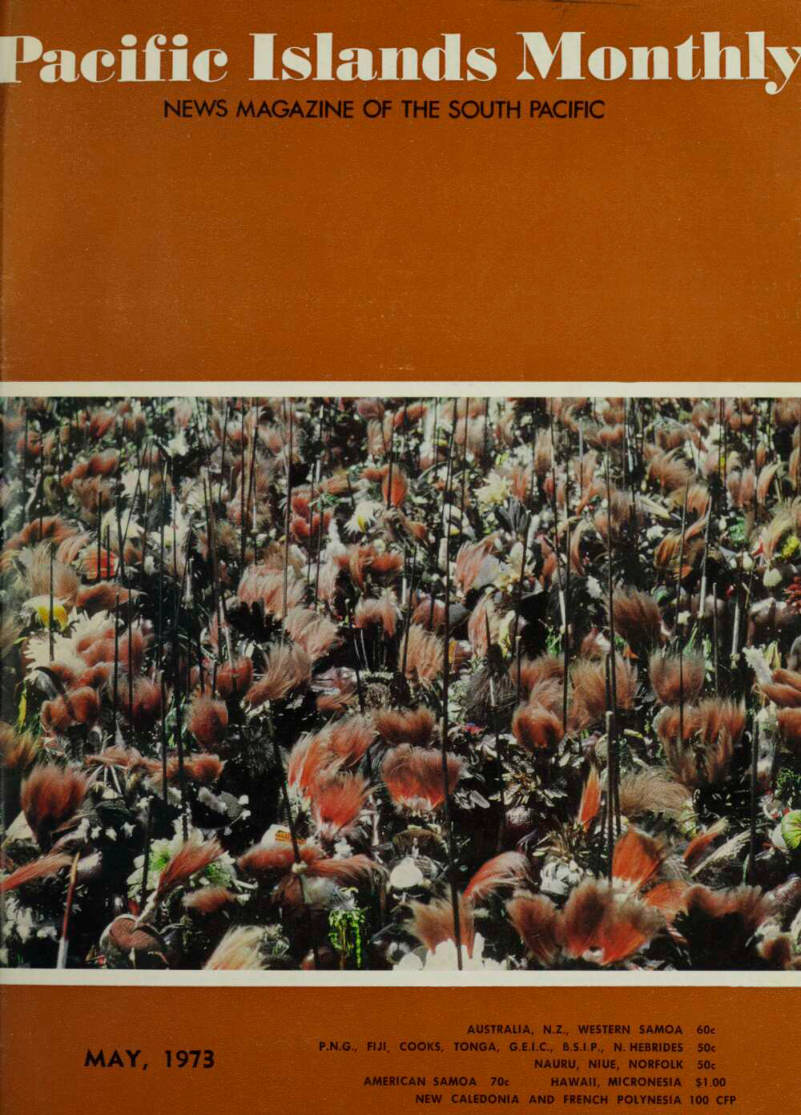 1
1 2
2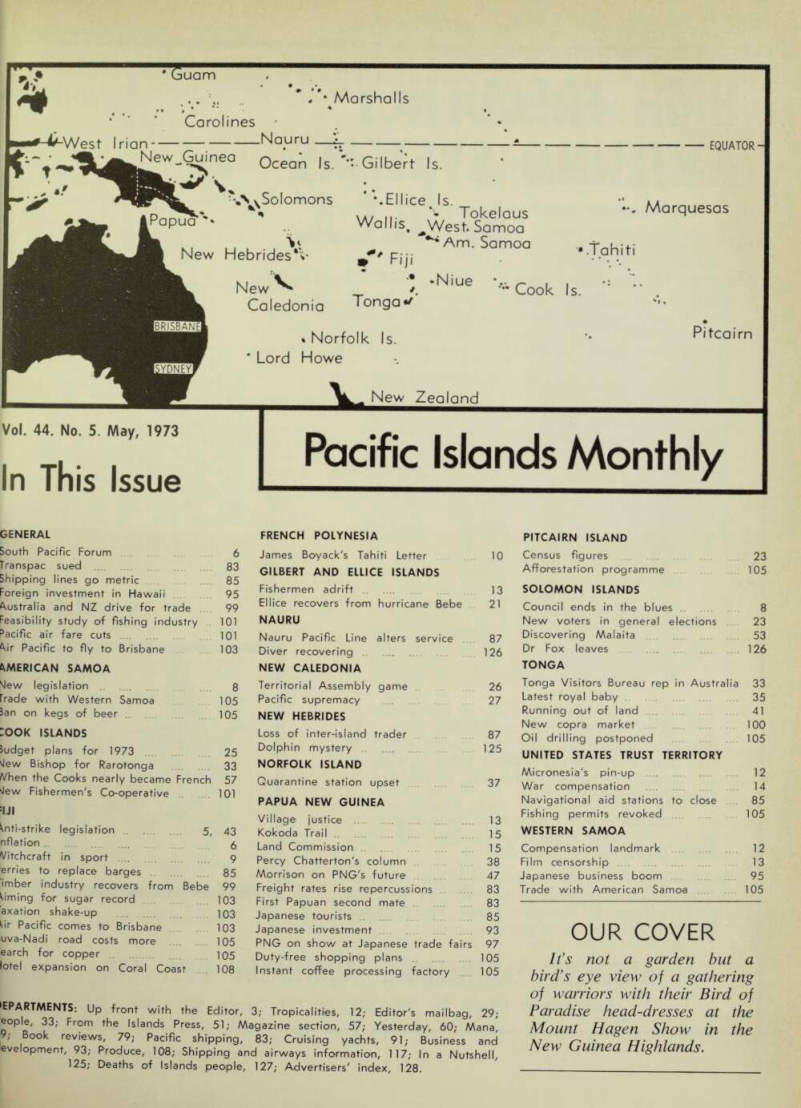 3
3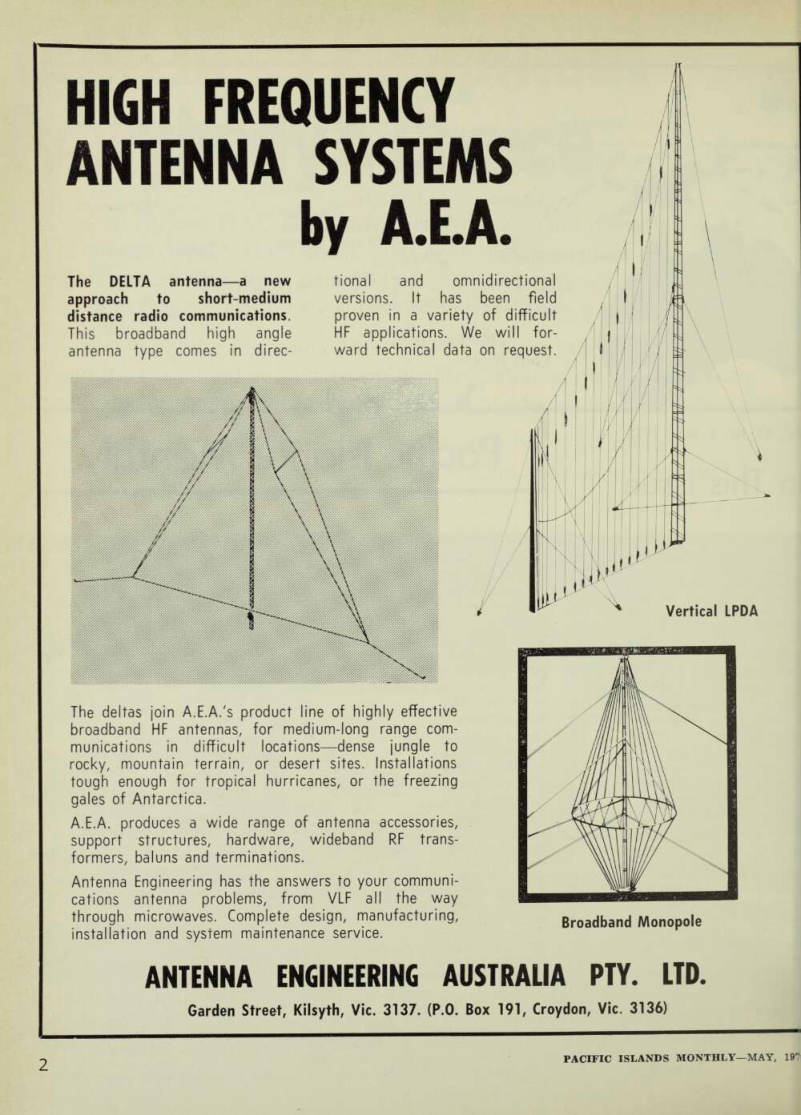 4
4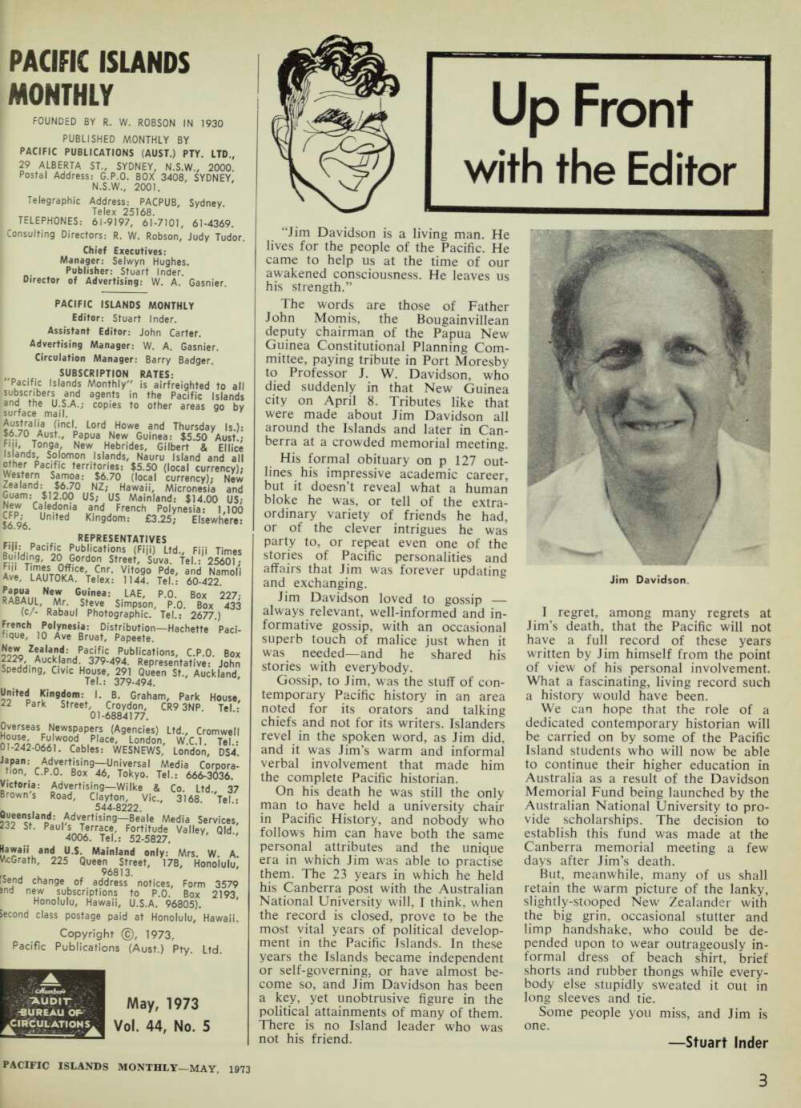 5
5 6
6 7
7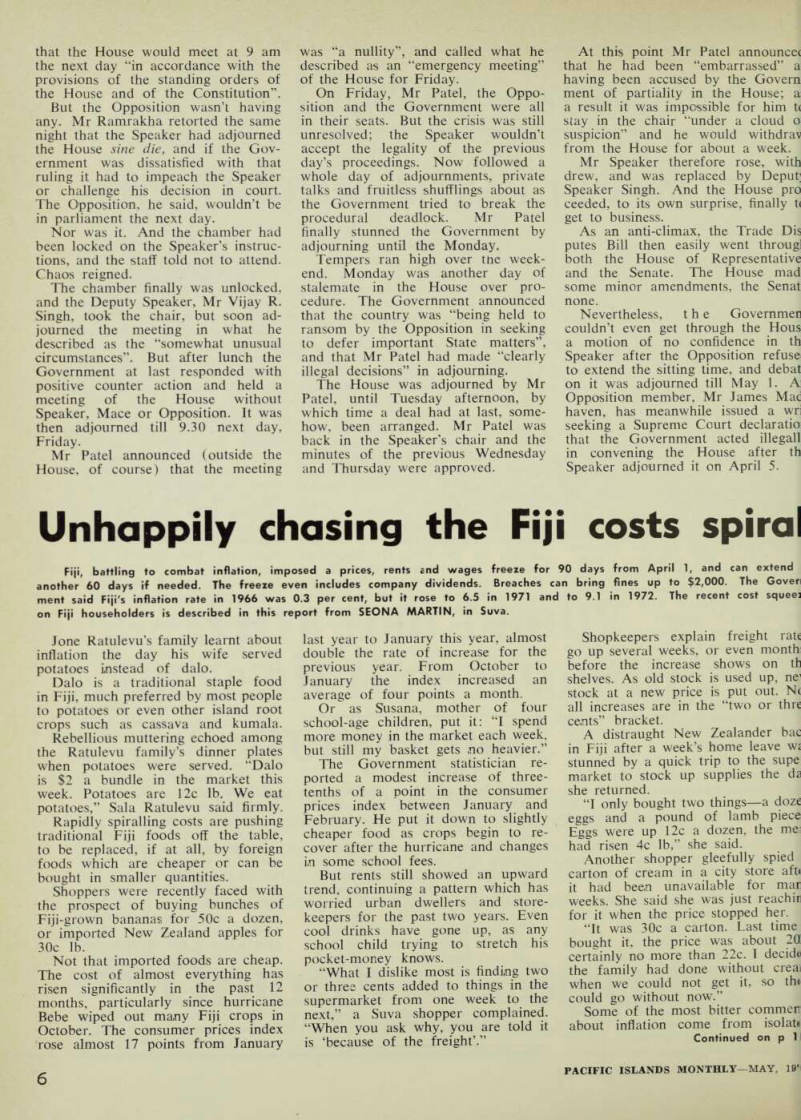 8
8 9
9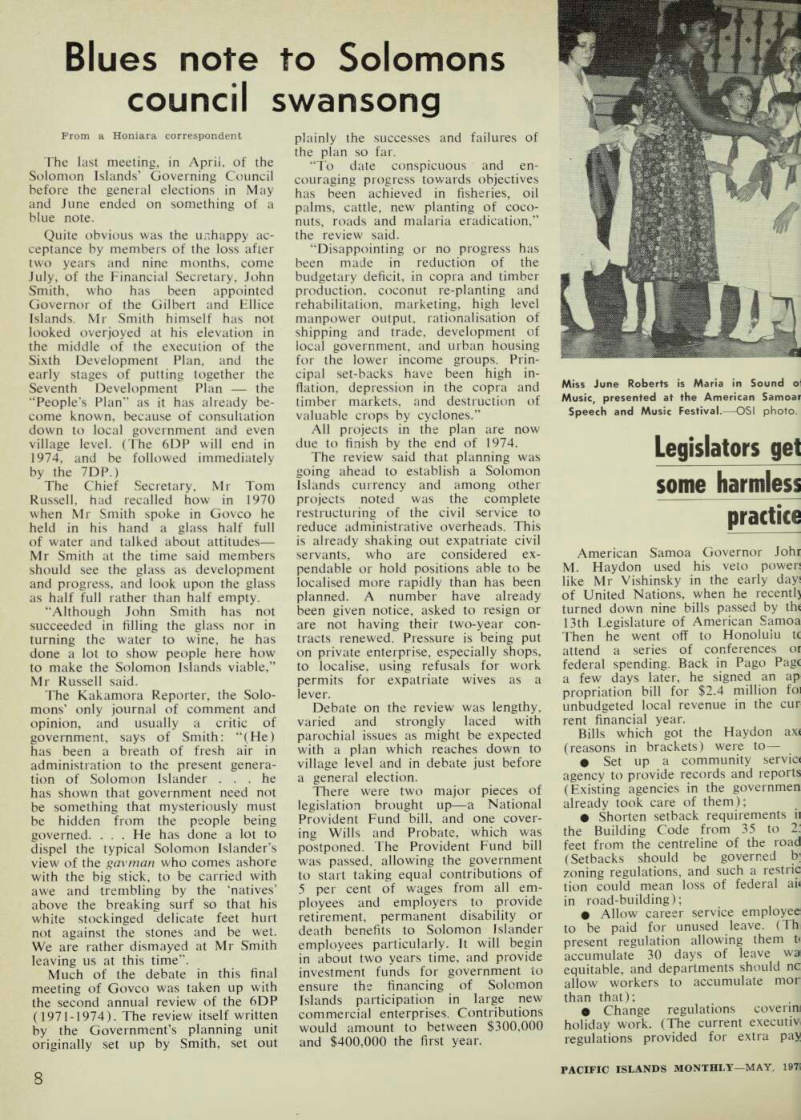 10
10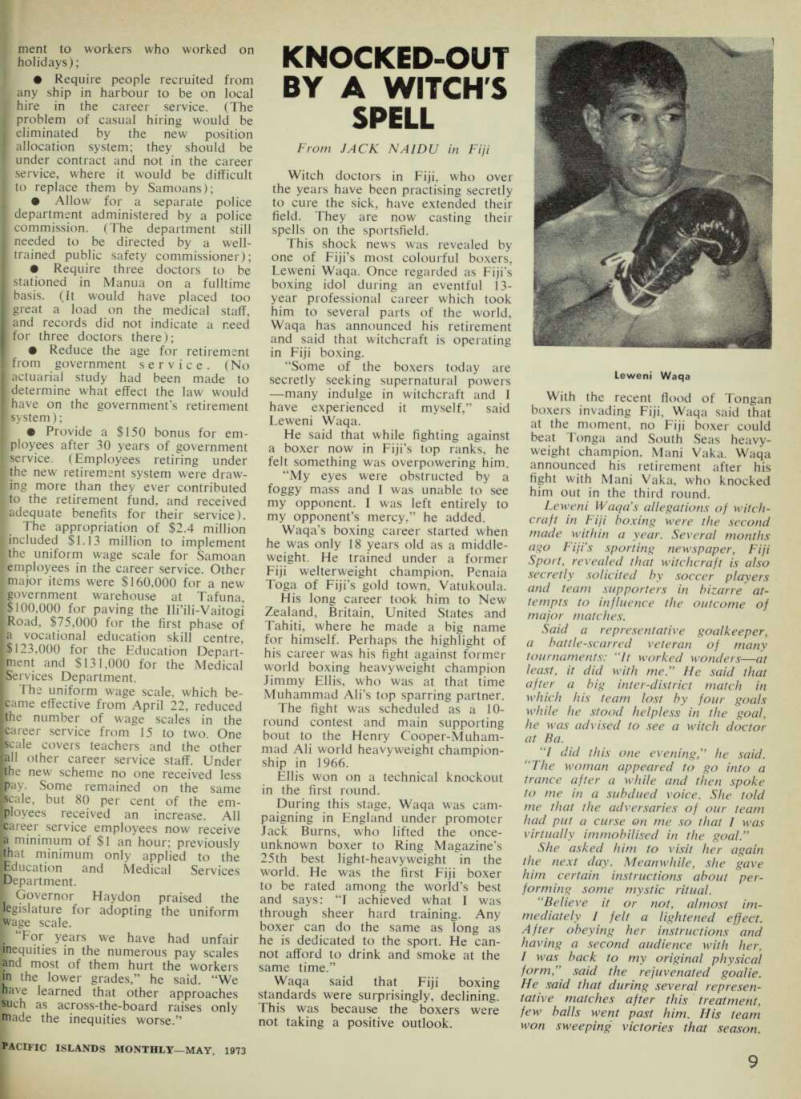 11
11 12
12 13
13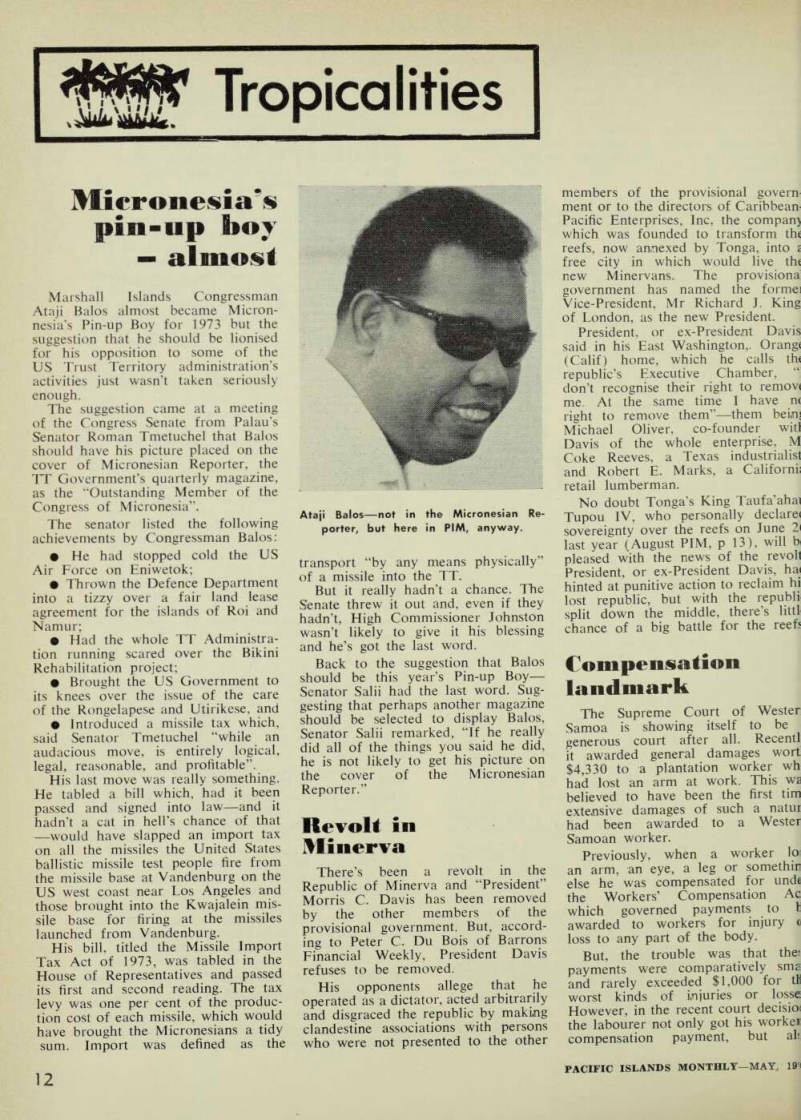 14
14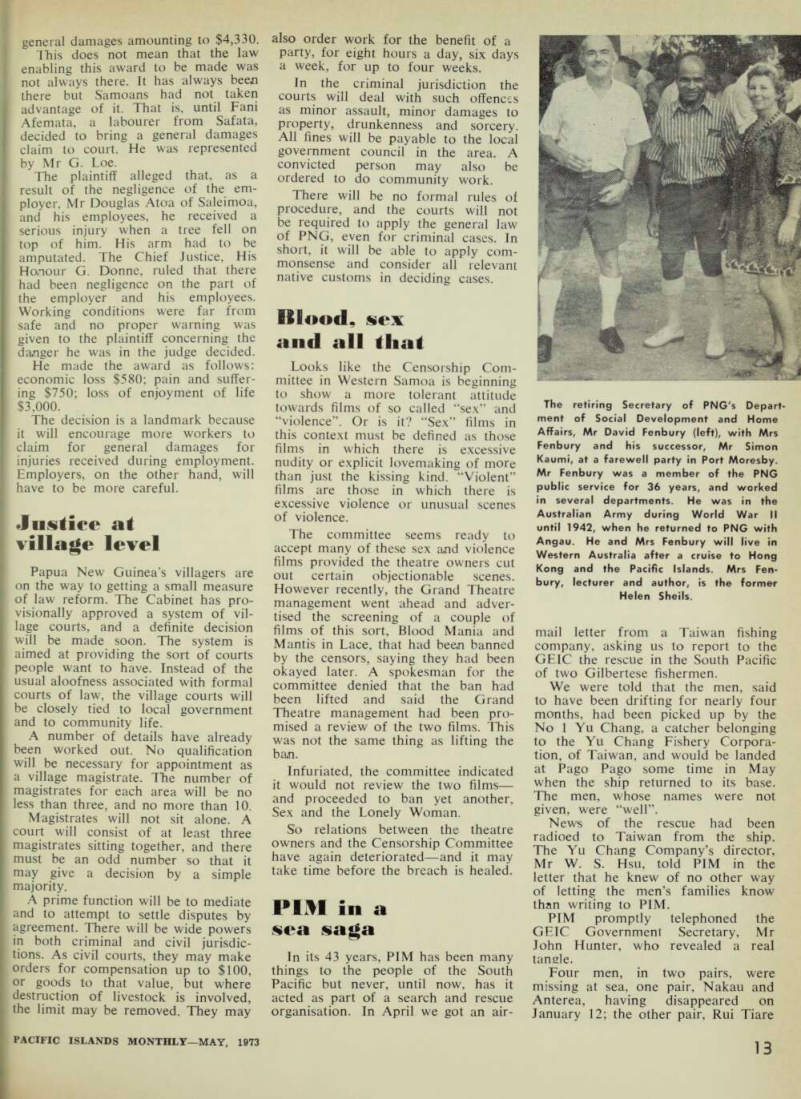 15
15 16
16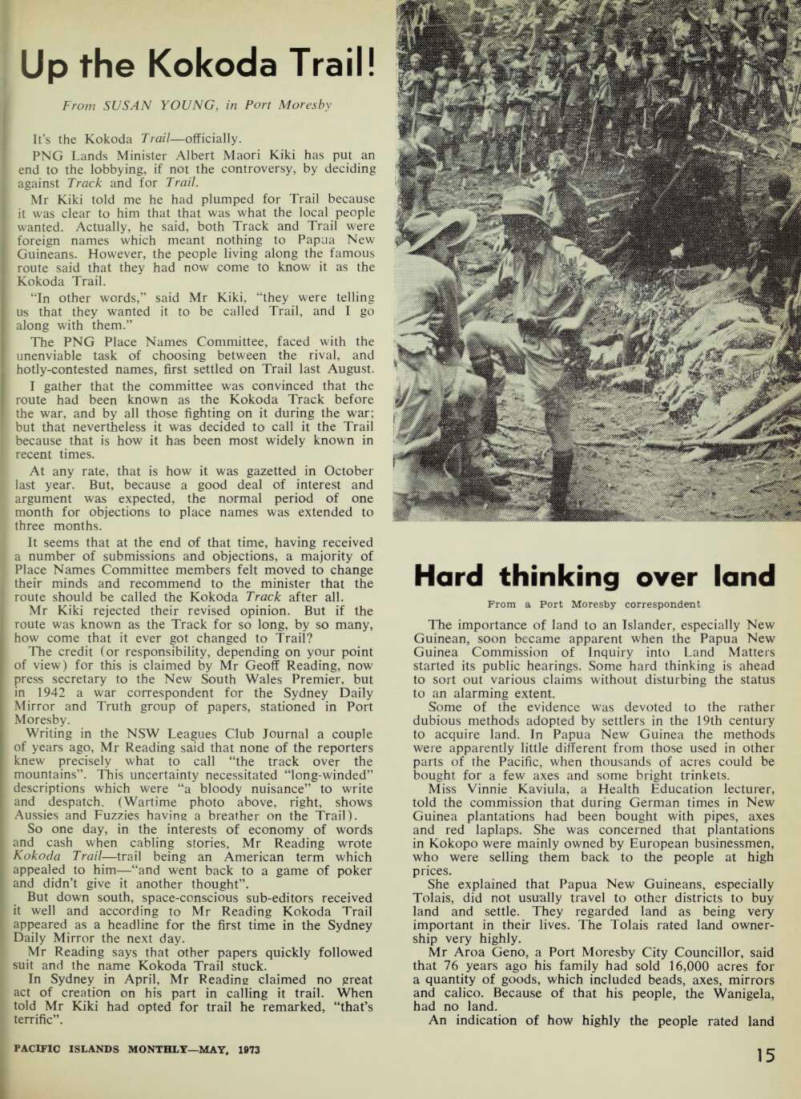 17
17 18
18 19
19 20
20 21
21 22
22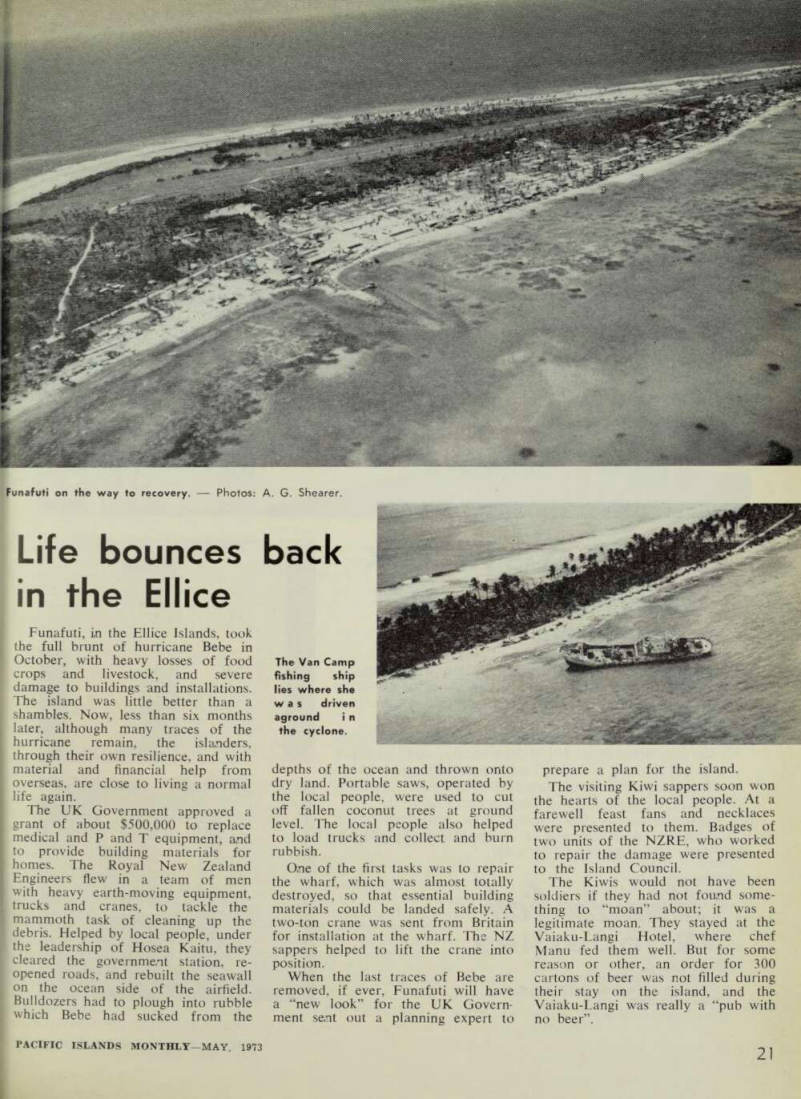 23
23 24
24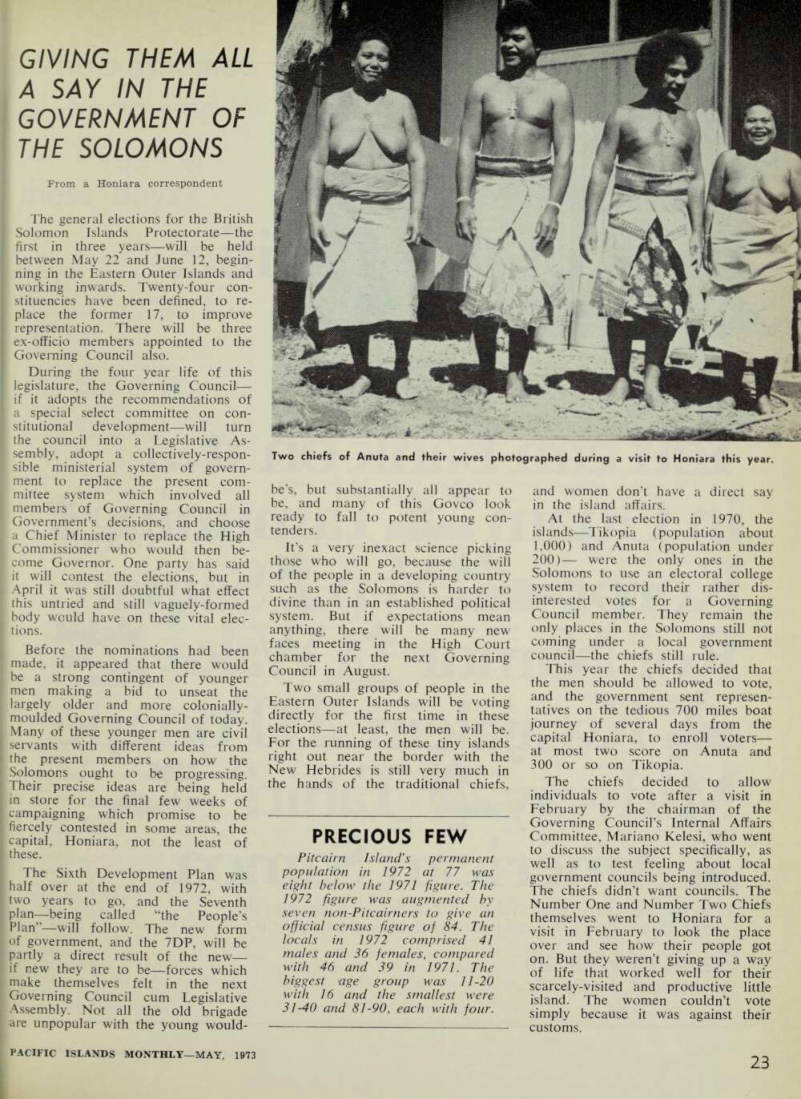 25
25 26
26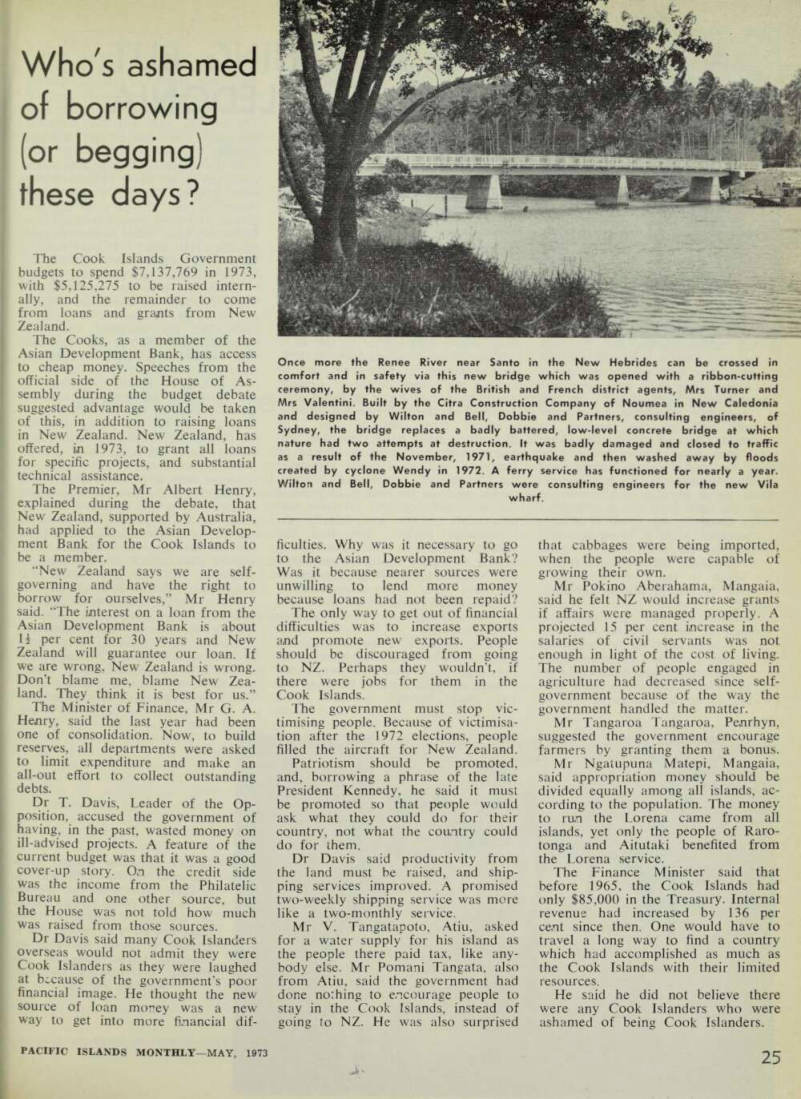 27
27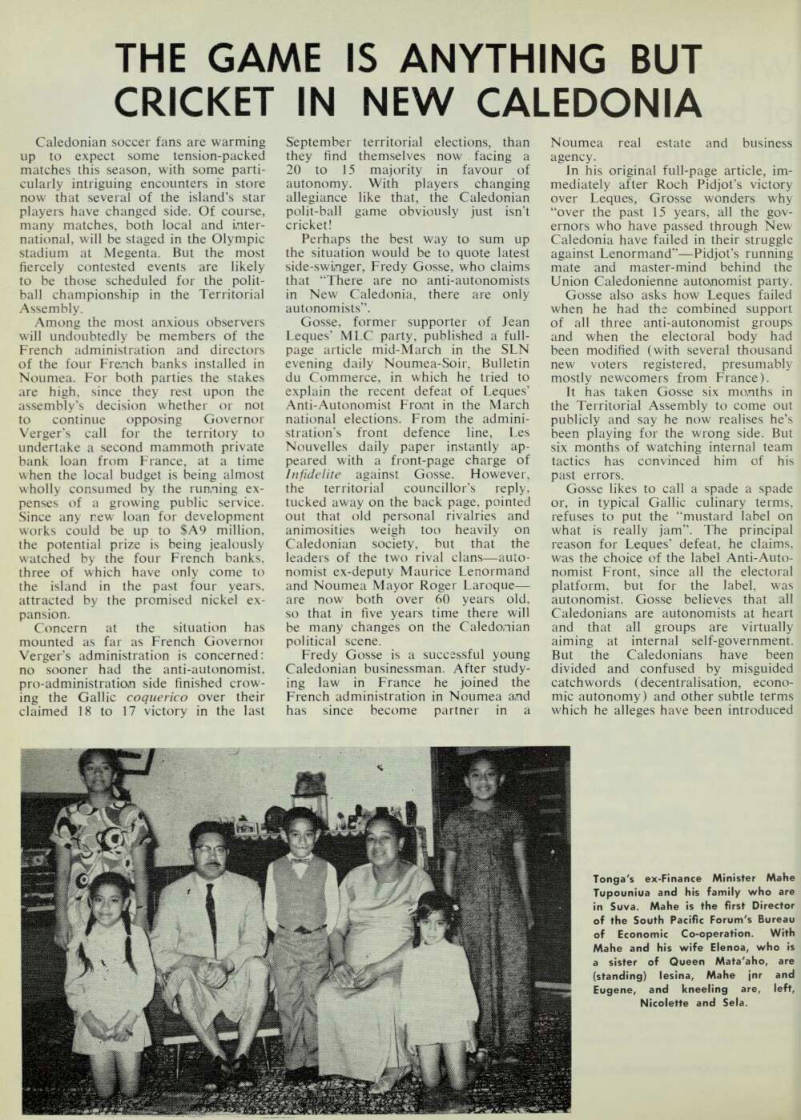 28
28 29
29 30
30 31
31 32
32 33
33 34
34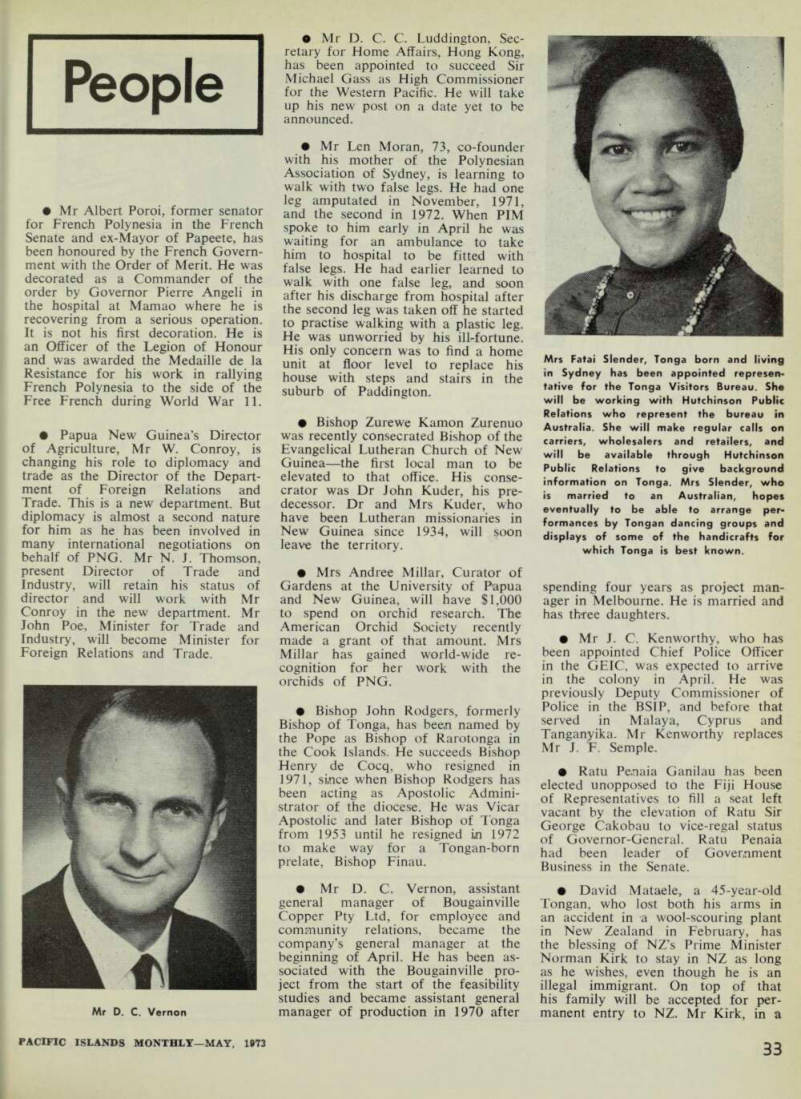 35
35 36
36 37
37 38
38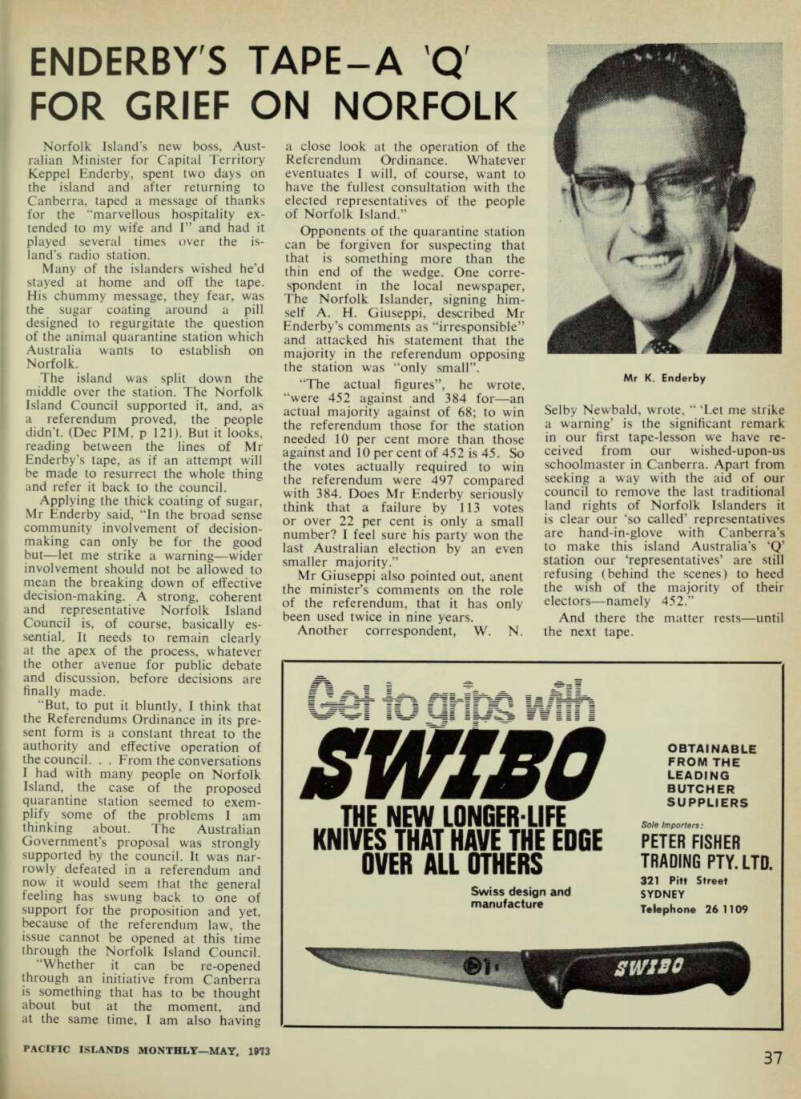 39
39 40
40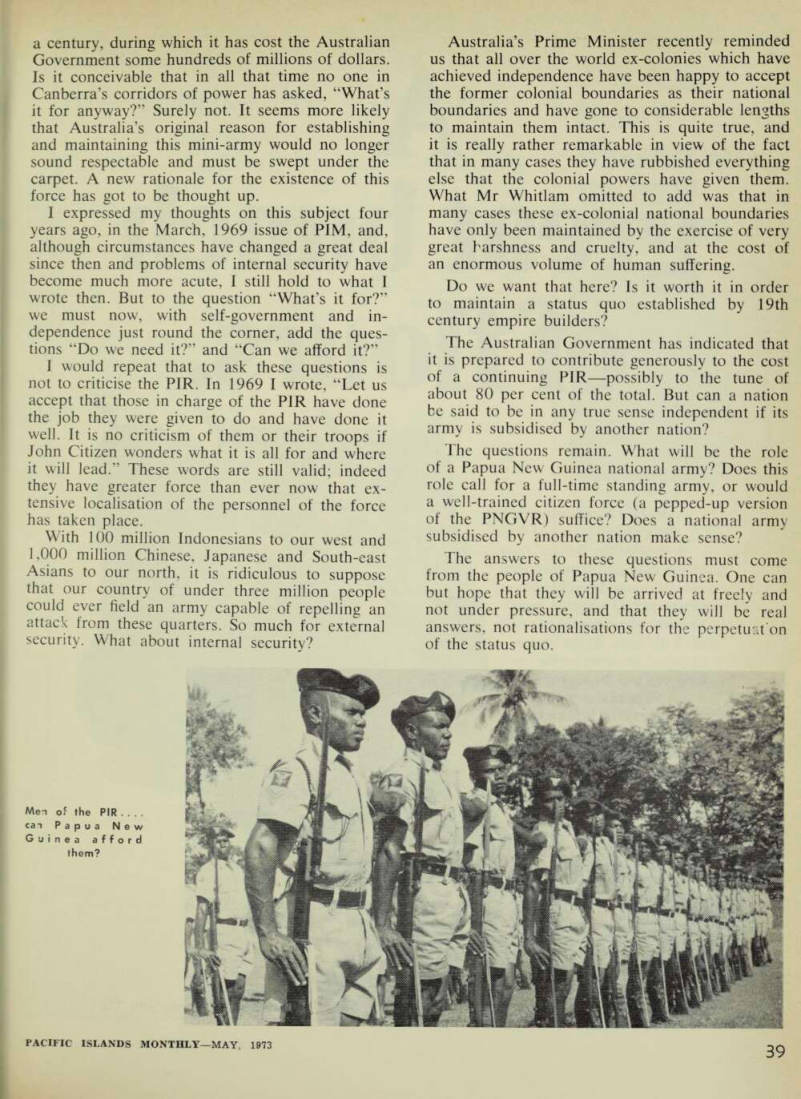 41
41 42
42 43
43 44
44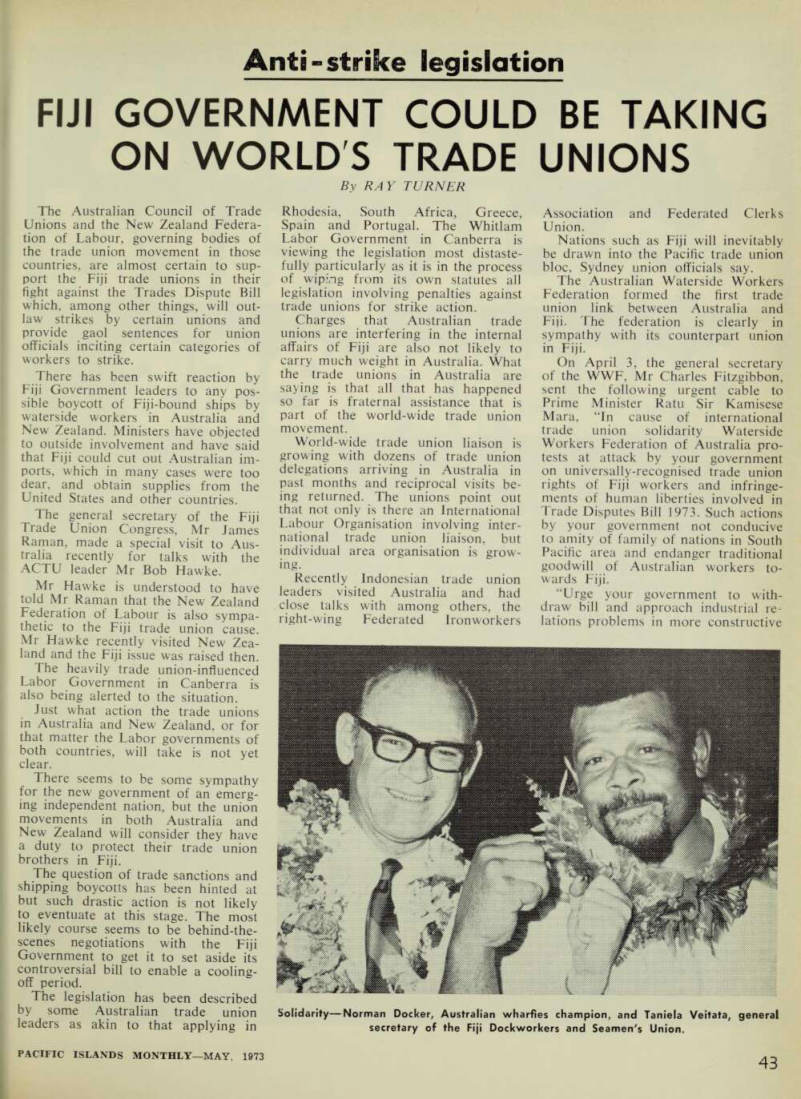 45
45 46
46 47
47 48
48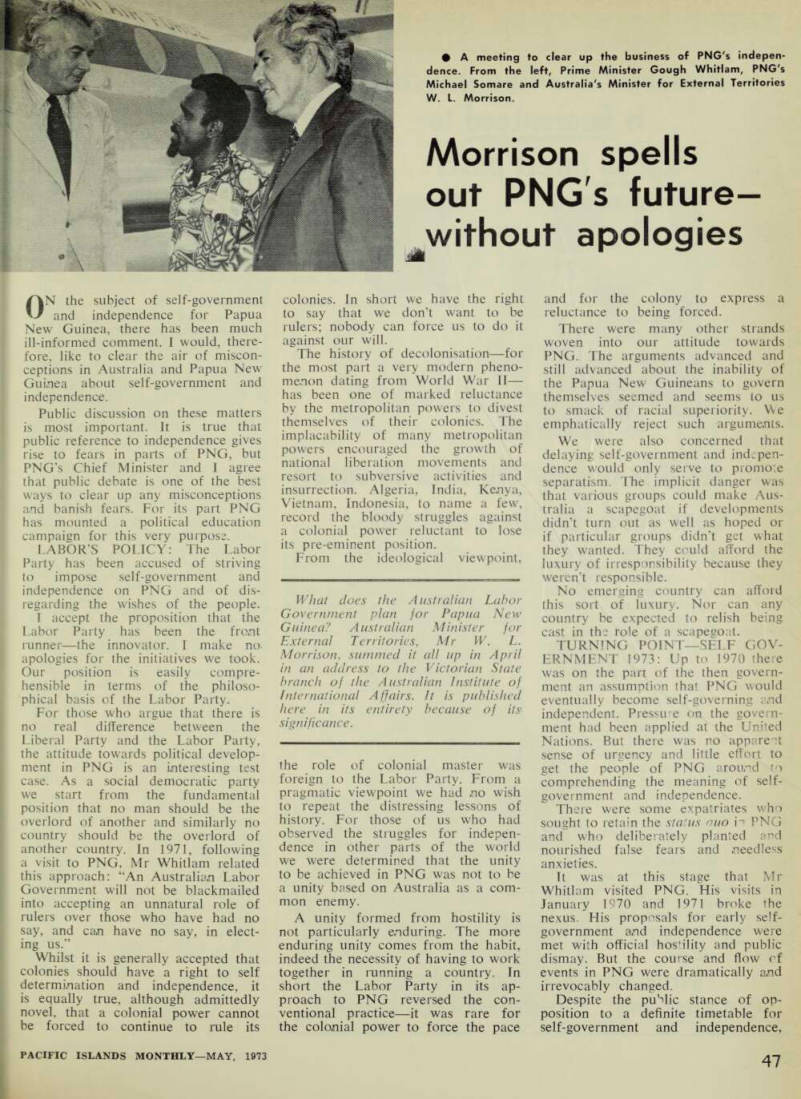 49
49 50
50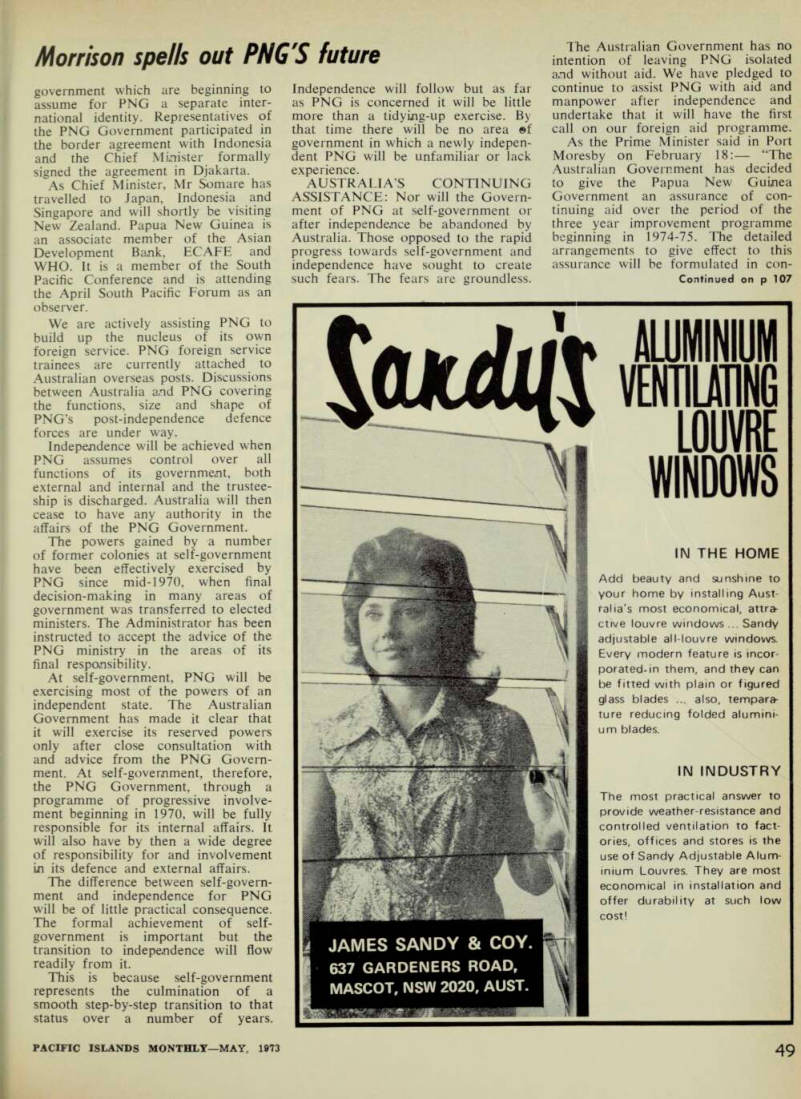 51
51 52
52 53
53 54
54 55
55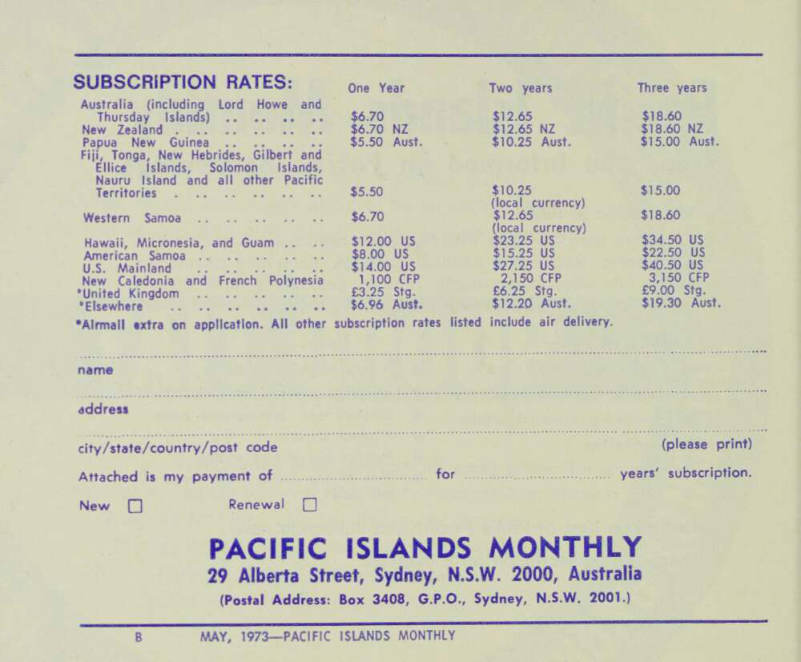 56
56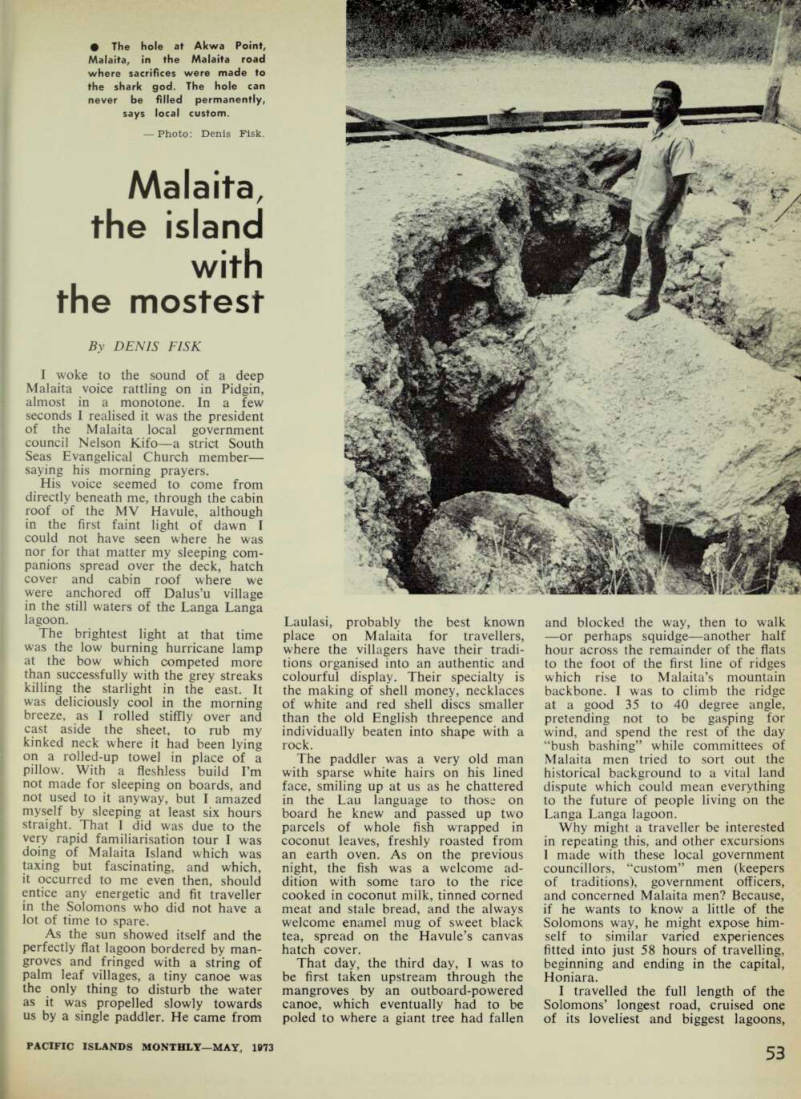 57
57 58
58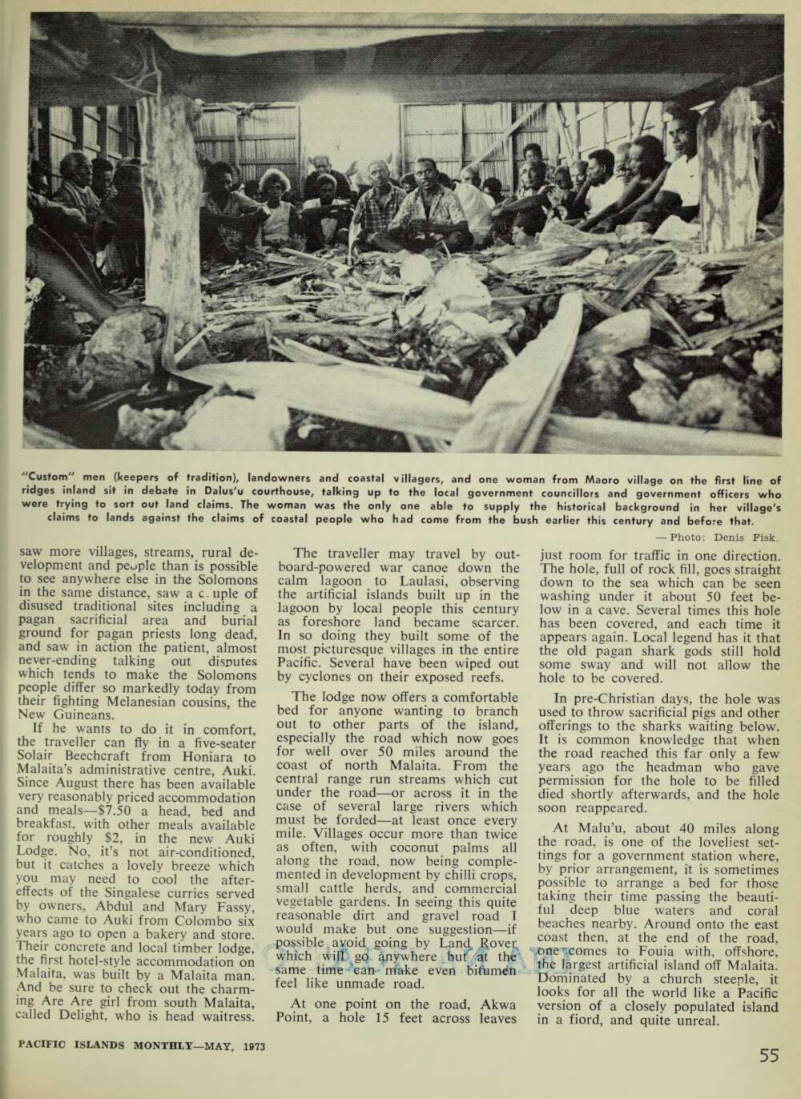 59
59 60
60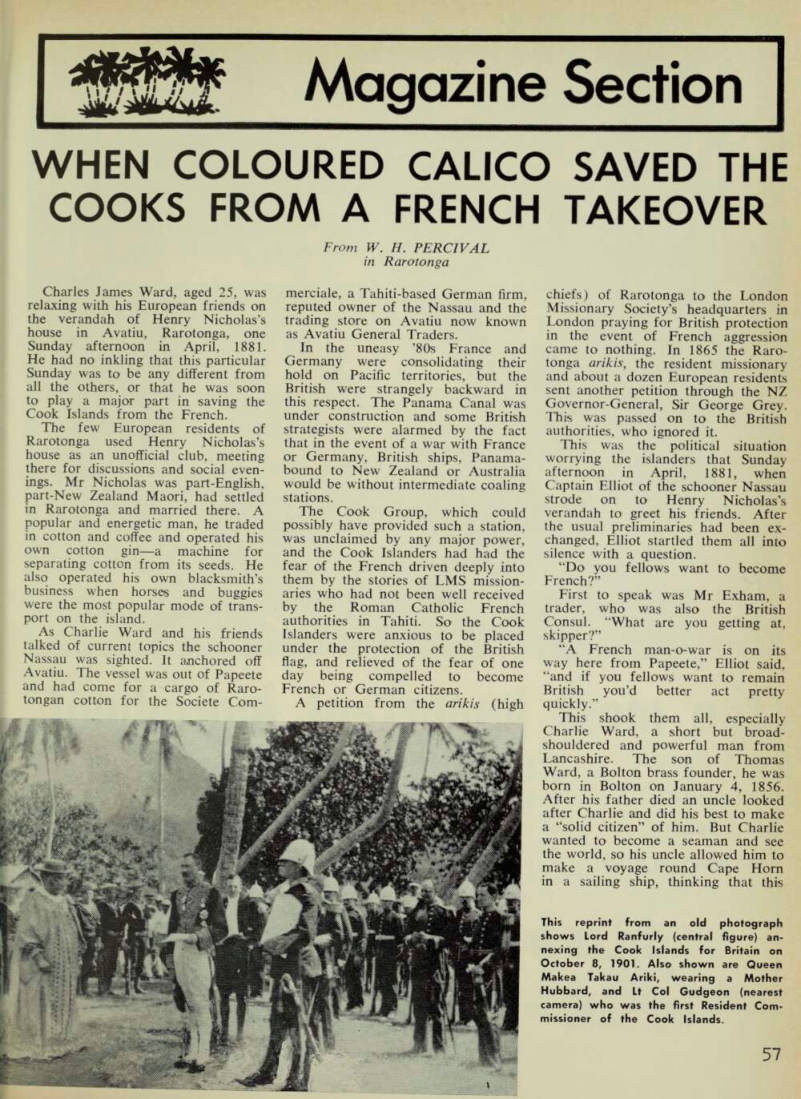 61
61 62
62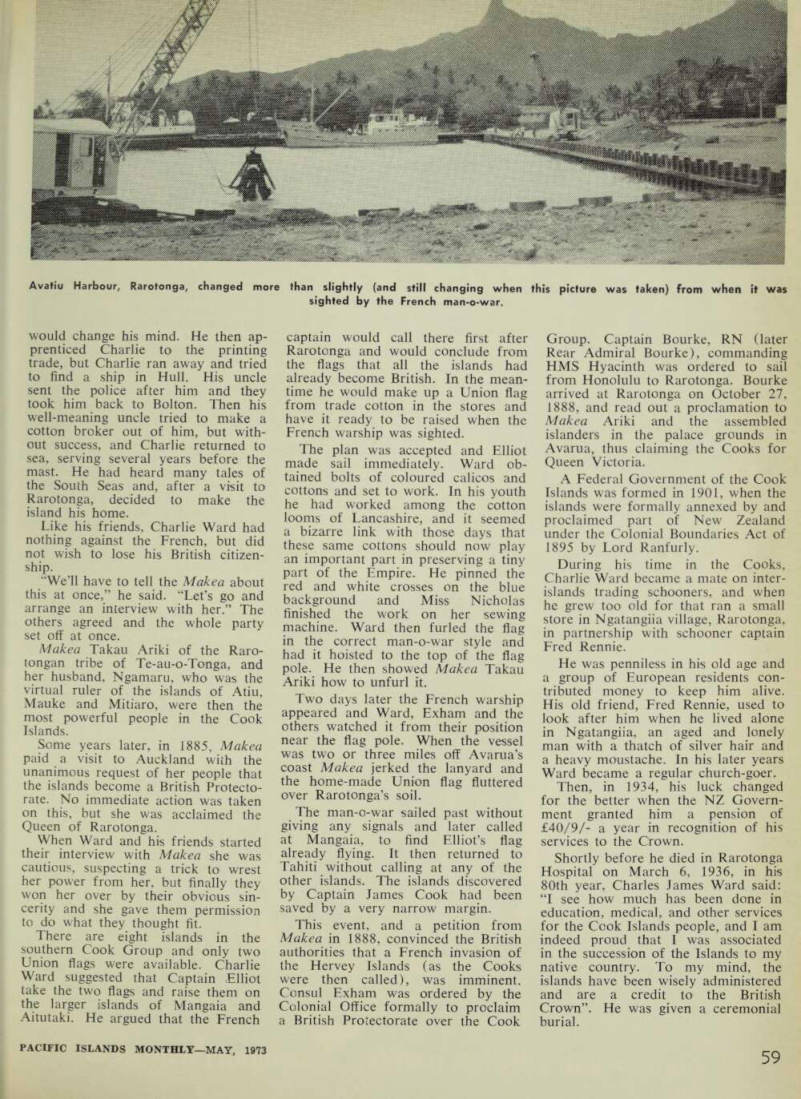 63
63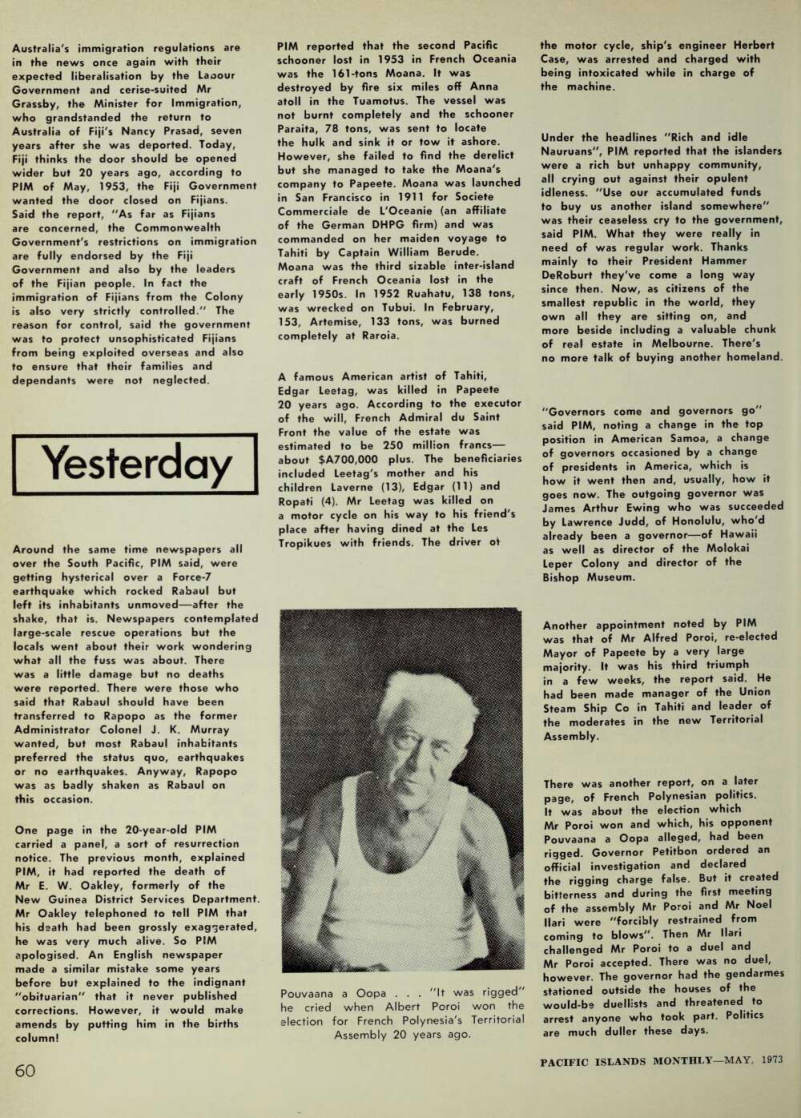 64
64 65
65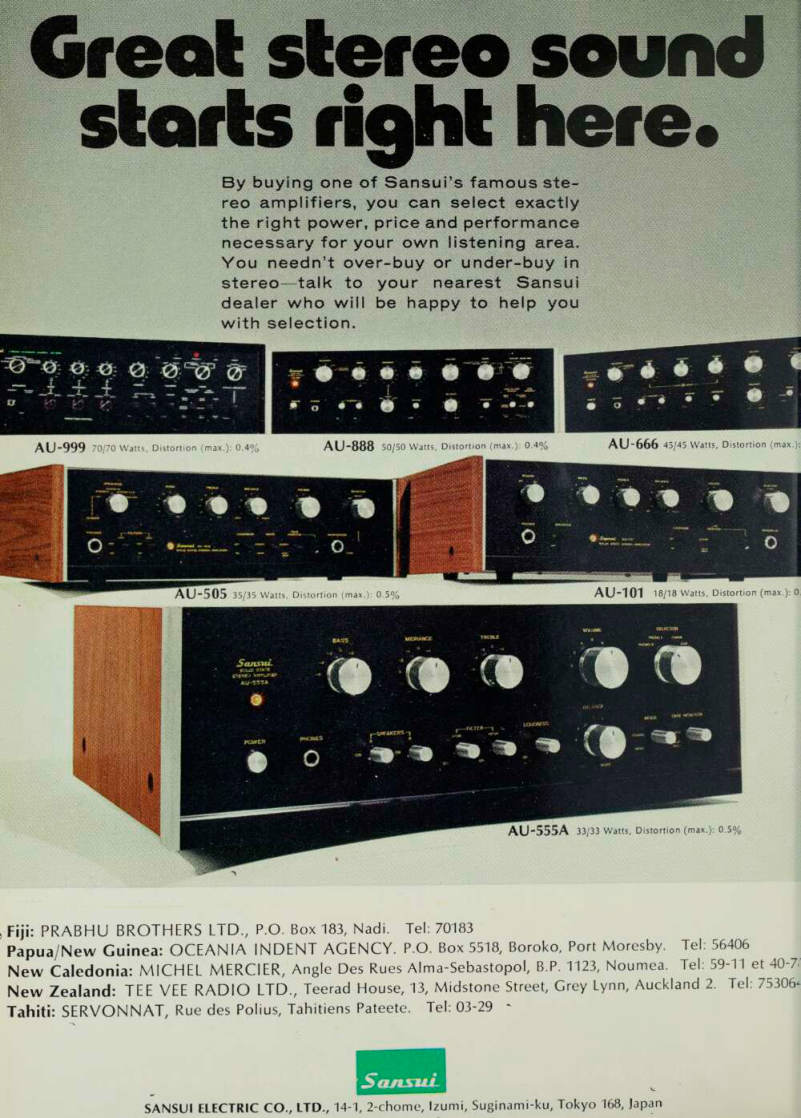 66
66 67
67 68
68 69
69 70
70 71
71 72
72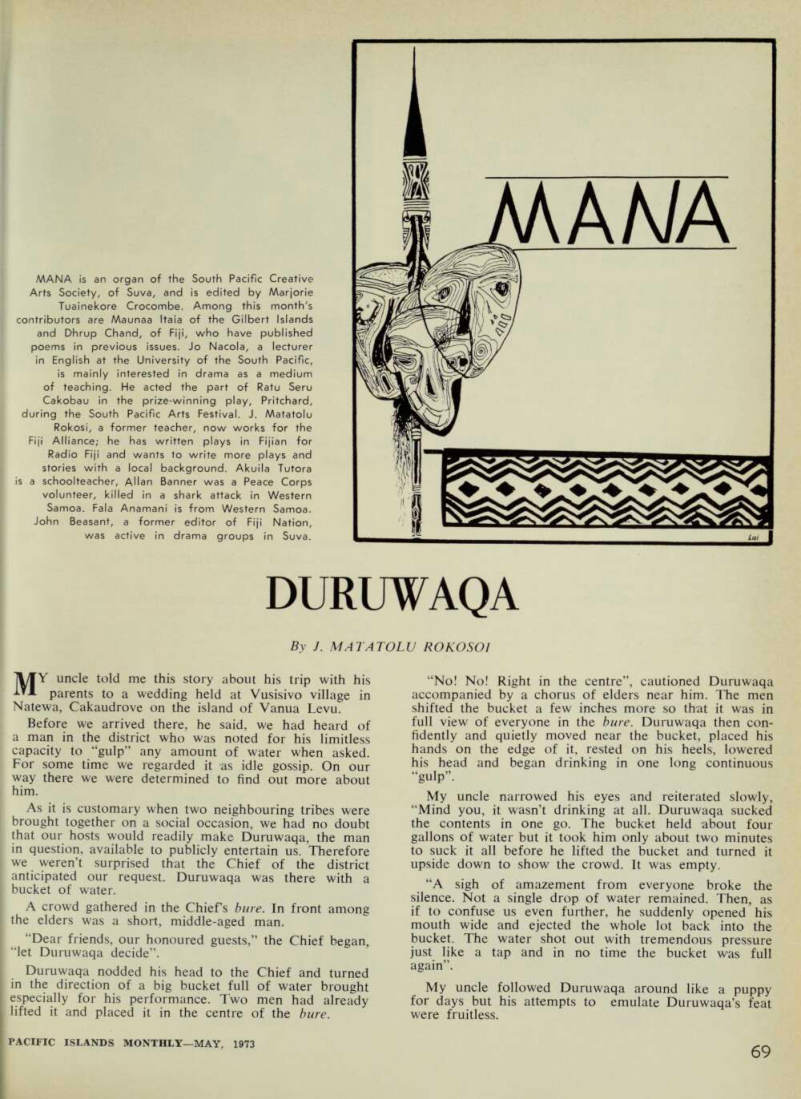 73
73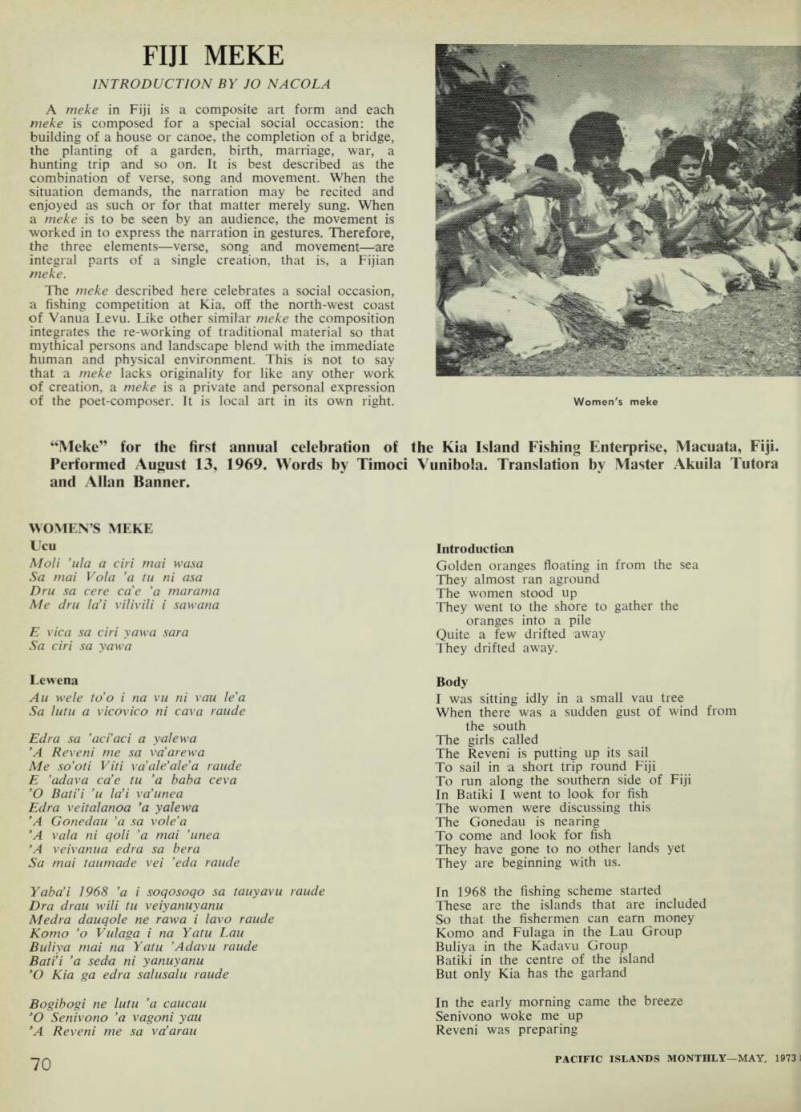 74
74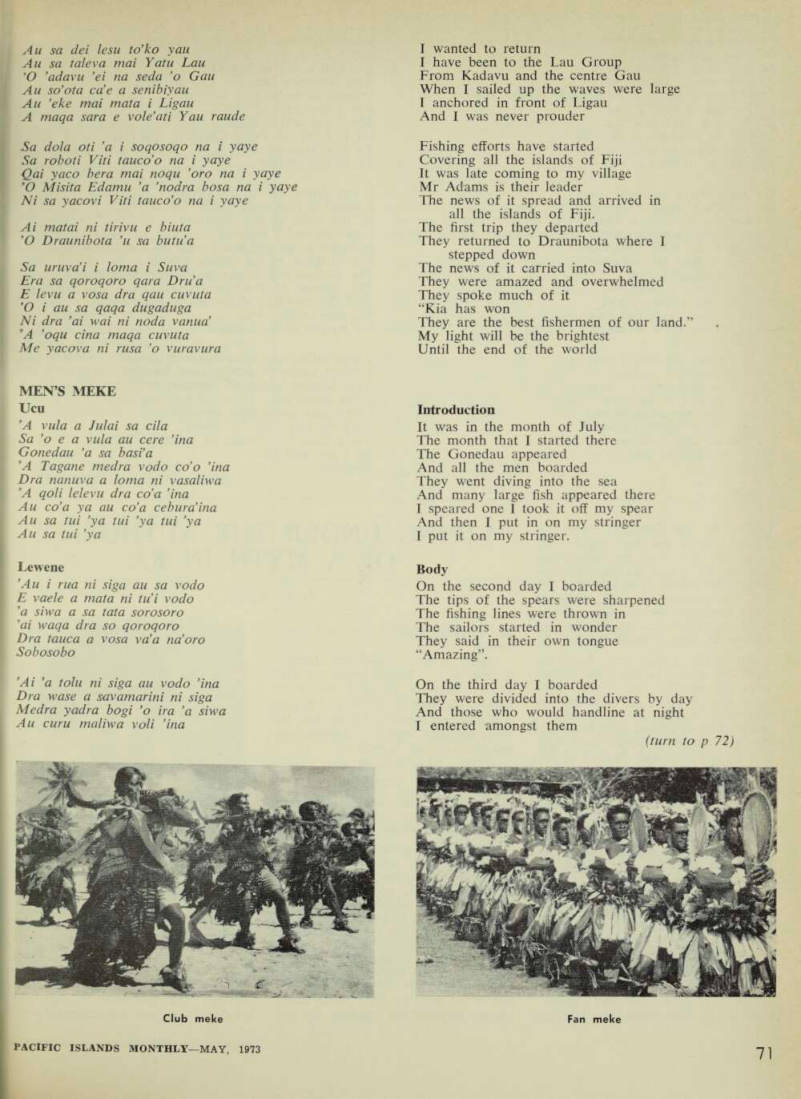 75
75 76
76 77
77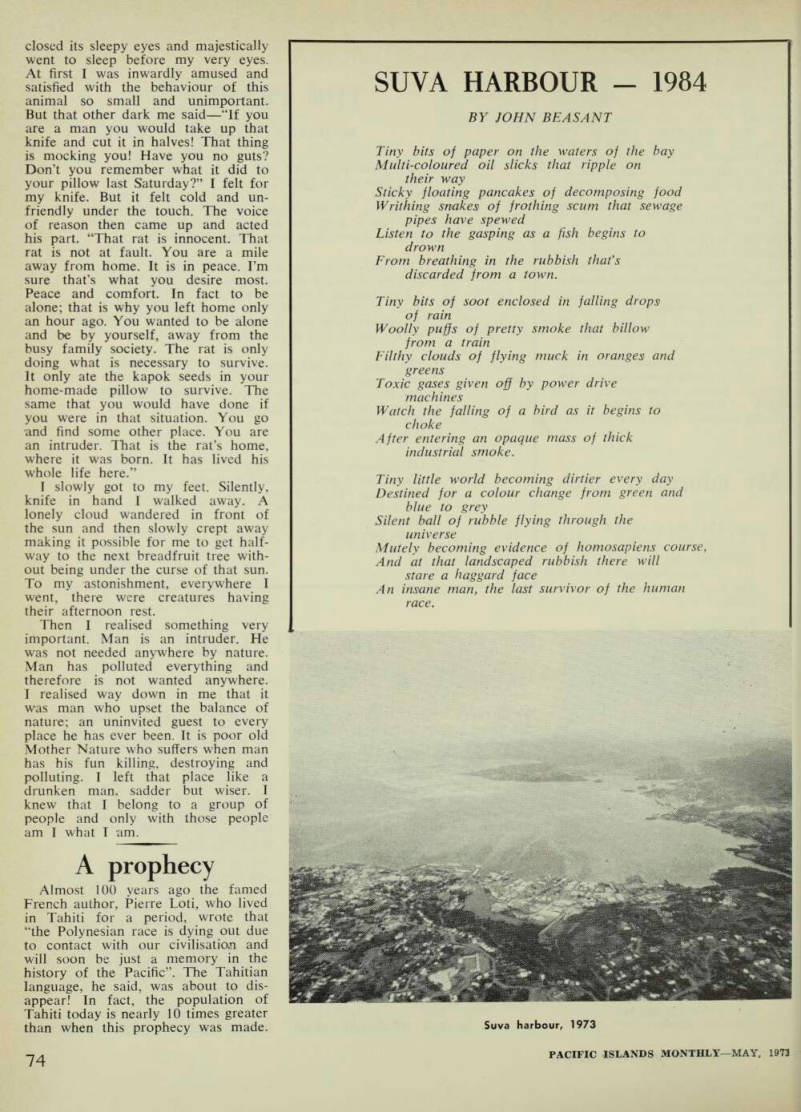 78
78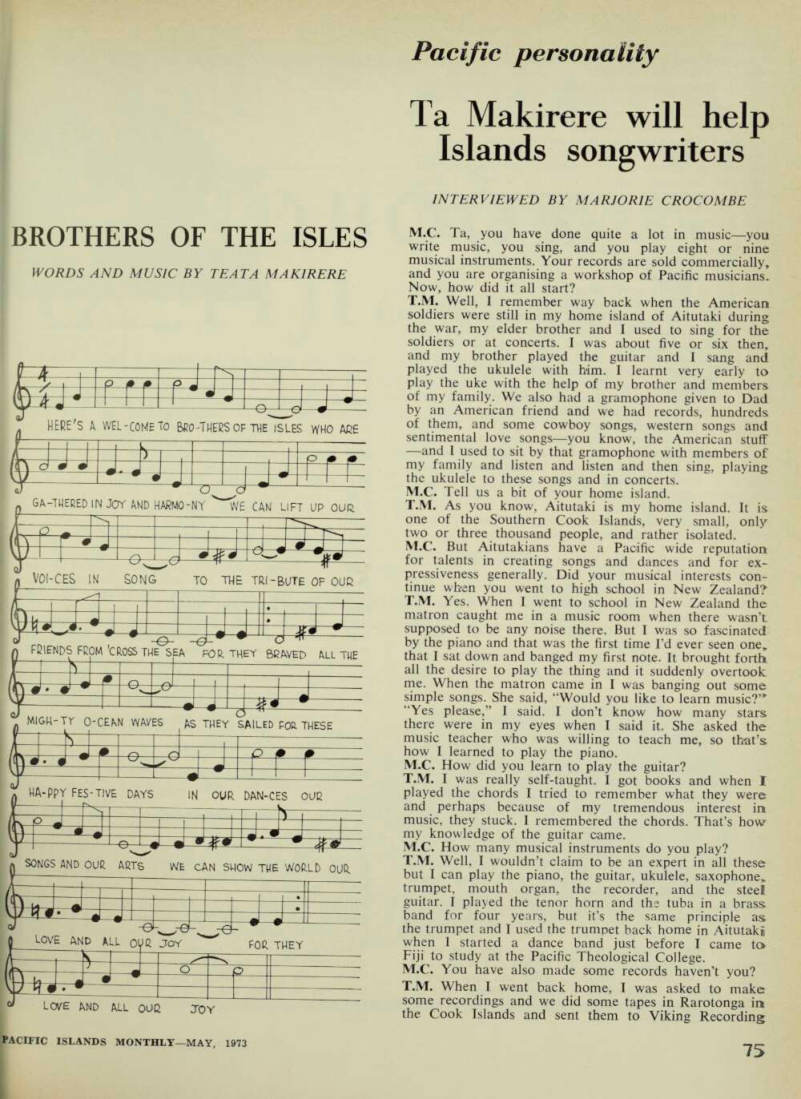 79
79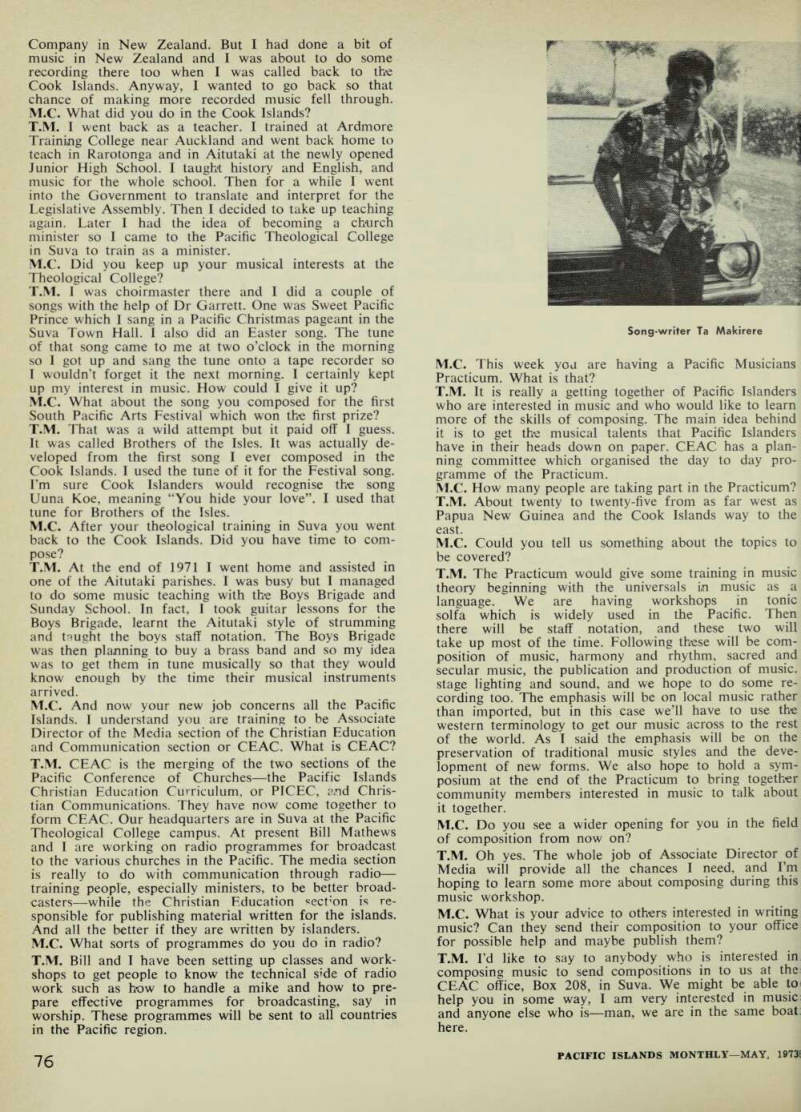 80
80 81
81 82
82 83
83 84
84 85
85 86
86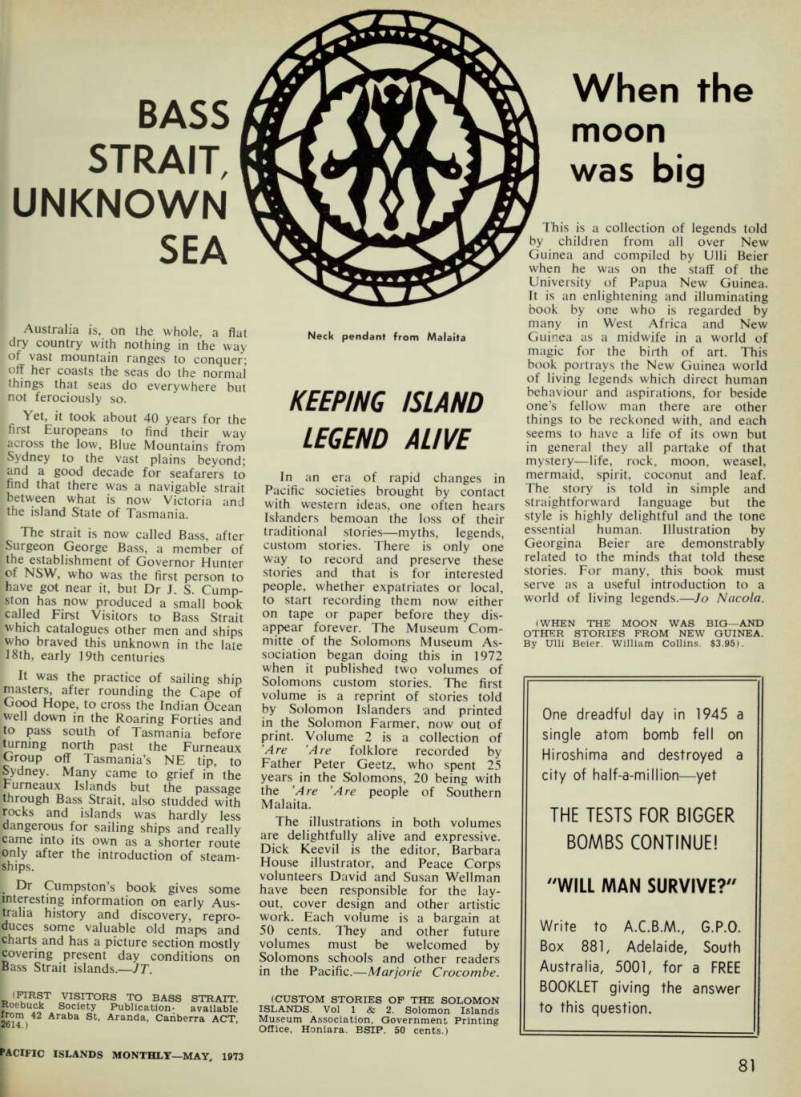 87
87 88
88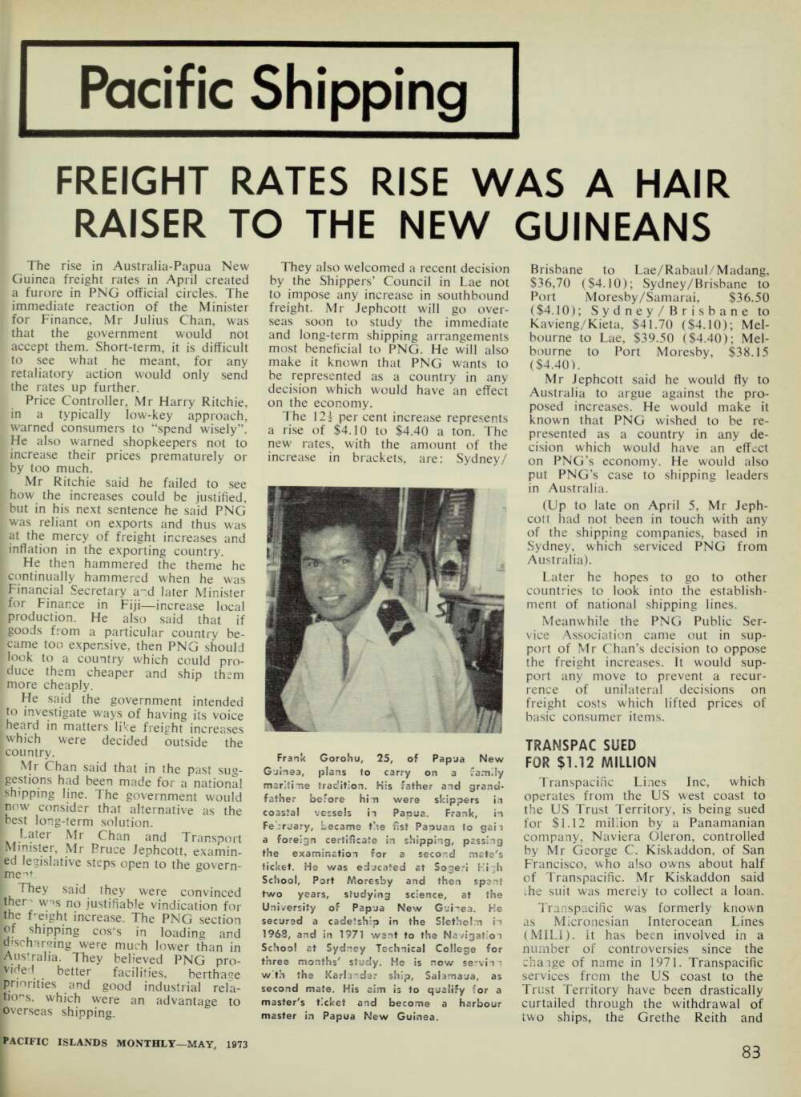 89
89 90
90 91
91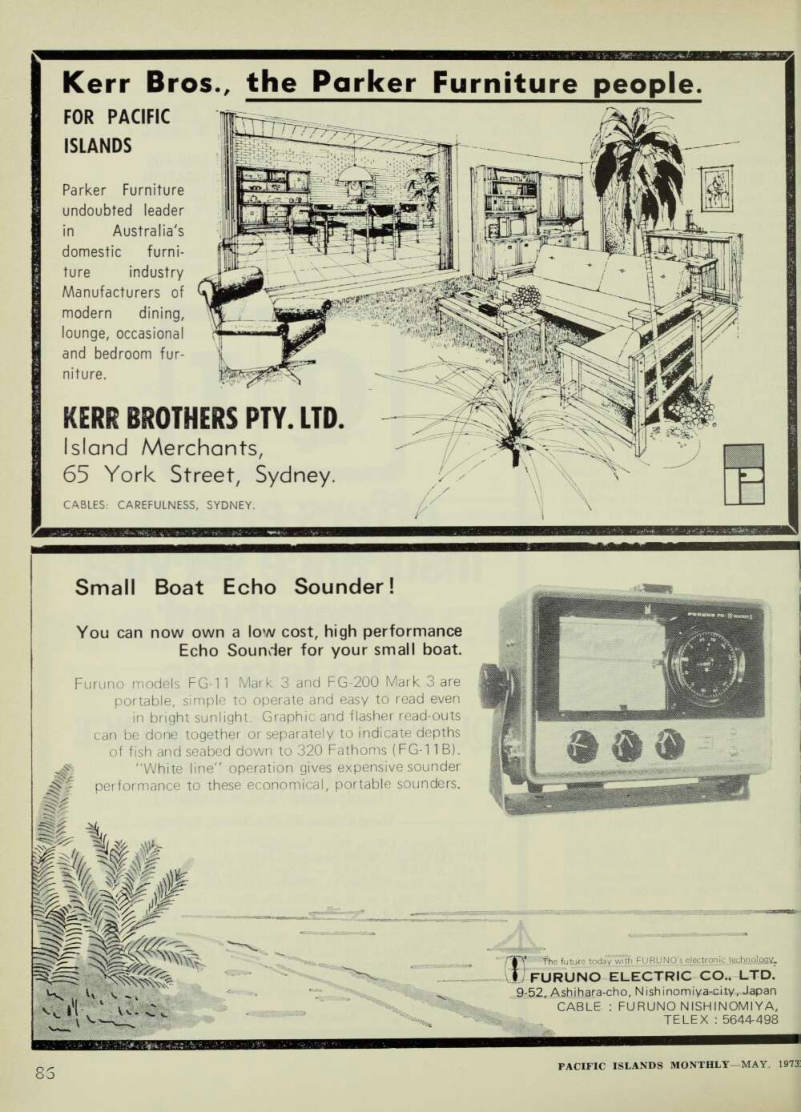 92
92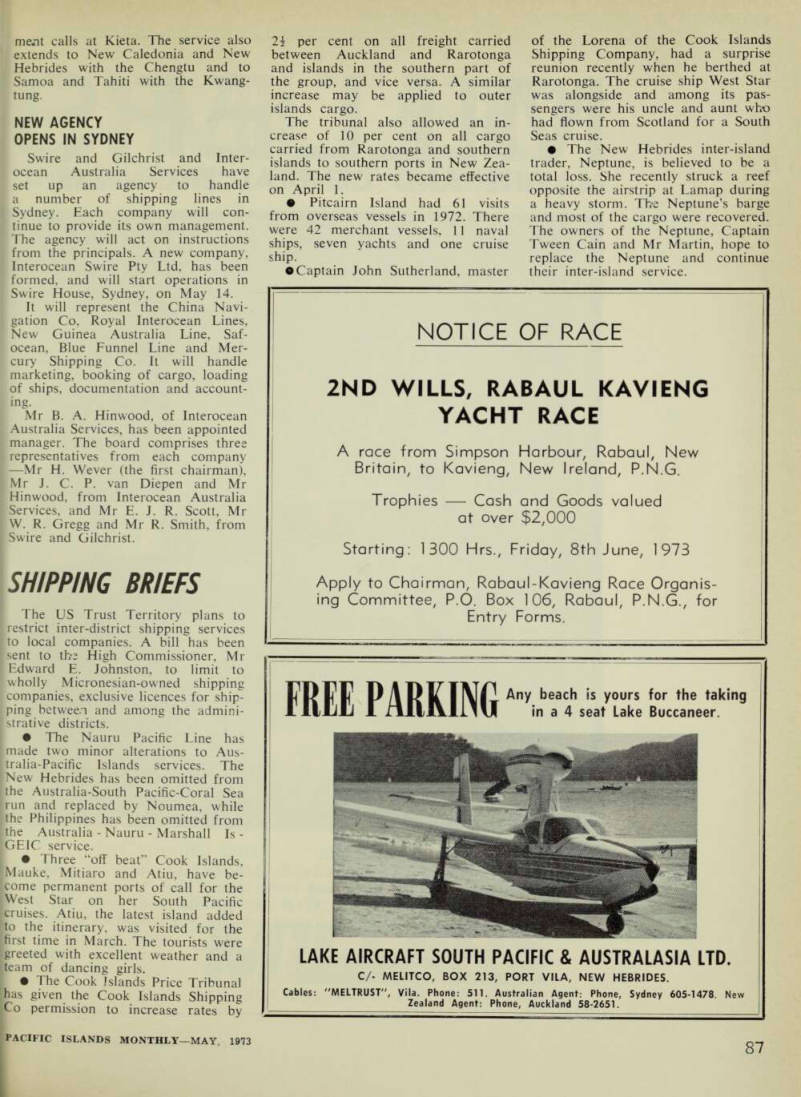 93
93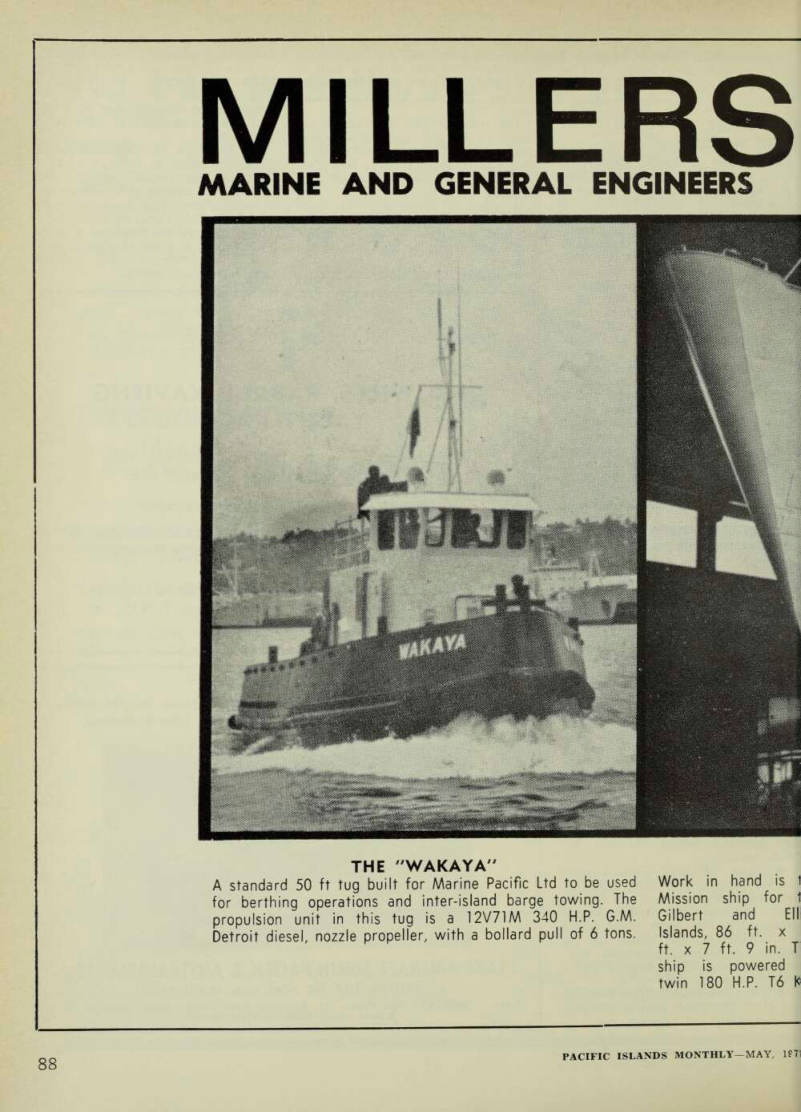 94
94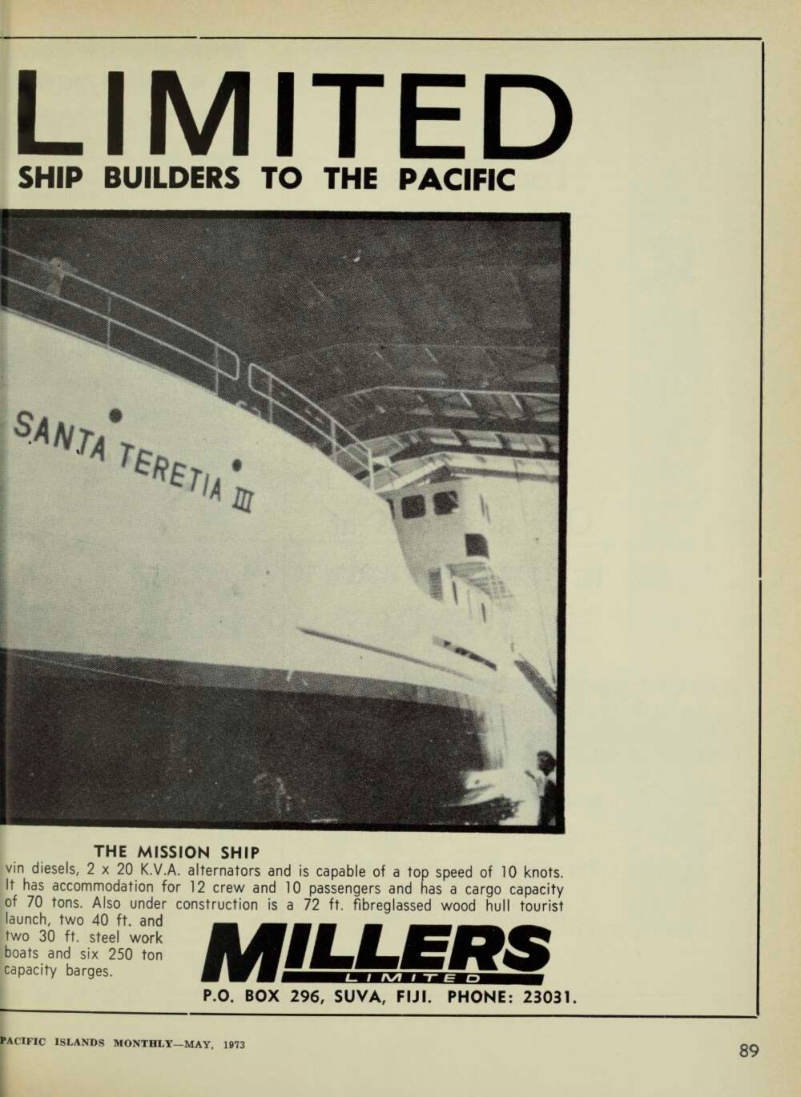 95
95 96
96 97
97 98
98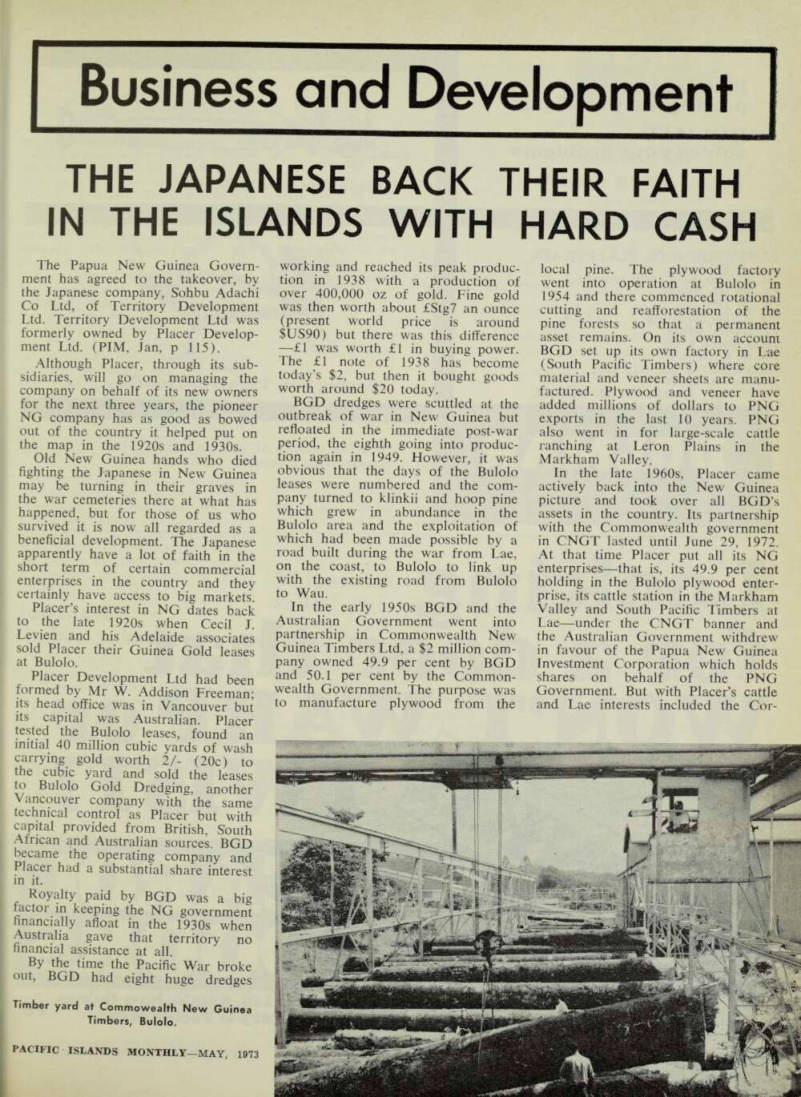 99
99 100
100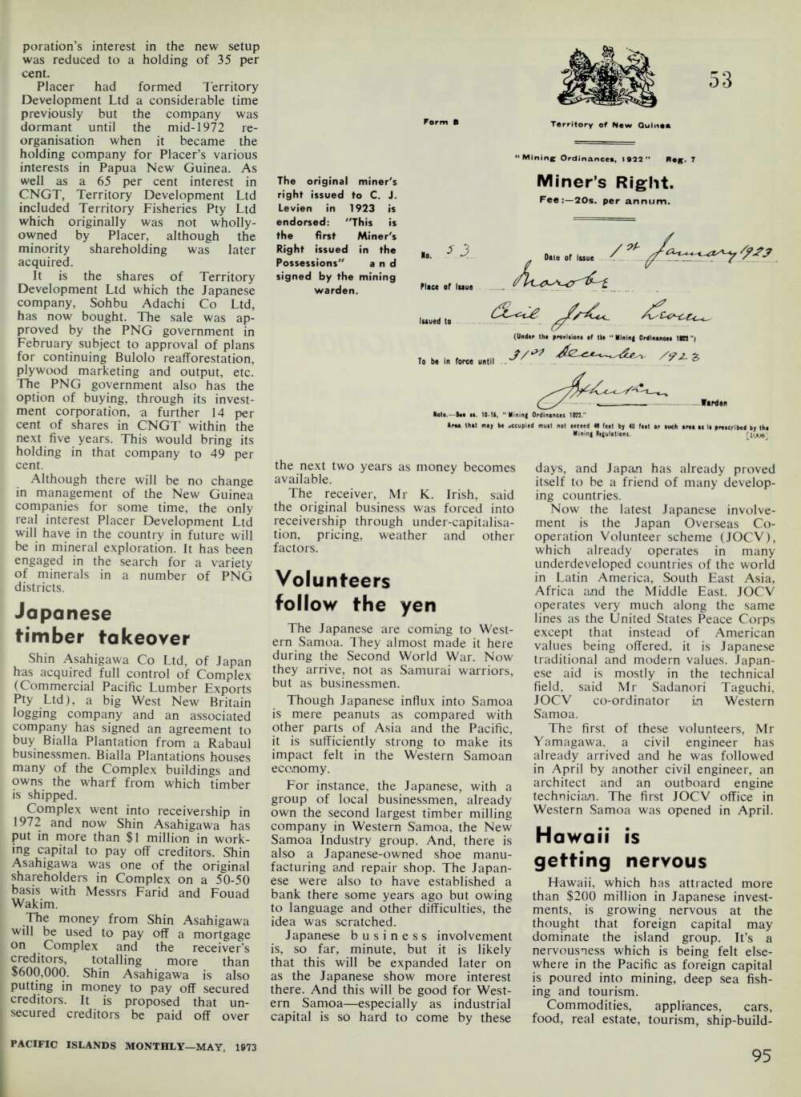 101
101 102
102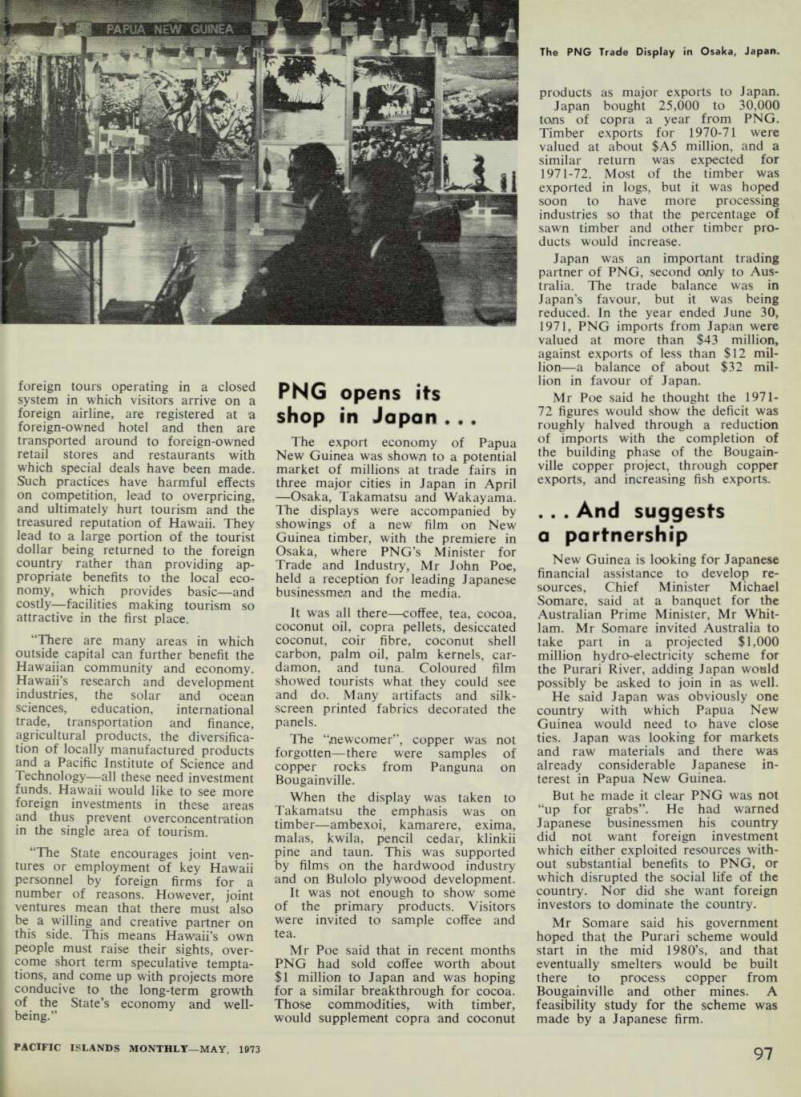 103
103 104
104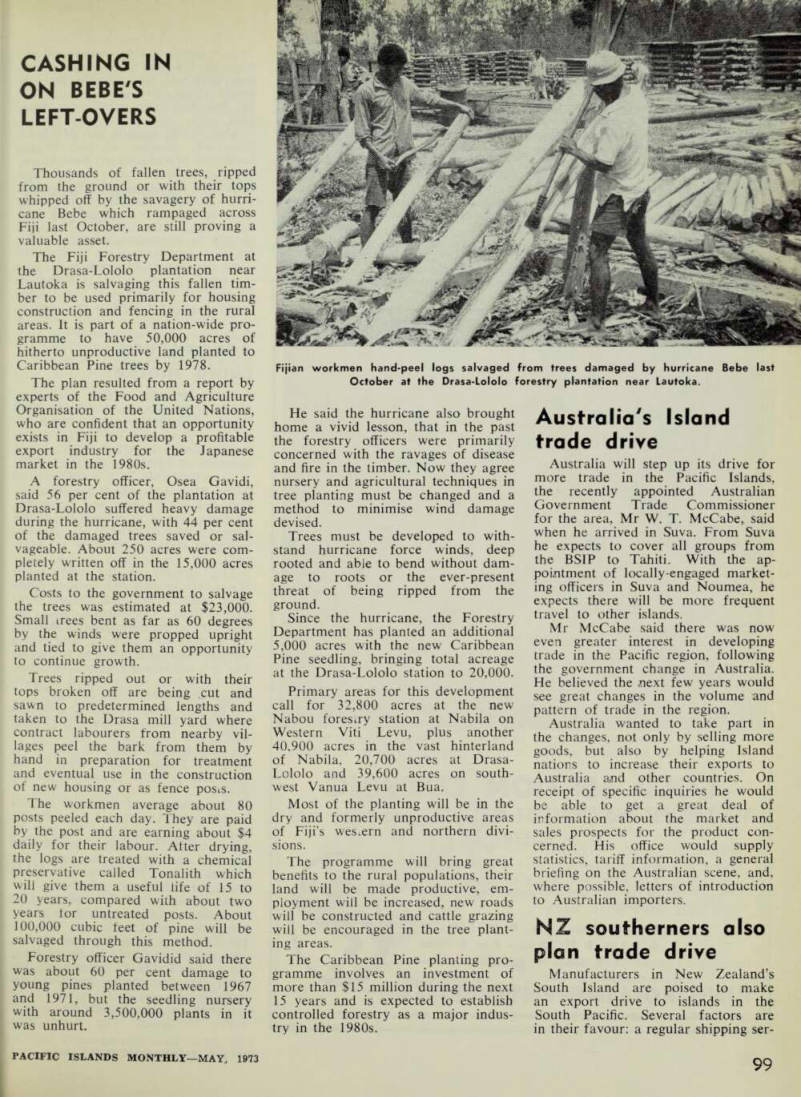 105
105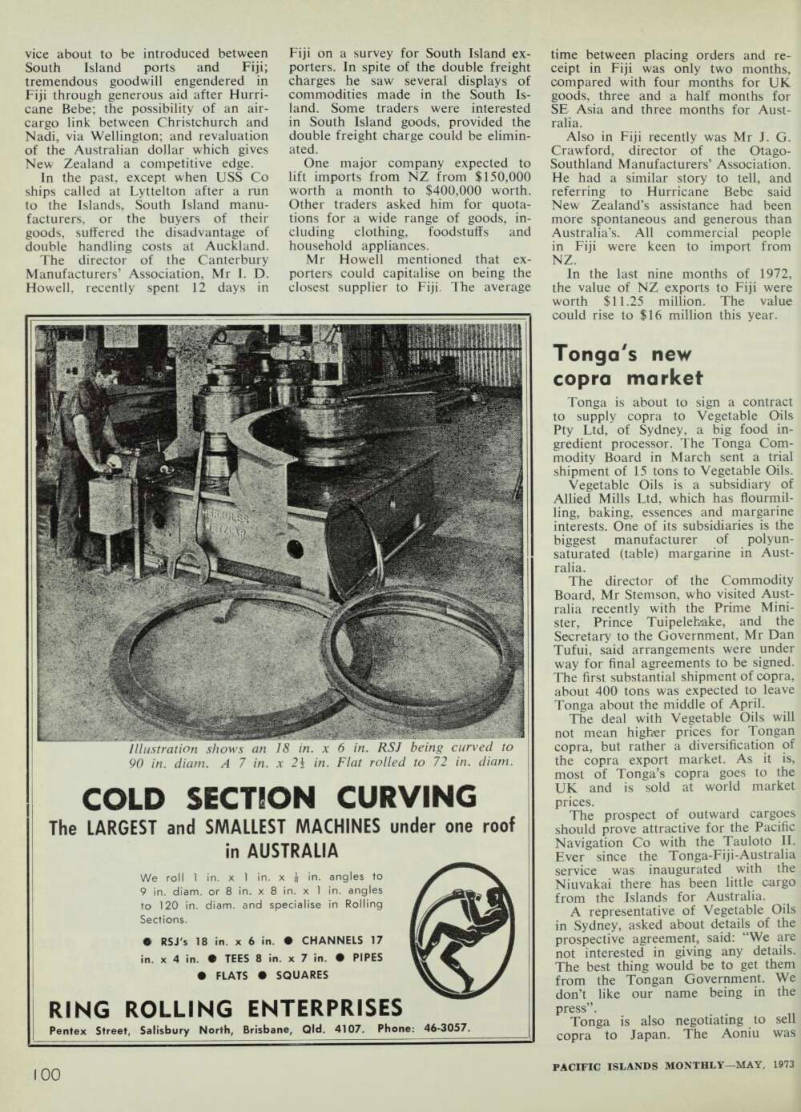 106
106 107
107 108
108 109
109 110
110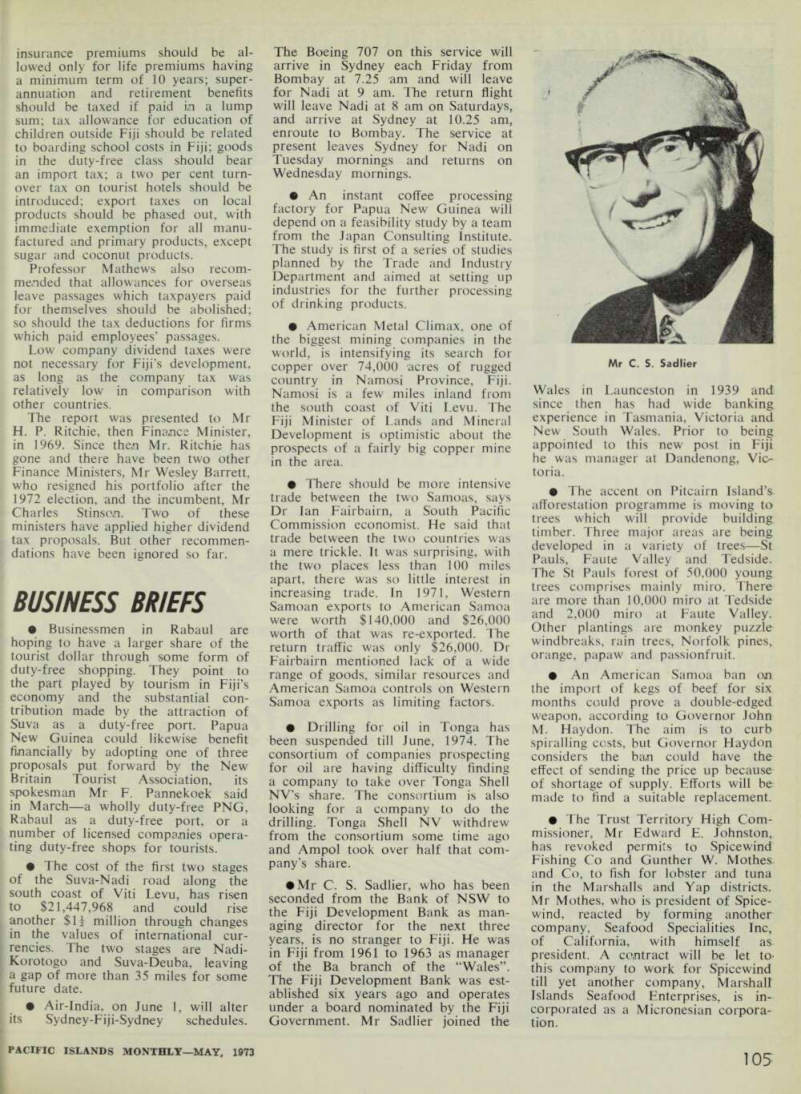 111
111 112
112 113
113 114
114 115
115 116
116 117
117 118
118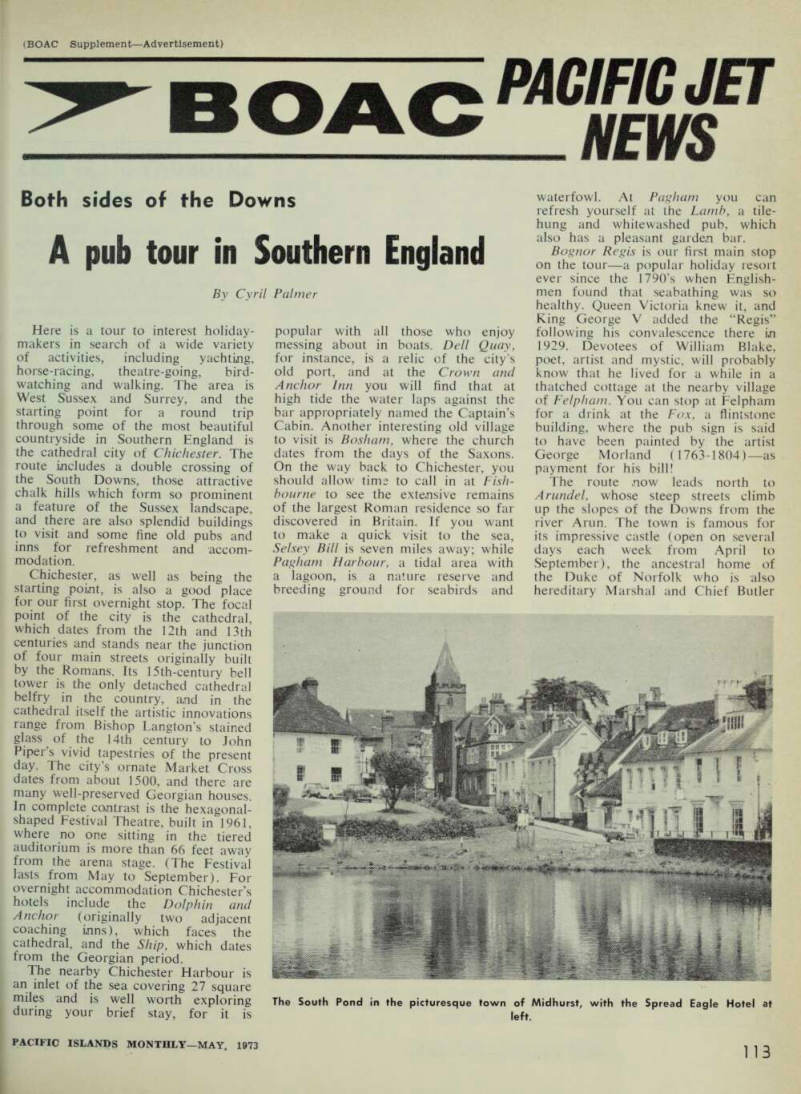 119
119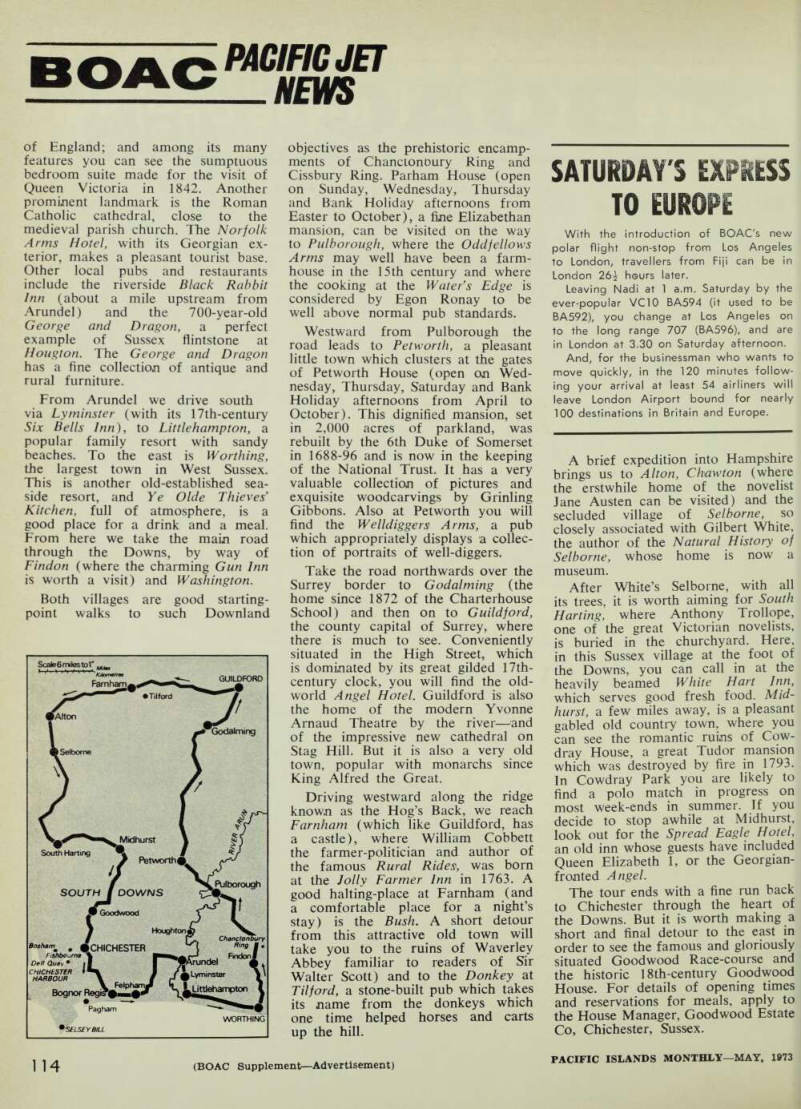 120
120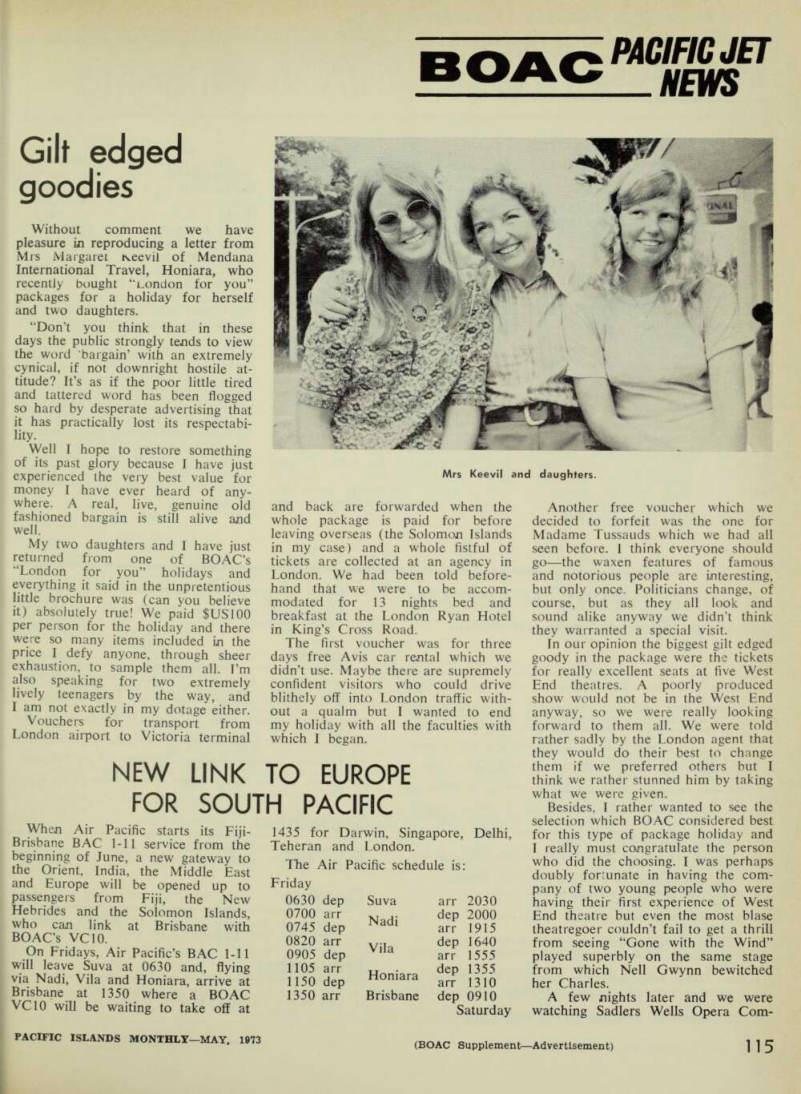 121
121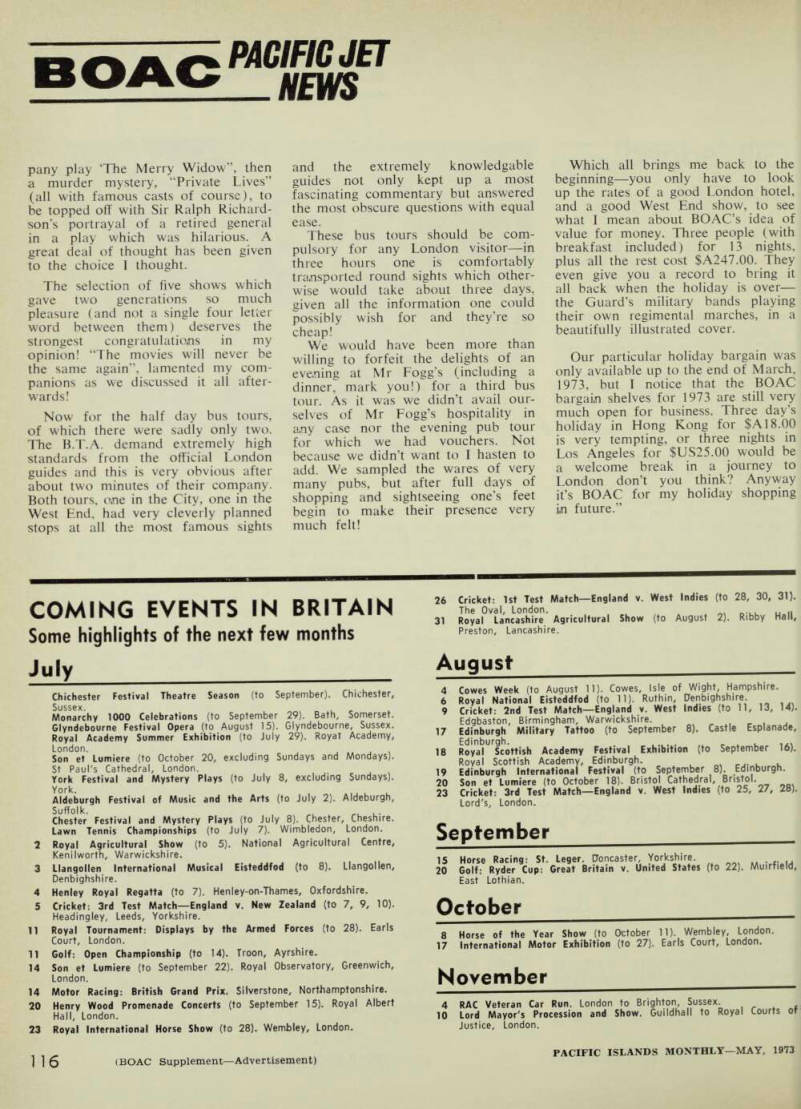 122
122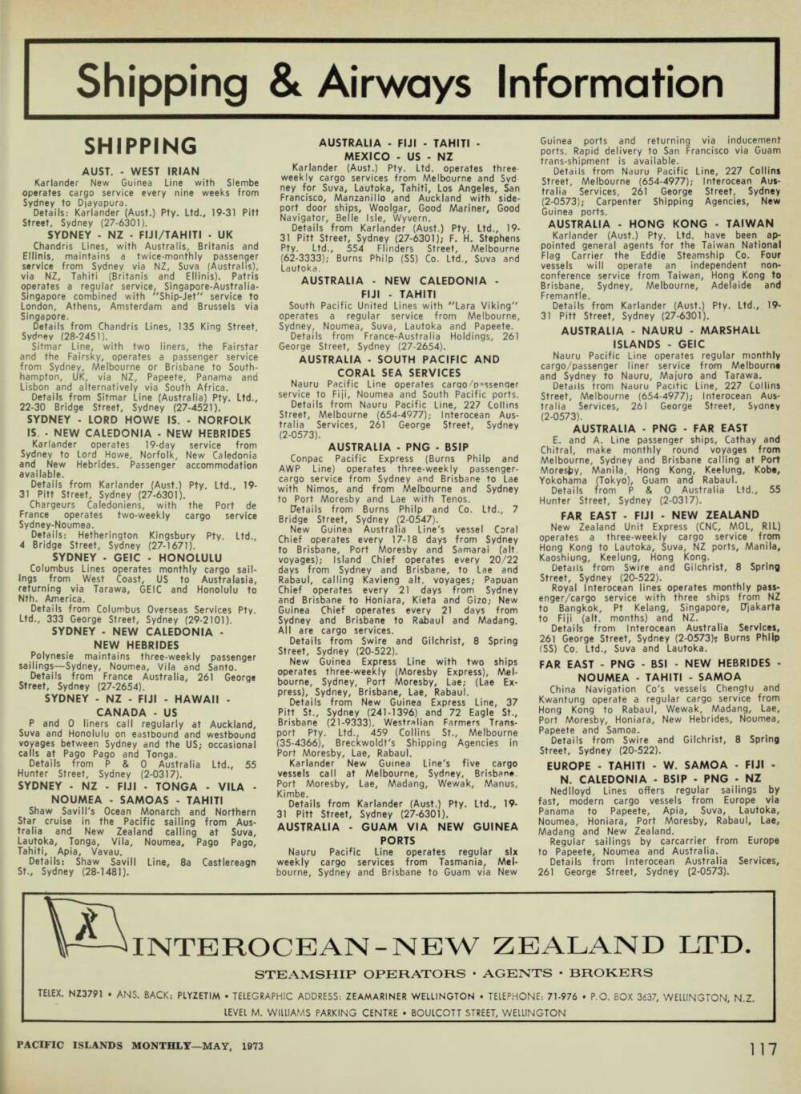 123
123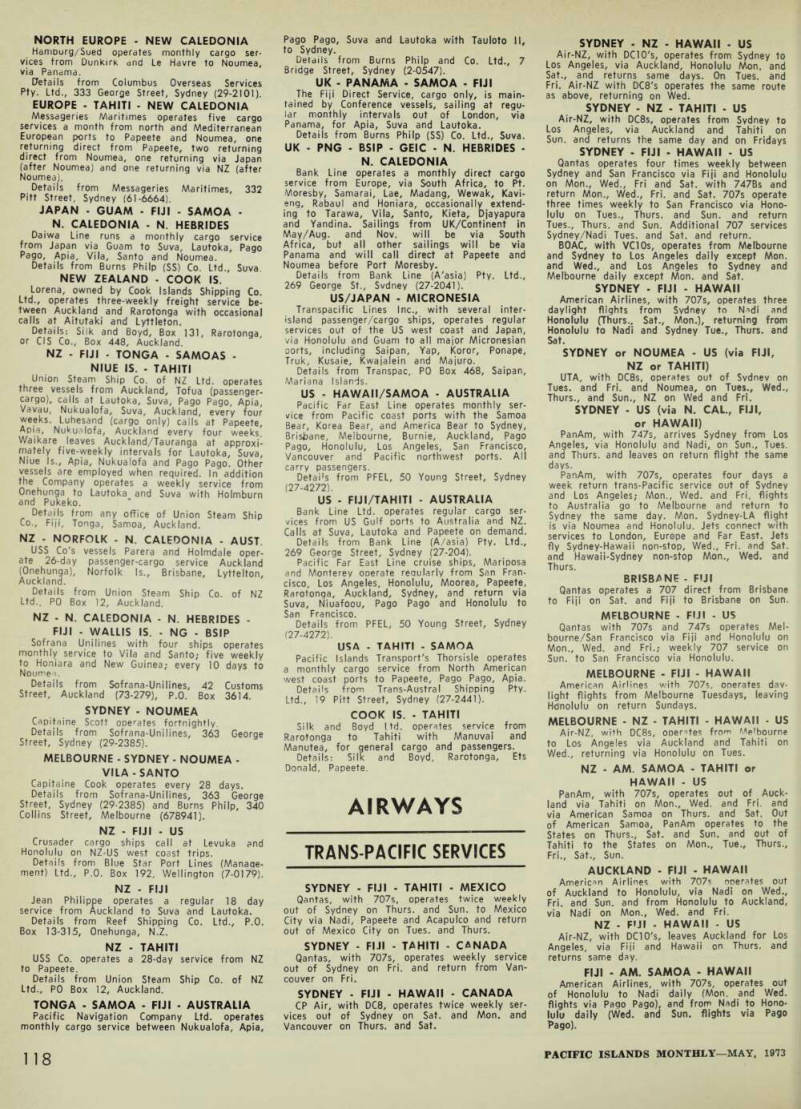 124
124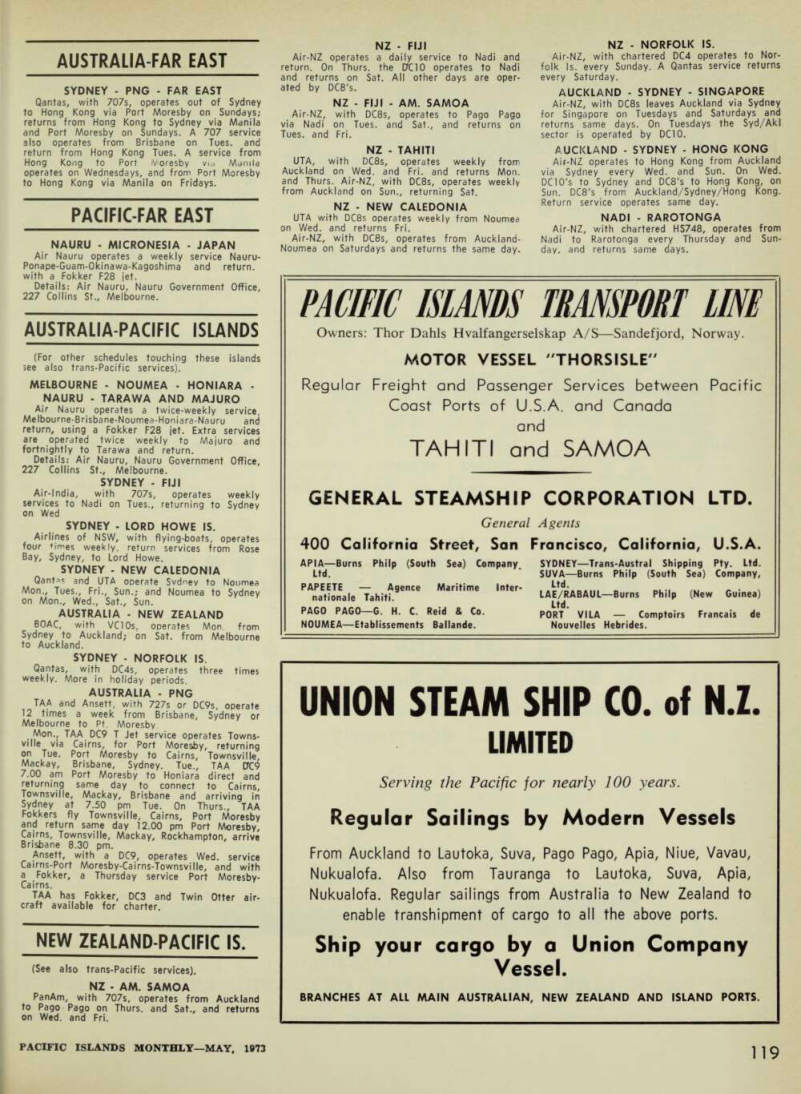 125
125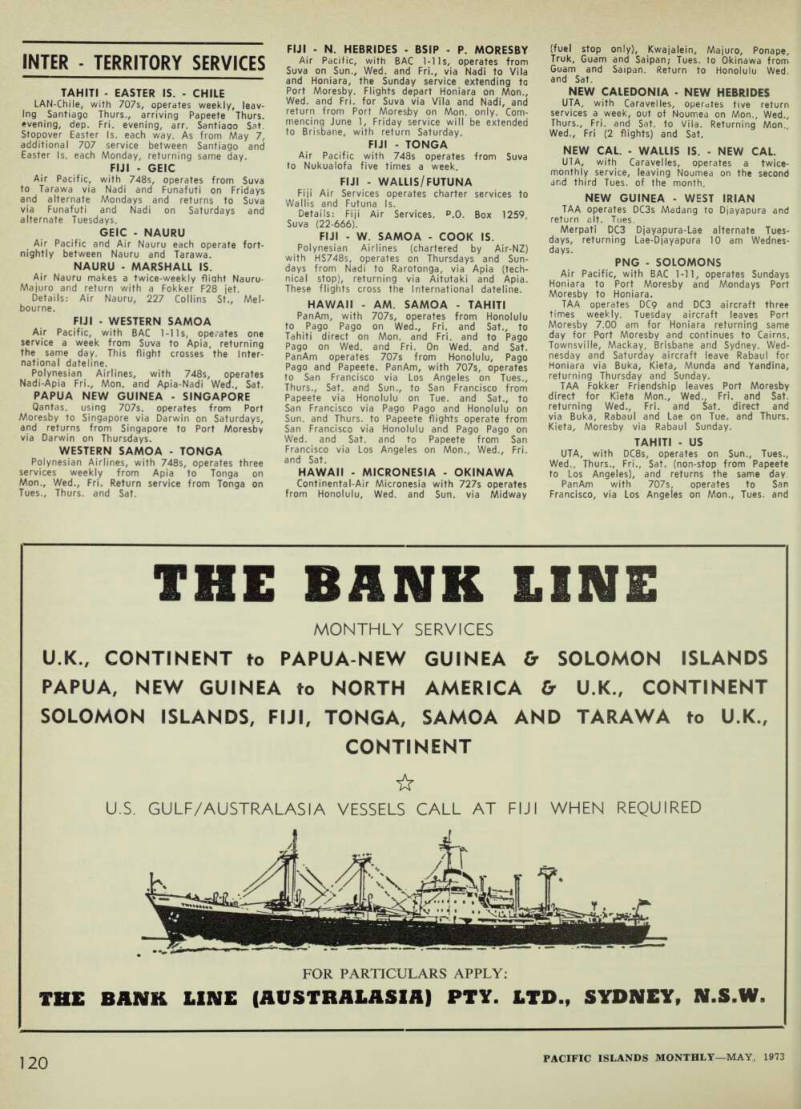 126
126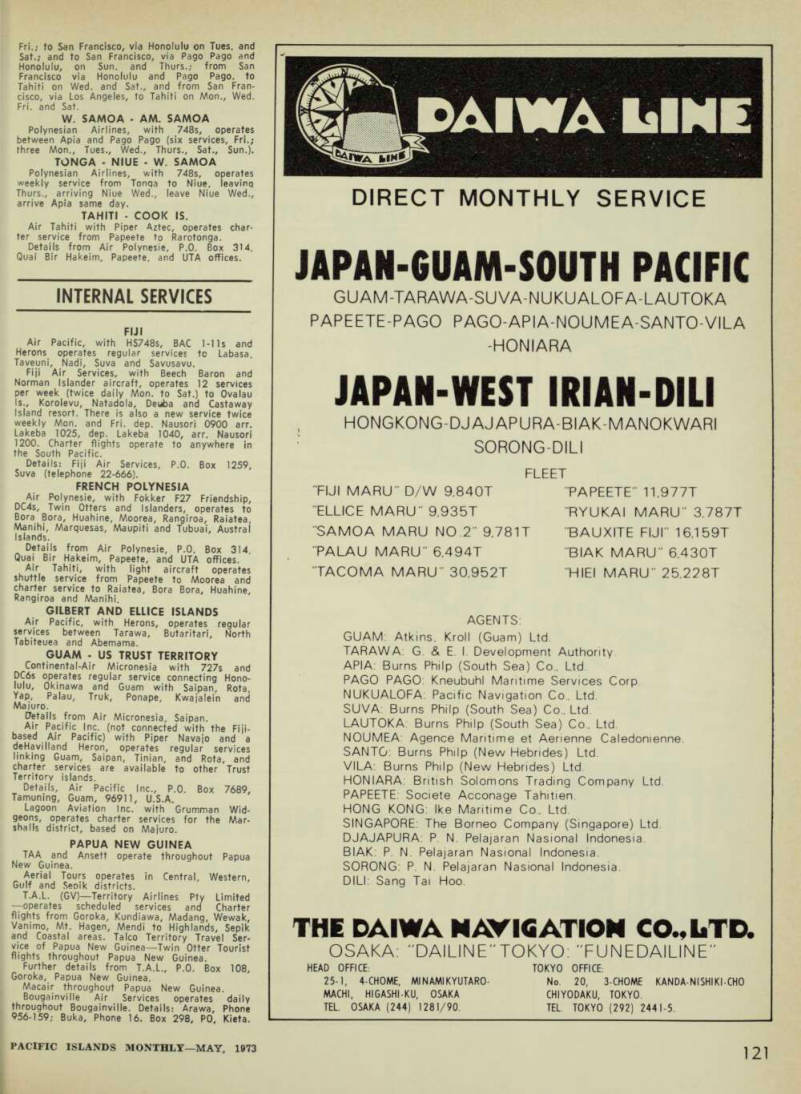 127
127 128
128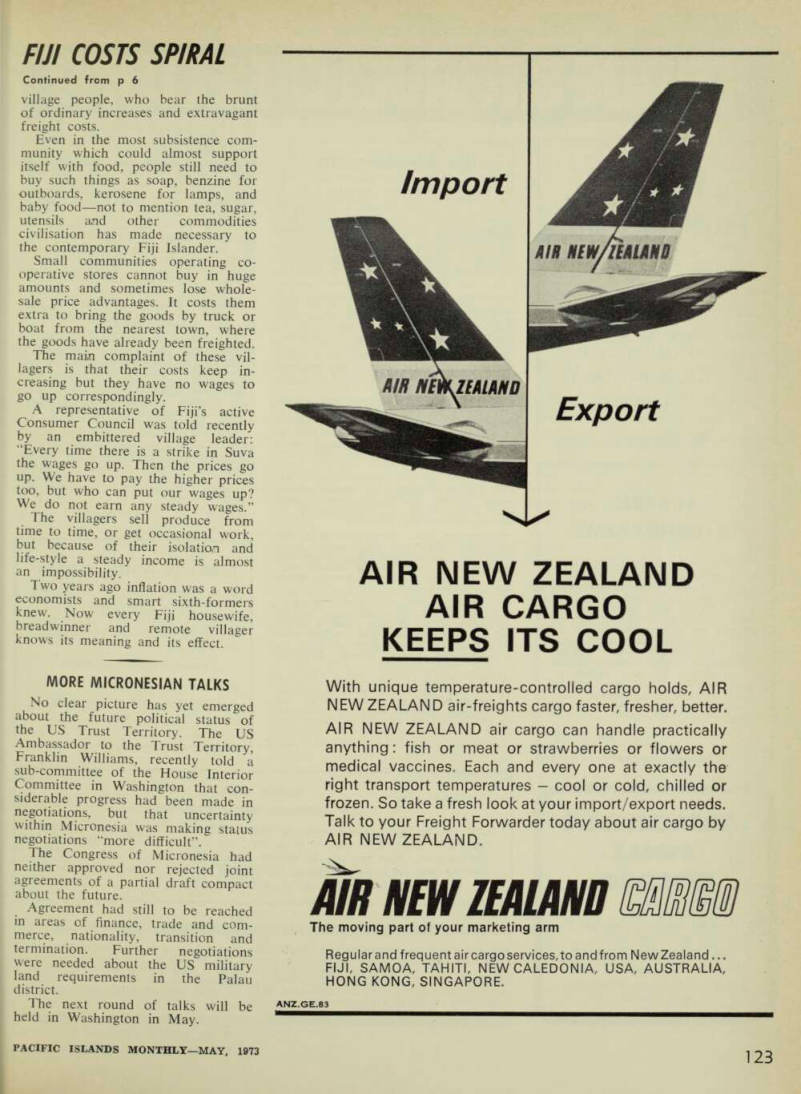 129
129 130
130 131
131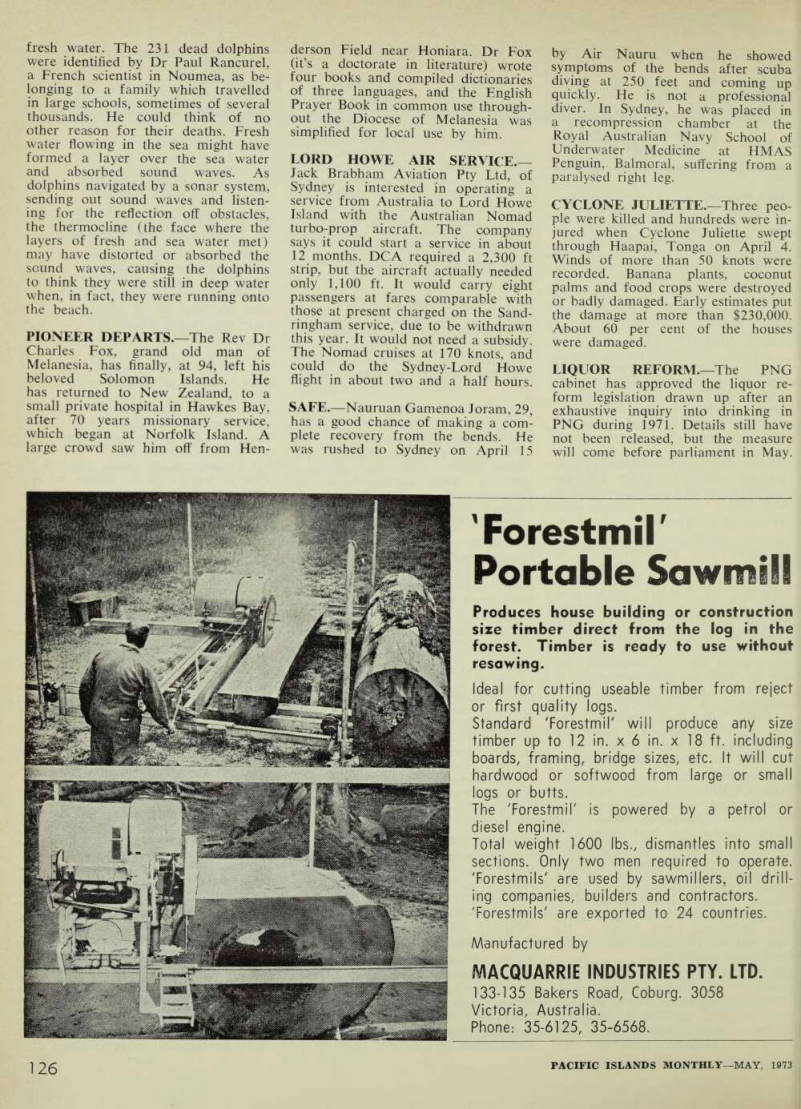 132
132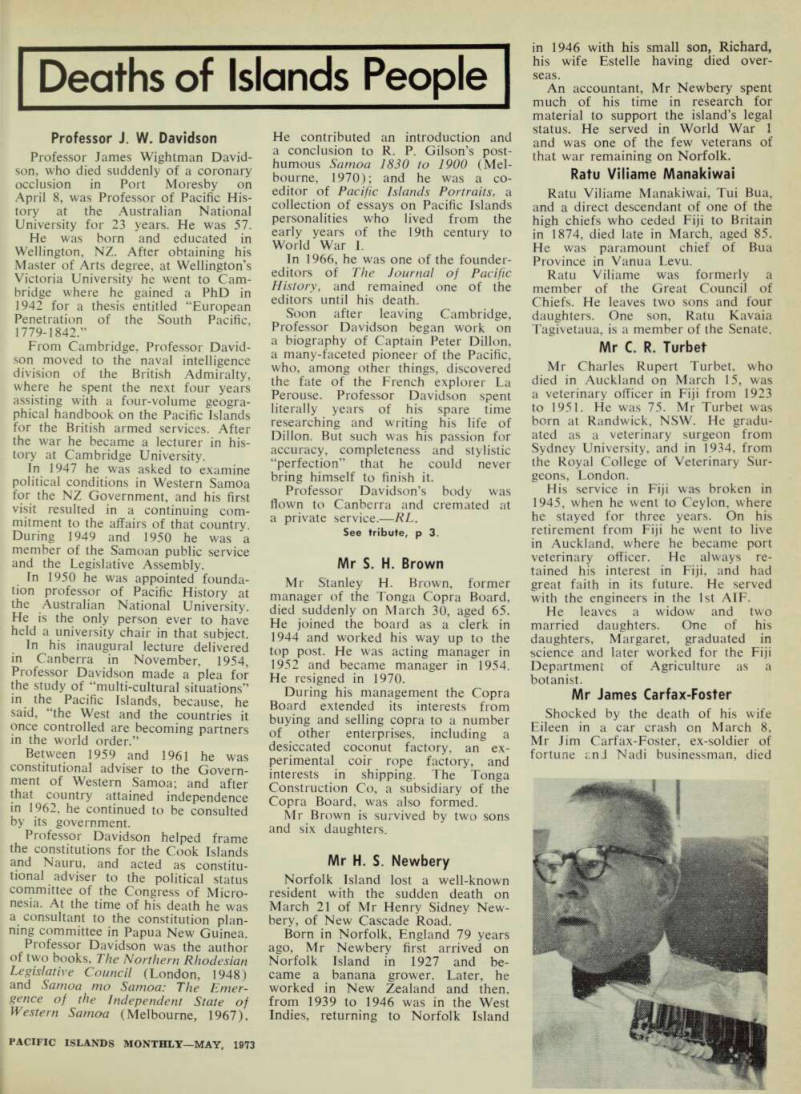 133
133 134
134 135
135 136
136