Pacific Islands Monthly
News Magazine Of The South Pacific
February, 1973
Australia, Nz, Geic, Bsip 50C
PNG, FIJI, COOKS, TONGA, W. SAMOA, N. HEBRIDES 45c
Nauru, Norfolk, Niue 45C
American Samoa 70C Hawaii, Micronesia $L.Oo
NEW CALEDONIA 65 CFP FRENCH POLYNESIA 100 CFP
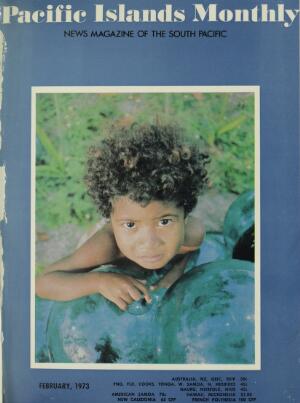
Our Cover
Definitely photogenic; cer tainly not camera-shy and, what’s more, we know her name. She’s Maria, a Seimat child of the Ninigos in PNG’s North-Western Islands. The picture was taken on Mai Island by Sheree Lipton.
Advertisements & other items, p. 2 (1 item)
designed for quality versatility
AKAI stereo components...
true sound reproduction
SW-35 i
GXC-46D/AA 5200
You can’t go wrong if it’s an AKAI . . . from highest quality cassette stereo tape decks and solid state stereo pre-main amplifiers to true sound reproducing jet stream speaker systems and the very best in turntables.
AP- 004
AKAI
I ELECTRIC CO., LTD
BURNS PHILP (South Seas) Co., ltd
Fiji; Suva, Lautoka Pago Pago, Norfolk, Port Vila, Santo, Api
In This Issue
General
South Pacific Games 9 Carpenter feature 44 Polynesian origins 60 Australian dollar's influence 107
American Samoa
Fashion parade (and pic) 8 Pago's harbour plan 87
Cook Islands
When the bank broke 6 Mr Sadaraka goes to Nauru 15 Fishing boat rescued 131
Fiji
New Governor-General 7 Banabans to get more 9 Air India Manager 15 Coral Coast recovering 41 Carpenter feature 44 Ratu Mara interview 57 Banabans buy Carpenter ship 92 Second brewery to open 105 Australian dollar's influence 107
French Polynesia
Tahiti letter 12 Jim Boyack's Tahiti letter 12
Gilbert And Ellice Islands
Ellice claims examined 17 Seamen's wages increased 85 Development Plan 101
Guam
1975 Games 8
Nauru
New age dawns 6 Mr Sadaraka transfers from Cooks 15 School kids' special ships 86
New Caledonia
Budget meeting 5 Travel rules changed 10 Nickel's future 111
New Hebrides
Dead plants puzzle 8 French plans 10 River cruiser sunk 87 Wharf congestion 87
Norfolk Island
New deal hopes 9
Papua New Guinea
Independence talks 2 Somare in Bougainville 3 Bishop criticised 3 Highlands lawlessness 4 Equality for women 6 An idea of hell 7 Constitutional planning 22 Percy Chatterton's column 24 Naming Port Moresby 69 Loan for roads 105
Australian dollar's influence 107 Japanese in Placer 115 Assurance for foreign investors 115 Coastwatcher Paul Mason dies 129 Sudden death of Don Barrett 129
Pitcairn Island
Dead plants puzzle 8 Royal Navy's gift 131
Solomon Islands
War relics battle 37 The incredible flautists 83
Tonga
Painting of a Princess (pic) 7 Navigation Co charters ship 87
U S. Trust Territory
Seamen in training 87 New airstrip opened 105 Rare eye disease on Pingelap 131
Western Samoa
The elections 11 Author in Sydney 15
ARTMENTS: Up Front with the Editor, iii; Tropicalities, 6; People, 15; Editor's ailbag, 27; Magazine Section, 69; Yesterday, 77; Book Reviews, 79; Pacific Shipping, 5; Cruising Yachts, 92; Business and Development, 101; Produce Prices, 117; Ship ping and Airways Information, 119; Deaths, 129; In a Nutshell, 131; Advertisers' Index, 132
Advertisements & other items, p. 4 (1 item)
Wunderf lex
The versatile and flexible
building board
It's the building board you can use anywhere, inside or out, for the whole house. And for all kinds of jobs around the house. Eaves, gables, garages, extensions, partitions.
Wunderflex is so flexible it virtually eliminates on-site breakages. It handles easily, and is simple to cut and fix. It doesn't need pre-wetting. And it's fire-resistant, moisture-resistant and verminproof, so weather and insects can't harm it.
Wunderflex is the lowest cost building board around. You can get it in sheets ranging from 4ft x 1 ft, to a jumbo 10ft x 4ft.
Wunderflex
Marketed by C.S.R. Building Materials Export Sales; 4 O'Connell Street, Sydney Australia 2000 iv: 139/4/2
Pacific Islands
Monthly
FOUNDED BY R. W. ROBSON IN 1930
Published Monthly By
Pacific Publications (Aust.) Pty. Ltd.,
29 Alberta St., Sydney, N.S.W., 2000.
Postal Address: G.P.O. BOX 3408, SYDNEY
N.S.W., 2001.
Telegraphic Address: PACPUB, Sydney.
Telephones: 61-9197, 61-7101, 61-4369.
Consulting Directors: R. W. Robson, Judy Tudor.
Chief Executives: Manager: Selwyn Hughes.
Publisher: Stuart Inder.
Director of Advertising: W. A. Gasnier.
Pacific Islands Monthly
Editor: Stuart Inder.
Assistant Editor: John Carter.
Advertising Manager: W. A. Gasnier.
Circulation Manager: Barry Badger.
Subscription Rates:
"Pacific Islands Monthly" is air-freighted to all subscribers and agents in the Pacific Islands• copies to other areas go by surface mail ' Australia (including Lord Howe and Thursday Is.), 8.5.1. P., Gilbert and Ellice Is.: $5.50 Aust • Papua New Guinea, Norfolk Island, Nauru Tonga and New Hebrides: $5.00 Aust.; New z ea |a nd: $5.50 NZ; Fiji, Cook Islands Niue and Western Samoa: $5.00 (local currency)- J5 n fnn an J amoa: SB -°° US '- u - s - Mainlands $14.00 US; Hawaii, Micronesia (including Guam) $12.00 US; New Caledonia: 750 French Pac'fic francs; Tahiti and French Polynesia: 350 French Pacific francs; United Kingdom and elsewhere: £3.25. representatives F'li: Paafic Publications (Fiji) Ltd., Fiji Times Building, 20 Gordon Street, Suva. Tel • 25601 • J'l T ™“ Cnr. Vitogo Pde, and Namoli Ave, LAUTOKA. Telex: 1144. Tel.: 60-422 RABAIiI NC Mr G < U t inea: c- LAE ' P '°- Box 227 ' RABAUL, Mr. Steve Simpson, P.O. Box 433 (c/- Rabaul Photographic. Tel.: 2677.) fin,? 0 Ch in o, A ynes l a: Distribution—Hachette Paci tique, 10 Ave Bruat, Papeete.
Ze * ala , n . d: J Pa £ i i ic Publications, C.P.O. Box wL n A n UC r a - nd u 379 ‘ 494 ' Representative: John Speddmg, Civic House, 291 Queen St., Auckland Tel.: 379-494.
United Kingdom: I. B. Graham, Park House, 22 Park Street, Croydon, CR9 3NP Tel • 01-6884177.
HmKp eaS c f ) ews P ape n ': s (Agencies) Ltd., Cromwell q? U 9 S !a Pulwood Place, London ' W.C.I. Tel.: 01-242-0661. Cables: WESNEWS, London, DS4 J Hon n: r A p d^ ert i sin g—Universal Media Corpora- Vlltft'- CP, P; 80 *. 46 ' Tokyo. Tel.: 666-3036.
Victoria; Advertising—Wilke & Co. Ltd 37 Browns Road, Clayton, Vic., 3168 'Tel • 544-8222. 23T?t lan p < l : nM dV T rtising ~r Bea . le Media Services, s - Pa uls Terrace, Fortitude Valley Qld 4006, Tel.: 52-5827.
Mrr ai L and Us - Mainland only: Mrs W A McGrath, 225 Queen Street, 178 Honoluk /c . , 96813. and npw 96 k° f • address notices. Form 3579 and new subscriptions to P.Q. Box 2193 ADDllr a ?° n ° * U/ Ha , waii ' U.S.A. 96805).
Apphcat.on to mail at second class postage rates pending at Honolulu, Hawaii.
Copyright ©, 1972,
Pacific Publications (Aust.) Pty. Ltd.
February, 1973 Vol. 44, No. 2
Up Front
with the Editor
Australia’s new Labor Government will continue to make the pace hot for Papua New Guinea. It doesn’t want Australia to have the reputation of being a colonial power one minute longer than necessary, so it will attempt to convince New Guineans that 1974 is as good a year as any to accept independence.
The new Australian Government believes that only through pressure will New Guineans take the reins— and possibly surprise themselves by managing competently. The govern ment believes there is little or no difference between self-government, which PNG will get by December 1 next, and independence. The govern ment sees independence simply as the handing over of the responsibilities not already handed over by December I—that is, defence and foreign affairs.
It sees self-government as the major hurdle, and the busy time as just ahead.
I believe Australia has mid-1974 in mind as target date for indepen dence and that PNG Minister Michael Somare supports this and will work towards it. His problem now is to convince his parliamentary colleagues, particularly on the coali tion, that it is possible.
Nobody knows whether it is pos sible. Thus both the chief minister and the Australian Government are taking a calculated risk in their Papua New Guinea policy. Whether or not it is an over-optimistic, even foolhardy, policy only time will tell. Much depends on whether internal political divisions in PNG become serious in the next few months, but particularly on whether the Australian Govern ment will relax the pressure if it later suspects that 1974 is too early after all.
Nobody would be forgiven who threw the baby out with the bath water.
IT’S difficult to say exactly what effect the negotiations between the Mariana Islands and the US will
have on the overall effort to resolve the problem of the future political status of the five remaining districts of Micronesia. But we may soon know.
The first round of the Marianas talks were in December and more are expected in March. The talks are aimed at finding a formula that will make the Marianas a permanent member of the “American political family”. The Marianas leaders appear to have put their fate in the hands of Washington, and Washington is so interested in achieving an under standing here that it has twice put off proposals for a new round of general Micronesian status talks. The last round of talks—the sixth—was in Hawaii in October.
Washington’s interest in Saipan has angered some members of the status committee, which made it clear in Hawaii that the separate US negotiations with the Marianas did not relieve the committee of its mandate to negotiate for all of Micronesia. The Congress of Micro nesia has in fact never granted its consent for separate talks.
Reports from Saipan indicate that congress is hardening against the US over the issue, and there is greater support for independence as an alternative for Micronesia.
IT’S become fashionable to “knock”
European expatriates living in the Islands without distinction as to the kind of people they are. The white man who has made his life there, who might have been born there, and added to its development, is lumped with the fellow recruited for a couple of years who has hurried back to “civilisation”, leaving only a bad odour behind. Fortunately, as independence comes to the Islands this racist attitude is going, because the permanent “expatriate” takes out citizenship and becomes a more ac ceptable shade of white.
These thoughts are prompted by
news this month of the deaths of Paul Mason and Don Barrett, true New Guinea citizens who now have been deprived of the satisfaction of taking out their citizenship papers in an independent New Guinea. They did their share in getting the country this far; they would have liked to have been involved with the challenges ahead.
I knew both men for 20 years.
Neither made his fortune. Each was completely involved in anything he did, sincerely dedicated to life, but they were different in outward appearance. Mason was self-effacing, retiring; Barrett an extrovert, outgoing, an optimistic salesman. Both had been politicians, Paul Mason because there was nobody else on Bougainville and he didn’t want to
let down his beloved island; Don Barrett because he believed he was needed and that he was the best man for the job, as he was.
The most accurate description of Paul Mason, who was to become, when the chips were down, the most famous and most effective of the wartime Coastwatchers, is still the one provided by his friend, Eric Feldt, in his book, The Coast Watchers: “A short, fair man who gazed benignantly through his spectacles, who spoke slowly, generally pausing consideratively before replying to even a casual remark; less like a tough guy to look at than any other man on Bougainville. Only those who knew him intimately understood that there was every reason for his serenely benevolent expression; it was the
product of complete, though modest, self-confidence.”
Barrett of course, exuded self confidence. He was never still, always planning, pushing, working, talking.
The Melanesian Tourist Federation was beginning to take wings under his active good-tempered leadership; he was planning, just before he died suddenly in Rabaul, to go to Guam and see if he could not bring the date of the next South Pacific Games forward. But I will remember him best as a New Guinea politician who always did his homework; whose constructive criticism from the floor of the House was devastating in its accuracy, and who was one of the pioneers of parliamentary democracy in Papua New Guinea.
Stuart Inder
Advertisements & other items, pp. 6-7 (1 item)
Goodmorning. Q
r°9 d morning!
%''' t You’ll get just as many good mornings out of the new-look Weet-Bix pack as you got out of the old one.
And a hearty helping of 100% whole grain Weet-Bix natural wheat goodness.
So you see, nothing important has changed.
SANITARIUM HEALTH FOOD CO., SYDNEY, AUSTRALIA.
FABER- CniTCLL
A NAME BUILT ON QUALITY
031 Ball Point Pen (gold barrel), in blue, red, green and black ink colours, fine and medium points.
FABER
. CJIITCLL
033 Ball Point Pens (clear barrel), in black, blue and red ink colours, fine and medium points.
Presto 44 Sign Pens, nylon point, in eight colours.
WKBTO44
Goldfaber 1221 Pencils, in 14 degrees 6B—6H, ideal for the office, school and art.
Faber-Castell offer a complete range of Slide Rules, 5", 10" and 20" in professional, technical and student models.
Manufacturers of:— Ball Pens Pencils —Black and Coloured Fibre Pens Slide Rules Technical Drawing Pens and Ink Erasers Rulers Set Squares
Drawing Instruments.
H ■ ;•••'■•. 3 V■■■V’-V- v u 4 l >TT •, </ i■ , - f.< ■ v-yx «;• -■ s<<| x ,»*|< • - ' I||•.V" ‘ 'I . ’ ‘ T V*r'\rT i* * ♦ /tV" " ’**• .. .v.v XT * «» »| » ,1* , * » • » , , . s i > I -V'' - j- v ?
' • ■ ’ ? I - I' f *j- ■ * » v * n ... 28 «» I is » ' V* • ' ■ 'VW" ! W «« 28i 28 A. W. FABER-CASTELL (AUST.) PTY. LTD. p.O. BOX 97, GUILDFORD, N.S.W. 2161
Pacific Islands Monthly
Australia seeks her freedom from PNG
By New Guinean journalist
Luke Sela
Papua New Guinea was told in January it would probably become in dependent in 1974. The announce ment, by the new Australian Labor Government’s Minister for External Territories, Mr Bill Morrison, was made after a four day tour of Papua New Guinea and a talk with PNG Chief Minister Michael Somare. The announcement caused uproar inside and outside PNG.
The significance of the announce ment is that the policy of Australia’s previous Liberal Government (which was defeated in December) was that independence would be given to PNG on a date which the country itself set. It had already agreed that self government should come for PNG by December this year, or soon after, but no date for independence had been mentioned.
I spoke with Mr Morrison—who is a former Australian diplomat—in Sydney a few days before he made his visit to Papua New Guinea. As a result I was not surprised when at a news conference in Port Moresby later Mr Morrison said, “As the first step to independence, PNG will be self-governing by December 1 this year. Following that there will be independence.” And 1974 was given as the target.
In Sydney Mr Morrison had told me that the government was prepar
ing PNG for self-government in the first few months of 1973 and that preparations were also in readiness for independence. He was not able to give a date for independence, but I was then left in no doubt that the Australian Labor Party wanted to hand over the responsibility of PNG quickly. I got the impression that as far as Mr Morrison was concerned, independence would follow self government so quickly that the two were virtually one and the same thing.
Mr Morrison’s Port Moresby an nouncement, which was supported by Australian Prime Minister Whitlam, got a quick reaction. Mr Somare himself was then in Bougainville (see story opposite). He issued a state ment saying that the people of PNG and their elected representatives would decide when PNG should be come independent.
And in that statement, for once, government and opposition were in harmony.
PNG’s Opposition Leader, Mr Mathias Tollman, accused Mr Whitlam of trying to “blackmail” Mr Somare and assured the chief minis ter of his party’s full support if Mr Somare was prepared “to tell Mr Whitlam where to get off”.
As soon as he left Bougainville, Mr Somare flew to Canberra for talks, during which he was reported
to have told Mr Whitlam th; PNG did not want independence s early as 1974, but he would wor towards the end of 1974 or mid-197 as the timetable. Mr Whitlam ai nounced that he would continue wit his 1974 timetable.
What now appears to be happenic is that the Australian Government asking PNG for Australia’s indepei dence!
What is the reason for the Austr; lian Labor Party wanting to pressui Papua New Guinea? You ca draw your own conclusions from statement made by Mr Whitlam i Port Moresby in early 1971 when h was Leader of the Opposition. IV' Whitlam said, “All Australians mu now realise how damaging and dan gerous a reputation Australia’s pn sent policies produce. We are European nation on the fringe of th most populous and deprived coloure nation in the world.” He said in th same statement that an Australia Labor Government would “not H blackmailed into accepting an ui
Australia's new Minister for Extern Territories, Mr Bill Morrison, and PNG[?] Chief Minister Michael Somare were no[?] it is to be hoped, biting off more than the[?] can chew when they attended a feast [?] Wewak in January after talks on PNG future. With them is Mrs Morrison.
natural role as rulers over those who have no say in electing us”. Mr Whit lam said clearly then that Australia didn’t want the reputation of being a colonial power.
Mr Morrison told me that he would be the last Minister for Ex ternal Territories, as he would work himself out of a job. He spoke highly of the present Administrator in PNG, Mr L. W. Johnson. He stressed in my interview—and it has been stressed since by Mr Whitlam—that Australia will continue giving finan cial and other aid to PNG after in dependence, if PNG wants it.
I think PNG should wake up to the fact that it is going to be rushed towards independence. It is now up to Mr Somare and his government to decide whether they want to give Mr Whitlam his independence.
Bougainville
may be next!
From a Port Moresby correspondent Is Bougainville lost to Papua New Guinea? There must have been oc casions during his hectic visit to the copper island in January when Papua New Guinea’s chief minister Michael Somare thought so.
It was a barnstorming meet-the people tour. In seven days there were 11 public meetings; four demonstrations; one hastily-organised helicopter trip out of Panguna and scores of calls for secession.
Somare’s Fokker Friendship touched down on Buka airstrip just a fort night after the brutal murder of two senior Bougainvillean public servants at Goroka in the Eastern Highlands District of the main island of New Guinea (see p 4).
The deaths of the two men, who had been in a car which fatally injured a young Goroka girl on Christmas Eve, galvanised public opinion all over Bougainville. The old split between the southern secessionists and the northern anti-secessionists dis appeared overnight. Even people who had strongly opposed the secessionists for many years hinted that an independent Bougainville mightn’t be so bad after all.
In the week preceding Somare’s arrival, there was feverish activity in the Kieta area as the Napidakoe Navitu secessionists tried to muster enough support to have the chief minister’s visit cancelled.
However, Papua New Guinea’s Minister for Mines and Napidakoe Navitu chairman, Paul Lapun, weighed in strongly against his col ftagues, and Navitu opposition to
the tour crumbled. Partly as a result of this, Lapun was to be referred to by Bougainvillean students in the following week as a “traitor” to the Bougainville people and a “puppet” of Somare.
Other people publicly told the four Bougainville members of the House of Assembly to resign from the Somare government and sit in the House as independents. This won’t happen, of course, and even if it did, it would not bring the Somare govern ment to its knees as some proponents of the idea hope.
At his first public meeting at Lonahan village on Buka Island, Somare heard demands that were to be repeated time and again during his entire trip.
In the words of some of the dozens of placards and banners that were waved at him: “Somare—let Bougain ville secede”, “Somare—teach the Highlanders to obey the law”, “Bring Bougainville public servants back” and “Somare—hang all murderers”.
It was at Buka that the chief minister was involved in an embarras sing incident in which a village relations officer of Bougainville Cop per Pty Ltd abused Somare for reject ing the company’s invitation to open the copper mine last year. It is believed that the village relations officer, a European, has since been dismissed from the company.
A similar happening occurred in a Kieta motel on the last night of
Somare's visit to Bougainville. As Somare entered the dining room wear ing his now-familiar “national dress’’, a European sitting nearby said in a stage whisper; “Look at that kanaka wearing a laplap!” The chief minister was upset by the comment but wisely refrained from taking the matter any further himself.
Midway through his tour, the chief minister was supposed to hold a public meeting at Panguna. Shortly before the meeting was to commence, 80 Guava village men were spotted in the copper town carrying spears, axes and bows and arrows.
Bougainville parliamentarians Paul Lapun and John Momis tried to convince the men that they should not take their weapons to the meeting, but the men refused. They said the weapons were symbolic and there was no intention that they should be used.
When Lapun and Momis insisted that the weapons not be allowed in the meeting hall, the villagers replied that they would not attend the meet ing. Insulted and angry, they stalked off. The meeting was abandoned.
At this point, Lapun and Momis, holding fears for the chief minister’s safety, advised Somare that he would be wise to abandon the road trip from Panguna to Boku on the west coast of Bougainville. Within minutes, a helicopter was flying Somare out of the copper town.
It was a bad error of judgment.
There had been a demonstration at
Kieta where people had carried weapons. And later there was to be a demonstration at Buin during which an old man threw a spear into the ground at the feet of the chief minister before ceremonially break ing it in half as a sign of friend ship. But at Panguna the decision was to “get out of town, fast” leaving behind the disgruntled Guava people.
The emotional backlash of the Goroka murders detracted from the usefulness of Somare’s tour. The cry for secession is still based more on gut feelings than on logic. Somare himself said that he believed the people were not clear about the reasons for secession.
But Somare created a favourable impression with most of the 5.000 people he met during his visit. At public meetings he patiently sat listening to the people's complaints for as long as four hours. He allowed people to talk themselves out before making his routine comments that the Constitutional Planning Com mittee would be determining the political future of Papua New Guinea in consultation with the people (see p 22) and that the government had already initiated action to investigate lawlessness in the Highlands. Somare was in Bougainville to listen and to learn.
“If it was in the best interests of Papua New Guinea, I believe Bougainville could secede now. But a responsible government represents a whole country, not any one part of that country,” Somare said later.
“However, there is no doubt that the people of Bougainville are discontent ed. I am sure that the status quo can not be continued successfully.”
Tempers a little frayed
The Papua New Guinea Minister for the Interior, Dr John Guise, and the Anglican Bishop of Papua New Guinea, Bishop David Hand, have clashed over the issues of indepen dence and church involvement in politics.
The controversy began when Bishop Hand said in January he favoured the granting of independence as soon as possible, but thought that there should be a referendum first. He recommended an intensive political education programme about the meaning and consequences of independence, to be followed by a referendum sometime next year to determine the timing of indepen dence.
This provoked Dr Guise into saying that the bishop should confine himself to the spiritual care of the church.
He said that the bishop should put his house in order “before continually pointing his episcopal finger of ill informed criticism to political matters.”
Dr Guise also accused the bishop of abandoning support for early self-government and independence.
The Interior Minister said that in such matters the democratic process should be through the elected representatives in parliament.
But Bishop Hand replied with his own broadside. He observed that Dr Guise (who is an Anglican) had on a number of occasions publicly urged the church to become involved in national life and in politics!
In any case, the bishop said, his proposal for a referendum was not a criticism of the government, but an effort at constructive suggestion. A matter as crucial as the timing of independence ought to have the approval of the greatest possible majority of the people.
The bishop welcomed the statement by the Chief Minister, Mr Somare, that the people would decide the date for the country’s independence.
lawlessness
Behind the lawlessness
From Percy Chatterton,
in Port Moresby Dominating the scene as Papua New Guinea enters its year of destiny, by the end of which it expects to be self-governing, is the rising tide of lawlessness in the Highlands, drama tically culminating on Christmas Eve in the killing of two senior local officers of the Public Service at Goroka, in the Eastern Highlands, fol lowing a road accident in which a child had been knocked down and killed. The men were Dr Luke Rovin, the District Medical Officer, and Mr Peter Moini, the associate Super
intendent of Schools in the district.
Let’s begin by getting the record straight. What happened at Goroka could have happened anywhere in Papua New Guinea where there are roads carrying vehicular traffic, and coastal and island people have no justification for adopting a holier than-thou attitude over it. Mob violence following traffic accidents is endemic in places like Port Moresby, Lae and Rabaul, and it has probably been the prompter action of the police rather than the lesser violence of the mob that has prevented some of these incidents from having the same fatal outcome as that at Goroka.
But Goroka’s Christmas Eve tragedy follows a long series of events which has given the Highlands the reputation of being the most lawless part of Papua New Guinea. Does it deserve that reputation, and how has the situation come about?
I think that the answer to the first question must be a qualified “yes”, qualified because it must be remem bered that the Highlands area is the most thickly populated part of the country. Because of this, any dis turbances which occur there involve more people, become more spectac ular, and consequently attract more attention from the news media, than similar disturbances, involving much smaller numbers of people, which take place on the coast or in the islands.
The answer to the second question is more difficult. Highlands apologists make much of the fact that the people of the Highlands have had a much shorter time in which to travel from the stone age to the 20th century than those in any other part of the country, and are still, so to speak, maladjusted to the new way of life.
This is true, and it may explain,
and to some extent excuse, the pre valence of mini-wars over land and of pay-back killings. But it neither explains nor excuses the exploits of Highlands highwaymen in robbing trucks travelling from coast to high lands, nor does it explain or excuse the breaking and entering of stores or the snatching of handbags and cash boxes. This is just plain thuggery in any language.
A United Party official has claimed that the cause of all this lawlessness is the transfer of authority from expatriates to indigenes. This shot is unusually off target even for United Party markmanship.
For while it is true that the laws are made by a predominantly indigenous House of Assembly, theii enforcement is in the hands of the Division of District Administration, the police and the courts, and in all these services nearly all the senior positions are still occupied by ex patriates.
The Superintendent of Police in the Western Highlands is none other than that doughty old-timer Mike Thomas. All four Highlands districts have expatriates as district commis sioners. And all the judges, and most if not all of the magistrates, who adjudicate in cases other than those of very minor law-breaking in the Highlands, are expatriates.
Moreover, as Minister for the Interior John Guise has tartly pointed out, the control of the police is still in the hands of the Australian Govern ment and not, as Dr Guise would doubtless like it to be. a responsibility of his portfolio.
What is true, and not unimportant, is that Mr Somare’s government has inherited the pre-1972 Administration dominated government’s policy of a kid-glove approach to the main tenance of law and order in the Highlands, in contrast to the tough line approach it had previously taken in Bougainville and the Gazelle Peninsula. It may well be that Mr Somare’s government will have to take another look at that policy.
I myself look back with wry amusement to the furore over the Public Order Bill of 1970. With the backing of Highlands members eager to see the hated Mataugans cop it. that bill was bulldozed through.
With what result? Months passed before the ordinance was brought into force. And since that time only a few of its minor provisions have been utilised; its major provisions, including the most controversial ones, have never been invoked, though current lawlessness in the Highlands exceeds anything that ever happened
(Continued on p 11^'
(From page 4)
in the Gazelle Peninsula or in Bougainville.
In the meantime, what are the immediate fruits of Highlands law lessness in general and the Christmas Eve killings in particular?
First, the grinding to a halt of the Highlands Famine Relief Appeal. It can hardly be a matter for surprise if, when coastal or islands people hear of lorry-loads of food bound for the famine areas being raided by highwaymen in the non-famine parts of the Highlands through which they have to pass, or of tribal warriors in the famine areas trampling under foot newly planted sweet-potato gardens which they have turned into a battleground, they should say, “What the heck!”
Second, the demand for a manda tory death sentence for wilful murder, rejected by the last House of As sembly, will almost certainly be renewed in this one, with a greatly increased chance of acceptance.
Already there have been demands from all over the country, and parti cularly of course from Bougainville, for the hanging, and even the public hanging, of murderers, and especially of pay-back killers.
Third, the Goroka killings have almost certainly give a trenmendous fillip to the secessionist movement in Bougainville.
Police Changes Planned
When self-government comes to Papua New Guinea on December 1, the country will control its police force —which is now under Australian government control.
But there are likely to be import ant changes in the organisation of the force. There are plans to estab lish a para-military division of the police, able to handle serious in ternal disorders and border sur veillance and thus avoid the neces sity of Papua New Guinea having to call out the Army on civil con trol problems. Experienced Pacific Island Regiment men may be in vited to form the proposed new police division.
champagne
In between champagne and the alka-seltzer
By Helen Rousseau
In between their end-of-year cham pagne and alka seltzer. New Cale donia’s Territorial Assembly voted in the island’s 1973 budget at a late night session on December 26. Ex penditure of SA6O million (7,000 million CFP) was approved. In view of the continuing uncertainty over the nickel market, this was a drop of $2O million over last year’s budget.
The whole budget session provided plenty of kick and sparkle for the public gallery which included police who were there during the debate over a strike by public works em ployees. In their party clashes and wrangling with the French adminis tration, members were no doubt pre paring the ground for the island’s next elections, since Caledonians vote in March to send a deputy to the French National Assembly in Paris.
Budget debate reports struck an incongruous note in late December, as the local press was crammed with double-page advertisements for French champagne and numerous menus provided by rival restaurants to attract clients for the biggest feasts of the year—Christmas Eve and the night of St. Sylvestre, on December 31. Top hotels offered guests their bands and gastronomic delicacies at up to SA4O per head, not including wines, although one thoughtful chef concluded his menu with nothing less sumptuous than “alka seltzer”. Paris cooks seemed to have invented if not new dishes, at least new names for them, out in tropical France, so one noted “Caledonian ice cream slice”, Dumbea salad” and “the Pebble at 40 degrees C”, presumably a sizzling hot dish representing the island at 104 deg F.
A study of budgetary statistics
could hardly have aided digestion at this time, but the administration needed funds for the new year. It was the first budget adopted by the new Assembly elected last September, and from the outset there were more than purely financial hurdles. On the labour front, public works employees from the Noumea City Council and the public service went on strike for over a month claiming an extra allowance of $l3 monthly. The French administration held out against the men’s claims, even though the Territorial Assembly voted over whelmingly in support of them. When autonomist leader Maurice Lenor mand urged that the assembly inter rupt its budget proceedings to settle the labour dispute, the representative of the French administration, Michel Levallois, warned that a decree could be passed in Paris to force acceptance of the budget.
As garbage mounted in the Noumea streets, Governor Verger called out the army to operate muni cipal garbage trucks and police stood by with truncheons to supervise.
When the matter began to raise tem pers at the assembly, police were called out again to attend the debate, much to the annoyance of some mem bers who protested against the pre sence of such inspectors in the House.
Finally, as the Christmas pay period approached, the workers were per suaded to return to their jobs, on the understanding that the French admin istration would reopen negotiations in March.
The state of the territory’s nickel industry had earlier provoked sharp criticism of the administration from all sides of the House. Another mat ter arousing opposition, particularly
from the autonomist camp, concerned the recruitment of metropolitan French civil servants. Finally, one of Governor Verger’s most cherished projects, to have the territory raise a second private bank loan to finance development works, was roundly dis approved and rejected by a majority vote grouping around the autono mists.
The debate on education was not particularly novel in that it revived a long-standing sore point over the recruitment of public servants from France, in face of local pressure for more responsible jobs to Caledonians.
The heated exchange on metropolitan school teachers came after an earlier attack on the recruitment of retired French gendarmes and military men to fill high posts in the public ser vice. However, as on previous occa sions, the assembly members were re minded that it was not for them, but the French administration alone, to judge the eligibility and performance of public servants.
The administration was thereupon charged with being “colonialist” and criticised for allegedly discriminating in matters of salary and special allow ances, favouring the “metros” over the locals. The metropolitan recruits were, however, strongly defended by Secretary-General Michel Levallois, representing the French administra tion, who pointed out that it was not until 1961 that the first local Melan-
Continued on p 124
When Governor Louis Verger, of New Caledonia, wants to attend the Territorial Assembly he hasn't far to go—merely a few yards from his official residence on the left to the assembly building on the right.
esian passed the baccalaureat exam equivalent to end of secondary school and university entrance.
The other sphere of state influence which caused some lively debate con cerned sport. France has lagged be hind other powers in gaining interna tional recognition through sport.
However, French winners of Olympic gold medals and other international championships are now promptly awarded the Legion of Honour and even Caledonian sportsmen who shine in the Pacific receive glowing con gratulatory telegrams from French government ministers.
As the state takes a greater con trolling interest in training and organ ising club teams, certain clashes have occurred with the “old hands” who have given their time voluntarily. Per haps there is even a tinge of envy over how much money the state
now seems to have available to international prestige from sport.
The latest debate on the subjec the assembly arose over the adm; tration’s proposal to allocate al $lOO,OOO towards an Institute Youth Work Leaders. Defending project, Administration Secret General Michel Levallois had assure members that this was noi attempt to have youth activities * by the public service”.
But as far as island budgets concerned, the French franc is. more magical than any other cum and in the present nicket recesi territorial coffers have earned revenue than earlier ambitious Fre plans had prepared for. Govei Verger for some time has been i licly urging the need for the assen to raise extra loans to keep up velcpment projects. This was » one of the battle cries before September elections: that it necessary to vote for men who w« agree to this form of finance to I the island riding high in confideir The administration was, howe defeated on this when the assen majority rejected the principle of barking on a second loan, of arc SAIO million, similar to the million loan contracted through PARIBAS bank last year.
The administration pleaded that, extra finance was necessary to susj the level of employment and keep firms in operation. Assen members, however, protested they refused to grant the adminii tion an “open cheque”, that eno investment money was already at able (about $l3 million, excluc the Paribas loan) and that further loan at private bank intd rates would only help the Frl banks and big companies, rather the territory. The assembly urged the French administration invite to Noumea a mission t
cheaper lending sources—the Euro pean Development Fund (FED) and the European Investment Bank, although the administration voiced its reluctance to invite these international financial institutions to study the island's economy. It must be remem bered that New Caledonia is forced to go through the French Govern ment for loans, despite the islanders’ own deposits in local agencies such as the $2O million currently held by (he Post Office bank in New Cale donia.
There was one cheery thought after the budget and that, ironically, came from the decision to revalue the Australian dollar. The higher cost of Australian imports was seen as a means of gaining increased territorial revenues from import taxes. In the meantime, French financial journalists put a singularly original interpreta tion on this revaluation move. With out pointing out the strength of the Australian dollar among world cur rencies and highlighting the problem faced by the increasing rush of foreign funds into Australia, one pro- Paris daily stressed that New Zealand had not followed the Australian move and thereby illustrated its growing independence away from its powerful neighbour! (A split in the Anglo- Saxon conspiracy in the Pacific?) Back on the home political scene, two groups announced the formation of an anti-autonomist front to pre sent joint candidates at the coming national election of deputies to Paris, elections scheduled for two rounds on March 4 and 11. The Mouvement Liberal Caledonien (MFC—five seats) and George Chatenay’s Union Democratique (UD—four seats, out of 35) have thus proposed former assembly president Jean Deques as candidate for New Caledonian deputy.
Outgoing deputy is Melanesian Roch Pidjot of the Union Cale uonienne. in which former deputy Maurice Lenormand has now re turned to party leadership. As has been predicted the Union Multiracial leader, Melanesian Yann Celene V r cgei, is also standing. Such a situa tion could well split the Melanesian jole and favour the election of Jean Leques.
Beyond the local deputy struggle, Je overall outcome of the French elections could have far-reaching confor New Caledonia. The present “Gaullist” government of esident Georges Pompidou and ; n rime Minister Pierre Messmer faces opposition from the socmlists. who favour reappraising e statutes of French overseas terri tfltes.
Tropicalities
PAG liberates women's Lib
By A New Guinean
Correspondent It could prove more difficult than merely passing laws to make women men’s equals in Papua New Guinea.
Throughout the length and breadth of the country the tradition is that women should only be seen but not heard; that women should be seen to do things for the family and husbands such as work in the gardens, carry firewood, prepare food, rear and care for children and, in general, obey every command of their husbands.
The man’s role has always involved use of his strength and muscles: tak ing part in tribal warfare, hunting for pigs and other wildlife, fishing, build ing houses—activities a woman would normally hesitate to undertake.
And in tribal discussions, women normally keep in the background, preparing food for the men. Women normally do not talk at Local Gov ernment Council meetings or other village public meetings. They are ex pected to agree with decisions taken by the men even if it means sacrific ing their own interests to please the men.
In some Asian countries women have equal rights with men and in India and Ceylon they even hold the most important jobs. Australia’s recent move toward granting women equal pay for equal work is another example of growing equality for women.
But in Papua New Guinea many expatriates doubt that the local women will ever be regarded as equals by their menfolk.
However, the passage through the last House of Assembly of three bills aimed at raising the status of married women in the PNG Public Service is a great step forward. But, signific antly, their passage was not plain sailing. They met stiff opposition from the opposition United Party rank and file, particularly from the more con servative Highland members who claimed the only useful purpose for
women was to “karim lek na lukau tim pik (make love and care for the pigs)”.
Mr Joe Paul Langro, the official spokesman for the United Party and the Member for West Sepik Regional, bluntly said that a woman’s job was in the kitchen.
He said: “As far as Papua New Guinea is concerned, women are always regarded as the lowest in the family. I do not want this concept of Western civilisation to give equal rights to women as are given to men.
Men must get first priority in the society and not women.”
The only woman parliamentarian, Miss Josephine Abaijah, put up a very strong case for women’s rights amid interjections and heckling from both sides of the House. The bills, she said, were a “big step forward in casting out some of the discrimination against women in the Public Service.”
Said Miss Abaijah: “In our country we want to see men and women work together in nation building and make our manpower resources and educa tion resources as productive as pos sible.”
Said an interjector: “A woman’s place is in the kitchen and the bed room.”
There have been several unsuccess ful earlier attempts in the House of Assembly to give the women some status. In the second House of Assembly sitting in 1968-69 there was a move to give women some role in the political development of the country.
Some of the strongest opposition on that occasion came from Mr Kaibelt Diria, now Minister for Post and Telegraphs. Mr Diria said then that women should never be allowed to become equal because it would be against the social culture and tradi tion of the people.
In pidgin he said: “Meri i-no save go pas long pait. Man tasol i-save go pas long pait. Meri em wok bilong em lukautim pikinini na givim susu long pik, na biling karim lek tasol (Women do not lead tribal warfare.
Only men lead tribal warfare. Women are meant to raise children, feed the piglets and to make love).”
When the laughter subsided and the debate ended, the Highlanders’ vote swayed the issue against the reformers.
Now that the latest move to im
prove the lot at least of the female Public Servant has succeeded, “foreigners” in PNG, who viewed the steps taken by Chief Minister Michael Somare to give women a “fair go”, are wondering just how far the male dominated legislature will go along the road to total equality.
The process they feel may continue while the Public Service is under the Australian Government’s umbrella.
But whether the same treatment will be given to women in a Papua New Guinea under the “Black Colonialists” is something for which we’ll have to wait and see!
When the bank
broke at Rarotonga
Everyone’s heard of Australia’s famous Pub with no Beer, but not many have heard of Rarotonga’s bank with no money.
This is what happened there over the Christmas period when everyone descended on the National Bank of New Zealand to withdraw their savings and wages for the holidays.
Recently, the government intro duced the Cooks’ own coins to the currency, the New Zealand coins in use being phased out. This meant that as coins of the two currencies went into the bank, they were separated and only the “Tangaroa” currency remained in circulation.
Unfortunately, it appeared that not enough new coins arrived and a week before Christmas the bank found itself very short of notes and began reissuing the old coins. A plane arrived from New Zealand with more new coins, but these went out of the bank soon after arrival, and the bank was back where it started.
After Christmas, the money started flowing in the opposite direction— back into the bank—and the staff was left once again with the unenviable task of sorting the two sets of coins.
Naur a enters
a new era Nauru celebrated five years ofl independence and prosperity on January 31 and looked forward to an even more prosperous five years in which it hopes to strengthen its business ties with Japan.
A decade ago Japanese crews of ships calling at Nauru would not have been allowed to land. Memories of World War II were strong, and many Nauruans remembered the hardships inflicted on them during the occupancy of the island by Japan’s military forces and the deportation of most of them to Truk, where a great many died.
The sailors would not, probably, have been in danger of life and limb from the Nauruans, who despite their history of violent romping among themselves in the last century, are a very hospitable people. Until recent years, though, they would rather not have been reminded of World War 11.
Not that you can escape being reminded of that war if you visit or live in Nauru. The captured British guns re-installed in Nauru by the Japanese for their own defence are still rusting quietly away. Excavations for new buildings are still fraught with the possibility of digging up another unexploded American bomb.
The island fringe has, in addition to the airport now in use and much im proved on its wartime beginnings, several useful flat areas marking where the Japanese had started to build a whole series of airstrips around the island.
But now a new age has dawned.
Japan buys a substantial part of Nauru’s phosphate output. She pro vides maintenance for Nauru’s grow ing shipping line. She is soon to deliver Nauru’s first large ship, the 30,000 ton Kolle D, built at Osaka at a cost of $7 m.
To handle the increasing flow of dealings with Japanese business firms and the Japanese Government, Nauru maintains a resident consul, Mr Theodore Moses, in Japan. And early in December, Mr Shizuo Saito, who is the Japanese Ambassador to Australia, presented credentials to President Hammer Deßoburt in Nauru, establishing him also as Japanese Ambassador to Nauru. At
a luncheon given by the new ambas sador at the Beneng Hotel in Nauru, reference was made to increasing ties between the two countries, especially with the air service provided by Air Nauru to Kagoshima. In reply to a toast, President Deßoburt said; “We, the Nauruan community look forward to many years of warm and close relationships with our friends, the people of Japan.”
Hell’s not so
bad after all
Interpretations of life hereafter are many in the present technological world of ours. Here’s one from the village people of Angoram in the East Sepik District of Papua New Guinea.
Assistant District Officer, F. B.
Donovan, at Angoram recently, talked to some people in the Angoram area and the topic of life hereafter, heaven, or hell was raised.
Donovan said that in Primary School he said he had been told that hell was a place of fire in the earth’s centre. Similarly, heaven was a place in the clouds.
Intently, Donovan listened as vill agers told him of their interpretation of hell.
The people said they had seen their “Hell" and it was a lovely island with a volcano, their idea of hell being a place of fire. This fitted well with the fiery volcano on Manam Island,
a few miles from New Guinea’s north coast.
The volcano on Manam Island erupts and for the most part this was a good sort of hell. Therefore, they were not perturbed at spending their hereafter on Manam Island if they left for the hereafter in a “state” that warranted their spirits going to hell.
They told Donovan they were proud of the fact that they knew the pros and cons of their Papua New Guinea hell whereas other expatriates and Donovan did not.
Donovan described this as a case of a well-intending missionary bring ing religion and descriptive adjectives a little too close to grass roots level.
Cakobau to
Cakobau
Ratu Sir George Cakobau, KCMG, was sworn in as the first Fijian Governor-General of Fiji on January 13. As the Fiji Times said: Once more a Cakobau heads the nation.
Although there have been numerous outstanding Cakobaus in between, the newspaper was referring to the first Cakobau who, in 1874, ceded Fiji to Queen Victoria and who, for 40 years before that, had been the most power ful man in Fiji.
According to Derrick, Fiji historian and geographer, that Cakobau was born Seru, son of Ratu Tanoa who became chief of Bau, but who was deposed and exiled in 1832. Seru
Nauru's new stamp to mark its fifth year of independence.
A photograph or a painting? It's a painting, Mary Edwell-Burke's strik ing portrait of Princess Piiolevu, of Tonga, which the artist painted at short notice at the royal palace in Nukualofa in time for the princess's 21 st birthday in November (PIM, Jan, P 12).
Photo: Tonga Chronicle.
remained in Bau and bided his time and when aged about 18 staged a bloody coup of his own and restored his father to his old position. Seru thus acquired the name of Cakobau —“destroyer of Bau.”
The new Governor-General is a great-grandson of the first Cakobau.
He was born in 1912, educated in Fiji and at Newington College, Sydney and entered the Fiji Civil Service in 1936. War service took him to the Solomons in 1944; and in 1960 he was installed as Vunivalu at Bau—the Paramount Chief of Fiji.
Before his installation as Governor- General, he went to London where in December, 1972, he was knighted by the Queen.
The main speech at his inauguration on January 13, was made by Fiji’s Prime Minister, Ratu Sir Kamisese Mara, one of whose ancestors, also Kamisese Mara, was hanged by the first Cakobau in 1859.
The appointment of Ratu Sir George has pleased all Fijian traditionalists who feel that the wheel has now come full circle and that it is fitting that the highest chief in the land should have the top job.
Ratu Sir George succeeded Sir Robert Foster, KCMG, who became Governor of Fiji in 1969 and who stayed on after independence on October 10, 1970, as first Governor- General of the new Dominion of Fiji.
Sir Robert and Lady Foster left Fiji on January 12. They plan to spend a couple of months in England and then iive permanently in Portugal’s Algarve, where they are building a house. They were respected and liked not only in Fiji but in the Solomons, New Hebrides and the Gilbert & Ellice Islands. From 1964- 1968 Sir Robert was High Commis sioner of the Western Pacific, with headquarters in Honiara.
Fashions Pasefika
parade in Pa^o
Original fashions with a Polynesian air were seen in Pago Pago recently.
Fashions Pasefika was the title of the show presented by the Pago Pago chapter of the Pan Pacific South East Asia Women’s Association in Decem ber. The showing, held in Samoa’s historic Government House, included a historical review of Samoan dress as well as modern uses of Polynesian prints and designs.
Traditional Samoan tapa prints were widely used, not only in the Samoan puletasi, the most popular form of everyday dress for Samoan women, but also in pants suits and even a Polynesian version of a Mexi-
can poncho. All fashions in the show were designed and made by PPSEAWA members and modelled by local models.
Inter-mixed with the original creations were examples of Polynesian dress from the past, including the traditional pandanus—cloth dress of the Samoan taupou as well as dresses of real tapa.
The fashions were sold to some of the 200 persons who viewed the affair.
The money will be used to send Samoan delegates to PPSEAWA’s convention in Korea.
Head plant«-viru§,
hormone or bomb?
It’s a virus, it’s a hormone, it’s a . . . it’s time to try again to decide just what it is that is killing off a variety of plants including the papaw on New Hebrides’ Tanna Island. And
while agricultural officers remain con fused on Tanna, there’s something more akin to fear on Pitcairn Island where banana palms and melon vines are turning black and shrivelling.
After all, by Pacific standards, Mururoa is not all that far away— about 600 miles to the north-west.
Back on Tanna, they sent samples of ailing plants to Noumea and Kew Gardens in Britain for analysis.
Said Noumea, firmly: It’s a virus, it’s carried by a minute black insect and the best thing for it is white oil.
Said Kew, equally firmly: It’s the result of the use of a hormone weed killer and here’s a couple of hormones we think have been used. . . .
A third opinion, maybe?
In the meantime the prescription on Tanna remains white oil. And on Pitcairn, last year’s nuclear tests will continue to get the blame until the analyst comes up with another reason —if there is one.
Guam thinks of
1975 Games
Tentative plans for a multi-million dollar sporting complex for the 1975 South Pacific Games in Guam have finally been revealed. The new com plex, which will drastically alter the sporting environment on Guam, is expected to cost from SUSS to SUS 7 million.
Plans call for a sports arena which will seat over 5,000 spectators, a football/soccer field surrounded by a running track, a regulation baseball/ softball field, six to eight tennis courts and lighted outdoor basketball and volleyball courts.
But planning for the much needed facilities leaves “much to be desired”, according to a Guam correspondent.
In the financing area, Dennis Zer meno, chairman of the facilities com mittee, said their hopes are pinned or a planning appropriation from the Guam Legislature so that planning can begin early 1973. If an architect is hired, he said, the complex woulc be finished by February, 1975, abou: five months before the Games are scheduled to begin. But ideas are stil being raised about off-island financia sources for the complex, and some hasty organising is underway to se; up a governing body to oversee the Games.
In Guam’s Pacific Daily News re; cently, sportswriter Jim Eggenspergei shed some light on how Guam sports; men are themselves preparing for the events: “Some system of training track ano field athletes is desperately needed ii
Margaret Moors, one of the attractions at the PPSEAWA fashion show in Pago Pago, models a puletasi designed by Nalei Lii Moors, whose husband Oliver E. Moors, of Pago Pago, is the son of the late Afoafouvale Misimoa, first Islander to become secretary-general of the South Pacific Commission. The out fit, a two-piece based on typical Samoan dress, includes a tapa block print on print. The full-length wrap-around skirt is in matching burgundy colour.
Photo: Lawrence Bracken.
Guam thinks of showing up at all in its own South Pacific Games in 1975.
As in most international sporting games, track and field are the core events and while not the most pres tigious, are the big point producers.
“But here is where we come down to where the dreams and goals of the Games must come up against the hard crunch of reality. The facilities are not yet started, the training in some sports barely begun, and, all in all, a long road is left to travel.”
Too long between
Faeifie Games?
The periods between South Pacific Games have posed problems for sports administrators in member countries of the games “club” right from the first games, in Suva in 1963.
The original intention was to have them at intervals of three years.
One problem has been to keep up interest among sportsmen and women and to know just when to start fund raising to equip and send a team to a particular games.
When the Games Council at Port Moresby in 1969 voted 8 to 4 to bring forward the Fourth Games to 1971. to save the event falling in an “Olympic year”, it was tacitly agreed that, after Tahiti, there would be a reversion to the regular dates.
This meant a four-year interval between the 4th and sth Games.
Whether or not there were any mis givings at the time of this decision, there appear to be plenty now.
PNG’s Amateur Sports Federation has said openly that it would like to see the Guam games brought forward to 1974.
There seems to be a good deal of opinion to support the PNG attitude.
New Caledonia, which usually has the biggest contingent at the games, is inclined to go along with the PNG view.
New Hebrides sports administrators are more cautious but if it came to a vote would probably support any move by PNG for a review.
Fiji’s Amateur Sports Association has unofficially supported the idea of a review.
The only alternative to bringing the games forward is to arrange inter country competitions—such as the PNG versus New Hebrides soccer match, at Port Moresby, in Sept ember, 1972. This is the view of the executive of PNG’s Sports Federation.
Such competitions would solve or partly solve the problem of keeping up interest. BUT—and it’s a big but—the old, old problem of finance would still exist.
New Hebrides and New Caledonia favour such a plan as their prox imity and low fares available for weekend excursions between the two territories enable a fairly regular interchange of sports teams.
PNG would like to see a get together of several countries, with limited teams, at a central spot like Honiara.
Not only would such a meeting give competition but it would also give a boost to BSIP amateur sport at a time when new facilities are being built.
PNG planners think it might be possible to attract teams from New Hebrides, New Caledonia, Nauru and possibly, Fiji. The ultimate governing factor would likely be cost of getting the teams there.
Meanwhile, PNG is looking at the possibility of a charter flight to Guam at some time this year. This project was discussed by PNG and Guam officials at Tahiti in 1971.
If the trip eventuates teams from
at least six sports would make the trip.
A good deal is in the melting pot and what transpires may depend on whether there is any official move for a review of the date for the Fifth Games.
Norfolk hopes
for new deal
Norfolk Island is not to send a petition to the Queen after all (PIM, Sept p 10; Nov p 20).
The reasons are several but the main ones are: (1) Not enough people signed it (of the 387 who did, most were members of the original Pitcairn families); (2) there has been a change of government in Aus tralia since the whole kerfuffle blew up in the middle of 1972 and Nl residents hope that the new crew in Canberra will change Norfolk Island policy as it has changed so much else since taking office.
The then Federal Treasurer, Mr Snedden (He’s now leader of the Opposition) stated last July that NTs days as a tax haven were “over”.
That started the current wave of discontent which grew when the Commonwealth Government proposed to set up an animal quarantine station on the island.
However, those who were for the tax haven were not necessarily the same people who were against the quarantine station—or vice versa. The small community was as traditionally divided about these matters as observers have come to expect. How ever, a referendum held on the pro posal to set up the quarantine station showed a majority against it.
For the moment affairs appear to have simmered down as everyone waits for the new Federal govern ment to show its hand. The minister in charge of Norfolk Island is Mr Enderby, who also has the Aus tralian Capital Territory and North ern Territory in his portfolio.
So far there have been no vital pronouncements from Canberra on what line the Labor Government intends to pursue on Norfolk Island but if its efforts in other spheres are any indication islanders can be pretty sure that it will be exactly opposite to what the defeated Liberal Government intended.
Meantime, back on the home front, the Chief Magistrate, Mr Startin- Field, has taken the opportunity to warn all and sundry that the law does not intend to tolerate reckless driving, speeding, driving under the influence, or the indiscriminate rev
ving of motor cycles. Importation and registration of motor vehicles on Norfolk Island have increased to the extent that a great deal of the time of the court is taken up hearing motoring offences.
Probably it is just coincidence but at the same time that the Chief Magistrate was saying his piece, it was announced that a new gaol will be built on the island. The old gaol and police station were burnt down 2i years ago and the three-man police force has operated from tem porary premises ever since.
Those hot pa nts
Ourselves we rather like the hot pants being worn by some receptionists at the new Americana Beachcomber Hotel at Deuba, Fiji. But regular PIM readers will know there has been quite a controversy as to whether hotpants are suitable uniform for Fijian receptionists in hotels. We mentioned this in a paragraph in the From the Islands Press page in December, but now we’ve heard from Rudi Fabian, general manager of The Fijian Hotel, near Sigatoka, assuring us that the receptionists at the Fijian don’t wear hotpants. He doesn’t want people to confuse the word Fijian used in our December para graph with The Fijian. Happy to oblige (although, as we said, we rather like hotpants ourselves).
1973 stamp
flood (starts
In the Pacific Islands anything is a good enough excuse for issuing new postage stamps—Scouts, football players, anniversaries of assorted kinds —you name it and you can bet someone will whip up a stamp for it.
It’s all a good healthy way of adding revenue to the local coffers.
So far as stamp collectors are concerned, you can say that 1973 opened with a bang with five separate territories doing their best to pander to their interests.
Nauru issued a 15c overprint to mark the fifth anniversary of indepen dence on January 31, 1968. It was on sale in Nauru or Australia from January 31.
Papua New Guinea issued a new set of six stamps on January 24, all marking the completion of the PNG Dept of Posts and Telegraphs’ tele communications project which covered the years 1968-72 and cost S2O mil lion. There are four 7c stamps in the set, showing the four repeater stations, located on some of the country’s highest peaks.
Pitcairn Island issued a 50c stamp, their highest denomination yet. It shows the island’s coat of arms — which is a surprise to many people who did not know that the tiny island had one. Release date was January 2.
Western Samoa issued four new stamps on January 29, in denomina tions of two, three, eight and 20 sene (or cents) and all commemorating the Scout movement. Advance notice of four new airmail stamps has also been given by Western Samoa. These will be in denominations of eight, 10, 12 and 22 sene and will be released on March 1. All show aircraft on the country’s recently upgraded Faleolo international air port.
The Fiji post office will release three commemoratives on March 9, 1973—a1l honouring the 60th an niversary of the formation of the Fiji Rugby Union and illustrated with football players.
Finally, the Gilbert and Ellice Islands has also got into the act and will release four stamps on March 5 —in denominations of three, 10, 25 and 35 cents and illustrating legends connected with the atolls of Funafuti, Butaritari, Tarawa and Abemama.
French recipe
for N. Hebrides
It’s not that we disagree. It’s just that we want to do the same thing different ways. Yet again this seems to be the prevailing attitude in Anglo- French goings on in schizoid New Hebrides.
The latest verbal evidence that Britain and France have essentially the same view on political develop ment in the New Hebrides came across the dinner table in Paris recently— pretty well straight from one of the horses’ mouths. The speaker was French Minister for Overseas Ter ritories Xavier Deniau. Talking to a British journalist, he said that each condominium partner wanted to ad vance New Hebrideans to true demo cratic representation. It was just that
France wanted to work from the bottom upward—establishing local government at community level and building up towards a governing assembly—while Britain wished to establish representative bodies with important powers straight away.
In answer to the British questioner who observed the need for an elec toral roll to make the Advisory Council more representative, the minister replied: “It is difficult at the moment to give very extensive powers to the members of the Advisory Council since they are not democratically representative. We want, I repeat, to create the demo cratic system first through the com munes and later to create an
assembly.”
Perhaps giving an insight to what the French are really aiming for in the New Hebrides, Deniau added: “That is what we have done in New Caledonia and in Polynesia—and il works very well.”
Melanesian travel
easier for some
New Caledonia has stolen a march on its big neighbour Papua New Guinea, and has its new air terminal at Tontouta functioning. There wa; a gala opening in November, com plete with Noumea’s marching girls At present only two channels an operating for incoming passenger: although there is provision for four Reason for the smaller number i: given as staff shortage. Its a pity thi: had to happen as most facilities at th< new terminal are really good.
Port Moresby’s new terminal is stil building but work goes ahead apac< and on present indications the targe date for completion of June, 1973 should be met.
Unlike the Tontouta building i will be a single storey structure sav( for the observation deck which hope fully will be patronised by th( hundreds of “welcomers” and “fare wellers” who make the existing ter minal at Jacksons a nightmare fo the bona-fide traveller.
Incoming passengers will be wel catered for with five health channel (and provision for an extra three i
required), eight immigration channel
and 10 customs channels.
And there’s even better news fo travellers to Papua New Guinea. Oi January 1 new style disembarkatio: (and embarkation) cards came int< use. The new cards provide fo names of children under 16 ac companying parents to be listed o one of the parents’ cards. Having t make out separate cards for eac member of the family has long bee
The GEIC is issuing, on March 5, a set of stamps called "The Legends of Islands Names".
This is one of the designs.
a bugbear to many residents—and visitors too.
The new immigration cards are soon to be followed by a much sim plified customs declaration, doing away with the old “green monster” at present in use.
The customs form is patterned on the Australian one and will require an answer to only three questions.
In format it’s like the Australian and with the immigration card inserted in its fold the whole lot will fit neatly into a shirt pocket.
With oral customs procedures at Honiara and Vila the traveller through the Melanesian “coral chain” is now getting a better deal than ever before.
One development, however, has worried the Melanesian Tourist Federation. It’s a recent joint regula tion in New Hebrides relating to visa requirements.
While making things easier for some nationals, it makes it really tough on others.
The federation was dismayed to find that Japanese will now need the approval of both British and French Resident Commissioners in Port Vila before the issue of a visa. Other nationals disadvantaged are those from Malaysia, Nauru, Singapore and the Philippines. Approaches have been made to the Resident Commis sioners and the federation hopes for relaxation, at least for tour groups.
Political (hugger?
in Samoa Kissing babies may be all very well for electioneering politicians in England or in Australia, but in Western Samoa it’s a much rougher game.
Methods of campaigning vary.
Some candidates believe in presenting gifts of food and money to the voters (the matai or chiefs), while others merely depend on their good name.
Some dirty tricks are also played, principally the spreading of un favourable, or even untrue, stories about the opposition, but this is usually done secretly by agents. For tunately, however, even with the bitterness of the political battle, the candidates have not found it neces sary to resort to violence though re ports of threats against recalcitrants are not uncommon.
Another unsatisfactory aspect of the Western Samoan elections is that the chiefs of each village usually back up only a candidate or candidates trom their own village, and the candi dates of the villages with the highest number of matai usually are returned again and again.
Banabans sign—
for $l½ million
The Banabans of Rabi Island in Fiji have agreed to the mining of a further 100 acres of Ocean Island by the British Phosphate Com missioners. Their signature on the agreement, after nearly a year of bargaining, will he worth about $1 i million to them. It represents half the value of the phosphate which is in ground originally scheduled for housing and roads and outside the areas of the leases held by the commissioners.
Several times during the negotia tions in London, the commissioners put a time limit to the talks, threatening that if agreement was not reached by certain dates they would no longer be interested.
But the Banabans held out for a bigger share than the 15 per cent which they get from the proceeds for phosphate mined on the re mainder of the island.
The Banabans are also waiting for the opening of their action in the British High Court. They arc claiming money which they allege should have been paid by Britain as their trustee and also $2l mil lion which they claim for an alleged breach of contract by the commissioners for the replanting with coconut palms and other trees in the worked-out areas of Ocean Island.
Samoa polities a Youthful game
From FELISE VA’A in Apia
In the old days, say before independence in 1962, politics in Western Samoa was largely a “game” for old matai (chiefs). There were reasons for this: pay for parlia mentarians was a meagre sum; colonial policy emphasised stability rather than change and the matai were preferred by their colonial masters on account of their inherent conservatism.
Since independence, however, times have changed. Western Samoa’s economy has developed at a rapid pace through the sheer force of events.
Above all the colleges are turning out more and more smart young people, people who are inherently dissatisfied with the status quo and who are secretly longing for im provement.
Added to this, salaries for members of parliament have been considerably improved, and some say these in creases are still insufficient. Politics in Western Samoa therefore, have become a prized career for many.
It is becoming more and more com petitive and it is attracting more and more young people and more wealthy and influential ones.
The high-titled chiefs in some constituencies are now beginning to feel the pressure of competition. They are losing their influence in parlia mentary elections—and some are even finding it wise to leave the national politics to their “younger and smarter brothers”. Some of the notable “younger brothers” who were in the previous parliament include Tofa Siaosi, Minister of Finance, youngest minister ever in Samoa; Sam Saili, one of parliament’s financial experts; Leota Leuluaialii Ituau, an outspoken MP who was highly regarded by the Tamasese government; Leota Pita, another bright MP who was also highly regarded by the Tamasese government and Aeau Taulupoo, an up-and-coming MP.
New ones taking the field include Faalogo Pito, editor of the Samoa Times for the past 2J years; Asi Eikeni, managing director of the Samoa Printing and Publishing Co; Aumua loane, for many years the financial secretary to the government, a highly influential post; Lauofo Meti, senior commissioner to the SPC; Muagututia Pinati, a WSTEC director and Lealaiauloto Kome Sua, an ex-news paperman.
These are only some of the names of the new generation of parlia mentary candidates: young, intel lectual, highly dissatisfied with the old system yet most careful to veil this antagonism, preferring to wait out the old fellows. What are their chances? Most have a very good chance of getting in—especially as there is a village trend to prefer candidates with good schooling and knowledge of national and inter national affairs. Naturally, most of these are young. In future elections, this trend is expected to continue.
But the key issue still remains— who will be the new prime minister?
This will be decided by the new members shortly after the general elections of February 24. Their decision will depend on many factors, to mention some of them: the im portance of the title, family relation ship, character, ability, political rewards.
A move to change the govern ment is expected, and it should be a very strong move. The innovators have been encouraged by the fall of the Tama Aiga Mataafa in the last elections. Why couldn’t another Tama Aiga, Tamasese, experience the same fate as Mataafa? Tupuola is expected to be the champion of the “innovators”. So far, after a shaky start in politics many years ago, he seems to be good material for a future prime minister of Western Samoa. Whether the time is ripe yet remains to be seen.
Three of Tamasese’s cabinet may have difficulty in getting in: Fuimaono Moasope. Amoa Tausilia and Tuala Paulo. All three have had two or more terms in the post-independence parliament. All are being opposed by very strong candidates.
Tom Ott and Sam Saili, the two representatives of the Individual Voters (formerly European voters) are running again. They will be op posed by Fenika Li Hang and Alfonso Philipp but only Alfonso, former Police Commissioner, is expected to be a real threat to either Ott or Saili.
When registrations for the elections had closed on January 5, the number of candidates had dwindled, as a result of withdrawals, to 153. The number of seats to be contested is 38, ex cluding the nine seats that have already been filled by unopposed candidates.
Tahiti
Letter
Paris consolidates political gains
From James Boyack
The man in charge of French overseas territories paid a 10-day official visit to his Polynesian domain at the end of the year and wrote the final verses in a unique chapter of colonial history.
He also allowed to surface more evidence that France may plan un derground nuclear tests in the Mar quesas Islands.
Officially, the visit of Mr Xavier Deniau, State Secretary for Overseas Departments and Territories, was an inspection-cum-promotional tour of the 44 new “communes” or munici palities created in French Polynesia by the Paris Parliament on December 24, 1971. In the context of the year’s political swing to the right, however, Mr Deniau’s tour was France’s way of congratulating the local citizenry for its clairvoyant affirmation that Polynesia is truly French. With the Kudos, Secretary Deniau also brought a basket of assurance (readdoot) for the bright future the republic intends for its French Polynesian brethren.
It’s worth a retrospective look at Tahiti’s political year to understand the ministers’ visit. During the year, political tides changed direction in mid-stream.
A democratically-elected Territorial Assembly favoured full self-govern ment short of independence, and the horizon was darkened during the first months of the year by a hand ful of would-be revolutionary anarchists, who imagined that violence could free Tahiti of French authority.
If nothing else, these naive revolu tionaries managed to stimulate a general case of social jitters. Twice they successfully broke into an army munitions depot and carted away potentially dangerous explosives, Al
though their ineptitude earned them a brief revolutionary career, once captured, their continued antics kept the authorities on the run. They es caped from jail several times, be fore and after they had led a prison riot which left Tahiti’s ultra-modern penal facility in a shambles.
Simultaneously, the autonomist as sembly was attacking Paris centralism and nuclear tests on every occasion, and a pseudo-guerrilla band was de manding action instead of talk. Al though the autonomist politicians at first suffered great pains to dissociate themselves from the munitions thieves, they eventually drew a logical con clusion: The thieves were the first concrete signs of a deep political malaise threatening social harmony.
The elements of change seemed to be coalescing. A splinter left was whipping the moderately progressive assembly towards more radical politics. The French appeared in trouble.
The opposite was true. The muni tions thieves managed only to make many people uptight. And the autono mists, with their hard talk, only magnified the impotence and irrele vance of their expiring five-year man date.
A backlash had begun. The political sensibility of the territory was secretly recoiling. This re-en trenchment behind the barricades of Paris-guaranteed stability became evident, although not fully clear, in early July when the communal elections were held.
The communal reform was far reaching, and genuinely desirable.
Those in Paris who constructed the communal reform and those poli ticians here who accepted it under
stood its relevance for the territory.
There was no doubt that there was a desire for increased political auto nomy from France. It was also evident that the autonomist assembly was incapable of negotiating new powers for the territory (whether or not the fault was theirs).
In any case, they were elected from islands scattered over an area the size of Europe, yet they conceived of autonomy as legislative power cen tralised in their hands at Papeete.
They thought to exchange one cen tralism for another.
The desire for autonomy which elected them, however, was founded in the smaller, insular world. Com munalisation, as Secretary Deniau told the local assembly during a special session in his honour, “offered the richest future for the democratic management of local affairs and for a vigorous development, from the base up, of the economic and social interests of the people”. Communali sation also, as he said, “alone has allowed an answer to the need for a true internal decentralisation for which your predecessors (the autono mists) vainly sought a method”.
Inherent in the communal reform was the simple fact of the multiple geographic and cultural identities which is French Polynesia. Life is qualitatively different on a Tuamotu atoll than in a valley on Raiatea. The Marquesans think and talk differently than the Austral Islanders. The in terests of jet-port capital Tahiti differ from those of Mangareva.
The reform intended that each segment of Polynesia determine the course of its own affairs, without excessive interference from the pork barrelling Papeete political cartel.
Although complete French Poly nesian motives for suddenly rejecting autonomie interne in September re main partially obscured to me as an outsider, I believe the communal re form mid-year was a distinct turning point. It is a fact that more than half of the well-known autonomists seeking communal power were de feated, while five of the six terri torially-known pro-French politicians gained election. The most outspoken autonomist of all, Pouvanaa A Oopa, was rejected in his place of birth, Huahine.
Communal power thus became a grass-roots base on which the Paris oriented parties built their indisput able victory in September’s Terri torial Assembly election.
Secretary Deniau, appropriately then, made his recent visit to Tahiti to celebrate these “communes” and to give guarantees that the muni cipalities would function as promised.
The one obstacle to the reform’s fruition was the lack of self-generated funds. Among the many commitments he made while here, for the first time he pledged Paris coffers to com munal fiscality.
In my opinion, the most important result of his visit was the understand ing of communalisation. Although the electorate obviously sensed the im pact of the communes through the first six months of their incipience, the minister’s visit, as blanket radio, tele vision and press coverage made clear, was a municipal management seminar and a demonstration of the people’s extended franchise. One of the minis ter’s advisers told me, “Deniau is not just giving away money at random.
This trip is calculated and intentional.
He is giving the new mayors their first lesson in how to manage a budget and to choose priorities. He is forcing them to witness government in action and to play their role in the new administrative system.”
I was impressed by the effectiveness of this game-plan on the Austral island of Tubuai. The scene I witnes sed there was repeated in front of 40 of the 44 new mayors.
Deniau also visited Raiatea, Bora Bora and Rangiroa, where he met the city councils of the Leeward and Tuamotu Islands. In Tahiti, the secretary encountered all the Tahitian mayors, as well as the representatives of the Marquesan communes.
The results of the Tubuai jaunt may provide the best gauge of the success of Deniau’s self-declared non political visit. The Austral Islands, the most agriculturally productive and therefore self-sufficient of the French Polynesian grouping, have always voted firmly autonomist (both Terri
torial Assemblymen elected in Sep tember espoused autonomy, although, since, Madame Tara Lenoir has changed sides). The people are not easy to please. It suffices to recall that the Bounty mutineers were forced by local hostility to flee Tubuai in 1789.
Yet, as was the case everywhere he went, the minister was greeted with authentic warmth in Tubuai by the entire assembled population. Bare backed horsemen, naked except for a pareo loin cloth, danced their steeds alongside the motley ministerial motorcade which was assembled with almost every four-wheel vehicle on the island. Each bronze cavalier car ried a large tri-couleur and wore a flower crown. Most of the population of about 1,000 was on hand. All the islands children seemed present, each with a paper French flag.
Then the speeches. Deniau explained the “administrative revolution” which was communalisation; then it was Tubuai Mayor Flores’ turn to speak.
The mayor had won election on a rabidly autonomist platform. He out lined the main problems of the Aust rals and he concluded his speech with words that sum up for me the new relationship between the central power and the far flung communities of French Polynesia. He said, “So that Tubuai lives, so that the Australs live, long live France, and long live French Polynesia!”
The “work session” came next. All officials present retired to the adjacent community meeting house. The mini ster sat facing the others. He was behind a table in the front of the room with pencil and paper in hand.
On his right was Gaullist Assembly President Gaston Flosse, to the left, Governor Pierre Angeli.
Next to the governor, was the entire five-member Government Council. About 30 communal repre sentatives sat on rough benches.
They fidgeted, their European suits uncomfortably harnessing their mus cular oceanic bodies.
One at a time, the mayors rose to announce their priorities, ie, to grab off some loot. Tara Lenoir got au thority to purchase an inter-island schooner to link the hopelessly-iso lated Australs. But Madame Tara gave in to the minister’s insistence that she accept only enough money to buy materials for a Rimatara City Hall, and the structure itself be built for free. “We must work together, that’s why we’re all here.” the mini ster explained.
Time and again during his Poly nesian sojourn, Secretary Deniau stres sed the solidarity between the com munes and the state through the in
termediary of the Territorial Assembly and the Government Council. This solidarity was evidenced during the Tubuai work session.
The mayor of Rurutu asked that the inter-island schooner be equipped with an X-ray machine. Deniau mum bled something to Governor Angeli, who consulted the Government Coun cil, which in turn officially asked Assembly President Flosse if terri torial funds were available for the machine. Thus on the island of Tubuai, the state (minister and governor) had proposed an expenditure to the local executive (Government Council), which followed the constitutional pro cedure of requesting funds from Terri torial Assembly (whose majority Flosse controls). The wheels of government had turned for all to see. The mayors had been given an improvised demonstration of how the three levels of local government respond to communal needs.
The minister distributed about $A40,000 for pressing communal projects in the Australs. All told, he left behind about $300,000. This was supplementary to the communal budget for 1973 estimated at $7.36 million, about 20 per cent of the territory’s spending power, a sum which will be transferred directly to the Inter-Communal Fund for redistribution to the communes. The assembly will have no control, as in the past, over this communal spending.
The archipelago to receive the largest ministerial donation was the Marquesas. It received about $140,000 for the following apparent reason.
Journalists, gathering at the governor’s mansion for a banquet with the minister and Marquesas mayors, were rounded up in the salon to catch the final part of the minister’s work session with those mayors. They were told an import ant declaration would be made. That declaration made implicit to me that France is now almost sure it will conduct underground nuclear tests in the Marquesas.
The declaration was made by Guy Rauzy, the centrist assemblyman from the Marquesas. He spoke for all the Marquesan mayors gathered under the governor’s dining room chandeliers. Rauzy said that no matter what political evolution occurs in other archipelagos, the Marquesas will never choose greater political autonomy than that offered by the communal reform. If it were necessary, he said, the Catholic Marquesas would demand the free dom to remain French.
The mayor of Nuku Hiva (the
island closest to Eiao, the speculatec test site) had already asked the mini ster to urge the Pacific Experiment Centre (CEP) to build a 3,000 metn airstrip (it handles jets) for his Mar quesan capital, and Counsello Rauzy, mentioning that $2.8 millioi would be required for the project seconded the motion for “the socia benefits” it would bring the Mar quesas.
He said the mayors unanimousl; desired a CEP presence; they wantei CEP bulldozers and money. And h said, “We want the CEP; if securit conditions can be assured us” ( quote I missed but which was re ported in the Gaullist-orientC' Papeete newspaper Les Nouvelles I button-holed Mr Rauzy after th meeting and asked him if he kne 1 what the CEP intended for hi islands. He said he did not. H mentioned, however, that two week previously, a top French general an staff made a tour of Nuku Hiva an Eiao. He also said that the CEP ha already begun a census in the Mai quesas to determine the size of th on-the-spot work force.
Secretary Deniau did not ignore th territory’s most critical problems—a usual, money. A Gaullist assembl mission immediately after election ha sped to Paris for help for a projeote budget deficit of 1A3.15 millio for 1973. The State Secretary no 1 pulled exactly that figure out of h fiscal hat, partly as a handout an partly as an increase in the annu: CEP customs duty forfeit.
In the assembly, Gaullist supe star Gaston Flosse did not mince h words of thanks. He said French ai for the moment had permitted Frenc Polynesia the wherewithal “to su mount the present crisis and to ei vision the future with less anguish”.
But he set all this Franco-Poh nesia euphoria in sharp perspectn when he characterised the new pr< Paris legislative mandate as that ( “the last chance”. He meant th: Gaullists & Co have five years i which to bury the autonomist mov. ment under a mass of concrete ecu nomic and social achievement.
Secretary Deniau’s visit, perhaps tl most significant by a French offici in local history, indicates that Fran< today is ready to finance Preside!
Flosse’s challenge.
But for how long can this go on'.
And for that matter (in view ( the historic Socialist-Communist coal tion challenge to Gaullism in the u coming March Parliamentary ele tions), what would happen to Frenc Polynesia if the present Frenc government lost the purse strings.
Advertisements & other items, p. 20 (1 item)
Need Economical Power?
m.
CONTACT Braybon
FOR OBLIGATION FREE OOOTATION
Braybon Bros, manufacture a complete range of Lister engine-powered diesel sets to suit your particular requirements as fully automatic; remote; electric; or manual start.
Represented in all States, P.N.G. and N.Z.
Braybon Bros
v PTY. LTD.,
2 ROTHWELL AVENUE, CONCORD WEST 2138.
Tel.: 73-3246.
COUPON
NOW
Please send me details of your Lister engine-powered alternating sets.
NAME
ADDRESS
People
• Incorruptible—that’s what he is.
So Josefata Kamikamica has been given the job of managing Fiji’s Native Land Trust Board. Mr Kamikamica, at 38 and a senior civil servant was asked if he’d like the $8,400 a year job after 31 ap plicants—only three of them local— had been rejected as unsuitable. Ex plained Minister for Fijian Affairs and chairman of the NLTB Ratu William Toganivalu: “We feel the manager must be absolutely in corruptible. I am not insinuating that previous managers have been corrupt.
But the fact is that in this position there is scope for corruption and that is why the manager must be incorruptible.” Mr Kamikamica obtained his Bachelor of Commerce degree at Melbourne University in 1959 and spent a year on research at the Australian National University in Canberra. • Professor R. F. Watters, As sociate Professor in Geography at Wellington’s Victoria University has just returned to New Zealand after a year on Abemama Island in the Gilbert group. Professor Watters has been co-ordinating a research project in economic development and social response in the GEIC. Five economists and anthropologists are involved in the project—four in the Gilberts, one in the Ellice Islands. They are study ing trends in land tenure, population, products and incomes, family sizes, employment patterns and motivation and decision-making in island society.
The study will continue until next year. • For nine years, Fiji’s Sportsman of the Year Patrick Low was forced to wear a bandage on his osteomyeli tis-affected left leg. Now he’s hoping that a recent operation at Wellington Hospital will put an end to his pain and enable him to get back to some serious table tennis training, a sport in which he won gold and bronze medals in the 1971 South Pacific Games. Patrick expected to spend most of January as an out patient in New Zealand before return lrig to his job as a trainee personnel otficer in Suva.
• Western Samoa’s new author, Albert Wendt, whose book, Sons for the Return Home, is expected out in March or April, was in Sydney in January along with Director of Economic Development Mr Hans Kruse taking a look at the latest film being made for Samoa by Juniper Films. Albert, who is now working on a collection of short stories with a Samoan background, which he hopes Longman Paul will publish, is work ing with the script writers on the new film which is all about his country’s first decade of indepen dence. As well as being a novelist, Albert is a poet of note. His poems have appeared in anthologies pub lished all over the world. Juniper Films made Samoa’s prize film, The Best Kept Secret. • A 1 Harrington, who was born Ta’a Tulafono in American Samoa about 33 years ago, has made good in show business in the United States and Hawaii. A 1 (or Ta’a) was adopted by his step-father when he was three, grew up in Honolulu, won an athletics scholarship to Stanford University where he became a star football fullback. In 1959 he gave football away and became a mis sionary, back in Hawaii. However, a fair bit of water has run into the Ala Wai boat harbour since then.
This year he has a regular part in the Hawaii Five-O TV crime series and his own singing show at one of the big Honolulu hotels. e Air India’s new Fiji manager is what used to be called well-connected and at one time might have been a maharajah himself. But as Mr Chhatapal Sinh, he arrived in Suva in January with his wife and two children to take over from Mr Madan Tail. He comes from Jam Nagar and is a keen sportsman. He visited Fiji in 1964 as a member of Air India’s cricket team and at university cap tained his college’s tennis and hockey teams. His two uncles, Duleepsinji and Ranji rank among the Bradmans and the Jardines in the annals of cricket but another famous relative was the late General Rajendra Singh, once commander-in-chief of the Indian army. • Mr G. F. D. Betham, Secretary- General of the South Pacific Com mission, was expected to make his first visits to Micronesia in January.
He will visit the Gilbert and Ellice Islands Colony and the US Trust Territory. • Mr Sadaraka M. Sadaraka, cur rently Secretary of the Premier’s Department in the Cook Islands, has
been appointed Secretary for External Affairs for the Republic of Nauru, Central Pacific. He took up his ap pointment on January 21. The post is newly-created, having been pre viously incorporated into the duties of Nauru’s Chief Secretary.
Mr Sadaraka holds a Master of Arts degree from Victoria University, Wellington, New Zealand and a Diploma of Public Administration from the same university. He has held his present position as Secretary of the Premier’s Department in the Cook Islands since 1969. • Mr A. P. van Gelderen, who will be remembered by many of the older residents of Fiji, has just started his third career after two retirements.
He went to Fiji in 1914 for six months, and stayed for 41 years, working for the CSR Co Ltd. From 1944 to 1956 he was the company’s chief accountant at Lautoka. He retired in 1956, and with his wife went to Australia to live. He became tired of doing nothing so took a post as assistant accountant with a Sydney engineering firm. Two and a half years later he joined Demka Pty Ltd, for whom he worked for 13 years, the last six as a director. He retired again in September, 1972, but after a short holiday decided that at 76 he was too young to retire. Mr van Gelderen then took up a position as office manager/accountant with a Sydney real estate firm, and says he intends to work for another five to 10 years.
Author Albert Wendt
Advertisements & other items, p. 22 (1 item)
in popularity
For
RUM
at its best... say
OVERPROOF AND UNDERPROOF
In 5 oz. and 13 oz. flasks and 26 oz. and 40 oz. bottles.
BLENDED AND BOTTLED BY JOHN WALKER & SONS LIMITED. *
Continually growing
in popularity
HELLABY’S CANNED MEATS
‘CROWN’
‘PACIFIC’ HEUABY
‘ARROW’
U a A x % or X
For But It's Sp Vagie Fpr The Villagers
Ellice Separatists Put A Bold Case
By An Ellice Islander
repeated claims that most Ellice people are all for separation irom the Gilberts, the ordinary vil lagers—who make up the bulk of the Ellice people know practically nothing of the implications of the issue and the consequences of such a ™ a £ r change if adopted. How it Wl affect their everyday life, whether they will become richer or worse off no one really knows.
The move, in fact, did not originate irom the villages; it came from a small group of former civil servants who now represent a number of Ellice istands m the territorial legislature. then- reason for wanting a separate state for the Ellice is based primarily on what they foresee as political k y numerically superior Gilbertese in the future. One f?9 n £ leader of the move has now ana then remarked that “he wouldn’t £® S n 0 c ? to separation were it not for ~H° na changes which are fast taking place”. It is quite clear from woiiH n?* a f ks that ? lllce separatists d like to maintain the status quo miln , co " tinue J°. be protected and whpn b rl reat Britain for God knows tinn 18 ¥ so c^ear that if separa oo"g®es f through and an Ellice government is headed by the separa
tists, the Ellice will continue as a British Colony.
Some of their long-standing com plaints have it that Ellice Islands have not been getting their fair share of services and have been neglected in the present boom of development, promotions and recruitment in the civil service and corporate bodies and that student selection for schools in the territory and overseas are biased towards the Gilbertese. There is also the fear that the Ellice identity will be threatened in time by existing alongside a superior culture such as that of the Gilbertese.
Basically, the separatists seem to have a firm belief that a separate Ellice will have a far brighter future than they would have with the Gilbertese. They foretell that the Ellice by itself will be much richer and it will enjoy the full load of development it desires. This gospel is preached throughout the group, and naturally the ill-informed villagers would find it hard to resist the temptations—the promised land of Canaan.
A forecast of the future, based on facts and figures, produced by the Central Planning Office for the information of all (Ellice and
Gilbertese) was presented by the Governor to Ellice representatives at year (PIM ’ Jan ? ~3 7)< 7116 eff ° rt was a complete failure - No on e bothered to analyse the faCtS presen . ted in the report. The representatives had three to four days l ° . th^ mselv / s . before the Governor srn5 rn . ved and in the meeting held during that period, the rules for the negotiations with the Governor were la,d d ° Wn in black and white - T^re was to be no negotiation at all.
Speakers were selected and speeches ™ ere Y ntt r Cn for the ™’ all endin g U P m a plea for separation, Despite repeated advice from the rnor that it was in their best interest to keep their options open and • n °i t t 0 commit themselves to any Particular course of action until they , were Cutely sure of what the f ut , are would bring, the representatives held out firmly. When the represen were by themselves some diebard separatists would take the o PP ortu nity of warning their colleagues about their commitment to the separation movement. Moe ki mua; tu % °! foki - & T Was thei f few with independent minds who were care f ul to weigh up all arguments in the proper way were
almost discarded. The gathering, ; a few saw it, was to foster the coun of a few diehard radicals and not proper representation of opinion fro a wide, cross section of the Elli< community.
The Ellice separatists would lil to part with the Gilbertese b certainly not with revenues that con from phosphate deposits at Ocej Island. They want to get their fa share of colony reserves which a invested (savings from phospha revenues). Presumably they wou also like to maintain employment f Ellice workers at Ocean Island ai the Republic of Nauru (a state mui closer to the Gilberts geographical and ethnically).
As if asking for a stick of tw tobacco from a friend, the separate make it a term of separation that t Line Islands become part of ai owned by the Ellice.
The full load of developme funds they hope to get depends < the mood and the willingness of t British aid-donors. Already t British Government has put a lin to the aid allocation available to t territory and the indications are th the restrictions will continue.
Undoubtedly the decision to wa out of the Gilberts will, in the er rest with the Ellice people. In f< they can walk out tomorrow shor they wish. But things are not goi to be just a matter of walking o like that, and one wonders if any the separatists realise this. Eve single term of separation the separati; wish to negotiate is clearly d advantageous to them. An exp< negotiator like Henry Kissinger wor hardly be expected to negotiate su terms, even if he were offered twi as much as he gets as president adviser.
Ocean Island from which revemi earning phosphate is extracted part of the Gilberts in all respec The island has ceased to be a sepan district; quite rightly it has becoi part of the Gilbert Islands Distr for administrative purposes with district officer (no longer comm sioner) in charge. By virtue of thi association with the Gilbertese, t Ellice Islanders have not on benefited from phosphate revenu but also have had access to jobs Ocean Island and Nauru. (It won be considerably cheaper to recr: from the nearby Gilbert Islands a surplus labour force). Nor has t Ellice a better claim on reserves fro phosphate revenues.
Parties to the negotiations would the British Government, the Gilbert; and the Ellice (or the separatist!
Would the Gilbertese leaders give i so easily to the Ellice demand tl
they continue to be benefited from phosphate earnings, even after separation? It’s a tough deal for the Ellice.
The Line Islands are going to play an extremely important role in future, separation or otherwise.
Gilbertese leaders are well aware of this. Fisheries and acquacultural schemes in the Lines have a better potential than either the Gilberts or the Ellice group. A resource survey is anticipated to take place soon covering all aspects of potential economic activities. Here again, would any reasonable Gilbertese bow down so readily to a suggestion that the Line Islands be taken away from them?
Although the British Government has made it plain on many occasions that it will be the Ellice people themselves who will determine their own future, it is most reluctant to see separation eventuate. It will cost the British taxpayer twice as much to ran two entirely separate administrations. Whether or not a separate Ellice government gets a share of phosphate revenues and reserves, it will be heavily grant-aided just to provide very modest services. If the money does not come from elsewhere, it must come from Britain.
'tl ft, . . tnTh* pnv er ese , ha , ve 9° objection to the Ellice people leaving provided
they don’t take away any of what the Gilbertese consider to be theirs.
The British are reluctant to bless the Ellice course because it will cost them more; (no one would like to pay twice as much for a tin of corned beef). It seems then that the separatists are struggling stubbornly against B r ® at odds, and with that goes the bulk of innocent villagers in the Ellice. What could the villagers do?
They are at the mercy of an allegedlyinformed elite, the separatists.
The allegation that the Ellice has been neglected in regard to essential services and development for ethnic reasons is unfounded. If the Ellice is Ce s ta ? n *o tr V e t* l6 bert Islands outside South Tarawa H 8?; Nukulaelae, in the southern tip tb e Ellice, is just as underdeveloped vui Tarawa. Like elsewhere in tne world, development has been con- Junr ° n headquarter stations on f “r 1 Tarawa which serves the rest 01 i . W k constltutl °nal progress there has b f en ve J[ y strong P°htical pressuie to push development out into r £ ra * areas > A™ thls is taking place effectively. 1 he survey carried out ? wh ere the two ethnic groups stand in regard to services provided, employment, educational opportunities and so on, in proportion to popu-
lations, was heavily in favour of the hard-working Ellice people And where does political domina tion fit in? It is said that as long as the Ellice and the Gilberts stay as one country, no Ellice Islander would hope to become Leader of Govern ment Business, or Chief Minister, or whatever you wish to call the future political heads. Democracy is going to get a firm footing in this country, The people are going to vote for the qualities of the candidate whether he is blue, violet or spotted. Opportunity is open to all. National policy on education, employment and the like is based on merit. There is no indica tion that these policies will be reserved, independence or no indepen dence. There is a handful of reliable, fair-minded people (Gilbertese and Ellice) who, if kept in power, will make sure that those values of democracy are entrenched in the roots of society, The Ellice demand to have equal representation of both ethnic groups in the territorial Legislature is un reasonable and undemocratic. The present system of island representa tion with two representatives for more populous islands (only three) is the fairest one can exnect to hnvp in the circumstances of this territory
ortfon to
population of the two groups is very much in favour of the Ellice. Eight people represent 7,000 people in the Ellice while 20 represent some 48,000 Gilbertese. Nukulaelae with 350 people is represented by one member compared with one for 2,408 at Nonouti, two for 4,419 at Tabi teuea and two for 12,600 in South Tarawa and Ocean Island.
The Ellice people of today cannot be blamed for associating the Ellice with the Gilberts from the beginning.
Both Gilbertese and Ellice Islanders of the day agreed blindly to the British proposal to administer the islands as one entity, entirely for the convenience of the British Govern ment, without regard to the differences of the two ethnic groups. Some people today see this to be extremely ad vantageous culturally, despite the fact that this was more or less forced upon their ancestors by the foreigners.
Fiji, with a far more complicated multi-racial situation than that of the Gilbert and Ellice Islands, enjoys a very healthy multi-racial culture.
The same can be said of the Gilbert and Ellice Islands.
Why is it that the Ellice separa tists want to part with the Gilberts but remain steadfastly with Great Britain? The Gilbertese did not press for constitutional changes because they wanted to dominate the numerically inferior Ellice politically or otherwise. Like their neighbours all over the Pacific, the Gilbertese, quite rightly, are conscious of the fact that these islands belong to them and so they should have the final say in everything which affects their lives, and shake off the blunt sword of colonialism.
It is clear that while they deplore political domination by the Gilbertese, the separatists would love to continue to be politically dominated by the British who, in the main, know nothing about their existence. While the dominated people of the world today work towards freedom from their masters and have everything their way, the separatists would bow to colonialism. Is that because the separatists put more value on the £ sterling than on their own values and pride?
The separatists have been putting forward their case very boldly, but their case has been based entirely on their own personal emotions and personal grudges rather than on hard facts. One wonders, however, whether the separatists themselves realise how weak their case looks at one end of the bargaining stick, and whether they are aware of their full responsibility should the villagers find out that they are worse off with a separate Ellice Government.
Advertisements & other items, pp. 24-28 (1 item)
©nation
r»*oc
condense
CREAM £
©nation
Now you can enjoy Peacock Full Cream Sweetened Condensed Milk... a top quality condensed milk made by the producers of Carnation Evaporated Milk. It’s on sale at your local store at a value-for-money price.
ini'll fed that love was bom here What light best shows the beauty of the Taj Mahal? The rose of dawn? The soft pearlwhite of a great moon, with the whole shimmer of slender marble afloat on its own image?
In each slight shift of the day's light, the Taj assumes a different look and feel. But always it is an expression of love. Pure love.
Shah Jahan felt it for the wife he lost 300 years ago. And twenty thousand workmen laboured twenty-two years to express his feelings. 28494 You'll feel it, too. In India.
Not just as you pause before the Taj Mahal, but in other Indian places, at other monuments from other ages and cultures.
Perhaps India is the last place in the world to offer you so much of it. The cost is low.
And this is the year. Any travel agent can show you the way.
Visit us in this year of pageants. (25th anniversary of the world's largest democracy.) For further details see your travel agent, or contact us at the Government of India Tourist Office, 55 Elizabeth Street,
Sydney 2000.
• T( 111 l Id
is for you this year
1T45.46
Bright ideas
in color.
Next time you take a color film to the photo dealer for developing, here are two ways to get more out of it. Order Kodak Duo Print pictures and get two pictures one for you; one to give. Or, ask for Kodacolor Special Prints. They’re all picture with no white border. So, the picture area is bigger.
Ask for color processing by Kodak. h °f/ ij V m 0 > KODAK (Australasia) PTY. LTD.
See your local Island dealer.
K 6174265
Start precautions against
disease carrying insects with . .
The Insect Spray
that is
Completely Safe,
Completely
Effective
mmmmz a
s^kr.
Rigid testing selects only
pure, safe ingredients In formulating insect sprays, the aim is maximum effectiveness against many species of pests with maximum safety for humans and pets. A.N.I.
Research Chemists are at work worldwide to ensure that concentrated Pea- Beu aerosol insecticide satisfies in all respects. Its active insecticidal ingredient is pyrethrins . . . proven the most potent insect-killing substance available. All raw materials must conform to rigid specifications of chemical purity. A programme of progress checking then operates at every stage of processing from mixing the insect-killing concentrate and highgrade ‘carrier’ to injecting the propellant which produces Pea-Beu’s highspeed spray. Rigid quality control of every stage of manufacture ensures that Pea-Beu is brought to you in the purest, safest and most effective form.
Because of this Pea-Beu is also really effective against every type of insect pest including flies and mosquitoes.
Pyrethrins: Nature’s
pest control
From the small, innocent-looking white Pyrethrum daisy, modern chemistry extracts pure pyrethrins.
This syrupy fluid is so deadly to all insects, even the microscopic quantities carried in droplets of Pea-Beu spray kill instantly on contact. Yet pyrethrins are absolutely
harmless to the human system, even in infants. Pea-Beu aerosol insecticide is also guaranteed safe near any warm-blooded domestic animal and near food. Even in the pure state, the odour of pyrethrins is neither overpowering nor unpleasant.
Harmless to spray
freely anywhere
As a powerful space spray, Pea-Beu effectively rids any room of dangerous flies, mosquitoes and other biting insects and plays a major role in family health-protection. In addition it is perfectly safe to spray in kitchen cupboards or on pantry shelves, with no risk of food contamination. The unique strength of the Pea-Beu formula kills the toughest cockroach and colonies of ants rapidly too, yet cannot affect humans or pets in any way.
Pea-Beu aerosol insecticide is so strong it is effective in
killing flies, mosquitoes and
every type of insect pest.
Powerful Pea-Beu kills all insects —yet it’s so pure it’s safe to spray anywhere.
Pea-Beu-the safe, powerful insecticide
PENTA-VITE'
THE ABC OF
VITAMINS
N Nicholas «A 1 Vitamins are essential for the healthy growth of young children.
And an insufficient intake of the right kind of vitamins can sometimes lead to illnesses of one kind or another. ‘Penta-Vite’ products are specially designed to provide the daily requirements of the important vitamins when the diet is inadequate. ‘Penta-Vite’ Infant Formula supplements baby’s milk diet when breast feeding has ceased. And ‘Penta-Vite’ Syrup, with extra Vitamin C and iron, can be of special value if toddlers are a little pale and off their food. ‘Penta-Vite’, Australia’s leading infant vitamin supplement. From chemists only.
Nicholas Proprietary Limited 699 Warrigal Road, Chadstone.
Vic. Aust. 3148.
NPII4
Finding a[?]
grass roots[?] government[?]
From a Port Moresby correspondent Constitutional or not, Papua Ne 1 Guinea’s Constitutional Plannir Committee—comprising 14 membei of the House of Assembly—i February will begin recording tl views of Papua New Guineai throughout the country.
A product of the third House ( Assembly, the committee is set n under neither Standing Orders nc any existing ordinance. But with a Australian Labor Government pre sing for self-government and indepei dence even more enthusiastically tha its predecessor, perhaps it was nece sary for constitutional niceties 1 be brushed aside in the interests < urgent constitutional reform.
The committee will glean the viev of the people in two ways: discussic groups comprising acknowledge leaders (about 20 to 30 groups : each local government council area will formulate their views and subm them to the Constitutional Plannir Committee; people also will be ab to send their views in written fori for the committee’s consideration.
It seems—according to a series < papers released by the Governmei Liaison Branch of the Office of tl Chief Minister—that as well : listening to the people’s thoughts, tl committee will be putting across i own views on what an independe: Papua New Guinea Constitutic should read like.
The committee’s attitude on tl ticklish question of “dual citizenshij is already firm—it rejects it, becaus as a statement from the Office of tl Chief Minister says, a dual citize “is a person who is a citizen of tv? countries, would have rights in tv? countries and owe loyalty to tv? countries.” i It notes in passing that whi Papuans “have the legal status • Australian citizens” very few ha T the right to enter Australia—a norm privilege of citizenship —so the Australian citizenship is “mere: nominal”.
It also states that people of wholl Papua New Guinea descent —havir parents and grandparents born in tl country—would automatically becon citizens. A problem it foresees is whr should be done with people with or
parent or one or more grandparents born in another country and holding another citizenship. As it says, if dual citizenship is not permitted, they would be excluded from citizenship.
And, it points out, some of these people, whatever their family back ground or citizenship, see themselves as New Guineans.
The committee offers no view in case of the product of a mixed marriage—of a New Guinean to a foreigner. “It seeks the views of the people on this question,” says the statement. And on naturalisation, the committee warns: “. . . Papua New Guinea should be careful about giving citizenship to foreign-born residents. ...”
In the committee’s deliberations over the next year special considera tion will be given to Papua New Guineas future relations with Aus tralia. The announcement in early January, by Labor’s Minister for Externa! Territories, Bill Morrison, mat Australian aid to Papua New Guinea after independence would be maintained at its present rate, suggests mat reciprocal “favoured nation” upon" 16111 haS already been a B r eed Other items the public is being
t 0 comment on include: an
ombudsman and tribunals of admini strahve review; a bill of rights; and protection of minority rights.
And if the average Papua New uumean is wondering just what it is kafl^° U K h ,f wi " soon find out - A 'eaflet headed “The Constitution
Planning Committee has a big problem—How is Papua New Guinea going to be governed?” has these comforting words: “If you do not know about these matters do not be worried. During the next 12 months the Constitutional Planning Com mittee will help to explain these matters in easy ways so that you can understand them and give your views and ideas.”
It will be interesting to see how often regional differences will be raised for the committee’s considera
tion. And how many Bougainville “big men” will choose to see themselves as “New Guineans” and how many Eastern Highlands leaders will be willing to acknowledge Bougain villeans as fellow citizens.
The killing in Goroka of two senior public servants in late December— both from Bougainville—has once again sparked regional tensions and added fuel to the cause of those in Bougainville who see their island as an independent unit of its own—or a natural extension of the Solomons.
Front page of leaflet being distributed throughout PNG by the government.
Advertisements & other items, p. 29 (2 items)
23
p ACIFIC ISLANDS MONTHLY-FEBRUARY, 1973
Key Terrain People For
KERR BROS. THE
THE PACIFIC ISLANDS.
Pitch Fibre pipe-light easy to handle. Key Terrain's comprehensive range of polypropylene snap joint fittings are available to fit pipe bores 3", 4" and 6".
These fittings will accept plain ended Pitch Fibre pipes which can be cut by a hand saw, eliminating on sight machining and waste, and ensuring safe storage, transit and installation.
Simply by pushing the pipe and rubber 'D' ring firmly into the flexible fitting, a completely dry and watertight joint is made.
No mastics or lubricants are required.
For further information please contact:
KERR BROTHERS PTY. LTD.
ISLAND MERCHANTS,
65 YORK STREET, SYDNEY, N.S.W.
Footnotes
TTfIS month I am writing from a new home, A not larger than the old one but better de signed, not far from the old one but better situated, on a rocky ridge with the sea in front and the hills behind.
From our front mini-verandah we look west ward towards Koke Bay, the scene of the last of our three missionary assignments, on the fringe of Port Moresby’s old town. Imagination’s eye carries us further westward across the bare, and at the moment brown, hills to Hanuabada, where we worked for the first 15 of our Papuan years. A further exercise of imagination carries us on another 60 miles westward to Delena, where we spent the happiest years of our lives. It is a pleasant prospect.
From our back mini-verandah the view is just as pleasant and has more human interest. For against the backdrop of the hills we look down into a valley containing the low-covenant suburb
of Sabama, housing folk from all over Papua New Guinea whose affairs have brought them to live in the big smoke. Some live in houses which they have built for themselves, while others rent houses built by the Housing Commission.
At the head of the valley is a small shanty village. Many would describe it as an “eyesore”, but to me it is the most interesting part of my hill-top outlook. A
little group of migrants from the Gulf of Papua established themselves there in the post-war years, in a clearing in what was then virgin bush. But the relentless march of what we are pleased to call progress has shattered their seclusion, and the battalions of the Housing Commission’s “little boxes” have hemmed them in. Yet, looking down on the shabby, irregularly-placed huts and watch ing the figures moving purposefully from one to another, one realises that here there is a com munity.
Sabama is much tidier, but it is not a com munity. It is an assemblage of householders, who may (and sometimes may not!) be on terms of casual friendship with their neighbours, but whose real affinities lie elsewhere, among their kith and
With Percy Chatterton
in Port Moresby
Seeing Things
From A
New Verandah
kin scattered through half a dozen or more simila suburbs—Hohola, Gordon, Waigani, Gerehu an the rest.
One wonders whether we have done the rigf thing in transplanting Australian-style suburbs t Papua New Guinea. A scheme for settlin migrants, as the shanty dwellers have settle themselves, in kinship groups rather than as in dividual householders, might have made for happier and a more law-abiding urban populatior
However, it is perhaps ungratefi of me to buck a system which ha provided us in the autumn of on days with a delectable horn
among friendly people.
J}R SANDOVER, a distir guished educationist who i currently Director of Papua Ne l Guinea’s Institute of Technology has come up with a bright “new idea. He recalls the “dame schools” of 18th century Britaii
which taught the 3Rs to village children wh couldn’t get a more ambitious education, and su£ gests that simple schools of this type might t established in Papua New Guinea’s villages.
Dr Sandover is a newcomer to Papua Ne' Guinea, and is apparently unaware that the so of schools he has in mind did exist in Papua, fc almost every village along the south coast c Papua had its village pastor —sometimes a Rare tongan or Samoan, more often a Papuan—wh was both minister of the village church, anc generally with the help of his wife, teacher of th village school. Dr Sandover’s suggested minimui equipment—a simple hut, a blackboard, slato and chalk—was all that most of the pastd teachers had. Indeed, many of them had to d
without the simple hut and conduct their schools in the church or on the verandahs of their own homes.
These schools and their teachers were enthu siastically denigrated by post-war experts. Ad mittedly, their achievements were at a low level; but as a result of their efforts many coastal Papuans became literate in their own languages and acquired some knowledge of simple arith metic enough to enable them to count their change, as one trader bitterly complained.
In the 1950 s and 1960 s the Department of Education set itself to eliminate these schools, with the result that while many of today’s youngsters are getting a far better schooling than their dads or grandads got, there are more getting no schooling at all than was the case half a cen tury ago.
Now Dr Sandover wants to revive these schools, or something like them. Perhaps he is right!
Humble as they were, they did enable their pupils to enter a changing adult life-style a little better equipped for participation in it than they would otherwise have been. And at their best they suc ceeded in doing what Dr John Gunther once described as the principal aim of education—they provoked curiosity about the world and man’s place in it.
Queensland-Papua border issue continues to arouse heat on both sides of the border, borne very odd attitudes have been taken and some very odd things have been said.
The Queensland Premier, for example, is re ported to have claimed that the people of the lorres Strait islands are “a century ahead” of their ethnic brothers in western Papua. As both areas only came into effective contact with west ern civilisation about a century ago, the implica tion is that while the islanders have chalked up a century of steady progress, the mainlanders have made no progress at all—an implication which the Mwai people on the mainland may well resent.
Onffie other hand, one island leader has urged at discussion of the issue should be carried on at island by island level in the island vernaculars, since few of the islanders have enough English to take part m discussion at a wider level. This aoesn t sound like being a century ahead.
Equally comic in my estimation is the line-up . J cler i c s on their respective sides of the battlefidd and the islanders’ new-found love for nf.u tate i Queensl and, about whose treatment ot them they have so often and so bitterly com plained m the past. y With the thesis that the islanders should be allowed to decide their own future I have no
quarrel, though in fact since 1919 very few minority groups have been accorded this privilege.
What does puzzle me is this: if it is right and proper for a few hundred Torres Strait islanders to be allowed to decide their own future, what is wrong with allowing half a million Papuans, who, like the islanders, though without their privileges, are Australian citizens, to decide their own future?
Yet when I, and others, have suggested this, we have been berated as “separatists”.
The use of the pejorative suggests that those who use it are afraid that an act of free choice for Papuans would result in a decision to separate from New Guinea. I do not think it would, especially now that the Somare Government is giving more attention to Papuan development, is pressing ahead with the Hiritano Highway, which will link the fertile Mekeo plain with Port Moresby, and is taking seriously the proposal for a Port Moresby to Lae road link. As I have pointed out before in this column, such a link would do more for the promotion of national unity than a cartload of “bung wantaim” style National Day speeches.
But the principle remains. If it is right to allow a few hundred Australian citizens in the Torres Strait an act of free choice, it can’t be wrong to allow half-a-million Australian citizens in Papua one too.
Advertisements & other items, p. 32 (1 item)
we run a
We are New Zealand's biggest exporters of industrial and automotive parts. We already serve the Pacific because New Zealand is an integral part of the Pacific so we're in your backyard. And that cuts transport times and costs. Keep things simple. Any automotive part you want we've got.
Right next door.
Motor Specialties Industries Ltd.
Group Export Division Box 22059, Otahuhu, Auckland, IM.Z.
Distributed by
H MOTOR SPECIALTIES LTD
HEAD OFFICE. 80-90 ANZAC AVENUE, AUCKLAND. 1.
The Editor's Mailbag
Hamburg In The Pacific
When I was returning from a scientific congress in Sydney last August, I got by chance in the plane a copy of PIM and so read the article “Sentimental journey to a Fiji Isle with a past” (PIM, Aug, p 73), from which I learned that my great-great grandfather Johan Cesar Godeffroy VI visited Fiji in 1866, On my way back to Europe I dropped into Fiji and Samoa to see the places where my ancestors invested so much interest and also much money.
I am very interested to get to know still more details on the Godeffroy firm’s role in the Pacific during the 19th century. I have collected quite a lot of material on this and I am going to do this systematically because I want to write an historical essay on the following topic: “The influence of the Hamburg commerce on the Pacific and what the South Seas’ memory still knows about it”.
I have got the impression that this question could be very interesting to look into. This has, to my know ledge, never been done until now.
I would be grateful for any lead to sources about the history of the firms J. C. Godeffroy and Son (later on DH & PG) and Harnsheim and Co, especially on their roles in the trade of groups outside Samoa like Tonga, Fiji, the Solomons and New Guinea. My address is: 1000 Berlin 41, Stubenrauchstrasse 9, West
Germany.
Stimulated by my report on the Pacific Room of the Nelson Memorial Library in Apia, my cousin, Carl Alfred Godeffroy of Hamburg has donated to the library two books on the history of Samoa in connection with J. C. Godeffroy and Son which were missing form the library’s col lecion.
Dr J. D. Hahn.
Berlin.
Fiji's Colourful Birds
I was a boarder and pupil at St Felix College, Suva, for four years 1922-25 and remember clearly Mr W. J. Belcher visiting the college on many occasions to show his bird paintings to the la e Rev Bro Malachy, one of the Marist teaching brothers.
We boarders had previews not only of Mr Belcher’s paintings but also Bro Malachy’s series of sketches and paintings of coloured reef fish, wild plants, flowers and trees of Fiji. The
two artists collaborated in their labour of love recording Fiji’s wonderful bird, fish and plant life.
I note from your book review Mr Belcher’s bird paintings are at the Fiji Museum. I wonder what hap pened to Bro Malachy’s sketches and paintings as it would be a shame if they were lost to posterity?
Incidentally, the late Bro Malachy was a man of many parts—apart from teaching us boys the three Rs he also taught us boxing, wrestling and weightlifting. He operated the college’s silent movies, and was a first-class magician who invented and tried out his new tricks in front of us. He would then get us to hold various objects and he would make sketches of the various stages of each trick to illustrate articles he wrote for magic magazines.
C. Sorensen.
Palm Beach, Queensland 4221.
Value Of A Financial Centre
To The New Hebrides
I am writing as a layman to set out points in the development of the New Hebrides as a financial centre. These are matters which could well be con sidered by all New Hebrideans and New Hebrides residents.
It has been suggested that the sub stantial increase in costs which has occurred in the New Hebrides has been caused entirely by this develop ment of the New Hebrides as a financial centre. But we only have to look at overseas territories to see that the rapid increase in inflation is by no means peculiar to the New Hebrides.
It is not likely, with our dependence on overseas imports, that we could isolate ourselves from this undesirable trend. Land prices have risen rapidly here; they have risen just as rapidly, and in some cases, more rapidly, in other territories.
It has also been suggested that the operation of a financial centre will create a bad image of the New Hebrides elsewhere. However in fluential financial concerns that are operating here may be, or, whatever the views of overseas governments, the control of operations here vests in the local administration. They are thus quite able to control the develop ment in the financial field by vetting companies wishing to set up here, and individuals who wish to reside here.
These controls appear to have been
Letters
effective in keeping out undesirable elements and I see no reason why they should be less effective as time progresses. Should loopholes emerge, they could be effectively blocked by regulations. In addition, certain guidelines are followed by inter nationally-sponsored trust companies and by the reputable firms of solicitors and accountants operating here. While they may assist in the legitimate avoidance of taxation, they are not prenared to assist in the evasion of tax for which individuals or companies are legally responsible.
With the growing number of vacancies for professional employ ment in the accountancy, legal and banking fields, employment possibili ties for New Hebrideans are con siderably enhanced subject to their obtaining the necessary educational standards. The demand for staff in these fields could, in fact, assist in achieving these higher standards.
The growth of the financial sector of the community also provides a larger market for agricultural produce and will provide a market for local light industries when these com mence, and it is at the moment pro viding considerable employment in the building and hotel industries and the commerce sector of the com munity. To summarise, these develop ments create movements of money, people and subsequent trade.
While it is true that a large volume of funds tends to pass through the financial institutions, it is already evident that substantial funds are accruing here for local investment.
These could well provide the finance needed for development of agricul ture, the hotel industry and light in dustry.
Certain of the financial institutions operating here already have ex perience in other developing terri tories, where it has been found neces sary to adapt from rather more sophisticated security requirements in order that funds can be lent to meet local needs. This can be done by means of loans on the security of crops, particularly if a marketing in dustry exists, and also by financing co-operative developments. We should be grateful that monies that would otherwise not come are being attracted to the New Hebrides.
The import duties, licensing and registration fees payable by com panies in the New Hebrides (even alter allowing for the costs of col
lection) provide a substantial net in come to the New Hebrides, thus also assisting in developments which bene fit not only the financial community but also the New Hebrides generally. 1 feel that a word of caution is advisable. Although the members of the financial sector are all here in the hope of eventual profit, the majority of them have, in some cases after some years of operation, seen no profits arise. Should we be tempted to levy fees which are too substantial it is possible that not only would we drive away existing business, but also frighten away new business which could produce future revenue and more important, future employment opportunities for New Hebrideans.
R. U. Paul.
Tanna, New Hebrides.
Getting It Straight
Since admiring your interesting cover showing a typical Gilbertese canoe (PIM, Aug) I have been waiting for someone to set the record straight, but it seems to have been left to me.
The canoe is on Tarawa lagoon and the village depicted in the back ground is Bikenibeu, not Bairiki.
B. M. A. Hynes.
Bikenibeu, Tarawa,
Geic.
Your article in the November PIM (p 30) covering the opening of the Port of Refuge Hotel was of great interest.
However, Mr Sindan is really Mr Don Sundin and more important to me, is that the “wrong place, wrong way round airfield,” although unfor tunate, was constructed by British engineers.
The present airstrip, constructed by Messrs D. G. Sundin & Co, under contract to the Government of Tonga, was both designed and supervised by British engineers and financed by a British aid grant.
C. L. Wilford,
8.A.C., Eng., M.I.C.E.
Director of Works.
Govt Works Dept, Nukualofa.
Pim Warms The Great Lakes
This is in the nature of a “fan letter”—most unusual for me—and a request that you assure I continue to receive Pacific Islands Monthly during 1973.
Frankly, I’d feel that I had lost an old friend if PIM did not arrive here regularly. Living in the Great Lakes country, I find the magazine especially warming in our bitter winter months.
Having made about 10 trips to the
Pacific on newspaper assignments in the past four years, twice to your wonderful Australia, I’ve found PIM to be the best source of current events in that vast area of the world.
And, quite honestly, I occasionally purloin an item to make my own travel columns appear more erudite. (Our circulation is 850,000).
With appreciation and good wishes, I am, Devotedly yours. . . .
Earl Dowdy.
Travel Editor, Detroit News, Detroit, USA.
Werd Spelin
The trouble with spelling words as they sound (Chatterton, PIM, Dec, p 43) is: who is going to decide — yew, yer mite, or meh?
SR—2, anyway, should surely be the elimination of gh:- If you want to be thurrer, It isn’t enuff To slou the thing off with a koff.
If you think the thing throo You will see this, althoe To teach it will surely be tuff. .
Put it ort to be tort.
Tom Hepworth
Pigeon Island
Bsip
Rls In Sydney
I wonder if readers interested in Robert Louis Stevenson are aware there is tucked away in J. D. Pringle’s book On Second Thoughts (Angus & Robertson, 1971) a 25-page chapter entitled RLS in Sydney, which is a good account of Stevenson’s four visits to Sydney.
Stevenson was prone to colds and ‘flu in Sydney’s climate, as a result of which he made up his mind during his second visit to settle in Samoa.
Pringle errs throughout by citing or implying 1893 as the year Steven son died. It was December of the following year. I have drawn this to the attention of the publishers who have said that 1894 will appear in subsequent editions of the book.
Pringle points out that RLS was quite vain about his appearance and liked having his photograph taken. He has also thrown light on the oft used photograph of the Stevenson family. Pringle says that in 1949 a Mr Val Waller, who was working for Freeman’s Studio in George St, Syd ney, found the now famous family photograph in the studio files. It was dated 1891, but this must be an error since neither Belle nor Fanny was in Sydney with Stevenson during his third visit in 1891. The only time all four were in Sydney together was during the fourth visit in 1893.
John Milne
Bali, Indonesia
Advertisements & other items, pp. 33-44 (3 items)
camion
SI Xi
Tarpaulin Material
A Cover for
all seasons
Camion is a double sided P.V.C. coated nylon tarpaulin material for use in any situation where protection from the weather is required. Manufactured in rolls 50" wide Camion can be seam welded to provide a cover of any size or shape.
Camion is marketed by w
Fletcher
International
For further information and name of nearest stockist contact Fletcher International, Private Mail Bag, Auckland, New Zealand
Financially speaking,
we speak
your language.
Bank of Hawaii has 70 full service offices throughout Hawaii as well as in Guam, Tamuning, Koror, Yap, Saipan, Roi Namur, Wake, Kwajalein, Ponape, Midway, American Samoa and an affiliation with Banque de Tahiti. We can offer you market trends and information, business introductions and correspondents throughout the Pacific Basin. Personalized service on a large scale basis.
Isn’t that what you look for when you want to talk about finances?
L A
PIYCOPYNI
Particle Board
The all-purpose
Joinery Board
Plycopyne particle board is a grainless, knot free, all purpose joinery board which will reduce time and labour costs. Plycopyne is an engineered product made under accurate and precise controls and comes close to perfection in workability.
Plycopyne is marketed by To 7
Fletcher
International
For further information and name of nearest stockist contact Fletcher International, Private Mail Bag, Auckland, New Zealand
% % S. E. TATHAM & CO. PTY. LTD.
ASKEW HOUSE, 364 LONSDALE ST.,
MELBOURNE, 3001, AUSTRALIA.
G.P.O. BOX B—CABLES "SET"
TELEPHONE: 601125
Buyers for the Pacific Islands
AND IN
FIJI: S. E. TATHAM (FIJI) LTD.,
LAUTOKA P.O. BOX 366,
SUVA G.P.O. BOX 671,
PAPUA NEW GUINEA: S. E. TATHAM (P.N.G.) PTY. LTD.,
MALEKULA ST., LAE.
P.O. BOX 1562
YOUR GUARANTEE
FOR SERVICE
SINCE 1924
New Loveliness
for your skin
Keeping your complexion beautiful
is essentially your own responsibility ONLY you can give your skin the vital beauty care it needs.
Only you can resolve to keep it young and pretty by giving it the beauty benefits of a unique tropically moist oil blend.
Oil of Ulan, with its tremendous potential to help prevent wrinkledryness, can do much to ward off those tiny age lines a woman fears most. Because this unique beauty fluid enjoys an ideal compatibility with the skin’s own natural fluids, it helps to balance those precious “liquid” assets of combined oil and moisture that give the complexion its youthful softness and bloom.
Almost every skin has a moisture problem, and this unique beauty fluid can help to solve this very important aspect of complexion care. It is natural for the moisture content of the outer layer to evaporate constantly, but, when your skin is subjected to harsh climatic conditions the evaporation rate speeds up. Tiny lines, and flaky patches will appear prematurely unless there is some form of relief for the thirsty, parched skin.
Oil of Ulan assists in providing this relief, by supplementing the natural oil and moisture and helping protect the skin’s outer layer against dryness. This helps nature to maintain the dew-fresh look that gives your complexion its youthful bloom.
A film of Oil of Ulan smoothed over the face and neck will greatly help to protect your skin from the dryness caused by aritificial indoor environments and natural elements such as wind and sun.
This rich moist oil blend provides an ideal beautifying base for make-up, and at the same time brings out the best in your complexion. By smoothing this beauty fluid on morning and night, your complexion gains smoothness and loveliness.
From the earliest teens, through middle age to the later years, a beautiful complexion can be the living proof of your daily devotion.
Pledge the remarkable beauty benefits of Oil of Ulan (which is available from chemists and beauty counters) to your complexion today.
From the
Islands Press
From an interview, reported in the Cook Islands News, with Premier Albert Henry, who was replying to a question on possible integration with New Zealand: . . . even if we were asked, I, as long as 1 am Premier, will not move this country towards
integration. Furthermore, I know my rights.
I know the rights of this country. No one
can change this constitution—only the people
of this country can, or 75 per cent of the members of the Legislative Assembly.
Extract from Derson Ramon's Inside Ponape in the Micronitor: Bills 47 and 48 were introduced by Legislator Herbert Gallen from Metalanim in the Ponape Legislature. . . .
Bill 47 prohibits all males in this district from wearing their hair longer than two inches on the sides and backs of their heads. Bill 48 prohibits all females in this district from wearing skirts, dresses or other clothing which exposes more than one half of their knee caps. . . .
If the bills are passed, then the violation will be $lOO or six months in jail or both.
Extract from a letter from Joseph Botuna, Holy Cross, Honiara, in the BSIP News Sheet: Being solely a Solomon Islander, I feel that I should bring to the public my worry about the Gilbertese people living in the Solomon Islands. ... The Gilbertese people goes on and entertain tourists at Mendana Hotel and Honiara Hotel. The tourist, of course, instead of visiting the Solomons, they think they are visiting the Gilbert and Ellice Islands. ... I am really against these people when they come and settle in some of the best places in the Solomons and then the people of the Solomons, take for example the people of the Langa Langa Lagoon and Lau Lagoon, are striving for land. We don*t want to turn the Solomons into Hawaii.
A letter in the Cook Islands News on the controversy over the new dollar coin which
features the mythical god Tongaroa:
This column is fast becoming “Pubic Forum”! Is it some obsessive inferiority complex that is prompting males on the Island to object to the well-endowed figure on the dollar coin? Personally I would prefer to see a Bra-less female form instead, but then I sign myself —Women’s Lib.
From an interview in Honolulu, reported in the Honolulu Advertiser, with Governor John M. Haydon of American Samoa: . . . He said it was true that Samoans are proud to be Americans, however, and they are
very patriotic. “We have the highest death rate in Vietnam,” he said . . . (rebutting a statement in an article by a NZ journalist that he had absolute veto power,) “I can be overridden by two-thirds vote oj the legislature They’ve done that only once, and the secretary oj the interior upheld me.”
From the GEIC's Atoll Pioneer: Nearly 200 children between the ages of 6 to 16 years are not attending schools at Betio. The figure w; revealed in a recent survey undertaken by the Assistant Welfare Probation Officer, Tierere Maraiti, of the Police Department. The survey shows that about 50 per cent of these children have no parents b are living with relatives on Betio.
From the American Samoa News Bulletin: A new programme for the youth of American Samoa will be started soon by the Department of Public Safety.
Boys and girls ranging from age 14 to 18 are being invited to make application for the Junior Police. This new programme is designed to help the young people become good and useful citizens by becoming a part of the Police Department. According to Public Safety Commissione Robert Ranney, the Junior Police will be trained to do many regular police duties. They will direct traffic on special occasions, ride patrol with regular police officers and learn certain office duties in order to help the Police.
From a report by 'Akau'ola, Minister of Police, in the Tonga Chronicle: There has been an increase this year of reporfc incidences where constables have been
officious, rude, indifferent and overbearing.
This attitude will not be tolerated and membei of the Force guilty of such misconduct will be dealt with very severely indeed. Courtesy and respect reflects a man’s character, and ensures co-operation from others.
Extract from a letter by Concerned New Hebridean in the magazine New Hebridean Viewpoints: . . . Not one weekend goes by without men from one island fighting men from another island, men swearing at one another, men fighting one another, mi spending all their money, many families broken, many families unhappy, men getting themselves into prison, men not doing their job properly because of alcohol. Is this NEW HEBRIDEAN CULTURE?
What happens to a European when he gets drunk?
He can swear, he can drive home drunk, he can stagger home drunk and he can do it all because its his culture and perhaps we cannot tell him it is wrong. But these are destroying our culture —our wt of life. The Christian Churches have their own ways of stopping it but none of their ways seem to wor From New Hebrides group news: We have all heard of well-formed pig’s tusks . . . but have you ever thought of a rat growing a fine pair of tusks? That’s the recent discovery on the East Coast of Pentecost. A teacher at Torgil Schooll Mr Job Tapiusu, says the people found a normal-size rat that has grown well-formed fully circular tusks smaller than that of a pig but obviously still tusks.
The rat is now owned by a Custom Chief in the areai even though he had to exchange 10 pigs first to get
The best tobacco
money can buy
KING SIZE
FILTER TIPPED
RDTHMANS-FAMOUS FOR QUALITY SINCE 1890
Carnation
your cooki
Carnation -
‘from contented cows ’
EVAPORATED x
MILK
WEIGHT 14'/j 011130. OV
HAMBURGER KEBABS
ingredients: 1. Combine: 1 4 lbs. minced steak, 1 cup each soft breadcrumbs and grated tasty cheese, 1 tablespoon Worcestershire sauce, 1 teaspoon garlic salt, teaspoon each pepper and nutmeg, cup Carnation Evaporated Milk. 2. Shape into 12 meatballs ; roll in seasoned flour. 3. Parboil 6 small peeled onions and 6 carrot chunks (1 i inch) till just cooked —about 20 minutes. Cut 3 bacon rashers into 4 pieces and 1 medium green pepper into squares.
Wash 6 small whole mushrooms. 4. Thread all ingredients onto 6skewers. Bake on a greased tray for 20 minutes in a hot oven 400 Regulo 6 Gas, 450 Electric. 5. Combine: One 15 oz. can cream of tomato soup, 1 clove garlic crushed in 4 teaspoon salt, teaspoon each chilli powder and thyme, 1 beef stock cube dissolved in £ cup of water. 6. Bring to the boil in a large shallow pan. Remove kebabs into pan, spoon over sauce, cover, simmer lor a further 10 minutes. Serve with creamed potato. Serves 6.
BANANA PUMPKIN PIE
INGREDIENTS:
1-9-inch unbaked shortcrust pastry shell, 2 medium fully ripe mashed rananas, 2 eggs, cup sugar, 1 \ teaspoons nutmeg, 4 teaspoon salt, 1 dessertspoon lemon juice, 1 cup cooked mashed pumpkin, 11 cups
(144 oz can) Carnation Evaporated
Milk.
METHOD
Cream eggs and sugar in a bowl thoroughly.
Mix in remaining ingredients. Spoon into unbaked pie shell. Bake in a moderate oven 375 Regulo 5 Gas, 425 Electric for 45-50 minutes or until the custard is set.
Cool. Serve decorated with whipped cream and sliced bananas . Serves 6-8.
a at* nr as taaita ::
The Qantas747B
a better way to fly.
Qantas gives you the big, smooth quiet and beautiful 7478. This is the plane with the biggest First Class Lounge in the skies. The one with movies and stereo: with wide, wide aisles and wide custombuilt seats. The Qantas 7478 has 15 washrooms. Separate Shaver Bars.
And it's a quieter plane from nose to tail.
Even the main galley is below, so you’re really away from any noise.
You can fly the Qantas 7478 between Australia, Singapore, Europe and London, and between Australia, Fiji and San Francisco. * The service is as big as the plane. lATA regulations require us to make a charge of U. 5.52.50 for the use of headsets; L 81.1277
Big enough to build a meal on!
Pacific Islands Monthly
keeps you informed on Pacific happenings
The Pacific is PIM!
For more than 40 years PIM has been reporting on events in the Pacific. Social and political changes, economic development, historical background, regular columnists and commentators, personalities and travel.
YOU’LL READ:—
• Letters from readers • • Extracts from the Islands Press • • Fascinating Historical articles • • Tropicalities ® • Shipping and cruising yachts • News of sport A big magazine section Shipping, airways' schedules Business and development news Produce prices Regular big picture section Plus all the latest Pacific news and views Become a part of PlM’s Pacific and subscribe now.
Rates and subscription form overleaf.
name address city/state/country/post code (please print) Attached Is my payment of for years' subscription.
New □ Renewal □
PACIFIC ISLANDS MONTHLY
29 Alberta Street, Sydney, N.S.W. 2000, Australia (Postal Address: Box 3408, G.P.0., Sydney, N.S.W. 2001.)
B FEBRUARY, 1973—PACIFIC ISLANDS MONTHLY
New Battle For Solomons
Fate Of War Relics Launches
From a Honiara correspondent
Guadalcanal in the Solomon Islands was a battleground in World War 11.
And a fiercely contested one, too, along with other parts of the Solomons.
Now, there’s a little fight over those very battlegrounds and their remains which promises to descend into a guerilla war, following the first pitched battle in the Solomons’ High Court.
The battle has been over the re mains of a Japanese Zero aircraft shot down into Iron Bottom Sound in 1943. The locals have lost it to wealthy Americans, who have carted off their spoils, with the aid of a judgment by the Chief Justice, Sir Jocelyn Bodilly, There were only inches between a win and a loss. But the loss could mean a lot to the Tambea village tourist resort and the Gaumbata Line, or tribe, of Solomon Islanders who are shareholders in Tambea. They now face a payout of perhaps thousands of dollars in costs being claimed by the salvage company which winched the Zero from the sea.
Tambea Village had run a glass bottomed boat for tourists to view the wreck below, and for that reason, at least, wanted it to remain where it was.
In the Solomons, it is possible to tender for salvage rights to any wrecks at a depth greater than five fathoms (30 feet). In the case of this Zero, it was lying a good 600 metres off shore. That was agreed.
But how far down it was became the disputed point. Olle Torling, who runs Tambea village, and has an agreement so that the resort reverts to the Gaumbata Line eventually, tried to prove on their behalf that the Zero was in 30 feet of water precisely. A five fathom line, “not an inch more or less”—to quote Sir Jocelyn—and measured by a local man, Joachim, was produced as the measure of the distance from the sea’s surface to the bottom.
But Sir Jocelyn was not impressed, and upheld the measurements of two experienced divers commonly engaged m salvage work, who found their nve-fathom line would not touch bottom, and then measured the depth
with two depth gauges at 35 feet (nearly six fathoms). At dead low water, in this cas*% the wreck would lie in 33 feet 9 inches of water.
So, the Americans from “Yester day’s Air Force” at Los Angeles International Airport and Chino Air port, both in California, were able to crate their now partly spoiled spoils, and to ship them off in January.
Parts of the craft deteriorated during the court case heard after an in junction delayed the plane’s export.
“Yesterday’s Air Force” is said to be a very wealthy organisation indeed which has salvaged and restored and rebuilt some 300 old wartime aircraft so they can be flown.
Two Zeros are reputed, for instance, to have been pieced together for the spectacular film “Tora, Tora” about the Pearl Harbour attack.
The pieces of the Tambea Zero, which were found to be particularly useful, were the engine and pro pellers with engine cowling, some instruments, two 20 millimetre can
non with some ammunition and two 7.9 millimetre machine guns, one of which had jammed with a lot of ammunition left. As well, there was the folding wing tips, in good con dition after nearly 30 years sub mersion, and this discovery apparently makes the aircraft a carrier-based Zero and a likely survivor of the Pearl Harbour attack.
The folding wing Zeros were rare in the Solomons campaigns, according to Mike Laurent, the director of International Salvage and Submarine Association Limited, which was the subject of the High Court injunction by the Tambea plaintiffs.
There are a number of wartime aircraft in Solomons waters, including four that Laurent claims to be able to lift legally, as well as an un counted number of others from both sides of the Pacific conflict which are on dry land.
The problem with those on land is that the land belongs to someone, and without legal consent the wrecks
The Japanese Zero fighter over which was fought a law-suit in the Solomons' High Court for possession. It was photographed just after being lifted from the seabed of Iron Bottom Sound. Its folding wing-tips indicate that it was a carrier-based fighter, a rarity in the Solomons theatre. It was, probably, a survivor of the Pearl Harbour attack.
Stealing Betty Bombers
cannot be removed. Not that this stops people thieving some well preserved Betty Bombers and Zeros piece by piece.
In the Shortland Islands, in the Western Solomons, there is one island largely occupied by an airstrip, but covered elsewhere by heavy bush.
In the bush lie numerous craft which are being raided by what are tech nically smugglers from Bougainville, the largest of the geographical Solomons chain, in New Guinea.
A recent visitor from Honiara, who was to be shown a readily-accessible Zero by her guide and who was as sured that the craft still was com plete, was brought to —a very lonely propeller!
The District Commissioner, Eddie Brooks, came upon a group of industrious looters who assured him before he identified himself that they “had the DC’s permission”. So far few Solomon Islanders, including those prominent in public life, have awakened to the fact that they are giving away money-earning “arti facts” by not guarding these remains.
People like Mike Laurent have a legal right to salvage. They have tendered, and paid for their right.
People in Honiara, such as the recently appointed chairman of the British Solomon Islands Tourist Authority, Jim Tedder, have reacted adversely to the export of the Tambea Zero. They have said that the Solomons have a greater right to the short-term benefits of having the wartime wrecks rot where they sit to earn tourist dollars, than wealthy Americans have to take the pieces away to play war games or create expensive flying museums.
Laurent, as you would expect, says it’s better to retrieve the wrecks for permanent memorials, and anyway, he’s a salvage operator.
But only a change in the law or the Government caring for local enterprise and not cold cash can help to stop the increasing exodus.
It seems that the longer the war is behind us, the more demand there is for the dwindling supply of genuine relics. Japanese nowadays make two or three trips a year to Solomon Island battlegrounds to find remains of their soldiers and to hold Shinto ceremonies beside newly-erected memorials on once bloody ridges and beaches. Americans come, less formally, to look up the places where relatives fought, or to see the island
in the Western District where John Kennedy was saved, Laurent says that if anyone in the Solomons could restore and maintain one of the aircraft he knows are in the sea, he would salvage it and donate it as a goodwill gesture. It’s probably a safe offer, as it’s highly unlikely there is anyone with the knowledge or the money to do this, but at least the offer is there.
In the meantime, as long as the government calls for tenders there will be those who raise wrecks from beyond the five fathom mark, although the Crown has relinquished rights (since 1971) to any wartime scrap on the seabed in water of a depth less than 10 metres “which for practical purposes may be interpreted as five fathoms”.
According to Sir Jocelyn Bodilly’s judgment, in December, by English law the Crown is entitled to all un claimed wreck “including flotsam, jetsam, lagan and ligan and derelict found in or on the shores of the sea and any tidal waters in any part of the dominions of the Crown except in places where the right has been granted to any other person”.
The Chief Justice found that this law applied in the Protectorate.
Olle Torling, appearing for Tambea village and the Gaumbata Line claimed ownership of the seabed of Tambea Bay to a depth at which the seabed may be seen under favourable conditions from the surface, and of anything on the seabed since the Zero wreck could be seen from the surface.
Sir Jocelyn found that custom— a law or right not written which is established by long usage—did not apply to the claim, because custom had to be of great antiquity. The Gaumbata Line proved they had taken the produce of the sea from the area for sufficient time, but the taking of wrecks had happened only since the war. A practice since time immemorial, necessary in this case, was not there.
It is interesting to note that Tambea village was told only in May, 1972, by a driver belonging to Laurent’s company that the Zero was where it lay (until the end of November and Laurent’s salvage operation). One of Laurent’s men, working on other salvage, had been shown it by an old Gaumbata man, and according to Laurent’s evidence in court this was the first time Torling knew of it.
Advertisements & other items, pp. 46-48 (1 item)
Good things
happen
at home
Tilux Wall Panelling is making beautiful, washable, durable, colourful and non-combustible walls in bathrooms, kitchens and laundries.
Pretty up your home from a whole range of contemporary patterns and decorator colours.
and at
work
28237 * 4# y Get some good things happening Available Bowmans, Burns Philp & Coral Industries .{Solomon Islands) Hardiflex Building Board is working beautifully as the new, modern, smooth wall panelling for glamorous interiors and hard-wearing exteriors.
Use it natural or as the perfect base for decorating ... wherever you can use a wall that doesn’t weather, burn or buckle even in fire.
Versilux internal ceiling and wall lining is helping reduce fire danger in schools and other places where safe, attractive, durable, paintableand easily installable linings are required.
SUHardie’s
BUILDING PRODUCTS
JH44.87
Why Naco
Louvre
Windows won
the Good
Design Award
□ Sunsash Louvre Windows conform to Australian CAS3 (1970) and U.S. Standard A. 134.1 (1968) Residential Window Code requirements in terms of water penetration, airfiltration, structural sufficiency and stiffness requirements. □ Proven features—Trouble-free operation becausetheheavy gauge paired operating bars are protected within the channels.
Double riveted assembly provides life-long strength and reliability.
Precision hot forged special alloy bearings ensure that there is no friction between clips and channels.
PILLAR NACO PTY LIMITED
BOX 715 G.P.O.
BRISBANE, 4001
AUSTRALIA
D <2
naco
(B
PIM3
Established 1890 offering merchants in the Pacific, buying service giving prompt, careful and expert attention to all requirements.
For that service with a difference, cable “Success", Sydney % % & 0 r s Representing Manufacturers of: Tilley Lamps, Success Footwear, Del Monte Products, Murray Valley Drinks, etc., Lingman Italian Gas Ranges, Success Petrol Washing Machines, E. W. Pipe Fittings, Sharp Calculators, Success Canned Fish, and other leading Brands.
HIGHEST PRICES OBTAINABLE ON THE WORLD MARKETS
FOR YOUR
SHELL - COCOA - COFFEE - COPRA - ETC. 31 Macquarie Place, Sydney, N.S.W. 2000 Seatrans House, Gore St., Auckland, N.Z.
G.P.O. BOX 5315, SYDNEY, 2001.
CABLES: "TAITCO", SYDNEY.
P.O. BOX 2044, AUCKLAND, N.Z.
CABLES: ''TAITCO", AUCKLAND.
on Fiji's
Bebe, it's springtime on Fiji's Coral Coast
From Judy Tudor in Fiji
For maybe the first time ever, it’s spring-time along the Coral Coast of Fiji, according to Dr Cecily Hands who lives here.
What she really means is that the trees, which have looked completely dead for two months following hur ricane Bebe in October, are at last putting out a few green shoots and leaves. But the coconuts—those that didn't lose their tops entirely—have more dead fronds than green and will probably take months before they begin again to look like decorating the tropical scene.
This coast, where a lot of the tourist industry of Fiji is centred, took a pounding from the October blow.
Although there was a great song and dance about damage in Lautoka, the Sigatoka Valley etc, this area got little publicity. Possibly it was delibe rate, for fear potential tourists would be scared off. Everywhere it’s a tale of ruined carpets, swimming pools full of muck, beaches blown away, lawns covered with a foot of sand and immediately after the hurricane, uprooted trees, branches everywhere days without power and light and consequently, devastated deep-freezers.
Bebe was a capricious female. Whip ping in to pulverise an area here; missing one there. Local villages, usu ally located on the edge of the lagoon, took a hiding. Collapsed bures have neen replaced here and there with nnght blue tents from some relief Jund; some coconuts still look as though a fire had been through tnem; gardens were flattened or flooded out.
In the hotels and motels, everyone worked to clear away and be back |n business for the expected Christ mas rush but in most cases the rush
didn’t eventuate. Cancellations started commg m right after the hurricane Cd 1 f th u immed,ate P re j P f e -[ OC J. whe u n 9 nionists in the oil distribution business “went te* C “^ ing , off no ;™ al petrol dehvenes and slowing down plane rethe M P £ mt where SOme P Rn f Nadh , But hope springs eternal. This whole coast is pock-marked by gashes m the landscape where someone is building a hotel/motel, plans to build nnp’ Z p a^ ned (past-tense) to build U^ a, a, ’f a J eW . mileS 2 n the Nadi side of Korolevu, the owner B of Suva s Outrigger and Nad s Gateway are building an S ° e " orm T that ! hey 11 P r °p , ;i y s a bus . * erv,ce to B et Hhfina f t? th o r bedr 9 oms to , the dining room. Reclamation work is f a o pnnn° a n t lu*™ 3 f?’ ? ght mt ,° lagoon at the mouth of a creek. It s f pn g . reat interest l ° i! he loCal £ ogn 9‘ scenti who takes the view that if a ! Ure xj W * ntS an n an u a P romon tory, Nature will build one but that men who get into the act a re askmg for trouble.
Meantime, not all is gloom. Bebe did a great job of pruning and the flamboyants put on the greatest show ot orange-red flowers for years. In January the tourists started to come irffamrf nd work on converting the D Sl f°f ka ' Nadl l eC , tlon °. f Queens Road from pot-holes and mud or a sea of fine dust (according to the weather) into a bitumen-sur- St C pr d n hl !^ Wa i y at f S n S° t 11 under way > after a decade of dilly-dallying.
Expatriate personnel of the overseas consortium which will build it, towards the end of the year, moved
into vacant cottages usually let to tourists at Korotogo They will £ main there until February when it is expected that houses for 32 families and a score or so of single men will have been completed near The Fijian Hotel at Cuvu.
This section of the road is expected to be finished by October, 1974 and should be a pushover for the en gineering firms involved, who have been building roads in Papua New Guinea. About 12 miles in length will be lopped off the Sigatoka-Nadi sec tion by eliminating the present in funatmg loops and bends which fol low the contours of this dried-up un dulating country. The old road was built in the days before aerial sur veys, by man labour using nothing m °re advanced than picks and shovels, It also took due concern to wander around every rice patch and strip of sugar-cane.
According to official plans, the im mediate project in the rebuilding of the wh ole of Queens Road were the two end sections—Nadi-Sigatoka and Deuba-Suva, leaving the difficult Sigatoka-Deuba section for posterity to worry about. However, having got all their good gear assembled in Fiji for the initial section, the local feel ing is that, unless Fiji suffers an un precedented economic recession in the next few years, the operating com panies will be retained to eventually finish the whole job.
The new road village near The Fijian, which will include a soil laboratory and other works installations, will have for its area the highest concentration of expatriate residents at present in Fiji. The new village is to have its own school and.
Hurricane Bebe created this "lagoon" when it roared through the Sigatoka Valley last October, weeks before the "official" hurricane season was due to open The river quickly overflowed its banks and flooded the valley's farming area, one of Viti Levu's most productive districts with many acres under sugar cane, tobacco, passionfruit, water melon, potatoes and tomatoes. Judy Tudor doesn't think much of Its tomatoes.—Photo: A. G. Shearer.
No Place For Tired Shoppers
if it has any sense, will also have its own shopping facilities. Although the Sigatoka township, eight miles away, is the natural centre, nothing that has happened there in the last six years indicates that its facilities for the retailing of food have done any thing but slide backwards.
The road and the influx of over seas personnel could do a great deal for the Sigatoka-Coral Coast area if local traders can now switch their minds off selling duty-free goods long enough to invest in a few other commodities. Sigatoka town, situated as it is on a very lovely stretch of river, could be made a beautiful spot but, although it has visibly swollen in size in the last half dozen years, not one thing has been done to re lieve it of its hot, drab, utilitarian Bombay-bazaar appearance.
It has become a target for tourist shoppers from the hotels along the coast and some of its merchants must be profiting mightily. But there is not one place where the same tourists can sit in air-conditioned comfort, away from the heat, the mud, the dust, the flies and the glare and have a cup of tea in comfort.
In fact there isn’t anywhere where a shopper can sit, inside or out. Ex cept the pub, of course, which hasn’t changed either in the last generation.
It remains almost the sole country pub left in Fiji, having done nothing to get into the tourist swim.
The road is also expected to employ several hundred local people and will thus take up any slack in the labour market for some time to come—all good news for keepers of village shops and stall holders in Sigatoka market who sell to the local populace what re mains after supplying the hotel in dustry and the Big Smoke of Suva.
The Fiji Times euphemistically calls the Sigatoka Valley the “salad bowl of Fiji” but obviously no one on the Fiji Times has ever had to make a salad out of what finds its way out of the valley and into Sigatoka market. Endless vistas of cucumbers and egg-plants, garnished with gnarled roots of yaqona, cer tainly. But even in the best of times, the tomatoes usually come button sized, wizened and wrinkled products of some tired, despairing plant, and would be condemned by an agri cultural inspector anywhere else.
The only edible lettuce are air freighted from New Zealand and iso lated specimens occasionally appear
down here in the emporiums of Burns Philp or Morris Hedstrom, at from 50c to 75c each.
Following Bebe, Sigatoka market is an even sorrier sight than usual. Paw paw trees went with the wind, so there is no fruit. Pineapples, which are usually in glut supply at this time of the year, are scarce and cost 40c a throw. The few bananas offered are green, tiny and inedible. Root crops, the staple of Fijian diet, are scarcer and dearer even than usual.
The dalo shortage is a hardy perennial; so much so, you would think that some enterprising Fijian would have planted acres of the high priced stuff. But Fijian enterprise doesn’t blossom in that direction.
They are always at the buying end, being charged exorbitant prices for what’s offered. Indians would probably give you the old spiel about not having land but are, in fact, as in different as Fijians when it comes to market gardening.
The French territories are better at this sort of thing. The fruit and vege table market in Dakar, West Africa, is a pleasure to visit; so are the mar kets in Tahiti—supplied there largely by Chinese market-gardeners.
There are abundant signs of pro gress in some parts of the Fiji econ omy—projected hotels and resorts and a proliferation of the cement block, box like shops all selling duty free goods, in small towns like Siga toka. But increasingly Fiji depends on imports from other countries—food to feed its tourists and its own people, cars for transport, petroleum to run them, radios, tape recorders, French perfume, watches, and the works, to be sold duty-free as an added in ducement to tourists. It all adds up to one of the reasons why Fiji’s economy remains highly precarious.
One hurricane or a strike and the country totters on the brink of disaster.
Add to it the fact that Australia has lately revalued its currency upwards and every tin-pot politician is howling for the government to subsidise food imports from Australia or to lead retaliatory trade delegations all over the place to find cheaper sources supply and thus figuratively spit in the eye of the big neighbour, never the most popular country hereabouts.
Most of the large enterprises in Fiji are Australian, and successful.
To be successful in an ex-colonial country is apt to bring retribution of one sort or another.
Advertisements & other items, pp. 50-51 (1 item)
Concessionaires
FIAT
American Samoa Silver Star Transport I nc., P.O. Box CB-4,, Pago Pago.
Fiji Motibhai & Co. Ltd„
P.0.80x 40, BA.
Nauru Nauru Cooperative Society Nauru Island.
New Caledonia Agence Automobile S.A.,
P.0.80x 842, NOUMEA.
Territory of Papua and New Guinea New Guinea Motors Pty. Ltd.,
P.O. Box 1027. BOROKO
New Hebrides Societe Bourgeois & Cie.,
P.O. Box2B, PORTVILA.
New Zealand Torino Motors Ltd.,
P.O. 80x6240, AUCKLAND.
Norfolk Island Cascade Motors Ltd.,
P.O. 80x34, NORFOLK.
ISLAND.
Solomon Islands Chan Wing Motors Ltd.,
P.0.80x 820, HONIARA.
Tahiti Societe Tahitienne d'Automobiles S.A.R.L.,
P.O. 80x1723, PAPEETE.
Western Samoa E.A. Coxon & Co. Ltd.,
P.O. Box 38, APIA.
8080
Now you can
drive the car Ferrari
drives.
Enzo Ferrari. He probably knows more about what makes a great car than any man alive. His name is on some of the most exciting machines ever made. Cars capable of 180 m.p.h. To ride in one is to know the ultimate in performance and luxury.
What does Ferrari drive himself ?
The Fiat 128 Sport Coupe. Surprised ?
You won't be when you think about this.
The 128 Coupe is a much better car to drive around town. An excitingly nimble machine that's quick off the mark and easy to park. With a rugged front wheel drive, five bearing crankshaft engine. It develops 75 bhp. The 1290 cc engine happily runs it to a top cruising speed. And for real stopping power, the brakes are power assisted, discs and drums. With dual circuits for maximum safety. And the interior is what you'd expect from an Italian thoroughbred.
See what it's like to drive around like Ferrari.
Fiat 128 Sport Coupe
anna
FIAT OF AUSTRALIA PTY. LIMITED
new look for Carpenters
A new look for Suva may follow the new look for Carpenters
By A Staff Writer
Sixty years ago the man who founded what became the Pacific trading empire of W. R. Carpenter put his trust in people. Sir Walter Carpenter, as he became, was an entrepreneur—active and energetic— who built his business because he was not frightened to back planters and small traders with goods and credit. In time he acquired his own plantations and developed his own stores and businesses, and directed them to prosperity until his death in 1954.
Between the wars, and just after, the Carpenter organisation had so many investments that people could be forgiven for getting the impres sion that all it had to do was sit on what it had got, and not use any further initiative, and it could go on forever. It couldn’t of course, and it never thought it could, but the interesting thing is that in recent years it has become publicly obvious that the big group has not been suffering from hardening of the arteries. The entrepreneurial spirit that built it is a driving force that
has sent the company in new direc tions.
“Today”, says W. R. (Randolph) Caipenter, managing director of the major Carpenter company, W. R.
Carpenter Holdings Ltd, and a grandson of Sir Walter, “we are financing people into business. We are financing Island developments with local participation. There’s a new air, new needs, in the Islands— there’s accelerated growth, and we are meeting these changed conditions.”
To help meet the new conditions the old organisation that was dominated from Sydney headquarters has been swept away. The Papua- New Guinea and Suva-based South Pacific operations have recently be come virtually autonomous. They make their own development decisions, financing them from their own resources, and the days have gone when headquarters was involved in all matters.
“The Carpenter companies are nationally oriented”, explains Randolph Carpenter. “They deal with their own governments. Fiji of
course is a self-governing dominion Western Samoa and Tonga an independent; Papua New Guinea : virtually self-governing. Those govem ments make their own decisions.
“The changes in our own structun have been developing over recen years, just as the changes have bee occurring in the Islands. But they’v recently been accelerated”.
The fact that the Island companie are financing their activities froi their own operations doesn’t mea that they will not have new funo injected if they can use them, say Mr Carpenter.
In fact, one gets the impression th; the entrepreneurial spirit is probabl strongest in Sydney, where funds ca be made available for worthwhL activities wherever they may be either in or out of Australia. Th group is not following a policy o withdrawal from the Islands, no does it plan to, and what M Carpenter would like to see is balance of development, with invest ments where they can do the mox good—and that means where invest
This composite photograph of central Suva shows some of Carpenter's projected buildings superimposed on the present street The large square building in the centre is Dominion House, now being built, but the projection here is double the size of th[?] present plan. At the left of Dominion House, near the waterfront, is a projected Fijian Village tourist complex. At right c[?] Dominion House, on the present Morris Hedstrom site, is a projected office block above the store, and at right of this, on th[?] present car park, are the twin towers of a projected hotel or office block. This composite photograph may well represent th[?] Suva of the future.
ment can work, not sit around.
The Carpenter organisation is in fact embarked on a policy liquidating its very large portfolio investments in Australia, and using the funds for reinvestment to expand direct com pany business—anywhere. Returns from shares sold in the Ansett trans port empire last year, for instance, were put to use by the W. R.
Carpenter Finance Corporation Ltd, which has now become a major arm of group expansion. Its name was recently changed from Austral Pacific Finance Company, and its operations will extend more and more into the Islands as finance is required by ex panding Island economies, and especially by expanding indigenous participation in business activity.
A sample of the kind of develop ment potential that Randolph Car penter foresees is in the photograph opposite page. It shows the possible Suva of the future. Dominion House (see details under the picture) is now being built, and will probably be expanded to the size shown. But in addition central Suva could pos sibly get a bigger department store cum office block, a large hotel or apartment complex, or perhaps both, and an international Fijian Village tourist complex on the waterfront— all of them on existing Carpenter sites. The only firm commitment at the moment is the first stage of the big Dominion House building, but planning is proceeding for the other sites, including another one near the CWM hospital not in the picture.
“These are developments which can be built as the need for them arises and the finance becomes pro gressively available,” says Mr Car penter. “We are doing the same thing in Australia—and we will continue to be interested in this type of development.
“We are not simply store owners and planters any more. We are all sorts of things to all sorts of people.”
In the following pages, PIM takes a more detailed look at the South Seas company that Sir Walter Carpenter pioneered and the changes that have taken place.
Comes From
Where The Money
IT. R. Carpenter Holdings balance sheet for the year ended June, 1972, shows that 40.5 per cent of the group’s profit for the year came from Australia; 38.2 per cent from the Fiji opera tions and 21.3 per cent from Papua New Guinea. In Aus tralia there was about $37 million of Carpenter funds employed, in Fiji some $24 mil lion of funds and in Papua New Guinea some $l6 million.
The apparent low level of return on funds in Papua New Guinea is partly explained by the group’s involvement in long-term growing projects, such as tea, with high initial capital costs.
expansion
South Seas expansion
W. R. Carpenter has astute invest ments and operations in the economies of Fiji and Papua New Guinea. They can be broken down into production and merchandising fields.
In PNG, WRC has taken a lead ing hand in several key primary in dustries— tea, coconuts, cocoa, coffee.
Four wholly-owned subsidiaries in PNG are involved—Coconut Pro ducts Limited (CPL). Island Estates, Garua Plantations, Tovarur Plant ations—plus a management entity group—WßC Estates. (WRC Estates manages the group’s tea and coffee plantations).
CPL operates the group’s numerous copra and cocoa plantations in the New Guinea Islands and New Guinea mainland, the copra crushing mill at Rabaul and the desiccated coconut factory at nearby Ulaveo.
There are 30 plantations, spread over 120,000 square miles, producing an average of 10,500 tons of copra and 1,400 of cocoa annually.
Development programmes for both crops have recently been completed: over 7,000 acres of coconuts have been replanted involving some 400,000 trees, and some 330,000 further cocoa trees have been inter planted with coconut palms within recent years.
Production capacity of the coconut oil mill, an investment which would cost $3 million to replace, has re cently been expanded to 50,000 tons annually.
It produces an average of 34,000 tons of coconut oil, equivalent to one third of the territory’s total copra production, and 14,000 tons of coco nut meal pellets.
WRC has two major coffee plant ations in the Highlands—Sigri and Kigabah—and a total of 413 acres are planted, producing over 200 tons of coffee per year.
Two innovations of the 1960 s have involved heavy investments by CPL into tea growing and manufacturing in the Highlands, and the setting up of a desiccated coconut factory at Ulaveo, outside Rabaul.
In 1964 the company became one of the first of several major investors to take up big parcels of land in the Highlands’ rich Wahgi Valley for tea growing.
CPL acquired 5,400 acres in the Wahgi and is following an aggressive
planting programme.
It built two tea factories nearby— at Kudjip and Kindeng— to process
other growings as well as its own crops.
Using its own group branches in London in the past 36 months it has sold NG tea and has helped to win for NG tea a name as top-grade.
Recently, with the co-operation of PNG’s Department of Agriculture, Stock and Fisheries, CPL has begun a profit-sharing scheme with New Guinean smallholders in the Wahgi Valley.
Simply, the scheme means CPL undertakes to buy from smallholders their green leaf at agreed prices, providing the world ruling rates for tea remain constant.
CPL's tea production jumped from 590,000 kilograms in the 1971 fin ancial year to 820,000 kilograms in the 1972 year—a 39 per cent increase.
CPL’s desiccated coconut plant— one of the world’s most modern—re presents an investment of about $1.5 million, and produces about 4,500 tons a year, a valuable export earner for the territory.
The product here—since the start of the plant production in 1968—has unfortunately been subject to par ticularly severe price fluctuations, fol lowing Sterling devaluation in 1967 and the Philippines revaluation of 1970, and the recent Australian revaluation.
For its combined coconut, cocoa, tea and coffee growing, CPL employs a total staff of 4,600, of which less than 100 are European.
Tuna fishing is the most recent WRC primary industry project in PNG and WRC (PNG) has taken up a 25 per cent share of Carpenter Kaigai (PNG) Pty Ltd, to catch and freeze skipjack tuna in the NG Is lands area.
The new company plans to operate 15 fishing boats and three “mother” ships out of Rabaul. Within five years it hopes to catch 18,000 tons of tuna a year and to have 500 New Guineans employed in the business.
By 1977, hopes are to have 50 per cent of the company’s catch pro cessed in PNG, with a $500,000 cold store plant and a $250,000 tuna smok ing plant built near Rabaul.
A 55 per cent shareholder in the company is a Japanese group, Kaigai Gyogyo Kabushiki Kaisha, and 20 per cent of the operation has been offered to the PNG Government. . Carpenters merchandising and light industry activities in PNG may be divided into five spheres—retailing, gas supply, automotive, properties and paint.
As well the group’s insurance affiliate. Southern Pacific, has a terri tory-based subsidiary—Southern Cross Marine Insurance.
The wholesale and retail subsidiary
OH mills vital to economies
—New Guinea Company—operates substantial retail and wholesale stores in the capital, Port Moresby, with branches elsewhere, and a modern supermarket at Lae.
WRC has a joint share with the Boral Group in Moresby-registered Gas Supply Company, which pro vides gas for private homes and in dustry throughout PNG. Called “New Guinea Gas”, the gas is imported from Australia in liquid petroleum form by small gas tankers which main tain terminals at five PNG ports.
At the terminals, gas is marketed in bulk form or sold in tank-shape metal bottles.
Carpenter’s automotive interests are represented by Boroko Motors and the newly-formed Arawa Motors, of Arawa, Bougainville.
Boroko Motors is one of the terri tory’s largest vehicle firms, and its franchises include Ford, Datsun and Goodyear tyres. It operates in Port Moresby and all other main centres.
Arawa Motors is the group’s second venture in PNG to attract local share holding in its operations.
Thirty per cent of the company’s paid-up capital of $50,000 is held by a Bougainvillean, Henry Moses on behalf of his people.
It will handle all the Boroko Motors franchises and operate a large workshop at Arawa.
The WRC paint interests is a half share m Taubmans (NG) Ltd, which imports and sells paint to retailers
throughout NG.
W R. Carpenter (PNG) Ltd acts as the group’s holding company for the area.
In Fiji, WRC’s investment in pri mary industry is based entirely on the coconut. A subsidiary—lsland In dustries Ltd—operates the dominion’s coconut oil mill at Suva, with a capacity of some 40,000 tons.
Policy has been to sell off selected plantation holdings in Fiji—Laucala ™ d example—and reinvest in other Fiji industries.
J, 5 w orth mentioning here that while production capacity of either the mrefv fn r Su -T a coconut mills is rarely fully utilised, both mills are a Vltal elem ent of each country’s economy. J an l n Fi P’ th .e group’s merchandising and industrial activities are more fhese Se fi.M an itS , PNG °P era tions in se fields, and its investments in
partly-owned companies more numerou s- The group’s two major subsidiaries controlled through a holding investment company called WR Carpenter (South Pacific)—Morris Hedstrom and Millers Ltd.
Formerly a venerable family trading concern it still has smaller stores in Tonga and Western Samoa— Morris Hedstrom is one of the two major retailers in Fiji, whose stores, particularly in Suva, have prospered from tourism. . , .. k*?? °n er Mor , ns Hedstrom or about $2 million in 1956 and won what was then the largest trading and
planting group in the central and east South Pacific.
Hedstrom’s origins go back to the 1860 s and today its employees number some 1,500, almost all of whom are local residents WRC took over Millers Ltd at the same time as il bought Hedstroms, a ?. d today this means the operation of , bl BS est engineering and ship repairing group, outside of the govern me w-’,, , . M, .!! ers employs up to 1,000 people in and builds ships up to 140 ft long and 250 tons deadweight.
Many of its ships sell to other Islands groups. Millers is currently
undergoing a $500,000 ship repairing
Fiji Management Reorganised
expansion programme at its Walu Bay shipyard.
Its associated activities are numer ous —plumbing, the manufacture of furniture, fibreglass and ferro-cement products, construction of buildings and manufacture of refrigeration equipment.
It has recently formed a joint com pany with a big Australian building company, Mainline, to build more property in Fiji.
WRC has three subsidiaries associ ated with its automotive activities in Fiji—Suva Motors, Austral Motors and Coral Island Traders.
Suva Motors is the biggest of the three, with new salesrooms and ser vice divisions. It holds the franchise for Datsun vehicles and Caterpillar —makers of agricultural and earth moving equipment.
Coral Traders holds the Honda franchise.
Another subsidiary—lsland Trans port—provides tourist and service transport operations on Fiji’s main island of Viti Levu.
WRC’s two other wholly-owned operating subsidiaries are Bure Ad
™rtisin« Young’s Electroplating Company.
The group has a 50 per cent in lrest in Carlton Brewery (Fiji)— the dominion’s only brewer, and a new . co ™ « being formed to acc l uire this company s assets. The new company proposes to offer 15 per cent of its capital to the Fiji
mmm
Dominion Property i s h eZingV $3 million nine-storey building in Suva on WRC land The nrWicif d j 3 Banldng group Ss jo ned WRC in financing § the P venture and Mainline Miller* the ° e will erect the bu ldme gr ° UP The
bedrooms hotel-motel' shoos* Ind
offices notel mo,el - shops and
j&trnfr v* •*
other freehold the ¥?u P S
with demand and available finance.
The Carpenter group has also 50 per cent interest in three other Suva-
Si" WaSu
Meats The group’s Fiji management was recently re-organised Mr David Crowe was annointed managing director the company and chief executive of the area.
Mr Lyle Cupit became chief general Clemens industrial M ' Ken The tr »n m n • The top New Guir| ea executives k E ‘ Clay P ha "’ who is resident chairman with immediate responsibility for coastal plantations ""r manufa f ct “ rin 8: Mr C. W. Batten, a director of W. R. Carpenter (PNG) U ff W '‘ h respcnsibility for tea and coffee production; and Mr M. C.
ayyf<»sr sra
,s responsible for the group’s general
Advertisements & other items, pp. 53-60 (2 items)
The Carpenter Financial Tree
Illuminated Signs & Lighting Divisions Claude Neon Group Consolidated Neon Group
AUSTRALIA
W. R. CARPENTER HOLDINGS LIMITED
(Merchants & financiers including investments)
W. R. CARPENTER & CO LIMITED
Management services etc.
Finance. (Bridging & mortgage finance development projects) W. R. Carpenter Finance Corporation Ltd Insurance. (All types general insurance) Southern Pacific Insurance Co Ltd (61.6% owned) Textiles. (Spinning, weaving, knitting, etc.) Yarra Falls Group Vineyard & Cattle Arrowfield Vineyard Pty Ltd (66.6% owned)
Merchandising Group
Morris Hedstrom Ltd
W. R. CARPENTER (SOUTH PACIFIC) LIMITED
A A AND GROUP
Automotive & Industrial Group Heavy Earthmovmg ... ...
Equipment Group Millers Ltd Suva Motors Ltd Austral Motors Ltd Morris Hedstrom Ltd Coral Island Traders Finance & Administration etc. Group including Island Industries Ltd (oil milling) Plantation & Milling Division (mtluding copra and coc.
“'I milling & desiccated coconut) Coconut Products Ltd Island Estates Ltd ;°y arur n , p,anta tions Ltd Garua Plantations Ltd W. R. CARPENTER (P N G.) LIMITED
AND GROUP
Tea & Coffee Division W. R. Carpenter & Co Estates—a division of Coconut Products Ltd Merchandise & Service Division (including general merchandise, automotive sales & service, properties, etc.) New Guinea Co Ltd Boroko Motors Ltd W. R. Carpenter Properties Ltd
H^PpHj
fia*4W' /6*4/*sts <mdty : & l Jpus > rtHZwq rjJ t s*!* 'AS -*vW*.
>£> y&uJ m> « ; ;|||i ; iV : ~'k . " • v ; ,^'#* x.^; x ; Ax , -w«r? :: • • --; : :>!: : : : :s : : : : : : :^:: : : : : :*:::-:* *>:::<$:::>:::;<%*:><^:>:^*;<cS5^^ ; : : ; : :>. : : : : : : : : : : : : 5?
&~£yU*J&S
fbrk&r ysatfy*A&>
M 'a , ' : :*.*x :■... .:• • v' * •/ - - ; x> ■- ■> •'m.,;/.x .
Just dial a different angle until the nib position is exactly how you want it.
Your fingers rest in the curved grip of a Parker 75, so you write relaxed.
Fill up from an ink bottle, or load with a special Parker cartridge. It has a 'tap tank' in reserve, for up to 700 more words after you think your ink's run out!
Every Parker 75 passes 792 inspections before you see it. Sterling quality, so it's sterling silver. Or rolled gold, or Vermeil which is 14 ct gold on silver.
tPARKER
Maker or' the world't moM wanted pens c
ST 9 9 - *O>S
... a family portrait from
Yorkshire Imperial
Our portrait is dedicated to three 'unsung' and often 'unseen' heroes, who play a vital role behind the scenes in every home!
In the plumbing trade they are known as capillary fittings and form the joints between varying lengths and shapes of water piping.
To the householder they are important links in the water system which keep things moving 'under pressure' and help relieve 'tight' situations. If you don't recognise them, just have a look under your kitchen sink sometime and you'll usually find our heroes—as large as life.
Manufactured to the Australian Standards Association specifications, Yorkshire fittings are Australia's top selling capillary fittings and have been ever since they replaced the old screw type joint in 1953.
Available throughout the Pacific Islands from
W. R. CARPENTER & CO. LTD.
Ask your supplier for Yorkshire Imperial fittings: —
YORKSHIRE
IMPERIAL
YORKSHIRE IMPERIAL AUSTRALIA PTY. LTD.
144-154 Milperra Road, Revesby, H.S.W. 2212. Tel.: 77-0561 Mclloerve; 949-9999. Iritlat: 94-9499. Peril; 24-1011, Uellile: 12-4449 3Y/1172
The world’s largest selling gin.
OUT
1
|fICTA
revolutionises
mower
starting
now you just
MOW
HI Electrolux
L 76 REFRIGERATOR
KEROSENE GAS OR ELECTRIC
your with water or neat vou’ll never i Dewar's, retreat
glass
with
Dewar’s
CARPENTERS STORES
THROUGHOUT PAPUA
NEW GUINEA
fO*s
KEEP SLIM,TRIM
and HEALTHY . . .
take FORD PILLS
Ford Pills and the Ford Pill diet chart help you to lose that extra weight.
Ford Pills are a mild laxative containing the gentlest of ingredients to rid your body of excess fluids and toxins.
AVAILABLE FROM CHEMISTS AND
STORES EVERYWHERE.
W
BML
BRITISH MEDICAL LABORATORIES,
115-125 Turrella Street, Turrella, N.S.W. 2205, Australia.
KEEP IN GOOD SHAPE
WITH . . .
MACKENZIES MENTHOIDS
Mackenzies Menthoids stop
muscular and rheumatic pain.
Take Menthoids as directed.
Available from Chemists and Stores everywhere.
CONTINTS 144
RHEUMATISM
ACHES AND Mill
UIMTIVE ■ NEAOICB
<*• i 10 4 Menthoids 41 4n« times a day.
“• fc Smb wee ikm
1,4..,. N.S.W.
w
BML
A product of BRITISH MEDICAL LABORATORIES
(A wholly Australian owned company) DISTRIBUTORS ARE BURNS PHILP, W. R. CARPENTER D. J. FOWLER, PETER JACKETT & CO., C. SULLIVAN 'EXPORT.
COOD/tEAR
G 8
CROSS PLY TYRE
G 8 offers you improved wet-
skid protection smoother
handling and quieter softer
ride. Three choices:
GB Custom G 8
Super Cushion G 8
b c i I M *ir
GOODfYEAR
GBOO
RADIAL PLY TYRE
You get extra tyre toughness,
longer tread life and more
fuel economy from Goodyear
GBOO, Custom GBOO Rib or
GBOO Grand Prix.
r Boroko Motors Ltd.
P.O. Box 1259, Boroko Port Moresby, PAPUA NEW GUINEA Solomon Motors Ltd.
P.O. Box 20, Mendana Avenue, Honiara Guadalcanal, SOLOMON ISLANDS Societe Generate d’Automobiles B P. 554, Noumea
NEW CALEDONIA
Coral Island Traders P.O. Box 296, Suva, FIJI Guam Tire 4 Supply Co.
P.O. Box 1486, Agana, GUAM
SOHECO
B.P. 208, Port Vila
NEW HEBRIDES
Morris Hedstrom Ltd.
Apia, WESTERN SAMOA
Haleck Service Center P.O. Box 1138, Pago Pago
AMERICAN SAMOA 96920
Service Mobil B.P. 306, Papeete
TAHITI
A L 672 J
bathroom dreams come true
with
Ideal-Standard
zm Jr ■ X ■ v Ideal-Standard Royal Venton bathroom products are designed to suit every situation and planning requirement.
Choose Royal Venton for your bathroom.
IDEAL
a STANDARD
Distributed by Morris Hedstrom Ltd, P.O. Box 295, Suva, Fiji.
The Astonishing Sony CF-550A
with unique Matrix Sound Stereo System
Here's the secret of Sony's Matrix Sound Stereo System The CF-550A combines 4 speakers in one enclosure. These speakers point in different directions and are driven by different, matrixed signals. Direction and delay are balanced so that the various sounds blend in front away from the set to reproduce rich, natural stereo.
In fact, the stereo separation is so wide and deep that if you shut your eyes, you'll think you're listening to 2, separate stereo speakers.
In a single, compact unit that you can carry anywhere, easily, Sony gives you the following set of remarkable features: A sensitive FM stereo/FM-AM tuner Stereo recording on cassettes direct from tuner live stereo recording with 2 built-in mikes Rich, dynamic stereo sound from tuner or cassette Ever heard anything like that? Hearing is believing and the place to hear all about it is at your Sony Dealar's, Ask him for an audition.
You'll be astonished I
CF-550A
4 > % - • u i
WRC's 'blue chip' Australian
investments range through wine, clothing
By Ken Mcgregor
With no direct retail fronts as in its Islands operations, W. R. Car penter in Australia is perhaps not as widely known to the public as are other Australian companies of smaller size. But the group is already well diversified in Australia through asso ciate companies of different names and through numerous large invest ments, and it’s considered a “blue chip” investment stock by security analysts and stock brokers.
The group ranks as Australia's 42nd biggest company, and it is capitalised at over $95 million on Australian stock exchanges.
Basically, WRC’s operating activi ties in Australia comprise illuminated signs, clothing, winegrowing, financ ing, insurance, liquor sales and building developments. The group’s major investments are in retailing, construction, financing and flour mill ing. Less known is the group’s interest in commodity marketing, in denting, group buying and manage ment services.
Undoubtedly the best-known operat ing activity of WRC in Australia is the wholly-owned Claude Neon com panies, which produce illuminated signs.
With branches of this group in every state of Australia, the two key companies are Claude Neon In dustries and Consolidated Neon. This group regularly produces a profit ex ceeding $1 million for WRC—a sig nificant slice of WRC’s Australian profit of $2.8 million.
In the 1971-72 financial year, Claude Neon’s unmatured rentals of lease contracts increased from $21.9 million to $23.3 million. . Marvelcraft Pty Ltd is an interest ing specialist member of the Neon group. This company started as a maker of costume jewellery, but today jt specialises in moulded plastics and lights.
Based at Rosebery, NSW, Marvel craft makes roof lighting, expanded polystrene foam mouldings (“Fomite”), telephone booths and protective plastic shields for bank tellers.
Claude Neon Ltd was the vehicle through which WRC also recently set up a strong interest in spinning,
weaving and knitting with the acquisition—for $6.5 million cash— of Yarra Falls Ltd. A 55-year-old company, highly regarded in the woollen textile industry, Yarra is based in Victoria and has divisions for spinning and weaving, and a sub sidiary, John Brown Industries, pro duces knitwear, hosiery, evening wear and casual clothing.
Sales offices of Yarra are main tained in the Australian Capital Territory, New South Wales and South Australia and export sales are made to several overseas countries.
WRC has recently begun a rationalis ing programme of this company’s manufacturing and real estate activi ties. Re-development of surplus sites is currently under review by WRC directors.
The Carpenter interest in wine growing comes through a holding of two-thirds of Arrowfield Vineyard Pty Ltd in NSW’s famous Hunter Valley.
Over 800 acres of grapes of dif ferent varieties have so far been planted by Arrowfield, and dripfeed
irrigation has been installed through out the whole of the planted area.
While a big surplus of grapes is pre dicted for Australia over the next five years, no price drop for wine is expected and suitable profits should accrue.
An associated beef cattle venture— French Charolais—is proceeding satisfactorily on the same property.
W. R. Carpenter Finance Corpora tion (formerly Austral Pacific Finance) is a jewel in the group’s crown. This company’s financings have increased nearly nine-fold in 12 months and it has become a key partner in two NSW office block in vestments.
At the start of 1971 the company had a modest $200,000 on loan—at June 1971, it had $929,000 and at June 1972, it had $8,773,000 on loan with further substantial loans taking place.
Much of the Finance Corporation’s increase in loan funds came from receipts WRC collected on the sale of its significant holding in Ansett Transport Holdings during 1971-72.
The corporation specialises in the short-term money markets of mort gage, bridging and development finance, and is headed by Mr Jack Sullivan.
Its two equity holdings in office block developments are at Armidale, northern NSW, and in a $3 million 11-storey complex at North Sydney (with partners, Mainline Corporation and Partnership Pacific).
The Carpenter insurance interests are represented by Southern Pacific Insurance Company, a publicly-listed Australian company of which WRC has a 60.7 per cent holding.
With branches throughout Australia and in Fiji and New Guinea, Southern Pacific is headquartered in new offices at North Sydney. Managing director is Mr J. B. Bailey and spheres of business include fire, accident, marine and general risk insurance.
Southern Pacific produced a record profit of $333,219 in the 1971-72 financial year and gross premiums in-
Continued on p 56
Mr C. H. V. Carpenter, chairman and managing director W. R. Carpenter Hold ings Ltd.
creased to nearly $5 million, a valuable cash flow.
In association with the construction group, Mainline Corporation, WRC has set up a new company called Strata Drive-in Liquor Stores at Bankstown, an outer Sydney suburb, near a huge shopping complex. This operation showed a small loss for 1971-72, but new premises and strong advertising are expected to see it become profitable early this year. ... , „ .
AH the Carpenter operating companics, whether wholly-owned or partly-owned, are associated with the group’s Australian “treasury” or broker-clearing house—W. R. Carpenter and Company of Sydney.
The group “bank” is a direct sub sidiary of the group holding and non °Pe,ratinB company-W. R. Carpenter Holdlngs Ltd ’ of Canberra, Of current importance to the group’s profit figure are its invest ments in public and private companies in Australia, plus smaller holdings in government securities.
These investments—with a current market value of over $3O million, bring in about $1.5 million in invest ment i ncome a year, The ma J or Carpenter investments are: • Woolworths, Australia - wide supermarket and retail chain, nine
million shares, equal to nearly 10 pe cent of Woolworths capital. • Commercial and General Ac ceptance Ltd, major finance house 1.4 million shares, worth 7 per cei of CAGA’s capital. • Associated Securities Limited major Australian lender, 3.2 millio shares, equal to 7i per cent of ASL capital. • Dalton Bros, major flour miller; 2.65 million shares, equal to 28 pe cent of this company’s capital. • Mainline Corporation, one c Australia’s fastest-growing and mo; successful construction groups 468,000 shares, worth nearly 10 p« cent of Mainlines’ capital.
Carpenter has adopted firm localisj tion schemes to employ and uj grade local employees into execute positions. A cadet training scherr for executives began in Papua Ne Guinea as long ago as 1965 and a staff training facilities have been e:
panded everywhere.
Another kind of localisation goir on is offers of shareholdings. I Papua New Guinea the PNG Goven ment has been offered by Carpente a shareholding in a tuna fishin venture, and Bougainville people share in the Arawa-based automoth business. In Fiji, parcels of shan in the company’s brewing and propen interests have been or will be offere to the public. Fifteen per cent of tW capital of the company to be forme to acquire Carlton Brewery Fi Limited is planned to be made avai able to residents of Fiji and 10 p< cent of the capital of Dominic Property Trusts Limited has been s; aside for eventual local participation
Mr W. R. Carpenter, managing direct[?] W. R. Carpenter Holdings Ltd.
Advertisements & other items, pp. 62-64 (1 item)
W.R.CARPENTER (South Pacific) LTD
« fr 1
LLC
GROUP COMPANIES
1908
COPRA PRODUCERS ☆ SHIP BUILDERS
☆ ENGINEERS ☆ DEPARTMENT STORES
☆ WHOLESALERS ☆ CONSTRUCTION
☆ TRANSPORT
1973...
OUR FUTURE
IS IN GOOD
HANDS
1
f[CTA
TURNS
GRASS
INTO
LAWN!
A MODEL AVAILABLE TO SUIT ALL
CONDITIONS AND EVERY PURPOSE
SUVA MOTORS LTD.
SUVA, LAUTOKA.
CARPENTERS
PORT MORESBY.
NEW GUINEA CO. LTD.
RABAUL, MADANG,
LAE, MOUNT HAGEN,
MINJ, GOROKO.
Spc And Forum
Ratu Mara Talks Of
Relationships
PIM put several questions recently to Fiji's Prime Minister, Ratu Sir Kamisese Mara, on the relationship between the South Pacific Con ference and the South Pacific Forum. Will they amalgamate? Is a federation of Island territories feasible? The Prime Minister was cautious in all his replies which are given below.
Q: Now that the meetings of the South Pacific Forum and the South Pacific Conference have ended for another year, have you, in the light of the discussions and decisions at those meetings, any comment to make regarding their future respective roles?
Could you conceive an amalgamation of the two?
A: The South Pacific Forum was established to fill a gap which the South Pacific Conference left. In the South Pacific Conference established under the Canberra Agreement, the matters considered are social and economic. Politics are not included.
Of course, we always did discuss politics but it was in the corridors and informally. Furthermore, those discussing them did not always have the authority to speak for their countries, nor to implement any agreements of understanding reached.
In the Forum these outstanding criteria are met. Politics are openly discussed and decisions reached among people who speak as leaders of independent states. For instance, after only three meetings of the rorum we actually have an agree ment open for signature in Suva to establish the South Pacific Bureau for economic Co-operation, and the Director and his Deputy are appointed and have begun work in Suva.
There is a continuing role for the „uth Pacific Conference, which after ail embraces a much wider number 0 countries, but only if its finances ar ? be made commensurate to its tasks. At present a large proportion ctlff S f T ds are spent ° n Paying its staff rather than pressing on with Projects that members want. fJ/ ” difficult to see an amalgama tion between the two bodies while one is an association of independent sovereign Pacific states, and the other a combination of metropolitan K e I s > -* nd mde P ende nt and depen dent Pacific countries. There is already
an undefined link between the two bodies in that it has been decided that the Forum should normally meet just in advance of the South Pacific Con ference each year.
Q: When all the territories of the South Pacific Commission area be come independent or self-governing, there will obviously be a change in the SPC set-up, with all members meeting as independent nations and the present metropolitans having no further reason to continue member ship as they will have no depen dencies. What sort of re-organisation would you like to see?
A: This is perhaps looking some way ahead, and I would prefer not to speculate. It would perhaps be more apposite to draw attention to the fact that it is open to countries as they become independent to join the South Pacific Forum.
Q: What chances are there for a limited type of federation of South Pacific countries with a Customs and political union, but with each country retaining its internal sovereignty, much as the states in the USA and Aus tralia? Would not such a federation strenghten the Islands’ bargaining power vis-a-vis the EEC or individual countries like Australia?
A: Again, this is looking rather far ahead and there would need to be very careful studies of the political and economic implications of such a proposal. However, there is already very considerable scope for regional co-operation in many fields and much can be do n e within the present frame work. Indeed, at the last meeting of the Forum we set the Bureau a number of tasks in this very area.
Q: Would a common currency and a common monetary policy assist the Island countries in their trade?
Continued on p 59
A: I do not think currency and monetary policies are primary ob stacles to developing Island trade.
Communications are a much bigger problem; quarantine and tariff barriers must also be examined; the question of bulk buying has been raised; joint ventures in our countries to make components for products for which there is already a market in Aus tralia and New Zealand is another way to help the realisation of our wish to change the pattern of trade.
Q: As regards Fiji itself, in an earlier interview, you suggested modification of the Westminster type of govern ment; eg a coalition and no Opposi tion as such, commenting that the party system had encouraged racial divisions as there were no European style political parties in the country.
Recently, the Deputy Speaker of the House of Representatives, Ratu David Toganivalu, was quoted in the Fiji V mes . (Nov 21, page 2) as saying that the Malawi Government was a benevolent dictatorship” and “felt such a system might be appropriate tor countries like Fiji ” Can you envisage a major change in Fiji’s system of government? Papua New Oumea, I think will, at independence, examine the merits and demerits of the Westminster system?
A: Although I did indeed float the idea of a coalition for Fiji as a Personal viewpoint, I did not receive very much support either from my own party or the Opposition. In a democracy I had a right to express y view, and again in a democracy must abide by the wishes of the majority. Similarly. Ratu David toganivalu has a right to his view. tw S t 0 tJ ? e future > my own view is we should keep an open view
on the matter and be ready to adapt existing models to suit our own requirements.
Q: Common roll elections have been held in connection with the Suva City Council and Lautoka Town Council.
Do you think the results proved, one way or another, arguments for or against Common Roll in parliamen tary government elections? When is the Royal Commission on this question likely to sit?
A; A cynical reply might be that it worked well in Suva and badly in Lautoka!
However, one needs to look more deeply into it than that. The major difficulty is that the system does not guarantee representation of the various communities. In fact, the Alliance Party took particular care to put up candidates of various races. The NFP either would not or could not.
But there is the danger in the Com mon Roll system that communities may find themselves unrepresented with all the frustration and resent ment that can bring. It is interesting that the first person to complain of the result was Mr K. C. Ramrakha, the Opposition Chief Whip.
The Royal Commission is due to be set up at some time after the 1972 election and before the next election (due in 1977). It is for the Prime Minister to arrange in consultation with the Leader of the Opposition.
There has not yet been any consulta tion.
From a Suva correspondent The Prime Minister’s view of the last Forum meeting, as expressed in his New Year message to the Fiji people, was: “Of course, we have differing interests in a number of spheres, but we found ourselves able to discuss matters in a tolerant and harmonious way.
“All views were given close and sympathetic attention and the whole atmosphere was one of mutual tolerance, respect and friendship.”
He also appealed for peace in com mercial and industrial circles, saying.
“There are still some areas in our national life where we could have more of the spirit of goodwill and give and take—labour relations come to mind.
“Let us accept the challenge in this sphere, and do what we can, where we can, to help. What is perhaps needed above all is a readi ness to show confidence in the good faith of the other side.
“This is the surest way to promote that good faith and evoke confidence in return,”
Ratu Sir Kamisese Mara.
Advertisements & other items, pp. 65-67 (1 item)
so special
What’s
about
SECURAL?
1 It’s special because it’s simple.
Secural Aluminium Balustrading is easy to assemble.
Versatile, too. You can use it on every type of building structure, commercial or residential.
And because it’s anodised aluminium, maintenance is kept to a minimum.
Secural Aluminium Balustrading comes with optional anodised finish in gold, black and Kalcolor.
PILLAR NACO PTY LIMITED
BOX 715 G.P.O.
BRISBANE, 4001
AUSTRALIA
a.
naco
(3s
Taste the teat
The freshest, richest taste of real . ra crunchV sandwiched Spa rK\ing
golden shortcal <e •
with S K' U T BrSott
fruity ftavou • tcake take RaSpb .r taste sweetly, ; to your as or tea . i anytime witn
BROCKHOff
SHOR
8 OZ. NET
V U 9 U
There’s value, variety and quality in
BROCKHOFF BISCUITS
5546/Bx6l/4
SUNSASH
Ijg
The complete window and door system that weathers well.
Prolonged tests under extreme conditions have proven the Sunsash Sliding Windowand Door system has the strength to live a long, hard life.
The system is guaranteed against rattling, jamming and warping and conforms to Australian & American Code requirements for water penetration and air infiltration.
The system is strong on security features. Doors feature special upward locks and patented concealed security brackets.
And windows feature Ventilok —the exclusive security lock that allows a restricted opening for fresh air to circulate, yet ensures complete security.
PILLAR NACO PTY LIMITED
BOX 715 G.P.O.
BRISBANE, 4001
AUSTRALIA
naco
PIM4
More On Polynesian Origins
Where did the Polynesians come from? Prof.
W. W. Howells wrote last year for PIM an article in which he expounded his belief, albeit with some hesitation, in an original migration of the Polynesians via Micronesia. He was followed later by Dr Roger
Green and Dr Janet Davidson of Auckland, who advanced a strong argument for Melanesia as the migratory path. The discussion is continuing, but as Professor Howells says below, revelation of the full true story is probably not far off.
By Professor W. W. HOWELLS, Harvard University, Department of Anthropology
I was pleased that my article on Polynesian origins (PIM, May, 1972) drew comments from Roger Green and Janet Davidson (PIM, September), who are two of the primary authorities in Pacific archaeology. I know that they and I actually agree as to much of the reconstructed history. We disagree in that they believe the Lapita potters were present in central Melanesia before reaching the east, and so represent the parental Polynesians moving along a Melanesian route from the west, while I suggest that this was a later spread, out of the eastern region moving west, after the original voyagers had already reached Fiji and New Caledonia, probably via Micronesia. There is much to be said for the Melanesian route, as they make clear. In casting a hesitant vote for Micronesia I faced up to some of the points they made, and other loose ends, but I did not spell out all my reasons in a brief article.
Physical differences are one of them. If parental Polynesians, making Lapita pottery and speaking Eastern Oceania languages, were the first arrivals in all of eastern Melanesia (not Fiji only), this occupation should have been rather thorough, especially if they were equipped with the same foods as later, including pigs. I cannot agree that “gene flow” from New Guinea, ie a leisurely hybridisation, could have produced the present “racial” picture in the east (though Roger Green and I have long been in agreement that this is the probable explanation for Fiji specifically). Some popu lations of the New Hebrides, and northern New Caledonia, are just as “Melanesian” as those of the most western islands of Melanesia.
Such groups give a strong impression of having arrived just as they are now, not by gene flow. At the same time, following a further visit to the Solomons in July, I feel more than before that the eastern Solomons—just that part which speaks languages of the Fasten Oceanic group of some authors—have been strongly affected by a Poly nesian-like admixture.
Here I may seem simply to be turning the position of Drs Green and Davidson around, but the whole thing looks to me not like “gene flow” from west to east but rather like an intrusion of such non- Melanesian influence between the more solidly “Melanesian” populations of the western Solomons and the parts of the New Hebrides and New Cale donia already mentioned. I would suggest that this influence could have been mainly the Lapita-makers, occupying the various offshore islands of the region, for some centuries, before being absorbed and dis appearing as an entity.
Dr Green’s striking recent finds, showing a wider spread and older dates for the Lapita-making people
navigating and trading along Melanesia’s northern fringe, had not been announced when I wrote the article. I am not sure that the argument for this as the Polynesian route has been strengthened thereby.
The dates still fall in the time after 1,000 BC, and archaeology still indicates that the main islands were occupied by Melanesians; while the Fiji-New Caledonia dates remain earlier, at nearly 1,300 BC (One astonishing Capita date of 2,000 BC from the Isle of Pines has been announced), I agree that there is great difficulty in supposing a pottery-making people coming down out of eastern Micronesia. On language, I hesitate to say anything.
To take one aspect of the evidence, however, the lexicostatistical figures (measuring vocabulary like ness) of I. Dyen do indeed argue that linguistic diversity is greater in eastern Micronesia than within the Eastern Oceanic group which appears to have been associated with the Capita people. This is contrary to the view of Drs Green and Davidson; and the simplest deduction (usually made by linguists) is therefore that the movement was from eastern Micronesia outward, not the other way.
So, even to a physical anthropologist, the archaeo logical and linguistic evidence seems equivocal.
But I write again not to argue but to point out how various people are closing in on one of the most absorbing problems in all of anthropology just now.
It is astonishing, as I said in my article, what progress has been made compared to a few years ago. Physical anthropologists and linguists can give some boundaries in reconstructing history, but it is archaeologists like Drs Green and Davidson who will finally get the true story. It is likely to come in a few years’ time, especially if untouched areas like eastern Micronesia are worked, and readers of PIM will find attention to this rewarding.
Designs on pottery found at ancient sites help to establish the time and ethnic composition of the settlement. These fragments were found at the mouth of the Sigatoka River, Fiji, a decade ago.
Advertisements & other items, pp. 69-76 (1 item)
for extra freshness
Come up to Kool
c r h‘ c tJ 3 m VV-: ■* A
KQDI
r» 5 1 - / . f 'v9% s T / 2,- R / U597-8/71
KENWOOD
Brings you creative sound
s 1 1 1 1 1 1 1 KP-2022 KA-4004 Enravished with concert hall sounds of delicate tones, subtle notes and nuances from a powerful system that blends with decor.
Full background score or critical solo, reproduced with highest effect, creates pleasing background.
Consider the following Kenwood suggestions: KA-4004: 95-watt (IHF 4 ohms) Stereo Amplifier incorporates Direct Coupling Circuitry; KP-2022: Belt-drive Stereo Turntable with auto-return/auto-cut mechanism and 4-pole synchronous motor; KL-3090: Bass Reflex Type 35-watt 2-way 2-speaker system designed for most sensitive sound reproduction. the sound approach to quality
® KENWOOD
For minute information, write to; P—SECTION, TRIO ELECTRONICS, INC. 6-1 7, 3-chome, Aobadai, Meguro-ku, Tokyo,
■r-V'Ktv- <*?i w>sv&V* i$ v V* mb. <&*/«*- ' A / ■"’ m t ?s»*& & £ ■• L# Ms M s '•’&' £ $ .*••; , v ts ihh*- A-v , f ?. ; - ,v* 'i- ■*■ ;wAf A! - gy
fSsS&M v
fjr -c ,
jSf ■■&
jj s||l®
« ms* l uv**
LJK i
*k%» ■iJV tfc |i|i ■> : r :
■Bs» i'; ||ppiP|||pip|Pi
|f ifefe ; AUSTRALIA'S
®W H MOST EXPERIENCED
EXPORT FLOUR MILLERS
ssyciL,, .fey tJj Wl
FAMOUS SINCE 1868
HMi V'*? * * V JZ < ** J * t *»-**,£ * -*?t 4 fIL H „
PRODUCERS OF BRUNTONS
FAMOUS
ROVAL.BAKERS' FLOURS
CAKE, BISCUIT-AND (WODtE
FLOURS, SHARPS, ETC,
f# h *U*l i i
pill
•c IN
BK a m I
s J&jsli!^ r >*£
mi ? mt; ‘i #*K f*l ,*" 0 m ... <*> * M mmittAmtom*, wj, Ml %
Half the fun in driving
a Toyota is feeling
how well ifs made.
When Toyota puts a car together, they put it all together.
Like engines that deliver more power and more miles, and do it on less gas. Interiors that seem to shorten the longest trip.
And styling that keeps heads turning in your direction.
But that's only half the story.
Every Toyota you can buy comes complete with a suspension system that smooths out the roads.
Starting and cruising speeds that leave others behind that keeps you glued to the road.
And brakes that stop you dead in your tracks.
That's the fun half. And it's all together in each of the Toyotas you see here.
So put yourself behind the wheel of one soon and get that great Toyota
feeling.
Cornering
TOYOTA 1000
i ' m New TOYOTA Corolla
TOYOTA
PAPUA NEW GUINEA: ( LA MOTORS LIMITED. Scratchley Rd.. Bacilli. Papua US. TRUST TERRITORY: MICROL CORPORATION on i OH ' SLANDS ' AuroMUl IVE SUPPLIES CO . LTD ,G P O Box 355. Suva AMERICAN SAMOA: BURNS PHILP AUTO m p n u a 390 WESTERN SAMOA; BURNS PHILP (SOUTH SEAI LTD ,P 0 Box 188. Apia GUAM: RICKYs ZEPHYR SERWf RTi r. Tn pn DK: NEW HEBRIDES MOTORS LT ° .P O Box 18. Vila SOLOMON ISLANDS.
O P TA n °N PTY LIU 1M ' HOn ' ara NEW CALED °NIA: SOCIETE DEPORTATION AUTOMOBILE DU KnV E " MART ' N &HLS BP - C ° OK ' SLANDS: COOK ISLANDS
i 8 ■ ' mm ■/ . .. ■ ■ ' ■■II . . ■■i ■ i • • m
RT-296R
Radio/Cassette Recorder • •• ••• • •• *♦» ••• • •• »•« ••• >
RP-212S
MW/SW
2-band Radio
KT-215C
Cassette Recorder
EL-55C
Electric Fan Go ahead, dive into portable sound with undreamed of fidelity. These Toshiba sensations bring your favorite sounds wherever you are.
Don't take chances with a good time, take Toshiba every time.
Check these outstanding features: KT-215C Cassette Recorder: Built-in microphone, 1C head, automatic shut-off, push-button operation, tape counter, AC/DC.
RP-212S MW/SW 2-band Radio: Shortwave and medium wave reception, pulls-in distant stations, extra large speaker built-in and exterior antennas.
RT-296R Radio/Cassette Recorder: Remarkable tonal richness, medium wave and three shortwave bands, simultaneous recording while listening, tuning meter, automatic level control, tape counter, automatic shut-off, dynamic mike, light weight, AC/DC.
On hot summer days and nights, cool off with one of Toshiba's superior and silent electric fans. A full line of fans with many unusual features is available at your Toshiba dealer's.
EL-55C 12-inch Desk Fan; Removable blade, 4 push-button controls, cord box.
tfoSuba
...InTouch with Tomorrow
■ns ins KwiiiSßii S>. \ I S § K 1 *v m
I «“SJ!»^
1 fiS >-ri
•»i : * Pc u a
y °MEV AUSTRALIA
>** iS .::• r£t . . ; *£H t*. ««s aA
Flour that's milled fresh
when called for by your shipping agent AAilla/’-J fa*A«L ...I _m i r .» .
MUNGO SCOTT -
FLOUR MILLERS
Milled fresh—when called for—then packed in clean, strong sacks or drums. That's the reason why Mungo Scott's have the largest output of any mill in Australia.
Mungo Scott's skilled laboratory staff put to practice every modern method to ensure you receive the finest quality entoleted flour.
Since 1894 . . . Mungo Scott "a good firm to do usmess with". We pride ourselves on documentation.
BAKERS FLOUR • SHARPS • MEALS
CAKE FLOUR • BISCUIT FLOUR • SPONGE FLOUR DIVISION OF ALLIED MILLS INDUSTRIES PTY. LTD.
Summer Hill, N.S.W., Australia Cable & Telegraphic SUPERB Sydney, Phone: 797-8333 A
BLGEGEI
MazdaBoB
O.H.Cam
Power
m • v - 7 mm am te.
WBm
mmm
Who says family motoring can’t be fun?
Meet the Mazda 808 sedan.
It is lavish glamour you can afford.
Along with its fine finish, you get high back front bucket seats that lay way back. And women, children and men appreciate the four doors with two stage checkers.
Plus the door locks are child-proof.
You also get a lockable gas door, thick foam dash, padded sun visors, door armrests, beautifully recessed instruments and more.
You even get front disc brakes. And the body is of semimonocoque construction with subframes designed for safe controlled-collapse under impact.
What’s more, the spare fits under the trunk so your luggage fits snugly.
Now load up and go. You hug the road with its wide track. And you take the lumps out of bumps thanks to its coil suspension up front and bias-mounted gas-filled shock absorbers in the rear.
And the center console with its 4-speed floor shift gives you more than crafty craftsmanship.
The thrifty but hefty 1300 cc overhead engine gives you the feeling of power.
There you have it. Power, safety, comfortable ride and all the things that make driving fun . . . because our engineers are family men, too.
And if you are not a family man, you can also get a sporty coupe with all of the above.
But that is another story Meet the Mazda 808 sedan first.
MMAZDA
Toyo Kogyo Co . Ltd . Hiroshima. Japan American Samoa/MAX HALECK, INC. Pago Pago. American Samoa 96920 Fiji Islands/NIRANJANS AUTOPORT LTD. G P 0 Box 450. Suva Tel 22691 New Caledonia/SOCIETE RIVIERE ET BERNANOS 41 Rue de Sebastopol. Noumea New Guinea/PNG MOTORS LTD. P 0 Box 1394. Boroko, Papua Tel: 55788 New Zealand/MAZDA MOTORS OF NEW ZEALAND LIMITED Auckland Western Samoa/H. & J RETZLAFF P.O Box 195. Apia Tel 237 The trade mark MAZDA in this advertisement stands for AUTOMOBILES MAZDA as far as France and her territories are concerned.
Magazine Section
Moresby the amateur not so much a discoverer as a surveyor
• A century ago on February 20, 1873, Captain John Moresby RN, after sailing his ship HMS Basilisk into a natural harbour, which he had discovered while exploring the Papuan coastline in the ship's boat, named the inner reaches of the harbour Fairfax Harbour and the outer Port Moresby, after his father * la ' r^ax Moresby. His discovery of the harbour and his adventures in Basilisk are recounted for PIM by Canon lan Stuart, author of the book "Port Moresby, Yesterday and Today".
By Ian Stuart
“What have these people to gain from civilisation?” John Moresby asked himself of the Papuans of eastern New Guinea and, remember ing the fate of other aboriginal people after their contact with the Western world, he confessed, “I was ready to wish that their happy homes had never been seen by us.”
Such doubts are interesting, coming as they do from a man who spent a lifetime in dedicated service to British imperialism and even though Moresby was able to dismiss these subversive thoughts by recalling his duty, dis claiming any responsibility for the use to which his discoveries might be put, and trussing in the ultimate working for good of divine nrovi dence, they give some insight into the character of the man.
A brief glance at Moresby’s career suggests that he was a typical product of his age, class and nation, with a firm conviction of the superiority of w .^ e races and their moral obligation to impose their civilising will upon lesser breeds of men. . As gunnery lieutenant of the Thetis in 1853, he commanded her small arm men in a punitive expedition against the Indians of Vancouver Island; he was involved in the two Baltic campaigns of the Russian War of 1854-5; helped to suppress the laipmg rebellion in Shanghai, pro tect English ships involved in the opium trade against Chinese pirates n . to °k P ar t in the international attack on Japan which opened the Inland Sea to foreign shipping.
While on his first cruise in the Basilisk in 1871, he detached three ot his officers and twelve of his men
to assist the Queensland Native Police in exacting retribution from a tribe of aborigines who had attacked and killed several survivors of a wrecked ship.
In the course of this career, Moresby witnessed many acts of in humanity on the part of his fellow men. When he joined the navy in 1842 at the age of 12 years, the officers tended to regard the men of the lower decks, often the press ganged scourings of the slums of Britain’s seaport cities, as little better than brute beasts. Floggings were common and, by many, preferred to the alternative punishment of black listing which involved the offender in carrying 68 lb of lead shot around the decks for two hours each day for a month.
His experiences gave him great
compassion and sympathy for the underdog and strengthened his aver sion to cruelty and injustice. He had. in his early years, been a victim of brutality himself. Of his time at a small private school he says that he was “ill fed, ill taught and treated with ill-judged severity”. As a mid shipman he had lived in the gunroom mess with much older youths who bullied and abused the small boys unmercifully. But the young Moresby was not made of the stuff which seeks revenge in meting out similar treatment to that received when pro motion affords the opportunity.
Moresby’s father, a commander at this stage of his naval career, was on half-pay and renting a farm on the estate of Sir Thomas Dyke Acland in Devon when John was born in 1830. The family were living in the
HMS Basilisk during her cruise around the New Guinea coast.
Unlovely paddle-sloop
Dyke Acland dower house at the entrance to the tiny and, then, remote village of Allerford on Exmoor, the country of Lorna Doone, Another great influence on the lad was that of his father and Moresby barely mentions his mother in his autobiographical work “Two Ad mirals”.
There was probably hardly a time when it was not taken for granted that John would follow his father and his elder brother into the navy.
Moresby was 41 years old when he was given command of the Basilisk, an unimportant, unlovely and ageing paddle-sloop of 1,071 tons with five guns and a complement of 178 officers and men. However, he consoled himself with the thought that, as it belonged to the Australian station, “it offered possibilities of exploration and discovery not to be met with elsewhere in this well surveyed world”.
Moresby made the unusual, but successful, request of the Hydro grapher of the Admiralty, his friend Admiral Richards, for a set of sur veying instruments. The Basilisk was in general service and was not in tended to be a survey vessel. Her first task under Moresby was to take stores and horses from Sydney to the settlement of Somerset on the tip of Cape York Peninsula.
The official purpose of this second voyage to northern waters was to en sure that the provisions of a recent act regulating the recruitment and employment of island labourers were being adhered to by those engaged in pearl-shelling off the islands of the strait. Between this visit and the last, the Basilisk had been engaged in a showing-of-the-flag exercise through the South Pacific.
The cruise had been partly prompted by the death of Bishop Patteson in 1871 at the hands of some of the people of Nukapu in re taliation for the kidnapping of five of their young men and the resulting shock and outrage in Britain. This was directed at the labour recruiters indirectly responsible, rather than at the islanders who had actually killed the bishop and some of his com panions.
There was little Moresby could do —the kidnapping act had not yet been passed—except collect evidence of V i! S and outra ges being perpe trated by many of the recruiters and inghten off the more timid with a gunboat display of Her Majesty’s dlS xr a sure at their activities.
Now on this Torres Strait expedi tion, Moresby had more power than
bluff at his command and he used it to the full. His sympathies were en tirely on the side of the unfortunate Polynesian and Melanesian labourers.
At Somerset he met the veteran London Missionary Society mission ary, the Reverend A. W. Murray, who had made his temporary head quarters there after launching the Society’s first mission to New Guinea a few months earlier, Mr Murray conducted a service aboard the Basilisk before she set off, a few days later, for the northern islands which Queensland had recently declared to be part of her domain.
At Saibai, Moresby left behind Lieutenant Connor and Midshipman Pitt, along with nine seaman and a pinnace and whaleboat to survey
this section of the Strait, while the Basilisk sailed on to Warrior and Murray Islands and then across the Gulf of Papua to Redscar Bay on the New Guinea mainland, This part of the coast had been surveyed by Captain Owen Stanley in 1849, who had not, however, because of a morbid dread of the Papuans, attempted to land on its shores. It was here that the LMS had estab lished its party of five Cook Island teachers and their wives the previous November and Moresby found them to be in a very sorry state being weak from starvation and fever. He took three of the teachers and their wives on board to be cared for by his medical officers and then set out to explore the fine stretch of water at the head of the bay in the ship’s galley, a large open rowboat.
He named the water Galley Reach and the stream which flowed into it Usborne River, with high hopes that
Above, Allerford House (now flats) where John Moresby was born and spent the first 12 years. Below is Selworthy Church where he was baptised.
it might prove to be a highway to the interior of the country. A night spent in the labyrinth of streams through the vast sago and nipa palm swamp at the mouth of what is now known as the Vanapa River, convinced him that his hopes were unfounded.
A day or two later, Monday, Feb ruary 17, 1873, two parties set out from the Basilisk which was left anchored in Redscar Bay under the charge of Lieutenant Hayter. Moresby himself took the galley while Navigat ing Lieutenant Mourilyan was in charge of the cutter. The men were well-armed, had with them a week’s provisions and intended to explore the country to the east of the bay.
Haidana Island, opposite Porebada village, was reached in the afternoon and the sailors received a very friendly welcome from the Papuans whose curiousity was such that Moresby sup posed that they were probably the first white men they had ever seen.
The villagers helped the men track the galley through the shallow water between the island and the shore to rejoin the cutter which had remained on the outer side. The two boats then took a series of soundings until they reached Fishermans Island which Stanley had named.
Mr Mourilyan in the cutter ex plored a bay on the mainland oppo site the island while Moresby went in the galley along the edge of the reef, looking for a safe passage through to the ocean beyond. He was unsuccess ful in this search and arrived about noon at Taurama, the prominent cone-shaped bluff on the coast about eight miles east of Fishermans Island which he called Pyramid Point.
He climbed to the summit of the hill, nearly 600 ft high, and from it obtained a superb view of the coast line for several miles in either direc tion. The reef stretched away like a green ribbon until lost to sight, its outer edge fringed by the line of surf.
But at one point it was broken by a stretch of dark blue untroubled water and Moresby felt sure that this was the passage he sought.
In the bay below the point on the opposite side floated several small islands and the captain honoured the young seaman with him by calling them Head Islands. There is a curious omission in Moresby’s account of the events of the day. He says of the view from Taurama that “the whole scene was lovely; the sea was studded with green islets, beautiful bays ran into the land, villages came clustering down to the brink of the calm water”, but he fails to mention that below him was a deep inlet which forms a hne harbour and which, in fact, was used as such by a copper-mining company in the 19205.
Part of Port Moresby harbour is visible to the west from Moresby’s vantage point, across the saddle be tween Paga and Touaguba Hills. He can hardly have been very surprised when Mourilyan met him the next day with the news “that an opening existed at the head of the bay, which might lead to a landlocked harbour”.
His response to this news is de cidedly odd, coming as it does from one who has already looked down on Bootless Inlet. He says “we earnestly desired that our hope of finding a harbour here might be realised, as up to this time the wild exposed an chorage of Redscar Bay had been the only known shelter for ships on the entire south coast of New Guinea”.
Moresby nowhere mentions Boot less Inlet or the origin of the in triguing name he bestowed upon it, yet it is included in the sections of his map marked in red to signify it is one of the features he discovered and named. Later, Lieutenant Hayter was sent from Port Moresby to ex plore the coast to the east as far as Hood Point and Moresby says that “he diligently examined over 50 miles of coast in which neither harbour nor river were to be seen” even though the inlet is included in the area covered by this survey. One wonders
“We earnestly de sired that our hope of finding a harbour here might be real ised, as up to this time the wild exposed anchorage of Redscar Ray had been the only known shelter for ships on the entire south coast of New Guinea”
if this is a deliberate omission, de signed to exaggerate the importance of Port Moresby by giving his readers the impression that it is the only harbour between the Torres Strait and Hood Point.
When the two men descended from Taurama to the beach, they found that the Papuans from nearby Pari village had come around the beach and struck up a friendship with the
sailors, bartering their feathers and coconuts for strings of red beads and managing at the same time to pilfer a few small articles lying about in the boat.
It was now late afternoon and Moresby anchored the galley in the lee of a nearby island, probably Manubada, for the night. Apparently they were joined here by Mourilyan and his party in the cutter.
The next morning Moresby set off early for the gap he had seen in the reef from the top of the point and his expectations were fully realised when he found a passage about three quarters of a mile wide with a bot tom beyond the reach of his men’s lines.
Meanwhile, the cutter had gone to continue the exploration of the bay and it was when Moresby went across to it that Mourilyan reported the “opening . . . which might lead to a landlocked harbour”.
Again, there is something uncon vincing about this account. It seems very surprising, almost incredible in fact, that Mourilyan and his men had not seen the harbour the day before when they made their way across its entrance. Surprising also that Moresby had not seen it himself as he travelled along the reef, rather less than three miles from the shore. Had Mourilyan actually discovered the harbour the previous day and Moresby suppressed the fact, preferring to convert his confirmation of his officer’s find into the actual discovery?
Moresby says that both boats went at once to investigate the opening and that they were highly delighted when they found a deep water passage leading into a broad sheet of calm water, two miles by one-and-a-half in extent and deep enough in most places to provide a haven for the largest ships.
The boats landed on Tatana Island where the Papuans, men, women and children, were “as friendly as pos sible” and helped the sailors to fill their water barrels from a well near the beach. The villagers seemed to have had no knowledge of the uses to which hoop-iron might be put but they were willing to trade their green stone adzes and axes for beads. The friendly exchange completed, the boats headed back for Fishermans Island and at sunset had reached the first camping place.
In the morning the boats began their journey back to the ship and, on passing Porebada, were dismayed to see the Basilisk about five miles away sailing slowly out to sea. After an anxious hour, the boats were sighted by the watch and when Moresby reached the ship, he found
that it was surrounded by reefs in an open bay with barely enough water to keep it afloat.
Lieutenant Hayter had become con cerned for the safety of the boat parties and had brought the Basilisk along the coast to look for them. With difficulty they managed to bring the ship safely out of the maze of reefs and Moresby named the place Caution Bay as a warning to future mariners.
By ten o’clock, the Basilisk was off the opening in the reef and from the foretop Moresby conned her through the passage which he named in honour of his vessel. The bay through which they now sailed he called after his only son Walter, and Tatana Island, behind which he anchored in five fathoms of water, he named Jane for his wife. At the same time he “deter mined that the outer and inner harbours would bear these names of my father, the venerable admiral of the fleet, Fairfax Moresby”.
Hundreds of Papuans came out from the nearby villages in their canoes and flocked aboard the ship, examin ing everything with many expressions of surprise and wonder. The next few days Moresby and Mourilyan spent surveying the harbour while Lieutenant Hayter with a fresh crew went off on his expedition to Hood Point in the galley. The sailors also climbed the hills around the harbour and visited the valleys beyond.
Moresby was surprised at the absence of any substantial streams and surmised the rainfall was absorbed by porous soil and flowed underground into the mangrove swamps at the head of the harbour.
Actually, the large rivers of the area flow into Redscar Bay and he had already seen their mouth during his visit there.
He was also misled into thinking the valleys behind the harbour were rich and productive by the luxuriant growth of rank grasses which appears during the short wet season. Had he arrived two or three months earlier his impressions would have been very different.
Everywhere they went the sailors were well-received and Moresby thought “nothing could exceed the kindness of the natives”. The visitors soon lost any feelings of apprehension they might have had and went about singly or in small groups, inspecting me village activities of pot-making, net-weaving, gardening and fishing and enjoying the hospitality of the people.
Hie Papuans were as curious of heir visitors as the sailors were of their hosts and groups of villagers j, ® as,^ on °ne occasion with bundles of rushes which they ied together and used to measure
the length and breadth of the ship with many expressions of wonder ment.
Moresby described the people as being “of the Malay type—small, lithe, copper-coloured people with clean, well-cut features, and pleasing expressions of countenance”. He thought them very much more attrac tive than the darker Papuans and islanders to the west although, sur prisingly, he considered the women to be “ill-made and slovenly looking as compared with the men”. He seemed to harbour some kind of prejudice with regard to the female sex as in a number of other places, both in New Guinea and elsewhere, he compared the women unfavourably with the men he met.
On April 24, 1873, the sailors cut the leaves off a coconut tree on Hayter (now called Sariba) Island and fitted a block to the top of the trunk to convert it into a flagstaff.
The ship’s company having assembled around the staff. Moresby read a proclamation he had prepared and took formal possession of the islands
“Discoveries, Cap tain Moresby?” asked the new Hydro grapher of the Ad miralty. “I was not aware that you had made any. I suppose New Guinea was dis covered before you went there? We have work like yours com ing in every day ”
while the flag was run up, three cheers given and a feu-de-joie fired.
Returning to London after ex ploring more New Guinea waters in December, 1874, Moresby met a mixed reception. The Times, in a leading article, remarked: “The Basilisk has explored and surveyed about 1,200 miles of coastline in the archipelago of which New Guinea is the centre and added many first class harbours, navigable rivers, and more than 100 islands, large and small, to the chart. But this is not the best part of the work. The Admiralty are able to announce that the discoveries of the Basilisk have revealed the existence of a new and
shorter route between Australia and China”.
The Army and Navy Gazette was also complimentary: “We doubt if any man-of-war not a surveying ship had ever such results to show. We congratulate the Basilisk on her splendid achievement. Honour and promotions have deservedly been won by the officers and men of the ship”.
However, there was a decidedly less warm response from other quarters: “Discoveries, Captain Moresby?” asked the new Hydrographer of the Admiralty, “I was not aware that you had made any. I suppose New Guinea was discovered before you went there? We have work like yours coming in every day”.
Moresby’s work was appreciated by geographers and acclaimed by the general public when he published the account of his New Guinea voyages in 1876, but Admiralty suspicion has never been assuaged. The word “dis covery” was eliminated from official reports of the Basilisk’s activities and the phrase “a valuable and useful survey” substituted. As recently as 1967, Admiral G. S. Ritchie in his book The Admiralty Chart, dismisses Moresby as an amateur, along with his achievements, in a few lines^ For its part, the government - was not at all anxious to act on Moresby’s proclamation of possession and it was to be another ten years before the Protectorate of British New Guinea was declared.
Moresby seems to have been popular with his officers and men and there are many indications that Basilisk was a happy ship under a captain with a lively concern for the welfare of his men. The vessel had a bad reputation with regard to the health of her crew during earlier commissions in tropical waters and Moresby believed that this was due to the poor ventilation of the lower decks. He remedied this by cutting a large scuttle to admit fresh air into the crew’s quarters and engine room.
He also provided a tank of fresh water to which the men had free access at all times and encouraged them to bath daily and wash their clothes regularly. He saw to it that the food issued was as nourishing and as varied as circumstances allowed and shore leave was granted as often as possible.
The officers were encouraged to arrange regular entertainments and recreation on board and the*e included “penny readings”, along with songs, recitations, games and competitions.
Moresby was able to boast at the end of his service on the Basilisk that he had lost only three of his men out of the complement of 178; two had
Continued on p 125
died from accidental causes and one had succumbed to consumption in Sydney.
It is also apparent that Moresby regarded most of the Papuans he met with affection. “I am conscious” he wrote, when arguing the case for New Guinea’s annexation by Britain, “that these races have so touched my heart that I have become their partisan and perhaps partial reasoner”.
He mentions on many occasions the friendliness and kindly treatment shown to him and his men by the Papuans and this was no doubt prompted by the considerate and sensitive behaviour of the sailors towards the people they met.
There was unconscious racial arrogance on Moresby’s part in his unvarying habit of bestowing his own choice of names upon the geographical features of the New Guinea coastline.
It never seems to have occurred to him to inquire from the Papuans their own place names and instead he covered his charts with the names of imperial and colonial states and naval dignitaries, along with, more endearingly, those of his female relatives. His two sisters as well as his wife and four daughters were all commemorated in the naming of rivers, bays and islands. However, the unsympathetic Hydrographer, while allowing the notables to stand, seems to have removed from the New Guinea map the more personal designations.
Moresby certainly enjoyed ex ploring and making new discoveries but we are rather disconcerted by his ability one moment piously to declare his strong sense of duty to God, Queen, country and service and the next casually to disregard his orders when there was an opportunity to make fresh discoveries. He got away with this because he was successful but what, one wonders, would have been his fate if, during his first New Guinea visit, he had put the Basilisk on a reef?
In putting forward his view that Britain ought to annexe New Guinea, he argues that this action would in some sense atone for the aboriginal races who had perished “because of our weakness, ignorance and sin”. He says that “they have seen so much of our heathenism that we are bound in fairness to show them something of our Christianity”—and sees an nexation as the opportunity for his countrymen to act as “tutors of the island races” so that they might “lead
them to moral and intellectual man hood”.
This argument assumes that in some mysterious way a British colonial government of New Guinea would be different from other such govern ments and that new attitudes free from “weakness, ignorance and sin” would save the Papuans from the evils suffered by other aboriginal races.
Despite these high-minded senti ments, when a controversy developed over the suggested colonisation of New Guinea, Moresby supported those who hoped for a rich return from the exploitation of the island’s natural resources. This was in op position to the Reverend Samuel MacFarlane who warned against colonisation on practical rather than moral grounds.
Subsequent experience has shown MacFarlane to have been mostly right and Moresby mostly wrong with his optimistic visions of rice, cotton and sugar plantations, cultivated by Chinese “whose importation would be a matter of time”, along with “millions of sheep and cattle”. Even allowing for the spirit of the age and the popular beliefs of the time of the benefits colonisation bestowed upon non-Western societies, one is surprised that Moresby did not recognise the dangers the commercial schemes he supported had for the Papuan people.
In 1917 the government over came its earlier coolness and reluc tance to recognise his achievements and bestowed upon him the unique distinction of naming a destroyer after him in honour of his discoveries.
It was the first time that a Royal Navy ship had been given the name of a living admiral.
Just before his death on July 13, 1922, at the age of 92 years, he wrote to a friend “my recall is up”, an allusion to the naval signal which summons a ship home. He is com memorated by a simple plaque in the parish church with the text “God is Love” and is buried in the town cemetery. His headstone bears an un usual epitaph, almost certainly, one would think, chosen by himself: “I believe in the forgiveness of sins”.
Cleaning After Be B E.—
The NZ Government has agreed after consultation with the British Govern ment and the GEIC Government to restore Funafuti, devastated by hurricane Bebe. Equipment has been flown to Funafuti in five flights by Hercules transports. It is expected that the work will take eight weeks.
Advertisements & other items, pp. 78-84 (1 item)
the Maharajah
invites you aboard
his giant new
Palace in the Sky.
There’s a new way to cross the world. Join us at Nadi, or Singapore, or Sydney, and Air-India’s Maharajah service is yours as always. And then from Bombay fly on to Europe and London (and New York if you wish) in Air-India’s giant new 747 . . . big, beautiful, uniquely magnificent and the first of its kind between India and Europe. The Air-India 747 is truly a Palace in the Sky. Ask any Travel Agent. treats you like a Maharajah - worldwide.
TAKE A BREAK - HALFWAY TO EUROPE Modern India is one of the world’s great travel bargains. You can see a whole lot of India on your way to or from Europe at no extra air fare . . . the colour, the contrast, the excitement of a country that stretches from the snow-capped Himalaya to the fringed beaches of the South. On your' way to Europe, take a break. Take a tour in India - at no extra air fare.
DELHI
TTA
DM BAY
£ 0 illilili* 25204 A 327.86
These MF distributors
can show you how the
MF2I blade keeps levelling
and grading costs low
No special operating skill is required with this versatile implement. You'll be amazed at the way the MF2I handles general dirt moving, road building, ditching, back-filling, levelling, cleaning and dozens of other jobs. The MF2I quickly attaches to an MF 135 tractor and depth controlled by the tractors’ hydraulics. Pitch and angle •% MF 72158 m of the blade are adjustable from the tractor seat and blade can be completely reversed for back-filling.
Make a full 6 foot or 8 foot cut with blade extensions.
Grader wheel, side plate and scarifier kits available.
MF Massey Ferguson
the most important ingredient
BREAD FLOURS: •
CAKE FLOURS: •
BISCUIT FLOURS: •
SPECIALITY FLOURS: •
MAINTOP —high protein bread flour ANCHOR —bakers flour • 50/50 MEAL —brown bread MEDIUM —cake and pastry • SPONGE —sponge cakes SPECIAL CAKE —madeira and cup cakes STRONG —cracker biscuits • MEDIUM —Shortbreads SOFT —sweet biscuits RYE flour • RYE meal • KIBBLED RYE SHARPS —roti and chapati flour • 100% STONE GROUND
WHOLEMEAL
GILLESPIE BROS.
HEAD OFFICE:
52 UNION ST., PYRMONT, SYDNEY, N.S.W.
(G.P.O. BOX 2518, SYDNEY, 2001.)
PHONE: 660-4933.
CABLE ADDRESS:
"GILLESPIE",
SYDNEY AND BRISBANE.
BRISBANE OFFICE:
ALBION, BRISBANE, QUEENSLAND.
(P.O. BOX 8, ALBION, BRISBANE, 4010.].
PHONE: 6-1121.
you want—
New Zealand
has
BUILDING MATERIALS
TIMBER
MEATS FISH
3 CO m x=>
FRUII
EAS
DAIRY PRODUCTS FRUITS VEGETABLES PROCESSED FOODS
Offl
m as
ussi
IffiSl
nn Ea
OBJ
o
CLOTHING
ELECTRICAL APPLIANCES
INDUSTRIAL EQUIPMENT
INDUSTRIAL MATERIALS
FARM EQUIPMENT
LIVESTOCK
Enquire now for these and man \ other quality goods from your neighbour: New Zealand.
TRADE ENQUIRIES WELCOMED BY:
G. M. McLaren, New Zealand Government Trade Commissioner, P.O. Box 1378, Suva—phone 23083, New Caledonia : L. G. Donaldson, New Zealand Government Trade Commissioner. Bo?te Postale, 515, Noumea, or Department of Trade and Industry, Private Bag, Wellington, New Zealand.
Yesterday
The first live rhinoceros beetle in Fiji was found in February, 1953, under a hatch tarpaulin in the ship Thorsisle.
It was recognised as the dreaded enemy of the copra industry throughout the South Pacific, and taken to the Agriculture Department by Tomasi Guvu, who was praised by Government officials, press and public. The Thorsisle had come to Suva from Apia, where she had been loading cocoa beans. After a few weeks, another live beetle was found by a Fijian in his house at Suvavou village, near Suva, and it led to a thorough ran sacking of the area at the head of Suva Harbour by an Agriculture Department team. Today rhinoceros beetles can be found nearly everywhere in Fiji.
Twenty years ago when haircuts in Rarotonga cost anything from half a crown to a dollar and a half—depending on the length—an item from the Rarotonga (Cook Is) official news made pleasant reading: "An interesting ceremony was held in the Avatiu Pack ing Shed when a boy, Tearii Fuller Henry, aged 7, adopted son of Tearii Toru, had his hair cut for the first time. The boy's hair, which reached his shoulders, was neatly tied with ribbon in 36 locks. The ceremony commenced when each of the boy's 36 relations cut off one lock of hair, at the same time presenting the boy with a monetary gift.
The remainder of the 150 invited guests presented their gifts and after a barber had trimmed the boy's hair, all sat down to a big umukai."
Tahitians will never forget the storm that struck at Christmas, 1952. Our correspondent said that there was a hurricane scare in Papeete three days before Christmas. The MM liner Caledonian, homeward bound on her maiden voyage, was in port and due to sail seven days after, but did not get away until the weather moderated on January 2. No damage was done in the Port, but rivers were heavily flooded.
Heavy logs, sweeping down the rivers r °m the mountains, fouled the harbour and made it unsafe for the TEAL (Air New Zealand) aircraft to land on her scheduled flight. The verandah roof of what had been the famous Tahiti Yacht Club (before it became the Yacht Club Restaurant) was torn off the building unng a gale towards the end of January.
Fiji's bunch of bananas of record size which was shipped to New Zealand in January that year, in a special container had gained fame for the Colony far and wide. News of it spilled into Australian radio and newspapers. One Melbourne daily said that since recover ing from the 1952 hurricane, Fiji banana plantations were producing bunches of bananas of such size that they could not be shipped. In fact there was one OS bunch of bananas—it was of 10 hands, was three feet high, two feet across, weighed 145 pounds and each of the bananas was 11 to 12 inches in length.
When General Sir Gerald Templer, High Commissioner for Malaya, returned to Singapore after a tour of Johore State in January, 1953, he was asked whether he required any more troops to defeat the bandits. The General declared that he had enough men but indicated that he would be happy to exchange some of his present team for another battalion of Fijians.
A gentleman arrived in Auckland from Papeete 20 years ago, telling of an episode involving one of the well-known Tahiti schooners of that time, Tagua, which was layed off the Tatakoto reef, Tuamotu, when a serious fire broke out on board. The crew abandoned ship
but Captain Voirin and his chief engineer remained aboard and success fully fought the fire—the captain being seriously burned. He was later awarded the Merite Maritime—similar to the Lloyds Medal—by the Governor of French Oceania. In the panic of abandoning the ship the Supercargo lost his valise containing a large sum of money for trade purposes. This sum he claimed from the insurance com pany and the claim was about to be settled for the stated sum when a parcel and a letter arrived in Papeete from Rev Father Victor, of Tatakoko, addressed to the appropriate authorities. It con tained the valise which the priest had himself found lying on the reef with the money still inside.
Rabaul and Kokopo had an earth tremor on January 27, 1953. Its strength was 5-6, and it lasted 105 seconds. This was enough to cause a land slide on the Rabaul-Kokopo coast road, and in some houses heavy furniture was shifted.
Our own correspondent in American Samoa sent an article to PIM on February 6, 1953, about the sentencing of a Samoan Chief to gaol. Mauga, District Governor of Eastern District and County Chief of Mauputasi, and highest hereditary chief of American Samoa, had been charged in Pago Pago Court with smuggling two bottles of whisky, and was sentenced to three months' gaol and $5O fine. Mauga accompanied the retiring governor of American Samoa, Mr John C. Elliott, together with other chiefs, to Apia, whence Mr Elliott was to fly back to America. He was presented with two bottles of whisky by Apia friends, and when they were found in his luggage he was charged before Chief Judge Arthur A. Morrow with illegal possession and importation of alcoholic liquor, and sentenced. The new Governor, Mr James Arthur Ewing, deprived Mauga of his office as District Governor and County Chief, but he granted a stay of execution for 60 days so that a new title-holder could be chosen from the Mauga family and avoid disgrace to the title. In granting the stay of execution, the Governor ex plained that the plea of forgiveness, and the traditional ceremony of "Ifoga" (or voluntary humiliation of the chiefs and people of Pago Pago) could not be acceded to, as no man is immune before the law. A suggestion was made to send Mauga to exile on the island of Manua, instead of to gaol. The liquor question in American Samoa was a sore problem, as some full and some part-Samoan government officials were allowed to buy and consume "hard" liquor, while, in the case of Mauga, the full force of the law was used for a comparatively minor offence.
This sketch of the most famous of the Coastwatchers, Paul Mason, appeared in PIM 20 years ago. It is from the collec tion of sketches by Captain Brett Hilder.
This month's PIM records the death of Paul Mason.
Advertisements & other items, p. 86 (1 item)
Burns Philp
r>
THE PACIFIC
FUI,SAMOA,TONGA, HIDE Is,NORFOLK Is.
BURNS PHILP
[SOUTH SEAT CO.LTO.^^H
REGISTERED OFFICE: SUVA, FW
TELEPHONE NO: 22661
TELEX NO: FJ1127
Code Address: "BURNSOUTH' tM,
SHIPPING AGENCIES
The New Zealand Shipping Co. Ltd.
Shaw Savill & Albion Co. Ltd.
Blue Star Port Line (Management) Ltd.
Bank Line Ltd.
General Steamship Corporation Ltd.
Compagnie des Messageries Maritimes Royal Interocean Lines Daiwa Navigation Company Ltd.
Sitmar Line Flotta Lauro (Lauro Lines) Australasia Pty. Ltd.
Tonga Shipping Agency Karlander Kangaroo Line
EXCLUSIVE
DISTRIBUTORSHIPS
INCLUDE
Akai Taperecorders Sunbeam Appliances Dunlop Products Hitachi Electronics Holden Motor Vehicles Rolex Watches Revlon Cosmetics Pentax Cameras Massey-Ferguson Tractors Olympic Tyres Penfold Wines Heuga Carpet Tiles Guerlain Parfums
AGENTS FOR
Queensland Insurance Co. Ltd.
Shell Company (P. 1.) Ltd.
Bureau Veritas
ASSOCIATED COMPANIES
Burns Philp (New Hebrides) Ltd.
Burns Philp Trustee Co. Ltd.
Automotive Supplies Co. Ltd.
Corrie & Co. Ltd.
Wrought Iron and Steel Construction Co. Ltd.
Bish Ltd.
SPECIALISED SERVICES
Expert advice on Shipping; Forwarding; Customs formalities; Insurance
COMPLETE TRAVEL
SERVICE
accredited agents for the
INTERNATIONAL AIR
TRANSPORT ASSOCIATION
OVERSEAS AGENTS: SYDNEY • LONDON • SAN FRANCISCO
Book Reviews
How necessary are necessary evils?
The enemies of the 18th century slave trade, says Richard West, in River of Tears, have their modern counterparts in the conservationists.
Mr West is a conservationist; he is also a journalist, ex Manchester Guardian, a specialist on black Africa, Vietnam, the public relations business and, now, on the ramifica tions of the Rio Tinto Zinc Corpora tion. That’s what this book is all about —RTZ, and all its subsidiaries.
Why RTZ—when it could equally have been international oil, auto mobiles, or a dozen other things?
Probably because it is, according to the author, the biggest mining com pany in the world; because, in spite of its name, it’s British, which the author, as an Englishman, seems to find abhorrent; because it plays its cards close to its corporate chest and doesn’t go about advertising its activities, which seems to irritate him; and because it engages in un-United Nations activities by having vast enterprises in South Africa, South- West Africa and Rhodesia.
In order to get the information for this 200 page book, Mr West must have been a very busy bloke, engaging in long and expensive journeys and, one suspects, oc casionally partaking of the hospitality of RTZ itself. It is significant that the book is published by Earth Island Ltd, founded in London in 1971. It is an “independent British publishing house which specialises in the inter national co-publishing of books devoted to the conservation, restora tion and rational use of the eco sphere. Earth Island has strong links with Friends of the Earth and its profits support conservation action and publishing in Britain.”
As the book says, the British public generally does not know that RTZ, the parent company with the foreign sounding name, is British. It derives its name from a river in SW Spain hut gets only a tiny fraction of its income from this source today.
The Rio Tinto is the oldest surviving copper mine in the world, the metal was mined there by
Neanderthal man; it was exploited by the Phoenicians in 750 BC and by the Romans after that. When the Romans withdrew, the mine ceased operations and remained idle during the Moorish period and for centuries after. Its modem history began in the 18th century when foreign interests once more became interested in the area and in 1873, the Spanish National Assembly sold the Rio Tinto mine to a group of mostly British financiers for £3.850,000. The results from the mine thereafter con tinued profitable, if unspectacular, and the company weathered recurrent political troubles. World War I, the Spanish Civil War and World War II that came after it. In 1954 the Rio Tinto Company formed its Spanish interests into a local company selling two-thirds of it to Spanish banks and the Spanish public. The Rio Tinto Co which subsequently merged
with Zinc Corporation and became RTZ, still owns one-third of the Spanish company and also supplies managers and mining personnel to it, if required.
“The £8 million received by RT from the Spanish consortium,” says West, “was used to establish a mining empire stretching across five con tinents.”
It is doubtful if it were as simple as that sentence implies but it is true enough that RTZ now has huge interests in England, in Southern Africa, in Australia, in Canada and much later than that—this would have been regarded as truly romantic.
Empire-building at its best. Today, a matter for attack, at least by Mr West and even by Robert Graves, the English poet, who for reasons not explained has got into the author’s act by calling RTZ “obscene”.
The largest section of the book
The Panguna minesite on Bougainville showing the open-cut pit area in the background.
Stretching for half a mile from the primary crusher (centre right) to the coarse are stockpile are the 54 inch conveyors, fully covered to keep out the rain.
is given to a description and criticism of RTZ’s interests in Australia where it operates as Conzinc Riotinto of Australia—uranium at Mary Kathleen; bauxite at Weipa; iron ore at Mt Tom Price; and copper in Bougain ville. If one may believe Mr West, all of these enterprises have come about in the wrong way, for the worst reasons, performed by the wrong people and that Australia (and New Guinea) would be better off if they had had never happened.
He makes a case against the big company and the government that allowed it to happen in Bougainville by employing the sentiments of Uncle Tom's Cabin, preconceived ideas, personal bias and enough fact to bamboozle a lot of people.
He had a poor opinion of Aus tralians as colonists in PNG. Ac cording to him they carried on from the Germans with harsh treatment of the people whom they “coerced” and were so unpopular that when the Japanese invaded in 1942 some Bougainvilleans joined the enemy.
After he had visited Kieta-Panguna in 1971 at the height of the construc tion period, he went on to Honiara, BSIP, where he was charmed with what the UK government had been able to do there, including “. . . hand some housing estates . . . with garbage cans and well tended gardens.”
However, if he talked to anyone in Honiara for more than five minutes, Mr West must also now know that for years the BSIP government has been bursting a seam attempting to find minerals and someone willing to exploit them; and that it would give its figurative eye-teeth for a prospective Panguna so that it could get the Solomons off the British tax payers’ back.
It is true, of course, that the world
could have done without Bougs ville’s copper a little longer; that natives who have been relocated not want to move, that Mr McKill did not want to leave his beaut: plantation to make way for the ui town of Arawa; that the whole isle could have remained the sleepy bat water it has always been; and tl the new towns are ugly in tt utilitarian newness.
But it is also true that emergi nations have to have something sustain them in the manner to whi they aspire and in spite of the autho direst predictions Bougainville copi looks like helping out handsomely that department.
Reformers must of necessity be soi part fanatic and fanatics are giv to seeing things in plain black white, ignoring the fact that most us have to live in the grey in-betwe zone of compromise. As a c« servationist some of Richard We; points are well taken, but stric from one side of the fence. I book, which sets out to criticise big company, mostly on the sc« that it is big, offers no practii solution to the very real troubles Western man in the last quarter the 20th century —Judy Tudor. (RIVER OF TEARS. Distributed Angus & Robertson. $2.95).
• You’re stuck over a word; you can’t spell it. The purpose of Web ster’s Instant Word Guide is to pro vide a convenient, quick-reference aid to word division, spelling and often confused words.
The book contains an alphabetical list which indicates word division and spelling for more than 35,000 words, plus examples of words which are often wrongly used; a list of some 1,500 abbreviations; a table of some readers' marks and symbols; a de tailed explanation of punctuation usage and an up-to-date list of weights and measures. This 370-page guide is pocket size, strongly bound with hard cover and is well worth the
price.-
Marie Shannon.
(Webster’S Instant Word Guide,
distributed by the Britannica Trade Centre, Sydney. $4.00).
Advertisements & other items, p. 88 (2 items)
80
PACIFIC ISLANDS MQNXHLY—FEBRUARY. 11l
Flightpath South Pacific
by lan H.Driscoll
This important historical record describes the opening up and development of the air routes of the South Pacific and, appropriately, publication coincides with the silver anniversary of NAC. It is very much a personal account by the author, who has been closely associated with commercial aviation, and tells of the early trailblazers, the 'golden age' of the flying boats, growth of the great airlines, the jet era, and looks to the future with supersonic travel. 32 pages of outstanding photographs plus maps and a foreword by Sir Leonard Isitt add an extra dimension to this absorbing account of adventurous development* If unavailable from your bookseller, enquire from Whitcombe and Tombs Pty. Ltd., 159 Victoria Road, Marrickville, N.S.W., or Whitcombe and Tombs Ltd., P.O. Box 1465, Christchurch, New Zealand. $7.75 post paid
Digger's saga
Dinkum Digger's saga
When he picks up a book with a hackneyed title like Saga of a Sig, with a dustjacket design that’s pain ful, and an imprint that suggests it’s been privately published by the author, no reviewer hopes for much.
In this case he’d be wrong.
Ken Clift, today a Sydney insurance salesman, enlisted as a signaller with the Australian 6th Division after the outbreak of war in 1939, and fought, drank and cursed his way through campaigns at Bardia, Tobruk, Greece, Crete, Syria and New Guinea—being one of only a few hundred originals to survive six years of warfare with the 16th Brigade.
He was an inspiration to his mates in battle and the desperation of his officers out of it—a wild bloke with a soft heart who won the DCM at Tobruk and took on every “provost pooftah bastard” from there to Mel bourne and back, in between shooting at Italians, Germans and Japs.
Ken Clift has written and published his book like he went to war—with driving enthusiasm, undoubted courage, scant regard for the forma lities of life or language, a rough sense of humour, an observant eye and an urge to be involved with the human race. He knows a lot about people, and the sheer verve of this unpolished account of his experiences carries you with him. Although he may be no great shakes as a writer, he has brought to life in this auto biography the “typical Digger” that was in danger of becoming merely an Australian battle myth.
So it’s not really surprising that Ken Clift’s first edition of 3,000 copies was sold out in 10 days, pre sumably through the RSL clubs, and that he’s had to have an urgent re print. It’s a Diggers’ book, filled with Digger language.
The New Guinea chapters take him over the Kokoda Trail (or track) and on to Sanananda. It was a tough war. On one occasion he and his mate Tubby are jumped by “a skinny nttle Jap with a bayonet”, but Tubby, before Clift could get in with a shot, put in the golden slipper and kicked the unfortunate Jap to death with his heavy Army boots”. Clift refuses to dig a hole and bury one of the Aus tralian dead when he discovers he was a provost corporal, but “Punchy barbery came to the fore and shamed me - ‘Kenny, he’s some mother’s son —III bury him,’ he said. So be it.
Punchy always did have a heart of gold.”
On another engagement on the Kokoda Trail, with dead and wounded from both sides all over the place, Clift recalls that the experienced battalion medical officers “knew exactly who of the wounded were likely to survive, putting the ones they believed likely to die to one side . . . enemy wounded were shot on the spot after our own wounded were evacuated, these shootings being carried out by Field Security troops”.
He tells, in passing, the story of how they found on the Trail that “off the thighs of some dead Diggers, strips of meat had been cut and were in Jap mess tins, ready to be cooked with canned heat”. He adds, “The Japs weren’t sadists—they were just hungry, and determined to keep up their strength to hold their positions.
I must admit the enemy had my grudging admiration. They were even shorter of rations than we were. We certainly did not condemn them on this cannibalism.”
All-in-all, Clift’s book is a surpri sing late addition to Australian battle
stories.
SI.
THE SAGA OF A SIG. By Ken Clift.
Published by KCD Publications, 1 Avoca St, Randwick, 2031, Australia. $6.80).
New Picture Books
On The Pacific
Coloured picture books on the Pacific Islands appear on the market with almost monotonous regularity these days, which proves there is a demand for them particularly from tourists.
Three of the latest are Tahiti and its Islands, which appears to have been produced under the auspices of the Tahiti Tourist Development Board, and Couleurs de Tahiti/ Tahiti in Colour by James Siers.
The first-named book uses material that appeared in a French-language publication, Tahiti et Ses lies, re viewed in these pages a couple of years ago. The one by Siers contains parallel texts in English and French.
It is doubtful whether anyone ever reads the text of these books; so the pictures are all that really count, and a great deal here depends on the quality of reproduction.
In the present examples, the re productions in Tahiti and its Islands more frequently catch the fairy-land atmosphere that is so frequently a feature of the Eastern Polynesian scene. In Siers’ book there is a blackness about many of the pictures which is not at all like what the
eye really sees.-
RL.
(Tahiti And Its Islands. Published
by Les Editions du Pacifique, Paris. Price not available. COULEURS DE TAHITI/ TAHITI in COLOUR, By James Siers.
A. H. and A. W. Reed, Wellington),
Advertisements & other items, pp. 89-90 (1 item)
The J. & K. Book Company is Now Open!
So what?
As you're reading this, you're probably thinking "another book company— that's nice", and are about to turn the page. But, before you do, we would like to point out that we are quite unlike other book companies. Being new and unknown we have to be.
That's why we decided to stick to purely mail order. As a mail order company, we have no overhead or rent to pay, so we can offer you the books you want at very competitive prices.
All kinds of books, from Dr. Spock to James Bond. If we can't get the book you want it's not available.
Of course, there are other mail order book companies that can do all this for you, but we have an extra service to offer; every letter we receive we answer the day we receive it. How often do you come across that?
So drop us a line today and we will be in business.
Address your letter to:
J. & K. BOOK COMPANY
?OST OFFICE BOX Cl 13, CLARENCE STREET, SYDNEY, N.S.W., 2001,
OR POST OFFICE, MOSSMAN, QUEENSLAND, 4873.
Ask for FOUREX the clear sparkling amber beer...
available in BOTTLES, CANS and STUBBIES
VVVV The Popular
AAAA BEER
Si
‘lts Quality Never *
Wholesale Distributors:
C. SULLIVAN
(NEW GUINEA) PTY. LTD.,
Port Moresby, Lae, Mt. Hagen, Rabaul, Kieta, Lautoka and Suva, Fiji.
AGENCIES :
R. Bensley—Madang. Ping Shee & Co. —Wewak. E. V. Lawson Pty. Ltd. — Honiara, British Solomon Islands. ■Mm •» xxx* nr 0 Brewed from the finest Ingredients by Castlemaine Perkins Limited, Brisbane, Queensland, Australia.
TRBHTR SKIR & SCUBA DIVIRG EqUIPHIERT
Wm The TABATA line offers the importer a complete range of RUBBER SKIN & SCUBA DIVING EQUIPMENT and ACCESSORIES for both the professional and amateur. Years of specialized manufacturing experience has established our line’s
REPUTATION FOR QUALITY, ATTRACTIVE and PRACTICAL
DESIGNS and VERY COMPETITIVE PRICES. We also offer a varied line of rubber sundries for golfing, skiing and other popular sports.
NEW ZEALAND Agents: Allan G. Mitchell (N.Z.) Ltd.
NORFOLK ISLAND Agents: Norfolk Island Sporting Centre Ltd.
For full particulars on our lines, write to:
OTabata
CO.,LTD.
Vajima Bldg.. 2-2 Yoshi-cho, Nihonbashi. Chuo-ku.
Tokyo Cable. EASTABAT Tokyo TELEX: 252-2806
EASTABATATOK Tel: (6631 8651~5
OSAKA: 48 Uchiawazi-cho, 2-chome, Higashi-ku.
Osaka Tel; 06 (942) 5822
Incredible
Music
Incredible flautists of the Solomons
These three discs are easily the best yet to be issued of south-west Pacific traditional music. They deserve to become widely known through sales and broadcasting.
Hugo Zemp has carried out a work of culture conservation of the utmost value. All over the Pacific we see the steady and depressing rate of loss of the traditional cultures as the old ones die off, the youngsters embrace western mores; a situation encouraged wherever traditions are undervalued in the face of change.
Perhaps a turning point has been reached at last. Perhaps through the very transistors and cassette players that have spread so many new things at the expense of the old, big men and chiefs are beginning to realise what powerful tools they will have if they turn them to their own use!
Now you can’t make a record or film commercially without money for equipment, technical know-how and a potential market. Exotic music has only recently become a great new wave of interest in the western world. Recording equipment steadily improves and becomes cheaper to buy (although the best is always dear). We are at the point where records and film-making are a practicability for the people them selves: as, for example, the all aboriginal film teams in the Northern
Territory.
But enthusiasm is not enough.
Given scientific knowledge and tech nical skill, we still need the detached viewpoint. An ethnomusicologist such as Hugo Zemp has this, because he is from another culture, and the ideal other side of the coin would be a recorded survey of, say, Parisian music made by a Solomon Islander.
The astonishing pan-pipe ensembles of southern Malaita are represented by the four types that exist today, one of which has two variants, A fifth type of ensemble disappeared several decades ago. When the third record of pan-pipe music is issued there will be a complete inventory of all the types of music, as recognised by the ’Are’are musicians themselves, tor these ensembles.
The pan-pipe ensembles use instru ments having from 5 or 6 to 14 and
more pipes, ranging in size from less than your little finger to longer than your leg. The compass is therefore quite wide, and fully exploited in the pieces. The compositions are often descriptive of things, such as spiders or birds or the bush, or they may have a story as a “programme”, or they may signal intentions such as how long the playing will last—a few hours or all night? The musicians show mastery in rhythmic control, speed variation and breathing and blowing techniques. The 'Au Tahana appears to require a “flutter” effect emanating from the diaphragm! An eminent Australian flautist commented that he had never imagined such a variety of playing methods existed as is employed by the ’Are’are.
If the musical scales used may sound “out of tune” to some western ears at first, a little familiarity will ease this and the listener will delight in the lively rhythms, the criss-cros sing of parts, the supple melodies, the surprising forms, the delicious dis sonances contrasted with “perfect” intervals—a constant display of rich musical inventiveness. These pan-pipe ensembles have surely one of the world’s great musics, seen as a triumph of imagination over the simplest resources.
According to the notes, the music recorded on the Polynesian outlier Ontong Java was taught, rehearsed and recorded in a mere fortnight.
Hugo Zemp’s arrival stimulated the revival of music that had not been heard, he says, for 25 years. Poly nesian traditional music, through longer and more extensive contact, has in so many places been replaced entirely by ersatz hula or the
übiquitous Moody and Sankey. It is fortunate a record such as this has been made, and one hopes that it will stimulate a re-evaluation of music and dancing in the rest of Polynesia.
In spite of the short time for pre paration, the Ontong Javanese give
obviously confident, disciplined and
enthusiastic performances. This would reinforce Alan Lomax’s comment that cantometric profiles are very similar for Polynesian traditional and westernised musics: you can’t change all the culture traits! Many of the songs are of an erotic or derisory character, or belong to rituals and games no longer performed. Many meanings have been lost, both in the literal sense of what the words tell and the functions of music and dance.
The three recordings are ex ceedingly well recorded, attractiveiy packaged, supplied with fairly com
prehensive notes and supplemented
with pertinent photographs. The
records are a model of what should be done on a large and urgent scale throughout the Pacific. —Peter Crowe, Conservatorium of Music, Sydney.
Melanesian Pan-Pipes: The ’Are’Are
people of Malaita, BSIP. Vol. I: Ensembles ’Au Tahana and ’An Paina. Vol. II: Ensembles ’An Keto, ’Au Taka’iorl and ’Au Taka’iori ni Marau. Two 12 in. LP discs. Vogue International LDM 30104 and 30105 (Collection Musee de I’Homme; recorded and edited by Hugo Zemp 1969-701. Notes (in English and French), 6pp. and 6pp., photos.
Polynesian Traditional Music: Of
Ontong Java, BSIP. Women’s, men’s and mixed choruses with stamping tubes, slit drum, beaten blocks and hand-clapping.
One 12 in. LP disc, Vogue International LD 785 (Collection Musee de I’Homme; recorded and edited by Hugo Zemp 1969 1.
Notes (in English and French), 6pp., photos.
Advertisements & other items, pp. 91-92 (1 item)
"The Saga
This true story covers the wartime experiences of Ken Clift, DCM, a signaller with the famous 16th Brigade of the Second A.I.F. He also served with the Australian Parachute Battalion.
The book relates the war through the eyes of a soldier who was very much
PRICE:
$A6.80
INCLUDING SURFACE
MAIL POSTAGE.
Distributing Agents required f o r Pacific Islands.
OF A SIG"
a "typical digger". Like many Australian soldiers Ken was a headache to his seniors when on leave, but in action his bravery and great personal courage were an inspiration to all who served with him.
FIRST EDITION SOLD OUT IN 10 DAYS.
ORDER YOUR COPY NOW!
I To: KCD Publications 1 Avoca Street, Randwick, NSW 2031 j Please reserve copy/copies of "Saga of a Sig". j I enclose cheque/money order/postal note for $
j NAME
j ADDRESS
m ' ill ■I S ■ 11 ■>* ■ ■ m i««. ■ ■ j That is why SYNDICATE
PROFESSIONEL DES PILOTES
MARITIMES, NEW CALEDONIA
CHOSE:
BL3B
230 H.P. AT 1,150 R.P.M.
engines in their boats which operate in New Caledonia's reefs and open sea. This decision has proven itself over 30,000 hours of trouble-free operation. 3 WA
BL3B
V SX-
'o7* x '
MARINE DIESEL ENGINE
Like all Gardner engines the BL3B is a meticulously designed and superlative piece of workmanship . . the result of years of research, development and test ng, to give a true marine engine with separate cylinder blocks having removable wet and dry liners. Head:l being interchangeable.
Engines can be built as either Starboard or Port units with either hand of rotation and are entered on LloydV Register in the 100A1 classification.
Available for immediate delivery from agents in N.S.W. and Pacific Islands for Gardner Diesels:
KNOX SCHLAPP
PTY
LTD.
135-139 McEvoy St., Alexandria, N.S.W. 2015. Tel.: 699-833:i Telex: AA20483 Telegrams: "Knoxschlap", Sydney.
SUB DISTRIBUTORS: SHERWOOD ENGINEERING. RABAUI; S. A. HEATH » SONS, PORT MORESBY; KWAN HOW YUAN PTY. LTD., HONIARA.
Pacific Shipping
Tarawa Talks Save Geic Training
Scheme And Lift Seamen's Wages
The seamen’s training scheme at Tarawa, which was menaced by boy cott threats from Australian and New Zealand maritime unions over a wage issue, has been saved. A conference at Tarawa between maritime unions, the GEIC Government and shipping firms, has ended in an agreement which gives a hefty lift to the Gil bertese seamen’s wages, and meets the Australian and New Zealand seamen’s objection to ships, working from Aus tralian and NZ ports, employing crews at cheap rates.
The new agreement, affecting 600 Gilbertese employed around the world by nine German shipping companies and sending home each year about half a million dollars, gives a five per cent pay increase across the board, higher overtime payment and two further increases in overtime rates to come during the three-year life of the agreement. They also get 35 days holiday for each year of service.
The minimum base rate for an ordinary seaman, fresh out of the traming school at Tarawa, is about S7O a month. The highest base rate, for a qualified able seaman is about 5162 a month. It has been estimated that the average amount remitted to u- * s a fi° u t $7O a seaman which, in a largely copra and fish economy—not to mention Ocean Island phosphates—adds up to quite a substantial sum.
Mr Charles Blithe, general sec retary of the International Transport Workers’ Federation, went from Lon don to Tarawa in December to help negotiate the new agreement. With him was Mr Tasnor Bull, a Federal organiser of the Australian Waterside Workers’ Federation.
Mr Blithe later told PIM in Aus tralia that he first became interested m the Gilbertese seamen about a year ago, when he learned a number of cm were working for German ship ping companies. They worked under an agreement similar to that for As, an seamen, and he thought it
should be bettered. The agreement had been negotiated for the seamen by a GEIC government officer.
Although he considered the officer had done quite a fair job, he thought a new agreement should be negotiated by a union officer, and made his views known to the UK Government. The UK Government then suggested that Mr Blithe should go to the GEIC to negotiate the new agreement. He agreed provided someone from the Australian WWF familiar with mari time conditions in the area, also attended.
Before sitting down with the ship ping companies’ representatives at Tarawa, he and Mr Bull had a quick look over the various islands. They soon decided there was little there except coconuts and fish, and copra prices were low. Therefore, he said they decided they would do nothing to jeopardise the seamen’s employ ment. Mr Blithe was satisfied with the result, which saw the pay far in advance of Hong Kong rates.
He described the Gilbertese as “bloody good seamen”. The German companies would like more of them, but there was a limit to the number the training school at Betio could handle.
During the negotiations a new union, the GEIC Overseas Seamen’s Union, was formed. It has since been registered in Tarawa.
The training school for the seamen was set up by United Nations and is financed partly by UN and partly by the UK Government. The German shipping companies involved, there are nine of them, make available at least two permanent instructors. The students have to take the German able seamen class examination, which is a prior condition of employment. This is quite a high standard.
After passing through the school they go to Germany, where they are “processed”, and allocated to ships which take them all round the world —container ships, tankers, etc.
The GEIC's training ship Teraaka, anchored in the lagoon at Tarawa, arrived there in April, 1967, from the United Kingdom. Formerly the Norwegian ship Barcy, she was bought for the GEIC's scheme for £stg92,000, but her sailing days are over She broke down while in the Ellice Islands in 1970 and had to be towed back to Tarawa. She's not likely to move again except on the end of a tow rope on her way to the breakers.
specials
Nauru's schoolkids' specials
From Christopher Beck
in Melbourne Operating much like the special train and plane services put on by Australia’s railways and airlines to take country children to their out back homes at holiday time, the
Nauruan Pacific Shipping Line used two of its ships in early December to take Nauruan students home for the Christmas vacation and later, back again.
In shipping circles the voyag have been dubbed the “schoolk; specials”.
The first vessel to sail was i 9,994-ton Rosie D (ex-Triast British Phosphate Commissioner She sailed from Melbourne straij for Nauru on December 13, carry' 23 students. As well she earn general cargo, including what couldl described as “Christmas tonnage”' The Enna G, 9,341 tons, saii from Melbourne for Sydney with Nauruan students aboard the o before. In Sydney she picked another 34 Nauruan students. B< the Rosie D and Enna G were o at Nauru well before Christmas DE On their return voyages to At tralia they brought home, for tfci Christmas holidays, schoolteach: who have been working on the isls for the last year. At the end January, the Enna G was to fc; teachers on at Australian ports s transport them to Nauru and pick Nauruan students and the childreni Europeans who work on the isls republic to bring them back to A tralia in time for the beginning of 1973 school year in February.
NPSL officials are quick to po out that these are special moveme and for the rest of the year the shi operate on a cruising/general cai schedule from Australia through Pacific Islands, The cruising activities of the shi are well-developed. The Enna built in 1961 and operated by Holland-Amerika Line as the Prim Margriet until purchased for NPSL, has accommodation for passengers. She is a luxury vessea all her cabins have private facility Smaller, but no less comfortah the Rosie D, built in 1955 for BPC, has accommodation for people in private berths. A featf of the vessel is a special 100winch which, with other maintenar facilities, is used to overhaul intricate deep-sea mooring system j the Nauru coast.
The flagship of the line is 4,426-ton Eigamoiya which opern on its Central Pacific Service carry{ general and refrigerated cargo. B 8 by Henry Robb’s shipyard at L^
Flagship Eigamoiya.
for the Nauru Local Government Council, the ship can carry 12 pas sengers in berths with private facilities.
The republic’s latest acquisition, the Cenpac Rounder, is mainly involved in trading in the Central Pacific area, taking transhipment cargo to Majuro in the Marshall Islands and carrying passengers within eastern Micronesia.
Suva will be her main cargo handling port.
From time to time the ship will be used on recruiting trips to the GEIC for labour for the phosphate mining and loading operations at Nauru.
Occasionally she will make trips to Hong Kong and Taiwan to pick up Chinese labour.
In March the line will take delivery of a new 31,000 tons bulk carrier, the Kolle D. The vessel was launched at the Namura Shipyards, in Osaka, Japan, by Madame Deßoburt, the wife of Nauru’s President on Dec ember 9.
Named in honour of Madame Deßoburt, the Kollie D will be used to transport phosphate from Nauru.
Built at a cost of S 7 million, the ship will have accommodation for eight people and a trial speed of 17.2 knots.
The line also operates two other vessels on charter, the 6,631-ton Hydra and the 2,178-ton Vavajo. The Hydra is used on the six-week Aus tralia-Papua-New Guinea-Guam run.
Its voyages begin in Melbourne and the ship calls at Burnie, Sydney, Brisbane, Port Moresby, Lae, Rabaul and Guam.
Operating on a short-term charter, the Vavajo carries cargoes of pine apples from Dadiangas in the Philip pines to Guam. The Hydra is a Norwegian-registered vessel while the Vavajo flies the Singapore flag.
Except for these two vessels, the rest of the fleet is owned by the Nauru Local Government Council.
They are all registered at Nauru and are managed by the Melbourne based Nauru Pacific Shipping Line, which is a management body for the Council. The NPSL’s head office is at 227 Collins Street, Melbourne.
Safia Flies The
Tongan Flag
The Pacific Navigation Co Ltd, of longa, has chartered the Safia from Narlander for three years, with an option to purchase at the end of the charter (PIM. Jan, p 77).
She left Sydney on December 27 on her first voyage for Pacific Navi gation for Fiji, Samoa and Tonga, and will maintain a four-weekly ser vice between those grouns and Aus raha. She was expected to be flying [ oe Tongan flag, following completion 01 .registration formalities, when she arrived in Australia late in January.
She was registered in Port Moresby and is now about to be re-registered as the Tauloto in Tonga. She has a greater cargo capacity than the pre vious ship on the run, also the Tauloto, which has since resumed its former name of Island Chief. The Pacific Navigation Co is looking for an increase in cargo carried from Australia to Fiji.
Stranded Havannah
Fought To The Last
The ex-Brisbane River cruiser Havannah, which has been trading around the New Hebrides for several years—until she ran on a sandbank near Mele village on Efate early last year—is now off the sandbank and at the bottom of the sea. She was dragged off the sandbank, towed into deep water and blown up with dyna mite. But she didn’t go without a struggle. Several times the tow line broke while the tug Roimata was pull ing her off the sandbank. The two day job began with pumping opera tions to lighten the cruiser and a channel was dug around her at low tide to make the sandbank collapse at high water. Then, as a bulldozer pushed her from the beach side, the Roimata began the long haul.
Pago's Million
Dollar Harbour Plan
More marshalling space for con tainers, and extension of the main dock so that more than one ship may unload at the same time are included in a $1 million harbour improvement plan for Pago Pago. There will also be better berthing for government and inter-island vessels.
Governor John M. Haydon re cently received approval from the Federal Economic Development Agency for harbour improvements.
On a long-term basis, the American
Samoa Government is considering re moving the oil dock—to remove an eyesore and noisemaker too close to the new wing of the Intercontinental Hotel for comfort and to reduce the danger of pollution to the bay.
Dear Petrol—Answer's
In The Wind
Reverting to sail in a Fiji becoming more and more sophisticated is a real possibility for the islanders of Kadavu, about 60 miles south of Suva.
The latest budget sent the price of petrol there soaring to more than $1 a gallon. A number of islanders said they could not afford such a high price, so would have to use their out boards for emergency only, and make sail their main method of travel at sea. A gallon of outboard motor petrol now costs 51.20.
Big Squeeze Feared
At Vila Wharf
Vila expects about 34 cruise ships to call in 1973, but lack of facilities at the new wharf is worrying the New Hebrides Association for tourism. There is not enough park ing for buses, which will provide much of the transport for the ex pected thousands of visitors, and the access road to the wharf is not yet finished.
The Burns Philp Travel Service in Vila says that in addition to the 34 confirmed ship visits this year, there could be more when final travel ar rangements were worked out.
Training For Tt
Is For The Few
In the tradition of the Islands young Micronesians in the Trust Territory are keen to become seamen.
But practical training at the Micro nesia Maritime Centre is only for a
Fijians Man Nauru's 'Enna G'
Whenever the Nauruan cargo ship Enna G drops anchor in Sydney Harbour after her voyages to Brisbane, Vila, Noumea and Fiji's major ports of Suva and Lautoka there's an invasion of the ship by Fijians living in Sydney. Fijians, with 29 of them in the crew, are the largest group in the Enna G.
few of them. Twenty trainees attend each graduating class. So far there have been four classes spread over two years, and more than 300 have applied for entry.
On graduation they work in TT and Transpac ships. They join as ordinary seamen. Some have become able seamen, while others have pro gressed to bosun mates.
The centre operates mainly aboard the m/v Pugh, formerly a US navy reefer vessel, which operated in the Vietnam rivers. In the first three graduating classes, 15 men were from Truk and one from each of the other five districts in the TT. In the fourth class the Truk contingent was reduced to 10, and other districts each sent two.
Mr Bill Williams, Truk District Vocational Education Supervisor, said he would like to include more men from other districts, but was limited by his budget. Selection of the students is based on the applicant having a genuine interest in the sea, scholastic records, references and interviews.
The course is comprehensive and covers tying knots, painting, operating masts and booms for loading and off loading, docking vessels, conducting lifeboat drills, firefighting, steering vessels, splicing cables and lines, learn ing how to anchor, learning about different types of anchors, seamanship terminology, first-aid at sea, and academic subjects such as English and mathematics.
Strike Upsets
The Three Bears
A five-week deck officers’ strike in November and December disrupted Pacific Far East Line schedules and the effects are still being felt. One Pacific Far East Freighter, Korea Bear, was laid up for several weeks, missing one planned voyage. Samoa Bear, expected in Auckland about mid-January was not due to arrive until the end of the month. America Bear, however, is expected to arrive on time on February 11.
Pacific Far East anticipates intro ducing its first LASH (lighter carry ing) vessel to the New Zealand run m mid-March, to be followed later by a second. Named the Thomas E. Cuff and the Golden Bear, they will re place three conventional vessels.
unionists clash
Over Greek Ship
The ACTU and the Victorian branch of the Australian Seamen’s Jnion are at issue over a proposal 0 use a Greek shipping line for Pacific [uises. The ACTU, supreme gov erning body of the trade union novement in Australia, and Thomas
Nationwide Transport, have set up a company to run Pacific cruises and plan to use ships from a Greek line, Chandris.
The Victorian secretary of the Seamen’s Union, Mr B. N. Nolan, said the union was opposed to the ruling junta in Greece. Any move to use Chandris ships would be re garded seriously. ACTU officials said a decision would not be made till maritime unions had been consulted.
Ironically, at the time of Mr Nolan’s statement, the ACTU presi dent, Mr Bob Hawke—with his wife and family and other prominent men in the trade union movement—was on a Pacific cruise in the Chandris ship, Patris.
Boat Drill Rules
Tightened In N. Hebrides
It is little use having a vessel adequately supplied with life-jackets if the passengers don’t know where they are or how to use them. That was the case when the New Hebrides launch, Good News, foundered re cently with the loss of two lives, an inquiry revealed.
Following the inquiry masters and bosuns of all British-registered ships in the New Hebrides have been told to hold life-jacket drill before leaving port. Crew and passengers have to be instructed how to use the jackets and other life-saving equipment on board.
Port Party For
The Capitaines
Sofrana-Unilines placed emphasis on “five” on January 16. It was the fifth anniversary of the founding of the company, and the schedules of the company’s five ships were ar ranged for them to be in Noumea that day for a celebration dinner. The dinner embraced all managements from Australia, New Zealand and the Pacific Islands, ships’ masters, officers and crews. And the five ships in Noumea for the occasion were the Capitaine Bougainville, Capitaine Tasman, Capitaine Scott, Capitaine Cook and Capitaine Wallis.
Advertisements & other items, pp. 94-99 (3 items)
Sale.
CHARTER.
CARGO VESSEL, diesel aft, about 1,100 tons dwt., built 1958, fully classed, one hold, large hatch, good cargo gear. $130,000.00.
CARGO VESSEL, about 330 tons dwt., diesel, one hatch, one hold, about 17,000 cu. ft. cargo space, built 1960, Lloyds Class. All modern navigation aids, bridge control. $A130,000.00.
DIESEL TANKER, about 250 tons dwt., 4 tanks, suit tropical trading. $35,000.00 CARGO VESSEL, suit island trading, 80 ft. x 20 ft., diesel aft, large hatch/hold, 3 ton derrick. In survey. $55,000.00 NEW CONSTRUCTION, built to carry cargo and trade goods. Wooden. 71 ft. x 19 ft.
H.D. Gardner Diesel, one large hold, 2 small holds, built to survey requirements, diesel winch and derrick, owners will deliver Pacific area, LICENCED PASSENGER VESSEL, suitable survey, charter work, 55 ft. x 16 ft. 6 in., 6V71 G.M. diesel, accommodate 13, in full survey, radar, etc. $50,000.00.
REFRIGERATED CARGO VESSEL. 55 ft x 16 ft., built in 1969, in survey and fully fitted. $40,000.00.
We obtain independent surveys of any craft we offer and subsequently arrange delivery either on ship's deck or by sea as desired. Enquiries welcomed concerning vessels we have for charter.
CART. W. L. KENNEDY PTY. LTD.
Shipbrokers Established 1931
32 BRIDGE STREET, SYDNEY, AUSTRALIA
Phone: 27-3797.
Cables: "Capken" Sydney.
For CHARTER, LEASE or SALE
T i I* sr **> ** TWIN-SCREW LANDING BARGE "GURUBI": 110 ft. x 26 ft. x 6 ft., of 130 tons carrying capacity. In full survey till August 1973. Particulars from AAOTURINA SHIPPING, P.O. Box 91, RABAUL, P.N.G.
MILLERS
MARINE AND GENERAL ENGINEERS
THE "WAKAYA"
A standard 50 ft tug built for Marine Pacific Ltd to be used for berthing operations and inter-island barge towing. The propulsion unit in this tug is a 12V71M 340 H.P. G.M.
Detroit diesel, nozzle propeller, with a bollard pull of 6 tons.
Work in hand is; Mission ship for Gilbert and E Islands, 86 ft. x> ft. x 7 ft. 9 in. ship is powered I twin 180 H.P. T 6 <
LIMITED
SHIP BUILDERS TO THE PACIFIC
ANTa to
THE MISSION SHIP
' n hararr s nmm X^ 2o t- K ' V f A ' B ' ternators and is capable of a top speed of 10 knots, has accommodation for 12 crew and 10 passengers and has a cargo capacity >unch, two 40 O ft U and r C ° nStrUCtion is 8 72 ft ' fi breglassed wood hull tourist 30 ft. steel ’work M JKgg U oats and six 250 ton KUm M ■ PO. BOX 296, SUVA, FIJI. PHONE: 23031
1 o Newage BMC marine engines are economical, rugged, reliable and virtually unbreakable. But if something should go wrong, it’s good to know you can get any part quickly from Lars Halvorsen.
Lars Halvorsen are sole East Coast distributors for Newage BMC, and to them, after sales service is a big thing. When you buy Newage BMC you don’t buy worries in the unlikely event of a breakdown all you need do Is make one phone call for spare parts, to Lars Halvorsen. Dealer enquiries invited i -
VEDETTE PETROL 14 BHP
CAPTAIN DIESEL . 38 BHP
COMMANDER
DIESEL 85 BHP
COMMODORE
DIESEL TO BHP
SEALORD
5-7 DIESEL. . 100 BHP
SONS PTY. LTD.
Waterview Street, Ryde 80 0251
Telegrams: “Halvorsens”, Sydney
Builders of Halvorsen Boats
LH/1171/7I
b U zm
Fibreglass Islander 43' and Karitane 29'
especially designed for tropical conditions
Satisfied Customers in the whole of the South Pacific have proven the suitability of “Islander 43” and “Karitane 29” for tropical conditions.
Their fibreglass construction is highly resistant to weathering, rot, corrosion, marine organisms etc., and is easy to clean. Both boats are built to a Lloyds moulding specification. The construction is heavy duty fibreglass laminate equal in strength to an equivalent steel boat.
ISLANDER 43
Length: 42ft. 6in. Beam: 12ft.
Draught: sft. Displacement 16 to
KARITANE 29
Length: 29ft. Beam: 9ft.
Draught: 2ft. 7in.
Displacement 4| tons.
For further information (incluo lines drawings) contact:
GEORGE & ASHTON
Phones 54-108 & 54-1091 P.O. Box 2056, South Dunedin, New Zealand. - Suva, Fiji. P.O. Box 296. Phone 26-249. . or George & Ashton (P. 1.) Ltd.
PLANS !
AMATEUR BUILD FIBREGLASS
Irp^werboat SU San\ Cd a^hu e w y a " d q^ck j y . you can build V° ur own fibreglass yacht avaMable with a I Rr.fr? Pn b h!r + f c° r D i° Ver 50 des '9" s —Power and sail. Full size patterns j Bruce Roberts Plans—you can build without any previous experience.
Plans available for yachts, cruisers, trawlers, houseboats. Ocean proven and oyer 400 being built to Roberts Fibreglass [Tesigns for amateurs.
"Offshore 44" Hull costs only $A2,000.
Roberts "Spray". Hull costs $A2,000.
"Trailer Sailer 24".
Hull costs SASSO.
No expensive moulds required. Build your own fibreglass yacht or power boat.
mo*r
I*3*l A m - This Roberts designed 40 ft cruiser was built by two amateurs in six months. The all fibreglass hull cost only $A2,000 for materials.
New eniarged edition of our book, "Amateur Fibreglass Boatbuilding" contains P |a ns and fibreglass techniques especially developed for amateur builders.
Catalogue of Plans included in book but available separately.
Please send me: "Amateur Fibreglass Boatbuilding" SAS □ "Catalogue of Plans" SA2 j-j Post Free—Airmail extra SA2 j-j
NAME
ADDRESS
PIM/12
BRUCE ROBERTS BOAT PLANS (AUSTRALIA)
BRISBANE . ECNJDON" d NEW^YORK 3 CAPE TOWN
Cine Islands Monthly—February, 1973
A Cific Islands Monthly-February, 1973
Shipping Briefs
• The Tata Jyoti, an Indian shrimp catcher, has been towed off Nasilai Reef, Fiji. She went aground during Hurricane Bebe. Salvage men used heavy tackle to draw her across the reef into the lagoon, after first remov ing 20 to 30 tons of equipment to lighten her. The Salmar, a salvage vessel, then towed the Tata Jyoti to Suva for repairs to a slightly damaged hull. • Mr Hasan Raza, a well known Fiji shipowner has bought the Cook Islands trader, Akateri, from Silk and Boyd Ltd, of Rarotonga. The Akateri, 200 tons, was built in Holland in 1946. • Narain Shipping, of Fiji, has bought a Union Steam Ship Co tug, the Tapuhi, which has been lying idle in Wellington for more than a year.
The tug will be used in the Narain tug and barge business. The Tapuhi, 232 tons, built in Aberdeen in 1945, is one of the few steam boiler powered tugs left in the world. • Sitmar Cruises, between August, 1973, and February, 1974, will oper ate 10 cruises from Sydney to Pacific Islands tourist areas with the Fairstar.
Cruises will vary from 15 to 21 days.
Ports on various itineraries are Lae, Madang, Noumea, Honiara, Vila, Lautoka, Suva, Savusavu, Apia, Pago Pago, Nukualofa and Vavau.
Some cruises will also take in Opua in the Bay of Islands (NZ) and Auck land. In Australia, some itineraries include Whitsunday Passage, Cairns and Melbourne. On one cruise the Fairstar will be in Melbourne for the Melbourne Cup. • American Samoa's seagoing tug, Talitiga, towed a big barge 2,200 miles from Savaii to Deep Cove, Doubtful Bay, on the far south-west
coast of NZ in December. She was chartered by a NZ firm, Wilkins Davies Construction Ltd. The gross charter fee was expected to be from $25,000 to $30,000.
O The Dutch Line, Nedlloyd will add the BSIP and Papua New Guinea to some of its services from Europe to the Pacific Islands. The first service taking in additional ports will be with the Main Lloyd, scheduled to leave Hamburg on February 3. She is due at Honiara on March 27, Port Moresby, March 29, Rabaul, April 1, Lae, April 3 and Madang, April 4. • Stevedoring charges have been increased by 20 per cent in Fiji fol lowing an increase in wages for fork lift and tow motor drivers. Cartage costs for transporting cargo to and from ships’ slings have been increased from 20c to 30c a ton. Because of continually spiralling costs, stevedor ing companies are finding it difficult to work outset costs. There could be further rises in wharf charges after April as the union agreement will then be due for revision. • Freight charges will rise by 50 per cent and passenger fares by 25 per cent on GEIDA vessels on January 1. The increases were ap proved recently by the GEIC Gover nor-in-Council. Charter rates for the vessels will also be raised by 50 per cent. • Rabi Holdings Ltd, the company owned by the Banabans in Fiji, has bought the inter-island trading ship Komaiwai from the Carpenter group.
PIM in Sydney, said that after visi the Cook Islands, Niue and To he arrived in Fiji just in time to r.
Bebe. They ran for shelter to Su Bay of Islands and while there, ft ing off bigger craft which had dra£ their anchors and were nud; L’Affranchi, took wind measureme Some of the gusts, he said, reac 110 knots but they escaped dam After calling at Beqa they headed New Caledonia. According to C zague the New Caledonian coas notoriously difficult to approach to avoid making a night landfall steered for Mare. Coffee was 01 the galley at 2.30 am with L’Affm riding a calm sea. A shock can few minutes later, when a huge w almost from nowhere, swamped cockpit. Gonzague rushed on ( and found they were only 50 mi from the reef. He and Olivier to tack around it but they were late and L’Affranchi was on the Gonzague and Olivier managec reach the shore and spent six with the islanders before gettin, Noumea.
“We will never forget the waj villagers helped us in this situat; he said. • SHEBESSA, 42 ft steel keto British yacht owned by Norman ] tin and his wife Sheila arrive* Sydney on December 9. They England in December, 1970 sailed across the Atlantic to the Indies. After 10 months there, sailed over to Dutch Antillas on South American coast, San Bias.
Panama. The voyage continued t« South Pacific in January, 1972 calls were made at Galapagos, Marquesas, Tuamotus, Tahiti, < Islands, Tonga and Fiji.
While in Fiji last October, were caught up by hurricane Bebe managed to escape damage. Q who sailed in her from Fiji to Sy were Frank Roedel, from Gen and a Canadian, Ted Culley. She\ plans to leave for Melbourne stay there for two months b: cruising to Indonesia, across to A and back to England.
Mr Martin is an Australian, be left for England in 1937 when met his English wife. They have children —two sons and a daughlj
• Sarabande, 36 Ft If
owned by Basil Diethelm of Aus and his Singaporean wife, Ai. will sail to Singapore from Syf next March. This will be the first, they have left Australia in two having spent the time cruising au the continent. They plan to visit S pore and some European countn well. Angela flew over to Singap<( Christmas to visit her parents? hopes to be back in a few weeks:
Cruising
Yachts
• L’AFFRANCHI, 23 foot sloop, which sailed from France on July 4, 1971, with skipper-owner Gonzague (Bernard) Pattyn and Olivier Magd on board, survived hurricane Bebe but perished on the reef off Mare Island in the Loyalty Group early on November 6. Gonzague and Olivier later arrived in Sydney where the former is working on a French ship.
He intends buying another yacht for the return home. Even a hurricane and a reef-stranding have not tar nished the attraction of the sea for him.
Gonzague, who told his story to
Advertisements & other items, pp. 101-106 (1 item)
Handbook
OF FIJI fourth edition
In trade and as a mecca for tourists, Fiji is growing in importance. For businessmen, travellers, students and others who want to keep abreast of events, the fourth, 1972 edition, of the Handbook of Fiji is an essential guide.
As well as sections dealing exhaustively with history, geography, government and politics, finance, trade, education, social services, etc., there is a completely revised tourist section. This is in keeping with the growing importance to Fiji of this industry. An extensive accommodation guide and a folding road-map of Viti Levu are included. With 14 other maps and attractive full-colour cover. 264 pages.
Use the form overleaf when ordering
"HANDBOOK OF FIJI" sells in Australia and P.N.G. for $3.50 Aust. plus 45c posted; Pacific Islands and overseas countries $3.50 Aust,, plus 70c posted; U.S.A., $4.80 U.S., posted.
Please send copy(ies) "Handbook of Fiji" to name address
city/state/country/post code
for which payment of is enclosed.
Pacific Publications (Aust.) Pty. Ltd., 29 Alberta Street, Sydney, N.S.W. 2000. (Postal address Box 3408, G.P.0., Sydney, N.S.W. 2001) When ordering ask for our Pacific book catalogue
D FEBRUARY, 1973—PACIFIC ISLAND'S MONTHLY
The spell-binding
magic of Papua
New Guinea
' Take a magical mystery tour, back through time . . . to the morning after the Creation. Papua New Guinea the most extravagant, exotic, exciting and colourful country in the world. The complete entertainment experience.
Peace! The last place on earth where you can truly get away from it all. Yet with luxury, air-conditioned hotels, and the forceful dynamism experienced only in a country that is leaping forward into the Twentieth Century.
Primitive rituals. Stone Age people. Spectacular landscapes. Unexplored jungles inhabited by . . . who can tell?
Adventure! An enchanting mixture of past and present. From traditional tribal dances performed as they were in centuries past, to the undisturbed rusting relics of the Second World War.
A Make this year your year for a Papua New Guinea adventure. See it now before everyone else. With us Ansett Airlines of Papua New Guinea. The people who know the Country best.
TT
Serving the country-yesterday, todayTtomorr^
ansett AIRLINES OF PAPUA NEW QUINEA
in conjunction with ANSETT AIRLINES OF AUSTRALIA AD QO/mK ,
APOB2/PIM
We put off today...
what others leave
until tomorrow!
This is due to side-port, unit-loading—a fast, efficient, safe way to handle cargo. Our 4 ships, “New Guinea Chief,” “Island Chief,” “Coral Chief,” and “Papuan Chief,” are specially designed for side-port unit-loading, and to save ‘turn around’ time in port they carry their own ‘on board’ forklifts to speed the loading and discharge procedure. If you would like to see how side-port unitloading can save you money on our Sydney, Brisbane, Port Moresby, Samarai, Lae, Madang, Rabaul, Kavieng, Kieta and Honiara services let us show you our 20 minute film “Cargo Revolution” ... and you will see how we can “put off today what others leave until tomorrow”.
XI New Guinea Australia Line Pty. Ltd.
Member of the Swire Group * General Agents: PORT MORESBY—Steamships Trading Co. Ltd. SYDNEY—Swire & Gilchrist Pty. Ltd.
Agents at: BRISBANE—WiIIs, Gilchrist & Sanderson Pty. Ltd. PAPUA-NEW GUlNEA—Steamships Trading Co. Ltd. (for “New Guinea Chief” at Rabaul and “Island Chief” at Kavieng—Burns Philp (N.G.) Ltd.).
HONlARA—British Solomons Trading Co. te ■ sgo:(
Sound has "heart”...
A fO* TD|< TO*
CAs se
2 - M
TTw
You can feel it with TDK SO Cassette True High-Fidelity Sound Reproduction in cassettes has never been achieved until TDK SD cassettes. TDK, specialist in tape technology, developed SD cassettes only 4 years ago, and now they are favoured by audiophiles in as many as 93 countries. SD cassettes give the people such a true sound emotion as no other tape could. True High-Fidelitythat's what TDK has! • SD Cassettes are offered in both the popular C-60, C-90 and the C-30 type, as well as reel type 1800-SD and 1200-SD. *Also available low noise cassettes in C-30, C-40 C-60, C-90 and C-120.
DISTRIBUTORS WANTED FOR:
New Caledonia, New Hebrides, Tonga, West Samoa, American Samoa, Marquesas Nauru, Cook Islands, British Solomon Islands.
TDK Authorized distributors: Australia
CONVOY INTERNATIONAL PTV. LTD.
Cnr. Plunkett and Maclean Sts.
Woolloomooloo 2011 Sydney, Australia New Guinea Turner & Davey Electrical Pty. Ltd.
P.O. BOX 255, Lae, P.N.G
i amti Ets. Wl KING 132 Rue du Marechal Foch Papeete, Tahiti Fiji C. Maganlal & Co. 119, Vitogo Parade
§TDK
TDK ELECTRONICS CO.. LTD.
2-14-6, Uchikanda, Chiyoda-ku, Tokyo, Japan Cable: TDK CORE TOKYO Telex: TODENKA J 24270
The Suzuki Full Line
“Brings You 4 for Fun.
1 mm min
R V9O
the Suzuki RV9O you are set to go, go, go!
Anywhere. On and off-road riding, burning up the dunes or just romping in the wilds. Convenient for short shopping trips, rugged enough for agricultural and construction site duty. It’s built to keep rolling, even when the going is roughest, Like a bike with more muscle? How about one which features the world’s first water-cooled 2-stroke engine? That’s the Suzuki GT7SO. Power to I spare at 67 hp. Advanced safety/comfort features guarantee many carefree rides. A truly hot performer with watercooled efficiency, economy. Spirited 4-wheel drive mobility puts the Suzuki LJ2O in a class by itself. Here is a gutsy lightweight praised world-wide for adaptability. Remote fishing or hunting trips, hauling, towing, or just providing reliable transportation to get you where other vehicles can’t go, the LJ2O comes through. Your leisure enjoyment does not have to end at the water’s edge.
Let the Suzuki DT4OO take over. Smootf 25 hp, plus rust-free construction. A full range of outboard * *** motors is available. Suzuki’s full-line leisure products in- * 'fJIKS " corporate the same advanced technology that has made our world-famous. Outstand ing performance is standard on Suzuki equipment. ?. ■ ‘ DT 400 GUAM ISLAND CYCLERY • PONAPE LEO ETSCHEIT • YAP YAP COOPERATIVE ASSOCIATION • TARAWA GILBERT & ELLICE ISLANDS DEVELOPMENT AU- THORITY • NAURU CAPELLE & PARTNER • FIJI MOTIBHAI & CO.. LTD. • TONGA MORRIS HEDSTROM LTD. • NIUE BURNS PHILP (SOUTH SEA) COMPANY, LTD. • WESTERN SAMOA TRANS-PACIFIC DEVELOPMENT CO.. LTD. • NEW GUINEA & PAPUA TUTT BRYANT PACIFIC LTD. • BRITISH SOLOMON CHAN WING MOTORS LTD. • NEW HEBRIDES HENRI LEROUX. • NEW CALEDONIA SUPERCAL • TAHITI ETS. EMILE A. MARTIN & FILLS • NORFOLK MARTIN’S AGENCIES LTD. $
SUZUKI
SUZUKI MOTOR CO ,LTl]
P.O. Box 116, Hamamatsu 430, Japan
Boac Pacific Jet
Mens
The Seychelles-Eden Of The
Indian Ocean
(BOAC Supplement—Advertisement)
By Sue Wendt
The Seychelles became a popular holiday spot with the diplomatic set and now Simply Everyone is going there. ...
Not just royalty (Princess Margaret and Anthony Armstrong-Jones were recent visitors) but ordinary, run-of the-mill stars of stage and screen.
And growing numbers of other travellers seeking an off-beat, exotic, holiday atmosphere.
Every international flight seems to have its major or minor celebrity and when I flew into this group of islands lying off the east coast of Africa, VIP of the day was Bing Crosby, sitting across the aisle with ms family. As the plane came in to land, he was crooning that former hit number “Raindrops”.
It was about as appropriate a choice as White Christmas” would have been! The Seychelles were sun drenched and shimmering, just as the brochures said they’d be. And accord ing to those who live there, the sun really does shine most of the time Even during the short-lived tropical downpours, you can always drive to another beach and find sun. It is one ot the local peculiarities that while mere is ram in one spot, there’ll be blue skie s h a lf a mile away. The main island of Mahe is ringed with beaches, , of t^em 80 beautiful that it’s difficult to choose the best. One of me most famous is the Beau Vallon, a mile-long crescent of sand that looks more like solid gold. A leisurely drive around Mahe takes about four hours on a sealed road.
The 85 islands of the Seychelles were completely uninhabited until the mid 18th century, when French l a i erS M amVe i • t ! l 2 re with African slaves. Now a British Colony, the Sey chelles still retain a strong French navour, in place names, in the creole Patois spoken by the islanders—and ® Jbf delicious creole dishes con cocted from fresh seafood and
tropical fruits. Chinese cooking and spicy Indian curries add another dimension to the local cuisine.
Capital of the island group is the atmospheric little port of Victoria, boasting a Government House, a cathedral, botanical gardens, a museum—and a clock that repeats itself every time it chimes the hour!
First international-standard hotel to open in the Seychelles was The Reef, located quite near the airport. Com pleted early in 1972, The Reef offers various sports and marine facilities, including a nine-hole golf course, swimming pool, glass-bottomed boats, sailing dinghies, motor boats, pedal craft, tennis, badminton and shuffle board.
Less elaborate accommodation is offered in quaint colonial-style homes, which have been converted into guest houses, and new luxury hotels are being built on Mahe and other islands.
An intriguing place to visit is Pras lin Island, where everything grows in giant proportions. In the Valley of the Giants, the colossal palms called coco de mer tower over a hundred feet high and some are said to be eight hundred years old. These trees have an awesome presence and legends about them are legion. Their fruit and flowers are astonishingly suggestive, the double coconuts quite explicitly male and female and rep resenting the human anatomy with uncanny realism.
A tour of Mahe takes in the sup posed site of the buried treasure of Bel Ombre—reputed to value £lOO million—and the house of the in famous pirate Houdol. Visitors are also conducted through copra and cinnamon processing plants and toured over a tea plantation, which affords magnificent views.
A boat tour operates to Cousin Island, sometimes called the Island of Birds, where you can see the nest ing colonies of sooty terns and many other species of bird life.
Longer inter-island cruises are also available, taking visitors to unin habited islands for expeditions into the tropical interiors. Some of these islands are natural sanctuaries for rare birds and animals.
The Seychelles are sometimes called the Eden of the Indian Ocean. Such lyrical phrases are easy to coin. But in the words of attractive former air hostess Chris Paxton, who spent two months there with husband Lloyd, a relieving station manager for BOAC: You talk about these forgotten para dises, but this one is real. It’s the true meaning of unspoiled.”
Getting about the Seychelles can be fascinating— specially if you choose to go by ancient turtle, as did this young visitor. Alternatives are to travel about Mahe by car or to the outer islands by boat.
Boac Computer
To Issue Tickets
BOAC is about to become the fir international airline to issue compufl printed tickets to its passengers.
The first stage in BOAC’s pr gramme for automated ticketing begi on January 1 when Boadicea, the a: line’s computer, began printing pa senger tickets at Air Termin: Victoria, London. In February t: system will be extended to BOAC Park Avenue, New York office, a later to ticket offices in Regent Stre: London and Fifth Avenue, New Yoi Final tests on the new system are nc taking place.
Special ticket printers linked Boadicea will initially be printi tickets at the rate of one every minutes but printing time will eveni ally be reduced to seconds.
The new ticket will look similar the existing type but will be contain in a new folder.
Computer produced check-in structions will be shown, together w. details of any hotel bookings tl BOAC has made, on a counterfoil the main ticket.
A further major development—f; construction—will begin Boadk operation in the northern spring. Ii year’s time the computer will be at to help calculate fares for 80 per cc of the airline’s traffic. This will me a significant time saving in work: out fares for complicated trips invo ing several sectors.
The system is expected to makt big contribution to the reservatiii sales operation at a time when a hij upsurge in traffic is putting increase demands on BOAC services.
Boac Attains Industry
Cargo Record
A BOAC Boeing 747 passenger carried 32i tons of cargo on a fliiJ from New York to London recen —a load the airline believes is a cord for cargo carried on any regu scheduled passenger flight.
There was no heavy individual iti on the flight but, appropriately, largest consignment was 28,000 k>j of long playing records!
TWENTY-EIGHT men, working or retired in the south west Pacific region, whose total service to BOAC amounted to 817 years, met in Sydney recently for the area annual meeting of the airline's "25" Club, which is open to all who have served 25 years or more.
Here the Fiji contingent, Mr Murdo MacDonald, manager south Pacific islands (centre) 26 years, and Mr Gordon Shepherdson, airport manager, Nadi (right) 29 years, are seen with the former south west Pacific manager, Mr Sidney Hildrew (26 years).
Helping hand for BOAC
business travellers
BO AC’s special services for the business traveller are being stepped up with improved facilities for holders of the airline’s Business Traveller Card.
They include ticket stickers to ensure that card holders get extra swift treatment at check-in, especially at Heathrow airport, London and at Kennedy airport, New York. Special baggage tags will also identify their baggage for speedy clearance at destination.
Cheque encashment facilities have been doubled to a limit of £5O (or equivalent in other currencies) at any BO AC office, subject to exchange control regulations.
For card holders who like to mix golf with their business, the Traveller Card allows them to apply to Ambassador Golf for membership. This in turn entitles them to automatic membership of some 25 top golf clubs in Britain, Europe, Bermuda and the Caribbean. The scheme is being extended to cover the world.
A 200-page booklet containing detailed information on these and other facilities, including advice on car hire and hotels, is being produced and will shortly be distributed to card holders through BOAC offices.
Advertisements & other items, p. 108 (1 item)
Boac News
98
PACIFIC ISLANDS MONTHLY —FEBRUARY
p ni i r PACIFIC JET
BOAC NEWS
(BOAC Supplement—Advertisement)
Concorde
link with Russia
Mr R. D. H. ("Roddy") Wilson has arrived in Australia to take up his ap pointment as BOAC's new manager for South-West Pacific. He will be based in Sydney.
He replaces Mr Sidney Hildrew who has returned to London to take over the position of business travel manager at
BOAC's headquarters.
Mr Wilson has been BOAC's manager for the Gulf Area in Bahrain for the past five years. He joined BOAC in 1953 and has since served in London, Cairo, Nigeria and Calcutta.
A commercial agreement with Kussia this spring which could make possible a supersonic route across Russia to the Far East was envisaged by David Nicolson, chairman of the British Airways Board.
Mr Nicolson said that the agree ment, linking the Concorde and its Soviet counterpart, the TU 144, would give Britain and Russia a world lead.
I believe Japan and Air France T n u° me into the P° ol and w e snail have a supersonic route across he world,” he said. “I anticipate at mis time not more than a 15 per cent surcharge on first-class fares so 1 ver y optimistic about Concorde.”
Haggis flies in to Solomons
How BOAC takes the pain out of travel
Travelling a long distance by air for the first time can be a harrowing experience, particularly when faced with the bustle of an international airport after living most of your life in a quiet part of Scotland.
This was the case for Mr and Mrs Johnstone who arrived at London’s Heathrow Airport recently en route for Australia.
Their problem really started at check-in. But BOAC was there to help.
It was discovered that the couple had visitors’ passports only and we were obliged to offload them. It was then that staff set about putting mat ters to right.
Faced with two elderly and confused passengers the staff re-booked them on the first available flight, obtained a passport form from the Barclays Bank, helped them fill it in and directed them to the passport office.
A cable was then sent to Mel bourne to advise the couple’s son of the situation and their daughter in the UK was contacted and brought up to date.
Another check later at the Passport Office ensured all was well. Then they were guided through all the pro cedures when they arrived for their new flight and sent safely on their way.
Haggis flies in to Solomons
Haggis, flown especially from Scotland by BOAC, was served to 90 people at the Burns Night dinner of the Solomon Islands St Andrew Society held at the Honiara Hotel, Honiara.
Pictured above, Mr David Gibson, the local chieftain of the society (centre) is perform.ng the ritual stabbing of the haggis. With him are (left to right). Ronald Stephan; Mrs Rene Stephan; the chieftain's lady, Mrs Sheena Gibson, and Mr Bert Stephan.
The bottle on the table contains "Athol Brose", a traditional mixture of whisky, oats and other ingredients.
Advertisements & other items, p. 109 (1 item)
Boac”
Old London featured
at "Globe" exhibition
The development of London’s Globe Playhouse is continuing with in genuity in its programme of events in 1973. Early in the year there is a second showing of the successful exhibition ‘ln the Clink’ which traces the history of life and times in the ancient borough of Southwark from Elizabethan times to the present. The exhibition is so called because it focuses on the ‘Clink’, the infamous prison that stood near the site of the warehouse where it is being held.
This warehouse dates from the eigh teenth century and is called the Bear Gardens Museum. It stands on the
site of the sixteenth-century bear baiting amphitheatre and the The Hope playhouse.
The exhibition contains much in formation about the famous people who were connected with the borough —Samuel Johnson, Charles Dickens and the Mayflower Pilgrims. The structures of everyday life such as trade and industry, land and river trans port, are also illustrated.
The exhibition is open until March 15, 10 am to 4 pm from Tuesdays to Fridays and 1 pm to 5 pm on Saturdays and Sundays, admission free.
September
Coming Events In Britain
Some highlights of the next few months
April
7 Oxford/Cambridge Boat Race. Putney to Mortlake, River Thames. 14 Royal Scottish Academy Annual Exhibition (to August 5). Royal Scottish Academy, Edinburgh. 15 BOAC 1000 kms World Championship Sports Car Race. Brands Hatch, Kent. 27 Pitlochry Festival (to September 29, provisionally). Pitlochry, Perthshire.
May
Monarchy 1000 Celebrations (to September). Bath, Somerset. 5 Football Association Cup Final. Wembley, London. 9 Brighton Festival (to 20). Brighton, Sussex. 12 Rugby League Challenge Cup Final. Wembley, London. 17 "Manchester '73" Festival (to June 2). Manchester, Lancashire. 23 Chelsea Flower Show (to 25; private view 22). Royal Hospital, Chelsea, London. 23 Royal Ulster Agricultural Society Show (to 26). Balmoral, Belfast. 25 Bath Festival (to June 3). Bath, Somerset. 27 Celebrations for the 1300th Anniversary of the Birth of the Venerable Bede (to June 29, 1974). Monkwearmouth, Sunderland, and Jarrow, County Durham. 30 Bath and West Agricultural Show (to June 2). Shepton Mallet, Somerset.
June
2 The Queen's Official Birthday: Trooping the Colour. Horse Guards Parade, London. 5 Son et Lumiere (to end September, excluding Sundays and Mon days), St Paul's Cathedral, London. 6 Horse Racing: The Derby. Epsom, Surrey. 7 Cricket; Ist Test Match: England v. New Zealand (to 9, 11, 12, provisionally). Trent Bridge, Nottingham. 7 South of England Agricultural Show (incorporating the Richmond Royal Horse Show) (to 9). Ardingly, Sussex. 9 Horse Racing: The Oaks. Epsom, Surrey. 12 Three Counties Agricultural Show (to 14, provisionally). Malvern, Worcestershire. . , s . 13 Grosvenor House Antiques Fair (to 23, excluding Sunday). Grosvenor House, London.
15 York Festival and Mystery Plays (to July 8, excluding Sundays 16 Aldeburgh Festival of Music and the Arts (to July 3). Aldeburgi Suffolk. 19 Horse Racing: Royal Ascot (to 22). Ascot, Berkshire. 19 Royal Highland Agricultural Show (to 22). Ingliston, near Edinburgi 21 Cricket: 2nd Test Match: England v. New Zealand (to 23, 25, 2f provisionally). Lord's, London. 23 Chester Miracle Plays (to July 8). Chester, Cheshire. 25 Lawn Tennis Championships (to July 7). Wimbledon, London. 27 Royal Norfolk Agricultural Show (and 28). Showground, New Ca tessey. Norwich, Norfolk.
July
City of Belfast International Rose Trials (July-September). Dix< Park, Belfast. 4 Henley Royal Regatta (to 7). Henley-on-Thames, Oxfordshire. 5 Cricket; 3rd Test Match: England v. New Zealand (to 7, 9, II provisionally). Headingley, Leeds, Yorkshire. 6 Cheltenham Music Festival (to 15). Cheltenham, Gloucestershin 11 Royal Tournament: Displays by the Armed Forces (to 28). Ear Court, London. 11 Golf; Open Championship (to 14). Troon, Ayrshire. 14 Motor Racing: British Grand Prix. Silverstone, Northamptonshire 17 East of England Agricultural Show (to 19, provisionally). Alwaltoa Peterborough. „ „ 26 Cricket: Ist Test Match: England v. West Indies (to 28, 30, 2 provisionally). The Oval, London. 27 Country Landowners' Association Game Fair (and 28). Abercairn Perthshire.
August
9 Cricket: 2nd Test Match; England v. West Indies (to 11, 13, T provisionally). Edgbaston, Birmingham, Warwickshire. 17 Edinburgh Military Tattoo (to September 8). Castle Esplanaoi Edinburgh. „ ... 18 Royal Scottish Academy Festival Exhibition (to September If Royal Scottish Academy, Edinburgh. 19 Edinburgh International Festival (to September 8). Edinburgh.! 23 Cricket: 3rd Test Match: England v. West Indies (to 25, 27, a provisionally). Lord's, London.
September
1 Cricket: Gillette Cup Final. Lord's London. . 20 Golf: Ryder Cup; Great Britain v. United States (to 22). Muirfie?
East Lothian.
Advertisements & other items, p. 110 (2 items)
Pacific Jet
100
PACIFIC ISLANDS MONTHLY—FEBRUARY, ISJ
(BOAC Supplement—Advertisement)
PACIFIC JET
BOAC NEWS
PJN raises its hat to BEA
BO AC’s sister airline BEA (British European Airways), in 1972, operated an average of no fewer than 500 jet flights every day of the year throughout Europe. And every day, too, they carried an average of more than 27,000 passengers.
These figures are taken from BEA’s statistics for 1972, which also show that BEA aircraft made 185,000 revenue flights (370,000 take-offs and landings), flew 69 million revenue miles and carried more than ten million passengers to 112 destinations.
Business and Development
Tough Times Are Coming Say
Geics Development Planners
Ocean Island phosphates will be exhausted in 1977 or 1978, when about 500 local people will cease earning $875,000 a year and the government will drop $2.5 million a year in phosphate tax. Together with the rising population this would cause a disastrous drop in living standards, almost halving per capita incomes and leading to an unimaginably severe cutback throughout the economy.
This gloomy prophecy in the early pages of the Gilbert and Ellice Islands Colony’s draft of the new, four-year Development Plan under lines the desperate need of the colony to hit its target of $lO million a year extra income to retain living stan dards at their present modest level.
The workers living on Ocean Island at present earn an average $1,170 a head, higher than anywhere else in the colony. By 1978 at the latest all will have left the island and their comfortable homes, and Ocean Island, gutted and useless, will revert to the Banabans of Rabi.
The plan forecasts that if the phos phate under land not leased for mining is worked, mining will end late in 1977; drying operations will end m September of 1978 and the last shipment will be made in October of the same year.
At June’s end, about 3,577,000 dry JJK of phosphate worth about M 3 m. remained to be mined. About 250.000 tons is stockpiled there and 11 15 Panned to increase this to 500.000 tons. Of the total reserves about 467,000 tons worth about J 5.6 m. lie under land which the Banabans have now agreed to lease
to the phosphate commissioners. But the Banabans, and not the GEIC, will get half the proceeds.
The GEIC Government’s new development plan, which was approved by the Legislative Council at its budget meeting at the end of November, envisages the spending of $11,441,000 of which Britain’s share in bilateral aid will be $8,605,000.
This much has been promised but after totalling income from other sources, the government estimates there will be a gap in finances of $1,611,000. This, says the draft of the plan “presents immediate and serious problems, about which the government is negotiating with Britain”. rp, , , The programme has already been cut t° keep spending on the plan in 1973 under $3 m. Other income is uncertain and that uncertainty is refleeted in the pages of the draft which points out that schemes are “subject to availabdhy of funds .
TTus has already drawn a bitter comment from Mr Reuben K. Uatioa, the Leader of Government Business who asked, during the debate on the
plan, "Have we been assured bv the United Kingdom that we are not going to get the money which is re- Quired for development? Are they f° r getting their responsibilities and duties towards these islands?”
No development plan was ever launched with a greater degree of un certainty than this one. Another dark c l°ud on the horizon threatens to ruin consi derably curtail it—the threat by the Ellice Islanders, “Any alteration in the present ar rangements would have major financial and administrative conse fences, requiring substantial modifi catlons to the programmes set out in P* an ’” it points out, and adds that the plan continues to treat the Gil bert and Ellice Islands as one political entity.
The sea is seen as the main source of the colony’s future income but the planners are pessimistic The colony is hoping to use its reserves and its income to maintain its living standards for 10 years after the last ton of phosphates leaves Ocean Island. After that, reliance will be on the success of the development plan “By 1988 additional sources of cash
Probably no other place has as many motor cycling girls as there are, per head of population, in the Gilbert and Ellice Islands. These two girls on the road at Bairinki were only two of about a dozen a PIM photographer saw in the space of a few minutes. Maybe, motor cycling won't be as enjoyable when the Legisla tive Cou ncil's decision to add 3 cents tax on to the gallon of petrol is felt.
Tough Times For Geic
income worth $9.74 m. a year are re quired to make up for the loss of phosphate and meet the needs of a population of 90,000 at 1972 stan dards and prices,” the planners say.
“Though agricultural production and overseas employment (of the colony’s seamen on foreign ships and of labourers on Nauru and other islands) are vital parts of the income structure, the only prospect of gene rating cash incomes of the order re quired in the late 1980 s is by the total exploitation of the country’s marine resources. Research so far gives little grounds for optimism that this can be achieved.”
Fisheries development has been disappointing, the planners report, and the research programme received a shattering blow from hurricane Bebe which destroyed the researchers’ fleet, sinking all three ships while they were anchored at Funafuti.
The planners admitted that the best method of exploiting the ocean fish resources was not yet established despite a year-long survey with Van Camp, the United States fish canners.
Fish culture showed more promise, but there were no results yet on which to base any predictions of future in comes.
The survey has confirmed the existence of large stocks of yellowfin and skipjack but only limited supplies of baitfish which points to the need for bait culture and alternative methods of catching. If 1973 surveys are successful, one or more fishing bases could be established in the colony, with island fisheries com prising a small freezer-coldstore and a fleet of dories owned and operated by locals or co-operatives. These would provide frozen or part processed fish to a central collecting and exporting operation.
The plan retains a high priority for marine training for overseas employ ment which, in 1971, gained for the colony in seamen’s wages sent home $233,000 (from telegraphic money orders) plus $lOO,OOO, a guestimate of the amount the men brought back with them.
The target is set at 2,000 foreign going seamen by 1980 and it is calcu lated they will remit up to $1 million a year to their families and local savings.
Coconut production for cash and subsistence remains the priority in agriculture. Copra production aver ages 7,850 tons a year and it is hoped to step this up by new planting and the improvement of coconut groves throughout the colony. De
velopment will also continue in the Line Islands and it is hoped to in clude the Phoenix Islands in the operation.
Timber, poultry and pigs will be developed to save imports, but there is also emphasis on training man power for agriculture. There was a shortage of trained men at the begin ning of the decade but thanks to the 1970-72 plan this is being overcome and by 1975 it is hoped to have a trained staff of 52 including seven with professional qualifications.
It is hoped to attract new industries
with tax concessions, offer other in centives to set up industries on islands outside South Tarawa in accordance with the rural development policy and open small light industries. Men tion is made in the plan of such manufactures as bicycle trainers, string mats, handicrafts, of which a large number are on the way already, embroidered dresses and small cloth ing items and, perhaps, a machine for preparing pandanus leaf.
Local co-operatives, all to be helped under the plan, are combining with private enterprise to set up a biscuit factory which it is hoped to open in 1973 on South Tarawa. The factory may be able to replace bis-
Tough times for GEU
cuit imports amounting to 400,000 ' a year and also have some for expoi which isn’t exactly good news f( biscuit manufacturers in Fiji, who, 1970, exported something lil $37,000-worth of biscuits to tl
Geic.
The processing of coconut produc as well as the use of coconut pal wood is being investigated by tl colony’s Development Authority ar $lO,OOO is being provided each ye; of the plan period for pilot-sca operations.
Contrary to opinions and hopes e pressed in other countries about tl value of tourism, the GEIC planne don’t anticipate a fat living from th industry. The government will e courage the growth of tourism “ ensure the maximum return to tl territory from any investment tourism”, but it doesn’t intend to tal any initiative in tourist hotel develo ment “since the net local bene from tourism is unlikely to justii public investment. Airline and oth commercial interests will underta' any development. The government self and through the Gilbert ai Ellice Islands Development Author! will encourage interest in the GEI by potential investors, and will prepared to establish a Tourist Boai or authority if control appear necessary”.
However, the government may i quire, in return for investment ince lives, guaranteed equity openings fl local investors, equity participate for the government or the GEIDi an option to acquire majority owm ship, land rent on a sliding scale i lated to turnover or gross profit a] the employment of locals with tl introduction of a training programnr Pouring cold water on this asp« of the colony’s future planning, t draft states, “It is frequently argu by promoters that tourism has soc benefits. Pacific experience sugge the opposite. The impact of ri tourists, most of whom are insulat from local conditions, tends to rest in unwanted demonstration effects as in turn resentment among lo*< people. Employment likely to generated in GEIC circumstanu will be small. Although the cola has certain unique aspects —both c: tural, in traditional singing and da;j ing, and in the local natural enviro ment—these are likely to be sterilisi rather than stimulated by tourism”' Public utilities—water, electrici: sewerage, roads—will take quarter of the funds during the pl( period and 94 per cent of the sper;
ing will be concentrated on South Tarawa. Spending in utilities will reach a peak of $600,000 in 1979.
It is planned to build three more internal airfields between 1973 and 1977 at Nanumea (1973), Nonouti (1976) and Abaiang (1976-77).
When they are completed, the air service will cover about 40 per cent of the population outside Tarawa.
There is provision for expanding the King George V School and pro gressing towards universal primary education—but the greatest stress is placed on the need for family plan ning—“the greatest possible urgency attaches to continued and expanded efforts in population control”, says the draft, and reports that, because of the urgency, British aid has financed the whole of the family planning project which is expected to cost $60,000 in each of the years from 1974 to 1976.
The 1973 budget preceded the De velopment Plan in the Legislative Council and members learned that there would be some belt tightening in the next 12 months.
Financial Secretary Mr Douglas Freegard announced duty increases as, biscuits 20 per cent, coffee 10 per cent, tea 10 per cent, margarine 20 per cent, beer 25c a gallon, non-alcoholic drinks 10 per cent, petrol 3c a gallon, fuel oil 1c a gallon and meat 10 per cent.
There was one piece of cheerful news. Toilet paper was freed from duty.
Business briefs
• The Asian Development Bank will lend $U59,800,000 to the PNG Gov ernment for the remaking of two of the country’s most important roads, the Highlands Highway, which links Lae with the Highlands and serves almost half PNG’s population, and the Hiritano Highway. Seventy-five miles of the Highlands Highway from Munum to Waterais will be re aligned and sealed and the Hiritano Highway will be upgraded for 621 miles from the Veimauru River to bereina. Total bill for the improve ments will be SUSI 3 million.
O Majuro’s new 7,000 foot aircraft runway is now officially open, but permanent facilities in the way of a terminal building and for refuelling leave the airfield as “semi-opera tional”. Mobil Oil will install per manent refuelling facilities and a per manent terminal building will be com pleted by May, 1973. The first aircraft to land were an Air Micronesia 727 and a US Army DC4. The old Majuro airfield is seven miles to the south.
• Two Australian and two New Zealand companies are involved in a steel-rolling mill being built in Suva by the Swiss-based Desbro Investment Group. Burns Philp South Sea Com pany Limited and Millers Ltd, both Australian-controlled, each have a 10 per cent equity. The New Zealand companies, each with eight per cent equity, are the Fletcher group and New Zealand Steel Ltd. The mill de scribed by a Desbro spokesman as the first stage of a major steel complex requiring an investment of $5 million, will cost $750,000 and will be in production by next month.
• Built within the planned cost of $1.5 million, the South Seas Brewing Company plant in Lautoka will go into production as Fiji’s second brewery in June. The first bottle is expected to be ceremonially filled on June 1. The plant will use Lautoka’s town water supply.
The company is 51 per cent owned by Consolidated Hotels of New Zea land which is half owned by New Zealand Breweries, Directors are H.
H. Innes, J. R. Beck and L. J. Erik sen of New Zealand and M. M. Patel, Y. P. Reddy and P. K. Slimmer of Fiji.
Advertisements & other items, pp. 112-116 (1 item)
Enquiries Invited for Exclusive Agency Rights in
Solomon Islands, New Hebrides, New Caledonia, for
INTERNATIONAL FASTENING SYSTEMS
Partitions Curtain walls
TELEPHONE
INSTALLATION
Drive rings Cable clamps Wire clasps Switchboxes Raceways Panel boards f
PISTON TOOLS AND
ELECTRO-PNEUMATIC ROTARY
HAMMER DRILLS
Plus the extensive range of fastenings used with thee tools. Nails, studs, anchors, plugs, drills and othe accessories.
Sales and service training are essential. These will b provided by HILTI.
WRITE TO: SALES DIRECTOR
HILTI (AUST.) PTY. LTD.
P.O. BOX 154, AUBURN, N.S.W., AUSTRALIi
2144 Agents in Fiji: Islands Electric Pty. Ltd., 21 Matua Street, Walu Bay, Suva. Telephone 2 3831 H7680/672S
PETER FISHER TRADING
PTY. LTD.
321 PITT STREET, SYDNEY, 2000, AUSTRALIA
TELEPHONE: 26-1109 CABLES: "FISHERION", SYDNEY
EXPORTERS TO THE PACIFIC
ISLANDS
Some of the firms and products we represent: BRYANT & MAY matches AAAURI BROS, yeast PMU food products TOOHEYS beer FRENCH KNIT car seat covers THREE STAR corned beef CRAVEN confectionery BROWNBUILT office furniture ADVANCE containers HARDIE'S building products SEBEL furniture BEARD beds and mattresses HUNTER DOUGLAS furniture KLINKII plywood STERLING bakery machinery WHITE ABBEY Scotch whisky BATA shoes SRC tinned fruit LIFESAVERS confectionery UNIVERSAL corned beef CHILTONIAN biscuits ATLAS plastic ware POLARIS stainless steel ware RENA tinned vegetables WALKER frozen meat BOND'S underwear and outerwear ANDY spotlights COUNTRY CLUB shirts WILLOW metal ware FILLETTA tinned fish PAULCALL tools ASTRA razor blades WENGER quality knives GLYNGORE tinned fish VAN DER LAAN tinned meat DEROPA gift paper WARBURTON FRANKI coolrooms DURABUILT prefabricated houses THREE X (XXX) tinned hake LUCKY STAR tinned pilchards and sardines
AND MANY MORE
Supplying butchers" knives, cooks ’ knives, sheath knives and pocket knives from Switzerland, Sweden, Norway, Finland and other countries.
Machettes and bush knives from Portugal, Spain and other countries.
save money
on time and labour
with Pyneboard
Constructing a Pyneboard built-in, quickly and easily.
Pyneboard is a quality particle board, as easy to work with as softwood.
Panels simply glue and screw together to form strong, rigid panels.
The board can be cut to any shape.
Off-cuts can be butt glued and used, reducing wastage. Choose Standard Pyneboard; Timber Veneered Pyneboard; Gloss Base (pre-finished) Pyneboard: orGlamapyne(melaminesurfaced Pyneboard).
Panel sizes up to 16' x6' in Standard Pyneboard.
PYNEBOARD
FOR FURNITURE AND BUILT-INS
MARKETED BY CSR BUILDING MATERIALS
EXPORT SALES: 4 O’CONNELL ST.. SYDNEY. 2000. AUSTRALIA
025PE322F
PORTABLE OR STANDBY POWER
PIMCOS
*** r 500 - 50,000 watts When power goes out— PINCOR goes on! A complete selection of dependable generators, alternators, transfer panels, and demand control systems. For further information, see your area PINCOR Distributor or write to: Pioneer Gen-E-Motor Corporation 5841 W. Dickens Avenue Chicago, 111. 60639, U.S.A.
W. H. GROVE & SONS LTD.
ESTABLISHED 1896
ISLAND MERCHANTS
Exporters to the Pacific of Dairy Products and all New Zealand consumer and manufactured goods.
ENTRUST YOUR REQUIREMENTS TO THE
ESTABLISHED FIRM.
P.O. Box 3718, Cables
AUCKLAND GROVE AUCKLAND
o
COME TO ALLIED IRONFOUNDERS
WHEN IT COMES TO
COOKING
FALKIRK
Oil Fired Portable
BOILER
Constructed of cast iron, two sizes of boiler body and four sizes of field cooking pots, 20, 30, 40 and 50 gallon (90.9, 136.4, 181.8 and 227.3 litre) capacity.
Can convert to solid fuel if required.
PERFORMANCE
Size 20 boils in 50 minutes.
Size 25 boils in 1 hour.
Size 50 boils in 2 hours 35 minutes.
Size 60 boils in 2 hours 45 minutes.
FUEL CONSUMPTION
Vz gallon (2.3 litres) of power kerosene per hour, vaporised fuel burns smokelessly from a simple burner with no moving parts. *
DUO ENTERPRISES
Papua & New Guinea P.O. Box 494, Port Moresby
FOR
GAS, ELECTRIC,
SOLID FUEL AND
OIL COOKERS
MAIL THIS COUPON FOR FREE LITERATURE
TICK IF REQUIRED □ RAYBURN 620 □ COOKING BOILERS □ DOVER STOVES □ COMMERCIAL COOKING EQUIPMENT.
DUO ENTERPRISES Papua & New Guinea P.O. Box 494, Port Moresby, T.P.N.G.
NAME
ADDRESS
boomerang
Booming dollar boomerang
By a staff writer
For those on both sides of the Aus tralian dollar line in the South Pacific, Australian Prime Minister Gough Whitlam’s December 23 7.05 per cent revaluation did nothing to buoy up traditional Christmas spirits—except in New Zealand.
Australian exporters glumly ab sorbed the second blow in quick succession to their South Pacific trade —the first being the Australian union boycott of “French” shipping in pro test against France’s nuclear tests over Mururoa.
Papua New Guinea and the Solo mons automatically went along with the revaluation—thus damaging their export prospects. New Hebrides busi ness houses and traders—while tem porarily deciding to maintain a FNHIOO to SAI parity—said they would have to treat the two currencies as separate if the official rate did not quickly return to near parity.
Die rest of the South Pacific nations got down to some serious thinking about alternative markets to Australia, something most had given only passing thought to in the many months of speculation that Australia’s government would finally decide its currency was undervalued.
The only real cheer in the Pacific south of the equator was in Welling ton where government and business circles rubbed hands in eager expec tation of a mini export boom, mainly in dairy products, at the expense of Australia.
For New Zealanders, as well as boosting trade prospects generally, it came as something of an indirect counter to damage to its image in French Pacific territories by its part in the boycott on French vessels.
There is some doubt as to whether many business circles in New Cale donia even heard about the revalua tion until after Christmas. One trader who did pick up the revaluation on the ABC before Christmas made calls to two banks after the holiday to dis cuss the consequences—and dis covered he was actually breaking the news to them.
While those nations not on the Australian dollar network at least have the option of seeking new marnot alrea dy found them—Papua New Guinea had no real recourse other than to appeal for
special aid from Australia to counter anticipated export and taxation revenue losses.
Hurting Papua New Guinea is the fact that most of its major export commodities—coffee, tea, copra, cocoa, rubber—are sold at world prices set in US dollars, sometimes in sterling. Consequently, though export quantities may be maintained or continue to rise, earnings will drop. This applies even to exports to Australia where transactions are based on prices fixed in US dollars.
The revaluation works two ways for Bougainville Copper: while many of
its contracts are in US dollars it will have its repayment burden eased on foreign loans obtained to get Panguna into production, With an allround drop or slowdown in export earnings—except in direct trade with Australia not governed by international prices—the PNG Gov ernment faces a substantial cutback in anticipated company taxation revenue. Not unexpectedly, it was quickly announced that a mini budget was in the offing to generate more revenue.
On a lesser scale, the Solomons, already caught in a tight money
Booming Dollar Boomerang
situation, faces similar problems to PNG—and has less chance, on past performances, of getting help from London as readily as Port Moresby can expect it from Canberra.
Business circles in the New Hebrides stressed that parity at 100:1 was being temporarily maintained to avoid hampering banking operations and causing inconvenience to the public by working with an impractical exchange rate.
The Association of Banks in the
New Hebrides stated its attitude in a five-point memorandum. It suggested that the long-term solution would be to introduce a currency to replace both the A$ and the FNH but as long as New Hebrides remained under dual sovereignty this would not be possible. Alternatively, a new British currency could be introduced to re place the AS—say the NHS. But this could be done only as long as a corn mon policy of support and guarantee for the two currencies was agreed
upon by the British and Fren monetary authorities.
The association felt that for t short term, the French Governme could modify the existing exchan rate between the New Hebrides fra and the French franc to bring the t\ currencies back to their former parii Australia stands to suffer most New Caledonia, although it can expe substantial damage to the progress has made in Fiji which has for lo: been traditionally orientated towa New Zealand.
In Noumea the 7.05 per cent i valuation could prove to be the stn which breaks something of a sen mental attachment with Austra, which even the chance of cheaper ii ports from elsewhere has not be able to wear down in the past.
The boycott last year by Austral! and New Zealand trade unions led local businessmen reconsidering th< sources of goods. And the January enlargement of the European Coi mon Market has substantially broa ened New Caledonia’s scope for dut free imports.
Noumea’s affection for Austral was summed up in a letter to t: editor in a local paper. The writ questioned the idea of New Caledor turning its back on a longtime frier He pointed out that Australia throug out the war years had fed Nt Caledonia when France had be: unable to offer any sustenance. Whi French wine had dried up, Austraj had willingly filled bottles sent frc Noumea. New Caledonia French h fought in the Australian Army.
“But,” said a confirmed Frenc Noumean-born ‘Aussiephile’, “busine is business.”
Businessmen in New Caledonia, said, had no national hang-ups. “Mi buy Italian chocolates at Christm: Dutch cheese and beer, even chewii gum; tools and beer from Germany He predicted that if there was : renewal of the Australian and N*' Zealand trade union boycott the swii would be from Australia to Nt Zealand for purely sound busine reasons. But if the boycott was i imposed, businessmen in Noumea ht made contingency plans to obts everything they wanted from otH sources —either from Common Mr ket countries or from North Ameriei “In some cases,” he said “prices mr be dearer but the people are willir to pay. The people—even the nesians—are fairly affluent.”
Australian revaluation and tras union boycotts don’t amount to muu in French Polynesia. Said one Frenn trader: “They have been importii; from the US and New Zealand fon
long time. They don’t take much any way from Australia.”
In Fiji the response was rapid. The Australian-owned Carpenter Group decided immediately to send a buying mission to New Zealand. Anticipating an overall price increase of about 10 per cent on most goods from Aus tralia—the consequence of increased import prices, freight, insurance and duty—it seemed that Carpenter’s was setting an example which could lead to a marked decrease in the 30 per cent Australia has of Fiji’s total im ports.
In New Zealand government offi cials were talking in terms of a $5 million boost in trade with Fiji, and as much as $l5 million with New Caledonia.
Despite the Australian gloom, news that Fiji’s merchants were claiming that the revaluation had caught New Zealand “closed down” for the holi days provoked a chuckle or two.
Fiji importers, impatient to re organise themselves, were critical that they were unable to obtain urgent sales information from New Zealand until the New Year got underway.
A couple of brighter spots for island nations: where traders continue to buy from Australia customs revenue will increase; and now the Australian tourist has a greater spend ing power in South Pacific nations excluding PNG and the Solomons and possibly the New Hebrides.
Airborne milk
The New Zealand Dairy Board is looking at the possibility of air freighting fresh milk to the Pacific Islands. A recent trial shipment of 36 gallons was sent to Noumea.
Should the possibility become a fact, chilled milk will be sent to Auckland twice weekly from Hamil ton for air-freighting under refrigera tion to Noumea. The milk would be available in New Caledonia super markets the next day.
The milk is packed in special one pint plastic sachets, which are light, hygienic and durable. They can take either homogenised or pasteurised milk, and may be stored indefinitely in a freezer.
The NZ Dairy Board believes New Caledonia in the initial stages could take up to 200 gallons of fresh milk a week. Other outlets in the Pacific which are being explored, are Tahiti, the New Hebrides, Western Samoa and American Samoa. • Air Pacific Ltd earned a record net profit of $266,249 in the year ended March 31. This was $108,244 more than in 1970-71. Revenue dur ing the year at $3,907,000, was 24.4 Per cent higher.
• In the first six months of last year the number of visitors to Fiji was 16 per cent higher than in the first six months of 1971. There were 78,455 staying visitors compared with 67,643.
June last year visitors numbered 12,606 —17.7 per cent more than in June, 1971. There were 4,507 Aus tralians (up by 0.5 per cent), 3,502 from New Zealand (up by 47.8 per cent), 2,312 Americans (up by 2.8 per cent) and 470 Canadians (down by 1.9 per cent).
The average intended length of stay per visitor was 9.4 days as against nine days in June, 1971.
• New Guinea coffee grower and processor, Graham Kingsford-Smith has bought a bottling company’
Glynn’s Cordials, at Coffs Harbour on the north coast of New South Wales. Graham served in the Navy during World War 11, but towards the end of the war became a war correspondent for the Sydney Mornl ng Herald > and later a correspondent *°r t " e London Daily Express. He worked m public relations for a major car maker > and in New Guinea, has served as a member of the Coffee Marketing Board, owned a tavern, and edited the Highlands Bulletin the Highlands Planters’ Association j( "rnal.
Advertisements & other items, pp. 117-120 (1 item)
family down
Don't let your
You've worked hard to give them a home, schooling and security. Don't let that hard-won security erode away because you continued to overlook making out a Will. With a properly planned Will, you can be certain in the knowledge that your property will eventually pass to the people you specify, and also that your Estate will be as large as possible after probate and duties. In this regard, we invite you to take advantage of the adyisory service we provide, entirely free of .obligation. Our specialists in Estate Planning w il‘. *? e delighted to help you plan your Will most efficiently, or to discuss it fully with your solicitor or accountant.
THAT"
e the
BURNS PHILP TRUSTEE
COMPANY LIMITED
IXECUTOR • ADMINISTRATOR • TRUSTEE e ATTORNEY • AGENT Fiji Office: Mr. A. W. Cooper, Resident Manager, Rodwell Road, Suva. Telephone: 311 777.
Head Office: 51 Pitt Street, Sydney 2000.
Telephone: 241 1021. Telegrams: "BURNSTRUST," Sydney.
Brandies and/or Registered Offices: Parramatta (N.S.W.), Canberra, Melbourne, Brisbane, Adelaide, Fremantle (W.A.), Port Moresby (Papua). 8P45
GLASS-JUG WASHERS
• HYGIENIC • LIFT OFF DOOR • HEAVY DUTY
• RELIABLE • CHANGEOVER COMPONENT SERVICE
We also manufacture: o S.S. URINALS • TANKS, VATS • SPECIAL PURPOSE EQUIPMENT o FOOD PROCESSING EQUIPMENT • S.S. BAIN MARIE UNITS • S.S.
FOOD TROLLEYS • JAFFLE COOKERS • PORTABLE S.S. BAR-B-Qs.
James Gready Pty. Ltd.
Pentex St., Salisbury North, Brisbane, Old. 4107. Ph. 47-3966
offers expert
insurance service
throughout
the Islands
QUEENSLAND INSURANCE
COMPANY LIMITED
(Incorporated 1886 in Australia)
Head Office: 82 Pitt Street, Sydney FIJI —Branch Office, Suva, Manager for Fiji: F. N. Davies (AAII).
LAUTOKA District Manager: U. Singh.
PAPUA-NEW GUINEA Branch Office, Port Moresby: Manager for Papua-New Guinea: D. J. Granter. District Managers at Rabaul: C. D. Dickings; Lae: R. Jackson; Mt. Hagen: G. F. Donnelly.
HONIARA (8.5.1. P.) Breckwoldt & Company (5.1.) Pty.
Limited.
NOUMEA T. A. Hagen, Ste. W. A. Johnston, S.A.R.L.
VILA, SANTO Resident Officer for New Hebrides: R. J. Allsop.
TAHITI Arthur Chung: Immeuble B. 1., Front de Mer, Papeete.
NIUE, NORFOLK ISLAND, SAMOA, TONGA and other South Sea Islands Burns Philp (South Sea) Co. Limited.
Assets exceed $75,000,000 M 378
SULLIVANS
MELBOURNE SYDNEY
C. SULLIVAN (EXPORT) PTY. LTD.,
4TH FLOOR, KEMBLA BUILDING,
60 MARGARET STREET, SYDNEY
(G.P.O. BOX 3373).
AUCKLAND CABLES AND TELEGRAMS; “CHASULL".
BRISBANE
LONDON
OFFERS A COMPREHENSIVE AND EFFICIENT
BUYING SERVICE TO THE PACIFIC ISLANDS
OFFICES AT:
PORT MORESBY • LAE • RABAUL • KIETA • MOUNT HAGEN • BULUMA • SUVA • LAUTOKA • NOUMEA • HONIARA • PORT VILA
"SULLIVANS for SERVICE
Save hundreds of dollars
on Australians most efficient
WALK IN f ALUMINIUM
COOLROOMS AND
FREEZE ROOMS
Hundreds already installed! The most economical supplementary coolrooms for bottles and food, providing the largest storage capacity of any comparable coolrooms of the same exterior dimensions. Five sizes —from 90-360 cu. ft. capacity; 16 models offering normal temp., two temp., deep freeze, or for pastry and ice storage applications. White vinyl interior, embossed rustproof aluminium exterior. • SUPPLIED IN EASY-TO-ERECT, DO-IT-YOURSELF KIT FORM • PETROL AND PETROL-ELECTRIC MODELS ARE AVAILABLE FOR AREAS WHERE POWER IS LIMITED OR NON-EXISTENT Available from: AUSTRALIAN NEW CALEDONIA EXPORTS (SILVER & BARDA), 363 George St., Sydney, 2000 and Branches.
BRECKWOLDT & CO., 276 Pitt St., Sydney, 2000 and Branches.
PETER FISHER TRADING PTY. LTD., 321 Pitt St., Sydney, 2000.
HAGEMEYER (A'SIA), 59 Anzac Pde., Kensington, 2033 and Branches.
MILLERS LIMITED, Thompson St., Suva, Fiji.
Manufactured by:
NELSON & ROBERTSON PTY. LTD., 197 Clarence St., Sydney, 2000.
RABAUL TRADING CO. PTY. LTD., P.O. Box 219, Rabaul and Branches ROY GALLIMORE & ASSOCIATES, P.O. Box 179, Vila, New Hebrides S.E. TATHAM & CO. PTY. LTD., 364 Lonsdale St., Melbourne, 300 and Branches.
C. SULLIVAN (EXPORT) PTY. LTD., 60 Margaret St., Sydney, 2000 an Branches.
W. S. TAIT & CO. PTY. LTD., 31 Macquarie Place, Sydney, 2000 an Branches,
WARBUBTON FRANKI
199 Parramatta Road., Cnr. Skarratt Street, Auburn, N.S.W. 2144, Australia. Phone: 648-1711.
Powered by Kehrinatoa Five-year warranty o compressor. Early dl livery.
Gruyere and
Feasting on Gruyere and nickel cake
By Helen Rousseau
The French preoccupation with tasty foods tends to spill over even into the nation’s business life. So when the Caledonians discuss their island pebble of mineral wealth, they are likely to speak of splitting up the nickel “cake” or nibbling away at the “Gruyere cheese”. Like the Swiss cheese, New Caledonia has been left with many open cavities, where the nickel has been gouged out, and even more holes where international prospectors have whetted their appetites, sampling the rich flavours of the soil.
But the Caledonians have now entered upon 1973, which means that negotiators from the International Nickel Company of Canada have finally spent seven winters in Paris, talking with the French Government over prospects for this North Ameri can giant to enter the French Colony.
Maybe the INCO men have come to enjoy dancing the French farandole and sipping cognac, but their tongues do not seem to have been loosened enough to give the French a timetable of precise dates for oper ating any new factory at given pro duction levels.
For its part, the French Govern ment is insisting it could not possibly grant extensive reserves to a foreign company which could freeze such domains and not give guarantees of when they would work the deposits.
Under the present depressed condi tions on the nickel market, any precise timetable INCO might give would be of great value to the Paris authori ties, as it would indicate how soon such French groups as the Roths childs could profitably plan to expand their Caledonian operations.
And so the lingering battle con tinues over New Caledonia’s southern deposits of low-grade lateritic ore around Goro and Prony-Port Boise, fnese reserves are held mainly by the Pentecost family and the BRGM, the state minerals bureau. The BKGM domain covers about 12,000 *jes, estimated to include some JUO,OOO million tons of lateritic ore.
Meanwhile, following the with drawal of PENAMAX geologists from the area, another Franco-American group has laid claim to the southern reserves. This is the joint venture proposed by the US Freeport Minerals and the Aquitaine French state pet roleum company (SNPA).
Island Governor Louis Verger has often repeated French Government claims that there is room for two companies in the south, so that the French Aquitaine would counterbal ance the INCO interests. In early Janu ary the Paris government announced that it had invited INCO ond SNPA- Freeport to study the possibility of operating jointly around Goro, giving a reply to this proposal by mid- February. If co-operation is impossible, the French Government indicated it would try to split the BRGM reserves between the two mining groups.
The strength of the Aquitaine-Free port venture lies in the dominating French participation in this project and the fact that Freeport would provide a suitable technical process adapted from the one they are using on the Australian lateritic nickel ore project at Greenvale, in Queensland.
It is considered that generally five years would be required to complete feasibility studies, build a factory and develop all necessary facilities, al though Freeport’s Australian experi ence could help shorten this delay.
Production target would be initially 22,500 tons, with the possibility of rising to 50,000 or 100,000 tons ie the same potential as INCO has en visaged.
A certain scepticism continues to surround the nickel prospects for the north of the island, where the most recently-announced project has been for the Poum-Koumac region. In terested group is SOMMENI, com prising the French Patino subsidiary, COFREMMI, combined with French Pechiney-Ugine Kuhlmann and Swe dish Granges. Despite the passage through Koumac of certain industrial personalities and the arrival of a
group of prefabricated homes for the new venture, optimism has worn thin in New Caledonia and it has already been unhappily suggested that the “rose of Koumac” might well fade before it even has a chance to bloom.
When announcing this project to the Noumea press last July, Patino president. General Rene Leveque, in sisted that the project would be achieved. The main reason he gave to support his confidence was the fact that Patino is now entirely French. And the general outlined a detailed history of the company’s South American origins, showing how it had gone through the process of transferring its headquarters to Paris in a bid to become purely French, thereby re ceiving favourable Paris recognition for investment in New Caledonia.
But, however high nickel hopes may have been in the boom days at the end of the 60s, the sad fact remains for New Caledonia that intensive ex ploration in other parts of the Pacific, in Brazil, even in Europe, has led to the uncovering of extensive nickel de posits elsewhere, while companies planning operations in the French territory have had to reconsider feasi bility studies in the light of rising local costs and increased world com petition.
As far as INCO is concerned, early January saw the announcement of a 130 million loan from North America to allow the development of its PT International Nickel project to smelt ore in New Caledonia’s rival terri tory, Indonesia, And now, whatever the long-dis cussed prospects may be for the ex treme north and south of New Cale donia, the main current nickel problem has been posed by the Rothschild-con trolled Societe Le Nickel, which so far has maintained a monopoly over nickel processing on the island.
The SLN has been caught with extensive borrowing incurred over the financing of a SAIOO million factory expansion programme. New furnaces have been completed only to face
Where the nickel cake is "baked", the nickel works at Noumea.
feasting on Gruyere
the recession on the world nickel market. While the SEN complains of the Caledonian tax system on all nickel exports, regardless of com pany profit or loss, Paris rumours hinted at a possible retreat of the Rothschild bankers from the company or else a possible call for financial help from the English Rio Tinto Zinc group.
On the nickel ore front, the squeez ing out of business of small Cale donian operators, supposedly to favour the installation of big Paris companies, has led to a move from the Terri torial Assembly to penalise the big exporters, to help keep alive smaller miners. The assembly has proposed export tax rises which would mainly affect those exporting over 400,000 tons of ore per year, ie the SEN, Ballande and the Pentecost group.
The nickel ore sales crisis was eased late December, when Caledonian ex porters met with Japanese buyers in Sydney and accepted a lower price than they had initially been holding out for. Shipments to Japan, suspended since the October breakdown in price talks, were thus resumed from Janu ary. The new series of prices rise by April to 99.40 US cents per kilo nickel metal content. As an indication of the recent sales slump, New Cale donia shipped only 2.2 million tons of nickel ore to Japan in the first 11 months of 1972, compared to 3.6 million tons in the corresponding period of 1971.
As an intermediate measure to lift ore sales, the SEN press in Noumea had expressed great en thusiasm over an initial Caledonian sale of 200,000 tons of nickel ore with more proposed for future ship ment to the Sunhill Corporation of Victoria, Australia. The enthusiasm was hardly shared by Australian in vestors. who were then prepared to Pay only 6 cents each for Sunhill shares, ie below par value.
As one Sydney Stock Exchange broker commented on the Noumea press reports: “They’re always op timistic over there, but look what happened to Southland and other Australian interests that tried to get into New Caledonia!”
And so the question lingers on Noumea palates: how long will Paris reserve the Caledonian gruyere slice for the exclusive feasting of Paris based companies? And when, any how, will the Paris interests find it Profitable to settle down and finally Partake of the feast?
A gift of bulls
from Australia
A new strain of cattle has been introduced to Fiji to improve the local beef industry. Four Murray Grey bulls given to the Fiji Government by the Murray Grey Cattle Society of Victoria, Australia, will be used for mating with local cows and the offsprings will be evaluated for their growth rate and beef characteristics.
If the results are similar to those ob tained in Australia, it is hoped the beef will be of excellent quality.
Pacific Diesel plan Mr A 1 Fry, well-known in the field of diesel engines, has recently taken over the South Pacific distributorship for the Italian Viemme range.
He believes that the lack of service facilities and long waiting time for spares endured by diesel operators in the Pacific can be relieved.
His company, Pacific Diesel and Technical Agencies, has set up many agencies and is after more. Franchised agents will have an engineering back ground and sufficient facilities to carry out all after-sales work and maintenance, and also carry a full range of spare parts. If an otherwise
satisfactory company can’t afford a full stock of parts, Mr Fry’s firm is prepared to put them in on consign ment.
The Viemme range is available in six to 360 hp and are all air-cooled.
Having been operated in North and Equatorial Africa for some years with success, Mr Fry and his team see the Viemme as ideally suited to Pacific conditions.
PNG govt
ponders
takeover
Papua New Guinea’s coalition government has problems besides those of the Queensland border. One of them is decision on its attitude to a takeover in December by a Japanese firm of Commonwealth New Guinea Timbers.
CNGT is 65 per cent owned by Territory Deevlopment Ltd, all of whose shares are held by Placer De velopment Ltd. Placer is selling its shareholding to New Guinea registered New Guinea Sobu Pty Ltd owned by a wealthy Japanese family group—subject to govern mental agreement.
The point of the story is that the other 35 per cent shareholding in CNGT is held by the Investment Corporation of PNG on behalf of the PNG government, which is thus likely to find itself suddenly with a majority Japanese business partner.
The deal between Placer and the Japanese also includes Territory Fisheries Pty Ltd, all of which is owned by Territory Development Ltd.
PNG Chief Minister Michael Somare had hoped to get his state ment on PNG investment guidelines out by January 1, but it’s been de layed. Meanwhile Mr Somare says that “several rounds of discussions might be necessary” over the Sobu deal.
I Chairman of the PNG Investment Corporation Mr E. S. Owens, is not perturbed. He says that although he is sorry to lose the old association, the new arrangement would offer benefits to the corporation. “It gives us access to the Japanese markets,” he says, adding that the Japanese ob viously saw tremendous opportunities in PNG in the long term. He under stood that the price paid by the Japanese was in excess of the price paid by the corporation, which he sees as another example of the confi dence the Japanese have in PNG.
Don't worry'
PNG investors told
Foreign investors in Papua New oumea companies need have no worries about the safety of their money.
This assurance came from Papua [jew Guinea’s Chief Minister, Mr Michael Somare, in his Christmas message to the nation.
He said, “I assure all investors, both those already in the country and those who are looking at Papua New Guinea with thoughts of investing here, that they are welcome.
“There will be no expropriation ... no ultimatums and no veiled threats against private enterprise in this country under this government”.
However, the Chief Minister made it clear that, to protect the interests of Papuans and New Guineans, his government would drive some hard bargains with overseas investors WSS.-’S s b atd. S,raiBht ‘ .
The Papua New Guinea Cabinet would control its own banking and
it also had promised to lay down investment guidelines for overseas business.
“We, as a Government, said the Chief Minister,” have the responsibility to make sure that overseas investors d° . not lose confidence in Papua New Guinea and investment opportunities here, but at the same time we will mak * SUI ? * hat the interests of the people f Papua New Guinea are
fleeted.
He addecl that the House of As sembly had agreed to mining guide yet to decide detailed policies, the principles adopted by the House gave a solid base on which to build.
Advertisements & other items, pp. 122-126 (1 item)
Sandys
INTRODUCING
TRAIL BOSS
Now you can tour all your property in the comfort of a 6-wheel-drive vehicle. m mm • Equally at home on sand, swamp and water • Tons of power with its 20 H.P., two-stroke engine • Fully automatic, turns on its own axis • Ideal for plantation and rough country work • Climbs 45 deg. slopes, does 35 m.p.h. on the flat.
F. 0.8. Sydney $1,595.00 ex stock.
For Further particulars contact:
PACIFIC DIESEL & TECHNICAL AGENCIES
19 CARRINGTON ROAD, MARRICKVILLE, N.S.W., AUSTRALIA (P.O. BOX 7, MARRICKVILLE, N.S.W., 2204).
Or contact your local agent.
AVAILABLE FROM :
JAMES SANDY PTY. LTD
637 GARDENERS ROAD, MASCOT
N.S.W., 2020, AUSTRALIA.
6 GLASS MERCHANTS
• ALUMINIUM STOREFRONTS
• ALUMINIUM WINDOWS AND DOORS
• SHOWER SCREENS
• MIRRORS
SANDYS
EXTRUDED ALUMINIUM
ADJUSTABLE LOUVRES
FITTED WITH ALUMINIUM OR GLASS BLADES
FOR SUN AND VENTILATION CONTROL
SANDYS EXTRUDED ALUMINIUM GLAZING BAR FOP
ECONOMICAL SIDEWALL GLAZING
WHAT'S THE MATTER
WITH BABY?
Most probably it's teething troubles and the surest way of soothing baby's sore gums, digestive disturbances and intestinal upsets, is to give baby Fisher's Teething Powders. You'll be delighted how effective they are—and so safe too, if used as directed. Fisher's Teething Powders are available from your chemist or store —only 30c for 20 powders. Fisher & Co., Manufacturing Chemists (Est. 1876), 17 May St., St.
Peters, N.S.W. 2044.
PIM 806/72
I * V Leading
SOUTH
AMERICAN
Brand
CORNED
BEEF
Sole Exporters to the Pacific Islands:
PETER FISHER TRADING PTY. LTD.
321 PUT STREET, SYDNEY, 2000, AUSTRALIA.
Telephone: 26 1109, Cables "FISHERION". Svdnev.
DAIWA BANK SERVING YOU IN THE PACIFIC BASIN r > Head Office Osaka,Japan With 137 Branches throughout Japan Los Angeles Agency 555 South Flower St. Suite 4040 Los Angeles, Calif. 90071 Affiliated Bank P.T BANK PERDANIA Djalan Raya Mangga Besar 7&9 Djakarta Our Correspondent Banks are in city— Apia, Suva. Lae.
Madang Port Moresby, Rabaul Wewak. Guam, all Principal cities in Australia and New Zealand Contact your banker or our office.
Sydney Representative Office Bth Floor Prudential Building 39-49, Martin Place, Sydney
THE DAIWA BANK LTD
Head Office : 21. Bingomachi 2-chome, Higashi-ku, Osaka, Japan Overseas : London, New York, Los Angeles, Frankfurt, Sydney
GRAIN IS PRECIOUS; keep it safe the Bisley way. BISLEY-LONG SILOS are extendible to meet your growing needs. Made from galvanised, high tensile corrugated steel, free of internal uprights, precision punched for easy erection. Bisley offer a COMPLETE range of continuous flow and in-bin drying equipment, bulk handling, storing as well as mill-
ing and mixing.
A.M. BISLEY & CO. LTD.
Head Office, East Street, Hamilton. Ph. 56-179. Box 487.
New Zealand. Telex NZ2288.
mMnsm
BULK HANDUNG SYSTEM
A.M. E
& Co. Ltdt 487, Hamilton,, " New Zealand.
Please send me details oc handling and storage.
Name.
Address.
P.ll
EXPORTERS
to the Pacific Islands!
BRECKWOLDT & CO.
PTY. LTD.
276 Pitf Street, Sydney 2000 Box 5027, G.P.0., Sydney. Cable Address: "BREWO", Sydney.
Pacific-Islands Branches:
P.O. Box 222, RABAUL.
P.O. Box 1549, Boroko, PORT MORESBY.
P.O. Box 185, MADANG.
P.O. Box 1188, LAE.
P.O. Box 72, KIETA.
P.O. Box 237, MT. HAGEN.
P.O. Box 178, WEWAK.
BRECKWOLDT & CO.
P.O. Box 47, APIA.
BRECKWOLDT & CO. (5.1.) LTD.
P.O. Box 140, HONIARA.
BRECKWOLDT S.A.R.L.
BP. 65, NOUMEA.
Head Office:
BRECKWOLDT & CO., HAMBURG/GERMANY.
Offices at: Milan, London, Antwerp, Kuala Lumpur, Bangkok, Hong Kong.
Enquiries from Australian Manufacturers invited.
BRECKWOLDT & CO.
(N.G.) PTY. LTD.
i £ ue
MliVl.t
• To Islands Cordial-makers . . . Pastrycooks . .
FOLLOW THE EXAMPLE OF
AUSTRALIA'S LEADING FOOD PROCESSORS
WHO FOR 3Q YEARS HAVE CONSISTENTLY USED
GOLD BADGE
FINE QUALITY
ESSENCES and EDIBLE COLOURS
Confectioners . . .Canners B Samples are available for manufacturers We are Flavouring Specialists producing highly concentrated soluble essences for the f< mausfr.es and invite your enquiries, either direct or through your usual buying channels.
KEITH HARRIS & CO. LTD.
Sefton Road, Thornleigh, N.S.W. 1015 Ann Street, Volley N.l, C Cables: Kehar, Sydney Cobles: Kehorb.is, Brisbane
K Looking for an
INTERIOR
PLYWOOD
that won’t get eaten by insects?
KLINKII
PRUFPLY
Made by Commonwealth New Guinea Timbers Ltd, Bulolo, New Guinea Available bom plywood suppliers in the Territory & Pacific area P
Produce Prices
(Unless otherwise stated, quotations are in Australian currency. Australian dollar (January 9) equals New Zealand, $1.0689 (buying), $1.0644 (selling): Fiji $1.0875, Western Samoa, $0.8754, $0.8623, US, $1.2774, $1.2726, UK, 50.8388 np, 50.5305 np, French Pacific, 119.60 FP francs; Tonga $1.05.
Copra
Copra industries are controlled through copra boards in PNG, the Solomons, the GEIC, both Samoas, Fiji, Tonga and the US Trust Territory.
New Hebrides, the Cooks, French Polynesia and New Caledonia don't have boards and copra is either sold individually by growers to overseas buyers or used locally.
NEW GUINEA: The board, with planters' reps, directs distribution and sales and pays planters. Shipments are made to UK, European markets and to Australia and Japan, and coco lut oil mills on New Britain.
Latest prices, delivered main ports, were: lot-air dried, $ll3 per ton; FMS, $llO per on,- smoke-dried, $lOB per ton.
FIJI: The board fixes prices on Philippines opra, taking into account freight, taxes, selling osts, shrinkage, etc. Prices recently were: 583.25, 2nd grade, $73.25; CAS, WESTERN SAMOA: The board makes pay ments to producers through its agents—local irms—and sells the copra on the open market nth a portion to Abels Ltd., NZ. Recent rices: Ist quality, $84.10; 2nd quality, 70.40.
TONGA; All copra is sold to the board 'hich sends it to Europe and the open larket. Recent prices to growers were Ts6o st grade, and Ts4B 2nd grade, per ton tr coconut 1.2 c.
SOLOMON IS.:—All production through board r prices based on Philippines rates. Output 3es to the UK, Japan, Australia and the rest i the open market. Recent prices were- Ist ade, $7O, 2nd grade, $66; 3rd grade," $56 ton, BSIP ports (Honiara, Yandina and si* G!LBERT AND per lb (Ist grade); : Per lb (2nd grade).
NEW HEBRIDES: Copra sold direct by anters to France and Japan. Official market ice on January 2 was $4O. Marseilles * French francs (per 100 kilos) December 29.
COOK IS.: —Copra goes to Abels, Ltd., of Auckland, who operate NZ's copra crushing mill. Prices for January to March, packed shipping weights f.o.b. were fixed at $NZ95.76 Ist grade, hot-air dried, $NZ93.79 Ist grade, sun-dried, and $NZ92.35 standard grade.
Us Trust Territory: 5U592.50 (Grade 1),
$U582.50 (grade 2), 5U572.50 (grade 3), de livered district centres; $BO (grade 1), $7O (grade 2), $6O (grade 3), picked up outer islands.
Other Produce
BECHE-DE-MER: Chang Sing Loong Co., Suva, quote 45c (4 in. to 10 in.).
Honiara.—Live slugs, over six inches, black —six tor 10c, other colours—l2 for 10c.
CHILLIES.—SoIomons, Honiara, Tabasco, grade one, dried 22c per lb; long red, grade one, dried, 12c per Ip.
COCOA.—lslands rates are based on Ghana prices. Ghana price on January 19 (January/ February shipment was spot £stg3o9.s ton, c.i.f.; UK, Continent.
January 12, Quote No. 1: In store Rapaul, ;xport quality, $5OO per ton, delivered ex wharf Sydney $570. Quote No. 2; Best quality in store NG ports, $515 (January/February shipment).
Solomons.—4 cents a lb delivered to a fermentary, 3 cents a lb at buying points.
COFFEE.—PNG: January 19, good quality, A grade, 48c per lb; 8 grade, C grade, 41c, Y grade, 43c (ex-store Sydney).
W. Samoa.—Recently, WSTEC ground and dried beans, 49 sene per lb (wholesale).
CROCODILE SKINS. —Honiara: $1.89 to $2 25 per inch,
Green Snail Shell.—S3So A Ton F.O.B.
(nominal).
PAPUAN GUM.—Graded gum $215 per ton, f.o.b.
PASSIONFRUIT.—Cook Islands, Islands Foods Ltd. pays growers NZ2.5c per lb for good fruit.
PAPAW.—Cook Islands, Island Foods Ltd pays growers NZ2c per lb for good fruit.
PEANUTS. PNG: Sydney agents reported recently f.0.b., Lae,- Kernels—white Spanish 17.25 c lb.
PEARL SHELL.—Torres Strait Pearlshellers' Assn, has no recent quotes. Solomons.— Honiara, mother of pearl blacklip l4c-16c lb, goldlip 18c lb. Cook Islands.—Penrhyn, 20-25 c per lb, del. Rarotonga 33-35 c per lb. French Polynesia.—Tuamotu, Gambier shells, to $1 000 per ton, Papeete.
PYRETHRUM.—NG growers 17c lb, flowers RICE (Aust.):—PNG: [Tried brown, 25 kilo bags, $113.50 per metric tonne. Vitamin enriched white, 25 kilo bags, $125.50 per metric tonne, all f.o.w. Sydney/Melbourne.
Pacific Islands; Calrose med. grain, white, 56 lb bags, SAI2B-SAI33 a long ton. Kulu long grain white, 56 lb bags, SAI64-SAI67 a long ton. All prices f.o.w. Sydney/Melbourne.
RUBBER.—PNG prices are based on Singapore rates which on December 20 were; No 1 RSS (Malayan cents a kilo f.0.b.), January, 111.00- 115.75; February, 112.50-117.25; March, 113.50-118.50.
SANDALWOOD.—New Hebrides, landed on the beach, Vila and Santo, no recent quotes.
SHARKS FINS. Chang Sing Loong Co., Suva, offers 75c per lb for Ist quality, 45c for mixed quality.
TROCHUS.—BSIP 4c (uncleaned), 5c (cleaned) per lb.
TURTLE SHELL.—BSI: 20c to $1.20 per lb, depending on size and quality.
VANILLA BEANS. Prices recently were: White and yellow label processed standard packs, $7.50; green label $7.40, c.i.f., Sydney.
Tonga.—sT4.2o, f.0.b., Nukualofa; $T4.50, Mel bourne.
Uk, Us Quotes
RUBBER.—London, No. 1 RSS spot (per kilo), September 5, prompt shipment, 15.86 p. (c. and f.).
COPRA.—LONDON, September 19, Philippines, in bulk, SUSI4I (October reseller) per long ton, c.i.f., UK/North European ports,- US Pacific coast, b SUSII3, s SUSIIS.
COCONUT OIL (Ceylon)—LONDON, September 19 £stg.9B (September/October).
Exchange Rates
,n! J , Banl < of NSW ' ANZ Bank, Bank of Baroda, First National 170 k i, Sterlmg £on Fiii buying £1 = 1-79, selling £1 = $1.85. Aust. $ on Fiji buying $A0.90 = SFI, selling $A0.93 WESTERN SAMOA.—Through Bank of Western VS a fala° n i tr ° Cd fr ° m NZ ' SeMer $A1,14 t 0
Norfolk Is., Papua New Gulnea.—Aus
iian currency used; no exchange payable in factions with Australia.
FRENCH PACIFIC COLONIES.—Pacific francs n are used in New Caledonia, New Hebrides !ml y , Wlth Australian dollars), Wallis and rW. S- ' an . d Fr - Po, V n esia. French Bank, m. on January 18, quoted: Selling, 'umea and Papeete, Pac francs to the sAust, . (cornmercial—export and import trans- S' 7,20 ( fina ncial)—nearly all other nrtlT s !' Paris - L °ndon: Buying 11.97 incs to the £ (commercial); 11.98 francs to I) oi7™ al) ; Also £ eguals 217.5454 (buy- D- 217.4090 (selling) Pac. francs; 5.50 CFP 1 metropolitan franc.
“anks should be approached for daily quotes.
Stock Market
Sydney
Sellers
ANG Hold. 1.00 . .
Dec. 14 Jan. 8 .85 .80 Bali Plantations .50 .26 .21 Burns Philp 1.00 . 5.04 5.20 Burns Philp (SS) 2.05 b3.77 3.90 Carpenter .50 3.00 2.90 Choiseul Plntn. 1.00 3.80 3.70
C.S.R. 1.00 , .
5.88 6.16 Dylup Plntn. .50 .36 .39 Fiji Industries 1.02 . 2.40 2.35 Kerema Rubber .50 . .15 .10 Koitaki Rubber .50 . b.33 .32 Lolorua Rubber .50 . .25 .20 Makurapau Plntn. .50 .45 ,42 Mariboi Rubber .50 . .20 .15 PNG Motors .50 .38 .33 Plantation Hldgs. .50 b.72 .72 Queensland Ins. 1.00 5.50 5.20
Rubberlands, .50
.12 .12
Sogeri Rubber, .50 .
.47 .43 Sth. Pac. Ins., .50 . 2.05 2.05 Steamships Tdg., .50 .52 .58
Oil And Mining
Shares
Bougainville .50 . 2.22 2.38 Buka Min. .10 . .04 •03i
C.R.A. .50 . . .
6.20 6.20 Cultus Pacific .25 . .30 .38 Emperor .10 . 1.00 .90 Highland Gold .20 . .08 .07 NG Gold Ltd. .35 . .38 .30 Oil Search .50 .13 .13 Pacific Min .25 , .07 .05 Placer Dev.* . 33.00 32.00 Southland .25 * No par value .50 .56
Advertisements & other items, pp. 127-128 (2 items)
117
ISLANDS MONTHLY—FEBRUARY, 1973
The Bank Line
MONTHLY SERVICES
U.K., CONTINENT to PAPUA-NEW GUINEA & SOLOMON ISLAND PAPUA, NEW GUINEA to NORTH AMERICA & U.K., CONTINENI SOLOMON ISLANDS, FIJI, TONGA, SAMOA AND TARAWA to U.K
CONTINENT
☆ US GULF/AUSTRALASIA VESSELS CALL AT FIJI WHEN REQUIRED / A
FOR PARTICULARS APPLY:
THE BANK LINE (AUSTRALASIA) PTY. LTD., SYDNEY, N.S.'
P(//wpi£M pe/ro/
/ Australia's best selling non-electric Iron! For reliability, ease of handling, and excellence of quality at a low price, you can't beat the HANOI. It's simplicity itself to operate—NO PUMPING IS REQUIRED. IT'S IMPOSSIBLE TO OVERFILL THE FUEL TANK and one filling does approximately 2 hours effortless ironing. Attractively finished in nickel plate. Spare parts always available.
THE PORTABLE OUTDOORS COOKER at a sensible price!
Twin independent burners for fast cooking. Twin tanks for don capacity. Steel case, when opened, acts as triple-wind shield. Rf proof. Noisy or silent burners as required. Small or large porces enamel ovens also available separately. HANOl—the lowest pn QUALITY Twin Burner Portable!
I 1 t.l’l. 1 1 ' ’ / I V7PTUBII! Compo Rd., Salisbury North, Ph. 47 2121
BRISBANE, QUEENSLAND, AUSTRALIA
Shipping & Airways Information
Shipping
Aust. - West Irian
Karlander New Guinea Line with Slembe operates cargo service every nine weeks from Sydney to Djayapura.
Details: Karlander (Aust.) Pty. Ltd., 19-31 Pitt Street, Sydney (27-6301).
SYDNEY - NZ - FIJI/TAHITI - UK Chandris Lines, with Australis, Britanis and Ellinis, maintains a twice-monthly passenger service from Sydney via NZ, Suva (Australis), via NZ, Tahiti (Britanis and Ellinis). Patris operates a regular service, Singapore-Australia- Singapore combined with "Ship-Jet" service to London, Athens, Amsterdam and Brussels via Singapore.
Details from Chandris Lines, 135 King Street, Sydney (28-2451).
Sltmar Line, with one liner, the Fairstar, operates a 10-weekly passenger service from Sydney, Melbourne or Brisbane to Southampton, UK, via NZ, Papeete, Panama and Lisbon and llternatively via South Africa.
Details from Sitmar Line (Australia) Pty. Ltd., 12-30 Bridge Street, Sydney (27-4521).
SYDNEY - LORD HOWE IS. - NORFOLK IS. - NEW CALEDONIA - NEW HEBRIDES Karlander operates 19-day service from tydney to Lord Howe, Norfolk, New Caledonia nd New Hebrides. Passenger accommodation vailable.
Details from Karlander (Aust.) Pty. Ltd 19- II Pitt Street, Sydney (27-6301), Charqeurs Caledoniens, with the Port de ranee operates two-weekly cargo service ydney-Noumea.
Details.- Hetherington Kingsbury Pty Ltd Bridge Street, Sydney (27-1671).
Sydney - Geic - Honolulu
Columbus Lines operates monthly cargo sail 's* from West Coast, US to Australasia, (turning via Tarawa, GEIC and Honolulu to th. America.
Details from Columbus Overseas Services Pty td., 333 George Street, Sydney (29-2101).
Sydney ■ New Caledonia -
New Hebrides
Polynesia maintains three-weekly passenger ailings — Sydney, Noumea, Vila and Santo.
Details from France Australia, 261 George heet, Sydney (27-2654).
SYDNEY - NZ ■ FIJI HAWAII -
Canada - Us
P and 0 liners call regularly at Auckland, uva and Honolulu on eastbound and westbound nyages between Sydney and the US; occasional (Hs at Pago Pago and Tonga.
Details from P & 0 Australia Ltd., 55 unter Street, Sydney (2-0317). rDNEY - NZ - FIJI - TONGA - VILA -
Noumea - Samoas - Tahiti
Shaw Savill's Ocean Monarch and Northern a . r . cruise in the Pacific sailing from Aus aiia and New Zealand calling at Suva, lutoka, Tonga, Vila, Noumea, Pago Pago, 'hiti, Apia, Vavau.
Details: Shaw Savill Line, 8a Castlereagn St., Sydney (28-1481).
Australia - Fiji - Tahiti -
Mexico - Us - Nz
Karlander (Aust.) Pty. Ltd. operates three weekly cargo services from Melbourne and Syd ney for Suva, Lautoka, Tahiti, Los Angeles, San Francisco, Manzanillo and Auckland with side port door ships, Woolgar, Good Mariner, Good Navigator, Belle Isle.
Details from Karlander (Aust.) Pty. Ltd., 19- 31 Pitt Street, Sydney (27-6301); F. H. Stephens Pty. Ltd., 554 Flinders Street, Melbourne (62-3333); Burns Philp (SS) Co. Ltd., Suva and Lautoka.
AUSTRALIA - FIJI - NEW HEBRIDES -
New Caledonia
South Pacific United Lines with "Gange" operate a monthly cargo service from Mel bourne, Sydney, Suva, Lautoka, Santo, Port Vila and Noumea.
Details from France-Australia, 261 George Street, Sydney (27-2654).
Australia - New Zealand - Tahiti
South Pacific United Lines with "Lara Viking" operate a regular service from Melbourne, Sydney, Auckland and Papeete.
Details from France-Australia, 261 George Street, Sydney (27-2654).
Australia - Png
Nauru Pacific Line operates regular monthly cargo liner service from Melbourne and Sydney to Port Moresby, Lae and Rabaul.
Details from Nauru Pacific Line, 227 Collins Street, Melbourne (654-4977); Interocean Aus tralia Services, 261 George Street, Sydney (2-0573).
Australia - South Pacific And
Coral Sea Services
Nauru Pacific Line operates cargo/passenger service to Fiji, New Hebrides and South Pacific ports.
Details from Nauru Pacific Line, 227 Collins Street, Melbourne (654-4977); Interocean Aus tralia Services, 261 George Street, Sydney (2-0573).
Australia - Png - Bsip
Conpac Pacific Express (Burns Philp and AWP Line) operates three-weekly passenger cargo service from Sydney and Brisbane to Lae with Nimos, and from Melbourne and Sydney to Port Moresby and Lae with Tenos.
Details from Burns Philp and Co. Ltd., 7 Bridge Street, Sydney (2-0547).
New Guinea Australia Line's vessel Coral Chief operates every 17-18 days from Sydney to Brisbane, Port Moresby and Samarai (alt. voyages); Island Chief operates every 20/22 days from Sydney and Brisbane, to Lae and Rabaul, calling Kavieng alt. voyages; Papuan Chief operates every 21 days from Sydney and Brisbane to Honiara, Kieta and Gizo,- New Guinea Chief operates every 21 days from Sydney and Brisbane to Rabaul and Madang.
All are cargo services.
Details from Swire and Gilchrist, 8 Spring Street, Sydney (20-522).
New Guinea Express Line with two ships operates three-weekly (Moresby Express), Mel
bourne, Sydney, Port Moresby, Lae; (Lae Ex press), Sydney, Brisbane, Lae, Rabaul.
Details from New Guinea Express Line, 37 Pitt St., Sydney (241-1396) and 72 Eagle St., Brisbane (21-9333), Westralian Farmers Trans port Pty. Ltd., 459 Little Collins St., Melbourne (67-8291), Breckwoldt's Shipping Agencies (PNG).
Karlander New Guinea Line's five cargo vessels call at Melbourne, Sydney, Brisbane, Port Moresby, Samarai, Rabaul, Lae, Madang, Wewak, Kieta, Honiara, Gizo, Manus.
Details from Karlander (Aust.) Pty. Ltd., 19- 31 Pitt Street, Sydney (27-6301).
Australia - Guam - Philippines
Via New Guinea Ports
Nauru Pacific Line operates regular six weekly cargo services from Tasmania, Mel bourne, Sydney and Brisbane to Guam and the Philippines via New Guinea ports and returning via inducement ports. Rapid delivery to San Francisco via Guam trans-shipment is available.
Details from Nauru Pacific Line, 227 Collins Street, Melbourne (654-4977); Interocean Aus tralia Services. 261 George Street, Sydney (2-0573); Carpenter Shipping Agencies, New Guinea ports.
Australia - Hong Kong - Taiwan
Karlander (Aust.) Pty. Ltd. have been ap pointed general agents for the Taiwan National Flag Carrier the Eddie Steamship Co. Four vessels will operate an independent non conference service from Taiwan, Hong Kong to Brisbane, Sydney, Melbourne, Adelaide and Fremantle.
Details from Karlander (Aust.) Pty. Ltd., 19- 31 Pitt Street, Sydney (27-6301).
Australia - Nauru - Marshall
Islands - Geic
Nauru Pacific Line operates regular monthly cargo/passenger liner service from Melbourne and Sydney to Nauru, Majuro and Tarawa.
Details from Nauru Pacific Line, 227 Collins Street, Melbourne (654-4977); Interocean Aus tralia Services, 261 George Street, Sydney (2-0573).
Australia - Png - Far East
E. and A. Line passenger ships, Cathay and Chitral, make monthly round voyages from Melbourne, Sydney and Brisbane calling at Port Moresby, Manila Hong Kong, Keelung, Kobe, Yokohama (Tokyo), Guam and Rabaul.
Details from P & 0 Australia Ltd., 55 Hunter Street, Sydney (2-0317).
FAR EAST - FIJI - NEW ZEALAND New Zealand Unit Express (CNC, MOL, RIL) operates a three-weekly cargo service from Hong Kong to Lautoka, Suva, NZ ports, Manila, Kaoshiung, Keelung, Hong Kong.
Details from Swire and Gilchrist, 8 Spring Street, Sydney (20-522).
Royal Interocean lines operates monthly pass enger/cargo service with three ships from NZ to Bangkok, Pt Kelang, Singapore, Djakarta to Fiji (alt. months) and NZ.
Details from Interocean Australia Services, 261 George Street, Sydney (2-0573); Burns Philp (SS) Co. Ltd., Suva and Lautoka.
Far East - Png - Bsi
China Navigation operates regular cargo service from Hong Kong to Wewak, Madang,
Details from Swire and Gilchrist, 8 Spring Street, Sydney (20-522).
Europe - Tahiti ■ W. Samoa
Fiji - N. Caledonia - Nz
Nedlloyd Lines operates from Europe three weekly cargo service via Panama to Tahiti, Apia, Fiji and New Caledonia; every alternate month from the Continent to Tahiti, New Cale donia and NZ.
Details from Interocean Australia Services, 261 George Street, Sydney (2-0573).
North Europe - New Caledonia
Hamburg/Sued operates monthly cargo ser vices from Dunkirk and Le Havre to Noumea, via Panama.
Details from Columbus Overseas Services Pty. Ltd., 333 George Street, Sydney (29-2101).
Europe - Tahiti - New Caledonia
Messageries Maritimes operates five cargo services a month from north and Mediterranean European ports to Papeete and Noumea, one returning direct from Papeete, two returning direct from Noumea, one returning via Japan (after Noumea) and one returning via NZ (after Noumea).
Details from Messageries Maritimes, 332 Pitt Street, Sydney (61-6664).
JAPAN - GUAM - FIJI - SAMOA -
N. Caledonia - N. Hebrides
Daiwa Line runs a monthly cargo service from Japan via Guam to Suva, Lautoka, Pago Pago, Apia, Vila, Santo and Noumea.
Details from Burns Philp (SS) Co. Ltd., Suva.
New Zealand - Cook Is.
Lorena, on charter to Cl Shipping Co. Ltd., operates three-weekly freight service from Auckland to Rarotonga and calls at Aitutaki alt. vovages. Also calls at Lyttelton.
Details: Silk and Boyd, Box 131, Rarotonga, or CIS Co., Box 448, Auckland.
Jeane Philippe, on charter to Gammon-Milne, calls monthly at Whangarei and other NZ ports en route to Rarotonga.
NZ - FIJI - TONGA - SAMOAS -
Niue Is. - Tahiti
Union Steam Ship Co. of NZ Ltd. operates four vessels from Auckland, Tofua (passenger cargo), calls at Lautoka, Suva, Pago Pago, Apia, Vavau, Nukualofa, Suva, Auckland, every four weeks. Luhesand (cargo only) calls at Papeete, Apia, Nukualofa, Auckland every four weeks.
Waimea and Waikare leave Aucxland/Tauranga at approximately five-weekly intervals for Lautoka, Suva, Niue Is., Apia, Nukualofa and Pago Pago. Other vessels are employed when required.
Details from any office of Union Steam Ship Co., Fiji, Tonga, Samoa, Auckland.
NZ - NORFOLK - N. CALEDONIA - AUST.
USS Co's vessel, Parera, operates 26-day passenger-cargo service Auckland (Onehunga), Norfolk Is., Noumea, Brisbane, Lyttelton, Auck land.
Details from Union Steam Ship Co. of NZ Ltd., PO Box 12, Auckland.
NZ - N. CALEDONIA - N. HEBRIDES • FIJI • WALLIS IS. • NG - BSIP Sofrana Unilines with four ships operates monthly service to Vila and Santo; five weekly to Honiara and New Guinea; every 10 days to Noumea.
Details from Sofrana-Unilines, 42 Customs Street, Auckland (73-279), P.O. Box 3614.
Sydney - Noumea
Capitaine Scott operates fortnightly.
Details from Sofrana-Unilines, 363 George Street, Sydney (29-2385).
Melbourne - Sydney - Noumea -
Vila - Santo
Capitaine Cook operates every 28 days.
Details from Sofrana-Unilines, 363 George Street, Sydney (29-2385) and Burns Philp, 340 Collins Street, Melbourne (78941).
Lae, Rabaul, Kieta, Honiara, Port Moresby.
Nz - Fiji - Us
Crusader cargo ships call at Levuka Honolulu on NZ-US west coast trips.
Details from Blue Star Port Lines (Ma ment) Ltd., P.O. Box 192, Wellington (7-(
Nz - Tahiti
USS Co. operates a 28-day service froi to Popeete.
Details from Union Steam Ship Co. o Ltd., PO Box 12, Auckland.
TONGA - SAMOA - FIJI - AUSTRAL Pacific Navigation Company Ltd. opi monthly cargo service between Nukualofa, Pago Pago, Suva and Lautoka with Taulo!
Sydney.
Details from Burns Philp and Co. Lt Bridge Street, Sydney (2-0547).
Noumea - Vila - Santo
Compagnie Maritime Hebridaise operal three-weekly cargo service from Brisbane Sydney to Noumea, Vila and Santo with Erakor.
Details from Burns Philp and Co. Lt Bridge Street, Sydney (2-0547).
UK - PANAMA - SAMOA - FIJI The Fiji Direct Service, cargo only, is tained by Conference vessels, sailing at lar monthly intervals out of London, Panama, for Apia, Suva and Lautoka.
Details from Burns Philp (SS) Co. Ltd., UK - PNG - BSIP - GEIC ■ N. HEBRIE
N. Caledonia
Bank Line operates a monthly direct service from Europe, via South Africa, t Moresby, Samarai, Lae, Madang, Wewak, eng, Rabaul and Honiara, occasionally e> ing to Tarawa, Vila, Santo, Kieta, Djay and Yandina. Each alternate month vessel via Panama and call direct at Papeete Noumea before Pt. Moresby.
Details from Bank Line (A'asia) Pty. 269 George St., Sydney (27-2041).
Us/Japan - Micronesia
Transpacific Lines Inc., with several island passenger/cargo ships, operates re services out of the US west coast and J 1 via Honolulu and Guam to all major Micron ports, including Saipan, Yap, Koror, Pa Truk, Kusaie, Kwajalein and Majuro.
Details from Transpac, PO Box 468, So Mariana Islands.
Us - Hawaii/Samoa - Austral!
Pacific Far East Line operates monthly vice from Pacific coast ports with the S Bear, Korea Bear, and America Bear to Sy, Brisbane, Melbourne, Burnie, Auckland, Pago, Honolulu, Los Angeles, San Fram Vancouver and Pacific northwest ports, carry passengers.
Detai's from PFEL, 50 Young Street, S’ (27-4272).
Us - Fiji/Tahiti - Australia
Bank Line Ltd. operates regular cargo: vices from US Gulf ports to Australia ane Calls at Suva, Lautoka and Papeete on der Details from Bank Line (A/asia) Pty. 269 George Street, Sydney (27-204).
Pacific Far East Line cruise ships. Mar and Monterey operate regularly from San cisco, Los Angeles, Honolulu, Moorea, Paf Rarotonga, Auckland, Sydney, and return Suva, Niuafoou, Pago Pago and Honoluli San Francisco.
Details from PFEL 50 Young Street, Si (27-4272).
USA - TAHITI ■ SAMOA - FIJI - NB
Caledonia
Pacific Islands Transport's Thorsisle andl 1 operate a monthly cargo service North American west coast ports to Pap Pago Pago, Apia, Suva, Lautoka, Noumea occasionally Santo, Vila.
Details from Trans-Austral Shipping Ltd., 19 Pitt Street, Sydney (27-2441).
Cook Is. - Tahiti
Silk and Boyd Ltd. operates service Rarotonga to Tahiti with Akatere, Manuvae Manutea, for general cargo and passengn Details: Silk and Boyd, Rarotonga,, Donald, Papeete.
Advertisements & other items, pp. 129-130 (2 items)
119
ACIFIC ISLANDS MONTHLY—FEBRUARY 1973
Interocean-New Zealand Ltd.
STEAMSHIP OPERATORS • AGENTS • BROKERS
TELEX. NZ3791 • ANS. BACK: PLYZETIM • TELEGRAPHIC ADDRESS: ZEAMARINER WELLINGTON . TELEPHONE: 71-976 . P.O. BOX 3637, WELLINGTON, N.Z.
LEVEL M. WILLIAMS PARKING CENTRE • BOULCOTT STREET. WELLINGTON
MORE PORTS / MORE OFTEN
with
M€HnL£UMDEn
KARLANDER NEW GUINEA LINE: Serving; Pt. Moresby, Samarai, Lae, Madang, Rabaul, Wewak, Manus Is., Kieta, Honiara, Yandina, Gizo, Vila, Norfolk Is., and Lord Howe Is.
KARLANDER KANGAROO LINE: Serving; Los Angeles, San Francisco,
Auckland, Melbourne, Suva, Lautoka.
AUSTRALIAN TERRITORY LINER SERVICES: Serving; Melbourne,
Sydney, Newcastle, Brisbane, Weipa, Gove, Thursday Is.
Managing Agents
KARLANDER (AUSTRALIA) PTY. LIMITED
19-31 Pitt Street, Sydney
General Agents
Brisbane: F. H. Stephens Pty. Ltd.
Melbourne: F. H. Stephens (Vic.) Pty. Ltd.
Pt. Moresby: Carpenter Shipping Agencies.
Samarai: Burns Philp (N.G.) Ltd.
San Francisco: Transpacific Transportation Co.
Los Angeles: Transpacific Transportation Co.
Madang; B. J. Back Pty. Ltd.
Yandina: Levers Pacific Plantations Co. Ltd.
Santo: Burns Philp (N.H.) Ltd.
Lord Howe Is.: R. Wilson, Leanda Lei.
Thursday Is.: Torres Industries Ltd.
Manus Is.: Edged & Whiteley Ltd.
Rabaul: Rabaul Trading Co. Ltd.
Honiara: E. V. Lawson Pty. Ltd.
Kieta: Breckwoldt & Co. Pty. Ltd.
Lae: N.G.G. Trading Company.
Wewak: Burns Philp (N.G.) Ltd.
Fiji: Burns Philp (S.S.) Ltd.
Gizo: British Solomon Trading Co.
Vila: Burns Philp (N.H.) Ltd.
Norfolk Is.: Burns Philp (S.S.) Ltd.
Airways
Trans Pacific Services
SYDNEY - FIJI - TAHITI • MEXICO Qantas, with 7075, operates twice weekly out of Sydney on Tues. and Fri. and return out of Mexico City on Tues. and Sat. Stops at Acapulco.
SYDNEY - FIJI - HAWAII - CANADA CP Air, with DCS, operates weekly services out of Sydney on Sat. and Vancouver on Thurs.
SYDNEY • NZ ■ HAWAII - US Air-NZ with DCBs, operates from Sydney to Los Angeles, via Auckland and Honolulu on ton., Tue., Fri., and returns Mon., Tue., and iaf.
SYDNEY - NZ - TAHITI - US Air-NZ, with DCBs, operates from Sydney to .os Angeles, via Auckland and Papeete on iun. and returns Fri.
SYDNEY - FIJI - HAWAII - US Qantas operates daily between Sydney and ian Francisco via Fiji and Honolulu on Mon., Ved., Fri and Sat. with 7478 s and on Tues., tiurs. and Sun. with 7075. Additional services it Fiji from Sydney on Sat. and Sun.
Sydney - Fiji - Hawaii
American Airlines, with 7075, operates three aylight flights from Sydney to Nadi and onolulu (Thurs., Sat., Mon.), returning from onolulu to Nadi and Sydney Tue., Thurs. and at.
SYDNEY or NOUMEA - US (via FIJI,
Nz Or Tahiti)
UTA, with DCBs, operates out of Sydney on jes. and Fri. and Noumea, on Tues., Wed., ujrs., and Sun., NZ on Wed and Fri.
SYDNEY - US (via N. CAL., FIJI,
Or Hawaii)
PanAm, with 7475, arrives Sydney from Los
Angeles, via Honolulu and Nadi, on Sun., Tues. and Thurs. and leaves on return flight the same days.
PanAm, with 7075, operates four days a week return trans-Pacific service out of Sydney and Los Angeles; Mon., Wed. and Fri. flights to Australia go to Melbourne and return to Sydney the same day. Mon. Sydney-LA flight is via Noumea and Honolulu. Jets connect with services to London, Europe and Far East. Jets fly Sydney-Hawaii non-stop. Wed., Fri. and Sat. and Hawaii-Sydney non-stop Mon., Wed. and Thurs.
Brisbane - Fiji
Qantas operates a 707 direct from Brisbane to Fiji on Sat. and Fiji to Brisbane on Sun.
Melbourne - Fiji - Us
Qantas operates Melbourne/San Francisco via Fiji and Honolulu on Fri. with a 7478 and on Thurs. with a 707.
Melbourne - Fiji - Hawaii
American Airlines, with 7075, operates day light flights from Melbourne Tuesdays, leaving Honolulu on return Sundays.
MELBOURNE - NZ - HAWAII - US Air-NZ, with DCBs, leaves Melbourne for Los Angeles via Auckland and Honolulu, on Sat. and returns Wed.
MELBOURNE - NZ - TAHITI - US Air-NZ, with DCBs, operates from Melbourne to Los Angeles via Auckland and Papeete on Wed., returning on Sun, NZ - AM. SAMOA - TAHITI or
Hawaii • Us
PanAm, with 7075, operates out of Auck land via Tahiti on Mon., Wed. and Fri. and via American Samoa on Thurs. and Sat. Out of American Samoa, PanAm operates to the States on Thurs., Sat. and Sun. and out of Tahiti to the States on Mon., Tue., Thurs., Fri., Sat., Sun.
Auckland - Fiji - Hawaii
American Airlines, with 7075, operates out of Auckland to Honolulu, via Nadi on Wed.,
Fri. and Sun. and from Honolulu to Auckland, via Nadi on Mon., Wed. and Fri.
NZ - FIJI - HAWAII - US Air-NZ, with DCBs, leaves Auckland for Los Angeles, via Fiji and Hawaii on Thurs. and returns same day.
Fiji - Am. Samoa - Hawaii
American Airlines, with 7075, operates out of Honolulu to Nadi daily (Mon. and Wed. flights via Pago Pago), and from Nadi to Hono lulu daily (Wed. and Sun. flights via Pago Pago).
Canada - Fiji
CP Air with DCBs, operates from Vancouver to Nadi on Mon., returning Wed.
Australia-Far East
Sydney ■ Png ■ Far East
Qantas, with 7075, operates out of Sydney to Hong Kong via Port Moresby on Sundays; returns from Hong Kong to Sydney via Manila and Port Moresby on Sundays. A service from Hong Kong to Port Moresby via Manila operates on Wednesdays, and from Port Moresby to Hong Kong via Manila on Fridays.
Australia-Pacific Islands
(For other schedules touching these islands see also trans-Pacific services).
Melbourne - Noumea - Honiara -
Nauru ■ Tarawa And Majuro
Air Nauru operates a twice-weekly service, Melbourne-Brisbane-Noumea-Honiara-Nauru and return, using a Fokker F2B jet. Extra services are operated twice weekly to Majuro and fortnightly to Tarawa and return.
Details; Air Nauru, Nauru Government Office, 227 Collins St., Melbourne.
Sydney - Fiji
Air-lndia, with 7075, operates weekly services to Nadi on Tues., returning to Sydney on Wed.
Sydney - Lord Howe Is.
Airlines of NSW, with flying-boats, operates four times weekly, return services from Rose Bay, Sydney, to Lord Howe. Extras on holidays.
Sydney - New Caledonia
Qantas and UTA operate Sydney to Noumea Mon., Tues., Wed., Fri.; and Noumea to Sydney on Mon., Wed., Fri., Sat.
Aust. - New Zealand - Fiji
BOAC, with VClOs, operates Mon. from Sydney to Auckland and Fiji; on Sat. from Mel borne to Auckland and Fiji.
Sydney - Norfolk Is.
Qantas, with DC4s, operates three times weekly. More in holiday periods.
Australia - Png
TAA and Ansett, with 727 s or DC9s, operate 14 times a week from Brisbane, Sydney or Melbourne to Pt. Moresby.
Mon., TAA DC9 T Jet service operates Towns
ville via Cairns, for Port Moresby, returning on Tue. Port Moresby to Cairns, Townsville, Mackay, Brisbane, Sydney. Tue., TAA DC9 7.30 am Port Moresby to Honiara direct and returning same day to connect to Cairns, Townsville, Mackay, Brisbane and arriving in Sydney at 9.30 pm Tue. On Thurs., TAA Fokkers fly Townsville, Cairns, Port Moresby and return same day 12.00 pm Port Moresby, Cairns, Townsville, Mackay, Rockhampton, arrive Brisbane 8.40 pm.
Ansett, with a DC9, operates Wed. service Cairns-Port Moresby-Cairns-Townsville, and with a Fokker, a Thursday service Port Moresby- Cairns.
TAA has Fokker, DC3 and Twin Otter air craft available for charter.
New Zealand-Pacific Is.
(See also trans-Pacific services).
Nz - Am. Samoa
PanAm, with 7075, operates from Auckland
to Pago Pago on Thurs. and Sat., and re on Wed. and Fri.
Nz - Fiji
Air-NZ operates a DCIO service from land to Nadi on February 7, 14 and 2' turning same days.
Nz - Fiji - Am. Samoa
Air-NZ, with DCBs, operates services o; Auckland on Tues. and Sat. and from Pago on Tues. and Fri.
Nz - Tahiti
UTA, with DCBs, operates weekly Auckland on Wed. and Fri. and returns and Thurs. Air-NZ, with DCBs, operates v from Auckland on Sun., returning Sat.
Nz - New Caledonia
UTA with DCBs operates weekly from No on Wed. and return Fri.
Nz - Norfolk Is.
Air-NZ, with chartered Qantas DC4s, opi once weekly, leaving Norfolk Is. on Satl Auckland on Sun.
On February 1 Air-NZ operates an addi service from Auckland to Norfolk Island:
Auckland - Sydney - Singapoi
Air-NZ, with DCBs leaves Auckland via S for Singapore on Tuesdays and Saturday returns same days.
Auckland - Sydney - Hong Koi
Air-NZ, with DCBs leaves Auckland via S for Hong Kong on Sundays and Wedno and returns same days, via Brisbane.
New Zealand - New Caledonii
Air-NZ, with DCBs, operates from Auc: Noumea on Sundays and returns the same e
Nadi - Rarotonga
Air-NZ, with chartered HS74B, operates!
Nadi on Thursdays and Sundays to Rare and returns to Nadi Thursdays and SundJ
Inter - Territory Servi
Tahiti - Easter Is. - Chile
LAN-Chile, with 7075, operates weekly,, ing Santiago Thurs., arriving Papeete evening, dep. Fri. evening, arr. Santiago Stopover Easter Is. each way.
Fiji • Geic
Air Pacific, with 7485, operates fromr to Tarawa via Nadi and Funafuti on H and alternate Mondays and returns to< via Funafuti and Nadi on Saturdays! alternate Tuesdays.
Geic • Nauru
Air Pacific and Air Nauru each operate nightly between Nauru and Tarawa.
Nauru • Marshall Is.
Air Nauru makes a twice-weekly flight 1 Majuro and return.
Fiji - Western Samoa
Air Pacific, with BAG 1-1 Is, operate service a week from Suva to Apia, rett the same day. This flight crosses the national dateline.
Polynesian Airlines, with 7485, on* Nadi-Apia Fri., Mon, and Apia-Nadi Wedl (from December 16).
Papua New Guinea - Singapo
Qantas, using 7075, operates fromr Moresby to Singapore via Darwin on Thum and returns from Singapore to Port MV via Darwin on Thursdays.
Western Samoa - Tonga
Polynesian Airlines, with 7485, operate services weekly from Apia to Tonga onn Mon., Wed., Fri. Return service from Tom Mon., Tues., Thurs. and Sat. (from Decembd FIJI - N. HEBRIDES - BSIP - P. MOK Air Pacific, with BAG 1-11 s, operates* Suva on Sun., Wed. and Fri., via Nadi It and Honiara, the Sunday service extendb Port Moresby. Flights depart Honiara on r Wed. and Fri. for Suva via Vila and Naoi return from Port Moresby on Mon. onN
Fiji - Tonga
Air Pacific with 748 s operates fromr to Nukualofa five times a week.
Fiji ■ Wallis/Futuna
Fiji Air Services operates services to Wallis and Futuna Is.
Details: Fiji Air Services. p .O. Box 1259, Suva (22-666).
FIJI - AM. SAMOA • COOK IS.
Airlines (chartered by Air-NZ) i with HS74Bs, operates on Thursdays and Sun ' jays from Nadi to Rarotonga, via Apia (tech- I nical stop), returning via Aitutaki and Apia.
These flights cross the International dateline.
Hawaii - Am. Samoa - Tahiti
■ PanAm, with 7075, operates from Honolulu to Pago Pago on Wed., Fri, and Sat., to Tahiti direct on Mon. and Fri. and to Pago Pago on Wed. and Fri. On Wed. and Sat.
PanAm operates 707 s from Honolulu, Pago Pago and Papeete. PanAm, with 7075, operates to San Francisco via Los Angeles on Mon., Tue. and Fri., to San Francisco from Papeete via Honolulu on Tue. and Sat., to San Francisco via Pago Pago and Honolulu on Sun. and Thurs.
To Papeete flights operate from San Francisco via Honolulu and Pago Pago on Wed. and Sat. and to Papeete from San Francisco via Los Angeles on Mon., Wed. and Sat.
Hawaii - Micronesia - Okinawa
Continental-Air Micronesia with 727 s operates
from Honolulu, Wed. and Sun. via Midway (fuel stop only), Kwajalein, Majuro, Ponape, Truk, Guam and Saipan; Tues. to Okinawa from Guam and Saipan. Return to Honolulu Wed. and Sat.
New Caledonia - New Hebrides
UTA, with Caravelles, operates five return services a week, out of Noumea on Mon., Wed.
Thurs., Fri. and Sat. to Vila. Returning Mon., Wed., Fri (2 flights) and Sat.
NEW CAL. ■ WALLIS IS. - NEW CAL.
UTA, with Caravelles, operates a twice monthly service, leaving Noumea on the second and third Tues. of the month.
New Guinea - West Irian
TAA operates DC3s Madang to Ojayapura and return alt. Tues.
Merpati DC3 Djayapura-Lae alternate Tues days, returning Lae-D|ayapura 10 am Wednes days.
Png - Solomons
Air Pacific, with BAC Ml, operates Sundays Honiara to Port Moresby and Mondays Port Moresby to Honiara.
TAA operates DC9 and DC3 aircraft three times weekly. Tuesday aircraft leaves Port Moresby 7.30 am for Honiara returning same day for Port Moresby and continues to Cairns, Townsville, Mackay, Brisbane and Sydney. Tues •y. and Saturday aircraft leave Rabaul for Honiara via Buka, Kieta, Munda and Yandina, returning Wednesday and Sunday.
TAA Fokker Friendship leaves Port Moresby direct for Kieta Mon., Wed., Fri. and Sat. returning Wed., Fri. and Sat. direct and vis Buka, Rabaul and Lae on Tue. and Thurs. weta, Moresby via Rabaul and Lae Sunday.
Tahiti . Us
wj TA, T L with D( r Bs ' °P erat es on Sun., Tues., *W., Thurs., Fri., Sat. (non-stop from Papeete to Los Angeles), and returns the same day. _PanAm with 7075, operates to San rrancisco, via Los Angeles on Mon., Tues. and £•; to San Francisco, via Honolulu on Tues. and and to San Francisco, via Pago Pago and Honolulu, on Sun. and Thurs.; from San rrancisco via Honolulu and Pago Pago, to ahiti on Sat., and from San Francisco, via Angeles, to Tahiti on Mon., Wed. and Sat.
W. Samoa • Am. Samoa
Polynesian Airlines, with 7485, operates Wtween Ap| 3 and Pago Pago (six services, Fri.; Mon., Tues., Wed., Thurs., Sat., Sun.).
Tonga - Niue ■ W. Samoa
Polynesian Airlines, with 7485, operates S»ly service from Tonga to Niue, leaving arriving Niue Mon., leave Niue Mon., arr| ve Apia same day.
Tahiti - Cook Is.
A'r Tahiti with Piper Aztec, operates char- K er y ice r from Papeete to Rarotonga.
Dual D* n r ? m . Air Po| vnesie, P.O. Box 314, Bir Hakeim, Papeete, and UTA offices.
Internal Services
Fiji
Air Pacific, with HS74Bs, BAC 1-1 Is and Herons operates regular services to Labasa, Matei, Nadi, Nausori and Savusavu.
Fiji Air Services, with Beech Baron and Norman Islander aircraft, operates 12 services per week (twice daily Mon. to Sat.) to Ovalau Is., Korolevu, Natadola, and Castaway Island resort. There is also a new service once weekly every Fri, dep. Nausori 12.30 pm, arr.
Lakeba 13.55, dep. Lakeba 14.15, arr. Nausori 15.40. Charter flights operate to anywhere in the South Pacific.
Details: Fiji Air Services, P.O. Box 1259, Suva (telephone 22-666).
French Polynesia
Air Polynesie, with Fokker F 27 Friendship, DC4s, Twin Otters and Islanders, operates to Bora Bora, Huahine, Moorea, Rangiroa, Raiatea, Manihi, Marquesas, Maupiti and Tubuai, Austral Islands.
Details from Air Polynesie, P.O. Box 314, Quai Bir Hakeim, Papeete, and UTA offices.
Air Tahiti, with light aircraft operates shuttle service from Papeete to Moorea and charter service to Raiatea, Bora Bora, Huahine, Rangiroa and Manihi.
Gilbert And Ellice Islands
Air Pacific, with Herons, operates regular services between Tarawa, Butaritari, North Tabiteuea and Abemama.
Guam - Us Trust Territory
Continental-Air Micronesia with 727 s and DC6s operates regular service connecting Hono lulu, Okinawa and Guam with Saipan, Rota, Yap, Palau, Truk, Ponape, Kwajalein and Majuro.
Details from Air Micronesia, Saipan.
Air Pacific Inc. (not connected with the Fiji based Air Pacific) with Piper Navajo and a deHavilland Heron, operates regular services linking Guam, Saipan, Tinian, and Rota, and charter services are available to other Trust Territory islands.
Details, Air Pacific Inc., P.O. Box 1689, Tamuning, Guam, 96911, U.S.A.
Lagoon Aviation Inc. with Grumman Wid geons, operates charter services for the Mar shalls district, based on Majuro.
Papua New Guinea
TAA and Ansett operate throughout the territory.
Aerial Tours operates in Central, Western, Gulf and Sepik districts.
Territory Airlines operates from Goroka, Kundiawa, Madang, Mt. Hagen, Wewak, Vanimo and Mendi to Highland or coastal centres.
Details from Territory Airlines Pty. Limited, P.O. Box 108, Goroka, Papua New Guinea or Talco Territory Travel Service of Papua New Guinea.
Macair throughout the territory.
Bougainville Air Services operates daily throughout Bougainville. Details: Arawa, Phone 956-159; Buka, Phone 16. Box 298, PO, Kieta.
New Caledonia
Air Caledonie, with Twin Otters, and Is landers operates regular services to Houai lou, Isle of Pines, Isle Ouen, Kone, Koumac, Lifou, Mare, Noumea, Ouvea Touho, Mueo, Belep, Tiga.
Details from Air Caledonie, Noumea.
New Hebrides
Air Melanesiae with Britten-Norman Isla operates to Santo, Malekula (Norsup and Lai Aoba (Walaha and Longana), Pentecost ( rore;, hrromanga, Tongoa, Aneityum, Tanna Vila. Direct connections are available to from Santo for all international flights arr in Vila.
Details from Air Melanesiae, P.O. Box Vila.
Solomon Islands
Solair, with Beech Barons and Isla operates to Auki, Avu Avu, Barakoma, Be Is., Fera Is., Gizo Honiara, Kira Kira, M Munda, Parasi, Sege, Yandina, Santa Mono, Rennell Is., Choiseul Bay and Bal Details from Solomon Islands Airways Box 23, Honiara, BSIP.
Advertisements & other items, pp. 131-138 (5 items)
‘Cific Islands Monthly—February 1973
got less
We've
scops lor
a start.
Conpac doesn’t dawdle with your freight. Because we call at fewer ports and work to a regular schedule your freight arrives earlier. For example: from Melbourne/Sydney Conpac has a direct service to Port Moresby and Lae. From Lae our modern container ships go direct to Melbourne or Sydney. And there’s also a direct Sydney/Brisbane Lae service. Next time you freight choose the service that serves you best.
conarc
CONTAINERS PACIFIC EXPRESS UNE
CONPAC AGENTS:
Sydney, 7 Bridge Street, Phone 2 0547 Brisbane, 133 Mary Street, Phone 31 0391 Melbourne, 340 Collins Street, Phone 67 8941 Port Moresby, Musgrave Street, Phone 2369 Lae, Terminal, Phone 4 2269 C0N36.57
PACIFIC ISLANDS TRANSPORT LINE
Owners: Thor DahK Hvalfanperselskap A/S—Sandefiord. Norway.
MOTOR VESSELS "THORSISLE" and "THOR 1"
Regular Freight and Passenger Services between Pacific
Coast Ports of U.S.A. and Canada
and
TAHITI - SAMOA - TONGA - FIJI - NEW CALEDONIA
NEW HEBRIDES
GENERAL STEAMSHIP CORPORATION LTD.
General Agents
400 California Street, San Francisco, California, U.S.A.
APIA —Burns Philp (South Sea) Company, SYDNEY —Trans-Austrai Shipping Pty Ltd Ltd.
PAPEETE Agence Maritime Inter- SUVA —Burns Philp (South Sea) Company, Ltd nationale Tahiti.
PAGO PAGO—G. H. C. Reid & Co NOUMEA—Etablissements Ballande LAE/RABAUL—Burns Philp (New Guinea) Ltd.
PORT VILA Comptoirs Francais dc Nouveltes Hebrides.
UNION STEAM SHIP CO. of N.Z.
LIMITED
Serving the Pacific for nearly 100 years.
Regular Sailings by Modern Vessels
From Auckland to Lautoka, Suva, Pago Pago, Apia, Niue, Vavau, Nukualofa. Also from Tauranga to Lautoka, Suva, Apia, Nukualofa. Regular sailings from Australia to New Zealand to enable transhipment of cargo to all the above ports.
Ship your cargo by a Union Company Vessel.
BRANCHES AT ALL MAIN AUSTRALIAN, NEW ZEALAND AND ISLAND PORTS.
w »fl
BAIWA LINE
DIRECT MONTHLY SERVICE
JAPAN-GUAM-SOUTH PACIFIC
GUAM-TARAWA-SUVA-NUKUALOFA-LAUTOKA
PAPEETE- PAGO PAGO-APIA-NOUMEA-SANTO-VILA
JAPAN - WEST IRIAN - DILI
HONGKONG-DJAJAPURA-BIAK-MANOKWARI
SORONG-DI LI
FLEET
"FIJI MARU" D/W 9,840 T
"ELLICE MARU" 9,935 T
"SAMOA MARU" 9,519 T
"PALAU MARU" 6,494 T
"TACOMA MARU" 30 f 952T
"TOKELAU MARU" 11,9977
"RYUKAI MARU" 3,787 T
"TAHITI MARU" 9,058 T
"BIAK MARU" 6,430 T
"HIEI MARU" 25,2287
AGENTS:
GUAM: Atkins, Kroll (Guam) Ltd.
TARAWA: G. & E. I. Development Authority.
APIA: Burns Philp (South Sea) Co., Ltd.
PAGO PAGO: Kneubuhl Maritime Services Corp.
NUKUALOFA: Tonga Shipping Agency.
SUVA: Burns Philp (South Sea) Co., Ltd.
LAUTOKA: Burns Philp (South Sea) Co., Ltd.
NOUMEA; Agence Maritime et Aerienne Caledonienne.
SANTO: Burns Philp (New Hebrides) Ltd.
VILA: Burns Philp (New Hebrides) Ltd.
HONIARA: British Solomons Trading Company Ltd.
PAPEETE: Etablissements Baldwin.
HONG KONG: Ike Maritime Co., Ltd.
SINGAPORE: The Borneo Company (Singapore) Ltd.
DJAJAPURA: P. N. Pelajaran Nasional Indonesia.
BIAK: P. N. Pelajaran Nasional Indonesia.
SORONG: P. N. Pelajaran Nasional Indonesia.
DILI: Sang Tai Hoo.
THE DAIWA NAVIGATION CO.,LTD.
OSAKA: "DAILINE" TOKYO; "FUNEDAILINE"
HEAD OFFICE: TOKYO OFFICE:
No. 2, 5-CHOME AWAJIMACHI No. 20, 3-CHOME KANDA-NISHIKI-CHO
HIGASHIKU, OSAKA. CHIYOOAKU, TOKYO.
TEL. OSAKA (203) 1871-5. TEL. TOKYO (292) 2441-5.
FREE PARKING in a 4 seat Lake Buccaneer. m LAKE AIRCRAFT SOUTH PACIFIC & AUSTRALASIA LTD.
C/- MELITCO, BOX 213, PORT VILA, NEW HEBRIDES.
Cables: "MELTRUST", Vila. Phone: 511. Australian Agent: Phone, Sydney 605-1478. New Zealand Agent; Phone, Auckland 58-2651.
nTlM3EI3MIIiE33
FAST CRUISING YACHT, 32 ft x 27 ft X 9 ft 6 in. x 5 ft 8 in., cutter, flush deck, Collin Archer, reg. Volvo diesel, alum, mast, six sails, radio, depth sounder, frig., dinghy, outboard, etc. $ll,OOO 0.n.0.
Les Kenny, P.O. Box 1692, Townsville, Q’ld., 4810.
VISITING BRISBANE?
Stay at TOWER MILL MOTEL. First clas air-oonditioned accommodation, T.V private bathroom and verandah with delightful view. Two restaurants.
From $lO.OO per day.
Book through your Travel Agent Airline office or direct to 239, Wickha Terrace, Brisbane. Telephone 31-1421.
Line Advertisements
Per line, 95c Aost.; Minimum rate. 4 lines.
ALL BOOKS AND JOURNALS ON AUST-
RALASIA AND THE PACIFIC BOUGHI
AND SOLD. Catalogues issued and sent free on application. Correspondence invited. Berkelouw, 15-19 Boundary St., Rushcutters Bay, Sydney, 2011. Phone: 31-8215.
BODEN’S BOAT DESIGNS PTT. LTD.,
695 George St.. Sydney, 2000. Get your Bodens Boat Designs and Boat Building Book from newsagents everywhere. Posted direct 5A2.20 surface mail.
FLEETS trawlers 36 ft. $12,000, 48 ft. $35,000, 50 ft. $30,000, 57 ft. $36,000, also Auxiliary yachts from 22 ft. to 60 feet.
Fleets, Rowe's Bldg., Edward St., Brisbane.
Cable: Fleets, Brisbane.
CONCRETE BLOCK MACHINE FOR SALE.
Makes blocks, flags, edgings, screen-blocks garden stools—up to 8 at once and 86 an hour. SAI2O c.i.f. main ports. Send for leaflets. Forest Farm Research, Londonderry, N.S.W., 2753.
THE RAPID RESULTS COLLEGE OFFERS
TUITION FOR GCE, SCHOOL CERT; also
for professional exams in Accountancy, Banking, Company Secretaryship, Costing, Law, Marketing. For details of our specialised courses and air-mail Tutorial Service, write for FREE copy of YOUR CAREER to The Rapid Results College.
Dept. ZDI, Tuition House, London
SWI9 4DS.
STAMPS WANTED. Used stamps on paper from residents, banks, charities, schools, missions, etc. of Pacific Islands. Write stating weight and price to R. H. Cowley, c/o Post Office, Nightcliff, Northern Territory 5792, Australia.
MERCANTILE TRADING CO, 193 Johnston
Rd, Hong Kong, G.P.O. Box 131. Export: Kerosene stoves, torches, batteries, transistor radios, hats, umbrellas, porcelain. plastic goods. Import; Sea island produce.
PENFRIENDS OVERSEAS. New friends— new horizons. For details write now; Five Continents Company Ltd., P.O. Box 21219, Henderson, New Zealand.
STAMPS FOR SALE. Send for free price lists of stamps, albums, catalogues, etc.
Wanted to buy—Pacific Is. stamps. R. J.
Meincke, 13 Percival St., Oak Park, Vic. 3046, Australia.
SOFRANA UNILINES have the following vessels for sale: Moana, Capitaine Scott, Mamaku. Enquiries to: Sofrana Uniline, 42 Custom Street, Auckland (P.O. Box 3614 i; 363 George Street, Sydney (G.P.O.
Box 3494 1 ; IMM Le Meridien, Rue de Sebastapol, Noumea (BP 1602); Universal Charters, 37 Pitt Street, Sydney, 2000.
HOUSE FOR SALE. Attractive waterside residence, one mile from Honiara, 2 bd., pool, all mod. cons 49 yr. lease. $20,000 0.n.0. J. Lewis, P.O. Box 91, Honiara, British Solomon Islands.
INVESTMENT OPPORTUNITY
INDUSTRIAL LAND FOR SALE
LIVERPOOL, AUSTRALIA
Half-acre industrial sites, level, all services. Priced from $A27,230.
Excellent capital gain prospects. Contact K. Anderson: Ronald Lyon Australia Pty. Ltd., 139 Macquarie St., Sydney, N.S.W.
GPO Box 4436, Sydney 2001.
Stay at —
JOHN OXLEY
MOTEL
491 WICKHAM TERRACE,
BRISBANE.
(750 yards City Hall) Every possible facility.
At very sensible rates.
SEND FOR BROCHURE
POSITION WANTED
Married couple, late 20s, no family ties, seek position Pacific Islands. Husband farming 4 years, department of Agriculture 3 years, landscape contracting, also licensed cinema projectionist. Wife 7 years Social- Worker, Health Department.
Any position considered. Please reply: H. B.
Walker, 121 Muir Avenue, Mangere Bridge, Auckland, New Zealand.
PARK VIEW MOTEL—BRISBAI
Quiet location —opp. Botanic Garde Single, double, family suites, all wi refrig., air conditioning, phone, TV, radi tea making facilities, from $lO. Pool ai restaurant.
Phone 31-2695—Telex 40270.
Write for coloured brochure — Park View Motel, 128 Alice St, BRI SB/ Old., 4000.
ESCAPE
FROM THE ORDINARY
Here is an idyllic paradise where you can the unspoiled beauty and serenity of a wc coconut plantation. This privately-owned R retreat has been designed for a maximum people. Gracious surroundings, friendly se relaxed accommodations with Fijian decot American conveniences.
Activities available include: Deep sea fii reef and shell hunting, skin diving and I keling, water skiing, hiking, turf tennis badminton, horseback riding, and a ben tropical garden to relax in.
Send for free brochure; The Manager,
NAMALE PLANTATIOH
SAVUSAVU, FIJI ISLANDS
WANTED
BUTTERFLIES, THE
LARGER MOTHS,
COLOURFUL OR LARGE
BEETLES, LARGE
INSECTS.
From all regions of the Pacific Islands.
Good prices for good quality material.
Collectors who know how to pack for shipment please write to: BUTTERFLY WORLD, 51-17 Rockaway Beach Blvd, Far Rockaway, New York
11691, U.S.A.
suncourt
real
estate
mreinz estate as an investment, for vacations or retirement.
Anywhere in New Zealand' Write us: P.O. Box 22, Taupo. Phone 674 New Zealand
SOUTHERN PACIFIC INSURANCE
COMPANY LIMITED
Head Office: Equitable Life Building, 80 Alfred Street, Milsons Point, N.S.W., 2061.
Specialising in Pacific Island Insurance requirement! for over 30 years. e FIRE • FIRE AND VOLCANIC ERUPTION • HOUSEHOLD COMPREHENSIVE • MOTOR VEHICLE • COMPULSORY THIRD PARTY • COMPULSORY WORKERS' COMPENSATION
• PUBLIC LIABILITY • MARINE
Enquiries invited for all classes of insurance from special representatives at« RABAUL: Jack T. Ray—Manager for Papua & New Guinea, Mango Avenue. P.O. Box 123 7*l : R o rto H V ««^lcT l , Ma ?. a9er at Lae ' Kam bong's Building, Central Avenue. P.O. Box RORT MORESBY: H A. K. McKee—Manager at Port Moresby, Maloney's Building Cuthbertson Street. P.O. Box 136. SUVA-FIJI; L. M. Rolls—Manager for Fiji, McGowan's Building, Margaret Street. P.O. Box 521. M ' ' LV,owan 5
1
PAPUA
NEW GUINEA
PRINTING CO.
PTY. LTD.
Serving the Country from Aitape to Alotau Manus to Moresby Leaders in Commercial Offset and Letterpress Printing Stationery Office Supplies Office Equipment Rubber Stamps Self-Adhesive Labels In Fact:—Everything For the Office P.O. Box 633, Port Moresby P.O. Box 759, Lae P.O. Box 30, Mt Hagen P.O. Box 1239, Rabaul P.O. Box 466, Kieta P.O. Box 411, Goroka
YOUR NEXT LEAVE
Modern up to the minute homes at Palm Beach, Avalon, Newport, Church Point, Mona Vale, etc., available to Island Residents for Holidays. Write for information
J. T. STAPLETON PTY. LTD.
ESTATE AGENTS,
133 PITT STREET, SYDNEY, 2000. 25-5305, 25-1737 also Box 32, P. 0., Avalon Beach, Sydney 2107. 918-2221.
PRICKLY
HEAT?
relief is swift with
ISOPHYL
(for adults) OR
EGOZITE
(for infants or young children) ask your family chemist!
EGO LABORATORIES PTY. LTD.
MELBOURNE
Specialists tor Dermatological preparations
SAY IT IN
FIJIAN
helps you enjoy Fiji more by learning and using its language.
Priced at $1.20 Aust., plus 12c posted. $1.50 U.S. posted.
Pacific Publications (Aust.) Pty. Ltd., G.P.O. Box 3408, Sydney
N.S.W. 2001.
WANTED
FREEHOLD LAND
Am interested in buying a large tract of freehold land in the South Pacific.
Might pay cash. Please write: "PAM", c/- G.P 0 Box 3408, Sydney, N.S.W. 2001, Australia.
DU ILD COLOURS
COOL COMFORI
1973 FRENCH KNIT RANGE DF CAR SEAT COVERS AND BEACH WEAR ARE THE "IN THIN GIVE YOUR CAR THE BIG LIFT WITH RELAXARIDE ... THE SUPERIOR CAR SEAT COV
f\£Mch
mm. '3 •*-*r” i
NYLON
m -
RELAXARIDE
- ‘ I ;>»
AVAILABLE FROM:
FRENCH KNIT PTY. LTD., French Knit House, 18 Commonwealth Street, Sydney, 2000. Cable; Knitn
TRADE ENQUIRIES:
PETER FISHER TRADING PTY. LTD., 321 Pitt Stres Sydney, 2000. Cable; Fisherion.
Mercedes Benz 300 SL Roadster by courtesy of Mr. Adrian Ashton, Melbourne, Victoria.
123
**CIFIC ISLANDS MONTHLY— FEBRUARY, 1973
Between champagne and seltzer
124
PACIFIC ISLANDS MONTHLY—FEBRUARY,
Between champagne and seltzer (continued from p 5)
Moresby the amateur
125
F *CIFIC ISLANDS MONTHLY—FEBRUARY, 1973
Moresby the amateur (continued from p 75)
Islands People
Deaths of Islands People
PNG loses some prominent citizens
Mr Paul Mason J Paul Edward Mason, New Guinea • planter who became famous as a wartime coastwatcher on Bougainville, died in hospital in Brisbane on December 31, after a short illness.
He had been admitted to hospital from Inus Plantation, Bougainville.
He was 71.
I Paul Mason first went to the islands at the age of 14, and at 15 had taken his first job as plantation and trade store manager in the Shortlands BSIP. In 1920 he returned to Sydney and bought an orchard at Penrith, but in 1923 he was persuaded to re turn to the Shortlands, and to begin a long association with Associated Plantations under Captain “Squeaker”
Hamilton. He broke it briefly to run his own trading vessel, the Neui and work with Levers Plantations, finally Returning to Inus Plantation as man ager and as inspector for other plant ations in the company. After World War II he was back again at Inus and served a term representing Bou gainville in the PNG Legislative Council, but it was his wartime ex ploits that brought him into promi nence.
K He was one of a small group of planters who remained behind to gather intelligence for the coastwatch ing organisation controlled from Aus tralia. One of his fellow coastwatch ers. John Stokie, now of Sydney, wrote this tribute to Paul Mason in
January:
■ “I’ve lost a friend of nearly 50 years. Paul was a very great man, modest and one of the most determined men I ever met. I remember how dejected he was when in 1939 he went to Australia to enlist, but they laughed at him. Fortunately for Australia he was made a coast watcher by Eric Feldt. He was very interested in wireless and was able, at one stage during the war, to have the only transmitter working on Bougain ville.
“He was made a naval petty officer as some protection in case of capture by the Japanese as a spy, and while holding this rank he was decorated with the American DSC, an honour of which he was parti
cularly proud. Later, after being com missioned, he was awarded a British
Dsc.
“Every American air force pilot I met in the South Pacific shared my opinion that Paul Mason was on his own as a coastwatcher. In July, 1943, he was taken out of Bougainville, but was back again in February, 1944 only to come out again soon after wards with a serious chest complaint which nearly killed him. When he left, the Japanese spread the word that they had killed him and had scattered his body in small pieces all over the island. But Paul fought his way back to health, returned for another go a few months later, and his return had tremendous impact be cause “Masta Mason” had re turned from the dead!
“With the Japanese now on the re ceiving end Paul had no problems organising what I believe to have been the most efficient guerilla force oper ating in New Guinea. The Japanese casualties were terrific.
“Paul had been a member, back in 1928, of the famous ‘Breathless Army’ formed by residents of the British Solomons to arrest the mur derers of District Officer Bell and his assistant on Malaita.”
Paul Mason leaves a wife, Noelle, and a son and daughter.
See “Up Front with the Editor,” p iii
Mr Don Barrett The sudden death of Mr Don Barrett at Nonga Base Hospital, Rabaul, PNG, in January after an operation for peritonitis, following an appendicectomy, came as a shock to a large number of people through out the South Pacific. He was 55, and had had a colourful career as New Guinea planter, politician, army
officer and active sportsman and sport ing official. On his death he was chairman of the Melanesian Tourist Federation, and had other wide interests.
He was an organiser of the South Pacific Games in Port Moresby in 1969, and was actively involved with all the games series. He was one of the founders of the Planters Associa tion of New Guinea and an organiser of ex servicemen’s clubs.
For some time, with the rank of major, he was on full-time military duty in PNG with the Pacific Islands Regiment, and later became a re cruiting officer. He was an elected member of the PNG Legislative Council from 1949-57 and again from 1960-64, when he was elected to the council’s successor, the House of Assembly. He was a forthright speaker, and a man who could speak elo quently on the wider issues yet press for the needs of his own electors.
The PNG Administrator, Mr L. W.
Johnson, said on Mr Barrett’s death: “He was a man of wide ranging interests, of great enthusiasm and drive. He expended his energy un stintingly, some would say extra vagantly, for the benefit of PNG.”
PNG Chief Minister, Mr Michael Somare said Mr Barrett’s work in sport, tourism and many other areas had been “invaluable to the country”.
Mr Barrett was born in Adelaide, son of a celebrated Pacific writer, the late Charles Barrett. He served in World War II with the Australian Ist Armoured Division and the 2NG Inf Bn, and remained in New Guinea after the war.
He is survived by his wife, Norma, of Rabaul, and a daughter in Aus tralia from a previous marriage.
See “Up Front with the Editor”, P iii (Over)
Paul Mason, from Olive Kroening's paint ing which is now hanging in the Aus tralian War Memorial in Canberra.
Don Barrett
Mr R. H. Hicks I “A helluva good policeman and a good soldier.” That was Ronald Herbert Hicks according to Papua New Guinea’s former police commis sioner, Chris Normoyle.
I Mr Hicks, 68, who died on Decem ber 29 after a short illness, served in Papua New Guinea from before the Pacific War until his retirement as superintendent of the New Guinea Mainland police in 1962. He spent his retirement with his wife Norma at Chittaway Point, Gosford and Sydney.
Mrs L. Wilson H A Samarai (PNG) resident for many years, Mrs Louisa Wilson, wife of Mr Edward (Spud) Wilson, died in Brisbane.
Born in Queensland, the second daughter of Mrs A Evennett and the late Mr Ernest Evennett, who kept the Mornuna plantation in Papua opposite Samarai, she went to Samarai as a girl and later married Mr Wilson, who was then managing director of Whitton Brothers, the Samarai island traders. ¥ When Mr Wilson retired 5i years ago they went to live at Buderim Mountain, Queensland. She is survived by her husband.
Her mother, who is 92, lives at Buderim.
Mr F. Nuuan
Yap’s former Congress of Micro nesia senator, Mr Francis Nuuan, died in Guam Hospital, a short time after being struck by a car while walking in Barrigada, Guam.
Educated at the Pacific Island Cen tral School, Guam College and the University of Hawaii, Mr Nuuan be came principal of Gaaneley School >n Yap District in 1955. He was supervisor of teacher education for four years, a political and economic adviser in Yap and served as a treasurer for Yap District Legislature before he was elected to the Congress.
Advertisements & other items, p. 140 (1 item)
Groupe
ovvepi
7
LIFOv
IWI/Mf/l
NOW BUB- C&iBPOMB
ILF
DBS P S
GROUPE
GROUPE PENTECOST
34, RUE DE L'ALMA.
TELEPHONE: 21.14/NOUMEA.
• AGENCE ALMA S.A. 2, rue de I'Alma—Tel. 30 02. Distributor for: Citroen Nissan Jeep Willys Vespa Velosolex —Clark John Deere Evinrude Topper Craft General Tire CRC etc. ...» AGENCE CALEDONIENNE DE G.F.A., 34, rue de I Alma—Tel 28 65. Insurance Agents: fire, accident, burglary, motor, transport. Marine and life insurance arranged. • AGENCE MARITIME ET AERIENNE CALEDONIENNE S.A. (A.M.A.C.) Shipping Agents, 26, rue George Cleemenceau—Tel. 21 14. Agents for: Nedlloyd Lines Nippon Yuser Kaisha Ltd. Shinwa Kaiun Kaisha Daiwa Navigation Co. Ltd. Showa Kaiun Kaisha Sakae Kaiun Kaisha Taiheiyo Kaiun Kaishf —Holm Shipping Co. Ltd. Lloyd Triestino Flotta Lauro. • CALTRAC S.A., 7 and 9, rue Jean Jaures —Tel. 34 60. Caterpillar dealer CLAUDE FRANCE S.A., 34, rue de I'Alma—Tel. 34 51. Everything from Paris French perfumes Fashionwear for Ladies, Children ant Babies' Garment Lux lingerie Christofle silverware Novelties. • CINE OPTIC BUREAU SERVICE S.A. (C. 0.8.5.), 24, rue de [ Alma— Tel. 38 14. Distributor for: Japy and Hermes typewriters Facit Odhner Friden —3M Gestetner Kodak Zeiss Ikon Rollei Werk Bolex. • ELECTRIC RADIO S.A., 35, rue de I'Alma— Tel. 48 24. Everything dealing with radio and TV Electric supplie Fittings Installations and repairs. Distributors for: Norge Sanyo Ray-O-Vac Onan Ignis Calor Silex etc, • ESTATE DEPARTMENT, 34 rue de I'Alma—Tel. 21 14. Real Estate —Builders and Contractors. • LIBRAIRIE PENTECOST S.A., 34, rui de I'Alma—Tel. 21 14. Magazines Books School and office requisites Stationery. • L'UTILE ET L AGREABLE S.A., 33 rue de I Aim. —Tel. 29 76. Complete kitchenware Crockery Cutlery Plated ware Pottery Ornamental brass ware Garden furniture - Elna sewing machines. • METO S.A., 2 and 5, rue de I'Alma—Tel. 34 84. Repair workshops Motor cars Tractors Boat engines Distributor for: Mercedes Auto Union Hyster Dunlop Subaru Daf Bosch etc. . . . • MINING, GROUPE MINIEI PENTECOST, 34, rue de I'Alma—Tel. 21 14. Nickel Chrome Manganese Tungstene Copper etc. ... Exportation of Nicke ore to Japan. Agents of Mitsubishi Shoji Kaisha Ltd. (Tokyo) and of Sumitomo Shoji Kaisha Ltd. (Tokyo). • PACIFIC MOTORS S.A., 9, ru Jean Jaures —Tel. 34 75. Distributors for: Chrysler Massey Ferguson Kohler Hyster Johnson Lawn Boy Rust Oleum De Havilland boats, etc. . . . • PENTECOST AVIATION, Magenta Airport—Tel. 41 19. Cessna distributors Cessna 150, 72, 185, 206! 310 D. 310 P. Aircraft for hire. • S.C.A.T. S.A., SOCIETE CALEDONIENNE D'ACCONAGE ET DE TRANSPORTS S.A., 4 rue de la Tel. 27 91. Stevedoring Transport on the whole territory Cartage. • VOYAGENCE S.A., 26, rue Georges Clemenceau—Tel. 20 8S Travel agents: UTA Air France Air Caledonie Air New Zealand Qantas Pan American Airways Air India, etc. Passengee sales agents. • S.V.P., SOCIETE DES VEHICULES DU PACIFIQUE S.A., 34, rue de I'Alma—Tel. 21 14. Sole representative agency for MAI trucks. • MARKETING DEPARTMENT, 43, rue de I'Alma—Tel. 27 93. Representative agency for: Black and White Hannapier Gillette • SOCAFLU S.A., SOCIETE CALEDONIENNE DES FLUIDES, 34, rue de I'Alma—Tel. 21 14. Water supply ' ' u "l| m 2 Jl JT TI . A ' conditioning Drying. • PENTECOST PACIFIC S.A., in Port-Vila and Santo, New Hebrides. • SAT. NUI. SOCIETE D ACCONAGE TAHITIEN' SI3, rue des Remparts, Papeete, Tahiti. Stevedoring Transport on whole territory Cartage,
PENTECOST
P
Nutshell
In a Nutshell
Png Peace Moves.— The Papua
New Guinea Government is trying to stop tribal fighting in the Highlands by setting up a tribunal to probe the reasons why tribal fighting starts, how it could be stopped and how legal procedures could deal with hundreds of offenders arrested after fighting. The tribunal would com prise representatives of the Chief Minister’s office, the Law Depart ment, the division of District Ad ministration of the Administrator’s Department and the Department of Police. The move by the government comes at a time when Papua New Guinea is preparing for nationhood.
At the same time 1972 saw more than its share of tribal fighting in any 12 months.
Lamp For Pitcairn.—H M S
Majestic has delivered an Aldis sig nalling lamp to the Pitcairn Islanders, a gift from the Royal Navy. Admiral Sir Anthony Griffin, Controller of the Navy, arranged the gift after the Governor of Pitcairn, Sir Arthur Galsworthy, had made a few “in quiries”.
HOME-GROWN A N C H O R.—A bunch of bananas, a sack of coconuts and 1,000 lb of line served as an anchor to stop the drift of a disabled 28 ft Cook Island fishing boat.
Yellow Fin, in January, while await ing rescue in rough seas midway be tween Aitutaki and Rarotonga. After the engine flooded, loaba Marsters and his two companions took this action while awaiting help in the early hours of the morning from a calibration aircraft from Rarotonga.
Poor visibility prevented the plane from sighting the Yellow Fin so the Cl Government tuna fishing sampan, Ravakai set out and eventually located the crippled boat with the aid of flares and towed it back to Raro tonga. 16 DIE IN CRASH.—Sixteen people were killed and 49 injured when a bus carrying guests to an Indian wed ding party was in a collision with an other bus near Suva on Sunday, Janu ary 21. The wedding party was on its way to the city to throw flowers into the harbour as part of the ceremony.
This is Fiji’s worst road accident.
SAMOA TO CUBA!—In line with international airports everywhere, Tafuna, American Samoa, now gives
passengers boarding airliners the full anti-hijack treatmeant. They will be subject to personal searches and ex amination of hand luggage.
NO RATS OR BETELS.— If you are a patient in (or a visitor to) the Nonga Base Hospital near Rabaul, take note that you’ll be very un popular from now on if you spit your betel-nut juice on the walls.
The acting hospital superintendent is conducting an anti-betel-nut campaign.
He reckons the red splashes ruin the walls. He said (in a press handout on January 3) that he is also trying to educate patients to keep the hospi tal clean and free from flies and rats.
Modern Tok Tok.— No More
messages in cleft sticks, no garamuts, no shouting messages from mountain crag to mountain crag. Kundiawa, in the Chimbu district, has got its own new government broadcasting station, built at a cost of $218,000 and in future will be doing the job in Pidgin and in the vernacular. No fewer than 10,000 people turned up in the little mountain headquarters of this High lands district when the station was opened in mid-January by the Mini ster for Agriculture, Mr lambakey Okuk, who also happens to be Mem ber for Chimbu Regional.
Rare Eye Disease— Two Eye
doctors from the University of Cali fornia have recently completed ex aminations and treatment of the peo ple of Pingelap, US Trust Territory.
Studies have shown that about one per cent of the people of the Ponape District atoll suffer from what has become known as the “Pingelap is lander eye disease”, which is characterised by colour blindness, rapid eye movements, partial blind ness, a sensitivity to sunlight and nearsightedness. It is believed that this particular type of eye problem is found only on Pingelap.
POLICEMAN GAOLED.— Constable Esaroma Bale (22), of Ba, Fiji, was gaoled for nine months for false pretences. He “booked” three Indian farmers at Vuqele, Tavua, two for keeping unbranded cattle and one for failing to confine cattle, and “fined” them on the spot. Then he spent the money on drink. Fines totalled $l4, well below the amounts imposed by the court when the farmers were eventually “officially” dealt with.
RUGBY TOUR.— The Tonga Rugby Union will send a national team to Australia in June and July for a first full-scale tour. In the past, tours from Tonga have been to Fiji and Western Samoa only, except for New Zealand in 1969.
Advertisements & other items, p. 141 (1 item)
131
‘ACIFIC ISLANDS MONTHLY—FEBRUARY 1973
Index to Advertisers
Adams Ind. 21, 31 Air India 70 Akai cov. ii Allied Ironfounders 106 Ansett Airways 93 Arnott's 36 Bank of Hawaii 28 Bank Line 118 Bisley, A. M. 114 8.0.A.C. 97-100 Braybon 14 Breckwoldt, Wm. 115 British Med. Lab. 49 Brockhoff's 58 Brunton 63 Bureau Pentecost 130 Burns Phi Ip 78, 107, cov. iii Carnation 18, 34 Carpenter, W, R, 48, 54, 55, 56 Castlemaine Perkins 82 Classified 126 Com. N.G. Timbers 116
[onpac 121
C.S.R. 104
Daiwa Bank 114 Daiwa Line 123 Ego Lab. 127 Faber-Castell 1 Fiat 42, 43 Fisher & Co. 113 Fisher, Peter 103, 113 Fletcher 27, 29 French Knit 128 George & Ashton 90 Gillespie Bros. 74 Goodyear 50 Grove, W. H. 105 Halvorsen, Lars 90 Handi Works 118 Hardie, James 38 Harris, Keith 116 Hellaby 16 Hilti 102 Ideal Standard 51 Indian Tourist 19 Interocean-N.Z. 119
Jacksons Corio 132 J. & K. Book Co. 81 Karlander Line 120 K. Publications 83 Kennedy, Capt. 86 Kerr Bros. 23 Knox Schlapp 84 Kodak 20 Lake Aircraft 124 Massey-Ferguson 72 Millers Ltd. 88, 89 Motor Specialities 26 Moturina Shipping 86 Mungo Scott 67 Namale 126 N.Z. Information Ser, 76 Nicholas 22 Nissan cov. iv Pacific Diesel 112 Pacific Is. Transport 122 Parker Pen 46 Pillar Naco 39, 57, 59 Pioneer Gen-e-Motor 105 PNG Printing 127
Qantas Qld. Insurance 1 Roberts, Bruce Ring Rolling 1 Rothmans Sandy, J. 1 Sanitarium Foods Sony Southern Pac. Ins. II Stapleton, J. T. II Sullivan, C. II Suzuki Swire & Gilchrist Tabata Tait, W. S.
Tatham, S. E.
T.D.K.
Tokyo Shibaura Toyo Kogyo Toyota 64, Trio Electronics Turners Supply If Union S.S. Co. T Walker, John Franki T Whitcombe & Tombs Wills, W. D. & H. O.
Wunderlich Yorkshire Imperial Yorkshire Insurance T
Advertisements & other items, pp. 142-144 (3 items)
Published by PACIFIC PUBLICATIONS (AUST.) PTY. LTD.. 20 Alberta Street, Sydney, 2000. (Telephone: 61-9197). Wholly set
and printed In Australia by The Sydney and Melbourne Publishing Co. Pty. Ltd., 20 Alberta Street. Sydney, 2000.
REGISTERED AT THE OPO SYDNEY FOR TRANSMISSION BY POST AS A NEWSPAPER CATEGORY B Australian price given on the front cover is recommended Australian retail price only.
Sons
* :mi $ CVTMfc'* aft#
CWHw
JACK
SONS
GOOD FLAVOUR FOODS
available through our agents:
C. SULLIVAN EXPORT PTY. LTD.
SPECIALIST EXPORTERS
POTATOES ONIONS
GARLIC BLUEPEAS
FRESH FRUIT AND VEGETABLES
N.Z. DAIRY BOARD GHEE
GERRARD WIRE TYING EQUIPMENT
GENERAL MERCHANDISE COOLER
FREEZER
Currant Quotations from:
Turners Supply Company Limited
P.O. Box 1370, AUCKLAND. Cables: "TUSCO" Auckland.
PACIFIC EXPORT DIVISION of TURNERS & GROWERS LTD. Wholesale Fruit and Produce Merchants, Auckland, New Zealand.
THE
YORKSHIRE INSURANC
CO. LTD.
(Incorporated in England)
A MEMBER OF THE GENERAL ACCIDENT GROUP OF COMPANIES
ALL CLASSES OF INSURANCE
AUSTRALIAN HEAD OFFICE: 10-12 Spring Street, Sydney.
Group Manager for Australia: J. Adam.
PAPUA AND NEW GUINEA BRANCH: Douglas Street, Port Moresby Manager: H. M. Harvey.
CHIEF ISLAND REPRESENTATIVES
Rabaul, A.S.P. (N.G.) Ltd.; Lae, Radio Cabs (Lae) Pty. Ltd.; Madang, W. Stokes; Manus, Edge Whiteley Ltd.; Honiara, 8.5.1. P., E. V. Lawson Ltd.; Suva, Williams & Gosling Ltd.; Noun- (L Laubreaux; Norfolk Island, Martin's Agencies; Apia, E. A. Coxon & Co.; Vila, C. Sullivan ( Pty. Ltd.
Burns Philp (New Guinea) Limited
GENERAL MERCHANTS
SHIPPING AND CUSTOMS AGENTS
Head Office: Champion Parade, Port Moresby
PHONE: 2202. TELEX: PM 116. CABLE ADDRESS: BURPHIL.
BRANCHES
PAPUA NEW GUINEA
BOROKO
BULOLO
DARU
GOROKA
KAINANTU
KAVIENC
Distributorsh lude Subsidiary Companies Hotel Moresby Ltd.
Ela Motors Ltd, Local Laundries Ltd.
Moresby Hire Services Ltd.
Papua Hotel Ltd.
The B.N.G. Trading Co. Ltd.
The Port Moresby Freezing Co. Ltd.
Overseas Agents Burns, Philp & Co. Ltd. All Aust. States.
Burns, Philp & Co. Ltd., London.
Burns-Philp Co. of San Francisco.
Burns Philp (South Sea) Co. Ltd.
Burns Philp (New Hebrides) Ltd.
Agents for Burns Philp Trustee Co. Ltd.
Queensland Insurance Co. Ltd.
Lloyds of London.
Stewarts & Lloyds (Australia) Pfy. Ltd.
Shell Company (Pacific Islands) Ltd.
British Paints Buckingham & Carnatic Textiles Byford Products Citizen Watches
"CeCoCo" Machinery
Conditionaire Air Curtain Doors Guerlain Parfums Hardie's Building Products Heuga Carpet Tiles Jean Patou Parfums "John" Valves Johnson Ceramic Tiles Kienzle Clocks Marcel Rochas Parfums Mikimoto Pearls National Radios & Appliances Noritake Chinaware Rolex Watches Ronson Products Rover Power Mowers Sunbeam Appliances, Mowers & Rural Products Exporters of Coffee & Cocoa Beans, Peanuts, Rubber Shipping Agents for Bank Line Ltd.
Campagnie Des Messageries Maritimes Chandris Line Cogedar Line Containers Pacific Express Line Cunard Steamships Co. Ltd.
Eastern & Australian Steamship Co. Ltd.
P & O Lines of Australia Pty. Ltd.
Nederland Line Royal Dutch Mail Societe Francaise de Navigation The French Line Union Steam Ship Co. of N.Z. Ltd N.Y.K. Line Airline Agents for Ansett Airlines Qantas Airways Ltd.
Trans-Australia Airlines International Air Transport Association Representatives Travel Department For World Wide Travel 9
URNS PHILP (New Guinea) Ltd
FOR SERVICE AND REAL VALUE
And whenever you 5 U go in over 120 nations throughout the world you’ll find proud DATSUN drivers.
Perhaps the main reason is that DATSUN was designed to meet a wide variety of conditions—mountain roads and super highways, blistering suns and freezing temperatures. DATSUN is indeed the international car that has precision engineering and a stunning string of rally victories behind it.
Its superb handling, safety features and high speed efficiency make DATSUN the choice of young and old alike. DATSUN—the car that really satisfies the world over.
DATSUN
NISSAN
DATSUN distributor network covers the following areas: FijPT.P.N.G.’W. Samoa*New Caledonia• New Hebrides*B.S.LP,
Page scans (144)
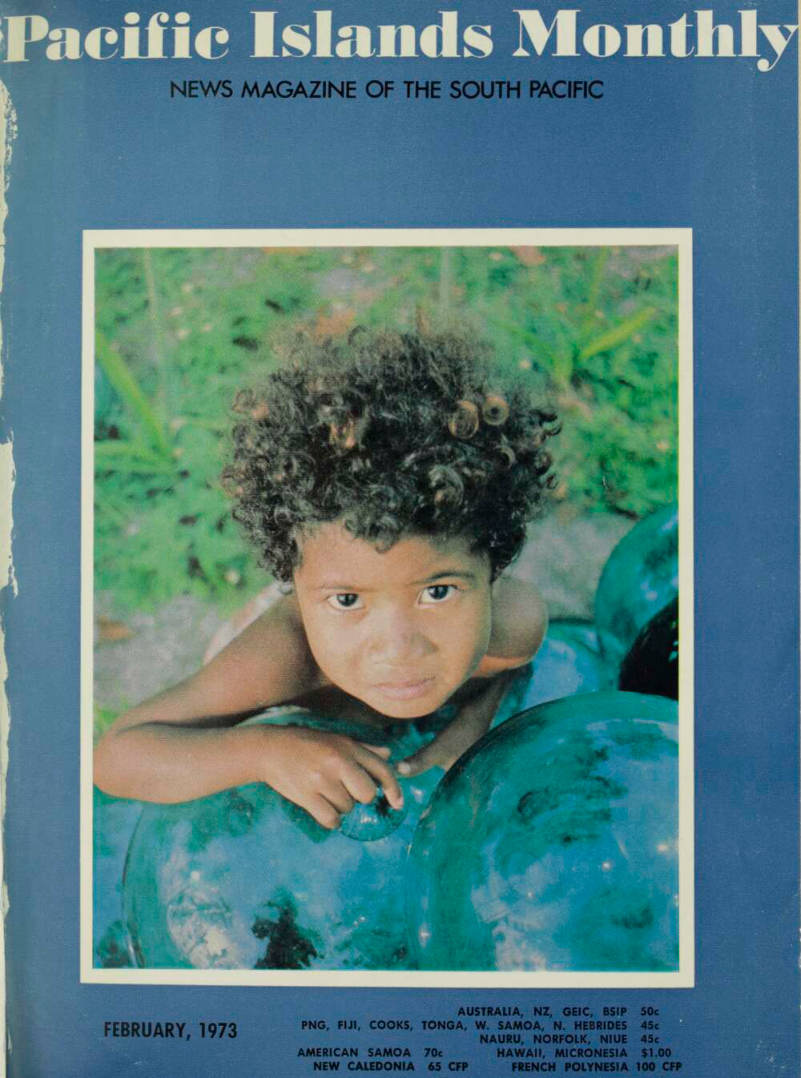 1
1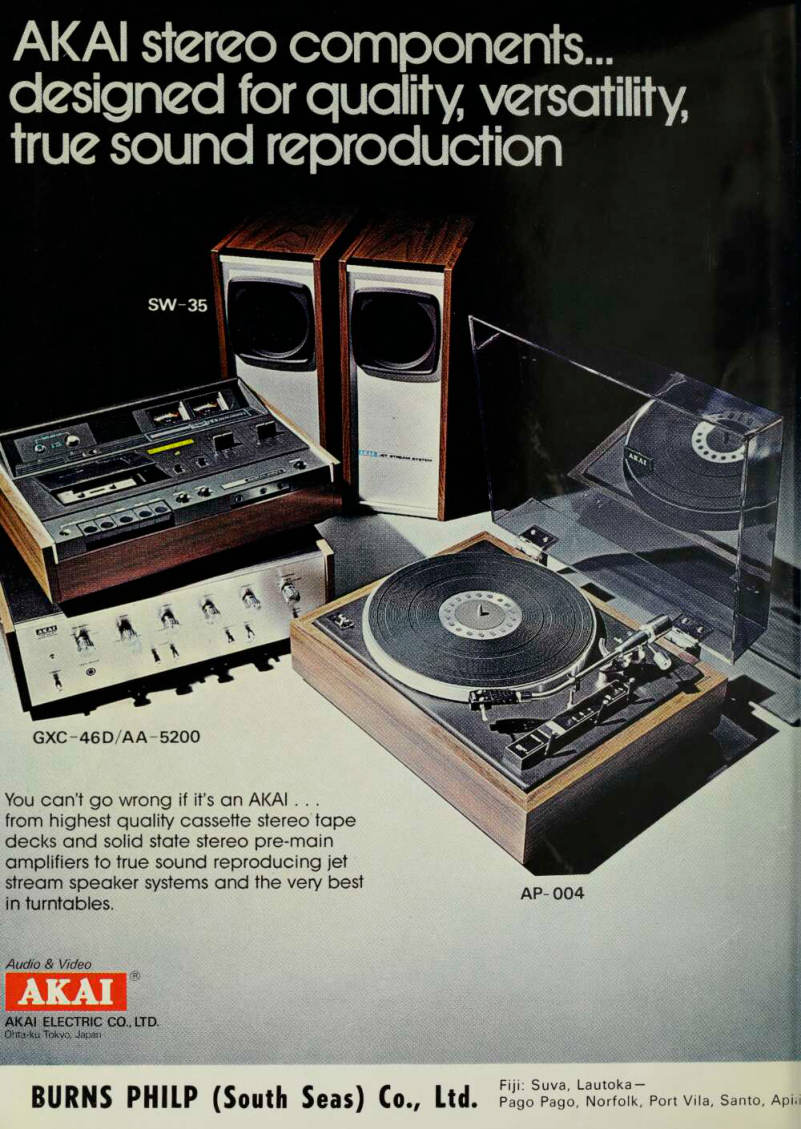 2
2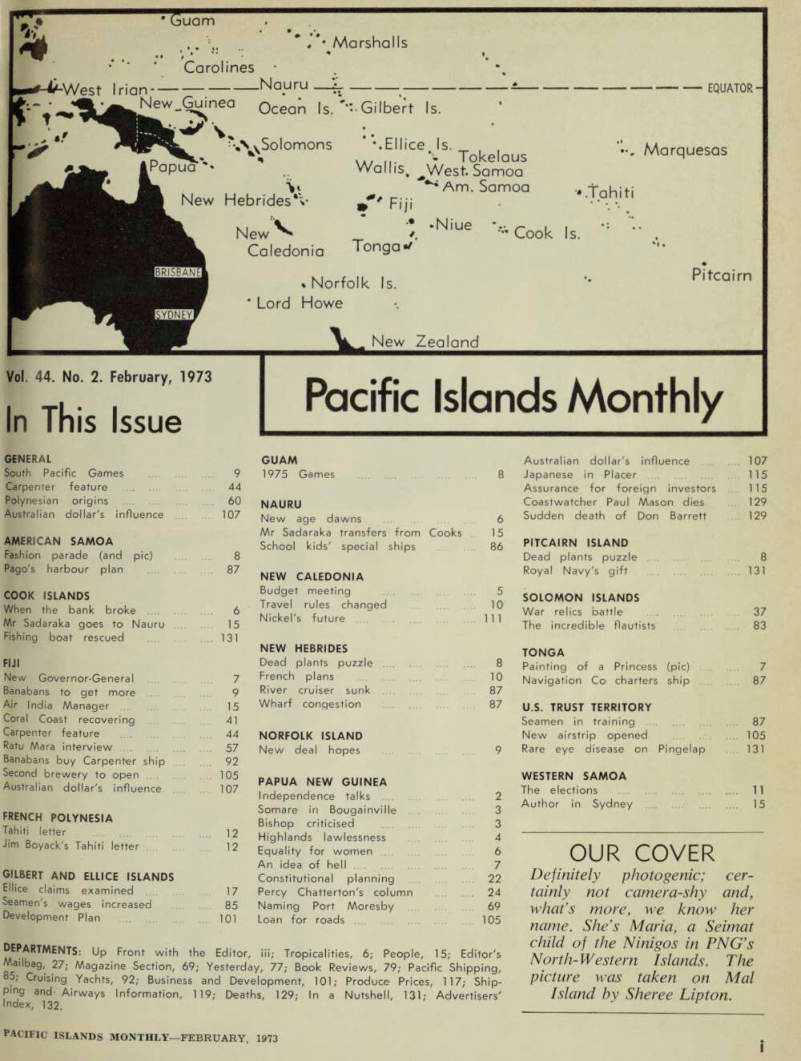 3
3 4
4 5
5 6
6 7
7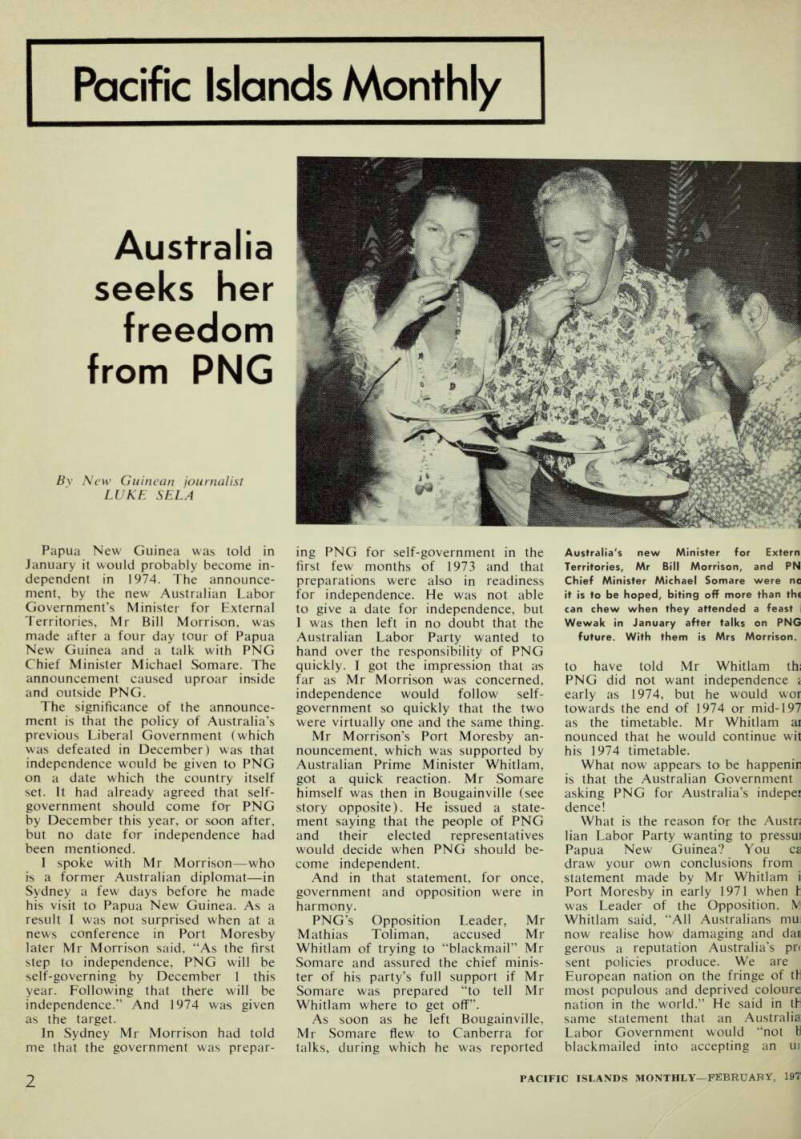 8
8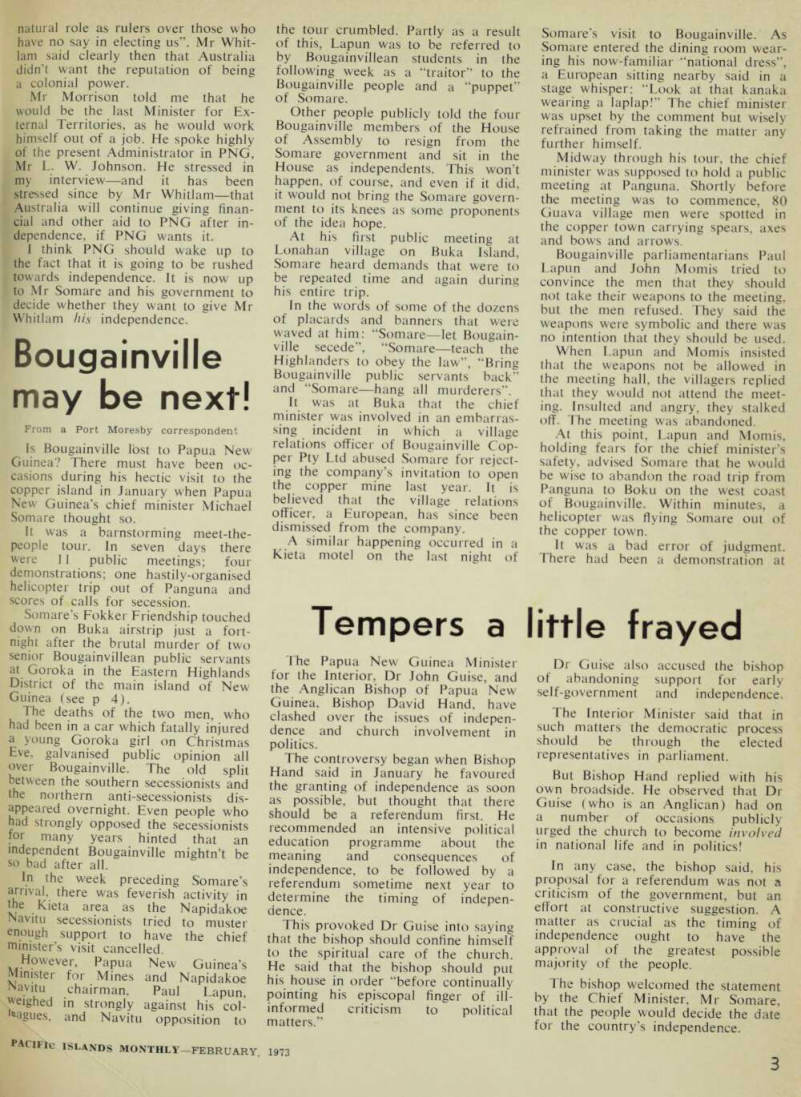 9
9 10
10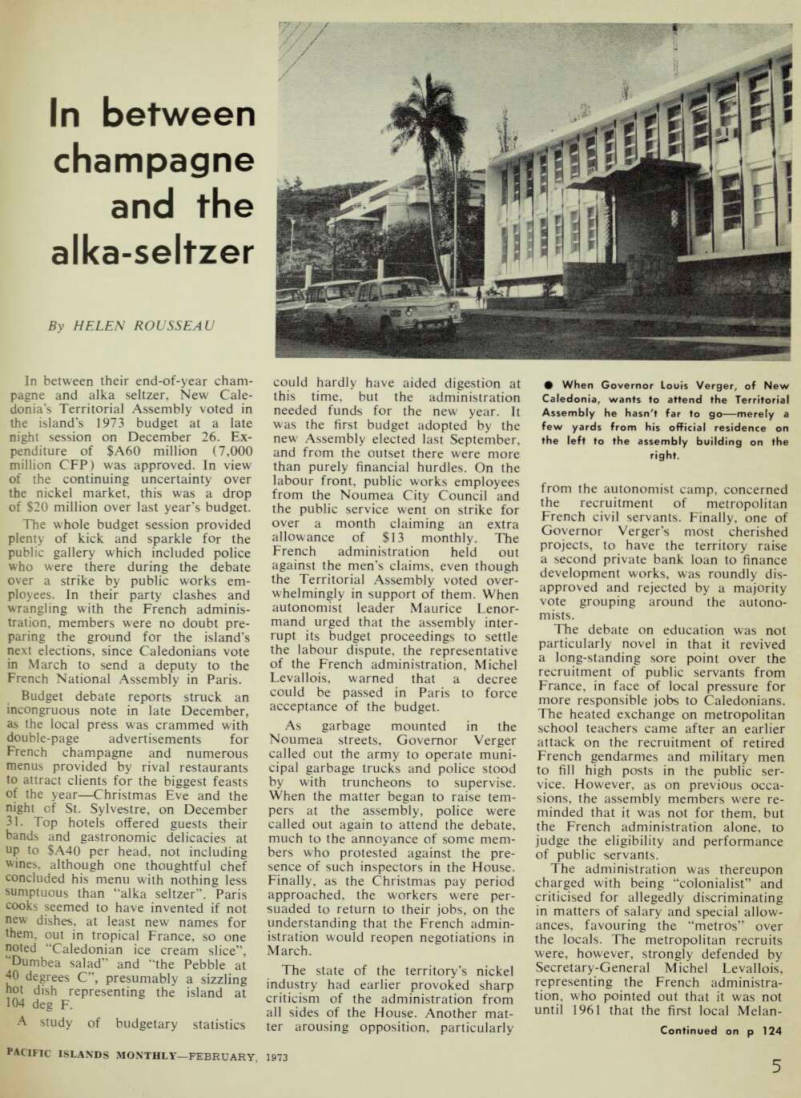 11
11 12
12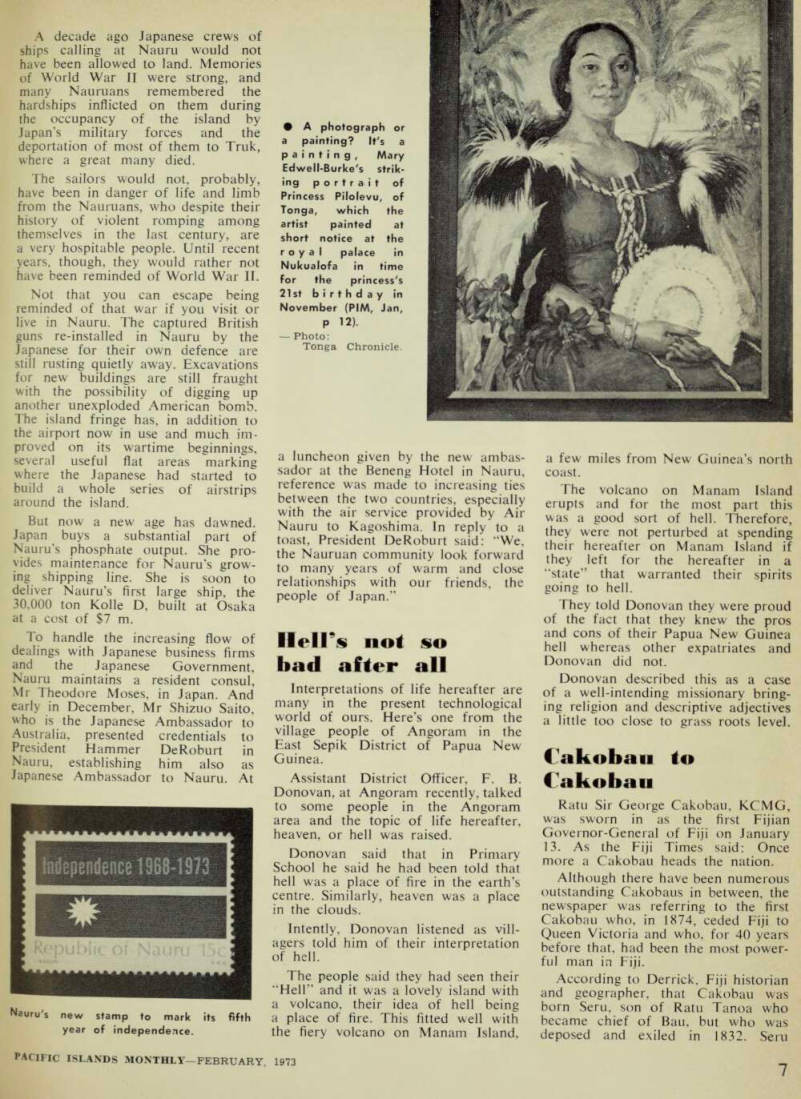 13
13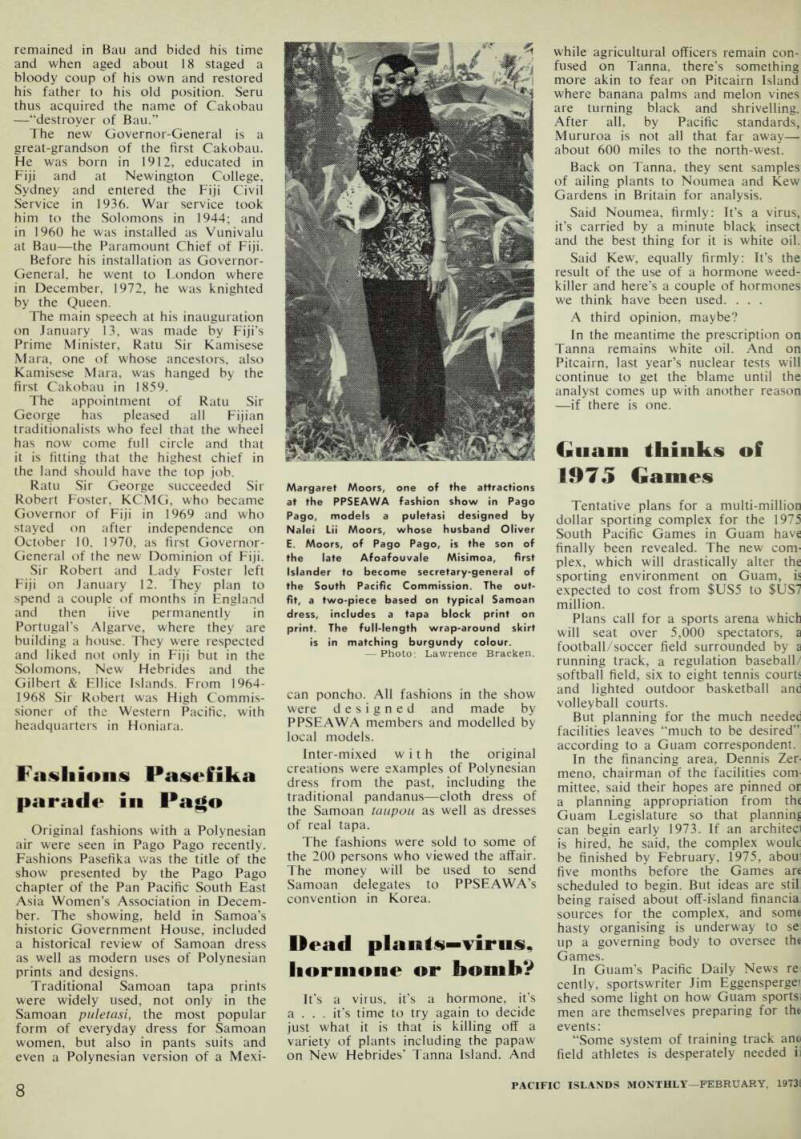 14
14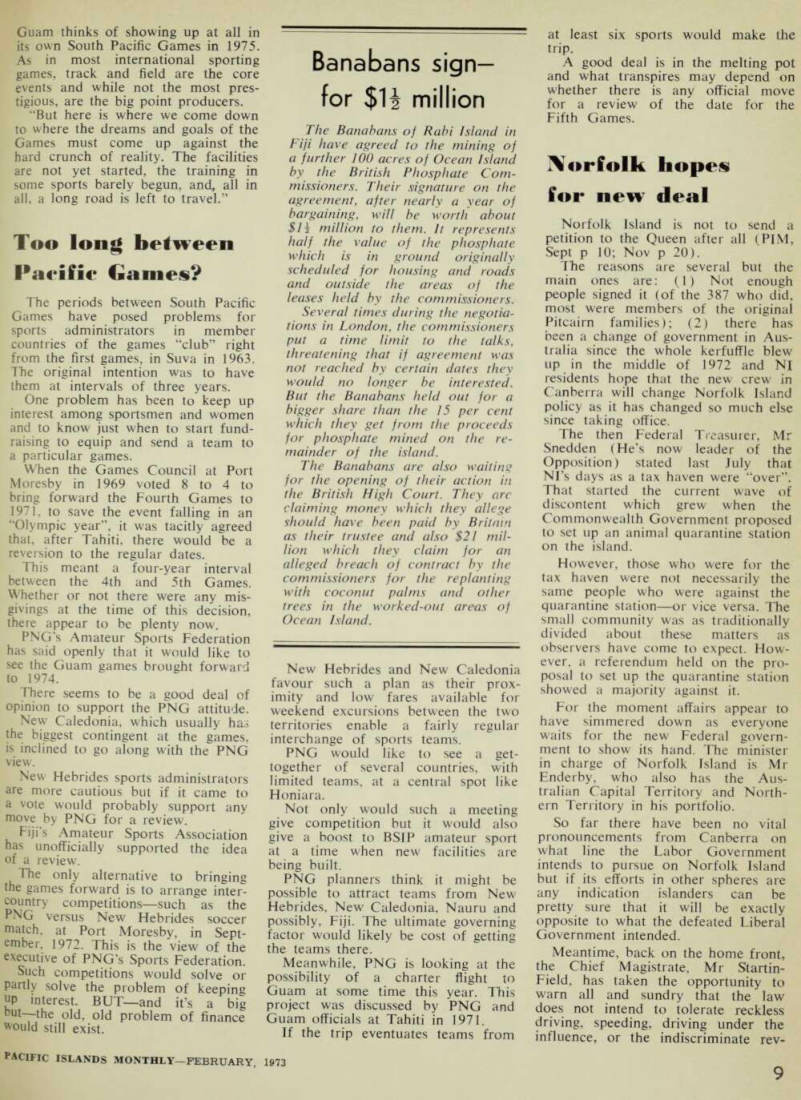 15
15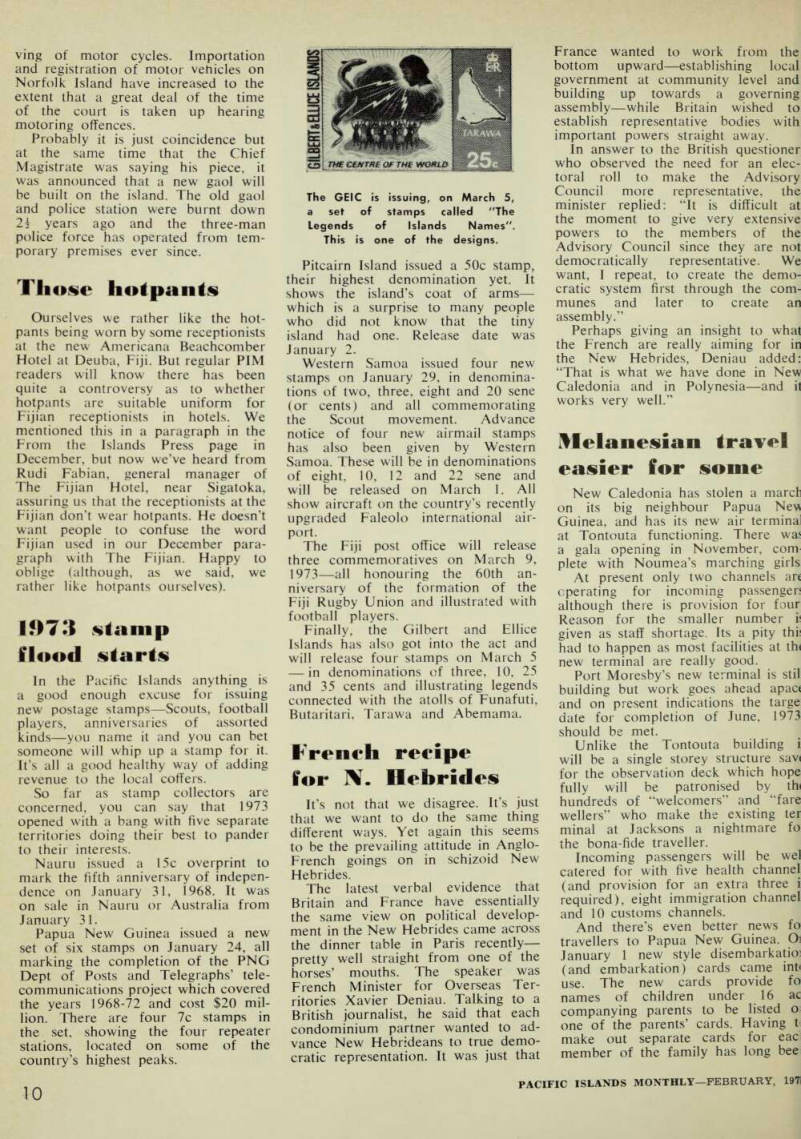 16
16 17
17 18
18 19
19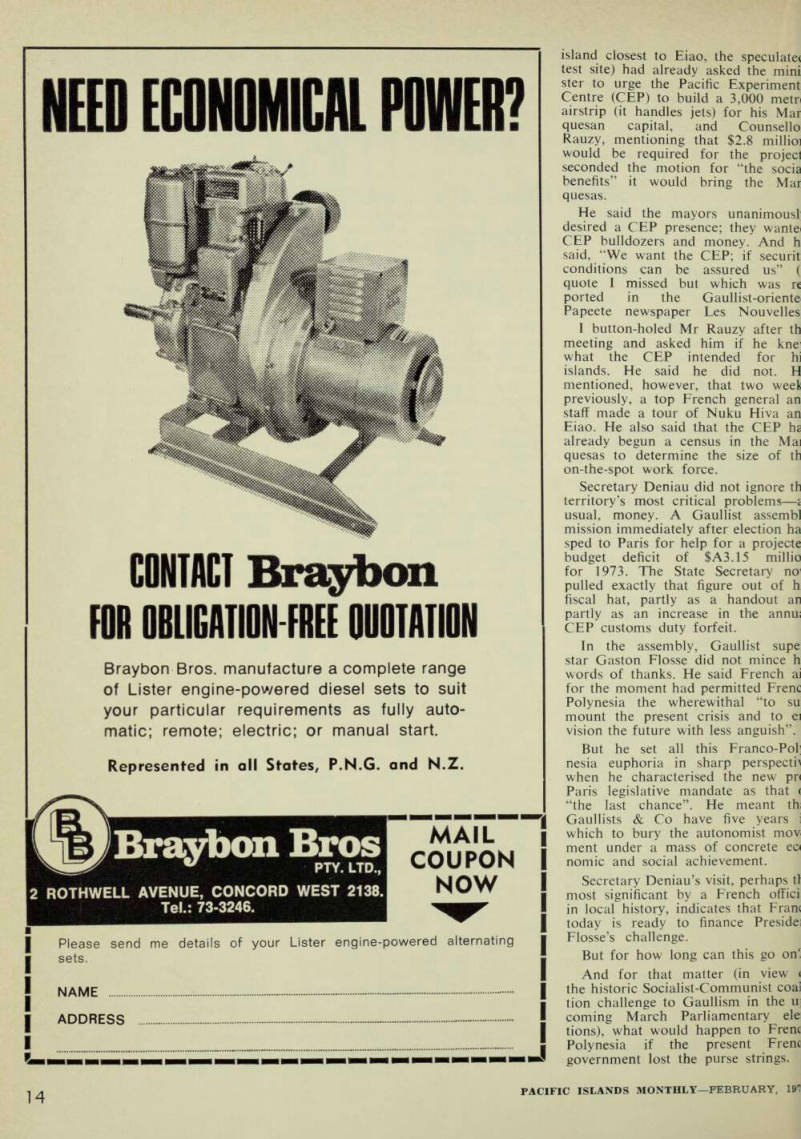 20
20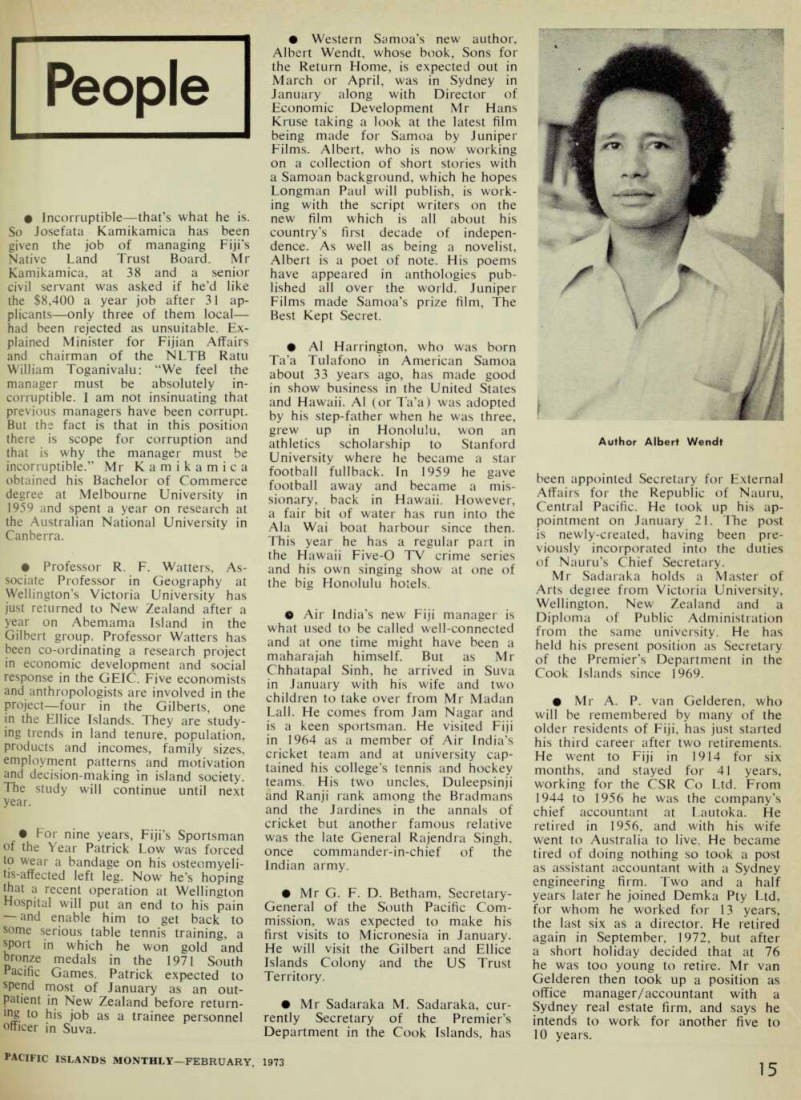 21
21 22
22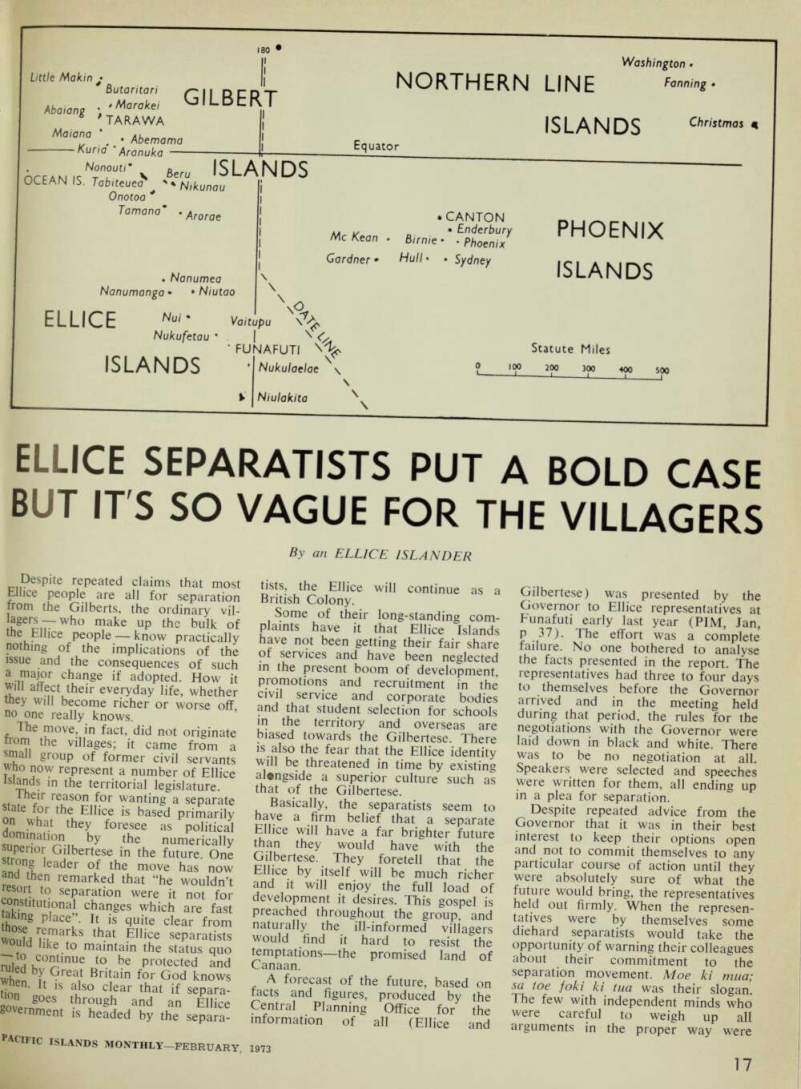 23
23 24
24 25
25 26
26 27
27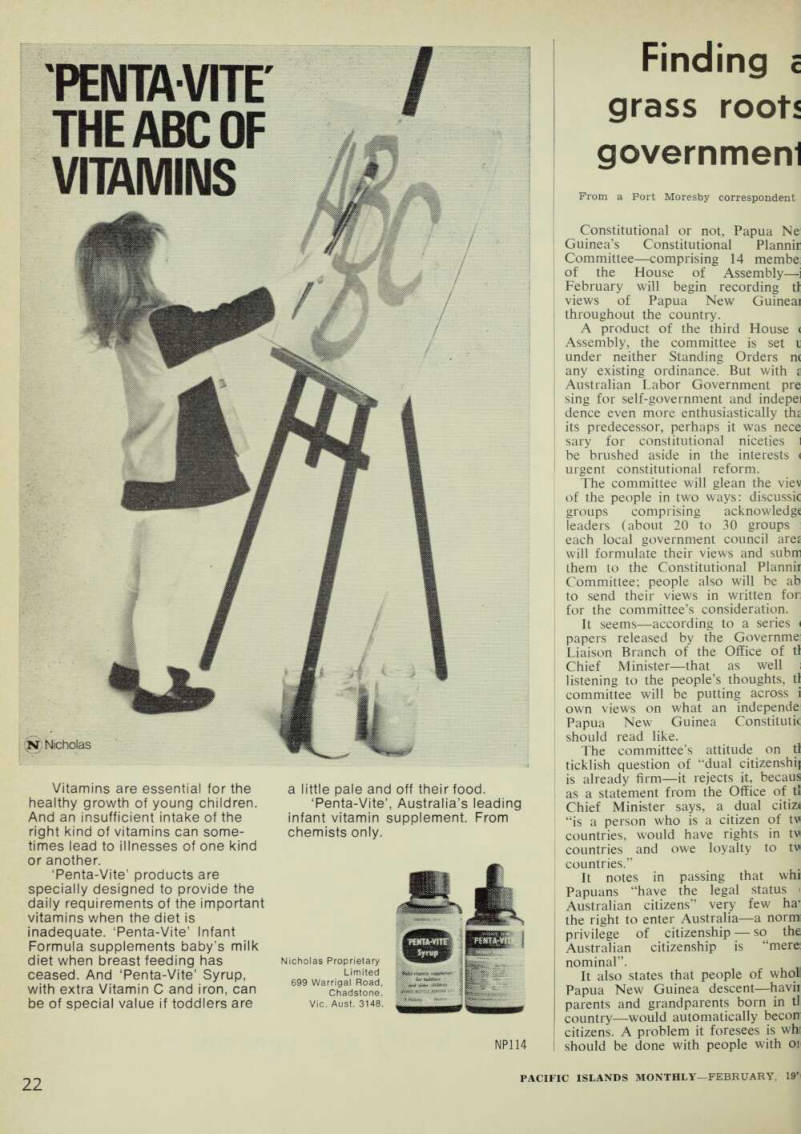 28
28 29
29 30
30 31
31 32
32 33
33 34
34 35
35 36
36 37
37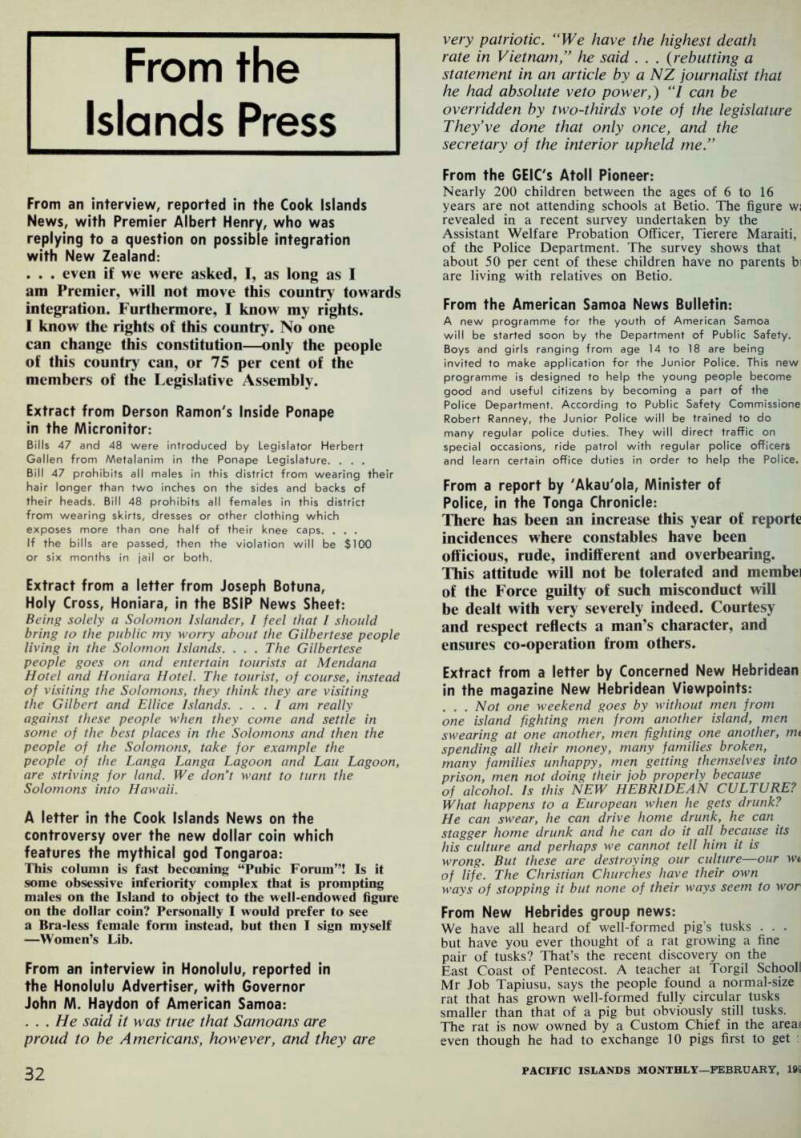 38
38 39
39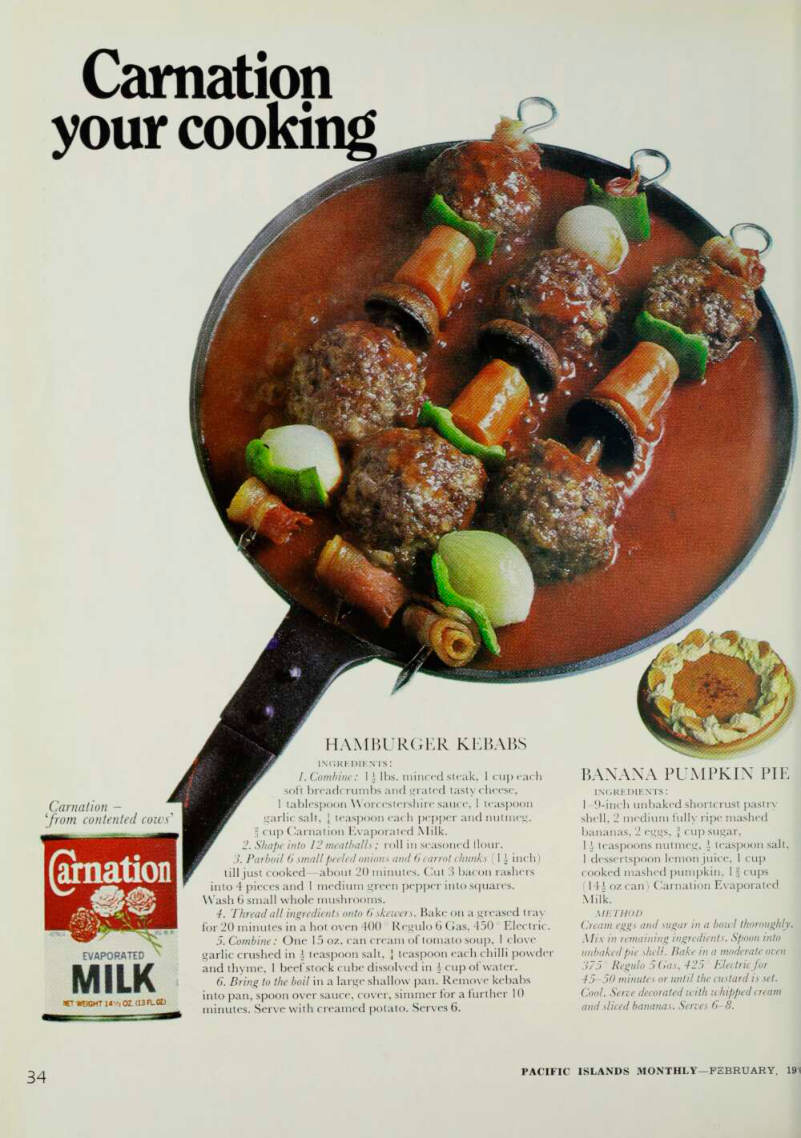 40
40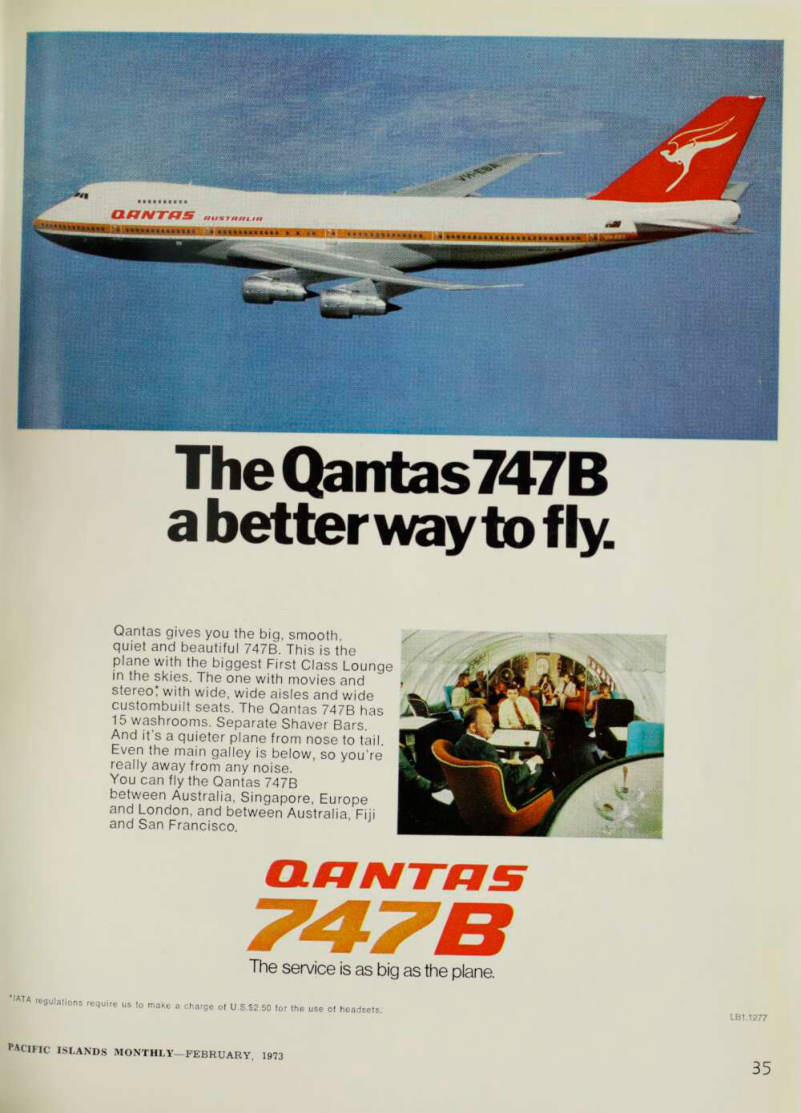 41
41 42
42 43
43 44
44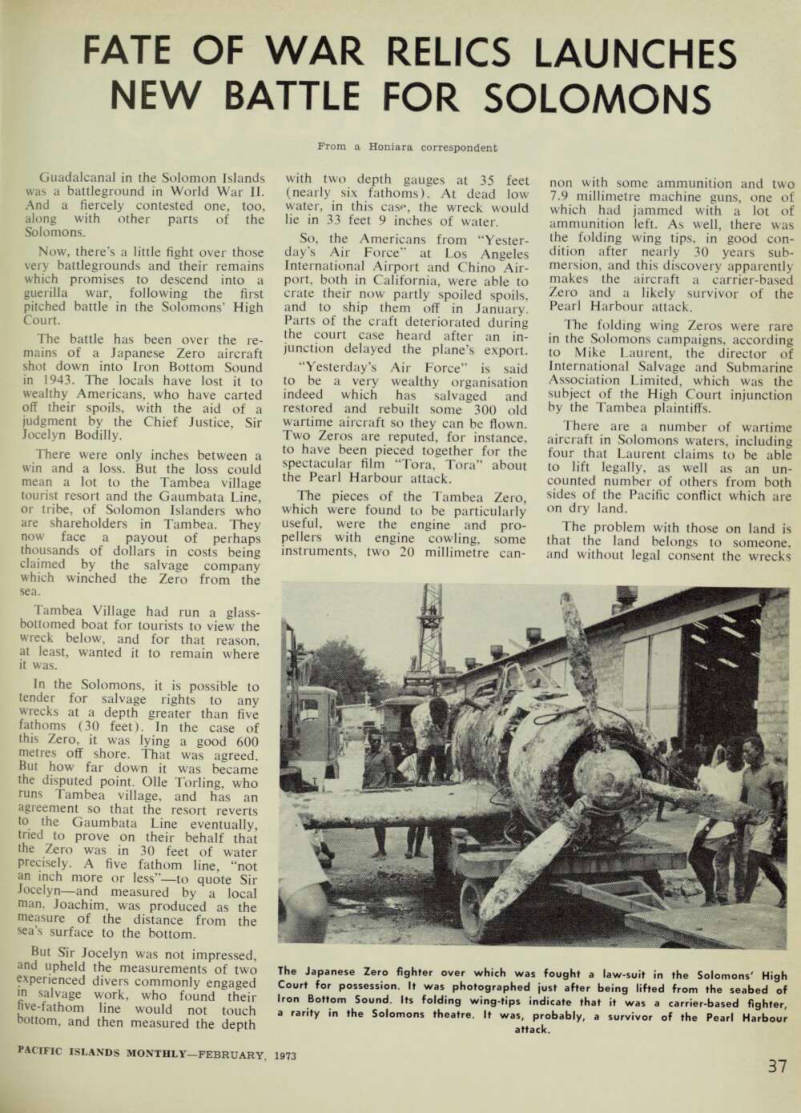 45
45 46
46 47
47 48
48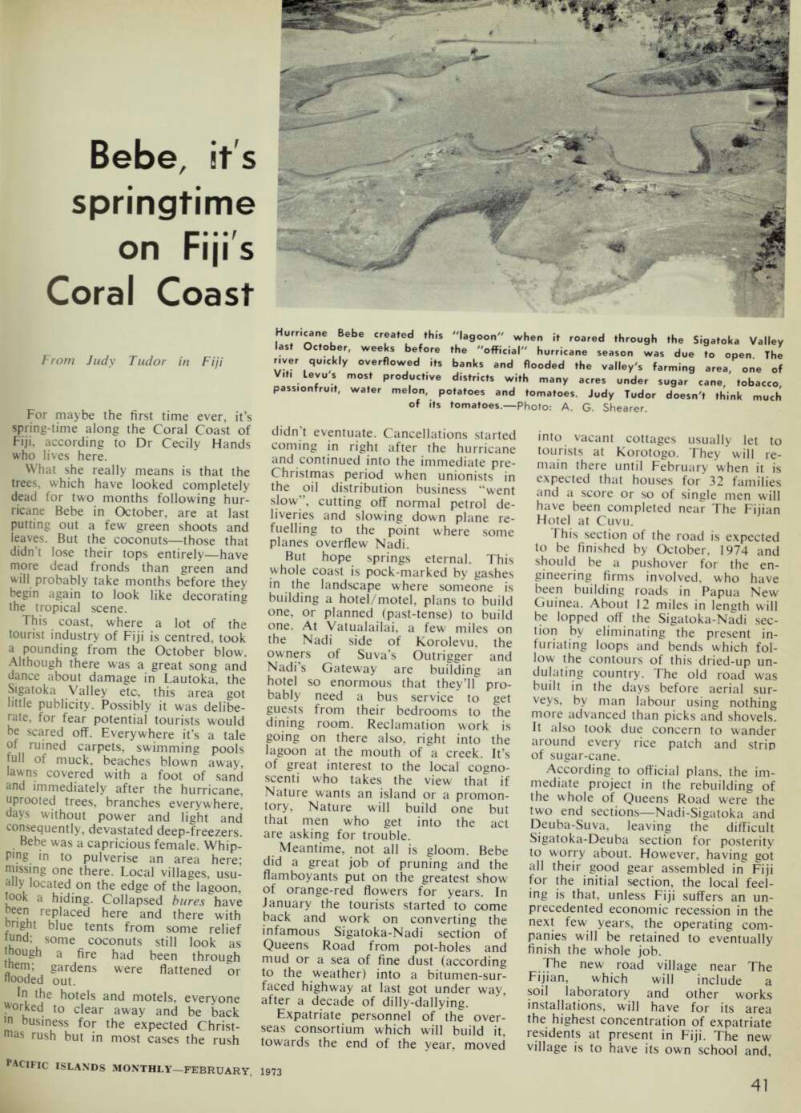 49
49 50
50 51
51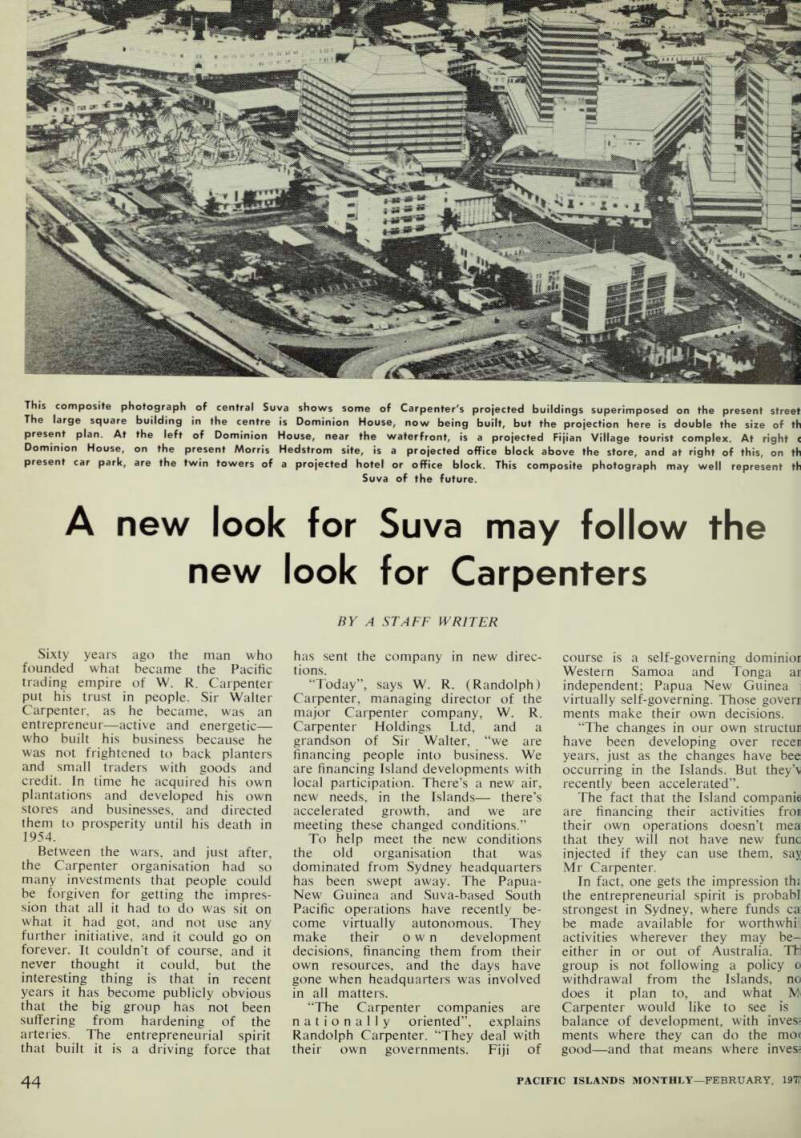 52
52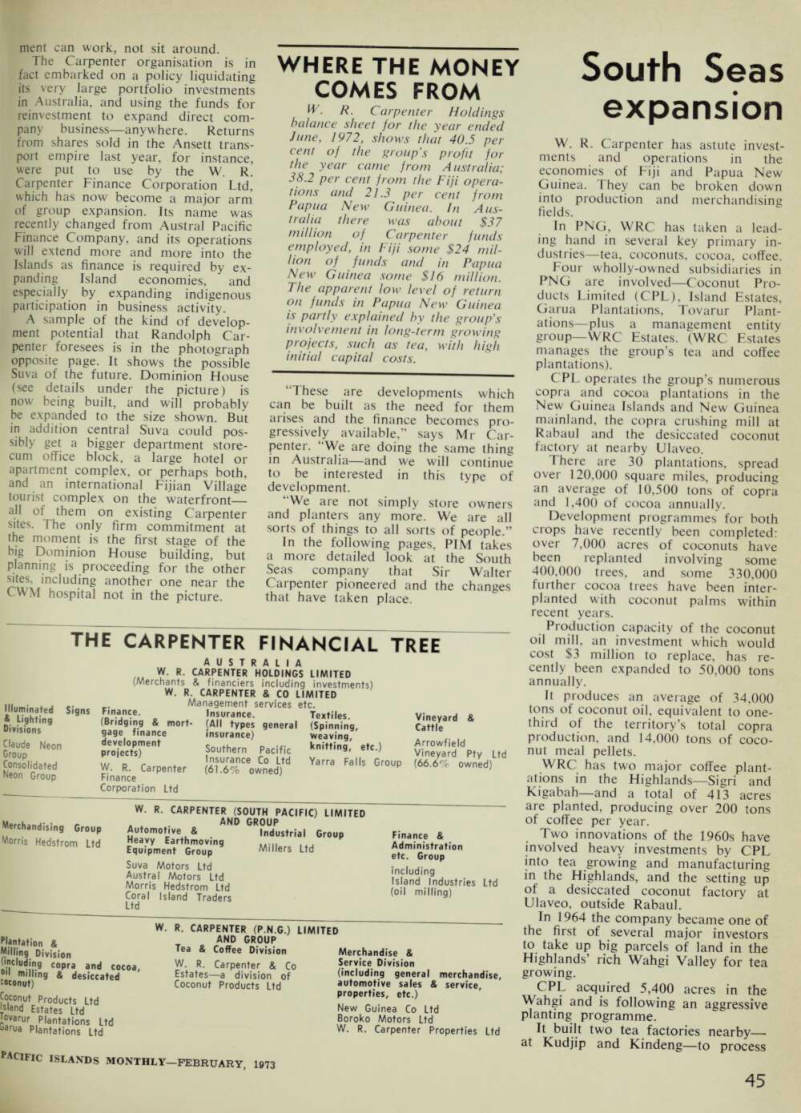 53
53 54
54 55
55 56
56 57
57 58
58 59
59 60
60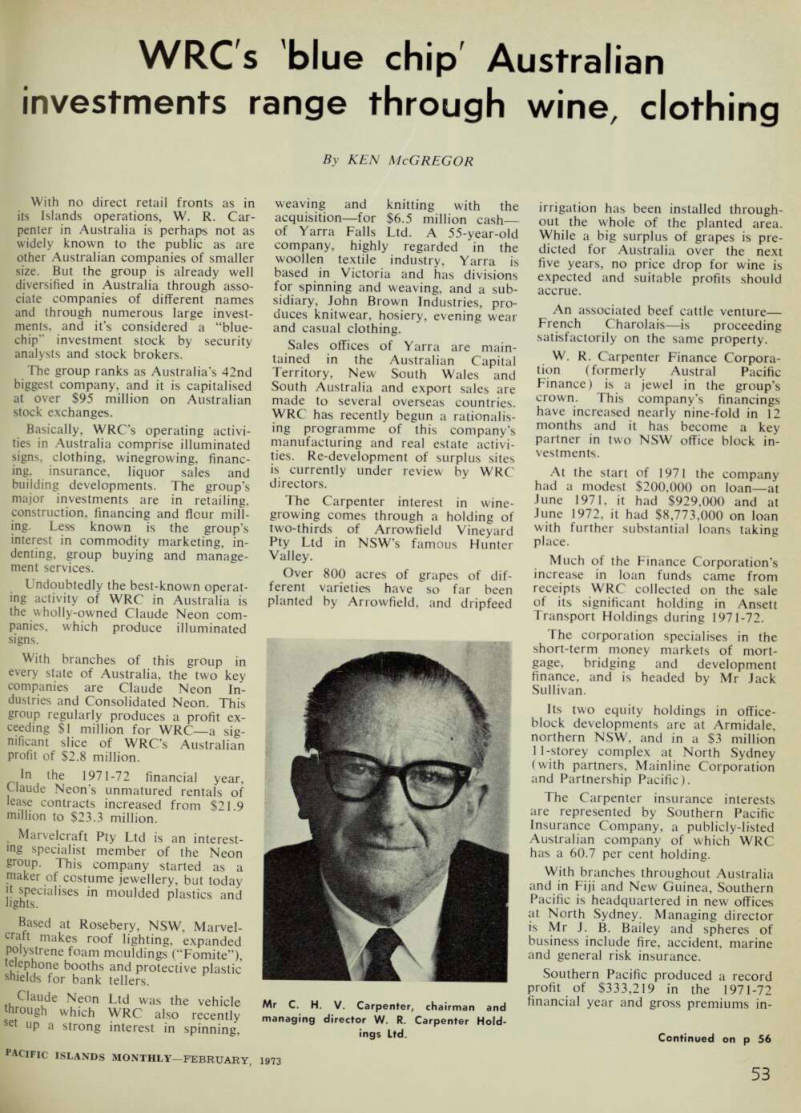 61
61 62
62 63
63 64
64 65
65 66
66 67
67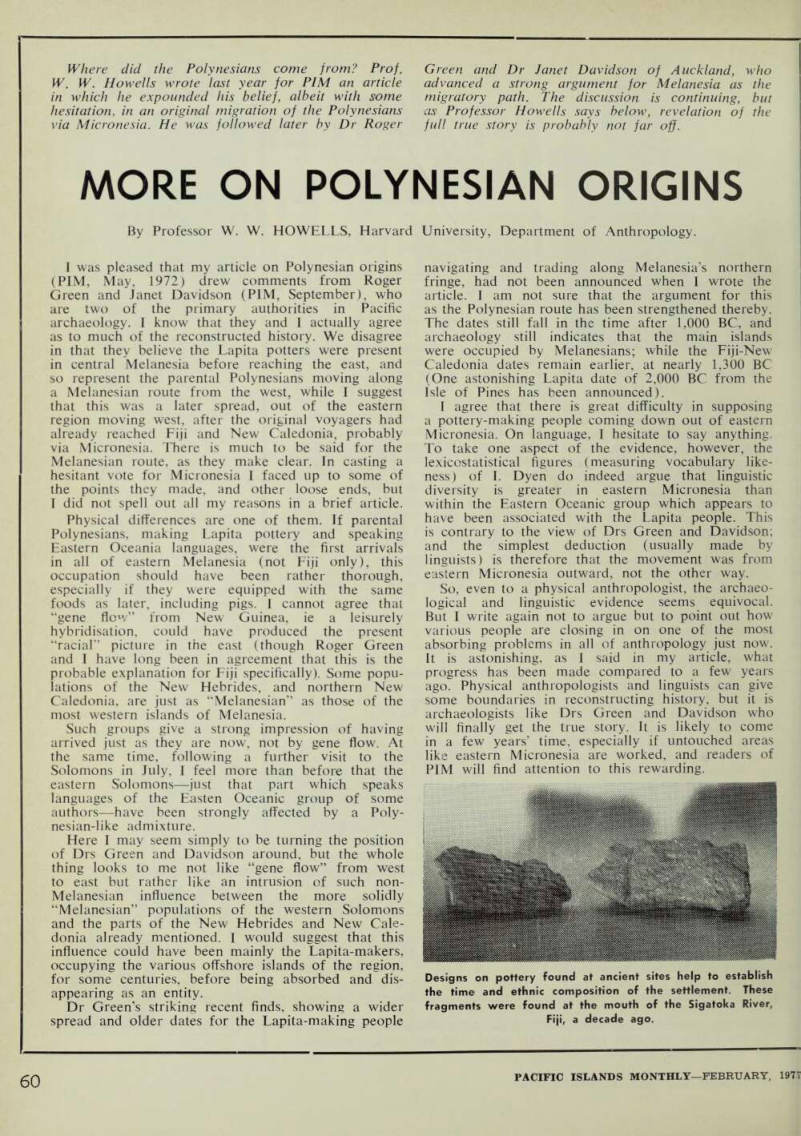 68
68 69
69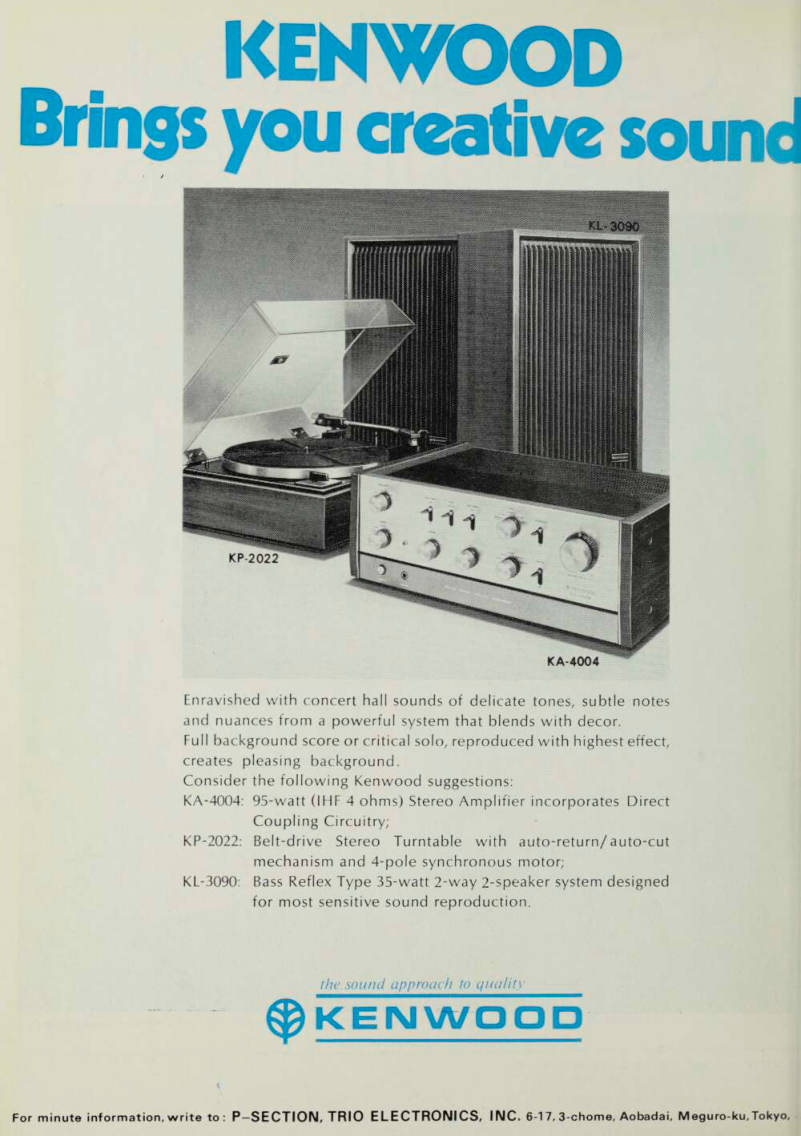 70
70 71
71 72
72 73
73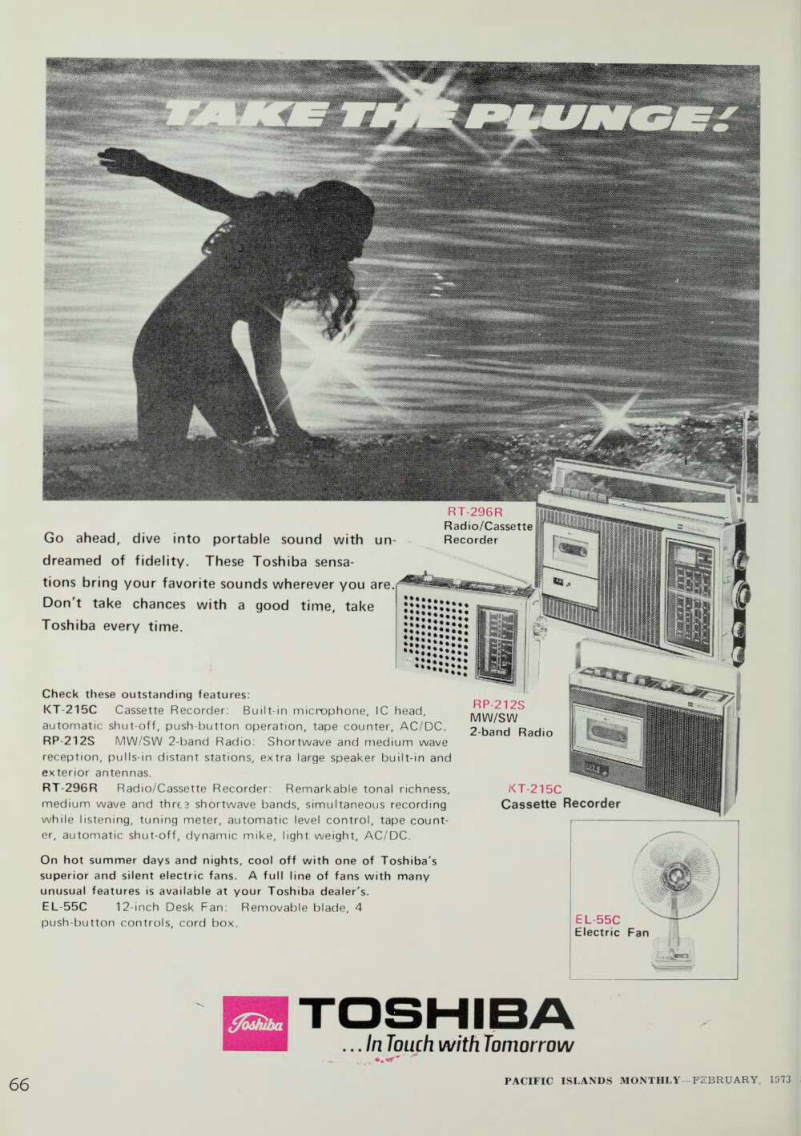 74
74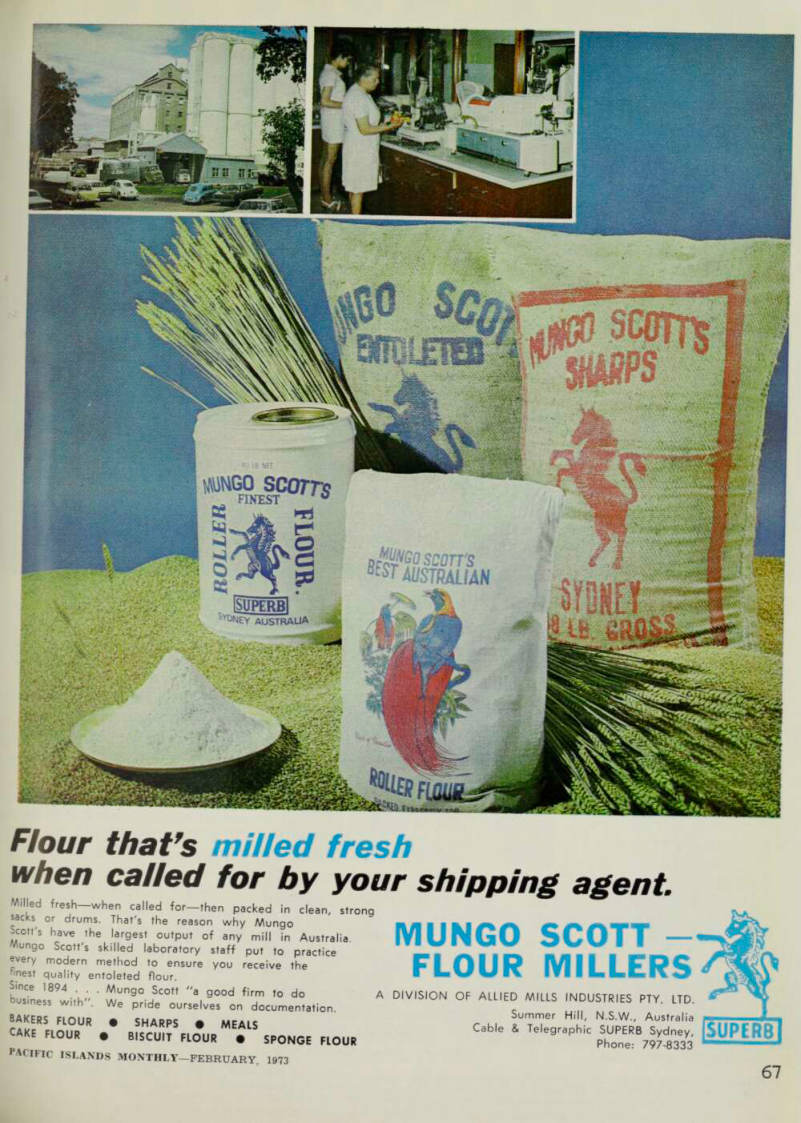 75
75 76
76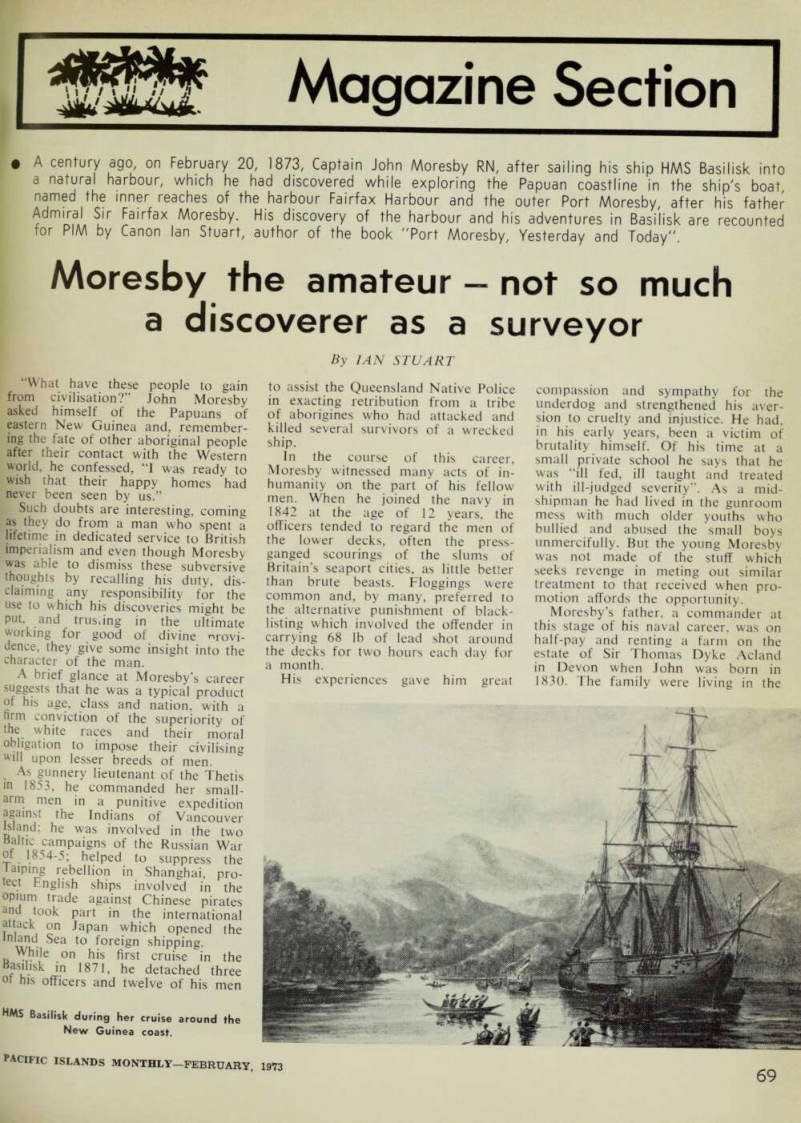 77
77 78
78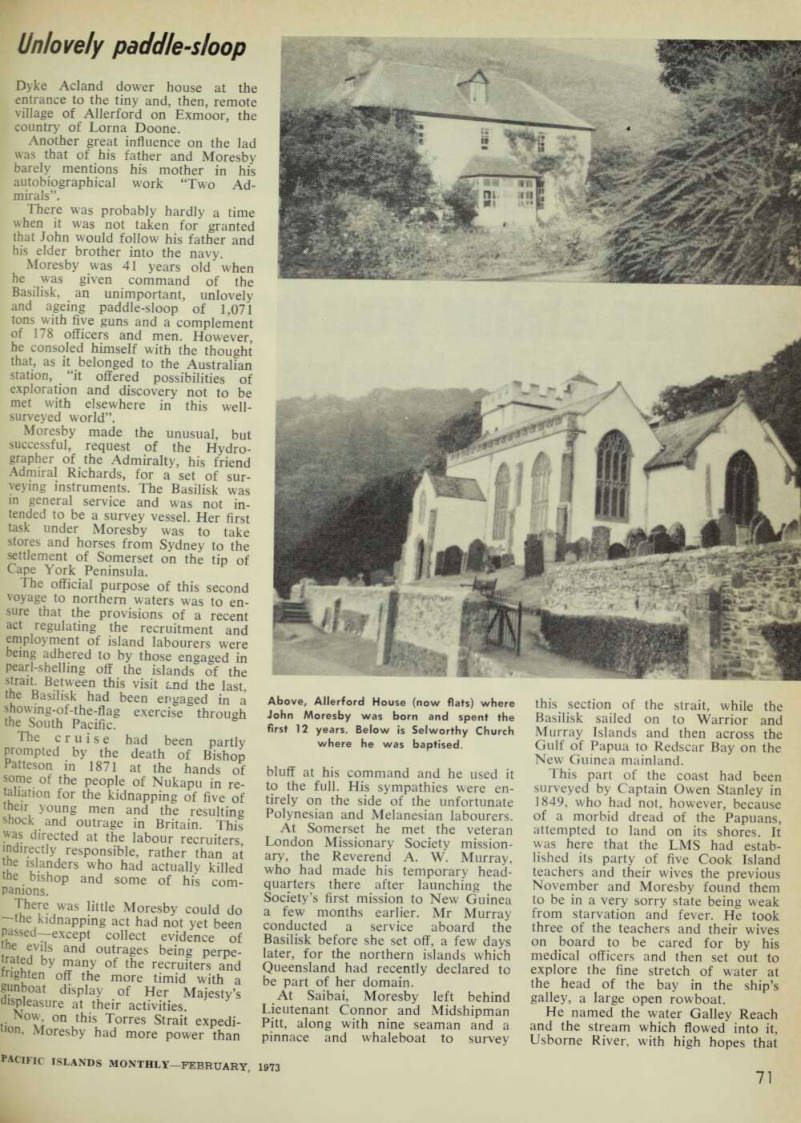 79
79 80
80 81
81 82
82 83
83 84
84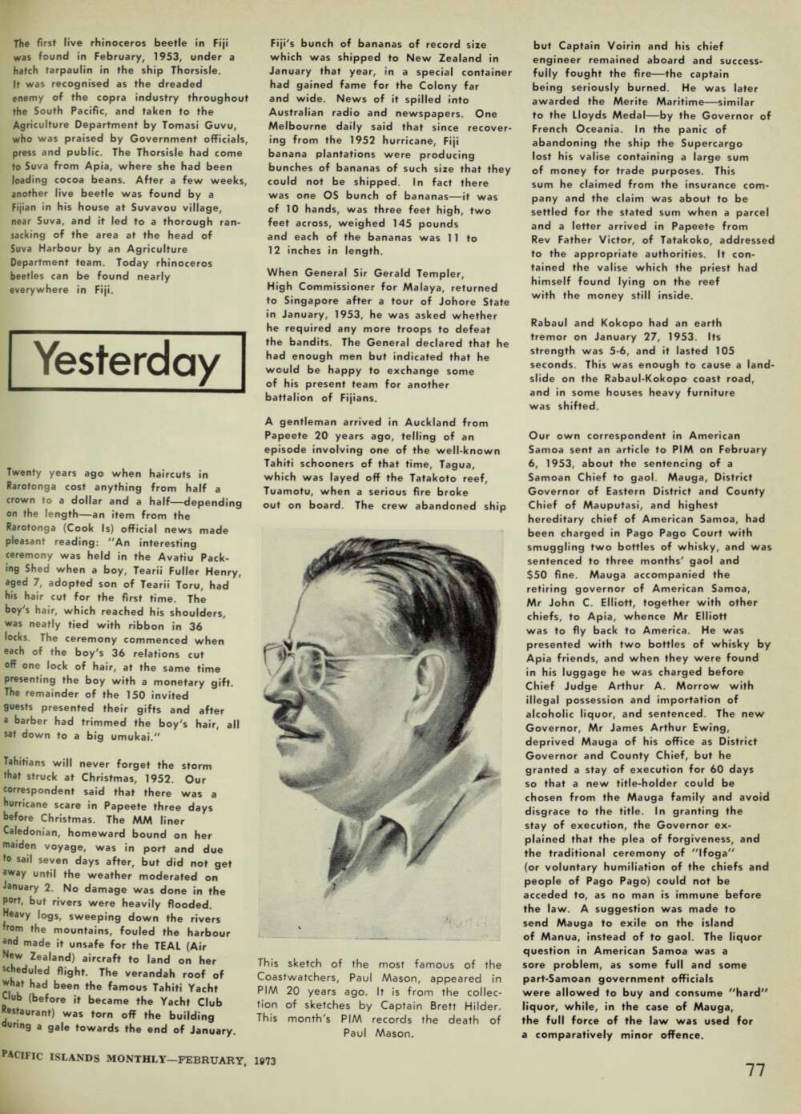 85
85 86
86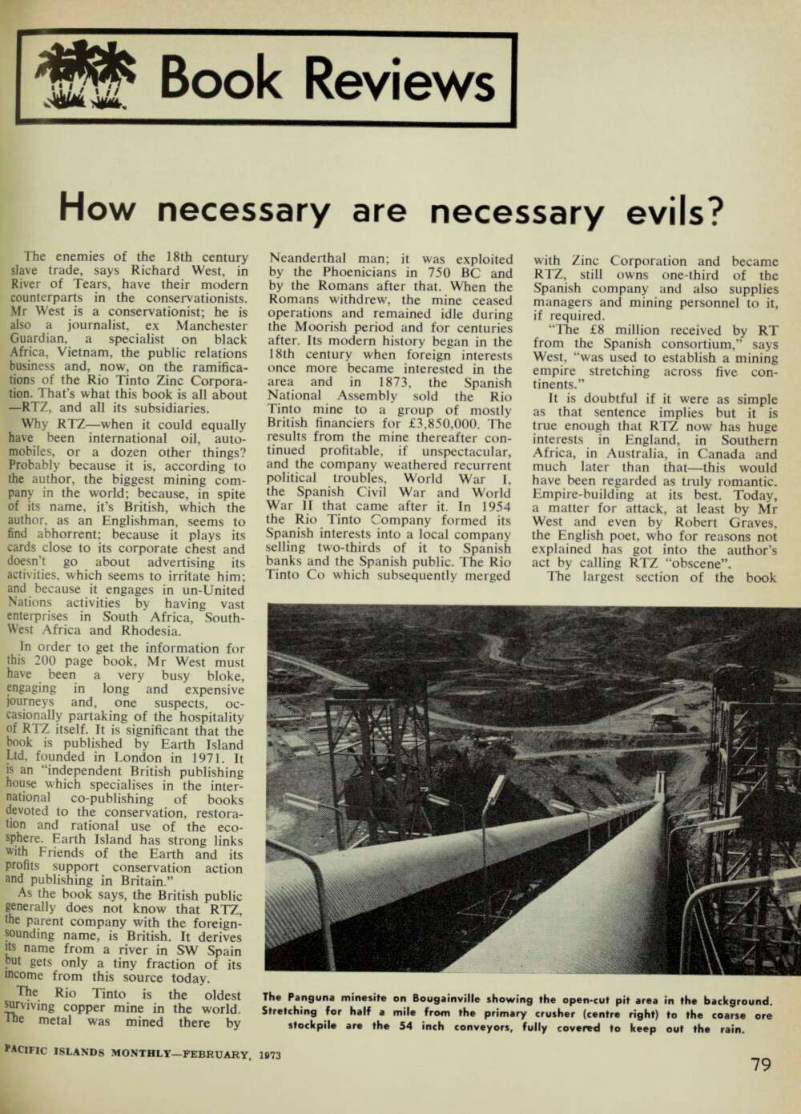 87
87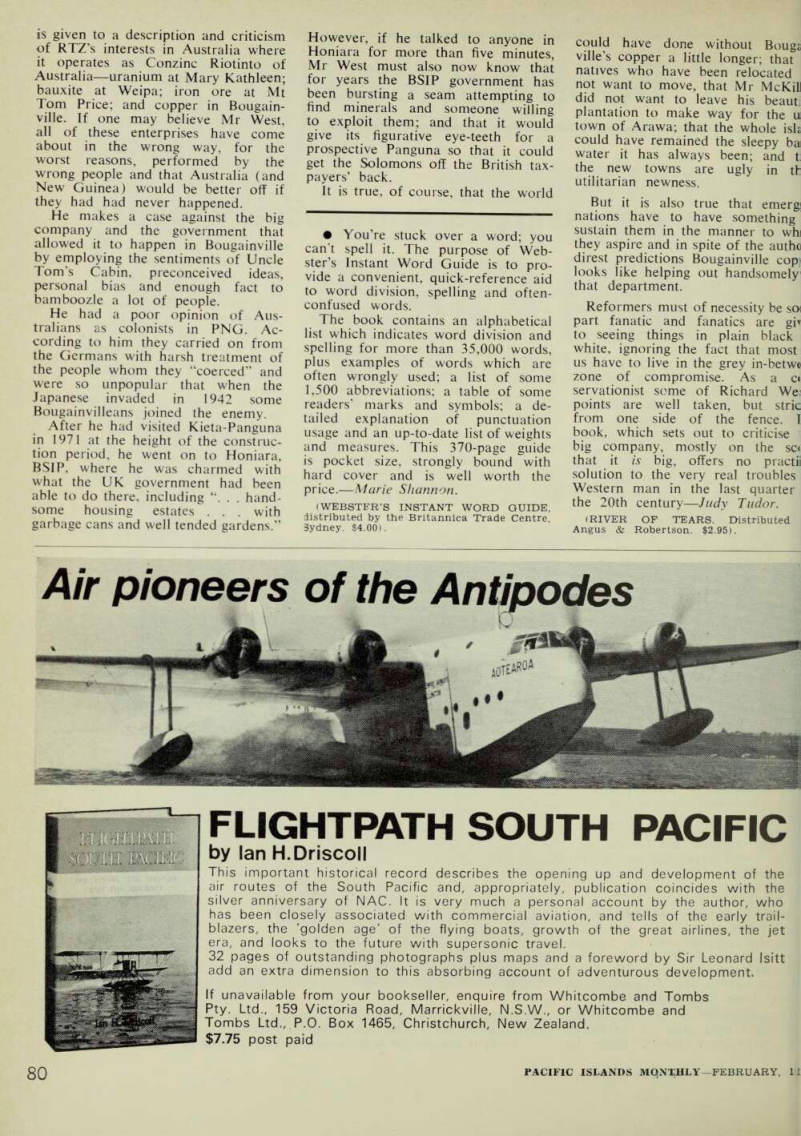 88
88 89
89 90
90 91
91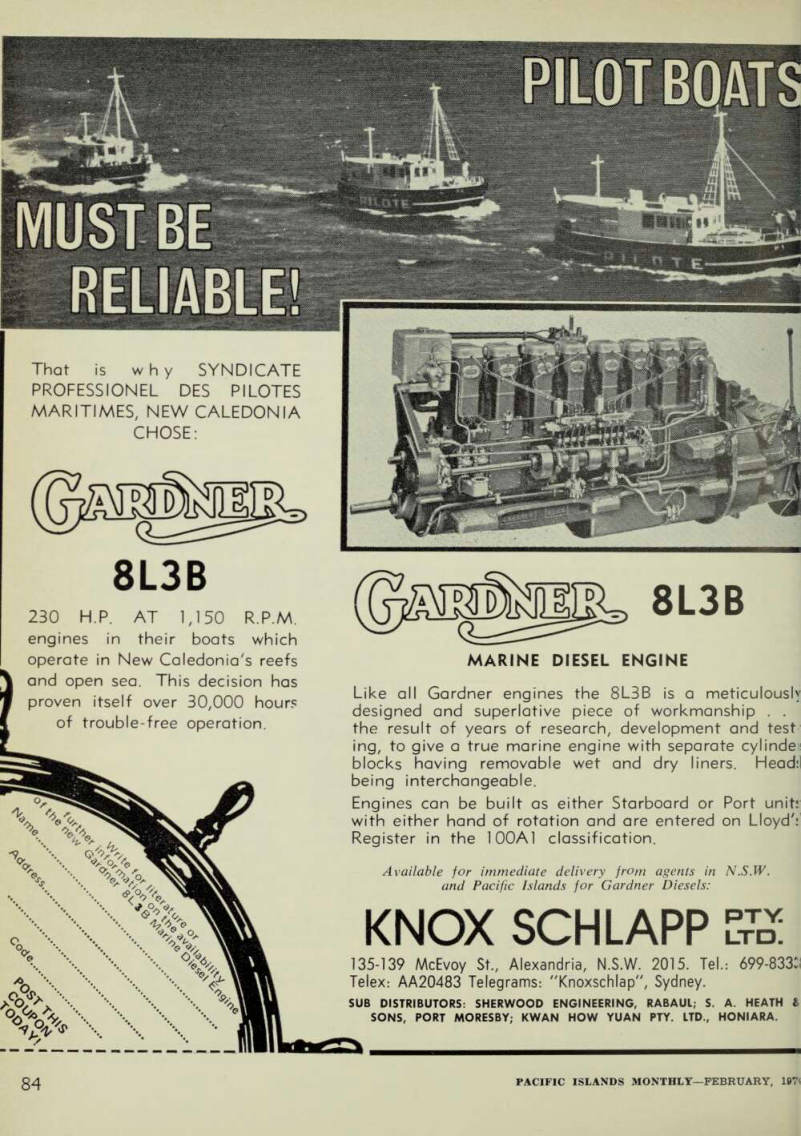 92
92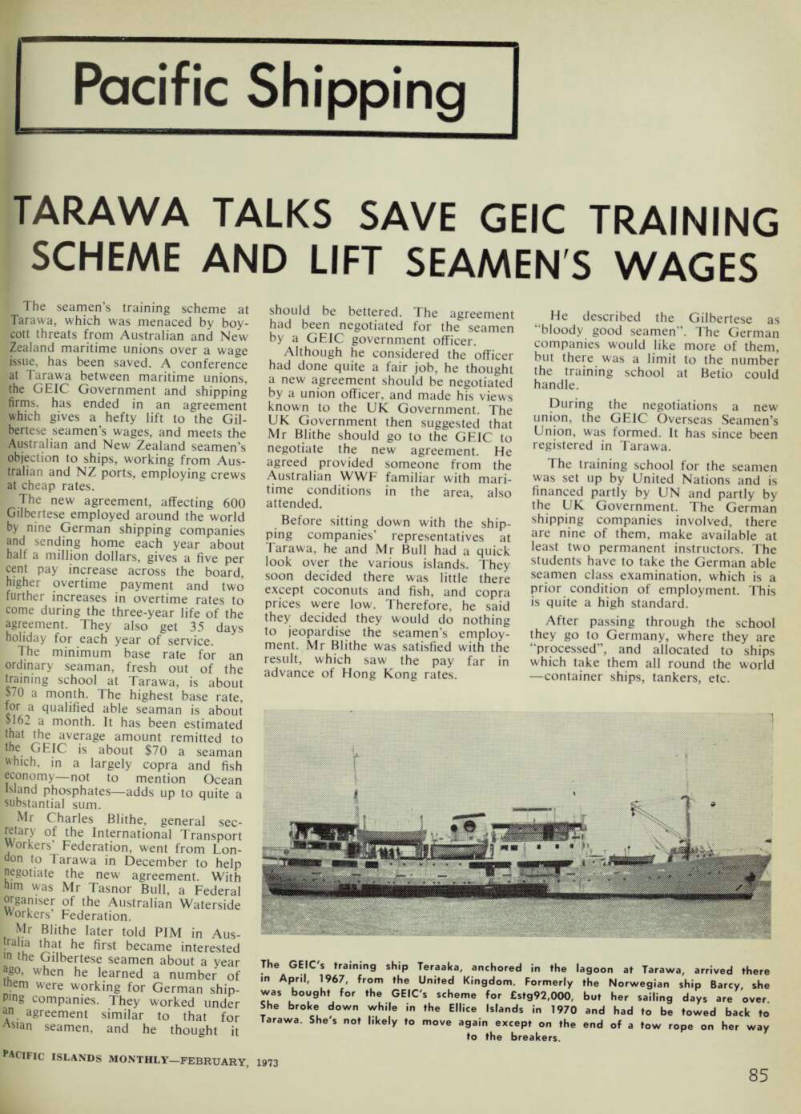 93
93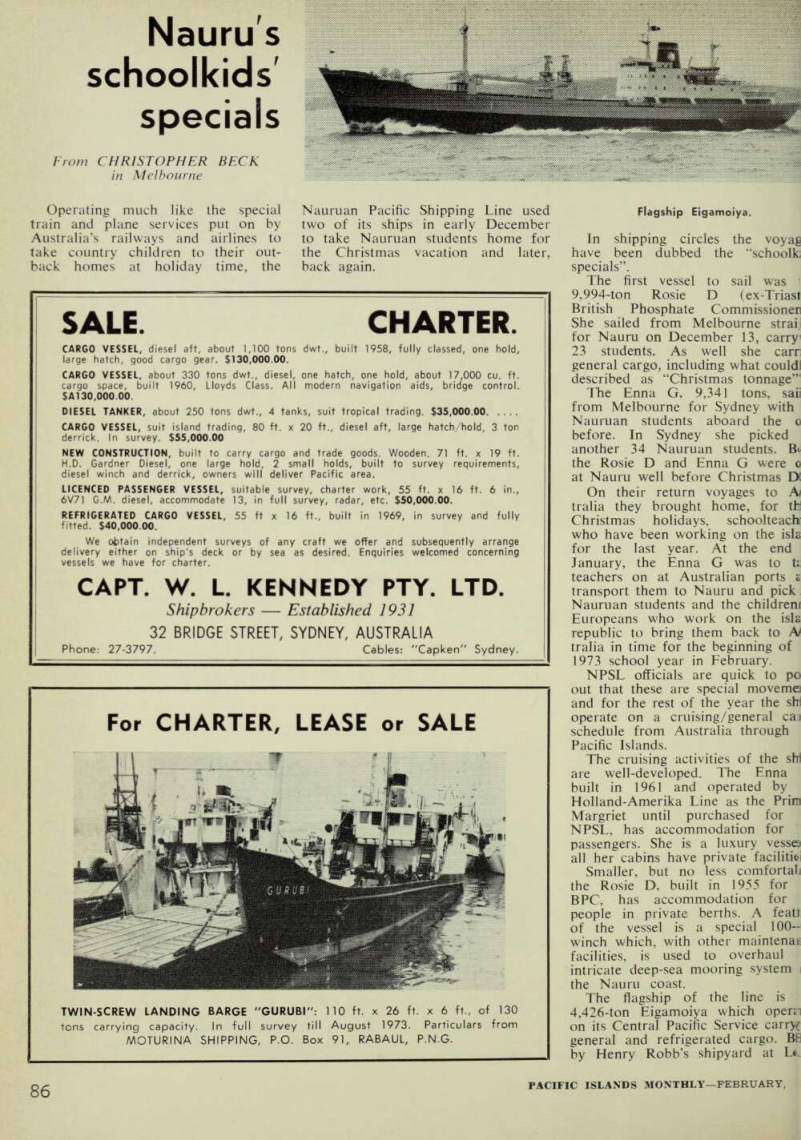 94
94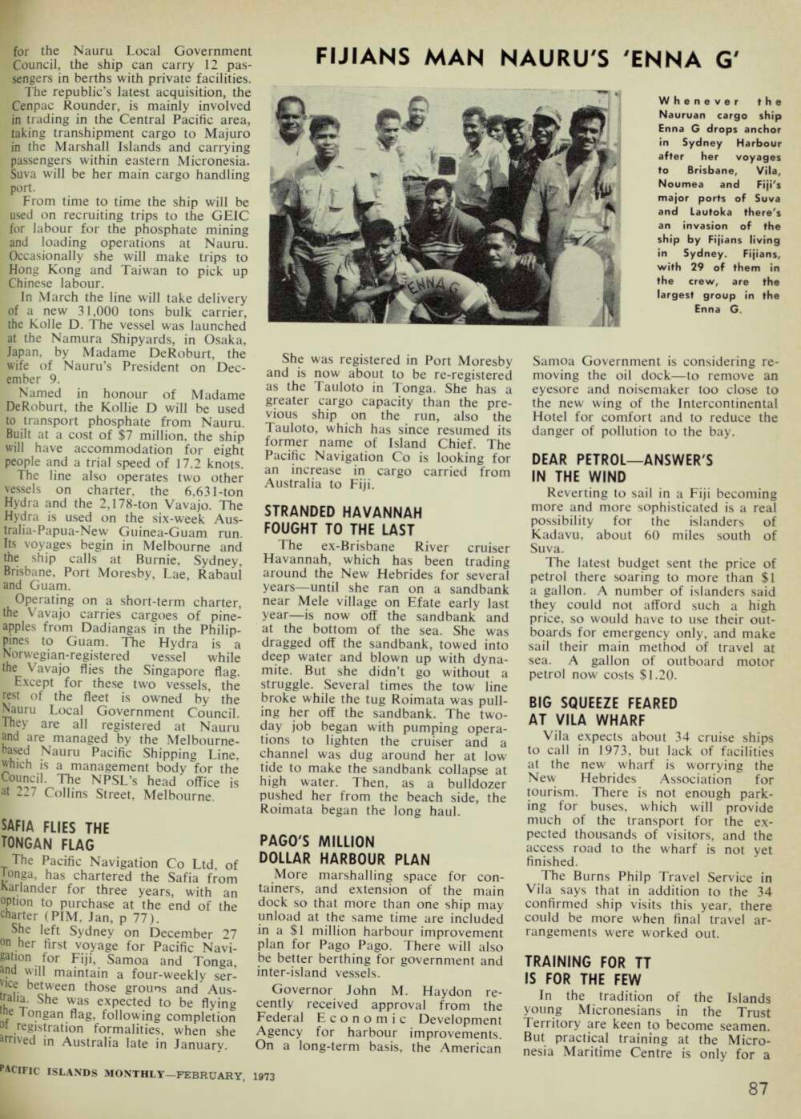 95
95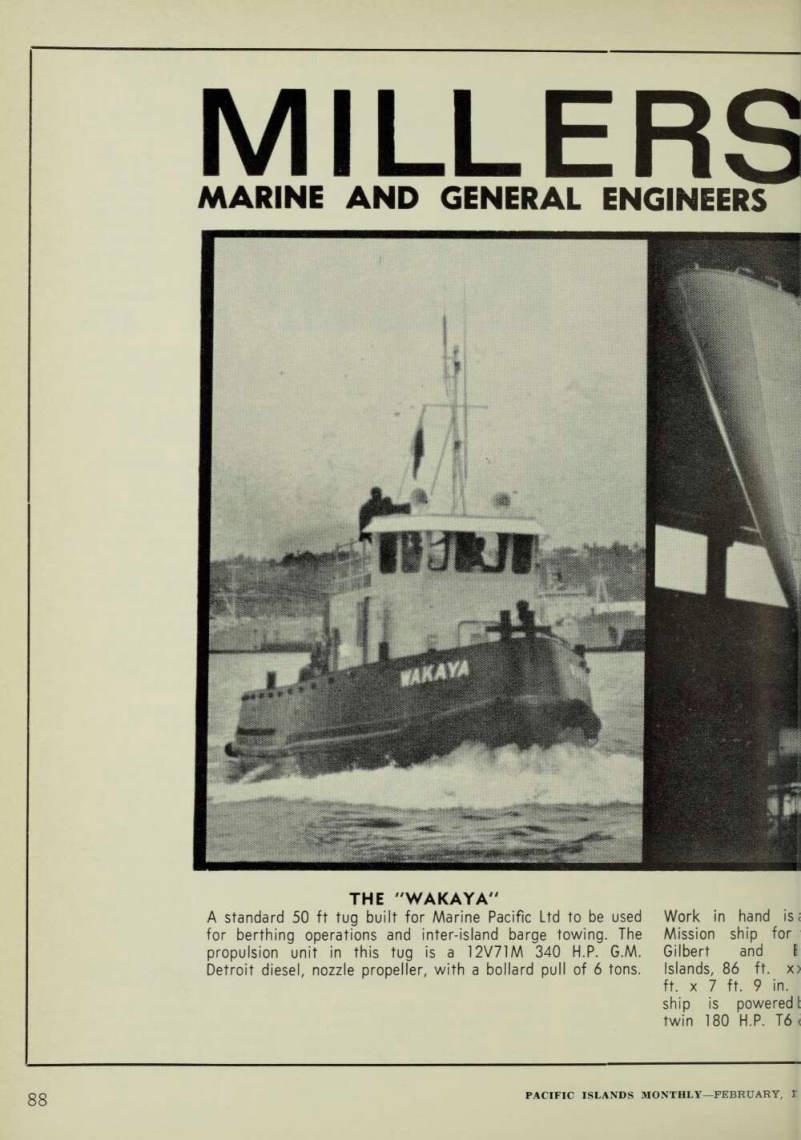 96
96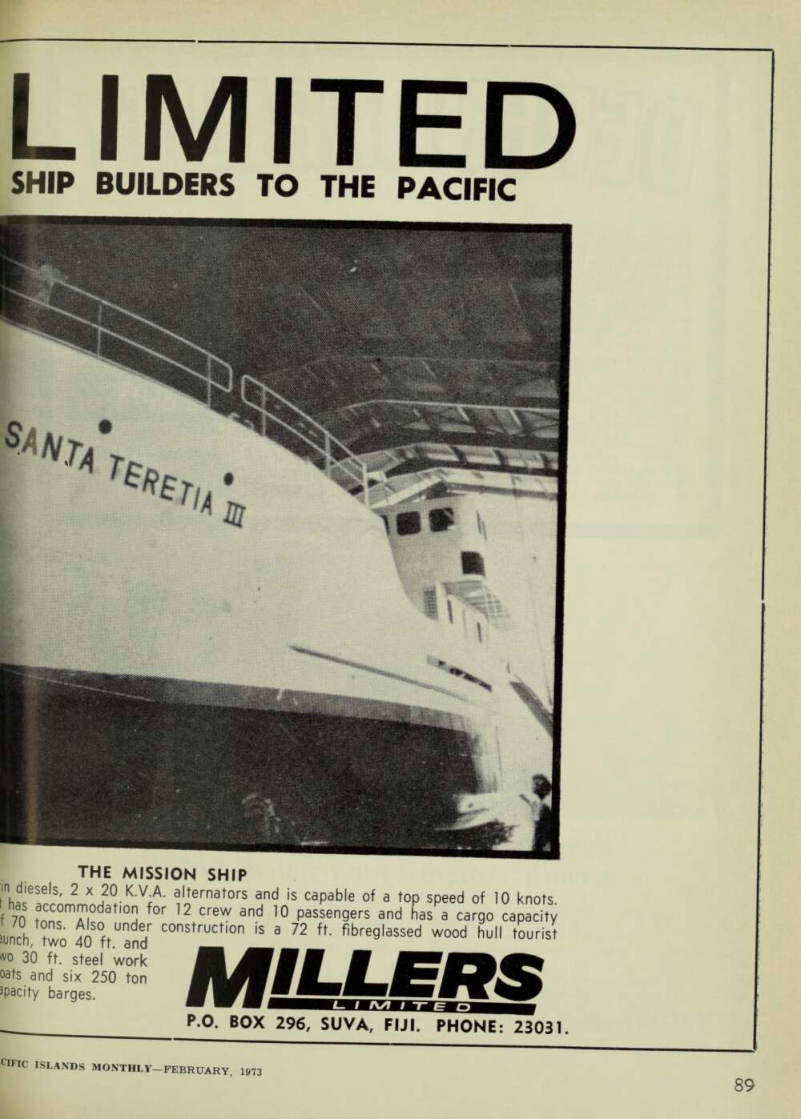 97
97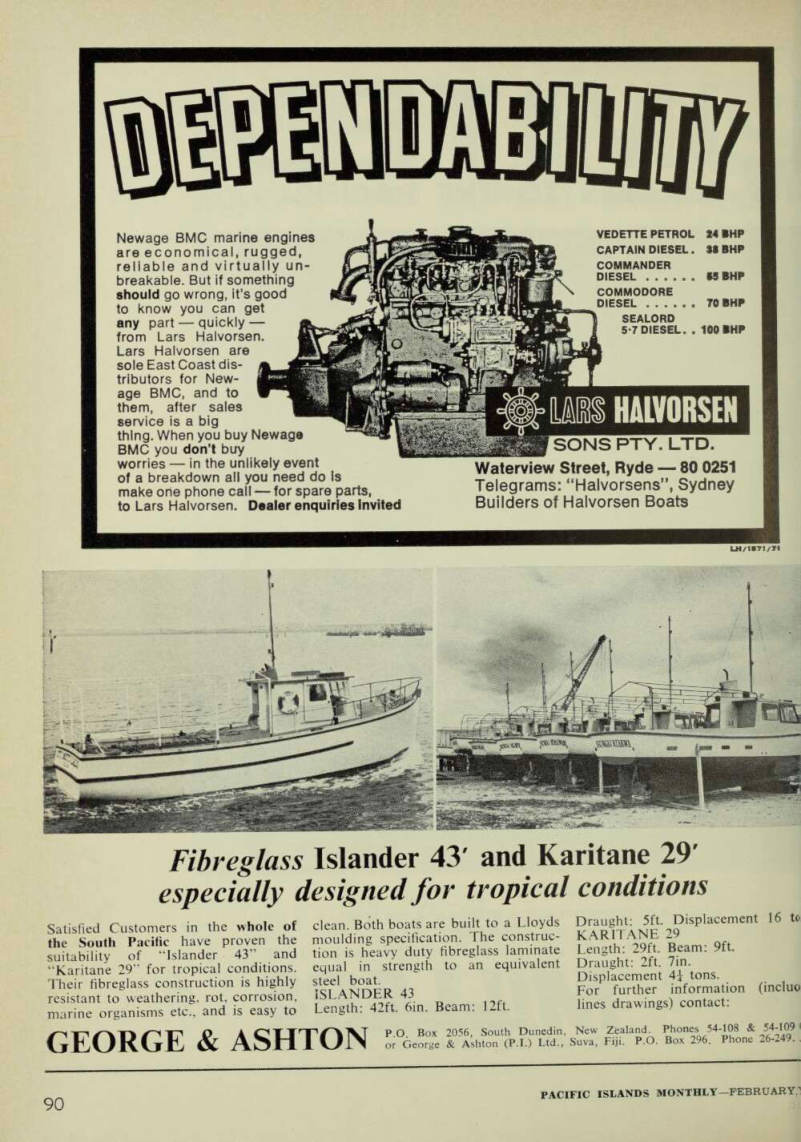 98
98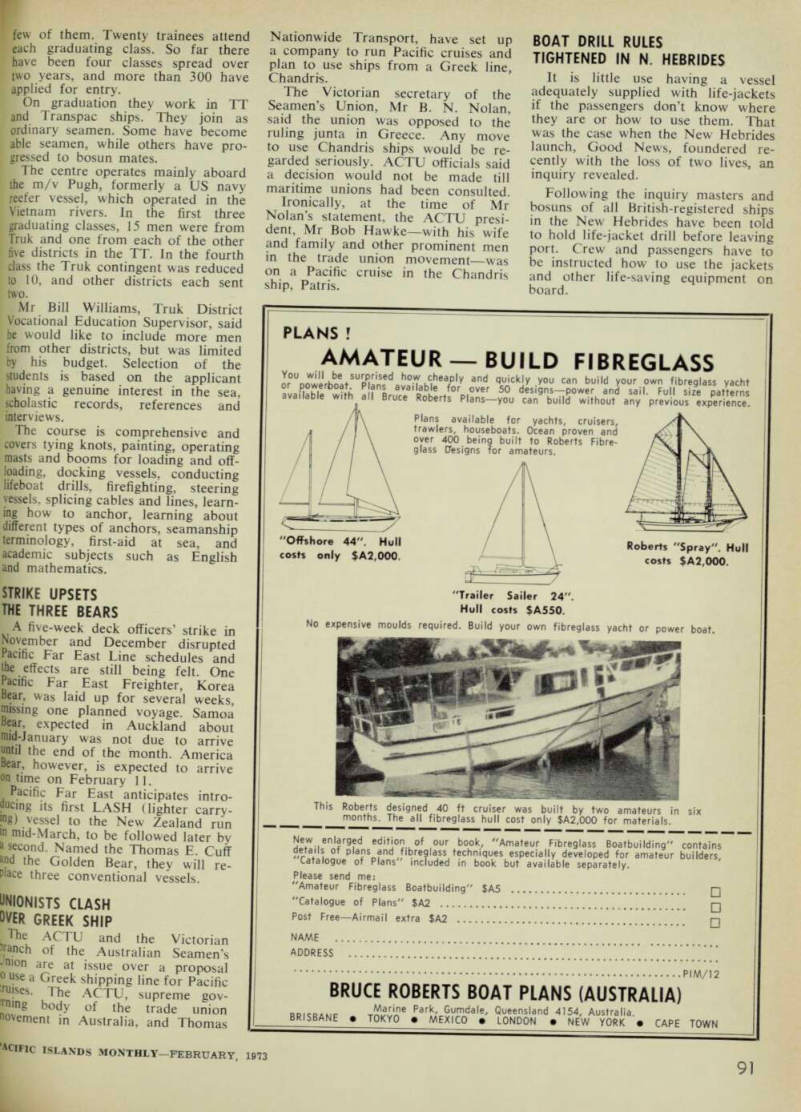 99
99 100
100 101
101 102
102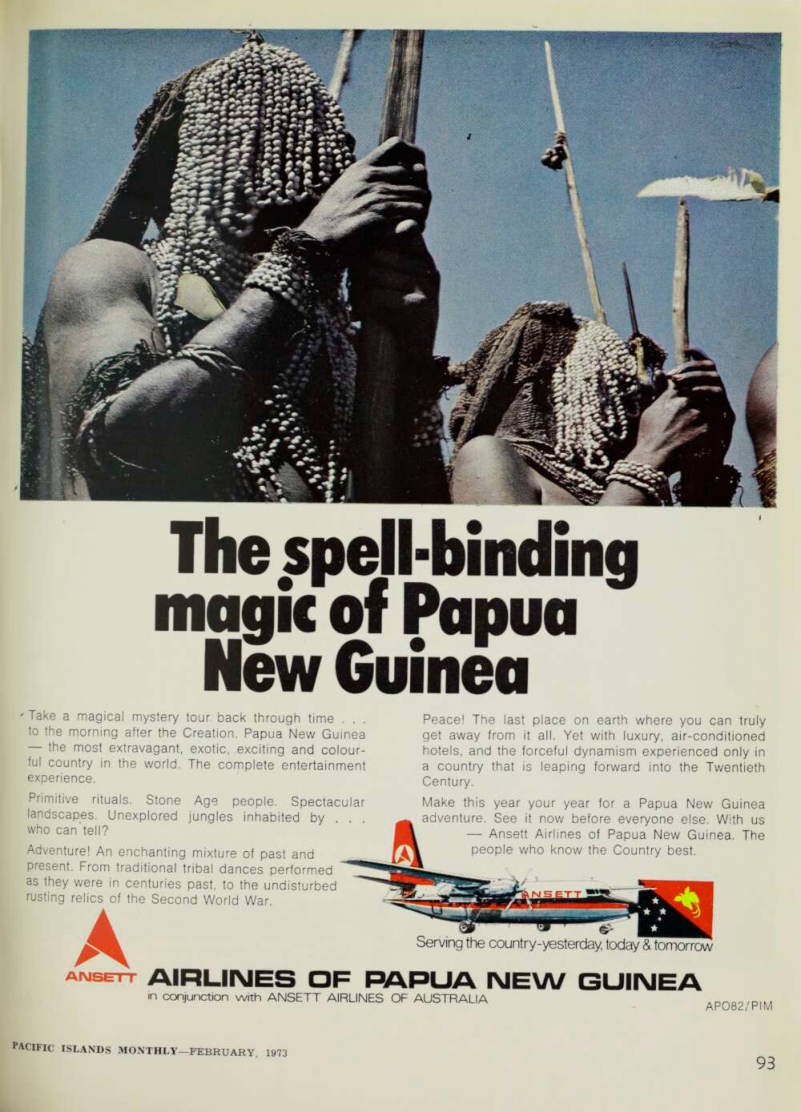 103
103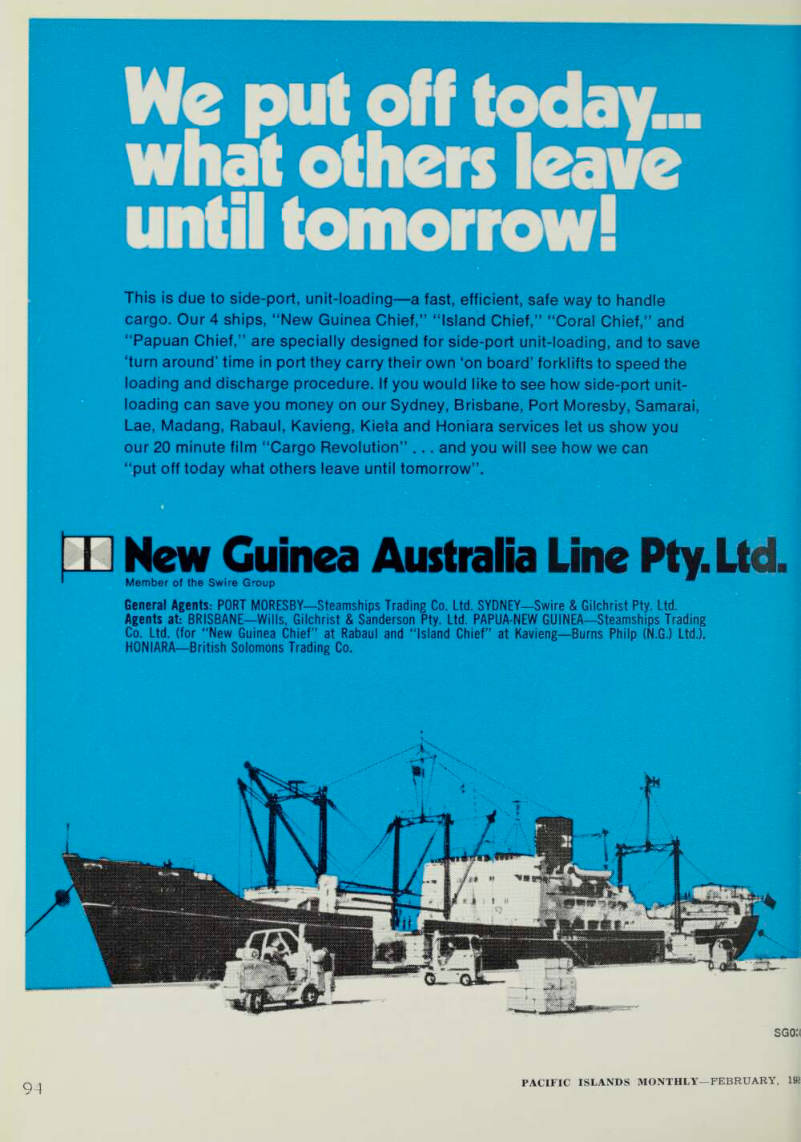 104
104 105
105 106
106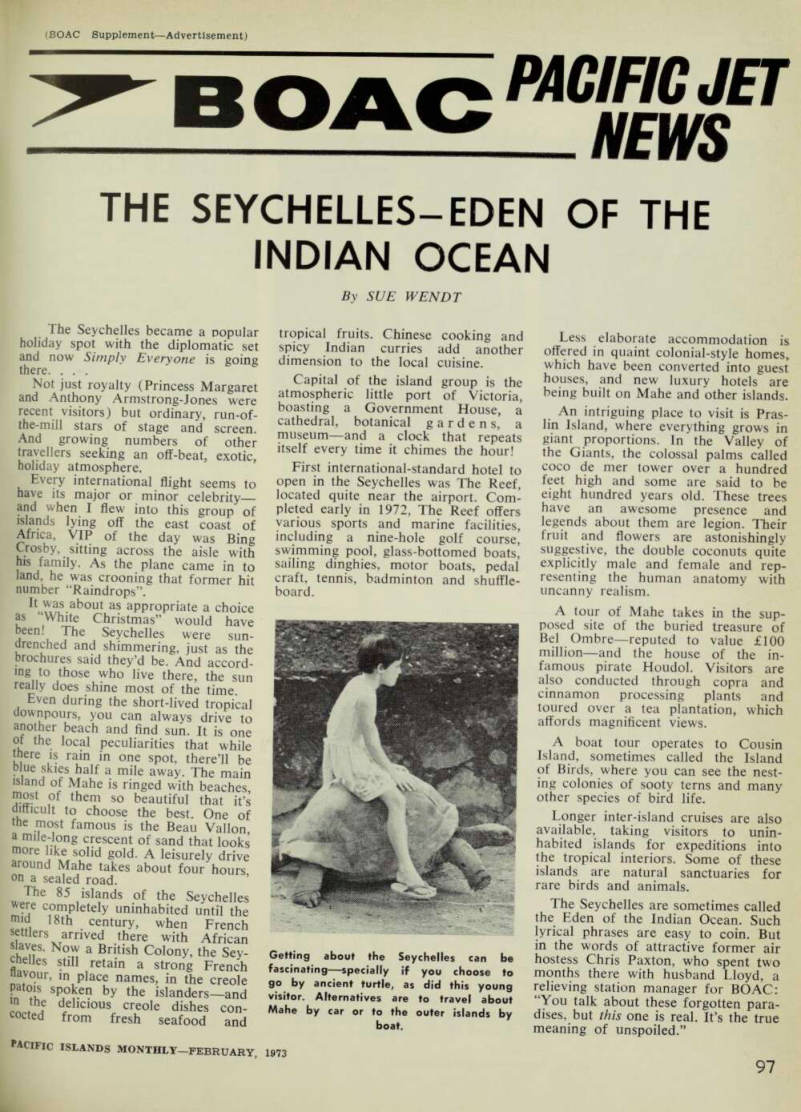 107
107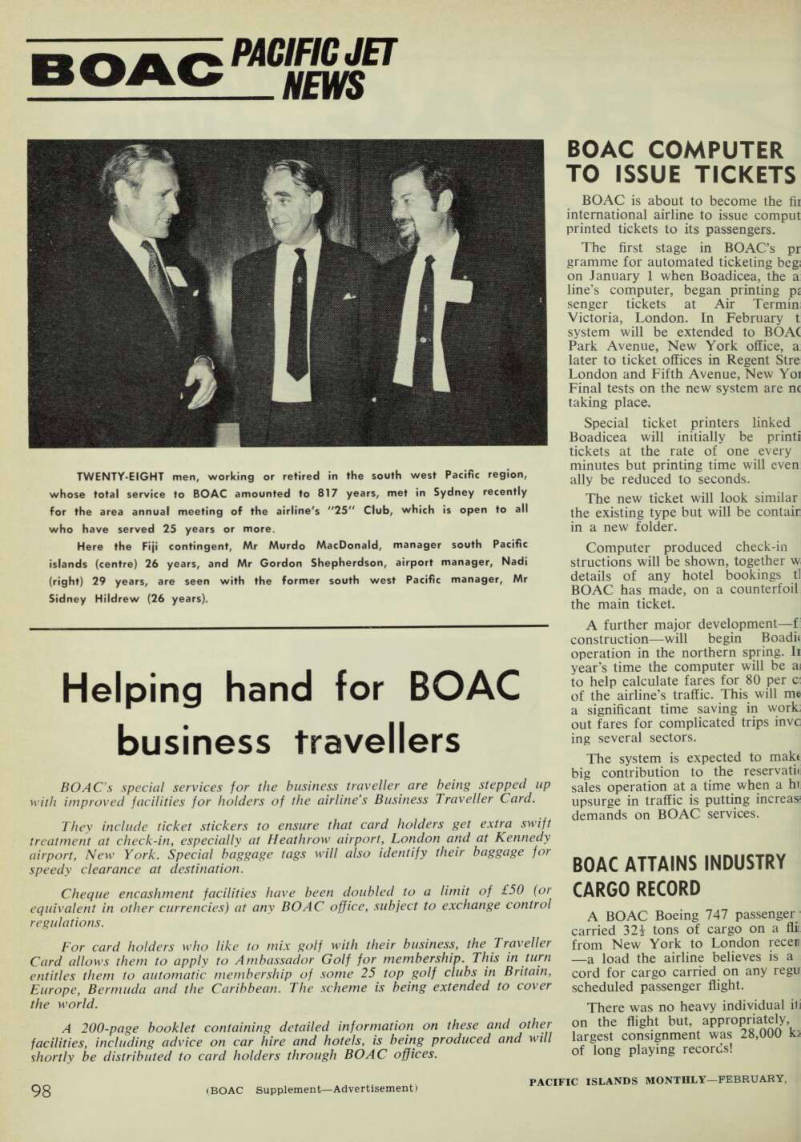 108
108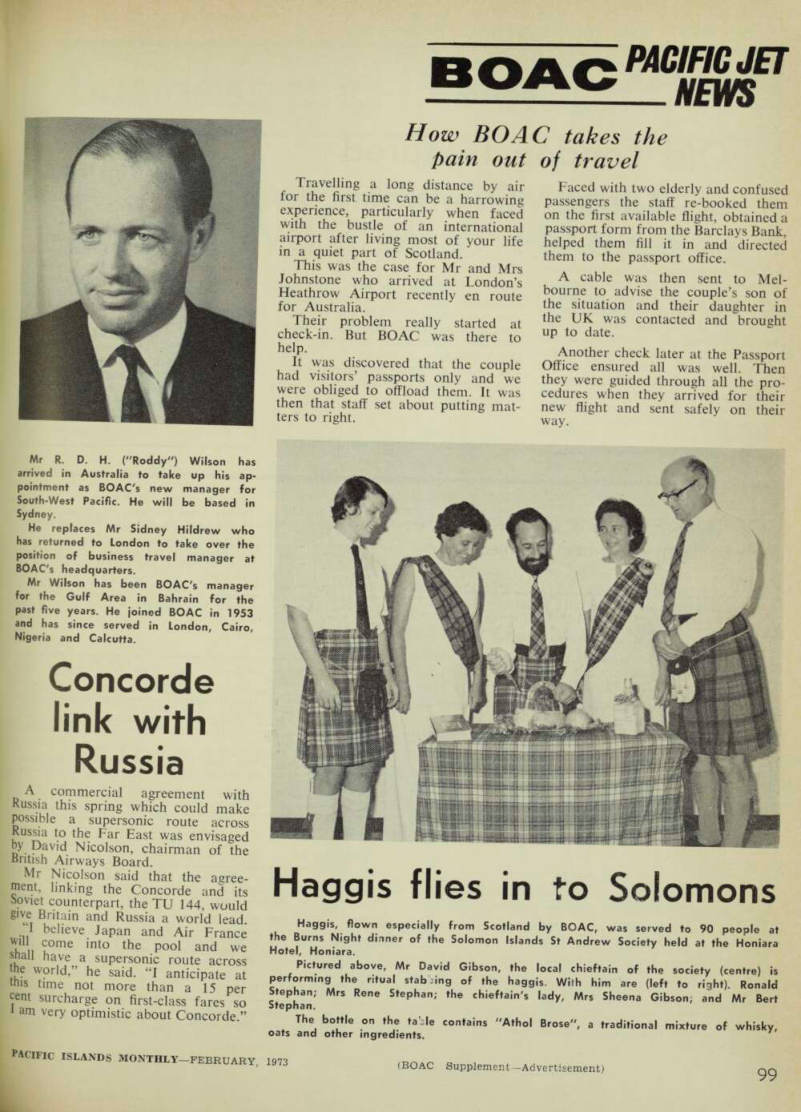 109
109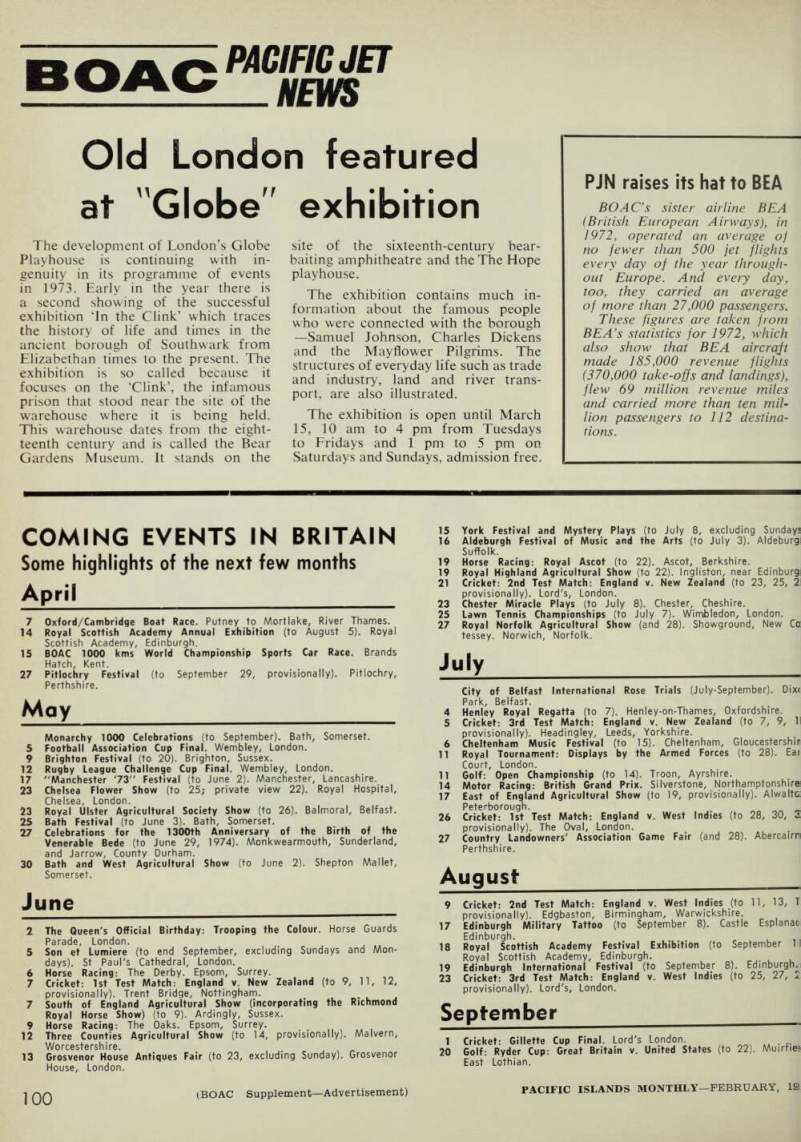 110
110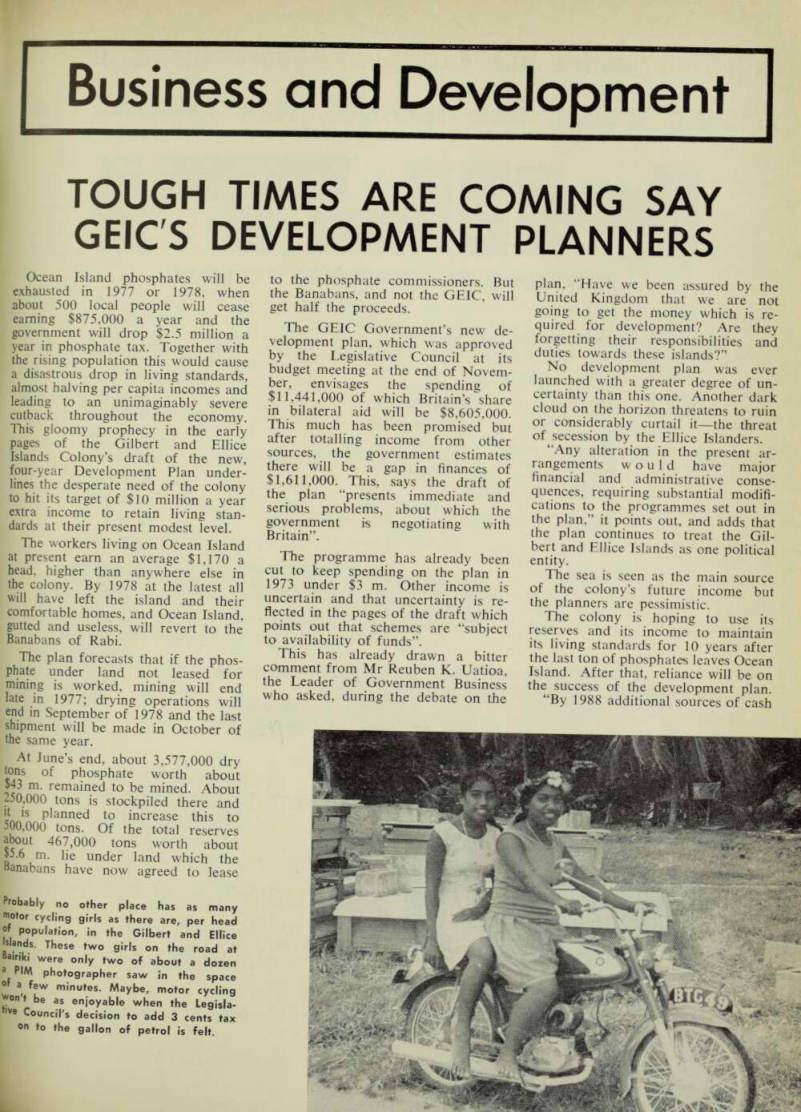 111
111 112
112 113
113 114
114 115
115 116
116 117
117 118
118 119
119 120
120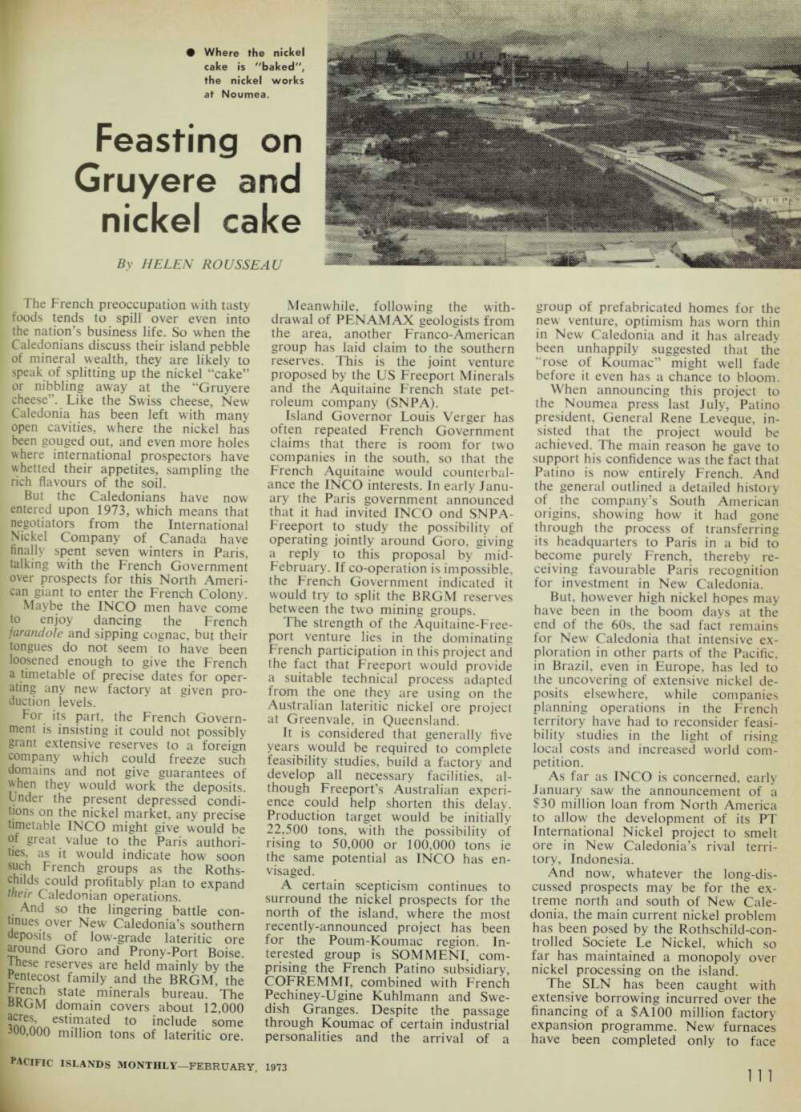 121
121 122
122 123
123 124
124 125
125 126
126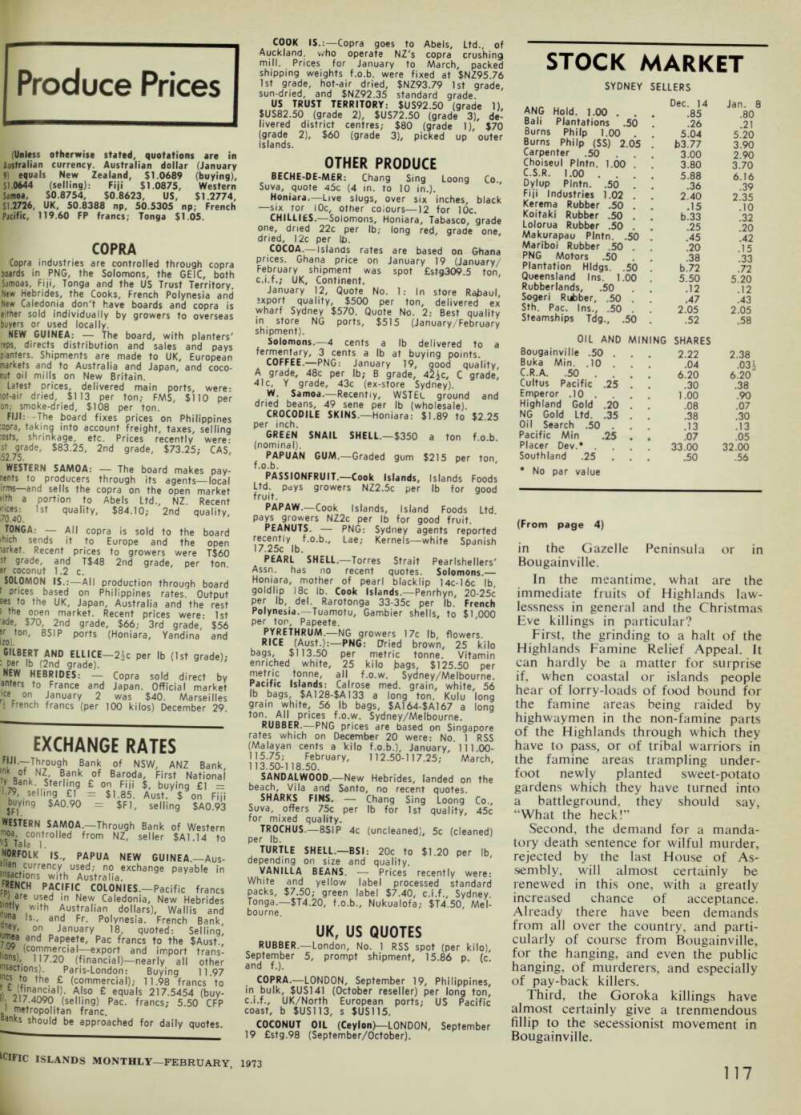 127
127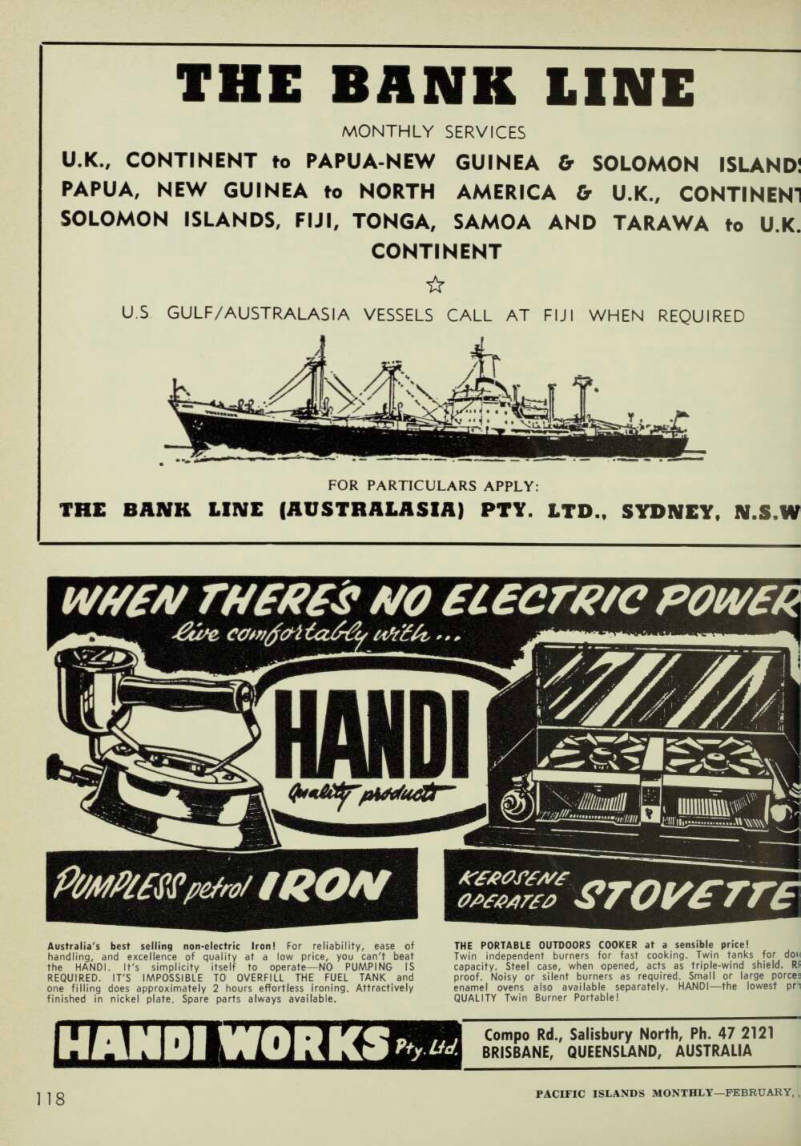 128
128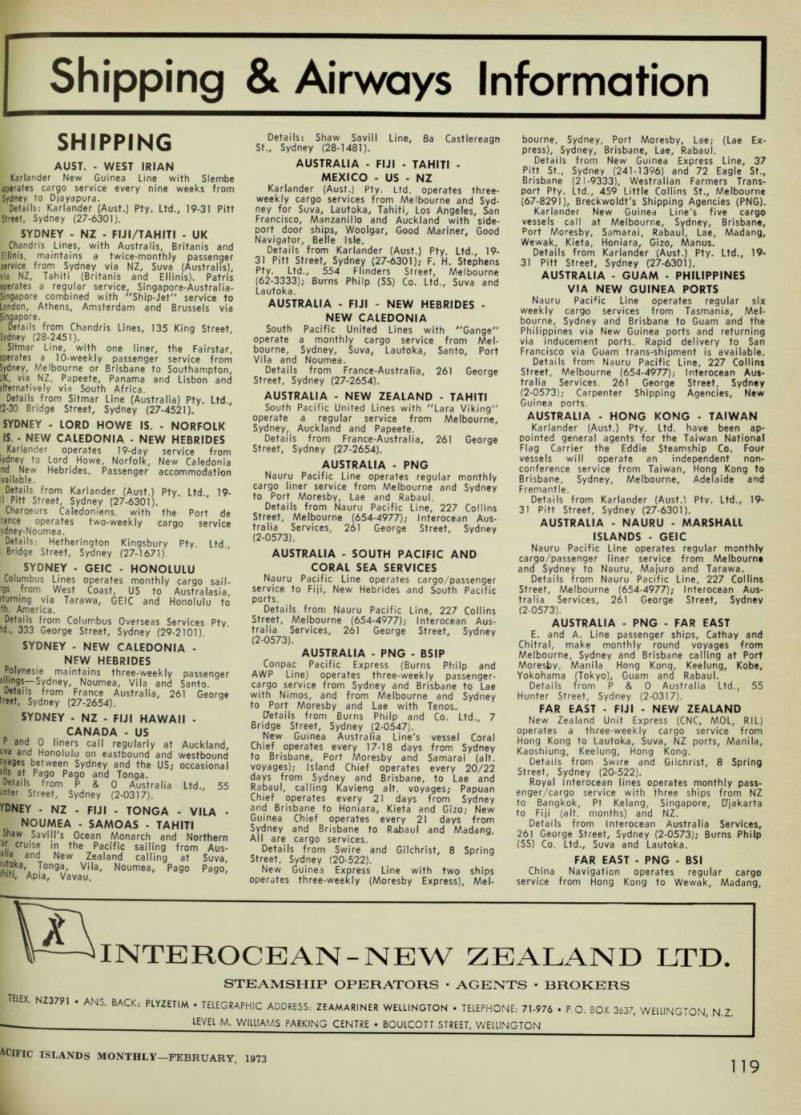 129
129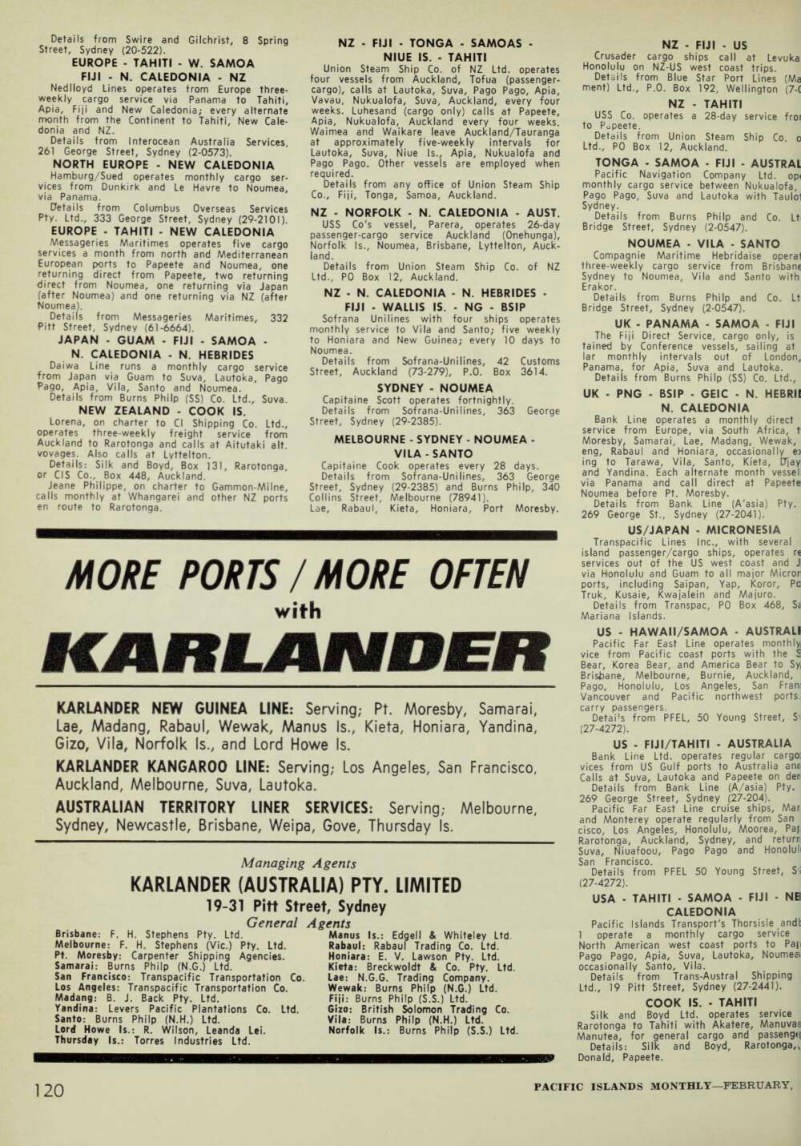 130
130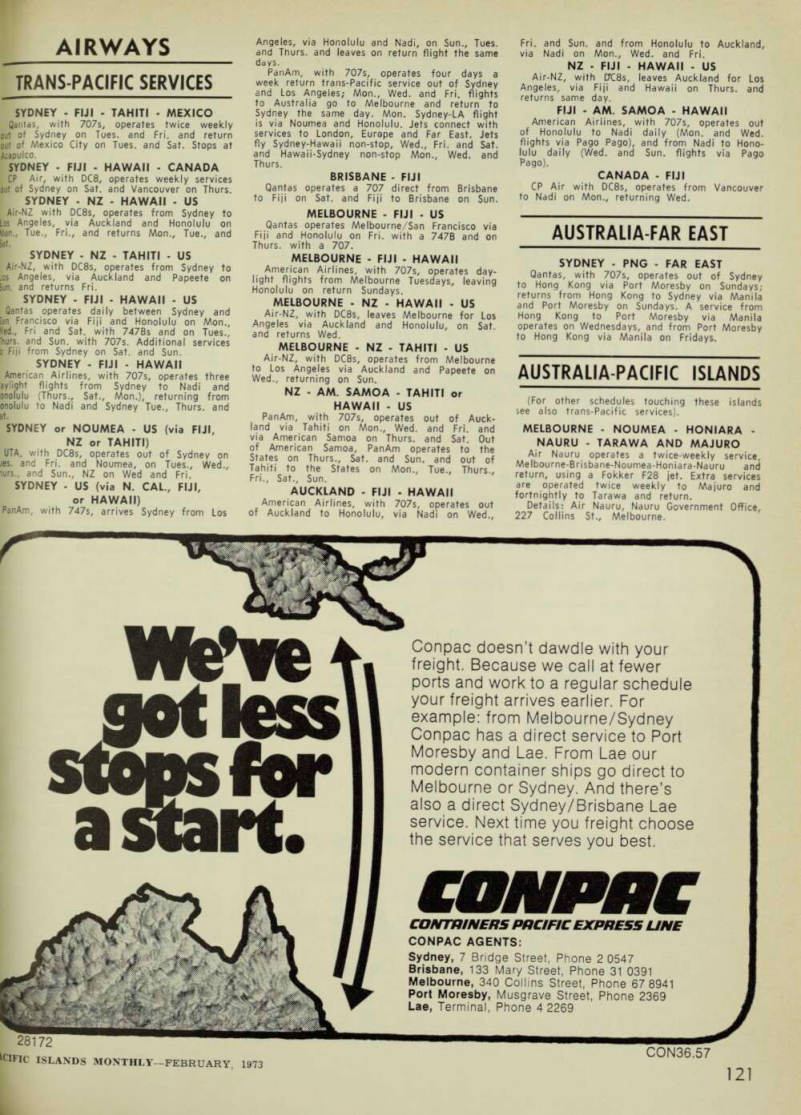 131
131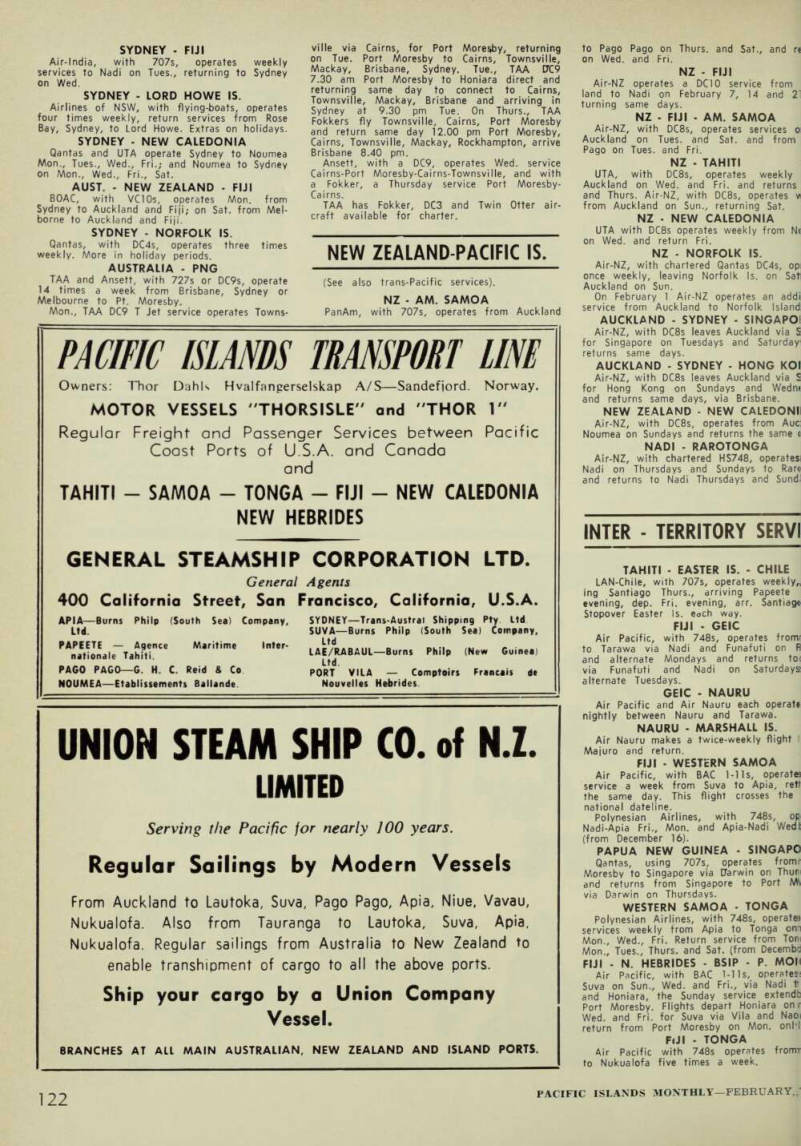 132
132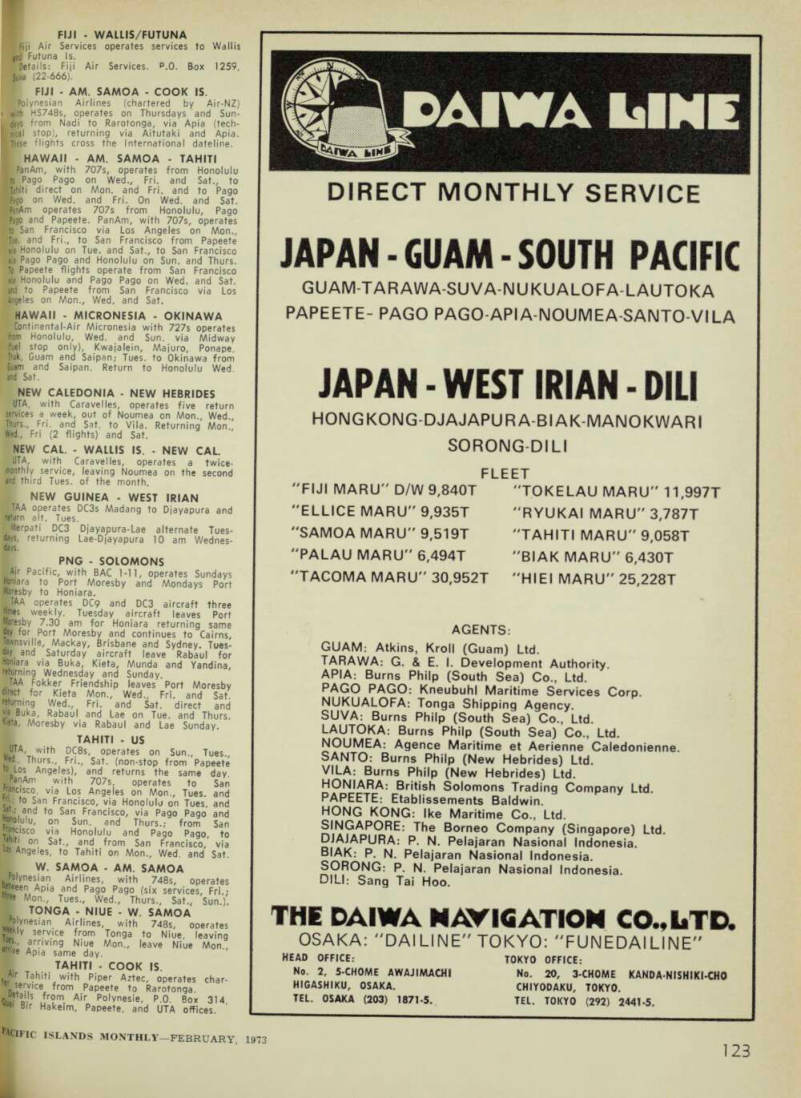 133
133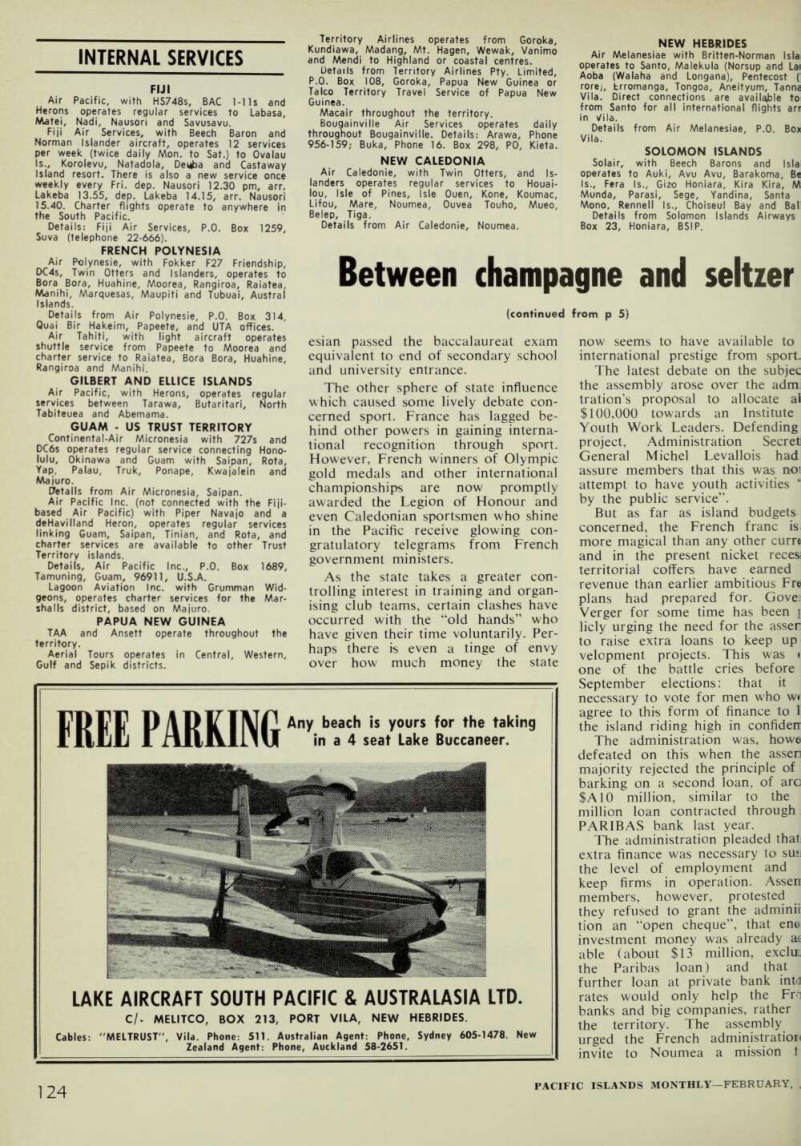 134
134 135
135 136
136 137
137 138
138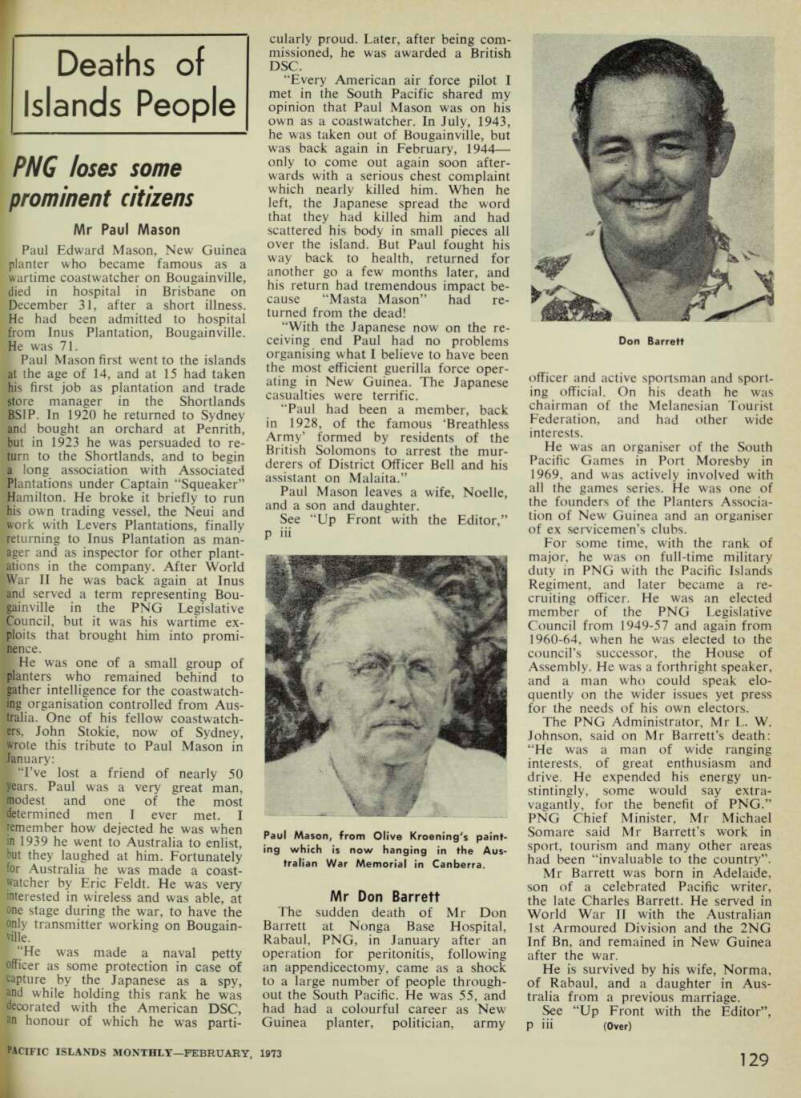 139
139 140
140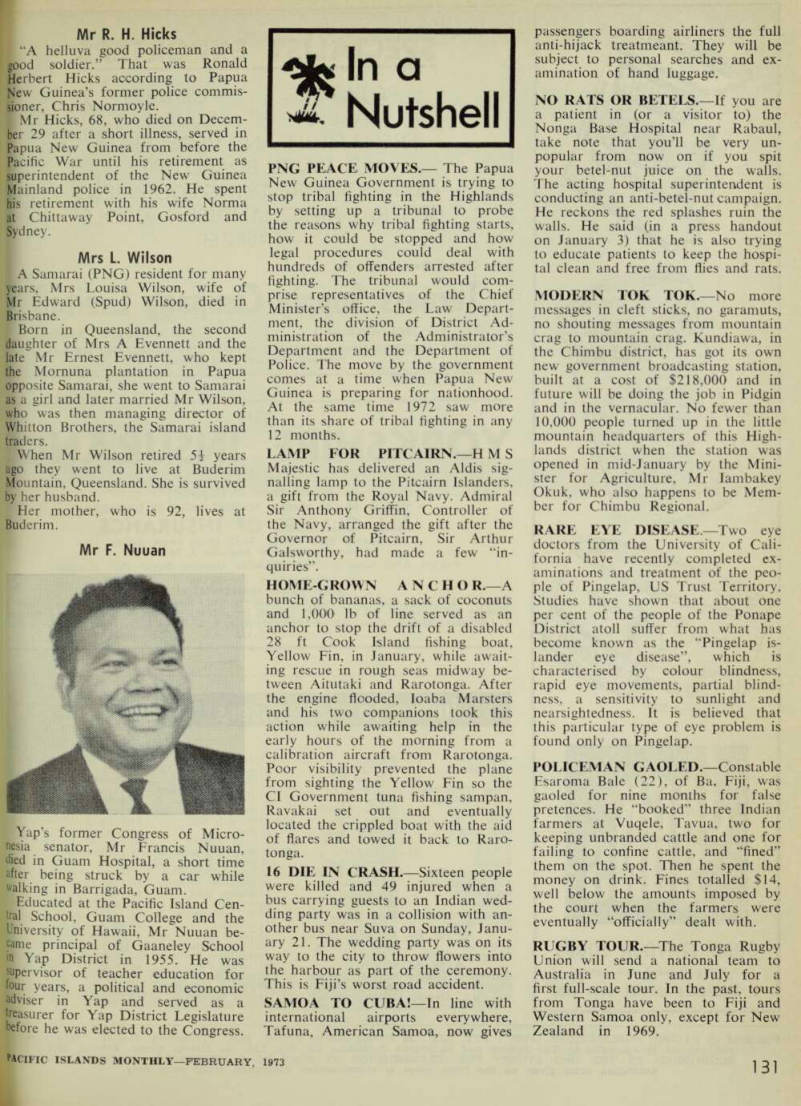 141
141 142
142 143
143 144
144