
Pacific Islands Monthly
News Magazine Of The South Pacific
March, 1973
Australia, N.Z., Western Samoa 60C
P N G., FIJI. COOKS, TONGA, G.E.1.C.. 8.5.1. P., N. HEBRIDES 50c
Nauru, Niue. Norfolk 50C
American Samoa 70C Hawaii, Micronesia $L.Oo
NEW CALEDONIA AND FRENCH POLYNESIA 100 CFP
Our Cover
His hour of splendour—this young lad pictured at Mount Hagen registers little of his feelings as he poses with solemnity under his head-dress of Bird of Paradise feathers.
Advertisements & other items, p. 2 (1 item)
hShHw
n
XJk
MS \ v l ir a * E HI ill \ m
hShHw
■* ■'.an Js is Ei « i r Jr W I V
In This Issue
General
Australia relaxes immigration rules 3, 11 Prime Ministers meet in NZ 12 No SP Games for Guam 12 Churches condemn colonialism 15 Pacific Island migrants 17 Chesterfield Reef visit 41 lofua carries on 89 Ship Gange to be scrapped 91 Banana shipping experiment 101 DCIO arrives 106 Trislander shows its paces 106 Effect of US dollar revaluation 115
Cook Islands
[Streamlining departments 22
financial Secretary leaves 13 [Captain Williams' shipping licence 15 bldest inhabitant dies 125
Fiji
rrasad family for Australia (pic) ... 11 Rugby commemorative stamp 17 'Free education 21 [Thomas Baker story 55 Ship-bui!ding centre 83 Union threatens Banabans 89 Fishing fleet leaves Levuka 89 Ban on trade unionist lifted ... 91 Effect of US dollar revaluation 115 Heath Hemphill dies 125 Rugby player's sudden death 125
French Polynesia
Autonomy again 7 James Boyack's Tahiti letter 47
Gilbert And Ellice Islands
Governor retires 13 Constitutional changes 23
Guam
SP Games venue cancelled 12
Lord Howe Island
Flying-boat service ending 107
Nauru
Airline's big ideas 105
New Caledonia
Election campaign 8 Water shortage 12
Litterbugs 17
Nickel prospects 113
New Hebrides
Judge appointed 13
Churches attack colonialism 15 Crack-down on land speculation 101
Niue Island
A vote for self-government 14
Norfolk Island
Sirius's anchor raised 14
Papua New Guinea
Prime Minister's visit 9 Chief Minister's new baby (pic) 9 Expatriates prepare to leave 10 Chief goes to London 13 Public officer retires 13 Tourist board officers 15 Rare bird stolen 17 Percy Chatterton 18 Radio station opened (pic) 19 Effect of US dollar revaluation 115 Wuvulu man dies 125
Solomon Islands
Timber industry recovery 103 Effect of US dollar devaluation 115
Tonga
Tongan made a chief 13 Tourism campaign opened 15 Second bid for oil 115
Unsted States Trust Territory
Traders' debts 110 Future status talks to continue 128
Western Samoa
Bishop named as cardinal 13 Banana shipping experiment 101 Development bank to open 109 Former Minister dies 125
DEPARTMENTS: Up front with the Editor, 3; People, 13; Tropicalities, 14; Editor's mail bag, 29; From the Islands Press, 51; Magazine section, 55; Yesterday, 60; Mana, 69; Book reviews, 79; Pacific shipping, 83; Cruising yachts, 92; Business and development, 101; Produce, 117; Shipping and airways information, 119; Deaths of Islands people, 125; Advertisers' index, 128.
Advertisements & other items, p. 4 (1 item)
always crispy-fresh and
m W '■it: '
Arnott’s Cracker Biscuits...
good to eat!
Always keep Arnott’s famous Cracker Biscuits handy for parties, for light snacks, for nibbling anytime.
They’re always crisp and fresh, ready to go with your favourite foods or just to eat straight from the pack.
The triple-wrapped packs keep the biscuits fresh.
Qrnott's/ Biscuits
There is no Substitute for Quality i T 602
Pacific Islands
Monthly
FOUNDED BY R. W. ROBSON IN 1930
Published Monthly By
Pacific Publications (Aust.) Pty. Ltd.,
29 Alberta St., Sydney, N.S.W., 2000.
Postal Address: G.P.O. BOX 3408, SYDNEY,
N.S.W., 2001.
Telegraphic Address: PACPUB, Sydney.
Telephones: 61-9197, 61-7101, 61-4369.
Consulting Directors: R. W. Robson, Judy Tudor.
Chief Executives: Manager: Selwyn Hughes.
Publisher: Stuart Inder.
Director of Advertising: W. A. Gasnier.
Pacific Islands Monthly
Editor: Stuart Inder.
Assistant Editor: John Carter.
Advertising Manager: W. A. Gasnier.
Circulation Manager: Barry Badger.
Subscription Rates:
"Pacific Islands Monthly" is airfreighted to all subscribers and agents in the Pacific Islands and the U.S.A.; copies to other areas go by surface mail.
Australia (incl. Lord Howe and Thursday Is.): $6.70 Aust., Papua New Guinea: $5.50 Aust.; Fiji, Tonga, New Hebrides, Gilbert & Ellice Islands, Solomon Islands, Nauru Island and all other Pacific territories: $5.50 (local currency); Western Samoa; $6.70 (local currency); New Zealand: $6.70 NZ; Hawaii, Micronesia and Guam: $12.00 US; US Mainland: $14.00 US; New Caledonia and French Polynesia: 1,100 CFP; United Kingdom: £3.25; Elsewhere: $6.96.
Representatives
Fiji: Pacific Publications (Fiji) Ltd., Fiji Times Building, 20 Gordon Street, Suva. Tel.: 25601; Fiji Times Office, Cnr. Vitogo Pde, and Namoli Ave, LAUTOKA. Telex: 1144. Tel.: 60-422.
Papua New Guinea; LAE, P.O. Box 227; RABAUL, Mr. Steve Simpson, P.O. Box 433 (c/- Rabaul Photographic. Tel.; 2677.) french Polynesia: Distribution—Hachette Paci fique, 10 Ave Bruat, Papeete.
New Zealand; Pacific Publications, C.P.O. Box 2229, Auckland. 379-494. Representative: John Spedding, Civic House, 291 Queen St., Auckland, Tel.: 379-494.
United Kingdom: I. B. Graham, Park House, 22 Park Street, Croydon, CR9 3NP. Tel.: 01-6884177.
Overseas Newspapers (Agencies) Ltd., Cromwell House, Fulwood Place, London, W.C.I. Tel.: 01-242-0661. Cables: WESNEWS, London, DS4.
Japan; Advertising—Universal Media Corpora tion, C.P.O. Box 46, Tokyo. Tel.: 666-3036.
Victoria: Advertising—Wilke & Co. Ltd., 37 Brown's Road, Clayton, Vic., 3168. Tel.: 544-8222.
Queensland; Advertising—Beale Media Services, 232 St. Paul's Terrace, Fortitude Valley, Qld , 4006. Tel.: 52-5827.
Hawaii and U.S. Mainland only: Mrs. W. A.
McGrath, 225 Queen Street, 178, Honolulu, 96813. (Send change of address notices. Form 3579 and new subscriptions to P.O. Box 2193, Honolulu, Hawaii, U.S.A. 96805).
Application to mail at second class postage rates pending at Honolulu, Hawaii.
Copyright ©, 1973,
Pacific Publications (Aust.) Pty. Ltd.
March, 1973 Vol. 44, No. 3
Up Front
with the Editor
Chances are that Australia’s immi gration policy is about to become as colourful as Australia’s new Immigra tion Minister, Mr Al Grassby. Mr Grassby is noted for his colourful dress and speech. He loves talking.
He talked too much on a national television interview the other day.
He was explaining the new Labor Government’s immigration policy, which he said had three guiding prin ciples: I—Compassion; 2 —respect for human rights; 3 —the Australian national need. He said the new gov ernment had abandoned the practice of bringing in migrants merely to keep the numbers up, and was now collect ing information so that it could put together a practical, long-term policy on population for Australia.
There’s nothing wrong with any of that. Mr Grassby spoiled the new image by an off-the-cuff exchange with a member of the television audience, a gentleman who grasped at the opportunity to raise the case of Nancy Prasad, the Fiji-Indian girl who was deported from Australia to Fiji in 1965 as a youngster. Her parents are living in Fiji, but in Australia she was staying with her sister and overstayed her permit.
The gentleman asked the minister whether he “would be prepared to re consider Nancy’s case if it were brought back to your attention?”
“She wants to come back,” said the gentleman.
“Does she?” asked the minister.
“How old is she now?”
“She’s 13.”
“Well, if she’s still as nice as she was when we deported her when she was five. I’ll be delighted to welcome her back!”
“Thank you very much!” (AP
Plause.)
Within hours Mr Grassby an nounced firmly that Nancy would be allowed into Australia, and within 24 hours the entire Prasad family from Lautoka had applied for entry (see picture, p 11).
Now let me make myself clear.
Australia’s immigration policy is
racist. Any Frenchman or American, providing he is white, can walk into a job in Australia and take up residence without any special reason or qualifi cation. A Cook Islander, or an Indian, will get a visitor’s permit and no encouragement to stay perma nently.
For years PIM has drawn attention to the iniquity, especially in reference to the Cook Islanders, who are New Zealand citizens, able to move in and out of New Zealand without restric tion. New Zealand citizens can move in and out of Australia without restriction —but not if they are Islanders —from the Cook Islands or anywhere else.
Mr Grassby’s new government is now fixing that. As you can see from the report on page 11, there is now to be no restriction on any New Zealand citizen entering and working in Australia so long as he has resi dent status in New Zealand.
That decision shows the respect for human rights that is one of Mr Grassby’s guiding principles. It gets my warmest applause.
And I support any policy that does not use skin colour as the criteria for entry, whether or not they happen to be New Zealand citizens.
But everybody who wants to work and live in Australia clearly can’t enter. There wouldn’t be enough jobs; the social services couldn’t stand it. Mr Grassby’s third principle, national need, has a part to pl a Y- So how do we decide who is to be permanent and how many?
When Mr Grassby puts together the facts that will give him his long-term policy I hope he will come up with something practical, such as a quota system, or a requirement that ca Is for a migrant to have special skills (such as Fiji requires now), in addition to compassionate grounds for entry. . £ , 1 hope that the new colourful criteria for entry to Australia is not going to be “who you know”, or how many strings you can pull. Im mediately after that television show
some Islanders of my acquaintane were asking rather bitterly whi special skills Nancy had develop* between the ages of five and 1 not to mention the rest of her famill They had friends and relatives whor they submitted, were more deservii migrants than the Prasads.
Perhaps so, perhaps not, but tl point is that Mr Grassby’s off-the-cu approach has too many anomalies, will develop a smell that will stir most in the nostrils of Islanders bao home, who already resent the way which some of their compatriots ha T been able to wangle entry into Au tralia. Last year we aired the ca. of the man who had the gall to g himself appointed a lustice of tl Peace in Sydney, although here on temporary permit issued by the pr vious government and with a cou conviction to his discredit in Fi When Mr Grassby’s party was elects to power in Australia in Decembi this persistent fellow promptly pul lished a letter in the Sydney Mornir Herald, congratulating the new Prim Minister on his “sweeping victory which he said he had supported, ar criticised the “selfish motives” of tH previous government.
Australia doesn’t need him. Bi we’ll get him and more like hi: unless Mr Grassby makes the ruli clearer than they are now.
Meanwhile, good news on ai other facet of Australian Imm gration. This time Fiji Prime MinisU Ratu Sir Kamisese Mara and tH previous Australian Government ai responsible. In February last yej Ratu Mara asked Australia to allot Fiji technicians into Australia to woi to gain more practical experience. F wasn’t talking about trainees, bi fully qualified tradesmen.
In a few weeks Australia gets th vanguard—just two to start witl sponsored by the Australian Soul Pacific Aid Plan while any bugs g<; worked out of the new systerr There are 20 more to follow sod after, who will work in Australian ii dustry for periods of from six montH to two years—being paid directly tt their employers here.
That’s a breakthrough worth re cording.
THE first of the changes in Pin that I mentioned in this column in January are to be found on pp 6?e 76. MANA is a big new monthlj collection of Islands creative writim and art, and I’m excited at being abk to introduce it to PlM’s wide] audience. For South Pacific Creativ Arts Society subscription details se. p 127.
Stuart Inder
Advertisements & other items, pp. 6-8 (1 item)
Drink the vitamins
you don’t eat.
Some of us don’t always get the vitamins we should get because of inadequacies in the diet.
Sometimes we eat a little too much of the ' wrong foods. Or much too little of the right foods.
In these cases, a vitamin supplement is often required. That’s •w>vv 5*33 where ‘Akta-Vite’ comes in.
One serving gives you most of the important vitamins you’re ever likely to need. Vitamins A, 81, C and D. In a delicious chocolate malty milk drink.
So raise your glass of ‘Akta-Vite’. And drink to your health.
‘AktaVite!
Made in Australia by Nicholas Pty. Ltd., 699 Warri;:al Rd.. Chadstone, Vic., 3148.
I
NPII4B
Sewering the
rugged mountains.
Hattie's are doing it /tt Leura-Wentworth (alls.
This Is real “tiger”
Ml * «r - : * I € m W A $ * I w country. An endless series of gulleys, steep sloped, ending In wet marshy land. And when you dig down it’s rock hard. Yet, when you remove the rock it crumbles in your hand.
Contractor Fred Sharkey knows. His team are blasting and digging their way—making a path for Hardie’s Fibrolite pipes. Their light weight and long 13 ft. lengths are helping on-site handling.
Breakage is minimal.
And the standard double “vee” ring Supertite coupling system Is helping to speed laying time.
Hardie’s have a complete illustrated report on the scheme.
For your copy—write to Publications Department, James Hardie & Coy.
Pty. Ltd., Box 3935, G.P.0., Sydney 2001.
James Hardie & Coy.
Pty. Limited. Sydney, Melbourne, Brisbane, Townsville, Rockhampton, Adelaide, Perth, Hobart, Auckland.
Hardie’s: pipelines for the rugged jobs.
JH54.87
Bank of
the bank of the Pacific
we’ve
When it comes to full banking services for the Pacific, Bank of Hawaii’s got you covered. With 70 offices to serve you throughout Hawaii, plus Guam, Tamuning, Koror, Yap, Saipan, Roi Namur, Wake, Kwajalein, Ponape, Midway, American Samoa and an affiliate with Banque de Tahiti. When it comes to financial assistance reach for Bank of Hawaii.
covered.
Pacific Islands Monthly
It's All Or Nothing For Sanford
In French Polynesia's Elections
From James Boyack, in Papeete
It’s double or nothing for Francis Sanford in the National Assembly election which will take place throughout the 120-island French Polynesian group on March 4. The autonomist leader is seeking re election to the Paris legislative body in what will probably prove to be one of the most important elections in local history.
Hanging in precarious balance is not only his entire political career, but the future of, 1 dare say the very existence of, the 30-year move ment which has aimed to give Poly nesia greater management of its own political affairs. On the firing line is the concept of “autonomic interne” in the person of Deputy Sanford, who until now has been the most powerful champion of self-government for French Polynesia.
A Sanford victory will confirm authenticity of a substantial desire here for the loosening of political ties with Metropolitan France.
A victory for either of the pro- Paris candidates will force Sanford into retirement, despite his Te E’A
Api Party and strike a death blow at the autonomist coalition which once lorded over local politics.
Three candidates are seeking this most important political post avail able locally.
Riding the top of the wave is the President of the newly-elected Terri torial Assembly, Gaullist luminary Gaston Flosse. He is the man who engineered the pro-Paris sweep of the
local legislative body last September.
He is tne political man of the hour and if he grabs off Sanford’s seat in the National Assembly, he will be in the driver’s seat of a fully consoli dated French presence and status quo in Polynesia. His victory would be the culmination of a year-long swing to the right, and utter renunciation by the electorate of its option for self government short of independence (PIM, Feb, p 12).
Youthful Charles Taufa, head of the largest labour union confederation here, is the centrist candidate in this hotly contested election. He is doing a balancing act. His agility on the high wire of political artistry could land him in the National Assembly by default. He is conducting a cam paign which appeals to the moderate elements of both the left, repre sented by Sanford, and the swelling right of the Tahiti Union UDR. On the one hand Taufa is pushing “National Union” —close if not remote-controlled links to Paris—at the same time he is calling for a renovation (although not transforma tion) of the political statute. He blasts the Sanfordian concept of im mediate substitution of one political structure for another, at the same time he lures autonomist voters with the mirage of “oceanising” the power structure. His “Te Autahoeraa” Inde pendent group is an up-and-coming political movement. Under legislative contract it shares the majority role with the stronger UDR in the Terri torial Assembly.
Public opinion polls in France
indicate that the historic Socialist- Communist coalition may be able to unseat the Gaullist assembly majority.
While Polynesian issues will un doubtedly govern the local vote, there is no doubt that Sanford is conducting a strangely unPolynesian campaign to the extent he is hammering away on two fronts. He sought and received sponsorship of the French “Reform Movement” led by leftist news maga zine publisher Jean Jacques Servan- Schreiber. The pictures of the two “reformateur” leaders figure more prominently on Sanford campaign posters than his own.
In France both the left-leaning but centrist “reformateurs” and the leftist coalition in principle oppose ex penditures for the “force de frappe” nuclear tests in Polynesia. While their conceivable victory would not mean an immediate halt to Pacific nuclear tests, the future of the test programme would be left in doubt. Their attitude towards French overseas departments and territories is equally ambivalent.
They tend to favour fewer colonial ties than the present Gaullist majority.
Whatever happens in France, how ever, does not minimise the impor tance of this election at a purely Polynesian level. Local issues will predominate here, and one local issue, “autonomie interne”, once again will be the reason why people will vote for or against Sanford.
This is the way Sanford wants it.
He was elected in 1967, and after the National Assembly was dissolved in 1968, he was re-elected based on his one campaign promise that he will bring self-government to French Polynesia. Recent political trends to the right have forced Sanford up against the wall. Cornered, he is fighting like a wildcat for his political life. 1 had an exclusive interview with the deputy-mayor in his Faaa com munity City Hall office two weeks before the election. He told me that he would not run in the second round
Mr Sanford and some propaganda.
if he failed to capture a majority in the first.
I have interviewed Sanford on many occasions, but I have never seen him so bitter, so solemn, so eloquently convinced of the rightness of his political stance. He predicted first round victory and failing that, he announced the end of his own political career.
He said, “I very much expect to win in the first round. That’s definite.
I am not ashamed of saying so. And with, at least, something in the neighbourhood of 54 per cent of those voting, and with the hope of having more than 54 per cent of the vote.
“If I were not elected in the first
round, that would mean the Tahitian population does not want a change, does not want ‘autonomic interne’. In that case, I will know what to do.”
He said, “Since I no longer had confidence of the population, I feel that it would no longer be necessary that I be in the Territorial Assembly.
Having been disowned by the popu lation, it would be my duty to no longer be in the Territorial Assembly.
Perhaps I would remain mayor, but that’s not even sure. Perhaps it would be my duty no longer to be mayor as well.
“But then again, it’s really im possible for me to conceive of not being elected in the first round.”
Soft music for Caledonians
From a Noumea correspondent
Administrative and political per sonalities in New Caledonia have been making frequent island tours on the eve of the French national elec tions, while island voters have also been wooed by masses of electoral propaganda from Paris television broadcasts.
Well before polling days, fixed for March 4 and 11, it appeared that the running favourite as new Deputy to represent the island in Paris was the Gaullist Administration’s chief sup porter—Jean Leques, representing the anti-autonomist camp.
The autonomists had lost all prob able chances once two separate candi dates had been nominated from their ranks—outgoing deputy Roch Pidjot (Union Caledonienne party) and Yann Celene Uregei (Union Multi raciale). Both men being Melanesians, their candidacy was bound to split the loyalty of fellow-Melanesians, who make up almost 50 per cent of the island’s population. Jean Leques, on the other hand, succeeding in winning the combined support of his own Mouvement Liberal Caledonien party, besides George Chatenay’s Union Democratique and the Entente Demo cratique et Sociale led by Lafleur and Laroque.
The arguments put forward for both sides of the autonomy issue differed little from past debates. For the pro-Paris Administration, anti autonomist side, the campaign was designed to emphasise the need for continued close collaboration with Paris to ensure economic security for the island (a convincing appeal in times of uncertainty, caused by the present nickel recession). On the other hand, the Union Caledonienne denounced increasing local reliance on loan funds from Paris. They claimed
that a build-up of debts to Paris could only result in putting the islanders in a “hand-outstretched” attitude, where they would be more than ever de pendent on Paris decisions and subject to greater Paris controls.
On the position of the third candi date, Yann Celene, some opponents have challenged his sincerity over de mands for autonomy and charged him with actually being a staunch sup porter of the present Paris Adminis tration.
Since the deputy for New Caledonia also represents French voters in the New Hebrides, Jean Leques flew to Port Vila and contacted neighbouring cousins to register his support for French interests there.
Governor Louis Verger and his collaborators in the French Adminis tration have meanwhile been busy touring island communes (muni cipalities) highlighting new town hall or bridge openings. The governor has emphasised the increased benefits since the municipalities have obtained their own developments fund, with mayors working more through the governor’s local representative (sub division chief or district officer) rather than being dependent on the Territorial Assembly for funds, as in the past.
This by-passing of elected members J is, of course, reinforcing the power of the public servant decision-makers in the French Administration. A very skilful handling of the local press, radio and television is building up the prestige image of the generous hand-outs through the various branches of the French Public Ser vice, even if the funds involved are from local sources and voted by the Territorial A>»semblv, This form of benevolent paternal
ism, of responsibility being assure by an elite group, seems to be comfortable arrangement for 1 Caledonians, even if they might tempted to make harsh criticis occasionally. Of course, no one wot hint that censorship is applied in pi moting the French officials. It simply that any writer reporting false note is likely to incur the wr; of the conductor and not be indue in future performances of the Offic Orchestra.
In a flamboyant effort to develoi new variation on the oft-repeai official themes, the autonomists cently challenged the Governor pro - Administration candidate Je Leques to meet them in a local debate. The challenge appeared an open letter to Governor Verg in the Noumea press in eat February. Signed by Union Ca donienne leaders Maurice Lenorma and Roch Pidjot, the letter noted interesting pre-electoral debates televised from Paris, as well as frequent TV statements being ms by Governor Verger.
The two autonomists then suggest that it might be interesting organise a local programme along lines of the debates being screen from France. Caledonian politiciJ are never allowed on local radio ij TV to discuss political questions, the open challenge could only lim as unfinished melodies wafting o:< Caledonian ears.
And in the meantime, the cor dently orchestrated notes from official musicians seem to have uplift the Caledonians with European spiration, so there seems little do’( about their allegiance to be express early March, in the French natioc elections.
Maurice Lenormand ... a challenge the governor.
independence
Selling independence to the New Guineans
From a Port Moresby correspondent.
AT no time in the past has Papua New Guinea been host to SO many political Visiting Firemen as in the new Australian Government’s first two months in office.
Minister for External Territories Morrison, Defence Minister and Deputy Prime Minister Barnard and finally Prime Minister Whitlam, have all been here with their entourages.
The purpose of all visits was to persuade Papua New Guinea not only to become independent as soon as possible but that the country would thoroughly enjoy the sensation when it happened.
After his arrival in Port Moresby for a two-day visit on February 18, Mr Whitlam said that independence for PNG would come within the “lifetime of the present Australian parliament—by the end of 1975.”
This looks like one more year of grace from the 1974 deadline set by External Territory Minister Morrison, although most observers believe that the 1974 date is still a matter of mutual agreement between Chief Minister Somare of PNG and Prime Minister Whitlam.
Mr Whitlam made it clear in Port Moresby that the wishes of the Papua New Guinea people made up only one side of the plan.
“I cannot stress too often,” he said, “that the decision for independence is not only a decision about Papua New Guinea, it is about Australia and Australia’s role in the world. Australia is no longer willing
to be the ruler of a colony.”
The sugar to help that piece of medicine go down was an assurance by the Prime Minister of continuing Australian financial aid over the three-year period beginning with 1974-75, Mr Whitlam’s visit was obviously made with the purpose of allaying local fears. From Port Moresby he took the good word to Goroka, in the New Guinea Highlands, where a great deal of the anti-independence fear is generated, Australia would always remain a good neighbour to an independent Papua New Guinea, Mr Whitlam told a gathering of village leaders and elders. But some still had their doubts. Mr Sinake Gire Gire, a local member in the House of Assembly, presented the Prime Minister whh a petition signed by 2,000 Highlands leaders opposing early independence.
Earlier in February, on the other side of the country, Mr Matthias Toliman, leader of the opposition United Party in the House, a.tacked the PNG Government for appearing ready to accept independence “arbit rarily and unilaterally imposed”, In the end, this current elastic sided date for independence may
cause Mr Somare’s government more embarrassment than a clear-cut date somewhere at the end of 1974 — which really isn’t far removed from 1975. Already he has done some fancy stepping to try to be on both sides of the fence at once, and will be doing some more before the current session of the PNG Assembly ends.
At the time of Mr Whitlam’s visit he said, in a speech of welcome, that anyone who faced the facts would know that independence would quickly follow self-government.
“However, my government feels we should not set a date for in dependence until we have achieved self-government and have had time to adjust to it.”
All the pros and cons, doubts about and fears of independence are, at present, doing everything but weld the country into an integrated nation, although Australia has made it clear that it is determined to deliver it, in one whole piece, at independence.
Would-be secessionists are to be warned that they may expect none of the Australian largesse that is to be poured into PNG coffers.
Several important matters must be resolved before Papua New Guinea becomes independent. One is the Torres Strait - Queensland border; another is defence; and the third, in ternal security. Under the terms of the Trusteeship Agreement with the UN so far as the New Guinea half of Papua New Guinea is concerned,
Being "left holding the baby" is a risk politicians must take, but in this case it's a pleasure for PNG Chief Minister Michael Somare as he takes his new daughter, Dalciana (born on February 2) from wife Veronica.
Australia is responsible for both de fence and internal security until independence.
Papua New Guinea appears in no hurry to assume responsibility for defence until it has to, but it has been reported that Mr Somare has now asked Australia to hand over control of the police force as soon as possible.
The Australian Government has made no commitment on this.
It could be that the request arises
out of nothing more than the recent suggestions and counter suggestions about reorganisation of PNG’s police force. Mr Somare is said to be an noyed by reports that Mr Morrison wants to establish a para-military division of the police which would be able to handle serious internal dis orders as well as performing border surveillance, without involving the Army, which at present is under Aus tralian control.
On February 19 Mr Somare den that it had been agreed to set such a force. He said that two sti groups are considering the defe: force and the relationship betw. this and the police force. The sti groups had not finished their work Australian Defence Minister B nard put in five days in PNG in 1 January. The burden of his song to urge Papua New Guinea to “ velop guidelines for the developm of its defence forces.”
On the matter of cost alone it see pretty obvious that, at independer Papua New Guinea will be in position to do much about a defei force, in the modern sense.
It has been suggested that A tralia will weigh in with about 1 million p.a. to keep the forces at th present level in return for use of “Manus base”, which Mr Barn: says is part of the Labor Gove ment’s defence plan. The Manus b was an important American b during the Pacific War but the v installations were then allowed crumble away by the post-war A tralian Labor Government and Liberal Governments that followed It is now little more than a gloril refuelling depot and not worth 3 million per year.
The horse-trading probably me; that the present government this $2O million a modest price to pay keep PNG within the Australian fence orbit. If, at independence, Paj New Guinea decided to do nothi about defence it could create dangerous vacuum and an Australl embarrassment.
The Australians weren’t the oi politicians on tour in February.
February 4, Mr Somare left on two-weeks tour that took him Japan, Indonesia, Malaysia and Sin pore and got him back to F Moresby two hours before the arri of Prime Minister Whitlam.
His tour was designed to “ere an image abroad for Papua N Guinea” and, according to Somare, there was no question of seeking foreign aid while he T doing it.
However, sources close to the g ernment said that he sounded out possibility of raising funds for PNI 1972-73 loan programme which ! failed by a long way to bring in $27 million sought at home and!
Australia.
Mr Somare’s finance minister, Julius Chan did not go with him. left for Geneva to try to raise money to meet the target set in year’s budget.
In Kuala Lumpur on February
Continued on p
Mr So mare said his country, when independent, cduM be a good bridge between ihe Association of South East Asid N<_iions (ASEAN) and the Pacific Speal !ng to reporters after a three-day -Tit to Malaysia he said: “We don i km w whether to go Pacific or Asian. V/c can be a good bridge between ASLaN and the Pacific, Australia and New Zealand.”
Meanwhile, politics being in the air with a vengeance, the Speaker of Papua New Guinea’s House of Assembly, Mr Barry Holloway, has
called for the abolition of the party system of government.
He will send his views on the need for “a one-party, all-party or no-party government” to the con stitutional planning committee which will decide how Papua New Guinea should be run after self-government in December this year.
The Deputy Chairman of the com mittee, Father John Momis, said the committee had planned to consider a one-party or no-party State but had not done so yet.
Mr Holloway believes that recent events have made it clear that what divides the people of Papua New Guinea is not parties or policies but regional differences and inter-tribal tensions.
He said that on the major problems all the parties were united.
He said the problems that members see are not altered by party allegiance,, nor are they affected by minor changes in the emphasis of policies.
“Our problems are objective, our aspirations are very similar, and yet we are divided so that a disagreement between the members from one area and their leaders could split the gov ernment or the Opposition apart. In these circumstances, party politics seem to me to be expensive, unneces sary, troublesome and an alien luxury—if not an obstruction to de velopment and an expression of our peoples’ true aspirations.”
He said party politics had helped goad the Australian administration into altering the status quo but now Papua New Guinea should return to* Papua New Guinea ways—planning the future through “discussion to con census and united action.”
Exodus—and influx in PNG
Prom PERCY CHATTERTON, in Port Moresby Furniture removal men in Port Moresby are fiat out packing whole homesful of furniture for shipment to Australia. Vets have been kept busy providing euthanasia for no-longer-wanted pets, until Dr Everingham’s announcement of more liberal quarantine regulations put an end to the necessity for this slaughter. The siren voices of Queens land’s estate agents seek to lure departing expatriates to new elysia on the Gold Coast, and incidentally provide the Papua New Guinea Post- Courier with some very acceptable advertisement revenue.
How serious is the expatriate exodus from Papua New Guinea?
It is difficult to say. Some of those going are natural peripatetics —academics using Papua New Guineas university as a stepping stone to higher things for example. Others are lower level public servants who would soon become redundant anyway. Others are businessmen, like the one who so guilelessly explained to an ABC interviewer that he was leaving because there was no longer a quick dollar to be made here.
Undoubtedly we are losing a few that we can ill spare—Depart ment of Lands Director Don Grove for example. But I get the impression that most of those who really like the place are hanging on. One old friend of mine who “went finish” several years ago has now come back, and his wife and daughter will be returning in a few weeks’ time. And that, I think, points up a trend. Many expatriates will undoubtedly pull out as the day of independence draws near.
But others will come, attracted by the very aspects of the situation which has started the exodus.
Perhaps there will be fewer from race-conscious Australia and more from places like Scandinavia, Canada and New Zealand. Paguineans are a very pragmatic people. They will welcome those from overseas who have a real contribution to make to this country’s welfare. But, however much the RSL may think that there should be, there will be no sentimental preference for Australians as such; in fact there may even be some prejudice against them as the former “colonialists”.
In the meantime, the United Party’s prophets of doom are having a field day. Their cries of “Woe, woe” fill the air. But Finance Minister Julius Chan, a very level-headed young man with a first-rate permanent departmental head at his elbow, is keeping his cool.
“Sure,” he says, “people are going.” And, “Sure there’s an economic slow down”. “Things will get worse before they get better,” he adds with cheery pessimism.
He’s probably right, too! Independence Day will have to come and go before the tide turns. Which is a good argument for bringing it on as soon as possible.
But as yet the Port Moresby suburb of Boroko still looks as much like a prosperous Sydney suburb as it ever did. One can drive through its quiet streets without seeing any vacant houses or neglected, over grown gardens. Expatriate children still ride their bicycles on the foot paths and play on the well-kept lawns. The hum of Chimbu-owned and operated motor mowers is as soporific as ever on the hot afternoon air.
Well-polished cars still stand in the car ports, or are parked in serried ranks outside houses where parties are in progress. And in the city’s main stores a major part of the display space is still monopolised by luxury goods which only expatriates can afford to buy.
If a debacle is impending, it is still hiding coyly round the corner.
Will Australia write a bold 'welcome'
bold 'welcome' on the mat?
By Judy Tudor
ALTHOUGH the new Australian Government made much capital, before and after the December elec tions, out of extracting racial bias from Australia's immigration policy, it is doubtful whether, in practice, any more non-Europeans will have entry under Labor than they did under the old Liberal-Country Party govern ment.
In recent years the criteria for entry of non-Europeans into Australia has been whether the individual con cerned had the kind of skills and background necessary to fit into Aus tralian life. Somewhere between three and four thousand non-European migrants per year are being admitted in this way.
But there is one change that the new government proposes that will make it easier for some islanders and other non-Europeans—but it seems to have been designed to placate New Zealand more than the would-be migrants in question.
New Zealanders and NZ Maoris have always had free and open entry into Australia (just as Australians can move into NZ with no more trouble than moving interstate in their own country). However, Cook Islanders, other Islanders or any non- Europeans not Maori did not have automatic entry into Australia no matter how long they had been NZ citizens. This has always annoyed both official and unofficial New Zea land and this is where the change is to come.
Under the new set-up (in early February the details still had to be worked out) New Zealand citizens, with New Zealand residential status,
no matter what their race or their skills can enter Australia quite freely.
The key to entry for other than European or Maori New Zealanders seems to be "resident status”, as much as citizenship. This probably means that Cook Islanders or Niue Islanders, who are NZ citizens by birth, would have to be living in NZ before going to Australia. This point is not quite clear although it was one of four questions that we asked the Australian Department of Immigration recently. It probably will be cleared up in talks to be held shortly.
If you want the official view, as at January 31, read on. Our four questions and the department’s answers follow: _.it i a a Questwn-. . As Cook Islanders and Niue Islanders are New Zealand citizens, can they now migrate here direct from their own islands? Or must they first be resident m New
Zealand. .
Answer: In a joint communique issued on January 22, the Pnme Ministers of Australia and New Zealand sa id ; ...
“The Prime Ministers agreed that citizens of each country and citizens of other Commonwealth countries who have resident status in either Australia or New Zealand should henceforth be able to travel
between Australia and New Zea land, for permanent or temporary residence, without passports or visas. Talks between immigration officers of the two countries regard ing practical arrangements for the implementation of the new policy would take place as soon as pos sible.”
The talks referred to have yet to be arranged but the text of the com munique clearly indicates the decision taken.
Question : Presumably Samoans or other Islanders who have been long enough in New Zealand to have acquired citizenship also have right of entry?
Answer : Yes—if they are citizens of New Zealand or have resident status in that country and are travelling to Australia from New Zealand.
Question\ Are there any changes in policy towards admitting Islanders other than those with NZ citizen ship? If they have special skills or professions that are needed in Aus tralia, they presumably have the same chance of entry as anyone else. But this is not new—for example, Indian or Singapore Chinese doctors who have been able to migrate for some time.
Answer : No changes have been made except in relation to those having resident status in New Zealand and wish to travel to Australia from New Zealand.
Question : Apart from Islander New Zealand citizens who may be skilled or unskilled and still have entry, it appears that the Australian policy still tends to skim off the cream— precisely those people desperately needed in their own developing countries. Or if this assumption is not correct, will there be any attempt by Australia to alleviate economic or population pressures in some Islands by taking some unskilled migrants? For example, Fiji Indians who are landless and among whom there is considerable poverty; or Gilbertese whose un productive atolls are materially in
On right in the front row is Nancy Prasad, the Fiji-Indian girl whose expulsion from Australia seven years ago caused a furore. Now Nancy, seen here with the family, has been told she can return. The rest of the family is expected to follow.
See commentary, p 3.
adequate for sustaining the popu lation?
Answer: While being sympathetic to the problems of many people in under-developed countries, Aus tralia cannot solve such problems or even reduce them substantially by migration to this country.
Indeed, serious problems could develop in Australia by admitting large numbers of people likely to experience economic and social dif ficulties in settling into the Aus tralian community. Applications will, however, be considered on an individual basis having regard to qualifications possessed by ap plicants, their personal qualities and the contribution they could make in this country. This policy is being implemented in all countries parti cularly in view of the present economic and employment situation in Australia.
Prom Kathleen Hancock In
New Zealand New Zealand Prime Minister Norman Kirk set the tone for the meeting in Wellington with his Aus tralian counterpart Gough Whitlam when he said that he thought it was vital their parliaments should be represented at the South Pacific Forum. Not long afterwards he an nounced that he would head the NZ team to the next Forum meeting, in Apia in April.
After his meeting with Whitlam he said, “What we have done is to accept that in the Pacific matters are not settled by our decisions alone. They are settled by others,” meaning the Island territories in their own meet ings, the Forum, the SP Conference and the Bureau of Economic Co operation.
It is some time since Norman Kirk put forward his idea of a Pacific Council and major changes have taken place in the Pacific during the last few years. The Island territories themselves are virtually running the South Pacific Conference and the South Pacific Forum has emerged as
an arena for political discussion among the independent Pacific states.
These two new concepts obviously modified the Prime Ministers’ dis cussion of a possible Pacific Council.
As for the South Pacific Con ference, Mr Kirk said that if the South Pacific Conference was capable
of developing adequately, then tl was the course Australia and N« Zealand would follow. The mechani: in a policy wasn’t the vital thii The vital thing was the objective. ' the South Pacific Conference c provide the means of achieving tl end effectively and quicker than a other, then certainly we won’t pn changes.”
Immigration matters were cc sidered and altered. Formerly, en into Australia by New Zealand c zens of Asian or Pacific Island bio was restricted. Now these restrictic have been lifted. Mr Kirk was asl if he thought there was any lib hood of a roundabout flood Islanders and Asians into Australia this means, but he didn’t consider t likely. He reckons that the islam population of New Zealand—n about 30,000 —has really put th roots down in a country they f
“culturally more appropriate”.
Guam Won't Stage The Games
Guam has withdrawn its offer to host the 1974 South Pacific Games because, the government says, there is no money for it. The Governor announced the cancellation after a ’phone call to Washing ton and said there were more pressing needs such as a new hospital and roads as well as a new telephone system. The Games money would have had to come from Washington on which Guam relies for its funds. Since typhoon Karen 11 years ago Guam has received SUS7S million in relief and wants more. Financing the Games would jeopardise its chances. The Governor has also cancelled Mr Ted Nelson’s appointment as SP Games Council member. Supporters of Guam as the Games venue say they could still be held there if present facilities were used.
Noumea Now Offers It Wholesale!
Caledonians in February lived through drastic water cuts, surprising retail price cuts, but ever-rising optimism.
The water cuts, which have become a traditional part of the summer mode de vie over recent years, were even more drastic this year when the Dumbea Dam, the only water supply for Noumea and surrounds, ran almost completely dry.
Governor Verger was forced to take swift action, and for the first time in such an emergency it became an offence, with a SASO fine, to wash one’s car or courtyard, to water the garden or fill the swimming pool. During the height of the shortage, water was turned on in town for only three hours each morning and evening. As one well-perfumed young Parisienne remarked, “You have to be really enthusiastic to keep clean in Noumea these days”.
While traders enjoyed a brisk demand for tanks and bottled mineral water imported from France, much-needed rain finally came to the aid of the Water Board, which for several years now has been working toi improve Noumea’s dam and pipeline facilities.
The water cuts, understandably, caused great inconvenience ini Noumea (not every visitor can afford whisky and ice to brush hisi teeth). But there was no protest from consumers over cuts in another sector, ie price cuts in rents, housing and in goods sold in various retail! stores. The Caledonians, like most shoppers nowadays, have grown accustomed to inflation, and the recent drop in the island’s nickel! income has forced a closer look at household budgets. In their bid to woo customers, shops have thus been forced to cut price margins- Weekly “special sales” are now a regular part of press advertising by Noumea supermarkets, while mark-downs have recently also become widespread among furniture stores, which previously enjoyed extrava gant trading due to the rapid inflow of public servants and othei workers from France.
The new wave of price consciousness may be regarded as following common practice in other competitive societies. But when the restaurant trade begins to follow the trend, then one realises the food-loving French are feeling the pinch. And that the restaurant trade has been hit is indicated by the fact that one Noumea dining spot, after building up an image of elegant luxury, is now advertising “table wines and charm pagne at wholesale prices”.
More discriminate local spending has, of course, delighted the French Administration, which has been happy to report that the cos; of living index for the territory in the 12 months to the end of Decemi ber rose only 6.8 per cent, compared with greater rises of up to 9 pen cent over the previous three years.
People
• Bishop Pio Taofinuu, Bishop of Apia since 1968, has been given the Red Hat by Pope Paul in one of the most surprising pieces of “localisa tion” in the South Pacific. Perhaps not surprising though. The unpredict able Vatican began “localising” years ago when it appointed several in digenous bishops in the Islands—and years before that in Africa. Bishop Pio hasn’t had to wait long for the unique honour of being the first South Pacific Islands cardinal. He has been a priest for only 19 years and, in the language of the Roman Catholic Church, is an “Ordinary”, a bishop of a diocese within a province pre sided over by a “Metropolitan” (an archbishop), the metropolitan in this case being Archbishop Pearce of Suva, who was Bishop Pio’s pre decessor at Apia. It’s usually a metropolitan who gets the Red Hat.
The new cardinal, who says his honour is “proof of the Pope’s love for the South Pacific peoples” and an indication that “Christianity has come of age in Samoa”, was born in the Savaii village of Falealupo on Decem ber 8, 1923, so that he’s the second VIP to come from that village.
Legend has it that the first was the
famous Samoan goddess Nafanua.
Bishop Pio was scheduled to leave Apia for Rome on February 23 to receive his red hat which, these days, is a red biretta (a square cap). Up to three years ago it was a large red hat with such a shallow crown that it couldn’t be worn. A practical Pope Paul abolished it. Some day, he’ll leave Apia for Rome for a most important job—electing a new pope. He could be it! e Wamp Wan, one of the New Guinea West Highlands best-known chiefs, went to London to see the Queen among other pursuits in February, but he was out of luck.
The Queen couldn’t see him but her uncle, Lord Mountbatten, said he would. He’d been Wamp Wan’s guest while on a visit to New Guinea some years ago. The chief had been invited to London by Qantas and the BBC as the latter was showing a film of his life and wanted viewers to see the star. His arrival at London Air port garbed in a suit was a disappoint ment for the press boys. One head line later moaned, “Wot, no fevvers”. • Sir John Field, who became the GEIC’s first governor when the colony was detached from the West Pacific High Commission in 1972 he’d been Resident Commissioner there since January, 1970—won’t be around when the islanders become arbiters of their own future and, possibly, when the Gilbertese and the Ellice Islanders part company. Sir
John retires in April and will leave the same month for Britain via South Africa where he went to school. He was later at Cambridge and got his MA. His next job hasn’t been an nounced but, no doubt, he’s hoping it isn’t on an atoll. His main recrea tion is river fishing!! And talk about Outposts of Empire. In his time in the colonial service he has served in such places as St Helena and Monser rat. • Mr Charles Hoeft, Charlie to his friends till the end of 1972, is now a Tongan aristocrat. Mr Hoeft, who has been in New Zealand for the last 23 years, has been appointed aho (chief) by the Prime Minister of Tonga, Prince Tuipelehake. His new ranking makes him a sort of high commis sioner for Tongans in Auckland. The title of aho is conferred only after a careful screening. The person ap pointed has to show he is fit to be present before the king, is a loyal subject and a friend of the people. 9 Mr Frank C. Thorbum, for the last four years Financial Secretary to the Cook Islands Government and President of the Cook Islands Price Tribunal, has left Rarotonga to re join the Australian Civil Service in Canberra. He was Financial Officer of the South Pacific Commission from 1964 to 1968. • The new British Judge in the New Hebrides has just been named— Mr Dermot Renn Davis, who will take up office at the end of February.
Before being appointed to the New Hebrides, Mr Davis was Attorney- General of the Solomon Islands. • Mr Ralph Conley, TAA’s Papua New Guinea manager, has been ap pointed chairman of the Melanesian Tourist Federation in succession to the late Don Barrett. Mr Conley, who was recently chosen as the Papua New Guinea Tourist Board’s delegate to the federation, was given his new job through the unanimous vote of the four member territories. He’s got a tough job ahead, following such a hard-working and enthusiastic planner as Don Barrett, but, says the federa tion, “We could not wish for a better chairman”. • Mr W. Lawrence, a BA from the University of Papua New Guinea and officer in the Localisation Branch of the Public Service Board, has been appointed acting Principal of the PNG Administrative College. He succeeds Mr D. Chenoweth, who has gone to the Public Service Board.
Mr Lawrence, 31, was educated at Sogeri High School and at an Aus tralian agricultural college.
The new cardinal with Pope Paul in Sydney.
Tropicalities
Norfolk
salvages some
Australiana
Another piece of Australian history, an anchor from Sirius, flagship of the First Fleet wrecked off Kingston on Norfolk Island on March 19, 1790, was hoisted on February 10 from its resting place on the seabed 20 feet below, carried by lighter to a spot only a few yards from the Kingston jetty and dropped to the bottom again —to await the arrival of a metal pre servative. After 183 years under water corrosion could be rapid and the Norfolk Islanders want the two-ton, 18 ft long anchor for their museum.
They might have a fight on their hands.
One anchor, recovered in 1906, is on permanent exhibition in Sydney’s Macquarie Place. This latest prize, an imposing one as the picture shows, would look good, say in Canberra, Australia’s national capital, some Aus tralians will probably think, so there could be a tug-o’-war for the man-o’war’s anchor. As many of the islanders argue that Norfolk Island isn’t Australian, there may be those who will argue that such an important piece of Australiana should not be in “foreign” hands.
The raising of the anchor was a combined operation by skindivers lan Kenny and Peter Ely, lighterage boys Booney Buffett, Ukoo Douran and Puss Anderson and Captain Ivan Sheales and crew of the New Zealand trader Holmburn, which lifted the anchor and deposited it on one of the island’s lighters for its short journey to shallower waters.
It wasn’t a sudden operation. The position of the anchor has been re corded ever since it was discovered along with two or three smaller ones by three ABC cameramen, Jack Doyle, Rex Clayton and Don McAlpine, aided by local skindivers Karl Davies and Rick Irvine, in 1965.
The discovery was no chance affair either. The late Mr William (Daddy Bill) Quintal, one of the Bounty Quintals, had seen it often as he
swam during his boyhood in Slaughter Bay. He often told how he saw it with a fluke sticking up above the waves as they broke on the reef.
It was almost a smooth recovery.
Divers lan and Peter attached wire slings to the anchor and then signalled on the Holmburn for a strong pull. A wire broke but was repaired and, on the second heave, up came the anchor.
Niue’s getting there
without pushing
Niue’s future as a self-governing country—one island with 5,000 people —seems to be assured and all that’s needed is a group of signatures on an agreement which was scheduled to be worked out in Wellington in February.
The islanders made their big de cision after their constitutional adviser Professor R. Quentin-Baxter put pro
posals for self-government to then last October. They, almost to a man and a woman, voted for “full statu of internal self-government in fre association with New Zealand ii 1974”.
Leader of Government Busines Robert R. Rex and the Assembl members for Hakupu and Namukull were hot-footing it to New Zealan in February to negotiate a six-poii agreement with the NZ Governmeni The Niueans are also proposin, along with self-government by 197* a Niuean President of the Assembl instead of a NZ resident commii sioner; the establishment of a Seen tary to Government; retention of tf services of the NZ State Services Con mission; New Zealand to be n sponsible for Niue’s defence and e; ternal affairs; Niueans to remain ; NZ citizens; NZ’s financial assistant to continue; retention of existin trading arrangements and the pn vision of a NZ judge, who will mall
The barnacle encrusted anchor from the 183-year-old wreck of the Sirius, flagship of Australia's First Fleet, is being hoisted aboard a lighter after being lifted from the sea bed 20 feet below.
The First Fleet colo nised Australia from England in 1788, and Norfolk Island almost immediately was made an outpost of the infant colony.
Photo: Ian Kenny.
periodic visits to the island. It is also proposed that New Zealand should continue to be represented in Niue.
Tolu Tala Niue, the governments weekly newsletter, told the people in a message, probably from Mr Rex’s pen, “We have had pressure from certain quarters to push us along just that little bit faster on the road to self-government, and always, the answer has been —thank you for your concern, but we’ll do it our way. Now we have done it our way. What lies in the future remains to be seen.”
So it looks as if the Niueans will get the best of both worlds —masters in their own house and full New Zealand citizenship. The latter is likely to continue as a headache for the stay-at-home people. Niue’s biggest problem is the brain and youth drain to New Zealand and how to stem it.
Captain Hugh nil!
sail the Cooks again
That old salt Captain Hugh Williams, who complained bitterly in PIM last May that he couldn’t get a licence to operate a ship in the Cook Islands—“nobody else can compete against the present monopoly”, he said—has finally done it. He’s got a licence to operate his I recent acquisition, the Moana, on a passenger-cargo service from Raro tonga.
And the Cook Islands Government, which gave him the licence, has in curred the wrath of shippers Silk and Boyd Ltd, who had the monopoly which stymied Captain Hugh’s plans last year. Mr Don Silk charges that the government has “dishonoured” an agreement made in 1970 giving his company the monopoly to operate three ships out of Rarotonga for 10 ■years.
The Shipping Ministry replies with an allegation that the company hasn’t kept its side of the bargain because it has been operating with only two ships. Silk and Boyd prophesy i financial disaster if Captain Hugh i runs his service but the government isn’t worried, Minister Mr William lEstall observing that it wasn’t likely that Captain Williams, who had evidently been successful in past ship ping operations in the Cooks, would risk entering that field again if it threatened financial disaster.
The captain’s not dismayed either.
He’s sure that his Moana, which he bought from Sofrana for 540,000, will keep her end up. He’s not par ticularly interested in profits, he says, and it’ll be much better than playing
bowls over in Australia. He plans a cargo-passenger service, a package deal for tourists and, for local deck passengers, mattresses, tea and biscuits —something they’ve never had before.
He’ll be back in the Cooks with his family and his dog Smacker about April’s end.
Tonga opens the
door a little
Tonga is becoming a little bolder in its approach to tourism. It still eyes Hawaii with pity over the damage tourism has done, and it shakes its head a little over the dangers to which Fiji is exposed but it feels it should have some of the cake—although not enough to cause cultural bellyache.
It decided in February to go after a little more of the cake with a “Come and see Tonga” campaign which was floated in Sydney by Peter Wallace, chief of the Tonga Visitors Bureau, with the help of Geoffrey Lee-Martin and wife Jan, of Hutchin son Public Relations. Which shows that the Kingdom is really planning expansion.
Top tourist agencies and writers were invited to a party in Sydney’s Carlton-Rex Hotel where Peter ex patiated over Tonga’s attractions with the help of a set of colour trans parencies. The result is likely to be an influx of tourists, but Peter won’t see the result of his drive. Around the time this appears Peter and his wife will be on their way home to the Irish Republic. Peter, who did a lengthy spell in the colonial service in Africa, has completed his contract.
Publicity will come Tonga’s way when its singers and dancers along with groups from Fiji, New Zealand, Western Samoa, Cook Islands, New Hebrides, BSIP and Papua New Guinea appear in performances at the Sydney Opera House to mark its opening on October 20 by the Queen.
The first of two performances by the teams who took part in last year’s Festival of Arts in Suva will be on October 23. After further appearances in Sydney, all organised by Victor Carell, who was executive director of the Festival of Arts, the groups — totalling 250—will perform in Can berra and Melbourne, and possibly at Flemington racecourse on Melbourne Cup Day.
Spades shovels
on the dirt
It was really shovelling the dirt thick on to a vanishing breed when a World Council of Churches con ference, known as SPADES (South Pacific Action for Development Strategy) met in Vila. Delegates from 15 nations and territories of the South Pacific, expressed their belief that “all people under colonial gov ernments in the South Pacific are oppressed and exploited”. Two dele gates from French Polynesia ab stained, or dissociated themselves from that “belief”.
In attendance was an African, Apollinarus Macha, Tanzanian con sultant to the conference, who made an observation, “Without indepen dence you cannot have development”.
It would be interesting to know if he told the conference he regarded the violence which has occurred in so many parts of Africa, as “De velopment with independence”.
Some of the observations of the delegates were startling, to say the least, so much so that the British Residency issued a statement criticis ing statements made by some dele gates, and making it clear it had no connection with organising the con ference.
The Sessions of Paton Memorial Church (Presbyterian) in Vila, pub licly disagreed with the statements of some delegates, in particular state ments which, it said, might provoke racial hatred in the New Hebrides.
The Residency statement said some remarks, especially by delegates from other Pacific territories, were racist and could cause bad feeling between
"Good, efficient service with a smile", is what PNG Tourist Board officer Mrs Bonnie Kinder (pictured) guarantees to give tourists. And that is what is being in stilled into six cadets now being trained at the board's special school at Waigani.
New Hebrideans and Europeans. The organisers were allowed to use British premises as the Residency understood the conference was to concern itself with church affairs in the Pacific. It regretted that a conference held on its premises “. . . should have been the occasion for extremist and racialist public statements”.
These were some of the delegates’ statements: Hafe Vilitana, Niue: Colonialism affects development of indigenous people because ideas are western ideas and not the way people think; it is not necessary to wait any longer for local people to handle their own affairs.
Pelak Sapul, Papua New Guinea: Colonialism creates an inferiority complex in the minds of people being colonised. In decision-making, people fear they are inferior, then they let imperialists make the decisions.
Rev Ropati Tiatia, Western Samoa (an independent country): I have an obligation to my brother; I’m not completely free when I know my brother is oppressed. Pacific Islanders must do away with colonialism to be full men.
Donald Jonah, US Trust Territory: People of Micronesia are pleading with the US to be in free association with them so that everything will be decided by our people, but the US is trying to keep authority over us to get our land.
Jane Raid, Cook Islands: . . . We are colonised, we are depending on New Zealand to help us financially.
Fr Walter Lini, New Hebrides: If colonialism continues it will create classes of people in the society. Some will be poor and some will be rich and the rich will always exploit the poor.
Wai Nine, New Caledonia: When people of our country want to act, they are unable to demonstrate be cause of colonial domination. This external domination is a real prob lem for countries that are developing.
Braving the
litter bugs
While the authorities in Noumea are becoming increasingly concerned with building up the island’s tourist industry to offset the current nickel recession, the local press has been trying to make its readers more litter conscious.
A recent newspaper editorial point ed out that Caledonians might be proud of their standard of living but visitors could well consider the locals poor types of citizens and compare their city to the markets in Ouaga dougou or some Arab quarters.
Last year the Noumea City Council installed the first fixed refuse bins, of most attractive design, in prominent places.
More recently the council again treated the litter problem and seriously considered a proposal to empower certain agents to impose on-the-spot fines on persons throwing refuse in the streets. This seemed to be a very efficient solution, until one thought ful soul calmly inquired who would be brave enough to march up to impose such a fine upon a rebellious citizen when he might be surrounded by a group of 20 persons?
Pay Islanders
to stay at home
Dollars flowing out would do more to help Pacific Islanders than migrants from the Pacific flowing into New Zealand, according to a report on population and migration published by the NZ National Development Council.
The report says that, properly ad ministered, “direct financial assistance can aid a far larger number of people in their homelands per million dollars spent than the same outlay on capital and other costs of absorbing a migra tion inflow of people without ade quate education or skills.”
The report, noting that in general the Pacific Islander looking for the chance to migrate to New Zealand is young, emphasises that this is the type of person island societies need to maintain their fabric.
The NDC paper argues that a cut in the number of Pacific migrants to New Zealand would help reduce social problems in the Islands and in New Zealand. While acknowledging that because some Polynesians— Tokelaus, Niue and Cook Islanders — have New Zealand citizenship they cannot be prevented from entering New Zealand, the report stresses that many Islanders suffer problems of ad justment if they migrate.
Special assistance is often required in housing and education if they are not to fall behind the New Zealand average.
About 1,500 Western Samoans emi grate to New Zealand each year, des pite the fact that New Zealand has no special responsibility for this country. But the report says that this is no way in which to solve Samoa’s economic and population problems.
It recommends that part of the answer lies in allowing Western Samoa greater access to trade, even if it means opening New Zealand to products already produced domes tically.
For those Islanders already in New
Zealand the report suggests that greatly increased financial assistance should be poured in to help them.
It would be “very expensive”, it admits, but “increased assistance to Islanders within New Zealand would seem to be necessary if the social problems of having an underprivileged minority in our midst are to be avoided.”
But, in the years to come, the re port’s emphasis is on helping Islan ders to stay where they are.
Rare birds
became rarer
Hopes that the Baiyer River Sanctuary in Papua New Guinea’s Western Highlands might one day become a “plume factory” suffered a setback when nine rare birds disap peared in a matter of days. Miss ing were four eclectus parrots— the male is bright green, the female bright red —and five Pesquet’s parrots which have spectacular red and black plumage, much coveted for tribal head-dresses. An official of the Wild life Section of the Department of Agriculture said that the theft had interrupted studies aimed at breeding the birds in captivity. If this had been achieved, he said, it could have meant the production of plumes and a resultant cutback in the slaughter of wild birds for their plumage.
A New Zealand plumber and ex-Otago rugby forward, Paddy Sheehan is regarded as the "father" of Fiji rugby union. Work ing in Fiji and homesick for an organised game, he founded the Fiji Rugby Union in 1903. Now, it's the Fijians' national sport. To commemorate the event, the Fiji Post Office will issue on March 9 three stamps, 2c, 8c and 25c which should appeal to thematic collectors. British soldiers and Fijian policemen are sup posed to have played the first games around 1884 but the first organised inter club competition was not played until 1904. Now there are 600 teams, 11,000 players and 32 sub-unions, Suva's being the biggest with 42 teams. The high kicker on the stamp on the left is Pio Bosco Tikoisuva of St John's team, Suva.
Advertisements & other items, p. 18 (1 item)
Beyelux
i;,
the new face in v \
BUILDING BOARDS
Bevelux is the new bevelled edge building board for all internal walls and ceilings.
It comes in a wide range of sizes to a jumbo size 12 feet by 4. Just imagine how quickly and easily ceilings and walls can be erected and with less joins of course I And then, its bevelled edges make "V" jointing easy and accurate. i Bevelux will not shrink, warp, buckle or twist and will not shatter when exposed to intense heat.
It's ideal for use in all types of domestic, industrial, commercial constructions as a lining to interior walls and ceilings. Ideal for under cover applications such as eaves soffits and ceilings to car ports.
Specify Bevelux the new face in building boards by Wunderlich.
Available in the following sizes: Lengths: 6', 7', B', 9', 10', 11' and 12'. Widths: 3' and 4'.
Thickness: 3/16"and 1/4" —available ex-stock with bevelled edges. 3/8" — manufactured to order with edges ground true and square.
Free colourful folder and specification data is available on application. Why not visit our showrooms?
%a^^_Beyelux
C.S.R. Building Materials, Export Department: Box 483, G.P.0., Sydney, N.S.W. 2001, Australia.
X 139/6/2
Footnotes
r J' EN years have passed since I last taught in a classroom, but having spent most of the pre vious 40 teaching Papuan children, not in frequently Fm afraid the wrong things, my ears start flapping when educational issues are in the news. And here in Papua New Guinea they’ve really been hitting the headlines of late.
The most contentious issue to arise has been the fiat, on the eve of the re-opening of the schools for the 1973 school year, that, while Paguinean children already attending Primary “A” schools will be allowed to continue their studies there, no new enrolments of such children in these schools will be allowed.
This decision has caused an outcry on several grounds.
First, no prior notice had been given of the government’s intention to impose this ban, which caught some parents with their children already lined up for entry into “A” schools, uniforms
bought, etc. Second, that the de cision was taking hieratically without reference to or discussion with school boards of manage ment, those recent creations of the national education system.
Third, that the decision amounts to re-imposition of the colour bar of earlier years. And, lastly and oddly, that parents are entitled to secure for their children the edu cation of their choice “provided that they can pay for it.”
I consider the first two objections to be valid, but I take a poor view of the other two.
But before going any further I had better do a bit of explaining for the benefit of readers in other parts of the Pacific.
Papua New Guinea has two types of primary school, “A” schools which follow an Australian style curriculum and “T” schools (an embarras sing label now that the word “Territory” has be come taboo) which follow a locally devised and orientated curriculum. The outstanding difference between the two curricula has been that whereas in “A” schools English is taught as the mother tongue, in “T” schools it is taught as a second language, with the aid of all the techniques which
With Percy Chatterton
in Port Moresby
Assembly Lini
For Brovw
Australian!
have been worked out in recent years for tl teaching of second languages. On the basis < this difference, I have always advised Paput parents to send their children to “T” schoo unless they have made English the language i their homes, as indeed some have.
Originally, places in “A” schools were reserve for the children of expatriates. Later, in an effo to remove the stigma of racism, a limited numb of local children began to be admitted.
The criteria for such admission should ha^
been that the child came from home where English was hab tually spoken, and that his like! future, insofar as it could be for* seen, would be such that an Au tralian oriented education woul better fit him or her for that futui than a PNG oriented one.
In practice I suspect that all tc often the criteria were that th parents had an ingratiatin manner which made a favourab! impression on the headmaste:
that they had the dough needed to pay the appro priate fees and other charges, buy school uiu forms and so on, and sometimes, perhaps, ths dad knew the right people.
The whole problem has been given a ne T dimension by an important change in the “T school programme. In stages over the last two c three years the entry age for these schools hs been raised to seven. Concomitantly preparaton classes have been abolished and the length c the primary course has been reduced to six years Our Minister for Education, Mr Ebia Olewale cannot be blamed for this development. He in herited it. I think, however, that he might dJ well to take a hard look at his inheritance. Tht
whole situation was well summed up for me by one Primary “T” school headmaster, who said, “We are now being asked to do in six years what we have so far not been able to do properly in seven.”
In the meantime, the entry age for “A” schools remains at five minus; children who will be five before or on March 31 are admitted. So Paguinean parents who are fortunate enough, well lined enough or well connected enough to get their offspring into “A” schools secure for them a start of two years or more over the children of their less fortunate compatriots.
The minister has been wise in bowing to the storm and postponing the implementation of the proposed change in policy for 12 months. He would be wise too to take such action as may be necessary to ensure that the newly established school boards of management are allowed to take a meaningful part in Papua New Guinea’s education system and not to become a mere piece of administrative window dressing.
But, as I see it, Mr Olewale’s new policy is basically sound. When some claim that parents are entitled to secure for their children the edu cation of their choice “provided that they can pay for it”, I do not know what they mean and I suspect that they don’t know either. It is true that parents of “A” school pupils pay more, in fees and other charges, than do parents of “T” school pupils. But in both cases the sums paid are mere token payments, a small fraction of the cost to the government of the pupils’ schooling.
As to the “colour bar” argument, PNG’s first Director of Education, the late W. C. Groves, was surely right when he claimed that the dif ference between the two curricula was one of differentiation rather than discrimination, though the strength of his argument was somewhat diminished by the glaringly obvious fact that “A”
schools were generally better housed and equipped than “T” schools.
I hope that no one is going to accuse me of racism, but I consider it regrettable and ana chronistic that in 1973 there should be Paguinean parents who want their children to be educated to be brown Australians; and deplorable that we should, at primary level, give the children of our so-called elite a special kind of education, more expensive and of longer duration than that pro vided for the children of the non-elite.
What are we up to? Are these kids going to become our Platonic “guardians”? If so, we had better go the whole hog and breed them for the job, as Plato recommended.
The problem of what to do with “A” schools is one which the government of an independent Papua New Guinea will have to face up to.
Clearly, if the expatriate skills which this country will still need are to be attracted to it, some provision will have to be made for the education of expatriate children. I do not think that sensible Paguineans will object to this. But they may well object to such children receiving, at government expense, a more expensive education than that provided for their own children. Perhaps a solu tion will be found along the lines of a uniform per capita expenditure on all primary school pupils, leaving parents to meet the actual cost of the more expensive varieties of schooling by the payment of real rather than token fees. Then if some Paguinean parents want to buy a “foreign” education for their children, I suppose that they will have to be allowed to do so.
Most of the opposition to Mr Olewale’s new policy has come from predictable sources. But Mr John Kaputin has sprung a surprise on us, as he so often does. Who would have expected that passionate protagonist of Paguinean negri tude to declare himself, as he appears to have done, in favour of an assembly line for brown Australians?
This is the new radio station in the Western Highlands which was opened recently, bringing the number of government broadcast ing stations to 12, with three more promised— at Kavieng, Kimbe and Mendi. Broadcasters, Minister for Information Paulus Arek told a group of them at a training course, were doing one of the most im portant jobs—educating two and a half million people every day in languages.
Advertisements & other items, p. 22 (1 item)
great bunch
A
of flours.
Robert Hutchinson makes the greatest bunch of flours in the Pacific. Bakers’ flour.
Superlife cake and sponge flours.
Biscuit flour and cracker flour.
Wheafen sharps and wheaten meal.
We’re particularly proud of our bunch of flours. So we have a technical advisory service to help you use them properly.
So next time you see a Robert Hutchinson flour (or even one of our Hutmill stock feeds), remember it’s just one of the bunch. \ * Syr ¥ * ✓ «* - -
ROBERT
HUTCHINSON
LIMITED
the flour people
Hartington Street, Glenroy, Victoria, Australia. 3046. Telephone Melbourne 306 7261
You Learn
No More
Pay As
From SEONA MARTIN in Suva Youngsters going to Fiji schools for the first time in their short lives at the start of the 1973 schoolyear clutched no money in their hot little hands as their elders had done in their time. Their parents weren’t billed for fees either. It was a mile stone in the dominion’s educational history—free schooling, or as free as schooling can be. Somebody has to pay!
Responding to calls—made in vain in colonial days—for “free” school ing, the Fiji Government has abolished fees for all Class 1 primary pupils in a long-term, easy stages “free” education plan. Next year Class 2 will be fee free and by 1978 all six primary grades will be free.
In place of fees, the government will pay a $lO grant for each pupil in a free class.
Fees are possibly the smallest cost a Fiji parent has to contend with.
The Fiji Education Department esti mates that the average primary school fee is $8.50 a year.
Most Fiji schools are run by com munity committees, religious organ isations, or, in the Fijians’ case, by Fijian Provincial Councils, so there is a wide discrepancy in charges, from nothing to about $lB a year. These fees do not take into account contri butions required for school equip ment and building funds, which amount to an average of $7.50 a year. Secondary school costs are at least three times as high. Textbooks, like anywhere else, are expensive and many children cannot buy them.
Next year the government plans to spend $70,000 on its free textbook scheme to try to overcome the prob
lem. This works out at about 50cworth of books per child.
Uniforms are another requirement at most schools. They can cost up to about $9 for a single outfit. Then there are bus fares. A conservative estimate is 8c per child per day. Some who can walk pay no transport costs, others pay up to 30c a day. If the government provided free transport for all its students it is estimated it would cost $lO,OOO a day.
Money for education is a constant problem for the rural family man who leads a predominantly subsistence life and has little cash income.
Even for a wage-earner, education costs are a strain on the family budget.
Although government already subsidises many free and partly-free places in schools and some committees award free places to needy children, there are always some students each term who suffer the humiliation of being sent home from class because their fees have not been paid.
Then there are those who struggle for years without books, uniforms or essential equipment.
Government already pours more money into education than anything else. Last year it spent more than S 9 million, this year an even larger slice of the budget amounting to more than $lO million was allocated.
About $1 million went to the highly expensive—for Fiji anyway—University of the South Pacific which is supported by governments in the region.
The cost of providing free places in primary schools is expected to be another $4 million.
What the pupil gets for all this money varies. Most communities are
eager and able to build schools. The number of junior secondary build ings alone is far outstripping the total recommended in the most recent edu cation commission report which stressed quality rather than quantity.
Education authorities find it difficult to stick sternly to the “quality” rule and prevent parents providing edu cational institutions for their child ren. The problems come when the buildings have to be equipped and staffed.
Almost a quarter of all primary teachers are unqualified and the per centage is growing, in spite of in tensive efforts in teacher training.
There are more of these “licensed teachers” in secondary schools. More and more students are taking the major public examinations but an ever larger proportion are failing to make satisfactory grades. Repeatedly the Education Department is faced with the quality v quantity spectre throughout the school system.
About 92 per cent of Fiji’s children are already in primary classes and of the 12,500 or so who are not, some have not yet begun their formal edu cation and others are drop-outs. Most have or will have some schooling.
The percentage going on to secon dary schools has more than doubled in the past six years, to more than 18,000. By 1978, a school attendance of 97i per cent or more is expected.
This is possibly the reason the Minister for Education, Mr Jone Naisara, told parliament there was no need to make education compul sory as well as fee free. He said the thirst for education was so wide spread he did not feel Fiji would have to resort to compulsion.
Schooling for children like these at a Fiji Indian school has never been compulsory, or free, but in no other country has it been so popular for Fiji boasts of about the highest attendance rate of any developing country. It is now about 92 per cent among those of primary school age. In five years, with primary school fees abolished, it will be about 98 per cent.
Streamlining
in the Cooks
Premier Albert Henry of tl Cook Islands is grappling wi Parkinson’s Law. He says that son government departments have becon larger than necessary and others ha l outgrown their usefulness.
His streamlining job has resulh in each of the six ministers beii given charge of a group of relate departments.
Geoffrey Henry has been allocate the Ministry of Financial Service which includes treasury, customs ai inland revenue; in charge of tl Ministry of Economic Services whie embraces agriculture, fisherie marketing and trading is Willia Estall; Tupui Henry retains his i ternal affairs portfolio in the Minist: of Social Services which will al: cover health, education, housing ar information services; The Ministry i Supportive Services, including tl portfolios of public works, electric! and harbour development, goes Inatio Akaruru; Tiakana Numunj is responsible for the Ministry « Outer Islands Affairs which al: covers the services of postal ai telecommunications, and the Minist of Justice and Land Development the responsibility of Apenera Short Premier Henry retains most of t previous portfolios, including extern affairs, legislative services, immigi tion, Public Service Commission ai the House of Ariki. In addition, I has also taken over the portfoli of police and tourism.
It all sounds like a good moi in the interests of economy for place that, in spite of having a prei ier and cabinet ministers, is small! in size than a New Zealand loc government borough and a great de smaller than an Australian shire.
But local residents are afraid th this, like every other move that hi gone before it, will mean high costs and a new appeal to NZ f! funds. New secretaries to t: ministry are to be appointed ai a wage rise is threatened fi government employees.
Perhaps Mr Henry is banking < instant tourism —following the ope ing this year of Rarotonga’s jet ai port—to get the country off tJ economic launching pad. It’s the thii best bet for making small countrf economically viable. The first tv being, of course, (1) oil wells; aj (2) an island composed entirely high-grade phosphatic rock.
Advertisements & other items, p. 24 (1 item)
Edsun
for
positive control
Suitable for a wide range of domestic and industrial applications "from boats to boilers' Edsun Gas Cocks provide maximum efficiency wherever gas or liquid flow control is vital.
Manufactured to Australian Standard Specification A. 72 for Towns; L.P. Gas; Natural Gas; Low pressure water reticulation and Rural fire fighting equipment, Edsun Gas Cocks are available in cast and hot pressed brass. Sizes from Vs" to 2" M & F.
EDSUN
YORKSHIRE
IMPERIAL
A product of Yorkshire Imperial Australia Pty. Ltd. 144 Milperra Road, Revesby, N.S.W., 2212. Tel: 77-0561 Melbourne: 569-0859, Brisbane: 36-0455, Perth: 24-1017, Adelaide: 57-4445
ED/2B
canoe' paddling
Where 'state canoe' paddling is an art to be learned
From a special correspondent in Tarawa
The Gilbert & Ellice Islands Legi slative Council was two years old at the close of 1972. Several of its members served in the former House of Representatives. One or two con tinued from the Resident Commis sioner’s appointed Advisory Council.
Some of those with portfolios in the existing Executive Council also served in the former policy-making Governing Council. The Chief Elected Member under the old set-up, Reuben Uatioa, is also holding the current top political post of Leader of Gov ernment Business.
Apart from appointed officials and a few elected participants, members are still muddled about their role as legislators and policy-makers; they are still moaning about the content of fat documents such as the Budget or the Development Plan; they are still raising matters of little or no significance despite hints from vari ous sources regarding the controversial issue to concentrate on; they are still uttering conflicting views on issues.
Some did make an attempt to learn, for good or for bad; others thought they were worth SIOO a month to shut up.
The language barrier is undoubtedly the main obstacle to understanding, and if one adds the imposition of new ideas such as the art of demo cratic government, the art and power of legislating and formulating policies under an approved constitution, the techniques of commerce, trade and industry, one would really hate to blame the members for being so confused. None of them grew up in a country where those complex arts are practised as aspects of everyday life.
A few more informed citizens have reason to be disturbed about this lack of awareness. 111-equipped legi slators and policy-makers often con
fuse national objectives and threaten the advance of orderly, constitutional government. GEIC is in the process of advancing constitutionally with in ternal self-government or complete in dependence as the goal. The motion at the last meeting by the Leader of Government Business that a Select Committee be appointed to see if any changes should be made to the exis ting set-up was passed unanimously.
It’s almost common knowledge that a “ministerial” system will be the next step. With more and more power going to the politicians, there is a slight feeling of uncertainty that the few reliable ones will in time, be outvoted on really crucial issues by the democratic majority rule—to the country’s detriment.
But constitutional change must come. The Gilbertese and Ellice peo ple themselves are the best qualified to determine and guide their own destiny. That does not mean that the GEIC has all the technical, profes sional and managerial expertise it requires. For a long time it will need foreign experts in those fields, but those experts should confine them selves to work specifically assigned to them and advise the administration on matters that come within their line of work. Whitehall (or is it Miss Emery’s department in the FGO?) should interfere as little as possible.
The “colonial boys” at Tarawa should take a back seat and make room for Islanders to paddle their own canoe.
But paddling will not be easy. The territory, having been brought this far by a series of past colonial governments who, in many cases, knew very little about the Islanders and their way of life, has a host of unique problems.
Very rapidly this territory—with very limited resources —is increasing its dependence on foreign money,
foreign skills, foreign ideas and foreign goods, all produced and priced according to factors outside its con trol. One wonders if many people realise the extent to which it has gone, and will continue to go, in this direction. It goes further than acquiring a taste for corned beef.
It is all the more terrifying to see that practically no effort is being made on the part of those in authority (in cluding locals) to curb this demand.
The territory does not really need half of what it gets from overseas.
It is dependent on overseas em ployment for a very large part of the cash income. About 45,000 peo ple, three quarters of the population, have a standard of living which could not be maintained if it could not place its men at Ocean Island, Nauru and in the merchant marine of other countries. The decisions which affect their employment—even whether they should continue to be employed—are not made by their own government. (Ocean Island poses a most peculiar case since it is part of the territory and yet the whole phosphate show is run completely by foreigners). The decisions are made by employers who have many other things on their minds besides GEIC’s rural economy and by employees’ organisations who may actually not want Gilbertese and Ellice people doing those jobs at all.
The civil service is steadily in creasing its proportion of foreign workers. Over the last 10 years the number of foreigners, all in key posi tions, has risen twice as fast as the total size of the civil service. The indications are that this trend will continue, since the demands (ap parently) being made by the people (apparently) require more foreign ex pertise, more expensive houses, offices, clerical staff etc, etc, with enormously distorting effects on the people’s own
Sub-standard dwellings like these on the GEIC "business" isle of Betio are a growing menace as more young people, attracted by the bright lights, crowd into an already crowded area, presenting the government with prob lems of slums and unemployment.
ideas of what is a “good” or “happy kind of life to aim for.
As well as foreign employees and foreign expertise, the territory is be coming permanently dependent on foreign money being injected into the economy. The way the economy is moving, in about 10 years the territory will be depending on large amounts of British (or someone else’s) aid just to keep it going. The levels of services and standard of living ap parently demanded by the people, are such that the large budget surplus we presently get from phosphate and put in the bank is already in danger, and probably cannot be saved over the next five years until phosphate is finished. Even the potential earnings from economic activities in fisheries and others are already endangered.
Just to pay wages and try to keep things running is already costing well over $5 million a year.
The population, standards and costs are rising at the same time as the country’s prospective income is shrinking. The level at which things are now running is such that it is very unlikely that the territory can avoid a heavy dependence on foreign aid for the recurrent budget by about 1980. With that kind of foreign aid goes a particularly high degree of foreign influence and participation by foreigners in decision-making. People want to be free of interference in their domestic affairs, and this applies to nations as much as to families.
Experience shown in all other deve loping countries is clear: the aid-giver always tries to make sure that the aid receiver spends the aid in the way the giver thinks it should be spent, so that the giver’s objectives are reached faster than those of the re ceiver.
Yet, to many politicians aid is looked upon as a haven, and it is feared that there are fatal misconceptions arising from the availability of aid, the two main ones being: • That capital aid is a one-off expenditure and when you’ve spent it, that’s it; • That foreign aid is free, or perhaps more clearly, that it does not cost anything.
Infrastructure alone takes up 57.8 per cent of the capital allocation for 1973 and indications are that it will continue at that level throughout the plan period. The heavy investment in infrastructure is almost all in South Tarawa. Very little income is expected to be gener ated from these projects, but the annual recurrent costs resulting from the existence of infrastructure alone would certainly outweigh any expected income from productive projects. This is simple economic reasoning. Re-
current costs of capital projects don’t qualify for aid funds. They will have to come out of the Gilbert and Ellice taxpayer’s pocket. That money will be channelled to Britain every year to pay for materials, spare parts, machinery, etc to maintain roads,
public utilities, transport, airfields, houses, offices, stores, etc, so that, in the long run, it will be British in dustry which stands to gain. (The aid rule is buy British).
So far in this country, despite official warning about the con sequences of capital aid and grant-in aid, the rest of the people, including many politicians, have not faced up to the problem. A picture is seen at present of steadily increasing de pendence on overseas goods and ser vices; a steady upward trend in the use of highly-paid foreign personnel for key technical, executive or un comfortable jobs; and an unquest ioning acceptance that foreign aid is a marvellous thing.
There is surely a case for a reap praisal, since the net effect is that the territory is losing control of its own destiny; just at the time when it is supposed to be having control handed over to it. It will mean that the Gilbertese and Ellice Islanders will in the end place their hands on the levers and knobs in the control room of the great Ship of State, but the actual steering of it will have to be done by aid-donors from many miles away.
About some 100 years ago in
Leader of Government Business Reuben K.
Uatioa, who's learning his job fast.
Abemama, Tem Baiteke woke up to the fact that this was happening to his kingdom, which had been invaded by beachcombers (an early form of technical assistance personnel!!); he suddenly realised that control of key sectors of the economy was slipping from his grasp. He had the lot exe cuted on Abemama, Kuria and Ara nuka, and got things back under con trol. Oddly enough, nothing nasty happened to him as a result of this.
Foreign aid was not cut off and diplomatic pressure was not exerted.
Tem Baiteke’s solution is not ad vocated, but one sympathises with his reaction to foreign takeover of the key functions in the society.
The budget clearly showed how wealth is being distributed in this small territory. It is being sliced up vertically into a geographical distribu tion between South Tarawa, Ocean Island, and the rest; and horizontally between foreigners, local people in town, and the rest. In the vertical slicing, the 12,000 or so people who live in South Tarawa collect some thing like three-quarters of the $4.5 million paid out in cash incomes.
The government and the Develop ment Authority between them pay out $3 million a year in South Tarawa in wages and salaries, 15 times as much as they pay in rural areas. Eighty per cent of all govern ment staff and 93 per cent of all senior staff, work in South Tarawa; GEIDA has 1,500 employees in Tar awa and 50 outside it.
The three big co-operatives in South Tarawa account for half the country’s $2.5 million co-operative trading turn over each year. And of that, $600,000 goes through Nano Lelei of Betio alone.
The influx of people from rural islands to South Tarawa is getting worse and worse, but who can blame them for that? Tarawa has a better cash income, better educational op portunity and facilities, brighter lights, etc. The existence of 600 unemployed already in Tarawa does not deter more people from coming. The un employed will in turn become para sites and all sorts of violence will result.
If we leave out the Ocean Island workers, whose jobs will be ending in the next five years (and who live in another world as far as social or ganisation goes) and leave out our workers overseas whose remittances are actually keeping the rural com munities going, we are left with the civil service and GEIDA employees dominating everyone else.
In the civil service, about 470 peo ple, or 60 per cent of the total, are on salary scales with a mid-point of less that $750 a year. Thus the bottom
section of the service receives 33 per cent of the total salaries. At the other end of the scale, the top 20 per cent of the civil service, receive nearly half of the total salary payments. The 60 people on the ‘A’ scale (mainly expatriates) divide $152,000 between them (15 per cent of the total), and the 24 people on superscales share $122,00 or 12i per cent of the total.
None of this is extreme by world standards, but it does not reflect any basically Gilbertese or Ellice view (of society and how wealth should be distributed. The point to be made, though, is that the key decisions, including decisions on how much civil servants are to be paid,
are made in effect by a small group of already wealthy civil servants, listening to other civil servants and naturally having a very highly-deve loped understanding of the financial and other needs of civil servants, The civil service is due for salary review early in 1973, and accordingly provision was made in the estimates, This will result in a further widening of the rural/urban cash imbalance.
Yet no member from the rural areas raised a finger in protest, At the earlier meeting of the Legi slature, a supplementary provision for more than $300,000 went through with virtually no comment. The ad ditional amount was required to pay shipping subsidies to GEIDA, some
Advertisements & other items, pp. 26-29 (1 item)
drink beer,
Not all Australians
ride surfboards
and throw boomerangs
mm ■ SE m. * w% f u
Qantas can show you
how die other half lives.
It takes one Australian to show you another. Trust Qantas to take you out and show you the far out, the way out and the Outback. It’s their country. ~|sr ffUfWVfl Come and see how the other half lives. mJLHaW m H JS We're making it all possible mats el acEtfT L 81.1571
★★★ ■c.
V Leading
SOUTH
AMERICAN
Brand
CORNED
BEEF
Sole Exporters to the Pacific Islands:
PETER FISHER TRADING PTY. LTD.
321 PITT STREET, SYDNEY, 2000, AUSTRALIA.
Telephone: 26 1109. Cables "FISHERION", Sydney.
The rich
and golden
eggs’n’butter
shortbread:
Brockhoff
Edinburgh
Shortbread.
There’s value, variety and quality in
BROCKHOff
BISCUITS
Farm fresh eggs and creamy dairy butter a quarter by weight, make Edinburgh Shortbread melt in your mouth. Traditional Scottish biscuits that serve so deliciously with coffee or tea.
Edinburgh Shortbread is baked oven-crisp with the flavour-fresh goodness that’s unmistakably Brockhoff. >6^
BROCKHOFF
m 6442/BX6
s
f/CTA
TURNS
GRASS
INTO
LAWN!
A MODEL AVAILABLE TO SUIT ALL
CONDITIONS AND EVERY PURPOSE
SUVA MOTORS LTD.
SUVA, LAUTOKA.
CARPENTERS
PORT MORESBY.
NEW GUINEA CO. LTD.
RABAUL, MADANG,
LAE, MOUNT HAGEN,
MINJ, GOROKO.
$32,000 more than the actual e:
penditure of the entire Marine Di partment (including the operatioi of ships) in 1971. No question w i raised as to how much of the loi was due to unsuitability of vessels ; the fleet, how much was due to b£ management, how much was due i GEIDA’s tremendous “overheads”.
Nearly everyone agrees with on education policy: that young peopi should be prepared for their adu life in their own environment. Th is all very well. However, nearly £ primary schools are staffed by gradi ates of the Tarawa Teachers Trainii College which is almost wholly staffs by foreigners who knew very litt or nothing about atoll environme: until they arrived in the territory.
The two government seconda: schools at Tarawa are likewise staffs almost wholly by expatriates. Despii heavy investment in this area, tl degree of failure at the schools ai among those sent for further ed cation overseas is disproportionate high. Discipline is lagging; it is gene ally agreed that the mission schoc are better organised. Yet a fat pe centage of the taxpayer’s $ goes support those schools every year.
The Development Plan began wii this passage: . . . then came the voice a thii time saying, “Nareau, how c* you remain floating in emptine: alone and without thought? A you not tired of just floatim Do you not want to do somethii for yourself?” A third time Narei: marvelled to hear the voice c out to him, and he searched L emptiness to discover who h;j called him. He opened H eyes and shook himself to maj sure he was not dreaming. H stretched himself and stood • his feet to cast off his drowsines until he was wide awake.
When he was wide awaH Nareau thought to himself, “Ho childish I have been. I have on just realised, this very momei; that I have been calling out n own name. Here I have be; searching for the voice that calll me but in fact it was really m self!” Nareau, therefore, kept I eyes wide open, and gathering I wits about him he decided think. . .
The fact is that legend tells us th Nan Nareau was actually a thinkii man because he created the Tungas from Makin to Arorae. The mn who should be stirred to think a Nareau’s descendants of today, t politicians, who are going to tas over from Nareau in managing as directing the affairs of not only TV garu but Tuvalu as well.
Advertisements & other items, p. 30 (1 item)
Vitamins
PENTA-VITE'
THE ABC OF
N; Nicholas Vitamins are essential for the healthy growth of young children.
And an insufficient intake of the right kind of vitamins can sometimes lead to illnesses of one kind or another. ‘Penta-Vite’ products are specially designed to provide the daily requirements of the important vitamins when the diet is inadequate. ‘Penta-Vite’ Infant Formula supplements baby’s milk diet when breast feeding has ceased. And ‘Penta-Vite’ Syrup, with extra Vitamin C and iron, can be of special value if toddlers are a little pale and off their food. ‘Penta-Vite’, Australia’s leading infant vitamin supplement. From chemists only.
Nicholas Proprietary Limited 699 Warrigal Road, Chadstone.
Vic. Aust. 3148.
NPII4
The Editor's Mailbag
Mormons In Pacific
I enjoy reading the Pacific Islands Monthly which keeps me up-to-date on the latest news in the Pacific area.
Having served in the Pacific with the US Navy and later travelling ex tensively in that area in my civilian job capacity I am very interested in the people, their way of life, and the progress they are making toward self government.
Your in-depth articles give the reader an insight into South Pacific developments he would not other wise be able to obtain—business, re ligion, politics, travel, etc.
As I read your magazine with in terest, I note many references to various religious groups such as the schools they maintain, missionary activities, retirements and deaths of prominent denominational leaders, etc.
However, I have yet to see inform ation of any kind about a group called The Church of Jesus Christ of Latter Day Saints, whose members are more commonly called Mormons.
I understand this group has many missionaries in the Pacific area. The Mormons are constructing many new church buildings throughout the Is lands, and maintain a large chain of schools. On Tonga for example there is the Liahona High School, enrolling over 1,000 Tongan students, plus nine other elementary and junior high schools. On Western Samoa, The Church College of Western Samoa provides education for over 1,000 students and in addition there are eight elementary schools. The Church College of New Zealand, The Church College at Laie, Hawaii, an elementary school at Papeete, Tahiti, the Mapusaga High School at Pago Pago are but a few.
When I last visited Tonga I heard that between 20 and 30 per cent of the entire Tongan population were members of the Mormon Church, claiming among its members many influential Tongans.
In future copies of your magazine I would be pleased to read about activities of The Church of Jesus Christ of Latter Day Saints in the Islands, just as I enjoy reading about developments and activities of the Wesleyan Church, the Catholics, the LMS, etc. I am certain all of these groups make a contribution to the growth and development of the Is land peoples.
I wanted to call this matter to your attention, certain that deletion of information about the Mormons has been an oversight, and not an intentional editorial policy to exclude certain religious groups. Thank you for your consideration.
Robert L. Foster
Salt Lake City Utah,
Usa
• No, you can rest assured that PIM has no editorial policy which excludes certain religious groups.
PIM does in fact report the activities of the Mormons —in August there was a column and a half on the church’s developments in Samoa. In cidentally, the 1966 census report for Tonga, the last available, gives the following percentage breakdown for religious denominations in Tonga: Free Wesleyan, 49.57; Free Church of Tonga, 17.49; Roman Catholic, 14.72; Church of Tonga, 9.89; Latter Day Saints, 5.15; Seventh-day Ad ventists, 1.49 and Church of England, 0.93. A total of 0.76 follow other denominations, or didn’t state their religion in the census.
Wuvulu
It was pleasing to read in PIM (Dec p 107) that negotiations between the Papua New Guinea Government and Wuvulu Holdings Pty Ltd re sulted in such a favourable deal for the Wuvulu islanders in that they have been given half of the island and that land is fully planted with coconuts. Credit for this solution must go to the negotiating skill of the Minister for Lands, Albert Maori Kiki, the generosity and good sense of the company and the publicity given to the islanders’ needs by Fred Archer of Rabaul. But I must correct the statement in PIM that this settle ment had anything to do with the re-discovery of an encumbrance in favour of natives imposed on the title by the German Government which had been overlooked in the post-war restoration of title.
The early title history of Wuvulu (or Matty) Island is contained in the German Groundbook entries (Admiralty Islands vol 1 folios 1, 14 & 15) held by the Land Titles Com mission in Port Moresby. The first transaction was the purchase of a trading station site of four hectares by the German New Guinea Com-
Advertisements & other items, p. 31 (1 item)
naco
Weather Tested
Windows & Doors
The complete window and door system that weathers well.
Prolonged tests under extreme conditions have proven that Pillar Naco Sliding Windows and Doors have the strength to live a long, hard life.
The system is guaranteed against rattling, jamming and warping and conforms to Australian & American
Code require-1
ments for water penetration and air infiltration.
The system is strong on security features. Doors feature special upward locks and patented concealed security brackets.
And windows feature Ventilok —the exclusive security lock that allows a restricted opening for fresh air to circulate, yet ensures complete security.
PILLAR NACO PTY LIMITED
BOX 715G.P.0.
BRISBANE, 4001
AUSTRALIA
D
naco
Potential of Your Skin
Discover the Beauty Potential of Your Skin
Now your complexion can benefit from luxury living every day of your life because the unique beauty fluid virtually helps to simulate the conditions under which the human skin will thrive and blossom best.
The difference between a “young” skin and an “old” skin is primarily a question of oil and moisture.
Many complexions lose their beauty early, simply because they are half-starved and thirsty. In these modern days, when the “climate” in which you live can be changed at the twist of a dial, it is easy to overlook the depletory effects on your skin of air conditioning. Such environ ments, together with the outdoor elements of wind and sun, the notorious oil-and-moisture snat chers, can dry out a fresh, smooth complexion in double quick time.
Oil of Ulan moist oil blend, how ever, helps maintain your own built-in oil wells, bringing the natural young bloom softly to your skin.
An invisible film of this moist oil blend applied daily to the face and neck and used as a sub-found ation for make-up ensures that your cosmetics will stay matt with out any signs of streakiness, whilst your complexion is protected against the drying effects of harsh weather and artificial elements.
At night this unique beauty fluid should be lavishly smoothed over the complexion, for it will then have an excellent opportunity to exert its remarkable softening and
smoothing properties whilst your skin is relaxed during sleep.
Available from chemists and beauty counters, Oil of Ulan, is the precious means of obtaining a smooth, youthful, radiant com plexion.
Beauty cleansing
for a lovelier skin The exceptional beauty benefits derived from moist oiling your complexion should be complemen ted by an equally beneficial clean sing routine. There is no finer way to support the nurtured soft ness and smoothness of your skin than to use a gentle effective beauty milk night and morning to cleanse away dust, dirt and stale make-up. Soap and water cleansing for the complexion is often rather drastic, making the skin taut and dry because it has a detergent action that removes too great a quantity of the natural oil that nature provides to pro tect the skin. However, this non detergent cleansing milk patted on the face and neck will gently lift stale make-up, dust and other im purities from the skin. The dis solving action of Delph Cleansing Milk means that you merely have to tissue or rinse it of, and your skin is left absolutely clean, and youthful soft, without being dried out.
pany in 1896. This site was trans ferred to Hernsheim & Co in 189' and sold by that firm to H. F Wahlen in 1903. The remainder c the island was purchased by thi German Government in 1906. I 1907, the government ceded t Wahlen 817 hectares which he de veloped as adjoining plantatior Agita and Tumuvali, and the goven ment retained 547 hectares as nativ reserves, Onne (147 ha) and Aun (150 ha) in the west and Ruvurau (250 ha) in the east. The Germa Government had strict laws at ths time for the protection of nativ interests; land needed for their home and subsistence could not be cede« The 1907 cession contained standar conditions which had been laid dow by Governor Hahl in 1904. The lan ceded was subject to the obligatio to allow any person to use the sej shore as a landing place and to alio' natives to use the foreshore fc fishing purposes. Also, Wahlen we obliged to sell to the government i cost price any land required fc roads, railways, telegraphs, landir places or other public purposes, bi he would be paid for any improvi ments he had made.
The island was undoubtedly a mone spinner for Wahlen—his two plan ations contained 36,000 native pain and he planted 83,000 more —and : May, 1912, he persuaded the Germa Government to cede Ruvuraue 1 him. The government ceded this are of 250 hectares which, as noted, hs been retained in 1907 as a nati T reserve, on the condition that a encumbrance go on the title for Agii and Tumuvali giving the governme;; the right to call for a transfer “< those portions of the property whio comprise the taro plantations of t! natives, the so called hula fields The hula fields comprised an esu
One of the most rewarding aspects of skin care is that the complex ion has a constant potential for improvement—there is always the promise that tomorrow your skin can look even lovelier than it does today.
This knowledge has become more and more appreciated by women the world over, particularly since the discovery of a tropically moist oil blend with the remarkable ability to help give the skin a smooth, youthful radiance.
Letters
mated 300 hectares (Dr R. Cilento, Causes of the Depopulation of the Western Islands (1928) p 4). Ruvuraue itself, was ceded without the hula fields encumbrance but otherwise subject to the similar conditions to the 1907 cession: the right of any person to use the seashore as a land ing place, the right of natives to use the foreshore for fishing, and the obli gation to cede to the government free of charge land required for roads, railways, telegraphs and other public purposes subject to pay ment for improvements. The slightly different wording of this public purpose encumbrance (“free of charge”) from the 1907 one (“at cost price”) is explained by the fact that just prior to the 1912 cession the government had issued new model conditions for the cession of land which altered the wording of this condition.
Thus, when the German properties in New Guinea were expropriated in 1920, the encumbrances of benefit to the natives were the hula fields encumbrance on Agita and Tumuvali (817 ha) and the landing place and foreshore fishing encumbrance on that property and Ruvuraue (250 ha).
The public purpose encumbrance on each title probably would not have benefited the natives as it would be hard to establish that native reserves were a public purpose of the same kind as roads, railways, telegraphs, etc.
The property was sold by the Custodian of Expropriated Property in 1927 for £60,100 to L. F. Howard whom the Commonwealth Auditor General declared to be a dummy for W.R. Carpenter & Co Ltd (1928-29 report, p 31). It was perhaps unique of the several hundred expropriated properties sold at that time in that it was worked by the Wuvulu is landers as free labour rather than by indentured labour.
In 1928, the Registrar of Titles commenced the process of bringing the land under the Torrens system of registration by issuing two draft certificates of title which faithfully reproduced the German encum brances. But the registrar required a re-survey which was not completed until 1941 when the advent of war prevented registration occurring.
In June, 1958, the Commissioner of Titles, Mr C. P. McCubbery, visited the island for the purpose of restor ing titles. The islanders claimed title to Ruvuraue on the ground that it
was never properly alienated from them, but this claim was dismissed by the commissioner. The commis sioner’s files may contain a record of the evidence given by both sides and the reasons for this decision.
At law, the Groundbook entry was prima facie evidence that the German Government had bought the island and ceded Ruvuraue to Wahlen in 1912, but this could have been re butted by strong native evidence that there was no sale. The commissioner found that the taro pits scattered throughout the plantation comprised 32 hectares. Rather than restore the hula fields encumbrance in its German form covering all of Agita and Tumu vali, he cancelled it and excised two areas totalling 32 hectares which he added to the two native reserves. The islanders may have consented to this decision; at any rate they did not appeal against it.
The company’s plans for the island seem almost fantastically ambitious —the one acre foreshore blocks are to be offered for sale at $30,000 each —for such a remote but undoubtedly beautiful island populated by fine people and it is hoped that PIM will give future reports on the progress of this venture.
Theo Bredmeyer
Rabaul.
Solomons History
I read recently in your magazine that a young German who visited Honiara last year is thinking of writ ing a history of the British Solomon Islands.
I am curious as to what sources he will find for his information. No doubt there is a large quantity of writing available from the govern ment, and from various missions.
Possibly there may be some detail of recent matters from the natives. But I feel that it will be difficult to com pile a valid history from these sources.
For instance, 1 would lik 3 to know if there is any detailed account of the
murders at Sinarango, Malaita, in th late ’twenties, of the District Office; Bell, his cadet Lillies, and 25 polio If there is no detailed account c these in present archives, I feel th; something should be done to try an ascertain facts from responsible pe; sons around Tulagi at the time.
Paul Mason, recently deceased, tol me he had visited the murder spe A number of sailors had been lande from the battleship Adelaide and we] encamped there.
It might be possible to gain a account from Eray Palmer who won have been in the Solomons then. Pe haps Colin Allan (now resident the New Hebrides) may have heai some accounts from the Malaitam* when he was on his tour of duty the: in the mid-century. Martin and 0< Johnston had seen Bell and knew the threats.
K. W. Seto[?]
Kangaroo Point, Queensland. • The bibliography of the Sot mons is quite extensive, and one the best lists we’ve seen is in ti Search for the Islands of Solomo 1567-1838 by Colin Jack-Hinton, pu lished by Oxford in 1969. There a several histories, although none rig up to date. Dr C. E. Fox’s small h tory, The Story of the Solomons, , of special interest. We have sa various accounts of the killing of E trict Officer Bell and others in Oc: her, 1927. As PIM reported in F ruary, Paul Mason was a member the civilian “army” which went out\ arrest the murderers. Jack Me Lav told the murder story in a book pi < lished in London before World W 11, Gentlemen of Empire. We ag\ with Mrs Set on that every scrap ■ information on the recent history < the Solomons, or any other grot should be collected from conta porary sources while the sources still contemporary.
9 More letters on p. 37
Wuvulu Island. Onne and Auna are the shaded areas at left, with the airstrip between. Ruvuraue is the unshaded portion at right.
Subdivided developer's land is shown around the coast.
The western half of the island (dotted line) will come under native control.
Letters
West Irian
I must agree with Mr A. Fraser (Letters, PIM, Jan, p 10) concerning West Irian. Despite being an “integral province of Indonesia”, West Irian, unlike Hawaii, is populated primarily by Pacific Islanders. For understand able reasons, Mr Somare chooses to overlook the ethnic and cultural con nections between the people of PNG and West Irian, but PIM is not under the same pressures. I sincerely hope one of the changes you have promised for 1973 is the freeing of myself and many other readers of our ignorance of the most neglected people in the
Pacific.
Neal Engledow.
University of the South Pacific, Suva.
Minervans, Again
The following letter was sent to. Mr Robert D. West, of Chillicote, Ohio, United States by Miss Ruth E. Lechte, of Suva.
For 200 years, people from other areas of the world have, more often by foul means than fair, been pinch ing bits of our Pacific, or messing about with it. If, as you say in your letter (PIM, Dec, p 49), you have made an “in depth study of the his tory of the Islands”, you must know that. It’s quite a story and includes the Japanese attempts of 20 years ago, and the present outrageous French pollution of our environment with nuclear testing.
To understand our attitude you might study our cultures, as well as our history, and you will understand that we do not “own” our land, we hold it in trust for our descendants.
Apart from your personal abuse of King Taufa’ahau Tupou IV and the Kingdom of Tonga (a strange way to “win friends and influence people”), did it not occur to you and the “Minervans” that the people of the Pacific might have had about enough of Western affluence using its resources to acquire what is ours, rather than helping us develop it in our own ways? As well as an “in depth study of history” Fd suggest you might find proof of this with an “in depth study” of recent legislation in the New Hebrides Condominium and the Dominion of Fiji seeking at last to contain acquisition of South Pacific resources from outside.
Or maybe you’d exchange an equivalent area in Ohio to that the “Minervans” laid claim to in the Pacific, equal in distance from Chil licote to that of Minerva Reef from Nukualofa, for the same number of Pacific Islanders as there are Minervans, to settle? Perish the thought! We’d never make it! p ur nationalities preclude us as prohibited immigrants!
The great thing about your letter is that it’s so insulting and abusive that it has probably effectively rallied the whole Pacific on the side of Tonga against the “Minervans”. I take your word for it that they are sincere and honest (though one wonders about their threatening responses to setbacks) but they need your type of apologist for their cause like a hole in the head!
Pacific Islanders being what they are I think the “Minervans” would have no trouble obtaining a reef similar to Minerva and setting it up as they wish —if they ask properly.
You just don’t go round anymore in this part of the world, laying claim to areas out of the blue, regardless of what the law of the sea or any
thing else says.
Ruth E. Lechte.
4 Macgregor Rd, Suva.
The "Aggrieved" Banabans
In an interesting review of Miss Sheree Tipton’s new book on Fiji, Mrs Judy Tudor suggested in the January issue of Pacific Islands Monthly (p 73) that readers might not see the Banabans as outraged victims of exploitation.
Well, I am NOT sure that the Bana bans feel outraged. In the three years that I have worked among them I have sensed that they feel aggrieved rather than outraged.
But they do believe that they have been exploited. And, having been present when Miss Lipton delved into Banaban history and the story of the phosphate mining on Ocean Island, I think she believed it, too.
Supposing your readers were told how, in the year 1900, when the Banabans were living typical, un sophisticated South Sea lives, a smart operator from the civilised world found that their remote island was almost entirely made of phosphate and —knowing full well that they had not the slightest idea of its enormous value —persuaded them to let his company have a 999-year ex clusive right to dig it out and ex port it, in return for £5O a year?
Supposing your readers learned now that the British Government, to protect the concession thus dubiously acquired, issued the company with a
licence to work the phosphate, defining the island as “belonging to Her Majesty,” when it belonged to nobody but the Banabans?
Supposing your readers were to learn that after the island was brought under British administration (a one sided action to which the Banabans never agreed because they were never asked) Britain saw fit to bend its own Pacific laws and legalise illegal purchases of Banaban land by the company so that it could get its hands on the quick easy phosphate it was after?
Supposing your readers were shown official records disclosing that from land for which the company paid the Banabans such paltry sums as £2O or less, with £6O an acre as top price, it dug phosphate worth at a conservative estimate £37,500 to £45,000 an acre, so that its profits were soon colossal and its lucky shareholders were drawing dividends of 50 per cent?
Supposing your readers were offered proof that the company charged the Banabans 200 per cent more than it charged Europeans for goods in its trade store (having nicely arranged things so that nobody else was allowed to open a store on the island) and was quite prepared, during drought, to charge them four times as much for drinking-water dis tilled from sea-water?
Supposing your readers were as sured that, although the authorities were more than once advised by competent officials that the com pany’s so-called concession from the Banabans had no legal validity, the company’s men brandished it as if it were Holy Writ every time they were hungry for more phosphate bearing land that the Banabans were unwilling to let them have —and the Government and local administration let them get away with it?
Supposing that it now came to your readers’ knowledge that when the Banabans refused to part with more land more than 40 years ago because their island was being destroyed before their eyes (and because they wanted a better share of its wealth) 150 acres were seized compulsorily as a matter of Colonial need, on terms against which they protested, and the phosphate sold at rock-bottom prices chiefly for the benefit of farmers in Australia and New Zealand?
Supposing I were to say—as I now do—that although a British Secretary of State for the Colonies clearly decreed that the land and phosphate on Ocean Island belonged to the Banabans a High Commissioner for the Western Pacific (wanting as much money as he could get for the
administration of the Gilbert and Ellice Islands) told the Banaban landowners a few years later that they had not planted the phosphate and were not responsible for its being there and that therefore it belonged to the Crown?
Let us suppose that some of these things—which really did happen and which tell only a small part of the story—are new to many people. Will they, do you think, cause your readers to agree with Miss Lipton’s tacitly expressed opinion that the Banabans have been exploited?
I believe they will. And I hope that Mrs Tudor, for whom I have the highest regard, will think so, too.
Bertram Jones.
Secretary to the Rabi Council of Leaders, Suva.
Much-Travelled Pim
I received on November 30, at Cairns, where 1 retired after 20 happy years in New Guinea, the April copy of PIM. It is not the fault at all, I must say, of the magazine admini strative section or Post Offices ser vices, but at the contrary, a good demonstration of the persistence in following up the movements of a travelling reader.
The envelope shows that it arrived at Goroka (PNG) on April 26, when I had just left for Europe. It was forwarded to France and reached Neauphle le Chateau, near Paris by surface mail, on August 28, when I had already returned to New Guinea.
The French Post Office sent it back to Goroka where it landed on November 20. 1 was, of course, already in Queensland and the faithful copy found me at last in Cairns, after seven months of a round-the-world trip without much damage to the wrapping paper.
John Huon
Machans Beach, Queensland
Recollections Wanted
I am compiling an account of the travels and adventures of certain writers in the Pacific with emphasis upon their sojourns in Australia.
Among recent travellers in the Pacific I am interested in Somerset Maugham, Rupert Brooke, Jack London and Errol Flynn.
It occurs to me that some of PlM’s older readers might have personal recollections of these gentlemen, or could put me on the track of long forgotten newspaper reports.
I would appreciate any such memoir, either as a confidential source or as an acknowledged anecdote.
Robert Travers.
11/35 Roslyn Street, Potts Point, NSW.
Advertisements & other items, pp. 32-42 (1 item)
A Soothing
AID FOR BABY
You'll be delighted what a soothing and effective aid Fisher's Teething Powders are to baby's natural teething disorders. Sore gums, digestive disturbances and intestinal upsets quickly respond to Fisher's Teething Powders.
So safe too, if used as directed, they do not contain Calomel, Opiates, Bromides, or any harmful substances. Save yourself distress and keep the Mttle one happy and well by using Fisher's Teething Powders as needed. Only 30c for 20 powders from your chemist or store.
Fisher & Co., Manufacturing Chemists (Est. 1876), 17 May St., St. Peters,
N.S.W. 2044.
PIM 807/72
Concentrated Pea-Ben
is lethal to flies, mosquitoes
and all insect pests .. .
Yet so pure it’s safe to spray anywhere With tropical weather providing ideal conditions for prolifically breeding flies and mosquitoes, serious outbreaks of disease can be spread by swarms of these insect invaders. Once more householders are urged to combat this threat to public health by killing every disease carrying insect seen. A.N.I. Research Chemists are constantly at work worldwide to ensure that Pea-Beu aerosol insecticide is effective in eliminating flies and mosquitoes from households. Pea-Beu is specifically formulated to contain Pyrethrins, one of the most powerful insecticidal ingredients known—deadly to flies and mosquitoes and yet harmless to man and his pets.
‘"v;.
The Deadliest Traffickers of Disease Four centuries ago flies were suspected of spreading tropical ulcers.
Modern pathologists have proved they spread a whole list of infections, ranging from mild but unpleasant stomach upsets to infective hepatitis, bacillary, dysentery, typhoid and persistent ameobiasis. Worse still, flies transmit crippling scourges such as cholera, smallpox, poliomyelitis, opthalmia and trachoma. A highly efficient method of fly extermination is to use powerful Pea-Beu aerosol insecticide. A few short bursts of Pea-Beu in a room will kill all flies on the wing. The permeating action of Pea-Beu also spreads into hidden corners of the room, thus eliminating any hidden insects.
The mosquitoe’s record is just as grim. Besides wrecking your night’s
rest with their irritating whine and inflicting painful toxic bites, mosquitoes pass on many serious disease including malaria, hepatitis, dengue and yellow fever, disfiguring elephantiasis and encephalitis.
Total Killing Power with Total Safety Controlling these dangerous diseasespreaders demands rapid destruction wherever they appear. Long-term research was needed to formulate the insect spray that combines high killing potential with complete safety for users, as powerful Pea-Beu aerosol does. Pea-Beu is particularly effective against flies and mosquitoes as the wide action spray ensures total coverage of any room. Pea-Beu’s efficient spray seeks out and destroys flies and mosquitoes before they have a chance to bring irritation and illness to your family.
'■ATE
I «
Pea-Beu-the safe, powerful insecticide
* to* *
ARE
Mj ( »» at- &
C\TM*- V
$ tWLHw
JACK
SDNS
GOOD FLAVOUR FOODS
available through our agents:
C. SULLIVAN EXPORT PTY, LTD.
MiHI
i Paris, Rome, Tokyo— wherever the jet routes meet, Peter Stuyvesant is there, A wide new world of taste.
Rich choice tobaccos.
Miracle Filter — so much more to enjoy! 1591 20 1671 rV toba ccoS M
IVICH CHOIC SIZE 17
AJ r t,. « * UL** •• The International Passport to Smoking Pleasure. .s 10 y * to .. yy- -
vSf&.
WORLD COPYRIGHT.
Sound has "heart”...
CA ft* ~D|< r p\<
CAs Se
eTT e
-s* M You can feel it with TDK SO Cassette True High-Fidelity Sound Reproduction in cassettes has never been achieved until TDK SD cassettes. TDK, specialist in tape technology, developed SD cassettes only 4 years ago, and now they are favoured by audiophiles in as many as 93 countries. SD cassettes give the people such a true sound emotion as no other tape could. True High-Fidelitythat's what TDK has! • SD Cassettes are offered in both the popular C-60, C-90 and the C-30 type, as well as reel type 1800-SD and 1200-SD. ♦Also available low noise cassettes in C-30, C-40, C-60, C 90 and C-120.
DISTRIBUTORS WANTED FOR:
New Caledonia, New Hebrides, Tonga, West Samoa, American Samoa, Marquesas Nauru, Cook Islands, British Solomon Islands.
TDK Authorised distributors: Australia
CONVOY INTERNATIONAL PTY. LTD.
Cnr. Plunkett and Maclean Sts.
Woolloomooloo 2011 Sydney, Australia New Guinea & Papua Turner & Davey Electrical Pty. Ltd.
P.O. Box 255, Lae, P.N.G.
Tahiti
Ets. WIKING
132 Rue du Marechal Foch Papeete, Tahiti Fiji C. Maganlal & Co. 119 Vitogo Parade Lautoka, Fiji
©TDK
TDK ELECTRONICS CO.. LTD.
2-14-6, Uchikanda, Chiyoda-ku, Tokyo, Japan Cable: TDK CORE TOKYO Telex: TODENKA J 24270
The Suzuki Full Line
"Brings You 4 for Fun.
On the Suzuki RV9O you are set to go, go, go!
Anywhere. On and off-road riding, burning up the dunes or just romping in the wilds. Convenient for short shopping trips, rugged enough for agricultural and construction site duty. It’s built to keep rolling,even when the going is roughest.
Like a bike with more muscle? How about one which features the world’s first water-cooled 2-stroke engine? That’s the Suzuki GT7SO. Power tos spare at 67 hp. Advanced safety/comfort features guarantee many carefree rides. A truly hot performer with watercooled efficiency, economy. Spirited 4-wheel drive mobility puts the Suzuki LJ2O in a class by itself. Here is a gutsy lightweight praised world-wide for adaptability. Remote fishing or hunting trips, hauling, towing, or just providing reliable transportation to get you where other vehicles can’t go, the LJ2O comes through. Your leisure enjoyment does not have to end at the water’s edge.
Let the Suzuki DT4OO take over. Smooth 25 hp, plus rust-free construction. A full range of outboard motors is available. Suzuki’s full-line leisure products incorporate the same advanced technology that has made our motorcycles world-famous. Outstand ing performance is standard on Suzuki equipment.
U
RV9O
& 'I
GT7SO
I.
L J2O
GUAM ISLAND CYCLERY • PONAPE LEO ETSCHEIT • YAP YAP COOPERATIVE ASSOCIATION • TARAWA GILBERT & ELLICE ISLANDS DEVELOPMENT AU- THORITY • NAURU CAPELLE & PARTNER • FIJI MOTIBHAI & CO.. LTD. • TONGA MORRIS HEDSTROM LTD. • NIUE BURNS PHILP (SOUTH SEA) COMPANY. LTD. • WESTERN SAMOA TRANS PACIFIC DEVELOPMENT CO., LTD. • NEW GUINEA & PAPUA TUTT BRYANT PACIFIC LTD. • BRITISH SOLOMONCHAN WING MOTORS LTD. • NEW HEBRIDES HENRI LEROUX. • NEW CALEDONIA SUPERCAL • TAHITI ETS. EMILE A. MARTIN & FILLS • NORFOLK MARTIN’S AGENCIES LTD.
DT 400
SUZUKI
SUZUKI MOTOR CO , LTD
P.O. Box 116, Hamamatsu 430, Japan
Nestle’s make the very best chocolate
Duralfoil
Aluminium Foil
The space-age
Insulator
Duralfoil is a high grade aluminium foil membrane available in rolls either single or double sided. When installed within the roof of a building Duralfoil protects against the heat of the sun to give greatly improved working and living conditions.
Duralfoil is marketed by i
Fletcher
International
For further information and name of nearest stockist contact Fletcher International, Private Mail Bag, Auckland, New Zealand
COME TO ALLIED IRONFOUNDERS
WHEN IT COMES TO
COOKING
DEFY
L>
“WELCOME DOVER”
SOLID FUEL STOVES
“WELCOME DOVER” are very low priced stoves. Finished in special black lead paint with chrome trimmings and features ... * 5-plate cooking top * Optional 13.5 litre hot water tank
CHOOSE FROM 3 SIZES
No. 7 No. 8 L Also Portable Cooking Boilers, Rayburn Cooker and Hot Water Heater, Commercial Cooking Equipment.
DUO ENTERPRISES
Papua & New Guinea P-O. Box 494, Port Moresby
FOR
GAS, ELECTRIC,
SOLID FUEL AND
OIL COOKERS
MAIL THIS COUPON FOR FREE LITERATURE
TICK IF REQUIRED □ RAYBURN 620 □ COOKING BOILERS □ DOVER STOVES □ COMMERCIAL COOKING EQUIPMENT.
DUO ENTERPRISES Papua & New Guinea P.O. Box 494, Port Moresby, T.P.N.G.
NAME
ADDRESS
AFI29
J
v
NAIRNFLOR
The Commercial and Domestic
Vinyl
Flooring
Nairnflor is a fully flexible vinyl flooring available in 4 thicknesses I.lmm; I,smm; 2.omm; 2.5 mm; Nairnflor is manufactured in accordance with B.S. 3261: 1960 in a range of 19 colours in either 48” wide sheet or 12” x 12” tiles.
Nairnflor is marketed by 3€
Fletcher
International
For further information and name of nearest stockist contact Fletcher International, Private Mail Bag, Auckland, New Zealand
SOME OF THE
WE REPRESENT
Frappier (French Brandy) Huvet (French Brandy) Indlka (Belgium Dairy Produce) Durobor S.A. (Belgium Glassware) AAiroiterie Gen. de Belgiqe S.A. (Louvre glass and mirrors) City Engineers (U.K. Bicycles) F.H.I. Japan (Subaru Cars) Sunshine Biscuits Sunrise (Confectionery) Flamenco (Instant Coffee & Tea) Quaker Products (Oats, Jets) Merchants (Canned Soft Drinks, Cordials) Hancocks (Spaghetti, Cereals) Melbourne Canning (Jams) Water Wheel (Flour, Sharps, Wheat) A. P. & D. (Twisties, Twirlies) Edward Zorn (Margarine, Cooking Fats) Allens (Confectionery) Red Tulip (Fine Chocolates) Robert Timms (New Guinea Gold Instant Coffees and Teas) Highness (Canned Vegetables, Fruit Juices)
FIRMS
ARE:
S.P.C. (Abalone) Lunchtime (Honey) Wing Lee (See You Sauce) Hardings (Sauces) Magnet (Mattresses) Essteel (Cookware) Warner-Drayton (Fans) Mitchell's (Abrasives) Regent (Swiss watches) Austramax (Pressure Lanterns) Preservene (Soap Products) Lawn Chair; Tubco (Garden Furniture) Sunrise Lustertone (S.S. Sinks, Plumbers Supplies) Electronic Industries (Electrical Household Appliances) Jex (Steelwool) Arnbro (Folding Beds) Elmaco (Plastics —Electrical Fittings) B.X, (Plastics) Franklite (Light Fittings) J.J. Cash (Embroidered Labels) Disston (Saws) Supa-Swift (Motor Mowers, Tractors)
S. E. TATHAM
& CO. PTY. HD.
ASKEW HOUSE, 364 LONSDALE ST.,
MELBOURNE, 3001, AUSTRALIA
G.P.O. BOX 8—
CABLES "SET",
TELEPHONE: 601125
BUYERS FOR THE
PACIFIC ISLANDS
£ % 52 \ 1
DIRECT ENQUIRIES WELCOMED
FIJI: S. E. TATHAM (FIJI) LTD.,
LAUTOKA P.O. BOX 366,
SUVA G.P.0., BOX 671.
PAPUA NEW GUINEA: S. E. TATHAM (P.N.G.) PTY. LTD.,
MALEKULA ST., LAE. P.O. BOX 1562.
YOUR GUARANTEE
SINCE 1924
1
FOR SERVICE
T. 2
The Chesterfields
A Dozen Do Their
Own Thing In
By Sheila Hunter
The 79 ft Coralita is a luxury job and so well-known in Queensland Barrier Reef waters that she was chosen when Mr Pierre Trudeau, Canada’s Prime Minister, made his tour of the Reef in 1972. But out on the open ocean, Coralita goes pitch pitch-pitch-pitch-roll-roll, over and over again, and does disastrous things to my stomach. It also affects my husband, Norman; but he feels that he can put up with it if a full blooded adventure is in the offing.
The adventure, on this occasion, was to the little-visited Chesterfield Group of islands that lie out in the Coral Sea, about 500 miles east of the North Queensland coast and, politically, are part of New Cale donian territory. Because of their remoteness and isolation these coral lagoons, islets and sand cays form a natural wildlife reserve that is prob ably unique in the SW Pacific.
We are enthusiastic shell-collectors and have been interested in the Chesterfields since we heard of the schooner that was wrecked there on the Bampton Reef area in 1910.
The survivors of this wreck had little to do but pick up shells washed upon the beach in the three months they spent there awaiting rescue and the results of their efforts rest in the Australian Museum, Sydney, today.
Among the shells they donated are Cymbiolacca thatcheri, Conus croca tus and Conus lamberti —names that spell romance to shell collectors.
When reports came that live speci
mens of thatcheri had been found in 1971, in the Chesterfields, by another party the die was cast.
We had sailed many times with Wally Muller, skipper of Coralita, and we claim that no skipper knows the Coral Sea and Great Barrier Reef better. His ship is so comfort able that few first-class hotels can equal it in food and service to the passengers. It is air-conditioned and even poor sailors can at least be sick in comfort.
There were 12 passengers, made up of our family party and some friends who went along to do their own thing —some to dive and take underwater shots, some to fish, some to navigate, some to shell. Eric Worrell, one of Australia’s foremost naturalists, went to catch and study sea snakes.
The point of embarkation was Yeppoon, Queensland, about 400 miles north of Brisbane, the home port of Coralita. We left on Sep tember 17, 1972, and 50 hours of seasickness later arrived in the sheltered waters of the Chesterfield Reefs. For three days we enjoyed
the calm of the lagoon and the glorious tropic sun. The Group lies north-east of Yeppoon, in 158 deg east longitude and 20 deg south latitude.
The reef is “J” shaped, about 25 miles wide and 100 miles long, with Bampton Reefs at the north. At inter vals along its length are many sand cays. We anchored each night off the Anchorage Islands, a chain of six cays, in the east, and this gave us complete protection from the south east seas. And comfortable nights.
Most of the cays are covered with grass and a waist-high bush called Messeschmidia. All over the islands Masked, Brown and Red-legged Gannets, many kinds of Tern and Frigate birds nest in the shrubs, grass or on the bare sand. The birds were quite unafraid of humans as probably they had never seen any before.
They were easy to photograph, close up, without a telephoto lens and large chicks could be picked up, if you were not afraid of having regurgitated fish disgorged all over you.
The air above the cays was thick
Ken Wood riding a turtle.
with flying birds, their sounds and the smell they left behind.
As there are few such nesting places like these in the Coral Sea, it would be a shame if these magnifi cent colonies were ever disturbed for the mining of the small amounts of guano that are there but which have not been worked for more than half a century.
When not on the islands beach combing, all except the divers and the sea snake experts were helping to dredge for the shell thatcheri. This latter proved to be very hard work for very little reward; however, we were able to get some and also ob serve this beautiful shell as it crawled around the shelling bucket.
Eric collected many varieties of sea snakes and soon the decks were strewn with buckets containing choice specimens. Eric said he learned a lot, but so did the rest of us. We even got used to them crawling here and there in unexpected places on the
ship.
It was soon obvious that damage was done to the snakes when caught by hand, and thenceforth they were always caught in a net, so that they could regulate their own breathing as they were brought to the surface.
Probably more than 100 snakes were caught on the trip, and many are still alive and well, at Eric’s Aus tralian Reptile Park near Gosford,
Nsw.
Each morning as we came on deck it was the thing to turn towards whatever island we were near and count the turtles. Along the sandy beaches there were always a number of female turtles and on one occasion a pair, in the act of mating, were found stranded by the tide. All the party found turtle riding, especially in the water, a fascinating pastime.
On one of the islands, He de Loup, there is a French automatic weather station and here we found birds in an even heavier concentration than
elsewhere. I was able to record their bird calls, which were deafening.
To the south-east of the main Chesterfield Group are the Bellona Reefs, marked on the Admiralty chart as “uncharted waters unsafe for ship ping” but which our skipper wanted to explore. It took us an hour, one early morning, to clear the lagoon and reefs and get into the open sea, and another 4i hours before we sighted the northern extremity of Bellona. It gave no protection and no anchorage and for five hours we skirted it and successive stretches of half-submerged coral and anchored at last in the lee of an atoll in the making—circular reef, with a pale
Messeschmidia bush which was the home for gannets, frigate birds and terns on Anchorage Island.
Old-Man Turtle Attacks
blue, still lagoon and one green islet.
Our skipper manoeuvred his big boat skilfully through the tiny en trance to the mirror-like lagoon which had a depth of up to nine feet at low tide.
The two dinghies were over the side almost before the anchor. Several green glass Japanese floats were found on the island, dozens of bottles and thousands of birds wheeling in the sky or nesting in the shrubs and the grass.
Dozens of live sea snakes were found high and dry on the tide line. Groups of turtles played around in the shallows, looking so tame that Norman swam out and grabbed the nearest, which took off with his 13i stone weight like an aquaplane. An old-man turtle, incensed by one of his harem being removed in this fashion, made a vicious attack and knocked Norman clean off his vehicle.
In spite of the bottles and floats the tiny island had a new and fresh look, as though it had only just been created; as though no man had walked there before. Whether this was true or not I do not know, but it seems entirely likely that the women of our party were the first of their sex to step ashore there. The church service held on board that Sunday night was also probably a “first”.
At the Bellona Reefs and also at Kenn Reef, on the return journey, fishing really began. Huge turrum, coral trout, red-mouthed sweetlips, sharks and other varieties abounded in the waters close to the reefs and sent the fishermen of our party into transports.
At a point about 500 miles from the Queensland coast Coralita turned for home, setting off one dusk on the first 18 hour leg to Kenn Reef.
Twelve hours later dawn appeared and so did a Russian ship of about 20,000 tons, right on a collision course. Obviously feeling that they were alone in the ocean, the watch must have been asleep but at the last moment we were sighted and the Russians shot off to starboard in a hurry.
Kenn Reef, 350 miles east of Coralita’s home port, looked beautiful in the late morning sun. The blue waves were topped with white-lace crests, breaking on the very long reef and to complete the picture there is a sand cay in the centre of the semi submerged coral. We had been there before, in 1966, with Skipper Wally and anticipated good shelling but since that trip the reef had been lashed by storms and cyclones and damage was everywhere evident.
One of the cays that we had ex plored on the previous visit had dis appeared; of the thousands of birds that once nested there, less than 100 remained; and huge coral boulders, sitting on top of the reef, had been crushed and broken.
This reef is marked on the charts as “strewn with wrecks”, most of them having occurred in the days of sail in the last century. Bonavista, in March 1828; the Dutch barque Doelwych and the Hester, in April 1854; the Oliver van Noort and the Rodney in January 1858 were all cyclone-season victims of this patch of treacherous coral. Their remains are still visible—huge anchors, en crusted with rust and coral, chains, keels and other bits and pieces.
Good fishing compensated a little for lack of shells on the beaten-up reef, then it was back to Yeppoon, via Saumarez Reef where the Australian authorities have recently erected an automatic beacon and where, a little further south, an American Liberty ship still sits high on the reef where she went when being chased by a Japanese submarine in 1945.
Wally Muller, skipper (left) and "snake man" Eric Worrell on Coralita.
Advertisements & other items, pp. 44-48 (1 item)
Bright new label
AV CONTENTS 50 MADE IN AUSTRALIA
Brymay
Waterproof matches
\ ' ' ' Sib: \ M
Bright new label
and still the only matches in
the world that light when wet.
Greenlites are made for your part of the world.
They’re tropical matches —waterproof matches.
Ask for them.
MADE IN AUSTRALIA BY BRYANT & MAY
sb
pi L
120
KEEP SLIM, TRIM
and HEALTHY . . .
take FORD PILLS
Ford Pills and the Ford Pill diet chart help you to lose that extra weight.
Ford Pills are a mild laxative containing the gentlest of ingredients to rid your body of excess fluids and toxins.
AVAILABLE FROM CHEMISTS AND
STORES EVERYWHERE.
BML
BRITISH MEDICAL LABORATORIES,
115-125 Turrella Street, Turrella, N.S.W. 2205, Australia.
ĥħ
If you’re going to Lae, book in at the Huon Gulf Motel, just down the road from Lae Airport.
The Huon Gulf is individually airconditioned in every suite. There’s a swimming pool to cool you down after your trip and attentive service for top standard meals in the modern restaurant and for liquor service to your table, suite or poolside.
For family groups there are family suites with interconnecting doors to adjoining suites.
Make the Huon Gulf Motel your base in Lae.
Book direct or through any office of Ansett Airlines of Papua New Guinea.
Huon gulf mom
Markham Road, Lae. Phone: Lae 3204.
A member company of Ansett Transport Industries Limited.
AHO/129A
Ask for FOUREX the clear sparkling amber beer...
available in BOTTLES, CANS and STUBBIES
Vw V The Popular
AAAA BEER
Ol
‘lts Quality Never Varies’
Wholesale Distributors:
C. SULLIVAN
(NEW GUINEA) PTY. LTD.,
Port Moresby, Lae, Mt. Hagen, Rabaul, Kieta, Lautoka and Suva, Fiji.
AGENCIES :
R. Bensley—Madang. Ping Shee & Co. —Wewak. E. V. Lawson Pty. Ltd. — Honiara, British Solomon Islands.
xxxx
*<tiera**
■’“irvS 0
ssS<
in Brewed from the finest Ingredients by Castlemaine Perkins Limited, Brisbane, Queensland, Australia.
Elegant Displays
lONIC
SHOPFRONT
SYSTEM
The Pillar Naco lonic Shopfront System features elegant simplicity of design.
Outstanding appearance is combined with ruggedness and reliability.
Flush glazing gives clear, clean sight lines for optimum display of merchandise. An in-built drainage system provides a second line of defence against moisture entering through joints.
And three depths of framing and flexible glazing are available to intermix for variety and economy.
PILLAR NACO
PTY. LIMITED
BOX 715G.P.0.
BRISBANE, 4001
AUSTRALIA
<2
naco
PIMI
1 I f 'j
8-Speed
Power
Blender
-the
appliance
you can use
every meal.
With powerful, Solid-state motor. Solid-state means added versatility for exactly the blending action you need —to stir, puree, cream, whip, grate, mix, chop or liquefy.
Stainless steel cutters operate at high speed for fast food preparation.
Switch from speed to speed without turning off.
L 83.3335
Letter
Tahiti
If you're zany you can do it
From James Boyack
IT is rumoured that some marriages are made in heaven, and, come hell or high water, the partner ship enacted on Rangiroa atoll last week must be considered in the realm of such blessed unions.
Freelance photographer Martin Jeffrey, 27, could not relax in the Fokker Friendship prop-jet speeding him to Rangiroa, largest of the Tuamotu atolls. He had no time to spare because he should have been there the day before. He did not know that he was already too late.
Pat Gotten, 30, a self-taught naval architect, standing in the coconut frond hut which is Rangiroa’s airline terminal building, was in no hurry at all. If anything, he was hoping that there would be no space on Martin’s plane returning to Papeete immediately. Pat had just called it quits with the most ambitious project of his young life, and he had not yet fully come to grips with his decision. He had just spent several days with the owner-builders of the Kia Ora Hotel, about to be come the first atoll hostelry in French Polynesia. Serge and Yannis, particularly the latter, had been very good to him. They had sheltered him after he decided to leave the Moksha, a 71-foot, 120-ton, ferro-cement hippie community which, as he waited for the plane back to Papeete, was under stiff breeze off the atoll headed for Honolulu. Serge and Yannis had taken him into their home and they had offered exactly the right amount of sympathy and disinterested logic which enabled him to leave his “family” with a relatively clear conscience.
As Pat mused over the possibility that he would never again see the Moksha, Martin was desperately searching the lagoon surface below him for the craft’s black shape. Martin had travelled from Japan to Tahiti to get to Pitcairn Island, and the Moksha was his last hope. Greatly dismayed, Martin had learned that information obtained in Honolulu was false. There were no freighters leaving Papeete for Pitcairn. And, the few yachts in port which might have taken him 1,200 miles to the island, had offered this service for a minimum of $3OO a day. Just as he was going to give up getting to Pitcairn from Tahiti, Martin met Bernard Moitessier, the renowned French single-handed sailor.
Moitessier had become good friends with the Moksha commune in Tahiti and he told Martin the luxurious craft was probably still in Rangiroa, its first port of
call on a voyage to Peru. Martin was not overly worried that he had not seen the Moksha from the air.
He knew Rangiroa's lagoon was gigantic. As his Air Polynesie flight touched down on the island, Martin was lost in the imagined dialogue which would oblige the captain to take him aboard. The ambitious photo journalist had already decided to pay whatever sum was required.
OAT had just been informed there would definitely * be no space for him on the return flight. He was relieved. The vast peace of the atoll and the warm counsel of his new friends were very important to him at this juncture in his life. He needed more time to reflect on his next move. Papeete’s hubbub could only distract and depress him. He would return to Tiputa, one of the two island villages, in Yannis’ outboard.
Martin alighted from the plane and walked right over to Pat. He had neither broken stride nor spoken to anyone else when he asked the bearded American, “Say, man, you don’t know where the Moksha is, do you?”
“The Moksha, are you kidding?” Pat laughed. “The Moksha's 40 miles due north by now.” The Moksha had left that morning. “It’s headed for Easter Island,” he added, mistakenly. “We’ve got to get it back here,”
Martin, breathlessly, half-implored and half-ordered. “I have to get to Pitcairn.”
“But you don’t understand,” Pat said. “It’s on its way to Hawaii.” Pat had confused Easter with Christ mas Island, an error which, once explained, ended Martin’s hopes of reaching Pitcairn from French Poly nesia, or at least that’s what Martin had decided as he was fruitlessly badgering the ticket agent to allow him to fly immediately back to Papeete.
Martin, like Pat, was stuck on Rangiroa for another three days. For this reason, Pat and Martin will sail to Pitcairn at the beginning of March.
YANNIS, an ebullient, big-hearted Greek (whose hobby of soaring beneath kites has earned him world acclaim and several distance records) invited Martin along to his Tiputa home. Conversation was animated that Sunday evening. The two castaways had to wait until Wednesday to catch the next flight to Papeete. Martin explained that he and his $4,000 of camera equipment (two Nikons, assorted lenses and a Bronica 2i square) were going to Pitcairn no matter
how. He had contemplated the voyage for a year after reading the Nordhoff and Hall Bounty trilogy, and his second reading of Pitcairn Island the month before in a Tokyo hotel room had ignited the jets that propelled him to Tahiti. His goal was to produce the best photo illustrated book on Pitcairn ever attempted.
Pat detailed the circumstances which had brought him to Rangiroa. He had been designing and building cement pleasure yachts in San Diego when a hippie family asked him to build them the ark which would allow them to flee the American police state. This was in early 1970. Pat accepted the commission and poured the Moksha mould in May of that year in Los Angeles. This task accomplished, he set off for Canada with his wife Linda in his own yacht, the 35-foot Barbary. He maintained telephone contact with the Los Angeles commune, offering advice as the boat pro gressed.
In October, Pat was invited to join the family and help complete the Moksha. He sold Barbary to a friend for $20,000 and invested the entire amount in the sailing community project.
His decision to become involved with the Moksha opened up two new horizons for him. It freed him from the workaday world of high finance boat building. Pat had no formal training as a boat builder. While in the Navy in 1965 he converted a $25 navy whaleboat carcass into an eminently seaworthy 26 ft gaff-rigged cutter. He sailed with Linda to Tahiti—where I met him in 1967—and then to New Zealand. He sold that Spirit of Barbary in Auckland and with two snapshots of it he got a job which permitted him to design 25 yachts in the following three years. The decision also allowed him to see through his most daring design to its fruition.
THE Moksha was certainly big and bold in con ception. Pat reeled off a number of statistics: 71 feet in length on deck, 23 feet across, gross weight 120 tons, main mast 87 feet tall (3,200 lb), 38 tons of ballast, 20-ton cargo hold, carries 3,000 gallons of water (14 tons) and 1,000 gallons of fuel for a 200 hp motor with 1,500 mile autonomy; dining room table seats 18, sleeps 27 in eight double beds and 11 singles; main cabin 26 by 23 ft; three miles of chicken wire, 200 sacks of cement, 900 lb of glue, 350 sheets of ply wood and five tons of i in. steel rod were used.
Yannis and Martin, and I afterwards, were left with mouths agape at the details of this wonderful example of Americana, which also had wall-to-wall carpeting, a full-sized piano and an electric organ on board, along with a ton of berries and vegetables the family canned on the beach one day in Billingsham, Washington, in two mornings of picking.
The Moksha heeled six degrees under full sail in a 35-knot wind and was equipped with charts of all the oceans. It was built by Pat to sail non-stop comfortably from any port on the globe to any other. Two years’ provisions were aboard.
The boat sailed from the West Coast to Tahiti a few weeks ago, the first example, to my knowledge, of a floating hippie commune. It was very exciting to observe life on the Moksha and to realise here was the first of what will probably be many such boats to sail away from the polluted continents.
For the second time, I couldn’t believe my eyes, there was my friend Pat, who suddenly turned up with Martin in Papeete, headed in a completely different direction than when he left here the previous week in the Moksha.
Social pressures in the vessel had forced him to quit the family in Rangiroa and had obliged the family to
change its own plans. Instead of a leisurely cruise to South America, up the coast and over to Europe, the Moksha, while in the Rangiroa lagoon, decided to return to the Hawaiian part of the United States. The 11 re maining members of the family needed more time “to get their heads together”, as they explained their dilemma to themselves. They were headed back to America for several years of introspection, their exciting experiment temporarily abandoned.
WITH the Moksha sailing out of their lives, Pat and Martin took about two hours to come up with the zaniest, most exciting and natural idea that could unite two people who had known each other for about 100 minutes —for Pat to build a boat to sail Martin and himself to Pitcairn. Yannis was in the discussion too, in the atoll home of Serge Arnoux, famous for his part in the round-the-world Moana sailing expedition.
Pat, with Martin’s prodding, decided to build the cheapest, fastest-to-construct and most practical sailboat in which to get to Pitcairn and back to Tahiti. Because there is no harbour or lagoon at Pitcairn, and because it would be very dangerous, if not impossible, to anchor off shore, it was decided that Pitcairn, the name of the boat now being built at Arue, Tahiti, will ride the waves on to the rocks ashore —the first-ever foreign vessel to do so. Pitcairn, therefore, will have a draft of 21 ft and a relatively flat keel. As Pat explained, it will be “as strong as a battleship, framed like a 40 ft sailboat ... a little machine, designed to go to wind (the 1,200 miles between Tahiti and Pitcairn are swept by an east wind), built to sail into the wind and into the seas” which are reportedly among the world’s more turbulent, Pitcairn will be 18 ft long, 7 ft 3 in. wide, of ply wood, weighing 900 lb—the weight of the turnbuckles on the Moksha. Less than a week after the idea was born, the first two-by-two frame ribs had been cut.
The new boat is coming along well. It will be built by March 1. Pat said so.
If Pat is the builder, Martin the journalist is an equal visionary. He understood that to arrive in Pitcairn on a French military helicopter would be, well, nice but innocuous. He realised that the Pitcairn Islanders would be thrilled to see a Pitcairn built for them, by two people whose only intention in sailing was to visit them.
The size of the boat and the way in which it runs up on the island will be an introduction no other journalist could hope for. It will be the perfect calling card for someone whose goal is to see and feel and record all of life as it is today in Pitcairn. The islanders will know the hardship he suffered to meet them. They will appreciate with friendship.
Martin Jeffrey (left) and Pat Gotten.
Advertisements & other items, pp. 50-58 (3 items)
indfq
You'll ted that love was bom here What light best shows the beauty of the Taj Mahal? The rose of dawn? The soft pearlwhite of a great moon, with the whole shimmer of slender marble afloat on its own image?
In each slight shift of the day's light, the Taj assumes a different look and feel. But always it is an expression of love. Pure love.
Shah Jahan felt it for the wife he lost 300 years ago. And twenty thousand workmen laboured twenty-two years to express his feelings. 28494 You'll feel it, too. In India.
Not just as you pause before the Taj Mahal, but in other Indian places, at other monuments from other ages and cultures.
Perhaps India is the last place in the world to offer you so much of it. The cost is low.
And this is the year. Any travel agent can show you the way.
Visit us in this year of pageants. (25th anniversary of the world's largest democracy.) For further details see your travel agent, or contact us at the Government of India Tourist Office, 55 Elizabeth Street, Sydney 2000.
indfq
is for you this year
1T45.46
we runa
ess
We are New Zealand's biggest exporters of industrial and automotive parts. We already serve the Pacific because New Zealand is an integral part of the Pacific so we're in your backyard. And that cuts transport times and costs. Keep things simple. Any automotive part you want, we've got.
Right next door.
Motor Specialties Industries Ltd.
Group Export Division Box 22059, Otahuhu, Auckland, IM.Z.
Distributed by
H MOTOR SPECIALTIES LTD
HEAD OFFICE. 80-90 ANZAC AVENUE, AUCKLAND. 1.
From the
Islands Press
From the Norfolk Islander: 1... the (Australian) Minister for External Territories, Mr Morrison, was reported as saying, on January 8, that “we do not see ourselves as rulers, as an imperial power. Australia has no right to decide the way people in another country shall live.” ... his words should be borne in mind by Norfolk Islanders, since Norfolk Island IS another country as far as Australia is concerned.
From the American Samoa News Bulletin: There is entirely too much shoplifting and too much drinking of intoxicating beverages by teenagers in American Samoa, according to Public Safety Commissioner R, J. Ranney. “Therefore,” he said, “all persons who are apprehended for shoplifting will be jailed, including juveniles,” Ranney also said that juveniles who are apprehended for drinking intoxicating beverages will be placed in jail for 24 hours.
Extract from speech on family planning by New Hebrides British Resident Commissioner Mr Allan, reported in the British Newsletter: . . . Many New Hebridean families have six, eight, even 10 or more children. If this goes on there will be shortages of land on some islands. ... I know that some New Hebrideans think that large families are needed to stop people from outside this country taking their land.
Let me say once and for all, that this is nonsense. Britain and France will make sure that New Hebrideans can keep their land in safety.
From a letter by Wayne T. Lomu in the Tonga Chronicle: I. . . let us look at unmarried couples who have been living together for years and in the meantime they have raised a very large family. The same also applies to illegitimate children, hundreds of whom are born every year. No one takes much notice of this, but they are responsible for a certain amount of the population increase. Something should be done to put a stop to this so that the family planning programme can be effective.
From the GEIC's Atoll Pioneer: On page 5 last week, under the “Studying
Surgery” we, perhaps understandably, spelt out
UNFPA as the United Nations Family Planning Association. How wrong can you be? It should have been the United Nations Fund for
Population Activities.
From the BSI News Sheet: Down with mini-skirts! A sub-district development committee on Choiseul wants to encourage the Choiseul members of the Western Council to ban the use of mini-skirts on their island. Boniface Vangalo reported that the Tepazaka sub-district development committee considers that it is against Choiseul custom for girls to show their underwear.
The meeting agreed that because more and more girls on the island were wearing mini-skirts, the council members and village elders should work together to put an end to it.
From Jack McCarthy's column "From the Top" in the Papua New Guinea Post-Courier commenting on PNG's claims to Torres Straits islands: . . . There has been a sickening amount of unctuousness about "our border" and "our islands" which basically is all hooey. The border has no real significance and has never meant much since it was chalked in during the 1880 s, but the Torres Straits people mean a lot and no PNG Government will ever take them over. The Highlands is an example of defiance of law and order. If PNG sticks its neck into the Torres Straits there will he something more serious than defiance. . . .
From the New Hebrides Group News (radio): In Pentecost Island, a pineapple recently harvested at Enare village has 69 heads. A pineapple with the similar features was harvested in Malekula two years ago, but the present one is believed to be the biggest.
It is the normal size pineapple except it has 69 heads sprouting from its top instead of one as usual.
From a letter by Fair Go in the Cook Islands News: Recently I was rather surprised and I might add rather annoyed that during intermission from one of the local theatres in Avarua my child went into one of the nearby shops to buy an ice cream, whereupon he was given his change in toffees. When he protested the shop assistant said she had no 1c or 2c pieces. The point is that he had a certain amount of money to allow for picture ticket, intermission and bus fare and he found he could not pay the return bus fare with toffees and was to phone me to come and pick him up. . . .
From a letter in the Micronitor signed "A pissed-off Yankee": . . . My fondest desire is to see the US of A pull all our people out of Micronesia. Plus all the millions of dollars with exception of that used for restitution purposes . . .
Don't be such hypocrites. You cuss the American, yet you smoke his Kool cigarettes and drink his Olympia beer.
You complain on one hand yet take everything you can with the other . . . You ask for wages equal to Americans, yet show up for work whenever you desire. You want to run yet you have just begun to crawl. Since you dislike Americans, be assured you do not have to pick up anything just because they lay it down. You do not have to pattern yourselves after them . . .
From the Samoa Times: His Highness the Head of State, Malietoa Tanumafili 11, took just a few minutes in deciding to accept the ifoga traditional ceremony of apology by chiefs and orators from American Samoa late yester day afternoon. The ifoga is believed to have been made because of a wound received by Savea loane, the Head of State’s elder brother, during a quarrel with his wife’s brother over a family matter . . . The party from America is believed to have brought fine mats and a large amount of money . . . their apology was accepted but the gifts were not.
I Prouds
GENERAL AGENTS AND WHOLESALERS
IN FIJI, SOLOMON ISLANDS, NEW HEBRIDES, TONGA
WESTERN SAMOA, AMERICAN SAMOA, NIUE
Cigarette Lighters, Pipes, Smokers Accessories Alfred Dunhill Ltd.
Colibri French Perfumes Balenciaga, Nina Ricci, Madeleine De Rauch, Gres, Paco Rabanne, Caron, Yves Saint Laurent, Le Galion.
Watches & Clocks Patek Philippe, Girard Perregaux, Consul, Looping, Schatz.
Royal Copenhagen Porcelain Lladro Spanish Porcelain Figures (also Guam, Singapore, Kuala Lumpur, Bangkok, Bali) Stockburger and Huger German Barometers Carl Zeiss Binoculars & Sunglasses (Fiji only) Trade enquiries should be directed to: Prouds (Fiji) Limited, G.P.O. Box 180, Suva, Fiji.
Retail outlets available in many countries
I Prouds
(FIJI) LIMITED
THE TRIANGLE SUVA, NADI, LAUTOKA
J. 569
PK-
THE BIG FLAVOURS COME TO THE
SOUTH PACIFIC
P l
I&ETAiP
I inner<M
The red hibiscus symbol proudly marKs the introduction of some of New Zealand's most popular soft drinks by Island Bottlers of Fiji Ltd., from their new modern factory.
In Apia in Western Samoa the same flavourful range is produced by the Apia Bottling Company and people everywhere are asking for these famous names -
LEMON and PAEROA, TARTAN DRY GINGER
ALE and the colourful fruity range of JU'CY
SOFT DRINKS.
They're yours to enjoy . . . time after time.
Manufactured under franchise to Innes Tartan Ltd., Auckland, New Zealand by-
m ISLAND BOTTLERS OF FIJI LTD.
W APIA BOTTLING COMPANY LTD.
Pacific Islands Monthly
keeps you informed on Pacific happenings
The Pacific is PIM!
For more than 40 years PIM has been reporting on events in the Pacific. Social and political changes, economic development, historical background, regular columnists and commentators. personalities and travel.
YOU’LL READ:—
Letters from readers 9 A big magazine section • Shipping, airways' schedules • Business and development news O Produce prices 0 Regular big picture section ® Plus all the latest Pacific news Extracts from the Islands Press • Fascinating historical articles Tropicalities Shipping and cruising yachts News of sport and views Become a part of PIM s Pacific and subscribe now Rates and subscription form overleaf
SUBSCRIPTION RATES:
Australia (including Lord Howe and Thursday Islands) $6.70 New Zealand $6.70 NZ h puj New Guinea $5.50 Aust.
Fiji, Tonga, New Hebrides, Gilbert and b I lice Islands, Solomon Islands, Nauru Island end ail other Pacific Territories $5.50 Western Samoa $6.70 Hawaii, Micronesia, and Guam .. .. $12.00 US American Samoa $B.OO US U.S. Mainland $14.00 US New Caledonia and French Polynesia 1,100 CFP ‘United Kingdom £3.25 Stg. ‘Elsewhere $6.96 Aust.
Two years $13.65 $13.65 NZ $10.25 Aust. $10.25 (local currency) $13.65 (local currency) $23.25 US $15.25 US $27.25 US
2,250 CFP
£6.25 Stg. $12.20 Aust. •Airmail extra on application. All other subscription rates listed include air delivery.
Three years $20.35 $20.35 NZ $15.00 Aust. $15.00 $20.35 $34.50 US $22.50 US $40.50 US
3,350 CFP
£9.00 Stg. $19.30 Aust, name address dty/state/country/post code (please print) Attached is my payment of for years' subscription.
New n Renewal [H
PACIFIC ISLANDS MONTHLY
29 Alberta Street, Sydney, N.S.W. 2000, Australia (Postal Address: Box 3408, G.P.0., Sydney, N.S.W. 2001.)
B MARCH, 1973—PACIFIC ISLANDS MONTHLY
KENWOOD
Brings you creative sound!
1 1 1 1 1 7 KP-2022 KA-4004 Enravished with concert hall sounds of delicate tones, subtle notes and nuances from a powerful system that blends with decor.
Full background score or critical solo, reproduced with highest effect, creates pleasing background.
Consider the following Kenwood suggestions; KA-4004: 95-watt (IHF 4 ohms) Stereo Amplifier incorporates Direct Coupling Circuitry; KP-2022: Belt-drive Stereo Turntable with auto-return/auto-cut mechanism and 4-pole synchronous motor; KL-3090: Bass Reflex Type 35-watt 2-way 2-speaker system designed for most sensitive sound reproduction. the sound approach to quality
® KENWOOD
For minute information, write to; P-SECTION, TRIO ELECTRONICS- INC. 6-1 7. 3-chome. Aobadai. Memjro-!<u Tokvo. Jaoan
the most important ingredient
BREAD FLOURS:
CAKE FLOURS:
BISCUIT FLOURS:
SPECIALITY FLOURS:
• MAINTOP —high protein bread flour • ANCHOR —bakers flour • 50/50 MEAL —brown bread • MEDIUM —cake and pastry • SPONGE —sponge cakes • SPECIAL CAKE madeira and cup cakes • STRONG —cracker biscuits • MEDIUM —Shortbreads • SOFT —sweet biscuits • RYE flour • RYE meal • KIBBLED RYE • SHARPS —roti and chapati flour • 100% STONE GROUND
WHOLEMEAL
GILLESPIE BROS. PTY. LTD.
HEAD OFFICE; BRISBANE OFFICE:
52 UNION ST., PYRMONT, SYDNEY, N.S.W. CABLE ADDRESS: ALBION, BRISBANE, QUEENSLAND. (G.P.O. BOX 2518, SYDNEY, 2001.) "GILLESPIE", (P.O. BOX 8, ALBION, BRISBANE, 4010 PHONE: 6604933. SYDNEY AND BRISBANE. PHONE; 6-1121.
Magazine Section
Murderer's Descendant Bridges The
Gaps In The Thomas Baker Story
One of the most famous, or infamous, murders in the Islands was perpetrated in Fiji on Sunday, July 22, 1869. The victims were the Wesleyan missionary Thomas Baker, the last missionary to be murdered in Fiji, and three of his companions. The bodies, and even Baker's boots, went into the oven, but the Fijians found the foot wear poor eating and discarded them. They are now in the Fiji Museum. R. A. Derrick, in his History of Fiji, and other writers have related the story of the murder but with out the wealth of detail in the story told below by Fijian journalist Manoa Rasigatale, who heard it from the lips of the great-great-grandson of the man who wielded the axe.
For the first time that man is named in this story.
By staff writer MANOA RASIGATALE of Fiji
There are many stories written about the murder of the Wesleyan missionary, the Rev Thomas Baker at Nubutautau in the Colo of Navosa in the Fiji Islands, on Sunday, July 22, 1869. But the story you read here is one that I researched myself, given to me by Ratu Jope Nawawabalavu, the present Tui Navatusila (king of the Navatusila people), the descendent of the actual tui who killed the Rev Thomas Baker. His name was Ratu Filimoni Nawawabalavu No 1.
Three other Fijians accompanied me on this three-day journey to the village, which lies right in the centre of Viti Levu, the main island of Fiji.
They were Netava Vunivalu, of Yavulo village in Nasigatoka, who works with me as a journalist on the Fijian newspaper, Nai Lalakai; Ratu Alipate Vuidreketi (my cousin) who is the manager of the Valley Industries Co-operative branch at Keiyasi, Nadroga, and Alipate Lumelume of Namoli village, a village about five miles from Nubutautau. He acted aS n Ur u ’ de ' iQ7 a Sun . da y a / tern oon in August, 1972, I interviewed Ratu Jope Nawawabalavu in the bare (house) or one of his sons at their village in Nubutautau.
The tui was away in the garden— only his five sons and their wives and children were around, so we waited for his arrival. When he
entered the house he welcomed us with a rich warm voice: Don sa bua vinaka mai na noqu gone, “Welcome home my sons”. His stature and the variety of tones in his voice could only belong to a person who had the blood of one of the strongest lines of chiefs in his veins. This was in his own right. Before the interview started, our guide Alipate Lumelume presented a yaqona ( sevusevu ) on our behalf according to Fijian custom asking permission to enter the village.
We were well received by the tui who opened the interview with, “I’m ready, if you want to ask anything, do so”. My first question was, “Did anybody ever come here to research the murder of the late Rev Baker?”
He looked at me as if he was very pleased at the idea of the interview and reflected; “You are the first man to come and gather the whole story at our doorstep”.
I was very surprised when he told me this, and I was also pleased. I said to myself, “Thank God for that”.
The Rev Thomas Baker and five Fijian missionaries were spreading the word of the Bible in the Naitasiri province.
When they came to Navuso and asked the turaga-na-qaranivalu (overall chief of the Navuso people) to stop being savage and become Christian, Qaranivalu accepted it. But he found out later that this was the idea of
Ratu Seru Cakobau, who ceded Fiji to Great Britain. Ratu Cakobau said that Qaranivalu and his people were on his side because they had accepted Christianity.
Qaranivalu did not like this idea, and he sent a message to Cakobau that if this were true they were betrayed and wouldn’t accept Chris tianity.
So Qaranivalu ordered some of his people to dress as warriors and they followed the missionaries who had left in the morning and tried to kill them. Instead of letting his man do the killing, he decided to trap someone into committing the murder by giving him a white tabua (whale’s tooth).
He told the warriors they must present the tabua to any village they passed and explained the plot, that whoever accepted the tabua would have to kill Thomas Baker, The missionaries who were preach ing along the Waimanu River, knew nothing of what was going on. The tabua was rejected everywhere, all saying, “We are now Christian and it is wrong in the eyes of the Lord if we kill and eat somebody again”.
But in the village of Nadr?u on a Saturday morning, the tui (king) was delighted to do the killing and received the tabua.
By then the missionaries had already left for Delaigaganivatu, the home of Tui Navatusila.
When we reached this point in the
story Ratu Jope stopped, . . . smiled and said; “Tui Nadrau accepted the tabua, because he enjoyed eating white man’s flesh. It is soft and tasty like that of a white pig”.
They were welcomed at Dalaigaga nivatu by Tui Navatusila (Ratu Filimoni Nawawabalavu No. 1) and one bure (house) was given to them for the night. But in Nadrau, the tui examined the tabua and thought it would be a good idea if he changed the one brought by the Qaranivalu messengers and replaced it with a small one he had.
Before dawn, Tui Nadrau gave his tabua to his messenger and sent him to Tui Navatusila, asking if he would join him in the killing of Thomas Baker. Tui Navatusila didn’t agree and repeated what the other villagers had told the Qaranivalu’s messengers. Tui Nadrau was worried, because he had already accepted the tabua. He wanted to return it back to the messengers, but it was too late—they had already started on their journey back to Navuso.
In the evening, at Delaigaganivatu, Ratu Filimoni (Tui Navatusila) visited the visitors in their bure. He was fascinated by Baker’s comb while he was combing his hair, and asked him if he could try it. He did so, and Baker promised that he would send one to him when he returned to Davuilevu, the Wesleyan mis sionaries’ headquarters, near Nausori, which is still there.
Ratu Filimoni forgot to give back the comb to Thomas Baker and went into his chiefly bure (Vale Levu) with the comb in his hair. Baker also forgot the comb.
In those days suitcases made out of tin were commonly used and were known to the Fijians as kato kava.
The missionaries had one each in which they carried their belongings wherever they went.
Next morning (Sunday) the mis sionaries packed up to continue their journey. Before they left they were taken by the Matanivanua ni Turaga (chief spokesman) to Vale Levu (tui’s house) and he went to waken the chief.
The first thing Rev Baker saw when he met Tui Navatusila, was his comb still in the chief’s hair. He didn’t hesitate but pointed to it and said: “That’s my comb, I have told you that I will send one when I reach home”.
Tui Navatusila was muddled as the words were spoken in English and turned around thinking that the mis sionary was talking to someone behind him. Baker stepped forward and pulled the comb out of the chief’s hair. The tui was shocked when he felt that somebody had touched his
head from his back. He turned around suddenly, looked at Baker and said to himself, “I’ll kill you today”.
Knowing that none of the missionaries would understand his dialect, he smiled at the missionary to hide his annoyance and said, O iko ke o a tabu mase, ia na lemu dereia ’qu ulu i na tabu dania na dromu ni higa nikua. ’Qu ulu o’kwe hequ ro ni vulu a hi dereia ga o Nene, e hukai hila tale.
This is a Korolevu-Navosa dialect.
It means, “I wouldn’t have killed you, but now you have touched my head I promise that you will never see the sunset again. Nobody in this world has touched my hair or my head except my mother”. (Touching someone’s head is tabu, a supreme insult in Fijian custom). Tui Navatu sila set a quick trap and told five of his warriors to carry the missionaries’ tin suitcases and show kindness to them until they reached the village boundary.
The tui led the procession with his axe Mi Bure on his shoulder. He was followed by Thomas Baker.
They walked in single file, with a warrior in front and behind each missionary. A few chains outside the village boundary on a flat surface, after they crossed a little creek, Tui Navatusila called out to his warriors, Du vi laba, which means, “Time to kill”. The terrible sound of the kato kava landing on the missionaries’ heads shocked Baker who turned round and saw his fellow missionaries on the ground. He stretched his hands out to try to stop the murders and shouted, “Hey . . .”. That was his
last word for the tui swung Mi Bure hard at his head. The first blow landed on the right side, and as it didn’t connect properly he swung another one right across the left side of Baker’s neck.
Baker fell dead at his feet. Only one missionary escaped. His name was Waisea who was believed to have come from Burebasaga village in the Rewa Province. He was also the first man to spread the news about Baker’s murder, A mile away on top of a hill, near the boundary of the Ba district, the tui’s only child, a son, Ratu Waisea Maka, saw the killing and ran down with some of his warriors who were on duty guarding the village.
He asked his father why he killed Baker. His father explained and ordered him to send a messenger to the Tui Nadrau telling him that he had carried out the killing. Tui Nadrau was delighted when he heard the news and sent some of his people to Delaigaganivatu for his share.
“Don’t carry the dead bodies on your shoulders, lift them like pigs—two on each hand and two on each leg”. Tui Navatusila commanded his warriors when they took the bodies to the village.
The bodies were placed on a huge, flat volcanic rock in the village. The tui then brought his wife and ordered three men to slice her breast until it bled and her blood dropped on the dead bodies. Two women cried when they saw the murder. One of them was called Lewatovu. The bodies were then distributed to Nadrau and to all the people under Tui Navatusila’s
Ratu Jope Nawawabalavu, the present Tui Navatusila with the axe, 'Mi Bure', used by his great-great-grandfather to kill Thomas Baker over 100 years ago on the very spot where Ratu Jope stands. Photo: Manoa Rasigatale.
rule. Baker’s boots were cooked also.
Ratu Maka’s village is called Naduguivalu, and was occupied only by the great warriors who guarded the chiefly village of Delaigaganivatu.
Today both Naduguivalu and Delaigaganivatu are covered with bush but we still can see the foundations of the old houses.
These are some of the stories about Ratu Filimoni Nawawabalavu No. 1 (Tui Navatusila): He had two axes —one called Mi Bure , the one that killed Rev Baker and the other called Teve Driu. Mi Bure is still in Nubutautau today (home of the present tui, Ratu Jope), but the Teve Driu was given by Ratu Jope to the Credit Union League Associa tion in Fiji when they came to Nubutautau a few years ago to establish a new credit union branch there.
The two axes were brought to Delaigaganivatu (old village) by some of Ratu Filimoni’s warriors after a great battle at Naloto, which is known to the Fijians as Na i valu mai Naloto. The charred soles of Baker’s boots were given to the Fiji Museum in 1972.
Ratu Filimoni was famous whenever he opened his mouth and used his tooth pick, it meant that he was looking for somebody in the village to eat. A second sign that showed his longing for human flesh was when he carried one of his axes around. Ratu Jope said that he was a very tall broad-shouldered man. His height was said to be about the same as his bure.
The bure had two solid rock steps, each about 3 ft high 6 in. wide and
3 ft long. When I measured the foundation of this bure it was 10 ft by 61 ft. Outside this foundation, stood four great black rock walls about 20 to 30 ft high and 2i in. thick. They still stand there today.
Ratu Jope said the bure had only one door and the walls were strong.
This meant that if somebody was seen inside the compound threatening the tui, he couldn’t escape—he was sure to die.
Ratu Filimoni Nawawabalavu No. I had one child, Ratu Waisea who also had one named after his father, Ratu Filimoni Nawawabalavu No. 2; Ratu Nawawabalavu No. 2 had a son, Ratu Viliame Katoloaloa, who is the father of Ratu Jope, the present Tui Navatusila, and two other boys.
Their mother was called Adi Losana Naimasi from Narokorokoyawa in Ra. But Ratu Jope had seven children —five boys and two girls.
Nubutautau today, a new village built after they moved from Delai gaganivatu before the turn of the century, is occupied only by Ratu Jope’s family.
They have a shop and live happily.
Ratu Jope’s wife (Adi Alisi Viai, the sister of the present Tui Nadrau) died in 1970 and was buried at Nadarivatu village, a few miles from Nubutautau.
All are Christian and belong to the Seventh-day Adventist Church, Before Ratu Jope finished his story he smiled and said, “My son, go and publish this story so that people should read the true story about the murder of the Rev Baker that has been passed down to me by my father and his fathers.
This is one of the four great black solid rock walls which surrounded the fortress-like bure (house) of Ratu Filimoni Nawawabalavu No 1, which stood more than 20 ft high with walls 2½ inches thick. Ratu Jope points to the bullet marks made when the tribesmen shot at Ratu Filimoni's Bete ni i valu (war priest) to test his supernatural powers. According to the story handed down to this day, the bullets went through his body without causing him any injury. Photo: Manoa Rasigatale.
Advertisements & other items, pp. 60-63 (1 item)
Were on
KAVIENG
*** ra*ba(j I?**#*
* KiETA
% • •• HO
NIARA
*•> v*.
OTARAI
BRISBANE
• • • • H (Mh
Were on
the run...
24 hours a day
7daysaweek!
It’s true! Our 4 ships “New Guinea Chief,”
“Island Chief,” “Coral Chief,” “Papuan Chief” are always on the run providing fast, regular, efficient services between Sydney, Brisbane, Port Moresby, Samarai, Lae, Madang, Rabaul, Kavieng, Kieta and Honiara.
And because of side-port unit-loading, all our ships stay on the run, with a minimum of ‘tied-up’ time in port. Side-port unit-loading is a fast, safe, efficient method of handling cargo.
If you would like to see how you could save money on unit-loading, let us show you our 20 minute film “Cargo Revolution” ... Then we will have your cargo on the run.
New Guinea Australia Line
PTY. LTD.
Member of the Swire Group General Agents: PORT MORESBY—Steamships Trading Co. Ltd. SYDNEY—Swire & Gilchrist Pty. Ltd.
Agents at: BRISBANE—WiIIs, Gilchrist & Sanderson Pty. Ltd. PAPUA-NEW GU!N^— Steamships Trading Co. Ltd. (for “New Guinea Chief" at Rabaul and “Island Chief at Kavieng—Burns Philp (N. 6.) Ltd.).
HONIARA— E. V. Lawson & Co.
■/ t. / .-<. / r fSt I : ft a \ V■’ ;.T_ ■ - &b|r , -S- ;i: * 4r> -«» f"t- -1 .#' : ’ " AiKTpfilial
' ; 4oSTISraD
• fcwnot : 'v. ; 'I * I I 11 : . i ,M. r,.
fifllA
« ■te.fi i ! m,/ * -> r
3®HdMHnpjM
to\no//$
■' • MMHBI
.'S&-J.
SIDNEY HJJ
**> f PRODUCERS OF BRUNTONS
fAMOUS ' ...
„ : - i ROYAL BAKERS' FLOURS
I f| CAKE, BISCUIT AND M&ODK
- • FLOURS, SHARPS, ETC.
4:4 ■>;: a 'W- "S \ \ A i \l IW'5
I FtO^
t.
"" v 'of A tfSTp»
Why Naco
Louvre
Windows won
the Good
Design Award
■ M □ Sunsash Louvre Windows conform to Australian CAS3 (1970) and U.S. Standard A. 134.1 (1968) Residential Window Code requirements in terms of water penetration, air fill ration, structural sufficiency and stiffness requirements. □ Proven features —Trouble-free operation becausetheheavygauge paired operating bars are protected within the channels.
Double riveted assembly provides life-long strength and reliability.
Precision hot forged special alloy bearings ensure that there is no friction between clips and channels.
PILLAR NACO PTY LIMITED
BOX 715G.P.0.
BRISBANE, 4001
AUSTRALIA
naco
A
PIM3
Yesterday
The Solomon Islands are on the threshold of something new —another step along Independence Road with the expected formation in the latter half of this year of a Council of Ministers instead of the present Governing Council's committee system. Twenty years ago, as PIM in its March, 1953, issue reported, the protectorate was taking its first steps under the guidance of the new High Commissioner for the Western Pacific, Mr R. C. Stanley. He reported to the Advisory Council, which had been, until then, composed exclusively of Europeans, that a native council had been set up on Malaita after a meeting between him and leaders of the "Marching Rule" movement, and that its leader, Salana Ga'a, of Areo, had been chosen by the people themselves, an arrangement contingent on recognition by Salana Ga'a of Mr Stanley's authority and his willingness to work with the district commissioner "for the good of the people". Salana was then appointed as the first native member of the Advisory Council.
When Captain Ray Baxter, of the Australian Northern Command, returned to Brisbane in mid-February, 1953, he reported that his party of 28 Australian Army engineers had, in four months, built an army post at Wanimo, in Northern New Guinea. Wanimo is on the sea-coast, north of Aitape and just on the Australian side of the Dutch border. Before the war it was an administration patrol post. It was about 40 miles from Hollandia. It had been suggested that the establishment of a military post at Wanimo was connected with coastwatching and the possible infiltration of Indonesians from Dutch New Guinea. This theory was discounted by Authority, which spoke of the post's weatherwatching functions ("first contact with monsoons building up north of NG and sweeping down on Queensland") and the opportunities afforded there for training the native troops of the Pacific Islands Regiment. However, territory residents, who probably did not know before that Queensland's cyclones originated in Wanimo, and who hitherto had only known of the place as a jumping-off place for PNG in the old bird-of-paradise hunting days, put their own construction upon the creation of the new post. This army camp is still
there today.
The Spaniards may not be amused!
These, said PIM, were the questions set in a school examination in the Cook Islands 20 years ago: "What do you mean by pollination?
What is self-pollination? What is cross-pollination? This was one answer received by the teacher: "Pollinations are all the Maori people with brown skins.
Most of them lived in warm countries.
The Maoris here in Cook Islands are pollinations, too. The cross-pollinations are the people of Spain. The self pollination is the Maoris of the Cook Islands.
Built at a cost of £158,000, of which the United Kingdom provided £lOO,OOO from Colonial Development and Welfare funds, Fiji's new Queen Victoria School at Matavatucou was opened by the Governor of Fiji (Sir Ronald Garvey) on March 5, 1953. The original QVS was opened at Nasinu, near Suva, in 1907, most of the buildings being paid for by the Fijians themselves. It became Fiji's foremost school, but in 1941 it was turned into an army hospital.
Then it became the Teachers Training College while QV School remained exiled in deplorable conditions at Nanukuloa, Ra, near Viti Levu Bay. The new school is at Matavatucou, on the Tailevu coast, 45 miles north of Suva. Here 205 acres of land, in a setting of unspoiled natural beauty, were given by Sir Henry Scott.
Today the school buildings are spacious, well-equipped and modern in every detail.
In 1953 the New Zealand Minister of Island Territories, Mr Webb, congratulated Western Samoa on adding £149,000 to the dollar pool from the proceeds of cocoa sales to the United States. Mr Webb said that this was an outstanding effort for a country with a small population of 85,000. Credit was due to the Western Samoa Government for taking determined steps in 1952 to restrict dollar spending.
The accounts of the Solomon Islands Copra Board for the year ended December 31, 1951, were published in January, 1953. When 1951 opened, the board had 1,421 tons of copra on hand.
During the year it took over 10,485 tons from planters, sold 11,448 tons to the British Ministry of Food, and had 413 tons on hand at the year's end.
Shrinkage took 45 tons. For copra sold, the Board got £759,833. It paid £584,662 to the planters and no less than £113,972 to the BSI Government by way of export duty at the rate of about £lO per ton; and then showed a profit of £23,629.
During the 1952 hurricane in Fiji, the Methodist Mission headquarters in New Zealand announced that £3,728, collectec there for Fiji hurricane relief was to be expended on the replacement of married quarters for theological students at Davuilevu and the hostel at the Navuso Agricultural School. Due to the difficulty of allocating funds fairly to individual churches in Fiji, it was decided not io use the funds at all in that way.
After the shooting of the film His Majesty O'Keefe in Fiji 20 years ago, Miss Elizabeth Hennings became ill after her heavy task in the film.
She was in bed for three months at her father's home on Naitauba, Lau Group in Fiji before she went back to London. Now this island is owned by Raymond Burr, American television star.
A lot of the talk on Norfolk Island these days is about taxation —income tax which nobody wants but which almost everybody fears will come to tb island. Twenty years ago, the island had a work tax which people paid to avoid one of their duties, work on the roads. To escape your nine statutory days working on the roads you paid a tax of 6/- a day. PIM, in March, 1953, recorded an increase toe £1 a day and said it was a safe bet every one would still pay rather than work. • Magazine continued with MAN „ on p 69.
Sir Robert Stanley, first High Commissioner for the Western Pacific to live at Honiara and the first to occupy the position after it was separated from that of Governor of Fiji. Twenty years ago, he guided the Solomons in its first step towards selfs government, appointing the first Solomon islander, Salana Ga'a, to the Advisory Council.
Advertisements & other items, pp. 65-72 (1 item)
“Jacqueline, how lovely to see you.”
The girl turned, surprised, and gazed at me.
“My name is Anna,” she said. ‘And I’ve never seen you in my life before.”
“But that’s impossible,” I answered.
“Remember last summer in Dubrovnik?”
“Where’s Dubrovnik?” she asked. ‘And remember that little funicular railway in Switzerland?”
“No,” she answered. ‘And do you still own that scarlet E-type?”
“I’ve never owned a car in my life,” she said.
But this time she smiled, and accepted my offer of a Benson and Hedges. ‘Anyway,” she added, “I’ve had it repainted blue.”
Benson & Hedges. When only the best will do. 016.P.284.C.9.72
AKAI stereo components...
designed for quality versatility
true sound reproduction
-i/ 4 SW-35 / i sircar,;;: i* Pi ( i v> ■u.
SxM ; * - * '' „ bi ✓ . j^|| Jm Lv
GXC-46D/AA-5200
\ fou can’t go wrong if it’s an AKAI . . . rom highest quality cassette stereo tape decks and solid state stereo pre-main amplifiers to true sound reproducing jet stream speaker systems and the very best n turntables.
AP- 004 nm
AKAI
MS
AKAI ELECTRIC CO., LTD
Ohta-ku Tokyo. Japan
BURNS PHILP (South Sea) Co., Ltd.
Fiji: Suva, Lautoka Pago Pago, Norfolk, Port Vila, Santo, At-
The finest Flours and Sharps
jnjhe Sputh Pacific.'^""
i * i B w MS 0/ /// K \ Seafoam Mills at Brisbane, Toowoomba, Roma, Maryborough, Rockhampton
SEAFOAM FLOUR MILLS
Queensland's largest flour milling organisation a division of
The Queensland Co-op Milling
Assn. Limited
Head office—Box 7, P.O. South Brisbane, Qld.
Cable Address: "Seafoam", Brisbane. manufacturers of
High quality products from Queensland
hard wheats
SEAFOAM (high prote baker's flour) TOPIC (protein rich)
EXCELSIOR
SILVERSPRAY
(export flours)
SHARPS andMEAL
All products manufactured to suit your requirements—Enquiries welcome.
* * n i =T; fiL m 'V JU V- * . t* ** - -.■* i.' »r HX 1 54#£ f .’ • •itfW, :
sitd
m %,i m w , 2
Half the fun in driving
a Toyota is feeling
how well ifs made.
When Toyota puts a car together, they put it all together.
Like engines that deliver more power and more miles, and do it on less gas. Interiors that seem to shorten the longest trip.
And styling that keeps heads turning in your direction.
But that's only half the story.
Every Toyota you can buy comes complete with a suspension system that smooths out the roads.
Starting and cruising speeds that leave others behind. Cornering that keeps you glued to the road.
And brakes that stop you dead in your tracks.
That's the fun half And it's all tnnpthpr in each o' So put yc of one so that greal
feeling.
PAPUA NEW GUINEA; E LA MOTORS LIMITED, Scratchley Rd.. Bad ill, Papua U.S. TRUST TERRITORY: MICROL CORPORATION, P O Box 2b/, Saipan FIJI ISLANDS: All I OMO I IVt SUPPLIES CO.. LTD ,G P.O Box 355, Suva AMERICAN SAMOA: BURNS PHILP (SOUTH SEA) CO . LTD .Pago Pago WESTERN SAMOA: BURNS PHILP (SOUTH SEA) LTD . P O Box 188, Apia GUAM: RICKY'S AUTO CO P O Box 1458, Agana NEW HEBRIDES: NEW HEBRIDES MOTORS LTD ,P O Box 18, Vila SOLOMON ISLANDS: ZEPHYR SERVICE ST A (lON PT Y L 1 D , P O Box 174, Honiara NEW CALEDONIA: SOCIETE D'IMPORTATION AUTOMOBILE DU PACIF IC, B P 438. Noumea TAHITI: E TAB L I SSL ME NTS E A MARTIN & FILS, B P 61 Papeete COOK ISLANDS: COOK ISLANDS TRADING CORPORATION LTD , P O Box 92, Rarotonga
TOYOTA 1000
New TOYOTA Corolla
TOYOTA
Coin operated lauodrettes, hotels, A
motels, schools, hospitals.
Wascomat Washer extractor WMEA IBIS K Press Wolf Cloth Cutting Machines **7 Our Agencies cover your every need.
MANLOVETULLIS IBIS
POLYMARK PASSAT
ELECTROLUX
CENTURION
For all your commercial laundry requirements in 1973 Durkopp Sewing Machines Do
you require
texHeDdrycteanhig
machinery?
UNION SPECIAL WOLF DURKOPP EVEREST
HELIOT LEBOCEY RELIANT
Offer the finest range of equipment available.
MICHAELIS TUCK LTD
& 3 P.O. Box 12-170, Auckland, N.Z.
Branches at Wellington, Christchurch, Tauranga, Rotorua, Dunedin.
A w t ** M t*ss * sots* UR-81 a-
So Superior It’s Sensational!
Discover the easy, delicious way famous chefs use to enhance the flavor of meat, poultry, fish . . . casseroles, stews and gravies.
There's no substitute for "vintage flavor"
Kikkoman the preferred soy sauce.
jtjKIKKOMAN SHOYU CO., LTD.
Nihonbashi, Tokyo 103, Japan
'1 Ml v t -A /] &
Serving the country-
yesterday, today and
tomorrow
That is the proud claim of Ansett Airlines of Papua New Guinea.
We are the only airline in Papua New Guinea with 38 years’ flying experience behind us. With more than 200 flights every week to no less than 40 ports throughout the length and breadth of the country.
With pilots who have notched up over 18,000 hours’ flying time.
For these reasons —and for many others —we feel we have the right to claim that we know Papua New Guinea best. After all, it is our home.
A
ANSETT
G- Serving the country-yesterday today & tomorrow
AIRLINES OF PAPUA NEW GUINEA
in conjunction with ANSETT AIRLINES OF AUSTRALIA APO9S.
Maana
Introducing MAN A
An upsurge of creative talent that has remained passive for generations is breaking forth across the whole Pacific. Independence or self government, and the successful first South Pacific Arts Festival, have heralded a new wave of confidence among the Islands peoples, and visions which formerly lay dormant are now being expressed. MANA is a new vessel which will contain and transport the best of this creativity.
MANA will appear each month as a section of the Pacific Islands Monthly, which carries it to many thousands of readers throughout the Islands and be yond. Each month we will include a rich collection of writings from various parts of the Pacific. At the end of each year, Pacific Publications, the pub lishers of PIM, will bring the whole collection to gether with other new material as an annual book on the creative arts in the Pacific.
MANA is set up for Pacific Islands' writers and other artists to publish their work. It will contain creative writing in all its forms—poetry, plays, chants, short stories, and legends as well as articles and reviews on all aspects of the arts in the Pacific area—dance, music, painting, carving, crafts, tattooing, sculpture, pottery, and any other form of creative expression.
MANA is an organ of the South Pacific Creative Arts Society, which was set up in September, 1972, to publish works in traditional and modern form from all over the Islands. Its editor is Marjorie Tuainekore Crocombe of the Cook Islands, and the editorial committee includes Albert Wendt, poet, novelist and principal of Samoa College; Futa Helu, poet, composer and principal of Atenisi Institute, Tonga,- Radike Qereqeretabua, secretary Fiji Arts Council; Nicolai Michoutouchkine, painter, of the New Hebrides and New Caledonia; John Saunana, poet and novelist of the Solomon Islands,- Ken Arvidson,
poet and lecturer in literature, University of the South Pacific; Walter Uni, editor of New Hebridean Viewpoints, Aoba, New Hebrides,* Maunaa Itaia, Trainee Minister of the Gilbert Islands,* Sione Tupouniua, university lecturer and editor of Pacific Perspective, of Tonga,* Satendra Nandan, lecturer in English, University of the South Pacific,* and univer sity students Vanessa Griffen, Fiji; Ata Ma'ia'i, Wes tern Samoa and Neal Engledow, American Samoa.
Designer of masthead —Lai Naulumatua,* Illustrator Ulumaina Ngaunuvule.
The president of the society is Jo Nacola of the University of the South Pacific, vice-president is Raymond Pillai; the treasurer is Fazal Khan, and the secretary Howard Van Trease. Some of the edi torial committee and other officers of the society are located at the University of the South Pacific.
Others are spread throughout the Islands. Details of subscription rates to the South Pacific Creative Arts Society are published elsewhere in this issue of the Pacific Islands Monthly, or can be obtained from the secretary, South Pacific Creative Arts Society, Box 5083, Suva, Fiji. Items for publication in MANA should be sent to The Editor (Marjorie Tuainekore Crocombe) at the same Suva address, and not to PIM.
MANA will express the soul of the peoples of the Pacific.
My Ancestors
The Last Night Of
By Maunaa Itaia
My Baangota l is next to my heart.
The skulls of my father and fathers’ fathers of the ages, I bury them in my dear ancestral Baangota.
Every evening I anoint them with my sweetest oil.
In my sleep 1 speak and am happy with them.
But a word from a white missionary is spoken in my ears, “Root up the skulls of your baangota and throw them away!”
With a humble weak voice I say: “These are the skulls of my fathers.
They hurt no man. I love them.”
Why? Why? Why shall I root them up and throw them away?
Whose voice is more precious to me my fathers’ or the white man?
The voice of the white missionary is foolishness to me.
Baangota are my roots and my trunk. I die without them.
I beg you, leave me in peace alone with them.
But a strong tone bursts in my ears: “Your baangota must be destroyed tomorrow!”
For the last night, I wash the heads of my fathers with the last water of my eyes.
With the last oil I anoint them and hid them the last
Tl A Kabov
For the last time, I recall all the intimate memories of relationship.
For the last time, I pray with all my heart for a thousand years of night.
In spite of my uttermost petition the dawn of disaster comes at last.
My beloved baangota is encircled by the white man and his followers.
Stamps, stamps, and he stamps with hatred on the heads of my fathers.
Crushes, crushes and he crushes the heads under his dancing feet.
Throws, throws and he throws the last bone away into the trees.
Laughs, laughs, and he laughs mockingly.
A hot air comes out of my mouth. I cry out What kind of God is this? Is he a God without love?
Why will he not let me love my fathers?
Is he a slave without ancestry?
Is he a God of wrath?
Does not Baangota represent ancient family love?
Ignorant! Ignorant! Ignorant!
Can’t the missionary see with his wicked Christian eye That he stamps, stamps, and stamps on my head?
That he squeezes, squeezes, and squeezes my heart tightly in his bloody white hand?
I hate, hate and I hate him!
I’ll crush, crush, and I’ll crush him! 1 A Gilbertese shrine for the skulls of the ancestors. 2 TT A KABO goodbye, farewell.
The Kakala
By Futa Helu
JSAKALA is a Tongan term that is usually rendered as sweet-smelling flower or perfume. This is in correct, for kakala is more than that. For example the rose is sweet-smelling but it is not kakala.
A kakala is a flower, leaf, twig, or fruit that has the sanction of ages. Tales and legends refer to it. In short a kakala is a mythical perfume that has burst its mythical shell and come down to us in historical times.
The rose and other European flowers were introduced to Tonga only recently and hence cannot be kakalai because they are not of mythical orgin and have not: been hallowed by time.
All kakala originated in Pulotu, the mythical abode: of the dead and gods in Polynesian mythologies. Most of the legends that tell of how the different kakala were; brought to maama (man’s world) are still related by' old people. Here is one version of how the heilala, the; most revered, noblest of the Tongan kakala hierarchy, came into being: “Ikatafoli, one of the Tu’i Tonga’s (King) toutai, on royal fisherman, went on an angling expedition att Tofua and Kao. He soon was catching many fish when he saw that a beautiful woman had been caught on his hook. He was frightened and threw the hook, line and pretty catch away and rowed back as fast as he could. Soon he noticed the woman was swimming aften him, calling his name every now and again. This caused him to row even faster. When Tongatapu came in sight he was worn out and could row no more. The woman caught up with him and boarded his canoe. When arrived at Nukuleka, Ikatafoli’s village, they found a woman there with a message from the Tui Tongs demanding that Ikatafoli weave garlands for a festival]
to be held the next day. On hearing the message the sea-goddess—for that’s what the woman was—told Ikatafoli she must leave and would return the next morning.
This she did, and early next morning before dawn Ikatafoli saw someone swimming down through the bay waving above her head a heilala branch in full bloom. It was his friend returning from Pulotu and that was the introduction of the heilala to maama. They then set out together to Lapaha where the King was living but as they went the woman strung together a beautiful garland from the heilala flowers. The King was enthralled by the appearance and fragrance of the garland and to this day, that garland, in disc-shape, is called the tui-tu'u (to string while walking).
So kakala does not mean merely sweet-smelling flower or fruit but one that has behind it the sanction of mythical existence and Pulotu, the Polynesian Olympus.
Tapestry
(A Sentimental Journey)
By Dhrup Chand
Yesterday, I began sleeping
into another yesterday where I had been king.
Not very far away from today lies that yesterday of memories, dreams, and ashes (a part of me has died) Fluttering lashes once again teased me, out of their dark and mysterious seeing eyes that melted in my gaze, as though the sun had melted all that it had held in its moist sentiment.
A tapestry of the past revealed, as though at last it could hold no more, no more; unravelling its mysterious lies and half-truths and mirths moulded in the sun and earth of its own private world.
The vision dissolved into tears.
Inspiration was a fugitive It betrayed me.
Deserted me and I was left alone . . . with a piece of torn tapestry in my hand, thinking of a blind girl.
Months Of It
By Albert Wendt
Months of it, a sun in paralysis grips earth sucked dry, cracked, a death ripeness in the forest —wild pig and pigeon escape the hunt into untracked mountain fortress.
Heat chokes our food gardens, ground is arid stone, burns fingering root and footprint of water in the dead stream.
In fale drooped in a long thirst flies splinter our gasping mouths.
Bone and skull ascend through our ragged hides, only the lick of rain can quench their sure climb.
Unaccustomed to such ferocious grip we articulate hope of rain, the memory of tongue fat-bellied nourish our hungry children on.
Lagoons cannot breathe, fish claw muscle of coral for shade, baited hooks dangle to no unwary victim, spears idle in herod hands, our canoes locked in the fire-clear conscience of water.
Into cool sea-floor dying seaslug burrows, measuring the slow suck of tide, terror in stalking shadow of stingray, the flip of shark fin.
The octopus feeds on its tentacles, frenzied rip and tear until crippled, dies.
We net only reefs bleeding, the hush of winds that will not blow, horizons teethed like our sharp hunger.
On seaweed furrowed beach dry like the pubis of a barren aunt, we deny ancestry to honest cannibal but ravenous grip of belly mocks denial.
Months of it, our bodies scaled down to a true integrity by a cannibal sun. In our famine abandon hope for the lean bone of wisdom, myth to ease our suffering.
Left, Albert Wendt, of Western Samoa. He is principal of Samoa College, and is already an established writer whose poems have been published in the NZ literary journal, Landfall.
He has been the driving force behind one of the most creative college magazines in the South Pacific. Futa Helu (right), of Tonga, is principal and founder of Atenisi Institute. He was trained in many aspects of Tongan traditional culture by the late Queen Salote.
Me, the Labourer
By Eti Sa’Aga
Me, the labourer, sweat in the sun to pave the road for the richman to ride on in comfort.
My friend is the wind is cool on my body, and the sun is warm my soul from the stares and frowns of the people who pass me by.
They don’t like me but they don’t say it because they need me to do their dirty work.
I does my work hard and think of me.
Is good to have me think of me for there’s no one to think of me but me.
My wife and kids think I’m very good worker But I get very little money.
The road is finished and pretty speeches are said.
The richman rides ahead, satisfied More cars go by and race on into the evening.
But silently on the roadside I stand.
No one sees me.
No one waves.
No one remembers me for the road I made.
I walk back to the warmth of my wife and family.
When is it to be my day?
Eti Sa'aga, of Western Samoa. A construc tion worker, he writes from the point of view of the Islands' working man.
The Concert
Short Story
By Vanessa Griffen
IT was the sleepiest part of the day, the first lesson after lunch, when the sun fell across the floor near the windows and the air was hot. The class of girls, so recently chatting noisily, ducked their heads quickly over their backs as Miss Renner entered the room.
She glanced at the bent heads and decided that just this once, she would not scold them.
“Girls,” she said, instead, in a bright voice, “I have good news for you.”
Immediately the bent heads lifted, the exaggerated postures relaxed. She waited for pin-drop silence, then let the news fall among them like a sweet given to a child.
“A famous quartet is arriving in Suva next Friday. I think it would be very good for us all to go along and hear them.” She waited to see their reaction. There were murmurs of excited approval, happy smiles were exchanged.
“It’s not often that we get a chance to hear good music here in Fiji,” Miss Renner went on, in a slightly regretful voice. “So we must make full use of this opportunity.”
She sat at her desk, looking at the girls in an oddly searching way.
There was a tiny silence. The class felt that something was required of it, and, not thinking what it was, they felt slightly uneasy.
Miss Renner broke the silence by telling the girls about the quartet, and where they were from. While she talked, her attention was brought to the garden outside, brilliant in the glare of the sun. The carefully mown grass was a bright, bitter green, and the tall croton bushes were bright too, with red, yellow and green intermingled in their leaves. She remembered briefly, and again with regret, that the roses and chrysanthemums that she had tried to grow had died. The soil and the sun had reduced them to stunted stems whose greenness vanished as the sun shrivelled them, “Girls,” she had been saying, “you cannot really know what good music is, until you have listened to the great composers.”
The scrub with their colourful leaves, the clumps of bush fern, and the festival red and orange of the hibiscus, seemed to dance in the sun.
Miss Renner’s gaze shifted past the brilliant sunlit colours, to the dark green shade of the bush.
“You may like to listen to the music on the radio, but you must also listen to other types of music,” she continued, her eyes seeing the tangled undergrowth of the bush, “if you are to become more cultured.”
The girls listened in silence. Some of them were also gazing at the natural luxuriance of the bush and garden. The hot afternoon made them very sleepy but they were dying to ask Miss Renner questions about their trip. All through her talk, they were wondering how to, and making signals to each other across the room.
At last, Miss Renner paused, and looked at the class. One girl put up her hand.
“Yes, Akata?” She smiled, for Akata was one of her favourites, although she tried to treat them all fairly. The girl was tall, neat and well mannered, and she spoke English beautifully.
“Miss Renner, when will we be going to Suva on Friday? What time . . Quickly, the other voices joined in.
“We going before tea, or after?”
“Who’s all going?”
“How much we going to pay?”
Miss Renner smiled, and held up her hand for silence.
“We’ll have an early tea at 5.30, and leave at 6. Only the Seniors will be going and the prefects will be in charge of you when you are getting ready. We must all get togethei quickly and quietly and remember,’
Miss Renner paused, and raised hei voice for emphasis, “at the theatre everyone must be on their best be haviour. No talking or giggling, anc only clap at the right time.”
They all looked forward to the trip. To leave school and travel intc the busy city, where cars sped past people crowded out of cinemas, anc the shops held tantalising goods be: hind shining glass, was exciting; Especially after the isolation, th» order and quiet of the school.
Friday came and the tea was ♦ noisy affair. Miss Renner gave up: and regarded them all with straineo benevolence. Getting into the bus the girls pushed and chattered, all eager to get on and be gone. Then 1 were muttered messages to “Make
sure you get the back seat!”, but at last Miss Renner ushered them all onto the bus.
The girls were rather in awe of her tonight. They were surprised at her appearance. She was wearing a pale pink dress, and a string of pearls with earrings to match. The soft colour was flattering, and with a light scarf covering her hair, she looked almost pretty. The girls whispered about her in the back.
“She looks nice tonight, eh?”
“Yeah. Can’t believe.”
“Man, don’t spoil. That dress is a lovely one.”
Miss Renner got into the bus last.
There was a tiny smile on her face as she took her seat behind the driver.
She was excited too.
IT was a long dusty trip, but the girls enjoyed it immensely, despite the jolts and bumps. The bus was somehow an isolated unit, carrying them all through the dark clumpy shades of the bush on either side, lighting up only a patch of the gravel road ahead, glancing briefly on the trees. Eventually, the gravel became black with a long white line in the middle, and street lights appeared on either side. They all sat up, blink ing at the bright lights of the city.
Suva was not new to them but they still stared at the shops, the dashing cars, the self-confident city people.
The city, with its bluish street lights, was so strange after the school, the bush, and the isolated darkness of the journey.
The bus swung round the drive and parked a short distance from the Town Hall. The girls, dusty and dishevelled, were eager to get off the bus. Miss Renner once more checked them and organised them into an orderly group. They walked through the shadowy car park, up to the big entrance, quiet and rather wide-eyed as they were ushered into the bright light. It was the first time they had come there. The tiles, a discreet black and white, gleamed immacu lately, and the lights shone white from behind long elegant cylinders of glass. They had not time to notice more, for an usher, formal in a suit, indicated the stairs with a slight impatient movement of his hand.
The stairs were beautiful. They noticed that as soon as they felt their footsteps hush in its soft depths. A few of them looked at each other and grinned happily. ‘Nice!’ and a shake of the head, was all they could do to show how impressed they were.
At the top of the stairs, the excited group moved into the polished foyer,
and into an atmosphere of cigarette smoke, murmurs of conversation, the soft pastels of evening gowns, the black and white of suits. Miss Renner paused, and looked around quickly, then she led them over to an empty corner. They all followed, whispering to each other and frankly taking in all around them. They had to walk through large groups of people, and there was the whiff of perfume and cigarette smoke, and the soft rustle of skirts, as people moved aside to let them through.
In their corner, the girls looked about them, talked, laughed behind their hands at something said. The foyer took in most of their interest, and they could not stop admiring the tiled floor, and the clever arrangemerit of the lights. They were lost in their observations and chatter, and did not notice the occasional glances being cast their way. Miss Renner, talking to some other teachers, soon did. She turned and frowned at
them and shook her head. The girls smiled back sheepishly, then lowered their voices. The cigarette smoke grew thicker and more people arrived. rpHE girls took in the long pale A gowns, elegant shoes and gloves, quietly formal jewellery. But the way some people behaved soon began to amuse them more. There was a tall bald-headed man in one group, who was smoking a pipe and talking very animatedly to a middle-aged woman in black. Every time he made an expansive movement, with his hand, the girls broke into sup pressed giggles. At one stage, he in advertently hit someone, and one girl broke into a particularly loud spurt of spontaneous laughter. There was a pause in the conversation of the people nearest them, then they resumed talking, but Miss Renner was already making her way quickly towards them.
“Girls” was all she said, reprov
ingly, and she led them into the theatre.
It was dim inside for all the lights had been turned off, except for the lights set high in the ceiling. The stage was half-lit, showing up the chairs and black music stands that had been placed there and highlight ing the folds of the thick drawn-back curtains. The people were sitting quietly, waiting, and watching every one else walk in. After a while the sidelights began to flicker, and people went to their places more quickly.
Then the lights went out completely.
There was an expectant hush. Two yellow spotlights pounced on the musicians and encircled them as they walked onto the stage. A burst of clapping greeted them and continued till the solemn black-suited figures had seated themselves. A man came forward and began to introduce them to the audience, saying how honoured everyone was to have them there to play that night. He talked for quite some time, and could not be heard very well, yet everyone appeared most attentive and strained to hear what he said that caused faint ripples of laughter in the front. Finally, he ended, there were bows, nods and brief smiles from the musicians, a long silence while they fiddled with their instruments, and then, the music.
MISS RENNER was rapt, and leaned forward in her seat, eyes fixed on the stage, fingers gently tap ping the programme. After the first half hour, the girls’ attention began to wander and only when the music got very loud and clashing, did they listen again to what was being played.
Then, the violinist began to amuse them. He had long hair and played very energetically, his head jerking low over his violin, hair falling in his face. There were a few nudges and giggles, which were immediately stifled by a brief, cold stare from the woman in front. They subsided into a pleasant sort of boredom, some girls openly slept, while others fanned themselves with the programme and looked about. The music was soft, slow and sad, and most of them settled down in their comfortable leather seats to doze.
A sudden sound like a hundred birds flapping about aroused them.
The clapping went on and on, the black-suited figures bowed many times, then went backstage. The lights flickered on for interval. The people in front of them broke into enthusiastic discussion in hushed tones, and Miss Renner sat back in her seat and smiled contentedly.
She turned to the girls.
“Are you enjoying yourselves?”
she asked, smiling and looking around at them. “Isn’t the music wonderful?”
“Yes, Miss Renner,” a few said shyly, and the others just smiled, and nodded too. They did not like to show that they had not been listening.
Miss Renner looked at them un certainly, then said, “You may go and buy refreshments if you wish, girls.” They were all glad to get up.
It was a relief to get out of the solemn almost sacred silence that had descended once the music began.
After interval they returned to their seats refreshed, and determined to listen to the music. The people around them paid strained attention to the music, their faces fixed almost immovably on the stage. The girls tried to do the same, but the music grew slow and thin again, and they gave up and slouched in their chairs, trying to make themselves comfort able. They were in a reasonably
comfortable state, when the class sleepy-head, Mereoni, spoilt it all.
She was half-paying attention, looking at the clock and trying not to doze off. At that moment, the slow music stopped abruptly. Mereoni woke up, blinked, and with relief and without thinking, she clapped. Once. The reverent silence of the listeners made it sound as loud as a thunderclap.
The silence itself seemed to catch its breath. Then the people around them began registering shock in all their different ways. There were annoyed murmurs, and sniffs of dis gust, and a few heads turned slowly around to cast one pained, dis approving stare, before turning back to face the stage. There, in the yellow light, the musicians played on. calm and unperturbed.
The girls had never felt such a quiet devastating wave of disapproval and for a few seconds were stunned into silence. Miss Renner sat stifl and furious in her seat, Mereoni sal with her hand clapped over hei mouth, horrified. Then secretly, in evitably, the girls remembered ho\* funny it had been. They looked ai Mereoni, and at each other ant began to shake with silent laughter In the silence, with the delicafi music filling the air, they laughec helplessly, trying desperately not t( make any sound. With their laughter they quite ruined the solemnity o the whole affair. But the mush played on, and the rest of the peoph once more remained silent, intent listening.
MISS RENNER had told them hov disappointed she was with al of them, and her cold angry voice re mained with them as the bus drovi through the city. The girls were al silent, staring out of the windows Outside the city limits, the bus begai to drive faster, and soon there wen no more street lights, and they hi the rough gravel road. The bu bumped along, the dark clumps a bush closed in on either side, thi wind blew freshly against theii faces. The girls began to sing. Un self-consciously, naturally, they brok into song, and their strong youm voices rose, and were then lost, t; the rushing darkness and the busi outside.
All the way back they sang, am only when the yellow headlight picked up briefly the bright crotot leaves of the school garden, did then voices die down. It was only whe! they were silent that Miss Renne realised that their singing was beautJ ful. But then, she thought, again witf that same feeling of regret, they’n only Fijian songs.
The “She” Pseudonym
(N.B. How cyclones are christened female names).
By John Saunana
To a trigometrical bisection in the hollow of the sky, Swirling above a Pacific islet, Bubbling salt vapour percolate to a whirlwind of rising air, Filling an infinitesimal vacuum.
Sudden-like a crescent formation of black fumes, Explode with the maddening rigour of barbaric odysseys, Abominable traffic veering on auto expressways, Frolicking congestions and collisions of multiple particles.
Tenaciously menacing little red angels, Winging romantically in bubbles of crumbling foams, Swirling and twirling in diabolical peripheral circles, Engulfing the shirking sea with the tentacles of a Mururoa nuclear bomb.
In the nerve-centre ballroom of the watchtower, Barometer, Zero sensitive detectors click and flick doggedly, Spying the notorious monster in the outer zeniths, and heralding the wake of aerial detonations.
Destructive stratospherical attritions, Looming over the distant horizon, Sweep a weary vigilant watchman to fits of shock, An awakening wish for self-salvation.
With wishful atonement in affectionate tantrum, A penultimate toast of luck to his sweetheart, And to his dear God, her guardian, From his pseudonymous sweetie and fearsome annihilation.
In a Temple
By Shashikant Nair
The joss sticks aspiring curly fumes, I sit, my hands clasped amidst Gods dreaming.
Eternal silence and eternal peace reign, Amidst the sharp tinkling of a tiny bell The sound sinks and sinks deeper and deeper, Merges with the soul and the soul becomes A sound, and swings silently in rhythm, With the music of the tiny bell.
Gods look and smile into my face aglow, With the world forgotten, with Peace in my mind fully contented, I slay for an hour silently nowhere.
But then Slowly the joss sticks die and with Last puffs and scented fumes disappear, The tinkling bells ring a retreat And step by step the rhythms cease.
The music of the bell disengages the being.
When with a sigh of eternal satiation, I stand and leave the blessed temple.
Aloi Pilioko and
Pacific personality Aloi Pilioko and Pacific art
By NICOLAI MICHOUTOUCHKINE, interviewed by Marjorie Crocombe
Aloi Pilioko is a young artist from Uvea (or Wallis Island). He lives and works in the New Hebrides and travels extensively, researching, painting, decorating and exhibiting his work in the South Pacific as well as in Australia and Europe. Pilioko was born 35 years ago in the small village of Hihifo, the 13th of a large family.
His father was a Tufunga (or ta’unga or kahuna or what ever you like to call it in the various island languages)— a traditional craftsman with priestly and artistic roles. This is extremely interesting. As a Tufunga, he had developed a great sensitivity and his son Aloi Pilioko has inherited this same quality.
Pilioko worked as a plantation labourer in the New Hebrides and then in New Caledonia. In 1959 when I opened the first art gallery in the South Pacific in New Caledonia, Pilioko was living close by and he became a regular visitor to the gallery. One day we found him be hind a crate trying to draw with colours. I encouraged him. Later he started doing artistic, creative designs and for the last 13 years he has worked, first under my guidance and then he developed himself independently. He has been able to use various media, he has travelled throughout the South Pacific, living in New Guinea, Solomons, Marquesas, Fiji, Rotuma, Samoa, Tonga and the Wallis Islands, doing his work and searching for various interesting inspirations from South Pacific subjects.
M. How did you recognise that Pilioko had artistic talent?
N. Well, you see, I felt it straight away. First of all, he was an extremely shy boy, could hardly speak French but from the way he was spending hours, standing and gazing with his wide open eyes at all this new world that he was discovering, I could tell that he was moved by something. It was a kind of magic discovery for him and something similar I believe to that experienced by the first people who had the chance to discover that they could make designs, with mud and clay, on the walls of caves where our ancestors used to live. Pilioko got exactly the same fascination, that desire to express himself, and I feel that this was a wonderful thing to encourage. Most for tunately Pilioko also had that power, that tenacity in him self and whatever he has achieved he has not done it under my direction.
I have merely created a climate for him, but he has been searching for himself and in doing so he has tried various media to express himself. That’s how he has developed.
Furthermore, people have been discovering him and his kind of art, and have commissioned him to do various works in Tahiti, New Caledonia, the New Hebrides and Fiji. Also, his creative work is so deeply inspired by the South Pacific that he has been able to continue in that style.
M. Has Pilioko had art training outside the South Pacific?
N. A few years ago he was granted a scholarship to Europe by one of the visiting French Ministers who felt that this young man should be encouraged, but fortunately
A Pilioko painting of dancing girls.
he didn’t just study the arts in Paris.
You see, Pilioko didn’t want to be come a European painter or artist.
He wanted to preserve that traditional South Pacific spirit and inspiration within himself. So he travelled with me to visit various places in the South Pacific, meeting both Mela nesian and Polynesian peoples, seeing their art and keeping in close contact with his own country. Later, when I was invited to have an exhibition in the Modern Art Museum in Paris.
Pilioko was invited too, because at the time he had already reached a kind of maturity and his work was extremely interesting. That was soon after he had started his tapestry work which is extremely original. There are not many people doing the same kind of work.
In Paris he got the chance to work in various studios with creative artists such as Lyn Vautrin in particular.
She is a lady who for many years has been doing research and trying to help craftsmen to discover new media, even using cellulosic things and carving jewellery. Pilioko under went training in making jewellery and he became one of her really brilliant students.
She was absolutely fascinated and much taken with Pilioko because he had the personality and at the same time he could adapt immediately to the new medium and he made jewel lery that was inspired mainly by the jewellery and ornaments found in the South Pacific; things like bracelets having the shape of a tooth or pig’s tusks, jewellery inspired by the shape of a whale’s tooth. Other jewellery drew their inspiration from Mela nesian and Polynesian shell ornaments.
Also, when travelling he has been
able to visit museums and many places of interest in keeping with the idea of preserving or respecting his traditions and his South Pacific spirit.
M. What is representative about Pilioko’s art?
N. First of all he started draw ing animals —fowls mainly, and then fish. Why fowls? He was very often questioned so one day he said, “Well, for me, fowls are like human beings.
I know these fowls, so I have been drawing something that 1 know”.
Very often therefore Pilioko has embodied fowls or hens with human spirit, so very often they have elon gated necks. The fowl is therefore something that is typical of Pilioko.
Gradually, as he has travelled, people have been introduced into his paint ings, drawings and tapestry. These people are mainly tattooed women from the New Hebrides, women from the markets, and from Malaita in the Solomons. Then gradually he has been painting some New Guinea people. Pilioko likes dancing and music, so he has often drawn dancing girls from Tahiti, Rarotonga, Samoa or Wallis and traditional ceremonies like the Kava ceremony. Market scenes feature a lot in his drawings and tapestry.
He started tapestry work in Rotuma. What kind of tapestry? It’s a little bit less than a tapestry and more than an embroidery. When we visited Rotuma in 1964 we ran short of paints and I asked him to let me have the paints for my work. So he looked around and found a big piece of copra sacking. The stores sold a lot of coloured wool which is used by Rotuman people to decorate their mats.
So Pilioko said, “What about if
I just take a copra bag needle and sew the wool on to the sacking?
I want to do some creative work.
That way I can leave you the paints.” 1 said, “Oh, well, try and see what happens”. And that’s how he made his first tapestry.
It was extremely linear and mainly inspired by tapa cloth designs but gradually he began introducing people into the designs and then filling them up and he has reached the stage of that big mural he did for the Univer sity of the South Pacific where he decorated the hessian with fish, the sun, and all those dancing groups including a kava ceremony.
M. How have the university students reacted to this sort of work being done among them?
N. The students actually have reacted in a marvellous way. After one and half months staying in the univer sity they finally discovered how interesting this experience was and I believe it was for many students sud denly an open door to something that they have not been able to see before.
Of course, the first question that often came while they were looking at Pilioko’s paintings was, “What does this photo mean?” First of all 1 explain that it is not a photo, it is a drawing and these drawings are inspired mainly from the South Pacific subjects or designs. What kind ol designs? Well, mainly tapa designs from both Melanesian and Polynesia! islands. Design is a kind of language full of symbolism. Pilioko is the sor of Tufunga and he has inherited thai power, that mana, that strength, thai spirit of the Pacific because he is ar extremely sensitive person. He is able not only to capture that but he trie; to translate it by means of colour: and design.
Unfortunately in the university there is no art teaching but it coulc be absolutely exciting to invite different Pacific artists such a sculptors, poets or whatever, to comi and join in and show their arts ant make contact with all the student who are really longing for that ex perience. It could be a nice break fo them between their serious studies I’m definite about their interes because of the questions some a these students from Rarotonga Samoa, New Hebrides and everywher have been asking. It’s not onll university degrees that must be avail able to these people but also ai opening to a kind of traditional am creative art and maybe give them chance to become carvers, artist; painters, musicians or writers them selves, and be able to get the inspirs tion from the rich cultures anr traditions of the South Pacific s Pilioko has done.
One of Aloi Pilioko's tapestries, done for the University of the South Pacific, Suva.
Advertisements & other items, pp. 81-84 (1 item)
New Zealand
you want -
has-
BUILDING MATERIALS
TIMBER
MEAT & FISH
3 CO * 3= —I
BAKED
FRUII
EAS
DAIRY PRODUCTS FRUIT & VEGETABLES PROCESSED FOODS mm*
CLOTHING
115181 icSil O
ELECTRICAL APPLIANCES
INDUSTRIAL MATERIALS FARM EOUIPMENT
LIVESTOCK
INDUSTRIAL EOUIPMENT
Enquire now for these and many other quality goods from your neighbour; New Zealand.
TRADE ENQUIRIES WELCOMED BY:
Nm!lf r M C H aren ' N . ev^ Z !f lancJ Government Trade Commissioner, P.O. Box 1378, Suva—phone 23083 New Caledonia : L Donaldson New Zealand Government Trade Commissioner. Postale, 515.' Noumea, or Department of Trade and Industry, Private Bag, Wellington, New Zealand.
"HANDBOOK OF FIJI" sells in Australia and P.N.G. for $3.50 Aust. plus 45c posted; Pacific Islands and overseas countries $3.50 Aust., plus 70c posted; U.S.A., $5.40 U.S., posted.
Please send copy(ies) “Handbook of Fiji" to name address city/state/country/post code for which payment of is enclosed. w Pacific Publications (Aust.) Pty, Ltd., 29 Alberta Street, Sydney, N.S.W. 2000. (Postal address Box 3408, G.P.0., Sydney, N.S.W. 2001) When orderin'. ? ask for our Pacific hook catalogue
MARCH, 1973—PACIFIC ISLANDS MONTHLY
HANDBOOK
OF FIJI fourth edition
In trade and as a mecca for tourists, Fiji is growing in importance. For businessmen, travellers, students and others who want to keep abreast of events, the fourth, 1972 edition, of the Handbook of Fiji is an essential guide.
As well as sections dealing exhaustively *vith history, geography, government and politics, finance, trade, education, social services, etc., there is a completely revised tourist section. This is in keeping with the growing importance to Fiji of this industry. An extensive accommodation guide and a folding road-map of Viti Levu are included. With 14 other maps and attractive full-colour cover. 264 pages.
Use the form overleaf when ordering
at home
Tilux Wall Panelling is making beautiful, washable, durable, colourful and non-combustible walls in bathrooms, kitchens and laundries.
Pretty up your home from a whole range of contemporary patterns and decorator colours.
happen'
L Get some good things happening Available Bowmans, Burns Philp & Coral Industries . (Solomon Islands)
and at
work
Hardiflex Building Board is working beautifully as the new, modern, smooth wall panelling for glamorous interiors and hard-wearing exteriors.
Use it natural or as the perfect base for decorating ... wherever you can use a wall that doesn’t weather, burn or buckle even in fire.
Versilux internal ceiling and wall lining is helping reduce fire danger in schools and other places where safe, attractive, durable, paintable and easily installable linings are required.
BUILDING PRODUCTS
28237 JH44.87
Book Reviews
All The Way With Dad And
National Geographic
Life increasingly is not what it ; seems. High adventure that turns out to be commercial gimmickry is I so common that we have lost our [ capacity to be disillusioned about it.
All this notwithstanding, it still leaves a bit of a credibility gap be tween the hoo-haa that went on in the late 1960 s when the teenager Robin Lee Graham was sailing his i 24 ft yacht single-handed around the world, and the story as Graham j himself tells it in 1972, in his book Dove.
When he left the US West Coast in 1965 he was 16 and it was this I fact that made him different from i all the other people who have done the same thing. But he was five years on the way and therefore did not remain 16, although everything that has been written about him im plies that, in the matter of birth days, time stood still for Robin Lee Graham.
As a youngster he liked to fool about in boats and before he was 16 he had had experience of ocean sailing. He says that he got the idea of sailing around the world, because it didn’t look too far on his school atlas. But whether it was solely his idea or not, in the end only two things kept him at it—his father and a commitment to the National Geographic magazine.
A third factor entered the scene in Fiji, about a year after leaving California, in the shape of a blonde American girl named Patti who eventually became his wife. There after, Patti joined dad and National Geographic writers and photo graphers in leap-frogging about the world to keep Robin and the Dove pointed in the right direction, al though her role was more of a com forter than a pusher.
Dad turned up in Fiji, the BSIP, the New Hebrides and Darwin and fades out there, in the physical sense anyhow, as his son heads into the Indian Ocean. He no doubt felt that the danger period was over and that Robin would soon realise that the
quickest way home and out of his agony was to keep on going.
The National Geographic men turned up at various strategic spots including Darwin, Durban and Barbados; and Patti, from Fiji on wards, was either one jump ahead or one behind all the way for four years.
Undoubtedly Robin Lee Graham was a very competent young yachts man and met and overcame the usual amount of trouble, trials and tests of endurance such voyages entail.
But largely this is a chronicle of fun and games during lengthy intervals in ports, and of his acute misery and loneliness while at sea.
It would have made a much better book and a lot more sense, if Patti had joined him for the adventure from Fiji on; but that wasn’t in the scenario and presumably wouldn’t have made money.
At one time, off the coast of South Africa, the hero contemplates scuttl ing his yacht and pretending she had
been lost at sea, in order to be done with the whole enterprise. But wiser counsels, or thoughts of dad and the National Geographic prevail and he struggles on. By the time he has reached Barbados his nerves are in shreds and he refuses to go on in small Dove. Instead, with National Geographic royalties, he flies to New York and buys a 33-ft sloop and finishes the last 1,000-odd miles in that.
For those who like to have loose ends tied up—Patti and Robin (who were legally married in South Africa) produce a daughter (by “natural childbirth" methods) and at last advice were living the simple life on 160 acres of mountain country in Montana.
This is a juvenile book yet, in its own way, portrays so much of the American conundrum of today: hard headed commercialism, generation gap, sentimentality, idealism and
naivety.
JT.
(DOVE. Angus and Robertson; $4.95).
The Dove leaving Los Angeles in July, 1965.
Advertisements & other items, pp. 85-86 (1 item)
"The Bible
LIVES FOREVER-
So Could You!"
This interesting and vital FREE BOOKLET is yours for the asking!
Write to
A.C.B.M.
G.P.O. Box 881
ADELAIDE
SOUTH AUSTRALIA
5001
the Maharajah
invites you aboard
his giant new
Palace in the Sky.
There’s a new way to cross the world. Join us at Nadi, or Singapore, or Sydney, and Air-India’s Maharajah service is yours as always. And then from Bombay fly on to Europe and London (and New York if you wish) in Air-India’s giant new 747 . . . big, beautiful, uniquely magnificent and the first of its kind between India and Europe. The Air-India 747 is truly a Palace in the Sky. Ask any Travel Agent. treats you like a Maharajah - worldwide.
TAKE A BREAK - HALFWAY TO EUROPE Modern India is one of the world’s great travel bargains. You can see a whole lot of India on your way to or from Europe at no extra air fare ... the colour, the contrast, the excitement of a country that stretches from the snow-capped Himalaya to the fringed beaches of the South. On your way to Europe, take a break. Take a tour in India - at no extra air fare.
DELHI
TTA
OMBAY
m V i 52 25204 A 327.86
Heavenly
Company
Four centuries of missionary en- Ideavour in the South Seas, beginning I with the work of Roman Catholic I priests accompanying explorers in [the 16th century, followed by mis jsionaries of other faiths—Congrega tional, Anglican, Methodist, Presby terian, South Sea Evangelical, Latter Day Saints and others—have been [condensed into 230 pages of a [popular book. All the island groups of the South Pacific, including Aus tralia and New Zealand, are repre sented.
It therefore makes Graeme Kent’s [brief too wide for him to delve in [depth into any one group. Neverthe less, he has succeeded in presenting ja good general description of the [difficulties of introducing Christianity (to the Pacific Islands, where mis sionaries also had to contend [with avaricious traders, convict escapees and renegades, many of whom behaved no better than the Islanders who engaged in warfare or unethical conduct.
I Missionary writings of the period provide a rich store of quotations which the author has used liberally.
Many of these quotations almost fill a page, as do the many reproductions of wood-cut drawings.
Here the author became over enthusiastic in his choice. There seems little justification for having two similar portraits of the Reverend Henry Nott of Tahiti (pp 38 and 49), except that from a woman’s point of view he’s decidedly more handsome in the second portrait! [ Having spent what must have been
an enormous amount of time re searching his material, Kent should also have done the index and read the galley proofs more carefully. I noticed 11 typographical errors in a glance at the index alone, not to mention inconsistencies in the spelling of local words in the text, eg Uluka
lala (p 32) becomes Ukalala (p 36), Eimeo (p 148) becomes Eimo in the index; King George Tupou (p 163) is misspelt twice (p 165 and p 168).
Rarotonga, Talili, Rimatara, Cako bau, all are spelt differently in index and text. Finally, to correct the glar ing error in the preface—Ellice Islanders are Polynesians, not Micro nesians.
Nevertheless, it is a useful intro ductory description of mission history
in the Pacific area.
Marjorie
Crocombe.
(Company Of Heaven; Early Mis
Sionaries In The South Seas. By
Graeme Kent. A. H. & A. W. Reed, $5.95').
Rev Henry Nott
Advertisements & other items, pp. 87-88 (1 item)
Construction
SAVE TIME AND MONEY
BY CONSTRUCTING YOUR
OWN FARM BUILDINGS
FARM BUILDING
CONSTRUCTION
HAS THE DETAILS
FBC was published to meet the needs of resourceful farmers who have the skill, following step-by-step instructions, to construct their own farm buildings, and to provide in one concise booklet the information farmers continually seek in their desire for better farm buildings.
The 50-page book provides easy-to-follow details of the fabrication of clear span buildings in three different construction materials—tubular steel, rectangular hollow sections (RHS) and timber.
Each section of the book is accompanied by comprehensive architectural drawings. Welding instructions for steel materials are included and details for timber construction include embedment depths for posts, frame member sizes for span and bay lengths and truss assembly configurations—even nailing details.
PRICE: $2.00 plus 18c posted.
Available from: —
Pacific Publications (Australia) Pty. Ltd.
29 ALBERTA STREET, SYDNEY, N.S.W. 2000.
(Postal Address: Box 3408, G.P.0., Sydney, N.S.W. 2001.)
Whatever
is ours,
is yours!
Like 24,000 square feet of shop. Equipment to rebuild and test diesel engines and power shift transmissions. Staffed with 74 of the most highly skilled technicians in the South Pacific. And they’re all yours.
Morgan Equipment Pty. Ltd. opened its doors on Bougainville in 1969. Bougainville Copper’s Euclid Haul Trucks put us here. Our shop is, without question, the finest and most sophisticated in the South Pacific. Our technicians can completely rebuild and test a 1.000 HP diesel or hydro-mechanical transmission every four days. And that says plenty about our capabilities.
Let our shop be your shop.
Use our maintenance capabilities as if they were your own.
Representing
EUCLID/off highway haulers: P&H/truck cranes, crawler cranes, hydraulic cranes and hoes and power shovels: MICHIGAN/earthmoving equipment and log skidders; SULLAIR/diesel, electric and gas compressors, tracdrills and air tools.
MORGAN
equipment pty. ltd.
P.O. Box 252 Arawa, Bougainville Papua/New Guinea Tele: 95-9088/General Manager Telex: 794-823 P.O. Box 1234 Rabaul, Papua/New Guinea
•i.. so* A* -- - Nnurii L ew.Guinea o cean , «\\S°lomons Papua \i New Hebrides *V V
Pacific Shipping
Government And Companies Are
All Mates In Fiji's Shipyards
From SUE WENDT in Suva
I Luxury cruise vessels, service ships, landing craft, barges, research vessels, bugs. fishing and pleasure boats—Fiji’s fastgrowing shipbuilding industry is turning them out, if not quite at the rate of knots, certainly at an en couraging pace. [ If the industry expands as fast as the demand, it could become very big business indeed for Fiji, as the ministry with the tediously long title of Communications, Works and Tourism is discovering. Its Walu Bay shipyard is already fully committed Until at least the middle of 1974.
K The government shipyard is Fiji’s biggest, with 228 employees and jeveral million dollars worth of con struction either completed during the bast two years or due for completion by early 1974. Originally intended to build government vessels only, the pipyard launched into the com mercial sphere in 1970, with a con tract to build a 121 ft luxury cruise ressel for Blue Lagoon Cruises, of lautoka.
I The contract price for the cruiser, lamed Lycianda, was $156,750 but »sts rose to $171,305. There was ome confusion over whether or not he shipyard made or lost money on i-ycianda (the ministry says it made rprofit, though not as much as an- Kipated) but an important side effect it the time was to maintain full mployment in the shipyard and ivoid redundancies. The exercise was ptisfactory enough for it to take on I second Blue Lagoon order—the |24 ft Talei-Anda, with a contract •rice of $237,000. Talei-Anda, lunched last August, took 12 months o build. A third Lycianda-type vessel be built for the Blue Lagoon
puises.
[Next big challenge for the govern ment shipyard will be to build a [placement for the Tui Lau the 700on cargo-passenger ship which was wrecked on a reef in 1968, soon after he began operating regular services
between Suva and the remote Lau Group.
An overseas design for the Tui Lau replacement was considered but build ing to the design would have been too expensive. A more realistically priced design was produced locally, calling for a 146 ft vessel with a 135ton cargo capacity, 52 airliner-type seats for saloon passengers and two berth cabins for another 14 passengers, making her the biggest ship yet tackled in Fiji. The contract price is less than half the rumoured price of $700,000, according to a spokesman for the department.
Since it has the shipyard with the greatest construction capacity, it was logical for the Marine Department to enter into commercial shipbuilding, says the secretary for Transport, Mr Tom Vakatora. But he stresses that it was the government’s intention to stimulate the industry, not take away
business from local shipbuilding com panies.
“Under no circumstances will we enter into competition with other commercial shipbuilding operations in Fiji,” he said. “There is more than enough business for everyone at present. Government’s policy is to encourage the industry as a whole, not take business from others. It wouldn’t be good for the companies and it wouldn’t be good for Fiji.”
As an example of the co-operation existing between the government and commercial concerns, Mr Vakatora explained that the W. R. Carpenter Group recently called for tenders to build a tug and three barges. “Govern ment is quoting for them in com petition with overseas yards,” he said.
But by having the closest discussions with Millers Ltd, we will endeavour to ensure that these orders remain in Fiji. Government relations with
The Fiji Government's three slips at Walu Bay shipyard. Photo: PRO.
the commercial shipbuilding industry !are very good indeed.”
I The government shipyard hasn’t [taken on any overseas orders yet, but it did receive inquiries from a US [company recently about the possibility [of building up to five Lyciandas! “We fcaven’t heard anything from the com pany since, but it’s an indication of She kind of interest being generated fey our shipbuilding efforts. If the lommercial side of our operations Continue, the government yard could probably be geared to turning out a lessel like the Lycianda every nine months,” Mr Vakatora said. [Obviously, that would involve con siderable advance planning, because Steel and ships’ engines take up to six months to arrive in Fiji.”
I Although the potential profitability of commercial shipbuilding must prove attractive to the ministry, first priority is still the building of government vessels, for which >798,000 is allocated in Development plan VI, taking Fiji up to 1975.
I The government has earmarked >200,000 for the expansion of the palu Bay shipyard to enable con buction of ships up to 250 ft in fength and 1,500 tons dwt. The bogramme, due for completion this [ear. includes erection of a 35-ton bntry crane, extension of building rays, the provision of profile-cutting wuipment and the introduction of a pefabrication process which will bead construction. [Although it’s difficult to relate [xpenditure to profitability when so duch of the yard’s building opera ions are concerned with service fessels, the Marine Department earns evenue from other rewarding sources, uch as fees and dues from ports and lipways. Suva’s three public slip rays—2oo-ton, 500-ton and 1,000- P n —slipped about 240 vessels in £72 and are running to capacity.
Much of the demand for slipway pace comes from fishing vessels pitted by companies like Millers and lish Ltd, and as Transport Secretary [akatora puts it: “Ship repair is ne aspect of the industry which will lake a lot of money for Fiji if we an hold on to the business. Fijians lake good steel workers and repair k)rk done in Fiji is of a high
pndard.”
Millers Limited, with the lion’s lare of repair work in Fiji, was due [ complete its first repair slipway in inuary. This will allow the company I cater for vessels up to 140 ft in sngth or 250 tons dwt and serve the ual purpose of consolidating Millers’
Psition as the dominion’s major ship [Pair agency and easing the burden
d Suva’s public slipways.
|“We are also planning a $250,000
expansion programme which will double Millers’ capacity to build new large vessels and triple our slipping capacity,” Millers general manager, Mr Ken Clemens told PIM.
“A Syncrolift drydock is to be installed by the end of 1973 and when fully developed, it will provide our Walu Bay shipyard with two ad ditional repair berths and another new building berth, each catering for ships of up to 225 tons.”
Millers Ltd, which became part of the W. R. Carpenter Group of Companies in 1956, has been build ing wooden boats in Fiji since 1931.
Its first steel tug was constructed in 1969 and since then the company has produced progressively larger steel vessels. Largest to date is the 86 ft, 100-ton Santa Teretia 111, designed as a RC mission ship for the Gilbert and Ellice Islands and handed over in Suva at the end of October.
Powered by twin 180 H.P.T6 Kelvin diesels, she was built at a cost of $200,000 to Millers’ own design.
Recently launched too were two standard 40 ft steel workboats powered by 245 H.P. Caterpillar diesels.
The company has $300,000 worth of ship construction in hand, including six 250-ton capacity barges for the Japanese-owned mining company Bauxite (Fiji) Ltd. The sixth barge was due for completion in January.
The barges will carry bauxite down the Yaniwai River for loading on overseas ships anchored inside the reef, when Bauxite (Fiji) Ltd begins mining operations on Vanua Levu early in 1973.
In recent years, most of Millers’ shipbuilding work has been geared to providing general transport craft for industrial development such as logging and mining, but the pleasure cruise industry has become an important source of new business.
Recent constructions include a 72 ft fibreglassed wood hull cruiser for Stinsons Ltd, valued at around $lOO,OOO, and a 33 ft express cruiser for Beachcomber Cruises Ltd.
With 500 workers employed throughout its varied industrial and engineering activities in Suva, including shipbuilding, Millers has the advantage of being able to deploy its workforce according to demand.
“Without some other avenue of work for employees, building ships commercially in Fiji is a chancy business because of the fluctuating size of orders and the need to main tain a sizeable plant,” said Mr Clemens.
“Millers is fortunate in having a large reservoir of skilled manpower which can be drawn into shipbuilding as we expand the yard and the orders increase.”
Millers has already fulfilled orders from other parts of the South Pacific —primarily the New Hebrides and the Gilbert and Ellice Is—but while it sees itself as a potential major ship supplier for the region, the Suva company hasn't any pretensions about competing in the really big league of international shipbuilding.
“I don’t think Fiji can hope to compete with world-wide yards in constructing very big ships, but we’re most enthusiastic about the potential demand for ships of a size suited to the South Pacific,” said Mr Clemens.
“We’re equipping ourselves for this purpose.
“The future of Fiji’s shipbuilding industry depends on our ability to maintain productivity and remain competitive with shipyards such as Hong Kong and Singapore.
“We have had co-operation from the government in getting duty-free com ponents for export ships, but if this business is to expand, we’re probably going to need further concessions in this field.”
Mr Clemens says Millers doesn’t consider the Fiji Government’s com mercial shipbuilding activities a threat to the company’s own growth—pro viding government doesn’t decide to subsidise shipbuilding by cutting prices for the private sector. There doesn’t
Continued on p 89
• Santa Teretia III after her launching at Millers' shipyard in 1972.
seem any likelihood of this happening, he adds, “We appreciate that the government ■ must accept some commercial work K to keep its labour force employed I and that it can’t afford to have an I idle yard,” Mr Clemens said.
“Co-operation between the govern- I ment and our company is excellent. Work is automatically referred from [one to the other, so we’re both work ling to keep each other’s yards full.”
Fibreglass and ferro-cement boats I are coming into their own too in I Fiji. George and Ashton (Pacific [islands) Ltd (owned jointly by Millers and Alex Harvey Industries [Ltd of New Zealand) is the major manufacturer at present in this field, with its 29 ft fibreglass “Karitane” type vessel the most successful to I date. Seven have been exported to the New Hebrides, Tonga, Christmas Island and the GEIC as tugs, fishing boats and for missionary purposes.
Union's Threat
Pays Off
I Fijian seamen in the inter-island frader, Komaiwai, will get overtime, while Banabans working beside them Nvon’t. The Komaiwai is owned by the Banabans of Rabi Island, and is operated by Rabi Holdings Ltd.
I When the Banabans bought the Komaiwai they decided Banaban em ployees would get normal pay instead of time-and-a-half for working over time. to keep costs to a minimum.
The Komaiwai then carried 27 sea men and officers. This was reduced to 21 as an economy measure. The briginal plan was to retain seven Fijian seamen, but after talks with the union the number was lifted to The managing director of Rabi Holdings, Mr Tetoki Rotan, said there was no intention of squeezing he Fijians out. Earlier the union fccretary, Mr Taniela Veitata, had laid his members would “squeeze the Komaiwai off the map” if the Janaban owners tried to replace the Fijian crew. And judging by Mr feitata’s determined attitude during he crippling dockworkers’ strike in 971 he obviously meant what he aid.
.Evuka's Shipping Exodus
)Nly Temporary
L A decline of about 30 in the number I fishing ships servicing the Pacific fishing Co at Levuka will be tem prary. The company’s fleet will rise I 38 in about six months. Some of ie ships will be bigger and more Tif rn t^lan t * lose * n present fleet.
I There was concern at Levuka when r Korean fishing ships, crewed by pout 300 men, switched to Pago
Pago to supply American canneries there. The Americans offered the Koreans better financial rewards.
The managing director of the Pacific Co, Mr Yuichi Yamamoto, went to Fiji from Tokyo to make a first hand inspection of the likely effects of the departure of the Koreans. He assured the Mayor of Levuka, Major T. Casling-Cottle, council officials and businessmen, they need have no worries about the economic effects.
The Korean boats withdrawn belonged to a semi-government cor poration. Six privately-owned Korean ships remained as part of the com
pany’s fleet, which would be added to over the next six months.
Mr Yamamoto said the value of fish exported from Levuka in 1972 was about $lO million.
A Delayed Finish
For Old Tofua
The Union Steam Ship Co of NZ Ltd is considering ways and means of replacing the Tofua but there is no intention of taking her off the
Auckland-Fiji-Tonga-Niue-Samoa run
till there is a replacement. She will, however, go out of service in April for her annual routine survey.
Mr Ross Cribb, of Sydney, a
director of the USS Co, said the Tofua provided a “very popular” service, but was a heavy loser. She I was getting very old. “If we can find I a decent 3,000-tonner which carries I freight and passengers we will buy I it,” Mr Cribb said.
The company was trying to bring I in Tarros vessels, but they had prob lems because of the tide surge. At I Apia, the surge could be 13 to 15 I feet. Recently a ship was unable to I get alongside there for 36 hours I because of the swell. It was not I difficult to imagine the problem of [trying to handle a roll on-roll off I ship in such a swell.
“We are working on all these prob- I lems and hope to come up with a [ solution before the year-end,” Mr I Cribb said. “At the moment we have 1 a team of 10 working on the type of [vessel needed and other problems.”
I Not the least of the USS Co’s prob lems in the Islands trade is the “one way” traffic. The average tonnage shipped from NZ each month is about 9,000. Against that the return cargo averages about 500, mostly bananas.
The revaluation of the Australian dollar could lead to a bigger demand for NZ goods, with a consequent demand for more outward cargo
[space.
Gange To Become
Razor Blades?
I The Messageries Maritimes cargo ship, Gange, 8,000 tons, is for sale for scrap. Her owners brought her on to the Australia - Fiji - New Hebrides - New Caledonia run, early in 1972. She will be temporarily re placed by the Lara Viking, which will include Suva and Lautoka on the Melbourne-Sydney- Auckland - Papeete service. The Lara Viking will leave Australia every five weeks. When a replacement arrives for the Gange the Lara Viking will revert to the monthly sailing from Australia for Papeete via Auckland.
Fiji's Mystery Ban
On Mr Bull
A conference of South Pacific waterfront unions went ahead in Suva
as scheduled in February following
removal of a ban on Mr Tasnor Bull entering Fiji. Early in December Mr Bull, organiser of the Australian Waterside Workers’ Federation, was subject to strict limitation of move ment while he was on his way to the GEIC. Restrictions were also applied
on the return journey.
The president of the Australian council of Trade Unions, Mr R. I.
Hawke, while on a Pacific cruise, protested to the Fiji Labour Minister, Mr lonati Mavoa, against the ban
on Mr Bull. Had the ban remained the conference may not have been held—in Fiji anyway.
As it turned out Mr Bull did not go to Suva for the conference. The Waterside Workers’ Federation was represented by Federal president, Mr A. A. Fulton, and the industrial officer, Mr N. Docker. Other countries and territories represented were Tahiti, New Caledonia, New Zealand, Papua New Guinea and Fiji. The GEIC sent an observer.
One of the main objects of the con ference was to discuss setting up a consultative committee to deal with questions of mutual interest.
Mr Bull earlier told PIM that the
immigration officials imposed con ditions before they would allow him to stay at Nadi until his plane left for Tarawa. He had to promise to hold no public meetings; to stay at the hotel named; to report at intervals to the officer in charge of immigration and was allowed to visit Nadi town and Lautoka once only during his stay. He had also to make a firm booking out of Fiji on his return from Tarawa.
The reason for placing him on the “prohibited” list was a mystery to him. He and his wife spent four days in Fiji last year without any trouble.
“I’m not a communist,” he said in reply to PlM’s query.
Advertisements & other items, pp. 89-97 (5 items)
83
fACIFIC ISLANDS MONTHLY—MARCH, 1973
Clae sheds a little light on the Benerator problem
/•'Vf Clae sheds a little light on the Benerator problem There really isn’t very much point investing in a generator capable of running a hospital if all you want to operate is a hatchery!
CLAE has a complete range of mighty Detroit and Bedford Generator Sets priced to suit any pocket —geared to suit every purpose. Electric power systems for the electronic age.
Generators to provide instant power for light, heat, cooking, labor-saving, profit-producing industrial and agricultural equipment.
Efficiency to provide the power you need at the lowest possible operating costs.
Dependability. Rugged construction and a simple, time-proven, basic design result in a degree of dependability unapproached in the field by any other of their kind.
Simple Maintenance. Design is easy for service technicians to understand. Fewer components require adjustment. All components readily accessible.
Protection for the Future. Designed to utilize commercially available Generator Set equipment to prevent obsolescence.
Consult with Clae, and let them solve your problems of power. m & % JV.
THE POWER MOTORVATORS
O' - ' i 10455
MILLERS
MARINE AND GENERAL ENGINEERS
i. fS. .
THE "WAKAYA"
A standard 50 ft tug built for Marine Pacific Ltd to be used for berthing operations and inter-island barge towing. The propulsion unit in this tug is a 12V71M 340 H.P. G.M.
Detroit diesel, nozzle propeller, with a bollard pull of 6 tons.
Work in hand is Mission ship for Gilbert and I Islands, 86 ft. x: ft. x 7 ft. 9 in. ship is poweredl twin 180 H.P. T 6
LIMITED
SHIP BUILDERS TO THE PACIFIC
AfJT * to
*rtA,
a \9* m
THE MISSION SHIP
vin diesels, 2 x 20 K.V.A. alternators and is capable of a top speed of 10 knots.
It has accommodation for 12 crew and 10 passengers and has a cargo capacity of 70 tons. Also under construction is a 72 ft. fibreglassed wood hull tourist launch, two 40 ft. and two 30 ft. steel work boats and six 250 ton Capacity barges. lwn •'J v •*- ii. iiuityiooocu wuuu mum iuui i;
MILLERS
P.O. BOX 296, SUVA, FIJI. PHONE; 23031.
Small Boat Echo Sounder!
You can now own a low cost, high performance Echo Sounder for your small boat.
Furuno models FG-11 Mark 3 and FG-200 Mark 3 are portable, simple to operate and easy to read even in bright sunlight. Graphic and flasher read-outs can be done together or separately to indicate depths of fish and seabed down to 320 Fathoms (FG-11 B).
"White line" operation gives expensive sounder performance to these economical, portable sounders.
Mi & : v »'I , ' \ • T\* : *fhe future today with FURUNO's electi.'”'. nnojogyj
±j FURUNO ELECTRIC CO., LTD.
9-52, Ashihara-cho, Nishinomiya-city, Japan
CABLE ; FURUNO NISHINOMI'YA,
TELEX : 5644-498
r \ For
RUM
at its best... say
OVERPROOF AND UNDERPROOF
In 5 oz. and 13 oz. flasks and 26 oz. and 40 oz. bottles.
BLENDED AND BOTTLED BY JOHN WALKER & SONS LIMITED.
W
FREE PARKING Anv iv:::’.
LAKE AIRCRAFT SOUTH PACIFIC & AUSTRALASIA LTD. c /- MELITCO, BOX 213, PORT VILA, NEW HEBRIDES.
Cables: "MELTRUST", Vila. Phone: 511. Australian Agent: Phone, Sydney 605-1478 New Zealand Agent: Phone, Auckland 58-2651.
For CHARTER, LEASE or SALE
I '/i i ft' mm i TWIN-SCREW LANDING BARGE "GURUBI": 110 ft. x 26 ft. x 6 ft., of 130 tons carrying capacity. In full survey till August 1973. Particulars from MOTURINA SHIPPING, P.O. Box 91, RABAUL, P.N.G.
TRBRTR SKIR & SCUBR DIUIRG EQUIPRIERT
The TABATA line offers the importer a complete range of RUBBER SKIN & SCUBA DIVING EQUIPMENT and ACCESSORIES for both the professional and amateur. Years of specialized manufacturing experience has established our line’s
REPUTATION FOR QUALITY, ATTRACTIVE and PRACTICAL
DESIGNS and VERY COMPETITIVE PRICES. We also offer a varied line of rubber sundries for golfing, skiing and other popular sports.
NEW ZEALAND Agents: Allan G. Mitchell (N.Z.) Ltd.
NORFOLK ISLAND Agents: Norfolk Island Sporting Centre Ltd.
For full particulars on our lines, write to:
OTabata
Yajima Bldg.. 2-2 Yoshi-cho, N,honbash, Chuo-ku Tokyo Cable: EASTABAT Tokyo TELEX: 252-281
EASTABATATOK Tel: (663) 8651-5
OSAKA: 48 Higashi-ku.
00.. LTD.
tropic or temperate climate —Fibreglass Refrigerated
units by George & Ashton exceed all requirements George and Ashton moulded fibreglass refrigerated units are unaffected by rust, rot, fatigue, weathering or corrosion. No joints to harbour vermin, so cleaning is easy. Used for any type of vehicle or as static storage units. Any size units can be supplied assembled or in prefabricated sections for easy shipping and erection on site.
Approved by N.Z. Depts of Health and Agriculture.
GEORGE &
ASHTON
P.O. Box 2056, South Dunedin, New Zealand.
Phones 54-108, 54-109 George & Ashton (P. 1.) Ltd, Box 296, Suva, Fiji.
Phone 26-249.
FIJI MINIS
UMITMD
The Fiji Meats unit illustrated is the second supplied to this Company
Throughout
the Islands
are foremost in
General Insurance
QUEENSLAND INSURANCE
COMPANY LIMITED
(Incorporated 1886 in Australia)
Head Office: 82 Pitt Street, Sydney FIJI —Branch Office, Suva, Manager for Fiji: F. N. Davies (AAII) LAUTOKA District Manager: U. Singh.
PAPUA-NEW GUINEA Branch Office, Port Moresby: Manager for Papua-New Guinea: D. J. Granter. District Managers at Rabaul: C. D. Dickmgs; Lae: R. Jackson; Mt. Hagen: G. F. Donnelly.
HONIARA (8.5.1. P.) Breckwoldt & Company (5.1.) Pty Limited.
NOUMEA T. A. Hagen, Ste. W. A. Johnston, S.A.R.L.
VILA, SANTO Resident Officer for New Hebrides: R. J. Allsop.
TAHITI Arthur Chung; Immeuble B. 1., Front de Mer, Papeete NIUE, NORFOLK ISLAND, SAMOA, TONGA and other South Sea Islands Burns Philp (South Sea) Co. Limited.
Assets exceed $75,000,000
85
pCIFIC ISLANDS MONTHLY—MARCH, 1973
87
ACIFIC ISLANDS MONTHLY—MARCH. 1973
89
fACIFIC ISLANDS MONTHLY—MARCH, 1973
Cruising
Yachts
• GIT AN A DEL MAR , 42 ft tri maran ketch, arrived at Roi-Namur Island, Kwajalein atoll, on January 16 from Honolulu. Formerly the ANDROMEDA , she is now owned by “Mac” MacDonald, who was on his first trip, with Dennis Thompson as his crew. In their 20-day voyage they experienced conditions from near calm to heavy gusts. A leak in one of the wings made continuous pump ing necessary in the last week. While at Roi-Namur, “Mac” will complete preparations for extended cruising abroad. As the Andromeda, the Ghana del Mar became well known in the South Pacific, where previous owner.
Dr Tim Tiemroth, Kwajalein missile range dentist, spent two years cruising. • SUSIE 11, 36 ft sloop, with Swedish owner, Ulf Peterson and fox terrier, Suzie, was in the Solomons in mid-January. PlM’s last report of Susie II was in October, 1971, when she was at Rarotonga. Since then she has called at Tonga, Fiji and the New Hebrides. Mr Peterson plans to sail to New Guinea from the BSIP. and to set out across the Indian Ocean in May-June. • The Kwajalein Yacht Club has launched a programme to establish cruising contacts for members. Com modore Thom Nelson would like to hear from other yacht clubs in the Pacific willing to exchange burgees on a reciprocal privileges basis.
Although Kwajalein is off normal yachting routes, the club is active and keen to develop friendship with kindred clubs. Yacht clubs interested should write to Commodore Nelson, Kwajalein Yacht Club, PO Box 1928, APO San Francisco 96555 US. • TAU, 90 ft steel ketch built and owned by architect-designer, Mr Colin Philp, of Suva, is at the Patton Carrin slipway in Sydney to be fitted with two new aluminium masts and finish off various fittings.
Mr Philp and his workmen crew sailed Tau (Fijian for friend) from Fiji in October, 1972, and arrived in Sydney on November 1, via Noumea.
The voyage took nine days. It is believed to be the largest privately owned twin keel yacht in the world.
Weighing 50 tons with a beam of 7 ft 4 in. and 6 ft 4 in. draft, she is powered by a 200 hp Gardner marine engine. Tau was built at a special shed near the Tradewinds Hotel marina outside Suva and took 2i years to complete. Adi Lady Lala Mara, wife of the Fiji Prime Minister, launched it last August. “The cost of the two masts and the rest of the fitting will be over $5,000”, Mr Philp said. Mr Philip’s wife Anna, Mr Arthur Evans partner in the Princess Shipping Co in Fiji and his wife, and Mr Tony Philp, manager of the Trade winds Hotel were to fly from Fiji to join Mr Philp and his crew in sailing Tau back to Fiji sometime in February or early March. The yacht’s interior includes 6 two-berth cabins and a single cabin, 3 shower/toilets, main saloon, deck saloon and magnificently
equipped galley.
© ON THE LOOSE, a 30 ft sloop, has arrived at Rarotonga from American Samoa with American, Greig Booth on board. The yacht was built in Auckland, New Zealand, in 1971, and has no engine. Mr Booth sailed from Auckland last October with a companion for American Samoa. After a month in Samoa he sailed single-handed to Rarotonga.
On the Loose was hauled out of Avatiu Harbour for careening. A student at the University of Hawaii, Mr Booth plans to return to Honolulu via Tahiti after which he will resume his university studies.
O MOKSHA, an American cement hulled ketch, arrived at Penrhyn on January 13 for repairs after storm damage to the mainsail and mainmast shrouds. On board were skipper George Gaskill and 11 crew members.
Moksha was out of Tahiti and bound for Honolulu. 9 NATASHA, a ketch which spenl several weeks in Suva in late 1972. cruised for six months among the South Pacific Islands. Writes owner skipper James Bercaw to the Sever Seas Cruising Association, “We’ve loved every place, but especially Pit cairn, Rarotonga and Vavau”. The Pitcairners, he said, were “some o] the greatest people on earth.” © ICE BIRD, 32 ft sloop skipperee by famous yachtsman scientist D David Lewis, reached Palmer Station the US Polar base on the Antarctic Peninsula on January 28 on hi 17,000 mile voyage around Antarc tica. David is now half-way on hi lone voyage which began out o Sydney on October 19. It’s been ad venture all the way. Twice gales cap sized Ice Bird, which is likely to sta at the US base for some weeks a there is plenty of repair work to b done. David is not unscathed. H lost his gloves and had his hand badly frost-bitten when clearin wreckage during the gales. Even whe he dropped anchor at Palmer Static he wasn’t safe. Drifting pack ic threatened to crush Ice Bird befor he moved her to another mooring. H was last reported to be making a ne’ mast.
Mr Colin Philp with his yacht Tau at the slipway in Sydney.
Advertisements & other items, pp. 99-102 (1 item)
Creol stereo sound starts right here...
. . . with one of Sansui's famous stereo amplifiers. You can select exactly the right power, price and performance necessary for your own listening area. You needn't over-buy or under-buy in stereo —talk to your nearest Sansui dealer who will be happy to help
you with selection.
AU-666
AU-555A
888 \U © AU-101 fcV AU-505 AU-999 Sansui AU-999 70/70 watts of continuous power. Total harmonic distortion: less than 0.4%.
Power bandwidth; 10 to 30,000 Hz. Great power/ versatility.
Sansui AU-888 50/50 watts of continuous power. Total harmonic distortion: less than 0.4%.
Power bandwidth: 10 to 40,000 Hz. Tape reprint feature.
Sansui AU-666 45/45 .watts of continuous power. Total harmonic distortion: less than 0.5%.
Power bandwidth: 10 to 40,000 Hz. Triple tone controls.
Sansui AU-555A 33/33 watts of continuous power. Total harmonic distortion: less than 0.5%.
Power bandwidth: 20 to 40,000 Hz. Versatile systems circuits.
Sansui AU-505 35/35 watts of continuous power. Total harmonic distortion; less than 0.5%.
Power bandwidth: 25 to 40,000 Hz. Versatile/mikemixing.
Sansui AU-101 18/18 watts of continu power. Total harmonic ( tortion: less than 0.8 Power bandwidth: 25 40,000 Hz. A fine ste value.
Sansui's great stereo amplifiers and other fine
Fiji:
PRABHU BROTHERS LTD.,
P.O. Box 183, Nadi. Tel: 70183
Popuo/New Guinea:
OCEANIA INDENT AGENCY,
P.O. Box 5518, Boroko, Port Moresby. Tel: 54606
New Caledonia:
MICHEL MERCIER,
Angle Des Rues Alma-Sebastopol, B.P. 1123,
Noumea. Tel; 59-11 et 40-78
audio components are available through:
New Zeolond:
TEE VEE RADIO LTD.,
Teerad House, 13, Midstone Street, Grey Lynn,
Auckland 2. Tel; 753064
Tohili:
SERVONNAT,
Rue des Polius, Tahitiens Pateete. Tel: 03-29
SansuL
SANSUI ELECTRIC CO., LTD., 14-1, 2-chome, Izumi, Suginami-ku, Tokyo 168, Japan
It took time to perfect the
NEW Hyster electrics.
Time to make the best.
MU if
HYSTER
We could have added new Hyster electric trucks to our extensive lift truck range some time ago. After all, we knew what people wanted, and we had the dealer and service network to back our sales Australia-wide.
But long after electric lift trucks first hit the market, we were busy perfecting a better hydraulic system to overcome the oil leaks and minimise the battery drain other manufacturers weren’t so concerned about.
We wanted to make ours the top performance electric. An easy-handling truck with a short turning radius. Longer life between charges. Smoother deceleration. And single pedal control to keep the drivers happy.
Now, we’ve built these advantages into a range of Hyster electric trucks with load capacities of up to 10,000 lbs (5,000 kgs). We believe they’re the world’s finest, and they’re available from your Hyster dealer. Ask to see them in action. Or contact Hyster Australia Pty. Ltd., Ashford Avenue, Milperra, N.S.W. 2214. Telephone Sydney 77 0511.
HYSTER AUSTRALIA PTY. LTD.
HR39.B*
SSI
ir~ y V" mm 4 • ■
WmKmm
a —••• K
%>/;' *.;« aai
n» ~- .■ a a fe:
SSM
a-; & - HH ■ i Hi mm * m
RT-296R
Radio/Cassette Recorder u n- • *• ••• * • • • «« ••• • •• • • • • • • »•» •**» • • * • ••
axcr
RP-212S
MW/SW
2-band Radio
KT-215C
Cassette Recorder
E L-55C
Electric Fan Go ahead, dive into portable sound with dreamed of fidelity. These Toshiba sensations bring your favorite sounds wherever you are.
Don't take chances with a good time, take Toshiba every time.
Check these outstanding features: KT-215C Cassette Recorder: Built-in microphone, 1C head, automatic shut-off, push-button operation, tape counter, AC/DC.
RP-212S MW/SW 2-band Radio: Shortwave and medium wave reception, pulls-in distant stations, extra large speaker built-in and exterior antennas.
RT-296R Radio/Cassette Recorder: Remarkable tonal richness, medium wave and thrta shortwave bands, simultaneous recording while listening, tuning meter, automatic level control, tape counter, automatic shut-off, dynamic mike, light weight. AC/DC.
On hot summer days and nights, cool off with one of Toshiba's superior and silent electric fans. A full line of fans with many unusual features is available at your Toshiba dealer's.
EL-55C 12-inch Desk Fan: Removable blade, 4 push-button controls, cord box.
tfoSuba
...In Touch with Tomorrow
Yesterday, the world.
Today, Tahiti.
Tomorrow, who knows?
HONDA.
That's John! World traveler.
And journalist. The kind of man who knows how to mix business with pleasure.
Because he owns a machine that's enjoyed in more countries than he himself's been, 150 in all. One with power, dynamic and flexible, leaving him free to appreciate the ride. Road holding, backed by years of HONDA success, is unsurpassed, ensuring greater mobility. Safety, second to none. Then there's freedom of choice, a HONDA to suit every individual.
Honda offers John the opportunity to get the very best from himself and the machine. Who knows where he'll be tomorrow.
X. WORLD’S LARGEST MOTORCYCLE MANUFACTURER
W) HONDA
HONDA MOTOR CO., LTD. TOKYO, JAPAN
PAPUA NEW GUINEA: Steamships Trading Co., Ltd. P.O. Box 74, Papua /U.S. TRUST TERRITORY: J.C. Tenorio Enterprise P.O. Box 137, Saipan /FIJI ISLANDS: Coral Island Motors P.O. Box 296, Suva /TARAWA: The Gilbert & Ellice Islands Development Authority Gilbert & Ellice Islands / WESTERN SAMOA: Motor Distributor (Samoa) Ltd. P.O. Box 576, Apia /AMERICAN SAMOA: Max Haleck Inc. P.O. Box 99, Pago Pago /TONGA: E.M.
Jones Ltd. P.O. Box 34, Nukualofa / SOLOMON ISLANDS: British Solomons Trading Co., Ltd. P.O. Box 94, Honiara /NEW CALEDONIA: Establissements Ballande, Noumea / TAHITI: Ets. COMIMPEX P.O. Box 200, Papeete / COOK ISLANDS: Cook Islands Trading Corporation Ltd. P.O. Box 92, Rarotonga / NAURU ISLAND: Nauru Cooperative Society
Pacific Jet
Boac
New
We're "British
Airways" Now
(BOAC Supplement—Advertisement)
BOAC and BEA (British European lAirways) have been brought together to form one of the world’s biggest land most powerful airlines—British Airways. The name has been adopted by both and, says Mr David Nicolson, chairman of the British Airways Board: “We will be the world’s best airline.”
“We can better survive and prosper if we grow bigger, stronger, more flexible . . . more efficient and eco nomic certainly, but, especially, more [capable of winning a bigger share of the traffic and revenue. “The evidence clearly shows us that a unified British Airways will make more money in the coming years than its constituent parts would have done separately.”
I The recommendation to develop Britain’s leading airlines into an even stronger, fast-expanding competitive force is made in a report recently published by the British Airways Board and accepted by the British Government.
The Board believes that there will be substantial financial benefits from increased revenues and reduced cost levels by bringing the two airlines together.
The Board has set itself a target that will improve the separately fore cast results of the two airlines by about $2OO million in the first five years and by as much as $BO million a year thereafter.
By strengthening the financial posi tion of British Airways in this way, it says, the foundations are laid for an accelerated growth of business and thus the development of job oppor tunities. i And for the airline customer British Airways will be a world leader in service, reliability and good value.
The two corporations will remain separate divisions within the British Airways Group organisation estab lished last September. [ The common brand name British Airways is already being used—but in .addition to the names of BEA and BOAC. But when “British Airways” is sufficiently strongly established to stand on its own, the names BEA and BOAC will be discontinued.
The report comments: “BEA and BOAC have outstanding world-wide reputations. They have created a great loyalty from public and staff; the intention is to maintain the benefits which will derive from the continued use of these names for as long as it is necessary to do so.”
A new livery for aircraft is ex pected to be approved in the next few months when aircraft will be pro gressively repainted with the name British Airways.
New Eos Angeles-London Polar
Flight Speeds Schedules
With the introduction of a three times weekly 707 service direct from Los Angeles to London at the be ginning of March, the BOAC Divi sion of British Airways became the first British scheduled carrier to operate Polar flights between the two cities.
These are in addition to the five VC 10 flights a week BOAC operates from Los Angeles to London via New York which originate from Melbourne and Sydney and call at Nadi and Honolulu.
Travellers from Fiji and the Pacific Islands will be able, if they wish, on one day of the week to transfer at Los Angeles for the faster flight to
London. This is the flight which leaves Nadi at 0105 on Saturday arriving at 1830 (Friday) where there would be a two-hour wait.
The Polar flights from London to Los Angeles (8A595) and Los Angeles to London (BA 596) operate from London and Los Angeles on the same days of the week (Monday, Wednes day and Friday). Flights from London leave at 1215, arriving Los Angeles at 1655 and leave there again at 2030 to arrive at London Airport at 1500 the following afternoon.
The schedule of VC 10 flights will be varied slightly to suit the (northern) summer pattern, but will continue to operate on the same days of the week — Monday, Wednesday, Friday, Satur day and Sunday to Honolulu, Los Angeles, New York and London and Tuesday, Thursday, Friday, Saturday and Sunday to Sydney and Mel bourne.
Departure times London-bound will remain the same (0105) but the ser vice number will be changed from 8A592 to 8A594. 8A591 departures for Australia will be brought forward from May 1 to 0520 to give arrival times in Sydney of 0745 and Mel bourne 1030.
BOAC Boeing 707.
Globetrotting Golf
A World Survey by Peter Ryde
Golf is the businessman’s sport, but for some it is also the businessman’s business. In the United States, accord ing to the latest figures, more money is spent on the game than on any other sport. Jack Nicklaus, for ex ample—probably the quickest million aire the game has produced—is now diverting some of his great energies to the business opportunities that his own skill has opened up. He says he has found a whole new challenge— at a time when golf has hardly any challenges left for him—in organising his own business affairs and marketing his own skills.
One of the directions in which he has turned is course architecture. In Japan, where he is partly engaged, 15 vast complexes are under way, each worth about £lm, according to the British golf architect, John D. Harris.
Other golfers who have turned to course construction after finding themselves less tied to the circuit than in their formative days, are Arnold Palmer and Bruce Devlin in the United States, Peter Thomson in Aus tralia, and the combinations from Britain of Peter Allis with David Thomas, and of Brian Huggett and Neil Coles. There seems to be room for all, so great is the rate of expan sion. The professional firms of course architects are not complaining. The hardest man to find at home these days is the course architect.
Most national championships are financed by their organisers but tournaments are dependent on spon sorship. It is reckoned generally that running a tournament costs about twice the total prize-money—but the greater the prize-money, of course, the higher the calibre of contestants and the greater the prestige for the sponsors.
The sponsors, naturally, are reticent about the actual cost. But take, for example, the annual Piccadilly World Matchplay tournament at Wentworth, near London, which involves only eight players. The prize-money was raised to £25,000 in 1971. To this must be added the cost of first-class air fares for the competitors, most of whom travel from the United States, Australia and New Zealand, hire-cars on their arrival, a stay in a first-class hotel—perhaps with their wives—or in a specially rented country house,
which some now prefer. So to double the amount of the prize-money seems a realistic figure.
What do the sponsors get in return?
At the top of the list comes tele vision. The lack of it has sometimes dissuaded potential promoters from taking the field. But W. D. and H. O.
Wills, for example, secured 17 hours of viewing time for their event at Dalmahoy, Scotland.
Also important is press coverage.
The name of a product repeated daily in dozens of newspapers keeps it in the public consciousness. Schweppes paid one of the first cheques for $l,OOO for a golfer holing out in one and press cuttings bearing the com pany’s name came in from all over the world.
Some sponsors would no doubt put ahead of this kind of publicity the benefit of being able to entertain a large number of important clients.
This has long been the practice of Dunlop at its model Masters tourna
ment, and the new Viyella tournament is put to the same use.
More than half of the $450,000 in prize-money put up by sponsors on the British circuit last year came from tobacco manufacturers.
Carreras, for example, have been in the field for ten years. The com pany says: “An important part of our marketing strategy has for years been to give some support to sport. There are, after all, reckoned to be more than a million golfers in Britain and about half of them will be smokers”.
The firm has found a useful addi tion to its publicity in the full-length film it makes of the Piccadilly tourna ment. This was shown 10,000 times last year at golf club and society meetings throughout the UK and else where.
But back to the individual golfer who travels the world—in most cases a businessman. Along BOAC’s world routes, the traveller can now count on finding first-rate golf facilities. I have always found a marked understanding of the problems of the travelling golfer—in whatever guise he may appear—on the part of airline crews, possibly because so many take ad-
Golf has been played at this famous international capital of the sport for over 40 years. Golfers are shown here playing towards the Royal and Ancient Club, founded in 1754; it has been captained in the past by several monarchs, including Edward VII Edward VIII, and George VI.
I vantage of stopovers to widen their [experience of the game.
The connoisseur traveller will leave that great heavy scratchman’s bag i behind and content himself with a j drainpipe version containing half a dozen of his favourite clubs. One friend calculates the size of the suit leases he needs for air travel by the length of his putter. It is the most personal of all clubs; the rest he is content to leave to chance. It is be coming increasingly easy to hire or borrow clubs at courses abroad and, in my own experience, they are often much better than those left behind. In that spirit one can enjoy a whole new set of experiences.
One may find oneself playing on courses in parts of Africa where the ( greens are browns. One may be dazzled by the beauty of such courses as the Nuwara Eliya club in Sri Lanka (formerly Ceylon), some 100 miles from Colombo, where the course is thickly planted with crimson rhododendrons and golden wattle and where the rough is dotted with pink orchids and sky-blue gentian.
Approaching the sixth green at Delhi, the golfer may surprise mon keys sunning themselves on ancient Mogul tombstones. In Eastern Trans vaal they have carved a course out of the Kruger National Park at Phala borwa. It took some time to pen the wildlife behind fences, and the golfer may still be surprised by the sight of an elephant or buffalo that has broken through the barricade or by a giraffe that has stepped over it.
Most of the opportunities the traveller gets for golf will be less re mote and exotic than these few ex amples. On the well-beaten tracks that most of us follow, the greens may be better manicured and the bars better stocked. But what matter? The sense of novelty and of exploration is there to be tasted on any strange course.
A golfer need never be alone any where, for wherever in the past Britons have travelled—as soldiers, priests or engineers—they always seem to have stuck their flagsticks.
Scottish emigrants planted the game in the United States before the turn of the century and provided the first dozen or so winners of the American championship. The first evidence of golf in South Africa was a six-hole affair laid out close to the Royal Scot’s camp at Wynberg in the Cape. » The first golf course on the Con
tinent was started by convalescent officers from the Highland Brigade of Wellington’s army who stayed on in Pau, in France, and sowed the seeds of the game there beside the quiet waters of the Gave.
I was talking some time ago to the Austrian explorer, Heinrich Harrer, author of Seven Years in Tibet and a member of the Austrian golf team.
Recently, in exploring Sudan, he came across an old map dated just after World War I. In one corner of the country, far from any big town, there was marked a little flagstick which turned out to be the remains of a nine-hole course, left there no doubt by some addict in the Sudan Civil Service.
In many countries golf is one of the important supports of the tourist industry. Those tight little islands of Bermuda and the Bahamas, for ex ample, do not have much land to spare, yet their courses are spacious and sequestered—often linked in the latter area to a development scheme, but providing genuine and first-rate golf. Such are the Lucayan club on Grand Bahama, and Nassau to which a new lease of life was recently given by a slsm development including a new hotel and clubhouse, and a com plete watering system for both courses.
My own favourite in that area is at Great Harbour Key. a jewel of a little island, more like a floating golf
course with just enough room round it for an airstrip, a clubhouse, and a scattering of villas bordering the emerald seas.
And in the West Indies, the busi nessman or the golfer—l would not wish to distinguish between the two —can find himself, for example, sit ting on a verandah on a headland of the island of Tobago, the Caribbean spread out before him and, just be side him, a first-class, full-length course awaiting his attention.
These enterprises circle the globe now, most of them made possible by the complicated economy of land de velopment—selling plots round the course while retaining the freehold of the playing area—or by big hotel complexes.
The gloomy ones shake their heads and say golf has become big business.
All right, so it has. It has moved a whole world away from the days when the addict shouldered his bag and cycled, ever faithful, to his own club—kept alive somehow on creak ing finances. In the process of change, the game may at times have been ex ploited. But golf is strong enough to rise above such setbacks. The lines along which it is developing ensure that it is entering international life more fully at every level.
Peter Ryde has been golf corres pondent of The Times, London, for 20 years and admits modestly to hav ing covered most of the world’s major championships.
Save Money On Your Trip To
London
"Landing is no reason to come down to earth/' says the BOAC division of British Airways in introducing travellers to 'Countdown', a scheme for obtaining special reductions and concessions at London shops, stores, restaurants, clubs, theatres, hotels, and so on.
A handy booklet giving full details of where these concessions are available can be obtained from BOAC, PO Box 1361, Suva, Fiji. The cost is $2.50 and a cash card valid for one year is included.
A reduction of 10 per cent is given by the hotels, restaurants and stores listed. Hairdressing salons, photographic equipment, and gift shops all come into the category as well as sightseeing tours (up to 20 per cent off), car rental, sporting goods and many other needs for the traveller.
There are also special offer vouchers covering such things as free member ship to the Royal Shakespeare Company Club, 'two-for-one' entrance to the Royal Academy of Arts, the Institute of Contemporary Arts and others.
A short guide to London and maps are included in the booklet for good measure.
Advertisements & other items, p. 105 (1 item)
■QAc^mp
114 Ask For Flights To The Moon
“Fly me to the moon and let me play among the stars, Let me see what life is like on Jupiter or Mars . . . ”
By Brian Northeast
Concorde is already “old hat” to 114 people whose names are on a special register at BOAC’s Air Terminal in London. They want to fly to the moon!
Bookings have been trickling in since September, 1965 from all over the world, and among them are BBC radio celebrity Jack De Manio and reporter Tim Mathews.
The “fly me to the moon” book ings include a number of specific requests. One man wants to fly on to Mars. Another wishes to take his dog, and an American has asked to be fixed up with a hotel overlook
ing the Sea of Tranquility.
This lunar “waitlistness”, if you’ll pardon the pun, is being treated seriously by Reservations. Although the BOAC Division of British Air ways will not have a Moon Fleet in its budget plans for a century or two, it could hand over the list to the Americans if they launch moon travel—at reasonable rates.
BOAC reservations manager Ed Murrel said: “A number of would be moon passengers were eager to pay a deposit, but of course, we could not accept payment at this stage.
“Most of them are people who
genuinely hope that one day the; will get the chance to reach th moon.”
Reservations inspector Jack Cow ley said: “We’ve told all the ap plicants that we are not plannin moon travel yet. We’ve got Cor corde and our current fleets an routes to look after at the momen but we’ve promised to keep thei informed of developments.”
At his BBC office this week, Jac De Manio chuckled and said: “Yei Tim Mathews and I are mustar keen to go to the moon. Snag i I doubt if I’ll still be around by th time of the flight’s lift off.”
FOOTNOTE: The American Nation* Aeronautics and Space Administratio are working on a space shuttl project which will make “shirt sleeve interplanetary travel possible b 1979.
September
Coming Events In Britain
Some highlights of the next few months
May
5 Football Association Cup Final. Wembley, London. 9 Brighton Festival (to 20). Brighton, Sussex. 12 Rugby League Challenge Cup Final. Wembley, London. 17 "Manchester '73" Festival (to June 2). Manchester, Lancashire. 22 Monarchy 1000 Celebrations (to September 29). Bath, Somerset. 23 Chelsea Flower Show (to 25; private view 22). Royal Hospital, Chelsea, London. 23 Royal Ulster Agricultural Society Show (to 26). Balmoral, Belfast. 25 Bath Festival (to June 3). Bath, Somerset. 27 Celebrations for the 1300th Anniversary of the Birth of the Venerable Bede (to June 29, 1974). Monkwearmouth, Sunderland, and Jarrow, County Durham. 30 Bath and West Agricultural Show (to June 2). Shepton Mallet, Somerset, 30 Glyndebourne Festival Opera (to August 15). Glyndebourne, Sussex.
June
2 The Queen's Official Birthday: Trooping the Colour. Horse Guards Parade, London. 5 Son et Lumiere (to October 20, excluding Sundays and Mondays).
St. Paul's Cathedral, London. 6 Horse Racing: The Derby. Epsom, Surrey. 7 Cricket: 1st Test Match —England v. New Zealand (to 9, 11, 12).
Trent Bridge, Nottingham. 7 South of England Agricultural Show (incorporating the Richmond Royal Horse Show) (to 9). Ardingly, Sussex. 9 Horse Racing: The Oaks. Epsom, Surrey. 12 Three Counties Agricultural Show (to 14). Malvern, Worcestershire. 13 Grosvenor House Antiques Fair (to 23, excluding Sunday). Grosvenor House, London. 15 York Festival and Mystery Plays (to July 8, excluding Sundays). 16 Aldeburgh Festival of Music and the Arts (to July 3). Aldeburgh, Suffolk. 19 Horse Racing: Royal Ascot (to 22). Ascot, Berkshire. 19 Royal Highland Agricultural Show (to 22). Ingliston, near Edinburgh. 21 Cricket: 2nd Test Match—England v. New Zealand (to 23, 25, 26).
Lord's, London. 23 Chester Festival and Mystery Plays (to July 8). Chester, Cheshire. 25 Lawn Tennis Championships (to July 7). Wimbledon, London. 27 Royal Norfolk Agricultural Show (and 28). Showground, New Cos tessey. Norwich, Norfolk.
July
City of Belfast International Rose Trials (July-September, pro visional. Dixon Park, Belfast.
2 Royal Agricultural Show (to 5). National Agricultural Centr Kenilworth, Warwickshire. 3 Llangollen International Musical Eisteddfod (to 8). Llangolle Denbighshire. 4 Henley Royal Regatta (to 7). Henley-on-Thames, Oxfordshire. 5 Cricket: 3rd Test Match—England v. New Zealand (to 7, 9, K Headingley, Leeds, Yorkshire. 6 Cheltenham Music Festival (to 15). Cheltenham, Gloucestershir 11 Royal Tournament: Displays by the Armed Forces (to 28). Eai Court, London. 11 Golf: Open Championship (to 14). Troon, Ayrshire. 14 Motor Racing; British Grand Prix. Silverstone, Northamptonshire 17 East of England Agricultural Show (to 19, provisionally). Alwalto Peterborough. 20 Henry Wood Promenade Concerts (to September 15). Royal Albe Hall, London. 23 Royal International Horse Show (to 28). Wembley, London. 24 Royal Welsh Agricultural Show (to 26). Llanelwedd, Builth Wei Breconshire. 26 Cricket: 1st Test Match —England v. West Indies (to 28, 30, 3 The Oval, London. 27 Country Landowners' Association Game Fair (and 28). Abercairr Perthshire.
August
9 Cricket: 2nd Test Match—England v. West Indies (to 11, 13, 1 Edgbaston, Birmingham, Warwickshire. 17 Edinburgh Military Tattoo (to September 8). Castle Esplana* Edinburgh. 18 Royal Scottish Academy Festival Exhibition (to September 1 Royal Scottish Academy, Edinburgh. 19 Edinburgh International Festival (to September 8), Edinburgh. 20 Son et Lumiere (to October 18). Bristol Cathedral, Bristol. 23 Cricket: 3rd Test Match —England v. West Indies (to 25, 27, Z Lord's, London,
September
1 Cricket: Gillette Cup Final. Lord's London. 1 Royal Highland Gathering. Braemar, Aberdeenshire. 5 Cardiff Horticultural Show (to 8). Sophia Gardens Pavilion, Caret 8 Whitbread Round-the-World Yacht Race (to early April, 1974). 15 Horse Racing; St. Leger, Doncaster, Yorkshire. 17 Festival of British Theatre (to October 13). Various venues throui out the country. „ . 20 Golf: Ryder Cup: Great Britain v. United States (to 22). Muirfieg East Lothian.
October
17 International Motor Exhibition (to 27). Earls Court, London.
Advertisements & other items, p. 106 (1 item)
Boac Pa % F Hmf
100
PACIFIC ISLANDS MONTHLY—MARCH, IS
(BOAC Supplement—Advertisement)
Business and Development
Bananas Are Bad Travellers
In The New Container Ships
From a Suva correspondent
For many years bananas have been the major export from the Islands to New Zealand. Although there has been considerable fluctuation in the trade, with good and bad periods tending to alternate, in 1970 bananas represented 17 per cent of Tonga’s, 1 per cent of Fiji’s and 16 per cent of Western Samoa’s total exports to
[New Zealand.
The banana trade has always been ; catered for by the Union Steam Ship 'Go’s New Zealand - Pacific Islands service, using conventional vessels equipped with special refrigerated chambers. Recent trends in the ship ping industry, however, have caused the USS Co to investigate the replace ment of this type of vessel by stern loading Tarros-class container ships.
I Conventional vessels are becoming too expensive to operate on many routes because of their slow turaround time in port and their high stevedoring and crew costs.
The problem, even with smaller container ships of the Tarros class, is that they represent a new tech nology for the Pacific Islands and require the provision of certain additional port facilities, together with in port and shipper practices.
Since September, 1972, the USS Co has been carrying out investigations into the carriage of bananas from the Islands to New Zealand in refrigerated containers, as part of a wider feasi bility study of the operation of the Tarros class vessels, and the results of the tests are so far proving none ;too encouraging.
The first trial shipment from Suva of 300 cases of bananas packed into each of two refrigerated containers, was loaded on to the Waikare in 1972. Nineteen days later, the containers were discharged in Auckland after the vessel had called at both Western Samoa and Tonga.
The containers were accompanied
on the voyage by Mr Alan King, an expert refrigeration engineer from Sea Containers Inc. Between Suva and Auckland, heavy condensation inside the containers made it necessary to open the doors to remove drainage plugs, and on opening the doors water was reported swilling around some of the cases of bananas. Later in the voyage Mr King’s temperature recording gear broke down, and in Samoa one container’s cooling equipmem was accidentally switched off for from five to six hours.
The fruit discharged from the containers at Auckland was in a very mixed condition; some of it soft green, some firm green and some over ripe, Some cases contained both green and ripe fruit and occasional cases were mildewed. Generally, the condition of the fruit from both containers turned out very poorly. Examination of the records of temperature record-
ing equipment in the containers showed excessive temperature vari ations between the top and bottom ana the front and back of the con tainers, and also between the two containers. These variations in tern perature of about 5 deg Fahr were described by Mr M. R. Dossar in his report on the shipment as, “entirely unsatisfactory for the commercial carriage of bananas”.
T . . . , u . . . , In ** second trial shipment made fr ° m Apia m November, 1972 two refrigerated containers on board Waikare were each stowed with 290 cases °J The containers dis charged 10 days later in Auckland, * ere not accompanied by a refngera tlon engineer and there were no serious techmcal Problems on the v °y a g e - The fruit was discharged in gener ally good condition, with just the occasional ripe fruit scattered through
out. Chilling of the bananas was noticeable however, particularly at the back of the containers. Tempera ture variations of 2 deg Fahr occurred within the two containers and between the containers, as before.
I A third trial shipment was to have been made in mid-January but was cancelled, apparently because of the problems experienced with the first
|two trials.
According to Fruit Distributors’ report, “the two trials completed show that there are still a number of serious difficulties which need to be corrected before the containers can carry fruit at optimum carrying con ditions”. Problems of temperature [control, which are likely to be greatly magnified in a ship carrying 20-30 containers of bananas, are apparently the major problem, while humidity control, chilling and the reliability of equipment are other worries.
The first two trials involved Fruit Distributors Limited in financial losses through the fruit arriving in poor condition and having to be sold by [auction at low prices. Obviously there will have to be significant im provements in the condition of bananas discharged from refrigerated containers at Auckland if the system is to prove commercially workable. * Even assuming that the technical problems of carrying bananas in con tainers can be solved, and this is by no means certain, a number of other fairly serious difficulties face the pro posed New Zealand-Pacific Islands container operation as a whole. Port problems are not the least of these.
One thing is certain, if rising ship operating costs and attendant increases in freight rates are to be controlled at all, then some move towards con tainerisation or utilisation is essential.
Solomons' timber
recovering
[ Slowly recovering prices and plans to expand, point to a healthy timber industry in the BSIP, in spite of lower exports in 1972. A drop of about 5i per cent in exports in 1972 was the first decline in 10 years.
I The BSIP Conservator of Forests, Mr Keith Treneman, attributed the 1972 result to a fall in prices in Japan, and Cyclone Ida which stopped the Allardyce Lumber Co’s plans to ex pand on Ysabel. The company did not actually reduce production, but had it not been for the cyclone it would have increased production.
When timber prices fell in Japan, the Japanese company, Shortland De velopment Ltd, stopped operations.
The revenue collected in 1972 from timber export duty and royalties was a record $325,000 because some revenue left over from 1971 was col lected in 1972.
The 1973 exports are expected to be about the same as 1972, and after that the steady annual increase en joyed in the 10 years to 1971 should return.
Mr Treneman said prices had fallen markedly in 1972, but now were slowly improving. The Kalena Timber Co planned to expand its operation at Viru, New Guinea, Levers had plans to expand on Kolombangara, and Allardyce was about to develop logging kauri at Santa Cruz. It had
started to move equipment from Ysabel to a Santa Cruz kauri forest.
After Cyclone Ida, the company ex pected to stop work on Ysabel be fore the end of 1972, but it was able to salvage some timber. It was also possible to get to pockets of timber left standing. Now it expects log exports by Allardyce Lumber Co from Ysabel will continue till the middle of 1973.
The same company is investigating stands of swamp tree which survived the cyclone. If this could be sawn for export it will be taken out. There is still a slight hope that large tracts of timber left on Ysabel can be worked again in a few years.
Crack-Down On New Hebrides Land
It’s now 18 months since the French and British Resident Com missioners in the New Hebrides decided on a “get tough” approach to New Hebrides land speculation. And now they have finally moved.
The Resident Commissioners have rejected applications for six major subdivision schemes, involving 5,500 acres, on Espiritu Santo—at Lokalee, Cape Queiros and Palekula. They moved under the provisions of Joint Regulation No 15 of 1971, which requires all land subdividers to have the approval of the Resident Commissioners for their schemes, otherwise the sales of blocks of land cannot be lawfully registered. As a result of the recent decision, the subdividers on Santo are likely to be in trouble, because blocks have been sold already to overseas buyers who will not now be able to obtain legal title to the land.
It had been obvious for some time that the situation was going to become tougher for the speculators—but the administrative machinery moves slowly in the condominium. “Let the Buyer Beware!” was a heading in PIM in December, 1971, over a story warning that the days of laissez faire were going.
Advertisements & other items, pp. 108-110 (1 item)
Good F Year
X 1 % m
TRACTION HI-MILER HI-MILER G 8
TRACTION 100
SUPER ROAD LUG
ALL SERVICE
For rugged 'stop-go' delivery work. Gives longer mileage and easier steering.
Round shoulder tire With 3-T cord, Abrasion resistant ex- A non-directional for highway trucks, stronger than steel, tra-thick tread and mud and snow tire.
Assures extra trac- developed for bus deep-grooved, sharp an- Reduces skidding tion on all surfaces, and highway trucks, gle lugs assure positive and weaving, wet and dry. traction on all types of road surfaces.
U 3 Si 'X 61 s m Va m
THE RIGHT TIRE FOR EVERY JOB
HIGHWAY - ON/OFF THE ROAD - CROSS COUNTRY Boroko Motors Ltd.
P.O. Box 1259, Boroko Port Moresby, PAPUA NEW GUINEA Solomon Motors Ltd.
P.O. Box 20, Mendana Avenue, Honiara Guadalcanal, SOLOMON ISLANDS Soci£t£ G6n§rale d’Automobiles B.P. 554, Noumea
NEW CALEDONIA
Coral Island Traders P.O. Box 296, Suva, FIJI Guam Tire & Supply Co.
P.O. Box 1486, Agana, GUAM
SOHECO
B.P. 208, Port Vila
NEW HEBRIDES
Morris Hedstrom Ltd.
Apia, WESTERN SAMOA
Haleck Service Center P.O. Box 1138, Pago Pago
AMERICAN SAMOA 96920
Service Mobil B.P. 306, Papeete
TAHITI
P 522
PETER FISHER TRADING
PTY. LTD.
321 PITT STREET, SYDNEY, 2000, AUSTRALIA
TELEPHONE: 26-1109 CABLES: "FISHERION", SYDNEY
EXPORTERS TO THE PACIFIC
ISLANDS
Some of the firms and products we represent: BRYANT & MAY matches MAURI BROS, yeast PMU food products TOOHEYS beer FRENCH KNIT car seat covers THREE STAR corned beef
CRAVEN confectionery
BROWNBUILT office furniture ADVANCE containers
HARDIE'S building products
SEBEL furniture BEARD beds and mattresses HUNTER DOUGLAS furniture
KLINKII plywood
STERLING bakery machinery
WHITE ABBEY Scotch whisky BATA shoes SPC tinned fruit LIFESAVERS confectionery UNIVERSAL corned beef CHILTONIAN biscuits ATLAS plastic ware POLARIS stainless steel ware RENA tinned vegetables WALKER frozen meat BOND'S underwear and outerwear
ANDY spotlights
COUNTRY CLUB shirts WILLOW metal ware FILLETTA tinned fish PAULCALL tools ASTRA razor blades WENGER quality knives GLYNGORE tinned fish VAN DER LAAN tinned meat DEROPA gift paper WARBURTON FRANKI coolrooms DURABUILT prefabricated houses THREE X (XXX) tinned hake LUCKY STAR tinned pilchards and sardines
AND MANY MORE
Supplying butchers' knives, cooks' knives, sheath knives and pocket knives from Switzerland, Sweden, Norway, Finland and other countries.
Machettes and bush knives from Portugal, Spain and other countries.
DAIWA BANK SERVING YOU IN THE PACIFIC BASIN Head Office ; Osaka, Japan With 137 Branches throughout Japan Los Angeles Agency 555 South Flower St. Suite 4040 Los Angeles, Calif. 90071 Affiliated Bank P.T. BANK PERDANIA Djalan Raya Mangga Besar 7&9 Djakarta f Our Correspondent Banks are in city— Apia, Suva, Lae, Madang Port Moresby, Rabaul Wewak. Guam, all Principal cities in Australia New Zealand Contact your banker or our office. y Sydney Representative Office Bth Floor Prudential Building 39-49, Martin Place, Sydney
THE DAIWA BANK LTD
Head Office : 21. Bingomachi 2-chotne, Higashi-ku, Osaka, Japan Overseas : London, New York, Los Angeles, Fran kfurt, Sydney
Felling, cutting,
parting, carpentering
DOLMAR
solves your problems
s Distributors:
BRECKWOLDT & CO. (N.G.) PTY. LTD.
P.O. Box 222, RmBAUL.
P.O. Box 1549, Boroko, PORT MORESBY.
P.O. Box 185 MADANG.
P.O. Box 1188 LAE.
P.O. Box 72, KIETA.
P.O. Box 237, MT HAGEN
P.O. Box 178, WEWAK.
BRECKWOLDT & CO.,
P.O. Box 47, APIA.
BRECKWOLDT & CO. (5.1.) LTD.,
P.O Box 140, HONIARA.
Bpcn/wrunr URL., BP 65, NOUMEA.
DOLMAR
Hamburg/Germany
: - : d> Guide Bar Saw Type CL Ripping Saw Type S 150/200 C For big trunks of tropical hard wood with diameter up to 80"
ideas and a big breakfast
Pacific Aviation Round-Up
A small airline with big ideas and a big breakfast
From Christopher Beck
in Melbourne
Air Nauru, the international flag carrier of the tiny phosphate republic of Nauru nestling just south of the equator, is the sort of airline on which Itrailblazing tourists like to travel— to get right off the beaten track, and the mini-airline helps them do just that.
The smallest and one of the most exclusive airlines in the world. Air Nauru flies from Australia to Japan on a dog-leg route through the central Pacific. Leaving Melbourne at 9 am every Sunday and Tuesday, its Fokker Fellowship F2B first flies to Brisbane, ■where it is allowed to pick up fuel but not passengers.
I Then the 500-mph aircraft flies over the Pacific to Tontouta (Noumea) and Honiara before arriving at Nauru [about 1.30 pm. All the while its massengers are being treated like honoured guests at an island feast. [Eating and drinking is almost con tinuous. Oysters, champagne and tropical fruits precede a traditional |European-cooked breakfast. Later jthere is caviar, palm hearts, ptawns, smoked ham washed down with the [very best of Australian, French and German wines.
I On Mondays the aircraft makes a peturn flight to Majuro and every second Monday flies to Tarawa in the GEIC. On Wednesdays the air craft leaves at 7.30 am for Kago shima on the southern tip of Japan.
Its fares are a bargain. Melbourne to Kagoshima, for instance, costs $A576 single compared with 5A663 on other international airlines. Its only drawback is that the trip is longer.
The twin-jet Fokker Fellowship is being bought on a lease-purchase arrangement with its Dutch makers.
Normally F2Bs are short-medium haul aircraft but because Air Nauru flies long sectors it has been fitted with additional fuel tanks and low pressure landing gear to allow it to land on unpaved runways like those at Tarawa and Ponape.
Inside, it is probably the most com fortably fitted-out aircraft of its type anywhere. Where there are normally 65 seats, five abreast in an economy configuration, Air Nauru’s F2B has only 40 seats, four abreast in first class style. With spares and its special fittings (including a long-haul galley) the aircraft cost about SA3 million.
The airline bought it because it wanted to increase its routes, services and passenger capacity, something it could not do with the eight-passenger
executive jet which it chartered once a week from an Australian operator.
Introduction of the F2B has increased passenger capacity by 1,000 per cent, from eight seats on one flight a week to a total of 80 seats on two flights a week.
Melbourne sources close to the air line reluctantly admit that it is not yet carrying a lot of passengers. They describe passenger loadings as “erratic”. However, they note that it is taking an increasing number of Chinese phosphate workers from Nauru to Okinawa where they catch charter flights home to Hong Kong.
Explanation for the airline’s low passenger loadings is that it is still consolidating itself and that it has hardly promoted or advertised its operations. The airline’s project officer, Mr Kinza Clodumar, was in Melbourne recently having discussions with Ansett Airlines of Australia about the setting up of a general sales agreement between the two air lines. In Japan promotions people have been contracted and Mr Clodumar has also had talks with promotions experts in Sydney and Noumea.
Despite all this, the airline’s officials do not appear to be worried about its low passenger-loadings. As one airline spokesman put it; “We are not worried at this stage.
Remember that each week we only have 80 seats to fill. We feel that with the right sort of publicity it won’t be long before we are carrying capacity loads.”
It is hard to see the airline being
Air New Zealand's new "whispering giant", the DC-10. See story on page 106.
profitable at this stage and there are people in the Australian aviation industry who believe that even if the airline operated all the time with capacity passenger loadings it would never make an operating profit. They base this on a fairly simple calcula tion: the cost of the lease-purchase arrangement with Fokker for the air craft and high operating and person nel costs.
Gone are the days when such one aircraft airlines operated on the smell of an oil rag, a leather-helmeted pilot and one hostess. The regulations of the Australian Department of Civil Aviation, which have been adopted by Air Nauru because they are the highest in the world, don’t allow this sort of cost-saving.
So the airline currently has a chief pilot (Captain Peter Lavender), four captains, four flight officers and 10 hostesses, including Mrs Del Gooey, the Australian chief hostess. The flight crew are Australians and Canadians, all of whom have had international experience. The hostesses include Nauruan, Ellice and Gilbertese girls and an American from Majuro.
Shortly the airline will take on a number of Japanese girls for the Kagoshima/Nauru route sector.
All its cabin staff are trained in Melbourne by Ansett, which also maintains the aircraft, having five F2Bs of its own operating under its Macßcbertson Miller subsidiary in Western Australia.
One way to profitability might be to increase its services and routes, but this would be difficult. Air Nauru officials stress that they want to avoid duplicating air routes “except where absolutely necessary”. At present the airline has all its routes to itself.
Without buying another F2B it could not expand its services much more. Its F2B is spending about 2,500 hours a year in the air. This compares with a maximum yearly flight time for this sort of aircraft of about 3,000 hours. “At the moment the F2B is suitable for our needs,” says an Air Nauru source. "We could not use a bigger aircraft, like a Boeing 727, because we couldn’t land it on the
strips that we have to use in som places.”
Air Nauru executives see the ail line’s future as joining the north an south Pacific, linking in with th services of Air Micronesia and Ai Pacific. It would seem that they ar placing faith in the development of lot of through traffic from Micronesh They feel that, as the Americar open up Micronesia, more and moi people will want to travel down t the south-west Pacific and that A Nauru is the logical airline to can them.
The DC 10 arrives
The South Pacific Islands will sc strange birds in the air in the ne: few months—two new aircraft type Air New Zealand’s new “whispering giant, the double-aisled DC-10, widi bodied and, praise be, smokeless, ac the Britten-Norman Trislander, wort!
The Britten-Norman Trislander, newcomer to South Pacific skies.
stable companion of the well-tried Islander.
Both showed their paces over Sydney in February and both are flying to the Islands—the Air NZ DC-10 between Auckland, Nadi, Honolulu and Los Angeles and the Trislander in the skies over the New Hebrides. Both are three-engined [with the third engine perched un iconventionally on the tail fin. There [the resemblance ends.
I The DC-10 is 181 ft 5 in. long, has a wing span of 165 ft 4 in. and carries |241 passengers in three cabins at a cruising speed of 600 mph. The Trislander carries 17 passengers— eight doubles and one alongside the pilot, which is just the place for the reef-spotter—and flies at a top speed of around 150 knots. That’s with the three engines running. On one engine, as the pilot demonstrated to PlM’s man 1,500 ft over Sydney’s suburbs, the Trislander slows to 95 knots which is fast enough to get the most nervous traveller home. Three engines are better than one, but it was good to know that one was ample.
Air Melanesiae’s directors saw the Trislander during a sales flight over the condominium and promptly [ordered one. It will come into ser vice about mid-April to boost the [Port Vila-Santo run and will also, on occasions, fly Port Vila to Tanna.
I At least two other island airlines were considering signing a contract for a Trislander towards the end of I February. It’s a safe bet that this new addition to the Britten-Norman range will be seen over many of the islands. [ Air New Zealand’s DC-10 is some thing else again. The last word in comfort with seats which even adjust to the passenger’s individual spinal contours and has all the service buttons on the seat arms instead of
overhead, it is only short on two things—noise and smoke.
Carrying 3,000 lb of sound deadening material in its three engines, it is on the ground almost before its approach has been heard.
When it takes off or lands there is none of that air-polluting, black trail of smoke from its jets.
The DC-10 started its Auckland- Sydney service and the Auckland- Nadi flight in February, and begins its three times weekly Auckland-Los Angeles service on April 2 with DC-8s flying the other four services.
Now it's the
Moinlonder
Fairey Britten-Norman will start a market survey for its new aircraft, the
Mainlander. The feasibility study is well advanced. The Mainlander is a short to medium STOL (short take off and landing) commercial and logistic transport aircraft.
Its capacity is 100 passengers or 10 tons of bulky cargo. A rear door provides direct access to a cabin, 54 ft long, 12 ft 6 in wide and 8 ft 6 in high. It has a cruising speed of 200 mph plus and takes off with a maximum gross weight of 62,500 lb after a run of less than 1,000 ft.
The Mainlander will have three Rolls Royce Dart engines, fixed undercarriage and low pressure double wheels at each leg to allow routine operation from soft, unprepared ground. The flying controls are mechanical.
First cost will be about £stgBso,ooo.
Deliveries could start by the end of 1975. The aircraft suggests itself as suitable for a number of groups in the South Pacific.
Other aircraft made by the same company are Britten-Norman Islanders, of which there are several in the South Pacific, and Trislanders.
Britten-Norman (Bembridge) Ltd and Fairey SA, which integrated their activities in August, 1972, have estab lished a new production line for both aircraft at Gosselies in Belgium.
Since then orders for both Britten- Norman Islanders and Trislanders have reached an all-time high of almost one aircraft contracted each working day.
Islander and Trislander sales to early in December totalled 434 units in 67 countries.
Advertisements & other items, p. 112 (1 item)
Coolrooms And
Save hundreds of dollars
on Australians most efficient
WALK IN, ALUMINIUM
COOLROOMS AND
FREEZE ROOMS
Hundreds already installed! The most economical supplementary coolrooms for bottles and food, providing the largest storage capacity of any comparable coolrooms of the same exterior dimensions. Five sizes —from 90-360 cu. ft. capacity; 16 models offering normal temp., two temp., deep freeze, or for pastry and ice storage applications. White vinyl interior, embossed rustproof aluminium exterior. • SUPPLIED IN EASY-TO-ERECT, DO-IT-YOURSELF KIT FORM • PETROL AND PETROL-ELECTRIC MODELS ARE AVAILABLE FOR AREAS WHERE POWER IS LIMITED OR NON-EXISTENT Available from: AUSTRALIAN NEW CALEDONIA EXPORTS (SILVER & BARDA), 363 George St., Sydney, 2000 and Branches.
BRECKWOLDT & CO., 276 Pitt St., Sydney, 2000 and Branches.
PETER FISHER TRADING PTY. LTD., 321 Pitt St., Sydney, 2000.
HAGEMEYER (A'SIA), 59 Anzac Pde., Kensington, 2033 and Branches.
MILLERS LIMITED, Thompson St., Suva, Fi|i.
Manufactured by:
NELSON & ROBERTSON PTY. LTD., 197 Clarence St., Sydney, 2000.
RABAUL TRADING CO. PTY. LTD., P.O. Box 219, Rabaul and Branche ROY GALLIMORE & ASSOCIATES, P.O. Box 179, Vila, New Hebride S.E. TATHAM & CO. PTY. LTD., 364 Lonsdale St., Melbourne, 3(X and Branches.
C. SULLIVAN (EXPORT) PTY. LTD., 60 Margaret St., Sydney, 2000 a Branches.
W. S. TAIT & CO. PTY. LTD., 31 Macquarie Place, Sydney, 2000 a Branches.
Twf> Ul A DDIIDTAM CD A MIT I \ w 7 199 Parramatta Road., Cnr. Skarratf Street, Auburn, N.S.W. 2144, Australia. Phone: 648-1711.
Powered by Kelvinate Five-year warranty compressor. Early d livery.
Lord Howe Without An Air Service
The flying-boat service to Lord Howe Island will be discontinued some time this year, Mr P. Steadman, general manager of Airlines of NSW, told PIM on February 14. “This is the first positive statement we have made so far,” he said. “Previously we have said ‘may be discontinued,’ or it was possible it would be discontinued.”
He said the Commonwealth Government had been warned as far back as 1966 that the flying-boat service from Rose Bay, Sydney, to Lord Howe Island, would end.
Meanwhile, plans to build an airstrip on Lord Howe Island, capable of handling Fokker Friendship turbo-prop aircraft, have bogged down.
The latest estimated cost of laying the strip is $2.6 million. The Com monwealth offered $1 million, provided the NSW Government paid the rest. The NSW Government says it hasn’t the money for such a
project. , , T
On top of all that there is concern among ecologists and Lord Howe Island residents that the strip would harm the environment.
Advertisements & other items, pp. 113-114 (1 item)
Portable Or Standby Power
** 1 s
L PMCO*
500 - 50,000 watts When power goes out— PINCOR goes on! A complete selection of
dependable generators,
alternators, transfer panels, and demand control systems. For further information, see your area PINCOR Distributor or write to: Pioneer Gen-E-Motor Corporation 5841 W. Dickens Avenue Chicago, Hi. 60639, U.S.A.
OTHER HANOI PRODUCTS!
Handi' range of quality products also includes: a portable Twin-Burner Stovette and 'Handi' Pumpless Petrol Iron.
Keep a
HANDI handy!
No need to fumble and fumel Throw light on the subject with a 'Handi'. It's twice as bright as electric light. Completely stormproof. Simple and safe to use.
PRESSURE OPERATED
One filling gives 12 hours of brilliant 300 candle-power lighting. Built to last, with chromed, rust-proofed finish. Petrol or Kerosene models.
Ask for Handi! Everywhere!
HANOI WORKS PTY. LTD.
Compo Rd,, Salisbury North - Ph. 472122
BRISBANE 7 , QUEENSLAND, AUSTRALIA
Continually growing
in popularity
HELLABY’S CANNED MEATS
‘CROWN’
‘PACIFIC’ HELtABY
‘ARROW’
f* 5 A * < C* 9^
A Development
W. Samoa To Open
Bank
From FELISE VA’A in Apia As in many underdeveloped countries, development capital is very jhard to come by in Western Samoa. [This is not surprising as the Bank of Western Samoa, the only bank in the country, normally gives loans on the basis of security, which means that only the rich and the fairly well-to-do are able to meet this con dition. But what about the masses of the Samoan people, or the able Samoan who would like to start some development but lacks the necessary capital?
The government had an answer, of course, but one which profited, mostly, only a segment of the people.
For shortly after the 1966 hurricane, a development loan fund section was added to the Bank of Western Samoa.
The name is a little misleading since the main function of the section is to give loans to farmers for agri cultural development purposes. But for other development purposes, one had to borrow through the normal lending facilities of the bank under the usual conditions and at the same interest. ■ Under subtle public pressure, the government has come to realise this and the idea of the establishment of a separate development bank was born. Initially, there was much op position to the idea of such an institu tion competing with the Bank of Western Samoa which is now owned 50-50 by the Bank of New Zealand and Western Samoa. One government group argued that the Bank of West ern Samoa was doing the best job it feould, that rather than take some of its functions away, it should be given extra powers. The opposing view however, that there should be a leparate development bank, prevailed.
Public pressure on this point was jusf too much. \ It was recently proposed, therefore, fcat a development bank would be established with the present develop ment loan fund section of the bank being expanded into a separate leyelopment bank. Already, steps are jeing taken to achieve this transition, ihis is not all. The government has >een negotiating with the Asian Development Bank for financial as ptance to help set up this bank.
Recently, the ADB announced that I had donated 5U5217,000 for this pirpose. But this will go mainly pwards paying experts to set it up ind train bank staff.
I Key experts to be hired will be a
senior development bank expert to act as team leader and executive manager of the new bank in its initial stage; a loan operations, project appraisal, technique and procedures expert and an expert on industrial promotion activities.
Over the past two years, the development loan fund had been expanded from SWS2O,OOO to $370,000.
When the development bank is set up, it will borrow amounts of SUSI million from organisations such as the Asian Development Bank and re-lend in smaller amounts in Western Samoa.
The bank, to be known as the Development Finance Corporation, would be empowered to make loans
for all development purposes, both agricultural and industrial, and for service industries, provided the industries so financed would enhance local employment opportunities, ex port potential (or import substitution) and the national income.
Ownership of the bank has not yet been established. Should the govern ment own it, or should private enter prise? A local finance expert has said the government should own the majority shares. “Such a bank should be owned by the government, for the simple reason it should not be a moneymaking business, but one that is devoted to the interests of the public,” he said.
Advertisements & other items, pp. 115-116 (2 items)
109
fACIFIC ISLANDS MONTHLY—MARCH, 1973
family down
Don't let your
You've worked hard to give them a home, schooling and security. Don't let that hard-won security erode away because you continued to overlook making out a Will. With a properly planned Will, you can be certain in the knowledge that your property will eventually pass to the people you specify, and also that your Estate will be as large as possible after probate and duties. In this regard, we invite you to take advantage of the advisory service we provide, entirely free of obligation. Our specialists in Estate Planning Will be delighted to help you plan your Will most efficiently, or to discuss it fully with your solicitor or accountant.
<L THAT- .
Ip. the
BURNS PHILP TRUSTEE
COMPANY LIMITED
IXECUTOK o ADMINISTRATOR © TRUSTEE • ATTORNEY • AGENT Fiji Office: Mr. A. W. Cooper, Resident Manager, Rodwell Road, Suva. Telephone: 311 777.
Head Office: 51 Pitt Street, Sydney 2000.
Telephone: 241 1021. Telegrams: "BURNSTRUST," Sydney.
Branches and/or Registered Offices: Parramatta (N.S.W.), Canberra, Melbourne, Brisbane, Adelaide, Fremantle (W.A.), Port Moresby (Papua). 8P45
BRAYBON
PORTABLE
PETROL
ELECTRIC
SETS
POWERED BY
FOUR CYCLE INDUSTRIAL ENGINES
DOMESTIC APPLIANCES
T.V. AND POWER TOOLS
MODELS AVAILABLE
1 K.V.A. 240 VOLT
2 K.V.A. 240 VOLT
33 K.V.A. 240 VOLT
6 K.V.A. 240 VOLT
K.V.A. 240 VOLT
Hi
DIESEL SETS
MODELS AVAILABLE:
3 K.V.A. 240 VOLT
7.5 K.V.A. 240 VOLT
10 K.V.A. 240 VOLT
18 K.V.A. 240 VOLT
25 K.V.A. 240 VOLT
Larger sets to
specifications.
Write for brochure and
prices ex
factory,
Sydney.
sfßraybon Bros
W? v PTY. LTD.,
2 ROTHWELL AVENUE, CONCORD WEST 2138,
Tel.: 73-3246.
Micronesia's A
Trader's Gamble
By Ken Mcgregor
“It is important for merchants U believe they can ship to the Trus Territory without undue risks. If not responsible merchants will find trad ing to Micronesia too risky and onl; unscrupulous merchants will b attracted to the area. They will hui our local businessmen and the cor sumers.”
These are the recent words of Par Corbitt, formerly counsel to the Tru District Legislature and now manage of the Truk Transportation Company Mr Corbitt’s comments are but th top of an iceberg of growing criticisr from most traders to Micronesia c the way their goods are handled and paid for —when they arrive in th mid-Pacific. Most of the imports t the territory are flowing from thre directions —Japan, the US and Aui tralia.
The Japanese have adopted shrewd policy of handling problen associated with non-payment c accounts. They demand that the representatives join Micronesian con panics with bad debts ratios, rath( than insist on minor shareholdings i the companies in return for writir off debts. The Japanese advisers c accountants learn where impor originate overseas and re-direct entii buying orders to Japanese supplie exclusively. Thus, the Japanese ai acquiring a much bigger share of tl Micronesian market.
Japanese traders have also forme two clearing houses for Micronesiai bound goods to oversee the arriv and distribution spheres. AmericE traders to Micronesia have not fo mulated a similar policy to cope wii up to $ll million in claims again Micronesian shipping companies ar trading concerns.
Albatross Inc, of San Francisco, major exporter with a turnover < several million dollars, is known have had major troubles. Australis traders to Micronesia are divided oy< the extent of trading and shippii chaos.
Criticism is mainly levelled Micronesia’s shipping service and tl handling of goods at terminal ai trans-shipment ports. Transpac, tl internal Micronesian shipping con pany, admits to problems betwc port authorities and consignees, says powerful consignees within dl tricts bring all sorts of undue pressu to bear on terminal personnel to g goods released before Bills of Ladii are properly exchanged. The coi
pany disclaims responsibility for re lease of goods and claims for unpaid goods from overseas traders.
Mr J. Connor, managing director i of C. Sullivan (South Pacific), told PIM that trading irregularities were increasing in Micronesia. The area had a far worse reputation for irregu larities than any comparable Islands region, he said. If all exporters asked for immediate payment for goods sent to Micronesia, businessmen in the area would be bankrupt overnight.
Sullivans suffered from big delays in receiving payments but had not yet made major losses.
Last year the company sent about j $300,000 worth of foodstuffs to Micronesia and this year it expected f to send less because of Australia
[revaluation.
Business briefs
• Fruit Distributors Ltd, of New Zealand, has made a grant of $7,500 to the Western Samoa Agricultural [Department to help compensate for Dosses suffered when the Tofua had |to abandon 3,757 cases of bananas [early in January. The Tofua, because of heavy seas, was unable to dock for several days. The bananas started to ripen and had to be left behind, along with some taro. The Western Samoa Produce Marketing Division then sold the abandoned food locally at well below cost, and suffered a loss because the growers had already been paid the contract price. ® A grant of $135,000 from the [Office of Economic Opportunity to American Samoa has a threefold object—development of the taro programme in Manua, further de velopment of the dory fishing pro gramme and a feasibility study of an all-Samoan shopping centre, proposed for the Fagatogo area. • A wood pulp mill is a possibility for Papua New Guinea. Four en gineers from the Parsons Wittmore Co, a major US wood pulping com pany, will make a feasibility study of a suitable location. • Solomons Wholesale Union Ltd and Island merchants C. Sullivan have merged their Honiara interests through Solomons Wholesale Union buying a 25 per cent interest in a Sullivan - owned company, E, V, Lawson Pty Ltd, with an option to take up a further 25 per cent. In future the importing side of both companies will be combined. Solo mons Wholesale Union is 97 per cent owned by Solomon Islanders. The major shareholders are Malaita De velopment Co and Are Are Masina.
Solomons Wholesale Union was started two years ago by the Malaita
Development Co, Are Are Masina and the then Ports Autnority manager, Mr W. Ramsey. • The Papua New Guinea Govern ment will receive $4,720,000 of the net earnings of Bougainville Copper Pty Ltd for 1972. It is made up of $2.2 million in dividends (on 20 per cent shareholding), $1,320,000 in witholding tax on the dividend paid to the major shareholder, Bougainville Mining Ltd, and $1.2 million in royalties. PNG Investment Corpora tion, which also has a 20 per cent interest in Bougainville Copper, gets a dividend of $2.2 million. Net earn ings for the year were $27,681,000.
The final dividend takes $ll million with another $ll million to go in loan repayments. • Now an independent country with the right to make its own in ternational agreements, Fiji will scrap all civil aviation rights which were negotiated for it in the past by Britain and will seek new agreements with such countries as Canada, the United States, Britain, France, Aust ralia, New Zealand and India. These countries have landing rights in Fiji which ask for reciprocal rights in readiness for the day when its own carrier, Air Pacific, will go inter national.
Advertisements & other items, pp. 117-118 (2 items)
111
“ACIFIC ISLANDS MONTHLY—MARCH, 1973
Cold Section Curving
Illustration shows an 18 in. x 6 in. RSJ being curved to 90 in. diam. A 7 in. x in. Flat rolled to 72 in. diam.
The LARGEST and SMALLEST MACHINES under one roof
in AUSTRALIA
RING
We roll 1 in. x 1 in. x 5 in. angles to 9 in. diam. or 8 in. x 8 in. x 1 in. angles to 120 in. diam. and specialise in Rolling Sections. • RSJ's 18 in. x 6 in. • CHANNELS 17 in. x 4 in. • TEES 8 in. x 7 in. % PIPES
• FLATS • SQUARES
ROLLING ENTERPRISES
es Pentex Street, Salisbury North, Brisbane, Qld. 4107. Phone: 46-3057.
These MF distributors,
can show you, the greater
the load on the MF2I Trailer
the better the grip!
The all-steel, hydraulictipping MF2I is a “goanywhere” unit with large section tyres to give good flotation on wet ground and MF’s famous rear axle design.which puts 25% of the load on the tractor’s rear wheels. The bigger the load, the better the grip! Capacity is 3 1 /2 tons, tray area 60 square feet. A powerful hydraulic ram tips the tray to 56 degrees for fast, clean unloading. Everything about this trailer is planned for one-man operation. What’s more, it’s built for years of tough work in the field or on the road.
MF Massey Ferguson
Persuasion - nickel-plated but friendly
Early February brought new de velopments on the New Caledonian nickel scene, regarding plans for the garnieritic reserves around Poam- Koumac in the north and the lateritic deposits surrounding Goro-Port Boise, in the south.
A statement from INCO finally indicated a timetable which the North American nickel company could follow in setting up its factory in the south. The whole INCO project, however, depends on the French tax terms as well as on the government’s making available the reserves cur rently held by the state mining bureau, BRGM. The French Govern ment had already proposed to INCO that they should seek an agreement with the Franco - American project being studied by SNPA (Aquitaine petrol) and Freeport Minerals, for both sides to work the BRGM de posits together.
Meanwhile, should INCO be satis fied with French terms for its entering
New Caledonia, the world’s biggest nickel company has now stated it could start construction of a factory in 1974. The necessary complex could be finished to permit initial output late 1977 at the rate of 20,000 tons of nickel metal annually, with the possibility of rising to 50,000 then 100,000 tons.
To the Caledonians, this is still far from the final word on the subject, as a decision was awaited on possible co-operation with the Aquitaine- Freeport venture.
As far as northern development of the island is concerned, latest state ments on the area were made in Koumac early February by repre sentatives of the SOMMENI com pany, flown out from Paris and accompanied by top members of the French Administration from Noumea.
Governor Louis Verger was sup ported by eight public service chiefs and other officials when he flew north
to announce project details to the in habitants of Koumac. (The town is 250 miles north of Noumea, on the island’s west coast.) The governor was joined on the trip by seven repre sentatives of French companies in volved in the SOMMENI joint ven ture, formed by French COFREMMI (Patino subsidiary) and Pechiney- Ugine Kuhlmann, together with Swedish Granges.
To the Noumea press, this heavy battery of public servants accom panying the governor and mining executives indicates a mighty public relations effort which they code named “Operation Persuasion”—to try to convince the Caledonians that this time the Administration meant what it said, that the project would come off.
President of the SOMMENI con sortium, Mr Rene Michel, announced the expected timetable for his group’s project: 1973—port and factory site studies scheduled, with the first call
for tenders and placing of orders; work to begin in the second half of this year; 1974—construction of port and factory to proceed; 1975 —end of construction work and beginning of production with the first metal out put planned for December, 1975.
The project manager, Mr Jerome Pelissier-Tanon, pointed out that the new factory was planned to produce 36.000 tons of ferronickel per year.
French public service chiefs amplified the company’s statements by describ ing the ore reserves—eight years’ supply to be mined first from the rich (3 per cent) Tiebaghi area, then 17 years’ supply from poorer reserves (2.3 per cent) at Poum.
Members of the French Adminis tration also explained how they en visaged future urban development, which would increase Koumac’s population from the present 200 to 5.000 dwellings. The whole discussion of the transformation Koumac resi dents could expect was attended by French heads of the Caledonian de partments of mines, lands, agriculture, jyouth and sports and other officials. [ Several members of the island’s Territorial Assembly attended this un ravelling of plans for the new nickel factory, but local TV and press coverage showed that Caledonian ! elected representatives have only a minor role to play in Paris plans for ■ the territory. It was officially an nounced that the Koumac develop ment plan would be submitted to the local municipal council in early March, but the project will not be submitted for approval by the Terri torial Assembly until May. In the [meantime, it is planned to call for the first tenders in April, with con struction of the first dwelling to begin by the end of this year.
Second bid for
oil in Tonga
Drilling for oil on Tonga’s main island of Tongatapu, on land and off shore, suspended early in 1972, will be resumed in June. A consortium lof six companies started exploration in 1971 and drilled two holes. Work was suspended when Tonga Shell MV Ltd, a major partner in the con sortium, pulled out. Ampol has taken over half of Tonga Shell’s sharehold ing, and the other half is expected to be acquired by one of the other re maining companies—Republic Mineral i Corporation, Gulf Oil, British Pet roleum or Aquitane—or a new com pany before drilling resumes. Tonga believed it had joined the oil-rich king doms when oil was discovered seeping through the ground but, so far, drill ing has drawn a blank.
Islands affected by
dollar changes
The Pacific Islands had barely sorted out the effects of the December 23 revaluation of the Australian dollar when they were hit, on February 12, with devaluation of the US dollar. Japan floated the yen next day and it appreciated. Australia and New Zealand “stood pat”, in effect devaluing against the yen and revaluing against the US dollar. To complicate matters further, sterling, which has been floating since the middle of 1972, continued a weaken ing trend. In relation to the Aus
tralian dollar it devalued 7 or 8 per cent. Fiji, tied to sterling, found its. currency devalued against the Aus tralian dollar.
Preliminary assessments suggested that most Island groups would have to pay more for their imports, but their exports would earn less. In some areas there were minor gains.
The net effect of Australia’s December revaluation and the “stand pat” of February, meant an effective revaluation of 20 per cent against the US dollar. Bougainville Copper can expect a 20 per cent cut in earnings, unless the contracts, most of them written in US dollars, are rewritten.
This company, however, will now be
able to make lower repayments on foreign loans.
Primary producers in Papua New Guinea and the BSIP will earn less in their traditional markets in the UK, and also in the US. Imports from those areas will be cheaper.
Imports from Japan will be dearer, but exports will earn more than be fore the yen floated.
Fiji’s Finance Minister, Mr Charles Stinson, held Fiji on parity with sterling, at least till a central mone tary authority is set up. Legislation to set up the authority is before parliament. He said revaluation would mean lower prices for sugar and copra. Holding the same parity meant higher prices for imports from Australia, New Zealand, Japan, Malaysia and Singapore. He sug gested that importers might have to look outside the traditional sources of supply—ie buy from the US and the UK instead of NZ and Australia.
Fiji will have to pay more for Japanese imports for the tourist trade.
As Fiji will become cheaper for Aus tralian tourists this might make up some of the difference. But Americans will have to pay more for a South Pacific holiday and could lose some interest in dearer duty-free goods.
New Caledonia and French Poly nesia devalued 4.9 per cent against Australian currency, but revalued about 5.5 per cent against the US dollar, to put themselves in the same position as Fiji. American Samoa is in the same position as the US— dearer imports and cheaper exports.
Western Samoa made no moves, and that country’s exchange rates were un quoted, at least for nine days after US devaluation.
The Cook Islands, which uses NZ currency, is in the same position as New Zealand. Her exports will be dearer and her imports cheaper.
Tonga applies its own exchange rate to foreign transactions, which are conducted in Australian dollars, and made no announcement about the possible devaluation/revaluation moves.
The future of several South Pacific currencies is uncertain. Australia may yet have to revise its decision not to move in face of criticism within the Cabinet and from com merce and agriculture. An exchange rate for sterling could be fixed at any time, and Fiji may soon be able to fix its own rates.
The currency “crises” of December and February created business ten sion, with external dealings in countries affected practically coming to a standstill. In the latest crisis Fiji’s trading banks closed, except for internal business and issuing travellers’ cheques, from Feb 13 to 16.
Advertisements & other items, pp. 119-122 (1 item)
Portable Sawmill
... m
'Forestmil'
Produces house building or construction size timber direct from the log in the forest. Timber is ready to use without resawing.
Ideal for cutting useable timber from reject or first quality logs.
Standard 'Forestmil' will produce any size timber up to 12 in. x 6 in. x 18 ft. including boards, framing, bridge sizes, etc. It will cut hardwood or softwood from large or small logs or butts.
The 'Forestmil' is powered by a petrol or diesel engine.
Total weight 1600 lbs., dismantles into small sections. Only two men required to operate.
'Forestmils' are used by sawmillers, oil drilling companies, builders and contractors.
'Forestmils' are exported to 24 countries.
Manufactured by
MACQUARRIE INDUSTRIES PTY. LTD.
133-135 Bakers Road, Coburg. 3058 Victoria, Australia.
Phone: 35-6125, 35-6568
SULLIVANS
MELBOURNE SYDNEY
C. SULLIVAN (EXPORT) PTY. LTD.,
4TH FLOOR, KEMBLA BUILDING.
60 MARGARET STREET, SYDNEY
(G.P.O. BOX 3373).
AUCKLAND CABLES AND TELEGRAMS: “CHASULL”.
BRISBANE
LONDON
OFFERS A COMPREHENSIVE AND EFFICIENT
BUYING SERVICE TO THE PACIFIC ISLANDS
OFFICES AT:
PORT MORESBY • LAE • RABAUL • KiETA • MOUNT HAGEN • BULUMA • SUVA • LAUTOKA • NOUMEA • HONIARA • PORT VILA
SULLIVANS for SERVICE
AVAILABLE FROM-.
JAMES SANDY PTY. LTD
637 GARDENERS ROAD, MASCOT
N.S.W., 2020, AUSTRALIA.
• GLASS MERCHANTS
• ALUMINIUM STOREFRONTS
• ALUMINIUM WINDOWS AND DOORS
• SHOWER SCREENS
• MIRRORS
SANDYS
EXTRUDED ALUMINIUM
ADJUSTABLE LOUVRES
FITTED WITH ALUMINIUM OR GLASS BLADES
FOR SUN AND VENTILATION CONTROL
m
SANDYS EXTRUDED ALUMINIUM GLAZING BAR FOR
ECONOMICAL SIDEWALL GLAZING
76 Years' Experience
Selling
"SERVICE"
to the Pacific Islands
NELSON & ROBERTSON
PLANTATION HOUSE, 197 CLARENCE STREET, SYDNEY
CABLES: "IVAN", SYDNEY, BRISBANE. TELEX: AA22381, SYDNEY.
ISLAND MERCHANTS
SHIPPING AGENTS
TRAVEL AGENTS
INSURANCE AGENTS
REAL ESTATE AGENTS
PTY. LIMITED
(Established 1895) Branch Office: Nelson & Robertson Pty. Ltd., 303 Adelaide St., Brisbane, Old.
New Guinea Representatives: Rabaul Trading Co. Pty. Ltd., Rabaul Lae Madang Kieta.
THE PACIFIC
FUI,SAMOA,TONGA, NIUE Is,NORFOLK Is.
BURNS PHILP
[SOUTH SEA! CfUTD.^^^H
REGISTERED OFFICE: SUVA, FIJI.
TELEPHONE NO; 22661
TELEX NO: FJ1127
Code Address: "BURNSOUTH"'
Produce Prices
(Unless otherwise stated, quotations are in Australian currency. Australian dollar (February 20) equals New Zealand, $1.0689 (buying), $1.0644 (selling): Fiji $1.1692, Western Samoa, unavailable; US, $1.4191, $1.4143, UK, 58.4624 np, 58.0551 np; French Pacific, 121.03 FP francs; Tonga unavailable.
Copra
Copra industries are controlled through copra Boards in PNG, the Solomons, the GEiC, both Samoas, Fiji, Tonga and the US Trust Territory.
New Hebrides, the Cooks, French Polynesia and New Caledonia don't have boards and copra is either sold individually by growers to overseas buyers or used locally.
NEW GUINEA: The board, with planters' reps, directs distribution and sales and pays planters. Shipments are made to UK, European markets and to Australia and Japan, and coco nut oil mills on New Britain.
Latest prices, delivered main ports, were: hot-air dried, $127 per ton; FMS, $124 per ton; smoke-dried, $122 per ton.
FIJI:—The board fixes prices on Philippines copra, taking into account freight, taxes, selling costs, shrinkage, etc. Prices recently were: Ist grade, $97.25, 2nd grade, $87.25, CAS, $67.25.
WESTERN SAMOA: The board makes pay ments to producers through its agents—local firms—and sells the copra on the open market with a portion to Abels Ltd., NZ. Recent prices; Ist quality, $84.10; 2nd quality, $70.40.
TONGA: All copra is sold to the board which sends it to Europe and the open market. Recent prices to growers were T 571.05 Ist grade, and T 559.05 2nd grade, per ton.
Per coconut 1.2 c.
SOLOMON IS.: —All production through board at prices based on Philippines rates. Output goes to the UK, Japan, Australia and the rest to the open market. Recent prices were: Ist grade, $7O, 2nd grade, $66; 3rd grade, $56 per ton, BSIP ports (Honiara, Yandina and Gizo).
GILBERT AND ELLICE—2£c per lb (Ist grade); 2c per lb (2nd grade).
NEW HEBRIDES; Copra sold direct by planters to France and Japan. Official market price on February 1 was $45. Marseilles 105 French francs (per 100 kilos) February 16.
COOK IS.;—Copra goes to AOeis, Ltd., of Auckland, who operate NZ's copra crushing mill. Prices for January to March, packed shipping weights f.o.b. were fixed at $NZ95.76 Ist grade, hot-air dried, $NZ93.79 Ist grade, sun-dried, and $NZ92.35 standard grade.
Us Trust Territory; $U592.50 (Grade 1),
5U582.50 (grade 2), $U572.50 (grade 3), de livered district centres; $BO (grade 1), $7O (grade 2), $6O (grade 3), picked up outer islands.
Other Produce
BECHE-DE-MER: Chang Sing Loong Co., Suva, quote 45c (4 in. to 10 in.).
Honiara.—Live slugs, over six inches, black —six for 10c, other colours —12 for 10c.
CHILLIES.—SoIomons, Honiara, Tabasco, grade one, dried 22c per lb; long red, grade one, dried, 12c per lb.
COCOA.—lslands rates are based on Ghana prices. Ghana price on February 21 (Feb/April shipment) was spot £stg3l9.oo ton, c.i.f.; UK, Continent.
February 21, Quote No. 1: In store Rabaul, jxport quality, $5OO per ton, delivered ex wharf Sydney $560. Quote No. 2: Best quality in store NG ports, $490 (March shipment).
Solomons. —4 cents a lb delivered to a fermentary, 3 cents a lb at buying points.
COFFEE. -PNG; February 20, good quality, A grade, 48c per lb; B grade, C grade, 41c, Y grade, 44c (ex-store Sydney).
W. Samoa. —Recently, WSTEC ground and dried beans, 49 sene per lb (wholesale).
CROCODILE SKlNS.—Honiara: $1.89 to $2.25 per inch.
Green Snail Shell.—S7Oo A Ton F.O.B.
(nominal).
PAPUAN GUM.—Graded gum $215 per ton. f.o.b.
PASSIONFRUIT. —Cook Islands, Islands Foods Ltd. pays growers NZ2.5c per lb for good fruit.
PAPAW.—Cook Islands, Island Foods Ltd. pays growers NZ2c per lb for good fruit.
PEANUTS. PNG: Sydney agents reported recently f.0.b., Lae; Kernels —white Spanish 17.25 r lb.
PEARL SHELL. —Torres Strait Pearlshellers' Assn, has no recent quotes. Solomons.— Honiara, mother of pearl blacklip 14c-16c lb, goldlip 18c lb. Cook Islands.—Penrhyn, 20-25 c per lb, del. Rarotonga 33-35 c per lb. French Polynesia.—Tuamotu, Gambier shells, to $l,OOO per ton, Papeete.
PYRETHRUM.—NG growers 17c lb, flowers.
RICE (Aust.):—PNG; Dried brown, 25 kilo bags, $113.50 per metric tonne. Vitamin enriched white, 25 kilo bags. $125.50 per metric tonne, all f.o.w. Sydney/Melbourne.
Pacific Islands: Calrose med. grain, white, 56 lb bags, SAI2B-SAI33 a long ton. Kulu long grain white, 56 lb bags, SAI64-SAI67 a long ton. AH prices f.o.w. Sydney/Melbourne.
RUBBER. —PNG prices are based on Singapore rates which on Feb. 8 were: No. 1 RSS (Malayan cents a kilo f.0.b.), February, 127.00- 119.75; March, 127.75-120.75; April, 128.25- 121.50.
SANDALWOOD.—New Hebrides, landed on the beach, Vila and Santo, no recent quotes.
SHARKS FINS. Chang Sing Loong Co., Suva, offers 75c per lb for Ist quality, 45c for mixed quality.
TROCHUS.—BSIP 4c (uncleaned), 5c (cleaned) per lb.
TURTLE SHELL.—BSI; 20c to $1.20 per lb, depending on size and quality.
VANILLA BEANS. Prices recently were: White and yellow label processed standard oacks, $7.50; green label $7.40, c.i.f., Sydney.
Tonga.—sT4.2o, f.0.b., Nukualofa; $T4.50, Mel bourne.
Uk, Us Quotes
COPRA.—LONDON, Feb. 14, Philippines, in bulk, SUS 242 per long ton, c.i.f.
Exchange Rates
FlJl.—Through Bank of NSW, ANZ Bank, Bank of NZ, Bank of Baroda, First National City Bank. Sterling £ on Fiji $, buying £1 = $F 1.98, selling £1 = $F2.00. Aust. $ on Fiji $, buying $A0.93 = SFI, selling $A0.95 = $ F 1 WESTERN SAMOA.—Unavailable at time of going to press due to state of flux caused by US devaluation.
Norfolk Is., Papua New Gulnea.—Aus
tralian currency used; no exchange payable in transactions with Australia.
FRENCH PACIFIC COLONIES.—Pacific francs (CFP) are used in New Caledonia, New Hebrides (Jointly with Australian dollars), Wallis and Futuna Is., and Fr. Polynesia. French Bank, Sydney, on February 21, quoted: Selling, Noumea and Papeete, Pac francs to the sAust., 120.58 (commercial —export and import trans actions), 119.10 (financial) —nearly all other transactions). Paris-London: Buying 11.4650 francs to the £ (commercial); 11.6650 francs to the £ (financial). Also £ equals 207.8181 (buy ing), 207.2727 (selling) Pac. francs; 5.50 CFP to 1 metropolitan franc.
Banks should be approached for daily quotes.
Advertisements & other items, p. 124 (1 item)
The Bank Line
—Ll i a. i —Lh A < - JliAl - .jIiaI > A
nedilOyd Koninklijke Nedlloyd bv
REGULAR SAILINGS BY FAST, MODERN, CARGO VESSELS from EUROPE via PANAMA to PAPEETE, APIA, SUVA, LAUTOKA,
NOUMEA, HONIARA, PORT MORESBY, RABAUL, LAE,
MADANG and NEW ZEALAND.
REGULAR SAILINGS BY CARCARRIER from EUROPE to PAPEETE,
NOUMEA and AUSTRALIA.
other ports called at subject to sufficient inducement
heavy-lift facilities—refrigerated space—cargo deeptanks
For further particulars apply to agents
Ets. Donald Tahiti, Papeete.
Morris Hedstrom & Co. Ltd., Lautoka.
Russell & Sommers (Wellington) Ltd., Wellington, N.Z.
O. F. Nelson & Co. Ltd., / Island Transport Ltd., I Interocean Australia Services Pty. Ltd., Sydney.
Suva.
Agence Maritime et Aerienne Caledonienne Breckwoldt & Co. (S.I.) Ltd., Apia.
S.A. A.M.A.C., Noumea.
Carpenter Shipping Agencies, Honiara.
Port Moresby, Rabaul, Lae, Madang.
THE BANK LINE
MONTHLY SERVICES
U.K., CONTINENT to PAPUA-NEW GUINEA & SOLOMON ISLANDS PAPUA, NEW GUINEA to NORTH AMERICA & U.K., CONTINENT SOLOMON ISLANDS, FIJI, TONGA, SAMOA AND TARAWA to U.K.,
CONTINENT
☆ US GULF/AUSTRALASIA VESSELS CALL AT FIJI WHEN REQUIRED / &
FOR PARTICULARS APPLY:
THE BANK LINE (AUSTRALASIA) PTY. LTD., SYDNEY, N.S.W.
Shipping & Airways Information
Shipping
Aust. - West Irian
Karlander New Guinea Line with Slembe operates cargo service every nine weeks from Sydney to Djayapura.
Details: Karlander (Aust.) Pty. Ltd., 19-31 Pitt Street, Sydney (27-6301).
SYDNEY - NZ - FIJI/TAHITI - UK Chandris Lines, with Australis, Britanis and Ellinis, maintains a twice-monthly passenger service from Sydney via NZ, Suva (Australis), via NZ, Tahiti (Britanis and Ellinis). Patris operates a regular service, Singapore-Australia- Singapore combined with "Ship-Jet" service to London, Athens, Amsterdam and Brussels via Singapore.
Details from Chandris Lines, 135 King Street, Sydney (28-2451).
Sitmar Line, with one liner, the Fairstar, operates a 10-weekly passenger service from Sydney, Melbourne or Brisbane to Southampton, UK, via NZ, Papeete, Panama and Lisbon and alternatively via South Africa.
Details from Sitmar Line (Australia) Pty. Ltd., 22-30 Bridge Street, Sydney (27-4521).
SYDNEY - LORD HOWE IS. - NORFOLK IS. - NEW CALEDONIA - NEW HEBRIDES Karlander operates 19-day service from Sydney to Lord Howe, Norfolk, New Caledonia and New Hebrides. Passenger accommodation available.
Details from Karlander (Aust.) Pty. Ltd., 19- 31 Pitt Street, Sydney (27-6301).
Charqeurs Caledoniens, with the Port de France operates two-weekly cargo service Sydney-Noumea.
Details: Hetherington Kingsbury Pty. Ltd., 4 Bridge Street, Sydney (27-1671).
Sydney - Geic - Honolulu
Columbus Lines operates monthly cargo sail ings from West Coast, US to Australasia, returning via Tarawa, GEIC and Honolulu to Nth. America.
Details from Columbus Overseas Services Pty.
Ltd., 333 George Street, Sydney (29-2101).
Sydney ■ New Caledonia ■
New Hebrides
Polynesie maintains three-weekly passenger sailings—Sydney, Noumea, Vila and Santo.
Details from France Australia, 261 George Street, Sydney (27-2654).
SYDNEY - NZ - FIJI - HAWAII -
Canada - Us
P and 0 liners call regularly at Auckland, Suva and Honolulu on eastbound and westbound voyages between Sydney and the US; occasional calls at Pago Pago and Tonga.
Details from P & 0 Australia Ltd., 55 Hunter Street, Sydney (2-0317).
SYDNEY - NZ ■ FIJI ■ TONGA - VILA -
Noumea - Samoas ■ Tahiti
Shaw Savill's Ocean Monarch and Northern Star cruise in the Pacific sailing from Aus tralia and New Zealand calling at Suva,
Lautoka, Tonga, Vila, Noumea, Pago Pago, Tahiti, Apia, Vavau.
Details: Shaw Savill Line, 8a Castlereagn St., Sydney (28-1481).
Australia - Fiji - Tahiti -
Mexico - Us - Nz
Karlander (Aust.) Pty. Ltd. operates three weekly cargo services from Melbourne and Syd ney for Suva, Lautoka, Tahiti, Los Angeles, San Francisco, Manzanillo and Auckland with side port door ships, Woolgar, Good Mariner, Good Navigator, Belle Isle.
Details from Karlander (Aust.) Pty. Ltd., 19- 31 Pitt Street, Sydney (27-6301); F. H. Stephens Pty. Ltd., 554 Flinders Street, Melbourne (62-3333); Burns Philp (SS) Co. Ltd., Suva and Lautoka.
Australia - New Zealand - Tahiti
South Pacific United Lines with "Lara Viking" operate a regular service from Melbourne, Sydney, Noumea, Suva, Lautoka and Papeete.
Details from France-Australia, 261 George Street, Sydney (27-2654).
Australia - Png
Nauru Pacific Line operates regular monthly cargo liner service from Melbourne and Sydney to Port Moresby, Lae and Rabaul.
Details from Nauru Pacific Line, 227 Collins Street, Melbourne (654-4977); Interocean Aus tralia Services, 261 George Street, Sydney (2-0573).
Australia - South Pacific And
Coral Sea Services
Nauru Pacific Line operates cargo/passenger service to Fiji, New Hebrides and South Pacific ports.
Details from Nauru Pacific Line, 227 Collins Street, Melbourne (654-4977); Interocean Aus tralia Services, 261 George Street, Sydney (2-0573).
Australia - Png - Bsip
Conpac Pacific Express (Burns Philp and AWP Line) operates three-weekly passenger cargo service from Sydney and Brisbane to Lae with Nimos, and from Melbourne and Sydney to Port Moresby and Lae with Tenos.
Details from Burns Philp and Co. Ltd., 7 Bridge Street, Sydney (2-0547).
New Guinea Australia Line's vessel Coral Chief operates every 17-18 days from Sydney to Brisbane, Port Moresby and Samarai (alt. voyages); Island Chief operates every 20/22 days from Sydney and Brisbane, to Lae and Rabaul, calling Kavieng alt. voyages; Papuan Chief operates every 21 days from Sydney and Brisbane to Honiara, Kieta and Gizo,- New Guinea Chief operates every 21 days from Sydney and Brisbane to Rabaul and Madang.
All are cargo services.
Details from Swire and Gilchrist, 8 Spring Street, Sydney (20-522).
New Guinea Express Line with two ships operates three-weekly (Moresby Express), Mel bourne, Sydney, Port Moresby, Lae; (Lae Ex press), Sydney, Brisbane, Lae, Rabaul.
Details from New Guinea Express Line, 37 Pitt St., Sydney (241-1396) and 72 Eagle St.,
Bristrne (21-9333), Westralian Farmers Trans port Pty. Ltd., 459 Little Collins St., Melbourne (67-8291), Breckwoldt's Shipping Agencies (PNG).
Karlander New Guinea Line's five cargo vessels call at Melbourne, Sydney, Brisbane, Port Moresby, Lae, Madang, Wewak, Manus.
Details from Karlander (Aust.) Pty. Ltd., 19- 31 Pitt Street, Sydney (27-6301).
Australia - Guam • Philippines
Via New Guinea Ports
Nauru Pacific Line operates regular six weekly cargo services from Tasmania, Mel bourne, Sydney and Brisbane to Guam and the Philippines via New Guinea ports and returning via inducement ports. Rapid delivery to San Francisco via Guam trans-snipment is available.
Details from Nauru Pacific Line, 227 Collins Street, Melbourne (654-4977); Interocean Aus tralia Services 261 George Street, Sydney (2-0573); Carpenter Shipping Agencies, New Guinea ports.
Australia - Hong Kong - Taiwan
Karlander (Aust.) Pty. Ltd. have been ap pointed general agents for the Taiwan National Flag Carrier the Eddie Steamship Co. Four vessels will operate an independent non conference service from Taiwan, Hong Kong to Brisbane, Sydney, Melbourne, Adelaide and Fremantle.
Details from Karlander (Aust.) Pty. Ltd., 19- 31 Pitt Street, Sydney (27-6301).
Australia - Nauru - Marshall
Islands - Geic
Nauru Pacific Line operates regular monthly cargo/passenger liner service from Melbourne and Sydney to Nauru, Majuro and Tarawa.
Details from Nauru Pacific Line, 227 Collins Street, Melbourne (654-4977); Interocean Aus tralia Services, 261 George Street, Sydney (2-0573).
Australia - Png - Far East
E. and A. Line passenger ships, Cathay and Chitral, make monthly round voyages from Melbourne, Sydney and Brisbane calling at Port Moresby, Manila Hong Kona, Keelung, Kobe, Yokohama (Tokyo), Guam and Rabaul.
Details from P & 0 Australia Ltd., 55 Hunter Street, Sydney (2-0317).
FAR EAST - FIJI - NEW ZEALAND New Zealand Unit Express (CNC, MOL, RIL) operates a three-weekly cargo service from Hong Kong to Lautoka, Suva, NZ ports, Manila, Kaoshiung, Keelung, Hong Kong. , Details from Swire and Gilchrist, 8 Spring Street, Sydney (20-522).
Royal Interocean lines operates monthly pass enger/cargo service with three ships frcw NZ to Bangkok, Pt Kelang, Singapore, Djakarta to Fiji (alt. months) and NZ.
Details from Interocean Australia Services, 261 George Street, Sydney (2-0573); Burns Phi Ip (SS) Co. Ltd., Suva and Lautoka.
Far East - Png - Bsi
China Navigation operates regular cargo service from Hong Kong to Wewak, Madang, Lae, Rabaul, Kieta, Honiara, Port Moresby.
Details from Swire and Gilchrist, 8 Spring Street, Sydney (20-522).
EUROPE - TAHITI - W. SAMOA - FIJI - N. CALEDONIA - BSIP - PNG - NZ Nedlloyd Lines offers regular sailings by fast, modern cargo vessels from Europe via Panama to Papeete, Apia, Suva, Lautoka, Noumea, Honiara, Port Moresby, Rabaul, Lae, Madang and New Zealand.
Regular sailings by carcarrier from Europe to Papeete, Noumea and Australia.
Details from Interocean Australia Services, 261 George Street, Sydney (2-0573).
North Europe - New Caledonia
Hamburg/Sued operates monthly cargo ser vices from Dunkirk and Le Havre to Noumea, via Panama. [retails from Columbus Overseas Services Pty. Ltd., 333 George Street, Sydney (29-2101).
Europe - Tahiti - New Caledonia
Messageries Maritimes operates five cargo services a month from north and Mediterranean European ports to Papeete and Noumea, one returning direct from Papeete, two returning direct from Noumea, one returning via Japan (after Noumea) and one returning via NZ (after Noumea).
Details from Messageries Maritimes, 332 Pitt Street, Sydney (61-6664).
JAPAN - GUAM - FIJI - SAMOA ■
N. Caledonia - N. Hebrides
Daiwa Line runs a monthly cargo service from Japan via Guam to Suva, Lautoka, Pago Pago, Apia, Vila, Santo and Noumea.
Details from Burns Philp (SS) Co. Ltd., Suva.
New Zealand - Cook Is
Lorena, owned by Cook Islands Shipping Co.
Ltd., operates three-weekly freight service be tween Auckland and Rarotonga with occasional calls at Aitutaki and Lyttleton.
Details: Silk and Boyd, Box 131, Rarotonga, or CIS Co., Rox 448, Auckland.
Jeane Philippe, on charter to Gammon-Milne, calls monthly at Whangarei and other NZ ports en route to Rarotonga,
NZ - FIJI - TONGA - SAMOAS -
Niue Is. - Tahiti
Union Steam Ship Co. of NZ Ltd. operates four vessels from Auckland, Tofua (passenger cargo), calls at Lautoka, Suva, Pago Pago, Apia, Vavau, Nukualofa, Suva, Auckland, every four weeks. Luhesand (cargo only) calls at Papeete, Apia, Nukualofa, Auckland every four weeks.
Waimea and Waikare leave Auckland/Tauranga at approximately five-weekly intervals for Lautoka, Suva, Niue Is., Apia, Nukualofa and Pago Pago. Other vessels are employed when required.
Details from any office of Union Steam Ship Co., Fiji, Tonga, Samoa, Auckland.
NZ - NORFOLK - N. CALEDONIA - AUST.
USS Co's vessel, Parera, operates 26-day passenger-cargo service Auckland (Onehunga), Norfolk Is., Noumea, Brisbane, Lyttelton, Auck land.
Details from Union Steam Ship Co. of NZ Ltd., PO Box 12, Auckland.
NZ ■ N. CALEDONIA - N. HEBRIDES - FIJI - WALLIS IS. - NG - BSIP Sofrana Unilines with four ships operates monthly service to Vila and Santo; five weekly to Honiara and New Guinea; every 10 days to Noumea.
Details from Sofrana-Unilines, 42 Customs Street, Auckland (73-279), P.O. Box 3614.
Sydney - Noumea
Capitaine Scott operates fortnightly.
Details from Sofrana-Unilines, 363 George Street, Sydney (29-2385).
Melbourne - Sydney - Noumea -
Vila - Santo
Capitaine Cook operates every 28 days.
Details from Sofrana-Unilines, 363 George Street, Sydney (29-2385) and Burns Philp, 340 Collins Street, Melbourne (678941).
Nz • Fiji - Us
Crusader cargo ships call at Levuka andi Honolulu on NZ-US west coast trips.
Details from Blue Star Port Lines (Manage ment) Ltd., P.O. Box 192, Wellington (7-0179).
Nz - Tahiti
USS Co. operates a 28-day service from NZ to Papeete.
Details from Union Steam Ship Co. of NZ Ltd., PO Box 12, Auckland.
TONGA - SAMOA - FIJI ■ AUSTRALIA Pacific Navigation Company Ltd. operates monthly cargo service between Nukualofa, Apia, Pago Pago, Suva and Lautoka with Tauloto 11,. to Sydney.
Details from Burns Philp and Co. Ltd., 7 Bridge Street, Sydney (2-0547).
Noumea - Vila - Santo
Compagnie Maritime Hebridaise operates a three-weekly cargo service from Brisbane and Sydney to Noumea, Vila and Santo with Erakor.
Details from Burns Philp and Co. Ltd., 7 Bridge Street, Sydney (2-0547).
UK - PANAMA ■ SAMOA - FIJI The Fiji Direct Service, cargo only, is main tained by Conference vessels, sailing at regu lar monthly intervals out of London, via Panama, for Apia, Suva and Lautoka.
Details from Burns Philp (SS) Co. Ltd., Suva.
UK ■ PNG - BSIP ■ GEIC - N. HEBRIDES -
N. Caledonia
Bank Line operates a monthly direct cargo service from Europe, via South Africa, to Pt.
Moresby, Samarai, Lae, Madang, Wewak, Kavi eng, Rabaul and Honiara, occasionally extend ing to Tarawa, Vila, Santo, Kieta, Dhayapura and Yandina. Sailings from UK/Continent in Feb./May/Aug. and Nov. will be via South Africa, but all other sailings will be via Panama and will call direct at Papeete and Noumea before Port Moresby.
Details from Bank Line (A'asia) Pty. Ltd., 269 George St., Sydney (27-2041).
Us/Japan ■ Micronesia
Transpacific Lines Inc., with several inter island passenger/cargo ships, operates regular services out of the US west coast and Japan, via Honolulu and Guam to all major Micronesian ports, including Saipan, Yap, Koror, Ponape, Truk, Kusaie, Kwajalein and Majuro.
Details from Transpac, PO Box 468, Saipan, Mariana Islands.
Us - Hawaii/Samoa - Australia
Pacific Far East Line operates monthly ser vice from Pacific coast ports with the Samoa Bear, Korea Bear, and America Bear to Sydney, Brisbane, Melbourne, Burnie, Auckland, Pago Pago, Honolulu, Los Angeles, San Francisco, Vancouver and Pacific northwest ports. AH carry passengers.
Detai's from PFEL, 50 Young Street, Sydney (27-4272).
Us - Fiji/Tahiti - Australia
Bank Line Ltd. operates regular cargo ser vices from US Gulf ports to Australia and NZ.
Calls at Suva, Lautoka and Papeete on demand.
Details from Bank Line (A/asia) Pty. Ltd., 269 George Street, Sydney (27-204).
Pacific Far East Line cruise ships, Mariposa and Monterey operate reoularlv From S ? n Fran cisco, Los Angeles, (Honolulu, Moorea, Papeete, Rarotonga, Auckland, Sydney, and return via Suva, Niuafoou, Pago Pago and Honolulu to San Francisco.
Details from PFEL 50 Young Street, Sydney (2^-4272).
USA ■ TAHITI - SAMOA - FIJI - NEW
Caledonia
Pacific Islands Transport's Thorsisle and Thor 1 operate a monthly cargo service from North American west coast ports to Papeete, Pago Pago, Apia, Suva, Lautoka, Noumea and occasionally Santo, Vila.
Details from Trans-Austral Shipping Pty.
Ltd., 19 Pitt Street, Sydney 127-2441).
Cook Is. - Tahiti
Silk and Boyd ltd. operates service from Rarotonga to Tahiti with Manuvai and Manutea, for general cargo and passengers.
Details: Silk and Boyd, Rarotonga, Ets Donald, Papeete.
Advertisements & other items, pp. 125-126 (1 item)
Interocean-New Zealand Ltd.
STEAMSHIP OPERATORS • AGENTS • BROKERS
TELEX. N 23791 • ANS. BACK: PLYZETIM • TELEGRAPHIC ADDRESS: ZEAMARINER WELLINGTON • TELEPHONE: 71-976 • P.O. BOX 3637, WELLINGTON, N.Z.
LEVEL M. WILLIAMS PARKING CENTRE • BOULCOTT STREET, WELLINGTON
MORE PORTS /
with
KJUiL/UUDER
KARLANDER NEW GUINEA LINE: Serving; Pt. Moresby, Samarai, Lae, Madang, Rabaul, Wewak, Manus Is., Kieta, Honiara, Yandina, Gizo, Vila, Norfolk Is., and Lord Howe Is.
KARLANDER KANGAROO LINE: Serving; Los Angeles, San Francisco,
Auckland, Melbourne, Suva, Lautoka.
AUSTRALIAN TERRITORY LINER SERVICES: Serving; Melbourne,
Sydney, Newcastle, Brisbane, Weipa, Gove, Thursday Is.
Managing Agents
KARLANDER (AUSTRALIA) PTY. LIMITED
19-31 Pitt Street, Sydney
General Agents
Brisbane: F. H. Stephens Pty. Ltd.
Melbourne: F. H. Stephens (Vic.) Pty. Ltd.
Pt Moresby: Carpenter Shipping Agencies.
Samarai; Burns Philp (N.G.) Ltd.
San Francisco: Transpacific Transportation Co.
Los Angeles: Transpacific Transportation Co.
Madang: B. J. Back Pty. Ltd.
Yandina: Levers Pacific Plantations Co. Ltd.
Santo: Burns Philp (N.H.) Ltd.
Lord Howe Is.: R. Wilson, Leanda Lei.
Thursday Is.: Torres Industries Ltd.
Manus Is.: Edged & Whiteley Ltd.
Rabaul; Rabaul Trading Co. Ltd.
Honiara: E. V. Lawson Pty. Ltd.
Kieta: Breckwoldt & Co. Pty. Ltd.
Lae: N.G.G. Trading Company.
Wewak: Burns Philp (N.G.) Ltd.
Fiii: Burns Philp (S.S.) Ltd.
Gizo: British Solomon Trading Co.
Vila: Burns Philp (N.H.) Ltd.
Norfolk Is.: Burns Philp (S.S.) Ltd.
Airways
Trans Pacific Services
SYDNEY - FIJI - TAHITI - MEXICO Qantas, with 7075, operates twice weekly -out of Sydney on Tues. and Fri. and return out of Mexico City on Tues. and Sat. Stops at Acapulco.
SYDNEY - FIJI - HAWAII - CANADA CP Air, with DCS, operates weekly services out of Sydney on Sat. and Vancouver on Thurs.
SYDNEY - NZ - HAWAII - US Air-NZ with DCSs, operates from Sydney to Los Angeles, via Auckland and Honolulu on Mon., Tue., Fri., and returns Mon., Tue., and Sat.
SYDNEY ■ NZ - TAHITI - US Air-NZ, with DCSs, operates from Sydney to Los Angeles, via Auckland and Papeete on Sun. and returns Fri.
SYDNEY ■ FIJI - HAWAII ■ US Qantas operates daily between Sydney and San Francisco via Fiji and Honolulu on Mon., Wed., Fri and Sat. with 7478 s and on Tues., Thurs. and Sun. with 7075. Additional services to Fiji from Sydney on Sat. and Sun.
BOAC, with VClOs, operates from Melbourne and Sydney to Los Angeles daily except Mon. and Wed., and Los Angeles to Sydney and Melbourne daily except Mon. and Sat.
Sydney - Fiji - Hawaii
American Airlines, with 7075, operates three daylight flights from Sydney to Nadi and Honolulu (Thurs., Sat., Mon.), returning from Honolulu to Nadi and Sydney Tue., Thurs. and Sat.
SYDNEY or NOUMEA - US (via FIJI,
Nz Or Tahiti)
UTA, with DCSs, operates out of Sydney on Tues. and Fri. and Noumea, on Tues., Wed., Thurs., and Sun., NZ on Wed and Fri.
SYDNEY - US (via N. CAL, FIJI,
Or Hawaii)
PanAm, with 7475, arrives Sydney from Los Angeles, via Honolulu and Nadi, on Sun., Tues. and Thurs. and leaves on return flight the same days.
PanAm, with 7075, operates four days a week return trans-Pacific service out of Svdnev and Los Angeles; Mon., Wed. and Fri. flights to Australia go to Melbourne and return to Sydney the same day. Mon. Sydney-LA flight is via Noumea and Honolulu. Jets connect with services to London, Europe and Far East. Jets fly Sydney-Hawaii non-stop. Wed., Fri. and Sat. and Hawaii-Sydney non-stop Mon., Wed. and Thurs.
Brisbane ■ Fiji
Qantas operates a 707 direct from Brisbane to Fiji on Sat. and Fiji to Brisbane on Sun.
Melbourne - Fiji - Us
Qantas operates Melbourne/San Francisco via Fiii and Hon'olu'u on Fri. with a 7478 and on Thurs. with a 707.
Melbourne - Fiji - Hawaii
American Airlines with 7075, operates day light flights from Melbourne Tuesdays, leaving Honolulu on return Sundays.
MELBOURNE - NZ - HAWAII - US Air-NZ, with DCSs, leaves Melbourne for Los Angeles via Auckland and Honolulu, on Sat land returns Wed.
MELBOURNE - NZ - TAHITI - US Air-NZ, with DCSs, operates from Melbourne to Los Angeles via Auckland and Papeete on Wed., returning on Sun.
NZ - AM. SAMOA - TAHITI or
Hawaii - Us
PanAm, with 7075, operates out of Auck land via Tahiti on Mon., Wed. and Fri, and via American Samoa on Thurs. and Sat. Out of American Samoa, PanAm operates to the
States on Thurs., Sat. and Sun. and out of Tahiti to the States on Mon., Tue., Thurs., Fri., Sat., Sun.
Auckland - Fiji - Hawaii
American Airlines, with 7075, operates out of Auckland to Honolulu, via Nadi on Wed., Fri. and Sun. and from Honolulu to Auckland, via Nadi on Mon., Wed. and Fri.
NZ - FIJI - HAWAII - US Air-NZ, with DCSs, leaves Auckland for Los Angeles, via Fiji and Hawaii on Thurs. and returns same day.
Fiji - Am. Samoa - Hawaii
American Airlines, with 7075, operates out of Honolulu to Nadi daily (Mon. and Wed. flights via Pago Pago), and from Nadi to Hono lulu daily (Wed. and Sun. flights via Pago Pago).
Canada ■ Fiji
CP Air with DCBs, operates from Vancouver to Nadi on Mon., returning Wed.
Australia-Far East
Sydney • Png - Far East
Qantas, with 7075, operates out of Sydney to Hong Kong via Port Moresby on Sundays; returns from Hong Kong to Sydney via Manila and Port Moresby on Sundays. A service from Hong Kong to Port Moresby via Manila operates on Wednesdays, and from Port Moresby to Hong Kong via Manila on Fridays.
Pacific-Far East
Nauru - Micronesia - Japan
Air Nauru operates a weekly service Nauru- Ponape-Guam-Okinawa-Kagoshima and return.
Details: Air Nauru, Nauru Government Office, 227 Collins St., Melbourne.
Australia-Pacific Islands
(For other schedules touching these islands see also trans-Pacific services).
Melbourne - Noumea - Honiara -
Nauru ■ Tarawa And Majuro
Air Nauru operates a twice-weekly service, Melbourne-Brisbane-Noumea-Honiara-Nauru and return, using a Fokker F2B jet. Extra services are operated twice weekly to Majuro and fortnightly to Tarawa and return.
Details: Air Nauru, Nauru Government Office, 227 Collins St., Melbourne.
Sydney - Fiji
Air-lndia, with 7075, operates weekly services to Nadi on Tues., returning to Sydney on Wed.
Sydney - Lord Howe Is.
Airlines of NSW, with flying-boats, operates
four times weekly, return services from Rose Bay, Sydney, to Lord Howe. Extras on holidays.
Sydney - New Caledonia
Qantas and UTA operate Sydney to Noumea Mon., Tues., Wed., Fri.; and Noumea to Sydney on Mon., Wed., Fri., Sat.
Aust. - New Zealand ■ Fiji
BOAC, with VClOs, operates Mon. from Sydney to Auckland and Fiji; on Sat. from Mel borne to Auckland and Fiji.
Sydney - Norfolk Is.
Qantas, with DC4s, operates three times weekly. More in holiday periods.
Australia - Png
TAA and Ansett, with 727 s or DC9s, operate 12 times a week from Brisbane, Sydney or Melbourne to Pt. Moresby.
Mon., TAA DC9 T Jet service operates Towns ville via Cairns, for Port Moresby, returning on Tue. Port Moresby to Cairns, Townsville, Mackay, Brisbane, Sydney. Tue., TAA UC9 7.00 am Port Moresby to Honiara direct and
returning same day to connect to Cairns, Townsville, Mackay, Brisbane and arriving in Sydney at 7.50 pm Tue. On Thurs., TAA Fokkers fly Townsville, Cairns, Port Moresby and return same day 12.00 pm Port Moresby, Cairns, Townsville, Mackay, Rockhampton, arrive Brisbane 8.30 pm.
Ansett, with a DC9, operates Wed. service Cairns-Port Moresby-Cairns-Townsville, and with a Fokker, a Thursday service Port Moresby- Cairns.
TAA has Fokker, DC3 and Twin Otter air craft available for charter.
New Zealand-Pacific Is.
(See also trans-Pacific services).
Nz - Am. Samoa
PanAm, with 7075, operates from Auckland to Pago Pago on Thurs. and Sat., and returns on Wed. and Fri.
Nz ■ Fiji
Air-NZ operates a DCIO service from Auck land to Nadi on Tuesdays and Wednesdays, re turning same days.
Nz - Fiji - Am. Samoa
Air-NZ, with DCBs, operates services out of Auckland on Tues. and Sat. and from Pago Pago on Tues. and Fri.
Nz - Tahiti
UTA, with DCBs, operates weekly from Auckland on Wed. and Fri. and returns Mon. and Thurs. Air-NZ, with DCBs, operates weekly from Auckland on Sun., returning Sat.
Nz - New Caledonia
UTA with DCBs operates weekly from Noumea on Wed. and return Fri.
Nz - Norfolk Is.
Air-NZ, with chartered Qantas DC4s, operates once weekly, leaving Norfolk Is. on Sat. and Auckland on Sun.
Additional services Norfolk/Auckland on March 7 and 14 and returning March 8 and 15.
Auckland - Sydney - Singapore
Air-NZ, with DCBs leaves Auckland via Sydney for Singapore on Tuesdays and Saturdays and returns same days.
Auckland - Sydney - Hong Kong
Air-NZ, with DCBs leaves Auckland via Sydney for Hong Kong on Sundays and Wednesdays and returns same days, via Brisbane.
New Zealand - New Caledonia
Air-NZ, with DCBs, operates from Auckland- Noumea on Sundays and returns the same day.
Nadi - Rarotonga
Air-NZ, with chartered HS74B, operates from Nadi on Thursdays and Sundays to Rarotonga and returns to Nadi Thursdays and Sundays.
Inter - Territory Services
Tahiti - Easter Is. - Chile
LAN-Chile, with 7075, operates weekly, leav ing Santiago Thurs., arriving Papeete Thurs. evening, dep. Fri. evening, arr. Santiago Sat.
Stopover Easter Is. each way.
Fiji • Geic
Air Pacific, with 7485, operates from Suva to Tarawa via Nadi and Funafuti on Fridays and alternate Mondays and returns to Suva via Funafuti and Nadi on Saturdays and alternate Tuesdays.
Geic - Nauru
Air Pacific and Air Nauru each operate fort nightly between Nauru and Tarawa.
Nauru - Marshall Is.
Air Nauru makes a twice-weekly flight Nauru- Majuro and return.
Fiji ■ Western Samoa
Air Pacific, with BAG 1-1 Is, operates one service a week from Suva to Apia, returning the same day. This flight crosses the Inter national dateline.
Polynesian Airlines, with 7485, operates Nadi-Apia Fri., Mon. and Apia-Nadi Wed., Sat.
Papua New Guinea - Singapore
Qantas, using 7075, operates from Port Moresby to Singapore via Darwin on Thursdays; and returns from Singapore to Port Moresby via Darwin on Thursdays.
Western Samoa - Tonga
Polynesian Airlines, with 7485, operates three services weekly from Apia to Tonga on Mon., Wed., Fri. Return service from Tonga on Tues., Thurs. and Sat.
FIJI - N. HEBRIDES - BSIP - P. MORESBY Air Pacific, with BAC 1-1 Is, operates from Suva on Sun., Wed. and Fri., via Nadi to Vila and Honiara, the Sunday service extending to Port Moresby. Flights depart Honiara on Mon., Wed. and Fri. for Suva via Vila and Nadi, and return from Port Moresby on Mon, only.
Fiji - Tonga
Air Pacific with 748 s operates from Suva to Nukualofa five times a week.
Fiji - Wallis/Futuna
Fiji Air Services operates charter services to Wallis and Futuna Is.
Details: Fiji Air Services. p .O. Box 1259, Suva (22-666).
FIJI - W. SAMOA - COOK IS.
Polynesian Airlines (chartered by Air-NZ) with HS74Bs, operates on Thursdays and Sun days from Nadi to Rarotonga, via Apia (tech nical stop), returning via Aitutaki and Apia.
These flights cross the International dateline.
Hawaii - Am. Samoa - Tahiti
PanAm, with 7075, operates from Honolulu to Pago Pago on Wed., Fri. and Sat., to Tahiti direct on Mon. and Fri. and to Pago Pago on Wed. and Fri. On Wed. and Sat.
PanAm operates 707 s from Honolulu, Pago Pago and Papeete. PanAm, with 7075, operates to San Francisco via Los Angeles on Mon., Tue. and Fri., to San Francisco from Papeete via Honolulu on Tue. and Sat., to San Francisco via Pago Pago and Honolulu on Sun, and Thurs.
To Papeete flights operate from San Francisco via Honolulu and Pago Pago on Wed. and Sat. and to Papeete from San Francisco via Los Angeles on Mon., Wed. and Sat.
Hawaii - Micronesia ■ Okinawa
Continental-Air Micronesia with 727 s operates
from Honolulu, Wed. and Sun. via Midway (fuel stop only), Kwajalein, Majuro, Ponape, Truk, Guam and Saipan; Tues. to Okinawa from Guam and Saipan. Return to Honolulu Wed. and Sat.
New Caledonia ■ New Hebrides
UTA, with Caravelles, operates five return services a week, out of Noumea on Mon., Wed., Thurs., Fri. and Sat. to Vila. Returning Mon., Wed., Fri (2 flights) and Sat.
NEW CAL. - WALLIS IS. - NEW CAL.
UTA, with Caravelles, operates a twice monthly service, leaving Noumea on the second and third Tues. of the month.
New Guinea - West Irian
TAA operates DC3s Madang to Djayapura and return alt. Tues.
Merpati DC3 Djayapura-Lae alternate Tues days, returning Lae-D|ayapura 10 am Wednes days.
Png - Solomons
Air Pacific, with BAC 1-11, operates Sundays Honiara to Port Moresby and Mondays Port Moresby to Honiara.
TAA operates DC9 and DC3 aircraft three times weekly. Tuesday aircraft leaves Port Moresby 7.00 am for Honiara returning same day for Port Moresby and continues to Cairns, Townsville, Mackay, Brisbane and Sydney. Tues day and Saturday aircraft leave Rabaul for Honiara via Buka, Kieta, Munda and Yandina, returning Wednesday and Sunday.
TAA Fokker Friendship leaves Port Moresby direct for Kieta Mon., Wed., Fri. and Sat. returning Wed., Fri. and Sat. direct and via Buka, Rabaul and Lae on Tue. and Thurs.
Kieta, Moresby via Rabaul Sunday.
Tahiti - Us
UTA, with DCBs, operates on Sun., Tues., Wed., Thurs., Fri., Sat. (non-stop from Papeete to Los Angeles), and returns the same day.
PanAm with 7075, operates to San
Francisco, via Los Angeles on Mon., Tues. and Fri.; to San Francisco, via Honolulu on Tues. and Sat.; and to San Francisco, via Pago Pago and Honolulu, on Sun. and Thurs.; from San Francisco via Honolulu and Pago Pago, to Tahiti on Sat., and from San Francisco, via Los Angeles, to Tahiti on Mon., Wed. and Sat.
W. Samoa ■ Am. Samoa
Polynesian Airlines, with 7485, operates between Apia and Pago Pago (six services, Fri.; three Mon., Tues., Wed., Thurs., Sat., Sun.).
Tonga - Niue - W. Samoa
Polynesian Airlines, with 7485, operates weekly service from Tonga to Niue, leaving Tues., arriving Niue Mon., leave Niue Mon., arrive Apia same day.
Tahiti ■ Cook Is.
Air Tahiti with Piper Aztec, operates char ter service from Papeete to Rarotonga.
Details from Air Polynesie, P.O. Box 314, Quai Bir Hakeim, Papeete, and UTA offices.
Internal Services
Fiji
Air Pacific, with HS74Bs, BAC 1-1 Is and Herons operates regular services to Labasa, Taveuni, Nadi, Suva and Savusavu.
Fiji Air Services, with Beech Baron and Norman Islander aircraft, operates 12 services per week (twice daily Mon. to Sat.) to Ovalau Is., Korolevu, Natadola, Deuba and Castaway Island resort. There is also a new service twice weekly Mon. and Fri. dep. Nausori 0900 arr.
Lakeba 1025, dep. Lakeba 1040, arr. Nausori 1200. Charter flights operate to anywhere in the South Pacific.
Details: Fiji Air Services, P.O. Box 1259, Suva (telephone 22-666).
French Polynesia
Air Polynesie, with Fokker F 27 Friendship, DC4s, Twin Otters and Islanders, operates to Bora Bora, Huahine, Moorea, Rangiroa, Raiatea, Manihi, Marquesas, Maupiti and Tubuai, Austral Islands.
Details from Air Polynesie, P.O. Box 314, Quai Bir Hakeim, Papeete, and UTA offices.
Air Tahiti, with light aircraft operates shuttle service from Papeete to Moorea and charter service to Raiatea, Bora Bora, Huahine, Rangiroa and Manihi.
Gilbert And Ellice Islands
Air Pacific, with Herons, operates regular services between Tarawa, Butaritari, North Tabiteuea and Abemama.
Guam - Us Trust Territory
Continental-Air Micronesia with 727 s and DC6s operates regular service connecting Hono lulu, Okinawa and Guam with Saipan, Rota, Yap, Palau, Truk, Ponape, Kwajalein and Maiuro.
Details from Air Micronesia, Saipan.
Air Pacific Inc. (not connected with the Fiji based Air Pacific) with Piper Navajo and a deHavilland Heron, operates regular services linking Guam, Saipan, Tinian, and Rota, and charter services are available to other Trust Territory islands.
Details, Air Pacific Inc., P.O. Box 1689, Tamuning, Guam, 96911, U.S.A.
Lagoon Aviation Inc. with Grumman Wid geons, operates charter services for the Mar shalls district, based on Majuro.
Papua New Guinea
TAA and Ansett operate throughout Papua New Guinea.
Aerial Tours operates in Central, Western, Gulf and Seoik districts.
T.A.L. (GV) —Territory Airlines Pty Limited —operates scheduled services and Charter flights from Goroka, Kundiawa, Madang, Wewak, Vanimo, Mt. Hagen, Mendi to Highlands, Sepik and Coastal areas. Talco Territory Travel Ser vice of Papua New Guinea —Twin Otter Tourist flights throughout Papua New Guinea.
Further details from T.A.L., P.O. Box 108, Goroka, Papua New Guinea.
Macair throughout the territory.
Bougainville Air Services operates daily
throughout Bougainville. Details: Arawa, Phone 956-159; Buka, Phone 16. Box 298, PO, Kieta,
New Caledonia
Air Caledonie, with Twin Otters, and Is landers operates regular services to Houai lou. Isle of Pines, Isle Ouen, Kone, Koumac, Lifou, Mare, Noumea, Ouvea Touho, Mueo, Belep, Tiga.
Details from Air Caledonie, Noumea.
New Hebrides
Air Melanesiae with Britten-Norman Islanders operates to Santo, Malekula (Norsup and Lamap), Aoba (Walaha and Longana), Pentecost (Lono rore), Erromanga, Tongoa, Aneityum, Tanna and Vila. Direct connections are available to and from Santo for all international flights arriving in Vila.
Details from Air Melanesiae, P.O. Box 72, Vila.
Solomon Islands
Solair, with Beech Barons and Islanders operates to Auki, Avu Avu, Barakoma, Bellona Is.. Fera Is., Gizo Honiara, Kira Kira, Marau, Munda, Parasi, Sege, Yandina, Santa Cruz, Mono, Rennell Is., Choiseul Bay and Ballalae.
Details from Solomon Islands Airways Ltd., Box 23, Honiara, BSIP.
Advertisements & other items, pp. 127-130 (2 items)
When it pays
■ m
to be directa
Why twiddle your fingers waiting for freight as it detours from port to port. Because time is money when you’re shipping freight Conpac helps you out by calling at fewer ports and offering a regular schedule as well. For example: From Melbourne/Sydney Conpac has a direct service to Port Moresby and Lae. From Lae our modern container ships go directly to Melbourne or Sydney. And there’s also a direct Sydney/Brisbane Lae service. Next time you freight choose the service that serves you best.
COMTffIMEffS PPEIF/C EXPRESS LIME
CONPAC AGENTS: Sydney, 7 Bridge Street, Phone 2 0547 Brisbane, 133 Mary Street, Phone 31 0391 Melbourne, 340 Collins St., Phone 67 8941 Port Moresby, Musgrave Street, Phone 2369 Lae, Terminal, Phone 4 2269 ¥0 28172 C0N35.64
PACIFIC ISIANDS TRANSPORT TINE
Owners: Thor Dahls Hvalfangerselskap A/S —Sandefjord. Norway.
MOTOR VESSELS "THORSISLE" and "THOR 1"
Regular Freight and Passenger Services between Pacific
Coast Ports of U.S.A. and Canada
and
TAHITI - SAMOA - TONGA - FIJI - NEW CALEDONIA
NEW HEBRIDES
GENERAL STEAMSHIP CORPORATION LTD.
General Agents 400 California Street, San Francisco, California, U.S.A.
APIA —Burns Philp (South Sea) Company, SYDNEY—Trans-Austrai Shipping Pty. Ltd.
Ltd.
PAPEETE Agence Maritime Inter* LAE/RABAUL—Burns Philp (New Guinea) Ltd.
SUVA —Burns Philp (South Sea) Company, Ltd. nationale Tahiti.
PAGO PAGO—6. H. C. Reid & Co.
NOUMEA—Etablissements Ballande.
PORT VILA Comptoirs Francais de Nouvelles Hebrides.
UNION STEAM SHIP CO. of N.Z.
LIMITED
Serving the Pacific for nearly 100 years.
Regular Sailings by Modern Vessels
From Auckland to Lautoka, Suva, Pago Pago, Apia, Niue, Vavau, Nukualofa. Also from Tauranga to Lautoka, Suva, Apia, Nukualofa. Regular sailings from Australia to New Zealand to enable transhipment of cargo to all the above ports.
Ship your cargo by a Union Company Vessel.
BRANCHES AT ALL MAIN AUSTRALIAN, NEW ZEALAND AND ISLAND PORTS.
IQdaiwa line
DIRECT MONTHLY SERVICE
JAPAN - GUAM - SOUTH PACIFIC
GUAM-TARAWA-SUVA-NUKUALOFA-LAUTOKA
PAPEETE- PAGO PAGO-APIA-NOUMEA-SANTO-VILA
JAPAN - WEST IRIAN - DILI
HONGKONG-DJAJAPURA-BIAK-MANOKWARI
SORONG-DI LI
"FIJI MARU" D/W 9,840 T
"ELLICE MARU" 9,935 T
"SAMOA MARU" 9,519 T
"PALAU MARU" 6,494 T
"TACOMA MARU" 30,952 T
FLEET
"TOKELAU MARU" 11,997 T
"RYUKAI MARU" 3,787 T
"TAHITI MARU" 9,058 T
"BIAKMARU" 6,430 T
"HIEI MARU" 25,228 T
AGENTS:
GUAM: Atkins, Kroll (Guam) Ltd.
TARAWA: G. & E. I. Development Authority.
APIA: Burns Philp (South Sea) Co., Ltd.
PAGO PAGO: Kneubuhl Maritime Services Corp.
NUKUALOFA: Tonga Shipping Agency.
SUVA: Burns Philp (South Sea) Co., Ltd.
LAUTOKA: Burns Philp (South Sea) Co., Ltd.
NOUMEA: Agence Maritime et Aerienne Caledonienne.
SANTO: Burns Philp (New Hebrides) Ltd.
VILA: Burns Philp (New Hebrides) Ltd.
HONIARA: British Solomons Trading Company Ltd.
PAPEETE: Etablissements Baldwin.
HONG KONG: Ike Maritime Co., Ltd.
SINGAPORE: The Borneo Company (Singapore) Ltd.
DJAJAPURA: P. N. Pelajaran Nasional Indonesia.
BIAK: P. N. Pelajaran Nasional Indonesia.
SORONG: P. N. Pelajaran Nasional Indonesia.
DILI: Sang Tai Hoo.
THE DAIWA NAVIGATION CO.. LTD.
OSAKA: "DAILINE" TOKYO; "FUNEDAILINE"
HEAD OFFICE: TOKYO OFFICE:
No. 2, 5-CHOME AWAJIMACHi No. 20, 3-CHOME KANDANISHIKI-CHO
HIGASHIKU, OSAKA. CHIYODAKU, TOKYO.
TEL. OSAKA (203) 1871-5. TEL. TOKYO (292) 2441-5.
NOTICE OF RACE
2ND WILLS, RABAUL KAVIENG
YACHT RACE
A race from Simpson Harbour, Rabaul, New Britain, to Kavieng, New Ireland, P.N.G.
Trophies Cash and Goods valued at over $2,000 Starting: 1300 Hrs., Friday, Bth June, 1973 Apply to Chairman, Rabaul-Kavieng Race Organising Committee, P.O. Box 106, Rabaul, P.N.G., for Entry Forms.
Selling independence
124
PACIFIC ISLANDS MONTHLY—MARCH, 1973
Selling independence Co: d *ued from p 10
Islands People
Deaths of Islands People
Mr Heath Hemphill Mr Heath Hemphill, secretary of the Defence Club in Suva for many years, died on February 18, aged 62.
Mr Hemphill was born in New Zea land and joined the Bank of NZ staff in Suva in 1937.
After naval service in World War 11, he worked at Tavua and then became Defence Club secretary. He was also secretary of the Suva Cham ber of Commerce, and for a time was secretary of the Fiji Federated Chambers of Commerce.
He was an enthusiastic yachtsman.
He leaves a widow and a son.
Papalli Poumau
Papalii Poumau, MBE, a former member of the Western Samoa Public Service Commission, has died in New Zealand. After his retirement he went into politics and was elected to Par liament. He was Minister of Educa tion in the Mataafa Government.
A. Lagolago
Asiata Lagolago, one of the senior members of the Parliament of West ern Samoa, and former minister, has died suddenly, aged 58. He entered Parliament in 1957 and remained an MP till his death.
He was Minister of Agriculture from 1960 to 1964. Subsequently he served as chairman of the Bills Com mittee and the Public Accounts Com mittee. Asiata worked as a teacher from 1934 to 1942. He then returned to his village and lived privately till his election to Parliament.
He leaves a widow and several
Children.
Mrs Titana Tangi Mrs Titani Tangi, believed to be :he oldest inhabitant of the Cook Islands, died at Penrhyn on February 5. She was believed to be more than 100. Mrs Tangi (or Mama as she vas known), was the youngest laughter of William Marsters, who lettled on Palmerston Island about 1860. She and her husband spent Jiany years on missionary work in he Cook Is. She leaves children, grandchildren, great grandchildren
ind great-great-grandchildren.
Apisai Toga
! Apisai Toga, one of a crop of prominent Fijian rugby footballers vho turned to Rugby League over
seas in the early 19605, died suddenly in a Sydney hospital on January 30.
It is believed he had a virus infection, but the results of a post mortem were not expected to be known for about six weeks.
Apisai, a big powerful, raw-boned forward, came from the village of Saulaka, near Nadi. He played rugby for Fiji in the First South Pacific Games in 1963. Early in 1964 he went over to the cash ranks, joining Rochdale Hornets in Lancashire. He did not like the cold weather of the north of England, so transferred to St George, in Sydney, in 1968.
He was a member of a talented rugby family. An elder brother, Sela Toga, represented Fiji and was one of the best loose forwards produced in the country. A younger brother, Inosi, plays Rugby League for St George, generally in the lower grades.
Tributes to Apisai were paid by Sydney Rugby Union and Rugby League identities.
Mr Wallace McQueen, secretary of the Australian Rugby Union—“He was a rugby player to begin with and proved to be a fine advertisement for the game and the nicest of people”.
Apisai’s body was flown back to Fiji for burial.
Fr J. Halbwachs A French-born missionary, who worked for 63 years in the Solomon Islands with only one leave period, when he went to his order’s religious house in Sydney, Father Joseph Halbwachs SM has died at Rua Vatu mission station on Guadalcanal, a few weeks before his 91st birthday.
After his religious profession at
Strasbourg in 1909, Fr Halbwachs left for the Solomons and never returned home.
Mr T. Manner Wuvulu islander and former Rabaul councillor, Mr Timio Manner has died in Rabaul at the age of 56.
The son of a Dutch medical assis tant, Mr Manner went to Rabaul in 1927 and, after spending five years at the Malaguna Technical School, joined the Agricultural Department.
He was at Salamaua when the Japanese invaded New Guinea and, along with Europeans, went into the bush and worked with the Army and ANGAU until the war ended.
Mr D. W. Sullivan Widely known in the Islands as an island agent, Mr Denis Winston Sullivan, chairman of the Sydney based firm of C. Sullivan Holdings, died in Sydney on February 24 after a long illness. He was 54.
Born on Norfolk Island where his father, Mr Charles Sullivan, had a grocery store before branching out as an island agent, Mr Sullivan was educated in Sydney and joined his father’s company in the 19305. His career as an island agent was inter rupted by World War II and he served with the Eighth Division in the Middle East. He rejoined the company after the war and built up a reputation in the Islands, as his father had done before him, as a “square dealer”, making many friends.
He leaves a widow, two sons, a daughter and one grandson. The funeral was held privately in Sydney on February 26.
Advertisements & other items, pp. 131-134 (4 items)
125
'ACIFIC ISLANDS MONTHLY—MARCH, 1973
Turners Supply Company Limited
SPECIALIST EXPORTERS
POTATOES ONIONS
GARLIC BLUEPEAS
FRESH FRUIT AND VEGETABLES
N.Z. DAIRY BOARD GHEE
GERRARD WIRE TYING EQUIPMENT
GENERAL MERCHANDISE COOLER
FREEZER
Current Quotations from:
Turners Supply Company Limited
P.O. Box 1370, AUCKLAND. Cables: "TUSCO" Auckland.
PACIFIC EXPORT DIVISION of TURNERS & GROWERS LTD. Wholesale Fruit and Produce Merchants, Auckland, New Zealand.
Russell Isle
3m . I
INTERNATIONAL CHEF wanting position in Pacific Islands. Excellent references.
Previous Island experience. Apply to; “FB”, G.P.O. Box 3408, Sydney, 2021.
CONCRETE BLOCK MACHINE FOR SAL
Makes blocks, flags, edgings, screen-block garden stools —up to 8 at once and i an hour. SAI2O c.i.f. main ports. Sei for leaflets. Forest Farm Research, Loi donderry, N.S.W., 2753.
THE RAPID RESULTS COLLEGE OFFEI
TUITION FOR GCE, SCHOOL CERT; al
for professional exams in Accountant Banking, Company Secretaryship, Costir Law, Marketing. For details of o specialised courses and air-mail Tutor] Service, write for FREE copy of YOI CAREER to The Rapid Results Colle{ Dept. ZDI, Tuition House, Lond
SWI9 4DS.
Line Advertisements
Per line. 95c Ausl..
Minimum rate. 4 lines.
ALL BOOKS AND JOURNALS ON AUST-
RALASIA AND THE PACIFIC BOUGHT
AND SOLD. Catalogues issued and sent free on application. Correspondence Invited. Berkelouw, 15-19 Boundary St., Rushoutters Bay, Sydney, 2011. Phone: 31-8215,
BODEN’S BOAT DESIGNS PTY. LTD.,
695 George St., Sydney. 2000. Get your Bodens Boat Designs and Boat Building Book from newsagents everywhere. Posted direct 5A2.20 surface mail.
FLEETS trawlers 36 ft. $12,000, 48 ft. $35,000, 50 ft. $30,000, 57 ft. $36,000, also Auxiliary yachts from 22 ft. to 60 feet.
Fleets, Rowe’s Bldg., Edward St., Brisbane, Cable; Fleets, Brisbane.
JINGSING & CO, 1 Leighton Rd, 148, Hong Kong, G.P.O. Box 15792. Processor/ exporter: Fishnet, seagrass, rattan, bamboo wares. foodstuff, farm produce and Oriental charms.
ENGINES R/PL ANT ATION MANAGER, 15
years Terr, experience copra and cocoa, marine and stationary engines, all workshop aspects, good with labour, seeks interesting position elsewhere. Please write; Richards, P.O. Bex 755, Madang, T.P.N.G.
INVESTMENT OPPORTUNITY NEW
HEBRIDES. Seven apartments, in town, showing over 1,000 per month return, large piece of land for future expansion $150,000 payable in Australia, replies to Advertiser, P.O. Box 40, SANTO.
FOR SALE
UNIQUE business opportunity in rapidly developing Capital of British Solomon Islands. Fifteen year old first class soft goods, jewellery handicrafts, cosmetics business. Location main road, centre Honiara, two-storey building with two large air conditioned shops and upstairs flat. Long term leasehold. Plot 118 ft. x 50 ft.
Apply Box 200, Honiara, 8.5.1. (Genuine buyers only.)
FOR SALE
A business engaged in sawmilling, plantation, trade stores and artifact activities situated on Woodlark Island in Milne Bay district of Papua offered for sale as a going concern. Much scope for expansion and tourism.
Further details may be obtained by writing to
“Woodlark”, C/- P. 6. Box
507, Port Moresby, P.N.G.
WANTED
FREEHOLD LAND
Am interested in buying a large tract of freehold land in the South Pacific.
Might pay cash. Please write: "PAM", c/~ G.P.O.
Box 3408, Sydney, N.S.W. 2001, Australia.
RUSSELL ISLE
QUEENSLAND
$895 to $1,295
(only $3.95 week)
Don't buy sight unseenstand on the land before you purchase. FLY TO
THE GOLD COAST and
stay ALL at our expense!
Check our competitors prices first . . . THEN contact me and save
$$ HUNDREDS $$
75 LOTS
161-2701 or write for photos, etc.
DAVID MILLER
140 ELIZABETH ST
SYDNEY, 2000
Information Officer for ' I
NICHOLS & CO.
CENTRE ACDE , SURFERS PARADISE j
s aw ,
ESCAPE
FROM THE ORDINARY
Here is an idyllic paradise where you can enjoy the unspoiled beauty and serenity of a working coconut plantation. This privately-owned Pacific retreat has been designed for a maximum of 12 people. Gracious surroundings, friendly service, relaxed accommodations with Fijian decor and American conveniences.
Activities available include: Deep sea fishing, reef and shell hunting, skin diving and snorkeling, water skiing, hiking, turf tennis court, badminton, horseback riding, and a beautiful tropical garden to relax in.
Send for free brochure: The Manager,
NAMALE PLANTATION,
SAVUSAVU, FIJI ISLANDS
WANTED
FREEHOLD LAND on Lagoon in Pacific area.
SHELLS. Good quality and quantity.
Robert Philpott, C/- Polynesian International Travel Centre, 8 North Rocks Rd., North Parramatta, N.S.W. 2150, Australia.
suncourt
real
estate
mreinz estate as an investment, for vacations or retirement.
Anywhere in New Zealand?
Write us: P.O. Box 22, Taupo. Phone 674 New Zealand
The
best night out in
Port Moresby
Join the beautiful people in the Weinkeller Disco at the Gateway Hotel, Boroko Music every night of the week.
Phone: 5 3855
AHO/128A
PAPUA
NEW GUINEA
PRINTING CO.
PTY. LTD.
Serving the Country from Aitape to Alotau Manus to Moresby Leaders in Commercial Offset and Letterpress Printing Stationery Office Supplies Office Equipment Rubber Stamps Self-Adhesive Labels In Fact:—Everything For the Office P.O. Box 633, Port Moresby P.O. Box 759, Lae P.O. Box 30, Mt Hagen P.O. Box 1239, Rabaul P.O. Box 466, Kieta P.O. Box 411, Goroka
THE
YORKSHIRE INSURANCE
CO. LTD.
(Incorporated in England)
A MEMBER OF THE GENERAL ACCIDENT GROUP OF COMPANIES
ALL CLASSES OF INSURANCE
AUSTRALIAN HEAD OFFICE: 10-72 Spring Stroet, Sydney Group Manager for Australia: J. Adam.
PAPUA and NEW GUINEA BRANCH: Douglas Street, Port Moresby Manager: H. M. Harvey.
CHIEF ISLAND REPRESENTATIVES
tabau!, A.S.P. (N.G.j Ltd.; Lae, Radio Cabs (Lae) Pty. Ltd.; Madang, W. Stokes; Manus, Edgell & Vhiteley Ltd.; Honiara 8.5.1. P., E. V. Lawson Ltd.; Suva, Williams & Gosling Ltd.; Noumea, ■ Laubreaux; Norfolk Island, Martin's Agencies; Apia, E. A. Coxon & Co.; Vila, C. Sullivan (INI) Pty. Ltd.
YOUR NEXT LEAV
Modern up to the minute homes at Palm Beach, Avalon, Newport, Church Point, Mona Vale, etc., available to Island Residents for Holidays. Write for information to:—
J. T. STAPLETON PTY. LTD.
ESTATE AGENTS,
133 PITT STREET, SYDNEY, 2000. 25-5305, 25-1737 also Box 32, P. 0., Avalon Beach, Sydney 2107. 918-2221.
iA AKI A I he MANA section of Pacific Islands Monthly is to be by the South Pacific Creative Arts Society. As c u u- , y°, ur C ?PV- Life membership of the SPCAS is $lOO Fijian embership (good for three years) $25, ordinary membership $4 for irved by the South Pacific Commission and $2.50 for those addresses ibscnptions to the Secretary, Box 5083, Suva Fiji. published each year as a i society member you get or equivalent; foundation those outside the islands within the islands. Send
W. H. GROVE 6. SONS LTD.
ESTABLISHED 1896
ISLAND MERCHANTS
Exporters to the Pacific of Dairy Products and all New Zealand consumer and manufactured goods.
ENTRUST YOUR REQUIREMENTS TO THE
ESTABLISHED FIRM.
P.O. Box 3718, Cables
AUCKLAND GROVE AUCKLAND
SOUTHERN PACIFIC INSURANCE
COMPANY LIMITED
Head Office: Equitable Life Building, 80 Alfred Street, Milsons Point, N.S.W., 2061.
Specialising in Pacific Island Insurance requirements for over 30 years. e FIRE AND VOLCANIC ERUPTION e HOUSEHOLD COMPREHENSIVE © MOTO* e COMPULSORY THIRD PARTY ® COMPULSORY WORKERS COMPENSATION
• PUBLIC LIABILITY • MARINE
Enquiries invited for all classes of insurance from special representatives ati f ! a '■)AUL: Jack T. Ray—Manager for Papua & New Guinea, Mango Avenue PO. Box 123 LAE: R. H. Meyer—Manager at Lae, Kam Hong's Building, Central Avenue. P.O. Box PORT MORESBY: H. A. K. McKee —Manager at Port Moresby, Maloney's Building, ■■■ ,on Street. P.O. Box 136. SUVA-FIJI: L. M. Rolls —Manager for Fiji, McGowan's Jv.iC.ivj, Margaret Street. P.O. Box 521.
127
ACIFIC ISLANDS MONTHLY—MARCH, 1973
Index to Advertisers
Adams Ind 30, 31 Air India 80 Air New Zealand insert Akai Electric 62 Allied Ironfounders 38 Ansett Airlines 68 Ansett Hotels 44, 127 Arnott's Biscuits 2 Bank of Hawaii ; 6 Bank Line 118 8.0.A.C. 97-100 Braybon 110 Breckold, Wm. 104 British Med. Lab 43 Brockhoff's 26 Brunton 58 Bryant & May 42 Burns Phi Ip 109, 116, cov. iii Carpenter, W.R. 27 Castlemaine Perkins 44 Christadelphian Bible Mission 79 Clae Engine 84
Com. Timbers 48 Conpac 121 Daiwa Bank 104 Daiwa Line 126 Fisher & Co. 30 Fisher, Peter 25, 103 Fletcher Industries 37, 39 Furuno Electric 88 George & Ashton 90 Gillespie Bros. 54 Goodyear 102 Grove, W. H. 128 Halvorsen, Lars 76 Handi Works 108 Hardie, James 5, 78 Hellaby, R. & W. 108 Honda 96 Hutchinson, Robert 20 Hyster 94 Indian Tourist 48 Innes Tartan 52 Interocean-N.Z. 119 Jacksons Corio 32
Karlander Line 120 Kerr Bros. 44 Kilkoman Shoyu 67 Lake Aircraft 89 Macquarie Ind, 113 Massey-Ferguson 112 Michaelis Tuck 66 Millers Ltd. 86, 87 Morgan Equipment 82 Motor Specialities 50 Moturina Shipping 89 Namale 126 Nedlloyd 118 Nelson & Robertson 115 Nestle 36 Nicholas 4, 28 Nissan cov. iv N.Z. Information Service 77 Pacific Line 122 Pillar Naco 29, 45, 58 Pioneer Gen-E-Motor 107 PNG Printing 127 Prouds 52
Qld. Co-op. Milling 63 Qld. Insurance 91 0 ntas 24
Ring Rolling 111
Rothmans 33 Sandy, James 114 Sansui Electric 93 Southern Pac. Ins. 128 Stapleton, J. T. 127 Sullivan, C. 114 Sunbeam 46 Suzuki 35 Swire & Gilchrist 56 Tabata 90 Tatham S. E. 40 T.D.K. Electronics 34 Toyota 64, 65 T.E.A.C. cov. ii Tokyo Shibaura 95 Trio Electronics 53 Turners Supply 125 Union S.S. Co. 122 Walker, John 88 Warburton Franki 106 Wills, W. D. & H. 0. 61 Wunderlich 16 Yorkshire Imperial 22 Yorkshire Insurance 127
Rocks Ahead In
Micronesia Talks
The seventh round in the negoti ations between Micronesia’s Joint Committee on Future Status and the United States is expected to open in Washington in May.
The last round of talks, held in Hawaii, ended suddenly on October 6 when the United States refused to discuss the Micronesian’s new request for the negotiations to include inde pendence as a goal.
There is little indication of any change of attitude on anybody’s part.
The United States has maintained silence. The Micronesians seem tc have become more bitter. Latest comment was contained in a release from the Congress office.
“What has brought the ‘economic question home to many Micro nesians,” the release said, “is theii inability in the last four years tc negotiate a political status of free association with the United States, ar arrangement which most Micronesian: felt to be more favourable to Unitec States interests than their own. Th< Micronesian leaders are now realising that the United States is prepared anc intends to stall the negotiations unti the Micronesians make more con cessions.”
Another bone of contention chewei by the congress was the alleged re fusal of the United States to allov the President of the Senate to serv< as Deputy High Commissioner. / resolution demanding this was passe< by the House of Representatives oi February 13. It was proposed b] Representative Olkeriil who declared “The people of Micronesia wil eventually get fed up with the Unite< States if it continues to ignore ou wishes and desires in the developmen of these islands . . . America mus understand that colonialism an* paternalism have no place in Micro nesia today.”
Another rock on which the talk might founder is separate status fa the Marianas. The committee’s atti tude is hardening against separafc negotiations as evidenced by a resold tion in the senate by Salii whic: claimed that “the Congress of Micro nesia, through the Joint Committe on Future Status, is the sole authoritl in the Trust Territory of the Paciff Islands which is legally authorise: and empowered to conduct negotJ ations with regard to the futun political status of the Trust Territory including all parts thereof”.
Advertisements & other items, pp. 134-136 (2 items)
Published hv PACIFIC PUBLICATIONS (AUST.) PTY. LTD.. 20 Alberta Street. Sydney 2000 Street Sydney 2000
and printed in Australia by The Sydney and Melbourne Publishing Co. Pty. Ltd., AlbertaStreet.Sy y.
REGISTERED AT THE GPO SYDNEY FOR TRANSM SSION BY POST AS A NEWSPAPER - CATEGORY B Australian price given on the front cover is recommended Australian retail price only.
Burns Philp (New Guinea) Limited
GENERAL MERCHANTS
SHIPPING AND CUSTOMS AGENTS
Head Office: Champion Parade, Porf Moresby.
PHONE: 2202. TELEX: PM 116. CABLE ADDRESS: BURPHIL,
BRANCHES:
PAPUA NEW GUINEA
BOROKO
BULOLO
DARU
GOROKA
KAINANTU
KAVIENG
$
KIETA
KOKOPO
LAE
MADANG
MT. HAGEN
POPONDETTA
PORT MORESBY
RABAUL
SAMARAI
WAU
WEWAK
Subsidiary Companies Hotel Moresby Ltd.
Ela Motors Ltd, Local Laundries Ltd.
Moresby Hire Services Ltd.
Papua Hotel Ltd.
The B.N.G. Trading Co. Ltd.
The Port Moresby Freezing Co. Ltd.
Overseas Agents Burns, Philp & Co. Ltd. All Aust. States.
Burns, Philp & Co. Ltd., London.
Burns-Philp Co. of San Francisco, Burns Philp (South Sea) Co. Ltd.
Burns Philp (New Hebrides) Ltd.
Agents for Burns Philp Trustee Co. Ltd.
Queensland Insurance Co. Ltd.
Lloyds of London.
Stewarts & Lloyds (Australia) Pty. Ltd.
Shell Company (Pacific Islands) Ltd.
Distributorships include British Paints Buckingham & Carnatic Textiles Byford Products Citizen Watches "CeCoCo" Machinery Conditionaire Air Curtain Doors Guerlain Parfums Hardie's Building Products Heuga Carpet Tiles Jean Patou Parfums "John" Valves Johnson Ceramic Tiles Kienzle Clocks Marcel Rochas Parfums Mikimoto Pearls National Radios & Appliances Noritake Chinaware Rolex Watches Ronson Products Rover Power Mowers Sunbeam Appliances, Mowers & Rural Products Exporters of Coffee & Cocoa Beans, Peanuts, Rubber Shipping Agents for Bank Line Ltd.
Campagnie Des Messageries Maritimes Chandris Line Cogedar Line Containers Pacific Express Line Cunard Steamships Co. Ltd.
Eastern & Australian Steamship Co. Ltd.
P & O Lines of Australia Pty. Ltd.
Nederland Line Royal Dutch Mail Societe Francaise de Navigation The French Line Union Steam Ship Co. of N.Z. Ltd.
N.Y.K. Line Airline Agents for Ansett Airlines Qantas Airways Ltd.
Trans-Australia Airlines International Air Transport Association Representatives Travel Department For World Wide Travel
BURNS PHILP (New Guinea) Ltd
i FOR SERVICE AND REAL VALUE
» - * 9- * fw * m n s * rt m r 5 -I fl .1 >- v wmmm mm And wherever you’ll go in over 120 nations throughout the world you’ll find proud DATSUN drivers.
Perhaps the main reason is that DATSUN was designed to meet a wide variety of conditions—mountain roads and super highways, blistering suns and freezing temperatures. DATSUN is indeed the international car that has precision engineering and a stunning string of rally victories behind it.
Its superb handling, safety features and high speed efficiency make DATSUN the choice of young and old alike. DATSUN—the car that really satisfies the world over. £ > » ft
DATSUN
NISSAN
\ DATSUN distributor network covers the following areas: 5jFiji*T.P.N.G.*W. Samoa*New Caledonia• New Hebrides* B.S.LP.-Timor-Norfolks a fiomnn .Tahiti.r!nnlr. Nauru. Tomra-Sainan-Guam-Australia-New Zealand
Page scans (136)
 1
1 2
2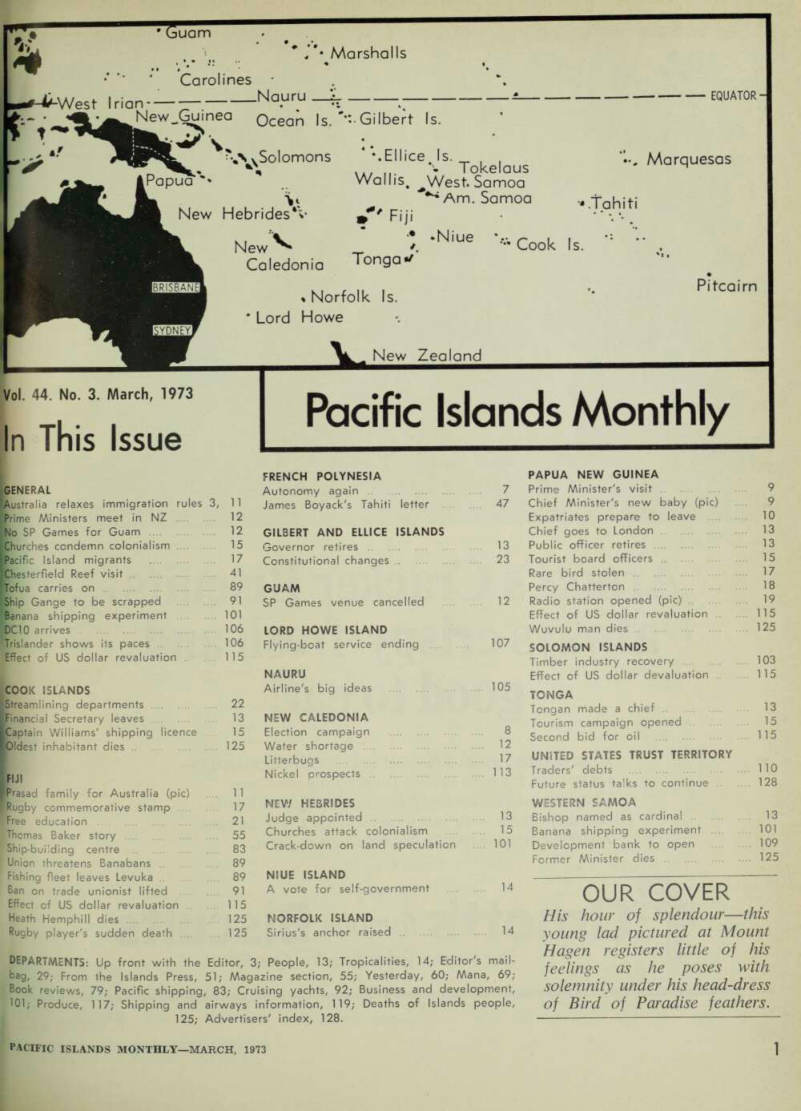 3
3 4
4 5
5 6
6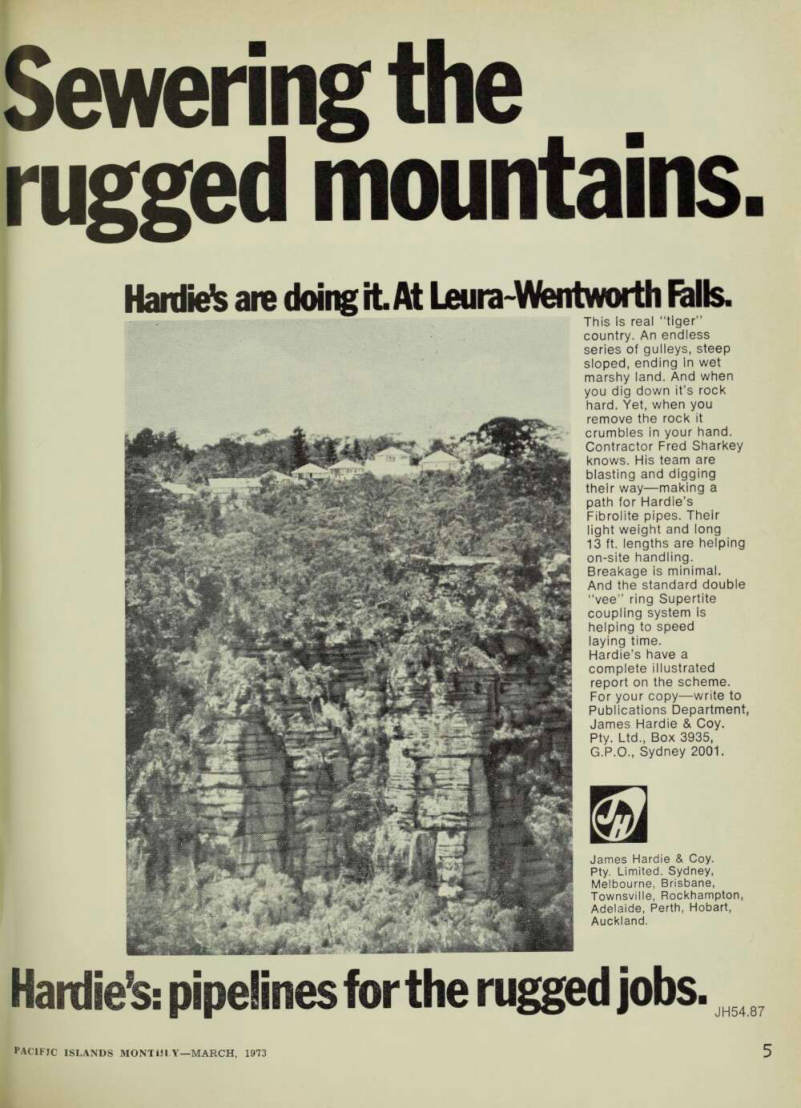 7
7 8
8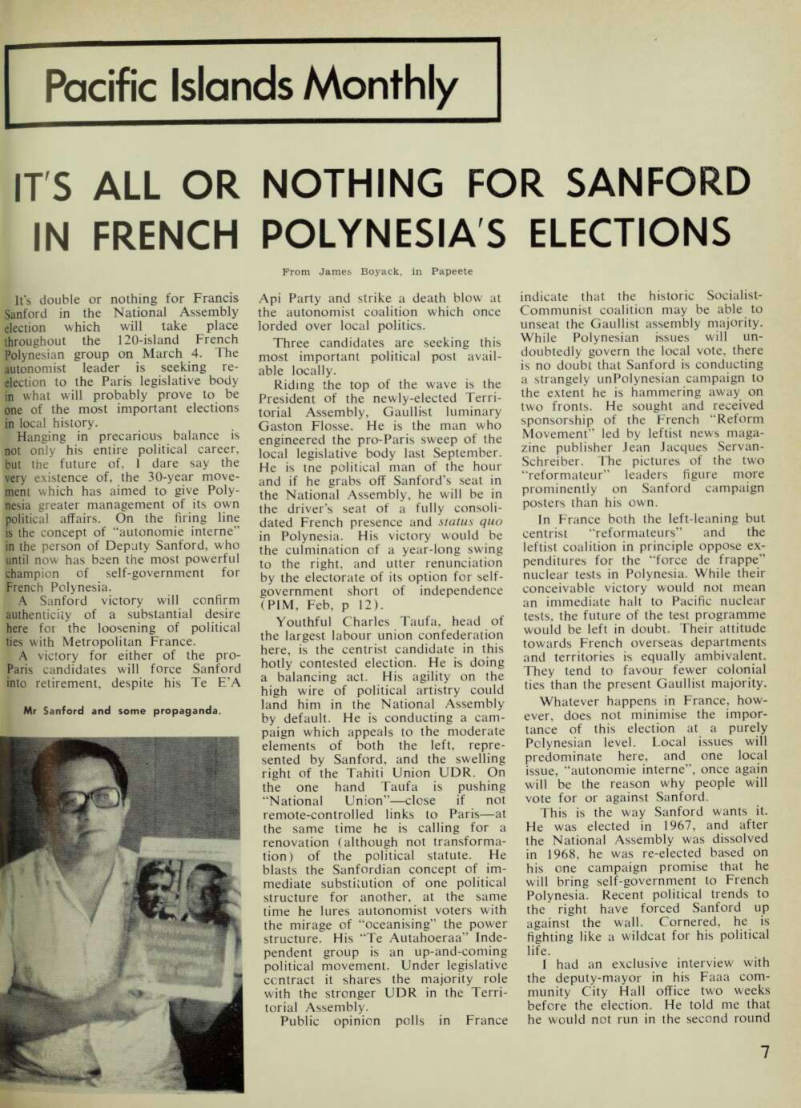 9
9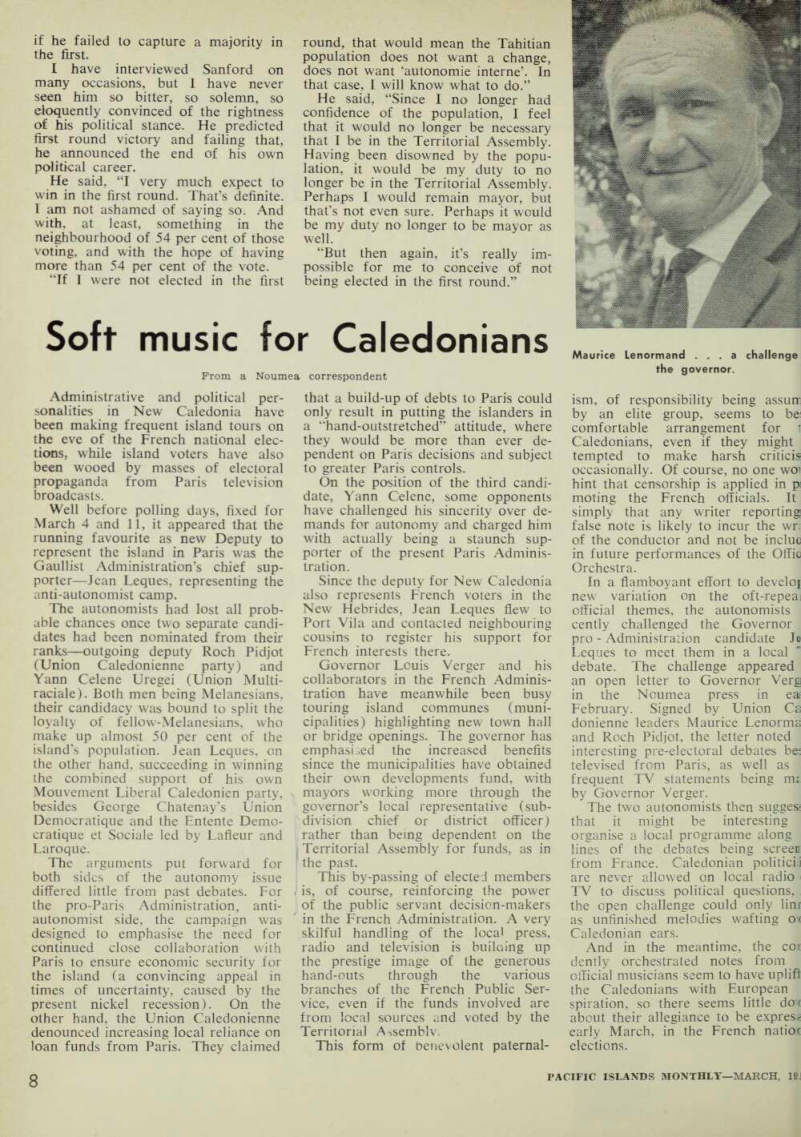 10
10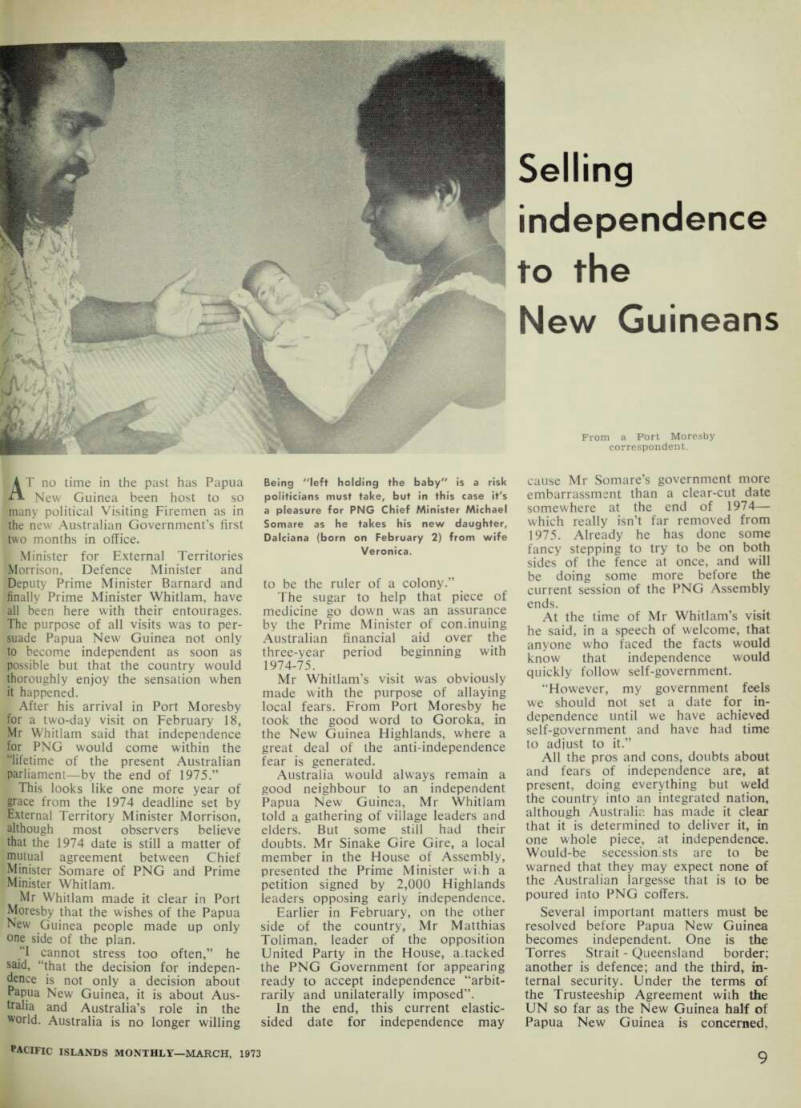 11
11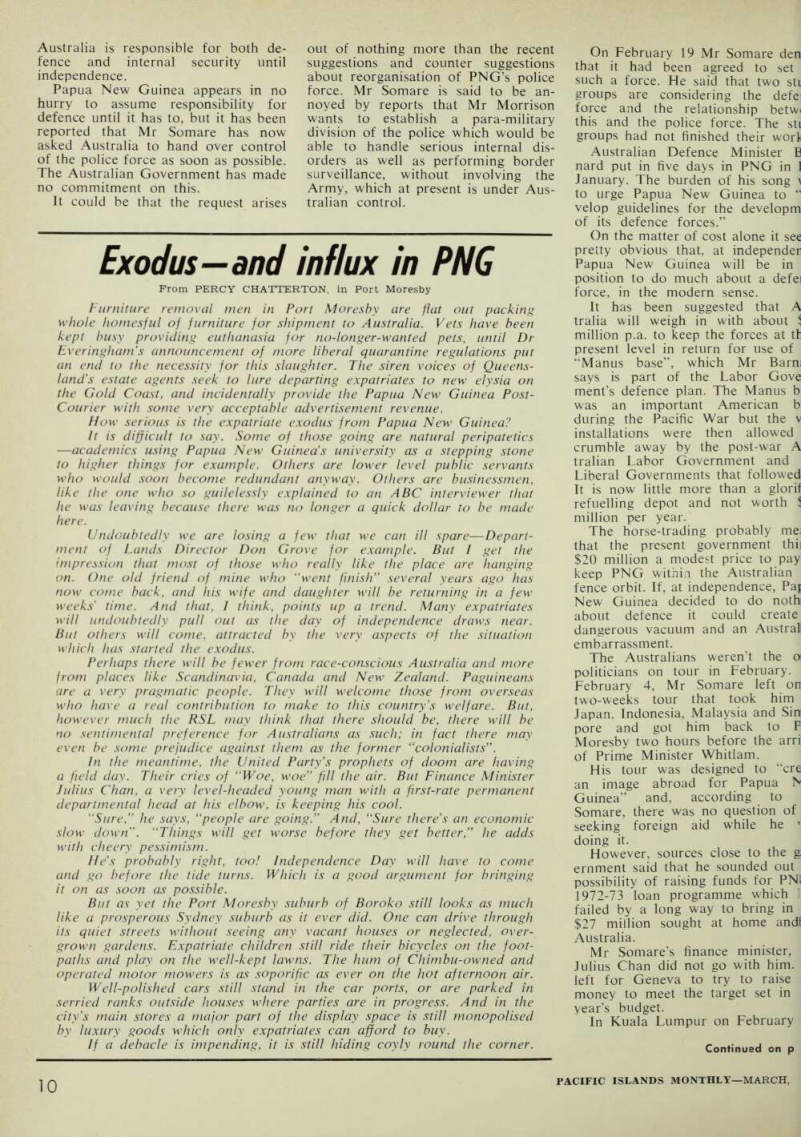 12
12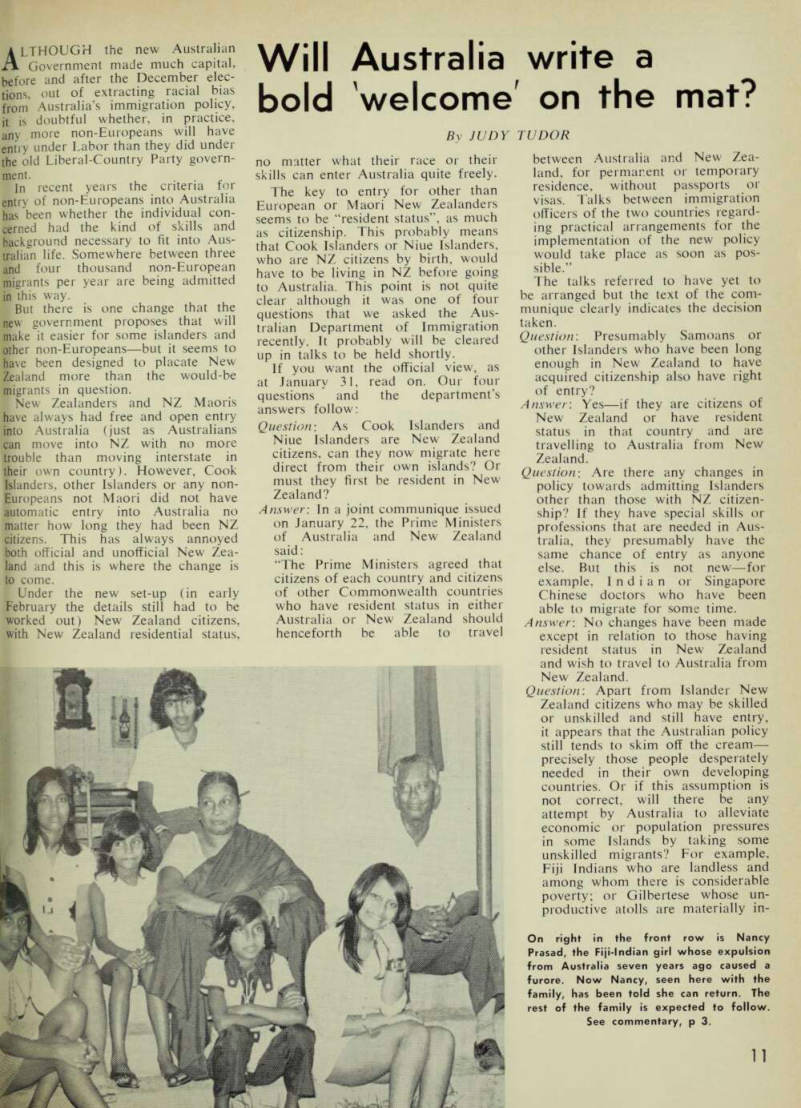 13
13 14
14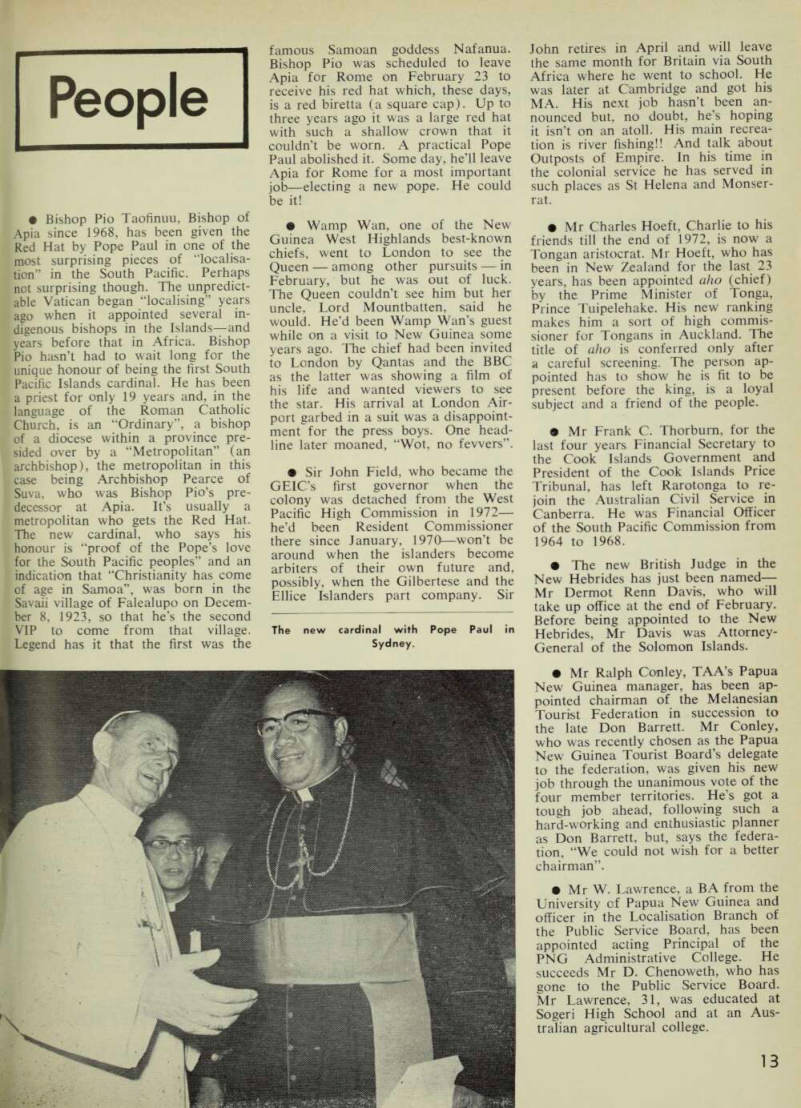 15
15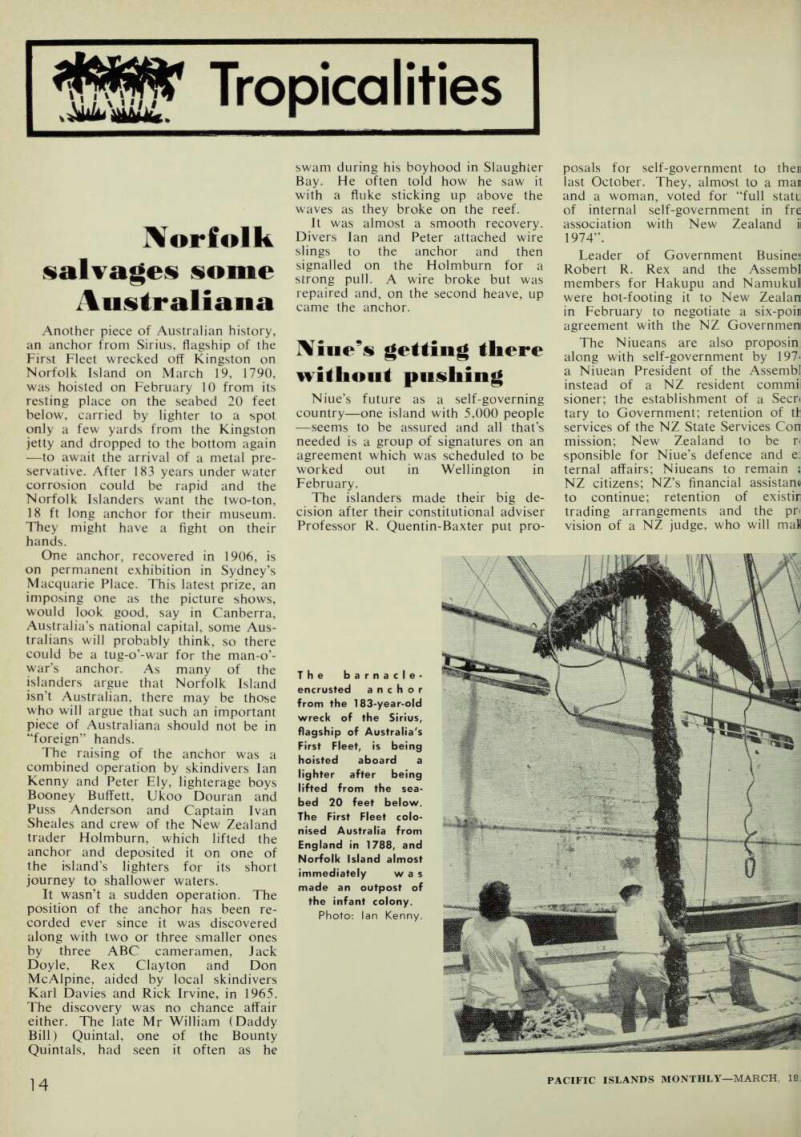 16
16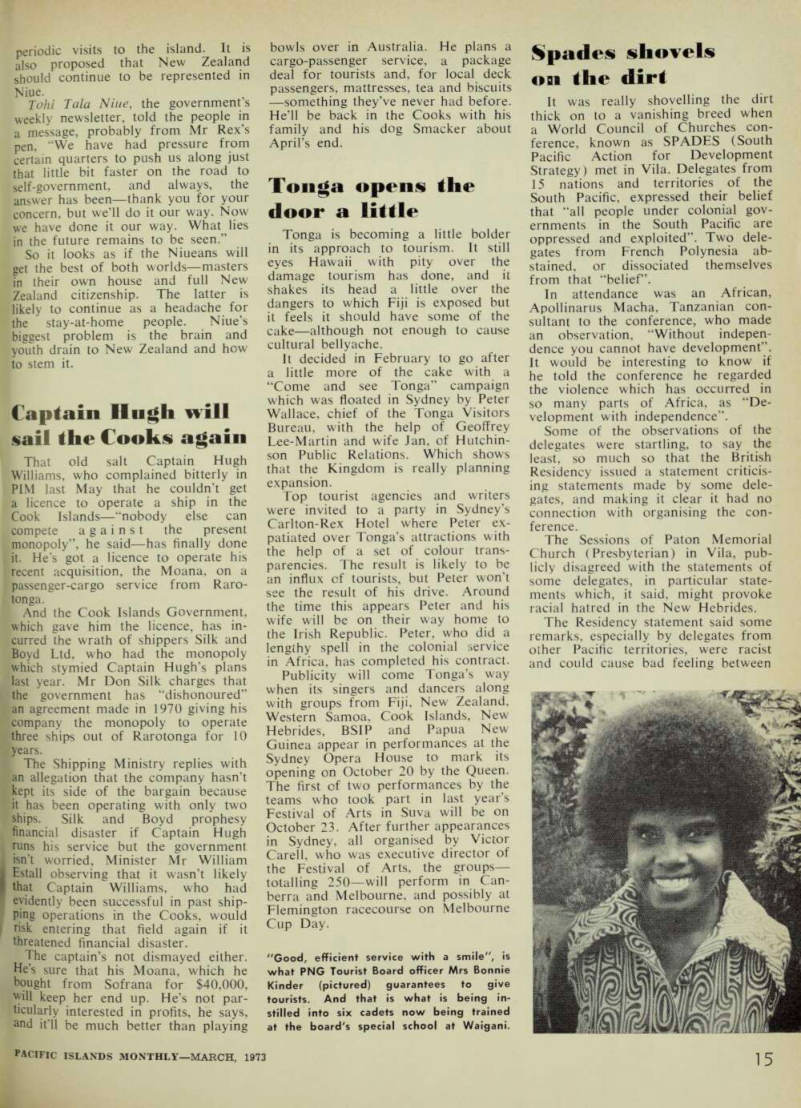 17
17 18
18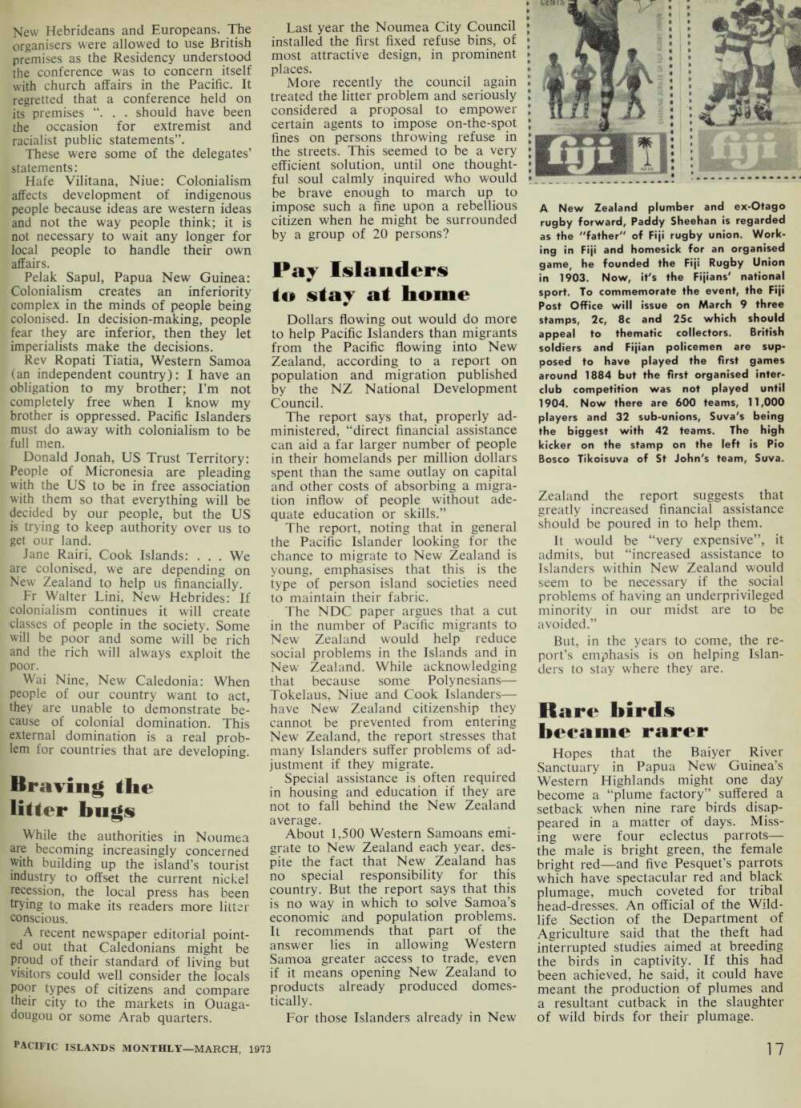 19
19 20
20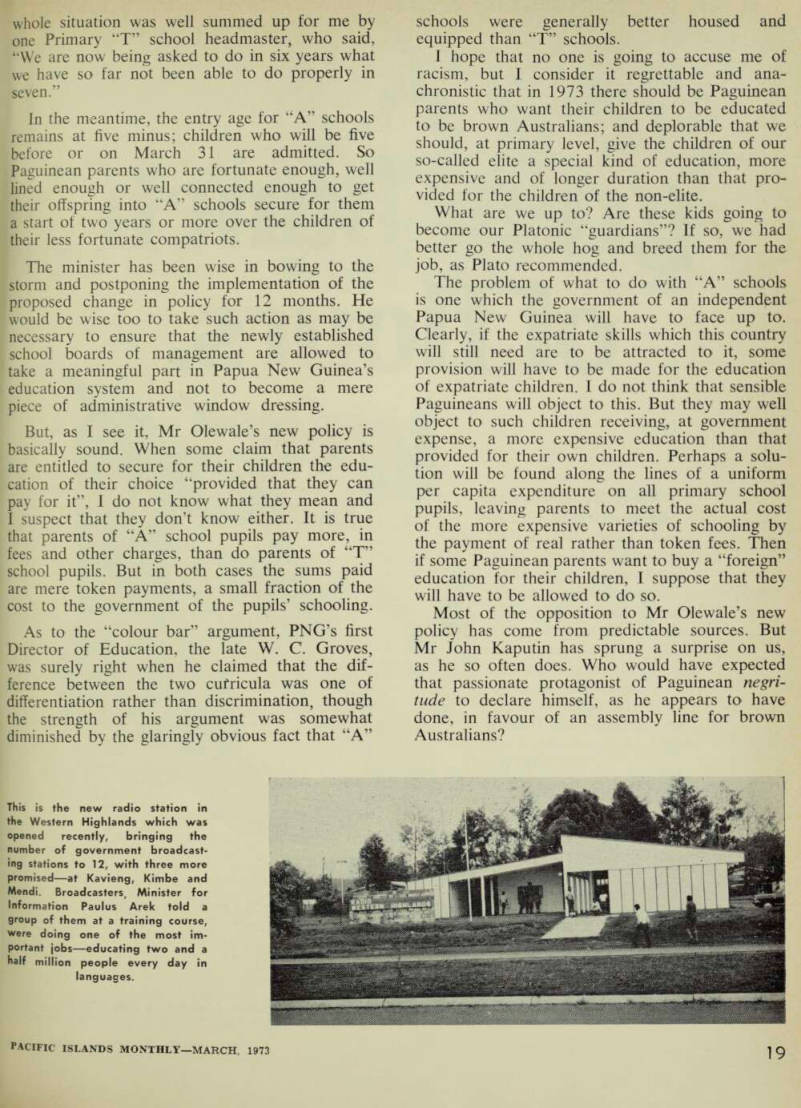 21
21 22
22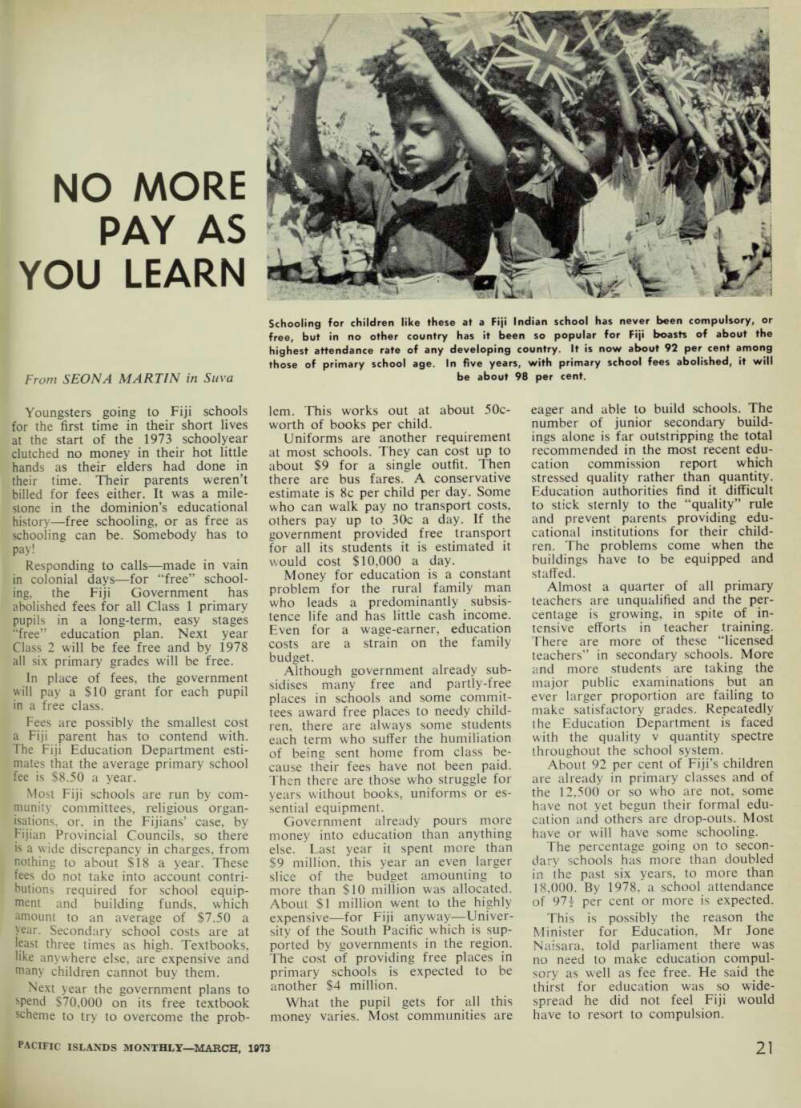 23
23 24
24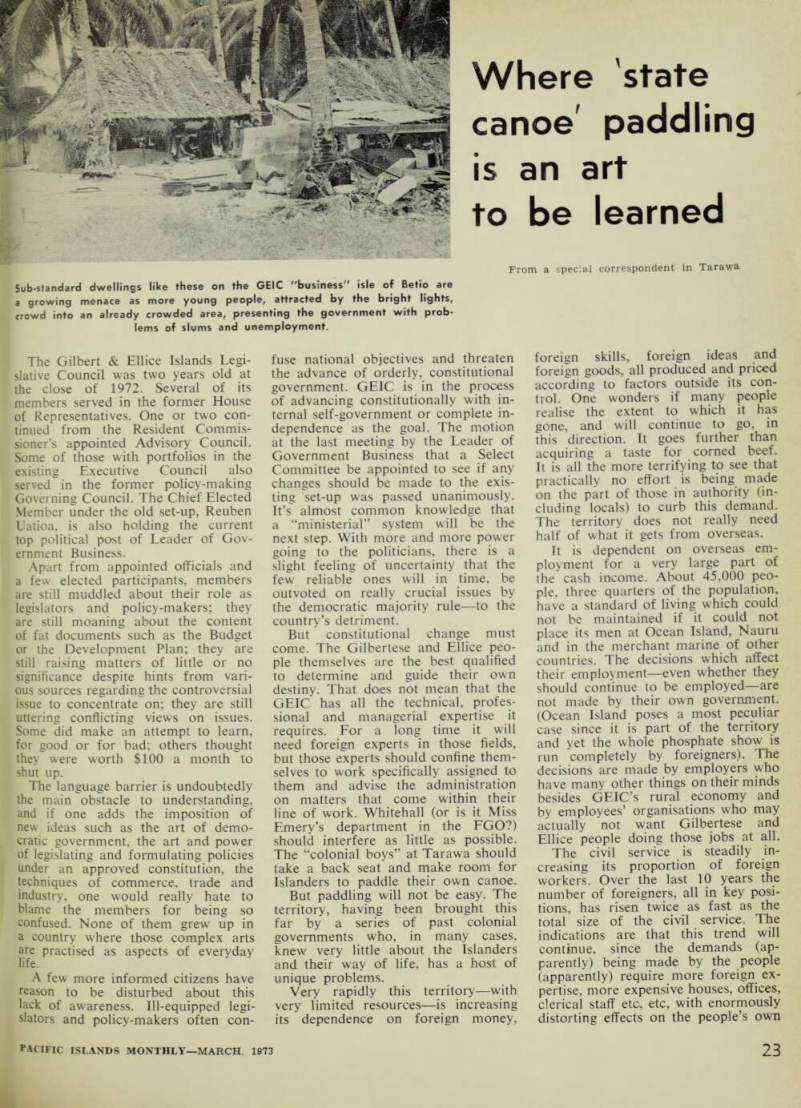 25
25 26
26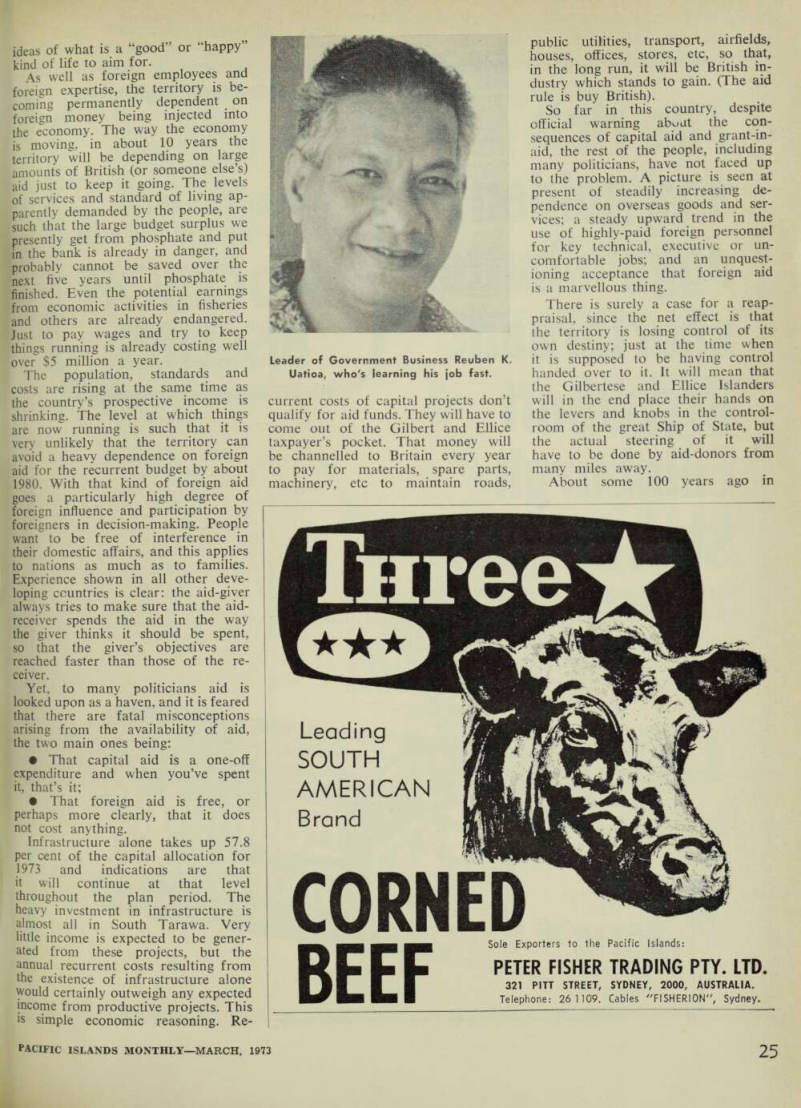 27
27 28
28 29
29 30
30 31
31 32
32 33
33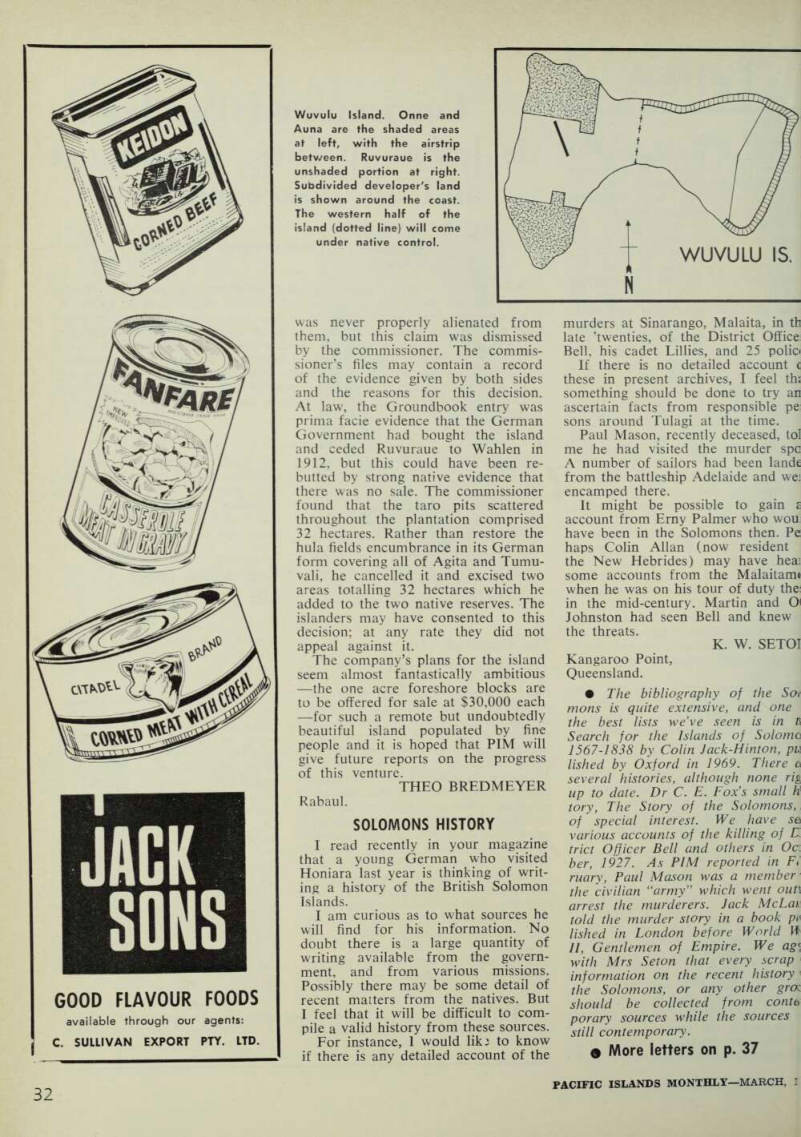 34
34 35
35 36
36 37
37 38
38 39
39 40
40 41
41 42
42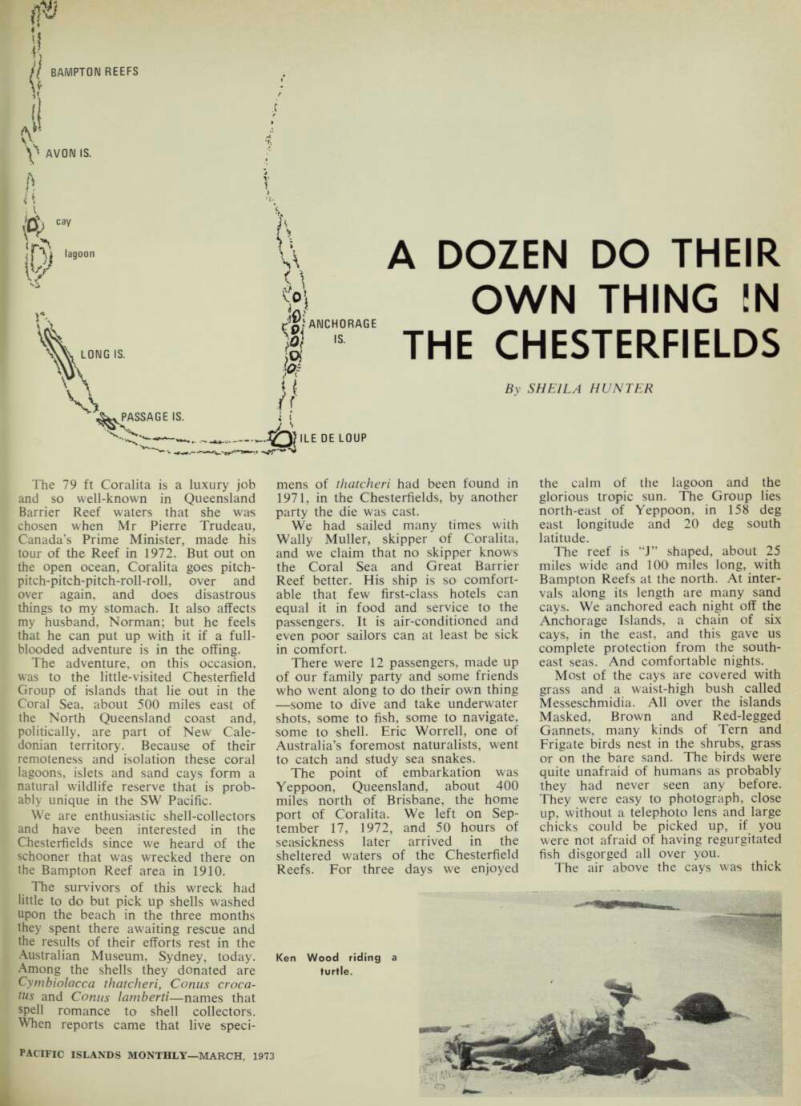 43
43 44
44 45
45 46
46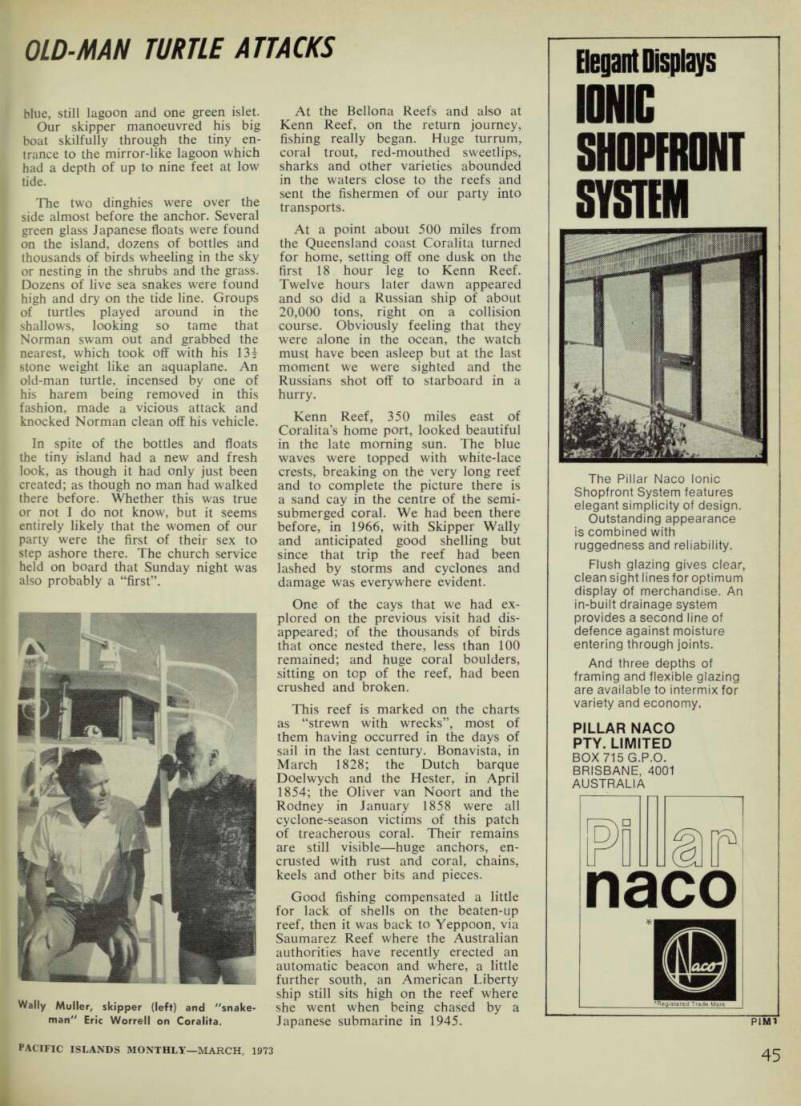 47
47 48
48 49
49 50
50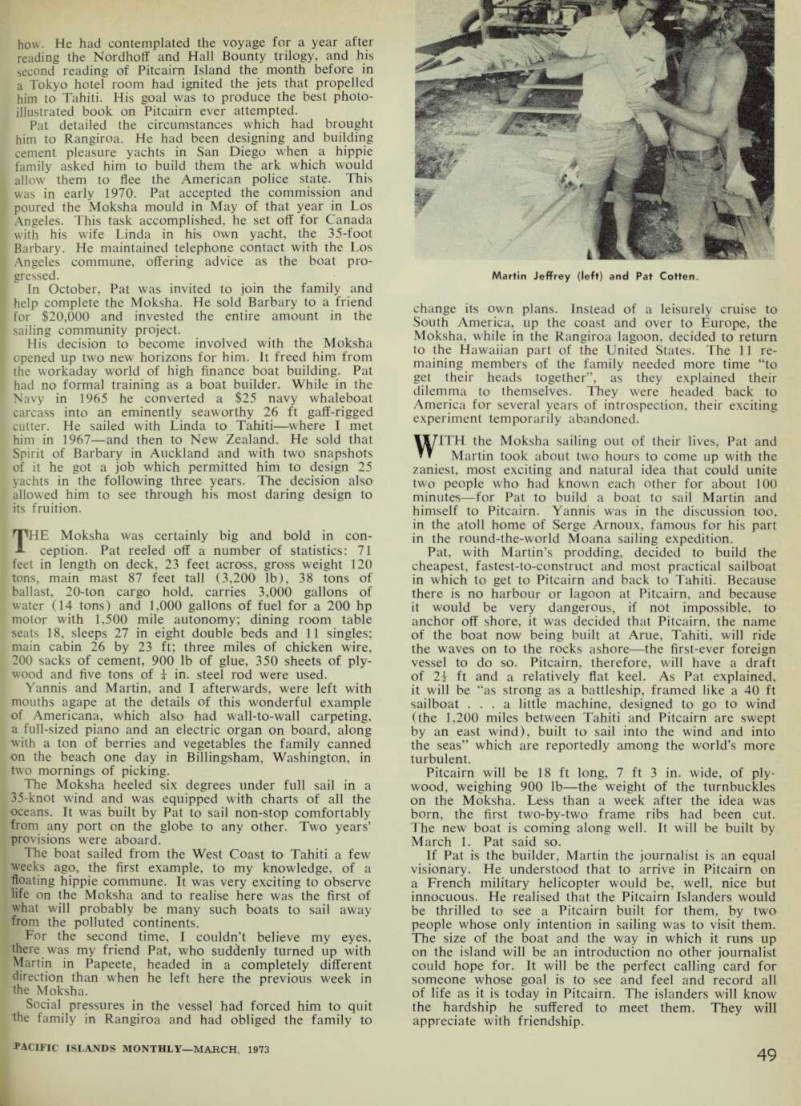 51
51 52
52 53
53 54
54 55
55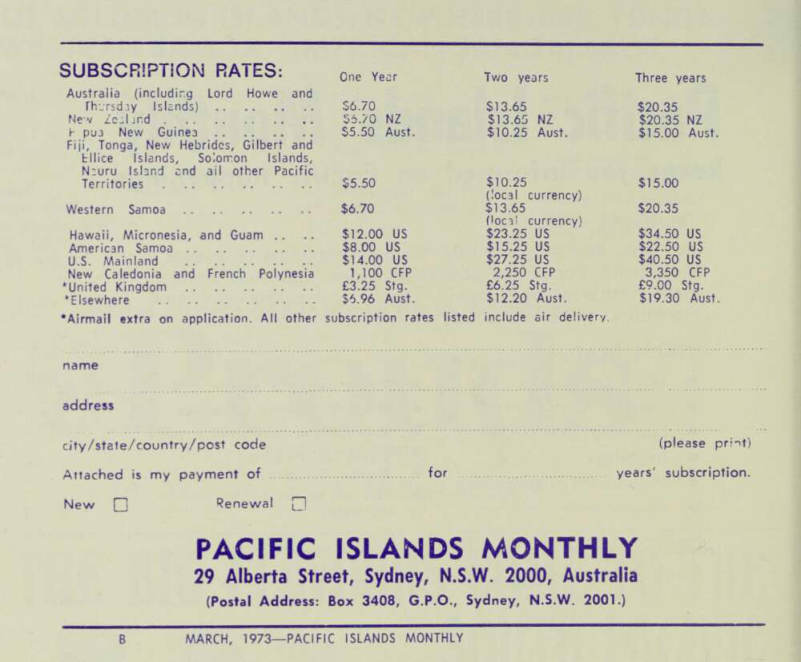 56
56 57
57 58
58 59
59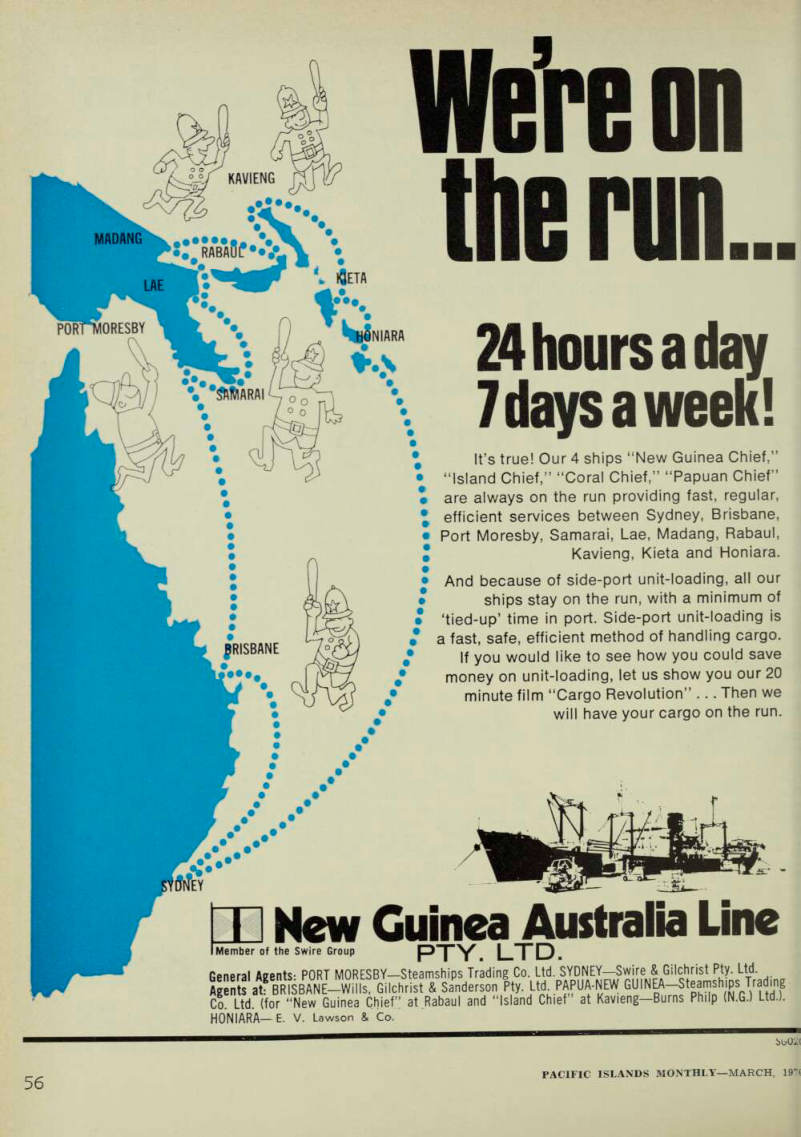 60
60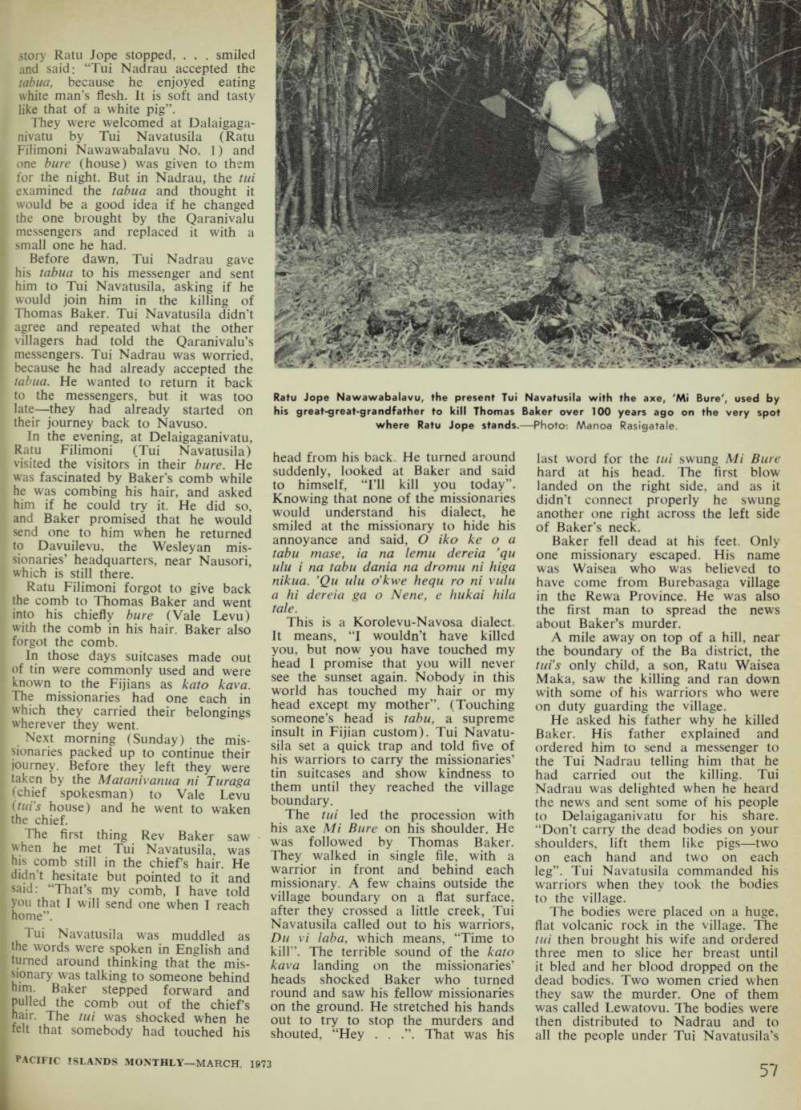 61
61 62
62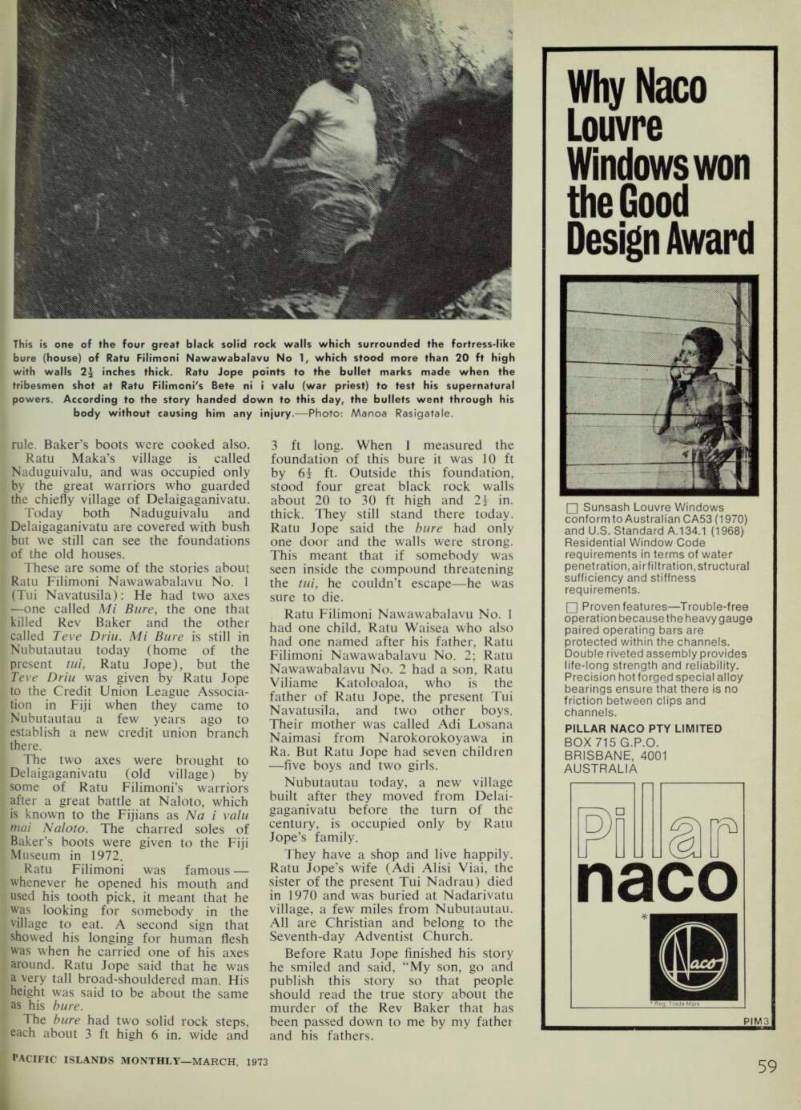 63
63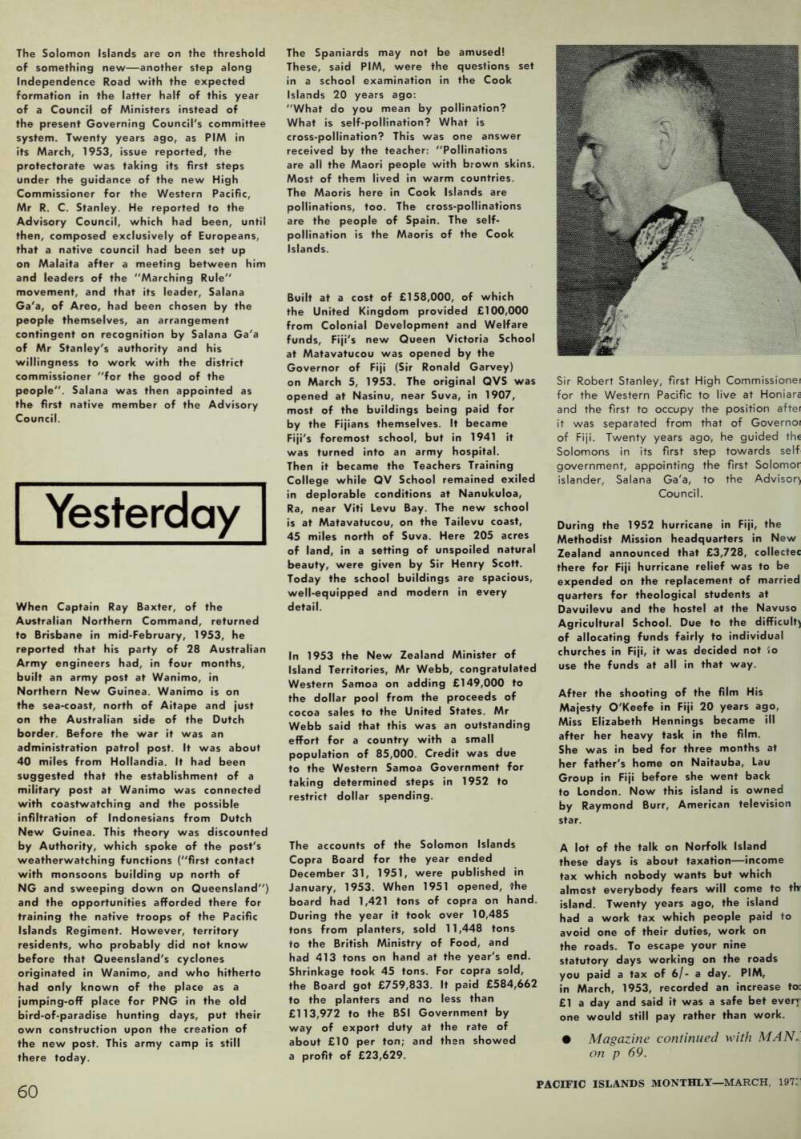 64
64 65
65 66
66 67
67 68
68 69
69 70
70 71
71 72
72 73
73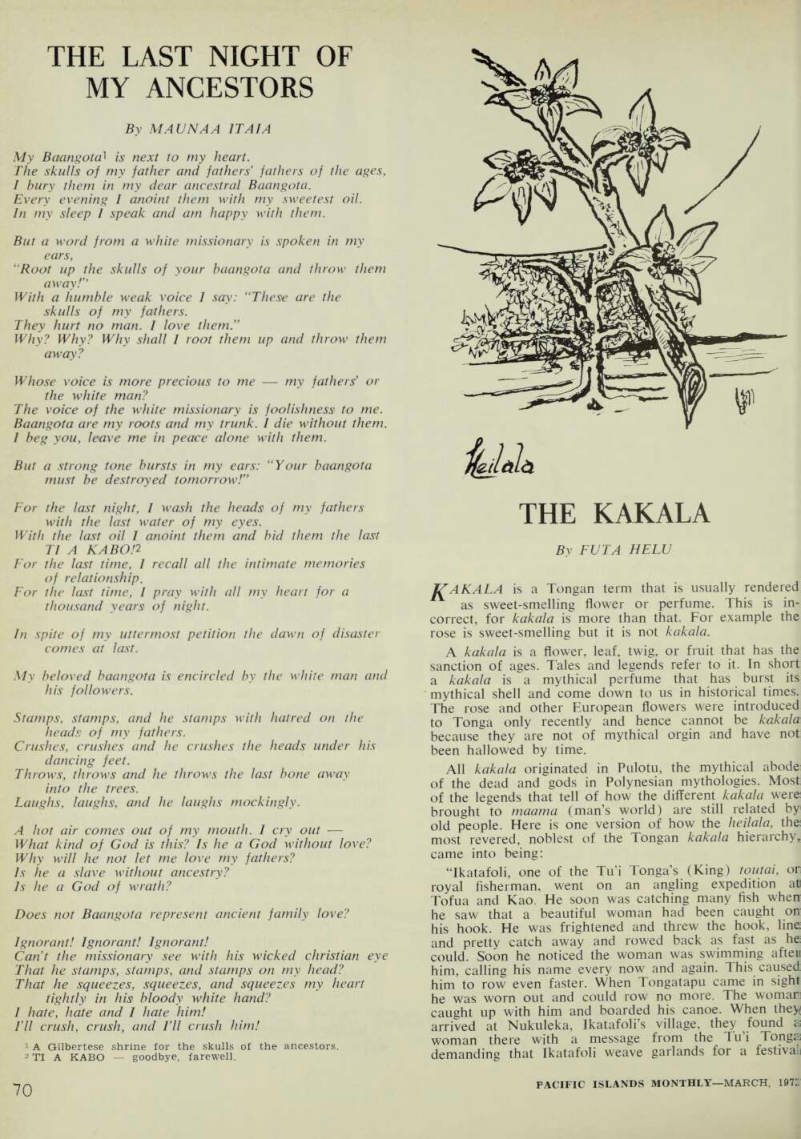 74
74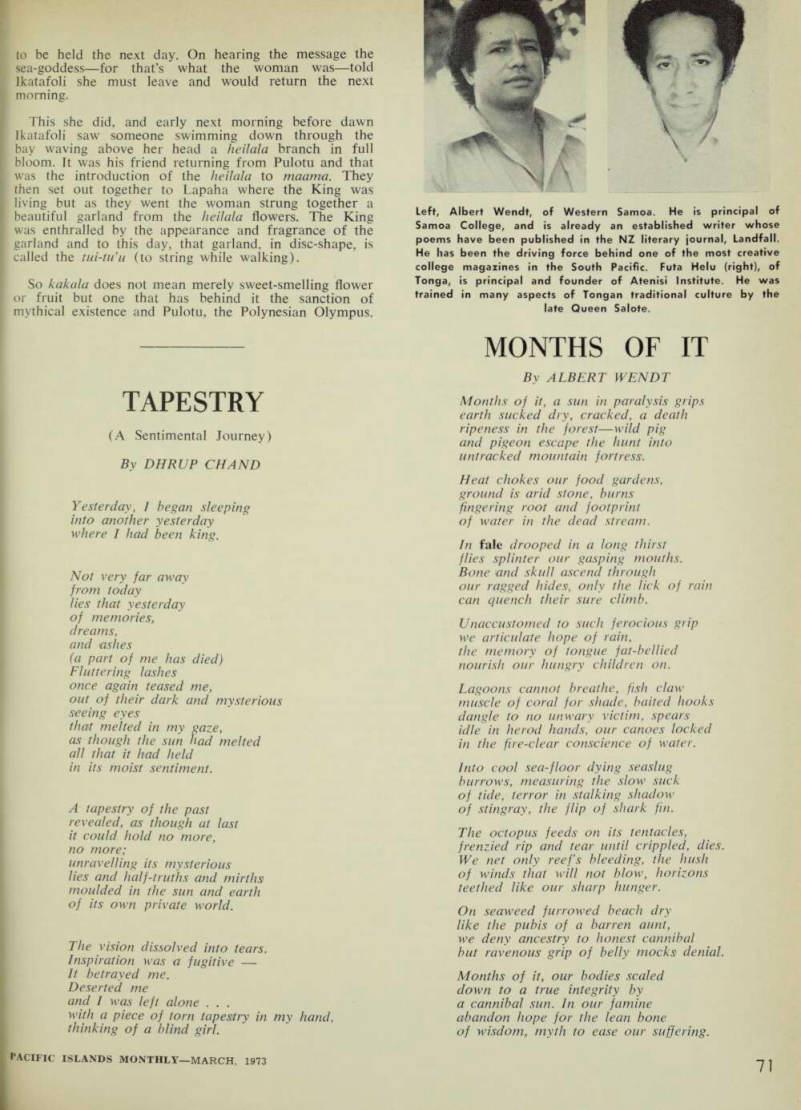 75
75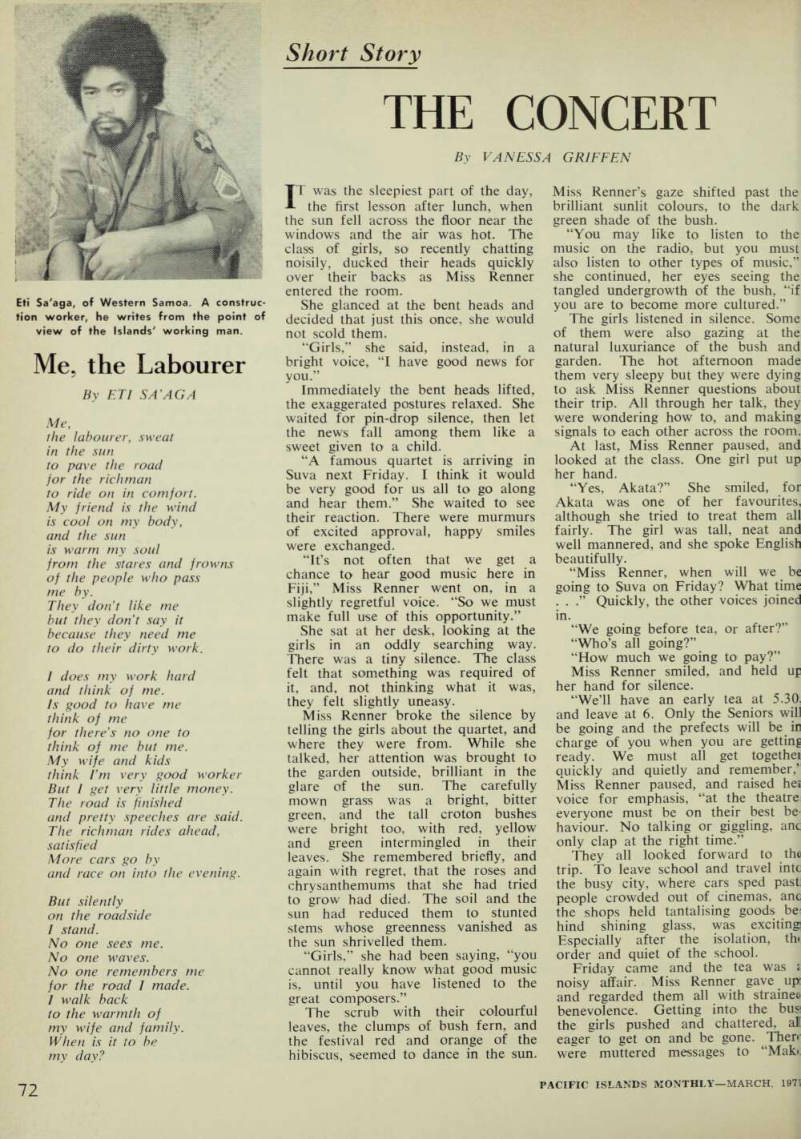 76
76 77
77 78
78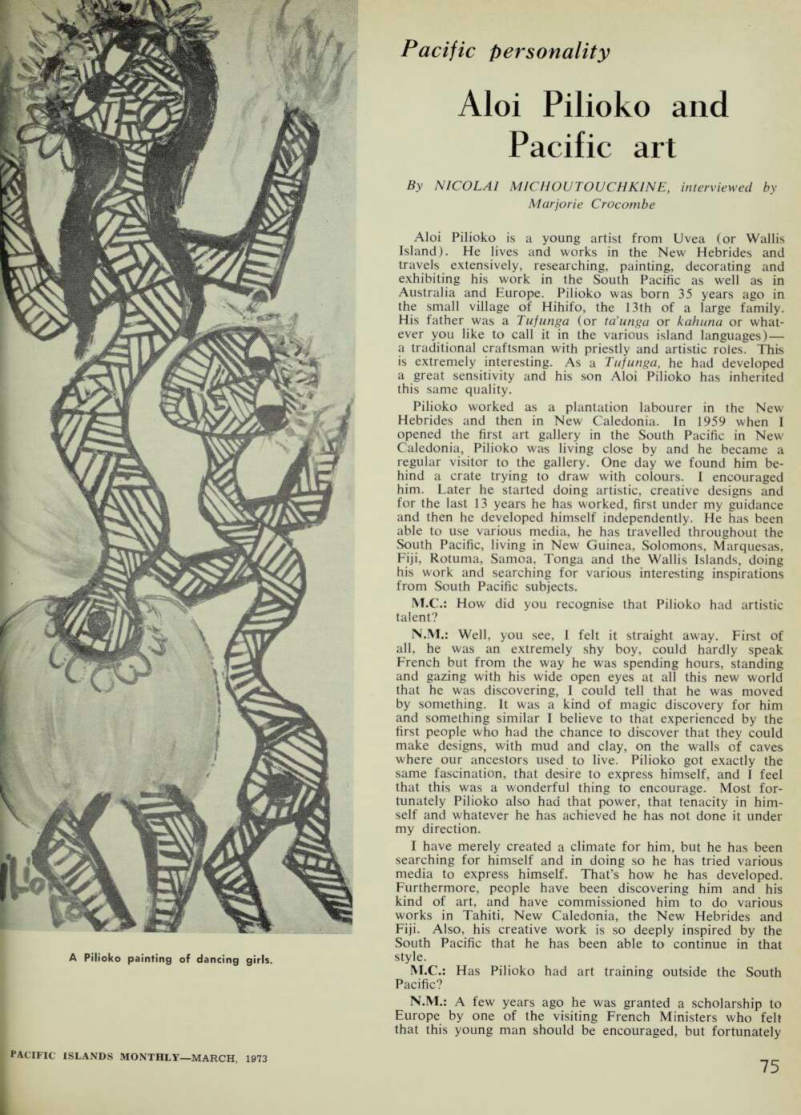 79
79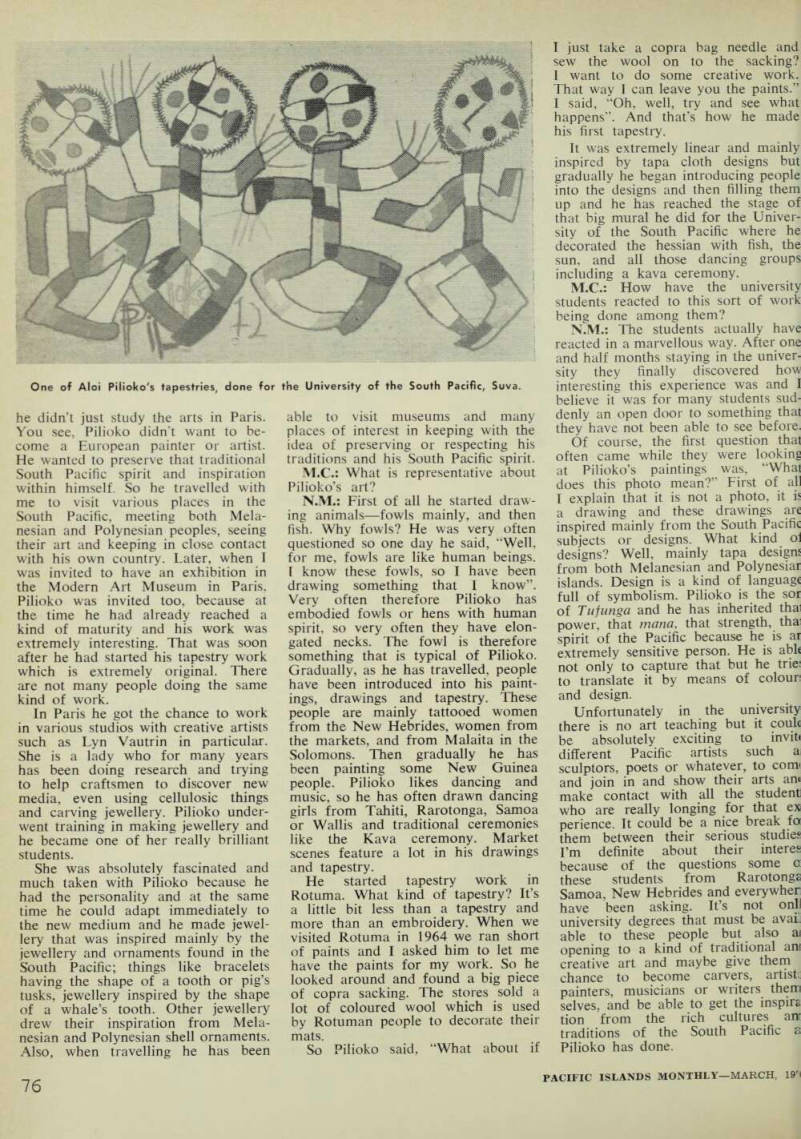 80
80 81
81 82
82 83
83 84
84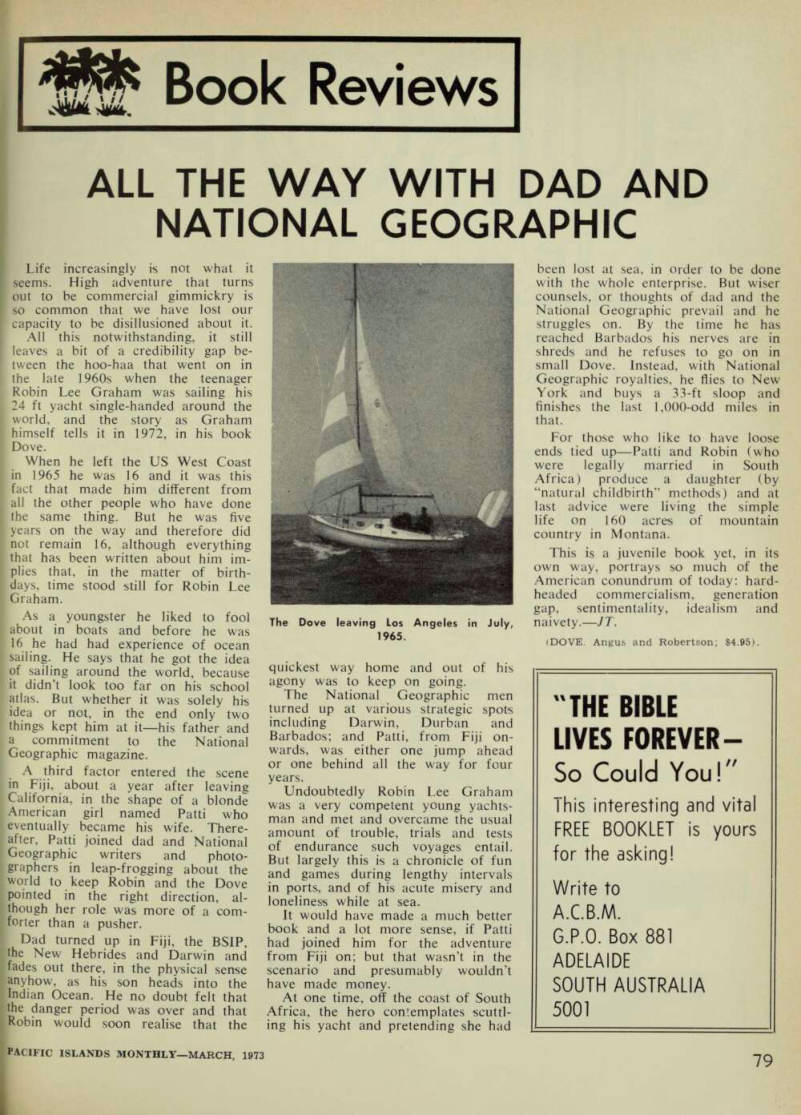 85
85 86
86 87
87 88
88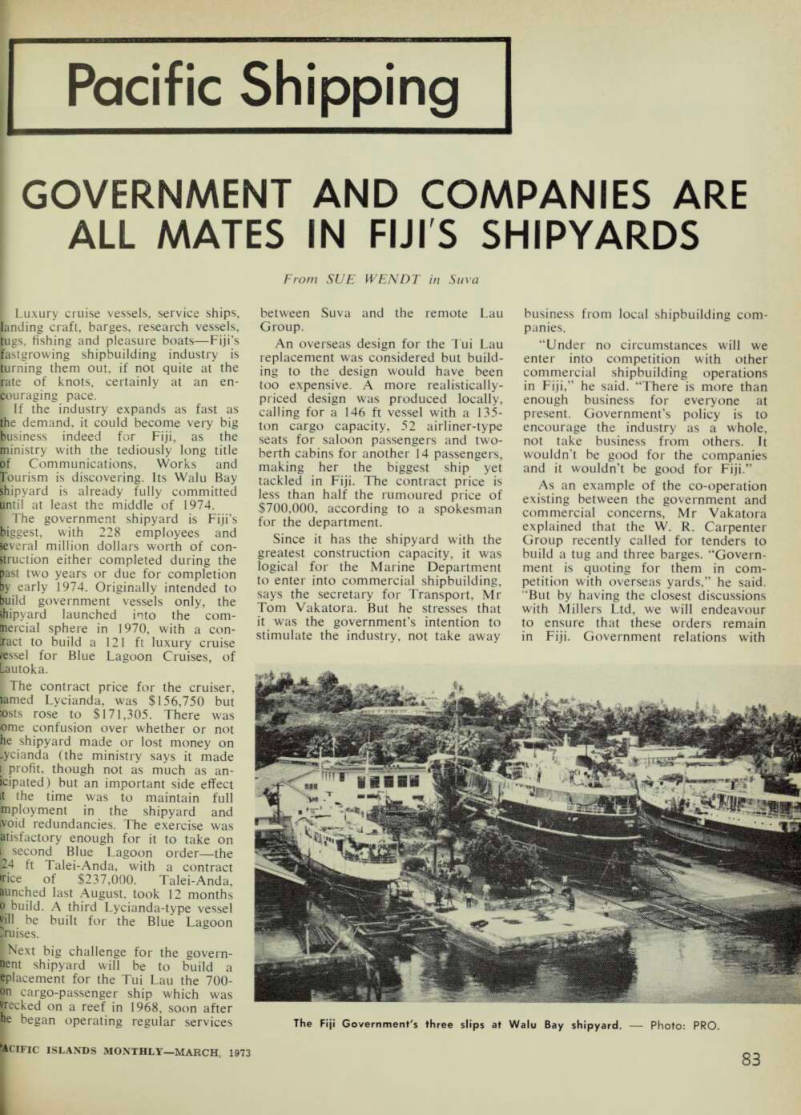 89
89 90
90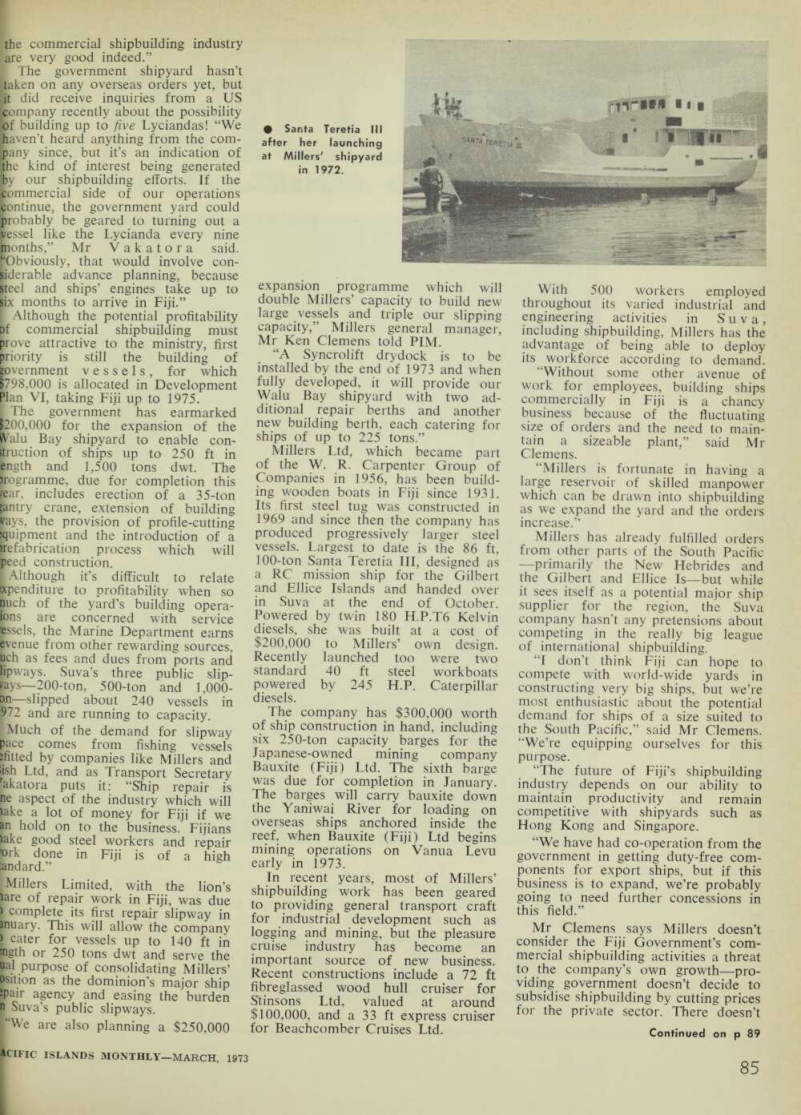 91
91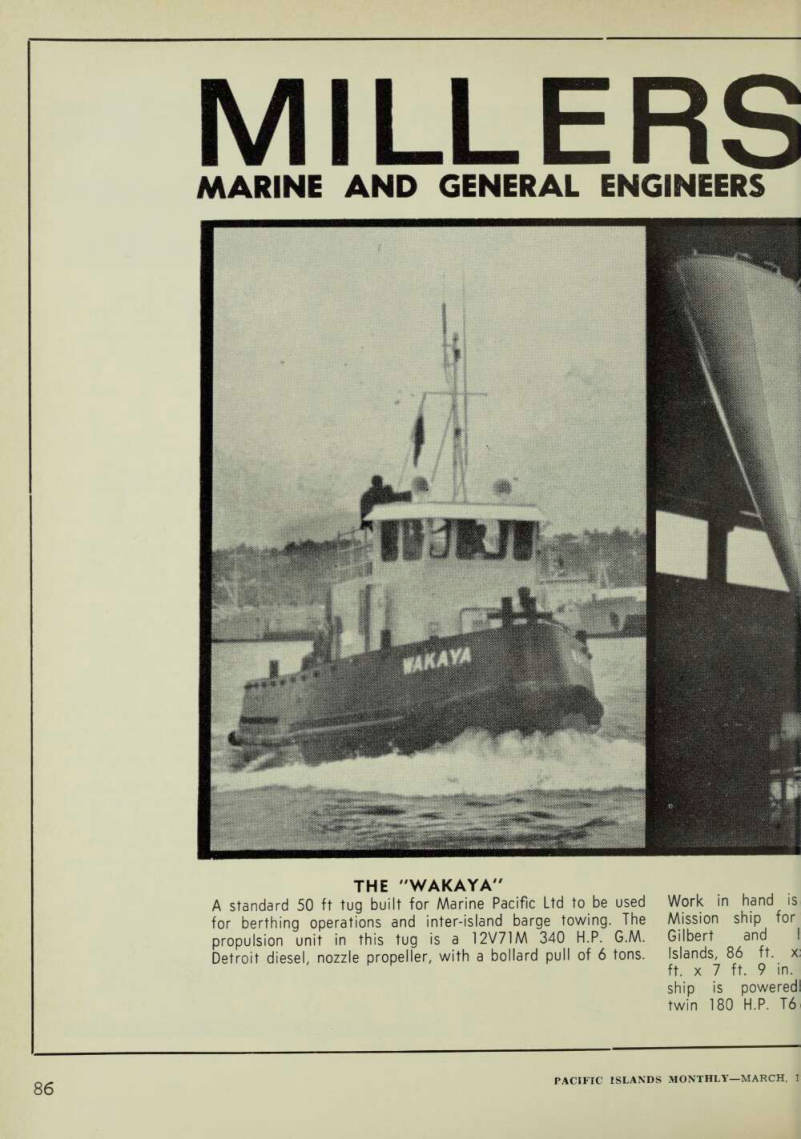 92
92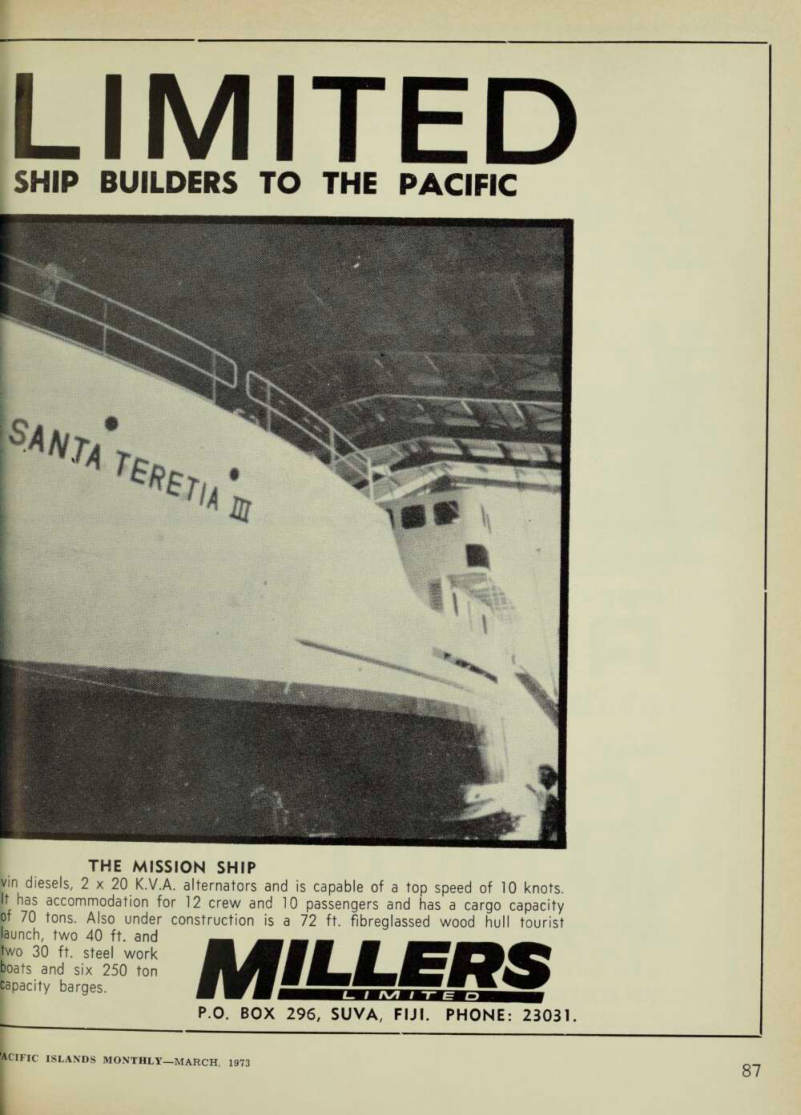 93
93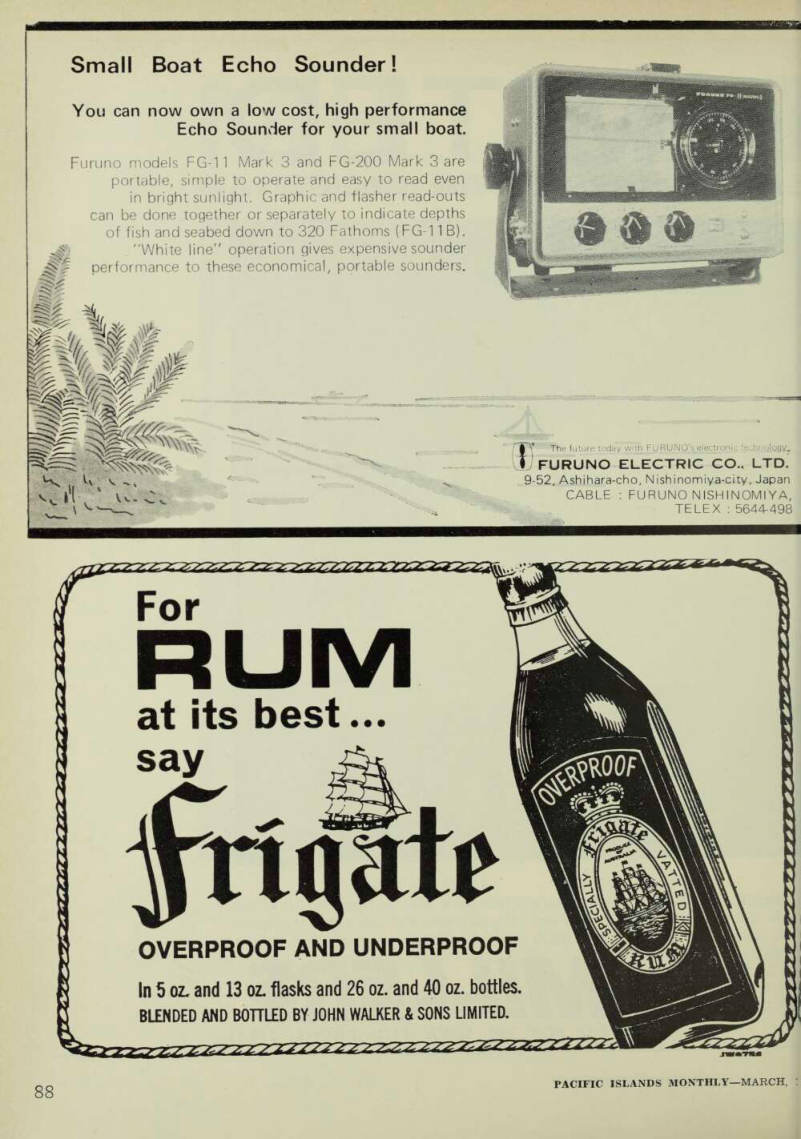 94
94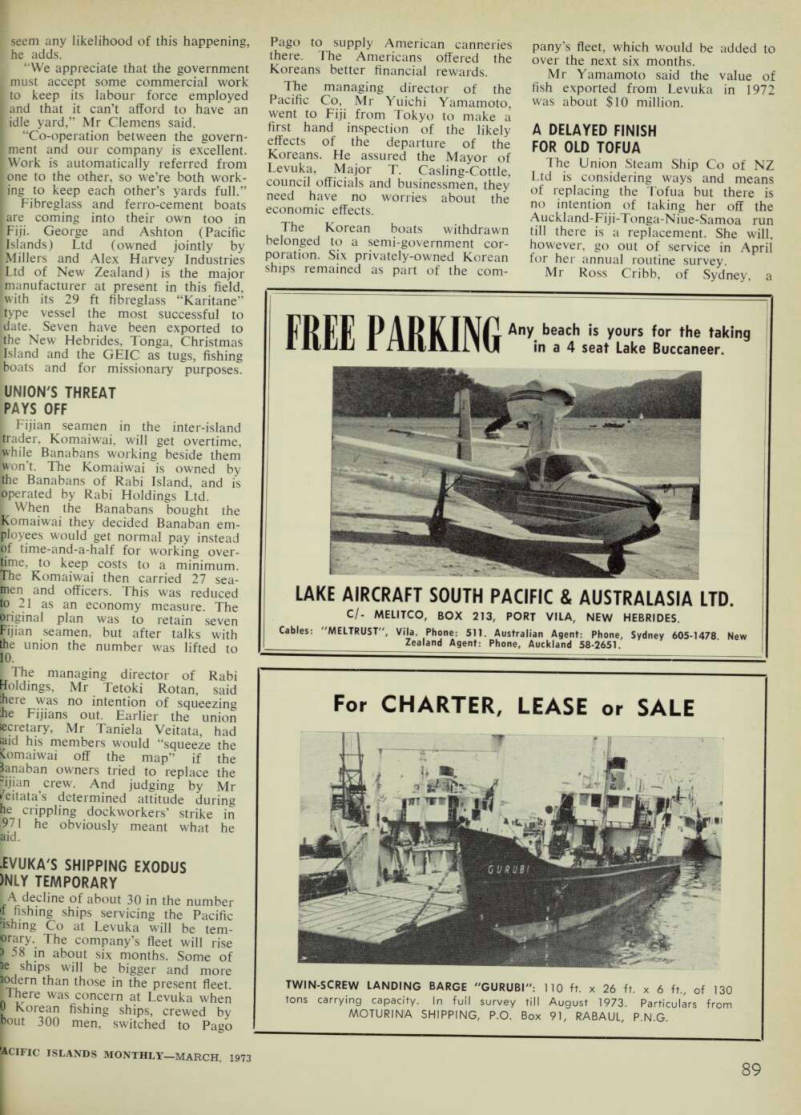 95
95 96
96 97
97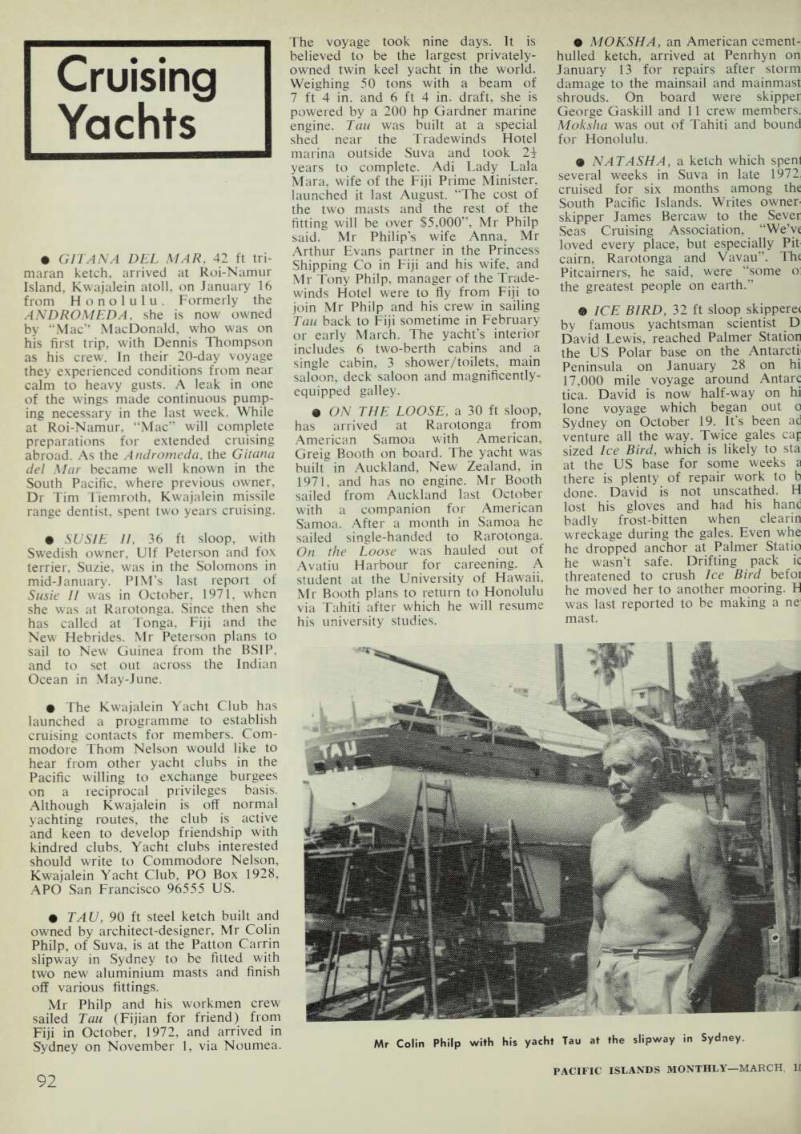 98
98 99
99 100
100 101
101 102
102 103
103 104
104 105
105 106
106 107
107 108
108 109
109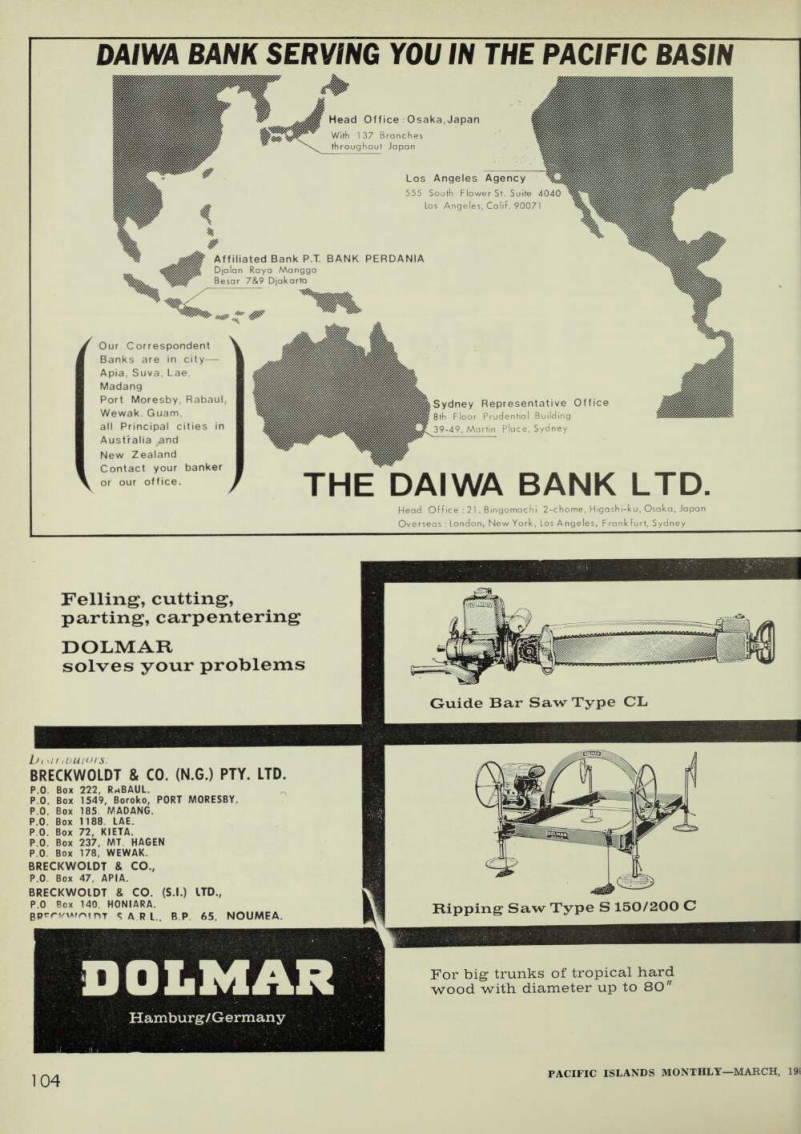 110
110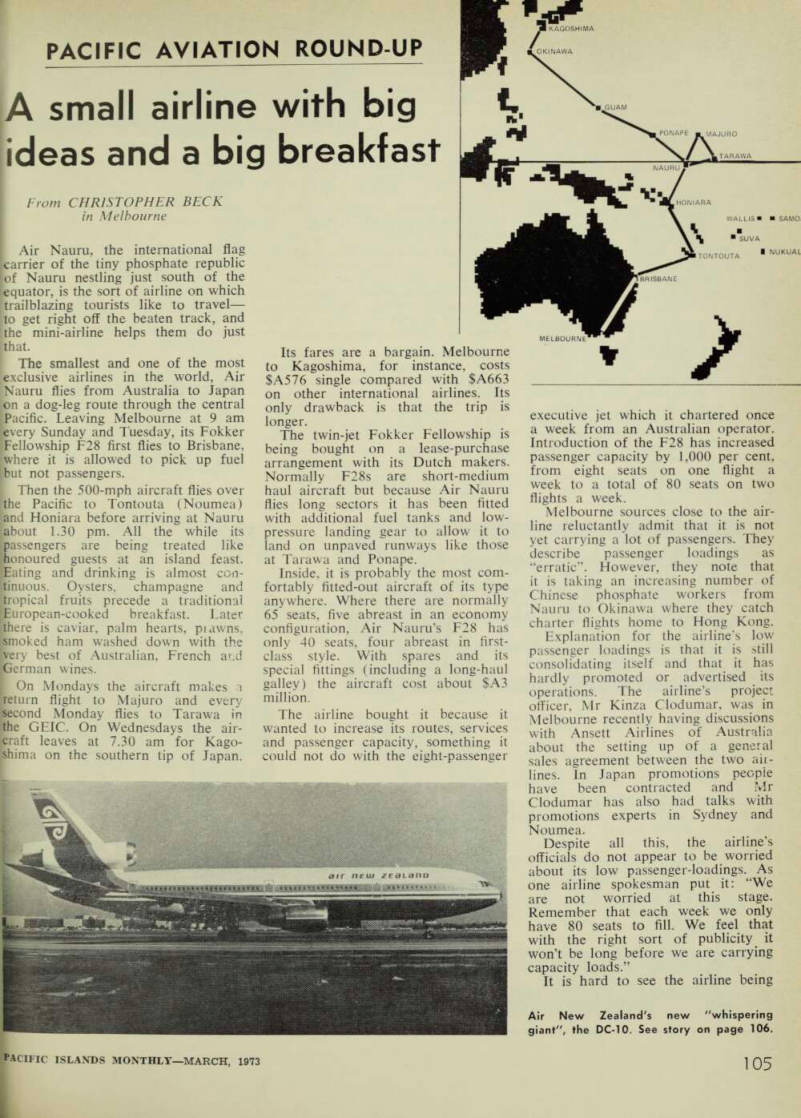 111
111 112
112 113
113 114
114 115
115 116
116 117
117 118
118 119
119 120
120 121
121 122
122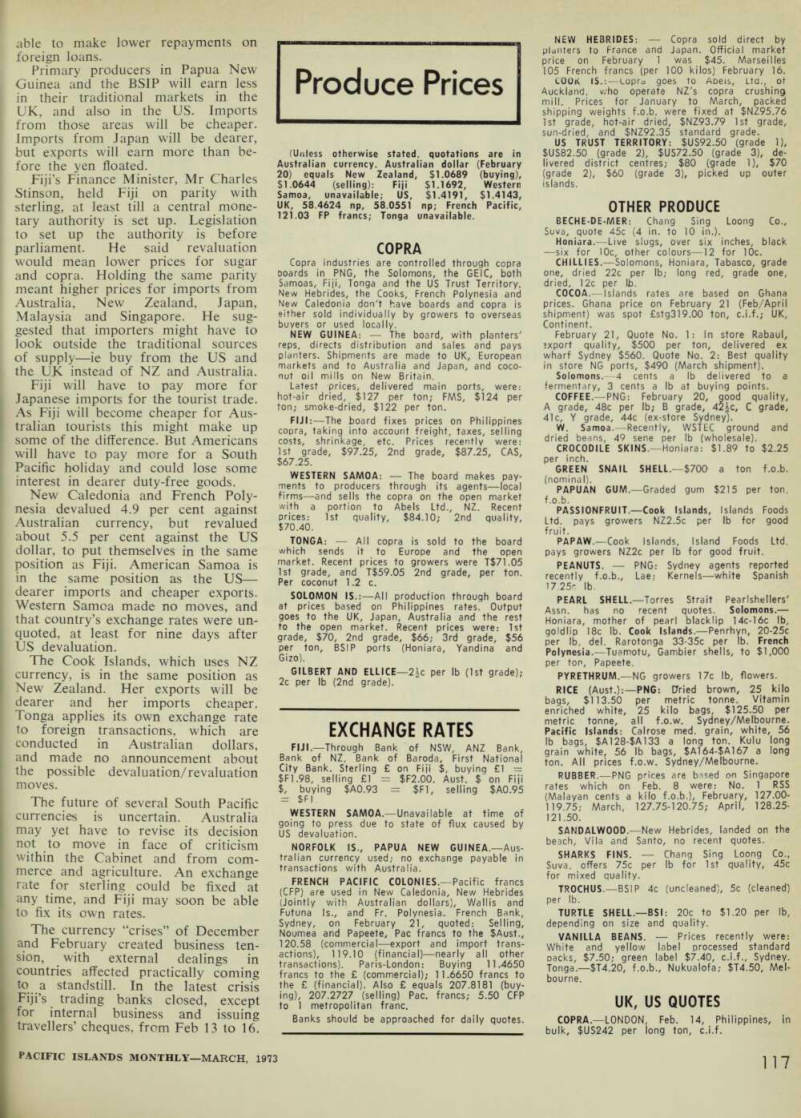 123
123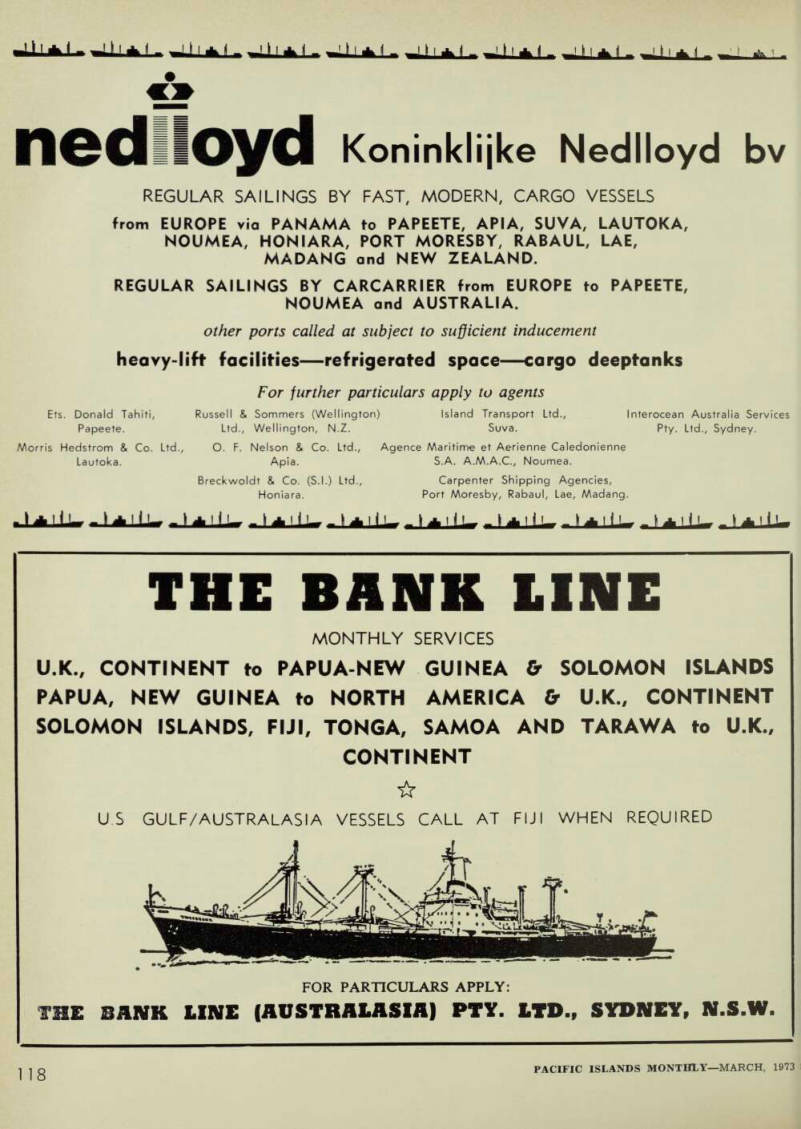 124
124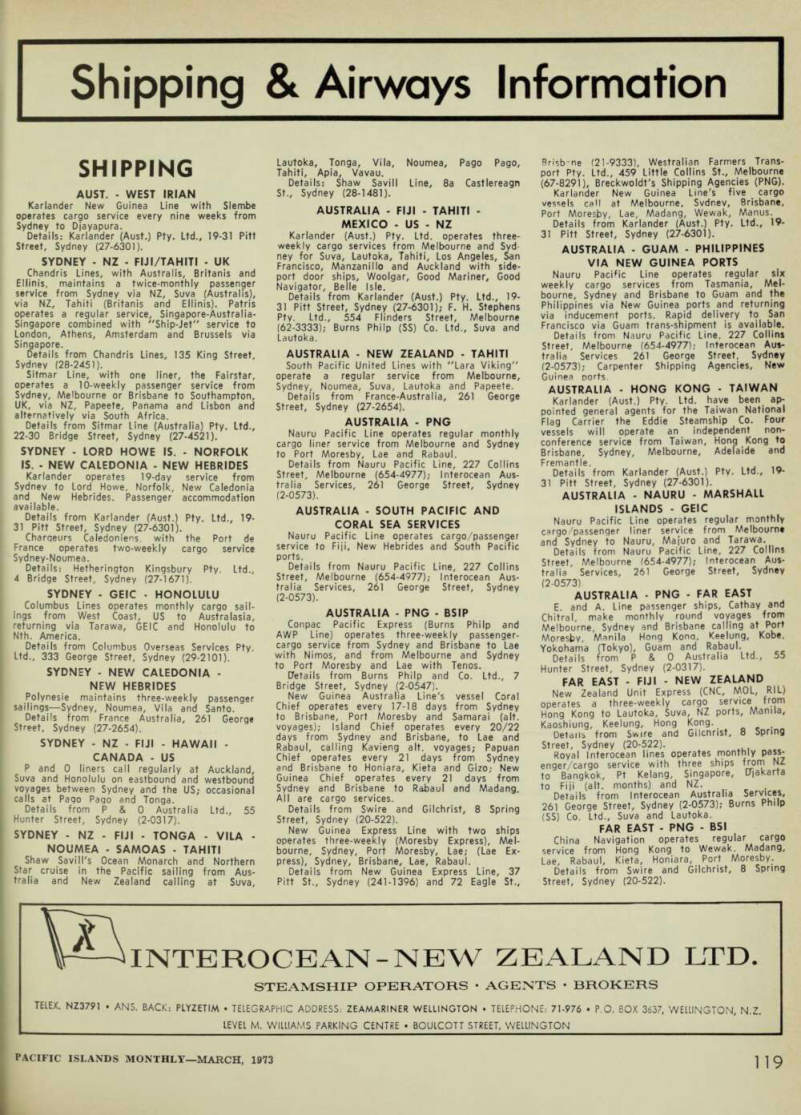 125
125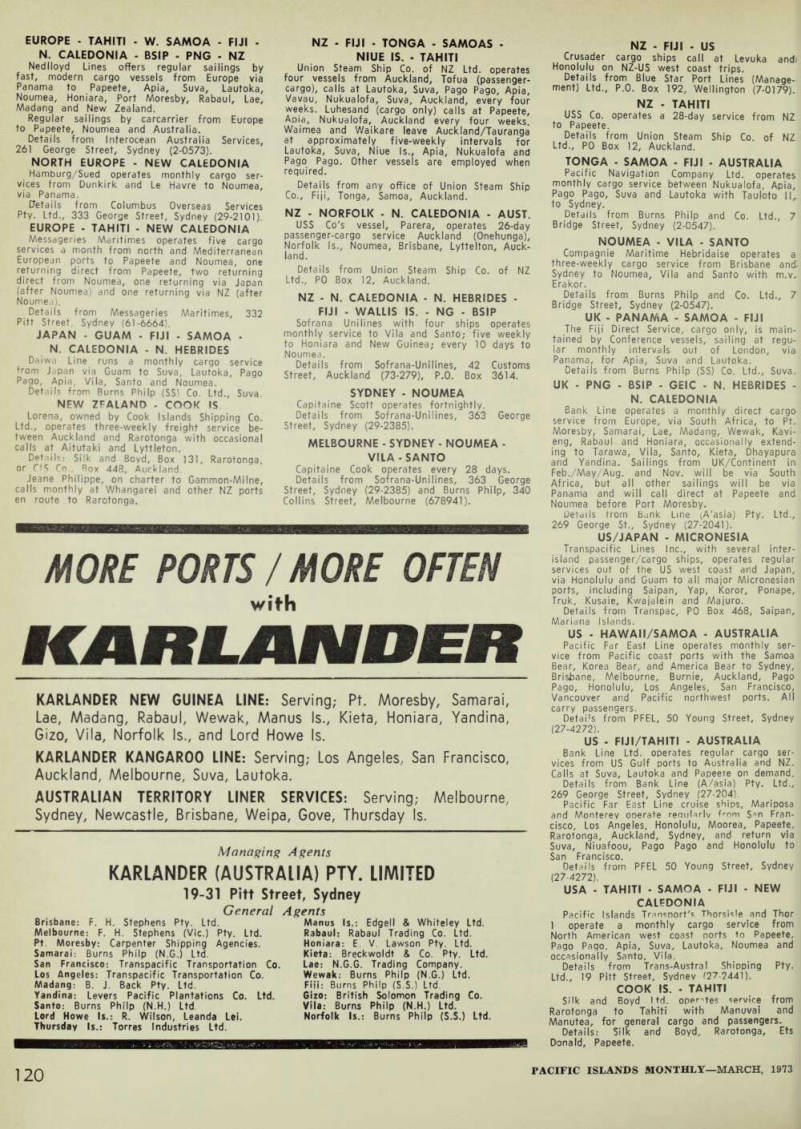 126
126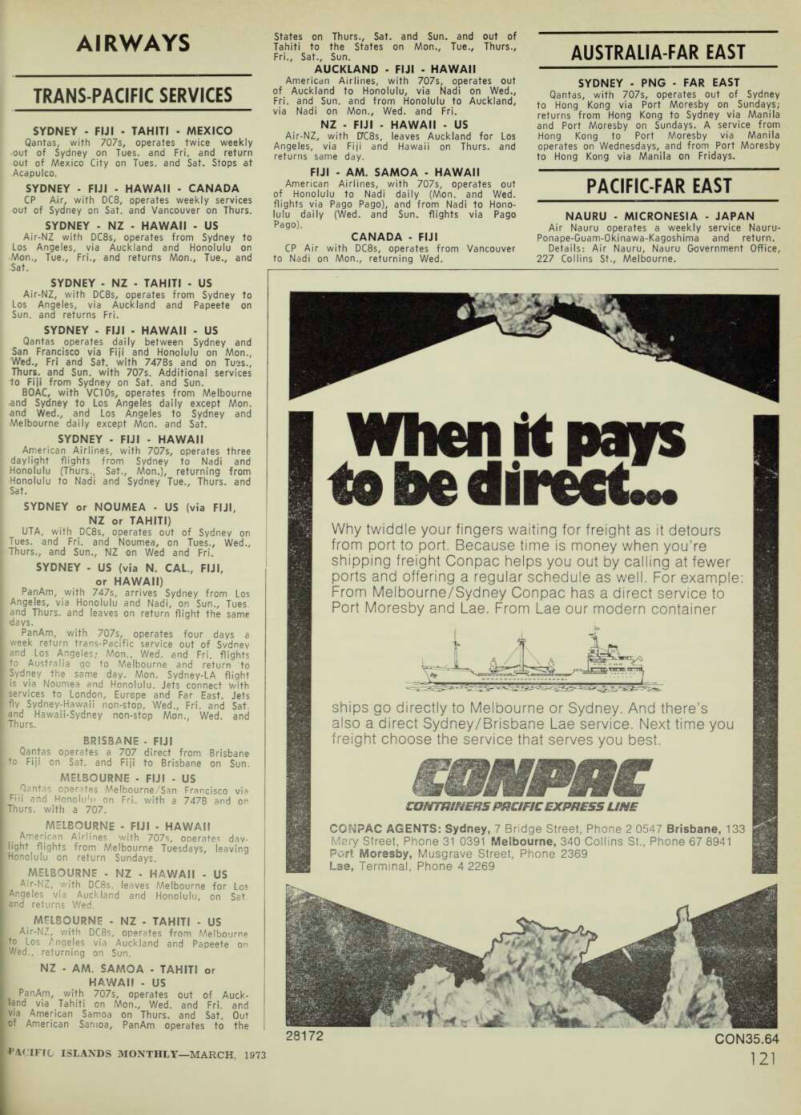 127
127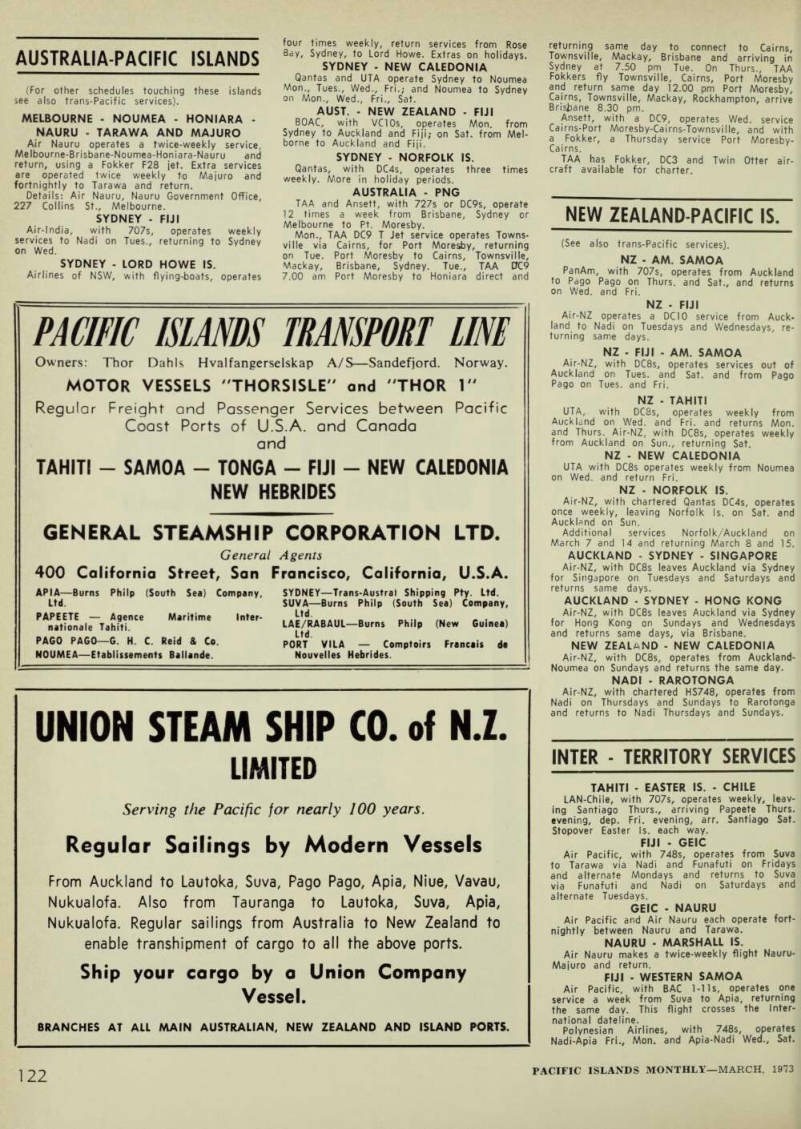 128
128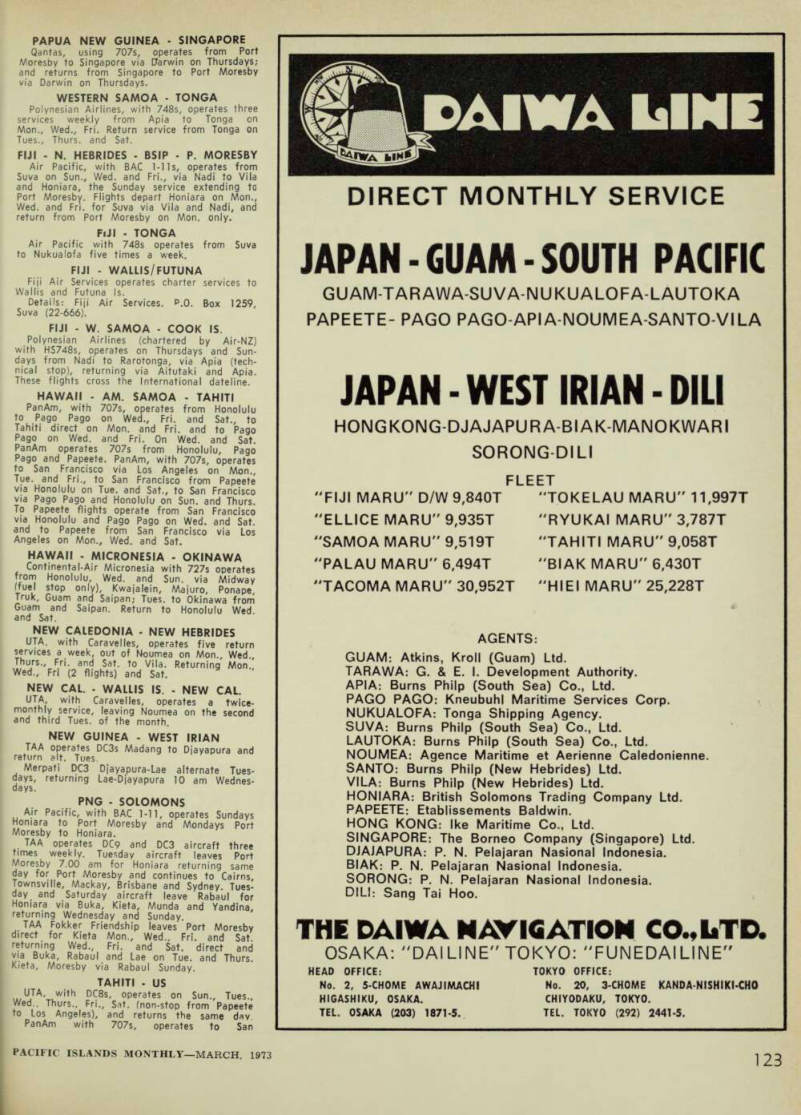 129
129 130
130 131
131 132
132 133
133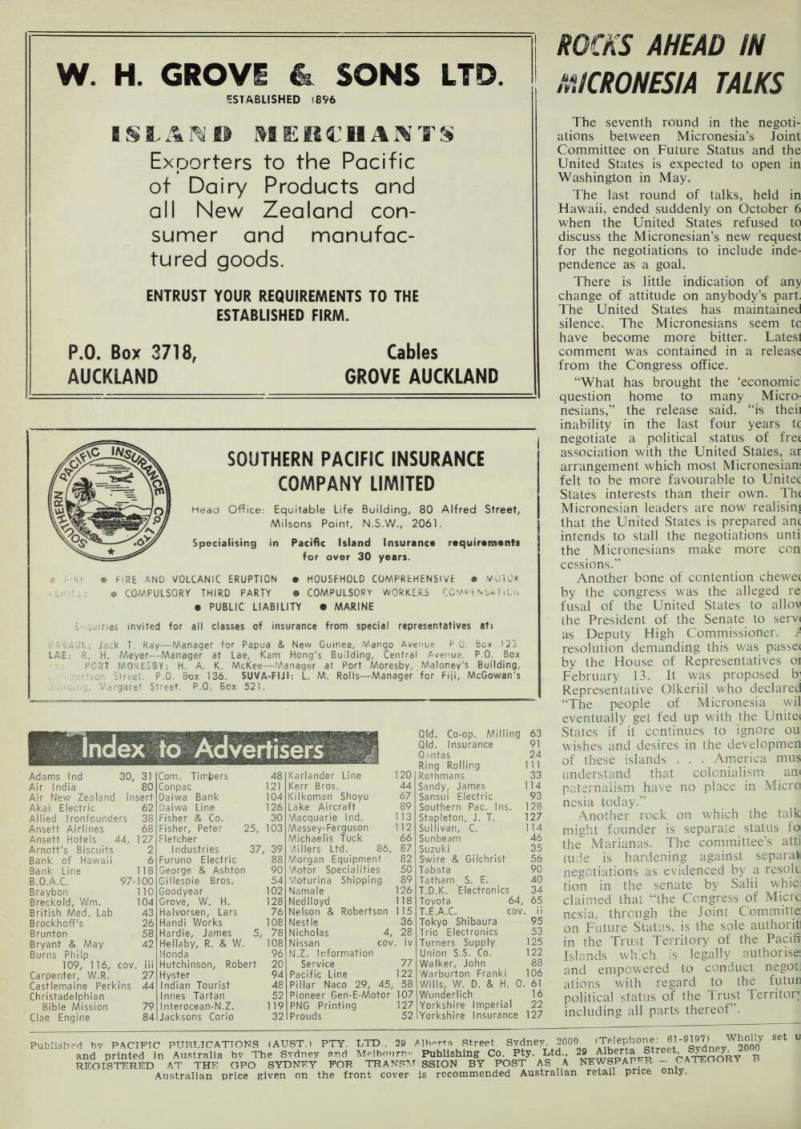 134
134 135
135 136
136