Pacific Islands Monthly
August, 1972
Australia, Nz, Geic, Bsip 50C
PNG, FIJI, COOKS, TONGA, W. SAMOA, N. HEBRIDES 45c
Nauru, Norfolk, Niue 45C
AMERICAN SAMOA 70c HAWAII 80c MICRONESIA 90c NEW CALEDONIA 65 CFP FRENCH POLYNESIA 100 CFP
Our Cover
Like his much-travelled an cestor, who sailed thousands of miles in his canoe, the Gilbertese sailor of today is an expert at navigating his slim craft. His outrigger canoe has changed little from the old craft but this one, photo graphed in the lagoon at Bairiki by Bruce Adams, sports a sail of modern fabric.
Advertisements & other items, p. 2 (1 item)
the China Navigation Company
I!
I* m H
Hong Kong has grown sincelB73
and so has
the China Navigation Company
Above is the China Navigation Company’s old office in Hong Kong. Those were the days when the company had two paddle steamers and one trading area: the Yangtze River.
Today, the China Navigation Company has a fleet of twenty-six ships serving over forty ports, an area of operation extending from Japan to New Zealand, and from the U.S.A. to the Malay Peninsula, and carries well over a million tons of cargo every year.
Instead of the one office of a hundred years ago, the company today has offices and representation throughout the world.
Since those early days the pattern of trading has changed many times, but the company has proved sufficiently flexible to adapt itself . . . and grow.
The China Navigation Company—the name that has become synonymous with experience . . . reliability . . . speed . . . service.
For further details and all enquiries there are Agents at the following ports; Melbourne: P. & 0. Lines of Australia Pty. Ltd.
Brisbane: Wills, Gilchrist & Sanderson Pty. Ltd.
Papua and New Guinea: Steamships Trading Co. Ltd., Port Moresby, Samarai, Lae, Madang, Rabaul, Kieta.
Wewak; Kavieng: Burns Philp (New Guinea) Ltd.
Fiji: Morris Hedstrom Ltd., Suva, Lautoka.
Western Samoa; Morris Hedstrom Ltd., Apia.
Tonga: Morris Hedstrom Ltd., Nukualofa and Vava’u.
Tahiti: Etablissements Donald, Papeete.
Japan: Swire McKinnon, Tokyo, Yokohama, Osaka, Kobe and Nagoya.
Eastern Managers: Butterfield & Swire, 9 Connaught Rd., Central, Hong Kong.
New Caledonia: Etablissements Ballande, Noumea. 8.5.1. P.: British Solomons Trading Co. Ltd., Honiara.
New Hebrides: Les Comptoirs Francais des Nouvelles-Hebrides, Vila and Santo.
iCNy SWIRE & GILCHRIST PTY. LTD.,
General Agents in Australia, 8 Spring Street, Sydney. Phone: 2 0522
THE CHINA NAVIGATION CO LTD
Member of the Swire Group
SGO4I h
In This Issue
Leral
erve war relics 27 er girl identity 61 :odiles -book 83 e pleasure cruising 91 \ conference in Rarotonga 112
Erican Samoa
mans ban old custom 27 ution commission 57
5K Islands
lings cancelled 26 ruan President's visit 35 >ort costs 116 iing seafarers 129
Nch Polynesia
ti letter 15 bomb test upset 31 guin sale 131 noa column 24 el ling emblem 29 festival 45 abans racial origin 63 ain's first consul in Fiji 73 abans buy ship 89 > new cruisers 93 action of share offer 105 ba development 109 v Zealand aid 110 J tax legislation 113
Bert And Ellice Islands
hs and migrations 81 h Co-op. sales 115
Nauru
President visits Cooks 35 "Enna G" troubles 89
New Caledonia
Helen Rousseau's diary 22 He Nou an island no longer 28 Press boycott 28 Political struggle in September 30 Second nickel factory 113
New Hebrides
Messmer's visit—a warning 26 Chain letter ban 129
Niue
There's freedom on the island 27
Norfolk Island
Airman Administrator appointed 35 Council elections 130
Papua New Guinea
Akmana explorations 28 House of Assembly developments 31 Famous coastwatcher 35 Percy Chatterton's column 41 War reminder 77
The Highlander's mind 85 Destroying minefields 93 Burns Philp shares 105
Pitcairn Island
Population figures 129
Solomon Islands
"Omicron" misses cyclone Ida 96 Copra production record 115 Prawn fishing survey 115
Tonga
Minerva Reef wrangle 13 Workers relieve labour shortage ... 27 London appointment 129
U.S. Trust Territory
Micronesian/US talks 11 Model houses 29 Dr Torres retires 35 Carolines oil pollution 89
Western Samoa
South Pacific Conference 21 Mormans ban old custom 27 Political prospects 51 High Commissioner for New Zealand 53 Olympics bid 129
DEPARTMENTS: Up Front with the Editor, 5; Editor's Mailbag, 7; Tropicalities, 26; People, 35; From the Islands Press, 55; Magazine Section, 73; Yesterday, 79; Book Reviews, 81; Pacific Shipping, 87; Cruising Yachts, 95; BOAC Jet News, 101; Business and Development, 105; Produce Prices, 121; Shipping and Airways Information, 123; In a Nutshell, 129; Deaths, 133; Advertisers' Index, 135.
Advertisements & other items, p. 4 (1 item)
Mixmaster
3
Mixer
than any
Mixmaster
3 times better
other mixer ■ Designed especially for family food preparation. 12-speed mixfinder dial indicates the correct speed for each mixing action. Complete with 2 heat-resistant bowls and juice extractor. Sunbeam’s exclusive 3-way beating action— extra large, contained beaters, and automatic bowl movement — gives perfect aeration and more even mixing. It can handle everything from beating one egg to mixing a large fruit cake.
L83.33v
Pacific Islands
Onthly
FOUNDED BY R. W. ROBSON IN 1930
Owned And Published Monthly By
Hcific Publications (Aust.) Pty. Ltd.,
) Alberta St., Sydney, N.S.W., 2000.
)stal Address: G.P.O. BOX 3408, SYDNEY,
N.S.W., 2001.
Telegraphic Address: PACPUB, Sydney.
Ilephones; 61-9197, 61-7101, 61-4369.
ulting Directors: R. W. Robson, Judy Tudor.
Chief Executives: General Manager: Selwyn Hughes.
Publisher: Stuart Inder. )irector of Advertising: W. A. Gasnier.
Pacific Islands Monthly
Editor: Stuart Inder.
Assistant Editor: John Carter.
Advertising Manager; W. A. Gasnier.
Circulation Manager: Barry Badger.
Subscription Rates:
:ific Islands Monthly" is air-freighted to übscribers and agents in the Pacific Islands; pies to other areas go by surface mail, ralia (including Lord Howe and Thursday 8.5.1. P., Gilbert and Ellice Is.: $5.50 Austr ia New Guinea, Norfolk Island, Nauru, la and New Hebrides: $5.00 Aust.; New and: $5.50 NZ; Fiji, Cook Islands, Niue Western Samoa: $5.00 (local currency); rican Samoa; $B.OO US; U.S. Mainland, onesia (including Guam): $lO.OO US; aii: $9.00 US; New Caledonia: 750 French fie francs; Tahiti and French Polynesia: French Pacific francs; United Kingdom and elsewhere: £3.25.
Representatives
Pacific Publications (Fiji) Ltd., Fiji Times ling, 20 Gordon Street, Suva. Tel.: 25601; Times Office, Cnr. Vitogo Pde, and Namoli LAUTOKA. Telex: 1144. Tel.: 60-422. ia New Guinea: LAE, P.O. Box 227; \UL, Mr. Steve Simpson, P.O. Box 433 [c/- Rabaul Photographic. Tel.: 2677.) ch Polynesia: Distribution—Hachette Paci i, 10 Ave Bruat, Papeete.
Zealand: Pacific Publications, C.P.O. Box ’, Auckland. 379-494. Representative; John ding. Civic House, 291 Queen St., Auckland, Tel.: 379-494. ;d Kingdom: S. R. Warman, Park House, Park Street, Croydon, CR9 3NP. Tel.: 01-6884177. seas Newspapers (Agencies) Ltd., Cromwell e, Fulwood Place, London, W.C.I. Tel.: 42-0661. Cables: WESNEWS, London, DS4. n: Advertising—Universal Media Corpora i, C.P.O. Box 46, Tokyo. Tel.: 666-3036. >ria : Advertising—Wilke & Co. Ltd., 37 m's Road, Clayton, Vic., 3168. Tel.: 544-8222. island: Advertising—Beale Media Services, St. Paul's Terrace, Fortitude Valley, Qld., 4006. Tel.: 51-5827. aii and U.S. Mainland only; Mrs. W. H. rath, 225 Queen Street, Apt, 178, Honolulu, 96813. i change of address notices. Form 3579 to the above address.) ication to mail at second class postage rates pending at Honolulu, Hawaii.
Copyright (c), 1972,
acific Publications (Aust.) Pty. Ltd.
August, 1972.
Vol. 43, No. 8.
Advertisements & other items, pp. 5-6 (2 items)
3
IFIC ISLANDS MONTHLY—AUGUST, 1972
Penta-Vite'
THE ABC OF
VITAMINS
/ N Nicholas Vitamins are essential for the healthy growth of young children.
And an insufficient intake of the right kind of vitamins can sometimes lead to illnesses of one kind or another. ‘Penta-Vite’ products are specially designed to provide the daily requirements of the important vitamins when the diet is inadequate. ‘Penta-Vite’ Infant Formula supplements baby’s milk diet when breast feeding has ceased. And ‘Penta-Vite’ Syrup, with extra Vitamin C and iron, can be of special value if toddlers are a little pale and off their food. ‘Penta-Vite’, Australia’s leading infant vitamin supplement. From chemists only.
Nicholas Proprietary Limited 699 Warrigal Road, Chadstone.
Vic. Aust. 3148.
NPII4
construction
mining
quarrying
forestry
for the big projects - the big names and the service to match Morgan Equipment Company, handles the big names. The names that mean efficiency. Euclid,' Michigan, Clark. Ranger, Sullair.
We back-up these big names with.a name of our own—for service, unrivalled throughout the Pacific • islands. With service workshops and parts ■ warehouses in Brisbane and Mackay, Queensland: in Arawa, Bougainville; and backing distributors in Rabaul and Lae —we can supply the urgent needs of operators, urgently.
The Pacific Islands and Queensland have known us for 2 years. In,that time we have sold more Euclids ’ than any other distributor. We are envied for our Package Deals’ —performance-matched dump trucks and tractor shovels. And we are respeded for our efficiency. As any company handling the big names has to be.
Capacities for every operation Euclid dymp trucks 13 ton to 210 ton [ Michigan tractor shovels 1 cu. yd. to 24 cu. yd.
O Michigan tractor dozers 160 h.p. to 550 h.p. H Michigan tractor scrapers 11 cu. yd. to 32 cu. yd. □ Clark Ranger log skidders 100 h.p. to-200 h.p. □ Euclid coal haulers 100 ton and 120 ton □ Euclid bottom dump haulers 60 ton to 110 ton □ Sullair compressors 80 c.f.m. to 1600 c.f.m. * m Morgan Equipment COMf #N ' in Distributors Phoenix Motors • Airport Road P.O. Box 933 Rabaul, N.G.
Tel. Rabaul 2232 Lae Service Station Aircorps Road P.O. Box 407- Lae, N.G.
Lae 43107
MORGAN
EQUIPMENT
COMPANY
Boundary Road, Darra, Queensland, Tel. 70 5552
Up Front
with the Editor
is column of monthly chit-chat been compiled in hotel rooms bars, on aeroplanes, in planta homesteads; this one is being ;n aboard a Nauruan ship along- King’s Wharf, Suva, where the view across the harbour to ’s spectacular Thumb is unbi lled and the sea breezes arrive ;ck fresh and unpolluted by the heat. is site is a choice piece of South real estate indeed, so it must be ttable to some that it is not lie, merely rentable from day to in a short-term lease. But those us in “Enna G” have been able ike advantage of this superb t longer than most travellers ise, as I write, this cruise vessel pent two days short of a fort here at Suva’s famous main ;, while the artisans at Millers ind Bish Ltd grind pieces of the e. body knew when we put in to as part of an 18-day cruise Sydnev that the repair work 1 take so long. Our sailing orders in fact been altered from day y, so that we have been assigned kind of cruise ship limbo, e experience has had its rewards, file it is true that we have been e to arrange any extensive tours iji for fear that the “Enna G” ; in fact leave port within the and those of us with friends been reluctant to contact many em for the same reason, there unexpected satisfaction in being rmanent part of Suva’s water ;’re like the professional film which moves for weeks among lers of a remote tribe, filming and everything until the tribes take the camera for granted and hotographers can begin to record life as it’s really lived, len we arrived the wharf irers and customs officers in ed us with mere passing interest, wondering if we were pre nantly Australian, New Zealand merican; the curio dealers at the >y markets unhesitatingly asked 5 for $1 items; the taxi drivers
signalling from every corner were convinced we were unable to walk another five yards without their ex tortionate aid.
But we were, like all cruise pas sengers, in Suva only for a day or two, and so duty-free shopping was a furious and strained exercise, with many purchases later to be regretted; taxi-riding was an unequal battle of wits over mileage and fares; the selection of suitable half-day tours and “Island night” feasts a matter of gut-wracking trial and error on value for money. And all-in-all it was a success. To the 40 “Enna G” pas sengers—the usual affable-enough cruise ship mixture of widows, elderly retired couples, professional men and dairy farmers with the annual winter wanderlust—Suva was a colourful port, with no real disappointments, and the memory of it was enough to last to next winter.
But as a result of our two weeks’ limbo on the Suva waterfront I think the memory of Fiji will now last not a winter but a lifetime for most of “Enna G’s” passengers, for it won’t be the picture of a port they will now keep, but that of a people.
After two weeks in the heart of Suva, with the best and most con venient accommodation in town (“Enna G” is without doubt a first class passenger ship), you get to know a lot of wharf labourers, market stallholders, cab drivers and shop keepers. You get to know who runs the good tours and “Island nights”
and the phoney ones (in fact you get to distinguish the real from the phoney).
As part of their daily scene, our good friends ashore daily ask after our health, and the health of our ship. They give us background infor mation and help on all manner of local events, charge us correct fares, and —more often than not fair prices, and joke with us as they do with each other. The wharfies ask us to share their yaqona bucket; the stallholders cheerfully pick out the bananas we want, and the sound melons. The customs officers in their lonely gate posts wave us through with a friendly gesture.
The greatest development has been our recognition of the duty-free shop keepers as honest businessmen, not thieves; good family men, not Scrooges. There are, we think, thieves among them (any “Enna G” pas senger will probably lend you his short, private black list), but mostly they now appear to us to be hard working people with long-restrained patience and not greed, anxious to make a sale in an almost unfairly competitive arena, but not willing to sell their souls to the devil to do it.
We realise, as observers rather than active participants now, that that mad initial tourist shopping spree is as much a strain on the shopkeeper as the tourist, and that the man behind the counter has learned to grow a thick hide to turn some of the insult ing barbs fired off by some tourists in their wild charge down Gumming Street and along Victoria Parade.
A fellow passenger said it yester day. He said it slowly, considering every word: “I’ve decided that the people of Suva are ladies and gentle men. They have an inbuilt confidence in themselves and in life that makes them considerate, patient and kindly.
I’m now ashamed of cruise ship be haviour, with Europeans riding rough-shod through town like kings for a day, just because they have money in their pocket.”
It was a profound observation, and the remarkable thing was that it took only two weeks to gestate. Some people wouldn’t have noticed it in a lifetime. —Stuart Inder.
Advertisements & other items, pp. 7-8 (2 items)
5
FIC ISLANDS MONTHLY—AUGUST, 1972
Knox Schlapp
M V ■ll •- . v I ■ .-TV ' , mm* mms it* .
RKh^
4 That is why SYNDICATE
PROFESSIONEL DES PILOTES
MARITIMES, NEW CALEDONIA
CHOSE:
I » A m Wm Wty ■ B K m
BL3B
BL3B
230 H.P. AT 1,150 R.P.M.
engines in their boats which operate in New Caledonia's reefs and open sea. This decision has proven itself over 30,000 hours of trouble-free operation. aQ OM °*3yb
MARINE DIESEL ENGINE
Like all Gardner engines the BL3B is a meticulous; designed and superlative piece of workmanship . , the result of years of research, development and tes; ing, to give a true marine engine with separate cylinde blocks having removable wet and dry liners. Heao being interchangeable.
Engines can be built as either Starboard or Port unr with either hand of rotation and are entered on Lloyd I Register in the 100A1 classification.
Available for immediate delivery from agents in N.S.W. and Pacific Islands for Gardner Diesels:
KNOX SCHLAPP
PTY
LTD.
135-139 McEvoy St., Alexandria, N.S.W. 2015. Tel.: 699-833- Telex; AA20483 Telegrams: "Knoxschlap", Sydney.
SUB DISTRIBUTORS: SHERWOOD ENGINEERING, RABAUL; S. A. HEATH SONS, PORT MORESBY; KWAN HOW YUAN PTY. LTD., HONIARA.
The Editor's Mailbag
Bikini Bombs
ou will note from the above •ess (Grafton Nursing Home, :h Grafton, NSW) that I am a epit old man of almost 88 years, rom this home I can look down the bow of the old BP steamer luna” which was interned by the mans in Jaluit, Marshall Islands 914 and released by the Japanese y. be object of this letter is to draw ition to a statement said to have i made by the French Govem t that “no protest was made n the Americans said they were g to let off bombs at Bikini in wrote a letter to the “Sydney ning Herald” protesting strongly it the unfairness to the Marshall id natives. The “Herald” pub id the letter, omitting one im ant paragraph. Mr Robson of ' said, if I permitted him, he Id publish the full letter, which lid. here were no demonstrations it Americans letting off bombs the Marshall Islands in 1946 use only Marshall Island natives 5 going to be affected. Had any Dpean race been likely to be :ted, I venture to think there Id have been plenty of protests, have regularly read the PIM ; it was first published and am a subscriber.
Neville Chateield.
fton Nursing Home, ;h Grafton, NSW.
Rim's Charm
am so busy these days I cannot >w all the interests I have acquired ng my life. Therefore I often go : periods of time without checking what’s happening in the South fic. hen, unexpectedly, I come upon issue of your magazine, and pre ipied though I may be with other ters, I find myself reading the led thing from cover to cover, i the advertisements, he most recent copy I came upon the March, 1972, issue and every d of it enchanted me. I especially d your long article on copper in gainville, about which I had wn nothing, and that wonderfully :ise letter from Tahiti on the ;ic problem.
But equally rewarding were the articles on the ships that have been lost, the elections in Fiji, and especially the short report on the Little Nambas appearing in public for the first time. It has been more than a quarter of a century since I hiked through their territory, and the thought of them dancing in public seems quite bizarre. They should stir things up.
Your magazine looks healthier than ever. The colour on the cover is effective, but it is the homely news of places and of people that I once knew which accounts for the in definable charm.
A world of good luck,
Jim Michener.
Pipersville, Pennsylvania. • To avoid the traumatic shock of “unexpectedly coming across an issue” of PIM, James, you could subscribe to the damn thing. We're posting a subscription blank.
By The Lord Hari !
I have wanted for some time to write to tell you how much I enjoy reading PIM from cover to cover each month. There is so much of what is covered that I have seen first hand and so much that I some day hope to see that a few hours each month is the next best thing to going back. I know that when I am able to travel that way again, it will be much more pleasant, for my first trip was on a troopship with 5,000 others, and my first day on land was spent in a foxhole scared, needless to say, half out of my wits because
there was so much unpleasantness going on about that particular island.
Some subliminal pedantic instincts were aroused recently when I re read Sue Wendt’s article on Niue in the September issue. The place has always fascinated me for some reason. After re-reading it, I began to feel that there was something just a hair out of focus, and finally ran it to ground. “There’ll be no hari kari on this little isle,” Sue says (or writes). The emphasis is mine. I thought, “My God, of course not, Harry Carey, the famous American Western star is long dead. Not only that, but she doesn’t even know how to spell his name. She must be Japanese. Japanese, hmmmm, there’s a clue. Maybe Sue meant hara kiri, a very graphic Japanese phrase mean ing ‘cut the stomach’. Of course, hara kiri, or seppuku. Well, I should hope there would be none. No Harry Carey, either, for the grizzled old veteran’s ghost would be enough to put frost on the cricket pitch.
Not to put Sue down, though, be cause I enjoy the fact that she usually carries her dudgeon at high port and writes it the way she sees it. All of you do, and thanks.
W. K. Higgins,
Ltc, Usar (Ret.).
Library of Congress, Washington, DC.
P.S.: You must excuse the typing.
My secretary went out for a martini at some joint near the library last month, and they must have fed her a double because she’s not back yet.
Queen Emma's Land
The comments by your corres pondent about the tourist facilities around Rabaul and places of historic interest (July PIM) remind me that only last week I had a job trying to find Ralum, the site of Queen Emma’s home—although I had been there before, two years ago.
This is a most interesting spot commanding a wonderful view over the bay towards the Duke of York Islands. Queen Emma’s steps are still in evidence down which she used to walk to her waiting carriage. There is no sign post to this location, nor is there one indicating the whereabouts of the family cemetery, which is also of great interest —particularly to those who have read the book “Queen Emma” by R. W. Robson.
Such spots are of great interest to tourists and should be preserved; but whether this advice will be heeded is another matter.
V. T. Sanders.
P.O. Box 324, Port Moresby.
Mr. Neville Chatfield.
Advertisements & other items, pp. 9-12 (3 items)
7
IFIC ISLANDS MONTHLY—AUGUST, 1972
Millers
MARINE AND GENERAL ENGINEERS
! t m ■ ■ g m s V P STANDARD 30 FT., 40 FT. AND 50 FT. WORKBOATS Standard 50 ft. tug built for Marine Pacific Ltd. Used for inte island barging and docking operations. Propulsion unit 12 x 71A 340 h.p., G.M. Detroit diesel, shrouded propeller, bollard pull 6 tone
WORK IN HAND;
72 ft. wooden hull fibreglassed tourist launch; two 40 ft., one 30 steel workboats; six 250 ton capacity barges; and miscellaneoo
JMITED
lIP BUILDERS TO THE PACIFIC
mm if r H * a m ■ sat . ■■ *7* i * *N : I and pleasure craft; Mission ship for Gilbert and Ellice 86 ft. x 22 ft. x 7 ft. 9 in., powered by twin 180 h.p. T 6 diesels, 2 x 20 k.v.a. alternators. Accommodation—l 2 crew, ;sengers, capacity 70 tons cargo, speed 10 knots.
MlkkMBS
P.O. BOX 296, SUVA, FIJI. PHONE: 23031.
Brockhoff
Salada is the
man-size,
snack-size,
bite-size
cracker!
There’s value, variety and quality in
BROCKHOff
BISCUITS
Crisp ’n’ golden Brockhoff Salada snaps into action!
Straight from the pack man-size for big healthy sandwiches. Snap them into two for snack-size savouries and sippetts with soup. Snap them in four, and Salada serves bite-size for quick tasty nibbles. Oven-crisp Brockhoff Salada is three crackers in one.
brockhoff
d d d
8 OZ. NET
s the versatile cracks r N ' 1 ' v* CfC ' -" : 1 * * O * 5542/8 x 6 V*
9
IC ISLANDS MONTHLY—AUGUST, 1972
Pacific Islands Monthly
[?]Icronesians Come Out Fighting
In Fifth Round Of Status Talks
'he Micronesian Congress Joint nmittee on Future Status and ted States Government represen ts entered the fifth round in shington in mid-July of their top- I talks to decide the political ire of the Trust Territory.
Jl discussions were behind closed rs and details were not available he time of writing but PIM under ds that, once again, there was a dy struggle over the United es’ reluctance to acknowledge full jreignty of a future government Micronesia. he Micronesian leaders want to be r own masters, both in matters of I government and in deciding ign policy and relations with ign countries. Both sides are ;ed on a self-governing Micro a “in free association with the ted States” but the definition of e” is an important bone of con ion. he financing of Micronesia, in ling compensation for Micronesia’s ;eing to deny use of its land and ers to the military forces of any on other than the US, payment the continuing right to use land waters for US military bases and ;als, are among the details now to thrashed out. he fourth round of talks, at Palau \nril, saw agreement on the prin e of free association which should in the form of a revocable com t, terminable unilaterally by either , but there was no agreement on initial period during which ter ation could occur only by mutual sent. he Micronesians wanted a five r period, the United States a 15r period. This argument has ned large in the Washington talks. :re is no doubt that the Micro ians, even before they entered the s, had achieved major success in r drive for self-determination, but le of the details will be sticky (see 1 June, p. 9). .eading the United States team was bassador Franklyn Haydn Wil is, chairman of the US delegation,
specially appointed by President Nixon. His opposite number was Senator Lazarus E. Salii.
The Marianas representatives, Her man Q. Guerrero and Senator Edward Pangelinan, remained some what aloof from the talks. They were there only to observe and, if neces sary, to protect the interests of the Marianas. The people of the Marianas’ district have already decided that they want a closer association with the United States and their decision has, in principle, been recognised by the Carolines and the Marshalls.
Before the talks opened, Pan gelinan said he expected their Micro nesian colleagues would express con cern over the Marianas issue but, “whatever the concern may be, it won’t seriously affect our position with the US relative to the desire to negotiate a close and permanent re lationship with the United States.
“We want to make it clear that our attendance is not to negotiate any status for the Marianas.”
They will conduct their own separate negotiations with the Ameri cans, and this is annoying some mem bers of the joint committee, despite the fact that at the Palau talks the status committee gave the Marianas permission to have separate talks aimed at getting a close political re lationship with the US.
The United States leaders are anxious that the talks should end in agreement, with America retaining enough of its position consistent with its self-appointed task of ensuring “United States Pacific Ocean and world security”, and military control of the strategically-placed Micronesia.
The US also wants to end the talks with decisions favourable to both sides to stifle criticism from the United Nations where it was con siderably embarrassed earlier this year by Senator Andon Amaraich of the Congress of Micronesia, one of Micronesia’s negotiators. The senator’s views are not fully representative of Micronesian opinion, but they help to underline the divergence of opinion on the independence question. Micro nesians are not united.
He said at the UN hearing of the report on the United States trustee ship, “There are many troublesome areas which may hamper the reach ing of an agreement between Micro nesia and the United States on Micro nesia’s political future. In addition, many of us wonder why we should have to negotiate at all. We find it very difficult, as one of the world’s smallest and least powerful countries, to negotiate with one of the world’s largest and most powerful.
“The difficulty is compounded by the fact that legally the United States and Micronesia occupy a relationship of trustee and ward. This implies certain duties on the part of the trustee to the ward. We are sure that those duties do not include attempt ing to bargain with it as an equal.
It does seem to suggest that the United States should be a lot more willing to allow Micronesia what it wants rather than requiring it to bar gain for it.”
Complaining of America’s insis tence in retaining control of Micro nesia’s external affairs and defence, Senator Amaraich said the two sides were talking on different levels which might prove a hindrance to the rapid conclusion of an agreement.
It was obvious from the fourth
Senator Amaraich.
Ocean of peace in world of strife
round of the talks at Palau, said the senator, “how much a role United States defence interests play in its foreign policy, and, therefore, how much they are being made to affect Micronesia’s political future.
“The vast majority of the people of Micronesia does not want and has no use for the United States military.
Yet the United States has disregarded the wishes of the people in proposing its demands for military lands in Micronesia after the end of the Trusteeship.
“That the people of Micronesia hold this attitude should not come as a surprise. We are and have always been a peaceful people. Within memory, our islands have been devastated by the horrors of war, our people dislocated, our islands turned into radioactive infernos, blown up completely or altered by the awe some force of the hydrogen bomb so that they are unrecognisable if they are still there at all. Only recently, the United States announced its in tention of conducting a series of tests at Eniwetok Atoll in the Marshall Islands for the purpose of seeing how big a hole in the ground its bomb can make.
“At the fourth round the United States made it very clear that the future support of Micronesia would be closely linked to the control the United States would have in our country. I would think it much more appropriate that our people, who have paid with their lands, their homes, their health and their lives, deserve compensation without the imposition of any additional hardship. I do not think it is right, either legally or morally, that the United States should have to put us in the position of sell ing our souls for a few pieces of silver.
“Because of its sad experience with the military not only under the United States Administration but also under our past rulers—our only hope is that we be left alone in peace. We hope that we do not have any enemies, and we do not want them —ours or anyone else’s.
“It is therefore our hope that Micronesia and eventually the entire Pacific Ocean can be neutralised, closed to the warmakers of all nations —truly an ocean of peace in a world of strife and conflict. Is it beyond the capability o¥ the United States and the other great nations of the world to do that? Or will Micronesia again be used as a battleground, again suffer the horrors of war and destruction?
If we could honestly believe that all nations truly wanted peace in the Pacific we should be unable to believe that they could not accomplish it.
“Nor has the United States recognised the fundamental right of the people of Micronesia to control its own destiny. It has not completely recognised its sovereignty. Very simply, it has refused to honour its obligations under the United Nations Charter, the Trusteeship Agreement and the Declaration on the Granting of Independence to Colonial Countries and Peoples by refusing even to discuss the proposition of indepen dence for Micronesia.
“The United States has stated its willingness to recognise the complete responsibility of the Government of Micronesia to control its constitution
and laws. It has recognised ownership of land in Micronesia i with the Micronesian people. It even recognised, conditionally u agreement to its present position) questing complete authority in fields of foreign affairs and defe: that an association between the Uni States and Micronesia, to be trull free association, requires that eili party be able to terminate the ai ciation unilaterally at any time, it appears our difficulty in reacH agreement—that is, conceding to United States position—on fore affairs and defence may prevent from ever arriving at a final, ft agreement. I am today unable express much optimism that we reach an agreement that will be f : protective of Micronesian interest Senator Amaraich also protesteo the threatened severance of Marianas from the rest of Microne
All Quiet In The New Hebrides
Feeling in Vila in July was that it was unlikely that Britain would m react strongly to the speech of Mr Pierre Messmer in which he proposed tl virtually the status quo be retained in the New Hebrides Condominium (P c July, p. 11). Britain does not want to upset France during the Comm Market entry formalities, and in any case Mr Messmer’s speech was regaro" as a breach of political etiquette, best not commented upon. But there is < doubt that Mr Messmer’s statement underlined the divergence of opinion tween Britain and France on the future of the New Hebrides, and it is lild to be a watershed in the condominium’s political history.
Did Mr Messmer, France's new Prime Minister but at the time of his South Pacific t[?] the Minister for Overseas Territories, see this "welcome" banner when he visi[?] Noumea? There were no protests about the bomb tests. The Caledonians were m[?] annoyed about the non-appearance of the promised new nickel factories and shov[?] it in this picture. The banner says: "Welcome to the Minister. This equipment [?] been waiting two years for the Poum and Port Boise projects." The banner [?] removed by law-enforcement officers before Mr Messmer inspected the port a[?]
Advertisements & other items, p. 13 (1 item)
11
3IFIC ISLANDS MONTHLY—AUGUST, 1972
Or A President?
Has Minerva Got A King
King Taufa’ahau Tupou of Tonga rmally annexed and declared sever ity over several hundred square iles of ocean and 1,200 square feet coral, rock and concrete on inerva Reef on June 26. The reef 250 miles south-west of Nukualofa.
Garbed as General of the Tonga efence Force, and shielded from the iving rain by an umbrella, the king Dod on the bridge deck of the Tonga ip “Olovaha” as a police bugler gnalled the raising of the flag of mga, the Police Band played the itional anthem and acting Prime inister Mahe U. Tupouniua read the yal proclamation establishing sover gnty over the reefs now renamed deki Tonga—South Minerva, and deki Tokelau—North Minerva.
The king did not land on the tificial islands. It was thought that, ith the stormy conditions prevailing, might have been risky for his ajesty, whose avoirdupois is a little ore than average.
It was a historic scene and peace 1, but to one group of people, who sre not present, it was an invasion, i act of aggression against the west of the world’s nations, the of Minerva.
Declared the President of the epublic of Minerva, Mr Morris C. avis, in a special message to PIM om his Executive Chamber in E. r ashington, Orange, California: “Our ghts as individuals and citizens of sovereign state have been violated; e intend to defend those rights.”
According to a newspaper report of i alleged interview with Mr Morris New Zealand, he said: “We’re not raid to fight to defend what we gard as our country. We don’t want
to kill any Tongan people; but their king will force us into it if he tries to stop us,”
Maybe he can fight—and with sophisticated weapons because, for 15 years, he was with North American Rockwell, Inc. as project engineer on the ICBM Minuteman missile systems.
He also served in World War II and the Korean War.
It is reported that the republic has bought an NZ coastal vessel, the “Ranginui” and equipped it with a helicopter pad so that the “Ranginui” can be used as a fighting ship.
Are the Tongans worried? Well, the king has had some thoughts on the subject. When the Tonga Defence Force and the Royal Guards paraded for his 54th birthday he told them the time would come when Tonga would find it necessary to test its
After adding 1,200 square feet of artificial island to his kingdom, the King of Tonga, well padded against the weather, arrives back in Nukualofa. Below is pictured one of Tonga's newest islands, Teleki Tonga, and the Minervans' "lost" property.
Republic claims a large following
ability to defend the country, but, with regard to the recent Minerva undertaking it was fortunate Tonga was faced by a fairly weak opposition.
Had it been more vigorous, Tonga could well have been embarrassed.
But he’s probably keeping the royal fingers crossed. His fighting navy consists at present of one small, fast craft armed with a machine gun. He intends more than doubling the strength by buying a larger vessel.
Mr Davis is reported to have hinted at mobilising a military force and was non-committal over a suggestion that the republic might enlist mercenaries.
An act of war would be fantastically Ruritanian, but legal action to contest Tonga’s claim to the reefs is most probable.
President Davis told PIM they had adequate finances for their endeavours and a large following among the populations of Great Britain, the United States and Fiji.
“The claim by the King of Tonga to the Minerva Reefs has created a serious obstacle to the continuation of our project,” he wrote. “In response to his claim we have several com ments: • Prior to January, 1972, the Minerva Reefs were unowned, unin habited, and had never been the terri tory or protectorate of any power. • We have complied with every conceivable requisite of national sovereignty in establishing our claim to the reefs. We have conformed explicitly to international law as it is manifested in the treaties, tradi tions and conventions of the modem world. • We have never posed a threat to the peace and security of any nation. In fact, the success of our programme would be of great benefit to all peoples of the South Pacific. • The King of Tonga has violated our territorial sovereignty by claim ing the reefs six months after the Republic of Minerva became a sovereign state, and has threatened the peace and tranquility of the South Pacific. • The King of Tonga has refused to discuss the matter with the repre sentative of the Republic of Minerva, and has threatened to arrest anyone found on the reefs. • Tonga has no plans to develop the reefs. The Minerva Reefs are two desolate atolls that vanish below the tide twice each day. They are volcanic m origin and it is inconceivable that they could contain deposits of oil, gold or any other economically advantageous mineral.
• We want to continue our pro gramme to develop the Minerva Reefs to benefit not only ourselves, but the rest of the South Pacific as well. We have the technology and resources necessary to succeed. Yet we have been unjustly infringed upon by another government. We hope to peacefully persuade them to return our claim. Our rights as individuals and citizens of a sovereign state have been violated; we intend to defend those rights.”
Mr Davis is smarting over a snub he got from King Taufa’ahau. He arrived in Nukualofa on June 15, intending to parley with the king who, at the time of the president’s arrival was actually making his declaration of sovereignty over Minerva.
Armed with nothing more lethal than a feasibility study of the develop ment and recommended construction of pier-supported concrete platforms to create an artificial land surface at an estimated cost of $65,000 an acre the president sought an audience with the
king, but there was nothing doing. TIC king wouldn’t see him. An officii told Mr Davis to write to the Tongs Government and state his proposal During his two days in Nukualofl Mr Davis sought to show his film o a similar development of a sea citi planned in the North Sea in the ne:; 50 years. But no one wanted to see i Before he left he said that hi organisation, the American-based coir pany, Caribbean-Pacific Enterprises still contended its claim to the reel; was legal but did not want at presen to get involved in a squabble with ttt United Nations over ownership.
Basing plans on studies of sea cities made by architects and engineer on a project inspired by Pilkingtoc Brothers, the British glass manufao hirers, the Minerva republicans drean of a city with high walls to keep ou the worst of the elements and thr evils of a regimented world.
Minerva, they say, will have population of 30,000. Under the mil of Tonga, it will be an automate* guide to mariners but lonely am unpeopled.
Advertisements & other items, p. 15 (1 item)
13
iCIFIC ISLANDS MONTHLY—AUGUST, 1972
Adventures Of Greenpeace Iii
Limping \along after a collision with a French naval vessel and taking in water at the rate of 100 gallons a day, “Greenpeace 111” the yacht carrying the French bomb test protest group, returned to Rarotonga on June 14, 55 days after leaving to mount a spectacular invasion of the French test area.
On board were owner-skipper David McTaggart, Nigel Ingram and Grant Davidson, bearded, sunburnt, fit, still annoyed with the French hut with an appreciation of French hospitality. After their yacht had been rammed by a French minesweeper, Admiral Clavier, in command of the test, entertained them to lunch.
The protest yacht managed to sail to about 16 miles from Mururoa before the French detected them. Skipper McTaggart’s argument was that according to international law, the ocean outside a 12-mile limit from the atoll was international waters and he had every right to sail there if he wished.
Once the French detected them they were kept under surveillance for 15 days and for another 17 days were harassed by warships, planes and helicopters in an apparent effort to frighten them away. For 32 days McTaggart kept the yacht between 12 and 30 miles away from the atoll which could not be seen by those on board. Strong winds and ocean currents had to be contended with. For six days, on and off, they saw a balloon in the sky and this scared them as they had been told that when they saw the balloon that was the time to get out — fast.
One windy day when the waves were about 10 feet high, a French minesweeper, about 120 feet long, came up very close to the ketch’s starboard quarter. The yacht, which had been sailing on a steady course, tried to swerve to port to avoid the vessel, but the minesweeper carried on and rammed “Greenpeace III” on the starboard quarter with its bow. The major damage was caused by the warship’s flagstaff tearing the yacht’s rigging, masts and hull fittings, and rendering it unsailable.
After two days of unsuccessful negotiations, the French towed “Greenpeace 111” to Mururoa for repairs. After repairs “Greenpeace III” was towed out of Mururoa and escorted by a French warship for 600 miles. Captain McTaggart asked to be escorted all the way to Rarotonga as the yacht was leaking, but the French refused.
Tahiti
Letter
The wild and woolly South Pacific
From James Boyack
'HERE’S more to be reported from Tahiti this month than I have the space for, and frankly, after two :eks of bronchitis, the courage to face. But, like the nerican postman defying rain and sleet, here goes z August instalment of life in Tahiti, or, “What could ; Dalton gang possibly do next?”
The Daltons, wild west bad guys immortalised these ys in a popular French comic strip, was the name mediately applied by the Papeete press to those five :al bad guys who escaped from jail again in late June, ell, three members of the gang have been recaptured ice my last writing. The other two are heaven knows iere, the gendarmes certainly don’t.
Only one of the pseudo-revolutionary munitions ieves, Robert Cahn, is still at large, however. (The :ond Papillon is a petty thief with a record number jail breaks.) The 28-year-old son of an American [ based in Bora Bora during World War 11, Cahn s managed to elude authorities during the most in isive manhunt in Tahiti’s history. Every law enforce snt officer on this island has worked non-stop for a □nth on the Dalton case (vacations were cancelled), 'my and gendarme patrols have combed valleys and llsides daily. Occasional roadblocks, certainly the first ’t seen since I arrived here almost seven years ago, ddenly force one’s car to a halt. While a gendarme ishes a light at you, a humourless legionnaire routinely utches his tommy gun.
Cahn, who allegedly organised the munitions robbery, obviously a very determined young man. Prior to s escape, he was faced with the longest prison sentence the seven thieves. He had picked up an extra 18 onths for sawing the bar to his jail cell between escapes le and two. That he remains free is the best proof r his determination. Tahiti is an island on which it is most impossible to hide and nourish oneself simul neously. The mountains and valleys are dense with ish. While providing excellent cover in which to hide, ctle which is edible grows wild. To eat you have to >me down from the mountains, and there are very few sople in Tahiti with a spare bowl of rice for Cahn.
One of those back in custody was taken without a niggle at his girlfriend’s house. A Papeete detective as watching the house daily, and one afternoon his atience was rewarded. William Sam You entered his idy friend’s abode. The cop, a French Polynesian, did
not make his move immediately. He waited a respectful 45 minutes while the young couple were reunited. The detective arrived as Sam You was tightening his belt.
That Sam You clearly demonstrated his willingness to make love and not war may have saved him a trip to one of the roughest French prisons. Felix Teheuira, one of the recaptured thieves, and bad-mouthing (PIM, July) Charlie Ching, were spirited out of their special quarters here just before French Independence Day. A military jet took them to Paris, where, according to the Journal de Tahiti which broke the story, they will be incarcerated at the Fresne Prison. The local jail will seem like a country club in comparison. There is no question that Robert Cahn will join them if and when he is caught.
SOUTH and east of here about 750 miles were the first 1972 French nuclear tests, according to those who apparently knew. There were two alleged tests in late June, and two more were expected before August 15, and maybe before the end of July, depending on the weather. There may have been three tests pre viously, and three to come. No one really knows.
French officials are playing the deaf-mute game without a smile. Official word in the form of a final com munique is all the same expected sometime in August, after the 72 tests have entered radioactive history.
The Pacific Experiment Centre (CEP) press spokes man had only one occasion recently to say more than “no comment” to local journalists. His statement con cerned Craig Alexander Reeves, 20, a New Zealand student who owes his life to French military doctors.
Reeves had completed a month-long visit to Pitcairn Island in late June and was leaving the island in a whaleboat. He was headed out to the freighter “Montreal Star” in rough seas when the shuttle craft overturned. The young man’s leg was ripped and broken on the coral as the boat momentarily pinned him to the reef. Noggie Young, 23, miraculously grabbed hold of Reeves in the foaming confusion and managed to drag him ashore before he drowned. The island nurse began to radio an urgent distress call. This was answered by the French warship “E. V. Henry”, which arrived in the vicinity of the island eight hours later.
Despite 25 to 30 ft waves (the whole story was told to me by Reeves in his Papeete military hospital room), a whaleboat managed to take a doctor off the ship and
ferry him to the island. A motor bike ride over goat tracks got him to the dispensary side of the island, where he worked non-stop on Reeves and other injured islanders from 6 p.m. on a Friday until 9 a.m. the following morning. The doctor chose to evacuate Reeves as soon as the sea permitted. Finally, a heli copter took the boy from the ship to the Gambier Islands, where a special plane immediately flew him the 900 miles to Papeete.
Reeves was enthusiastic about the care he was getting.
As he spoke to local journalists, his left leg was sus pended in a cast. A pin which pierced his calf made me wince. I asked him what the Pitcairn Islanders thought about the French tests. After all, Pitcairn is the foreign, populated island closest to the Mururoa blast atoll. During the 1968-1971 hydrogen test period, it lay almost within the danger zone itself.
Reeves told me, “The islanders are quite assured that there is no harm from the tests. They’ve had six years experience with them. I don’t think there are any worries there at all, except perhaps about the crops, but the crops don’t seem to have been affected.
“And in a way, the tests are a good deal for them, like this year. There have been very few ships calling at Pitcairn. The islanders always know the French are around when the tests occur.”
Just before Craig flew to New Zealand for surgery, Pitcairn cabled the military here. The telegram said in part, “All of us on Pitcairn were much impressed by the gratefully appreciated French navy assistance to our medical emergency”.
MOT so much impressed by the French military have . been several local and foreign politicians who made their anti-test views known in Tahiti recently.
The autonomist Territorial Assembly majority, per haps with the feeling that other Pacific nations were damning the tests in louder voices, reiterated its own opposition in late June. Wording of the protest was the strongest ever by local politicians. The demand that tests end came from the Permanent Commission, which stands when the assembly is not in session. The com mission by a vote of 5-0 adopted John Teariki’s lengthy plea to ban the bomb. Teariki outlined the numerous occasions since 1963 that he and his party had protested against the CEP.
French National Assembly Deputy Francis Sanford flew to New York in early July with a copy of the commission’s resolution. He presented it unofficially to United Nations delegations. At the same time he in quired in UN corridors how the world body might be able to intervene in the political life of French Polynesia.
Sanford favours immediate self-government for French Polynesia and he has often publicly stated that if France did not grant “autonomic interne” to these islands, he would take his case to the UN.
French Senator Pouvanaa A Oopa, just prior to Sanford’s departure, cabled UN Secretary General Waldheim. His wire outlined the Permanent Commis sion stand on tests and asked the UN executive to thank those nations which condemned testing during the Stockholm conference on the environment.
At about the same time, former Senator and Mayor of Papeete Alfred Poroi publicly announced that his Polynesian Union party supported the CEP presence here for economic reasons. His communique said that the military provides one-third of the local budget and creates thousands of jobs.
Colin Bednall, Australian Labour Party candidate and former prominent press and TV executive, came to Tahiti to express opposition to the tests. He was one of those scheduled to accompany Labour Deputy J. F.
Cairns to Tahiti. At the last minute, France informer Cairns and crew they were not welcome here. If the; insisted on coming, they would not be allowed to deban at Faaa Airport. Bednall was not on the “no-no” lis< so he came anyway. He had not been here 24 houn when he was politely informed that he could return td Sydney on the next plane, a few hours hence. He dio [Back in Sydney later Mr Bednall said, “The Chief c: Police did me the honour of arresting me personally a a ‘temporarily undesirable person’.”] Although Melbourne University radiation specialis P. J. Robotham accompanied Bednall here, he was noc only permitted to remain in Tahiti, he was given ; Cook’s tour of the main radiation control laboratories m French Polynesia. During a press conference at thu atomic installation that was filmed by Australian teles vision’s Channel 10, Robotham told assembled journalist! and French scientists, “One can suppose that precautioni taken by France have been more than adequate in view of the verifiable results obtained with which I becamti acquainted today.
“All the same, even if one admits that the dange; from French testing is minimal, there is some dangen and I remain opposed in principle to all weapons testf ing.”
Robotham was impressed by the quality of scientific work being done by those who w'atch over radioactive levels in French Polynesia, but he stressed the principle that there can be no “threshhold” after which radios activity becomes dangerous. “Why must one be exposeo at all?” he asked.
VTUCLEAR testing did not stop French Polynesia from ■L' having important elections in July. The City Council: of 44 new “communes”, regional administrative sub-< divisions, were elected—67B new officials in all. This sweeping administrative reform gives each “commune” (composed of one or more districts in Tahiti, or one or more islands, elsewhere) the right to allocate funds for public works of its own choosing. No longer will these new townships have to beg funds from the Terri torial Assembly.
Which is why the autonomist majority of the did its best to block government imposition of the “communes”. I have said in several letters that the “communes” were worth a long analysis because compli cated and revolutionary. I was wrong. The debates which preceded the election were what was complicated* the political manoeuvring to control the new administra tive units was what I did not understand.
The best I can make of it is that the autonomists in the assembly figured part of their power was being stolen and handed over to others. The pro-Frenchr parties, on the other hand, argued that real at a local level was, for the first time, being instituted..
And their view of the situation seems to have carried! election day.
Six of the 11 autonomist candidates seeking control! of city halls were defeated. Among those to bite the; dust was Senator Pouvanaa A Oopa in his natives Huahine.
Five of the six anti-autonomy assembly councillors to seek mayors’ jobs won.
I did not believe Gaullist claims of a solid slap at the; autonomy movement until I read a UJAI (Youngs Autonomist Union) communique in the local papers..
It admitted that “a certain number of political personali ties have been rejected during the recent election at the; level of their district” and it called on all young people; to contact them for information on how they “could I take over the destiny of their country if the need should 1 make itself felt”.
Advertisements & other items, pp. 17-22 (2 items)
15
ACIFIC ISLANDS MONTHLY—AUGUST, 1972
tUCH OggfsS®
Paris, Rome, Tokyo — wherever the jet routes meet.
Peter Stuyvesant is there.
A wide new world of taste.
Rich choice tobaccos.
Miracle Filter — so much more to enjoy! 20 1591
tUCH OggfsS®
The International Passport to Smoking Pleasure. m 1
WORLD COPYRIGHT.
Now you can take movies you couldn’t take before in everything from candlelight to bright sunlight. Kodak have made it possible with two brand new movie cameras and a new movie film.
Both the new Kodak XL33 and XLSS Movie Cameras have a remarkable automatic precision exposure system and special low light viewfinder. Both have drop-in loading.
Both are battery powered.
New Kodak Ektachrome 160 Movie Film is designed to complete the low light capability of these new cameras.
It’s four times faster than Kodachrome II Movie Film. (Check with your dealer about trying it in other movie cameras.) Choose the Kodak XL33 Movie Camera or the XLSS model which also has power zoom, rangefinder and a sports-type viewfinder.
Tempt yourself today. At your photo dealer.
KODAK (Australasia) PTY. LTD.
New Kodak XL Movie Cameras/ Ektachrome 160 Movie Film
Enjoy the big, full life with
TOHATSU
A full power range from 4HP to 25HP.
MANUFACTURED by: Tokyo, Japan MAIN DISTRIBUTOR: CORY-WRIGHT & SALMON LTD., G.P.O. Box 1230, Wellington, New Zealand SOLOMON ISLANDS: SOLOMON MORTORS LTD., P.O. Box 20, Honiara NEW CALEDONIA: SOCIETE IMPORTATION AUTOMOBILE DU PACIPIQUE, B.P. 438, Noumea DISTRIBUTOR WANTED in the following areas: TAHITI, FIJI, A. SAMOA & W. SAMOA All inquiries should be addressed to Main Distributor, New Zealand
HOW TO KEEP HULK
FRESH FOR MONTHS
NESTLE
SUNSHINi
"fcr3is-*tisTa*s-** Take dairy milk at its freshest. Now take out the water. What’s left? All the rich milk powder. Nestle’s Sunshine Milk.
Sealed in its can, Nestle’s Sunshine Milk keeps indefinitely. Enough to make 16 pints, or 1 pint or whatever amount of fresh milk you want.
Nestle’s Sunshine Milk is the freshest milk in the Islands. It’s the full cream powdered milk that’s ready when you are. Today, next week, next month.
Now.Reody for some fresh cooking ideas? Lets g 0... < (recipes at your store)
BACON AND EGGS-EASYAS PIE!
The family will love it. Rich in fresh flavour and vitamins, thanks to Sunshine. That crispy pastry is a Sunshine special too!
GIVE THEM A
TEA-TIME TREAT
Piping hot pikelets.
Such an inexpensive treat for your whole family. Money-saving Sunshine does it again
A FAMILY-SIZE CASSEROLE
Full of creaminess and nourishment you can afford to heap in. How? Because Sunshine is so economical.
And nutritious.
NLS24BS
Making ready
for the new jet-setters
Pacific islanders are fast joining the international jet set these days, as they keep up with the busy round of regional gatherings, getting things done Pacific-style.
Since April there has been the Festival of Arts in Suva, Western Samoa’s airport and Assembly build ing openings, followed in June by their Independence Day celebrations and then the PIPA conference in the Cook islands. After a brief pause at home, let’s hope, islanders will be winging their way to Suva and Apia shortly, for the next meetings of the South Pacific Forum and the South Pacific Conference respectively.
Western Samoa is obviously enjoying a fair share of all this inter island activity and preparations are now under way to receive probably over 100 participants for the forth coming 12th South Pacific Con ference, September 19-29.
Mr Fred Betham, Secretary-General of the South Pacific Commission which organises the conference, recently returned from a visit to Apia and indicated that the gathering will be presided over for the first time by a Pacific Prime Minister—Tupua Tamasese Leolofi IV, of Western Samoa. The session of commissioners afterwards, will have Mr Tone Naisara, Fiji Minister for Education, Youth and Sport as chairman. The setting will be an interesting departure from past meeting halls in Noumea, Suva and Lae, since the Islanders will gather in September in the new Maota Fono building of the Legislative Assembly in Apia.
Built after the style of the traditional Samoan fale, the Maota Fono is circular, with a dome roof and walls almost all of glass panels.
The building has facilities for simultaneous translation, treating English and Samoan during parlia mentary debates, while English and French are the languages of the South Pacific Conference.
The official opening of the Maota
Fono, together with celebrations marking the 10th anniversary of Independence Day, were attended by numerous Pacific personalities, including Mr John Marshall, Prime Minister of New Zealand, Prince Tuipelehake, Prime Minister of Tonga, Ratu Sir Edward Cakobau, Deputy Prime Minister of Fiji, Michael Somare, Chief Minister of Papua New Guinea, Mr Robert Rex, Chief Minister of Niue, besides diplomatic and cabinet delegates from Australia, Canada, India, UK, France and the USA.
There was a touch of nostalgia in Fred Betham’s manner as, back in Noumea, he described all the celebrations he had just attended in his home country—the fautasi races, between long boats with 40 oarsmen, beginning from the reef, five miles out; youth marching, and the Queen contest, judged on accomplishments in Samoan tradition and custom. This involved the girls m speech making using the proper form of address; making kava and serving it the correct way and performing Samoan song and dance. The Queen contest was won by Miss Tuiletufugai, with Miss Lupe Solomona in second place.
A , A . , , And, as Apia prepares to host the forthcoming South Pacific Conference, delegates are expected from about 17 Pacific Island groups, as well as from five of the big powers with Pacific dependencies, and various international aid agencies.
To accommodate guests, Aggie
Grey’s Hotel with over 100 rooms is always in keen demand. In addition, there is the Apian Way, while the Casino is rebuilding and hopes to have the first block ready for the conference. Jim Curry is building a new hotel and also hopes to have some rooms ready. Then 12 miles out of town is the Hideaway. Beyond that, if there are still more guests, Samoan hospitality will take over.
Entertainment during the con ference will include a golf tourna ment on Sunday, September 24, when the Roya i Samoan Country Club will challenge the conference participants on a 9-hole course. A race meeting is then planned for September 30.
This year Mr Betham expects at least four prom i ne nt Island leaders to attend—Ratu Sir Kamisese Mara of Prince Tuipelehake of Tonga, Alb ’ ert Henry of the Cooks, besides the Prime Minister of Western Samoa an d possibly President Hammer Deßoburt of Nauru. At last con f ere nce in Noumea, Premier Albert Henry was the only one of these p ersona lities to attend, „ , , . . , . Since the conference is being held immediately after the South Pacific Forum in Suva at least one agenda j t em s h o uld draw interesting debate: shou i d t h e South Pacific Commission headquarters be restored or rebuilt j n N oumea or perhaps eventually be estab i ishe d elsewhere, in Fiji or Western Samoa, as was mooted last year, at the session after the con ference?
The "Maota Fono", the new Legislative Assembly chamber in Western Samoa.
Living
Under A
Boycott
New Caledonia Diary
with
Helen Rousseau
Dockers and seamen, ships’ captains and harbourmasters were key spokesmen on the Noumea scene over recent weeks.
The boycott imposed on French ships and aircraft by Australian, New Zealand and Fiji unionists brought most Noumea-centred ships to a standstill and in their place a whole fleet of non-French vessels began arriving. Som local newspapers reacted to the scene with threats of suspending foreign import licences and blocking the pass to this foreign armada, while there was talk of a new Battle of Trafalgar.
But to look at what really did happen; on the new Quai FED wharf, the Greek “Santa Vassiliki” was double-berthed alongside the French “Gange”. For what reason?
The Greek vessel was chartered by a French line to bring Aus tralian goods which dockers were refusing to load aboard the “Gange” and “Polynesie”. So in Noumea the trans-shipment took place, and the “Gange” proceeded with the Australian cargo to the New Hebrides.
In the meantime, at the new wharf built for regional traders, two other vessels were lying idle —the “Erakor” belonging to the Cie. Hebridaise de Navigation of Port Vila and the “Polynesie” which was being taken over by the regrouping of French interests forming the new South Pacific United Lines.
On the wharf of what is now the “old port”, the Chargeurs Caledoniens Company’s “Port de France” was also lying idle, her master, Captain Michel Tostin, just back from Sydney where he had been unable to change the
attitude of Australian and Fiji unionists.
By early July, two other French ships had raised anchor and left Noumea—the “Capitaine Wallis” headed for the French Wallis Islands, while the “Capitaine Scott”, its crew reduced, made for the New Hebrides, to load meat for Noumea. These two vessels belong to the SOFRANA line which, at that time, still had its other two ships, the “Capitaine Cook” and “Capitaine Tasman”, blocked in New Zealand ports.
The crews were due to be dis missed once the vessels could regain Noumea.
Owners of the six ships most keenly affected had sought an indemnity of almost SA 180,000 from the Paris Government to cover costs of the vessels’ idleness in June. But Paris also had its problems, for at that stage the government of Prime Minister Chaban-Delmas was crumbling.
The distress signals sent out by Caledonian seamen and anxious shipowners were left unanswered.
One company spokesman said the men felt they had been abandoned by the Paris Government, while his group faced bankruptcy if no aid arrived. Yet crewmen dis missed on June 30, including Hebrideans and Fijians, were re maining aboard their vessels, to defend their trade and also because they had no home in Noumea.
Meanwhile, non-French ships continued to be handled normally in Noumea: incoming supplies were vital and new faces were treated with interest by old port hands. There were Danish ships, the “Jette Bue” and “Lisbeth Bue”, each able to carry some 800 ton
of merchandise, chartered from Sydney by Caledonian shippers.
Another chartered vessel was the British “Jean Philippe” from New Zealand, but this operation was unpopular among local ship pers as the Caledonian Pantaloni group actually set up a rival ship ping company during the boycott to charter this vessel and such timing caused protests all around.
Meanwhile, boycotted shippers pointed out the indemnity requested from Paris was so insignificant against the cost of the nuclear operations at Mururoa. The men turned desperate over their enforced idleness and threatened to block the Port of Noumea against com petitors—a threat which obviously was not to be carried out, but which sought to attract the atten tion of the Paris authorities. . . .
This gesture of the Caledonian seamen seems to highlight the whole drama of the Pacific nuclear protests and shipping boycott— the lack of dialogue between Paris and the Pacific. It also highlights the difference between the old world of Europe and the new world of the Pacific; the difference that exists over who has the right to question authority and be answered.
Already in France there is much call for dialogue and participation; the strain becomes even greater when the distance is stretched to 20,000 kilometres, as between Noumea and Paris. And by the time the scene involves Tahiti and non-French Pacific neighbours, the whole affair just seems to mush room overnight.
One can’t help thinking that more dialogue at the beginning and less authoritarian posturing from Paris
Chateau Royale, now being extended with 250 new rooms.
could have kept Pacific waters less troubled. Or do some anonymous Paris bureaucrats enjoy the thrill of the power game “Us versus all the Rest” in the Pacific? Whatever it be, letting the Caledonians imagine that they are surrounded by a hostile circle of incomprehen sible, English-speaking neighbours certainly does not add to a warm regional sense of identity.
Still, it must be admitted that no-one seemed to have grown any thinner in Noumea during the boy cott. French love of food certainly found speedy solutions to some of the problems. Noumea stores had some bare spots in July, but housewives were able to find most of what they wanted. Some traders, on the other hand, hardly felt like opening up shop in July, they had made such boom sales in the panic beforehand, when shoppers stocked up, fearing months of shortage. Importers of pre fabricated homes from New Zea land, however, were in a more difficult position.
At the Noumea nickel smelting works, there were fears of having to close down the coke works prematurely if coke supplies could not be shipped in time from Port Kembla, in Australia. The SEN nickel company already had other problems arising from up to SAI million worth of damage caused by cyclone Ida, early June.
The first of the factory’s old coke-consuming blast furnaces was closed down last September and the second in July this year.
The third blast furnace is due to stop later this year, when the factory is ready to switch over to the third Demag electric furnace, currently under construction. Pro duction at the Noumea smelting works for the first five months of this year totalled 25;839 tons, compared with 23,414 tons for the same period in 1971.
Meanwhile, Governor Louis Verger has warned the Caledonians that their continuing spiral of inflation could lead to their being priced out of the nickel race. “La France Australe”, a daily owned mainly by the SLN nickel com pany, quoted the Governor as saying: “We hold more than 50 per cent, of (world known) nickel reserves, but if the price rises continue, we will perish on our treasure, because the big
companies will be tempted to go and look for nickel in lands where prices spiral less rapidly”. Already the Caledonian cost of living index has risen 4 per cent, in the six months since last December. This follows equally high increases over the past three years.
There were other records broken in Noumea during July, but hap pily they were on the sport field among student sportsmen. A group of some 80 young sportifs flew in from Tahiti to continue the regular annual exchanges with New Caledonia. In basket and volleyball, Tahitian girls and Caledonian boys won their matches. Among swimmers, Cale donian girls faced little competition while the Tahitian boys were superior. Finally, in track events, victories went mainly to the home team.
Caledonians were happy to welcome the young Tahitians, especially at a time when the numbers of other visitors seemed to decline. No doubt affected by the sea and air boycotts, the number of tourists in New Cale donia dropped 20 per cent, this June compared with June, 1971.
The total count for the first six months of this year showed 5,790 tourists (excluding cruise pas sengers) spending an average stay of six days, which was all about the same as last year.
The various hotel owners and tourism personalities of the ter ritory seem to have agreed that something must be done about this supposedly second industry of New Caledonia. They are more able to obtain a hearing now, while the islands main pre occupation, nickel, is taking some thing of a breather.
So ASCADETO, the Cale
donian association of airline and hotel groups involved in tourism, has published a study of the problems in the present situation, with suggestions for action re quired. ASCADETO are holding meetings with Governor Louis Verger and urging the French Administration to help overcome the many obstacles facing tourist development.
ASCADETO President, Georges Lavoix, who is owner of the new Isle de France Hotel, states that as an initial step the first duty free shop is expected to open in Noumea within the next three months. At present, the only duty free facilities are for departing passengers at the Tontouta inter national airport.
Another hopeful sign on the Noumea tourist front is the return to service of the islands only glass-bottomed boat, the “Folies Bergeres’, operating across the lagoon to the reef and Amedee Island lighthouse.
In the centre of town, perched on the hill, between the Roman Catholic Cathedral and the “Centre Culturel”, Noumea’s first youth hostel is now welcoming overseas visitors. Then out at Anse Vata, Charles Monin is redecorat ing the Lantana Hotel, while right on the beachfront opposite the Biarritz is having a facelift, with discotheque upstairs and restau rant below.
Further along the beach the Chateau Royal hotel extensions are rising high above the lagoon, with the new 250 rooms scheduled for completion in July, 1973.
In the meantime. Noumea offers the unique spectacle of a Pacific island still free of the rat-race, but bustling with development, a la francaise. . . .
"Polynesia" in Sydney in happier days.
liji talanoa
Money or the lack of it was the story of July
With Sue Wendt, In Suva
F|THE “floating pound” and subse quent devaluation of the Fiji dollar sent food costs soaring again in July, but for some sections of the community, news on the financial scene wasn’t all bad.
Civil servants were granted pay rises worth $1.5 million a year (fol lowing a 1970 agreement to increase civil service salaries when Fiji’s consumer price index reached 113.6 points); canefarmers were assured that they would be paid more than the guaranteed minimum per ton of cane for the 1971 season; and New Zealand announced that aid to Fiji during the next three years would be increased to about $2 million.
TN a speedy clamp-down on specu lative outflow of precious Fiji dollars following Britain's decision to float the pound, the government an nounced new exchange controls on currency movements to both sterling and non-sterling countries. Finance Ministry approval will now be needed before anyone can invest outside the dominion—whether it is direct capital investment or investment in equities or other securities.
Investment of purchase of shares by overseas residents in locally registered companies is also subject to control and the amount of money Fiji residents can send overseas as gifts is limited to $5OO a year. To ensure the return to Fiji of export earnings, the government has ruled that companies will require a licence to export goods valued at $l,OOO or more and export earnings will have to be paid into a bank in Fiji.
Although consumer goods imported from Australia and New Zealand were now costing householders an extra 6c in the dollar following the Fiji devaluation, Finance Minister Mr Charles Stinson pointed out that so far as exports were concerned, ex change rates were in Fiji’s favour.
The dominion would be worse off if it tied its currency to the US dollar, as
some other Commonwealth countries had hastened to do. Fiji’s safest step at present, said Mr Stinson, was to stick with the pound.
In early July, with exchange rates fluctuating from day to day, Aus tralian and New Zealand visitors were confused about how much they’d get in exchange for their own money.
On July 6, the Fiji dollar had dropped 5.1 per cent, on its previous level.
Banks were selling the Fiji dollar for 97.11 c Australian, compared with 95.91 c the day before. It was selling for 96.85 c NZ (95.66 c the previous day) and $U51.1554 (SUSI.I4II on July 5).
The business community in general welcomed the new measures as being in Fiji’s economic interests, but banks were wondering whether the Ministry of Finance was geared to meet the flood of applications for permission to transact various exchange deal ings. A pile-up of paper work seemed inevitable, but in the early stages, people who took their applications in person to the ministry were being processed with surprising speed.
ZITHER financial moves during the month included the news that Barclays, Bank—Britain’s largest and the world’s fourth largest commercial trading bank—would start operating in the dominion in September or October, giving Fiji a total of six com mercial banks. According to Mr John Martin, the bank’s Sydney-based director for Australia-New Zealand and the Pacific Islands, Barclay’s presence in Fiji could encourage more British investment here. It would also provide several new services in the ‘‘fairly rigid” banking scene.
New arrival in July was financial
expert Mr lan Craik, on two years’ secondment from the Bank of England to advise the government on convert ing the present simple currency board system into a central monetary system and eventually, a central bank. Finance Minister Stinson said that whatever the controls introduced by the authority, the government would keep ‘‘firmly in mind the need for free transfer and for free action in the field of finance”. It would be a negative action to put a brake on the flow of overseas investment into Fiji, he said.
To most Fiji people, however, all that “high finance” was just so much talk. They were far more preoccupied with the fact that Japanese canned fish was up to 24c a can at local stores, that a pint of milk was up to 11c in Suva and 12c in country dis tricts and that butter was now 47c a pound. Even staple foods like flour and sharps had gone up in price.
Taxi drivers were pressing for higher rates (though they decided not to introduce meters for another three years) and bank officers announced that they were after pay increases of up to 45 per cent, and equal pay for women.
The tourist industry was concerned about an apparent falling-off in the growth rate of visitors and looked like developing ulcers over the effect on Fiji’s duty-free earnings of new moves to allow Australian air travel lers to buy duty-free liquor and cigarettes on their home ground.
TSUI’S strike - happy workers were still on the rampage in July, with members of the Airline Workers’
Union continuing their boycott of UTA aircraft at Nadi Airport and their ban
on any communications between Fiji and French Pacific territories. A wild cat strike involving 600 workers brought work on the $8 million new Lautoka Hospital and the $5 million Nadi Airport extension project to a temporary standstill. Other “stop work” exercises affected canecutting operations at Labasa and had 140 Lautoka Town Council workers downing tools over what was de scribed as a "difference in the inter pretation of job evaluation”.
The antics of the pound were of little concern to 15 squatter families in Suva, who were told to get off land many of them had occupied for up to 30 years —and Minister for Social Welfare, Mr Vijay R. Singh was clearly on the ball when he de clared that in his opinion, housing had replaced employment as Fiji’s No. 1 problem.
The plight of the squatter was high lighted in the annual report of the Fellowship of St Francis and St Clare, with social worker Mrs Joy Lawlor seeking community support for the Fellowship’s efforts to clothe and feed more than 70 needy families.
She drew a horrifying picture of the sufferings of families living in poverty near Suva —"malnutrition, children coughing up handfulls of worms . . . and practically every type of illness suffered by people who, either through ignorance or inability to travel, have not been seeking medical assistance”.
As examples, she cited the case of the aged rheumatic living in "almost unbelievable squalor” and the 16-year-old polio victim who has spent most of his life lying on his stomach in a bure in a Suva suburb.
When visitors ask her whether Fiji's tourism boom has improved con ditions for all Fiji’s people, said Mrs Lawlor, her answer is always an em phatic "no”.
Nobody with honesty could answer otherwise—though a visitor perusing recent promotional material put out by the Fiji Visitors Bureau might be forgiven for thinking this the land of milk and honey.
“The past still lives, unspoiled,” sings the FVB brochure. “The pre sent is peace and leisurely comfort.
The future—a soft breeze on a distant horizon.”
The visitor is promised "golden days filled with fun, laughter and singing”, assured of a welcome from
"outrageously hospitable people” and
told that Fijians spend their evenings around the yaqona bowl, "with a guitar, an old polished coconut shell, a ukelele and an unending supply of
lilting Fijian love songs”.
Today’s Fiji, says the lavishly illustrated brochure, is a land of fasci nation, friendliness, excitement and contrasts. The 15,000 shack dwellers in and around Suva would agree with the last word at least . . .
It’s not fair, of course, to poke fun at the adman’s flights of fancy when eulogising Fiji for the purpose of promotion. It's the FVB’s job after all to lure visitors and the tourist dollar does filter through a great many sectors of the community, some of them surprisingly dissociated from the industry itself. \ S mentioned earlier, developments on the Australian travel scene have the local tourist plant worried.
Reduced fares from Australia to Singapore and Malaysia, to be im plemented later this year, threaten to lure Australians away from Fiji. New Zealand too has stepped up its con sumer advertising in an attempt to woo the free-spending Aussie.
Of the estimated $33 million earned by Fiji from tourism last year, almost half was of Australian origin. Fiji just can't afford to lose that kind of business.
Unfortunately, because several staff members have been on extended leave, Fiji’s Department of Statistics hasn’t published its monthly analysis of visitor statistics since February this year. But according to FVB general manager Jo Cokanasiga, who has been compiling his own figures based on information from carriers serving Fiij, the growth rate is falling.
"According to my figures, Fiji re ceived 45,912 staying visitors be tween January and May, compared with 57,000 for the same period last year,” Mr. Cokanaiga said. "There’s some doubt whether the 1972 visitor total will reach last year’s peak.”
Last year’s 39 per cent, visitor in crease was extraordinary and the in dustry isn’t expecting the growth rate to continue at that pace. But it is taking steps—including allocation of an extra $32,000 for Australian pro motion in the next five months and a restructuring of FVB management in Australasia —to prevent the cold of falling numbers from becoming an icy gale.
Most beneficial move, says the industry, would be for airlines to agree to a year-round Australia-Fiji fare of less than $lOO. At the moment, that too seems like just another flight of fancy.
A VISITOR’S mode of travel within the dominion frequently colours his lasting impressions of the place.
If he takes to the sky or even the sea, well and good. A visiting US journalist took to the road—and he wrote recently: "The 150-mile ‘high way’ between Nadi and Suva is a sweaty, tortuous, death-defying, tooth rattling horror . . .”
Fiij people were heartened by the Prime Minister’s announcement in July that a $lO million contract to upgrade the 50-odd miles between Nadi and Korotogo had been awarded to Dill ingham, Wilkins, and Greene, of Sydney and work would start in September.
It was welcome news for Nadi siders and Coral Coast hotel con cerns, but not so pleasing to the developers of the $32 million Pacific Harbour resort development, who had hoped to see the Suva-Deuba section tackled first. The Prime Minister said up-grading of this section would cost around $9 million and government was negotiating with the World Bank for finance.
Mr Apisai Tora, general secrefary of the Airline Workers' Union. He told PIM during a Sydney visit, in a reference to coming arbitration on the union's claim for a $4O a week wage, "I'm not joking when I say that if our demands are not met there'll be more industrial strife".
Tropicalities
Long knives cut some Humble pie
The long knives with which Premier Albert Henry of the Cook Islands made good his threat to cut short the careers of civil servants who worked for his opponents in the general election in April have been sheathed.
The 44 members of the public service who lost their jobs on re dundancy grounds and who, by a coincidence maybe, were all sup porters of the opoosition Democratic Party, have got their jobs back and compensation for loss of earnings.
The Premier has discovered per haps that even he can’t buck the High Court and justice. Of course, it wasn't the Premier against whom the Public Service Association threatened legal action for the sackings. It was the Public Service Commission but the islanders allege that Mr Henry has the commission in his pocket and though the voice of dismissal was the voice of the commission the hand behind it was the hand of the Premier.
The PSA filed suit in the High Court against the commission, seeking the quashing of the dismissal notices.
Now that would have been interest ing. There would’ve been some revelations but the commission did a rapid about-turn, reinstated the 44 m u en ami recalled dismissal notices which had gone out since the knives first flashed.
Some staffmen had resigned in pro test at the dismissals. They also were told they could withdraw their resig nationB. In addition, the commission said it would consider any requests from wage workers for compensation for loss of earnings—and agreed that m any future review of staffing levels it would consult the PSA. In return, the PSA agreed to withdraw legal proceedings.
And it looks as if the PSA is going to put the screws on Mr Henry’s government a little tighter. It’s been discovered that among the lengthy
list of government creditors there’s the PSA. That was really one for the book—the boss owing his workers money.
It worked this way.
Civil servants’ membership sub scriptions to the Public Service Asso ciation are automatically deducted from their pay by the Treasury De partment. The Treasury had deducted a total of 5892.60 and FAILED TO PAY IT TO THE PSA! Which gives an indication of what a heck of a mess the Cooks finances are in.
But, there are moves to clean up the mess and in July experienced accountants were sent to Rarotonga by the NZ Government, another creditor of the Cooks which this year owed the NZ Post Office $146,000 and the NZ Government superannua tion fund $llO,OOO.
New Hebrideans
sound a warning
Economic development must come before political development averred Mr Pierre Messmer, when, as French Minister for Overseas Territories, he put the cat among the pigeons in the New Hebrides just weeks before he slid into the hot seat of Gallic politics and became Prime Minister.
This was his argument when he met a delegation from the New Hebridean National Party and, with the adroitness of a French fencing master, side-stepped their questions.
He had been asked what the French Government’s attitude was to “ulti mate political status” of the condo minium which, the National Party men pointed out was not like New Caledonia or Tahiti where progress towards self-government was not pre sent.
The New Hebrides was unique, Mr Messmer agreed. Tahiti was not pro gressive but New Caledonia was the most developed country in the South Pacific. Why else would New Hebri deans want to go there?
The New Hebrideans tried again.
They were referring to political de velopment, they said, whereas in New Caledonia the development was mostly economic.
Back came the minister with, “You cannot have political progress and stability without a firm economic base”—a statement which the Cale-
donian autonomists might be able to turn against France’s new Prime Minister!
Declaring that the minister handled the situation created by his visit “like a born ventriloquist”, taking no time at all to adjust to each new frequency; that he “came and went with the hurried air of someone who does not belong—the epitome of his country’s concern”, the National Party’s news paper “New Hebridean Viewpoints” sounded a warning. It said this: “The National Party does not advocate violence and does not wish to create a Black Power movement; nor does it want to create underground forces, but wishes to advise the two Metro politan Powers on what people are thinking and saying, and it hopes that Paris and London will negotiate with the people of the New Hebrides and not dictate.”
Popular Tongans
Most popular people in the Hutt Valley in New Zealand’s North Island are 81 men from Tonga who are working at Lower Hutt under a
This Fijian, Inoke Raikoso has scored a first, being the only Fijian to work as a professional model. A former arts student at Auckland University and, before that, a student at Queen Victoria School in Fiji, Inoke (he's called Ronnie in Sydney) models for the London Academy of Modelling and the Pat Woodley Agency in Sydney.
scheme approved by the Tonga and New Zealand Government.
The men, brought in specially from Tonga to relieve the labour shortage, are working for 10 em ployers who, it is reported, are “fantastically happy” with the way the Tongans have settled in and learned their jobs since arriving in February. They are working in a variety of industries including the NZ Railways, motor companies and a tobacco company.
According to the employers, their Tongan workers could be relied on to work a full day for a whole week and do any overtime required of them.
This is the second group of Tongans to work in the Hutt Valley.
They replaced a smaller group which went home in February. They were due back in Tonga in July and a third group were to arrive the same month and work until December.
Battlefields wanted
for tourists
“Preserve our war relics and battlefields before it’s too late” was the cry which went out to Island governments at June’s end from the Melanesian Tourist Federation hold ing its annual meeting in Honiara.
Twenty delegates from Papua New Guinea, Fiji, New Caledonia, the New Hebrides and the Solomons, with the air lines well represented, were told by ABC Airways magazine editor Mr John Seekings, who gave the special address, that they were missing out by not promoting their war history.
It was of considerable interest, not only to those who had fought in World War II but also to those want ing to see the places which had figured in the battles.
But, he cried, no efforts were being made to establish war museums or to create access to battlefields, and war relics were not only being de stroyed but were being exported.
Mr R. Hunt, of American Airlines in Suva, reckoned that five million Americans would like to visit the Pacific battle grounds. Mr Seekings backed him up with an example of how many Americans travelled con siderable distances in their own country to see the Civil War battle fields.
The Japanese, it was said, would also be interested, and the delegates were told by Mr J. C. Foster of Air Pacific in Fiji that the Fiji tourist industry was planning a Visit-Fiji campaign in Tokyo.
Delegates were impressed with the idea of battlefields for tourists and unanimously passed a resolution call ing on the governments of member
countries to preserve war relics and prohibit their export.
Mr Seekings had few fears that tourism would damage Island cultures.
There were other and stronger forces such as the progression from a barter to a cash economy, the demands of education and changes from sub sistence farming to paid employment.
Those were likely to bring about more changes in the Islands over the next 20 years than tourism was ever likely to bring.
Hey, they 9 ve got
freedom on Niue!
Heaven knows what weird ideas United Nations delegates entertain about the Pacific Islands and their governments, but one must be that they are all police states. What other construction could be put on the reaction of Mr Salim Ahmed Salim, of Tanzania, leader of a three-man UN mission which visited Niue at the end of June?
The mission, testing the theory, perhaps, that all the Islands are under the wicked thrall of colonial govern ments—in this case New Zealand— spent five days on the island. And
what surprised Mr Salim most? It was, said a wide-eyed Mr Salim, the freedom with which the people spoke to the mission. He maybe expected them to be rounded up and gaoled!
Another thing which struck the mission, he said, was the desire the Niueans had for self-government and coupled with it the desire to “keep their own identity” and, at the same time, maintain their ties with New Zealand. They also found there was a lot of goodwill towards New Zealand.
All members of the Legislative Assembly, except one, wanted self government and only a few people did not think progress to full self government was in Niue’s best interests.
There was some talk of indepen dence but it was very difficult to assess.
Mormons 9 ban
upsets Samoans
Ages - old FaaSamoa (Samoan custom) and the newer Mormon faith have clashed in Hawaii and the reverberations have been felt in Samoa. The clash came when High Chief Lilomaiava Galeai was told by Wayne L. Allison, state president of the Mormon Church on Oahu, that he and the other Samoans living under the aegis of the church in Laie should stop practising the ancient matai system of giving and trading gifts at funerals and wed dings.
“This entire practice . . . is con trary to the teaching of the Gospel,”
Allison wrote, and alleged, “Frankly, this entire business of the matai , i& becoming a nuisance. 1 urge you to stop promoting such activities and to use your energies and talents more constructively in being a good mem ber of the church. I sincerely hope you will do this and not force mo to take action against your brethren who seem to insist on establishing this FaaSamoa system here in the United States.”
High Chief Lilomaiava’s reaction was to protest that the church was “encroaching on the personal freedom of Laie Samoans.
“Our church leaders do not under stand what FaaSamoa is and what it means to us.” He complained, “The problem is that the church leaders want to have complete power. They have even threatened to take away our leases.”
The matai system, Hawaii Church College president Dr Stephen L.
Brower explained, took time and money away from the families and, although it was perfectly workable
This is Mrs. Raban Tekina pictured outside her home on Betio, Tarawa, capital of the Gilbert and Ellice Islands Colony. Her claim to fame? She gave birth to triplets in the Colony's hospital at Bikenibeu.
It's never been done in the GEIC before.
Photo: I. H. Roreti.
and legal in Samoa, it was basically illegal in church circles in that the matais obtained the time and money in competition with what was due to the church.
He added, “Laie Samoans who persist in practising the matai system are not considered to be members in good standing and they are, therefore, denied access to the temple. After all, when they become members of the Church of Jesus Christ of Latter-Day Saints, they commit themselves to giving first priority of time and money to the church.”
The “Samoa Times” under the heading “Minority Rights” confessed that the Mormons’ ban had left them flabbergasted. “Surely,” said the news paper, “the Samoan people have the right to practise their own culture, which, unlike American culture, goes back many, many centuries.”
The “Samoa Times” comment that the church leaders’ attitude would appear to “stem either from jealousy or ignorance” ruffled the fur of one Samoa resident, Acel Lowe Jr, who advised the newspaper in a letter, “If you are looking for a crusade that will help a minority faction against prejudice and discrimination try look ing on your own doorstep”. He also pointed out that money received by the church in America was spent “in places like Western Samoa where church contributions are incapable of providing even the rudiments of education for the members”.
But the Mormon Church in Western Samoa, obviously wanting to keep out of the conflict, disowned Mr Lowe’s views, its Director of Educa tion, Mark S. Littleford, writing that nothing was official, so far as LDS church schools were concerned, un less he signed it.
And there, for the present, the matter rests.
Noii’s no longer
an island
The Isle of Nou which was featured in a story in June PIM has become far more accessible in recent months because of the causeway that now links it to Noumea, on the mainland.
The causeway, which opened to traffic in April this year, provides the backbone for immense port exten sions currently under construction in Noumea harbour. Work began in January, 1971, proceeding in stages and involving expenditure of over SAIS million.
So far the project involves six new berths, one built on the inner harbour side of the causeway, three deep water berths on the outer harbour
side of the causeway, and facilities for two medium-sized cargo vessels on the foreshores of Anse du Tir bay.
Now that Noumeans can easily cross the causeway to the Isle of Nou, various development schemes are being drawn up for the historic island.
However, an essential step will be an up-grading of the present “mule track” island circuit, to provide adequate streets for cars arriving from the mainland.
French boycotting
English press ?
While overseas news services were announcing recommendations made on the New Hebrides by the UN subcommittee on Decolonialisation, Radio Noumea announced the scheduled visit to New Caledonia of Sir Michael Gass, High Commissioner for the Western Pacific.
The UN subcommittee was reported as stating that the parallel Anglo- French administration of the New Hebrides is an obstacle to the political and economic advancement of the people. The subcommittee thus urged Britain and France to institute a form of government in which the local people could participate. The administrative powers were also urged to allow a UN mission to visit the New Hebrides and obtain first-hand information.
None of this was highlighted in Noumea. The visit of Sir Michael
Gass, it was noted, followed the earlier trip made to the Solomons by French Governor Louis Verger.
When PlM’s correspondent con tacted Governor Louis Verger’s press office for confirmation of Sir Michael’s arrival and details of his whereabouts, the office declined to answer questions or give any informa tion.
Is this a boycott of the English press, in retaliation for the Aus tralian and New Zealand boycott of French ships during the nuclear tests in the Pacific?
Into the Highlands
6 the hard way’
New Guinea pioneer, explorer, farmer Mick Leahy didn’t catch up with PlM’s account of the Akmana explorations of 1929/30, published in April last year, because he was on an overseas tour, receiving a medal for his own explorations from the Explorers’ Club. So when he made a tentative inquiry from his homestead at Zenag, near Wau, recently, we sent him the tearsheets about that goldmining expedition which appears to have been first into the New Guinea Highlands.
Mick now replies: “Many thanks for the Akmana explorations. They sure must have done it the hard way, coming into that area from the Sepik.
The Maramuni River country on the north side of the timbered ranges that literally hem in the Highlands
Western Samoa celebrates its discovery by Europeans with the issue on June 14 of four new stamps commemorating the discoverer, the Dutch explorer Jacob Roggeveen, who first sighted the Samoan islands on June 13, 1722. With his three ships, "Den Arend", "Thienhoven" and "De Africaansche Galey" Roggeveen first sighted Easter Island, which he named, and then lost his ship "De Africaansche Galey" on a reef.
Of Samoa, he wrote, "it was very pleasant and delightful to behold, fruitful and surrounded with trees." After losing half his men through scurvy, he arrived at Java in September, 1722. He was regarded as an interloper and his ships were seized.
is as rough as anywhere in New Guinea.
“I feel sure that another few days towards the south or the south-east and they would have sighted the grass country of the Jimmi, the Baiyer and/or the Wabag valley with its thickly populated and (for Dan and me in 1934) very aggressive wigmen.
The Akmana photos in PIM are identical with the Wabag people.
“The work axe in one photo looks like a stone from the Jimmi. Did they see any of the ceremonial axes?
We found in 1933 the ceremonial centre of the sing-sing grounds was around Mt. Hagen. They became less impressive away from that area.
“The good old days and ways have gone. Most of my negatives and diaries are in the National Library, Canberra, and available should any of those old-timers be interested in having a look at them. I knew Bill MacGregor and Sam Freeman well.
Both gone now, of course. Bill managed the Baiyer River cattle station for the administration until his death.”
Fi|i 9 s short of
buying patriotism
During NZ Trade Week in Suva in July, the stylised kiwi emblem, on lapel pins, placards, plastic carry-all bags, men’s ties and various other vantage points exhorted all and sundry to “Buy New Zealand-Made”.
The kiwi motif, selling New Zealand’s message so well, underlined the lack of anything similar in Fiji, which sorely needs to inject some sort of buying patriotism into its shopping public.
In July, it seemed likely that the Fiji Government would make an announcement soon, probably before the end of the month, about an official emblem for Fiji’s manufac turers. The Fiji Manufacturers’ As sociation chose a design last April and submitted it to government for approval. President of the MFA Mr Mark Israel told PIM he ex pected a decision soon, but no “Buy Fiji-Made” campaign could be
effectively launched until government had approved an emblem.
“The emblem will belong to the Manufacturers’ Association and will be granted to local companies whose products come up to recognised inter national standards,” Mr Israel said.
“It will be a hallmark of prestige.”
Few people, either in Fiji or over seas, realise the diversity of Fiji manufactured goods. They range from paper bags, baking powder and brooms to boats and biscuits, from molasses and motor bodies to cigarettes and cloth s pegs. Fiji com panies turn out building and roofing materials, paint, putty, suitcases, soap, tiles, umbrellas, chain link and barbed wire, plastic products, pumps, ply wood, matches, animal feed and detergents.
On the food side, local products include clam chowder and corned beef, tomato sauce and soy sauce, honey, ice-cream, canned fish, curry powder, jelly crystals and ginger in various forms. Not to mention meat products, butter, cream, powdered kava and milk shake flavours.
The list of Fiji goods is very much longer than that, but it’s probably not too wild an exaggeration to say that some householders could go for weeks without spending more than a fraction of the housekeeping budget on home-made items. There’s simply not enough loyalty to local products, say the Fiji manufacturers.
Model houses
for Micronesia
The Foundation for the Peoples of the South Pacific with the aid of Australian Catholic Relief, is demon strating a method of building cheap and durable houses in Micronesia.
The one, two and three bedroom pilot models of houses have been designed at the Ponape Agriculture and Trades School.
Father Hugh F. Costigan, super visor of the project, says that the designs meet these requirements: © The cost of materials per square foot to be less than three dollars.
© The house to be entirely pre fabricated with a minimum of labour. • Prefabrication to be so simple that one teacher can instruct the people of a community to build. • Foundation, floors and walls to be of reinforced concrete to with stand weather demands without costly plywood formwork. • Finally, the house must allow for cultural needs and fit family life patterns in Micronesia.
Father Costigan says that the Ponape Agricultural and Trade School is unable to finance the models for the pilot project but it will contribute all the engineering, supervision and labour.
The Agricultural and Trade School believes the future success of this programme necessitates the actual building of three units as a term project for the students. During the building process, selected students will be taught varying trade skills under supervision and when com pleted, the houses will be used to accommodate one Peace Corps volunteer family and two Catholic lay missionary families who will work at the school.
Father Costigan says Ponape needs a minimum of 1,000 homes but the low-cost housing plan has been accepted for Housing Authority loans. The immediate beneficiaries of other homes, as they are built, will be the students who will con tribute their labour free but ultimately all home owners will pay the full cost.
The GEIC are celebrating, along with other British territories, the silver wedding of the Queen and Duke of Edinburgh with the publication of a new series of stamps.
The 35c stamp on the left, in common with the 3c stamp shows the Queen and Prince Philip inside a silver frame and flanked on either side with a kaue, a floral headdress given to distinguished guests.
Right are the three special stamps issued by the Cook Islands to mark the Olympic Games in Munich.
Caledonian Politball:
Gearing Up For Final
From a NOUMEA correspondent
Whatever the recent slow-down in nickel demand affecting New Cale donia, there has been no slow-down in the “news” trade, especially in sporting coverage, as “politball” players shape up for the September 10, “territorial championship” event.
The Caledonian Territorial Assem bly is already divided into seven teams preparing for the September renewal of the House. Recently, an eighth group has announced its inten tion to enter the arena—the AICLF, a Melanesian association, originally non political, which has now decided to counter the autonomists. The AICLF have one supporter in the Territorial Assembly.
The five-yearly territorial elections were due in July, but the Paris Government had them postponed to September. In the meantime, the state controlled ORTF office has intro duced continuous radio broadcasts in Noumea, from July 1.
This means Caledonians now have 16 hours of radio daily, from 6 a.m. to 10 p.m., instead of three shorter broadcasts around mealtimes only, as previously.
Of course, radio and Tele Noumea are not the only agencies covering “politball”: there are no less than 10 papers in Noumea reflecting various political viewpoints. One of the latest moves among them has come from the SLN nickel company. Controlling shareholder in “La France Australe” daily, the SLN has now bought out the twice-weekly “Bulletin du Com merce” and has been planning to make this paper an evening daily, either from August 1, or after the elections.
And what sort of play does the press have to report? Beginning with the French administration, they have recently learned that already half way through this year the territory looks like facing an almost SAIO million budget deficit. Since the Cale donian budget must balance, spending has to be cut back.
The deficit has arisen through over optimistic forecasts of revenue, since tax money derived from imported goods and exports (nickel) has been down on the estimates. Governor Louis Verger’s administration has thus proposed a five per cent, cut in public service spending and other economies, as first steps to make up the deficit.
On the electoral scene, the July municipal by-election at Voh, on the island’s west coast, gave the greatest number of seats to the predominantly Melanesian, autonomist Union Multi racial party (currently four seats out of 35 in the Territorial Assembly).
In the Paris National Assembly, New Caledonia’s Deputy, Melanesian Roch Pidjot, like Tahitian Deputy Francis Sanford, has announced his resignation from the PDM group, within the majority coalition. The Caledonian deputy is now holding talks with the Reformateurs centre party. Home in New Caledonia, Pidjot is a leader of the autonomist Union Caledonienne (12 seats).
A fourth Caledonian group, the Entente Democratique et Sociale (EDS —four seats) held its constitutive congress in July, after its break-away earlier this year from the Union Demo cratique, led by Georges Chatenay (five seats). The EDS claim the split was over personalities rather than policies and have elected Noumea Mayor Roger Laroque as leader. The EDS have pledged their opposition to the autonomists. Major charges are that internal autonomy would only lead to upheavals, racial discord and, ultimately, independence.
The Liberals (seven seats), mostly break-aways from the Union Cale donienne, are also taking an anti autonomist stand, although seeking certain minor reforms in the local power structure.
The Mouvement Populaire Cale donien of Alain Bernut (one seat) is anti-autonomist and continues to have a strong voice through its popular weekly paper.
Finally, the Union Civique (one seat) has just published a detailed booklet proposing revised statutes to give the territory greater internal self-govern ment. Main demand is for the transfer of certain local executive functions away from a Paris-appointed public servant (as governor), into the hands of locally-elected people. This would be a step towards decentralisation away from Paris, leading to New Cale donia having similar status to that of Hawaii within the USA or Tasmania within the Commonwealth of Aust ralia.
Meanwhile, as background to the local autonomy debate, French Gover nor Louis Verger, executive head of
the island, has summoned the Cale donians to “unity, comprehension and through that, to efficiency and pro gress”. The governor made this exhortation during one of his most recent public statements, at Hieng hene, in June.
The governor noted that during his island visits, local people expressed “their uncertainty, their fear for the future”. This fear and uncertainty has no valid basis, however, he claimed since Mr Pierre Messmer (Minister for territories, recently became Prime Minister), has assured the Caledonians of their political and economic future.
This was that New Caledonia “will remain forever French”, while at the same time promises were made over the new long-discussed nickel projects at Poum in the north and for INCO Canadian mining company, in the south.
The Governor thus repeated his popular appeal to the Caledonians: “Let us face with determination, with clearsightedness the passing worries of a still uncertain nickel situation; the temporary inconvenience of still largely insufficient insinuations in the public, industrial, agricultural and commercial sectors; (as well as) the occasional unpleasantness of unavoid able but finally advantageous changes”.
Just how far the Caledonians have faith in the French Government to let the Paris authorities alone manipu late all these changes for the island’s future, will be seen by how the game is played up until September 10.
Governor Louis Verger (on right) . . .
"Let us face the passing worries with determination."
No bomb fuss in Tahiti
From JUDY TUDOR, on her way to Europe
PROBABLY the calmest place during the French bomb tests was French Polynesia itself.
French Polynesians, who have been anti-bomb for years in their own sort of way, are surprised at the wave of hysteria that swept over the other South Pacific countries for the test series of 1972. The yachtsmen attempting to sail into the danger area seem, to most, to be beyond common sense.
“Any minute now,” said a French friend at the time of the first blast of the series, “I expect to hear of a Catholic nun being dropped by parachute over the test site —then I’ll have heard everything.”
The Australian and NZ trade union black bans on French ship ping doesn’t seem to have penetrated as far as here, except for goods trans-shipped in Sydney from Hong Kong. Fresh meat is being flown in from NZ by Air New Zealand, although UTA is denied the right, and is being consumed by people directly employed on bomb business as well as by others.
Meantime, on money infused into the economy by the CEP French Polynesia continues to float along on a high level of prosperity, seen most, of course, in Tahiti. Tourism is contributing its quota but the bomb-test element is an increasingly im portant factor. It was obviously never intended that it should become a permanent fixture in local economics but the un fortunate thing is that it has.
No doubt those who are long in pure thought but short on political reality can be easily con vinced that the moral thing would be for France to now divert the money it spends on nuclear ex periments into local Fr. Polynesian coffers so that the 130,000 or so inhabitants can continue to live in the bomb era manner.
But as it is unlikely to happen, the question still arises as what is likely to happen next year if France does bow to pressure and drops the tests; or for that matter, what happens when they finish of their own accord in scheduled 1975?
Apart from tourism, which was, locally, as unpopular as bomb testing when it was first proposed as the panacea of all economic ills, Fr. Polynesia has had virtually no basic industries since Makatea phosphate gave out.
Family planning is neither part of local culture nor part of gov ernment policy and population grows apace, while education services improve and more and better-educated youngsters are graduating each year. Tourism is now not enough to take care of the economy and to date CEP funds infused indirectly and direct grants from metropolitan France have bridged the gap.
Local Polynesian politicians have said on numerous occasions that the people would prefer a return to subsistence level if they could rid themselves of both bombs and tourists. But so far this has not been put to the test and it is a fair bet that having emerged so far from an over romanticised grass-roots economy, it would be impossible to reverse the process without producing social chaos.
Polynesians individually, may be unreliable as a labour force; periodically, they may metapho rically flip their tails and return to the home taro patch; they may not really give a damn for the fact that Papeete has a multi-mil lion franc harbour, beautiful water front boulevard with fountains, luxury hotels, an Olympic pool, a fantastic cultural centre rising alongside it, or that outer-island people can get an airstrip if they want it and it’s topographically possible. All this may all be true yet, collectively, they are now dependent on a cash economy and all like the privilege of taking or leaving something of the good life.
They should be—but, of course, they are not—asking themselves: After the bomb, where do the francs come from next? As usual they are leaving it to the French.
The French, who have since the Pacific War come up with a couple of much criticised methods of keeping French Polynesia economically afloat, show no signs at the moment of performing a hat-trick by producing a third.
Home-Styled
Png Wants A
Constitution
By Percy Chatterton
The second meeting of Papua New Guinea’s third House of Assembly, held in June, was a short one, lasting only nine sitting days, but some very important developments took place in that time.
In the first place, there was a change of Speaker. Speaker Perry Kwan, who was elected by a majority of one at the first meeting in April, stepped down in the face of mount ing dissatisfaction with his perform ance in the Chair, and, after the names of several indigenous members had been canvassed for the job, the House’s choice went to Tasmanian Barry Holloway, member for Eastern Highlands Regional, earlier a member of the first, but not the second.
House, and a foundation member of the Pangu Party.
Mr Kwan extracted himself with dignity and humour from an em barrassing situation in which he should never have been placed. Re marking that he had been the Com monwealth’s youngest Speaker and its most ephemeral in length of tenure, he anticipated and short circuited moves to unseat him by tendering his resignation.
For most of its performance to date the National Coalition deserves high marks, but for its maladroitness in forcing a deeply divided House to accept a young and inexperienced new member as its Speaker I can only accord it a C minus, and extend my sincere sympathy to Mr Kwan.
Of the important steps forward taken by the House at this meeting perhaps the most important was the decision to set up an all-party com mittee charged with the task of shaping a draft constitution for a future independent Papua New Guinea. The step was not taken without some dissention.
The United Party opposition wanted the committee to include outside experts; the government was determined to have a home-tailored constitution, though it conceded that a point would be reached at which it would be necessary to call in the experts to put the committee’s ideas into formal shape and legal language.
It is to be hoped that the fact that the members of the committee have
Quick dollar principle
been so recently elected to parliament by the people and represent a very broad spectrum of political opinion will encourage them to get on with the job without messing around with extensive and expensive tours aimed at “consulting the people”. Consult ing the people is all very well, but it can be overdone. It can also be ill done.
Consulting the people can best be done by giving them an opportunity of voting in parliamentary elections, and occasionally perhaps on very important issues in properly con ducted referendums. It is ill-done when it consists of stumping the countryside seeking answers to badly formulated and half - understood questions from casually assembled groups of people who may or may not be representative of the people of their areas as a whole, and then dishing up their uninformed, ill considered and possibly unrepresenta tive answers as “the wishes of the people”.
A second important decision reached at this meeting was that of calling for a commission of inquiry into land problems. This step was first proposed in 1971 by Julius Chan, parliamentary leader of the Peoples’
Progress Party, when the second House stone-walled the efforts of the administration to win approval for the new land laws it had drafted; but at that time the official benches, although not able to bulldoze their legislation through, were able to muster sufficient support to defeat the proposal for a commission.
Now it has been accepted, and the Administrator, who alone, as the law stands at present, has the power to appoint a commission of inquiry, is faced with the embarrassing task of appointing one which the Adminis tration docs not want, or still more embarrassingly of refusing to appoint it.
The third event of importance was the tabling by Chief Minister Michael Somare of a white paper entitled “A Programme for Development: Principles, Choices and Priorities”.
Very general in scope, and seeking to ask questions rather than to answer them, this document may be regarded as a warming-up exercise for the preparation of Papua New Guinea’s second Five Year Plan, due in 1973.
It is chiefly notable as indicating belated abandonment of the principle, wished on us by the World Bank in 1964—the principle of the quick dollar, in other words, of maximal development of the most econo mically promising areas with con
comitant neglect of the less promising ones, regardless of social and political factors and consequences.
It has become increasingly evident during the last few years that the implementation of this policy would lead us headlong into national dis unity. In this white paper it is formally interred, and I for one will shed no tears over its grave.
For the rest, the National Coali tion appears to have consolidated its position. Its component parts have held together when the division bells have rung, though some of its non party supporters have not been averse to criticising it in debate.
Its next testing time will come at the end of August, when it will have to commend its first budget to the House.
During the course of the meeting the chief minister announced the National Coalition’s target date for full internal self-government—De cember, 1973, or as soon as possible thereafter. Then, when the House had adjourned "to a date to be fixed by Mr Speaker”, Mr Somare, with con siderable courage, set off on a tour of the Highlands to commend his timetable to the areas in which it is least likely to be acceptable.
The reception of his plan there has ranged from resigned acceptance of the inevitable to threats of secession if the plan is implemented, and even in one place to a threat that if it were they would kill their own local MHAs and throw their bodies into the river.
If and when Mr Somare visits the Gazelle Peninsula and Bougainville, he will no doubt be met with threats of secession if the plan is not im plemented. He will then be in a good position to divine the true nature of that elusive entity, “the wishes of the
people”.
I can think of one person whose neat coiffure will be unruffled by threats of secession. Miss Josephine Abaijah, MHA for Central Regional, wouldn’t care a hoot if not only the New Guinea Highlands but the whole of New Guinea decided to secede from Papua. • A transport company wholly owned by Nasioi villagers has won a big contract for the disposal of garbage and sanitary waste from Arawa town in Bougainville.
The company, Pikonova Transport, tendered successfully for the three year contract which is worth more than $186,000.
Under the terms of the contract the company had to have bulldozers, trucks and all other necessary equip ment.
Advertisements & other items, pp. 34-36 (1 item)
Concessionaires
FIAT
American Samoa Silver Star Transporting,
P.O. Box CB-4, PAGO PAGO.
Fiji Motibhai & Co. Ltd.,
P.O. Box 40, BA.
New Caledonia Agence Automobile S.A.,
P.O. Box 842, NOUMEA.
New Guinea New Guinea Motors Pty. Ltd.,
P.O. Box 1027, BOROKA.
New Hebrides Societe Bourgeois & Cie.,
P.O. Box 28, PORT VILA.
New Zealand Torino Motors Ltd.,
P.O. BOX 6240, AUCKLAND.
Norfolk Island Red Rental Ltd.,
P.O. Box 147, NORFOLK ISLAND.
Solomon Islands Chan Wing Motors Ltd.,
P.O. BOX 820, HONIARA.
Tahiti Societe Tahitienne, D’Automobile S.A.R.L.,
P.O. BOX 1723, PAPEETE.
Western Samoa E. A. Coxon & Co. Ltd.,
P.O. Box 38, APIA.
Now you can
fall in love
all over again.
Rat introduce a new 124 Sport Coupe aM You know how it is when you’ve been in love a long time. And you hardly notice you’re in love anymore. Then suddenly she changes. Just a little. And all the old magic returns.
Our 124 Sport Coupe has changed too. See the difference? The bonnet has new curving lines. There are four headlights, with quartz iodine bulbs that would light a landing strip.
Larger stop lights a wise precaution with a new twin circuit, four disc, brake system.
And the reversing light has moved under the bumper out of harms way.
Inside, our bucket seats are now trimmed with cloth, which is cooler.
Passengers have individual ventilation, which could be hotter or cooler. And the dash looks even more aeronautical.
When will your Italian Love Affair begin? Again.
Now there s a 21 footer
in aluminium,
you don’t need to
on power...
lOOhp is plenty
go overboard
Our new 21-fft Trojan Cruiser is all aluminium.
This way we eliminated the dead weight that burdens motors and drains fuel tanks. The result is an exciting 21 footer that performs like a big runabout and does it with motors less than 100 h.p. The Trojan comes in four versions ... a half cabin cruiser (above), runabout (top right), extended cabin cruiser (lower right) or open work boat with console control (not illustrated). As a pleasure boat or work boat the Trojan’s heavy-duty aluminium construction will pay off in low maintenance and long life.
deHavilland TROJAN
de Havilland Marine Milperra Road, Bankstown, N.S.W. Australia Also at Brisbane, Melbourne. Perth, Singapore, Port Moresby and other T.P.N.G. ports.
Division of Hawker de Havilland Australia Pty. Ltd.
Member of the Hawker Siddeley Group of Companies. ■1
People
• President Hammer Deßoburt of Nauru made a state visit with his wife to the Cook Islands for eight days in June/July. He was lavishly entertained by Premier Albert Henry and did the usual round of visits and inspections. When he left on July 5 he took with him as gifts from the Premier and gov ernment a 2 ft high tiki Tangaroa and a hat. • Do airmen make the best Island administrators? The Australian Gov ernment seems to think so. It has appointed another Air Commodore to succeed an Air Commodore as Administrator of Norfolk Island. The new man is Air Commodore Edward
Thomas Pickerd, OBE, DFC, who takes over from Air Commodore.
R. N. Dalkin, DFC in August. Air Commodore Pickerd, who is 54, is at present Officer Commanding RAAF Edinburgh and Air Officer, South Australia. He enlisted in 1941 and has served in Washington (DC) and in New Delhi in service jobs attached to Australia’s diplomatic missions in those places. He is married and has two daughters and a son. • Robert L. Clifford, former UN Economic Adviser to the Government of Western Samoa, has returned to the US and held talks at the UN headquarters in New York, also at the World Bank and Monetary Fund in Washington. Mr Clifford looks like being posted to UN headquarters, so islanders who met him in Noumea and elsewhere can hope to have some of his sound ideas on development planning being put to good use.
Between times, Mr Clifford has found a publisher in the US to put out Captain Fred Williams’ log of his 1917 encounter with the German Count Von Luckner’s raider, the “Seeadler”. • Mr lan W. Hatcher, 33, of Port Moresby, has been appointed Public Relations Officer for the Royal Papua and New Guinea Constabulary. He was born in Queensland and was educated at the Church of England Grammar School, Brisbane. He trained as a journalist with the Brisbane Telegraph and subsequently worked for some years on the Mel bourne Age and the Brisbane Courier- Mail. Mr Hatcher went to Papua New Guinea in 1969 as an Informa tion Officer with the Department of Information and Extension Services and later was promoted to Public Relations Officer. For the past 12 months, he has been in charge of the Government’s Information Branch. • The Venerable C. W. Whonsbon- Aston of Suva, archdeacon emeritus in the Anglican Diocese of Polynesia and one of the South Pacific’s best known clerics, headed the Fiji list in the Queen’s Birthday Honours. He received the OBE, a tribute to a record of 40 years unbroken service. • Dr Jose D. Torres, one of the oldest professional workers for the US Trust Territory Government, has retired at the age cf 77, but his name will live on in the medical service.
The hospital at Saipan was named the Dr Jose D. Torres Hospital in 1962.
He began his medical career in 1914 as a medical assistant under the German administration. He continued his work under the Japanese and has completed it under the Americans.
The Saipanese gave him a cheque for
S5OO at a farewell ceremony at the hospital where all agreed that he “had touched more lives and had meant more to the people of Saipan than any other man”. • Mr Charles Hayes, eight years resident in the Goroka, New Guinea area, manager of the Collins and Leahy hotels and a Goroka councillor for the last 12 months, is leaving the town. He has bought his own hotel, Bluff Hotel on the Sogeri road in Port Moresby. His advent into hotel circles was preceded by work on Jim Leahy’s coffee estates and at the Sports Club, • Netherlander Rev Father Davis, now 81 and living in New Zealand, is back in the Cook Islands where he worked from 1926 to 1954. He has come “back home,” he says, for several months. Fr Davis, known to the islanders as Te Metua Tavita, worked in Chile for 10 years before going to the Cooks. After settling in Ponsonby, NZ, he worked for 18 years at the Catholic Cook Islands Centre. • Mr M. J. Holz has been ap pointed manager of the recently established company, Pacific Inter national Trust Co. Ltd, in Vila, New Hebrides. Mr Holz was previously deputy manager, investment manage ment department of the Bank of New South Wales. e Mrs Afioga Malietoa, of West ern Samoa, has been appointed director of extension services at the
This painting of one of the most famous coastwatchers of the Pacific War, Mr Paul Mason, which has been hanging in the New Guinea Club in Rabaul, has been accepted for hanging in the Australian War Memorial in Canberra. Attached to the frame when it hung in the club was a plaque which read: "Lieut. Com. Paul Mason, DSC (Brit.), DSC (US), Bougainville Coast Watcher. The messages from Bougainville saved Guadalcanal, and Guadalcanal saved the Pacific—Fleet Admiral Wm. F. Halsey USN". The portrait was painted by Mrs Olive Kroenmg, wife of Bruno Kroening, of Kieta. As one of the deadliest guerilla fighters in the Pacific, Paul Mason was credited with killing several hundred Japanese.
Victory smile for Fiji girl, Miss Roshni Pal, a first-year student at the University of the South Pacific in Suva. Roshni has been crowned this year's USP Queen.
University of the South Pacific in Fiji. She is a graduate of Victoria University in Wellington, New Zea land and took up duties in Suva at the end of June. • Mr. John C. Dorrance, the US political adviser in Micronesia, was due to leave the TT on June 17 for a new job in Washington as a special assistant in the East Asian and Pacific Affairs Bureau. He is suc ceeded by career officer Miss Mary Vance Trent, who has served in London, Paris, Oslo, Prague, Djakarta and Wellington. Mr Dorrance was a US vice-consul in Fiji. Miss Trent’s last job was with the US Embassy in Wellington, NZ. • Mr. Robin Pitts has been ap pointed general manager of Carreras of Fiji Ltd. He came to Fiji from Australia in 1963 as a bank employee and he first joined Carreras in 1966.
He left four years later to become Unilever’s South Pacific regional representative—and has now rejoined Carreras with the particular respon sibility of marketing that company’s products. • A new Commissioner for the United Kingdom has been appointed to the South Pacific Commission. He is Mr Leonard Sidney Price, who has been first secretary at the British High Commission in Suva. • Mr Frederick Cooke has been sworn in at the Western Pacific High Court in Vila as British judge of the Joint Court and judge of the High Court of the Western Pacific. His appointment came through the High Commissioner for the Western Pacific in Honiara. Mr Justice Cooke will be taking the place of Mr Justice Trainor while he is on leave. • Air New Zealand has appointed Mr. H. K. Marlow, formerly district sales manager, western Fiji, to the position of sales manager, Pacific Islands based in Suva. In his previous position in Nadi is Mr W. J. Gibbes, who was district sales manager, Samoa. Mr M. Squires, the airline’s senior sales representative at head office in Auckland, becomes district sales manager, Samoa. • King Taufa’ahau Tupou of Tonga and Queen Mata’aho left Tonga on July 3 in the Bank Line’s copra carrier “Rowanbank” for a private visit to the United Kingdom and Europe. With them is their second son, Prince ’Alaivahamama’o, who is going to school at Leys School in Cambridge. The voyage is scheduled to last 40 days and their Majesties are occupying the owners’ suite. They expect to be back in the kingdom in mid-September.
Advertisements & other items, pp. 38-42 (1 item)
(arnation
w V m o p war* ** GlSTt»f o m m
?ONDENSEP
LK p ull
SWEETE^ P
CREAM
(arnation
V^PRODUCT
Now you can enjoy Peacock Full Cream Sweetened Condensed Milk... a top quality condensed milk made by the producers of Carnation Evaporated Milk. It’s on sale at your local store at a value-for-money price.
if i - % 1 /' * K > 4 t
Big enough
to build
a meal on!
SAo
,5 s *tT K m- i
iscuits
SS se m %3 i - & % 1 i I i s V m w
wnlitßs
EXPORT fl
gs :* iH
bl;.: BRUKTONS
US Fib
OUI
RS m
BISCUi
AND
It
DDK
m
ETC
|.i 1 f % I i '-.-I m m 1 I $ i w !
IlSliill
vr; & ■
Carnation your cooking
and be famous for your Salmon Casserole
“So savoury and creamy!”
urn
m n
©nation
F P
MILK
Salmon Casserole Ingredients: 2 cups drained, flaked salmon 2 cups cooked rice Vz cup grated tasty cheese Vz cup Carnation Evaporated Milk 1 large can (16 oz.) cream of asparagus soup 2-4 tablespoons finely diced onion % cup slightly crushed breakfast cereal 3 oz. shortening, melted Hot buttered asparagus Method; Combine the salmon, rice, cheese, Carnation Milk, soup and onion in a bowl.
Place in a greased casserole. Mix the breakfast cereal with the melted shortening and sprinkle over the salmon mixture.
Bake uncovered in a moderate oven 350° or Regulo 5 Gas, 400° Electric, for approximately 30 minutes or until heated through and top is golden brown.
Top with pinwheel of hot buttered asparagus and fill centre with parsley.
Serve with extra asparagus. Serves 6.
N.B. Chicken, ham or tuna may be used instead of salmon.
Banana Passionfruit Cheesecake For the Biscuit Crust: 2 cups crushed sweet biscuits 1 tablespoon sugar 1 A teaspoon each cinnamon and nutmeg 4-6 ozs. melted shortening Combine all ingredients, press into sides and bottom of an 8" or 9" spring form tin.
For the Filling: 1 level tablespoon gelatine, softened in Vz cup water 1 tablespoon grated lemon rind Va cup lemon juice 8 ozs. Kraft Philadelphia Cream Cheese 1 cup sugar 7% cups (14Vz oz. can) Carnation Evaporated Milk, chilled icy cold 1 teaspoon vanilla 3 bananas, sliced 2 passionfruit Carnation-‘from contented cows’
Dissolve softened gelatine and lemon rind over hot water. Cool. Cream Philadelphia cream cheese and sugar together. Add cooled gelatine and lemon juice, chill till partially set. Whip icy cold Carnation Milk to soft peaks in a chilled bowl. Beat in gelatine cheese mixture and vanilla. Pour half into crumb crust Cover with sliced bananas and passionfruit.
Pour on remaining cheese filling.
Chill 6-8 hours or overnight.
Passionfruit Topping: Vz cup lemon juice 3 passionfruit 2 tablespoons sugar 1 rounded dessertspoon cornflour Blend sugar and cornflour, stir in lemon juice and passionfruit pulp. Cook till thickened and boiling, stirring constantly.
Stir in a few drops of yellow colouring.
Cool. Spread over the top of cheese cake.
Refrigerate till required. Serves 6-8.
> Who says family motoring can’t be fun?
Meet the Mazda 808 sedan.
It is lavish glamour you can afford.
Along with its fine finish, you get high back front bucket seats that lay way back. And women, children and men appreciate the four doors with two stage checkers.
Plus the door locks are child-proof.
You also get a lockable gas door, thick foam dash, padded sun visors, door armrests, beautifully recessed instruments and more.
You even get front disc brakes. And the body is of semimonocoque construction with subframes designed for safe controlled-collapse under impact. mat What’s more, the spare fits under the trunk so your luggage fits snugly.
Now load up and go. You hug the road with its wide track. And you take the lumps out of bumps thanks to its coil suspension up front and bias-mounted gas-filled shock absorbers in the rear.
And the center console with its 4-speed floor shift gives you more than crafty craftsmanship.
The thrifty but hefty 1300 cc overhead engine gives you the feeling of power.
There you have it. Power, safety, comfortable ride and all the things that make driving fun . . . because our engineers are family men, too.
And if you are not a family man, you can also get a sporty coupe with all of the above.
But that is another story.
Meet the Mazda 808 sedan first.
mmzo4
Toyo Kogyo Co . Ltd , Hiroshima. Japan American INC. Pago Pago, American Samoa 96920 Fiji Islands/NIRANJANS AUTOPORT LTD. G.P.O Box 450, Suva Tel 22691 ew La leaoma/SOC I ETE RIVIERE ET BERNANOS 41 Rue de Sebastopol, Noumea New Guinea/PNG MOTORS LTD. P 0 Box 1 394, Boroko, Papua Tel 55788 New Zealand/MAZDA MOTORS OF NEW ZEALAND LIMITED Auckland Western Samoa/H. & J RETZLAFF P.O Box 1 95, Apia Tel 237 "The trade mark MAZDA in this advertisement stands for AUTOMOBILES MAZDA as far as France and her territories are concerned.
Footnotes
Can We Create A
Community Now
We Have A City?
T'HE City of Port Moresby! How odd it sounds A when one lets one’s mind wander back across the years. And my memory ranges over slightly more than half of the 99 years which have elapsed since Captain John Moresby sailed through Basilisk Passage and gave the place its name.
Though actually he didn’t. It was the harbour, and only the outer harbour at that, which he named Port Moresby, with Fairfax (another family name) as the name of the inner harbour.
The founders of the town called it Granville, a name which now survives only on the maps of the Lands Department and the title deeds it issues.
One of my vividest memories of Port Moresby in the late 20s is of a hot, still afternoon on which I had to make a call at a government office.
The only buildings in Konedobu’s “happy valley” at that time were Government House, Police Headquarters and a few upper crust homes
in Spring Gardens Road. The government offices were all in what we now call the “old town”, which was then the whole of the town. Most of them consisted of two or three rooms surrounded by a broad, open verandah, differing only in the furniture and function from the private residences.
The office I called at was such a one. The officer I called on was sitting in one of the cool, inner rooms behind a desk devoid of papers of any kind except for a
With Percy Chatterton
in Port Moresby
blotting pad of pristine freshness. A few bound volumes of regulations were piled on it. He pushed away the volume he had been consulting, and we transacted our uncomplicated item of business, after which we chatted on amiably. Eventually ae let me go with apparent reluctance; I imagine hat he was wondering how on earth he was ioing to fill in the time till four o’clock.
The town into which I emerged was not notice ably busier or noisier than the office I had just eft. After calls at BP’s and Steamships’ stores rthe latter still little more than a trade store), [ wandered down to the wharf to return to as I had come, by launch.
In those days the road ended at Konedobu, and there were only about a dozen motor vehicles, ncluding the Model “T” Ford which had been
the first-ever Government House car, in the whole town. The number increased rapidly as we ap proached the thirties, and the road was extended from Konedobu to the cemetery behind Hanua bada. This extension was for the convenience of the dead, and those who bore them to their graves, rather than for that of the living. However, I reaped a side benefit, and about this time I became the owner of a 1916 Buick. When, in what state and why this venerable vehicle was brought to Papua I never learned, but it served me well enough. By this time the purchaser of
the ex-Government House Model “T” found himself obliged, when he came to see us at the Hanua bada Mission, to drive it up the steepish hill to the Mission house backwards in reverse gear, as the poor old thing could no longer make it in the lowest forward gear.
Port Moresby was still, as it had always been, a white man’s town.
Papuan office and store workers walked in each morning from Hanuabada, Vabukori and Kila kila villages and returned to their
village homes in the afternoon. Suau domestics lived discreetly and circumspectly in the humble quarters erected for them in their employer’s back yards. Goaribari wharfies were quartered outside the town in the wilds of Koke, where the jail was located.
It was a white man’s town, and the Papuans did not mind it. In the subsistence world from which they were emerging there were no towns and there was no need for towns. This town was a white man’s thing; let them have it.
It was a white man’s town, and the 400 or so whites, mostly Australians, who made up its popu lation were determined to keep it that way—at one time by means of a fence running from shore to shore across the neck of the promontory on which the town was built, and later by restrictive
regulations, including a curfew, designed to control the movement of Papuans into and out of the town and their behaviour while there.
Until cars became numerous and a road of sorts was opened up to Rouna Falls, few of the whites ventured beyond the boundaries of the town. I knew one estimable Australian who lived in Port Moresby for 30 years and had never been further than to the Mission at Hanuabada and on picnics to Fisherman’s Island and Idlers’ Bay.
Our sole European policeman, Tom Gough, assisted by a dozen or so Papuan police, had no difficulty in maintaining law and order in this cosy little outpost of empire.
And now Port Moresby is a city, with a popula tion of round about 60,000. But not a white man’s city, as it was for so long a white man’s town.
Two thirds or more of its population are indigenes, ranging in colour from lightest brown to deepest black, and drawn hither by bright lights and job opportunities from every corner of Papua New Guinea. How to employ them, and how to keep them law-abiding are among the Government’s major problems, problems it will share, more and more with the newly-estab lished City Council as time goes on.
The council has the additional problem of coping with the divided loyalties of its citizens.
One of Lord Mayor Oala Oala-Rarua and his aldermen’s biggest headaches arises from the transient nature of so much of the. city’s popula tion. A considerable proportion not only of the white but also of the indigenous population is here today and gone tomorrow. Australians on short term contract jobs, public servants, over seas and local, living in Administration houses and liable to be transferred to the other end of the country at any time; disillusioned Dick Whit tingtons trying to raise the price of a ticket home;
unemployed and perhaps unemployable “passen gers”, battening on their one-talks—all these have no stake in the place, and no feeling of loyalty towards it.
Even among those Papuans and New Guineans who have lived here for many years there are not a few who still think of the village from which they came as “home”, and the allegiance of their hearts is to it rather than to Port Moresby.
However, there is a steadily increasing number of Paguineans who have a stake in the place.
Starting as tenants of the Housing Commission they have now become the owners of the homes in which they live, and are busy paying off their mortgages.
Then there are the people of the shanty settle ments and the no-covenant areas, too poor to rent, much less to buy, even the lowest priced Housing Commission houses. The shacks they have built are often unsightly to the eye, but they may be quite comfortable inside, and their builders are proud of them. Many of them have now been town-dwellers for years and are unlikely ever to
return to their villages. They belong.
Most important of all, there is a steadily in creasing number of young people who were born here, often to parents from different parts of the country and different tribal groups. Port Moresby is the only home they have ever known, and probably the. only one they ever will know. They are townsmen true.
Phis is the group which the City Council should be thinking a lot about, because it has the poten tial to be either a great asset or a great liability to the new city.
Given education, jobs and homes they can be a tremendous asset because their loyalty to the city will be undivided. Denied these things, they can and probably will turn Port Moresby into a city of violence and fear.
When Port Moresby was a quiet little town, neighbouring Hanuabada was in deed the "big village" that its name means. This pre-World War II picture shows houses that were common then, rare now.
Advertisements & other items, pp. 44-46 (1 item)
(oniinental Tyres
\\f.
I
Famous throughout the World for Troublefree Service - High Mileage Outstanding Quality - Superior Comfort - Maximum Safety Proved under all climatic conditions on every kind of road in more than a hundred countries Continental Gununi Werke Aktiengesellschaft Hannover / largest and Leading Tyre Manufacturers in the Federal Republic of Germany e of the World’s Oldest, but Most Modern Tyre Factor
Sole Distributors :
BRECKWOLDT & CO. (N.G.) PTY. LTD.
P.O. Box 222,
RABAUL
P.O. Box 185,
MADANG.
P.O. Box 72,
KIETA.
P.O. Box 1549, Boroko,
PORT MORESBY.
P.O. Box 1188,
LAE.
P.O. Box 237,
MT. HAGEN.
P.O. Box 178,
WEWAK.
BRECKWOLDT & CO.
P.O. Box 47, APIA.
BRECKWOLDT & CO. (5.1.) LTD.
P.O. Box 140, HONIARA,
BRECKWOLDT S.A.R.L.
B.P. 65, NOUMEA.
Save hundreds of dollars
on Australians most efficient
WALK IN, ALUMINIUM
COOLROOMS AND
FREEZE ROOMS
Hundreds already installed! The most economical supplementary coolrooms for bottles and food, providing the largest storage capacity of any comparable coolrooms of the same exterior dimensions. Five sizes —from 90-360 cu. ft. capacity; 16 models offering normal temp., two temp., deep freeze, or for pastry and ice storage applications. White vinyl interior, embossed rustproof aluminium exterior. • SUPPLIED IN EASY-TO-ERECT, DO-IT-YOURSELF KIT FORM • PETROL AND PETROL-ELECTRIC MODELS ARE AVAILABLE FOR AREAS WHERE POWER IS LIMITED OR NON-EXISTENT Available from: AUSTRALIAN NEW CALEDONIA EXPORTS, (SILVER AND BARDA), 363 George St, 2000 and Branches.
BRECKWOLDT AND CO., 276 Pitt St, Sydney 2000 and Branches.
HAGEMEYER (AUST.), 59 Anzac Parade, Kensington 2033 and Branches.
MILLERS LIMITECT, Thompson St, Suva, Fiji.
Manufactured by:
: NELSON AND ROBERTSON PTY. LTD., 197 Clarence St, Sydney, 2000, RABAUL TRADING CO., and Branches.
ROY GALLIMORE AND ASSOCIATES, POB 179 Vila, New Hebrides.
S AND E. TATHAM, 364 Lonsdale St, Melbourne, 3000 and Branches.
SULLIVAN (EXPORT) PTY. LTD., Kembla Bldg., 60 Margaret St, Sydney. 2000 and Branches.
W. S. TAIT, 31 Macquarie St, Sydney 2000 and Branches. 199 Parramatta Road., Cnr. Skarratt Street, Auburn, N.S.W. 2144, Australia. Phone: 648-1711.
Powered by Kelvinator.
Five-year warranty on compressor. Early delivery.
Pull a lever and the Job’s
as good as done!
You’ll do a first class job every time with these simple to operate IH ploughs and harrows... Just hitch them up to any 3 pt. linkage tractor and away you go! m m He m mm
INTERNATIONAL Al-41
Disc & Mouldboard Ploughs This unit is built around a strong frame comprising a ‘hat section’ main beam rockshaft clamp and headstock, and the one frame suits both mouldboards and discs as required. You can have a number of combinations from 1 furrow mouldboard to 4 furrow mouldboard, or from 2 furrow 26 in. discs to 4 furrow 28 in. discs.
It’s an ‘as-you-want-it’ plough with excellent side draft control.
INTERNATIONAL 3-3
Disc Harrow-offset You’re looking at the biggest breakthrough in 3 pt. linkage harrow design ever to be released! You get up to twice the offset without a trace of excessive side-draft. You’ll find the 3-3 easier to use, easier to manoeuvre, more convenient to store. Choose the size to suit your job —the 3-3 is available in category 1 and 2 3-pt. hitch in 5 1 /4, 6,6% and IV2 ft. sizes.
INTERNATIONAL Al-54
Disc & Mouldboard Ploughs
You could call this a more robust version of the Al-41, for it is ideal for the tough job of opening up land. The Al-54 model also allows you to step up to 5 furrows. The offset headstock gives excellent side-draft control. As the plough tends to move left because of side draft, the top link distance between the headstock and the tractor lengthens, thus pushing the rear plough disc deeper into the soil.
For further details see your local distributor or send this coupon.
TAHITI: Tahiti Produits Shelltex Boite Postale 350,
PAPEETE.
NEW CALEDONIA; Societe d'lmportation Francaise, Boite Postale 806, Noumea, New Caledonia.
FIJI: Niranjan's Auto Port Limited, G.P.O. Box 450, SUVA.
NEW HEBRIDES; Kerr Bros. Pty. Limited, G.P.O. Box 3838,
SYDNEY, N.S.W.
SOLOMON ISLANDS; Solomon Motors Limited, P.O. Box Cl 6,
HONIARA.
6708
EXPORT SALES DEPT.
International Harvester Company of Australia Pty. Ltd., 171-205 City Road, South Melbourne, Vic. Aust. 3205 Please send me complete details of the equipment indicated.
Al-41 Disc & Mouldboard Ploughs Al-54 Disc & Mouldboard Ploughs 3-3 Disc. Harrow offset
NAME ..
ADDRESS
CITY POSTCODE
Seen From The Wings
The Festival Of Arts As
By Victor Carell
The South Pacific Festival of Arts held in Suva, May 6 to 20, was a dream come true. For more than 25 years my wife and I have enjoyed, studied and worked in many of the countries of this vast region. I have never had any doubt that, given the opportunity to show their best, the people of the South Pacific would unleash for the world a tremendous wave of joy, of excitement and that their arts would prove to be of out standing entertainment value.
And they did. During the festival almost 4,000 superbly trained and costumed dancers, musicians, artists and artisans kept Suva throbbing with fun, joy and a liveliness such as only the South Pacific knows how to generate.
Although the festival was almost overwhelming in its final success, its birth occurred only after much pain and an enormous volume of work.
Most of the participating countries had to be “sold” on the festival, had to be awakened, enthused and stirred to re-
evaluate the rare beauty of their own potential in world art.
The people had to be convinced of the pristine loveliness of the traditional, both in performance and in costuming; in song, chant, in pottery making, in weaving, in tapa and carving. This was especially true in Fiji. It was necessary to speak out frequently against the scourge now prevalent in much of the Pacific —the use of tawdry crepe paper, cellophane and tin drums in carelessly presented performances—often only a travesty of the real thing.
But the message calling for only the best got through. llie festival demonstrated the nobility of un corrupted ancient arts. The costumes were breathtakingly beautiful in their exactness. The people had returned to their roots, seeking to correct in congruous anachronisms and re establish traditional details.
Drums, spears, clubs and head dresses were magnificent once more, just as they were in times long gone by. Here was history, stylised, yet true, living before us through the dedication and hard work of thousands of eager people, young and old—who at last thrilled to the same, the mutual goal, and expression, a mirror, as close to perfection as possible, showing from each parti cipant group its own cultural achieve ments.
It was wonderful to find that various countries had come forward with extra-curricular items such as the village of traditional houses at the University! Yet there were also disappointments—for example, West ern Samoa, whose aim had been to build the best and biggest fale out side Samoa (a building of dimensions measuring 80 ft x 36 ft) failed at the last moment to produce the house.
The creative works of drama which several overseas countries presented were stimulating. Of particular value were the two original Fijian works especially created within Fiji, as there is very little Fijian literature avail able anywhere and these dramas point towards a fascinating future for indigenous literature.
The Aboriginal dancers from Aus tralia were a unique contribution and a great success. Both the Cook Islands National Arts Theatre and the amazingly professional offering by the Solomon Islands dancers could have had entirely sold out houses for a week. All of the other groups pre sented splendid items that proved immensely popular.
Of outstanding note were the Banabans of Rabi Island and the forthright Niue Island people. The Symphonia of Auckland and the Auckland based Dorian Singers gave Fiji a first taste of top quality music in their own respective fields. Of importance, too, was the Samoan Opera by the Ueta Solomone.
All the exhibitions were of an imposing standard. Possibly the handi crafts at the USP “village” and the South Pacific fine arts exhibit at the Civic Centre were among the most outstanding contributions. Although small in number, the traditional canoes, too, were superb.
The four days of indigenous games were a splendid success. Originally, only two days were allotted for these unique items but there are so many traditional games still extant in the area it was necessary to double the time in order to include as many as possible. Many of these ancient games are exciting; some also proved to be hilariously funny in the manner they were played. With all that extrovert spirit of the South Pacific infusing them, who could resist the fun?
The indigenous games side of Pacific cultures is a facet which should be encouraged and possibly some games which are common to, and are played by, several countries should be included in future South Pacific Games competitions.
My own job as Executive Director in the festival covered anything from “begging” for money from firms and individuals for the support of Pacific arts to the gathering together of the huge oratorio choir for the “Elijah”.
This required me to speak at several churches each Sunday over many weeks. The campaign for rooms for visitors—with the help of some hard working volunteers—resulted in ac commodation being made available,
For Beth Dean (Mrs.
V. Carell) a shared dream.
Two members of the Small Nambas dance group from the New Hebrides.
Festival Execu tive Director, Victor Carell.
even in private homes, for all visitors.
Hard work was necessary in the realm of public relations, explaining the tremendous scope of a “world standard” concept for this unique festival. If South Pacific Festivals of Arts are to be successful they have to be on a level equal to standards accepted as the norm for presenta tions throughout the rest of the world —but the South Pacific has certain advantages. As well as being so colourful, the strength of the original cultures still exists.
This strength was especially obvious during the foundation festival. If this historic first had been allowed to flounder the whole dream could have been wiped out for all time. There fore, our problem was one not only of discovering how to excite and stimulate the people and their respective governments throughout the region so that each would provide only the very best material, but we also had to succeed on a budget that could not compare with that required by Festivals of Arts of similar size held elsewhere in the world.
Immense distances were involved in visiting each country to work with the local committees on the con tribution each was planning. The greatest challenge perhaps was the time limit of only thirteen months for all die planning, preparation and production. In Fiji alone my work entailed going to all of the provinces and seeing meke after meke to select, in association with experts from The Government Department of Fijian Affairs, the best of these to come to Suva.
These trips in themselves were ex iting, rewarding and sometimes very wearying. I remember sailing from Suva on one occasion at 1.30 a.m.
Breakfast was at 4.30 a.m. and at 6 a.m., after wading through a quarter Df a mile of mangrove, we entered the tillage, to the sound of the pounding af yaqona roots. We sat all day and all night being greeted ceremonially, drinking the yaqona (kava) and watching the mekes danced, hearing he chanting groups and examining he fine handicrafts.
We continued until 1.30 a.m. when aur hosts invited us to rest. Half an lour later the large room just out side our sleeping accommodation was nvaded by forty people who had :ome to show us yet another meke.
Fhere was no sleep! At 6 a.m. we were wending our way on the return ourney to the ship, past the same nen still pounding yaqona.
It was a blow to know in the last weeks that Guam and Tahiti were not aking part after all. We had held ligh hopes of a 100 per cent, parti
cipation at this first historic festival.
However, the other SPC countries generously sent so much, which was so fantastically good, that those who did not appear were hardly missed in the constant stream of joy that effervesced throughout the festival.
There were, of course, the many smaller problems—such as clearing a huge head-dress from Papua New Guinea; which we did, only an hour before the performance.
The big opening and closing ceremonies held in Albert Park were conceived on a gigantic scale. Follow ing the meticulously drawn plans of the technical director, Nick Dowling (head of the Rank-Strand organisation in Asia and the Pacific) the engineers
and electricians of the Suva City Council erected a large control system to cope with all communica tions and the intricate lighting.
Among the dozens of powerful spotlights imported for the festival there were four special follow spotlights (there are only twenty of these at present in the world) and each was capable of covering an area as large as 60 ft x 60 ft or as small as a person’s face 200 feet away.
The two days and nights of rehearsal prior to the opening night were dogged by constant heavy down pours of rain. By walkie talkie and telephone, each group of performers was marshalled from one control point to the next until the final one
was reached, then into its own dance area.
As one group finished a performance the lights would fade to a complete blackout, then immediately pick up another group performing in a different area. Thus the vast performance moved continuously, dramatically, as if a huge and living movie film were spread out, with successive items offering in the immense darkness of Albert Park.
Hayes Gordon (who acted as stage director for the opening night) re marked after the final dress rehearsal, “That is the only time in my life when I have directed a show ankle deep in frogs!”.
For the opening performance the ground was soaked and muddy after days of rain, and rain was still falling in spiteful little showers. Much to my own relief, all the leaders wanted to go ahead on schedule.
Dancing in mud up to their ankles and sometimes having to kneel, sit or even lie in it, they triumphed over the conditions and the elements to give all who saw them an unforget table experience. They showed by their courage and enthusiasm, their tenacity and, above all, in the joy that flowed from their performances, that the human spirit and sheer ex huberance of the South Pacific Island people can overcome even the worst adversity.
This set the tone of the whole festival. True team spirit prevailed and all those otherwise isolated islands became as one, so much 80 that in an editorial the Fiji Times said: “They had taught, and they had learned. Above all, they had given great pleasure to the thousands they had entertained.
“For those with eyes to see, they had given new insight into the treasure of skills and artistry that is spread through the South Pacific. The South Pacific Festival of Arts can now take its place, in proven worth, with the great art festivals of the world.”
The unleashed force of enthusiasm developed by the performers in the festival enveloped all who saw them with joy. Everybody who came to the festival was left in no doubt that the South Pacific traditional arts, shown in the finest possible way and presented with dignity and with proper preparation, are equal to the finest of entertainment anywhere. The performers, too, were left in no doubt of this—by the eager and responsive audiences who applauded them. They, I feel sure, have taken back with them to their homes the requisite confidence and an abundance of zeal to carry on the arts they have revived so splendidly.
. . . and as Sue Wendt
saw it all in retrospect
One writer predicted that the festival would turn out to be an exercise in nostalgia, a showing of dead traditions with little application to the South Pacific today. He was the first to admit his mistake.
Certainly, many of the songs and dances and chants had been revived, dredged up, if you will, from the memories of the old people and polished up for presentation by anew generation of Islanders. The ancient canoes and weapons of war seen during the festival have no practical function in 1972.
Elaborate indigenous dwellings like those constructed at the University of the South Pacific are becoming rarities in their countries of origin.
The difficulty of securing traditional materials for costumes proves in itself how much conditions giving rise to the old ways have changed.
The festival afforded a magnificent insight into the ancient culture and craft of the Pacific Islands—but more than that, it was a showcase for the living arts of the region. Culture, by its very definition, denotes change, intellectual development, a refine ment of what went before. Island environments have changed and so have Island attitudes. The festival proved that not only is cultural awareness alive and well in the Islands, but that it is growing apace and in new directions.
But how to judge its immediate success? By the fact that nearly 4,000 performers are presently relat ing their impressions to the tens of thousands of Islanders who were in volved during many months of pre paration? By the glee with which Fijians greeted their first sight of barely-clad New Hebridean dancers?
Or the awe of the New Hebrideans as they viewed Suva for the first time? By the remark of a Laulasi villager from the Solomons that “Fiji is one very big place but the people same as us”—or the observation of Australian Aboriginal James Gelarr wuy that although his group could see little in common with other Islanders when they first arrived, “when they began to dance it was a different thing”?
For my money, the real value of this biggest-ever gathering together of Pacific Islanders is the contribution they will make, as individuals, to de veloping regional awareness. It’s an awareness altogether different from that engendered by the competitive spirit of the South Pacific Games or arising from high-level decisions by Island leaders.
Advertisements & other items, pp. 48-52 (1 item)
Klinkii
Continually growing
in popularity
HELLABY’S CANNED MEATS
‘CROWN’
‘PACIFIC’ HELLABY
‘ARROW’
a U / %
Looking for an all-purpose ply that's
EXTRA TOUGH
hut
EXTRA LIGHT?
KLINKII
Made by Commonwealth New Guinea Timbers Ltd, Bulolo, New Guinea Available from plywood suppliers In the Territory & Pacific area 04
BENEFIT FROM 86 YEARS
OF INSURANCE EXPERIENCE
QUEENSLAND
INSURANCE
Company Limited
(INCORPORATED 1886 IN AUSTRALIA)
HEAD OFFICE: 82 Pitt Street, Sydney FIJI —Branch Office, Suva, Manager for Fiji: K. Galloway.
LAUTOKA, BA, LEVUKA, LABASA—Bums Philp (South Sea) Co. Limited. District Manager at Lautoka: U. Singh.
PAPUA-NEW GUlNEA—Branch Office, Port Moresby: Manager for Papua & New Guinea: D. J. Granter.
SAMARAI, LAE, MADANG, RABAUL, KAVIENG,
MT. HAGEN—Bums Philp (New Guinea) Limited.
District Manager at Rabaul: C. D. Dickings. Acting District Manager at Lae: B. Wain. District Manager at Mt. Hagen: G. F. Donnelly.
HONIARA (b.s.i.p.) —Breckwoldt & Company (s.i.) Pty, Limited.
NOUMEA—W. Johnston.
VlLA—Bums Philp (New Hebrides) Limited.
SANTO—Bums Philp (New Hebrides) Limited.
NORFOLK ISLAND—Bums Philp (South Sea) Co. Limited.
TAHlTl—Arthur Chung; Immeuble 8.1., Front dcMer, Papeete.
OTHER SOUTH SEA ISLANDS—Bums Philp (South Sea) Co. Limited.
Assets exceed 5A65 y 000,000
save money
on time and labour
with Pyneboard
« i Constructing a Pyneboard built-in, quickly and easily.
Pyneboard is a quality particle board, as easy to work with as softwood.
Panels simply glue and screw together to form strong, rigid panels.
The board can be cut to any shape.
Off-cuts can be butt glued and used, reducing wastage. Choose Standard Pyneboard; Timber Veneered Pyneboard; Gloss Base (pre-finished) Pyneboard: orGlamapyne(melaminesurfaced Pyneboard).
Panel sizes up to 16' x6' in Standard Pyneboard.
PYNEBOARD
FOR FURNITURE AND BUILT-INS
MARKETED BY CSR BUILDING MATERIALS
EXPORT SALES; 4 O’CONNELL ST.. SYDNEY, 2000, AUSTRALIA
025PE322F
Concentrated Pea-Ben
is lethal to flies, mosquitoes
and all insect pests .. .
Yet so pure it’s safe to spray anywhere With tropical weather providing ideal conditions for prolifically breeding flies and mosquitoes, serious outbreaks of disease can be spread by swarms of these insect invaders. Once more householders are urged to combat this threat to public health by killing every disease carrying insect seen. A.N.I. Research Chemists are constantly at work worldwide to ensure that Pea-Beu aerosol insecticide is effective in eliminating flies and mosquitoes from households. Pea-Beu is specifically formulated to contain Pyrethrins, one of the most powerful insecticidal ingredients known—deadly to flies and mosquitoes and yet harmless to man and his pets.
The Deadliest Traffickers of Disease Four centuries ago, flies were suspected of spreading tropical ulcers.
Modern pathologists have proved they spread a whole list of infections, ranging from mild but unpleasant stomach upsets to infective hepatitis, bacillary, dysentery, typhoid and persistent ameobiasis. Worse still, flies transmit crippling scourges such as cholera, smallpox, poliomyelitis, opthalmia and trachoma. A highly efficient method of fly extermination is to use powerful Pea-Beu aerosol insecticide. A few short bursts of Pea-Beu in a room will kill all flies on the wing. The permeating action of Pea-Beu also spreads into hidden corners of the room, thus eliminating any hidden insects.
The mosquitoe’s record is just as grim. Besides wrecking your night’s rest with their irritating whine and inflecting painful toxic bites, mosquitoes pass on many serious disease including malaria, hepatitis, dengue and yellow fever, disfiguring elephantiasis and encephalitis.
Total Killing Power with Total Safety Controlling these dangerous diseasespreaders demands rapid destruction wherever they appear. Long-term research was needed to formulate the insect spray that combines high killing potential with complete saftey for users, as powerful Pea-Beu aerosol does. Pea-Beu is particularly effective against flies and mosquitoes as the wide action spray ensures total coverage of any room. Pea-Beu’s efficient spray seeks out and destroys flies and mosquitoes before they have a chance to bring irritation and illness to your family. *T> m *
Pea-Beu-the safe, powerful insecticide
L/\
THE PACIFIC
FIJI,SAMOA,TONGA, NIUE Is,NORFOLK Is.
BURNS PHILP
[SOUTH SEA] GO.ITD.^^H
REGISTERED OFFICE: SUVA, FIJI
TELEPHONE NO: 22661
TELEX NO: FJ1127
Code Address: "BURNSOUTH m '
SHIPPING AGENCIES
The New Zealand Shipping Co. Ltd.
Shaw Savill & Albion Co. Ltd.
Blue Star Port Line (Management) Ltd.
Bank Line Ltd.
General Steamship Corporation Ltd.
Compagnie des Messageries Maritimes Royal Interocean Lines Daiwa Navigation Company Ltd.
Sitmar Line Flotta Lauro (Lauro Lines) Australasia Pty. Ltd.
Tonga Shipping Agency.
Karlander Kangaroo Line
EXCLUSIVE
DISTRIBUTORSHIPS
INCLUDE
Akai Taperecorders Sunbeam Appliances Dunlop Products Hitachi Electronics Holden Motor Vehicles Rolex Watches Revlon Cosmetics Pentax Cameras Massey-Ferguson Tractors Olympic Tyres Penfold Wines
AGENTS FOR
Queensland Insurance Co. Ltd.
Shell Company (P. 1.) Ltd.
Bureau Veritas
ASSOCIATED COMPANIES
Burns Philp (New Hebrides) Ltd.
Burns Philp Trustee Co. Ltd.
Automotive Supplies Co. Ltd.
Corrie & Co. Ltd.
Wrought Iron and Steel Construction Co. Ltd.
Bish Ltd.
SPECIALISED SERVICES
Expert advice on Shipping; Forwarding; Customs formalities; Insurance.
COMPLETE TRAVEL
SERVICE
accredited agents for the
INTERNATIONAL AIR
TRANSPORT ASSOCIATION
OVERSEAS AGENTS: SYDNEY • LONDON • SAN FRANCISCO
Political Prospects In
Western Samoa
From FELISE VA’A, in Apia.
A dose of election fever has already hit Western Samoa, though the general elections are still many months away, probably not being held before February or March of next year.
For many months, the main talk in the villages (especially among the matais, or titleholders), has been on who will run for parliament in the various constituencies and in parti cular who will make the ideal prime minister for the next three years.
Public opinion is generally against the present cabinet being returned to power. But in Western Samoa the public does not decide the politics of the country. Rather it is the power ful, traditional power bloc of the matais, who comprise some 10,000 of the population (out of a total popu lation of about 135,000).
Only the matais have the vote. The rest of the people have no say in their government except indirectly in the sense that they can influence their own matais to vote for a particular candidate. Public opinion does not clearly indicate what will happen.
For that one should consult the matais.
Most of the present cabinet mem bers will probably be returned to parliament, but one or two are in trouble with their constituencies and must be worried about their futures.
What about the rest of the present
members of parliament? In every past election, many changes have occurred, and a 50 per cent, turn over of seats would not surprise.
Samoans are noted for their generosity but they are also quick in replacing the unfruitful or the ungrateful. Of course, sometimes, it is just a case of bad luck.
Who will be the top candidates for the position of prime minister?
Well, of course, the present one, Hon Tupua Tamasese Lealofi IV. And, of course, the previous prime minister, Hon Fiame Mataafa Mulinuu 11.
And then there is Hon Tupuola Efi, the present Minister of Works, who is almost certain to be nominated.
These are the three main contenders.
There may be one or two others.
A few words about the three main candidates: Hon Tupua Tamasese is easy-going, active and a gentleman, but he is frequently criticised for giving the more radical members of his cabinet too much rein. Hence, his critics say, though he has the best of intentions, he is ineffective.
Hon Mataafa is the classic picture of what a prime minister should be like. He has grace, intelligence and rare dignity. He is a political artist, a very effective cabinet leader who commands respect. But his critics say he is too slow in the development of the country. In other words his failing is his extreme conservatism at a time when the country needs change and bold leadership.
Hon Tupuola is perhaps the paradigm of the modern, educated young Samoan. He is extremely intelligent, aggressive, very active, a skilful debater and orator and a good negotiator. But he seems to need the patience of Tamasese and the con servatism of Mataafa.
Hon Tupuola has a good chance of winning the prime ministership if he can win enough members to his cause. But he will have a big fight against the two Tama Aiga, Tamasese and Mataafa. The Tama Aiga are usually favoured, regardless of their ability, because the matais respect their traditional authority. The Tama Aiga (of whom there are four) are the highest chiefs in Samoa.
Before he can be a prime ministerial prospect, Hon Tupuola has first to be re-elected to parliament, and there have been reports of some difficulties
in his constituency. If he gets into parliament but fails to get a majority for the leadership, the voting pattern of the last elections for prime minister is likely to be repeated, with Tupuola supporting his kinsman, the present prime minister, Tamasese.
This should be enough to make Tamasese the winner. Mataafa will find it hard to defeat the Tamasese- Tupuola coalition.
Tamasese thus stands in a good position, strategically, while Mataafa and Tupuola are in weak positions.
Mataafa and Tupuola, therefore have a much harder task than Tamasese and consequently they have to cam paign harder. But a change of opinion by the new members of parliament could be a life saver for one of them.
What the politicians
are doing
Western Samoa’s parliament re cently discussed two important bills on alienation of freehold land and citizenship.
The Alienation of Freehold Land Bill was an attempt by the Minister of Lands, Hon. Polataivao Fosi, to prevent Samoan lands from getting into the hands of aliens.
More and more Samoans are leav ing the villages to find work, especi ally in New Zealand and in Apia.
Reasons for the mass migrations from the villages are many. Some find the “faaSamoa” or Samoan traditional way of life too demanding, some want to be near the better schools where their children can be educated, while some want to earn more money. As a part of this trend more Samoans are coming to live in Apia.
Some are lucky. They can stay
Western Samoa's first prime minister and still a prospect for the office, Fiame Mataafa.
Present prime minister Tupua Tamasese.
with their relatives. Some obtain leases either from the missions or from the government. Some have nowhere to go and just wander from place to place.
The minister has found himself with a problem—how to make gov ernment land available for these Samoans who have left their villages?
The solution would be to limit the sale or lease of Samoan land to aliens.
Land may be sold or leased to resident citizens, but a resident citizen must have resided in Western Samoa for not less than 2i years during the period of three years immediately preceding the date of the land tran saction, and he must intend to con tinue to reside permanently in Western Samoa.
The purpose of the bill is a good one, since it is only fair that most Samoan land should be preserved for Samoans, but critics have found the residency requirement for citizens too tough. Surely, they argue, there should be no residency requirement for citizens. Some citizens, for instance, find it necessary to stay for long periods overseas to work, and want to buy land immediately on their return without having to go back to their aigas in the villages where they are most likely to be out of place, and where soon all their savings will be spent in the “faaSamoa”.
Others want to come back to buy land for cultivation by their relatives.
In short, it would be the Samoan citizens who will suffer. They will find it hard to come back to Samoa (be cause they will have to wait three years before they can buy land) and they will find it hard to leave Samoa (because they must reside in Samoa permanently).
The Citizenship Bill, provides for the minister to revoke the citizenship of any Samoan who is disloyal and/or disaffected. Could this be interpreted as anyone who dared criticise the government, the “faaSamoa” or the country’s political institutions? An un scrupulous politician could use this provision to get rid of any critic of government or a personal enemy.
Already in Western Samoa, there are signs that many politicians regard themselves as the masters rather than the servants of the Samoan people.
Advertisements & other items, p. 54 (1 item)
Some Of The Firms
7 A
S. E. TATHAM
& Co. Pty. Ltd.
Melbourne, Australia,
G.P.O. Box 8, Cables "SET' 7 ,
Telephone 60-1125
SOME OF THE FIRMS
WE REPRESENT ARE:
Frappier (French Brandy) Huvet (French Brandy) Indika (Belgium Dairy Produce) Durobor SA. (Belgium Glassware) Miroiterie Gen. de Belgique S.A. (Louvre glass and mirrors) City Engineers (U.K. Bicycles) F.H.I. Japan (Subaru Cars) Sunshine Biscuits Sunrise (Confectionery) Flamenco (Instant Coffee & Tea) Quaker Products (Oats, Jets) AAarchants (Canned Soft Drinks, Cordials) Hancocks (Spaghetti, Cereals) Melbourne Canning (Jams) Water Wheel (Flour, Sharps, Wheat) A. P. & D. (Twisties, Twirlies) Edward Zorn (Margarine, Cooking Fats) Allens (Confectionery) Red Tulip (Fine Chocolates) Robert Timms (New Guinea Gold Instant Coffees and Teas) Highness (Canned Vegetables, Fruit Juices) S.P.C. (Abalone) Lunchtime (Honey) Wing Lee (See You Sauce) Hardings (Sauces) Magnet (Mattresses) Essteel (Cookware) Warner-Drayton (Fans) Mitchell's (Abrasives) Regent (Swiss watches) Austramax (Pressure Lanterns) Preservene (Soap Products) Lawn Chair; Tubco (Garden Furniture) Sunrise Lustertone (S.S. Sinks, Plumbers Supplies) Electronic Industries (Electrical Household Appliances) Jex (Steelwool) Arnbro (Folding Beds) Elmaco (Plastics —Electrical Fittings) B.X. (Plastics) Franklite (Light Fittings) J.J. Cash (Embroidered Labels) Disston (Saws) Supa-Swift (Motor Mowers, Tractors) % H w 5* \ 1
DIRECT ENQUIRIES WELCOMED
ASSOCIATE COMPANY
S. E. TATHAM (FIJI
LAUTOKA, P. 0., BOX 366.
SUVA, G.P.0., BOX 671.
SINCE 1924
1
LTD
Abortions Wanted. More
and more women are visiting Western Samoa’s new family planning clinic and making a request which the clinic has to turn down. The women are pregnant and want an abortion, but, the clinic can only offer help in preventing pregnancy, not curtailing it.
Samoa's Man In New Zealand
Prime Minister Tupua Tamasese recently announced that a Western Samoan high commissioner would be appointed to New Zealand. Among the candidates rumoured have been Lauofo Meti the present public service commissioner, Mr Eddie Stehlin the present WS trade com missioner to New Zealand, Asiata Lagolago chairman of the Bills Committee and even a white, Euro pean New Zealander.
Some members of parliament have said the executive had no right to decide on the matter of a high com missioner without referring the
matter to parliament. A member of this group agreed that a high com missioner was needed to represent Western Samoa as well as the many thousands of Samoans living in New Zealand. But he said that such an important appointment should first have been discussed in parliament.
He complained that too many things were decided on by cabinet that should have been first brought to parliament. It was an insult to parliament for the executive to decide the issue of a high commissioner without the knowledge and consent of parliament.
Advertisements & other items, pp. 55-58 (3 items)
Victa
TURNS
GRASS
INTO
LAWN!
A MODEL AVAILABLE TO SUIT ALL
CONDITIONS AND EVERY PURPOSE
SUVA MOTORS LTD.
SUVA, LAUTOKA.
CARPENTERS
PORT MORESBY.
NEW GUINEA CO. LTD.
RABAUL, MADANG,
LAE, MOUNT HAGEN,
MINJ, GOROKO.
AV CONTENTS 50 MADE IN AUSTRALIA
Brymay
Waterproof matches
Bright new label
and still the only matches in
the world that light when wet.
Greenlites are made for your part of the world.
They’re tropical matches —waterproof matches.
Ask for them.
MADE IN AUSTRALIA BY BRYANT & MAY • M 23/
From the
Islands Press
From 'Highland News' of PNG: At a Law and Order Committee meeting of the Hagen Local Government Council, Councillor Wamp Wan said that the Baisu Corrective Institution was a good place for a holiday. He made this statement during discussions on the law and order problem in the Western Highlands. After a stay at Baisu, men put on weight, come out with a new suitcase and some money, Councillor Wamp added.
From 'New Hebridean Viewpoints': There are quite a number of New Hebrideans who try to become either a Frenchman or an Englishman.
There are some of our girls who like to dress up like French or English ladies. Lipstick, high-heeled shoes and the mini-skirt make them think that they are Europeans. A few of these men and women are against such movements at the New Hebrides National Party because they have got used to imitating other people and have lost their power of good reasoning.
We would like to say that you will never become a Frenchman or an Englishman, You are a New Hebridean and you will be one all your life. Do not follow others blindly. The French think you are a fool and the English think so too. The National Party wants to give you identity as someone from the New Hebrides. No matter how well you know English or French you are still a New Hebridean and you should be proud of it.
From a letter by B. Tune in the GEIC 'lnformation Notes': I would like to draw the attention of the public to a hurtful attitude which has been irritating me and my colleagues. So far Colony seamen working on overseas ships have been continually and somewhat disrespectfully referred to as ‘‘Colony exports”. This no doubt all started as a joke; the trouble now is that this joke has gone too far. I fear that the outside world has heard of it too. Already I am fed up with it. I am a Sailor not an export. Do you realise what the Colony seamen are doing for the Colony? If you don’t, please inquire and you will be amazed at the wonders and benefits we are doing for the Colony.
From a letter by Constable Michael Honjuru, of Boroko, in the PNG 'Our News': Papua New Guinea is preparing for self-government and eventually independence. However, I am worried about some of the things which are happening in this country.
What I am really concerned about is the lack of co-operation between the different groups of people in Papua New Guinea. If Papua New Guineans co-operate our country will
be a good place to live. Nearly half the people want to co-operate while the rest do not. These other people want to carry the old ways into a newly-independent nation.
This can be clearly seen in the pay-back fights. ... If pay-back killings go on, I'm afraid there won't be many people left in the country.
'Group News 7 on radio in the New Hebrides: A report from Aoba says that a road built
by local people from Lolopuepue to
Lolowai will be completed very soon. The distance is about four miles and work on the track is half way through to Lolowai.
Because no mechanical machines were used, it took them much longer to build the road with knives, axes and spades.
Advertisement in the 'Samoa Times': “Le Tanoa” Club wish to announce that there will be no more Large Beer available at their Bar on Saturday nights. Small beer only will be sold. No Football Players will be allowed or be admitted into the premises after 10 p.m.
From the Nauru 'Bulletin': Four likeable young things of the fairer sex braved the heat of the day and set out for what they termed a “morning’s golf”. It actually turned out to be the golf marathon of the year and the main talking point for some time at the “Workers Arms". It appears that after two hours of solid play the four had actually completed four holes. The best stroke count for the four holes was 48. When asked by one of the husbands, after having heard details of this amazing feat (told in all earnestness as well) “Were you gas-bagging or something?” the reply came back, “No we were only playing golf.”
Extract from a report in the GEIC 'lnformation Notes' on a debate in the
Legislative Council:
Mrs. Tekarei Russell (Urban Tarawa) said several voluntary groups had given assistance in caring for mental patients, but she was not happy about the patients' accommodation.
It was a drastic change for a mental patient, who came from a locally-built hut to a cell, all cement, all locked up, with bars, and having to lie on concrete. Perhaps there was . a need for a sleeping mat. She would like to see locally-built houses outside the concrete buildings. She was sure there must be some ready for release who would benefit from normal environment.
Extract from a letter in the 'Cook Islands News' by Ross Hunter objecting to the introduction of rugby to the primary schools on Rarotonga: . . . Aside from probably being the crudest and most illogical of all football games, rugby fosters aggressiveness and very often an ugly rivalry as well as an opportunity for bigger children to intimidate the less robust. . . .
Just let them (the children) remain uncomplicated and unorganised; they are much nicer people that way and let the teachers get on with teaching them the subjects we send them there for. They have all their lives ahead of them to find a sport of their choice.
Morris
QE)
HEDSTROM
LIMITED
HEAD OFFICE: SUVA-FIJI
• GENERAL MERCHANTS
• PRODUCE BUYERS
• IMPORTERS & EXPORTERS
• PLANTATION OWNERS
• COMMISSION & INSURANCE
AGENTS
LONDON OFFICE:
MORRIS HEDSTROM LTD.,
Park House,
22 Park Street,
CROYDON, CR9 3NP.
AUSTRALIAN REPRESENTATIVE:
W. R. CARPENTER & CO. LTD.,
(MERCHANDISE DIVISION),
The A. &• N.Z. Building,
68 Pitt Street,
SYDNEY, 2000.
Registered Cable Addresses:
MORRISHED —SUW\, APIA, NUKUALOFA. • SUVAMARK LONDON. • MORSTROM SYDNEY.
AGENTS AND DISTRIBUTORS FOR.
SHIPPING
GENERAL
LIQUOR
China Navigation Company Lloyd's
Lloyd Triestino
Mitsui OSK Lines Pacific Australia Direct Line Pacific Far East Line, Inc.
Addis Limited Benford Ltd.
Crittall-Hope Export Electrolux Ltd.
Imperial Chemical Industries Ltd.
James A. Jobling Ltd.
John Steventon & Sons (Export) Ltd.
Bacardi International Drambuie Liqueur Co. Ltd.
Guinness Exports Jas. Hennessy & Co.
John Dewar & Sons Ltd.
McWilliams Wines Pty. Ltd.
Tanqueray Gordon & Co. Ltd.
MOTOR
Alfa-Laval A.R.A. Airconditioners Assoc. Battery Makers of Aust. Ltd.
Champion Spark Plug Co.
Chrysler U.K. Ltd.
D. H. Davies & Co. Ltd.
Ferodo Ltd.
Ford Motor Co.
Fram Filters Ltd.
Good-year Tyre & Rubber Co.
Hayter Exports Ltd.
Howard Rotavators Pty. Ltd.
Napier Bros. Ltd.
Norton-Villiers Outboard Marine International W. H. Wylie H. & R. Johnson Ltd. .
KelvinatOr International Inc. (Leonard Refrigerators) Longines SA Marley Floor Tile Co.
Nippon Kogaku (Nikon Cameras) Noritake Co. Ltd.
Olympus Optical Parker/Eversharp Pen Co.
Pilkington Bros. ltd.
Procter & Gamble Ronson Ltd.
Rowntree & Co. Ltd.
Sanyo Electrical Singer Australia Ltd.
Wiltshire File Co. Pty. Ltd.
Winstone Ltd.
Yorkshire Imperial Metals
mmMESMsmsa
Astra International Burroughs Wellcome & Co. N.Z. Ltd.
Ciba Laboratories Cynamid OHA Pty. Ltd.
Elizabeth Arden Faberge Inc.
Fisons Pty. Ltd.
G. D. Searle (Aust.) Pty. Ltd.
Glaxo Laboratories Ltd.
Hoechst Aust. Ltd.
Lentheric Perfumes Max Factor Morny Ltd.
Parfum Corday Parfum Christian Dior Parfum Gres Parfum Pucci Parfum Venet Rimmel Ltd.
Sandoz Pharmaceuticals Silten International Smith & Nephew Ltd.
for friendly service
and complete
satisfaction its...
MORRIS HEDSTROM
LIMITED
Fiji—Western Samoa—Tonga
News magazine of the South Pacific
Pim
American Samoa, seven islands under the Stars and Stripes since 1904, with 25,000 of its 28,000 inhabitants living on one island, Tutuila, has a problem called, in the modern, slick but obscure jargon of the day, environmental control.
How can the Samoans —most of whom have never been more than a few miles from home and know nothing of strontium 90, gamma radiation, DDT and the 1,001 other doubtful blessings of modern living, not to mention plastics, detergents and their disposal difficulties—escape the consequences of world pollution.
As a first step in the job of solving the problem, the American Samoa Government has instituted an Donald F. Graf,
of biodegradable materials for housing, tools, etc., allowed them to live in harmony with nature, properly re cycling all their refuse. However, this was more out of necessity than through any realisation of ecological prin ciples, as non-biodegradable materials were non-existent. Conservation of natural resources was unnecessary.
The relatively small population harvested as much as they required, and the high tropical growth rate re plenished land resources quickly.
It was virtually impossible for the small population to harvest fish faster than they could be replaced. Sanita tion and solid waste problems were non-existent, as high decomposition rates quickly returned everything to the soil or sea. Natural deaths, diseases, and accidents controlled the population to levels that didn’t over-
News magazine of the South Pacific
For more than 40 years Pacific Islands Monthly has been reporting on events in the Pacific Islands. Not the glossy travel brochure version but the significant things. Social and political changes, commercial development, historical background, extracts from the Islands Press, personalities and PlM's correspon dence columns are a noted exchange mart of Pacific Islands opinion.
Take out a subscription and dip yourself each month into the real South Pacific.
USE THE FORM OVERLEAF TO BECOME A REGULAR READER
Big
S
om the Office of nity, a fleet of 24 ft ies is being con to local fishermen, eat step in reducing recently acquired ported food. The 1 sales have been )n of modern illy reduced the the Samoan popu i method of popu :amily planning was y introduced and antastic increase in American Samoa, were about 5,000 ands. Today, there and the territory is aal rate of 3.06 per
Beauty—and pollution—on Tutuila, American Samoa's main island.
cent,, one of the highest growth rates in the world.
One of the greatest drawbacks to a family planning programme is the typical Samoan “extended” family.
In the past, a large family was the traditional form of life insurance, retirement and support. When one became too old to work, the rest of the family or aiga would see that he received food and the rest of his material comforts. A large family also became a source of pride and prestige in normal village life. In an environ ment where housing was essentially free for the building, and beds con sisted of woven grass mats, the burden of an additional child was minor compared to the benefits of that child’s productivity at later stages in his life. An addition to the family simply meant pulling the mats a little closer together to make room for the new child. And with each additional child, additional prestige was heaped upon the household head!
Traditional arguments for family Manning have, therefore, been in effective in American Samoa. Over erowding could never be demonstrated is Samoans migrate freely to Hawaii md the US mainland. Food shortages vere non-existent as the Samoan diet consists mostly of locally-grown fruits md vegetables such as taro, bananas md coconuts, pigs and fish.
The present family planning pro gramme is making definite progress n increasing the number of Samoan vomen participating in it. The current iffort concentrates on the desirability )f spacing children for healthier :hildren and healthier mothers. In he last 18 months, the number of lew patients on the programme has ncreased 300 per cent. In the same >eriod, the number of returning >atients increased 265 per cent. This las resulted in decreasing the birth ate, but, unless these gains are main lined the population of American lamoa will double within the next 0 years. The figures on new patients re, however, encouraging.
The generation and subsequent [isposal of solid waste is also a ignificant problem in this island erritory. The introduction of a cash conomy has introduced many non iodegradable materials into the amoan way of life. Metals and lastics have replaced banana leaves s food containers, and as more food 5 purchased rather than grown, these mpty containers increase in number nd volume.
The Samoans have also “progres sd” to washing machines, and other ght appliances. The highly-corrosive onditions of the atmosphere limit ie useful life of these products to iree or four years. The scrapped ap-
pliances find their way to many a roadside and beach. The abandoning of unusable construction equipment by the Navy, the government and private contractors has also com pounded the solid waste problem.
To help solve this burgeoning problem the government has applied to the Environmental Protection Agency for a comprehensive solid waste planning grant. This grant will help the government develop plans for handling past accumulations and future solid waste. However, little consideration is being given to re ducing the total volume of incoming solid waste by new packaging methods.
The real fact that the limited market in Samoa cannot demand new packaging has essentially blocked these efforts. Under the cujrent administration’s urging, all municipal garbage on Tutuila is now disposed of in sanitary landfills. However, proper garbage disposal still remains a problem in the Manu’a Islands.
Abandoned vehicles also are con tributing greatly to the solid waste problem. The present law prohibits anyone from having an unlicensable vehicle on their property for more than 30 days. However, proper dis posal is a problem not met by any sector of the Samoan economy.
During 1970 an effort to sell this scrap for recycling (some 12,000 tons) failed when the purchaser did not return for a second ship load.
The government would gladly dis pose of more automobiles if they could get them off the road. Road accidents have become the territory’s number one health problem. With about 2,800 automobiles on the island and only 35 miles of paved road, most of it extremely dangerous, there is one serious accident for every
500 yards of paved road in American Samoa every year.
An annual vehicle inspection, radar traps and a crackdown by the Division of Public Safety has done little to reduce the accident rate.
These programmes have had the effect of changing the nature of accidents from fender benders to automobile pedestrian accidents in the areas of less congestion. The result has been an increase in severe bodily injuries.
The administration is now considering legislation to reduce the importation of automobiles and tighten inspection requirements.
A land-use law was rejected by the legislature, but plans are being made to submit a more comprehensive law in the near future. Proper land management is also a great concern to the administration in American Samoa. Construction, and the clearing of steep hillsides for gardens, remove valuable soil-retaining vegetation necessary to prevent erosion.
Torrential rain running down slopes generally in excess of 30 degrees creates silting problems for the lagoons, thus affecting the coral reefs which surround the islands. This has a direct effect on the marine resources which are looked upon as a major food source for the islands.
Part of the problem of soil erosion stems from the Western practice of completely baring all the soil before planting crops. The Department of Agriculture is operating an ex perimental farm at Taputimu, its main purpose being to demonstrate new agricultural techniques and crops suitable to Samoa. However, the programme has been traditionally under-emphasised.
Past road construction paid little attention to normal land contours and the result was often roads washed
The Pago Pago Intercontinental Hotel carefully blends, architecturally, with the Samoan style of dwelling, but the bigger problem is to handle all the wastes that people produce when they live in the manner to which modern America and a great part of the world have become accustomed.
OH pollution in Pago Harbour
out during torrential rainfalls. And the rain does fall in American Samoa! On Christmas Eve, 1969, 32 in. fell in slightly less than six hours. While normal rainfall is generally not as heavy, its effects are, nonetheless, as devastating over an extended period of time.
With over 200 sampan style tuna boats operating out of Samoa, oil pollution in Pago Pago Harbour is a problem. In 1971, an experimental division of the Public Safety Depart ment was formed to enforce local oil pollution laws. Local laws provide for fines up to $l,OOO for the dump ing of oil or other toxic pollutants into the territorial waters.
In its first year of operation, the experimental harbour division issued 196 citations worth about $16,000 for he dumping of oil into the harbour.
Lhis is in addition to activities carried m by the US Coast Guard and its oil 3ollution patrols. An oil pollution con ingency plan is under constant evision, keeping in mind increases in uaterial and techniques now avail ible.
In a territory with 200 inches of ain a year, it would seem that iuitable drinking water would be no Droblem. In fact, the government ations water through its pipelines on in average of three months a year.
Vluch of the rain water simply runs )ff into the sea for lack of proper :atchment facilities although these ire being expanded. A great deal escapes the system through leaks, aulty faucets and careless use.
With an increase in the con ventional types of sewage collection ystems, water use for sanitation could >e expected to zoom. For this reason, ;round water resources are being ex >lored, as are low water volume ewage facilities. More than SUS2.S nillion was spent in 1972 for water ystems and sewers alone, with a like imount scheduled for 1973.
Proper maintenance of internal ombustion engines and other equip ment does not exist in American lamoa. Relatively low pay scales do lot entice qualified mechanics from lawaii or the mainland United States. )n the contrary, Samoans receiving high degree of training often migrate a Hawaii and the American mainland /here their newly-acquired skills ommand a higher salary. This has erious implications for the main mance of emission control devices n automobiles, the sewage system, nd water system, electrical system, nd other mechanical devices.
Like creating the position for the cologist, many of the environmental
programmes in American Samoa can be directly attributed to the concern of Governor Haydon, probably the only governor in the United States ever to have formed an active Sierra Club, a territorial group consisting of a few highly-concerned citizens, who meet about once a month to discuss the territory’s environmental problems and their role in solving them. The club has taken an active part in drawing Samoans into the environmental movement and spread ing the gospel of ecology. Mostly through the governor’s doing, an Environmental Quality Commission has been formed, and air and water pollution standards have become law.
The traditional Samoan society is being swamped by the flood of American wealth, power and influence, a phenomenon typical of many parts of the world today. The old social structure and value system are giving way to individual independence and materialism, especially among the young. The old ways are associated with poverty, discomfort, and arbitrary constraints on individual action. Traditions, crafts, and his torically significant areas are vanish ing, due to lack of concern. A con tributing factor to this phenomenon is the return of many Samoans who have migrated to the United States.
The return of this westernised group is doing much to dilute past tra ditions. The Arts Council of American Samoa is attempting to retain these traditions and skills. Under a grant from the National Endowment for the Arts, the old Post Office building in Pago Pago is now being converted into a museum. The present museum is on the first floor of Government House. Mrs Haydon has played a major role in the formation of the Arts Council and the development of the museum, as well as actively seeking funds to support their pro grammes.
The local Chamber of Commerce is also taking an active part in seeking solutions to Samoa’s problems and, through a series of weekly seminars, has discussed such topics as aesthetics, traffic safety, com prehensive planning, and harbour pollution.
All this points to encouraging trends in solving American Samoa’s environmental problems. There is great determination not to make the environmental movement American Samoa’s latest fad, but we cannot deny the fact that Western civilisation has arrived. The Americanisation of Samoa had its start with the Navy’s occupation, and is increasing daily.
The airlines bring in tourists by the hundreds. Cruise ships visit the harbour frequently, and American Samoans are returning from their visits to the mainland United States.
All these influences, combined with the tremendous population pressure, are creating serious problems. The American Samoa Government is desperately trying to overcome the problems created; however, it cannot do the entire job. The final solution lies in the Samoans developing an awareness of the environmental problems that are being created and a life-style to deal adequately with them.
The failures of Western society are not as apparent to isolated islanders as they are to the hundreds of thousands of people in Los Angeles, New York, London, Tokyo, ad nauseam. Strides are being made in the educational field, both by the government’s Department of Educa tion and the local Sierra Club.
The teaching of this new awareness, coupled with the beneficial aspects of government programmes may preserve the natural beauty of Samoa for the future.
As Governor John M. Haydon is fond of saying, “We still have time here in American Samoa”. Hopefully, all will use the time wisely. • PlM’s cover girl in June had American Samoa searching for her identity, Colonel Robert Zehring, chief of information in the Pacific for the US Air Force, took the picture during a visit for Flag Day 1971. The American Samoa “News Bulletin” asked “who is the winsome little Samoan girl?”
Governor John M. Haydon . . . takes a leading part in the quest for a way to live with progress and still preserve the values of the past.
Advertisements & other items, pp. 60-64 (3 items)
Sansui.
: 1 L -j QS-100 I QS-500
QSP-10
m
Sansui.
With Sansui’s QSP-10 Compact 4-Channel Consolidator QS-100 4-Channel Rear Amplifier, or QS-500 4-Channel Rear Amplifier, you can enjoy the incomparable richness and “presence” of 4-channel stereo at minimum cost. The secret lies in a 4-channel synthesizer decoder that magically transforms 2-channel sources, such as records, tapes, and FM broadcasts, into breathtaking “live sound field” concert-hall realism. QSP-10 combines this with a 20-watt stereo power amplifier and a set of highperformance 15-watt speaker systems. Hook it up with your present hi-fi system and—presto— you’ve got a complete, compact 4-channel stereo system that will quadruple your listening pleasure. QS-100 combines the 4-channel synthesizer decoder with a 50-watt power amplifier, while the QS-500 combines it with a 120-watt power amplifier. In either case all you need in addition to your present system is a second set of speaker systems.
If you’re building a new system from scratch, Sansui recommends its 210 A solid-state SW MW tuner with stereo amplifier. It provides sensitive reception in both MW and SW bands, 36 watts of music power, and a wide 30 to 25,000 Hz power bandwidth, while limiting distortion to less than 1%. 210 A Sansui products are available through: TEE VEE RADIO LTD. Teerad House 13, AAidstone Street, Grey Lynn Auckland 2, New Zealand. Tel: 76 3064/PRABHU BROTHERS LTD. P.O. Box 183, Nadi, Fiji Islands. Tel: 7 0183/SERVONNAT Rue de Polius, Papeete, Tahiti. Tel: 03-29/OCEANIA INDENT AGENCY P.O. Box 5518, Boroko, Port Moresby, Papua New Guinea. Tel: 5 6406/MICHEL MERCIER Angle Des Rues Alma-Sebastopol B.P. 1123 Noumea, Nouvelle-Caledonie. Tel: 59-11 et 40-78/SANSUI ELECTRIC CO., LTD. 14-1, 2-chome, Izumi, Suginami-ku, Tokyo, Japan.
Everybody loves g 'Qefaf&M biscuits S$ f h you’ll love the freshness buy some now!
COOL
THE CAR ACCESSORY
THAT REVOLUTIONISED
THE TRADE!
i mm & ■ J k m § 9
KEEP COOL IN COMFORTABLE, LUXURIOUS
"FRENCH KNIT" TERRY TOWELLING
OR STRETCH NYLON CAR SEAT COVERS.
FITS ALL MAKES OF CARS
TRADE ENQUIRIES:
FRENCH KNIT PTY. LTD., French Knit House, 18 Commonwealth Street, Sydney, 2000. Cable: Knitmills.
PETER FISHER TRADING PTY. LTD., 321 Pitt Street, Sydney, 2000. Cable: Fisherion.
fiC4uh
Knit
59
ACIFIC ISLANDS MONTHLY—AUGUST, 1972
61
ACIFIC ISLANDS MONTHLY—AUGUST, 1972
Banabans Plan To Untangle
The Twists Of History
From a SUVA correspondent
Ever since the Banabans began pressing, several years ago, for a more generous share of the proceeds of the phosphate mining industry on Ocean Island—their homeland—their racial origin seems to have been hotly debated.
The big question has always been: “Are the Banabans really Gilbertese?”
Probably it arose from their as sertion that Ocean Island (or Banaba, as they called it) was not, geographi cally, part of the Gilbert Group; that it was left out of the Gilbert and Ellice Islands Protectorate when Britain formed it in 1892; that Britain was not interested in it until enormous phosphate wealth was discovered there eight years later; and that it was then included in the protectorate purely for administrative convenience and to ward off commercial entre preneurs from other nations.
The Banabans insist that they were never asked whether they wished to become part of the protectorate but were arbitrarily thrust into it because of pressure on the British Colonial Office by the influential London com pany that had found the phosphate deposits. Neither—they say—were they consulted when Britain began moves to turn the protectorate into a colony during World War I.
Even if they had been consulted the chances are that they would not have understood what was happening, any more than did the people of all the other islands in the two groups (who, incidentally, were asked and,
who, according to the memoirs of the official who negotiated the changeover to colony status, had not the foggiest notion of what it meant.) But present-day Banabans have checked up on the difference between a protectorate and a colony and have found legal authorities quoted as ruling that whereas a protectorate remains foreign territory to the pro tecting power a colony becomes an extension of the colonising power’s own territory.
And the British Crown, of course, asserts rights in minerals—such as phosphate—discovered in its territory.
Thus, over the years, more and more royalty on phosphate from Ocean Island went to pay for the upkeep of the Gilbert and Ellice Islands Colony.
“Why?” asked the Banabans. “We are not Gilbertese. The Colony is Britain’s, not ours, so Britain should pay, not us.”
Then the argument started. “The Banabans ARE Gilbertese,” reported the politicians in Tarawa. “Ocean Island is part of the colony. We have a right to the money.”
Mr. Reuben Uatioa, Leader of Government Business in the GEIC, said it again when he was in Suva for the South Pacific Festival of Arts in May. “My administration has the right to extract whatever revenue it wants from phosphate,” he claimed.
And he rejected the Banabans’ as sertion that they are of different racial stock. “They are pure
Gilbertese,” he declared. That irritated the Banabans, as it always does.
So it is interesting to read what Mr. H. E. Maude, of the School of Pacific Studies in the Australian National University, Canberra, has to say about the relationship between the Banabans and the Gilbertese.
Harry Maude is an old Pacific hand and is regarded as an authority on many aspects of life in the region.
He assumed duty on Ocean Island as a Colonial Office cadet in November, 1929, and for more than 40 years was in more or less intimate touch with the Banabans and their affairs.
He became Secretary to the Colony Government in 1933, Lands Commis sioner in 1934 and officer-in-charge of the Phoenix Island settlement scheme in 1938. He also reorganised the constitution, the legal code and governmental system in the GEIC.
Then, with the colony under Japan ese occupation, he served on Pitcairn, in Tonga and with the Western Pacific High Commission, returning to Tarawa as Resident Commissioner in 1946. Two years later he was ap pointed Deputy Secretary General of the South Pacific Commission, and from 1949 to 1957 was executive officer for social development in the SPC’s Research Council. His Canberra career began in 1957 in the Research School of Pacific Studies.
He came to know Banaban custom and tradition probably better than any other European, was responsible for the purchase of Rabi Island in
Rabi Island, as this view shows, is an attractive home for the Banabans but they want their own Ocean Island-and its phosphates.
Banabans were kind to accidental migrants
the Fiji Group for the Banabans in 1942 and for their settlement there in 1945.
He holds a Cambridge honours degree in anthropology and is a professional Pacific historian. And this is what he says about whether the Banabans are Gilbertese: “The view that the Banabans were Gilbertese was indeed uncritically accepted by myself during my early years of residence in the Gilbert and Ellice Islands Colony and it was only after detailed study that it became apparent that, like almost every community the world over, they in fact represented a racial mixture, in which the Gilbertese component was a relatively recent overlay on a thaWn 7 hfhe^Banabans had never at anv time formed a nart of
the ni?hert y iJwc wwLf
ttdfSSS
cohesion ” y o t ough social Harry Maude wrote this after a single witness—who, he said, had no professional qualifications or detailed knowledge of the two communities or expert examination of the evidence— testified in London a few years ago
on the relationship between the Banabans and the Gilbertese (and got it wrong, he says.) Evidence shows, he wrote, that the original people of Ocean ’island were not Gilbertese; but because of the dominance of south-east trade winds and the east-west set of the equatorial current there was, over the centuries, a sporadic accidental dri ft of canoes from the Gilbert Islands eastwards, of which a number chanced to make a landfall on Ocean Island.
“It seems that the Banabans invariably were hospitable hosts to these driftaways and readily assimilated them into the local society,”
Harry Maude found.
In addition to accidental driftaways (he says >’ ° cean Island was twice mvaded by larger parties of immigrantS - firSt invaders were nQt Ghbertese, since they were known to have come from the west, and thus from the Carolines if not from farther afield. In all probability they came from Indonesia or Micronesia to the Gilberts and inter-married there. On genealogical evidence, the second group arrived at Ocean Island
about the year 1650 from Bern Island in the Gilberts and were probably refugees from local wars.
They were received peaceably and settled down there, but with the original inhabitants retaining many prerogatives over the whole of Banaba.
“In brief,” Harry Maude sums up, “Banaban tradition is clear on the main point of issue, i.e., that the community is basically composed of a non-Gilbertese stock . .
It is sometimes asserted, he says, that the Banabans must be Gilbertese because they speak Gilbertese. Apart from the fact that linguistic affinity is a shaky foundation on which to base racial relationship, he warns, it was obvious to him when he was living among the Banabans that they had at one time used a different language.
He tells of GEIC Lands Commis sion proceedings in which words and idioms were used that were not Gilbertese at all; and the clerk com piled a significant number of words and expressions recognised to be distinctively Banaban.
That, probably, is the most authoritative voice heard in the “Are the-Banabans-really-Gilbertese?” con troversy. But no doubt the argument will still go on.
Advertisements & other items, pp. 66-74 (1 item)
Tabata Skin & Scuba Diving Equipment
m m The TABATA line offers the importer a complete range of
RUBBER SKIN & SCUBA DI-
VING EQUIPMENT and ACC-
ESSORIES for both the professional and amateur. Years of specialized manufacturing experience has established our line’s
REPUTATION FOR QUALI-
TY, ATTRACTIVE and PRA-
CTICAL DESIGNS and VERY
COMPETITIVE PRICES. We
also offer a varied line of rubber sundries for golfing, skiing and other popular sports.
For full particulars on our lines, write to: Manufacture rs
TABATA CO.. LTD.
Yajima 81dg.,2-2 Yoshi-cho, Nihonbashi, Chuo-ku, Tokyo Cable: EASTABA Tokyo TELEX:2S2-2806
EASTABATA TOK Te1;(663)8651 -5
Double Your
Pleasure
Buy two Toyotas. The Toyota Corolla on top.
The Toyota Celica below. You get a big double combination.
That a single car can't give you. For more or less the same price. You get twice the beauty, power and economy.
The Corolla really skips along.
With famous Toyota good mileage. The Celica skips and skimps about the same. And you have a choice of five youthful, sporty models. But in both cars you get: Fresh air flow-through ventilation. Thick fully reclining front bucket seats. Safety padded interior. Unit construction. Plus two Toyotas.
Toyota Corolla New Toyota Celica fl •-K* .* PAPUA NEW GUINEA: ELA MOTORS LIMITED. Scratchley Rd. ( Badili, Papua U.S. TRUSTTERRITORY: MICROL CORPORATION, P.O. Box 267, Saipan FIJI ISLANDS: AUTOMOTIVESUPPLIESCO., LTD., P.O. A 80x355, Suva AMERICAN SAMOA: BURNS PHILP (SOUTH SEA) CO., LTD., Pago Pago WESTERN SAMOA: If |Yf 1 1 #\ BURNS PHILP (SOUTH SEA) LTD.,Apia GUAM:R ICKY's AUTO CO., P.O. Boxl4sB,Agana NEW HEBRIDES: I I I NEW HEBRIDES MOTORS LTD., P.0.80x IB.Vila SOLOMON ISLANDS: ZEPHYR SERVICE STATION PTY LTD., Honiara NEW CALEDONIA: SOCIETE D'IMPORTATION AUTOMOBILE DU PACIFIC, Noumea TAHITI: ETABLISSEMENTS E.A. MARTIN & FILS BP 61 Papeete COOK
ISLANDS: COOK ISLANDSTRADING CORPORATION LTD., Rarotonga
Dolby&SFH
m SUPER FERRITE HEAD
**c, 111 f I 1 • >8 Play-back Volume Control: Perfect - level adjustment assures maximum hifi enjoyment.
Piano-touch Control: Includes convenient PAUSE control aside from regular RECORD, PLAY,
STOP, REVERSE, F.F., EJECT.
the sound approach to quality
KENWOOD
★ For minute information, write to: P-SECTION. TRIO ELECTRONICS, INC. 6-5, 1-chome, Shibuya. Shibuya-ku, Tokyo, Jan
50 ye* rS
usrc*>.
THE *
flOU*
RAH®
ClF ,C
ISI
a nd s -*
(jilleApie J
m
HOR
ANCHOR
FLOUR
MAINTOP HIGH PROTEIN
BISCUIT FLOURS AND WHEATMEALS
Gillespie flours are milled from selected high quality Australian wheats and are entoleted for purity. Their consistent high quality has made them the best-known, most asked-for, brands of flour in the Islands. (Entoletion is a special purification process which reduces the risk of insect Infection.)
GILLESPIE BROS. PTY. LTD.
HEAD OFFICE: BRISBANE OFFICE:
52 UNION ST., PYRMONT, SYDNEY, N.S.W. CABLE ADDRESS; ALBION, BRISBANE, QUEENSLAND. (G.P.O. BOX 2518, SYDNEY, 2001). "GILLESPIE", (P.O. BOX 8, ALBION, BRISBANE, 4010).
PHONE: 6604933 SYDNEY AND BRISBANE PHONE: 62-1122
S 3 sc 8K m at Monte Carlo, you’ve got to be DATSUN zoomed through the 3 t 7DO kilorriefer rally over icy roads 4 blinding blizzards and Alpine peaks to capture third place over-all! This year’s event was so demanding that only 52 of the 264 entries were able to finish. But Nissan technology propelled DATSUN securely to second place in ifs 2 ,engine class. r. - t Engineering and technology is what a motorcar about. With satellite launching experiences bebincHt, Nissan offers thcTnostlntegra ted design in a motorcar you can buy today.
Rigid quality control. Extensive nati production test And ingenious sty and functional* Th a few of the many motorists in ovef f more than satisfied with DA'
year aftlf yearly :
Get omtheTwinning side* Get yourself inside a DATSUN soo
0 DATSUN
Papuct o f NISSA N . » ■
Find out
where to test-drive your rally winner at the
DATSUN distributor nearest you!
Full line of DATSUN’s from pickups to luxury sedans.
Port Moresby, Lae, Madang, Mt. Hagen
BOROKO MOTORS LTD.
Rabaul
RABAUL GARAGE LTD.
Suva, Lautoka
SUVA MOTORS LTD.
Apia
MORRIS HEDSTROM LTD.
Noumea
E.D. PENTECOST
Norfolk
SIRIUS SERVICE STATION
Pago Pago
B.F. KNEUBUHL
Tahiti
SOCIETE POLYNESIENNE DE DISTRIBUTION
Nauru
JACOB ENTERPRISES
Nukualofa
RICKLEMAN BROTHERS
Port Vila, Santo
PENTECOST PACIFIC S.A.
Honiara
R.C. SYMES PTY. LTD.
Dili
SOCIEDADE AGRICOLA PATRIA E
TRABALHO LDA.
Saipan
J.C. TENORIO ENTERPRISES
Guam
J & G MOTORS CO,, LTD.
Cook Islands
COOK ISLANDS MOTOR CENTRE LTD.
sm New DATSUN Pickup
New DATSUN 1808
Hardtop
eDATSUN
Product of NISSAN
We put off today...
what others leave
until tomorrow!
This is due to side-port, unit-loading—a fast, efficient, safe way to handle cargo. Our 4 ships, “New Guinea Chief,” “Island Chief,” “Coral Chief,” and “Papuan Chief,” are specially designed for side-port unit-loading, and to save ‘turn around’ time in port they carry their own ‘on board’ forklifts to speed the loading and discharge procedure. If you would like to see how side-port unitloading can save you money on our Sydney, Brisbane, Port Moresby, Samarai, Lae, Madang, Rabaul, Kavieng, Kieta and Honiara services let us show you our 20 minute film “Cargo Revolution” ... and you will see how we can “put off today what others leave until tomorrow”.
New Guinea Australia Line Pty.Ltd
Member of the Swire Group • General Agents: PORT MORESBY—Steamships Trading Co. Ltd. SYDNEY—Swire & Gilchrist Pty. Ltd.
Agents at: BRISBANE—WiIIs, Gilchrist & Sanderson Pty. Ltd. PAPUA-NEW GUlNEA—Steamships Trading Co. Ltd. (for “New Guinea Chief” at Rabaul and “Island Chief" at Kavieng—Burns Philp (N.G.) Ltd.).
HONlARA—British Solomons Trading Co. r*T?
SGO32
!H Jc m SS cm
w C#/l 3
S' K
JKPS
•smscorrs
Eg >n r* o
S / W‘C3
0 gtf
ILIAN
ajfßnrnrs
ill
iy DMEY AUSTRALIA
I % m. &q (Yber*.
Flour that's milled fresh
when called for by your shipping agent Milled fresh —when called for —then packed in clean, strong sacks or drums. That's the reason why Mungo Scott's have the largest output of any mill in Australia.
Mungo Scott's skilled laboratory staff put to practice every modern method to ensure you receive the finest quality entoleted flour.
Since 1894 . . . Mungo Scott "a good firm to do business with''. We pride ourselves on documentation.
BAKERS FLOUR • SHARPS • MEALS
CAKE FLOUR • BISCUIT FLOUR • SPONGE FLOUR
MUNGO SCOTT -
FLOUR MILLERS
A DIVISION OF ALLIED MILLS INDUSTRIES PTY. LTD.
Summer Hill, N.S.W., Australia Cable & Telegraphic SUPERB Sydney, Phone: 797-8333 -fi
SUPERB!
- S
, IfS
Si w* I , : ' . *
minim.
Agfacolor CTIB
...with the natural colours.
Take no chances - make sure with Agfacolor CTIB. The formula for success. For sharp, brilliant slides with natural colours. Insist on Agfacolor CT 18. Known throughout the U.S.A. and Canada as Agfachrome CT 18 slide film. t m
Magazine Section
Sentimental Journey To A
Fiji Isle With A Past
By Robert Langdon
A dozen people—l among them— made a sentimental journey in late May to Lado Yalewa, site of the home from 1860 to 1862 of Britain’s first consul in Fiji, William Thomas Pritchard, It was a six-hour adven ture by road, river, sea and mangrove swamp that most of us will not soon forget.
And one day, perhaps, its various phases—with a sloshy finale—will be recorded in music as the “Lado Yalewa Suite”, for our party included the Australian composer, John Antill, who was last heard muttering to himself, “mud, mud, mud”.
Lado Yalewa, meaning the female Lado, and her male companion, Lado Tagane, are two minute islets off the south-west coast of the Fiji island of Ovalau. Legend has it that they were originally gods who were dropped from the sky in an attempt to block the straits between Ovalau and its sister island Moturiki.
Lado Tagane is a spectacular thumb of basalt rising sheer from the waters of the strait. But Lado Yalewa is really just a rocky outcrop of the Ovalau mainland, which is accorded the full dignity of islet-hood only when the tides are high and the roots of the mangroves are awash.
In Pritchard’s day, when there was no road to the southern coast of Ovalau from Levuka, the main settle ment, the only practicable way of reaching Lado Yalewa was by sea.
Dr. Berthold Seemann, the noted naturalist, recorded in his book “A Mission to Viti” that he and Pritchard once made the trip from Levuka in the consular gig in U hours. This was in June, 1860, when Pritchard’s house had only recently been com pleted and Seemann had just arrived in Fiji to investigate its potential for tropical agriculture.
Seemann found the British colours waving from the summit of Lado Yalewa, and his botanical eye noted approvingly that its rocky slopes had been “transformed into terraces of flowers”.
The house was “a neat European cottage” made of planks. It had a broad verandah and a roof thatched with sugarcane leaves. Within were the archives of the British Consulate.
“The natives looked upon this house as a perfect marvel of art,”
Seemann wrote. “The windows, papered rooms, and above all the staircase—the first ever made in Fiji —proved a source of never-ending interest and admiration.”
Pritchard’s sister made tea for Seemann “in the English fashion” and a room was assigned to him with “every comfort that Fiji could be stow”. The comforts included “a judicious supply of Fijian arrowroot” and a few glasses of port wine, which soon put an end to a bout of dysentery that was troubling him.
“To sleep once more in a well constructed, clean bed, in a good mosquito curtain is a luxury that only those who have been forced to forgo for some time can fully appreciate,” Seemann added grate fully.
Seemann stayed on Lado Yalewa on three separate occasions between June and November, 1860. The islet was then a busy hive of activity.
Crowds of boats and canoes arrived there daily, causing Seemann to
speculate that the “sudden dis appearance of this consular establish ment would be felt as a serious in convenience”.
Among the important personages who visited the islet during See mann’s first sojourn was Caesar Godeffroy, the Hamburg business man, who had been “several years in the South Sea establishing a direct trade with Germany and planting agencies in most of the important groups”.
Another vistor was the celebrated Cakobau, “the king of Fiji and supreme chief of Bau”, who put in an appearance with his consort, to whom he had been married “according to Christian rites”.
Cakobau’s queen wore a neat bonnet of the latest Parisian fashion, a coloured silk dress, and a black mantilla trimmed with lace. “I need scarcely add,” Seemann said, “that the use of a crinoline was not unknown even in this remote corner of the globe . . .”
However, there was a feeling in the air, which Pritchard did much to foster, that Lado Yalewa would not always remain as remote from the world as it then was. There was talk that the flat land on the mainland, in the vicinity of Pritchard’s home,
Location map and picture of Lado Yalewa with Moturiki in background.
When Port Kinnaird was to become a city
would become the site of Fiji’s capital when Britain took over toe governmcnt of the country, as was confidently expected.
Indeed, about 25 European settlers had taken up land on the southern coast of Ovalau—on the shores of the strait that Pritchard had called Port Kinnaird in honour of a British parliamentarian who took a particular interest in Fiji.
Some of these settlers, Seemann noted, had cleared a little land, but most of them “seemed to belong to that class of immigrants who arrive almost penniless and are disappointed on not becoming transformed into capitalists on landing”.
T endeavoured to urge them to begin planting their land with such producS as dimate favours,” Seemann added, “and told them of mv little cotton plantation at Somosomo [But] aU hoSS to make their fortune when Port Kim naird should became the carita] of Fiji and their TanT should P rise to value d ” 1 d should nse m XT , . . . . .
Nowadays, it is difficult to imagine that anyone ever seriously believed that Port Kinnaird might one day become Fiji s capital and a thriving
metropolis. Still less can one readily visualise that anyone ever slept in a mosquito net on Lado Yalewa; that he drank port, climbed a staircase, admired terraced gardens, and hob nobbed with an island queen in a bonnet and crinoline.
Toe boats and canoes that swarmed on Port Kinnaird in Pritchard’s time h ave disappeared; the European settlers have moved from its shores; I™ d anything, now remains of Pntchards estabhshment on Lado Ya lewa. d * s co p si derably more ditticuit t - reacb Yalewa these d f ys tdan ll: . was 110 years ago. Our P an t( ? vis . lt: Yalewa was wi? UVa bet^ een me and IS w bel a day t ? fo 5 Whippy’s prize-wmmng 1 . j Pacitlc Festlva l of Arts.
We decided to go on our expedition on « he Sunday morning after a special P erfo ™. anc f of ’’Pritchard" was pre sen.ted m Levl ka ’ where 1116 P la V' s ac ti°n is set. Anyone interested was to be invited to accompany us; we would take taxis to a point on Port Kinnaird opposite Lado Yalewa; and we would go the remaining 300 or 400 yards by boat.
.ds,^^ a
toy toft phefdMy between Levttof
and Viti Levu. Mr Patterson said he knew just the man who could pro vide the service we wfnjfd P So when, at 7.30 a.m. on Mav 30, the Lado Yalewa expedition assembled outside Levuka’s Roval Hotel, we were all confident that we would set foot on the islet within an hour or so There were nine adults and three children, and as half of us were booked to return to Viti Levu on the 1 p.m. ferry, it was important that everything should run reasonably smoothly. Most of Levuka was not yet astir, as we drove down Beach Road, with its long row of old-world shops, without passing more than two dogs and one small b °y* We passed the Japanese fish- W ° rkS ’ n ° W .backbone ° f Levuka s economy, and then the Cession Stone, where Fiji’s chiefs ceded their country to Great Britain in 1874 and Prince Charles handed •* ba <* 96 years later, After a leisurely drive of about 30 minutes, we reached a settlement for Solomon Islanders whose ancestors were blackbirded to Fiji in the bad old days. Here our two taxis were halted by an earnest Malaitaman,
who announced that the boat that was supposed to take us to Lado Yalewa had not turned up.
We found out why—after much palavering and many recriminations —-at Bureta, a Fijian village about a mile further on. Someone had failed to pass on a message from Mr Patterson to the man who owned the boat, Mr Patterson, who was in our party, was annoyed and upset—the more so as the boatowner in question lived on Moturiki, and it looked as if our expedition would fizzle out before it had really begun.
“But isn’t there some other boat?” we asked.
There was more palavering, with Mr Patterson acting as interpreter.
No one in Bureta owned such a vehicle. However, up in the mountain village of Lovoni, they said, there was such a man—the village chief.
His boat, in fact, was moored in River i ust , outside the a Sf* an Ovaiauan version African Queen —a long, nSwnrthfS- ’ fla i‘ b°ttomed, na “Tnrnl^ 111 V (th ? + Era) inscribed in fading paint and with much unconscious irony on its side It was scarcely a boat to travel in for pleasure. But it was reputed to have an outboard motor, and if we were to go to Lado Yalewa at all, it was plain that it was that or nothing. Moreover, the Bureta people said that if we didn’t act quickly to persuade the Lovoni chief to take us,
the tide in the river would be too low to get the boat to the open sea.
So we jumped into our taxis again, and dashed—as far as this is possible on the winding, rain-soaked roads of Ovalau’s rugged interior—for Lovoni, a distance of two or three miles. At the end of the road, we had to negotiate a rickety suspension bridge on foot to reach the village on the other side of the turbulent Bureta.
Then it was a matter of finding the Tui Lovoni.
As it was Sunday, life in Lovoni was even more lethargic than usual; but we found our man fairly quickly and persuaded him to enter into our desperate scheme. He, in turn, com manded the services of the “Torocake Vcu’s” engineer and look-out man; and within 30 minutes, with our taxis weighed down with three extra passengers, the outboard motor, a drum of petrol and a box of tools, we were hastening back to Bureta.
By this time it was after 11 o’clock, which gave us less than two hours to get to Lado Yalewa— wherever that place might be beyond the Wall ° f j Un g le tha t SUITOUnded US -and return to Levuka in time to catch the one 0 » clock ferry . . „ , The Torocake Vou , although fla ‘:bo«omed rolled ominously as s c h m bed aboard. Indeed, she dld thls whenever we subsequently ™,?\? tha £ a fe ™ from l^e * me- tlR ’ s b e dld go.
However, the water in the river was now too low for the outboard motor to be used with safety. So the
look-out man had to pole us down river with a long bamboo.
It was slow work, and even slower when the “Torocake You” ran aground on a pebbly bank and every one had to jump out and push.
We rounded a number of jungly bends and had several close views of the intestines and bladder of a slaughtered cow that were floating downstream. Then, suddenly, after being poled for a mile or so, we were in the open waters of Port Kinnaird.
After the ship’s engineer had per suaded his engine to splutter anaemically three or four times, it died, and our Fijian “gondolier” had to take up his bamboo again.
Lado Yalewa and Lado Tagane could now be seen about two miles off on the port bow, but our craft kept heading contrarily in the opposite direction.
The water, for the most part, was only three or four feet deep over a coral bottom, and I wondered whether all the ships visiting Pritchard’s pro jected capital would have had to be pontoons.
Meanwhile, the engineer tinkered with his engine and time ticked by.
There seemed little hope of being back in Levuka by one.
But presently the engineer stopped tinkering; gave his engine a few jerks with its cord; and the ‘Torocake You”, now in deep water, began put putting in the right direction at a steady pace.
At 12.09 p.m. the first members of our expedition landed on Lado Yalewa; and at 12.12 p.m., I myself, one of the last to land, slithered “head over turkey” on a slippery rock. Despite this, I completed a circuit of the islet by about 12.16, for its area is not much greater than a couple of tennis courts.
Armed with a spade that I had
Poling down the Bureta River in the "Torocake Vou".
Mrs Isobel Whippy, authoress of the prize-winning play "Pritchard", stands on one of four concrete piles near Lado Yalewa. In the background is part of the Ovalau mainland.
presciently borrowed in Levuka, I then began to hack my way through nose-high grasses and bushes to Lado Yalewa’s summit.
There seemed to be no sign of the terraced gardens that Seemann had admired; and the spot where the British colours had once fluttered was occupied by nothing more im posing than a pandanus palm.
Somewhere in the vicinity there were possibly traces of the founda tions of Pritchard’s house. But I did not find them for my enthusiasm for archaeological research was sud denly cut short by a painful sting on the thigh.
Not remembering for the moment whether Fiji had poisonous spiders or insects, but conscious of an im mediate swelling, I hacked my way to the bottom again—to find that several other expeditionaires had suffered the same fate as I. The wasps of Lado Yalewa had been having a field day.
Meanwhile, the engineer of the “Torocake You” had reported the discovery of man-made constructions near the mangrove-covered strip join ing Lado Yalewa to the mainland.
And this was enough to send even the most wasp-bitten of our adven turers on a quick tour of inspection.
The “constructions” were four con crete piles set in the water at the islet’s most sheltered and feasible landing place.
Our immediate assumption was that they dated back to Pritchard’s day.
But there was no time to examine them carefully, for barely half an hour now remained for us to get back to Levuka to catch the ferry.
The “Torocake You” cast off as soon as we returned to her and headed for the spot where our Motunki boatman was supposed to have met us that morning.
The tide, however, was still out, and as a consequence we had to wade, ankle-deep, through the oozy mud of a mangrove swamp to reach dry land.
With shoes or sandals more or less ruined, legs besmirched, faces burned and wasp stings swelling nicely we rejoined our taxis with only about 20 minutes left before our ferrv sailed. y . Could we make it? Would we make it? Did we?
Yes, we did. Our taxis reached Levuka with some four minutes to SP u F i Mr Patters °n got off at the ♦ , j nd ordered the ferry skipper to hold on for a while”. And those of us who were travelling raced on to the Royal Hotel, sluiced our mUd u-f, d legs ’ P acked our bags, paid our bills, and even organised a picnic
hamper to eat on the way back to Viti Levu.
At eight minutes past one, in credibly, we were back at the wharf shaking hands and saying our fare wells to those who were staying be hind.
As our new craft moved away from the wharf, I reflected that Pritchard and Seemann may have got to Lado Yalewa faster than we did. But neither of them, I felt sure, had ever moved quite so fast on the way back!
Footnote: Subsequent inquiry re
vealed that the four piles we had assumed to date back to Pritchard’s time were, in all probability, the re mains of a landing stage built between the two World Wars. • Next month, Robert Langdon tells the story of Pritchard's career in Fiji and of his love affair with a mysterious woman, Ellen May Clover, who bore him two children before he married her.
Pritchard's love affair was the central theme in Isobel Whippy's prize-winning
play "Pritchard".
Advertisements & other items, pp. 76-78 (1 item)
For
RUM
at its best... say
OVERPROOF AND UNDERPROOF
In 5 oz. and 13 oz. flasks and 26 oz. and 40 oz. bottles.
BLENDED AND BOTTLED BY JOHN WALKER & SONS LIMITED.
J WOT**
Wunderf Sex
The versatile and flexible
building board
It s the building board you can use anywhere, inside or out, for the whole house. And for all kinds of jobs around the house. Eaves, gables, garages, extensions, partitions.
Wunderflex is so flexible it virtually eliminates on-site breakages. It handles easily, and is simple to cut and fix. It doesn't need pre-wetting. And it's fire-resistant, moisture-resistant and verminproof, so weather and insects can't harm it.
Wunderflex is the lowest cost building board around. You can get it in sheets ranging from 4ft x 1 ft, to a jumbo 10ft x 4ft.
Wunderflex
Wunderlich Limited Head Office & Showroom: 393 Cleveland Street, Redfern, N.S.W 2016 Australia. Tel. 69 0366.
A reminder of the harshness of war
This photo, taken in early February, 1942, shows the first two graves in Bomana War Cemetery, Port Moresby. Both men were from the Australian 53rd Battalion. In those days, the open graves were dug as opportunity occurred and, at times, 30 or 40 were prepared in advance. Irrespective of religion, rank or nationality, the next open grave was used, the soldier usually wrapped in his blanket and buried within an hour of death. Shovels were left beside the open graves to facilitate quick despatch.
Graves three and four were occupied by two stray Americans who were buried in the usual way by an Australian officer who was on the spot. When the victims’ unit caught up, its commander was horrified, had the bodies disinterred, placed in coffins, the coffins in large coffin-boxes, and the lot reburied. Years later they were taken back to the United States.
In 1942 there was an airstrip close to the cemetery—one of the complex of strips that decorated the Port Moresby landscape.
The airstrip has disappeared and Bomana War Cemetery is one of the three beautiful cemeteries in Papua New Guinea that are main tained by the Commonwealth War Graves Commission.
The graves of 4,479 servicemen—mostly Australians—lie there.
On a rise overlooking the white marble crosses, the lawns and flowering trees, there is a memorial to over 700 others whose burial places in the New Guinea bush were never discovered.
Bomana is a green oasis in the brown hills of the parched Port Moresby countryside. Within, its peace and tranquility make it difficult for even the most hard-bitten to be cynical. It prompts the reflection that the issues of 1942 now seem far simpler than those of 1972. Photo by Mervyn Hunter,
Advertisements & other items, pp. 79-80 (2 items)
77
FACIFIC ISLANDS MONTHLY—AUGUST, 1972
Enquiries Invited for Exclusive
Agency Rights in Vila for
INTERNATIONAL FASTENING SYSTEMS
USED BY
ELECTRICIANS
Conduit Junction boxes Boards Fixtures Outlets
PLUMBERS
Pipe supports Ducts Bathroom fixtures
LATHERS AND
PLASTERERS
Wall ties Corner beads Straps Channels
SHEET METAL
WORKERS
Duct work Gutters Downspouts Hoods
MAINTENANCE
MEN
Pipe and conduit supports Shelving Partitions Signs
GENERAL
CONTRACTORS
Furring strips Wire mesh Frames Metal strips
HEATING AND
AIR CONDITIONING
Radiation panels Pipe and conduit supports Duct hangers Unit heaters Fan and blower supports
CARPENTERS
Shelves Bins Racks Flooring supports Partitions Curtain walls
TELEPHONE
INSTALLATION
Drive rings Cable clamps Wire clasps Switchboxes Raceways Panel boards
■HIP*
PISTON TOOLS AND
ELECTRO-PNEUMATIC ROTARY
HAMMER DRILLS
Plus the extensive range of fastenings used with these tools. Nails, studs, anchors, plugs, drills and other accessories.
Sales and service training are essential. These will be provided by HILTI.
WRITE TO: SALES DIRECTOR
HILTI (AUST.) PTY. LTD.
P.O. BOX 154, AUBURN, N.S.W., AUSTRALIA
2144 Agents in Fiji: Islands Electric Pty. Ltd., 21 Matua Street, Walu Bay, Suva. Telephone 2 3831 H7680/672
Yesterday
Twenty years ago in PIM there was a small picture, only 2 inches by 2 inches, which showed a palm-fringed beach and beyond it the sea from which was rising a mushroom-shaped cloud.
Under the picture was the legend: "Not a Bikini atom-blast. This photograph was taken by Mr Edwin Gold of Mangaia, Cook islands when the ship 'Kanieri' was blasting a passage through the reef off that island."
It's a sure bet that the caption writer didn't dream there would be more mushrooms over the South Pacific a couple of decades later and that they'd be the real thing.
And, now that YESTERDAY has recorded for TOMORROW that there were nuclear blasts on PIM'S doorstep in June, 1972, and not just reef blasts, we'll leave the subject. It was just a bit of musing over things happening which, only a few short years ago, no-one dreamed
would happen.
Like copra, f'rinstance. Who'd have thought in July-August, 1952 that the nadir to which the copra industry in the Islands had plunged at that time was only half-way down the hole into which it's fallen today. Look at the prices then— disastrous they were called: At Suva and Levuka, 1952: Plantation grade (60 points and over) EF6S/0/6 a ton; FMS points) EF64/15/-; lower grades £63/10/-. In PNG the Copra Marketing Board's prices began at £7O/5/- for hot air dried.
Now look at 'em. The latest price quoted in Suva in late June was $67 for Fiji first grade—just over half as much as the 1952 figure, much less when the purchasing power of today's dollar is taken into account. No wonder the Tartes on Taveuni are planning to flog some of their plantation land.
But cheer up. In 1932 copra prices were down and plantations were for sale. Would you believe it—one of 2,000 acres in the New Hebrides, complete with homestead, gardens, sheds, permanent water and cattle, was going for £2,500! There was one in Fiji of 500 acres priced at £l,OOO.
The copra industry 20 years ago might have seemed to be dying but Carpenters thought there was plenty of life left in it—as there was—because PIM, August, 1952, reported the imminent opening of a new copra-crushing mill by Carpenters at Toboi, Rabaul, a
3-expeller mill which would process 25,000 tons a year.
This business of copra occupied a lot of PIM space then but running it pretty close was something a long way removed from coconuts —rugby. At that time, Fiji's rugby team was making its first tour of Australia. PIM said the Fijians were getting the film-star treatment and enthused, "In 35 days, a score of young Fijians have done more in Australia for the reputation of Pacific Islands and Islanders than savants and politicians have done in 35 years."
Here's the score card: Fiji 21, Sth.
Harbour 9; Fiji 28 City, 19; Fiji 14, NSW 14; Fiji 30, New England 18; Fiji 24, Queensland 17; Fiji 33, Comb.
Services 14; Australia 15, Fiji 9; Fiji 50, Central NSW 8; Fiji 28, Newcastle 25; Fiji 17, Australia 15.
There was a much smaller item, but also showing the product of Fiji in a good light. This was the rescue of three fishermen in a storm by a 17-year old Fijian girl, Lakalaka Sau, of Lakeba.
She did a Grace Darling act, paddling a heavy canoe for five miles in stormy seas to rescue the men who were clinging to a coral patch after losing their canoe. Wonder where Lakalaka Sau is now? And did she get a medal?
There was another rescue reported by PIM featuring an old PIM friend, who's still going strong, Captain Brett Hilder.
As a matter of fact he wrote to PIM a couple of weeks ago.
The rescue was of Lever's AV "Matoma", a labour recruiting vessel, which ran on a reef in the Russells. She had been on the reef for three weeks before Captain Hilder turned up in the MV "Muliama" and pulled her off at the second attempt. The good captain, who graced PIM with his "profiles" is now with Karlander and on June 20 (this year) was leaving Sydney in the MV "Sariba".
The importance of land in the lives of the people of Papua New Guinea has recently been underlined by events in that country, notable among them being
the tragic death of Jack Emanuel. His murderers, say their apologists, were suffering under a sense of injustice through deprivation of their land rights.
Land also loomed large 20 years ago and the then Minister for Territories, Mr Paul Hasluck took time off from his sparring with ex-PNG Administrator Colonel J. K. Murray to indicate what his policy was in that regard.
PIM quoted him as saying, among other things, "It is also part of the government's policy that the natives should take an increasing part in the development of the territory ...
Considerable encouragement has been and will continue to be given according to the circumstances in each district for the participation by the natives in the development of the country, and to this end enough land will be reserved to them to make this participation in progress effective."
Nobody realised then that 20 years later, the people of PNG would be girding their loins to take over the government of their country. Colonel Murray, whose term as Administrator ended with a shemozzle, was particularly keen over the people's land rights.
A picture of Colonel Murray on his farewell tour appeared in the August PIM. A woman was in the picture, standing at his right hand —Mrs E. J.
Emanuel, of Minj.
Around that time they were tightening their belts in Western Samoa where, PIM said, "The continuing acute food shortage is causing considerable concern to the Samoan Government and native leaders."
Apparently the drift from the villages to Apia the capital, a movement which began with the arrival of American troops during the war, was one of the main causes of the shortage and the high price of imported food.
Linked to the shortage was a crime wave which affected practically all the districts of Upolu and Savaii where Samoan foodstuffs were systematically stolen from breadfruit, taro, banana and yam plantations.
This is the "Caledonien", a newcomer 20 years ago to the South Pacific as one of the Messageries Maritimes fleet. She brought thousands of visitors to France's South Pacific territories in the 19 years she served the islands. She was sold about a year ago to a Greek line.
Advertisements & other items, p. 82 (1 item)
great bunch
of flours.
Robert Hutchinson makes the greatest bunch of flours in the Pacific. Bakers’ flour.
Superlite cake and sponge flours.
Biscuit flour and cracker flour.
Wheaten sharps and wheaten meal.
We’re particularly proud of our bunch of flours. So we have a technical advisory service to help you use them properly.
So next time you see a Robert Hutchinson flour (or even one of our Hutmill stock feeds), remember it’s just one of the bunch -t. mr W' Ilgr' w w 4m . i m ■ m "S'V
ROBERT
HUTCHINSON
LIMITED
the flour people
Hartington Street, Glenroy, Victoria, Australia. 3046. Telephone Melbourne 306 7261
Book Reviews
Myth And Magic In The Gilberts-
A Return To Arthur Grimble
A well-produced volume of the early writings of Sir Arthur Grimble has been arranged and illustrated with black-and-white drawings by his daughter Rosemary. Migrations, Myth and Magic from the Gilbert Islands offers something for most kinds of reader. Some of the ethnographical texts on life in the Gilberts, canoes, navigation and migrations have been published before by the Polynesian Society and the Royal Anthropo logical Institute.
Edited and supplemented by un published texts on magic and myth, the material gives a representative picture of the Gilbertese people and their beliefs in a period which had almost vanished when Grimble recorded them in the inter-war years.
I say almost vanished because, dur ing and after World War 11, it was still possible to find people who knew something of that way of life which, thankfully, Grimble had the interest and insight to investigate.
The vicarious traveller will have a choice of pleasure but he will have to surmount the sound patterns of written Gilbertese with which the author offers no help— not even that it must make do with thirteen letters and that the vowel sounds more closely resemble those of the Romanic languages than English.
Many a reader will, I fear, trip over the lovely myth Nei Tituabine and her brother-paramour Auriaria but, if one remembers that each vowel is individually sounded and that ti rep resents s, the tussle is half won.
A good deal of the text, especially on the myths and migrations, is known to and this makes review no easier. Gilbertese myths are as difficult to disentangle as Greek and very few people have tried. There are stories that touch one on the other and there are problems of translation.
Grimble claims that truth is some times shrouded in cryptic language.
Possiblv, but I have less doubt that story-tellers sometimes chanted echo ing sounds just for effect.
None of these things really matter unless one is engaged in scholarly study for which purpose the book is only partlv suited. The second chapter on the genesis can be enjoyed as a primitive myth of an oceanic people and it can be compared with the second creation myth of the Skull in the chapter Drip-drip-the-blood. I leave it to the reader to ponder the Grimbles’ interpretations, offering just a word of caution on accepting apparent linguistic affinities among place names.
My wife’s recommendation is the chapter on Birth to Death. It is a small classic, a serious study of a way of life in a bygone age of which but vestiges remain. For example, after grave consultation with Gil bertese mentors, I was able to estab
lish that the phrase “the fourth generation goes free” still represented custom on incest in 1946 and incorporate it into the law. The account gives a fascinating insight into a morality which has often been wildly misinterpreted by casual ob servers—a morality which varies little from island to island and which survived occupation by Japanese and American forces remarkably well.
The chapters on canoes and navi gation deal with a technology and science vital to an oceanic race.
Although the skills are now less practised than they were, Nabetari’s escape from the Japanese on Ocean Island in 1944 and his seven-month voyage to the Admiralty Islands in a light fishing canoe can be called to witness the remarkable
In Gilbertese homes and places like this village meeting-house on the island of Eita the age-old stories of myth and magic are kept alive.
affinity between the Gilbertese, canoe, sea and sky. Recalling this saga, reminds me that there is a fas cinating section on seamarks in be tween the sun and moon legends of Bue and Utonga in chapter 6.
I have left the first chapter on magic to the last. A very old friend of mine, who had clerked for Grimble and who was a devout Roman Catholic, wrote down a few of his tabunea chants for me. They mainly invoked kindness to the traveller as he moved, on land or sea, from one destination to another. He did not find this incompatible with his Christian religion nor, if it comes to that, did he so regard adherence to clan taboos on food either, I have also come across vindictive and love magic and dancing spells.
On one occasion, I recall seeing a girl collapse while dancing and was able to establish that she was under an alarming but benign spell from which, exhausted physically, she in time recovered.
I recommend the book to anyone, scholar or general reader, who has any interest at all in a select region of the South Pacific. There is some thing in it for each—a good com panion to Sir Arthur’s ethnographical
publications but a better one to A Pattern of Islands and its sequel.— Reid Cowell.
(Migrations. Myth And Magic
From The Gilbert Islands. Arr. By
Rosemary Grimble. Routledge and Kegan Paul. £ Stg.6.)
The Gilbertese combine superstition with veneration in this picture taken on North Tabiteuea. From the turtle shell hangs a basket containing the bones of Kourabi, a long-dead monarch of Beru. His bones, which are regarded with awe and cared for with veneration, are taken out at intervals, oiled and replaced.
Advertisements & other items, p. 84 (1 item)
Groupe
OVVEA
7
LIFOV
MARE
Nevus/)
NOW BUB- C&t&POMB
ILF
PE$ PINS
GROUPE
GROUPE PENTECOST
34, RUE DE L'ALMA.
TELEPHONE; 21.14/NOUMEA.
• AGENCE ALMA S.A. 2, rue de I'Alma— Tel. 30 02. Distributor for: Citroen Nissan —Jeep Willys Vespa Velosolex —Clark John Deere Evinrude Topper Craft General Tire CRC etc. . . . • AGENCE CALEDONIENNE DE G.F.A., 34 rue de I Alma Tel. 28 65. Insurance Agents: fire, accident, burglary, motor, transport. Marine and life insurance arranged. • AGENCE MARITIME ET AERIENNE CALEDONIENNE S.A. (A.M.A.C.) Shipping Agents, 26, rue George Cleemenceau—Tel. 21 14. Agents for: Nedlloyd Lines Nippon Yusen Kaisha Ltd. Shinwa Kaiun Kaisha Daiwa Navigation Co. Ltd. Showa Kaiun Kaisha Sakae Kaiun Kaisha Taiheiyo Kaiun Kaisha —Holm Shipping Co. Ltd. Lloyd Triestino Flotta Lauro. • CALTRAC S.A., 7 and 9, rue Jean Jaures—Tel. 34 60. Caterpillar dealer.
CLAUDE FRANCE S.A., 34, rue de I'Alma—Tel. 34 51. Everything from Paris French perfumes Fashionwear for Ladies, Children and Babies' Garment Lux lingerie Christofle silverware Novelties. • CINE OPTIC BUREAU SERVICE S.A. (C. 0.8.5.), 24, rue de I Alma Tel. 38 14. Distributor for: Japy and Hermes typewriters Facit Odhner Friden —3M Gestetner Kodak _? e ‘ ss . ,kon Rollei Werk Bolex. • ELECTRIC RADIO S.A., 35, rue de I'Alma Tel. 48 24. Everything dealing with radio and TV Electric supplies Fittings Installations and repairs. Distributors for: Norge Sanyo Ray-O-Vac Onan a L°cMTcrncT X e a o' a ' • ESTATE DEPARTMENT, 34 rue de I'Alma—Tel. 21 14. Real Estate —Builders and Contractors • LIBRAIRIE PENTECOST S A., 34 rue de I'Alma—Tel. 21 14. Magazines Books School and office requisites Stationery. • L UTILE ET L AGREABLE S.A., 33 rue de I Alma -Tel. 29 76. Complete kitchenware Crockery Cutlery Plated ware Pottery Ornamental brass ware Garden furniture Elna sewing machines. • METO S.A., 2 and 5, rue de I'Alma—Tel. 34 84. Repair workshops Motor cars Tractors Boat engines Distributor for; Mercedes Auto Union Hyster Dunlop Subaru Daf Bosch etc. . . . • MINING, GROUPE minier PENTECOST, 34, rue de I'Alma—Tel. 21 14. Nickel Chrome Manganese Tungstene Copper etc. ... Exportation of Nickel ore to Japan. Agents of Mitsubishi Shoji Kaisha Ltd. (Tokyo) and of Sumitomo Shoii Kaisha Ltd. (Tokyo). • PACIFIC MOTORS S.A., 9, rue Jean Jaures—Tel. 34 75. Distributors for: Chrysler Massey Ferguson Kohler Hyster Johnson Lawn Boy Rust Oleum De Havilland boats, etc. . . . • PENTECOST AVIATION, Magenta Airport—Tel. 411 19. Cessna distributors Cessna 150, 72, 185, 206, 310 D. 310 P. Aircraft for hire. • S.C.A.T. S.A., SOCIETE CALEDONIENNE D'ACCONAGE ET DE TRANSPORTS S.A., 4 rue de la Republique— Tel. 27 91. Stevedoring Transport on the whole territory Cartage. • VOYAGENCE S.A., 26, rue Georges Clemenceau Tel. 20 85.
Travel agents: UTA Air France Air Caledonie Air New Zealand Qantas Pan American Airways Air India, etc. Passenger sales agents. • S.V.P., SOCIETE DES VEHICULES DU PACIFIQUE S.A., 34, rue de I'Alma—Tel. 21 14. Sole representative agency for MAN trucks. • MARKETING DEPARTMENT, 43, rue de I'Alma—Tel. 27 93. Representative agency for: Black and White Hannapier Gillette. • SOCAFLU S.A., SOCIETE CALEDONIENNE DES FLUIDES, 34, rue de I'Alma—Tel. 21 14. Water supply Heat,™ f’’umbrng Airconditioning Drying. • PENTECOST PACIFIC S.A., in Port-Vila and Santo, New Hebrides. • SAT. NUI. SOCIETE D ACCONAGE TAHITIEN, Sl3, rue des Remparts, Papeete, Tahiti. Stevedoring Transport on whole territory Cartage.
PENTECOST
He's all bad, but must he perish?
Repulsive, foul-smelling, a murderer and cannibal, feared, unloved and worshipped, a left-over from the pre historic but sought after for the delectation of woman and the fashion expert—the crocodile.
Few of God’s creations are hated as much as this predatory, awkward armour-plated creature whatever his name, crocodile, alligator, caiman, mugger, gavial—all identical in the main, all different—to the expert.
Does the crocodile deserve his evil record? Is he fit for nothing but death and rebirth as a handbag or a pair of shoes?
Throughout the ages, from Hero dotus, the Greek historian, who seemed fascinated by the beast, down to its latest chronicler, C. A. W.
Guggisberg, a very full dossier has been compiled of his habits, waking, sleeping, murdering, loving, eating or playing parent to his unattractive young. And most of the stories about him seem to be true.
From his first encounter with the crocodile on the Victoria Nile, naturalist Guggisberg seems to have
made it his life’s study. The result is a fully-documented treatise of 186 pages in which the crocodile is thoroughly dismembered. For one thing, he seems to have stopped “evolving”. He has lived unchanged for millions of years.
Despite his natural enemies and the fact that the infant mortality rate among new-born crocs is somewhere around 98 per cent., he’s managed to maintain his numbers and position all over the tropics, from the Amazon to Australia’s Amhem Land, from India to New Guinea’s Fly River and all over Africa. That is until a mere two decades ago. Now he’s in grave danger of extinction. There’s no prize for guessing at whose hands he is perishing.
Crocodile-skin handbags and alli gator-skin shoes became all the rage a little more than 20 years ago. The price on the crocodile’s skin shot up.
His haunts became more easy of access; killing more expert; his killers more mobile. Where once he lived in his thousands, he is now a mere hand ful or has vanished altogether.
“In two nights on the Fly River, Bustard saw an average of four crocodiles, while in the course of eight nights spent on the Sepik only six were observed,” writes Guggis berg. “In most of the northern Aus tralian rivers saltwater crocodiles have been practically shot out since the end of World War 11. On a trip of nearly five months in 1965, which took him from the Gulf of Car pentaria to the eastern coast of Queensland, Australian animal photographer Graham Pizzey was not able to find even a single specimen.”
If the saurian becomes extinct like his long-dead cousins, the bronto saurus or the dinosaur, will it matter?
Relatives of the two or three thousand killed every year on the Nile by crocodiles or of the lesser number in New Guinea would be jubilant, no doubt. What does Guggisberg say?
“The important part played by the Nile crocodile in the ecology of African waters has been clearly documented, and the adverse effect its extermination is known to have on fisheries should provide a further
incentive to the protection of the species.”
Again: “In view of the materialistic times we live in, the economic value of crocodilians especially with re gard to tourism and the skin trade— is sure to furnish by far the strongest arguments for assuring their survival, though as a naturalist I cannot help thinking that first and foremost they should be preserved for what they really are; not ‘hideous monsters’ or ‘loathsome beasts’ but living monu ments of almost unbelievable an tiquity! The day a hunter kills the last of them, a direct link with the age of the dinosaurs will have been severed.”
Hopefully he records, however, that efforts are now being made to control the slaughter and preserve the species for its own sake, for tourism, for the handbag trade, and for posterity.
But, Guggisberg is not preoccupied with the ecological aspect of the crocodile to the exclusion of all the other facets of its existence. His book contains dozens of absorbing tales— of the croc as a god, as a “pet”, as the “retriever” for the chief who had his pet croc raid an adjoining harem and bring him, unharmed, the pick of the bunch. There is the story of the horrifying incident in Burma in World War II when 1,000 Japanese soldiers, driven into the swamps by Allied tanks, were almost all attacked and eaten by hordes of crocodiles.
What a feed for the crocs. And did they store away their prey until it was “high”?
Guggisberg corrects that miscon ception of the saurian’s eating habits, and dozens more. But, and he doesn’t attempt it—he doesn’t give the animal a clean bill. It’s still repulsive, foul smelling, a murderer, etc., etc. It makes interesting reading, however. —JC. (CROCODILES, their natural history, folklore and conservation, C. A. W.
Guggisberg, Wren Publishing Pty Ltd, Melbourne. $6.75).
Tin-Tin in Tibet is a very humorous book, made in a cartoon like fashion. The main characters were flying to Tibet to look for a Chinese friend. Tin-Tin, a main character eventually found him very sick because he was involved in a tragic plane crash.
However, it was no easy road for Tin-Tin and Captain Haddock the other main character. It was snowing and it was a very long struggle.
Tin-Tin’s never-say-die attitude was really the thing that found him. A very enjoyable book. —Peter Baxter, aged 11. (TIN-TIN IN TIBET, Methuen Children’s Brooks. $2.05).
Advertisements & other items, p. 86 (1 item)
everything
An island
in the sun is
not quite
everything
The people of the Pacific Islands represent a huge market for all kinds of merchandise. They need more than nature provides to make their paradise complete. ANZ Bank knows the Islands well, and can give manufacturers and suppliers both accurate information and practical assistance in finding new outlets. Or we can put you in touch with new sources of supply.
We’re in business to open up new business for you anywhere in the world. ANZ Bank can help you with import and export information and business advice of every kind.
Enquiries to ANZ Bank, Administrative Headquarters, 351 Collins Street, Melbourne, Australia, 3000. Or to any ANZ Branch in Fiji, Papua and New Guinea, British Solomon Islands and the New Hebrides.
AUSTRALIA AJMO MEW ZEALAND
BANKING GROUP LIMITED
INCORPORATING ANZ BANK AND ESA A BANK
for the Highlander?
How many worlds are there for the Highlander?
The end of World War II brought to Papua New Guinea an acceleration of the process in which its people until then were being more or less gradually drawn into the web of world culture.
In 1946 it became a trot which grew into a gallop in the fifties and sixties, and has reached a pace in the seven ties where many are afraid the rider may not be able to stay on the horse.
The Highlands missed the gradual phase altogether, and its people have largely been projected from a paleo lithic pattern into parliamentary democracy in a little over two decades. No wonder they want the world to wait a minute while they get ready for a full share in national independence. Perhaps, on the other hand, it’s no wonder, that with the evident vitality of the Highlands, some other members of the proposed new nation are happy to have in dependence come before the High landers are equipped to dominate the show.
But change the Highlanders cer tainly have done. The old sequence in which the first sustained contact with white men and their ways was with missionaries while government with its authority was unobtrusive, was superseded in the Highlands by a simultaneous, often competitive ap proach by both missions and adminis tration.
In her book Torn Between Two Worlds, Margaret Reeson sets out to tell the story of change in the life of two Highlands men from their first meeting with white men in 1950 until 1971, during which time they were first baffled and then pro foundly influenced by the message of the missionaries.
The story, she says, is incomplete.
It is a continuing one. The men are real. Their behaviour is recognisably that of men everywhere. They react, despite their unique situation of late emergence from the Stone Age, like men similarly confronted in other ages and other places.
The tensions resulting from rapid change have created, says the preface, a complicated pull in the lives of the two men between the ways of their clan and the ways of the white man . . . between animism and Chris tianity. “They have found it impos sible to abandon one world in favour of the other.”
When the missionaries began living their extraordinary lives and pro claiming their incomprehensible mes-
After a five year appren ticeship in the electrical trade, Rex Matthews went to Papua New Guinea as a Cadet Patrol Officer in 1950. In turn draughtsman, prison welfare worker and ordained minister, he was three years with the Nauru Congrega tional Church, and is currently pastor of two small churches in Sydney and staff journalist with PIM.
sage in the mountains of Mendi they were faced with limitations imposed by languages that had to be learned, and cultural differences that might well be considered insuperable. But in fact, their words had a surprising relevance, once a minimal standard of communication was established.
Spirit-dominated people could accept, once it was demonstrated, the idea of a benevolent master spirit. It worked, many of them pragmatically decided.
Which brings me to the point of my reaction to this book. Are the men of whom it speaks “tom between two worlds” or between three? Is there a greater gap between pre contact Highlander and either the missionary or the secular man of modern Western society than there is between the Christian believer and the man who has “progressed” beyond any belief in the supernatural?
Certainly, the secular man finds it harder to understand the missionary and his motives than he does the primitive man and his.
The Highlander has been torn from his violent but stable world, and he has to achieve a balance with the world of commerce and communica tions. Besides feeling the tension be tween his past and the big world that now unfolds, he enters into the greater tension between the elements of the vast society that mankind is becoming.
This is not denied by the author, but the fact is that the Christian faith is only imparted as part of a package-deal, in which the whole range of Western values are included.
One of the men visits Adelaide. He learns the importance of money and of the need (for Australians) of regular hours of hard work. Was he
discovering the rightness of Aus tralia’s way of life?
It is notoriously difficult to get right inside another person’s mind.
Differences of language and back ground make it more so. It would therefore be easier to have composed a work of fiction to convey the ideas that this book encompasses, but Mrs.
Reeson has no doubt aimed for authenticity.
Long hours of question and answer, of sifting and analysing thoughts, have gone into the dialogue, but nevertheless, the impression does not emerge that the writer has really got inside her subjects.
For instance, the modern mission ary accepts the notion that it is not simply his task to uproot and sup plant cultures, but to sit down with his friend and share his understand ing. This means feeling the pull of the other man’s beliefs before you can express yours to him without arrogance.
Margaret Reeson obviously has a great deal of sympathy with the Highlands mind, but some of the thoughts attributed to it at times bear a large stamp of the Methodist mind of the writer. There is nothing in the thoughts of the young theological student sitting in chapel that a warm young convert might not have thought, but he is credited with think ing them in highly orthodox and rather academic terms.
Perhaps this is for the benefit of orthodox and academic readers but it does reduce the authentic impact.
The book is a little let down by a weakness of editing. A number of infelicitous expressions like “had had” twice in two lines have been allowed to remain (p. 101), and the names of sundry European mission aries who are often peripheral to the story are spread liberally across its pages. Uncorrected spellings are “started” for “startled” on p. 101 and “independant” on p. 199.
The rest of the story is yet to be lived, the book jacket concludes. It is indeed. Incidentally, it is interesting to note that the book is printed and published by the Lutheran Kristen Pres of Madang in Papua New Guinea. It is bound in hard covers of mediocre quality, and is firmly priced at $4.95. —Rex Matthews.
(Torn Between Two Worlds. By
Margaret Reeson. Kristen Pres Inc. $4.95.)
Advertisements & other items, p. 88 (1 item)
in your work with
1,05 & G.M. Bedford Industrial Diesel Engine, Models 330, 330 T.
CLAE make engines. Engines for trucks. For boats. For Industry. Generators, power units and pumping sets.
CLAE are proud of their hard-earned reputation as the most reliable name in the business of precision. They look after you from the moment your enquiry is received. And they keep looking after you—long after the sale is made— by efficient, expert after-sales service and by the very largest spare parts department in the country.
If your equipment is not running as well as it should —if your costs are too high—if you’re too long off the fob through costly delays in finding spare parts—you NEED Clael!
CLAE Parts and Service back-up guarantees down-time being kept to an absolute minimum. Send us details of your application NOW.
It’ll be different from all the rest, and that’s the kind of challenge we like the best.
Tg G.M. Bedford Diesel Generator CLAE 8D145 Diesel Marine Engine. 145 h.p. Paragon P4OO Series Hy - G.M. Bedford 6 cyl. 466 c.l.
Sets. Models 220 G and 330 G. draulic Transmission. fitted with 15 Flood Pump f&sm mm tzmm mm mmt mom msm tmm a mm mm Clae Engine Sales & Service, I 31 Hoskins Ave., Bankstown, N.S.W. 2200.
Clae Engine (Qld.) Pty. Ltd., Lavarack Ave., Eagle Farm, Queensland 4007.
Please send me details of ■ Name
I Address
.Date.
the pamier
HOTOR-IMTIRS
EBSS9MB SfIMSBBB
f!
DISTRIBUTED BY: Townsville: Nth. Queensland Diesel Services Pty. Ltd. Ph. 79 3688 • Melbourne: Motor Spares Ltd. Ph. 30 0271 • * de ' a ' d 6; Rasch Motors (S.A.) Pty. Ltd. Ph. 51 5371-3 • Launceston: Highline Marine Services. Ph. 31 3082 • Perth: Attwoods Marine Centre.
Ph. 28 3155 • Hobart: Motors Pty. Ltd. Ph. 2 0571
Pacific Shipping
Unions' Wage Demands May Wreck
Geic's Marine Training School
The future of the GEIC merchant marine training school at Tarawa is in jeopardy and the jobs of nearly 500 Gilbertese seamen are at stake following demands by Australian and New Zealand maritime unions that the Gilbertese working on ships serviced at Australian and NZ ports be given huge wage lifts or be replaced by Australians or New Zealanders.
Columbus Line, which supports the training school, supplying staff for the school and drawing crews from it, was having talks in mid-July with representatives of the International Transport Federation over the unions’ demands that the Gilbertese be paid a * ates ‘ Minimum ITF rates are about Siso a week. The Gilbertese are paid $4B a month for ordinary seamen and able seamen get about a month.
Mr H. W. Rdk, general manager of Columbus Line in Australia, which employs between 100 and 150 Gilbertese seamen who have been trained at the school, told PIM that insistence on big wage increases or
the replacement of the Gilbertese by others would “put paid” to the school in Tarawa.
The whole question, however, is being thrashed out in talks in London between the ITF and the British Foreign and Commonwealth Office.
In previous talks with the shipowners and others, the ITF was unable to make much impression but it is believed its hand has been strengthened by the Australian waterside workers’ threat of a black ban on ships which do not adhere to ITF standards of pay and conditions.
Discussions are also in train between the ITF and German and Australian maritime unions and there may also be talks in the next few months in Tarawa where the Gilbertese have now formed their Gilbert and Ellice Islands Overseas Seamen’s Union. Registered last December, the new union had enrolled 100 members by mid-June and will be represented on every overseas ship carrying more than four GEIC seamen.
The unions’ argument was put to
PIM by Mr T. Bull, federal organiser of the Australian Waterside Workers Federation and ITF representative in Australia. For some years, he said, the ITF had campaigned for mini mum wage standards and conditions for seamen and its attention had been called to a set-up arranged by about 20 German and British shipowners in the GEIC.
The unions were glad to see such training schools established and work provided for Island people but, at the same time, the school was providing the shipowners with a reservoir of cheap labour, to the detriment of the seamen concerned and the seamen of Australia and other nations.
Mr Bull quoted an example of what he described as a current set-up.
There were three ships of the Pacific America Direct Line. One, an Aus tralia roll-on, roll-off ship was manned by Australians at Australian wage rates of about $l5O a week, Another was manned by Swedish seamen at Swedish rates of about $lOO a week. The third ship was manned by Gilbertese getting $l5O a
The training school with, above, a lesson on battening hatches, and, right, parade for inspection on training ship "Teraaka".
month. That ship was costing the owners about a quarter of what the other ships were costing.
“We have told the shipowners that they must meet the maritime unions to work out a complete formula gov erning the whole question of the employment of Gilbertese seamen,” said Mr Bull.
Columbus Line’s Mr Rilk explained that the agreement the company had with the GEIC Government, the British Government and the United Nations, which sponsored the school, was a long-standing one and the rates of pay were subject to a review next October.
“If we had to raise the wage rates, it would, first of all, be uneconomical for Columbus Line and others to employ Gilbertese because it is a much dearer job to get them on board ship and then to repatriate them than with German crews,” he said.
“Another factor to be considered is that these Gilbertese seamen, as far as Island standards are concerned, are very rich men and the sociological impact of their earning more than twice as much is quite impossible to assess but it would certainly not be good for the Islands. It would also trigger off demands in other Island territories.
“There is also one fresh factor to be considered. When the training scheme was first started there were no German seamen available because of the economic boom in Germany but there are plenty around right now.
“We hope all this will be acknow ledged by the ITF which has shown appreciation of the situation in the case of seamen belonging to the All-India Seamen’s Union and others who are working on ships of many nationalities at pay rates comparable with those of the Gilbertese.”
A bigger row is brewing, however, which threatens to create major strife on Australia’s and New Zealand’s waterfronts. The maritime unions of both countries have indicated that they will be making demands on overseas shipping companies cross trading in the liner freight trade.
The unions point out that these companies have no equity in Aus tralia or New Zealand but compete with Australian and NZ lines. They will demand that such ships should be manned by either Australians or New Zealanders. Columbus Line has already been approached in connec tion with its three container ships.
Pollution Peril
In The Carolines
Anxious eyes have been cast on a wreck fast on the reef at West Fayu near Truk in the Carolines.
It is the freighter Solar Trader which ran on the reef last December with a cargo of 350 Japanese-made cars. Her tanks contained 55,000 gallons of oil and it is this oil which is causing concern.
Heavy seas are pounding the ship which, however, is standing up well to the assault but it is feared that, in time, the tanks will be ruptured, releasing the oil to pollute the lagoon and damage marine life.
A thin film of oil can be seen near the bows at low tide but it is believed that this is merely flushed from the oily bilges. Those responsible for the wreck have been asked to remove the oil from the tanks.
"Enna G" Thinks It
Has Beaten Engine Woes
Nauru Pacific Line’s 9,340-ton gross “Enna G” required further work on her diesel engines while in the middle of her June-July South Pacific cruise from Sydney. The former Holland Amerika Line vessel (ex-“Prinses Margriet”) has been plagued with engine trouble, and her June cruise to the New Hebrides, Fiji and the two Samoas was delayed more than a fortnight in Sydney after fire broke out in the scavenger trunk ing (PIM, July, p. 85).
She finally got away (with more than 40 passengers), but was not able to operate at her top speed of 16 knots. When she put in to Suva it was decided to give the pistons a thorough going over, and a team of four Commonwealth Department of Supply engineers, under senior servic ing representative John Cumberland, flew to -Suva from Melbourne with specialised equipment. They worked with the ship’s engineers and with Suva marine engineers Millers Ltd and Bish Ltd for more than a week, reconditioning engine parts.
When “Erma G” continued her voyage to Apia and Pago, the Nauru Pacific Line was fairly confident that it had finally got to the bottom of her engine woes. “Enna G” can take 100 passengers, all in first-class cabins, and the line is hopeful of her making an impact on the Pacific cruise busi ness with regular 18 and 25 day voyages out of Sydney.
She is specially welcome in Fiji now that the Fiji-Australia Line’s “Taiyuan” has been withdrawn.
“Taiyuan” took 86 passengers and was always booked to 80 to 90 per cent, capacity. “Enna G” (with Euro pean officers, Tongan stewards and Fijian deck crew) has a higher stan dard of accommodation and service, and the Nauruans have a great oppor tunity with her if they decide to con tinue in the cruise business.
Banabans Buy A
Cargo-Passenger Ship
With their old home, Ocean Island, and its phosphates in mind, the Bana bans, of Rabi Island in Fiji, have re christened the “Coromandel”, the NZ fishing vessel which they have bought as a passenger-cargo ship for service between Rabi and other Fiji ports.
The new name, bestowed at a ceremony at Suva Wharf on July 3, is “Nei Kuana” which means Stone of Ocean Island.
Master of the “Nei Kuana” is Captain Charles Flood who has a crew of eight Banabans. She will work most of the ports on Yana Levu dur ing the run between Rabi and Suva, thus ending a hardship which Rabi Holdings managing director Mr Tekosi Rotan says Vanua Levu has suffered from —poor shipping services.
Well known around New Zealand coastal waters, the Nei Kuana” has had three separate careers. She was part of the old NZ cruiser “Philomel”,
The "Shota Rustaveli", the Russian luxury cruise ship, which is becoming well known to Suva people, is trying for a larger slice of the South Pacific cruise market. So far, she has been employed on short cruises from Australia to Fiji but in December she will sail to more distant waters with a 27-day cruise from Sydney to Singapore.
being built out of material taken from the cruiser when she was scrapped. “Coromandel” was launched 24 years ago as a cargo-passenger ship and served the Auckland-Great Barrier Island service for the Strong man Shipping Company.
Then, in the 19505, she was bought by Juries, of Wellington, and con verted into a fish catcher to operate off the Chatham Islands. Later, the Chatham Islands Shipping Company took her over and she worked as a catcher and crayfish ship until her purchase by Rabi Holdings Ltd, the Banabans’ company which is working to create income-earners for the Banabans against the not-so-distant date when Ocean Island’s phosphate is worked out.
The ship has been refitted at Nelson in New Zealand’s South Island.
The Cost Of Being
"A Pattern Of Islands"
Rising freight charges are worrying the members of the GEIC Legislative Council who were told at their June meeting at Tarawa that the freight bill for imports last year was $375,000.
According to Mr Naboua Ratieta, Member for Communications, Works and Utilities, about 8,400 tons of general cargo was brought into the colony by the Columbus Line last year at $42.20 a ton, and 300 tons of refrigerated cargo at $64 a ton.
Members feared that this year the bill will be bigger but, Columbus Line told PIM in Sydney, it will only be bigger if imports are bigger, Columbus doesn’t intend putting up the rate.
Mr Sione Tui Kleis (Nui), who sought a cheaper way, asked if the colony could operate its own ship.
He was told by Financial Secretary Mr Douglas Freegard that the colony had its own ship a few years ago but it cost more than the freight bill from an outside shipping line.
Lord Howe And Norfolk
Seek Their Own Ship
Merchants and importers on Lord Howe and Norfolk Islands are plan ning to buy their own ship to ply between the two islands and the Aus tralian mainland. At present they are obtaining details of costing but there may be a delay in completing the report because one firm of shipping experts has queried costing figures supplied by another firm.
Forty-four local importers attended a meeting on Norfolk Island when the proposal got its first airing and all 44 supported the proposal “in principle”. Half did more than that.
They each agreed to put at least $l,OOO into the scheme, provided they
could get clarification of several points.
Two of the leading lights in the plan are Mr G. J, Bennett and Mr K. J. Nobbs, prominent Norfolk Island businessmen. They visited Sydney seeking a suitable ship for island trading and had discussions with ship brokers. As a result a Sydney firm of shipping agents out lined a scheme for forming a com pany and buying a ship.
It is estimated that $75,000 will be needed to buy a ship and provide working capital. The firm which out lined a scheme has offered to sub scribe $5,000 and provide another $20,000 as a loan at 8 per cent.
Fiji Shipyard Lost
$44,000 On Cruiser
Blue Lagoon Cruises Ltd., Lautoka based operators of the cruises to Fiji’s beautiful Yasawa Islands, have had a
ship built at less than cost by the Fiji Government Marine Department’s shipyard.
The yard built a 121 ft cruiser “Lycianda” for Blue Lagoon and lost $44,000 on the deal instead of making an expected $19,000 profit. The order was for a cruiser at $156,750. So pleased were Blue Lagoon that they ordered another, slightly bigger but otherwise identical.
The department has just been hauled over the coals by the public accounts committee of the Fiji House of Representatives for making what it describes as a “hidden subsidy” to the cruise company. The department, complains the committee, failed to prepare a bill of quantities before work started on the “Lycianda” and this caused difficulty in ordering materials for the job and in costing, with “disturbing” results.
The Marine Department, which is
new to commercial business —the “Lycianda” was its first commercial job—has been advised to get a costing of future orders from countries from which the prospective customer might otherwise import a ship.
The shipyard has two more jobs on its list, an 80 ft tug for Marine Pacific Ltd and a passenger-cargo ship for the Maritime Co-operative Shipping Association from the Lau Group.
Pleasure Cruise
Industry Expanding
Fiji’s expanding pleasure cruise industry is to add two new luxurious cruisers to its fleet.
The Blue Lagoon Cruises Ltd plans to launch their new 125-ft cruise vessel “Talei-anda” (sister ship to the “Lycianda”) on August 15. She’ll be commissioned in October, in prepara tion for the start of a regular three day cruise programme to the Yasawas next January.
“Talei-anda” is the second cruise vessel to be built for Blue Lagoon at the Marine Department’s shipyards in Suva. The first, the 121-ft “Lycianda”, has proved very success ful.
Like the “Lycianda”, the Talei anda” will be fully air-conditioned, with accommodation for 40 people in 20 cabins. The tariff for both vessels will be $95 per person in upper deck cabins and $B5 for lower deck cabins.
Scnooner Ferris Ltd—operator ol the cruise vessel “Seaspray”— has been reformed and renamed South Sea Islands Cruises Ltd, with the Nadi tour operator United Touring Com pany as a major shareholder.
The company has bought a former Singapore supply and geophysicial survey vessel called the “F. B.
Walker”, for transporting tourists to the Mana Island resort, due to open in the Mamanuca group in mid-Octo ber.
Advertisements & other items, pp. 90-92 (1 item)
Pi/mmpM iron
Newage BMC marine engines
are economical, rugged, reliable and virtually unbreakable. But if something should go wrong, it’s good to know you can get any part quickly from Lars Halvorsen.
Lars Halvorsen are sole East Coast distributors for Newage BMC, and to them, after sales service is a big thing. When you buy Newage BMC you don’t buy worries in the unlikely event of a breakdown all you need do is make one phone call for spare parts, to Lars Halvorsen. Dealer enquiries invited
24 BMP
38BHP
m IS mm
VEDETTE PETROL
CAPTAIN DIESEL.
COMMANDER
DIESEL 55BHP
COMMODORE
DIESEL 70BHP
SEALORD
5-7 DIESEL. . 100 BHP
)NS PTY. LTD.
Waterview Street, Ryde 80 0251
Telegrams: “Halvorsens”, Sydney
Builders of Halvorsen Boats
Pi/mmpM iron
/ Australia's best selling non-electric Iron! For reliability, ease of handling, and excellence of quality at a low price, you can't beat the HANOI. It's simplicity itself to operate—NO PUMPING IS REQUIRED. IT'S IMPOSSIBLE TO OVERFILL THE FUEL TANK and one filling does approximately 2 hours effortless ironing. Attractively finished in nickel plate. Spare parts always available.
THE PORTABLE OUTDOORS COOKER of a sensible price) Twin independent burners for fast cooking. Twin tanks for double capacity. Steel case, when opened, acts as triple-wind shield. Rustproof. Noisy or silent burners as required. Small or large porcelala enamel ovens also available separately. HANOI —the lowest priced QUALITY Twin Burner Portablei
HANOI WORKS
Compo Rd., Salisbury North, Ph. 47 2121
BRISBANE, QUEENSLAND, AUSTRALIA
SULLIVANS
MELBOURNE SYDNEY BRISBANE
C. SULLIVAN (EXPORT) PTV. LTD.,
4TH FLOOR, KEMBLA BUILDING,
60 MARGARET STREET, SYDNEY
(G.P.O. BOX 3373).
AUCKLAND CABLES AND TELEGRAMS: “CHASULL”. LONDON
OFFERS A COMPREHENSIVE AND EFFICIENT
BUYING SERVICE TO THE PACIFIC ISLANDS
OFFICES AT:
PORT MORESBY • LAE • RABAUL • KIETA • MOUNT HAGEN • BULUMA • SUVA • LAUTOKA • NOUMEA • HONIARA • PORT VILA
SULLIVANS for SERVICE
Ask for FOUREX—the clear sparkling amber beer...
available in BOTTLES, CANS and STUBBIES
VVVV The Popular
A AAA BEER
VS m *lts Quality Never Wholesale Distributors:
C. SULLIVAN
(NEW GUINEA) PTY. LTD.,
Port Moresby, Lae, Mt. Hagen, Rabaul, Kieta, Lautoka and Suva, Fiji.
AGENCIES:
R. Bensley—Madang. Ping Shee & Co. —Wewak. E. V. Lawson Pty. Ltd.— Honiara, British Solomon Islands. n fcmwif ««nj xxxx
'lTtera**
pnnwiiii Brewed from the finest Ingredients by Castlemaine Perkins Limited, Brisbane, Queensland, Australia.
more pleasure cruising
P&O clears the decks for more pleasure cruising
P and O’s passenger division has announced sweeping changes in the pattern of its passenger operations which may be the prologue to closure of its regular passenger line services and concentration on a lucrative pleasure cruise programme.
The changes, which will create P and O’s largest-ever world-wide cruise operations, will see the disap pearance, at least for some months, of the pride of the fleet, the “Can berra”, from the usual Australia- United Kingdom shipping lane, and the employment on cruise work of five more liners, “Spirit of London”, the newest addition to the fleet, “Oriana”, “Arcadia”, “Himalaya” and “Chusan”.
Between now and the end of 1973, 55 cruises will start from Australia.
The company has no comment on the future of its passenger services and concentrates in its publicity blurbs on its willingness to “increase substantially our involvement in the profitable world-wide cruising market.”
The demand for passenger services between UK and Australia and New Zealand has been bolstered over the years by the immigration programme but, inevitably, the jet aircraft— especially now that airlines are slashing their prices—is tearing the guts out of the shipping lines’ pas senger services.
The compensation is attractive, however, for pleasure cruising is growing in popularity and at a price comparing favourably with land-based
holidays. Even the insular English are looking for a closer acquaintance with the briny than they’ve been accustomed to getting from the end of a pier.
P and O is determined to gain on the nautical swing what it’s now losing on the roundabout. Its bait for the Americans, who’ve always liked cruising, is the 45,000-ton “Canberra” which will be based in New York for a continuous cruise programme beginning early next year. But, before she sails for New York, “Canberra” will dip her bows into the Australian market with three cruises, a long weekend mini-cruise to sea but nowhere in particular, beginning on September 29, a 10-day cruise to Honiara and Auckland (Oct. 15) and a 28-day cruise to Rabaul, Japan and Hong Kong (Oct. 15).
The other ships will carry out full cruise programmes next year.
“Himalaya” has 14 cruises, the 42,000ton “Oriana” nine cruises, “Arcadia” seven, and “Chusan” will be entering the South African market again as she did last year. “Spirit of London” is going to America’s West Coast for a year-long programme of cruises to Alaska and Mexico.
In the British and Continental European cruise area. P and O will offer 42,000 holidays in an April to Christmas programme ranging from the Caribbean and Eastern Mediter ranean to the North Cape and West Africa.
Advertisements & other items, p. 94 (1 item)
O-\Y.Lt
Established 1890 offering merchants in the Pacific, buying service giving prompt, careful and expert attention to all requirements.
For that service with a difference, cable "Success", Sydney. » cr* Representing Manufacturers of: Tilley Lamps, Success Footwear, Del Monte Products, Murray Valley Drinks, etc., Lingman Italian Gas Ranges, Success Petrol Washing Machines, E. W. Pipe Fittings, Sharp Calculators, Success Canned Fish, and other leading Brands. *W. S.^ HIGHEST PRICES OBTAINABLE ON THE WORLD MARKETS
FOR YOUR
SHELL - COCOA - COFFEE - COPRA - ETC.
31 Macquarie Place, Sydney, N.S.W. 2000
G.P.O. BOX 5315, SYDNEY, 2001.
CABLES: "TAITCO", SYDNEY.
Seatrans House, Gore St., Auckland, N.Z.
P.O. BOX 2044, AUCKLAND, N.Z.
CABLES: "TAITCO", AUCKLAND.
Shipping Briefs
• The MV “Hotunui”, in the news a year ago with a fire in the engine room while on a voyage from Noumea to Suva, has been sold by owners Luggate Game Packers, of New Zealand, to Atlantic Fishing and Freezing Inc. of Los Angeles, and will be based in the Philippines. It was on June 13 last year that “Hotunui” was crippled with an ex plosion which blew out a crankcase door and injured a seaman. She was towed 150 miles to Suva by the Fiji tug “Wallacia” and repaired by Bish Ltd who rebuilt her main engine. • Wartime mines are being blown up outside Port Moresby’s shipping channel by three vessels of the Royal
Australian Navy—the minesweeper HMAS “Teal” and mine hunters HMAS “Curlew” and “Snipe”. The operation is being carried out during the first two weeks in August as part of a two-year stint by the RAN to free the PNG coastline of all known minefields which were laid during World War 11. • A piece of machinery from the ill-fated Union Steam Ship Company’s ferry “Wahine”, which was wrecked in a storm outside Wellington Harbour four years ago with the loss of more than 50 lives, will be operating in Suva shortly. It is an anchor winch which was salvaged from the “Wahine” and sold to Millers Ltd of Fiji, who will use it to haul
ships up the new 200-ton slipway now being built at the company’s shipyard in Walu Bay, Suva. 9 NEL’s “Lae Express” has now extended her Sydney-Brisbane-Lae run to Rabaul, mainly at the request of exporters and to build up the service in readiness for the appearance of NEL’s third ship “Kieta Express” due in September. • The Australian and New Zea land maritime unions’ boycott of French ships in protest against the nuclear tests at Mururoa was still on in July. The boycott had effectively tied up all French ships in the Islands.
Most of them were anchored at Noumea.
Advertisements & other items, pp. 95-96 (1 item)
Need A Boat?
15 i m ■ m W-J: / m rat
we build 'em all
in steel
■ TRAWLERS m CARGO BOATS
■ WORK BOATS H LAUNCHES
SHIP REPAIRS WHARF & SLIP ACCOMMODATION
IE
HORN
1 ENGINEERING
PTY. LIMITED
ROTHERHAM ST., KANGAROO POINT, BRISBANE 4169 PH. 91 5544
b i * in.:
Fibreglass Islander 43' and Karitane 29'
especially designed for tropical conditions
Satisfied Customers in the whole of the South Pacific have proven the suitability of “Islander 43“ and “Karitane 29“ for tropical conditions.
Their fibreglass construction is highly resistant to weathering, rot, corrosion, marine organisms etc., and is easy to clean. Both boats are built to a Lloyds moulding specification. The construction is heavy duty fibreglass laminate equal in strength to an equivalent steel boat.
ISLANDER 43
Length: 42ft. 6in. Beam: 12ft.
Draught: sft, Displacement 16 tons.
KARITANE 29
Length: 29ft. Beam: 9ft.
Draught: 2ft. Tin.
Displacement 4 j tons.
For further information (including lines drawings) contact:
GEORGE & ASHTON
P.O. Box 2056, South Dunedin, New Zealand. Phones 54-108 & 54-109 or George & Ashton (P. 1.) Ltd., Suva, Fiji. P.O. Box 296. Phone 26-249.
World wide DX Reception is EASIER Now...
FINE TUNING & an are Standard,
Built-in Features
in the ECIO Mkll
Eddystone
COMMUNICATION
RECEIVER
• 550 kHz to 30 MHz “S” Meter • Fine Tuning Control • 9" Straight line Dial for Easy ... . . ... nv Tuning • World-Wide DX Reception • 5 Bands (1 Med. & 4 Short Wave) • PRICE $A200.00 plus Sales Tax ■ For FREE Technical Literature MAIL this COUPON TODAY- -|
V PTV. LTD.
64 Alfred Street, Milsons Point
N S.W. 2061, AUSTRALIA
Phone: 929 8066 Telex: 21707 4m & Name, Address.
ECIO Mk. II
PIM 8/72
AUSTRALIAN AGENTS
for
EDDYSTONE
Communication
RECEIVERS
Cruising
Yachts
• FOUR WINDS, a 60 ft schooner was at Rarotonga in June arriving from Rimatara, Raivavae and Tahiti.
The skipper was 18 years old John Lipscomb, and as a film is being made of the cruise, the crew is divided into a sailing crew and a camera crew. The sailing crew com prises John Lipscomb, Dan Gibson (17) and Steve Mclntyre (19), none of whom has had much sailing ex perience. In the camera crew are James Lipscomb (John’s father).
Chuck Bangert who does the under water filming, and Jim Buckley (sound). Another crew member became ill and was left behind in Tahiti. The cruise began seven months ago out of Los Angeles, with calls at the Galapagos and Tuamotus before arrival at Tahiti. Plans are to call at Tonga, Fiji, New Hebrides, Solomon Islands and New Guinea.
By the time they reach New Guinea the cruise will have lasted another year. They may leave the yacht in Fiji and visit Mount Cook, New Zealand for skiing in August. • SEEKER, a 30 ft fibrolite sloop, arrived at Rarotonga on May 31 with James Young Kennedy, an American rocket design engineer, on board. He had spent a year in French Polynesia and had made calls at Christmas Island and Penrhyn. He planned to stay a fortnight in Rarotonga before sailing to Aitutaki. • CHICO, 30 ft sloop, arrived at Rarotonga on June 2 from New Zealand with skipper Peter Carmichael and two crew on board. The voyage took 11 days. Richard Wilson, one of the crew, has taken part in yacht races between New Caledonia and New Zealand. Plans were to call at Tahiti and Honolulu. • INVICTUS, a 45 ft ketch, arrived at Rarotonga from Whan garei, New Zealand, on June 19 with Mr Selwyn Matheson, his wife, Jewel, their two-year-old son, Brett, and four crew Rob Sharp and Graham Coole, both of Auckland, Mark Poumieu, a Canadian, and Jeoff Buston, an Australian. Mr. Matheson visited Rarotonga in 1959-60 and 1961. He intends sailing to Tahiti
and then Hawaii, where he may sell the yacht. • FI A, a 40 ft cutter, arrived at Rarotonga from Tahiti on June 20 with Swedish partners Carl Seipel and Hans Berawall. They bought Fia in San Francisco and have been sailing her for almost two years.
Carl Seipel is a Doctor of Economics and has taught at American univer sities. Hans Bernwall is a business man and has acted as a district manager in many parts of Sweden.
Plans are to spend a month in Raro tonga before visiting Tonga, Fiji and Samoa, and to spend three more years cruising before settling down to life on shore again. • BARCAROLE, a 25 ft Top Hat from the Royal Melbourne Yacht Squadron, arrived in Port Moresby in June bringing Graham Birrell, Chris Mitchell and Canadian Peter Segsworth, who joined Barcarole at Cairns. The boys reported that the trip from Cairns was a “milk run”.
They plan to stay in Papua for a couple of months and then sail to Indonesia. • STARDRIFT, 30 ft 6 in. double ended cutter from Dover, UK, arrived at Port Moresby at May’s end after spending the summer in Sydney. Owner Nick Clifton reported strong winds and heavy seas during his 16-day sail from Sydney. After a few weeks in Port Moresby, Nick planned to sail to Thursday Island, Cocos (Keeling) and Christmas islands and then on to Durban (SA). • RIVAL, the 37 ft Lake Mac quarie (NSW) sloop, which has won the Sydney to Hobart classic
and the Brisbane to Gladstone event, was among June comers to Port Moresby—after a rough passage.
While on their way to Port Moresby, skipper Albie Burgin told PIM, they competed in the Brisbane to Gladstone race but without success, meeting cyclone Emily and losing the mast after a 180 degrees capsize. Rival made Gladstone with a jury rig and a new mast was stepped within a week. On board when anchor was dropped at Port Moresby were skip per Burgin, Col Beck, Jim Henderson and world-traveller Monty Jones from Montana, USA. Next move is a month’s sail around the PNG coast. • TIKI, 40 ft double-ender ketch arrived at Rarotonga from Tahiti on May 1 with single-hander Jean Charles Troalen, of Brittany, on board. Mr. Troalen bought Tiki eight years ago and started his present voyage from Bandol, near Marseilles. Calls were made at the West Indies and Panama, and from Rarotonga he plans to sail to Wan ganui, New Zealand.
O WINDENZEE, 54 ft steel ketch from Auckland was in Suva from mid-June until July 5, when she left for the New Hebrides, the Solomons, New Ginea and parts yonder. She’s owned by the Dutch family, Bob and Tini van Vught and three children, who built her in Auckland for a leisurely sentimental voyage back to Holland. Five crew members have hitched a ride.
• Miss Fancy Free, 30 Ft
New York ketch sailed single-handed by former university professor Ray Rawls, arrived in Suva from Auck
We don't see very much of this sort of thing these days—but when Sir James Doig wanted to repaint the bottom of his 72 ft yacht "Windhaven" in June, he simply lashed her to the jetty at The Fijian hotel and when the tide dropped, got on with the job. He has taken on two Fiji boys as crew.
land on June 18. Rawls was planning to cruise around Fiji for a couple of months before continuing his circum navigation, starting with Noumea and Australia. • LUSTY I, 50 ft Seattle schooner skippered by Mike Williams was in Suva in June and early July. Crew were Terry Anderson and Steve Young and a Cook Island girl Rouru Tikimoe. Williams was planning to move on to the New Hebrides, the Solomons and New Guinea from mid-July, • INGRID, a 50 ft steel ketch from Sydney, arrived in Port Moresby from Kieta. Owners, Erich and Ingrid Smolarek stayed a few weeks and then sailed for Thursday Island, planning to visit Darwin and then on to Africa en route for Europe. • FALCON, a 55 ft Herreshoff Marco Polo ferro-cement ketch from Panmure, NZ, arrived in Port Moresby after an enjoyable sail from Kieta via Rabaul and Samarai. On board were Neil Shannahan, Carl Rosieurm, Gunther Werner. Larry Rayner and Ray Ditton. Early July saw them sailing for Thursday Island, then Darwin, Cocos (Keeling) Island, Christmas Island, then across the Indian Ocean to Port Elizabeth.
• BAVARIA, a 48 ft ketch from Santa Barbara (California), arrived shortly after Falcon. Joseph Meyr and his brother Ambrose reported that their sail from Vila was fast and enjoyable with strong winds and moderate seas. Soon after they sailed for Thursday Island, Darwin and across the Indian Ocean to Durban. 9 CHALLENGE, a French designed 30 ft cutter from Toulon, France, anchored in Port Moresby for a short while. Skipper Henry Cordovero said that like Stardrift, Challenge had also experienced rough seas and strong winds on the 16-day direct sail from Sydney. He said Emmanuelle Larcher, his crew, had fared well, considering it was her first trip. They left Port Moresby for Thursday Island then on to Cocos (Keeling) Island en route to Durban. • OMICRON, with her Canadian single-handed skipper David Field, arrived at Banga Island, near Munda in the Solomons on June 6. Her first port of call in BSI was Nila in the Shortlands. On the way to Simbo, Omicron narrowly missed a hiding from cyclone Ida and reached shelter unharmed. Also at Nila was yacht RENDEZVOUS bound for Gizo in the eastern Solomons and then the New Hebrides.
O ENSENADA, a 27 ft black cutter arrived at Lae, New Guinea towards the end of May after a 15day trip from Bundaberg, the Queens land sugar centre. On board were a staunch cruising couple Dave and Flo Croucher. • AQUARIUS, 41 ft ketch, left Kwajalein in the Marshalls on June 28 taking with her Mr. Felix Cramer, his wife and three little Cramers, bound for Honolulu and the US West Coast. The Cramers have been on Kwajalein for 10 years and now plan some leisure cruising before returning to the world of jobs and school.
• Thom Nelson, writer employed on Kwajalein, has ordered a fibre glass Tahiti ketch from Dreadnought boatworks in Carpinteria in Cali fornia. The 32 ft, 10-tonner will be custom finished for “me, my type writer and my cameras,” he says. He has been active in American yachting circles for several years, both as a yachtsman and a photo-journalist. He plans a return to the Pacific when the boat is completed, “to finish some writing I’ve been doing in Micro nesia, and then I want to visit all the places and people down south that I’ve been reading about in PIM”. • Seven skippers of yachts, which took part in the 1972 Brisbane to Gladstone Ocean Race and ran into cyclone Emily, plan to form a yacht ing club with one of the stiffest con ditions of entry of any yacht club in the world. It will be open only to yachtees who have “successfully navigated a pleasure vessel in winds exceeding 100 miles an hour in open waters.” Of course, those who don’t “successfully navigate” under such conditions usually qualify for the biggest club of all! To date those qualifying for the new club, which is similar to the American yachtees’
Century Club, are Graham Evans of PILGRIM, Peter Riddle of MARY BLAIR, Peter Rysdyk of ONYA OF GOSFORD, Neville Gossom of MAKARITU, Robert George of KINTAMA, Peter Hopwood of HARMONY and Albie Burgin of RIVAL. Each will receive a special pennant and bulkhead plaque and there will be an annual dinner. • DAWN STAR 11, 28 ft, all fibreglass Twister class yacht with experienced George Fairley, wife and new baby, was in Vila in June before moving on to Port Sandwich. Dawn Star 11 is two years from England, via Panama, and is next headed for New Zealand. • WINDRIFT 1, 46 ft NZ ferro cement ketch, arrived in Fiji from Wangerei on May 20 and was due to leave for Tonga, the Cooks, Tahiti and Hawaii in mid or late July, Skipper is Tommy Carroll, a Pan Am pilot on long-service leave who built the ketch in New Zealand. He has been cruising in New Zealand waters for 12 months and plans to spend the next three years moving round the South Pacific. With him on board are PanAm hostess Jean Dolby and IBM engineer John Hutchinson, who is making his way round the world.
O Among the cruising yachts in Suva in July were OTI-MAI (Tor tola), BLANQUITA (Honolulu), and
Day-Spring And Paul-Mark
SON, both of Auckland.
Advertisements & other items, pp. 98-102 (1 item)
Cammeray Marina Sydney
W H
C OMI
Welcomes cruising yachtsmen. Friendly informal atmosphere.
Slips and all marina facilities available at:
MIDDLE HARBOUR
BUNNY AND FRAN RABBITTS.
AITCHISON YACHT MASTS OF
NEW ZEALAND
CONSTRUCT AND SUPPLY FOR YACHTS:
WOODEN MASTS AND SPARS • ALUMINIUM MASTS AND SPARS • ALL SPAR FITTINGS, LIGHTING, ROPES, RIGGING,
WINCHES, STAINLESS STEEL BOAT FITTINGS.
Yachties for quick experienced service contact the specialist firm with the world wide reputation now !!! We air freight and ship all over the islands. Flagpoles also made and supplied.
AITCHISON YACHT MASTS,
ROWANDALE AVE., MANUREWA (P.O. BOX 274, MANUREWA),
AUCKLAND, N.Z. Ph: 6-3500
COME
ON DOWN!
v See your Travel Agent or AIR NEW ZEALAND for further information.
AIR NEW IE Aim
KNOWS THE SOUTH PACIFIC BEST
Freshen up down South in a clean, green country where even the prices keep you cool.
There's more of everything you ever wanted to do and it's all only a few comfortable hours away by
AIR NEW ZEALAND DC-8.
Come on down to New Zealand, the clean, green country with the clearest skies in the South Pacific. ■ t A
If you drove a lift truck,
you’d choose Hyster
Hyster lift trucks are people’s trucks. We build them easy to handle, easy to live with. Comfortable seats.
Full circle visibility. Plenty of leg and foot room. Humanengineered features. Naturally positioned controls.
We also consider managing directors, company secretaries and maintenance men. Find out now how Hyster trucks will reduce your materials handling costs. Ask your Hyster dealer for a demonstration. He’s listed in the Pink Pages. Or write to Hyster Australia Pty. Ltd., Ashford Avenue, Milperra, N.S.W. 2214.
HYSTER AUSTRALIA PTY. LTD.
‘Hyster’ and the Company symbol are trademarks.
Sounds Like
omebody’s Having
A Good Him
\ % \\i \ \ % /'•
msm
RT-296R
Radio/Cassette Recorder ••• • ••• ••• • *» Hi:: The sounds of a good time are happy sounds and you can always add to fun with music.
Take music with you everywhere with one of these Toshiba "happy-machines."
Go on. Have some fun!
Check these features on the Toshiba fun trio: KT-215C Cassette Recorder: Built-in microphone, 1C head, automatic shut-off, push-button operation, tape counter, AC/DC.
RP-212S MW/SW 2-band Radio: Shortwave and medium wave reception, pulls-in distant stations, extra large speaker built-in and exterior antennas, AC operation, too.
RT-296R Radio/Cassette Recorder: Remarkable tonal richness, medium wave and three shortwave bands, simultaneous recording while listening, tuning meter, automatic level control, tape counter, automatic shut-off, dynamic mike, light weight.
RP-212S
MW/SW
2-band Radio
KT-215C
Cassette Recorder
c tfoSuba
TOSHIBA
...In Touch with Tomorrow
Come up to Kool
for extra freshness
& ■ : r c « II i p * sS ■ #r i * jpL ; t ;**&• . 'ja& n U597-8/71
Boac Pacific Jet
News
Golden Miami calls you to come
(BOAC Supplement—Advertisement)
At the beginning of the century Miami Beach was largely a jungle scrubland. Most of it was owned by two partners who were struggling to operate a coconut plantation.
But things have changed. At the most recent count there were 441 hotels on the narrow (1J mile maxi mum) 7-mile long island and its 16 associated man-made islands, which together form the City of Miami Beach. If you could spare the time and money, you could stay in a dif ferent hotel room every night for 82 years.
The reason for all this develop ment? A temperature throughout the year well into the seventies even higher in the summer—and a swathe of sandy beach washed by the Gulf Stream-warmed breakers of the Atlantic. It is North America’s own natural sub-tropical refuge.
America’s rich were not slow in establishing themselves there, and now 173 millionaires have homes in Miami Beach. A square foot of land in the area is said to be worth £2,000, so you very nearly have to be a millionaire to be able to buy a house there at all. But not to stay on holi day.
With the influx of visitors the population of Miami Beach soars, reaching at the winter peak more than 750,000 ten times the resident population.
These visitors include an increas ing proportion from overseas and Miami Beach has adjusted itself accordingly. European or European trained chefs produce menus familiar to visitors from around the world and standards of service have come some way from that of the generally-
accepted image of the disinterested American waiter.
No doubt though, many visitors would be happy to go the entire length of their stay nourishing them selves on the thick, tender, juicy steaks on which, as far as consistency of quality is concerned, America seems almost to have a world monopoly. In few other parts of the world is it possible to be sure of get ting a good steak in virtually any respectable restaurant, and Miami upholds the American tradition.
To back up a good meal the bigger hotels have night clubs featuring international stars, so night life matches up to the standards expected of a major holiday city.
The hotels have a list of other facilities too. Many of the 250 or so hotels along the oceanfront have a couple of swimming pools (one heated), a sauna, an acre or two of terrace, cabanas for when the sun gets too much and the warm Atlantic if you feel you really must get sand between your toes.
Moored in Biscayne Bay just across Collins Avenue and opposite these monuments to luxury, are some of the private yachts which are a
feature of the Miami scene. Just a short boat ride out away from the islands and into the Bay proper is a vast expanse of calm water made-to measure for water-skiing.
In the peak season from December to March, a room in one of the plush hotels is certainly not cheap, by North American standards as well as by any other. But in the summer, prices plunge when hotels prefer to have their rooms used rather than to stay empty until the next high season.
And the competition is so intense that a little shopping around in ad vance could well nay dividends.
The hotels are virtually self contained even down to shops so it is possible to spend an entire holiday without venturing outside. Many guests appear to do just that but others may want more variety.
For those who want an active holiday, a drive out of the city pro vides the answer. Not far away are the Florida Keys, the string of islands stretching down to Key West, the southernmost point of the USA. They offer superb areas for skin and scuba diving in waters with the only living coral in the US.
A range of river boats in Indian
A few of the hundreds of ocean-front hotels and thousands of apartment buildings where 1½ million Miami Beach visitors stay every year.
Creek run regular trips around the islands in Biscayne Bay. The sail could go by Miracle Mill where Miami’s millionaires have settled.
For those interested in America’s cultural heritage there is the Bass museum of art and the Vizcaya col lection of paintings.
Other popular places to visit in clude the Seaquarium, the world’s largest tropical marine aquarium.
In contrast is the Monkey Jungle where the pathways have been en closed in stout wire and 500 monkeys swing and chatter freely in the trees.
The Everglades National Park provides another sort of natural attraction. A vast area of sub-tropical swampland with saw grass stretching in any direction as far as the eye can see, it is crossed with highways which make much of it accessible to the tourist.
Miami’s wide range of facilities makes it impossible to become bored.
The best way to get there —by BOAC of course!—is via New York.
Beautiful Clara
edits Incentive
BOAC's business and investment magazine which is distributed to some 15,000 top executives throughout the world—the July/August issue of which was devoted to Australia—has as its assistant editor, beautiful 24year-old Clara Chapman.
Clara, who has produced scripts for the London Sunday Times educational film strips on such subjects as heart transplants and the American elections, brought a civil aviation background with her when she joined "Incentive" a year ago.
She was born in Australia and into aviation —her father is Ron Duffield, former Qantas senior captain, who is now general manager of Air Pacific.
Her husband, Colin, is chief news re porter of the Australian Broadcasting Commission's authoritative "This Day Tonight" programme.
Happy landings
automatically
With its fleet of VC 10s, BOAC has pioneered one of the world’s most advanced systems of automatic landing.
The object of this policy is to offer improved service to passengers by maintaining punctuality in lower weather minima conditions. The Boeing 747 has a triple channel autopilot that has been cleared by the American authorities for use in auto matic landings. The principle of the automatic pilot is to provide super-consistent con trol of the aircraft under con tinuous monitoring by the crew, and it has been applied to airline operations through several generations of aircraft.
Automatic landing involves the extension of this principle to the final approach, flare-out and touchdown.
Advertisements & other items, p. 104 (1 item)
What can you buy in 1972 for under $lOO f
A decent suit maybe? A camera? A first class hotel suite for one night? But for sheer value in an inflationary world, how about this: Room with bath and continental breakfast for 13 nights in a central London hotel; Good tickets for five West End stage shows; Two half day sightseeing tours of London; An evening pub tour; Dinner at a popular Regent Street restaurant; A rent-free Avis self-drive car for three days; Free membership of a leading London casino; Free admission to Madame Tussauds; A resident host at the hotel; A ‘Welcome to London’ party including a talk on the London theatre scene over afternoon tea; Free transfers by BOAC bus between Heathrow and the air terminal; A souvenir stereo record and full colour booklet on the Guards Regiments.
When you break all this down the 5A89.30 price tag is almost unbelievable—an individual passenger making his own arrangements couldn’t hope to get the hotel accommodation alone at this price, never mind the other goodies. So what are the snags? There are none. It’s off-season naturally: available from November 1, 1972 to March 31, 1973. The hotel is the London Ryan, a new one in Kings Cross Road, WCl—close to where the action is, if not actually part of it. 589.30 is the basic price, but alternative accommodation at other selected West End hotels is available at three different supplementary price levels.
The length of stay and the contents of the tour are flexible too, and it is available as a London stopover or, by adding on the lowest applicable round trip fare, as a holiday in its own right.
Theatre of the air
Imagine you are listening to the Royal Philharmonic Orchestra coming through very beautifully on your in flight entertainment headset* possible if you are travelling on a BOAC 747 or on certain 707 services.
Seven audio programmes—three stereo and four mono —are specially produced for BOAC by EMI, one of the world’s largest recording groups with links with Capitol Records in the United States and other com panies around the world. The result is that it has access to a treasure-house of recorded sound and great attention has been paid to the quality of programme reproduction.
Top personalities introduce and link together the programmes at special recording sessions. The pro grammes are changed four times a year. Details of more than 100 different items on the seven channels can be obtained from the audio entertainment programmes pro vided. Michael Flanders, for example, may be intro ducing the Spoken Word channel, Pete Murray the Pop channel, Steve Race the Ballet and Opera.
Why the special quality of sound? Hubert Hughes, EMI executive, explains: “We decided we would not take the easy way, dubbing the records on tape. For the BOAC tapes we went right back to the original studio recordings, a much more expensive process, but much better from the passengers’ point of view.”
It is this closeness to the original sound which leads Sonia Higgins, EMl’s executive producer for the pro grammes, to comment; “The quality of BOAC audio entertainment is exceptional among the world’s airlines.”
In addition to the ten hours of audio entertainment —three two-hour stereo channels and four one-hour mono channels—there are also inflight films on the routes where audio is available.
Aircraft routes from London on which films can be seen are divided into four groups: to New York and Miami; to Canada, Chicago and Detroit; to India, Hong Kong and Australia; and to South Africa and the Polar and Siberian routes to Japan. The films in each group are changed every month. From August there will be a fifth group covering Caribbean services.
Among the films being shown during mid-1972 are “The Boy Friend” with Twiggy, “Big Jake” with John Wayne, “Mary, Queen of Scots” with Vanessa Redgrave, Glenda Jackson, and Patrick McGoohan, and “Catch Me A Spy” with Kirk Douglas and Trevor Howard.
Passengers wishing to know if there is a film on their flight, and if so which one, can ring BOAC reservations. of international regulations a charge of $2.50 is made for the use of the headset.
Pete Murray recording a tape for a BOAC programme.
Glenda Jackson, Trevor Howard in “Mary Queen of Scots”.
Business Travellers
A Free Service To
BOAC now offers its passengers travelling to Britain on business a completely free and up-to-date com puterised intelligence service on British manufacturing and service companies. It is known as Interfile.
Although the service only began in February the results have been impressive. Interfile has been notified, for example, of a S 6 million deal being negotiated as a result of business intelligence provided.
Intelligence provided by Interfile includes full com pany names, addresses, telephone numbers, names of principal personnel to contact, products manufactured and service provided, number of employees, capital em ployed, trades names, and a section on the specialities and history of firms in the required field of interest.
Interfile can be contacted by giving the description of the products, services, companies or trade names the business visitor is interested in on special application forms which are available at BOAC offices. And the more precisely the requirements are stated on the appli cation form, the more exact will be the data printout from the Interfile computer.
The passenger’s request will be telexed ahead of the
travel date to Interfile and the printout will be delivered to the inquirer either before leaving his own country or to a contact address in the UK.
Addresses: Interfile Data Services Ltd., 149 New Bond Street, Londcn WIY 9FE. Tel.: (01) 629 3760, (01) 499 2037. Telex: London 24973. Interfile, 445 Park Avenue, New York, New York 10022. Tel.: (212) 486-1333. Interfile/BCTA, 100 University Avenue, Toronto 1. Tel.: 363-9033. Interfile/BCTA, 2100 Drummond Street, Montreal 107. Tel.: 288-4625.
Advertisements & other items, p. 105 (1 item)
Boac News
103
PACIFIC ISLANDS MONTHLY —AUGUST, -1972
R PACIFIC jet
BOAC NEWS
(BOAC Supplement—Advertisement)
Welcome Aboard -1625 Style
Every passenger travelling BOAC receives His own personal copy of the publication 'Welcome Aboard'.
Among its store of interesting reading and useful information there is a mileage chart showing the distances between all BOAC's world-wide points of call.
The right-angle method of the mileage chart is the standard form for all modern guidebooks.
The method was devised by John Norden, who in the year that Charles I became king published England's first practical guidebook under the somewhat daunting title: An Intended Guyde for English Travailers shewing Generali how far One Citie and many Shiretownes in England are distant from Other.
The Pilgrim Fathers having left for Plymouth, America, five years earlier could not avail themselves of Norden's travail tips. Throughout the centuries no one has yet come up with a better distance ready-reckoner method than John Norden.
For the curious, from those crazy horseback or coaching days of yore we reproduce John's original mileage chart for the towns and villages of Dorset in the year 1625.
Coming Events In Britain
A look ahead to some highlights of 1972—and 1973.
October
Regency Exhibition (to 1). Royal Pavilion, Brighton, Sussex.
Pershore Abbey Millennium Celebrations (to 8). Pershore, Worcester shire.
Son et Lumiere (to 14). York Minster.
Minster '72 —500th Anniversary Celebrations of York Minster (to 21). York.
Newcastle Festival (to 21). Newcastle upon Tyne, Northumberland.
Blackpool Illuminations (to 29). Blackpool, Lancashire.
Son et Lumiere (to November 20). Parish Church of St. Peter, Bexhill-on-Sea, Sussex.
Bexhill-on-Sea 1200th Charter Celebrations (to December). Bexhill on-Sea, Sussex.
Stratford Season of Plays (to December). Royal Shakespeare Theatre, Stratford-upon-Avon, Warwickshire. 2 Horse of the Year Show (to 7). Wembley, London. 5 Goose Fair (to 7). Nottingham. 5 National Gaelic Mod (to 13). Inverness. 11 Felixstowe Anglo-Dutch Autumn Festival of the Arts (to 24).
Felixstowe, Suffolk. 14 Horse Racing: Cesarewitch Stakes. Newmarket, Suffolk. 14 World and National Brass Band Championships Finals. Royal Albert Hall, London. 14 Rugby Football: Scotland and Ireland v. England and Wales.
Murrayfield, Edinburgh. 16 Kensington Antiques Fair (to 21). Town Hall, Kensington, London. 17 Royal Ulster Agricultural Society Autumn Show and Sale (to 19).
Balmoral, Belfast. 18 International Motor Exhibition (to 28). Earls Court, London.
November
Bellini to Michelangelo: Italian Renaissance Drawings (opening in November). Queen's Gallery, Buckingham Palace, London. 5 RAC Veteran Car Run. London/Bnghton, Sussex. 8 International Caravan and Camping Show (to 18). Earls Court, London. 11 Lord Mayor's Procession and Show. Guildhall to Royal Courts of Justice, London. 12 Cheltenham Festival of Literature (to 18). Cheltenham, Gloucester shire. „ 12 International Arts Festival (to 26). Queen's University, Belfast. 13 Tennis: Dewar Cup Final (to 18) (first three days at Nottingham University, Nottingham). Royal Albert Hall, London. 30 National Exhibition of Cage Birds (to December 2). Alexandra Palace, London.
December
2 RAC Rally of Great Britain (to 6). Start and finish Race Course, 4 Royal Smithfield Show and Agricultural Machinery Exhibition (to 8).
Earls Court, London. 6 Intervarsity Soccer Match: Oxford v. Cambridge. Wembley, London. 12 Rugby Football: Oxford v. Cambridge. Twickenham, Middlesex. 16 Rugby Football: Scotland v. New Zealand. Murrayfield, Edinburgh. 16 Richmond Championship Dog Show. Olympia, London. 28 Camping, Outdoor Life and Travel Exhibition (to January 7).
Olympia, London. 30 National Cat Club Championship Show. Olympia, London.
January, 1973
1 Sunday Times/N.U.S. National Student Drama Festival (to 6).
Durham. . „ 3 International Boat Show (to 13). Earls Court, London. 3 International Racing Car Show (to 13). Olympia, London. 5 International Holiday Exhibition (to 18; preview—4th). Olympia, 6 Rugby Football: England v. New Zealand. Twickenham, Middlesex. 20 Rugby Football: Wales v. England. Cardiff.
Business and Development
Png Buys Into Burns Philp:
Doesn't Fiji Want To Be In?
By John Carter
“Somebody’s head should have rolled over this” grumbled a Fiji businessman in July. He was talking of the time, in 1970, when the Fiji Government looked a gift horse in the mouth by turning down the offer of 200,000 shares in Burns Philp (South Sea) Co. Ltd.
The shares were offered at $2.50, which was 50c above par, and at the time they were quoted on exchange at $2.90, a depressed price. Normally they were around $3 and more. It was an “advantageous offer,” said Bums Philp, as an independence gift, but the government, through two of its agencies, the Development Bank and the National Provident Fund, said “Nothing doing”.
The government, which even today has not formally rejected the offer, suggested the shares should be offered to Fiji individuals. Burns Philp, through its general manager in Fiji, Mr J. A. Baker, explained the dif ficulties of such a move. For one thing a company could hardly differentiate between buyers on the share market, offering shares at a lower price to favoured investors.
Transferring a block of shares to a government was another thing altogether.
And there the matter rested until a few weeks ago when Burns Philp’s head office in Sydney announced, along with the Papua New Guinea Investment Corporation, that the corporation had agreed to buy from Bums Philp 1,500,000 fully paid shares of $1 each at par in Burns Philp (New Guinea) Ltd. The shares represented 12i per cent, of the capital and two corporation nominees, representing the people of PNG, would sit on the board. The Invest ment Corporation was jubilant over the offer. A long-term earnings yield of 20 per cent, a year would land in the corporation’s coffers and, even tually, into the pockets of the Papuans and New Guineans through a unit trust which the corporation is setting up.
To encourage local management
and operation of the company’s plantation properties in PNG, Burns Philp had also agreed to grant Burns Philp (New Guinea) Ltd—and, hence, PNG investors—an option to buy shares in all of Burns Philp’s six plantations.
“A satisfying agreement,” com mented Mr E. S. Owens, Investment Corporation chairman, of the whole transaction. The PNG House of Assembly and ministers thought so too.
In fact, the corporation, now with the bit between its teeth, has acquired local equity in four big companies. In the first four months of its operations it will end the financial year with total assets of almost S 6 million, based on capital funds of $2.2 mil lion—not bad going.
In its share wallet are Burns Philp (New Guinea) Ltd, Commonwealth New Guinea Timbers Ltd of Bulolo and Lae (a 35 per cent, share), Watkins Property and Investment Corporation Pty Ltd, a joint venture with Watkins Consolidated Ltd which will acquire Watkins Consolidated’s subsidiary, Territory Building Supplies Ltd (45 per cent, share), and, the latest, one million $1 shares at par in Bougainville Copper Pty Ltd.
Fiji ministers headed by the Prime Minister, Ratu Sir Kamisese Mara, have lately been sounding off about the big overseas companies in Fiji dragging their feet over offering shares in their companies to Fiji investors. It looked as if they’d forgotten about Burns Philp’s offer.
There was a speedy response from W. R. Carpenter Holdings Australia, managing director Mr Randolph Carpenter announcing on July 13 that a special offer, open to Fiji citizens only, would be made of shares in the Carpenter and Carlton- United brewery at Walu Bay in Suva and in the Dominion high-rise build ing which Carpenters is building with Barclays Bank.
Shares of a special class designed to prevent the “allocated equity from being acquired outside the dominion of Fiji” will be offered at their par value to the Fiji public. The shares will represent up to 15 per cent, of the capital of a new company being formed to acquire Carlton Brewery (Fiji) Ltd. But Carpenters hastened to add that the decision to offer shares was made at the start of the year.
Other shares would be offered in Dominion House, a 14-floor hotel, with a total equity requirement of $1 million.
What is the response likely to be?
A few years ago, South Pacific Sugar Mills Ltd offered five per cent, of its shares to the Fiji public. Only two per cent, was taken up.
Fiji Minister for Commerce and Industry, Mr Mohammed Khan, gave Carpenter’s offer a cautious welcome.
“It is good for Fiji, because it means that the benefits of develop ment go to local shareholders instead of to shareholders overseas,” he said. Then he added, “But, before 1 can make any further comments on this development, I would like to know the details of this so-called special class of shares designed for Fiji citizens.”
When Burns Philp reached agree ment with the PNG Investment
Mr M. O'Connor, Burns Philp's general manager.
Corporation PIM took the company’s original offer of shares in Burns Philp (South Sea) Co. Ltd out of the pigeon hole, dusted it off and what did it find?
That, had the Fiji Government accepted the offer, its original hold ing of $500,000, the value of 200,000 shares at $2.50 each, would now be worth $975,000 and the present yield on this investment is 12i per cent.—very much a gift horse.
Burns Philp has never been told why the offer—which is now shown to be even more generous than was thought when it was made—was rejected by the Fiji Government.
There was no legal barrier to the government taking up the offer through the Development Bank or through the Fiji National Provident Fund. In any case, the government could have created something like an investment corporation as has been done in PNG.
The gift element of Burns Philp’s original offer was $BO,OO0 —not to be sneezed at. Shortly after the offer was made, Burns Philp made a one for four bonus issue which would have given the Fiji Government an additional 50,000 shares, making the same dividend of 10 per cent., a consequential rise from the original eight per cent. On the basis of the value of the gift coupled with the bonus issue and the subsequent in crease in the market price, the value of the investment would have now been $975,000.
The Development Bank could have accepted the offer. In November, 1968 it accepted a placement of shares in Fiji Industries of 50,000 shares at 10/- for a premium of 10/-. They accepted Fiji Industries’ offer at a double premium. Then why reject Burns Philp’s offer at the very modest premium of 50c on a $2 share?
As Mr M. O’Connor, general manager of Burns Philp and Co. Ltd said to PIM in Sydney recently with regard to the government’s suggestion of what Burns Philp could do with their shares, “We were not very interested in following the suggestion that a special class of shares be issued to local residents because any special class of share could only be traded locally and would be a second class share.
“If you could only trade them between Fiji nationals, bearing in mind that the value of a commodity is governed by the demand, which m Fiji would be low, we would have been placing in the hands of the local people a second-class share as compared with the main body of shares which could be traded in
without restriction on overseas stock
exchanges.
“We wanted the people of Fiji to have an equity in the true sense of the word in our undertaking in Fiji. . .. A ... . * e F, J' Government can still st 11 J rCm Burns FF| P ® offer It ti open up to a point.
Said Mr O’Connor, “Our offer is still open in general terms. The specific terms would have to be looked at again. Remember, our original offer was made in November, 1970 when the market price was $2.90 a share. Today, the market price is $3.90. When we made the offer we were paying 10 per cent.
It is now 12k per cent, on the basis of the enlarged paid-up capital.
“ We are completely at a loss to understand why the Fiji Development Bank or the Fl P National Provident Fund—either of which would be most su i, e d—rejected the offer. The reason given by the National Pro vident Fund was that its articles at that time didn’t permit it to take up shares in such an enterprise as Burns Philp (South Sea) Co. Ltd, but it has been suggested that the offer could have been accepted quite rightly, quite easily, quite normally by making a simple amendment to the ordinance, had the will been there. Now the ball is in their court.”
Advertisements & other items, pp. 108-110 (1 item)
Wideband Radio Frequency Transformers
High and low power versions - low power units up to 300 MHz for special applications Available in a range of frequencies and impedance ratios
Antenna matching transformers
Frequency range 2-30 MHz typical Input/Output impedances from 50 ohms to 600 ohms balanced or unbalanced
Designed and Made in Australia by
/*EA Antenna Engineering Australia Pty. Ltd.
Garden Street Kilsyth. P.0.80x 191. Croydon . Vic. 3136, Telephone 728 1777 Telex 32274
WE BUY AND SELL
Secondhand
FLOUR AND FEED MILLING
GRAIN CLEANING
AND ALL TYPES OF
GRINDING AND
PULVERISING MACHINERY
SPARE ROLLS (New
and Used) SUIT ALL TYPES
OF ROLLERMILLS
ILKESTON PTY. LTD.,
P.O. BOX 397,
MILSONS POINT, N.S.W. 2061,
AUSTRALIA.
MARINE
CATALOGUE
FREE!
Inglis Smith's 1972 Marine Catalogue . . . 172 fully illustrated pages of boat and yacht fittings, instruments, safety equipment, masts and spars, boat hardware, compasses, mooring gear, etc.! Available now!
INGLIS SMITH & CO. PTY. LTD.,
Cnr. Spencer & Flinders Sts., Melbourne. 3000. Australia.
WE OFFER PROMPT MAIL ORDER SERVICE
Fill in and mail this coupon.
GENERATING SETS
New and used sets up to 600 kVA.
STONE CRUSHERS
Jaw and Gyratory types.
MINING EQUIPMENT
Ball Mills. Hammer Mills.
Disintegrators.
WINCHES
Air, electric and diesel engine powered.
AIR COMPRESSORS
Both electric and diesel engine driven from 80 cfm upwards.
D. H. BERGHOUSE
PTY. LTD.,
61-65 MACARTHUR STREET, ULTIMO,
SYDNEY, N.S.W. 2007, AUSTRALIA.
Cables: "Bergmachines", Sydney.
Inglis Smith & Co. Pty. Ltd., Cnr. Spencer & Flinders Sts., Melbourne. 3000. Australia.
Name Address Type of craft
PETER FISHER TRADING
PTY. LTD.
321 PITT STREET, SYDNEY, 2000, AUSTRALIA
TELEPHONE: 26-1109 CABLES: "FISHERION", SYDNEY
EXPORTERS TO THE PACIFIC
ISLANDS
Some of the firms and products we represent: BRYANT & MAY matches MAURI BROS, yeast
PMU FOOD PRODUCTS
TOOHEYS beer FRENCH KNIT car seat covers REPCO automotive parts
CRAVEN confectionery
BROWNBUILT office furniture
ADVANCE CONTAINERS
HARDIE'S building products SEBEL furniture BEARD beds and mattresses HUNTER DOUGLAS furniture TRIPLE J corned beef
STERLING bakery machinery
WHITE ABBEY Scotch whisky PETROMAX pressure lamps
BATA SHOE COMPANY
WARBURTON
CHILT ON lAN biscuits ATLAS plastic ware POLARIS stainless steel ware RENA tinned vegetables WALKER frozen meat BOND'S underwear ANDY spotlights COUNTRY CLUB shirts WILLOW metal ware FILLETTA tinned fish
PAULCALL TOOL INDUSTRIES
ASTRA razor blades WENGER quality knives GLYNGORE tinned fish VAN DER LAAN tinned meat CORDEX twine and ropes DEROPA Christmas paper
KLINKII plywood
FRANKI coolrooms DURABUILT prefabricated houses
AND MANY MORE
Supplying butchers ’ knives, cooks’ knives, sheath knives and pocket knives from Switzerland, Sweden, Norway, Finland and other countries.
Machettes and hush knives from Portugal, Spain and other countries.
MARAC INTERNATIONAL
OFFER A COMPLETE 4*
BUYING/FINANCE
SERVICE
FROM
NEW ZEALAND
MACHINERY
CANNED GOODS
TIMBER‘FROZEN FOODS 1
SPRAY EQUIPMENT
BUILDING SUPPLIES
MARAC International offers a complete range of buying and financial services to importers of New Zealand products. We not only find the goods you want and at the right price but can assist you by providing payment terms as well.
Our wide contacts amongst New Zealand manufacturers and primary producers enable us to provide a complete variety of New Zealand merchandise from canned foods to factory machinery. Our representatives call frequently to your territory.
Want to get the full story in detail? Just post the coupon and we’ll reply post haste. 000$ o
INTERNATIONAL
k - 5891
Pacific Harbour goes ahead
With its hotel opening soon Pacific Harbour goes ahead
The SF2 million Flagship Beach comber Hotel, an anchor pin of the sprawling Pacific Harbour develop ment scheme at Deuba, Fiji, will open for business in September. Offi cial opening will be in November.
Fiji’s latest luxury resort hotel, with 84 rooms, is entirely owned by Pacific Hotels and Developments Ltd., de velopers of the $32 million Deuba scheme, but the hotel management contract has been let to Sky Chefs Inc., catering section of American Airlines, and thus it becomes one of the American Flagship chain. Manager is Jian Tonetto, formerly of Suva’s Trade Winds Hotel.
The developers have been pushing ahead speedily with the Beachcomber (on the site of the tiny hotel with the same name) because once open for business it will provide accommo dation and publicity for the big resi dential development that is now fan ning out behind it at Pacific Harbour.
Pacific Harbour development star ted in 1970, and it is expected to be from 15 to 25 years before the entire 7,500-acre freehold site is fully developed with waterways, homes, shops, yacht club, motels, etc.
But the first stage of 1,120 acres immediately behind the Beachcomber will be completed by next April. The first nine holes of the Robert Trent Jones’ designed golf course will be completed this December. About $5.5 million of the $ll million expenditure on the first stage has already been spent, and more than a half of the 1,250 residential blocks have already been sold (at from $8,500-$8,750 each).
Those sold have been equally dis tributed between buyers in three areas of the world —the South Pacific, in cluding Australia; South-East Asia, in cluding Japan and Taiwan; and the UK and Europe. United States selling has only just started, and about 400 blocks of the first stage have been set aside for the US campaign. All land purchasers have to start building within three years of purchase, to their own plans or to house plans provided by the company. Minimum cost of acquiring land and home at Deuba looks like being about $30,000. Annual rates are extra.
The development company has in corporated a management group to manage and service homes of people who use the project as an investment
and don’t want to live there, or who will live there only part of the year.
The properties will be rated at 1.1 per cent, a year on the land value.
In July there was a workforce of about 700 on the Pacific Harbour development. About 65 per cent, of the expatriate staff are Australian, in cluding the project manager, Tom Brockington, and building manager, Mike Ryan.
With sales for the first stage (one seventh of the entire property) coming along satisfactorily enough, the next question is whether the next phases will continue to attract buyers. Work on the second phase should start about June or July, 1973.
The developers seem confident.
They’ve overcome one line of per sistent local “knocking” by coming up with some official rainfall statistics to prove that the Deuba area (35 miles from Suva) is considerably drier than Suva. The knockers held that the former swamp would be too wet to live in, but the figures show that Suva gets an average 143.87 inches of rain a year, with an average number of 241 wet days a year, compared with Deuba’s 98.57 inches and 136 days. Deuba’s figures are better than those at Sigatoka, another popular hotel area, but not better than the figures at Korolevu and Nadi.
The opening of the prestigious Flagship Beachcomber should give travellers an opportunity to make the comparison for themselves.
Anchor pin of the massive Pacific development scheme at Deuba, 35 miles from Suva is the $2 million Flagship Beach comber Hotel, to be opened for its first guests in September.
Construction is concrete, with main internal walls and ceilings sheathed in local timbers. Bedrooms are on three floors and all have views. Moats and waterways are being developed as landscaping. The hotel faces Beqa Strait with Beqa Island five miles out. Aerial view at left shows the hotel, on the beach in the centre foreground. The Queens Road comes in on the right from Suva and the waterways are spread out behind.
The mouth of the River Qaraniqio, left of the hotel, will be turned into a boat harbour. Most of the residential blocks in the first phase, to be completed early next year, will front onto artificial waterways, which will have sides concreted, and will be fed by the river. More than half the 1,250 residential blocks making up the first stage have already been sold.
for Today,
Youthful Loveliness
Tomorrow and Forever
Today the life and loveliness of your skin can be preserved by the discovery of a tropically moist oil which has the remarkable ability to enrich and beautify the complexion.
This moist oil assists nature in supplying just the right propor tions of natural oil and moisture to keep the skin constantly smooth and petal-soft. Even in the later years when the body processes slow down and the production of new cells in the body becomes lessened, tropically moist oil can replenish the loss.
When weather conditions are harsh and your skin is exposed to extreme sun, wind or cold you can also prevent the delicate balance of natural oil and moist ure being upset by protection with beautifying oil of Ulan.
This scientific moist oil with its unique appropriation of vital elements becomes indispensable because it directs replenishing fluids where they are most needed. This unique blend of oil and moisture also closely resem bles the natural skin fluids which it readily mingles with and boosts dwindling supplies of moisture within the cells. Wrinkle dryness may be prevented by keeping the skin constantly nourished by this tropically moist oil.
The moist oil helps the plasma colloids, those tiny water carriers of the skin to remain plump by discouraging the rapid evapora tion of cell moisture on the sur face and helping to hold nature’s refreshing, reviving “dew” against
your complexion all through the day.
Richly nourishing, gently soften ing, the tropically moist oil cares lavishly for your skin when applied at night and worn each day as a perfect base for make up. It protects your complexion from sun, wind and drying indoor atmosphere, wards off wrinkles and helps tissues to resist loss of tone.
Beauty Skin-Care
Consultants Recommend To cultivate a beautiful smooth neck pamper it with the same care and attention as your face.
First pat a little Lemon Delph Freshener over the neck to stimu late the circulation of the skin cells and clear away any sallow ness, then smooth on oil of Ulan.
This toning and smoothing treat ment will make your neck one of your prettiest assets.
For sheer loveliness in com plexion beauty, consultants recommend that a film of tropically moist oil of Ulan should always be smoothed over the face and neck before apply ing make-up. This will soften and beautify the skin as well as protect it against the drying effects of wind and weather.
salesmanship
A neat piece of NZ salesmanship
In July, New Zealand came on mighty strong in Fiji. In a master piece of apparent coincidence, the NZ Government timed its $2 million aid for Fiji announcement to co incide with New Zealand Trade Week, when 60,000 people converged on the new Suva Town Hall to see pop and cultural shows and a display of products representing 150 companies.
His government’s commitment to consolidating trade relationships with the dominion was evinced by the presence during Trade Week of NZ Minister for Overseas Trade, Mr Brian Talboys, who held high-level discussions with Fiji Government ministers, including the Prime Minister, Ratu Sir Kamisese Mara.
Mr Talboys announced details of projected New Zealand aid expendi ture exceeding $25 million in the South Pacific during the next three years. In the 1972/73 financial year alone, he said, New Zealand’s direct assistance to the Cook Islands, Niue, Tokelau Islands, Western Samoa, Fiji and Tonga should be more than 59.5 million.
Over the next three years, direct bilateral assistance to Fiji should ex ceed $2 million. Western Samoa would receive more than S 3 million and Tonga about $1 million. Regional assistance, including aid to the Uni versity of the South Pacific, contri butions to the South Pacific Com mission, the South Pacific Bureau for Economic Co-operation and regional civil aviation and health assistance programmes would amount to an additional $2 million.
Help to Fiji this year, he said, would include a major survey by NZ consulting engineers of the potential for hydro-electric development in Viti Levu; the designing of a new central abattoir for the Suva area; assistance in developing a forest industry at Kubuna and various village water supply schemes and the provision of technical experts in fields as diverse as telecommunications, statistics and bovine mastitis control.
Questioned about the $7 million trade gap between New Zealand and Fiji, Mr Talboys said New Zealand’s prime interest was the development of trade with Fiji and the region, rather than “to seek any particular bilateral balance”. He spoke, how ever, of the possibility of New Zea land buying more sugar from Fiji (NZ currently buys 30,000 tons of
Fiji sugar annually) and urged a joint approach by South Pacific nations in negotiations next year with the Euro pean Common Market.
He foreshadowed new trade pat terns in the South Pacific with his suggestion of a trade and economic association between the Island nations and Australia and New Zealand.
Further study of regional trade re quirements, he said, could lead to some modification of the New Zea land-Australia Free Trade Agreement (Nafta), Meanwhile, the 150 companies represented at the trade display in Suva appeared to be enjoying a boom week, though some exhibitors com plained that hordes of schoolchildren descending like swarms of locusts on free samples and give-aways inhibited efforts to write new business. (Local initiative gave rise to a new line in Suva market souvenirs—Kiwi shaped lapel pins and plastic carry bags given away at the trade display were being sold by curio vendors for five and 10 cents!) Several companies—including W.
Sutherland and Co, tanners and general merchants of Auckland, and manufacturing chemists, W. T. Raw leigh Co. Ltd of Wellington— reported breaking new ground in Fiji and declared themselves more than satis fied with local potential.
“This was our first attempt to break into the Fiji market—although we already export as far afield as Hong Kong, Singapore and the Arab states, said Mr N. A. Garratt general manager of W. T. Rawleigh!
“Vitamins are our most popular line We exported 100,000 vitamin C tablets to Arabia in one shipment alone! Fiji mightn’t have quite the same appetite for vitamins, but there’s been strong interest in a number of our products. The exercise has definitely been worth while.”
Mr Robert Bennett, industrial manager for W. Sutherland and Co, said his company had previously ex ported leather to Fiji, but it appeared that the local populace now had sufficient spending power to justify export to the dominion of other lines, such as sporting footwear and lambswool products.
I found that local importers tended to compare our prices with Australian products and this may mean that we have to make some adjustments. However, we’ll de fini ely make money out of this trip ”
Mr Bennett said.
Companies already established on the Fiji market reported new interest from previously untapped outlets, largely Indian traders, and Trade Week organisers have predicted a
significant increase in New Zealand exports to Fiji during the next 12 months. Fiji’s imports from down south totalled $10.4 million last year.
Even company representatives, who make frequent business trips to Fiji, discovered a completely new demand for their products. Mr John Edwards, export manager for Cadbury Fry Hudson Ltd, visits the dominion at least once every three months: “1 was amazed at the number of new orders I received from people I’d never met before, mostly from centres outside Suva,” he told PIM. “Not just potential clients, but clients placing orders on the spot. I had seven very
good orders on a single day. Fiji is already our best Pacific Island market, but future business looks even better.”
For companies like Spurway Cooper Industries Ltd, Auckland suppliers of Cooper louvres and domestic hardware, the point of the exercise was not so much to reach local outlets but to create increased consumer demand.
“There’s a tendency in Fiji, perhaps more than anywhere else, for agents to place orders only on demand and then only to the amount of the in dividual order,” said Mr Harold Bott, the company’s sales manager. “Most Fiji people don’t know what’s avail
able through local suppliers. After the trade display, they’ll be asking for specific products and that should encourage the suppliers to keep these products in stock and order in greater volume.”
Among the most interested ob servers at the New Zealand Trade Week were members of the Australian Trade Commission, who had to admit that the Australian trade display mounted in Suva last year suffered by comparison in at least one respect.
“In terms of the value of orders actually placed, I doubt whether the New Zealand effort will have ex ceeded ours,” commented one official.
“But as a public relations exercise, with significant consumer impact.
New Zealand Week showed us a thing or two.”
Few achievements
for FIFA
Bananas were quite high on the priority list when the Pacific Islands Producers’ Association (PIPA) held its conference at Rarotonga in June
—important, maybe, because negotiat
ing two price increases for the Islands bananas was about all that PIPA had achieved.
But, the member countries, Fiji, Western Samoa, the Cook Islands, Tonga, GEIC and Niue, decided against killing off PIPA, which was confidently expected by many, and gave it a three-year reprieve, not be cause of its success with banana prices, but because it has become in volved in other aspects of regional trade like marketing, shipping, bulk purchasing and copra. Besides, with out PIPA, GEIC and little Niue would be out in the cold.
They’re not eligible yet for enjoying the good offices of the South Pacific Bureau of Economic Co-operation, the South Pacific Forum’s set-up for its independent members.
Niue wasn’t very interested in bananas, although some delegates were fascinated over Fiji Prime Minister Ratu Sir Kamisese Mara’s account of how the Coffs Harbour growers wrap their growing fruit in “Cellophane” bags. Niue only ex ported 72 cases to> New Zealand last year—all for Niueans who, in exile, wanted to keep in touch with their homeland through its bananas.
PIPA had had a plan for the bulk purchase of fertilisers. Delegates found it still-born and blamed PIPA’s executive secretary, Mr H. P. Elder, who hadn’t made a report about feasibility reports. He defended him self. He hadn’t made a report be cause there was nothing to report
about it. Mr Doug Brown, Fiji’s Minister of Agriculture, thought a report should have been made, even a negative one.
Western Samoa grumbled because expensive fertilisers had considerably reduced profits, and it wasn’t getting the technical advice it needed.
There were other grumbles. A regional shipping line didn’t look very promising, copra prices were still fall ing, but members decided to press on and launch a drive for new markets for such products as desiccated coco nut, coconut meal for livestock, coconut fibre and margarine to lessen the cost of butter imports.
It was an important meeting merit ing the attendance of the Prime Ministers of Fiji, Tonga and Western Samoa and the Cooks Premier, but not a very successful one. Maybe the next one, in Apia in April next year, will be brighter.
Second nickel
factory for NC
Plans to build a second nickel factory in New Caledonia were dis cussed in Noumea mid-July by General Rene Leveque, President of the Patino Corporation.
After the breakdown in talks last December between Patino and the SLN, Patino’s French subsidiary COFREMMI has worked out a new project with the French group Pechiney-Ugine Kuhlmann. Since further European partners were being sought, the Swedish Grangesberg could also enter the project.
The new factory is planned for the north of the island, around Koumac, 250 miles from Noumea, on the west coast. An electrical process is to be used on rich, three per cent, deposits of garnieritic ore.
Production will be 36,000 tons of ferro-nickel annually, with output scheduled to begin in mid-1975. A name for the new venture has yet to be decided.
Skimming cream
from land sales
With the idea of curbing the land speculators, who have made big money out of Fiji’s zooming land values, and keeping for the Fiji people some of the cream coming from such speculation, the Fiji Gov ernment has produced some retro spective land sales tax legislation.
“A good thing,” said most people when the draft of the bill—the Land Sales Tax Act 1972—was published in June, but there were also some pretty influential doubters, among them the Fiji Law Society. No-one in Fiji quarrels with the government’s
main idea but there are fears that it might cause an even bigger price spiral which will hit, not only the speculator, but the little man wanting his small plot for a home as sales tax usually lands on the shoulders of the buyer.
In its present form, say the critics, shareholders in land-holding com panies might find themselves saddled with a tax burden for income miles removed from any speculating adven tures at which the bill is really aimed.
The legislation, which imposes tax ranging from 35 per cent, to 50 per cent, of profits made from the sale of certain categories of land, is directed largely at the speculator. It also imposes controls over transfer of land to non-residents.
Commenting on the objects of the Bill, Attorney-General Mr J. N.
Falvey, said land speculation activity in Fiji had pushed up the price of land and was having a serious effect on the economy, A number of people engaged in recent transactions were non-residents of Fiji and the govern ment felt the time was ripe to im pose measures of control over such transactions.
“The provisions of the existing Income Tax Ordinance are not wide enough to allow tax to be charged on these transactions, because in many cases the profits arising are capital profits rather then income,”
Mr Falvey said. The new legislation would enable tax to be charged on these profits.
The government had no objection to proper development taking place but it sought to deter people from letting land lie undeveloped for a considerable time, then selling it at a considerable profit.
The bill provides that profits from land sales (unless such dealings come under the provisions for exemption) will be taxed at the “appropriate rate”—so per cent, on land owned for not more than 3 years; 45 per cent, on land owned between 3-10 years and 35 per cent, on land owned for 10 years or more. Land which has been in continuous ownership since 1960 and has not been the subject of agricultural development is exempt from sales tax.
BSIP's 'little' men's
copra record
Copra produced by Solomons co operatives, small holdings and village producers reached an all-time record last year of 14,332 tons, 2,933 tons more than that produced on planta tions. The total produced by co-ops and village producers made up more than half the Solomons total record tonnage.
Small holdings in the Western District contributed over 6,000 tons, while plantations in the area pro duced just over 1,000 tons. In the Central District, plantations produced over 9,500 tons, to just over 4,000 tons by small holdings. Production of copra by small holdings has been rising steadily since 1960.
Co-op's good year
The Nano - Lelei Co-operative Society in the GEIC made a profit of $72,500 in 1971 on a turnover of $590,000 an increase of $lOO,OOO on the previous year’s sales. Of the total
profit, $42,000 was put to reserves leaving $30,000 for distribution.
Prawn search
in Solomons
The Honiara-based Coral Seas Fish ing Company will conduct a further survey of prawn fishing in Solomon waters.
Last year the company did a survey during October and November and found several varieties of commercial prawns. However, they also found that it was not the right time of the year to catch prawns.
The company’s director Mr, Bayard
Fox said the survey will be carried out a few nights a month, until freezer equipment is installed in the company vessel Sorengana. This will free another company vessel, the Compass Rose for survey purposes.
If enough prawns are found to make the business profitable, the company will seek overseas markets. . ”, • Polynesian Airlines have raised the sir feire Apis/Psgo P&go from $lO to sll, and the Apia/Nadi fare from $45.10 to 550.70. Meanwhile Air New Zealand now has an excursion fare of $170.70 return between Apia and Auckland for trips of six to 30 days.
Advertisements & other items, pp. 113-118 (1 item)
Driclad
W. H. GROVE & SONS LTD.
ESTABLISHED 1896
ISLAND MERCHANTS
Exporters to the Pacific of Dairy Products and all New Zealand consumer and manufactured goods.
ENTRUST YOUR REQUIREMENTS TO THE
ESTABLISHED FIRM.
P.O. Box 3718, Cables
AUCKLAND GROVE AUCKLAND
Driclad
Manufacturers of —
AUSTRALIA'S LEADING RANGE OF ABOVE GROUND POOLS AND ACCESSORIES. Pool sizes, in a variety of shapes and sizes, from 5 ft. dia. x 12 in. deep to 38 ft. x 15 ft. x 48 in. deep. Illustrated: 30 ft x 15 ft x 48 in. FAMILY POOL.
Sizes. Circular: 15 ft x 48 in. deep. 18 ft x 48 in. deep. 21 ft x 48 in. deep.
Ovals: 24 ft x 12 ft x 48 in. 30 ft x 15 ft x 48 in. 38 ft x 15 ft x 48 in.
Olympic: 33 ft long x 18 ft x 12 ft x 48 in. % Please send me complete details of the NAME Driclad range.
EXPORT SALES DIVISION, DRICLAD ADDRESS
PTY. LTD., 20-22 Sussex Street,
Cabramatta, 2166, N.S.W., Aust.
T
CADBURY
DAIRY MILK
CHOCOLATE...
ONE OF TODAYS
GREAT TASTES
Cadbury’s Dairy Milk Chocolate. There’s a glass and a half of pure, fresh, full-cream milk in every half-pound. Nothing else has the same great taste.
Smooth, creamy, delicious. Look for the famous purple wrapper... and say “I want Cadbury’s”.
The biggest selling block chocolate in Australia and New Zealand.
CADBUPf'
KERR RROS. THE VICON PEOPLE
FOR THE PACIFIC ISLANDS
m
Ifl
YOU'LL SPREAD A LOAD MORE ACCURATELY
WITH THE VICON VARI/SPREADER
And with the Vari/Spreader it is accuracy built to last —the use of corrosion resistant materials sees to that. • Strong, rust free, easy to clean hopper, moulded from glass fibre reinforced polyester. • Stainless steel regulating plate. • Polyester spreading bowl. • Stainless steel spout.
"Versatility" is the right word for the Vicon Vari/Spreader. It broadcasts fertilisers, grain, grass and clover seeds all with equal guaranteed precision. • Spreads as little as 5 lb of grass seed per acre H 2,500 lb per acre of fertiliser. • P.T.O. driven. • Effective spreading with up to 24 ft.
MAKE THE VARI/SPREADER YOUR CHOICE FOR
LONG DISTANCE ACCURACY
For further information contact:
KERR BROTHERS PTY. LIMITED
65 YORK STREET, SYDNEY, N.S.W. 2000.
SOUTHERN PACIFIC INSURANCE
COMPANY LIMITED
Head Office: Equitable Life Building, 80 Alfred Street, AAilsons Point, N.S.W., 2061.
Specialising in Pacific Island Insurance requirements for over 30 years. • FIRE • FIRE AND VOLCANIC ERUPTION • HOUSEHOLD COMPREHENSIVE • MOTOR VEHICLE • COMPULSORY THIRD PARTY • COMPULSORY WORKERS' COMPENSATION
• PUBLIC LIABILITY • MARINE
Enquiries invited for all classes of insurance from special representatives att RABAUL: Jack T. Ray—Manager for Papua & New Guinea, Mango Avenue P 0 Box 19** LAE: R. H. Meyer—Manager at Lae, Kam Hong's Building, Central Avenue. P.O. Box 758. PORT MORESBY: H. A. K. McKee —Manager at Port Moresby, Maloney's Building Cuthbertson Street. P.O. Box 136. SUVA-FIJI: L. M. Rolls—Manager for Fiji, McGowan's Building, Margaret Street. P.O. Box 521.
Si
A V 572 C 3
SVSS!'-- : -’.
1fc»? mi
ATLAS COPCO
the air power specialists
Compressed air and pneumatic equipment is our business. If you have a problem in this field, get in touch with us. Chances are, we already know how to solve it.
We have the full experience of our worldwide organisation to back us up—an organisation that designs, manufactures and supplies equipment for mining, tunnelling, construction and industry in general.
Drilling equipment for mineral exploration; rigs on wheels or tracks; rock drills, hand-held or boom-driven; overshot tunnel loaders on rails or rubbertyred; portable or stationary compressors; even metal finishing and spraying equipment.
So, if you have a problem that involves compressed air, call your nearest representative.
MtlasCopcc
Atlas Copco Australia Pty. Limited, Bessemer St., Blacktown, or at branches throughout Australia.
Atlas Copco (New Zealand) Ltd., 18-22 Haining St., Wellington 1.
Atlas Copco (Philippines) Inc., CMS Building, Pasong Tamo Ext., Makati, Rizal.
Atlas Copco AB, 8 Lewis Road, Singapore 10.
In certain areas we are represented by distributors.
ACOT7A
Don't let your
family down
You've worked hard to give them a home, schooling and security. Don't let that hard-won security erode away because you continued to overlook making out a Will. With a properly planned Will, you can be certain in the knowledge that your property will eventually pass to the people you specify, and also that your Estate will be as large as possible after probate and duties. Ira this regard, we invite you to take advantage of the advisory service we provide, entirely free of obligation. Our specialists in Estate Planning will be delighted to help you plan your Will most efficiently, or to discuss it fully with your solicitor or accountant.
THAT .
the
BURNS PHILP TRUSTEE
COMPANY LIMITED
IXECUTOR o ADMINISTRATOR • TRUSTEE • ATTORNEY • AGENT Fiji Office: Mr, A. W. Cooper, Resident Manager, Rodwell Road, Suva. Telephone: 311 777.
Head Office: 51 Pitt Street, Sydney 2000.
Telephone: 241 1021. Telegrams: "BURNSTRUST," Sydney.
Branches and/or Registered Offices: Parramatta (N.S.W.), Canberra, Melbourne, Brisbane, Adelaide, Fremantle (W.A.), Port Moresby (Papua). 8P45
o o u name
to be trailed
COMMERCIAL
LAUNDRY EQUIPMENT
Chosen throughout Australia and the Pacific Islands. Every year more and more Laundries and Institutions install Gothic machines and every year these buyers obtain the benefits of better after-sales attention throughout the Pacific.
Used throughout Australia and the Pacific Islands by Government Departments, Hospitals, Institutions, Hotels, Ships, etc.
HEAVY WASHERS FOR LAUNDRIES (Side or Front Loading).
TUMBLER DRYERS (Town Gas, Natural Gas, Electric or Steam
Heated). IRONERS AND HYDRO EXTRACTORS, Etc.
For further information and catalogue.
GOTHIC PTY. LIMITED
40 Antoine Street, Rydalmere, N.S.W., Australia 2116
Business briefs
• Hotel company representatives from Innkeepers, an Australian group, and Sabra, a group with connections in the Caribbean, were in Santo, New Hebrides, recently in search of hotel sites. According to Mr Joe Mulders, Chamber of Commerce secretary, they were put off by the lack of a
sealed airstrip.
• In the first 11 months of the financial year from July, 1971, the PNG Development Bank approved 1,893 loans totalling more than $6,146,000 to borrowers in all 18
districts. Of these loans, 1,728 were to indigenous borrowers. A large number of loans were approved for cattle projects. • At the end of 1971 there were nearly 3,000 motor vehicles registered in the New Hebrides. Recent statis tics show that over the last 10 years there has been a 300 per cent, in crease. In 1961 only 990 were operating on public roads. Last year 764 new vehicles were registered, nearly a third more than the previous year. Most of these are private cars. • The New Zealand Government fears that when the final bill comes in for the Cook Islands’ new airport at Rarotonga it will be double the amount estimated in 1968. First esti mate was $6,120,000. Minister of Transport Mr Gordon thinks that, as far as can be seen at present, the final figure will be between $10,700,000 and $ll million, 6 Representatives of the Nippon Mining Co. Ltd. of Japan have arrived in Goroka, New Guinea, to start mineral exploration work around Lufa, Kainantu, Watabung and Heng anofi. The company has applied for two prospecting authorities covering approximately 558 square miles of the district. • The World Bank will lend Fiji $F 1,800,000 to finance part of the telecommunications development pro gramme. Repayment is over 20 years at 7i per cent. The project provides for expansion of local telephone ex changes by about 5,650 lines and expansion of radio telephone services in rural areas. New microwave long distance installations will link the major centres of population on the two main islands of Viti Levu and Vanua Levu. Completion date for the $5 million scheme is mid-1976. • Convinced after a fisheries sur vey that there’s a living to be made by small-boat fishermen in Ponape and Palau, fisheries professor R.
Barry Fisher, of Oregon University, has asked the TT Government for $U5156,000 to establish a dory fishing programme. This would include building seven dories, one for each of the five municipalities in Ponape, and one each for Kapingamarangi and Sokehs. • The New Hebrides Condo minium is borrowing $300,000 from the ANZ Bank and the Bank of Indo- China to build the new post office in Vila. The loan will rate eight per cent, interest over 15 years. The New Hebrides Club will be the tem porary post office.
Advertisements & other items, pp. 119-122 (1 item)
The Qantas747B
a better way to fly.
Qantas gives you the big, smooth, quiet and beautiful 7478. This is the plane with the biggest First Class Lounge in the skies. The one with movies and stereo? with wide, wide aisles and wide custombuilt seats. The Qantas 7478 has 15 washrooms. Separate Shaver Bars.
And it’s a quieter plane from nose to tail.
Even the main galley is below, so you’re really away from any noise.
You can fly the Qantas 7478 between Australia, Singapore, Europe and London, and between Australia, Fiji and San Francisco. £ •%M ■ The service is as big as the plane.
“lATA regulations require us to make a charge of U. 5.52.50 for the use of headsets.
Australia's most advanced
windowsystem
Naco Sunsash introduces the integrated window system We would like to point out that the illustration above is not a typical arrangement of the Naco Sunsash Window System.
It has been assembled merely to prove a point. The point being that every Naco Sunsash Aluminium Window has been designed to form part of a totally integrated window system.
Arrangements are limitless. Awnings, casements, sliders, louvres, fixed lights, double-hungs and sliding doors can be integrated in virtually any combination to form a complete system.
For the architect it allows greater design flexibility.
For the builder it minimises installation time. For the home owner it allows the best possible combination of light, ventilation and view.
Illustrated above: 1. Double Hung Window. 2. Louvre Window. 3. Fixed Light. 4. Louvre Window. 5. Casement Windows. 6. Fixed Light. 7. Sliding Window. 8. Metal Blade Louvres.
Enquiries to: Export Division, Pillar Naco Pty. Ltd., Box 715, G.P.O.
BRISBANE, AUSTRALIA. 4001.
the complete window system
Naco
Sunsash
naco
(B
the Maharajah
inv'tes you aboard
his giant new
Palace in the Sky.
There’s a new way to cross the world. Join us at Nadi, or Singapore, or Sydney, and Air-India’s Maharajah service is yours as always. And then from Bombay fly on to Europe and London (and New York if you wish) in Air-India’s giant new 747
. . . big, beautiful, uniquely
magnificent and the first of its kind between India and Europe. The Air-India 747 is truly a Palace in the Sky. Ask any Travel Agent. treats you like a Maharajah TAKE A BREAK - HALFWAY TO EUROPE Modern India is one of the world’s great travel bargains. You can see a whole lot of India on your way to or from Europe at no extra air fare . . . the colour, the contrast, the excitement of a country that stretches from the snow-capped Himalaya to the palm-4 fringed beaches of the South. On your ’ way to Europe, take a break. Take a tour in India at no extra air fare.
DELHI
DMBAY
w.
P M n M * V lii 25204 A 327.86
: m-. : ■ ■ ■ SB m >: y.
We'd like to take you
back through time
to the stone age
To Papua New Guinea. To the land of primitive rituals, of living legends. To the Islands inhabited by Stone Age people being thrust in one lifetime into the Space Age.
Rough it in untamed jungles. Sleep in an outpost in the wilderness. Tread where no other feet have ever been. See the traditional tribal dances performed as they were many centuries ago.
Or relax in the air-conditioned comfort of your first-class hotel. Laze by the swimming pool. Fly with us from town to town. And wander dreamily through spectacular landscapes, amidst a profusion of plant and wild life seen nowhere else on earth.
Whatever you do, discover the Past now—before it’s swallowed up by the Present. Discover the most A delightful, fascinating and informative counflA try of the Twentieth Century .. . With us!
K
ETT
& Serving the country-yesterday, today & tomorrow AIM SETT AIRLINES OF PAPUA NEW GUINEA in conjunction with ANSETT AIRLINES OF AUSTRALIA
APOBI/PIM
Produce Prices
(Unless otherwise stated, quotations are in Australian currency. Australian dollar (July 21) equals New Zealand, $1.0020 (buying), $0.9980 (selling); Fiji, $0.9711, $0.9883, Western Samoa, $O.Bl, $0.80; US, $1.1934, $1.1886; UK, 48.8 np, 48.5 np; French Pacific, 103.30 FP francs, 101.72 FP francs; Tonga $1.05.
Copra
Copra industries are controlled through copra boards in NG, the Solomons, the GEIC, both Samoas, Fiji, Tonga and the US Trust Territory New Hebrides, the Cooks, French Polynesia and New Caledonia don't have boards and copra is either sold individually by growers to overseas buyers or used locally.
NEW GUINEA: The board, with planters' reps, directs distribution and sales and pays planters. Shipments are made to UK, European markets and to Australia and Japan, and coco nut oil mills on New Britain.
Latest prices, delivered main ports, were: hot-air dried, $ll3 per ton; FMS, $llO per ton; smoke-dried, $lOB per ton.
FIJI: —The board fixes prices on Philippines copra, taking into account freight, taxes, selling costs, shrinkage, etc. Prices recently were; Ist grade, $69.25, 2nd grade, $59.25, CAS, $38.75.
WESTERN SAMOA; The board makes pay ments to producers through its agents—local firms—and sells the copra on the open market with a portion to Abels Ltd., NZ. Recent prices: Ist quality, $84.10; 2nd quality, $70.40.
TONGA: All copra is sold to the board which sends it to Europe and the open market. Recent prices to growers were Ts6o Ist grade, and Ts4B 2nd grade, per ton Per coconut 1.2 c. In force until July 31.
SOLOMON IS.: —All production through board at prices based on Philippines rates. Output goes to the UK, Japan, Australia and the rest to the open market. Recent prices were: Ist grade, $75; 2nd grade, $7l; 3rd grade, $6l per ton, BSIP ports (Honiara, Yandina and Gizo).
GILBERT AND ELLICE —2£c per lb (Ist grade); 2c per lb (2nd grade).
NEW HEBRIDES: Copra sold direct by planters to France and Japan. Official market price on July 13 was $2B. Marseilles 67.50 French francs (per 100 kilos) July 14.
Exchange Rates
F Jl.— Through Bank of NSW, ANZ Bank, Bank of NZ, Bank of Baroda, First National City Bank. Sterling £ on Fiji $, buying £1 = $F2.085; selling £1 = $2.11. Aust. $ on Fiji $, buying $A1.0117 = SFI, selling $A1.0288
Sfi.
WESTERN SAMOA.— Through Bank of Western Samoa, controlled from NZ, seller $A1.2470 to SWS Tala 1.
Norfolk Is., Papua New Gulnea.—Aus
tralian currency used; no exchange payable in transactions with Australia.
FRENCH PACIFIC COLONIES.— Pacific francs CFP) are used in New Caledonia, New Hebrides (Jointly with Australian dollars), Wallis and Futuna Is., and Fr. Polynesia. French Bank, Sydney, on July 20, quoted: Selling, Noumea and Papeete, Pac francs to the sAust., 107.60 commercia l —export and import transactions), 101.54 (financial) —nearly all other transac tions) Paris-London: Buying, 12.2450 francs to the £ (commercial); 11.6200 francs to the £ Also £ equals 222.6363 (buying), 222.4545 (selling) Pac. francs; 5.50 CFP to 1 metropolitan franc.
Banks should be approached for daily quotes.
COOK IS.: —Copra goes to Abels, Ltd., of Auckland, who operates NZ's copra crushing mill. Prices for July to September, packed, shipping weights f.0.b., were fixed at SNZIOO.O9 Ist grade, hot-air dried, $NZ97.95 Ist grade, sun-dried, and $NZ96.33 standard grade.
Us Trust Territory: $U592.50 (Grade 1),
SUS7O (grade 2), SUS6O (grade 3), delivered district centres; $9O (grade 1), $BO (grade 2), $7O (grade 3), picked up outer islands.
Other Produce
BECHE-DE-MER; Chang Sing Loong Co., Suva, quote 45c (4 in. to 10 in.).
Honiara.— Live slugs, over six inches, black —six for 10c, other colours—l2 for 10c.
CHILLIES. —SoIomons, Honiara, Tabasco, grade one, dried 22c per lb; long red, grade one, dried, 12c per lb.
COCOA.— lslands rates are based on Ghana prices. Ghana price on July 20 (July/September shipment) was spot £5tg277.5 ton, c.i.f.; UK, Continent.
July 20, Quote No. 1: In store Rabaul, export quality, $475 per ton, delivered ex wharf Sydney, $545 Quote No. 2: Best quality in store NG ports, $4BO (August/September ship ment).
Solomons. —4 cents a lb delivered to a fermentary, 3 cents a lb at buying points.
COFFEE. —PNG: July 24, good quality, A grade, 50c per lb; B grade, 47c; C grade, 45c; Y grade, 45£c (ex-store Sydney).
W. Samoa.— Recently, WSTEC ground and dried beans, 49 sene per lb (wholesale).
CROCODILE SKlNS.— Honiara; $1.89 to $2.25 per sq. in.
GREEN SNAIL SHELL.— S3SO a ton f.o.b. (nominal).
PAPUAN GUM. —Graded gum $215 per ton, f.o.b.
PASSIONFRUIT. — Cook Islands, Islands Foods Ltd. pays growers NZ2.5c per lb for good fruit.
PAPAW. —Cook Islands, Island Foods Ltd pays growers NZ2c per lb for good fruit.
PEANUTS. PNG: Sydney agents reported recently f.0.b., Lae,- Kernels—white Spanish 17.25 r lb.
PEARL SHELL. —Torres Strait Pearlshellers' Assn, has no recent quotes. Solomons. — Honiara, mother of pearl blacklip 14c-16c lb, goldhp 18c lb. Cook Islands. —Penrhyn, 20-25 c per lb, del. Rarotonga 33-35 c per lb. French Polynesia. —Tuamotu, Gambier shells, to $l,OOO per ton, Papeete.
PYRETHRUM. —NG growers 17c lb, flowers.
RICE (Aust.):— PNG: Dried brown, 112 lb bags, $ll5 a ton, 40 lb bags, $125 a ton; vitamin enriched white, 56 lb bags, $127 a ton; all f.o.w. Sydney/Melbourne. Pacific Is lands: Calrose med. grain, white, 56 lb bags, SAI2B-SAI33 a long ton. Kulu long grain white, 56 lb bags, SAI64-SAI67 a long ton. All prices f.o.w. Sydney/Melbourne.
RUBBER. —PNG prices are based on Singapore rates which on July 7 were: No. 1 RSS (Malayan cents a kilo f.0.b.), July, 91.25- 93.00; August, 92.00-93.00; September, 92.75- 93.50.
SANDALWOOD. —New Hebrides, landed on the beach, Vila and Santo, no recent quotes.
SHARKS FINS. Chang Sing Loong Co., Suva, offers 75c per lb for Ist quality, 45c for mixed quality.
TROCHUS. —BSIP 4c (uncleaned), 5c (cleaned) per lb.
TURTLE SHELL.—BSI: 20c to $1.20 per lb, depending on size and quality.
VANILLA BEANS. • Prices recently were: White and yellow label processed standard packs, $7.50; green label $7.40, c.i.f., Sydney.
Tonga.—sT4.2o, f.0.b., Nukualofa; $T4.50, Mel bourne.
Uk, Us Quotes
RUBBER. —London, No. 1 RSS spot (per kilo), July 7, prompt shipment, 15.86 p (c. and f.).
COPRA. —LONDON, June 20, Philippines, in bulk, SUSI4I (July reseller) per long ton, c.i.f., UK/North European ports; US Pacific coast,
B Susii3, S Susiis.
COCONUT OIL (Ceylon) —LONDON, June 20, £stg.9B (June/July).
Stock Market
Sydney Sellers
* No par value Sydney Stock Exchange share price index for ordinaries on June 22 was 637.23. On July 19 it was 582.60
ANG Hold. 1.00 . .
June 22 .95 July 19 .95 Bali Plantations ,50 .37 .38
Burns Philp 1.00 .
4.80 b4.05 Burns Philp (SS) 2.05 3.90 3.90 Carpenter .50 3.22 2 92 Choiseul Plntn. 1.00 . b2.95 b2.90
C.S.R. 1.00 . . .
5.96 5.26 Dylup Plntn. .50 . .55 .55 Fiji Industries 1.02 . b2.27 2.40 Kerema Rubber .50 . b.10 .15 Koitaki Rubber .50 . b.36 b.35 Lolorua Rubber .50 . .30 .30 Makurapau Plntn. .50 .52 b.53 Mariboi Rubber .50 . b.OB b.10 PNG Motors .50 . b.43 .45 Plantation Hldgs. .50 b.75 .86 Queensland Ins. 1.00 4.80 4.70 Rubberlands, .50 b. 12 b.l 2
Sogeri Rubber, .50 .
b.42 b.43 Sth. Pac. Ins., .50 . 2.00 2.00 Steamships Tdg., .50 .74 .70 Territory Brewery, .50 Unquoted .28
Oil And Mini!
Nig Shares
Bougainville .50 . 4.00 3.30 Buka Min. .10 . .02 £ .04
C.R.A. .50 . . .
8.10 7.06 Cultus Pacific .25 . .26 .20 Emperor .10 . 1.15 1.30 Highland Gold .20 . .13 .14 NG Gold Ltd. .35 . .72 .72 Oil Search .50 . .23 .18 Pacific 1. Mines .25 .03 b.02 Placer Dev.* . 38.50 38.50 Southland .25 .66 .55
forges ahead
BSI oil palm prospect forges ahead
The 1971 report and accounts of the Commonwealth Development Corporation reveals investment and progress of the CDC’s 8,000-acre oil palm project on Guadalcanal, Solomon Islands. CDC formed a Solomons subsidiary to develop the project in 1971, following several years of crop trials.
Total cost of the project is estimated at 5A6.5 million; CDC will provide management and technical services.
CDC investment in the project stood at $385,261 at December 31, 1971. Shareholdings in the project were to follow from the BSIP Gov ernment and previous landowners of the area.
Fiji Development Co. Ltd, a wholly-owned subsidiary, made a profit of $F40,320 in 1971, and paid a five per cent, dividend. Home Finance Co. Ltd, owned by FDC and the Fiji Government, made $F38,525 profit in 1971, and paid a six per cent, dividend. Fiji Development Co. has a $F 130,000 shareholding and a £78,501 loan in The Pacific Lumber Co. Ltd. Other shareholders are The Fletcher Timber Co., and the Native Land Trust Board, Pacific Lumber made a $F97,684 profit in 1971, and paid a 10 per cent, dividend.
Advertisements & other items, p. 124 (1 item)
New Guinea Express Lines
THE BANK LINE
MONTHLY SERVICES
U.K., CONTINENT to PAPUA-NEW GUINEA & SOLOMON ISLANDS PAPUA, NEW GUINEA to NORTH AMERICA & U.K., CONTINENT SOLOMON ISLANDS, FIJI, TONGA, SAMOA AND TARAWA to U.K.,
CONTINENT
☆ U.S. GULF/AUSTRALASIA VESSELS CALL AT FIJI WHEN REQUIRED W Y , jKiH: • •
FOR PARTICULARS APPLY:
THE BANK LINE (AUSTRALASIA) PTY. LTD., SYDNEY, N.S.W.
New Guinea Express Lines
FAST NEW SERVICE IN FAST NEW SHIPS Lae M.V.s Lae Express/Moresby Express.
Cfirect Express Services.
Melbourne • Sydney • Port Moresby Sydney • Brisbane • Lae • Rabaul. 80 ft Hatches 20 ton lifts —20 ton Refrigerated containers, Unitised and Palletised, General Cargo.
Sydney —Refrigerated Express Lines (A'asia) Pty Ltd, 37 Pitt Street, Sydney. Telephone 2411396.
Brisbane — Refrigerated Express Lines (A'asia) Pty Ltd, 70 Eagle Street, Brisbane. Telephone 21 9333.
Melbourne — Westralian Farmers Transport Pty Ltd, 459 Collins Street, Melbourne. Telephone 67 8766.
Port Moresby— Breckwoldt Shipping Agencies, P.O. Box 1549, Port Moresby. Telephone 2985.
Lae —Breckwoldt Shipping Agencies, Telephone 4 2819.
Rabaul —Breckwoldt Shipping Agencies, Telephone 92 3381. , Lae.
Rabaul.
P.O.
Box
Shipping
& Airways Information
Aust. - West Irian
Karlander New Guinea Line with Slembe operates cargo service every nine weeks from Sydney to Djayapura.
Details: Karlander Aust. Pty. Ltd., 19-31 Pitt Street, Sydney (27-6301).
SYDNEY ■ NZ - FIJI/TAHITI - UK Chandris Lines, with Australis, Britanis and Elhnis, maintains a twice-monthly passenger service from Sydney via NZ, Suva (Australis), via NZ, Tahiti (Britanis and Ellinis). Britanis makes special voyage from Sydney 9/10/72 via Wellington, Punta Arenas, Montevideo, Rio de Janeiro, Tenerife, Lisbon, to Southampton.
Details from Chandris Lines, 135 King Street, Sydney (28-2451).
Sitmar Line, with one liner, the Fairstar, operates a 10-weekly passenger service from Sydney, Melbourne or Brisbane to Southampton, UK, via NZ, Papeete, Panama and Lisbon and alternatively via South Africa.
Details from Sea Travel Centres, 22 Bridge Street, Sydney (27-4521).
SYDNEY - LORD HOWE IS. - NORFOLK IS. - NEW CALEDONIA - NEW HEBRIDES Karlander operates 19-day service from Sydney to Lord Howe, Norfolk, New Caledonia and New Hebrides.
Details from Karlander Aust. Ltd., 19-31 Pitt Street, Sydney (27-6301).
Charqeurs Caledoniens, with the Port de France operates two-weekly passenger/cargo service Sydney-Noumea.
Details: Hetherington Kingsbury Pty. Ltd 4 Bridge Street, Sydney (27-1671).
Sydney - Geic - Honolulu
Columbus Lines operates monthly passenger cargo sailings from West Coast, US to Aus tralasia, returning via Tarawa, GEIC and Hono lulu to Nth. America.
Details from Columbus Overseas Services Pty Ltd., 333 George Street, Sydney (29-2101)
Sydney - New Caledonia -
New Hebrides
Polynesia maintains three-weekly passenger sailings—Sydney, Noumea, Vila and Santo.
Details from France Australia, 261 George Street, Sydney (27-2654).
SYDNEY ■ NZ - FIJI HAWAII .
Canada - Us
P and 0 Liners call regularly at Auckland, Suva and Honolulu on eastbound and westbound voyages between Sydney and the US; occasional calls at Pago Pago and Tonga.
Details from P & 0 Lines of Aust. Pty.
Ltd., 55 Hunter Street, Sydney (2-0317).
SYDNEY - NZ - FIJI - COOKS - TAHITI Shaw Savill's Northern Star and Ocean Monarch make round-the-world voyages each year and also cruise in Pacific. They sail from Southampton to Australia via S Africa returning via Panama. Ports of call: Sydney, Wellington, Auckland, Fiji, Rarotonga, Papeete, Acapulco, Panama.
Details: Sea Travel Centres, 8a Castlereagh St., Sydney (28-1481).
AUSTRALIA ■ FIJI ■ US - NZ Karlander (Aust.) Pty. Ltd. operates three weekly cargo services from Melbourne and Syd ney for Suva, Lautoka, Los Angeles, San Francisco and Auckland with sideport door ships, Woolgar, Slevik and Wyvern.
Details from Karlander (Aust.) Ltd., 19-31 Pitt Street, Sydney (27-6301); F. H. Stephens Pty. Ltd., 554 Flinders Street, Melbourne (62-3333); Burns Philp (SS) Co. Ltd., Suva and Lautoka.
Australia ■ New Caledonia -
Fiji - Tahiti
Messageries Maritimes Line with Gange operates a six-weekly cargo service from Melbourne and Sydney to Noumea, Lautoka, Suva and Papeete.
Inquiries from France-Australia, 261 George Street, Sydney (27-2654).
Australia - Png
Nauru Pacific Line operates regular monthly cargo liner service from Melbourne and Sydney to Port Moresby, Lae and Rabaul.
Details from Nauru Pacific Line, 227 Collins Street, Melbourne (654-4977); Interocean Aus tralia Services, 261 George Street, Sydney (2-0573). 1 y
Australia - South Pacific And
Coral Sea Services
Nauru Pacific Line operates cargo/passenger service to Fiji, New Hebrides and South Pacific ports.
Details from Nauru Pacific Line, 227 Collins Street, Melbourne (654-4977); Interocean Aus tralia Services, 261 George Street, Sydney (2-0573).
Australia - Png - Bsip
Conpac Pacific Express (Burns Philp and AWP Line) operates three-weekly passenger cargo service from Sydney and Brisbane to Lae with Tenos, and from Melbourne and Sydney to Port Moresby with Nimos, CTetails from Burns Philp and Co. Ltd. 7 Bridge Street, Sydney (2-0547).
New Guinea Australia Line's vessel Coral Chief operates every 17-18 days from Sydney to Brisbane, Port Moresby and Samarai (alt. voyages); Island Chief operates every 20/22 days from Sydney and Brisbane, to Lae and Rabaul, calling Kavieng alt. voyages; Papuan Chief operates every 21 days from Sydney and Brisbane to Honiara, Kieta and Gizo; New Guinea Chief operates every 21 days from Sydney and Brisbane to Rabaul and Madang All are cargo services.
Details from Swire and Gilchrist, 8 Spring Street, Sydney (20-522).
New Guinea Express Line with two ships operates three-weekly (Moresby Express), Mel bourne, Sydney, Port Moresby, Lae; (Lae Ex press), Sydney, Brisbane, Lae, Rabaul.
Details from New Guinea Express Line, 37 Pitt St., Sydney (241-1396) and 72 Eagle St., Brisbane (21-9333), Westralian Farmers Trans- POrt Pty- Ltd., 459 Collins St., Melbourne (35-4366), Breckwoldt's Shipping Agencies (PNG).
Karlander New Guinea Line's five cargo vessels call at Melbourne, Sydney, Brisbane, Port Moresby, Samarai, Rabaul, Lae, Madang, Wewak, Kieta, Honiara, Gizo, Manus. One carries passengers.
Details from Karlander Aust. Ltd., 19-31 Pitt Street, Sydney (27-6301).
Australia - Guam - Philippines
Via New Guinea Ports
Nauru Pacific Line operates regular monthly cargo/passenger service from Melbourne and Sydney to Guam and the Philippines via New Guinea ports and returning via inducement ports. Rapid delivery to San Francisco via Guam trans-shipment is available.
Details from Nauru Pacific Line, 227 Collins Street, Melbourne (654-4977); Interocean Aus tralia Services, 261 George Street, Sydney (2-0573); Carpenter Shipping Agencies, New Guinea ports.
Australia - Guam
Karlander New Guinea Line operates a five weekly cargo service from Sydney, via Bris bane, to Guam.
Details: Karlander Aust. Ltd., 19-31 Pitt Street, Sydney (27-6301).
Australia - Nauru - Marshall
Islands - Geic - Kieta
Nauru Pacific Line operates regular monthly cargo/passenger liner service from Melbourne and Sydney to Nauru, Majuro, Tarawa and Kieta.
Details from Nauru Pacific Line, 227 Collins Street, Melbourne (654-4977); Interocean Aus tralia Services, 261 George Street, Sydney (2-0573).
Australia - Png - Far East
Austasia Line, with Malaysia, runs eight weekly cargo/passenger service from Australia to PNG and Malaysia.
Details: Macquarie Travel, 183 Macquarie Street, Sydney (221-3799).
E. and A. Line passenger ships, Cathay and Chitral, make monthly round voyages from Melbourne, Sydney and Brisbane calling at Port Moresby, Manila, Hong Kong, Keelung, Kobe, Nagoya, Yokohama and Rabaul.
Details from P. and 0. Lines of Aust. Pty.
Ltd., 55 Hunter Street, Sydney (2-0317).
FAR EAST - FIJI ■ NEW ZEALAND China Navigation operates a three-weekly cargo service from Hong Kong to Lautoka, Suva, NZ ports, Manila, Kaoshiung, Keelung, Hong Kong.
Details from Swire and Gilchrist, 8 Spring Street, Sydney (20-522).
Royal Interocean lines operates monthly pass enger/cargo service with three ships from NZ to Djakarta (alt. months), Bangkok, Pt. Swett enham, Singapore to Suva, Lautoka and NZ.
Details from Interocean Australia Services, 261 George Street, Sydney (2-0573)? Burns Philp (SS) Co. Ltd., Suva and Lautoka.
Far East - Png - Bsi
China Navigation operates regular cargo service from Hong Kong to Wewak, Madang, Lae, Rabaul, Kieta, Honiara, Port Moresby.
Details from Swire and Gilchrist, 8 Spring Street, Sydney (20-522).
Europe - Tahiti - W. Samoa
Fiji - N. Caledonia - Nz
Nedlloyd Lines operates from Europe three weekly cargo service via Panama to Tahiti, Apia, Fiji and New Caledonia; every alternate month from the Continent to Tahiti, New Cale donia and NZ.
Details from Interocean Australia Services, 261 George Street, Sydney (2-0573).
North Europe - New Caledonia
Hamburg/Sued operates monthly cargo ser vices from Dunkirk and Le Havre to Noumea, via Panama.
ITetails from Columbus Overseas Services Pty. Ltd., 333 George Street, Sydney (29-2101).
Europe - Tahiti - New Caledonia
Messageries Maritimes operates five cargo services a month from north and Mediterranean European ports to Papeete and Noumea, one returning direct from Papeete, two returning direct from Noumea, one returning via Japan (after Noumea) and one returning via NZ (after Noumea).
Details from Messageries Maritimes, 332 Pitt Street, Sydney (61-6664).
JAPAN - GUAM ■ FIJI - SAMOA -
N. Caledonia - N. Hebrides
Daiwa Line runs a monthly cargo service from Japan via Guam to Suva, Lautoka, Pago Pago, Apia, Vila, Santo and Noumea.
Details from Burns Philp (SS) Co. Ltd., Suva.
New Zealand - Cook Is.
Lorena, on charter to Cl Shipping Co. Ltd., operates three-weekly freight service from
Auckland to Rarotonga and calls at Aitutaki alt. voyages. Also calls at Lyttelton.
Details: Silk and Boyd, Box 131, Rarotonga, or CIS Co., Box 448, Auckland.
Jeane Philippe, on charter to Gammon-Milne, calls monthly at Whangarei and other NZ ports en route to Rarotonga.
NZ - FIJI - TONGA - SAMOAS -
Niue Is. - Tahiti
Union Steam Ship Co. of NZ Ltd. operates three vessels from Auckland, Tofua (passenger cargo), calls at Lautoka, Suva, Pago Pago, Apia, Vavau, Nukualofa, Suva, Auckland, every four weeks. Luhesand (cargo only) calls at Papeete, Apia, Nukualofa, Auckland every four weeks.
Waimea leaves Tauranga and/or Auckland at approximately six-weekly intervals for Lautoka, Suva, Niue Is., Apia and Nukualofa. Other vessels are employed when required.
Details from any office of Union Steam Ship Co., Fiji, Tonga, Samoa, Auckland.
NZ - NORFOLK - N. CALEDONIA - AUST.
USS Co's vessel, Holmburn, operates 26-day passenger-cargo service Auckland (Onehunga), Norfolk Is., Noumea, Brisbane, Lyttelton, Auckland.
Details from Union Steam Ship Co. of NZ Ltd., PO Box 12, Auckland.
NZ - N. CALEDONIA - N. HEBRIDES - FIJI - WALLIS IS. ■ NG - BSIP Sofrana, with four ships, operates cargo service from Auckland and Tauranga (NZ) to Noumea, Vila, Santo, Suva, Lautoka, Futuna, Wallis, New Guinea and BSIP ports.
Details from Sofrana, 42 Customs Street, Auckland (37-2228, 36-4521), P.O. Box 3614.
Sydney - Noumea
Capitaine Scott operates fortnightly.
Sydney - Noumea - New Hebrides
Capitaine Wallis operates every three weeks.
Details from Sofrana, 363 George Street, Sydney (29-2385).
Nz - Fiji ■ Us
Crusader cargo ships call at Levuka and Honolulu on NZ-US west coast trips.
Details from Blue Star Port Lines (Manage ment) Ltd., P.O. Box 192, Wellington (7-0179).
Nz - Tahiti
USS Co. operates a 28-day service from NZ to Papeete.
Details from Union Steam Ship Co. of NZ Ltd., PO Box 12, Auckland.
TONGA - SAMOA - FIJI - AUSTRALIA Pacific Navigation Company Ltd. operates monthly cargo service between Nukualofa, Apia, Pago Pago, Suva and Lautoka with Tauloto, to Sydney.
Details from Burns Philp and Co. Ltd., 7 Bridge Street, Sydney (2-0547).
UK - PANAMA - SAMOA - FIJI The Fiji Direct Service, cargo only, is main tained by Conference vessels, sailing at regu lar monthly intervals out of London, via Panama, for Apia, Suva and Lautoka.
Details from Burns Philp (SS) Co. Ltd., Suva.
UK - PNG - BSIP - GEIC - N. HEBRIDES -
N. Caledonia
Bank Line operates a monthly direct cargo service from Europe, via South Africa, to Pt.
Moresby, Samarai, Lae, Madang, Wewak, Kavi eng, Rabaul and Honiara, occasionally extend ing to Tarawa, Vila, Santo, Kieta, Djayapura and Yandina. Each alternate month vessels sail via Panama and call direct at Noumea before Pt. Moresby.
Details from Bank Line (A'asia) Pty. Ltd., 269 George St., Sydney (27-2041).
Us/Japan ■ Micronesia
Transpacific Lines Inc., with several inter island passenger/cargo ships, operates regular services out of the US west coast and Japan, via Honolulu and Guam to all major Micronesian ports, including Saipan, Yap, Koror, Ponape, Truk, Kusaie, Kwajalein and Majuro.
Details from Transpac, PO Box 468, Saipan, Mariana Islands.
Us - Hawaii/Samoa ■ Australia
Pacific Far East Line operates monthly ser vice from Pacific coast ports with the Samoa Bear, Korea Bear, and America Bear to Sydney, Brisbane, Melbourne, Burnie, Auckland, Pago
Pago, Honolulu, Los Angeles, San Francisco, Vancouver and Pacific northwest ports. All carry passengers.
Details from PFEL, 50 Young Street, Sydney (27-4272).
Us - Fiji/Tahiti - Australia
Bank Line Ltd. operates regular cargo ser vices from US Gulf ports to Australia and NZ.
Calls at Suva, Lautoka and Papeete on demand.
Details from Bank Line (A/asia) Pty. Ltd., 269 George Street, Sydney (27-204).
Pacific Far East Line cruise ships, Mariposa and Monterey operate regularly from San Fran cisco, Los Angeles, Moorea, Papeete, Rarotonga, Auckland, Sydney, and return via Suva, Niua foou, Pago Pago and Honolulu to San Fran cisco.
Details from PFEL 50 Young Street, Sydney (27-4272).
USA - TAHITI - SAMOA - FIJI - NEW
Caledonia
Pacific Islands Transport's Thorsisle and Thor 1 operate three-weekly cargo services from North American west coast ports to Papeete, Pago Pago, Apia, Suva, Lautoka, Noumea and occasionally Santo, Vila.
Details from Trans-Austral Shipping Pty.
Ltd., 19 Pitt Street, Sydney (27-2441).
Cook Is. - Tahiti
Silk and Boyd Ltd. operates service from Rarotonga to Tahiti with Akatere, and Manutai, for general cargo and passengers.
Details: Silk and Boyd, Rarotonga, Ets Donald, Papeete.
Airways
Trans Pacific Services
SYDNEY - FIJI - TAHITI ■ MEXICO Qantas, with 7075, operates twice weekly out of Sydney on Tues. and Fri. and return out of Mexico City on Tues. and Sat. Stops at Acapulco.
SYDNEY - FIJI - HAWAII - CANADA CP Air, with DCS, operates weekly services out of Sydney on Sat. and Vancouver on Thurs.
SYDNEY - NZ - HAWAII - US Air-NZ with DCBs, operates from Sydney to Los Angeles, via Auckland and Honolulu on Mon., Fri., and Sat. and returns Mon., Wed., and Sat.
SYDNEY - NZ - TAHITI - US Air-NZ, with DCBs, operates from Sydney to Los Angeles, via Auckland and Papeete on Sun. and returns Fri.
SYDNEY ■ FIJI - HAWAII - US Qantas operates daily between Sydney and San Francisco via Fiji and Honolulu on Mon., Wed., Fri and Sat. with 7478 s and on Tues., Thurs. and Sun. with 7075. Additional services to Fiji from Australia on Fri., Sat. and Sun.
BOAC, with VClOs, operates from Melbourne and Sydney to Los Angeles daily except Mon. and Wed., and Los Angeles to Sydney and Melbourne daily except Mon. and Sat.
Sydney - Fiji ■ Hawaii
American Airlines, with 7075, operates three daylight flights from Sydney to Nadi and Honolulu (Sat., Sun., Mon.), returning from Honolulu to Nadi and Sydney Thurs., Fri. and Sat.
SYDNEY or NOUMEA - US (via FIJI,
Nz Or Tahiti)
UTA, with DCBs, operates out of Sydney on Tues. and Fri. and Noumea, on Mon., Wed., Thurs., and Sun., NZ on Wed. and Fri.
SYDNEY - US (via N. CAL, FIJI,
Or Hawaii)
PanAm, with 7475, arrives Sydney from Los Angeles, via Honolulu and Nadi, on Sun., Tues. and Thurs. and leaves on return flight the same days.
PanAm, with 7075, operates four days a week return trans-Pacific service out of Sydney and Los Angeles; Mon., Wed. and Fri. flights to Australia go to Melbourne and return to
Sydney the same day. Mon. Sydney-LA flight is via Noumea and Honolulu. Jets connect with services to London, Europe and Far East. Jets fly Sydney-Hawaii non-stop both ways Wed., Fri. and Sat.
Melbourne - Fiji/Brisbane - Fiji
Qantas operates 707 s direct from Melbourne to Fiji on Fri and Sat. and direct from Bris bane on Sat.
Melbourne - Fiji - Us
Qantas operates Melbourne/San Francisco via Fiji and Honolulu on Fri. with a 7478 and on Tues. and Thurs. with 7075.
Melbourne - Fiji - Hawaii
American Airlines, with 7075, operates day light flights from Melbourne Tues. and Thurs., leaving Honolulu on return Tues. and Sun.
MELBOURNE - NZ - HAWAII - US Air-NZ, with DCBs, leaves Melbourne for Los Angeles via Auckland and Honolulu, on Sat. and returns Wed.
MELBOURNE - NZ - TAHITI ■ US Air-NZ, with DCBs, operates from Melbourne to Los Angeles via Auckland and Papeete on Wed., returning on Sun.
NZ ■ AM. SAMOA - TAHITI or
Hawaii - Us
PanAm, with 7075, operates out of Auck land, via Tahiti, on Mon. and Wed., and via American Samoa and Honolulu on Thurs, and Sat. Los Angeles and San Francisco.
Auckland - Fiji - Hawaii
American Airlines, with 7075, operates out of Auckland to Honolulu, via Nadi on Wed. and Fri. and from Honolulu to Auckland, via Nadi on Mon. and Wed.
NZ - FIJI ■ HAWAII - US Air-NZ, with DCBs, leaves Auckland for Los Angeles, via Fiji and Hawaii on Thurs. and returns same day.
Fiji - Am. Samoa - Hawaii
American Airlines, with 7075, operates out of Honolulu to Nadi daily (Mon. and Wed. flights via Pago Pago), and from Nadi to Hono lulu daily (Wed. and Fri. flights via Pago Pago).
Canada ■ Fiji
CP Air with DCBs, operates from Vancouver to Nadi on Mon., returning Wed.
Australia-Far East
Sydney - Png - Far East
Qantas, with 7075, operates out of Sydney to Port Moresby, Manila and Hong Kong on Sundays; returns from Hong Kong to Sydney via Port Moresby on Sundays. A service from Hong Kong to Port Moresby via Manila operates on Wednesdays, and from Port Moresby to Hong Kong direct on Fridays.
Australia-New Zealand
Qantas, Air-NZ, BOAC and UTA operate regular trans-Tasman services. Qantas and Air-NZ link major NZ cities with Australian east coast cities.
Australia-Pacific Islands
(For other schedules touching these islands see also trans-Pacific services.)
Melbourne - Noumea - Nauru -
Tarawa And Majuro
Air Nauru operates a twice-weekly service, Melbourne-Brisbane-Noumea-Honiara-Nauru and return, using a Fokker 28 jet. Extra services are operated twice weekly to Majuro and weekly to Tarawa and return.
Details: Nauruan Government Office, 227 Collins St., Melbourne.
Sydney - Fiji
Air-lndia, with 7075, operates weekly services to Nadi on Tues., returning to Sydney on Wed.
Sydney - Lord Howe Is.
Airlines of NSW, with flying-boats, operates four times weekly, return services from Rose Bay, Sydney, to Lord Howe. Extras on holidays.
Sydney - New Caledonia
Qantas and UTA operate Sydney to Noumea Mon., Tues., Wed., Fri.; and Noumea to Sydney on Mon., Wed., Fri., Sat.
Aust. - New Zealand ■ Fiji
BOAC, with VClOs, operates Mon. from Sydney to Auckland and Fiji; on Sat. from Mel borne to Auckland and Fiji.
Sydney - Norfolk Is.
Qantas, with DC4s, operates three times weekly. More in holiday periods.
Australia - Png
TAA and Ansett, with 727 s or DC9s, operate 14 times a week from Brisbane, Sydney or Melbourne to Pt. Moresby.
TAA Fokkers operate Townsville, via Cairns, for Port Moresby on Mon., returning same day by same route. Tues. and Thurs., Townsville via Cairns to Port Moresby, and Port Moresby to Brisbane, via Cairns, Townsville, Mackay and Rockhampton on Thurs. TAA operates a DC9 'T' Jet service on Mons. from Brisbane to Port Moresby, leaving Port Moresby at 1345 hrs.
Tues. for Honiara, continuing through to Sydney via Cairns, Townsville, Mackay and Brisbane arriving in Sydney at 2130 hrs. Tues.
Ansett, with Fokkers, operates Wed. service Cairns-Port Moresby-Cairns-Townsville, and a Thursday service Port Moresby-Cairns.
New Zealand-Pacific Is.
(See also trans-Pacific services.)
Nz - Am. Samoa
PanAm, with 7075, operates from Auckland to Pago Pago on Thurs. and Sat., and returns on Wed. and Fri.
Nz - Fiji
Air-NZ, with DCBs, operates daily return services from Auckland to Nadi.
Nz - Fiji - Am. Samoa
a w DCBs, operates services out of Auckland on Tues. and Sat. and from Pago Pago on Tues. and Fri. a
Nz - Tahiti
a m j Wlth . DCBs ' operates weekly from Auckland on Wed. and Fri. and returns Mon. and Thurs. Air-NZ, with DCBs, operates weekly from Auckland on Sun., returning Sat,
Nz - New Caledonia
u .™ wif h DCSs operates weekly from Noumea on Wed. and return Fri.
Air-NZ, with DCBs, leaves Auckland Sundays tor Noumea and returns same day.
Nz - Norfolk Is.
Air-NZ, with chartered Qantas DC4s, operates once weekly, leaving Norfolk Is. on Sat. and Auckland on Sun.
Nz - Fiji - Hawaii
lanrftn 2 c-” lth , DCBs ' oP erat es out of Auck land to Fm and Honolulu on Thurs., and out of Honolulu to Fiji and Auckland on Thurs
New Zealand - New Caledonia
Air-NZ, with DCBs, operates from Auckland Noumea on Sundays and returns the same day.
Inter - Territory Services
Tahiti - Easter Is. - Chile
LAN-Chile, with 7075, operates weekly, leav ing Santiago Thurs., arriving Papeete Thurs evening, dep. Fri. evening, arr. Santiago Sat!
Stopover Easter Is. each way.
Fiji - Geic
Air Pacific, with 7485, operates from Suva to Tarawa via Nadi and Funafuti on Satur days and alternate Tuesdays and returns to Suva via Funafuti and Nadi on Sundays and alternate Wednesdays.
Geic - Nauru
• Pa f : ‘ fic and Air Nauru each operate fort nightly between Nauru and Tarawa (weekly service). 7
Nauru - Marshall Is.
Air Nauru makes a twice-weekly flight Nauru- Majuro and return.
Fiji ■ Western Samoa
Air Pacific, with BAC 1-1 Is, operates one service a week from Suva to Apia, returning the same day. This flight crosses the Inter national dateline.
Polynesian Airlines, with 748, operates one service a week from Nadi to Apia, leaving Nadi on Fri. Return service from Apia to Nadi, leaves Apia on Thurs.
Papua New Guinea - Singapore
Qantas, using 7075, operates from Port Moresby to Singapore via Darwin on Thursdays; and returns from Singapore to Port Moresby via Darwin on Thursdays.
Western Samoa - Tonga
Polynesian Airlines, with 7485, operates three
services weekly from Apia to Tonga on Mon., Wed., Fri. Return service from Tonga on Tues., Thurs. and Sat.
FIJI - N. HEBRIDES - BSIP - P. MORESBY Air Pacific, with BAC 1-1 Is, operates from Suva on Sun., Wed. and Fri., via Nadi to Vila.
BAC 1-1 Is operate from Suva to Honiara via Nadi and Vila on Wed. and Sun., the Sunday service extending to Port Moresby. Planes leave Honiara on Mon. and Wed. for Suva and return from Port Moresby on Mon. only.
Fiji - Tonga
Air Pacific with 748 s operates from Suva to Nukualofa five times a week.
Fiji - Wallis/Futuna
Fiji Air Services operates weekly services to Wallis and Futuna Is.
Details: Fiji Air Services. D .O. Box 1259, Suva (22-666).
FIJI - AM. SAMOA - COOK IS.
Air Pacific (chartered by Air-NZ) with HS74Bs, operates a weekly service from Nadi to Rarotonga, via Pago Pago (technical stop), returning via Aitutaki and Pago Pago. Service leave Nadi on Thurs. and returns on Fri.
This flight crosses the International dateline.
Hawaii - Am. Samoa
PanAm, with 7075, operates from Honolulu to Pago Pago on Wed., Thurs., Fri, and Sat.
Hawaii - Am. Samoa - Tahiti
PanAm, with 7075, operates to Tahiti, via Pago Pago on Thurs. and Sat. and to Tahiti on Tues. and Sat.
Hawaii - Micronesia - Okinawa
Continental-Air Micronesia with 727 s operates from Honolulu, Wed. and Sun. via Midway (fuel stop only), Kwajalein, Majuro, Ponape, Truk, Guam and Saipan; Tues. to Okinawa from Guam and Saipan. Return to Honolulu Wed. and Sat.
New Caledonia - New Hebrides
UTA, with Caravelles, operates five return
services a week, out of Noumea on Mon., Wed., Thurs., Fri. and Sat. to Vila. Returning Mon., Wed., Fri. (2 flights) and Sat.
NEW CAL. - WALLIS IS. - NEW CAL UTA, with Caravelles, operates a twice monthly service, leaving Noumea on the second and third Tues. of the month,
New Guinea - West Irian
TAA operates DC3s Madang to Djayapura and return alt. Tues.
Png ■ Solomons
TAA operates DC9 and DCS aircraft three times weekly. Tuesday aircraft leaves Port Moresby for Honiara returning same day for Port Moresby and continues to Cairns, Towns ville, Mackay, Brisbane and Sydney. Tuesday and Saturday aircraft leave Rabaul for Honiara via Buka, Kieta and Yandina, returning Wed nesday and Saturday.
F 27 Fokker Friendship also leaves Port Moresby direct to Kieta on Mon., Wed., Fri. and Sat. returning Mon. Kieta to Port Moresby.
Tues. Kieta, Buka, Rabaul, Port Moresby. Wed.
Kieta, Port Moresby. Thurs. Kieta, Buka, Rabaul,
Port Moresby. Fri. Kieta, Port Moresby. Sat.
Kieta, Buka, Rabaul, Port Moresby. Sun. Kieta, Rabaul, Port Moresby.
Tahiti - Us
UTA, with DCBs, operates on Sun., Tues., Wed., Thurs., Fri., Sat. (non-stop from Papeete to Los Angeles), and returns the same day.
PanAm with 7075, operates to San Francisco, via Los Angeles on Mon., Tues. and Fri.; to San Francisco, via Honolulu on Tues. and Sat.,- and to San Francisco, via Pago Pago and Honolulu, on Sun, and Thurs.; from San Francisco via Honolulu and Pago Pago, to Tahiti on Sat., and from San Francisco, via Los Angeles, to Tahiti on Mon., Wed. and Sat.
W. Samoa - Am. Samoa
Polynesian Airlines, with HS74B and DC3, operates between Apia and Pago Pago (six services, Fri.; three Mon., Tues., Wed., Thurs., Sat., Sun.).
Tonga - Niue ■ W. Samoa
Polynesian Airlines, with 7485, operates weekly service from Tonga to Niue, leaving Tues., arriving Niue Mon., leave Niue Mon., arrive Apia same day.
Tahiti - Cook Is.
Air Tahiti with Piper Aztec, operates char ter service from Papeete to Rarotonga.
Details from Air Polynesie, P.O. Box 314, Quai Bir Hakeim, Papeete, and UTA offices.
Internal Services
Fiji
Air Pacific, with HS74Bs, BAC 1-1 Is and Herons operates regular services to Labasa, Matei, Nadi, Nausori and Savusavu.
Fiji Air Services, with Beech Baron and Nor man Islander aircraft, operates to Ovalau Is., Korolevu, Natadola, Deuba and Castaway Island resort.
Details: Fiji Air Services, P.O. Box 1259, Suva (telephone 22-666).
French Polynesia
Air Polynesie, with Fokker F 27 Friendship, DC4s, Twin Otters and Islanders, operates to Bora Bora, Huahine, Moorea, Rangiroa, Raiatea, Manihi, Marquesas, Maupiti and Tubuai, Austral Islands.
Details from Air Polynesie, P.O. Box 314, Quai Bir Hakeim, Papeete, and UTA offices.
Air Tahiti, with light aircraft operates shuttle service from Papeete to Moorea and charter service to Raiatea, Bora Bora, Huahine, Rangiroa and Manihi.
Gilbert And Ellice Islands
Air Pacific, with Herons, operates regular services between Tarawa, Butaritari, North Tabiteuea and Abemama.
Guam ■ Us Trust Territory
Continental-Air Micronesia with 727 s and DC6s operates regular service connecting Hono lulu, Okinawa and Guam with Saipan, Rota, Yap, Palau, Truk, Ponape, Kwajalein and Majuro. [retails from Air Micronesia, Saipan.
Air Pacific Inc. (not connected with the Fiji based Air Pacific) with Piper Navajos and a deHavilland Heron, operates regular services linking Guam, Saipan, Tinian, and Rota, and charter services are available to other Trust Territory islands.
Details, Air Pacific Inc., c/- Microl Corp., (P.O. Box 267, Saipan, Mariana Islands 96950 (telephone 6462). .
Lagoon Aviation Inc. with Grumman Wid geons, operates charter services for the Mar shalls district, based on Majuro.
Papua New Guinea
TAA operates scheduled services throughout the territory, and has Fokker, DCS and Twin Otter aircraft available for charter.
Ansett operates throughout the territory.
Aerial Tours operates in Central, Western, Gulf and Sepik districts. ... .
Territory Airlines, a third level airline and charter operator, operates Twin Otter, Beechcratt Barons, twin and single engine Cessna aircratt from Goroka, Kundiawa, Madang, Mt. .Hagen, Wewak, Vanimo and Port Moresby to Highland or coastal centres. .. .
Details from Territory Airlines Pty. Limited,
P.O. Box 108, Goroka, Papua New Guinea or Talco Territory Travel Service of Papua New Guinea.
Macair operates throughout the territory.
Bougainville Air Services operates charter and fare services daily throughout Bougain ville, in Cessna and Britten-Norman Islander aircraft. Details: Arawa, Phone 956-159; Buka, Phone 16. Box 298, PO, Kieta.
New Caledonia
Air Caledonie, with Twin Otters, and Is landers operates regular services to Houai lou. Isle of Pines, Isle Ouen, Kone, Koumac, Lifou, Mare, Noumea, Ouvea Touho, Mueo, Belep, Tiga.
Details from Air Caledonie, Noumea.
New Hebrides
Air Melanesiae with Britten-Norman Islanders operates to Santo, Malekula (Norsup and Lamap), Aoba (Walaha and Longana), Pentecost (Lono rore), Erromanga, Tongoa, Aneityum, Tanna and Vila. Direct connections are available to and from Santo for all international flights arriving in Vila.
Details from Air Melanesiae, P.O. Box 72, Vila.
Solomon Islands
Solair, with Beech Barons and Islanders operates to Auki, Avu Avu, Barakoma, Bellona Is., Fera Is., Gizo Honiara, Kira Kira, Marau, Munda, Parasi, Sege, Yandina, Santa Cruz, Mono, Rennell Is., Choiseul Bay and Ballalae.
Details from Solomon Islands Airways Ltd., Box 23, Honiara, BSIP.
Advertisements & other items, pp. 127-128 (1 item)
Corporation
FURNESS INTEROCEAN
GENERAL AGENTS
310 Sansome Street, San Francisco, California 94104 Telephone WU 340929 RCA 27207
(415)398-2000 INTERCO B SFO INTER UR
Cables
"INTERCO'
A 1
POLYNESIA LINE, LTD.
Fast independent, regular liner service - Freight and Passenger between U.S. West Coast and the South Seas
INTEROCEAN NEW ZEALAND, LTD
Operators, brokers and agents serving New Zealand and the South Seas
CUTLASS STEAMSHIP CORP
r \ Liner service from U.S. and Canadian Pacific Ports to Manila, Bangkok and ports in
Borneo, Java and Malaysia
\V. / ' "
PORT AGENTS:
FIJI
W. R. Carpenter & Co. (Fiji) Ltd.
P. O. Box 299, Suva Telephone: 23801 Cables; Camohe
SAMOA
Kneubuhl Maritime Services Corp.
Pago Pago.
American Samoa Telephone: 32617 Cables: Kneubuhlinc
TAHITI
Maison Morgan-Vernex Boite Postale 449 Papeete Telephone: 309 Cables: Morex
INTEROCEAN
NEW ZEALAND
P. O. Box 3637 Wellington Telephone; 71-233
PACIFIC ISIANDS TRANSPORT UNE
Owners: Thor Dahls Hvalfangerselskap A/S—Sandefjord, Norway.
Motor Vessels "Thorsisle", "Thorsgaard" and "Thor I"
Regular Freight and Passenger Services between Pacific
Coast Ports of U.S.A. and Canada
and
TAHITI - SAMOA - TONGA - FIJI - NEW CALEDONIA
NEW HEBRIDES
GENERAL STEAMSHIP CORPORATION LTD.
General Agents 400 California Street, San Francisco, California, U.S.A.
APlA—Burns Philp (South Sea) Company, SYDNEY —Trans-Austral Shipping Pty. Ltd.
Ltd.
PAPEETE Agence Maritime Inter- SUVA—Burns Philp (South Sea) Company, Ltd. nationale Tahiti.
PAGO PAGO—G. H. C. Reid & Co.
NOUMEA —Etablissements Ballande.
LAE/RABAUL—Burns Philp (New Guinea) Ltd.
PORT VILA Comptoirs Francais de Nouvelles Hebrides.
UNION STEAM SHIP CO. of N.Z.
LIMITED
Serving the Pacific for nearly 100 years.
Regular Sailings by Modern Vessels
From Auckland to Lautoka, Suva, Pago Pago, Apia, Niue, Vavau, Nukualofa. Also from Tauranga to Lautoka, Suva, Apia, Nukualofa. Regular sailings from Australia to New Zealand to enable transhipment of cargo to all the above ports.
Ship your cargo by a Union Company Vessel.
BRANCHES AT ALL MAIN AUSTRALIAN, NEW ZEALAND AND ISLAND PORTS.
New Hebrideans speaking
with their feet
The New Hebrideans were on the march in July, staking two marches— and for separate reasons.
The first, on July 13, was organised by the National Party. Two hundred supporters marched through Santo armed with banners in support of the bans imposed by New Zealand and Australian trade unions on French shipping as a protest against the bomb tests at Mururoa atoll. There was one short, sharp scuffle but no one was arrested.
The demonstration followed the appearance on the walls of the British District Agency, the Post Office and Burns Philp’s store of anti-NZ and Australian slogans.
No one knows who was responsible for the slogans but the finger of suspicion pointed to seamen from a French ship, which was in Santo at the time.
The second demonstration came the following day and it was also in Santo. Na Griamel supporters, numbering about 300, decided to celebrate French National Day, the anniversary of the taking of the Bastille, with a march. But they weren’t demonstrating in France’s favour. They wanted independence for the New Hebrides. Several French men were in the marchers’ ranks but, said an observer, they probably had their tongues in their cheeks.
Advertisements & other items, pp. 129-130 (1 item)
£T , Paiwa Line
DIRECT MONTHLY SERVICE
JAPAN - GUAM - SOUTH PACIFIC
GUAM-TARAWA-SUVA-NUKUALOFA-LAUTOKA
PAPEETE- PAGO PAGO-APIA-NOUMEA-SANTO-VILA
JAPAN - WEST IRIAN - DILI
HONGKONG-DJAJAPURA-BIAK-MANOKWARI
SORONG DILI
FLEET
"FIJI MARU" D/W 9,840 T
"ELLICE MARU" 9,935 T
"SAMOA MARU" 9,519 T
"PALAU MARU" 6,494 T
"TACOMA MARU" 30,952 T
"TOKELAU MARU" 11,997 T
"RYUKAI MARU" 3,787 T
"TAHITI MARU" 9,058 T
"BIAK MARU" 6,430 T
"HIEI MARU" 25,228 T
AGENTS:
GUAM: Atkins, Kroll (Guam) Ltd.
TARAWA: G. & E. I. Development Authority.
APIA; Burns Philp (South Sea) Co., Ltd.
PAGO PAGO: Kneubuhl Maritime Services Corp.
NUKUALOFA: Tonga Shipping Agency.
SUVA: Burns Philp (South Sea) Co., Ltd.
LAUTOKA: Burns Philp (South Sea) Co., Ltd.
NOUMEA: Agence Maritime et Aerienne Caledonienne.
SANTO: Burns Philp (New Hebrides) Ltd.
VILA: Burns Philp (New Hebrides) Ltd.
HONIARA: British Solomons Trading Company Ltd.
PAPEETE: Etablissements Baldwin.
HONG KONG: Ike Maritime Co., Ltd.
SINGAPORE: The Borneo Company (Singapore) Ltd.
DJAJAPURA: P. N. Pelajaran Nasional Indonesia.
BIAK: P. N. Pelajaran Nasional Indonesia.
SORONG; P. N. Pelajaran Nasional Indonesia.
DILI: Sang Tai Hoo.
THE DAIWA NAVIGATION CO.,LTD.
OSAKA: "DAILINE" TOKYO: "FUNEDAILINE"
HEAD OFFICE: TOKYO OFFICE:
No. 2, 5-CHOME AWAJIMACHI No. 20, 3-CHOME KANDA-NISHIKI-CHO
HIGASHIKU, OSAKA. CHIYODAKU, TOKYO.
TEL. OSAKA (203) 1871-5. TEL. TOKYO (292) 2441-5.
ETEwnnnia
RARE AND SECONDHAND BOOKS on
New Guinea and the Pacific Islands bought and sold. Lists free on request. E, J.
Hearn, 182 Wentworth Road, Burwood.
Sydney, N.S.W. 2134, Australia.
FLEETS 98 ft. Landing Barge expensively modified 1971, 35,000 gal. bulk fuel cargo capacity, 70 ft. cargo deck, dry hold, accom. & machinery aft. $126,500.00.
Fleets, Rowe’s Bldg., Edward St., Brisbane.
Cable: “FLEETS BRISBANE”.
PENFRIEND wanted in Pacific area for serious stamp exchanges of mint and/or used stamps, as well as first day covers.
I can offer quite a few different countries in exchange besides Aust. and territories.
Write first to John Howell, 42 Esplanade, Kingston Beach, Tas., 7151, Australia.
All letters will be answered promptly.
CONCRETE BLOCK MACHINE FOR SALE.
Makes blocks, flags, edgings, screen-blocks, garden stools—up to 8 at once and 96 an hour. SAI2O c.i.f. main ports. Send for leaflets. Forest Farm Research, Londonderry, N.S.W., 2753.
ISLE OF SORRENTO, Gold Coast, Queensland. Private double block, V 2 acre on two titles, with approx. 200 ft beach frontage. Private sale on exclusive island. North easterly aspect, IV4 miles to Surfers Paradise. Centrally situated, handy all facilities. Unique opportunity for investment. Will negotiate around $30,000 for the double block. Personal enquiries only Duncan, P.O. Box 590, Surfers Paradise, Qld. 4217, Australia.
GOLD COAST—BURLEIGH HEADS
PARK TOWERS
• Luxurious s.c. prestige 2 b.r. apartments • 50 yds from ocean—seen from all units Brochure available write — Keith Hatcher, Mgr., Goodwin Tee., Burleigh Heads, Queensland. 4220 or Phone 35 2354
Line Advertisements
Per line, 950 Aust.; Minimum rate. 4 lines.
ALL BOOKS AND JOURNALS ON AUST-
RALASIA AND THE PACIFIC BOUGHT
AND SOLD. Catalogues issued and sent free on application. Correspondence Invited. Berkelouw, 15-19 Boundary St., Rushcutters Bay, Sydney, 2011. Phone: 31-8215.
BOY, age 13, seeks penfriends in Pacific area. Mark O’Brien, 36 Myamblah Cres., Merewether, N.S.W. 2291, Australia.
FOR SALE 2 HEAVY DUTY ALL STEEL 42 IN. SAWBENCHES. Brand new. Heavy duty ballbearings on saw spindle and rollers. Trewhella fence. Vee belt pulley.
Steel benchmans and tailerouts trolleys.
Now surplus to our requirements, for sale at cost. $750 each. Also available—brand new Ford V 8 industrial engine with clutch and drive pulley to suit sawbench— s4so each. Don Ruming & Co., P.O. Box 448, Inverell, N.S.W. 2360, Australia.
MERCANTILE TRADING CO., Box 131,
Hong Kong. Export: Footwear, Chinese food stuffs, seagrass mats, shell and ivory ware. Import: Shell, beche de mer.
WORKING MANAGER. Young man, lifetime experience in all station work and able to accept responsibility and use initiative. Experienced in cattle, stud management, farming and property maintenance including welding and mechanical knowledge. Ability and character references available. Apply: Mr. E. Evans, “Craddock”, Graman, N.S.W., 2360.
BODEN’S BOAT DESIGNS PTY. LTD.,
695 George St., Sydney, 2000. Get your Bodens Boat Designs and Boat Building Book from newsagents everywhere. Posted direct $A2.20 surface mail.
Stay at —
JOHN OXLEY
MOTEL
491 WICKHAM TERRACE,
BRISBANE.
(750 yards City Hall) Every possible facility.
At very sensible rates.
SEND FOR BROCHURE
VISITING BRISBANE?
Stay at TOWER MILL MOTEL. First class air-oonditioned accommodation, T.V., private bathroom and verandah with a delightful view. Two restaurants.
From $lO.OO per day.
Book through your Travel Agent or Airline office or direct to 239, Wickham Terrace, Brisbane. Telephone 31-1421.
NEW ZEALAND exporter of frozen meats offers merchants with refrigerated space facilities regular quotations, personalised service and wide supply access.
Write LEN R. HARLAND LTD., P.O. Box 289, New Plymouth, New Zealand. Cables:
"CANLEN".
ESCAPE
FROM THE ORDINARY
Here is an idyllic paradise where you can enjoy the unspoiled beauty and serenity of a working coconut plantation. This privately-owned Pacific retreat has been designed for a maximum of 12 people. Gracious surroundings, friendly service, relaxed accommodations with Fijian decor and American conveniences.
Activities available include: Deep sea fishing, reef and shell hunting, skin diving and snorkeling, water skiing, hiking, turf tennis court, badminton, horseback riding, and a beautiful tropical garden to relax in.
Send for free brochure: The Manager,
NAMALE PLANTATION,
SAVUSAVU, FIJI ISLANDS
SPECIALIST EXPORTERS
POTATOES ONIONS
GARLIC BLUEPEAS
FRESH FRUIT AND VEGETABLES
N.Z. DAIRY BOARD GHEE
GERRARD WIRE TYING EQUIPMENT
GENERAL MERCHANDISE COOLER
FREEZER
Current Quotations from:
Turners Supply Company Limited
P.O. Box 1370, AUCKLAND. Cables: "TUSCO" Auckland.
PACIFIC EXPORT DIVISION of TURNERS & GROWERS LTD. Wholesale Fruit and Produce Merchants, Auckland, New Zealand.
Nutshell
In a Nutshell
OLYMPICS BlD.—The Western Samoa Sports Federation has applied for membership in the Olympic and Commonwealth Games committees. If accepted. Western Samoa is expected to send as representative to the Munich Games, Mr Paul Wallwork, who has won three gold medals at the South Pacific Games for weight lifting. Mr Wallwork, now at an Australian university, was offered a place in the Australian Olympic team, but had to withdraw because officials objected that he was not an Australian citizen.
No Fijian Labour.— New Zea
land’s Minister of Agriculture recently rejected a request by the North Canterbury Nasella Tussock Board to allow it to bring 38 workers from Fiji, pie board was unable to recruit sufficient locals, but there were men unemployed in the region, and despite many of them being unsuited to the type of work, permission could not be granted while they remained.
Convair For Samoa.—Accord
ing to some sources, Pan American may not use a jet in their inter- Samoa service. They may instead use a Convair 640 turbo jet capable of carrying about 60 passengers as com pared with 40 passengers for Polyne sian Airlines’ HS 748 turbo jet. Pan American is expected to apply to the government soon for landing rights.
Pitcairn’S Population.—Pit
cairn Island is short of people in the 21 to 50 age bracket, according to the census figures compiled last December which give the total popu lation as 92.
There are only 24 (nine males and 15 females) between 21 and 50 years of age, but there are 25 (16 men and 9 women between 61 and 90. Young sters up to 10 years number five boys and seven girls, and between 11 and 20 years there are 11 males and eight females.
The Rhino?—The Bsi “News
Sheet” reports that Western District copra plantations are being attacked by the Scapanes beetle which causes curved frond disease” and destroys coconut palms. The beetle has also been found on Malaita. A picture of
the beetle was included with the report. The beetle looks suspiciously like the rhinoceros beetle, which is posing such a great threat to the Fiji copra industry, having been reported recently to have invaded Vanua Levu, until now the last beetle free bastion of the Fiji copra industry.
Tonga’S Man In London.—
Mr Inoke Faletau, Secretary to the Tonga Government but for the last 12 months external relations officer at the University of the South Pacific, has been appointed the kingdom’s High Commissioner in London. He succeeds Baron Vaea.
Home From Home.—Ex-Fiji
residents living in Adelaide, South Australia have formed the Adelaide Fiji Association. It aims are to foster an interest in everything affecting the mutual welfare of Fiji and Australia; to offer hospitality and friendship to visitors from Fiji and to interest pros pective visitors to Fiji in Fiji’s people.
The secretary is Mrs J. B. Rankine, of 62 Sussex Terrace, Westboume Park, SA, Quarterly meetings will be held and annual subscription is $l.
Chain Letter Ban.—The New
Hebrides joint administration has banned the promotion of chain letter schemes with a regulation issued on July 7, which imposes penalties of up to $l,OOO fine and 12 months im prisonment for scheme promoters.
Chain letters, sponsered mainly in Australia, have caused serious trouble in Island territories. According to the administration chain letter promoters have been visiting the condominium.
In one Western Pacific territory about $B,OOO a day had been going to promoters in Australia. The law also makes it an offence to pass on such letters and the Post Office has been authorised to refuse to transmit them.
BEETLE WINS.—The rhinoceros beetle has won the battle for a foot hold in Fiji’s main crop producing centre of Vanua Levu. Ever since the beetle was first discovered in Fiji in 1953, a stern fight has gone on to prevent it from invading Vanua Levu. That the fight had gone against the defenders was suspected in April when a beetle was discovered on the Buca Bay property of Mr Laurie Simpson, chairman of the Copra Producers Association. It might have been a lone invader, the producers hoped. Now a dead male beetle and 72 larvae have been found in two different areas of Buca Bay. The beetle attacks the coconut palm, eventually destroying the tree.
MISSING AT SEA.—After a week at sea in a tiny open boat, without water, food, fishing gear, or even a sail,
little hope remained for the survival of four young Cook Islanders who were lost at sea in July. The men, Teina Kavae, Ua Rimamotu, Paulo Koiatu and Poatu Siku, Manuae Atoll copra workers, it is alleged, on July 5, stole a 15 ft boat equipped with an outboard motor and five gallons of petrol. It was thought they planned a landfall at Aitutaki 60 miles to the north-west, but since then despite air and sea searches, nothing has been seen of them. Their reasons for making the voyage were not known.
Norfolk’S New Men.— Norfolk
Islanders elected their new council in July, putting Mr W. M. Randall at the top of the list of 16 candidates, all men, with 663 votes. A Christian, Mr S. E. Christian, was only one removed from the bottom of the poll.
Winners of seats were W. M. Randall, R. G. Weslake 609 votes, G. E. Ander son 528, J. H. Ryves 515, B. C.
Mackenzie, 507, G. G. F, Quintal 498 C. L. Evans 491, R. A. Smith 488.
No doubt they’ll all be gratified with the assurance given the islanders by the Minister for External Territories, Mr Andrew Peacock, when making his first visit in June. “You may rest assured,” he said, “that I would never take any action affecting Norfolk Island without first taking into account the views of the council and through it the wishes of the people of Norfolk Island and the views of the Administration.”
Tax Havens Closed.— Norfolk
Island’s career as a tax haven is over.
The Australian Government will intro duce legislation plugging holes in its tax laws through which companies have been able to use special tax exemptions operating on the island to avoid paying income tax.
Announcing details of the new laws, Treasurer Mr Billy Snedden said the measures would become operative from July 19. Existing provisions of the tax law applied to the island would be replaced by measures opera ting as if the island were part of Aus tralia. There would be some exemp tions which would only apply to genuine residents of the island.
Island residents will not pay tax on income earned on the island or from anywhere outside Australia. The same exemption will apply to companies incorporated on the island if the com pany is wholly owned and controlled by island residents, who do not also live in other parts of Australia.
The measures will also apply to Christmas and Cocos Islands. Tax gaps will also be plugged in Papua New Guinea, Mr Sneddon said.
New Samoa Hotel.— The
Western Samoa Trust Estates Cor
poration, the country’s biggest planta tion and land owner will build a hotel near Faleolo Airport. WSTEC will own about 50 per cent, of the shares of the hotel company, and a Japanese group the other 50 per cent.
Construction is expected to start in two month’s time.
A GAUGUIN SALE.—A unique set of the painter Gauguin’s cyclostyled magazine “La Sourire”, attacking offi cials and social behaviour in Tahiti in the late 1800’s was sold for $18,500 at Sotheby’s auctions in London, early July. Text of the first six numbers of the set were written out in Gauguin’s hand. The set was pre pared for Georges-Daniel de Mon fried by Gauguin, who had apparently forgotten to keep copies of the first six issues for him. In writing out the text Gauguin made many alterations, such as substituting adjectives, or using stronger language in his attacks on the officials and social behaviour of Tahiti. Buyer of the set was Erasmus.
Tolais For Council.— Png’S
Chief Minister Michael Somare ap peared to achieve some successes on the Gazelle Peninsula last month when 10,000 Tolais gathered for a meeting and called upon him to rein state the suspended Gazelle Local Government Council. Condemnation of the splitting of the Tolais by Mataungan Association patron Mr Oscar Tammur was voiced by Mr Oscar Tovalue to tumultuous ap plause. The previous day a meeting half the size called by the Mataungans had pressed Mr Somare to abolish the council. He told them this could be done if they wished, but they would miss out on government assistance with local amenities if there was no authority to take its place.
Tammur Hurt In Riot.—
Mataungan Association patron Oscar Tammur, with two other Mataungan leaders, John Kaputin and Melchior Tomot, was taken to hospital follow ing a not in which all three were hurt ™ month in a village near Rabaul.
PNG Lands Minister Albert Maori Kiki was meeting with local people to discuss land matters when argument flared into blows, the first of which is alleged to have been between MHA Matthias Toliman and his brother Michael who were on opposite sides in the dispute.
Turtle For Dinner.—Whiie
spear-fishing outside Manihiki’s reef in the Cook Islands at the end of June, loane Kaitara found a school of turtles resting on the surface.
Disturbed, they sounded. loane swam down after them and after a deter
mined, two-hour chase single-handedly brought three of them to the surface.
This operation, where the swimmer seizes a flipper and steers the creature upwards demands skill and is more dangerous than it might appear, for although the turtle has no teeth it does have a sharp and bony edge to its jaws capable of severing a
finger. The turtles loane brought up weighed 200 lb, 175 lb and 28 lb.
With the help of 14 year-old Fred Arahu, loane managed to reach the reef before his light outrigger canoe was swamped, and that night the islanders dined on more than 400 lb of turtle meat. loane Kaitara won a bronze medal
in the fishing competitions at Tahiti in the last South Pacific Games.
FREAK ACClDENT.—Rarotonga’s
drivers do not have to worry about fog or smog, but in late June thick dust clouds from Black Rock quarry, where metal is crushed for the con struction of the new airport, caused three vehicles to collide. Mrs Freeth was driving a utility and had her two children with her. As she approached the quarry she slowed down as thick dust almost blinded her. A new car, being driven in the same direction by Miss Jill Johnson struck the utility in the rear. Then a bus ran into the rear of the car. Miss Johnson was cut on the leg. The worst casualty was the new car which was exten sively damaged.
BIG CATCH.—Using a piglet as bait, islanders of Uripiv in the New Hebrides caught a tiger shark. Twelve feet in length, the shark was believed to be one which has pestered the islanders for some time. Three men had to fight hard to drag their catch ashore. When they cut it up, they found their catch was bigger than they expected. There were 40 unborn tiger sharks inside her.
POLITICIANS DEFECT.—A jubilant Michael Somare, PNG’s Chief Minis ter, said in Goroka in mid-July that five United Party members of the House of Assembly were expected to cross the floor to join the National Coalition Government. Mr Yano Belo joined the National Party at the begin ning of July, and four more expected to follow were Mr Turi Wari (lalibu- Pangia), Mr Waitea Mognolias (Laigap), Mr Ninkama Bomai (Gumine) and Mr Pena Ou (Hagen).
Mr Belo is the first Southern High lander to join the coalition. A people’s Progress Party candidate, Mr Kuk Byang, won the by-election for the Middle Ramu constituency held at the beginning of July. He beat five other candidates in the election post poned when a candidate died during the general election. His party, which is in the coalition, now has 13 mem bers in the House of Assembly.
Pressure Off Gilbertese.—
Gilbertese seamen, whose livelihood has been threatened by the Australian maritime union’s ban on ships employ ing crew at wages below those fixed by the International Transport Federa tion, have been given a breathing spell. ITF men met British Foreign and Commonwealth Office representa tives in London on July 15 and agreed to negotiate a special contract for the Gilbertese. ITF and Australian Water side Workers’ Federation representa tives will meet the GEIC Government in Tarawa early in December. See page 87.
Advertisements & other items, pp. 131-134 (1 item)
1
PAPUA
NEW GUINEA
PRINTING CO.
PTY. LTD.
Commercial Offset and Letterpress printers to the territory.
Factories in Port Moresby and Lae.
And we also can supply your regular and specialised stationery needs.
OFFICE EQUIPMENT
RUBBER STAMPS
We welcome your mail orders.
P.O. Box 633, Port Moresby P.O. Box 759, Lae P.O. Box 30, Mount Hagen Cables & Telegrams: PRINTER Port Moresby and Lae
‘ o ■ fi —is why the
MARSON
HP-4 Heavy Duty Rivetting Flier
... is in demand in S.E. Asia—Europe—and
U AH over A M
WHY NOT USE THE BEST! 80 tons ultimate tensile —2,000 lbs. approx, net effective at pulling jaws—Jaw hardness 58-60 Rc. — Capacity 3/32", 1/8", 5/32", 3/16" rivets.
Craftsmanship—material—performance
COMPLETELY GUARANTEED BY
MARSON PRODUCTS (AUSTRALIA) PTY. LTD.
102 May Street, St. Peters, N.S.W. 51-2285
LAWRENCE CLUTCHES
AUTOMATIC CENTRIFUGAL
WITH 1,001 APPLICATIONS IN . . . oo Industry, agriculture, refrigeration and marine. Manufactured in a wide range with ratings from 1 to 100 hp. Depending on the application, they can be supplied with sintered bronze bearings, or in the case of excessive idling, a permanently sealed ball-bearing race. The clutches are designed for various minimum engaging speeds ranging from 300 to 1,100 rpm.
LAWRENCE AND BRASH AUTOMATIC CLUTCHES PTY. LTD.
P.O. BOX 42, PEAKHURST, N.S.W. 2210. PHONE 533-4967.
Agents: MELBOURNE. D. Don & Sons, G.P.O. Box 20645, 3001. ADELAIDE. Rasch Motors Pty v Ltd., 107 Wright Street, 5000. PERTH. D. E. Withers & Co., Goodwood Pde, Rivervale. 6103. BRISBANE. Warman Equipment International, cnr. Ipswich Rd. & Franklin St., Rocklea, 4106.
L
introducing
the most
COMPACT, LIGHTWEIGHT, WATER-COOLED,
ELECTRIC-START, DIESEL POWERED, 12 VOLT,
50 AMP, BATTERY CHARGING SET
AVAILABLE FOR MARINE APPLICATION!
> The Braybon range also includes:
750 WATT, 12 VOLT, 50
AMP, BRAYBON/VILLI EPS,
ELECTRIC START, PETROL
POWERED, PORTABLE
BATTERY CHARGING SET.
WEIGHT ONLY 86 LBS.
MANUFACTURED BY:
Braybon Bros
DTV I TPI
PTY. LTD.,
2 ROTHWELL AVENUE, CONCORD WEST 2138
Tel.: 73-3246.
FREE PARKING
Any beach is yours for the taking in a 4 seat Lake Buccaneer. m ! :
LAKE AIRCRAFT SALES PTY. LTD.
154 INGLEBURN ROAD, INGLEBURN, N.S.W. 2565, AUSTRALIA.
Phone Sydney 605-1478. Australasian and South Pacific Distributor.
MORE PORTS /MOREOFTEN
with
!€A RLIUUOER
KARLANDER NEW GUINEA LINE: Serving; Pt. Moresby, Samarai, Lae, Madang, Rabaul, Wewak, Manus Is., Kieta, Honiara, Yandina, Gizo, Vila, Norfolk Is., and Lord Howe Is.
KARLANDER KANGAROO LINE; Serving,- Los Angeles, San Francisco, Auckland, Melbourne, Suva, Lautoka.
AUSTRALIAN TERRITORY LINER SERVICES: Serving,- Melbourne,
Sydney, Newcastle, Brisbane, Weipa, Gove, Thursday Is.
Managing Agents
KARLANDER (AUSTRALIA) PTY. LIMITED
19-31 Pitt Street, Sydney
General Agents
Brisbane: F. H. Stephens Pty. Ltd.
Melbourne: F. H. Stephens (Vic.) Pty. Ltd.
Pt. Moresby: Carpenter Shipping Agencies.
Samarai: Burns Philp (N.G.) Ltd.
San Francisco; Transpacific Transportation Co.
Los Angeles: Transpacific Transportation Co.
Madang; B. J. Back Pty. Ltd.
Yandina: Levers Pacific Plantations Co. Ltd.
Santo: Burns Philp (N.H.) Ltd.
Lord Howe Is.: R. Wilson, Leanda Lei.
Thursday Is.: Torres Industries Ltd.
Manus Is.: Edgell & Whiteley Ltd.
Rabaul: Rabaul Trading Co. Ltd.
Honiara: E. V. Lawson Pty. Ltd.
Kieta; Breckwoldt & Co. Pty. Ltd.
Lae: N.G.G. Trading Company.
Wewak; Burns Philp (N.G.) Ltd.
Fiji: Burns Philp (S.S.) Ltd.
Gizo: British Solomon Trading Co.
Vila: Burns Philp (N.H.) Ltd.
Norfolk Is.: Burns Philp (S.S.) Ltd.
Deaths of Islands People
Captain M. Whippy
One of Fiji’s best known sea cap tains, and one of the last of the “old school”, Captain Moses Whippy, master of the pleasure cruise ship “Casa Mia” belonging to Bounty Cruises, died suddenly in Lautoka on July 13. He was 70.
An hour after the “Casa Mia” had sailed from Lautoka with a party of tourists on a trip to Malolo Lailai Island, Captain Whippy was taken ill and was brought ashore at Vuda in a collapsed condition. He died in Lautoka Hospital shortly after ad mission.
His first command, at the age of 28, was the “John Forrest”, which plied between Suva, Levuka and the Macuata ports. He captained many of Fiji’s well-known inter-island ships including the “Tui Labasa”, the “Helena”, “Yanawai”, “Altair”, “Ratanui” and the “Ai Sokula”. He lived for many years on Yanuca Lailai Island off Moturiki.
Mrs Annetta Maria (Ria) McGrath Mrs Ria McGrath died in Suva recently after a short illness. She was 66. Mrs McGrath was the granddaughter of Jacob Storck, famed German naturalist who settled in Fiji in the 1850 s.
Mrs McGrath was known through out Fiji for her dedication to charitable causes. She was at one
time director of the Junior Red Cross in Fiji.
She spent her whole life in Fiji, apart from a few years in Christ church, New Zealand, and a spell in England.
She is survived by her husband, former Deputy Director of Educa tion Maurice McGrath, of Suva; two daughters, Mrs Doon Woods of Galway, Ireland and Mrs Mary Murranka of Nevada, USA; three sisters, Betty and Doon Davis, and Mrs Jess Bradley, all of Suva; and a brother, James C. Davis of Lakes Entrance, Victoria.
Mr G. J. Flatten An old New Guinea identity, Mr Gil Flatten, died at his home in Adelaide on May 18. He was 72.
South Australia was his birthplace, and he went to Rabaul, newly married to his wife Isabel, in 1927 as a Methodist missionary.
He spent over 12 years in New Ireland as a supervisor of schools in the area, returning to Sydney and working in the Methodist Church there for three years from 1942. He was back in PNG in 1945 and three years later joined the administration Department of Education. He spent some time with the South Pacific Commission studying methods of teaching in the vernacular.
He became well known for a study he made of the traditional shark
snaring ritual of the Tabar Islands, off New Britain.
Mr Flatten suffered a stroke during 1971, from which he had not fully recovered. He is survived by his wife, and a son and daughter.
Pastor S. W. Carr Pastor Septimus Walfred Carr, former Seventh-day Adventist mis sionary in the South Pacific has died in Adelaide aged 93 years.
Born in Sweden, Pastor Carr migrated to Australia at an early age. He graduated from Avondale College, New South Wales in 1903.
His first mission appointment was to Fiji in 1904, and he retired from mission service in 1948.
Most of his service was to Fiji but he also served in Papua from 1908 to 1914 on Niue Island from 1916 to 1919.
Pastor Carr’s wife, Edith Mary died three years ago in Brisbane. He was also buried in Brisbane.
He leaves a son, Arthur, an Adelaide engineer and daughter Murieal, Mrs Sydney James.
Mr J. W. Christian A member of the well - known Christian family of Pitcairn and Norfolk Islands has died. He was Mr. John Walter Christian, Norfolk Island-born who died in the island’s hospital in June in his 75th year.
The son of Austen and Elizabeth Christian, he was known to the islanders as Wally Ott. A bachelor, he worked as a farmer and labourer.
Mr A. R. Paul Mr Anthony Robert Paul, eldest son of New Hebrides businessman and plantation owner Mr R. U. Paul, was killed in a plane crash in New South Wales on July 9. He was 23.
Seconds after taking off from an airstrip near Holsworthy Army Camp
at Moorebank, near Liverpool, his two-seater Cessna 150 Aerobat plane nose-dived into the ground after a wing had touched a tree-top at the end of the runway. Mr Paul is be lieved to have died instantly.
Dr Bridget Webber Returning to England on holiday in June, Dr Bridget Webber, wife of Dr Roger Webber, resident doctor at the Malaita District Hospital in the Solomon Islands, was killed with 82
other people when their Japan Air lines DCS crashed in flames at New Delhi in India on June 15.
Her two children, Lucy, aged four, and Sophie, aged were among the six survivors. Though badly shocked and with some bones broken, the children were flown to England several days later to be reunited with their father.
A Requiem Mass for Dr Webber was said at the RC Church at Auki in the Solomons on June 28.
Advertisements & other items, pp. 135-137 (1 item)
Jack
*»y 0»' * w ft
CYTM^-V
SDNS
GOOD FLAVOUR FOODS
available through our agents:
C. SULLIVAN EXPORT PTY. LTD.
The easy way to
H i mmn
BRUSH OR SPRAY OVER RUST
Australia’s famous fishoil based preparation—penetrates and bonds rust to form tough protective film. Try it!
Trade enquiries to Pioneer Chemicals Pty. Ltd..
Railway Pde., Rocklea, Brisbane, Australia.
m . ■I A a mm £ i ■ ■ a i-r K
Onl
F
It keeps them going in conditions
that would stop others short
The rugged range of MF Slashers will make short work of any shredding, clearing or cutting job. Nine models, in mounted and trailed designs provide an extensive range of cutting widths from four to six feet. And, each model has a range of attachments that equip it for a wide range of slasher applications. Top-quality construction and advanced design pay off with superior performance
and long-life dependability. Among
many refinements, two features stand out a unique, large-diameter disc with four swing-back blades, that utilises the flywheel principle to maintain constant drive revs, even under the most severe cutting conditions.
In addition, it drastically reduces the horse-
power requirement. The fully shrouded design
of the output shaft is another oustanding feature. It eliminates any possibility of fencing wire or other foreign material wrapping around the shaft to cause damage to the machine.
MP
Massey Ferguson
World’s largest maker of tractors, MF72011 headers, cane harvesters, diesel engines, backhoes and loaders.
ASK YOUR MASSEY FERGUSON DISTRIBUTOR FOR COMPLETE DETAILS ... THE MAN TO SEE IS HERE
PAPUA NEW GUINEA
Ela Motors Limited, P.O. Box 75,
PORT MORESBY
Branches and Dealers throughout Papua New Guinea
FIJI, TONGA, WESTERN
SAMOA AND OTHER SOUTH
PACIFIC TERRITORIES
Motor Division, Burns Philp (South Sea) Co. Ltd., P.O. Box 355,
SUVA, FIJI
Branches throughout the region
NEW CALEDONIA
Pacific Motors, S.A.,
B.P. 41, NOUMEA
BRITISH SOLOMON ISLANDS
R. C. Symes Pty. Ltd.,
HONIARA, GUADALCANAL
TAHITI
Ets, Donald,
P.O. Box 131, PAPEETE
NEW HEBRIDES ,
CONDOMINIUM
Pentecost Pacific S.A., Santo and Port Vila
THE
YORKSHIRE INSURANCE
CO. LTD.
(Incorporated in England)
A MEMBER OF THE GENERAL ACCIDENT GROUP OF COMPANIES
ALL CLASSES OF INSURANCE
AUSTRALIAN HEAD OFFICE: 10-12 Spring Street, Sydney.
Group Manager for Australia: R. M. Trotter.
PAPUA AND NEW GUINEA BRANCH: Douglas Street, Port Moresby.
Manager: H. M. Harvey.
. . CHIEF ISLAND REPRESENTATIVES
Rabaul, A.S.P. (N.G.) Ltd.; Lae, Radio Cabs (Lae) Pty. Ltd.; Madang, W. Stokes; Manus, Edgell & Whiteley Ltd.; Honiara, 8.5.1. P., E. V. Lawson Ltd.; Suva, Williams & Gosling Ltd.; Noumea.
R. Laubreaux; Norfolk Island, Martin's Agencies; Apia, E. A. Coxon & Co.; Vila, C. Sullivan (INI) Pty. Ltd.
YOUR NEXT LEAV
Modern up to the minute homes at Palm Beach, Avalon, Newport, Church Point, Mona Vale, etc., available to Island Residents for Holidays. Write for information to:
J. T. STAPLETON PTY. LTD.
ESTATE AGENTS,
133 PITT STREET, SYDNEY, 2000. 25-5305, 25-1737 also Box 32, P. 0., Avalon Beach, Sydney 2107, 918-2221.
KEEPING BABY
HAPPY & WELL-
By giving your baby a Fisher's Teething Powder as needed, you not only keep the little one happy and well, but save yourself all those upsets and nervous tension that beset a mother when baby suffers distress. If used as directed Fisher's Teething Powders quickly and safely soothe baby's sore gums, digestive disorders and intestinal upsets.
Get a packet from your chemist or store today—only 30c for 20 powders —you'll be so glad you did. Fisher & Co., Manufacturing Chemists (Est. 1876), 17 May St., St. Peters, N.S.W. 20 44.'
PIM 808/72
Index to Advertisers
Adams Ind. 49, 110 Agfa Gevaert 72 Air India 119 Air N.Z. 97 Aitchison 96 Antenna Eng. 106 Ansett 120 A. N.Z. Bank 84 Arnott, Wm. 37 Atlas Copco 114 Bank Line 122 Berghouse 106 B. 101-104 BP 50, 115, cov. iii Braybon 131 Breckwoldt, Wm. 42 British Tobacco 100 Brockhoff's 10 Brunton & Co. 38 Bryant & May 54 Bureau Pentecost 82 C. 48 Cadbury 112 Carnation 36, 39 Carpenter, W. R., 53, cov. iv
Castlemaine Perkins 90 Clae Engine 86 Classified 128 Commonwealth N.G.
Timbers 46 Cunningham, R. H. 94 Daiwa Line 127 De Havilland 34 D'riclad 111 Fiat 32, 33 Fisher & Co. 135 Fisher, Peter 107 French Knit 62 Furness 125 George & Ashton 94 Gillespie Bros. 67 Gothic 116 Grove, W. H. 11l Halvorsen 88 Hand! Works 88 Harris, Keith 136
Hellaby 46
Hilti 78 Horn Eng. 93 Hutchinson, Robert 80 Hyster 98
Ilkeston 106 Inglis Smith 106 International Harvester 44 Jacksons Corio 133 Karlander Line 132 Kerr Bros. 113 Knox Schlapp 6 Kodak 18 Lake Aircraft 132 Lawrence & Brash 130 Marac 108 AAarson 130 Massey-Ferguson 134 Millers Ltd. 8, 9 Morgan Equipment 4 Morris Hedstrom 56 Mungo Scott 71 Namale 128 N.G. Express Lines 122 Nestle Co. 20 Nicholas 3 Nissan 68, 69 Pacific Islands Transport Line 126 Pillar Naco 118
Pioneer Chemicals 133 PNG Printing 129 Qantas 117 Qld. Insurance 47 Rothmans 17 Sandy, J. 135 Sansui Electric 58 Southern Pacific Insurance 113 Stapleton, J. T. 135 Sullivan, C. 90 Sunbeam Corp. 2 Swire & Gilchrist cov. ii, 70 Tabata Co. 64 Tohatsu 19 Tait, W. S. 92 Tatham, S. E. 52 Toshiba 9V Toyo Kogyo 40 Toyota 65 Trio Electronics 66 Turners Supply 128 Union S.S. Co. 126 Walker, John 74 Warburton Franki 42 Webster, David 60 Wunderlich 76 Yorkshire Ins. 135
Advertisements & other items, pp. 138-140 (2 items)
Published by PACIFIC PUBLICATIONS (AUST.) PTY. LTD., 29 Alberta Street, Sydney, 2000. (Telephone: 61-0197). Wholly set up
and printed In Australia by The Sydney and Melbourne Publishing Co. Pty. Ltd., 29 Alberta Street. Sydney, 2000.
REGISTERED AT THE GPO SYDNEY FOR TRANSMISSION BY POST AS A NEWSPAPER CATEGORY B.
Australian price given on the front cover is recommended Australian retail price only.
Sandys
• To Islands Cordial-makers . . . Pastrycooks . .
FOLLOW THE EXAMPLE OF
AUSTRALIA'S LEADING FOOD PROCESSORS
WHO FOR 30 YEARS HAVE CONSISTENTLY USED
GOLD BADGE
FINE QUALITY
ESSENCES and EDIBLE COLOURS
. Confectioners . . .Canners . . .
BRAND
i£
AND
CO LT Samples are available for manufacturers We are Flavouring Specialists producing highly concentrated soluble essences for the food industries and invite your enquiries, either direct or through your usual buying channels.
KEITH HARRIS & CO. LTD.
Sefton Road, Thornleigh, N.S.W.
Cables: Kehar, Sydney 1015 Ann Street, Valley N.l, Qld.
Cables: Keharbris, Brisbane
4 VAILABLE FROM:
JAMES SANDY PTY. LTD
637 GARDENERS ROAD, MASCOT
NSW., 2020, AUSTRALIA.
• GLASS MERCHANTS
• ALUMINIUM STOREFRONTS
• ALUMINIUM WINDOWS AND DOORS
• SHOWER SCREENS
• MIRRORS
SANDYS
EXTRUDED ALUMINIUM
ADJUSTABLE LOUVRES
FITTED WITH ALUMINIUM OR GLASS BLADES
FOR SUN AND VENTILATION CONTROL
-V ii m ..
SANDYS EXTRUDED ALUMINIUM GLAZING BAR FOR
ECONOMICAL SIDEWALL GLAZING
BURNS PHILP (NEW GUINEA) LIMITED
GENERAL MERCHANTS
SHIPPING AND CUSTOMS AGENTS
Head Office: Champion Parade/ Port Moresby.
PHONE: 2202. TELEX: PM 116. CABLE ADDRESS: BURPHIL,
PAPUA NEW GUINEA
KIETA PORT MORESBY
KOKOPO RABAUL
LAE SAMARAI
MADANG WAU
MT. HAGEN WEWAK
POPONDETTA
BRANCHES
BOROKO
BULOLO
DARU
GOROKA
KAINANTU
KAVIENG
Subsidiary Companies Hotel Moresby Ltd.
Ela Motors Ltd.
Local Laundries Ltd.
Moresby Hire Services Ltd.
Papua Hotel Ltd.
The B.N.G. Trading Co. Ltd.
The Port Moresby Freezing Co. Ltd.
Overseas Agents Burns, Philp & Co. Ltd. All Aust. States.
Burns, Philp & Co. Ltd., London.
Burns-Philp Co. of San Francisco.
Burns Philp (South Sea) Co. Ltd.
Burns Philp (New Hebrides) Ltd.
Agents for Burns Philp Trustee Co. Ltd.
Queensland Insurance Co. Ltd.
Lloyds of London.
Stewarts & Lloyds (Australia) Pty. Ltd.
Shell Company (Pacific Islands) Ltd.
Distributorships include British Paints Buckingham & Carnatic Textiles Byford Products Citizen Watches "CeCoCo" Machinery Conditionaire Air Curtain Doors Hardie's Building Products Heuga Tile Floor Coverings Jean Patou Parfums "John" Valves Johnson Ceramic Tiles Kienzle Clocks Marcel Rochas Parfums Mikimoto Pearls National Radios & Appliances Noritake Chinaware Rolex Watches Ronson Products Rover Power Mowers Sunbeam Appliances, Mowers & Rural Products Exporters of Coffee & Cocoa Beans, Peanuts, Rubber Shipping Agents for Bank Line Ltd.
Campagnie Des Messageries Maritimes Chandris Line Cogedar Line Containers Pacific Express Line Cunard Steamships Co. Ltd.
Eastern & Australian Steamship Co. Ltd.
P & O Lines of Australia Pty. Ltd.
Nederland Line Royal Dutch Mail Societe Francaise de Navigation The French Line Union Steam Ship Co. of N.Z. Ltd.
Airline Agents for Ansett Airlines Qantas Airways Ltd.
Trans-Australia Airlines International Air Transport Association Representatives Travel Department For World Wide Travel
BURNS PHILP (New Guinea) Ltd
i FOR SERVICE AND REAL VALUE
WORLD TRADERS
IN THE PACIFIC
£f 9 \
3 MABK.E'f 8
4 v 99 H V «
SUVA
Jk. 0 L. //\ V I ’it I I I o^o° w
SYDIMEY
r V- O"'?
M
NEW ZEALAND
AUCKLAND
A 7 An iQ 7 9
trader between
A The W. R. Carpenter Group has been a maj’Sh the Pacific Islands and the rest of the world for moTetv than 55 years. As a grower, buyer and processor of produce such as copra, coffee and cocoa beans, the Group has contributed to the economic progress of the area and of its peoples The Group is also a wholesaler and retailer and holds many
leading agencies, including
• NISSAN/DATSUN • FORD • DEWARS WHISKY
• ELECTROLUX • GORDON'S GIN
• EVINRUDE • VICTA
Associated companies of the Group in the Pacific Islands include:
PAPUA AND NEW GUINEA
W. R. Carpenter (T.P.N.G.) Limited Coconut Products Limited.
New Guinea Company Limited.
Boroko Motors Limited.
FIJI
W. R. Carpenter (South Pacific) Limited.
Carpenters (Fiji) Limited.
Morris Hedstrom Limited.
Millers Limited.
Island Industries Limited.
Suva Motors Limited.
W. R. CARPENTER & COMPANY LIMITED
68 PITT STREET CABLES: U.K. OFFICE:
SYDNEY "CAMOHE" 22 PARK ST., CROYDON, CR9 3NP
Page scans (140)
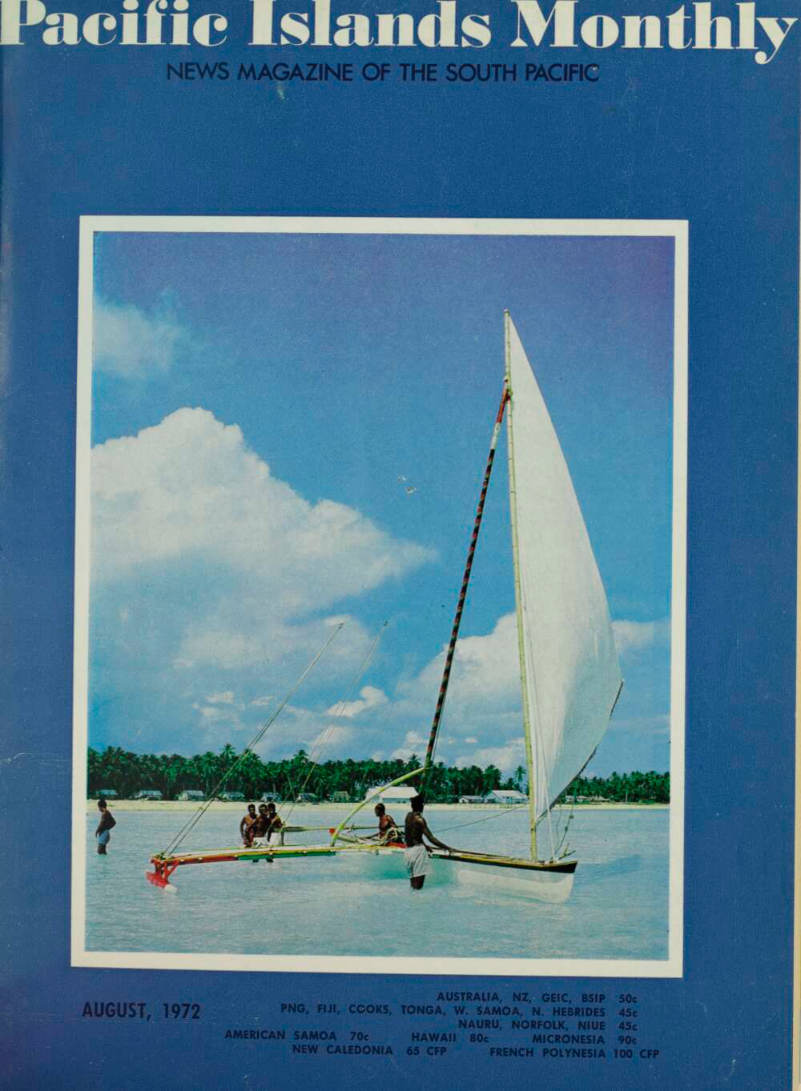 1
1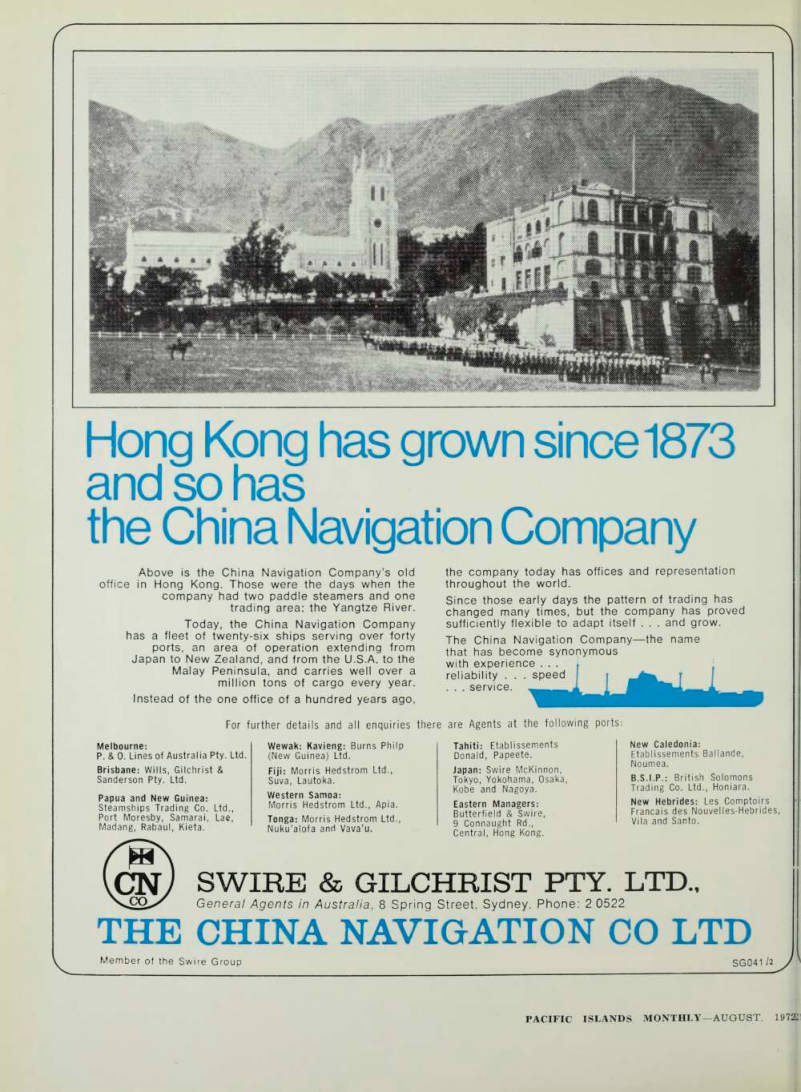 2
2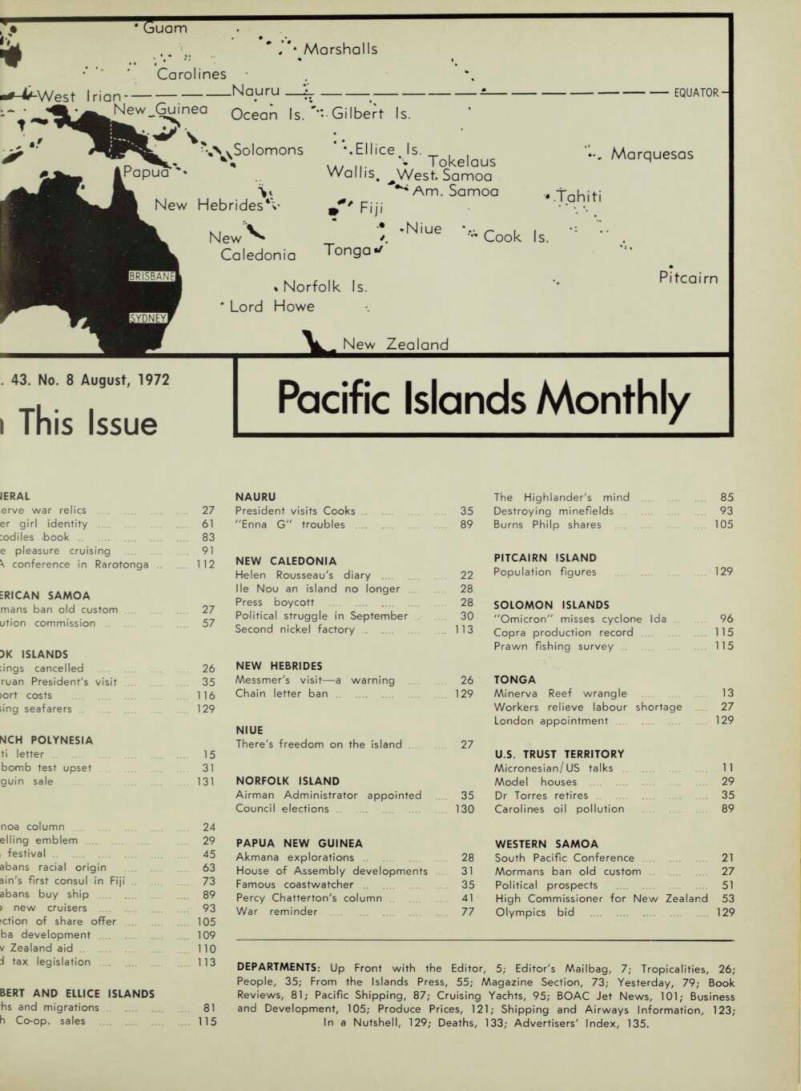 3
3 4
4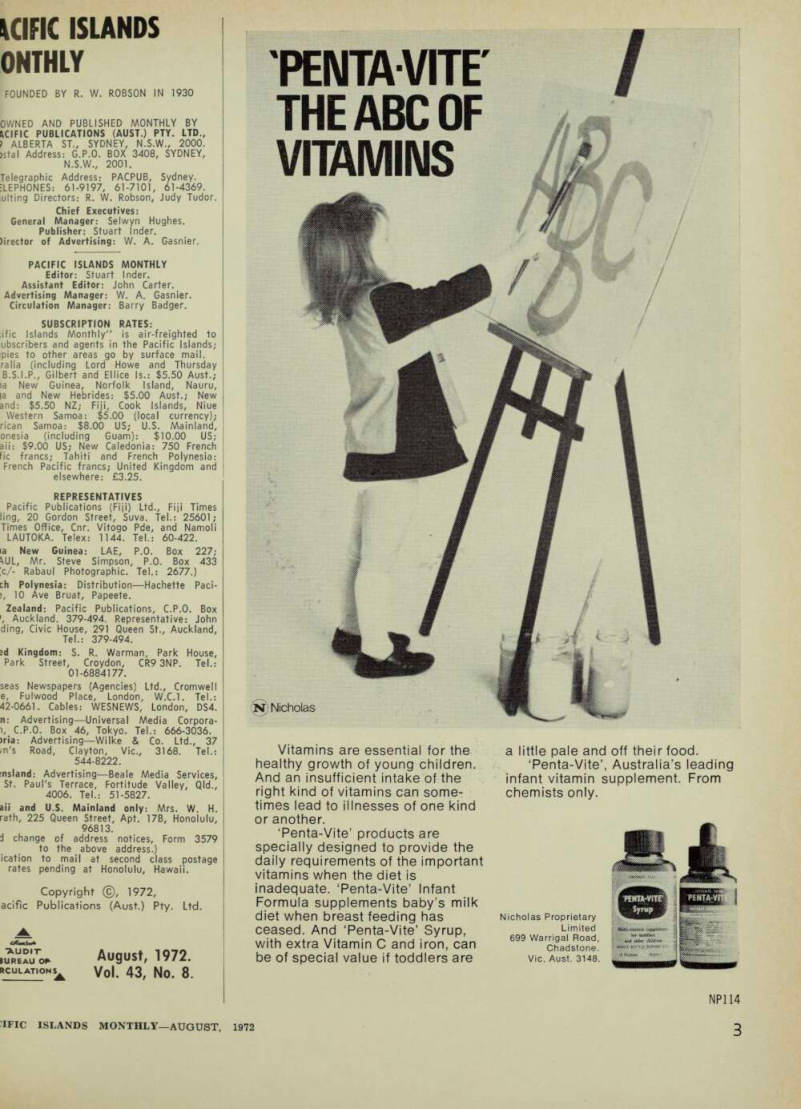 5
5 6
6 7
7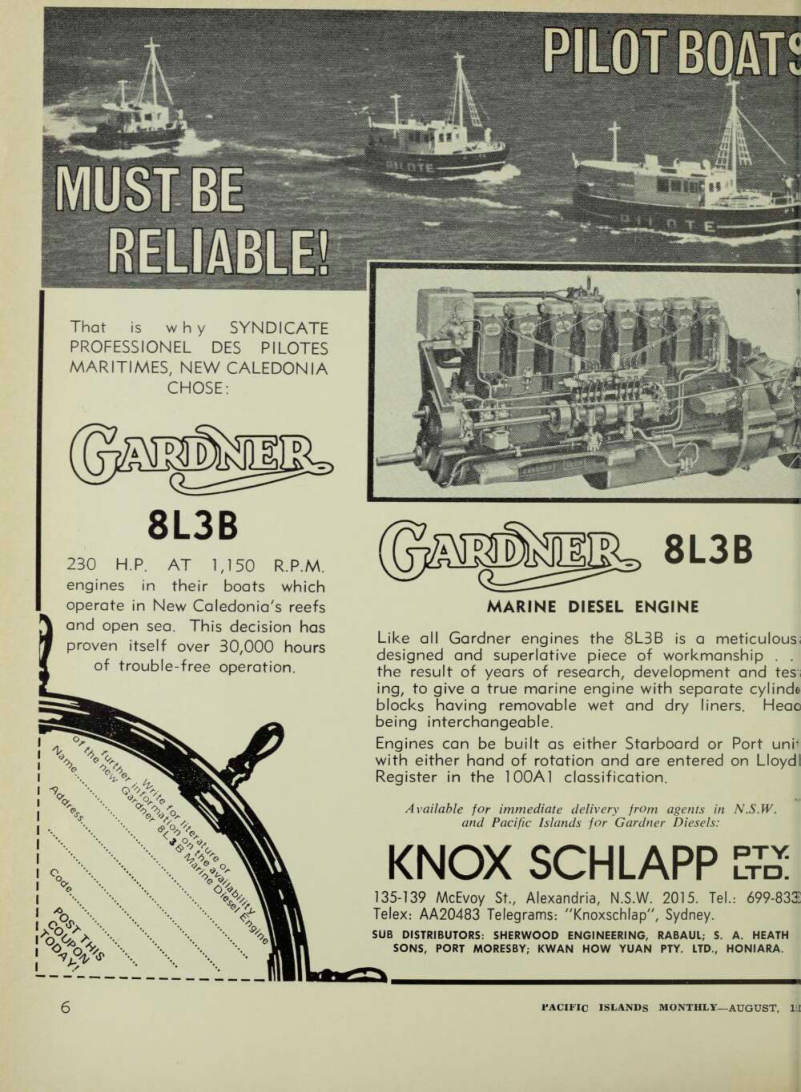 8
8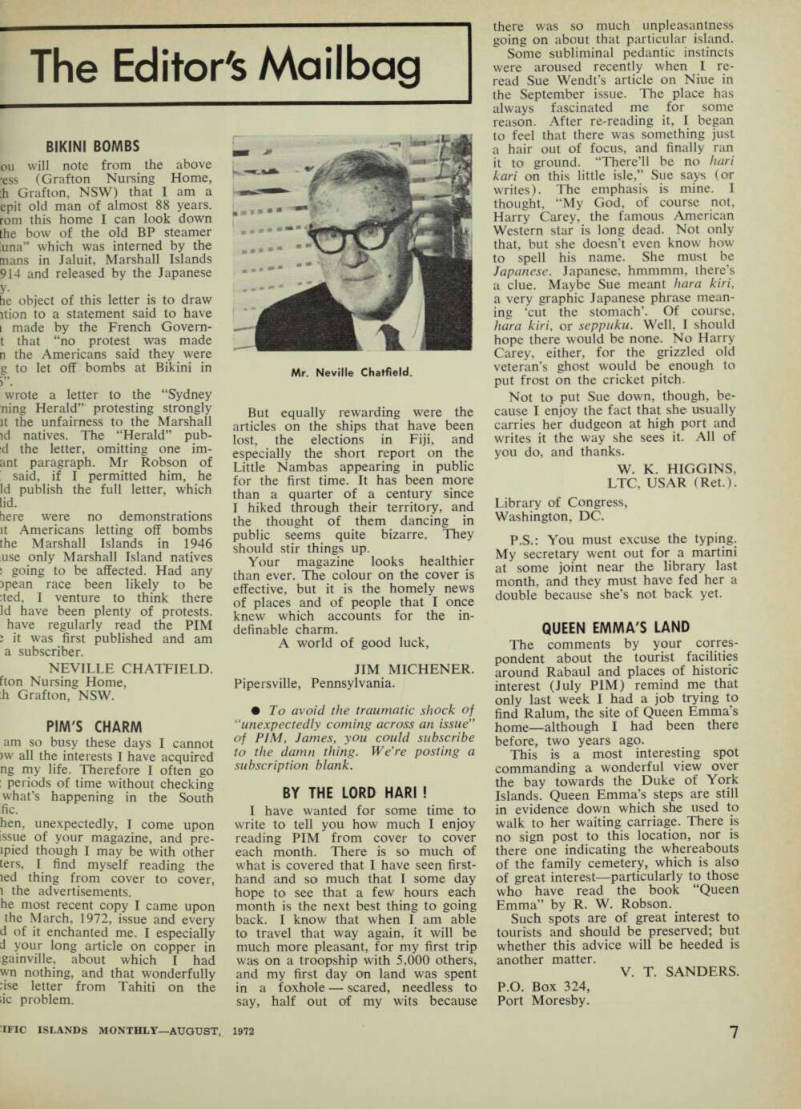 9
9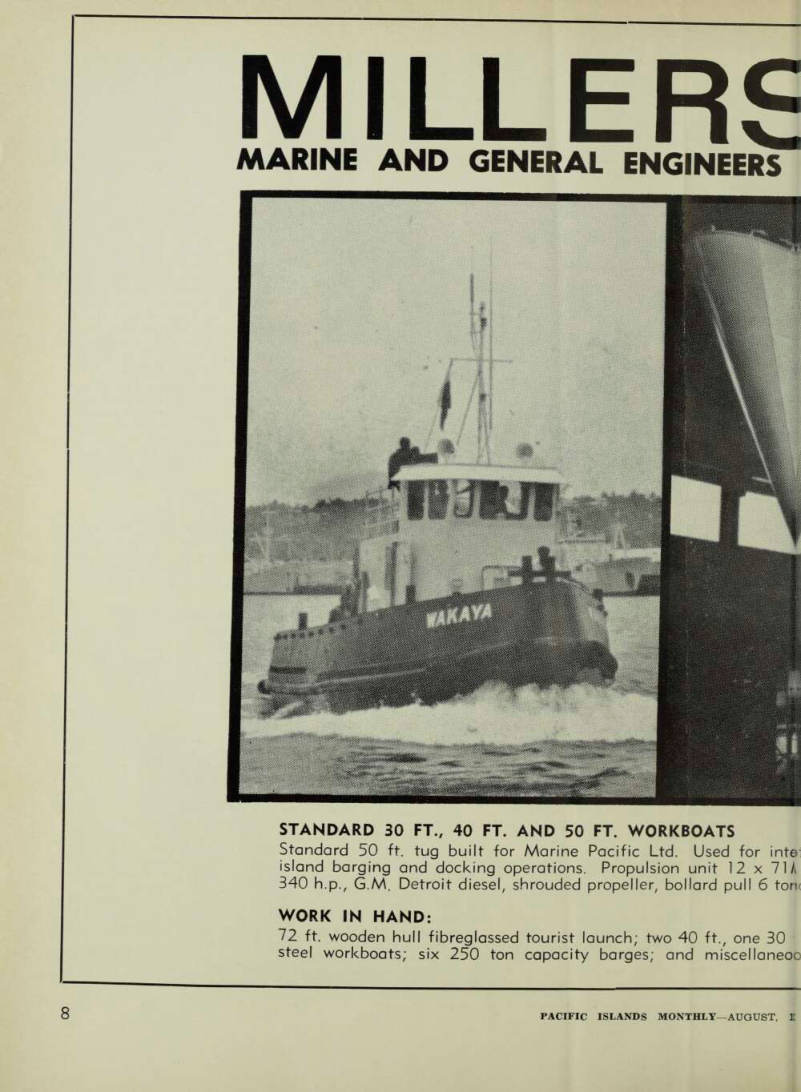 10
10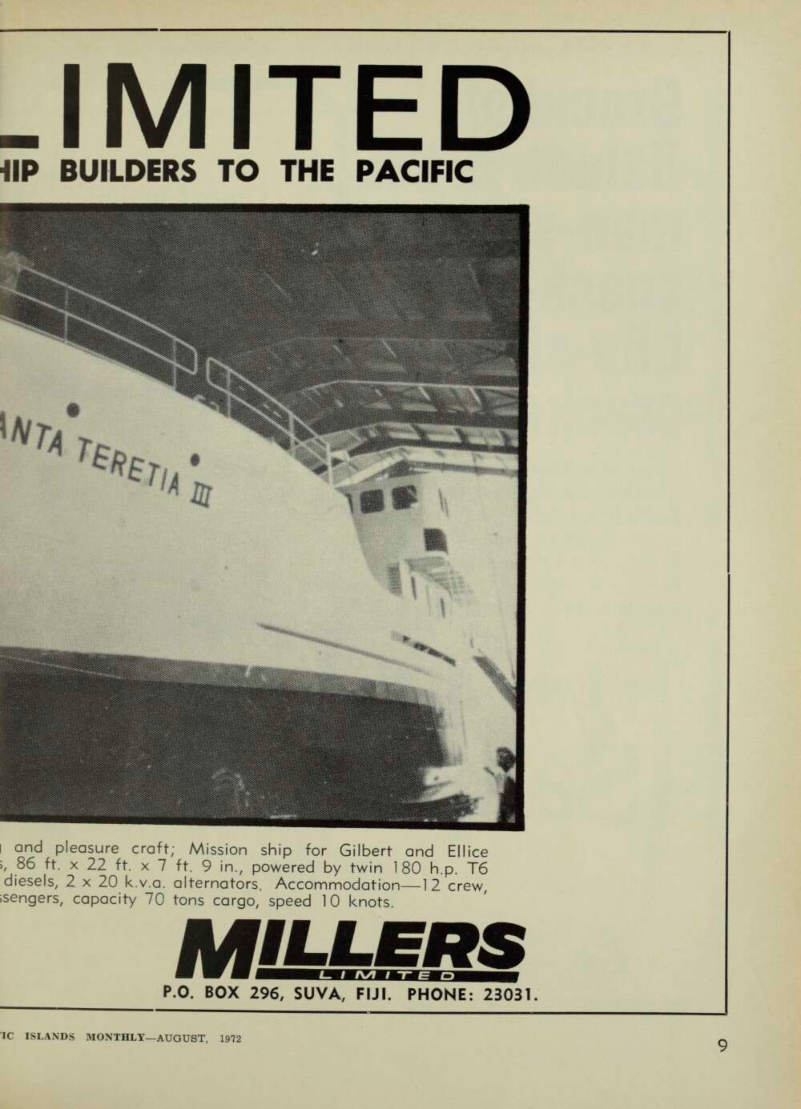 11
11 12
12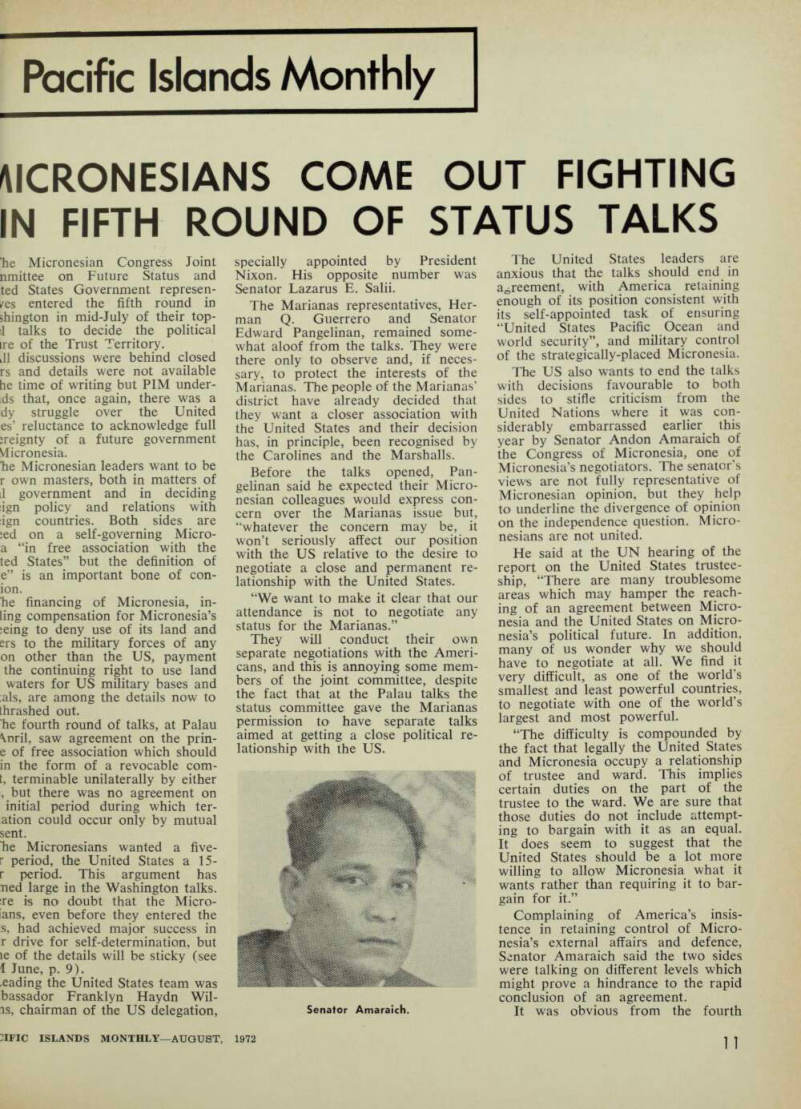 13
13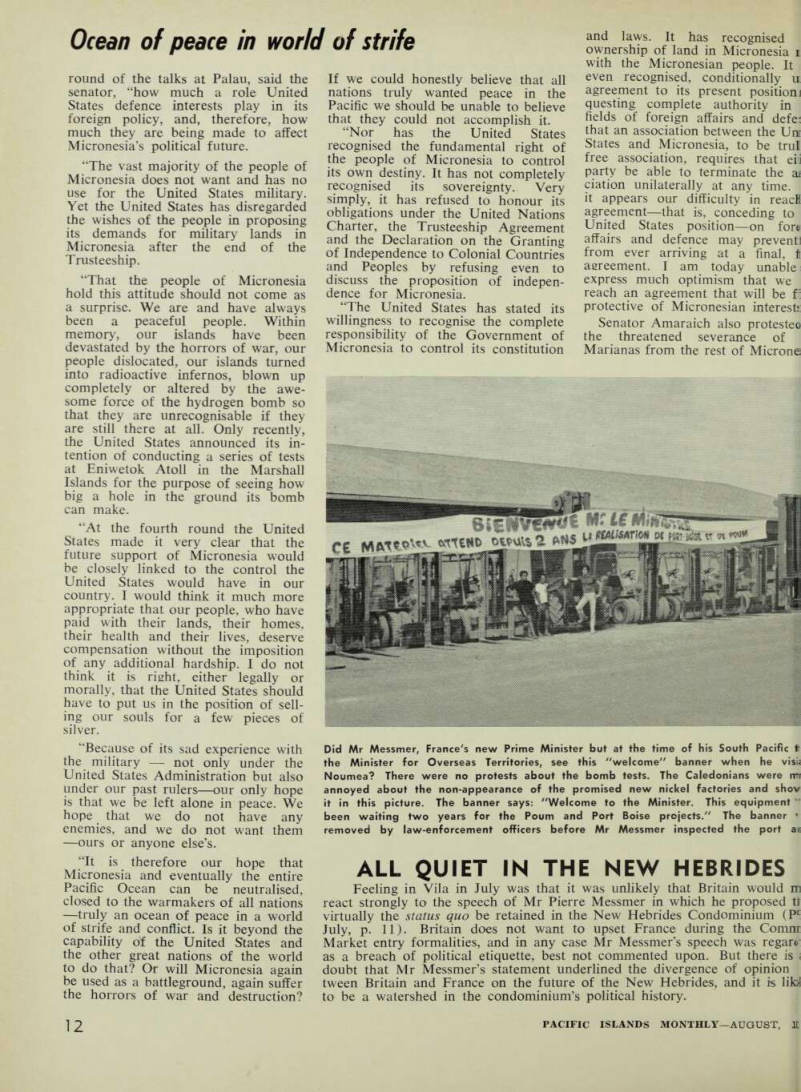 14
14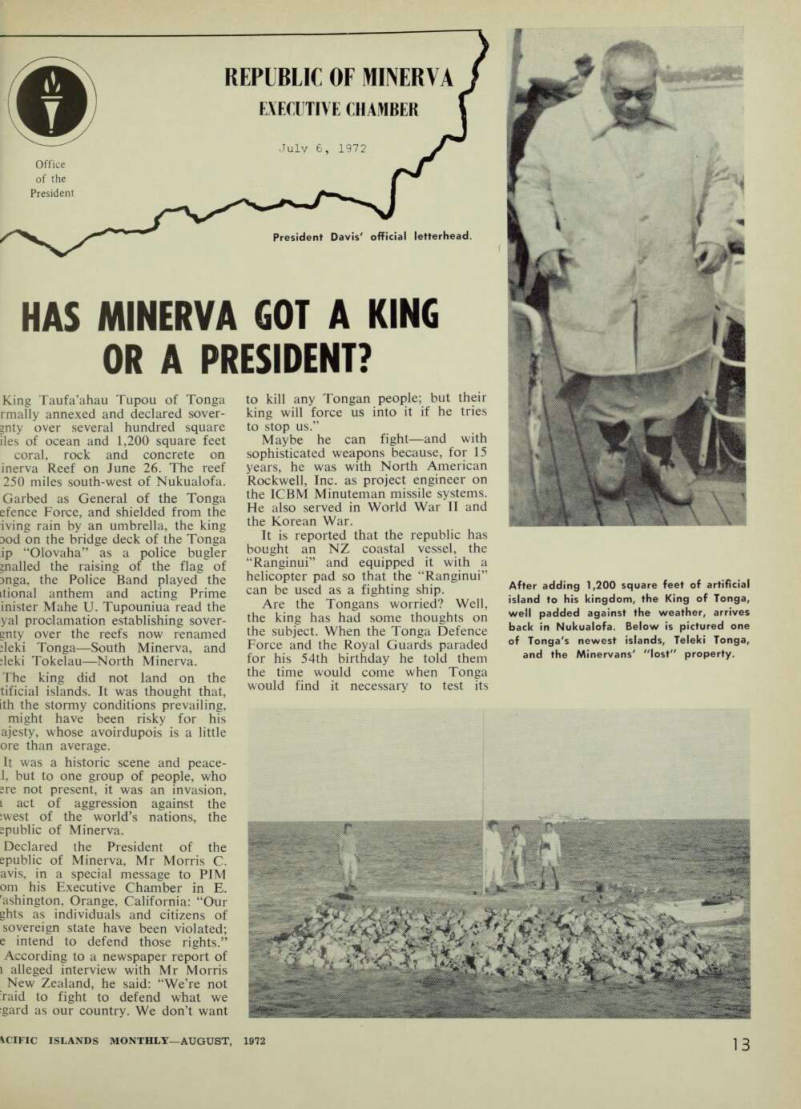 15
15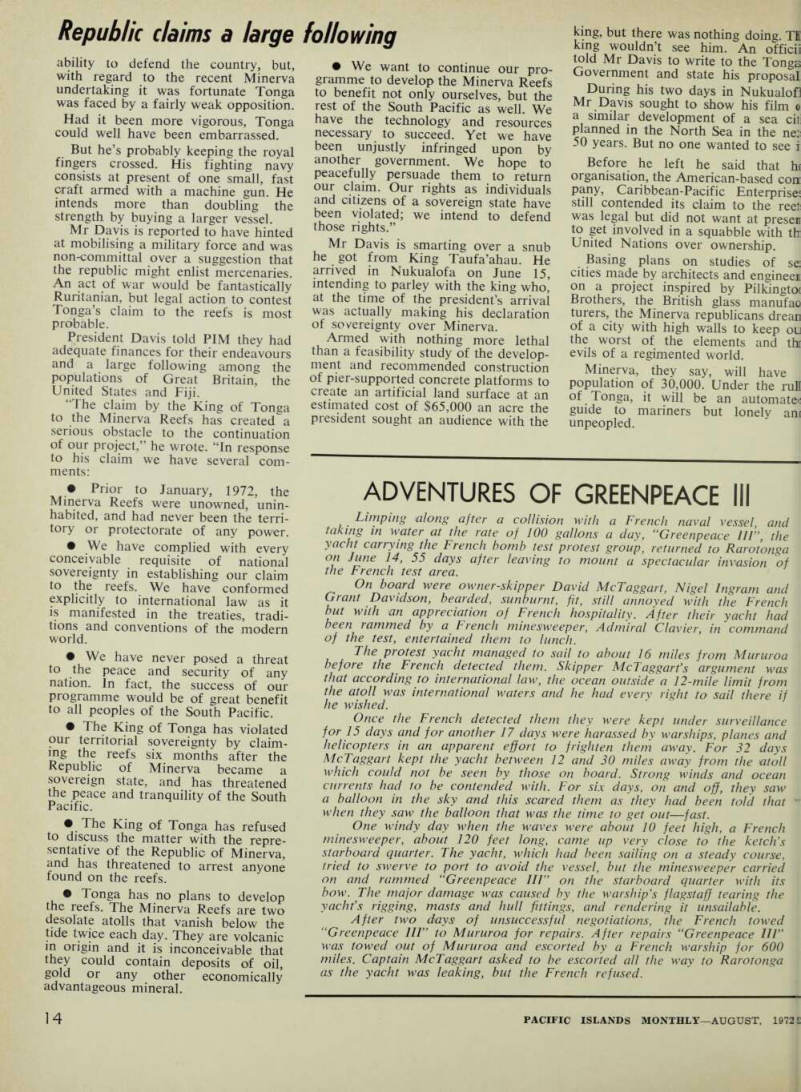 16
16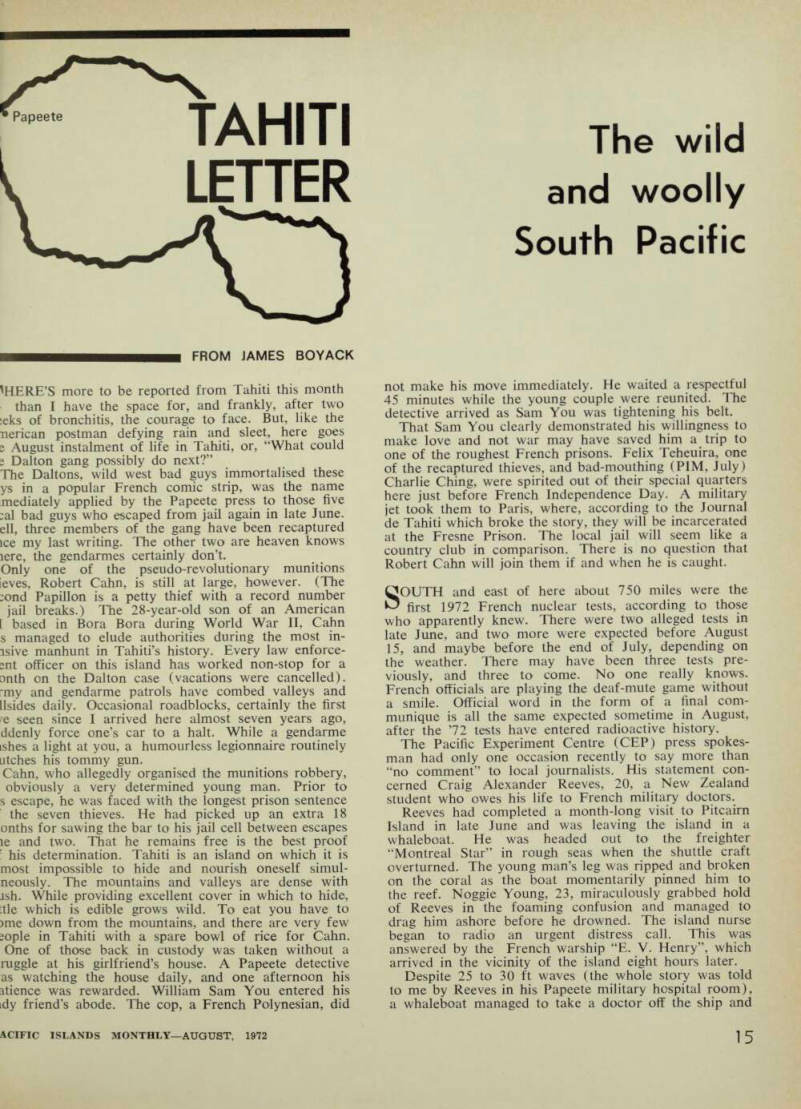 17
17 18
18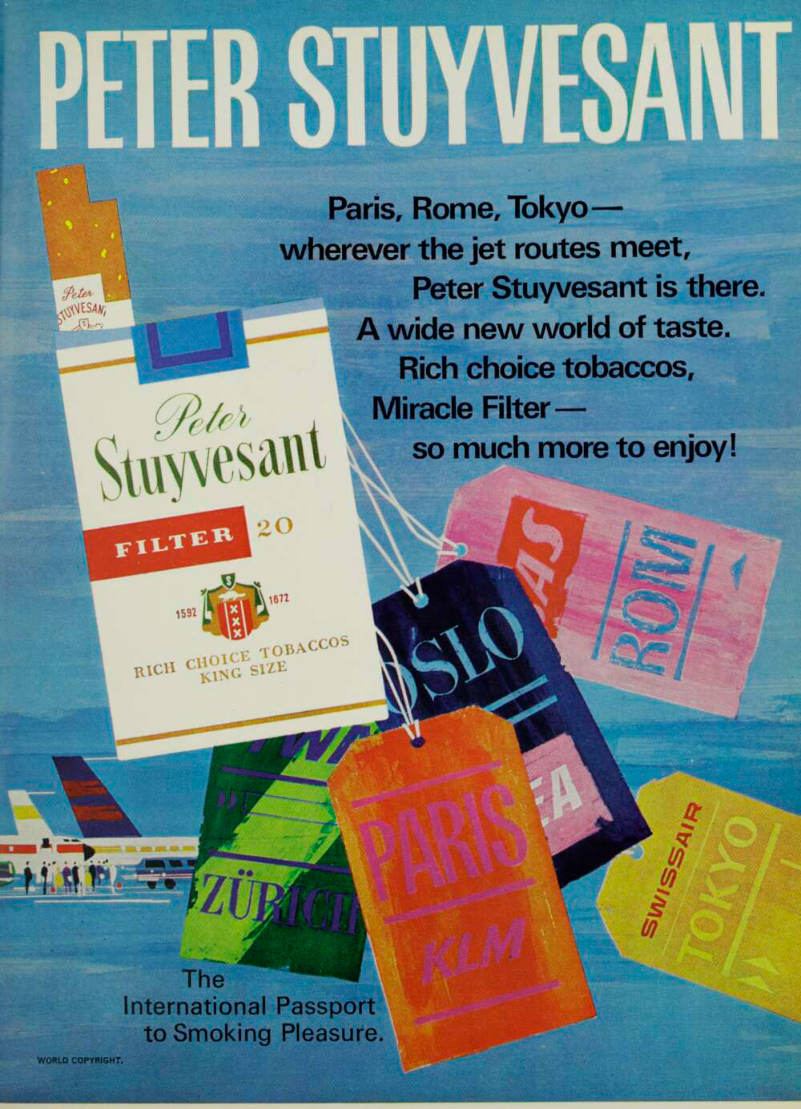 19
19 20
20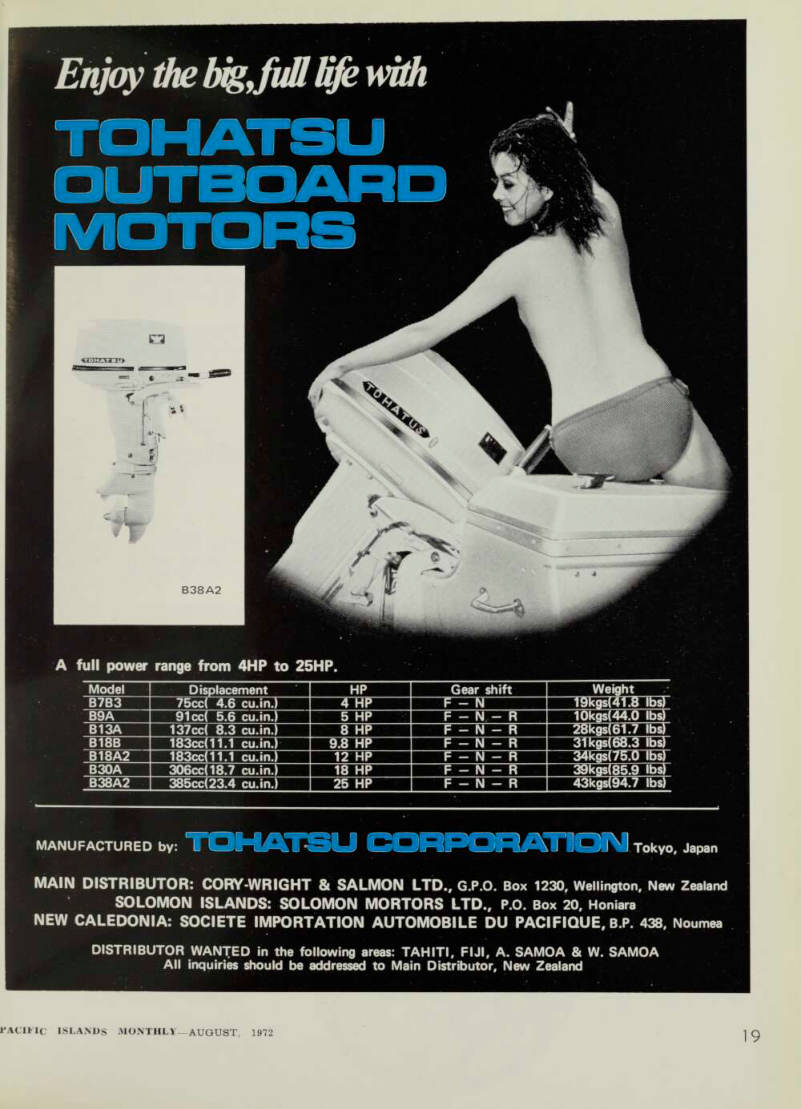 21
21 22
22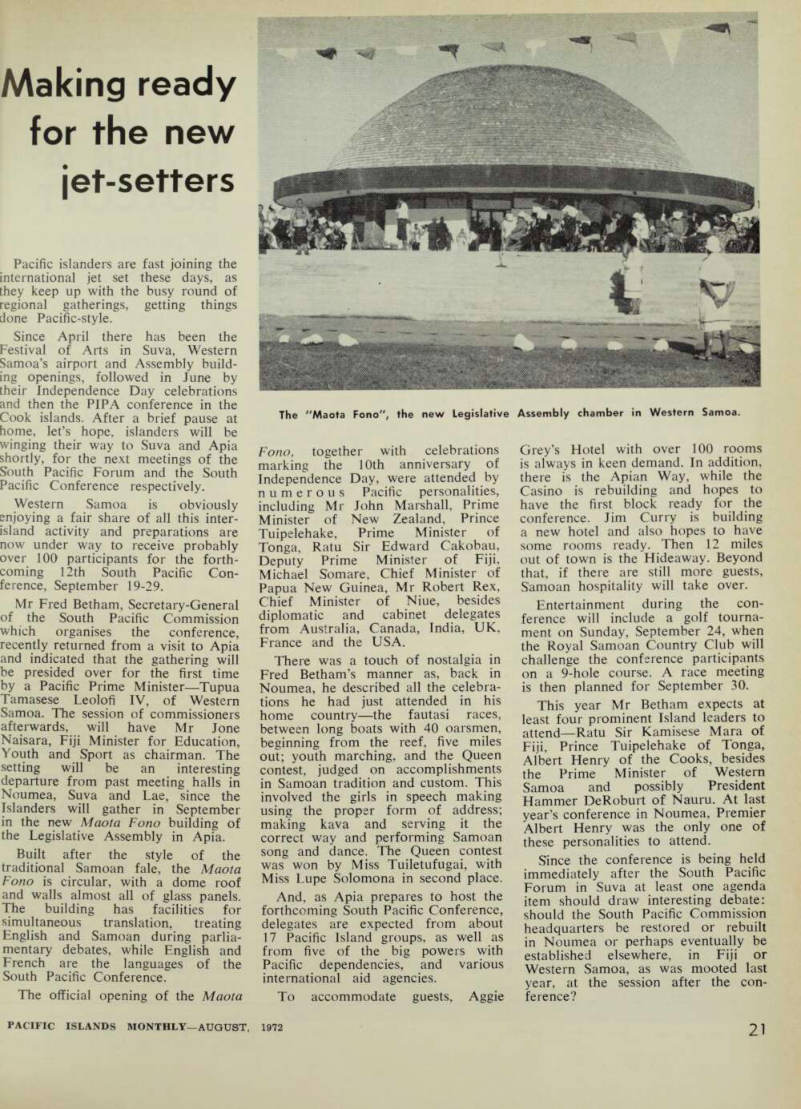 23
23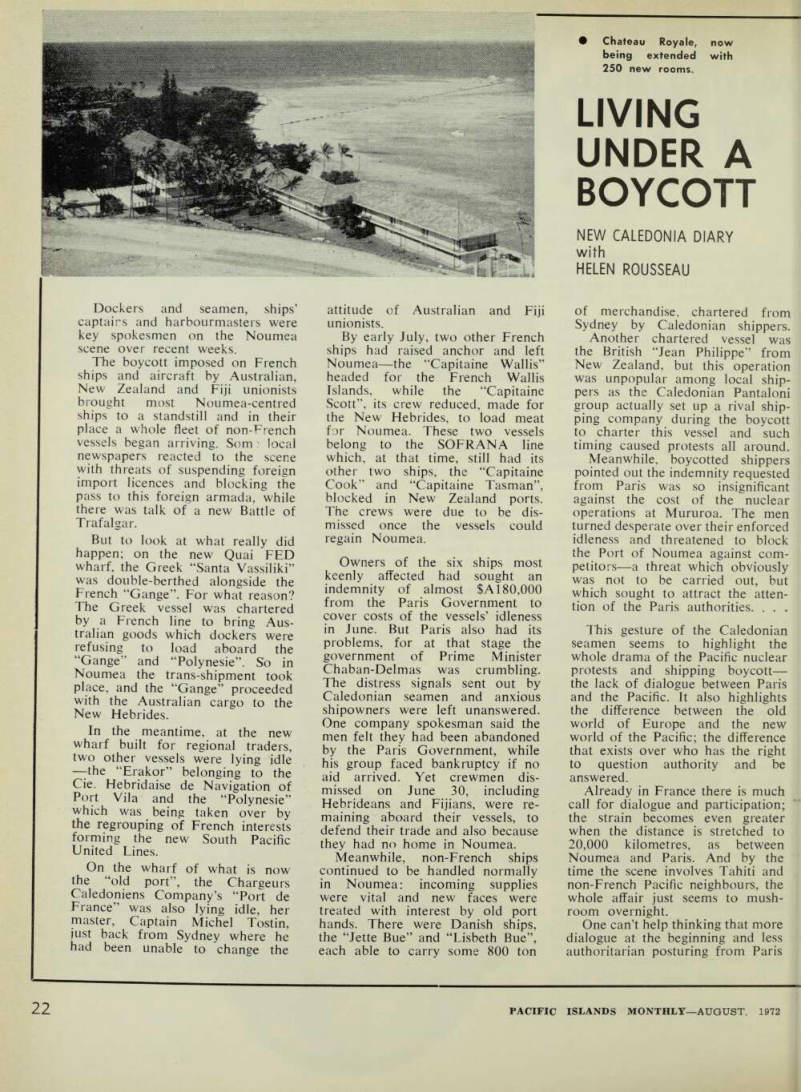 24
24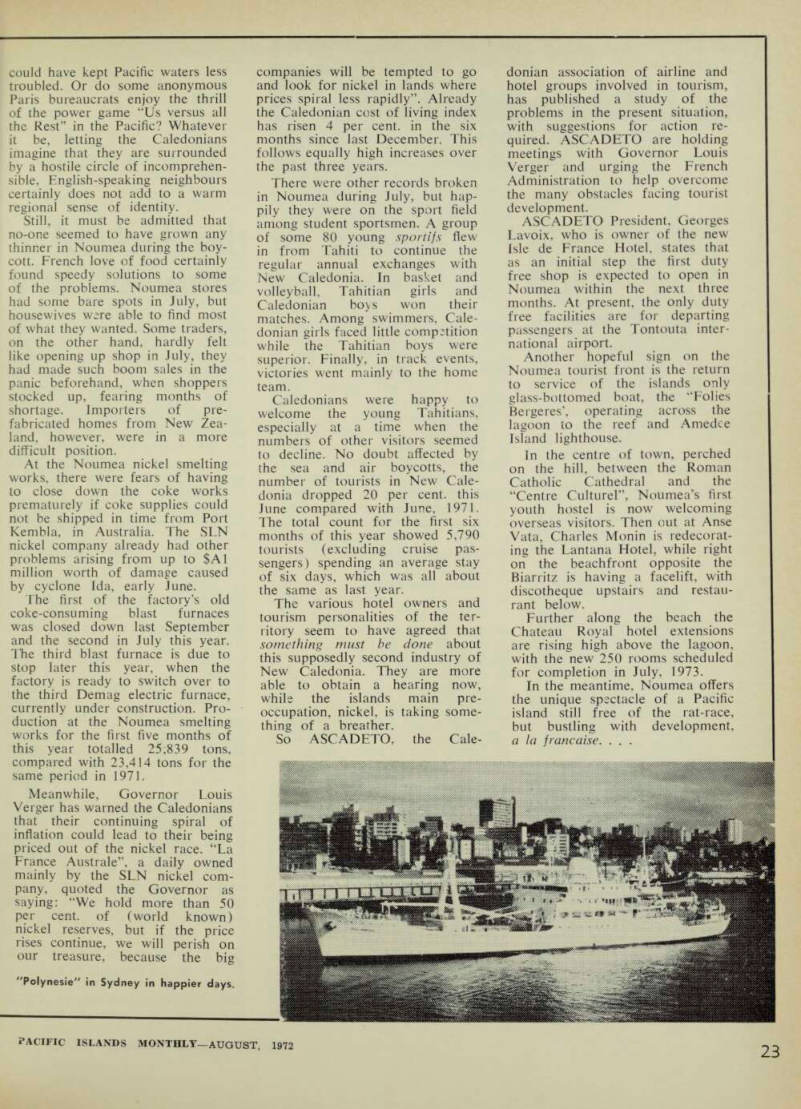 25
25 26
26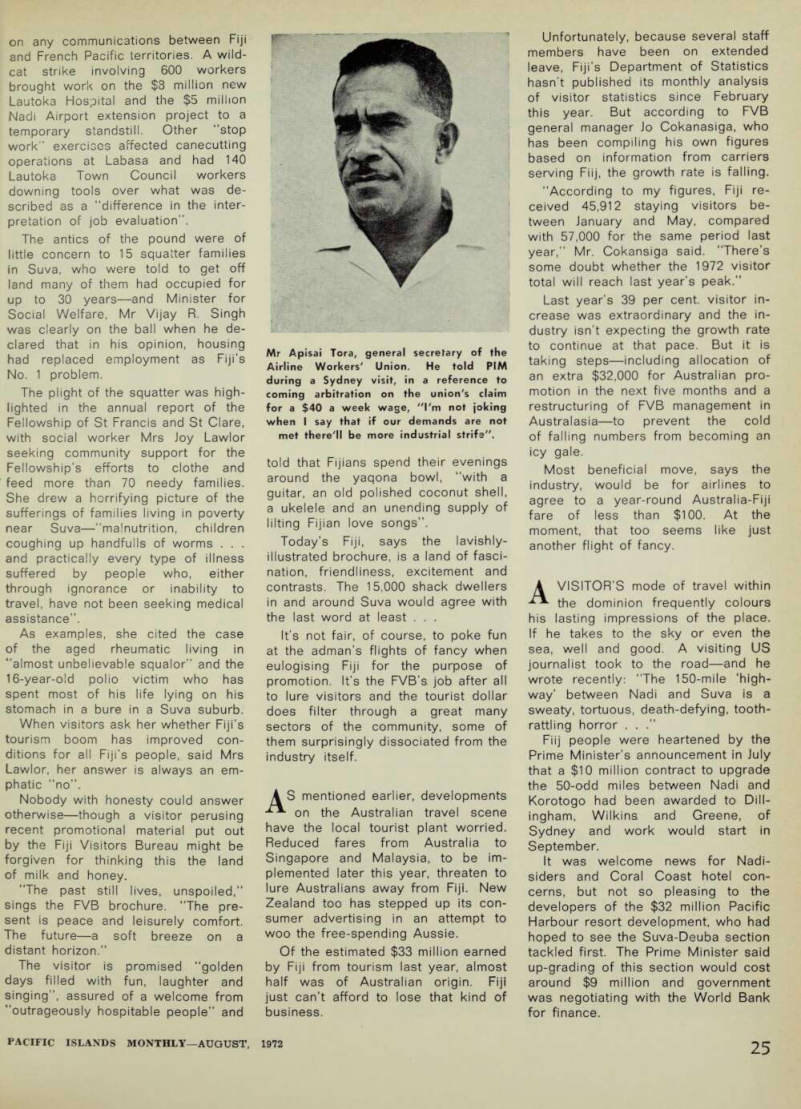 27
27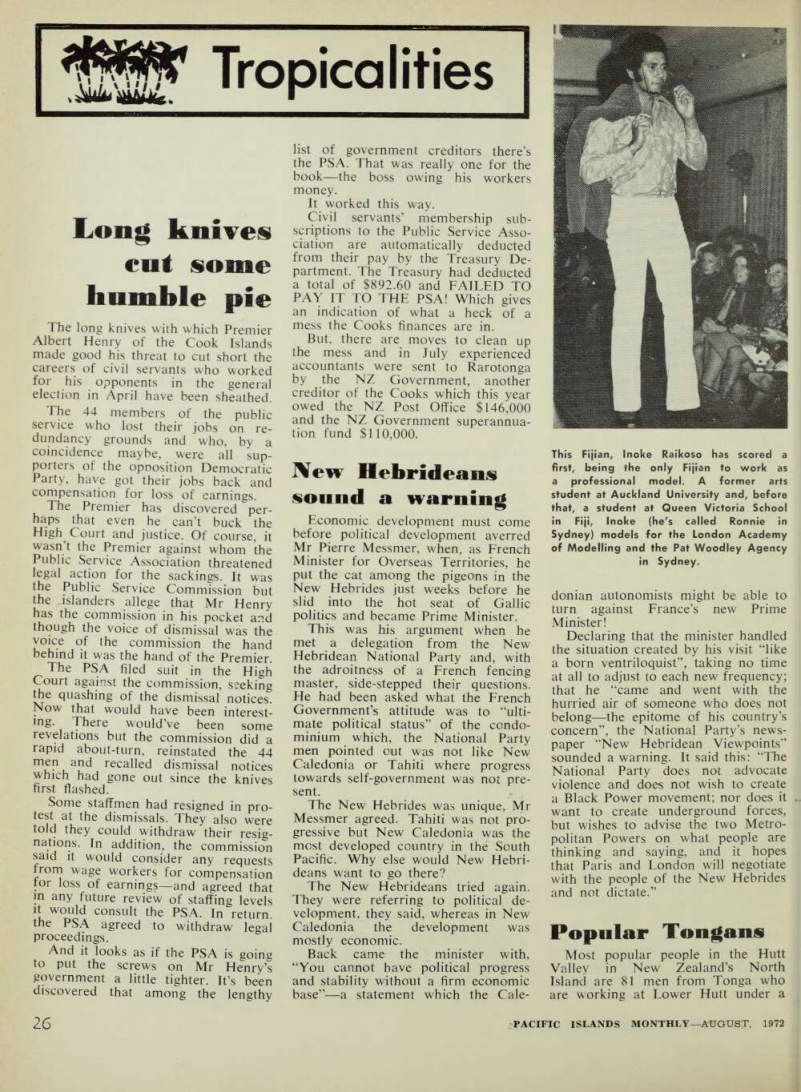 28
28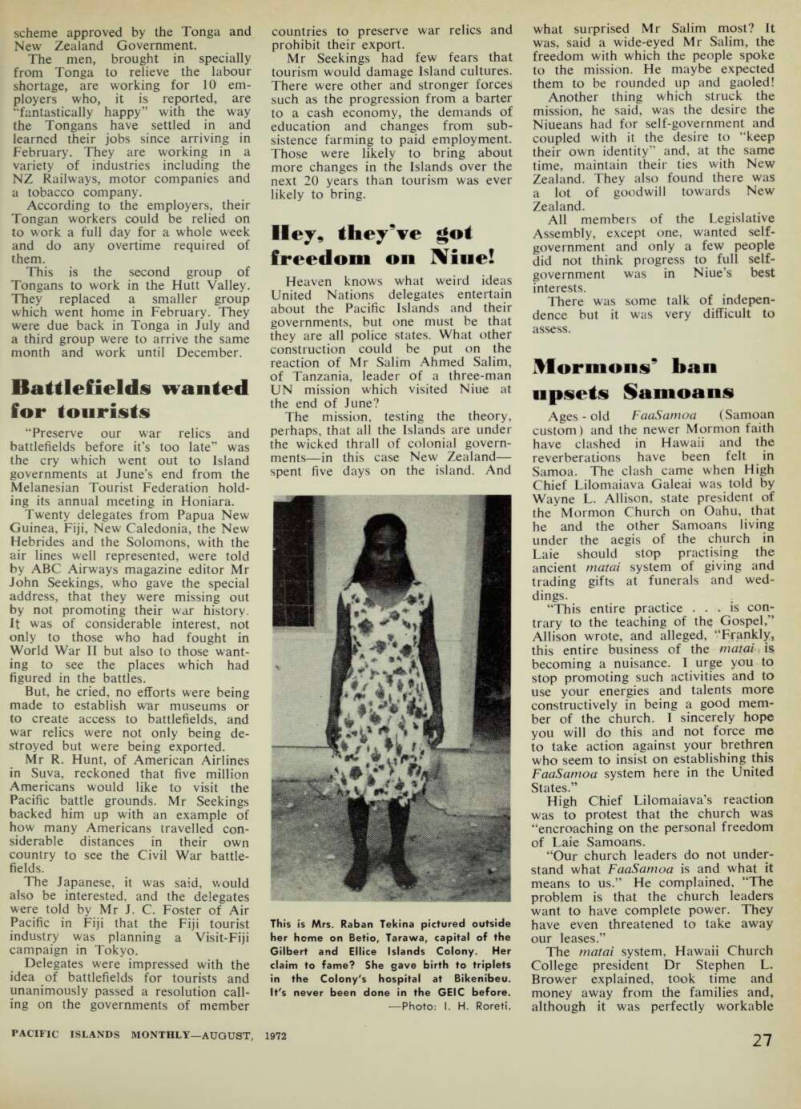 29
29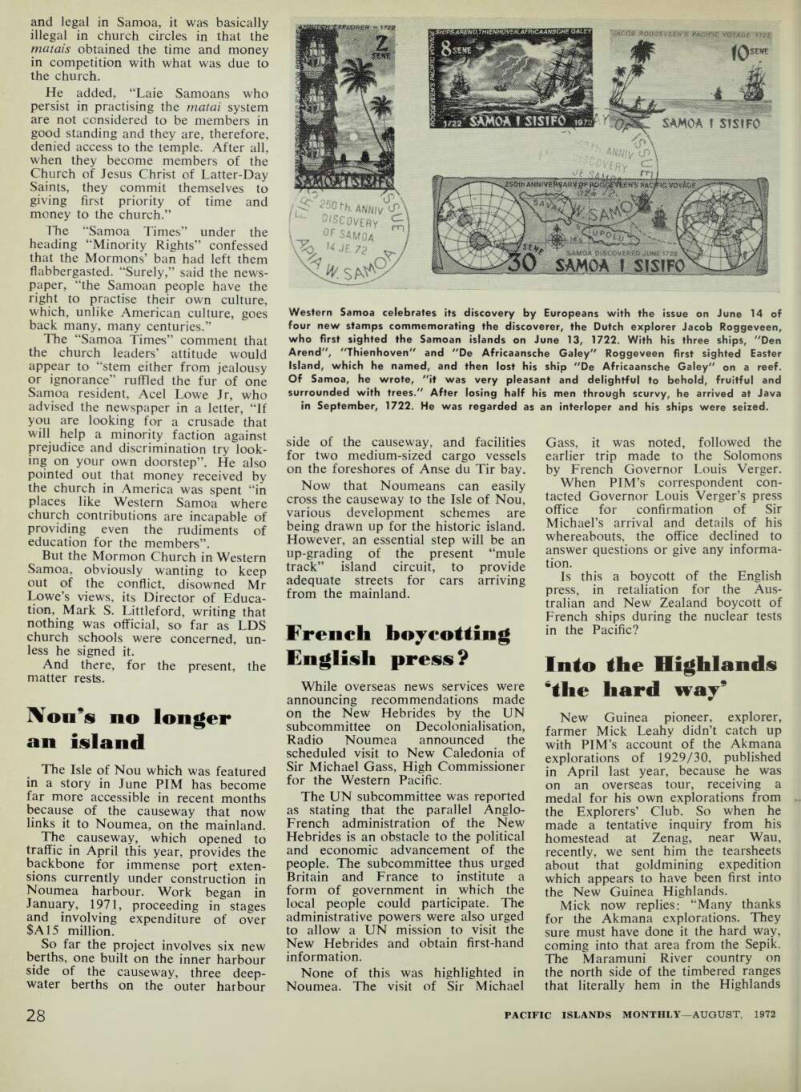 30
30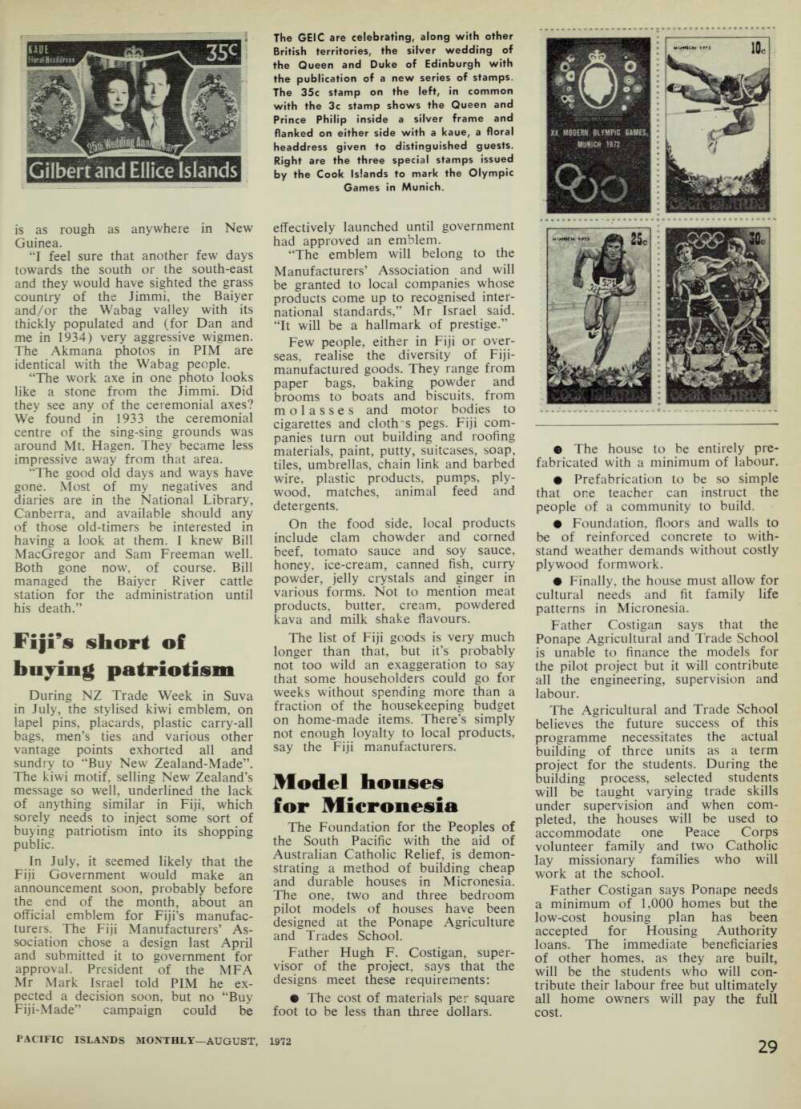 31
31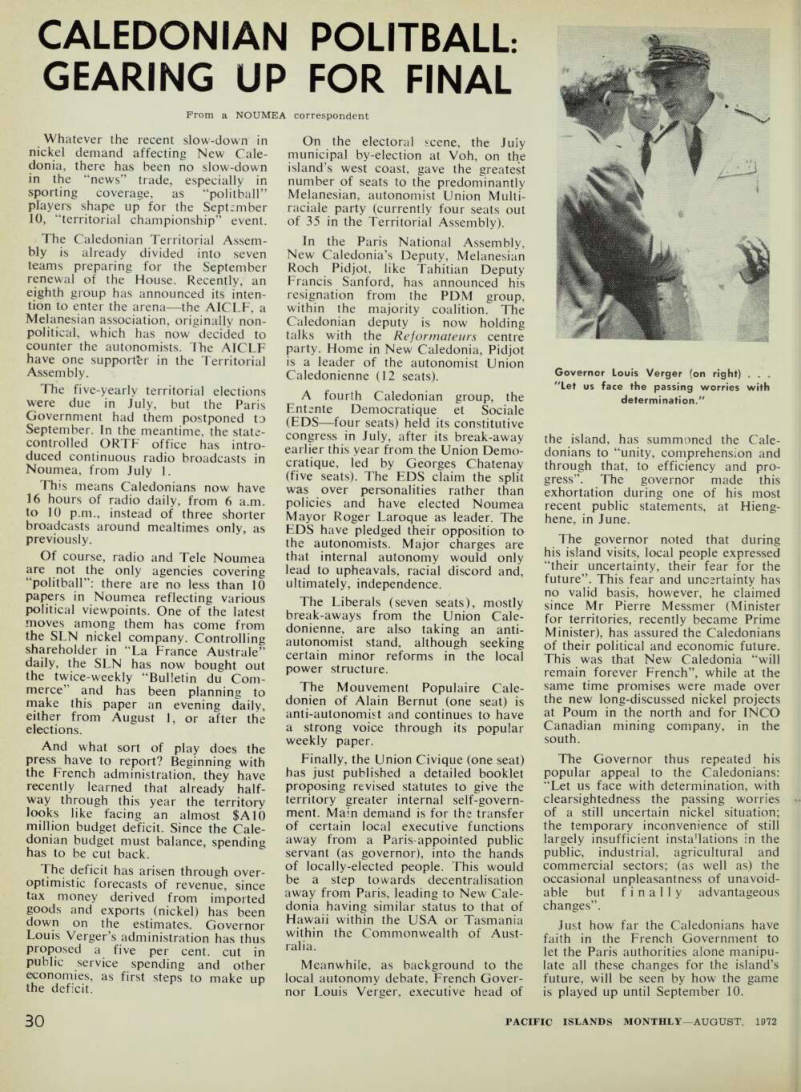 32
32 33
33 34
34 35
35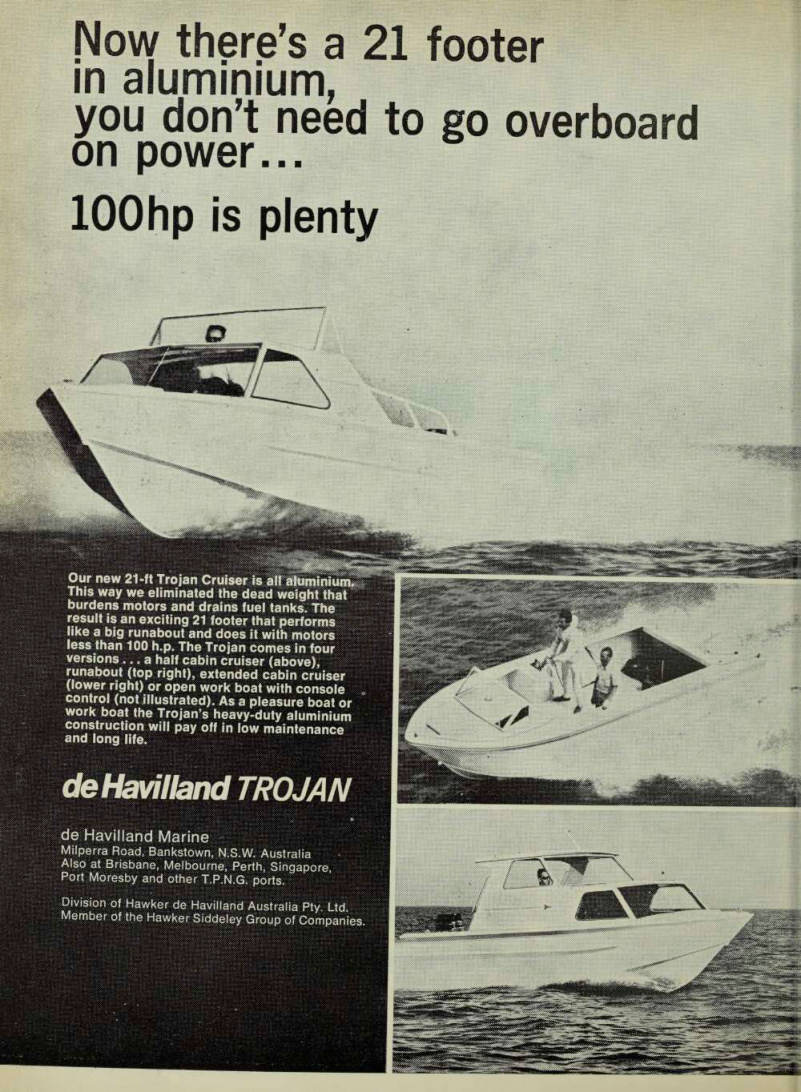 36
36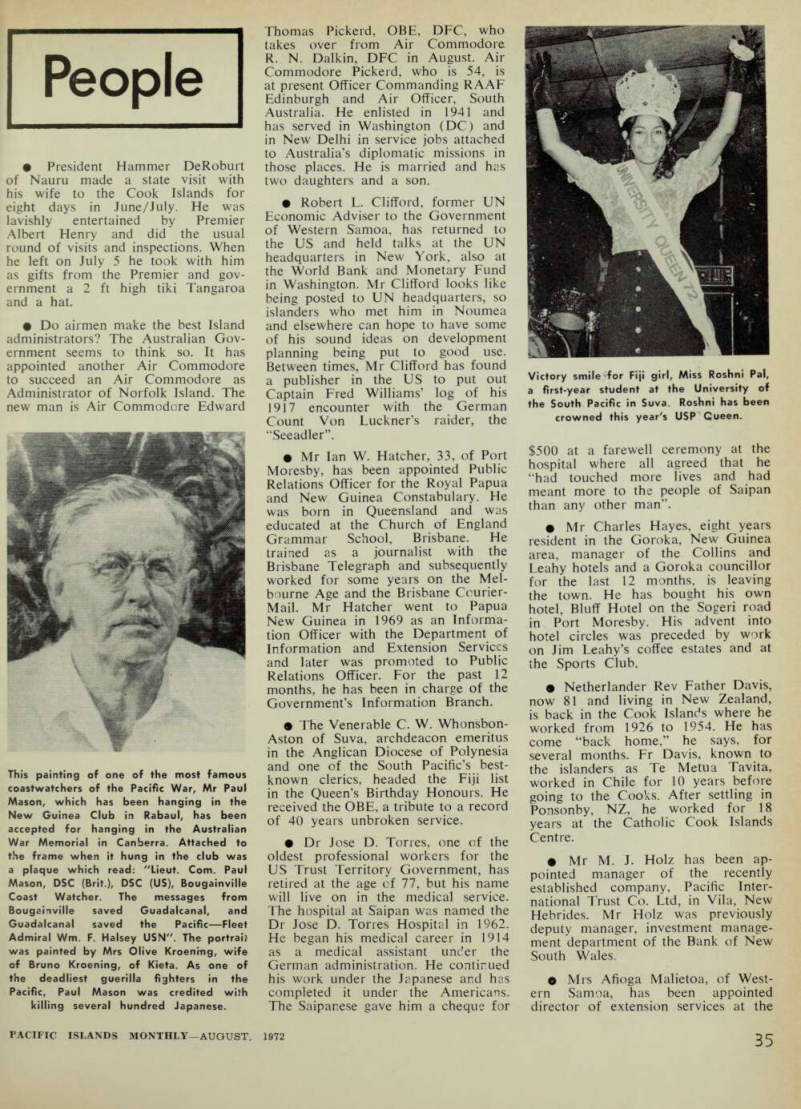 37
37 38
38 39
39 40
40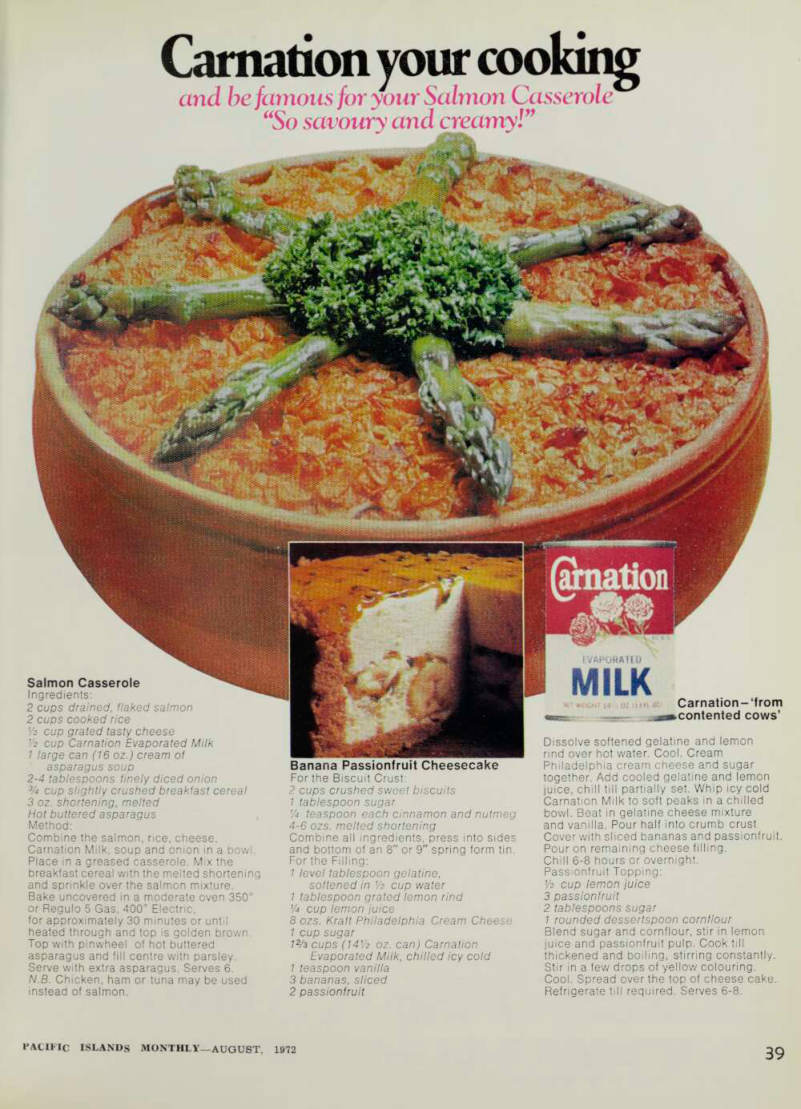 41
41 42
42 43
43 44
44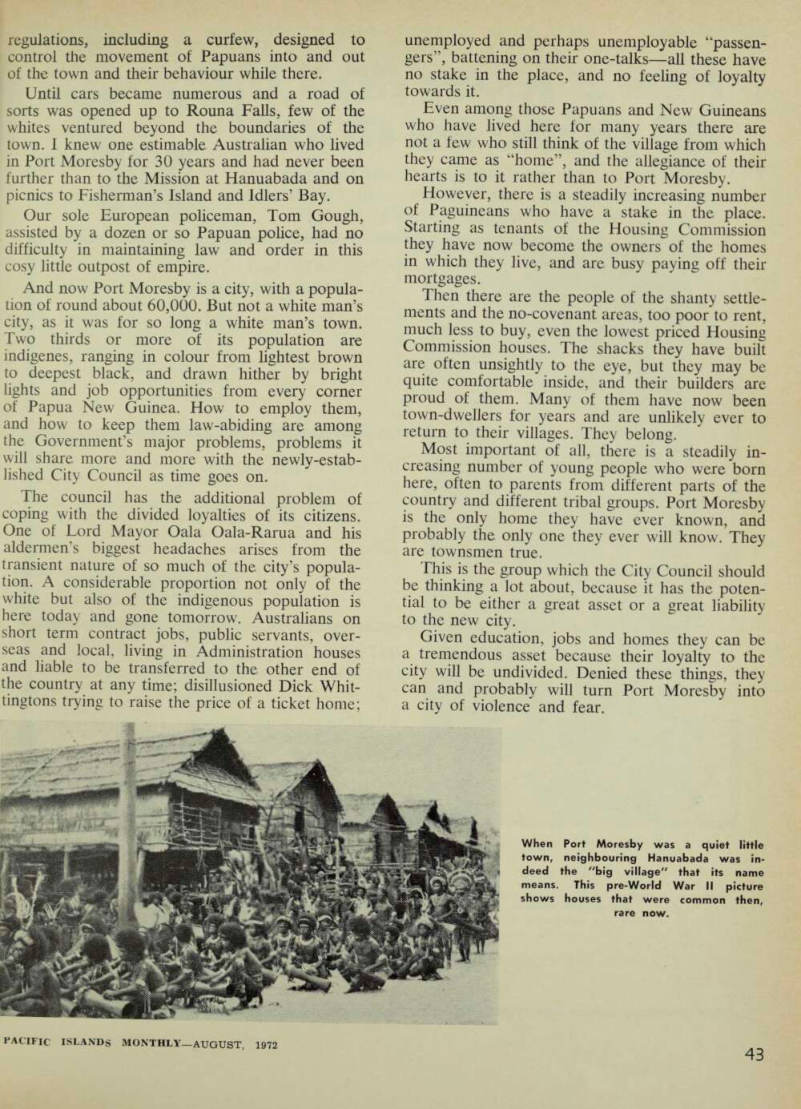 45
45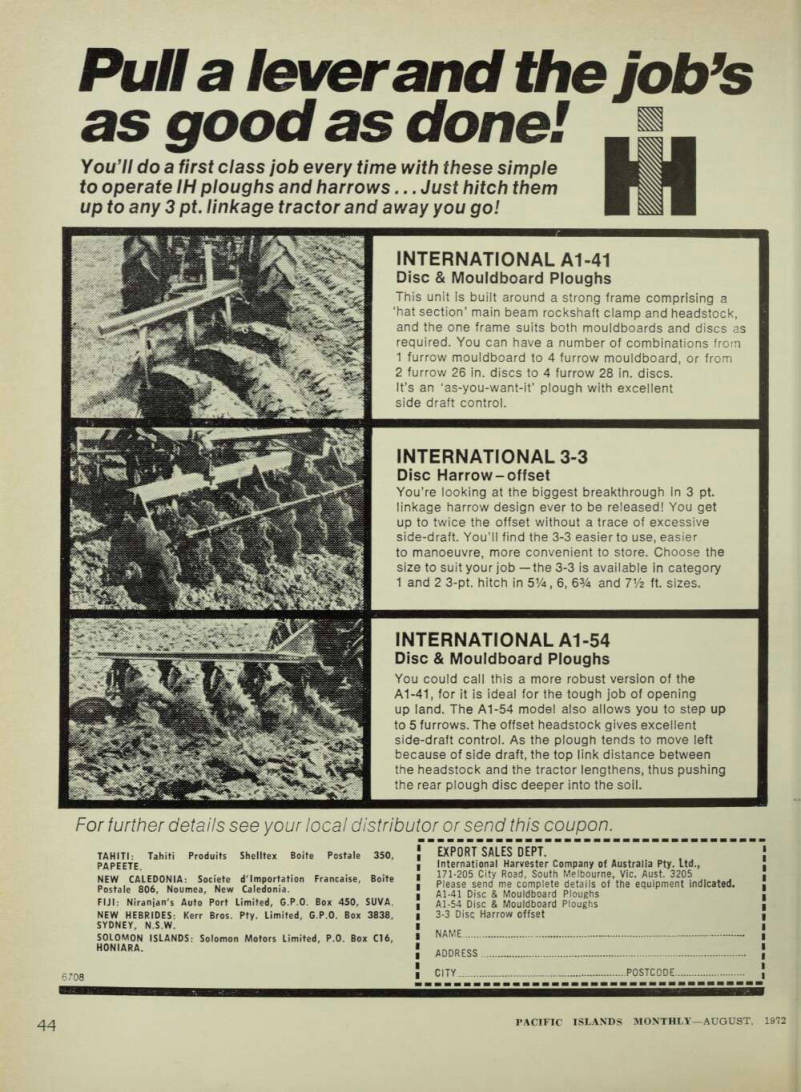 46
46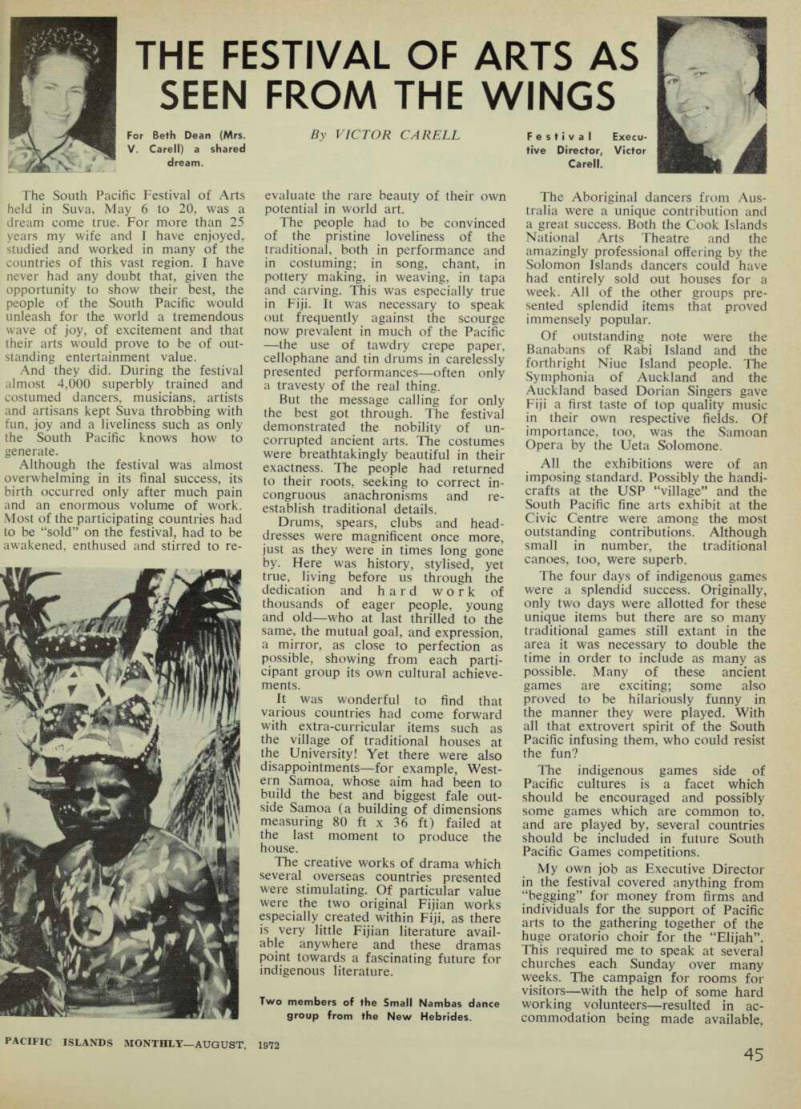 47
47 48
48 49
49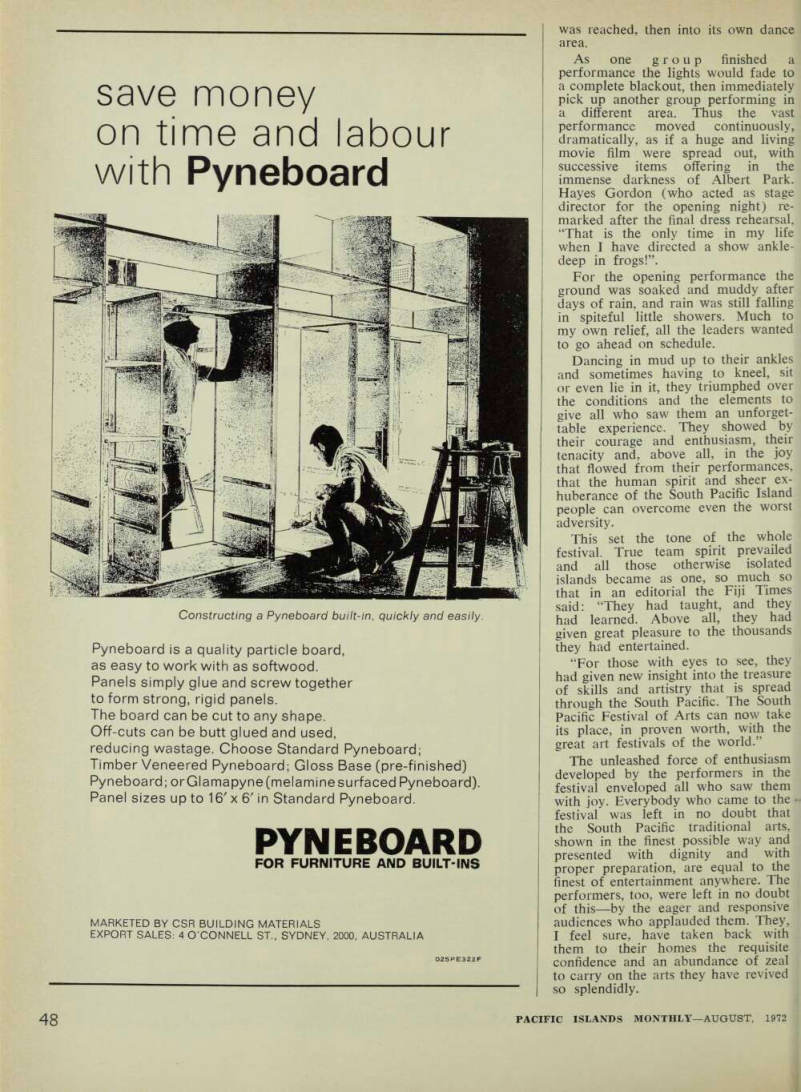 50
50 51
51 52
52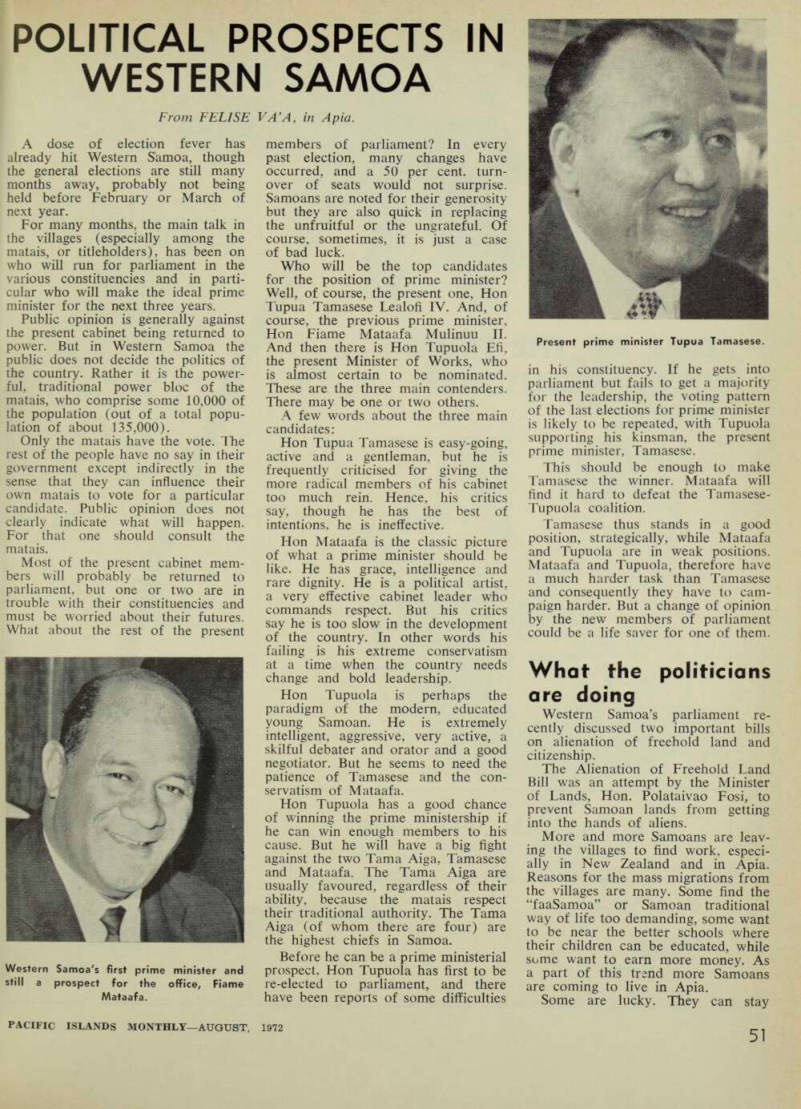 53
53 54
54 55
55 56
56 57
57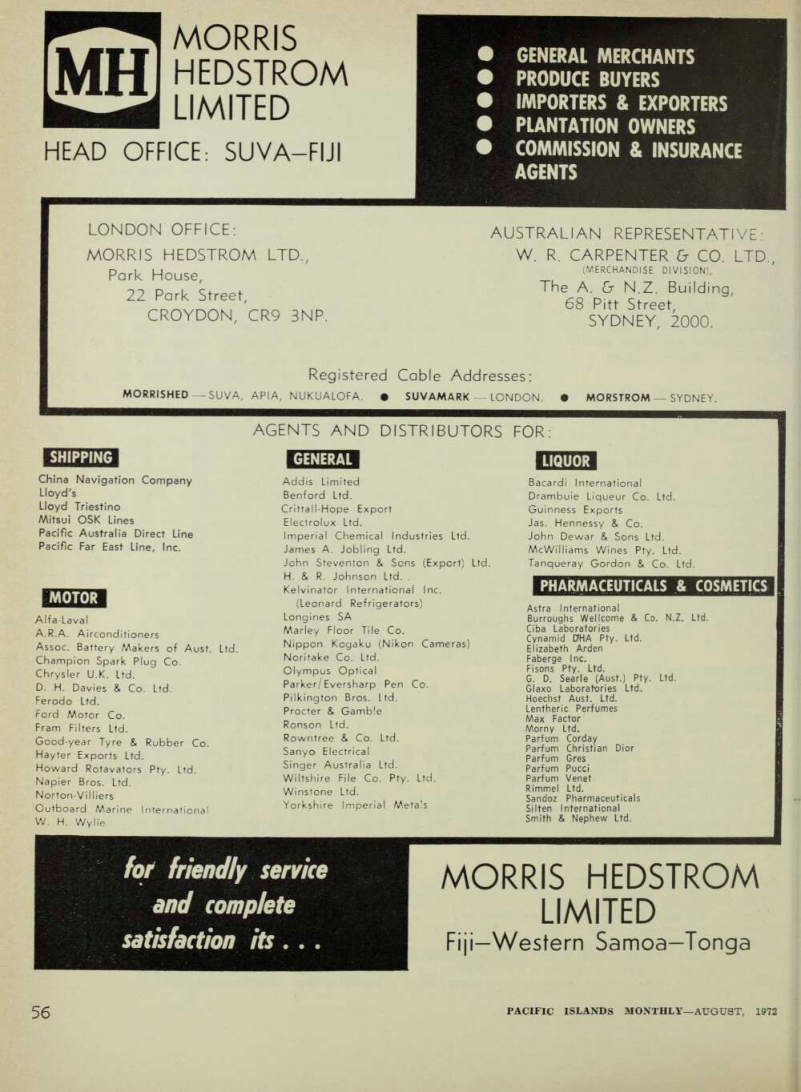 58
58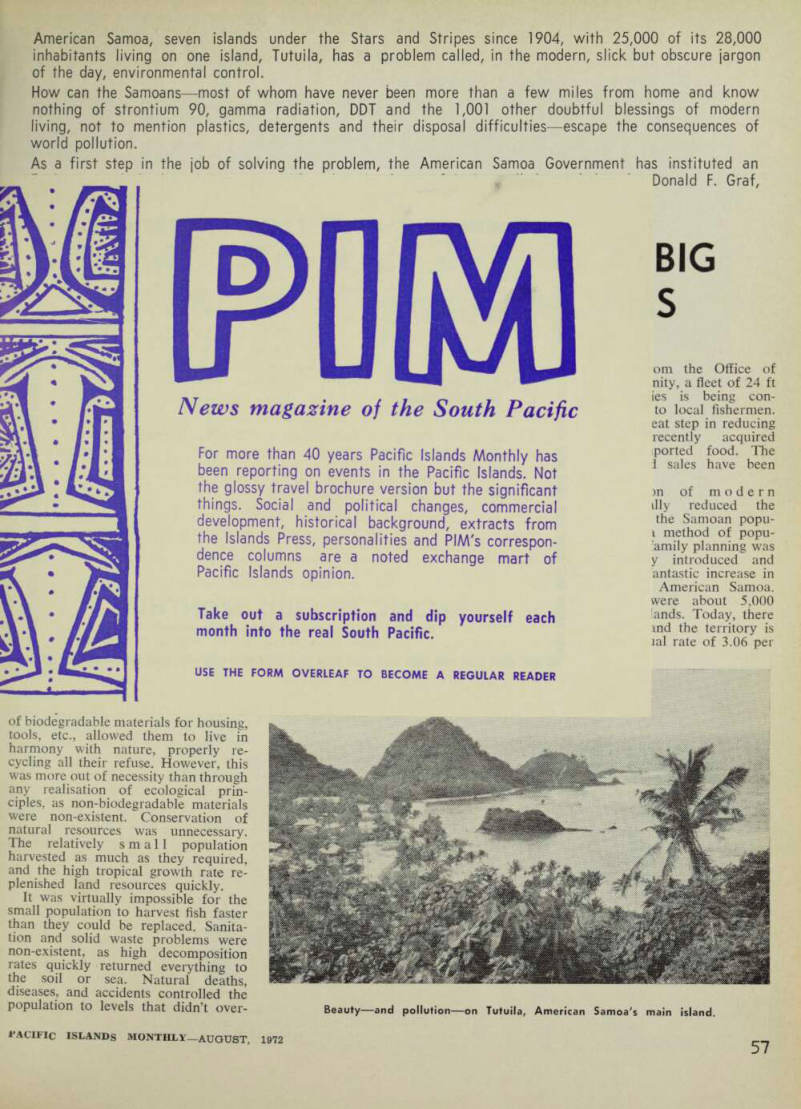 59
59 60
60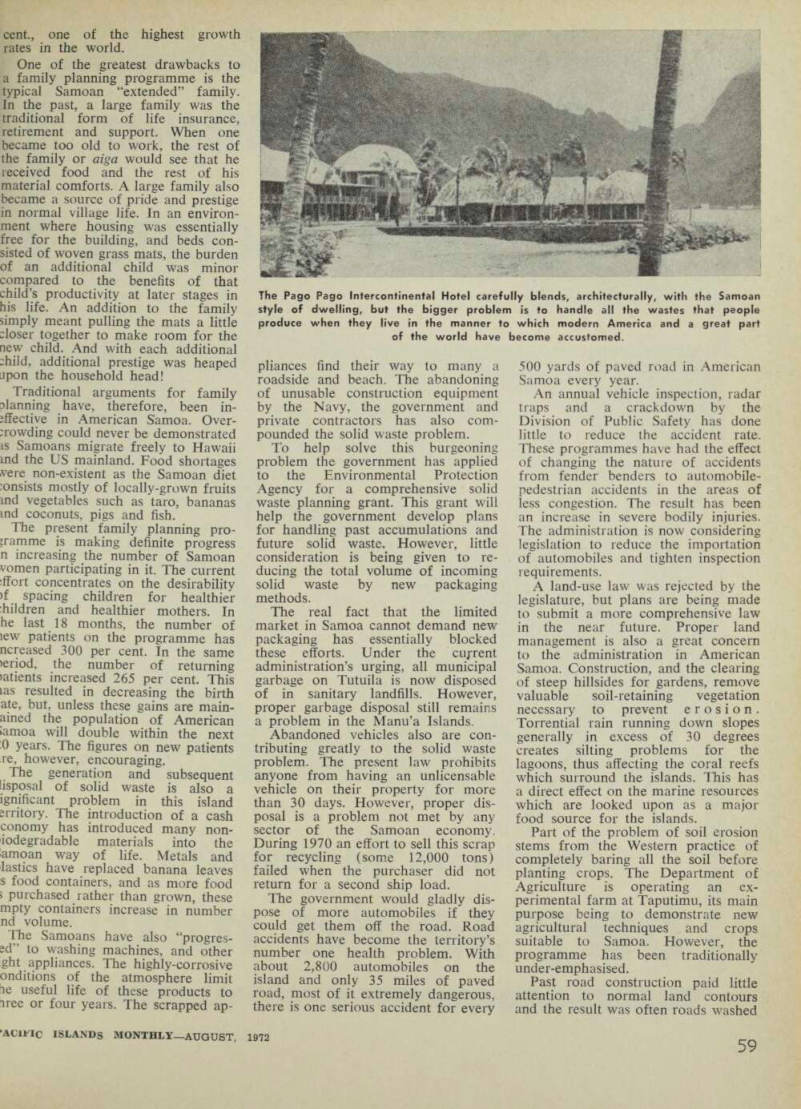 61
61 62
62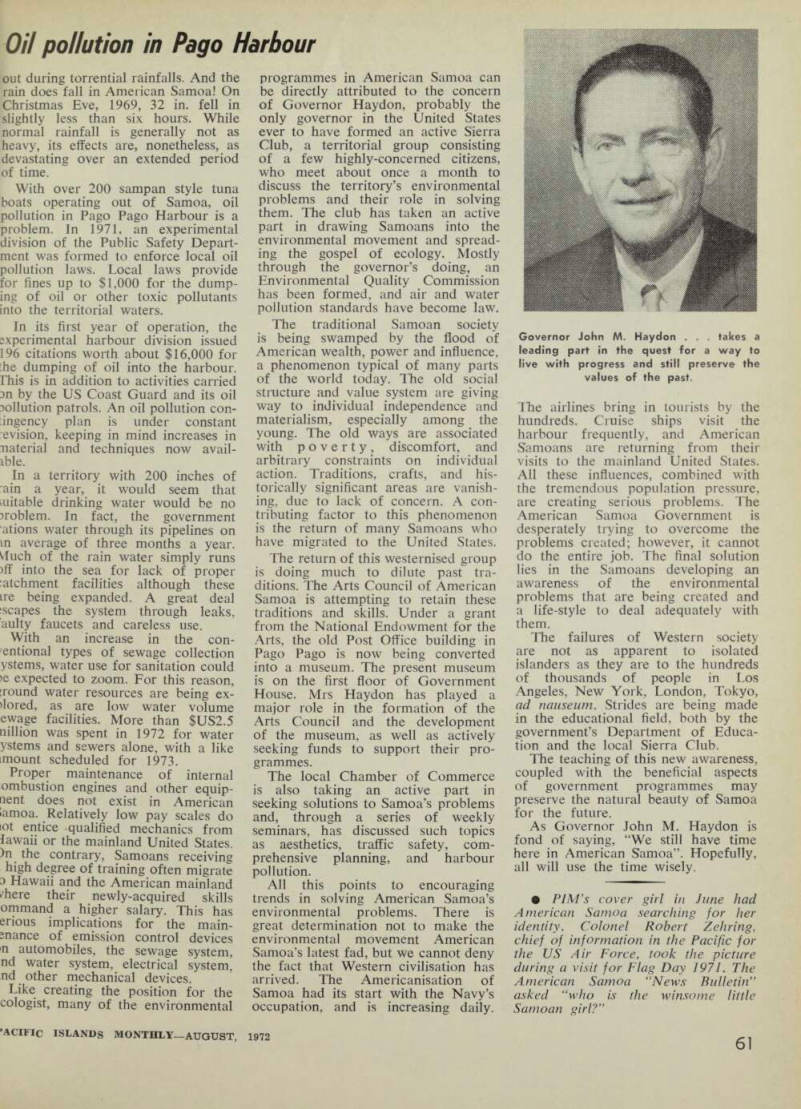 63
63 64
64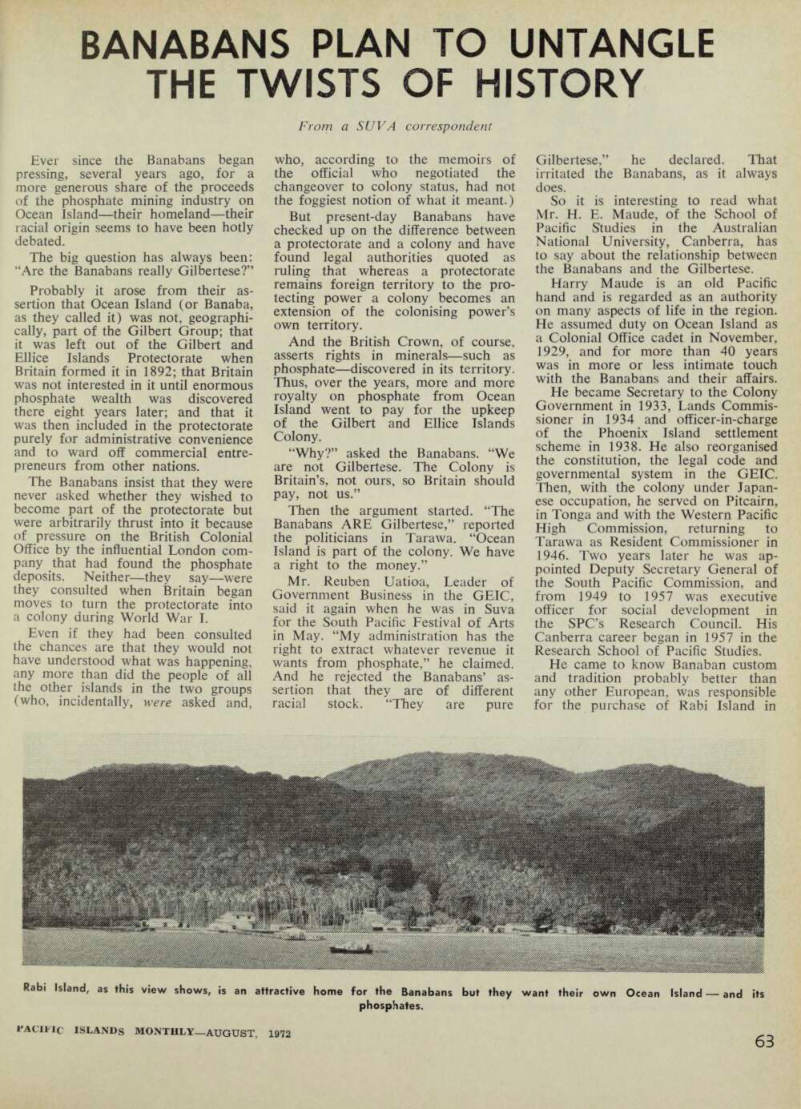 65
65 66
66 67
67 68
68 69
69 70
70 71
71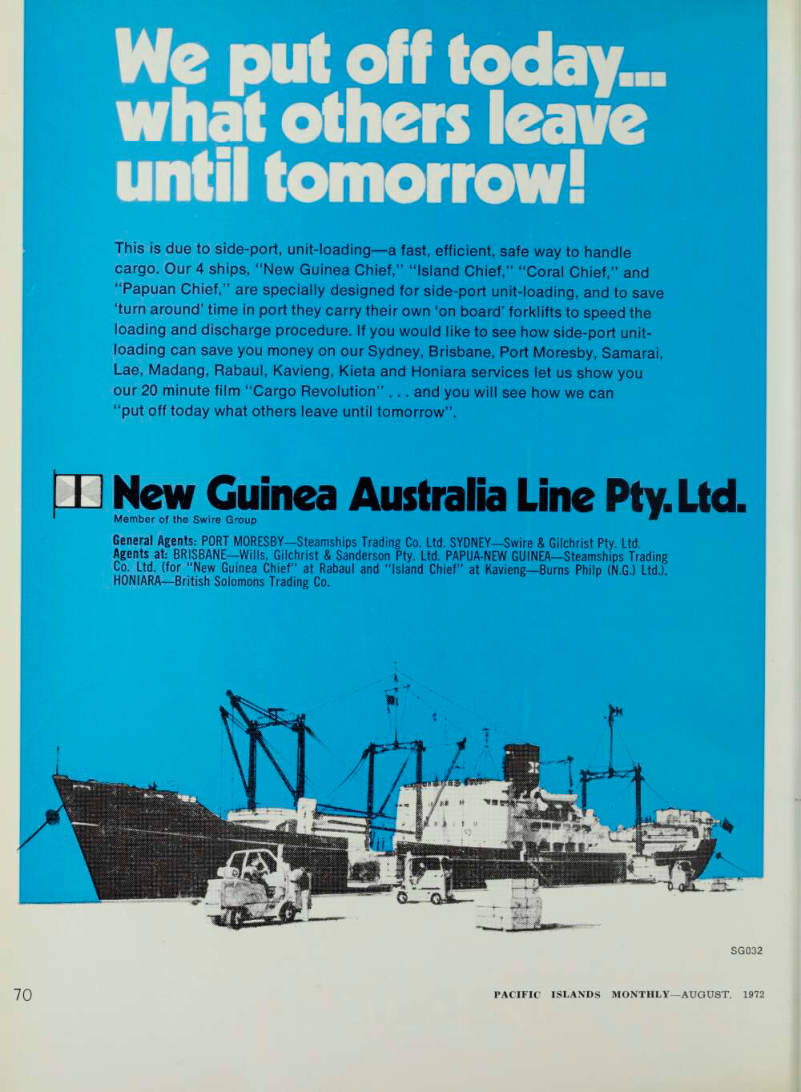 72
72 73
73 74
74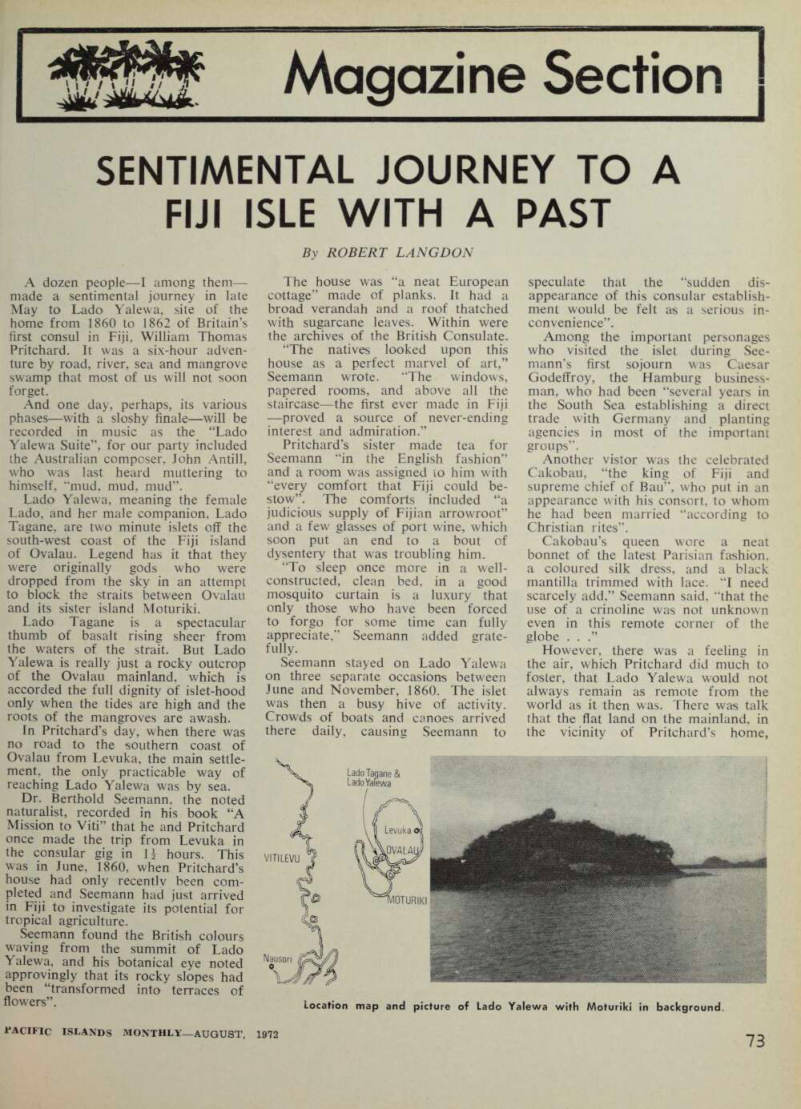 75
75 76
76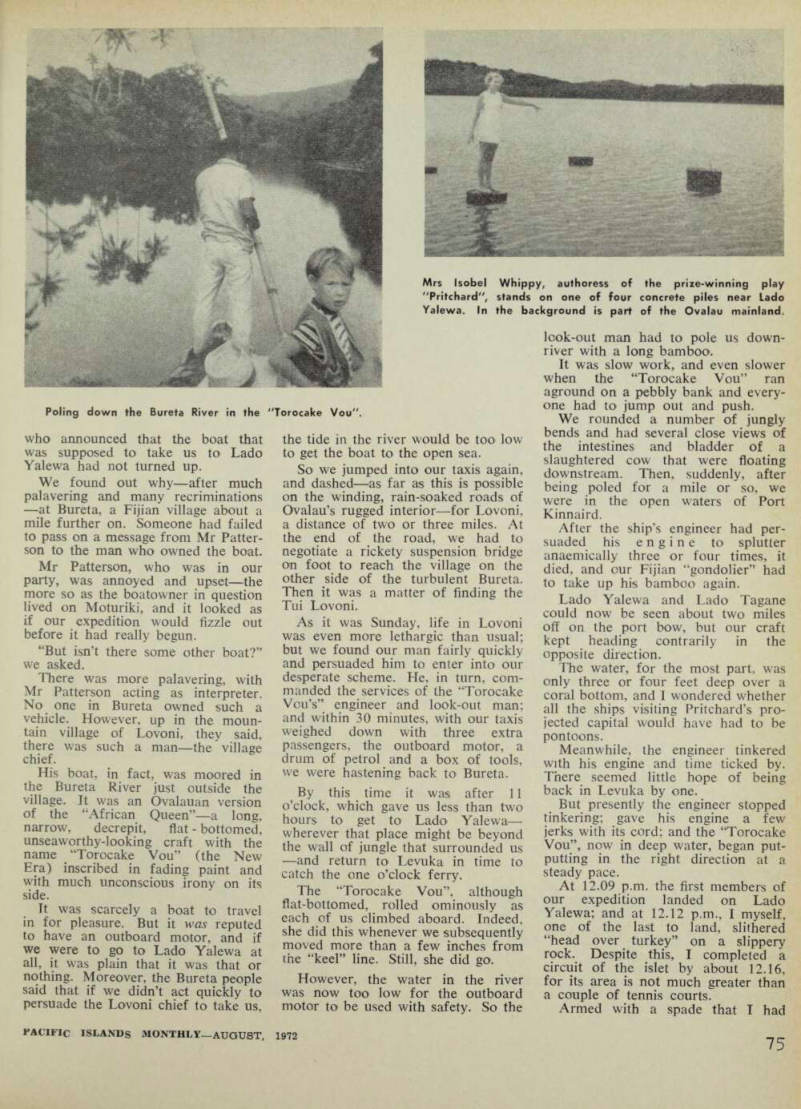 77
77 78
78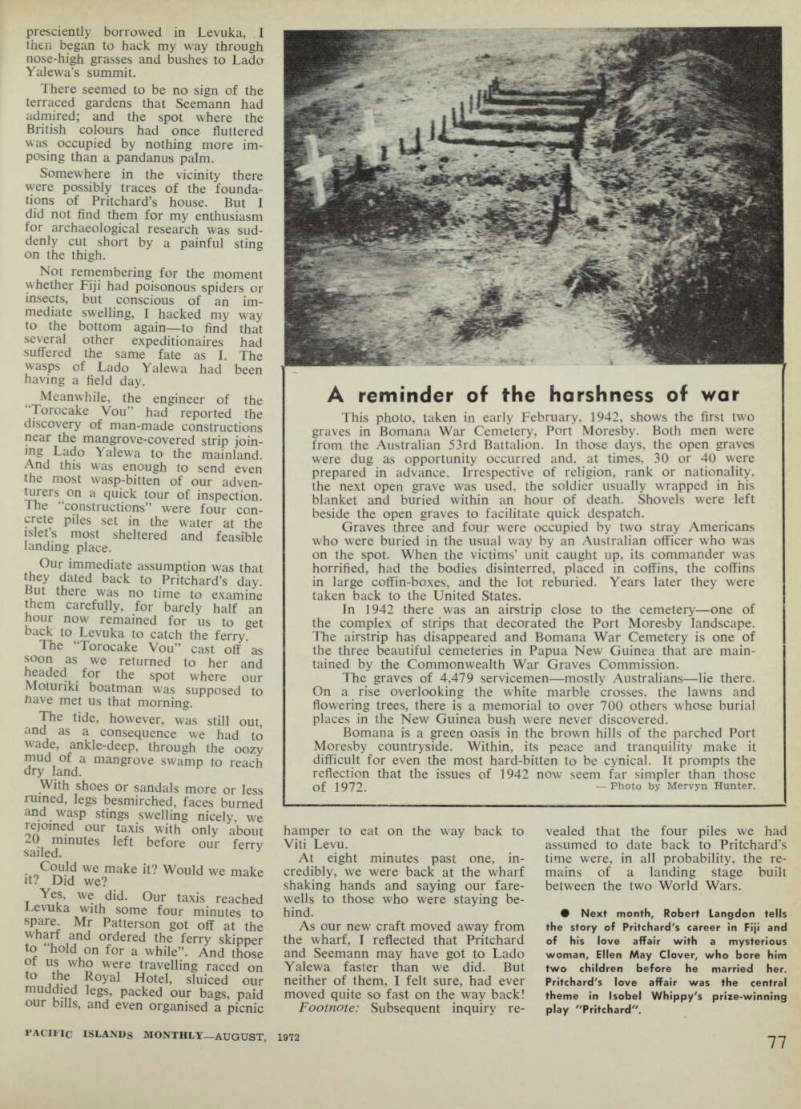 79
79 80
80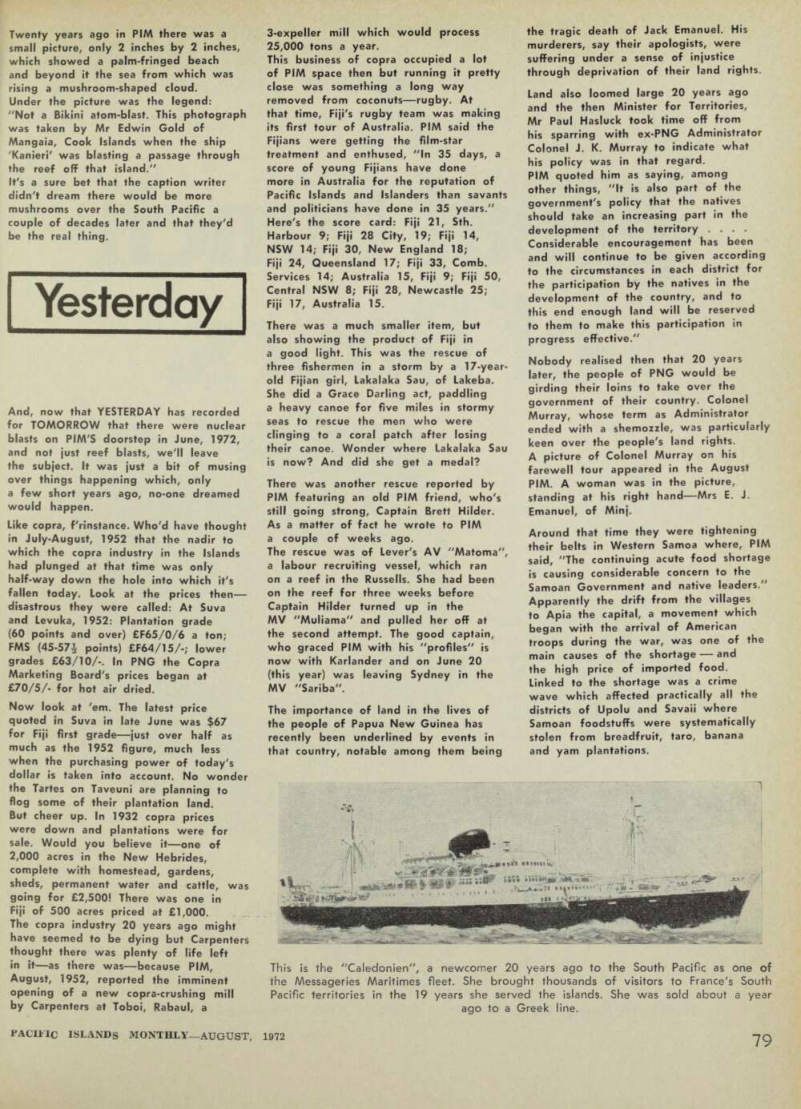 81
81 82
82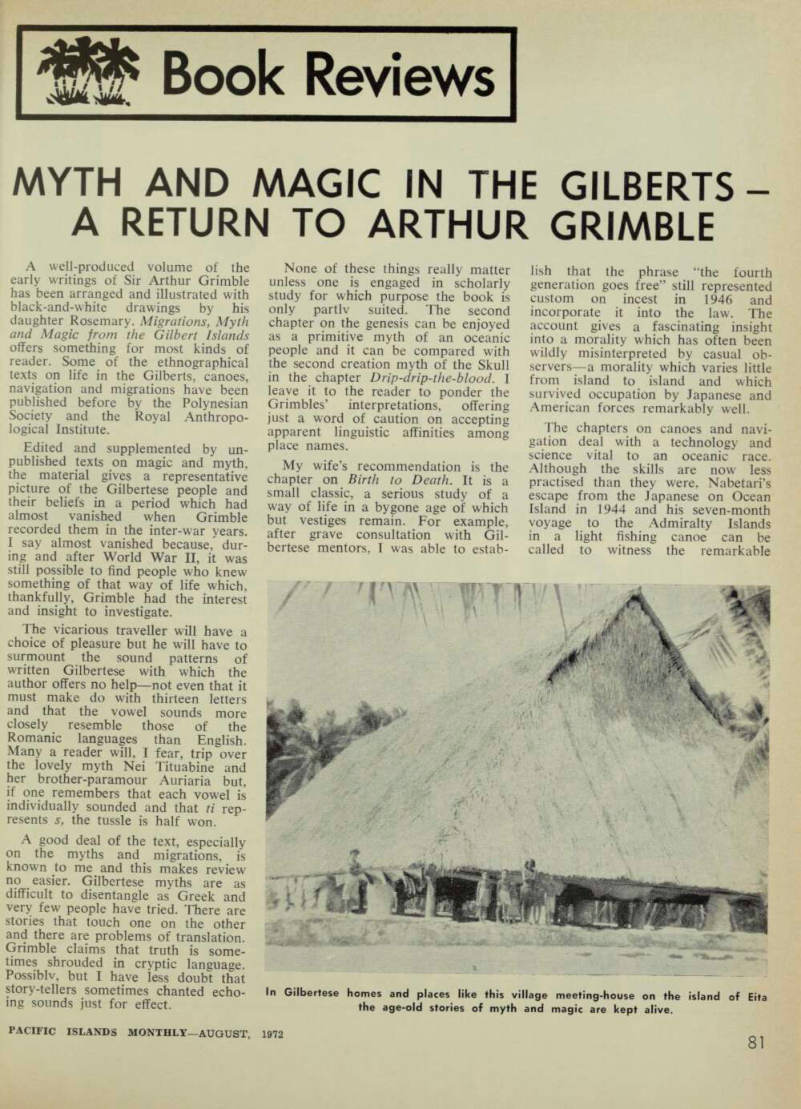 83
83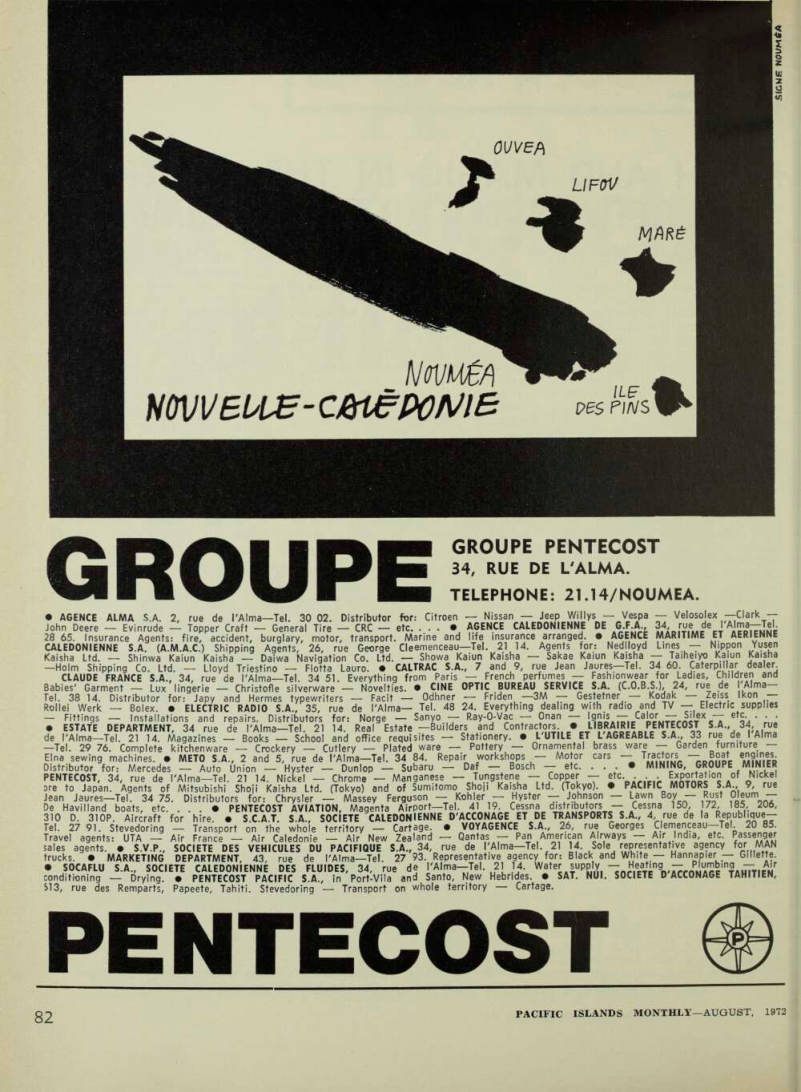 84
84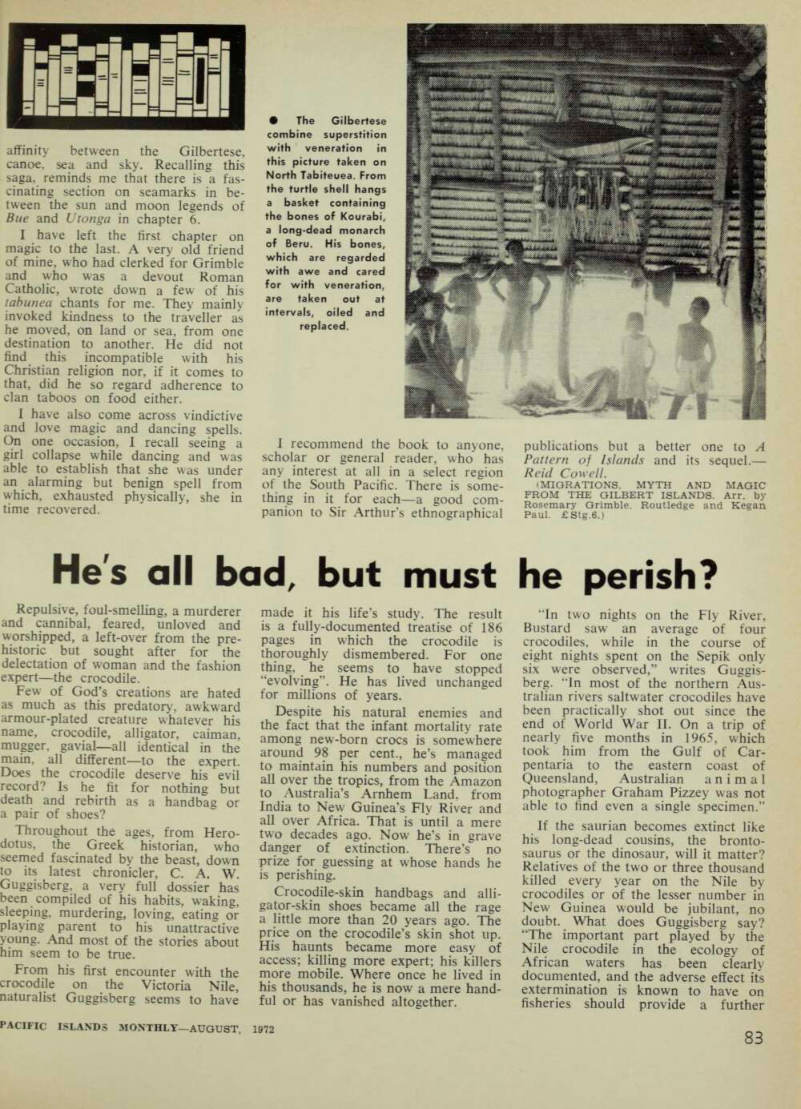 85
85 86
86 87
87 88
88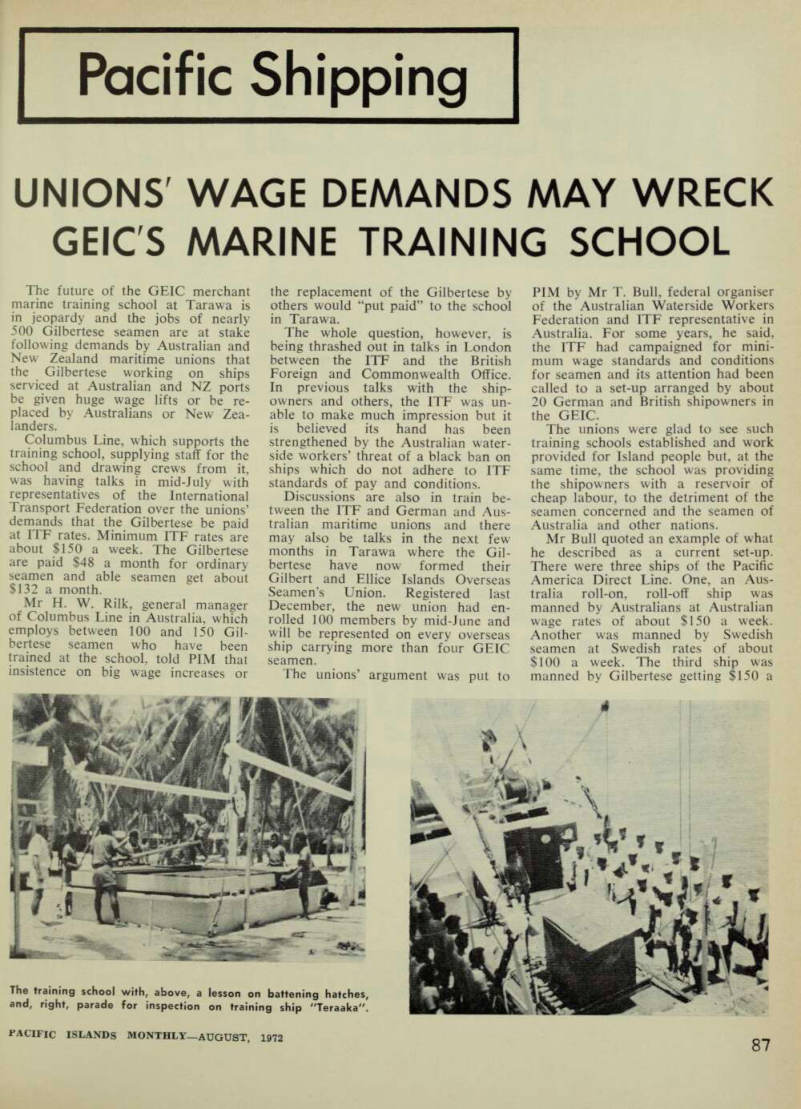 89
89 90
90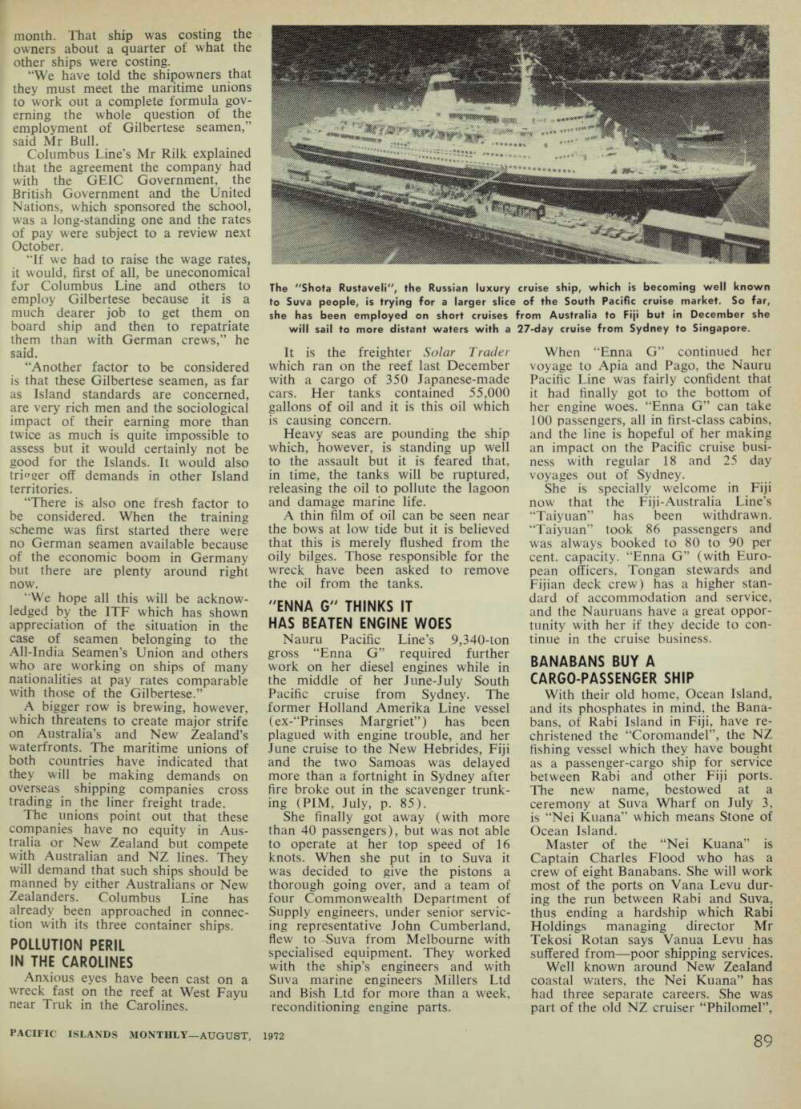 91
91 92
92 93
93 94
94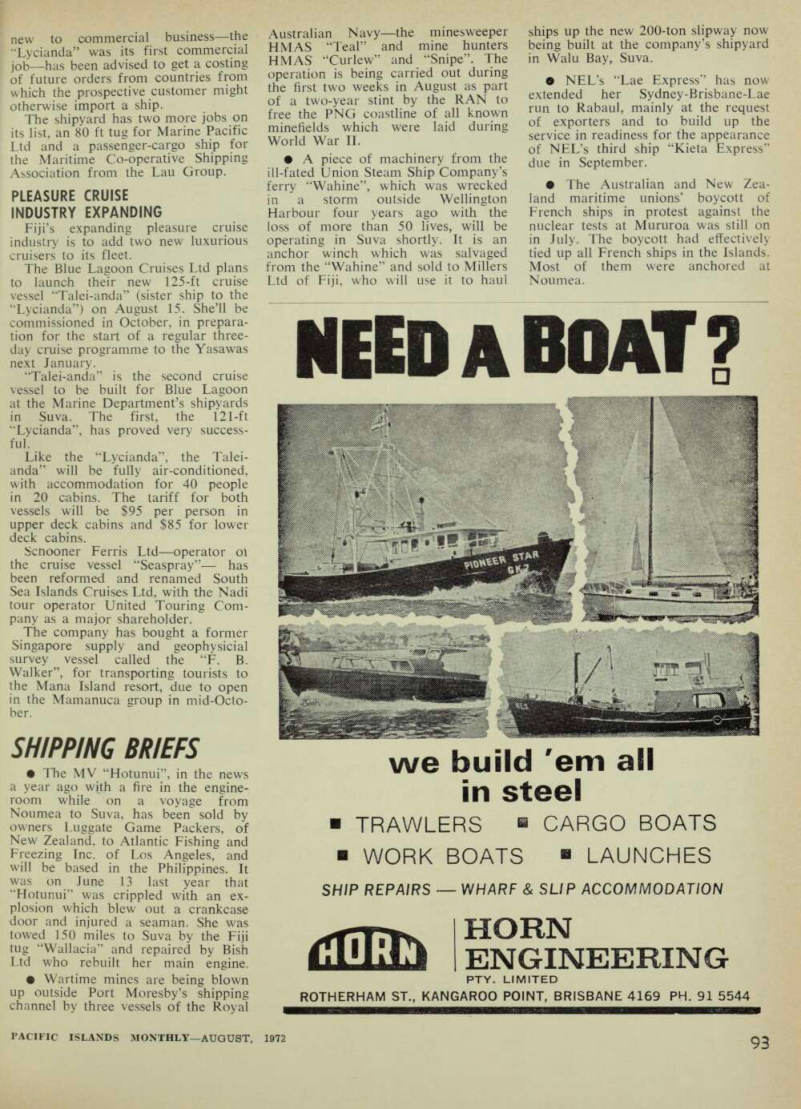 95
95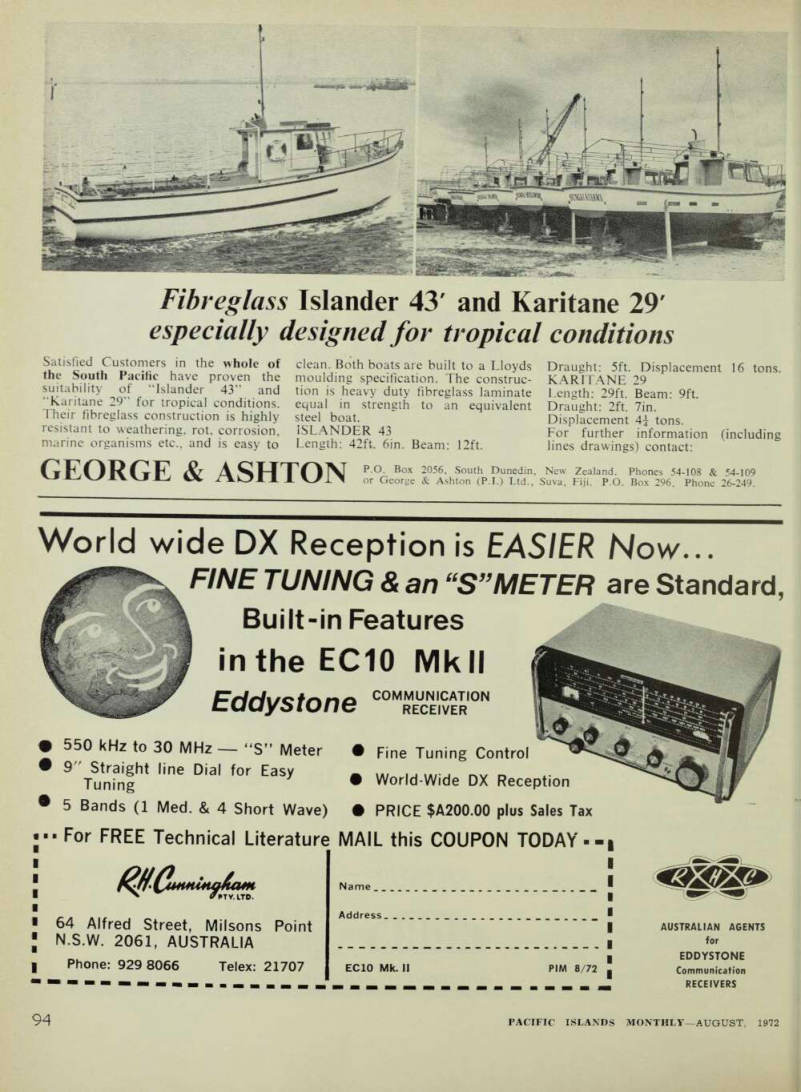 96
96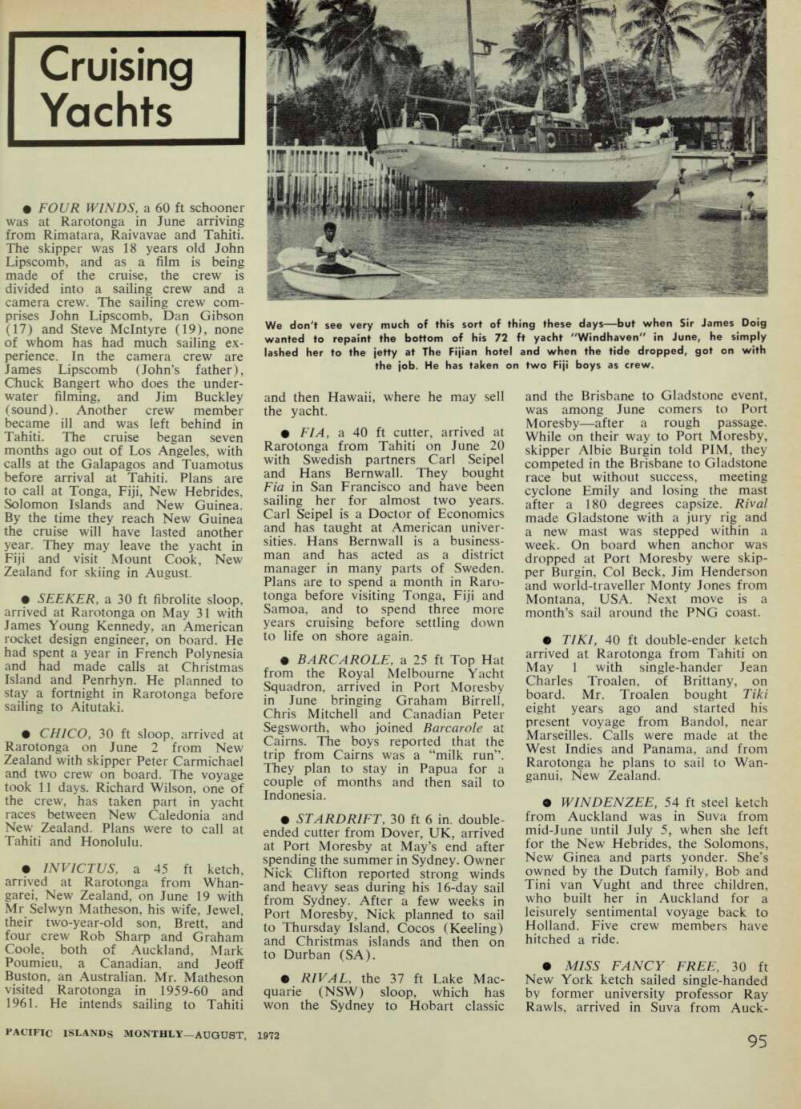 97
97 98
98 99
99 100
100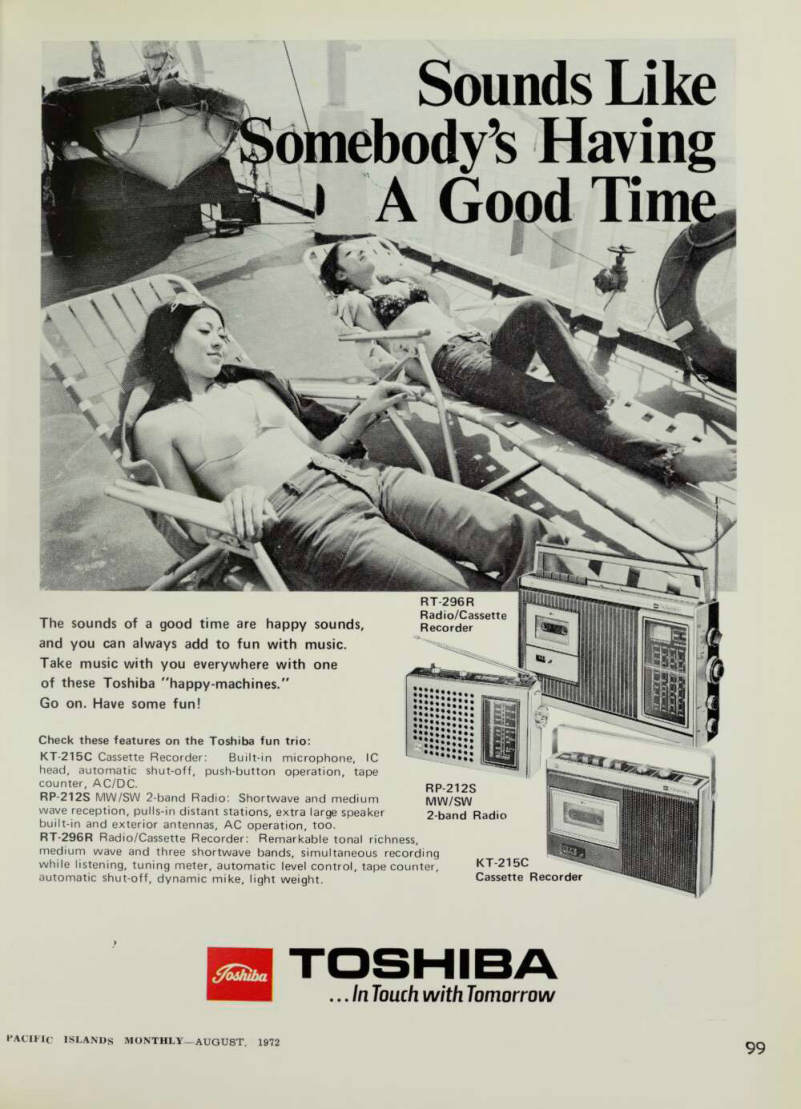 101
101 102
102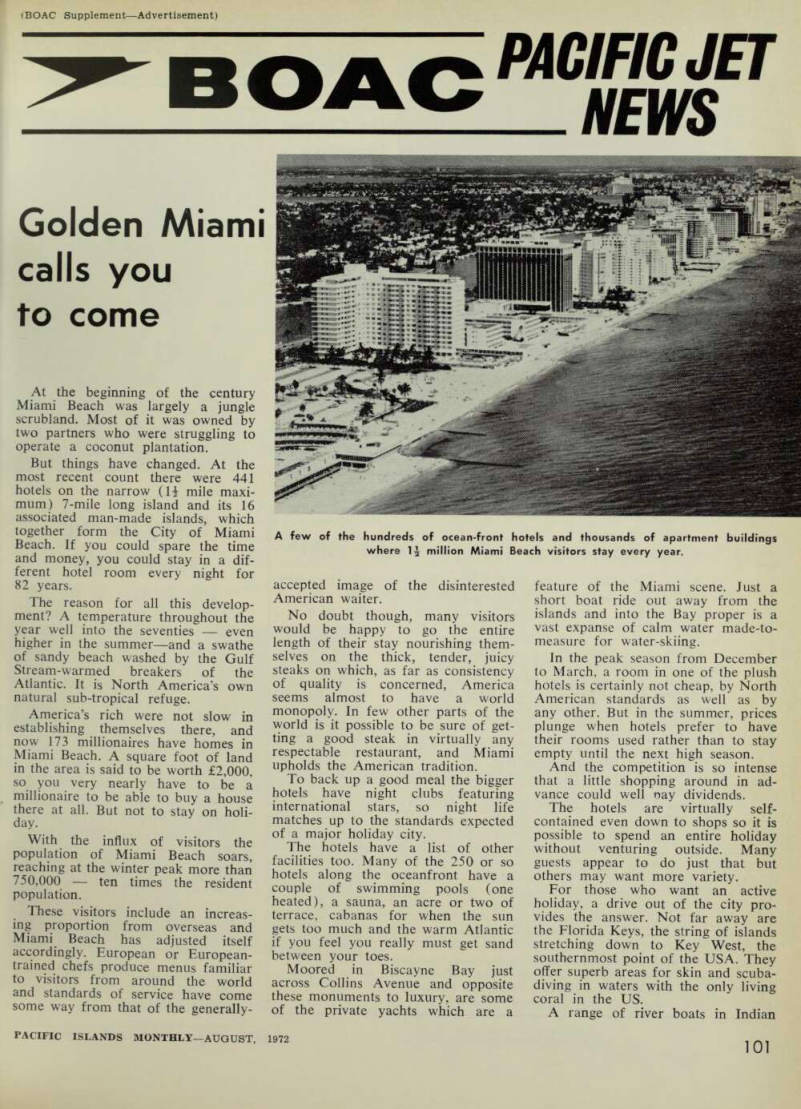 103
103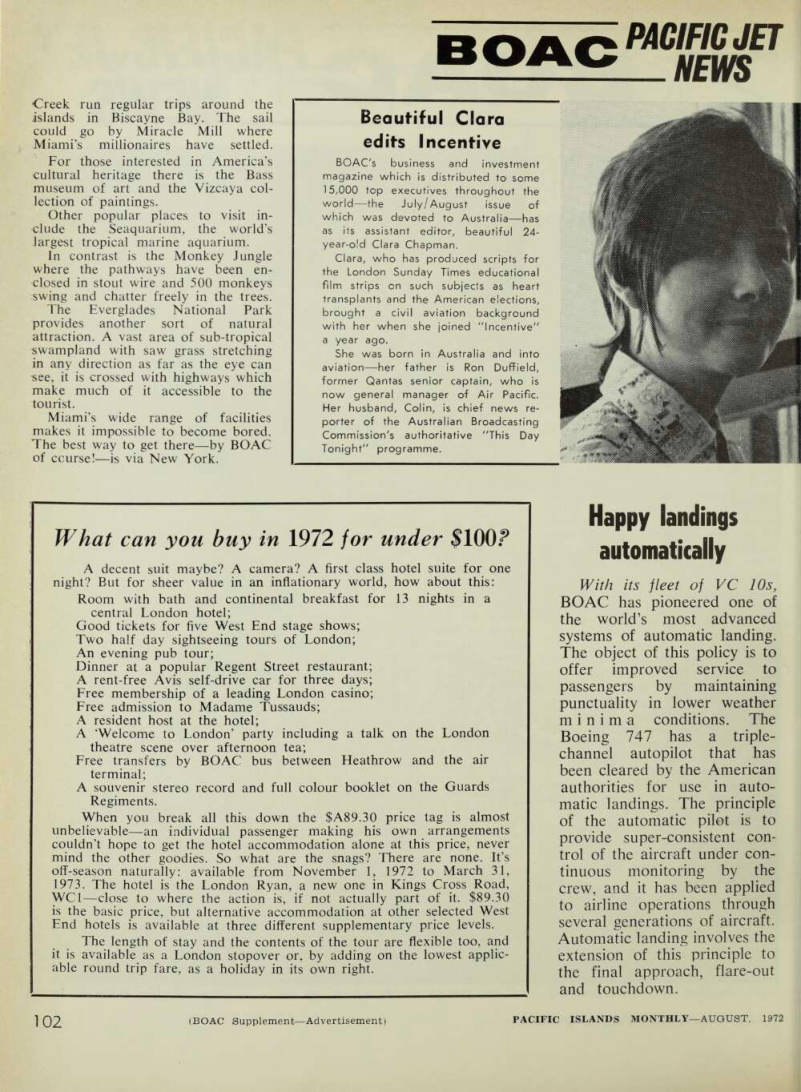 104
104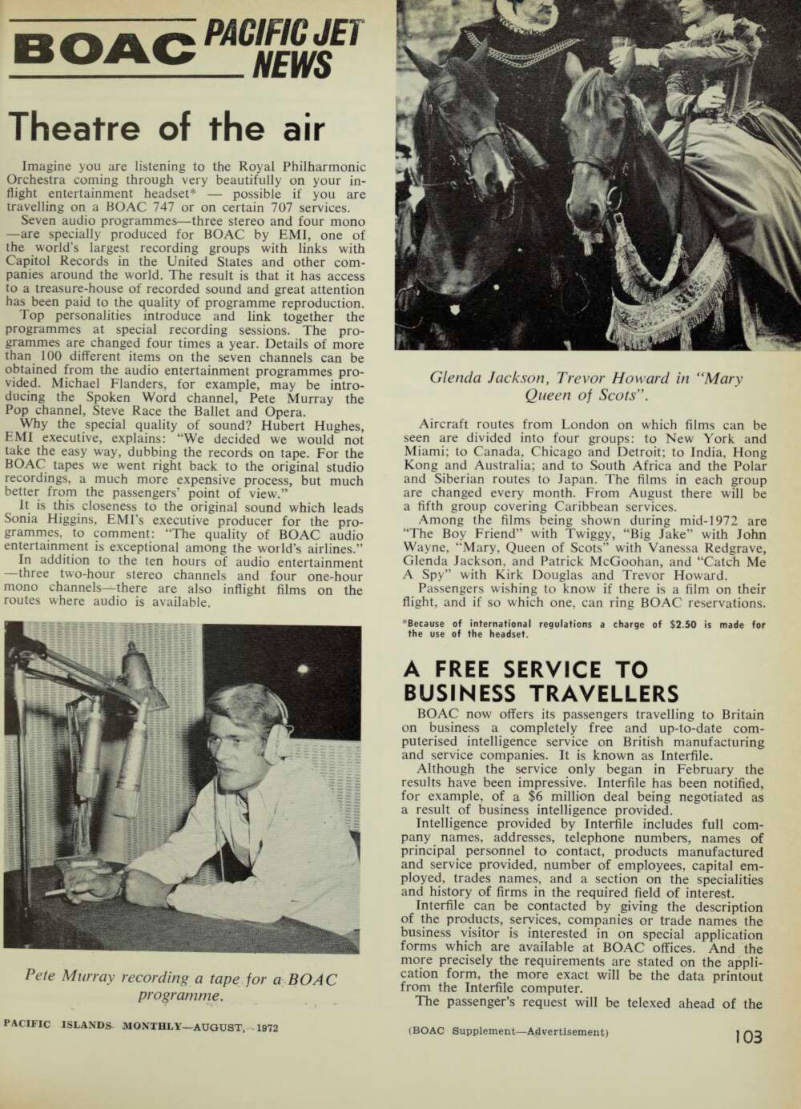 105
105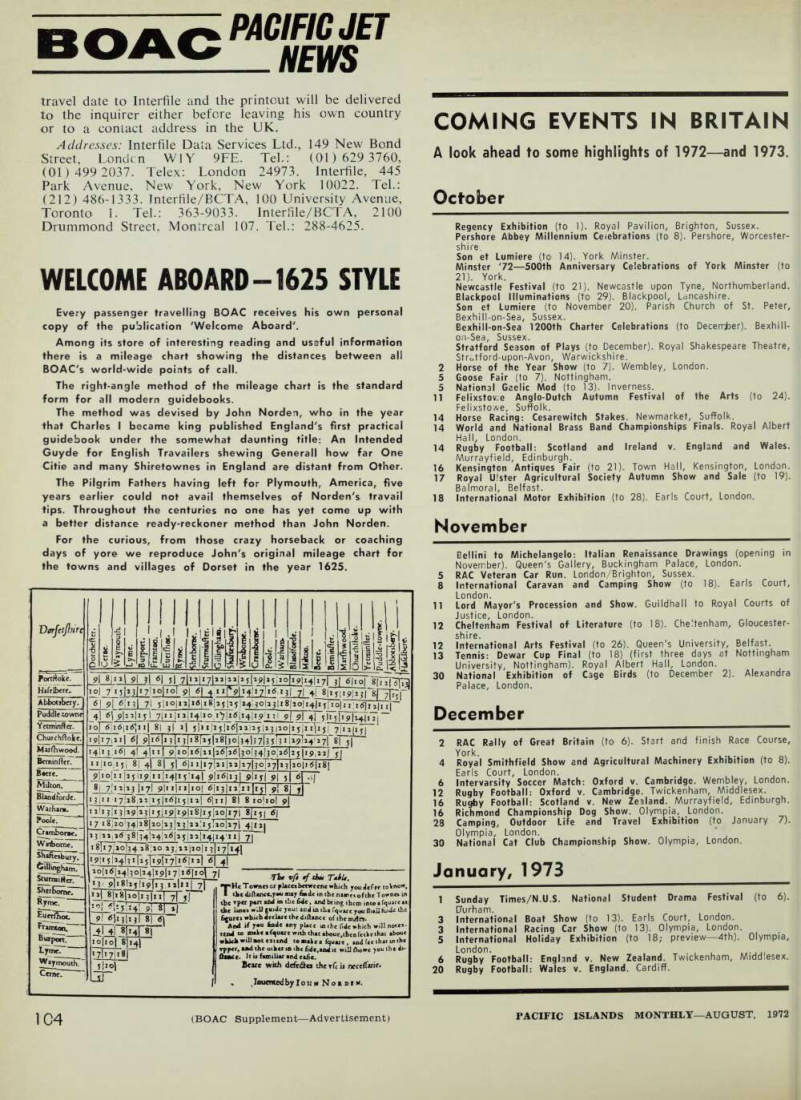 106
106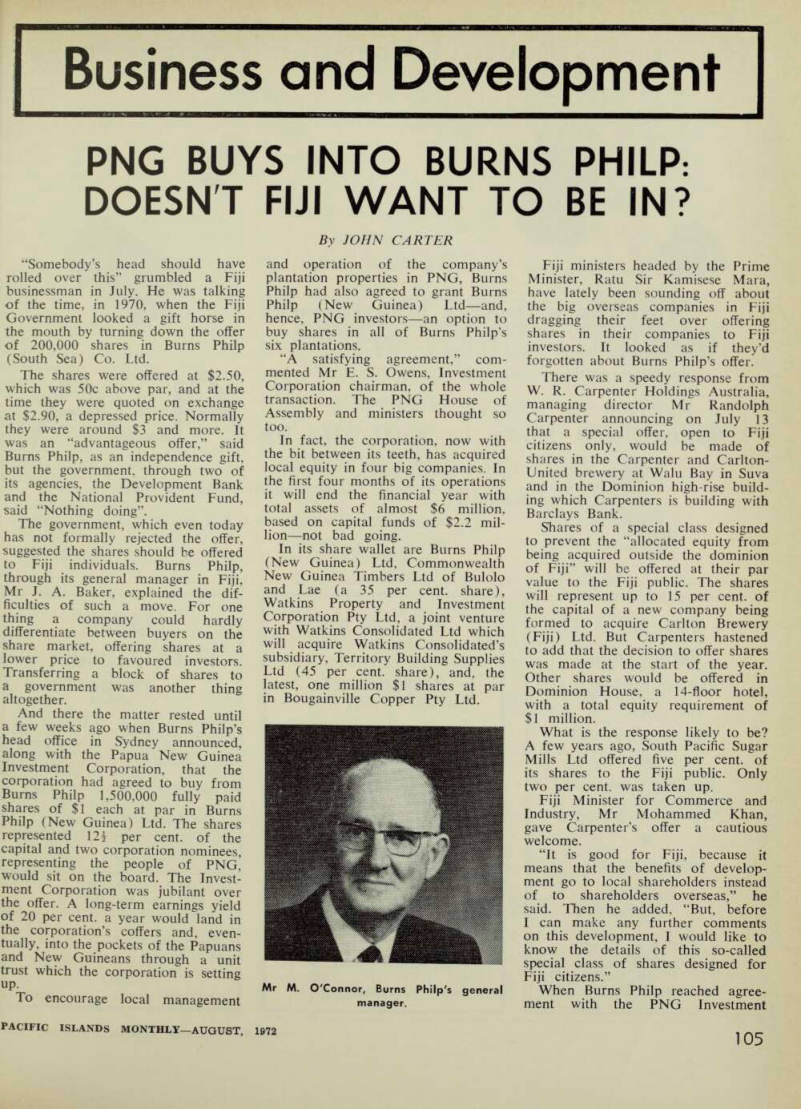 107
107 108
108 109
109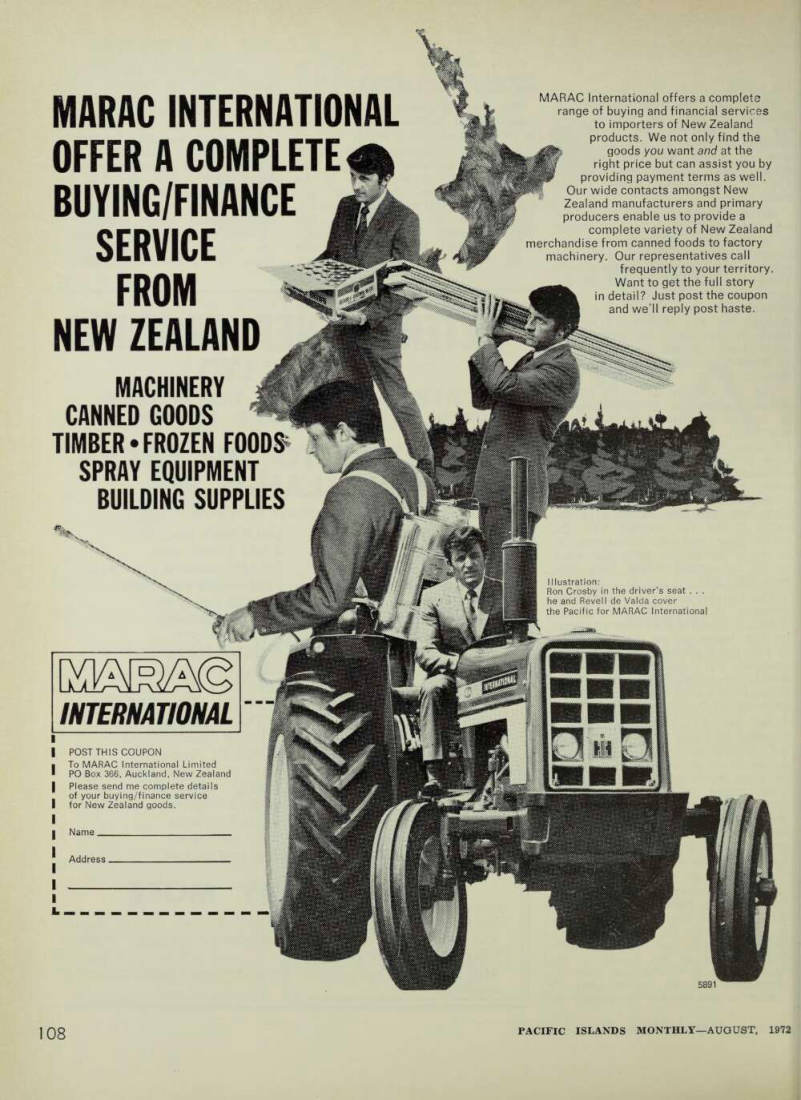 110
110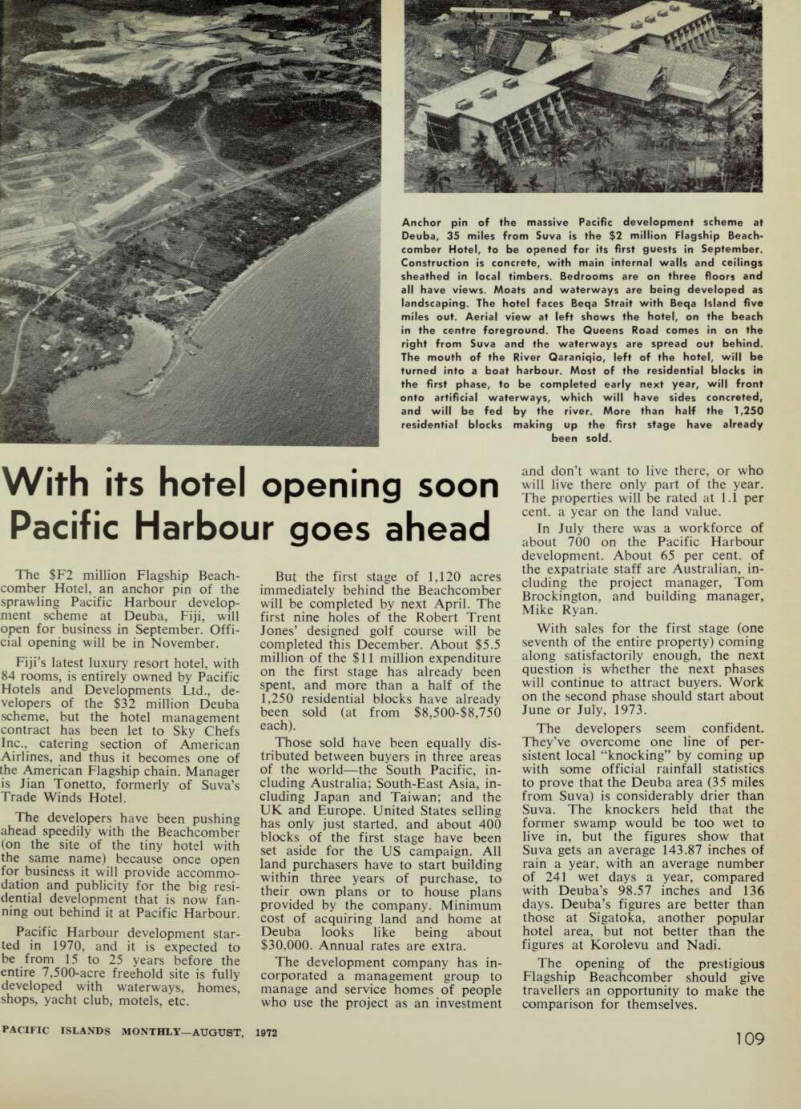 111
111 112
112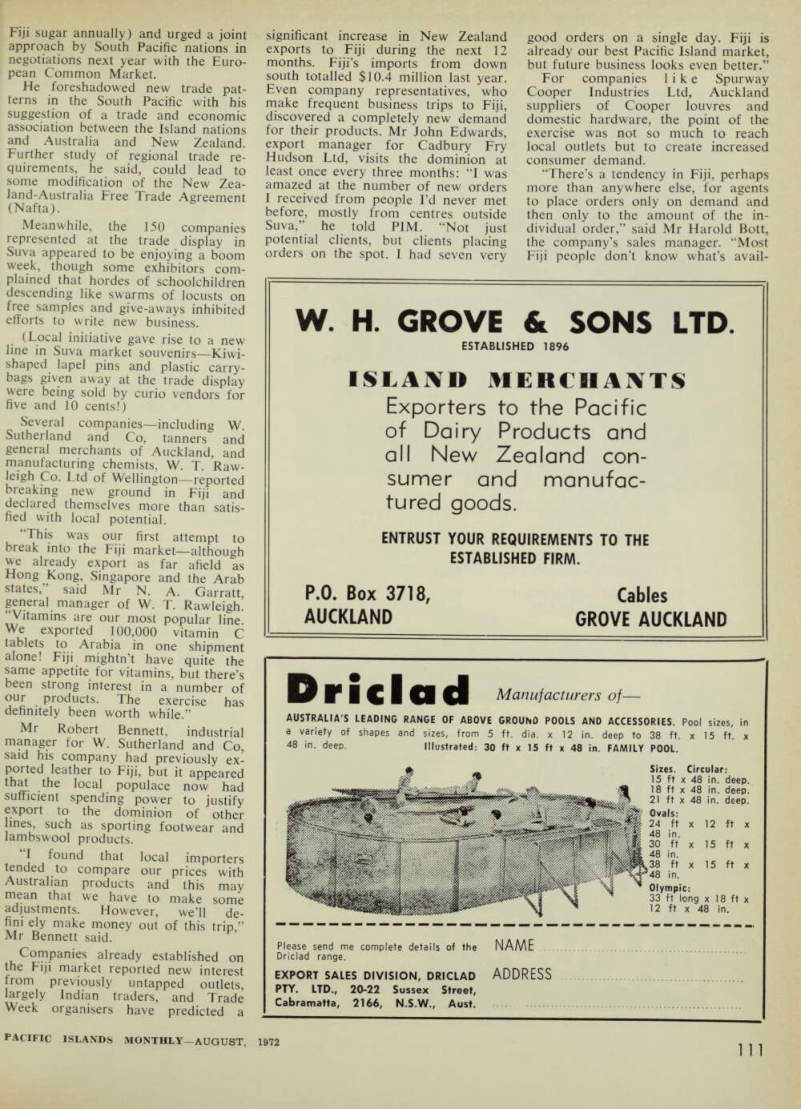 113
113 114
114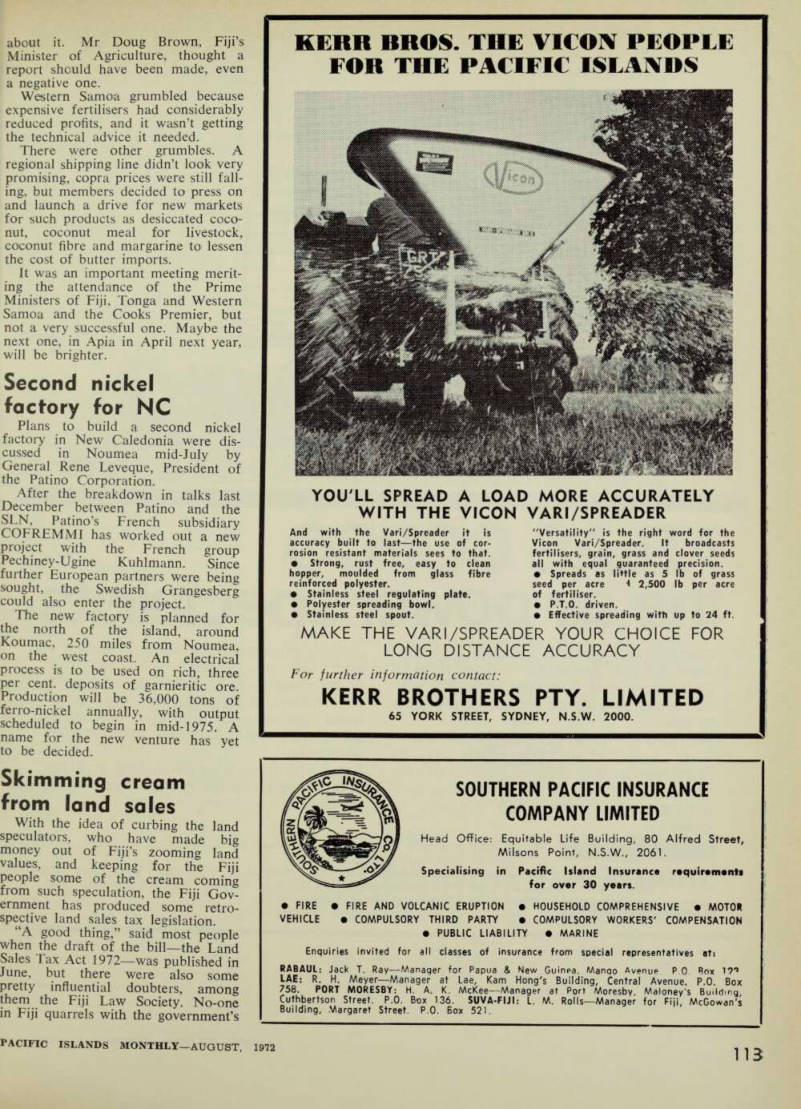 115
115 116
116 117
117 118
118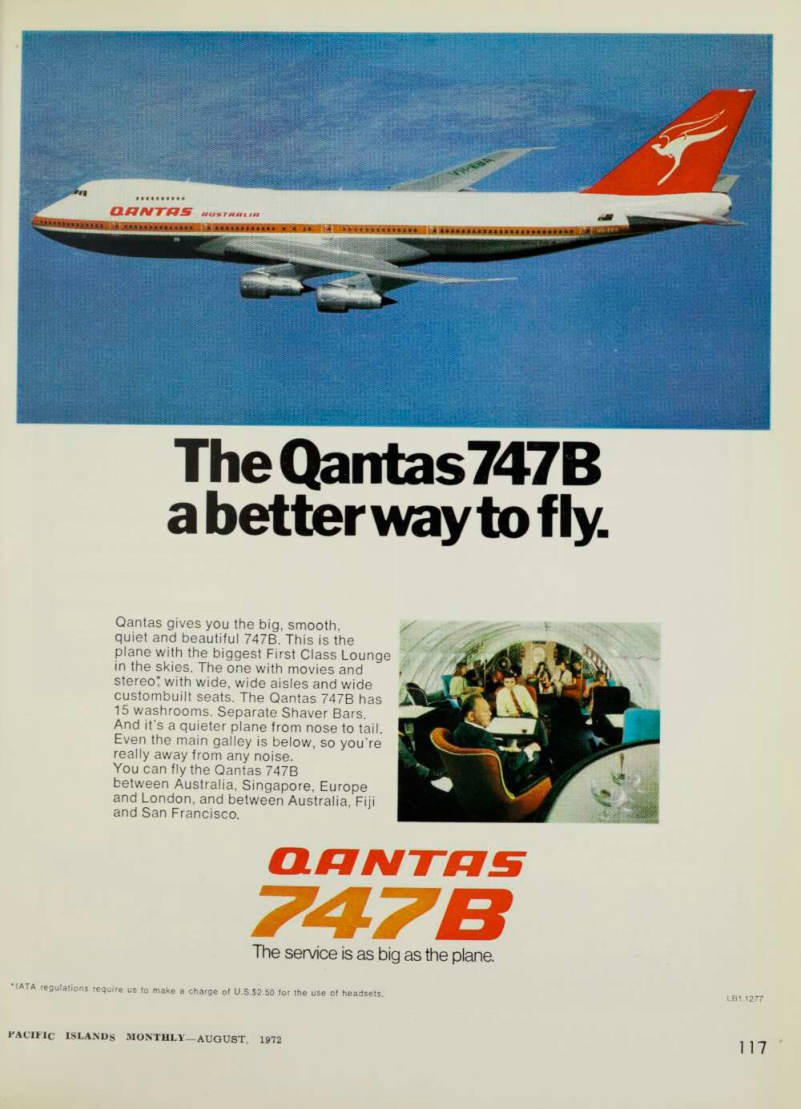 119
119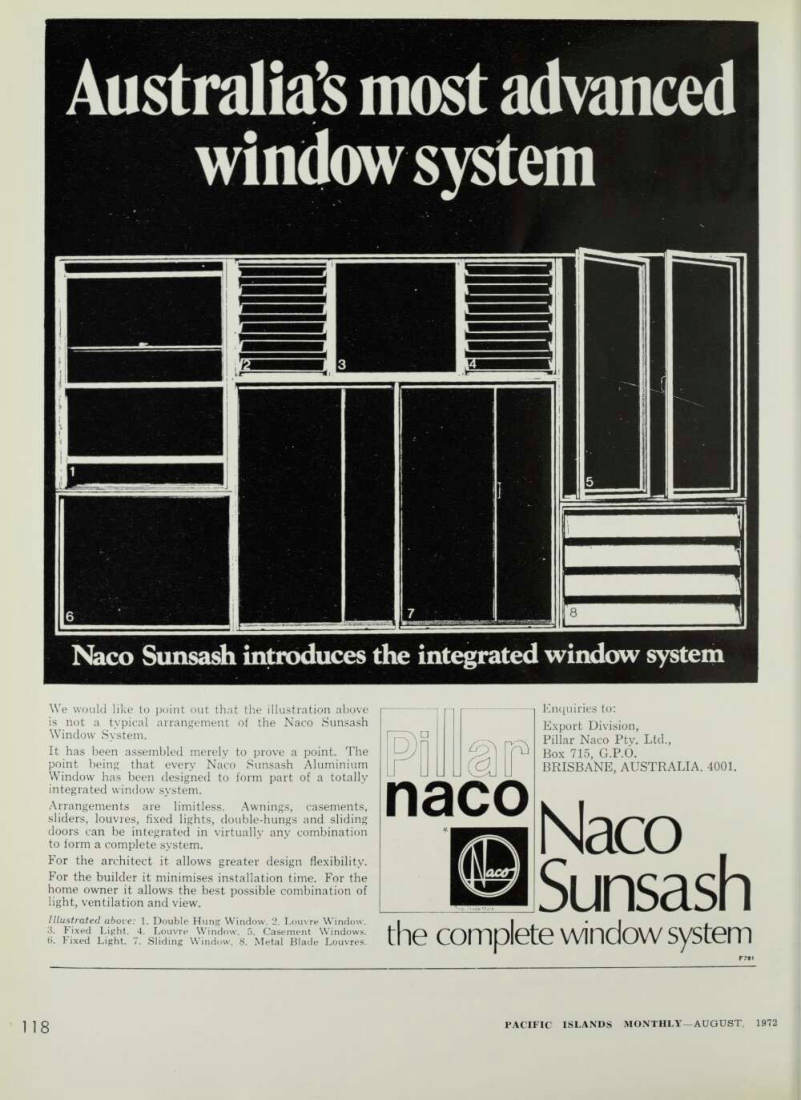 120
120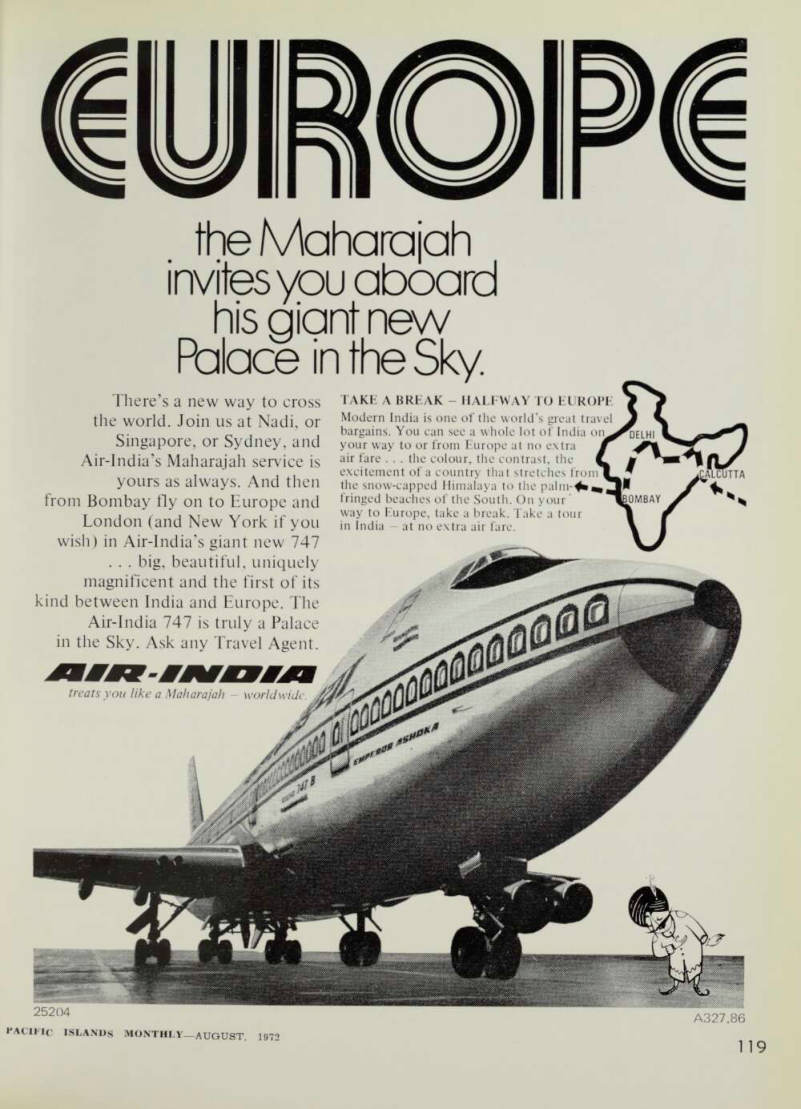 121
121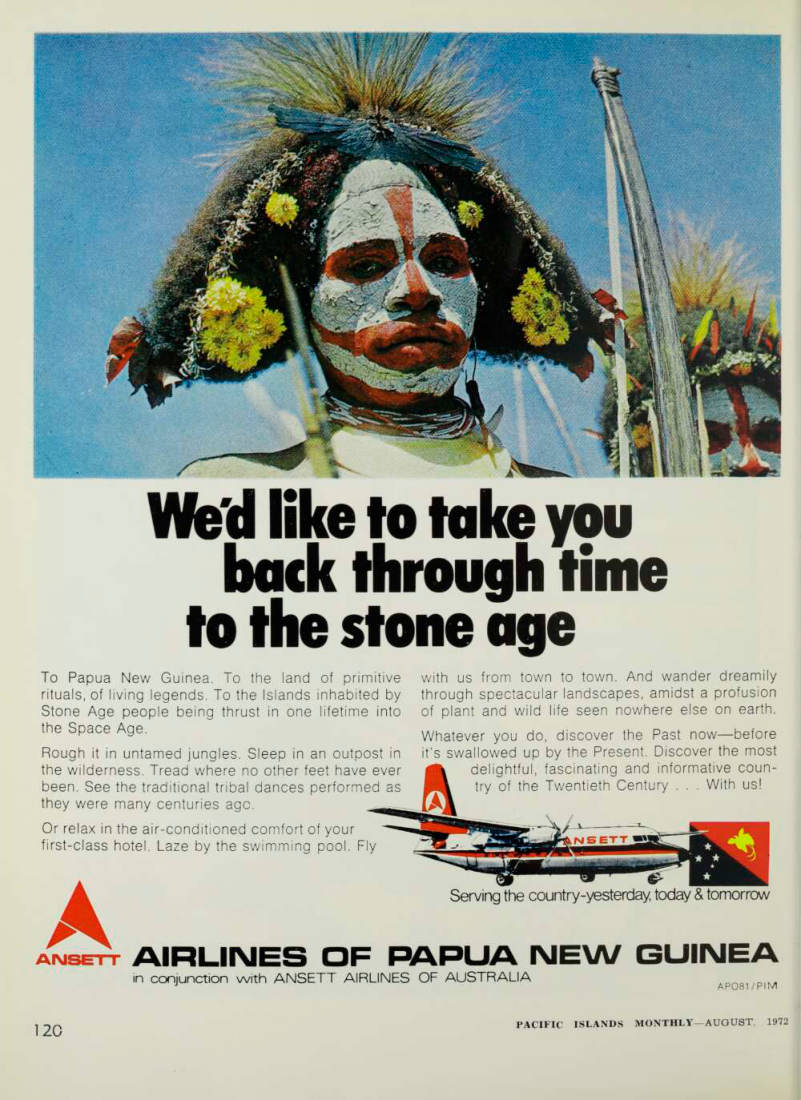 122
122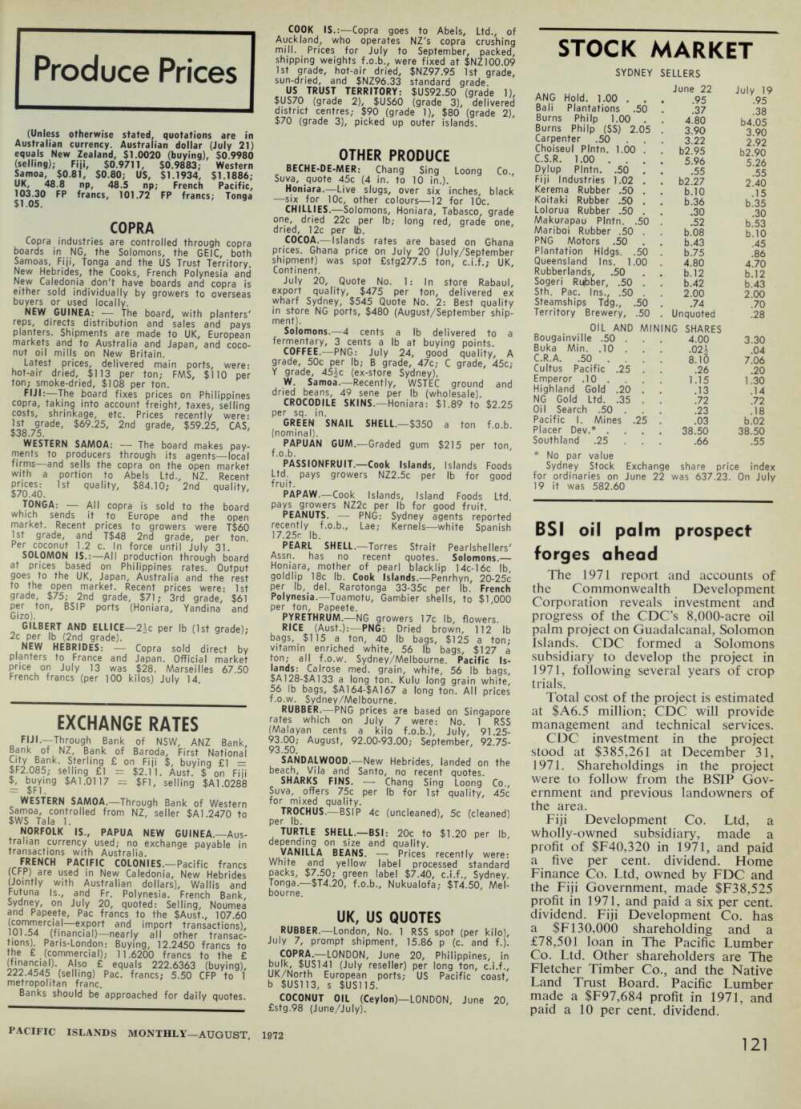 123
123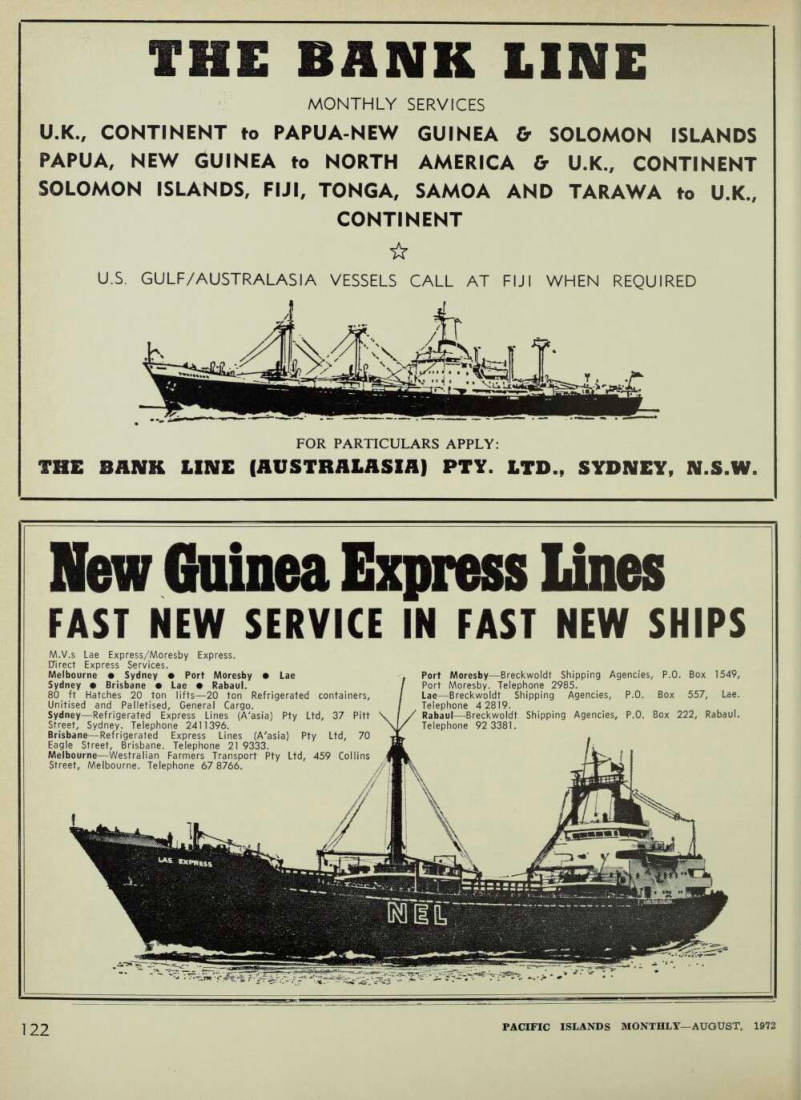 124
124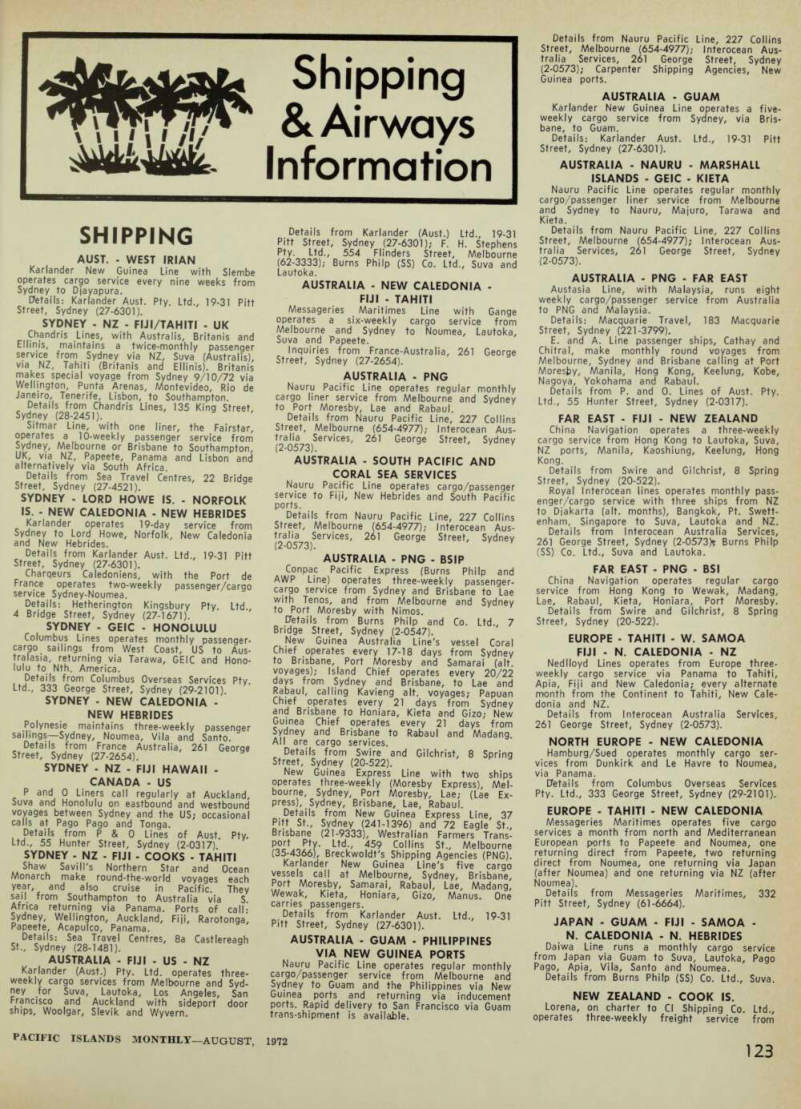 125
125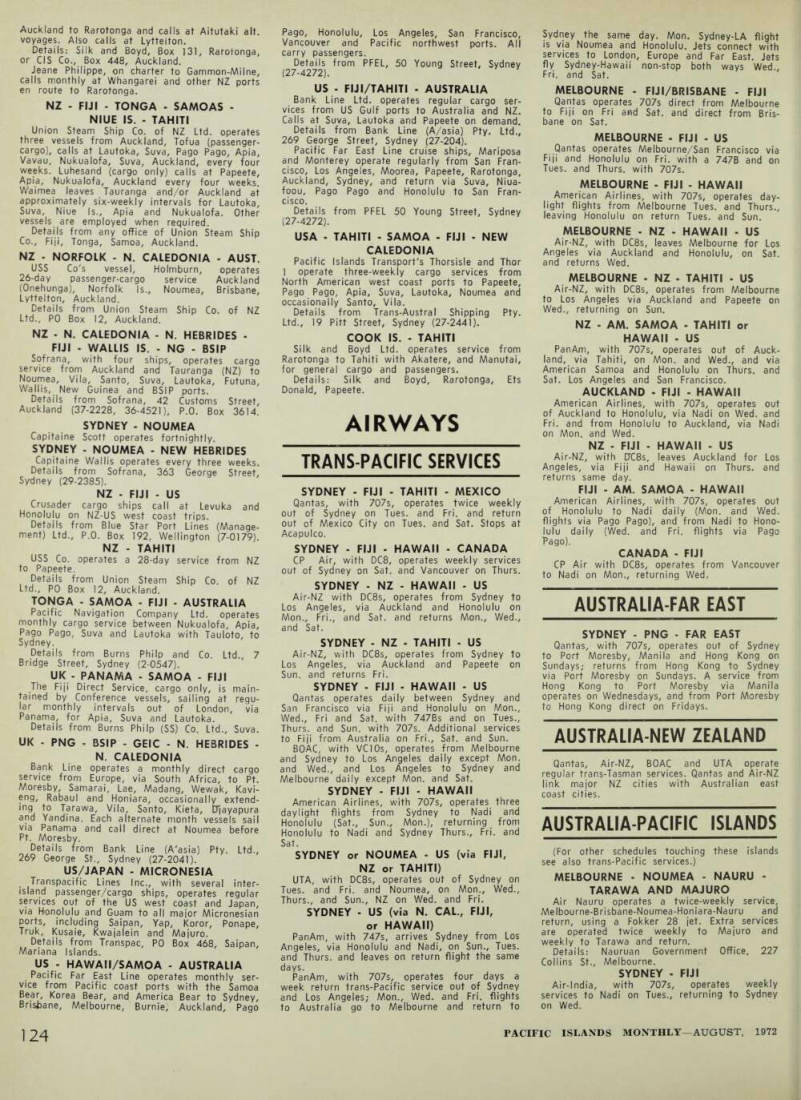 126
126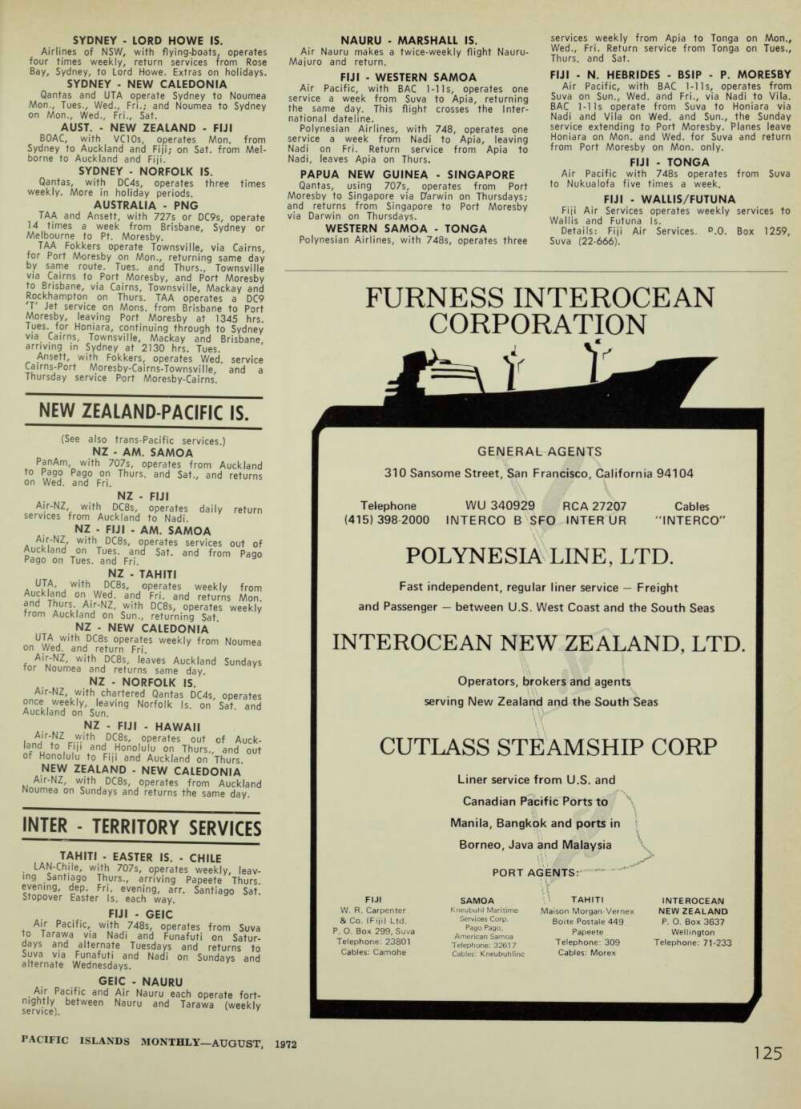 127
127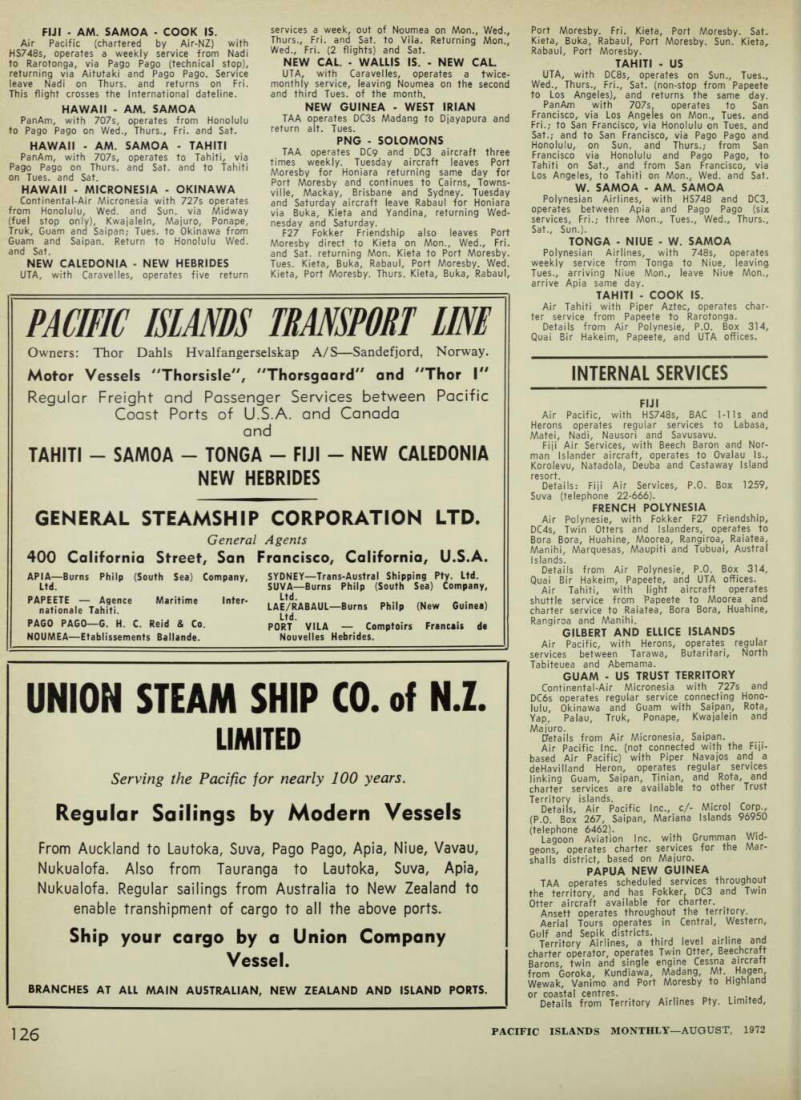 128
128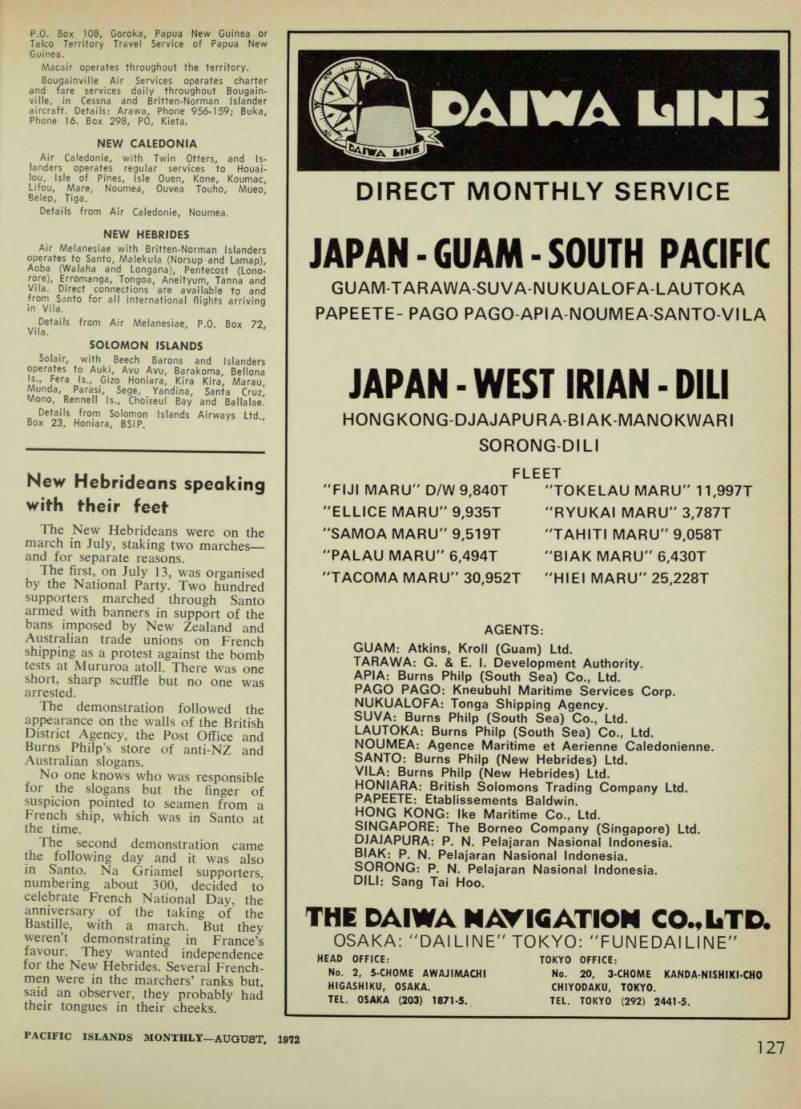 129
129 130
130 131
131 132
132 133
133 134
134 135
135 136
136 137
137 138
138 139
139 140
140