Pacific Islands Monthly
News Magazine Of The South Pacific
June, 1972
Australia, Nz, Geic, Bsip 50C
PNG, FIJI, COOKS, TONGA, W. SAMOA, N. HEBRIDES 45c
Nauru, Norfolk, Niue 45C
AMERICAN SAMOA 70c HAWAII 80c MICRONESIA 90c NEW CALEDONIA 65 CFP FRENCH POLYNESIA 100 CFP
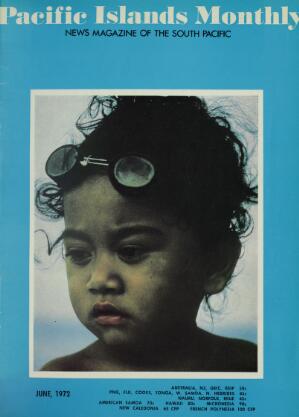
Our Cover
Close to the sea is this small American Samoan youngster, with her under water goggles, hair in wisps, and looking serious—very, very serious—as is only to be expected when a strange camera is trained on one.
Lt.-Col. Robert A. Zehring, of the US Air Force, was behind the camera.
Advertisements & other items, p. 2 (1 item)
TAAs 12,000 mile
Papua New Guinea
Network.
DJAJA PuR A
RAB^UL
NEW GUINEA
WEST IRIAN
0 PAPUA
LAE
PORT MORESBY
DARWIN
I
CORAL SEA
CAIRNS
INGS
50 centres throughout Papua New Guinea on a 12,000 mile network. 100 centres in Australia.
TAA serves the lot.
Across Papua New Guinea we give you more flights to choose from.
Including daily Friendship services between Moresby and all major centres. Plus daily ‘Bird of Paradise’ T-Jet
flights connecting Port Moresby
with Brisbane, Sydney, Melbourne, Adelaide and Perth.
More flights. More seats.
More cargo space.
If you plan to take off soon, keep TAA’s 12,000 mile Papua New Guinea network in mind.
AIRLINES OF NEW GUINEA
1
No. 1- the friendly one
Call your Travel Agent. Or TAA • Port Moresby 2101 • Boroko 5 3541 • Lae 4 3191 • Madang 2478 • Kieta 95 6372 • Rabaul 92 2567 • Goroka 72 1211(8) • Mt. Hagen 52 1301(301) • Wewak 49 319 3533/72
In This Issue
Neral
s festival 26 vels on Nigeria 79 sk on lawn tennis 81 L O retrenchment 85
5 profitable 103
ntainer service 125
Ok Islands
er-election campaign 13 oana Roa" reprieve 87 mier's portfolio 125
Inch Polynesia
iti letter 20 ses arts festival 11 I.
>inet changes 13
moa column 18 nplaints of brothels 23 s festival 26 ►k review—economy 77 men's club finance .. 85 ilacement of "Tui Lau" 89 "West Star" 89
idential development 105
penter profits , ... 109 v Zealand trade presentation 113 ) Mara in Australia 128
Bert And Ellice Islands
ine training school 87 lition to fleet 89 e wages 127
ar shortage 127
lal for rescue 128
Nauru
Nauru Pacific cruises 83 Air Nauru on its own 101
New Caledonia
Helen Rousseau's diary 16 lie Nou 69 MV "West Star" 89
New Hebrides
Spaniard's larceny conviction 22
Niue
Arts festival stamps 125 Elections 128
Norfolk Island
Fish factory closes 11l Lions Club work 128
Papua New Guinea
Queensland border dispute 15 Reluctant Fuzzy Wuzzy 22 Village council meetings 23 War equipment 25 Waigani seminar 29 Percy Chatterton's column 42 Highland caves 54 Port Moresby a city 73 Anthropologists' views 79 REL new ships 85 "Tenos" in service 89 Fierce transport competition 101 Copper contract 105 Timber company share 107 Joint Solomons enterprise 107 Japanese scheme benefits 11l Mr. Champion dies 129
Solomon Islands
Seeking leaders 14 Record timber exports 103 Joint PNG enterprise 107
Tonga
Royal conservation 25 Shipping company takes over 85 Japan's Peace Corps 128
U.S. Trust Territory
Micronesia and independence 9 Carl Heine's views 10 Senator Salii's views 37 Return to Eniwetok 125
Western Samoa
Film censorship 23 Doctor's salaries 23 Family planning 25 News censorship 32 First impressions 44 Potlatch timber mill 49 Improving economy 103 Sugar ceiling price 105 Mr. R. Berking dies 129
ARTMENTS: Up Front with the Editor, 1; Editor's Mailbag, 3; Tropicalities, 22; n the Islands Press, 53; BOAC Jet News, 57; Magazine Section, 69; Yesterday, 75; k Reviews, 77; Pacific Shipping, 83; Cruising Yachts, 91; People, 97; Business and elopment, 101; Produce Prices, 115; Shipping and Airways Information, 117; In a Nutshell, 125; Deaths, 129; Advertisers' Index, 129.
Advertisements & other items, p. 4 (1 item)
Qrnotts/ Biscuits
i m saassf ®S s*ifg jiii i in l l i 1 p , ii ll i ;V- V .- H m >r
mmmmm
m » i** as
Give your family
these all-time favourites
from Arnott’s
Everybody likes them! Nourishing Milk Arrowroot... tasty Nice... delicious Coconut Bar... the egg-and-butter goodness of Scotch Finger... they’re all-time family favourites from the great big Arnott’s range. Taste them!
The triple-wrapped packs keep the biscuits fresh.
Qrnotts/ Biscuits
There is no Substitute for Quality
Pacific Islands
Monthly
FOUNDED BY R. W. ROBSON IN 1930
Owned And Published By
Pacific Publications (Aust.) Pty. Ltd.,
29 Alberta St., Sydney, N.S.W., 2000.
Postal Address: G.P.O. BOX 3408, SYDNEY,
N.S.W., 2001.
Telegraphic Address: PACPUB, Sydney.
Telephones: 61-9197, 61-7101, 61-4369.
onsulting Directors: R. W. Robson, Judy Tudor.
Chief Executives: General Manager: Selwyn Hughes.
Publisher: Stuart Inder.
Director of Advertising: W. A. Gasnier.
Pacific Islands Monthly
Editor: Stuart Inder.
Assistant Editor: John Carter.
Advertising Manager: W. A. Gasnier.
Circulation Manager: Barry Badger.
Representatives
ji: Pacific Publications (Fiji) Ltd., Fiji Times wilding, 20 Gordon Street, Suva. Tel.: 25601 ji Times Office, Cnr. Vitogo Pde, and Namoli ve, LAUTOKA. Telex: 1144. Tel.: 60-422. apua New Guinea: LAE, P.O. Box 227; VBAUL, Mr. Steve Simpson, P.O. Box 433 (c/- Rabaul Photographic. Tel.: 2677). ench Polynesia: Distribution—Hachette Paci que, 10 Ave Bruat, Papeete, iwaii: Mrs. W. H. McGrath, P.O. Box 2193, >nolulu, 96805. !w Zealand: Pacific Publications, C.P.O. Box !29, Auckland. 379-494. Representative: John tedding. Civic House, 291 Queen St., Auckland, Tel.; 379-494. lited Kingdom: S. R. Warman, Park House, ! Park Street, Croydon, CR9 3NP. Tel.: 01-6884177.
'erseas Newspapers (Agencies) Ltd., Cromwell ►use, Fulwood Place, London, W.C.I. Tel.; -242-0661. Cables: WESNEWS, London, DS4. pan: Advertising—Universal Media Corpora ion, C.P.O. Box 46, Tokyo. Tel.: 666-3036. ctoria: Advertising—Wilke & Co. Ltd., 37 own's Road, Clayton, Vic., 3168. Tel.; 544-8222. eensland: Advertising—Beale Media Services, 2 St. Paul's Terrace, Fortitude Valley, Qld., 4006. Tel.: 51-5827.
Subscription Rates:
acific Islands Monthly" is air-freighted to subscribers and agents in the Pacific Islands; copies to other areas go by surface mail, stralia (including Lord Howe and Thursday ), 8.5.1. P., Gilbert and Ellice Is.: $5.50 Aust.; pua New Guinea, Norfolk Island, Nauru nga and New Hebrides: $5:00 Aust. ; New aland: $5.50 NZ; Fiji, Cook Islands, Niue d Western Samoa: $5.00 (local currency); lerican Samoa: $B.OO US; U.S. Mainland cronesia (including Guam); $lO.OO US : waii: $9.00 US; New Caledonia: 750 French cific francs; Tahiti and French Polynesia: J French Pacific francs; United Kingdom and elsewhere: £3.25.
Copyright ©, 1972,
Pacific Publications (Aust.) Pty, Ltd.
June, 1972.
Vol. 43, No. 6.
Advertisements & other items, pp. 5-6 (2 items)
Iii
CIFIC ISLANDS MONTHLY-JUNE, 1972
healthy country
X > *
Australia,the
\ Many things make Australians healthy. Perhaps the major reason for their health is Australia itself. It has been called the lucky country. It is a land of bright sunshine, clean air and green pastures.
A rich land with thriving dairy herds and abundant dairy products...butter, cheese, skim or full cream milk powder, ghee, sweetened condensed or evaporated milk, butter oil, infants’ and invalids* food.
These same dairy products are available here.
Pure, fresh and nourishing. Try them today.
Australia’s best is the world’s best.
Always look for the word ‘AUSTRALIA’ on the label.
Trade enquiries to: the Australian Trade Commissioner in your area, or to the Australian Dairy Produce Board, G.P.O. Box 1657 N, Melbourne. 3001. Australia. 7533
Now there’s a 21 footer
in aluminium,
you don’t need to
on power...
lOOhp is plenty
go overboard
Our new 21-ft Trojan Cruiser is all aluminium.
This way we eliminated the dead weight that burdens motors and drains fuel tanks. The result is an exciting 21 footer that performs like a big runabout and does it with motors less than 100 h.p. The Trojan comes in four versions ... a half cabin cruiser (above), runabout (top right), extended cabin cruiser (lower right) or open work boat with console control (not illustrated). As a pleasure boat or work boat the Trojan’s heavy-duty aluminium construction will pay off in low maintenance and long life.
deHavilland TROJAN
de Havilland Marine Milperra Road, Bankstown, N.S.W. Australia Also at Brisbane, Melbourne, Perth, Singapore, Port Moresby and other f.P.N.G. ports.
Division of Hawker de Havilland Australia Pty. Ltd.
Member of the Hawker Siddeley Group of Companies.
v** x f
x .. *1 if
■ Sr
Up Front
with the Editor
Our Apia correspondent, Felise a’a, has a report in this issue about lations between the government of estern Samoa and the local Press. itself, it seems to be just one of ose things, not specially worthy of rther comment in this column. Yet many apparently insignificant de lopments in the South Seas have der connotations.
When I was the ABC’s only re rter in Papua New Guinea about 53 I had a competitor named teve” Stephens who was (and still a personal friend. Steve was then itor and sole reporter of PNG’s ly newspaper of the time, the uth Pacific Post.
The only other journalist in the icle of the territory was Kate llacott-lones, who had resigned im the ABC to become the terri y’s first government PRO. She was good one, too, and there was no ng personal about the professional airy between the three of us.
Steve and I saw it as our job to all the news out fast; VI consid d it her task to feed us only that Donation about government activi -1 that the government felt was fit print, and hoped to hell we uldn’t uncover the rest of it.
Vhen in fact we not infrequently :overed some of the rest of it, VI uld explain to her irate superiors t that was the way democracy r ked and that their best defence > to keep their noses clean. Kate her best by her employers—she : a loyal and dedicated worker— she also understood and fiercely ported the role of the Press. )ne of the government’s difficul was that irrepressible Steve 3hens had a journalistic nose that Je him both warm friends and le nasty enemies. Steve’s view was ; if it happened, it should be re ted, and let the chips fall where / may. It was Steve who started ie Drum” column which today is a feature of the daily Post irier which succeeded the old t. Under Steve’s hand it was a ited, highly irreverent column of zellany which was the best-read ure of the paper.
He didn’t discriminate in his re porting—the government, commerce, planters, missionaries, all got a serve —and Steve especially had no time for those in authority who held that as they were attempting to do the right thing, it was grossly unfair to draw attention to any shortcomings.
In my view, and I was on hand to watch the situation develop over a number of years, Steve’s kind of journalism did the territory a service at the right time in history. He help ed achieve after the war what such men as E. A. lames (of the Papuan Courier ) and Gordon Thomas (of the Rabaul Times) did between the wa rs—that is, get the bureaucrats that abound in every section of every community to realise that public opinion counts.
Despite the views of those who be lieve otherwise, the Press does repre sent public opinion. It has no more privilege, but no less, than the public has, and to restrict it is to restrict public freedom.
PNG’s bureaucrats mellowed as a result of Steve’s constant vigilance on behalf of the public. Some of them even learned to give Steve as good as he gave them, which is one reason 1 believe why the climate of contro versy and debate to be found in today’s Post-Courier is healthier than that found in any section of the Islands Press, although Steve has long since departed New Guinea’s shores.
But I’ll issue a word of warning.
With the emergence of self-govern ment in PNG the Press there may expect new pressures from the bureau crats. There’ll be anew kind of intolerance, more dangerous than the old, because it will have as its base a nationalistic fervour with the dedica tion almost of a religious crusade— the belief by all newly-emergent governments in newly-emergent nations that they have a divine right to be excused from criticism because they are trying so hard to govern in the best interests of the people.
With the recent swift movements to independence in the South Pacific there has begun to develop through out the Islands a government attitude
to the Press that goes like this; “How dare the Press claim it is sympathetic to the ideals of our new country and yet criticise us? The Press cannot be both friend and public critic—not here, while democracy is yet so fragile.”
To use a Pidgin word that took Germaine Greer to court in New Zealand but which she could have used with impunity in New Guinea— bullshit!
Freedom of speech is a basic free dom, in the Islands as anywhere. It’s as basic as the rule of law. Any attempt to restrict it, using the argu ment that Islanders are “different”, that conditions are “different”, has to be resisted.
Attempts to restrict the Islands Press will be many and they will come in all guises. Unfortunately, in some smaller territories — and the Republic of Nauru—Press freedom is restricted because the population is so small, or the economic situation so poor, that an independent Press supported by advertising has not taken root, and the governments have to operate the media.
The news columns of these government-sponsored news sheets are devoid of controversial material, but some of the more enlightened ones run lively letters columns which are both a credit to their editors and proof, if it is needed, that public opinion has to have a platform in the Islands as anywhere else.
Restriction brings a climate of furtiveness and unnecessary sensi tivity, such as that displayed by the Nauruan who sent us a perfectly straightforward letter on the future of the SPC (PIM, May) and asked us to reserve his name “to avoid personal and unjustified criticisms”.
We reserved it; we are glad he brought himself to write the letter and post it, but we wonder how Nauru can overcome the many prob lems ahead of it while its citizens are so reluctant to say out loud what they think. If freedom of expression is to survive in the Islands, it must be truly free, not merely free “Islands
fashion”.
Stuart Inder.
Advertisements & other items, pp. 7-8 (2 items)
1
IFIC ISLANDS MONTHLY—JUNE. 1972
Cool
THE CAR ACCESSORY
THAT REVOLUTIONISED
THE TRADE!
0 0 m
KEEP COOL IN COMFORTABLE, LUXURIOUS
"FRENCH KNIT" TERRY TOWELLING
OR STRETCH NYLON CAR SEAT COVERS.
FITS ALL MAKES OF CARS
Twitch
I Knit,
TRADE ENQUIRIES:
FRENCH KNIT PTY. LTD., French Knit House, 18 Commonwealth Street, Sydney, 2000. Cable: Knitmills.
PETER FISHER TRADING PTY. LTD., 321 Pitt Street, Sydney, 2000. Cable: Fisherion.
The Editor's Mailbag
Wuvulu Island
An article under the heading “New ttern of development for an elite :w Guinea island retreat” in your bruary issue deals with the pro sed development of a de luxe irist resort on Wuvulu Island, in ;wak area, to provide a get-away m-it-all retreat for “a limited few the well heeled”. The new owners 0 desire to sell some 181 surveyed '-acre blocks for $30,000 each— ich should return a nice round ire of $5,400,000 —and thus provide ;ood profit on their deal.
Ml sorts of amenities are promised the islanders—such as provision medical, dental, optical services, dication of the mosquitoes, electric it and good roads, etc. In any case se would have to be provided for de luxe foreign visitors and the ives benefit “on the side”.
Despite all these promised ad itages, of which none has yet eared on the island, the inhabi ts’ main need is more land NOW n area that would join their two ill native reserves at the western of the island and thus give them m to spread their villages in Ithy, Samoan-style hamlets as Dre, more room for gardens for a wing community, privacy against threatened invasion of strange sign tourists, and hope for the ire instead of being almost vded off their island and ancestral ic. These most urgent needs of native people, have been lected consistently by the adminis ion, despite many representations le over the past eight years. 4 the time of the sale of the vu\u plantations the administra should have ensured that the ves obtained extra land—through :hase or negotiation—sufficient their present and future needs, ensuring future security and well s' They are a unique Micro an community and deserve every iideration. But, instead, the ad istration was satisfied with written nises and undertakings from the mlu Holdings Company and this 1 self-government at hand and pendence round the corner—both many changes to come—could )Oth vague and uncertain! our article mentions the area of ve land as “about 840 acres” but, sality it is probably less than half amount. And, as it is, the natives
cannot pass from one of their re serves to another, or to the only ship ping point on the island, without crossing company-owned land. Per mission could be withdrawn if owners so wished.
It appears that a proper course, and without further delay, is for the administration of Papua New Guinea to negotiate with the company owners for the acquisition of Tumuvali area —some 570 acres—at the western end which joins the two native reserves and so give the natives privacy and security. If this is not done, disrup tion of this unique Micronesian com munity could result. They are a timid and unsophisticated people and could be conned into agreeing to al most anything if glittering promises are held before their eyes.
Representations have been made to the MBs in Canberra and to native members of the PNG House of Assembly recently, and it can be predicted that they will get some assistance and MORE LAND—land that is theirs to have and to hold— and not their own ancestral land leased to them for a term of years!
Fred Archer
Buka House, Rabaul, NG.
Fiji For The Tourists
I have sent the following letter to Mr. L. Marshall, of Paddington, who wrote about Fiji tourism in PIM (Apr. p. 15); — As president of the Fiji Hotel Asso ciation, I have written to all of our active members and sent them a copy of your Letter to the Editor which appeared in April PIM.
I have written separately to our own company’s three associated hotels, The Fijian, Skylodge and the Fiji Mocambo, requesting that they take a close look in any areas where we may be offending. I think this particularly involves mangoes and other fresh fruits and more use of coconut and fruits in the mixing of cocktails.
We do try and give our visitors a touch of the local foods and this is normally done on barbecue or buffet nights at the various hotels. Most visitors are venturesome enough to try some of the local methods of pre paring food, but if they are here for any length of time they still by and large stick to their usual dietary habits and this includes baby lamb
chops, Vienna Schnitzel and Chicken Maryland.
Your comment about Fiji waters abounding in fish is no doubt valid, but getting them from the sea to the frying pan is another matter, par ticularly in the quantity required to supply a hotel. For example, we have three first class fishing boats at The Fijian, and they do not catch any where near enough fish to supply the hotel’s needs. We have a contract with an Indian fisherman who still fishes at night to supply The Fijian with 800 lb of fresh fish a week and while he does a reasonable job, as I dictate this letter, the fish don’t seem to be biting anywhere in the dominion.
I think by and large your criticisms are valid and that we need someone to remind us occasionally of our short-comings.
I hope things continue to be good enough so that you still think enough of Fiji to visit us approximately twice a year.
Peter Slimmer.
Managing Director, Fiji Mocambo, Nadi.
Germaine Who?
If you’re famous, notorious and worldly and you want to get away from it all and pass unnoticed, you could not do better than spend a holiday in sleepy Port Vila.
A famous lady of letters did just that while southern journals had her name in headlines blazoned across the nation. She was not even heard to utter her famous “magic word”, and even if she had it would have passed unnoticed, as it’s a legitimate word in Pidgin.
She addressed no feminist meetings and drew no attention to herself and her youthful companion. She did not even use that word, or the eight lettered “cowdung” one.
In the La Lagon Hotel there is no sign which says. “Germaine Greer slept here”.
P.S.: I feel a cad even reporting this.
Angus Tuffit
Port Vila, New Hebrides.
No Fiji Coalition
The Fiji Alliance Party’s moral victory over the Opposition Federa tion Party was well displayed before the general election result in May with the ruling Alliance having en dorsed 52 candidates for all seats whereas the Federation Party failed to acquire enough candidates within its party.
Unsurprisingly, the sweeping victory
Continued on p. 121
of the Alliance Party was well pre dicted and, as of now, the Prime Minister of Fiji should give a second thought to the idea of a coalition government.
I am of the fullest opinion that coalition government at this transi tional political stage will be highly undesirable. Remember, the Fiji electors wanted the Alliance Govern ment in power for another five years —not a coalition.
Satyendra Pratap
Sharma, Jp.
Granville, NSW.
• * M ™£ h f ma,s le ' tter was dated May 6. PIM has been informed from official sources that his name was erased from the list of NSW Justices of the Peace on April 26 and notice nsw Was contai ned in the State Gazette of May 12. th ™ m cu April 107 > revealed that Mr. Sharma had been convicted of an offence in Fiji in 1962, and of offences in Sydney in February this b a i970 e WaS madC a JP in Sydney
Advertisements & other items, pp. 9-14 (4 items)
3
FIC ISLANDS MONTHLY—JUNE. 1972
great bunch
A
of flours.
We’re particularly proud of our bunch of flours. So we have a technical advisory service to help you use them properly.
So next time you see a Robert Hutchinson flour
ROBERT
HUTCHINSON
LIMITED
the flour people
Wheaten sharps and wheaten meal. in the Pacific. Bakers’ flour.
Superlife cake and sponge flours.
Biscuit flour and cracker flour. (or even one of our Hutmill stock feeds), remember it’s jus one of the bunt Robert Hutchinson make the greatest bunch of flours Hartington Street, Glenroy, victoria, Australia, telephone Melbourne 306 7261
PARAMOUNT
Australia's leading fashion shirts
for men and women
at We send you our best.
Our brilliantly casual Body Shirts . . . our elegantly distinctive Business Shirts for younger, smarter people like yourself who know what they like. We think you'll like what you see in the great new Paramount Shirt range now at leading menswear stores throughout Papua,New Guinea, New Britain and the Pacific.
Trade Enquiries: Paramount Shirt Co. Pty. Ltd., 52 Commonwealth Street, Darlinghurst N.S.W. 2010, Australia P 5669
If you have dentures to keep clean, aches and pains to stop, f~ EEBBBrn HP227 m oispriim I A m
DET
..trust us cuts and scratches to heal For Trade Enquiries: Reckitt & Colman Pty.Limited, : : |p Wharf Road, West Rydc, N.S, W. Australia.
Cables; Reckitfs Sydney.
Hi
Now you can take movies you couldn’t take before in everything from candlelight to bright sunlight. Kodak have made it possible with two brand new movie cameras and a new movie film.
Both the new Kodak XL33 and XLSS Movie Cameras have a remarkable automatic precision exposure system and special low light viewfinder. Both have drop-in loading.
Both are battery powered.
New Kodak Ektachrome 160 Movie Film is designed to complete the low light capability of these new cameras.
It’s four times faster than Kodachrome II Movie Film. (Check with your dealer about trying it in other movie cameras.) Choose the Kodak XL33 Movie Camera or the XLSS model which also has power zoom, rangefinder and a sports-type viewfinder.
Tempt yourself today. At your photo dealer.
KODAK (Australasia) PTY. LTD.
New Kodak XL Movie Cameras/ Ektachrome 160 Movie Film
construction
mining
quarrying
forestry
for the big projects - the big names and the service to match Morgan Equipment Company handles the big names. The names that mean efficiency. Euclid, Michigan, Clark Ranger, Sullair.
We back up these big names with a name of our own —for service unrivalled throughout the Pacific Islands. With service workshops and parts warehouses in Brisbane and Mackay, Queensland; in Arawa, Bougainville; and backing distributors in Rabaul and Lae —we can supply the urgent needs of operators, urgently.
The Pacific Islands and Queensland have known us for 2 years. In that time we have sold more Euclids than any other distributor. We are envied for our 'Package Deals’ —performance-matched dump trucks and tractor shovels. And we are respected for our efficiency. As any company handling the big names has to be.
Capacities for every
operation
Euclid dump trucks 13 ton to 210 ton' Michigan tractor shovels 1 cu. yd. to 24 cu. yd. □ Michigan tractor dozers 160 h.p. to 550 h.p. H Michigan tractor scrapers 11 cu. yd. to 32 cu. yd.
Clark Ranger log skidders 100 h.p. to 200 h.p. n Euclid coal haulers 100 ton and 120 ton Euclid bottom dump haulers 60 ton to 110 ton p Sullair compressors 80 c.f.m. to 1600 c.f.m.
Av,
ass ■ ■
ill Morgan
EQUIPMENT CDMP an '
Distributors Phoenix Motors Airport Road P.O. Box 933 Rabaul, N.G.
Tel. Rabaul 2232 Lae Service Station Aircorps Road P.O. Box 407 Lae. N.G.
Lae 43107
MORGAN
EQUIPMENT
COMPANY
Boundary Road, Darra, Queensland.
Tel. 70 5552
Cific Islands Monthly—June, 1972
7
ACIFIC ISLANDS MONTHLY—JUNE, 1972
Pacific Islands Monthly
Now It's The Micronesians' Turn
To Tread Independence Road
By Stuart Inder
Micronesia is to become a self governing state in free association with the United States. Planning has already begun for a transitional period during which the full details are to be worked out before the reins are handed over. But it looks as if one of the six districts of the far flung trust territory—the Marianas— will not be part of the new state; it will make separate arrangements for a closer relationship with the US.
All these decisions flow from the fourth round of constitutional talks between the Micronesians and the US, held in Palau, in the Carolines, in April.
Senator Lazarus Salii, leader of the Micronesian delegation, told PIM: ‘At Palau we saw the end of the tunnel. What remains is the detail.
Fhere will be a lot of fighting on the wording of the compact, but it is of little importance. We’ve agreed in principle on all the matters which divided us in the past. This was the last round.”
The Palau talks finally gave the Micronesians a guarantee that all of ;heir four basic requirements for a US handover would be met. Some of hese had already been recognised it the third round of talks held last October at Hana, Hawaii, but the nost important of the four principles lad not been met.
The principles are Micronesia’s pasic right to self-determination, its ight to decide on its own constitution md laws, its right to control the land, md finally its right to terminate any :ompact with the United States milaterally— that is, by either side vithout the other side’s consent.
Right up until the Palau talks the US held that both sides should have ;o agree to a dissolution of any com pact.
This problem was resolved by a Micronesian proposal at Palau, slightly modified at the talks, that 'ree association be given a testing period, and that the association be erminable by mutual consent during
this period. At the end of this test period, the compact will become uni laterally terminable.
It was also agreed that termination will require a vote of both the Con gress of Micronesia and the people of Micronesia, and that if free asso ciation does end it will be replaced with a security treaty between Micro nesia and the US. The details of this treaty will be decided before the compact is entered into.
One important detail now to be decided is the length of the test period of self-government. The Micro nesians at Palau proposed five years, the Americans proposed 15, and the question is still open.
Micronesian leaders meanwhile are quietly triumphant at the outcome of negotiations which started formally as far back as 1969.
The timetable now is that the Micronesian delegation will meet with the US in Washington about July on the details of the compact. They will aim to get something on paper for presentation to the next meeting of the Congress of Micronesia to be held in Ponape in August.
After the Micronesian Congress discusses it, it will go to the US Congress and then to a Micronesian plebiscite. The plebiscite would not
be reached until next year, and will probably be run in conjunction with a constitutional convention in Micro nesia to discuss the form of the new State of Micronesia.
Enabling legislation for the con vention will probably go to the Micronesian Congress about January next. There are likely to be about 40 to 60 members of the convention, elected at large, and the convention’s deliberations will be speeded up by the Micronesian Congress making submissions on the future form of government.
Present thinking by the Micro nesian Status Delegation is that there should be an executive council of all districts, with an elected executive chairman as head of the Micronesian State. The US in the transitional period would be represented by a Presidential representative with ad visory functions. The courts will be separate and the Congress of Micro nesia will remain in existence.
The financial arrangements be tween Micronesia and the US have yet to be worked out, but Senator Salii told PIM that the US is com mitted “all the way” to supporting Micronesia financially.
It’s likely that Micronesia will re ceive compensation payments for its agreement to deny the use of Micro nesian lands and waters to other military forces; in addition, it will expect substantial payments for leases of specific military areas required by the US for military use, and other payments for options.
The details, too, have still to be negotiated on US insistence in con trolling Micronesian foreign affairs and defence. At Palau it was agreed that the US would have “broad authority” in these two fields. This agreement was reached only after what Senator Salii refers to as “a big compromise” on the part of the Micronesians. Undoubtedly it was a genuine compromise; the principle was stated clearly enough and under stood by both sides that is, that
Micronesia can make no defence arrangements with anybody but the US, and that Micronesia can have no government-to-govemment negotia tions on political matters.
It can, however, have government to-government negotiations on such matters as trade and culture, and it is in these areas where difficulties could obviously arise. At what point for instance does a matter of trade involve politics? At what point does a wrangle, say, at the South Pacific Games, become political?
One can understand why the official Micronesian statement issued at the end of the Palau talks com mented that in the fields of foreign affairs and defence “there remain serious problems with reference to the exact scope and nature of such authority—particularly in the field of foreign affairs.”
But it’s not likely that these matters will cause any serious hold ups now to steady progress towards self-government. What ever might be put down on paper, both sides will in practice have to play it by ear,
with the US being in the weaker position of having to lump it if it doesn’t like it.
Photographed in Port Moresby in May, Carl Heine (left) with Senator Lazarus Salii and Mrs. Salii.
Marianas Love Uncle Sam
The Marianas are to have separate talks with the US on their future.
They got permission to do this at the Palau meeting, after their dele gates asked for a separate “close political relationship with the US”.
Just what kind of relationship this will be will have to be worked out, but US Ambassador Williams said the US would still seek to terminate the UN trusteeship in all six districts simultaneously.
The Marianas in recent years have made petitions to the UN and the US, and passed resolutions in the local legislature, asking for closer, permanent ties with the US.
Advertisements & other items, p. 15 (1 item)
9
’ACIFIC ISLANDS MONTHLY—JUNE. 1972
US "had to negotiate"
for defence reasons
Senator Lazarus Salii, chairman of the Micronesia Joint Committee on Future Status, and Carl Heine, the Congress of Micronesia’s staff director for the joint committee, were in Port Moresby in early May to deliver papers to the Waigani Seminar on the problems and background of Micronesian independence.
The seminar, attended by delegates and speakers from all over the Pacific, took place at the University of p a n„a and Npw Hninpa <v-natnr SalTs paper .s reproduced in Su on p. 37 of this issue; the seminar itself on v 29 * ‘ . .. , .
Carl Heme told the seminar that Americas negotiations m Micronesia were negotiations not so much for the political destiny of some 107,000 people, but for the future role of Micronesia as military base for the United States.
He said the success of the negotiadom were “absolutely necessary” for the US because the islands, together with neighbouring Guam, “represent the last of the US stronghold in the Western Pacific for the future of its own defence against outside agressors”. The Japanese had got Okinawa back, there were pressures in Japan for US forces to leave, troop strength in Taiwan and Korea had been cut, the Philippines wanted the US to
move out or pay higher military rents.
The US wanted to remain per manently in Micronesia.
In retrospect, the US policy in the islands had first been a holding operation, with a budget of only about $7 million 10 years ago. A change had occurred as the Vietnam war Jf*®”. e i, calat f and f mounted for the return of Okinawa, pd mthm a few years the budget rose to alx) ut $4O million and today wa * 560 million. Micronesia's only from the administering authority.
Heine continued: “The present Americanisation of Micronesia is an unprecedented phenomenon in Micro nesian history. The American pene tration of and intrusion into the islands of Micronesia since 1944 has brought an incalculable amount of confusion and frustration, and damage to both people and materials. The Micronesians as a whole are gradually losing their sense of harmony and direction. There seems to be serious lack of national leadership and national goals. There is little public participation in the important issues that are affecting Micronesia and its people; this in turn has destroyed the Micronesian collective identity, which was strong and effective in earlier days.
“It seems that the target is slowly moving out of sight, and in the absence of a target the people of Micronesia are beginning to turn on each other.”
But there were more things that united Micronesia than divided it, said Heine. It was now up to the Micro nesians themselves to decide the kind and quality of life they wanted. This “was the destiny of Micronesia.”
The problems for the new State of Micronesia were the problems of internal unification, the running of a scattered bureaucracy, and transition.
He added: “The new State of Micronesia is a balance between an nexation and independence, or as one American observer states—‘the middle road to freedom’. It is a new experience in the American federalism. It has no precedent. To the Micronesian, it represents the ideal and the most realistic of the proposals for the future of Micro nesia. It is a Micronesian indepen dence disguised under the name of free association.
“In this day and age there are real difficulties for all the mini-states of the world. Their only hope for free dom and self-respect must depend to a great degree on the concept of ‘interdependence’. For truly, there is no real independence in today’s world. This is an era of co-operation and interdependence. No nation can ever really hope to be on its own.
Micronesia recognises this state of world affairs. Its option for free as sociation with the United States speaks for itself.”
Tahitians Cop It Over
French Bomb Tests
Tahiti didn’t turn up for the South Pacific Festival of Arts in May, although it had originally planned to send a team of dancers.
But “ban the bomb” protest ban ners and a protest march through Suva helped keep Tahiti’s image alive. The French Government is to begin a new series of nuclear tests in the Pacific in mid-June.
During the opening of a traditional village for the festival at the University of the South Pacific, Suva, groups of placard toting students stood around, and banners adorned the campus, reading “Pompidog don’t bomb us, bomb Paris” and “Where is the French conscience Stop testing now”, and “France cares nothing for the survival of the Pacific peoples”.
NZ Foreign Minister and former Prime Minister, Sir Keith Holyoake, in Fiji for the festival, said he and Fiji’s Prime Minister had discussed France’s bomb plans, but it was difficult for the Pacific countries to agree on a practical way of carrying protests further. NZ had closed its borders to ships or aircraft connected with the tests, he added.
Prince Tui’pelehake, Premier of Tonga, agreed in Suva that group protests might prove more effec
live than individual protests, and commented, “I think criticism should come from a more power ful group. The first protest from any small country should come from Tahiti ... 1 have not heard Tahiti making any protests at all.”
Which was unfair to Tahiti. The French Polynesia Territory As sembly has protested vigorously in the past, and in Auckland in May on a visit, Mr. Francis Sanford, French Polynesia’s deputy in the French National Assembly, said, “We don’t like the tests at all.
The French people wouldn’t like it if they did the tes!s in Corsica”.
He said France should have offered French Polynesia a referendum before the tests, Mr. Sanford, who is a leader of the autonomy movement in French Polynesia, added that French Polynesia would seek self government this year, taking the demand to the UN if necessary.
In Suva it was popularly sup posed that the bomb tests had something to do with the French decision not to send a delegation to the festival, but the truth was that a budget allocation was knocked on the head, much to the anger of many Polynesians who felt the expenditure was worth while.
A banner at Suva's anti-bomb demonstration.
the new
A knife into the new government
Selfish people with “cranky talk and wild ideas” were trying to stir up trouble against the new govern ment in the New Guinea Highlands, said PNG’s new Minister for Agri culture, lambakey Okuk, in Port Moresby in May. But, warned Okuk, if the new National Coalition Gov ernment collapsed, it would set back PNG’s political development “many years”.
The warning was warranted. In April, following general elections, the Pangu, National and People’s Pro gress parties, with some like-minded people, formed PNG’s first govern ment, and under its Chief Minister, Sepik politician Michael Somare, it has already started to make a good fist of the thankless task. But prob lems of law and order have given the government its first real headache. A few days before Okuk’s statement Somare himself, in a PNG-wide broadcast, said some members of the coalition had been threatened with death if they did not leave the coalition.
The trouble is in the Highlands, stronghold of supporters of the United Party, which now forms the parliamentary Opposition. In some areas, notably around the Chimbu where Okuk comes from, locals fear that election of the new government means that Australia is about to withdraw, which it isn’t. In Kundi awa, the first raising of the new PNG flag beside the Australian flag was popularly suspected of being the cause of the drop in world coffee prices—which happened to take place about the same time.
At Kundiawa in April native ex servicemen asked (in vain) that the New Guinea flag not be allowed to fly alongside the Australian flag for Anzac Day services. And at Kundiawa in May there were mass native demonstrations against Okuk and others who were said to have “betrayed” the Highlanders. One of the organisers was a man who re cently tore down a PNG flag, saying he preferred the Australian flag to fly in the Chimbu.
The Highlanders were, in fact, tilting at windmills.
“Self-government now” was cer tainly the platform on which Pangu
ad f° u £ht the elections, but the sudden responsibility of government, together with the new pressures that came with coalition, resulted in bomare, a Pangu man, announcing to the Assembly that the timing of self-government was not, after all, as important as the type of selfgovernment, and that the coalition would guarantee not to accept selfgovernment from Australia merely for the sake of getting it quickly.
This news—as realistic as it is took even the Australian Government by surprise. New Minister for Territories, Mr. Andrew Peacock had let it be known that a blueprint for selfgovernment was ready for the new government to discuss and implement believing that that was what the new government wanted.
He had to soft pedal when he found that some politicians, notably Miss Josephine Abaijah, PNG’s only woman member, were even accusing Australia of trying “to thrust any sort of plan on this country that will free Australia of its obligations and further Australia’s immediate short term political aspirations”. It was, said Miss Abaijah, a new kind of paternalism, T , . a natlona l TV interview in ?y<!“ey I . ater Mr - Somare said he believed it would take “nine to 18 months ” before self-government ? ame ’ and New Guinea might be independent by 1976.
And, he added hopefully, he was confident PNG would meanwhile develop towards national unity.
Michael Somare.
New Ministry Is "Good"
By Percy Chatterton
If what happened at the initial meeting of the House of Assembly is an indication, PNG’s politics this year will be active. PIM in May reported on the lively first week of that meeting.
In the second week of the meeting, after defeating a last ditch attempt by the United Party to have the appointment of ministers deferred till the June meeting of the House, the coalition presented and secured the House’s agreement to its list of ministerial appointments and, a few days later, °n the last sitting day of the meeting, the allocation of portfolios was announced. Then, rather belatedly, the United Party acknowledged defeat and wished the coalition well.
The motion which sought to postpone the appointment of the ministry was one of the oddest ever to come before the House in its eight years of existence, and that’s saying a lot.
Had it been passed it would have created a constitutional situation of considerable complexity and confusion. And the ostensible reason for it was that the voters should be asked whether they approved of government by coalition or not.
As it was the voters who had created the situation in which there was no alternative to government by coalition, this would not have been a very meaningful exercise anyway; and as the United Party had been trying like mad to form a coalition government itself, its sudden concern sounded a little bogus.
The ministry which has now taken office is generally regarded as a good one, in the main young and welleducated, and geographically well distributed, all four regions and
twelve of the eighteen districts making up those regions being represented in the seventeen man ministry, with the likelihood of further districts being represented when the coalition carries out its declared intention of increasing the size of the ministry to twenty.
The allocation of portfolios has been intelligent, certainly more intel ligent than that of 1968, when, for example, Tore Lokoloko, with an impressive background of know-how in co-operatives, was allotted the Health portfolio. Michael Somare, of course, gets the top job of Deputy Chairman of the Administrator’s Executive Council (the Chairman being the Administrator himself).
Already Mr. Somare is being referred to as “Chief Minister”, though I think I am right in saying that that office has not been formally created, For Dr. John Guise a new ministry has been created, that of the Interior, Immediately, he will control the at present under-funded and therefore rather ineffective Department of Social Development and Home Affairs, and also the Corrective Institutions Branch. But he has made no secret of the fact that it is his ambition to control the police force and to represent the army in the House.
The appointment of Dr. Reuben Taureka, one of PNG’s earliest Suva trained medicos, as Minister for Health, was almost inevitable, and Gavera Rea will bring his trade union expertise to the job of Minister for Labour. Bougainville’s Paul Lapun may be expected to prove a tough Minister for Mines; and former high school teacher Ebia Olewale
will no doubt do as good a job as Minister for Education as his pre decessor Matthias To Liman, also an ex-teacher, did in the last House.
The decision to include one ex patriate member, Bruce Jephcott, member for Madang Regional and a People’s Progress Party man, in the Ministry may be presumed to have been dictated by a desire to give it a “multi-racial” flavour, and to re assure those who suspect the Pangu Party of being anti-European.
The announcement of the com position of the ministry has been generally well received even by ex patriate business interests, which ap pear to have accepted with resigna tion the fact that they backed the wrong horse in the election stakes.
The loss of face sustained by the United Party, and in particular by Matthias To Liman, defeated succes sively for the speakership and the chairmanship of committees, was severe, and during the closing hours of the meeting come typically Mela nesian steps were taken to assuage it.
First, Tei Abal stood down, “for personal and health reasons”, from the leadership of the United Party.
This enabled Matthias To Liman to be elected to the position. Two birds were thereby killed with one stone; Mr. To Liman’s bruised feelings were assuaged, and the United Party’s “national” image was improved by the inclusion of a New Guinea islander in the party’s top three.
At this point the coalition came into the exercise with the proposal that the position of Leader of the Opposition should be officially re cognized by granting him salary and facilities comparable with those
enjoyed by members of the AEG.
Clearly, the coalition was out to secure an orderly parliament by help ing to restore the UP’s self-esteem.
This was sound political sense in any setting, and particularly in a Melanesian setting, and it was a matter for surprise that the Admini strator, generally so perceptive, should have chosen this occasion to express reservations about a move which would, he felt, entrench the West minster system, a system which, after all, the administration of which he has long been a member and is now the head has been ramming down our throats since 1964.
The suitability of the Westminster system for Papua New Guinea may well be questioned, but it would be difficult to choose a more unsuitable moment for doing so, and it is difficult to see why the recognition of the leader of the Opposition should do more to entrench the system than the appointment of a Westminster-style ministry.
Anyway, that’s it till the House meets again in June and really gets down to the job of governing.
Surprise changes in the Cabinet in Fiji
A reshuffling of portfolios and the surprise resignation—for “family reasons”—of Minister for Finance Mr. Wesley Barrett immediately after his re-election, preceded the formation of a new Fiji Cabinet in May.
The Cabinet has been enlarged from 12 to 14 members.
Prime Minister Ratu Sir Kamisese Mara is responsible for foreign and home affairs, assisted by Deputy Prime Minister Ratu Sir Edward Cakobau (formerly Minister for Labour). New Minister for Labour is Mr. Jonati Mavoa; Minister of Urban Development, Housing and Social Welfare is Mr. Vijay R. Singh; Minister for Education, Youth and Sport is Mr. Jone Naisara; Minister for Health is Mr. J. Shankar Singh. Mr. M. T. Khan heads the Ministry for Commerce, Industries and Co-operatives and Mr. Charles Stinson replaces Mr. Barrett as Minister for Finance.
Former Leader of Government Business in the Senate, Ratu Penaia Ganilau has been appointed Minister for Communications, Works and Tourism, Ratu Penaia resigned from the Senate to contest the elections in a constituency long recognised as an Opposition stronghold. He lost by 1,445 votes to NFP candidate Captain Atunaisa Maitoga, but was persuaded by the Prime Minister—in the interests of the nation—to rejoin the Senate and take on a Ministry.
Mr. Doug Brown retains his portfolio as Minister for Agriculture, Fisheries and Forests; Ratu William Toganivalu is Minister for Fijian Affairs and Local Government; Ratu Josua Toganivalu is Minister for Lands, Mines and Mineral Resources. Ratu George Cakobau, formerly Minister for Fijian Affairs and Local Government, has been appointed Minister without Portfolio and Mr. John Falvey has been appointed to the Senate and remains Attorney-General.
The Cook Islands also wonder about
a 'Night of the Long Knives"
Now that Cook Islands Premier Albert Henry has settled down once more into his seat after a comfortable win in the April general elections, is the “Night of the Long Knives” coming to the Cooks? Are the heads of some civil servants about to roll, their crime—supporting the opposi tion Democratic Party?
During his election campaign, the Premier hinted that certain civil servants had incurred his displeasure for taking part in the election cam paign—on the “wrong” side. He also hinted at later action to clean out the government service because it was costing too much.
In a broadcast speech after the election, Mr. Henry declared: “If one would rather work for the political party that is not the govern ment, and uses his' position as a public servant to influence the down fall of government, then his place is not as a public servant and he should leave the service.”
A team headed by the Premier began the job at the beginning of May of investigating the “staffing expenditure and organisation” of various government departments. Mr.
Henry told PWD employees that he had been wrongly blamed for over spending his budget. It was not his
fault but the fault of the government departments.
Then he threatened, “Any em ployee who is inefficient and unsatis factory in carrying out his duties will be relieved of them.”
Another hint of future action against his opponents came on May 5 at a party for Cook Islands Party candidates.
“The people of the Cook Islands elected the Cook Islands Party to work for them and their votes on April 11 were expressions of faith in the platform of the party,” said Mr.
Henry. “It is time to rid the country of the weeds which have been ham pering the growth of the Cook Islands.”
Mr. Henry then linked his “weed cutting” campaign with the investi gation.
“Committees have been formed,” he said, “to look into the actions of government departments and to find those who are not working for the good of the country as a whole.
Appropriate steps will be taken to deal with those people not carrying out their duties to the best of their abilities as they should. Once this is done the country will move for ward.”
The Premier was an upset man
three days later when he went on the air and tongue-lashed the islanders for “bitter feelings that seem to persist although the election is over.”
He told the people: “Families have been chased off lands or out of homes, and some people have been abused and victimised. While I ex pected a little bitter feeling arising from the intense campaigning by both parties, I certainly did not expect that the feelings of a number of people would be so intense and bitter and persist for so long.”
Naming some of the trouble spots, Mr. Henry said, “Even at this late stage I am informed from Pukapuka, Penrhyn, Manihiki that people are still fighting each other and in some cases there has been physical violence. Surely, there is little need for me to say that nothing good can come about from such behaviour. In fact nothing, absolutely nothing but great harm, unhappiness and shame can come about, not only to those few people who have indulged in such behaviour, but to all people both on the island concerned and throughout the whole group.”
Since he holds these sentiments, of course, the Premier will probably not now lop off the heads of his election opponents!
Solomons'
Stand Up
Big Men!
From a Honiara correspondent
Wanted in the British Solomon Islands: One National Leader capable of winning the support of more than 100 ethnic groups inhabiting a 900-mile string of islands in the Western Pacific.
Has to be recruited locally. Job carries promise of promotion to post of Prime Minister (or equivalent) within three to five years. Salary—should be around the $6,000 mark. Primary aim— to amalgamate some 160,000 indigenes and give them one national identity; also to provide direction, initiate pride and give incentive.
This advertisement has not gone out yet, but has been compiled in the writer’s mind. As the Governing Council session wound up its business on March 24, one point became clear.
The country was short of aspiring leaders. This was admitted not only privately by members, but also on the floor of the house.
It has already been recorded that the existing constitution is being closely scrutinised. And the select committee doing this is none other than the Governing Council itself.
Already representations from in dividuals and organisations are being heard in Honiara.
The next step is to take the con stitution to the villages and outstations for further airing, and a schedule for this has been drawn up begin ning in May when sub-committees consisting of Govco members them selves begin sounding out opinions in the language of the people.
But when the dust settles, and by
the time the rainy season begins at the end of the year, the basic question will still remain, Have we a leader.
In the meantime will all potential Big Men please stand up and be counted.
Also in the meantime the people are being given a choice. Do you like the current Govco set up in which the country is governed by a system of committees? Should some changes be made? Or should we throw out the whole system and begin again perhaps a two-party system styled on Westminster.
This latter system has already been suggested in a few representations, and in one case with the added refinement of a House of Lords (Solomon Island style) consisting of chiefs, line leaders, retired civil servants and headmen.
However, and with the current trend of thought, somebody other than the High Commissioner is going to have to lead the show in the next few years.
The field is currently limited to the existing members of Govco whose performance can be studied each session on the government-run Solomon Islands Broadcasting Service and in the fortnighly News Sheet, also individually by the voters them selves on their home ground. For a start, leading contenders could be the five chairmen of Govco who should be studied individually for form.
Firstly, and a strong favourite, we have the politically steady David Kausimae who sits at the helm of the Natural Resources Committee.
His basic job is to put into action plans and policies for the future economic independence of the Solomons.
He could be described as the strong
man of Solomon Islands politics, but the unfortunate tendency to throw him straight into the firing line in such cases as disputes over land for mining and fishing rights may have caused a drop in his status, and shaken his self-confidence to boot.
His self-effacing manner and lack of rhetoric does not lend itself in gain ing popular support. On the other hand, when aroused, he is capable of crossing verbal swords with anyone on the council floor.
The Internal Affairs Committee chairman, Mariano Kelesi, has been the longest in politics and is un doubtedly the most experienced. He is, like Kausimae, a Malaitaman, but unlike Kausimae he has a number of other outside interests and it’s an even bet that he fades out of politics long before the end of this decade. On the other hand he has the necessary
Willie Betu.
Mariano Kelesi.
Peter Salaka.
style and personality to win the people if he puts his mind to it. A strong contender —if he runs.
The next prospect would be the Communications and Works chair man Peter Salaka—the small man’s choice, the champion of the lower paid worker and as member for Honiara, the choice of the labourer.
Rumour has it that this one-time aspirant to the Roman Catholic priest hood has a strong following in the districts and is already in the process of forming his own political party.
His main problem is lack of stability and he would not get the support of the employers.
On the other hand the commercial community would be quite happy with the choice of either Govco’s Social Welfare chairman, Willie Betu, or the Commerce and Industry chair man, Gordon Siama as potential leaders. However, while both are strongly supported in their own con stituencies, Santa Ysabel and Vella Lavella respectively, it is doubtful whether they would gain the support of the rest of the islands.
Of the rest of the field, the one outsider to watch is the redoubtable
member for Makira, Solomon Mama loni, one-time labelled the enfant terrible of Solomon Islands politics.
Fearless and outspoken on the floor of the council, he nevertheless has style. It was Mamaloni’s resolution to the council last year that started the whole business of future con stitutional development in the Solo mons.
Mr. Mamaloni plays politics like a cat plays with a mouse. But in spite of this, Makira is being ruthlessly forced onto the Govco map with a spate of motions ranging from help with feeder roads to threats of secession (to France if necessary) if demands were not met.
His main problem is that he does not exactly win friends, although there is no doubt he does influence people. To become a main contender for leadership Solomon Mamaloni will have to make a greater effort to win the confidence of his fellow mem bers rather than antagonise them. He would win the stakes as chief boat rocker without even really trying.
Solomon Mamaloni.
'David' slings a stone
across the Strait
It is perhaps a bit of bad luck for PNG’s newly formed coalition govern ment that right at the start it should have tossed into its lap a problem which is likely to test its acumen to the full.
The fact that the Queensland-Papua New Guinea border runs in one place to within 200 yards of the Papuan coast and that traditional Papuan fishing grounds are within Austra lian waters has long been a source of irritation to the Kiwai people of the Western District. Their member, Ebia Olewale, who is now also Minister for Education in the coali tion government, after thoroughly researching the rather complex his tory behind this odd situation, raised the issue repeatedly in the second House and is now raising it again in the third, with possibly more hope of a sympathetic hearing, and perhaps to the embarrassment of his leader, Michael Somare.
The present boundary was estab lished unilaterally by Queensland in 1879, five years before what is now Papua became a British Protectorate.
During the 1890 s two proposals were made for shifting the boundary further south, one by Queensland Premier Sir Samuel Griffiths, and the
other by the Administrator of British
New Guinea (as Papua was then named), Sir William MacGregor.
The British Government accepted a modified version of the Griffiths proposal, and an Order-in-Council to establish this boundary was pro mulgated. However, the Queensland Government never accepted the change, and in 1925, at Queensland’s request, the Commonwealth Govern ment re-affirmed the original boundary of 1879.
What makes the problem some what intractable is that in addition to the Kiwai people’s fishing grounds the disputed strip contains three islands, Saibai, Dauan and Boigu, with a total population of nearly a thousand. The people of these islands are tribally related to the Kiwai of the Papuan mainland, but they have now been Australian citizens, enjoying Australian social service benefits, for nearly a century, and they can hardly be blamed for look ing askance at a proposal which would mean that they would forfeit these benefits in order to be re-united with their blood brothers on the Papuan mainland.
Blood may be thicker than water, but it’s not that thick. To reconcile the conflicting interests involved is going to be very difficult, but it is
most desirable that a solution should be found before independence ag gravates the situation still further.
Clearly a major part of the blame for the present situation rests with Queensland, which refused to accept the British solution, even though that solution had been proposed by its own p r emier. And now Queensland’s present premier has his toes in even before negotiations have started.
In the meantime Mr. Olewale has received a he r o’s welcome in his own electorate. By h’s constituents he is clearly regarded as a Papuan David, going r ut fearlessly to ch llenre Queensland's Goliath, Mr. Bjelke- Petersen.
Advertisements & other items, p. 21 (1 item)
15
PACIFIC ISLA?,DS MONTHLY—JUNE, 1972
from it
You can't get away from it
New Caledonia Diary
with
Helen Rousseau
A long holiday weekend is always welcome, even in the South Pacific, where Caledonians gasp to “get away from it all” and escape from their 50,000 neighbours in Noumea. A long weekend means no peak-hour traffic banked up for half a kilo metre, no nickel smelter dust and no racing to fetch and deliver schoolchildren four times a day (including home for lunch and siesta).
Preparations for a holiday weekend do mean long queues at the supermarket, however, where you can watch a French couple rapidly tally up a SA9O grocery bill—with cartons of Dutch beer, French wine, lemonade and mineral water, all fit for a hearty weekend not forgetting the English teabags.
But if you’re making for the East Coast, you wonder: why all the fuss? Along this lush stretch, on the opposite side of the island from Noumea and its dry West Coast, the local crops give abundantly. Before stopping off at your property, you call on your friend the local chief who promptly offers you cartons of oranges; his fruit is rotting on the ground, while just recently in Noumea you have bought imported oranges at 90 francs per kilo (37 cents a lb).
This is one of the problems faced by Caledonian agriculture, and you have more time to think about it as you sit over a salad lunch, including heart of coconut palm in oil and vinegar dressing.
You don’t need to come laden
with tinned food from Noumea when you can paddle up the river and collect your own mangrove oysters. Nor do you want to eat deep frozen cauliflower when someone is willing to offer you a tender white heart—split from in side the shell of a germinating young coconut. Some of your favourite liquor, with ice, makes this coconut germ all the more tempting.
You wonder absently what has happened to the noise and hustle in Noumea, till the thud of a falling coconut rouses you from your drowsiness and then you detect a familiar sound the droning of bulldozers. They’re at work even up here, on the other side of the mountain, and out in the bay you spot the Japanese ship, anchored offshore, while the barges slowly ferry across the 15,000 ton load of nickel ore. As a fishing boat motors from the river to the sea, you notice how it churns up the red mud—this is the polluting mineral soil washed down from the open-cut mountain mine.
Then as you gather up dozens of coconuts to burn, to stop them all sprouting around the mangoes and citrus, you are reminded that nickel is so much more valuable than coconuts. Only you’re happy you can enjoy the freshness and shade of the trees as you watch the mountains being laid bare by the hungry bulldozers scooping out the rich ore.
Visitors to New Caledonia do not often manage to see the more inviting East Coast of the island.
The problem is that it takes at least five hours by car to reach the scenic upper East Coast region.
Back in the capital, Noumea, tourist traffic is beginning to im prove again this year, however.
After the decline registered since 1969, figures have begun to rise, with 4,012 visitors counted in the first four months of this year (excluding cruise passengers) and more hotel rooms are now avail able.
Overseas visitors to New Cale donia must not expect to “get away from it all” completely. The ter ritory has just received equipment from France permitting the intro duction of the “Alcotest”, or breathalyzer test, for drivers.
Caledonians have thus been warned that by drinking three quarter of a glass of pure whisky, or i litre of wine or 1 litre of beer they run the risk of driving off to gaol.
This danger did not seem parti cularly to concern the Noumea dockers, however, as they un corked champagne, early May, in their new canteen and recreation hall. Aided by the SHRM, a leading French catering firm which is providing budget meals at the new canteen, the dockers and Port Authority entertained the Gov ernor, Noumea’s Mayor and local politicians, during the inaugura tion of the hall.
Waterside Workers Federation secretary Guy Menneson took the opportunity to refer to that
Street scene in Noumea.
morning’s dock strike —over the use of foreign seamen to unload a French ship. The incident in volved the use of Fijian sailors in discharging the Cvpitaine Wallis. With the visit of French Overseas Territories Minister, Mr.
Pierre Messmer, only two weeks away, talks with the French administration brought a speedy tightening up of port regulations on this labour issue.
The Paris minister was also to visit the New Hebrides and Wallis islands during his Pacific tour.
His Caledonian schedule, May 19- 27, included various contacts with local political leaders, besides meetings with members of returned servicemen’s groups which the French see as patriotic links with France. On the business side, Mr.
Messmer’s programme included a visit to the Noumea nickel smelters of the SLN mining com pany and talks with the New Caledonian Nickel Ore Producers’ and Exporters Association. Future Paris policy on political and mining developments in the ter ritory was expected to be most affected by the Paris minister’s visit. Frances Sanford, Deputy for French Polynesia, arrived in Noumea the same day as Mr.
Mesmer and was welcomed by members of the Caledonian Front for Autonomy who were expected to boycott all official contacts with the minister.
Noumea in May was a town of pop music, women’s cricket and car stuntmen. The territory’s first pop festival was held over two weekends, with Caledonian and overseas musicians participating before an enthusiastic young audience.
Before this, the 90-member Caledonian delegation to the South Pacific Festival of Arts flew off to Suva almost unnoticed, after the over-harassed chief French organiser had been obliged to fly off for holidays in New Zealand to recuperate. The Noumea post office, however, honoured the occasion with a special-issue 24 franc stamp, featuring a traditional Melanesian dwelling.
The group of Melanesian work men scheduled to assemble the territory’s dwelling in Suva had requested a fee of almost $A2,000 for its labour. The cost of liv ing is obviously being felt here now and the Noumea organisers
finally agreed to pay the $2,000 to the Mayor of Canala, for dis tribution among the tribes con cerned.
Further inflated costs for art work were seen in the first Cale donian Salon de Mai exhibition, where a couple of Noumea artists asked over $A 1,000 for single paintings. The exhibition of some 90 works from over 30 local artists aroused great enthusiasm, however. Being the first such joint show held here the Salon promises more stimulating efforts ahead.
The paintings were exhibited in the gallery wing of the Noumea museum, where two other looms now offer a most decorative per manent display of Pacific objects and artefacts. Exhibits range from giant carved totem poles to ancient pieces of Lapita pottery. The pottery reflects the work excavated here by such researchers as Dr.
Richard Shutler, Jr., whose Pacific friends will be interested to hear that he has left Canada for the Department of Anthropology in the University of lowa, USA.
Turning from art to sport, the Caledonians in May welcomed a team of 14 young New Zealand swimmers who came to compete against the locals. The Cale donians have to build up a new team for the next South Pacific Games, in Guam, and were pleased to see 14-year-old French newcomer Beatrice Godard create a new Caledonian record of 3 min. 7.2 secs, in the 200 metre women’s breaststroke.
In an evening of international boxing in Noumea, Australian welterweight Paul Moore returned to the island to face Jacques Van Mellaerts, who flew out from France especially for the combat.
With no defeats in 17 pro matches, Van Mellaerts suffered his first setback in the Noumea fight when the Australian won on points.
Seme Caledonian spectators ap parently confused the fight with another round of the polit-ball contest. The metropolitan French man collected a few words to take back to Paris from the auto nomists while on the other hand, his opponent said how impressed he was by the warm backing he received from the crowd.
During the same evening, other Australian and New Zealand
boxers fought amateur bouts against the Caledonians who ex pect to send the following team to Tahiti for the first Oceanic championships in June: Jean Jacques Thomas (flyweight), Noel Hmae Kaoutche (welter), Ray mond Nebayes (middleweight), Olivier Berlioz (light-heavy) and Vincent Fafoa (heavyweight).
Introducing a different kind of spectator sport to Noumea, the New Caledonian Auto Club in May helped sponsor a show by the Cascadeurs, a group of stunt men from France who performed amazing feats in cars. Perhaps this is to be taken up as training by drivers preparing for the next annual Safari Caledonien car trial around the island in December. It is hoped no driver will attempt these acrobats in the middle of the busy main street, Rue de I’Alma.
Back to more sober sport, the Caledonian Cricket League opened the women’s championship season in May. Matches are played every Saturday afternoon and Sunday morning near Anse Vata beach.
The women wear the colourful “Mother Hubbard” dress originally introduced by missionaries. The cricket played by the Melanesian women in New Caledonia has some interesting compromises with original English rules, e.g. the batswoman can conserve her strength by using another, prefer ably younger player to do her running. The whole game is played in festive spirit, with lots of boisterous fun and colourful swirling of the “Mother Hubbard”.
The umpires are always men.
Another women’s festival on the May calendar was Jeanne d’Arc day. The French heroine is honoured every year in Noumea, on the same Sunday as the military parade commemorating Victory in Europe in World War 11.
After the parade on the Anse Vata beach promenade and Mass in Noumea’s Roman Catholic Cathedral, a ceremony was held at Joan of Arc’s statue in the Cathedral grounds. With the French military band in the back ground, Governor Louis Verger, accompanied by Archbishop Eugene Klein, laid a wreath at the feet of Jeanne d’Arc who, high on her pedestal, proudly watches over the town and port of Noumea.
fiji talanoa
Everything happened in the merry month of May
With Sue Wendt, In Suva
11/|AY, in Fiji, was a devastatingly
“happening" month.
We had it all. Election results, the opening of Parliament and a walk out by the Opposition; a disruptive strike by airport workers; a spectacu lar court case involving a newly elected Member of Parliament: a series of mindless bomb hoaxes; “ban the bomb" demonstrations—and of course, the first exciting, memor able South Pacific Festival of Arts (see festival story, page 26). rpHE ceremonial opening of the new Fiji Parliament took place on May 12 with the Alliance, returned to power for the next five years, occupying 33 seats and the National Federation Party 19 —at least for the first 10 minutes.
“My first duty is to welcome mem bers of the new enlarged Parliament . . .” began the Governor-General Sir Robert Foster, glancing perhaps despite himself towards the Oppo sition seats. They were empty. The Opposition—in what re-elected leader Mr. S. M. Koya termed a “serious anxious and permanent protest con cerning the appointment of the pre sent Chief Justice”—had walked out immediately prior to the Governor- General’s arrival The demonstration, described by some observers as infantile and bor dering on madness, was an extension of the NFP's vigorous objections last December to new legislation raising the retiring age of judges in Fiji. The legislation made it possible for an Australian, Sir John Nimmo, to be appointed Chief Justice.
Although Mr. Koya declared later that the walk-out wasn’t intended as an insult to the Speaker (one of the NFP’s most active members, Mr. R. D.
Patel, has been appointed), to Parlia ment or to the Governor-General, it was generally felt that the Oppo sition’s action was, at least, irre sponsible and contemptuous of the spirit of Parliament in Fiji.
Unlike its months-long boycott of Parliament in 1967, when it was demonstrating its objection to the re tention of the communal voting system, the NFP was this time in tending to stay out for only a day— getting into its stride, as it were, in its promised role of a “hard-line and vigorous" opposition.
A BSENT from the Parliamentary polemics was Opposition member Mr. Vijay Parmanandam, one of the most vociferous protagonists in the controversy surrounding Mr. Justice Nimmo’s appointment. Mr. Parmanan dam was at the Suva District Office, working off, extra-murally, a six months' gaol sentence for contempt of the Supreme Court and the Chief Justice in a political speech and pamphlet.
The Supreme Court judgment
against him was handed down just 10 days after the results of the general elections, which won him a seat in the House of Representatives as Indian communal candidate for Suva City West-Navua.
Under his extra-mural sentence, Mr. Parmanandam was required to work a 36-hour week of at least six hours a day without pay. It enabled him to be sworn into the House prior to the official opening of Parliament —but several days later the extra mural sentence was rescinded by the court and Mr. Parmanandam was back in gaol. This followed an attempt by lawyer Parmanandam to appear for a client in court on May 12.
Absence from three parliamentary sessions could lose Parmanandam his seat and force a by-election on the electorate, unless special leave of absence can be obtained from the Speaker.
A MOTHER Opposition member with pressing business elsewhere after the parliamentary walk-out was union leader Mr. Apisai Tora. He was involved in an inquiry into a Qantas pay dispute which had re sulted in a strike at Nadi Airport by 115 members of the Airline Workers’
Union.
The strike began on May 4, follow ing the airline’s rejection of union de mands for a minimum weekly wage of $4O for ground staff at the airport.
A commission of inquiry, under the Chief Justice of Nauru, Mr. Justice lan Thompson, began on May 9 —but the position became critical the fol lowing day when 160 members of the Qantas local salaried staff also walked off the job.
Prior to this, salaried staff and management personnel of all airlines, working round the clock, had
managed to keep international flights
operating through Nadi on schedule, with minimum inconvenience to pas sengers.
At midnight on May 9, however, the salaried staff association called a 48-hour strike, alleging that a Qantas engineer had kicked a traffic officer.
It was also learned that the asso ciation had served a new log of claims on Qantas and intended start ing negotiations after settlement of the dispute with the Airline Workers’
Union.
For two days almost all inter national flights through Nadi were cancelled. A strict security guard was mounted at the almost-deserted airport and 4,000 tourists faced being stranded in Fiji for an indefinite period.
Fortunately for Fiji and for the success of the South Pacific Arts Festival, members of the salaried
staff association voted to return to work after 48 hours.
Tension at Nadi Airport was heightened by a series of senseless bomb hoaxes involving several air lines. In one incident, a PanAm 747 was forced to return to Nadi at mid night, an hour after departure for Honolulu, following an anonymous telephone call to the control tower.
The 237 passengers waited for 3j hours while police searched the air craft and baggage. The hoaxer, ap parently enjoying his vicious game, struck again the next day, forcing the recall of a Qantas jumbo.
Increasingly militant trade unionism and the threat of industrial strife will tax the ingenuity and strength of Fiji’s new government during the next vital five years. The Alliance is committed to raising living standards, particularly of rural dwellers. At the same time, it has declared its determination to put a damper on inflation.
VIfHEN the dust of the April elec " tions had dispersed, it was clear that the Alliance had the support of the overall majority of voters. Final counting gave the Alliance 388,550 votes, the NFP 241,836 and other candidates 45,056. Not so clear, be cause of the complexity of the national and communal voting system, were the reasons behind voting trends.
It was estimated that around 85 per cent, of eligible voters went to the polls. Of the national-roll seats the Alliance won seven Fijian, seven Indian and four General. It won all 12 Fijian communal seats and all three General communal seats.
The NFP secured all 12 Indian
communal seats; three Fijian national roll seats; three Indian national-roll seats and one General national seat.
At communal level, the Alliance won 52.95 per cent, of the votes, with the NFP polling 39.09 per cent, and independent candidates 7.96 per cent. Of the national-roll votes, the Alliance won 59 per cent., the NFP 34.74 per cent, and independents 6.26 per cent.
Election watchers threw themselves into complicated analyses of voting trends. An early theory was that Indian voters had split their votes, opting for NFP candidates in com munal seats and the Alliance in national-roll constituencies.
Others speculated that most who went to the polls voted for the wheel (the Alliance election symbol) or the tree (NFP) for both communal and national seats —and that the voting pattern in the communal elections was confused because some inde pendent candidates won substantial support which might otherwise have gone to the Alliance. In national-roll constituencies where there were no NFP candidates, some of the most successful independents won heavy support from NFP adherents.
In many areas, the results indicated that voting trends were directly tied to the communal nature of the con stituency (in other words, the racial make-up). A predicted Fijian swing to the NFP just didn’t happen. In Fijian communal constituencies, NFP candidates drew only two per cent, of the valid votes. (The Alliance share of votes in Indian communal constituencies was just over 24 per cent.) There’s still a long way to go before Fiji sees truly multi-racial
politics, although the start has been made.
Certainly, one of the greatest achievements of these first general elections since independence was the peaceful atmosphere which prevailed throughout the two-week voting period.
At his first post-election news con ference Prime Minister Ratu Sir Kamisese Mara said he believed part of the NFP’s failure to win greater Fijian support stemmed from lack of understanding of the Fijian social structure. “Their greatest failure is that they have tried to condemn what they regard as the chiefly system, not realising that in our patriarchal society, the chief is the head of a big family and when you condemn the head of that big family you are con demning the whole of that family,” he said.
Fijian support for the Alliance, he felt, was largely due to the attention given by Government to rural areas, where Fijians predominate. Oppo sition leader Koya, commenting on the same subject, said it was virtually impossible for parties to make a quick breakthrough under the prevail ing communal system of voting— against "the greatest citadel of pre judice which stems from the system itself”.
Under the agreement that led to Fiji’s independence, a Royal Commis sion is to be set up to recommend future methods of election in the dominion. The Prime Minister’s hope is that it will make “a real study of how people should be represented instead of just coming to decide whether there should be common roll or not”.
Opposition members, on the right, file out of the House of Representatives on May 12 as the Leader of Government Business and Deputy Prime Minister Ratu Edward Cakobau (centre) leaves to escort members of the Senate into the chamber, prior to the arrival of the Governor- General Sir Robert Foster.
Seated on the Speaker's right is Chief Justice Sir John Nimmo. - Public Relations Office photo.
Tahiti
Letter
From James Boyack
rpHOSE seven munitions thieves (PIM, May, p. 30) A had a surprise third act for their Tahiti audience last month. Although it occurred off stage, only a drunk would have missed the melodramatic climax in the wings. In the wings of Tahiti’s million dollar Faaa Prison, to be exact. The seven, accused of absconding with army munitions, the seven, authors of a mind boggling although short-lived gaol break, the seven . . engineered a three-hour prison riot at the end of April.
They and most of the other 240 inmates wrecked the ultra-modern penal facility and left the astounded authorities with a $A60,000 repair bill.
You may recall that five of the thieves wriggled out of custody in late March; red-faced authorities snatched them back within a few days. Returning to gaol with them was a detachment of gendarmes, who, henceforth, would bolster prison security. Along with the gendarmes came a general crackdown on what had been a very loosely regulated, very Polynesian-style calaboose.
A major element of such prison reform was the suspension of television privileges. (The disrespectful gaol-birds flew the coop thanks to the diversion of a post-TV mass return to cells). Tube withdrawal symptoms infuriated many of the long-time residents, and were, incredibly enough, one of the major causes of the riot.
Early April was a difficult time for the Tahiti gaol.
Two government investigations of the fantasy escape had begun. The guard hierarchy was in turmoil, with the warden under suspension. The all-French Polynesian staff felt the suspicious eye of the administration intimat ing collusion with the prisoners. The guards felt obliged to discontinue their informal relationship with the in mates which, until the escape, had been one essence of the smooth functioning of gaol lii.„ And then there were the gendarmes, unwelcome out siders. They were a new and irritating element, and one of them, it seems, threw fuel on the fire that ignited the revolt.
The gendarmes were the embodiment of the new disciplinary regime. Their Metropolitan and military background made them a gaol anomaly, however, although events had dictated their presence. And they had their own problems. The pressure on them was immense. They were responsible for the detention of
the seven munitions thieves and for preventing further escapes, but they had neither the privilege nor the experience of tempering their unexpected bulwark role with the subtilties operative in the prisoner-guard relationship.
IT IS important here to stress that Tahiti’s gaol, like the island itself, has always been excessively relaxed.
Herman Melville made this clear in his OMOO account of the 1842 “Hotel de Calabooza”, the Tahiti prison in which he rested and which was “by far the most sumptuously furnished saloon in Tahiti”.
Tahiti’s punitive institution has been a generally accepted joke from Melville’s time until last month when the seven thieves changed the ground rules. For example, once the thieves were recaptured, it was decided to confiscate all unnecessary personal belongings in each cell. These obviously were the hiding place of imple ments used for escape. This decision had to be reversed, however, when the old-timers expressed mutinous resentment at such an intrusion in their “home life”.
Prison officials, like the Americans in Vietnam, had to avoid the extremes of indulgence and authority, yet they had to regain complete control of the gaol. The rowdy munitions thieves were determined to exploit this situation.
Although they were isolated from the other inmates, the seven sparked at least two incidents of rebellion prior to the riot. They almost persuaded the other prisoners not to return to their cells after dinner one night, and they led several nights of cell-bound shouting and banging. Interspersed with the yells were cries for independence and the long life of Pouvanaa a Oopa, the 73-year-old senator once gaoled for storing arms and plotting the incineration of Papeete. This report was the first public indication that the thieves had more than larceny in their hearts.
The riot occurred a few hours after the thieves were reunited for the first time since their escape. The group was bused from Faaa to the downtown courthouse at about 8 a.m. The seven were returned to gaol when the judge, indisposed, was unable to receive them.
During their round-trip, the conspirators evidently reached an accord which eventuated in the riot.
You see, they were not happy with their accommoda
tion. They had no beds and so were forced to sleep on the concrete floor. They were also the only prisoners locked in their cells 24 hours a day. Their beds had been confiscated after they had had used the metal legs to bang their bars all night long. Such unprecedented disturbances at first kept the other prisoners awake and eventually drew them into the act. The already strained atmosphere of the facility was deteriorating.
VI/'HEN the seven got back to Faaa at about 9 a.m., ** two (including the rightly or wrongly supposed leader of the group, American Bill Fry) returned to their cells. The others refused to budge from the corridor until their beds were returned. The protestors were firm in their demand, but they were not aggressive. The gendarme guard begged them not to give him a hard time, arguing that he was not empowered to restore the beds. He promised, at their insistence, to immediately inform the prison administrator of their demand. In the meantime, he insisted they return to their cells.
They refused. Verbal badminton continued for about two hours when another gendarme barked into the game. He apparently threatened the five, or somehow played the tough guy, and the Tahiti prison riot began.
The five drove the guards out of the corridor. While the gendarmes scurried for reinforcements, the two other thieves were released to join their comrades in angry possession of the cell floor. Before advancing to other wings of the gaol, the cantankerous seven went to work breaking everything in sight, thus creating the terms of the uprising.
After unhingeing one of the heavy cell doors, they had an effective battering ram to break through the gate which had separated them from the main quarters of the prison.
Once out of their corridor, the seven swiftly opened all the cells and were joined by the other inmates, raged. Nothing was spared in the rampage [except the kitchen stoves and refrigerators). Plumbing flectncal and telephone installations were destroyed!
Jathrooms and public rooms were devastated. Doors and vafls and windows were attacked with the vengeance )r confined men. No one seemed to care who started */ 10t °r.^ hy be g an - It was an unhoped for carnival.
Meanwhile, shortly after 11 a.m., about a dozen [endarme reinforcements reached the prison courtyard Uthough armed, they were not ordered into the havoc idden building. They settled for firing several rounds •r tear gas into the structure when the inmates looked ike battering their way out. The tear gas made the orndor not zone untenable. The prisoners were forced p onto the roof to breathe. And it was getting to be mch time. Pots of boiling food were carried to the jot for an outdoor picnic. 5 b ° Ut . , soldie . rs and Foreign Legionnaires athered outside the prison walls, Secretary General jan Tissier, the island’s second ranking French official ntered the courtyard. He used a portable loud speaker ) implore the prisoners to give themselves up. His ppeal was met with a-burst of invective. More rocks nd other objects showered down from the roof. ) NE OF the thieves, now a riot spokesman, demanded to meet with Deputy Francis Sanford, Senator ouvanaa and Governor Pierre Angeli. Sanford and
Pouvanaa are the titular leaders of the local movement for internal self-government. The thieves, widely regarded as star-struck would-be revolutionaries (nary a revolutionary act or pronouncement have been at tributed to them, however, and the autonomists, to a man, have publicly condemned their alleged crimes), figured to get a sympathetic hearing from the auto nomist chiefs. The governor would be the man to act on their grievances.
Sanford arrived at about noon. He urged the rioters to return quietly to their cells. It was complained the cells reeked of tear gas, and Sanford verified this. The deputy then called on the prisoners to leave the roof and gather in the courtyard. He told the seven thieves they were requested to give themselves up to the gendarmes. He assured the other prisoners there would be no reprisals.
The deputy was greeted respectfully but there was no rush to obey him. Some of the prisoners moved to give up, but still more continued to ransack the prison.
Most of the inmates remained on the roof. Sanford seemed to have been a stabilising but not a decisive influence. Pouvanaa spoke to the prisoners at about 1 p.m. The revered old man accomplished little more than Sanford. He urged surrender, created a ripple of consent, added to a sense of reality, but was unable to procure a massive retirement from the roof.
When the two autonomists failed to halt the rebellion, Secretary General Tissier instructed the chief of the gendarmerie to inform the rioters that troops would be used to regain control of the gaol. The gendarme leader promised that no one would be punished if the seven thieves gave up and the other prisoners descended from the roof one by one. Army units moved into the court yard to back up his ultimatum. The prisoners got the message.
It was about 1.30 p.m. when they acquiesced. The riot ended without violent intervention (there were no injuries at all) because there were really no tangible, negotiable reasons for the uprising. The seven leaders were hustled off to gendarme headquarters.
GOVERNOR Angeli had been delayed by a late lunch at his residence with the Vice Premier of New Zealand. He entered the courtyard at about 3 p.m. and, surrounded by the inmates, he deplored the senselessness of the destruction. Mr. Angeli promised, for the third time in six weeks, that the majority of the prisoners would not be punished for the mischief of a few. He emphasised his respect for the gaol’s special Polynesian atmosphere.
He tried to get the prisoners to tell him why they rioted. Most were silent, heads hung low. Some smiled to themselves. One said it was because they wanted to watch television. Now the TV was smashed to pieces.
The governor promised to buy a new set with his own money if there were no more trouble in the next two weeks (he kept his promise on time). Another complained that the seven had ruined prison life. The governor assured him the seven would not be seen in Faaa for a while.
The thieves have been detained in the gendarmerie since the riot. They will be tried in early June and are expected if convicted, to be exiled from Tahiti.
Advertisements & other items, p. 27 (1 item)
21
LCIFIC ISLANDS MONTHLY—JUNE, 1972
Tropicalities
New Hebrides tea party
A Spanish merchant navy officer is serving a three-month sentence in the British prison in Vila following an incident which must be rare, if not unique, in the colourful catalogue of sailors’ misdemeanours.
Fernando Goyanes, second officer on the Swiss refrigerated vessel Castaneda, which had called at Santo at the beginning of April to pick up frozen fish, was so furious with his German captain over a disputed over time claim that, after several hours of serious drinking, he threw over board or destroyed nearly every item of the ship’s navigational equipment.
Radar, compass, Aldis lamp, radio receiver and 550 charts were among the $6,000 worth of gear which went over the side. The radio transmitter and an echo sounder remained on board but were smashed, adding another $l,OOO to the bill.
Goyanes had confided to his drinking partner, the bosun, that he was going to get the captain and the chief officer into trouble, but some where along the line he seemed to have got confused.
Because he committed his “larceny and malicious damage” at night, the Spaniard was not detected until a British police officer had flown from Vila to Santo to investigate. When confronted he chose to be tried in a British Court (in the Condominium aliens can opt for the code of law they prefer, French or British) which is why he found himself facing a British Magistrate in Vila courthouse 10 days later. The result was un favourable for him, but not, perhaps, as unfavourable as it might have been in his native Spain or another country—three months for larceny from a ship (the maximum sentence in British law is 14 years!) and three weeks for malicious damage, to run concurrently.
Even for the New Hebrides the international flavour of the story is
remarkable. The ship was Swiss, her captain German, the chief officer Yugoslavian, Goyanes Spanish and her crew included Ecuadorians and a Ghanaian. The Castaneda was on her way from the USA to take frozen fish from the New Hebrides to Puerto Rico.
Goyanes should be grateful that the New Hebrides’ Joint Court no longer has a Spanish president.
The reluctant
Fuzzy Wuzzy
There is no mistaking Joe Abiara as a Papuan Fuzzy Wuzzy, especially if you first sight him in the centre of the New Guinea Highlands, where we found him at Kundiawa’s Anzac Day dawn service this year. It’s cold at Kundiawa at dawn, so we shared an innards-warming coffee laced with rum at the traditional Gunfire Break fast and heard how Joe became an Anzac.
Joe, now 43, has been a PWD plumber at Kundiawa for almost three years. He comes from Kairuku, on the Papuan coast, and when Joe was 14 in 1942 he found himself enlisted as a carrier to move Australian Army
supplies from the coast over the Bull dog track to Wau. One day Japanese started to strafe the track from the air, and what with the work being tough enough anyway, young Joe decided to shoot through and leave U the war to somebody else.
“But they got me,” recalled Joe, ■ with his hands round the mug of ■ coffee. “Angau rounded up deserters I like me, and I got a hiding. So I ended up carrying on the Kokoda |l Track.”
This original Fuzzy didn’t care for 1 the Kokoda Track, either, especially I as he wanted to enlist in the Papuan I Infantry and nobody would have I anything to do with him. Then one day while carrying on the Buna side of the range he came across a Japanese officer in a poor state who attacked him with his bayonet, inflict ing wounds in his hands before Joe could despatch him.
Joe was taken to hospital to have his wounds attended to, where he de cided for the second time that it was i a lousy war for a Fuzzy, and shot through. And they nabbed him again. ’
“After that,” said Joe cheerfully, “I settled down and finished the war. I No more trouble. I never did get into I the infantry!”
But Joe’s proud of his Fuzzy Wuzzyl background, and one family member in particular. Susan Hareho Karike,| who leapt to fame last year as designer of Papua New Guinea’s 1 national flag, is his niece.
Sex scares
Samoa's politicians
If the Tongan film censors delight! in banning films depicting violence ini their territory, then the Western Samoan censors are apparently en-| joying themselves in banning the bolder of the sex films.
The most recent film to fall to the local censors’ axe was The Female Bunch scheduled for showing at the Savalalo Grand. The censors had already banned Zabriskie Point from this theatre.
Tommy Schaafhausen, manager of the Tivoli Theatre, says the censoj have banned two of his sex films:!
Isadora and Woman In Love and he estimates 20 films in all had beem banned by the Censorship Commit-J tee.
Like the manager of the Savalalo Grand, Rudolf Keil, he is disapl pointed by the committee’s bans.
The censors, apparently, are very touchy about any scenes depicting sexual intercourse, “immoral ’ sexual behaviour and nudity. They would 1 say such scenes were downngn|
Joe Abiara.
“immoral” and not suitable for the local populace.
On the other hand, the theatre managers are countering with the arguments that such films are worthy to be seen, at least by adults; that the committee should merely raise the age limit. Moreover they con tend such “sex” films portray the facts of life; that scenes of sexual intercourse, lovemaking and nudity should not be separated from the story in the film.
The local managers’ fight against the committee for a more liberal attitude towards film censorship is a difficult one in view of the influence of the churches and the more con servative politicians.
Whereas the churches’ attitude is clear enough, in the sense that the churches’ duty is to define morality and to harangue against immorality, it is not clear if the politicians’ view is as pure.
Most Samoan politicians are church-going indeed. But the poli ticians’ opposition to “sex” films does not arise merely from religious motives. It also stems from that schizophrenic fear of anything palagi (European) that may endanger their hold on the traditional set-up. Hence, it is in their interests to speak against the “sex” films.
To really understand Samoan cul ture and politics, one must under stand this deep-rooted fear in the hearts of Samoan traditional leaders: this fear of anything new, radical, or of anybody who is outstanding.
Doctors’ dilemma
patients’ problem
Dissatisfaction with their salaries has forced Western Samoan doctors to issue an ultimatum to the government that they would refuse to work after 4.30 p.m. if their salaries were not improved. The doctors adopted this measure at a meeting held recently.
Dr. Tuuu Faletoese, president of the Western Samoa Medical Associa tion said negotiations with the govern ment over the question of wages for Samoan doctors have ■been dragging m for seven years, and still the gov ernment has not done anything about t. “We can’t wait any longer,” he >aid.
Dr. Tuuu claimed that local doc tors were being paid far less than lectors in New Zealand, Fiji and \mencan Samoa. “In some cases, dec ors are receiving less than staff mrses and sisters.”
Meanwhile, the chairman of the üblic Service Commission, Lauofo vleti said that the government had
already completed a report dealing with public service salaries and that this report had been presented for the cabinet’s consideration. Details of the report have not yet been made public.
“What we are proposing won’t solve everything but it will be a great im-
provement on what we have now,” said Lauofo.
In an editorial, the Samoa Times said the doctors had a good case for better salaries, but it doubted whether the medical practitioners were justified in deciding to stop work at 4.30 p.m. until their demands were met.
“What about the patients?” the Times asked.
At the last report, the doctors, on the personal intervention of Head of State Malietoa Tanumafili 11, had suspended the enforcement of the ban until the end of July, hoping mean while for response to their claim.
“Red lights" flash
too brightly
Suva’s “red light” establishments continue to flourish, despite frequent bitter complaints from nearby residents. Suva City councillors are seeking legal advice on how best to curb what is described as the “mushroom sprouting of brothels” in the city area.
They are acting on a petition from 24 residents of Amy Street, which runs through Toorak (a suburb with the same name as the one in Mel bourne, Australia but not quite the
same upper-crust social status). Amy Street residents named four guest houses in their petition, saying they were “justifiably suspected immoral centres or brothels in disguise”. The once-quiet street, they protested, had become a centre of immoral traffic.
The petition went on to talk about “noisy drunken parties, quarrels among the so-called clients and prostitutes involving filthy language, arguments with taxi drivers, and blasting of taxi horns which keep going during all hours of the night.”
They were afraid to leave their children at night for fear of mole station by drunks and the atmosphere and environment was far from being wholesome.
To pile indignity upon indignity, neighbours of the guests houses had to answer knocks at all hours of the night “by sailors and other strangers who are looking for the guest house for immoral purposes or for the purchase of liquor.”
So bad is the situation that the petitioners asked the council not to reveal their names for fear of retalia tion from the brothel keepers. Even nurses at the Anderson Maternity Annex at the Colonial War Memorial Hospital were complaining that their patients were being kept awake day and night by the activities of the guest houses.
At its monthly meeting, the council agreed to refer the petition to the Commissioner of Police and ask its legal advisers to suggest what steps could be taken against the brothel business.
Kieta eouneil
moves its gallery
What does a local government coun cil do when voters won’t attend its monthly meetings to ensure that their interests are being upheld?
If it’s the Kieta Council on Bou gainville it takes the council meetings to the people. To encourage greater public interest in its activities, the council decided it would convene in a different village for each meeting.
Th o first village meeting at Bangana 30 miles south of Kieta was attended by a crowd of bucolic villagers and wide-eyed children from the local primary school. Councillors, un accustomed as they were to speaking before such a large gallery, neverthe less affirmed the worth of the idea.
Meanwhile, back in Kieta, the coun cil chambers were far from being deserted. From a bench behind the council presidents table, the local magistrate was dispensing justice with characteristic finesse.
Bombs, butterflies
on Bougainville
Peter Baylis, a 33-year-old English man, is the only European planter in south Bougainville. He also happens to live in the middle of a huge war dump—the remains of the Japanese army garrison at Buin.
Peter works on the plantation during the week, and at weekends, between occasional forays to the Buin Club, hunts down Japanese graves and equipment. His fame has spread to Japan. Every year since 1968 Japanese visitors have arrived looking for re mains of their comrades killed in action. One woman offered $lOO for information leading to the recovery of her son’s remains, but they were not found.
She stayed three days at Pete’s plan tation. When he visited Japan she showed him the sights. “She still writes and I give her what information I can,” says Peter.
Peter was originally a Sydney clerk.
“It was bloody lousy. So I answered an ad for a job as bookkeeper for a company on Karkar Island, off Madang. Stuck that for two years then went back to Sydney. I bought a car and used up all my money. Two months later I was headed for New Guinea, this time as bookkeeper for ‘Kip’ McKillop’s Arawa Plantation.”
After some time with “Kip”, Peter decided to strike out for himself, and heard about Togurau Plantation be longing to Chinese merchant Joe Tak Long. Peter bought it with a carpen ter friend, Brian Raggett, and moved in in 1966. Brian didn’t like the life; Peter bought him out and cocoa was doing so well that by 1969 he had paid off the plantation debt.
It didn’t take Peter long to start finding war equipment. “Every where you go round here, there’s some thing,” he said. “Guns, shells, trucks, water bottles, bayonets, helmets . . . everything. They reckon about 15,000 lapanese died in this area and most Df them still lie here.”
Lying less than two miles from Vlalabita Hill and the Kahili airstrip, he plantation took the full brunt of JS bombing raids. There are bomb :raters everywhere between the coco mt trees.
After six years on the plantation, J eter is now ready for a change. He’s ;ot the plantation up for sale and nakmg a special attempt to find a apanese buyer by placing adverts in apanese newspapers. He feels that, Ithough it would be something of a •recedent to have a Japanese running New Guinea plantation, the war iistory of the place would hold special nterest to such a buyer.
Meanwhile, at the nearby remains of Kahili airstrip lives Fijian agricul tural officer Ovini Bala, from Suva.
Fie has built up a United Church school and plantation, actually on the airstrip, over many years.
“When I arrived the airstrip was m a terrible state with wrecked planes and bomb craters everywhere,” he said. “It was still the best spot for a settlement so I filled in the holes and the salvage men took the planes. I built the plantation up and now we have 369 acres under cultivation.”
Today Ovini has responsibility for United Mission plantation manage ment from Buka to Honiara, but his special love is Kahili.
There is now a vocational school there and Ovini teaches agriculture when he has time. The “airstrip” is quite something to see. At the top is the plantation; then comes a soccer field, the mission on the side of the strip, a war memorial, and then bush.
As though teaching, planting and travelling were not enough, Ovini has found a new way of raising money for the mission. He breeds butterflies, for which Buin is famous, and sells them to buyers in the US, Japan and Belgium. At first he could never find the pupae of the butterflies until locals told him they lived under a particular type of vine. Now he finds plenty and gets a good return. He got his first buyer from a PIM advertisement.
Royal conservation
At a gathering in the Royal Palace in May, King Taufa’ahau Tupou of Tonga created four areas of his king
dom as national reserves and there to see him do it were a world advo cate of conservation, American millionaire philanthropist Mr. Law rence Rockefeller and famous airman General Charles Lindbergh. The Americans are on a South Pacific tour surveying areas worth preserving as conservation areas. The four areas which King Taufa’ahau earmarked as national reserves are the scenic blow holes, Tonga’s own “Stonehenge” the Trilithon Haamonga and two offshore reef systems.
Selling Samoa
family planning
Western Samoa’s first family plan ning clinic opened recently at the Mothers’ Centre, Apia. It is being conducted by Dr. Viopapa Annan dale and several staff nurses on two days each week. Dr. Annandale said the first family planning clinic would open in Savaii soon. “Eventually, we hope to establish similar clinics in all hospitals in Western Samoa by the end of this year.”
Already, the Family Welfare and Family Planning Centre, headed by Dr. Annandale and by Dr. Kim of the United Nations, has conducted several courses on family planning for district doctors and district nurses.
The centre is encountering some difficulty in selling the idea of family planning to the conservative Samoans but it is gradually making headway as a result of good propaganda.
Peter Baylis shows one of the guns sit ting in his plantation.
This is a British gun, taken by the Japanese somewhere and trans ported here. Photo: Brian Wendt.
Advertisements & other items, pp. 29-31 (3 items)
Acific Islands Monthly—June, 1972
The Qantas747B
a better way to fly.
Qantas gives you the big, smooth, quiet and beautiful 7478. This is the plane with the biggest First Class Lounge in the skies. The one with movies and stereo*, with wide, wide aisles and wide custombuilt seats. The Qantas 7478 has 15 washrooms. Separate Shaver Bars.
And it’s a quieter plane from nose to tail.
Even the main galley is below, so you’re really away from any noise. You can now fly the Qantas 7478 between Fiji, Honolulu and San Francisco, and between Fiji and Australia and on to Europe.
aaiMTfts
7478 The service is as big as the plane. *IATA regulations require us to make a charge of $2.25 for headsets.
QANTAS, with AIR INDIA, AIR NEW ZEALAND. BOAC and MSA.
25
ACIFIC ISLANDS MONTHLY—JUNE, 1972
own special thing
The Islanders did their own special thing
By Sue Wendt
Anyone looking for the real meaning of the term Beautiful People found the answer in Suva between May 6-20. There were thousands of them happy, talented, laughing, handsome Pacific Islanders, all doing their own special thing for their own and everybody else’s enjoyment.
The first South Pacific Festival of Arts had come to town! A massive exposition of traditional craft and culture, unsurpassed in concept or execution by anything yet seen in the Pacific Islands.
Like a runaway train, the excite ment gathered momentum. For months beforehand, executive director Victor Carell and wife Beth Dean had travelled to the various corners of the region, talking of a cultural explosion, a joyous resurgence of traditional art, dance and music such as few could envisage.
And explode it did —with all the vitality, exuberance and spontaneity of the true South Seas spirit.
With typical Islands enthusiasm, the performers arrived in much larger numbers than expected. The organisers were counting on having to feed 2,000 entertainers from Fiji and 1,000 from overseas. The local numbers swelled to 2,500 and an early count for overseas participants was 1,200.
The Tongans, who never do things by halves, totalled around 250, but ate 400 meals at the first sitting.
Another country said it would send 38 performers, but more than 70 turned up to join in the fun. The extras weren’t mere hangers-on either.
They came to entertain and that’s just what they did.
From the very first night, more than 2,000 superbly-costumed per formers wove the cultures of a dozen Island nations into an unforgettable, faultlessly-presented display of song and dance at Albert Park, the festival was undeniably everything that Aus tralian-born Mr. Carell—-impresario extraordinaire that he is had promised.
The odds, in the beginning, were against it. On the opening night the park was a quagmire, the result of days of heavy Suva-style downpours.
Even as the VIPs took their places
on the open-sided dais and the per formers gathered to begin, the weather gods proved contrary. Per haps a sun dance from the Australian aborigines? someone jested. But it wasn’t necessary.
The Islands’ spirit shone through as extrovert Cook Islanders pre sented their famous drum dances; Australian Aborigines enacted the stark drama of the hunt; Fijians per formed their ebullient mekes; Papua New Guineans displayed gloriously colourful masks and head-dresses and Tongans, New Zealand Maoris, Melanesians from New Calendonia, Western Samoans, Solomon and Gilbert and Ellice Islanders and members of Fiji’s Chinese and Indian communities all made their own exciting contributions to the even ing’s entertainment.
Thousands of dollars worth of lighting, including powerful coloured spotlights, turned the elaborate open air performances on both opening and closing nights into pure theatre, with all the elements of drama and exhilarating spectacle.
Behind-the-scenes expertise was provided by some of the most sought-after people in the Australian theatre-world. People like Nick Dowling, head of the huge Rank
Strand organisation in the Asia- Pacific area, who was technical director for the entire festival. And John Antill, who came weeks ahead to rehearse the 150-voice choir which joined with the Dorian Singers of New Zealand to present the Elijah.
He also wrote the processional for the Ecumenical Sunday on May 14.
They included lighting expert Mel Conder, stage director Hayes Gordon, property master Dennis Parry and sound man Alex Vale, who assisted the sound director, local man Trevor Agar.
Incredibly, they were all volunteers,
A fierce war-dance performed by a group of Solomon Islanders.
paid nothing for their services. “To buy that kind of expertise, we’d have had to pay around $10,000,” declared Victor Carell. “Some of these people took holidays, a couple have actually taken leave without pay to be here.
They’ve worked together as a team for many, many years. All they want is the satisfaction of having been involved in this first, unique festival.”
For two weeks, there was so much to do in Suva, so much to see, that locals will take a long time getting over the “cultural shock”.
On an average day for instance, one might have the choice of seeing Tongans and Gilbert and Ellice Islanders dancing at the Civic Centre, a screening of films about the South Pacific at the Phoenix, a variety concert at the Grammar School, two plays by a group of Papua New Guinea students at the Playhouse and a lecture-demonstration about Aus tralian Aborigines at the museum.
If you weren’t interested in any of those or couldn’t get a ticket (most shows were completely sold out), you could visit the University of the South Pacific where an instant village of traditional dwellings had sprung up virtually overnight, browse through the excellent exhibition of South Pacific painting and pottery or see a comprehensive display of South Pacific stamps.
At the university, beautifully-made Islands hand-craft especially from the Gilbert and Ellice Islands, the Solomons and Papua New Guinea was snapped up in the first couple of days. It was planned that the handcraft would be sold towards the end of the festival, or at least enough articles kept for display, but supplies looked like being cleaned out quite early in the piece. Exhibitors hadn’t had to pay duty on their handcraft (as a special festival concession) and most were wishing they’d brought ten times the amount.
No single event highlighted the two-week festival. It was made up of a thousand big and small excitements,
some as overwhelmingly professional
as the performances of the Solomon Islands Dance Theatre Group, which had the audience shouting for more at the Suva Civic Centre, others as spontaneously delightful as the free lunch-hour concert of the Cook Islanders, who became so caught up [ n th e spirit of the thing that their leader George Karaponga, leapt into Nubukalou Creek, followed by five of the audience.
Ticket sales for staged performances proved excellent, but some of the greatest successes were the free shows presented for highly-appreciative audiences at open-air venues.
Even those who couldn’t afford 50 cent tickets could thrill to the savage splendour of the Small Nambas from the New Hebrides, shout with delight at the mock battles of the Solomon Islanders, whistle with astonishment at the towering feathered headdresses of the New Guinea Highlanders g rji A 1 ongans me f. Australian Abongmes. Fijians joined with performers from Niue and New Caledonia, Gilbert and Ellice Islanders found new triends from Nauru, American Samoans discovered at first hand the ethnic arts of a score of neighbouring nations. That, after all, was what the festival was all about.’ ~.. , , Organising the performers accommodation, meals and transportation by bus for rehearsals and shows was a mammoth task, involving the efforts of 300 volunteer helpers.
Collecting the props alone was a major exercise.
As the festival opened, the organisers were besieged with requests for such absolutely essential items as 200 lemons (for Tonga’s contribution to the indigenous games), for 2,600 palm leaves (for Niue’s traditional dwelling), for two eucalyptus trees (the Australian Aboriginal Dance Theatre) and a 19th century hatstand and Victorian bric-a-brac (for the play Pritchard ). They were all produced.
On the surface at least, nothing fazed Victor Carell and his team of helpers—even the disastrous news, as the festival got under way, that tech nical director Nick Dowling was down with hepatitis « /;tk tU . ’ 1 , seemed certaln that F, )‘ would £?nn ”° r ,l “T ! h ® fI 00 ’.? 00 , had or S 1 " 3 , 11 ? located f ,he . fest ' aal ' , We /, e certainly m the realm of hospitality,” agreed Mr. Carell. With all the un expected arrivals, the $60,000 for food, etc., will have to be expanded, But the government is insistent on Fiji fulfilling its complete host duties —in keeping with the spirit of the festival.” c „ f - „ .„ , Festival organisers wiU be making to the South Pacific Commission with regard to future venues. Its envisaged that similar festivals will be held every three or four years in various parts of the Pacific.
As a result of this first historic South Pacific Festival of Arts in Fiji however, the art and culture of the region looks like finding another in ternationally-acclaimed stage the Sydney Opera House, “We’ve had top-level inquiries to see whether performances of the calibre of those we’ve seen in Fiji can be included at the Opera House opening in 1973,” Victor Carell told PIM. “It’s probable too that cultural displays from throughout the Islands will be staged around Sydney during the two-week celebrations marking the Opera House opening.”
Dancers from Papua New Guinea's Mekeo district resplendent in paint and feathers.
Advertisements & other items, pp. 32-34 (1 item)
■' ■ Hi
OP ARTS MAV
W^mlm ■ -IB i
M.D. & B.D.S
know what KP means. .
Wsmm HH WM mm
f ifi
igl
jrliK
tJIIII
' mm ■ .. , . : m In the tense atmosphere of an operating theatre, a human life can depend on the structural strength built into a suture finer than a human hair. The surgeon uses it almost automatically, thus placing on record his faith in its ability to do a job perfectly—without fear of malfunction. One tiny thread. Yet, in its own way, it must function every bit as accurately as today's most sophisticated electronically controlled cardiac monitor.Bothcarefully designed and manufactured to do specific jobs. Both as different as chalk and cheese, but with one common denominator —reliability. And reliability is what KP is all about.
' ill With buying houses in both London and New York, Kempthorne's specialists keep their fingers on the pulse of World markets, ever watchful for latest developments in the surgical and dental fields.
Service. Quality. Reliability. Integrity. Today's surgical and dental profession knows exactly what KP means. ■ . . ■ . m m /1 Enquiries to: The Marketing Manager Kempthorne Prosser & Co. Limited P.O. Box 319, Dunedin.
The Simple Structure’
Islanders Urged To 'Go For
From PERCY CHATTERTON, in Port Moresby.
My first glance at the programme of the sixth Waigani Seminar filled me with foreboding. Had Ron Crocombe’s brain-child become respectable, I asked myself.
An opening address by the Hon.
Andrew Peacock, MP, Minister for External Territories of the Commonwealth of Australia; a session chaired by the Chairman of the Public Service Board; two directors and one assistant director of administration departments in the list of speakers; what did this portend?
I needn’t have worried.
The subject of the Seminar which filled UPNG’s superb lecture theatre to capacity four times a day for a week was “Priorities in Melanesian Development”, and it was explored under the headings of Political Development. Priorities in Health and Social Services, Priorities in Industrialisation and Rural-Urban Issues, and finally Self-respect and National Identity.
There were 65 speakers, three of whom were described as “principal guest speakers”. They came from all over the Western Pacific, as well as from Indonesia, Africa, Europe, the West Indies and Central America.
If the fare offered was at times a little starchy, the dietary balance was corrected by the “principal guest speakers”, who supplied the needed protein component by a ruthless butchery of sacred cows.
The three were: Professor Rene Dumont of France, an agronomist; Mr. Lloyd Best, of the West Indies, an economist; and Dr. Ivan Illich, originally from Central Europe and now head of a centre for thought and work on the social and cultural needs of Latin America, located in Mexico.
From these entirely different back grounds they all came up with vir tually the same advice to Papua New Guinea, namely that we should settle for a simply structured society with a limited technology, pitched some
where between the simple technology of pre-contact Melanesia and the highly complex technology of the west.
Rene Dumont thinks poorly of our agriculture, which he regards as too cash-crop orientated and too neglect ful of improved subsistence food cropping, and our education, which he considers too academic. He would like to see our pupils spending part of each day out of doors growing their own food.
It is worth noting in passing that this is exactly what did happen in many mission boarding schools until about twenty years ago. Since then, the pressures of the educational rat race have forced them to abandon this system and to concentrate ex clusively on academic studies, To Ivan Illich, who has written a book called “De-schooling Society”, schools are anathema. They are the tools of the “manipulative society”. which he wants to replace by the
In Papua New Guinea, as elsewhere, the old political structure is being dismantled, and one of the themes of the sixth Waigani Seminar was the kind of new society that should be built up. Together in Port Moresby a few days before the seminar opened was this group of men who between them have been mainly responsible for the direction that Papua New Guinea has taken since the end of World War II. Seated in the centre is Sir Paul Hasluck, now Australia's Governor-General, and Australian Minister for Territories 1951-63; directly behind his left shoulder is Mr. C. E. Barnes, Minister for Territories 1963-72, standing on Mr. Barnes' right is Mr. Andrew Peacock, present Minister for Territories. Seated, left, is Colonel J. K. Murray, Administrator 1946-52; seated, right, Sir Donald Cleland, Administrator 1952-66, immediately behind Sir Donald is Mr. David Hay, Administrator 1967-70; the present Administrator, Mr. L. W. Johnson, is standing left. The photograph was taken by the PNG Department of Information at a private dinner party at Government House, Port Moresby, on April 19.
“convivial society”. He seemed to think that Papua New Guinea is one of the very few places left in the world where it is not too late to establish such a society, a society in which the permissible limits of tech nology are defined by law. Is he right, I wonder? Or have Paguineans already been hooked (as Illich would say) by the manipulative society?
Lloyd Best hadn’t much to say about education as such, but judging by the quotation from West Indian poet Timmy Vaughan with which he ends his paper he would probably agree with Rene Dumont, and pos sibly with Ivan Illich too.
“Turn sideways now and let them see What loveliness escapes the schools Then turn again and smile And be the perfect answer to those fools Who always prate of Greece and Rome.”
A liking for small communities no doubt comes naturally to a West Indian, and Lloyd Best’s political recipe may be paraphrased as “Take care of local government and central government will take care of itself”.
The 64 dollar question underlying much of the discussion at Waigani this year has been “What kind of society for Melanesia?” How about this as a subject for the Seventh Waigani Seminar? For so much hangs on it. For instance, Ken McKinnon, PNG’s Director of Education, plain tively and reasonably complains that the educational planners can’t get on with the job of devising an educa tional system, much less a curriculum, until the politicians make up their minds about the kind of society they want in Papua New Guinea.
In the meantime, let us be grateful for the Sixth Waigani Seminar. If the organisers can continue to secure guest speakers of the calibre of Dumont, Illich and Best, and if in addition they can give us more Melanesian dominated “symposia” on the lines of the quite hilarious one which concluded (except for Profes sor O. H. K. Spate’s closing address) this year’s seminar, the continued success of this annual intellectual feast is assured.
In the meantime, whatever else may result from the -mercurial Ivan lllich’s visit to Papua New Guinea, he has given us what is likely to prove a very popular synonym for the verb “to brainwash”, namely “to school up”. This delightful expres sion cropped up during the sym posium just referred to, and I have heard it several times since. I shall be very surprised if it doesn’t find a permanent place in the vocabulary of Melanesian English. It might even find its way into Pidgin as skulapim.
Advertisements & other items, pp. 36-38 (1 item)
Chocolate Biscuits
s
TWO-«^“' u *
\ s« Si* V 24 * o 0 /> •&
MORE CHOCOLATE
MORE FRESHNESS
MORE FLAVOUR
* Websters-the Chocolate Biscuit People
ACO
MARI
«G
Condensed
M L.K *
eseahi sweete*'*
(arnation
V^PRODUCT
Now you can enjoy Peacock Full Cream Sweetened Condensed Milk ... a top quality condensed milk made by the producers of Carnation Evaporated Milk. It’s on sale at your local store at a value-for-money price.
BENEFIT FROM 86 YEARS
OF INSURANCE EXPERIENCE
QUEENSLAND
INSURANCE
Company Limited
(INCORPORATED 1886 IN AUSTRALIA)
HEAD OFFICE: 82 Pitt Street, Sydney FIJI —Branch Office, Suva, Manager for Fiji: K. Galloway.
LAUTOKA, BA, LEVUKA, LAB AS A—Bums Philp (South Sea) Co. Limited. District Manager at Lautoka: U. Singh.
PAPL'A-NFAV GL'LNEA —Branch Office, Port Moresby: Manager for Papua & New Guinea: D. J. Granter.
SAMARAI, LAE, MADANG, RABAUL, KAVIENG,
MT. HAGEN—Bums Philp (New Guinea) Limited.
District Manager at Rabaul: C. D. Dickings. Acting District Manager at Lae: B. Wain. District Manager at Mt. Hagen: G. F. Donnelly.
HONIARA (b.s.i.p.)— Breckwoldt & Company (s.i.) Pty. Limited.
NOUMEA—W. Johnston.
VlLA—Bums Philp (New Hebrides) Limited.
SANTO—Bums Philp (New Hebrides) Limited.
NORFOLK ISLAND—Bums Philp (South Sea) Co. Limited.
TAHlTl—Arthur Chung; Immeuble 8.1., Front deMer, Papeete.
OTHER SOUTH SEA ISLANDS—Bums Philp (South Sea) Co. Limited.
Assets exceed $A65,000,000
invisible censorship'
Island press disturbed by invisible censorship'
From FELISE VA’A, in Apia
RELATIONS between the press of Western Samoa and the govern ment of Western Samoa, generally speaking, do not seem to be harmonious at present. The press is concerned about a rigid, invisible kind of censorship of the news, while the government is concerned about vigorous criticism of itself in the style of the old Apia Weekly. That remarkable newspaper was forced to close down late last year for financial reasons.
During the time of Mataafa’s premiership, the Public Relations Division practically overwhelmed the press with press releases dealing with policy matters and government news
both significant and insignificant.
Under Tamasese’s premiership, the press rarely gets a press release from the Public Relations, resulting in extra work for press personnel and oc casionally a misstatement concerning government activity.
This is made worse by a frequent departmental policy whereby only the
minister or the head of the depart ment can give out any news informa tion and those below those ranks are forbidden or discouraged from giving out any information to the public, however slight.
When recently the Samoa Times erroneously reported that the Chief Justice, Barrie Spring, had resigned the Prime Minister retaliated with a strongly worded press release denying that the Chief Justice had resigned, and affirming that the Chief Justice would be returning to New Zealand in June at the end of his contract.
The Prime Minister labelled the Samoa Times story on the chief justice as both erroneous and dero gatory. But apart from what was plainly a little irritating matter of inaccuracy, the Samoa Times in dicated that its stories on the Chief Justice were in no way derogatory of the Chief Justice’s tenure of office.
The Prime Minister contended that Cabinet did not decide the question of the Chief Justice’s tenure of office. This is scarcely credible. The government will naturally deny what it had not announced officially. But it certainly did not justify its attack on the Samoa Times.
A government statement denounc ing the Times articles purporting to come from the Prime Minister was read over the government owned radio station, 2AP (the only radio station in Western Samoa). When the Times wanted a reply to the government statement to be read over the station, the request was refused by the station.
The Times howled that it was un fair, and said the station was bound by the rules of good journalism to present both sides of the story. It denied, in an editorial, many ac cusations levelled against it by the government.
The incident serves to illustrate the need for government to be more open with the public through the news media. Too often the present government has been too rigid in its policy regarding releases of even routine information to the press. If the press sometimes is wrong, the government may be at fault in not telling it as it is.
Advertisements & other items, pp. 39-42 (1 item)
lunl
gs hen next you are in London , you are cordially invited to visit The House of Dunhill. nhill King Size Filter Cigarette, id perfected by our blenders be the best
Virginia cigarette
in the world.
lunl
LONDON FftRJS r-CWVORK
The most distinguished tobacco house in the worl< ! *
The finest Flours and Sharps
in the South Pacific.^^'
9 \* * ■X * * A Seafoam Mills at Brisbane, Toowoomba, Roma, Maryborough, Rockhampton
SEAFOAM FLOUR MILLS
Queensland's largest- flour milling organisation a division of
The Queensland Co-op Milling Assn. Limited
Head office—Box 7 PO. South Brisbane, Old. Cable address: "Seafoam", Brisbane. manufacturers of— High quality products from Queensland hard wheats M (high protein baker's flour) TOPIC (protein rich) EXCELSIOR and
SHVERSPRAY (export flours) SHARPS MEALS
All products packed under Agents brands Flours and sharps manufactured to suit your requirements—Enquiries welcome.
If you drove a lift truck,
you’d choose Hyster
Hyster lift trucks are people’s trucks. We build them easy to handle, easy to live with. Comfortable seats.
Full circle visibility. Plenty of leg and foot room. Humanengineered features. Naturally positioned controls.
We also consider managing directors, company secretaries and maintenance men. Find out now how Hyster trucks will reduce your materials handling costs. Ask your Hyster dealer for a demonstration. He’s listed in the Pink Pages. Or write to Hyster Australia Pty. Ltd., Ashford Avenue, Milperra, N.S.W. 2214.
HYSTER AUSTRALIA PTY. LTD.
‘Hyster’ and the Company symbol are trademarks.
HR29.FP2
MEAT LOAF
Combine 1 lb. minced steak, IVz cups soft breadcrumbs, 1 finely chopped onion. Vz cup NESTLE’S IDEAL MILK, 1 tsp. salt and 1/4 tsp. pepper. Place 1/3 of the meat onto a greased tray. Pat out into a rectangle. Place 3 hard cooked eggs along the centre. Mould remaining meat mixture around, form a loaf shape. Bake in a moderate oven for 1 1 /4 hours. Decorate with olives. Serves 4 6.
CHOCOLATE SOUFFLES
Tie collars around 2 small souffle dishes so that mixture comes above lip of dishes. Melt 1 pkt. NESTLE'S CHOC- BITS over hot (not boiling) water. Dissolve 1 tbsp. gelatine in 1 /4 cup hot water. Add to melted chocolate. Beat in 1/3 cup sugar. Beat 1 cup well chilled NESTLE’S IDEAL MILK until doubled. Fold through cooled chocolate mixture. Pour into dishes. Chill. Remove collars. Decorate. Serves 2.
JELLY TOPPED CHIFFON PIE
Combine 12 crushed chocolate flavoured biscuits, 3 oz. melted butter. Press over base of 8” spring form tin or a foil lined 8” tin. Chill, Dissolve 1 pkt. strawberry jelly in cup hot water. Partially set. Beat 2 x 4 oz. pkts. cream cheese with Vz cup sugar. Gradually beat in jelly, finely grated rind of 1 lemon. Beat IV2 cups well chilled NESTLE’S IDEAL MILK until doubled. Gently fold jelly and Vz cup chopped maraschino cherries (optional) through whipped IDEAL. Pour over crust. Refrigerate. Dissolve 1 pkt. strawberry jelly in % cup hot water. Chill. Chop jelly. Place over pie. Refrigerate. Serves 6 8.
ALL SPOON MEASUREMENTS ARE LEVEL UNLESS OTHERWISE STATED. 8 FL OZ. MEASURING CUP USED.
Cooking with Ideal
Milk that’s what. Great
new cooking ideas.
And new creaminess
and richness in
everything you cook.
That’s because Ideal
is milk and cream
rolled into one.
Isn’t it time you
discovered the
“Ideal thing”?
Liberation And Conquest In Micronesia
By Senator LAZARUS E. SALII
Chairman, Micronesian Joint Committee on Political Status.
During the past three years, the United States administration of the Trust Territory of Pacific Islands has entered its final stages. Meetings between United States and Micronesia °h a ?-e h established te bask on whfch tnend Hip TlnifpH
Nations Tru“eeshin Agreement to
establish aTew M. P cronSfan Govern
ment and "o neaohSe a new defi" nit,on of the American role Tn d nnr part of the Padftf pan or tne Facitic.
My purpose, in what follows, is to discuss the nature and impact of the United States administration which was brought to our islands more than
of°’ J *'!'
discuss the relationship of restraint, arosrbe\w’een nd AmeJv a M- hlCh nesfa a b nTl wil| A r-U fk d nesia, and I will close with an mdicadoxes°w S h^ e^Vcontinue e to an o America a£d Micronesia in yeaJ-sTo come y .
When American military forces swept ashore in Micronesia, near or at the end of World War 11, they came as both liberators and conquerors. i hey ended a Japanese omimon which, had it been per-
mitted to continue its complete control of almost all aspects of Micronesian life, would have all but obliterated Micronesian races and cultures within one more generation. , During the Pf 8 * . 25 y ears , of Americ ?‘}. control ln Micronesia, many , , Ml< ; r . ones .‘ anB have fashioned no , stalg L C hlBtone , s of the Ja P anese rule . : lhe c 010 " 13 ! c| hes U built, the r ° ads ■ ■«. cut through jungles, its initiative m fishing, mining, and agriculture. They remember Japan for its discipline, its industry, its sense of purpose-qualities which have frequently been lacking in the American trusteeship.
Wh ? te ™ r its usefulness for rhetorical purposes this is not a ™?? tal § ia . in hich X ’ or most other Mlcronesian leaders, choose to participate.
Japan’s assimilation of Micronesia ould have in the permanent oss oX our cu ltures, and our ethnic identities. Since our whole purpose in recently negotiating with the Americans has been to resist such an assimilation—by Americans—l will not pretend that we would have welcorned it—or would welcome it today —at the hands of the Japanese.
Whatever criticisms are registered against America, I will not fault it for having broken if only by accident the Japanisation or Okinawaisation, of Micronesia’.
If the Americans came as libera tors, they were surely also conquerors.
As numerous administrators, visiting congressmen, task forces from Wash ington have rarely failed to remind us, control of Micronesia was “pur chased” at a high cost in American blood.
Q f course this areument overlook* cer tain crucial Micronesian elaim*that the b j ownershin of
nesia’s islands T a Hchf Z
Micronesian people; that®the islands were not and are not for sale for blood or for money; that the blood which was spilled ‘‘coming over the reef’—another favourite nhra*e_ was not spilled at the request, or for the benefit of the Micronesian people, Still, we realise that the conquest of Micronesia and the control that resulted from that conquest remains a paramount factor in America’s thinking about Micronesia Americans came as liberators and conquerors and, as such thev have remained. Both these roles figured
Advertisements & other items, p. 44 (1 item)
Edgell
Only the best from Australia
Edgell give you all the best from Australia.
Succulent asparagus...ripe, plump tomatoes, tender young peas.
And Edgell Fruit...delicious peaches...apricots, pears and mouth watering fruit cocktail Edgell have canned them all at the peak of perfection. r /< w I •
PEN PEAS
<* »s
TOMATOES
• I!
mAcn
( BAIVM3
. f ■ * Fresh from an Edgell Country Garden
Edgell
US still prevails in conqueror role
importantly in the United Nations Trusteeship Agreement which, since 1947, has provided the basic terms of America’s control of Micronesia.
The role of liberator was reflected in the economic and social goals of the agreement, in its provisions for the education and well-being of the people of Micronesia and, most im portantly, in its specification that Micronesia be brought to the point where our people would themselves determine an appropriate new political status: “self-government or independence”.
The role of conqueror, however, was reflected in the designation of Micronesia as a strategic trusteeship, in the proviso that enabled the United States to alienate and to fortify our islands and to veto any change in our political status which challenged the control it won during the war.
America’s roles as a conqueror and liberator have often clashed and, when this has happened—at Kwajalein, at Eniwetok and Bikini, in the year-to-year freedom of the trusteeship agreement, and even in our recent status negotiations with American representatives—the role of conqueror has always prevailed.
Whether America will ever be able to sort out and reconcile such a diversity of interests, such cross purposes, remains to be seen, al though I am sure they have my best wishes, and the best wishes of Micro nesia, in this undertaking.
Meanwhile, however, we Micro nesians who have lived under the trusteeship and who now are wit nesses to its finale have our own diversity of interests, our own cross purposes, to sort out and to recon cile.
Like most Micronesian legislators who now find themselves across a negotiating table from United States representatives, I am a product of the American period in Micronesia.
In my generation and in myself I can find evidence of the various aspects of the United States trusteeship—and of the tension and turmoil that result from the conflict between the best and the worst that America has accomplished in our islands and in ourselves.
I suspect that the best aspect of the American period was the ad ministering authority’s willingness to educate Micronesians. To be sure, the educational system they brought to our islands was often ill-suited to Micronesia. Many early textbooks and programmes and teachers came no closer to the reality of Pacific life
than California. But there was never any question about America’s basic willingness to fully educate Micro nesians.
Unlike the Japanese, who generally offered nothing more than a grade school education and some highly circumscribed vocational training, the United States determined to educate at least some Micronesians as far as it was possible for them to go.
They sent us to regional high schools, to colleges abroad, and kept us there.
And there—not on the playing fields of Eton but in the Trust Territory dormitories in Guam and Hawaii— Micronesia’s battle for a new political status was begun.
It was there that we learned the familiar lessons of unity, democracy, sovereignty and self-government, the lessons which generations of Ameri can students have absorbed and taken for granted, the lessons which—upon our return to our home islands, to the crowded district centres, to the equally crowded government offices —we found could not be satisfied in Micronesia. Our expectations could not be fulfilled: not in a strategic trusteeship, not in a United States territory, not by an administrator who uneasily alternated between his role as conqueror and his role as liberator.
Now I come, as all of us who re turned home came, to the worst aspects of the American trusteeship.
We quickly found that the options we had believed were open to us were actually foreclosed. They were fore closed not only by the terms of the trusteeship. They were also fore closed by the economy that was then developing in Micronesia, an economy which already was racing away from the self-sufficient, subsistence economy of our fathers to a system in which imported goods, some of them necessary, many of them trivial, were making inroads on Micronesian life.
We were witnessing the birth of an economy which would soon be—and today now is—thoroughly dependent on imported goods, contracted skills, and annual outside aid. It was not a pleasant process to contemplate and the most troublesome thing about it was we were its products, we were its educated imports. In Micronesia, the life of our fathers was being lost and the ideals of their sons could not be realised.
There may be a way out of the predicament I have just described. I believe that we are beginning to dis cover it.
I am not sure that, at first, I
Advertisements & other items, pp. 45-46 (1 item)
*
$
CYTM* V
8 #3 *O5
GOOD FLAVOUR FOODS
available through our agents:
C. SULLIVAN EXPORT PTY. LTD.
1
S. E. TATHAM
& Co. Pty. Ltd.
Melbourne, Australia,
G.P.O. Box 8, Cables "SET",
Telephone 60-1125
SOME OF THE FIRMS
WE REPRESENT ARE;
Frappier (French Brandy) Huvet (French Brandy) Indika (Belgium Dairy Produce) Durobor S.A. (Belgium Glassware) Miroiterie Gen. de Belgique S.A. (Louvre glass and mirrors) City Engineers (U.K. Bicycles) F.H.I. Japan (Subaru Cars) Sunshine Biscuits Sunrise (Confectionery) Flamenco (Instant Coffee & Tea) Quaker Products (Oats, Jets) Merchants (Canned Soft Drinks, Cordials) Hancocks (Spaghetti, Cereals) Melbourne Canning (Jams) Water Wheel (Flour, Sharps, Wheat) A. P. & D. (Twisties, Twirlies) Edward Zorn (Margarine, Cooking Fats) Allens (Confectionery) Red Tulip (Fine Chocolates) Robert Timms (New Guinea Gold Instant Coffees and Teas) Highness (Canned Vegetables, Fruit Juices) S.P.C. (Abalone) Lunchtime (Honey) Wing Lee (See You Sauce) Hardings (Sauces) Magnet (Mattresses) Essteel (Cookware) Warner-Drayton (Fans) Mitchell's (Abrasives) Regent (Swiss watches) Austramax (Pressure Lanterns) Preservene (Soap Products) Lawn Chair; Tubco (Garden Furniture) Sunrise Lustertone (S.S. Sinks, Plumbers Supplies) Electronic Industries (Electrical Household Appliances) Jex (Steelwool) Arnbro (Folding Beds) Elmaco (Plastics —Electrical Fittings) B.X. (Plastics) Franklite (Light Fittings) J.J. Cash (Embroidered Labels) Disston (Saws) Supa-Swift (Motor Mowers, Tractors) « \ % 1 \ %
DIRECT ENQUIRIES WELCOMED
ASSOCIATE COMPANY
S. E. TATHAM (FIJI) LTD.,
LAUTOKA, P. 0., BOX 366.
SUVA, G.P.0., BOX 671.
mi
SINCE 1924
1
Micronesian leaders united by Congress
would have believed that the Congress of Micronesia was to be the instru ment of our escape. When it began in 1965, the Congress was more an advisory council than a true legisla ture; its laws were subject to vetoes which could not be overridden, it had almost no power of the purse, and practically all of its members—myself included —were also employees, middle-level and white collar, of the executive branch of the Trust Terri tory government. We were a Con gress of amphibian creatures, half government executive, half-elected Congressman, and we were almost equally powerless in both our chosen elements.
All that we had in our Congress was a forum and we made the most of it—freely, naively, sometimes irre sponsibly. There was a gadfly’s delight in calling one’s immediate superior to a Congressional hearing and closely interrogating him on the administrative mishaps which we had witnessed and, in some cases I am sure, been a party to.
In a general way, 1 suppose the Congress stood for more and better government without really much con sidering the implications these might have on the political future of the territory.
One thing of true value did result from the Congress, however: the slow definite growth of unity among the various Micronesian leaders who con verged on the Congressional chambers on Saipan. It was a unity which any previous foreign administration in Micronesia would have taken pains to discourage, an unprecedented unity with incalculable implications for the future of the islands.
There are two other points to re member about the Micronesian unity that developed in our Congress, how ever. First, it was a unity sponsored —financed—by our administration.
Second—and paradoxically—it was a unity that derived, in large part from our common opposition to that ad ministration.
In the late 1960’5, there occurred three developments which transformed the Congress, altered completely the form of political life in Micronesia, and began the process which will end with the termination of our American Trusteeship.
The first came in 1969, when mem bers of Congress were obliged to choose between their administrative and legislative roles. Those who re mained with the Congress became full-time Congressmen, more serious and committed than ever before. The
second event was the Congress’ deter mined and deeply-felt effort to pass a major piece of legislation which, in itself, would have resulted in an im portant shift in the nature of the American trusteeship. We attempted to pass an eminent domain bill which would have transferred the ultimate power over Micronesia’s lands from an American - controlled executive branch to a Micronesian Congress.
Twice the bill was passed. Twice the bill was vetoed.
The third major development— partially a result of our failure to capture eminent domain in Congress —was the initiative Congress took in seeking to end the United Nations Trusteeship, to end the intolerable power that the trusteeship vested in our liberator-conqueror, and to begin a new political status in Micronesia.
Over the past three years, we have endeavoured to persuade the United States that Micronesia ought to be come a self-governing State in free
Continued on p. 123
association with the United States.
This relationship of free association involves four basic principles and legal rights. These are Micronesia’s right to self-determination, to make its own laws, to control its lands, and to end unilaterally any future re lationship with the United States.
We particularly insisted on the right of unilateral termination as an indispensable safeguard for a small island state in a relationship with a global superpower. Unilateral termi nation is a final insurance not only against our being abused or ignored but also against our being embraced to death.
After some initially discouraging responses, the United States has acceded, or substantially acceded, on all four of these crucial matters.
The United States, in turn, has demanded sweeping powers over Micronesian foreign affairs and de fence and has already requested certain continuing military base rights and options in Micronesia.
These are troublesome requests, but we are now more confident than we have ever been that there exists a basis for self-government in Micro nesia and for an honourable future partnership with the United States.
And there is some hope that, with Micronesian control of government, we may find our way out of the economic as well as political diffi culties that confront us: that we might yet strike a decent, stable non exploitative balance between the free dom and expectations of the 20th century life and the Micronesian values we will always cherish: our regard for, and duty towards, the islands we were born on and the Micronesian people who will always remain there.
There remains one great, nagging footnote to this story, however, and I would be giving a false report if I did not record it.
We all have heard- how scattered * s^anc^s °f Micronesia, a mere 700 square miles of land in three million square miles of sea; how divided are its peoples, by distance, by religion, by their six major ethnic groups, by nine mutually unin telligible languages. This, all of this, is true.
Under American administration however, we have been unified; our support from our liberator and to our conqueror united us We were united first by his very
presence here; we were united by the trusteeship which bound us to gether; we were united in the schools we were sent to and in our reaction to the society we returned to; we were united in the Congress our administrator sponsored and we were united in our congressional criticism of the programmes our ad ministrator proposed. We were united in seeking a change of status and now—as we approach agreement on status—we are beginning to lose our unity.
The America we loved and we fought now is on the edge of with drawal from the government of Micronesia, and we Micronesians find ourselves looking at each other in a new light.
Separatist tendencies flare up again in Micronesia. Already one district long-oriented towards close member ship to the American territorial system has sought its own negoti ations with the United States, and others consider separate negotiations for their own purposes.
Already debate begins about the division of government revenues among districts, about the apportion ment of executive powers between districts, about the necessary strength, or the necessary weakness, of a future central government. Ironically, just as Micronesia approaches a unique political status which will give its people greater control of the issues that affect their lives than they have ever had, just at this crucial moment, Micronesia begins to divide and frag ment. The unity we developed under our liberator - conqueror begins to desert us. This does not speak well for the future of Micronesia.
We must concede that thus far in cur history, it has always been the threatening presence of foreigners, of conqueror-liberators which has united us. Fear of what others might do to our islands has united us. And yet, perhaps Micronesians would do well to remember that no matter what status we achieve, our islands will always be small, our numbers will always be limited.
Micronesia will always be threatened and, for this reason, we must always remain united. The in terests of the great power swing back and forth like a pendulum over our islands; the pendulum swings from one side to another, moving away and returning, but never ceasing to hang above us, never forgetting our presence down below.
In the days and years to come there will be ample reason for our islands to remain together and there is hope, only hope, that in time we may find something more than fear to unite us.
Advertisements & other items, p. 47 (1 item)
family down
Don't let your
You've worked hard to give them a home, schooling and security. Don't let that hard-won security erode away because you continued to overlook making out a Will. With a properly planned Will, you can be certain in the knowledge that your property will eventually pass to the people you specify, and also that your Estate will be as large as possible after probate and duties. In this regard, we invite you to take advantage of the advisory service we provide, entirely free of obligation. Our specialists in Estate Planning will be delighted to help you plan your Will most efficiently, or to discuss it fully with your solicitor or accountant.
BURNS PHILP TRUSTEE
COMPANY LIMITED
EXECUTOR o ADMINISTRATOR • TRUSTEE • ATTORNEY • AGENT Fiji Office: Mr. A. W. Cooper, Resident Manager, Rodwell Road, Suva. Telephone; 311 777 Head Office: 51 Pitt Street, Sydney 2000 Telephone: 241 1021. Telegrams: "BURNSTRUST," Sydney.
Branches and/or Registered Offices: Parramatta (N.S.W.), Canberra, Melbourne, Brisbane, Adelaide, Fremantle (W.A.), Port Moresby (Papua). 8P45
Footnotes
Myths Of
The Melanesian
Life-Style
f AST month I posed the question “When is a cargo cult not a cargo cult?”, and suggested that the answer was not all that simple.
This month I pose a much simpler question.
When is a rebel not a rebel? The answer, of course, is: When he’s a hero of the resistance.
Which we call him depends upon where our sympathies lie.
This reflection has been touched off by three pieces of information which I find quite horrify ing.
First there was the statement of an Australian academic to the effect that the primary role of the Pacific Islands Regiment in the future would be that of maintaining internal security.
Second, there has been a proposal from several quarters for the raising of a third battalion of the P.I.R. (at present it has two battalions). Since the difference between two battalions and three is obviously immaterial in terms of external
defence vis-a-vis the swarming millions of Indonesia and South east Asia, one can only assume that this proposal is also made with the problem of internal security in mind.
Third, a distinguished Aus tralian visiting Port Moresby for the opening of the third House of Assembly told me that he thought that Australia’s main worry in relation to Papua New Guinea after independence would be the possibility that she might be called
upon by an independent PNG Government to send Australian troops to assist in quelling a
separatist uprising.
And worry she should! It would indeed be an irony of history if Australia, which in the last decade has sacrificed so many young Australian lives to keep Vietnam as two, should in the present decade be called upon to sacrifice more young Australian lives to keep Papua New Guinea one.
For what, after all, is Papua New Guinea? It is simply the end product of a series of colonial adventures and accidents dating back to the last quarter of the 19th century. It has no natural unity. If it is to become a single nation, its unity
must be created and maintained by social, politi cal and economic agencies. To seek to either create or maintain it by military agencies is surely morally unjustifiable.
It is a moot point whether the people of Papua New Guinea would be better advised to opt for a single “nation” or for several smaller ones linked together by pacts of friendship and co-operation in social and economic matters but politically autonomous. There are arguments on both sides, and they need to be considered calmly and dis passionately.
To suggest that the central government of an
arbitrarily united Papua New Guinea should ever send troops, whether its own or borrowed from Australia, to massacre people whom it regards as rebels but who regard themselves as heroes of the resistance seems to me quite diabolical.
Yet it could easily happen, if
Paguineans are persuaded to
regard the issue in emotional terms, or if, worse still, they regard national unity as a kind of cargo cult. That many do so regard
it is due to the fact that they have been “sold” the idea that they will be more prosperous as a single large “nation” than as a group of smaller ones. This may be true, but in these days when conservation of the environment bids fair to become a brake on uncontrolled economic growth, it is a highly debatable proposition. It should be debated, not merely asserted.
The Australian Labour Party’s leader, Gough
Whitlam, has said that behind every separatist movement in Papua New Guinea there is a European. Even if this were true, which it is not, it might perhaps be postulated that such Euro peans are doing less harm than those other Europeans who have indoctrinated Paguineans
With Percy Chatterton
in Port Moresby
with the idea, so contrary to the Melanesian life style and the Melanesian “world view”, that there is some intrinsic merit in mere bigness, and that there must be “strong central government”, and if need be military sanctions, in order to main tain it.
In these days we hear a lot about what is called the Melanesian life-style. It is, or was, a style which was communalistic and egalitarian, making its decisions by consensus and achieving its aims by co-operation. It is a very attractive style, and it is understandable that many young Melanesians, repelled by the harsh individualism and com petitiveness of the white man’s world, feel a deep nostalgia for it and want to preserve or restore it.
I sympathise with them, and share their hopes.
But if they are to succeed, they must first remove their rose-tinted spectacles and take a hard look at the circumstances under which the Melanesian
life-style came into being.
It grew up in small communities which lived
precariously, hemmed in by hostility—the hos
tility of nature, the hostility of men, and the potential hostility of spirits. These communities could not afford the luxury of a minority in opposition to the majority. They could not afford to have the poor envious of the rich. And they had to co-operate in order to survive. Their life style was imposed upon them by the circumstances under which they lived.
I believe it to be starry-eyed to postulate some innate flair for egalitarianism and co-operation in the Melanesian character, a flair which will cause these qualities spontaneously to flower again once
the wicked white colonialists have gone away, taking their nasty individualism and competitive ness with them. Such a postulate can only lead to disillusion and bitter disappointment.
In Papua New Guinea, at any rate, the evidence does not support belief in the existence of any such innate flair. Western style co-opera tives have shown a depressing lack of success, while Paguineans who have been prepared to take the plunge and alienate themselves from their own people have proved themselves to be capable of becoming very successful western-style busi nessmen. I know of several villages, and there are probably many more, where a trade store run by an individual villager has successfully com peted against, and finally driven out of business, a co-operative store.
What all this adds up to is that if the Melanesian life-style is to flower again it must be re-potted, because the soil in which it once grew has been leached away. A new ethos must be devised to replace the old, and now forever lost,
compulsions.
It is to this task that young Melanesians who want to preserve the Melanesian life-style should bend their minds. And if they require an incentive to do so, they only need to contemplate the mess into which unbridled individualism and competi tiveness have landed the western world. Or, nearer home, they may contemplate the plight of their fellow countrymen who have abandoned the communal cultivation of food-crops which they could eat, for the individual cultivation of cash crops which they can’t sell.
[?]t's a moot point, says Percy Chatterton, whether Papua New Guinea wants to opt for a single "nation" or for several smaller [?]nes linked together. Here is the problem of unity, particularly as between Papua and New Guinea, as seen not long ago by the New Guinea Pidgin-language newspaper "Wantok".
Samoa
About
With
Sympathy
By staff writer REX MATTHEWS
“Of course, only those who have spent 20 years here or those who have just arrived would dare to write about the place,” I was told during a four-day visit made to Western Samoa in April. I agree. It takes long and sympathetic contact to write with insight about the people and practices of a place. That’s true of almost any place.
So this is just the chronicle of a visit. Samoans may learn of the impression that their islands give to a visitor, and others may see one Pacific Island group as they might on a quick visit. The occasion was the opening of the new Faleolo Airport on April 21.
The journey from Sydney introduced me to Qantas’ Jumbo jet for the flight to Nadi, and to Air Pacific’s new BACIII twin jet for the flight to Faleolo from Nauson. Both were enjoyable as a new experience, and on reflection, each did an efficient job of transportation very much suited to the traffic of its particular leg.
On board the BACIII I found a full load of VIP guests and a team of journalists and travel agents, all headed for the opening of the new airport. Here I gained my first glimpse of the “tourist question”, as I was to hear more of over the following days.
In flight we were handed the standard incoming passenger card and a visitor questionnaire. But on landing, after the jet had taxied behind the wagon pouring a final coat of tar on the approach strip to the aircraft parking apron, and due fuss had been made of the important guests who were whisked away in government
cars, the immigration cards were quite forgotten.
So too were any customs formali ties. In the genial atmosphere that prevailed, no one wanted to see pass ports or do anything else to hamper the enjoyment of the new arrivals, The new terminal building was swathed in greenery and flowers for the morrow’s ceremony, and infor mality prevailed, So much in fact, that as the jour nalists and travel agents were being loaded onto a bus, I decided I had better identify myself. It turned out that I was not expected but no matter, they happily handed me an envelope addressed to someone who didn't turn up, so I had a ticket, albeit in another name, for all the functions on the official programme, Our destination was the Hideaway Hotel, 40 minutes away on the other s kl e of the island, a beautiful journey through forests of impenetrable green, through overgrown plantations fighting a losing battle with jungle growth, past an occasional village with its thatch roofed fales and its much less attractive timber and iron houses and a glimpse here and there of a 4-inch steel water main along side the road with a thousand-gallon tank overflowing and squirting water from cracks in its side.
The Hideaway is well named. The bus turns in off the narrow gravel road and circumnavigates the Catholic mission by way of a two wheel track, and there by the water it is hidden. Not a hotel in the best ritzy tradition—my unfinished room didn’t look as if even on completion it would rival the Hilton’s but
certainly it was the kind of place where one could hide away from the world that Hilton stands for.
That evening there was a Fiafia (an informal gathering) at the Hide away sponsored by Polynesian Air lines. A fine display of Samoan dances and songs was presented in the open air by children from the mission next door. By the light of flares the boys gave a spectacular knife dance, but the dance and the singing were spoiled because a large proportion of the guests paid no heed to the repeated invitation to come out and watch the show, and continued drinking and talking at such a pitch that the entertainers could scarcely be heard.
I was ‘up at first light’ for break fast and a bus ride across Upolu to Apia via Tiavi Falls and Vailima, Robert Louis Stevenson’s old home which is now the residence of the Head of State. Some sort of record must have been set for a sightseeing tour, because we were only 20 minutes late for the ceremony at Faleolo Airport at 8.30.
We were in time to be bundled out in sight of the assembled populace and of the seated dignitaries, and being just able to scuttle around behind the scenes, when up rolled the police-escorted car bearing, we thought, His Highness Malietoa Tanumafili 11. Western Samoa’s national anthem was played and the Rev. Vavae Toma offered prayer in both Samoan and English.
Having found seats, we strangers listened politely to the Head of State’s speech before the cutting of the ribbon to open the airport. Only
A view of Western Samoa's capital, Apia, from across the harbour.
Photo: A. G. Shearer.
at that point were we told that in fact it was His Highness’s deputy, Tuimalealiifano, and only later still was I told what the speech contained.
The Head of State was not present because he had more important things to do, according to the explanation I was offered.
Here we come to the political hitch in Samoa, and obviously there are currents much deeper than one can fathom as a visitor. There wasn’t entire unanimity about the manner of opening the airport. This was further attested by the wide sprinkl ing of vacant seats for specifically invited guests.
Many Samoans thought the open ing of the airport could well have been one of the features of the nation’s independence celebrations in June. It was felt the guests of honour, President Hammer Deßoburt of Nauru and Prime Minister Ratu Sir Kamisese Mara of Fiji, were un likely to be able to visit Western Samoa again so soon for what the critics considered the more notable independence occasion and thus they would be “lost”.
It was a glorious sunny day, and the royal kava ceremony, a rare and special event in Samoa, was followed with interest, as was the Ta’alolo or presentation of gifts of roast pigs and mats to the visiting dignitaries.
Some of the mats had taken years to weave and their brown colouring in- Jicated age and quality in many :ases.
The band of the Pesega Mormon school performed brilliantly during he luncheon break, its flashing blue
and yellow uniforms and gleaming instruments adding a stamp of American culture to the scene. After wards guests returned to their seats in ordered rows under the extensive awnings of the new terminal build ing and watched traditional dances by squads of men and women from various villages.
Against a background of clear blue sky and green coconut palms the flags of Western Samoa, Tonga, New Zea land, Nauru, Britain, Fiji, Australia and the standard of American Samoa fluttered in a light breeze.
The new terminal building seems a fine doorway to the country. Its architecture blends with Samoa, not
that it imitates the round ends of the Samoan fale, but it is functional and pleasant in design.
Arrivals and departures are handled in virtually two separate buildings, each about 100 ft square, and standing about 100 ft apart, the intervening area being an open roofed shelter. Each of the square structures has a roof supported only by four massive steel girders which form a web to the centre and need no other support than the four corner posts. Local timber panels, tiled floors, large aluminium sliding doors enhance the welcoming appear ance.
One of the things that struck me during my visit was the tenacious Samoan loyalty to the fale form of house building. Concrete floors and even concrete pillars often go with traditional thatch. Where iron has been used instead of thatching, con siderable skill has often been used to shape the galvanised sheets to fit neatly over the traditional round ended framework.
“Land of churches” is no exaggera tion. Every village seemed to have a church made of concrete, with at least half a dozen steps leading up to its entrance. The tropical climate plays havoc with external surfaces, and the churches didn’t have the look of loving care one might have expected.
After the grand opening there was an evening party at the home of Minister for Civil Aviation Tupuola Efi. It’s in one of these old wooden mansions with plenty of room, but its main rooms are strained with about 600 tonight. Lots of colour in the dress of both sexes and plenty of drinks to keep the conversation stunning until batches of guests are invited upstairs for supper. I didn’t
Some of the entertainers at the opening of Faleolo Airport. Photo: A. G. Shearer.
see the table until around midnight, when it was still burdened with an enormous load of delightful Island food, and dishes were still arriving in a steady stream.
I was able to make a brief visit to Savaii, Western Samoa’s biggest island. Our team of eight journalists and travel agents was a full load for the Britten-Norman Islander on the half-hour hop from Fagali’i, the grass mini-airport near Apia, to Asau, where the landing strip is a by product of the harbour project, being a fine crushed coral runway that is part of the artificially-constructed breakwater.
As usual, signs of habitation appear only around the coastline, but Savaii is fascinating to look down upon. Aggressive peaks and crevassed slopes are covered with the heaviest green. Dotted all over the landscape are pock-marks of little old craters, tented hills with a hole in the centre, all completely greened.
Approaching Asau the jungle thins and the plain is near black with a straggling green fuzz—it is the lava flow of ancient times. Very little soil there. Straight down onto the strip and the waiting vehicles.
But neither of them is waiting for us. Our guide begs us a lift on the back of a utility around the harbour to a village where we can sit on the step of the trade store, watch a spirited game of Samoan cricket played on a concrete pitch with a field of broken black rock, and sip cold orange drinks.
Here, life is lived on the rocks.
Houses, churches, everything is built on the solid lava. Beside the stoney cricket field is a fale where a wedding has taken place only this morning. It
is a rectangular house with high iron roof, coconut leaf shutters all round.
All its pillars are decorated with palm fronds and flowers. The girl was European. We saw the couple wandering across the road hand in hand later.
We had taken off at 2 p.m. for Savaii and were supposed to return on a flight at 4 p.m. At 3,45 two gov ernment Landcruisers turned up to take us on our inspection tour. Not much time just a quick look at Papa village a few miles away. En gage four-wheel drive both down to the village and climbing out again later, but the view is superb. Here it’s all built on sand. The houses are the same—a measure of concrete and iron judiciously integrated with tradi tional materials.
Tourist-like, I am out with my camera, but having read the literature
Continued on p. 49
Children of Papa village, Savaii, were shy but happy to be in the picture on the church steps.
Pilot's view of the new terminal at Faleolo Airport, taken from the cockpit of Air Pacific's BAC111, the first aircraft to use the new tarmac area. The day before Air Nauru's F28 had been the first jet to land at Faleolo. Captain A. G. Shearer was behind the camera.
An anxious Potlatch
about being sure not to push in where you’re not wanted, I check first with our guide about local sensitivities. A pair of little girls ask me to take their photo, and a bunch of children pose shyly but cheerfully on the church steps.
At 4.30 our cavalcade reaches the harbour but around the other side from the airstrip, and we watch the plane which has apparently been waiting for us take off gracefully into the blue. There’s no need to hurry now—it will be back in an hour or so, so we have time to inspect the new concrete wharf and the Potlatch timber mill.
No wonder Potlatch has been anxious about the slow rate of dredg ing the harbour entrance. A lot of timber is stacked up ready for ship ment. It has cost a lot to get it to that stage and none of that money is going to come back until the timber reaches its market.
We have time to watch the dredge making several passes up and down the channel, pulled by a furiously smoking tug and pushed by a tired looking workboat. While we kill time throwing back into the sea a load of stones that have been dredged up, a wagon arrives with four Samoans dressed ready for travel. The plane puts down in gathering dusk at 5.45 and it seems we have to draw lots to see who has the four seats avail able—after all, our own flight left empty, these people have paid fares for this one.
Those who stayed got a fuller picture of Samoan village life while we who flew were in time for a showing of the prize-winning tourist film. “Western Samoa, the best kept secret in the South Pacific” at Aggie Greys. The Samoan singers and dancers who performed in Rome last year gave a polished display in the hotel’s magnificent fale. Aggie’s is famous for hospitality, and this par ticular building, constructed with care in pure Samoan style, is a de lightful introduction to Samoan-style living.
I had a brief interview with Fiame Mata’afa, the former Prime Minister, one of the people I had missed at the airport opening. He was concerned about the kind of tourism that Western Samoa will develop. All sides in Samoa recognise the value of the tourist dollar, but how far to go in chasing it is a matter for dispute.
Mata’afa’s approach is to keep it under control, not to wait until it has had an ill-effect on village life.
He tells of his wife having once come out of an inner room to find a tourist
Peace Corps failings
party loudly inspecting the spacious lounge of their home! It will be too late to apply the brakes when tourists are swarming all over the islands, he feels.
Mata’afa also expressed concern that tourism may bring wealth to a few entrepreneurs without doing much for the poor. Wages are very low, and uncontrolled tourism may aggravate the contrast between rich and poor.
I asked him about education. He was not happy about the contribution of Peace Corps volunteers, too many of whom were unqualified for the positions they occupied. It would be better to stick to New Zealand for the source of teachers Western Samoa needed, and to maintain the profes sional standards they could offer.
People were asking him when he would begin to campaign for the Prime Ministership, which would be at stake in the Legislative Assembly elections early next year. Western Samoa’s politics were too gentle manly for campaigning in the earliest days of independence, and it was its introduction by the present Prime Minister, Tamasese, that unseated Mata’afa in 1970.
The deep respect in which Samoan nobility is held is already being un settled by the adoption of even the present modified version of Western democracy (only the matais, or heads of families, vote), and it is obviously painful to Mata’afa to decide to descend to the hustings in search of office. Up till now, only the Fautua (paramount chiefs in social rank which include Mata’afa) have been elected to leadership as Head of State or Prime Minister, but Samoans are asking themselves if there may not possibly be an upheaval and someone of lesser rank emerge next year as Prime Minister.
It will be interesting to see which way Mata’afa turns. Aristocratic dignity is likely to be a casualty if he goes for the votes, and he thinks Tamasese has paid this price. But one suspects dignity will be the only con solation he will have if he waits for the leadership to be thrust upon him. • The Apia Chamber of Com merce has asked the government of Western Samoa to relax the rules regarding sale of liquor on Sundays and visa requirements for tourists.
It wants an extension of the period tourists may stay in the country without a visa from the present three days to seven days, and relaxation or removal of the rules prohibiting sale of liquor on Sundays.
When in Rome or Samoa ...
This is advice to visitors on Samoan etiquette from the Western Samoa Department of Economic Development’s booklet. Western Samoa The Land, Its People, The Way Of Life : • Don t do or take anything in the village without first requesting permission from the person, who holds the pule. The Samoans feel highly honoured when their pule is given due recognition and will go out of their way to please visitors. i j Don’t drive a vehicle, ride a horse, wear an umbrella or carry a load on your shoulders when passing in front of an open fale (Samoan house) in a village compound wherein chiefs are holding a fono (meeting). • Don’t drink a cup of kava in a kava ceremony without first of all tipping a little out of the cup into ground immediately in front of you. • Don t wear flowers inside a church. • Don’t eat while standing inside a fale or walking in a village. • Don’t address your Samoan hosts in their foies while standing. . .
Do not stretch your legs out while sitting. If you are tired while sitting cross-legged you may cover feet and legs with a mat and then stretch them. • Dont undertake heavy manual work on Sundays. • Don’t be overwhelmed by village children swarming all over you.
They are naturally curious. The friendlier you are, the more excited they get.
Advertisements & other items, pp. 51-52 (2 items)
45
&CIFIC ISLANDS MONTHLY—JUNE, 1972
S»en4et'n' s^°“^ racK9 rs'.
Cheesev
The s«enhe. "** T; V- ; i * H •*&&* There’s value, variety and quality in
BROCKHOFF BISCUITS
554 4./Bx6V4
Pilot’s eye view
With the opening of the $3 million Faleolo Airport, Western Samoa strengthened its links with the rest of the Pacific and the world. With a sealed strip 5,000 ft long (to be extended to 5,500 ft), Faleolo can now receive jets like Air Pacific’s BAC One-Eleven 475.
Western Samoa’s own carrier, Polynesian Airlines, intends to add a second turbo-prop HS74B to its fleet. Minister for Civil Aviation Tupuola Efi said he hoped this plane would be in operation by November 1.
Air Pacific has a minority share in Polynesian. Since Polynesian graduated from the DCS era, Qantas an Air Pacific share holder, has contributed the tech nical expertise the Samoan airline needed, and Air New Zealand another partner in the consortiums, has weighed in with guidance in developing administrative proce dures.
New Zealand’s Director of Civil Aviation, Mr. Lew Taylor, is also designated Director of Civil Avia tion of Western Samoa, and his department supervises the safety aspect of operations. Mr. Efi told me this help was worth at least $lOO,OOO a year to Western Samoa.
Co-operation was strong between Air Pacific and Polynesian Air lines in the sharing of routes.
Polynesian was content with its allocation of the area east of 180 degrees longitude. Rarotonga, at present served by Air New Zea land with aircraft chartered from Air Pacific, fell in this region, he noted, but Polynesian did not have a suitable plane for the route.
Advertisements & other items, pp. 54-61 (3 items)
It keeps them going in conditions
a % r > I ■ ... £3 > si : ; m I m m F m
that would stop others short
The rugged range of MF Slashers will make short work of any shredding, clearing or cutting job. Nine models, in mounted and trailed designs provide an extensive range of cutting widths from four to six feet. And, each model has a range of attachments that equip it for a wide range of slasher applications. Top-quality construction and advanced design pay off with superior performance
and long-life dependability. Among
many refinements, two features MF stand out a unique, large-diameter disc with four swing-back blades, that utilises the flywheel principle to maintain constant drive revs, even under the most severe cutting conditions.
In addition, it drastically reduces the horse-
power requirement. The fully shrouded design
of the output shaft is another oustanding feature. It eliminates any possibility of fencing wire or other foreign material wrapping around the shaft to cause damage to the machine.
Massey Ferguson
World’s largest maker of tractors, headers, cane harvesters, diesel engines, backhoes and loaders.
MF72011 ASK YOUR MASSEY FERGUSON DISTRIBUTOR FOR COMPLETE DETAILS ... THE MAN TO SEE IS HERE
PAPUA NEW GUINEA
Eia Motors Limited, P.O. Box 75,
PORT MORESBY
Branches and Dealers throughout Papua New Guinea
FIJI, TONGA, WESTERN
SAMOA AND OTHER SOUTH
PACIFIC TERRITORIES
Motor Division, Burns Philp (South Sea) Co. Ltd., P.O. Box 355,
SUVA, FIJI
Branches throughout the region
NEW CALEDONIA
Pacific Motors, S.A.,
B.P. 41, NOUMEA
BRITISH SOLOMON ISLANDS
R. C. Symes Pty. Ltd.,
HONIARA, GUADALCANAL
TAHITI
Ets, Donald,
P.O. Box 131, PAPEETE
NEW HEBRIDES
CONDOMINIUM
Pentecost Pacific S.A., Santo and Port Vila
Cool easy-to-lay
Vinylfiex floor tiles
Vinylfiex floor tiles are unaffected by tropical conditions— they go on looking good as new. embossed, smooth surface and marbleised patterns— suitable for homes, offices, shops and commercial buildings.
Floor tiles are much easier to lay. and over a hundred fashion colours to choose from, Stockists: T.P.N.G.
Steamships Trading Company Limited, Port Moresby, Lae, Samarai, Madang, Goroka, Mt. Hagen, Rabaul, Kieta.
Bowmans (P. & N.G.) Pty. Ltd., Port Moresby, Kieta.
FIJI AND WESTERN SAMOA: Burns Philp (S.S.) Co. Ltd.
The Vinylfiex range includes When you want wall-to-wall comfort ask for CSR Vinylfiex Floor Tiles.
CSR I /iNYL
VINYL ASBESTOS FLOOR AND WALL TILES
MARKETED BY CSR. BUILDING MATERIALS
Export Sales 4 O'Connell St., Sydney, Australia 2000
Pull a lever and the job’s
as good as done!
You'll do a first class job every time with these simple to operate IH ploughs and harrows ... Just hitch them up to any 3 pt. linkage tractor and away you go!
I Mr Steffi
INTERNATIONAL Al-41
Disc & Mouldboard Ploughs
This unit Is built around a strong frame comprising a ‘hat section’ main beam rockshaft clamp and headstock, and the one frame suits both mouldboards and discs as required. You can have a number of combinations from 1 furrow mouldboard to 4 furrow mouldboard, or from 2 furrow 26 in. discs to 4 furrow 28 in. discs.
It’s an ‘as-you-want-it’ plough with excellent side draft control.
INTERNATIONAL 3-3
Disc Harrow-offset
You’re looking at the biggest breakthrough in 3 pt. linkage harrow design ever to be released! You get up to twice the offset without a trace of excessive side-draft. You’ll find the 3-3 easier to use, easier to manoeuvre, more convenient to store. Choose the size to suit your job the 3-3 is available in category 1 and 2 3-pt. hitch in 5 1 /4,6, 6 3 A and 7Vz ft. sizes.
INTERNATIONAL Al-54
Disc & Mouldboard Ploughs
You could call this a more robust version of the Al-41, for it is ideal for the tough job of opening up land. The Al-54 model also allows you to step up to 5 furrows. The offset headstock gives excellent side-draft control. As the plough tends to move left because of side draft, the top link distance between the headstock and the tractor lengthens, thus pushing the rear plough disc deeper into the soil.
For further details see your local distributor or send this coupon.
TAHITI: Tahiti Produits Shelltex Boite Postale 350,
PAPEETE.
NEW CALEDONIA: Societe d' Importation Francaise, Boite Postale 806, Noumea, New Caledonia.
FIJI; Niranjan's Auto Port Limited, G.P.O. Box 450, SUVA.
NEW HEBRIDES: Kerr Bros. Pty. Limited, G.P.O. Box 3838,
SYDNEY, N.S.W.
SOLOMON ISLANDS; Solomon Motors Limited, P.O. Box Cl 6,
HONIARA.
6708
EXPORT SALES DEPT.
International Harvester Company of Australia Pty. Ltd., 171-205 City Road, South Melbourne, Vic. Aust. 3205 Please send me complete details of the equipment indicated.
Al-41 Disc & Mouldboard Ploughs Al-54 Disc & Mouldboard Ploughs 3-3 Disc. Harrow offset
NAME
ADDRESS
CITY POSTCODE
Beauty Salon Hints
by Margaret Merril Skin-Care Consultant <4*.
A YOUTHFULLY radiant skin is the desire of every woman, particularly those whose first youth has passed. In fact, many leading beauticians say that their most vibrantly attractive clients will never see 40 again. The way to keep your attractive good looks is to make a “must” of simply daily care. This will help nature to make you feel and look more youthfully beautiful. Here are some suggestions to help you on your way to radiant loveliness.
Constantly Lovely
KEEP your complexion constantly beautiful by anointing the skin every day with a film of tropical mist oil. This unique beauty fluid is important to every type of complexion, because it assists Nature in the maintenance of a natural oil and moisture balance on the skin surface. Stroke the moist oil of Ulan in an upward direction from the neck until the entire complexion is covered with a lovely, dew-like film. Used as a make-up base, you will find that oil of Ulan not only beautifies and protects the skin against drying, wrinkle-making effects of the weather, but ensures that your make-up smoothes on evenly and has a remarkably finer finish.
Beauty Facial for Dry Skin
A BEAUTY mask or face pack is the classical method for improving the texture of the skin. One of the best for a dry skin is the egg pack. Beat the egg well until it is fluffy, like light cream, and then add two teaspoons of isotonic moist oil of Ulan and spread the mixture thickly over your face and neck. Allow the pack to remain on the skin for 15 minutes and then rinse it off with cold water. Finally, smooth a film of the moist oil over the complexion after your face pack to hold the good imparted to the skin.
Smoothing the Elbows
LOVELY smooth elbows are truly a feminine asset and to keep them smooth and lovely use this simple beauty pack. Combine a teaspoon each of white sugar, lemon juice and oil of Ulan, and rub a mixture well into the elbows until the skin becomes pink and clean. Remove the pack with warm water, dry thoroughly and then smooth in a generous film of oil of Ulan to soften and promote a silky smooth surface.
n m\ wm n li ...
QS-100 QS-500
QSP-10
SojisilL
With Sansui’s QSP-10 Compact 4-Channel Consolidator QS-100 4-Channel Rear Amplifier, Dr QS-500 4-Channel Rear Amplifier, you can mjoy the incomparable richness and “presence”
Df 4-channel stereo at minimum cost. The secret ies in a 4-channel synthesizer decoder that nagically transforms 2-channel sources, such as "ecords, tapes, and FM broadcasts, into Dreathtaking “live sound field” concert-hall 'ealism. QSP-10 combines this with a 20-watt stereo power amplifier and a set of high- Derformance 15-watt speaker systems. Hook it ip with your present hi-fi system and—presto— you’ve got a complete, compact 4-channel stereo system that will quadruple your listening Dleasure. QS-100 combines the 4-channel synthesizer decoder with a 50-watt power amplifier, while the QS-500 combines it with a 120-watt power amplifier. In either case all you need in addition to your present system is a second set of speaker systems.
If you’re building a new system from scratch, Sansui recommends its 210 A solid-state SW/MW tuner with stereo amplifier. It provides sensitive reception in both MW and SW bands, 36 watts of music power, and a wide 30 to 25,000 Hz power bandwidth, while limiting distortion to less than 1%. j 210 A ansui products are available through: EE VEE RADIO LTD. Teerad House 13, Midstone Street, Grey Lynn Auckland 2, New Zealand. Tel: 76 3064/PRABHU BROTHERS LTD. P.O. Box 183, adi, Fiji Islands. Tel: 7 0183/SERVONNAT Rue de Polius, Papeete, Tahiti. Tel: 03-29 OCEANIA INDENT AGENCY P.O. Box 5518, Boroko, ort Moresby, Papua New Guinea. Tel: 5 6406/MICHEL MERCIER Angle Des Rues Alma-Sebastopol B.P. 1123 Noumea, Nouvelle-Caledonie. Tel: 9-11 et 40-78/SANSUI ELECTRIC CO., LTD. 14-1, 2-chome, Izumi, Suginami-ku, Tokyo, Japan.
ipuisai
News magazine of the South Pacific
For more than 40 years Pacific Islands Monthly has been reporting on events in the Pacific Islands. Not the glossy travel brochure version but the significant things. Social and political changes, commercial development, historical background, extracts from the Islands Press, personalities and PlM's correspondence columns are a noted exchange mart of Pacific Islands opinion.
Take out a subscription and dip yourself each month into the real South Pacific.
USE THE FORM OVERLEAF TO BECOME A REGULAR READER
Australia (including Lord Howe and Thursday Is.), 8.5.1. P., Gilbert and Ellice Is Papua-New Guinea, Norfolk Island, Nauru, Tonga and New Hebrides ..
New Zealand Fiji, Cook Islands, Niue and Western Samoa American Samoa U.S. Mainland, Micronesia (including Guam) Hawaii New Caledonia Tahiti and French Polynesia United Kingdom and Elsewhere Please enrol me as a subscriber to “Pacific Islands Monthly”.
Attached find payment of for years
subscription.
□ NEW □ RENEWAL
(CAPITAL LETTERS)
NAME
ADDRESS
COUNTRY
PACIFIC ISLANDS MONTHLY
Box 3408, G.P.0., Sydney, N.S.W. 2001, Australia. 29 Alberta Street, Sydney, N.S.W. 2000.
JUNE, 1972—PACIFIC ISLANDS MONTHLY
From the
Islands Press
Notice in 'The Samoa Times': Vill the person or persons who stole a stereo
ecord-player plus loudspeaker and 41 LP
ecords from my house at Pilot Point kindly ollect the remaining speaker which looks illy hanging on the wall by itself. Bill Travis. xtracts from a letter by 'Yours in truth' n the 'Cook Islands News': /hen is a doctor not a doctor? When he is a politician! o we need second class politicians or first class doctors? . Almost anyone with half a brain can be a olitician . . . Not everyone can be a doctor . . . With ur growing population and with the shortage of doctors, an we afford the luxury of four doctors abandoning leir gifts of healing in order to acquire the power of iw-making? . . . Let's give these men a vote of snfidence in their medical abilities by not voting for them id showing them that we need them at the hospital. xtract from an article on soccer in Tarawa ppearing in the GEIC Information Notes: ometime in the future, this Colony will be invited ) send a representative side overseas . . . We may ell be invited only once and never again; unless lere is a drastic change in the approach to the game ere, nobody else will want to play us . . . ake the average full back for instance, please, o be a star full back here you have to be isinterested in ball games, 18 stone, barrel ipped, breathe fire and have steel-plated feet . . . rom a report in the 'Tonga Chronicle': ost filmgoers if they don't like the film go to sleep go home, but the Hauhau 'o Taufa'ahau Theatre has Jtrons whose missiles, thrown to express their scontent with a film, have in two years just about ruined $T 1,000 screen, says the manager, Tevita Tapueluelu. iveral large holes have been patched but the screen is > longer as good as it was. If the damage continues, will not be possible to show films on it and, hen the vandals will be-sorry", Mr. Tapueluelu said. om an editorial in 'Tohi Tala Niue'; jmmenting on a net decline of 63 in Niue's apulation in the last months of 1971: this trend continues (and it appears that it is) is reasonable to assume that this nasty disease, this •-called ‘‘migration fever”, will drain our human ;sources to the bone. A very sad business indeed but ; Professor Emmigrant predicted, the disease is icurable and there is nothing he can do about it . . . eware therefore, you may be the next victim and ho knows by the year 1982, Niue will cease to exist!!!
Extract from a letter by W. N. Selby Newbald in the 'Norfolk Islander' referring to Australian Government plans to establish an animal quarantine station on the island: . . . How mad can we be to even entertain such a proposal. It will finish for all time our identity and independence. It will reduce our present income from tourists; land values will slump and Australia from then onwards will “call the tune”. Norfolk Island will be known no more and called “Australia’s Quarantine Station”. Our National Flag may then be all black, emblazoned with the skull of a beast.
A memorial might also be erected to those councillors who sold out Norfolk’s independence.
Perhaps the subtle introduction of the Tsetse fly would settle the question and complete the present sleepy sickness of the island population.
Conclusion to an article in 'Micronitor', in which the woes of the copra maker in the US Trust Territory are outlined, but which might well be echoed from many a Pacific island: In the meantime, the copra maker is out brushing, cutting, drying and packing. He sees his growing family, and he feels his advancing years, and he wonders how long this will go on.
He's working just as hard as he ever did, and he gets less for it, and can't do anything about it. Ships, co-ops, copra, trade goods—he is the reason for them all, isn't he? But like the man said, "With friends like that, who needs enemies?"
A report in the GEIC Information Notes: Small children have been found selling raffle tickets at Betio for the Malta Government, a country in the Mediterranean area. The tickets were drawn last December and cost $1 each. They carried big prizes.
Several people on Betio have been tricked into buying these tickets without seeing the dates on them. The tickets are useless.
From a letter by Frank Hillum in the 'Tonga Chronicle': In a certain department they are more concerned about long hair than a person’s character or even his way of life. What they like is to see that men with long hair have it cut short before anything can be issued if they want to travel overseas on vacation. The department concerned should know they are blocking the stream of time and violating the human rights, if the people have to act according to their wishes and beliefs.
News item in 'The Fiji Times': Suva City Council has begun prosecuting offenders against its new anti-litter legislation. Two market vendors have been charged with abandoning litter in a public place. One was convicted of abandoning sweetmeat crumbs at Suva market and fined $5 with $2 costs.
53
VCIFIC ISLANDS MONTHLY—JUNE, 1972
Hell's Gate'
Through
To New Guinea's
Henganofi Caves
By 'Kakata’
During the past five years the Henganofi Caves, in Papua New Guinea’s Eastern Highlands District, have become a popular attraction for those tourists who prefer visiting outof-the-way places.
Although they are readily accessible from the Highlands Highway the caves are not mentioned in any of the tourist brochures featuring the district. Most of those who learn of their existence do so from talking with others who have been there.
Weekend visitors occasionally drive up from Lae, a distance of about 165 miles, to inspect them. Is the trip worth it?
The Henganofi Caves are situated in the base of Mt. Maramuga about five miles south of the Henganofi Sub - District headquarters station, Access is gained from the highway by a gravel road, the entrance of which is marked with a sign point ing the way to the Foursquare Gospel Mission at Fore.
The first village encountered on the right-hand side of the road is Yoho tegabe and it is here that native guides can be hired. From Yoho tegabe a foot track drops downhill to the west and after about 20 minutes walking one arrives at the base of Mt. Maramuga.
The visitor is immediately struck by the presence of a small stream which appears to be flowing in the wrong direction—towards the head of the valley and not away from it.
This is no illusion as it does flow to the foot of the mountain before quietly disappearing beneath a massive limestone wall!
Mt. Maramunga is honeycombed with caverns and subterranean river beds which offer the experienced caving enthusiast exciting and potenti ally dangerous adventure. If he con fines himself to the more accessible parts of the cave system the less experienced adventurer, if he is care ful and takes a guide with him, can share in the excitement.
The Henganofi Caves became known to Europeans after an Ad ministration Patrol Officer visited them in 1937. Their existence had been known to the local natives from time immemorial. Native folklore acknowledges the ancient origin of the cave system with the following legend.
One evening a spirit who dwelt near Yohotegabe decorated himself in all his finery and attended a dance in a neighbouring village. During the festivities a young woman be came deeply infatuated with him.
Just before dawn the spirit set off for home and daybreak found him climbing a spur beneath the summit of Mt. Maramuga.
Overcome with fatigue he lay down
Picture above shows jagged grey rocks covered with moss and lichens which comprise the sheer walls of "Hell's Gate", the most for bidding entrance to the Henganofi Caves.
Left, guides from Yohotegabe Village peer over the rim of the "Hell's Gate" cave.
and fell into a deep sleep. Mean while, his young admirer, noticing that he had gone, set out to follow him and soon found him asleep by the side of the track. After availing herself of an immodest liberty with his person she too fell asleep.
When the spirit arose he realised what had happened and recognised his assailant. She awoke and ran off with the spirit in angry pursuit. He chased her to the top of Mt. Mara muga where he grabbed an axe. The terrified girl raced down the moun tainside with the spirit almost upon her. In his rage he struck at her but missed, cutting the earth instead, cleaving it into the cave system which remains as a monument to his out
raged dignity!
There are two prominent entrances to the system, the more accessible of these being through the Murifinka Cave. One enters Murifinka by climbing down the bed of a small stream which cascades into darkness about 15 ft below the entrance.
With the aid of a rope access is fairly easily gained. Inside, the cave takes the form of a narrow high-roofed limestone passage.
Large stalactites hang from the
roof and the atmosphere is cold and damp. About 100 feet from the en trance the cavern terminates abruptly at the rim of a large subterranean crater, the sides of which drop vertic ally for about 30 feet. To go past this point one needs proper equip ment, and it is here that the novice should turn back.
From the floor of this crater a number of passages lead off in various directions and these further sub-divide to form a labyrinth which has yet to be fully explored. The village people say that it is possible to enter the caves at dawn and come out at dusk without having visited them all.
The most imposing entrance to the Henganofi Caves is through Hell’s Gate, a forbidding rock chimney probably formed when a cavern roof collapsed leaving a shaft about 30 feet wide and perhaps 100 feet deep.
To look through the ‘gate’ it is neces sary to go perilously close to the edge and this can be dangerous as the rocks are slippery and covered with moss.
Hell’s Gate, or Tintinpangkai in the local dialect, is an awesome spectacle. Two small streams pour in over the rim of the crater and in the depths these are convulsed into clouds of mist which rise up like steam from a giant cauldron.
It is possible to descend into the Henganofi Caves by way of Hell’s Gate, but the descent is made diffi cult by a bend in the chimney about half-way down. This means that for
some distance the adventurer is sus pended in mid-air amid drenching mist, and with a bed of jagged rocks beneath him.
The local people visit the caves to hunt bats. Some have lost their lives when doing so, particularly when en tering through Hell’s Gate. There have been two occasions when Euro peans have got into difficulties. One man was lost for 24 hours in the bowels of the mountain before native rescuers found him. Another suffered partial paralysis of his arms when he became suspended on a rope which lodged under his armpits and cut circulation.
Once inside the Henganofi Caves one is inspired by their immensity more than their beauty. There are stalactites and stalagmites but these are drab grey and brown and perpetu ally damp.
Local tradition has it that those who desecrate the caves by damag ing them will be punished for their vandalism by bearing albino children.
The Yohotegabe people still hold to this belief and name a number of families with part-albino members.
Burum, my guide on my last trip to the caves explained that his brother had broken this taboo and had five part-albino children. He had offended on one occasion and his wife bore a light-skinned child!
A visit to the Henganofi Caves can be a pleasant outing even if en*ry is not made into the underground system. A supplementary attraction is the scenic drive from the highway to the road-head at Yohotegabe.
Over a distance of two miles the road rises nearly 1,000 feet, affording an unsurpassed panoramic view over the confluence of the Karmanantina and Kafetina Rivers and beyond.
Inside the Murifinka cave, one of many caves which honeycomb the base of Mt.
Maramuga in Papua New Guinea's Eastern Highlands District.
Mt. Maramuga seen from the Highlands Highway on the Goroka side of Henganofi.
Advertisements & other items, p. 64 (1 item)
covered
Bank of Hawaii
the bank of the Pacific^
we’ve
When it comes to full banking services for the Pacific, Bank of Hawaii’s got you covered.
With over 65 offices to serve you throughout Hawaii, plus Guam, Koror, Yap, Roi Namur, Wake, Kwajalein, Ponape, Midway, American Samoa and an affiliate with Banque de Tahiti. When it comes to financial assistance reach for Bank of Hawaii.
you
covered
News
Boac Pacific Jet
". . . Around the world (by BOAC) I searched for you . . ."
“In quest of knowledge man ventures wide, but is he ever
satisfied?”
Most of us, to whom time and opportunity are the limiting factors, must surely answer with a resound ing “No”. And so, for an insight into some of the exciting cities on BOAC’s routes to Europe, we will from time to time in these pages engage the services of travel experts to describe them and report on costs, etc.
From the islands of the South Pacific there are five entirely separate BOAC routes to Britain and Europe which the intending passenger can join at Nadi airport, Fiji. There is the long way around via Sydney, the Orient and Africa taking in the Indian Ocean gems, the Seychelles Islands; and the more direct route over Australia, the Orient, India and the Middle East.
The most direct route is over the Pacific to Honolulu, Los Angeles, New York and across the Atlantic.
For the businessman wishing to take in Japan or the pleasure seeker wanting to see something of the land of the lotus blossom, there are BOAC’s two routes over the “top of the world”. After flying by BOAC to Australia and then on to Tokyo via Hong Kong, one has the oppor tunity of flying over Siberia with a call at Moscow, or over Alaska with a call at Anchorage.
On BOAC’s routes through the Orient no less than six 747 s fly each week from Australia to Britain, three via Hong Kong and three via Singapore as well as three VC 10s, the famous high-tailed British jet that is so popular on Pacific services.
From Sydney or Melbourne, the miles fall quickly behind as we relax snugly in the most comfortable air craft seat aloft aboard our 747.
There is a one hour stop at Darwin, but we reach Hong Kong at 8.30 in the evening, well within the day.
Hong Kong, the “jewel of the East”, thriving and vibrant, is a
paradise for the tourist. It has every thing. In outward appearance it is a cosmopolitan city of modern office blocks and spacious departmental stores, but its true character and charm stem from the polite and gentle Chinese way of life. There is shopping at very low duty-free prices to delight the heart of even the most fastidious; there are beaches, harbours, magnificent views from the Peak, and the nightlife really jumps.
From February 26 to March 24, 1973, Hong Kong will be staging one of the most exciting events yet to be produced in the Eastern Hemi sphere. The London Philharmonic Orchestra from Britain, the Japan Philharmonic Orchestra from Tokyo, and Yehudi Menuhin and his re nowned Festival Orchestra will appear, contrasting with groups from countries as widely spread as Java and Spain, in Hong Kong’s Festival of Arts which has been created by BO AC.
Ballet dancers from Denmark, the famous Bristol Old Vic company, who will present a modern play, pop groups and other popular musical entertainment will all be there. Such famous personalities as Sir Michael Redgrave, Elisabeth Schwarzkopf and Dame Margot Fonteyn will add their contributions to make the Hong Kong Arts Festival a spec tacular event, which will undoubtedly be long remembered in the world of entertainment.
There are many sights to delight the visitor, but none so memorable as the harbour seen from high up on the Peak and the climb up to it by tram. By day, the harbour is a vast area of blue water carrying an end less pattern of craft—junks, sam pans, passenger liners, cargo ships and the ever-busy Star ferry boats which link Hong Kong island with
Traditional sea-going fishing junk under full sail. Many owners have fitted modified diesel engines, some from London buses.
the mainland. At night the neon lights on land merge with the lights of shipping to form a glittering kaleidoscope of colour.
Everywhere are restaurants offer ing superb Chinese and international cuisine. You can browse through fascinating curio shops or find a few minutes to be measured for a dress or shirt that can be made in a day. You can visit the fantasy world of the Tiger Balm Gardens and see water people in their pic turesque sampan villages.
There is also a great deal of in terest in Kowloon and the New Territories and car or coach tours are readily available with well briefed guides who know their Hong Kong. After passing through the main shopping area of Natham Road and the resettlement areas, you drive along Castle Peak Road to the new industrial town of Tsuen Wan.
You drive along the coast road with its magnificent views of Castle Peak Village, where one of Hong Kong’s many floating restaurants is to be found. Going west you pass rice paddies, duck farms and water buffalo and then north to Lok Me Chau for a peep through the “bam boo curtain”.
The cost of a four-day festival holiday ranges from SA6O to 5A83.58 and includes accommodation and tickets for three festival per formances, taxes, services charges, transfers between airport and hotel by private car, but does not include meals or the cost of air travel. The choice of hotel and the three festival events is yours and you can spend more money to stay longer or see more of the festival.
For young people an especially low cost holiday package has been made available during the festival
for as little as 5A25.72 per person.
This provides three nights’ accom modation in an economy hotel with private bathroom, tickets in the medium price range for three festival events of the traveller’s own choice, but no sightseeing. Again, meals and air travel are not included in the price, but hotel taxes, service charges and airport/hotel transfers are covered.
Optional sightseeing tours are also available. The Hong Kong evening tour at 5A12.53 takes you, as dusk falls, from the central dis trict through the fascinating area of old Hong Kong with its ladder
streets and jumble of sidewalk stalls. You continue to Aberdeen for dinner on one of the world-famous floating restaurants where the speciality is fresh seafood. Dishes are prepared from fish, crabs and prawns so fresh they are still alive when taken from glass tanks at your choice. After dinner, it’s back to town for a visit to the Poor Man’s Night Club, then on to the more sophisticated surroundings of a Chinese night club for a mandarin floor show and nightcap.
A two-hour cruise around Yaumati typhoon shelter, the western an chorage, Stonecutter’s Island, West Point, Kennedy Town, central dis trict, Wanchai (“the world of Suzie Wong”), Causeway Bay, North Point, Kai Tak airport runway pointing out into the bay, and the never - to - be - forgotten Kowloon shoreline, is available at $A5.26.
Programmes of the Hong Kong Arts Festival and an illustrated brochure of Hong Kong, which also covers the neighbouring Portuguese territory of Macao are obtainable from your travel agent.
The Peak Tramway, a cable operated service which climbs to 1035 feet above sea level on Hong Kong Island.
Boac Hotel To Open Soon
BO AC's interest in Hong Kong is not confined to the festival; through BOAC associated companies it is also involved in the building of the new Hong Kong Excelsior Hotel, which will open later this year. It is a first-class hotel, 32 stories high, with just over 1,000 rooms, located on the Victoria end of the under harbour tunnel. The Excelsior will have 400-600 rooms available for occupancy by November 1, together with all public facilities, and the entire hotel will be open before the end of 1972. Altogether the hotel will have 56 single bedrooms, 775 twin bedrooms, 156 double bedrooms and eight suites equivalent to two twin bedrooms each. It has a main restaurant seating 300 people, a Japanese restaurant, a coffee shop and four bars, including a rooftop bar with a magnificent view of Hong Kong harbour. The hotel's other facilities include 11 shops, four boutiques, four private dining/reception rooms, conference facilities for up to 400 people and a bridge that connects the Excelsior to a large shopping arcade in an adjacent building.
Advertisements & other items, p. 66 (1 item)
Hoag Nem
58
PACIFIC ISLANDS MONTHLY—JUNE 1972
BO « r PACIFIC JET
HOAG NEm
(BOAC Supplement—Advertisement)
at Hong Kong
Pacific area travel agents take a look at Hong Kong
Eleven Pacific Islands travel executives who recently visited Hong Kong, travelled by BOAC’s express route, to see something of what the territory has to offer for their clients, are still talking about their memorable experience. And, if you see any of them in your area, ask them to tell you all about it—you’re bound to want to go to see for your self.
Those who gathered at Nadi air port to fly by BOAC’s VC 10 to Sydney where they joined the mag nificent 747, were: from the Solo mons, Paul Wright of Mendana In ternational Travel and Denise Qwan of Guadalcanal Travel Service; from Tonga, Joel Fambula (Union Steam ship Co.) and Soin Fua (E. M.
Jones); from Fiji Robert Parkes rep resented Burns Philp, Elizabeth O’Connor (Macquarie International Travel). Seni Rabici (Bank of New South Wales), Henry Bing (Hunts Travel Service), Frank Bower (Union Steamship Co.), and Martin Lai and Roy Thomas (Air Pacific).
Fiji to Hong Kong may seem to be a long way for one day but, as Bob Parkes put it, “the gentle
smoothness of the VC 10 and the spacious comfort of the 747 plus the care and attention of the cabin crews made the journey a pleasure.”
To see something of the territory a well-planned tour was arranged by Lotus Tours of Hong Kong and efficiently run by the guide, Mary Yip- After dinner at the Grand Hotel on the final evening Joel Fambula led the visitors from the South Seas in singing “Isa Lei” and Seni Rabici sang several songs with the band in support. A memorable occasion not only for the visitors but for quite a few residents of Hong Kong as well.
BOAC's "Holidays in Britain 1972" booklet is just out. As well as making suggestions for holidays to suit all tastes in many parts of Britain, the book let is a mine of information on getting around by road, rail and air.
Its well-illustrated 36 pages contain many ideas for holidays in all parts of Britain from Cornwall to Scotland and from Wales to the East Coast. Not only does it provide information about what to see and how to get there, but it gives recom mendations of what is best to eat and what are the best "buys" in various parts of the country.
Copies of the booklet may be obtained from your local travel, agent or direct from BOAC 1 at Box 1361, Suva, Fiji.
Some of the Hong Kong tour party, from left: Bob Parkes, Elizabeth O'Connor, Peter Carter (BOAC's District Sales Mana ger, Fiji, who es corted the group), Joel Fambula, Martin Lai, Seni Rabici and Paul Wright.
The sumptuous interior of BOAC's 747 jet. The picture taken in the first class cabin shows the meal service taking place.
Advertisements & other items, p. 67 (1 item)
Pacific Jet
BOAC NEWS
New London Art Guide
There are innumerable guides to London describing museums and buildings and listing their contents in detail, often without impressing on the reader the objects of outstanding interest.
For the majority of visitors, who have only a few days to spend in London, it is difficult and time consuming to have to choose from this mass of material and works of art what should be seen, but a new booklet just produced jointly by BOAC and SOTHEBY’S of London is an attempt to provide a highly selective guide which may add to the reader’s pleasure and understanding.
The booklet contains descriptions of 29 superlative works of art chosen from museums and other places in central London within a three mile radius of Trafalgar Square. The objects are not necessarily the most important in their particular category but they are all of the finest quality and many have fascinating histories.
Sotheby’s, founded more than 238 years ago, is both the oldest existing firm of auctioneers and the largest in the world.
At their London rooms in Bond Street, auctions of every con ceivable type of work of art take place every weekday except in August and September. Everyone is welcome to attend, whether as buyer or spectator.
If you are unable to obtain a copy of this interesting book let from your travel agent, a copy may be had on request from BOAC, Box 1361, Suva, Fiji.
Australia
Incentive looks at Australia
July’s issue of Incentive, BOAC’s glossy international review of trade and travel, will be devoted entirely to Australia and will contain many features covering business and in dustrial activities.
Incentive is sent to senior execu tives in more than 70 countries. It carries informed articles on countries served by BOAC and “in depth” editorial on many industries with interviews of international business men. Its aim is to be an interesting and informative publication about the business market served by BOAC.
Future issues will cover such varied subjects as stock exchanges, oceanology, commercial and industrial photography and tropical agriculture.
The editor is always interested in receiving readers’ comments and all suggestions for future contents are considered at editorial meetings.
Incentive is used extensively as an advertising medium by commerce and industry especially banks, and service and capital goods industries.
Details of circulation and advertising rates will be supplied on application to BOAC.
Many regular travellers will have seen Incentive on BOAC aircraft and some readers of PIM are on its con trolled circulation list. If you are not on the list and would like to receive Incentive please write to BOAC at Box 1361, Suva, Fiji.
Advertisements & other items, pp. 68-76 (2 items)
Rnar Pacific Jet
HOAC NEWS
August
1 Royal Lancashire Agricultural Show (to 3). Ribby Hall, Kirkham, Preston, Lancashire. 2 Colchester Searchlight Tattoo (to 5). Colchester, Essex. 7 Royal National Eisteddfod (to 12). Haverfordwest, Pembrokeshire. 10 Cricket: 5th Test Match: England v. Australia (to 12, 14, 15).
The Oval, London. 14 National Bowling Championships (to 25). Watney's Sports Ground, Mortlake, London. 16 Tall Ships Race. Isle of Wight/The Skaw, Denmark. 18 Shrewsbury Musical and Floral Fete (and 19). The Quarry, Shrewsbury, Shropshire. 18 Edinburgh Military Tattoo (to September 9). Castle Esplanade, Edinburgh. 20 Edinburgh International Festival (to September 9). Edinburgh. 24 Southport Flower Show (to 26). Southport, Lancashire. 25 International Handicrafts and Do-It-Yourself Exhibition (to September 9). Olympia, London. 27 Three Choirs Festival (to September 1). Worcester.
September
2 Cricket: Gillette Cup Final. Lord's, London. 2 Royal Highland Gathering. Braemar, Aberdeenshire.
Farnborough Air Show (to 10; Public days 8-10 only). Farnborough, Hampshire. 4 Preston Guild Merchant (to 9). Preston, Lancashire. 5 International Poultry Show (to 7). Olympia, London. 5 Croquet: President's Cup (to 9). Hurlingham, London. 7 Cardiff Horticultural Show (to 9). Sophia Gardens Pavilion, Cardiff. 8 Blackpool Illuminations (to October 29). Blackpool, Lancashire. 9 Horse Racing; st. Leger. Doncaster, Yorkshire. 16 Motor Cycling; World Speedway Championship. Wembley, Middlesex. 25 Son et Lumiere (to November 20). Parish Church of St. Peter, Bexhill-on-Sea, Sussex. 26 Royal Horticultural Society Great Autumn Show (to 28). Royal Horticultural Society Halls, London. 30 Horse Racing: Cambridgeshire Stakes. Newmarket, Suffolk.
October
2 Horse of the Year Show (to 7). Wembley, London. .5 National Gaelic Mod (to 13). Inverness. 14 World and National Brass Band Championships Finals. Royal Albert Hall, London. 14 Rugby Football; Scotland and Ireland v. England and Wales.
Murrayfield, Edinburgh. 14 Horse Racing; Caesarewitch Stakes. Newmarket, Suffolk. 17 Royal Ulster Agricultural Society Autumn Show and Sale (to 19).
Balmoral, Belfast. 18 International Motor Exhibition (to 28). Earls Court, London.
COMING EVENTS IN BRITAIN
A look ahead to some highlights of 1972
Double Your
Pleasure
Buy two Toyotas. The Toyota Corolla on top.
The Toyota Celica below. You get a big double combination.
That a single car can't give you. For more or less the same price. You get twice the beauty, power and economy.
The Corolla really skips along.
With famous Toyota good mileage. The Celica skips and skimps about the same. And you have a choice of five youthful, sporty models. But in both cars you get: Fresh air flow-through ventilation. Thick fully reclining front bucket seats. Safety padded interior. Unit construction. Plus two Toyotas.
Toyota Corolla 6 J New Toyota Celica it. % s PAPUA NEW GUINEA: ELA MOTORS LIMITED. Scratchley Rd., Badili, Papua U.S. TRUSTTERRITORY: MICROL CORPORATION, P.O. Box 267, Saipan FIJI ISLANDS: AUTOMOTIVESUPPLIESCO., LTD.,P.O.
Box 355, Suva AMERICAN SAMOA: BURNS PHILP (SOUTH SEA) CO.,LTD.,Pago Pago WESTERN SAMOA; BURNS PHILP (SOUTH SEA) LTD.,Apia GUAM:RICKY's AUTO CO.,P.O.Boxl4sB,Agana NEWHEBRIDES: NEW HEBRIDES MOTORS LTD., P.0.80x 18,Vila SOLOMON ISLANDS:ZEPHYR SERVICE STATION PTY LTD.,Honiara NEW CALEDONIA: SOCIETE D'IMPORTATION AUTOMOBILE DU PACIFIC, Noumea TAHITI: ETABLISSEMENTS E.A. MARTIN & FILS BP 61 Papeete COOK
ISLANDS: COOK ISLANDSTRADING CORPORATION LTD., Rarotonga
TOYOTA
Home Can Be
Where the Musk h
f mk m 'M Y.
I—^l mi mm r .
A KP-2022 > the sound approach to quality
@ KENWOOD
•ar Jb ij n rs i PI % S MM .X r *s*
mwscorrs
fiS na
b9wA
1 W 50
: Bg 1 r
jSUPERBI
-. Sydney austraua A ■ ■ 1 » -W K mm rc- -5
JSsa
/-A
Flour that's milled fresh
when called for by your shipping agent Milled fresh when called for —then packed in clean, strong sacks or drums. That's the reason why Mungo Scott s have the largest output of any mill in Australia.
Mungo Scott's skilled laboratory staff put to practice every modern method to ensure you receive the finest quality entoleted flour.
Since 1894 . . . Mungo Scott "a good firm to do A business with". We pride ourselves on documentation.
BAKERS FLOUR 9 SHARPS • MEALS
CAKE FLOUR • BISCUIT FLOUR • SPONGE FLOUR DIVISION OF ALLIED MILLS INDUSTRIES PTY. LTD.
Summer Hill, N.S.W., Australia Cable & Telegraphic SUPERB Sydney, lIDF D D Phone: 797-8333 3- C
m M m pp- *<#%, -mr'
mm* m
ffl
m
at Monte Carlo, you’ve
DATSUN zoomed through the 3 ? 700 kilometer rally over icy blinding blizzards and Alpine peaks to capture third place over-all! This year’s event was so demanding that only 52 of the 264 entries were able to finish. But Nissan technology propelled DATSUN securely to second; place in its . engine class. %, Engineering and technology is what a motorcar about. With satellite launching experiences behincbit, Nissan offers integrated design in a motorcar you can buy today.
Rigid quality control. Extensive production tests: Uri^ And ingenious styling—dist and functional. These are onh a lew of the many reasons why motorists in over 120 nations are more than satisfied with DA" year after year. - ■ Get om the*winning side. Get yourself jqside a DATSUN soon! * ?
DATSUN
of NISSAN
Find out
where to test-drive your rally winner at the
DATSUN distributor nearest you!
Full line of DATSUN’s from pickups to luxury sedans.
Port Moresby, Lae, Madang, Mt. Hagen
BOROKO MOTORS LTD.
Rabaul
RABAUL GARAGE LTD.
Suva, Lautoka
SUVA MOTORS LTD.
Apia
MORRIS HEDSTROM LTD.
Noumea
E.D. PENTECOST
Port Vila, Santo
PENTECOST PACIFIC S.A.
Honiara
R.C. SYMES PTY. LTD.
Dili
SOCIEDADE AGRICOLA PATRIA E
TRABALHO LDA.
Norfolk
SIRIUS SERVICE STATION
Pago Pago
B.F. KNEUBUHL
Tahiti
SOCIETE POLYNESIENNE DE DISTRIBUTION
Nauru
JACOB ENTERPRISES
Nukualofa
RICKLEMAN BROTHERS
Saipan
J.C. TENORIO ENTERPRISES
Guam
J & G MOTORS CO., LTD.
Cook Islands
COOK ISLANDS MOTOR CENTRE LTD.
; SB New DATSUN Pickup
New DATSUN 1808
Hardtop
DATSUNI
DATSUN
Product of NISSAN
50
AB OVE r tB USTC d
fo *c most tR |N THE
Y *AR s
USTE®.
THE ■
fl OH R
ClflE
RAND
r ISI
a hds-
(jilleApie J
HOR
ANCHOR
FLOUR
MAINTOP HIGH PROTEIN
BISCUIT FLOURS AND WHEATMEALS
Gillespie flours are milled from selected high quality Australian wheats and are entoleted for purity. Their consistent high quality has made them the best-known, most asked-for, brands of flour in the Islands. (Entoletion is a special purification process which reduces the risk of insect infection.)
GILLESPIE BROS. PTY. LTD
HEAD OFFICE:
52 UNION ST., PYRMONT, SYDNEY, N.S.W.
(G.P.O. BOX 2518, SYDNEY, 2001).
PHONE: 660-4933
CABLE ADDRESS:
"GILLESPIE",
SYDNEY AND BRISBANE
BRISBANE OFFICE:
ALBION, BRISBANE, QUEENSLAND.
(P.O. BOX 8, ALBION, BRISBANE, 4010).
PHONE: 62-1122
WeVe discovered
the oldest island in
the South Pacific.
n ? W*** 'W z I
Come join usand discover
the enchantment of Tonga.
Nestled away in a quiet corner of Tonga is the new Port of Refuge International Hotel ". Just the place for the most relaxing, tranquil and luxurious holiday amongst the beautiful untouched Tongan Islands.
The new “Port of Refuge” Hotel is just a two hour flight from Fiji and is the only hotel in Vava’u having all the prestige and service of a truly international hotel. It will be officially opened by His Majesty King Taufa’ahau Tupou IV, King of Tonga.
Accommodates ninety in spacious air-conditioned suites, each with their own patio and bathroom, plus all the extras and facilities you’d expect from an international standard resort.
Special introductory tariffs make the “Port of Refuge” even more enticing.
Single $15.00, double $17.50 with special concessions for children.
Write today for further information and free colour literature. (*Opens June 30th, 1972) The NEW
PORT OF REFUGE
INTERNATIONAL HOTEL
Uava’u Tonga
Cables: Refuge, Tonga. Phone: Sydney 221 3799
Your fi in.
Agfacolor CT 18 ...with the natural colours.
Take no chances - make sure with Agfacolor CTIB. The formula for success. For sharp, brilliant slides with natural colours. Insist on Agfacolor CT 18. Known throughout the U.S.A. and Canada as Aqfachrome CT 18 slide film.
Magazine Section
Noumea's Guardian Island
By Kathleen Hancock
He Nou—a soft sound like a cooing of doves. And the New Caledonian island itself, lying protectively across Noumea’s harbour, is all gently roll ing hills crisscrossed by winding paths that lead to little coves where the ripples of a surfless sea lap the shore.
New Caledonians say, “No He Nou, no Noumea”. For without He Nou, the westerlies that sometimes roar across the Coral Sea could batter Noumea’s sheltered port. From the days of the English seaman, John Paddon, first large-scale trader in these latitudes, to New Caledonia’s present bustling prosperity, He Nou has been protector and guardian to the charming little city of Noumea.
Paddon set up as a trader in New Caledonia about 1845 and in 1851 he bought He Nou and built his trad ing station there. He erected huge “go-downs” on the lee side of the island, facing Noumea, then called Port de France. Dealing in whale oil, sandalwood and tortoiseshell, he established a core of settlers whom he brought over to the yet unclaimed island in his own ships.
This might have been the moment for the British to take possession of New Caledonia, so close to Australia and New Zealand. At He Nou Paddon certainly seemed to be laying the foundations for a new colony.
He controlled what trade there was, and gave the settlers sound advice.
His fleet of schooners carried the mail to Sydney. And he got on splendidly with the local tribes who respected him as a courageous and honourable man.
But the British were dilatory and the French had their own ideas about this long, cigar-shaped island in the South Pacific. The massacre of two French naval officers and 15 ratings at Yenguibane in the north-west in 1850 had enraged public opinion in France. Further, the acquisition of a naval base in the South-West Pacific
appeared to be a desirable move.
And finally, most pressing of all, a prison colony with a climate rather less insalubrious than the pestilential vapours of Guiana was felt in Paris to be an urgent necessity.
And so in 1853 France, in the person of Capitaine de Vaisseau Tardy de Montravel, raised the tricolore at Balade. By then the foundation of a prison colony was uppermost in the minds of the government and only 10 years later the first shipload of 250 galley slaves were buildmg their own prison on He Nou, sold by Paddon to the French government for this purpose.
The 250 were followed by many mor f Until transportation was abolished in 1898 there were, in any year, between 7,000 and 10,000 ablebodied criminals in the colony, workmg for the most part in the mines, on
public works, and for a short while as domestic help in the households of local officials, It wasn’t unusual to see 50 prisoners controlled only by a man in uniform carrying a white umbrella. Julian Thomas, correspondent in New Cale donia for the Sydney Morning Herald during the great “canaque revolt” of 1878, regarded the prisoners’ lot as not too uncomfortable, Twenty years later George Griffiths, an English traveller, was staggered at Noumea’s nonchalant acceptance of the concerts provided in the Place de Cocotiers by the convict band. He called the scene bizarre. “Take five and 20 musically inclined convicts out of an English prison, put them into the Western Gardens at Earl’s Court on a warm July evening and you would have something like it but not quite.” He remarked that
The prison chapel, Ile Nou, New Caledonia.
the “chef d’orchestre” had cut the heart out of a man he considered his rival in his wife’s affections, got her to cook it and dined off it with her.
But the involvement of the criminal deportees—as opposed to political prisoners—in the domestic bfe of the
colony turned out to be something of a mistake. This well-meant effort at rehabilitation resulted in a wave of crime ranging from petty theft to murder. Even the convict band played up, in a non-musical sense.
An 1 a disillus.oned administration
passed yet another regulation for bidding the employment of prisoners as domestics.
The Communards, who were sent out in thousands after the collapse of the Paris Commune, were, of course, birds of a very different
“La conciergerie” at the gates of I’Hopital du Marais, and at right the former residence of the prison governor.
An island of terror, but now it's asleep
feather, honest workers and intellectuals for the most part. But few of these were imprisoned at He Nou.
Some were exiled on the Ducos peninsula just outside Noumea, but most finished up on the He des Pins where as political prisoners they enjoyed comparative freedom on one of the loveliest islands in the Pacific.
The great majority of Communards returned to France after the amnesty of 1879.
Today He Nou sleeps in the sun.
No longer do these soft words send a frisson of fear down the spine of criminals and political dissenters alike in “la metropole”. None of Paddon’s original buildings remain, but a 20minute launch trip will take you across Noumea’s harbour to a scene very much like that in which those unhappy men sweated out their grim sentences.
Exile was the thought uppermost in the minds of the prisoners who built the charming little house of the governor that greets the visitor ns he chuffs in the Patonga into He Nou’s tiny harbour. A winding path leads past the big barnlike building thnt was once the bakety “a® end houses a tiny store where the floo? is fashioned from local stone purple and yellow and worn into ho lows bv a centurv of feet Y - , ’ hurtfier along, the mam workshop of the prison is an elegant building in
classical style, used today as a school for indigenous teachers. In one of its courtyards Madame la Guillotine used to lop off the heads of in corrigible prisoners. Above on the hillside, the charming terraced houses °f the non-commissioned officers and warders had a grandstand view of this not infrequent spectacle. Their quarters still accommodate a number of families domiciled on the island.
On top of the hill, the ruins of an ancient church diminish with every hurncane. Then you drop down to , former prison hospital, built along the verge of a lovely white sand beach on the windward side of tbe ls^ Immense walls enclose courtyards and colonnades where gnar J. e< f uamboyantes spread their grateful shade.
Cook a little further and the pros- P ect ,snt quite so pleasing. The £ ells , Where P risoners were con aS i?™. 01 any on Devd s defter’ 8 climate’s somewhat De U el / Retracing your steps to the little
a^alf^nas^ThrhidlH^T
a ■ naif, past the buildings that housed £L 1h R * ZA * h ,f dquarters t duri "g ’ a " d y ° U COme C T P o onys P rlson ’ l ' sed today F the „ san ? e P urp “ e for.whtch it was °P Binally built. The tricolore floats above whitewashed walls, cannon guard the gates and you expect Beau Geste to gallop out at any moment.
An ancient chapel shines white against the deep blue sky.
New Caledonia’s hot sun will prob ably defeat any further attempts on the part of the visitor to explore He Nou, but in the hills at the other end of the island, prison farm build ings are rapidly falling into decay.
And down a footpath through the scrub, you come to Anse Kuendu, a perfect beach where knowledgeable locals from Noumea swim, sunbathe and paddle their pirogues free from intrusive breezes and curious tourists.
This is He Nou, storehouse of his tory, cradle of Noumea, and potenti ally one of the greatest attractions of New Caledonia. But the citizens of this fascinating island will have to act fast. Old buildings should be pre served, beaches cleared, shelter planted. The Hospital du Marais is a magnificent example of old French colonial architecture. Restored and refurbished it would attract visitors in their thousands.
The old port at Nouvelle has all the charm of a Mediterranean fishing village. At present you can buy a loaf of bread and some cheese at the La Colombe. But a little bit of the old shop blows away in every wind.
The governor’s house on the water front would make a charming restaurant. And the white beaches that stretch from I’Hopital du Marais to culminate in Kuendu’s lovely curve are enchanting. It’s over to the city fathers in Noumea. History and hedonism—what a wonderful combi nation!
Relics of a forgotten time on the island of Nou, a watchtower and the ruins of a former church ( 1886- 87) on the hill overlooking Nouville.
Advertisements & other items, pp. 78-80 (1 item)
Breckwoldt & Co.
□IJ • 111 HT
MADE IN GERMANY
Petromax products exclusively available from:
Breckwoldt & Co.
Head Office: Hamburg / Germany w "111 n al Wi 4* 1 if a? ro our branches are; I m 10 rc?
BREWO
BRECKWOLDT & CO. (N.G.) PTY. LTD.
P.O. Box 222, RABAUL
P.O. Box 1549, Boroko, PORT MORESBY.
P.O. Box 185, MADANG.
P.O. Box 1188, LAE.
P.O. Box 72, KIETA.
P.O. Box 237, MT. HAGEN.
P.O. Box 178, WEWAK.
BRECKWOLDT & CO.
P.O. Box 47, APIA.
BRECKWOLDT & CO. (5.1.) LTD.
P.O. Box 140, HONIARA.
BRECKWOLDT S.A.R.L.
B.P. 65, NOUMEA.
What happened
between 1942-1915 in
Papua New Guinea
is history
There is still a lot for you to see.
Pictures by courtesy of “Battle Ground South Pacific” by B. J. Adams. g m/ mm * m During World War II Papua New Guinea was a much sought after island. Strategically it was vital. Men from both sides lived and died there.
That is history. Today many relics remain. Old guns, rusty and covered in vines, helmets, rifles, wrecked aircraft and mazes of tunnels. The past is nearly forgotten, but memories don’t die. Now is the time to relive those exciting but tragic days. . « r You can see how Papua New Guinea has grown and matured as a nation.
You will see the Papua New Guinea you have not seen before. The natural beauty, the traditions of the people, their ancient customs contrasting with today’s tempo of life. ■ Papua New Guinea is a land of contrasts. You’ve never seen such a contrast; Whether you were there during the 40’s or not Papua New Guinea is an island that will fascinate you, for many reasons.
Some tragic, some happy. All fascinating. Ansett Airlines of Papua New Guinea fly throughout Papua New Guinea. We will fly you to where the memories are.
ETT
AIRLINES OF PAPUA NEW GUINEA
n conjunction with Ansett Airlines of Australia.
AP035.C.3.
The One And Only
Port Moresby
By Donald Woolford
Port Moresby, the capital hardly anyone wants, in April became Papua New Guinea’s first city. It is fastgrowing and diverse. It has a population of 68,000 of which 15,000 are white and 1,000 Chinese and mixed race. It has been called two cities—black and white with few close points of contact between them.
The whites live in the suburbs of Boroko, Korobosea and Gordon.
They retire after work to their clubs.
The wives push their trollies in air conditioned supermarkets that vary little except in price from those in any Australian suburb.
Plenty of whites admit they have never had a black in their house, apart from the domestic servant and many count the months to their next visit South.
But in a way Port Moresby is many cities, for the indigenous popu lation is roughly broken into three separate groups. First group is the original Motu inhabitants whose fore bears saw Captain John Moresby sail into their graceful harbour in 1873.
Their biggest concentration is at Hanuabada, a big stilt village that juts into the upper reaches of the harbour.
There are the squatters. Usually unskilled immigrants attracted by the delusive promise of city life, they fly m from the Highlands or sail in from the Papuan Gulf. They find unused land and throw up rough houses of whatever material they can lay then hands on. Often fiercely clannish, they tend to live in tribal groups.
Finally, there are the inhabitants of Hohola, the suburb of the in
digenous public servant. It is a jungle of little concrete block houses. Its people are in settled jobs and they expect to spend the rest of their work ing lives there. But most hope to go home to Papuans and New Guineans, home is almost invariably the village of their birth—when they retire.
Last year, when opening the Port Moresby show, Mr. Johnson tried to assail the town’s collective conscience.
Many people here, he said, were living in misery, and “few of the rest gave a damn”.
He says that the situation is a little better now. The new council and the administration were trying to im prove squatter conditions and there was a greater community awareness of the plight of the poor. But the population was rising as rapidly as measures to improve living standards could be taken.
While the people of Port Moresby are ambivalent towards their city, the rest of the country is almost unani mously hostile. To them it is a distant and remote centre from which a largely anonymous government issues directives and which appears to swallow huge hunks of scarce de velopment funds. It is also, as many members of parliament argued when
advocating that the capital be moved to the Eastern Highlands, far from the main centres of population and wealth.
There is not even a road link with the New Guinea side. Nevertheless, moves to have the capital shifted are unlikely to succeed, partly because of cost, partly because of easily aroused Papuan fears of New Guinea domination. So Port Moresby will continue to grow to 200,000 people by 1990 according to recent survey.
With the population will grow all the problems that afflict big cities.
Deteriorating race relations car stoning, for example is becoming more widespread—will aggravate the problems.
Yet Port Moresby can be a most pleasant place. If one shuts one’s eyes to the shanties, and as they are usually discreetly out of obvious sight this is not hard, there is the sparkling Coral Sea, the brooding backdrop of the Owen Stanleys, and at this time of year as the wet nears its end, the green blanketed hills.
But the hills after a few months of the dry will turn to a dusty khaki.
The wet and the dry are the two seasons here, and they provide a con trast as sharp as the city they twice yearly transform.
The suburban sprawl is a significant part of the City of Port Moresby.
One of the first tributes to the new City of Port Moresby was made by Australia's overseas airline, Qantas, which promptly named a 707 "City of Port Moresby". Qantas flies through the new city to Manila and Hong Kong.
When the Winds of Change began to blow in the Pacific they generated more than a little flatulence in some of the Island territories around two decades ago and one of the places which suffered from a political bellyache was New Caledonia.
And it was an ache—over common roll —which lasted for some time until it was finally assuaged after General De Gaulle took over in France and New Caledonia had elections on a Loi Cadre system, a kind of modified common roll.
But before the settlement there were some wild times. PIM, in its June issue of 20 years ago, reported a "bitter fight over votes for natives".
The indefatigable Mr. Maurice Lenormand, who had been elected to the French Parliament as Deputy for New Caledonia and New Hebrides, was demanding common roll and secured the defeat of a bill which would have given the territory a new constitution and a General/Council in which Europeans would have a majority of seven. With the defeat of the bill, the New Caledonian Council resigned in May. "The political atmosphere is strained; the future character of the administration is uncertain," said PIM. "Common roll will lead to the economic ruin of New Caledonia," said Mr. Henri Bonneaud, council chairman, and his fellow Europeans.
Advertisements & other items, p. 82 (1 item)
napier
get • proven dependability
I imnlpmpnt
implements
have what it takes.
STUMP JUMP TOOLBAR
Light draught, superior tyne and frame clearance, extra maneouvrability, greater strength, minimum maintenance . . . they’re the features of this heavy duty toolbar.
Bft. and 10ft. models.
Heavy Duty Trail Discer
An all purpose implement particularly suitable for ploughing, stubble mulching and quick soil conditioning. Generous underframe clearance. 14, 16, 18, 2 °, 24, 28 disc models. IHiCS
Ripper
This really rugged ripper comes in one, two, three and four tyne models all with an operating depth of 25 inches.
Replaceable, reversible pw ripper points are standard I JIL ■ V K
Universal Rake
Easily attached, 2ft. hinged wings convert the basic Bft. and 10ft. models into 12ft. and 14ft. machines. This exclusive feature is the secret of the Napier Universal Rake’s extreme versatility.
Rotary Slasher
Because of its remarkable strength, this slasher allows high speed operation in anything from pasture to brush. Full sft. 6in. cut. i rrrrrrn. mplemenis Distributors BOROKO MOTORS: Boroko, Port Moresby, Lae Mandang.
Mt. Hagen. MORRIS HEDSTROM: Suva, Lautoka. Apia, Nukualofa (Tonga). N JOHNSTON & CIE: Noumea. MAX HALECK: American Samoa. GUADALCANAL GARAGE,S: Honiara (British Solomons). BURNS PHILP NEW HEBRIDES Vila, Santo. TAHITI AUTOMOBILES. Tahiti.
Manufactured by: NAPIER BROS. LIMITED, DALBY, QUEENSLAND, AUSTRALIA.
Yesterday
There was another political bellyache at the same time, with some below the-belt work, in Papua New Guinea and Canberra. It was all over the retirement of Colonel J. K. Murray as Administrator of the territory. Colonel Murray was reported as saying that he hadn't retired willingly and there were accusations that he had been forced to drop out by the Liberals because he was a Socialist and "was resisting with all the means at his disposal the attempt by the government to create opportunities for private enterprise to exploit the native races in those territories." All this was denied, of course, and the Colonel went.
He's still going strong as a picture in this month's issue demonstrates.
Twenty years ago Fiji was girding its loins for a battle against a suspected invader following what PIM called an "alarming statement" by Director of Agriculture Mr. C. Harvey, who warned that the coconut palm destroyer, the rhinoceros beetle, "may already have reached Fiji from Tonga and be quietly
breeding near one of the ports."
He was right. The pest had arrived and battle has been waged ever since— and a losing battle at that. The beetle is almost everywhere now and it seems to be a neck and neck race to see who can ruin the copra planter, the beetle or the price fixers!
One crop which was enjoying a better time was cocoa—to the satisfaction of the Western Samoans who had just shipped several hundred tons of cocoa beans to the United Kingdom at an f.o.b. Apia price of £290 to £315 a ton.
What with the drop in money values today and the fact that today's price of cocoa to the growers is nowhere near that 20-year-old price, cocoa, once a money-spinner, looks like a has-bean.
Talking about fruit, PIM reported that New Zealand was crying out for more bananas from the Islands but the Islanders were eating so many there weren't enough to fill the Kiwi stomach.
Now look at it, the banana, not the stomach. The Islands are losing the NZ market to the South Americans.
Take a look in any NZ fruit shop and you'll see the lovely-looking Ecuadorian banana which, in a beauty parade, leaves the Island banana for dead—but the beauty is only skin deep. For taste it can't hold a candle to the Island banana.
Tonga grew copra and a nice banana and made much of its living out of them, a fact which constrained Mr.
R. J. Harrison, retiring headmaster of Tonga High School 20 years ago, to say in PIM that prosperity was spoiling the Tongans. According to Mr. Harrison, in Tonga, "servants were now difficult to obtain, unreliable, light-fingered and even heavy-fingered; many Tongans were richer than the Europeans." Today,
only 20 years later, such a statement would have brought the pedagogue an awful blast, which shows how we've changed—and for the better.
It was a busy time 20 years ago last month for the Tahiti morticians—they called them undertakers then—PlM reporting the deaths of no fewer than four Tahiti residents. They were "Tete", who was originally Miss Pauline Brander, Mr. Georges Gournac, Captain Emile Brisson, well-known Papeete harbour pilot, and Mr. Dick Bambridge, who used to be in charge of the Societe Hippique de Tahiti's race meetings.
There were weddings as well, of course, and one of the really newsworthy ones was in Rarotonga. Mr. Willie P. Browne, prominent Rarotonga businessman and leader of one of the Ariki families, married Miss Elizabeth Marsters, member of the well-known Palmerston Island family. Said PIM of the colourful Mr. Browne, "No visitor to Rarotonga has failed to enjoy the sight of Mr. Browne and his drum band hurtling through the villages aboard an ancient jalopy-truck on movie days, the band beating a rousing tattoo while 'Willie', sitting regally on the open seat next to the driver, scattered handbills announcing the evening attraction."
There was a lot more news—PlM had a rewarding month—and a few samples are, the Cine Tropical Theatre at Santo burning down, a new Resident GEIC Commissioner, Mr. M. L. Bernacchi, making his way to Tarawa, New Guinea District Commissioner George Greathead retiring to become a Highlands farmer.
Burns Philp complaining about the "staggering" rise in shipping costs, a reprieve for Rabaul, to be rebuilt instead of being replaced.
This is, or was, the "Ai Sokula", first of three ships of that name to sail under the Carpenter flag in Fiji waters. Twenty years ago this month PIM reported her arrival at Suva to work as a copra carrier. She was originally a Japanese wartime tug and was acquired a few years before by Carpenter interests.
Advertisements & other items, pp. 84-86 (1 item)
This jet gets in and out of almost anywhere!
m m :: V w s^ mm He ■ H...
' S;: yi 1 II . iH M .. m This jet gets in and out of almost anywhere! *|f| ; ■ ■ The BAC One-Eleven 475 has been developed specifically to bring jet services to routes hitherto restricted to propeller-driven aircraft by runways which are not only short in length but often also unsurfaced or poor in quality. It does so safely, reliably, profitably - and without sacrificing any of the quality of amenity and comfort essential to win traffic on the most competitive international routes.
bac 475
BRITISH AIRCRAFT CORPORATION
the most powerful aerospace company in Europe
too PALL MALL LONDON SWI
British Aircraft Corporation (Australia) Pty. Ltd., 1.C.1. House, 61 -69 Macquarie St., Sydney, New South Wales.
The authentic account of the first 97 years
of Port Moresby's history
PORT MORESBY
yesterday and today lan Stuart
In Port Moresby's short life, history has washed over it. There was a change of ownership, from Britain to Australia, early this century.
There were wars, depressions, royal commissions, scandals, witchhunts, pioneering fortitude, acts of self-sacrifice, self-reliance and bravery—all the normal behaviour of people thrown together in an isolated, tropical outpost.
Port Moresby is a mine of information for those seeking knowledge of the town or the Territory of Papua; to people who have been actively connected with either, and believe they know them well, the book brings new awareness and insight.
Use the Form Overleaf When Ordering
"PORT MORESBY Yesterday and Today" sells in Australia and P.-N.G. for $5.50 Aust., plus 26c posted; Pacific Islands and overseas countries, $5.50 Aust plus 70c posted; U.S.A., $7.00 U.S., posted.
Please send copy(ies) “PORT MORESBY
YESTERDAY AND TODAY” to
NAME
ADDRESS
(BLOCK LETTERS, PLEASE)
for which payment of is enclosed.
Pacific
Publications (Australia) Pty. Ltd.
29 Alberta Street, Sydney, N.S.W. 2000. (Postal address; Box 3408, G.P.O., Sydney, N.S.W. 2001) When ordering ask for our Pacific book catalogue
JUNE, 1972—PACIFIC ISLANDS MONTHLY
Book Reviews
Fiji's Anatomy - Statisticians
Have It All Figured Out
When, in 1959, the Burns Com mission inquired into and reported on the population and natural re sources of Fiji it lacked the vital economic and general statistical series with which to formulate forward plans within a comprehensive national accounting framework. Consequently it had to proceed with pragmatic, and indeed practical and sensible, recom mendations on a sectorial basis. At the same time the commission made cogent proposals on development planning as a function and on the need for the statistical information on which to base it. These proposals were not ignored.
That much of the statistical gap has since been filled, is due to Michael Ward’s able work in de veloping the Fiji Bureau of Statistics from rudimentary origins. This new information has been of the greatest value to forward-looking commerce and industry; and its practical appli cation as envisaged by the commis sion is clearly seen in the sixth and latest of the Fiji development plans.
Michael Ward went to Fiji from the Department of Applied Econo mics at Cambridge University to provide technical assistance in de veloping the Fiji statistical services.
His achievements were impressive and this volume, which flows from that experience, is a most welcome addition to the organised public material on Fiji.
The volume, which incorporates most of the statistical output of the bureau, is both more and less than its title promises.
It is a great deal more because it is really a complete survey of this young country. Its cover is historical and geographical, sociological and demographic, agrarian and industrial, political and economic. It incorpor ates through the narrative the full range of statistical material published ay the young Bureau of Statistics. It s a tour de force assembling in an organised and logical sequence every hing available on the anatomy of Fiji.
Although the title doesn’t apply
any such width of horizon or depth of field, its introduction describes it as A case study in development incor porating all the historical and environ mental factors determining the climate for and conditions of invest ment. This includes some digression into general considerations affecting the growth of under-developed coun tries which probably provide a relevant background to the specific circumstances of Fiji. This applies particularly to the two concluding chapters on domestic policy and international policy and their bearing on investment.
On the other hand, it sometimes strays into areas quite outside the scope of the work (e.g., the ques tionable comment on the Upper House in the Independence Constitu tion) and incorporates much irrele vant detail( e.g., the fact that the gutters and drainpipes were not con nected on the house of an agricul tural re-settlement scheme). By and large, however, the survey is com prehensive, well - balanced, and authoritative.
But it is also less than its title promises for it does not tell us nearly enough about investment in Fiji or its role in the country’s past and future development. The chapter on the structure and composition of capital formation in Fiji comprises 16 pages of a 329-page work, and is rather thinly supported by macro statistics. The brush here is very broad. To be sure there is other material on investment—particularly public sector activity interlarded through the work, and there is a brief description of the monetary system and of institutions mobilising savings, but this short and generalised treatment of the core subject is in deed disappointing.
In fairness however, it appears that it is in this area that research and documentation have been weakest, for on p. 257 it is stated that “the majority of the information about the pattern of capital expendi ture by private enterprise in Fiji is based on data collected by the
Bureau of Statistics in two surveys conducted early in 1968 and again in 1969”. Then on p. 262 problems of collection affecting the scope and accuracy of the surveys are described.
The survey is strong on the theme that private enterprise is sensitive to political factors. One cannot disagree with this, but it is doubtful whether in the past these factors have de terred investment in Fiji or do so now. Other factors have undoubtedly been more important, including lack of commercial opportunities, market problems, and commercial risk.
Thus while the Fiji population explosion has caused problems, it has also created the internal market on which to base the secondary and service industries which are needed to raise living levels in Fiji. While the problems of accumulating and mobilising savings do exist, nonethe less there have been considerable accumulations in Fiji, much of which are believed to have been invested abroad. Indeed it was probably such portfolio investment by Fiji’s most successful native company. Morris Hedstrom, which led to its becoming a ripe takeover plum in 1955. Again, the accumulations in the banks which are used in their business outside Fiji should certainly be retained for local use, but it is surely not correct to say (p. 186) that “as branches of over seas banks, the banks in Fiji need not be subject to any local banking policy”, 'Hie effect of the Fiji low-interest policy on these aspects is great and deserves much more substantial treatment than is given it on p. 304.
There is strong reason to suppose that this policy has not been in Fiji’s best interest, if only because of its encouragement of the outflow of capital, which is scarcely the desired effect in a capital-hungry situation.
While foreign investment has developed Fiji’s commerce and indus try, it has inevitably been the subject of accusations of exploitation. But we don’t know what investment there is, nor what profit it reaps, nor its effects on the balance of payment. The table
of registered companies does not indicate how many are controlled abroad. The only known attempt to assess the situation was that by an Australian diplomat who published figures in about 1965 of Australian investment and earnings purporting to show that investment in Fiji earned relatively meagre profits.
Related to this is the matter of local equity in commerce and indus try. Hitherto, the government has not required it and the public seems to have been reluctant to take it. At the same time Fiji’s citizens invest in portfolios abroad. Why?
As to taxation, Mr. Ward makes a good point (p. 294) on estate duty but does not give it the depth of study which it deserves—more than, for example, civil service salaries. In a capital-hungry country it does in deed seem inconsistent to raid and dissipate the hard-won accumulations of individuals upon their death.
Serious inflationary trends and the
effects on them of the demands of public and private investment on scarce resources are really only men tioned in passing. This most pressing problem with which the government has been much concerned is another one deserving more than cursory notice.
All these major aspects of invest ment in Fiji are some of those calling for study in depth which regrettably this volume does not, and probably could not, do. But what it lacks in this area it amply makes up in all others.
This is truly the most authoritative and comprehensive study of Fiji ever produced. It is very well indexed and easily read. It must prove indispens able to anyone concerned with this young and promising country, and is highly recommended.—R. M. Major.
(The Role Of Investment In The
Development Of Fiji. By Michael
Ward. Cambridge University Press. £2.40 np.)
Advertisements & other items, pp. 87-88 (2 items)
77
'ACIFIC ISLANDS MONTHLY—JUNE, 1972
oA <S)d , 8
Go
Good.mornmg. Q» 0/
G °od morning! Il7 o rn -
oA <S)d , 8
W san You’ll get just as many good mornings out of the new-look Weet-Bix pack as you got out of the old one.
And a hearty helping of 100% whole grain Weet-Bix natural wheat goodness.
So you see, nothing important has changed.
SANITARIUM HEALTH FOOD CO., SYDNEY, AUSTRALIA.
7082
When plans gang agley
see an anthropologist
Many of the executors and critics of Australia’s endeavours in Papua New Guinea will agree with Robert Burns’ observation that the best-laid plans do often gang agley. It surprises, therefore, that little use has so far been made of the knowledge gained by anthropologists about the country’s traditional socio-political structure.
As Professor Lawrence points out in the introduction to this collection of 13 essays by reputable social anthropologists with field experience in Papua New Guinea, the traditional political systems are the background of modern politics. To understand the forms and processes of those systems is a prerequisite to some understanding of the country’s emergence as a modern political entity.
The existence of many hundreds af autonomous and highly ethno centric groups, often hostile towards their neighbours, has led many Dbservers to assume, that New Guinea’s societies are anarchic. In lis foreword, Professor Berndt dis putes this, stating that leadership is evident from the activities of “Big Men” and in cargo cults, which le sees as a political type of enter prise focussed on controlling both luman and economic resources.
Unlike Western society, with its ncreasing bias towards secularism ind its compartmentalisation into ;epa r a t e systems, each with a
specialised function, New Guinea’s many societies are made up of people who do not distinguish between the supernatural and natural, and with exactly the same groups or persons in specific relationships to each other carrying out all economic, religious and political actions.
It follows that the New Guinean’s traditional concept of justice and his view of the individual’s rights, privileges and duties greatly differ from those of Western man. The growing number of problems in the administration of justice based on the Queensland codes, and the difficulties encountered by New Guineans when undertaking modern forms of busi ness organisation such as companies and co-operatives, would not have surprised anyone who has read books like this one.
While Politics in New Guinea con tains some essays which are too tech nical for anyone except the profes sional anthropologists, there is also much of value to the general student of New Guinea affairs and, above all, for Papuans and New Guineans concerned with the political admini stration and government of their country. To quote Professor Berndt, within this book is mirrored some thing of that heritage upon which a broader New Guinea identity could be built.—Harry Jackman.
(Politics In New Guinea. R. M.
Berndt and P. Lawrence, editors. Univer sity of Western Australia Press, Nedlands, W.A., 1971. $10.50).
Are there
no Island
novelists?
Papua New Guinea’s bright young men, the angry ones, the Black Power crusaders and those with just some thing to say are beginning to come into print. Already a novel or two of note have appeared, and much other writing.
Nigeria, in its first full flush of nationhood, before dreams and hopes and lives were shattered with the civil war, had an imposing and grow ing list of young writers, but with hardly a crusader or a protester among them. The years 1964-65 were the vintage years. Nkem Nwankwo, Chukwuemeka Ike, Camara Laye and Wole Soyinka were an imposing quartet.
There are emerging nations in the Pacific, outside Papua New Guinea.
Western Samoa became independent on January 1, 1962; Fiji nearly nine years later with Nauru, smallest of the lot, in between. Where are their writers? Nothing of note in the world of letters has come from any of them.
Perhaps, when the Fijians have settled down to being independent and have discovered that independence has no more a magic wand than colonialism had, writers may emerge—in English, or Fijian. Until they do the Islands will remain woefully short of modern, indigenous literature.
These thoughts are occasioned by some new releases from Fontana in its Modern Novels (paperbacks) class, reprints of some of the Nigerian writers of the middle 60s. Wole Soyinka’s The Interpreters is a good example of the standard of the young African novelists’ offerings. They are all, or seem to be, university trained, word perfect—in fact tight with a surfeit of rhetoric, with a plot swad dled in words, but imposing. I once spent Christmas in the English Lake District in the company of a young Ibo. He whiled away most of the time reading the English classics and spoke like them. Later, he wrote letters to his host. They were wordily perfect like these novels.
But with Soyinka, or Nkem
Nwankwo with his Danda, words don’t ruin their books. Both The Interpreters and Danda are moving stories of life in Nigerian schools, colleges, universities, villages and even night clubs.
Soyinka writes of five people and their involvement in religion: not a “holy” story, but drama, bawdy humour and love. Danda tells of village life and a young rebel who sets the community by the ears with his escapades. To the student of African life, or of sociology there is much of value in both books—as there is in others by all the Nigerian authors. The reader for pleasure may find an irksome obstacle to easy read ing—the liberal sprinking of native words and phrases through the text with a glossary at the back. Without a constant reference to the glossary, there’s much that escapes the reader —and who wants to read for pleasure and have to use a dictionary?
One thing the Nigerian author makes plain. People are the same all over the world, white or black and in
between.
JC.
(THE INTERPRETERS, by Wole Soyinka.
Fontana. $l.lO. DANDA, by Nkem Nwankwo. Fontana. 95c.)
Anyone for tennis?
Lawn Tennis the Australian Way is an introduction to tennis which might prove useful in getting some Islanders into the South Pacific Games squads. Twenty-two past or present Australian tennis stars, and two tennis writers, each contribute chapters on their specialities. Jack Crawford, for example, who had one of the greatest forehands in tennis, writes on “Attack on the Forehand”; Rod Laver, the world’s greatest left handed player, writes on “The Left handed Nonsense”; and Australia’s newest star, Evonne Goolagong writes on “How to Practice-Properly”. The fundamentals are covered and there are many useful hints, helped by numerous drawings. It’s a pity the many photographs aren’t as useful, but most of them have been dragged in by the short hairs to make the text more decorative. That kind of pictorial approach should be restricted
to the coffee-table books.
ST.
(Lawn Tennis The Australian
WAY, edited by Jack Pollard. Lansdowne Press. $4.95.)
Advertisements & other items, pp. 89-92 (2 items)
79
ACIFIC ISLANDS MONTHLY— JUNE, 1972
Morris
f^P*i
HEDSTROM
LIMITED
HEAD OFFICE: SUVA-FIJI
LONDON OFFICE:
MORRIS HEDSTROM LTD.,
Park House,
22 Park Street,
CROYDON, CR9 BNP.
• GENERAL MERCHANTS
• PRODUCE BUYERS
• IMPORTERS & EXPORTERS
• PLANTATION OWNERS
• COMMISSION & INSURANCE
AGENTS
AUSTRALIAN REPRESENTATIVE:
W. R. CARPENTER & CO. LTD.,
(MERCHANDISE DIVISION),
The A. & N.Z. Building,
68 Pitt Street,
SYDNEY, 2000.
Registered Cable Addresses:
MORRISHED -SUVA, APIA, NUKUALOFA. • SUVAMARK LONDON. • MORSTROM SYDNEY.
AGENTS AND DISTRIBUTORS FOR:
SHIPPING GENERAL LIQUOR
China Navigation Company Lloyd's Lloyd Triestino Mitsui OSK Lines Pacific Australia Direct Line Pacific Far East Line, Inc.
Addis Limited Benford Ltd.
Crittall-Hope Export Electrolux Ltd.
Imperial Chemical Industries Ltd.
James A. Jobling Ltd.
John Steventon & Sons (Export) Ltd.
Bacardi International Drambuie Liqueur Co. Ltd.
Guinness Exports Jas. Hennessy & Co.
John Dewar & Sons Ltd.
McWilliams Wines Pty. Ltd.
Tanqueray Gordon & Co. Ltd.
MOTOR
Alfa-Laval A.R.A. Airconditioners Assoc. Battery Makers of Aust. Ltd.
Champion Spark Plug Co.
Chrysler U.K. Ltd.
D. H. Davies & Co. Ltd.
Ferodo Ltd.
Ford Motor Co.
Fram Filters Ltd.
Good-year Tyre & Rubber Co.
Hayter Exports Ltd.
Howard Rotavators Pty. Ltd.
Napier Bros. Ltd.
Norton-Villiers Outboard Marine International W. H. Wylie H. & R. Johnson Ltd.
KelvinatOr International Inc. (Leonard Refrigerators) Longines SA Marley Floor Tile Co.
Nippon Kogaku (Nikon Cameras) Noritake Co. Ltd.
Olympus Optical Parker/Eversharp Pen Co.
Pilkington Bros. ltd.
Procter & Gamble Ronson Ltd.
Rowntree & Co. Ltd.
Sanyo Electrical Singer Australia Ltd.
Wiltshire File Co. Pty. Ltd.
Winstone Ltd.
Yorkshire Imperial Metals
PHARMACEUTICALS & COSMETICS
Astra International Burroughs Wellcome & Co. N.Z. Ltd.
Ciba Laboratories Cynamid D’HA Pty. Ltd.
Elizabeth Arden Faberge Inc.
Fisons Pty. Ltd.
G. D. Searle (Aust.) Pty. Ltd.
Glaxo Laboratories Ltd.
Hoechst Aust. Ltd.
Lentheric Perfumes Max Factor Morny Ltd.
Parfum Corday
Parfum Christian Dior Parfum Gres Parfum Pucci Parfum Venet Rimmel Ltd.
Sandoz Pharmaceuticals Silten International Smith & Nephew Ltd.
This little flower is your
key to the safe insect killer
ONE of the safest and most potent insect-killers known to contemporary science is derived from an innocent-looking small white flower, the African Pyrethrum daisy. Pure pyrethrins, as chemists call this substance, is the active ingredient in Peaßeu insect spray, and the key to its concentrated killing-power. Continuing research by the chemists in the laboratories of A.N.I. Chemical Research and by health and environmental authorities throughout the world, confirms that insects do not become immune to pyrethrum. Pea- Beu contains a high concentration of pyrethrins which means that short bursts only are needed to kill flies, mosquitoes and every type of insect pest.
Filthy flies; universal health menace Entomologists and medical research workers have established the common fly to be a carrier of typhoid, cholera, smallpox, infective hepatitis amoebiasis in epidemic proportions.
Every fly you kill lessens the risk to your family, helps keep their food uncontaminated. Pea-Beu is recommended to kill every fly that enters
gfi ffff%
your home because it is guaranteed completely effective yet absolutely safe.
No fears near food At this season your kitchen and food-cupboards are the favourite places for both blowflies and houseflies, especially when attracted by exposed food as you cook or serve. Of course you’re reluctant to use pungent insecticides, and fear toxic effects. But never hesitate to use Pea-Beu. Its active ingredient guarantees it’s harmless to humans and pets, and thanks to the purity of all its ingredients, it is completely safe to spray anywhere in the home. so pure it's safe to spray
anywhere
bs. ©331
Pea-Beu-the safe, powerful insecticide.
PUT MOTOR-VATION
In your work with
1 A K^) G./W. Bedford Industrial Diesel Engine, Models 330, 330 T.
CLAE make engines. Engines for trucks. For boats. For industry. Generators, power units and pumping sets.
CLAE are proud of their hard-earned reputation as the most reliable name in the business of precision. They look after you from the moment your enquiry is received. And they keep looking after you—long after the sale is made— by efficient, expert after-sales service and by the very largest spare parts department in the country.
If your equipment is not running as well as it should —if your costs are too high—if you’re too long off the fob through costly delays in finding spare parts—you NEED Clael!
CLAE Parts and Service back-up guarantees down-time being kept to an absolute minimum. Send us details of your application NOW.
It’ll be different from ail the rest, and that’s the kind of challenge we like the best.
m TS U y.
G.M. Bedford Diesel Generator CLAE 8D145 Diesel Marine Engine. 145 h.p. Paragon P4OO Series Hy - Sets, Models 220 G and 330 G. draulic Transmission. fitted with 15 Flood Pump I Clae Engine Sales & Service, 31 Hoskins Ave., Bankstown, N.S.W. 2200.
Clae Engine (Qld.) Ply. Ltd., I Lavarack Ave., Eagle Farm, Queensland 4007.
Please send me details of tlfiP H ' U 'PI* I Name i/M
Address
Date
DISTRIBUTED BY: Townsville: Nth. Queensland Diesel Services Pty. Ltd. Ph, 79 3688 • Melbourne: Motor Spares Ltd. Ph, 30 Adelaide; Rasch Motors (S.A.) Pty. Ltd. Ph. 51 5371-3 • Launceston: Highline Marine Services. Ph. 31 3082 • Perth: Attwooda Marine Ph. 28 3155 • Hobart: Motors Pty. Ltd. Ph. 2 0571 f 0271 Centre.
Pacific Shipping
Will the Nauruans carry on cruising?
The entirely Nauru-owned shipping line, Nauru Pacific, has switched one of its vessels from cargo carrying with some passengers to luxury cruising, with acceptance of cargo only when it can be fitted in with strict cruise schedules.
The ship is the 9,336-ton Enna G, which has accommodation for 100 passengers in cabins of first class standard. It is one-class in operation, with air-conditioning throughout and all cabins have private facilities. The service is designated “South Pacific and Coral Sea Services”, and schedules of 12, 18 and 25 days based on Sydney are being offered.
Some ports which are not normally included on purely cruise itineraries are among those at_ which Enna G is to call. The first voyage included Honiara, Nauru, Santo, Vila, Suva, Apia and Pago Pago. Some other ports to be included from time to time are Nukualofa and Lautoka, while an off-port call is to be made on some voyages at Taveuni and Norfolk Island. Funafuti and Tarawa also appear on one schedule drawn up for a future cruise.
Fares for the round trips are based on daily charges of $24 to $35 per person, most berths being about $3O.
This provides a minimum fare of $432 for 18 days or $6OO for 25 days—not cheap for cruise fares, but good value in relation to the high standards of cabins and service. The facilities impressed parties of press men and the travel trade invited aboard the Enna G prior to her first cruise from Sydney in May.
Nauru Pacific is one of several lines participating in the grossly over-tonnaged Australia-Papua New Guinea freight route, and the re deployment of Enna G probably represents a prudent adjustment in the use of an asset that has eminent capability for such a move. The ship previously called at PNG ports as well as some of those now included in the cruises.
The new cruise programme still appears to be regarded by the Nauruans as something of an ex periment nevertheless, and shipping and travel trade circles are interested in seeing whether the Nauruans give it a fair trial and not decide later in the year to do something different.
Or worse, to begin making late changes to schedules to suit some whim of Nauru Government leaders who want the Enna G here instead of there.
To be successful at cruising, the Enna G has to be sold ahead; cruise passengers don’t go in for lucky dip scheduling. The short history of the Nauru line has been one of fluctuating schedules, with its ship’s officers hardly knowing at times which direction they should point the bow. But as the Nauru line has not been cruising, this has not been a matter of great importance to pas sengers.
The Enna G is a comfortable ship.
Its Tongan crew can turn on real Islands charm, and there is now a great opportunity for the Nauruan owners to show what Islanders run ning Islands ships can do for the tourist industry.
But now the decision has been made it should not be re-examined for another 12 months; and in the meantime part of Nauru’s consider able phosphate royalties should be well spent on a large scale pro motional campaign to make the new cruising known.
Nauru is still actively pursuing business for its freight services. The Enna G offers, through holding cargo in the vessel or by transhipment arranged cheaply at Honiara, inter connection between 11 Island ports
Nauru Pacific Lines "Enna G" at Walsh Bay in Sydney before setting out on the first of their "Carried Away Cruises" in May.
which may be served from Sydney and Newcastle.
Nauru Pacific continues its vigorous search for a worth-while share of the PNG trade with a monthly service by the chartered 8,400 dwt Hydra, from Melbourne, calling Sydney, Lae, Rabaul and Kieta, with alternate voyages including Burnie and Newcastle. Rosie D, 12,000 dwt, continues to serve PNG ports en route to Guam and the Philippines, while Eigamoiya, 5,700 dwt, provides a monthly turn round through Mel bourne, Sydney, Nauru, Tarawa and Majuro.
P. & 0. Retires Four
More Liners
The P & O Company’s shrinking fleet, which numbers among its 13 passenger vessels some of the oldest afloat, is to shrink still further with the withdrawal of another four ships from its passenger and cruise opera tions.
As was forecast in PIM in March, the 24,000-ton Chusan is to be beached. Others to go, the company has announced, are the Oronsay and the Orcades, both of 28,000 tons.
Iberia, which PIM reported in March was to be axed, will be in the market about the middle of the year. Orcades looks like going after next February and Chusan probably in her wake.
They are both in the programme until early 1973.
The date of Oronsay’s departure— or break-up—is still to' be announced.
Retrenchment is not confined to ships, however. There are some empty seats in P & O’s head offices in London and morale is taking a severe jolt as staff, from executives down wards, wonder whose head will roll next.
For the first time in 10 years, the passenger line service made a loss and it is believed that the company is considering the fate of its regular passenger service between Australia and the United Kingdom, a route which is being very much over shadowed by the airlines. Cheaper air fares may well spell “finis” to all passenger ships other than the cruise ships.
Tonga's Shipping
Co. Takes Over
The Tonga Shipping Agency, which handled all the kingdom’s government ships, ceased to exist on May 8 and a new organisation, the Pacific Navigation Company Ltd. officially came into being.
The Prime Minister, Prince Tuipe lehake, is chairman of the board of directors and fellow directors are the Minister of Finance, M. U. Tupou-
niua, Produce Board nominee Pousima Afeaki, the Copra Board nominee Alipate Tupouniua and Secretary to the Government Taniela Tufui. The company’s general manager is Cap tain Hills-Willis and the secretary and legal adviser Dr. R. K. Dixit, a maritime law expert.
The company has authorised capital of $2 million of which $1,094,000 has been subscribed.
Ships In Trouble
Around The Pacific
® Kwang Myung No. 79, the South Korean vessel grounded and damaged on Christmas Island in late March, was drydocked in Honolulu in early April.
She had been towed from Christ mas Island by the tug Mikioi.
Blades of the damaged vessel’s propellers were bent and the shafts possibly out of line. Damage to her bottom was believed to be extensive. ® Bernard, Norwegian motor vessel en route to Napier. New Zealand, with a cargo of phosphate rock from Ocean Island, put into Auckland for repairs to her engine room in mid- April.
A fire at sea damaged her engine room.
Rel To Put Third
Ship Into Service
Although some wiseacres shook their heads when Refrigerated Express Lines announced in January the start of a new Australia-PNG service using fast new ships, REL had no doubts at all about its success.
Others might think that the market offering on the route was depressed.
REL was sure the speed and modern handling equipment of its ships would attract business. And so it has turned out.
The Moresby Express has done so well that the second ship, Lae
P & O is getting rid of some of its liners, notably the "Oronsay" the "Orcades" and the Iberia" but is adding new ones. Pictured is the newest, the 17,000-ton cruise ship "Spirit of London" which, despite its name, was built in an Italian shipyard— British shipbuilders have probably priced themselves out of the market. Performing the launching ceremony at the end of April in a shipbuilding yard near Genoa is a genuine London Pearly Queen, Mrs. Beatrice Marriott. It is the first P & O liner to be designed specifically for short holiday cruises and will be based on America's West Coast in a year-round programme starting next January and sailing from Los Angeles and San Francisco to Mexico and Alaska.
Express, came into service on the Sydney-Brisbane-Lae run late in April, arriving in Lae on May 2.
Not only a second ship but a third ship is being chartered and will go into service on the Sydney-Brisbane- Kieta route in August. The ship is the Kieta Express.
REL told PIM that for the Easter weekend run, the Moresby Express was full to the Plimsoll line. The success of the service had persuaded the company to go ahead with the introduction of a third ship, a move which, earlier in the year, was only a probability.
Gilbertese Seamen
Are A 1 Anywhere
Set up at Betio, Tarawa, in 1967, the GEIC’s merchant marine training school is turning out so many qualified seamen that already there are more than 300 Gilbertese serving on ships all over the world.
By the end of 1971, the school on board the Teraaka had supplied sea men to 32 ships flying the German flag and recently the China Naviga tion Company reported on the ex cellent behaviour and seamanship of more than 60 Gilbertese serving on four of its ships, the Woosung and Wenchow, which operate a direct service between Japan and New Zealand, the Wanliu, which runs between Hong Kong and Australia, and the Eredine, which trades between India and Japan.
Two ex-Teraaka trainees, Tailoa Kofe and lafeta Paeniu, who are serving with China Navigation Co’s Kwangtung, have been promoted to officer/cadet status because of their progress as seamen and their potential as officers. The first Gilbertese with China Navigation to obtain his second mate’s certificate, Tito Tapun gao, is now in Wellington studying for his first mate’s certificate. With him are Tauaa Kaiteie and Koub were lenraoi, who are studying for their second mate’s certificate. Two others who have passed their examina tions for their second mate’s certifi cate, Tekura Muller and Tabea Riwata, are serving as third mates Tekura with the Kwangtung and Tabea with the Nanchang.
'Moana Roa'
Gets A Reprieve
So the old Islands ship Moana Roa has been reprieved. Her fate, which has been in the balance since it was discovered that she had put the NZ Government’s shipping finances in the red to the tune of $346,000, has been decided for the present. She will re main on the Cook Islands service and was scheduled to come off survey
and resume her voyaging towards the end of May.
It is likely, however, that her future, at least as a passenger carrier
between NZ and the Cooks, will be again under review when the new air port at Rarotonga is opened next year.
It may be that she will be com missioned in the Royal New Zealand Navy—surely a promotion! While she has been undergoing survey, navy experts have been taking a look at her, considering her suitability as a replacement for the RNZN survey ship Lachlan.
For the present, however, she will
Third Officer Tabea Rivata in the "Nanchang", who comes from the Gilbert and Ellice Islands, was given a
delayed presentation
to mark the gaining of his second mate's certificate last Dec ember. Third Officer Riwata, a graduate of the C.N.Co's marine training school at Tarawa is only the third Gilbert and Ellice Islander to become a ship's officer. Mr.
W. R. Cregg, a director of Swire & Gilchrist Pty. Ltd., general agents for C.N.Co. in Australia, presented Third Officer Riwata with a pair of binoculars to mark his achievement when the "Nanchang" berthed at Sydney in April.
The ship's master, Captain K. H. Nettle ship, was an interested onlooker.
continue to ply between the dominion and the Cooks, possibly losing more money, much to the annoyance of Premier Albert Henry of the Cooks, as operating losses have been listed as aid to the Cooks.
'Tends 7 Is Back
In Service
Conpac is keeping its fingers cros sed over the present performance of the Tenos, the 3,500 ton freighter which the company operates on the 18-day Lae to Sydney and Brisbane run.
On contract from the Swedish company of Transmarin, of Helsing borg, the Tenos, which was built in 1969, had been plagued with engine trouble from the end of February to the end of April. She has been in port for a month, at Sydney and then Brisbane, for an overhaul. Over heating of the bearings in the main engine was diagnosed.
She is now back on the run with the fault rectified, Conpac hopes.
While she was laid up the service
was maintained by the Antje Schulte and the Nordwelle, which were chartered for the job by Burns Philp, Conpac’s managing agents.
Westours Hope
For Year-Round Profit
She has a Scottish skipper, a Dutch, Indonesian and Fijian crew —and as a floating hotel, she’s much more fun than the very grand SS France could possibly be.
She’s the “people-sized” MV West Star, a sleek little vessel which has just completed her second ex perimental cruise season between Tahiti and Fiji. Unfortunately, both seasons resulted in a loss for the company—although Fiji, at least, benefited to the tune of some $200,000, in payment left behind for fuel and provisions.
During a recent visit to Suva, where the 250-passenger ship turns around and provisions, president of Seattle based Westours Inc., Mr. Chuck West announced plans for a third cruise season.
Two extra sailings will be added, giving a total of 16 11-day cruises between early Nov.—late April. This time, says Mr. West, the company expects a “breakthrough to profit ability”—and a clear indication of whether it should embark on year round cruising between Fiji and Tahiti.
During the 1971/72 season, the ship received a severe financial set back when she missed an entire round cruise, and underwent major electrical repairs in Suva. It cost the company an estimated $300,000. much of it left in the dominion.
The cruise itself, first established during the 1970/71 Christmas season, is excellent value for the US traveller (of the type Mr. West describes as a “mature executive”) prepared to spend around $l,OOO for his 16-day holiday.
MV West Star at Pago Pago. She's scheduled for two extra sailings during the 1972-73 cruise season. Photo: Alex Wendt.
Advertisements & other items, p. 94 (1 item)
especially designed for tropical conditions
TABATA SKIN & SCUBA DIVING EQUIPMENT
■ ■ The TABATA line offers the importer a complete range of
RUBBER SKIN & SCUBA DI-
VING EQUIPMENT and ACC-
ESSORIES for both the professional and amateur. Years of specialized manufacturing experience has established our line’s
REPUTATION FOR QUALI-
TY, ATTRACTIVE and PRA-
CTICAL DESIGNS and VERY
COMPETITIVE PRICES. We
also offer a varied line of rubber sundries for golfing, skiing and other popular sports.
For full particulars on our lines, write to: Manufacture rs
TABATA CO , LTD
Yajima 81dg.,2-2 Yoshi-cho, Nihonbashi, Chuo-ku, Tokyo Cable: EASTABA Tokyo TELEX:2S2-2806
EASTABATA TOK Te1:(663)8651 - 5
H
Fibreglass Islander 43' and Karitane 29'
especially designed for tropical conditions
Satisfied Customers in the whole of the South Pacific have proven the suitability of “Islander 43” and “Karitane 29” for tropical conditions.
Their fibreglass construction is highly resistant to weathering, rot, corrosion, marine organisms etc., and is easy to clean. Both boats are built to a Lloyds moulding specification. The construction is heavy duty fibreglass laminate equal in strength to an equivalent steel boat.
ISLANDER 43
Length: 42ft. 6in. Beam: 12ft.
Draught: sft. Displacement 16 tons.
KARITANE 29
Length: 29ft. Beam; 9ft.
Draught: 2ft. 7in.
Displacement 4 \ tons.
For further information (including lines drawings) contact:
GEORGE & ASHTON
P.O. Box 2056, South Dunedin, New Zealand. Phones 54-108 & 54-109 or George & Ashton (P. 1.) Ltd., Suva, Fiji. P.O. Box 296. Phone 26-249.
Flying Angel is
in trouble
The Flying Angel Club for sea men in Fiji, which maintains particularly good premises at Suva where seamen me entertained and generally looked after, is in “dire straits” for money, says the port chaplain, the Rev. Roy Chalkley.
“The latest balance sheet shows a critical financial situation; we have no reserves on which to draw and exist on a hand to mouth basis,’’ he says. Last year, 25,000 seamen visited the Flying Angel Club in Suva. About 60 per cent, of those were local seamen or from other Pacific islands.
By providing seamen with some where to go and something to do, the Flying Angel keeps them out of mischief, an easy thing to fall into in a seaport, but that’s the least important aspect of the club’s work.
Advertisements & other items, pp. 96-98 (1 item)
As Your Eddystone Communcations
The World is only as far away...
Other
WORLD FAMOUS
EDDYSTONE
Receivers 830/7 Valve Receiver,
HF/MF 300 kHz
to 30 MHz 990 R Solid State Receiver VHF 27 MHz to 240 MHz 1830 Solid State Receiver
HF/MF 300 kHz
to 30 MHz Write for literature and prices TODAY
RECEIVER
Model ECIO Mkll
550 kHz to 30 MHz “S” Meter 9" Straight line Dial for Easy
Tuning
5 Bands (1 Med. & 4 Short Wave) World-Wide DX Reception Fine Tuning Control
PRICE $A200.00 F. 0.8.
■ For FREE Technical Literature MAIL this COUPON TODAY 64 Alfred Street, Milsons Point
N.S.W. 2061, AUSTRALIA
Phone: 929 8066 Telex: 21707 Name._ Address.
ECIO Mk. II
RIM 6/72
e I l Newage BMC marine engines are economical, rugged, reliable and virtually unbreakable. But if something should go wrong, it’s good to know you can get any part quickly from Lars Halvorsen.
Lars Halvorsen are sole East Coast distributors for Newage BMC, and to them, after sales service is a big thing. When you buy Newage BMC you don’t buy worries in the unlikely event of a breakdown all you need do is make one phone call for spare parts, to Lars Halvorsen. Dealer enquiries invited
VEDETTE PETROL 24 BHP
CAPTAIN DIESEL. 38 BHP
COMMANDER
DIESEL 55 BHP
COMMODORE
DIESEL 70 BHP
SEALORD
5-7 DIESEL. . 100 BHP
\ & in mm
SONS PTY. LTD.
Waterview Street, Ryde 80 0251
Telegrams: “Halvorsens”, Sydney
Builders of Halvorsen Boats
MORE PORTS/MORE OFTEN
with
fC/l RLJUUDER
KARLANDER NEW GUINEA LINE: Serving; Pt. Moresby, Samarai, Lae, Madang, Rabaul, Wewak, Manus Is., Kieta, Honiara, Yandina, Gizo, Vila, Norfolk Is., and Lord Howe Is.
KARLANDER KANGAROO LINE: Serving; Los Angeles, San Francisco,
Auckland, Melbourne, Suva, Lautoka.
AUSTRALIAN TERRITORY LINER SERVICES: Serving; Melbourne,
Sydney, Newcastle, Brisbane, Weipa, Gove, Thursday Is.
Managing Agents
KARLANDER (AUSTRALIA) PTY. LIMITED
19-31 Pitt Street, Sydney
General Agents Manus Is.: Edgell & Whiteley Ltd, Brisbane: F. H. Stephens Pty. Ltd.
Melbourne; F. H. Stephens (Vic.) Pty. Ltd.
Pt. Moresby: Carpenter Shipping Agencies.
Samarai; Burns Philp (N.G.) Ltd.
San Francisco; Transpacific Transportation Co.
Los Angeles: Transpacific Transportation Co.
Madang: B. J. Back Pty. Ltd.
Yandina: Levers Pacific Plantations Co. Ltd.
Santo: Burns Philp (N.H.) Ltd.
Lord Howe Is.: R. Wilson, Leanda Lei.
Thursday Is.: Torres Industries Ltd.
Rabaul; Rabaul Trading Co, Ltd.
Honiara; E. V. Lawson Pty. Ltd.
Kieta: Breckwoldt & Co. Pty. Ltd.
Lae: N.G.G. Trading Company.
Wewak; Burns Philp (N.G.) Ltd.
Fiji; Burns Philp (S.S.) Ltd.
Gizo: British Solomon Trading Co.
Vila: Burns Philp (N.H.) Ltd.
Norfolk Is.: Burns Philp (S.S.) Ltd.
MILLERS LIMITED
MARINE & GENERAL ENGINEERS
BARGE & BOAT BUILDERS FOUNDRYMEN
BOILERMAKERS SHIP REPAIRERS
METALOCK AGENTS
FIJI'S LARGEST BARGE-built for Marine Pacific Ltd., by MILLERS, of course!
Vessels up to 1,000 tons can be overhauled and fitted out at Millers' wharf and slipping facilities are available to Millers on the Government slipways. Millers have the largest workshops in Fiji, which house the latest machinery, providing prompt and efficient service. Millers can handle almost any job—Building Construction, Automotive Engineering, Joinery, Air Conditioning and Refrigeration plus Furniture and Upholstery factories.
I_ / A/# I i
P.O. BOX 296, SUVA, FIJI. PHONE 23031.
Scrapped design cost $60,000
A replacement for the Fiji Maritime Co-operative Association’s ill-fated 800-ton tourist ship Tui Lau, wrecked off Totoya Island, Fiji in October, 1968, has cost $60,000 even before a keel is laid.
The $60,000 bill, which will be footed by the Fiji Government, is for the design of a new ship carried out by a British firm of consultants.
But the design has been scrapped as being too big and complicated for economic use in Fiji. Part of the cost was for a colour film of a scale nodel of the intended ship undergoing :ank tests.
The completed design was submit ed to the Maritime Co-operative As iociation, a group of Fijian provinces n Lau, but the association’s advisers ejected it, saying it would never nake money on the Lau service.
So the association cast around for i home-made design and found a lesigner in Mr. Arne Sannergren, a Swedish marine designer who is vorking for the Fiji Marine Depart ment under a United Nations tech lical aid scheme. In a short time, dr. Sannergren had sketched out a uitable design to be detailed later— without a colour film of tank tests.
The new ship is expected to be bout 125 ft long with a 10-knot ervice speed and room for 120 tons •f cargo, eight to 10 saloon passen ers and about 55 passengers seated •n aircraft-type seats. The ship will •e built in the Fiji Marine Depart
ment’s shipyard at Walu Bay, Suva and completed by the end of 1973.
The keel will probably be laid in August.
The Maritime Co-operatives have been dogged with bad luck over a ship for years, especially with the Tui Lau, which they bought in Norway early in 1968. She cost the Lau provinces more than $200,000.
On her first voyage in Fiji waters she lost an anchor and shortly after wards lost her second anchor. Then she lost her life when, under Captain Don Wendt, she ran on the reef on October 25, 1968 with 42 passengers and 37 crew on board. They were all rescued by a helicopter from the British guided missile destroyer HMS Fife. The destroyer made two un successful attempts to pull the Tui Lau off.
According to wharf gossip, the as sociation could have had a replace ment two years ago for half the price the new one will cost, but local pride stood in the way. A Hong Kong shipyard tendered for a ship bul strong pressure for a locally-built ship prevailed. • The Betio, Tarawa, boatyard is all geared to build one of its biggest vessels, a 75 ft landing craft, which has been ordered by the GEIC De velopment Authority. It will be similar to the Tabakea and will join the steadily-growing Development Authority’s fleet.
Advertisements & other items, pp. 99-100 (2 items)
89
ACIFIC ISLANDS MONTHLY—JUNE, 1972
At Last!
the engine
you have been
waiting for...
..V,...
the new
% z
BLXB
MARINE DIESEL ENGINE
When Gardner introduce a new engine . . . you can bet your sweet life it's "something special"!
Like all Gardner engines, the BLXB is a meticulously designed and superlative piece of workmanship... the result of years of research, development and testing.
One of the special features of the new BLXB is its "compactness". It is a lightweight engine... due to the extensive use of aluminium a110y... and its overall size is considerably reduced by the introduction of an integrated hydraulic gearbox.
Available now ex-stock from:
KNOX SCHLAPP EE
135-139 McEvoy St., Alexandria, N.S.W. 2015. Tel.: 699-8333 Telex: AA20483 Telegrams: "Knoxschlap", Sydney.
Agents in N.S.W. and Pacific Islands for Gardner Diesels.
MARINE • GENERATING • AUTOMOTIVE • RAIL TRACTION With an engine rating of 153 h.p. at 1300 r.p.m., exceptional power to weight and power to bulk ratios, the BLXB is ideal for heavy duty commercial craft. It is also suitable for installation in larger sailing vessels and motor cruisers.
GM I2
Cruising
Yachts
• Clarry Bradley, one of the “old timers” in the development of the big Bougainville copper project, dreamt of building a concrete yacht while working for the CRA explora tion team as a first aid man in 1966.
He drew up his boat plans full size on the concrete helicopter pad at Barapina, near Kieta, built the boat frames and had them transported to Nairovi (the old Snowy River camp) in Easter 1967. All the reinforcing was assembled there and the keel was cast that Christmas. Concreting of the hull ended the next year.
When the first access road was built from Loloho, on the coast, to Panguna. in the mountains, Brambles, the contractors, transported the boat to Panguna, using her as a trial load on one of the first semi-trailers over the mountains.
The 30 ft six-ton yacht was clearly visible from the road and there was plenty of advice for the “idiot with the cement boat on top of a moun tain”. By early 1971, she was nearly ready, and the Duke of Edinburgh showed interest in her during his visit Last August she made yet an other trip down the port-mine access road. In March she was finally launched by crane from Loloho wharf.
• VELARIS, 50 ft Canadian sloop with owner John Hyndman, Bette Thompson, Craig Mauer and Craig Cooper on board, arrived at Rarotonga from Mangaia, Tahiti and the Society Islands on April 14.
Bette Thompson is a free-lance journalist and travel writer; Craig Mauer of Kansas was recently in the U.S. Army in Vietnam; Craig Cooper is a student, and John Hyndman is in the communications business.
The voyage began in 1970 from Vancouver and calls were made at Hawaii and Christmas Island before reaching Tahiti. Mr. Hyndman is making a travel film of the cruise and planned to stay a fortnight at Rarotonga before sailing on to Aitutaki, Palmerston, Samoa, Tonga, Fiji and New Zealand. • SUNSET SUE, 36 ft American ketch with A 1 Crocker, his wife Nancy, and daughter Sue on board, left Rarotonga for Florida via Tahiti on April 15. • BOLERO, 32 ft sloop with Bill Schmidt and his wife. Sue, on board, arrived at Rarotonga from Tahiti on April 10. Mr. Schmidt was a marine engineer at Pearl Harbour, Honolulu, and he and his wife have lived on board Bolero for five years. Plans are to visit New Zealand, with stops at Niue Island, Western Samoa, Tonga and Fiji.
O ROCINANTE, 30 ft trimaran, arrived at Rarotonga from Tahiti on April 24 with Charles du Pont, his wife Helen, and their son, Charles Jnr., 13, on board. The du Ponts started building their tri in 1962 and completed it in 1967. They lived on
Clarry Bradley
launches the "Tohun ga" in Bougainville in March—after six years. With him is Mrs. Betsy Bishop, wife of Colin Bishop, assistant to Bougain ville Copper's gen eral manager. Tohun ga means "witch doctor" after Clarry's first aid days.
board for three years before starting their voyage from Florida in 1970 to the Bahamas, Jamaica, Panama, Ecuador, the Galapagos, Marquesas and Society Islands. A school teacher, Mr. du Pont gives his son lessons on board. They plan to visit New Zea land with calls at Aitutaki, Suwarrow and Fiji. • According to Lou and Carol Blake of the BAHIA, last reported at Rarotonga after a lengthy stay in French Polynesia, the French authori ties are limiting yachtmen’s stay at Bora Bora to a six months maximum.
© TAUREE, a 50 ft ferro-cement ketch on a cruise to Brisbane from Kieta via the Solomons, New Heb rides, Fiji and New Caledonia, was at Honiara in April and then moved on to the New Hebrides. The skipper is Bob Freer, of Brisbane, who has his wife and two daughters with him, and the crew is Bob Nash and Brian Machry, both of New Zealand, Neil Goedhart, of Brisbane, and Russ McLean, of Melbourne. • REBEL, an American 35 ft
Lodestar trimaran with Ann and Marvin Glenn on board, has also sailed out of Kieta and, after a fair trip, has anchored at Port Moresby.
The Glenns will stay there for a short while before making for Thurs day Island, Darwin, Indonesia and across the Indian Ocean. © MALULU, a 36 ft steel sloop, no longer belongs to Peter and Maggie Dawson. The Dawsons, from Sydney, have sold Maliilu in Durban, South Africa.
d There has been a general exodus of yachts out of Durban. The atmos phere has not been as salubrious since mooring fees were shoved up to $2O a week. Among those that have sailed away are OPHELIE,
Mistral, Island Childe,
Wind Call, Dorothy Lou,
Youth, Bachelor’S Wife,
Fox Trot, Ghost Rider And
Resolution.
Good Samaritans of the sea . . . Mr. and Mrs. Ross Norgrove, of "White Squall II" photographed at Suva in April with, of course, Clancy, their pet Schipperke.
The Norgroves were in the news when they started an international radio hook up to bring help to a sick woman on the island of Ogea in Fiji's Lau Group.
"White Squall II" was at Ogea when the woman was taken ill with a seriously infected foot wound. They radioed Suva but got no reply. Their call was not lost, however. It was picked up by the United States Coast Guard ice-breaker "Staten Island" which was 325 miles nor'east. Transmitting stations in Honolulu, Sydney and Auckland also responded and eventually Sydney got through to Suva but when Suva Radio tried to contact "White Squall II", the Norgroves were unable to make themselves heard by Suva and the message was relayed via the "Staten Island". But, all was well and the woman was soon in hospital at Lakeba in Lau.
Advertisements & other items, pp. 101-106 (1 item)
I need rest—
CAMMERAY MARINA SYDNEY
*U vomi Welcomes cruising yachtsmen. Friendly informal atmosphere.
Slips and all marina facilities available at:
MIDDLE HARBOUR
BUNNY AND FRAN RABBITTS.
f Advertisement)
I need rest—
baby's exhausted,
too —
What would
you do?
I've tried to be an attentive mother but so many times I've felt at a loss to know just how to comfort my little one.
Baby, having arrived so much later than Tim and Jen, I'd really forgotten the distressing symptoms that come with teething troubles.
Then, in desperation I remembered Fisher's Teething Powder.
You'd be amazed what an effective and soothing aid they are to baby's sore gums, digestive disturbances and intestinal upsets which are natural teething disorders.
Another great virtue of Fisher's Teething Powders is their safety They do not contain Calomel, Opiates, Bromides or any harmful substances. Even if the baby by mischance should eat several, they could do no harm.
By giving your baby a Fisher's Teething Powder as needed, you not only keep the little one happy and well, but save yourself all those upsets and nervous tensions that beset a mother when her baby suffers distress. Be sure to get a supply of Fisher's Teething Powders from your chemist or store. Only 30 cents for 20 powders, write direct to Fisher & Co., Manufacturing Chemists, 17 May St., St. Peters, N.S.W. Postcode 2044.
gasoline and diesel engines parts via airpadfic jet write for quote leebrown ltd., box 1313, suva, fiji islands.
TUGS
30 ft 36 ft 43 ft
HORSEPOWER 120 to 300
Vessels finished from standard hulls to suit individual requirements.
For further information contact the specialists; Marine Steel Ltd., P.O. Box 1919, Auckland, New Zealand.
n *
AITCHISON YACHT MASTS OF
NEW ZEALAND
CONSTRUCT AND SUPPLY FOR YACHTS:
WOODEN MASTS AND SPARS • ALUMINIUM MASTS AND SPARS • ALL SPAR FITTINGS, LIGHTING, ROPES, RIGGING,
WINCHES, STAINLESS STEEL BOAT FITTINGS.
Yachties for quick experienced service contact the specialist firm with the world wide reputation now !!! We air freight and ship all over the islands. Flagpoles also made and supplied.
AITCHISON YACHT MASTS,
ROWANDALE AVE., MANUREWA (P.O. BOX 274, MANUREWA),
AUCKLAND, N.Z. Ph: 6-3500
COME
ON DOWN!
. See your Travel Agent or AIR NEW ZEALAND for further information.
AIR NEW
KNOWS THE SOUTH PACIFIC BEST
l v i . ■
iiC Jp
' Freshen up down South in a clean, green country where even the prices keep you cool.
There's more of everything you ever wanted to do and it's all only a few comfortable hours away by
AIR NEW ZEALAND DC-8.
Come on down to New Zealand, the clean, green country with the clearest skies in the South Pacific. : " ;
od 1 i This is due to side-port, unit-loading—a fast, efficient, safe way to handle cargo. Our 4 ships, “New Guinea Chief,” “Island Chief,” “Coral Chief,” and “Papuan Chief,” are specially designed for side-port unit-loading, and to save ‘turn around’ time in port they carry their own ‘on board’ forklifts to speed the loading and discharge procedure. If you would like to see how side-port unitloading can save you money on our Sydney, Brisbane, Port Moresby, Samarai, Lae, Madang, Rabaul, Kavieng, Kieta and Honiara services let us show you our 20 minute film “Cargo Revolution” ... and you will see how we can “put off today what others leave until tomorrow”.
New Guinea Australia Line Pty.Ltd
Member of the Swire Group * General Agents: PORT MORESBY—Steamships Trading Co. Ltd. SYDNEY—Swire & Gilchrist Pty. Ltd.
Agents at: BRISBANE—WiIIs, Gilchrist & Sanderson Pty. Ltd. PAPUA-NEW GUlNEA—Steamships Trading Co. Ltd. (for "New Guinea Chief” at Rabaul and “Island Chief” at Kavieng—Burns Philp (N.G.) Ltd.).
HONlARA—British Solomons Trading Co.
SGO32
-i-- ■' * •'■' ■■ ■ ■• w- 1 " "<a \*J- vMV«i# y ,; ' . * ' ’ ■ 4
&h •:•?* \wMa#r *4* ■ y
fey ' '<K If V* t •? •. -■ SBSftr AeS*3 ,<*s Sf w.( v* .v «.* . £7 m& &8 X » &* M -’Vvvr^r #f,y-y ;, ■ ■•■ - ' ■• : •
5? #, M#‘, >*ss&*s& ,■: •-
i v 'm * mflSlllP % /'»«%'' %, rMin
Jr a,
M M SBssar JBIiiSMS • MOST EXPERIENCED ' . ’ r .;* , *•
.#;: ft€i millers wvll.
tHHR&ra
< OF. BRUNTONS .•’
>tl % *rv, y
iir
i. ETC - .
vUriv |yy;n *? iL*»*s
Come up to Kool
for extra freshness
r c A, SMm "V a m -- >1 ' * jS' • <-z. ■«« ;:. ,3*> ■
Wei
S F 'S'i i m U597-8/71
People
• Mr. Joketani Cokanasiga has been appointed general manager of the Fiji Visitors Bureau, and yet an other top executive post in indepen dent Fiji has been “localised”. Jo Cokanasiga (pronounced Thokana singa) takes over in July from ex civil servant Rory Scott, who has taken a job with a travel agency in Fiji and so remains in the tourist in dustry which he has graced for seve ral years. Jo’s rise in the tourist world has been a little more than rapid. He came into its orbit in Janu ary when he succeeded Peter Erbsle ben as executive secretary of the FVB. His rise to the top post in three months surprised even Jo, who looks on it as a great challenge. Jo is soft spoken, seems almost shy; something which will stand out in an industry which appears to have more than its share of the brassy, bold types, but he’s an efficient administrator. Aged 35 and married, with three children— wife Peniana is a nursing sister with the Fiji Medical Department—he was educated at Queen Victoria School in Fiji and obtained a diploma in Public Administration at the University of Exeter in England in 1964. He has been in government service for nine years, rising to the acting position of Permanent Secretary to the Ministry of Fijian Affairs and Local Govern ment. Tourism has become Fiji’s sec ond biggest money-earner. Some say it’s the biggest but much of its “ex ports” are hidden. The Fijians have had a genuine beef about the big share they don’t get in its rewards.
As a Fijian, Jo will lend a sympa thetic ear to their complaints, and, as top man in the business, he may be able to do something about it. • From schoolmaster to sheep farmer and back to schoolmaster— is the professional career in a nut shell of Mr. John Connally, of Auck land, NZ, who has arrived in Tonga to take up a post of headmaster of St. Andrew’s School for two years.
He succeeds Mr. R. Hornsby, head master of the school since 1969. After 16 years as head of Dilworth School,
Auckland. Mr. Connally retired in 1966 and became a cattle and sheep farmer at Te Puke in the Bay of Plenty. Now he’s back in the teaching profession. He has had 40 years of commissioned service in the NZ Ter ritorial Force, holding the rank of Brigadier, and before World War II was a rugby player of note in the Auckland and Bay of Plenty areas.
He will teach mathematics and science in Tonga, • Mr. Siaosi Fanene F. Vaeau has been appointed superintendent of Western Samoa’s Faleolo airport in succession to New Zealander Trevor Fergusson, Mr. Vaeau was educated at Samoa College and Waitaki Boys’
High School in New Zealand. He at tended Victoria University before training as an aviation administrator.
He is one of the few Samoans to hold a commercial pilot’s licence and recently took part in a course of air port management in New Zealand. • Mr. Eric Francis Rothwell, a retired New Zealand stipendiary magistrate, arrived recently to take over a three months’ appointment as puisne judge of the Western Samoa Supreme Court, A graduate of Otago University, Mr. Rothwell spent 30 years in private practice in Lower Hutt and nine years as a stipendiary magistrate in Auckland. After retire ment in 1969, he was appointed sole member of the Shops and Offices Exemptions Tribunal for the North Island, and served at various times as relieving judge in New Zealand, Fiji and the Cook Islands. Meanwhile, the Western Samoan government is advertising for a chief justice as well as a puisne judge of the Supreme
Court. Mr. Rothwell is not new to Western Samoa. He was judge of the High Court there from 1956 to 1960. • Mr. Toua Kapena, former PNG Minister for Labour, has been ap pointed an associate commissioner of the PNG Electricity Commission for two years. He is one of five associate commissioners who, along with the Commissioner for the PNG Electricity Commission, Mr. D. Eakins, form a management board for PNG’s elec tricity supplies. • Mr. Bernard Narakobi, of Dagua in the East Sepik District of New Guinea, has taken over the job of Judge’s Associate to Mr. Justice Pren tice in the PNG Supreme Court. The first New Guinean to take up such a position, Mr. Narakobi, 28, gradu ated from Sydney University with a law degree in March. He hopes to be admitted to the New South Wales Bar and to practise law in New Guinea as a public defender in the Supreme Court. o Mr. Thomas Jackson, Norfolk Island’s Chief Magistrate for many years, has retired but intends to con tinue to work in the island court as an advocate. Born in Lancashire, Mr.
Jackson went to New Zealand before World War I and, during the war, served with the NZEF. A dairy farmer for 28 years, he was Mayor of Rotorua from 1929 to 1941. He retired from farming in 1947 and went to live on Norfolk Island in 1949. • Mr. Ron deHoghton, a senior electrical engineer with the Sydney County Council, arrived at Norfolk Island in April. His job is to do a survey of the island’s electricity supply. Electricity services are being reorganised and a new 462 kw generator was expected to go into service at the end of May. Another generator will be operating by Sep tember or October. • Mr. Goldie Vego, a Solomon Islander from Sasamugga on the island of Choiseul, has recently returned to the Solomons after a year’s study at the Methodist Train ing College and Bible School in Brisbane. Mr. Vego travelled to Australia under the Methodist Mis sionary Fellowship Scheme and successfully completed his Youth Diploma of Religious Education.
Educated at the Rarongo Theological College in Rabaul for four years Mr. Vego then served as a minister with the United Church in Honiara
Mr. Joketani Cokanasiga
before leaving for Australia. Since returning to BSIP he has been ap pointed chaplain of Goldie College and will thus be able to put to good use his interests in Christian education and youth work. • Dr. Sampson Shen, Nationalist China’s Ambassador to Australia, has been appointed his country’s Ambassador to Tonga, which is the first country to establish diplomatic ties with Taiwan in more than three years. During that time 15 countries have switched their recognition from Nationalist China to Red China.
Grateful for small mercies, Taipei, through Ambassador Shen, has offered to help the kingdom with its local land reform project. • Holder of seven medals won in the war in Vietnam, 18-year-old Fiatele Te’o, who, last June, became the 19th American Samoan to die in Vietnam, has been posthumously awarded two more medals, Military Merit Medals given by the South Vietnamese Government. Governor John M. Haydon presented the medals to Faitele’s parents, Mr. and Mrs.
Mutia Tualago Te’o, of Pago Pago, on April 7. • The Rev. Aminiasi Qalo, a Fijian minister working in the High lands of New Guinea, has been appointed Bishop of the United Church of Papua New Guinea and the Solomon Islands in succession to the Rev. Graham Smith who has been appointed state secretary of the Methodist Overseas Missions in Vic toria. Mr. Qalo left Fiji in 1965 to work in PNG and has been minister ing in the Mendi and Margarima circuits. • Prince Tupouto’a, Crown Prince of Tonga, celebrated his 24th birth day in May. He took the salute at a parade at Nukualofa on May 4 of the Tonga Defence Force and the Royal Guards of which he is Colonel in-Chief. • Mr. L. Hubbard, who was one Dt the United States Navy task force vhich supported US Marines in the Battle of Tarawa in 1943, went back o Tarawa in May with his wife to enew friendships he made on Betio. \fter the American victory, Mr. dubbard stayed on Betio for 15 nonths and became the base’s cinema iperator, taking his cinema show to ill the villages on Tarawa. Friends ie was searching for included Te akoba, who, in Gilbertese fashion, idopted Mr. Hubbard as his son, and Jenry Nitz, who taught him the jilbertese language. Mr. Nitz is now radio operator at Abaiang.
• Mr. Karlheinz Stellmach, Holly wood cameraman, who won an Oscar for his outside shots in the film Sound of Music, has arrived at Tarawa and plans to stay in the GEIC for a year to make a colour documentary film of the islands. The film, which has been ordered by the Roman Catholic Mission, will be in three parts—the mythological creation of the Gilberts, its history and the modern Gilberts. The Australian National University Library in Can berra is co-operating with Mr. Stell mach over the first two parts of the film ' Mr ' Stellmach won a first prize at the Venice and Cannes film festi vals for Drums of New Guinea. His latest film on the same country. Then Came Dawn, was to be shown at the S ° l " h PadfiC FeS ' iVa ' ° f Arts in Suva • Bishop John H. M. Rodgers has resigned as Bishop of Tonga after occupying the see as its first bishop since 1953. His resignation, accepted b V t,le Vatican on April 25, is seen 9 s £ phase in the process of “localis ,nB” church in the South Pacific, His successor, who occupies the see immediately, is Bishop Patelisio Punou-ki-Hihifo Finau, who was
named by the Pope as coadjutor bishop to Bishop Rodgers in February and was given the right of succession.
Bishop Finau, who was Vicar-General of the diocese and regional superior of the Marist Order in Tonga and Niue, was ordained priest by Bishop Rodgers in 1959. Bishop Rodgers, a New Zealander born at Wallaceville, Upper Hutt, in 1915, and ordained priest in 1940, arrived in Tonga in 1941 as headmaster of St. Peter Chanel’s College, a position he held until 1953 when he was appointed Vicar Apostolic of the Tonga Islands.
He became first Bishop of Tonga in July, 1966 when a Roman Catholic hierarchy was established in the Pacific. Future plans are indefinite, Bishop Rodgers said after his resig nation was announced, but he planned to leave Tonga in May for the Cook Islands where he is Apostolic Ad ministrator. The Rarotonga bishopric is vacant at present. • Mr. John D. Neas, formerly management accountant with the Gear Company in New Zealand, has been appointed Public Service Treasurer on Niue Island. The holder of a Bachelor of Commerce degree, Mr. Neas is a chartered accountant and was once adviser in Japan for the New Zealand Meat Board. • Captain J, Lancaster, Com manding Officer of the Royal Aus tralian Navy, training establishment, HMAS Watson in Sydney Harbour, has been appointed Commanding Officer of the naval component of the Papua New Guinea Joint Force.
He will take up his new post in June.
His successor at HMAS Watson is Commander I. W. Broben, executive officer of HMAS Melbourne.
It was only natural that Western Samoa would include a picture of the late "Uncle Harry", Afoaga Afoafouvale Misimoa, on this stamp to commemorate the silver jubilee of the South Pacific Commission. He was the first Islander to serve as the commission's Secretary General, a position he held from January 1, 1970, until his sudden death at Tarawa in the GEIC on February 18, 1971.
Bishop John Rodgers
Advertisements & other items, pp. 108-110 (2 items)
maintenance equipment
. well proven turf
from Scott Bonnar
Scott Bonnar are leaders in the design and manufacture of the highest quality lawn care and turf maintenance equipment.
Our precision-built mowers are used almost exclusively on leading sporting arenas throughout Australia and are exported to numerous countries throughout the world.
The equipment shown here is only a small portion of our range of over 35 turf maintenance products Deutscher 26" Rotary Mower Self-propelled heavy duty 2-speed grass and brush cutter, ideal for general clearing and mowing. Powered bv a 4-stroke 6 h.p. Briggs and Stratton or
Villiers 425 H engine. A trailer
seat is available as an optional extra.
Model 350668 Rotary Mower An extra heavy duty mower, fitted with a rugged 4 h.p. Briggs and Stratton motor, 7" dia. ball bearing wheels and spring loaded safety shield deflector 20" and 24" Supercut Designed to provide the exceptionally fine finish required on golf putting greens and lawn tennis courts, the 20" model features an exclusive 12 blade cutter, aluminium side frames and driving drums and detachable transport wheels. The 24" model features a Honda G4OD engine with a centrifugal clutch, forced air cooling and a 1:2 reduction gear, 8 & 10 cutter blades and transport wheels are optional Scarifier/Groover 19" width of cut with offset blades for scarifying for the removal of dead thatch or straight blades for a clean vertical cut
providing aeration.
Scott Bonnar Gang Mowers Available with 3, 5 or 7 mowing units with 7' 0", 11'6" and 16' 0" width of cut respectively. These units are ideal for keeping playing fields in top trim.
The three or five gang units can be supplied with hydraulic lift to allow travel over roads and rough surfaces without damage to the mowing units. A special frame to take three mowing units with grassboxes for an extra fine finish is also available For further information on these or any of the Scott Bonnar range of lawn care and turf maintenance equipment call write or phone
Scoffßomrar
Scott Bonnar Limited
Distributed by:
Burns Philp (South Sea) Co. Ltd.
Suva, Fiji, Tonga Islands Burns Philp (New Hebrides) Co. Ltd.
Santo & Vila, New Hebrides C. Bartley & Sons P.O. Box 66, Apia, Western Samoa Steamships Trading Co. Ltd.
P.O Box 74, Port Moresby, T.P.N.G.
P.O, Box 89, Rabaul, T.P.N.G.
P.O. Box 606, Madang, T.P.N.G.
P.O. Box, Lae, T.P N.G.
P.O. Box 30, Goroka, T.P.N.G Mt. Hagen, T.P.N.G.
A MEMBER OF THE
ELECTROLUX GROUP OF COMPANIES
Scott Bonnar Gang Mower wfth Hydraulic Lift Frame —t 58L4196
On colour,we give you
more than a choice of one
mn m m Some aluminium windows and sliding doors give you a choice of any colour you want. As long as it's natural aluminium. Okay, maybe you like natural aluminium, or maybe you prefer the clear anodised finish for extra protection. Most people do. But you may like another colour more. So we make brown and white as well. Bronzes to add accent and character. White for a look that doesn’t date. Add to that the solid, bold chunky appearance that some of our new styles have and you've got great-looking windows and doors.
Imagine them in Georgian, Colonial or Spanish architecture. And while it's looking great it’s not rattling, or jambing, or letting in draughts. But the real beauty of Wunderlich aluminium windows and sliding doors?
That’s the finish. Wunderlich Limited: Head Office & Showroom, am 393 Cleveland Street, Redfern. 2016. Australia. Tel: 69 0366 B j| For colourful free literature on Aluminium Windows I or Doors, send this coupon to Wunderlich Ltd.
Name * Address
B Postcode ®
ALUMINIUM WINDOWS
and SLIDING DOORS...
building products
that have a beautiful
place in your plans
138/1/22E
99
ACIFIC ISLANDS MONTHLY—JUNE, 1972
Business and Development
Bus business in Bougainville: who's playing the game?
The secretary of Bougainville’s secessionist Napidakoe Navitu As sociation, Barry Middlemiss, has dis covered that competition in the pas senger transport field in the Kieta- Arawa area can be quite fierce. The Napidakoe Navitu owns a subsidiary company, Navitu Enterprises, as its commercial arm.
Navitu Enterprises operates both buses and plush air-conditioned taxis (there are some four-wheel drive taxis, too, for use on genuine bush roads).
Mr. Middlemiss, in addition to his political responsibilities (increasingly, instead of), is manager of Navitu Enterprises.
During the last few months “pirate” operators have been embarrassing Navitu Enterprises by carrying pay ing passengers in vehicles not registered to do so. Navitu Enter prises, still not a robust company, has not been content to stand by mildly while the “pirates” eat into its profits.
Mr. Middlemiss complained to the police and, as a result, some of the pirate operators were booked while others received warnings. When this news spread, tempers began to rise.
The legitimacy of Mr. Middlemiss’s action was ignored. The climax came early last month when a group of six pirate operators came up to him at Arawa and threatened to “punch his eye through his head” if the police didn’t get off their backs.
Mr. Middlemiss said later that this was just one of numerous threats of physical harm that had been made against him. But Navitu Enterprises can play a tough game too.
In March, a shock announcement was made that Papua New Guinea’s Passenger Transport Control Board (PTCB) had given all bus licences in Kieta-Arawa to a company called Bougainville Transport in preference to Navitu Enterprises. Shock was the operative word—because Navitu Enterprises had already bought its buses and had been operating them under special licences for some con siderable time in anticipation of being granted the full licences.
Navitu Enterprises, facing heavy repayments on the purchase of its bus fleet, was stunned. Unless the decision could be changed, the Navitu could be in serious financial trouble.
Immediately an appeal was lodged with the PTCB, but action did not stop there.
The Navitu-dominated Kieta Local Government Council asked part owner of Bougainville Transport, mixed race businessman Francis Seeto, to meet with it. Council members forcefully told Seeto that he must refuse to accept the bus licences from the PTCB, They
rejected his offer to form a company in which both Bougainville Transport and Navitu Enterprises would have joint ownership.
Newly-elected member of the House of Assembly for Central Bougainville, Raphael Bele, in a vitriolic and vituperative speech, hit out at foreign-owned companies that gave themselves local names. And there the confrontation ended, with no hint of compromise.
With bated breaths, participants and observers await the result of Navitu Enterprises’ appeal to the
Ptcb.
USS is back
in the black
The Union Steam Ship Company has been making a profit since the end of January according to its chairman, Sir Peter Abeles, who was in New Zealand in April to meet Union Steam Ship directors.
Sir Peter, who is deputy chairman of Thomas Nationwide Transport Ltd., which controls the USS, said the new directorate had reversed the record of operating losses in a matter of months. Uneconomic services had been cut, subsidiaries and facilities merged and fuelling, insurance and provisioning arrangements changed.
The company was now smaller and more efficient.
Part of the streamlining consisted of the laying up of more than a dozen ships and the sale of about six others.
Solomons' record
timber exports
The Solomon Islands exported 9,130,624 cu. ft of timber last year, more than one million cu. ft in ex cess of the record total established in 1970. The timber earned the country almost s3i million, about $500,000 more than in 1970. Timber levies on the exports will bring in $225,000 to the government kitty.
According to the acting Conser vator of Forests, Mr. Tony Nash, the production increase of 12i per cent, over the previous year was in line with estimates made in the 1968 White Paper on forestry policy.
Confident outlook in
Western Samoa
Despite the devastating hurricanes of 1966 and 1968, Western Samoa’s economy continues to improve and 1972 will be no exception, United Nations Economic Adviser, Robert L. Clifford, told Apia Rotarians recently.
Copra and cocoa production should at least remain steady at 1971 levels.
However, with world copra prices still falling in 1972 and not likely to show a drastic recovery, it will be difficult to maintain export receipts.
On the brighter side, Potlatch is using shallow-draft ships to export its timber, tourism should show some increase with the construction of ad ditional hotel rooms, public and private expenditures on various development projects are continuing and remittances from Samoans over seas should continue to grow.
“The 1971 economy,” Clifford said, “was an improvement over the
1970 one. Exports increased 33 per cent, in value over 1970, largely due to a sharp rise in copra shipments.
Imports decreased 2 per cent, thus reducing the country’s record 1970 trade balance deficit. Tourism estab lished itself as the second largest earner of foreign exchange, after
agricultural exports.”
There continued to be a large in flow of funds from abroad in the form of Samoan emigrant remittances, external financing of public and private development projects, tourist spending and other things. An increase in the money supply in the country was indicated by an 18 per cent, rise
in bank deposits and a nearly 20 per cent, increase in Apia retail sales. The government’s financial position con tinued sound, with revenues running consistently ahead of expenditures, he said.
Mr. Clifford’s remarks reflect the figures in a recent government report which indicated that Western Samoa’s trade deficit in 1971 was 5W54,910,000, lower than in 1970, but still very high compared with earlier years. There was a favourable balance of payments of $W5266,919 as compared with a corresponding amount of $W5437,750 the previous year.
Price fixing turns
sweet to sour
Sugar is a scarce commodity in Western Samoa these days, and it’s only because merchants are cutting down on their orders or refusing to order at all. Of the few who do order, only a minimum amount of sugar is being sold.
What has caused all this is the present Price Control law which has set a ceiling price on sugar since March. The price may not be changed within a six month period, so this means the next price change, under the present law can only be made about September, and then again only if the Price Control Board sees the need for a change.
However, since the price of sugar was fixed in March, the actual landed cost of sugar has gone up consider ably and has already far exceeded the ceiling price established by the board. In fact it already did so in March.
And the trouble is that the board cannot do anything about it before September unless the law is changed.
Meanwhile the merchants must just grin and take it. They must either sell at a loss or not sell at all, and most are not selling except for brief periods of time if at all. No wonder members of the public are searching high and low for the sugar which always seems to elude them, and many have already started to order from nearby American Samoa.
The Chamber of Commerce has repeatedly protested to the Price Control Board about this unfair law but their protests are rather belated.
They should have fought when the bill was in Parliament.
Copper begins to
look like gold
With Bougainville Copper’s Pan guna mine in increasing production, copper concentrate is being regularly shipped off the island in $5 million loads. Bulk carriers leave the copper port of Loloho with between 18 and 21 thousand tons of the 30 per cent, copper concentrate in their holds.
Current price of copper on the London Metals’ Exchange is more than SA9OO a ton. It was estimated that the first two shipments of con centrate (the first to Spain and West Germany and the second to Japan) were worth about $10.6 million. But the company still has a long way to go to recoup its $4OO million invest ment in Bougainville.
Meanwhile, it was announced in Melbourne in late April that Bougain ville Copper had signed a contract
for annual deliveries of between 24,000 and 36,000 tons of copper concentrate to the United States’ firm, Philip Brothers. The contract which commences from the begin ning of next year covers a period of four years.
The announcement of the new agreement came hard on the heels of the compromise decision that reduced Bougainville Copper’s short term sales to Japanese smelters by 10 per cent.
New deal in housing
at Pacific Harbour
Staff housing with a difference is taking shape at the $32 million Pacific Harbour resort and residential development in Fiji. The first 40 of
163 staff houses will be completed by September. Twenty of these will have three bedrooms and a verandah, and the other 20 will contain two bed rooms.
The first house will be completed in June-July and one or more will be finished every three or four days during the following 10 weeks.
Employees are to have their own landscaped estate, with houses in corporating a South Pacific design.
According to Pacific Hotels and Developments Ltd. managing direc tor, Mr. Ralph Grierson, the houses will go with the job and will not be for sale. “We intend to establish a contented work force, enjoying above average housing standards,” he said.
The staff housing estate will include 35 industrial sites, shops, schools, sealed roads, underground cables.
PNG to shore
in timber company
Pursuing its plan to establish Papua New Guinea as a “going con cern” by the time independence comes to the territory, the Australian Government has moved to make the people shareholders in Common wealth New Guinea Timbers Ltd. through the Investment Corporation of Papua New Guinea, formed earlier this year as an instrument for obtaining local ownership in com panies.
Commonwealth New Guinea Timbers was formed in 1952 as a joint enterprise between the Aus tralian Government and a Canadian company, Bulolo Gold Dredging Ltd.
The Commonwealth Government had subscribed $1.5 million to the company’s paid-up capital of $3 million and this share will be sold to the Investment Corporation on favourable long-term loan arrange ments.
The idea behind the move, the Minister for External Territories, Mr.
Andrew Peacock, said, was to en courage overseas investment in PNG.
Eventually, the Investment Corpo ration will obtain local equity in a consolidated company formed by Commonwealth New Guinea Timbers Ltd. and interests in New Guinea owned by Placer Development Ltd. with which Bulolo Gold Dredging Ltd. amalgamated in 1966.
BSIP trade grows
across the border
“It was nostalgia that drove us down to the Solomons.” Thus speaks Papua New Guinea businessman Harry Green of a trip to Gizo Island which resulted in the formation of the joint PNG-BSIP owned Western Solomons Trading Company.
Harry Green has been in the New
Guinea islands since 1949 and has extensive business interests both in the Gazelle Peninsula and in Bougain ville, but it wasn’t until he went on a sentimental journey to the Solomons with planter Paul Mason last year that he thought of expanding even further south. On Gizo, Harry Green teamed up with old-timer Ernie Palmer, who’s lived there for 47 years.
An idea was born which reached fruition when the Western Solomons Trading Company opened its registered office in Honiara last September. Chairman of the board is Harry Green. Ernie Palmer is one of the five other directors, who include two Solomon Islanders.
The company has two main busi ness activities. The first is internal; cattle are bought from the islanders of Vella Lavella and Kolombangara and are taken to Gizo where the company operates a slaughterhouse and a retail butcher’s shop.
The second is a small but growing export trade to Bougainville. This consists mainly of fish and crayfish (currently worth SA 1,000 a month), but it’s expanding to include furniture from Honiara and artefacts (although a 50 per cent import levy on these is something of a deterrent).
Trial shipments of fish are now being made to Rabaul and this could become a permanent feature of the company’s operations. Harry Green is quick to praise the Solomon’s government which he says has given the new company “every courtesy and every co-operation”.
It appears that a very successful enterprise has grown from what was, initially, just a nostalgic visit to an old stamping ground.
What was that
about profits?
The incredible story of the “in credible profits” of the Carpenter group of companies might have been more than a nine-day wonder in Fiji, if the National Federation Party iad cottoned onto the report when it irst appeared in Australia’s national lady newspaper The Australian.
As it was, the story headlined “In
:redible Profits—Big company’s busi-
u SS , rak , es in the cash in Fiji” made he local newspaper scene too late for sbP political advantage. But it set he business community agog.
The Fiji Times reported that Mr.
Randolph Carpenter, 39 - year - old nanaging director of the giant Car 'enters group, had said to The Aus ralian, “We do have a problem get ing some balance in profits between iji, Papua New Guinea and Aus
tralia. We wanted to get them just aoout even, but with the incredible profits from Fiji and New Guinea, its tough”.
Just imagine what political whoopee the NFP, which was promising to provide free education in Fiji by taxing big companies, could have made out of that!
Mr. Carpenter had said that the Carpenter’s group, with an interest in about 20 companies in Fiji was doing a lot better since independence— ‘‘since we don’t have to wait for Whitehall to make up its mind or fight some local administrator with big ideas and ambitions”. There was never any official denial in Fiji that Mr. Carpenter had in fact made the “incredible profits” remark, although he was on the next plane to Fiji for meetings with departmental heads immediately after the story appeared.
“It was a chance remark, blown up out of context,” was the unofficial explanation. Kingdoms have toppled on less than that P In an attempt to turn off the heat, mm
the group’s financial operations during 1970-71. It was not the profits in Fiji that were incredible, he said, but the prospects.
“There is no doubt that the future prospects in Fiji are incredible, but last year we earned only 6.4 per cent. on the funds invested by the Group,” said Mr. Crowe. “This is well below tbe average return of 8.4 per ce 9 t - which Australian public companies earned and we intend to be at least that g°° d - Only b y increasing our profitability can we bor row the large sums required to pul ! our weight in developing the natlo P’ in meeting our customers’
B[°wmg needs and in creating empl °y men t opportunities.”
D °L tbe $ 4l - 2 million earned by W. , Carpenter (South Pacific) Ltd. year, he said, shareholders received $1.7 million. The company SJJjL 5 5k sup ß]|? ]rs 9 f fax and dutvtn S’- ™' 4 m,lllo f n
p\\\ cf. T g( foments of
“A,’i eStern Samoa and I on g a ’ $3 - 8
$800?000 To finaTc? growth. retamed
sssm
£! W L
■ > <Oitoik S Tlstl
fnrfrnrv
rocrwr 7 CIOSCS Norfolk Island’s fish factory at Cascades closed its doors on May 2 and be l° ca l fishermen without a rea< ty market for their catches, Mr. J°hn Forking, the manager, said tbe falboff in the demand for freezer storage space was the main factor forcing the closure as the company had relied on its two sub stantial freezer rooms to provide a working margin for its overall opera- M ons ’ but husiness had fallen off since similar storage facilities had been developed elsewhere on the island.
The factory provided a supple mentary income for eight or nine island families, • The Japanese Government has decided to extend to Papua New Guinea the benefits of the Japanese scheme of tariff preferences for de-
Wi^Png
ms#*
They’re completely on their own
Nauru's acting Secretary for Island Development, Kinza Clodumar, has denied the suggestion in PIM in April that Ansett might be involved in the affairs of Air Nauru. “The only connection we have with Ansett is that we pay them to service our aircraft,” he said. And the reason for that is that Ansett had experience of the Fokker F2B which Air Nauru operates, and were thus best able to provide the technical services that Air Nauru wanted. There is absolutely no Ansett money in Air Nauru —the plane is entirely owned by Nauru, PIM has been assured.
The present crews for the F2B were supplied by Airlines of New South Wales on loan, and would shortly be replaced by Air Nauru’s own employees, who were undergoing the final phase of non-commercial flight experience necessary for operating on an airline schedule.
Nauru was still unhappy about the delay in granting a full licence by Australia’s Department of Civil Aviation for the Melbourne-Nauru service by Air Nauru. Weekly flights are still operated on the basis of a special individual permit for each flight.
Reasons for delay in granting the full licence were of two kinds, apparently. There was the matter of the airstrip in Nauru, which has been much improved, with the sealing of its surface now nearing completion. There is a new terminal building and an aircraft parking apron. The problem was a DCA requirement that 200 coconut trees be removed from the surrounding area of the strip. In most Island countries this would raise no difficulty, but Nauru has so little land at all, and the coconut tree is so valued by its people, that the destruction of just one tree is not undertaken without it being given serious consideration.
Compromise is hoped for with DCA officials on the matter.
The other, and probably more intractable problem was the matter of traffic rights en route. Nauru’s arrangement with the French authorities for landing rights in Noumea do not confer upon Air Nauru any right to carry passengers between Noumea and Australia, only between Noumea and Nauru. The golden rule in airline negotiations is that nobody trades a right unless something equally valuable is given in return, and it would have to be benevolence, not trade, for Australia to cede Nauru a share of the traffic to Noumea.
Advertisements & other items, pp. 112-122 (3 items)
The Popular
Ask for FOUREX—the dear sparkling amber beer..
available in BOTTLES, CANS and STUBBIES
KOI
‘Its Quality Never Varies’
Wholesale Distributors:
C. SULLIVAN
(NEW GUINEA) PTY. LTD.,
Port Moresby, Lae, Mt. Hagen, Rabaul, Kieta, Lautoka and Suva, Fiji.
AGENCIES:
R. Bensley—Madang. Ping Shee & Co. —Wewak. E. V. Lawson Pty, Ltd.— Honiara, British Solomon Islands.
pTLENAlHi
XXX*
mm
•ItUBAlf
(tSTUWli
xxxx
castumunc rf iKtM
WirW
■WLRP-A.WI ff
Brewed from the finest Ingredients by Castlemaine Perkins Limited, Brisbane, Queensland, Australia.
7 n * / / / m / i
IRON
Australia's best selling non-electric Ironl For reliability, ease ot handling, and excellence of quality at a low price, you can't beat the HANOI. It's simplicity itself to operate—NO PUMPING IS REQUIRED. IT'S IMPOSSIBLE TO OVERFILL THE FUEL TANK and one filling does approximately 2 hours effortless ironing. Attractively finished In nickel plate. Spare parts always available.
THE PORTABLE OUTDOORS COOKER bt a sensible »nccl Twin independent burners for fast cooking. Twin tanks for doubla capacity. Steel case, when opened, acts as triple-wind shield. Rustproof. Noisy or silent burners as required. Small or large porcelain enamel ovens also available separately. HANOI —the lowest priced QUALITY Twin Burner Portabiei Compo Rd., Salisbury North, Ph. 47 2121
BRISBANE, QUEENSLAND, AUSTRALIA
The easy way to
CARS
y WSfcCT*
STOP RUST
on
BOATSr. RAILINGS
ROOFS
FISHOILENE
BRUSH OR SPRAY OVER RUST
Australia’s famous fisholl based preparation—penetrates and bonds rust to form tough protective film. Try it!
Trade enquiries to Pioneer Chemicals Pty. Ltd,, Railway Pde., Rocklea, Brisbane, Australia.
SPECIALIST EXPORTERS
POTATOES ONIONS
GARLIC BLUEPEAS
FRESH FRUIT AND VEGETABLES
N.Z. DAIRY BOARD GHEE
GERRARD WIRE TYING EQUIPMENT
GENERAL MERCHANDISE COOLER
FREEZER
Current Quotations from:
Turners Supply Company Limited
P.O. Box 1370, AUCKLAND. Cables: "TUSCO" Auckland.
PACIFIC EXPORT DIVISION of TURNERS & GROWERS LTD. Wholesale Fruit and Produce Merchants, Auckland, New Zealand.
NOW AVAILABLE FOR THE
FIRST TIME IN THE PACIFIC!
VIEMME
WORLD RENOWNED
1947 TO 1972 m mm 1 KM
AIR COOLED DIESEL ENGINES
• SUPERB QUALITY • LARGE RANGE
O OUTSTANDING PERFORMANCE
After 25 years of proven quality VIEMME, the famous Italian diesel engine manufacturer, now release their engines on the Australian and Pacific Islands markets.
Full sales and service outlets being established.
Fantastic range of engines from single cylinder (15 h.p.) to Vee 12 (360 h.p : ) VIEMME manufacture GENERATING SETS, PUMP-
ING UNITS, WELDING SETS, PROPULSOR UNITS,
MARINE ENGINES plus many others for use in the Industrial and Automotive fields. m
For full particulars please complete the coupon on the right and post to:
PACIFIC DIESEL AND TECHNICAL AGENCIES,
19 Carrington Road, Marrickville, N.S.W. (P.O. Box 7, Marrickville, N.S.W. 2204.) Phone: Sydney 55-3473.
Cables: "Dieseltech", Sydney.
NAME
ADDRESS
POST CODE
growing
Y
HELLABY’S CANNED MEATS
‘CROWN’
‘PACIFIC’
‘ARROW’
i
HELLABY
a m e«AA<o * CJf' Pf*
THE
YORKSHIRE INSURANCE
CO. LTD.
(Incorporated in England) A MEMBER OF THE GENERAL ACCIDENT GROUP OF COMPANIES
ALL CLASSES OF INSURANCE
AUSTRALIAN HEAD OFFICE: 10-12 Spring Street, Sydney.
Group Manager for Australia: R. M. Trotter.
PAPUA AND NEW GUINEA BRANCH: Douglas Street, Port Moresby.
Manager: H. M. Harvey.
CHIEF ISLAND REPRESENTATIVES
Rabaul, A.S.P. (N.G.) Ltd.; Lae, Radio Cabs (Lae) Pty. Ltd.; Madang, W. Stokes; Manus, Edgell & Whiteley Ltd.; Honiara, 8.5.1. P., E. V. Lawson Ltd.; Suva, Williams & Gosling Ltd.; Noumea, R. Laubreaux; Norfolk Island, Martin's Agencies; Apia, E. A. Coxon & Co.; Vila, C. Sullivan (INI) Pty. Ltd.
MF 1
THE PACIFIC
FIJI,SAMOA,TONGA, NIUE Is,NORFOLK Is.
BURNS PHILP
[SOUTH SEA] COm^^H
REGISTERED OFFICE: SUVA, FW
TELEPHONE NO: 22661
TELEX NO: FJ1127
Code Address: "BURNSOUTH' s -
SHIPPING AGENCIES
The New Zealand Shipping Co. Ltd.
Shaw Savill & Albion Co. Ltd.
Blue Star Port Line (Management) Ltd.
Bank Line Ltd.
General Steamship Corporation Ltd.
Compagnie des Messageries Maritimes Royal Interocean Lines Daiwa Navigation Company Ltd.
Sitmar Line Flotta Lauro (Lauro Lines) Australasia Pty. Ltd.
Tonga Shipping Agency.
Karlander Kangaroo Line
EXCLUSIVE
DISTRIBUTORSHIPS
INCLUDE
Akai Taperecorders Sunbeam Appliances Dunlop Products Hitachi Electronics Holden Motor Vehicles Rolex Watches Revlon Cosmetics Pentax Cameras Massey-Ferguson Tractors Olympic Tyres Penfold Wines
AGENTS FOR
Queensland Insurance Co. Ltd.
Shell Company (P. 1.) Ltd.
Bureau Veritas
ASSOCIATED COMPANIES
Burns Philp (New Hebrides) Ltd.
Burns Philp Trustee Co. Ltd.
Automotive Supplies Co. Ltd.
Corrie & Co. Ltd.
Wrought Iron and Steel Construction Co. Ltd.
Bish Ltd.
SPECIALISED SERVICES
Expert advice on Shipping,- Forwarding; Customs formalities; Insurance.
COMPLETE TRAVEL
SERVICE
accredited agents for the
INTERNATIONAL AIR
TRANSPORT ASSOCIATION
OVERSEAS AGENTS: SYDNEY • LONDON • SAN FRANCISCO
FREE PARKING
Any beach is yours for the taking in a 4 seat Lake Buccaneer. - :S I ■i
LAKE AIRCRAFT SALES PTY. LTD.
154 INGLEBURN ROAD, INGLEBURN, N.S.W. 2565, AUSTRALIA.
Phone Sydney 605-1478. Australasian and South Pacific Distributor.
99 year lease of commercial land
property at corner of Macarthur
and Butt Streets, Suva. Fiji
Offers are invited for the leasing for building purposes for a term of up to 99 years of the undermentioned freehold block which, under the recently published Suva Town Planning Scheme, is to be zoned as Commercial "B".
Offers will be received through the post addressed as below or delivered at the Diocesan Secretary's office at No. 2 Des Voeux Road, Suva, Fiji, up to 4.00 p.m. on Friday, 14th July, 1972. The highest or any offer will not necessarily be accepted.
Offers should be in a sealed envelope marked "Offer for Parish Hall Property".
The block is situated at the corner of Macarthur and Butt Streets, Suva, and consists of two adjoining sections comprised in Cs.T. 7437 and 7438. The corner section is vacant land and the other section, with its frontage to Macarthur Street, contains the building known as the Parish Hall. The lessee will be entitled to remove the building or otherwise use it as he may wish. The present area of the block is 1 rood 10.36 perches but this may be reduced by the proposal under the Town Planning Scheme to widen Butt Street by 12 feet.
Particulars and Conditions of Lease can be obtained from: The Diocesan Secretary, THE ANGLICAN CHURCH, P.O. BOX 35, SUVA. FIJI.
FORESTMIL PORTABLE SAWMILL
The Forestmil is portable and completely self-contained. Two sawblades cut at right-angles removing a complete section of timber in one operation.
Any size timber up to 12 inches by 6 inches including boards can be cut from logs any diameter. 9 The Forestmil is operated by only two men. • Weight of the complete machine is 1,560 lbs.
O The heaviest section can be lifted by three men. • It is erected ready for operation in one hour.
Manufactured by
MACQUARRIE INDUSTRIES PTY. LTD.
133 BAKERS ROAD, NORTH COBURG, VICTORIA.
KERR BROS. “7T T
People for the Pacific Islands
THREE SEVEN BRAND
SALMON STYLE
MACKEREL
IN NATURAL OIL
PACKED FOR;
KERR BROTHERS PTY. LTD.
Island Merchants, 65 York St., Sydney. Cables: "CAREFULNESS", Sydney. w j Biii
ďsdsdsdsďƒ
!A{Sg
*'S $
SOUTHERN PACIFIC INSURANCE
COMPANY LIMITED
Head Office: Equitable Life Building, 80 Alfred Street, Milsons Point, N.S.W., 2061.
Specialising in Pacific Island Insurance requirements for over 30 years. • FIRE • FIRE AND VOLCANIC ERUPTION • HOUSEHOLD COMPREHENSIVE • MOTOR VEHICLE • COMPULSORY THIRD PARTY • COMPULSORY WORKERS' COMPENSATION
• PUBLIC LIABILITY • MARINE
Enquiries invited for all classes of insurance from special representatives ati u ac *,J‘ Ra y—-M ari ager for Papua & New Guinea, Mango Avenue. P 0 Box 123
m Mc^ee—Manager* af U pl?rf M
Buifd^ng, S °Margaret Str«t, P.O Box Hi” 1 "' L Ro " s - Mana 9 ar f ° r Fi f- McGowan'a
VIICTA
TURNS
GRASS
INTO
<s> &
LAWN!
A MODEL AVAILABLE TO SUIT ALL
CONDITIONS AND EVERY PURPOSE
SUVA MOTORS LTD.
SUVA, LAUTOKA.
CARPENTERS
PORT MORESBY.
NEW GUINEA CO. LTD.
RABAUL, MADANG,
LAE, MOUNT HAGEN,
MINJ, GOROKO.
Australia’s most advanced
window system
Naco Sunsash introduces the integrated window system We would like to point out that the illustration above is not a typical arrangement of the Naco Sunsash Window System.
It has been assembled merely to prove a point. The point being that every Naco Sunsash Aluminium Window has been designed to form part of a totally integrated window system.
Arrangements are limitless. Awnings, casements, sliders, louvres, fixed lights, double-hungs and sliding doors can be integrated in virtually any combination to form a complete system.
For the architect it allows greater design flexibility.
For the builder it minimises installation time. For the home owner it allows the best possible combination of light, ventilation and view.
Illustrated above: 1. Double Hung Window. 2. Louvre Window. 3 Fixed Light 4. Louvre Window. 5. Casement Windows. 6. Fixed Light. 7. Sliding Window. 8. Metal Blade Louvres.
naco
Enquiries to: Export Division, Pillar Naco Pty. Ltd., Box 715, G.P.O.
BRISBANE, AUSTRALIA. 4001.
Naco
Sunsash
the complete window system
GENERAL AGENTS AND WHOLESALERS
IN FIJI, SOLOMON ISLANDS, NEW HEBRIDES, TONGA
WESTERN SAMOA, AMERICAN SAMOA, NIUE
Cigarette Lighters, Pipes, Smokers Accessories Alfred Dunhill Ltd.
Colibri French Perfumes Balenciaga, Nina Ricci, Madeleine De Rauch, Gres, Paco Rabanne, Caron, Yves Saint Laurent, La Gal ion.
Watches & Clocks Patek Philippe, Girard Perregaux, Consul, Looping, Schatz.
Royal Copenhagen Porcelain Llad/o Spanish Porcelain Figures (a.so Guam, Singapore, Kuala Lumpur, Bangkok, Bali) Stockburger and Huger German Barometers Carl Zeiss Binoculars & Sunglasses (Hji only) Trade enquiries should be directed to: Prcuds (Fiji) Limited, G.P.O. Box 180, Suva, Fiji.
Retail outlets available in many countries
Prouds
(FIJI) LIMITED
THE TRIANGLE SUVA, NADI, LAUTOKA
J. 569
AVAILABLE FROM :
JAMES SANDY PTY. LTD.
637 GARDENERS ROAD, MASCOT,
NSW., 2020, AUSTRALIA.
» GLASS MERCHANTS
• ALUMINIUM STOREFRONTS
e ALUMINIUM WINDOWS AND DOORS
• SHOWER SCREENS
« MIRRORS
SANDYS
EXTRUDED ALUMINIUM
ADJUSTABLE LOUVRES
FITTED WITH ALUMINIUM OR GLASS BLADES
FOR SUN AND VENTILATION CONTROL
SANDYS EXTRUDED ALUMINIUM GLAZING BAR FOR
ECONOMICAL SIDEWALL GLAZING
Save hundreds of dollars
on Australia's most efficient
WALK IN, ALUMINIUM
COOLROOMS AND
FREEZE ROOMS
Hundreds already installed! The most economical supplementary coolrooms for bottles and food, providing the largest storage capacity of any comparable coolrooms of the same exterior dimensions. Five sizes —from 90-360 cu. ft. capacity; 16 models offering normal temp., two temp., deep freeze, or for pastry and ice storage applications. White vinyl interior, embossed rustproof aluminium exterior. • SUPPLIED IN EASY-TO-ERECT, DO-IT-YOURSELF KIT FORM • PETROL AND PETROL-ELECTRIC MODELS ARE AVAILABLE FOR AREAS WHERE POWER IS LIMITED OR NON-EXISTENT AC Available from: AUSTRALIAN NEW CALEDONIA EXPORTS, (SILVER AND BARDA), 363 George St, 2000 and Branches- BRECKWOLDT AND CO., 276 Pitt St, Sydney 2000 and Branches.
HAGEMEYER (AUST.), 59 Anzac Parade, Kensington 2033 and Branches.
MILLERS LIMITED’, Thompson St, Suva, Fiji.
Manufactured by:
NELSON AND ROBERTSON PTY. LTD., 197 Clarence St, Sydney, 2000.
RABAUL TRADING CO., and Branches. . . .
ROY GALLIMORE AND ASSOCIATES, POB 179 Vila, New Hebrides.
S AND E. TATHAM, 364 Lonsdale St, Melbourne, 3000 and Branches.
SULLIVAN (EXPORT) PTY. LTD., Kembla Bldg., 60 Margaret St, Sydney. 2000 and Branches. . . , W. S. TAIT, 31 Macquarie St, Sydney 2000 and Branches. m. 199 Parramatta Road., Cnr. Skarratt Street, Auburn, N.S.W. 2144, Australia. Phone: 648-1711.
Powered by Kelvinator.
Five-year warranty on compressor. Early delivery.
109
ACIFIC ISLANDS MONTHLY—JUNE. 1972
Acific Islands Monthly—June, 1972
To Woo
New Zealand
Fiji Businessmen
From an Auckland correspondent
Recognition of Fiji as the hub of the South Pacific md as a growing market of vital importance has mcouraged New Zealand to mount its biggest overseas rade presentation of the year at Suva in July.
For six days New Zealand will be on show for the businessman, the potential tourist and the man-in-the treet. The presentation—although basically a trade iromotion —will also attempt to give some idea of vhat New Zealand stands for, what it has achieved, md what it has to offer.
As a live entertainment sideline, Suva will be offered wo very different shows. One of these is Theatre Action, group of five young people who, by the use of mime nd improvisation, exploit the almost forgotten art of ommunication by movement rather than through words.
The other is an up-dated trade version of the very uccessful tourist promotion show that performed last ear in Australia. The show is organised by New ealand’s top television producer Kevan Moore and will tar Ray Columbus, one of the leaders of the New ealand pop scene, together with other pop singers nd some of the dancers from Moore’s award-winnine Happen Inn” TV show.
These two groups, together with New Zealand films, ill take over the Suva Town Hall auditorium through ut the week of the presentation. The Town Hall itself ill be filled with the trade exhibition and displays.
“Enthusiasm for this project has been overwhelming, particularly among New Zealand manufacturers and exporters,” says Mr. E. J. Sutch, project manager, of the New Zealand Department of Industries and Com merce. “We have had more requests for space than the Suva Town Hall could possibly provide. This meant we were able to be selective. What will be on display— and this will be considerable—is only a sample of what New Zealand industry has to offer.”
The organisers have arranged to bring a party of Lautoka businessmen to Suva during the week.
One attractive feature of New Zealand Week at Suva will be the New Zealand Wool Board’s demonstrations of spinning and weaving each afternoon in the auditorium foyer. The New Zealand Army Band will present several recitals, culminating on the evening of Saturday, July 8, in an open-air concert with massed Fijian choirs.
The Fiji Museum will display collections of New Zealand contemporary paintings and Maori artefacts, and show an exhibition of New Zealand primary school art.
Secondary school art will be on view at the Air New Zealand offices in Victoria Parade.
“Answer a simple question—win a valuable prize” will be the theme of a week-long quiz at the Town Hall trade display, in which visitors chosen at random will be asked simple questions about New Zealand. The first two to answer correctly on any particular day will qualify for the final in the auditorium on the Friday evening.
Compere Hugh Leonard of Radio Fiji will pose more questions on New Zealand in a process of elimination.
The three winners will receive prizes from the New Zealand High Commissioner, Sir John Grace, who will also act as adjudicator.
The overall presentation has many other facets an essay competition among Forms 3 and 4 pupils through out Fiji, for example—all designed to promote New Zealand and foster closer ties with its northern neighbour.
“We are going to great lengths to make the trade presentation a success,” Mr. Sutch said. “We have long and close ties with Fiji and there is no reason why New Zealand should not have a bigger slice of the available trade.”
section of the plant of New Zealand Aluminium Smelters Bluff, South Island. One of the world's largest, the smelter sauces aluminium both for local and overseas markets and is New Zealand's biggest single industrial undertaking.
Forestry and its related industries are important sources of New Zealand's export earnings. Mount Maunganui, port of the North Island city of Tauranga, is the main outlet for the export of logs. Shipments from this port have grown from 158 tons (160.5 tonnes) in 1957 to an annual volume of more than 1.1 million tons (1.117 million tonnes).
Advertisements & other items, pp. 123-124 (2 items)
113
CIFIC ISLANDS MONTHLY— JUNE, 1972
3-8 July
f.
I w &
Hew Zealand
Week In Suva
3-8 July
This is the largest single trade promotion to be undertaken by New Zealand, anywhere in the South Pacific. Over 80 New Zealand manufacturers will be exhibiting, many displaying and offering for sale products new to this area. This fair and these products can mean profitable new import opportunities for you, under favourable New Zealand-Fiji trade conditions.
Don't miss Ifeui Zealand Trade on Parade
SPECIAL BUSINESSMEN ONLY’MORNINGS, 4TH&STH OF JULY
FURTHER DETAILS: NZ TRADE COMMISSIONER. Phone 23083. Honson Bldg., Thomson St, Suva
Produce Prices
(Unless otherwise stated, quotations are in Australian currency. Australian dollar (April 20) equals New Zealand, $1,002 (buying), $0.9980 (selling); Fiji, $0.9662, $0.9504; Western Samoa, $0.8132, $0.8019; US, $1.1934, $1.1886, UK, 45.7875 np, 45.5373 np; French Pacific, 110.06 FP francs, (selling only); Tonga, $l.
Copra
Copra industries are controlled through copra joards in NG, the Solomons, the GEIC, both Samoas, Fiji, Tonga and the US Trust Territory, Hebrides, the Cooks, French Polynesia and 'Jew Caledonia don't have boards and copra is iither sold individually by growers to overseas )uyers or used for local making of soap, etc The boards were born after World War II md their functions, which vary among terri ories, include orderly selling overseas, main aming stabilisation funds, raising government evenue and developing copra on long-term ases.
NEW GUINEA: The board, with planters' eps, directs distribution and sales and pays lanters. shipments are made to UK, European larkets and to Australia and Japan, and coco ut oil mills on New Britain.
Latest prices, delivered main ports, were: ot-air dried, $lO3 per ton; FMS, $lOO per on,- smoke-dried, $9B per ton.
FIJI:—The board fixes prices on Philippines opra, taking into account freight, taxes, selling )sts, shrinkage, etc. Prices recently were; s * , grade, $79; 2nd grade, $69, CAS, 40.50.
WESTERN SAMOA.- The board makes pay lents to producers through its agents—local fms and sells the copra on the open market ith a portion to Abels Ltd., NZ. Recent 7040 ISt quality ' $B4 - 10 '‘ 2nd quality, TONGA: All copra is sold to the board . sends it to Europe and the ooen arket. Recent prices to growers were Ts6o it grade, and Ts4B 2nd grade, per ton 1,2 c - ln force until July 31.
SOLOMON IS.:—All production through board ? n Philippines rates. Output ies to the UK, Japan, Australia and the rest the open market. Recent prices were: Ist ade $75; 2nd grade, $7l; 3rd grade, $6l £ o j t°n, BSIP ports (Honiara, Yandina and °^r E ELLI S E r 2ic per lb ( ,st grade); per lb (2nd grade).
approved
Exchange Rates
J,, oT T M7° U9 B h ? ank * ° f . NSW ' ANZ B r n f of Ba r r .° da i First National onfl| nk ’ S l t er,m 9 £ on . F| M $, buying £1 = Z.OSS; selling £1 = $ 2 .l 1. Aust. $ on Fiji buying $A1.0117 = SFI, selling $A1.0288 ?L E a STE rn N t S S M . OA /~ Th . r ° u 9 h Bank of Western fala° i r ° Cd fr ° m NZ ' Se ler * AI - 2470 t 0
Norfolk Is., Papua New Gulnea.—Aus
ilian currency used; no exchange payable in msactions with Australia. =RENCH PACIFIC COLONIES.-Pacific francs P) ere used in New Caledonia, New Hebrides l .?n t i V i Wlth j US l ralian dollars), Wallis and j U JI* ls> ' and l T - Polynesia. French Bank, f p™?p M p y f 2, qUOted: Selling ' Noumea 3 Papeete, p ac francs to the sAust„ 107 73 mniercial—export and import transactions), nc/ ( fl . nanc| al)—nearly all other transac ns). Pans-London: Buying, 13.1075 francs to £ (commercial); 12.8100 francs to the £ ) £ „ equa ? s 238.0454 (buying), [•8636 (selling) Pac. francs; 5.50 CFP to 1 tropolitan franc.
Janks should be approached for daily quotes.
NEW HEBRIDES: Copra sold direct by planters to France and japan. Official market price on April 15 was $3O. Marseilles 76.50 French francs (per 100 kilos) May 5.
COOK IS.: —Copra goes to Abels, Ltd., of Auckland, who operates NZ's copra crushing mill. Prices for April fo June, packed, shipping weights f.0.b., were fixed at SNZiO3.S2 Ist grade, hot air dried, $NZ101.45. Ist grade sun dried, and SNZy9.BB standard grade.
Us Trust Territory: $102.50 (Grade 1),
$92.50 (grade 2), $85.50 (grade 3), delivered district centres; $9O (grade 1), $BO (grade 2) $7O (grade 3), picked up outer islands.
Other Produce
BECHE-OE-MER: Chang Sing Loong Co.
Suva, quote 45c (4 in. to 10 in.).
Honiara.—Live slugs, over six inches, black —six for 10c, other colours—l2 for 10c CHILLIES.—SoIomons, Honiara, Tabasco, grade one. dried 22c per lb; long red, grade one dried, 12c per lb.
COCOA.—lslands rates are based on Ghana prices. Ghana price on Apr. 20 (Jan./Mar shipment) was spot £stg.24o ton, c.i.f.; UK Continent.
Apr. 20, Quote No 1: In store Rabaul export quality, $420 per ton, delivered ex wharf Sydney, $490. Quote No. 2: Best quality in store NG ports, $420 (July shipment)?
Solomons.—4 cents a lb delivered to a fermentary, 3 cents a lb at buying points PNG: Apr. 20, good quality, A grade, 36c per lb; B grade, 33£c ; C grade, 31 c ; Y grade, 30£c (ex-store Sydney).
W Samoa.—Recently, WSTEC ground and dried beans, 49 sene per lb (wholesale).
CROCODILE SKlNS.—Honiara: $1.89 to $2 25 per sq. in.
Green Snail Shell.—S3So A Ton Fob
(nominal).
PAPUAN GUM.—Graded gum $215 per ton, f.o.b.
PASSIONFRUIT.—Cook Islands, Islands Foods Ltd. pays growers NZ2.5c per lb for good fruit PAPAW.—Cook Islands, Island Foods Ltd pays growers NZ2c per lb for good fruit.
PEANUTS. P-NG: Sydney agents reported recently f.0.b., Lae; Kernels—white Spanish l/.25c lb.
PEARL SHELL.—Torres Strait Pearlshellers' Assn, has no recent quotes. Solomons.— Honiara, mother of pearl blacklip 14c-16c lb, goldlip 18c lb. Cook Islands.—Penrhyn, 20-25 c per lb, del. Rarotonga 33-35 c per lb.' French Polynesia.—Tuamotu, Gambier shells, to $l,OOO per ton, Papeete.
PYRETHRUM.—NG growers 17c lb, flower* RICE (Aust.):—PNG: Dried brown, 112 lb bags, $ll5 a ton, 40 lb bags, $125 a ton vitamin enriched white, 56 lb bags, $127 a ton; all f.o.w. Sydney/Melbourne. Pacific Is lands: Calrose med. grain, white, 56 lb bags, SAI2B-SAI33 a long ton. Kulu long grain white! 56 lb bags, SAI64-SAI67 a long ton. AH prices f.o.w. Sydney/Melbourne.
RUBBER.—PNG prices are based on Singapore r ates which on May 5 were.- No. 1 RSS (Malayan cents a kilo fob). May, 90.50-94 50- June, 91.00-93.50; July, 91.75-94.00 SANDALWOOD.—New Hebrides, landed on the beach, Vila and Santo, no recent quotes.
SHARKS FINS.— Chang Sing Loong Co., Suva, offers 75c per lb for Ist quality, 45c for mixed quality.
TROCHUS.—BSIP 4c (uncleaned), 5c (cleaned) per lb.
TURTLE SHELL.—BSI; 20c to $1.20 per lb, depending on size and quality.
VANILLA BEANS. Prices recently were: White and yellow label processed standard packs, $7.50; green label $7.40, c.i.f., Sydney.
Tonga.—sT4.2o, f.0.b., Nukualofa; $T4.50, Mel bourne.
Uk, Us Quotes
RUBBER.—London, No. 1 RSS spot (per kilo), Mav 5, prompt shipment, 14.38 p (c. and f.'. , n? Pß^iVr!^i ND ?. N ' May J l ' Philippines, in bulk, SUSI47£ (June reseller) per long ton c.i.f., UK/North European ports,- US Pacific coast, b SUSII6, s SUSI2S.
Coconut Oil (Ceylon)—London, May 11,
Estg.lo4 (May/June).
NG Coffee plan
approved
The new Papua New Guinea Cabinet has endorsed a proposal by the Papua New Guinea Coffee Mar keting Board for a coffee acquisition scheme, whereby the board will buy unsold coffee and hold it until the market improves. The growers’ levy will be raised from ic to 2c a lb.
The scheme was foreshadowed in PIM, May (p. 93). The decision to support the board’s proposal was one of the first decisions made by the new Cabinet, and the plan will now have to be approved by the Aus tralian Government—which will have to go guarantor for the $2.5m. which may be required. PNG currently has a surplus of about 6,000 tons of coffee.
Australian Minister for Territories, Mr. Andrew Peacock, said at the opening of the Goroka Show in May that the Australian Government “was ready to help” with the acquisition scheme.
PNG is also selling coffee on new overseas markets to help alleviate the depressed prices. The board in addition has stopped the sale of PNG coffee for other than world prices, unless the coffee has already been sold by forward orders. It is doing this by refusing to give export per mits for coffee sold at lower prices.
Stock Market
Sydney
Sellers
Apr. 20 May 19 ANG Hold, 1.00 . . 1.00 .99 Bali Plantations .50 .36 b.34 Burns Philp 1.00 4.35 4.12 Burns Philp (SS) 2.05 3.90 4.00 Carpenter .50 2.64 2.85 Choiseul Plntn. 1.00 . 2.98 2.98
C.S.R. 1.00 . . .
5.24 5.20 Dylup Plntn. .50 . .67 .62 Fiji Industries 1.02 . b2.20 2.25 Kerema Rubber .50 . .16 .20 Koitaki Rubber .50 . .45 b.40 Lolorua Rubber .50 . .14 .16 Makurapau Plntn. .50 .60 .55 Mariboi Rubber .50 . b.08 b.08 PNG Motors .50 .51 .51 Plantation Hldgs. .50 .80 .75 Queensland Ins. 1.00 4.40 4.55 Rubberlands, .50 .12 .12 Sogeri Rubber, .50 . .50 .50 Sth. Pac. Ins., .50 . 1.82 1.85 Steamships Tdg., .50 .72 .68 Territory Brewery, .50 .27 .27
Oil And Mining Shares
Bougainville .50 . 3.68 4.20 Buka Min. .10 . .02* .2*
C.R.A. .50 . . .
6.40 7.00 Cultus Pacific .25 . .22 .25 Emperor .10 . .44 .50 Highland Gold .20 . .10 .10 NG Gold Ltd. .35 . .50 .56 Oil Search .50 . .19 .17 Pacific 1. Mines .25 .04 .4* Placer Dev.* . 36.00 39.00 Southland .25 * No dst value .70 .60 Sydney Stock Exchange share price index tor ordinaries on Apr. 2 19 it was 585.97. !0 was 567.92.
On May
Advertisements & other items, pp. 125-126 (2 items)
115
CIFIC ISLANDS MONTHLY—JUNE, 1972
Service
THE BANK LINE
MONTHLY SERVICES
U.K., CONTINENT to PAPUA-NEW GUINEA & SOLOMON ISLANDS PAPUA, NEW GUINEA to NORTH AMERICA & U.K., CONTINENT SOLOMON ISLANDS, FIJI, TONGA, SAMOA AND TARAWA to U.K.,
CONTINENT
☆ U.S GULF/AUSTRALASIA VESSELS CALL AT FIJI WHEN REQUIRED J r Ov
FOR PARTICULARS APPLY:
THE BANK LINE (AUSTRALASIA) PTY. LTD., SYDNEY, N.S.W.
a
FIJI
DIRECT
SERVICE
The cargo link with the U.K
Sailings every four weeks
LONDON
To APIA (W. SAMOA) SUVA O LAUTOKA Also cargo at through rates with transhipment in Suva for Levuka Labasa, Nukualofa, Vavau, Niue and Pago Pago.
BETHELL, GWYN & CO. LTD.,
Beaufort House, St. Botolph Street, London, E C 3 . England
BURNS PHILP
(SOUTH SEA) CO. LTD.,
Suva Fiji.
Shipping
& Airways Information
d T, DN n Y ,* WEST IR,AN * INDONESIA N - D l akarta Lloyd Shipping Company from 1 fnH Sl * t0 * sevan . w eeks' cargo service E™ Indonesia to Sydney, Melbourne and Premantle; there are inducement calls at Brisbane.
Pt? Bt /Vi S • i ohn c Manners and Co, (Aust.) Pty. Ltd., 4 Bridge Street, Sydney (27-9164).
Aust. - West Irian
Karlander New Guinea Line with Slembe «wSnl tes , car 9®. service every nine weeks from Sydney to D ayapura.
Details: Kijrhnder Aust. Pty. Ltd., 19-31 Pitt Street, Sydney (27-6301).
SYDNEY - NZ - FIJI/TAHITI - UK Filina™ -4 n ? S ' with Australis, Britanis and Emms, maintains a twice-monthly passenger vfI V W7 fl ? n £ f ? y< i£ e X v . ia Nz - Suva (Australis), Ta - hl . tl (Bntams a " d Ellinis). Britanis makes special voyage to Sydney 9/10/72 via Wellington, Punta Arenas, Montevideo, Rio de Ja " e ' ro .'. Tenerife Lisbon, to Southampton.
Sydney S (28°2«l) an<,riS Line! - 135 Ki " 9 s,r «*' Sitmar Line, with one liner, the Fairstar “ P Hn atBS m 9 iJ°‘ Weekly P assen 9er service from jydney, Melbourne or Brisbane to Southampton, dternatively’ USb °" a " d
Street'* Sydney* s4s2™' “ BridgC
SYDNEY - LORD HOWE IS. - NORFOLK S. - NEW CALEDONIA - NEW HEBRIDES . * arlander , operates 19-day service from md n N V ew’ o Heb^es OW '' New Caled °" ia ,2 a i a 3Oi e ). AUS ’- LW - Pi "
Charqeurs Caledoniens, with the Port de ™ce. Sydney-Nournea. Wee ' t^ Details: Hetherington Kingsbury Pty Ltd Bridge Street, Sydney (27-1671).
Sydney - Geic - Honolulu
Coast, b ' Tarawa ' ge,c and h °"°f r om Co,u " bus Overseas Services Pty. td„ 333 George Street, Sydney (29-2101).
Sydney - New Caledonia -
New Hebrides
Polynesia maintains three-V/eekly passenger ailmgs—SydneV' Noumea, Vila and Santo 9 Details from France Australia, 261 George treet, Sydney (27-2654). 9
Sydney - Brisbane - Noumea
w-tnfnM?' With - Capitaine Scott, operates a jrtmghtly service.
Deteils from France Australia, 261 George Ireet, Sydney (27-2654). y
Aust. - Fiji - N. Caledonia
.nnu'r MV TaiyU9n Offers a •nm Rr-ct ee ' Wee j y c P assen ger/cargo service id Noumea 16 Sydney ' to Suva ' Lautoka, Details from Swire and Gilchrist, 8 Spring reel Sydney (20-522), Morris Hedstrom Ltd.? jva and Lautoka.
SYDNEY - NZ - FIJI - HAWAII -
Canada - Us
P and 0 Liners call regularly at Auckland, Suva and Honolulu on eastbound and westbound voyages between Sydney and the US; occasional calls at Pago Pago and Tonga.
Details from P & 0 Lines of Aust. Pty Ltd., 55 Hunter Street, Sydney (2-0317).
SYDNEY - NZ - FIJI - COOKS - TAHITI Shaw Savill's Northern Star and Ocean Monarch make round-the-world voyages each year, and also cruise in Pacific. They sail from Southampton to Australia via S Africa returning via Panama. Ports of call:’
Sydney, Wellington, Auckland, Fiji, Rarotonga Papeete, Acapulco, Panama.
Details: Sea Travel Centres, 8a Castlereagh St., Sydney (28-1481).
AUSTRALIA - FIJI . US - NZ Karlander (Aust.) Pty. Ltd. operates three weekly cargo services from Melbourne and Syd ney for Suva, Lautoka, Los Angeles, San Francisco and Auckland with sideport door ships, Woolgar, Slevik and Wyvern.
Details from Karlander (Aust.) Ltd 19-31 Pitt Street, Sydney (27-6301); F. H. Stephens •' „ 554 F,mders Street, Melbourne 62-3333); Burns Philp (SS) Co. Ltd., Suva and Lautoka.
Australia - New Caledonia -
Fiji - Tahiti
Messageries Maritimes Line with Gange operates a six-weekly cargo service from Melbourne and Sydney to Noumea, Lautoka, Suva and Papeete.
Inquiries from France-Australia, 26| George Street, Sydney (27-2654).
Australia - Png
Nauru Pacific Line operates regular monthly cargo liner service from Melbourne and Sydney to Port Moresby, Lae and Rabaul.
Details from Nauru Pacific Line, 227 Collins Street, Melbourne (654-4977); Interocean Aus tralia Services, 261 George Street, Sydney (2-0573).
Australia - South Pacific And
Coral Sea Services
Nauru Pacific Line operates cargo/passenger service to Fiji, New Hebrides and South Pacific ports.
Details from Nauru Pacific Line, 227 Collins Street, Melbourne (654-4977); Interocean Aus tralia Services, 261 George Street, Sydney (2-0573).
Australia - Png - Bsip
Conpac Pacific Express (Burns Philp and AWP Line) operates three-weekly passenger cargo service from Sydney and Brisbane to Lae with Tenos, and to Port Moresby with Nimos.
Details from Burns Philp and Co. Ltd, 7 Bridge Street, Sydney (2-0547).
New Guinea Australia Line's vessel Coral Chief operates every 17-18 days from Sydney to Brisbane, Port Moresby and Samarai (alt voyages); Island Chief operates every 20/22 days from Sydney and Brisbane, to Lae and Rabaul, calling Kavieng alt. voyages; Papuan Chief operates every 21 days from Sydney and Brisbane to Honiara, Kieta and Gizo; New Guinea Chief operates every 21 days from Sydney and Brisbane to Rabaul and Madang.
All are cargo services.
Details from Swire and Gilchrist, 8 Spring Street, Sydney (20-522).
New Guinea Express Line with two ships
operates three-weekly (Moresby Express), Mel bourne, Sydney, Port Moresby, Lae; (Lae Ex press), Sydney, Brisbane, Lae.
Details from New Guinea Express Line, 37 Pitt St., Sydney (241-1396) and 72 Eagle St., Brisbane (21-9333), Westralian Farmers Trans- Ltd., 459 Collins St., Melbourne (35-4366), Breckwoldt's Shipping Agencies (PNG).
Karlander New Guinea Line's five cargo vessels call at Melbourne, Sydney, Brisbane, Port Moresby, Samarai, Rabaul, Lae, Madang, Wewak, Kieta, Honiara, Gizo, Manus. One carries passengers.
Details from Karlander Aust. Ltd.. 19-31 Pitt Street, Sydney (27-6301).
Australia - Guam - Philippines
Via New Guinea Ports
Nauru Pacific Line operates regular monthly cargo/passenger service from Melbourne and Sydney to Guam and the Philippines via New Guinea ports and returning via inducement ports. Rapid delivery to San Francisco via Guam transhipment is available.
Details from Nauru Pacific Line, 227 Collins Street, Melbourne (654-4977); Interocean Aus tralia Services, 261 George Street, Sydney (2-0573); Carpenter Shipping Agencies, New Guinea ports.
Australia • Guam
Karlander New Guinea Line operates a five weekly cargo service from Sydney, via Bris bane, to Guam.
Details: Karlander Aust. Ltd., 19-31 Pitt Street, Sydney (27-6301).
Australia - Nauru - Marshall
Islands - Geic - Kieta
Nauru Pacific Line operates regular monthly cargo/passenger liner service from Melbourne and Sydney to Nauru, Majuro, Tarawa and Kieta.
Details from Nauru Pacific Line, 227 Collins Street, Melbourne (654-4977); Interocean Aus tralia Services, 261 George Street, Sydney (2-0573).
Australia - Png - Far East
Austasia Line, with Malaysia, runs six-weekly cargo/passenger service from Australia to PNG and Malaysia.
Details: Macquarie Travel, 183 Macquarie Street, Sydney (221-3799).
E. and A. Line passenger ships, Cathay and Chitral, make monthly round voyages from Melbourne, Sydney and Brisbane calling at Port Moresby, Manila, Hong Kong, Keelung, Kobe, Nagoya, Yokohama and Rabaul.
Details from P. and 0. Lines of Aust. Pty.
Ltd., 55 Hunter Street, Sydney (2-0317), FAR EAST . FIJI - NEW ZEALAND China Navigation operates a three-weekly cargo service from Hong Kong to Lautoka, Suva, NZ ports, Manila, Kaoshiung, Keelung, Hong Kong.
Details from Swire and Gilchrist, 8 Spring Street, Sydney (20-522).
Royal Interocean lines operates monthly pass enger/cargo service with three ships from NZ to Djakarta (alt. months), Bangkok, Pt. Swett enham, Singapore to Suva, Lautoka and NZ.
Details from Interocean Australia Services, 261 George Street, Sydney (2-0573); Burns Philp (SS) Co. Ltd., Suva and Lautoka.
Far East - Png - Bsi
China Navigation operates regular cargo service from Hong Kong to Wewak, Madang, Lae, Rabaul, Kieta, Honiara, Port Moresby.
Details from Swire and Gilchrist, 8 Spring Street, Sydney (20-522).
Europe - Tahiti - W. Samoa
Fiji - N. Caledonia - Nz
Nedlloyd Lines operates from Europe three weekly cargo service via Panama to Tahiti, Apia, Fiji and New Caledonia; every alternate month from the Continent to Tahiti, New Cale donia and NZ.
Details from Interocean Australia Services, 261 George Street, Sydney (2-0573).
North Europe - New Caledonia
Hamburg/Sued operates monthly cargo ser vices from Dunkirk and Le Havre to Noumea, via Panama.
Details from Columbus Overseas Services Pty. Ltd., 333 George Street, Sydney (29-2101).
Europe-Tahiti ■ New Caledonia
Messageries Maritimes operates five cargo services a month from north and Mediterranean European ports to Papeete and Noumea, one returning direct from Papeete, two returning direct irom Noumea, one returning via Japan (after Noumea) and one returning via NZ (after Noumea).
Details from Messageries Maritimes, 332 Pitt Street, Sydney (61-6664).
JAPAN - GUAM - FIJI - SAMOA -
N. Caledonia - N. Hebrides
Daiwa Line runs a monthly cargo service from Japan via Guam to Suva, Lautoka, Pago Pago, Apia, Vila, Santo and Noumea.
Details from Burns Philp (SS) Co. Ltd., Suva.
New Zealand - Cook Is.
Lorena, on charter to Cl Shipping Co. Ltd., operates three-weekly freight service from Auckland to Rarotonga and calls at Aitutaki alt. voyages. Also calls at Lyttelton.
Details: Silk and Boyd, Box 131, Rarotonga, or CIS Co., Box 448, Auckland.
Jeane Philippe, on charter to Gammon-Milne, calls monthly at Whangarei and other NZ ports en route to Rarotonga.
NZ - FIJI - TONGA - SAMOAS -
Niue Is. - Tahiti
Union Steam Ship Co. of NZ Ltd. operates three vessels from Auckland, Tofua (passenger cargo), calls at Lautoka, Suva, Pago Pago, Apia, Vavau, Nukualofa, Suva, Auckland, every four weeks. Luhesand (cargo only) calls at Papeete, Apia, Nukualofa, Auckland every four weeks.
Waimea leaves Tauranga and/or Auckland at approximately six-weekly intervals for Lautoka, Suva, Niue Is., Apia and Nukualofa. Other vessels are employed when required.
Details from any office of Union Steam Ship Co., Fiji, Tonga, Samoa, Auckland.
NZ - NORFOLK - N. CALEDONIA - AUST.
USS Co's vessel, Holmburn, operates 26-day passenger-cargo service Auckland (Onehunga), Norfolk Is., Noumea, Brisbane, Lyttelton, Auckland.
Details from Union Steam Ship Co. of NZ Ltd., PO Box 12, Auckland.
NZ - N. CALEDONIA - N. HEBRIDES • FIJI - WALLIS IS. - NG - BSIP Sofrana, with four ships, operates cargo service from Auckland and Tauranga (NZ) to Noumea, Vila, Santo, Suva, Lautoka, Futuna, Wallis, New Guinea and BSIP ports.
Details from Sofrana, 42 Customs Street, Auckland (37-2228, 36-4521), P.O. Box 3614.
Sydney - Noumea
Capitaine Wallis operates fortnightly.
Details from Sofrana, 363 George Street, Sydney (29-2385).
Nz - Fiji - Us
Crusader cargo ships call at Levuka and Honolulu on NZ-US west coast trips.
Details from Blue Star Port Lines (Manage ment) Ltd., P.O. Box 192, Wellington (7-0179).
Nz - Tahiti
USS Co. operates a 28-day service from NZ to Papeete.
Details from Union Steam Ship Co. of NZ Ltd., PO Box 12, Auckland.
TONGA - SAMOA - FIJI - AUSTRALIA Pacific Navigation Company Ltd. operates monthly cargo service between Nukualofa, Apia, Pago Pago, Suva and Lautoka with Tauloto, to Melbourne and Sydney.
Details from Burns Philp and Co. Ltd., 7 Bridge Street, Sydney (2-0547).
UK - PANAMA ■ SAMOA - FIJI The Fiji Direct Service, cargo only, is main tained by Conference vessels, sailing at regu lar monthly intervals out of London, via Panama, for Apia, Suva and Lautoka.
Details from Burns Philp (SS) Co. Ltd., Suva.
UK - PNG - BSIP - GEIC - N. HEBRIDES -
N. Caledonia
Bank Line operates a monthly direct cargo service from Europe, via South Africa, to Pt.
Moresby, Samarai, Lae, Madang, Wewak, Kavi eng, Rabaul and Honiara, occasionally extend ing to Tarawa, Vila, Santo, Kieta, Djayapura and Yandina. Each alternate month vessels sail
via Panama and call direct at Noumea before Pt. Moresby.
Details trom Bank Line (A'asia) Pty. Ltd., 269 George St., Sydney (27-2041).
Us/Japan - Micronesia
Transpacific Lines Inc., with sevaral inter island passenger cargo ships, operates regular services out of the US west coast and Japan, via Honolulu and Guam to all major Micronesian ports, including Saipan, Yap, Koror, Ponape, Truk, Kusaie, Kwajalein and Majuro.
Details from Transpac, PO Box 468, Saipan, Mariana Islands.
Us - Hawaii/Samoa - Australia
Pacific Far East Line operates monthly ser vice from Los Angeles with the Samoa Bear, Korea Bear, and America Bear to Sydney, Bris bane, Melbourne, Burnie, Auckland, Pago Pago, Honolulu, Los Angeles and San Francisco. All carry passengers.
Details from PFEL, 50 Young Street, Sydney (27-4272).
Us - Fiji/Tahiti - Australia
Bank Line Ltd. operates regular cargo ser vices from US Gulf ports to Australia and NZ.
Calls at Suva, Lautoka and Papeete on demand.
Details from Bank Line (A/asia) Pty. Ltd., 269 George Street, Sydney (27-204).
Pacific Far East Line cruise ships, Mariposa and Monterey operate regularly from San Fran cisco, Los Angeles, Moorea, Papeete, Rarotonga, Auckland, Sydney, and return via Suva, Niua foou, Pago Pago and Honolulu to San Fran cisco.
Details from PFEL 50 Young Street, Sydney (27-4272).
USA - TAHITI - SAMOA - FIJI - NEW
Caledonia
Pacific Islands Transport's Thorsisle and Thor 1 operate three-weekly cargo services from North American west coast ports to Papeete, Pago Pago, Apia, Suva, Lautoka, Noumea and occasionally Santo, Vila.
Details from Trans-Austral Shipping Pty.
Ltd., 19 Pitt Street, Sydney (27-2441).
Cook Is. - Tahiti
Silk and Boyd Ltd. operates service from Rarotonga to Tahiti with Akatere, and Manutai, for general cargo and passengers.
Details: Silk and Boyd, Rarotonga, Ets Donald, Papeete.
Advertisements & other items, p. 127 (1 item)
Acific Islands Monthly—June, 1972
Airways
Trans Pacific Services
US - HAWAII - BRISBANE - SYDNEY Qantas, with 7075, operates via Brisbane, leaving Sydney on Thurs., departing from San Francisco on Thurs.
SYDNEY - FIJI - TAHITI - MEXICO Qantas, with 7075, operates twice weekly out of Sydney on Tues. and Fri. and return out of Mexico City on Tues. and Sat. Stops at Acapulco.
SYDNEY - FIJI - HAWAII - CANADA CP Air, with DCBs, operates weekly services out of Sydney on Sat. and Vancouver on Thurs.
SYDNEY - NZ ■ HAWAII - US Air-NZ with DCBs, operates from Sydney to Los Anqeles, via Auckland and Honolulu on Mon., Fri., and Sat. and returns Mon., Wed., and Sat.
SYDNEY - NZ - TAHITI - US Air-NZ, with DCBs, operates from Sydney to Los Angeles, via Auckland and Papeete on Sun. and returns Fri.
SYDNEY - FIJI - HAWAII - US Qantas operates daily between Sydney and San Francisco via Fiji and Honolulu on Mon., Wed. Fri and Sat. with 7478 s and on Tues., Thurs. and Sun. with 7075. Additional services to Fiii from Australia on Fri., Sat. and Sun.
BOAC, with VCIOs, operates from Melbourne and Sydney to Los Angeles, and Los Angeles to Sydney and Melbourne daily except Mon. and Sat.
American Airlines, with 7075, operates three daylight flights from Sydney to Nadi and
Honolulu (Sat., Sun., Mon.), returning from Honolulu to Nadi and Sydney Thurs., Fri. and Sat.
Sydney - Fiji - Hawaii
American Airlines, with 7075, operates day light flights Sat., Sun., Mon., returning Thurs., Fri., Sat.
SYDNEY or NOUMEA - US (via FIJI,
Nz Or Tahiti)
UTA, with DCBs, operates out of Sydney on Tues. and Fri. and Noumea on Mon., Wed., Thurs., and Sun., NZ on Thurs.
SYDNEY - US (via N. CAL., FIJI,
Or Hawaii)
PanAm, with 7475, arrives Sydney from Los Anqeles, via Honolulu and Nadi, on Sun., Tues. and Thurs. and leaves on return flight the same days.
PanAm, with 7075, operates four days a week return trans-Pacific service out of Sydney and Los Angeles; Mon., Wed. and Fri. flights to Australia go to Melbourne and return to Sydney the same day. Mon. Sydney-LA flight is via Noumea and Honolulu. Jets connect with services to London, Europe and Far East. Jets fly Sydney-Hawaii non-stop both ways Wed., Fri. and Sat.
Melbourne - Fiji/Brisbane - Fiji
Qantas operates 707 s direct from Melbourne to Fiji on Fri. and Sat. and direct from Bris bane on Sat.
Melbourne - Fiji - Us
Qantas operates Melbourne/San Francisco via Fiji and Honolulu on Fri. with a 7478 and on Tues. and Thurs. with 7075.
Melbourne - Fiji - Hawaii
American Airlines, with 7075, operates day light flights from Melbourne Tues. and Thurs., leaving Honolulu on return Tues. and Sun.
MELBOURNE - NZ - HAWAII - US Air-NZ, with DCBs, leaves Melbourne for Los Angeles via Auckland and Honolulu, on Sat. and returns Wed.
MELBOURNE - NZ - TAHITI - US Air-NZ, with DCBs, operates from Melbourne to Los Angeles via Auckland and Papeete on Wed., returning on Sun.
NZ - AM. SAMOA - TAHITI or
Hawaii - Us
PanAm, with 7075, operates out of Auck land, via Tahiti, on Mon. and Wed., and via American Samoa and Honolulu on Thurs. and Sat. Los Angeles and San Francisco.
American Airlines, with 7075, operates out of Auckland to Honolulu, via Nadi on Wed. and Fri. and from Honolulu to Auckland, via Nadi on Mon. and Wed.
NZ - FIJI - HAWAII - US Air-NZ, with DCBs, leaves Auckland for Los Angeles, via Fiji and Hawaii on Thurs. and returns same day.
Fiji - Hawaii
American Airlines, with 7075, operates ou* of Honolulu to Nadi daily (Mon. and Wed. flights via Pago Pago), and from Nadi to Hono lulu daily (Wed. and Fri. flights via Pago Pago).
Canada - Fiji
CP Air with DCBs, operates from Vancouver to Nadi on Mon., returning Wed.
Australia-Far East
Sydney - Png - Far East
Qantas, with 7075, operates out of Sydney to Port Moresby, Manila and Hong Kong on Sundays; returns from Hong Kong to Sydney via Port Moresby on Sundays; and on Wed nesdays from Hong Kong via Manila and Port Moresby. A service from Port Moresby to Hong Kong operates on Fridays.
Australia-New Zealand
Qantas, Air-NZ, BOAC and UTA operate regular trans-Tasman services. Qantas and Air-NZ link major NZ cities with Australian east coast cities.
Australia-Pacific Islands
(For other schedules touching these islands see also trans-Pacific services.)
Melbourne ■ Noumea - Nauru -
Tarawa And Majuro
Air Nauru operates a twice-weekly service, Melbourne-Brisbane-Noumea-Honiara-Nauru and return, using a Fokker 28 jet. Extra services are operated twice weekly to Majuro and weekly to Tarawa and return.
Details: Nauruan Government Office, 227 Collins St., Melbourne.
Sydney - Fiji
Air-lndia, with 7075, operates weekly services to Nadi on Tues., returning to Sydney on Wed.
Sydney - Lord Howe Is.
Airlines of NSW, with flying-boats, operates four times weekly, return services from Rose Bay, Sydney, to Lord Howe. Extras on holidays.
Sydney - New Caledonia
Qantas and UTA operate Sydney to Noumea Mon., Tues., Wed., Fri.; and Noumea to Sydney on Mon., Wed., Fri., Sat.
Aust. - New Zealand - Fiji
BOAC, with VClOs, operates Mon. from Sydney to Auckland and Fiji on Sat. from Mel bourne to Auckland and Fiji on Monday.
Sydney - Norfolk Is.
®. a I ,tas '.. with . DC4s ' operates three times weekly. More in holiday periods.
Australia - Png
TAA and Ansett, with 727 s or DC9s, operate 4 times a week from Brisbane, Sydney or Melbourne to Pt. Moresby. . T AA Fokkers operate Townsville, via Cairns, or Port Moresby on Mon., returning same day sy same route. Tues. and Thurs., Townsville via Cairns to Port Moresby, and Port Moresby 0 Brisbane, via Cairns, Townsville, Mackay and Rockhampton on Thurs. TAA operates a DC9 T' Jet service on Mons. from Brisbane to Port Moresby, leaving Port Moresby at 1345 hrs. rues, for Honiara, continuing through to Sydney na Cairns, Townsville, Mackay and Brisbane irnving in Sydney at 2130 hrs. Tues.
Ansett, with Fokkers, operates Wed. service airns-Port Moresby-Cairns-Townsville, and a hursday service Port Moresby-Cairns
New Zealand-Pacific Is.
(See also trans-Pacific services.)
Nz - Am. Samoa
PanAm, with 7075, operates from Auckland i p a9°, Pago on Thurs. and Sat., and returns n Wed. and Fri.
Nz - Fiji
Air-NZ, with DCBs, operates daily return srvices from Auckland to Nadi.
Nz • Fiji - Am. Samoa
Li jf wit *V °P era tes services out of uckland on Tues. and Sat. and from Pago ago on Tues. and Fri. iita NZ - TAHITI u ™' . with DCBs, operates weekly from id k wid °A n M7 d - ar li nro and returns Mon nmVwn«irjNZ' ,th DCBs ' °P erat es weekly om Auckland on Sun., returning Sat.
Nz - New Caledonia
UTA W!th [JCBs operates weekly from Noumea i Wed. and return Fri.
Air-NZ, with DCBs, leaves Auckland Sundays r Noumea and returns same day
Nz - Norfolk Is.
Air-NZ with chartered Qantas DC4s, operates ce weekly, leaving Norfolk Is. on Sat. and Jckiand on Sun.
Nz * Fiji • Hawaii
rA ir ‘tn Z c - ,th ° CBs ' operates out of Auck * Fm and Honolulu on Thurs., and out Honolulu to Fiji and Auckland on Thurs Amencan Airlines, with 7075, leave Auck id for Honolulu, via Nadi, on Wed. and Fri. d return over same route Mon. and Wed.
Inter - Territory Services
Tahiti - Easter Is. ■ Chile
LAN-Chile, with 7075, operates weekly, leav ing Santiago Thurs., arriving Papeete Thurs. evening, dep. Fri. evening, arr. Santiago Sat!
Stopover Easter Is. each way,
Fiji - Geic
Air Pacific, with 7485, operates from Suva to Tarawa via Nadi and Funafuti on Satur days and returns to Suva via Funafuti and Nadi on Sundays.
Geic - Nauru
Air Pacific and Air Nauru each operate fort nightly between Nauru and Tarawa (weekly service).
Nauru . Marshall Is.
Air Nauru makes a twice-weekly flight Nauru- Majuro and return.
Fiji - Western Samoa
Air Pacific, with BAC 1-1 Is, operates on& service a week from Suva to Apia, returning the same day. This flight crosses the Inter national dateline.
Polynesian Airlines, with 748, operates one service a week from Nadi to Apia, leaving Nadi on Fri. Return service from Apia to Nadi, leaves Apia on Thurs.
Papua New Guinea - Singapore
Qantas, using 7075, operates from Port Moresby to Singapore via Darwin on Thursdays; and returns from Singapore to Port Moresby via Darwin on Thursdays.
Western Samoa - Tonga
Polynesian Airlines, with 7485, operates three services weekly from Apia to Tonga on Mon., Wed., Fri. Return service from Tonga on Tues., Thurs. and Sat.
FIJI - N. HEBRIDES - BSIP - P. MORESBY Air Pacific, with BAC 1-1 Is, operates from
Suva on Sun., Wed. and Fri., via Nadi to Vila.
BAC 1-1 Is operate from Suva to Honiara via Nadi and Vila on Wed. and Sun., the Sunday service extending to Port Moresby, Planes leave Honiara on Mon. and Wed. for Suva and return from Port Moresby on Mon. only.
Fiji • Tonga
Air Pacific with 748 s operates from Suva to Nukualofa four times a week.
Fiji • Wallis/Futuna
Fiji Air Services operates weekly services to Wallis and Futuna Is.
Details: Fiji Air Services, P.O. Box 1259, Suva (22-666).
Fiji - Am. Samoa • Hawaii
American Airlines, with 7075, operates out of Honolulu to Nadi daily (Mon. and Wed. via Pago Pago), and Nadi to Honolulu (Wed. and Fri., via Pago Pago).
FIJI - AM. SAMOA - COOK IS.
Air Pacific (chartered by Air-NZ) with HS74Bs, operates a weekly service from Nadi to Rarotonga, via Pago Pago (technical stop),
returning via Aitutaki and Pago Pago. Service leaves Nadi on Wed. and returns on Thurs.
This flight crosses the International dateline, Hawaii am SAMOA . MA ,' VA 7 ‘ c Hrmni.il., P D anAm ' D th °iwI eS ct-™ m a nH°£ai U ° t 0 Pago Pa9 ° on We ° ,# Thurs., Fri. and Sat.
Hawaii - Am. Samoa - Tahiti
PanAm, with 7075, operates to Tahiti, via Pago Pa 9° on Thurs. and Sat. and to Tahiti on Tues. and Sat.
Hawaii - Micronesia ■ Okinawa
Continental-Air Micronesia with 727 s operates from Honolulu, Wed. and Sun. via Midway (fuel stop only), Kwajalein, Majuro, Ponape, Truk, Guam and Saipan; Tues. to Okinawa from Guam and Saipan. Return to Honolulu Wed. and Sat.
New Caledonia - New Hebrides
UTA, with Caraveiles, operates five return services a week, out of Noumea on Mon., Wed., Thurs., Fri. and Sat. to Vila. Returning Mon., Wed., Fri. (2 flights) and Sat.
NEW CAL. - WALLIS IS. - NEW CAL.
Ul A, witn Caraveiles, operates a twice monthly service, leaving Noumea on the second and third Tues. of the month.
New Guinea • West Irian
TAA operates DC3s Madang to Diayapura and return alt. Tues.
Png - Solomons
TAA operates Fokker and DC3s three times weekly. Wed. aircraft leaves Pt. Moresby for Honiara, returning Thurs. Tues. and Sat. air craft leave Rabaul for Honiara via Buka, Kieta, Munda, Yandina, returning Wed. and Sun. A daily Fokker also leaves Pt. Moresby direct to Kieta, returning next morning.
Tahiti • Us
UTA, with DCBs, operates on Sun., Tues., Wed., Thurs., Fri., Sat. (non-stop from Papeete to Los Angeles), and returns the same day.
PanAm, with 7075, operates to San Francisco, via Los Angeles on Mon., Tues. and Fri.; to San Francisco, via Honolulu on Tues. and Sat.,- and to San Francisco, via Pago Pago and Honolulu, on Sun, and Thurs.; from San Francisco via Honolulu and Pago Pago, to Tahiti on Sat., and from San Francisco, via Los Angeles, to Tahiti on Mon., Wed. and Sat.
W. Samoa - Am. Samoa
Polynesian Airlines, with HS74B and DC3, operates between Apia and Pago Pago (six services, Fri.; three Mon., Tues., Wed., Thurs., Sat., Sun.
Tonga - Niue - W. Samoa
Polynesian Airlines, with 7485, operates weekly service from Tonga to Niue, leaving Tues., arriving Niue Mon., leave Niue Mon., arrive Apia i.ame day.
Tahiti - Cook Is.
Air Tahiti with Piper Aztec, operates char ter service from Papeete to Rarotonga.
Details from Air Polynesie, P.O. Box 314, Quai Bir Hakeim, Papeete, and UTA offices.
Internal Services
Fiji
Air Pacific, with HS74Bs, BAC 1-1 Is and Herons operates regular services to Labasa, Matei, Nadi, Nausori and Savusavu Fiji Air Services, with Beech Baron and Nor man Islander aircraft, operates txo Ovalau Is., Korolevu, Natadola, Deuba and Castaway Island resort.
Details: Fiji Air Services, P.O. Box 1259, Suva (telephone 22-666).
French Polynesia
Air Polynesie, with Fokker F 27 Friendship, DC4s, Twin Otters and Islanders, operates to Bora Bora, Huahine, Moorea, Rangiroa, Raiatea, Manihi and Marquesas.
Details from Air Polynesie, P.O. Box 314, Quai Bir Hakeim, Papeete, and UTA offices.
Air Tahiti, with light aircraft, operates shuttle service from Papeete to Moorea and charter service to Raiatea, Bora Bora, Huahine, Rangiroa and Manihi.
Gilbert And Ellice Islands
Air Pacific, with Herons, operates regular services between Tarawa, Butaritari, North Tabiteuea and Abemama.
Guam - Us Trust Territory
Continental-Air Micronesia with 727 s and DC6s operates regular service connecting Honolulu, Okinawa and Guam with Saipan, Rota, Yap, Palau, Truk, Ponape, Kwajalein and Majuro.
Details from Air Micronesia, Saipan.
Air Pacific Inc. (not connected with the Fiji based Air Pacific) with Piper Navajos, operates regular services linking Guam, Saipan, Tinian, and Rota, and charter services are available to other Trust Territory islands.
Details, Air Pacific Inc., c/- Micro! Corp., (P.O. Box 267, Saipan, Mariana Islands 96950 (telephone 6462).
Lagoon Aviation Inc. with Grumman Wid geons, operates charter services for the Mar shalls district, based on Majuro.
Papua New Guinea
TAA operates scheduled services throughout the territory, and has Fokkdi*; DC3 and Twin Otter aircraft available for charter.
Ansett operates throughout the territory.
Aerial Tours operates in Central, Western, Culf and Sepik districts.
Territory Airlines, a charter and third level airline, operates from Madang, Goroka, Mt.
Hagen, Giimbu and Mendi to Highland and coastal centres.
Macair operates throughout the territory.
Bougainville Air Services operates charter and fare services daily throughout Bougain ville, in Cessna and Britten-Norman Islander aircraft. Details: Arawa, Phone 956-159; Buka, Phone 16. Box 298, PO, Kieta.
New Caledonia
Air Caledonie, with Twin Otters, and Is landers operates regular services to Houai lou. Isle of Pines, Isle Ouen, Kone, Koumac, Lifou, Mare, Noumea, Ouvea Touho, Mueo, Belep, Tiga.
Details from Air Caledonie, Noumea.
New Hebrides
Air Melanesiae with Britten-Norman Islanders operates to Santo, Malekula (Norsup and Lamap), Aoba (Walaha and Longana), Pentecost (Lono rorc), Erromanga, Tongoa, Aneityum, Tanna and Vila. Direct connections are available to and from Santo for all international flights arriving m Vila with the exception of UTA's Caravelle Service from Noumea on Monday afternoons Details from Air Melanesiae, P.O. Box 72 Vila.
Solomon Islands
Solair, with Beech Barons and Islanders operates to Auki, Avu Avu, Barakoma, Bellona is., Fera Is., Gizo Honiara, Kira Kira, Marau Munda Parasi, Sege, Yandina, Santa Cruz Mono Rennell Is. Choiseul Bay and Ballalae.
Details from Solomon Islands Airways Ltd Box 23, Honiara, BSIP.
Advertisements & other items, pp. 129-134 (4 items)
119
LCIFIC ISLANDS MONTHLY—JUNE, 1972
Corporation
FURNESS INTEROCEAN
GENERAL AGENTS
310 Sansome Street, San Francisco, California 94104 % V Telephone WU 340929 RCA 27207 Cables (415)398-2000 INTERCO B SFO INTER UR "INTERCO"
POLYNESIA LINE, LTD.
Fast independent, regular liner service Freight
and Passenger - between U.S. West Coast and the South Seas
INTEHOCEAN NEW ZEALAND, LTD
■ Operators, brokers and agents serving New Zealand and the South Seas
CUTLASS STEAMSHIP CORP
Liner service from U.S, and Canadian Pacific Ports to .
Manila, Bangkok and ports in
Borneo, Java and Malaysia
i' » < r' * f - Mar
PORT AGENTS: J
i V
FIJI
W. R. Carpenter & Co. (Fiji) Ltd.
P. O. Box 299, Suva Telephone: 23801 Cables: Camohe
SAMOA
Kneubuhl Maritime Services Corp.
Pago Pago, American Samoa Telephone: 32617 Cables; Kneubuhlinc u
TAHITI
Maison Morgan-Vernex Boite Postale 449 Papeete Telephone: 309 Cables: Morex
INTEROCEAN
NEW ZEALAND
P. O. Box 3637 Wellington Telephone: 71-233
UNION STEAM SHIP CO. of N.Z.
LIMITED
Serving the Pacific for nearly 100 years.
Regular Sailings by Modem Vessels
From Auckland to Lautoka, Suva, Pago Pago, Apia, Niue, Vavau, Nukualofa. Also from Tauranga to Lautoka, Suva, Apia, Nukualofa. Regular sailings from Australia to New Zealand to enable transhipment of cargo to all the above ports.
Ship your cargo by a Union Company Vessel.
BRANCHES AT ALL MAIN AUSTRALIAN, NEW ZEALAND AND ISLAND PORTS.
PACIFIC ISLANDS TRANSPORT UNE
Owners: Thor Dahls Hvalfangerselskap A/S—Sandefjord, Norway.
Motor Vessels "Thorsisle", "Thorsgaard" and "Thor I"
Regular Freight and Passenger Services between Pacific Coast Ports of U.S.A. and Canada and TAHITI - SAMOA TONGA - FIJI - NEW CALEDONIA
NEW HEBRIDES
GENERAL STEAMSHIP CORPORATION LTD.
General Agents 400 California Street, San Francisco, California, U.S.A.
APIA —Burns Philp (South Sea) Company, SYDNEY—Trans-Austral Shipping Pty. Ltd. i t( i SUVA —Burns Philp (South Sea) Company, PAPEETE Agence Maritime Inter- lae/RABAUL —Burns Philp (New Guinea) nationale Tahiti. L d PAGO PAGO—G. H. C. Reid & Co. PORT VILA Comptoirs Francais de NOUMEA—Etablissements Ballande. Nouvelles Hebrides.
DAIWA LINE
DIRECT MONTHLY SERVICE
JAPAN - GUAM - SOUTH PACIFIC
GUAM-TARAWA-SUVA-NUKUALOFA-LAUTOKA
PAGO PAGO-APIA-NOUMEA-SANTO-VILA
JAPAN-WEST IRIAN-DILI
HONGKONG-DJAJAPURA-BIAK-MANOKWARI
SORONG-DILI
FLEET
"FIJI MARU" D/W 9,840 T
"ELLICE MARU" 9,9351
"SAMOA MARU" 9,519 T
"PALAU MARU" 6,4941
"TOKELAU MARU" 11,997 T
"RYUKAI MARU" 3,787 T
"TAHITI MARU" 9,058 T
"BIAK MARU" 6,430 T
AGENTS;
GUAM; Atkins, Kroll (Guam) Ltd.
TARAWA: The Wholesale Society.
APIA: Burns Philp (South Sea) Company Ltd.
PAGO PAGO: B.F. Kneubuhl., Inc.
NUKUALOFA: Tonga Shipping Agency.
SUVA: Burns Philp (South Sea) Co. Ltd.
LAUTOKA: Burns Philp (South Sea) Co., Ltd.
NOUMEA; Agence Maritime Pentecost.
SANTO: South Pacific Fishing Co. (N. 1.1.) Pty. Ltd.
VILA: Burns Philp (New Hebrides) Ltd.
HONIARA: British Solomons Trading Company Ltd.
PAPEETE: Establissements Baldwin.
HONG KONG: Ike Maritime Co. Ltd.
SINGAPORE; The Borneo Company (Singapore) SDN BHD.
DJAJAPURA: P.N. Pelafaran Nasional Indonesia.
BIAK: P.N. Pelajaran Nasional Indonesia.
SORONG: P.N. Pela|aran Nasional Indonesia.
DILI: Sang Tai Hoo.
THE DAIWA NAVIGATION CO.. LTD.
OSAKA: "DAILINE" TOKYO: "FUNEDAILINE”
HEAD OFFICE:
No. 2, 5-CHOME AWAJIMACHI
HIGASHIKU, OSAKA.
TEL. OSAKA (203) 1871-5.
TOKYO OFFICE:
No. 20, 3-CHOME KANDA-NISHIKI-CHO
CHIYODAKU, TOKYO.
TEL. TOKYO (292) 2441-5.
Classified Advertisements
Per line, 950 Aust.; Minimum rate. 4 lines.
FOR SALE
FLEETS. Hollow heel carvel 52 ft refrigerated trawler, bit. 1966 in survey, s.steel refrigeration tanks, 5 L 3 Gardner, 30 hp diesel A.P.U., all trawling gear. $38,000.
Fleets, Rowe’s Bldg. Edward St., Brisbane.
Cable: Fleets, Brisbane.
CONCRETE BLOCK MACHINE. Makes
blocks, flags, edgings, screen-blocks, garden stools—up to 8 at once and 96 an hour. SAIO7 c.i.f. main ports. Send for leaflets. Forest Farm Research, Londonderry, N.S.W., 2753.
BOOKS, MAGAZINES, ETC.
ALL BOOKS AND JOURNALS ON AUST-
RALASIA AND THE PACIFIC BOUGHI
AND SOLD. Catalogues issued and sent free on application. Correspondence Invited. Berkelouw, 15-19 Boundary St., Rushcutters Bay, Sydney, 2011, Phone: 31-8215.
BODEN’S BOAT DESIGNS PTY. LTD.,
695 George St., Sydney, 2000. Get your Bodens Boat Designs and Boat Building Book from newsagents everywhere. Posted direct $A2.20 surface mail.
POSITION WANTED
AUTHOR and experienced journalist seeks escape from suburbia for one or two years in the Pacific Region. Background in real estate and property development enterprises. A grade classification and experience in editing, preparation of PR pamphlets and feature writing. Tertiary education, high distinction passes in Professional Writing and Journalism. Suit development company interested in image building. Reply: Hay, 11 Galway Place, Deakin, A.C.T., Aust., 2600.
PEN FRIENDS
FRENCH GIRL, 19-years-old, seeks pen friends all over the Pacific area. Replies assured. Write in either French or English.
Jeanne Marie Berger, 4, Impasse Currie, 59, Fourmies, France.
CANADIAN, working in Bougainville, would like to correspond with Tongan girl. Please reply to: Amgelo Mancini, Box 310, Panguna, Bougainville, Papua New Guinea.
OVERSEAS
PENFRIENDS
For a small service charge you can now make overseas friends without having to travel any further than your own post office. For details, simply complete the coupon and airmail to: Five Continents Company Ltd., P.O. Box 21219, Henderson, New Zealand. Send no money yet. We will send you an official application form on receipt of your coupon.
Please send details of your international
penfriends service.
NAME:
ADDRESS:
CREW WANTED
AMIABLE charterers aboard yacht “Stormvogel” leaving Papeete June 9, calling at Bora Bora June 22, Tonga July 3, seek paying guests.
TRADE ENQUIRIES
JINGSING & CO., Box 15792, Hong Kong.
Export; Fishnet, toys, radios, perfumes, garments, umbrellas, plastic and paper ware. Import: Island produce.
THANKS
Our heartfelt thanks and sincerest appreciation for the deepest sympathy from those who remember
JOHN TIN FOOK
WAN
who died on April 5, 1972.
"Beloved husband and father dearly missed".
Sally Wan, Esther, Hannah, Diana, Martin,Tina.
NEW ZEALAND exporter of frozen meats offers merchants with refrigerated space facilities regular quotations, personalised service and wide supply access.
Write LEN R. HARLAND LTD., P.O. Box 289, New Plymouth, New Zealand. Cables:
"CANLEN".
Soft Drink Factory Complete with all bottling information.
Can be installed on your site & placed in running order $12,000 Write:—
HORITZ FRUIT JUICES
ST ACHS ST., BANYO, BRISBANE,
QLD., 4014
ACCOMMODATION
HOME OFFERED to school age girl, at cost only, company for my daughter, may bring pet. Please write: Mrs. T. Randall, 237 Carrington Ave., Hurstville, 2220, or phone: Sydney, 50-4918.
PARK VIEW MOTEL—BRISBANE
Quiet location —opp. Botanic Gardens.
Single, double, family suites, all with refrig., air conditioning, phone, TV, radio, tea making facilities, from $lO. Pool and restaurant.
Phone 31-2695—Telex 40270.
Write for coloured brochure— Park View Motel, 128 Alice St, BRISBANE, Old., 4000.
PART-TIME
AGEKTS
REQUIRED
i hour's work per day; 3/4 days a week; £5/£6 per week; our product is inexpensive and sells in over 20 countries. This is a genuine opportunity to be first in the field in the Pacific Islands. Area Managers also required—£ 15/£2O per week —according to ability.
Send now for free samples and details. Please give full particulars about yourself.
Overseas Supplies, 159 Dickenson Road, Manchester 14, Lancashire, England.
GOLD COAST—BURLEIGH HEADS
PARK TOWERS
• Luxurious s.c. prestige 2 b.r. apartments • 50 yds from ocean —seen from all units Brochure available write — Keith Hatcher, Mgr., Goodwin Tce. f Burleigh Heads, Queensland. 4220 or Phone 35 2354
Stay at —
JOHN OXLEY
MOTEL
491 WICKHAM TERRACE,
BRISBANE.
(750 yards City Hall) Every possible facility.
At very sensible rates.
SEND FOR BROCHURE
'SWOP'
HOME EXCHANGE HOLIDAYS
Homes with swimming pools, water beds and water views—country cottages—family homes, where you can relax with the children. A wide choice awaits you and accommodation is free to members of SWOP.
Details from SWOP, 32a College Rd. Sth., Lane Cove, N.S.W. 2066. AUST.
1
PAPUA
NEW GUINEA
PRINTING CO.
PTY. LTD.
Commercial Offset and Letterpress printers to the territory.
Factories in Port Moresby and Lae.
And we also can supply your regular and specialised stationery needs.
OFFICE EQUIPMENT
RUBBER STAMPS
We welcome your mail orders.
P.O. Box 633, Port Moresby P.O. Box 759, Lae P.O. Box 30, Mount Hagen Cables & Telegrams: PRINTER Port Moresby and Lae
•***— *« >- Established 1890 offering merchants in the Pacific, buying service giving prompt, careful and expert attention to all requirements.
For that service with a difference, cable "Success", Sydney. <r> Representing Manufacturers of: Tilley Lamps, Success Footwear, Del Monte Products, Murray Valley Drinks, etc., Lingman Italian Gas Ranges, Success Petrol Washing Machines, E. W. Pipe Fittings, Sharp Calculators, Success Canned Fish, and other leading Brands. & r 5 HIGHEST PRICES OBTAINABLE ON THE WORLD MARKETS
FOR YOUR
SHELL - COCOA - COFFEE - COPRA - ETC. 1 Macquarie Place, Sydney, N.S.W. 2000 Seatrans House, Gore St., Auckland, N.Z G.P.O. BOX 5315, SYDNEY, 2001. PO - BOX 2044 ' AUCKLAND ' NZ<
CABLES: "TAITCO". SYDNEY.
CABLES: "TAITCO''. AUCKLAND.
Letters
Continued from p. 3
Liberation in
123
PACIFIC ISLANDS MONTHLY— JUNE, 1C72
Liberation in Micronesia Continued from p. 41
Nutshell
In a Nutshell
Return To Enlwetok.—Fol
lowing the expressed determination of the displaced people of Eniwetok, living on Ujelang Atoll since 1946, to return to their home islands by the end of 1972, whether the US Defence Department was ready to vacate the atoll or not, it has now been announced that the US will re turn Eniwetok Atoll to the trust territory at the end of 1973. Geo graphically, it belongs to the Marshall Islands.
Lottery Winner?—Papua
New Guinea, sick of seeing thousands of dollars spent on Australian lotteries, may set up its own national lottery. Chief Minister Michael Somare said in May: “Many thou sands of dollars are being invested by Papua New Guinea residents in Australian State lotteries. Large sums of money have recently been lost by Papua New Guineans on chain letters originating outside this country.” A local lottery would presumably keep some of such funds at home.
Highlands Hullabaloo.—
Fifty people were treated for cuts and one woman had an arrow wound in her hand after a tribal disturbance at the Goroka Show in May. A dancing group from Okapa village in PNG’s Eastern Highlands became irate when judges retracted an error in which the group, actually un placed, had been announced second place winners. They began firing arrows into the crowd who scattered wildly. Police fired tear gas to quell what was described as a riot, but no arrests were made.
Airline Roundabout.—Mr.
Murdo MacDonald, a 48-year-old Scot, becomes BOAC’s manager for the South Pacific Islands based in Fiji, from June 1, in succession to Mr. Charles Pollock who has held the job for three years and is now taking up a new post in Singapore.
Mr, MacDonald has, for the last 18 months, been BOAC’s marketing manager in Japan. He has worked for BOAC for 26 years.
Container Decision. The
Union SS Co. is expected to make a decision on a joint three-ship con tainer cargo service for the Pacific Islands in a matter of weeks. USS is considering a service with Inter
ocean (NZ) Ltd., using three 2,000ton Tarros class ships which could be brought into service this year.
SAMOAN CONSUL. Western Samoa is expected to take over its own welfare and consular work in New Zealand after setting up a High Commission in Wellington later this year. Up to now, the New Zealand Department of Internal Affairs has been responsible for these duties.
Niue’S New Stamps.—The
Niue Island Government has com memorated the Suva Festival of Arts by issuing a set of four new postage stamps. The stamps, which depict an octopus lure, sika throwing, the Vivi dance and war weapons, were re leased on May 6, the opening day of the festival in which the Niueans played a prominent part.
FAT PORTFOLIO. Premier Albert Henry must have the fattest portfolio of any minister in the South Pacific including Australia and New Zealand. He announced cabinet appointments on May 9 and the name of a new minister, Mr. Geoffrey Henry, elected as an Aitutaki Island representative, who becomes Minister of Education, Justice, Lands and Survey. The Premier, retaining his old portfolios and gaining some new ones now holds portfolios for Premier’s Department, External Affairs, Immigration, Statistics, Civil Aviation, Advocate General’s Office, National Planning Board, National Development Corporation, Public Service Commission, Legislative Ser vice, Post Office, Radio Services, Finance, Customs and Inland
Revenue. Mr. T. A. Henry becomes Minister of Internal Affairs, Tourism, Public Works and Housing; Mr. T.
Numanga, ex-Minister of Education, is Minister of Police and Fisheries; Mr. W. Estall, Minister of Agricul ture, Marketing Board Co-operatives and Shipping; Mr. I. Akaruru, Minister of Health; Mr. A. P. Short, Minister for Electric Power Supply, Broadcasting, Newspaper Corporation and Government Printer.
DEADLY MEAL.—Five people in Walai village, about 60 miles east of Port Moresby, have died after eating poisoned fish. Almost the whole village was stricken after the meal of fish which was of a species regarded as normally edible. Twenty people, who were seriously ill, were taken by truck and ambulance to Port Moresby Hospital. Specimens of the fish have been sent for analysis.
WAGES LIFT. Local civil servants, government workers and employees of the Development Agency in the GEIC have been given pay increases back dated to January 1.
They range from 12 per cent, for the lowest wage earners to six per cent, for those in the higher wage brackets. The last pay increase was in October, 1968 since when the cost of living has risen by more than 20 per cent. The rise is an interim measure. The government has ap pointed a committee to review basic salaries and wages.
Sugarless Geic. Some
restaurants on Betio in the GEIC closed their doors in May because of a shortage of sugar, A shipment which should have arrived in the Colony’s ship Moana Raoi did not materialise. The sugar was not ready for dispatch when the Moana Raoi had to sail from Fiji. By the middle of May there wasn’t a grain of sugar available from either the Co-operative or from private retailers. It’s believed that the famine had spread to the other islands in the colony.
More For Councillors.—
Norfolk Island’s councillors have had their allowance doubled from $lOO a year to $2OO a new ordinance giving effect to the increase makes it retrospective to July 1 last year.
PNG CYCLONE.—Following the disastrous passage of Cyclone Hannah through Papua New Guinea early last month, Minister for Information Paulus Arek visited the worst-hit region of Tufi on the PNG mainland.
Announcing co-ordinated relief opera tions by government and military agencies, he said: “People who had very little to start with now have absolutely nothing left—their houses destroyed, food gardens and canoes
wiped out. At this stage, the future for more than 5,000 people in the Tufi area and the more than 800 homeless people in West New Britain looks very grim.”
RED BOOK BAN. —The Little Red Schoolbook has been banned in Papua New Guinea.
Acting Controller of Customs, John Baldwin, after studying the contro versial book for 11 days, proclaimed it a prohibited import and warned that anyone with a copy could be prosecuted.
NO ELECTION FUSS.—With little fuss and, certainly, without noise loud enough to be heard outside the island, Niueans have held their three-yearly general elections and Mr. Robert Rex, Alofi South’s representative in the Island Assembly, has been unani mously re-elected Leader of Govern ment Business. Mr. Rex is also in charge of Finance and Government Administration. Other members back in their old positions on the Execu tive Committee are Mr. M. Y. Vivian (Agriculture, Economic Development and Marketing and Education), and Mr. Enetama (Health, Justice, Radio and the Post Office). A newcomer to the executive, Mr, F. F. Lui, holds the portfolios of Works and Police.
The new Executive Committee takes on new responsibilities with the coming into force of the Niue Amendment Act, 1971, which trans fers governing powers from the Resident Commissioner to the Execu tive Committee.
Niue, therefore, has internal self government. The Resident Commis sioner, Mr. S. D. Wilson, remains a member of the Executive Committee.
Japan’S “Peace Corps”.—
Japan is to send its version of a Peace Corps to Tonga. Details of the plan, including the number to be sent and fields of co-operation, have yet to be worked out. This is the second agreement of its kind between Japan and a South Pacific territory; the first was with Western Samoa.
Medal For Rescue.—Using A
floating petrol tank, Simati Faaniu, of Nukufetau in the Ellice Islands, saved the life of Ellice Islands Dis trict Commissioner Mr. T. M. Ains worth at Nanumea Island last Sep tember. Mr. Faaniu has now been awarded the Royal Humane Society’s bronze medal and certificate. Mr.
Ainsworth was thrown into a rough sea when waves swamped his boat in the Nanumea reef passage. Mr.
Faaniu swam to his assistance but they could not make headway in the rough seas. He grabbed a floating petrol tank and, after a struggle of more than 20 minutes, managed to get the DO to the beach.
STOCKTAKING.—Members of the Lions Club on Norfolk Island have been compiling a record of people buried in the old colonial part of the Kingston Cemetery. Inscriptions on tombs have also been recorded and many old gravestones have been re paired. It is all part of the move by the islanders to preserve their historic past.
Business And Pleasure.—
For Fiji Prime Minister Ratu Sir Kamisese Mara, a 10-day tour of parts of Australia, beginning May 21. with all the trimmings—dinners with Governor-General Sir Paul Hasluck and Prime Minister McMahon, trips to Mt. Isa and banana plantations and an overnight sea voyage to the Great Barrier Reef, not forgetting a 19-gun salute —was more than an official courtesy exercise. He made it plain, with talks he had with ministers such as Minister for Trade and Industry J. D. Anthony, Minis ter for External Territories Andrew Peacock and Senator Cotton of Civil Aviation, that he was pressing Fiji’s claims for such things as train ing in Australia for Fiji workers, a better tariff deal for Fiji’s goods, more capital investment, streamlin ing of immigration and entry into Australia and temporary jobs in Aus tralia for Fiji workers. While Ratu Mara was doing his thing, his wife Adi Lady Lala was charming child ren in nurseries, looking at trees in another kind of nursery and the other dozen jobs a touring Prime Minister’s wife does.
Advertisements & other items, pp. 135-138 (1 item)
Guinea
ESCAPE
FROM THE ORDINARY
Here is an idyllic paradise where you can enjoy the unspoiled beauty and serenity of a working coconut plantation. This privately-owned Pacific retreat has been designed for a maximum of 12 people. Gracious surroundings, friendly service, relaxed accommodations with Fijian decor and American conveniences.
Activities available include: Deep sea fishing, reef and shell hunting, skin diving and snorkeling, water skiing, hiking, turf tennis court, badminton, horseback riding, and a beautiful tropical garden to relax in.
Send for free brochure: The Manager,
NAMALE PLANTATION,
SAVUSAVU, FIJI ISLANDS
WANTED
FREEHOLD LAND
Am interested in buying a large tract of freehold land in the South Pacific. Might pay cash.
Please write: "PAM", cl- Box 3408, G.P.0., Sydney 2000, Australia.
A Magazine of Fact and Ideas!
NEW
GUINEA
and Australia, the Pacific and South-East Asia.
DON'T MISS READING IN THE LATEST ISSUE . . .
★ SCARLETT EPSTEIN'S GAZELLE !
★ TANZANIA—NEW GUINEA MODEL?
75c a copy ($2.80 Aust. a year) at your bookstore, or direct from: The Sydney and Melbourne Publishing Co. Pty. Ltd.
29 ALBERTA STREET, SYDNEY, N.S.W. 2000.
(Postal Address: Box 1813, G.P.0., Sydney, N.S.W. 2001.)
AV CONTENTS 50 MADE IN AUSTRALIA
Brymay
Waterproof matches
, . -.ft - V ... • , "■m '*' v " > ' ' |jH
Bright new label
and still the only matches in
the world that light when wet
Greenlites are made for your part of the world.
They’re tropical matches —waterproof matches.
Ask for them.
MADE IN AUSTRALIA BY BRYANT & MAY •M2*
W. H. GROVE & SONS LTD.
ESTABLISHED 1896
ISLAND MERCHANTS
Exporters to the Pacific of Dairy Products and all New Zealand consumer and manufactured goods.
ENTRUST YOUR REQUIREMENTS TO THE
ESTABLISHED FIRM.
P.O. Box 3718, Cables
AUCKLAND GROVE AUCKLAND
Wenger Swiss Army (
unique in precision
Knives,
and efficiency
Sole Importers:
PETER FISHER
TRADING PTY.LTD.
321 Pitt Street
SYDNEY
Telephone 26 1109 0
WENGER
YOUR NEXT LEAVE
Modern up to the minute homes at Palm Beach, Avalon, Newport, Church Point, Mona Vale, etc., available to Island Residents for Holidays. Write for information
J. T. STAPLETON PTY. LTD.
ESTATE AGENTS,
133 PITT STREET, SYDNEY, 2000. 25-5305, 25-1737 also Box 32, P. 0., Avalon Beach, Sydney 2107. 918-2221.
FREE BOOKLET
Are you anxious about—? • The Vietnam War • Racial Discrimination • The Population Explosion • The World food situation • The underprivileged people • Pollution of the world o Pollution of the mind * The 'new moral code' @ The Arab-lsrael conflict • The 'generation gap' o The hereafter.
There is no need for concern. The Bible tells us that God has a plan for men and for this world.
Fill in the coupon below, and send for your Free booklet 'Paradise Without Pollution', which will be mailed, without obligation.
DAWN BIBLE STUDENTS,
P.O. Box 1358, Auckland, N.Z.
NAME
ADDRESS
GENERATING SETS
New and used sets up to 600 kVA.
STONE CRUSHERS
Jaw and Gyratory types.
MINING EQUIPMENT
Ball Mills. Hammer Mills.
Disintegrators.
WINCHES
Air, electric and diesel engine powered.
AIR COMPRESSORS
Both electric and diesel engine driven from 80 cfm upwards.
D. H. BERGHOUSE
PTY. LTD.,
61-65 MACARTHUR STREET, ULTIMO,
SYDNEY, N.S.W. 2007, AUSTRALIA.
Cables: "Bergmachines", Sydney.
WE BUY AND SELL
Secondhand
FLOUR AND FEED MILLING
GRAIN CLEANING
AND ALL TYPES OF
GRINDING AND
PULVERISING MACHINERY
SPARE ROLLS (New
and Used) SUIT ALL TYPES
OF ROLLERMILLS
ILKESTON PTY. LTD.,
P.O. BOX 397,
MILSONS POINT, N.S.W. 2061,
AUSTRALIA.
Deaths of Islands People
Mr. H. W. Champion, CBE The death, at the fine old age of 92, of Mr. Herbert William Cham pion, CBE, one of Papua’s best respected former public servants, oc curred in Sydney on May 12.
He was born in the South Island, NZ, in 1880 and was only 18 when he first went to Port Moresby to join the then infant firm of Burns Philp and Co. Although the Lieut.- Governors of the day soon had their eye on him, it was not until 1902, under Le Hunte, that he joined the service as Government Storekeeper.
Later he became Treasurer and a member of Executive Council, a position he held continuously for 40 years.
In 1913 he was appointed Govern ment Secretary by then Lieut.- Governor Hubert Murray, and thus began the great Murray-Champion partnership that endured until Sir Hubert’s death in 1940. Two years later the Japanese invaded Papua New Guinea, civil administration ceased and Mr. Champion retired to Sydney.
As Government Secretary he was head of Papua’s “outside service”— the Magistracy and Police. He was also interested in the struggling town of Port Moresby. In those days, before a public water supply was available, it was a dry and barren place for nine months of the year.
Mr. Champion planted trees where he could—including the casuarinas along Ela Beach—and after office hours personally saw that they were watered until they were established.
He also named many of the new streets beyond Cuthbertson’s original town plan.
Today Mr. Champion himself is remembered in Champion Parade which runs from Cuthbertson’s boundary of the town to Hanuabada.
Mr. Champion married in Port Moresby a young widow, Mrs. H. N.
Chester, and they had three sons, Ivan, Alan and Claude, who also became Murray men and subsequent to World War II achieved high office in the Administration of PNG.
On Mr. Champion’s retirement in 1943 the then Administrator, Mr.
Leonard Murray, paid warm tribute “to Sir Hubert Murray’s friend and confidante”, referring to his “natural dignity, kindliness and modesty” and the “machine-like impartiality with which he used his powers, always ready to accept responsibility, with
his instructions always crystal clear, with never a trace of any selfprotective ambiguity”.
H. W. Champion is survived by his second wife, Haidee, his three sons, and daughters Jan and Margaret.
Mr. Rudolph Berking
A legendary figure in Samoan history, Mr. Rudolf Peter Berking, died recently at the Apia General Hospital. With his death one of the last remaining links with the German pioneering days in Western Samoa was severed.
It is a pity that such a notable figure has passed away without leaving his memoirs. He is known to Samoan history as the man who turned away a group of Indian immigrants, against orders from top German authorities. What exactly were Mr. Berking’s reasons, as Collector of Customs, for turning away the immigrants are not quite clear, but it is practically certain that a thriving Indian colony would now exist in Western Samoa if the immigrants had been allowed to land during the German era, 1900 to 1914.
In those days Western Samoa’s plantations depended for labour on Chinese coolies and Solomon Islanders, many of whose descendants remam there to this day.
Born in Hanover, West Germany,
on April 1, 1880, Mr. Berking left for the Hawaiian sugar plantations in 1897 where he worked until 1900, when he decided to join the German Navy. That same year, he went to Western Samoa to catch a German man-o-war, but for some reason or other, the warship did not turn up and Mr. Berking was forced to re main there.
In 1905, he was appointed Col lector of Customs, a position he retained until New Zealand forces invaded and seized the undefended German possession in 1914. From 1916 to 1920 and from 1940 to 1946, he was interned by the New Zealand authorities. In the more halcyon days, he was a planter at Letogo and Utumapu in Western Samoa.
Mr. Berking is survived by three sons, Peter, Ron and Heinrich George, daughter Elizabeth Helene and widow Helen Telesia. He is buried alongside his second wife at the Magiagi cemetery.
A German away from home, Mr.
Berking will always be remembered by Samoans as one of the fathers of the Samoan nation.
Mr. H. Me. Roemmele Mr. Hugh McCrea Roemmele, CBE, who retired last October as Establishment Secretary in the GEIC, has died at his home in Ballynahery, Co. Londonderry, Northern Ireland.
He was 56. 111-health forced his retirement after 33 years in the Colonial service.
Educated at Haileybury and Brazen ose College, Oxford, Mr. Roemmele
started his Colonial service on the Gold Coast in 1938 and during World War II served as a lieutenant in the Gold Coast Regiment of the Royal West African Frontier Force.
He became a district commissioner in 1945 and left the Gold Coast in 1956 when independence came, serv ing in Northern Nigeria, Bechuana land and Swaziland before returning to London where he worked in the Commonwealth Secretariat for a few months, after which in 1970, he was appointed to GEIC’s newly-created post of Establishment Officer. He was made a CBE in 1968 while civil service chief in Swaziland.
He leaves a widow and three children.
Mr. Makain Mo Mr. Makain Mo, who was a mem ber in the first PNG House of Assembly from 1964 to 1968 has died at the age of 46. Mr. Mo was a traditional leader of the Lumi people in the West Sepik District, and was a successful businessman, owning a trade store, truck and a cattle farm. He was also a former president of the Wapei-Lumi I nral Government Council.
Mr. John Tin Fook Wan A respected member of the PNG Chinese community, Mr. John Tin Fook Wan died in Sydney on April 5 at the age of 42. He was suffering from leukemia. He was born in Rabaul, attended Thornburgh College, Charters Towers, and opened his own business, a general store, in Wau in 1957. Later he moved to Lae, and it was there that he was buried.
He is survived by his wife, Sally, and five children.
Nei Mereta Auatabu The first Gilbertese woman to qualify as a nurse, Nei Mereta Auatabu has died at the GEIC’s Central Hospital at Bikenibeu at the age of 61.
Born on Onotoa, she served as a nurse at Abaikoro in North Tarawa before going to the Central Hospital.
She retired in April, 1968 after nearly 23 years service. lan H. Grabowsky The death has occurred at his home in Victoria of lan Grabowsky, known affectionately as “Grab”, who was one of the pioneers of New Guinea aviation. He was 72. For the last 20 years of his life he was in pain; his right leg was amputated in 1934, and years later his left leg.
Failing health drove “Grab” from New Guinea, and in Australia he became planning and development manager for the old Australian
National Airways. He leaves a wife, Helen. A longer tribute to “Grab’s” outstanding aviation career will ap pear in PIM July.
Ratu Niko Komaitai An expert on Fijian ceremonial and customs, Ratu Niko Komaitai has died in Fiji at the age of 67 years after a long illness.
The son of Ratu Aisai Komaitai, of Bau, he served in the Fijian adminis tration for many years, retiring in 1966 when he was Roko Tui Ba (native officer at Ba). He was a Fijian magistrate for 10 years and
served another 10 years as a roko in different provinces.
After his retirement in 1966, the Fijian administration decided to utilise his knowledge of Fijian ceremonial to protect ceremonial standards. The Secretary for Fijian Affairs gave him the job of ceremonies supervisor with the task of arresting the decline in the standards of dress and perform ance among Fijian entertainment groups performing in the Suva and Nadi hotels and tourist resorts.
He also served as matanivanua (herald) to the Governor.
Index to Advertisers
Adams Ind. 51, 81 Agfa Gevaert 68 Air N.Z. 93 Aitchison 92 Anglican Church 107 Ansett 72 Arnott, Wm. ii Aust. Dairy Board iii
B.A.C. 76
Bank of Hawaii 56 Bank Line 116 Berghouse 128 Bethell Gwyn 116 B. 57, 58, 59, 60 BP 41, 106, cov. iii Braybon 130 Breckwoldt, Wm. 70 British Tobacco 96 Brockhoff's 46 Brunton & Co. 94 Bryant & May 126 C. 49 Cammeray Marine 91 Carnation 31 Carpenter, W. R., 109, cov. iv Castlemaine Perkins 102 Clae Engine 82 Classified 122
Commonwealth Timbers 108 Cunningham, R. H. 86 Daiwa Line 121 Dawn 128 Driclad 131 Edels 131 Fisher & Co. 91 Fisher, Peter 127 French Knit 2 Furness 119 George & Ashton 84 Gillespie Bros. 66 Gordon Edgell 38 Greenacres 125 Grove, W. H. 127 Halvorsen 86 Handi Works 102 Hellaby 105 Hutchinson, Robert 4 Hyster 35 Ilkeston 128 International Harvester 50 Jacksons Corio 39
Karlander Line 87 Kempthorne Prosser 28 Kerr Bros. 108 Knox Schlapp 90 Kodak 7 Lake Aircraft 107 Leebrown 92 Macquarie 107 Marine Steel 92 Massey-Ferguson 48 Millers Ltd. 88 Morgan Equipment 8 Morris Hedstrom 80 Mungo Scott 63 N.Z. Information Service 114 Namale 125 Napier Bros. 74 Nestle Co. 36 Nissan 64, 65 P.A.A. Pacific Diesel 104 Pacific Islands Transport Line 120 Paramount Shirts 5 Pillar Naco 110 Pioneer Chemicals 103
PNG Printing 123 Prouds 111 Qantas 24 Q'ld. Co-Op. Milling 34 Qld. Insurance 32 Reckitt & Colman 6 Rothmans 33 Sandy, J. H 2 Sanitarium 78 Sansui Electric 52 Soott Bonnar 98 Southern Pacific Insurance 109 Stapleton, J. T. ]27 Sullivan, C. 130 Swire & Gilchrist 95 T.A.A. cov. ii Ta,bata Co. 84 Tait, W. S. 124 Tatham, S. E. 40 Tonga Tourist 67 Toyota 61 Trio Electronics 62 Turners Supply 103 Union S.S. Co. 120 Warburton Franki 112 Webster, Uavid 30 Wunderlich 100 Yorkshire Ins. 105
Advertisements & other items, pp. 140-144 (4 items)
sdfdsdfsdfsdf
SULLIVANS
MELBOURNE SYDNEY
C. SULLIVAN (EXPORT) PTY. LTD.,
4TH FLOOR. KEMBLA BUILDING.
60 MARGARET STREET, SYDNEY
(G.P.O. BOX 3373).
AUCKLAND CABLES AND TELEGRAMS: “CHASULL”.
BRISBANE
LONDON
OFFERS A COMPREHENSIVE AND EFFICIENT
BUYING SERVICE TO THE PACIFIC ISLANDS
OFFICES AT:
PORT MORESBY • LAE • RABAUL • KIETA • MOUNT HAGEN • BULUMA c SUVA • LAUTOKA • NOUMEA • HONIARA • PORT VILA
"SULLIVANS for SERVICE"
Driclad
Manufacturers of —
AUSTRALIA'S LEADING RANGE OF ABOVE GROUND POOLS AND ACCESSORIES. Pool sizes, in a variety of shapes and sizes, from 5 ft. dia. x 12 in. deep to 38 ft. x 15 ft. x 48 in. deep. Illustrated: 30 ft x 15 ft x 48 in. FAMILY POOL. m Sizes. Circular: 15 ft x 48 in. deep. 18 ft x 48 in. deep. 21 ft x 48 in. deep.
Ovals:
aipff
■ :; vf 48 m. 12 ft x 15 ft x 15 ft x Olympic: 33 ft long x 18 ft x 12 ft x 48 in.
Please send me complete details of the NAME Driclad range.
EXPORT SALES DIVISION, DRICLAD ADDRESS
PTY. LTD., 20-22 Sussex Street,
Cabramatta, 2166, N.S.W., Aust. I
Australia's top record retailer
offers mail order service!
For over 30 years, Edels have been renowned for customer service and supply of all types of recordings.
Now you can select from the largest stock of local and imported records in Australia —every type—country and western, popular, rhythm and blues, etc., etc.
You are invited to add your name to our mailing list (we already have many customers in the Pacific Islands) and receive listings of the latest release recordings available through our C.O.D. mail order system.
To Edels Pty. Ltd. 437-439 George Street, Sydney. N.S.W. 2000 Please send me by post, pamphlets on (Name type of music you are interested in) (Name items of interest, records, tapes, etc.) Name.
Address.
I understand that this places me under no obligation of any kind.
PIM 7/69
How to catch a Pan Am 747
NORTHBOUND 747 FLIGHTS
SUNDAY, TUESDAY, THURSDAY
Depart NADI 11.00 p.m.
Arrive HONOLULU 7.00 a.m.
Arrive LOS ANGELES 5.05 p.m.
Pan Am 747 s are also fly ng around the world daily in both directions from New York and Los Angeles.
SOUTHBOUND 747 FLIGHTS
SUNDAY, TUESDAY, THURSDAY
Depart NADI 6.55 a.m.
Arrive SYDNEY 9.15 a.m.
Nadi: Nadi Airport, 72-100 Suva: 38 Thomson Street, 25-657 You can catch Pan Am’s 747 here in Fiji. The plane with all the room in the world flies three times a week to Australia, and three times a week to Honolulu and the U.S.A. If you feel you need a change of plane, call your Pan Am travel agent right now.
Pan Am
ft V X
■Cv n
/ ' h 1 065.P.17281
v*^
BURNS PHILP (NEW GUINEA) LIMITED
GENERAL MERCHANTS
SHIPPING AND CUSTOMS AGENTS
Heod Office; Champion Parade, Port- Moresby.
PHONE: 2202. TELEX: PM 116. CABLE ADDRESS: BURPHIL.
BRANCHES:
>sidiary Companies tel Moresby Ltd.
Motors Ltd. al Laundries Ltd. resby Hire Services Ltd. iua Hotel Ltd, B.N.G. Trading Co. Ltd.
Port Moresby Freezing Co. Ltd. irseas Agents ns, Philp & Co. Ltd. All Aust. States, ns, Philp & Co. Ltd., London. ns-Philp Co. of San Francisco, ns Philp (South Sea) Co. Ltd. ns Philp (New Hebrides) Ltd. nfs for is Philp Trustee Co. Ltd. ensland Insurance Co. Ltd. ds of London. i/arts & Lloyds (Australia) Pty. Ltd.
I Company (Pacific Islands) Ltd.
Distributorships include
British Paints Buckingham & Carnatic Textiles Byford Products Citizen Watches "CeCoCo" Machinery Conditionaire Air Curtain Doors Hardie's Building Products Heuga Tile Floor Coverings Jean Patou Parfums "John" Valves Johnson Ceramic Tiles Kienzle Clocks Marcel Rochas Parfums Mikimoto Pearls National Radios & Appliances Noritake Chinaware Rolex Watches Ronson Products Rover Power Mowers Sunbeam Appliances, Mowers & Rural Products Exporters of Coffee & Cocoa Beans, Peanuts, Rubber Shipping Agents for Bank Line Ltd.
Campagnie Des Messageries Maritimes Chandris Line Cogedar Line Containers Pacific Express Line Cunard Steamships Co. Ltd.
Eastern & Australian Steamship Co. Lid.
P & O Lines of Australia Pty. Ltd.
Nederland Line Royal Dutch Mail Societe Francaise de Navigation The French Line Union Steam Ship Co. of N.Z. Ltd.
Airline Agents for Ansett Airlines Qantas Airways Ltd.
Trans-Australia Airlines International Air Transport Association Representatives Travel Department For World Wide Travel 9
URNS PHILP (New Guinea) Ltd.
FOR SERVICE AND REAL VALUE
WORLD TRADERS
IN THE PACIFIC
% * S \ 1
NEW •
GUINEA
*% #♦ V V %
SUVA
V
y o tvofifS|
1 tm- %
SYDNEY
f L
hAI
AUCKLAND
NEW ZEALAND
The W. R. Carpenter Group has been a major trader between the Pacific Islands and the rest of the world for more Associated companies of ti Group In the Pacific Islam include: than 55 years. As a grower, buyer and processor of island produce such as copra, coffee and cocoa bearjs the Group has contributed to the economic area and of its peoples.
19JUN
The Group is also a wholesaler and retaiw:a&chholds many-;^ 1
leading agencies, including
PAPUA AND NEW GUINEA
W. R. Carpenter (T.P.N.G.) Limited Coconut Products Limited New Guinea Company Limited ißoroko Motors Limited
FIJI
W. R. Carpenter (South Pacific) Limited • NISSAN/DATSUN • FORD • DEWARS WHISKY
• ELECTROLUX • GORDON'S GIN
EVINRUDE • VICTA
Carpenters (Fiji) Limited Morris Hedstrom Limited Millers Limited island Industries Limited Suva Motors Limited
W. R. CARPENTER & COMPANY LIMITE
68 PITT STREET CABLES: U.K. OFFICE:
131
*ACIFIC ISLANDS MONTHLY—JUNE, 1972
Published by PACIFIC PUBLICATIONS (AUST.) PTY. LTD., 29 Alberta Street. Sydney (Telephone 61
and printed in Australia by The Sydney and Melbourne Publishing Co Pty, Ltd., 29 Alberta Street, byaney REGISTERED AT THE GPO SYDNEY FOR TRANSMISSION BY POST AS A NEWSPAPER CATEGORY Australian price given on the front cover is recommended Australian retail price only.
Fic Islands Monthly— June, 1972
Page scans (144)
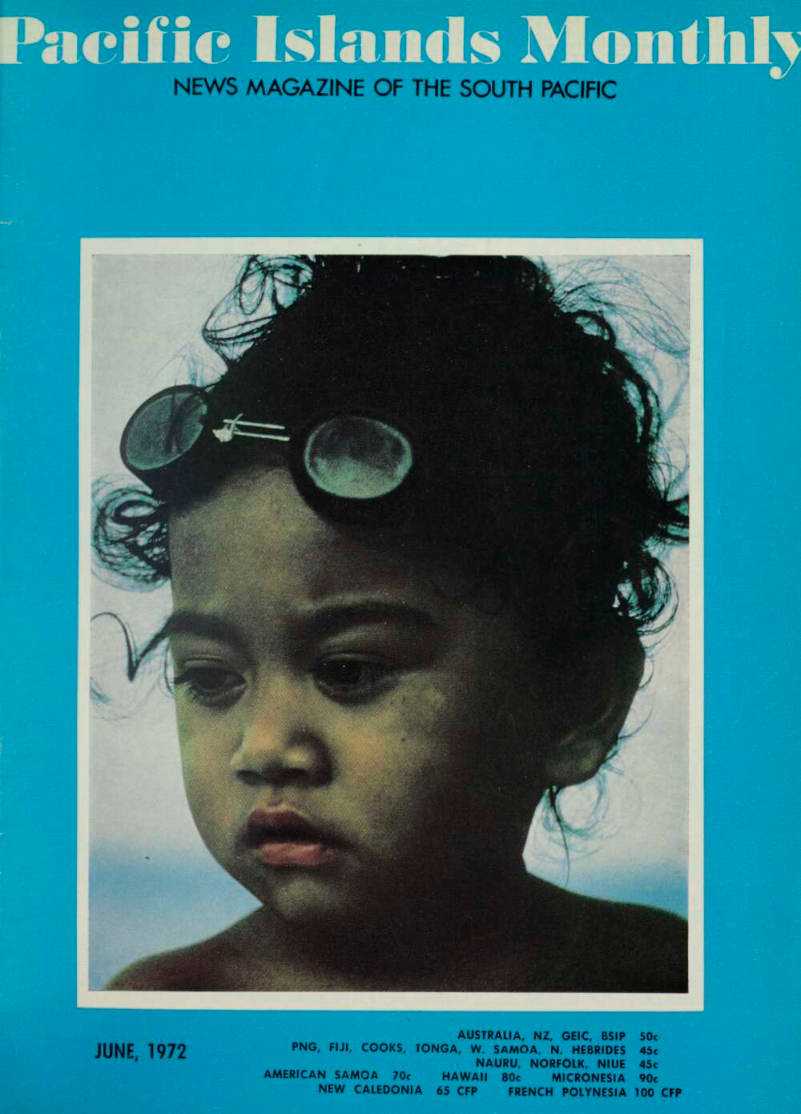 1
1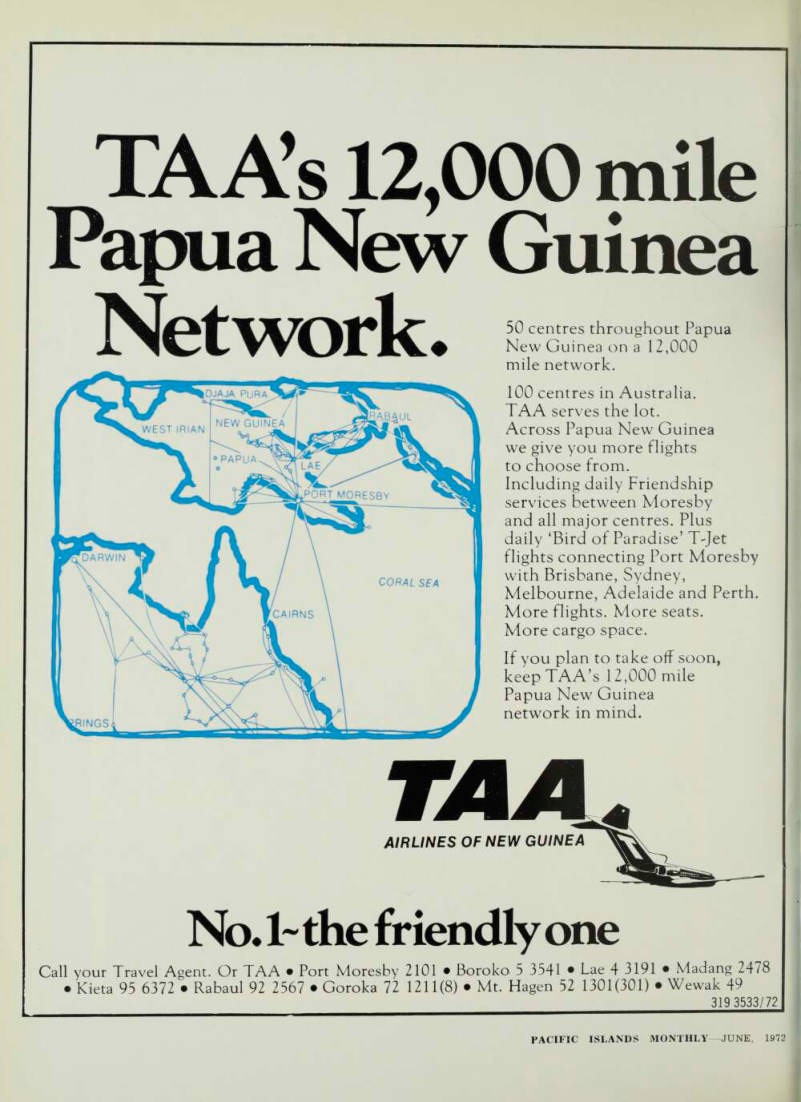 2
2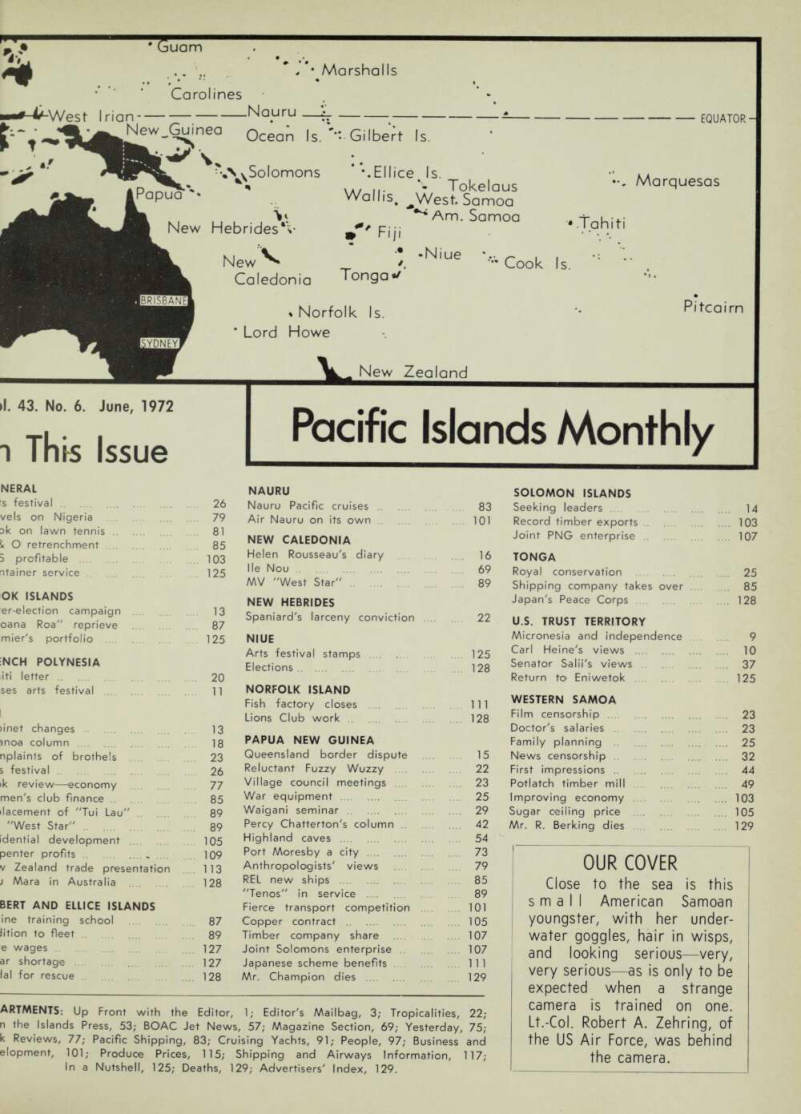 3
3 4
4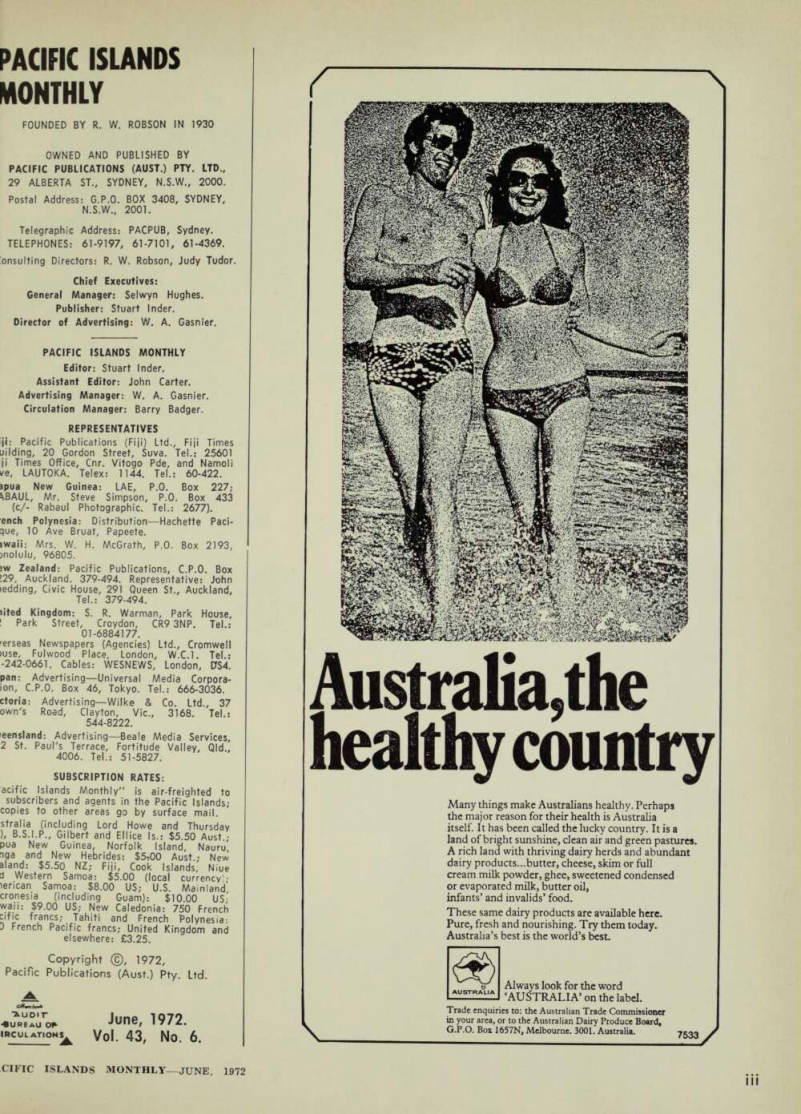 5
5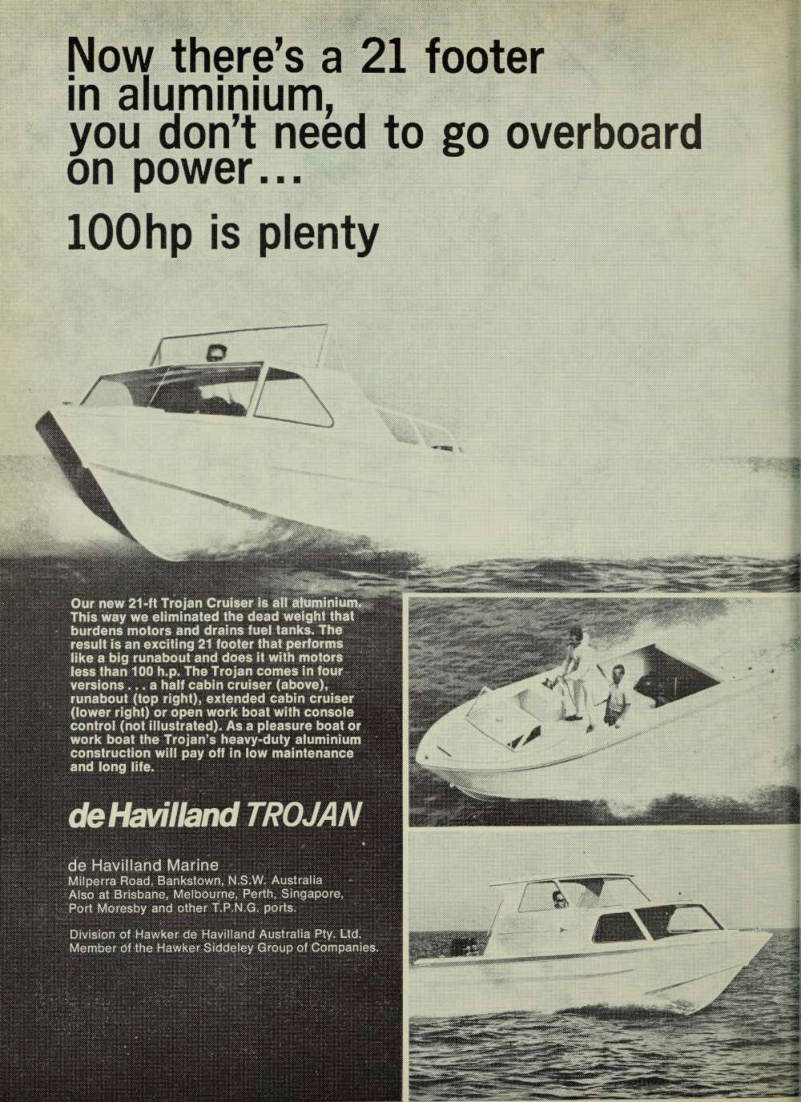 6
6 7
7 8
8 9
9 10
10 11
11 12
12 13
13 14
14 15
15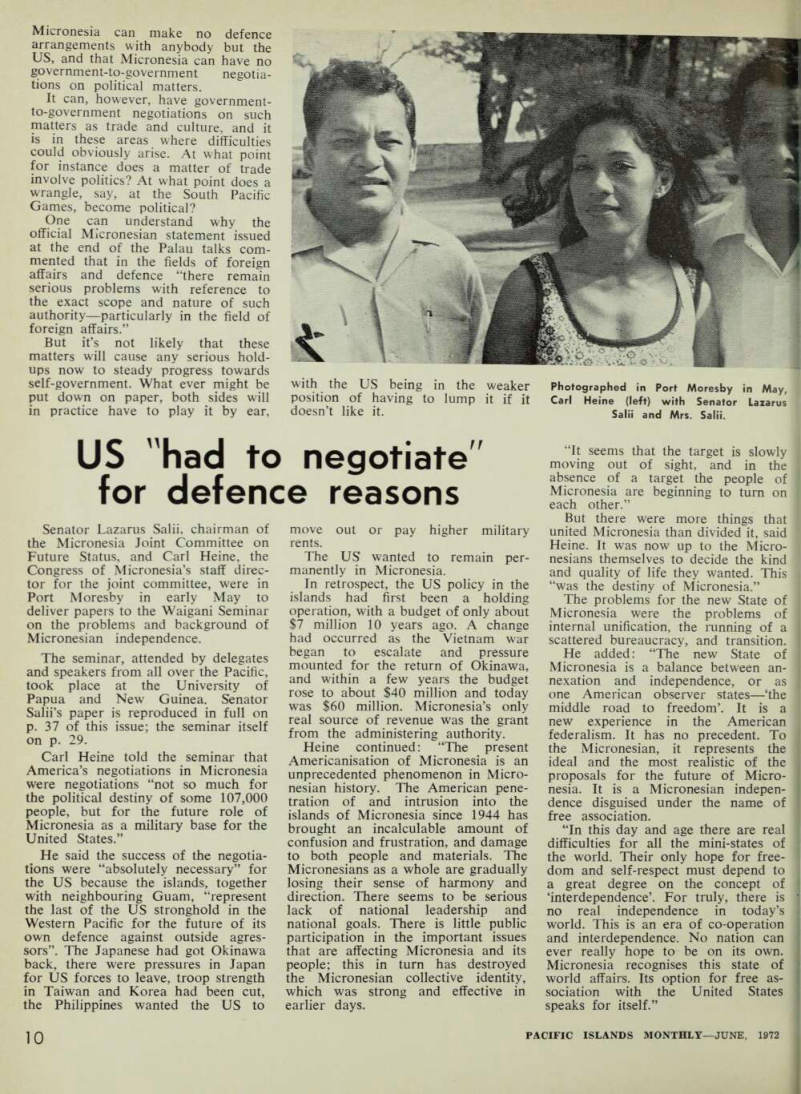 16
16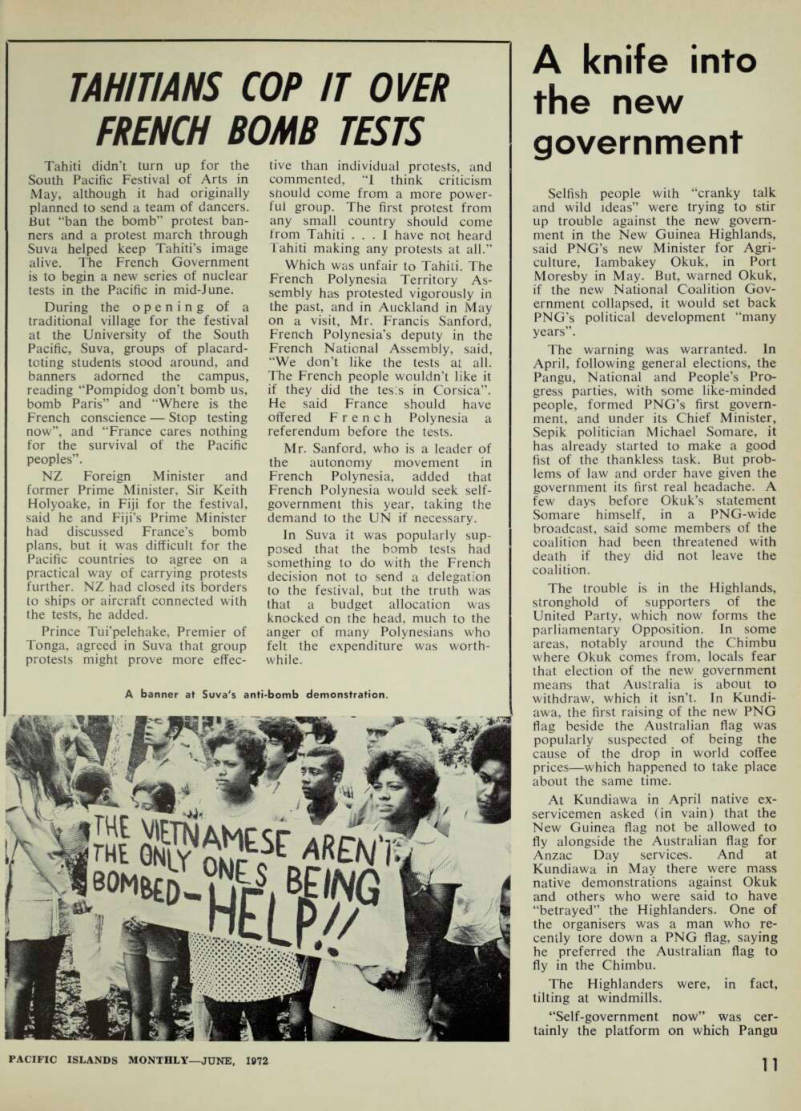 17
17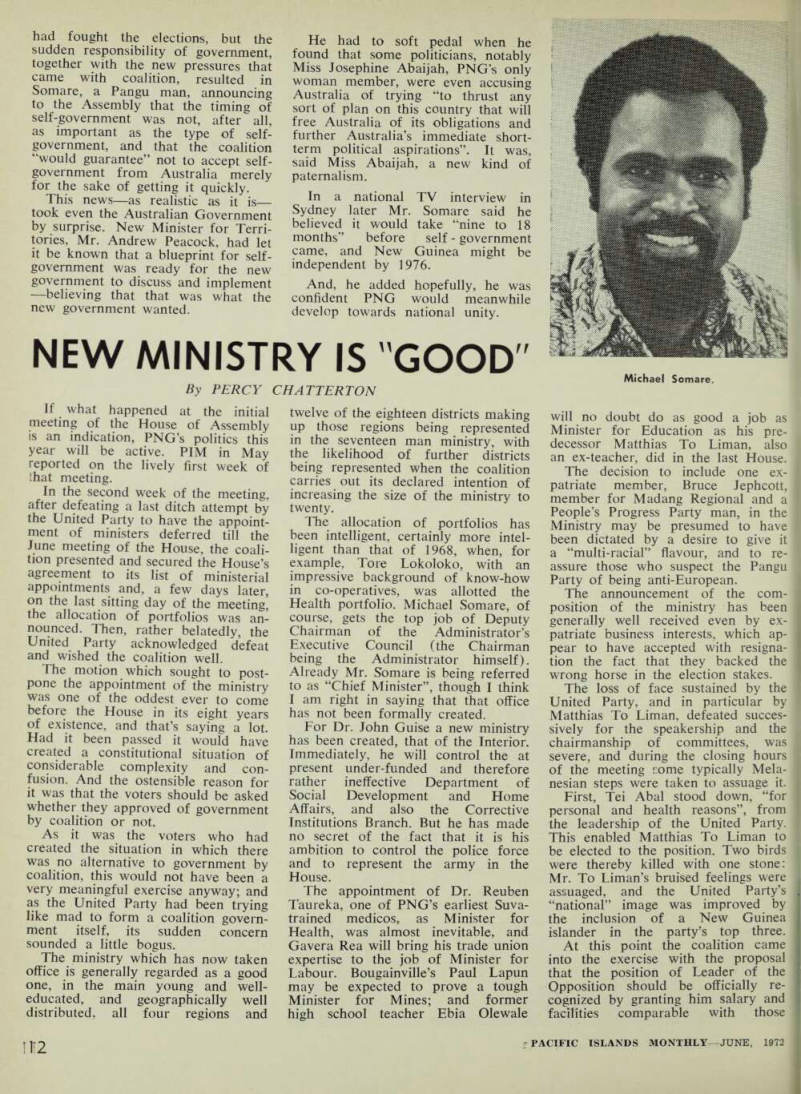 18
18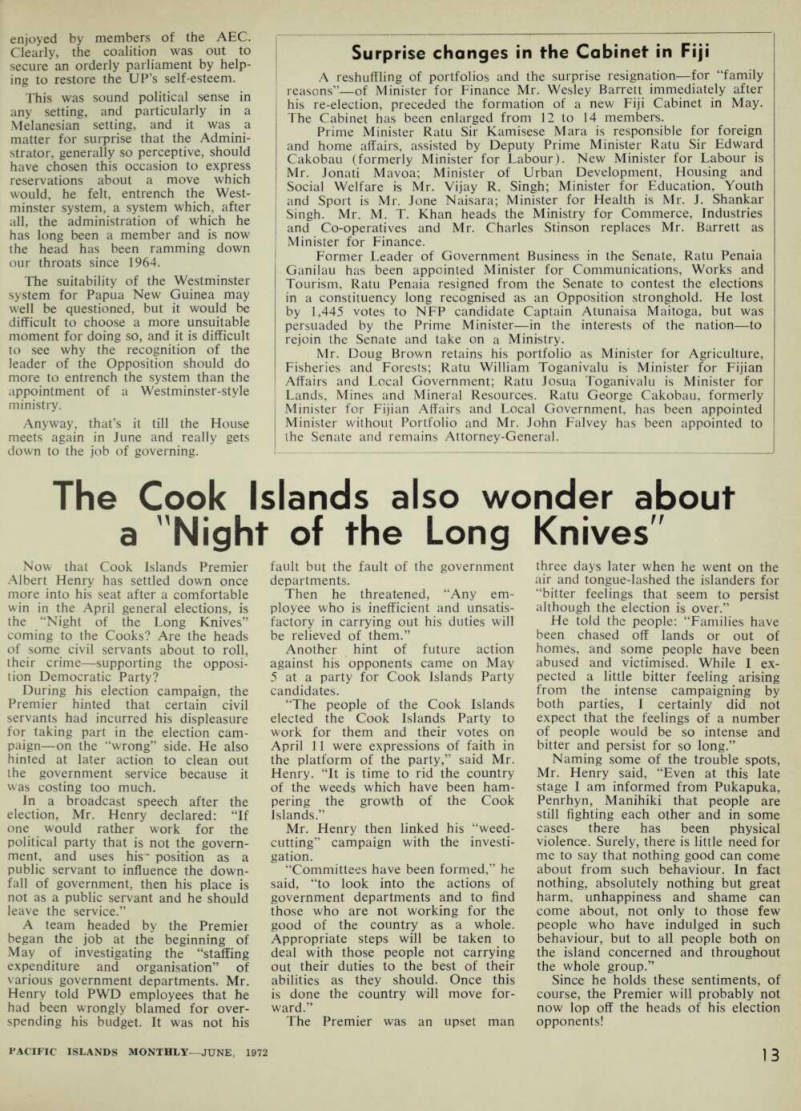 19
19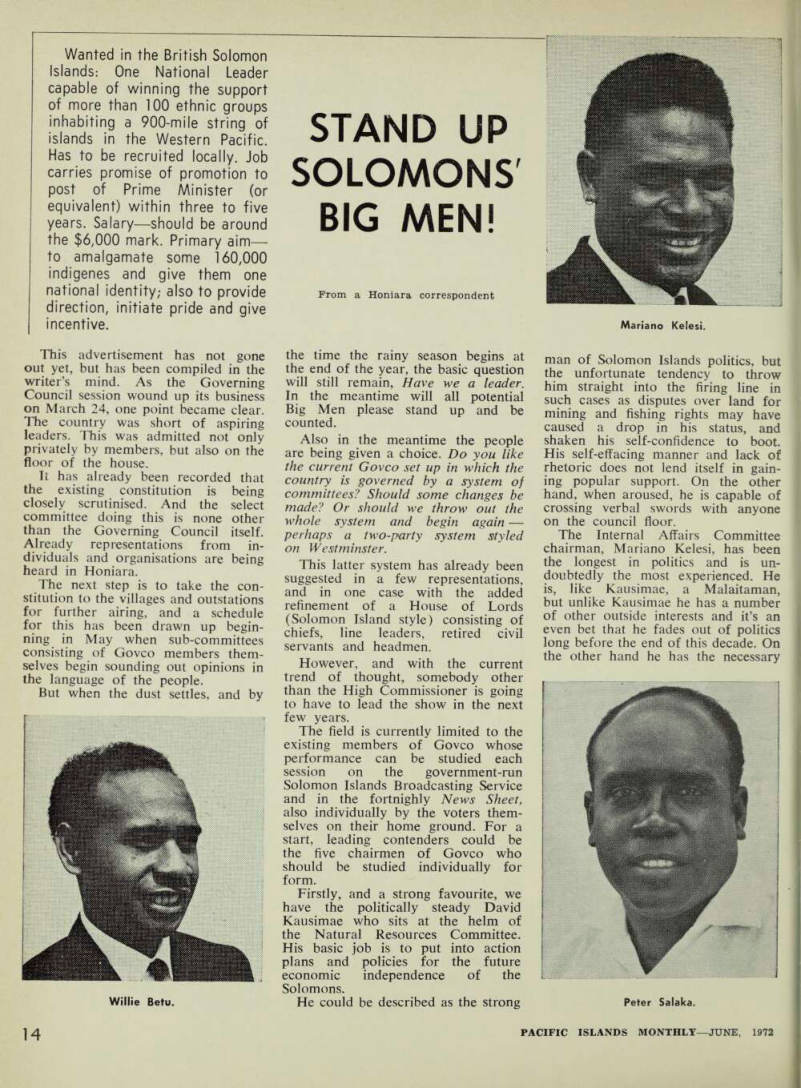 20
20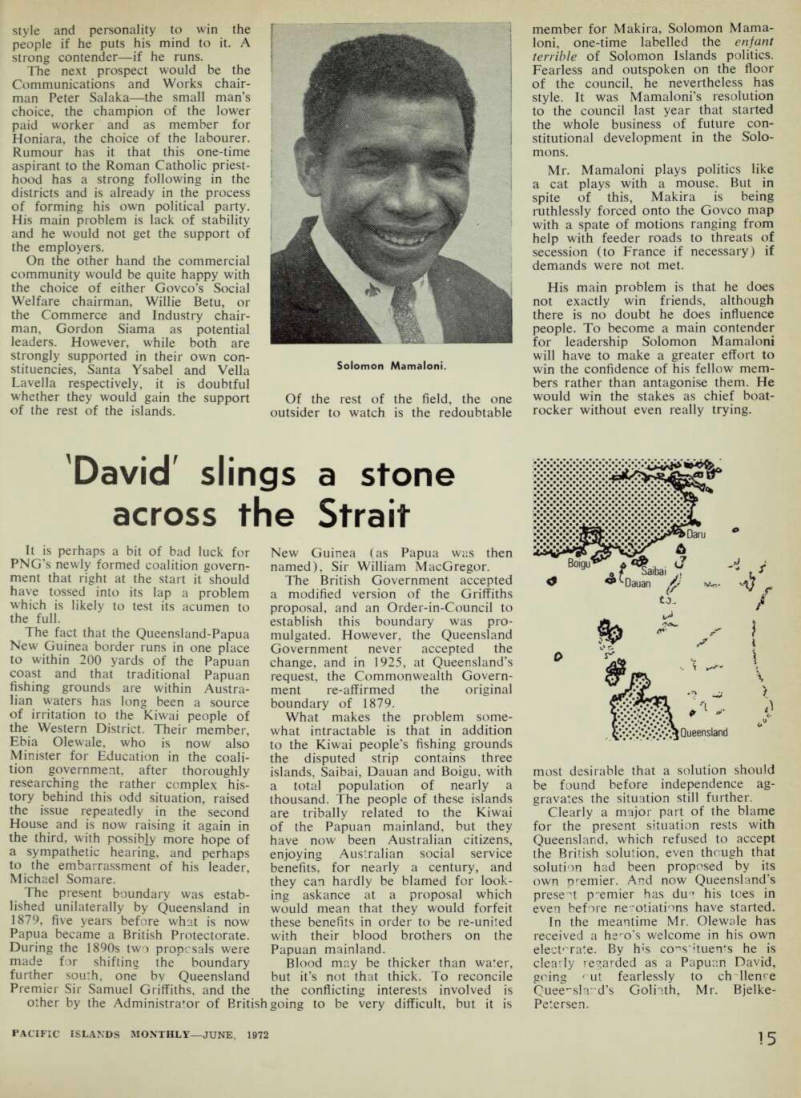 21
21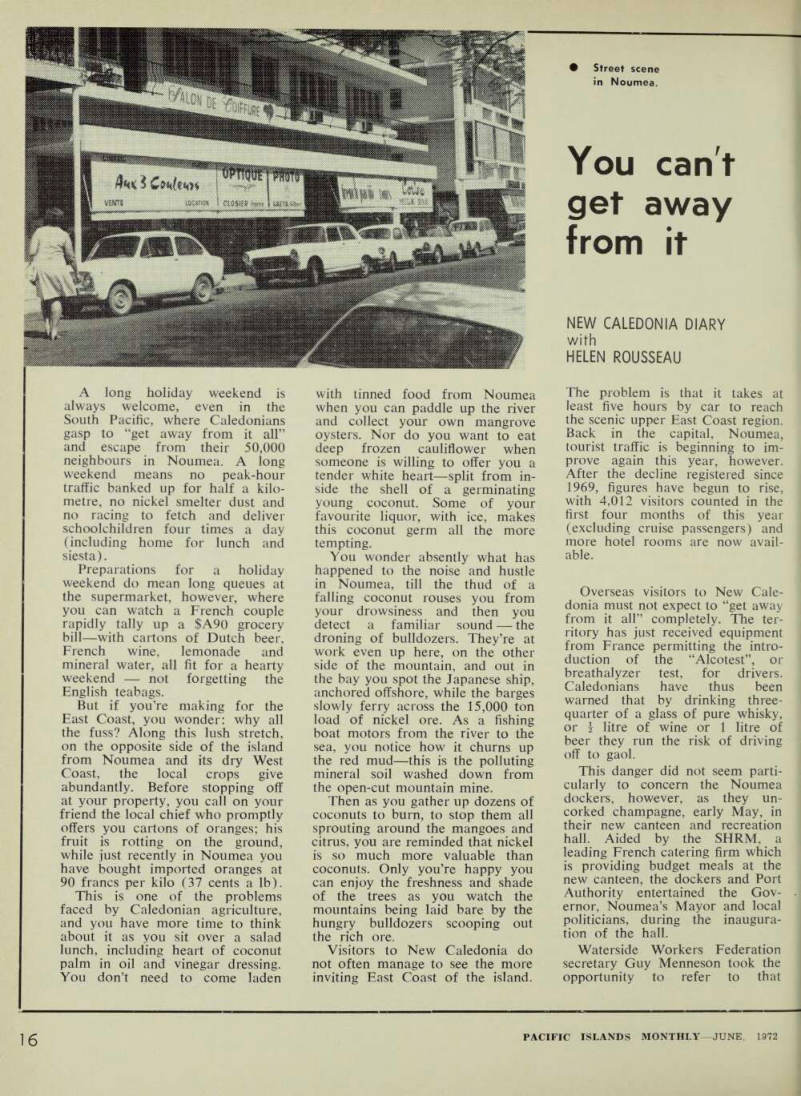 22
22 23
23 24
24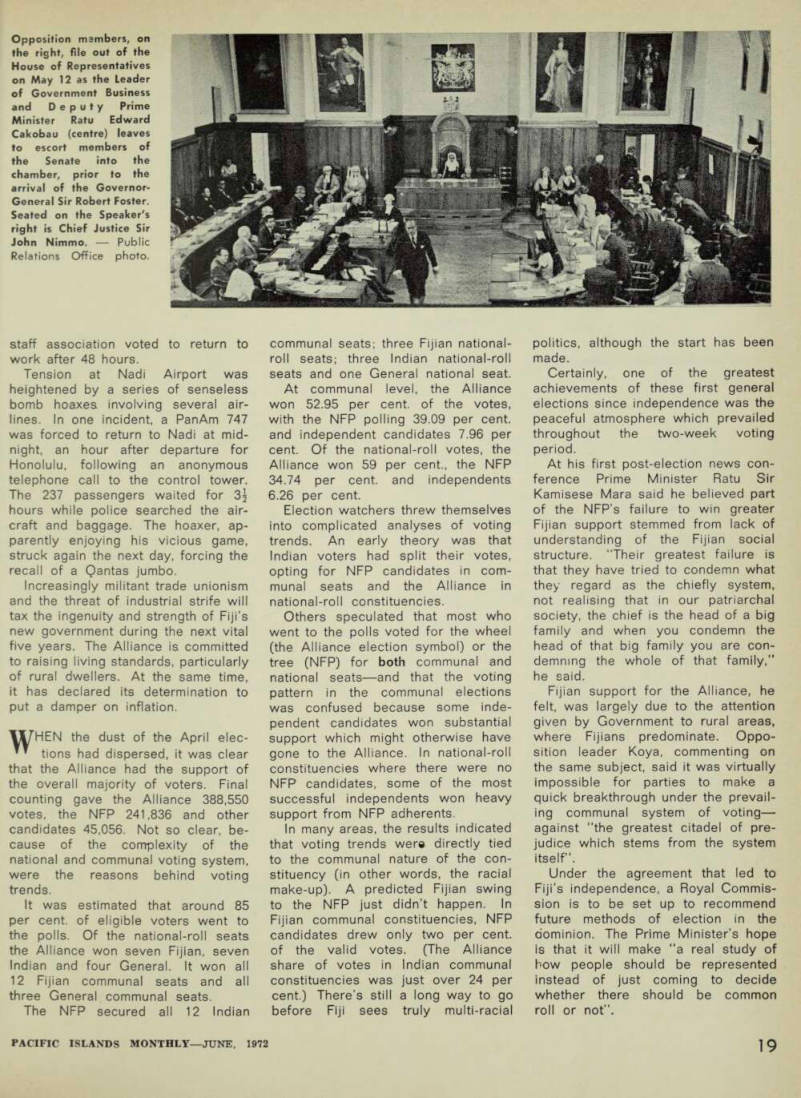 25
25 26
26 27
27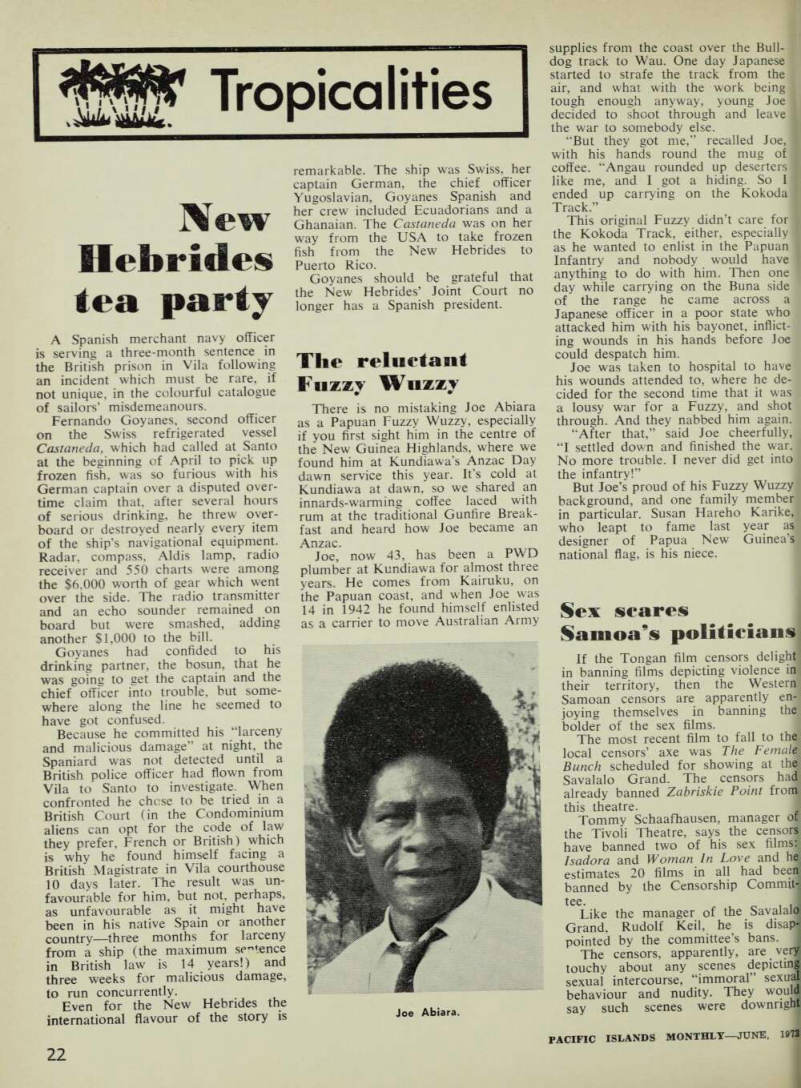 28
28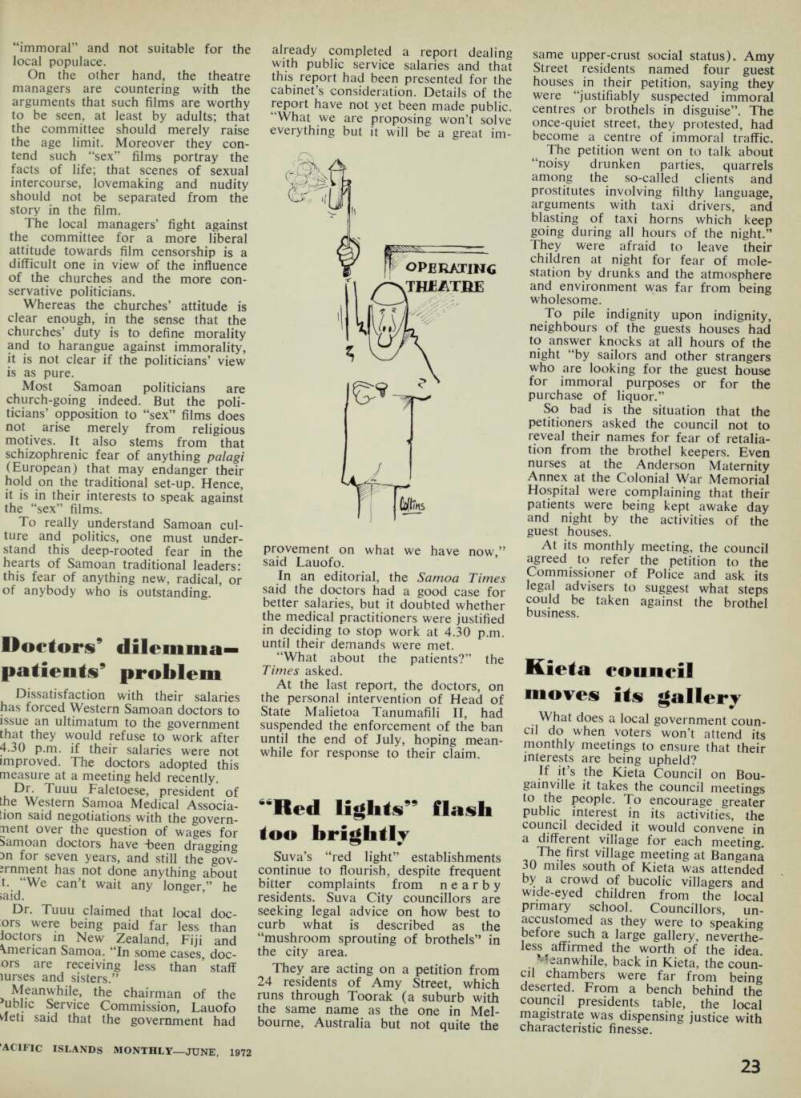 29
29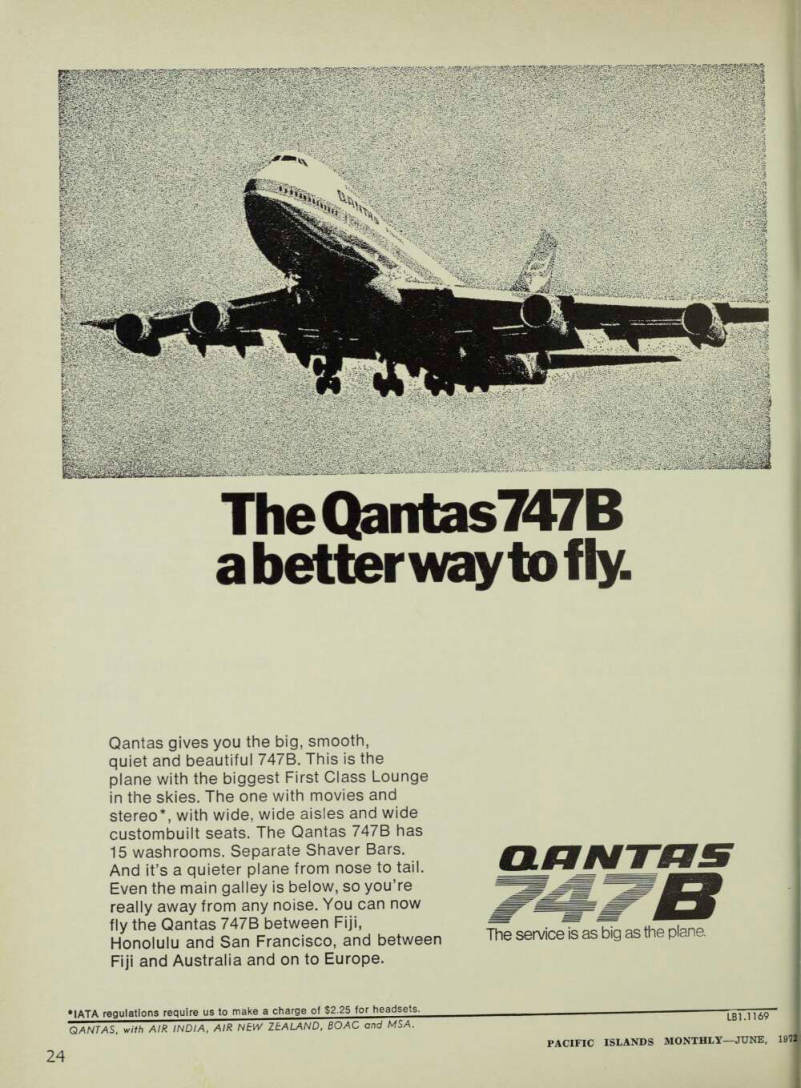 30
30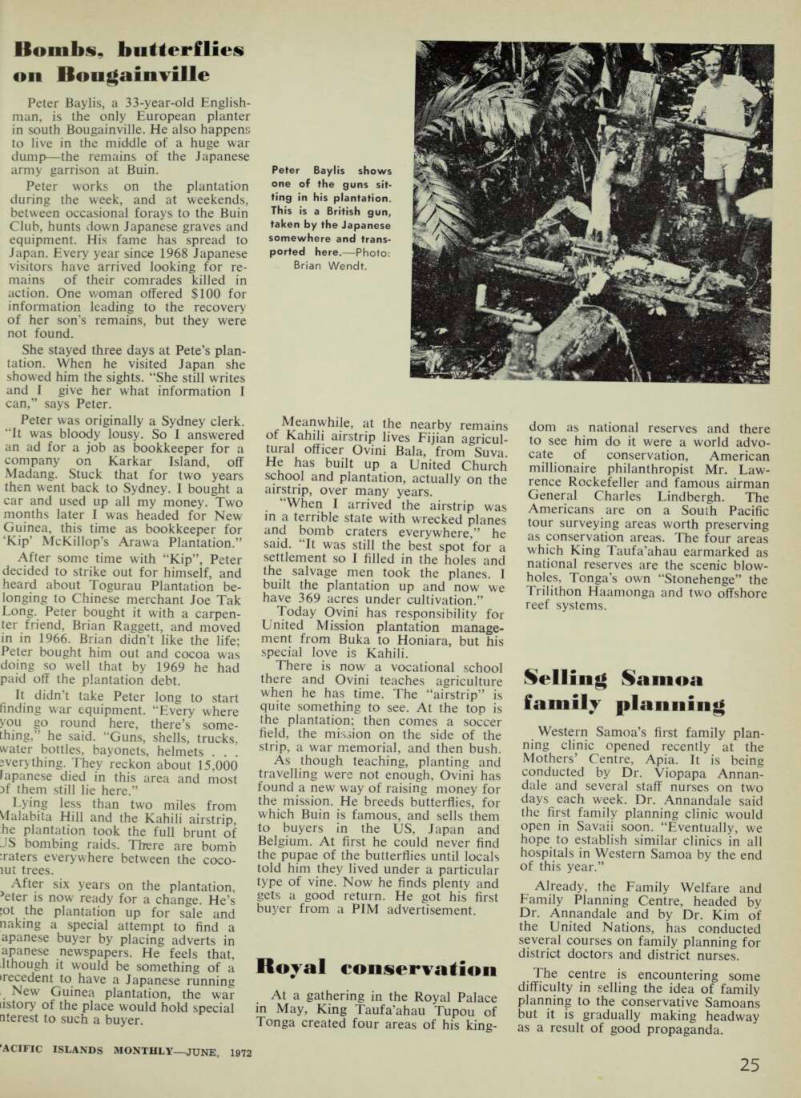 31
31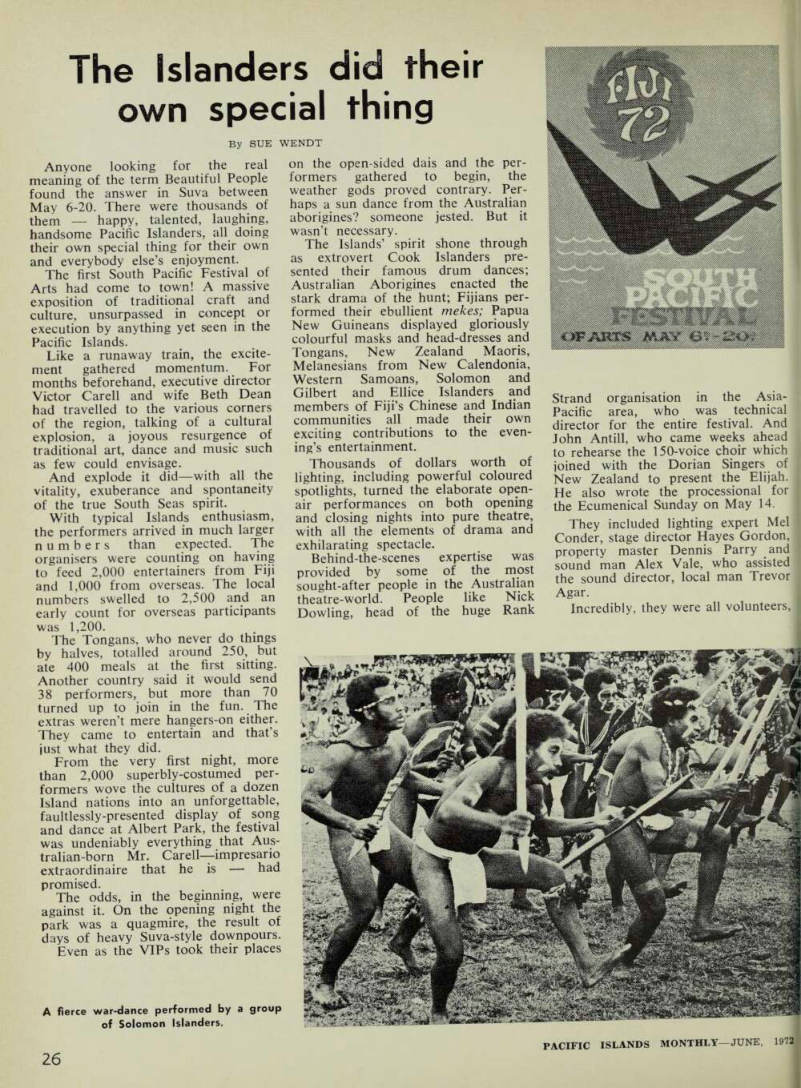 32
32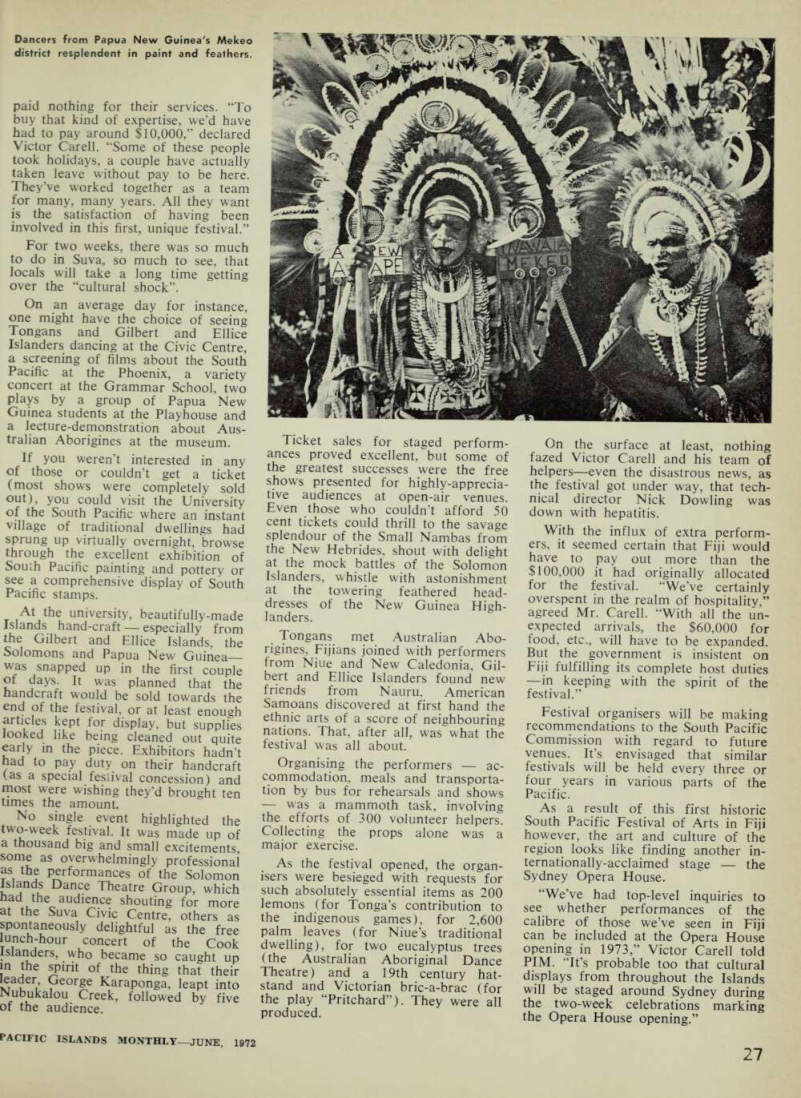 33
33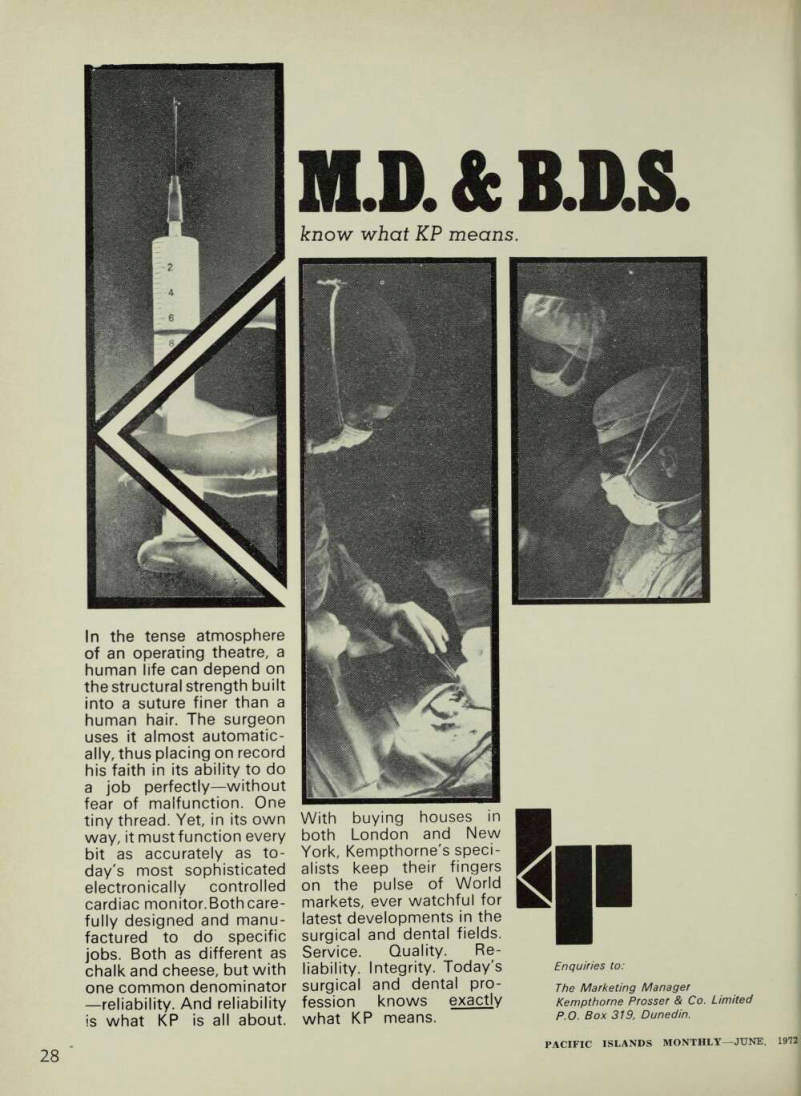 34
34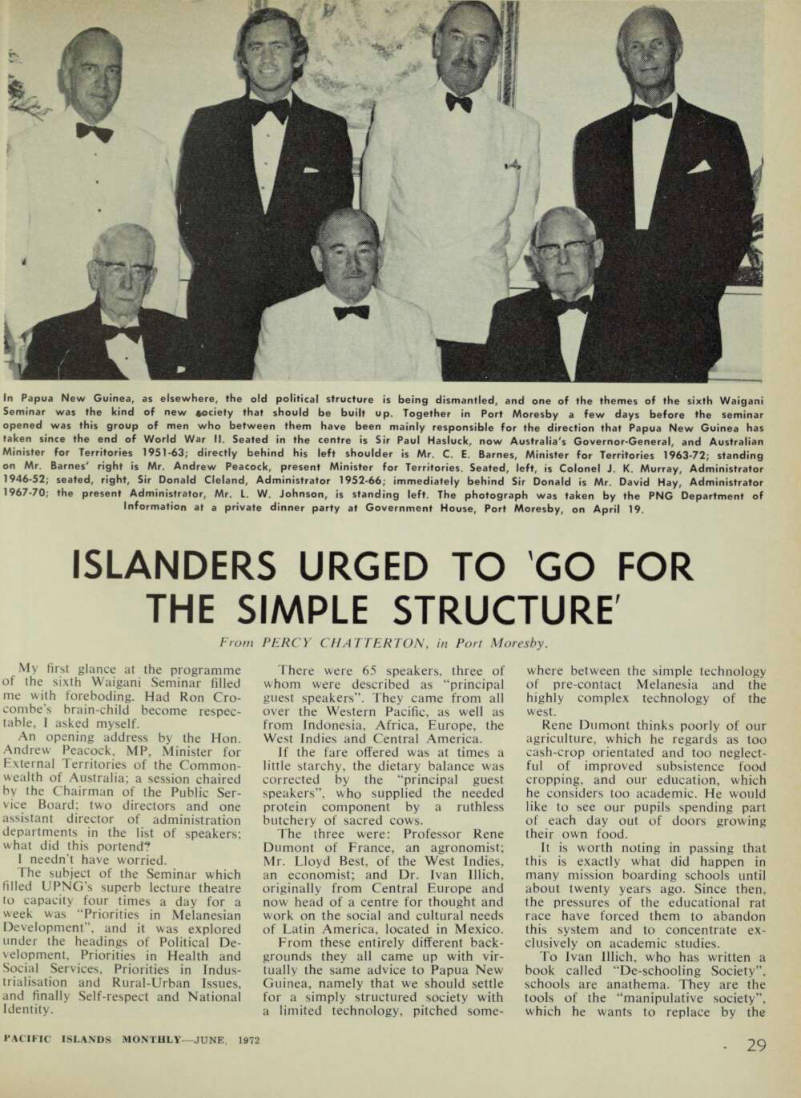 35
35 36
36 37
37 38
38 39
39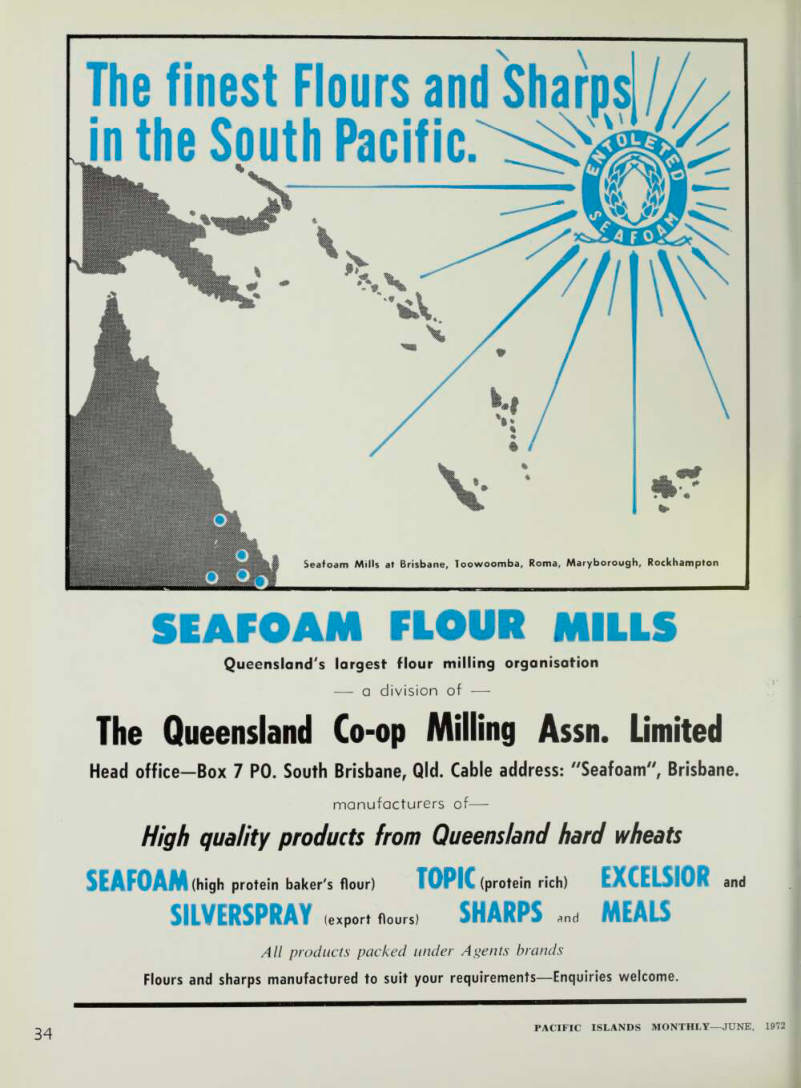 40
40 41
41 42
42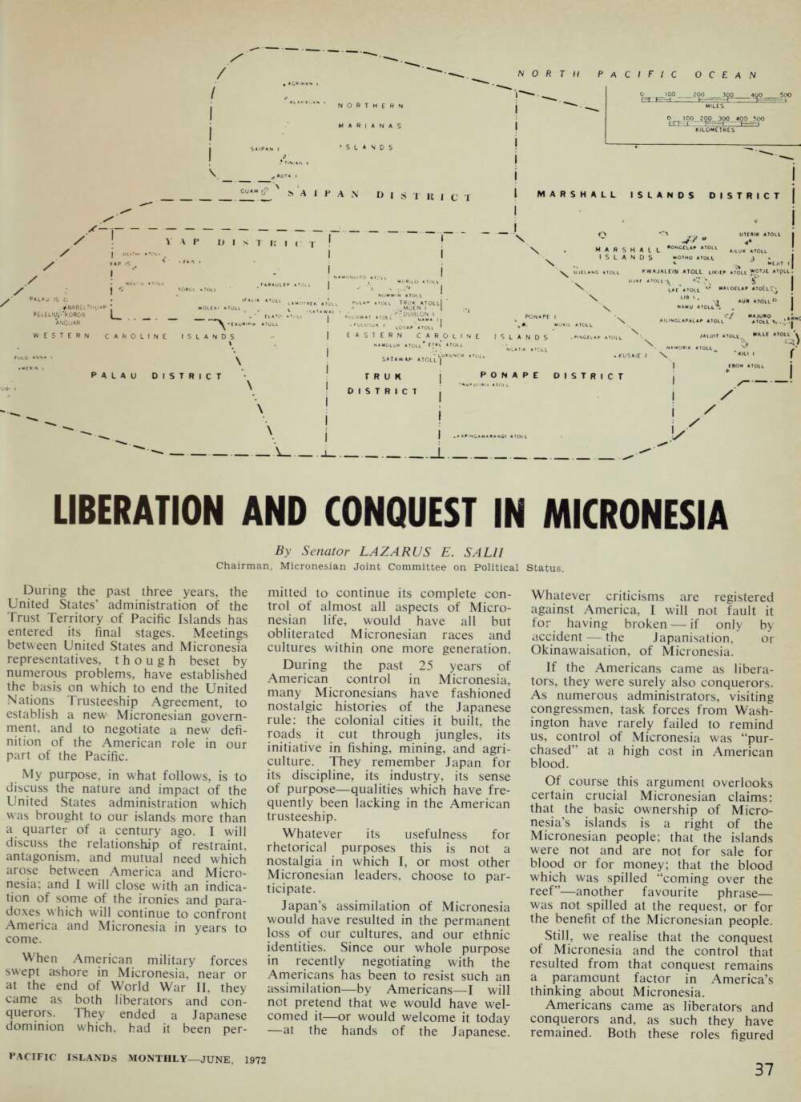 43
43 44
44 45
45 46
46 47
47 48
48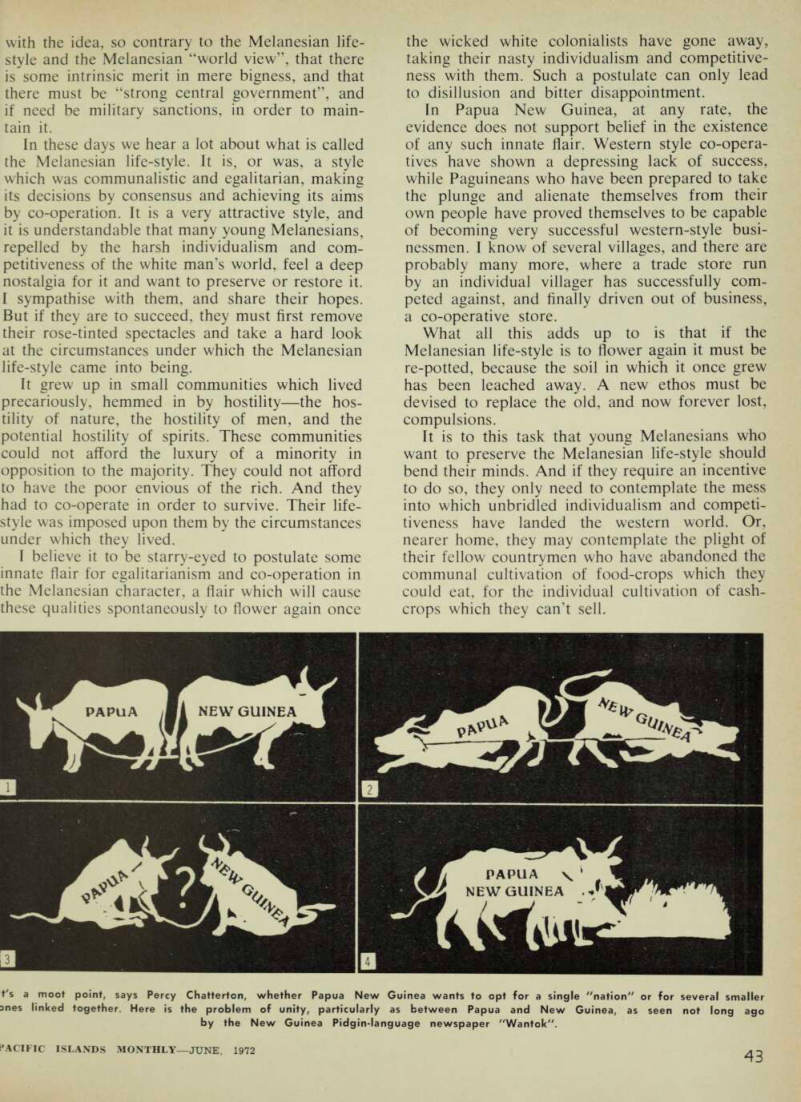 49
49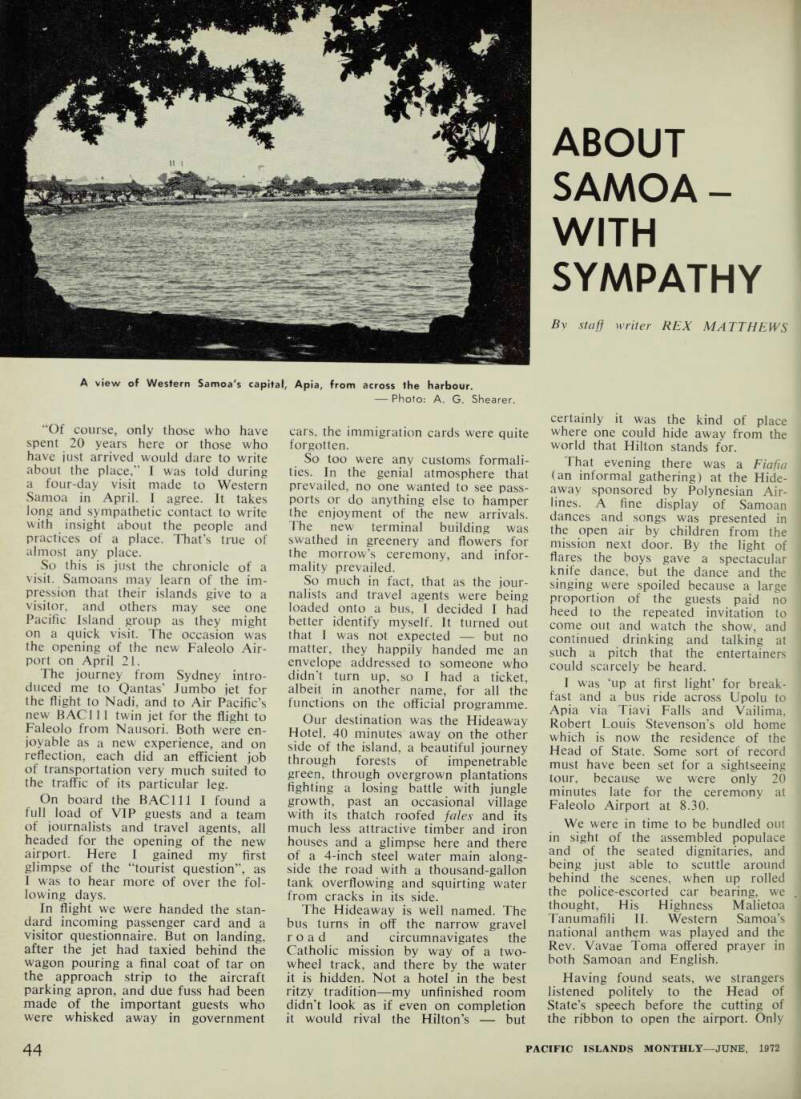 50
50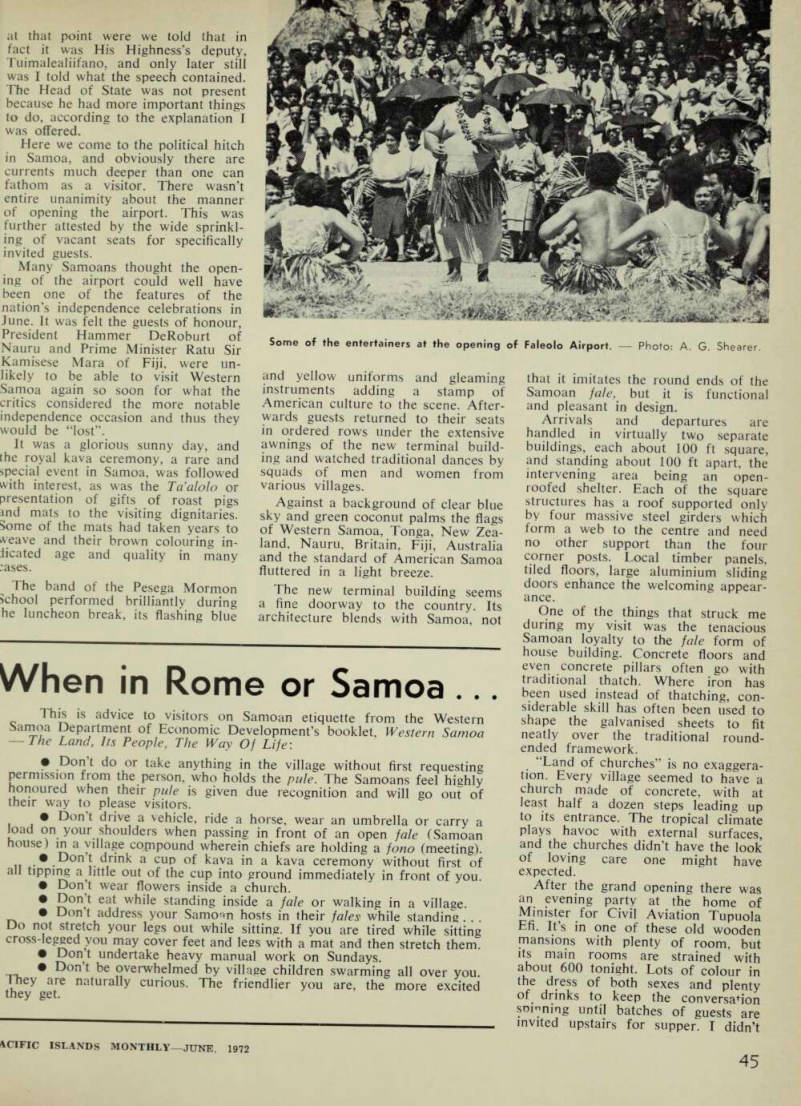 51
51 52
52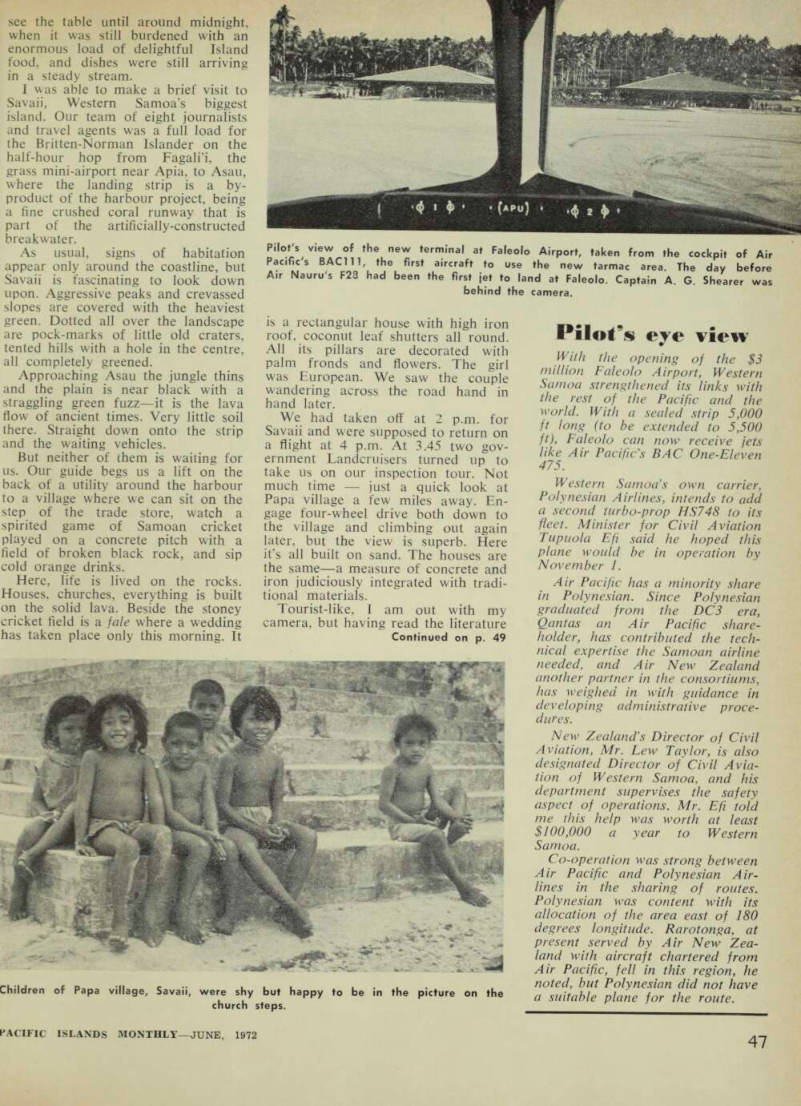 53
53 54
54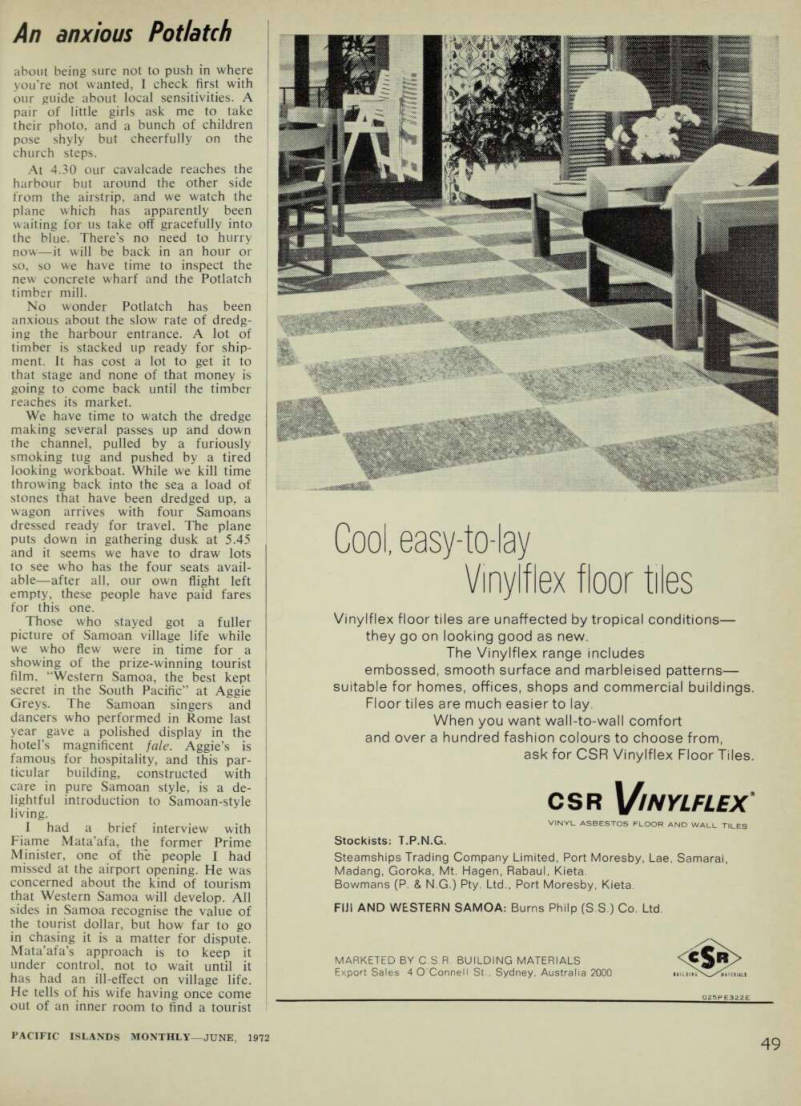 55
55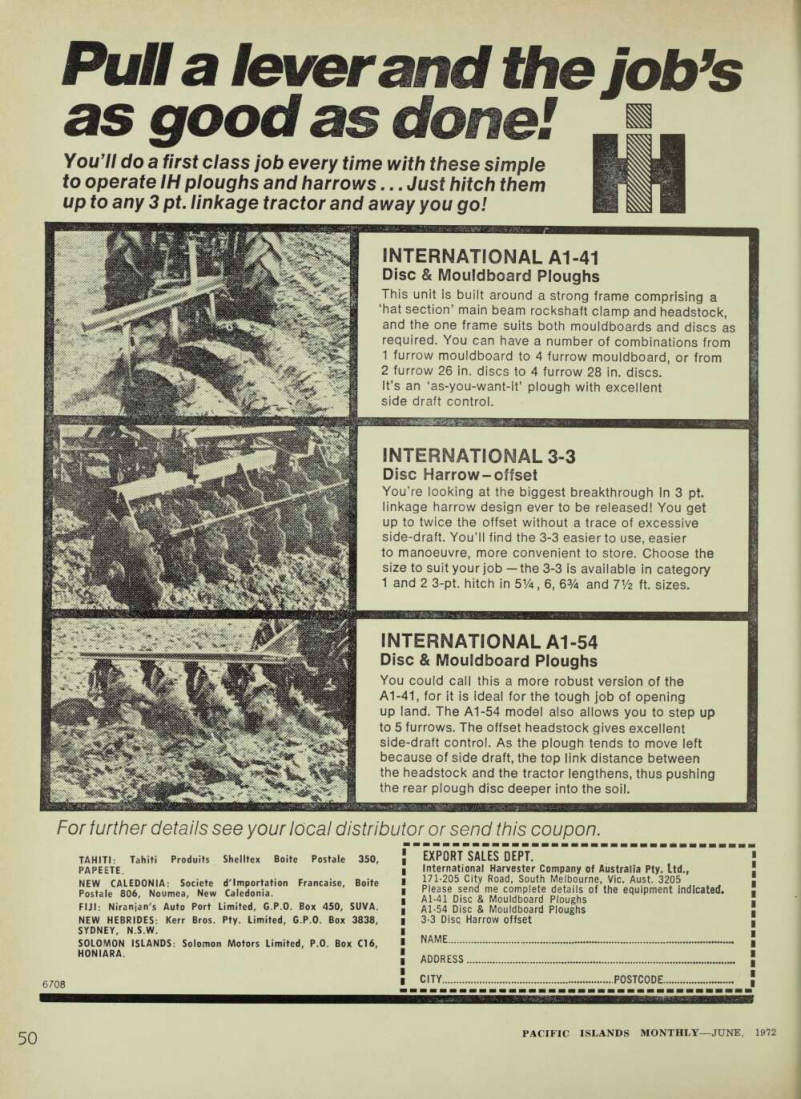 56
56 57
57 58
58 59
59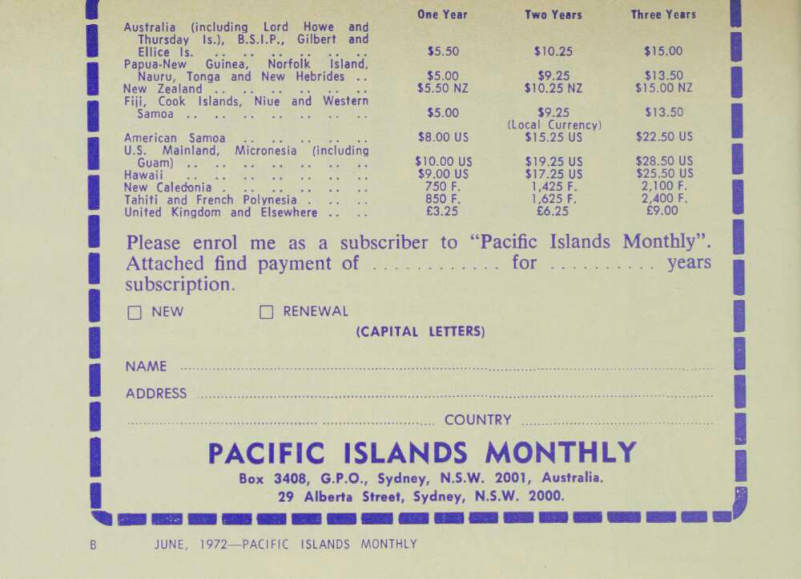 60
60 61
61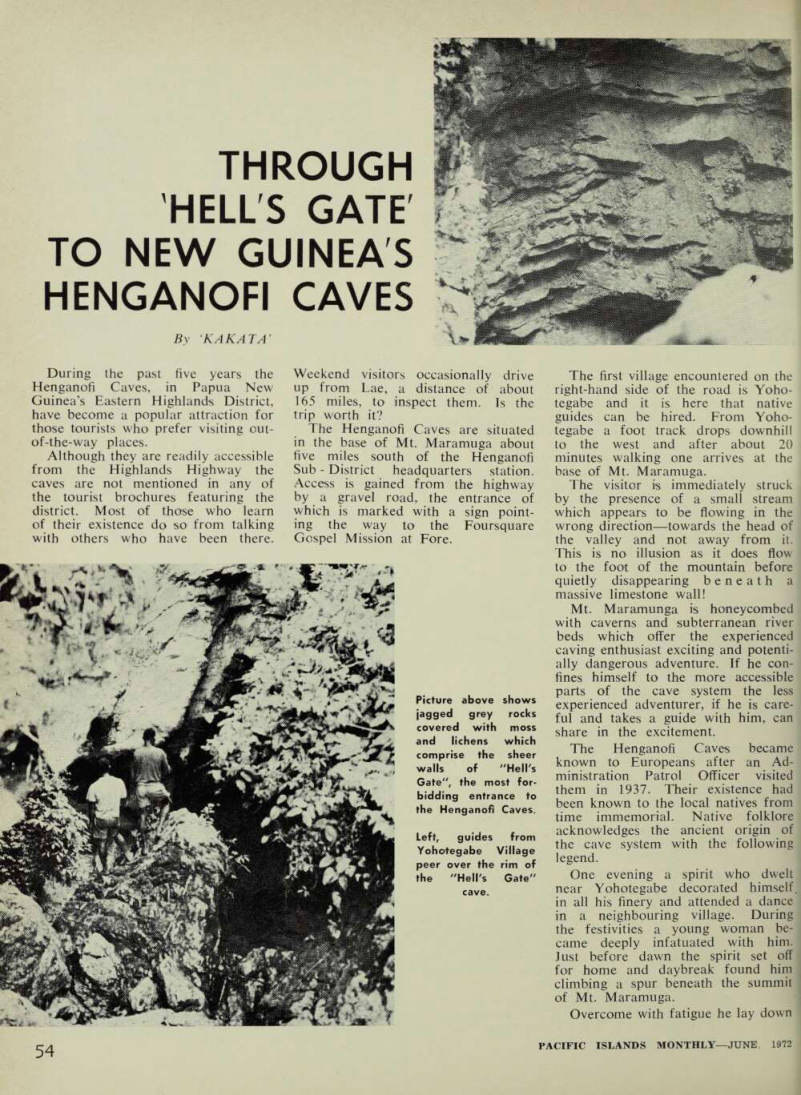 62
62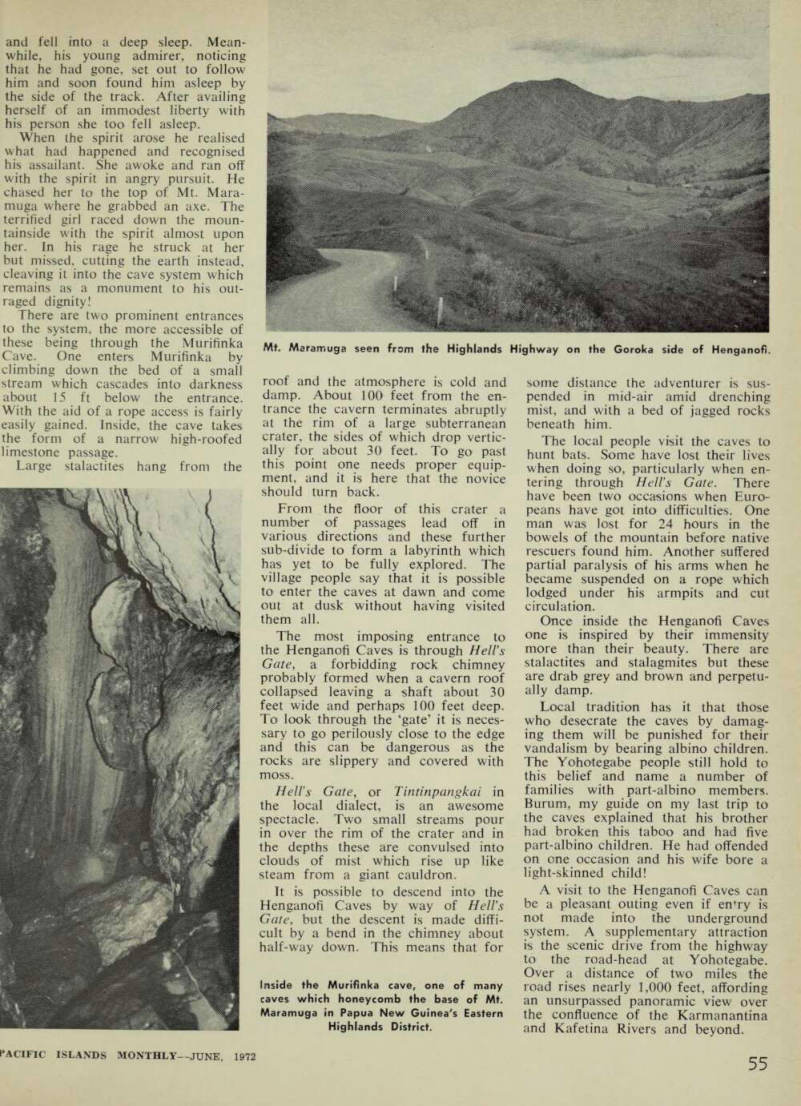 63
63 64
64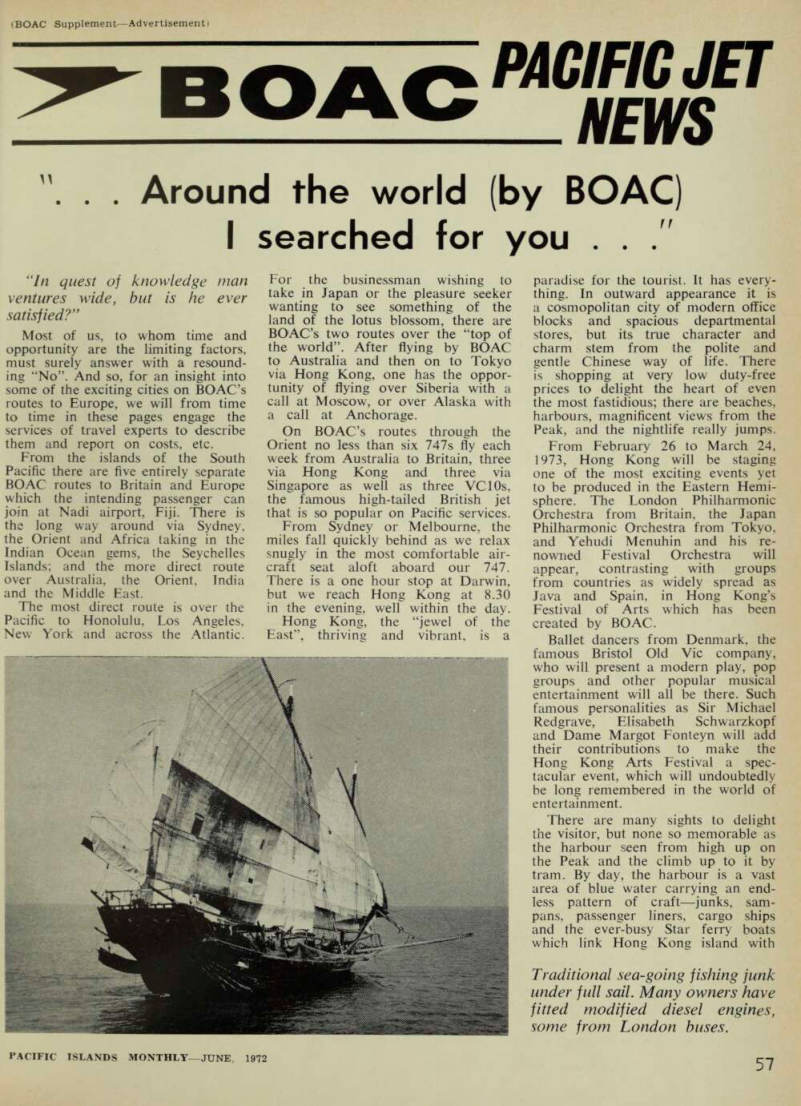 65
65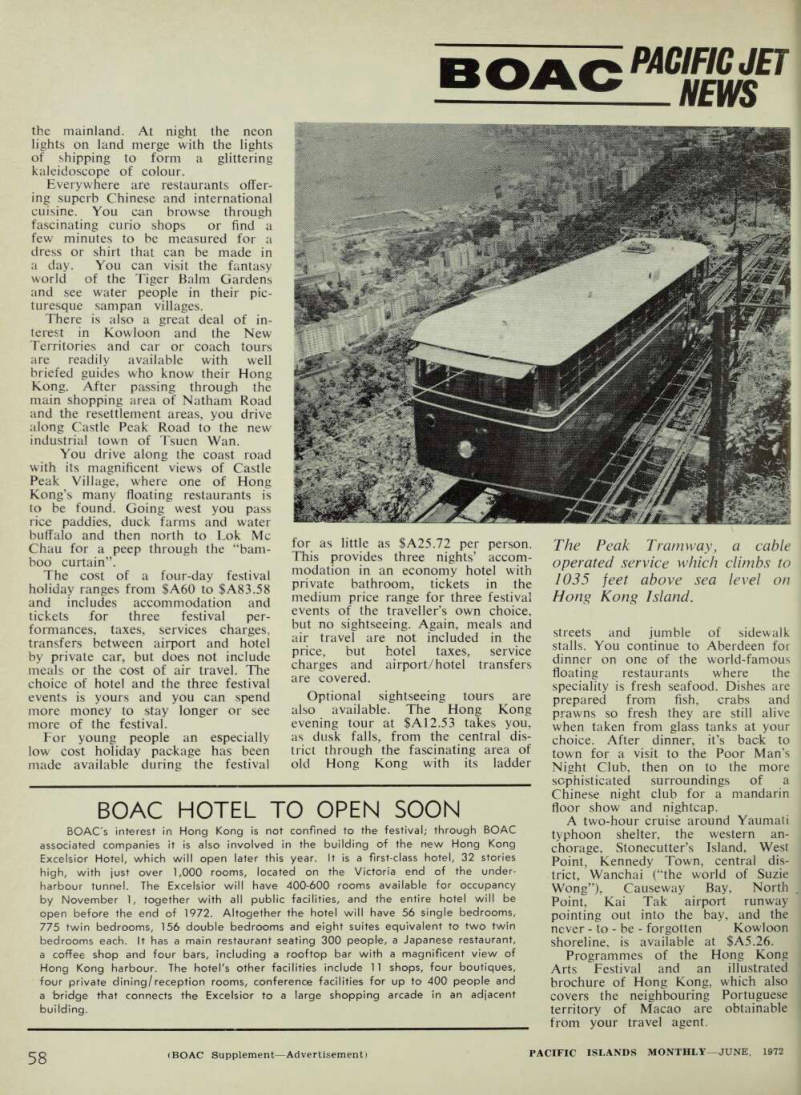 66
66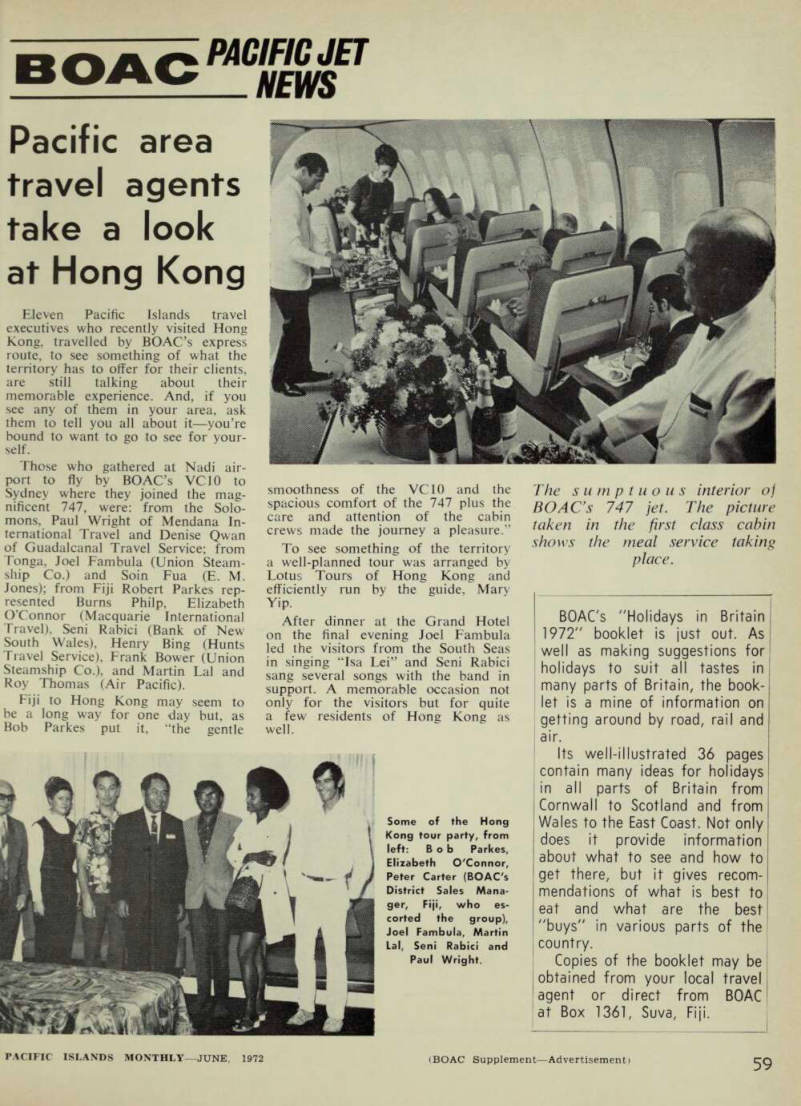 67
67 68
68 69
69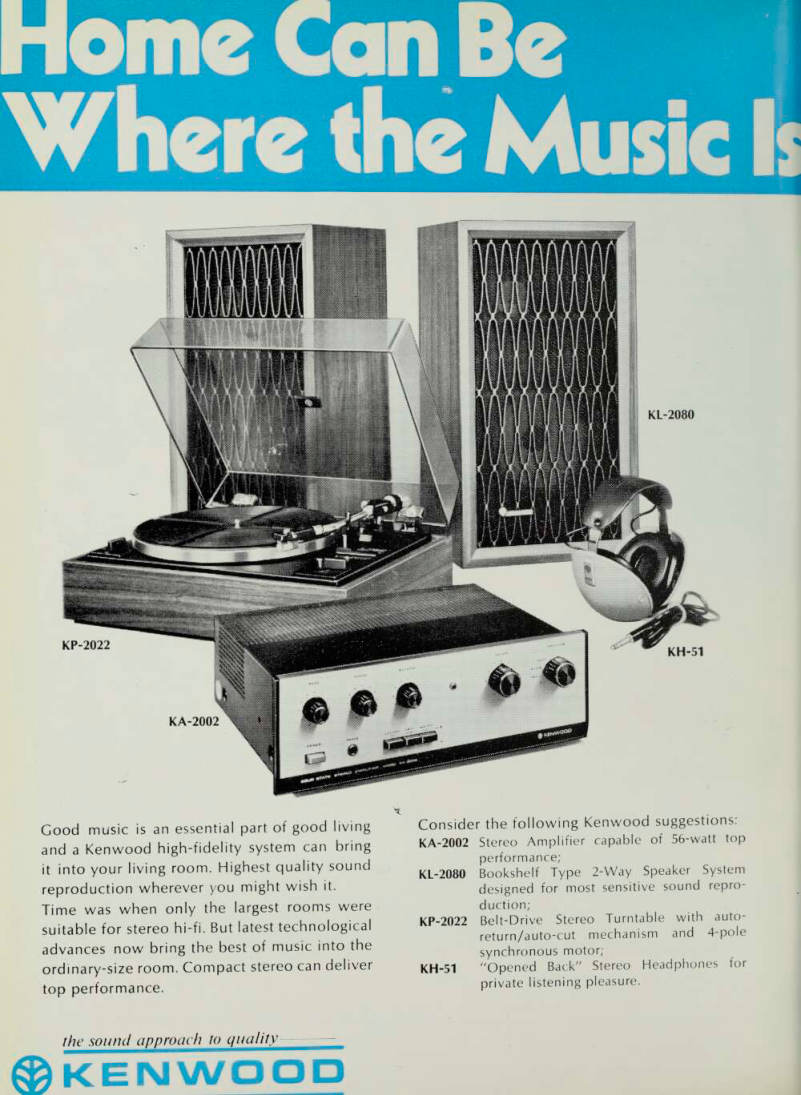 70
70 71
71 72
72 73
73 74
74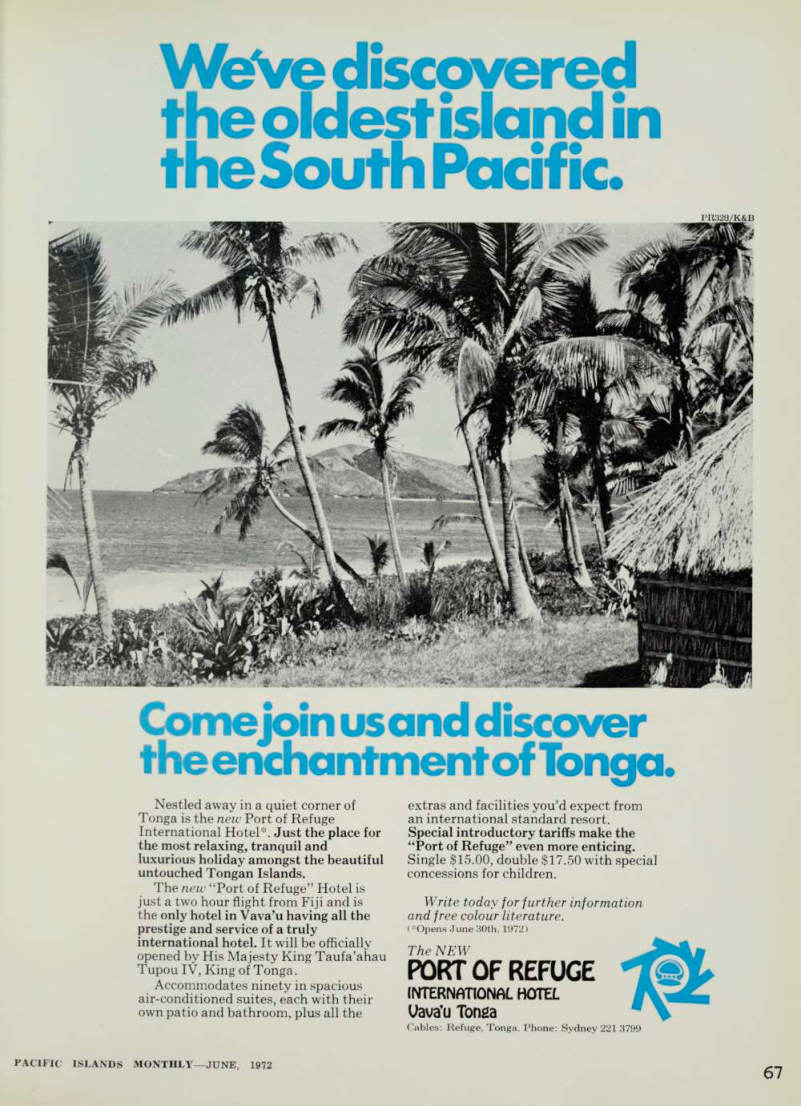 75
75 76
76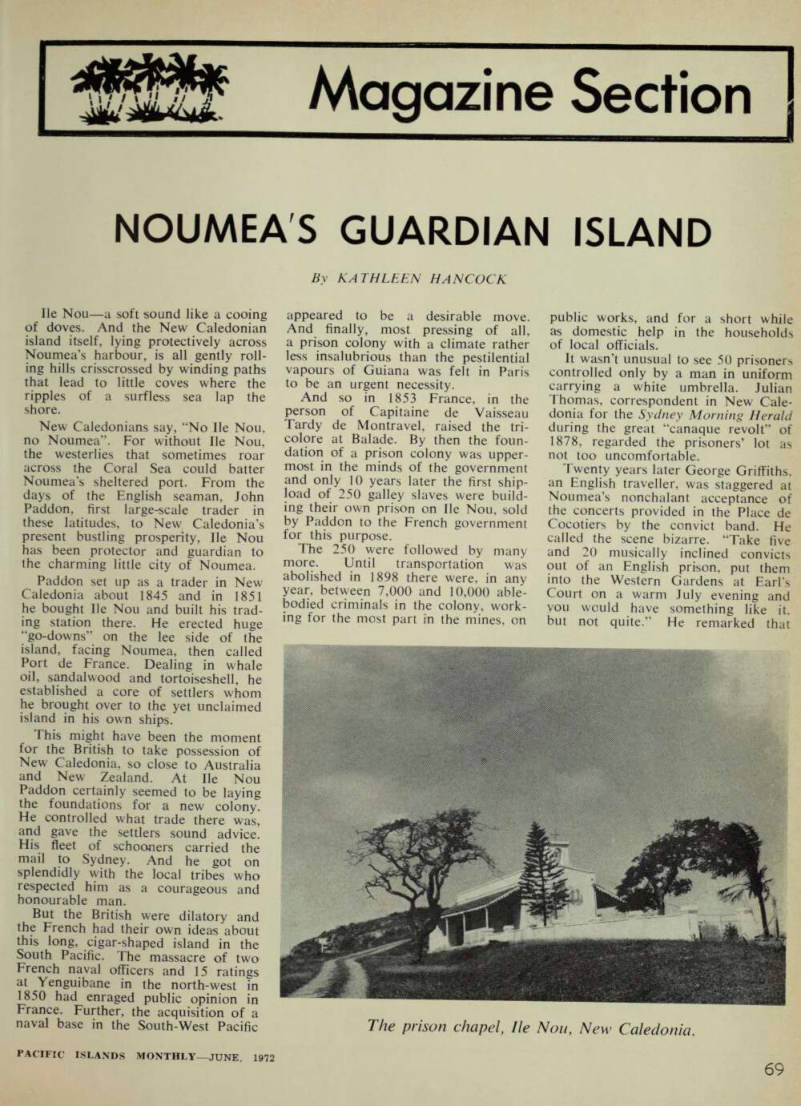 77
77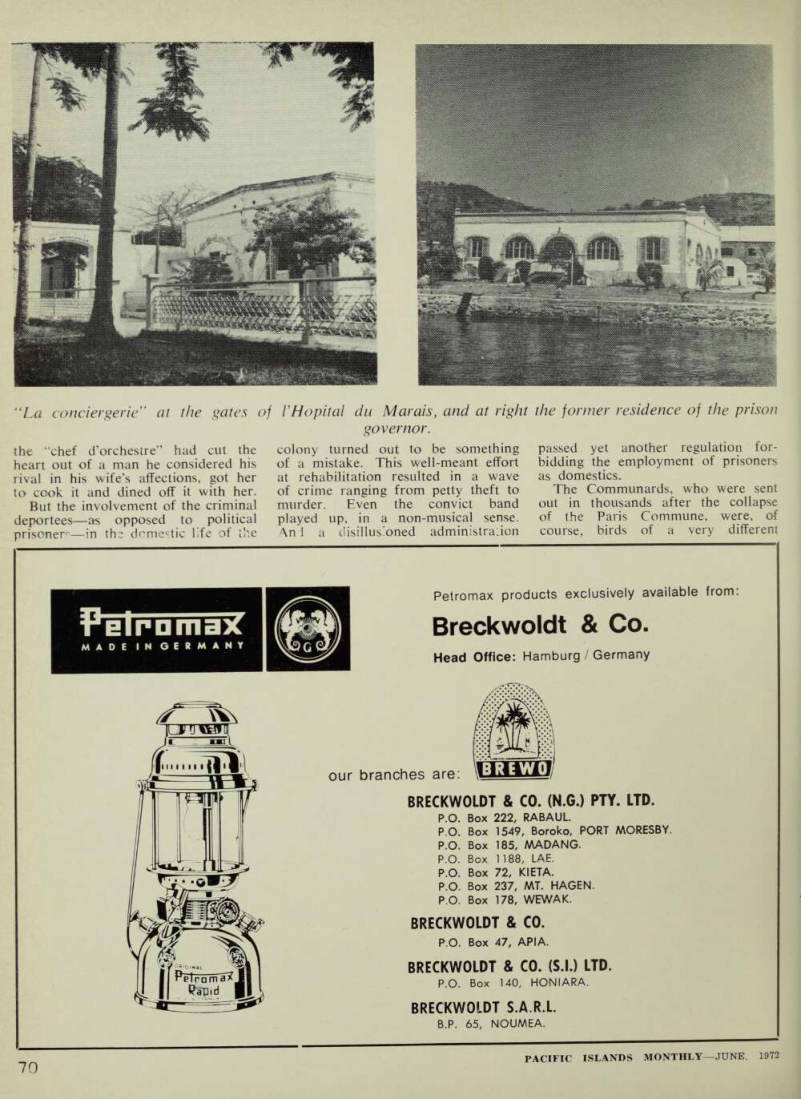 78
78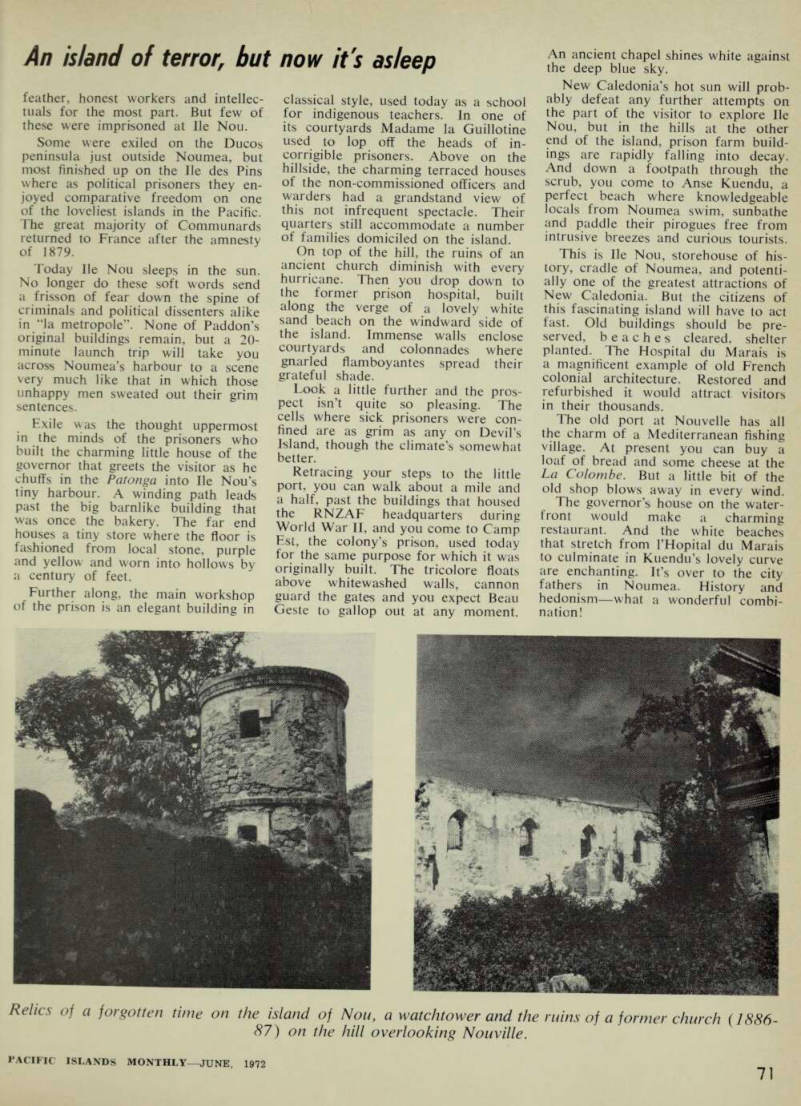 79
79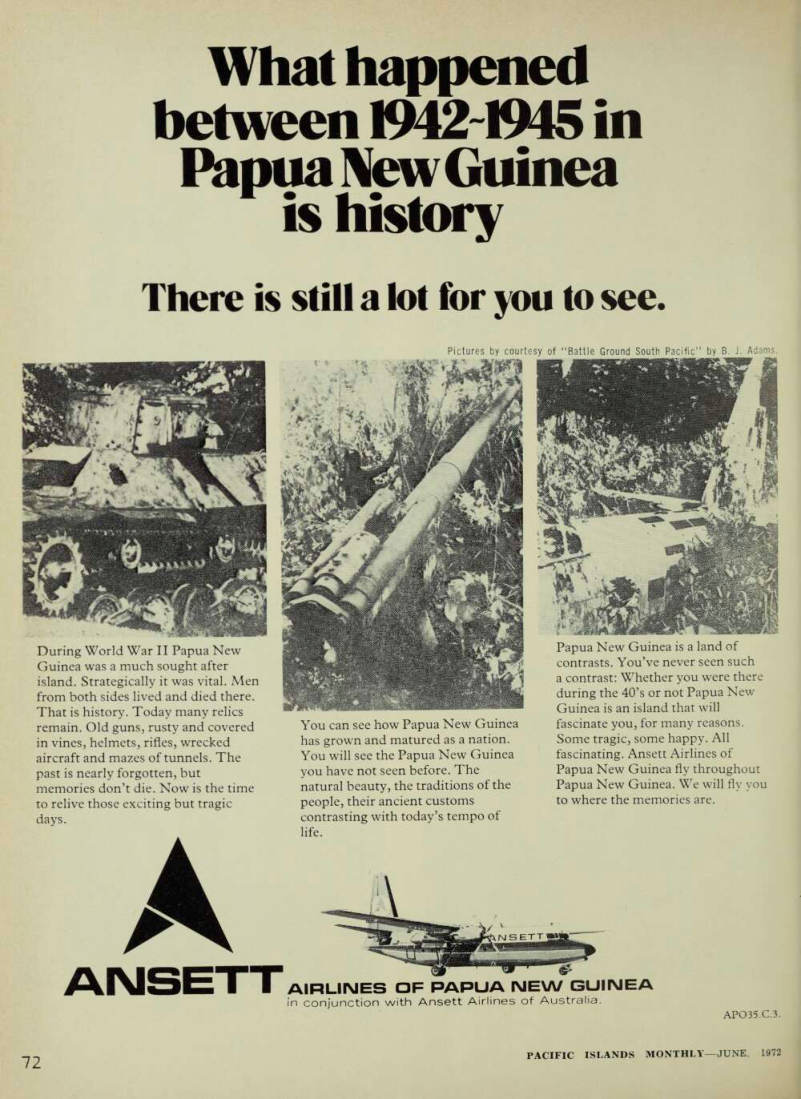 80
80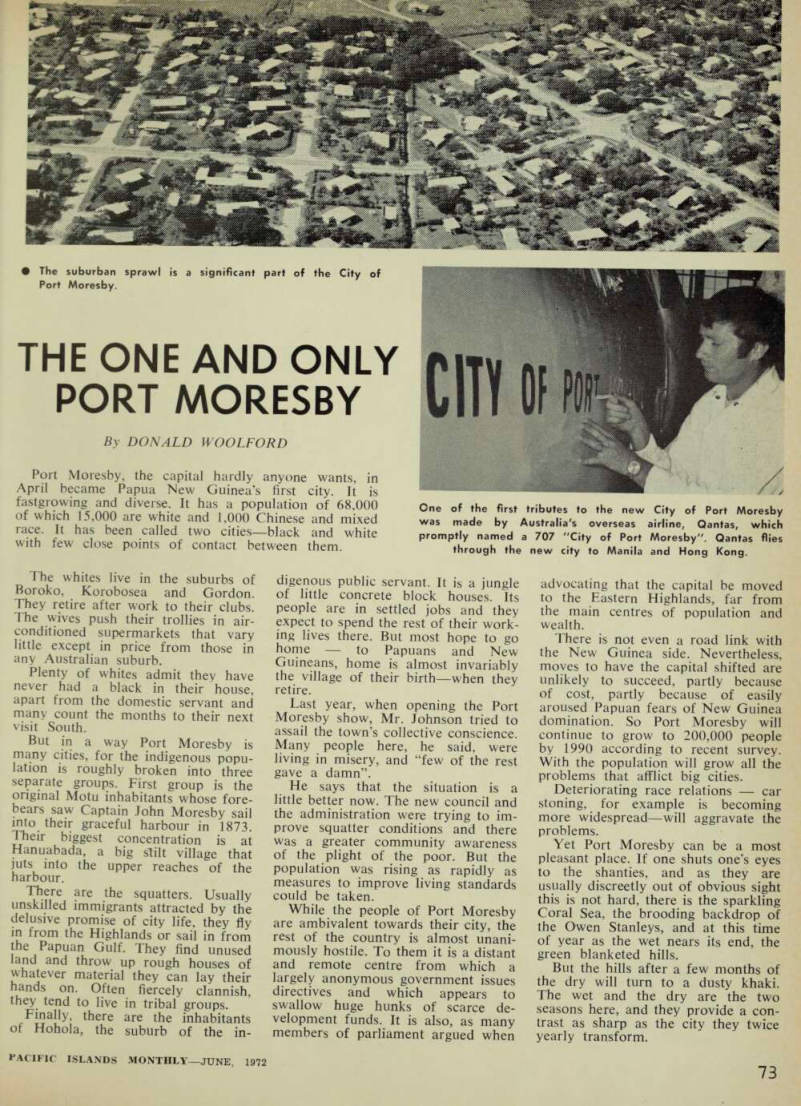 81
81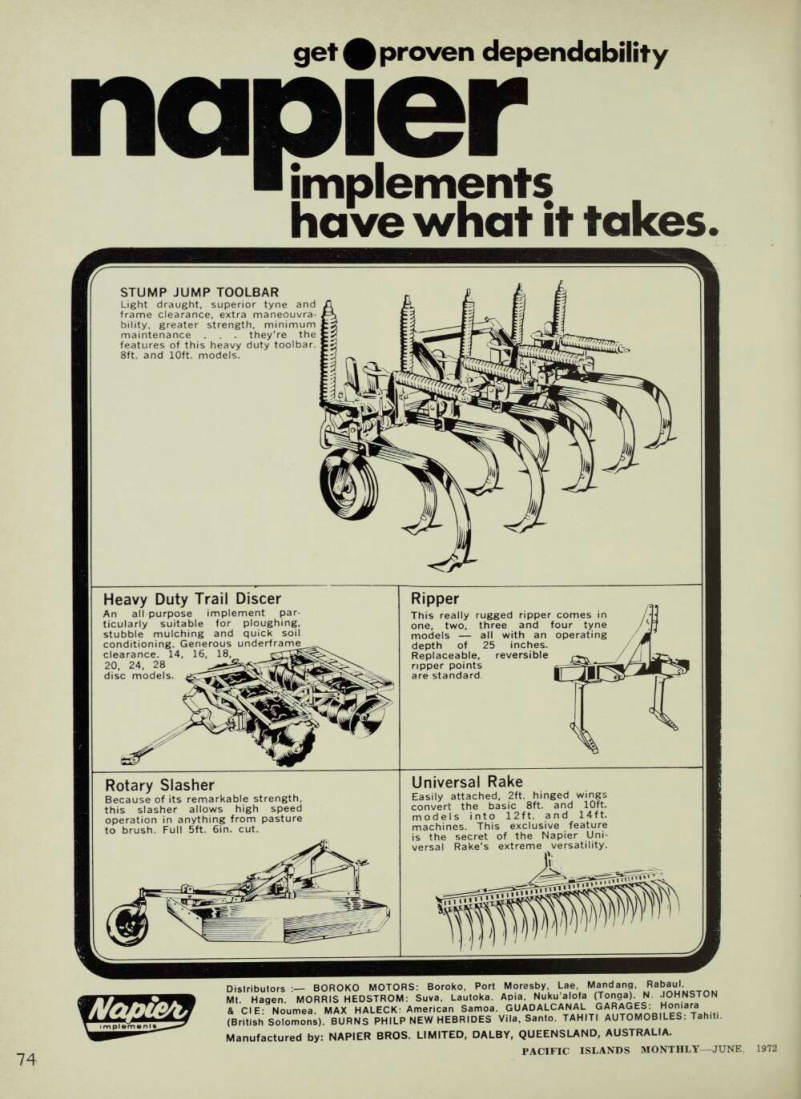 82
82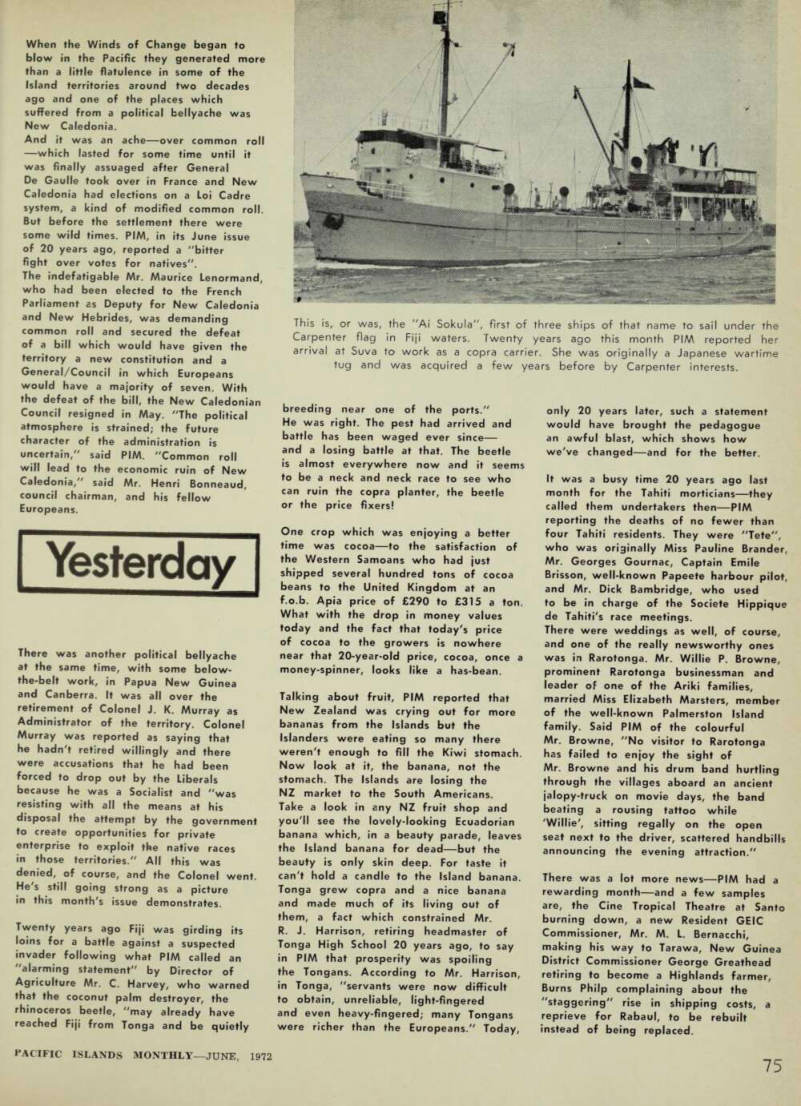 83
83 84
84 85
85 86
86 87
87 88
88 89
89 90
90 91
91 92
92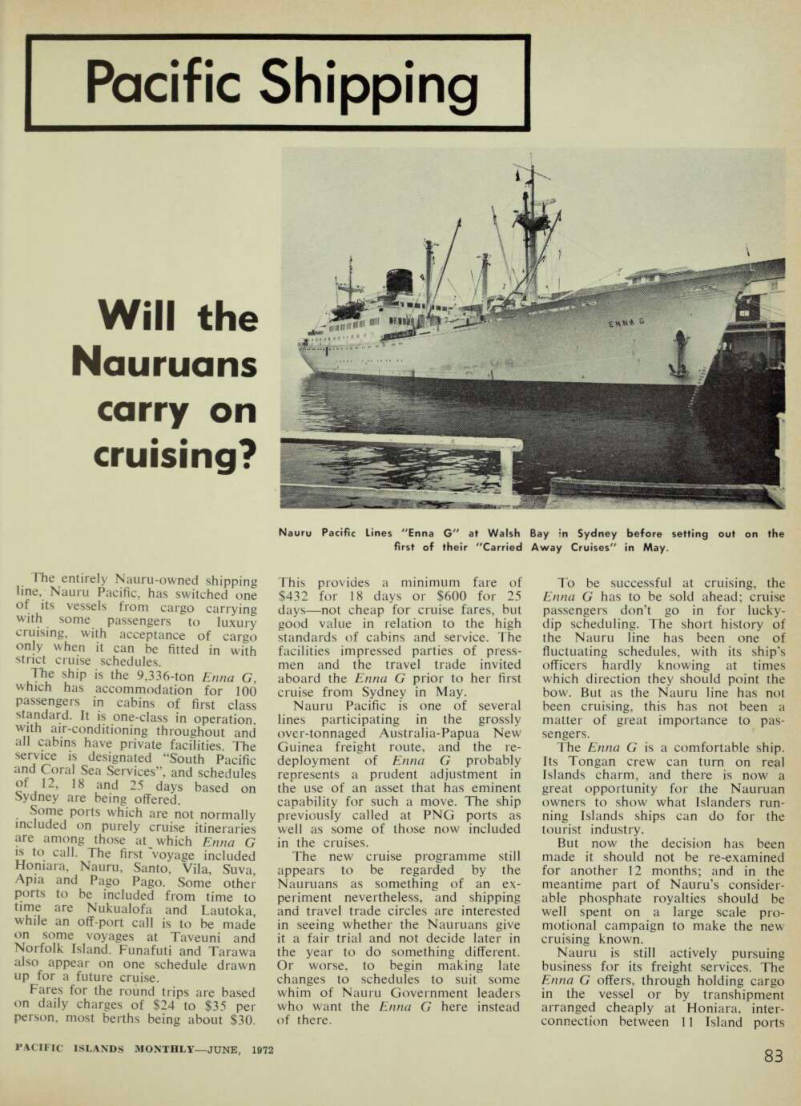 93
93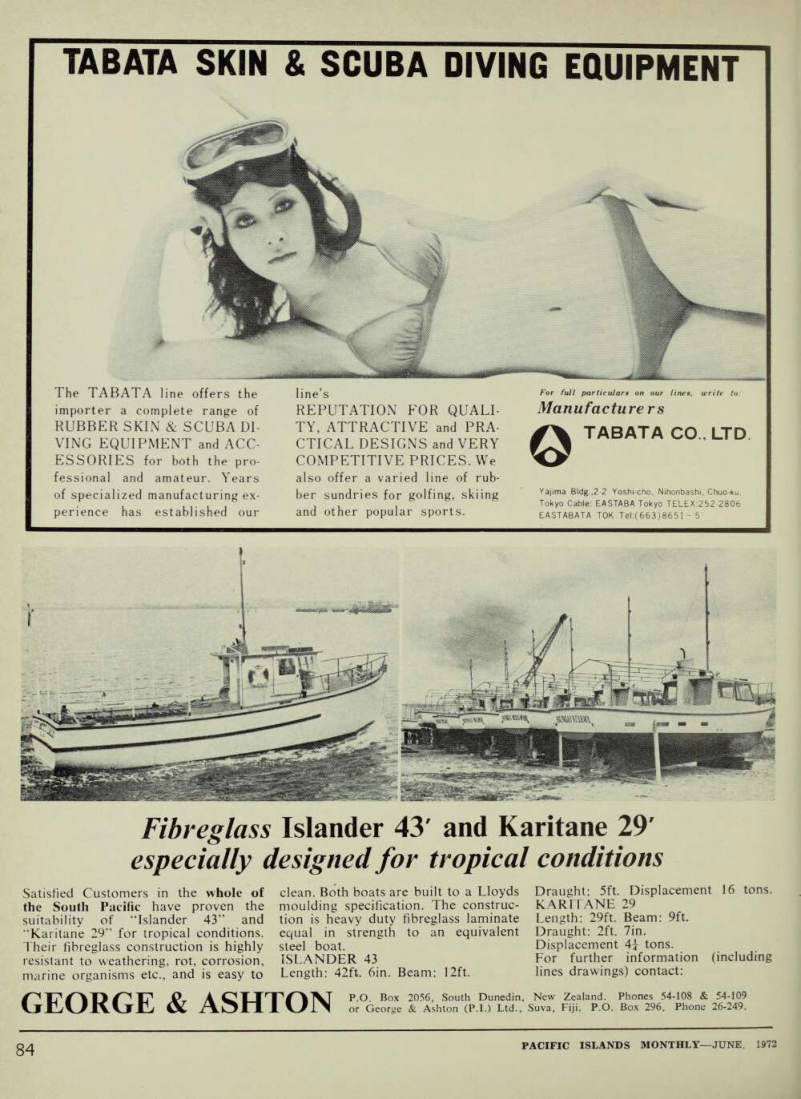 94
94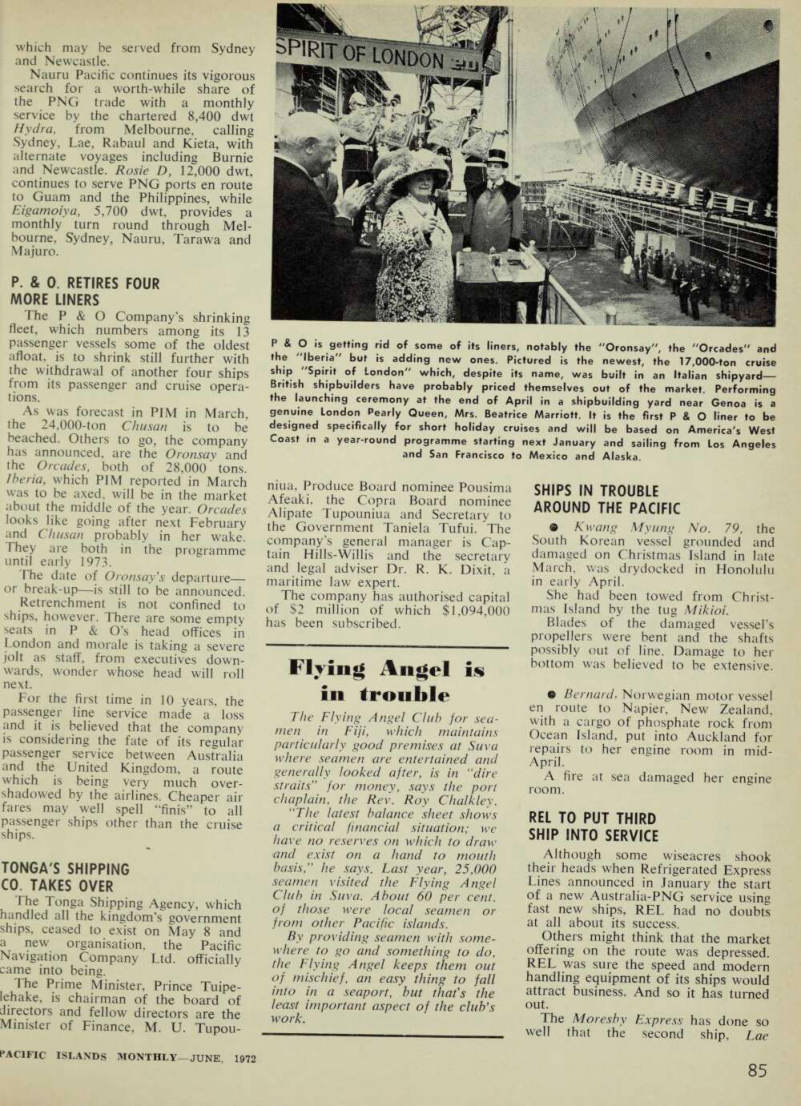 95
95 96
96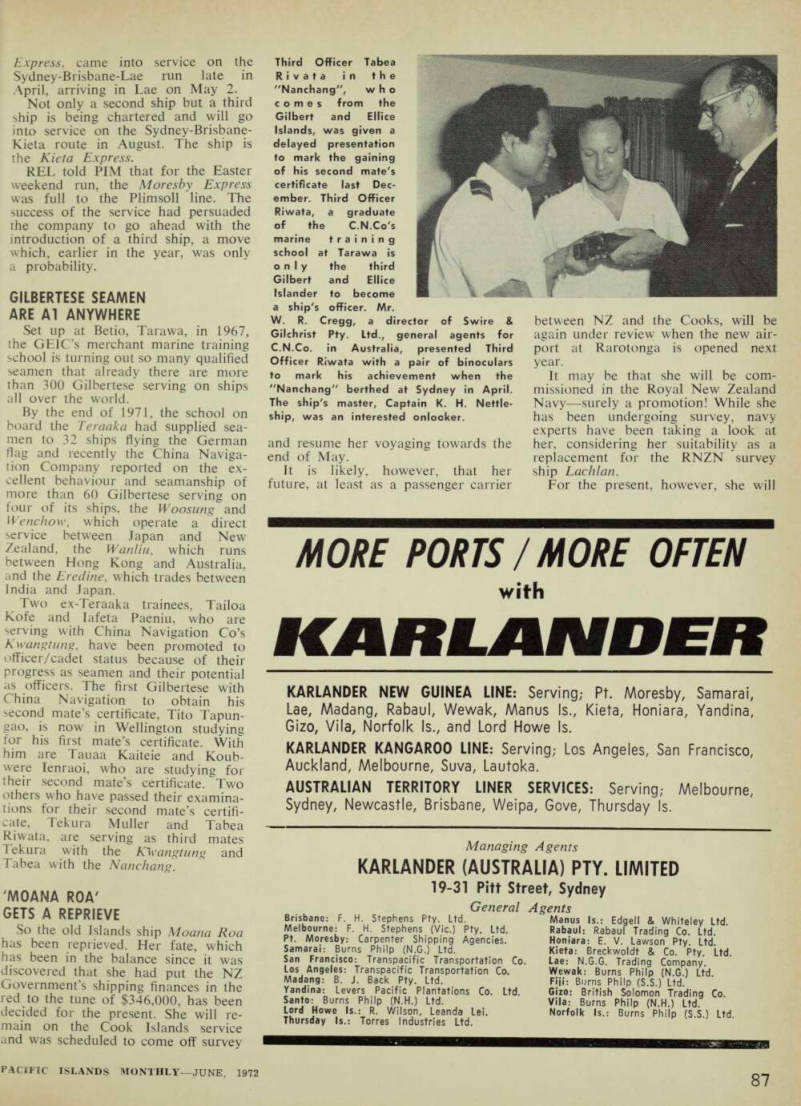 97
97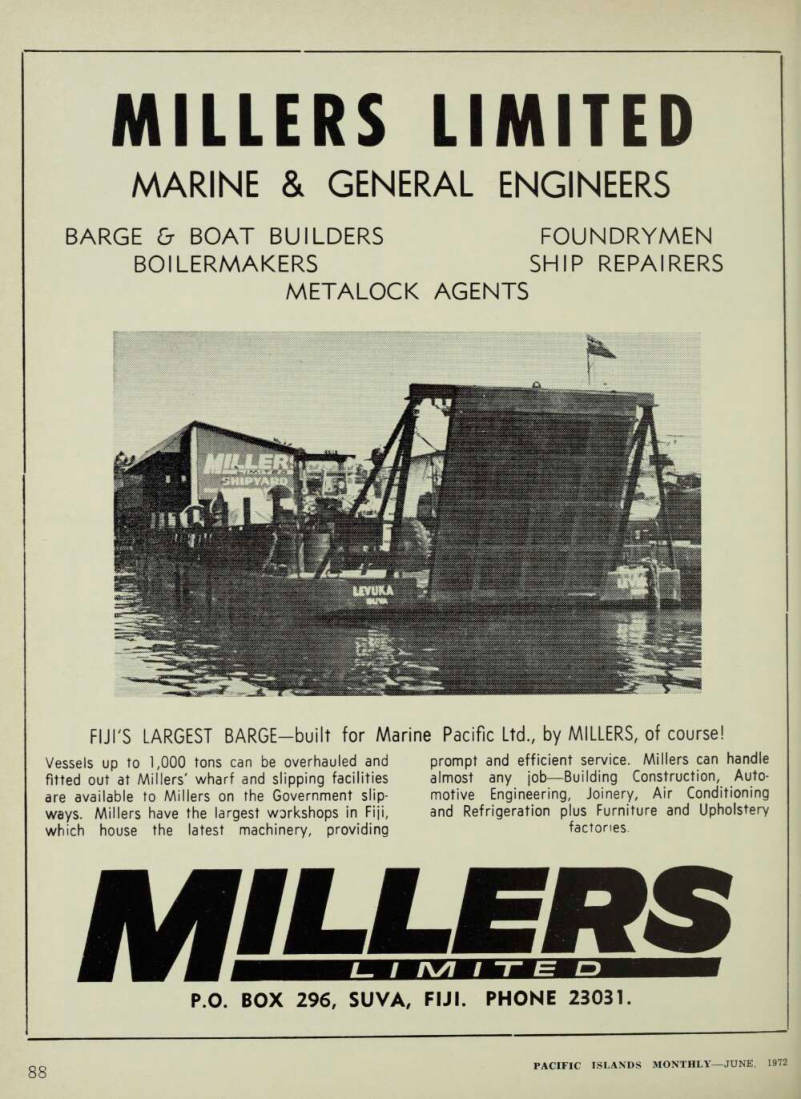 98
98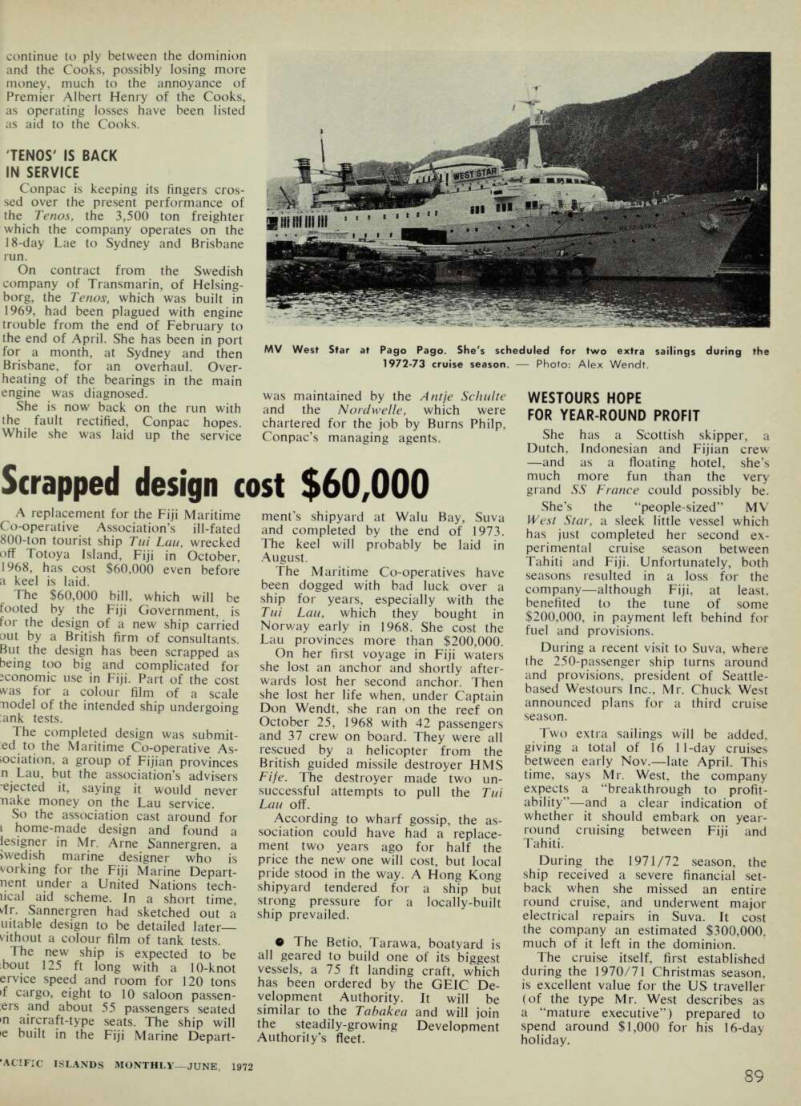 99
99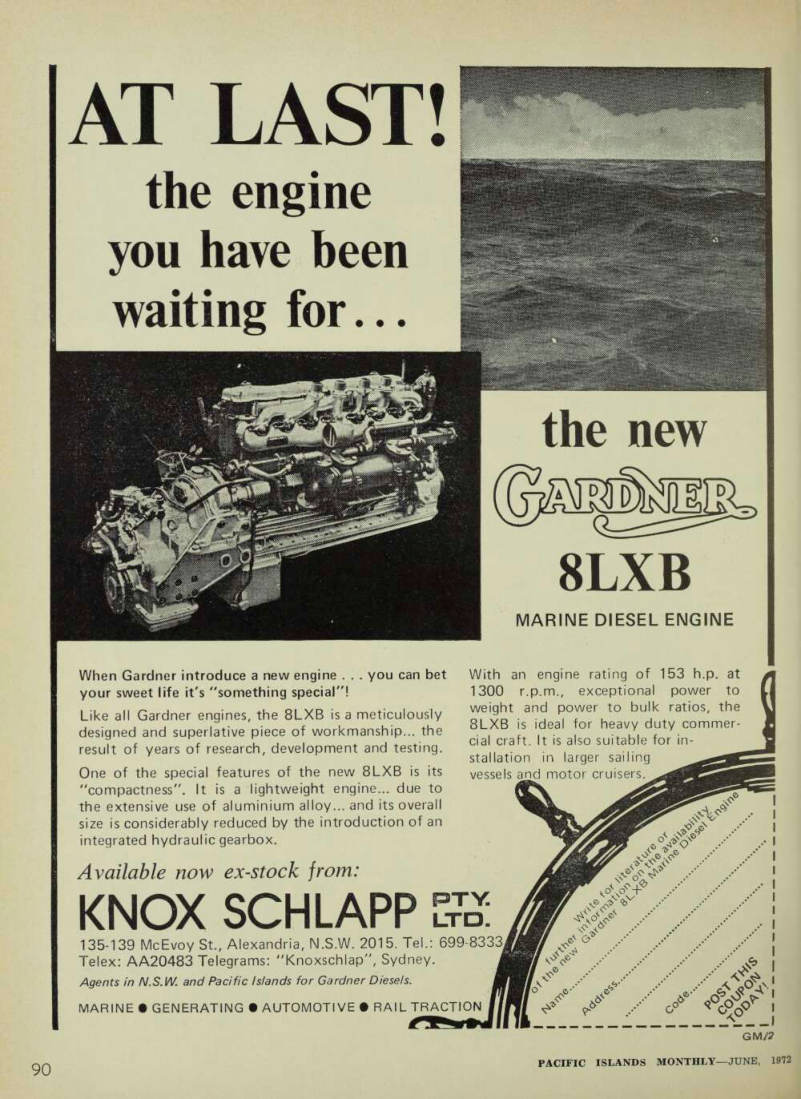 100
100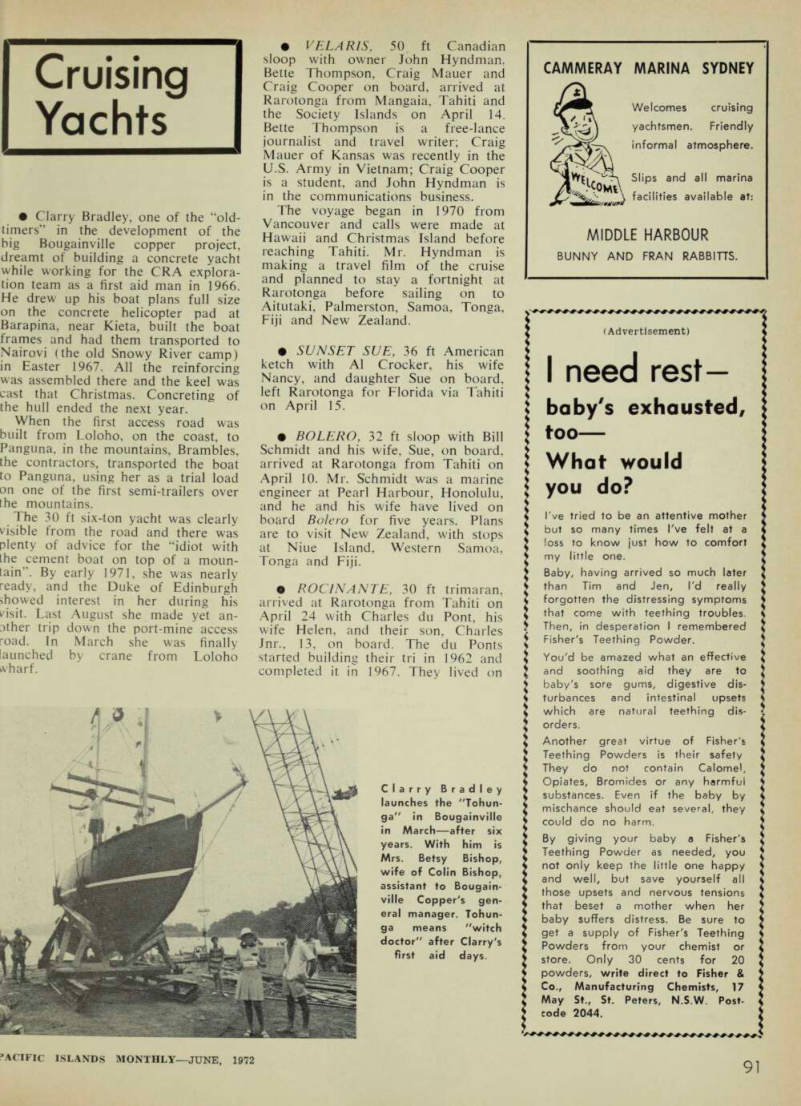 101
101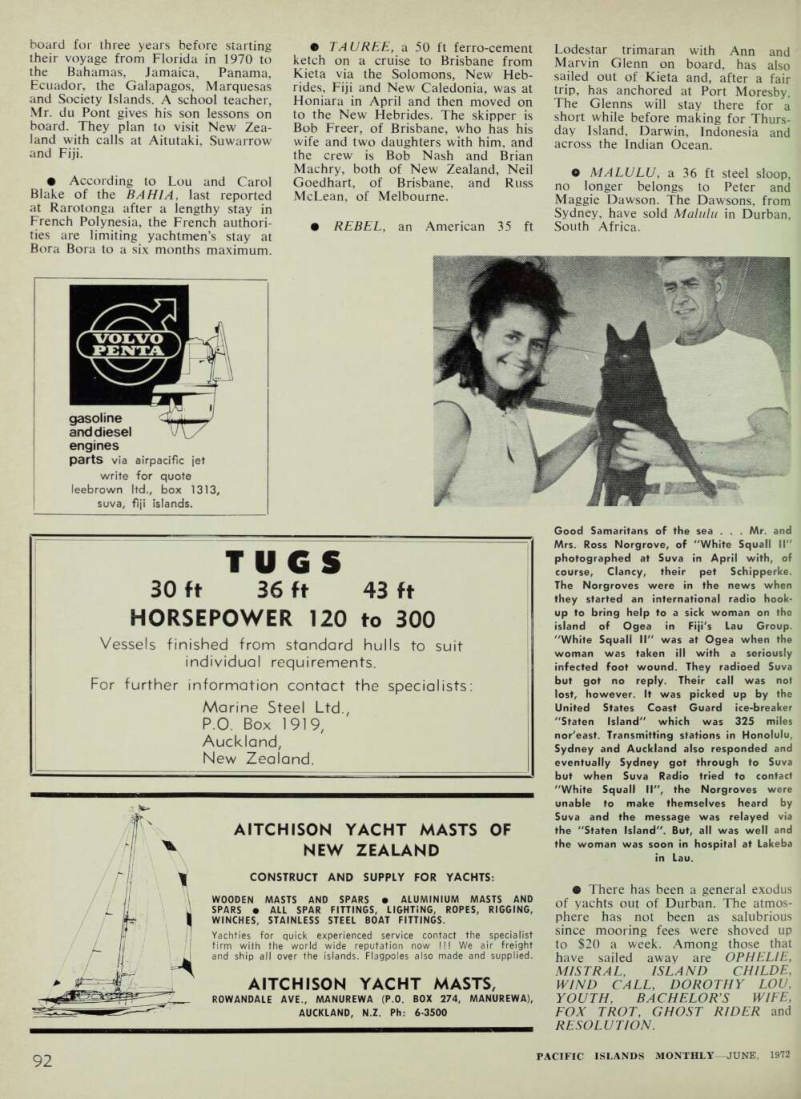 102
102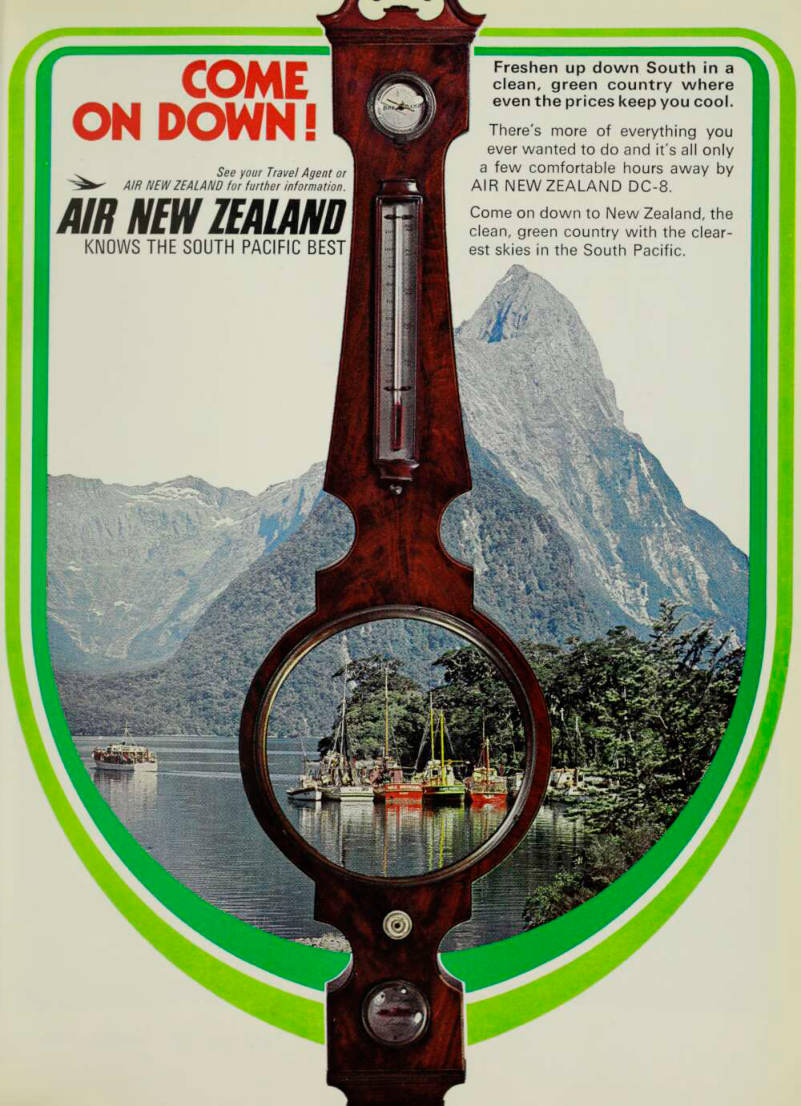 103
103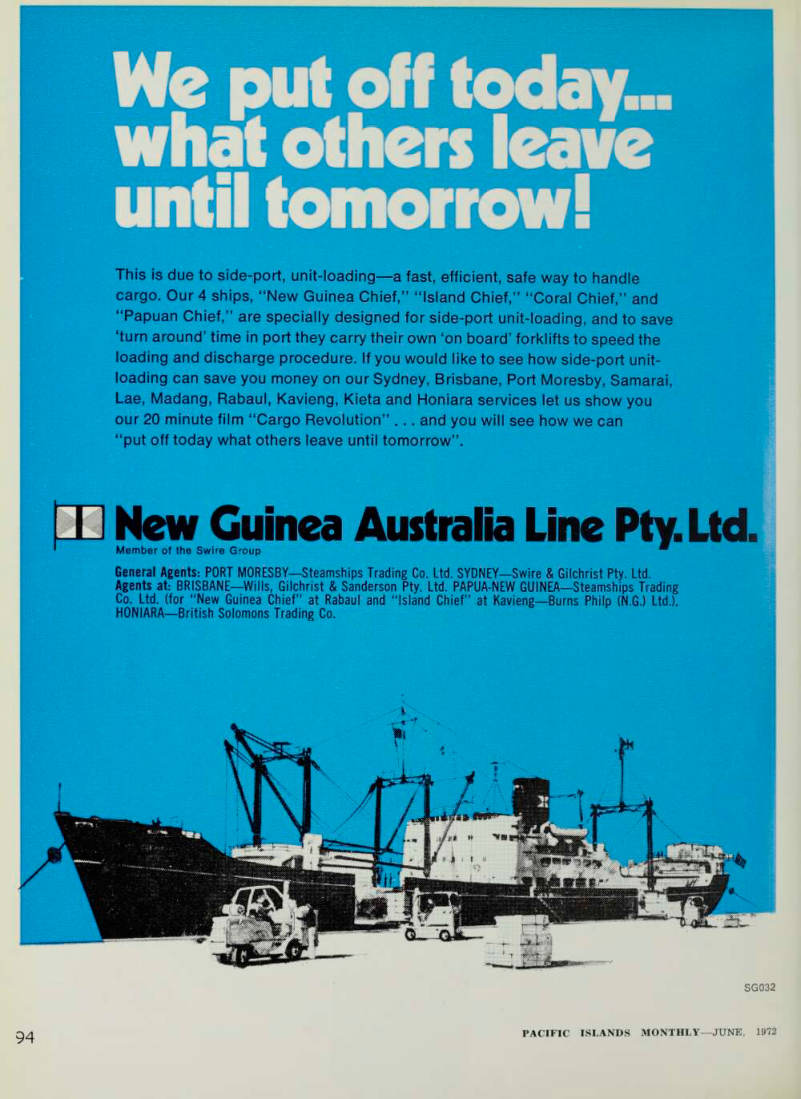 104
104 105
105 106
106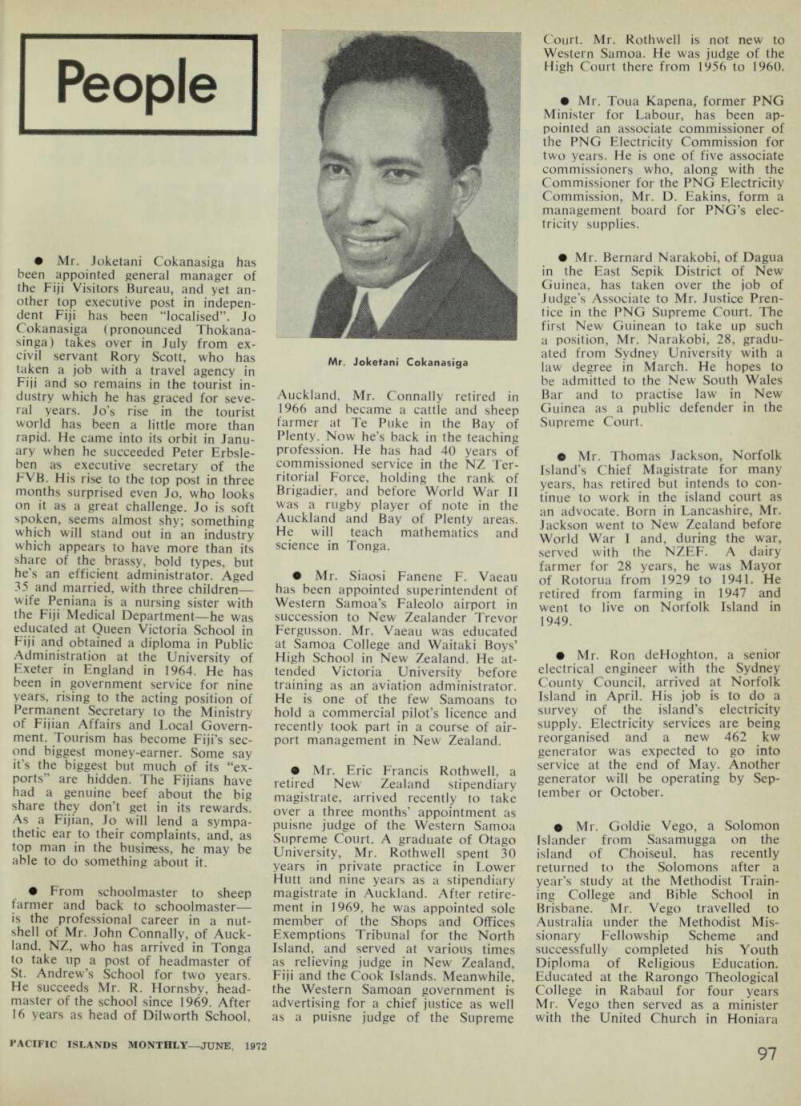 107
107 108
108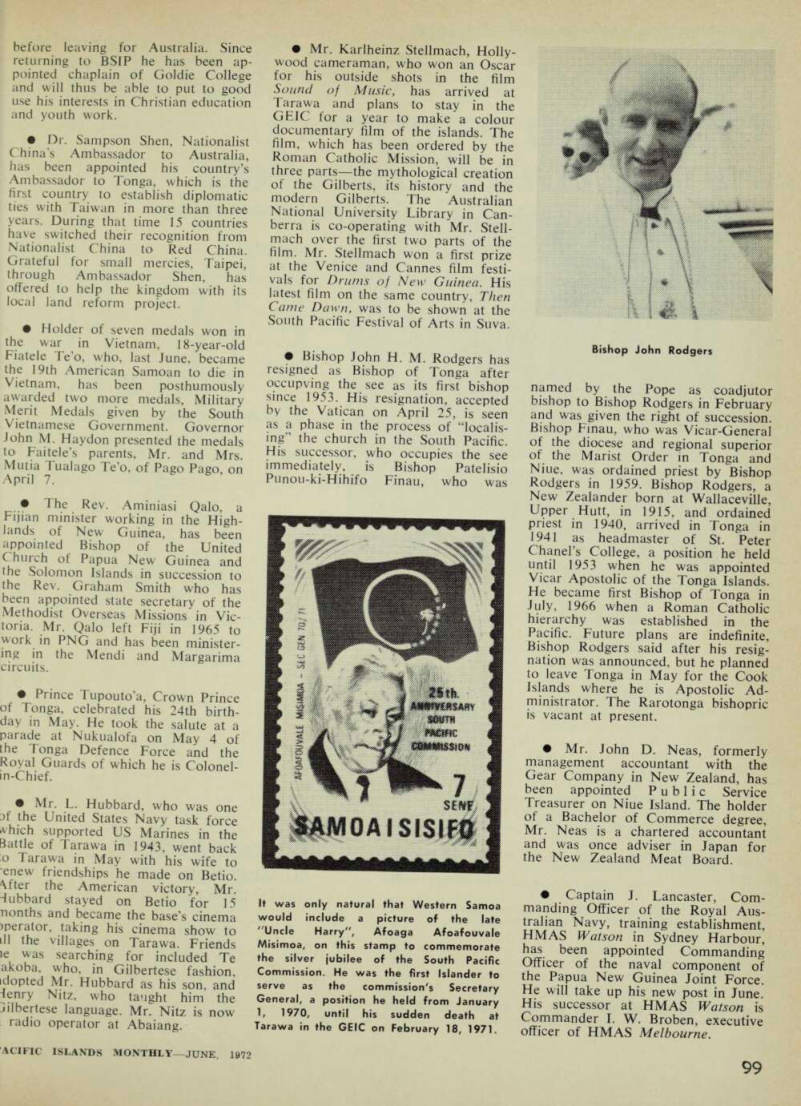 109
109 110
110 111
111 112
112 113
113 114
114 115
115 116
116 117
117 118
118 119
119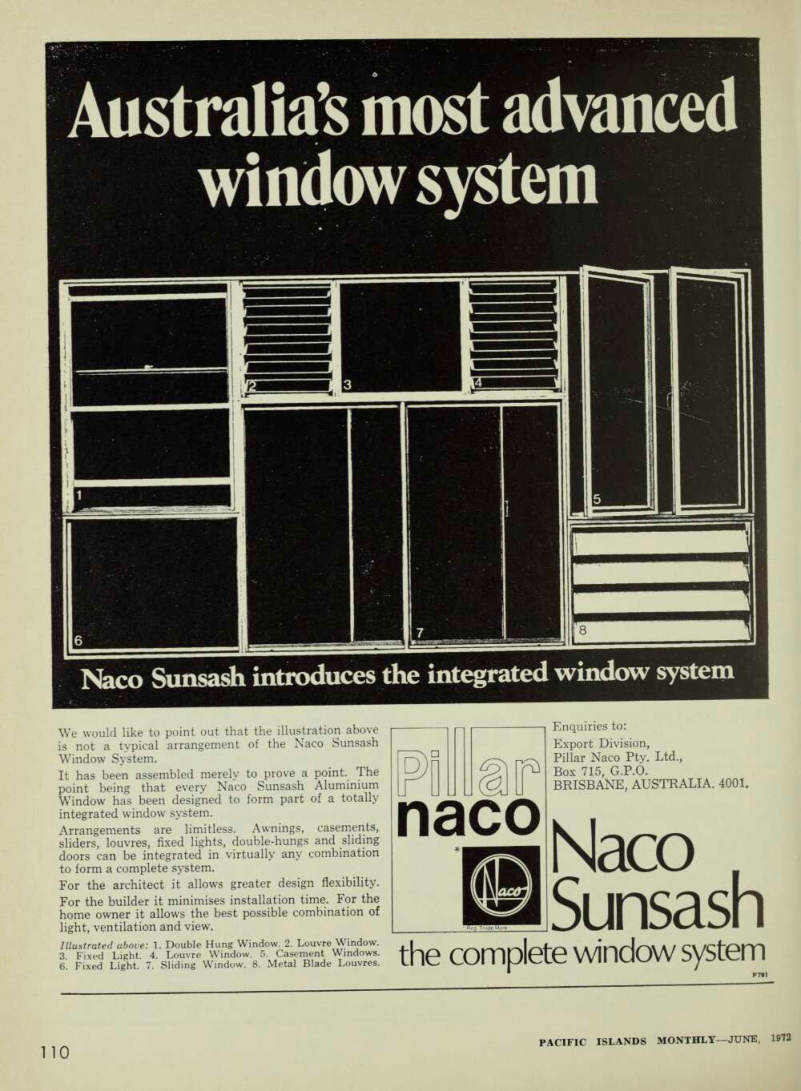 120
120 121
121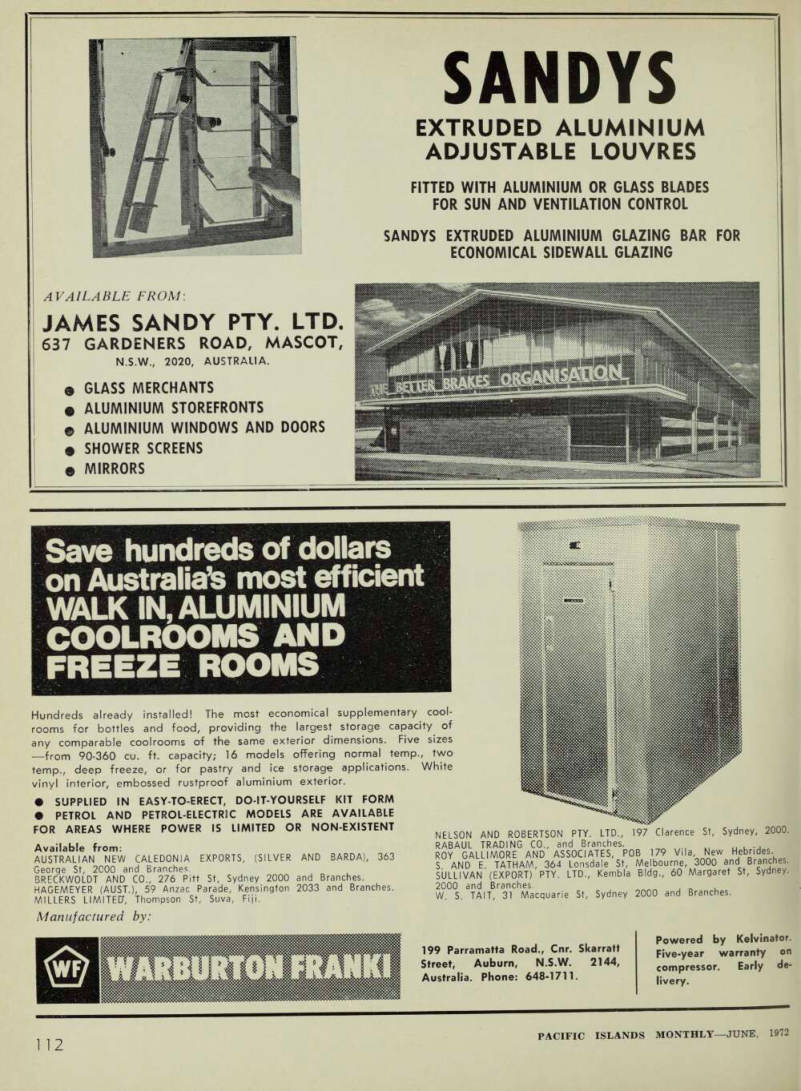 122
122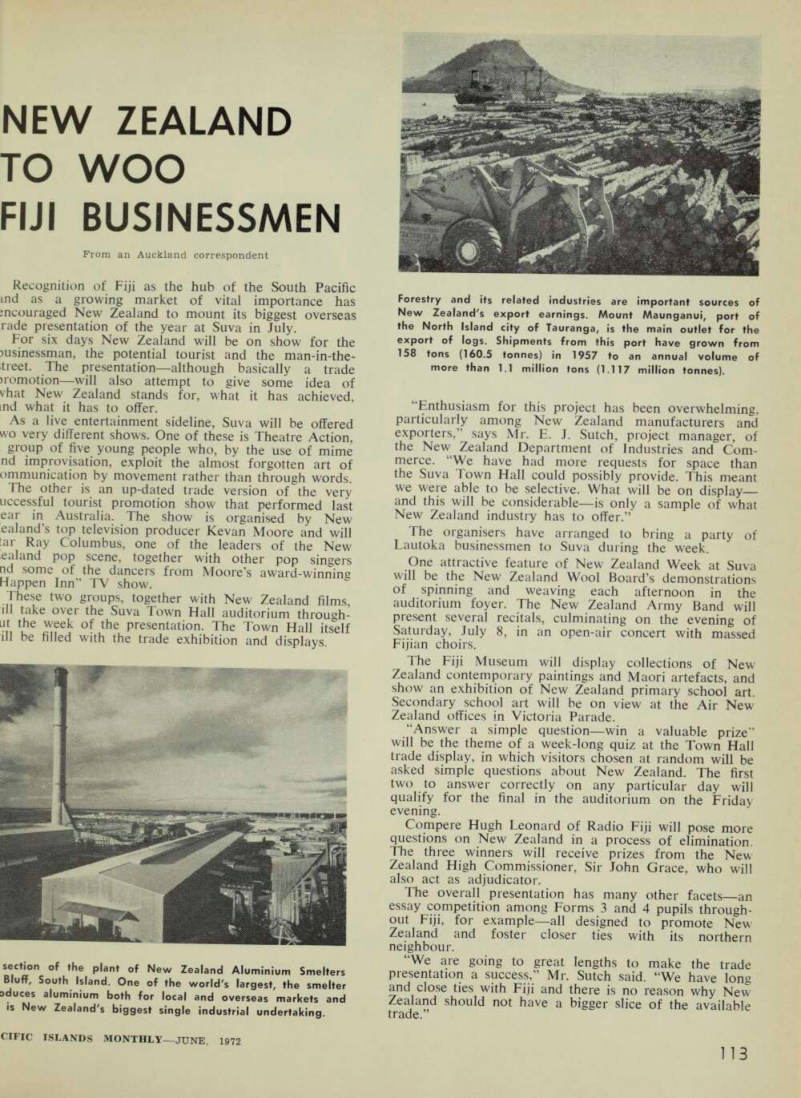 123
123 124
124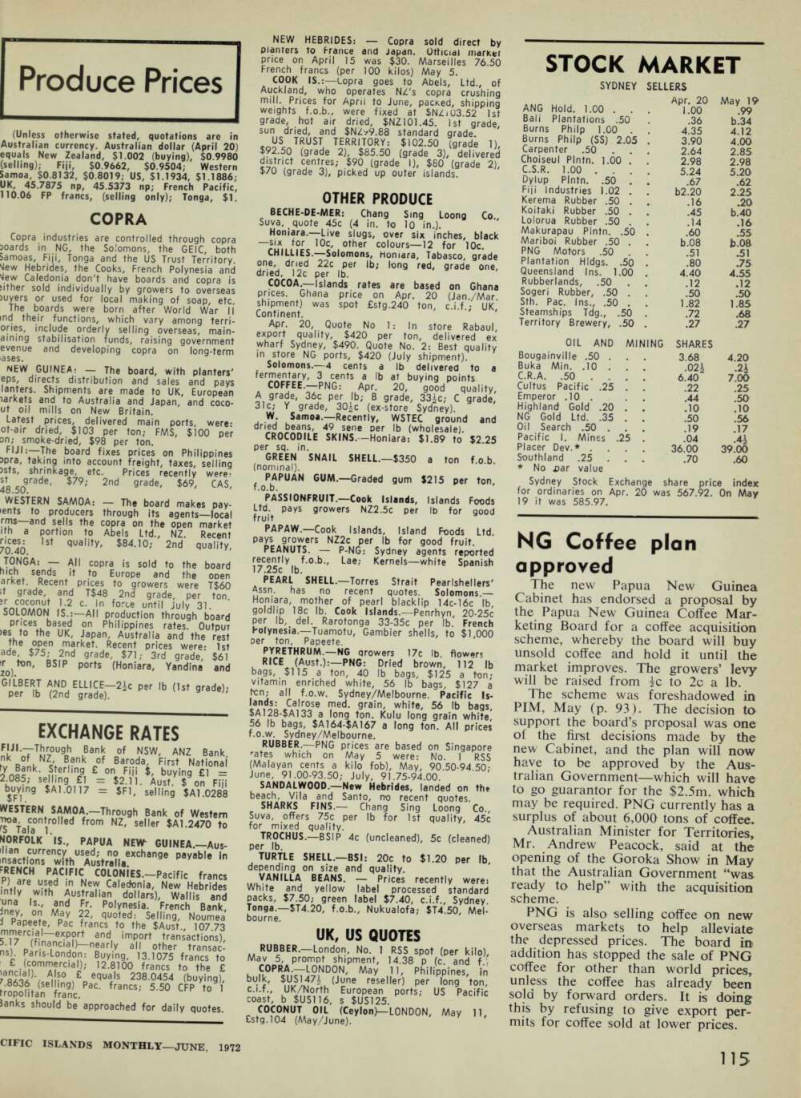 125
125 126
126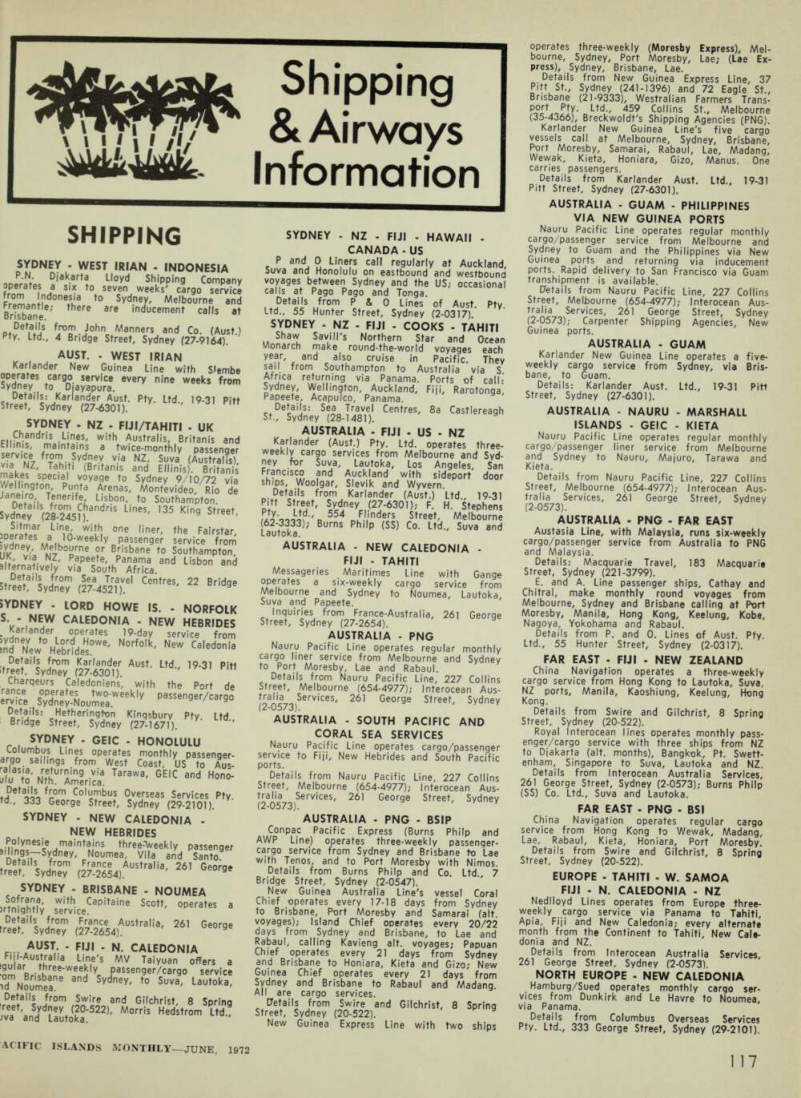 127
127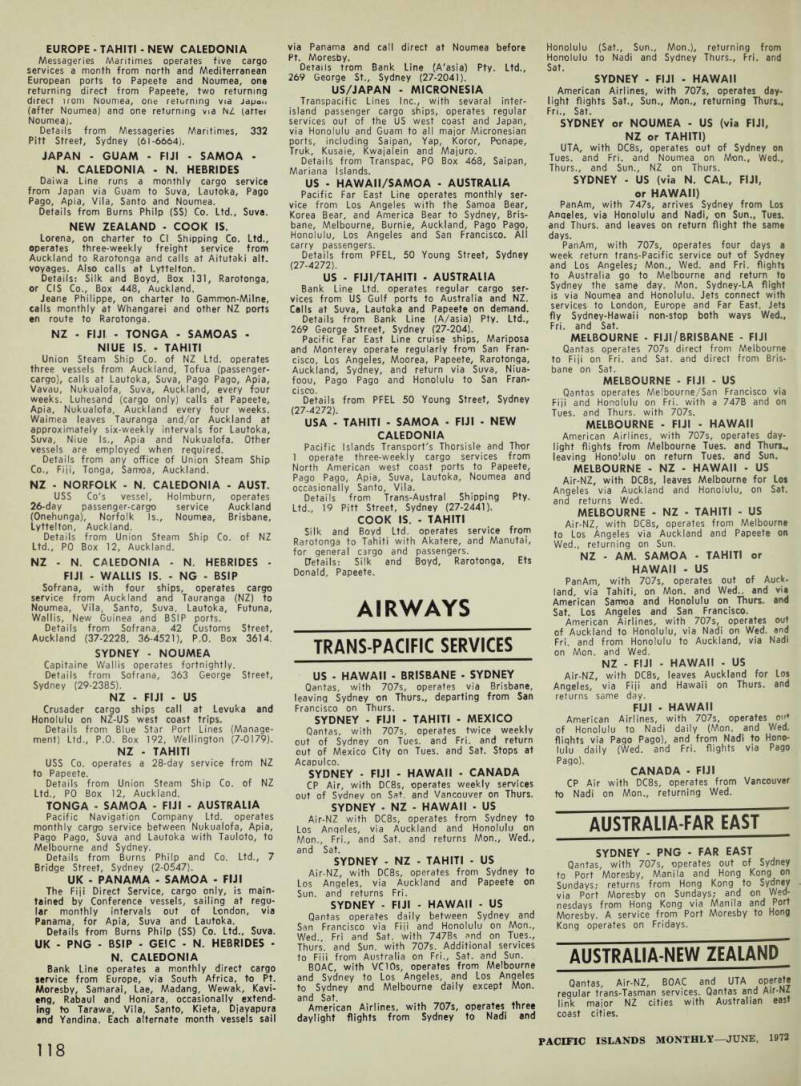 128
128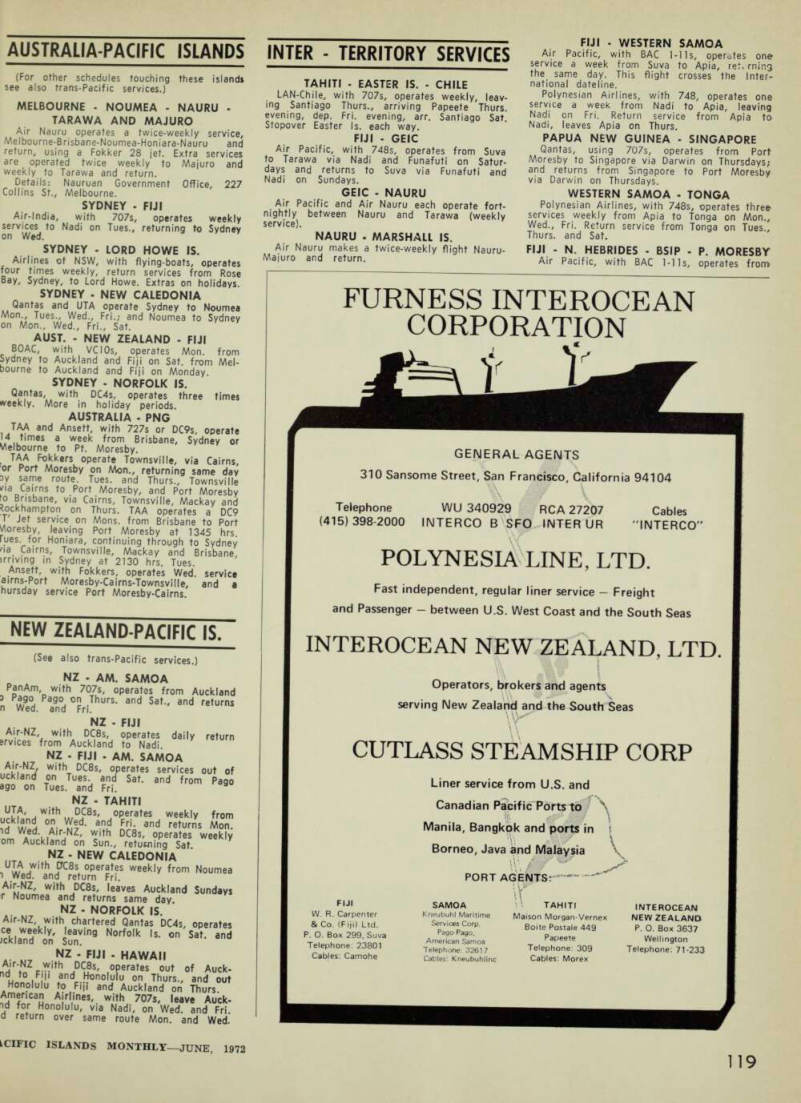 129
129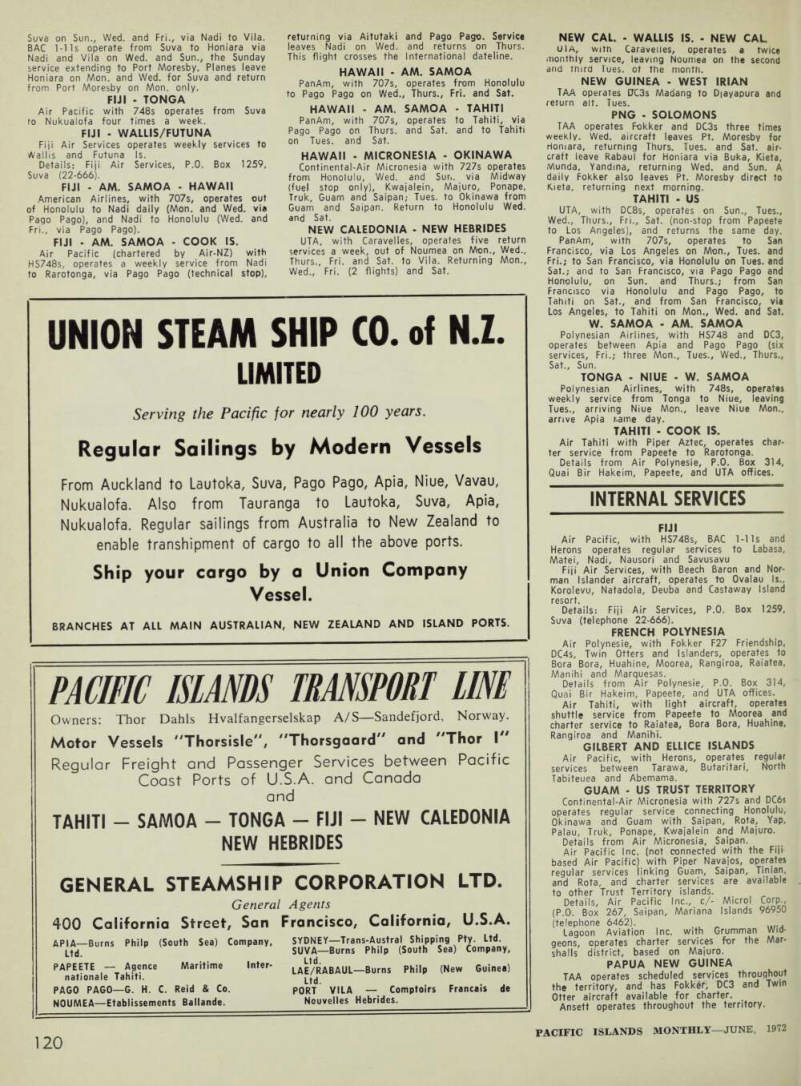 130
130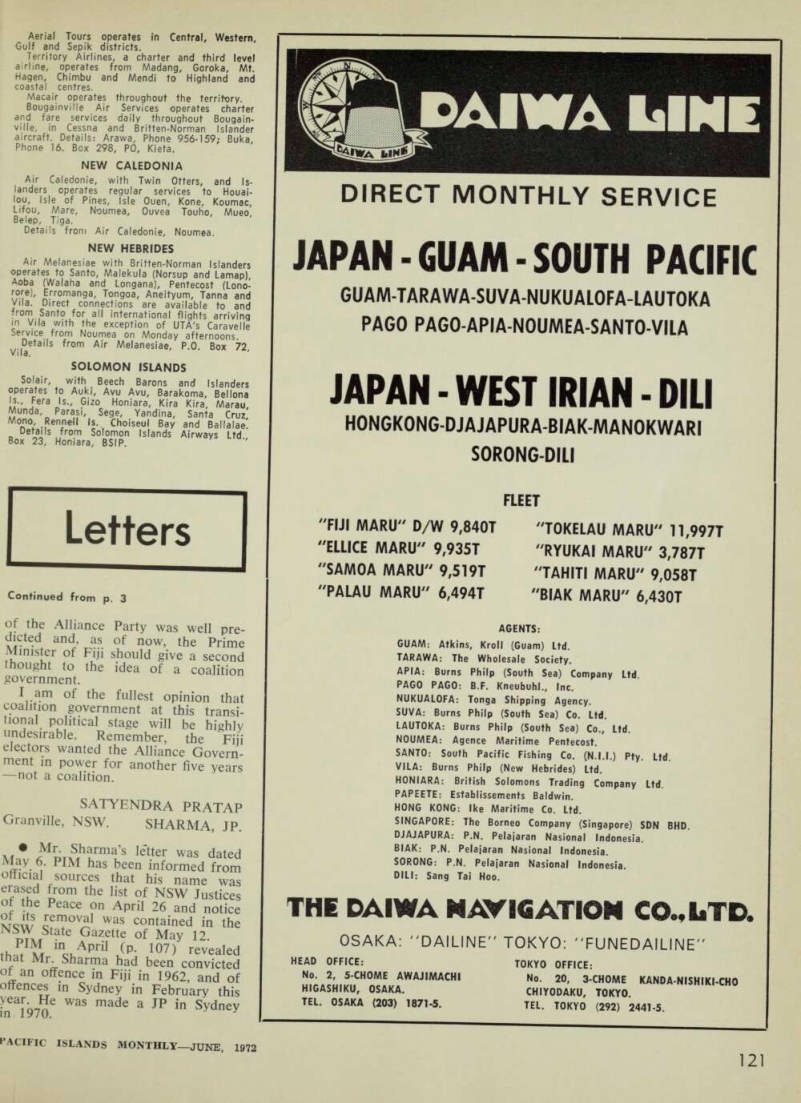 131
131 132
132 133
133 134
134 135
135 136
136 137
137 138
138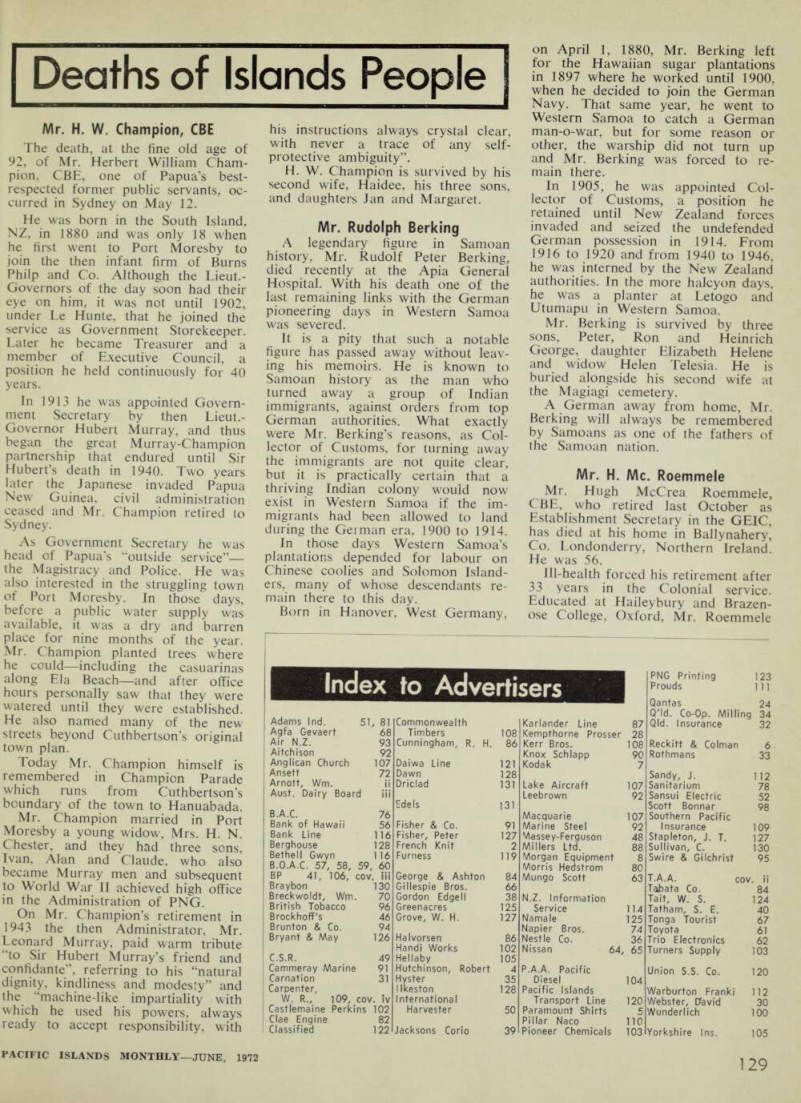 139
139 140
140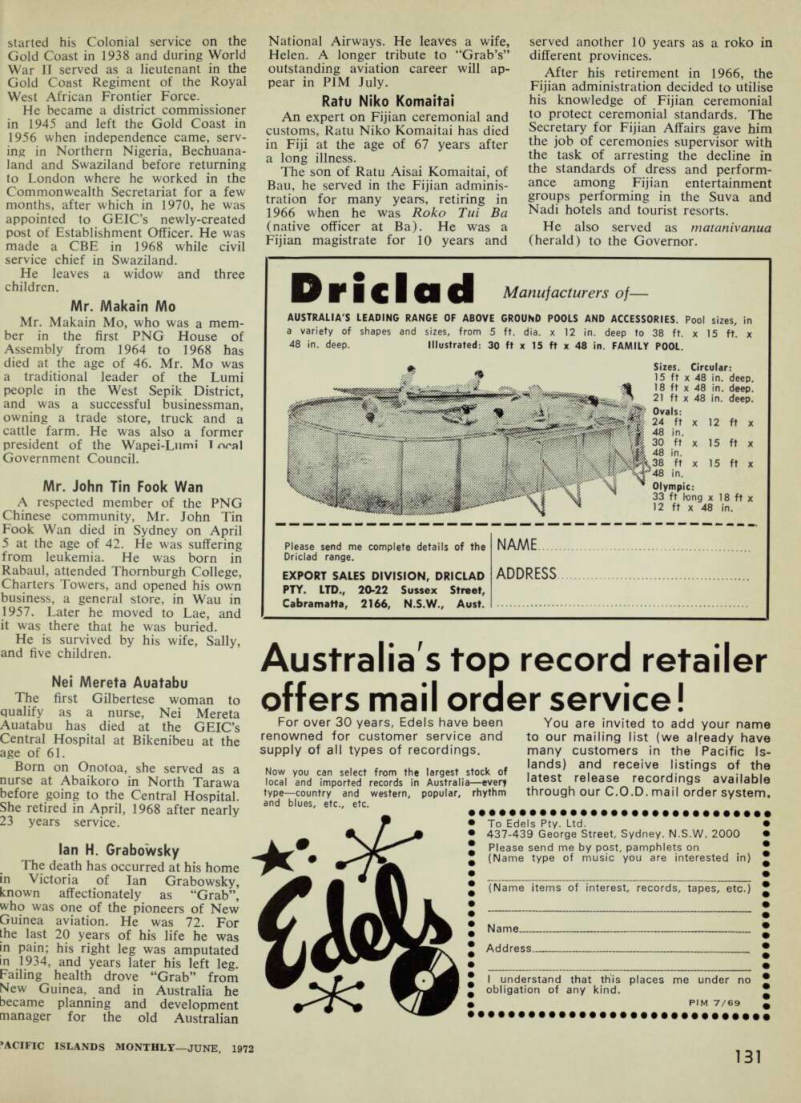 141
141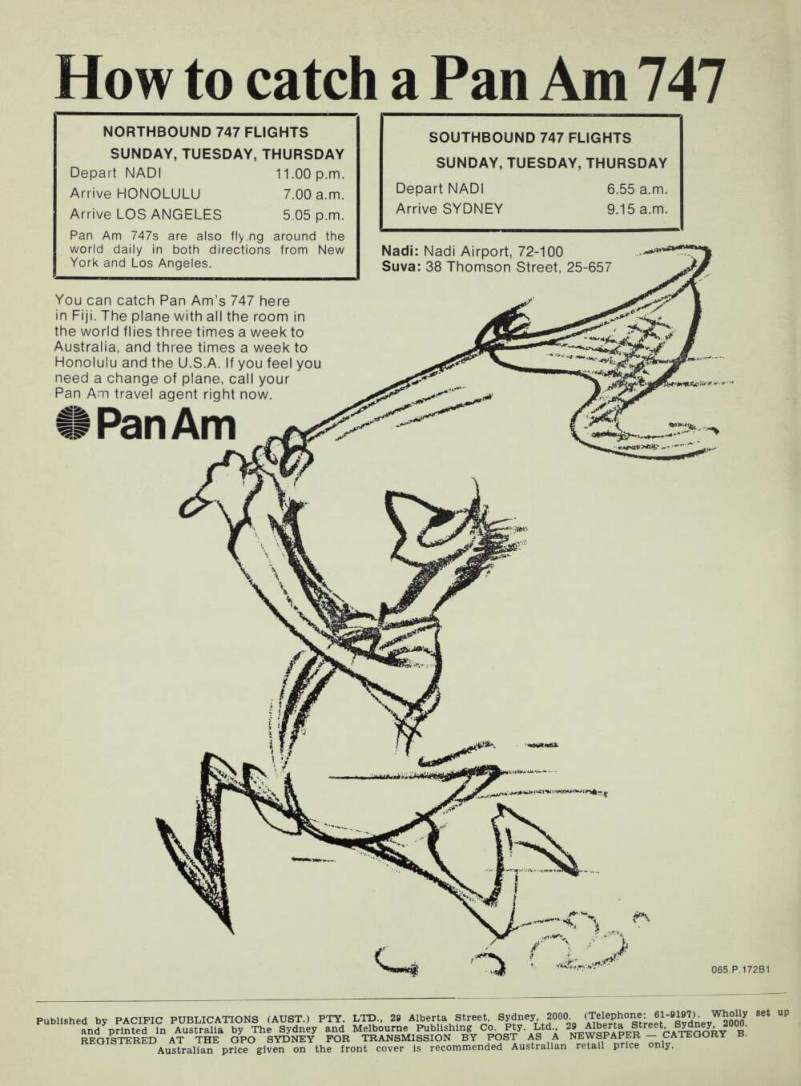 142
142 143
143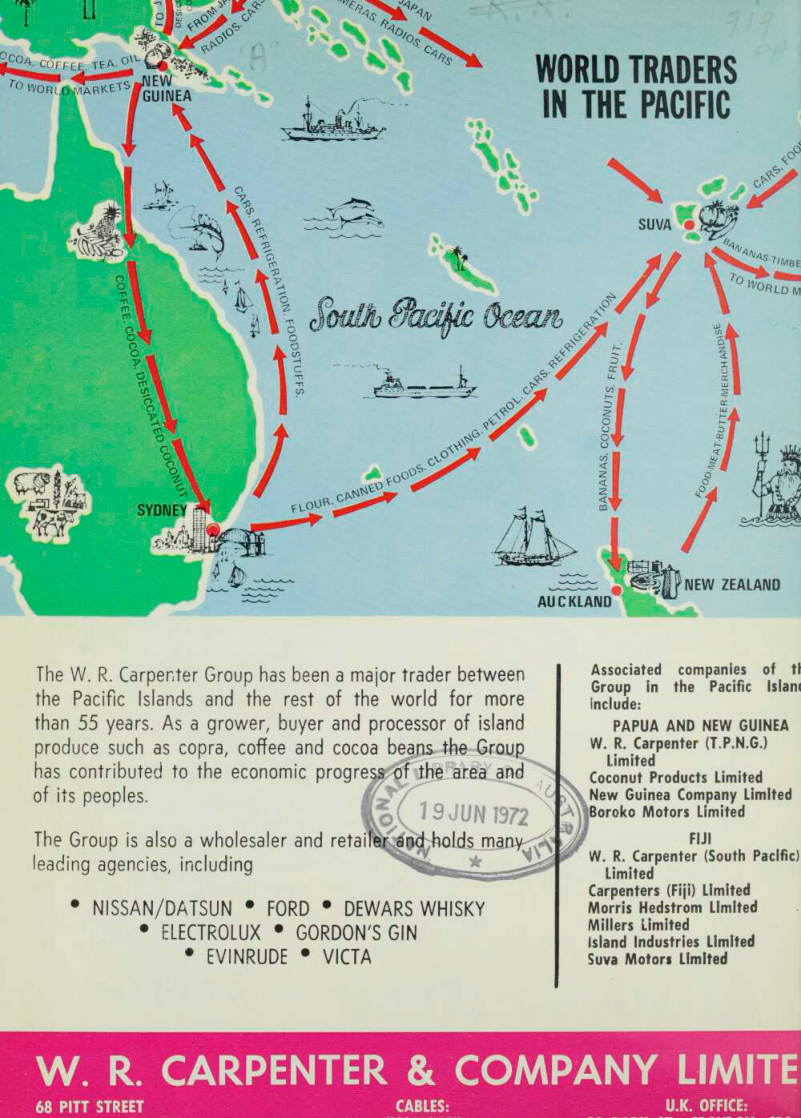 144
144