Pacific Island Monthly
News Magazine Of The South Pacific
May, 1972
Australia, Nz, Geic, Bsip 50C
PNG, FIJI, COOKS, TONGA, W. SAMOA, N. HEBRIDES 45c
Nauru, Norfolk, Niue 45C
AMERICAN SAMOA 70c HAWAII 80c MICRONESIA 90c NEW CALEDONIA 65 CFP FRENCH POLYNESIA 90 CFP
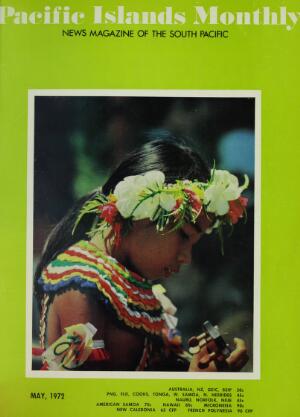
Our Cover
This month PIM features a young lady of the Solomon Islands who was caught by the photographer while tun ing her guitar for a dance in Honiara. The instrument may be an importation, but music and the dance are part of the inheritance of every South Sea islander.—Photograph by Richard Rudd.
Advertisements & other items, p. 2 (1 item)
Pleasure
Double Your
Buy two Toyotas. The Toyota Corolla on top.
The Toyota Celica below. You get a big double combination That a single car can't give you. For more or less the same price. You get twice the beauty, power and economy.
The Corolla really skips along.
With famous Toyota good mileage. The Celica skips and skimps about the same. And you have a choice of five youthful, sporty models. But in both cars you get: Fresh air flow-through ventilation. Thick fully reclining front bucket seats. Safety padded interior. Unit construction. Plus two Toyotas.
Toyota Corolla New Toyota Celia a 4 m I ■-V *r. ‘ m PAPUA NEW GUINEA: ELA MOTORS LIMITED. Scratchley Rd., Badili, Papua U.S. TRUSTTERRITORY: MICROL CORPORATION, P.O. Box 267, Saipan FIJI ISLANDS: AUTOMOTIVESUPPLIESCO., LTD..P.O.
Box 355, Suva AMERICAN SAMOA: BURNS PHILP (SOUTH SEA) CO.,LTD.,Pago Pago WESTERN SAMOA: BURNS PHILP (SOUTH SEA) LTD.,Apia GUAM:RICKY's AUTO CO.,P.O.Boxl4sB,Agana NEWHEBRIDES: NEW HEBRIDES MOTORS LTD., P.0.80x 18,Vila SOLOMON ISLANDS: ZEPHYR SERVICE STATION PTY LTD.,Honiara NEW CALEDONIA:: SOCIETE D'IMPORTATION AUTOMOBILE DU PACIFIC, Noumea TAHITI: ETABLISSEMENTS E.A. MARTIN & F1L5.8.P.61 Papeete COOK)
ISLANDS: COOK ISLANDSTRADING CORPORATION LTD., Rarotonga
TOYOTA
In This Issue
Meral
lily planning programme for pigs 39 janised sport 46 ynesians' origins 67 ;oa agreement 95 jra prices fall 97 e voice for Islanders 127
Lerican Samoa
breeding plan 39 loans aspire after self-government 121 >ensive symbol 125 eless drivers heavily penalised ... 127
Ok Islands
:tion results 22 ricane Agatha causes destruction 81 lopoly prevents Captain's return 87
Nch Polynesia
iti letter 30 a shipping call 85 :tions 23 chcraft in sport 26 Wendt's "Fiji Talanoa" 36 iterious sea wreck 37 revisited 54 io changes 83 tly cargo losses 85 el recruits staff 95 ipany's difficulties 95 companies in hotel project 96 ar sales 105 tralia's numerous Fiji migrants 121 / doctors 127
Bert And Ellice Islands
relics discovered 125
Nauru
Govt, council appointed 21 Companies utilise tax status 94 Old gaol found 125
New Caledonia
Helen Rousseau's diary 28 Successful new shipping line 85
New Hebrides
National Service staff on strike 26 French line's new route 85 Shipping line's promising future 85 Record rainfall 127
Niue
Radio Niue broadcasting mast 127
Norfolk Island
Wet walkathon 126
Papua New Guinea
The Kokoda "Track" Hi Aftermath of the elections 19 Ben Butcher as living history 27 First woman in House of Assembly . 35 Percy Chatterton's column 43 Broadcasting control controversy 49 Admirable reference work 75 Bird shooters 83 Coffee sales improved 93 Copper contract agreed ... 98 $6,000 loan to plantation owner 125 Wife but no marriage 125 Training for service at home 126
Pitcairn Island
Islanders dread taxation 82
Solomon Islands
Problem for Arts Festival team 25 Land development 41 Inflation causing problems 93 Jet age difficulties 97 Search for Japanese soldiers 125 Survey work by Navy 125 Provident fund being considered 126
Tonga
Shipping's important role 71 Transfer for experience 81 "Tauloto's" bad luck 87 Oil search to continue 96 India increases aid 126 Experiment with New Guinea mangoes 126
U S. Trust Territory
Palau talks 25 Islanders anxious to return home 81 Compensation for injuries 119
Western Samoa
Samoan language 83 Passenger and cargo ship 89 Opening of new airport 94 Asau Harbour disagreement 119 Prize-winning film 125 Shark tragedy 125
DEPARTMENTS: Letters to the Editor, iii; BOAC Jet News, 5; From the Islands Press, 13; Up Front with the Editor, 15; People, 32; Magazine Section, 67; Yesterday, 73; Book Reviews, 75; Tropicalities, 81; Pacific Shipping, 85; Cruising Yachts, 91; Business and Development, 93; Produce Prices, 99; Shipping and Airways Information, 101; Post scripts, 119; Nutshell, 125; Advertisers' Index, 127.
Advertisements & other items, p. 4 (1 item)
International Trucks
Proved best by test
on one of the world's
toughest truck
testing courses!
* *_ f i t.
V Proved best of all by thousands of owners!
INTERNATIONAL TRUCKS
ACCO Series trucks (with GVW ratings from r “ export”sales DEPT. 15,000 lb. to 35,000 lb.) have been tested— j International Harvester Company of Australia Pty. Ltd. and proved-under the worst conditions you could ever imagine ... conditions far worse than any you are likely to meet!
A top seller in Australia, the top truck in the carrying field, ACCO Series trucks are the ones to buy if you want the best!
I 171-205 City Road, South Melbourne, Vic. Aust. 3205. • Please send me complete details of the ACCO Series Trucks
J NAME
[ ADDRESS -
! POSTCODE
Get full details today from your local distributor or send coupon.
NEW CALEDONIA: Societe d' Importation Francaise, Boite Postale 806, Noumea, New Caledonia.
FIJI: Niranjan's Auto Port Limited, G.P.O. Box 450, SUVA.
FIJI ISLANDS "NIRANJAN"
NEW HEBRIDES: Kerr Bros. Pty. Limited, G.P.O. Box 3838,
SYDNEY, N.S.W.
SOLOMON ISLANDS: Solomon Motors Limited, P.O. Box Cl 6,
HONIARA. GUADALCANAL BSIP. "SOLMOT"
TAHITI: Tahiti Produits Shelltex Boite Postale 350, PAPEETE,
6710/E/FP
The Editor's Mailbag
The Kokoda "Track"
Sir, —I write this letter in the hope lat I may reach the large public ho read PIM with interest.
It is written in the hope that I may ilist your support in having the ame “Kokoda Track” instead of the ord “Trail”, brought before the mrist world, and the public.
There have been many episodes in istory where, over a period of time, ic name of a famous statue, city, iwn or place has been gradually langed, until the original name has ;en lost to history.
I make this plea because the path mnecting the spot now known as wen’s Comer and the township of okoda was known as the “Kokoda rack” before World War 11, during e war and after the war, until a gn was erected at McDonald’s orner some years ago.
The “Track” was used as a line of unmunication between Port Moresby id Kokoda many, many years before e war, when the only other method transport was by ship around the >ast to Buna or Cape Killerton. The Yack” was used as the fastest ethod of getting official and private ail in and out of the Kokoda Patrol >st.
The word “Track” is a typically ustralian word, and was used con mtly by the great Australian poets d balladiers of the past, while the Drd “Trail” is an importation of zent date.
The stone monument built by the jstralian Military Forces to com ;morate the loss of lives of Aus lian and native soldiers, bears the me “Kokoda Track”.
The plaque set by a pilgrimage rty of the 39th Battalion at cDonald’s Comer, whose members ffered badly on the “Track” during s particular campaign, also has j same title.
In August this year a party of proximately 80 people, ex-members the 39th Battalion, their wives and ildren, will spend some time in pua to honour the dead on the te of the 30th anniversary of the thdrawal from the Kokoda Track mpaign. A further plaque will be iced at the memorial on this :asion.
Dudley McCarthy, in his Australian
war history. South West Pacific Area Kokoda to Wau, repeatedly refers to the “Kokoda Track”.
My hope is that you may be able to correct this mistake in future pro ductions of publicity brochures, pam phlets, etc. Looking forward to your support in this matter that is very near to me.
F. W. Turner.
Turner’s Tropic Tours, Port Moresby.
Tami River
I refer to lan Hughes’ letter (PIM, March, p. 16) concerning the Sechstroh-Fluss, now known as the Tami River.
Heinrich Sechstroh was boatswain on the Samoa when, captained by Dallmann, she brought Dr, Finsch to Mioko in the Duke of York Islands on September 26, 1884. (See O. Finsch, Samoafahrten [Leipzig, 1885].) Sechstroh commanded the Samoa in October, 1886, when, with von Schleinitz aboard, several islands near Finschhafen, Dregerhafen, and the Tami Islands were discovered.
During the voyage, from October 7- 13, the Samoa also sailed as fa.r as the border with British New Guinea. (See A. Wichmann, Entdeckungs geschichte von Neu Guinea [Leiden,
191 °10 Harry Jackman.
Port Moresby, PNG.
A Dying Institution
1 wish to express my views on the future of the South Pacific Commis sion over the next 25 years as raised by the Editor in his Up Front (PIM, Feb. p. 15).
It is my opinion that the SPC as a regional body has reached its peak and should no longer have any jurisdiction, socially or technically, in this progressive era. It is a dying institution. Now, on the eve of the advent of the South Pacific Forum, the commission has outlived its use fulness. Politics nowadays hold the key solution to any deadlocks, or could be used to mediate for an amicable settlement of social inequi ties at the highest government level.
By allowing the commission to steer a course alongside the forum, delegates in the future who are going to attend the SPC conferences will be second class hand-picked citizens of their countries. Whereas, the forum meetings will be attended by prime ministers, presidents and premiers of the independent nations.
However, it is not good to lose sight of our neighbours in the Pacific who have not yet achieved full inde pendence status. But there remains that this move could accelerate their early settlement to statehood.
The recent high-level conference held under the auspices of the leaders’ forum has clearly indicated in so short a span the progress it achieved. This has never been the case with the commission. By doing away with the commission, the forum would be left with far sweeping powers socially, economically and politically.
I find that if the two bodies exist together, it would hamper more the progress of the island nations and would tend to create havoc with their already crippled economies.
The present SPC budget needs just near a million dollars to keep it on the road. However, the forum’s budget would be no less favourable.
If the Island leaders are still opting for more trade in their primary com modities for a common market, then the only body that could negotiate with the Australian Government, New Zealand and Britain on a satis factory basis would be the Leaders’
Forum, and not the commission. It is about time the commission packed up and relinquished its own position for a better deal, or more powerful organisation.
Yours faithfully.
PS; —Would you please reserve my name from publication as to avoid personal and unjustified criticisms.
Nauru.
This bronze plaque was mounted on a monument at Kokoda in 1959, commemo rating the co-operation between Aus tralian and Papuan on the famous "track".
Sorry, PIM called it a trail then. The new PNG encyclopaedia does still.
Advertisements & other items, pp. 5-7 (2 items)
Iii
CIFIC ISLANDS MONTHLY—MAY. 1972
New Guinea
at first hand
DISTRICT OFFICER
G. W. L. TOWNSEND
This is New Guinea of between-the-wars, as different from modern New Guinea as Dickens’ England was from that of the Beatles. It was a period when the Territory was expected to pay its own way without Australian help and when young Patrol Officers, on £3OO a year and no leave privileges, tried, almost single-handed, to bring peace and civilisation to vast areas of primitive country, inhabited by warring Stone-Age head-hunters.
Against this background G. W. L. Townsend, one of the men who helped tame the frontier and put in the foundation of modern New Guinea, tells his own story. 270 pages, cloth bound; illustrated.
PRICE: Australia and P.N.G., $3.50 Aust., plus 40c posted; Pacific Islands and overseas countries, $3.50 Aust., plus 70c posted; U.S.A., $4.80 U.S. posted.
GRASS ROOTS ART OF
NEW GUINEA
E. F. HANNEMANN
If you are interested in primitive art, this is the book for you. Pastor E. F.
Hannemann during his 30-odd years in New Guinea has collected designs from drums, spears, bows, bowls, lime containers, etc. The best of these have now been published in a 56-page folio as Grass Roots Art of New Guinea. 56 pages, fully illustrated.
PRICE: Australia and P.N.G., $1.35 Aust., plus 6c posted; Pacific Islands and overseas countries, $1.35 Aust., plus 18c posted; U.S.A., $1.75 U.S. posted.
Both books available from:—
PACIFIC PUBLICATIONS (AUST.) PTY. LTD.
29 ALBERTA ST., SYDNEY, N.S.W., 2000.
(Postal Address: Box 3408, G.P.O. Sydney, N.S.W., 2001.)
X V.' ~r. -o; .£ - - SK A_
Australia,the
healthy country
\ Many things make Australians healthy. Perhaps the major reason for their health is Australia itself. It has been called the lucky country. It is a land of bright sunshine, clean air and green pastures.
A rich land with thriving dairy herds and abundant dairy products...butter, cheese, skim or full cream milk powder, ghee, sweetened condensed or evaporated milk, butter oil, infants’ and invalids’ food.
These same dairy products are available here.
Pure, fresh and nourishing. Try them today.
Australia’s best is the world’s best.
Always look for the word ‘AUSTRALIA’ on the label.
Trade enquiries to: the Australian Trade Commissioner in your area, or to the Australian Dairy Produce Board, G.P.O. Box 1657 N, Melbourne. 3001. Australia. 7533 /
Pacific Islands
Monthly
FOUNDED BY R. W. ROBSON IN 1930
Owned And Published By
Pacific Publications (Aust.) Pty. Ltd.,
29 Alberta St., Sydney, N.S.W., 2000.
Postal Address: G.P.O. BOX 3408, SYDNEY,
N.S.W., 2001.
Telegraphic Address: PACPUB, Sydney.
Telephones: 61-9197, 61-7101, 61-4369.
Consulting Directors: R. W. Robson, Judy Tudor.
Chief Executives: General Manager: Selwyn Hughes.
Publisher: Stuart Inder, Director of Advertising: W. A. Gasnier.
Pacific Islands Monthly
Editor: Stuart Inder.
Assistant Editor: John Carter.
Advertising Manager: W. A. Gasnier.
Circulation Manager: Barry Badger.
Representatives
Fiji: Pacific Publications (Fiji) Ltd., Fiji Times Building, 20 Gordon Street, Suva. Tel.: 25601 Fiji Times Office, Cnr. Vitogo Pde, and Namoli Ave, LAUTOKA. Telex: 1144. Tel.: 60-422.
Papua New Guinea: LAE, P.O, Box 227; RABAUL, Mr. Steve Simpson, P.O. Box 433 (c/- Rabaul Photographic. Tel.: 2677).
French Polynesia; Distribution—Hachette Paci fique, 10 Ave Bruat, Papeete.
New Zealand: Pacific Publications, C.P.O. Box 2229, Auckland. 379-494. Representative: John Spedding, Civic House, 291 Queen St., Auckland, Tel.: 379-494.
United Kingdom; S. R. Warman, Park House, 22 Park Street, Croydon, CR9 3NP. Tel.: 01-6884177.
Overseas Newspapers (Agencies) Ltd., Cromwell House, Fulwood Place, London, W.C.I. Tel.: 01-242-0661. Cables: WESNEWS, London, DS4.
Japan: Advertising—Universal Media Corpora tion, C.P.O. Box 46, Tokyo. Tel.: 666-3036.
Victoria; Advertising—Wilke & Co. Ltd., 37 Brown's Road, Clayton, Vic., 3168, Tel.: 544-8222.
Queensland: Advertising—Beale Media Services, 232 St. Paul's Terrace, Fortitude Valley, Qld., 4006. Tel.: 51-5827.
Subscription Rates:
"Pacific Islands Monthly" is air-freighted to all subscribers and agents in the Pacific Islands; copies to other areas go by surface mail.
Australia (including Lord Howe and Thursday Is.), 8.5.1. P., Gilbert and Ellice Is.: $5.50 Aust.; Papua New Guinea, Norfolk Island, Nauru, Tonga and New Hebrides; $5.00 Aust.; New Zealand: $5.50 NZ; Fiji, Cook Islands, Niue and Western Samoa: $5.00 (local currency); American Samoa: $B.OO US; U.S. Mainland, Micronesia (including Guam): $lO.OO US; Hawaii: $9.00 US; New Caledonia: 750 French Pacific francs; Tahiti and French Polynesia: 850 French Pacific francs; United Kingdom and elsewhere: £3,25.
Copyright ©, 1972,
Pacific Publications (Aust.) Pty. Ltd.
May, 1972.
Vol. 43, No. 5.
Advertisements & other items, pp. 7-10 (3 items)
Cific Islands Monthly—May, 1972
It keeps them going in conditions
v s v -v mh^'*&: '*\&v J vi/ ■ ,! W / a < a , ■■; :*S : k B ii m :; ■: 'jO ... ..r «*.; I m Wm «e, A ■ K» I m :
Onl
F i
It keeps them going in conditions
that would stop others short
The rugged range of MF Slashers will make short work of any shredding, clearing or cutting job. Nine models, in mounted and trailed designs provide an extensive range of cutting widths from four to six feet. And, each model has a range of attachments that equip it for a
wide range of slasher applications. Top-quality
construction and advanced design
pay off with superior performance
and long-life dependability. Among
many refinements, two features
stand out a unique, large-diameter disc with four swing-back blades, that utilises the flywheel principle to maintain constant drive revs, even under the most severe cutting conditions.
In addition, it drastically reduces the horse-
power requirement. The fully shrouded design
of the output shaft is another oustanding fea-
ture, It eliminates any possibility of
fencing wire or other foreign material wrapping around the shaft to cause damage to the machine.
Massey Ferguson
World’s largest maker of tractors, headers, cane harvesters, diesel engines, backhoes and loaders.
MF72011 ASK YOUR MASSEY FERGUSON DISTRIBUTOR FOR COMPLETE DETAILS ... THE MAN TO SEE IS HERE
PAPUA NEW GUINEA
Eia Motors Limited, P.O. Box 75,
PORT MORESBY
Branches and Dealers throughout Papua New Guinea
FIJI, TONGA, WESTERN
SAMOA AND OTHER SOUTH
PACIFIC TERRITORIES
Motor Division, Burns Philp (South Sea) Co. Ltd., P.O. Box 355,
SUVA, FIJI
Branches throughout the region
NEW CALEDONIA
Pacific Motors, S.A.,
B.P. 41, NOUMEA
BRITISH SOLOMON ISLANDS
R. C. Symes Pty. Ltd.,
HONIARA, GUADALCANAL
TAHITI
Ets, Donald,
P.O. Box 131, PAPEETE
NEW HEBRIDES
CONDOMINIUM
Pentecost Pacific S.A., Santo and Port Vila
Bank of Hawaii is the bank of the Pacific.
You can bank on it...in Guam
Roi Namur jj&Wike iS?
<SL Kwajalein JltPonape 4* American Samoa.
All in all, we have over 65 branches throughout Hawaii and the Pacific offering full banking services. May we help you?
Bank of Hawaii the bank of the Pacific ' affiliate of Banque de Tahiti
A
great bunch
of flours.
Robert Hutchinson makes the greatest bunch of flours in the Pacific. Bakers’ flour.
Superlitc cake and sponge flours.
Biscuit flour and cracker flour.
Wheaten sharps and wheaten meal.
We’re particularly proud of our bunch of flours. So we have a technical advisory service to help you use them properly.
So next time you see a Robert Hutchinson flour (or even one of our Hutmill stock feeds), remember it’s just one of the bunch.
ROBERT
HUTCHINSON
LIMITED
the flour people
Hartington Street, Glenroy, Victoria, Australia. 3046. Telephone Melbourne 306 7261 ~<r r lI Jt , %
3
CIFIC ISLANDS MONTHLY—MAY, 1972
News
Boac Pacific Jet
The weighty problem of baggage
Baggage has been a problem for avellers through the ages. And the ; .t Age is no exception. Most of us, ith good intentions of travelling ght, tend to take more than we leant to. BOAC tries to ease the roblem as much as possible, but mits are unavoidable.
TJ)® fr®e baggage allowance is J kg (44 lb) economy class and 3 kg (66 lb) first class. Hand bag tge taken into the cabin (other than small camera, binoculars, umbrella, fading material for the flight or an /ercoat) must be weighed in at the rminal.
All but four aircraft in the BOAC jet have enclosed overhead racks, he four exceptions are 7075, of hich one is now being converted id one will be by June; the other 'o are mainly used for cargo. For fety reasons a bag stowed in the iclosed overhead rack should not sigh more than 5 kg (11 lb).
There is a size limit on cases lowed m the cabin. For 7475, 707 s id VC 1 Os, it is 18 in. x 14 in. x in. for cases to slide under the at in front of the passenger. Note at phrase ‘the seat in front’; only ® f ® et of the passenger himself ould be inconvenienced if he wishes stow baggage in this way.
Frequent air travellers know that
there is a list of articles which are prohibited on aircraft; these include compressed gases, explosives, lighter fuels and matches. BOAC has no objection to passengers carrying one box of matches in the cabin, but asks that they be carried in a suit pocket, where they are less likely to be accidently ignited.
Excess baggage charges vary according to distance, but they are calculated at one per cent, of the first class one way fare. There is provision, however, for the businessman who likes his game of golf.
Providing that the weight of the golf clubs does not exceed 15 kg there is a charge applicable equal to only four kilos excess. The special rate is not used, of course, if it is cheaper to add the golf clubs to the passenger s luggage, and charge normal excess rates. There is also a special rate for skis, provided that only one set of equipment is used. In this case the weight of the skis is assessed as equivalent to two kilos excess, unless it is cheaper to add the skis to the passenger’s luggage.
BOAC offers another service for passengers who find that they have exceeded the free baggage allowance.
It has an unaccompanied baggage desk adjacent to the check-in area in the departure building at London
Heathrow, and is the only airline to offer this facility. The desk serves BOAC passengers (and the passengers of other airlines it handles) whose baggage is found to be overweight at the time of check-in for a flight, If a passenger does not wish to pay the excess charge he may select an item or items as unaccompanied baggage, which goes at a considerably reduced rate. This service is restricted to such things as clothing and toilet articles. Items outside this category may be submitted, but will be charged at the full cargo rate. This service is offered by BOAC world-wide, Any unaccompanied baggage or cargo submitted at the time of a passenger’s check-in will not be dis patched on the same flight as the passenger, but on the first service after where space is available, If a passenger knows in advance of reporting for check-in that his baggage is going to be overweight and wishes the excess unaccompanied baggage on the same flight, he may submit the selected portion to be presented at the cargo section. This must be at least four hours before estimated time of departure. Cargo section will try to get the unaccom panied baggage on the same flight as the passenger if space is available but no guarantees can be given.
Baggage is handled with speed, ease and efficiency at the new BOAC terminal at the John F. Kennedy Inter national Airport, New York.
Advertisements & other items, p. 11 (1 item)
5
(BOAC Supplement—Advertisement)
ACIFIC ISLANDS MONTHLY—MAY. 1972
The London night scene
By Edward Cargill
Over the past year there have been considerable changes on the London night life scene. There has been a marked swing away from discotheques to a terrific resurgence of live entertainment.
Speakeasy, 48 Margaret Street, W.l (telephone: 580 8810), is the place that has taken over the late and lamented Revolution’s role as a meeting point for the leading personalities of the pop music world, who now congregate to hear their own favourite groups sing and play. The room is long, narrow and low-ceilinged, so that, on the not infrequent nights when big-name artists are playing, it can be pretty crowded. However, the food in the small restaurant—wired for sound, of course, and with windows looking onto the dance floor and stage—is good and inexpensive and drinks are quickly served.
Pop concerts have lately improved both in the quality of their organisation and in the calibre of the players and they now regularly take place in the parks in sum mer and, in winter, at the Royal Festival Hall, the Queen Elizabeth Hall and the Royal Albert Hall. The pro grammes are often arranged at short notice, so it is advisable to keep a watchful eye on the London evening papers and the weekly guides. Two new venues are Bumpers, 7-14 Coventry Street, W.l (734 5600) and Rainbow (272 2224), formerly the giant Astoria cinema at Finsbury Park. Both these places have a constant stream of big-name groups and solo artistes; and drinks and uncomplicated food are available at reasonable prices. At Bumpers there is dancing to the latest records until 3 or 3,30 a.m. (1.30 a.m. on Sundays).
Where to find jazz music
Jazz fans can still find good musicians playing and good food to eat in amenable surroundings at Ronnie Scott's, 47 Frith Street, W.l (437 4239). Also catering for the jazz enthusiast is the newly refurbished Man drake Club, 4 Meard Street, W.l (437 4444). Now im mensely luxurious, it offers a wide variety of dishes in its new restaurant and yet, by keeping drinks prices almost down to the level of those charged in pubs, it remains a place where a couple may reasonably expect to wine and dine for £5. After dancing to records from 8.30 p.m. until 11 p.m., jazz is played until 3 a.m. and many of the great names of jazz are beating the trail to Meard Street.
Formerly one of the most popular of the pure dis cotheques, the Bag O’ Nails, 9 Kingly Street, W.l (734 0953), has now been completely redecorated and has had added, physically and also to its name, the Comedy Room. There is a cocktail bar which opens at 8.15 p.m., the food is excellent, and dancing continues until 3.30 a.m. There is always a first-class cabaret (Frankie Howerd started the ball rolling with a hilarious season) and some really fine cabaret artistes have been booked.
Manifesting yet another swing away from the original discotheque concept—that such places should be as dark and noisy as possible—is Eye, which goes against
established precedents by laying emphasis on its quietness and by being unusually located for a nightspot—at 148 Holland Park Avenue, W.ll (727 3384). There is indeed dancing to records, which are played fairly loudly, and the lighting is far from bright, but there is lots of room to sit and talk in quiet and comfort away from the dance floor—while the approach to food and wine in the restaurant is far closer to that of the gourmet than is general in discotheques.
Also unusually situated is the Sloop John D, the address of which is River Thames, Cadogan Pier, S.W.I (223 3341). The John D, named after a combination of the Beach Boys’ chart-topping record and John D.
Green, part-owner and photographer of birds beautiful, scarcely resembles the conventional idea of a sloop. So effective has been its transformation that there are now a bar, a restaurant, a discotheque and, on the upper deck, a number of charmingly furnished private dining rooms.
Access to the craft is gained by high-speed motor launches that ply from Cadogan Pier, where there is a little reception cabin. A trip out to the John D is a new experience in nightlife and can be something new to do by day, too, if you decide to try the traditional English Sunday luncheon on board.
Sampling the various facets of London’s nightlife is almost tantamount to taking a trip round the world.
There are clubs and restaurants with dancing or cabaret
At Ronnie Scott’s. This is one of London’s top spots for jazz fans, who go there to hear the big names of the jazz world. The big name perform ing on the saxophone is Johnny Griffin.
of almost every nationality. Percy Street, in Soho, W.l, for instance, might almost be re-titled Little Greece. At No. 27, the Grecian Taverna (636 8913) offers authentic Greek food, superb bouzouki music, traditional songs and two long cabaret spots. Across the road, at No. 13, is the Ely see (636 4804) where on fine nights you may dine on the roof. George Karageorges adds to his talent for being a good host that of being able to balance an extraordinary number of wine-glasses on his head while dancing. The real late-nighter with a taste for Greek food can indulge his fancy for kebabs for breakfast at he Grecian Grill, 27a Percy Street, a trim, clean little ?lace that is open 24 hours a day.
London’s many lovers of Chinese food have for some been able to enjoy good Cantonese cooking, Peasant service and dancing to good bands at the Lotus House, 61-69 Edgware Road, W. 2 (262 4109), the China Harden, 66 Brewer Street, W.l (437 6500) and the Shanghai, 35 Marloes Road, W.B (937 0592). Entirely lew, though, is the stunningly beautiful Manchurian, 42 laker Street, W.l (935 0331). The food is Northern Chinese cooking of the very highest order, the service mpeccable and the band that plays for dancing has eal style. The Manchurian hardly helps to contribute 0 the myth that eating Chinese-style is invariably cheap, or an evening here could cost as much as £7 a head.
Adhere style is tops
More traditional to the established conception of English nightlife are Prinnie’s, 118 Piccadilly, W.l (449 559), which offers fine food from an international aute cuisine menu, an unusually good selection of wines nd courteously correct service in most attractive Regency-style surroundings; and the long-established luaglino’s, Bury Street, S.W.I (930 6767). Quag’s seems > have taken on a new lease of life and the traditional ualities of classy food and knowledgeable service have een complemented by an adventurous policy regarding le choice of cabaret acts. A constant stream of exciting ell-known—and also previously unheard-of—singers, istrumentalists, conjurors, magicians and the like take leir turn, generally for a two-week season, while the vo first class resident bands are nice to dance to.
On the other hand, the little place where a couple m spend an evening eating presentable food, drinking flerable wine, dancing and perhaps being entertained, 1 for a reasonable sum—say £6-£7 for two—is con antly in demand. Chez Cleo, 11 Harrington Gardens, W. 7 (373 4477), is just such a place. The ambience that of a Parisian Left Bank bistro, and the food is ist about exactly what one would hope to find in such place. You can dance, usually to records though seme mes to a live group, and part of any evening may be easantly passed listening to co-patron Mike Leroy and s guitar—all of which is unlikely to exceed £3 a head, New and quite my own current favourite (it is perfect its own particular way) is Teddy Bear’s Picnic, 457 ulham Road, S.W. 10 (352 6002), which is a res urant combined with a very groovy record shop called ead Sounds. Since the owners are knowledgeable record ithusiasts, one is treated more to an electronic cabaret
than just the usual background muzak. There is a tiny bar (with headphones for those who cannot bear to miss a note or a word) and in the restaurant, where a long communal table down the centre of the room is surrounded by smaller ones, the decor consists mostly of a delightful fairy-tale landscape done in glowing fluorescent paints. The food is simple, but well and freshly cooked, and about one-third of the dishes are tasty vegetarian ones. Every night there is a different entertainer or group of singers or players, often quite well known, always pleasant, who seem to enjoy their evening as much as their audience does. I can never recall being given a bill there that amounted to more than £2 a head.
Now for two notable late supper or early breakfast places that have opened during the past year. The Hard Rock Cafe, Old Park Lane, W.l (629 0382), looks and sounds like an American roadside “diner” of the twenties or thirties. It is noisy and crowded with London’s young elite, all apparently disguised as garage hands or mer cenaries. The pin-table flashes and pings, the juke box screams, the waitresses zoom around at supersonic speed and good cheap food—hamburgers, steaks, club sandwiches and giant ice creams—is served until 2 a.m.
Entombed in the rather sombre pile that is the Grosvenor House Hotel, W.l, with entrances in Park Lane and Park Street, is London’s latest and possibly chic-est 24-hour restaurant— La Piazza (499-6363).
Decorated by Enzo Apicella, who gave us all those trattorie to which we flocked like lemmings only a year or two ago, it offers in attractive surroundings a full restaurant service throughout the day and night, with a good choice of snacks, grills and breakfasty dishes and (when our licensing laws permit, which means any time for residents of the hotel) alcoholic drinks.
Should the festivities begin to tell on you, as they may do wherever you choose for a night out, it may be handy to know that Boots The Chemist, Piccadilly Circus, W.l, and H. D. Bliss, 50 Willesden Lane, N.W.6, are open throughout the 24 hours and can usually dis pense, if not cheer, at least a reviver.
[?]he Baker Twins in action at the Bag O’ Nails, where the cabaret is always top class.
Advertisements & other items, pp. 12-13 (2 items)
Hoac News
6
PACIFIC ISLANDS MONTHLY—MAY, 1972
W*r\ At* PACIFIC JET
HOAC NEWS
(BOAC Supplement—Advertisement)
Rnar Pacific Jet
7
(BOAC Supplement—Advertisement)
HOAC
ICIFIC ISLANDS MONTHLY—MAY, 1972
BOAC's Secret Formula Water
A few cupfuls of ordinary drinking water hold a “secret formula” for giving BOAC’s version of the Boeing 747 jumbo jet an exclusive appeal to air travellers.
The water —in an invisible spray— goes into the air system to beat the dry eyes and parched throat problem usually symptomatic of several hours travelling in an air-conditioned atmos phere.
The atomiser was first fitted to VC 10s, with which BOAC operates its trans-Pacific service, and trials showed that the spray treatment was needed for only about half the time the jets were flying. Climb, descent and meal times—with hot meals and ovens—produced enough natural moisture.
When the jet is cruising a small amount of water, tapped from the normal drinking supply, is fed into four sprays hidden in the ceiling be
hind the recirculation fans. The resultant fine mist is not seen in the cabin, but continuous fresh air is the invisible result.
The earliest humidifier, developed with the aid of BOAC engineers, was a simple water-filled scent spray de vice for the Comet I in the early 19505. From this they pressed on to develop the new system, so natural that no one would notice it.
Isa Lei Gets Airborne
If nostalgia takes over when you’re aloft in the BO AC 747 on your way to distant parts you can tune into Channel 3 of the recorded in-flight enter tainment and hear Isa Lei sung by the Adi Cakobau School Choir.
A Grecian song at London’s Grecian Taverna. And it’s being sung in the authentic style, for the singer comes from Greece— she is Dorita Kanare.
July
Coming Events In Britain
A look ahead to some highlights of 1972
City of Belfast International Rose Trials (to September). Dixon Park, Belfast 3 Royal Agricultural Show (to 6). National Agricultural Centre, Kenil worth, Warwickshire 4 Llangollen International Eisteddfod (to 9). Llangollen, Denbighshire 5 Tynwald Ceremony (provisionally). Isle of Man 7 Cheltenham Music Festival (to 16). Cheltenham, Gloucestershire 10 City of London Festival (to 22). London 11 Great Yorkshire Agriculture Show (to 13). Harrogate, Yorkshire 12 Royal Tournament: Displays by the Armed Forces (to 29). Earls Court, London 12 Golf; Open Championship (to 15). Muirfield, East Lothian 13 Cricket: 3rd Test Match: England v. Australia (to 15 and 17, 18).
Trent Bridge, Nottingham 13 Son et Lumiere (to September 23, excluding Sundays and Bank Holiday). Rochester Cathedral, Kent 14 Haslemere Festival of Early Music and Instruments (to 22). Hasle mere, Surrey 15 Motoring: British Grand Prix. Brands Hatch, Kent 17 Son et Lumiere (to August 27), Gawsworth Hall, Macclesfield Cheshire 18 East of England Agricultural Show (to 20). Alwalton, Peterborough 18 Royal International Horse Show (to 22, provisionally). Wembley, London 19 St. Margaret's Fair —By Charter from Queen Elizabeth I (to 22).
Tenby, Pembrokeshire 21 Son et Lumiere (to September 30, excluding Sundays). Salisbury Cathedral, Wiltshire 21 Henry Wood Promenade Concerts (to September 16). Royal Albert Hall, London 25 Royal Welsh Agricultural Show (to 27). Llanelwedd, Builth Wells, Breconshire 27 Cricket: 4th Test Match: England v. Australia (to 29 and 31 ana August 1). Headingley, Leeds, Yorkshire 28 Son et Lumiere (to October 14). York Minster 28 Country Landowners' Association Game Fair (and 29). Raby Castle, Staindrop, Darlington, County Durham
28 International Folk Festival (to August 4). Sidmouth, Devonshire 29 Tees-side International Eisteddfod (to August 6). Middlesbrough, Teesside 29 Cowes Week (to August 5). Cowes, Isle of Wight 30 Harrogate Festival of Arts and Sciences (to August 12). Harrogate, Yorkshire
August
1 Royal Lancashire Agricultural Show (to 3). Ribby Hall, Kirkham, Preston, Lancashire 2 Colchester Searchlight Tattoo (to 5). Colchester, Essex 7 Royal National Eisteddfod (to 12). Haverfordwest, Pembrokeshire 10 Cricket: sth Test Match: England v. Australia (to 12, 14, 15). The Oval, London 14 National Bowling Championships (to 25). Watney's Sports Ground.
Mortlake, London 18 Shrewsbury Musical and Floral Fete (and 19). The Quarry, Shrews bury, Shropshire 18 Edinburgh Military Tattoo (to September 9). Castle Esplanade, Edinburgh 20 Edinburgh International Festival (to September 9). Edinburgh 24 Southport Flower Show (to 26). Southport, Lancashire London 27 Three Choirs Festival (to September 1). Worcester
September
2 Cricket: Gillette Cup Final. Lord's, London 2 Royal Highland Gathering. Braemar, Aberdeenshire 4 Farnborough Air Show (to 10: Public days 8-10 only). Farnborough, Hampshire 4 Preston Guild Merchant (to 9). Preston, Lancashire 5 International Poultry Show (to 7). Olympia, London 8 Blackpool Illuminations (to October 29). Blackpool, Lancashire 9 Horse Racing: St. Leger. Doncaster, Yorkshire 16 Motor Cycling: World Speedway Championship. Wembley, Middlesex 26 Royal Horticultural Society Great Autumn Show (to 28). Royal Horticultural Society Halls, London
Advertisements & other items, pp. 14-20 (7 items)
Buac _ News
8
PACIFIC ISLANDS MONTHLY—MAY, 1972
(BOAC Supplement—Advertisement)
R r> a PACIFIC JET
BUAC NEWS
9
CIFIC ISLANDS MONTHLY—MAY. 1972
Australian engineering equipment
means higher volume
at lower unit cost
Australia's engineering industry produces everything from home appliances to scientific equipment, electronics to hand tools.
Much of the machinery that equips Australia's 62,500 factories is designed and built within Australia.
This machinery is recognized in the U.S.A., Great Britain, Africa and S.E. Asia for its technical excellence, reliability and ease of servicing.
Look with confidence to Australia to satisfy your engineering needs to enable you to achieve greater efficiency at lower production cost, with a minimum of maintenance.
If you are looking for machine tools and equipment for local manufacture, or if you are looking for finished products in the engineering field - look to Australia.
what's in C|
Australia
for you?
Find out today. All you have to do is contact the Australian Government Trade Commissioner who will put you in touch with suppliers of Australian products: cnr Pratt and Joske Streets, SUVA (P.O. Box 1252). Tel: 25624.
Australian Department of Trade and Industry
The Territory's simplest
shipping document.
i-c . i ('Mnnoi' \/m i'll cQ\/o\/ali mhlp time nnrl innnfiv hv usiriQ Conoac S If youVe a large shipper you’ll save valuable time and money by using Conpac s new. simplified Standard Import/Export Documentation. Conpac has thoroughly researched this simplified documentation system and modified it to suit the specific needs of the Territory. Small to large shippers can still use the existing and highly suitable documentation . . . only Conpac offers you a choice.
Conpac also serves you better in other ways!
Direct services to Port Moresby and Lae.
When you ship with Conpac your goods arrive the fast way. Conpac specialises with separate direct services from Sydney/Brisbane to Port Moresby and to Lae.
MV "Nimos" offersa 17 day turnabout to Port Moresby.
MV "Tenos" has a 19 day turnabout to Lae.
Exclusive "Cargo Advisory Service".
Conpac has its own fully-staffed offices at Port Moresby and Lae. If you have a problem cargo or a cargo problem ask the expert cargo advisory team at either Conpac office to assist you. This service is one of the many ways Conpac is assisting in the development of the Territory.
All cargo service.
Our ships are designed to serve. So we'll carry any cargo you name from a king-sized bulldozer to a radio active cobalt unit. It's no problem for Conpac. Our ships are versatile and are designed to carry containers, pallets, flats, refrigerated cargo and any heavy lifts you like to name.
Ship your cargo thefast, efficient way - through Conpac.
Offices are located at Musgrave St. Port Moresby. Telephone: 2369. And at Macdhui St. Lae. Telephone: 2269.
CONPHC
CONTRINERS PRCIFIC EXPRESS LINE
25837 SYDNEY: 7 Bridge St. Telephone: 2 0547. BRISBANE: 133 Mary St. Telephone: 31 0391.
C0N29.8A
i a ; f
pit *
e . 7 r.:* rff <n* >'ia A % * m% % •>> i t r. a /• t j# £<
This many shaves
from one blade:
Gillette And more, (n fact you’ll probably give up counting. It’s the miracle polymer coating on the edge that gives you unbelievably long lasting comfort, more smooth close shaves than any other blade, every one as easy as the first... shave after shave after shave after shave after shave after shave after shave... *V> ■2^/pe t'
SIUW. ESS STEEL
BLADE
> K+i
Stabile
Arnott’s Cracker Biscuits...
always crispy-fresh and
good to eat!
Always keep Arnott’s famous Cracker Biscuits handy for parties, for light snacks, for nibbling anytime.
They’re always crisp and fresh, ready to go with your favourite foods or just to eat straight from the pack.
The triple-wrapped packs keep the biscuits fresh.
Qrnott's/ aiiious Biscuits
There is no Substitute for Quality
Ific Islands Monthly—May, 1972
From the
Islands Press
Story in 'News Bulletin' for the people of American Samoa: Residents of the Bay area are being offered paint at bargain prices so that they can brighten up their homes for Flag Day. Governor John M. Haydon instructed General Supply to make available surplus paint at landed cost. Persons wishing to buy it should contact Director of Tourism Apelu Galea’i who will certify that their houses need painting.
Sales will begin on Wednesday.
Editorial in the US Trust Territory 'Micronitor': Tourism as the cornerstone of Micronesian economy is not compatible with a free or independent Micronesia. Tourism as the major “industry” of the islands is compatible with the psychology of a people whose stomachs have overruled their reason, whose love of their customs and the beauty of their land has been betrayed for a fancy wardrobe and a flashy car.
Extract from a letter signed "A more intrigued Democratic follower", in 'Cook Islands News': Land in the Cook Islands is the people's heritage, their "Ipukarea". If a law is introduced to break this heritage, then I feel the people of the Cook Islands will definitely suffer now and in the future . . .
If you went away for more than 12 months with the intent of working overseas to accumulate cash to build a shop or a unit of flats and returned to find your particular piece of land included in a zoned area or "agricultural purposes", what then?
A quote from the report of the Director of Education for 1970 in a recent issue of The Samoa Times': 't was discovered in July that a small school certificate class of only 11 students was started by he acting principal of Salafai High School. 4s this class came into existence without the prior cnowledge of the Director of Education and as he school was neither staffed nor equipped nor meant or the preparation of students for the NZ xaminations, and since the ‘programme ’ had been oing for half a year, it was decided to label this lass experimental and to phase it out completely it the end of the year. \ news item in the New Hebrides 'British Newsletter': electronic machine which measures the speed of ehicles has been purchased by the New Hebrides .onstabulary and is to be used in Vila town very soon, t is hoped that the Radar Speed Detector will liscourage people from driving too fast in the town.
Public notice in Tohi Tala Niue'; proclaiming Section 21 Of the Niue Island Dogs Ordinance: Extermination of female pups— (l) It shall be the duty of every owner of a bitch to destroy at birth all female pups whelped by such bitch. (2) Every person who does not comply with the provisions of subsection (1) of this section commits an offence against this Ordinance and shall be liable on conviction to a fine not exceeding ten pounds ($2O) and, in addition to any fine so imposed, the High Court may order that any pup not destroyed as provided herein, be destroyed by the police.
From the 'ACA Bulletin', a newcomer serving the Arawa Civic Association of Bougainville: Arawa’s new Dog Registration Rule provides for the registration fee of $1 for each male or spayed female dog . . . Registered dogs bark just as loudly as unregistered dogs and so registration is not a panacea for all Arawa’s problems. In both Rabaul and Port Moresby the registration fee is $6 for females and $2 for males and spayed females. At least if the high fee was unsuccessful in dissuading people from owning female dogs it may provide sufficient funds to employ a full-time dog catcher.
First of a series of extracts from the Electoral Act 1966, being published in 'Cook Islands News': TREATING.—Every person commits the offence of treating who, being a candidate at any election, by himself or any other person on his behalf, corruptly gives or provides any meal, drinks, entertainment, or other provision to or for any person for the purpose of procuring his own election or on account of his having been elected or for any other purpose calculated to influence the vote of that person.
A report in 'The Tonga Chronicle': The police stopped some Tongans from going on to Queen Salote V\harf on Saturday morning to attend the reception ceremony for the “Tauloto” because they were not correctly dressed. Vala and ta’ovala was the order of the day and even those travelling in cars could not escape police scrutiny. One man who had been turned back because he was wearing long trousers and shirt commented pointedly to us that he was wearing the same as the police.
From an article in 'Colony Information Notes' Gilbert & Ellice Islands Colony, on Soccer in Tarawa: Firstly, it is a foul to tackle a player when he does not have the ball. This may surprise some of you, but it is so.
Secondly, a knee in your opponent’s chest, back, face or privates, is also a foul, and in bad taste as well.
13
ACIFIC ISLANDS MONTHLY—MAY, 1972
THE rail...
From birth control to relief of the common cold, pills, tablets and capsules in their coats of many colours, play a major role in the life of modern man. Never before have we relied so much on these tiny objects.
But consider, if you will, how much more we rely on people. People on whose knowledge and skill we depend for the reliable performance of the finished product. To achieve this, incredibly fine degrees of accuracy and fail-safe production methods are paramount. In this field, Kempthorne's are beyond compare. Individual testing of every ingredient for purity . . . stage by stage
tablets , capsules and things! f a examination during manufacture . . . intensive screening of imported lines before redistribution . . .
Kempthorne's stringent standards of quality control bring us a product which will function perfectly. A product on which we can rely. What more can be asked of —the pill ? ft A Sp Enquiries to The Marketing Manager.
Kempthorne Prosser & Co. Limited, P.O. Box 319. Dunedin.
Up Front
with the Editor
When Emeritus Professor J. C.
Beaglehole, that extraordinary authority on Captain Cook and of Pacific exploration, died in New Zealand last year he left a prodigious amount of finished work as his Memorial. One still wonders how my one man could have produced he Hakluyt Society volumes of book’s journals and still have found ime for anything else, let alone the vealth of additional material he did >roduce in his lifetime. But one of ny favourite bits of Beaglehole is to >e found in a booklet of only 22 >ages, which can be bought for '0 cents from the Sydney University ’ress. It’s called “Cook the Writer”, nd it’s the Sixth George Arnold Vood Memorial Lecture, which leaglehole delivered at the University i Sydney in April, 1970. I did not now until recently that the lecture ad been printed, but those of us /ho heard him deliver it were agreed lat he brought Cook the man into tie university’s Great Hall that night.
Beaglehole explained to that atten ye audience that Cook had begun is sailing career with little experience f the written word—he could merely his letters and spell in a rough nd ready fashion. As he approached le age of 40 he was faced with the ecessity of keeping a lengthy journal nd so he put his mind to the busi ess of expressing himself.
The journal of the first of his three reat voyages, with the journals of >me of his fellow captains—Byron, arteret, Wallis-ended in the hands [ Dr. John Hawkesworth, who pro need an official “history” of British tploration so ornamented by literary :ence that the captains were en iged.
Beaglehole’s own close study of ook’s journals convinced him that i the second voyage Cook, still parting, was writing his journals ith care, on the assumption that the iblic as well as the Admiralty would ad them, and that things must be ated so clearly that there would be > opportunity for jiggery-pokery at e hands of any literary lion invited 7 the Admiralty to jazz them up.
Unspoiled, they did in fact get to the public.
On his third, fatal, voyage, Cook did better. He produced for the record “a sophisticated document”.
“He knew from the start exactly what he wanted to do,” said Beagle hole. “His second voyage of ex perience of writing, recasting, and final arduous revision had left him in no doubt. He set out deliberately to write a book—a book by James Cook.
“. . . His spelling had greatly improved . . . and one must have the feeling that if Cook had lived . . . when he arrived at the Admiralty to report on his proceedings he could have said not merely, ‘Here is my journal’, but ‘Here is my book’.”
Thus Cook the navigator became Cook the writer, so as to give the best account he was able of his pro ceedings. If death had not come in the Sandwich Islands, one wonders what extra wealth of Pacific observa tions and Islands history we might not have had from his sharpened pen. * $ * As everybody knows, statistics can be made to prove anything. You can make what you like out of the result of a questionnaire put to preliminary year students at Port Moresby’s University of Papua and New Guinea.
The result might or might not have a wider application.
The questionnaire sought to find
out the attitudes of the students to wards self-government and indepen dence in PNG—fashionable matters at the moment. There were 40 multiple-choice questions and the students were asked not to sign their names.
A total of 115 students (only a few of them female) filled in the question naire, nearly all of them aged be tween 17-20 and coming from Papua New Guinea (a handful of students came from other islands).
A report on the findings, prepared b> Lecturer in Education E. Barring ton Thomas and published in a recent University of Papua New Guinea newsletter, showed that there is con siderable uneasiness—at least among that group of students—about the proximity of independence, and to a lesser extent self-government.
Eighty-one per cent, claimed they clearly understood the difference be tween independence and self-govern ment, but a question set to test their understanding showed a quarter couldn’t choose the correct definition.
Despite their own claims to under standing, more than half the students believed that most New Guineans had little or no knowledge of what inde pendence meant; something less than half felt that as most New Guineans didn’t understand what self government meant, it shouldn’t come until they did.
Sixty-seven per cent, considered Papua New Guinea was ready for self-government but not independence; nearly half of them believed the country wouldn’t be ready for inde pendence for 20 years, and almost the same number felt that if inde pendence did come within five years it would be a disaster. But about 40 per cent, thought PNG would be ready for independence in five years.
Forty-two per cent, thought that most people were worried about the speed with which self-government was coming.
When asked what they thought the effect would be if PNG did get inde pendence within five years, 68 per cent, thought the country would re main united, 30 per cent, thought
that Bougainville or some other district would break away.
Eighty-two per cent, of the students believed in the formation of political parties if people wanted them; nearly half thought that PNG should try to find a new system of government not like other countries.
What did they think the social effects of independence would be on
Png?
One-half thought most expatriates would leave; 57 per cent, said Euro peans would have to behave carefully if they wished to stay; 71 per cent, felt people would not attempt to take over the Europeans’ cars and houses without paying for them.
Eighty-nine per cent, believed there would be increased crime after inde pendence; two-thirds thought there would be some increase in bribery and corruption; and 22 per cent, thought some minority groups (e.g., Chinese shopkeepers) would be attacked or driven out of the country.
One-half considered that life would be harder after independence.
Nearly three - quarters of the students felt there would be difficul ties as New Guineans took over positions now held by Europeans, but that services would soon get back to normal; 65 per cent, thought there would be better jobs for New Guinean public servants.
Sixty-one per cent, thought wages and prices would remain about the same, but 83 per cent, said Australian aid would either cease or be reduced.
Most people thought PNG would still be able to get enough experts after independence, nevertheless.
On the likely political effects of independence, 41 per cent, thought there would be serious inter-tribal fighting or civil war at some time after independence and 70 per cent, said that some parts of the country would secede either soon or over a long period.
Nearly 60 per cent, believed that Communism would begin in PNG al though most thought it would not become very strong (it’s worth a note here that since this survey was taken, the Communist Party of Australia has announced that it intends to make a drive for attention in PNG).
If independence comes soon, 45 per cent, saw the country as being run either by the Army or a dictator within 10 years, although nearly half saw the country as continuing to be run as a democracy. After indepen dence the government would continue to bring uncivilised people in remote places under control, according to 73 per cent, of the students.
As I said, there are no prizes for making assumptions on what this survey might mean.
Advertisements & other items, pp. 21-24 (2 items)
15
\CIFIC ISLANDS MONTHLY—MAY. 1972
maim mm mm
Import
MM HEW/mU
MM NIrMUMIMND
Export
AIR NEW ZEALAND
AIR CARGO
KEEPS ITS COOL
With unique temperature-controlled cargo holds, AIR NEW ZEALAND air-freights cargo faster, fresher, better.
AIR NEW ZEALAND air cargo can handle practically anything: fish or meat or strawberries or flowers or medical vaccines. Each and every one at exactly the right transport temperatures - cool or cold, chilled or frozen. So take a fresh look at your import/export needs.
Talk to your Freight Forwarder today about air cargo by
AIR NEW ZEALAND.
maim mm mm
The moving part of your marketing arm Regularand frequent air cargo services, to and from New Zealand ...
FIJI, SAMOA, TAHITI, NEW CALEDONIA, USA, AUSTRALIA,
HONG KONG, SINGAPORE.
igir
Paris, Rome, Tokyo—
wherever the jet routes meet, Peter Stuyvesant is there, A wide new world of taste.
Rich choice tobaccos.
Miracle Filter— so much more to enjoy! 20 ttE* 1 0 * 1672 1592
miCE TOBA cCOS W
RICH SIZE *
i /•.r. <r in z in * *» i The International Passport to Smoking Pleasure
WORLD COPYRIGHT.
Hestle’s
mafca tha
very best
V mm ...
chocolate
liili
4 mm "" -\T ' ' V NlsTyrs Nestles
NESTLi’s
1
VITALITY
MILK
CHOCOLATE
NUT
MILK
FRUIT
AND NUT
■* m
FLAVOURED
MILK CHOCOUTE
Pacific Islands Monthly
It's The Moment
Of Truth For
Png And
Testing Time For
A New Leader
The winds of change are blowing hard around the Islands.
Papua New Guinea has been to the polls and there are new faces in the new House led by a new leader, Mr. Michael Somare. Will he be its first Prime Minister? PlM’s editor, Stuart Inder assays his chances. Fiji is also in the throes of a general election, its first since independence came. Will there be changes there too? The Cook Islanders have chosen their government for the next three years—the mixture as before.
From Stuart Inder,
in Port Moresby
Parliamentary government in Papua “w Guinea has developed into a uggle to capture the minds of the asses. The cut and thrust of politics about to become severe. The new eed of politician is aware that he mself has to win public support for 5 particular political aims.
Those are not my words. They me from Dr. John Guise, Speaker the 1968-72 House of Assembly, 10 has emerged from that exalted litical backwater to become active ain on the floor of the new House deputy parliamentary leader of the w Nationalist Coalition. Politically u f e as ever, he’s one of the men 10 will see to it that the cut and mst indeed becomes severe in the
big new House of 100 elected mem bers and four officials.
Sir Paul Hasluck, former Austra lian Territories Minister who is now Governor-General of Australia, officially opened the new House on April 20 with all the pomp and ceremony expected of these occasions.
There to see him do it were all the postwar PNG Administrators (Jack Murray, D. M. Cleland, David Hay and L. W. Johnson) and two other surviving Territories Ministers (C. E.
Barnes and Andrew Peacock), together with a corps of visiting VIPs you couldn’t shake a stick at.
The official ceremony was over shadowed by the political events that led up to it, from as far back as
March 11, when the results of the general election began to come in. to the very day of the opening when the behind-the-scenes political struggle was only finally drawing to a close.
And that was merely the close of the first phase of the new, active parlia mentary politics.
Papua New Guinea now has a black government which will move the country towards independence, and a conservative but highly ex perienced black oppositon which will be a determined watchdog.
It was a dramatic struggle for con trol.
The first election figures gave nobody a majority and the right to form a government. As the returns
Michael Somare ... his stature has grown in the last two years.
continued to trickle in, and seat after seat was filled, both the con servative United Party and the more radical Pangu Party both claimed they were winning sufficient support to govern.
The result depended on the inde pendents and the splinter parties— the People’s Progress Party, Niugini National Party, the Mataungan As sociation. So it became the numbers game. The lobbying was intense.
Most wooed was the PPP, which eventually turned out to have 10 supporters and held the balance of power.
The United Party, whose members included the ministerial strength of the last House, seemed to have the edge on Pangu—much to the dismay of the Australian Government, which privately hoped for a coalition which would give the radicals a voice in government.
Three days before the official opening of the House, Michael Somare, Pangu’s leader, was finally becoming dispirited because the numbers seemed not to be there. The Mataungans would come in; John Guise appeared to be ready to come in, bringing with him a small team of independents; but PPP, patronised by both sides, remained aloof. Both United and Pangu continued to put it about that they were gaining the right numbers, and each provided the PPP with lists of their adherents showing some of the same names.
Two days before the opening, Guise announced that he and five others would support Pangu; at a Pangu parliamentary meeting it was decided to form a Nationalist/Pangu coalition, with the Niugini Nationalist Party (bringing in 10). For Pangu the clouds were beginning to lift.
Before the end of that day Somare announced that the new coalition had 50 members—3l Pangu, 10 Nationalist, 6 Guise and 3 Mataungan —and that he had been elected parliamentary leader and Guise his deputy. Guise confirmed that he would sink himself and his supporters in the coalition; the Nationalists said their 10 members were “Somare’s to do what he likes with and no strings”.
There was, however, some doubt as to whether there really were 10 Nationalists. But in the absence of more dramatic claims from the United Party, all attention was now riveted on Somare’s men as they fought to cross the line in the numbers game.
“I’ve got 50 now,” said Somare on the eve of the official opening.
“And a traditional Highlands leader is about to defect from the United
Party to us and bring some people with him. I’ll try to form a govern ment in the morning.”
He had his government that night.
All day Julius Chan and his PPP men were meeting and arguing.
Would the 10 join the new coalition and on what terms?
Said a Pangu man late that evening “They are arguing fiercely.
But they’ll come to us, not United, either whole or in part. Whatever happens we’ll have the numbers now.”
At 9.30 that night, Somare and his new supporters came out of the parliamentary rooms to a small group of newsmen who had been waiting since early afternoon for the crisis to break at last.
“Is this the moment of truth?” asked one newsman.
“It’s an announcement,” said the tired Somare. “We are forming a National Coalition with the People’s Progress Party. We will have 59 members and form a government.”
That was it, after five weeks of confusion. And in the nick of time.
The rest was anti-climax.
But anti-climax or not, the develop ments in the House next day showed that the new coalition intends to play it tough.
It nominated part-Chinese Perry Kwan, aged 35, of Kavieng, for the prestigious post of Speaker, and got him in, 49 votes to 48, against the United Party nomination, Matthias Tollman.
For the post of Deputy Speaker and Chairman of Committees it suc cessfully sponsored Chimbu ap prentice motor mechanic lambakey Palma Okuk, aged 28, again against Tollman.
For the vital Ministerial Nomina tions Committee, which selects the list of members to be offered the 17
Julius Chan.
John Guise.
ministerial positions, the coalition gave even less quarter. Somare pre sented the House with a list of all seven names of the committee and forced the ballot through.
The result was 55 to 42 for Somare’s list (which included Somare himself, John Guise, PPP leader Julius Chan, Nationalist leader Thomas Kavali, and Kaibelt Diria, who turned out to be the defecting Highlands leader).
Observers were now able to see for the first time the physical evidence Df the coalition’s support. They had 57 supporters in the House if you ;ook into account that Mataungan nan Oscar Tammur was absent for :his vote, but would have voted for he coalition, and that the Speaker did lot vote. And the coalition may be ible to pick up a further supporter it the forthcoming Middle Ramu Jection (made necessary because one )f the candidates died during the Killing).
Matthias Toliman probably felt >itter at his treatment.
Ministerial Member for Education n the last House, and now in his bird Assembly term, the solid and espected Toliman had decided to ollow his United Party into the dlderness. But he allowed himself i be persuaded to stand for Speaker a that his “experience wouldn’t be Ist”.
In the circumstances it was a ersonal affront to be beaten twice i a row by political newcomers.
Kwan presumably got the nomina on for political services rendered, ervices rendered by others will be aid off when the names of the new linisters are selected.
The new Speaker has run various nail, not particularly successful busi-
nesses in his career, and has worked as an illustrator. The official biography of Assembly members describes him as being a shipowner.
In fact he owns a small workboat.
His sartorial trade-mark is a bow tie The new government is a good one and deserves the acclaim it very soon got in the streets of the City of Port Moresby (it had become a city only the week before). It’s a progressive alliance, young, its mem bers better educated than most. It has a wide spread of support in the Highlands, the coast and the islands.
With Somare and Guise in the top leadership positions there is a balance between New Guinean and Papuan interests.
It remains to be seen how it stands
up to pressures, from within as well as those from an active opposition.
But it especially remains to be seen how party government stands up to the pressures in this country, when it is so little understood by the masses.
Michael Somare, who, as Deputy Chairman of the Administrator’s Executive Council (the Administrator is chairman), now virtually becomes prime minister, is an attractive per sonality. Sepik-born, a Catholic, he’s just turned 36. He’s a former school teacher who became a journalist and who has been a fulltime politician since he was elected to the previous House in 1968. He was a Pangu founder and its first parliamentary leader. His stature has grown sur prisingly in the last year or two.
Mr. Matthias Tollman.
New Speaker, Mr. Perry Kwan.
Advertisements & other items, p. 25 (1 item)
Cific Islands Monthly—May, 1972
A Strange Figure
Sepik cargo cult leader Matias Yaliwan, who represents the Sepik electorate of Yangoru-Saussia, was a strange, somewhat lonely figure in the new House. He had announced that, during the opening speech of the Australian Governor-General, Sir Paul Hasluck, he would declare him self to be the true leader of all Papua New Guinea.
As a result, some of his fellow members and discreetly-placed officials kept a wary eye on him during the official ceremony. But Yaliwan had nothing to say. He an nounced afterwards that he would make his declaration another day.
Pay Lift Already
The 100 elected members of the Third House of Assembly have already got a pay increase. It was announced just before the official opening of the House that these new parliamentary salaries would apply (old salaries in brackets): Ordinary members $4,200 ($3,000); ministers not members of the Admini strator’s Executive Council $6,000 (4,750); Speaker $6,000 plus $3OO allowance ($5,000); ministers on the AEC $7,000 ($6,000); deputy chairman of the AEC (a new post) $8,500 plus $5OO allowance. The parliamentarians also get $l6 a day attendance allowance when parliament is sitting.
Status Quo For Nauruans
Nauruans are satisfied with the way their affairs are being managed, one must conclude from the elections of March 11, in which all nine members of the Nauru Local Govern ment Council were returned to office.
Five were returned unop posed, and of the others, only Councillor James Bop, who , when wearing his other hat, is Minister for Finance of the Republic, was even slightly pressed in the ballot. He was
voted in by 74 votes to 60 over challenger Harold Jeremiah.
The importance of the Local Government Council lies largely in the fact that it is that body and not the parlia ment which has the oversight of Nauru's various commercial enterprises.
Parliament underwrites the council's borrowings for such matters, but does not have a say in their direction.
Advertisements & other items, p. 27 (1 item)
21
ACIFIC ISLANDS MONTHLY-MAY, 1972
the lustre's dimmer
Premier Henry's star still shines but the lustre's dimmer
Although the Cook Islands Party, led by Mr. Albert Henry, won the Cook Islands general elections on April 11, the voting was close in the most populous island of Rarotonga.
In Rarotonga, which in 1970 had an estimated population of 11,239, there was a 17 per cent, swing away from the CIP to the Democratic Party.
In the 1968 elections the CIP won 65.3 per cent, of the to:al votes, but this year they polled a little less with 54.4 per cent. In spite of that, how ever, the CIP won 15 of the Legis lative Assembly’s 22 seats. Tlie opposition Democratic Party led by Dr. Tom Davis, won the other seven. There was only one indep.n dent candidate, Edwin Gold for the Mangaia constituency. He polled 10 votes.
In 1965 the CIP gained 14 seats and the Independents won eight; in 1968, the CIP captured 16 seats, and the United Cook Islanders, six.
This year, for the first time, the opposition won one of Rarotonga’s nine seats when Dr. Tom Davis was elected for the most densely popu lated area of Te-Au-O-Tonga.
Rarotonga’s CIP sitting members returned were Albert Henry and T.
Kamana for Te-Au-O-Tonga (four vacancies); T. Numanga, A. P. Short and T. Tetonga for Takitumu (three vacancies); and Taru Moana and T.
Pera for Puaikura (two vacancies).
A new CIP candidate, businessman Joe Browne won a seat in Te-Au-O- Tonga, which, for voting purposes included the 136 voters of Palmers ton Island. Both A. P. Short and T.
Numanga were former cabinet minis ters in the CIP Government.
The preliminary figures for the four successful Te-Au-O-Tonga can didates show how close the voting was in this key constituency: Albert Henry 1,363; Joe Browne 1,309; T.
Kamana 1,281; and Tom Davis 1,259.
Two CIP sitting members in the outer islands were returned un opposed. They were T. A. Henry, member for Mauke’s single seat and
a former cabinet minister, and R.
Pokoati, member for Mitiaro’s only seat. pin Other former CIP cabinet mims-
bmh fMtutffi!
Victories for the Democratic Party in the outer islands were; Mangaia’s two seats to P. Aberahama and N. Matepi; Atiu’s two vacancies went *o V. Tangatapoto and new candidate Pomani Tangata; and the single seats for Penrhyn and Rakahamra were retained bv T Tangaroa and P. Robati, respectively.
Pupuke Robati was the former leader of the onnosition ot the opposite .
Campaigning by both parties was vigorous. CIP leader Albert Henry plugged his party’s platform which has remained unchanged since 1965.
He paraded his government’s past record—improved housing, better electrie power and water supplies, economic development loans and tarsealed roads for Rarotonga.
“Prosperity to the CIP Government is not to be rich, but to be self sufficient,” he said at one meeting.
He stressed that the ties between the Cooks and New Zealand would not be broken, and Cook Islanders living in New Zealand would not lose » home. A th final cip
asx sswja
tsftrztz'ssrzi'zt
achieved were not given.
The Democratic Party attacked the CIP Government on several issues According to' the mteHm report of Zealand s Audit Office, they said, the government had got the Cook Lands into hock by about $I milho^ Albert Henry cc ! Ul \ te^f d by sayi JJ*f that the money had been spent on the people and that they owed the government $1.7 imlbon m loans^for housing, electric power, EDF loans and sQ forth he shoW ed the country was not ‘broke’ but merely short of money, as these debts were gradually being repaid, t The Democrats accused the govern ment of not handing out benefits^on an equal basis to all the islands. Any island which did not support the gov ernment was victimised, they said.
Furthermore, the government mti midated Maoris and Europeans, “Intimidation causes fear and un
Premier Albert Henry, resplen dent in cream tuxedo and a win ning smile.
happiness and acts as a deterrent to potential investors,” said Dr. Davis at a campaign meeting for English speaking people.
At a later meeting, well attended by young people, Dr. Davis said: “Today we see young people working and be ing underpaid and not having enough to feed their children. Through private enterprise and government help, we would achieve good pay and promo tion.” From 1967 to November, 1971, he said, the basic wage of government workers had not increased, and was only increased last November because the general elections were drawing close. The Democrats said the govern ment’s Land Use Act and Aitutaki Prohibition of Motus Leases Act took away the people’s rights to their land.
During his final campaign speech, Dr. Davis said the Report of the Audit Office showed that the govern ment had guaranteed a company against loss in the charter of ships
trading to the Cook Islands. Copies of the guarantee were not available for audit, and in respect of payments already made on two charters the documents produced to support pay ments totalling $62,000 were in adequate. Because of lack of docu ments the Audit Office could not establish the total financial commit ment of the government.
On April 10 the leaders of both parties broadcast their final address.
Albert Henry said he had reliable information that Dr. Davis was in contact with an American business syndicate which was ready to operate in the Cooks when Dr. Davis was ready.
This could only happen “over my dead body”, said Mr. Henry, as it could mean a complete monopoly of business in the Cook Islands. “There can be no separate future for rich and poor, but a common one for all of us,” he said.
Dr. Tom Davis . . . stronger opposition.
The Choice For The Fiji Voter
The Known Or The Unknown
From SUE WENDT . in Suva
By the time Fiji people began casting their general election votes on April 15 two main alternatives had emerged; vote Alliance and know pretty much what to expect from the
next five years; vote NFP and hold onto your hats!
Or you could buck the sytem altogether by voting for one of the defectors from both parties, but that didn’t look like having any real effect on the election swing.
A personality cult had developed around the Prime Minister and Alliance Party leader, Ratu Sir Kamisese Mara. He conducted his campaign with characteristic dignity, and the quiet, quite unegotistical conviction that he is the best man to lead Fiji’s half million people just now.
“If you want me as your next Prime Minister, vote Alliance,” he said.
He indulged in no dramatics, called nobody names, skirted around his Alliance Party’s weaknesses (inability to control inflation, for one) with a statesman’s skill. He spoke of Peace, Progress and Pro sperity—the Alliance election slogan —as if he believed in them. No-one doubted that he did.
Blueprint for the immediate future, as envisaged by the Alliance, is the $375 million Development Plan Six, which takes Fiji up to 1975.
The plan, aiming to improve educa tion, transport and health facilities and in particular, assist rural dwel lers, is within the realms of pos
sibility. It involves slow, systematic progress. Nothing spectacular like the wildly ambitious promises of the National Federation Party cam paigners.
The NFP relied not on the vote catching image of leader Mr. Siddiq
[?]he Prime Minister ... a personality cult around him.
Mr. Koya . . . untried as a national leader.
Koya, who has the disadvantage of being untried as a national leader and a tendency to ill-considered, impulsive haranguing during speeches, but on the credulity of the bulk of the voters.
So rash were some NFP state ments and avowed intentions that some observers, even NFP adherents, began to wonder whether the party wanted to win at all.
But the unsophisticated majority of the population may have seen no further than the glitter of the golden promises being handed out by the NFP . . . “we can supply water to all areas of Fiji, at once . . . establish free education immediately ... we will abolish basic tax and increase taxes of the rich ... we will estab lish free medical services, old age pensions . . .” Worthy ambitions indeed. But HOW? The party was short on answers.
In a belated manifesto, the NFP declared that it would introduce a national shipping line; create a social security system; establish free and compulsory primary education over night; revise the tax structure; change the import pattern in order to obtain cheaper goods; nationalise the gold mines.
On the emotional issue of land, it would legislate for the “full utilisa tion of all unused land for the bene fit of the landowners, tillers and the landless: the rehabilitation of all displaced farmers with full compen sation for unexhausted improvements; and the control of speculation in land sales.”
Mr. Koya, in delivering his “Thirty Points of Differences Between the NFP and the Alliance,” indulged in emotionalism designed to win over his taukei brothers.
“We are the poor man’s party; we live in the hearts of the people .. . the poor man’s party, the small businessman’s party, the farmer’s party . . .”
The NFP, which fought so vigorously for Fiji’s independence, isn’t happy with Fiji’s status as a dominion, its links with the Queen, its ties with the Commonwealth. The party declared that it wanted a republic, with a president, who should always be a Fijian. Ratu Sir Edward Cakobau was reported to be the party’s unofficial candidate for first President of Fiji.
Ratu Sir Edward, Minister for Labour and one of Fiji’s four most important chiefs, was meantime canvassing votes as the Alliance Party’s candidate for the Suva East Fijian national constituency.
The NFP claimed it would provide free and compulsory primary educa tion by whacking on company tax
and increasing dividend tax, capital gain tax and excessive profits tax.
Said Mr. Koya: “All that has to be brought up in line with modern con ditions which exist today in Fiji— in line with modern principles which are universally accepted by the rest of the world where Burns Philp (South Sea) Co. Ltd. and British Petroleum are operating, where the Cathay group might be operating, where Travelodge is operating.”
Inevitably, the pre-election period saw its share of NFP muck-raking and “exposes”. The party launched an attack on Mr. Vijay R. Singh, Minister for Commerce, Industry and Co-operatives, by revealing a document dubbed the “Labasa Letter.”
The letter was written by Mr.
Singh in 1967 to an Alliance sup porter at Labasa. It referred to prospects for rent reductions for farmers at Wainikoro, on Vanua Levu. The general secretary of the NFP, Mr. K. C. Ramrakha, first referred to it in connection with his claim that the Indian Alliance was offering land for votes as an elec
tion ploy. Then the party flogged copies of the letter for 10c each.
In a leaflet asking questions about the “Labasa Letter”, the NFP also asked two Alliance candidates— Senator Livai Nasilivata and the As sistant Minister for Social Services, Mr. K. S. Reddy—about dealings with the Housing Authority. It was good propaganda—put to good use later by the Prime Minister, who declared that NFP candidates were resorting to smear campaign tactics because of “the bankruptcy of alter native policies,”
Such tactics were to be deplored, he said, because they could create an atmosphere which might lead to violence.
He also attacked independent can didates, including those who had said they would support the Alliance if elected. Support for them was to divide the Alliance votes. If “by some remote chance” the Alliance and NFP won equal votes, elected independents could decide the course of government.
As the early voting got undenvay (it was spread over a fortnight, between April 15-29), isolated stone throwing and hooliganism marred the otherwise tension-free atmosphere.
At an NFP meeting at Nasinu on April 13, a 25-year-old schoolteacher was injured during a stone-throwing exhibition by a gang of youths shouting “Vote for the Alliance”.
A front-page picture in the Fiji Times showed the unfortunate teacher being carried off to hospital and the incident had people predicting worse things to come. The Alliance, of course, denied that the culprits were actually party members.
In the Suva suburb of Tamavua, on April 12, four Indian families were terrorised by a group of men and youths, who smashed the windows of a car with a log, shattered house windows and battered on doors. The
Mr. Vijay Singh ... he wrote the "Labasa Letter".
Fiji's Prime Minister, Ratu Sir Kamisese Mara, does his elec tioneering the modern way —by helicopter. The "whirly bird" en sures quick trans port for the Prime Minister, enabling him to reach vil lages in the bush in minutes, jour neys which, on foot, would take hours.
incident was believed to have been political.
At Lautoka, the wife of Alliance candidate Mr. Ravindra Singh (who was opposing Mr. Siddiq Koya) claimed that she’d received an anony mous phone call and been falsely informed that her husband had been assaulted and taken to hospital. At the time, Mr. Singh was speaking at an election meeting at Saweni.
In other incidents, young men carrying NFP banners tried to disrupt an Alliance meeting at Raviravi; and youths wearing Young Alliance sweat shirts forced the closure of an NFP meeting at Raiwaqa.
The complexity of the voting system—with 12 Indian, 12 Fijian and three General candidates to be elected communally and 10 Indian, 10 Fijian and five General representatives elec ted on the national roll—and the fact that there was no real secrecy about the voting, seemed a probable deterrent.
Liberal candidate Dr. Lindsay Verrier (who was supported by the NFP and who mounted the most eye-catching advertising campaign of
any candidate) pointed out that political party sheds at polling places tended to destroy voting secrecy.
The sheds should have been labelled “all are welcome” and staffed on an all-party basis, he felt.
Incredible confusion surrounded voting procedures. People had to really want to vote to be bothered wading through the various informa tion relating to procedures, dates, times of voting (different times and days for different areas, sometimes within a mile or two of each other) and polling stations.
An indication of what might happen in other parts of Fiji was the fact that at Samabula and Nabua, only about 60 per cent, of the Fijians registered to vote actually went to the polls on their day—April 15.
By April 19, there was no clear indication of the voting swing—but Prime Minister Ratu Sir Kamisese Mara was predicting that the Alliance would get so much support from Indians that his previous desire for a coalition government would be unnecessary.
Advertisements & other items, p. 29 (1 item)
23
ACIFIC ISLANDS MONTHLY—MAY, 1972
Fourth round in Micronesia
The US entered top-level talks vith members of the Micronesian Congress Joint Committee on Future Status in April with no great hope hat the problems would be finalised wen in this, the fourth round of dis mssions in two or three years. But t did believe that agreement in prin iple to the vital remaining problems ould be reached.
The talks, in camera, began in ’alau in early April and were ex pected to continue for about two yeeks. The last round of talks had •een in Hawaii in October last year, dajor questions left to be resolved fter the Hawaii talks were the con r°l of Micronesian foreign affairs nd defence; future financial arrange icnt between a self-governing Micro esia and the US; and the formula nder which Micronesia can be freed rom all US controls if and when it 'ants to do so.
Hie US wants an interest in foreign tfairs and defence in any future poli cal arrangement with a self-determin ig Micronesia. It also has asked that ay compact between the US and licronesia be terminated only with ie consent of both sides. The Micro ssians have asked that this be ter
nnable unilaterally.
Senator Lazarus Salii, chairman t the Micronesian committee, said
at the Palau conference table that in reviewing the Hawaii conference it was clear that agreement was close on many crucial issues, and the Micronesians were optimistic that the major problems would be resolved at Palau.
Urging a direct attack on “the most important issue still dividing us—the termination of any future compact”— Senator Salii said the Micronesians believed that a solution could be found which will “assure a stable US presence in Micronesia while pro viding Micronesians with the in dispensable ultimate control over their political destiny.”
Ambassador Franklin Haydn Williams, leading the US delegation, said the US didn’t think any kind of draft compact of association between the US and Micronesia could be drawn up at Palau, but it did hope that before the talks concluded the meeting could “move from the con ceptual to the practical, from under standings in principle to agreed minutes.” But he believed a further exchange of views would be needed on some questions, particularly on finance.
Later news was that there were hopes of an agreement for a self governing Micronesia in free associa tion with the United States.
Solomons try
to raise the festival wind
Although beset by money-raising problems, the Solomon Islands or ganising committee for the South Pacific Arts Festival was making a determined last-minute bid in April to get its 70-strong contingent to Suva.
By the beginning of April just under $l,OOO had been raised—some $4,000 short of the target. The gov ernment promised the committee the balance on a dollar for dollar basis, which means $5,000 has to be squeezed from the public pocket first to make up half the cost of shipping the contingent to Fiji, estimated at roughly $9,500 for the charter of the Marine Department’s flagship Belama.
The BSI Teachers’ Training Col lege, which now has a big stake in the venture, has been holding dancing displays and has contributed about $4OO.
The college will supply most of the Solomons’ dancers.
Committee members have privately admitted that public support has been generally apathetic. It would be fair to say that most people, in and out of government, are wondering just what the Solomons is going to get out of the whole extravaganza. It is not as if this type of entertainment and arts and crafts to be featured by the Solomons is in any danger of extinction. The shell monev makers (of which several are included) still happily make shell money in the arti ficial islands of Malaita and elsewhere and the carvers still prolifically carve.
Yet money is beginning to dribble from such sources as the Western District Council, from philanthropist Dr. Charles Fox of Taroaniara and a variety of other individuals and organisations.
However, the last big effort looks like being the end-of-the-month “Culture Week” in which the whole contingent will perform or otherwise show its wares as part of a dry run in the capital not long before it leaves —supposing it does leave. In the meantime a raffle is drawing to its conclusion and resident artist Les Tickle is auctioning some paintings, expected to raise about $5OO.
Advertisements & other items, p. 31 (1 item)
Kcific Islands Monthly—May, 1972
Witchcraft, A Way
To Achieve A Goal
Which witch is which? Or to put it another way, which witchcraft is bad and which is good—and is it really rife in Fiji, even on the sporting field? Although the practice of witch craft is outlawed in Fiji, indications are that belief in mystical powers is as strong as ever it was.
It was reported recently that people of all races were flocking to consult 30 year-old Mrs. Lusia Seini Vunibaka, who claims to have special healing powers endowed upon her by the legendary Fijian sharkgod of the sea, Dakuwaqa. Rumour has it that she’s so busy that her clients are issued with numbers, as is the case in a hospital waiting room.
In a report in The Fiji Times, Mrs.
Vunibaka claimed to have first en countered the seagod one night in 1967. Her family thought she had gone crazy when she was taken by a violent fit, but later they came to believe in her strange powers when her predictions started coming true.
She’d been told by Dakuwaqa that he would appear again in four years’ time. It happened in June last year, when she was again empowered to make predictions which she says are beginning to come true.
Mrs. Vunibaka, an attractive gentle faced woman who speaks in the
Mrs. Vunibaka isn’t the only one with a touch of magic, it seems.
Those craving greater prowess on the sporting field might find inspiration in a report on witchcraft in a recent issue of Fiji Sport.
Writer Vijendra Kumar claimed that witchcraft was secretly solicited by soccer players and team supporters “in bizarre attempts to influence the outcome of major matches.” Some of Fiji’s top footballers were reported too to have vouched for the success of the black art.
They talked of people going into trances and performing mystical rituals; of words inscribed on foot ball bladders to ensure success; of messages written inside a player’s boots; of teams crumbling at the mere rumour of black magic having been employed by the opposing team.
The March issue of Fiji’s sporting newspaper reported: “There are various ways in which a witch-doctor does the Devil’s busi ness to help his client’s team win.
Usually, he does not levy a fee for services rendered. Some are content with yaqona and cigarettes. Others, with apparently more rapacious spirits, ask for a rooster (preferably white-feathered) and an occasional bottle of whisky or brandy.
“In return, he assures his client team’s representatives that the Devil s denizens would join the team in visibly to attack the opposing goal and defend their own.” .
Some witch doctors worked during the night before a big match, using all manner of incantations and incense powder in order to adversely affect the accuracy of the opponents’ shooting. , .
There’s no doubt that belief in witchcraft —call it draunikau or what you-will—is very much a part of the Fiji way of life. Ask someone whether he believes in its power and invariably he’ll say he doesn’t know. But few will gainsay the fact of its existence.
Cakaudrove dialect, which she says she cannot speak without Dakuwaqa’s power, declines to treat those who have not first visited a doctor. She maintains that hers must be the second hope of cure.
Her clients, she says, include government ministers, members of religious organisations and other prominent people. She claims to have healed a nun with a lame leg and a Kadavu church elder whose sight was failing.
Payment for her attentions hasn’t yet been affected by inflation —one requires only some yaqona and a 5c piece. The yaqona is said to signify the actual soothing and healing power and the 5c piece to represent the poor in need of help.
Her instructions from Dakuwaqa, says Mrs. Vunibaka, require her, on the first Sunday of the month and the 15th of each month, to put $1 in the collection box of some place of worship.
To the devil his due . . . the price of victory.
Red faces in New Hebrides
There was some embarrassment among British officials in the New Hebrides in early April when the entire New Hebridean staff of the British National Service went on strike over a pay claim.
Local pay scales in the British Service had fallen well behind those of the partner services, the French National Service and the Condomi nium Service, and the New Hebrideans had finally got tired of waiting for their claims for increases to be pro cessed.
The New Hebridean British Civil Servant Association called the strike on April 4—the day after Easter— and it was not called off until April 18 when members voted unanimously to accept a 12 per cent, interim award
from the British Government after having spurned the same offer on two previous occasions.
No one’s quite sure whether either side benefited from the strike. The New Hebrideans lost a fortnight’s pay but perhaps gained something in the way of “face”, and the realisation that they are now in a position to apply considerable leverage when it is necessary provided there is solidarity among the different islanders. The British Government certainly didn’t lose financially—the interim award stands against a final salary review decision not yet made by London — but it did lose a certain amount of face, especially in the light of its previous self-satisfied opinion of its relations with New Hebrideans.
-a slab of history
Ben Butcher -a slab of history and ahead of his time
By Rex Matthews
“Living history”, with the accent on “living” is the feeling I came away with after meeting the Rev.
Ben Butcher. Sixty-eight years ago he went to Papua to take the place of the Rev. James Chalmers who had been killed, but not eaten, by canni bals in the wild Delta region just two years before.
Today, Ben Butcher recounts anec dotes and adventures in which he shared in days long before World War I. Like many who live to a ripe old age, his memory for early times is sharp, and better than his recollection of recent things (“Where is that letter, dear, to show the visitors?”).
He will be 95 in July. His eyesight is not so good now—in fact he had to give up driving the car four years ago. With his avid interest in books, this means that the second Mrs.
Butcher has a busv time reading aloud, acting as chauffeur and main taining the fabric of home.
They live at Wentworth Falls in the Blue Mountains of New South Wales, n a house called “Neiri”, the local lame for Aird Hill in western Papua vhich Ben Butcher established as an ..MS mission post long ago.
Against a background of wild nountain scenery which has taken he place of wild Papuan hills but Lot supplanted them in Ben’s affec 10ns, he told me of his early train ee- It included a year’s “medical” ourse at a special college (called, laterally, “Livingstone”) for mis lonary recruits. It was a short time 3 become qualified for setting broken ones and in many more aspects of ledicine and surgery, but numerous eople, both brown and white, were lad to lean on his sketchy knowledge i the days before doctors became scessible at all in remote regions f Papua.
Mr. Butcher wrote a book on his long career which involved the full gamut of frontier experiences and tasks as a missionary, but no writing can convey the sense of joy and sorrow which emerge from his verbal reflections on the progress of Papua New Guinea.
He was ahead of his time in be lieving that primitive life and primitive religion had elements in them that should not be despised. A Christian believer of strong conviction—no one gives a lifetime to a people through incredible hardships without tremen dous resolve—he, nevertheless, had a tender regard for the spiritual values of the people he sought to convert.
His willingness to see the good in all honest search for ultimate reality has landed him in hot water with other missionaries, and even with colleagues. He told me of an occasion when he was asked by some puzzled natives to account for the differences between the message preached by dif ferent missions. He told them they might well be like climbers on a mountain approaching the peak from opposite sides, but all aiming for the one point. It earned him a violent rebuke from the representative of a different church in his area.
But Ben Butcher is earnest about this. A little book he wrote some years ago called Many Faiths, One Essential is held in high esteem at Sydney’s Kings Cross Wayside Chapel, and Ben himself is well known there.
There is realism in Ben’s attitude to primitive beliefs though. He was in native villages when they built some of the great communal houses a thousand feet long.
“It demanded the whole united labour of the village,” he said. “I once watched a great ceremony along with F. E. Williams, the government
anthropologist. He said, ‘This must be preserved’. When I said that it couldn’t, he was shocked.”
Mr. Butcher retains a lively interest in PNG. He finds some solace for the thought that industrial develop ment inevitably destroys native culture m a report from his son Ralph, chief personnel officer with CRA. It is to the point that while homes are built and native men are trained to run the machines on Bougainville’s copper project, their women are also being trained to manage living in Western style homes.
The United Church in PNG will celebrate the centenary of Christianity in the territory in November.
Down in NSW there’s Ben Butcher who might well decorate the proceed ings. After all, he’s a large slab of that 100 years in himself.
Former missionary Ben Butcher ... a tender regard for the spiritual values of the people he sought to convert.
Advertisements & other items, p. 33 (1 item)
27
*CIFIC ISLANDS MONTHLY—MAY, 1072
Explosion!
-boom time
in Noumea
New Caledonia Diary
with
Helen Rousseau
in Noumea
Noumea continues its explosion out to sea: land reclamation has permitted a doubling of the SEN nickel factory, where the new ad ministrative block is to be opened in May; extensive housing and commercial developments are con tinuing on reclaimed marshland at the Riviere Salee and sth Kilo metre; the linking of the half-mile causeway across the harbour from the mainland to the Isle of Nou has brought a new island target for developers. And now the Noumea City Council is preparing to fill in the Baie de la Moselle, to create a parking area for some 1,800 vehicles in this bay.
New Caledonia has gained a population increa c e of about 8 per cent, through immigration over the past two years. Most of the newcomers have settled in Noumea, bringing the population here to around 55,000. The local authorities have thus just released an urban development plan for the expansion that lies ahead out around Dumbea and Mont Dore.
The increasing traffic problem is to be overcome by the extension of roadworks to give three exit routes (two by the seaside) out of the narrow peninsula which forms the city centre.
Caledonian roads are currently pounded by some 30,000 motor vehicles, which means about one low-slung Citroen sports, family Peugeot or heavy mining truck
for every four inhabitants.
Noumea’s main (unofficial) park
ing area is currently opposite the old Post Office—but this block is only vacant because it is to be the site of the new Town Hall for which plans were drawn up over a year ago.
Despite their athletic perfor mances at South Pacific Games, Caledonians show a marked pre ference for parking their cars as near as possible to the doorstep of their business or shopping destina tion. To achieve this feat among the busy traffic nowadays, how ever, is almost worthy of a gold medal. The new Moselle Bay parking area will be on the out skirts of the present city centre, but with the recent development in the adjacent Quartier Latin area and the new Post Office under construction nearby, more business will be focused on this southern part of town.
One Noumea personality par ticularly aware of the traffic prob lem was local PanAm man, Stefan Valdinger. When he arrived in the territory at the beginning of last year, Stefan Valdinger claimed he could park his car close enough to have to walk only 50 metres to his office, above Coconut Square on Rue de Sebastopol. But this year, since all the bustling new shops and restaurants have reared themselves beside PanAm,
he has to park his car behind the Territorial Assembly building, al most a kilometre away up the hill.
The walk up these quaint streets could now be the routine of young American, George Rickabaugh, however, who has just arrived from Danang in Vietnam to take over the Noumea office. Stefan Val dinger, who has had quite a war time experience himself and twice had to flee his native Czecho slovakia under foreign invasion, takes over in June as PanAm Director in French Polynesia. In Papeete he is looking forward to one activity not yet available in Noumea—golf.
Meanwhile, to handle New Cale donia’s increased air traffic through Tontouta International Airport, the new Freight Hall was opened there on April 17. This storage centre, of some 1,000 square yards, has been built apart from the new passenger terminal to be completed in July. To help cover costs, the Chamber of Com merce, which operates Tontouta Airport, raised the airport service charge from April 1 to 400 francs CFP (nearly SA4) for passengers departing overseas.
For shipping traffic, the new FED (European loan money) wharf on the Noumea waterfront was christened for commercial use at the end of March, with the berthing of the Salamaua from
The new causeway (top centre) which links Noumea's city centre (left) to the Isle of Nou. The nickel works are in the foreground of the picture and the Baie de la Moselle is the second bay on the left.
Sydney. This wharf, on the inner harbour side of the causeway ex tensions, is 70 metres long and equipped to handle medium tonnage cargo and passenger vessels. As for the new deep water wharves on the outer har bour side of the causeway, the first was to be used by the Hamburg, at the end of April. Larger P. & O. passenger liners are expected to be able to berth in Noumea from the end of May, instead of anchor ing out amidstream. The second deep-water berth is scheduled for completion in mid-June.
Housing, roadworks, airport and harbour —all these infrastructure works are continuing in the terri tory to keep up with the first wave of migrants attracted by the iickel expansion plans, but the rig question still remains: when vill a second nickel company get ?°ing on the island? As far back is 1966, Paris had officially pro mised a second company was mder way, to break the present iroduction monopoly of the SLN Societe Le Nickel). As a result >f this promise, the Canadian :iant INCO joined with French aterests to constitute COFIMPAC, i March, 1969. Since then, no ;ss than four new groups have een presented to the Caledonians s likely candidates for building actones on the island.
Latest proposed venture is the Ihance of the United States Free ort Minerals Company (49 per mt. share) and the French state il concern Aquitaine (51 per snt.). This project to exploit aledonian lateritic nickel ore was inounced early in April, to co icide with the return to Noumea I Governor Louis Verger, who ad been absent for talks in Paris.
However, Caledonians point out at not one of the proposed new mtures has got off the planning >ards. COFIMPAC is now dead id the Canadians are still negoti ing with Paris. The announce ent of this fifth and latest oject has thus reinforced Cale mian mining circles in their sus cion that Paris is fearful for ilitical reasons to allow the anadians to enter New Cale ►nia.
April for Frenchmen was the onth of President Georges unpidou’s Referendum. The tion was asked to approve the
proposed enlargement of the Euro pean Common Market, to admit four new members, including Great Britain. Along with metro politan French, the Caledonians were called to register their sup port of Pompidou’s enlarged Europe policy, by voting OUI on Sunday, April 23.
From the outset, it was assumed m the Metropolitan French Ad ministration that the Autonomists would advocate a vote of NON.
Paris politicians thus began flying in to convince the Caledonian electorate; radio-telephone propa ganda speeches were relayed over Noumea radio and TV from Paris.
The local pro - Administration newspapers began to fire their attack upon the Autonomists.
Until suddenly the latter an nounced their intention not to fall into the trap of being again labelled “anti-French” and urged their members to vote OUI, in support of Caledonian membership of an enlarged EEC. (The EEC currently supplies 62 per cent, of the territory’s imports.) However, counting was expected to reveal that many Caledonians would vote to go fishing on Referendum Day, producing a high rate of absten tion.
Local political circles now be lieve that Territorial Election Day could be Sunday, September 10, since the Territorial Assembly was recently consulted by Paris over a proposal to prolong the current Assembly an extra two months, to that date. Official explanation was that this would then coincide with election day in French Poly nesia. The anti-autonomists sup ported the Paris-proposed election delay; the autonomists mustered enough support to outvote them by one man. However, it is the Paris parliament which determines the election date, so September 10 could well be a decisive day in the autonomist struggle.
In the meantime, the witch-hunt for ‘’‘anti-French” elements con tinues. Following the recall to Canberra of the Australian Consul in Noumea, one local paper, sup porting the Metropolitan French Administration, was still thirsting for victims and recalled that a certain autonomist Territorial Councillor (Gerald Rousseau) had recently advocated the teaching of English in primary schools. In a brilliant piece of logic syllogism,
the paper claimed this was sup porting evidence that Mr. Rousseau was “working for Australia”.
In the Melanesian community, the heir to a chief on Mare Island, French University-trained Nidoishe Naisseline, was defended by a lawyer flown in from Paris when he appealed against a March prison sentence of six months.
The militant young Melanesian was convicted for insulting a metropolitan French official visit ing the island. The official was the governor’s representative in the Loyalty Islands and the insult, bearing particular reference to the Frenchman’s uniform, was inter preted as an insult to French authority.
At a March hearing, Naisseline had been warmly greeted in court by Maurice Lenormand, a European leader of the Caledonian Front for Autonomy.
Meanwhile, the French Minister for Overseas Territories, Mr.
Pierre Messmer, is to visit New Caledonia for a week from May 19. From Noumea, Mr. Messmer is to fly for two days each to the New Hebrides and then the Wallis Islands, before returning to Paris on June 2.
There were signs of activity around Anse Vata Beach during the week beginning April 10. It was yet another session of the South Pacific Commission—this time the Planning Committee which met behind closed doors.
Its job was to draw up the three year work programme, approval, or disapproval, of which will form the main task for the Twelfth SP Conference and 35th Session of the Commission in Western Samoa in September.
Of course, Noumea had its usual share of organised conflict during April: over Easter basketball and soccer players flew in from the New Hebrides to play against the Caledonians. In the boxing ring, more Australians and New Zealanders punched it out with the locals, while middleweight Fijian Alipate Korovou had regained form and scored a KO victory in the fifth round against David Chadfield from New Zealand.
And all the while, just like the boxers, Noumea continues to thrust out and up, with even the ring of the sea proving no limit . . .
Advertisements & other items, p. 35 (1 item)
29
CIFIC ISLANDS MONTHLY—MAY, 1972
Letter
Tahiti
From James Boyack
I might at well jack-knife right back to where I left off last month. A lot has happened in Tahiti recently.
I mentioned the theft of 18 cases of army munitions in my April letter, and the consequent “climate of public insecurity”. The thieves turned out to be six young French Polynesians, all arrested within two weeks of the robbery. The munitions themselves, most training shells and grenades, were recovered intact.
The first arrested was the apparent leader of the group, Bill Fry, 25, the only Tahitian to have served in Vietnam. Fry, whose father is American (he himself was born in the USA of a Tahitian mother), fought extensively with the US Marines around the demilitarized zone in 1967. He was wounded three times and received a purple heart for his trouble. Sources close to the family have indicated that Fry had recently travelled to South America, and seemed to have been influenced by Guevara Tupamaros.
One week after the six were arrested, five of them escaped rrom the ultra-modern Faaa prison. They apparently walked out the front door early one Saturday morning.
“Public insecurity”—autonomist Henri Bouvier’s phrase—reached i s most intense level on the weekend of the escape, even though two of the munitions thieves were recaptured within hours when their getaway vehicle, an outrigger canoe, overturned in the Faaa lagoon.
Fry wandered in the mountains for 24 hours. Cold and hungry, he appeared on Sunday morning at a friend’s door. The friend agreed to drive him to the gendarme post. That same morning, a whole wing of the Papeete court building burned to the ground. A complete file room of genealogical records dating back to the 19th century perished in the blaze. The water damaged and fire-weakened old structure was entirely abandoned by the judiciary later in the week when experts predicted its imminent collapse.
The fourth escaper gave up the next day; the fifth was rearrested shortly after.
GOVERNOR Angeli held a Special news conference on Sunday night. He was quick to snuff out the rumour that the would-be revolutionaries were respon sible for the courthouse fire. He confirmed the cause to be a short circuit (the building has been a wire dangling fire trap for years), pointing out that Fry was back in custody when the fire started. He an nounced an investigation of prison conditions which could permit 11 of the 240 inmates to escape m the previous 10 days and suspended the warden pending an administrative report on conditions at what he called “our swiss cheese factory”.
While the governor announced that a detachment of gendarmes had taken up residence inside the institution, he also said that the humanitarian and special Poly nesian atmosphere of the facility would be maintained.
Most cf the inmates were not responsible for present disturbances and they would not be made to pay for the mischief of a few.
The governor denied there was anything like a revolution brewing in Tahiti. He cited the populations aversion to Fry and cohorts as evidence of this and reiterated his theory that the small group was com posed of misguided, unrealistic youths. Political reaction to the incident from all quarters confirmed this view.
Controversial Henri Bouvier was the only public voice, albeit very indirectly, to link the munitions thieves with the environment of confrontation which divides Tahiti into almost equal camps—for and against internal autonomy. He made it clear, however, that the auto nomists were in no way associated with the thieves.
And so it goes on this small island. An essentially irrelevant and isolated handful of people gave the entire population a case of the jitters. Out of the tranquil blue they appeared like a bomb blast on the public stage. As quickly they disappeared from the scene. As suddenly, their departure left Tahiti as it always must remain, a haven of peace on earth.
MAURICE Apeang is the name of the French- Chinese boxer who may deliver Tahiti’s first Olympic gold medal. Young Apeang, as you may recall, easily ko’d highly-regarded Fiji featherweight C. Sen for a South Pacific Games gold. The southpaw Tahitian
has the equipment to go very far in ring warfare. He has a tough, cold-eyed approach to the ring. His hands are fast, and he wallops. Most of his victories come before the limit. His natural boxing skills open the door for a devastating arsenal of punishing jabs and uppercuts. This ring instinct usually closes the door to the approach of all but the most level-headed opposition. Apeang went to France early this year to sharpen his talents. He scored six straight victories without a defeat. His ccmpetLion was first rate, and he earned himself a place on the French national boxing team. During a televised card matching France with feared Czechoslovakia, Apeang easily decisioned a 100-fight Iron Curtain amateur.
The Tahitian hero was steaming towards the French amateur championship when hepatitis downed him in early March. He was back on his feet a month later, but his championship aspirations will be curtailed by a month of convalescence, AH the same, Apeang has been pre-selected for the French Olympic team, and French boxing experts still call him the best feather weight in the Republic.
Another Tahitian boxer is one fight away from the French amateur heavy-weight championship. Sou'h Pacific Games gold medallist Maco Nena, also ex patriated to France, decked Frenchman Pierre Brisson five times this month in their semi-final brut for the title. The Chartres boxer’s trainer called a halt to the massacre before the end of the third round. Nena wi.l encounter the current champion Alain Victor at the md of April. The Tahitian may already own the crown.
He beat Victor in Papeete two years ago.
TEAN Pierre Blanc is a 30-year-old French Army sergeant-major with a cool head. He retained his aresence of mind during a forced swim of 16 hours ifter he was accidentally carried into the ocean by a itrong lagoon current. Jean Pierre and a friend had lonned face mask and fins to hunt for shells in the s aea lagoon one afternoon recently. The sergeant-major lid not notice that the current was slowly movirg him owards the open sea. When he did notice, it was too ate. He was in the mouth of the passage, waves crashing on either side of him.
Help, in the form of a Papeete tugboat, did not each the area in which Jean Pierre was floating until ifter nightfall. The swimmer had already been in the yater four hours.
“I don’t swim very well,” Jean Pierre admitted.
Luckily, I had those fins on. They kept me afloat and aved my life.” As the tug cruised back and firth hrough the night, Jean Pierre tried to stay near the reef.
Vhen the tug neared him* he would swim towards it. )n each occasion the vessel chugged by without spotting lim. He realised that rescue would be possible only iter daybreak.
A helicopter joined the search force at dawn, but ie courageous Frenchman had decided not to wait any anger to be picked up. He was getting tired and pre yed reef bruises to drowning. When he got onto the eef, he would cling to it for dear life. Which is what appened. He chose what appeared to be the least .irbulent part of the reef and gave his body up to the ods of the sea. Somewhat miraculously, he landed in ne piece, and was able to get a footing. Good fortune ad finally come his way. No monster waves hit as e gingerly moved along the reef. The reef took a artuitous bend toward the shore. He had only a mall distance to swim in the lagoon before he was shore.
FRANCE enforced the 12-mile limit in its Pacific territorial waters for the first time recently. The navy stopped and boarded two South Korean fishing trawlers operating illegally near the Marquesas. The Korean ships were ordered to Papeete once their agent here posted a 5U522,000 bond to guarantee their ap pearance. Each trawler captain was fined $7,700 after a brief court hearing. The cost to the trawlers was relatively small since the court was empowered to seize their entire fish cargoes and to confiscate all their fishing equipment. There was some local grumbling about the light fines. Some people viewed them as dejacto fishing licences. Local sceptics made the fol lowing calculation: there were 200 tons of fish in the two vessels. At a low-estimate price of 100 CEP per kilo, the cargo alone was worth more than SUS2I,OOO.
THE land has been cleared and foundations are being laid for TraveLodge Tahiti, a 200-rcom luxury hotel scheduled to open in 1974.
Ground-breaking for this third international-class hotel here occurred in early March. The ceremony was attended by Governor Pierre Angeli and Mr. Brian Manfred, TraveLodge International general manager.
Also present were leaders of the local tourist industry and government officials concerned with tourism.
Speeches during the ceremony gave a good public view of French Government efforts to attract foreign capital to Tahiti. Mr. Manfred made special note of the fact that French lending agencies put up half of the SUS6.S million investment. He said the ter ritorial Assembly had “far-sighted vision” to adopt the Investment Code (which offers multiple tax reductions to foreign investors), and he congratulated the Metio politan French Government on having initiated the prime d’equipement, a pre tax 10 per cent. capital rebate to private investors in selected industries. Mr. Manfred concluded, “We believe that without these two forms of assistance, it would be enormously difficult to con struct and operate a hotel of this nature at this stage.”
Governor Angeli waxed no less enthusiastic in his praise and appreciation of the TraveLodge project. “We all know that out future will be conditioned by the development of tourism,” the governor said. He implied that with foreign capital, whether from Australia, the United States or anywhere else, “Our bet on tourism will be won.”
A souvenir shovel for Governor Pierre Angeli (left). He's receiving it from Mr. Manfred.
Advertisements & other items, p. 37 (1 item)
31
ACIFIC ISLANDS MONTHLY—MAY, 1972
People
• Mr. Cecil Bradnam, Suva’s city engineer for the last four years and council employee for 20 years, was enjoying his leave in the Mosman suburb of Sydney when, on April 7, he opened a letter from Suva—and his holiday was ruined. The letter was a terse, cold demand for his resignation from the city council because, the letter alleged, he had spent $13,000 on renovating a council house for his own use, when only $4,000 had been authorised. He will refuse to resign and expects to be back at his desk on June 14.
Heading the call for his resignation is the Mayor, Cr. Macu Salato, but several councillors are opposing the council’s decision to call for his resignation—agreed at a meeting behind closed doors—on the grounds that it is “grossly unjust and not in keeping with the alleged mis-
demeanour”. After all, says Cr. Peter Allen, one of the city engineer’s defenders, Mr. Bradnam has 20 years service with the council and has saved the council and the ratepayers thousands of dollars by his work in the past.
“They are being vindictive,” Cr.
Allen accuses. Mr. Bradnam told PIM factors which resulted in the cost of renovation being more than trebled, and over which he had no control, included the archaic costing system which provided no real check on spending; big rises in prices of materials; wage rises; the fact that the job took five months to do instead of the scheduled two months; bad work which needed re-doing; the low productivity of the council workers and extra jobs which were found necessary when parts of the house— in upper class Muanikau suburb— were stripped. At the time of writing, the council was split into two camps and Mr. Bradnam was still the city engineer on leave in Sydney. • Mr. L. J. Davis, New Zealand High Commissioner in the Cook Islands, was taken ill at Rarotonga in April and is now in hospital in Auck land. He was flown to New Zealand in a Royal New Zealand Air Force Hercules plane which was sent speci ally for him. A medical team of four, three doctors and a nursing sister, were in the plane. Mr. Davis, who is believed to have a liver com plaint, was accompanied by his wife.
The High Commissioner was taken to the Rarotonga Hospital on April 10 and flown to Auckland the fol lowing day. • The Prime Minister of Western Samoa, Tupua Tamasese Leolofi IV, got a telephone call on April 5 which cost him at least a pint of his blood.
The call was for a blood donor and the Prime Minister, himself a doctor, was soon at the hospital giving some of his urgently-needed blood. Although he has taken on the strenuous duties of running a country Tamasese has insisted on his name being retained on the blood donors’ list. • Patolo Taafuli, statistical officer of the Western Samoa Bureau of Statistics returned on April 8 from Tokyo after a 10 months absence.
He attended a course on statistics at the Asian Statistical Institute and was awarded a certificate. Government
Statistician F. E. Betham is at the same institute on a six weeks advanced course. • Unlike most anglers, Steve Colwell, of Pago Pago, doesn’t ex aggerate when he stretches his arms wide to tell how big was the one that didn’t get away. Steve, son of Ameri can Samoa Tax Office manager Bill Colwell, did a man-size job at the beginning of April, boating a 150 lb marlin. Using regulation 130 lb tackle he landed his prize after a 90-minute battle off the south coast of Tutuila.
He’s only 14! • Mr. David Lincoln-Gordon has been appointed Pacific Islands mana ger of the Fiji Development Co. Ltd., a subsidiary of the giant Common wealth Development Corporation, and will work for the company’s head office in Suva. Mr. Lincoln- Gordon becomes chairman of the FDC’s Home Finance Co., in which the Fiji government has a half-share.
He is also chairman of Pacific Lumber Co. Ltd. and a director of the FDC, Solomon Islands Planta tions Ltd. and the Kadavu Timber Co. Ltd.
With the retirement of Mr. John Henry Sand and the promotion of Mr. Parbhu Dayal to manager of the Fiji Development Co. Ltd., the com pany is now managed entirely by Fiji nationals. Mr. Dayal is also a director of Home Finance Co. Ltd., Fiji Development Co. Ltd., and an alternate director of The Pacific Lumber Co. Ltd.
Although this winsome lass, Miss Tabotai, is seen by few people in the far-flung islands of the GEIC thousands know her voice. A dweller in Northern Tarawa, she's a popular singer on Radio Tarawa.
Mr. L. J. Davis.
• The Rev. Father Laurent Fuahea, parish priest of Sigave on the island )f Futuna, has been named by the s ope as auxiliary bishop to the Bishop >f Wallis and Futuna, Bishop Michael Darmancier, S.M. This is the latest ippointment of an indigenous priest 0 the Roman Catholic hierarchy in tccordance with* the Church’s ‘Tocal sation” programme. Father Patrick 7 inau, SM, Vicar General of the >iocese of Tonga was appointed in February as coadjutor bishop to lishop Rodgers, Bishop of Tonga. • The Rev. V. H. Mo’ungaloa, of onga, former director of the Methodist Youth Department in onga, has gained his Doctorate in hilosophy at the University of Ohio 1 the United States. He now adds a h.D. to his M.D. (Master of Divinity) r hich he obtained last year. An ex udent of Leigh College, the Metho ist theological college in Sydney r here he spent three years from 1950, e was ordained into the Methodist linistry in Sydney. • Western Samoa’s Minister of istice Amoa Tausilia and the Deputy •irector of Economic Development ailele Malielegaoi returned to Apia i the middle of April after represent ig Western Samoa at the 25th con ;rence of the Economic Commission )r Asia and the Far East (ECAFE) i Bangkok, Thailand.
• Twenty-one-year-old Saimone Raikuna, of Suva, a fifth-year ship building apprentice in the Fiji Marine Department, has won the first New Zealand shipbuilding work study scholarship to be awarded in Fiji, The award entitles him to enter the design class at Auckland Technical Institute, which is associated with the Derrick Technical Institute in Suva.
Under the award he gets a $lOO clothing allowance, paid accommoda tion in Auckland, return air fares and pocket money. He will study at the Devonport naval base in Auckland and also work for three weeks in an Auckland boatbuilder’s yard. • The Rev. Barry John May, who has been at St. Martin’s Anglican Church at Boroko, Papua, for about a year, was farewelled by parishioners on April 14. He and his wife Katherine were guests at a barbecue during which they were presented with a carved bowl from the Trobriands. Mr. Barry’s first contact with PNG was in 1962 but not as a clergyman. He was a police officer but after three years he decided to study for the Anglican priesthood and returned to Australia in 1965. He returned as a priest last year. He has taken another post in South Australia. • Himalea Ikimotu Douglas is the first Niuean to obtain a full univer sity degree. He has been awarded a Bachelor of Commerce and Admini stration degree after studying at Vic toria University in Wellington (NZ).
He first went to New Zealand in 1959 under the NZ Government’s scholarship scheme. He was also the first Niuean to obtain a fellowship to attend the Cobham Outward Bound School in New Zealand. • Prince Tuipelehake, Prime Minister of Tonga, underwent a suc cessful operation for gallstones in hospital in Auckland in April and his condition was reported to be satis factory. At the month-end he was convalescing in New Zealand. • Samoan External Affairs Officer, Latu Lome, and Apia businessmen Joe Annandale and Bob Rankin, stopped off in Sydney in April on their way back to Western Samoa after a three-month world study trip sponsored by UNCTAD/GATT.
Their study course, on export pro motion and international marketing, took them to Bangkok, Geneva, Western Germany, the United King dom and Australia. Bob Rankin is proprietor of Island Styles, a textile printing and garment factory, and Joe Annandale is employed by O. F.
Nelson and Co. Other Islanders in the study group included six Fijians and a man from Papua New Guinea.
In Sydney Bob Rankin said that when the Islands group found that their return tickets were via UTA, they exchanged them for tickets with BOAC “as a protest against the French decision to resume nuclear tests in the Pacific, which is endanger ing Islanders”.
This attractive young miss is 17-year-old [?]vana Seeto, of Rabaul, whose ambition [?]n life, at present anyway, is to be a tourist guide. And she's got more qualifi cations for the job than most teenagers.
She speaks English, French and Chinese.
Her home town is Santo in the New Hebrides.
This is 20-year-old Miss Johanna Taira, a Rarotongan typist, who has won a crown which has been without a wearer for 10 years. It's the crown of Miss Rarotonga, last competed for in 1962. She won it, and $80, at a public judging before 1,400 people at a gathering organised by the Democratic Party which, somehow or other, had managed to include the contest in its election campaign. Twenty-six girls from villages on Rarotonga competed and were judged, first in mini-pareu and bra tops and then in evening frocks. What the judges looked for was appearance, figure, deportment, personality, dress, grooming, entrance and confidence.
Johanna obviously had the winning figure and appearance. We can take the rest for granted. Runners-up were 18-year-old Miss Margaret Neri, a Tereora College student from Tauvae (second) and Miss Christine Buckley, 21, a hairdresser from Avatiu, third.—Photo: Johnson's Studio.
Advertisements & other items, pp. 39-42 (3 items)
33
ICIFIC ISLANDS MONTHLY-MAY. 1972
Pacific Islanus Monthly—May, 1972
Pentecost
OVVEA
LIFW
M ARB
NwmA
ILF
mi/BUB- cmePOMB
ves FINS
GROUPE
GROUPE PENTECOST
34, RUE DE L'ALMA.
TELEPHONE: 21,14/NOUMEA.
• AGENCE ALMA S.A. 2, rue de I'Alma—Tel. 30 02. Distributor for. Citroen Nissan Jeep JW*—J!? “P* JT V * l f°J“ rA |ma—Tel John Deere Evinrude Topper Craft General Tire CRC etc. ... • AGENCE CALEDONIENNE DE G.F.A., 34, rue de I Alma 28 65. Insurance Agentsi fire, accident, burglary, motor, transport. Marine and life insurance arranged. • AGENCE MARITIME nne CLAUDE FRANCE S.A., 34, rue de I'Alma—Tel. 34 51. Everything from Pam es' Garment Lux lingerie Christofle silverware French perfumes Fashionwear for Ladies, Children and Novelties. • CINE OPTIC BUREAU SERVICE S.A. (C. 0.8.5.), 24, rue de I'Alma— Facit Odhner Friden —3AA - Gestetner Kodak Zeiss Ikon Rollei 3 Werk •' E LECTRI c" R Onan Ignis Calor Fittings Installations and repairs. Distributors for: Norge Sanyo Ray-O-Vac m. ilddaidic pcwrFrosT a 34 rue ESTATE DEPARTMENT, 34 rue de I'Alma—Tel. 21 14. Real Estate —Builders and Contractors. • LIBRAIRIE PENTECOST S. .3.
RnnLc School and office requisites Stationery. • L UTILE ET L AGREABLE b.A 1( 33 rue de I'Alma Garden furniture —Te| AI 29 76. Tftchenware —° Crockery 01 "—"Cutlery Plated ware Pottery brass ar^. actors Boat engines> Elna sewing machines. • METO S.A., 2 and 5, rue de I'Alma —Tel. 34 84. Repai L h t MINING GROUPE MINIER Distributor for: Arcades Union - Tungstene u - Copper -'etc. Exportation .of Nickel rcN I bLOb I, J 4, rue 06 I Alma —161. zi ia. mwei V.itiume mans— m pAficif MOTORS SA 9 rue D 3m Ha D V, "3 a t n o d p. b fur ' hire* """.AX D ACCONAGE E t DE TRANSPORTS S A 4 ™. da I=^ep ub, igu|j tricks. 9 • MARKETING DEPARTMENT, 43, rue de I'Alma—Tel. 27 93 vKf e flf ‘o®! B iT C Wafer supply 3 — bating —"Plumbing — 6 Air
*nJfSSSS* i%ST? SSW’Be.B? A*i-Sof ?AH.T,EN,
513, rue des Remparts, Papeete, Tahiti. Stevedoring Transport on whole territory Cartage.
PENTECOST
P
[POE®
News magazine of the South Pacific
For more than 40 years Pacific Islands Monthly has been reporting on events in the Pacific Islands. Not the glossy travel brochure version but the significant things. Social and political changes, commercial development, historical background, extracts from the Islands Press, personalities and PlM's correspondence columns are a noted exchange mart of Pacific Islands opinion.
Take out a subscription and dip yourself each month into the real South Pacific.
USE THE FORM OVERLEAF TO BECOME A REGULAR READER
Australia (including Lord Howe and Thursday Is.), B.S.I.P., Gilbert and Ellice Is Papua-New Guinea, Norfolk Island, Nauru, Tonga and New Hebrides ..
New Zealand Fiji, Cook Islands, Niue and Western Samoa American Samoa U.S. Mainland, Micronesia (including Guam) Hawaii New Caledonia Tahiti and French Polynesia United Kingdom and Elsewhere Please enrol me as a subscriber to “Pacific Islands
Attached find payment of for
subscription.
□ NEW □ RENEWAL
(CAPITAL LETTERS)
NAME
Monthly”.
. . . years
ADDRESS
COUNTRY
PACIFIC ISLANDS MONTHLY
Box 3408, G.P.O., Sydney, N.S.W. 2001, Australia. 29 Alberta Street, Sydney, N.S.W. 2000.
MAY, 1972—PACIFIC ISLAND'S MONTHLY
She'll Drive A Hard
Bargain For Papua
Josephine Abaijah is an attractive young Papuan with a diploma from London University, the ability to raise a $3,000 bank loan in two minutes and she is the first woman elected to the territory’s House of Assembly.
And even before she was declared winner of the Central Regional Electorate she was offered, and refused, a ministerial post by the country’s two major parties.
She is also refusing to be labelled a representative of women. A Women’s Lib tag, she said in an interview, is the last thing she wants.
“I was elected by men as well as women.’” she said. “The men in the house don’t just work for men. I’m not going to separate the sexes.”
Nevertheless, she is sufficiently a woman to refuse to disclose her exact age (she is about thirty).
One of 17 children from Milne Bay, Miss Abaijah has been training and working as a health education specialist in the Department of Public Health since leaving high school about 10 years ago. This has made her, she believes, an expert in village-level communications. The six
men she easily beat in Central Regional are unlikely to argue about her success as a communicator, Her campaign costing about $3,000 was a mixture of hard slog through the villages, which the athletic former territory netball vice-captain handled with comparative ease, and high pressure advertising by letter and in the national newspaper, She said she raised the campaign money in a two minute interview with her bank manager, Miss Abaijah said both Pangu and United Parties had offered her a ministerial post in return for her support, “I refused them,” she said. “I don’t want to be committed. Apart from that, one of the messages that came through most clearly while 1 was campaigning in the villages was that the people don’t want their member to be a minister. They think ministers are stooges and have no time to spend with their people.”
As things stand now Papua would be a junior and mendicant partner in a united and independent Papua New Guinea.
She said she is neither for nor
against national unity as a concept.
“I will support it if it’s best for Papua. I will oppose it if it is not,” she said.
Her attitude towards self-govern ment is equally pragmatic. “Australia wants to give us self-government as soon as it can,” she said. “So what’s the use of shouting for something we can have anyway.
“We should be capitalising on Australia’s eagerness to get out by driving as hard a bargain as we can.”
Miss Abaijah describes herself as a Papuan nationalist. She said she will be forming a movement called “Papua Besena”, which means roughly Papuan nationalism. It will aim to make Papuans more aware of their identity and to mobilise support for greater development.
Because of its separatist overtones it is this activity that is most likely to bring Miss Abaijah into conflict with the administration and Aus tralian Government. Australia’s most basic policy is that Papua and New Guinea shall proceed to independence as a single country.
Reservations about imposed unity are increasing in Papua. A movement called “Papua Action ”, with broadly similar aims to Papua Besena, made a brief appearance last year.
To the growing concern of Papuans about their future, Miss Abaijah will bring one of the most articulate and distinctive voices in the new House of Assembly.
Friendly smiles and a handshake after the signing of the wage agreement between the Airline Workers' Union and Air India. Left to right: The airline's Fiji manager Madan Lall, union secretary Apisai Tora and Air India's manager for Australasia, R. K. Narpat- Singh. Photo by Stan Ritova. Story in "Fiji Talanoa", p. 36.
Josephine Abaijah.
fiji talanoa
Rampaging unions problem for new government
Bright young public relations director from New York, Mr. Lee Laino, was talking about his com pany’s attitude towards investment in the South Pacific. “Both Flagship and American Airlines are very bullish about the South Pacific,” he said.
"You know that word down here?
Means aggressive, enthusiastic."
Flagship Hotels, a subsidiary of American Airlines, is looking forward to the opening of its first Fiji hotel at Pacific Harbour on September 1.
Executives are busily planning two lavish official openings in November, with top travel industry personnel from Australasia being entertained during one three-day weekend and invitees from North America being allocated the other.
The company is also considering hotel involvement at Denarau, the resort development planned for Nadi Bay, and in early April was said to be close to signing an agreement.
Flagship is only one of several in ternational hotel companies, buying into Fiji tourism. There are of course oil companies and breweries and land developers and restaurateurs and all manner of other potential investors (“and what was that about JAL?”) —• all bullish about Fiji.
But aggression of another kind is an established part of the Fiji scene and it’s one that threatens to cancel out the other, if the latest muscle flexing ever becomes full-scale ram page. At the time of writing, the secretary of the Airline Workers’
Union, Mr. Apisai Tora, had an nounced that his union would go on strike because of a wage dispute with Qantas. He hadn’t said when — just "in our own good time”.
It takes me back to 1967, when, visiting Fiji for the first time (with the prime purpose of eulogising about its tourist attractions), I stepped off the plane with a group of journalists to find the airport workers on strike.
Their union, later deregistered, was led by Tora. The dispute was with Qantas —and the timing coincided with the annual tourism convention.
At that time even the parliamentary
opposition was on strike, having walked out of the House en masse that September over a political issue.
The then colony had been bedevilled by industrial unrest for weeks. At one stage, more than 1,000 men were refusing to work, either because of wage demands or in support of other unions - When I got home 1 wrote for an Australian newspaper a piece which some enthusiastic sub-editor entitled “Trouble in Paradise". It certainly
fiji talanoa
With Sue Wendt, In Suva
didn't please the tourist officials who’d invited me—but it was true.
You can’t hide nasty facts from visitors, as Mr. Tora is well aware.
Fiji’s need to present only its best face to tourists is one of Mr. Tora’s
strengths.
In April, it looked certain that Nadi Airport would soon be the scene of another major stoppage, in ail likeli hood during the South Pacific Festival of Arts between May 6-20.
There’d been speculation that the strike would occur during the general elections in late April, because the government might be expected to be in a state of disarray. Then the bet ting swung to the Arts Festival, be cause of the ready-made publicity.
Television cameras would be there.
And National Geographic. And big names like Laurance Rockefeller.
And thousands of tourists, a great many of them from neighbouring islands.
The talks between the union and Qantas broke down completely at the beginning of April, with the unionists demanding a basic wage of $4O, which Qantas said was an increase of 198 per cent, and out of the question.
Qantas was offering a rise of 8c an
hour, bringing the basic rate to 40c an hour, backdated to December.
Other aspects of working conditions were also included in the union’s claims. Suva Chamber of Commerce members describing the airport workers’ demands as entirely un reasonable and likely to frighten away investment. The unionists were un perturbed and said that as well as striking against Qantas, they would boycott all French commercial and military aircraft passing through Nadi Airport.
This was to be their contribution to protests against the French tests at Mururoa Atoll, they explained.
Conveniently, it would coincide with the strike action against Qantas.
Qantas hasn’t been the only airline confronted by Mr. Tora in recent
months. In March, after drawn-out negotiations, the union won a 30 per cent, pay increase from Air India, with 20 per cent, backdated to August 16 last year when the log of claims was submitted.
In mid-April, strike action on the part of 150 construction men at Nadi Airport forced shutdown of work on runway improvements. The strike fol lowed the dismissal of a man by the New Zealand-based contractor, Wil kins and Davies Construction Co., after he allegedly punched a foreman.
The Building Workers’ Union and the company sought conciliation and the matter was expected to be dealt with
quickly by Labour Department
officials.
In April, Suva’s wharves were having their share of trouble.
Rumours were rife of intimidation, cargo pilfering, absenteeism and a general disinclination to work on the part of some dockers. Shipping com pany officials were loath to talk about specific incidents, fearing that the position might worsen as a result.
It was reported that a watchman on board the Nauruan cargo ship Rosie D had been beaten up and the liquor cargo broached by un identified dockers. A shipping com
pany official was said to have con firmed reports that on Saturday night, April 8, some dockers were seen reeling around drunk from liquor they had allegedly taken from the Rosie D and another ship, the Newcastle Star.
Gangs working the Rosie D were stopped at 10 p.m., an hour earlier than they were due to finish, because according to a shipping man “they were doing more damage than work”.
Some shipping men say that since last year’s dock strike and subse quent pay rise for dockworkers, work output has fallen by 30 per cent.
They talk of slow turn-around times and cargo pilfering and complain that members of the Dockworkers’ and Seamen’s Union won’t attend inquiries held to investigate complaints.
It looks like being a tough year for Fiji’s new government . . . * * * While the unions and the bosses bickered and the politicians de claimed, postured, mud-raked (and in the case of all too few, said sensible things), the airlines offered some light relief on the matter of air fares for Fiji and other Island countries.
“Very special cheap prices for /ou" was the gambit, whenever one net an airline man. It was bemusing o watch the fares go down and in dividual companies jostle to get naximum mileage out of the situation.
First, one company boasted in a ull-page Fiji Times advertisement that t was the only airline which could >ffer Fiji people the $697.00 return are to London—“PLUS the most requent direct one plane service, MJJS your choice of VCIO or 747, M_US a choice of route —via the Orient, the USA or Tokyo/Moscow”.
Its competitors were quick to ollow. Four carriers pooled their ssources for a full-page ad. telling s that the “$697 fare to London re -irn is available from any airline ncluding us)”. The message behind le advertising copy was that all air nes operating in and out of Fiji had een instrumental in getting the new >w fares and it just wasn't cricket )r any one carrier to appear to claim xclusiveness.
Qantas stole the show however ith its news of slashed one-way ires between Nadi and London. We 3uld get there for $420 via the US id for $495 for flights via Australia id Asia, with no time restrictions!
A few days later two other airlines
announced that they could do it for $409, with an 18-hour stop in Los Angeles. The other carriers followed suit. Qantas then dropped its fare by $lO.
People were hoping it wouldn’t stop there. If airline one-upmanship means we can get there for less, then we’re all for it. If the charter boys hadn’t been nosing around the South Pacific, who knows when we'd have got it.
Let’s not forget that this is the month of the big, bouncing, fascinat ing, unique South Pacific Festival of Arts.
Suva will take a long time to re
cover from the excitement of hosting this first festival, although in April, the preparations have been over shadowed within Fiij by the general elections. The new government will barely have been announced before the festival gets under way.
Billed as one of the great cultural happenings of the century, it looks like having something for everyone.
It’s whispered that a big land de velopment company in Fiji is hoping to buy up all the artefacts for future use. That's if it can get in before the museums and people like me who’d like to have something to re member the festival by!
tilei,?om
Another sea mystery
A diving party from the Suva-based salvage ship Sal mar has found a previously unknown sailing ship wreck near the Solo lighthouse in the North Astrolabe lagoon of Kadavu s The diving party consisted of four Americans—Pat and Howard Ruweler of California and Cynthia and Jim Colt of Oregon—and co-owners of the Salmar, lan Lockley and Neville Garrick.
They were on a seven-day diving trip in the Astrolabe when Mrs. Ruweler spotted debris from the ship in 45 ft of water. According to Jim
Colt, the ship must have been “a good sized one, probably a century or so old.” . f . , H - T be °f the ship had " t , egrated > but th ® fivers round worm-eaten oak dead
tilei,?om
hlps galle y- brass flttm S s d bronze nalls . picture above shows Colt w dh some of the items which were found.
Last year the Salmar’s owners found the wreck of a steel-hulled sailing ship off the reef at Vatoa in southern Lau. The wreck is still unidentified.
Advertisements & other items, pp. 45-46 (2 items)
37
*CIFIC ISLANDS MONTHL Y —MAY, 1972
window system
Australia’s most advanced
Naco Sunsash introduces the integrated window system We would like to point out that the illustration above is not a typical arrangement of the Naco Sunsash Window System.
It has been assembled merely to prove a point. The point being that every Naco Sunsash Aluminium Window has been designed to form part of a totally integrated window system.
Arrangements are limitless. Awnings, casements, sliders, louvres, fixed lights, double-hungs and sliding doors can be integrated in virtually any combination to form a complete system.
For the architect it allows greater design flexibility.
For the builder it minimises installation time. For the home owner it allows the best possible combination of light, ventilation and view.
Illustrated above: 1. Double Hung Window. 2. Louvre Window. 3. Fixed Light. 4. Louvre Window. 5. Casement Windows. (>. Fixed Light. 7. Sliding Window. 8. Metal Blade Louvres.
naco
M Enquiries to: Export Division, Pillar Naco Pty, Ltd., Box 715, G.P.O.
BRISBANE, AUSTRALIA. 4001.
Naco
Sunsash
the complete window system
F7BI
Family
planning programme for pigs
The mortality rate among pigs in the Islands rises sharply whenever the Islanders have anything to celebrate, the pig appearing high on the menu in any Island feast. Two territories, Tonga and American Samoa, have had a lot to celebrate in the last few years independence, royal visits, royal weddings and just plain, every day jollifications. The result an alarming decrease in the porcine population.
Tonga, which is tackling a human population explosion, has found that a campaign for more pigs must also be launched. On Tongatapu in 1969 there were 14,840 pigs, which worked out at about four persons to a pig.
Last year there were only 11,537.
Other islands had the same pig tale.
The price of sucking pigs has more than doubled in 12 months, from $2 each to as much as $5.50 and, warns Veterinary Officer Mr. R. T.
Knowles, “The decrease is causing us concern because of the increase in the people population. Soon, there will not be enough pig for the people to eat.”
Thousands of pigs perished in 1970 when Tonga ceased to be a British protectorate; when Queen Elizabeth paid the kingdom a visit and when Princess Siu’ilikutapu was married to the Hon. Kalanivalu.
American Samoa has been early alive to the death-rate and is launch ing a new swine-breeding programme using the old methods and the old equations—one boar + one sow any number of good dinners. But
how to speed up the process. In the old days, the villagers relied on chance for the boars to meet their
k r^ s ‘
Then the Agriculture Department, in an attempt to improve stock, farmed out its fine boars to the villagers who had lonely sows. But, in many cases the boars died from lack of care, or overwork, or both, and many escaped into the bush. So, the process was reversed so to speak, the sows being brought to the govemmenl’s T a p U timu farm. TTiat didn’l .r.m^t* atlS^k Ct ° n ui ft ma e Buests b nrt?n t I tn rm f l ° r dlsease nhis , hen ’; ° l en ’ f the farmers > Lia ‘ able to pay the fee for a week s I"’ ,u OWS ' • e !‘ m , at lhe ft™ w^ere tlleir Piglets were born, which meant more mouths to feed and higher costs.
Now, the department is trying another wheeze—squeals on wheels.
Two trailers have been built and equipped with food and water troughs and everything needed for a piggish honeymoon. They are towed by truck to the farms—complete with boar— and parked in the farmer’s compound for as long as it takes the boar to get to know all the farmer’s sows.
Then they’re off to pastures new. In a five-month trial period 12 farmers took advantage of the new scheme.
“The present programme doesn’t claim to solve all the problems,” a department spokesman said, “but the acceptance by the people and the results are the things that count.”
It’s also said that the boars are
enthusiastic about the whole thing and are queuing up to climb on the band waggon.
But there’s more to the pig than that. According to the newly-pub lished Encyclopaedia of Papua New Guinea (Melbourne University Press in association with the University of PNG), the pig plays an important part in Polynesian and Melanesian religious and tribal ritual; is a valuable source of protein and has an important physiological role, Under stress> the New Guinea Highlanders turn to the pig as a sacrifice to placate the spirits. Stress —injury, illness, rage, fear, anxiety uses up protein in the body Pig is killed as a sacrifice; the flesh is eaten and the much-needed redress in the protein balanc£ is achieved , r> . , • • : a J* encyclopaedia P° lnts ? ut > in happy times the pig population flourishes and tends to °5 com s to ° mu . <^ l of a thing”, *. en there is agitation for the mcep f estlva l s - “Expanding pig populations in creasingly compete with human beings for garden food and their care calls f° r larger and larger outlays of energy,” says the encyclopaedia. “The lavish slaughters, wasteful as they appear in the short run, may thus serve in the long run to maintain an ecological balance among pigs, people and garden crops.”
There is a lesson there for the Polynesians. Presumably they have overdone it and upset the balance.
Pork by the ton at an Island feast —feasting or just maintaining the ecological balance?
Advertisements & other items, p. 48 (1 item)
Greenlites
AV. CONTENTS 50 MADE IN AUSTRALIA
Brymay Waterproof matches
01
Bright new label
and still the only matches in
the world that light when wet.
Greenlites are made for your part of the world.
They’re tropical matches —waterproof matches.
Ask for them.
MADE IN AUSTRALIA BY BRYANT & MAY
Solomons' Land Control Problem
More Homework Needed To Solve
By Ted Marriott
“Our land and our women are our most precious possessions,” said Sam Kuku at the last public meeting of the Solomons’ Governing Council.
Sam is the elected member for New Georgia and is also secretary of the Christian Fellowship Church.
He wasn’t defying the Women’s Lib movement, but was opposing the Land Development Control Bill shortly before it was tossed out, to everyone’s surprise, by the back benchers of the council.
Designed to protect the interests of Solomon Islanders from the ravages of “hungry expatriate wolves” in land development exploitation of Pacific Islands, such as the New Hebrides, the bill had seemed certain of strong support from the elected members.
But as indicated by Sam, land is a very emotive word in the Solomons, and development means subsidies and grants under British aid; any legisla tion on this subject was therefore bound to be suspect.
Fear was plainly at the heart of the objections raised by the back benchers, who dominated the debate.
They would not accept any inter ference with the absolute rights of ownership in native or customary held land, even when the legislation was intended to give them and their children legal protection.
“Let this apply only to the alienated land and not to customary land,”
they all said. And that was the nub of their objection.
Under the bill, which was intro duced by David Kausimae, chairman of the Natural Resources Committee, a board would be set up to control land development in such areas as would from time to time be specified.
In this way exploitation (by anybody and particularly by outside com panies) could be checked and con servation heeded. The Solomons have no other legislation under which these measures can be taken.
An unfortunate legacy of the past, dating from the days of the first Resident Commissioner, Woodford, who honestly believed that the Mela nesians were a dying race and that the only hope of developing the vast tracts of apparently waste and vacant land lay in purchase by expatriate planters, is that 10 per cent, of the land is alienated. Furthermore, this alienated land is, of course, generally among the best land in the country; and, to rub salt into the wound, much of it has still not been developed.
A constant source of complaint in the council is that the government is always wanting to acquire yet more of the customary land for forestry, mining or other purposes, and does nothing about the alienated land.
It is also unfortunate that admini stratively the most convenient way for the government to acquire land is through compulsory acquisition.
Great trouble is gone to in explaining the need for the land and the benefits that will come to the whole country —and indeed to the individual land owners, because compensation pay ments are generous to a fault—but the “compulsory” part, plainly stated on the forms that have to be filled in, sticks in the gullet.
Thus, despite the fact that the land is unregistered, unsurveyed, subject to endless boundary disputes and indeed held only under a form of trust by an elder on behalf of his line, there can be demands by the Rennellese that they should have the right to negotiate directly with Mitsui over the proposed mining of bauxite on their island.
It can be seen how passionately the Solomon Islanders regard their heritage of land, but when Alfred
Maeke made his case against the Land Development Control Bill, one might well have thought he was describing the dire results of having no control over land development.
“We will be reduced to penury,” he said, “families will be begging for money at the roadside, children will be scratching in the rubbish bins for food, and our women will be selling their bodies to foreigners.”
This was his prediction of what would happen if landowners had first to apply to the board for permission to develop their own land.
Peter Thompson sensibly pointed out that the Governing Council was still the ultimate authority and that areas of the country to come under the board’s control would first be put to the council for approval. But no one was prepared to listen to him.
They turned instead to Solomon Mamaloni, who put on a display of oratory and flatly stated, “I don’t trust boards”!
“There is too much indecision here,” he continued. “Are you for this bill or against it?” There was an involuntary gasp of “noes” around the chamber. He had them eating out of his hand.
Gordon Siama, one of the com mittee chairman, supported the bill, pointing out that at that very moment
Gordon Siama.
David Kausimae.
there was an American with his eyes on an island close to Goldie College in the Western District, which he wished to turn into a tourist resort. This might turn out all right, he said, but if it developed in a way the surrounding people did not like, there was nothing that they or the government could do about it. Nevertheless, he saw no reason why the bill should not be amended to exempt customary land from con trol.
No offer was made, however, to accept such an amendment. For one thing, there is customary land on the outskirts of Honiara and it is only a matter of time before a local landowner conceives the idea of putting up his own low-cost housing to relieve the shortage of workers’ accommodation in the capital. Con trol of such development would, of course, be equally desirable.
The bill was not pushed to the limit, because although the voting would have been interesting, it would not have reflected the consensus that Govco likes to achieve. No other committee chairmen spoke, and Kausimae, winding up, said he could understand the opposition that had been expressed to the bill. Never theless, he still believed in the necessity for it and was prepared to wait for something to happen— which would not perhaps be long— before re-introducing it to the House.
In fact, it was only the next day that the Commissioner for Lands, taking note that the Governing Council had no wish to control land development, gave his approval for the subdivision of an estate on the beachfront at Tenaru.
No one sees any harm in this move, but a precedent has been set and one wonders what will turn up next. There is, for example, the American company that now owns the old plantation at Berande on the north coast of Guadalcanal: is it really there to grow coconuts and make copra?
Perhaps the members of Governing Council only need a little more time to do their homework and to realise what exactly is meant by land development.
One thing is sure, and that is that it will be a long, long time before Solomon Islanders accept whole heartedly any western-style land laws.
It is as though they believed in the fundamental right of each family to determine for itself its ownership of land, together with primary and secondary rights. This complicates the issue beyond the patience of most outsiders.
Advertisements & other items, p. 50 (1 item)
everything
5 >r ' im 7* 111 •... - ;■■■ -- » ■
ifciil
An islan
in the sun is
not quite
everything
The people of the Pacific Islands represent a huge market for all kinds of merchandise. They need more than nature provides to make their paradise complete. ANZ Bank knows the Islands well, and can give manufacturers and suppliers both accurate information and practical assistance in finding new outlets. Or we can put you in touch with new sources of supply.
We’re in business to open up new business for you anywhere in the world. ANZ Bank can help you with import and export information and business advice of every kind.
Enquiries to ANZ Bank, Administrative Headquarters, 351 Collins Street, Melbourne, Australia, 3000. Or to any ANZ Branch in Fiji, Papua and New Guinea, British Solomon Islands and the New Hebrides. ■■■ I V' 5-'
AUSTRALIA AMO MEW ZEALAND
BANKING GROUP LIMITED
INCORPORATING ANZ BANK AND ESA A BANK
Footnotes
VI/'HEN is a cargo cult not a cargo cult? This is a question which Papua New Guinea’s third House of Assembly may be called on to answer.
On the one hand, Matias Yaliwan, leader of the Mount Turu cargo cult, and more recently of the Peli Association which has grown out of it, has been elected as member of the House of Assembly for one of the Sepik District electo rates, and apparently envisages himself as about to be acclaimed Papua New Guinea’s national leader.
On the other, Pangu Party members from the Sepik District have announced their intention of promoting legislation to outlaw cargo cults.
If they succeed, a legal definition of “cargo cult” will have to be devised, and this should give the lawyers a few headaches.
How do we get the things we want? By know-how, by ritual, or by a bit of both?
Undoubtedly Papua New Guinea’s traditional answer was, “A bit of both”.
In the part of Papua which I know best, the cultivation of yams was surrounded by ritual (magical or religious, according to how you define these words).
But no Papuan woman was so foolish as to suppose that she could get a good crop merely by observ ing the appropriate rituals. She knew that she had to contribute
her own know-how, learned from her mother, aunt or grandmother, to achieve success. The bumper crop, when it came along, was in her estimation due in part to her own know-how, and in part to rituals faithfully observed and accurately performed. Both were, in her think ing, essential to success.
If she had known of them, she would have thoroughly approved of such sayings as “Trust in God and keep your powder dry” and “God helps those who help themselves”.
We of the west have largely abandoned, [hpugh only recently and still not completely, our aith in the effectiveness of ritual, and tend to
Headaches
Ahead For
The Lawyers?
regard our success as the product of our know how alone.
The cargo cultists are at the opposite end of the scale. They seek to secure success and affluence by ritual alone generally the white man’s affluence, though not always. At the height of the Mount Turu cult, its leaders were variously promising their followers the white man’s “cargo” on the one hand, and greater success in garden ing and hunting on the other. And although in this case the prescribed ritual the removal of concrete survey markers from a mountain top
and their manhandling down the mountain side—did involve a con siderable amount of hard work, it was from the ritual, not from the hard work, that results were expected.
To devise a definition of cargo cult which has no ragged edges will be very difficult indeed.
On the one hand, cargo cults shade off into confidence tricks.
In a recent episode in the High lands, villagers were induced to
part with varying sums of money, in some cases as much as $5O, in exchange for boxes of stones, which were to be buried in the ground and which, when dug up on a date to be fixed, would be found to be full of money. When the ordained day arrived, they were dug up and found to be, as before, full of stones. In the meantime the organisers of this jape had taken off for destina tions unknown. Apparently they had no confi dence in their own “cult”.
Although this incident was described by the news media as a cargo cult, it was clearly nothing of the kind. It was just a confidence trick, and, when the law caught up with some of its perpetra
With Percy Chatterton
in Port Moresby
tors, they were very properly gaoled for obtain ing money by false pretences.
But in other cases the organisers appear really to believe in the bizarre creeds they teach, and often only benefit from them in terms of imponderables like prestige and power. To have obtained the respect and even the veneration of one’s fellow men and women can hardly be made a legal offence. On the disciples’ side, the neglect of food gardens under the erroneous belief that gifts of food and other “cargo” from the ancestors are about to arrive in planes, ships or trucks, while it may be condemned as foolish, can hardly be as criminal.
If on one flank cargo cultism shades off into confidence trickery, on its other flank it shades off into religion.
I have suggested that what distinguishes the cults from both traditional Paguinean religion and introduced Christianity is that, while both the latter accept St. James’ dictum that “faith without works is dead”, the cultists believe in the efficacy of ritual alone, any “works” involved being incidental to the performance of the ritual rather than vital to the success of the exercise.
But a definition of this kind might easily catch in its net some marginal Christian sects whose watchword is “by faith alone”. And then the fat would be in the fire. Banner headlines would break out in American magazines: “Papua New Guinea Suppresses Freedom of Religion”.
If legislation is to be prepared to outlaw -argo cults, I d just hate to be the legal draftsman vho has to prepare it.
There is, however, a closely related field in vhich some sort of legal control might be not )nly possible but desirable. I refer to the control )f fund raising. At present there is nothing to )revent a single person or a group of people ;omg around collecting money from the enthu mstic or the gullible. There is nothing to prevent i group of people forming themselves into some nnd of association or society with ill-defined aims
Tid objects, quite inadequate organisation, and
hen enrolling members and collecting subscrip
ions. Sometimes these associations grow out to a argo cult and have vaguely economic aims, as i the case of the Peli Association.
Sometimes they have a more political slant, s in the case of the Mataungan Association.
Jany Paguineans seem to like joining and sub siding to organisations of this kind, even though icy sometimes have little idea of their aims or f what their money is going to be spent on. In ome cases those who are responsible for raising nd disbursing these funds are completely honest; i others perhaps less so. But even in cases where
there is no actual dishonesty, it is often very difficult, due to inexpert and happy-go-lucky accountancy, to find out at a later date just how much money has been collected and what has happened to it. In my missionary days I frequently ran into problems of this kind with village church funds.
Legislation providing that any organisation collecting contributions or subscriptions must be registered, must have clearly defined aims and objects, and must keep such minimal records as will make it possible to find out at a latter date how much money has been received and what has happened to it, would not be unreason able, I think, and would serve to restrain racket eering.
Exceptions might have to be made, perhaps, in cases such as that of members of a kinship group “dobbing in” to buy a communal truck—though even in such cases a bit of elementary book-keeping might help to prevent the strife which all too frequently stems from such opera tions.
At least an approach such as this might be better than the very tricky business of trying to “outlaw cargo cults”.
The cargo cult phenomenon is not restricted to New Guinea.
This cultists' cross is on Tanna in the New Hebrides. Percy Chatterton warns on the distinction between the cargo cultist and the confidence trickster.
Advertisements & other items, pp. 52-53 (2 items)
Quadruple your listening pleasure
with SANSUI 4-channel stereo
m ill ;
QSP
10 Jm ' u QS-100
\9lll ilp
ly “ W I QS-500
ScLnsnl L
With Sansui’s QSP-10 Compact 4-Channel Consolidator QS-100 4-Channel Rear Amplifier, or QS-500 4-Channel Rear Amplifier, you can enjoy the incomparable richness and “presence” of 4-channel stereo at minimum cost. The secret lies in a 4-channel synthesizer decoder that magically transforms 2-channel sources, such as records, tapes, and FM broadcasts, into breathtaking “live sound field” concert-hall realism. QSP-10 combines this with a 20-watt stereo power amplifier and a set of highperformance 15-watt speaker systems. Hook it up with your present hi-fi system and —presto — you’ve got a complete, compact 4-channel stereo system that will quadruple your listening pleasure. QS-100 combines the 4-channel synthesizer decoder with a 50-watt power amplifier, while the QS-500 combines it with a 120-watt power amplifier. In either case all you need in addition to your present system is a second set of speaker systems.
If you’re building a new system from scratch, Sansui recommends its 210 A solid-state SW/MW tuner with stereo amplifier. It provides sensitive reception in both MW and SW bands, 36 watts of music power, and a wide 30 to 25,000 Hz power bandwidth, while limiting distortion to less than 1%. 210 A Sansui products are available through: TEE VEE RADIO LTD. Teerad House 13, Midstone Street, Grey Lynn Auckland 2, New Zealand. Tel; 763064 / PRABHU BROTHERS LTD. P.O. Box 183, Nadi, Fiji islands Tel: 70183 / SERVONNAT Rue des Polius, Tahitiens Pateete, Tahiti. Tel: 03-29 / OCEANIA INDENT AGENCY P.O. Box 5518, Boroko, Port Moresby, Papua & New Guinea. Tel: 56406 / PAUL MOW & CO. 9th St., P.O. Box 449, Lae. Tel; 2954 / CHIN H. MEEN & SONS P/L Tabari Place, P.O. Box 1106, Boroko. Tel: 56546/Kamarere Street, P.O. Box 224, Rabaul. Tel; 2462 / MICHAEL CHOW & Co. P/L Okari Street, P.O. Box 1106, Boroko. Tel: 56338 / SEETO KONG & SONS P/L Taurama Road, P.O. Box 1218, Boroko. Tel: 56445 / PINGS (MT HAGEN) P/L P.O. Box 165, Mt Hagen. Tel; 385 / BOUGAINVILLE COPPER Canteen, Panguna / PHOTOSONIC P.O.
Box 519, Madang. Tel: 2503 / MICHEL MERCIER Angle Des Rues Alma-Sebastopol B.P. 1123 Noumea, Nouveue-Caledonia. Tel: 59-11 et 40-78 / SANSUI ELECTRIC CO., LTD. 14-1, 2-chome, Izumi, Suginami-ku, Tokyo, Japan
45
&CIFIC ISLANDS MONTHLY—MAY, 1972
keep in step?
Can Islands' sportsmen keep in step?
By Mike Hohensee
The sporting seasons should be standardised throughout the South Pacific, says Maurice Garbutt in a recent letter to PIM. Mr. Garbutt, president of the Gilbert and Ellice Islands Amateur Sports Association, believes the sporting calendars of the islands should coincide, so that everyone is playing the same sport at the same time of the year.
He writes: “From exchanges with officials (at the South Pacific Games) of other territories we have obtained information about their sporting calendars and for the most part there is no cohesive organisation of seasons.
Each body goes its own way and it is only the stimulus of the Games that brings them together. In a number of cases it is only in the Games year that any semblance of effort or
orgamsation appears.’’
That is very true. I said much the same thing in this column a few months ago with regard to the attitude of Games competitors. But what is the object of Mr. Garbutts recommendation? He explains: The: GEIC proposed at the Games Council that a greater effort be made bv territories to Standardise on seasons in order that to standardise on seasons in oroer mai competitive exchanges can be planned While all of them were active in a oarticular snort ”
P . P , r . .. f .
In other words, Mr Garbutt feels that common seasons would encourage inter-island competition at a time convenient to all concerned. In addition, such pre-planning would not dismpt the workings of individual associations and the training and
playing programmes of their mem bers.
The timing of the South Pacific Games is important. Some Island sports associations, especially those governing athletics, are obliged to re arrange their training schedules, and j n som e cases their championships, so that peak performances can be timed to coincide with the Games.
In theory, Mr. Garbutt’s proposal is an excellent one but I feel it would be a i most impossible to put it into practice. It is true to say each territory “ goes j ts own wa y”, but they do so oat G f necessity. They do not make a conscious effort to ignore their neigh hours nor do they wish to undermine attempts to stage international com petition. . . . . ■. ,
enough to even’d with'intemally be
fore th can consider aligning them seives w j t h other associations which m bave a completely different con cep{ S p G rts administration and organisation based on local conditions. s>ome extern iuc ummg of the sporting seasons may have been influenced by the expatriate, nurtured . if r t Himes who feels that bv m ditterent climes, wno reeis mai oy very definition cricket wouldn’t be cricket unless it were played at the opposite end of the year to football. ... r , But it is the availability of grounds and the climate which ultimately de cide who shall play where, and when.
If cricket must share the same venue as rugby because of the lack of pitches, their seasons must be sepa
rated—and there’s not much anyone can do about that!
The Islands do rally round the flag in Games years and they make the necessary sacrifices and adjustments to be represented. After all, they have years in which to prepare themselves, But it doesn’t follow they can con veniently stick to these arrangements year by year without causing havoc within their own s P ortin g set ’ u P- There is much to be gained by the territories getting together to discuss the subject, or alternatively, exchang ing information regarding their seasons. They may be pleasantly sur prised at the outcome, for I feel sure few could, with any certainty, name those territories which have begun their rugby and soccer seasons in re cent weeks.
And if anyone anticipates holding South Pacific Championships or inter island competitions, he should have this sort of information at his finger
tips.
Ideally, there should be a South P acific association for each sport, and . T rannot envisage until that happens 1 cannot envisag the free exchange of ideas or the machinery to implement them. The ««~»rtnnitv in most instances only opportunity, m most instances, for Island delegates to get their heads together is at the council and techm cal meetings held during Games time, , hr the F 1 1 ?. ce ... T „ teams or block. To send individuals acmss the S Pacific costs money, tions have the resources to do
Neighbouring territories get together for friendly competition usually when the South Pacific Games are in the offing. New Caledonian Lacabanne and New Hebridean David Naupa took part in one such meeting last year in the New Hebrides.
without appealing to the public or government for help. Over the years there has been a growing resentment at the vast amounts needed to send teams to the Games. Some Island associations are still paying off their bills.
There is a case for immediate neighbours with common interests coming closer together. Their over heads would be much lower. Mr.
Garbutt’s association has already seen the possibilities.
Says Mr. Garbutt: “At the council meeting we also proposed that South Pacific Championships be introduced and that there be an exchange of in vitations for territories to send teams in international matches. Out of this have come the Fiji Amateur Athletics Association agreeing to hold an In vitational Marathon in July and the Rarotonga AAA organising an athletics meeting for August.
“In addition, the Nauruan AAA held an Invitational Marathon championship in December. This was arranged as some form of com pensation for not being able to attend the Tahiti Games.
“The event was an organisational triumph and a credit to the NAAA.
Mile times were available for the seven competitors and each runner was supported by a radio-controlled Landrover. The marathon was won by Robbie Morgan-Morris of Nauru.
“This was the third time the GEIC and Nauru have met in sporting events since October, 1970, and plans are in land for 1972 exchanges.”
From all accounts the Gilberts have in active sports association. Since last Jctober, says Mr. Garbutt, they have leld a successful cricket league on larawa and a ladies’ volleyball team lew to Abemama in November for m inter-island meeting.
“We are into the football season other islands take note) and for hose who feel so inclined a road unnmg season as a build-up for the dji and Cook Islands’ invitations.
“We have invited all the colony’s dands to send a representative to arawa for the Queen’s Birthday thletics meeting—in particular the larathon. From this meeting we will ffect the team to travel to Fiji and opefully, the Cook Islands,” says lr. Garbutt.
“Each of the islands in the colony as some form of sporting activity nd we are gradually extending the ancept of organised sport. In the ast most effort has been extended to arawa. We see the project being >read over 5-10 years before the alony association is truly a colony jsociation. However, events like the ueens Birthday marathon will aid > in this direction.”
Advertisements & other items, pp. 55-56 (2 items)
47
ACIFIC ISLANDS MONTHLY—MAY, 1972
For Insurance
Service at Its Best Consult
HARVEY TRINDER
INSURANCE BROKERS
to Industry and Commerce Hunter Street, Port Moresby. Tel. 2241-2 Agents:
STEAMSHIPS TRADING COMPANY LIMITED
Port Moresby, Samarai, Popondetta, Goroka, Mount Hagen, Rabaul, Madang and Kieta, Bougainville R. W. MANFIELD, Bulolo.
DEVON TRADERS, Lae.
D. J. GUBBAY & COMPANY (N.H.) PTY. LTD., Honiara.
And at Sydney, Melbourne, Brisbane, Adelaide, Perth, Hobart and Launceston.
Personal, commercial, industrial insurances at Lloyd’s and companies HT.4170
S. E. TATHAM
& Co. Pty. Ltd.
Melbourne, Australia, G.P.O. Box 8, Cables "SET",
Telephone 60-1125
SOME OF THE FIRMS
WE REPRESENT ARE:
Frappier (French Brandy) Huvet (French Brandy) Indika (Belgium Dairy Produce) Durobor S.A. (Belgium Glassware) AAiroiterie Gen. de Belgique S.A. (Louvre glass and mirrors) City Engineers (U.K. Bicycles) F.H.I. Japan (Subaru Cars) Sunshine Biscuits Sunrise (Confectionery) Flamenco (Instant Coffee & Tea) Quaker Products (Oats, Jets) Merchants (Canned Soft Drinks, Cordials) Hancocks (Spaghetti, Cereals) Melbourne Canning (Jams) Water Wheel (Flour, Sharps, Wheat) A. P. & D. (Twisties, Twirlies) Edward Zorn (Margarine, Cooking Fats) Allens (Confectionery) Red Tulip (Fine Chocolates) Robert Timms (New Guinea Gold Instant Coffees and Teas) Highness (Canned Vegetables, Fruit Juices) S.P.C. (Abalone) Lunchtime (Honey) Wing Lee (See You Sauce) Hardings (Sauces) Magnet (Mattresses) Essteel (Cookware) Warner-Drayton (Fans) Mitchell's (Abrasives) Regent (Swiss watches) Austramax (Pressure Lanterns) Preservene (Soap Products) Lawn Chair; Tubco (Garden Furniture) Sunrise Lustertone (S.S. Sinks, Plumbers Supplies) Electronic Industries (Electrical Household Appliances) Jex (Steelwool) Arnbro (Folding Beds) Elmaco (Plastics —Electrical Fittings) B.X. (Plastics) Franklite (Light Fittings) J.J. Cash (Embroidered Labels) Disston (Saws) Supa-Swift (Motor Mowers, Tractors) 52 % 3
DIRECT ENQUIRIES WELCOMED
ASSOCIATE COMPANY
S. E. TATHAM (FIJI
LAUTOKA, P. 0., BOX 366.
SUVA, G.P.0., BOX 671.
SINCE 1924
1
LTD.,
Fight For Independent
Broadcasting In Png
• A controversy is developing in PNG about the control of broadcasting in the future. Here Percy Chatterton, who has been very close to the situation for a long time, argues for a compromise, and what s more important, for a decision soon.
From PERCY CHATTERTON, in Port Moresby
The first attempt to provide a broadcasting service for Papua New Guinea was made by AWA (Amalga mated Wireless Australasia Ltd.) in the 19305, when a small broadcasting station, 4PM, was established in Port Moresby. Technically, I suppose, it was a commercial station, though I cannot recall that it ever carried any advertising. At that time radio re ceivers were cumbrous and expensive, and it may safely be assumed that 4PM’s listening audience was almost exclusively expatriate. The station suspended operations at the outbreak of the Pacific war.
During the period 1942-46, ANGAU, the military administration which replaced civil government in Papua New Guinea for the duration of the war, inaugurated an embryo broadcasting service, mainly con cerned with disseminating informa tion, advice and instructions to the populace at large. Involved in this service were Dick Humphries and Maynard Lock, both subsequently victims of the Mount Lamington disaster, and Geoff Baskett, happily ‘till among us and still involved in broadcasting.
In 1946 the provisional Civil Ad ninistration took over this service n a caretaker capacity, pending the dready-expected arrival on the scene )f the Australian Broadcasting Com nission.
Early ABC programming was timed mainly at the expatriate sector, )ut a period of U hours was allotted ach afternoon and early evening to was called “the Native People’s icssion . This session was prepared nd presented by officers of the department of Education, and was Resigned to be informative and educa te as well as entertaining.
Under the direction of Peter Living ton, also still among us, it achieved icse aims with a good deal of suc ess; indeed, on the mission station f which I was then in charge, the rogrammes were eagerly listened to. erhaps this was in part due to the ict that an “old boy” of our mission mool was one of the announcers and
occasionally gave us a short burst in our local language, Roro.
Other vernaculars, in addition to the lingua franca, English, Motu, and Pidgin, were also used in these programmes. Which vernaculars were used depended on the availability of announcers who could speak them, rather than on their importance or range.
Unfortunately in those pre transistor days the only radio re ceivers available to most indigenous listeners were those provided by the Department of Education, the missions and similar organisations, and the servicing and battery upkeep of these receivers presented consider able problems.
In the late 1950 s and early 1960 s administration participation in the preparation and presentation of broad casts was progressively phased out.
The ABC assumed full responsibility for the programmes broadcast from its stations, and initiated a policy of
integration, as a result of which the Native People’s Session disappeared as a separate entity.
The commission’s aim has been to present a range of programmes de signed to appeal as far as possible to all sections of the listening public, irrespective of race. In the meantime the introduction of transistor radios, which became progressively cheaper as time went on, substantially ex panded the listening public. More and more Papuans and New Guineans were able to have their own radios.
Early in the 1960 s the administra tion, perhaps resenting its exclusion from direct participation in ABC pro grammes, decided to establish its own broadcasting network. Its first station was established at Rabaul in 1961, and subsequently stations were opened in other districts. There are now 10 of these administration radio stations, and the aim is to have one in each of Papua New Guinea’s 18 districts.
These stations are run in a very simple and informal way, amusingly reminiscent of the AWA set-up of the 19305, from the studio of which I occasionally broadcast.
As the administration network has
This is the headquarters of the ABC in PNG—in Port Moresby. What is its future?
developed, a trend, if not a specific policy, has emerged in the operation of the two networks. The ABC has concentrated on programmes of nationwide appeal, aimed mainly at the more sophisticated sector of the community, brown and white, and has confined its broadcasts to the three official languages English, Motu and Pidgin.
The administration stations, on the other hand, have tended to cater for, in the main, village audiences, have made extensive use of local vernacu lars, and, while not ignoring national and even international topics, have concentrated largely on programmes of local or regional interest.
The end result has been that the two networks have between them given Papua New Guinea a very adequate radio coverage. However, many people, including the present writer, have been concerned at the prospect of Papua New Guinea going into self-government and indepen dence with a radio network controlled 3y a government department and consequently, in the future, by the government of the day.
In this connection it has to be Remembered that radio is Papua New Guinea’s most important publicity nedium. Few Paguinians can read lewspapers and fewer still do read hem. The power of the Press is irtually nil. It has also to be re lembered that, of the two existing adio networks, it is the government ontrolled one which reaches the mass f the people rather than the inde endent one. Concern over the situ fi°n is therefore amply justified, rovernment-controlled radio would lace an enormously powerful propa mda weapon in the hands of the ahtical party in power.
In 1966 the Australian Govern ent set up a Co-ordinating Com ittee on Broadcasting in Papua New uinea, the chief aim of which •pears to have been to do as little possible as slowly as possible. In '69, three years after its establish ed, the best that the Senior Official ember could say, in answer to a estion in the House of Assembly, is that the committee had met “on /eral occasions”, and in November, 70, he had to admit that it had t met for 14 months.
Feeling that the problem was a more urgent than the co-ordinating nmittee appeared to regard it, in ie, 1970, I moved in the House at this House calls upon the ad ustration and the Australian gov ment to establish without delay apua and New Guinea Broadcast- Commission to take over and end the broadcasting facilities now
operated in the territory by the Aus tralian Broadcasting Commission and the administration, to promote the temtory-wide dissemination of enter tainment and information, and to provide a forum for the expression of a variety of views on the social, economic and political problems of Papua and New Guinea”.
Debate on the motion was ad journed, but, at the next following meeting of the House in September, 1970, it was carried on the voices It was subsequently endorsed by the Administrator’s Executive Council.
The response of the Australian Government was to set up a “study group”, comprising representatives of the administration and the Depart ment of External Territories, to examine the proposal.
At the final meeting of the second House of Assembly, in November, 1971, a white paper on the subject was tabled. Its findings may be sum marised as follows: • The Commonwealth Govern ment agrees that a single broadcasting authority be established, • This statutory authority is to be known as the Papua New Guinea
Broadcasting Authority.
• The House of Assembly must (sic) pay attention to the following matters:— (a) The Government of Papua New Guinea should appoint a govern ing board or committee for this
broadcasting authority.
(b) A ministerial office holder will have overall responsibility within the Papua New Guinea Government for
broadcasting.
(c) The House of Assembly will determine the degree of control it wishes to exercise over the proposed authority; and it will also determine who is to look after this broadcasting
authority. (The meaning of this last phrase is not clear!) (d) Subject to the views of the House of Assembly the objectives of the authority will be set out in the legislation setting it up.
So far so good. Or is it? Will the withdrawal of the ABC and the set ting up of the proposed authority mean in fact less independent broad casting rather than more? The Aus tralian Government seems to be throwing out pretty broad hints in favour of government control of broadcasting; and it is disturbing that, outside the House, the Assistant Ministerial Member for Information and Extension Services in the previous House (the department which at pre sent controls the administration net work), Donatus Mola, has expressed himself in favour of such control a rather unexpected line from a Bougainvillean.
It is clear that when legislation is brought down to set up the authority, it will need to be very closely scruti nised. But I suggest that those of us who are concerned for independent broadcasting must be prepared to compromise a bit. In a new, and far from united nation such as Papua New Guinea, it is not unreasonable that the government of the day should have some right of access to broad casting facilities in order to get its message across to the people. A “government hour” would not be un reasonable, and may be the price we shall have to pay for having inde pendent broadcasting during the re maining hours.
Paguinean “democracy” already shows a disturbing tendency to evolve forms designed to keep the “ins” in and the “outs” out. Control of broadcasting by the party in power might prove to be the last nail in its coffin.
People of the Mul council area recording songs at Radio Mount Hagen. Administra tion radio has extensively used local languages in its regional programmes.
Advertisements & other items, pp. 57-61 (4 items)
49
ACIFIC ISLANDS MONTHLY—MAY, 1972
The answer to the TV set
Rich years of creativity and togetherness, something the TV has driven from many homes. The Yamaha Electone brings it back and provides much more besides.
The satisfaction of really playing from the very first day, even for children who have never studied music before.
Versatility to meet every talent; the Yamaha Electone organ is designed to stimulate musical growth.
Durability for decades, thanks to solid state 1C circuitry.
If you've never heard the living beauty of the Electone
in home entertainment
Natural Sound speakers, or the vibrant realism of the exclusive sound-in-motion tremolo, you don't know what your family's missing.
See the whole generous selection of Yamaha Electone organs, and let us show you how to fill your home and life with music.
SINCE 1887
P.O. Box I, Hamamatsu, Japan Telephone: Hamamatsu 61-1111
% YAMAHA
NIPPON GAKKI CO., LIU
> r m m - 1 <?<3> 6 A
Sky van/ Skyline*
1 -t m i W/m fl Shorts Skyvan unique STOL transport is equally at home on an unprepared three hundred yard strip of sand or on ten thousand feet of concrete runway. Skyvan is the only light British transport aircraft fully approved by the British Airworthiness Board to operate at temperatures up to ISA + 35°C (122°F).
Able to carry up to 2 tons of bulky freight, or 18 passengers, or a vehicle, to fly up to 500 miles between stops and half a million between engine servicing, SKYVAN gives short-haul operators unlimited versatility, scheduling flexibility and reall profit.
Skyliner, the all-passenger variant, can seat up toe 19 in Jumbo-jet style comfort with new levels of luxury. Full walk-about headroom throughout the; entire cabin, de luxe seating, and washroom and. galley facilities ensure that the passengers enjoy,the commuter sectors as much as the long hauls? when they fly in the world’s first really wide-bodied: commuter airliner.
SKYLINER is also available equipped as a VIP de? luxe transport seating up to 9 persons.
country
An island beach, a jungle clearing, a hilltop in the Himalayas, or New York, Djakarta, Buenos Aires ■ f * « I WmL^ 3- « ■** *rsl * f- I
ade by
Belfast and London
transpo
* WASHINGTON, D C
MAY 27— JUNE 4, 1972
51
:IFIC ISLANDS MONTHLY-MAY, 1972
53
*CIFIC ISLANDS MONTHLY-MAY, 1972
Fiji Revisited-A Quick Audit
Of The New Management
Sophistication! That’s it. 1 had been in Suva for only a few hours and I’d been searching for a first impression. You’ve got to have one of those when you come back to a place. Friendliness? Yes, there was that, although some of the “belongers”
I talked to about impressions had only gloom to impart. “The place has gone down, not half. There’s no friendliness here anymore. Look at the shops.”
I’d already looked. “They don’t smile when they serve you now, and down at Government Buildings it’s worse. When you get them to open their eyes, they don’t seem to want to talk to you.” That ruled out friendliness as a first impression, but maybe that “belonger” had a hang over.
I know I had—from Sydney with its surly shop assistants and post office workers, not to mention the bank chaps. In comparison, the Suva folk, Fijians, Indians, part-Euro peans, Europeans, the whole polyglot, were positively, overwhelmingly friendly. No, the image the tourist has enthused about was still there.
But that wasn’t the first impression.
It dawned on me after 24 hours, a sort of reaction to the bunglings of the hotel waiter who brought me coffee instead of tea, pineapple juice instead of grapefruit juice. They’ve always been bungling, but as the travel writers always say, “They send you up the wall with their bungling but smilingly, so you don’t mind”.
I didn’t either.
I did catch that first impression.
Sophistication. Not a lot, but definitely some. Suva, at least, looks a little more sophisticated and its people have a newly-acquired air of being somebody, going somewhere. No doubt independence did that—the first stirrings of nationhood.
Maybe it’s tourism, which is ex ploding; 38 per cent, increase in visitors last year and more big leaps forward expected. “Wait till the Japanese start to pour in, any time now,” I was told. So many tourists from so many sophisticated places.
It’s bound to rub off.
What else did I find? A week isn’t a long time in which to find anything but there were some things to be seen very clearly, easily. It might have been the lingering impression of an
Formerly on The Fiji Times editorial staff for nearly nine years, PlM’s assistant editor John Carter returned for a short visit in March after more than two years absence. In that two years, Fiji has become indepen dent. What changes has that brought? Here he records his impressions.
untidy Sydney—the Sydneyite is an untidy, polluting creature who thinks a wastepaper basket is a waste and should be used for something else.
Compared with Sydney, Suva has become a clean city; there are newer and bigger waste baskets about with their exhortation to “Keep Suva beautiful’’. The locals say the place is filthy, a disgrace and that’s why they passed a law only a few weeks ago to fine litter-bugs. I don’t care. I still think it’s a darned sight cleaner than any other city.
It looks a bit tatty in parts, of course. The Indian shopping area always has looked tatty and it hasn’t altered, though some of the ever present Lutu Sobu (sale) banners looked a bit cleaner. There’s been
little new building in the city over the last two years, and apart from Williams and Gosling’s new five storey block, a new hotel going up on Gordon Street, two new club houses, the Union and the United, there’s nothing new.
Which doesn’t mean the place is slipping. There’s no room to build.
The big estate boys would put up dozens of multi-storeyed mushrooms, given the land, which has zoomed in price to the highest ceiling in the South Pacific outside Australia. The condition of the city streets is lousy, there’s no other impolite word for it.
There are potholes all over the place and little of the top sealing remains on many streets.
Why? Some shrug. They don’t know why. Maybe it’s because the council hasn’t enough money. Maybe there’s no interest. Maybe with a one to 15 ratio—one doing the job and 15 looking on—repairs cost too much.
But the streets are bad, and some tourists are going to notice them.
There was a report in The Fiji Times the other day about protests over noise coming from a guesthouse in Amy Street, Toorak. Guesthouse!
When I first arrived in Fiji nearly 12 years ago guesthouses were guest-
The crane in the left of the picture is putting the finishing touches to the Williams and Gosling building, newest of Suva's high-rise buildings and one of the future be built in the last couple of years. Suva can expect higher buildings in the future as techniques improve for fashioning 'quake-proof skyscrapers.
houses, unliquored places where the tariff was well below the hotel prices, and standards more so.
Today, “guesthouse” can be a euphemism for a plain, dishonest-to goodness brothel and my, how they’ve proliferated in the last two years. I daresay two years ago there were two, maybe three in Suva. I didn’t make the rounds. You can’t do much in a week, but I’m told there are now dozens and some even have a red light outside.
And, it’s becoming a serious busi ness. Once it was an operation limited to a few good-time girls, more enthusiastically amateurish than prac titioners of professional prostitution.
Today, according to some responsible Suva citizens who know the score on most things, there’s a real danger of a Mafia-type of operation developing.
And pot! Yes, there’s pot, but the clampdown on this has been pretty severe, with several successful pro secutions and nowhere is it out of hand, though there are those who’ll tell you they know who can get you some grass any time you want it.
Some of the old Indian farmers have grown it for years, in the days when people thought Indian hemp was the stuff convicts sewed mailbags with.
But, there seems to be little evidence of the presence or use of hard drugs in the country.
Prices? Yes, they’ve all risen. One dish in a restaurant which used to 'ost me 70c is now $1.50, but there ire still many articles on sale which, lespite having to be shipped into the fface, are cheaper than in, say Sydney, and certainly cheaper than n some of the other Island ter itories. On the other hand of course, vages have also risen but not at as ast a rate, and there seems to be [Uite a gap between wage rises and he upward spiral of the cost of living ndex.
But you can’t lay all the blame at ndependence’s door. Fiji is parti ularly vulnerable to economic tresses. As an archipelago, the rise f world freight rates (and there’ve een a lot lately), wage rises over 2as, in fact anything which sends ving costs up in other countries, reduces echoes in Fiji pockets.
The other week' The Fiji Times arned a story of a “sharp increase i house rents”, an increase of 10 Dints on the index in the last six tenths. That has been a continuing ory for the last two years and some f that can be blamed on indepen- J nce, although the trend had begun st before I left at ’69’s end. With dependence came the diplomatic issions with almost bottomless irses. They wanted houses, the
executive type, and they didn’t care what they paid.
My house a few miles outside Suva cost me a mere $6O a month—there was a bit of grace and favour about the thing. Today, four times that amount wouldn’t cover it. In the early part of 1970, a good executive type of house was rented at between $6OO and $BOO a year. The price today is at least $3,200 a year. The same goes for flats.
With that kind of money around, little wonder that the impact carries into other spheres, the retail trade, entertainment, transport and the rest.
It even reflects itself in the much greater number of squatters around the city. Squatters were a problem before independence. They’re a bigger headache today. It works this way.
As the diplomats and big business executives flocked into the erstwhile
colony and took over the best houses, the sitting tenants had to move out.
They were outbid. So, they moved into the house on the next level, and adhering to the creed “Do as you’ve been done”, offered a higher rent.
That meant another move by an outbid tenant and, like big fleas and lesser fleas, on almost ad infinitum, down to the lowliest who found him self left with nothing but the chance to squat on open land, often times illegally. In spite of a government housing scheme which hasn’t its equal in the other Islands, Viti Levu today has more squatters than ever before.
In one area, ironically on the edge of the Raiwaqa low-cost housing estate, there are 400 families living in very much sub-standard dwellings, which is a polite way of saying they are in hovels, and they have no
Whatever else has de teriorated, or changed in Fiji in the 30 months bridged by John Carter in his "Fiji revisited" article, the seas around the islands are still crystal clear and, seemingly, unpolluted. There is proof of that in this picture of Suva sal vage diver Neville Garrick. It was taken at a depth of 215 ft by his partner lan Lockley, without any form of artificial light ing, when the two were working off Cicia Island salvaging an anchor. The clarity of the photograph is due to the clear water, the brightness of the sun and the reflection of the white coral sand.
sanitary services of any kind. Now Fiji, and Suva City Council in parti cular, have always striven to get rid of the shack-dweller. In the past there was always a determined “no” to any suggestion of lowering housing standards. Today, it seems, it’s a losing battle. 6 There’s no doubt living standards have risen in the last two years. The only barefooted pedestrians I saw, in the main that is, were tourists from countries where barefeet don’t reflect the economic position of the shoeless one. In few Island places are the people better dressed than in Fiji, and in Suva the untidy individual slouching along Cumming Street is as likely as not to be a tourist and not a local.
There are more wheels in Suva han ever before. This year the lumber of new cars imported will be above the two thousand figure, "ars reflect economic standards, and oday few of the gentry working in government buildings travel by bus )r “shanks’ pony”. Most have cars >ought with loans which a generous lovernment is handing out. In 1969 he people of Fiji paid $1,820,876 o bring 1,405 cars into the country, n 1970 those figures had risen to 2,531,651 and 1,907.
The rise in living standards, specially of the civil servant, has fen quite spectacular, but there’s a loomy side to it. The sudden cquisition of wealth, with in some Promotion bringing another 2,000 a year, has resulted, so I’m )Jd, m some reckless spending. “But hat the hell,” some say, “it makes ie money circulate.”
Talking about governmental merosity, some people in the busi « c ommuni.y fear the government ight be heading for a little financial rcss through handing out so much subsidies to the rural communities.
The idea, say these businessmen, to prove to the people that Fiji a much better place under a neficent government of their own ople and choosing than it ever was ider colonial rule. It could be, of urse, that the government, which s lacked the support of a large :tion of the farming community, using its moneybags to conjure up little support in that sector.
There must be many changes, some od, some bad, some subtle, some tnng, when a country takes up the ns of its own government. I saw tew, I missed plenty I’ve no doubt, t I tried to pump some of the als for impressions. There was a narkable consensus about the effect the change on the civil service and the people in the service industries, a as the ones I talked to were of
all races they couldn’t be accused of fk- r t , This is what I learned. The H° f f th ?i I CIVI I s £ l 7 lce . has dete no rated at all levels. There is a n r° a H n on't°nT government buildrnnnWt iV I de ™ 0 ? 1( ?r S ’ coupled with a lack of a spirit of disciplme. Time-keeping is bad but, say i^L yOU K g , et the /;i il servant in the lower echelons and the worker m commerce to go by the bOSSCS arC S ° Care ‘ less over time-keeping.
I confess Ididnt twigg any of it.
Government buildings, especially in
the new wing, were quiet. It could have been the quiet of deep sleep or the quiet of an industrious battery of workers though one man told me that if I had looked into some of the offices I would have found rows
of clerks, doing nothing industriously
a J? d u Pat l ent l y 7 aitl ? g for 4,30 pm> Maybe he had a hangover as well, but thats what he said. One thing I can vouch for. I asked the Goveminent Statisticians Department for some facts and figures and got them m about three minutes flat. Try to do tha. ,n Syndey!
One businessman, long resident in Fiji came down heavily on the side of those critical of the way things ar “Th^ hat T r V a- • r There is a lack of discipline, of public discipline and a considerable Sit e v m ?H° thC sense , of responsibihty an d a sense of obligation among the people as a whole. This
is evident in government and com mercial circles. Courtesy, helpfulness and efficiency have all dwindled courtesy almost to the point of dis appearance. Instead of a spirit of co-operation and unity one would expect to find in a People newly independent, there is disunity, a malaise which has spread almost entirel y throu Z h the community, and it’s not the work of any party pro pagandists ” P y P He pointed the fin § er the Medical Department and the long queues in the outpatients’ departments and. sadly, at the Police Force “its image is deplorable,” he said, Well. 1 looked around the city and watched the law at work, or going about its work. I saw a batch of traffic violations including ignoring “red” stop lights, but no one booked them. They might have booked themselves. They were police con stables.
One funny thing I did see—a squad of police motor cyclists roaring along Victoria Parade. Behind them was a police Landrover packed with uniformed policemen. They were doing about 45 mph wh J e were they going? Somebody said they weren’t going anywhere. The noisy column, red warning lights showing at the front ’ was in traini ng, working to a pattern provided by a gentleman from the Hawaii police, in Fiji to train the motor patrol section. No sirens shrieked. They’ll probably come later. I’ve no doubt that in
World record-breaking swim star Shane Goold receives a traditional Fijian welcome during a ceremony at Nadi Travelodge. The 15-year-old swimmer-who lived with her parents at Nadi for seven years and learned to swim there-was on a sentimental visit to Fiji in April to display her magnificent prowess in Suva's brand new Olympic Pool. She twice went for a 100 metres freestyle record but returned 60.4 sec both time s, 1.9 sec. outside her word rec l ord. It was , of a Fiji allcomers' record.
Giving the commentary for Shane's demonstration swims, her father Ron Gould told an appreciative crowd that when she competes at the Olympic Games in Munich, it Will be for Fill as well as for Australia.—Photo: Stan Ritova.
Closer to people
time Fiji will become famous for its police motorcade.
There’s a lot on the debit side, but I think much of it is just human nature; that it’ll straighten out in time and that, when the going gets tough, as it will, Fiji’s people will prove equal to it. There’s a lot of hard work being done, mostly by the Indians, and any drop in efficiency standards in the civil service can be blamed on the rapidity of localisa tion—much too rapid, say some local civil servants. It will find its own level again.
One shining spot was uncovered for me. I found that there is much a closer relationship between the government and the people. In the old days, “they” said, there was an artificial barrier between the ex patriate civil service and the people, because the former would insist on going through the old colonial pro cedure of passing the buck.
Files would pass from one officer to another and there would ac cumulate from a variety of sources opinions galore, so that, when a decision was made there was no one man to blame if things went wrong.
Today, all that has gone. Perhaps
they don’t care who’s to blame, but at any rate urgent matters—except perhaps clangers dropped by Immigration—are very quickly dealt with.
Red tape is cut, and very often if things seem too desperate, the minister concerned will step in and tackle the job himself.
There is a willingness to tell the people the score, and now the government is giving the people an ombudsman—a silly Scandinavian word—(why not People’s Champion?) with the job of taking the bureaucrat off the people’s back if need be.
No, there’s not a lot sadly wrong
with Fiji. Governments are often wrong, the world over and people are people everywhere. There are the arrogant from the North Pole to the South and professional toe-steppers abound. Fiji has its share of the good and the bad, but it s still one of the good places of the world, The sun still shines, and along Victoria Parade m Suva the mim skirts still pass, along with some of the best shaped limbs m the South Pacific. Thank heavens I didn t see one maxi-skirt—there is something to be said for the high humidity after all.
Former Australian middleweight cham pion Dick Blair shoots wide with a right as
Fiji light-heavyweight
champion Sunia Cama covers well in their recent 10-round con test in Suva. Cama won easily on points.
Advertisements & other items, pp. 63-74 (4 items)
55
iCIFIC ISLANDS MONTHLY—MAY, 1972
Another example
The worlds
first full cream soup.
dEm
fit
wm. m ST He c w I .
WElft
•57 Heinz made the world’s first rich, thick, full cream soups. So full of cream you only add water.
Homogenized by an exclusive process so the flavour goes right through.
This is just one of the examples of Heinz leadership in product research and development.
In being first to create products to suit all tastes-satisfy all needs.
Try any Heinz product and enjoy the taste that makes them leaders. ■ :
%urd
Jhejteefjlotel.
r diem uittl love youfor it
I# ll When your clients are guests at the Reef Hotel, they can expect all the amenities of an international standard hotel as well as the beauty of an untouched island. The Reef has 72 air-conditioned suites, luxuriously furnished and spacious, with bath/shower and toilet.
We can offer your clients two pools and a private beach, breakfast balconies, and dancing every night with special floor shows. They can go horse riding, skin-diving, boating and big-game fishing.
And there’s also duty-free shopping in the hotel’s own mall.
The reasonable tariffs are: Single F 515.00 Twin F 517.50 Suites _F$4O.OO For more information and bookings write or phone:
REEF HOTEL
P.O. Box 59, Sigatoka, Fiji
Telephone: Sigatoka 50044
<ty.
-O-tf
c f Ml m
WUt
«*» * A^4 I *6 V .•>- 9 4, The secret of this oasis is the modern process that makes wholesome fresh milk entirely germfree, so that it can be sent from rich dairying countries to places where real milk is not available. So that you can enjoy it anywhere you go. At home or far away.
With nothing added and nothing taken away, PAULS Longlife Milk is high quality milk ideal for infants and the growing generation. • in the new half litre pack • in the new shape that’s easier to store and handle ss*
tftf
X ✓ rtf i
Longlife
LIQUID MILK
Home can Be
Where the Music h;
KP-2022 Good music is an essential part of good living and a Kenwood high-fidelity system can bring it into your living room. Highest quality sound reproduction wherever you might wish it.
Time was when only the largest rooms were suitable for stereo hi-fi. But latest technological advances now bring the best of music into the ordinary-size room. Compact stereo can deliver top performance.
Consider the following Kenwood suggestions: KA-2002 Stereo Amplifier capable of 56-watt top performance; KL-2080 Bookshelf Type 2-Way Speaker System designed for most sensitive sound reproduction; KP-2022 Belt-Drive Stereo Turntable with autoreturn/auto-cut mechanism and 4-pole synchronous motor; KH-51 "Opened Back" Stereo Headphones for private listening pleasure. the sound approach to quality n rrr'TlAM TDIf For minute information, write to : P-SECTION, TRIO ELECTRONICS. INC. 6-5. 1-chome, Shibuya. Shibuya-ku. Tokyo. Japa
k-! t >s' f% --;
tet-v , ■ . .-.
.s&i i%^k w^ H%' ffi& & M':>> 4 S i‘ -*
*'MO At
jSri;"
Vr!‘ |S «!#%, V ‘ v, I Ww **% CW ■^:- ... t-* ; , f A 1 \ i#%
IK#' Jlp^
#s# M4H Mr mm I **; ti,
AUSTRALIA'S
MOST EXPERIENCED
EXPORT FLOUR MILLERS
J'Miif 'tissmih. mT* . •;>» w. /.»' 4 a: •Xv WSm i.a i \A
®siP
Jit.
MjPI
in K m%
*'‘*WW?*' Ml;* ■
mm -< .aßß^J2r?i2^ m§m m ’K<Mm
SINCE 1868
PRODUCERS OF BRUNTONS
FAMOUS >
ROYAL.BAKERS' FLOURS
CAKE, BJSCUIT AMD NOODLE
• FLOURS, SHARPS, ETC.
-*■■■£-■ •' IthwAt ** ■ & w* i \ ■ *** s Srm *5B!
WMmm mmm e W3Sf Bs»BiP» Mi |||\
.'sSj&
S^Kk'l
3 S& ii»: *i 'I *i i :4rfl ,Hi, f r AinH 4 |p '“/J- -TERRY ROAD. DUIWKHHIU. N.5.W, 2203, CAME* "6EACOH'* AND ”<(HI ■ . ■ ,w:^> Mi : Cy g|l SSI :*fc
In m * i 4^l it Sr * ! 111 3N5 mm E Wfw
Rally ho!
The searing sun of South East Africa ’7l blazed down upon the drivers of 113 cars as they raced across burning sands, dried sloughs, plunging straight over tumbling weeds and dried bones turned white under the dry and ofttimes steaming heat of the desert. Car by car dropped out, sometimes due to mechanical failure, ofttimes tumbling end over end landing against solid embankments, or cracking into large boulders hidden by the drifting sands until there were only 32 entrants left in the 1971 East Africa Safari. A battered, white silty-sand covered Datsun 240-Z driven by Edgar Herrmann and Hans Schuller covered the 3,900 mile course which included 620 of the toughest miles thru Tanzania ever driven in a rally competition... to sweep a winning stake of Ist, 2nd & 7th in outright, class and team events... for the second year in a row. . ■# - M » In 1970, a very wet year for rallies in East Africa, the Datsun 1600 SSS ploughed through gully washes, swift moving shallow streams, through torrential downpours... to come in Ist, 2nd, 4th and 7th in outright. and Ist in team and class event.
A great victory!
Sweltering heat prevailed in the 1969 East Africa Safari Rally in the world’s toughest, gruelling jungle-to-mountain 3,100 mile course —and the Datsun emerged triumphantly as the top winner—sweeping Ist through 6th places in class event, outright 3rd and sth and taking Ist in team event.
An unparalleled triumph!
Datsun research and engineering has come a long way since they entered their first African Rally in 1963 with two Datsuns completing the course, although there were no prizes that year.
It has been good years for, in every rally, Nissan has learned and benefited from the knowledge and experience acquired through the rugged rally courses —and Nissan’s technology gained from these experiences goes into each and every car that rolls off their assembly line. See your nearest distributor for a true rally winner.
To bigger and better things —to Datsuns a cheering Rally Ho!
NISSAN MOTOR CO., LTD.
DATSUN
DATSUN
Around the islands with: BOROKO MOTORS LTD. Port Moresby, Lae, Madang, Mt. Hagen. RABAUL GARAGE LTD Rabaul. SUVA MOTORS LTD. Suva. Lautoka. MORRIS HEDSTROM LTD. Apia. AGENCE ALMA Noumea PACIFIC S.A. For, Vila. Same, R.C. SYMES PTY. LTD. Honiara B.F. KNEUBUHL Pago Pago SlrTus SERVICE STATION. Norfolk. SOCIEDADE AGRICOLA PATRIA E TRABALHO LDA. Dili. JACOB ENTERPRISES Nauru. RICKLEMAN BROTHERS. Nukualofa. J.C. TENORIO ENTERPRISES. Saipan. J&G MOTOR CO . LTD. Guam
When we fly
you around Papua
New Guinea...
youVe seen everything!
i
'Ansett
Airlines of Papua New Guinea
That’s the advantage of having ports throughout the Territory served by 150 flights weekly. There’s such a lot to see from Wewak in the Sepik to busy Port Moresby. From the stone-age to the twentieth century. From dawn to dusk. All the things you want to see are within our reach. Quickly and conveniently.
A bold statement in such a fascinating land would be “Getting there is half the fun”. But with our personalised service every mile of the way, it is half the fun. Nothing is too much for our hostesses.
Nothing is a trouble.
Remember, the best way to see Papua New Guinea is with Ansett Airlines of Papua New Guinea. You’ll be impressed with our regular schedules and our connections!
ANSETI
fsiSETT l W 1 £.
AIRLINES OF PAPUA NEW GUINEA
in conjunction with ANSETT AIRLINES OF AUSTRALIA
50
rtR OVE R /trUSTEP,
*°lc most 1* |N the
USTEO.
THE »
p L O** R
Clfl £
RAHO
• ISI
aHDS-
(jiHe A pie J
ANC
m
ANCHOR
FLOUR
MAINTOP HIGH PROTEIN
BISCUIT FLOURS AND WHEATMEALS
Gillespie flours are milled from selected high quality Australian wheats and are entoleted for purity. Their consistent high quality has made them the best-known, most asked-for, brands of flour in the Islands. (Entoletion is a special purification process which reduces the risk of insect infection.)
GILLESPIE BROS. PTY. LTD.
HEAD OFFICE:
52 UNION ST., PYRMONT, SYDNEY, N.S.W. CABLE ADDRESS:
(G.P.O. BOX 2518, SYDNEY, 2001). ''GILLESPIE",
PHONE: 660-4933 SYDNEY AND BRISBANE
BRISBANE OFFICE:
ALBION, BRISBANE, QUEENSLAND.
(P.O. BOX 8, ALBION, BRISBANE, 4010).
PHONE: 6-1121
This is the famous Ship Clock, made in gold by Hans Schotthein.
Heralds appear on the hour, and parade before the unhappy Rudolf 11, ruler of the Holy Roman Empire from 1576-1612. The clock is now in the British Museum.
Benson aU Hedges
The gold pack tells its own story. • MW 016. P. 1628. 7.71
Cific Islands Monthly—May. 1972
59
’ACIFIC ISLANDS MONTHLY—MAY, 1972
Magazine Section
Computerised Clues Unlock A
Door To Polynesia's Past
The time has come for another look at the Polynesians and the question of where they came from.
Let me say at once that they are not American Indians, and they did not come from Peru on a raft.
It is time because of what the new breed of anthropologist has been doing. This is not to look down upon the old, but the years have been pass ing, giving everyone more experience and training. If the archaeologists, instead of measuring stone platforms, find more information in unnoticed trash heaps, that is what they have learned to do; and they have the benefit of radiocarbon, to give dates in actual years.
Linguists and physical anthro pologists have learned a thing or two, and they have computers. Radio carbon was first used in 1951; com puters could not be used easily until 10 years later.
TLe older breed did what they could, and did it well, studying culture and language—above all the oral history and tradition of the Polynesians. Religious conceptions were so impressive, and genealogies so explicit, that European scholars easily magnified accounts into long voyages of migration.
Who can blame them for succumb ing to a few romantic notions?
Writers found connections as far away as the Aryans of India and the Buddhism of China. The vigour and integrity of Polynesian culture chal lenged scholars to think it must have been brought intact from somewhere.
But where?
The physical anthropologists could not help. They were baffled by the outward appearance of the Poly nesians, which they interpreted as a blend of Caucasoid, Mongoloid and Negroid features, an interpretation which immediately involved them in complicated hypotheses.
The Polynesians, they concluded, had probably arrived in more than one migration, and the cultural
By W. W. Howells,
Professor of Anthropology at Harvard University, who prepared this article on the Polynesian question especially for PIAA. anthropologists agreed with them, offering various homelands and migra tion routes. For example, they might allow one or more voyages through Melanesia into Polynesia, plus per haps a third through Micronesia direct to Hawaii, all to explain slight internal differences in Polynesia.
These views have been given up in the face of new facts, the kind of evidence which will let us trace the Polynesian story backward by detec tive work. Let us begin with the physical anthropologists. They have
been re-educated. They no longer believe that a stately bearing and a moustache signify Caucasoid ancestry emerging, or that broad noses have to be Negroid, or other features Mongoloid, all to be sorted out.
The Polynesians are simply a natural population and by statistical tests, a rather uniform one, which has expanded into a “race” by spread ing through the islands and multiply ing greatly. Computer studies (partly my own) of their skulls show them to be quite distinct from Melanesians, with characteristic features of shape.
They are least unlike (the best way of putting it) various Mongoloid populations of Asia and, at a next remove, Europeans or American Indians.
Blood type testing also shows them
These three lovely Polynesian girls from Wallis Island were photographed in Vaitupu, Ellice Islands, by Sheree Lipton.
to be generally uniform, but here they are quite unlike Asiatics. Most notably, eastern Polynesia (New Zealand also) is lacking in blood group B, which is high in Asia but absent in American Indians. This and some other blood features would indeed allow Heyerdahl’s theory of American connections; however, it would also allow Polynesians to be allied with Australian aboriginals.
Today it seems that such blood percentages are not good evidence of ancient connections, as had been hoped. Rather, it is realised that when populations are small and isolated they are apt to lose some genes by accident, particularly that for B blood. This is important, sup porting the view that Polynesian colonisation started from an original small and isolated colony, and later established others, also originally small and generally isolated.
Polynesian languages say the same.
They are hardly more than dialects.
In fact, Captain Cook had barely met his end when a Spanish scholar noted the existence of the great Malayo- Polynesian stock (now called Austro nesians). Today linguists can trans late likenesses between languages, especially in vocabulary, into a family tree, and so they can reckon, roughly, the date at which two languages once the same became separate.
For Polynesia they find that Maori and Tahitian had one common parent not very long ago, and Marquesan and Hawaiian another.
These all have an earlier common parent which they share with the language of Easter Island, which split off earliest, perhaps 500 AD by esti mation.
This ancestral language, proto eastern Polynesian, existing some time not long after the beginning of the Christian era, came from an earlier ancestor still, proto-nuclear Polynesian, which had dissolved to give off proto- Samoic, parent of Samoan, and the languages of the Tokelau and Ellice groups, together with the bulk of the outliers in the west. Finally, earlier still, this proto-nuclear was joined with proto-Tongic in the parent of them all, proto-Polynesian.
This may sound like the Old Testament begats, but it is a clear picture of Polynesian development when you run the film the other way.
About 2,500 years ago a community, still small, spoke an actual proto- Polynesian language. This divided into ancient languages spoken in Tonga and Samoa; from Samoa there was a long colonising voyage to a new centre in eastern Polynesia (the Marquesas? Tahiti?) and from here came the settlements of all the mar-
ginal groups from New Zealand around to Hawaii.
The linguists can virtually speak proto-Polynesian, reconstructing it by allowing for regular and obvious changes the modern languages have made (for example, in Hawaiian “k” is substituted for “t” in “tapu” and all similar positions), and by building up the lists of words which must have been present in it. So, because proto-Polynesians talked about moun tains and waterfalls, Andrew Pawley and Kaye Green (at the University of Auckland) have decided that they were not atoll-dwellers, concluding that the most likely first home of these early Polynesians was Tonga.
Professor Pawley also finds that the language has an essential relation to Fijian, but that Fijian (which is actually made up of many varied dialects) differs from Polynesian partly because it was affected by certain other different but closely related languages, especially from the New Hebrides.
The conclusion is this: about 1,500 to 2,000 BC there existed such a group of closely related tongues, known as eastern Oceanic, in eastern Melanesia. Several of them at dif ferent times reached Fiji. One of them, unaffected by the others, reached Tonga, and this proto-Polynesian,
with the benefit of a long period of isolation, took on its specifically Polynesian nature before it broke up through colonisation of the rest of Polynesia, expanding throughout the eastern Pacific.
Therefore the original Polynesian started as only one of a group of languages in eastern Melanesia. This writes finis to notions about multiple migration: Polynesian language and culture were shaped in Fiji and Tonga, not India or China. Sister languages, from an eastern Oceanic parent, still exist in Fiji, the New Hebrides, and the southern Solomons, with two more probable members well to the west—Nakanai of north west New Britain, and Motu of Papua.
But the linguists leave us with this question; how did the parent of all these languages get into eastern Melanesia before its dispersal?
Eastern Oceanic (of which Polynesian is actually only a small piece) looks like one branch of many among the Austronesian languages, a number of which were already present in Mela nesia.
Let us ask the archaeologists, who are working from various active centres, especially the Department of Prehistory at Australian National University. They agree very well with the linguists about the peopling of eastern Polynesia. Easter Island was settled early, 500 AD being con sidered the earliest allowable. Hawaii and New Zealand, reached later, may have had arrivals from both the Marquesas and Tahiti. All this ex ploration seems at the moment to have radiated first from a centre in the Marquesas, where the oldest re mains are believed to date from about 350 AD.
These oldest finds include a little pottery. Pottery was supposed not to have been made by Polynesians, but the art arrived in the Marquesas, only to die almost at once. Other objects, especially adze forms, point like the pottery to an origin in Samoa for the eastward migrants. For the earliest levels yet found in Samoa are dated by radiocarbon to the third century BC, and pottery making was certainly established here, though it stopped after a few centuries. Origins for Samoa in turn point clearly to Tonga and Fiji.
In these places pottery was made in profusion, in the Lapita style, and its early forms are identical in the two groups. The oldest radiocarbon date now known for Tonga is 1140 BC, and that for Fiji 150 years be fore, at 1290 BC (there are margins of error in such readings). It was also present in southern New Cale donia as early as in Fiji, and with
A Tongan goddess of the early 19th cen tury which is now in the Chicago Natural
History Museum.
Digging in Tonga reveals ancient history
nearly as early a date in the Isle des Pins. It was made in the New Hebrides, but the date is not clear.
This looks like the work of the people who were speaking the oldest eastern Oceanic languages. Where did they come from? Origins of Lapita ware remain unknown. It is being found in various small islands in Melanesia (see PIM, December, 1970, p. 39), including Watom off New Britain, and Yule Island in the Gulf of Papua, near the speakers of Nakanai and Motu respectively.
The long-sought route of the Poly nesians? Apparently not —the dates, as known, are all later than the oldest in Fiji, New Caledonia or Tonga, 550 BC at Watom being the earliest.
So these sites look like settlements from the dispersal of eastern Oceanic speaking peoples after they got to eastern Melanesia, not before.
Let us get back to Fiji and Tonga.
Here, obviously, archaeology has located the ancestral Polynesians, well before 1,000 BC, when typical Poly nesian culture was beginning its incu bation. In the September, 1971, Journal of the Polynesian Society, L.
M. Groube, whose own recent digging and surveys in Tonga established the 1140 BC date there, has proposed some important ideas.
Historically the Polynesians, like the Melanesians, subsisted on familiar foods, especially taro, yams, bananas and breadfruit, and on domestic pigs, dogs and chickens. But, Groube points out, no pig bones are found in the oldest living sites in Fiji or Tonga (apparently this is true for New Caledonia also).
And these sites are all shell middens along the shores, leaving un touched the fertile inlands, so hospit able to the crops named. Only with the settlement of Samoa, nearly a thousand years later, do remains of inland villages appear, with bones of domestic animals.
So, says Groube, the ancestral pre- Polynesians were devoid of pigs.
They may have grown taro. His principal site shows signs of large pits, suitable for storage of taro or breadfruit. But he believes that they were reef-fishers "and shellfish col lectors, not primary gardeners as the Polynesians are assumed always to have been. If for centuries they found no other uses for Fiji, this must be so. We can only conclude that eventually they got animals and the completed list of plants from the Melanesians.
Here we push off into the unknown.
Ward Goodenough suggested some time ago that reef-users and atoll
dwellers must have evolved such a special existence from a high (volcanic) island background, and only after the high island had been settled. (Some archaeological evidence, for example in Palau, would support this.) His idea, coupled with those of Groube, seems to open the way for arrival of the early, eastern Oceanic-speaking Polynesian ances tors, about 1500 BC, out of eastern Micronesia.
Now a Micronesian migration route has been unpopular with anthro pologists, partly because of difficulties raised by the food plants and the absence in Micronesia, from end to end, of pigs, dogs and chickens in pre- European times. A Melanesian route lacks evidence, and is unlikely, since the Polynesians would have hybri dised to a visible extent with resident Melanesians along the way. The larger islands of Micronesia (Yap, Palau, Truk, Ponape, Kusaie, Nauru) had most or all of the plants, but not the animals.
Language would allow us to sup pose an early eastward settlement (perhaps via Palau). In eastern Micronesia the diversity of language would match that of the eastern Oceanic group at least, and a relation ship is more than likely between the two.
If the Micronesians then began adjusting themselves to atoll life,
managing to keep taro and perhaps breadfruit (as do atoll-dwellers to day), but stripped of other plants except the übiquitous coconut, they could expand through the atoll world of the Marshalls, the Gilberts and the JEihce Islands, until they came down into Fiji and the New Hebrides.
After generations of life as pigless reef-fishers, they were ignorant of the fertility of Fiji and Tonga. They used these rich lands as if they were atolls.
If we believe this (and there are plenty of loose ends), the Polynesians came, beginning about 2,500 BC, from some place in the Formosa- Philippines-Celebes region, a solution which is the most reasonable one for their physical features. Later changes in those places will have made it impossible to show direct connections now.
And, to cite the Old Testament again, we must not compare the Poly nesians to the Israelites, preserving an identity through thick and thin.
Instead, they were doubtless only one community among their somewhat varied Micronesian or early Indo nesian cousins. They happened, it is true, to have a special history, eventually finding an open realm of rich and healthy islands. So, after some 3,000 years of slow movement, losing and regaining important food plants, and forming their own culture tradition in a Tongan sojourn, they grew at last to a people hundreds of thousands strong.
The use of pigs is a significant element of Polynesian culture. Enormous numbers are barbecued or baked on ceremonial occasions, but there was a time when they were unknown, according to archaeological evidence. Photo by Rob Wright.
Advertisements & other items, p. 78 (1 item)
buttered!
Glix
Crackers
taste as «
theyre
buttered!
Brockhoff Clix are onsP, nnlden crackers that a tender at heart. Eat them wtopwlth savoury 's P re ads.
Tender qolden crackers they taste as if they are already buttered k There’s value, variety and quality in
BROCKHOFF BISCUITS
6441/8 X 6V4
"Tauloto" Bears A Burden
• "Who rules the waves, rules Tonga", King Taufa'ahau Tupou IV told his people in March during a reception ceremony for the "Tauloto", ex-"Tsingtao", ex-"lsland Chief", newest addition to Tonga's newly-named national shipping line, the Pacific Navigation Company. His Majesty delved into history, the mechanics of weight-lifting and the principles of marine warfare in a graphic illustration of shipping's role in the welfare of the kingdom. He even brought the Republic of Minerva into his argument. King Taufa'ahau has a happy knack of wrapping his royal pronouncements in a wealth of interesting facts, and this, his latest, is no exception and well worth a place in PlM's Magazine Section.
We, here in Tonga, are aware of the meaning of the word tauloto. It is the carrying yoke or pole to which load is attached at the front and rear and balanced over a man’s shoulder.
This method of carrying a heavy load was adopted long ago before we came into contact with the outside world and had a chance to consider the mechanics of it. It is still used in some parts of Tonga and those of you who are acquainted with the laws of physics will realise the Tongan method of tauloto is a strenuous way of carrying a load because the centre of gravity is high and the carrier, if not careful, is liable to stumble and fall.
In spite of this, we are venturing today to undertake an economic burden not only for Tonga alone but also for Fiji and the Samoas, who are both looking to us to accomplish this challenge with responsibility.
It is interesting to note that countries like China, Korea and even Africa are still using other variations of the tauloto method of carrying a heavy load.
The Chinese for instance use a longer rope to suspend the load from either end of the bamboo carrying pole, with the result that the lift is only some six inches from the ground.
This is much different from the Tongan method where the initial lift is something like five or six feet from the ground and conversely when the Tongan wanted to take a spell he had to lower the load by that great distance—whereas the Chinese calcu lated that the six-inch lift and lower ing process was much easier and suited his smaller and less powerful physique.
The Koreans, on the other hand, have a different method altogether.
They have a light wooden frame shaped like a blackboard easel strapped to the carrier’s back to which the load is tied. When the carrier stands upright the lower end of the Stern view of the "Tauloto" as she appeared recently in Sydney.
frame is only about a foot from the ground—when he wants to take a spell, he lowers himself slightly until the foot of the frame touches the ground. Another lift of only 12 inches and the journey can be re sumed. It can be seen, therefore, that the Chinese and Korean methods of carrying heavy burdens were both superior to the Tongan method.
I consider the most difficult method of all is that still practised by the Africans. They carry a load on top of their heads.
Not only is the load sunnorted by a limited number of muscles down the head and neck but has to be lifted the maximum height of a man off the ground and down again when he requires a spell. The African way is by far the most difficult method followed by the Tongan wav and the Korean way. The Chinese method of tauloto is by far the best because it is the least strenuous and the most manoeuverable. When the carrier wishes to shift the load, all he has to do is swing the front half
and the bamboo yoke revolves around the back of his neck and the load is transferred from one shoulder to the other without the necessity of lower ing it to the ground. 1 hope I have made the meaning of the word tauloto clear but in all this we see that the man who prac tised this method of carrying a heavy load was usually a strong man, reliable, conscientious and upright, and I can only say that if the men who sail this vessel named Tauloto possess the same qualities of judg ment, responsibility and application to duty, then we shall be able to meet the challenge and discharge our obligation to Tonga and other neigh bouring countries.
The second matter I wish to touch upon is that mastery of the sea walks hand in hand with a country’s economic well-being. Historians often refer to it as the influence of sea power. This is not limited to mere naval strength. It includes merchant shipping and fishing operations. For instance, a stern trawler can quickly be converted to a mine-layer for the
Ruling the waves
protection of harbour facilities in time of war.
In our case the Tauloto was for merly a British vessel, though built in France. And the British Admiralty sees to it that all British merchantmen are constructed with a short powerful aft lifting-crane, capable in time of war of handling heavy military equip ment such as tanks, heavy trucks and even locomotives. By the same Admiralty direction and subsidy, the forward portion of each merchant man is often reinforced to mount a heavy machine-gun for self-protection against surface or air attack. The Tauloto is in this class and you can see the growth of our own merchant fleet is contributing to the theory of strength on the sea.
Many books have been written on the conduct of total warfare. German generals and theorists have concen trated on land warfare and developed an efficient military machine. But one of the most prolific and ablest writers on overall tactics was the naval philosopher, Admiral Alfred Maine, who lived from 1840-1914.
Theories propounded by Alfred Maine were found to be true in his day and are still applicable today and have been widely adopted by Great Britain and other European countries as well as the USA.
His best-known works are: “The Influence of Sea Power upon History from the years 1600-1783”, published 1890; “The Influence of Sea Power upon the French Revolution and Empire, during the years 1793-1812”, published in two volumes in 1892; “The Influence of Sea Power upon the War of 1812”, published also in two volumes in 1905.
He also wrote two volumes on the Life of Admiral Lord Nelson.
Out of his comprehensive investiga tions and research Admiral Alfred Maine came up with one unassailable conclusion: “It is the country or people who control the sea who will ultimately control the land as well.”
The history of world conquests and settlement proves this. When the Greeks and Persians were at war some 300 years before Christ, it was the Greek superiority at sea that led to ultimate victory and the glorious feats of Alexander the Great.
In the struggle between Rome and Carthage, weakness at sea forced Hannibal to travel overland through Spain to approach Rome from the north. Whereas the Romans with the balance of sea-power sailed direct for Carthage for a frontal attack.
History also tells us that the Vikings from Norway, Denmark and Sweden with their tremendous sea power were able to overrun and settle half of Britain and France, a part of Russia and sailed as far as America.
Today, the inhabitants of South America are predominantly Spanish and Portuguese for that simple reason and at one time these two countries between them possessed the most powerful naval forces in Europe.
The time was when the Dutch owned what is known today as Indo nesia because Holland, one of the smallest countries in Europe, was a powerful seagoing nation.
There are many English-speaking nations in the world today like Canada, the United States of America, India, parts of Africa, Aus tralia and New Zealand; these were parts of the far-flung British Empire built up last century by British sea power and domination of the sea.
The result of two world wars further demonstrates the truth of Admiral Alfred Maine’s theory.
Even in the case of Tonga this prin ciple was manifest. We know that a part of Fiji was settled by Tongans because they were more daring on the high seas. During King Aho’eitu’s reign, Tongan chiefs settled and held sway in Samoa because they operated
more and better ships. More recently in our history, the reason why Finau ’Ulukalala became king of Vava’u was his ability to control the sea— he also owned a large area of the swamp grass called kuta which grows on the island of Ngofe to this day, from which sails of the double canoes were made. In those days it was the chief who held mastery of the sea who emerged as controller of the land area.
In the case of unification of Tonga during the reign of King George Tupou the First, the deed was not done by the people of Tongatapu but by the star navigators and seafaring chiefs of Ha’apai and Vava’u. As king of Ha’apai and Vava’u at that time, George Tupou I was in sole control of shipping which gave him both the power and the opportunity to establish the kingdom with its constitution and laws as we know it today and to reign over it as the first king over the whole of Tonga.
We are told that when the warrior chiefs from the two northern islands were being farewelled prior to launching attacks on Tongatapu their friends ashore would call out tearfully “Take good care, lest you be over come and killed”. To which the de parting chiefs replied, “All is well.
If we should die, we die for Tonga”.
It was the late Prince Ngu who turned this heroic saying into a motto for Tonga College Mate Ma’a Tonga —“Give your life for Tonga”.
It can be seen that, although Tongatapu was much larger than either of the two northern groups, she was conquered by them because they had mastery of the sea. This principle has held true throughout history.
On the eve of undertaking this new shipping venture we can almost hear our neighbours say, “We are handing you the key to the Pacific”. Rightly or wrongly, we are conscious of the fact that we are living in a vulnerable situation—a house with no protective doors. In the event of war, it would be normal and our responsibility to protect our harbour entrances with such weapons as mines, torpedoes, rockets and missiles. But because we are without these weapons our house remains vulnerable. The news of the establishment of a Republic of Minerva so close to our shores strengthens the view that we should
set about creating protective
measures for Tonga. This may prove to be a serious matter that cannot be taken lightly.
In your presence, we welcome this vessel today and accept our responsi bility in the traditional Tonga style to carry our burdens and the burdens of others —’Ofa atu.
King Taufa'ahau Tupou IV.
Prophesying is a risky business unless
you happen to have an "in" with the stars or, as most professional seers do these days, you shove in dozens of alternatives and ambiguities, one of which is almost sure to click. PIM has often stuck its neck out over the years, but honestly, and made some shrewd prognostications. Some came true, some didn't.
Twenty years ago this month we forecast—maybe warned would be a better word—that if the government began mucking about with fiscal changes in Papua New Guinea, toying with the idea of a free trade area with Australia, it would mean the arrival of the biggest bloodsucker that's ever been known—INCOME TAX.
They were blessed days in PNG when there was no such thing as income lax.
Then somebody thought to meddle wiih taxes and proposed a Customs union. PIM said: "The obvious fact is that, if the Customs Tariff is to be adjusted downwards, so as to allow goods to come in at reduced cost, revenue must come in from another source; and that, of course, would be taxation of incomes." PIM was right. It took another seven years but with cuts in Customs dues came the birth of income lax in the territory.
Other prophets said that if the tax man began dipping his claws into personal pockets, it would probably lead to an immediate exodus of Europeans from the territory, particularly the salaried class. That was way out.
There was no exodus, but there was an awful row about it.
That was Papua New Guinea in May, 1952. In most other places in the Islands life just jogged on, as did the Sou<h Pacific Commission which was holding its ninth session around the beginning of the montji. The United States, which had only a short time before joined the commission as administrator of the Trust Territory of Micronesia, was attending its first meeting. The chairman was Mr. N. A. J. de Voogd of the Netherlands.
In those days of course there wasn't the s’me publicity given to their deliberations. The Islanders were content to do what they were told and take what the Metropolitan powers thought
was good for them. There was the usual list of projects; surveys of this, that and the other, coffee, coconuts and cocoa growing and fish supplies in the lagoons.
They're still at it with identical surveys which never seem to produce anything o:her than reports and some nice fat fees for experts. PIM had a go at the whole setup in its Up Front with the Editor this February and got a pat on the back from Bill Forsyth in a letter to the Editor in the April PIM. As he was the SPC's first Secretary-General he knew what he was talking about.
Rice growing is one of the subjects which the SPC has toyed with from time to time and through the commission's efforts, or the United Nations Development Programme, or both, there's more home grown rice in the South Pacific than ever before. But that wasn't the case 20 years ago. PlM's Honiara correspondent told readers of a crisis which had arisen in the Solomons—a shortage, nearly a famine, caused by a production drop in Australia.
It was really an artificial shortage because there was any amount available from other sources but import licences were needed and so few were granted to suppliers elsewhere that Australian growers almost had a monopoly. Because of a production drop at home, the Australian Government refused a quota to the Solomons. There were no rations for labourers and PIM pointed out that it could seriously affect the protectorate's economy since copra could not be produced if labourers had no rice.
There were several deaths recorded that May, notably that of Captain Kini McPherson, who died in Suva at the age of 63 on April 30. He has a niche in the Islands, indeed in world history, as the instrument by which the notorious World War I German sea raider, Count von Luckner was captured at Wakaya Island. Von Luckner and his party landed on Wakaya after the wreck of the "Seadler" and McPherson, who was sheltering with his cutter at Wakaya heard and recognised the language spoken by the German raiders McPherson hightailed it for Levuka and raised the alarm. And that was the end of von Luckner's raiding career.
One story was about filthy lucre; a host of complaints from Tahiti about the large number of filthy and torn banknotes in circulation in French Oceania. A sample reached PlM's offices and PIM described it as being the "dirtiest and most delapidated bit of money we have ever seen". One writer said "Everyone hates this filthy money". Us, we'd sooner have $20,000-worth of filthy notes
than half that in crisp, clean, germ-free stuff.
Another bit of light relief was about a report in the Sydney "Sun" quoting an American visitor who said that, as the recent hurricane had destroyed schools in Fiji, classes were being housed in breweries, which were strongly built and s ocd up to severe weather. She said there was a brewery in every small town.
No doubt, temperance advocates were horrified, but PIM put the record straight.
Said PIM. "Little Audrey laughed and Irughed because she knew that what Mrs. Ongley said was 'Bure', not '3rewery' and that a 'Bure' is a native house, built of native materials."
Other stories paraded by PIM included the loss of Burns Philp's inter-island motor vessel "Lolowai", which ran ashore on Ambrym Island in the New Hebrides; first moves to film "His Majesty O'Keefe" at Deuba in Fiji; an increase in TEAL's flights between Auckland and Suva from a weekly service to three flights fort nightly; and plans to teach natives in the New Guinea Highlands how to weave wool from the sheep which had been introduced into the area a short time previously.
Sheep production hasn't flourished as much as was hoped but there's a deal of weaving going on today in the Highlands. There's no shortage of wool though. Some politicians pulled a lot of it over the eyes nf the voters in the recent elections!
Yesterday
Twenty years ago France honoured Papeete's Number One citizen, Mr. Alfred Poroi, the Mayor, who was awarded the Medal of the Legion of Honour for out standing service. French Polynesia's repre sentative in the French Senate from 1962, he was unseated in the elections in May, 1971, by the old warrior, Pouvanaa A Oops
Advertisements & other items, p. 82 (1 item)
napier
the tough one
we made tougher
t p o c * u
napier
Iml/AVAA i
This rugged unit supersedes the toughest mounted disc plough in the business . . . the Napier model 020.
How did we do it? Take a look at the massive box section frame, the rigidly fixed hanger brackets welded to the main frame, the strengthened furrow wheel arm (illus. right). Consider the heavy duty disc scrapers, the high tensile bolts used throughout. These are the reasons why the
linkage disc plough
Napier 550 is easily the strongest, most dependable plough of its type ever manufactured. And it isn't just its brawn that makes this plough so outstanding. Simple, positive adjustments for depth control, disc undercut, furrow-wheel angle and main hitch bar (to control breast cut) make the 550 the easiest-to-operate plough you’ve ever worked with, too. All this plus a choice of 2,3, 4 or 5 furrow models accommodating 26", 28” or 30" discs, and extra ground clearance for transporting, makes the Napier 550 Mounted Disc Plough an implement you'll want to see in action, soon. So give your Napier dealer a call and ask him to put one through its paces for you. We think you’ll be very impressed. implements Distributors : BOROKO MOTORS: Boroko, Port Moresby, Lae, Mandang, Rabaul, Mt. Hagen. MORRIS HEDSTROM; Suva, Lautoka, Apia, Nukualofa (Tonga). N. JOHNSTON & CIE: Noumea. MAX HALECK: American Samoa. GUADALCANAL GARAGES: Honiara (British Solomons). BURNS PHILP NEW HEBRIDES LTD.
Vila. Santo. TAHITI AUTOMOBILES: Tahiti.
Manufactured by: NAPIER BROS. LIMITED, DALBY, QUEENSLAND, AUSTRALIA.
Book Reviews
Volumes
To Be
Built Upon
The Cyclopedia of Fiji, Samoa, Tonga, Tahiti and the Cook Islands, published in Sydney in 1907, has been a much-loved and frequently invalu able curiosity in PlM’s library for 40 years. It laid claim to be a “com plete historical and commercial review” of those islands, and of Fiji in particular—“a compendium of Statistics and Data concerning the Group never yet compiled or brought together in a Single Publication”.
In fact some of its Statistics and Data were outdated before the volume reached its subscribers, but the vast quantity of information that remained made the brave enterprise worth while, for it was true that such a wealth of information on the Islands, outdated or updated, had never been brought together before.
That “togetherness” gave that volume its purpose.
So it is, I think, with another green-bound Islands’ cyclopedia that has followed 65 years later—the three volume Encyclopaedia of Papua and New Guinea, just released by the Melbourne University Press in asso ciation with the University of Papua and New Guinea and with the added financial help of a number of Aus-
tralian firms, organisations, and gov ernment departments.
In some things it is already out dated. The very name of the Terri tory of Papua and New Guinea has been officially changed since the en cyclopaedia’s publication; there is now no “and”, and it is not now known as the “Territory”. A big number of the New Guinea ministers whose biographies are listed have dis appeared from the political scene as a result of the February elections; the Australian Minister of Territories has been replaced by another; the composition of the House of Assembly has been altered; Fiji Air ways has changed its name to Air Pacific; some of the contributors have changed their titles and positions; etc., etc.
But such details are of little moment while Pigs continue to be pigs, Fishes and Leeches are still fishes and leeches, and Fungi, Flies and Forests chanee little. Here for the first time is PNG togetherness— Agriculture, Art, Beetles, Bougain ville, Crocodiles, Currency, Education,
through to External Relations, Financial Institutions and Food, and on to Marsupials, Material Culture, Sport, G. A. V. Stanley, Vegetation and World War 11. About one and a quarter million words, photographs, line drawings, and a lift-out map of Papua New Guinea containing the only colour in the book with the exception of the picture of Papua New Guinea’s new flag.
The absence of colour is noticeable especially in the sections on fishes and butterflies, and there is also a dearth of black and white illustrations for a work so extensive. The appearance is thus predominantly one of printer’s type; it lacks the immediate eye appeal of a World Book Encyclo paedia, but then, its publishing budget would hardly have been a fraction of a World Book, or the World Book*s print figure.
One can only admire MUP and the work’s general editor, Peter Ryan, for their bravery in tackling such a work at all, considering the compara tively restricted demand.
The general editor is well aware
The new "Encyclopaedia of Papua and New Guinea" is in three volumes including an index and gazeteer, each volume 7 x 10 in.
that, as he puts it in his introduction, “neither knowledge nor history stands still obligingly while an encyclopaedia records them, frozen and motionless in some unreal instant of time . . . and in some departments of life in Papua New Guinea the rate of change is bewildering”. Now that the work is out it can be built upon, while filling an important need mean while.
What has been brought together is uniquely a work on Papua New Guinea. Where else would pigs rate two whole pages and string figures a page and a half? Where else would land tenure rate as much space as languages?
The editor’s decision to allow his contributors to pass judgment on occasions on matters on which they are qualified to speak, is a success.
Nowhere in my extensive browsing did I feel that a writer was pushing his opinions down my throat; rather I felt I was getting valuable advantage from informed opinion.
Thus Stefan Wurm, in a most read able account of the development and current use of Pidgin English, appears to be quite in order in attempting to predict its future development with the following comment: “There seems o be little reason for questioning the serious candidature of Pidgin for be coming the future national language af an independent New Guinea aation. In the light of recent history, t seems unlikely that a newly emerging nation will be willing to adopt the language of its former alien -ulers as its national language, though it may accept this, at least for a aeriod, as the official language, es pecially in matters like higher educa ion, top level administration and ■elations with the outside world.”
Peter Ryan himself, in a clear ac count of how World War II affected PNG, expresses an opinion, and some criticism, on the “poititless” mopping jp operations by Australian forces in Vew Guinea at a time when the fapanese could just as well have been dlowed to die of sickness or starva ion in small pockets. He says there s sufficient evidence now to believe t likely that the Australian troops vere kept in the field because General Sir Thomas Blarney, the Australian n command, wanted to continue in command of a large army in the field:
and because Blarney and Prime Minister Curtin “were at least partly under the influence of a small but persuasive group of Australian in tellectuals who foresaw, or thought they foresaw, a wider and more powerful Australian presence in the Pacific in the coming peace”. Such is the stuff of history, and this is the place for it.
The account of education policy, particularly its development under the late W. C. Groves, and Hasluck, is typical of the kind of information to be found that is both informative and fascinating. The section on gambling is another example of information made readable.
Of course, there are errors and omissions. In the biographies there is Malinowski but not Mead—l can’t even find her in the cross index. The section on goldfields gives an account of the early days of Edie Creek and Bulolo, but fails to mention that vast latter-day goldfield at Panguna, where Bougainville Copper Pty. Ltd. is taking out what it has estimated to be 500,000 oz of gold a year in conjunction with its copper. That figure is in fact mentioned in a separate part of the book, under the Bougainville Copper Project.
Under the heading of exploration,
nobody has mentioned the work of the Akmana mining expedition, which seems to have been first into the Highlands and first to bring out Highlands wigs. PIM published an account 12 months ago.
One notices factual errors here and there, as for example the date of PlM’s birth, given as 1930 in one place and as 1932 somewhere else (it was 1930), And I would have been glad to have seen a more detailed index, as one has the feeling there are riches of knowledge locked up under unlikely headings.
On the other hand the extensive bibliography created by the decision to give every worthwhile article its own, is a great asset.
One could continue with high praise and minor criticism, but the important fact is that this is now the reference work on Papua New Guinea, and it can only improve.
Let’s hope that constant demand will enable the publishers to update it with reasonable promptness, and that it will never become the curiosity of the old Cyclopedia of Fiji, much loved as that volume may have been. —Stuart Inder.
(Encyclopaedia Of Papua And
NEW GUINEA. Melbourne University Press.
Three volumes including index, $50.)
Advertisements & other items, pp. 84-88 (3 items)
Antennas
for Radio Com
Point to Point Mobile Services Ground to Air Land or Sea
Broadcasting
M.F to U.H.E
Navaids
Planning, Installation
Maintenance of
Complete Systems.
A \
ications
E
ipment
rdware
Auxiliary
Support Siru Antenna C nip Filter Sysiems Multico iplefs Diplexe *s Baiuns & Wideba Terminations Feeder Systems
ANTENNA ENGINEERING AUSTRALIA PTY LTD.
Garden Street,Kilsyth: P.0.80x 191. Croydon.Vic.3l36.
Telephone 728-1777 Telex 32274 sf ormers
Hints for a
Lovelier Complexion
By a leading
Skin-Care Consultant A A SOFT, dewy complexion that is cared for and pampered all through the year is a foundation on which you can confidently build your beauty. Here are some suggestions for skin care beautifying that will make you even lovelier tomorrow and the days ahead.
A Lovely Lasting Bloom
r>AMPER your skin every day with tropical moist oil to bring out a lovely, fresh bloom that never fades. Smooth oil of Ulan lightly over every inch of your complexion so that its isotonic properties can assist Nature to maintain the natural oil and moisture balance of the skin. The Ulan oil not only helps tissues to keep young and pliant, but used as a protective skin-cherishing base beneath make-up, it will endow the skin with the very foundation of breathtaking beauty every woman desires.
A Beauty Facial
AN occasional facial steaming will do wonders for your complexion.
Commence by cleansing the face and neck thoroughly with a mild lemon cleanser, then lubricate the skin with a little tropical oil of Ulan. Pay particular attention to the sensitive areas surrounding the eyes (crows feet lines) where a little extra oil should be gently tapped in.
With a towel over your head, steam over a basin of hot water for a few minuses to soften the skin and clear the pores.
When the warmth has stimulated the circulation dry off with a soft towel and then massage in a further film of Ulan oil to give the surface skin silky softness and youthful loveliness.
A Beautiful Neck
A BEAUTIFUL face deserves a beautiful neck . . . routine toning is of immense value for it prevents the neck and throat from becoming slack and lined. Soak a pad of cotton wool in lemon Delph freshener and briskly pat both neck and throat in an upward and outward direction, whipping up the circulation so that sluggish skin cells are reactivated and any tendency to sallowness is corrected. Follow this with a smoothing of moist oil of Ulan to give the neck clear, smooth beauty.
ffifl
S.C.E.G.G.S.
Sydney Church of England Girls’ Grammar School Darlinghurst Moss Vale Day and Boarding Schools for girls at all grades up to Higher School Certificate—Matriculation.
Annual Scholarship
Examination, 1972
S.C.E.G.G.S. Council offers Scholarships ranging from those which cover full tuition fees and part boarding fees to Scholarships covering part tuition fees.
Applicants must be under 13 years of age on December 31, 1972. The Scholarships will be awarded on the results of an examination to be held on Saturday, July 29, 1972 at 8.45 a.m. for entry into Form I (Secondary School).
A limited number of Scholarships is available for entry at some other levels.
Entries close June 2,1972 —application forms and further information may be obtained from the Headmistress.
Miss B. M. Chisholm, 8.A., M.A.C.E., Miss V. Horniman, 8.A., M.Ed.. (Phone 31 9390), (Phone Moss Vale 91 1411), Upper Forbes Street, S.C.E.G.G.S., Suttor Road, Darlinghurst, N.S.W. 2010 MOSS VALE, N.S.W. 2577.
bk i,: mm
ESCAPE
FROM THE ORDINARY
Here is an idyllic paradise where you can enjoy the unspoiled beauty and serenity of a working coconut plantation. This privately-owned Pacific retreat has been designed for a maximum of 12 people. Gracious surroundings, friendly service, relaxed accommodations with Fijian decor and American conveniences.
Activities available include: Deep sea fishing, reef and shell hunting, skin diving and snorkeling, water skiing, hiking, turf tennis court, badminton, horseback riding, and a beautiful tropical garden to relax in.
Send for free brochure: The Manager,
NAMALE PLANTATION,
SAVUSAVU, FIJI ISLANDS
Save hundreds of dollars
on Australians most efficient
WALK IN, ALUMINIUM
COOLROOMS AND
FREEZE ROOMS
■fundreds already installed! The most economical supplementary coolooms for bottles and food, providing the largest storage capacity of my comparable coolrooms of the same exterior dimensions. Five sizes —from 90-360 cu. ft. capacity; 16 models offering normal temp., two emp., deep freeze, or for pastry and ice storage applications. White rinyI interior, embossed rustproof aluminium exterior. • SUPPLIED IN EASY-TO-ERECT, DO-IT-YOURSELF KIT FORM Wailable from: AUSTRALIAN NEW CALEDONIA EXPORTS, (SILVER AND BARDA), 363 >eorge St, 2COO and Branches.
IKCKWOLDT AND CO., 276 Pitt St, Sydney 2000 and Branches. am Anzac Parade ' Kensington 2033 and Branches.
AILLERS LIMITED?, Thompson St, Suva, Fiji.
Manufactured by:
9, NELSON AND ROBERTSON PTY. LTD., 197 Clarence St, Sydney, 2000.
RABAUL TRADING CO., and Branches.
ROY GALLIMORE AND ASSOCIATES, POB 179 Vila, New Hebrides.
S. AND E. TATHAM, 364 Lonsdale St, Melbourne, 3000 and Branches.
SULLIVAN (EXPORTS) PTY. LTD., Kembla Bldg., 60 Margaret St, Sydney 2000 and Branches.
W. S. TAIT, 31 Macquarie St, Sydney 2000 and Branches.
® WARBURTOH FRANK!
199 Parramatta Road., Cnr. Skarratt Street, Auburn, N.S.W. 2144, Australia. Phone: 648*1711.
Powered by Kelvinator.
Five-year warranty on compressor. Early delivery
tropic or temperate climate —Fibreglass Refrigerated
units by George & Ashton exceed all requirements George and Ashton moulded fibreglass refrigerated units are unaffected by rust, rot, fatigue, weathering or corrosion. No joints to harbour vermin, so cleaning is easy. Used for any type of vehicle or as static storage units. Any size units can be supplied assembled or in prefabricated sections for easy shipping and erection on site.
Approved by N.Z. of Health and Agriculture.
Depts
GEORGE &
ASHTON
P.O. Box 2056, South Dunedin, New Zealand.
Phones 54-108, 54-109 George & Ashton (P. 1.) Ltd, Box 296, Suva, Fiji.
Phone 26-249.
FIJI NIKS
i«IiVi9TKO The Fiji Meats unit illustrated is the second supplied to this Company
FLEXIBLE POWER TO SHIFT FORESTS
* We have built Fork Lift trucks to lift 55,000 lbs U Trucks for container shipping Fork Lift with grabber holds for timber and log work in forests and on the wharves log skidders for moving logs sideways or any way required. Model illustrated features a 4 speed power-shift transmission, and power steering.
Power comes from a 100 h.p. Ford diesel unit.
Over the.years we've acquired a lot of 'knowhow' on loading problems for every conceivable type of product if you’ve a problem then we’ll solve it for you. Just ask us! Our deliveries are prompt our prices competitive.
LEES INDUSTRIES LIMITED
PRIVATE BAG, PAPAKURA, N.Z.
PHONE; 86-019 PAPAKURA
77
!*ACIF T C ISLANDS MONTHLY—MAY, 1972
79
ACIFIC ISLANDS MONTHLY—MAY, 1972
Tropicalities
H-Bomb Islands
Are Still An
Explosive Issue
The people of Bikini and Eniwetok want to return to their nuclear-torn islands. More than 25 years ago, the people of the two American-admini stered atolls were uprooted from their homes. Since then, their atolls have been drastically altered by a series of nuclear test explosions.
Eniwetok is located in the north western Marshall Islands about 1,060 miles south-east of Guam. For 12 years it was used by the Americans as a site for nuclear bomb ex periments. More recently, the coral atoll has been used as an “impact area” for test missiles launched from California.
About 140 people originally left the island and, with their families, they now number about 280. They began demands to return home after hearing unofficially that the island was no longer being used by the military.
The US Air Force has denied this, claiming a continuing need for the island, where a token group of less than a dozen military men now live.
Despite the Air Force attitude, the people of Eniwetok, who now live on the island of Ujelang, are deter mined to return.
An advertisement, which has been running since December 28 in the Marshall Islands newspaper Micro nitor, states; “We, the representatives and leaders of the displaced people of Eniwetok, are making public notice of our intention to return to our island before the end of 1972.”
The islanders have asked to return to their homes before. In October, 1968, 200 of them massed together on a government ship to protest about a food shortage on Ujelang and demonstrated their anxiety to return to Eniwetok.
The government sent $22,000 worth of emergency food to the
islanders. This action, plus assurances that their case would be considered, caused the people to drop their demands temporarily.
This time, the islanders have hired an attorney to help them get back home. The attorney, Mr. Dennis Olsen, says the islanders “are deadly serious in what they say about returning and nothing short of direct military intervention will stop them.”
On Bikini 190 miles east of Eniwetok, the situation is somewhat different. Like the Eniwetokese, the former residents of Bikini have been away from their island for a quarter of a century. Unlike their neighbours, however, when they are allowed to return they will be the beneficiaries of an extensive rehabilitation pro gramme which government officials say will leave them with a “model island.”
Since November, 1948, the dis lodged islanders, who now number about 300, have been living on Kili, a small island that was previously un inhabited because it could not sustain life. One problem with Kili is that it lacks a safe lagoon for fishing—a major form of sustenance for the people. Also, during the winter months, the island is inaccessible to supply ships and therefore isolated from the outside world.
In 1969, the Bikinians demanded Sioo million from the Americans in return for damage inflicted on their atoll. No reply was received.
Instead, in March, 1970, the US government officially made Bikini a trust territory. This came in the midst of a three million dollar resettlement programme designed to clean up the atoll, restore food crops annihilated by the nuclear blasts, construct housing and repatriate the people.
Much of the work has now been
completed but no word has been given about when the displaced people can return. Meanwhile, like the people of Eniwetok, the Bikinians are restless. For both groups, the effect of the long wait on their culture and traditions has been devastating.
Acl m i nistratrix
Mele Luani’s latest job is typing out ships’ manifests—for the time being anyway. For Mele (36), from Nukualofa, is working her way through the host of duties associated with shipping agency administration at Burns Philp’s head office in Sydney.
Mele is “on loan” for 12 months from the Tonga Shipping Agency (now the Pacific Navigation Com pany) office in Nuku’alofa where she worked for two years before coming to Sydney in January. “If I can, I want to cover all the aspects of this type of work before I return,” said Mele last month.
Captain Hill-Willis, manager of the Agency and Nukualofa’s harbour master, arranged Mele’s transfer so that she could gain more experience.
Burns Philp’s Sydney office manager, Mr. Monty Stobo, said: “We were only too happy to oblige.”
Agatha played up
in the Cooks
Banana plantations in the southern Cook Islands were extensively damaged when hurricane Agatha raged across the area from March 22-24. Aitutaki reported all banana
Tongan Mele Luani at work in Sydney.
See her story below.
palms destroyed, Mitiaro 85 per cent., Rarotonga 75 per cent., Atiu 40 per cent, and Mauke 20 per cent.
Aitutaki took the worst beating.
In addition to the destruction of bananas, the Resident Agent reported that between 80 and 90 per cent, of orange trees, 75 per cent, breadfruit trees, 60 to 80 per cent, of arrowroot, 40 per cent, of coconuts and 20 per cent, of tarotarua were destroyed.
Aitutaki houses lost 40 per cent, of their iron roofing; 90 per cent, of houses built of native material were blown down, and 90 per cent, damage occurred to power poles and wiring.
On March 28, MV Manutai left Rarotonga for Aitutaki with a cargo of food and building material. One of the passengers was Mr. Pat Yala, builder and quantity surveyor of Public Works, sent to assess damage to government buildings and carry out urgent repair work.
A special stamp issue for hurricane relief was made on March 30 when the Post Office placed on sale, besides three Easter stamp denominations, three other definitive denominations overprinted with a surtax to provide funds for hurricane relief.
“You can forget about Aitutaki bananas for nine months,” Premier Albert Henry told banana marketeers in New Zealand by radio telephone after a damage survey had been made of the group.
'Don’t degrade us 9
appeal on Pitcairn
“We hope such degradation never comes to Pitcairn”, runs a line in the islanders newsletter, Pitcairn Mis cellany. What degradation? Taxation, says the Miscellany.
Some of the Pitcairners are worried that their public work system may fail, forcing them to impose taxes.
The scheme works this way: The men have two categories of work—Paid Work and Public Work. The former is work normally done for the gov ernment such as well-digging, road making or school painting and the pay is 28c an hour.
But, for Public Work, which seems to differ little from Paid Work, there is no pay. By law, on the ringing of the island’s bell in peals of three strokes, the men turn out for tasks set by the Internal Committee, usually work on the famous longboats or on road maintenance. The latest stint of Public Work was being done in March.
“One never knows,” says Pitcairn Miscellany, “but should the system of Public Work ever fail for one reason or another, Pitcairn Island
may be lowered to the level of other societies and have to accept taxation by the government as a means to provide for the community’s needs.”
Heck!
Getting bounce
into Radio Fiji
Following the arrival from England of Fiji Broadcasting Commission’s new general manager Mr. John Hunt, rumours abounded about the dire possibility of English vanishing from Fiji’s radio programmes.
FBC staff became accustomed to being bailed up about this “non sensical plan” to reduce English to only a few hours a day and introduce Fijian and Hindustani into what had always been the English-language network.
The confusion arose from the fact that Mr. Hunt’s appointment to the FBC followed recommendations in the Taylor report on Fiji broadcast ing, one of which suggested that the hours of English should be reduced to allow for increases in the other two languages.
When Mr. Hunt first arrived late last year, it was reported that he planned to establish a new system of separate Fijian and Hindustani channels with “a thread of English” running through them.
In reality, the intention was to establish one network carrying Fijian and English programmes and another on which Hindustani and English language sessions were interspersed.
The process has begun with the establishment of Fijian and English on Radio Fiji One. From July 3, English and Hindi will be heard on Radio Fiji Two, which currently carries Fijian and Hindi. Under this new arrangement English will occupy an average of 13 hours a day (partly an one channel, and partly on the ather), Hindi 11 hours a day and Fijian about the same.
The aim is to attract as wide a listening audience as possible to both channels. Under the former system— vith one network devoted to English anly, and Fijian and Hindustani ihared by the other—only a small, ilbeit important, percentage of the jopulation tuned into the English anguage station.
The majority of Fijians and Indians are more at home listening o their own language programmes, fhey have little interest in such ixpatriate-oriented sessions as Date ine London, International Call from -ondon, BBC World Report, Sam s ollock’s Newsletter from Britain
and NZ Weekly Review, although programmes like these, plus frequent BBC and ABC news broadcasts, do keep Fiji in touch with the outside world.
Mixing the three languages over the two networks, with English broadcasts at peak listening times, is seen as one means of bringing Fiji’s multi-lingual population closer to gether. The FBC already has three bi-lingual announcers and hopes to train more. A brighter, bouncier approach has become obvious on all the locally-produced shows and there’s a new emphasis on in-depth news reporting.
Among Mr. Hunt’s ideas for im proving the FBC’s output are separate daily breakfast sessions in all three languages, music and message sessions every afternoon in Fijian and Hindu stani and a weekly multi-lingual entertainment programme called “The Voice of the Pacific”. The last in cludes messages in other Pacific languages.
Staunch supporters of English language programmes have been assured that the FBC will continue to recognise the importance of English as a vital language force in Fiji. They are simply having to get used to changing frequency from time to time.
Samoan language
is in danger
Samoan “as it is spoke” and Samoan as it should be spoken are two dif ferent things and it’s the difference which is worrying the Education Department in Apia.
Despite the threat of “dilution” of the language through foreign occupa tion with English, then German, then English again as the official language,
the Samoans kept tenaciously to their own tongue until the latest invasion by the tourists. Now there are signs the language is being bastardised.
A worried Education Department has countered the threat to the purity of the language by introducing the teaching of the Samoan language and culture in all the schools. The move is hardly surprising for one rarely meets a person in town who can speak the language with any refinement such as is spoken by the elderly and knowledgeable matais (chiefs) of the villages.
Very often, Samoans tend to speak in grunts, a new trend in keeping with Western Samoa’s rapid indus trialisation. And, Samoans, particu larly those who have been overseas, are tending to speak a kind of lan guage which uneducated Samoans do not understand.
This language consists of Samoan and English words put together to make a sentence but only those who are bilingual can understand it. For instance, Lo’u mother means “My mother”. Though one is sympathetic with the need of Samoans who have been overseas to speak like that, this does not free them from the condem nation of those who treasure their Samoan language, and who are in sulted if this is not spoken correctly.
The conclusion to be drawn, there fore, is that if the schools do not teach the orthodox language and cul ture, Samoa may end up like Hawaii.
There are also increasing signs that Samoan culture is gradually giving way to other cultures. This is regret table from the point of view of the patriots and the anthropologists. Not that the Samoans should close them selves to other cultures—but it simply means that Samoans should not lose their own culture while at the same time profiting from the assimilation of other cultures.
Advertisements & other items, p. 90 (1 item)
Concentrated Pea-Ben
is lethal to flies, mosquitoes
and all insect pests ...
Yet so pure it’s safe to spray anywhere With summer heat and humidity providing ideal conditions for prolifically breeding flies and mosquitoes, Australians face serious outbreaks of disease spread by swarms of insect invaders. Once more, householders are urged to combat this threat to public health by killing every disease-carrying insect seen. A.N.I. Research Chemists are constantly at work world-wide to ensure that Pea-Beu aerosol insecticide is effective in eliminating flies and mosquitoes from households. Pea-Beu is specifically formulated to contain Pyrethrins, one of the most powerful insecticidal ingredients known—deadly to flies and mosquitoes and yet harmless to man and his pets.
The deadliest traffickers of disease Four centuries ago, flies were suspected of spreading tropical ulcers.
Modern pathologists have proved they spread a whole list of infections, ranging from mild but unpleasant summer stomach upsets to infective hepatitis, bacillary dysentery, typhoid and persistent ameobiasis.
Worse still, flies transmit crippling scourges such as cholera, smallpox, poliomyelitis, opthalmia and trachoma. A highly efficient method of fly extermination is to use powerful Pea-Beu aerosol insecticide.
A few short bursts of Pea-Beu in a room will kill all flies on the wing.
The permeating action of Pea-Beu also spreads into hidden corners of the room, thus eliminating any hidden insects.
The mosquitoes’ record is just as grim. Besides wrecking your night’s rest with their irritating whine and inflicting painful toxic bites, mosquitoes pass on many serious diseases including malaria, hepatitis, dengue and yellow fever, disfiguring elephantiasis and encephalitis.
Total killing power with total safety Controlling these dangerous diseasespreaders demands rapid destruction wherever they appear. Long-term research was needed to formulate the insect spray that combines high killing potential with complete safety for users, as powerful Pea-Beu aerosol does. Pea-Beu is particularly effective against flies and mosquitoes as the wide action spray ensures total coverage of any room. Pea-Beu’s efficient spray seeks out and destroys flies and mosquitoes before they have a chance to bring irritation and illness to your family. 1 511
Pea-Beu-the safe, powerful insecticide
Shooters may get the bird themselves
Illegal entry by people from Kieta (Bougainville) into the Shortland Islands in the Solomons is causing grave concern. The Oema Island bird sanctuary in the Fauro group appears to be the attraction —not to admire the birds but to kill and steal them.
The Shortland Islanders are very angry because they have left the birds alone for many years, yet they claim the sanctuary is now nearly devoid of birds because outsiders have more or less wiped them out.
Visitors to the island have reported finding many spent shotgun shells.
A Korovou customs official recently managed to apprehend a speedboat full of Europeans and warn them off. The matter is being raised in Governing Council by the member for the area Mr. Remisio Eresi, who is hoping to get a fast speedboat to enable Korovou police and customs officers to patrol the waters.
Advertisements & other items, pp. 91-92 (2 items)
83
ACIFIC ISLANDS MONTHLY—MAY, 1972
Put Httmuhtiaii
la mar mark ailik
1 »
Jfj
CLAE make engines. Engines for trucks. For boats. For industry. Generators, power units and pumping sets.
CLAE are proud of their hard-earned reputation as the most reliable name in the business of precision. They look after you from the moment your enquiry is received. And they keep looking after you—long after the sale is made— by efficient, expert after-sales service and by the very largest spare parts department in the country.
If your equipment is not running as well as it should —if your costs are too high—if you’re too long off the fob through costly delays in finding spare parts—you NEED Clae!!
CLAE Parts and Service back-up guarantees down-time being kept to an absolute minimum. Send us details of your application NOW.
It’ll be different from all the rest, and that’s the kind of challenge we like the best.
T 4 n G.M. Bedford Diesel Generator CLAE BDUS Diesel Marine Engine, 145 h.p.
Sets, Models 220 G and 330 G. Clae Engine Sales & Service, I 31 Hoskins Ave., Bankstown, N.S.W. 2200. 1 Clae Engine (Old.) Ply. Ltd., Lavarack Ave., Eagle Farm, Queensland 4007.
Please send me details of
I Name f/M
Address
Date
Paragon P4OO Series Hydraulic Transmission.
G.M. Bedford 6 cyl. 466 c.l. fitted with 15" Flood Pump
liie power
II DISTRIBUTED BY: Townsville: Nth. Queensland Diesel Services Pty. Ltd. Ph. 79 3688 • Melbourne: Motor Spares Ltd. Ph. 30 0271 • Adelaide: Rasch Motors (S.A.) Pty. Ltd. Ph. 51 5371-3 • Launceston: Highline Marine Services. Ph. 31 3082 • Perth: Attwoods Marine Centra.
Ph. 28 3155 • Hobart: Motors Pty. Ltd. Ph. 2 0571
Pacific Shipping
What's Going Off
On The Suva
Waterfront?
More appears to be behind the news of trouble with unloading the Nauru Pacific Line’s Rosie D in Suva ast month than merely the well oiown propensity of dock workers werywhere for making short work if any alcoholic beverages that lappen to be on hand.
It started out with the assault on i watchman who attempted to bar a locker from boarding the Rosie D, vhich was unloading cargo, including >eer, at Suva.
With a section of the work force Irunk and incapable, not much cargo /as being unloaded, and the ship left wo days early for Lautoka, intending o discharge the rest of the cargo on etum. The beer was all off the ship y then.
At the height of the trouble, the scond mate of the Rosie D ireatened to call the police if more eer was stolen, so three gangs of 'atersiders walked off the ship. Two f the gangs were not directly ivolved as they were working in ther holds.
The Fiji Times reported that nother ship, The Newcastle Star, iffered similarly at the hands of ilferers of a cargo of hard liquor.
The real problem is to determine hether this was an isolated incident r part of a general deterioration of mtrol of the Suva ddcks.
There are company people who ill say, off the record, that the in iscipline of the wharves is costing icm and indirectly the public, large ims of money through delays and sses in cargo handling.
They won’t be quoted for fear of taliation against their particular )ods in transit. One company which ould stand up and be counted was iji Industries Ltd. which had a
cargo of 5,000 tons of clinker on the Rosie D for its cement works.
A company spokesman said it was taking six days to discharge instead of the estimated four, and the subsequent increases in cost were making it difficult to sell the cement produced by the company in Fiji.
One thing is certain. It won’t do the cause of militant unionism seeking more pay or better conditions any good if an irresponsible element is allowed to kill the goose that lays the golden eggs. That’s what they’ll have done if shippers have to curtail their business through losing money on the wharves.
New Line Confident
Ac pi|Tiipc
, Ukc
Shareholders of a two-month-old shipping line, Compagnie Maritime Hebridaise formed by 14 shareholders in New Caledonia and the New Hebrides, are already thinking of buying more ships.
Skipper of the company’s lone ship Erakor, Captain Henry John Helme told PIM that his ship has attracted so much business on the Sydney- Noumea-Vila-Santo run, that his company is looking for more ships.
Erakor's success follows a struggle with the harbour authorities in the New Hebrides to obtain recognition for the infant line in its claim for a share of the port facilities at Santo.
For 20 years, said Captain Helme, a part-French, part-Tahitian skipper, former master of the Ville de Noumea and a director of the Ville
de Noumea's owners, Chargeurs Caledoniens, the Messageries Mari time’s Polynesie had been given priority at Santo’s wharf which had berthing space for only one vessel at a time.
His company had complained that they had been unable to get proper facilities at the wharf although carry ing out the same type of service for the people of the New Hebrides, Now their protest had been heard and Erakor was being given equal rights with Polynesie.
“We have had a good start and are doing well,” said Captain Helme.
Erakor, of 2,350 tons dwt, was formerly the Valfer and was registered at Marseilles for the North Africa service. She completes the Sydney-Noumea-Vila-Santo run every 21 days,
Rdcm( . U ... Aiiit .
French Line Quits
New Hebrides
Messageries Maritimes has decided to boycott New Hebrides ports and has re-routed its 7,500-ton freighter Gauge, cutting out Santo and calling at Tahiti instead.
A company spokesman told PIM that it had been decided to switch the Gauge from the New Hebrides to Tahiti for two reasons—too much time was being lost in ship’s turn round at Santo because the harbour authorities were giving berthing priority to other companies and there was a lack of support from shippers in the condominium There is berthing space for only
Nicknamed the "space ship" because of her streamlined looks, the "Hamburg" (pictured) was due at Suva on April 25 for her first visit. The 25,000-ton liner, flagship of the German Atlantic Line, went into service three years ago and is making her first Pacific cruise.
one ship at Santo and ships had to anchor in the stream to allow an other ship to discharge cargo. Mes sageries Maritime said they had found that whenever the Gange wanted to use the berth other ships had been given preference.
Consequently, the Gange had had to remain in the stream and lose several days on every voyage.
The Gange has been plying be tween Sydney, Melbourne, Adelaide, Noumea, Fiji ports and the New Hebrides.
The new route, which also cuts out Adelaide because of an insuffi ciency of bookings, will serve Mel bourne, Sydney, Noumea, Fiji and Tahiti every six weeks. The first call at Tahiti will be about June 15.
The Gange has cargo space of 13,041 cu. metres and also freezer space.
>Ump Fault And
Strike Plague 'Tauloto'
Tonga’s new ship, the Tauloto, ran nto trouble recently—just two months ifter going into service.
Two hundred miles out of Sydney ind heading for Suva, Tauloto turned shout and steamed back to port for epairs to faulty bilge pumps.
According to her Australian kipper, Captain J. M. Stott (64), a eteran of the island runs, “We had pumping defect which had to be epaired. We could have gone on but thought the repairs could be done uicker in Sydney.”
Excess water was pumped out and be repairs were completed in four ays. For a second time, the Tauloto, ally loaded with 3,500 tons of eneral cargo, prepared to sail out
Captain J. M. Stott.
of Sydney Harbour. But she was de layed yet again. This time she fell foul of a token strike by the Firemen and Deckhands Union. Finally she set sail the following morning. In all, she had been held up almost a week.
The Tauloto (5,156 gross tons) services Melbourne, Sydney, Suva, Lautoka, Apia, Pago Pago and Nukualofa on a 30-day turn around. >he was built in 1954 and was con certed to a unit cargo vessel in 1968 vhen she was trading on the Aus ralia-New Guinea service as the sland Chief.
The Tauloto was chartered by the f origans’ own company, Pacific Navi gation Company, for one year with ight of purchase from the China Navigation Company. ► "Tauloto's" royal welcome on p. 70.
Hips In Trouble
Round The Pacific
• The master and four crew of le wooden motor vessel, Haeremai tar, abandoned ship off Booby Island, orth of Thursday Island, in mid larch. The ship was on her way om Darwin to Daru, Papua, to load irgo, when a fire started in the igine room, rapidly spreading.
The five men were picked up by a ■awn trawler, Jedda, and taken to hursday Island. Haeremai Star sank •on afterwards. • Ville de Noumea, which operates regular cargo service between oumea and Sydney, was forced to turn to Newcastle for the second ne in 10 days in late March, due engine trouble. • A tug was sent from Honolulu late March to assist a grounded Drean motor vessel, Kwang Myung '> stranded on a reef off Christmas and.
Kwang’s crew was reported safe, vo other vessels provided help while waiting the tug. Kwang was reported Lloyds to have sustained damage her bottom.
-Amazon Ship
Ins Samoa Fleet
An ex-Riyer Amazon passenger
d cargo ship and latterly on service the Cook Islands, the Bodmer has tied the Western 'Samoa fleet -rated by a new company, Ocean Tioa Co. Ltd., which has been ablished by locals.
Bodmer has been renamed Misimoa er the late Afoafouvale Misimoa arry Moors), first Islander to :ome a secretary-general of the ith Pacific Commission. He died Idenly at Tarawa on February 18, r l- Bodmer’s new master is Cap i Harry Moors jr., Misimoa’s son.
Misimoa, which is nearly ft long with a beam of nearly 25 ft and draft of 9 ft, will be used to carry passengers and cargo, mainly processed timber from the Potlatch sawmills at Asau to the markets in r P inn a ? d Tutuila - There ls s P ac e for 40° tons cargo and a 160 cu. ft r,,'//? fre p zer ; , ~. .
Built in England, Misimoa, which was renamed at a ceremony at Apia early in April was first registered at Georgetown, Cayman Island in the la n:.^ an fl!1 r Mouse flag of the new company bears Neptune s trident, a dolphin and seahorse on a blue background.
The dolphin is in the shape of an ° ° cean and the seahorse forms an S for Samoa.
• The Suva-based salvage and towing company, Marine Pacific Ltd., has expanded its fleet by another tug and two barges, making a total of three tugs and three barges, They have been leased from the British Inchcape group which formed Marine Pacific two years ago in partnership with Williams and Gos ling Ltd. • The Union Steam Ship Com pany has sold two of its smallest ships to Lineng Enterprise Ltd., a company registered in Panama. The two ships are the Kaimai, of 2,007 tons, which was built in 1956, and the Kawatiri, of 2,848 tons, built in 1950. They have been renamed and will trade out of Singapore.
Advertisements & other items, pp. 93-94 (2 items)
85
ICIFIC ISLANDS MONTHLY-MAY, 1972
Millers Limited
MARINE & GENERAL ENGINEERS
BARGE & BOAT BUILDERS
BOILERMAKERS
FOUNDRYMEN
SHIP REPAIRERS
METALOCK AGENTS
FIJI'S LARGEST BARGE-built for Marine Pacific Ltd., by MILLERS, of course!
Vessels up to 1,000 tons can be overhauled and fitted out at Millers' wharf and slipping facilities are available to Millers on the Government slipways. Millers have the largest workshops in Fiji, which house the latest machinery, providing prompt and efficient service. Millers can handle almost any job—Building Construction, Automotive Engineering, Joinery, Air Conditioning and Refrigeration plus Furniture and Upholstery factories.
L- I A/I I
P.O. BOX 296, SUVA, FIJI. PHONE 23031.
Cooks Don't Want
Another Captain
Master for 14 years of trading ships in the Cook Islands, Captain Hugh Williams, who now lives in Sydney, has had plans to return to the Cooks as a ship’s master torpedoed.
Full of nostalgia for Island life, he managed to obtain another licence to buy and operate a trading ship in the group but Boyd and Silk, the only shipping com pany in the Cooks, appealed against the granting of the licence.
The appeal succeeded.
“I fought against the decision,”
Captain Williams told PIM, “and I even offered to reduce fares but it was of no avail against the closed-shop set-up there. Nobody else can compete against the present monopoly.”
During his 14 years in the Cooks, he sailed four ships among the islands. His first was Inspire, an 84 ft Brixham trawler which he sailed himself from England.
Then he operated with an ex-NZ cargo ship, the 300-ton Melva.
Dobiri, another ex-New Zealander of 150 tons, followed and the last of the line was a steel-hulled 350 tonner, the Apinui.
He sold out to the late Vic Brown about 10 years ago, said farewell to the Cooks and settled in Sydney. Latterly, he’s been restless and wants to get back to the Islands. Several months ago
he tried a substitute. He bought a Fairmile cruiser and took it up to Cairns. From there he ran pleasure cruises to the Great Barrier Reef.
“It was no good,” he said. “It wasn’t the same. The heat and the mosquitoes were much worse than in the Cooks. In any case, there was no substitute for the Island people, so I gave it away and sold the cruiser in Brisbane recently.”
Captain Hugh Williams.
Advertisements & other items, pp. 95-101 (3 items)
87
ICIFIC ISLANDS MONTHLY—MAY, 1972
M. V. Jean Phillipe
'*zr pmr \
AVAILABLE FOR CHARTER WORK
EARLY JULY, 1972.
For particulars write: P.O. Box 2840, AUCKLAND, N.Z.
505® aw®
VEDETTE PETROL 24 BMP
CAPTAIN DIESEL. 38 BHP
COMMANDER
DIESEL 55 BHP
COMMODORE
DIESEL 70 BHP
SEALORD
5-7 DIESEL. . 100 BHP
1 mm
SONS PTY. LTD.
Waterview Street
Ryde
80 0251
Telegrams: Halvorsens , Sydney
Builders of Halvorsen Boats to Lars Halvorsen. Dealer enquiries invited Newage BMC marine engines are economical, rugged, reliable and virtually unbreakable. But if something should go wrong, it’s good to know you can get any part quickly from Lars Halvorsen.
Lars Halvorsen are sole East Coast distributors for Newage BMC, and to them, after sales service is a big thing. When you buy Newage BMC you don’t buy worries in the unlikely event of a breakdown all you need do is make one phone call for spare parts,
TABATA SKIN & SCUBA DIVING EQUIPMENT
0* The TABATA line offers the importer a complete range of
RUBBER SKIN & SCUBA DI-
VING EQUIPMENT and ACC-
ESSORIES for both the professional and amateur. Years of specialized manufacturing experience has established our line’s
REPUTATION FOR QUALI-
TY, ATTRACTIVE and PRA-
CTICAL DESIGNS and VERY
COMPETITIVE PRICES. We
also offer a varied line of rubber sundries for golfing, skiing and other popular sports.
For full particulars on our lines, write to: Manufacturers
TABATA CO., LTD
Yajima 81dg.,2-2 Yoshi-cho, Nihonbashi, Chuoku, Tokyo Cable: EASTABA Tokyo TELEX:2S2-2806
EASTABATA TOK Te1:(663)8651 5
BENEFIT FROM 86 YEARS
OF INSURANCE EXPERIENCE
QUEENSLAND
INSURANCE
Company Limited
(INCORPORATED 1886 IN AUSTRALIA)
HEAD OFFICE: 82 Pitt Street, Sydney FlJl—Brandi Office, Suva, Manager lor Fiji: K. Galloway.
LAUTOKA, BA, LEVUKA, LABASA—Bums Philp (South Sea) Co. Limited. District Manager at Lautoka: U. Singh PAPUA-NEW GUlNEA—Branch Office, Port Moresby: Manager for Papua & New Guinea: D. J. Granter.
SAMARAI, LAE, MADANG, RABAUL, KAVIENG,
AIT. HAGEN—Burns Philp (New Guinea) Limited District Manager at Rabaul: C. D. Dickings. Acting District Manager at Lae: B. Wain. District Manager at Mt. Hagen- G. F. Donnelly.
HONIARA (b.s.i.p.)— Breckwoldt & Company (si ) Pty. Limited. ' NOUMEA—W. Johnston.
VlLA—Burns Philp (New Hebrides) Limited.
SANTO—Bums Philp (New Hebrides) Limited.
NORFOLK ISLAND—Bums Philp (South Sea) Co. Limited.
TAHlTl—Arthur Chung; Immeuble 8.1., Front deMer, Papeete OTHER SOUTH SEA ISLANDS—Bums Philp (South Sea) Co. Limited.
Assets exceed $A65,000,000
FUHUMO FG-200 echosounder FRA" 10 radar
Picking your way among
islands,reefs,and sea traffic?
m FG 200
FRA 10
Don't leave it to chance. Leave it to Furuno marine radars and echo sounders. Whether you pilot a ishing boat,pleasure boat,fug,or ferry, you need not leave navigation to chance. The precision Furuno Radar model FRA -1 0 and the port* able Furuno Echosounder model FG*2ooare the ideal navigational aids for you !!
Why not take your chance with Furuno ?
Other main products: Radiotelephones, Loran Receivers, Fish Finders, Facsimile Receivers, Automatic Direction Finders, Sonars, etc.
For further information please contact; B FURUNO ELECTRIC 9 52, Ashihara-cho.Nishinomiya City,Japan.
CO., LTD. Cable: FURUNO NISHINOMIYA
i
RELIABILITY
IN ANY WEATHER IN ANY GRAFT
tf I. Lees 4*75 & 150-180.
aawsss ss sssassi KS
P o? rt M,,in. a E d n|So|fo'p.ier «~lrt c.sal.
V-drive, jets, gearboxes, cooling systems, etc. ... it s hKtt. nADA „ IIDA M 7 . ii A niklC I lAA ITCn PRIVATE BAG, PAPAKURA, N.Z.
LEES MARINE LIIWITcD PHONE: 86-019 PAPAKURA
11th edition
PACIFIC ISLANDS
YEAR BOOK
The standard reference book on the Pacific Islands The Pacific Islands Year Book was first published in 1932. It has now become the recognised standard reference work on the Pacific. The 11th edition, like its predecessors, covers in depth every Pacific Island in the 68 million square miles of the world's largest ocean. There is also a section dealing with the Asian countries bordering the western periphery of the Pacific Ocean which are having an increasing impact on the whole area. Each territory is dealt with exhaustively—geography, history, method of government, people, industries, trade, commerce, transport and communications, tourism, listing of public servants, business firms, etc. For those who want a quick reference, there is a “summary section" where the main territories and islands are treated in brief.
TOURIST SECTION
The Pacific is the fastest growing tourist area in the world. All Islands' governments are now fostering the industry. The Pacific Islands Year Book gives all available information on where to go, how to get there, what to see and where to stay. 542 pages, cloth bound.
Use the form overleaf when ordering
OHUEH IOHM Bn HR mm ■UK
"PACIFIC ISLANDS YEAR BOOK" sells in Australia and P.N.G. for $9.50 Aust. plus 75c posted; Pacific Islands and overseas countries $9.50 Aust., plus 85c posted- U.S.A., $12.00 U.S., posted. 1
Please send copy(ies) “PACIFIC ISLANDS YEAR
BOOK ” to
NAME
ADDRESS
(BLOCK LETTERS, PLEASE)
tor which payment of is enclosed.
Pacific Publications (Australia) Pty. Ltd.
29 Alberta Street, Sydney, N.S.W. 2000. (Postal address: Box 3408, G.P.O., Sydney, N.S.W. 2001) When ordering ask for our Pacific book catalogue
MAY. 1972—PACIFIC ISLAND'S MONTHLY
gasoline and diesel engines parts via airpacific jet write for quote leebrown ltd., box 1313, Suva, fiji islands.
fgfgf
GENERATOR SETS
New FIAT generating sets, 40 KVA to 175 KVA. Also used sets.
STONE CRUSHERS
Both Jaw and Gyratory types.
MINING EQUIPMENT
Ball and Rod Mills, Hammer Mills, Disintegrators.
AIR COMPRESSORS
Both electric and diesel engine driven from 80 c.f.m. upwards.
WINCHES
Air, electric and diesel engine powered,
D. H. BERGHOUSE
PTY. LTD.
61-65 Macarthur Street, Ultimo, Sydney, N.S.W. 2007, Australia.
Cables: "Bergmachines", Sydney
89
IFIC ISLANDS MONTHLY-MAY, 1972
Cruising
Yachts
• HUMMING BIRD 11, a 40 ft, hard chine, plywood ketch from the West Indies, is presently in Port Moresby. On board are Harold La Borde, his wife Kwailan and son Pierre, aged 7. They will be leaving Port Moresby in mid-May for Indo nesia, South Africa then home to Trinidad. Kwailan has recently been to Toronto with second son, Andre aged 2, to leave him with her father while they are on their trip. • KAREELAH, from Brisbane is a 35 ft, Nicol design Wanderer tri maran. Gus Trouchet and his wife Carol are on board. They left Port Moresby on Good Friday heading for Samarai, Rabaul, Kieta then back to Samarai and on to Brisbane. • Mike Bailes’ 25 ft modified Folkboat, JELLICLE 11 from Eng land is presently at Madang after having quite an enjoyable sail from Port Moresby. Mike reports he had so little wind that he accepted a tow for the last 100 miles. • An American yacht SANTANA with Marty and Charles Peet and three crew was in Port Moresby for a short while. Also the South African yacht STORMY visited Port Moresby for a time. • Dr. Joergen Meyer, who is single-handing around the world in his 34 ft fibreglass sloop PALOMA from Germany was in Port Moresby for a short time before continuing with his voyage. His next planned stop is home in Germany. • JINDIVIK a 33 ft Crowther design Tempest trimaran from Townsville has just arrived in Port Moresby for the sailing season. Don McGrath, the owner, is looking for ward to some lively racing. • Other cruising yachts presently in Port Moresby are: FLOATING ROCK a 38 ft ferro cement sloop from Sydney with Manfred Zenacke, VALAURANNE a 35 ft Piver design trimaran from Mackay with Ray and Val Goldston and family, GETULA a Daydream class yacht from Bris bane with Norm and Amy Saunders
and son, CEBELE a 36 ft Nicol de sign Cavalier trimaran from Mackay with Marlin and Judy Krynen and family, KARIE-L a Tahiti ketch from Sydney with Len May and Lindsey Rogers, NIA-ROO a 29 ft home de sign trimaran sloop from Mooloolaba with Graham and Noela Byrnes, and ALVIS a traditional sloop from Sydney with Jim Fominas. • SUNSET SUE, 36 ft ketch, registered at Coconut Grove, Florida, arrived at Rarotonga on March 29 with skipper-owner A 1 Crocker, his wife Nancy, and daughter Sue on board. Sunset Sue had come from Suva and Pago Pago and the Crockers intended to stay a week at Rarotonga before sailing on to Tahiti. • BAVARIA, 47 ft ketch, arrived at Rarotonga from Tahiti and the Society Islands on March 31. On board were the German - born brothers Josef and Ambros Meyr, Wolfgang Liesens and Francois Dovat. The Meyr brothers built the Bavaria in Santa Barbara, California, and started their cruise from the US in July last year. Calls were made at Hawaii, Tahiti and the Society Islands before reaching Rarotonga. After a fortnight’s stay at Rarotonga plans were to visit Samoa, Fiji and Aus tralia. • WHISTLER, 42 ft schooner, also arrived at Rarotonga on March 31 from Tahiti and French Polynesia, Whistler hails from Oxnard, Cali fornia, and on board were Patrick O’Leary, insurance broker, and Lila Finn and Polly Burson, both of whom, until recently were pro fessional stuntwomen in the movie industry. Whistler left the US in June last year and called at Hawaii and Christmas Island before reaching Tahiti. From Rarotonga plans are to sail to New Zealand. • LEMMING, a 28 ft ketch sailed single-handed by Leslie Hamilton, which left Vila last October for Port Moresby, had not arrived in New Guinea by the end of February and a search was being made for her. At the time of writing, there had been no news although a search was made along the eastern Papua coast and Bougainville where Hamilton might have pulled in during bad weather.
Lemming had no radio. Hamilton’s nationality is unknown. • SAU-SEA, 26 ft Cheoy Lee built Frisco Flyer, docked at Kwa jalein Island on March 23. Mr.
Mason Meeks had been on a 38-day trip from Honolulu. Plagued by light winds for the first part of the voyage, Sau-sea put in at Johnston
Island after making only 750 miles in three weeks. There, Mrs. Meeks and son, Michael, debarked and flew back to Honolulu. They will shortly join Mr. Meeks, an engineer, at Kwajalein. • TEK-SOS, a 40 ft steel sloop, originally from Europe, was in Sydney in April fitting out for a voyage north through the Islands.
Owner-skipper Barry Hobart was recruiting crew and intended a halt in Fiji and other Island territories before setting sail for Europe and home.
"Seaspray' Has
Another Adventure
The 83 ft schooner Seaspray, which is used to ferry tourists from Lautoka in Fiji to the offshore Castaway Island resort, ran aground on a reef near Naviti Island in the Malolo Group on April 9.
Nearly 50 passengers, who were in no immediate danger, were taken off by small boats from the Beachcomber Resort at Tai Island, about two miles from the reef, and taken to the Beachcomber Cruises vessel Negera which was standing by. They were then taken to Lautoka.
Twenty-two hours later, Seaspray was towed off the reef by two Marine
Department tugs and taken to Lautoka for a close inspection which revealed only slight damage to the hull which was not breached.
Seaspray was on her way to Lautoka from Castaway Island when she was stranded. She is one of the
best-known schooners in the world, having appeared on millions of tele vision screens in the series Adventures of the Seas pray.
Before her renaming for the television series, she was the Fitheach Ban.
The "Seaspray" on the reef.
Advertisements & other items, p. 102 (1 item)
Wilis Rabaui-Ravieng Yacht Race
RABAUL YACHT CLUB
NOTICE OF RACE
A RACE FROM SIMPSON HARBOUR, RABAUL, NEW BRITAIN, TO KAVIENG, NEW IRELAND, P N G.
TROPHIES—CASH AND GOODS VALUED AT OVER $l,OOO. • Open to all yachts of a thoroughly seaworthy type having a minimum waterline length of 16 ft. Multihulls race for line honour trophies and cash awards only. • Handicaps will be based on "RORC RATING AND TIME SCALE" as modified by the RYC. • Rules will be based on IYRU and RYA subject to modifications imposed by the RYC. • All yachts must comply with the safety rules as laid down by the RYC based on YANSW safety regulations, the CYCA and the J.O.G. safety rules —a copy of these will accompany "Entry Form" and "Request for Measurement". All yachts must be inspected and measured prior to the race unless a valid "Certificate of Rating" is produced.
ENTRY FEE: $A20.00. STARTING: 1300 HOURS FRIDAY, JUNE 9, 1972.
Apply to: Chairman, Rabaul-Kavieng Race Organising Committee, P.O. Box 563, Rabaul, P.N.G., for "Entry Form" —Request for measurement and safety regulations.
ENTRIES CLOSE JUNE 1, 1972.
LATE ENTRIES AT DOUBLE FEE ACCEPTED TO MIDNIGHT JUNE 5, 1972.
DISTRICT
OFFICER
G. W. L. TOWNSEND
“Fascinating . . . slice of
detailed history of early
colonisation in New Guinea” —“Adelaide Advertiser”.
This is New Guinea of betweenthe-wars, as different from modern New Guinea as Dickens' England was from that of the Beatles. 272 pages, cloth bound; illustrated.
PRICE: Australia and PNG, $4.50 Aust., plus 36c posted; Pacific Islands and overseas countries, $4.50 Aust., plus 70c posted; USA, $5.95 U.S. posted.
PACIFIC PUBLICATIONS
(AUST.) PTY. LTD.,
29 Alberta St., Sydney, N.S.W. 2000. (Box 3408, G.P.0., Sydney,
N.S.W. 2001.)
Business and Development
Civil servants lead way for higher wages
From a Honiara correspondent Inflation, rising costs and other monetary problems besetting the rest of the world are becoming more and more evident in the Solomon Islands.
And the first to feel the pinch, natur ally, are the lower-paid salary and wage earners.
Add to this the fact that basic com modities in store shelves are con stantly being price tagged and re-tagged on an upward swing fast developing into a free-for-all among traders. Then take away the average minimum wages paid by employers to workers—some $2O a month—and the answer is simply ... a deteriorat ing relationship between employer and employee.
The bargaining power of organised labour in the Solomons, to say the least, is weak, unsure of procedure and badly in need of guidance. A general workers’ union does exist, although many workers cannot even afford the union dues. But the first to take the bull by the horns were the higher-paid members of the local civil servants’ association who called a meeting in mid-April to thrash out demands for either an immediate pay rise or an interim cost of living allow ance.
Invited to the meeting were three government establishment officials to hear a variety of complaints of real or imagined hardships. One of the main targets was the disparity of wages between expatriate and local civil servants. However, until more qualified Solomon Islanders became available from the educational assembly lines there was little the government’s establishment branch could say about this.
The 200-strong meeting did manage to squeeze out a promise that a full review of salaries would take place next year. In the meantime an in
vestigation into various posts in the civil service would be carried out.
So much for the civil servants, local and expatriate. But what about the workers?
Although government’s minimum for its classified workers—at nearly $24 a month—is considered reasonable, salaries paid in the private sector can range from considerably higher to considerably lower. The basic monthly minimum for some categories of workers in the capital, such as servants and store hands, is only 519.80, based on a 45-hour week a by ,u the H l Bh , C 9 m T missioner towards the end of last
P?. a Kii-°c recommendation of the
Advisory Board. which was ongmally asked to do this after a mmimum wage bill was demanded by elected members of the Governing Council earlier in the year.
But in the last six months the price index has crept steadily up. If this continues in the next six months something’s got to give. And it does
not need a crystal ball to tell from what section of the community the action will come. If anything, the current cost-of-living crisis could push indigenous, lower-paid workers to ‘hint seriously about organised labour and bargaining power of unions. u The P ro^ le . m ’ however, is that the word umon . ls stlll a dirt y among some sections of the private sector. The government is just begin n,n 8 I°. * earn to live with it, and some private employers may do well a .t 11 ? sta g e jo show some flexibility ~! f they really want to remain in the Solomons in the next five to eight Just to prove a point, here are com parative prices for some everyday commodities selling in Honiara, with the 197 l price in brackets: 3 , b detergent $1.25 ($1.15); 3 lb powdered milk $1.65 ($1.45); 1 tin condensed milk 23c (18c); 1 lb mar garine 39c (30c); , gal . insect kiUer $2.35 (Si.9o); 1 lb butter 62c (42c); local beef, rump steak 1 lb $l.OO (75c); fillet $1.40 (Si. 15); topside 75c (65c); blade 72c (55c).
Png Coffee Sales Improve
Papua New Guinea Coffee Marketing Board chairman Mr. Lloyd Hurrell, was optimistic in April that PNG planters were beginning to emerge from the current depression caused by low coffee prices and stockpiled supplies on the world markets.
“The stockpiling is getting less—they’re eating into the reserves— and PNG has plans to help ease the situation,” he said in Port Moresby.
PNG had a surplus of about 10,000 tons in March (out of a total production for the year of 30,000 tons), but the board was beginning to sell it to new markets and had good prospects for further sales. It is unlikely that it will all be sold quickly enough for growers, so the board has decided on a crop acquisition scheme, to buy unsold coffee from planters and hold it until the market improves.
It now has to arrange finance—in the shape of a guarantee—and PNG’s new Cabinet will be invited to involve itself with this as one of its first tasks.
The board has also recently ruled that no coffee other than forward orders can be sold for other than world prices in future. This is to stop cheap exports to Australia. It is not likely to have an immediate effect because most PNG coffee has been sold to September under forward ordering.
PNG coffee production is now politically sensitive. About 73 per cent, of all production comes from native growers, who currently are angry at the depressed situation. The coffee-growing areas support a popu lation of three quarters of a million people in PNG.
short approach
Western Samoa's short approach to tourist traffic
From Felise Va’A
With the opening of the new Faleolo airport on April 21, Western Samoa could be said to have come of age in the modern world of com munications. But not quite.
When the airport was opened on tnal date, it had a sealed runway of 5,000 feet in length and 500 feet in width. When finally completed an extra 500 feet will have been added to the length as well as a 900 feet stopway at each end.
Thus, although big enough to handle Polynesian Airlines’ HS74Bs as well as Fiji’s BACllls, it would not be capable of taking the big Air New Zealand and PanAm jets that frequent the Taf u n a Inter national Airport in American Samoa.
A lot more work will have to be carried out at Faleolo before it will be capable of taking the big jets. In that case, Western Samoa cannot truthfully be said to have joined the international fraternity which includes Fiji, American Samoa, Tahiti and others.
Western Samoa’s attitude, therefore, to international communication is largely a lukewarm one. Two major considerations have to be taken into account. The government fears undue encroachment of Western civilisation into the country and it believes in a controlled tourist industry.
As to the first point, there is an
almost superstitious fear of Western civilisation the significance of which many Samoans find hard to under stand. The faaSamoa is still the thing. There is also the concern that Western civilisation may harm the morals and society of Samoans.
Hence culturally, the Samoans prefer a kind of isolationism—but is this practical?
On the second point, there is much to be said for a controlled tourist industry. But control usually comes only after the point of saturation has been reached. The tourist apparatus must first be allowed to grow un hampered either by social or govern ment restrictions. Control must come when it can be seen that the country can no longer afford to absorb more tourists. To call for controlled tourism and try to develop it at the same time is hypocrisy of the worst sort.
It is a good sign, however, that many hotels are being planned for Samoa. A start will soon be made on the Hadley hotel at Taumesina while the Casino and Tiafau hotels have already been started. Hotels are being planned for Lefaga and Mt. Vaea and perhaps there are a few others.
Right now Aggie Grey’s Hotel is taking care of most of the tourists and the rest are being absorbed by the old Casino, the Apian Way, the
Polynesian's new HS74B which is now operating a weekly service to Nadi and three services a week to Tonga. It began operation in February on the Apia-Pago Pago run.
Hideway and several other smaller ones.
When Polynesian Airlines acquires its second HS74B later in the year, as it is planned, it is expected that there will be a much bigger influx of tourists into the country, and hope fully the hotels will be ready for them.
Nauru pays off
as finance base
One of Nauru’s first overseas groups to utilise the Republic’s tax status for international financing, Comeng Holdings Ltd., increased profits in the December half-year to $882,009, a jump of 15 per cent, on 1970’s comparable results.
A Sydney-based heavy engineering company, Comeng registered a sub sidiary, Comeng International, on Nauru in 1969. The subsidiary handled interest accruing from a $2 million-plus loan by the parent company to South Africa.
The loan is to a former Comeng subsidiary, Union Carriage and Wagon Company, a major contractor
to South African Railways. It was equal to 40.95 per cent, of UCWC’s capital.
Comeng has used interest from the loan to invest in other overseas countries, especially South East Asia, rather than remit the money to Australia, where it would be subject to a heavy Australian withholding tax.
Comeng directors say in their latest report that Comeng suffered a $122,435 effective capital loss on the South African loan because of the 12i per cent. African rand devaluation against the Australian dollar.
Cocoa concord
No agreements were made, but a face saving formula was arrived at, when a 40-country conference to draw up an International Cocoa Agreement, ended in Geneva in March. The con ference agreed that there was “wide spread support” for a minimum price between 21 and 24 US cents a pound.
This successfully eliminated the excess prices demanded by the world’s biggest cocoa importer, the US (20 cents) and a big exporter, Brazil (25 cents).
New Fiji hotel
begins recruiting
Local staff is already being re cruited for the Flagship Beachcomber Hotel at Deuba in Fiji (pictured on right) although the first guests won’t be booked in until September 1.
On-the-spot training programmes have begun under the direction of general manager Mr. John Tonetto and Flagship Hotel’s executives norm ally based at Honolulu’s plush Ala Moana.
Two official openings—each lasting three days—are planned for Novem ber. The first, between November 10- 12, will be for government officials and travel industry personnel from Australasia. The second, between 17-19, will be for guests from North America.
Tariff at the 84-room hotel will range from SFIS single, SFIB double for rooms with a mountain view and SFI6 single, SFI9 double for those with a sea view. Suites, with two rooms and sea views start at SF3S.
Prices are on a par with those in Hawaii. ® Work has started on a new tourist resort on Bekana Island, just off Lautoka on Fiji’s largest island of Viti Levu. With 60 double rooms, a restaurant, beach bar and a swim ming pool shaped as a bare foot, the resort will be called Barefoot Village. “Dressing up” will not be encouraged!
Advertisements & other items, p. 104 (1 item)
Forestmil Portable Sawmill
The Forestmil is portable and completely self-contained. Two sawblades cut at right-angles removing a complete section of timber in one operation.
Any size timber up to 12 inches by 6 inches including boards can be cut from logs any diameter. 9 The Forestmil is operated by only two men. • Weight of the complete machine is 1,560 lbs. ® The heaviest section can be lifted by three men. & It is erected ready for operation in one hour.
Manufactured by
MACQUARRIE INDUSTRIES PTY. LTD.
133 BAKERS ROAD, NORTH COBURG, VICTORIA.
a way out of the woods
Fiji company looks for a way out of the woods
While Fiji’s building industry bumbles along with its outrageously high costs (in relation to its depressingly inefficient labour), Union Woods (Fiji) Ltd., the public company forced into receivership by the Fiji Development Bank, is scouting around for more capital.
The managing director, Mr. David Blake, has appealed to the 700 local shareholders for more money to enable it to get back on its feet, They could do this, he says, by buying 25c shares or advancing loans to the company.
“There is no doubt in my mind, and working without wages for the company for nearly five months is proof of my feeling, that if you invest a little more, your company will go ahead, be very profitable and never look back again,” he told shareholders in a circular.
He told PIM in April that the company, which has a Nausori factory manufacturing mainly parquet flooring, had suffered because architects had shown no interest in pushing the product.
“No, I honestly don’t know why they will not push it. Some have said they’d like to see it proved first, which I can understand, others have said they’ve had bad experience with overseas parquet, and therefore can’t recommend ours,” he declared.
“We’ve had very few orders locally.
Those we have had have been the result of extremely hard selling on our part. We’ve done several houses, a few offices and the Suva Motors showroom floor.”
Like many of Fiji’s problems, the company’s difficulties resulted largely from last year’s dock strike. (In April, there were whispers that an other strike was looming, coinciding with the end of the present wage agreement between dockworkers and the shipping companies.) “The strike caused a five-month delay in the delivery of machinery to the factory last year and the cost of local timber used by the factory had doubled,” explained Mr. Blake. “We therefore lost a big Australian order for parquet.”
The starting delays left the corn pany without working capital and it defaulted in the fifth repayment of its loan from the Fiji Development Bank, from which it had borrowed $51,500. (Some $139,000 had also come from local shareholders.) In February the FDB appointed an accountant as the company’s receiver and manager, Fiji’s building industry swarms with disturbing stories, many of them con cerning small firms who’ve over reached themselves and had to close down, frequently in the midst of construction.
While Union Woods is having
The 84-room Flagship Beachcomber Hotel is progressing on schedule at Pacific Harbour, the resort development being created by Pacific Hotels and Developments Ltd. at Deuba.
Cheap Labour—Botched Jobs
trouble, other companies building offices and individuals building homes have to wait, literally, months for such basic items as paints, tiles, door knobs and light fittings to arrive from overseas.
Some contractors employ such cheap labour—paying, sometimes, less than 20c an hour—that the job is inevitably botched. It costs the home builder twice as much in the end, because he must find, if he can, a skilled worker to correct the mistakes.
Crooked walls and uneven floors are expected from some contractors. Yet, because of the demand, they con
tinue to get work.
The serious lack of skilled labour looks like continuing for many years to come, according to figures col lected by Dr. Ormond Pickard, chair man of the Apprentice Council Award Scheme.
A building trade survey had re vealed a shortage of 1,600 skilled workers. The fact that of the 600-650 apprentices in training only about 70 were from the building trade indi cated how much more remained to be done.
Similar surveys have been con ducted into the auto service industry,
electrical and hotel needs. The short ages of skilled people in these indus tries and services was reflected in the poor service often encountered.
Overall, Fiji has only 600-650 apprentices in training compared with a work force of approximately 57,000. Although there are about 3,500 employers in Fiji, only about 40 support the Apprentice Council Award Scheme.
Development links
major interests
The proposed $ll million hotel and offices complex for W. R. Car penter & Company Limited in Suva will bring together the resources of Carpenters and Mainline Corporation.
A new joint company called Mainline Millers Constructions (Fiji) Ltd. has been formed as an equal partnership between the two parent organisations.
It will be responsible for further major building projects in Fiji, in cluding a resort hotel for Noahs Ltd. at Korolevu. The new company will take over the building operations of Millers Ltd., which is at present the Carpenter subsidiary for all construc tion work.
Carpenters and Mainline are al ready closely associated, having a cross-representation on the boards of each other’s parent company. Capital of the new joint venture company is initially to be $250,000.
Tonga oil search to
continue minus
partner
The consortium of oil companies forming the group which sank two wells in Tonga in a vain search for oil has agreed to continue the search, but one partner, Tonga Shell NV Ltd., has withdrawn from the agree ment.
This was announced on April 15 after consortium representatives met King Taufa’ahau Tupou and had talks with leaders of the Tongan Govern ment.
Tonga Shell’s manager, Mr. Alan Jackson, has declined to give any reason for the withdrawal but said it was a step which was taken reluc tantly and only after serious con sideration of all the facts.
The facts, apparently, would be those contained in the technical re ports of what the abortive drilling of a few months ago revealed. It was stated at the time the second well at Hofoa on Tongatapu was aban doned that geological data obtained
through the drilling operations would be studied in Europe.
It looks, therefore, as if at least one group of experts is not very opti mistic about Tonga’s chances of be coming the Kuwait of the South Pacific.
The withdrawal of Tonga Shell NV Ltd. leaves in the consortium BP of New Zealand, Aquitaine of Australia, Ampol Exploration of Australia, Republic Mineral Corporation of Texas, and Gulf Oil of Australia.
These have agreed to continue the search under a reduced concession of 4,000 square miles. They have asked for a temporary suspension of a year from the annual obligations so that they can find other partners for the venture.
No jet age joy
for BSI expats.
The jet age may have arrived in the Solomons but in one aspect of communications many residents are going to be considerably worse off.
Prior to the Air Pacific BAC One- Eleven being introduced on scheduled services there were three flights a week bringing in the much-sought after mail bags. Now there are only two flights a week, and, partly due to an economy drive with the post md telecommunications services in Britain, there is only one UK mail per week.
As can be expected the 900 or so expatriates from the UK now working in the Solomons are not exactly jumping for joy at being included in rhe international jet routes.
There is little anyone can do about cœrcing Air Pacific to change its mind, but it is just possible that pressure can be brought to bear on the British Foreign and Commonwealth Office, who in turn may have a word to say to Britain’s Postmaster- General.
It is a far-ranging shot, but one government official has been moved sufficiently to put pen to paper on the subject in no uncertain terms.
Now action in the form of a circular for the attention of Britain’s Secretary of State, presumably sup ported by all and sundry, has been despatched by the Solomons Director of Education, Alan House.
As one expatriate wife was heard to comment: “So this is what they call progress. As the planes get bigger and the travelling times shorter it won’t be long before the Solomon Islander will have to resort to sea mail as in the olden days.”
Advertisements & other items, p. 106 (1 item)
Laundry Equipment
o o name
to Le trusted
COMMERCIAL
LAUNDRY EQUIPMENT
Chosen throughout Australia and the Pacific Islands. Every year more and more Laundries and Institutions install Gothic machines and every year these buyers obtain the benefits of better after-sales attention throughout the Pacific.
Used throughout Australia and the Pacific Islands by Government Departments, Hospitals, Institutions, Hotels, Ships, etc.
HEAVY WASHERS FOR LAUNDRIES (Side or Front Loading).
TUMBLER DRYERS (Town Gas, Natural Gas, Electric or Steam
Heated). IRONERS AND HYDRO EXTRACTORS, Etc.
For further information and catalogue.
GOTHIC PTY. LIMITED
40 Antoine Street, Rydalmere, N.S.W., Australia 2116
Copra Prices Lowest For 15 Years
Copra prices fell to a 15-year-low in March at the same time as the Commonwealth Secretariat in London announced that world copra production in 1971 was a record 3.7 million tons. These two pieces of bad news for producers are compounded by the fact that authorities can see no recovery in sight for the product.
Copra’s big hope, however, is as the raw material for coconut oil.
Consumption of coconut oil has risen steeply in recent months, and observers expect consumption will eventually result in demand catching up with production, Price of Philippines copra has fallen to $US128 a ton, for April shipment, the lowest level since 1957.
The March fall was part of a steady decline since 1970, when, with oilseeds generally in short supply.
copra was bringing nearly $3OO a ton.
In the very long term, a broker in London told PIM, the low prices may not be a bad thing for producers Copra is coming back into favour with refiners who crush it to produce copra cake, used for animal feedstuffs, and coconut oil.
Fiji's copra producers say the Fiji Government’s freight subsidy plan introduced more than two months ago has been of little assistance in bolstering the price.
As well as aiding people sending other produce from the outer islands, the subsidy was intended as a boost for copra planters, many of whom seriously doubt whether they can
continue producing in the face of depressed world prices for copra.
A . r At Sa ™ savu ’ the secretary of the £°Pf a P, roducers A? 80 " 3 * 1 ™ M J- Rob !" Mercer, explained that the ? übsldy had been of no real hel P ecauBe a . *°P in . “P™ P r,ces f c °f 7 clded Wlth . ‘ be introduction of a $7 a * on s " bsidy for ( COpra - At the Baithe P nce o£ co P ra dro PP ed a ton ’
While Fiji’s copra producers were wondering how long they could survive, representatives of Island governments met in Suva on April 17 to discuss the establishment of the South Pacific Bureau for Economic Co-operation.
Advertisements & other items, pp. 107-108 (1 item)
fgfgfgfgf
VENEZUELAN DOUBLE HAMMOCKS
THE MOST COMFORTABLE HAMMOCK EVER MADE
Hand strung woven net. Nine feet wide. Cool and airy. Colour fast red, bone, purple or black with bone or orange fringe.
Only $29.50 Plus Freight, (packed weight 3½ lbs.).
Cash or C.O.D. (letter of credit ANZ Bank, Kings Cross, N.S.W.) OBLOMOV TRADING, BOX 411 POTTS POINT, AUST., 2011.
PHONE; SYDNEY 35-5805. TRADE ENQUIRIES CONSIDERED.
M 0&±£f? : S o v 2 "0 o v fw &
76 Years' Experience
Selling
"SERVICE"
to the Pacific Islands
NELSON & ROBERTSON
PTY. LIMITED
(Established 1895 )
PLANTATION HOUSE, 197 CLARENCE STREET, SYDNEY
CABLES: "IVAN", SYDNEY, BRISBANE. TELEX: AA22381, SYDNEY.
ISLAND MERCHANTS
SHIPPING AGENTS
TRAVEL AGENTS
INSURANCE AGENTS
REAL ESTATE AGENTS
Branch Office; Nelson & Robertson Pty. Ltd., 303 Adelaide St., Brisbane, Old.
New Guinea Representatives: Rabaul Trading Co. Pty. Ltd., Rabaul Lae Madang Kieta.
Bougainville
copper contract ok'd
Bougainville Copper Pty. Ltd. anc the Japanese smelter group got to gether in London in April and an nounced on April 17 that agreemen had been reached, within the pro visions of the long-term contract foi sales of copper concentrate, or various issues raised by the smeltei group.
As part of the settlement, Bougain ville Copper has agreed to reduce th( contract tonnage by 10 per cent, unti the end of next year. The Japanese smelters have agreed to process thij 10 per cent, for Bougainville Coppei for sale outside Japan.
The settlement provides for ad ditional treatment charges to recog nise the impact of costs of pollutior control and realignment of inter national currencies on the smeltei group.
The agreement will cover shipments scheduled to begin late in April.
Mr. F. F. Espie, the chairman ol Bougainville Mining, the parent com pany, told shareholders at the annua] meeting in April that all the various operating facilities were completec in time for the start of shipments under long-term sales contracts in the first week of April. The plant was approaching its design capacity, had treated 80,000 short tons of ore in a day and was treating about 70,00 C short tons daily. Construction efforts were being directed towards the com pletion of housing, civic recreational activities.
“For all practical purposes the pro ject as planned has been completed ahead of time and within the budget,” said Mr. Espie, He added that a further sales contract had been con cluded with Norddeutsche Affinerie of West Germany for the delivery of up to 12,000 long tons of copper con tained in concentrate during 1972.
Directors confirmed that the com pany would be able to pay an average annual dividend of 20 cents a share, beginning with an interim payment in October, 1973, provided the price of copper on the London Metal Ex change averaged £460 a metric ton.
On April 5 an ore carrier, the Ann Mildred Brovig from Norway was loading copper concentrates for West Germany and Spain.
Produce Prices
(Unless otherwise stated, quotations are in Australian currency. Australian dollar (April 20) iquals New Zealand, $1,002 (buying), $0.9980 selling); Fiji, $0.9662, $0.9504; Western amoa, $0.8132, $0.8019; US, $1.1934, $1.1886; IK, 45.7875 np, 45.5373 np; French Pacific, 10.06 FP francs, (selling only); Tonga, $l.
Copra
Copra industries are controlled through copra cards m NG, the Solomons, the GE IC, both arrroas, Fiji, Tonga and the US Trust Territory, lew Hebrides, the Cooks, French Polynesia and lew Caledonia don't have boards and copra is ither sold individually by growers to overseas uyers or used for local making of soap, etc.
The boards were born after World War II nd their functions, which vary among terri jries, include orderly selling overseas, main lining stabilisation funds, raising government avenue and developing copra on long-term ases.
NEW GUINEA: The board, with planters' eps, directs distribution and sales and pays lanters. Shipments are made to UK, European larkets and to Australia and Japan, and coco ut oil mills on New Britain.
Latest prices, delivered main ports, were: ot-air dried, $lO3 per ton; FMS, $lOO per on; smoke-dried, $9B per ton.
FIJI; —The board fixes prices on Philippines opra, taking into account freight, taxes, selling osts, shrinkage, etc. Prices recently were: st grade, $71.75; 2nd grade, $61.75, CAS, 140.25.
WESTERN SAMOA: The board makes pay tents to producers through its agents—local irms—and sells the copra on the open market rith a portion to Abels Ltd., NZ. Recent irices: Ist quality, $84.10; 2nd quality, 170.40.
TONGA: All copra is sold to the board rhich sends it to Europe and the ooen market. Recent prices to growers were Ts7o st grade, and TssB 2nd grade, per ton. er coconut 1.2 c.
SOLOMON IS.: —All production through board t prices based on Philippines rates. Output oes to the UK, Japan, Australia and the rest o the open market. Recent prices were: Ist rade, $65; 2nd grade, $6l; 3rd grade, $5l er Ton, BSIP ports (Honiara, Yandina and lizo).
GILBERT AND ELLICE—2£c per lb (Ist grade); c per lb (2nd grade).
Air excursions
Exchange Rates
FIJI. —Through Bank of NSW, ANZ Bank, ank of NZ, Bank of Baroda, First National iity Bank. Sterling £ on Fiji $, buying £1 = F 2.085; selling £1 = $2.11. Aust. $ on Fiji , buying $A1.0117 = SFI, selling $A1.0288 WESTERN SAMOA.—Through Bank of Western amoa, controlled from NZ, seller $A1.2470 to WS Tala 1.
Norfolk Is., Papua New Gulnea.—Aus
ralian currency used; no exchange payable in ransactions with Australia.
FRENCH PACIFIC COLONIES.—Pacific francs SFP) are used in New Caledonia, New Hebrides Jointly with Australian dollars), Wallis and utuna Is., and Fr. Polynesia. French Bank, lydney, on Apr. 20, quoted: Selling, Noumea md Papeete, Pac francs to the sAust., 108.47 commercial —export and import transactions), 05.30 (financial —nearly all other transactions). > aris-London: Buying, 13.1400 francs to the £ commercial); 12.7275 francs to the £ (finan :ial). Also £ equals 238.9090 (buying), 238.7272 selling) Pac. francs; 5.50 CFP to 1 metropoli an franc.
Bank? should be approached for daily quotes.
NEW HEBRIDES: Copra sold direct by planters to Prance and Japan. Official market price on March 15 was $3O. Marseilles 67.25 French francs (per 100 kilos) April 12.
COOK IS.: —Copra goes to Abels, Ltd., of Auckland, who operates NZ's copra crushing mill. Prices for April to June, packed, shipping weights f.0.b.. were fixed at 5NZ103.52 Ist grade, hot air dried, $NZ101.45. Ist grade, sun dried, and $NZ99.88 standard grade.
Us Trust Territory: $102.50 (Grade 1),
$92.50 (grade 2), $85.50 (grade 3), delivered district centres; $9O (grade 1), $BO (grade 2), $7O (grade 3), picked up outer islands.
Other Produce
BECHE-DE-MER: Chang Sing Loong Co., Suva, quote 45c (4 in. to 10 in.).
Honiara.—Live slugs, over six inches, black —six for 10c, other colours—l2 for 10c.
CHILLIES. —Solomons, Honiara, Tabasco, grade one, dried 22c per lb; long red, grade one, dried, 12c per lb.
COCOA.—lslands rates are based on Ghana prices. Ghana price on Apr. 20 (Jan./Mar. shipment) was spot £stg2l9 ton, c.i.f.; UK, Continent.
Apr. 20, Quote No 1: In store Rabaul, export quality, $370 per ton, delivered ex wharf Sydney, $445. Quote No. 2: Best quality in store NG ports, $390 (May/June shipment).
Solomons. —4 cents a lb delivered to o fermentary, 3 cents a lb at buying points COFFEE.—PNG: Apr. 20, good quality, A grade, 36c per lb; B grade, 33£c; C grade, 31c; Y grade, 30£c (ex-store Sydney).
W. Samoa.—Recently, WSTEC ground and dried beans, 49 sene oer lb (wholesale).
CROCODILE SKlNS.—Honiara: $1.89 to $2.25 per sq. in.
Green Snail Shell.—S3So A Ton F.O.B.
(nominal).
PAPUAN GUM—Graded gum $215 per ton, f.o.b.
PASSIONFRUIT. —Cook Islands, Islands Foods Ltd. pavs growers NZ2.5c per lb for good fruit PAPAW.—Cook Islands, Island Foods Ltd. pays growers NZ2c per lb for good fruit.
PEANUTS P-NG: Sydney agents reported recently fob., Lae; Kernels—white Spanish 17.25 c lb PEARL SHELL.—Torres Strait Pearlshellers' Assn, has no recent quotes. Solomons.— Honiara, mother of pearl blacklip 14c-16c lb, goldlip 18c lb. Cook Islands.—Penrhyn, 20-25 c per lb, del. Rarotonga 33-35 c per lb. French Polynesia.—Tuamotu, Gambier shells, to $l,OOO oer ton, Papeete.
PYRETHRUM —NG growers 17c lb, flowers RICE (Aust.);—PNG: Dried brown, 112 lb bags, $ll5 a ton, 40 lb bags, $125 a ton; vitamin enriched white, 56 lb bags, $127 a ton; all f.o.w. Sydney/Melbourne. Pacific Is lands: Calrose med. grain, white, 56 lb bags, SAI2B-SAI33 a long ton. Kulu long grain white, 56 lb bags, SAI64-SAI67 a long ton. All prices f.o.w. Sydney/Melbourne.
RUBBER. —PNG prices are based on Singapore rates which on Mar. 30 were: No. 1 RSS (Malayan cents a kilo fob), Apr. 85.50-86.25; May, 86.75-87.25; June, 87.25-88.
SANDALWOOD —New Hebrides, landed on th* beach, Vila and Santo, no recent quotes.
SHARKS FINS.— Chang Sing Loong Co., Suva, offers 75c per lb for Ist quality, 45c for mixed quality.
TROCHUS.—BSIP 4c (uncleaned), 5c (cleaned) per lb.
TURTLE SHELL.—BSI: 20c to $1.20 per lb, depending on size and quality.
VANILLA BEANS. - Prices recently were: White and yellow label processed standard oacks, $7.50; green label $7.40, c.i.f., Sydney.
Tonga.—ST4.2o, f.o.b. Nukualofa; 5T4.50, Mel bourne.
Uk, Us Quotes
RUBBER.—London, No. 1 RSS spot (per kilo).
Mar. 30, prompt shipment, 13.44 p (c. and f.) COPRA.—LONDON, Apr. 13, Philippines, in bulk, SUSI 37 (May reseller) per long ton.
c.i.f., UK/North European ports; US Pacific coast, b SUSI2O, s SUSI 29.
Coconut Oil (Ceylon)—London, Apr. 18,
£stglol£ (May/June).
Air excursions
An excursion tare from Fiji to London and back is now being offered by BOAC (subject to govern ment approval) for SA7I4, travelling by BO AC’s VC 10s over the Pacific to Honolulu and Los Angeles and then across America to New York and on to London. One stopover is permitted at an additional cost of 5A32.00. In the peak period (May to July) the cost is $A764.
The fares from Fiji can be combined with fares to and from Tonga, Samoa, Nauru, Cook Islands, Gilbert and Ellice Islands and British Solomon Islands. Passengers must have a passport or statutory declaration of residence for six months in any of the above territories or Australia or New Zealand. • Fiji Industries Ltd., operator of the cement factory at Lami outside Suva, had a 35 per cent, jump in sales for the half-year ended in December. This has lifted profit by 5 per cent. An interim dividend of 7 per cent, will be paid on May 31, indicating an unchanged total of 16 per cent.
Stock Market
Sydney Sellers
Sydney Stock Exchange share price index for ordinaries on Mar. 22 was 571.14. On Apr. 20 it was 567.92.
Mar. 22 Apr. 20 ANG Hold. 1.00 . . . 1.00 1.00 Bali Plantations .50 b.34 .36 Burns Philp 1.00 4.45 4.35 Burns Philp (SS) 2.05 . 4.00 3.90 Carpenter .50 b2.52 2.64 Choiseul Plntn. 1.00 . 2.95 2.98
C.S.R. 1.00 . . . .
5.44 5.24 Dylup Plntn. .50 . b.6) .67 Fiji Industries 1.02 . b2.10 b2.20 Kerema Rubber .50 . .20 .16 Koitaki Rubber .50 . .40 .45 Lolorua Rubber .50 . b. 14 .14 Makurapau Plntn. .50 . .63 .60 Mariboi Rubber .50 . b.08 b.08 PNG Motors .50 .55 .51
Plantation Hldgs. .50 .
.83 .80 Queensland Ins. 1.00 4.20 4.40 Rubberlands, .50 .12 .12 Sogeri Rubber, .50 . .50 .50 Sth. Pac. Ins., .50 . . bl.85 1.82
Steamships Tdg., .50 .
.82 .72 Territory Brewery, .50 . .30 .27
Oil And Mining Shares
Bougainville .50 . 3.98 3.68 Buka Min. .10 . .02 i .02i
C.R.A. .50 ... .
7.40 6.40 Cultus Pacific .25 . .25 .22 Emperor .10 .40 .44 Highland Gold .20 . . b.07 .10 NG Gold Ltd. .35 . . b.43 .50 Oil Search .50 . .18 .19 Pacific 1. Mines .25 . .03i .04 Placer Dev.* ... 32.50 36.00 Southland .25 . . * No va r value .70 .70
Advertisements & other items, p. 110 (1 item)
The Bank Lime
MONTHLY SERVICES
U.K., CONTINENT to PAPUA-NEW GUINEA & SOLOMON ISLANDS PAPUA, NEW GUINEA to NORTH AMERICA & U.K., CONTINENT SOLOMON ISLANDS, FIJI, TONGA, SAMOA AND TARAWA to U.K.,
CONTINENT
☆ U.S. GULF/AUSTRALASIA VESSELS CALL AT FIJI WHEN REQUIRED / t '
FOR PARTICULARS APPLY:
THE BANK LINE (AUSTRALASIA) PTY. LTD., SYDNEY, N.S.W.
nedlloyd Koninklijke Nedlloyd nv
REGULAR SAILINGS BY FAST, MODERN, CARGO VESSELS
from CONTINENTAL PORTS via PANAMA to
PAPEETE, APIA, SUVA, LAUTOKA, NOUMEA and
NEW ZEALAND
other ports called at subject to sufficient inducement heavy-lift facilities—refrigerated space—cargo deeptanks For further particulars apply to agents Ets. Donald Tahiti, Russell & Sommers (Wellington) Carpenter's Fiji Ltd., Interocean Australia Services Papeete. Ltd., Wellington, N.Z. Suva. Pty. Ltd., Sydney.
Morris Hedstrom & Co. Ltd., O. F. Nelson & Co. Ltd., Agence Maritime Pentecost, Lautoka. Apia. Noumea.
Shipping
& Airways Information
Sydney • West Irian - Indonesia
P.N. Djakarta Lloyd Shipping Company operates a six to seven weeks' cargo service from Indonesia to Sydney, Melbourne and Fremantle; there are inducement calls at Brisbane.
Details from John Manners and Co. (Aust.) Pty. Ltd., 4 Bridge Street, Sydney (27-9164).
Aust. - West Irian
Karlander New Guinea Line with Slembe operates cargo service every nine weeks from
Sydney to Ojayapura.
Details: Karlander Aust. Pty. Ltd., 19-31 Pitt Street, Sydney (27-6301).
SYDNEY - NZ - FIJI/TAHITI - UK Chandris Lines, with Australis, Britanis and Ellinis, maintains a twice-monthly passenger service from Sydney via NZ, Suva (Australis), via NZ, Tahiti (Britanis and Ellinis).
Details from Chandris Line, 135 King Street, Sydney (28-2451).
Sitmar Line, with one liner, the Fairstar, operates a 10-weekly passenger service from Sydney, Melbourne or Brisbane to Southampton, UK, via NZ, Papeete, Panama and Lisbon and alternatively via South Africa.
Details from Sea Travel Centres, 22 Bridge Street, Sydney (27-4521).
SYDNEY - LORD HOWE IS. - NORFOLK IS. - NEW CALEDONIA - NEW HEBRIDES Karlander operates 19-day service from Sydney to Lord Howe, Norfolk, New Caledonia and New Hebrides.
Details from Karlander Aust. Ltd., 19-31 Pitt Street, Sydney (27-6301).
Charqeurs Caledoniens, with the Port de France operates two-weekly passenger/cargo tervice Sydney-Noumea.
Details: Hetherington Kingsbury Pty. Ltd., 4 Bridge Street, Sydney (27-1671).
Sydney - Geic - Honolulu
Columbus Lines operates monthly passenger cargo sailings from West Coast, US to Aus iralasia, returning via Tarawa, GEIC and Hono lulu to Nth. America.
Details from Columbus Overseas Services Pty.
Ltd., 333 George Street, Sydney (29-2101).
Sydney - New Caledonia -
New Hebrides
Polynesie maintains three-weekly passenger sailings—Sydney, Noumea, Vila and Santo.
Details from France Australia, 261 George Street, Sydney (27-2654).
Sydney - Brisbane - Noumea
Sofrana, with Capitaine Scott, operates a Fortnightly service.
Details from France Australia, 261 George Street, Sydney (27-2654). ,
Aust. . Fiji - N. Caledonia
Fiji-Australia Line's MV Taiyuan offers a regular three-weekly passenger/cargo service from Brisbane and Sydney, to Suva, Lautoka, and Noumea.
Details from Swire and Gilchrist, 8 Spring Street, Sydney (20-522), Morris Hedstrom Ltd., Suva and Lautoka.
SYDNEY - NZ - FIJI ■ HAWAII -
Canada - Us
P and 0 Liners call regularly at Auckland, Suva and Honolulu on eastbound and westbound /oyages between Sydney and the US; occasional calls at Pago Pago and Tonga.
Details from P & 0 Lines of Aust. Pty Ltd., 55 Hunter Street, Sydney (2-0317).
SYDNEY - NZ - FIJI - COOKS - TAHITI Shaw Savill's Northern Star and Ocean Monarch make round-the-world voyages each year, and also cruise in Pacific. They sail from Southampton to Australia via S.
Africa returning via Panama. Ports of call; Sydney, Wellington, Auckland, Fiji, Rarotonga, Papeete, Acapulco, Panama.
Details: Sea Travel Centres, 8a Castlereagh St., Sydney (28-1481).
Australia • Fiji
Nauru Pacific Line operates regular passenger/ cargo service from Melbourne and Sydney, to Suva and Lautoka.
Details from Nauru Pacific Line, Wales Corner, 227 Collins Street, Melbourne (654- 4977); Interocean Australia Services, 261 George St., Sydney (2-0573).
AUSTRALIA - FIJI - US - NZ Karlander (Aust.) Pty. Ltd. operates three weekly cargo services from Melbourne and Syd ney for Suva, Lautoka, Los Angeles, San Francisco and Auckland with sideport door ships, Woolgar, Slevik and Wyvern.
Details from Karlander (Aust.) Ltd., 19-31 Pitt Street, Sydney (27-6301); F. H. Stephens Pty. Ltd., 554 Flinders Street, Melbourne (62-3333); Burns Philp (SS) Co. Ltd., Suva and Lautoka.
Australia • New Caledonia •
Fiji • New Hebrides
Messageries Maritimes Line with Gange operates monthly cargo service from Adelaide, Melbourne, Port Kembla (occasional), Sydney, Newcastle (occasional), and Brisbane (occa sional), to Noumea, Suva, Lautoka, Port Vila and Santo.
Inquiries from France Australia, 261 George Street, Sydney (27-2654).
Australia - Png - Bsip
Conpac Pacific Express (Burns Philp and AWP Line) operates three-weekly passenger cargo service from Sydney and Brisbane to Lae with Tenos, and to Port Moresby with Nimos.
Details from Burns Philp and Co. Ltd., 7 Bridge Street, Sydney (2-0547).
New Guinea Australia Line's vessel Coral Chief operates every 17-18 days from Sydney to Brisbane, Port Moresby and Samarai (alt. voyages); Island Chief operates every 20/22 days from Sydney to Brisbane, Lae and Rabaul, calling Kavieng alt. voyages; Papuan Chief operates every 21 days from Sydney and Brisbane to Honiara, Kieta and Gizo; New Guinea Chief operates every 21 days from Sydney and Brisbane to Rabaul and Madang.
All are cargo services.
Details from Swire and Gilchrist, 8 Spring Street, Sydney (20-522).
New Guinea Express Line with two ships operates three-weekly (Moresby Express), Mel bourne, Sydney, Port Moresby, Lae; (Lae Ex press), Sydney, Brisbane, Lae.
Details from New Guinea Express Line, 37 Pitt St., Sydney (241-1396) and 72 Eagle St., Brisbane (21-9333), Westralian Farmers Trans port Pty. Ltd., 459 Collins St., Melbourne (35-4366), Breckwoldt's Shipping Agencies (PNG).
Aust. - Png - Bsip
Karlander New Guinea Line's five cargo vessels call at Melbourne, Sydney, Brisbane, Port Moresby, Samarai, Rabaul, Lae, Madang, Wewak, Kieta, Honiara, Gizo, Manus. One carries passengers.
Details from Karlander Aust. Ltd., 19-31 Pitt Street, Sydney (27-6301).
Australia • Png • Nauru •
Philippines - Guam - Geic
Nauru Pacific Line operates regular passenger/ cargo service from Melbourne and Sydney to Port Moresby, Lae, Rabaul, Kieta, Nauru, the Philippines, Guam, Majuro and Tarawa.
Details from Nauru Pacific Line, Wales Cnr., 227 Collins Street, Melbourne. (654-4977); Interocean Australia Services, 261 George St., Sydney (2-0573).
Australia - Guam
Karlander New Guinea Line operates a five weekly cargo service from Sydney, via Bris bane, to Guam.
Details: Karlander Aust. Ltd., 19-31 Pitt Street, Sydney (27-6301).
Australia • Png - Far East
Austasia Line, with Malaysia, runs six-weekly cargo/passenger service from Australia to PNG and Malaysia.
Details: Macquarie Travel, 183 Macquarie Street, Sydney (221-3799).
E. and A. Line passenger ships, Cathay and Chitral, make monthly round voyages from Melbourne, Sydney and Brisbane calling at Port Moresby, Manila, Hong Kong, Keelung, Kobe, Nagoya, Yokohama and Rabaul, Details from P. and 0. Lines of Aust. Pty.
Ltd., 55 Hunter Street, Sydney (2-0317).
FAR EAST - FIJI - NEW ZEALAND China Navigation operates a three-weekly cargo service from Hong Kong to Lautoka, Suva NZ ports, Manila, Kaoshiung, Keelung, Hong Kong.
Details from Swire and Gilchrist, 8 Spring Street, Sydney (20-522).
Royal Interocean lines operates monthly pass enger/cargo service with three ships from NZ to Djakarta (alt. months), Bangkok, Pt. Swett enham, Singapore to Suva, Lautoka and NZ.
Details from Interocean Australia Services, 261 George Street, Sydney (2-0573); Burns Philp (SS) Co. Ltd., Suva and Lautoka.
Far East - Png - Bsi
China Navigation operates regular cargo service from Hong Kong to Wewak, Madang, Lae, Rabaul, Kieta, Honiara, Port Moresby.
Details from Swire and Gilchrist, 8 Spring Street, Sydney (20-522).
Europe - Tahiti - W. Samoa
Fiji - N. Caledonia - Nz
Nedlloyd Lines operates from Europe three weekly cargo service via Panama to Tahiti, Apia, Fiji and New Caledonia; every alternate month from the Continent to Tahiti, New Cale donia and NZ.
Details from Interocean Australia Services, 261 George Street, Sydney (2-0573),
North Europe - New Caledonia
Hamburg/Sued operates monthly cargo ser vices from Dunkirk and Le Havre to Noumea, via Panama.
Details from Columbus Overseas Services Pty. Ltd., 333 George Street, Sydney (29-2101).
Europe - Tahiti - New Caledonia
Messageries Maritimes operates five cargo services a month from north and Mediterranean European ports to Papeete and Noumea, one returning direct from Papeete, two returning direct from Noumea, one returning via Japan (after Noumea) and one returning via NZ (after Noumea).
Details from Messageries Maritimes, 332 Pitt Street, Sydney (61-6664).
JAPAN - GUAM - FIJI - SAMOA -
N. Caledonia - N. Hebrides
Daiwa Line runs a monthly cargo service from Japan via Guam to Suva, Lautoka, Pago Pago, Apia, Vila, Santo and Noumea.
Details from Burns Philp (SS) Co. Ltd., Suva.
New Zealand - Cook Is.
Lorena, on charter to Cl Shipping Co. Ltd., operates three-weekly freight service from Auckland to Rarotonga and calls at Aitutaki alt. voyages. Also calls at Lyttelton.
Details: Silk and Boyd, Box 131, Rarotonga, or CIS Co., Box 448, Auckland.
Jeane Philippe, on charter to Gammon-Milne, calls monthly at Whangarei and other NZ ports en route to Rarotonga.
NZ - FIJI - TONGA - SAMOAS -
Niue Is. - Tahiti
Union Steam Ship Co. of NZ Ltd. operates three vessels from Auckland, Tofua (passenger cargo), calls at Lautoka, Suva, Pago Pago, Apia, Vavau, Nukualofa, Suva, Auckland, every four weeks. Luhesand (cargo only) calls at Papeete, Apia, Nukualofa, Auckland every four weeks.
Waimea leaves Tauranga and/or Auckland at approximately six-weekly intervals for Lautoka, Suva, Niue Is., Apia and Nukualofa. Other vessels are employed when required.
Details from any office of Union Steam Ship Co., Fiji, Tonga, Samoa, Auckland.
NZ - NORFOLK - N. CALEDONIA - AUST.
USS Co's vessel, Holmburn, operates 26-day passenger-cargo service Auckland lOnehunga), Norfolk Is., Noumea, Brisbane, Lyttelton, Auckland.
Details from Union Steam Ship Co. of NZ Ltd., PO Box 12, Auckland.
NZ - N. CALEDONIA - N. HEBRIDES ■ FIJI - WALLIS IS. - NG - BSIP Sofrana, with four ships, operates cargo service from Auckland and Tauranga (NZ) to Noumea, Vila, Santo, Suva, Lautoka, Futuna, Wallis, New Guinea and BSIP ports.
Details from Sofrana, 42 Customs Street, Auckland (37-2228, 36-4521), P.O. Box 3614.
Nz - Fiji - Us
Crusader cargo ships call at Levuka and Honolulu on NZ-US west coast trips.
Details from Crusader Shipping Co. Ltd., P.O.
Box 3649, Wellington (46-439).
Nz - Tahiti
USS Co. operates a 28-day service from NZ to Papeete.
Details from Union Steam Ship Co. of NZ Ltd., PO Box 12, Auckland.
TONGA - SAMOA - FIJI - AUSTRALIA Pacific Navigation Company Ltd. operates monthly cargo service between Nukualofa, Apia, Pago Pago, Suva and Lautoka with Tauloto, to Melbourne and Sydney.
Details from Burns Philp and Co. Ltd., 7 Bridge Street, Sydney (2-0547).
UK - PANAMA - SAMOA - FIJI The Fiji Direct Service, cargo only, is main tained by Conference vessels, sailing at regu lar monthly intervals out of London, via Panama, for Apia, Suva and Lautoka.
Details from Burns Philp (SS) Co. Ltd., Suva.
UK - PNG - BSIP - GEIC - N. HEBRIDES -
N. Caledonia
Bank Line operates a monthly direct cargo service from Europe, via South Africa, to Pt.
Moresby, Samarai, Lae, Madang, Wewak, Kavi eng, Rabaul and Honiara, occasionally extend ing to Tarawa, Vila, Santo, Kieta, Djayapura and Yandina. Each alternate month vessels sail via Panama and call direct at Noumea before Pt. Moresby.
Details from Bank Line (A'asia) Pty. Ltd., 269 George St., Sydney (27-2041).
Us/Japan - Micronesia
Transpacific Lines Inc., with sevaral inter island passenger cargo ships, operates regular services out of the US west coast and Japan, via Honolulu and Guam to all major Micronesian ports, including Saipan, Yap, Koror, Ponape, Truk, Kusaie, Kwajalein and Majuro.
Details from Transpac, PO Box 468, Saipan, Mariana Islands.
Us - Hawaii/Samoa - Australia
Pacific Far East Line operates monthly ser vice from Los Angeles with the Samoa Bear, Korea Bear, and America Bear to Sydney, Bris bane, Melbourne, Burnie, Auckland, Pago Pago, Honolulu, Los Angeles and San Francisco. All carry passengers.
Details from PFEL, 50 Young Street, Sydney (27-4272).
Us - Fiji/Tahiti - Australia
Bank Line Ltd. operates regular cargo ser vices from US Gulf ports to Australia and NZ.
Calls at Suva, Lautoka and Papeete on demand.
Details from Bank Line (A/asia) Pty. Ltd., 269 George Street, Sydney (27-204).
Pacific Far East Line cruise ships, Mariposa
and Monterey operate regularly from San Fran cisco, Los Angeles, Moorea, Papeete, Rarotonga, Auckland, Sydney, and return via Suva, Niua foou, Pago Pago and Honolulu to San Fran cisco.
Details from PFEL 50 Young Street, Sydney (27-4272).
USA - TAHITI - SAMOA - FIJI - NEW
Caledonia
Pacific Islands Transport's Thorsisle and Thor 1 operate three-weekly cargo services from North American west coast ports to Papeete, Pago Pago, Apia, Suva, Lautoka, Noumea and occasionally Santo, Vila.
Details from Trans-Austral Shipping Pty.
Ltd., 19 Pitt Street, Sydney (27-2441).
Cook Is. - Tahiti
Silk and Boyd Ltd. operates service from Rarotonga to Tahiti with Bodmer, Akatere, and Manutai, for general cargo and passengers.
Details: Silk and Boyd, Rarotonga, Ets Donald, Papeete.
Airways
Trans-Pacific Services
US - HAWAII - BRISBANE - SYDNEY Qantas, with 7075, operates via Brisbane, leaving Sydney on Thurs., departing from San Francisco on Thurs.
SYDNEY - FIJI • TAHITI - MEXICO Qantas, with 7075, operates twice weekly out of Sydney on Tues. and Fri. and return out of Mexico City on Tues. and Sat. Stops at Acapulco.
SYDNEY - FIJI - HAWAII - CANADA CP Air, with DCBs, operates weekly services out of Sydney on Sat. and Vancouver on Thurs.
SYDNEY - NZ ■ HAWAII - US Air-NZ with DCBs, operates from Sydney to Los Angeles, via Auckland and Honolulu on Mon., Fri., and Sat. and returns Mon., Wed., and Sat.
SYDNEY - NZ - TAHITI - US Air-NZ, with DCBs, operates from Sydney to Los Angeles, via Auckland and Papeete on Sun. and returns Fri.
SYDNEY - FIJI - HAWAII - US Qantas, with 7075, operates daily services between Sydney and San Francisco via Fiji (except Thurs.) and Honolulu with 7478'5, Mon,.
Wed., Sat. Additional services between Aust. and Fiji on Fri., Sat. and Sun.
BOAC, with VCIOs, operates from Melbourne and Sydney to Los Angeles, and Los Angeles to Sydney and Melbourne daily except Mon. and Sat.
American Airlines, with 7075, operates three daylight flights from Sydney to Nadi and Honolulu (Sat., Sun., Mon.), returning from Honolulu to Nadi and Sydney Thurs., Fri. and Sat.
Sydney - Fiji - Hawaii
American Airlines, with 7075, operates day light flights Sat., Sun., Mon., returning Thurs., Fri., Sat.
SYDNEY or NOUMEA - US (via FIJI,
Nz Or Tahiti)
UTA, with DCBs, operates out of Sydney on Tues. and Fri. and Noumea on Mon., Wed., Thurs., and Sun., NZ on Thurs.
SYDNEY - US (via N. CAL., FIJI,
Or Hawaii)
PanAm, with 7475, arrives Sydney from Los Anaeles, via Honolulu and Nadi, on Sun., Tues. and Thurs. and leaves on return flight the same days.
PanAm, with 7075, operates four days a week return trans-Pacific service out of Sydney and Los Angeles; Mon., Wed. and Fri. flights to Australia go to Melbourne and return to Sydney the same day. Mon. Sydnev-LA flight is via Noumea and Honolulu. Jets connect with services to London, Europe and Far East. Jets fly Sydney-Hawaii non-stop both wavs Wed., Fri. and Sat.
Melbourne ■ Fiji
Qantas witn 70/s operates Fiji, Fri., Sat., anc Sun. (Sun. flight via Sydney).
Melbourne - Fiji - Us
Qantas, with 7075, operates from Melbourm to San Francisco via Fiji on Tues. , Fn. anc Sun.
Melbourne - Fiji - Hawaii
American Airlines, with 7075, operates day light flights from Melbourne Tues. and Thurs. leaving Honolulu on return Tues. and Sun.
MELBOURNE - NZ - HAWAII - US Air-NZ, with DCBs, leaves Melbourne for Lo: Angeles via Auckland and Honolulu, on Sat and returns Wed.
MELBOURNE - NZ - TAHITI - US Air-NZ, with DCBs, operates from Melbourm to Los Angeles via Auckland and Papeete oi Wed., returning on Sun.
NZ - AM. SAMOA - TAHITI or
Hawaii - Us
PanAm, with 7075, operates out of Auck land, via Tahiti, on Mon. and Wed., and vi< American Samoa and Honolulu on Thurs. am Sat. Los Angeles and San Francisco.
American Airlines, with 7075, operates ou of Auckland to Honolulu, via Nadi on Wed. am Fri. and from Honolulu to Auckland, via Nad on Mon. and Wed.
NZ - FIJI - HAWAII - US Air-NZ, with DCBs, leaves Auckland for Lo Angeles, via Fiji and Hawaii on Thurs. an leaves on return same day.
Fiji - Hawaii
American Airlines, with 7075, operates ou of Honolulu to Nadi daily (Mon. and Wed flights via Pago Pago), and from Nadi to Hone lulu daily (Wed. and Fri. flights via Pag Pago).
Canada - Fiji
CP Air with DCBs, operates from Vancouve to Nadi on Mon., returning Wed.
Australia-Far East
Sydney - Png - Far East
Qantas, with 7075, operates out of Sydne to Port Moresby, Manila and Hong Kong o Sundays; returns from Hong Kong to Sydne via Port Moresby on Sundays; and on Wed nesdays from Hong Kong via Manila and Por Moresby. A service from Port Moresby to Hon' Kong operates on Fridays.
Australia-New Zealand
Qantas, Air-NZ, BOAC and UTA operat regular trans-Tasman services. Qantas and Air-N! link major NZ cities with Australian eas coast cities.
Australia-Pacific Islands
(For other schedules touching these island see also trans-Pacific services.)
Melbourne - Noumea - Nauru -
Tarawa And Majuro
Air Nauru operates a twice-weekly service Melb’ourne-Brisbane-Noumea-Honiara-Nauru an return, using a Fokker 28 jet. Extra service are operated twice weekly to Majuro an weekly to Tarawa and return.
Details: Nauruan Government Office, 22!
Collins St., Melbourne.
Sydney - Fiji
Air-lndia, with 7075, operates weekl services to Nadi on Tues., returning to Sydne on Wed
Sydney • Lord Howe Is.
Airlines of NSW, with flying-boats, operate four times weekly, return services from Ros Bay, Sydney, to Lord Howe. Extras on holidays
Sydney ■ New Caledonia
Qantas and UTA operate Sydney to Noumea Mon., Tues., Wed., Fri.; and Noumea to Sydne' on Mon., Wed., Fri., Sat.
Aust. - New Zealand - Fiji
BOAC, with VClOs, operates Mon. from Sydney to Auckland and Fiji on Sat. from Mel bourne to Auckland and Fiji on Monday.
Sydney - Norfolk Is.
Qantas, with DC4s, operates three times weekly. More in holiday periods.
Australia - Png
TAA and Ansett, with 727 s or DC9s, operate U times a week from Brisbane, Sydney or Melbourne to Pt. Moresby.
TAA Fokkers operate Townsville, via Cairns, for Port Moresby on Mon., returning same day by same route. Tues., Townsville via Cairns to Port /Moresby, and Port Moresby to Brisbane, via Cairns, Townsville, on Thurs.
Ansett, with Fokkers, operates Wed. service Cairns-Port Moresby-Cairns-Townsville, and a Thursday service Port Moresby-Cairns.
New Zealand-Pacific Is.
(See also trans-Pacific services.)
Nz - Am. Samoa
PanAm, with 7075, operates from Auckland to Pago Pago on Thurs. and Sat., and returns on Wed. and Fri.
Nz - Fiji
Air-NZ, with DCBs, operates daily return services from Auckland to Nadi.
Nz - Fiji - Am. Samoa
Air-NZ, with DCBs, operates services out of Auckland on Tues. and Sat. and from Pago Pago on Tues. and Fri.
Nz - Tahiti
UTA, with DCBs, operates weekly from Auckland on Wed. and Fri. and returns Mon. and Wed. Air-NZ, with DCBs, operates weekly From Auckland on Sun., returning Sat.
Nz - New Caledonia
UTA with DCBs operates weekly from Noumea on Wed. and return Fri.
Air-NZ, with DCBs, leaves Auckland Sundays For Noumea and returns same day.
Nz - Norfolk Is.
Air-NZ, with chartered Qantas DC4s, operates >nce weekly, leaving Norfolk Is. on Sat. and Auckland on Sun.
Nz • Fiji - Hawaii
Air-NZ with DCBs, operates out of Auck and to Fiji and Honolulu on Thurs., and out )f Honolulu to Fiji and Auckland on Thurs.
American Airlines, with 7075, leave Auck and for Honolulu, via Nadi, on Wed. and Fri. md return over same route Mon. and Wed.
Nter - Territory Services
Tahiti - Easter Is. - Chile
LAN-Chile, with 7075, operates weekly, leav ng Santiago Thurs., arriving Papeete Thurs. ivening, dep. Fri. evening, arr. Santiago Sat. itopover Easter Is. each way.
Fiji - Geic
Air Pacific, with 7485, operates from Suva o Tarawa via Nadi and Funafuti on Satur lays and returns to Suva via Funafuti and *Jadi on Sundays.
Geic - Nauru
Air Pacific and Air Nauru each operate fort nightly between Nauru and Tarawa (weekly ;ervice).
Nauru . Marshall Is.
Air Nauru makes a twice-weekly flight Nauru- Majuro and return.
Fiji - Western Samoa
Air Pacific with BAG 1-lls, operates one service a week from Nadi to Apia via Suva, eaving Fiji Tues. Return service from Apia to 'Jadi via Suva, leaves Apia Mon.
Polynesian Airlines, with 748, operates one ;ervice a week from Nadi to Apia, leavino sJadi on Fri. Return service from Apia to 4adi, leaves Apia on Thurs.
Papua New Guinea - Singapore
Qantas, using 7075, operates from Port Moresby to Singapore via Darwin on Thursdays; md returns from Singapore to Port Moresby ria Darwin on Thursdays.
Western Samoa • Tonga
Polynesian Airlines, with 7485, operates three services weekly from Apia to Tonga on Mon., Wed., Fri. Return service from Tonga on Tues., Thurs. and Sat.
FIJI - N. HEBRIDES ■ BSIP - P. MORESBY Air Pacific, with BAC 1-1 Is, operates from Suva on Sun., Wed. and Fri., via Nadi to Vila.
BAC 1-1 Is operate from Suva to Honiara via Nadi and Vila on Wed. and Sun., the Sunday service extending to Port Moresby. Planes leave Honiara on Mon and Wed. for Suva and return from Port Moresby on Mon. only. a- n -£* .It NGA . , c , A m b Pa< T l r lc J 4Bs °P erat ® s f rom Suva to Nukualofa four times a week. c ... A . PIJI • WALLIS/FUTUNA Fin Air Services operates weekly services to Wains and Futuna Is.
Details: Fi|i Air Services, P.O. Box 1259, buva (zz-ooo).
Fiji - Am. Samoa - Hawaii
American Airlines, with 7075, operates out
of Honolulu to Nadi daily (Mon. and Wed. via Pa .9o Pago), and Nadi to Honolulu (Wed. and Pri.. via Pago Pago).
FIJI - AM. SAMOA - COOK IS.
Air Pacific (chartered by Air-NZ) with HS74Bs, operates fortnightly service from Nadi ♦« Rarotonga, via Pago Pago (technical stop), returning via Aitutaki and Pago Pago. Service leaves Nadi on Thurs. and returns on Fri.
Hawaii - Am. Samoa
PanAm, with 7075, operates from Honolulu t 0 p a g 0 Pago on Wed., Thurs., Fri. and Sat.
Hawaii - Am. Samoa - Tahiti
PanAm, with 7075, operates to Tahiti, via p a g 0 p ago on Thurs. and Sat. and to Tahiti on Tues a and Sat-
Hawaii - Micronesia - Okinawa
Continental-Air Micronesia with 727 s operates from Honolulu, Wed. and Sun. via Midway (fuel S op only), Kwajalein, Majuro, Ponape, Truk, Guam and Saipan; Tues. to Okinawa from Guam and Saipan. Return to Honolulu Wed. and Sat.
New Caledonia • New Hebrides
UTA, with Caravelles, operates five return services a week out of Noumea on Mon., Wed., AV*jr s,/ J. ri * t 0 Y 1 Returnm 9 Mon., Wed., Fn. (2 flights) and Sat.
NEW CAL . WALLIS is mfw cai iita S?h rJrlw ii 5 S ' ' . EW W Caravelles, operates a twice ™ ntl ?Jy service, leaving Noumea on the second and third Tues. of the month.
NEW miIKIFA u/ccT idiam t• aU! „. GU rK T AN .
TAA operates DC3s Madang to Diayapura and rerurn alt. Tues.
Png - Solomons
TAA operates Fokker and DC3s three times weekly. Wed. aircraft leaves Pt. Moresby for Honiara, returning Thurs. Tues. and Sat. aircraft leave Rabaul for Honiara via Buka, Kieta, Munda. Yandina, returning Wed. and Sun. A daily Fokker also leaves Pt. Moresby direct to Kieta, returning next morning,
Tahiti • Us
UTA, with DCBs, operates on Sun., Tues., Wed., Thurs., Fri., Sat. (non-stop from Papeete to Los Angeles), and returns the same day.
PanAm, with 7075, operates to San Francisco, via Los Angeles on Mon., Tues. and Fri,; to San Francisco, via Honolulu on Tues. and Sat.,* and to San Francisco, via Pago Pago and Honolulu, on Sun. and Thurs.; from San Francisco via Honolulu and Pago Pago, to Tahiti on Sat., and from San Francisco, via Los Angeles, to Tahiti on Mon., Wed. and Sat.
Air-NZ, with DCBs, flies to Los Angeles from Papeete on Sun., leaves Los Angeles Fri.
W. Samoa - Am. Samoa
Polynesian Airlines, with HS74B and DC3, operates between Apia and Pago Pago (six services, Fri.; three Mon., Tues., Wed., Thurs., Sat., Sun.
Tonga - Niue - W. Samoa
Polynesian Airlines, with 7485, operates weekly service from Tonga to Niue, leaving
Tues., arriving Niue Mon., leave- Niue Mon. arrive Apia same day.
Tahiti - Cook Is.
Air Tahiti with Piper Aztec, operates char ter service from Papeete to Rarotonga.
Details from Air Polynesie, P.O. Box 314 Quai Bir Hakeim, Papeete, and UTA offices.
Air Tahiti, with light aircraft, operate shuttle service from Papeete to Moorea an charter service to Raiatea, Bora Bora, Huahine Rangiroa and Manihi.
Internal Services
Fiji
Air Pacific, with HS74Bs, BAC 1-1 Is am Herons operates regular services to Labasa Matei, Nadi, Nausori and Savusavu Fiji Air Services, with Beech Baron and Nor man Islander aircraft, operates to Ovalau Is.
Korolevu, Natadola, Deuba and Castaway Islam resort.
Details: Fiji Air Services, P.O. Box 1259 Suva (telephone 22-666).
French Polynesia
Air Polynesie, with Fokker F 27 Friendship DC4s, Twin Otters and Islanders, operates t Bora Bora, Huahine, Moorea, Rangiroa, Raiatea Manihi and Marquesas.
Gilbert And Ellice Islands
Air Pacific, with Herons, operates regula services between Tarawa, Butaritari, Non Tabiteuea and Abemama.
Guam - Us Trust Territory
Continental-Air Micronesia with 727 s and DC6 operates regular service connecting Honolulu Okinawa and Guam with Saipan, Rota, Yap Palau, Truk, Ponape, Kwajalein and Majuro.
Details from Air Micronesia, Saipan.
Air Pacific Inc. (not connected with the Fiji based Air Pacific) with Piper Navajos, operate regular services linking Guam, Saipan, Tiniar and Rota, and charter services are availabl to other Trust Territory islands.
Details, Air Pacific Inc., Saipan.
Lagoon Aviation Inc. with Grumman Wit geons, operates charter services for the Mai shells district, based on Majuro.
Papua New Guinea
TAA operates scheduled services throughou the territory, and has Fokker, DC3 and Twi Otter aircraft available for charter.
Ansett operates throughout the territory.
Aerial Tours operates in Central, Westerr Gulf and Sepik districts.
Territory Airlines, a charter and third leve airline, operates from Madang, Goroka, M 1 Hagen, Chimbu and Mendi to Highland an coastal centres.
Macair operates throughout the territory.
Bougainville Air Services operates charte and fare services daily throughout Bougair ville, in Cessna and Britten-Norman Islands aircraft. Details: Arawa, Phone 956-159; Buka Phone 16. Box 298, PO, Kieta.
New Caledonia
Air Caledonie, with Twin Otters, and Is landers operates regular services to Houai lou. Isle of Pines, Isle Ouen, Kone, Koumac Lifou, Mare, Noumea, Ouvea Touho, Muec Belep, Tiga.
Details from Air Caledonie, Noumea.
New Hebrides
Air Melanesiae with Britten-Norman Islander operates to Santo, Malekula (Norsup and Lamap] Aoba (Walaha and Longana), Pentecost (Lone rore), Erromanga, Tongoa, Aneityum, Tanna an Vila. Direct connections are available to an from Santo for all international flights arrivin' in Vila.
Details from Air Melanesiae, P.O. Box 72 Vila.
Solomon Islands
Solair, with Beech Barons and Islander operates to Auki, Avu Avu, Barakoma, Bellom Is., Fera Is., Gizo Honiara, Kira Kira, Marau Munda, Parasi, Sege, Yandina, Santa Cruz Mono, Rennell Is. Choiseul Bay and Ballalae Details from Solomon Islands Airways Ltd.
Box 23, Honiara, BSIP.
Advertisements & other items, pp. 113-114 (1 item)
Corporation
FURNESS INTEROCEAN
1
GENERAL AGENTS
310 Sansome Street, San Francisco, California 94104 Telephone WU 340929 RCA 27207 Cables
(415)398-2000 INTERCOB SFO INTER UR "INTERCO”
\V
POLYNESIA LINE, LTD.
Fast independent, regular liner service Freight
and Passenger between U.S. West Coast and the South Seas
INTEROCEAN NEW ZEALAND, LTD
Operators, brokers and agents serving New Zealand and the South Seas 'M
CUTLASS STEAMSHIP CORP
FIJI
W. R. Carpenter & Co. (Fiji) Ltd.
P. O. Box 299, Suva Telephone: 23801 Cables: Camohe Liner service from U.S. and Canadian Pacific Ports to Manila, Bangkok and ports in
Borneo, Java and Malaysia
PORT AGENTS:
. \ W
SAMOA
Kneubuhl Maritime Services Corp.
Pago Pago, American Samoa Telephone: 32617 Cables: Kneubuhlinc
TAHITI
Maison Morgan-Vernex Boite Postale 449 Papeete Telephone: 309 Cables: Morex
INTEROCEAN
NEW ZEALAND
P. O. Box 3637 Wellington Telephone: 71-233
UNION STEAM SHIP CO. of N.Z.
LIMITED
Serving the Pacific for nearly 100 years.
Regular Sailings by Modem Vessels
From Auckland to Lautoka, Suva, Pago Pago, Apia, Niue, Vavau, Nukualofa. Also from Tauranga to Lautoka, Suva, Apia, Nukualofa. Regular sailings from Australia to New Zealand to enable transhipment of cargo to all the above ports.
Ship your cargo by a Union Company Vessel.
BRANCHES AT ALL MAIN AUSTRALIAN, NEW ZEALAND AND ISLAND PORTS.
PACIFIC ISLANDS TRANSPORT LINE
Owners: Thor Dahls Hvalfangerselskap A/S —Sandefjord, Norway.
Motor Vessels "Thorsisle", "Thorsgaard" and 'Thor I"
Regular Freight and Passenger Services between Pacific
Coast Ports of U.S.A. and Canada
and
TAHITI - SAMOA - TONGA - FIJI - NEW CALEDONIA
NEW HEBRIDES
GENERAL STEAMSHIP CORPORATION LTD.
General Agents
400 California Street, San Francisco, California, U.S.A.
APIA —Burns Philp (South Sea) Company, SYDNEY—Trans-Austral Shipping Pty. Ltd.
Ltd.
PAPEETE Agence Maritime Inter- SUVA —Burns Philp (South Sea) Company, Ltd. nationale Tahiti.
PAGO PAGO—G. H. C. Reid & Co.
NOUMEA—Etablissements Ballande.
LAE/RABAUL—Burns Philp (New Guinea) Ltd.
PORT VILA Comptoirs Francais de Nouvelles Hebrides.
Computer buy would
Sugar Boom
Chance For
Fiji Growers
Seven countries bought a total of 329,500 tons of sugar from Fiji last year. However, the proceeds of sugar sales won’t be known until accounts are completed later this year.
Value of 1970’s sugar exports— about the same amount as sold last year—was $33,736,148.
As in previous years the biggest customers for Fiji last year were Britain (140,000 tons) and Canada (61,972 tons). Other customers were the United States (41,550), New Zealand (29,505), Singapore (23,724), Japan (20,944) and Malaysia (11,803).
A little over 23,000 tons was sold locally.
The 2,505,013 tons of cane crushed yielded a ton of sugar for every 7.91 tons of cane.
Labasa, on Vanua Levu, had its lowest cane-to-sugar ratio since 1927, due to waterlogged conditions in large areas of low-lying land during the early months of the season.
In his report for 1971, the inde pendent chairman of the sugar in dustry, Mr. lan Thomson, urged growers, millers and mill-workers to grow and harvest as much contract cane as they could this year.
A good performance by the in dustry this year would strengthen Fiji’s position at the International Sugar Agreement conference next year and in negotiations with the Common Market, he said.
With high world prices and guaran teed markets in Britain and the US, said Mr. Thomson, Fiji growers and tnillers had a definite incentive to mltivate the best possible crop and harvest to the maximum.
The ISA conference next year would probably give Fiji a chance ;o get a bigger basic export tonnage luota for free market sugar.
Computer buy would
be 'improvident'
Western Samoa’s National Provi lent Fund office is seeking per nission from the government to buy i SWS7O,OOO computer from Hawaii.
But a Treasury Department official s opposing the idea because as he nit it “there are more economical vays of doing the fund’s work”. He aid all that was needed was $lO,OOO - of manual accountant equip nent. Such equipment could easily )e maintained locally.
Advertisements & other items, pp. 115-118 (1 item)
Daiwa Line
DIRECT MONTHLY SERVICE
JAPAN-GUAM-SOUTH PACIFIC
GUAM-TARAWA-SUVA-NUKUALOFA-LAUTOKA
PAGO PAGO-APIA-NOUMEA-SANTO-VILA
JAPAN-WEST IRIAN-DILI
HONGKONG-DJAJAPURA-BIAK-MANOKWARI
SORONG-DILI
FLEET
"FIJI MARU" D/W 9,840 T "TOKELAU MARU" 11.997 T "SAMOA MARU" 9,519 T "TAHITI MARU" 9,058 T "PALAU MARU" 6,494 T "BIAK MARU" 6,430 T GUAM: Atkins, Kroll (Guam) Ltd.
TARAWA: The Wholesale Society.
APIA: Burns Philp (South Sea) Company Ltd.
PAGO PAGO: B.F, Kneubuhl., Inc.
NUKUALOFA: Tonga Shipping Agency.
SUVA: Burns Philp (South Sea) Co. Ltd.
LAUTOKA: Burns Philp (South Sea) Co., Ltd.
NOUMEA: Agence Maritime Pentecost.
SANTO: South Pacific Fishing Co. (N. 1.1.) Pty. Ltd.
VILA: Burns Philp (New Hebrides) Ltd.
HONIARA; British Solomons Trading Company Ltd.
PAPEETE: Establissements Baldwin.
HONG KONG: Ike Maritime Co. Ltd.
SINGAPORE; The Borneo Company (Singapore) SDN BHD.
DJAJAPURA: P.N. Pelajaran Nasional Indonesia.
BIAK: P.N. Pelajaran Nasional Indonesia.
SORONG: P.N. Pelajaran Nasional Indonesia.
DILI: Sang Tai Hoo.
THE DAIWA NAVIGATION CO.. LTD.
OSAKA: "DAILINE" TOKYO: "FUNEDAILINE"
"ELLICE MARU" 9,935 T
RYUKAI MARU" 3,7871
AGENTS:
HEAD OFFICE:
No. 2, 5-CHOME AWAJIMACHI
HIGASHIKU, OSAKA.
TEL. OSAKA (203) 1871-5.
TOKYO OFFICE:
No. 20, 3-CHOME KANDA-NISHIKI-CHO
CHIYODAKU, TOKYO.
TEL. TOKYO (292) 2441-5.
FOR SALE
RARE CONE SHELLS, live-collected, perfect and slightly beachworn, including C. bullatus, C. floccatus, C, pertusus, C. auricomus, etc. Please write: G. F. C.
Dennis, P.O. Box 376, Honiara, 8.5.1. P.
CONCRETE BLOCK MACHINE. Makes
blocks, flags, edgings, screen-blocks, garden stools —up to 8 at once and 96 an hour. SAIO7 c.i.f. main ports. Send for leaflets. Forest Farm Research, Londonderry, N.S.W., 2753.
FLEETS. Heavily bit. 65 ft. prawn trawler, dry and refrig, cargo space, bit. 1964, 180 h.p. diesel, heavy winch, radio, sounder, etc., $70,000. Make exc. cargo boat. Fleets, Rowe’s Bldg., Edward St., Brisbane. Cable: Fleets, Brisbane.
PEN FRIENDS
IF someone from Pacific Islands is willing to entertain friendly correspondence with a young man from Europe please write to: Eric D. Djokovic, P.O.
Box 178, Kieta, Bougainville, P.N.G.
STAMPS
WANTED TO EXCHANGE. Used stamps of any Pacific Island for used Australian stamps. On or off paper. Write to: J.
Hone, Point Leo Rd., Red Hill South, Victoria, Aust., 3937.
Classified Advertisements
Per line, 95c Anst.; Minimum rate. 4 lines.
PART-TIME
AGENTS
REQUIRED
i hour's work per day; 3/4 days a week; £5/£6 per week; our product is inexpensive and sells in over 20 countries. This is a genuine opportunity to be first in the field in the Pacific Islands. Area Managers also required—£ls/£2O per week —according to ability.
Send now for free samples and details. Please give full particulars about yourself.
Overseas Supplies, 159 Dickenson Road, Manchester 14, Lancashire, England.
BOOKS, MAGAZINES, ETC.
ALL BOOKS AND JOURNALS ON AUST-
RALASIA AND THE PACIFIC BOUGHT
AND SOLD. Catalogues issued and sent free on application. Correspondence invited. Berkelouw, 15-19 Boundary St., Rushcutters Bay, Sydney, 2011. Phone: 31-8215.
BODEN’S BOAT DESIGNS PTY. LTD.,
695 George St., Sydney, 2000. Get your Bodens Boat Designs and Boat Building Book from newsagents everywhere. Posted direct $A2.20 surface mail.
POSITIONS WANTED
WELDER with boilermaking and blacksmithing experience. Three years Island experience. Willing to invest $A2,000 In above type business or any going concern.
Please reply: “AM”, c/- Box 3408, G.P.0., Sydney, 2001.
RETIRED CALIFORNIA highway patrol officer, 39, married, wishes challenging position in the Pacific Islands. University background plus recent experience in tourism and hotel management in Hawaii.
Reply; JAR, P.O. Box 1314, Cairns, Q’ld., Aust., 4870.
TRADE ENQUIRIES
MERCANTILE TRADING CO., BOX 131,
Hong Kong. Export: Footwear, Chinese food stuffs, seagrass mats, shell and ivory ware. Import: Shell, beche de mer.
WANTED
FREEHOLD LAND
Am interested in buying a large tract of freehold land in the South Pacific. Might pay cash Please write: "PAM", c/ Box 3408, G.P.0., Sydney 2000, Australia.
MARINE
CATALOGUE
FREE!
Inglis Smith's 1972 Marine Catalogue . . . 172 fully illustrated pages of boat and yacht fittings, instruments, safety equipment, masts and spars, boat hardware, compasses, mooring gear, etc.! Available now!
INGLIS SMITH & CO. PTY. LTD.,
Cnr. Spencer & Flinders Sts., Melbourne. 3000. Australia.
WE OFFER PROMPT MAIL ORDER SERVICE
Fill in and mail this coupon.
PARK VIEW MOTEL—BRISBANE
Quiet location—opp. Botanic Gardens.
Single, double, family suites, all with refrig., air conditioning, phone, TV, radio, tea making facilities, from $lO. Pool and restaurant.
Phone 31-2695—Telex 40270.
Write for coloured brochure — Park View Motel, 128 Alice St, BRISBANE, Old., 4000.
OVERSEAS
PENFRIENDS
For a small service charge you can now make overseas friends without having to travel any further than your own post office. For details, simply complete the coupon and airmail to: Five Continents Company Ltd., P.O. Box 21219, Flenderson, New Zealand. Send no money yet. We will send you an official application form on receipt of your coupon.
GOLD COAST—BURLEIGH HEADS
PARK TOWERS
• Luxurious s.c. prestige 2 b.r. apartments • 50 yds from ocean —seen from all units Brochure available write — Keith Hatcher, Mgr., Goodwin Tee., Burleigh Heads, Queensland. 4220 or Phone 35 2354
Inglis Smith & Co. Pty. Ltd., Cnr. Spencer & Flinders Sts., Melbourne. 3000. Australia, Name Address Type of craft
fgfgfgfgfgf
Please send details of your international penfriends service.
NAME:
ADDRESS;
Carnation
coffee.
Try it. Watch how Carnation blends right in like it belongs.
It makes a good cup of coffee a great cup of coffee. All you do is punch and pour. Carnation your coffee.
Everybody’s doing it. vi Carnation-from contented cows’
We put off today...
what others leave
until tomorrow!
This is due to side-port, unit-loading—a fast, efficient, safe way to handle cargo. Our 4 ships, “New Guinea Chief,” “Island Chief,” “Coral Chief,” and “Papuan Chief,” are specially designed for side-port unit-loading, and to save ‘turn around’ time in port they carry their own ‘on board’ forklifts to speed the loading and discharge procedure. If you would like to see how side-port unitloading can save you money on our Sydney, Brisbane, Port Moresby, Samarai, Lae, Madang, Rabaul, Kavieng, Kieta and Honiara services let us show you our 20 minute film “Cargo Revolution” ... and you will see how we can “put off today what others leave until tomorrow”.
II New Guinea Australia Line Pty. Ltd.
Member of the Swire Group General Agents: PORT MORESBY—Steamships Trading Co. Ltd. SYDNEY—Swire & Gilchrist Pty. Ltd.
Agents at: BRISBANE—WiIIs, Gilchrist & Sanderson Pty. Ltd. PAPUA-NEW GUlNEA—Steamships Trading Co. Ltd. (for “New Guinea Chief” at Rabaul and “Island Chief” at Kavieng—Burns Philp (N.G.) Ltd.).
HONlARA—British Solomons Trading Co.
Gu
SGO32
New breed of fisherman
in American Samoa
From a Pago correspondent
A South Sea fisherman is usually visualised as a lava lava-clad Poly nesian, paddling his outrigger paopao from a palm-lined stretch of beach to the clear, blue water beyond the reef. That type of fisherman is still very much in evidence in the South Pacific, but a new breed is being de veloped in American Samoa.
Members of the new breed still wear lava lavas but they roar out through the reef in trim 24-ft dories patterned after boats which have proved themselves 5,000 miles away, in the waters of the Pacific Northwest of the United States.
The sea around Samoa abounds with fish, but the local markets offered only the frozen variety, shipped in or provided by the local Star Kist and Van Camp canneries. Oriental fishing fleets supply the canneries, because Samoans are content to supply family needs by catching the small fish on the reefs near their villages.
When Governor John M. Haydon took office in 1969, after a long par ticipation in marine affairs in Seattle, he saw the need for a Samoan com
mercial fishing industry in the terri tory. He called on Barry Fisher, associate professor of fisheries at the University of Oregon, to conduct a study there.
“Fisher’s survey indicated that a local small-boat fishing industry could eventually involve as many as 50 boats,” the governor said. “They would create employment and give the 28,000 residents of our territory a steady supply of inexpensive fresh fish.”
The Office of Economic Oppor tunity allocated $72,000 for a four month boat - building programme under the local Office of Marine Re sources, headed by Dr. Stanley Swerd loff. He appointed Steve Ritterbush as project manager.
A team of four Oregonians, headed by Fisher, arrived shortly before Christmas 1971 to train Samoans in the construction and use of the dories. Other members included master boat builder Ted Howe, master fisherman Tom Duncan and master mechanic Cliff Roop.
Two VISTA volunteers also joined
[?]ne of the new fast, trim dories being used in American Samoa for commercial fishing. [?]heir design and the technique for their use come from Oregon, USA, and a team from [?]hat State has been helping to establish an industry based on them among Samoans.
Fast, powerful boats
:he programme. Boat builder Reino Randall worked with two Samoan trainees, and Bart Snyder trained two Samoans in marine engines. After he initial programme, calling for five joats, they planned to continue their raining programmes at the local Community College.
The dories, similar to hundreds ishing off the coast of Oregon, are >owered by 130-horsepower inboard mtboard engines which can drive hem at a speed of more than 30 mots. They can accommodate five >r six fishermen, have a range of 300 niles, and can carry a ton of fish, fhey are being widely distributed hroughout the territory.
The first boat, christened Taliava »y Mrs. Haydon, went to a group leaded by Chief Tufele in the Manu’a slands under a loan obtained through revolving fund set up for the boat Togramme by the Development Bank f American Samoa. Ritterbush said tie Manu’a group reported “fairly ood results” in preliminary tests onducted near its islands, which lie 0 miles east of Tutuila.
The second boat was purchased by group from Swains Island, which lies 80 miles north of Tutuila. Swains is ctually part of the Tokelau Islands, ut is linked to Samoa because it was sttled by an American trader in 1856. he latest dory to be completed went ) a Tutuila group, headed by House peaker Fainu’uelei Utu of the Legis iture of American Samoa. It will & out of Pago Pago Harbour.
The Tokelau group, headed by lucation official Paul Pedro, re nted excellent results in more than dozen runs out of Pago Pago. The aily catches have averaged nearly X) pounds and have run as high as X). The fish are sold to local mer lants at 50c a pound.
Governor Haydon and Fisher’s am from Oregon hope the local jet will eventually grow to as many 1 50 boats.
If the local market requirements •r fish are met, the two large can aries are capable of handling any nount the local dory owners can ing in. The canneries, currently are rved by 150 fishing boats with a unbined crew of 2,100 Koreans, ipanese and Taiwanese.
“We’ve learned a great deal from ir Oregon friends about fishing as a >mmercial enterprise,” said Pedro, we’ve supplemented that know dge with a few tricks of our own. fter all, South Sea islanders are not rangers to fishing. We’ve been at it our own way for thousands of :ars.”
Advertisements & other items, pp. 119-122 (2 items)
Jack
& * ■_ $
C\T^ V
$ IS®
JACK
SONS
GOOD FLAVOUR FOODS
available through our agents:
C. SULLIVAN EXPORT PTY, LTD
QE)
MORRIS
HEDSTROM
LIMITED
HEAD OFFICE: SUVA-FIJI
LONDON OFFICE;
MORRIS HEDSTROM LTD.,
Park House,
22 Park Street,
CROYDON, CR9 BNP.
• GENERAL MERCHANTS
• PRODUCE BUYERS
• IMPORTERS & EXPORTERS
• PLANTATION OWNERS
• COMMISSION & INSURANCE
AGENTS
AUSTRALIAN REPRESENTATIVE:
W. R. CARPENTER & CO. LTD.,
(MERCHANDISE DIVISION),
The A. Gr N.Z. Building,
68 Pitt Street,
SYDNEY, 2000.
Registered Cable Addresses:
MORRISHED -SUVA, APIA, NUKUALOFA. • SUVAMARK LONDON. • MORSTROM SYDNEY.
AGENTS AND DISTRIBUTORS FOR;
China Navigation Company Lloyd's Lloyd Triestino Mitsui OSK Lines Pacific Australia Direct Line Pacific Far East Line, Inc.
MOTOR
Alfa-Laval A.R.A. Airconditioners Assoc. Battery Makers of Aust. Ltd.
Champion Spark Plug Co.
Chrysler U.K. Ltd.
D. H. Davies & Co. Ltd.
Ferodo Ltd.
Ford Motor Co.
Fram Filters Ltd.
Good-year Tyre & Rubber Co.
Hayter Exports Ltd.
Howard Rotavators Pty. Ltd.
Napier Bros. Ltd.
Norton-Villiers Outboard Marine International W. H. Wylie Addis Limited Benford Ltd.
Crittall-Hope Export Electrolux Ltd.
Imperial Chemical Industries Ltd.
James A. Jobling Ltd.
John Steventon & Sons (Export) Ltd.
H. & R. Johnson Ltd.
Kelvinator International Inc. (Leonard Refrigerators) Longines SA Marley Floor Tile Co.
Nippon Kogaku (Nikon Cameras) Noritake Co. Ltd.
Olympus Optical Parker/Eversharp Pen Co.
Pilkington Bros. ltd.
Procter & Gamble Ronson Ltd.
Rowntree & Co. Ltd.
Sanyo Electrical Singer Australia Ltd.
Wiltshire File Co. Pty. Ltd.
Winstone Ltd.
Yorkshire Imperial Metals Bacardi International Drambuie Liqueur Co. Ltd.
Guinness Exports Jas. Hennessy & Co.
John Dewar & Sons Ltd.
McWilliams Wines Pty. Ltd.
Tanqueray Gordon & Co. Ltd.
PHARMACEUTICALS & COSMETICS
Burroughs Wellcome & Co. N.Z. Ltd.
Ciba Laboratories Cynamid DHA Pty. Ltd.
Elizabeth Arden Glaxo Laboratories Ltd.
Lentheric Perfumes Max Factor Rimmel Ltd.
Smith & Nephew Ltd.
West Silten Pharmaceuticals
for friendly service
and complete
satisfaction its ...
MORRIS HEDSTROM
LIMITED
Fiji—Western Samoa-Tonga
cfVc
mil
9 a fi £ >• I -m.
YORKSHIRE
YORKVVAY
■YORKSIL
...a family
portrait from
Yorkshire Imperial
Since 'Yorksil' - the iatest addition to the Yorkshire family was introduced he's been hogging all the limelight. So we decided it's high time we gave more exposure to big brothers 'Yorkshire' and 'Yorkway'... all 'stars' in their various applications for use with light gauge copper tubing.
'Yorkshire' is of course the original capillary fitting with inbuilt solder ring. 'Yorkway' is long socket length for end feeding hard or soft solders.
'Yorksil' with short socket for economical silver brazed joints.
Ask your supplier for Yorkshire Imperial fittings:
YORKSHIRE
IMPERIAL
YORKSHIRE IMPERIAL AUSTRALIA PTY. LTD.
144-154 Milperra Road, Revesby, N.S.W. 2212. Tel.: 77-0561 Melbourne: 569-0859, Brisbane: 36-0455, Perth: 24-1017, Adelaide: 57-4445
YL/4B
♦ SULLIVAN EXPORT SERVICE *
C. SULLIVAN (EXPORT) PTY. LTD.
4th Floor, Kemblo Building,
60 MARGARET STREET, SYDNEY, 2000, N.S.W.
nd Cables: CHASULL, Sydney.
NEW ZEALAND
C. SULLIVAN (N.Z.)
LTD.
Levein Building, cnr. Paul & Alrdale Sts., Auckland, 1.
Telephone: 36-0472.
Cables and Telegrams: CHASULL, Auckland.
Also at; PORT MORESBY • LAE • RABAUL • SUVA • LAUTOKA • LONDON • SAN FRANCISCO
OFFERING A COMPREHENSIVE BUYING SERVICE
TO ISLANDS CLIENTS
Telephone: 29-8144 (6 lines).
MELBOURNE
C SULLIVAN (EXPORT)
PTY. LTD.
59 William Street, Melbourne, 3000, Vic.
Telephone: 62-6600.
Cables and Telegrams: CHASULL, Melbourne.
Telegrams
BRISBANE
C. SULLIVAN (Q'LAND)
PTY. LTD.
Empire House, cnr. Queen & Wharf Sts., Brisbane. 4000 (G.P.O. Box 1697 V, Brisbane, 4001.) Telephone: 24958.
Cables and Telegrams: CHASULL, Brisbane.
A LITTLE SOMETHING
THAT WILL COME IN
HANDY.
A Rabone Chesterman pocket rule.
In fact there are four versions, each subtly different from the others, but essentially they are the same, having bonderised tempered steel blades, special hand-shaped cases, and sliding tips.
Available in a variety of lengths and graduated in Imperial, Metric or both, these rules are economically priced and available from Hardware Stores and D.I.Y. Shops.
Raboneßß
Chesterman A member of the RCF Group of Companies Whitmore Street Birmingham BIBSBD England ft
111
LCIFIC ISLANDS MONTHLY—MAY, 1972
Postscripts
Radiation
A group of Marshall Islanders accidentally exposed to nuclear radi ation 18 years ago are refusing to be examined by a medical team from the US Atomic Energy Commission.
AEC medical teams have made annual visits to the US-administered Trust Territory of the Pacific Islands to examine the people of Rongelap and Utirik atolls, in the northern Marshalls, ever since they were ex posed to fallout radiation from a Bikini hydrogen bomb test blast in March, 1954.
According to AEC records, an un predicted wind shift blew clouds of fallout on four inhabited Marshall islands lying to the east of Bikini.
Some 290 people, including 28 Americans and 23 Japanese were ex posed to the radiation. The medical condition of the Marshallese victims has been the subject of much argu ment in the territory during recent months.
According to Dr. Robert Conrad, senior scientist at Brookhaven National Laboratory in New York, 53 of the 64 Rongelapese who re ceived the highest level of radiation are still living. Of these, 39.6 per cent, have developed thyroid abnor malities.
The spokesman for the Islanders, Ataji Balos, representative of the Congress of Micronesia, has been a persistent critic of US treatment of radiation victims. Mr. Balos says: “Dr. Conrad and his team of doctors might be the most qualified in the world. I do not question that. I just don’t trust them. It was the Atomic Energy Commission that dropped the bomb”.
Last August, representative Balos invited a Japanese medical survey team to the Marshall Islands to con duct an independent inspection of the Islanders. The team arrived in in December, headed by a noted radiation specialist from Hiroshima— the target of an atom bomb in 1945.
But the team got no farther than Majuro, the district centre of the Marshalls, before its members were ordered to leave by Trust Territory officials because of an immigration
misunderstanding.
Mr. Balos then took his case to the Congress of Micronesia in February
this year, and accused the United States of consciously exposing the Marshallese to fallout radiation and using them as “human guinea pigs” to study the effect of the H-bomb.
He said the government ousted the J apanese to prevent “what might prove to be an embarrassing expose of American treatment of Marshallese radiation victims”.
In response to Mr. Balos’ accusa tions, Dr. Conrad said the doctors had been “unjustly wronged”. He went on “We have given the Marshallese the best treatment avail able anywhere. We have published everything and made it known to the medical field at large”.
The Trust Territory government then invited three prominent Japanese doctors to accompany the AEC medical team. Mr. Balos agreed to the arrangement as long as the Japanese worked independently of the AEC doctors and submitted a report to the Congress of Micronesia when the survey was completed.
This idea fell through when only me of the Japanese doctors came to he islands. Asa result, Mr. Balos nstructed his constituents to resist my attempt by the AJEC doctors to examine them. The survey team re mained on Rongelap for several days in the hope that the Marshallese congressman would change his mind Dr that his fellow-congressman, Mr.
Charles Domnick, would allow his constituents on Utirik to be examined.
Both efforts proved fruitless and the AEC team left the islands.
Mr. Balos now says that he intends o secure an “impartial medical team : rom the United Nations World Edealth Organisation (WHO) to examine the Marshallese fallout /ictims. “Dr. Conrad would be wel come to accompany them,” he added.
The Congress of Micronesia has now set up a special joint committee concerning Rongelap and Utirik Atolls.
The Congress has declared that he people of the atolls should re ceive the best medical care available md also be compensated for the injuries which they suffered. The ;hree-man committee will conduct bearings and investigations and is empowered to command the produc ion of all relevant evidence so that t may report to the President of the senate and the Speaker of the House nf Representatives by May 25.
Dredging Trouble
There was a sad falling out be ween West Samoan Minister of Marine, Hon. Tupuola Efi, and rnrmer harbourmaster Peter Plowman
n March over the Samoa Times' abelling of the Asau Harbour project l “fiasco”. Plowman made a scath ng attack on Tupuola in a letter to he paper. He made no bones about he fact that he agreed with the views >f the Samoa Times. He was of the iew, as supported by a number of sxperts, that the passage into Asau agoon should have gone through the eef further to the west of the present tassage. “This would have meant that 0 per cent, of the blasting could ave been done on the reef at low /ater,” he said.
He added he doubted if the possi ility of dredging the natural channel ad ever been considered, “something diich could have possibly been done y our dredge Palolo in a matter of icnths”, and that the strong currents t Asau had always been known to im. He had mentioned these in an rticle he wrote for PIM in 1962 on le loss of the Joyita.
Mr. Plowman sympathised with the merican firm as a result of the Sects in the delay of the Asau lannel work. The delay meant un utainty as to whether ships could iter the harbour for the purpose of ;moving Potlatch timber. If they mid not, Potlatch, as general lanager T. Shelton said, would suffer were economic loss and might have 1 fold up.
)pen Door
From 1966 to September 30, 1971, c Australian Immigration Depart ent allowed 230 Fiji migrants of lon-European descent” to enter and side in the country, the Common salth Senate was told during Ques >n Time on March 22. In the same riod 25 migrants from Western imoa took up residence. Getting >wn to more detail, the department ted non-European entrants from ji for permanent residence in 1970 44 and last year 33.
Fiji non-European students enter g between 1966 and 1971 totalled 8. There were 105 students from estem Samoa during the same riod. In the visitors’ list, Fiji comes zh up the table with 5,129 over s same six-year period, a figure ex uded only by Japanese (33,552), 571)i anS ar, d Si n § a Poreans
elf-rule Now
The first mutterings in American moa about self-government reached ashington in late March. The moan high chiefs called on the US
Congress for legislation enabling the iamoan people to elect their own [overnor. But Congress looks like idopting a go-slow attitude until its nterior Sub-committee on Territories las had a first-hand look at the situa ion.
The Samoans have champions in tie shape of sub-committee chairman 'tulip Burton, a Californian demo rat, and Hawaii’s Patsy Mink, who uggested that a visit to Tutuila by the iib-committee members could whip p support for Samoan aspirations.
Mr. Burton thinks the time has ome for Samoans to elect their own overnor, but Samoa Governor John [aydon isn’t so sure. He agrees with le Interior Department’s Assistant scretary Harrison Loesch that care il preparation for financial and rganisational changes should pre jde any election by the people them- Ives.
On the Samoans’ side, High Chief danoa, member of the Samoan mate and its former president, de ares: “We are determined to control ir own affairs within our own life ue,” but qualifies that with, “We imoan leaders are cautious and oughtful men and we do not urge indamental changes lightly.” He ided that there was no reason to ithhold self-government, “even ough Samoa does not wish to lange its relationship with the US overament.”
Early in the 1960s, the Fijian chiefs id the same idea.
l Better Line
It can be accepted that telephone rvices in Western Samoa will be usiderably improved by the end of is year, according to the Minister Post Office and Radio. Impending ojects include the addition of 300 iephone lines to the existing tele ione system, a telephone system be een Apia and Asau and within the ;au township itself, an improved dphone system between Apia and ileolo, public coin telephone facili s in many coastal areas in both polu and Savaii, a telephone ex ange system for Salelologa and id mobile radio telephone services, ore post offices are being planned r the villages.
urtle Farming
Do you have 45,000 turtles? Why t go into turtle farming, then, as ery part of the turtles’ anatomy cept its head is commercially
Advertisements & other items, pp. 123-128 (3 items)
Willem Ii
SPECIALIST EXPORTERS
POTATOES ONIONS
GARLIC BLUEPEAS
FRESH FRUIT AND VEGETABLES
N.Z. DAIRY BOARD GHEE
GERRARD WIRE TYING EQUIPMENT
GENERAL MERCHANDISE COOLER
FREEZER
Current Quotations from:
Turners Supply Company Limited
P.O. Box 1370, AUCKLAND. Cables: "TUSCO" Auckland.
PACIFIC EXPORT DIVISION of TURNERS & GROWERS LTD. Wholesale Fruit and Produce Merchants, Auckland, New Zealand.
WILLEM II
THE CIGARS
WHICH MADE
DUTCH CIGARS
FAMOUS
r wu .mi.
NV. WILLEM lISIGARENFABRIEKEN
VALKEJMSWAARD HOLLAND
THE
YORKSHIRE INSURANCE
CO. LTD.
(Incorporated in England)
A MEMBER OF THE GENERAL ACCIDENT GROUP OF COMPANIES
ALL CLASSES OF INSURANCE
AUSTRALIAN HEAD OFFICE: 10-12 Spring Street, Sydney.
Group Manager for Australia: R. M. Trotter.
PAPUA AND NEW GUINEA BRANCH: Douglas Street, Port Moresby Manager: H. M. Harvey.
CHIEF ISLAND REPRESENTATIVES
Rabaul, A.S.P. (N.G.) Ltd.; Lae, Radio Cabs (Lae) Pty. Ltd.; Madang, W. Stokes; Manus, Edgell & Whiteley Ltd.; Honiara, 8.5.1. P., E. V. Lawson Ltd.; Suva, Williams & Gosling Ltd.; Noumea, R. Laubreaux; Norfolk Island, Martin's Agencies; Apia, E. A. Coxon & Co.; Vila, C. Sullivan (INT) Pty. Ltd.
Established 1890 offering merchants in the Pacific, buying service giving prompt, careful and expert attention to all requirements.
For that service with a difference, cable "Success", Sydney. & » cr> CP i Representing Manufacturers of: Tilley Lamps, Success Footwear, Del Monte Products, Murray Valley Drinks, etc., Lingman Italian Gas Ranges, Success Petrol Washing Machines, E. W. Pipe Fittings, Sharp Calculators, Success Canned Fish, and other leading Brands. s.
HIGHEST PRICES OBTAINABLE ON THE WORLD MARKETS
FOR YOUR
SHELL - COCOA - COFFEE - COPRA - ETC.
31 Macquarie Place, Sydney, N.S.W. 2000
G.P.O. BOX 5315, SYDNEY, 2001.
CABLES: "TAITCO", SYDNEY.
Seatrans House, Gore St., Auckland, N.Z.
P.O. BOX 2044, AUCKLAND, N.Z.
CABLES: "TAITCO", AUCKLAND.
U AH over Australia
MARSON
HP-4 HAND RIVETTING PLIER
M
TEST SPECIFICATIONS
w 80 TONS ... ultimate tensile 2,000 ibs approx, net effective at pulling jaws
JAW HARDNESS 58 eo rc.
CAPACITY. . . 3/32", 1/8", 5/32", 3/1-6"
KLIKFAST RIVETS
Weight, 1.25 lbs.; length overall. 9.75"
Craftsmanship—material —performance
COMPLETELY GUARANTEED BY
MARSON PRODUCTS (AUSTRALIA) PTY. LTD.
102 May Street, St Peters, N.S.W. 51-2285
The easy way to
STOP RUST on
boats
RAILINGS
FISHOILENE
BRUSH OR SPRAY OVER RUST
Australia’s famous fishoil based preparation—penetrates and bonds rust to form tough protective film. Try rt! : Trade enquiries to Pioneer Chemicals Pty. Ltd..
Railway Pde., Rocklea, Brisbane, Australia.
AVAILABLE FROM :
JAMES SANDY PTY. LTD.
637 GARDENERS ROAD, MASCOT,
N.S.W., 2020, AUSTRALIA.
• GLASS MERCHANTS
• ALUMINIUM STOREFRONTS
• ALUMINIUM WINDOWS AND DOORS
• SHOWER SCREENS
• MIRRORS
SANDYS
EXTRUDED ALUMINIUM
ADJUSTABLE LOUVRES
FITTED WITH ALUMINIUM OR GLASS BLADES
FOR SUN AND VENTILATION CONTROL
SANDYS EXTRUDED ALUMINIUM GLAZING BAR FOR
ECONOMICAL SIDEWALL GLAZING
OTHER HANOI PRODUCTS!
'Handi' range of quality products also includes: a portable Twin-Burner Stovette and 'Handi' Pumpless Petrol Iron.
Keep a
HAND! handy!
No need to fumble and fume! Throw light on the subject with a 'Handi'. It's twice as bright as electric light. Completely stormproof. Simple and safe to use.
PRESSURE OPERATED
One filling gives 12 hours of brilliant 300 candle-power lighting. Built to last, with chromed, rust-proofed finish. Petrol or Kerosene models.
Ask for Handi! Everywhere!
HANOI WORKS PTY. LTD.
Compo Rd., Salisbury North - Ph. 472122
BRISBANE, QUEENSLAND, AUSTRALIA
Don't let your
family down
You've worked hard to give them a home, schooling and security. Don't let that hard-won security erode away because you continued to overlook making out a Will. With a properly planned Will, you can be certain in the knowledge that your property will eventually pass to the people you specify, and also that your Estate will be as large as possible after probate and duties. In this regard, we invite you to take advantage of the advisory service we provide, entirely free of obligation. Our specialists in Estate Planning will be delighted to help you plan your Will most efficiently, or to discuss it fully with your solicitor or accountant. the
BURNS PHILP TRUSTEE
COMPANY LIMITED
EXECUTOR © ADMINISTRATOR • TRUSTEE • ATTORNEY • AGENT Fiji Office: Mr. A. W. Cooper, Resident Manager, Rodwell Road, Suva. Telephone: 311 777 Head Office: 51 Pitt Street, Sydney 2000 Telephone: 241 1021. Telegrams: "BURNSTRUST," Sydney.
Branches and/or Registered Offices: Parramatta (N.S.W.), Canberra, Melbourne, Brisbane, Adelaide, Fremantle (W.A.), Port Moresby (Papua). 8P45
NOW YOU CAN HAVE A CUMULATIVE INDEX TO THE
FIRST 15 YEARS OF PIM
You can find in a few seconds anything PIM ever published from issue No. 1, August 1930, to July 1945, on any subject, whether a two-line snippet or a major article. Nearly 10,000 people are listed in the biographical section alone. This valuable, detailed index contains 228 pp. measuring 11 by inches, cloth bound, printed on tough paper.
Price in Australia and P-NG, $25.00, plus 80 cents registered post; elsewhere $1.05 registered post; USA, $30.00 US, including registered post.
PACIFIC PUBLICATIONS (AUST.) PTY. LTD.,
BOX 3408, G.P.0., SYDNEY, N.S.W. 2001.
/ ! \LA
the PACIfIC
FUI.SAMOA,TONGA,NIUE Is, NORFOLK IS.
BURNS PHILP
[SOUTH Sift] CO.ITD.
REGISTERED OFFICE: SUVA, FIJj
TELEPHONE NO: 22661
TELEX NO: FJ1127
Code Address: "BURNSOUTH"
SHIPPING AGENCIES
The New Zealand Shipping Co. Ltd.
Shaw Savill & Albion Co. Ltd.
Blue Star Port Line (Management) Ltd.
Bank Line Ltd.
General Steamship Corporation Ltd.
Compagnie des Messageries Maritimes Royal Interocean Lines Daiwa Navigation Company Ltd.
Sitmar Line Flotta Lauro (Lauro Lines) Australasia Pty. Ltd.
Tonga Shipping Agency.
Karlander Kangaroo Line
EXCLUSIVE
DISTRIBUTORSHIPS
INCLUDE
Akai Taperecorders Sunbeam Appliances Dunlop Products Hitachi Electronics Holden Motor Vehicles Rolex Watches Revlon Cosmetics Pentax Cameras Massey-Ferguson Tractors Olympic Tyres Penfold Wines
AGENTS FOR
Queensland Insurance Co. Ltd.
Shell Company (P. 1.) Ltd.
Bureau Veritas
ASSOCIATED COMPANIES
Burns Philp (New Hebrides) Ltd.
Burns Philp Trustee Co. Ltd.
Automotive Supplies Co. Ltd.
Corrie & Co. Ltd.
Wrought Iron and Steel Construction Co. Ltd.
Bish Ltd.
SPECIALISED SERVICES
Expert advice on Shipping,- Forwarding; Customs formalities; Insurance.
COMPLETE TRAVEL
SERVICE
accredited agents for the
INTERNATIONAL AIR
TRANSPORT ASSOCIATION
OVERSEAS AGENTS: SYDNEY* LONDON • SAN FRANCISCO
* Acific Islands Monthly—May. 1972
Cific Islands Monthly—May, 1972
Australia's top record retailer
offers mail order service!
For over 30 years, Edels have been renowned for customer service and supply of all types of recordings.
Now you can select from the largest stock of local and imported records in Australia—every type—country and western, popular, rhythm and blues, etc., etc.
You are invited to add your name to our mailing list (we already have many customers in the Pacific Is lands) and receive listings of the latest release recordings available through our C.O.D. mail order system.
aluable. Mariculture Ltd., a Grand ayman Island, West Indies, com iny, is preparing to “process” 3,000 I its 45,000-strong herd of turtles lis year, and possibly turn a ►eculative venture begun four years jo into a commercially-viable eject.
The company’s 3,000 turtles are ree years old and weigh up to >0 lb each. Turtle steak is delicious, sting like veal and it has the added Ivantage of being low in cholesterol.
The calipee and calipash—the latinous parts of the turtles’ flesh— e the prime ingredients of turtle up. The skin, when cured, provides ither comparable to that of alligator.
The fat is reduced to oil for use soap and cosmetics, and meat isuitable for steak is the main gradients of turtle stew, a traditional lands dish both in the West Indies id the Pacific. The shell is in mand for artefacts.
In 1973, Mariculture plans to ocess 18,000 turtles. It is also inking of cropping and propagating Drgonian, a certain type of coral, lich grows off reefs and which is source from which the new drug rostaglandin” is obtained.
lot Too Secret
The Economic Development De rtment’s tourist film, “Western moa —the Best Kept Secret in the uth Pacific”, has won a second ize for being the best promotional n in the whole Pacific area. The n had already won a regional prize a film festival sponsored by 5 Pacific Area Travel Association, d more recently the grand prize a film festival covering all four ’ions of PATA. Promotional films ►m 44 countries were entered at j final competition and the winner s decided by a panel of 16 judges [uprising four representatives from ; Hollywood film industry.
/orkers object
The management and staff of the -stern Samoa Trust 'Estates Cor ration almost went on strike re itly when the board of directors :ommended that a member of the ard, Mr. R. Meredith, be appointed secretary/accountant of the cor ration. The position has been :ant for over two years.
During that time, Mr. Sefo loane, career employee had been acting secretary/accountant, and it was ite obvious that WSTEC personnel re dissatisfied with the fact that
Ar. loane had been overlooked.
Moreover, they opposed appointment if a board member who had not ven applied in the formal manner.
As a result of this opposition, the card re-advertised the position, but gain it recommended Mr. Meredith’s ppointment. This recommendation len went to cabinet for a final ecision. Mr. loane, in the meantime, as been offered an opportunity of oing for lengthy in-service training i Australia.
The board’s viewpoint in recom lending Mr. Meredith is that Mr. leredith is the most qualified man mailable for the vacancy. There is ardly any doubt about Mr. leredith’s qualifications, as he has ;en for a long time and still is ommissioner of Inland Revenue, ut WSTEC personnel have also been sisting that Mr. loane is also jalified for the position and being ready employed in the corporation, lould have received some preference.
Reports have it that the board ay be looking into the question of oroughly reforming the WSTEC t-up. This is thought to be mainly result of recent reverses suffered r the corporation. .P.S.
Gone For The Doctor.—
lere were half as many cases again gonorrhoea in Fiji in 1971 as in the evious year—largely among persons tween 15 and 24. One of the reasons r the increase is thought to be rising omiscuity among the young, but at ist a contributing factor to the rise the improved notification system w employed by the Medical ;partment. Cases were most merous in overcrowded living ;as.
Sopping Vila. Vila, New
ibrides capital, had its record wet ir last year with a total rainfall of 9.55 inches, which is 50 inches >re than the average. Previous ;hest since records were first filed, 1948, was 131.68 inches which fell 1961.
New High Point In Niue.—
ue now reaches more- than twice high above the waves than it did : ore, with the erection of a new st for the local broadcasting tion. Having shared the facility of marine radio department since its eption in 1967, Radio Niue now ! its own 250 ft tall broadcasting st. Installed recently by Mr. E. G. nderson of the NZ Broadcasting rporation, the mast is topped by a warning light 420 ft above sea si.
Advertisements & other items, pp. 129-134 (4 items)
119
CIFIC ISLANDS MONTHLY—MAY, 1972
fgfgfgfgfg
.-AT
kTs
To Edels Pty. Ltd. 437-439 George Street, Sydney. N.S.W. 2000 Please send me by post, pamphlets on (Name type of music you are interested in) (Name items of interest, records, tapes, etc.) Name Address I understand that this places me under no obligation of any kind.
PIM 7/69
Driclad
Manufacturers of —
AUSTRALIA'S LEADING RANGE OF ABOVE GROUND POOLS AND ACCESSORIES. Pool sizes, in a variety of shapes and sizes, from 5 ft. dia. x 12 in. deep to 38 ft. x 15 ft. x 48 in. deep. Illustrated: 30 ft x 15 ft x 48 in. FAMILY POOL. 15 ft x 48 in. deep. 18 ft x 48 in. deep. 21 ft x 48 in.
Ovals: deep. ft x 12 ft in. 3O ft x 15 ft X m 48 in. ft X 15 ft J 48 in.
Olympic: 33 ft long x 18 ft 12 ft x 48 in.
fgfgfgfgfg
Pacific agriculturalists will want the . . .
1972 POWER FARMING TECHNICAL ANNUAL
572 pages of information on all the latest agricultural machinery and implements. $3.75 including postage.
PACIFIC PUBLICATIONS (AUST.) PTY. LTD.,
Box 3408, G.P.0., Sydney, 2001.
BREWO BUSH KNIVES No. 625
SUPERIOR
QUALITy
INSUPERABLE
TWO LION BRAND
exclusively sold by:
Breckwoldt & Co. (N.G.) Pty. Ltd.
P.O. Box 222,
RABAUL
P.O. Box 72,
KIETA.
P.O. Box 1549, Boroko, P.O. Box 185,
PORT MORESBY. MADANG.
P.O. Box 237,
MT. HAGEN.
P.O. Box 1188,
LAE.
P.O. Box 178,
WEWAK.
BRECKWOLDT & CO.
P.O. Box 47, APIA.
BRECKWOLDT & CO. (5.1.) LTD.
P.O. Box C 5, HONIARA.
Braybon
Diesel electric
set—For site
illumination, AC
appliances,
power tools, etc.
Braybon Bros
v DTV I rn
PTY. LTD.,
2 ROTHWELL AVENUE, CONCORD WEST 2138.
Tel.: 73-3246.
/portable/
n /• Powered by Lister, Fetter or Honda air-cooled Diesel Engines, 2 kVA to 5 kVA, 240 volt, 50 cycle AC output.
Available Ex-Stock:— Kayco Electrics, P.O. Box 5447, Boroko, Port Moresby.
Export Sales Development Associates, P.O. Box 166, Port Vila, New Hebrides and P.O. Box 10159, Auckland, N.Z. 887374/172
|fICTA
TURNS
GRASS
INTO
LAWN!
A MODEL AVAILABLE TO SUIT ALL
CONDITIONS AND EVERY PURPOSE
SUVA MOTORS LTD.
SUVA, LAUTOKA.
CARPENTERS
PORT MORESBY.
NEW GUINEA CO. LTD.
RABAUL, MADANG,
LAE, MOUNT HAGEN,
MINJ, GOROKO.
$
SOUTHERN PACIFIC INSURANCE
COMPANY LIMITED
Head Office: Equitable Life Building, 80 Alfred Street, AAilsons Point, N.S.W., 2061.
Specialising in Pacific Island Insurance requirements for over 30 years. • FIRE • FIRE AND VOLCANIC ERUPTION • HOUSEHOLD COMPREHENSIVE • MOTOR VEHICLE • COMPULSORY THIRD PARTY • COMPULSORY WORKERS' COMPENSATION
• PUBLIC LIABILITY • MARINE
Enquiries invited for all classes of insurance from special representatives ati RABAUL; Jack T. Ray—Manager for Papua & New Guinea, Mango Avenue. P.O. Box 123 LAE: Alex B. Barker—Manager at Lae, Kam Hong's Building, Central Avenue. P.O. Box 758. PORT MORESBY: H. A. K. McKee —Manager at Port Moresby, Maloney's Building Cuthbertson Street. P.O. Box 136. SUVA-FIJI: L. M. Rolls—Manager for Fiji, McGowan's Building, Margaret Street. P.O. Box 521,
W. H. GROVE & SONS LTD.
ESTABLISHED 1896
ISLAND MERCHANTS
Exporters to the Pacific of Dairy Products and all New Zealand consumer and manufactured goods.
ENTRUST YOUR REQUIREMENTS TO THE
ESTABLISHED FIRM.
P.O. Box 3718, Cables
AUCKLAND GROVE AUCKLAND
1
PAPUA
NEW GUINEA
PRINTING CO.
PTY. LTD.
Commercial Offset and Letterpress printers to the territory.
Factories in Port Moresby and Lae.
And we also can supply your regular and specialised stationery needs.
OFFICE EQUIPMENT
RUBBER STAMPS
• We welcome your mail orders.
P.O. Box 633, Port Moresby P.O. Box 759, Lae P.O. Box 30, Mount Hagen Cables & Telegrams: PRINTER Port Moresby and Lae
WILLIAM LAND & CO.
are pleased to advise they
SUPPLY PRIME EXPORT QUALITY MEATS—
available as fully prepared pre-packaged meats for domestic use, and bulk meats for institutions Prices available on application to:
WILLIAM LAND & CO
56 SYLVAN RD., TOOWONG, BRISBANE, Q. 4066
YOUR NEXT LEAVE
Modern up to the minute homes at Palm Beach, Avalon, Newport, Church Point, Mona Vale, etc., available to Island Residents for Holidays. Write for information to:
J. T. STAPLETON PTY. LTD.
ESTATE AGENTS,
133 PITT STREET, SYDNEY, 2000. 25-5305, 25-1737 also Box 32, P. 0., Avalon Beach, Sydney 2107. 918-2221.
Continually growing
in popularity
HELLABY’S CANNED MEATS
‘CROWN’
‘PACIFIC’
‘ARROW’
m
HELLABY
MORE PORTS/MORE OFTEN
with
i€A BLANDER
KARLANDER NEW GUINEA LINE: Serving; Pt. Moresby, Samarai, Lae, Madang, Rabaul, Wewak, Manus Is., Kieta, Honiara, Yandina, Gizo, Vila, Norfolk Is., and Lord Howe Is.
KARLANDER KANGAROO LINE: Serving,- Los Angeles, San Francisco, Auckland, Melbourne, Suva, Lautoka.
AUSTRALIAN TERRITORY LINER SERVICES: Serving,- Melbourne,
Sydney, Newcastle, Brisbane, Weipa, Gove, Thursday Is.
Managing Agents
KARLANDER (AUSTRALIA) PTY. LIMITED
19-31 Pitt Street, Sydney
General Brisbane: F. H. Stephens Pty. Ltd.
Melbourne; F. H. Stephens (Vic.) Pty. Ltd.
Pt. Moresby: Carpenter Shipping Agencies.
Samarai: Burns Philp (N.G.) Ltd.
San Francisco; Transpacific Transportation Co.
Los Angeles: Transpacific Transportation Co.
Madang: B. J. Back Pty. Ltd.
Yandina; Levers Pacific Plantations Co. Ltd.
Santo: Burns Philp (N.H.) Ltd.
Lord Howe Is.; R. Wilson, Leanda Lei.
Thursday Is.: Torres Industries Ltd.
Agents
Manus Is.: Edged & Whiteley Ltd.
Rabaul: Rabaul Trading Co. Ltd.
Honiara: E. V. Lawson Pty. Ltd.
Kieta: Breckwoldt & Co. Pty. Ltd.
Lae: N.G.G. Trading Company.
Wewak; Burns Philp (N.G.) Ltd.
Fill: Burns Phi'p (S.S.) Ltd.
Gizo: British Solomon Trading Co.
Vila: Burns Philp (N.H.) Ltd.
Norfolk Is.: Burns Philp (S.S.) Ltd.
• To Islands Cordial-makers . . . Pastrycooks . .
FOLLOW THE EXAMPLE OF
Confectioners . . .Canners . . ;
AUSTRALIA'S LEADING FOOD PROCESSORS
WHO FOR 30 YEARS HAVE CONSISTENTLY USED
GOLD BADGE
FINE QUALITY
c
BA DC
BRAND
AND
CO.LT
ESSENCES and EDIBLE COLOURS
Samples are available for manufacturers We ore Flavouring Specialists producing highly concentrated soluble essences for the food industries and invite your enquiries, either direct or through your usual buying channels.
KEITH HARRIS & CO. LTD
Sefton Road, Thornleigh, N.S.W.
Cables: Kehar, Sydney 1015 Ann Street, Valley N.l, Qld, Cables: Keharbris, Brisbane
Looking for a door that
WON’T WARP or
TWIST?
PLACAROL
DOORS
1^ Made by Commonwealth New Guinea Timbers Ltd, Bulolo, New Guinea Available from plywood suppliers in the Territory B Pacific area
121
CIFIC ISLANDS MONTHLY—MAY. 1972
123
IFIC ISLANDS MONTHLY—MAY. 1972
Nutshell
In a Nutshell
GRIM NEST. Everyone on farawa in the Gilberts, scene of one ►f World War IPs bloodiest battles, bought all the war-dead had been ecovered. That was until the end of darch when workers, building foun lations for the new Lands and Survey iffice, unearthed a Japanese machine un nest. Around the remains of the un, which seemed to have received direct hit, were six skeletons. Also ound in the hole were a helmet, a word and an automatic rifle. The lachine gun post was next to the unker headquarters of the Japanese ommander, Rear Admiral Shibasaki. he Japanese War Graves Commis on has been told of the discovery.
Uncovering Nauruan His
ORY.—A relic of Nauruan history as uncovered recently during tcavation work on the airstrip. As a ench was being dug opposite the Iministration buildings, part of an !d German gaol was discovered. It is flieved that the gaol was built be >re World War I and was later veiled by the Japanese during World T ar II to make way for an airstrip, he excavating team also came upon e skeletal remains of a human body, it it is believed the remains are in ) way connected with the old gaol, ttempts are being made to determine e nationality of the remains.
MEN’S LlB.—John Wal, of Mount agen, had a wife all ready and wait g for him, but he didn’t want to arry. His intended wife had been tosen for him by his father but hn said “no”. His “jilted” father, al Ropa, a Mount Hagen court was Id in March, was so enraged at his n’s refusal that he attacked him. ;lling Wal Ropa that marriages uld not be forced, the magistrate leased him on a good behaviour md for six months. $350,000 SYMBOL.—Korea House, two-storey building erected by the >rea Marine Industry Development )rporation in Pago Pago as a :reation centre for Korean fisher m based on American Samoa, was remonially opened on March 30. has been built, mainly by the hermen themselves, at a cost of
$350,000. Described as a “symbol of friendship between the people of Samoa and South Korea”, the building, housing a restaurant, bar, recreation areas, and gift shop, is closed to Samoans with the exception of the gift shop. Anyone can buy the Korean-made articles.
Taken By Shark.—A 26-Year-
old American Peace Corps worker, Alan Banner, who was in Western Samoa doing research into turtles, was taken by a shark on April 17.
Companions with him in the water saw what appeared to be an 18 ft White Pointer shark seize him and drag him into deep water. His body
has not been found. Mr. Banner, a graduate of Oberlin College, Ohio, spent two years in Fiji, WAR RELlCS?—Rumours that World War II Japanese servicemen are hiding on St. Jorge Island in the Solomons’ Ysabel group will be probed by a four-man team which has arrived in the Solomons. The team, from the Japanese Broadcasting Corporation, will make documentary films about the war.
NAVY IN BSI.—A Royal Navy survey vessel, HMS Hydra, arrived in the Solomons mid-April to carry out survey work during the next three to
five months. Hydra will be charting : the access into the Solomons through the Bougainville Strait. Crew mem-1 bers will establish some land stations]; on the northern coast of Vella Lavella and on the southern coast of 1 Choiseul. Hydra has 14 officers and! 104 ratings and carries a Wasp heli4 copter.
Grateful India. Because!
Tonga took the lead among Pacific* nations in recognising Bangladesh independence, India is offering to in crease her aid to the kingdom and by April’s end her promises were paying off. Tongan students have; been granted scholarships to study engineering in India and Mr. Viliami Fukofuka, a Tongan education officer! has gone to India for a course in management and administration. An expert in the cottage industry field is. in Tonga from India to advise on the; most suitable industries for Tonga. I
Asopa In Action. Ninety
PNG public servants have arrived in Sydney for an eight-months’ training: course at the Australian School of Pacific Administration at Mosman..
They arrived on a special flight andl return in December. Sixty are taking: a public service higher certificate: course. This is the first large group: from PNG to begin training at ASOPA since the switching of the: school’s role from training Australians; for PNG and Northern Territory ser vice to training Papuans and New Guineans for service at home.
WET WALKATHON.—For every minute of every foot of a seven-mile walk on Norfolk Island one Sunday in April it rained but the walkers* wives, mothers, children, two men; and a dog didn’t care. Each foot of the way meant more money for the island’s Wives and Mothers’ Club.
The walk, sponsored at so much a mile, raised $1,145 for the club: building fund.
Bigger Mangoes.—In An
effort to improve Tonga’s mangoes, King Taufa’ahau has imported a news species from Papua New Guinea.
Eleven specimens, measuring about 81 inches long with a diameter of 31 inches, were flown from Rabaul and taken to the palace. The fruit will be planted to see how the species likes Tongan soil.
For Retirement.—The Solo
mon Islands will have a national pro vident fund, probably run on the sam<| lines as the successful project which has been going in Fiji for the last five
'ears. A bill to establish such a fund las been drafted and is being studied >efore submission to the Governing Council for approval. The blue-print or the fund has been drawn by Mr. . Robinson, manager of the Fiji Tovident Fund, who was in the womens last June. The fund provides or compulsory contributions from mployers and a lump sum payment ) employees on retirement.
Islanders’ Togetherness,
-Members of various Island groups ving in New Zealand met at the onsonby Community Centre in aickland in April and formed the acific Islanders’ (NZ) Association hich is aimed at uniting Polynesian roups in New Zealand and estab-
lishing an education foundation fund, The draft constitution restricts mem bership to Pacific Islanders and Maoris and “all who have the interests of the Pacific Islanders at heart.” Mr.
M. Fonoti, president of the Progressive Samoan Association, the acting chair man, said they wanted an association which would speak with one voice for the Islanders.
Tough On Drlvers.—They’Re
getting tough on careless and speed ing vehicle drivers in American Samoa. At one court hearing three drivers were suspended for varying periods, one for two years for speed ing and seven were fined for traffic violations. The Commerce Commis sion got into the act by announcing that all taxi and commercial bus
drivers with three or more convictions for speeding or two or more convic tions for reckless or drunk driving within five years would have their licences revoked. It suited action to its words by revoking two licences.
Twelve more are in the balance.
LONG ROW ENDS—British ad venturers John Fairfax and Sylvia Cook ended their long boat row across the Pacific from America to Australia on April 22 when they landed on Hayman Island on the Great Barrier Reef. They survived two cyclones and a shark attack. Fairfax was bitten on the arm by a shark. The couple have flown back to England.
Advertisements & other items, pp. 135-137 (2 items)
125
CIFIC ISLANDS MONTHLY—MAY, 1972
Peter Fisher Trading
PTY. LTD.
321 PITT STREET, SYDNEY, 2000, AUSTRALIA
TELEPHONE: 26-1109 CABLES: "FISHERION", SYDNEY
EXPORTERS TO THE PACIFIC
ISLANDS
Some of the firms and products we represent: BRYANT & MAY matches MAURI BROS, yeast
PMU FOOD PRODUCTS
TOOHEYS beer FRENCH KNIT car seat covers REPCO automotive parts
CRAVEN confectionery
BROWNBUILT office furniture
ADVANCE CONTAINERS
HARDIE'S building products SEBEL furniture BEARD beds and mattresses HUNTER DOUGLAS furniture JJJ. corned beef STERLING bakery machinery WHITE ABBEY Scotch whisky PETROMAX pressure lamps CHILTONIAN biscuits ATLAS plastic ware POLARIS stainless steel ware
ADVANCE PLASTICS
WALKER frozen meat BOND'S underwear ANDY spotlights COUNTRY CLUB shirts WILLOW metal ware FILLETTA tinned fish
PAULCALL TOOL INDUSTRIES
ASTRA razor blades PLUMROSE luncheon meat (etc.) WENGER quality knives GLYNGORE tinned fish
AND MANY MORE
Supplying butchers’ knives, cooks’ knives, sheath knives and pocket knives from Switzerland, Sweden, Norway, Finland and other countries.
Machettes and bush knives from Portugal, Spain and other countries.
CADBURY
DAIRY MILK
CHOCOLATE...
ONE OF TODAYS
GREAT TASTES
Cadbury’s Dairy Milk Chocolate. There’s a glass and a half of pure, fresh, full-cream milk in every half-pound. Nothing else has the same great taste.
Smooth, creamy, delicious. Look for the famous purple wrapper... and say “I want Cadbury’s”.
The biggest selling block chocolate in Australia and New ...***§ Zealand.
M rsn
FREE PARKING
Any beach is yours for the taking in a 4 seat Lake Buccaneer.
LAKE AIRCRAFT SALES PTY. LTD.
154 INGLEBURN ROAD, INGLEBURN, N.S.W. 2565, AUSTRALIA.
Phone Sydney 605-1478. Australasian and South Pacific Distributor.
Index to Advertisers
ams Ind. 77, 82 N.Z. 16 sett 64 tenna Trading 76 lott, Wm. 12 st. Dairy Board 1 i.Z. Bank 42 fomotive Supplies 97 ik of Hawaii 3 ik Line 100 ghouse 91
La.C. 5,6, 7, 8
117, 118, cov. iii ybon 120 ckwoldt, Wm. 120 fish Tobacco 66 -ckhoff's 70 nton & Co. 61 ant & May 40 tbury 126 nmeray Marine 91 nation 107, insert penter, V. R., 121, cov. iv tlemaine Perkins 128
Clae Engine 84 Classified 106 Commonwealth Timbers 124 Conpac 10 Daiwa Line 105 Dept, of Trade 9 Driclad 119 Edels 119 Fisher Co. 127 Fisher, Peter 125 Furness 103 Furuno Electric 90 Geelong Investments 58 George & Ashton 80 Gillespie Bros. 65 Gillette n Gothic 96 Grove, W. H. 122 Halvorsen 88 Handi Works 116 Harris, K. 124 Harvey Trinder 47 Heinz, H. J. 50 Hellaby 123
Hutchinson, Robert 4 International Harvester ij Jacksons Corio 109 Karlander Line 123 Kempthorne Prosser 14 Kerr Bros. 128 Land, Wm. 122 Lake Aircraft 127 Leebrown 91 Lees 80, 90 Macquarie 94 Marson 115 Massey-Ferguson 2 Millers Ltd. 86 Morris Hedstrom 110 Namale 79 Napier Bros. 74 Nederland Line 100 Nelson & Robertson 98 Nestle Co. 18 Nippon Gakki 56 Nissan 62, 63 Oblomov 97 Pacific Islands Transport Line 104
Pauls Foods 59 Pillar Naco 38 Pioneer Chemicals 115 PNG Printing 122 Qld. Insurance 89 Rabaul Yacht Club 92 Rabone Chesterman 112 Reef Shipping 87 Rothmans 17 Sandy, J. 116 Sansui Electric 44 Short Bros. 52, 53
S.K.E.G.G.S. 78
Southern Pacific Insurance 121 Stapleton, J. I. 112 Sullivan, C. 128 Swire & Gilchrist 108 Tabata Co. 88 Tait, W. S. 114 Tatham, S. E. 48 Toyota cov. ii Trio Electronics 60 Turners Supply 113 Union S.S. Co. 104 Warburton Franki 79 Willem II 117 Yorkshire Imperial 111 Yorkshire Ins. 113
Advertisements & other items, pp. 137-140 (3 items)
Cific Islands Monthly—May, 1972
I need rest—
(Advertisement)
baby's exhausted,
too —
What would
you do?
I've tried to be an attentive mother but so many times I've felt at a loss to know just how to comfort my little one.
Baby, having arrived so much later than Tim and Jen, I'd really forgotten the distressing symptoms that come with teething troubles.
Then, in desperation I remembered Fisher's Teething Powder.
You'd be amazed what an effective and soothing aid they are to baby's sore gums, digestive disturbances and intestinal upsets which are natural teething disorders.
Another great virtue of Fisher's Teething Powders is their safety They do not contain Calomel, Opiates, Bromides or any harmful substances. Even if the baby by mischance should eat several, they could do no harm.
By giving your baby a Fisher's Teething Powder as needed, you not only keep the little one happy and well, but save yourself all those upsets and nervous tensions that beset a mother when her baby suffers distress. Be sure to get a supply of Fisher's Teething Powders from your chemist or store. Only 30 cents for 20 powders, write direct to Fisher & Co., Manufacturing Chemists, 17 May St., St. Peters, N.S.W. Postcode 2044.
Kerr Bros., the Parker Furniture people
FOR PACIFIC
ISLANDS
Parker Furniture undoubted leader in Australia's domestic furniture industry Manufacturers of modern dining, lounge, occasional and bedroom furniture.
KERR BROTHERS PTY. LTD.
Island Merchants,
65 York Street, Sydney.
CABLES: CAREFULNESS, SYDNEY.
Ask for FOUREX—the clear sparkling amber beer..
available in BOTTLES, CANS and STUBBIES
VVVY The Popular
A AAA BEER
% i •or ‘lts Quality Never * Wholesale Distributors:
C. SULLIVAN
(NEW GUINEA) PTY. LTD.,
Port Moresby, Lae, Mt. Hagen, Rabaul, Kieta, Lautoka and Suva, Fiji.
AGENCIES :
R. Bensley—Madang. Ping Shee & Co. —Wewak. E. V. Lawson Pty. Ltd.— Honiara, British Solomon Islands.
« A IH|
r&STUMAIi
m
*ITERAl f
Brewed from the finest Ingredients by Castlemaine Perkins Limited, Brisbane, Queensland, Australia.
BURNS PHILP (NEW GUINEA) LIMITED
GENERAL MERCHANTS
SHIPPING AND CUSTOMS AGENTS
Head Office: Champion Parade, Port Moresby.
PHONE; 2202. TELEX; PM] 16. CABLE ADDRESS: BURPHIL.
BRANCHES;
PAPUA NEW GUINEA
Subsidiary Companies
)tel Moresby Ltd. 3 Motors Ltd. cal Laundries Ltd.
Dresby Hire Services Ltd. pua Hotel Ltd. e B.N.G. Trading Co. Ltd. e Port Moresby Freezing Co. Ltd.
Overseas Agents rns, Philp & Co. Ltd. All Aust. States, rns, Philp & Co. Ltd., London. rns-Philp Co. of San Francisco, rns Philp (South Sea) Co. Ltd. rns Philp (New Hebrides) Ltd.
Agents for •ns Philp Trustee Co. Ltd. eensland Insurance Co. Ltd. yds of London. warts & Lloyds (Australia) Pty. Ltd. >ll Company (Pacific Islands) Ltd.
Distributorships include
British Paints Buckingham & Carnatic Textiles Byford Products Citizen Watches "CeCoCo" Machinery Conditionaire Air Curtain Doors Hardie's Building Products Heuga Tile Floor Coverings Jean Patou Parfums "John" Valves Johnson Ceramic Tiles Kienzle Clocks Marcel Rochas Parfums Mikimoto Pearls National Radios & Appliances Noritake Chinaware Rolex Watches Ronson Products Rover Power Mowers Sunbeam Appliances, Mowers & Rural Products Exporters of Coffee & Cocoa Beans, Peanuts, Rubber Shipping Agents for Bank Line Ltd.
Campagnie Des Messageries Maritimes Chandris Line Cogedar Line Containers Pacific Express Line Cunard Steamships Co. Ltd.
Eastern & Australian Steamship Co. Ltd, P & O Lines of Australia Pty. Ltd.
Nederland Line Royal Dutch Mail Societe Francaise de Navigation The French Line Union Steam Ship Co. of N.Z. Ltd.
Airline Agents for Ansett Airlines Qantas Airways Ltd.
Trans-Australia Airlines International Air Transport Association Representatives Travel Department For World Wide Travel
URNS PHILP
[FIC ISLANDS MONTHLY— MAY
FOR SERVICE AND
1972
(New Guinea)
REAL VALUE
Ltd.
)A - COFFEE. TEA
World mabk £TS , EW
GUINEA
WORLD TRADERS
IN THE PACIFIC
•i m V
SUVA
A/ 4.?,T.. Tr M
x I mabkl m 'it % ;
SYDNEY
NEW ZEALAND
AUCKLAND
Op The W. R. Carpenter Group has been a ma|Qr®:kder betwfedrf the Pacific Islands and the rest of the world for more than 55 years. As a grower, buyer and processor oysStad produce such as copra, coffee and cocoa beans the Group has contributed to the economic progress of the area and of its peoples. & <s> ssociated companies of the uroup in the Pacific Islands iclude:
PAPUA AND NEW GUINEA
W. R. Carpenter (T.P.N.G.) Limited Coconut Products Limited New Guinea Company Limited Boroko Motors Limited The Group is also a wholesaler and retailer and holds many
leading agencies, including
• NISSAN/DATSUN • FORD • DEWARS WHISKY
• ELECTROLUX * GORDON'S GIN
• EVINRUDE • VICTA
FIJI
W. R. Carpenter (South Pacific) Limited Carpenters (Fiji) Limited Morris Hedstrom Limited Millers Limited Island Industries Limited Suva Motors Limited
W. R. CARPENTER & COMPANY LIMITE
68 PITT STREET
CABLES:
U.K. OFFICE:
oo PAPir cr rpnvnnM rpo 3N
&sissk td x M^Tc A « y 200 b°:
Published bv PACIFIC PUBLICATIONS (AUST.) PTY. LTD., 29 Alberta Street, Sydney, 2000. (Telephone: W ,?ll y set up &sissk td x M^Tc A « y 200 b°: Australian price given on the front cover is recommended Australian retail price only.
Page scans (140)
 1
1 2
2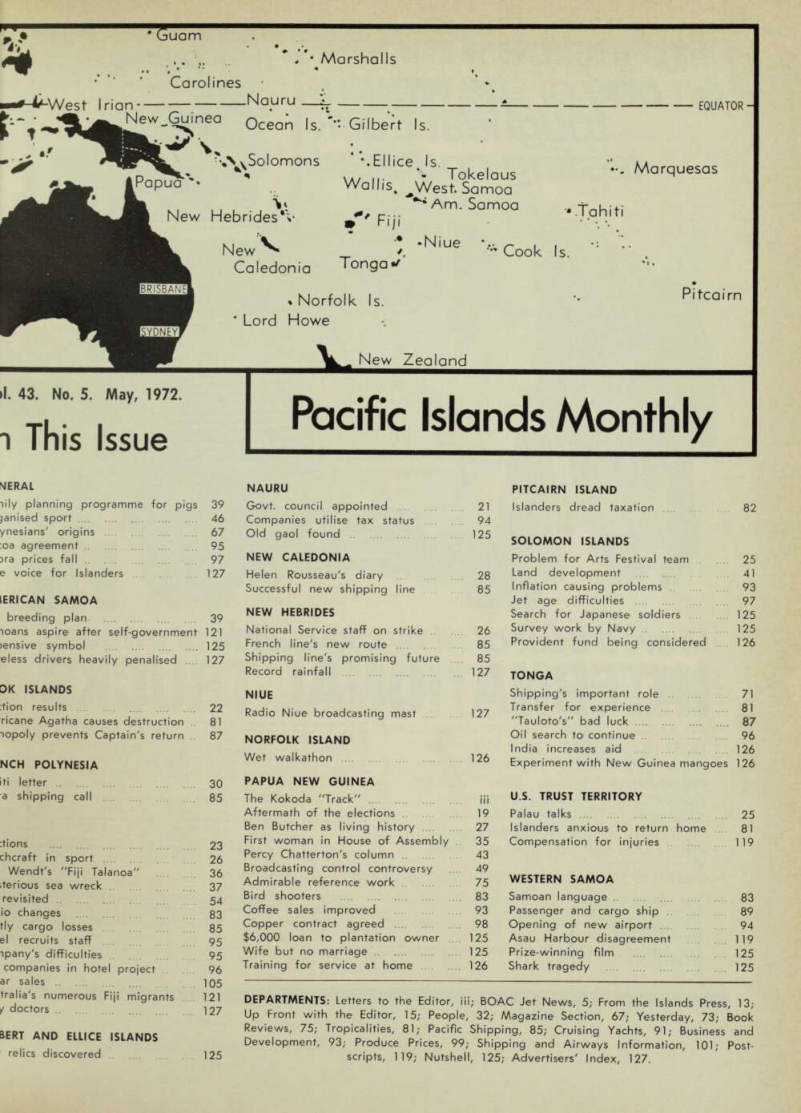 3
3 4
4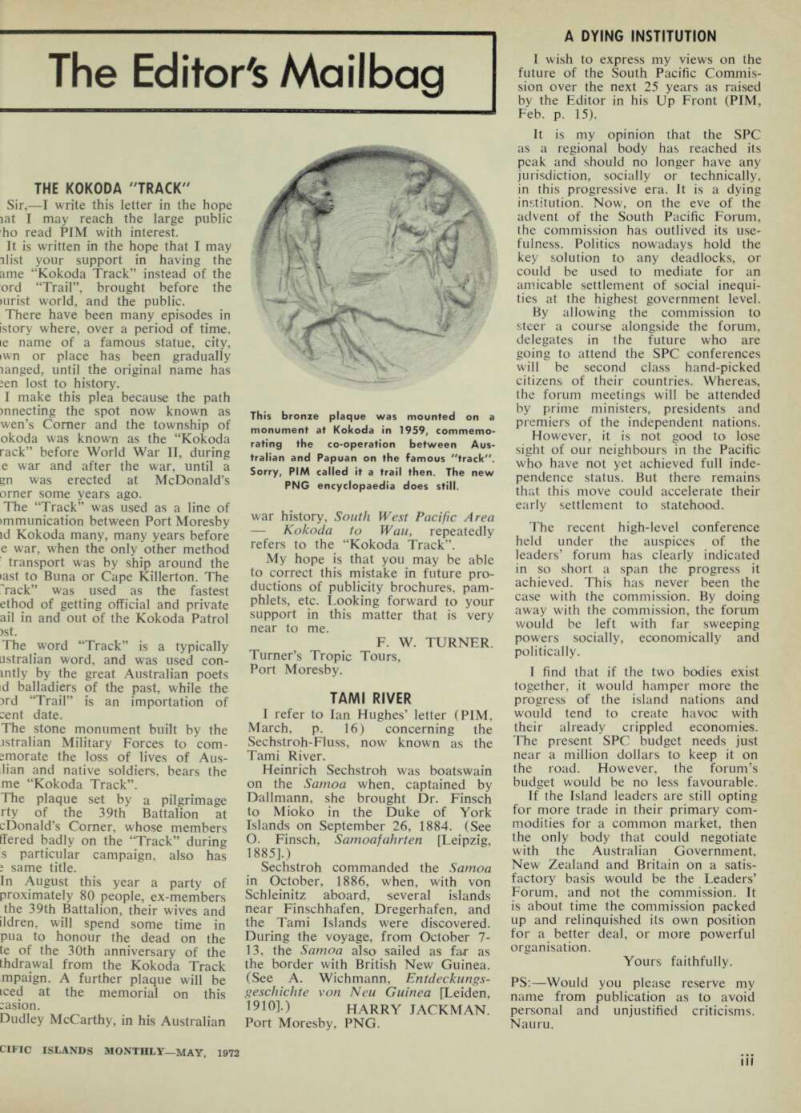 5
5 6
6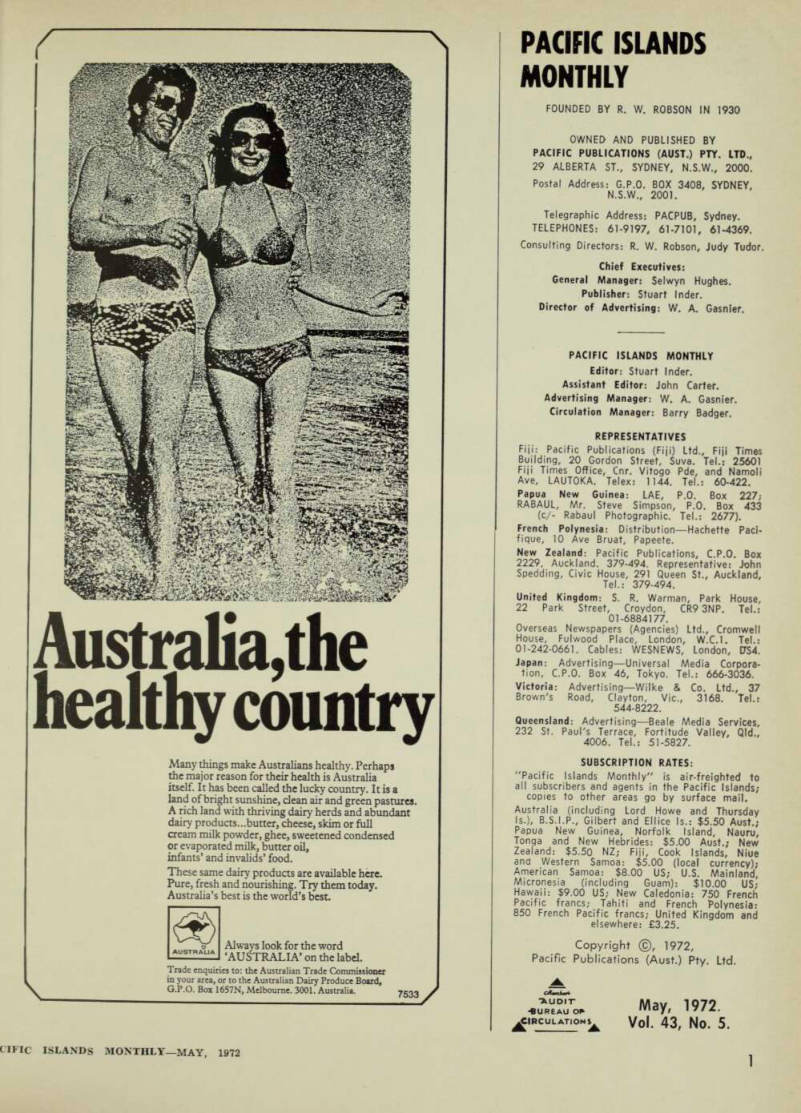 7
7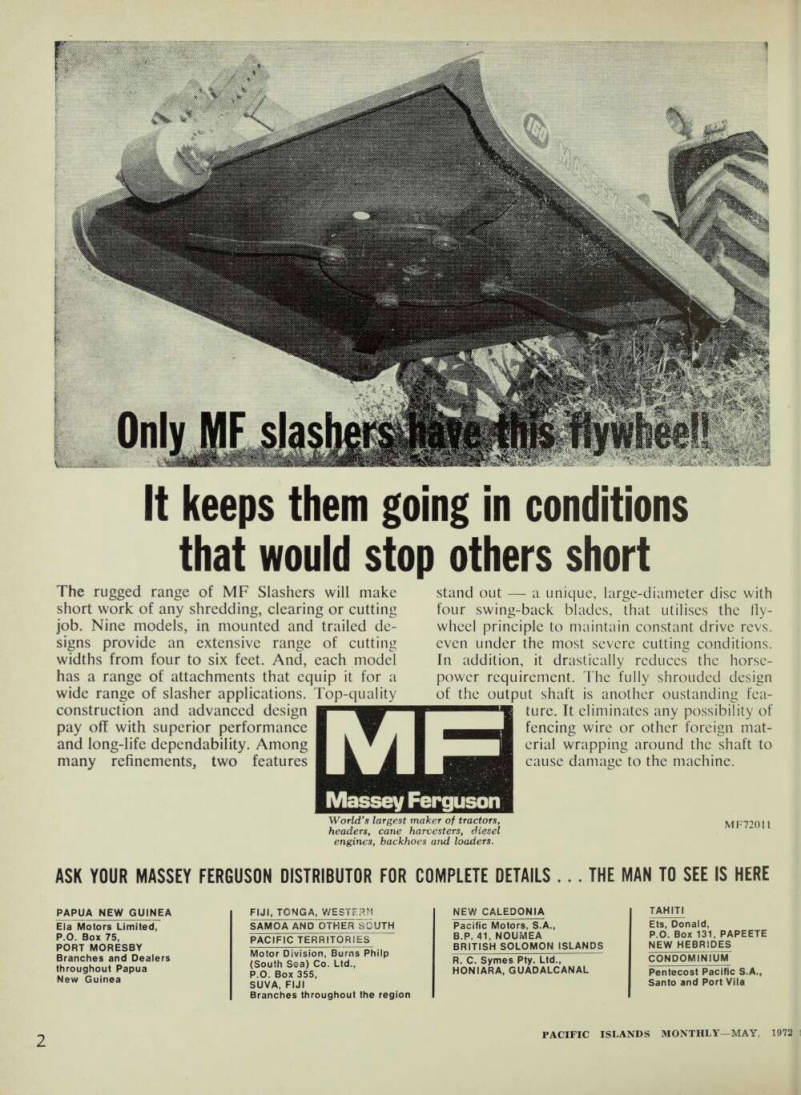 8
8 9
9 10
10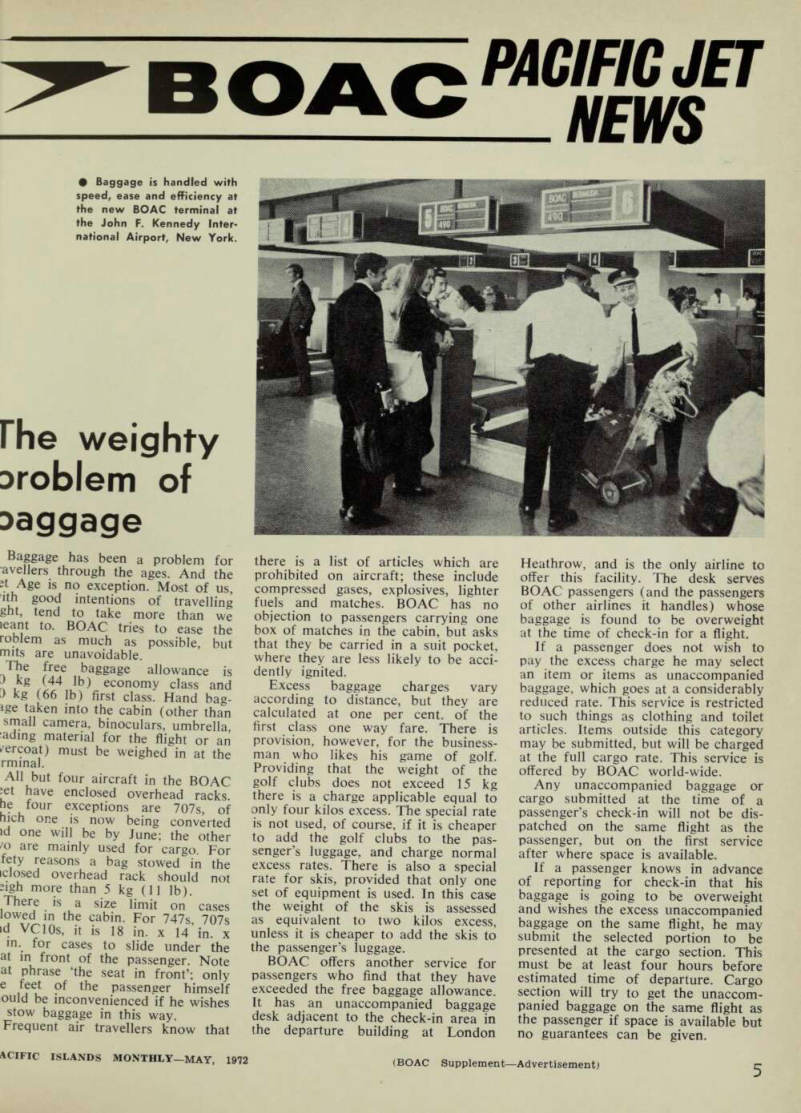 11
11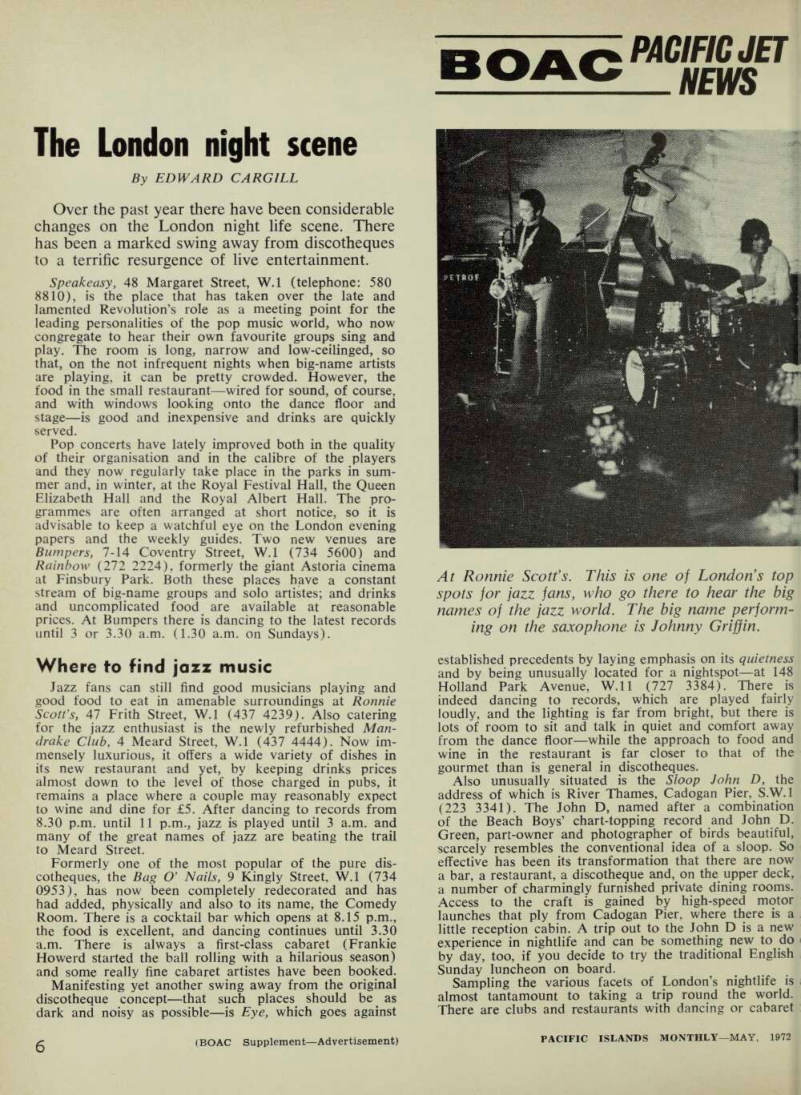 12
12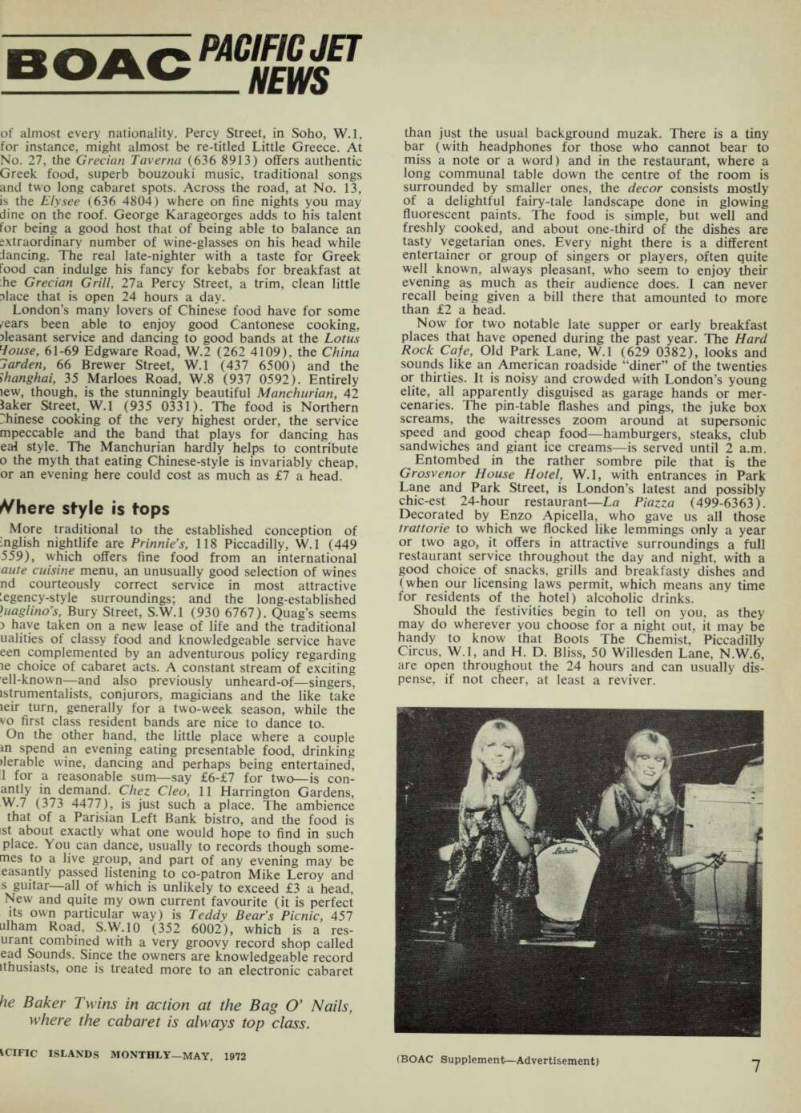 13
13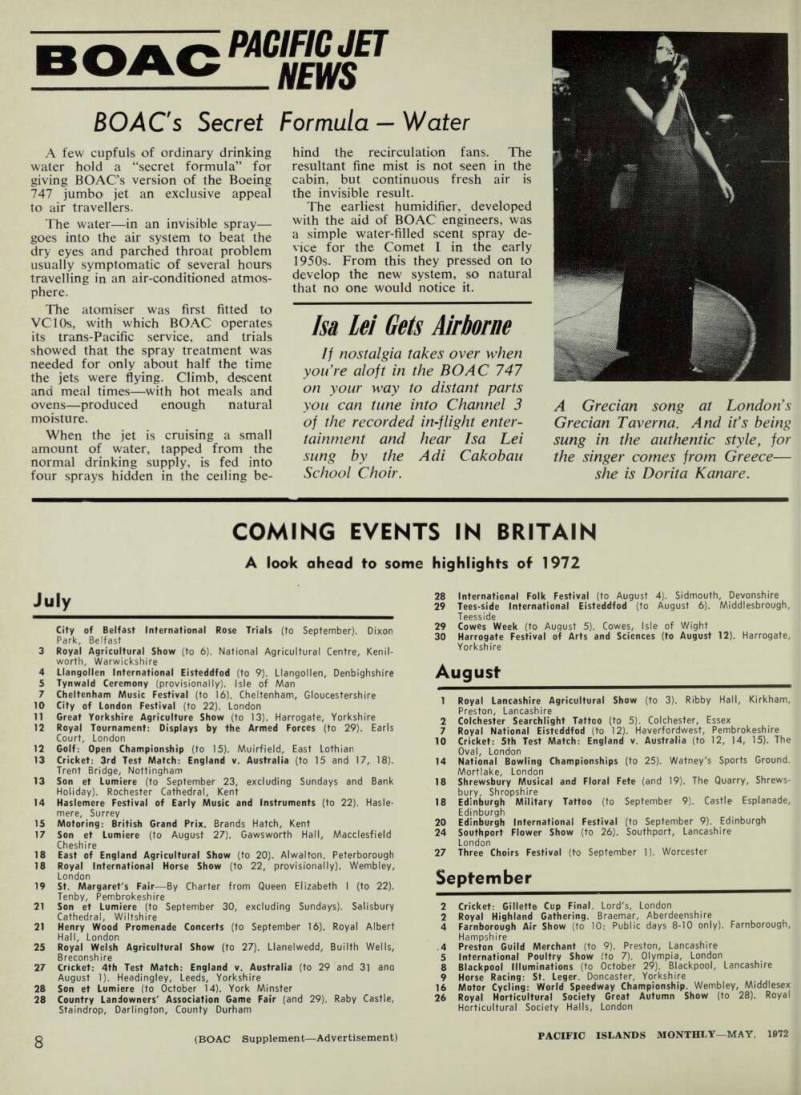 14
14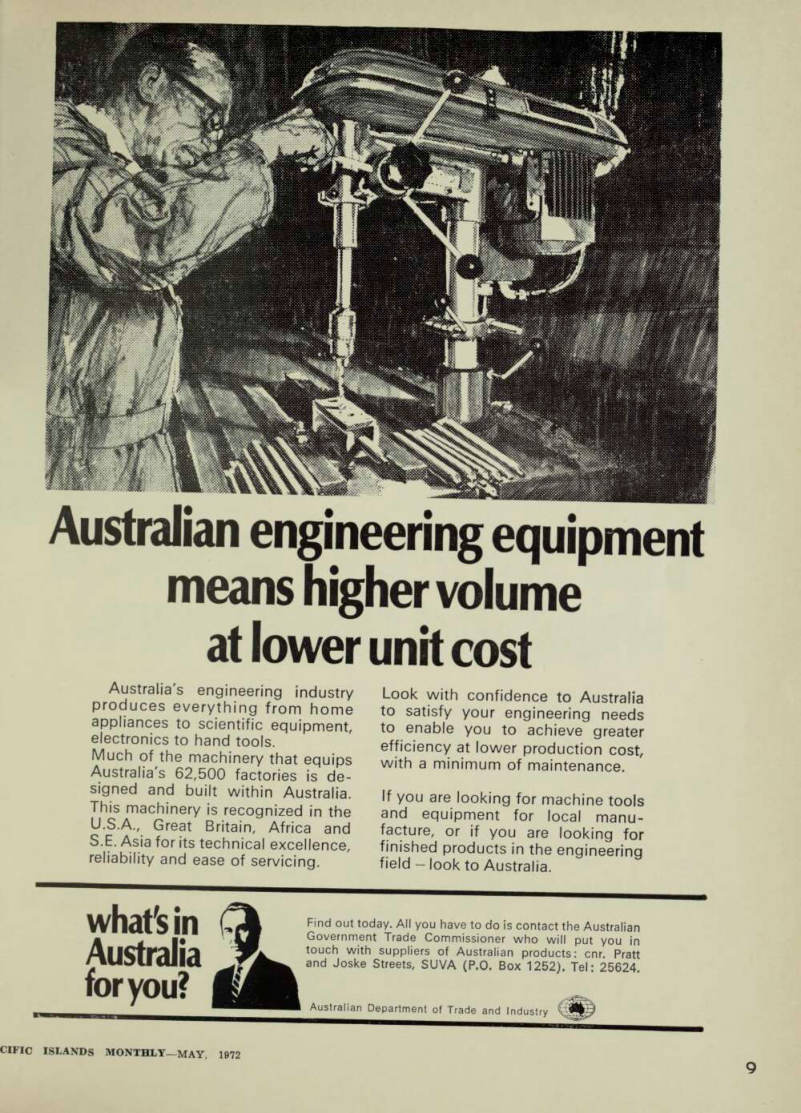 15
15 16
16 17
17 18
18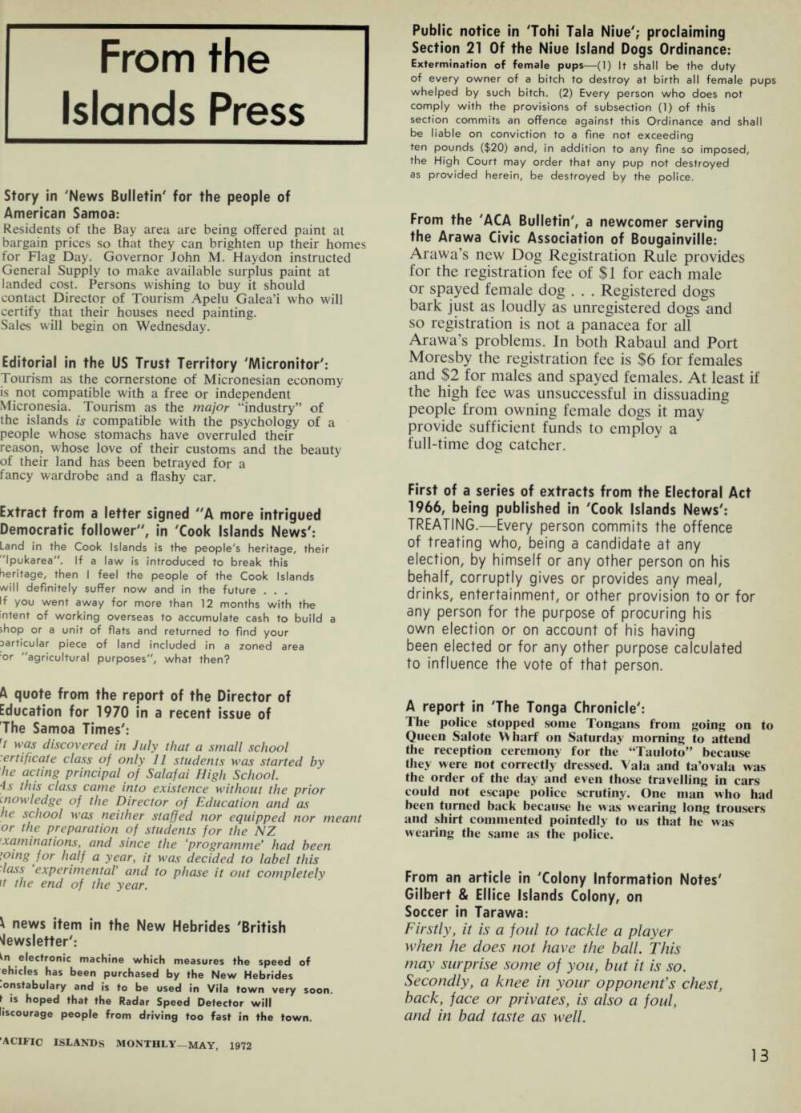 19
19 20
20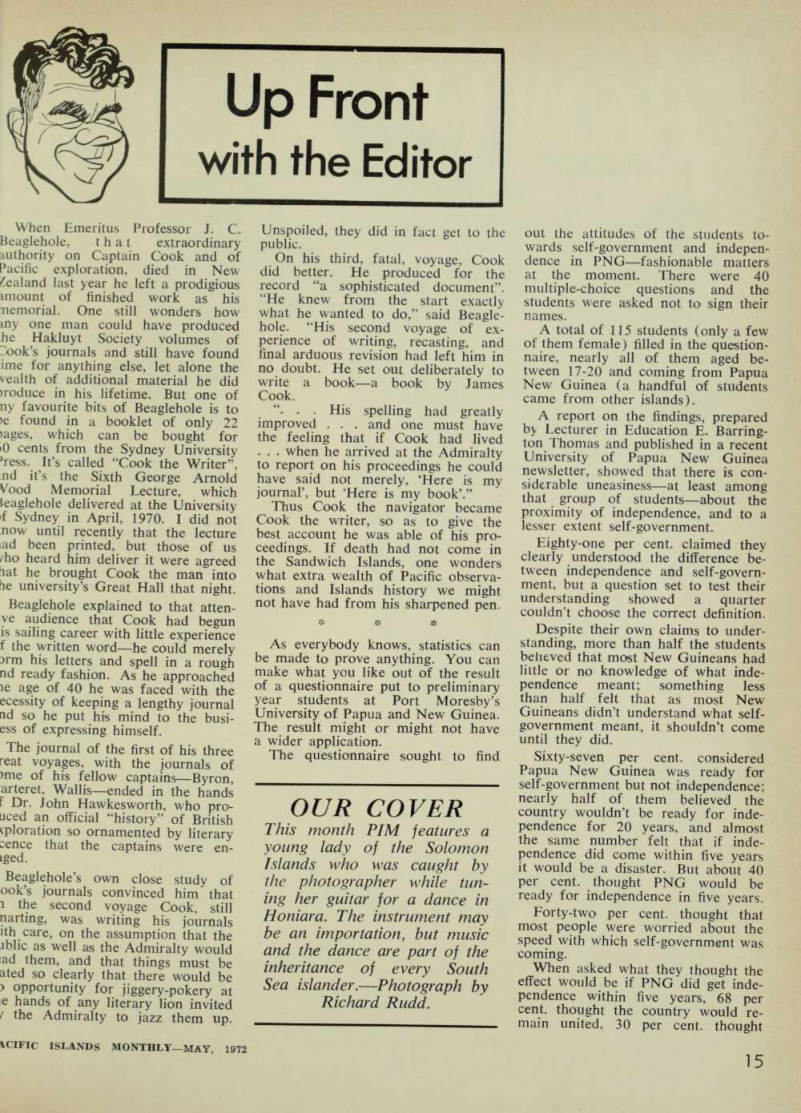 21
21 22
22 23
23 24
24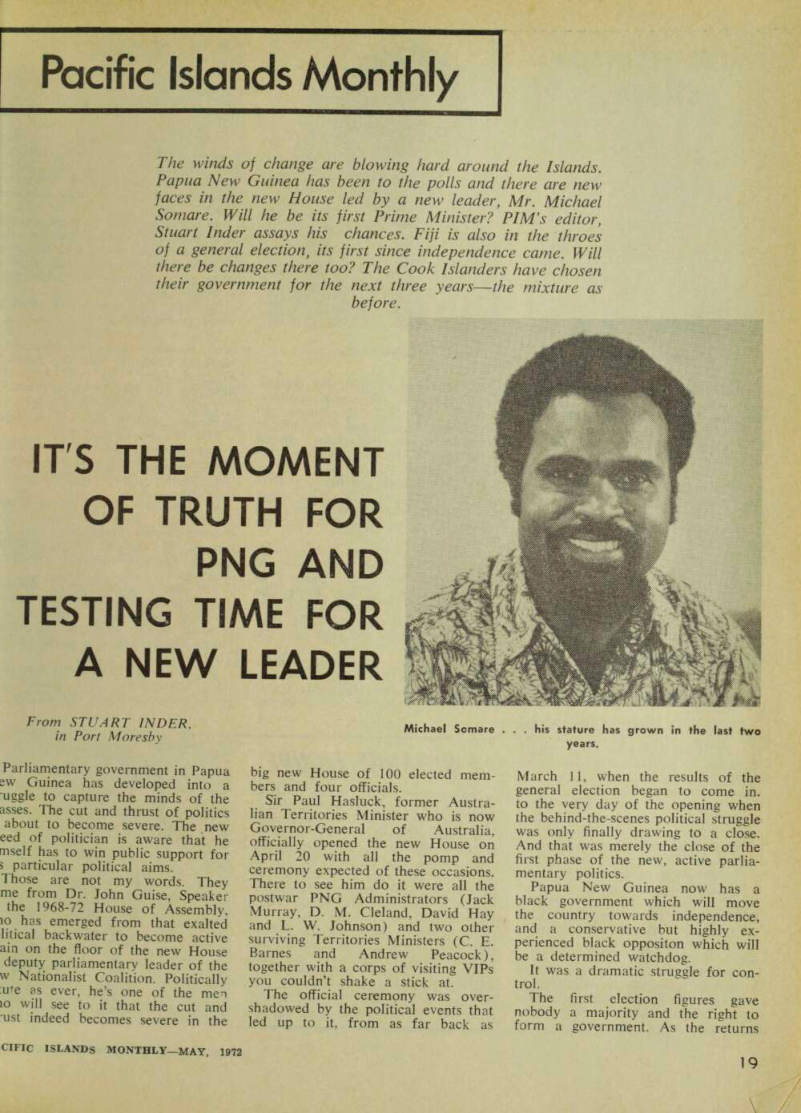 25
25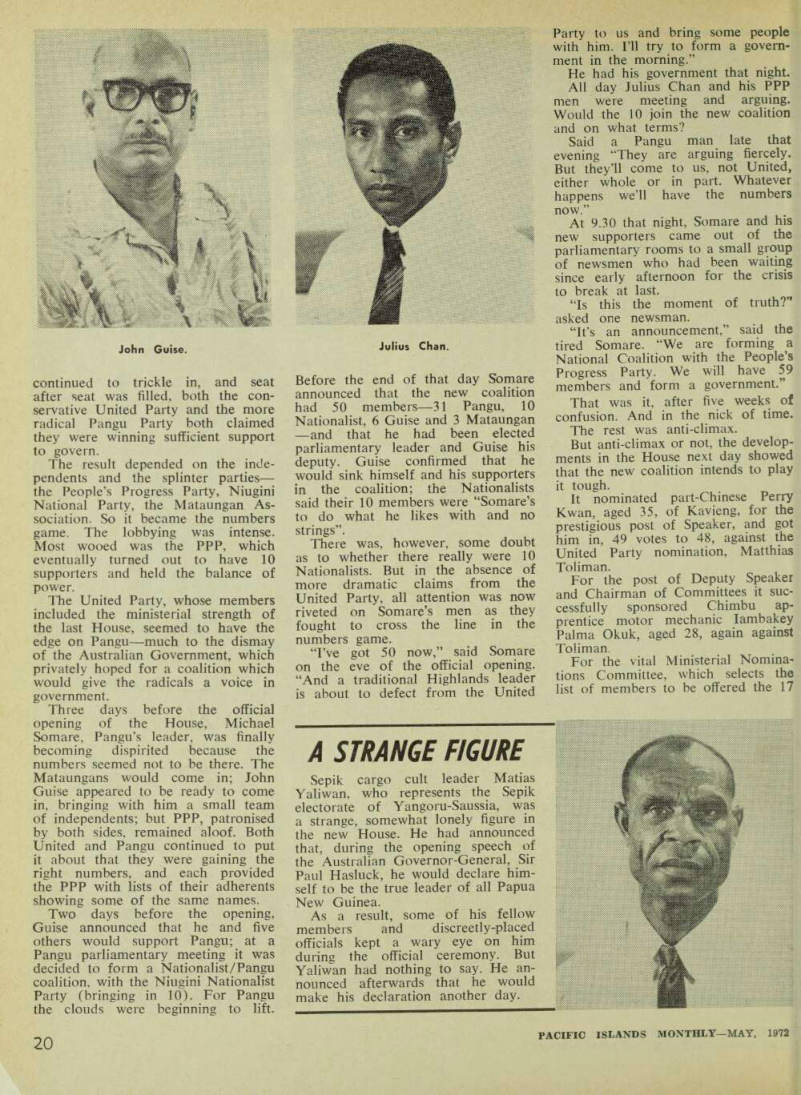 26
26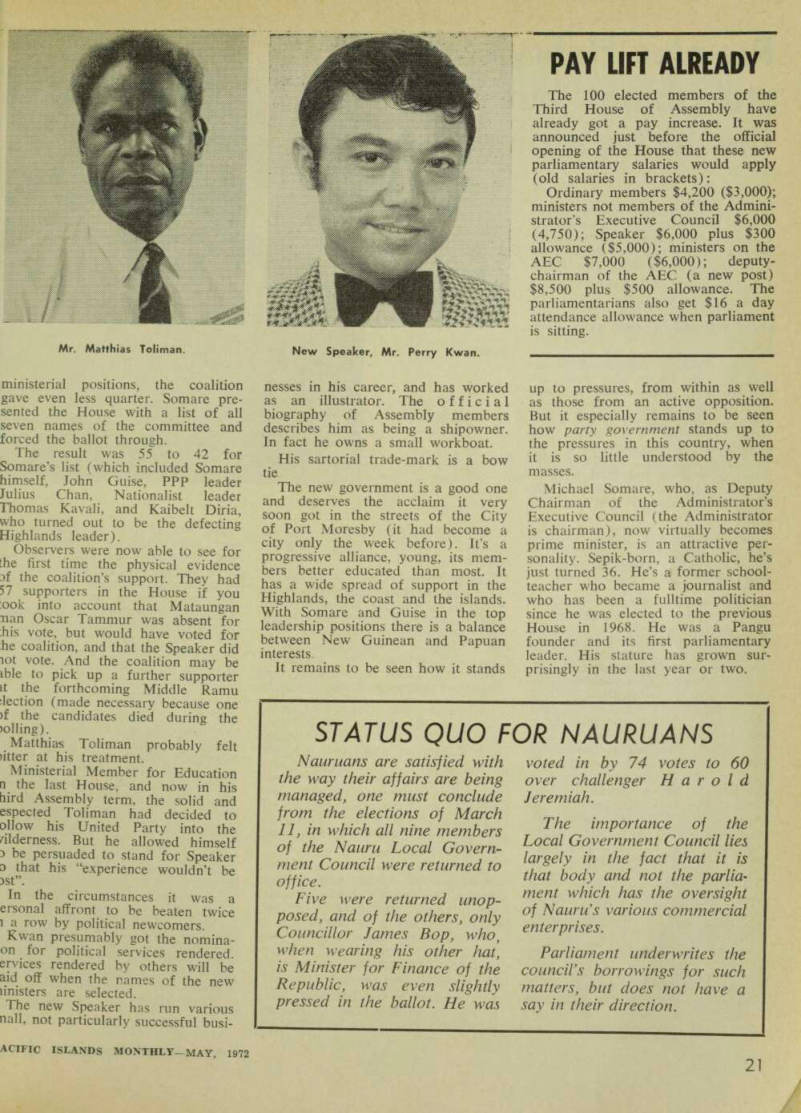 27
27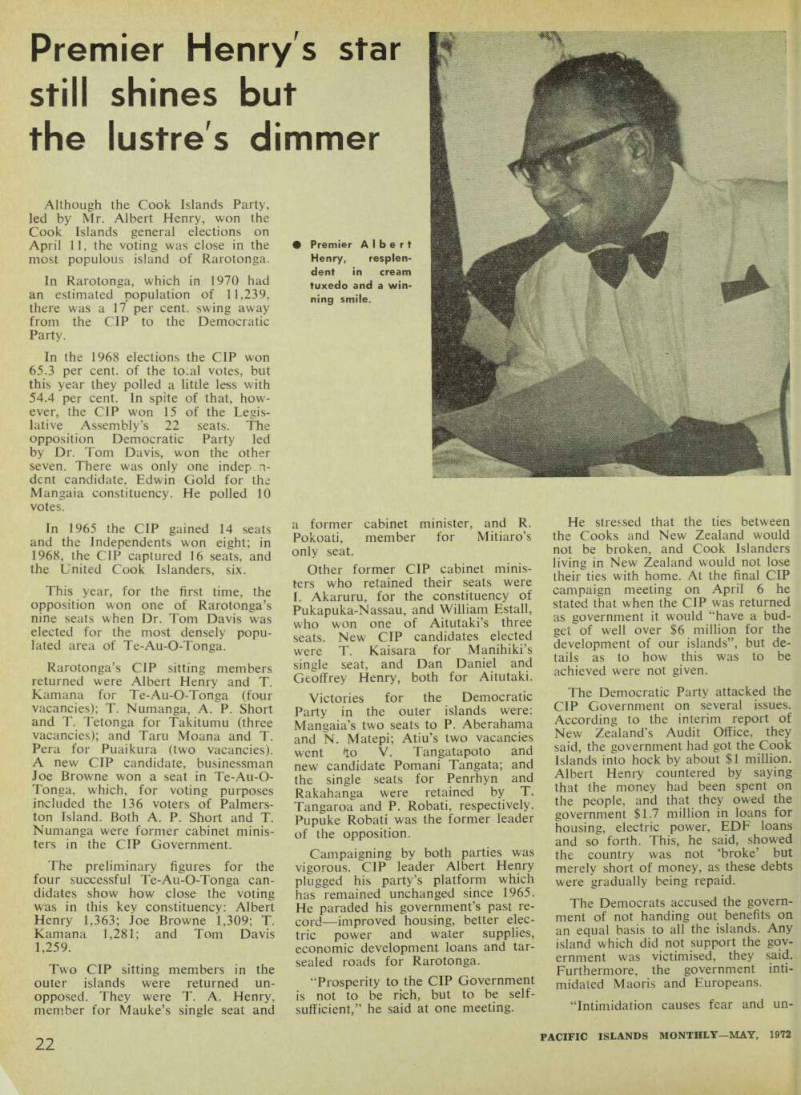 28
28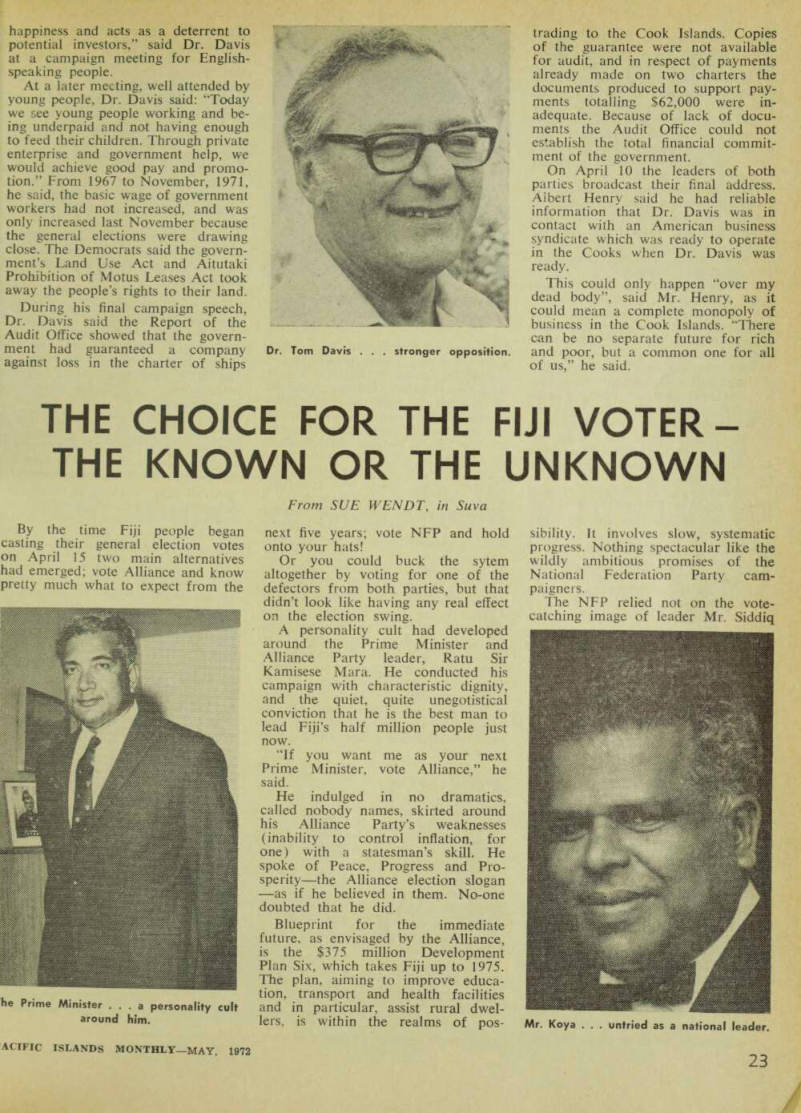 29
29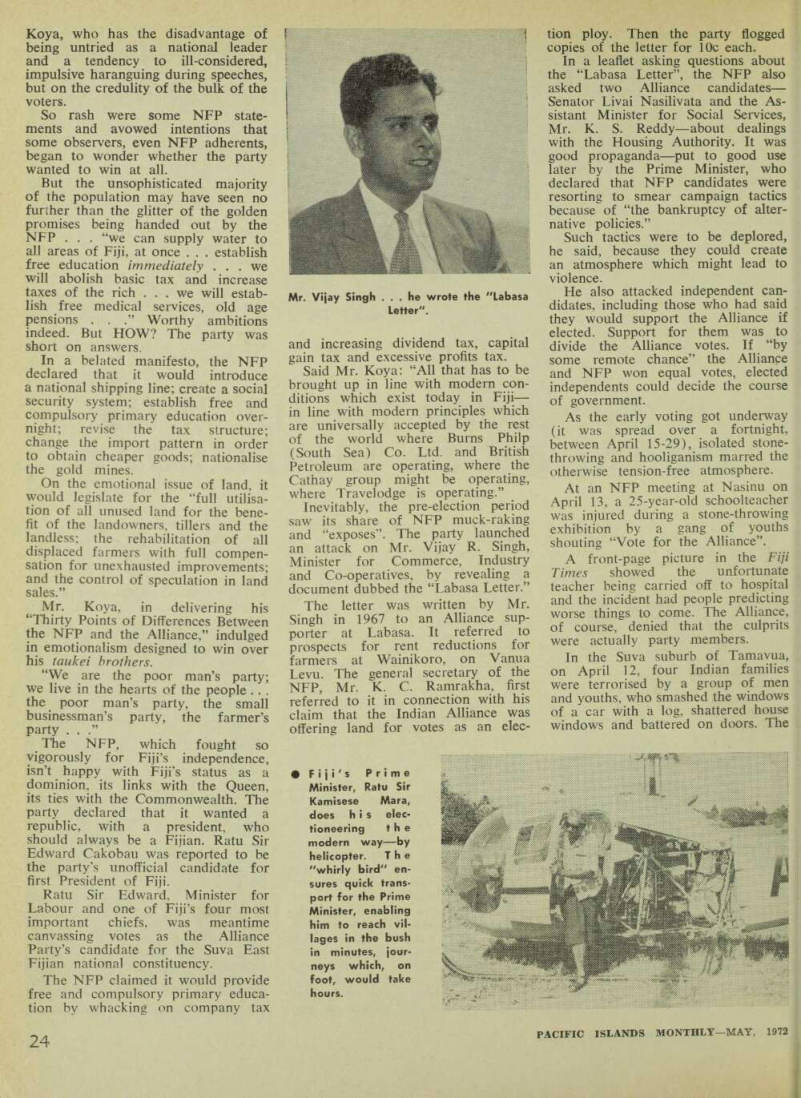 30
30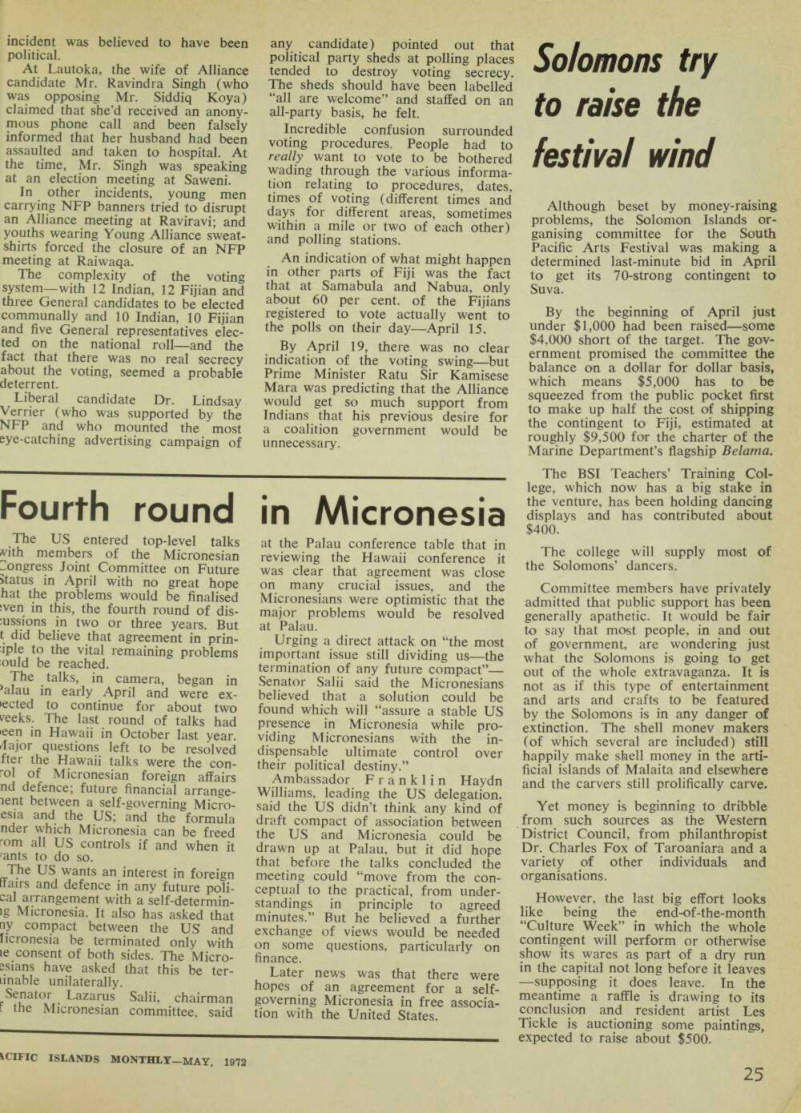 31
31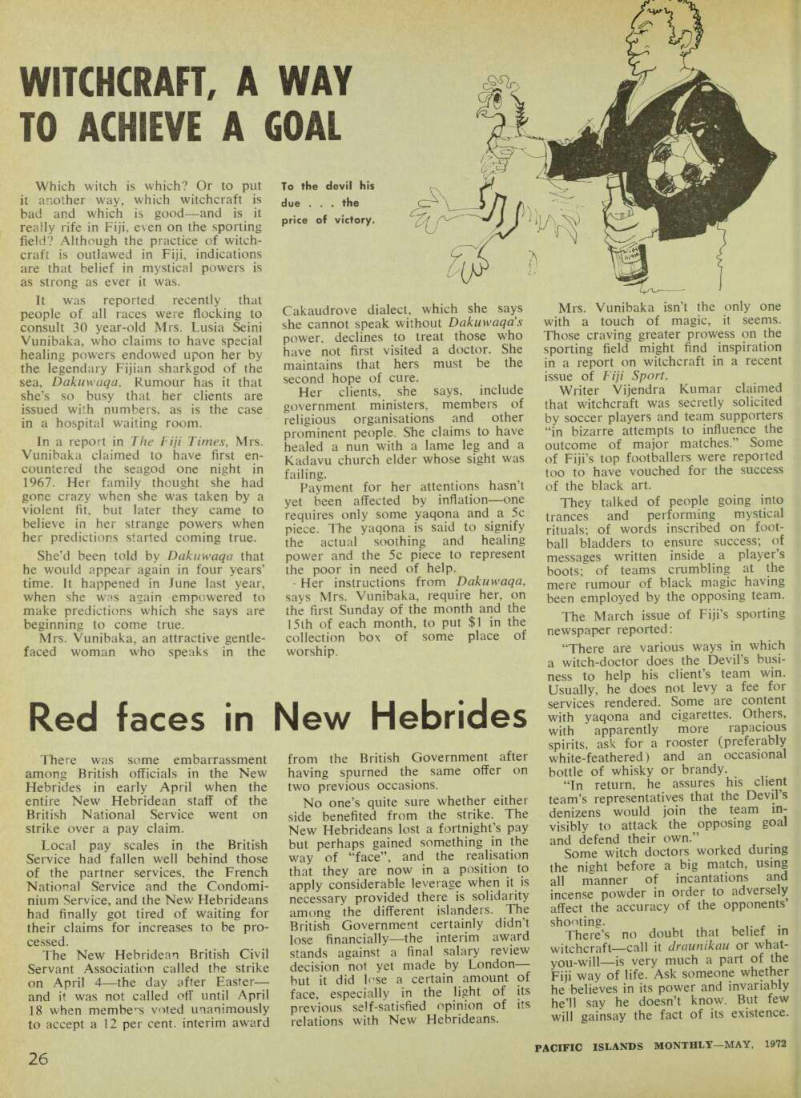 32
32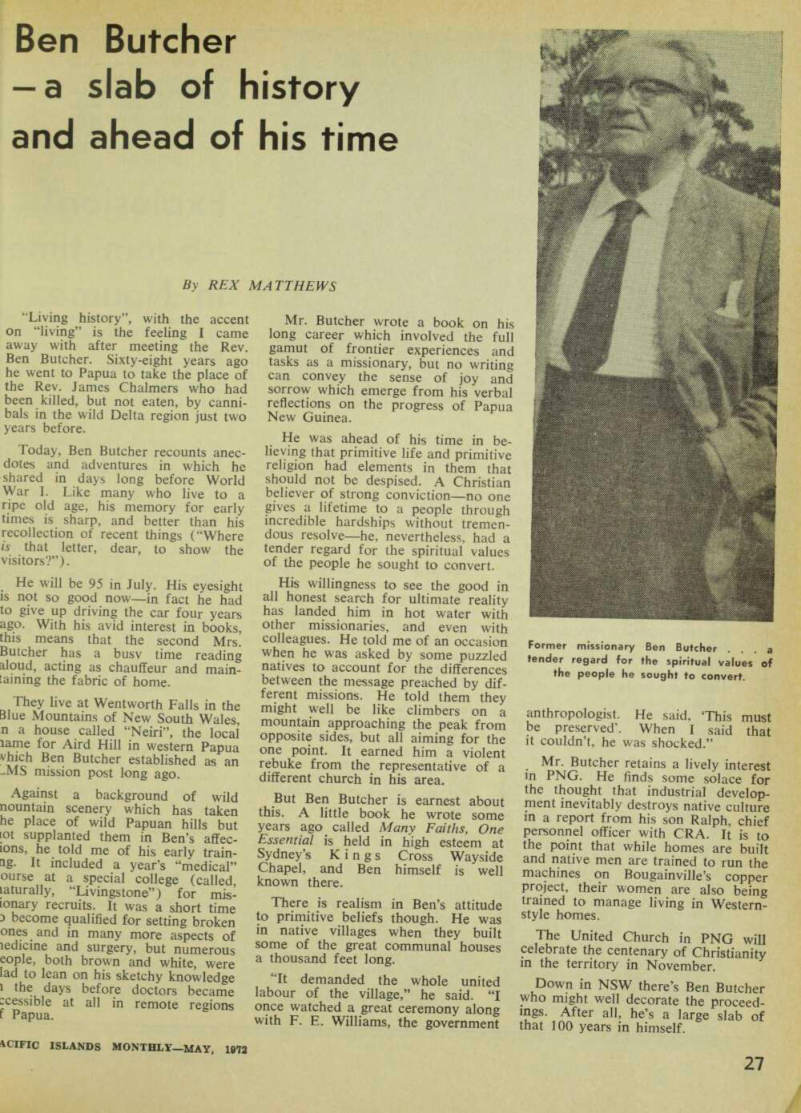 33
33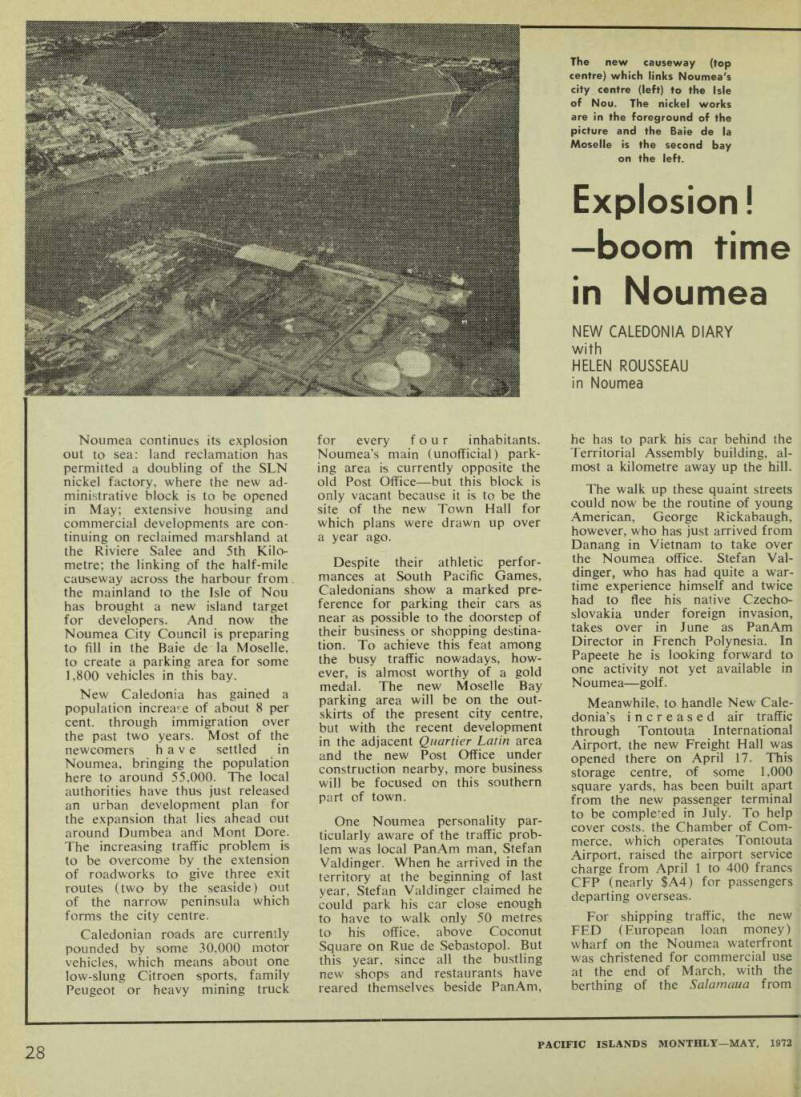 34
34 35
35 36
36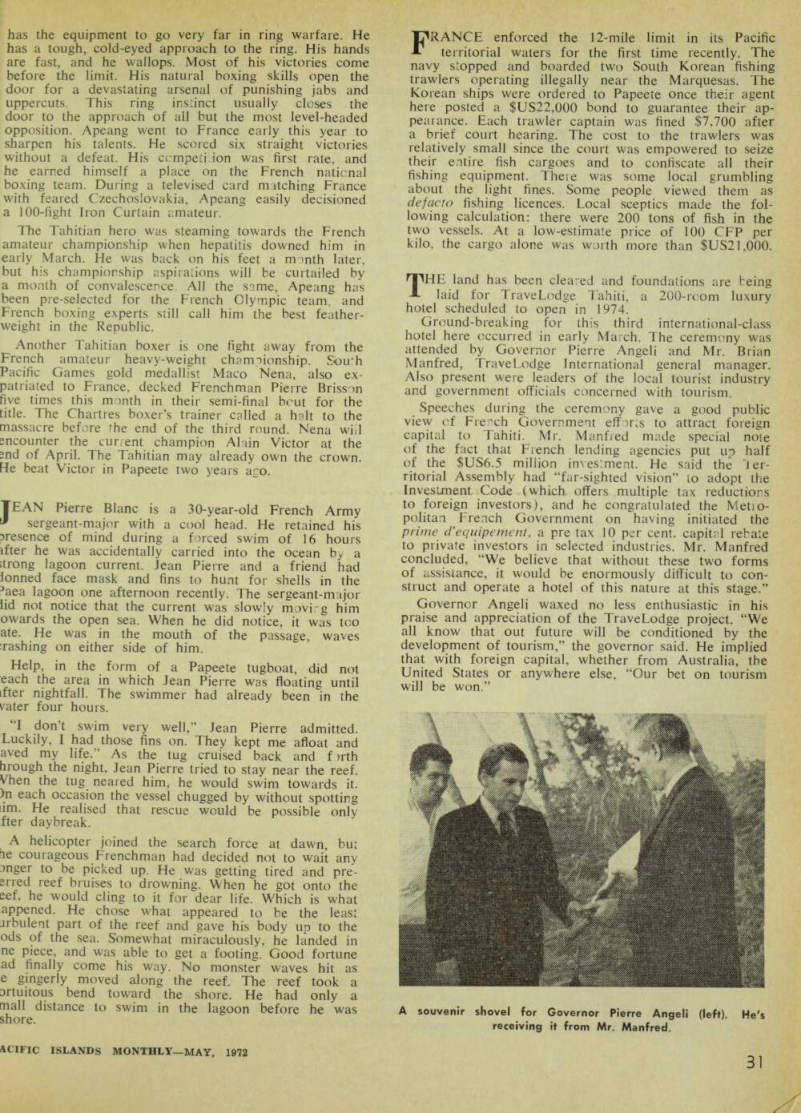 37
37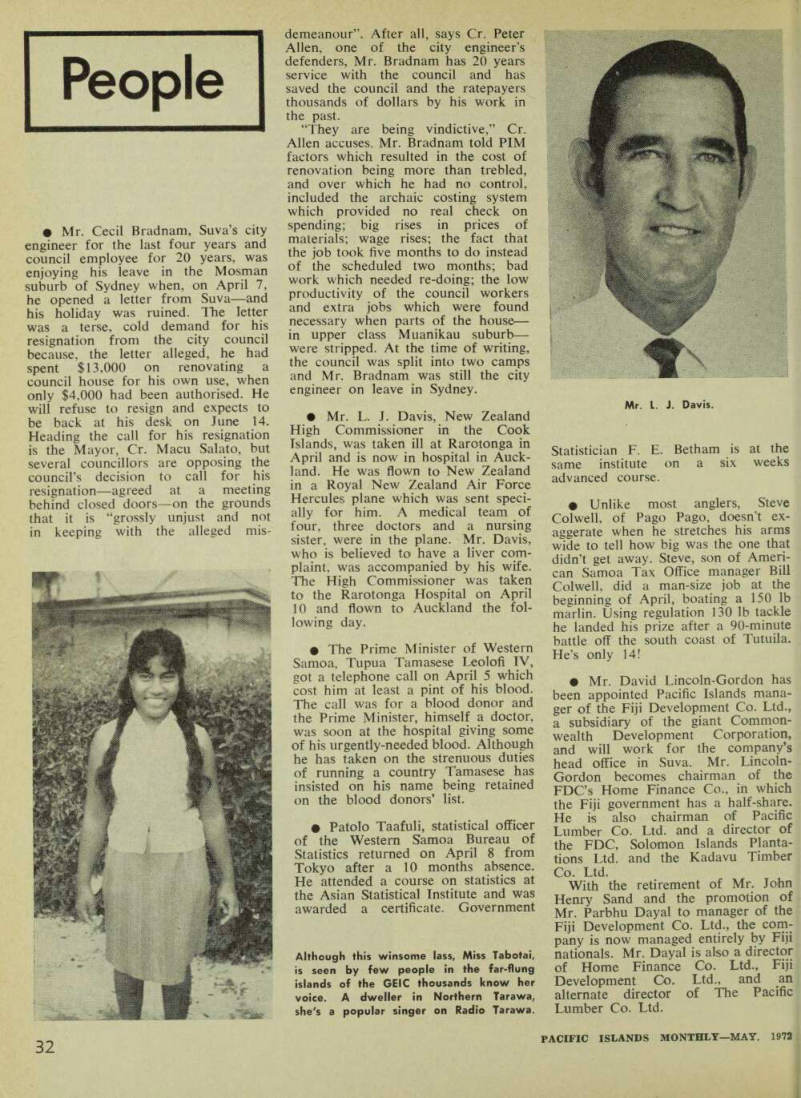 38
38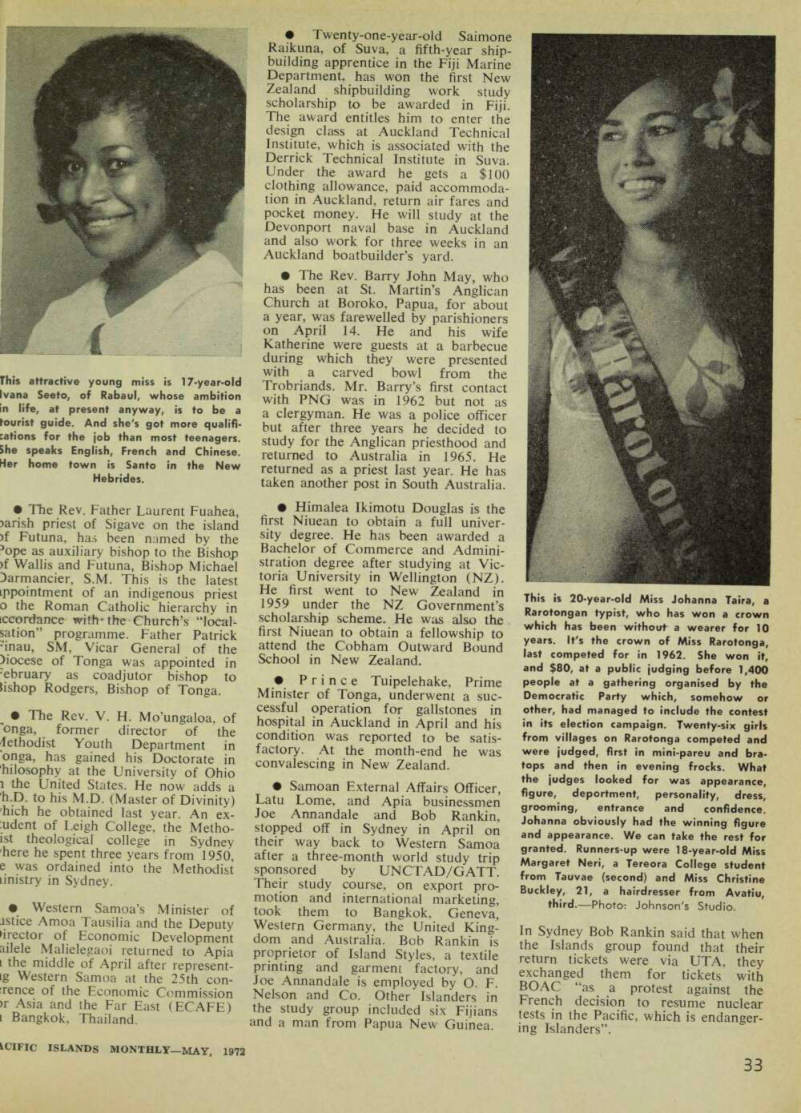 39
39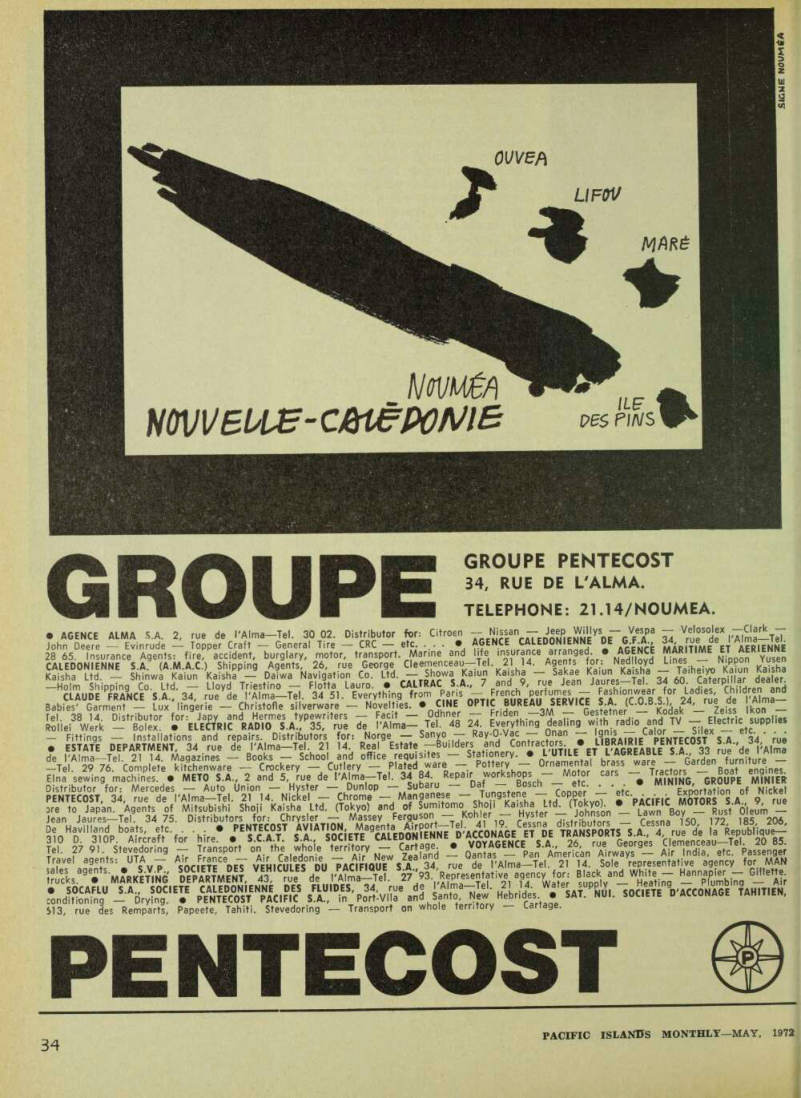 40
40 41
41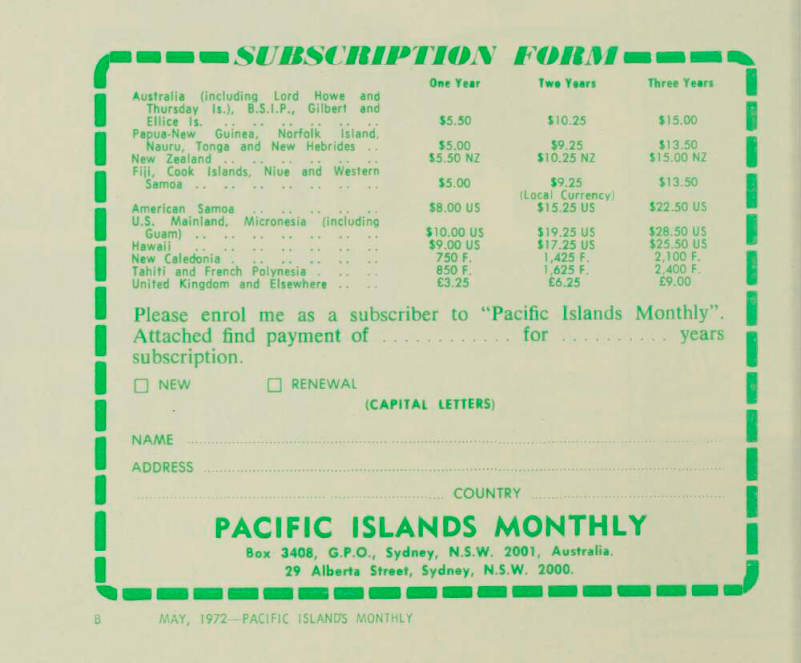 42
42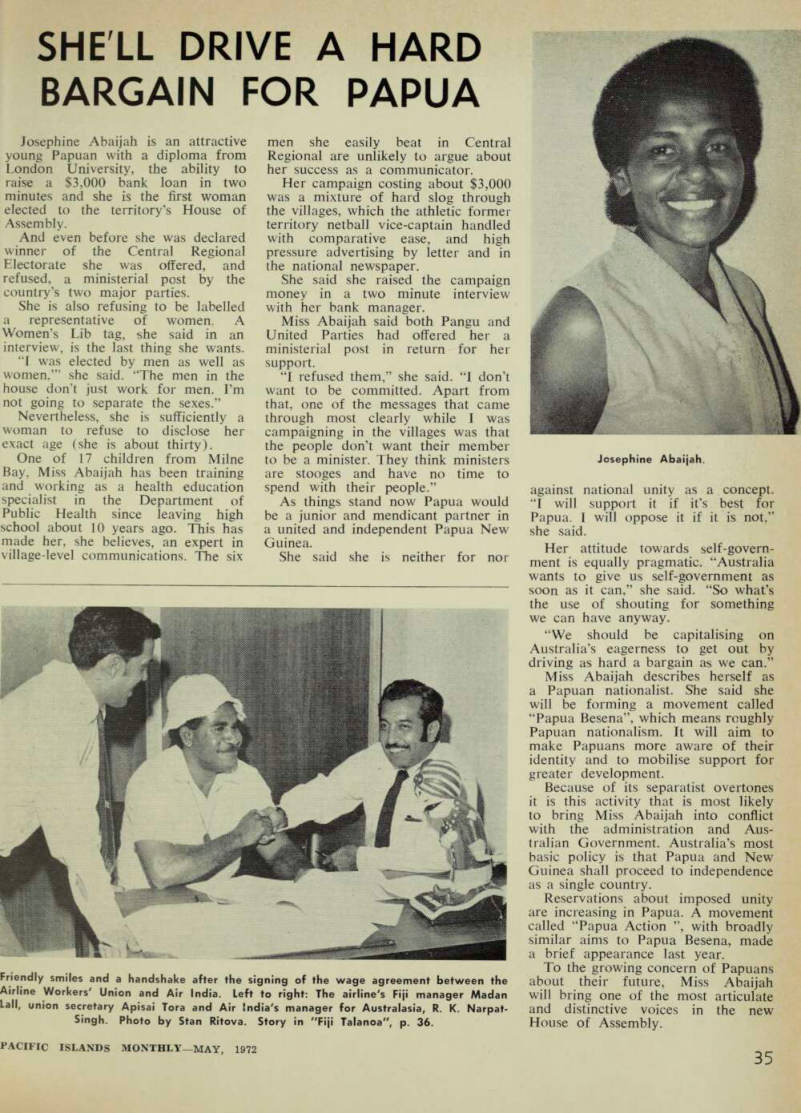 43
43 44
44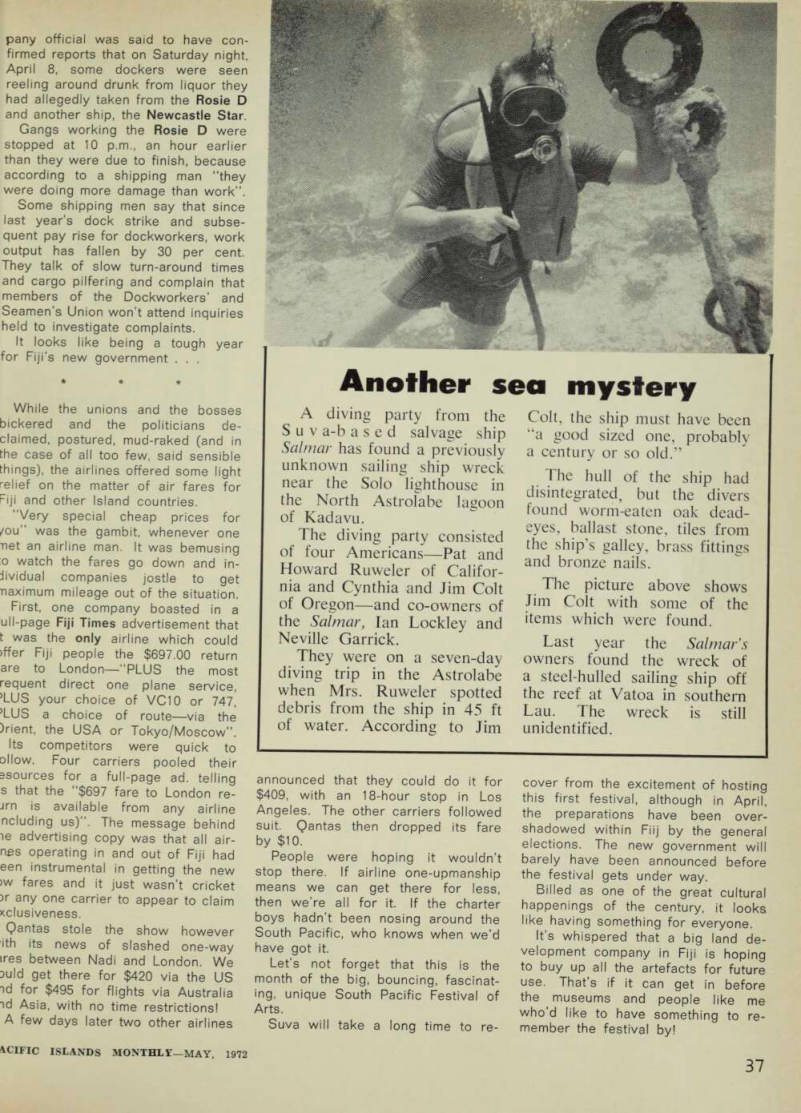 45
45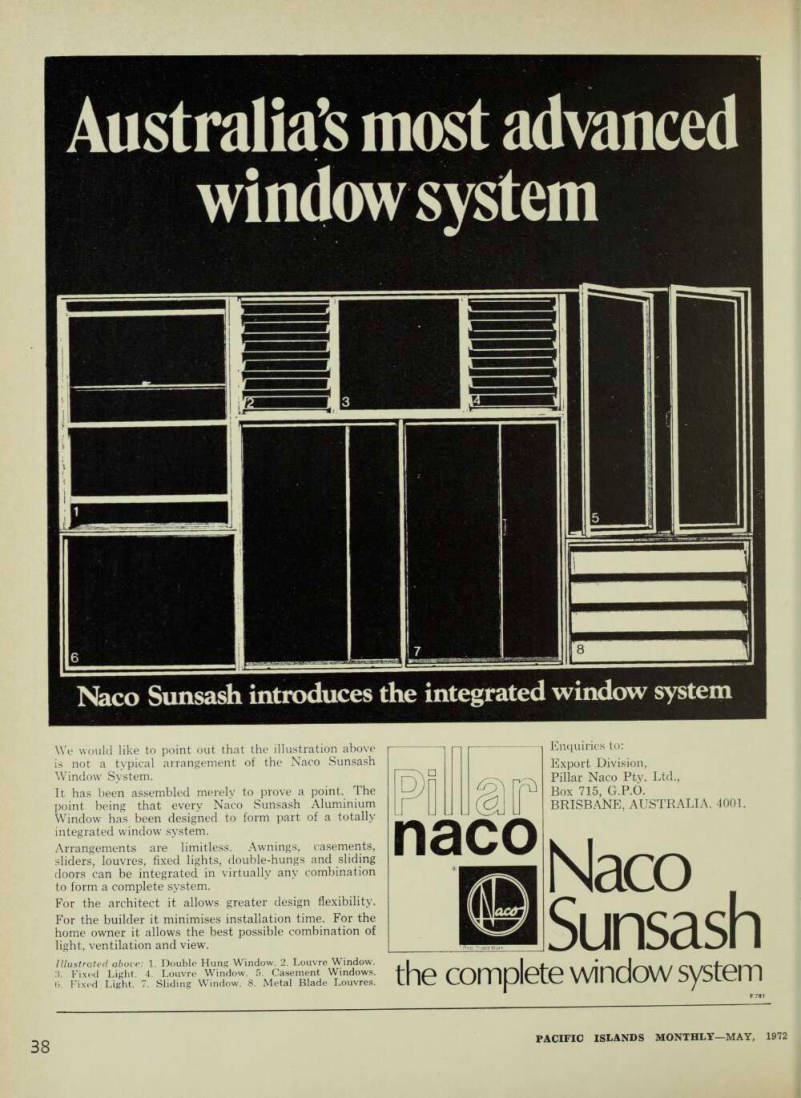 46
46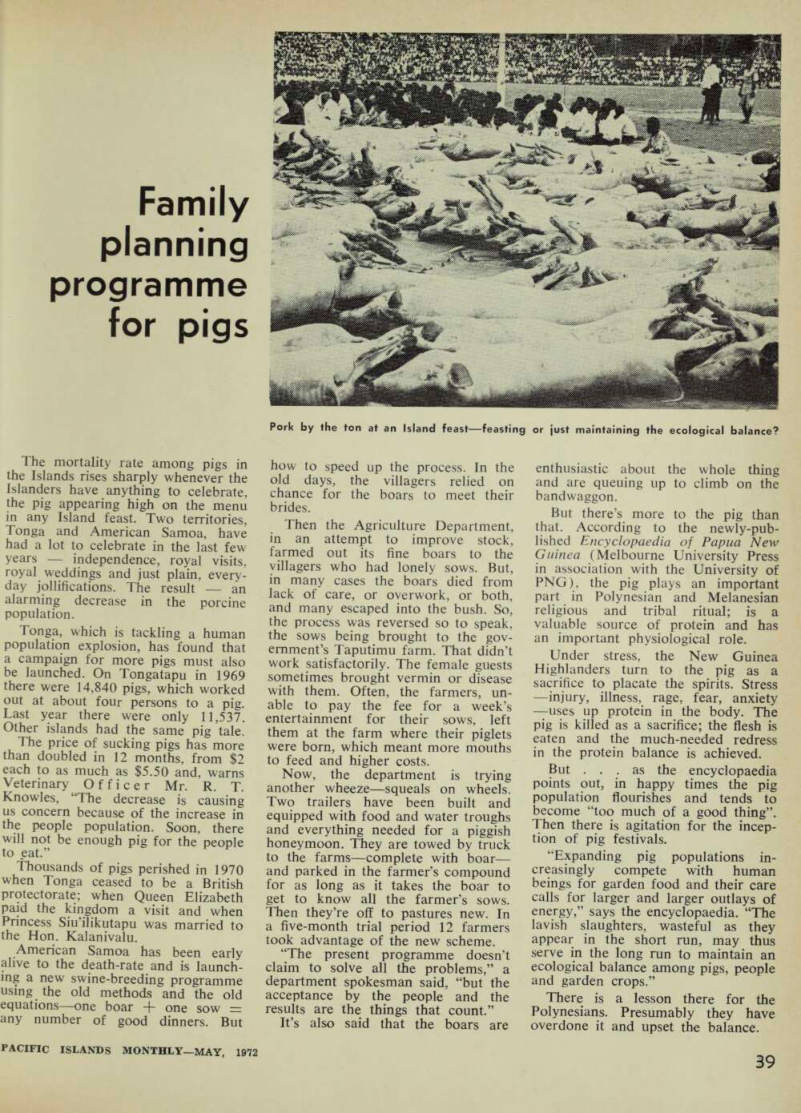 47
47 48
48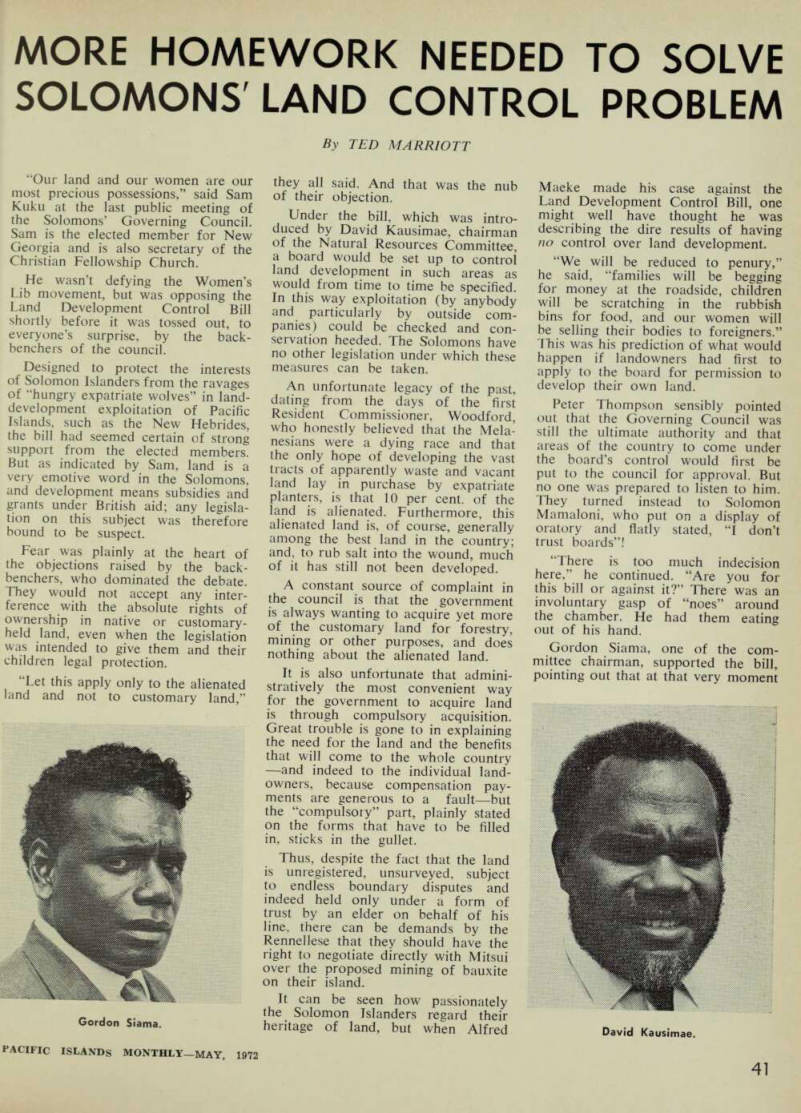 49
49 50
50 51
51 52
52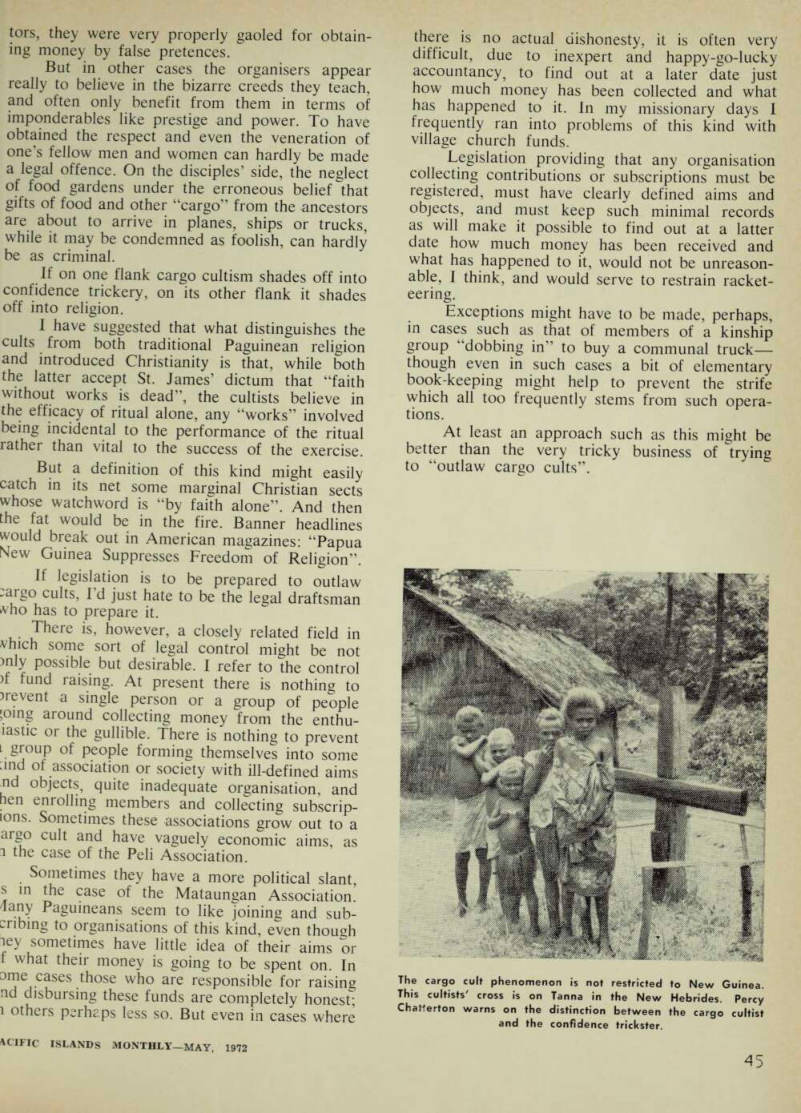 53
53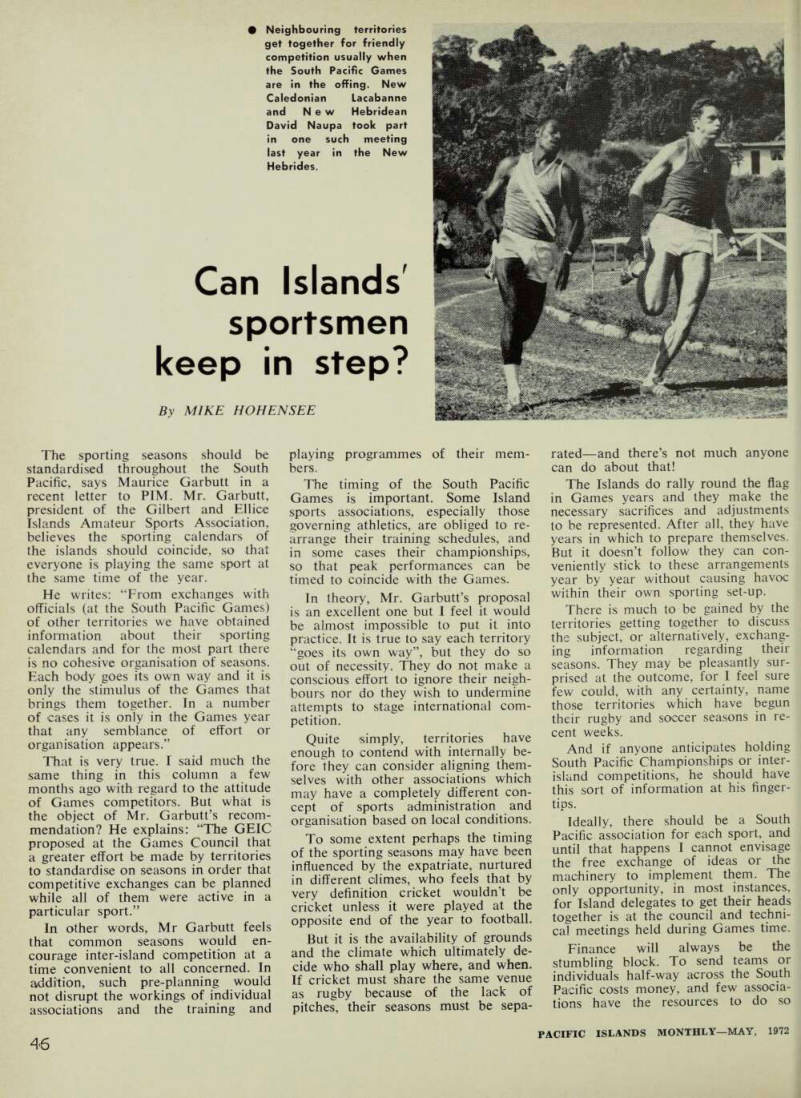 54
54 55
55 56
56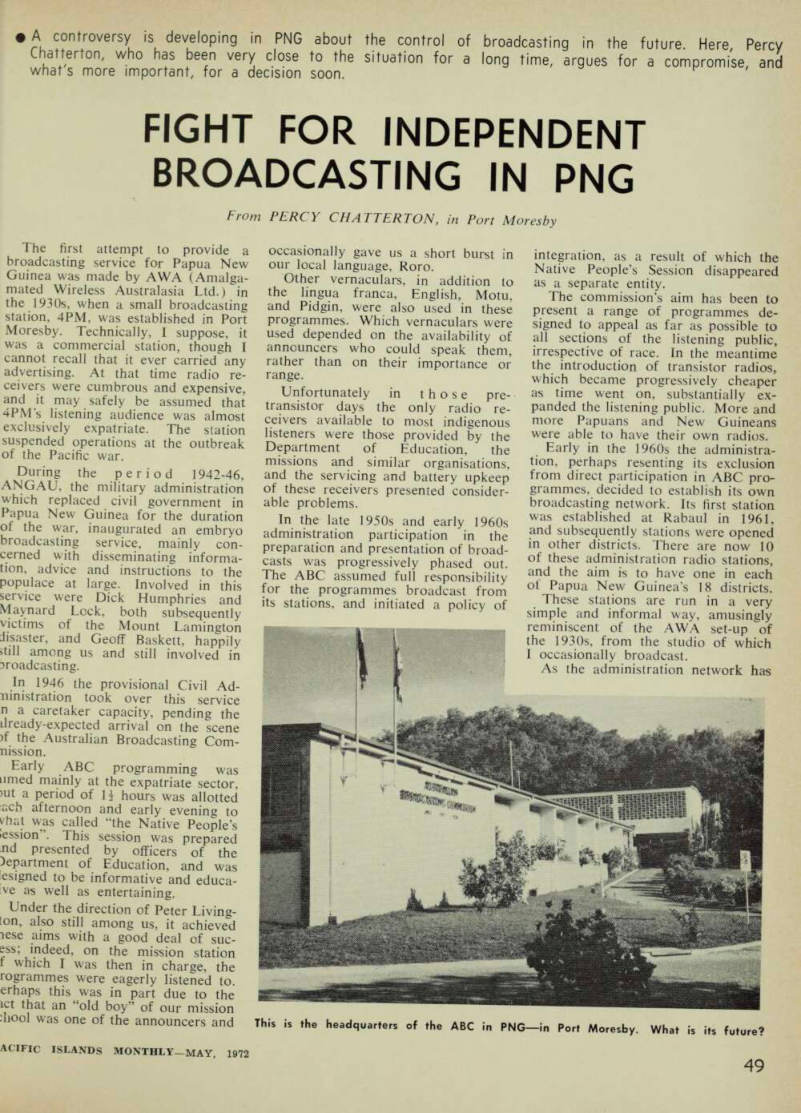 57
57 58
58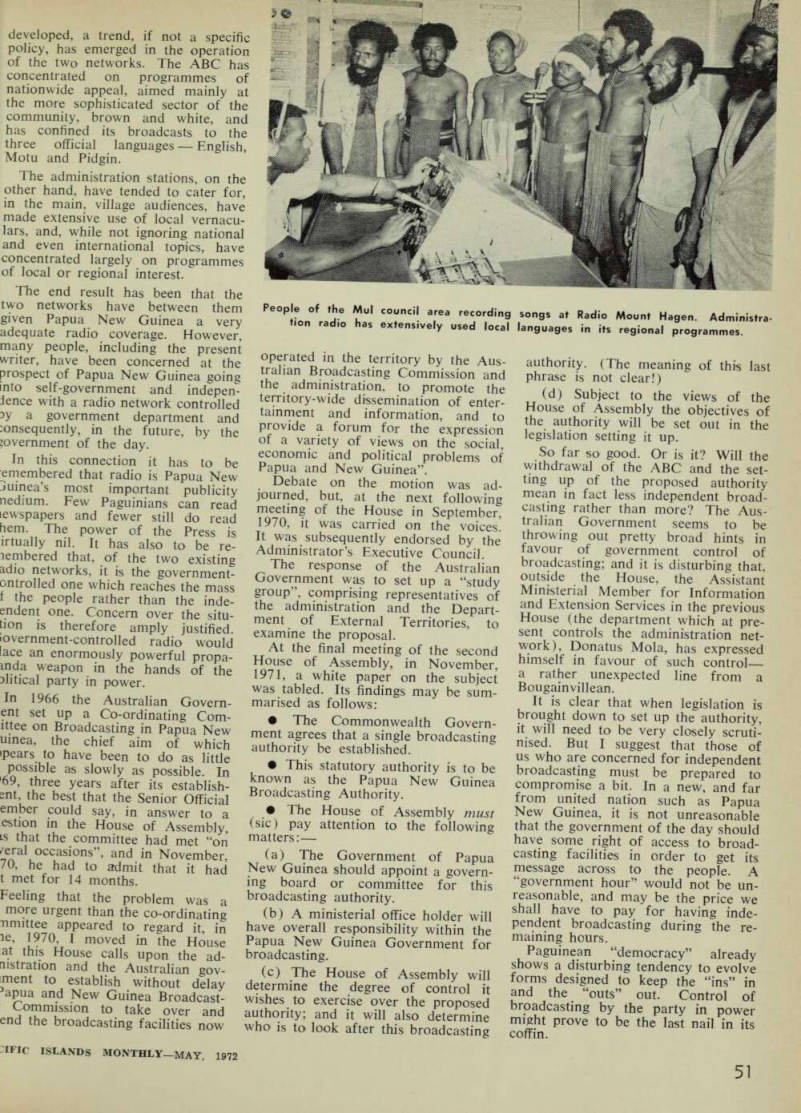 59
59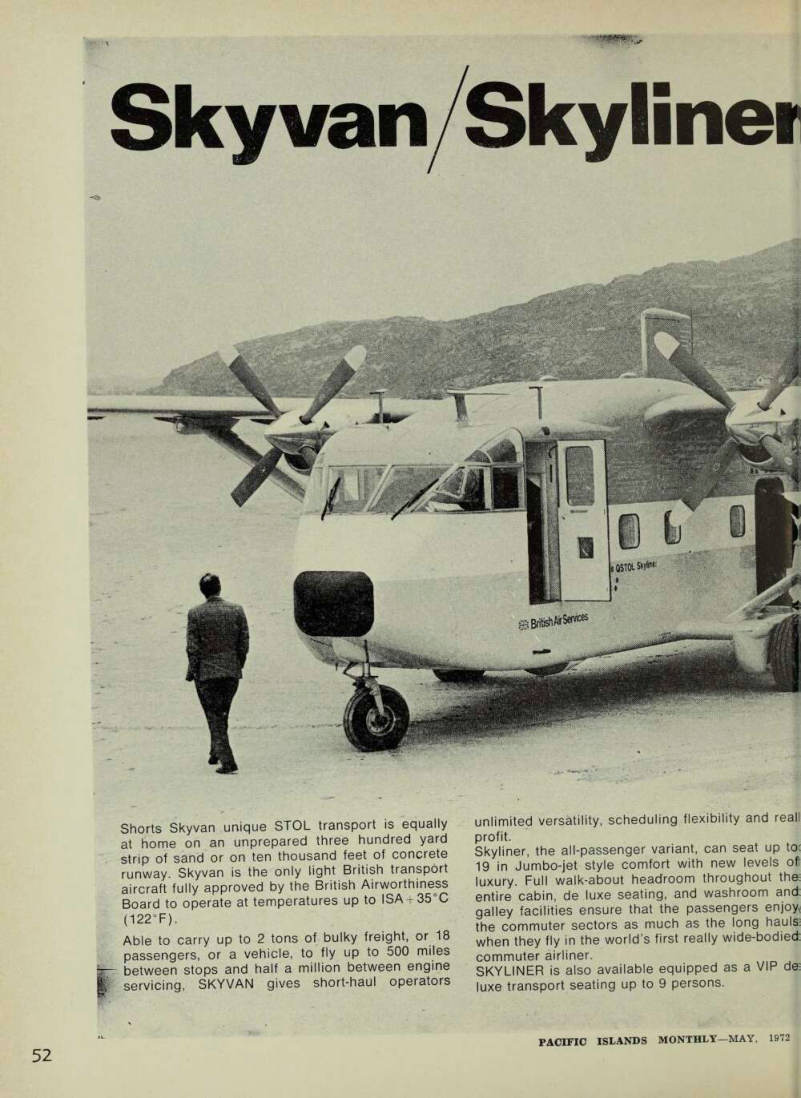 60
60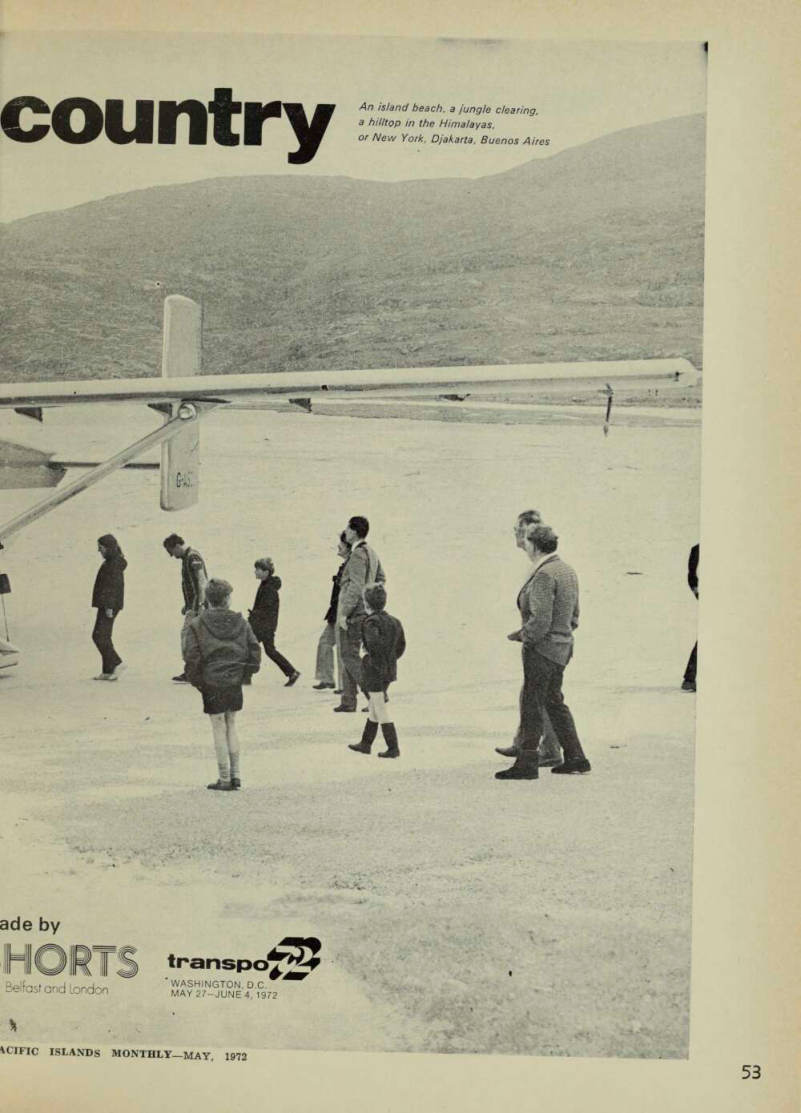 61
61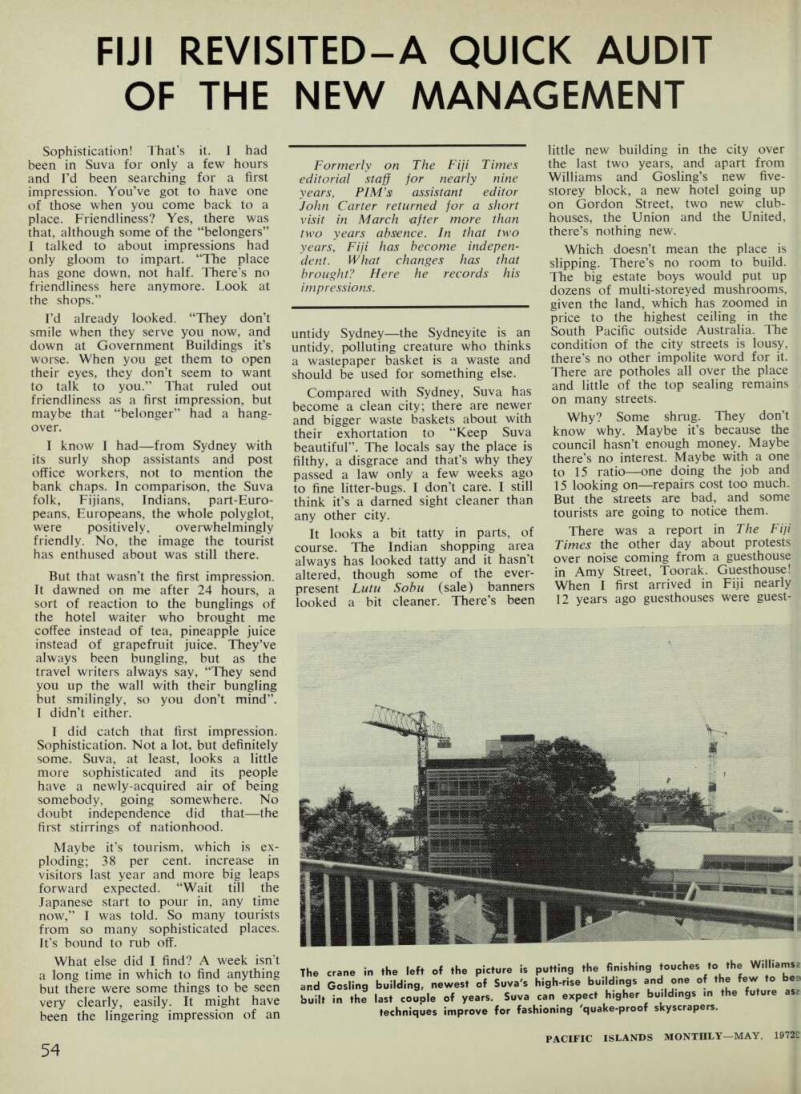 62
62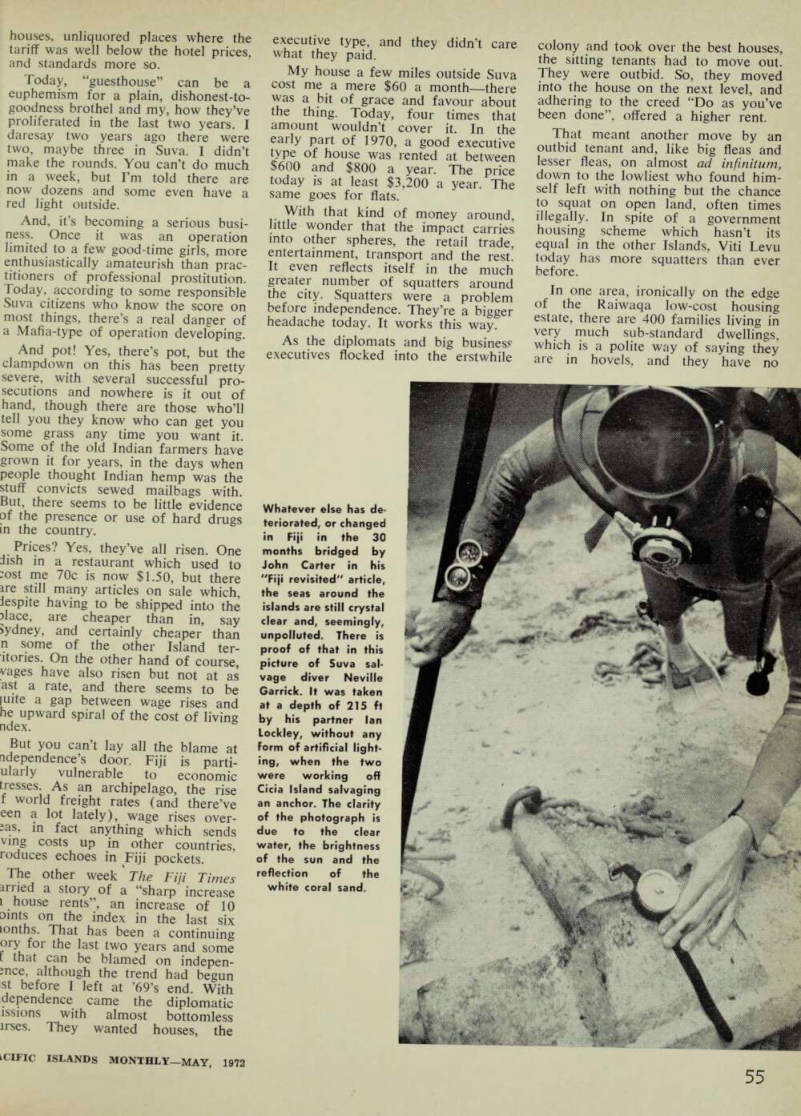 63
63 64
64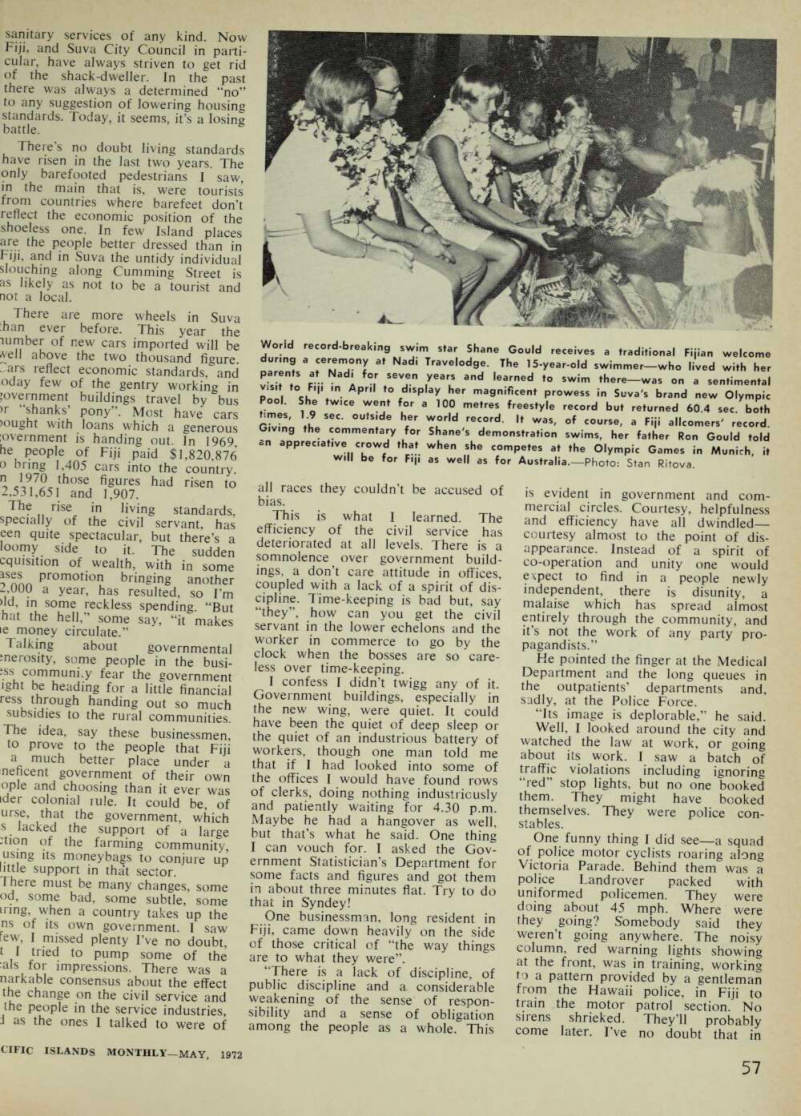 65
65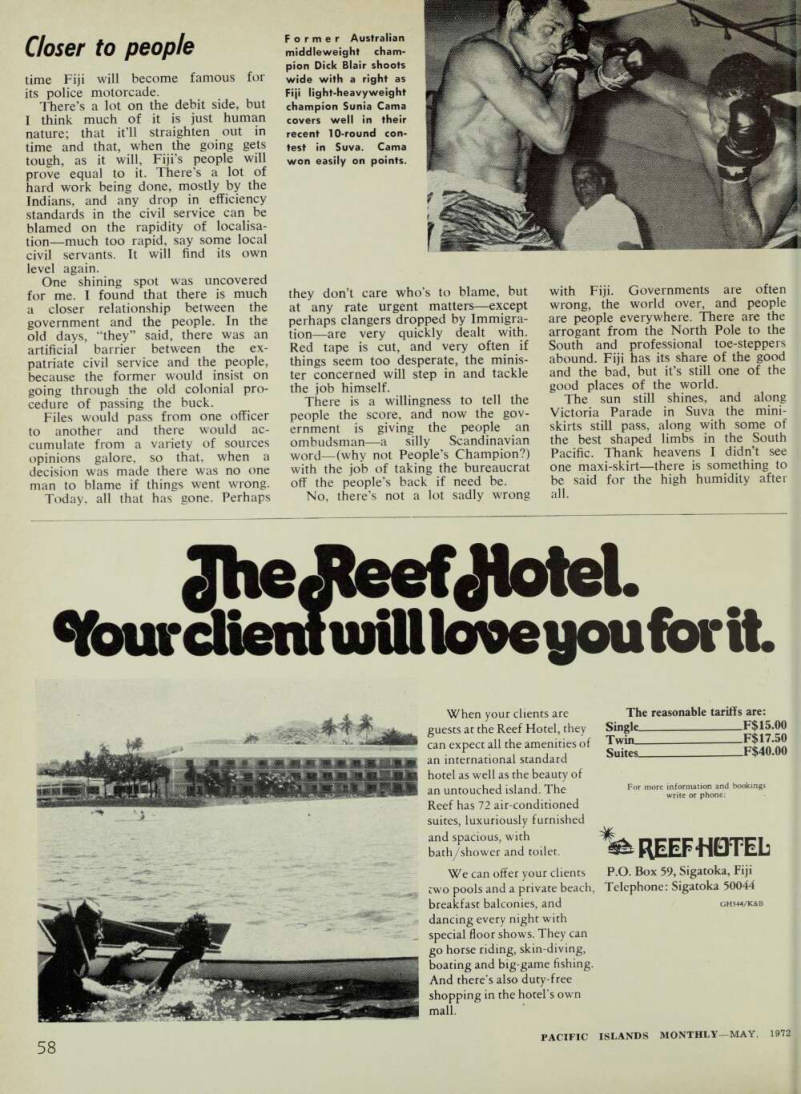 66
66 67
67 68
68 69
69 70
70 71
71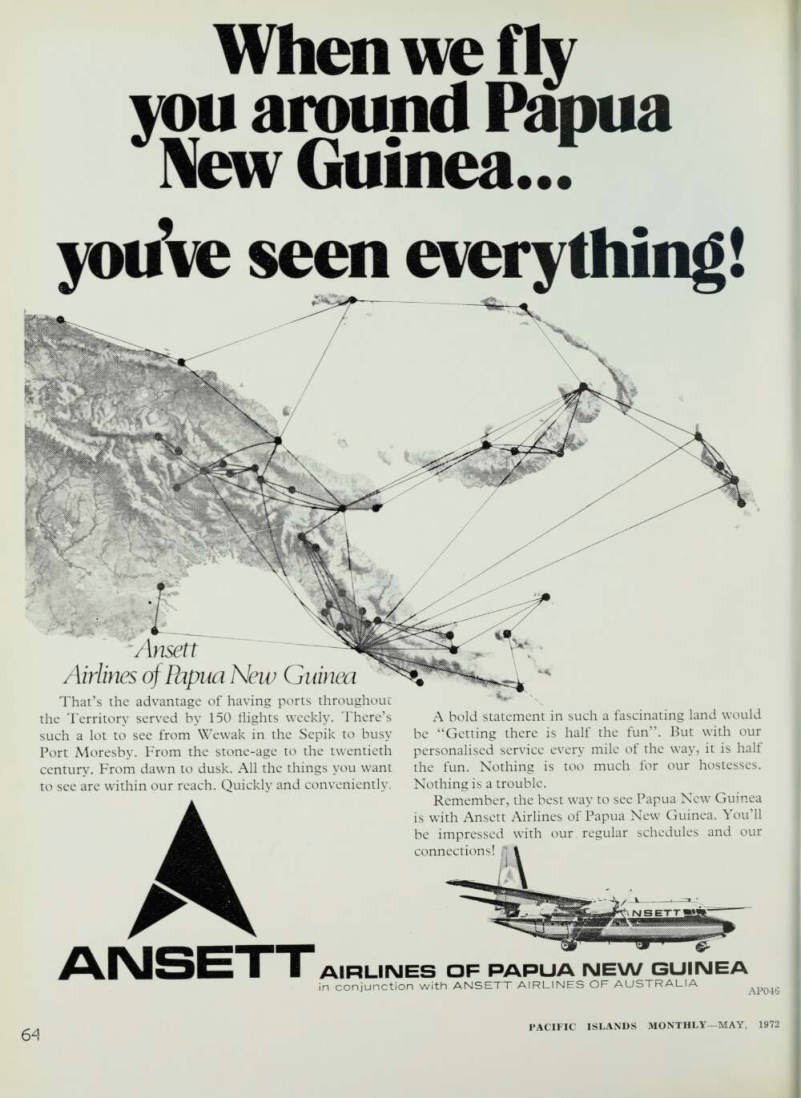 72
72 73
73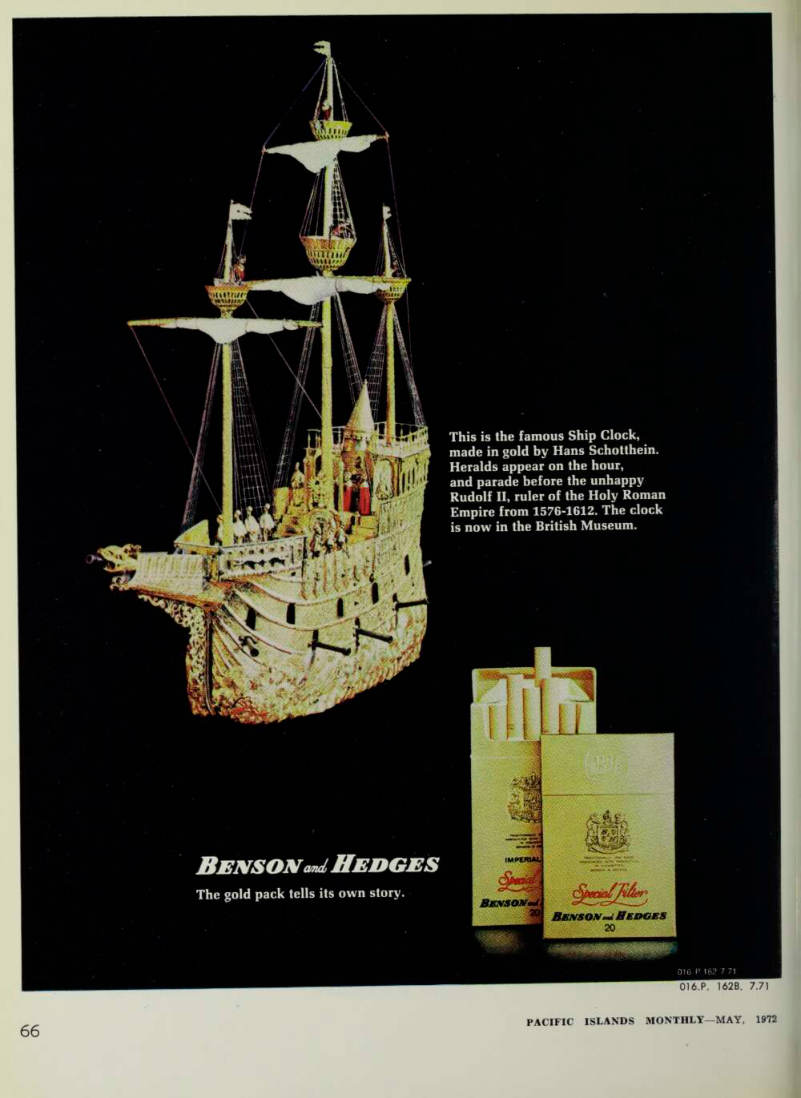 74
74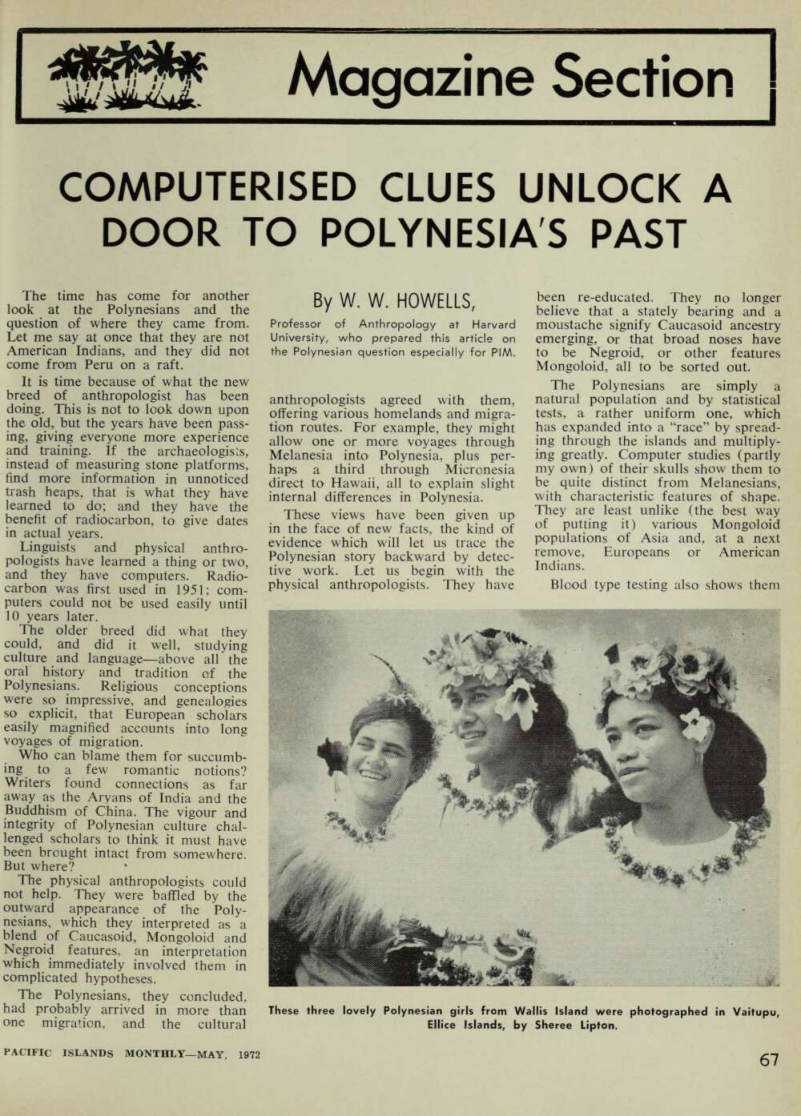 75
75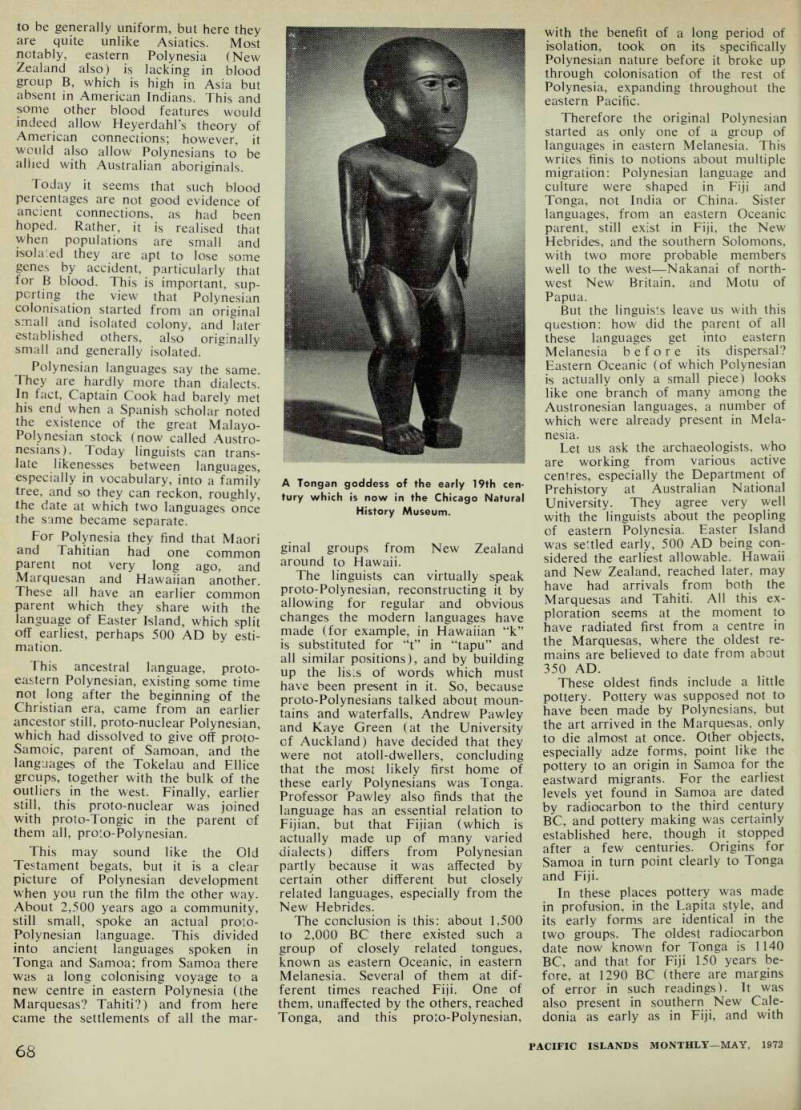 76
76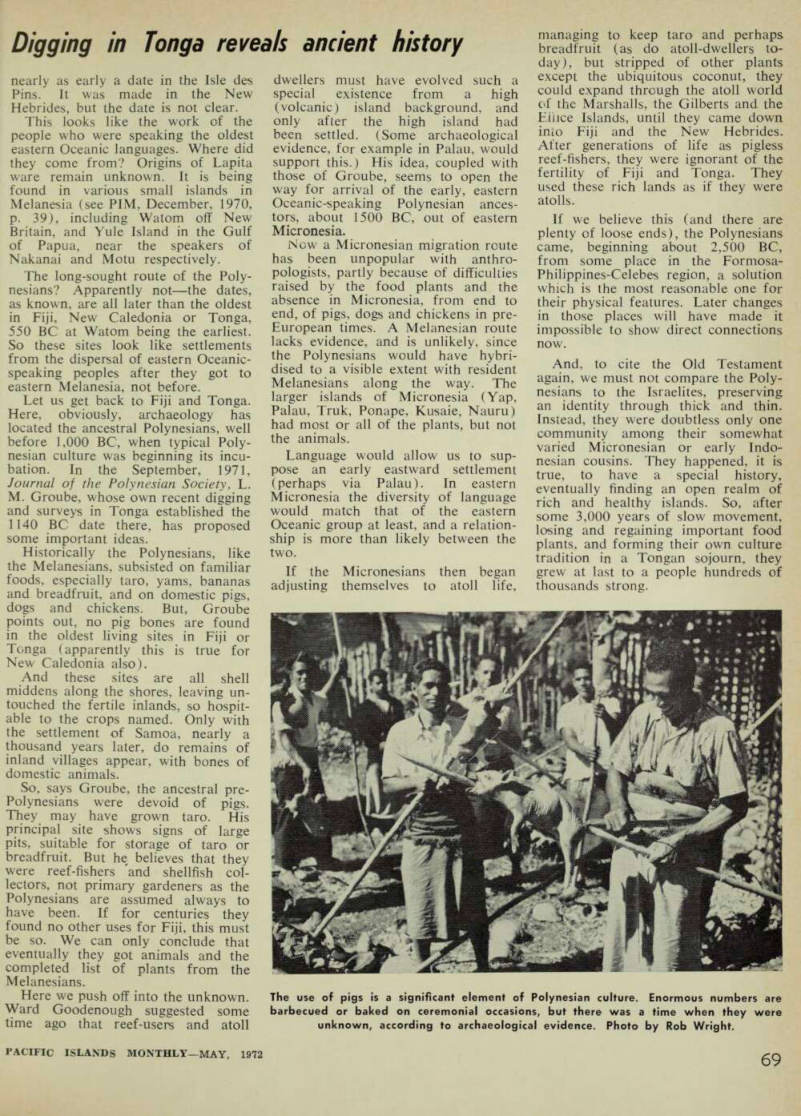 77
77 78
78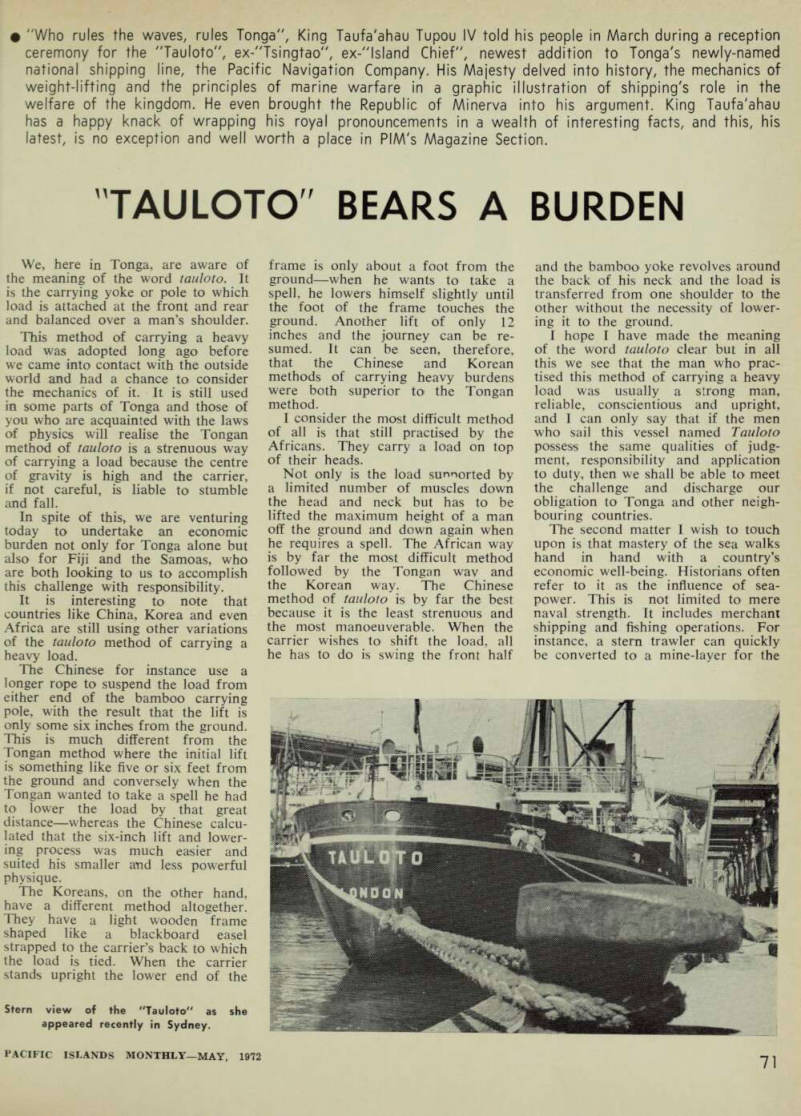 79
79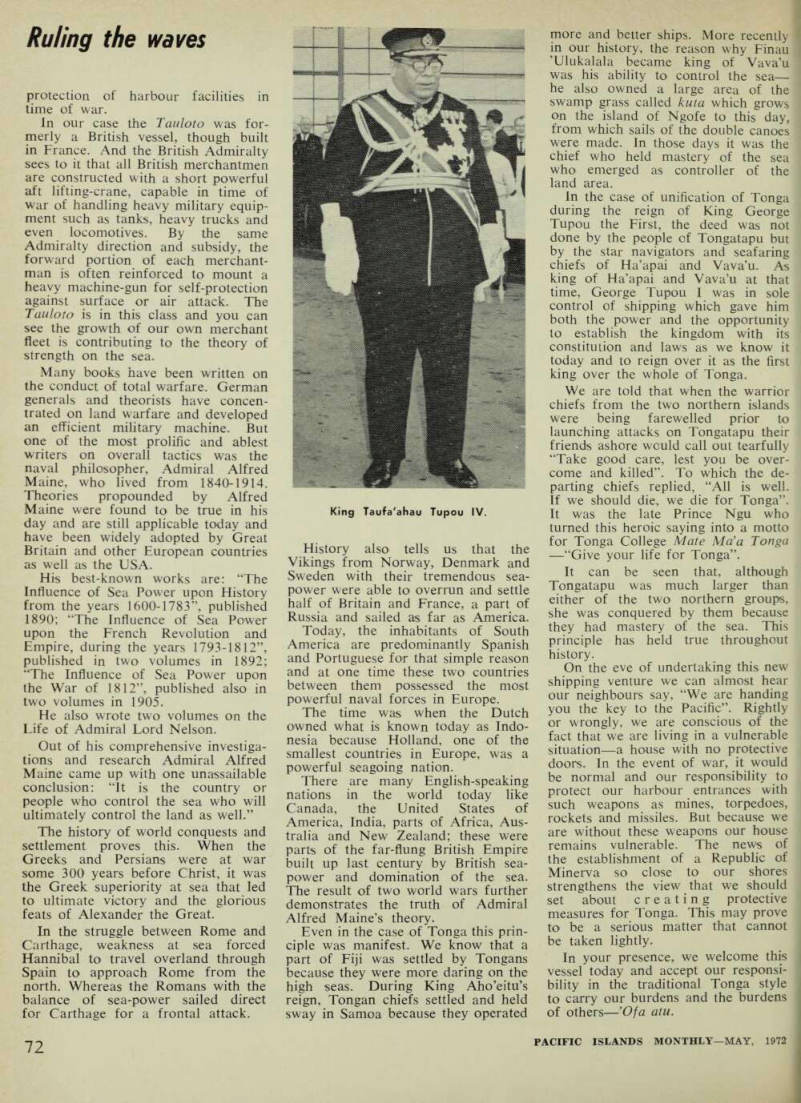 80
80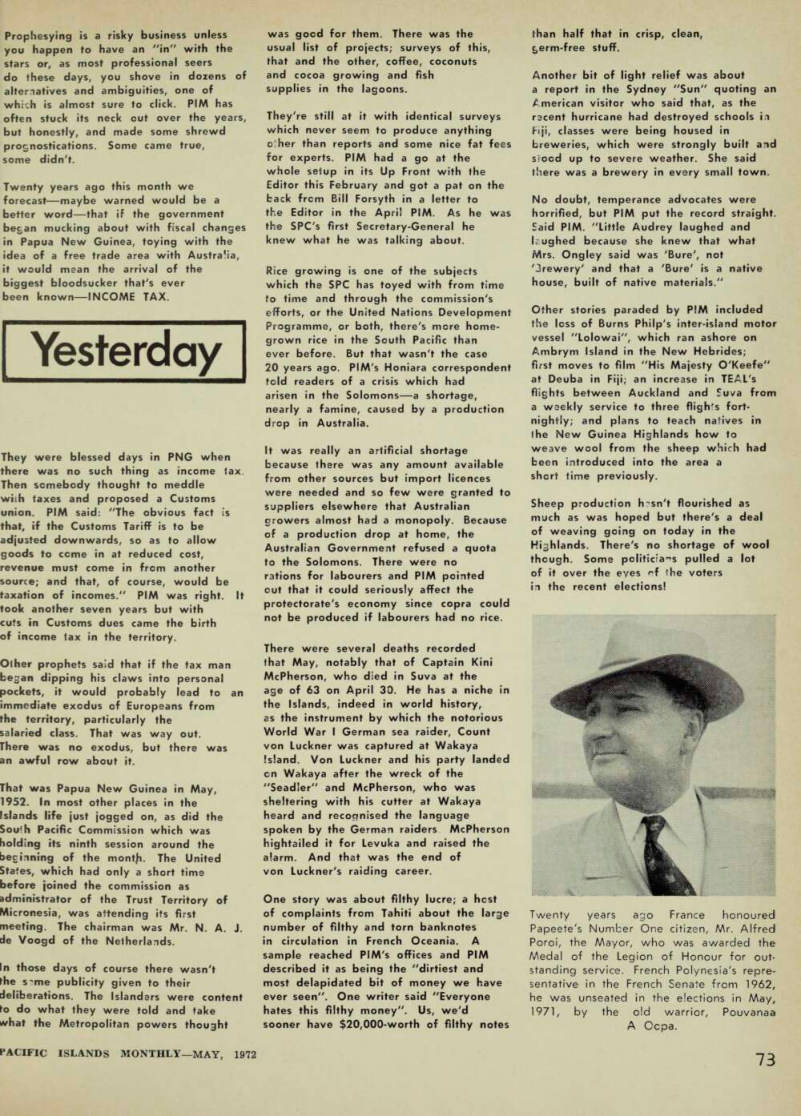 81
81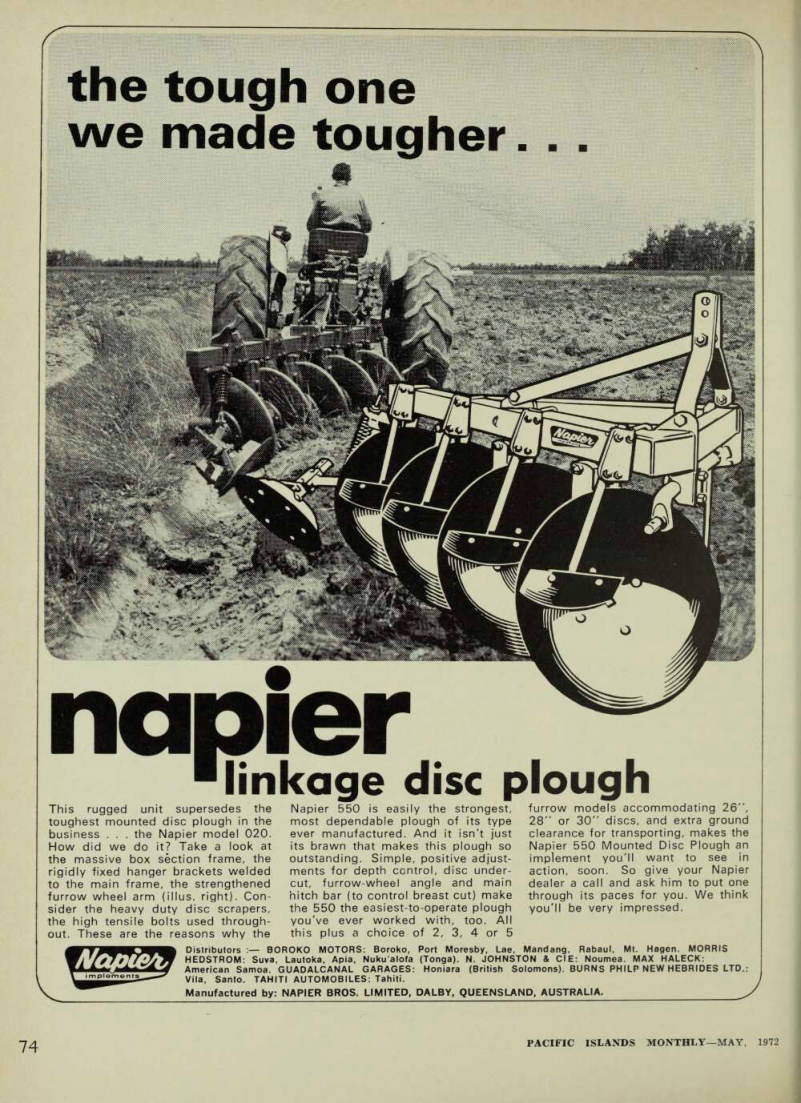 82
82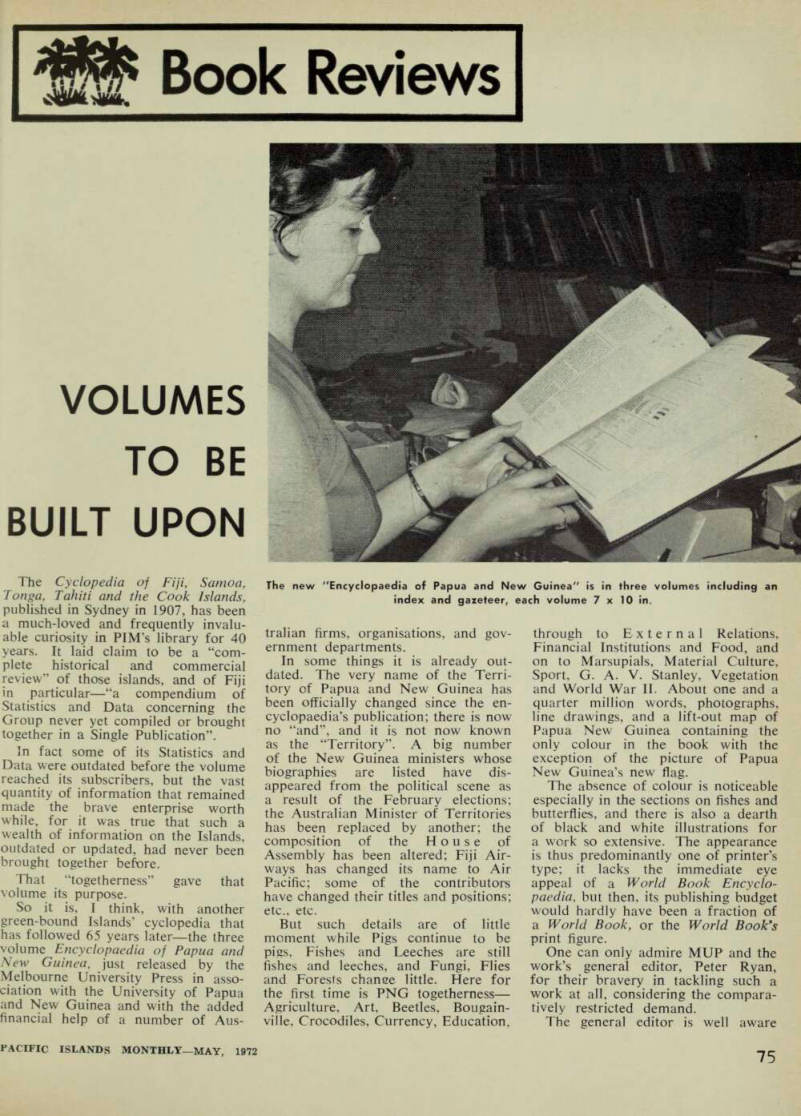 83
83 84
84 85
85 86
86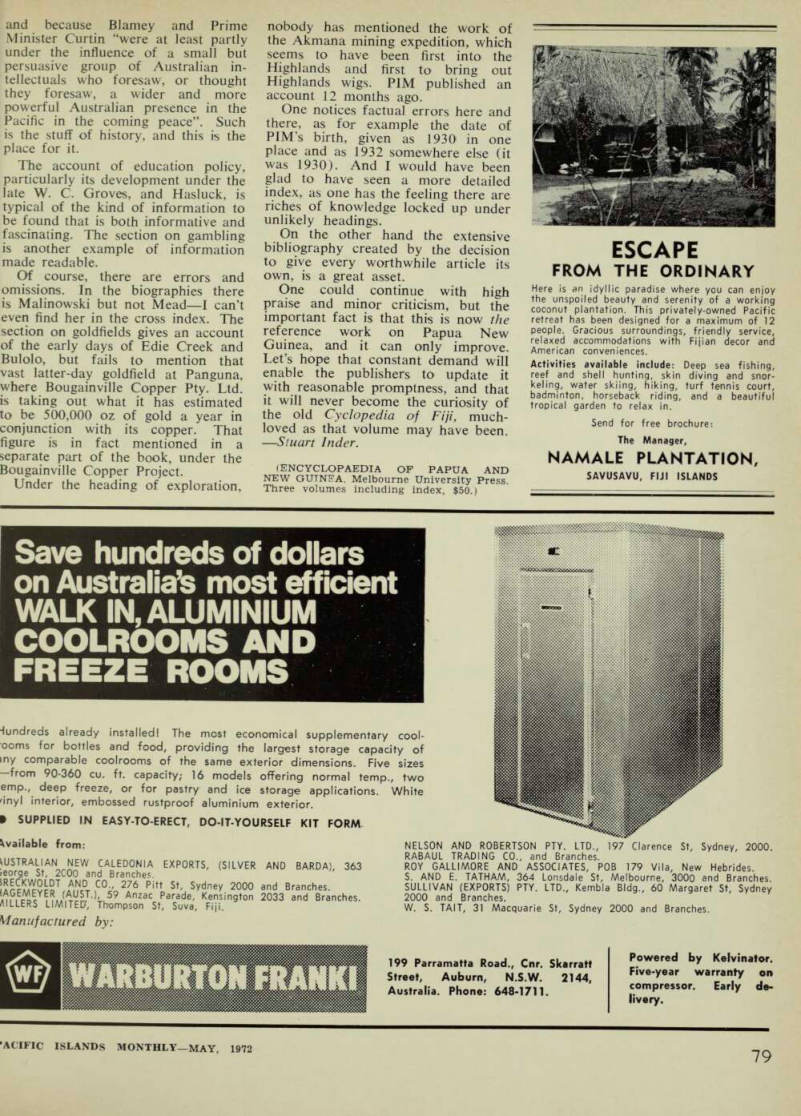 87
87 88
88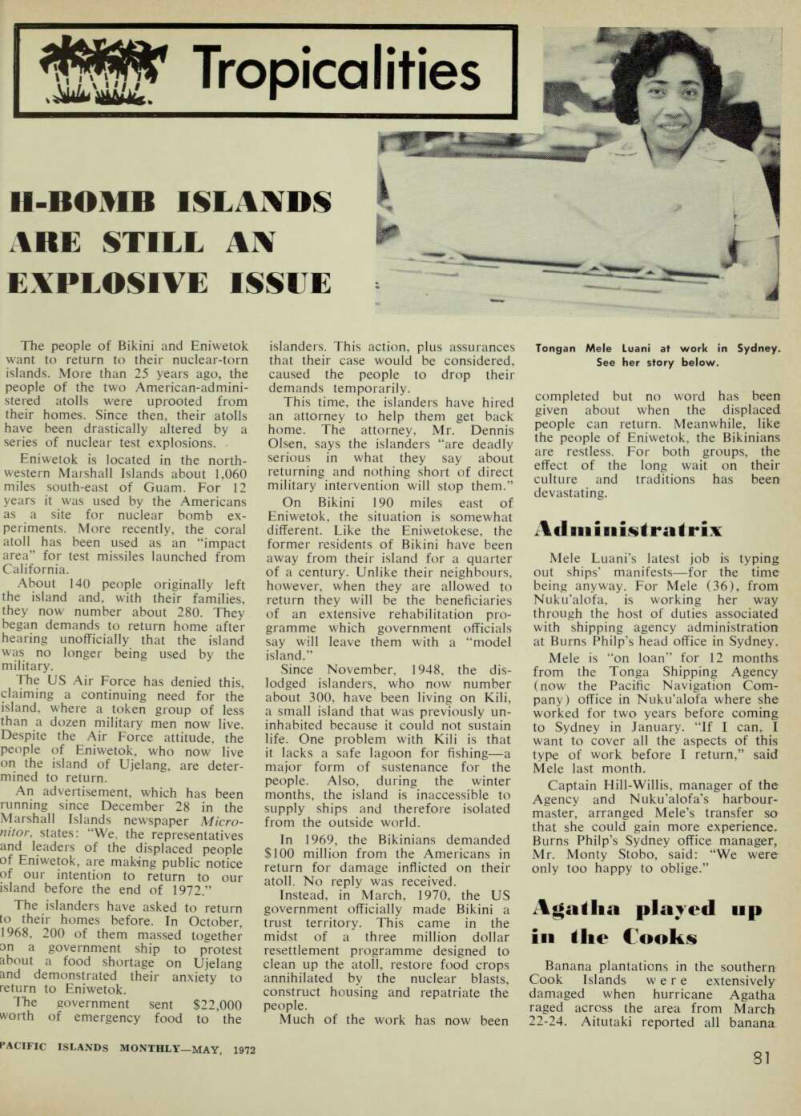 89
89 90
90 91
91 92
92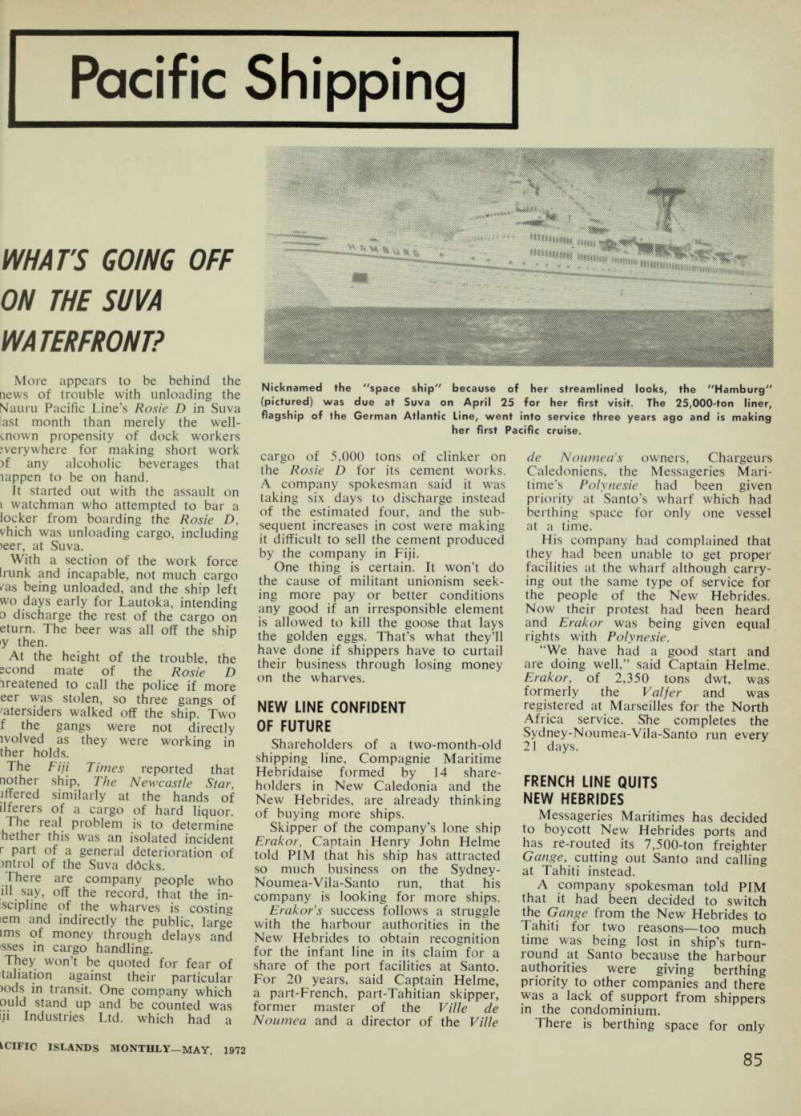 93
93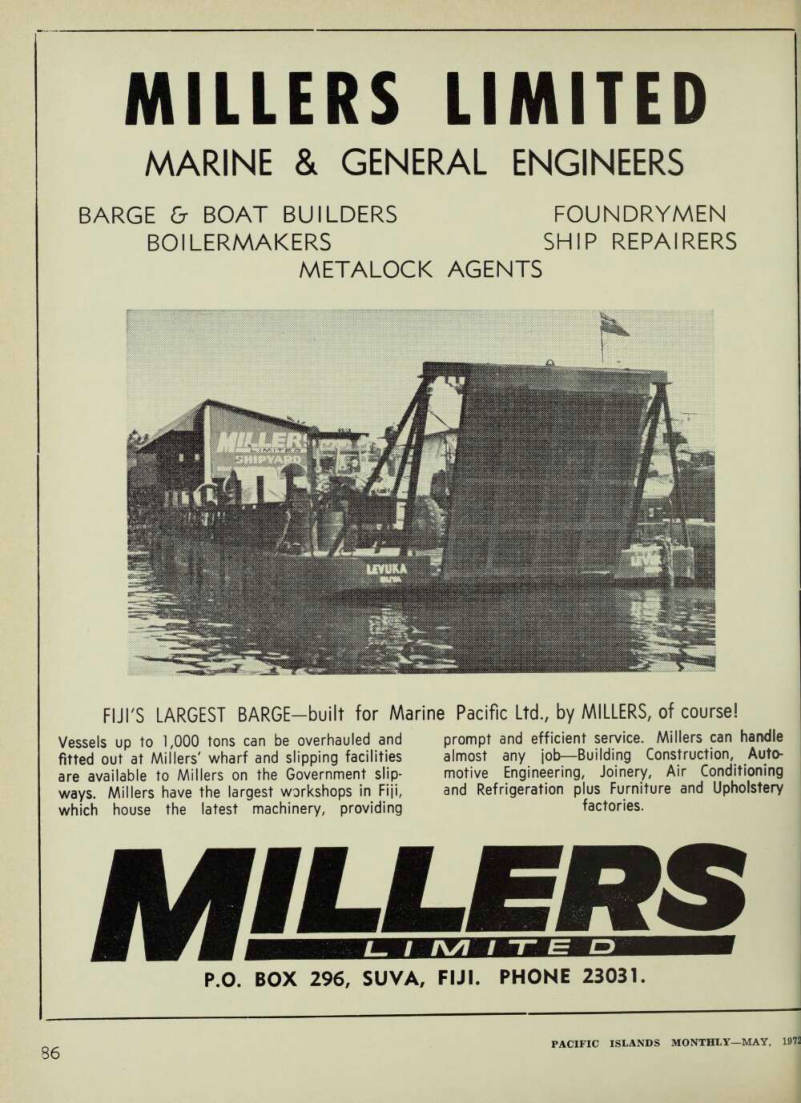 94
94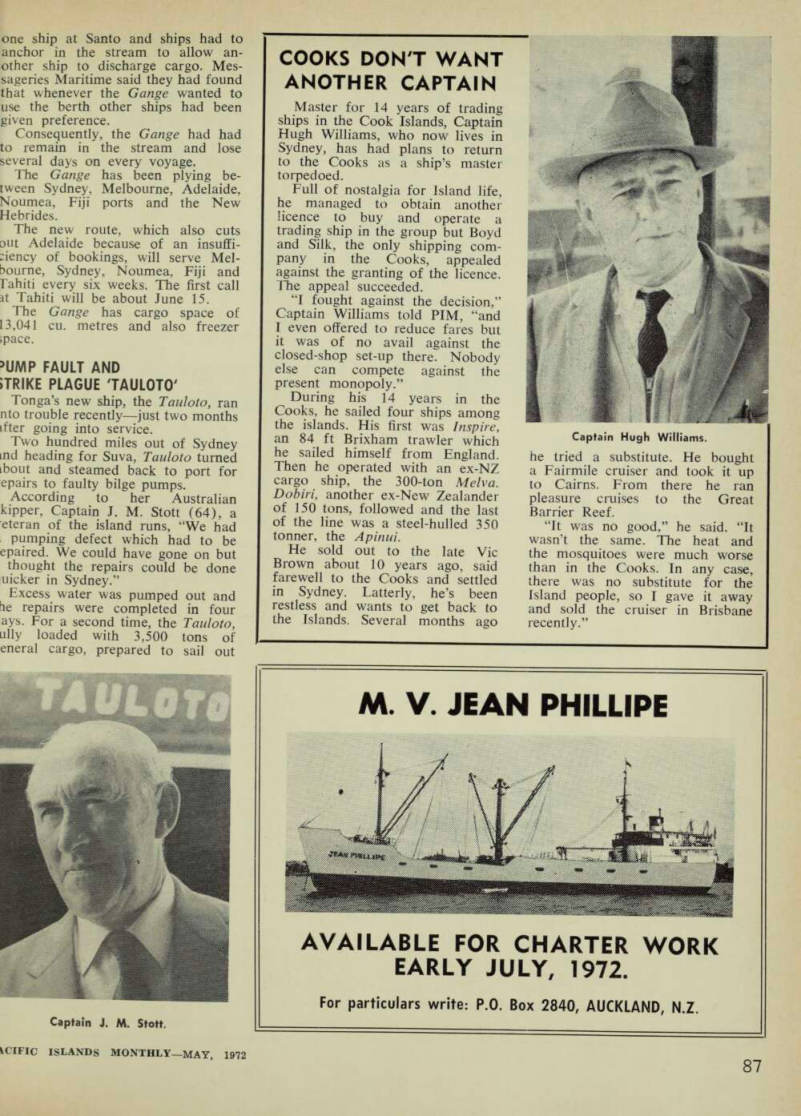 95
95 96
96 97
97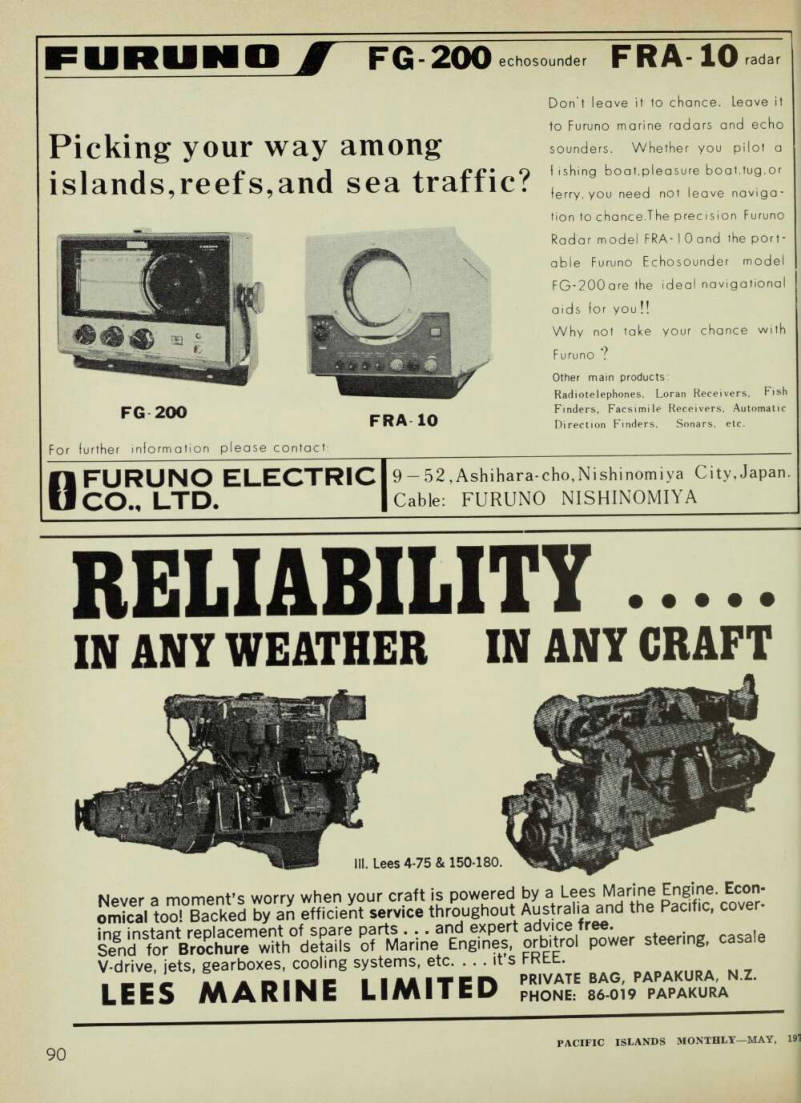 98
98 99
99 100
100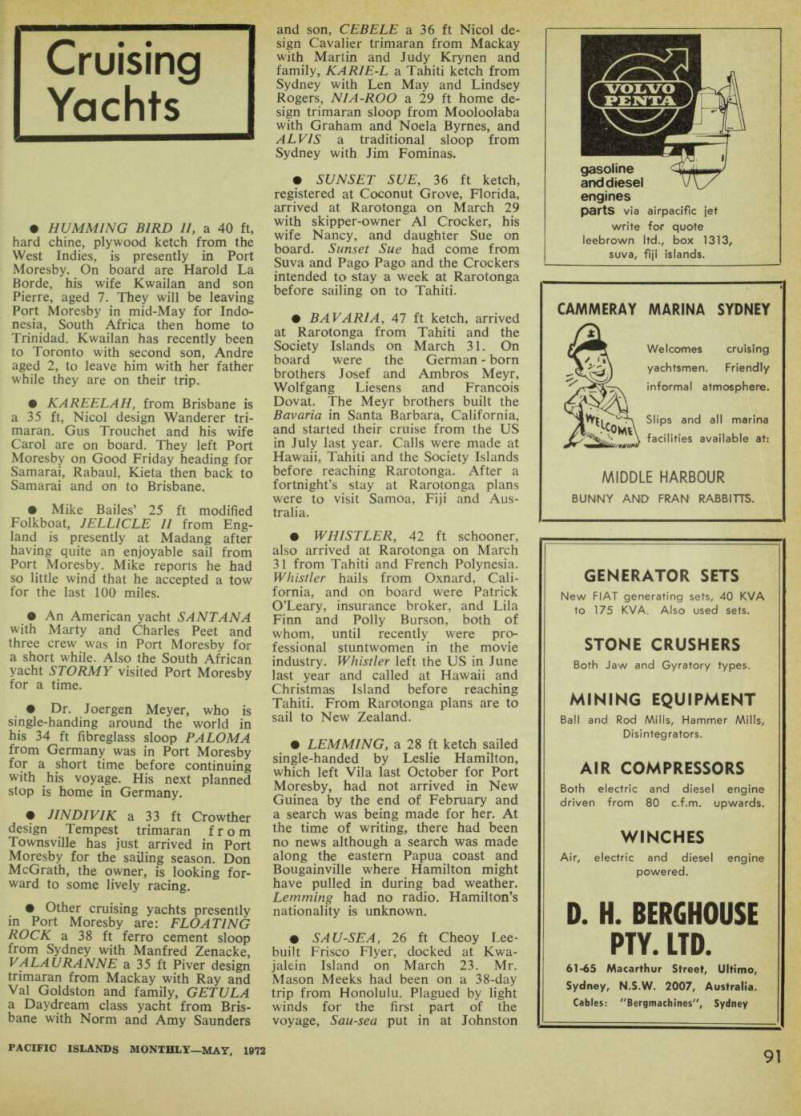 101
101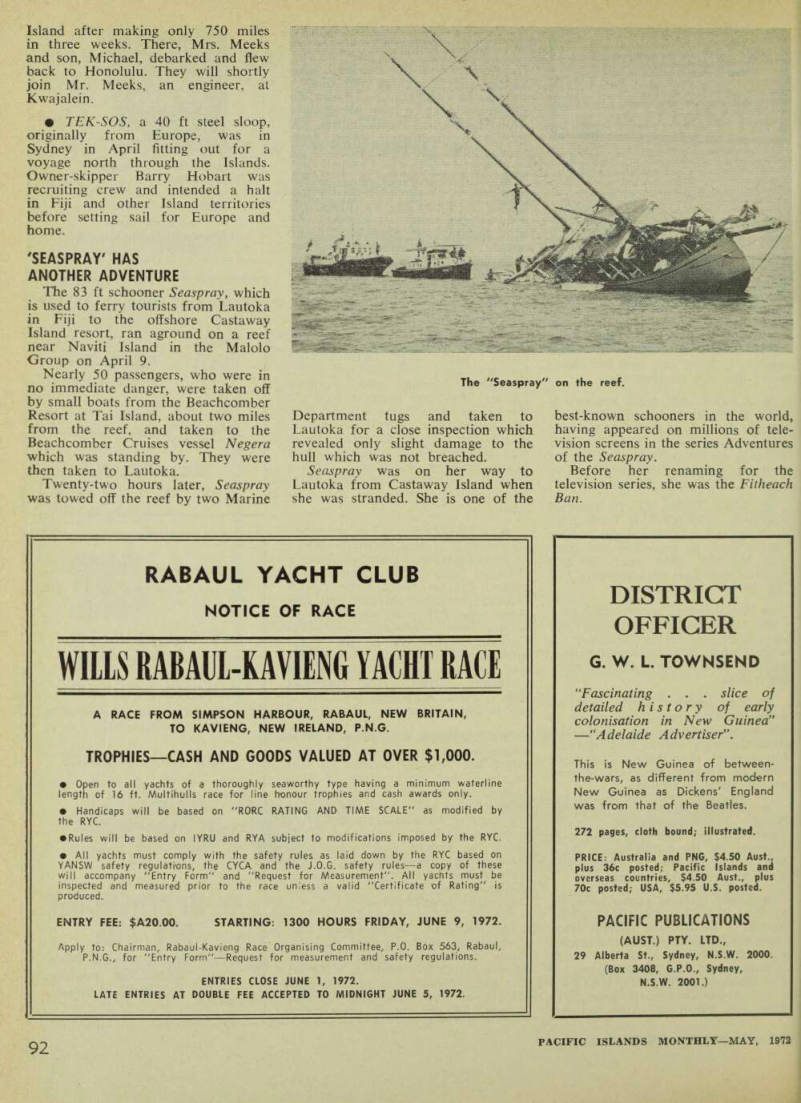 102
102 103
103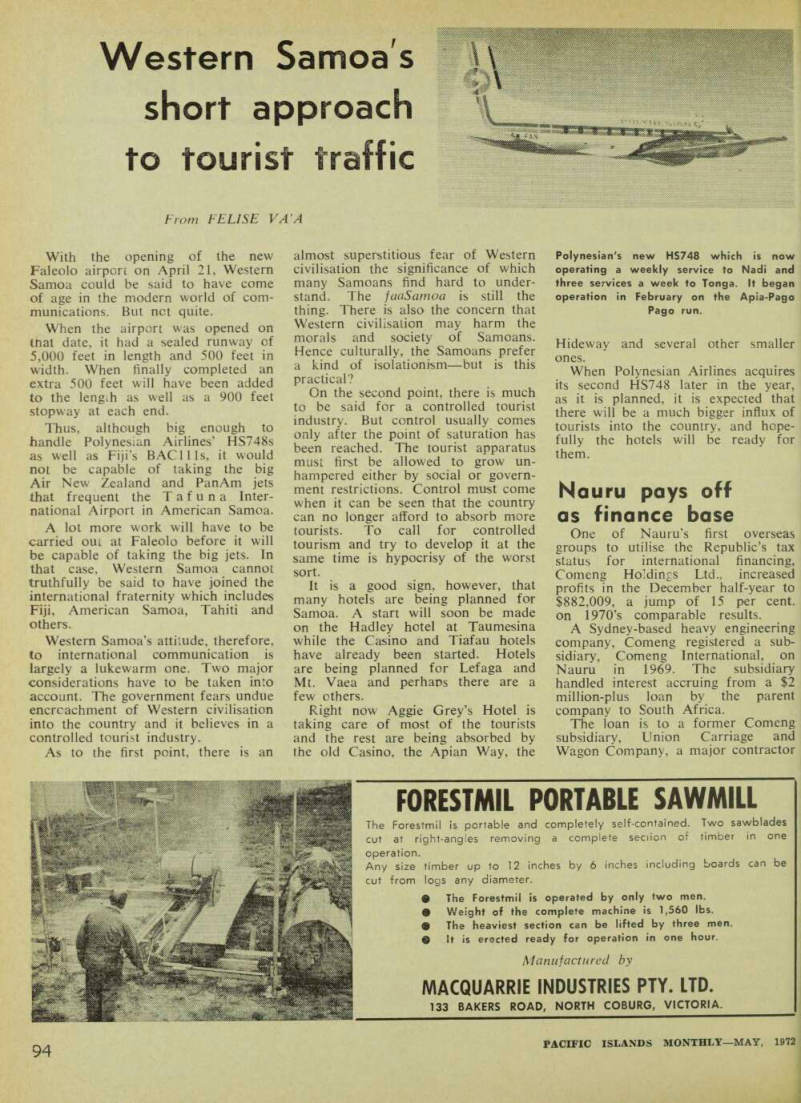 104
104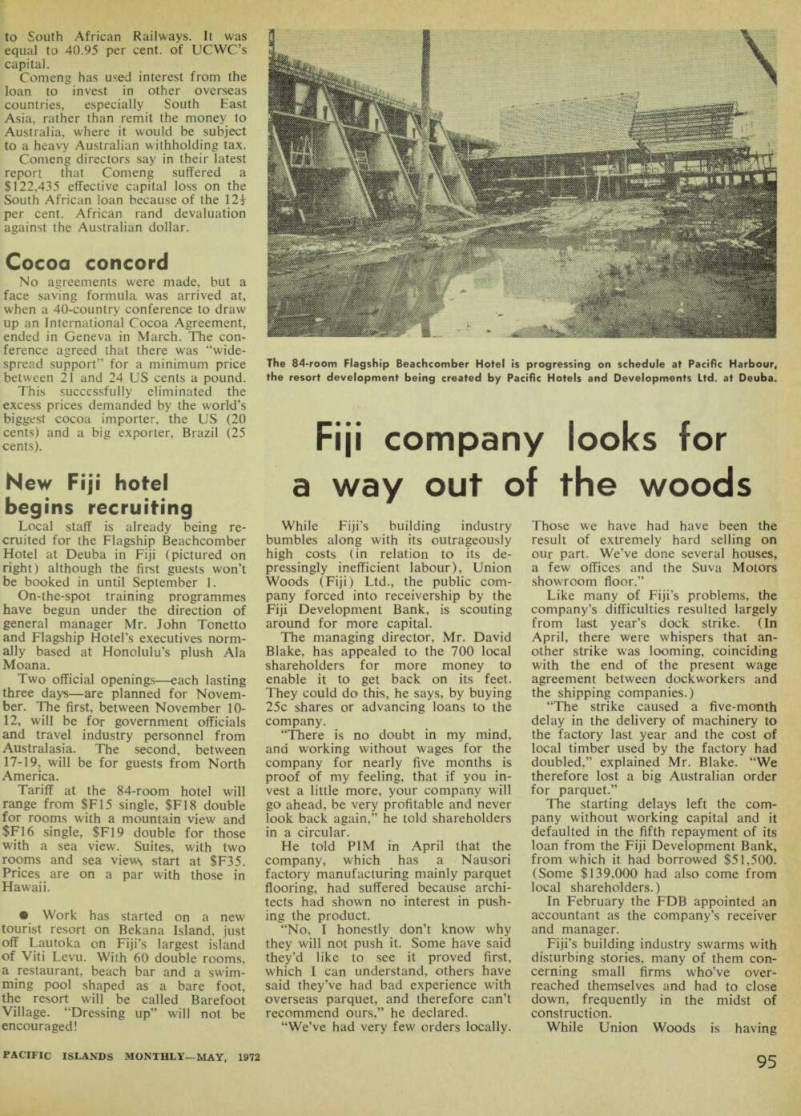 105
105 106
106 107
107 108
108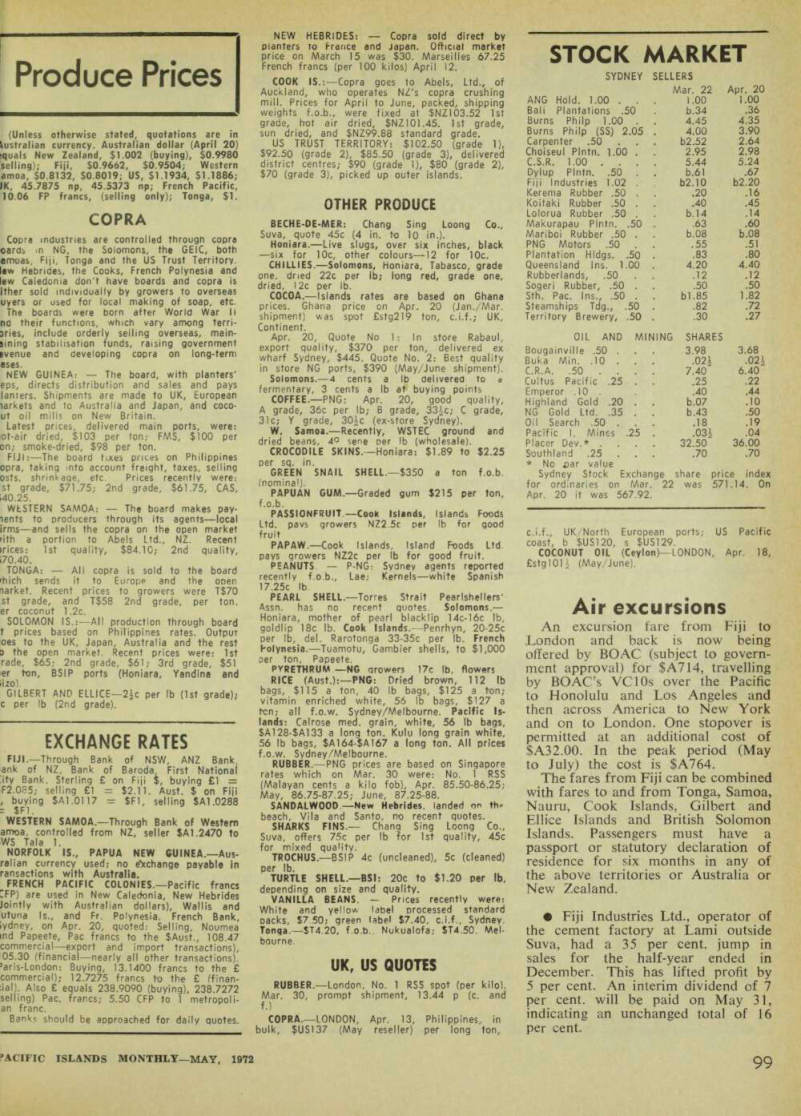 109
109 110
110 111
111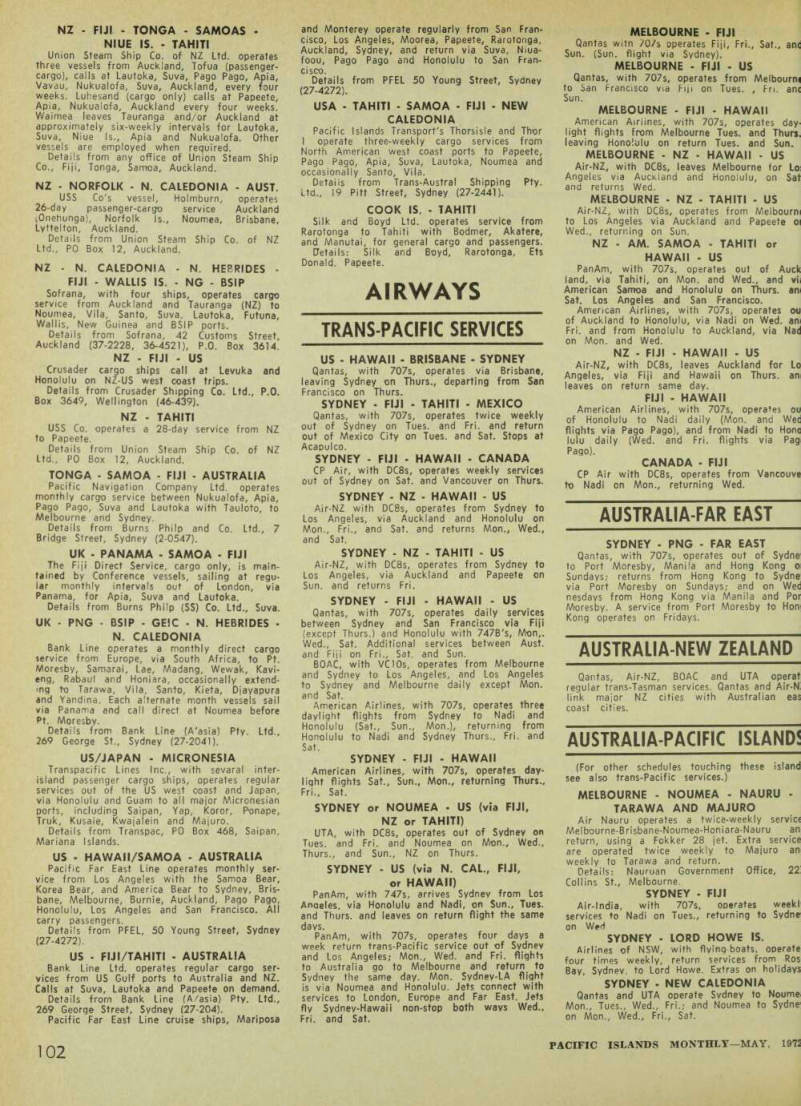 112
112 113
113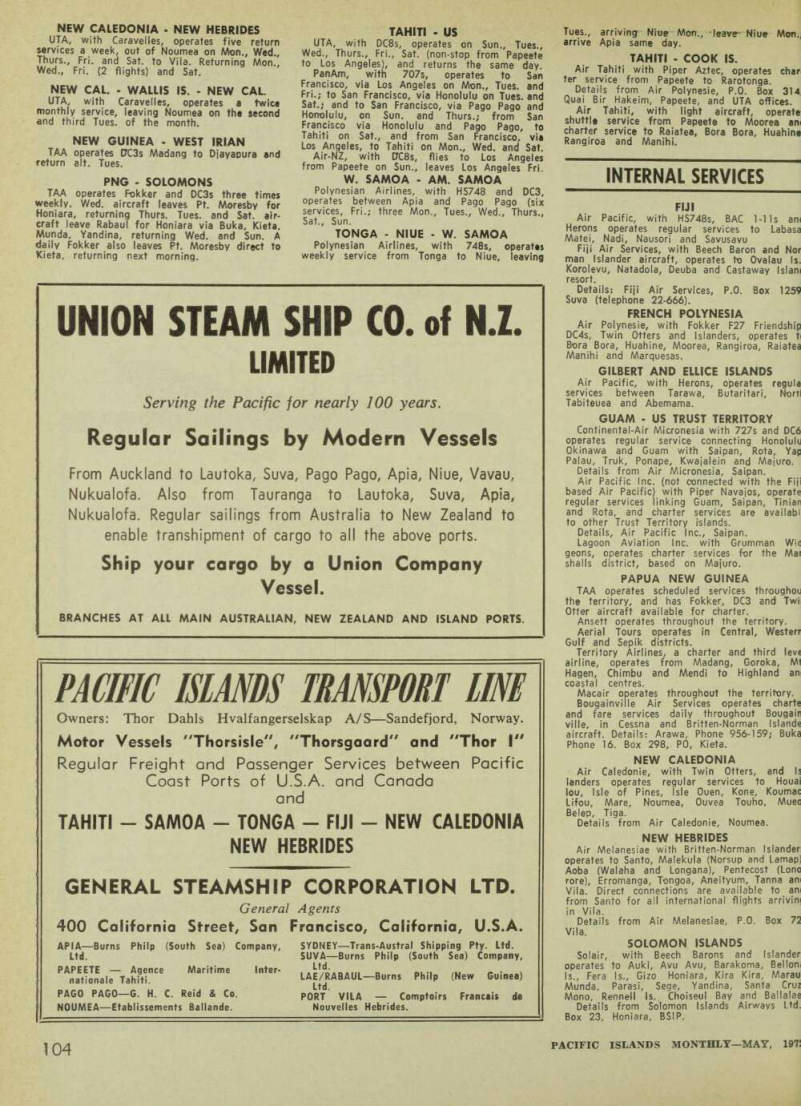 114
114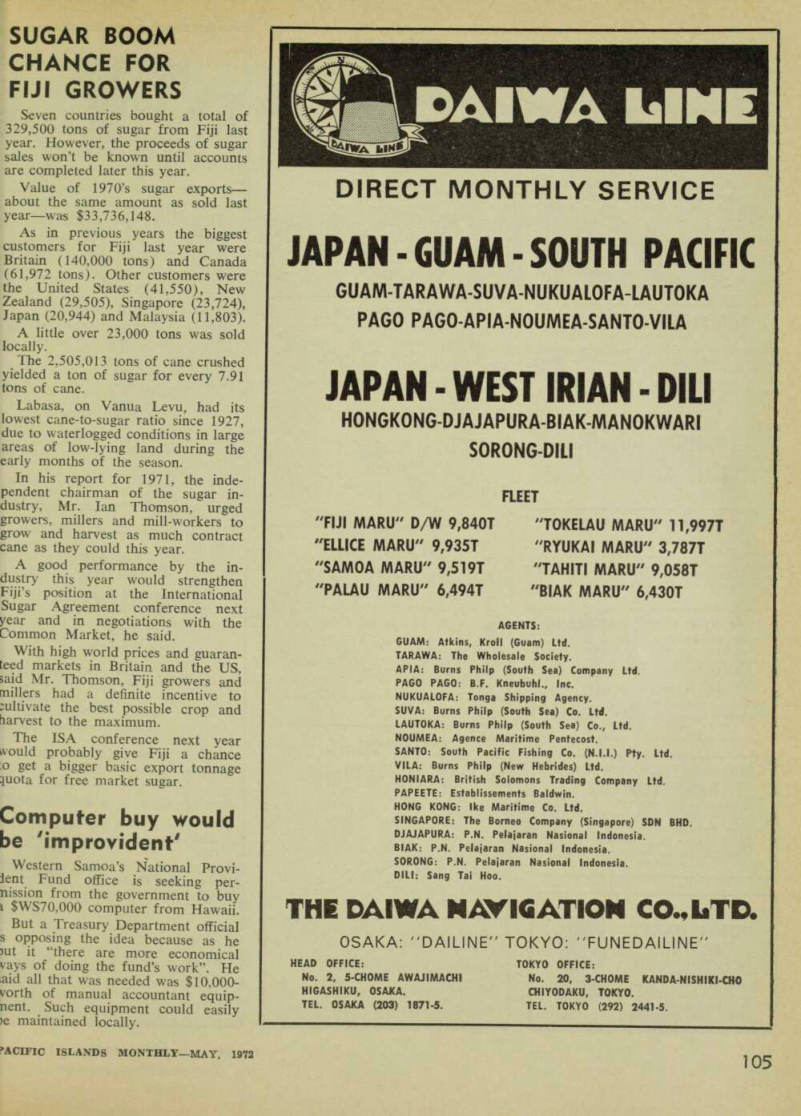 115
115 116
116 117
117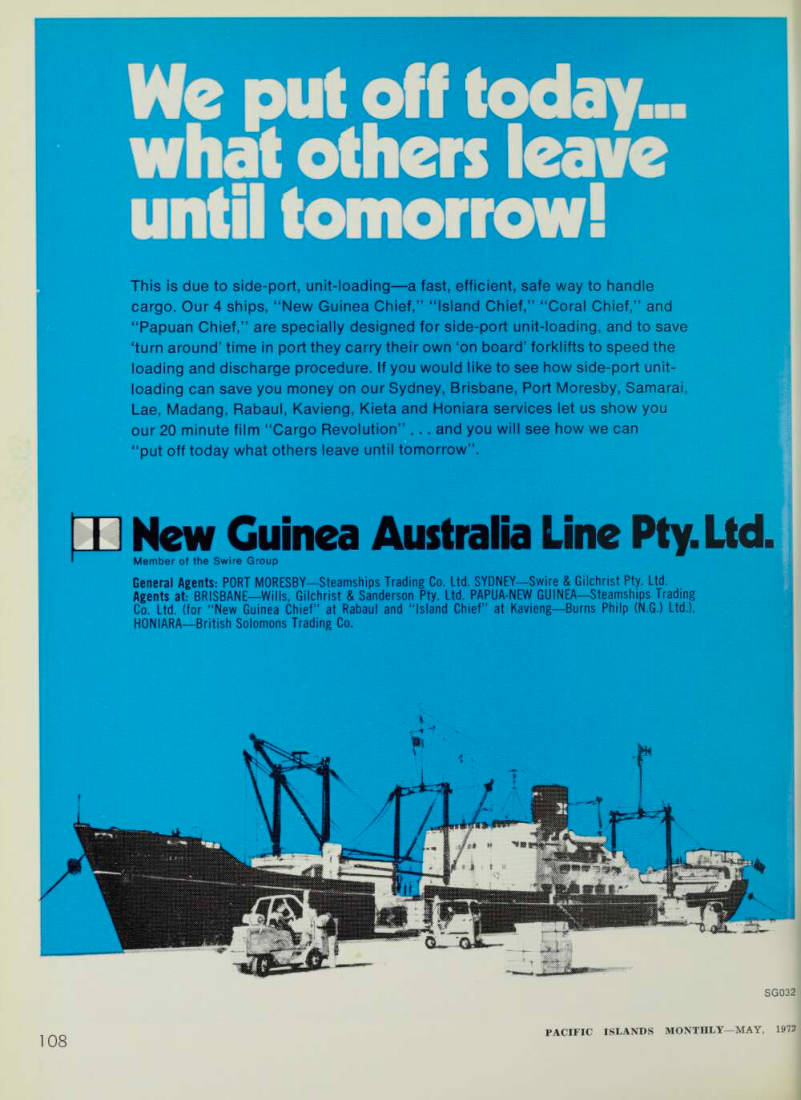 118
118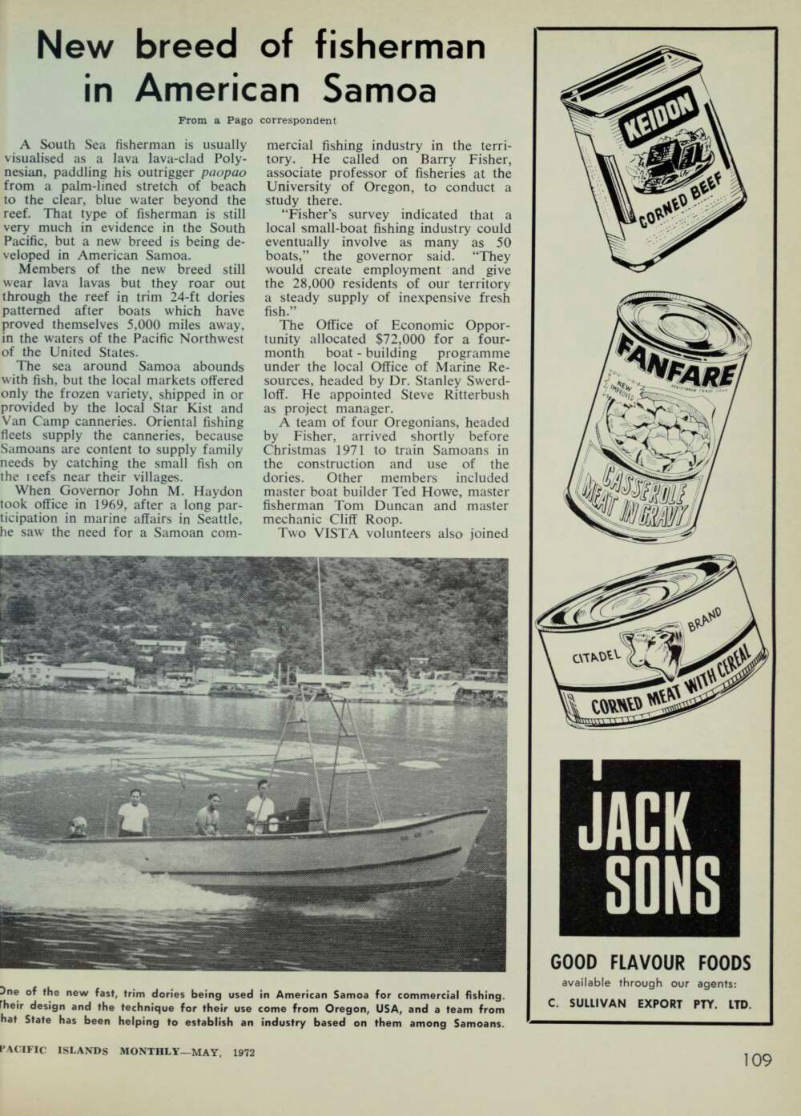 119
119 120
120 121
121 122
122 123
123 124
124 125
125 126
126 127
127 128
128 129
129 130
130 131
131 132
132 133
133 134
134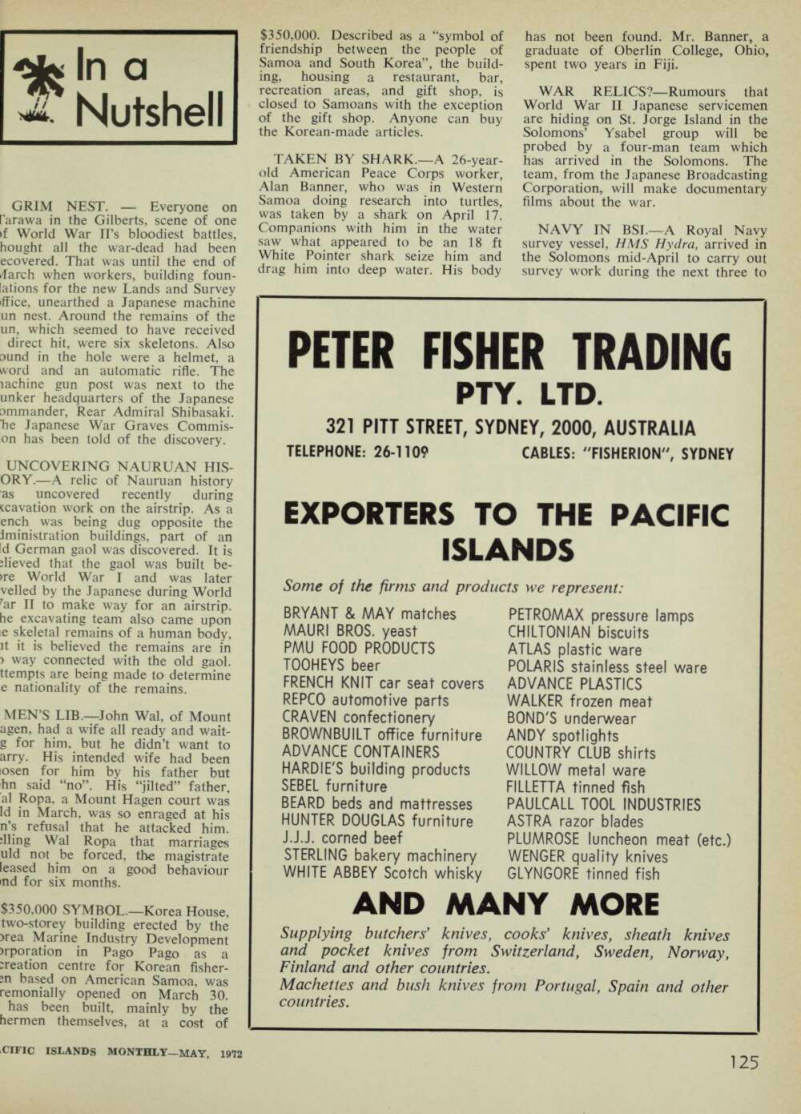 135
135 136
136 137
137 138
138 139
139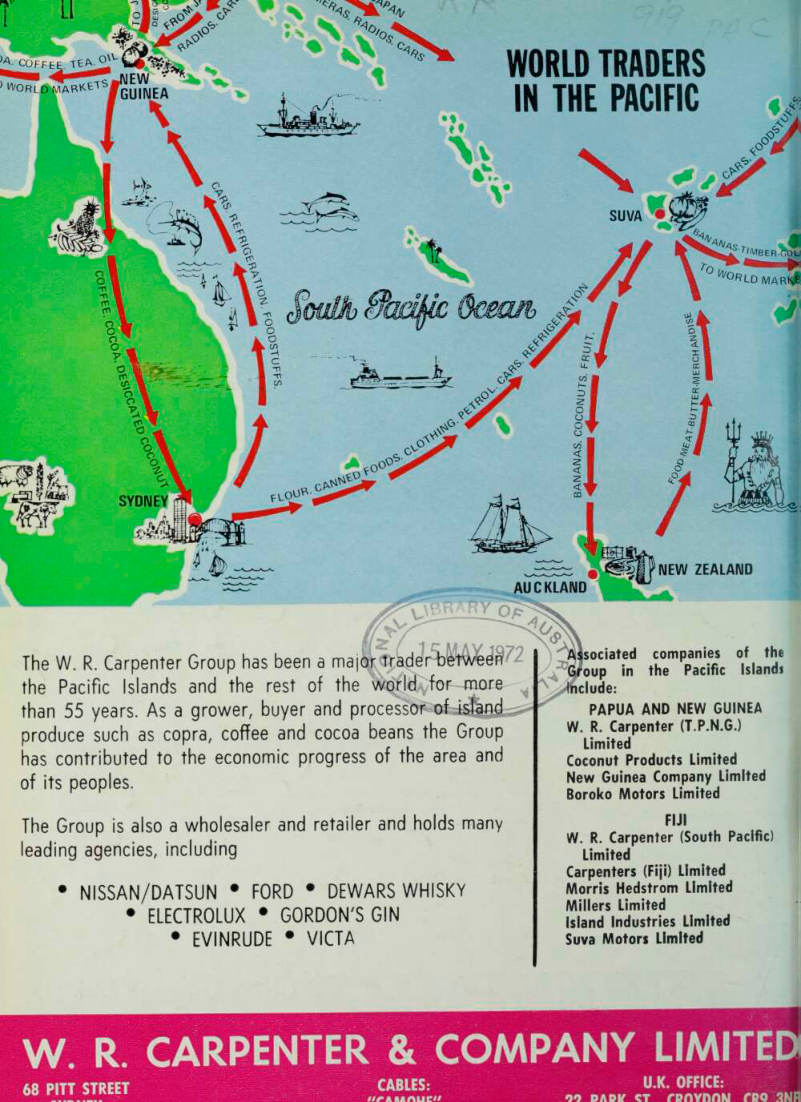 140
140