Pacific Islands Monthly
News Magazine Of The South Pacific
October, 1971
Australia, Nz, Geic, Bsip 50C
P-NG f FIJI, COOKS, TONGA, W. SAMOA, N. HEBRIDES 45c
Nauru, Norfolk, Niue 45C
AMERICAN SAMOA 70c HAWAII 80c MICRONESIA 90c NEW CALEDONIA 65 CFP FRENCH POLYNESIA 75 CFP
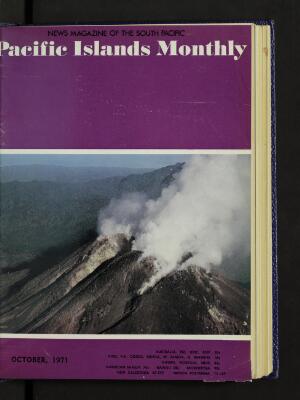
Our Cover
A volcano is always an interesting thing to look at, provided you're not too close or in the way of its lava flow. This bird's eye view of Mount Bagana, on Bougainville, was taken by flier Norman Janke, of Mad ang, who seems to have flown over all the territory's volcanoes. Mt. Bagana is 6,560 ft. high and among the most active of the territory's volcanoes. Its last major eruption was in 1967.
Numerous lava flows from past eruptions can be seen on the sides of the cone.
Advertisements & other items, pp. 2-16 (1 item)
No.l~the friendly one
50 centres throughout Papua and New Guinea on a 10,000 mile network. 100 centres in Australia. TAA links the lot.
Across the Territory we give you more flights to pick from.
More cargo space. More seats.
Including daily Friendship
services between Moresby and all major centres. Plus daily ‘Bird of Paradise’ T-Jet flights connecting Brisbane, Sydney, Melbourne, Adelaide and Perth with the Territory.
If you plan to take off soon, keep our big link-up in mind.
And call your Travel Agent or
TAA.
Port Moresby 2101, Lae 3191, Madang 2478, Rabaul 2567.
Goroka 8, Mt. Hagen 4 or 301, Wewak 103.
TAA
AIRLINES OF NEW GUINEA
No.l~the friendly one
♦ Papua Australia 319 2741/7C
THE PACIFIC
FIJI,SAMOA,TONGA,NIUE Is,NORFOLK IS.
BURNS PHILP
[SOUTH SEAT
REGISTERED OFFICE; SUVA, FIJI,
TELEPHONE NO; 22661
TELEX NO; FJ1127
Code Address: "BURNSOUTH' - ..
SHIPPING AGENCIES
The New Zealand Shipping Co. Ltd.
Shaw Savill & Albion Co. Ltd.
Blue Star Port Line (Management) Ltd.
Bank Line Ltd.
General Steamship Corporation Ltd.
Compagnie des Messageries Maritimes Royal Interocean Lines Daiwa Navigation Company Ltd.
Sitmar Line Flotta Lauro (Lauro Lines) Australasia Pty. Ltd.
Tonga Shipping Agency.
EXCLUSIVE
DISTRIBUTORSHIPS
INCLUDE
Akai Taperecorders Sunbeam Appliances Dunlop Products Hitachi Electronics Holden Motor Vehicles Rolex Watches Revlon Cosmetics Pentax Cameras Massey-Ferguson Tractors Olympic Tyres Penfold Wines
AGENTS FOR
Queensland Insurance Co. Ltd.
Shell Company (P. 1.) Ltd.
Bureau Veritas
ASSOCIATED COMPANIES
Burns Philp (New Hebrides) Ltd.
Burns Philp Trustee Co. Ltd.
Automotive Supplies Co. Ltd.
Corrie & Co. Ltd.
Wrought Iron and Steel Construction Co. Ltd.
Bish Ltd.
SPECIALISED SERVICES
Expert advice on Shipping; Forwarding; Customs formalities; Insurance.
COMPLETE TRAVEL
SERVICE
accredited agents for the
INTERNATIONAL AIR
TRANSPORT ASSOCIATION
OVERSEAS AGENTS: SYDNEY • LONDON • SAN FRANCISCO
% % m i
SOME OF THE FIRMS
WE REPRESENT ARE:
Frappier (French Brandy) Huvet (French Brandy) Sunshine Biscuits Sunrise (Confectionery) Flamenco (Instant Coffee) Quaker Products (Oats, Jets) Merchants (Canned Soft Drinks, Cordials) Hancocks (Spaghetti, Cereals) Melbourne Canning (Jams) Water Wheel (Flour, Sharps, Wheat) A. P. & D. (Twisites, Twirlies) Edward Zorn (Margarine, Cooking Fats) Allens (Confectionery) Robert Timms (New Guinea Gold Instant Coffees and Teas) Highness (Canned Vegetables, Fruit Juices) S.P.C. (Abalone) Lunchtime (Honey) Wing Lee (See You Sauce) Magnet (Mattresses) Esteel (Cookware) Warner-Drayton (Fans) Mitchell's (Abrasives) Regent (Swiss Watches) Gainsborough (Furniture) Austramax (Pressure Lanterns) Preservene (Soap Products) Lawn Chair; Tubco (Garden Furniture) Sunrise Lustertone (S.S. Sinks, Plumbers' Supplies) Electronic Industries (Electrical Household Appliances) Jex (Steelwool) Arnbro (Folding Beds) Elmaco (Plastics —Electrical Fittings) B.X. (Plastics) Franklite (Light Fittings)
S. E. TATHAM
& Co. Pty. ltd.
MELBOURNE, AUSTRALIA
P.O. Box 8, Cables "SET"
Telephone 60-1125
EXPORT AGENTS
PACIFIC ISLANDS
AGENTS
Australian buying and shipping agents for the Gilbert and Ellice Islands Colony Wholesale Society % % % 52 \ 1
DIRECT ENQUIRIES WELCOMED
Associate Company
S. E. TATHAM (FIJI) LTD.
Suva, G.P.O. Box 671.
Lautoka, P.O. Box 366.
SINCE 1924
1 ft
■ ft
Rapid and independent
orientation with the Wild GAKt
Gyro Attachment
Geographic North to ±3O” (1 C ) in approximately 20 minutes in any weather, uninfluenced by the earth’s magnetic field.
Handy and light, the Wild GAKI Gyro Attachment fits on the Wild TIA, Tl 6 and T 2 theodolites.
It is especially suited for the orientation of long traverses and azimuth checks thereon for the transfer of bearings in shafts, galleries and tunnels (no need for double plumbing) for the orientation of directions in large civil engineering projects, in power dams, at airports, in forests, and in other, similar applications for the determination of photogrammetric control points by polar surveying methods.
Please ask for brochure G 1413 r\ rw
WILD (AUSTRALIA) PTY. LTD.
291-295 SUSSEX STREET, SYDNEY, N.S.W. 26-6945
5 ERROL STREET, EAST PRAHRAN, VICTORIA. 51-9101
INTERSTATE AGENTS
S.A.: E. Treliving & Son Pty. Ltd., Adelaide. W.A.: Henderson Inst. Co. Pty. Ltd., Subiaco TAS.: J. Walch & Sons Pty. Ltd., Hobart. N.T.: J. R. Roe & Co. Ltd., Darwin.
OLD.: Mr. W. I. Wardrop, 61 Lorward Ave., T.P.N.G.: B. Bell & Co. Pty. Ltd., Boroko.
Bardon.
The Rempioy range.
Made wel In Britain to sd
wd in yow country.
f.
The Rempioy range—craftsmanship at low prices. Couple this w ith a prompt service and you'll know why our products sell so well all over the world.
A look at a few items from our range will show you what we mean.
There are Spring Interior Mattresses and Divan Sets in a wide range of sizes and qualities—all made to specifications that ensure comfort and durability.
There are leather goods—everything from slim folio cases and school satchels to prestige executive briefcases and the luxury Skai range of travel goods.
There's tough industrial clothing which offers complete protection and comfort for the wearer.
And there's metal furniture, immersion heaters, electric soldering irons, walking aids and rehabilitation equipment.
All made well in Britain to sell well in your country.
For full details write to our Sales Promotional Representatives, Demka (PTY) Ltd., 2/12 Carrington St., Sydney, New South Wales, Australia 2000, or contact us direct.
Rempioy
Rempioy Limited, Export Department, 415 Edgware Road, Cricklewood, London NW2 6LR, England.
G° Q),w
yuyu morning! "W-
-oA<°good morning-
You’ll get just as many good mornings out of the new-look Weet-Bix pack as you got out of the old one.
And a hearty helping of 100% whole grain Weet-Bix natural wheat goodness.
So you see, nothing important has changed.
SANITARIUM HEALTH FOOD CO., SYDNEY, AUSTRALIA.
7082
A
great bunch
of flours
Robert Hutchinson makes the greatest bunch of flours in the Pacific. Bakers’ flour.
Superlitc cake and sponge flours.
Biscuit flour and cracker flour.
Wheaten sharps and wheaten meal.
We’re particularly proud of our bunch of flours. So we have a technical advisory service to help you use them properly.
So next time you see a Robert Hutchinson flour (or even one of our Hutmill stock feeds), remember it’s just one of the bunch. m s r " V'... ./■ ¥, m
ROBERT
HUTCHINSON
LIMITED
(he flour people
Hartington Street, Glenroy, Victoria, Australia. 3046. Telephone Melbourne 306 7261 »»
Begin making the most or your money The Secretary, Newcastle Permanent Building Society Ltd., P.O. Box 1,
NEWCASTLE WEST, N.S.W. 2302, AUSTRALIA.
Dear Sir, Please send me a free investment pack with full details of how to open an account with the Newcastle Permanent Building Society.
NAME
ADDRESS
Return this coupon
The secret of wise investment is good return with absolute security, and secure, rewarding investment is as close as your post box.
Open an account by mail with the Newcastle Permanent Building Society. Earn 6Vfe% per annum for no fixed term of investment. Enjoy the absolute security of the Society’s asset backing, now approaching $6O million, plus the safeguard of the Withdrawal Guarantee Fund, which independently guarantees that investors’ funds are readily withdrawable up to $lO,OOO per investor.
Conducting your account is simplicity itself. You will receive an investment card with its folder. To deposit, mail this card, with your cheque or money order, to the Society, where the card will be credited and immediately returned.
Withdrawals are just as easy, and as there is no fixed term of deposit, all or part of your savings can be withdrawn at any time without loss of interest, brokerage, or any other charges.
What's more, market fluctuations cannot affect your investment.
Interest payments are made in January and July, and at your option will be forwarded by cheque, or added to your account where they will continue to grow.
The Newcastle Permanent Building Society is one of Australia’s largest, fastest-growing Building Societies. Founded in 1939, it now has over 25,000 investors, and has loaned over $BO million in first mortgage home finance to more than 50,000 families, thus establishing itself a secure and valuable place in the community.
In over 30 years it has never failed to pay its promised interest on time, and modern, efficient management ensures its continued growth and prosperity.
Saving with the Newcastle Permanent Building Society really is making the most of your money. /
Newcastle
Permanent
Building Society Ltd.
HEAD OFFICE: 450-454 Hunter Street, Newcastle, N.S.W. 2300, AUSTRALIA.
COLEMAN
ALSO MAKES THESE
WORLD FAMOUS PRODUCTS:
The Coleman
Cold Makers
Coleman Air Conditioners have special "Tropical capacity" coils, Tecumseh compressors, (5 year warranty) for reliable heavy duty performance. They dehumidify, filter out dust, dirt and pollen. Coleman Air Conditioners will keep you cooler and more comfortable than you've ever been.
They operate safely, efficiently and quietly year after year.
EXPORT DIVISION
The Canadian Coleman Company Limited, 9 Davies Avenue, Toronto, Ontario, Canada,-
Highly competitive Low priced Wide range
ROYAL DOULTON
BATHROOMWARE.
r T Concorde "150" Suite Concorde "Pedigree" Suite "Flair" 20" x 16" Wall Basin "Cameo 77" Vanity Basin 26/1/7 For full details send coupon now to : Export Manager, Doulton Potteries Pty. Limited, P.O.
Box 181, Chatswood. N.S.W. 2067. Australia. Please mail your "Bathroom Scene" sanitaryware leaflet.
Name Company Address (infull), Country
'|‘a X)kJ\yJsA ...
s**&&' ftsadjusts tzead^y& .tpu^'
' S SS
imw»e
1
j's-SCJLf /S's~*iyU*dis
ffafk&r ?5 /x
~7X> &&uj’ i^~n6-^yei
%vy,hfX[ -
■y. -?• Just dial a different angle until the nib position is exactly how you want it.
Your fingers rest in the curved grip of a Parker 75, so you write relaxed.
Fill up from.an ink bottle, or load with a special Parker cartridge. It has a'tap tank' in reserve, for up to 700 more words after you think your ink's run out!
Every Parker 75 passes 792 inspections before you see it. Sterling quality, so it's sterling silver. Or rolled gold, or Vermeil which is 14 ct gold on silver.
■tPARKER
Maker of the world 6 most warned pens
:PPSB: i
» i m i m ■i: i • - ■ ■ Hi 3- . ■ ■ :: •'.•■■■• ■ , - t>„“ . , v '? H
you need the
Esso cure from
BRECKWOLDT & CO.
(NG)
PTY. LTD. V_y
This is the best combination to solve your lubrication troubles.
Esso quality combined with specialist knowledge will eliminate all your ■'lubrication headaches.”
Contact your local Breckwoldt Branch for the cure. (£sso 1866/86
The easy way to
wipe out weeds-
spray'Gramoxone’
Id’s ‘Gramoxone’ (now manufactured by ICI in Lae) has revolutionised weed control in coffee, tea, cocoa, coconuts and rubber. Weeds are now able to be controlled quicker and cheaper than ever before resulting in increased yields and lower costs. ‘Gramoxone’ has proved itself essential to all plantations in these days of rising costs. ‘Gramoxone’ is safe, economical and can be combined with ICI ‘Diurex’ for long term weed control. ‘Gramoxone’ is made in New Guinea you can get supplies whenever you need them.
" Gramoxone’ is the Trade Mark of Plant Protection Ltd., England.
ICI (N.G.) Pty. Ltd., Box 1105, Post Office, Lae.
Telephone: Lae 3301.
Cables: ‘lmpkemix’.
*1 11 ■ m m . m
MFE7ISS
To keep cultivating costs down you need
to buy products that stand up
Like our MFI3S tractor and MF34 harrow All over the world, farmers buy more MFl3s’s than any other tractor in its class. And, the reason is quite simple. On any size farm, the MFI3S does more work, more economically because it has the best power-to-weight ratio in its class a powerful high-torque engine that delivers plenty of power with economy and the advanced Ferguson System, that puts thefinest implement control plus tremendous
MASSEY-FERGUSON
WORLD’S LARGEST MANUFACTURER OF TRACTORS
power at your fingertips (more than enough to lift 2,850 lbs.). Hitch up the MF34 Disc Harrow on the linkage and you make up a most versatile, hard-working combination that is unbeatable in any field. Choose the MF34 in 12, 16, 20 disc sizes with 20" or 22" plain or scalloped discs. You can offset this disc harrow to the right or left of the tractor and extend the rear gang an additional 201" left or right.
ASK YOUR MASSEY-FERGUSON DISTRIBUTOR FOR COMPLETE DETAILS ... THE MAN TO SEE IS HERE
PAPUA AND NEW GUINEA
Ela Motors Limited, P.O. Box 75,
PORT MORESBY
Branches and Dealers throughout Papua and New Guinea
TAHITI
Ets, Donald,
P.O. Box 131, PAPEETE
NEW HEBRIDES
CONDOMINIUM
Pentecost Pacific S.A., Santo and Port Vila
00 * I * m
J v V
** ./kaaaaiMft» Your living room, kitchen, bedroom, bathroom. Even your office or factory.
Sisaiation can make them all a lot more comfortable, by making them 15° cooler. Here's how. Sisaiation is top quality reinforced aluminium foil.
When installed (simply and economically) beneath the roof, inside the walls and under the floors, it provides cooling, reflective insulation that gives you
Si SALAT lON
GOOD INSULATION - FOR GOOD
permanent sun-control. It also acts as a second roof, so should your roof be damaged, you're automatically protected against rain, damp or storms.
For your protection, the name is branded on the surfaces of
SISAIATION 420 and SISAIATION 450
(which is fire-resistant, too). Accept nothing less than branded Sisaiation.
It costs you no more.
s T2egis-ACI
236/71) Indonesia: M.T.C. Marketing Djakarta. Malaysia: Sime Darby (Malaysia) Ltd, Kuala Lumpur. New Caledonia: Maison Barrau, Noumea.
Philippines: Australasian Trading (Philippines) Inc, Manila. Singapore: Sime Darby (Singapore) Ltd. Hong Kong: Mackinnon Mackenzie (Hong Kong) Ltd, Kowloon. Thailand: Diethelm & Co Ltd, Bangkok. South Africa: Amalgamated Packaging Industries Limited.
Distributors throughout the Territory of Papua & New Guinea: Burns Philp (NG) Ltd, W. R. Carpenter and Steamships Trading Co.
Australia: St Regis-ACI Pty Ltd, 186 Blues Point Road, North Sydney. NSW 2060 Australia. ©Registered Trademai
mm *v»* Mi m mm % m i n SB ■ t®sg SS ap <3 £s& Hi iiffl
IBM
How to win friends
Serve Arnott’s Fancy Biscuits
Whenever friends arrive, here’s the way to please them best serve a selection of Arnott’s famous fancy biscuits.
Lots to choose from, including Monte Carlo, Delta Creams, Lemon Crisp and Spicy Fruit Roll. So fresh and crisp, so chock-full of delicious melt-in-the-mouth flavour. Always have some handy for your friends...enjoy them any time!
The triple-wrapped packs keep the biscuits fresh.
Biscuits
There is no Substitute for Quality U 589
Up Front
with the Editor
“So this is the Qantas 747B —the most advanced Jumbo Boeing has yet produced. The largest 747 lounge in the world, first-run feature movies, top-class musical entertainment and downstairs galleys for 56 first-class and 300 economy passengers.” This is how the plug goes for Qantas’ new Pacific jumbo service.
1 flew on the first of them the other week, and somewhat to my surprise I liked it. I was surprised because I expected a machine of that size, loaded with passengers, to be a depersonalised, perhaps inhuman mode of transport. Who wants to take to the air and promptly become just another movie viewer? What’s happened to the art of flying ?
Strangely, I liked the Jumbo be cause its very size constantly re minded me that I was flying. All those aisles, and space enough to do your morning jog around the perimeter, and the damn thing flies, too.
Just a laugh Aboard an aircraft I’m habitually a wanderer. I like to talk to people, sitting on the arm of their seat, moving on only when the hostess starts to become exasperated over serving the meal trays; so the aisle space that the Jumbo has suits me fine.
But my flying career hasn’t always been like this. Like most Australians I started early, but in Dragons and Drovers and DC3s and aircraft of a similar modest size and vintage that apparently counted for little but a laugh in the jet set world that was developing in the other half of the globe.
It wasn’t very long ago, I re member, when Eric Lawson, late of the Solomons, was chuckling over the arrival in Honiara of Jack Paar to do a documentary on Kennedy’s PTIO9 for American TV. Much travelled Paar had arrived in Honiara from Australia and decided to fly out via the New Hebrides and Fiji.
Fiji Airways at that time used small Herons, and when Eric and Gabriel
took Jack out to Henderson Field to board his Fiji flight, Paar’s hair almost stood on end.
“It’s a Heron,” said Eric, with re assurance. “It’s perfectly safe. We have aircraft smaller than that in the Solomons.”
“Goddam!” said Paar. “The only thing smaller than THAT is a broom stick up your ass!”
That reaction reminds me, appro priately, of a flying-by-the-seat-of your-pants experience I had in Papua a few years ago with an aircraft con siderably smaller than a Heron. I had chartered a Cessna to get me from Milne Bay to Port Moresby, but the weather came down as soon as it arrived. For the next two days the pilot and I sat around Guerney Field, which was even more in the bush than it is now, waiting for a hole in the rain that he could poke the aircraft’s nose through.
Perhaps half-a-dozen times a day we would strap ourselves into this little craft and go up to actually sniff around for a hole in the gloom.
Above swamps Joy, or something, came late one afternoon on one of these exploratory expeditions. There was this hole at about 2,000 ft, and we slipped through it. The hole then closed in, leaving our Cessna to be buffeted by rain and cloud, which soon forced us down to a few hundred feet, above swamps.
There was nothing for it but to keep going, and eventually we recog nised the coast dimly below us and promptly turned up it—or more cor rectly, along it, because conditions were now so evil, with the light fading so fast, that we were forced down to palm-tree height a couple of wing-lengths out to sea from the beach. The ceiling, as they say, was
zero and there was nothing on the dock but the maker’s name.
“If we run out of light and luck,” shouted the pilot above the noise of the hurricane that was storming in from the Coral Sea, “I’ll put her down on a beach. TTiere’s supposed to be a ruddy plantation airstrip here somewhere, but I don’t know where it’s ruddy-well gone!”
With our confidence thus pitched at this high level, we sat alongside each other in the small noisy cabin while we both got on with the job of flying by the seat of our pants. I believe I worked as hard at this as he did.
Enjoyment
It was as the last of the light faded that the storm-whipped palms along the beach suddenly gave way to a grassed clearing, dotted with cattle.
This was the plantation strip, but we gave the cows no opportunity to con template our soft under-belly. We simply shoved the wheels into the grass.
I suppose we sat on that cow paddock a full five minutes just en joying the feeling of being there, before we clambered out and sought a bed for the night at that most hospitable plantation homestead.
I never put the experience into print, because we had broken all the rules and the pilot wanted no please explains from the authorities.
I doubt, though, if we would have enjoyed even a first-run feature movie if the service had included one.
Stuart Inder
Pacific Islands
Monthly
Established 1930: 42nd Year of Publication.
Owned And Published By
Pacific Publications (Aust.) Pty. Ltd.,
29 Alberta St., Sydney, N.S.W., 2000.
Postal Address: G.P.O. BOX 3408, SYDNEY,
N.S.W., 2001.
Telegraphic Address: PACPUB, Sydney.
Telephones: 61-9197, 61-7101, 61-4369.
Chief Executives: Managing Director: R. W. Robson.
Executive Director/Publisher: Judy Tudor.
Executive Director/Business Manager: Selwyn Hughes.
Executive Director/Chief Editor: Stuart Inder.
Pacific Islands Monthly
Editor: Stuart Inder.
Assistant Editor: John Carter.
Advertising Manager: W. A. Gasnier.
Branch Offices
Fiji: Pacific Publications (Fiji) Ltd., Fiji Tirnes Building, 20 Gordon Street, Suva. Tel.* 25601.
Fiji Times Office, Mayfair Building, Namoll Ave., LAUTOKA. Telex: 1144. Tel.: 60-422.
Papua-New Guinea: LAE, P.O. Box 227; RABAUL, Mr. Steve Simpson, P.O. Box 433 c/- Rabaul Photographic. Tel.: 2677).
Representatives
Victoria: Advertising—Wilke & Co. Ltd., 37 Brown's Road, Clayton, Vic., 3168. Tel.: 544-8222.
Queensland: Advertising—Beale Media Services, 232 St. Paul's Terrace, Fortitude Valley, Qld., 4006. Tel.: 51-5827.
New Zealand: Mrs. E. M. Fisher, C.P.O. Box 2229, Queen St., Auckland. Tel.; 485-155.
United Kingdom: S. R. Warman, Park House, 22 Park Street, Croydon, CR9 3NP. Tel.i 01-6884177.
Overseas Newspapers (Agencies) Ltd., Cromwell House, Fulwood Place, London, W.C.I. Tel.* 01-242-0661. Cables: WESNEWS, London, DS4.
Japan: Advertising—Universal Media Corpora tion, C.P.O. Box 46, Tokyo. Tel.: 666-3036.
Agents
All main trading firms and stores in the Pacific Islands.
Pacific Publications Pty. Ltd. is the Australian agent for THE FIJI TIMES.
Subscription Rates:
"Pacific Islands Monthly" is air-freighted to all subscribers and agents in the Pacific Islands; copies to other areas go by surface mail.
Australia (including Lord Howe and Thursday Is.), 8.5.1. P., Gilbert and Ellice Is.: $5.50 Aust.; Papua-New Guinea, Norfolk Island, Nauru, Tonga and New Hebrides: $5.00 Aust.; New Zealand: $5.50 NZ; Fiji, Cook Islands, Niue and Western Samoa: $5.00 (local currency); American Samoa: $B.OO US; U.S. Mainland, Micronesia (including Guam): $lO.OO US; Hawaii: $9.00 US; New Caledonia: 750 French Pacific francs; Tahiti and French Polynesia: 850 French Pacific francs; United Kingdom and elsewhere: £3.25.
Copyright ©, 1971,
Pacific Publications (Aust.) Pty. Ltd.
Advertisements & other items, pp. 18-22 (2 items)
Complexion Beauty
For Mouthful
You can have a complexion that is exquisitely smooth and finegrained in texture and realise your secret dream of cherishing a youthful, flawless complexion all your life.
The modern scientific discovery of a unique tropical moist oil with remarkable skin-beautifying properties has made it possible to help nature bring a youthful dewy bloom and a superb, petal-soft appearance to every complexion.
When smoothed over your face and neck daily and used as an ideal powder-base beneath makeup, the isotonic properties of this moist oil of Ulan maintains the perfect balance of natural oil and moisture on the skin surface, easing out tiny lines and smoothing away any tendency to wrinkledryness.
Regular use of this tropical moist oil of Ulan will beautify the skin at depth giving the complexion a truly youthful beauty.
W GREATEST
NAME 111
CIGARETTES
All over the world, on six continents, in 160 countries, on 100 airlines and 150 shipping lines, the swing is to Rothmans, the world’s largest-selling King Size Virginia. Rothmans choice mild tobaccos and finer filter are known throughout the world for the cooler, smoother, more satisfying taste they give. Try them now and you’ll agree, Rothmans King Size.really satisfies.
WORLDS LARGEST SELLING XING SIZE VIRGINIA
kyvan
An island beach , a jungle clearing a hilltop in the Himalayas Or New York , Djakarta, Buenos Aires
country
Shorts unique STOL transport is equally at home on an jnprepared three hundred yard strip, or on a ten thousand oot concrete runway. \ble to carry 2 tons of bulky freight, or 19 passengers, )r a vehicle, to fly up to 700 miles between stops and lalf a million between engine servicing, SKYVAN jives short-haul operators unlimited versatility md real profit.
SKYLINER, the all-passenger variant, seats up to 22 n Jumbo comfort with full facilities and new levels )f high luxury and low noise. It is the World’s irst wide-bodied commuter airliner. i'ou can see SKYLINER at the nternational Aerospace Show slagoya, Japan, October 29 - November 3
SKYVAN and SKYLINER
The World’s Largest Light Aircraft Vlade by 3
Belfast and London
f * SKt van
Nestle’s
mate thP
very best
chocolate
gSE||
VITALITY PEPPERMINT
CREAM
Nestles
COCONUT
MILK
ROUGH chocolate A
T4OVJ
>■l if.;.*# o**k CHOc.fK.ftre r
19
'ACIHC ISLANDS MONTHLY—OCTOBER, 1971
In This Issue
General
South Pacific Conference 27 South Pacific Arts Festival 41 Artist McPhee, in velvet 72 Search ends tor Japanese war dead 85 Non-polluting cruise ships 103
American Samoa
Gov. Haydon's position 27 South Pacific Games 28-39 King wins a round 43 Margaret Mead to visit 43 Royal 'ava ceremony 96 Mrs. Scanlan's medal 96 TNT shipping plans 101 Tug for charter 109 Crash fishing programme 11l
Cook Islands
South Pacific Conference 27 South Pacific Games 28-39 TNT shipping plans 101 "Moana Roa's" future 105 Copra downturn 119
Fiji
South Pacific Games 23, 28-29 South Pacific Conference 27 "Terrorist" proposal 27 South Pacific Arts Festival 41 General elections 42 Hibiscus Festival 42, 43, 95 Land speculation 66 Comptroller of Customs departs 95 Jim Anthony's farewell blast 95 Important wedding 95 Solicitor-General retires 95 New manager for BP (SS) Co 95 Puisne judge appointed 95 TNT shipping plans 101 Fiji loses cargo link 103
Another reef victim 107 Support for sea claims 107 Copra downturn 119 Dock leader's call 120 Suva trade display 121 The butter war 122
French Polynesia
South Pacific Games .. . 23, 28-39 Mr. Messmer's statement 24 Pouvanaa a senator 25 Hotel Taaone closes 41
Gilbert And Ellice Islands
South Pacific Games 28-39 Gilbertese dictionary 91 Fisheries expand 11l Copra downturn 119
Nauru
South Pacific Conference 27 South Pacific Games 28-39
New Caledonia
South Pacific Conference 27 South Pacific Games 28-39 Helen Rousseau's diary 64 Shipping service 109
New Hebrides
South Pacific Games 28-39 Political voice (or two) 45 When the Royal Navy was boss 69 Missionary departs 96 Radio man returns 96 Shipping service 109
Niue
South Pacific Conference 27 TNT shipping plans 101 Container barge 11l
Norfolk Island
Company ordinance 123
Papua New Guinea
South Pacific Games 23, 28-39 Assembly meeting 26 South Pacific Conference 27 Self-governing church 47 Visit to the Western Isles 49 Percy Chatterton's column 60 New stamps 72 Reunion at Lemakote 81 "Prospero's Other Island" 87 F. E. Daveson's appointment 95 Pay rise for seamen 103 Shipping service 109 Background to tea 118-119 Copra downturn 119
Solomon Islands
South Pacific Games 28-39 Governing Council meets 57 Shipping service 109 Copra downturn 119
Tonga
South Pacific Conference 27 South Pacific Games 28-39 Dances in Suva 96 NZ High Commissioner 96 Promotion for soldier 96 TNT shipping plans ... 101 Copra downturn 119
U.S. Trust Territory
South Pacific Games 23, 28-39 Political status talks 26 Bikini's damages claim 42 Peace Corps appointment 96 Visit of Japanese 96 Waterfront strike effect 105 Blueprint for ship 109
Fishing fleet plans 11l
Chief Petrus AAaelo's death 132
Western Samoa
South Pacific Conference 27 South Pacific Games 28-39 High Commissioner 96
TNT shipping plans 101
Copra downturn 119
DEPARTMENTS: Up Front with the Editor, 15; Tropicalities, 41; From the Islands Press, 63; Magazine Section, 69, 81; Book Reviews, 87; Yesterday, 93; People, 95; Pacific Shipping, 101; Cruising Yachts, 112; Business and Development, 118; Produce Prices, 123; Shipping, Airways Information, 125; Deaths of Islands People, 132.
Advertisers' Index, 132.
Advertisements & other items, pp. 24-25 (1 item)
Page 24
Delightful girls+perfect weather+friendly Tahiti=magnificent South Pacific Games
By STUART INDER, who was in Papeete for the Games.
They descended on Tahiti from across the seas like the laden war canoes of old, and they went home in peace, honours piled about their necks, glowing from the warmth of their welcome. That, in a lyrical sen tence, was the Fourth South Pacific Games held in Papeete during 10 days in September.
In the sporting arena the debris of broken records was strewn from one end to the other, as one would expect in these days of dramatic improve ment in sporting times. But in the wider sphere of the Games as a social success, French Polynesia wins PlM’s gold medal for having staged the most successful Games of any of the four held.
No territory has gone more out of its way to do the right thing than Tahiti. No territory tried harder to put things right when they went wrong, and without favour, than Tahiti, The inevitable complaints associ ated with the management of any big international sporting event are insig nificant when put against the wider picture of what Tahiti managed to achieve in staging the Fourth Games.
The weather was perfect, the locale beautiful, the girls delightful and the men young gods.
I can’t find words of greater praise than that.
More than 1,200 young men and women, plus another 300 team offi cials and visiting judges and a huee Press corps, made Papeete a traffic and crowd-congested, colourful cos mopolitan city.
They saw it at its best, for heavy expenditure on improvements in recent years, particularly on water front reclamation and the provision of a superb marine drive and new government buildings, has made Papeete into the most beautiful of all Island capitals.
It cost the French 70 million French Pacific francs (100 francs is roughly worth about $1 Australian) to operate the Games—plus about 260-million in capital investment.
This capital investment comprised about 130-million for the fine new Olympic stadium (seen opposite), 65million for the Olympic swimming pool on reclaimed land, another 65million for the modernisation of the Fautaua stadium complex. The Olym pic stadium and pool were jointly fin anced by the French metropolitan government and French Polynesia.
Of the 70-million operating ex penses, the local legislature provided about 20-million. Four local lotteries raised about 10-million, another 10million was expected to come from the sale of tickets. Other returns will come from film rights and the CFP3SO per day charged competitors and officials to offset food costs.
Both on and off the field there were incidents, of course.
The most celebrated was allegedly “Brown Power” at work in the judo hall, but it was really some of the judo exponents showing their non political displeasure (see p. 34). For a while it looked as if the Guam anians, who were at the bottom of the protest, had so incensed their hosts that they may have thrown away their chance of staging the next Games.
Western Samoa, in fact, took the last-minute opportunity of making an application for the next Games, but was out of court on a technicality (not having given sufficient notice under the rules), so the Fifth Games
will be in Guam —in 1975. The date was fixed to avoid conflict with both the Olympics and the Commonwealth Games.
There were some stone and bottle throwing incidents, one of them, in volving the American Samoans and Fijians, quite serious, with some in juries on the Fiji side. This was a midnight battle, started by the American Samoans, and allegedly left over from some trouble in Port Moresby in 1969.
The Fijians were instructed not to retaliate —quite a request when you consider the Fijians’ warlike reputa tion—and both the police and the Foreign Legion were called out. It had a South Seas ending—over the kava bowl the next day in the men’s village, when apologies were offered and accepted, and the teams shook hands.
Then, when just about everybody had gone home, the Tahiti news papers were filled with the story of the arrest of two so-called athletes for having drugs in their possession, and the police search of the men’s village.
Two Guam men were in fact charged—one man got one month’s suspended gaol sentence and a fine of CFP3O.OOO, and the other three months’ suspended sentence and CFP 15,000. But neither was a Games competitor, both had come along as team supporters, paying their own fares. • A full summary of the Games events, with ail results, begins on page 28.
This magnificent aerial photograph by Papeete photographer A. Sylvain shows the opening cere mony of the Games, held in the main stadium against a soectacular backdrop of Tahiti's mount ains. At right, this Tahitian was part of the Games too. Running with a heavy load of fruit over the shoulder is a traditional Tahiti competitive snort (another is hurling spears at a coconut on a high pole) and there was a colourful demonstration of traditional games at the closing ceremony.
French Polynesia
France lays it on the line for French Polynesia
From JAMES BOYACK, in Papeete
French Overseas Territories Minister Pierre Messmer was in Tahiti for one week in early Septem ber. Ostensibly, he was here to open the Fourth South Pacific Games on September 8, but the real purpose of his visit was to open a dialogue be tween the Paris-based central govern ment and local elected authorities about the economic, social and political future of this French Pacific territory. pie local Territorial Assembly majority, which favours “autonomic interne” greater self - government short of independence had tried in vain for more than four years to initiate such debate, according to assembly President lohn Teariki.
The assembly was interested particu larly in talking about the heretofore taboo subject of “autonomic interne”.
Until Mr. Messmer’s visit, the only thing the French Government had been willing to say about “autonomic interne” was “no”.
Unlike previous ministers in his position, Mr. Messmer not only in vited debate on the subject of self government, he started it himself in an unexpected and dramatic speech to members of the Territory Assembly during a special public session. Mr. Messmer’s schedule had included closed-door debate with the assembly, but it did not mention a major French Government policy statement on this territory’s future.
The minister waited until the day he arrived here, a Friday, to announce the speech he would make on Mon day morning.
Assembly President Teariki opened the Monday session by thanking Mr.
Messmer for taking the occasion of his first official visit here as Overseas Territories Minister to open “a frank, fair and sincere dialogue . . . without excluding any of the prob lems which concern us”.
Mr. Messmer proceeded to tell the assembly members that French Poly nesia’s most urgent problems were economic and social, and that it was in concerted effort with the French
Government that they could pinpoint and solve these problems. He indi cated that as these problems were solved, as the Polynesians became more self-sufficient, political evolu tion would be natural. Discussions of newer forms of political self reliance could begin immediately (and did begin immediately after his speech, when the minister met the assembly in private for several hours).
Mr. Messmer made it clear, how ever, that the French Government had no plans to replace the current political statute under which the islands are administered, nor did it intend to grant complete indepen dence to Polynesia. Nevertheless, the forthright minister said that additions and changes in the current statute were certainly possible and desirable in the context of honest, realistic discussion of what was best for French Poly nesia.
Mr. Messmer’s speech was signifi cant because it was the first public attempt by the French Government to debate with those here who would modify the political setup. For the first time, France’s position on “autonomic interne” was stated in other than a completely negative context.
The minister’s speech laid the ground-work for effective talks about the future- here. Both sides now know what the other is thinking.
Mr. Messmer’s trip set up a frame of reference in which each side can build on or take away from the more or less static position it was forced to cling to, because of an absence of debate, in the past.
Mr. Messmer’s first words struck the heart of the French argument that priorities are economic, not political. He said that current pros perity here is based on a “world record” 12.5 per cent, rate of yearly economic growth, but that this “growth” is largely the result of money poured in here by the Pacific Experiments Centre (CEP), and the French Government itself. For example, Mr. Messmer noted that 60 per cent, of the salaries paid in Polynesia in 1970 came out of the government’s pocket.
After asserting that the CEP has already begun to cut back expendi tures in connection with a winding down of the atomic test programme, Mr. Messmer warned that the gov ernment must not always play the determinant role in the economy.
French Polynesia’s “principal prob
lem” was to replace the mostly artificial economy of today with “a natural economy” which has “a solid and durable base”. He said the Sixth Plan (1971 to 1975) commits the French Government to this end.
Tourism will be the mainstay of such a natural economy, according to Mr. Messmer’s view. About 50 per cent, of the SUS4O million pledged by the central government to Sixth Plan investment will directly assist Polynesia’s budding tourist in dustry.
Mr. Messmer also said Paris would help develop tourism here with easy
Mr. Pierre Messmer (right), at the opening of the Fourth South Pacific Games in September, with the Governor of French Polynesia, Mr. Pierre Angeli.
credit as well as no-strings-attached subsidies. Government banks were ready with funds for all worthy touristic enterprises, and the minister raised to the level of national policy a trend already visible here when he said, “These loans will be open with out discrimination as to nationality.”
The minister mentioned other ways Paris is financing the development of local tourism. One of these is a cash bonus to hotel promoters. Mr.
Messmer concluded these islands could greet 150,000 tourists by 1975.
Exploitation of the ocean (fishing, scientific research, mineral produc tion) will be another part of the natural economy which Mr. Messmer proposed for Polynesia’s future. The minister announced the French Gov ernment has decided to build a CNEXO research centre here begin ning in 1972. The first work of this National Centre for the Exploration of the Ocean laboratory would be to study metallic nodules along the Polynesian coasts. The eventual aim would be to commercialise these metals.
Finally, agriculture and traditional exports would be encouraged. Copra production would be sufficient to supply the copra oil refinery here.
After speaking at length about each one of these economic perspec tives, Mr. Messmer added. “These are the fundamental problems which, this minute, call out for reflection and action ... I hope that you fully exercise your rights (under the pre sent statute — author’s note) and that those of goodwill in this territory don’t polarise themselves debating legalities . . .”
This was the minister’s main message.
He went on to say that no matter what pressing demands may be felt in the assembly for a complete change in the statute as it now exists, these demands can find satisfaction within the large bounds of the existing political setup. He said that the already existing division of power between the state and the territory “could not be more liberally con ceived and, to my knowledge, has never seriously been contested”.
He recalled that the assembly majority had written a bill which would soon be debated before the National Assembly in Paris. This bill if adopted would replace the current statute with one creating “autonomic interne” (PIM, Aug., p. 14).
The minister said that part of his job was to warn those who supported the bill about the “responsibilities and risks” that they are taking, although he said he realises that their
position does not, nor do they, en visage a Polynesia independent of the French Republic.
His principal warning was that the new law as written would create “a kind of government by assembly, of which all democracies know the dangers”.
After so making his and the French Government’s rejection of the pro posed “autonomic interne” statute as comprehensible but as final as pos sible, the minister did something of an about-face when he said the current statute was not static.
It is open to evolution, to change, he said.
He blamed the French mentality as bound to written law for the belief that all evolution implies a change in legal structure.
“More pragmatic people,” he said, “know that customary evolution can lead to the same result as a change in institutions.” He pointed to the
parliamentary monarchy of “our neighbours, the British” as a case in point.
Although he did not intend that such evolution in French Polynesia would change the spirit of the govern ing statute. Mr. Messmer did con clude—very importantly, because it was the first French Government sug gestion in this direction—that “a study in common, conducted in the spirit of mutual comprehension, should inspire a relationship be tween your assembly and the adminis tration to permit useful clarifica tions”.
Thus did Overseas Territories Minister Pierre Messmer state the French case for a continuation of the essential political ties between Metro politan France and French Polynesia as they now exist, at the same time that he admitted political evolution is inevitable, and can be the result of mutual goodwill.
Senator Pouvanaa!
Pouvanaa A Oopa, the 73-year-old former French Polynesian Deputy to the National Assembly, was elected to the post of Senator from French Polynesia in September. He defeated local businessman and Catholic leader Emile Le Caille by a vote of 74 to 34 on the last ballot to win the Pacific territory’s single seat in the French Senate. He is scheduled to serve a nine-year term.
Pouvanaa, as he is known locally, was a major political force in Tahiti between 1949, when he was elected deputy, and 1958 when in October he went to gaol accused of plotting to burn down Papeete with Molotov cocktails and of storing illegal arms at his home. His political supporters claimed afterwards the charges were concocted to remove him from the political arena.
He had been the strongest proponent of NON, in the September, 1958, Constitutional Referendum. OUI, yes, Polynesia would remain French, got almost twice as many votes as NON, no.
In any case, evidence was sufficient for the Criminal Court of French Polynesia to sentence Pouvanaa to eight years in gaol in Octo ber 21, 1959. He was also banished from the territory for 15 years.
He was taken to France.
General de Gaulle pardoned Pouvanaa in 1968 while he was in a French Protestant old people’s home, and he returned to Papeete on November 30, 1968. He was greeted at Faaa International Airport by thousands of well-wishers despite his dawn arrival time.
In 1969, Pouvanaa had his civil rights restored as a result of a Presidential amnesty, and could have run for political office at any time since.
His candidacy came on a coalition ticket of autonomist parties led by Deputy Francis Sanford and Territorial Assembly President John Teariki. His opponent represented the UT-UDR, the local Gaullist party. Incumbent Senator Alfred Poroi chose not to run because it was obvious the electoral college—made up of the auto nomist city councils of Papeete, Faaa and Uturoa, as well as the autonomist assembly—would elect its own candidate.
In a victory speech in the Territory Assembly where the votes for senator were counted, Pouvanaa said he would continue to work with France to improve conditions of life in the territory. His unbitter speech traced his whole political career to his final triumph. He praised French law, but criticised those who carry it out.
John Teariki said Pouvanaa’s victory was the culmination of plans since Pouvanaa’s return. It was significant because it demon strated the continued cohesion of the autonomist Assembly majority coalition with Francis Sanford’s E’a Api Party.
End-of-term mood in New Guinea Assembly
New Guinea Assembly
From a Port Moresby correspondent
Papua New Guinea’s House of Assembly reassembled on August 30 for its Budget meeting in an “end of-term” mood. After a final meet ing in November it expects to be pro rogued, and the thoughts of members are already straying from the business on hand to the general election billed for next February.
Indeed, when the Speaker read prayers at 2 p.m. on August 30, there was barely a quorum present, and throughout the first two weeks of the meeting attendances have been well below the fairly high level normally maintained in this parlia ment.
The House was due to rise for a week’s recess on the afternoon of Friday, September 10, so members could return to their electorates for National Day celebrations on Sep tember 13. However, the sitting lapsed ignominiously at 11.30 a.m. for lack of a quorum.
Of the many matters introduced few had been carried to a conclusion.
The 1971 Budget had been intro duced by our new Treasurer, Mr. H.
P. Ritchie, on August 31, but when the House rose 10 days later the debate on it had still not begun. Nor is it likely that, when the debate does come on, there will be many fireworks.
Gone are the days when that re doubtable trio—lan Downs, Don Barrett and John Stuntz—could be relied on to get up and trounce the Treasurer.
And indeed there is little enough to get worked up about in the 1971 Budget. No change in personal tax, a small rise in company tax, and a bit extra on beer and baccy about sums it up.
Of far greater interest than the Budget itself was a White Paper on taxation, the homework of a com mittee of inquiry. At the rising of the House this had only been tabled and adjourned for later debate; and this debate may be a lively one.
At present Papua New Guinea has a dual system of income tax —on “chargeable income” for low income earners and on “taxable income” for higher income earners.
“Chargeable income” is virtually pay-packet income. “Taxable income” is gross income less the usual range of concessional deductions for de pendants, medical expenses, etc. The two systems were designed to dovetail
into each other, but have been found to creak badly at the joints.
The White Paper proposes a single system starting off with a 5 per cent, tax on pay-packet income for low income earners. As income rises tax percentage will rise too, but it will rise more slowly for those who have dependants than for those who have not. Thus a concession on tax per centage will replace a concession on income.
The plan seems to this writer a very sensible one, but it will prob ably provoke protests from expatri ates accustomed to the orthodox Aus tralian system.
The White Paper outlines other ingenious schemes of revenue raising, including one designed to catch up with indigenous producers of cash crops, many of whom, being illiterate, are currently netting substantial tax free incomes due to their inability to keep records of their transactions.
Another White Paper presented but not, at the rising of the House, debated is one called “The Develop ment Programme Reviewed”. This attempts to revise and bring up to date the “Five Year Plan” introduced in 1968. We can but hope that when 1973 comes round the Administra tion’s new fairy tale will be found to be a bit nearer the truth than the old one.
Two further papers awaiting dis cussion relate to Papua New Guinea’s Public Service. One deals with accelerated localisation and training, and the other with the future security of permanent overseas officers. The former is uncontentious and will be generally welcomed. The latter has already come under fire from over seas officers who consider that the “golden handshake” offered is still not hearty enough.
Finally among matters still un debated is the report of the Electoral Boundaries Distribution Committee, which has had the unenviable task of redrawing the electoral boun daries in order to raise the number of open electorates from 69 to 82.
The committee’s proposals have in evitably caused a good deal of heart burning in districts which find that they are not getting even one of the 13 new seats, and the debate will almost certainly be a lively one. The government, alive to the thorny constitutional problems which will be created if at this late hour the pro
posals are rejected, has been using the recess to lobby like mad for their adoption.
With all these and other matters raised and deferred it may well be asked, has anything at all been accomplished during two weeks of sittings? The answer is, yes, but not very much.
After extensive debate and amend ment the Public Officers’ Super annuation Bill, which aims at pro viding a suitable pension scheme for an increasing localised Public Service, was finally agreed to.
The Business Licences Bill, which transfers to local government councils authority to grant or refuse certain business licences was agreed to, after some members had expressed their doubts as to the wisdom of trans ferring too much power of this kind to local bodies.
Then there was the Building Bill, which emerged from the committee stage with the truly fearsome title “A bill for an ordinance to regulate and control construction within Papua New Guinea, including the classi fication, construction, maintenance, alteration and demolition of build ings, the use of a building and the land upon which the building is erected, both during and after the construction of the building, and the erection, maintenance and demolition of hoardings, and for related pur poses”.
A stunned House gave it its third reading.
The House “took note of” Mr.
Tom Leahy’s statement on Citizen ship, but only after a debate in which so many diverse points of view were expressed that the problem
(Continued on p. 129)
seemed likely to be shelved in definitely. Which is a pity.
A proposal from the leader of the People’s Progress Party, Mr. Julius Chan, for the setting up of a Com mission of Inquiry into Land Prob lems seemed quite a sensible one, following the withdrawal of a series of government land bills in June.
But for some inexplicable reason it aroused the ire of senior official member Tony Newman, and conse quently the opposition of the govern ment benches. After considerable debate it was defeated by 32 votes to 22. On this occasion the Pangu Party voted with the PPP in support of the motion. The United Party offered a wry comment on its name by splitting its vote.
The smouldering embers of the “Papua” issue burst into flames again with the refusal of the Australian Government to accede to a request from the June meeting of the House for a parliamentary delegation to visit Papua “to determine the wishes of the Papuan people and to learn of their concern at first hand”. The flames died down again, for the time being at any rate, when it was an nounced that the Minister for Ex ternal Territories had agreed to meet five Papuan members of ministerial rank in Canberra to discuss the issue.
Finally and most importantly the House heard with satisfaction that the Administrator’s Executive Council had accepted in principle proposals for the setting up of a National Broadcasting Commission to take over the broadcasting services now being operated by the Australian Broadcasting Commission and the Administration respectively.
Prior to this announcement the House had taken a hearty swipe at what it described as “an exercise in linguistic discrimination”, to wit the practice of the ABC, during meetings of the House, of broadcasting a Saturday evening round-up of events in the House in English and Pidgin, but not in Papua’s lingua franca, Motu. The House firmly endorsed the proposition that Papua New Guinea has three “national” languages.
So, after a week’s break including the celebration of National Day, which seems to have been a great success all over Papua New Guinea, members took their places in the House again on Monday, September 20. What transpires during the pro jected further two weeks of sittings must be chronicled later.
Micronesian
talks start
PIM was not far out in anti cipating the resumption of talks between representatives of the US and Micronesia on the Trust Territory’s future (PIM, Sept., p. 23). Chairman of the Congress of Micronesia’s Joint Committee on Future Status, Senator Lazarus Salii of Palau, has announced that the third round of discussions will begin in Hawaii on October 4.
The Joint Committee, com prising two representatives from each district, a total of 12 members, is expected to be the territory’s delegation, while a Washington team will be led by Ambassador Franklin Haydn Williams of San Francisco.
Rather like
a wake at the SPC
From JOHN CARTER, in Noumea for the South Pacific Conference.
Any outsiders listening to the open ing to the Eleventh South Pacific Conference in Noumea on September 21—that’s if any were allowed in, of course—could have been pardoned for thinking they were attending a wake. Was the commission folding up?
It wasn’t, but Mr. Gala Oala- Rarua, conference chairman, a mem ber of Papua New Guinea’s House of Assembly and a contender for the secretary-general’s job with the SPC, almost sounded as if he didn’t think it would last longer than the life of the conference when he gave the opening address. And not only Gala.
Mr. Claude E. Reseigh, Australia’s senior commissioner, who followed, seemed to be a bit worried lest the delegates were thinking of ending the SPC once and for all.
Gala underlined the value of the conference —“It is not just a gather ing for political leaders of the Pacific like so many others where politicians make speeches and then dash off. It is a gathering where leaders meet and lay down policy, guide-lines. We have in bur hands the responsibility to carve the future of the Pacific peoples. Time will tell whether the decisions we make are sound ones for our heirs”.
He said he couldn’t see the SPC becoming RIP, and his sentiments were just the ones to expect from somebody who thought the job of secretary-general was worth having.
It was almost like electioneering.
As it happened, he later withdrew from the race (see box, this page).
Mr. Reseigh listed the commis sion’s virtues, which is what people do at a wake but maybe it was a good thing to do in case there are those who think that, with the Island territories independent or nearly so, there’s no need for the SPC to con tinue. What were the commission’s achievements, Mr. Reseigh asked, and answered that there were three main ones—it had given them an in creased sense of community; had done much worthwhile in the tech nical field and fostered the growing competence and assurance of the
(Continued on p. 131)
Mr. Fred Betham, 56, is the new secretary-general of the South Pacific Commission in succession to the late Afioga Misimoa. Mr. Betham, who for eight years was Western Samoa’s Minister for Finance in the Mata’afa Government, got the post in September when the only other contender for it, Papuan member of the PNG House of Assembly and Assis tant Ministerial Member for the Treasury, Mr. Gala Oala- Rarua, announced his with drawal from the race. His an nouncement avoided embarrass ment at SPC headquarters, as there was a deadlock on the election, neither man having the needed two-thirds majority of votes from the territories.
Islands people in debate and the exercise of power.
He also asked what the SPC’s future role should be and what must guide it so it could be effective, and said it wasn’t his place to answer that.
“That is what we will be doing here at this conference, but for my own part I can’t believe that, with so many similar problems facing us— problems of economic advancement, of social change, of health and educa tion—the SPC cannot make a valu able continuing contribution.”
Then he added: “I found it hard, moreover, to believe that we should lightly discard a tool ready to hand rather than to sharpen it, if that is what it needs.”
With national pride at stake how ever, France, almost at the close, looked as if she was prepared to dis card the tool. Her senior commis sioner, Mr. Henri Nettre, did what he did at Suva last year. He walked out, but it was more than just a gesture this time. It was a threat to leave the conference for all time. He had clashed several times with Mr. Henri Bouvier, of French Polynesia, autono mist, and the clashes climaxed to a flaming row when Bouvier pilloried the government over the choosing of conference delegates. Nettre de manded withdrawal of an offending resolution, stormed out and threat ened, when he came back on the final day, that unless he got his way France would “draw its own conclusions”. He told PIM it could mean France’s withdrawal. He got his way. The resolution was sacrificed.
But any ideas anyone might have had that they were assisting at a wake were dispelled when the governments and territories indicated what their
contributions would be to the budget.
Almost all, to a man, promised an increase. It was obvious they’d gpt their heads together on this. Australia set the ball rolling by declaring; “We will increase the Australian contribu tion by 15 per cent, on the under standing, of course, that the other governments forming the commission increase their contributions by 15 per cent.” The others were prepared.
They were almost all ready to com mit their governments to the same increase.
France made two provisos, one similar to the Australian one, and the other that the increase would be spent on selected programmes. The UK, New Zealand and the United States all weighed in with 15 per cent., although the UK delegate really fogged the issue by getting bogged down over percentages. His would be 15 per cent, but less the 1 per cent, which Fiji was paying; no, it would be 17 per cent, less 1 per cent., but really only 15 per cent, on last year’s figure.
Then he gave up.
The smaller member countries, except Nauru with its moneybags, Fiji and Western Samoa said they would stick at their original contribu tion of 1 per cent, of the total budget.
The acting secretary-general, Mr.
John deYoung was jubilant at the increases. He waxed lyrical, saying, “We have been in the position of the Red Queen in Alice in Wonderland who had to run as fast as she oould simply to stay in the same spot. I am happy to say now that our situ ation has considerably improved . . .
It appears we have close on 528.000 pledged from the territories’ adminis trations to add to our income this year which will enable us to be one up on the Red Queen and, I hope, get a little bit ahead in the years to come.”
There will be a full report on the conference in November PIM.
"terrorists" proposal
Row over Fiji "terrorists" proposal
A major political row was develop ing in Fiji in late September follow ing the publication in the National Federation Party’s mouthpiece, Pacific Review, of an article suggesting that Fijians should become “urban terrorists”. The article urged political murder, robbery of banks and kid napping of prominent persons.
The NFP (the Opposition party in Fiji) quickly disclaimed all responsi bility for the article and said it opposed the principles it expounded.
The editor, Ratu Mosese Varesekete, who had been on leave, said he con demned the article “and the persons under whose authority the evil article was able to see the light of day”.
The government was studying the article with a view to possible prose cution.
hotter water?
Gov. Haydon in hotter water?
From a Pago correspondent Despite opposition from the legis lature of American Samoa and a few influential members of the US Congress, the Interior Department has gone ahead with its transfer of Associate Justice Goss from American Samoa to Washington, DC. With his family he left in September, stating publicly that he will be fighting the whole issue and, like Macarthur, in tends to return.
Critics of controversial Governor John M. Haydon say Haydon got rid of Goss because he stood in the way of the Governor’s efforts to deport a thorn in his side in the form of Jake King, who runs the highly critical Samoa News (PIM, Sept., p. 36).
While Goss’ transfer might have given Governor Haydon some satis faction, he has presumably got none from the decision of the new associate judge reversing the deporta tion order against King (see p. 43).
And meanwhile he seems to be in hot water himself with the Washing ton Administration. He called Goss “a lousy judge”, a comment which was reported in the Washington Post, and which apparently earned Haydon a reprimand. The governor’s attempts to deport King have been given wide publicity in America, and this hasn’t done Haydon’s image any good.
In September the governor was ah tending a governor’s conference in Puerto Rico, after which he was sup posed to have some home leave be fore returning to Samoa on October 20. He will have been away two months, something of a record, and people are asking whether the gover nor will return.
Despite his idiosyncracies, the majority of Samoans have come to like Haydon. He has given the territory the biggest budget in its history, some SUS 22 million for 1972, and he has also done a lot in replacing contract employees with qualified Samoans, and in beautifying the island. These and other achieve ments are in his favour and most of the legislature would back him.
His methods might be clumsy, but Samoans are not revolutionaries.
They will tolerate even a bad gover nor, on the assumption that in time their difficulties will be solved.
And an important point is that they fear too much interference from Washington, and don’t want to give Washington an excuse to interfere.
How They Did At The Games
Caledonians Dominate
Field Events
A study of the athletics results will show that New Caledonia continues to dominate the throwing and jump ing events at the South Pacific Games, with Caledonians taking place after place in both men’s and women’s events. Although in Papeete they also provided the fastest man— Joseph Wejieme, who took the 100 metres in 10.7 s—the track events are still nevertheless the preserve of Fiji and Papua New Guinea, with Tonga making a strong claim.
A feature of the athletics events at this Games was the way in which French Polynesia improved, with an attractive girl runner named Daniele Guyonnet beginning to do for the women’s events what Jean Bourne has done for so long, and continued to do at Papeete, for men’s athletics.
The athletics field provided Fiji with no less than 20 of its 46 medals, 10 of them gold. It provided PNG with 30 of its 77 medals, six of them gold, and it gave Tonga six of its 11 medals, three of them gold.
Compare these performances on
track and field with those of the mighty New Caledonia, which cap tured only 24 of its 92 medals there, 10 of them gold, even taking into account its strength in the field events. New Caledonia boosted its enormous medal tally in the swim ming pool, where a tiny group of swimmers took no less than 31 medals, nine of them gold.
The athletics field is still a place for the smaller territories to shine, and there were some shining per formances from them in Papeete.
The little Solomons got three girls into the finals of the 800 metres run, and took second and third, Lucia Likonia and Elizabeth Tito. They are sisters, from Malaita, aged 19 and 11—yes, 11—and the October
issue of PIM showed Lucia being crowned Miss Charity Queen of the Solomons.
As Charity Queen she raised $6,000 of the $lB,OOO it took to get the small BSIP team of 24 to the Games.
Even that wasn’t enough, as the team had to cut short its stay and go home before the money ran out.
Lucia Likonia also took the bronze in the 1,500 metres, with two other Solomons girls fourth and fifth. She just missed a bronze in the 400 metres.
Perseverance paid off for Tonga’s Peni Tuipulotu, who set a record for the 400 metres hurdles in Noumea, 1966, equalled it in Port Moresby in 1969 and finally broke it convincingly at Papeete.
Record breaking was a feature of the track and field events at Papeete.
Out of 22 events in men’s athletics, no less than 17 of them were new records. As one coach lamented, “It’s no use using previous Games’ times as your training yardstick— that’s only false security. You’ve got to assume dramatic increases in per formances will occur in the mean time—and even then you will badly underestimate them.”
One looks back at the highlights.
There was, for instance, the sensa tion of the men’s 4 x 100 relay, when French Polynesia and Fiji fought for first place, with Fiji running the last leg well behind. Fiji’s Tony Moore caught Charles Tetaria on the home straight, making up almost seven yards, so that both men crossed the line neck and neck. Immediately after, Tetaria threw down his baton with apparent disgust at having just been beaten.
But it was a photo finish, and when after a long delay the photo appeared, the French Polynesians got the gold. The time was the same, and the difference must have been only in hundredths of a second.
And Usaia Sotutu, of Fiji, proved
yet again that he’s approaching world standard by taking triple long distance honours in the 5,000 and 10,000 metres, and the 3,000 metre steeplechase—all in record times.
This was a hat trick he wanted.
But those who were there for his triumph will recall the picture of the 15-year-old Papuan, Ala Loi, unheard of until these Games, who ran behind the great Fijian, literally dogging Sotutu’s heels in each of those three long distance races— bringing home two silvers and a bronze for his persistence and stamina.
Much impressed, Sotutu would like to arrange for the Papuan to get the kind of college scholarship he himself has (in the United States), so he can improve on his natural ability.
Ala, who will be 16 on December 3, and who is doing a course at a
Port Moresby technical college, started running seriously only last year and says he loves running “and hopes to become a really good long distance runner”. For the experience, he also entered the marathon and came a commendable seventh out of 12 who finished it (a number abandoned it).
New Guinea’s 19-year-old Salatia Pipit, who is at teachers’ training college, covered herself with glory and was voted outstanding woman
athlete at the Games. As an example of her Stamina, On one occasion she ran in the semi-final of the 200 metres, five minutes later ran in the heat of the 800 metres, and an hour afterwards won the final of the 200 metres.
There was a feverish “wog” going around (it had already decimated Tahiti before the Games contestants arrived), which affected times in many events and put some contestants out altogether, Tonga’s star, 24-year-old Keta longi, virtually finished three days ahead of time because of illness, and others, such as Peni Tuipulotu, had spells in hospital.
Thrilling photo finish to the 4 x 100 relay, with Tony Moore of Fiji and French Poly nesia's Charles Tetaria on the line to gether. It was Tetaria by a nose.
Pictured left, Papua's young distance run ner, Ala Loi.
Solomons' Charity Queen, Lucia Likonia (left) and PNG's Salatia Pipit, on the victory dais with their silver and gold medals for the 800 metres. Lucia's little sister took the bronze.
Scoreboard at a glance
Only two of the 14 territories represented at the Fourth South Pacific Games at Papeete went home without a medal. They were the Gilbert and Ellice Islands Colony and the Republic of Nauru. The GEIC never has had much luck. It won a silver and a bronze in Suva in 1963, nothing in Noumea in 1967, and did not take part at Port Moresby in 1969. Nauru won nothing in Suva but didn't do badly in Noumea or Port Moresby. But its contingent at the last minute was cut to only a softball team for Papeete, and thus it obviously lost opportunities for more medals.
Details of the medals won are given below. The points score is un official, and it is compiled on the basis of three points for a gold medal, two for a silver and one for a bronze.
New Caledonia Gold 33 Silver 32 Bronze 27 Points 190 Papua New Guinea 28 28 21 161
French Polynesia
22 24 24 138 Fiji 16 17 13 95 Western Samoa 9 3 5 38 Guam 3 3 8 23 Tonga 4 3 4 22 American Samoa 2 12 16 Wallis and Futuna 2 1 6 14 Solomons 2 2 6 New Hebrides - 1 4 6 Cook Islands 1 3 5 Gilbert and Ellice Islands Nauru
Speared Their Medals
One of the most colourful sports at the Games was seen by few people —the underwater spearfishing events which took place over two periods of five hours on succeeding days at the eastern end of Tahiti. It was the first time such a competition has been included (surprisingly).
There were 10 contestants, three from French Polynesia, New Cale donia and Guam, and one from the Cook Islands —pearl shell diver loane Kaitara. He didn’t know the contest was supposed to be both a teams and individual event, so he had to comprise a team on his own.
Contestants were awarded 500 points for each fish caught within maximum and minimum weight limits, and additional points for the total weight of their catch. Each of the 10 spearfishermen was given his own boat with outboard motor, con taining a driver and judge. Another spearfisherman went down with him
as an observer in case he needed help in a dangerous situation.
The competition took place over a wide area inside the reef, in boisterous conditions. The Tahitians and the Cook Islander immediately selected the most dangerous but most abundant sites, just inside passages through the reef, where it was deep and fast-moving.
The Guamanians appeared to spend an inordinate amount of time roar ing about the surface in their out boards, looking for spots, while the Polynesians were down there spear ing fish.
The wily, locally-oriented French Polynesians speared all three medals in the individual tally, and the de lighted Kaitara took out the bronze medal for his one-man team! Some body forgot to tell him when the medal ceremony was on, and they handed him his medal next day in bed.
A true fish tale. This sort of catch was the reason why the French Polynesians took out the spearfishing medals. The big 'un is a kind of parrot fish.
The golfing
New Guineans
Papua New Guinea’s men and women made a clean sweep of the golfing golds on Tahiti’s new, world class course, an hour’s drive from Papeete.
The superbly-landscaped course was opened in June last year, designed by Bob Baldock, of the US, and built at a cost of about 45 million French Pacific francs on plantation land owned by the Jean Breaud family.
Tahiti hopes to encourage its use as a course for international professional tournaments, and it deserves to attract the cream.
The course is tough, with long holes and wind and water hazards that kept the Games players on their mettle over the 72 holes, played over four days. The scores reflected the difficulty of the course. Weather was warm and dry during the four days.
By taking out the four golds in both individual and team events.
PNG duplicated its success of 1969 at the Port Moresby Games. And architect of success was again out standing PNG golfer John Wilkinson, far and away the best individual player, with 1969 gold medallist Jocelyn Munden again the women’s leader.
With Philip Frame also winning the silver in the individual, PNG’s seven players thus took five of the 12 medals offering. But, as in 1969.
Fiji breathed down PNG’S neck, with Laurie Graham only two strokes be hind Frame, and with even more pressure being applied by Fiji’s women. PNG had only a three stroke margin over Fiji in the women’s team event.
Competing were PNG, Fiji, Guam.
New Hebrides and French Poly nesia. The somewhat spectacular Guamanians would have had a better showing with more concentration and discipline.
Games photos used in this issue are by "Le Journal De Tahiti/ 7 "La Depeche de Tahiti," "The Tahiti Bulletin," A. Sylvain and Stuart Inder.
Golden Girls Of
New Caledonia
There may be a pattern in the swim ming results of the four Games, and if the pattern is that the dominance by New Caledonia and Papua New Guinea is on the way to being broken, then that will be a good thing for the rest of the Pacific.
Take a look at the record: In Suva, Fiji made almost a clean sweep, with only PNG picking up some of the crumbs. In Noumea the New Cale donians reversed the trend with a vengeance, taking every gold in both men’s and women’s events, with Fiji and PNG picking up what little was left.
In Port Moresby New Caledonia’s women again got off with every gold,
and her men shared honours with PNG. Fiji was hardly in it.
In Papeete honours were almost even between New Caledonia and PNG the PNG men getting off with every gold, and the New Cale donian women taking out every gold but one, 200 metres breaststroke, which went to Fiji.
This gave Fiji its first swimming gold since 1963, and may indicate a return to some real competition.
Fiji’s gold was no fluke—ls-year-old Julie Murphy (who has since turned 16) deliberately went after it, an nouncing beforehand that she intended to take it.
Fiji’s medal-winner Olive Pickering could not attend these Games, but if she had, Fiji may have made better inroads into the brilliant Caledonians, who took 31 medals to PNG’s 20.
The most brilliant of them all is, of course, 18-year-old Marie-Jose Kersaudy, the real reason why New Caledonian women have dominated now for three successive Games.
Marie-Jose staggered everybody in Noumea in 1966 by taking out no less than seven gold swimming medals, repeating the feat in 1969 in Port Moresby. Well, she made it a hat trick in Papeete with yet another seven—making her easily top medal winner in Games history. It is doubt ful if any one athlete will ever again win 21 golds in the Pacific.
The charming Marie-Jose says she is now going to retire from com petitive swimming (she said the same thing in Port Moresby), because she is soon off to university in France.
No doubt this time she means it.
Team-mates Martine Cadet, Maria- Dolores Anewy and Marlene Manner should be pleased at the opportunity of climbing up from the bottom rungs of the medal podium, where they appear to have been permanent fixtures for years.
The three musketeers who held the men’s swimming to ransom on behalf of PNG were Nigel Cluer, Charlie Martin and Max Mowen.
Cluer and Martin made a further name for themselves by being easily the scruffiest-looking swimmers at the pool, wearing anything at hand around the pool or on the podium.
Charlie Martin is a 16-year-old mixed-race prodigy originally from Lae and now living in Port Moresby.
He is an all-round sportsman and could compete in other events in Guam. He took six gold and two silver at Papeete. He is the nearest
thing to an indigenous star that we’ve seen.
Fiona Mooney was the only PNG girl to take an individual medal— the bronze in the 800 metres free style.
French Polynesia and Guam were easily the most improved swimmers, and competition, one hopes, is likely to come from this direction in Guam.
Proper pool facilities and training are the basic requirements for good swimming times—those territories without them have no hope, because natural swimmers aren’t good enough.
Thanks to successive Games, Noumea, Port Moresby and Papeete now have decent facilities, and Guam’s pool is apparently adequate.
Fiji has allowed itself to fall behind in facilities since 1963.
Golden girl Marie-Jose Kersaudy, 21 golds in three Games, and she's 18.
Julie Murphy gives a thumbs-up after taking Fiji's first swimming gold medal since 1963. Below, PNG's Charlie Martin, who won six gold medals.
their way to triumph
Western Samoans punch their way to triumph
Boxing, in a word, was variable— but crowds packed the fine boxing stadium at all events—with tickets for the finals sold out well before time. Tahiti’s television station showed the finals live, and families gathered around sets all over Tahiti to boo and cheer. In the stadium itself the capacity crowd showed itself unpartisan—it was willing to cheer any boxer from anywhere who put on a good show.
The Western Samoans entered the strongest team overall getting six men into the finals and taking out four golds. All Tongan boxers went home with a medal each, except the & S ‘ ,he ™ 1"’- lig t 1 ' heavywetght Vihame Suvaleni, who "> ly , hi ' d hls br ° k n ” ? firTfiL, J C aCC , ld fu nt be f ore r .u 1S first fight and spent the rest of the time m hospital. He is unbeaten in eight fights. For the first time in any Games Tonga won a gold for boxing—Maile Peti, in the lightmiddleweight. Tonga is usually strong in the heavyweight divisions, but currently it is weak because of the number of good boxers turning pro, especially now that income from copra and bananas is down. Maile Peti has now had 15 fights for 14 wins and a loss.
Styles varied. The West Samoans, who showed the best general ability
and strength, were more fighters than boxers. The Tongans, Fijians and American Samoans were more boxers than fighters, as were the New Hebrideans (who lacked competition), New Guinea entered a team of scientific boxers who were well balanced; French Polynesia put up well-trained boxers, but not well trained in the finer arts—they had a hustling, fighting style. The Cooks weren’t impressive because they hadn’t had enough experience against hard hitters, and the New Cale donians, like the Tahitians, had had plenty of training but somehow the results weren’t there.
None of the four Guam boxers actually t into the ring one was ill, two failed to make the weight and one had his nose broken in a trainin session , Young Western Samoan light-fly, Flia Nanai, won himself some well deserved boos in the finals when he obviously disagreed with the judges’ decision to award the gold to New Guinean Pius Koso (who landed more punches where they mattered), refused to shake hands and removed his silver medal and stepped down from the podium before the medal ceremony had been completed. His boorish behaviour got him a lecture in the dressing room.
Fiji's Inosi Kamia seems surprised at finding himself on the canvas in a bout with PNG's Martin Beni. Beni won a close decision on points.
French still
top in ball games
Superior in the ball games were, again, the French —certainly in technique—although the results did not always reflect the true state of play.
When the men’s volleyballers took to the play areas, French Polynesia was favourite for the gold, New Caledonia looked certain for the silver, with American Samoa and Wallis and Futuna even odds for what was left. Guam, Fiji and the Cooks brought up the rear.
Under the pools system, French Polynesia, the superior team, finished clutching the silver medal, with the gold going to New Caledonia and the bronze to American Samoa. The French Polynesians lost out because of the draw.
Fiji was the surprise. Unlucky to have drawn against French Polynesia and Wallis (Wallis being the silver medallists at Port Moresby), they diplayed a high standard, with great potential, but failed because they lacked experience, especially in making use of the rules. A New Caledonian coach has generously offered to go over and give Fiji a hand in building up a team.
Rivalry among the American Samoans and New Caledonians (sharing the same pool) heated tem pers at times. The Cook Islanders, who apparently had picked up their first volleyball only four months previously, were never really in the competition.
Women’s volleyball was another demonstration of French dominance, with New Caledonia, French Poly nesia and Wallis and Futuna de serving the honours they took. The French really are in a class of their own.
Basketball was also dominated by the French, whose technique was first-rate in both men’s and women’s events. They were fast and accurate, with good defence as well as offence.
It was their defence—or perhaps the balanced offence and defence—that kept them on top, but surprisingly failed to protect them from the PNG women, the best team to come out of that territory, which had enough stamina and speed to take the gold.
Since this is the second successive
Games in which they have achieved this, PNG women basketballers have to be treated with great respect and it’s probably a slander to say, as was said sometimes, that PNG is “just lucky to have this lot”.
The Guamanians, great showmen, were good.
In softball, Nauru, Port Moresby silver medallists, were unlucky to have had the third base suffer a leg injury in the first game, which put her out of the competition, and no replacement settled down in her position. Nauru was knocked out after a game struggle and went home ahead of time, as the softballers com prised the entire Nauru contingent.
American Samoa, Guam, PNG and French Polynesia continued to fight it out, each heckling its opponent continuously from the bench. This is an American practice which now seems to have spread—as irritating to spectators as it must be to the team in there batting. They should all call a truce at Guam.
The Guamanians, the Moresby gold medallists, again took the gold, this time from PNG, with American Samoa again taking the bronze. The New Guineans had worked their way resolutely to their medal.
Rugby (or
something)
The kindest thing to do about South Pacific Games Rugby is to ignore it until Fiji and Tonga get back on the field. They haven’t been seen together since 1963. In Noumea in 1966 neither of them turned up, and in Port Moresby in 1969 only Fiji turned up, to compile cricket scores against all-comers.
Not surprisingly, neither Fiji nor Tonga was represented in Papeete, and the resulting matches were not up to the standard one would expect from the Suva Grammar School, which probably would have trounced the lot of them.
Western Samoa defeated the Cooks for the final, 23 to 9, with French Polynesia wiping Wallis and Futuna 14 to 0 for the bronze. New Cale donia deserved the bronze but found itself in the wrong half of the draw.
The results shouldn’t be taken as a guide to anything. The Cook Islands played stereotyped New Zealand football, Wallis and Futuna were complete beginners, the French Poly nesians played only to be in it as the host country, and only the Samoans played an aggressive, unorthodox football.
Matavai endurance test
French Polynesian yachtsmen, as the hosts at Papeete, turned the tables on the New Guineans—who were hosts during the only other occasion that yachting was included in the Games programme.
In Port Moresby in 1969. New Guinea got off with the gold, fol-
lowed by French Polynesia and Fiji for the silver and bronze. In Papeete, the three French Polynesian Fireball class two-man yachts, took all three medals, with Fiji fourth (after keep ing close to the leaders from about the fourth race).
New Guinea should have done better, but its boats never managed to get on top of the boisterous weather experienced in Matavai Bay.
That weather gave everybody trouble, but the French Polynesians handled it best. Day after day, many starters failed to finish the course—being towed home with broken equipment, missing sails, as wind played havoc at most unexpected times. There were usually more crews in the water at any one time than were sailing on it.
On the first day, when seven yachts failed to finish, one of the Cooks boats lost a boom and a sail at the bottom of the bay. Conditions were too strong for the Cooks, and by the end of seven days’ racing they had no boats left. Mrs. “Oily” Silk, a mother of three, from Rarotonga, crewed with lan Forbes in one of the three Cooks boats—the only woman crew member contesting.
The competition was for the best six out of seven races, in a triangular course with a loop at one end. Nil points were awarded for first place, three for a second, 5.7 for third, etc.
Fifteen boats from six territories started in the competition.
The French Polynesians thoroughly deserved their wins in what in fact turned out to be a week-long en durance test.
The Games' lone woman yachtsman, "Oily" Silk, of the Cooks.
French Polynesia's Arnould and Cogghe race for a buoy in the boisterous conditions of Matavai Bay.
Sour Power In
The Judo Hall
When judo was first introduced to the Games in 1969 the New Cale donians made a clean sweep of the golds in all divisions, but the best they could do in Papeete was one gold. The only New Caledonian left over from Port Moresby to make any sort of mark in Papeete was L.
Letaud, gold medal winner in the lightweight division in Port Moresby, who got the silver in the same divi sion.
It was Guam which figured prominently in Tahiti, with seven medals in the six divisions, two of them gold.
Standards were not high, and the judging and organisation were the subject of hot controversy, some times even uproar. The trouble is that Islands judo clubs are smalltime, not equipped to efficiently manage international competitions such as this.
The Guam judo men who touched off the controversy and kept it going, made themselves unpopular because of what was considered to be their “know-all” attitude. They continually leminded all and sundry that they bad had Japanese training and probably knew more about the rules than anybody present. The fact is that they probably did.
The fuss started on the opening
night of the judo when the Gua manians complained of confused arrangements. They said it was im possible for them to identify officials running the judo from other officials, and they didn’t know who to ap proach about anything. They said all the approaches they made were in vain because nobody would speak English to them and they felt they were at a serious disadvantage.
Their ire exploded when one of the three Guamanian Bias brothers, Ricardo Bias, had to play off for the bronze medal when—Guam claimed —he should have been allowed to play for the silver.
Already that night Guam’s Rain
ardo Santos had won a silver in the light-heavyweight division, and when the time came for him to get his medal he stood on the podium giving a clenched-fist salute while the French anthem was being played in honour of Pierre Domard, of French Poly nesia.
Later in the evening Ricardo Bias got his bronze and gave a similar de monstration, except that when the medal winners turned to face the flag for the anthem Ricardo stayed put, and thus had his back to the flag.
The locals were furious. The Papeete newspapers, publishing photos of the incident, called it a “scandal”, and it was no surprise when next day the Organising Com mittee put out a strongly-worded communique, describing the incident as an “unsporting and unfriendly atti tude towards France and French Polynesia”, and said it would inform the South Pacific Games Council.
This it did, and the Guam officials apologised.
There was some booing the next night when another of the Bias brothers, 16-year-old Benjamin, won himself the gold medal in the light weight division and stood on the podium to get it. But there were as many cheers, partly because the Guam team had now packed the hall with supporters and certainly because young Ben’s win was a popular one.
He is a fast and determined judo-ka, apparently frightened of nothing.
Was it a “Black Power” demon stration? Ricardo Bias, and his brother Antonio, who is team coach, both told PIM that there was nothing political in the salute; it was just the best the two men could think of
Guam's Ricardo Bias shows his displeasure with a closed fist at the medal ceremony in the middleweight division.
to show their displeasure at the poor organisation.
Ted Nelson, the man in charge of the Guam delegation, said, “There was nothing political. They are young kids, they worked hard, and they felt pretty mad about the conditions they had to play under. This was their way of protesting.
“At one point they said they didn’t even want to accept their medals, but I changed their minds on that. The night after our protest all the official arrangements were much-improved— the officials were put up on the stage, separately, where they belonged. I’m sorry about the official condemnation.
Naturally we are not pleased about that.”
The surprising thing is that even after the fuss, none of the people from Guam involved seemed fully aware of the fact that you can’t ex pect to demonstrate against a host’s national flag and anthem and escape general denigration. Young or not, Guam’s team obviously needed dis cipline.
Ricardo Bias and Rainardo Santos had some kind of vengeance on the last night of the judo when they took the gold and bronze medals respectively in the open class. But by this time the American flag had dis appeared from a wall of the hall— presumably at the hands of angry French Polynesians.
N'Godrella,
the greatest!
There was greater encouragement for tennis players at Papeete than at any previous Games, for more medals were awarded. But the new arrange ments merely served to underline the fact that New Caledonia has com plete control of tennis through the brilliant Wanaro N’Godrella, who was head and shoulders above every body else.
N’Godrella led, everybody fol lowed. The division between the standard set by this man and the standards of The Rest mean that there was no real competition at Papeete, and probably neither the New Caledonian star nor the also rans got any worthwhile benefit.
N’Godrella took out the gold in the men’s singles, men’s doubles, mixed doubles and the international, and in the women’s matches the New Caledonians completed the sweep.
French Polynesia and New Guinea were the only other territories to put up some kind of showing.
Fast, bright
table tennis
For the first time there were seven gold medals instead of three for table tennis in Papeete, and this gave everybody a better chance of dis covering trends—which have been confused over the four Games.
They are still not clear, but in a sentence, at Papeete, Fiji had the depth in men’s and women’s teams to take both golds for teams, but individually Fiji couldn’t match the skill, experience and consistency of New Guinea’s Bill Jones or French Polynesia’s Victor Lau. What Fiji had was sheer determination. Jones and Lau dominated individually, and Lau, at 17, was probably the most out standing single player, with enormous potential yet.
Standard was the highest yet, with contestants favouring the fast, modem method, close to the table. This fast counter-hitting and attacking style makes for more interest for spectac tors.
Most people agreed that PNG was unlucky in not getting the gold for the men’s teams (Fiji scraped in 5 to 4) but French Polynesia was un luckier in not getting a place at all in the men’s teams. Although Victor Lau was unbeaten in the teams he didn’t get enough solid support.
There is still a great shortage of indigenous players in table tennis, and a need for younger players. New Caledonia appeared to hold out the best prospects for improvement.
Hardworked
archers
Archery appeared for the first time among the events at the Tahiti Games —and then only because of the dedication of archers from Fiji and Tahiti who got their heads together to get it into the programme, where it is now likely to stay.
One would expect New Guinea Highlands warriors to be good archers, but there were no natives among the four teams taking part in Papeete (French Polynesia, New Cale donia, Papua New Guinea and Fiji).
This is because archery is an ex pensive sport; it costs about SSOO to outfit yourself properly, including the high duty which Islands govern-
Top: Tahiti's Helen Mervin and Victor Lau, table tennis stars. Centre: New Cale donia's great N'Godrella. Below: Top archers L. Thompson (Fiji) and K. Winch combe (PNG).
ments seem to impose on equipment from abroad. Fiji imposes 50 per cent, on equipment from America, for instance. The four-man Fiji team, by the way, comprised an American, Englishman, Indian and a New Zea lander—all left-handed.
In Papeete the archers were handi capped by a range which faced the wrong way (so the targets were always in shadow), built on the edge of a gulley so that wind eddies gave the archers trouble, and placed in what was undoubtedly the noisiest area of all the Papeete Games venues, so that trucks, auto-cycles and honking horns continually shat tered the archers’ concentration.
Some of the visitors described it as the worst archery field they had ever shot on and gave its condition as the reason why the shooting results were hardly up to club standard. Despite these well-founded complaints, the esprit de corps among the archers was probably the best of all sports at the Games, as they concentrated on the task of shooting 300 arrows each over 20 hours of actual shooting time. As each arrow requires a 40 lb pull on the bow to fire, the archers did more physical work than the weightlifters.
Fiji slowly took the lead in both the individual and teams events, and stayed there, and there was an exciting struggle between New Cale donia and Papua New Guinea for the silver medal in the teams. New Caledonia took it by only nine points in a total of 5,317. Keith Winch combe, of PNG, who had taken up the bow only five months ago after a break of 10 years, followed up Fiji’s superior Les Thompson to take the silver in the individual tally from Emile Shan, a good-tempered archer from Tahiti.
Cycling pros.
The closest the Games got to pro fessionalism including professional times was in the popular cycling events. There were always noisy crowds on hand, well-informed on techniques, to see the French terri tories—Polynesia, New Caledonia and Wallis and Futuna give each other curry.
The New Caledonians were superior, as they were in Noumea in 1966, which is the only other time that cycling has been part of a Games programme. The French take their cycling as seriously as the British take their golf.
The New Caledonians took the first gold medal of the Games in the 74 km teams road race, followed by Tahiti and Wallis and Futuna with the silver and bronze—and that line up seemed to set the pattern for the rest of the cycling events, with French Polynesia showing superiority in the individual sprint. This was just the way it was in Noumea. In the 4 km Olympic pursuit in Papeete the New Caledonians were within only 20 seconds of world times.
A team from Guam was outclassed.
Port Moresby surveyor Charlie Williams, 32, turned out to be the cat among the pigeons, unexpectedly breaking complete French dominance by taking the bronze for New Guinea in the 4 km individual pursuit. The New Caledonians were so impressed that they invited him to take part in some events in Noumea on the way home—a generous invitation he couldn’t accept only because there was no plane seat available.
There are no cycle training facili ties in Port Moresby, nor is there any interest in cycling in Papua New Guinea, so Charlie had taken two months off work, without pay, before the Games to go to Brisbane for
riding experience. And, being Papua New Guinea’s complete cycling “team”, he had to raise his own money to get himself to Papeete— most of it coming out of his own pocket.
Charlie doesn’t consider himself a threat to the French, but he enjoyed the competition, and that’s what sportsmanship is all about.
Lost drama
of soccer
Soccer (association football) was one of the crowd-pleasing events in Papeete—sharing honours in popu larity with cycling and boxing. But the pool system robbed the competi tion of much of its drama, and here is one sport where the Games Council should seriously consider establishing the round robin.
The French have been superior at each of the four Games, but only at Noumea has there been a French Polynesia v New Caledonia final.
In Papeete New Caledonia met the New Hebrides in the final, for a 7 to 1 result in New Caledonia’s favour. The New Hebrideans were lucky to have got there, but they surprisingly beat Fiji 6 to 4 after having been 4 to 1 down, playing better football than Fiji.
Fiji put on a much poorer display at Papeete than anybody had expected —morale seemed to be low. New Guinea played tenaciously and enthusiastically— much improved as a result of a German coach. The Cook Islanders took a real hammering —losing 16 to 1 to PNG in the first game, and 30 to nil to Tahiti in the second!
As usual, New Caledonia and French Polynesia played a faster, more professional type of game, with quick and accurate interchanges, and the long ball.
The formality ended, the strain of compe tition over, it was time for some socialis ing on the main arena. Scene at the Games closing ceremony.
Weightlifters Excel
Weightlifting standards have continually improved since this event was first introduced into the Games in Noumea in 1966, and there were few records left intact by the time contestants had finished with the Papeete programme.
Western Samoa’s Paul Wallwork, first seen in Noumea where he took the gold medal in the middleweight division, repeating the feat in Port Moresby in 1969, made it a hat trick in Papeete—again with a record lift.
He has recently been training in Sydney and these days sports a goatee beard.
Wallwork was the most impressive
individual wteightlifter at Papeete,
and overall the Western Samoans gave the best account of themselves, with four golds, one silver and two bronze. New Guinea wasn’t far be hind, with young Papuan Sibona Oka, who got a gold and a record in the bantamweight division, outstanding for his age, especially in style.
Fiji started off well with a silver on the first day but never kept up the standard.
It was generally agreed that it is time to improve on refereeing stan dards in weightlifting. Because of the difficulty of finding referees with ex perience, refereeing has not kept up with the improvement of the weight lifters.
Results Of The 1971 Games
On this and the following page is a complete list of the medal winners at the Fourth South Pacific Games, held in Papeete from September 8 to 19. The list includes the statistics and record holder for each event, where applicable, and other information. Figures for the jumping and throwing events in the athletics have been converted from the metric system to the nearest inch, but metric results have been retained in the weightlifting events as this system is now almost universally used. Statistics are mostly taken from the official results, but corrections have been made where the result sheets have been found to contain obvious errors.
Men's Athletics
100 Metres: I—J.1 —J. Wejieme (NC), 10.75. 2 J. Bourne (FrP), 10.75. 3—A. Aunoa (FrP), 10.8 s.
Record: J. Pothin (NC), 10.65., Suva, 1963. 200 Metres: I—J. Bourne (FrP), 225. 2 S. Yavala (Fiji), 22.15. 3—P. Maraga (PNG), 22.45.
Record: J. Bourne (FrP), 21.65., in semi-final, Papeete, 1971. 400 Metres; I—S. Yavala (Fiji), 48.25. 2 J. Saimoni (Fiji), 49.35. 3—G. Koiti (PNG), qOs Record: S. Yavala (Fiji), 47.85., in heat, Tahiti, 1971. 800 Metres: I—P. John (PNG), Im. 54.15. (new Games record). 2 —B. Morgan (BSIP), Im. 55.45. 3 —S. Bulai (Fiji), Im. 55.55. 1,500 Metres: I—S. Bulai (Fiji), 4m. 3.55. (new Games record). 2—R. Vele (PNG), 4m. 3.85. 3—A. Julien (NC), 4m. 9s. 5.000 Metres: 1— U. Sotutu (Fiji), 15m 15.45. (new Games record). 2—A. Loi (PNG), 15m. 20.45. 3—J. Kokinae. (PNG), 15m. 34.85. 10.000 Metres: I—U. Sotutu (Fiji), 32m. 14.65. (new Games record). 2 —A. Loi (PNG), 32m. 33.85. 3—T. Brandt (PNG), 32m. 43.45. 110 Metres Hurdles: I—P.1 —P. Tuipulotu (Tonga), 14.65. (new Games record). 2 —R. Leka (PNG), 15.15. 3—C. Tetaria (FrP), 15.15. 400 Metres Hurdles: I—P.1 —P. Tuipulotu (Tonga), 52.95. (new Games record). 2—M. Blameble (NC), 53.95. 3—M. Purpuruk (PNG), 54.45. 4 x 100 Metres Relay: I—FP (J. Salmon, J. Bourne, A. Aunoa, C. Tetaria), 41.85. (new Games record). 2 —Fiji (J. Soro, S. Yavala, R.
Thomas, T. Moore), 41.85. 3—PNG (P. Maraga, K. Raula, S. Tita, J. McCubbery), 42.75. 4 x 400 Metres Relay: 1— Fiji (S. Gukilau, S. Jioji, U. Sotutu, S. Yavala), 3m. 18.55. (new Games record). 2—PNG (P. John, G.
Koiti, J. McCubbery, M. Purpuruk), 3m. 19.65. 3—NC (D. Blanc, L. Angexetine, P. Ardiman, M. Blameble), 3m. 25.35. 3.000 Metres Steeplechase; I—U.1 —U. Sotutu (Fiji), 9m. 245. (new Games record). 2 —J.
Kokinae (PNG), 9m. 31.25. 3—A. Loi (PNG), 9m. 35.85.
Discus: I—A. Beer (NC), 49.98 m. (164 ft). 2—M. Bone (NC), 49.06 m. (161 ft). 3—W.
Buchanan (Guam), 44.08 m. (144 ft 8 in ) Record: A. Beer (NC), 50.22 m. (164 ft 9 in.).
Port Moresby, 1969.
Hammer: 1— M. Bone (NC), 48.38 m. (158 ft 9 in.), new Games record. 2 —J. Warnock (PNG), 44.66 m. (146 ft 6 in.). 3—A. Beer (NC), 44m. (144 ft 5 in.).
High Jump: I—P. Leontieff (FrP), 2.06 m. (6 ft 9 in.), new Games record. 2—P. Poaniewa (NC), 2.06 m. (6 ft 9 in.). 3—J. Salmon (FrP), 1.98 m. (6 ft 6 in.).
Javelin: 1— L. Tuita (W&F), 71.10 m. (233 ft 3 in.). 2—S. Vairaaroa (FrP), 64.48 m. (211 ft 7 in.). 3—T. Nial (NH), 62.40 m. (204 ft 9 in.).
Record: L. Tuita (NC), 72.76 m. (238 ft 8 in.). Port Moresby, 1969.
Long Jump; 1— K. Raula (PNG), 7.11 m. (23 ft 4 in.). 2—L. Angexetine (NC), 6.96 m. (22 ft 10 in.). 3—C. Kaddour (NC), 6.91 m. (22 ft 8 in.).
Record: C. Tetaria (FP), 7.31 m. (24 ft), Noumea, 1966.
Pole Vault: I—S. Drollet (FrP), 4.40 m. (14 ft 5 in.), new Games record. 2 —S. Balastre (FrP), 4.20 m. (13 ft 9 in.). 3—Y. Bonnet de Larbogne (NC), 4m. (13 ft 2 in.).
Shot Put: I—A. Beer (NC), 18.07 m. (59 ft 4 in.), new Games record. 2 —W. Buchanan (Guam), 15.97 m. (52 ft 5 in.). 3—L. Tuita (W&F), 14.52 m. (47 ft 8 in.).
Triple Jump: I—P. Waer (PNG), 15.01 m. (49 ft 3 in.), new Games record. 2—B. Tora (Fiji), 14.80 m. (48 ft 7 in.). 3—L. Angexetine (NC), 14.74 m. (48 ft 4 in.).
Decathlon: I—C.1 —C. Tetaria (FrP), 6,556 pts. (new Games record). 2 —R. Leka (PNG), 6,426 pts. 3 —S. Latu (Tonga), 6,328 pts.
Marathon: I—A.1 —A. Petersen (NC), 2h. 50m. 50s. 2—l. Brandt (PNG), 2h. 51m. 595. 3 G. Vagi (PNG), 2h. 53m. 535.
Men's Swimming
100 Metres Freestyle: I—N.1 —N. Cluer (PNG), 58.75. 2—J. Morault (NC), 59.25. 3—A. Mouren (NC), 59.55.
Record: J. Y. Mamelin (NC), 57.25., Port Moresby, 1969. 200 Metres Freestyle: I—C.1 —C. Martin (PNG), 2m. 6.55. (new Games record). 2 —N. Cluer (PNG), 2m. Bs. 3—M. Mowen (PNG), 2m. 9.75. 400 Metres Freestyle: I —M. Mowen (PNG), 4m. 31.25. (new Games record). 2 —C. Martin (PNG), 4m. 38.65. 3—A. Mouren (NC), 4m. 41.35. 1,500 Metres Freestyle: I—C.1 —C. Martin (PNG), 18m. 12.95. (new Games record). 2 —M. Mowen (PNG), 18m. 44.25. 3—A. Mouren (NC), 18m. 51.65. 100 Metres Backstroke: I—C.1 —C. Martin (PNG), Im. 5.95. (new Games record). 2 —N. Cluer (PNG), Im. 7.35. 3—E. Brillant (FrP). Im. 9.55. 100 Metres Butterffly; I—C.1 —C. Martin (PNG), Im. 3.55. (new Games record). 2—A. Mouren (NC), Im. 5.35. 3—N. Cluer (PNG), Im. 6.45. 200 Metres Breaststroke: I—N. Cluer (PNG), 2m. 41.55. (new Games record). 2 —F. Meuel (FP), 2m. 52.45. 3—F. Hunter (FP), 2m. 55.35. 200 Metres Individual Medley: I—N.1 —N. Cluer (PNG), 2m. 22.45. (new Games record). 2 —C.
Martin (PNG), 2m. 27.35. 3 —A. Mouren (NC), 2m. 30.65. 4 x 100 Metres Medley Relay: I—PNG (C.
Martin, N. Cluer, M. Mowen, R. van Haaren,) 4m. 29.75. (new Games record). 2 FrP (L.
Bellais, F. Hunter, F. Meuel, E. Brillant), 4m. 37.45. 3 —NC (P. Maillot, A. Mouren, T. Ruyer, J. Morault), 4m. 40.95. 4 x 100 Metres Freestyle Relay; I—PNG1 —PNG (N.
Cluer, C. Martin, M. Mowen, R. van Haaren), 3m. 54.95. (new Games record). 2 —NC (J.
Morault, A. Mouren, T. Ruyer, P. Maillot), 4m. 0.65. 3 —FrP (C. Ceran-Jerusalemy, L.
Bellais, F. Meuel, E. Brillant), 4m. 5.35.
Women's Athletics
100 Metres: I—K.1 —K. longi (Tonga), 12.95. 2 S. Pipit (PNG), 12.95. 3—D. Guyonnet (FrP), 13s.
Record: A. Ramacake (Fiji), 12.25., Suva, 1963. 200 Metres: I—S. Pipit (PNG), 25.85. 2 M. Tuisorisori (Fiji), 25.85. 3 —K. longi (Tonga), 265.
Record: T. Varo (Fiji), 25.35., in Suva, 1963. 400 Metres: I—S. Pipit (PNG), 58.15. (new Games record). 2 —L. Suveinaka (Fiji), 59.45. 3
—G. Nim (Png), 59.45.
800 Metres; 1, S. Pipit (PNG), 2m. 31.15. 2—L. Likonia (BSIP), 2m. 31.45. 3—E. Tito
(Bsip), 2M. 34.35.
Record: S. Pipit (PNG), 2m. 22.35., Port Moresby, 1969. 1,500 Metres: I—L.1 —L. Suveinaika (Fiji), sm. 11.35. (Games record, as first time contested). 2—S. Dbbui (Fiji), sm. 11.75. 3—L. Likonia (BSIP), sm. 12.85. 100 Metres Hurdles: 1— D. Guyonnet (FrP), 15s. (Games record, as this event was previ ously contested over 80 metres). 2 —K. longi (Tonga), 15.25. 3 —M. Tuisorisori (Fiji), 15.45. 4 x 100 Metres Relay: I—Fiji1—Fiji (L. Bola, M.
Tuisorisori, T. Cavuka, E. Philips), 49.45. (new Games record). 2 —NC (L. Kauma, I. Elocie, P.
Barthelemy, S. Cailleux), 49.65. 3 —PNG (S.
Pipit, G. Nim, M. Taylor, N. Kennedy), 50.45.
High Jump: I—H.1 —H. Wahuzue (NC), 1.58 m. (5 ft 2 in.). New Games record. 2 —l. Elocie (NC), 1.53 m. (5 ft). 3—D. Guyonnet (FrP), 1.5 m. (4 ft 11 in.).
Long Jump: I—l. Elocie (NC), 5.45 m. (17 ft 11 in.). 2 —N. Kennedy (PNG), 5.39 m. (17 ft 8 in.). 3 —M. Tuisorisori (Fiji), 5.36 m. (17 ft 7 in.).
Record: Set in Suva, 1963, by K. Kuruvolo (Fiji), 5.51 m„ and equalled by A. Ramacake (Fiji), Noumea, 1966.
Discus: I—M. Wetta (NC), 37.28 m. (122 ft 4 in.). 2 —D. Sakoumoris (NC), 34.82 m. (114 ft 3 jn.). 3—D. Kaltakae (NH), 33.72 m (110 ft 8 in.).
Record: L. Lax (Nauru), 42.32 m. (138 ft 10 in.), Noumea, 1966.
Javelin; I —S. Simutoga (NC), 42.16 m. (138 ft 4 in.). 2—M. Wabete (NC), 40.82 m. (133 ft 11 in.). 3—K. Namur (PNG), 39.14 m. (128 ft 5 in.).
Record: E. Poniewa (NC), 42.58 m. (139 ft 9 in.). Port Moresby, 1969.
Shot Put: I—M. C. Wetta (NC), 12.60 m. (41 ft 4 in.). New Games record. 2 —L. Tingdai
(PNG), 11.86 m. (38 ft 11 in.). 3—A. Fenua fanote (W&F), 11.61 m. (38 ft 1 in.).
Pentathlon: I—M.1 —M. Tuisorisori (Fiji), 3,389 pts. 2 M. Taylor (PNG), 3,386 pts. 3—E. Philips (Fiji), 3,383 pts.
Record; K. longi (Tonga), 3,801 pts., Port Moresby, 1969.
Women's Swimming
100 Metres Freestyle: I—M,1 —M, J. Kersaudy (NC), Im. 5.15. 2—M. Hanner (NC), Im. 5.55. 3 L. Probert (Fiji), Im. 7.45.
Record: S. Hanner (NC), Im. 4.95., Port Moresby, 1969. 200 Metres Freestyle: I—M. J. Kersaudy (NC), 2m. 19.45. (Games record, as first time contested). 2—M, D. Anewy (NC), 2m. 21.85. 3—M. Hanner (NC), 2m. 235. 400 Metres Freestyle; I—M.1 —M. D. Anewy (NC), 4m. 53.15. (new Games record). 2—G. Jausselon (NC), sm. 3.95. 3—C. Legras (NC), sm. Bs. 800 Metres Freestyle: I—M. D. Anewy (NC), 10m. 10.1 s. 2—G. Jausselon (NC), 10m. 28.65. 3—F. Mooney (PNG), 10m. 32.15.
Record: M. J. Kersaudy (NC), 10m. 3.85., Port Moresby, 1969. 100 Metres Butterfly: I—M. J. Kersaudy (NC), Im. 13.35. (new Games record). 2 —M.
Hanner (NC), Im. 14.95. 3—M. Cadet (NC), Im. 15.75. 100 Metres Backstroke; I—M.1 —M. J. Kersaudy (NC), Im. 15.15. 2—M. Cadet (NC), Im. 17.15. 3—M. Hanner (NC), Im. 18.35.
Record: M. J. Kersaudy (NC), Im. 14.95., Port Moresby, 1969. 200 Metres Individual Medley: I—M.1 —M. J. Ker saudy (NC), 2m. 43.85. 2—M. Cadet (NC), 2m. 48s. 3—M. D. Anewy (NC), 2m. 48.35.
Record: M. J. Kersaudy (NC), 2m. 42.15., Port Moresby, 1969. 200 Metres Breaststroke: I—J. Murphy (Fiji), 3m. B.ls. (equalled Games record she set in heats). 2—C. Hemonot (NC), 3m. 11.25. 3 C. Ferrari (NC), 3m. 11.8 s. 4 x 100 metres Freestyle Relay; I—NC1 —NC (M.
Cadet, M. J. Kersaudy, M. Hanner, M. D.
Anewy), 4m. 27.15. (new Games record). 2 FrP (0. Sanford, E. Brillant, M. Lavigne, T.
Tourneux), 4m. 36.85. 3 —PNG (F. Mooney, H.
Byrnes, T. Mae, A. Pini), 4m 40.75. 4 x 100 Medley Relay: I—NC (M. Cadet, C.
Hemonot, M. Hanner, M. J. Kersaudy), sm. 13.55. (new Games record). 2 —PNG (H. Byrnes, T. Mae, F. Mooney, A. Pini), sm. 18.75. 3 Guam (V. Applegate, S. Schwartz, J. Beadles, A. Moore), sm. 26.95.
Boxing
Light-flyweight: I—P. Koso (PNG). 2—E.
Nanai (WS). No bronze awarded. Contender dis qualified.
Flyweight: I—T.1 —T. Tumanavao (WS). 2 —S.
Chandra (Fiji). 3—A. Massin (FrP).
Bantamweight: I—S. Pea (WS). 2—L. Ho Chong Fat (FrP). 3—T. Pouao (Cooks).
Featherweight: I—M.1 —M. Apeang (FrP). 2—C.
Sen (Fiji). 3 —J. Meredith (WS) and K. Poso
(Png).
Lightweight; I—J. Toi (FrP). 2—N. Mahe (NC). 3—E. Ofe (AmS) and 0. Pea (WS).
Light-welterweight: I—G.1 —G. Peters (WS). 2 A. Onosai (AmS). 3 —L. Wenice (NC) and S.
Namoa (Tonga).
Welterweight: I—B. Kodeng (PNG). 2 —A.
Potauine (Tonga). 3—J. Tauotaha (FrP) and S.
Waqa (Fiji).
Light-middleweight: I—M.1 —M. Peti (Tonga). 2 M. Richmond (FrP). 3 —V, Agavale (WS) and L. Alefosio (AmS).
Middleweight: I—C.1 —C. Blake (Fiji), 2 —l. Lon gani (Tonga). 3—S. Asiata (AmS) and L. Vatou (NH).
Light-heavyweight: I—F. Elu (WS). 2 —F.
Terou (FrP). 3 —F. Nu'uvali (AmS) and G.
Robati Jr. (Cooks).
Heavyweight: I—M. Nena (FrP). 2—S. Fatia lofa (WS). 3—M. Fifita (Tonga) and V. Ati malala (AmS).
Judo
Lightweight; I—B. Bias (Guam). 2—L.
Letaud (NC). 3—Thorez (FrP) and W. Chung (NH).
Light-middleweight: I—P.1 —P. Ng-Too (FrP). 2 A. Bias (Guam). 3—S. Kuruvoli (Fiji) and 0.
Afflege (Guam).
Middleweight: I—B.1 —B. Pimot (FrP). 2 —F.
Briand (NC), 3 —R. Bias (Guam) and J. Yvert (FrP).
Light-heavyweight: I—P.1 —P. Domard (FrP). 2 R. Santos (Guam). 3 —S. Fateia (AmS) and V.
Takawaya (Fiji).
Heavyweight: I —P. Briand (NC). 2—D. Loga (Fiji). 3—F. Faasuamalie (AmS).
Open: I—R.1 —R. Bias (Guam). 2 —F. Briand (NC). 3 —R. Santos (Guam) and P. Ng-Too (FrP).
Weightlifting
Flyweight: I—W.1 —W. Leung Wai (WS), 230 kg. (new Games record). 2—S. Niautou (NC), 227.5 kg. 3—J, Seeto (PNG), 217.5 kg.
Bantamweight: I—S.1 —S. Oka (PNG), 260 kg. (new Games record). 2—R. Mudaliar (Fiji), 165 kg.
Two competed only.
Featherweight: I—D.1 —D. Seeto (PNG), 260 kg. 2 M. Cheung (PNG), 257.5 kg. 3—S. Gutuhau (NC), 235 kg.
Record: D. Seeto (PNG), 262,5 kg., Port Moresby, 1969.
Lightweight: I—G.1 —G. Hui (PNG), 320 kg. (new Games record). 2—C. Seeto (PNG), 307.5 kg. 3 T. Amato (WS), 280 kg.
Middleweight: I—P.1 —P. Wallwork (WS), 380 kg. (new Games record). 2 —A. Cheung (FrP), 310 kg. 3 R. Bowen (NC), 280 kg.
Light-heavyweight: I —l. Luveni (Fiji), 327.5 kg. 2—S. Petelo (WS), 320 kg. 3—E.
Smith (FrP), 320 kg.
Record: F. Romanu (Fiji), 335 kg., Noumea, 1966.
Middle-heavyweight: I—o.1 —0. Ah Sue (WS), 370 kg. (new Games record). 2 —F. Romanu (Fiji), 367.5 kg. 3—S. Tinorua (FrP), 327.5 kg.
Heavyweight: I—P.1 —P. Bernard (WS), 395 kg. (new Games record). 2 —Q. Vilipati (Fiji), 367.5 kg. 3—M. Bone (NC), 342.5 kg.
Super-heavyweight: I—A.1 —A. Beer (NC), 372.5 kg. (new Games record). 2—R. Sako (W&F), 345 kg. 3—P. Seuli (WS), 292.5 kg.
Cycling
1 Km. Time Trial (from a standing start): I—R.1 —R. Loquet (NC), Im. 13.075. 2 —P. Bonno (FrP), Im. 15.155. 3—A. Lutafu-Olsen (W&F).
Individual Road Race Around Tahiti (approx. 11l Km.): I—A. Lutafu-Olsen (W&F), 2hr. 56.585. 2—A. van Bastolaer (FrP). 3—D. Cor naille (NC). 74 Km. Road Race (Team of four): I—NC (D. Cornaille, A. Chevalier, G. Sikan, G. De Maria), Ihr. 47m. 6s. 2 —FrP (E. Sanquer, C.
Degout, A. Guerrero, F. Trevaria), 2hr. 37m. 3 —W&F (A. Lutafu-Olsen, P. Fusimoli, N. Liu hau-Patua, J. Lutafu-Olsen), 7hr. 39m. 4 Km. Individual Pursuit: I—G.1 —G. Sikan (NC), sm. 25.695. 2 E. Sanquer (FrP), 5m 33.795. 3—C. Williams (PNG), sm. 38.375.
Record: D. Cornaille (NC), sm. 19.715., in Noumea, 1969. 4 Km. Olympic Pursuit: I—FrP1 —FrP (A. van Bastolaer, P. Bonrvo, F. Trevaria, P. Cowan), sm. 2.695. 2—NC (D. Cornaille, G. De Maria, R. Loquet, J. Testard), sm. 3.145. 3—W&F (A.
Lutafu-Olsen, J. Lutafu-Olsen, N. Liuhau, P.
Fusimoli). Time not recorded.
Individual Sprint (timed on the last 200 metres): I —M. Bopp-du-Pont (FrP) with a best time of 12.425. 2—A. van Bastolaer (FrP). 3 R. Scoleri (NC).
No notification of records has been at tempted because of distance variations in some of the events from those at Noumea, 1966, the only other occasion cycling has been included in the Games.
Tennis
Men's Singles: I—W.1 —W. N'Godrela (NC). 2 Acajou (FrP). 3 —P, Laharague (FrP).
Men's Doubles: I—W. N'Godrela —J. Begaud (NC). 2—G. Laharague—R. Caisson (FrP). 3 B. Eagles—P. Eagles (PNG).
Women's Singles: I—M.1 —M. Menard (NC). 2 —G.
Morault (NC). 3—H. Miller (AmS).
Women's Doubles: I—A.1—A. Morault—G.
Morault (NC). 2—L. Godden—W. Nash (PNG). 3—H. Miller—M. Yandall (AmS).
Mixed Doubles: I—W. N'Godrela—M. Men ard (NC). 2—B. Eagles—L. Godden (PNG). 3 R. Caisson—N. Pichevin (FrP).
Men's Teams: I—NC. 2 —FrP. 3—Fiji.
Women's Teams: I—NC.1 —NC. 2—PNG. 3—AmS.
Golf
Men's Individual: I—J.1 —J. Wilkinson (PNG), 297 strokes. 2 —P. Frame (PNG), 318 strokes. 3 L. Graham (Fiji). 320 strokes and G. Gogue (Guam), 320 strokes, as there was no play-off.
Women's Individual: I—J.1 —J. M. Munden (PNG), 335 strokes. 2—B. Lamb (Fiji), 341 strokes. 3 —P, Archbold (Fiji), 354 strokes.
Men's Teams: I—PNG,1 —PNG, 942 strokes. 2 Fiji, 960 strokes. 3 —Guam, 986 strokes.
Women's Teams: I—PNG,1 —PNG, 690 strokes. 2 Fiji, 693 strokes. 3 —Guam, 826 strokes.
Table Tennis
Men's Teams: I—Fiji.1—Fiji. 2—PNG. 3—NC.
Men's Doubles: I—E.1 —E. Sokolowski —W. Jones (PNG). 2—V. Lau—R. Laoen (FrP). 3—A. Cugola -Pan-si (NC).
Men's Singles: I—W.1 —W. Jones (PNG). 2—V.
Lau (FrP). 3—A. Cugola (NC).
Women's Teams: I—Fiji.1—Fiji. 2 —NC. 3—FrP.
Women's Doubles: I—M.1 —M. Ali—M. C. Noda (NC). 2 —A. Renner —L. Naivalulevu (Fiji). 3 —H.
Mervin —A. Jacquet (FrP).
Women's Singles: I—H.1 —H. Mervin (FrP). 2 M. Ali (NC). 3 —L. Naivalulevu (Fiji).
Mixed Doubles: I—H.1 —H. Mervin —V. Lau (FrP). 2 M. C. Nada—A. Cugola (NC). 3—A, Renner —P. Low (Fiji).
Archery
Teams: I—Fiji, 5,621 pts. 2—NC, 5,317 pts. 3 PNG, 5,308 pts.
Individuals: I—L.1 —L. Thompson (Fiji), 1,922 pts. 2 —K. Winchcombe (PNG), 1,874 pts. 3 E. Shan (FrP), 1,860 pts.
Archery is a mixed sport, played for the first time at Papeete.
Yachting
I—FrP (Krault and Frey), 25.7 pts. 2 FrP (Burgaud and Burgaud), 29.4 pts. 3—FrP (Arnould and Gogghe), 39.1 pts.
Decided on the Olympic scoring system of 0 points for a first. In Papeete, best six of seven races.
Spearfishing
Teams: I—FrP, 172,550 pts. 2—NC, 21,110 pts. 3 —Cooks, 7,600 pts.
Individuals: I—M. Alteo (FrP), 93,150 pts. 2 —M. Temarii (FrP), 48,150 pts. 3 —F, Kaua (FrP), 31,250 pts.
Underwater fishing is a mixed sport, com peted for the first time at Papeete. Fishermen are awarded points for each fish caught and for the weight of the catch.
Men's Team Sports
Rugby: I—WS. 2—Cooks. 3—FrP.
Soccer: I—NC. 2—NH. 3—FrP.
Basketball: I—FrP. 2—AmS. 3—PNG.
Volleyball: I—NC. 2—FrP. 3—AmS.
Women's Team Sports
Softball: I—Guam. 2—PNG. 3—AmS.
Basketball: I—PNG. 2—FrP. 3—NC.
Volleyball: 1— FrP. 2—NC. 3—W&F.
Advertisements & other items, pp. 40-42 (2 items)
doing in a place like this?#
What’s a nice jet like you
mm ■ :■ , il* mFnuTrrrr ymiHi /■/.r BAG One-Eleven 475—the big jet for the small field
BRITISH AIRCRAFT CORPORATION
the most powerful aerospace company in Europe
100 PALL MALL LONDON SWI
British Aircraft Corporation (Australia) Pty. Ltd., 1.C.1. House, 61-69 Macquarie St., Sydney, New South Wales.
A new
approach to
home building
You have only to compare the advantages to see why “Panel” Housing from George Hudson is the building construction system for you. Quick and simple to erect because it works on an easy-to-follow planned construction system.
“Panel” employs a minimum of parts, is fully insulated and pleasingly modern. The design is flexible. Packed in a practical fashion, it’s easily transportable and ideal for export (and keep in mind that when supplied in quantity, the services of a trained supervisor are provided free of charge.) Besides, it is the latest concept in home building, and backed by the experience of George Hudson; so you can’t go wrong.
GEORGE HUDSON HOMES
DIVISION (PTY. LTD.)
MAX RUTTER,
Development Manager, 186 Hume Highway, Cabramatta, Sydney, Australia, 2166.
Phone-. 727-9066. i j Please forward me further literature on “Panel”
'(Housing by George Hudson, PIM.O
I NAME;
ADDRESS:
POST CODE
SECURE INVESTMENT
in the Queensland
building industry
INVEST NOW!
Master Builders Permanent
Building and Bowkett Society
This recently acquired Building Society is backed by the solidity of the Qld. Master Builders Association established in 1882. If you are saving for a home what better choice than to invest with on organisation that is the heart and strength of the Qld. Building
Industry.
Your money earns up to 7 1 /4% per annum with absolute security. No investment too large or too small. Operate your deposits and withdrawals with PASS BOOK convenience.. Withdrawals can be m arranged at short notice. ■ Put your money in the hands of the Masters! invest with Master Builders Permanent.
Master builders permanent
BUILDING AND BOWKETT SOCIETY I
City Office: Master Builders House, 41’7 Wickham Terrace. ■ Ph. 21 7033 Branches at: TOOWOOMBA, ROCKHAMPTON,
TOWNSVILLE, BUNDABERG.
Please send me details of investment in the M.B.P. Building Society.
NAME
ADDRESS
;... POSTCODE
PIM
Results of Tahiti Games
39
PACIFIC ISLANDS MONTHLY—OCTOBER, 1971
Results of Tahiti Games (Continued)
Tropicalities
Death Of
The Taaone
Ten years ago, when tourism was just beginning to be taken seriously in Tahiti, the Hotel Taaone competed with the Hotel Tahiti for the honour of being Tahiti’s top hotel. There was little between them, and the growing tide of Americans fought for bookings, sipping martinis around the beachside pool, listening to the top bands that played every evening to a crowded dance floor. The Taaone was elegant French, the Tahiti, elegant American.
In September the handful of guests at the Taaone found themselves con fronted with a blackboard in the foyer, with the chalked message, “End of the season. This hotel will close at the end of the South Pacific Games, September 19”.
Within the week it had closed, its last function being a noisy and nos talgic Mad Hatter’s Night, attended by many of the clients who had patronised the hotel in its hey-day, and had watched it sink—its service dropping off, its rooms becoming shabbier, its bar girls smiling even less.
The French syndicate which owns the Taaone decided at short notice to close it and cut its losses. Nobody in Papeete in September knew what was to happen to it, and there were reports that it would be demolished and the beautiful site made available to somebody else. Workmen already were removing the furnishings and fittings.
What happened to the Taaone?
There are many opinions in Tahiti, including the belief that the Taaone dealt a death blow to its prestige by encouraging personnel from nearby Army establishments to make use of it. But there are probably many reasons for its failure.
Bad management, which allowed service to deteriorate, is one. The most important was failure to recog nise the change in the tourist picture in Papeete. In one five-months’ period in 1969 Papeete got two new first-class hotels, the PanAm
supported Tahara’a, and UTA’s Maeva Beach. These hotels doubled Papeete’s hotel accommodation over night from 400 to 800 rooms, but the air services into Tahiti have not increased proportionately and many of the remaining hotels have had a hard time.
There are those in the tourist in dustry who believe that the Taaone, and other of the small hotels, should have reduced tariffs to attract those visitors not prepared to pay for the high standards of the Tahara’a and Maeva. They should have recognised that they are not now top hotels, that they can’t expect the package tours that have been so lucrative in the past, and that they have to follow new policies.
The tragedy of the Taaone is that although it couldn’t afford to survive, the tourist industry will sorely miss it during the forthcoming January peak, when beds in Papeete are always hard to get.
Meanwhile in late September the Taaone’s staff of 70, still shocked at the speed of the closure, were looking for jobs.
Boost to
Pacific cultures
Fiji is not yet fully aware of the importance of hosting the first-ever South Pacific Arts Festival, says executive director of the organising committee, Mr. Victor Carell.
“This festival will be the first time so many cultures and countries have come together in one small area—the first time in the whole history of the world,” he remarked in Suva recently. “Fiji doesn’t quite appreciate this yet.”
Australian Mr. Carell (in the absence of a more succinct descrip tion for his varied interests and talents, one thinks of him as a kind of cultural entrepreneur extra ordinaire) has been whipping the festival into shape for several months now.
Expected to attract more than 2,000 other Islanders as well as many thousands of tourists, the festival will take place in Fiji between May 6-20 next year.
The organisers including Fiji’s Minister for Social Services, Mr.
Jonati Mavoa, forsee no lack of
enthusiasm from the 19 countries taking part. They are a bit worried about money.
“We’re asking business and tourist interests to contribute as generously as possible, because they’re the ones who will benefit the most financially,” said Mr. Carell. “This is the way festivals around the world are run.
Our theme is Give Generously Because We Need It!”
In August - September, he made visits to the New Hebrides, Solomons and Papua New Guinea on the last leg of his round-the-Islands tour. He has visited everywhere else except Niue, Pitcairn and Norfolk Island— and Niue is scheduled for early next year. It seems likely that his wife Beth Dean will make the trip instead of Mr. Carell.
“I won’t be able to visit Pitcairn or Norfolk—but they’ve promised to send what they can. Pitcairn’s con tribution for instance will include stamps, children’s art and wood carvings,” he said.
Both Fiji and New Caledonia have decided to bring out a special stamp issue incorporating the festival symbol—a double-hulled canoe, with a revolving gold sun on a Pacific blue background.
The long-term benefits of the festival are beginning to make them selves seen. Already, in such places as Niue, committees are gathering together artifacts that may well have been lost forever if neglected much longer.
In Fiji, the old tribal chants are being revived and some of the pro vinces are searching out the works of little-known Fijian poets.
In charge of Fiji’s indigenous cul ture and handcrafts committee is Mr.
Joe Kamikamica, who aims to involve
as many people from as many pro vinces as possible.
“We see the festival as the begin ning of a cultural surge in Fiji,” he says enthusiastically. “1 hope we can use this opportunity to continue utilising and encouraging the arts.”
During the next three months, all Fiji’s provincial councils will hold mini-festivals, with the best per formers being selected to take part in the big event. Indian settlements in each province have also been invited to take part and the Indian High Commissioner, Mr. Bhakwan Singh, is taking a keen interest.
Chinese dancing is planned at the festival on a large, massed scale.
A “cultural village” representing all the Islands will be built in the grounds of the University of the South Pacific. Tahiti, New Cale donia and Fiji have already agreed to build traditional dwellings and it is hoped that these will remain at the university—and perhaps be maintained by the students them selves.
Thousands of books dealing with the Islands have been promised by other countries. A full-length play will be performed by one of Aus tralia’s national drama companies.
A French drama company will perform a classic French play (as a New Caledonian or perhaps Tahitian contribution) and a chief making ceremony will be re-enacted on a Tahitian marae. The list is already very long.
The Fiji Association of Architects is co-ordinating efforts to decorate central Suva, from the Civic Centre to Gumming Street, and artist Robi Wilcock (winner of the festival symbol contest) is spearheading plans to turn the Civic Centre into a place where visitors can wander at leisure, absorbing the arts . . . from live demonstrations of children’s finger painting and the creation of a huge mural to photography, wood carving and paintings from all over the Islands. Mr. Wilcock has appealed to other territories to have their paintings in to him by March.
There will be 15 or more dancing, singing, drumming groups from Samoa, Tonga, Tahiti, Nuie and New Zealand with the Cook Islands National Arts Theatre giving its first theatre performance after their tre mendous success in Australia and New Zealand last year and before they go on a projected world tour. There will be groups from New Hebrides, Solomons, New Caledonia and New Guinea, while Micronesia will show their wonderfully stylised dances from the Gilbert Islands and others.
Bikinians want
$99 million damages
The people of Bikini Atoll, exiled by the A-bomb and living a dis gruntled existence on Kili Island in the Ralik Group, are talking about suing the United States Government for SUS 99 million damages.
Taro Lokebol, one of a three-man delegation representing the Bikinians which called on TT Deputy High Commissioner Peter Coleman to talk about financial help for the people on Kili, is reported to have said that damage caused by the atomic tests was great. Part of Nam Island was blown away by a blast and one of the small islets near Nam was com pletely obliterated. The islands west of Bikini were considered unsafe for habitation and coconut crabs could not be eaten anywhere in the lagoon.
They had been told that they would be able to return to Bikini before very long but, said Lokebol, it would be years before they would be able to return. Some of them had been work ing on Bikini and knew that it would be a long time before the atoll was able to support a community.
The Bikinians thought that SUS 99million was a fair settlement for the damage and their displacement.
Lokebol and his companions said they had been told that the Marshalls District Administrator Oscar De Brum had described the figure of SUS 99 mil lion as unrealistic and that the gov ernment was considering a more realistic sum like SUSI million.
Lokebol said an offer of SUSI mil lion was not worth considering.
Fiji government's
life extended
Fiji’s first general election since independence will probably be held next April.
April 29 is the provisional date to which the Electoral Commission is working. Supervisor of elections, Mr.
Don Dunckley, has said that by shortening the registration period by two weeks, it should be possible to complete the election by that date.
April 29 would be the day on which most of the polling would take place, but voting would begin earlier in the outer islands and more isolated areas.
An earlier election programme pro vided for the election to be completed by May 13—but this was considered unsuitable because it coincides with the South Pacific Arts Festival.
Fiji went into independence with out an election, but the Independence Order provided that Parliament should be dissolved by November 11 this year—unless the Electoral Commis sion foresaw difficulties in holding an election by that date. The Prime Minister, Ratu Sir Kamisese Mara, moved a parliamentary extension motion in the House “with some regret”, because it had been hoped to have the election by November 11.
It was decided to extend the life of parliament until March 17, after
Keep Suva Clean and Beautiful en treats this Suva City Council float, one of a long line-up in Fiji's annual Hibiscus Festival, held in Suva in September.— Photo: Bal Ram.
the Prime Minister read a letter to the House, in which the Electoral Commission indicated that its work would not be finished in time for the November deadline Leader of the Opposition, Mr. S.
M. Koya, said he was not prepared to accept that the delay in bringing the matter to parliament was due to the fact that there was delay in the work of the Boundaries Commission.
“If they had done their job as they should have, I am sure this would have been done in the last session,” he added. However, reality had to be faced, he said. He supported the resolution to extend the life of parliament.
Meanwhile, the governing Alliance Party has confirmed that the contract of its secretary, Mr. R. W. Smith, would be renewed. Mr. Smith joined the Fijian Association as an official early in 1969 and became secretary of the Alliance Party a year later. He handed in his resignation earlier this
year, but withdrew it later. The move led to much speculation about dis integrating morale in the Alliance, Hardworking David Seidler, editor of the Alliance Party’s newsmagazine Nation, will not be staying, however.
Under his editorship, the magazine became a hard-hitting publication and had an important niche in Fiji’s pohti cal life. The fact that it existed at all in Fiji was a very healthy sign, par ticularly since Mr. Seidler was not afraid to take a poke at the govern ment itself when he felt the urge, Land laws—or their lack—have been among his favourite hobby horses, It’s believed that influential Alliance officials objected to his offbeat— though stimulating—approach to news. They want to see more stories about government and its achieve ments, say observers. Mr. Seidler is said to feel that he couldn’t continue the job if too many pressures were to be imposed.
King wins an
important round
Jake King, managing editor of the Samoa News, seems to have won his fight against deportation (PIM, Sept., p. 36).
Associate Justice Leslie Jochimsen ruled in the High Court towards the end of August against an Immigration Board order that King be deported because he was alleged, among other things, to be an undesirable character.
King challenged the order on con stitutional grounds, but Justice Joch imsen, who had only been two weeks in the territory when he heard the case, said in his judgment that he had not considered the constitutional grounds, whether a United States citi zen could be deported from American Samoa, He ruled that the charges were not sufficiently supported by evidence to warrant deportation.
The real issue at stake—whether the Code of American Samoa, giving the Governor the right to deport any US citizen he chooses, is unconstitu tional—is still undecided, or rather as Governor John Haydon said after the judgment, the immigration laws are left intact.
He added that the laws now in effect will be strictly enforced to limit immigration and protect jobs and the Samoan culture for the Samoan people.
Eleven-months-old Aman Raman held court with all the aplomb of his politician father, Mr. K. C. Ramrakha, after winning the junior champion title in Suva's Hibiscus Festival baby show. Nursing him is Mrs. Ramrakha.— Photo: Bal Ram.
Back to Samoa for Dr. Mead
Samoa has for many years been a by-word for university students, particularly students of anthro pology, due to a book called Coming of Age in Samoa, writ ten by Dr. Margaret Mead.
Somerset Maugham did his part towards making Pago Pago a by word of the South Pacific with his book about Sadie Thompson, called Rain.
Dr. Mead, world-famed anthro pologist, plans to revisit Samoa in November of this year as guest of honour at the dedication of the new Museum of American Samoa.
She spent a considerable time in Samoa as a 23-year-old woman in the mid-19205. Her interpreter at that time was a 15-year-old boy who is now High Chief Napoleone Tuiteleleapaga, and he is looking forward to renewing his acquaint ance with Dr. Mead. “She is a wonderful woman and has a great respect for the Samoan people and their culture,” Napoleone said.
The museum, which contains hundreds of items and artifacts pertaining to Samoan history and Polynesian culture, was established by Mrs. John M. Haydon, wife of the Governor, about two years ago.
Its present location at the Gover nor’s official residence, Govern ment House, is inadequate, and it is to be moved to the downtown major commercial centre in Faga togo village.
The National Endowment for the Arts has awarded a grant to the American Samoa Arts Council to rehabilitate the old post office building to house the new museum.
During Dr. Mead’s visit on November 12 and 13, Samoan style celebrations are being plan ned, with a touch of US-style inno vations. There will be traditional singing and dancing, a kava cere mony, brass bands and parades.
There will also be a ribbon cutting, with the ribbon made of flowers, and a day-long “plant-in” to land scape around the building. It will be followed by a fiafia (feast) in one of the villages.
Actually, it is quite possible the building will not yet be ready for the museum but, according to Mrs.
Haydon, “We will dedicate the building to the museum, ready or not. If necessary, we will dance around the post office boxes.”
Dr. Mead is now in Australia and will stop off in Samoa en route to New York where she recently saw the establishment of the Hall of the People of the Pacific in the American Museum of Natural History. She visited Pago Pago for half a day on a cruise ship in 1937 and was aboard a plane wffich re fuelled there in 1967. Other than those brief stops she has not been back there since she did her re search for Coming of Age in Samoa.
Advertisements & other items, p. 46 (1 item)
building board
Wunderf lex
The versatile and flexible
It's the building board you can use anywhere, inside or out, for the whole house. And for all kinds of jobs around the house. Eaves, gables, garages, extensions, partitions.
Wunderflex is so flexible it virtually eliminates on-site breakages. It handles easily, and is simple to cut and fix. It doesn't need pre-wetting. And it's fire-resistant, moisture-resistant and verminproof, so weather and insects can't harm it.
Wunderflex is the lowest cost building board around. You can get it in sheets ranging from 4ft x 1 ft, to a jumbo 10ft x 4ft.
Wunderflex
Wunderlich Limited Head Office & Showroom: 393 Cleveland Street, Redfern, N.S.W. 2016 Australia. Tel. 69 0366. r% .v 139/4/2
political
New Hebrides gets a political voice
By a staff writer
Politics have at last come to the New Hebrides. If you had mentioned the word three or four years ago people would have wondered what you were on about, but now politics have arrived with a bang; the explo sion caused by the startling new land laws in August is still reverberating round the islands and a chain reaction seems sure to follow.
Real evidence of the change is the emergence of an embryo Press. It could hardly be coincidence that pro duced the first issues of two new magazines within weeks of each other and within weeks of the “big bang”, particularly since they are taking opposite sides of the land issue.
Nakamel (Meeting House) is a monthly which first appeared in July Nicely laid out and printed, its format seems to owe something to Time or Newsweek, though the editorial stan dard can hardly be expected to be as high. It is published by the Societe de Presse et d’Editions Neo-hebridaise a company whose shareholders include most of the larger business houses in Vila, mostly French, but a few British.
Managing editors are Pierre Bourgeois, the New Hebrides’ biggest and bright est entrepreneur, and Philipe Dela croix manner of the Imprimerie Hebndaise (which logically prints It I( ?? r ° a P and a member of the Hebrides Advisory Council.
Nakamel’s line is essentially right wing It is for anything that will give big business and vested interests a bigger say in things, and against any thing that might reduce the chances of making a dollar.
“WANTED” says the notice nailed to the cover of the August issue, Dead or Alive. Junior staff of the French and British Residencies who are responsible for subversive legisla tion published by mistake in the Con dominium Gazette.” The legislation referred to is of course the contro versial new law against speculative land subdivision. (Curious that the
“junior staff” are held responsible.
Joint regulations are made by the Resident Commissioners for their re spective High Commissioners and have also to be approved by London and Paris).
Inside, the greater part of the jour nal is devoted to angry, or sorrowful, or contemptuous, denunciation of the new land legislation by Messrs, Bour geois and Delacroix and Mrs. Tessa Fowler, the latter writing in English. (To Nakamel’s credit, most of the articles are published in both langu ages with good translations.) Other articles call for reform of the Ad visory Council and accuse the Resi dent Commissioners of raising the spectre of bloody revolution to justify their actions.
One Vila resident has described Nakamel as being “of the colons, for the colons and by the colons” and it does seem that the only thing New Hebridean about Nakamel, in the eth nological sense, is the title.
All the more importance then was lent to the appearance of the second new journal in August, a quarterly called New Hebridean Viewpoints.
Amateur in appearance (it is cyclo sty led) it is published by the recently founded New Hebrides Culture Asso ciation. The first editorial says that the paper “does not aim to hurt any-
one, but hopes to project problems which are evidenced in the thinking of the New Hebrideans today and which if not dealt with at this stage will lead into a nasty future.”
Its real significance is that it is 100 per cent. New Hebridean, written, edited, printed and published by New Hebrideans and is as outspoken from their point of view as Nakamel is for private enterprise. The first issue was printed in English only, but says it will welcome articles in Pidgin—no mention of French. Spelling and
A clear sign of growing political con sciousness among New Hebrideans was a demonstration staged in Vila on August 19. Unlike most demos, this one was in support of the government.
Led by Anglican priest Father John Bani (in centre of group pictured), about 70 New Hebrideans marched the length of Vila's main street, Rue Higginson. They carried placards de claring their support for new Anglo- French legislation designed to knock out speculative land dealing in the group. The demonstration was the more effective for having taken place immediately before an Advisory Council Standing Committee meeting called by the Resident Commissioners as a result of intense opposition to the legislation from some factions.
typography tend to be a bit on the rough side (so they sometimes are in Nakamel, too) but these serve if anything to emphasise the pleas put across—“ What is the future of the New Hebrides?” “Preserve our culture,” “Decentralise development.”
Editor of the quarterly is the Rev.
W. Hadye Lini, an Anglican priest who lives a long way from Vila on Aoba. Aoba is the centre of the Anglican mission in the group whose head is Archdeacon D. A. Rawcliffe, another Advisory Council member, who usually speaks for the New Hebridean viewpoint.
Some tasters:
• Nakamel —“Can it be envisaged that one day this country will be “de colonised?” Those who hope for that day are nourishing mythologies so ill thought out as to be perhaps abomin able” (trans. from the French), • New Hebridean Viewpoints— “ Will the New Hebrides be another New Caledonia or Tahiti? If this is what France is aiming to do in the New Hebrides then as a New Hebri dean I can say that I am utterly dis appointed. I do hope and pray that there will never be another Algeria or Vietnam.”
Strong stuff!
Advertisements & other items, p. 48 (1 item)
Flexible Power To Shift Forests
r .V rt. % / We have built Fork Lift trucks to lift 55,000 lbs U Trucks for container shipping Fork Lift with grabber holds for timber and log work in forests and on the wharves log skidders for moving logs sideways or any way required. Model illustrated features a 4 speed power-shift transmission, and power steering.
Power comes from a 100 h.p. Ford diesel unit.
Over the years we've acquired a lot of 'knowhow' on loading problems for every conceivable type of product if you’ve a problem then we'll solve it for you. Just ask us! Our deliveries are prompt our prices competitive.
LEES INDUSTRIES LIMITED
PRIVATE BAG, PAPAKURA, N.Z.
PHONE: 86-019 PAPAKURA
WE’D LIKE YOU TO BE ON
THE LEVEL WITH US.
Give us your opinion of our new spirit level.
Look at the die-cast aluminium alloy frame, feel the hardened working surfaces, check over the multiangle viewing features, and shockabsorbing cover plates.
Now tell us, isn't that the best thing you ever saw?
Of course it is.
Its Rabone Chesterman nameplate proves it.
"Superview" (illustrated), "Setrite", and "Tuflite” are all superb Rabone Chesterman spirit levels, all reasonably priced, and available from Tool Dealers, Hardware Stores and D.I.Y. Shops.
RaboneEffl
Chesterman
A member of the RCF Group of Companies Whitmore Street BirminghamßlB SBD England m
Independent voice now for New Guinea church
New Guinea church
From Susan Young
The Anglican church in Papua New Guinea is now a fully self-governing church with its own rules and regula tions and the power to choose its own bishop.
The transition from dependence on the Australian church was made quietly, without fanfare, during the historic first Diocesan Synod, held in a Roman Catholic high school near Port Moresby.
The coming of self-government also brings a measure of democracy to the church—the bishop is now no longer the sole ruler of the diocese.
Synod itself has become the legal governing body.
The main business of this first synod was to establish the legal structure of the church, so that there was a good deal of law to be worked through, most of it introduced and guided by the Diocesan Chancellor and former Administrator of the Territory, Sir Donald Cleland.
However, synod wasn’t all rules and regulations. There was also challenge and some moving moments, some sur prises and some frank talking.
The most vigorous debate was on localisation and independence. This really started with the presidential ad dress, delivered by the Anglican Bishop of Papua New Guinea, the Rt.
Rev. David Hand.
“The sooner the hand over to at least complete internal self-govern ment, the better,” he declared—l don’t think the pun on his name was intended—“ That will remove all kinds of misunderstandings and bitternesses which otherwise will poison our nation.”
He said that the provisional target date of 1980 for complete localisa tion in the church could be changed if necessary. “But it gives a challenge to get on with the job and it gives a clear indication of intention,” he said.
“In the end you can only learn to take responsibility by taking it. Better too soon than too late. We need to push on as hard as we can.”
But when it came to the debate in synod, it was plain that there was as much argument about this in the church as there is in the nation.
Papuan Bishop George Ambo claimed that indigenous people were not yet ready to take control in either church or nation. He said they lacked the necessary sense of responsibility and dedication. He hoped and prayed that self-government and independence would not come in his lifetime.
Many of the brown delegates to synod seemed to want these things to come—in the words of one of them —“slowly, steadily and with under standing.”
However, some delegates, mostly expatriate, were in more of a hurry, and their point of view was put most forcibly by Canon lan Stuart, who favoured “rapid and complete local isation.”
He felt that those who feared this underestimated the ability of indigen ous people, and he thought that the longer expatriates stayed as boss figures, the longer local people would be reluctant to take on responsibility.
Canon Stuart predicted that increas ingly both local and expatriate church leaders would come to feel that the
sooner the expatriates withdrew, the better it would be for the church.
Synod adopted a report on localisa tion which among other things urged the appointment of a “localisation officer” to plan and speed up the de velopment of an indigenous church.
One of the surprises at synod was its recommendation on polygamists, who at present cannot become Chris tians in the Papua New Guinea Angli can Church.
The synod’s commission on mar riage and family life discussed the problem at length and finally came up with the sort of recommendation that most people had been expecting: that people who were polygamous before Christianity came to their area might become catechumens—the in structional stage before baptism.
Unexpectedly, delegates rejected this by giving their support to an amendment recommending that people who were polygamous before Christianity reached them might be baptised—in other words, become Christians. The recommendation can not be put into effect without the bishop’s say-so, but it shows how far thinking on the subject has changed since the problem of polygamists first became a live issue in the diocese about four years ago.
One of the most interesting docu ments to come out of the synod was the report adopted from the commis sion on Church and Nation, which dealt with such topical subjects as national unity, drink and capital pun ishment. The commission said that national unity was essential for Papua New Guinea and that without it there would be “little hope for anyone.”
They warned that the longer self government and independence were delayed, the greater would be the risk of divisions.
The commission discarded pro hibition as a solution to Papua New Guinea’s drink problem because it was felt undesirable to restrict the indi vidual’s freedom of choice. But they did favour a shortening of the drink ing hours and the promotion of an education programme.
The commission condemned capi tal punishment as being against Christian principles.
Members said it would be “most unwise and unfortunate” to hang a murderer at this time, especially if the victim was an expatriate, since many Papuans and New Guineans would inevitably see the execution as some sort of “pay-back” by the government.
All in all, it was a good synod, alert and lively. Certainly the dele gates may justly feel that, 80 years after the arrival of the first mission aries, the Anglican Church in Papua New Guinea has now come of age.
Advertisements & other items, p. 50 (1 item)
than just Surfers
now Queensland is more
or the Barrier Reef.
H "v & Now Brisbane has a beautiful,big International Crest Hotel.
Gone are the days when a stopover in Brisbane was an effort. Because now you can revel in exciting luxury at Brisbane’s only international standard hotel.
The Crest International.
Right in the City centre overlooking King George Square the Crest International offers discriminating travellers all the prestige, service and excitement of a truly international hotel.
Explore the complex of intimate bars, restaurants and exotic lounges, shops. Or relax with a drink beside the rooftop pool and barbecue. Get away from it all in the tropical garden or sauna room!
You’ll love it.
Complete 24 hour room service seven days a week (for anything from a drink or snack to a six course meal).
CH9I6A/K&B
mm Unsurpassed convention facilities catering from 7 to 700 and a formal ballroom for 400 seated guests.
Complete underground carpark and credit facilities to holders of Crest credit cards and all other recognised card holders.
All this is yours from only $12.50 a night. (As a special opening offer, families of up to three can share the same room at the Crest International for the price of one! Up to September 30th 1971.) The atmosphere of the Crest International is elegant while still retaining the friendly, relaxed charm of this Sunshine City. And it’s all ready, waiting for you. So now there is much more to sunny Queensland than you imagined.
Experience this new way of life soon!
Cr&l
INTERNATIONAL HOTEL, BRISBANE
(where it's summer all year arourid) King George Square, Brisbane Phone 21 7788 Cables “Crestel" Telex 41320
CREST HOTEL, SYDNEY
111 Darlinghurst Road, Kings Cross, Sydney.
Phone 35 2755 Cables “Crestel" Telex 21352 Local phone bookings: Melbourne: 634511, 636295. Adelaide: 86721. Perth: 21 7681
Half-Forgotten Western Isles
By Sheree Lipton
Irving Wallace wrote an absorbing novel about a group of islands called the Three Sirens, populated by a Polynesian group of people who spoke good English—thanks to a few early contacts—but, somehow, were un touched completely in modern times by the White Man’s world.
When I read the Three Sirens, I wondered, romantically, letting my imagination wander, if such a group of islands could still exist. And last month, in the remote Ninigo Islands of New Guinea I found them—al most. Unfortunately, the missionaries, Catholic and SDA, had got there be fore me, but since they only bother to show up every six months, the islands are still relatively untouched by most, and often damaging, influ ences of the European and his peculiar personality habits.
While little has been written about these far-flung islands away in the Bismarck Archipelago, they have an interesting, though somewhat vague history. During the three weeks I spent in the Ninigo Islands—it’s a 37-hour trip by copra boat from Madang I asked the islanders, who call themselves Seimats, about the legends relating to their background. 1 got little good colour, or pearls of wisdom, out of the many discussions.
Even the oldest man could remember nothing of that long-forgotten turn buna time, though there were a few interesting legends about the forma non of several of the 50, or so, scat tered atolls of the group.
A *J e °i wnttei ? background I could find was contained m a century
old diary kept by a German sea captain, Alfred Tetens, Among the Savages of the South Seas; Memories oj Micronesia, 1862-68.
Tetens reckoned that the Seimats were of Micronesian stock and had sailed down from the Carolines, He reported that they were “excellent sailors”—and they still are today— and practitioners of cannibalism— which they’re not any more.
In more recent years two missionary groups have got a strong hold in the Ninigoes, a Catholic order of American priests based on Manus Island—famous as Margaret Mead’s old stamping ground ( Growing Up in New Guinea )—and the Seventhday Adventists, who provide much of the schooling for the islanders. There is a considerable difference in the mode of living between the islands, which are influenced by the SDAs and those where the Catholics hold sway.
A short canoe ride will take you from one world to another, from a place where grog, turtles and pigs are the daily bill of fare, to another island where all this is forbidden.
Amik, a tiny atoll, which was my base for three weeks, was entirely Catholic, peopled by enthusiastic churchgoers who rose at sunrise to attend mass and then, at sunset, fervently said their rosaries. Yet, a few paddling miles away, on Pihon Island, they are all Seventh-day Adventists, Saturday is the Sabbath and smoking, drinking and betel nut chewing are tabu. The same goes for eating pigs, turtle and fish without scales, which narrows the menu somewhat so that there’s a bigger intake of starchy roots crops. As a result, you can tell
their beliefs at a glance. There are more plump Pihonans than overweight Amiks.
In the old days, differing beliefs meant something more than avoirdu pois. They supplied another of the many excuses for war and many a time people had to leave their homes and make a quick getaway to the Her mits. Today, of course, ecumenism has reached out even to this fringe of Papua New Guinea so that the old animosities have disappeared and there are good relations between all the is lands.
When the coconut radio brought word to the Seimats of the possible sale of the 43 islands owned by trader Cliff Batt, and of moves towards the independence of Papua New Guinea, some of the islands’ leaders and the young men who had tasted the dubi ous delights of mainland life became a little concerned. Led by the tall, handsome luluai of Pihon, Emil Daniel, the Seimats are forming their own organisation with which to safe guard their future, It seems unlikely to me, however, that there will be much change in the Ninigoes unless the PNG Govern ment wakes up to their problems, for with their homes far distant from the mainland, the Seimats have hardly been on the map, let alone having had much say in their country’s affairs.
A senior Administration officer has just made a trip through the group and it’s hoped that his visit will bring some recognition of the islanders’ existence and problems. For instance, they would like to have their own government school. While the mis-
Mary Handis, an attractive Pihon islander, gets ready to face another day. She lives in Papua New Guinea's remote Western Islands, half-forgotten, where life is still relaxed and easy.
Sheree Lipton recently visited them for PIM.
sions provide adequate education, the siting of the schools forces the young people to live away from their homes for long periods on Manus or the mainland.
Currently, the people of the Nini goes, as well as their neighbours on other atolls in the Western isles, in cluding Aua and Wuvulu (total population 2,000) are represented in the House of Assembly as part of the Manus electorate, but the common voice among the Seimats is calling for its own representation within the House of Assembly, for the Seimats are a Micronesian minority in a Melanesian country.
But what they are hoping for at the moment and the most they feel thev can hope for is the chance of an early visit by their representatives to the Administrator, Mr. Johnson, to talk over their problems.
But, basically, politics aside, life is relaxed and easy for the Seimats. The surrounding waters teem with fish and the Seimats are marvellous fishermen, imbued with that natural instinct that comes with birth on the atoll fringe of a great tropical aquarium.
Since the New Guinea Government already has a programme of projects based at Kavieng, where young New Guineans are being trained for work in the tuna fishing industry, perhaps the government might consider ex tending the training to include some of the Seimats in the Ninigoes as well.
Like their cousins in other parts of the Pacific, the Seimats are becoming aware of the potentials of tourism.
Should the industry be developed in the area, either by Batt, who is con sidering rebuilding his castle on
Maron as a tourist resort, or by the, as yet, unknown customer for Batt’s 43 islands, the Seimats would un doubtedly find some employment and an additional source of income.
They are natural interior decorators already. They build their neat, airy houses of sago palm and bamboo with fancy, intricately-stitched partitions, ante rooms, storage room and kitchen.
Tourism would give the women and young girls the opportunity to boost sales of their finely-woven baskets, hats and bottle-holders. While the Western Isles handicrafts are minute in range compared with the Sepik, I suspect that a steady income from sales would encourage the innate art istic gifts of the Seimats, who seem to want to decorate everything and anything they own. Even the betel nut lime gourds are hand-decorated.
While unsophisticated and having had little real contact with Europeans —less than 40 whites have visited the Ninigoes since World War ll—the islanders are not the least bit primi tive in habits or outlook as compared, for instance, with the Big Nambas of the New Hebrides, who have had about the same amount of contact with the European.
The Seimats’ natural cleanliness, their attractive appearance and will ingness to please the outsider are im mediate realisable assets. Many of the women are quite fair-skinned, with long, wavy hair and finer facial attri butes than their sisters on the main land, a legacy of their Polynesian an cestry.
There are others who look like Fijians, with darker skins and short cropped halos of black curls showing
the results of the introduction of the Buka strain in the early 1900 s.
Unlike the mainlanders, the Seimats are not bedevilled by the old tabus, except those introduced by the mis sionaries. They are free to travel where they will and even spend weeks away from home visiting relatives on other atolls.
The outside world is making its im pact, of course. The Seimats have some idea of money and its uses, hav ing a regular but small income from the sale of copra to Cliff Batt and to the Catholic mission ship Margaret, which calls in twice a year from Manus.
Amik Island has a close-knit com munity of about 40 souls, living com munally with everything shared, each with his own task as his contribution to the community. The fishing is done by those best skilled at it and it is their job to provide that food for the whole community, reminding me much of the gonedau system of Fiji where the skilled exponents of a par ticular art of pursuit provide for the whole community. Yet, unlike those countries which are steadily robbing nature of its gifts, the Seimats have a great respect for the sea and its bounty.
Once, I watched Laita, a wiry, little man of Amik, teeth stained from chewing betel nut, with almost Mon golian-type features, skilfully spear a turtle. When it was the in the canoe, a girl examined it and pointed out that its shell was a bit too soft. Out came the spear and Laita returned the turtle to the sea. The Seimats are natural conservationists and they had plenty of time to wait for the turtle to mature.
Canoe-building is dying in the South Pacific. There are few such builders in Fiji, but the people of the Western Isles have not lost the art.
They have no put-put-powered punts.
Their canoes are well built, though not as fancy as Teten reported in his diary 100 years ago. Measurements are taken with a coconut frond and wooden pegs and the Seimats have found a natural glue with which to bind the sections—the sap of the breadfruit tree.
With a good wind filling the sail, the canoe skims over the water. I have sailed in many canoes in the
A quiet day on the "main street" of Amik Island in the little-visited Ninigoes. -Photo: Sheree Lipton.
South Pacific, but Laita in his canoe gave me the fastest ride I’ve ever had. We were once caught in a storm, but I had no cause for fear as I watched Laita’s wife, tall, stately Liok, balance herself precariously on the thin ribs of the outrigger and respond to her husband’s commands, making the canoe breast the waves and glide like a flying fish in the strong wind.
As the black clouds silhouetted her figure, I caught the imagery of the scene and 1 shall never forget the sense of security I felt in the biting rain and the huge seas, knowing I was safe in the hands of these two skilled sailors.
An interesting sidelight on to the canoe-builder’s art in the Ninigoes is that he has to rely on a generous sea to bring him his building materials.
The canoes are built of driftwood for there are no trees big enough on the soil-poor atolls. There’s no shortage of wood. Huge logs drift from Indo nesia and the Sepik River to find their way as gifts of Providence to the Western Isles.
The night before I left my friends on Amik, I watched the last streaks
of an orange sunset dabble like fingers in the sea as it rolled onto the beach and I thought that life in the Ninigoes was simple and good; the daily pattern of canoe-building, of fishing, cooking, gardening and even helping a restless American like me to slow down—a satisfying, almost spiritual experience, an exercise in self-discipline and Quietude for anyone, And then I remembered with a cold
shudder the young man I met in Port Moresby, a would-be leader, who frankly described his group as a Black Power movement. When I talked about the Western Isles and their problems, he replied: “We don’t give a damn about the Western Isles.
When we get independence, we will move the people to Manus and offer the islands to the Americans as a strategic base —or the Russians.”
Advertisements & other items, p. 53 (1 item)
short cuts to Heinz
high p
HEiNi
S TR A N gP
-Hicks
>MO* <*UicK We believe that food should be as pure, as fresh and as tasty as possible. And at Heinz we strive for this kind of quality everytime.
Take our unique Baby Food Peak-Nutrition cooking Process.
By this method we capture all the goodness, proteins, vitamins and minerals that are lost in other ordinary cooking methods.
And the care we take in preparing Baby Food we take in all our products.
So when you buy Heinz you know you are getting a product that for taste, freshness, quality and price has absolutely no equal.
Ninigoes' neighbours want
more tourists
Manus, away up alongside the Western Isles, is trying to climb on to the tourist bandwagon, but first moves by the newly-created Manus Local Government Council to interest the Australian Government in its am bitions to possess an international air port didn't get very far.
The Minister for External Terri tories, Mr. Barnes, no less, personally turned down the suggestion. He was up in Manus in August and met the local council which was holding its first meeting. It’s a multi-racial coun cil, multi-racial because it’s got one European member, Mr. R. L. Knight, and as he’s the only fluent English speaker, his was the job to ask Mr.
Barnes for an airport. The airstrip at Momote was more than a mile long, long enough to land large air craft and Guam and Air Micronesia were only 1,100 miles away, so could they have an international airport?
Mr. Barnes said “No”, because the expense of building an international airport at Manus and staffing it, etc., would be prohibitive.
Later, a disappointed Mr. Knight told PIM that he thought Momote was ready-made for the job, and, if
wasn’t, there was a larger airstrip a t Mokerang which the US Forces built during World War 11. This strip was longer and harder and, though overgrown at the edges, could be made usable with fairly minimum effort. The only extra staff required would be a full-time Customs officer and a health officer, with a small increase in local ground staff, Airport, or no airport, Manus is getting on with the job of opening the territory to tourists. The council has started a Tourist Board with Mr.
Knight as president and Pokio Palko, the council president, has the “port folio” for tourism, There are limited tourist facilities in Manus already, says Mr. Knight, and individual family groups can be catered for locally if at least one month’s notice is given. Tours of the surrounding islands with camp-outs, barbecues, conchological expeditions —shell studying to ordinary people— fishing, etc.—-if the tourist is willing to “rough it in comfort”. There’s also road transport, overnight accommo dation and motorised outriggers, but no hotel—yet. .
An attractive block of land in Lorengau has been allocated for a hotel site, but there have been no applicants for the lease. It’s still open!
There is much excellent wood carving in the Western Isles and nearby Manus. This is an example from Manus.
Advertisements & other items, pp. 55-58 (1 item)
deep
The new beauty
of the Mark II
Face the beautiful truth.
The Toyota Corona Mark II underwent a face-lift.
The center of the grille now juts forward.
Then there are the new contoured body lines. Handsome, yes. But designed like an airplane. To zip you through the wind.
Yet you get more fresh air. Thanks to more ventilation louvre directions.
If you like, you also get a new improved four speed transmission.
And because it is a Toyota you get more of everything.
More roomy cushioned comfort. More economical power. More good looks.
Without reaching deep into your savings.
Beautiful!
runs
0 m ST k BU d TORS: TtRRITORY 0F PAPUA f, NEW GUINEA- ELA MOTORS LIMITED: Burns Philp House, Musgrave Street Port Pee-re m T? L V. TERRITORY MICROL CORPORATION: P.O, Box 234, Saipan, Manana Islands, Trust Territory ot the n SLAND. AUTOMOTIVE SUPPLIES CO., LTD., P.O. Box 355, Suva / AMERICAN SAMOA; BURNS PHILP (SOUTH tTTo a LTD " Pag ° Pag ° ' WESTERN SAMOA BURNS PHILP (SOUTH SEA) LTD., Apia / GUAM RICKY'S AUTO CO P O Boa 1458, Agand / NEW HEBRIDES BURNS PHILP (N.H.) LTD., Vila / SOLOMON ISLANDS. ZEPHYR SERVICE STATION PTY LTD A MARTIN Papeete' ETE ° IMPORTATION AUTOMOBILE DU PACIFIC. Noumea / TAHITI ETABLISSEMENTS EMILE
AUSTRALIA'S
LARGEST
TRANSFORMER
MANUFACTURER
TYREE
Australia's most progressive manufacturer of transformers and power system equipment and also the most active in the export field.
Countries to which transformers have been exported are Fiji, Hong Kong, Singapore, Iran, East Africa and Papua & New Guinea.
Product ranges are:— Distribution Transformers —5 kVA to 2000 kVA up to 33kV Power Transformers—2 MVA to 500 MVA up to 330 kV Instrument Transformers —C.T.’s, V.T.’s and capacitor V.T.’s up to 330 kV Capacitors—H.V. and L.V. for power factor correction and transmission line installations.
Manufacturing plants are located at Sydney, Brisbane, Melbourne, and Adelaide in Australia, and Auckland in New Zealand.
A MEMBER OF THE WESTINGHOUSE ELECTRIC GROUP
r s /m .
mhnbo scom
FINEST U
OS 3^S
eg 1 r
[superbl
Sy °NEY AUSTRALIA
I «■ ,31! ■ v-... e. .
mJ^Frns^
Yk m m
Flour that’s milled fresh
when called for by your shipping agent Milled fresh —when called for—then packed in clean, strong sacks or drums. That's the reason why Mungo Scott's have the largest output of any mill in Australia.
Mungo Scott's skilled laboratory staff put to practice every modern method to ensure you receive the finest quality entoleted flour.
Since 1894 . . . Mungo Scott "a good firm to do business with". We pride ourselves on documentation.
BAKERS FLOUR • SHARPS • MEALS
CAKE FLOUR • BISCUIT FLOUR • SPONGE FLOUR
MUNGO SCOTT -
FLOUR MILLERS
A DIVISION OF ALLIED MILLS INDUSTRIES PTY. LTD.
Summer Hill, N.S.W., Australia Cable & Telegraphic SUPERB Sydney, Phone: 797-8333
Let in the breeze
lock out the weather
w m > ma m
Pillar Naco louvre windows
Pillar Naco louvre windows adjust degree by degree to control the fresh air—so they can ventilate without draughts or rain coming in. Illuminate, too, in clear sparkling glass that lets in all the light and view.
Or sturdy, attractive metal blades in baked enamel colours.
Practical, economical Pillar Naco louvre windows!
naco
a Enquiries: EXPORT DIVISION, Pillar Naco Pty. Limited, G.P.O. Box 715, Brisbane, 4001, Australia. □ Representative: Port Moresby, phone R. O’Leary 5 6951. □ Representative; A. N. Fletcher, Box 49, G.P.0., Suva.
K 149
Stormy Weather Blows Optimism
Away In Solomons Council
By a Honiara Correspondent
The final day of the Solomon Islands Governing Council session— August 26—was an historic one, when Mr. Silas Sitai, nominated by the High Commissioner to be the first Solomon Islander chairman, tried his hand out, first at presiding over Private Members’ Day, His appointment had been widely acclaimed by elected and public service members alike, and he was given a warm and sympathetic wel come on his first morning.
Six months ago, Governing Council rose on a note of sober optimism with the Sixth Development Plan agreed in principle, and members seeming prepared to stick to the Plan and to try to make sure their constituents accepted some of the more unpopular economic measures which would see the Solomons along the road to economic independence.
Sober optimism this session seemed to have gone in favour of a deter mined push towards self-determina tion, Plan or no Plan, and the pro ceedings were stormy, with members often bitterly critical both of their year-old constitution and the Civil Service.
One thing all elected members agreed on was the need for radical constitutional change, but despite the efforts of Peter Thompson and one or two other more responsible mem bers to persuade the House to get down to some constructive debate on this vital subject, a great deal of the council’s time was taken up with wrangling about the Taiyo Fishing Company agreement, castigating the Wages Advisory Board—set up on their recommendation at a previous session—and, despite the Plan, demanding more development for no extra effort.
Nearly every elected member spoke with some heat about the Japanese Taiyo Fishing Company agreement, now in its second month, but the impression was that they were arguing, not so much about any pos sible harm the Japanese might do during the 18-month survey for a potential fishing industry—though some very extravagant suggestions were made —as the splitting of con stitutional hairs. What bothered them was that the High Commissioner had used his reserve powers over the agreement and that the prospect of the survey had never been discussed
by the whole House. The Natural Resources Committee had been in the know, and an information paper had been circulated. But it seems likely that some members had not done their homework, as many said their first knowledge of any agree ment was when the fishing boats actually arrived.
And what seems even more im portant —neither had their con stituents. Members had clearly been embarrassed by the strong reaction of the people to the Japanese, ap pearing apparently at the behest of those who purported to represent them in Governing Council, and who now seemed to have sold them out to the Japanese.
From the tone of the debate, many members thought they had lost not only face but also any faith which their constituents had previously placed in them, and the Financial Secretary and the Chairman of the Natural Resources Committee, both of whom had signed the agreement in Tokyo in May, came in for severe criticism.
David Kausimae, the Natural Resources Chairman, defended his committee’s policy, and two members of the committee, Remissio Eresi and George Pugeva braved the wrath of their colleagues and spoke for the
agreement. Another, David Dawea- Taukolo, said there was so much illegal fishing around his isolated constituency in the Eastern Outer Islands that the agreement would not make any appreciable change.
Although in the end elected mem bers accepted that the economic benefits of a fishing industry could speed up independence, asked for by 1975 by two elected members with 1980 for a complete breakaway, there was clearly some bitterness left and a feeling that they had somehow been “taken for a ride” by the civil servants.
All through the heated arguments though, one had the impression that by no means all the members believed the Taiyo Fishing Company to be quite such a bogey man, but that they were pushing this possible threat to their fishing grounds merely to add weight to their point. Most pressed for the 18-month survey to be reduced, and all were adamant that every future commercial agree ment should be ratified first by the whole House.
There was other evidence during the session that members were be coming increasingly sensitive about their standing with the electorate.
Many complained that they were regarded as rubber stamps, merely endorsing the decisions of the civil servants. They nearly all voiced the feeling that they were not really the government, despite their elected majority, as their hands were tied behind their backs by the civil servants. Members pressed for chair men of committees, at present nominated, to be elected in future, so that they could be said to be truly representative, and it seems likely that this will come, along with other constitutional changes already proposed by the High Commissioner in his address to the House.
Another issue passed back and forth across the House like a shuttle cock was the Wages Advisory Board report on a minimum wage for some categories of workers in Honiara, including those in shops and domestic work. Tlie board has only the power to recommend, and without exception members attacked the suggested $19.80 a month vigorously and with some feeling.
Peter Salaka, who is both a
David Kausimae defended his committee's policy.
member of the Advisory Board and secretary of the recently formed General Workers’ Union, made an impassioned plea to the House, not only for a higher minimum wage but also for improved living quarters.
He received sympathy and support from a number of his colleagues.
Always a champion of the lower-paid, he hinted at dire results if their welfare was neglected.
There was plenty of this rabble rousing stuff, particularly from Salaka, and also from fiery Solomon Mama loni, who held the floor one morning for more than 50 minutes—surely a record. Claiming that his con stituency of Makira/Ulawa, in East ern Solomons, was completely neglected by government, he threat ened to secede if his demands for his people were not met. His suggestion that the French would be interested in the Eastern Solomons met with considerable mirth from his col leagues, but he continued to assert stoutly that he was not joking.
There was no very significant new legislation this session. Bills to bring in a probation service, to protect unmarried or deserted mothers and their offspring, and amendments to several other bills passed through the House with little comment and took up a very small portion of govern ment time.
The Diocese of Melanesia is celebrating the centenary of the martyrdom of Bishop Patteson and perhaps martyrdom is in the air this year, for two elected members told the House they were willing to suffer so that right could triumph, Mama loni said he was ready to die if it would help his constituents, and Eresi manfully asserted he didn’t care if he was thrown out for airing his views about the fishing agreement.
Another member, Jonathan Fifi’i reminded the House that he had already been in prison for his part in the anti-government Marching Rule movement some years ago.
The four committee chairmen continued with a responsible and solid contribution generally, although the absence of the Director of Medical Services, the first of the Public Service members to be dropped, was felt by Mariano Kelesi, Chairman, Health and Internal Affairs, who was found at a loss several times when he had to deal with matters he might otherwise
have left to the Medical member, The remaining four Public Service members were seldom on their feet and left most of the work to their chairmen, who coped on the whole ver y capably, When these last four Public Service members drop out of the council after the next session we shall then perhaps see more clearly whether the taunt of rubber stamps is a true one, and it is possible that the challenge will bring out a strong personality to be a real leader of the House—something much needed both now and in the future.
Mariano Kelesi . . . found at a loss.
Advertisements & other items, pp. 60-61 (1 item)
Kodak
makes it even easier
■ : Kodacolor X I EM S TAM AT 6 C 233-X Color Outfit nnn \ / Ej ..« y
uuu A
New Kodak Instamatic233-X
color camera takes flash pictures
without batteries
Here’s the new Kodak Xflash system that gives you positive sure-fire flash every time! This new Kodak Instamatic 233-X camera is specifically designed to work with the amazing new selfpowered magicube.
No batteries are needed.
The flash fires mechanically the instant you press the shutter release to take the picture. There’s no risk of flash failure caused by flat batteries. No missed pictures or wasted film.
Each magicube gives 4 sure-fire flashes, and a signal in the viewfinder tells you when a new cube is needed.
Your new Kodak Instamatic 233-X camera features ‘dial the weather’ exposure control, twospeed shutter, f/6.6 Kodak Reomar lens. It comes in an outfit including magicube, Kodacolor-X film you can start taking pictures at once.
Your Kodak dealer will show you how easy it is.
Kodak
KODAK (Australasia) PTY. LTD.
Kodak dealers everywhere.
K6I/2988
A TOTAL JOB
BY HUNGERFORD REFRIGERATION FTY. LTD.
BRISBANE
HEAD OFFICE: PORT MORESBY 56033. LAE 3472, KIETA. • Refrigeration and air conditioning engineers and contractors. • Rudnev pre-fabricated freezers and cold rooms. • Westinghouse air conditioning. • "Bitzer" refrigeration plant. • Hussman self-service cases. • Refrigerated cabinets for all applications.
DESIGN • INSTALLATION • MAINTENANCE • SERVICE
Sydney's top record retailer
offers mail order service!
For over 30 years, Edels have been renowned for customer service and supply of all types of recordings.
Now you can select from the largest stock of records in Sydney— Pop, Jazz, Rhythm & Blues, Classical.
You are invited to add your name to our mailing list (we already have many customers in the Pacific Islands) and receive listings of the latest release recordings available through our C.O.D. mail order system.
J>K 437-439 Sydney. N.S.W. 2000 Please send me by post, pamphlets on (Name type of music you are interested in) (Name items of interest, records, tapes, etc.) Name- Address.
I understand that this places me under no obligation of any kind.
PIM 7/69
Footnotes
IJECENTLY I received a letter from an Austra lian missionary teacher in which he told me of a conversation he had had with some of his New Guinean pupils.
After asking him various things about his country they had asked him which was his own village. He explained that he had been bom in one Australian town, but that while he was a boy he had gone with his parents to live in another town. Later he had come to New Guinea and his parents had moved on to a third town.
One of his pupils said, “That is not what we mean. What we mean is where is your real home, where your grandfather lived and your father was bora, and where all your relatives live, and where you will go when you retire”.
The missionary replied that he did not have such a place, and that he belonged wherever he could buy some land or a house.
“They were rather shocked by this”, he wrote. “Did I mean to say that I had no place where I really belonged? For them this was a sad situation”.
Alas, here in Port Moresby there is an ever increasing number of Paguineans now in this “sad situation”.
Some of them came here from their villages 20 years or more ago. The longer they stay here the more impracticable it be comes for them to go back. Others
were bom here and have never known any other home. They are the forerunners of a new landless proletariat in a land in which until recently no one was landless. Soon they will become one of our toughest national problems.
Rural members of the House of Assembly have a simple solution to this problem. Round them up and send them back to their villages.
Now it is true that some of the more recent arrivals could, with advantage, be sent back to their villages if we were prepared to be ruthless at the expense of human rights, and if we could be reasonably hopeful that they would stay there when they got there.
But how do we send back to his village an
A Sad Situation
For Landless
Proletarians
unemployed teenager whose father migrated from Western Papua when he was a boy and whose mother is a New Irelander?
They come to see me sometimes, these families. Back in his home village dad was a kid in my mission school, 20 years or so ago. Now he brings his “foreign” wife and their well scrubbed, bright-eyed children to visit me. Inci dentally, in many years of teaching Papuan chil dren I used to find that the children of cross tribal marriages were generally among the bright est in the school.
They’ll need to be bright, too. If they can’t keep well to the front in the educational rat-race the outlook for them is indeed black. An illiterate teenager in a Paguinean village can generally win himself a livelihood by culti vating his tribal land. An illiterate urban teenager has little chance of becoming anything but a gangster, if male, or, if female, a prostitute.
In these days of automation even a spectacular increase in secondary industry won’t provide
jobs for all the unskilled urban labour that will soon be on our hands. The revised “Five Year Plan” just tabled in the House of Assembly clearly recognises this unpalatable fact. On the other hand, to re-ruralise young people who have lived the first 20 years of their lives in a town is a pretty tough proposition.
Hardly anyone, except a few church workers and welfare officers, seems to realise the serious ness and magnitude of this problem. Certainly our Budget-framers don’t, judging by the miserly sums they allocate to the Department of Social Develop ment. Unless this department is to be allotted more funds and more staff it had better be re named the Department of Social Stagnation.
With Percy Chatterton
in Port Moresby
I was really rocked a few weeks ago to hear that a senior public servant had said that economic development must take precedence over social development. Admitting the importance of eco nomic development, of what use is it going to be to us if it takes place in the midst of social chaos.
And something like that is what we seem to be heading for.
Some of our politicians are only too eager to jump on the law’n’order bandwagon, and are currently roaring for stiffer penalties, public hang ings, pass laws and forced labour for vagrants.
But whatever may be the case in Australia, here in Papua New Guinea the breakdown of law and order—discernible throughout the country but most noticeably in the Western Highlands and the Gazelle Peninsula of New Britain—is not so much a disease in itself as, rather, the symptom of a disease. That disease is the breakdown of the age old systems of social organisation and social con trol which served Paguineans well enough for thousands of years, but which are no longer effec tive in the towns or in any but the remotest of
the villages.
A new system must be found, and to be effective it must be based on small scale units, in the rural areas on villages and in the urban areas on settlements or “wards”.
In pre-war Papua we had village councils.
Or to be punctilious we had village councillors, who were appointed to advise the resident magis trate (our old-fashioned name for the district officer), and each descent group in a village nomi nated its councillor.
Inevitably, the councillors started to get together, if only to make sure that they didn’t tell the RM contradictory stories, and soon regular “council meetings” were being held. Before long the “council” was promulgating council rules,
conciliating and even adjudicating in disputes,
and generally acting as an instrument of social control.
All this was completely unofficial and the “council” had no formal authority behind it. But so long as the council’s decisions were felt to be fair and reasonable, the villagers accepted them as a preferred alternative to seeking a decision from a white man of unpredictable behaviour and sometimes of uncertain temper.
A wise RM looked the other way when the council’s rules and decisions were reasonable and acceptable, and only, when it appeared to be act ing harshly or unjustly, intervened to point out that it had no legal existence anyway.
In a rather naive period this system worked well, partly no doubt because the council meetings were, perforce, held in public. There was no official public gallery, but neither were there any facilities for privacy. Indeed, at one period a favourite game among the pupils of the mission school of which I was in charge was the holding of “council meetings”. Their superb mimicry of the eccentricities of some of the councillors could only have been based on a close study of the originals in action.
So happy-go-lucky a system wouldn’t work in these more sophisticated days, of course. But there is no reason why such councils should not be given a legal status and defined powers. In many cases, the same body could function both as a village, or settlement, council and as a ward committee of the local government council. In deed, to avoid confusion it would probably be better if these bodies were called committees rather than councils.
Over large areas of Papua New Guinea the descent group is still the basic unit of social organisation, and where this is so membership of the village council or committee should be based on descent group representation. But even this basic social unit is beginning to lose some of its former binding power, and any system of social control which we devise must be flexible enough to cope with a rapidly-changing scene.
Advertisements & other items, pp. 64-65 (2 items)
bßadmans
—f UP
YOUR PRODUCTION
O
EEDING WITH
bßadmans
The Breed with all the advantages!
★ GREATER HARDINESS AND TICK RESISTANCE
★ GREATER HEAT AND DROUGHT TOLERANCE
★ QUICKER MATURITY, GREATER WEIGHT GAIN
★ GROWING BUTCHER PREFERENCE
BRAHMANS ARE THE PROVEN BASIS OF
SUCCESSFUL CROSSBREEDING ...
they offer the widest genetic base for Commercial Cattlemen, and compliment the beef qualities of other breeds.
Brahmans haven't survived the economics of the beef cattle business by luck or accident. They are proven performers of FASTER GAINS AND BETTER FEED
CONVERTERS.
★ BRAHMANS produced the CHAMPION CARCASSES at 1970 and 1971 Brisbane Royal Shows. • \ * * ... > V We have some field results and breed literature that will interest you. Write to the Secretary, Mr. Peter Ward.
AUSTRALIAN BRAHMAN BREEDERS ASSN.
Brahman House, 183 East Street, Rockhampton, Q. 4700. Ph. 2 3108
From the
Islands Press
Letter from 'Voter' in the 'Norfolk Islander': Before we get so worked up about the
promulgation of the Companies Ordinance
that we decide to break away from Australia and have ‘Home Rule’, let us consider
our position in defence:
Air Force —1 Air Commodore (Retd.)
Navy—l Ship’s anchor; 20 sailors’ uniforms.
Army—2 Cannons (rusty).
Unfortunately, some items were deleted after the Museum was destroyed by fire.
Extract from editorial in the 'Samoa Times': It is indeed a shock to many right-minded citizens that efforts are being made to either impeach or remove a noble-minded governor like John M. Haydon. The latest event in the extended farce being acted out by a minority group of radical individuals who are hostile to the governor for various selfish reasons is the report of possible interference from Washington Congressmen . . . The people of the territory should fight against any interference from Washington in deciding their own affairs. Interference from Washington could well mean subjugation of the Samoan people's right to self-determination . . . We believe that the right of the Samoan people to self-determination is a right far bigger than the American Constitution and that it is in no way contrary to the principles of the American Constitution.
From a news item in the 'Micronitor': A patch of sand measuring approximately 4 in. x 4 in. was discovered on the district centre beach of Majuro Atoll early Thursday morning (August 12) by a tourist picking through trash near the lagoon edge of the island. The tourist, Albert Wenfleld, of Louisville, Kentucky, made the following statement to the police. "I was on the beach collecting coke bottles . . . when I tripped over a sewer pipe . . .
I dropped the bottles and put my hands out in front of me to brace myself for the fall. When I hit the trash below me some of it brushed aside and I saw sand underneath.
It was filled with pieces of broken beer bottles and hard to see but I was sure it was sand." Unfortunately for the visitor he did not know it was against the law to walk on the beach and he was immediately handcuffed and jailed by the district police. He died four hours later in his cell.
According to officials of Amer Ishoda Memorial Hospital the death resulted from infections in Wenfield's hands.
News item in the 'Fiji Times':
If the river is flowing the wrong way, Nadi Fire Brigade is unable to put out the fire that is burning your house down ... or so board member Mr. Colin Weaver commented at Nadi Township Board’s meeting, it would seem. The board heard
explanations about the night the brigade was late getting to a fire because, it did not have a telephone; the fire engine did not have a driver and a borrowed hose did not fit the fire hydrant ... as for the matter of whether the river is running the right way, the fire brigade committee report for July records that when the brigade tried to draw water from Nadi River with suction hoses, the direction of flow of water stopped the hoses working.
Letter from group 0 positive-ly Mad, D.S.G. Melvin in the 'Cook Island News': A good friend of mine rang me early Monday evening and asked if I would be a blood donor for her husband and this I did gladly and would do for anyone . . . while on the table and talking to the laboratory assistant some bloodless character stole my jersey from the lab. From a reader's point of view I too can see the funny side of the story and perhaps it might have been an old jersey but Monday night was cold and I could have done with it. But if the person who took my garment should require some of my blood some day. . . .
Letter from Michael Peter Ramosaea in the 'BSIP News Sheet': There are talks going on around Honiara town about our sportsmen, especially boxers, that they are using magic or what is known in pidgin as custom. I believe that the men who accuse our boxers of using magic are not aware that their words, or what I should describe in pidgin as "coconut news" may discourage our men who are just beginning to take an interest in boxing, which is one of the sports introduced in the Solomons . . . Magic doesn't exist in sports. Boxing and other sports only require hard practice, stamina, experience and skill.
Letter from Francis Kiken, Popondetta, in the PNG Government-sponsored 'Our News': Every indigene should think about citizenship very carefully.
It is not as simple as striking a match so it would be better to wait because most indigenes don't know what is going on in the outside world. The people in rural areas act like parrots when a white man or educated indigene talks to them about political matters. They just nod their heads without any understanding of the matter and say, "Yes, we agree". This attitude can bring destruction to the people. No white man should be granted citizenship in the country because there is a great difference between the Europeans and the indigenes of this country.
Letter from Perry Langston in the GEIC 'Colony information Notes': As sexual perversion is fortunately rare in the Gilbert Islands, the majority of Gilbertese listeners to the English programme on Radio Tarawa will not understand the thinly-veiled jokes about sexual perversion in the present Saturday night series which have replaced the Goon Show. Those that do understand Kenneth Williams' jokes will get the impression that the British are sexual perverts . . . Do we have to expose the Christian Gilbertese to this sort of humour?
tor record
No medal tor record breakers
New Caledonia Diary
with
Helen Rousseau
in Noumea
Before the Caledonians even departed for the Tahiti Games in September, they had created a local record which will not be readily broken in the South Pacific.
But for that performance there were no medals or proud playing of the Marseillaise. The record nevertheless kept many cable wires hot to Paris, provoked grave concern in the French Adminis tration and coincided with the launching of no less than three newspapers in Noumea, The record, of course, was the two-month strike by almost 4,000 employees of the Paris-based nickel company, Societe Le Nickel (SLN). While some outside ob servers saw the strike as the first signs of a Caledonian “revolt” against the Rothschild-SLN domi nation of the territory’s economy, others saw the conflict as a general anti-zozo movement. The zozo, for those who have not yet met this Pacific island personality, is the unflattering Caledonian de scription of the Metropolitan French (particularly short-term settlers) otherwise known as Metros. The Metros’ term for Caledonians is not generally used in print. However, it is intended to refer to the convict (political prisoner) antecedents of present Caledonian society.
As for the Caledonians them selves, black and white, as they
slowly react to the strong insurge of nickel-conscious Metros , they are suddenly becoming more aware of their “island” identity, and the local term Caldoch is being fondly revived. It takes a long time for the Caldoch to be stirred, but the recent strike has shown he is able to resist, even at the loss of a few thousand francs in his pocket.
Actually, lost wages during the strike were officially estimated at the equivalent of more than SUS 3 million. Supplementary income, including working wives, and the ability to “pull in their belt” were used to explain the Caledonians’ staying power.
Every effort was made to break the power of the SOENC Union.
After six weeks conflict, a new movement was started to collect signatures from the “silent majority” which some people claimed were willing to return to work. About 1,100 signatures were collected, including over 700 in Noumea. But when the SLN then lifted its “lock-out” and in vited its workers back to the Noumea smelters and inland mining centres, apart from the security teams, only about 100 men reported for duty after the 3 a.m. factory shift in Noumea.
The SOENC in the meantime, on the strength of the claimed “700 willing workers”, announced it no longer saw the necessity to
maintain security operations, supervising the huge smelters as they smouldered at minimal safety level. In a surprising display of solidarity, Tahitian, Wallisian, Melanesian and European workers stood by the union decision.
Governor Louis Verger called a Press conference to explain the gravity of the situation. Eventu ally, he made a simultaneous radio and TV appeal to the workers to go back to the smelters, for the sake of the territory’s economy.
Finally, the workers accepted the SLN terms of paying a “loyalty bonus” and the granting of workers’ holiday trips to France, thus ending the conflict on August 30.
The SLN had originally an nounced plans to produce 65,000 tons of nickel metal this year.
SLN president, the Baron Guy de Rothschild himself, on May 10, had attended the inauguration of the smelter extensions, providing this increased production capacity.
Yet, on June 28 the SLN claimed problems in selling its nickel; stated it did not expect to market more than about 43,000 tons this year; announced plans to cut back production to about 55,000 tons and rejected the June 21 Arbitra tion Commission recommenda tions. The resulting two-month strike was expected to reduce this year’s production to less than 48,000 tons.
Unloading ore at the SLN nickel works in Noumea.
At the same time, no prospects were in sight for the much publicised Paris promises over the installation of a second, foreign involved nickel company, includ ing Canadian INCO. Nor were there any prospects for the im mediate realisation of the SOME CAL or PENAMAX projects, both SLN-dominated.
Meanwhile, as the huge fur naces smouldered at “minimal safety level”, the printing presses ran hot in Noumea. If the workers were challenging a Paris based mining company in its power over the territory’s destiny, some journalists also took the op portunity to challenge the nickel company’s dominance of the local Press. The conflict provided plenty of copy for Les Nouvelles, a new daily which had just appeared to compete with the SLN-controlled La France Australe.
In a territory where the radio and TV are both State-operated, newspapers have been launched in rapid succession, particularly over the past three years. Due to
political—including autonomist—
pressures during the strike, three more papers appeared during and after that conflict. This means there are no less than 17 news papers and political newssheets now being published in Noumea.
Their titles include: Canaque Awakening, The Caledonian In land, Le Caldoch. Does this fore shadow a more vehement battle for New Caledonia’s rich heritage?
How far will words be followed by action? Is there a leader who can determine what the Cale donians really want?
Amid what a Paris banking official described as the “wind of uncertainty which prevails here, the deceptions, the lack of confi dence”, the territory’s fourth bank announced plans to open its doors at the beginning of December.
M. Claude de Kemoularia, financial consultant for the Paribas Bank in France, had flown out to introduce the new manager of Paribas Nouvelle-Caledonie, M. Christian de Bernede, from the French Riviera. The new bank was formally constituted at the beginning of this year (PIM, March, ’7l, p. 109). It is the
only bank in the territory with Caledonian shareholders (includ ing M. Edouard Pentecost). Com posed of 70 per cent. French and Caledonian interests, Paribas NC also has a 30 per cent, share held by the Bank of America, which thereby becomes the first foreign bank to enter the territory. The bank is being built on the main street, Rue de I’Alma, at the Rue Georges Clemenceau intersection.
Underlining the bank’s business and investment activities, M.
Kemoularia explained that Paribas has an interest in the nickel mining project concerning INCO and also Chateau Royal hotel extensions, as well as in Fougerolle construc tions and OTH engineering con sultants, both recently installed in the territory. He emphasised that all these investments indicate the confidence this private French bank holds in the prosperous future of New Caledonia.
Other visitors to Noumea in September included three mine sweepers from the Royal Aus tralian Navy. They reported no difficulty in detecting mines on the seabed around Pacific islands on their tour. Risking these perils, however, they shipped in a pro hibited import for the Caledonians, an item which was particularly appreciated by the locals who were thus able to taste Pernod on board. This drink with an absinthe base, is banned from New Caledonia because the French fear its possible effects on the local population.
Almost every other variety of French wine, liqueur or cham pagne was offered by Noumea’s newest supermarket, at Prisunic, when they opened their upper floor in the centre of town.
Prisunic now becomes the first Noumea building to have escala tors both up and down. One other store has an escalator up, but you come down under your own propulsion.
Prisunic still maintains an adjacent staircase for those Noumea housewives who have greater confidence in their own legs. The new supermarket has
become quite a bustling rendez vous, especially after 5 p.m. when young working couples can choose from an immense selection of cheeses flown in from France, fruit and vegetables air-freighted from Australia and pot plants im ported from New Zealand.
Meanwhile, the spiral of infla tion maintains its grip on Noumea shop shelves. Prices are perpetu ally leaping 15 per cent, overnight, with no upper limit in view. The Administration follows spot checks on stores made by police, gendarmes and price - control officers, but no Noumea house wife has yet reported any reduc tion in her weekly grocery bills.
Latest item under enquiiy was butter, the Australian imports having just risen 50 per cent, in retail price, with NZ butter rising about half this much.
Meanwhile, in a bid to create local enthusiasm over the much neglected tourist industry, the Noumea TV network organised some debates on this subject re cently. The main objective seems to be to encourage Caledonians to show a “friendly attitude” to foreign visitors. The growing population in Noumea is itself prompting the organisation of many more distractions and leisure activities, from club and restau rant life to art and sport gather ings. The problem remains, how ever, that many of these interests are calculated to suit nickel-lined pockets, rather than those of bargain-hunting tourists. But visi tors with some imagination and curiosity can still have lots of adventures in Noumea, even if this might include brushing one’s teeth in whisky and ice, during a water cut.
Amid the many construction works progressing around Noumea, a new hotel has recently opened its doors. It is the Isle de France, operated by M. Georges Lavoix at Anse Vata beach. The 64room hotel, between the South Pacific Commission and the race course, was finished by Fijian labour brought in by Hines, of Suva. Rooms are offered at SAI7 per single and $2O per double. A welcome addition is the emergency water supply provided for water cut periods.
New Hebrides' footsteps
Land-Fiji may follow in New Hebrides' footsteps
From a Suva correspondent
New legislation governing land speculation in the New Hebrides has worried some Fiji land developers, who foresee the possibility of strin gent new land laws in their own domain.
Following news of the regulations imposed by the Condominium Gov ernment, Fiji’s Ratu Sir Kamisese Mara expressed concern over what he termed “high land mark-ups” in Fiji.
“I and most of my ministers would like free enterprise to develop, but we want it to develop with a sense of responsibility,” he said. “It seems that this cannot be inculcated in some quarters here because some of the mark-ups are pretty high.
“You can prosecute someone for taking a handbag from you on the street with $5O in it—but someone can mark up $5O on goods and take it from you quite freely.”
The Fiji Government had been studying the New Zealand land law, he said.
“We are very concerned with the speculative aspect of lots being sold overseas at high prices and we are looking at our immigration laws to find out whether people who buy these plots can come and live in Fiji simply because they own land here,” he com mented.
In reply to a question, the Prime Minister said the government was con sidering the possibility of imposing a tax on freehold land sold overseas.
He admitted that the developments in the New Hebrides had sparked off new interest in the whole subject of land dealing.
Among those most interested in seeing the investment-immigration question clarified are the developers of Pacific Harbour at Deuba. A large number of choice lots have already been sold to overseas buyers, at least some of whom may be contemplating spending their retirement years in Fiji.
The Prime Minister described the multi-million-dollar resort and resi dential development, which is pro gressing at an impressive rate, as something of an experiment. The re sults would not be seen until people were actually living there, he said.
He pointed out that local people were buying into Deuba too.
Despite recent overseas publicity about “millionaires’ row” and “jet
setters’ paradise,” the Deuba de velopers prefer to present the scheme as a good solid investment for people with a genuine interest in Fiji’s future.
As an ancillary benefit, their world-wide promotion campaign (which will have cost s2i million by 1975, says the company behind the project. Pacific Hotels and Develop ments Ltd.) presents Fiji on the whole as a desirable location for investment.
Following the Prime Minister’s comments on land laws, the Fiji Times remarked that while there was no reason why Fiji should fling open its doors to the “arrogance of the jet set,” it would be foolish to assume that big developments must inevitably become an exclusive haunt of the rich, and a focus of discontent among Fiji’s own people.
The newspaper called for a positive statement about the residential stand ing of buyers of land in development projects.
“Ready-made towns can be designed to blend successfully and harmoni ously into the existing scene and plan ners of such towns in Fiji would do well to give earnest thought to this aspect of their development schemes,” it said.
“But they cannot make any real istic plans at all if there is uncertainty on such a vital matter as the ability of buyers of sections to occupy the houses they build on them.”
Unless it is re-established that those who invest a certain amount of money (and have an independent income) may live year-round in Fiji, projects such as the Soqulu estate development on Taveuni Island may never get off the ground.
The 3,700-acre freehold estate is owned by Californian design engineer, Mr. John Mclntire, whose brother Jim submitted development plans to the Fiji Government four months ago.
In early September the brothers were still waiting for the go-ahead.
The master plan calls first for the preparation of 130 freehold blocks for home sites. Some 1,200 acres have been set aside for eventual residential development. Four hotels are also planned.
The proposal includes a small indus trial estate, a shopping centre and large tracts for cattle and timber farm ing.
Advertisements & other items, pp. 68-70 (1 item)
Concessionaires
FIAT
American Samoa Silver Star Transport Inc.,
P.O, Box CB-4, PAGO PAGO.
Fiji Motibhai & Co. Ltd., P.O. Box 40, ba.
New Caledonia Agence Automobile S.A.,
P.O. BOX 842, NOUMEA.
New Guinea New Guinea Motors Pty. Ltd.,
P.O. Box 1027, BOROKA.
New Hebrides Societe Bourgeois & Cie.,
P.O. Box 28, PORT VILA.
New Zealand Torino Motors Ltd.,
P.O. Box 6240, AUCKLAND.
Norfolk Island Red Rental Ltd.,
P.O. Box 147, NORFOLK ISLAND.
Solomon Islands Chan Wing Motors Ltd.,
P.O. BOX 820, HONIARA.
Tahiti Agence Tahiti Poroi,
P.O. BOX-83* PAPEETE.
Western Samoa E. A. Coxon & Co. Ltd.,
P.O. Box 38, APIA.
m ij i m m mrs -t fi.
X i
Eveiyone should have at least
one Italian love affair.
(With a Hat.)
Of all the cars in your life, you will always remember your Fiat.
Made in Italy for people who love their cars.
Fast, beautiful and responsive.
When will your Italian love affair begin?
Fiat 125; 4 cylinder, 1608 cc, twin overhead camshaft, 90 bhp, 100 mph, disc brakes on all 4 wheels, 4 speed synchro gears, heater/demister.
anna
63*9:
QANTAS GIVES YOU
4 GREAT JET WAYS
AROUND THE WORLD
Qantas offers you four jetways to London, Europe and around the world. Choose between the Singapore-Bangkok way or the Hong Kong-Orient way when you fly West. Or if you’re travelling East you have a choice of the Tahiti-Mexico way or the Honolulu-U.S.A. way.
Any way you want it. Qantas will take you there. Check your Qantas Travel Agent.
Australia’s round the world Airline. pt II CZ& a l i m i;, v &AHTAS, with AIR-INDIA, AIR NEW ZEALAND , BOAC and MSA.
Magazine Section
Royal Navy Gunboat Diplomat
Kept Peace In The Pacific
They were thrilling, and cruel, days in the 19th Century when the Royal Navy carried out a kind of gunboat diplomacy in those areas of the South Seas where responsible government had not been established. The correspondence below, taken from official records, gives graphic illustrations of contemporary life and attitudes among the men who manned the Royal Navy ships. The record is left to speak for itself.
HMS Miranda, under the command of Commander W. A. D. Acland, RN, was on station in the New Hebrides from May to October 1884. She had left Sydney on May 14 with instruc tions from Commodore James Erskine to “visit the principal trading or mis sion stations in the New Hebrides, supervising the actions of the labour vessels, and rendering every assist ance and protection in your power to all British subjects or others carrying on their lawful occupations, or located in those islands.”
Commander Acland To
COMMODORE ERSKINE. Reporting the investigation of the shooting on the boats of the labour vessel “Flora” by the natives of Masovona, Santa, Maria Island, Banks Group. HMS “Miranda”, at Santa Maria Island, 17 July, 1884.
Sir, —I have the honor to inform you that Bishop Selwyn gave me a letter addressed to him by the captain of the Flora, stating that his boats had been fired on at Matalal, a point on the north end of Santa Maria, with a request from the captain that a man of-war should investigate the cause. I proceeded to that island for this pur pose on July 14th. It appears that the Flora’s boats were recruiting, and that they refused to buy any yams unless they got some recruits. They did not get any, and as the boats were sailing off to their ship they were fired on by the natives, who belong to the Masovona tribe.
It was settled that the Miranda should anchor at Losolava, five miles from Matalal, to find out who the
guilty people were. Bishop Selwyn, with his native teacher, Edmund Oaratu, most kindly acted as inter preters, and to their exertions I attri bute the successful issue of my mis sion.
On the 16th the Bishop went to Masovona (where these men live) early in the morning and gave to them the following letter: To those men concerned in shoot ing at the boats belonging to an Eng lish vessel: My friend Bishop Selwyn, who is also a friend of yours, has come to
tell you that I am captain of the Eng lish man-of-war “Miranda”.
I have been told by the captain of the English ship “Flora” that you have shot at his boats. It is my duty to investigate the cause of any dis putes between Englishmen and the natives, so I have come to see what is the matter.
I ask you to meet me without arms; I will also come without arms and speak with you.
If I find that the white man has done harm to you I will punish him.
If I find that you have fired on white men without reason, you must pay me a penalty for it.
I wish to speak friendly with you, and if you will come I will promise not to harm you until we have spoken.
If you will come to the man-of-war you will see the ship, and I will let you go on shore when you wish with out harm.
If you do not pay me the fine then I shall tell my chief, who will make war with you.
W. A. D. Acland,
Commander, HMS “Miranda”, 16 July, 1884.
I proceeded to Masovona and an chored at noon. In the afternoon the tribe came off, including the three men, Puluswelgan, Warmul, Vuro goro, who had fired five, four, five shots respectively.
We held a meeting on the quarter deck, and I spoke as follows: “I have sent for you because you have shot at an English boat; I am glad to see that you have come and
Bishop John Selwyn, who, often at the risk of his life, acted as interpreter and conciliator between ships' officers and natives.
wish to settle the matter in a friendly way; if you shoot at English boats without reason it is my duty to punish you; if English boats do you harm and you speak to your teacher he will tell the Bishop, who will write to captain of man-of-war, and white man will be punished; the English wish to be friends with you if you do not shoot them.
“In England we carry no arms, why do you? It is a temptation to the young men to shoot and bring the whole village into trouble. It is very fortunate that you did not kill any white man the other day, for if you had I should have made war on you until I had shot the man who fired—until I had burnt the villages belonging to the tribe; and it would have made you unhappy for a long time.
“The labour vessels are not al lowed to take any men unless they wish, or any women, unless the chief wishes them to go with their hus bands; if they do, you speak to the Bishop and he will write to captain of man-of-war; the labour vessels must have white man in boat when they recruit.
“I ask you now if you have any excuse for firing on the boats?”
After a short consultation they spoke as follows:—“Because some men had died in Fiji, and because the English ship would not buy our yams unless we gave them some men, which we did not want to do.”
“Having heard your answer, I judge that the three men who fired the shots must pay me one rifle, because they do not know how to use them pro perly, and that the tribe of Masovona must pay me nine pigs.
“I will now show you the ship and her guns, and will show you how we shoot; you need not be afraid; I will do you no harm if you bring me the rifles and the pigs tomorrow morn ing at 9 o’clock; and if you make friends I hope your relatives will come and see the ship, like the people did at Losolava; but if you do not pay me the guns and pigs I shall come again when you do not expect me, perhaps one month, two months, or one year.”
After which I showed them some practice from the 7-pr. and gatling guns, and took them over the ship, when they all went on shore.
Next morning I proceeded on shore
and had another meeting, in which I said I had come to receive the fine.
A mat was spread out, the three rifles and nine pigs put on it.
I then gave them a letter directed to the captain of any English man-of war, stating that I had investigated the case.
The pigs and rifles were sent to the boat, the latter having first been bro ken on a stone to show that I did not want them, and to impress on them that I should do the same to any man who fired on English boats without reason. I then asked if they had any thing to say to me, when they ac knowledged that they had done wrong and would not shoot on any English boats, but would follow my advice, and complain to the teacher if they received any injury from white man.
I trust these proceedings will meet with your approbation.
I have, etc.,
W. A. D. Acland.
Commander Acl And To
COMMODORE ERSKINE. Reporting investigation into the case of the “John Hunt”, labour vessel, Fiji, HMS “Miranda”, at Espiegle Bay, Malli collo, 8 August, 1884.
Sir, —I have the honor to report that as I was entering Havannah Harbour I observed the John Hunt.
I caused her to be boarded, and beg to enclose the report of the boarding officer; Sir: —I have the honor to report that at 2 p.m., 26th inst. [July), I boarded the labour schooner “John Hunt”, and obtained the following in formation: — The “John Hunt”, Daniel Leahy, master, and P. P. Bevan, Govern ment Agent, left Suva on May 22nd to return and recruit labour under the Fijian Government, in the New Hebrides Group. She had only four
white men on board including the cap tain, Government Agent and mate, and started with sixty-five (65) natives as passengers, her license only allowing her to carry fifty-seven.
Whilst recruiting in Mallicollo, seve ral natives were observed about 7 a.m., July 13, on the beach about 1 mile to the southward of Espiegle Bay, apparently wishing to communi cate.
Having hove to, the boats left the ship, the captain going in the first boat and being the only white man, the Government Agent remaining on board. The vessel then drifted so that the boats were obscured by a point of land, and shortly afterwards one single shot and then a volley were heard. Filling and standing down the boats were observed returning to the ship, and delivering a fire as they came off.
The captain on his return on board was found to have received two severe spear wounds, and gave the following verbal account to the Government Agent:—When approaching the beach the natives appeared friendly but shy, so to inspire confidence the captain bought a club, and was in the act of stooping down to get some article out of the trade-box to give exchange for a spear, when a shower of spears was thrown, one of which struck the cap tain on the right breast; he seized his rifle and was just firing when some more spears were thrown, one again striking the captain fust below the left shoulder, and one entering the left arm above the elbow of a Fifian boy called Johnny. The boats' crews then fired and got away as soon as possible, the natives having all run away into the bush as soon as the second flight of spears were thrown.
I examined Johnny and Meke, a Solomon boy, one of the boat’s crew,
This sketch made by an artist on board HMS "Rosario"—which also figured in the gunboat diplomacy of the time—shows HMS "Rosario" overhauling the notorious black birder "Carl" after the Carl's crew had massacred more than 50 New Hebrideans in the hold of the "Carl" in 1871.
and they both corroborated the above, the former especially saying that not the slightest thing was done to cause the attack. I have no doubt from the account they gave that the second boat was not in that position which it ought to have taken up to serve as a covering boat in the case of an attack. The Government Agent had no reason to give for not having been in the covering boat.
The schooner then made for Havannah Harbour, where the captain expired at 11 p.m. July 21, from tetanus. It is a pity the Government Agent did not get a written statement from the captain, as he was conscious up to the time of his death, and now there is no white man who was a wit ness to this affair , . . / regret to say that Robert Bissett, the mate in charge, was so much under the influence of liquor that I could place no reliance on any evi dence he could give.
I have, etc., LIONEL G. TUF NELL, Lieutenant.
The Government Agent informed me that the spearing took place about half a mile or a mile to the south ward of Espiegle Bay. When I ar rived at the NW end of Mallicollo I found two bays, each with a gully and stream, less than a mile from each other.
The Government Agent also told me that the natives on the north side of Espiegle Bay were friendly and could talk English; this I found to be correct in the northernmost of the two bays, so I have come to the conclu sion that the northern one is the one that the John Hunt anchored in.
Soon after anchoring I went on shore and found the natives extremely timid, but after leaving some tobacco on a green branch I got them to come and trade with yams. I found one who spoke English, He professed entire ignorance of the attack on the John Hunt’s boats, but said the next tribe was a very bad lot.
The name of the village is Malua.
I tried by offering plenty of tobacco and pipes to persuade him to send a message to them, or to come with me as interpreter, but he was far too frightened, saying, “Me want tobacco, but Malua men kai kai me.”
So I tried to open up communica tions by myself, and going down in the whaler with the gig as covering boat I tried to get the Malua men to come and speak. I went up into the bush accompanied by one man, lighted fires, waved green branches; but I could not get them within 50 yards. As they made signs to send the covering boat away, and for me to come up into the bush, I came to the conclusion that it would be a folly to do so, and went away leaving a small present on the beach. Next
day I again visited the men in Espiegle Bay, and after buying yams 1 got some to come off to the ship whilst I remained as a hostage and gathered the following particulars: The men living in the villages of Tabarep and Denmalo were friendly to the whites and were not cannibals; the men living in Malua village just inland of the bay to the southward of Espiegle Bay were cannibals, un friendly, and a bad lot.
The white man was speared by natives for no reason, two men, Melius and Tazil, leading the attack.
But as these tribes are at war with each other I am not inclined to put implicit faith in this evidence, especi ally as Izal, the English-speaking native, offered me a gun to assist him in a war with some bush tribes.
I tried to get him to come and speak to the Malua men, but he was too frightened, so he sent one of his men, who was brave enough at his own beach, but who would not come near the Malua men, when I went there this morning to try again if I could get anyone to speak to me.
They were very shy at first and kept in the background, brandishing their spears; but at last I exchanged some tobacco for yams.
From their manner I am convinced that they have done something wrong, and as they were evidently disinclined to be friendly I brought the ship round so as to carry on negotiations under cover of her guns.
The boats have returned without any more success. I shall go down the
coast tomorrow to try and find an interpreter.
The villages are within range of the guns, but as usual they are hidden in the bush; but it would be possible to take them by gaining the sides of the gully first of all; the tribes appear to be about fifty or sixty strong.
I should have no hesitation in at tacking them if I was certain that they were entirely to blame, but un less 1 get more information I shall not do so without your orders.
I have, etc.,
W. Dyke Acland.
Commander Ac Land To
Commodore Erskine. Report
ing an attack on the Natives of Malua, Mallicollo, and a reconnais sance of their villages. HMS “Miranda”, at sea, lat. 16 deg. 24 min.
S.; long. 166 deg. 47 min. E., August 13, 1884.
Sir, —In continuation of letter No. 46 [of August 83 concerning the John Hunt, I have the honor to report as follows: The Fiji labour vessel Winefred arrived during the night of August 8.
The captain of the John Hunt was with Captain Meredith of the Wine fred as mate for seven voyages who described him ... as the last sort of a man to provoke an attack. When the Winefred was boarded and told the state of the case, Captain Mere dith offered me any assistance he could. We then decided to go in the Winefred’s boats (I taking the place of the Gov. Agent, in old clothes),
• Continued on p. 137.
Captain Donald McLeod's store at Vila, photographed about the 'Bos with McLeod himself seen in right foreground holding a cap, was a popular calling place for men from HMS "Miranda" and other Royal Navy ships policing the Islands.
and went down to several villages as if recruiting.
Captain Meredith, who affected to know nothing about the “man-of war”, and wanting to know why the natives were frightened, was told in every place that they were afraid of “man-of-war” and in each instance after a good deal of trade in yams and tobacco, we were told all about it, each story agreeing that Melius and Tazil belonging to the Malua tribe were the guilty parties.
At one village about 10 miles from the ship we were told that it was be cause a boat painted white with a red bottom had stolen a man, but at each of the others and by many natives we were told “Malua men very foolish”, “too much fight”, “bad man”, etc.
We tried to open up communica tions with the Malua men, but in vain.
On Sunday I again spent the day in the Winefred’s boats with Captain Meredith, who talks Fijian, “Jimmy” the boat-steerer, who was with the Diamond’s party at Api, and two in terpreters, and after a long time we got the Malua men to speak with us.
I told them that I wished to be friends, but that they must give up Melius and Tazil (the former was pointed out to me), and pay me a fine. I would judge the men, and would settle what I would do with them, after a talk with the chief. If I did not get them by noon on Mon day, I should declare war.
After endless palaver, they agreed to bring them down in one hour, but at the end of the time they mustered in force in the bush, and refused to give them up, using threatening ges tures.
I told them again that if they were not down by noon on Monday I should make war.
During the palaver I used every argument that I could think of to endeavour to obtain the men without force, and hoped at one time that I should get them.
On Monday the natives came down again. Captain Meredith and the interpreters went in to communicate.
Lieutenant Tufnell going in as my ambassador.
I append the latter’s report: Sir: I have the honor to report that at 10 a.m. yesterday [August 77] I proceeded on shore in one of the “Winefred’s” six boats, accompanied by Captain Meredith, Jim, and the in terpreter, to renew the negotiations with the natives for the delivery of the two men Melius and Tazil.
As the boat touched the beach, and before 7 had time to land, the natives, in greater numbers than we had pre viously seen them, appeared to be very hostile, and all came forward towards the boat with their spears ready. I stood up, and showing them that 7 was unarmed, induced some of them to put down their spears, and I then jumped ashore and sat down, getting a palm-leaf and sticking it up to show I was friendly.
By means of Jim and the inter preter 1 sent five different messages, each time using every argument I could think of to persuade them to give up the men. I drew their atten tion to the guns pointed at them, and told them how many fighting men, etc., we had. I then said that if my request was complied with I would shake hands and make friends and buy their pigs, etc., but I refused, until I had the men, to either accept a present or even “speak to them my self’.
My fifth message was to the effect that I had now got impatient, and must either have the men given up immediately, or make war.
They again refused, making hostile gestures, and said they would fight; so I declared war by breaking the palm-leaf in two and throwing it into the sea. They followed us down to the boat, and, I think, were on the point of attacking us, as the bush was full of men all round us. On reach ing the boats, and before shoving off, I again told them that I was now at war, and in a minute should hold up my hand for the big guns to shoot Lastly, when about 20 yards from the shore, I gave them one more chance, and said I would return and make friends if they would give me the men; but they only answered by bran dishing their spears. No sooner had the ship opened fire than a flight of poisoned arrows was fired at us, one falling alongside, touching the boat, and another striking the water about five yards off. I then returned on board, having been a little over an hour trying to bring the natives to terms.
I have, etc., LIONEL G. TUF NELL, Lieutenant.
As the natives appeared very hostile I cleared away the guns and gatling, and loaded with shell.
When Lieutenant Tufnell signalised that the natives refused to give the men up and wished to fight, I opened fire on them to protect the boats as they pulled off to the ship, the natives shooting at the boat with bow and arrows.
As soon as the men had dinner I
landed the force detailed [BB officers and men] and marched to make a reconnaissance in the direction of the village, intending if the village was within practical distance to destroy it.
From information received since I sent letter No. 46, I gathered that the Malua tribe were some 500 strong, with about 250 to 300 fighting men, armed with spears, clubs, etc., and lived in three or four villages behind a ridge about 2,000 yards from the ship, but on gaining the crest of the ridge I found the villages were some way inland. After marching over some rough country to a distance of about four miles from the ship, I came to within about one mile from the villages; the plantations could be seen and a few of the huts. By this time it was getting late, and the men were somewhat fagged, so I returned on board, getting back at 7 p.m. I ordered an extra allowance of soluble chocolate to be issued to the men on their return.
On the way up the ship fired shell ahead of the landing party to clear the bush, and when out of range of her guns the natives were seen set ting fire to the bush, so I ordered them to be fired on. I believe that several were killed and wounded, but as the bush was very thick I cannot tell the exact number.
The men behaved very well, but it is evident that they want more train-
This old New Hebrides native—90 years old when the picture was taken in the mid-fifties —was typical of the tribesmen with whom Commander Acland clashed.
The old man is holding his Snider musket which he said he bought in his young days. He boasted that he shot at the first missionary to land near his village.
A distasteful ordeal
ing in bush fighting before they could compete with the natives, supposing them to be armed equally well.
I wish to bring to your notice the conduct of Captain Meredith, of the schooner Winefred. He has, at the risk of being speared, performed the duties of interpreter, assisted by Jimmy, a half-caste Fijian, when it was useless to endeavour to get the natives to meet a man-of-war boat.
He got interpreters to come, when they were afraid to go to a man-of war; and he lent us his boats and crews, and accompanied me along the coast getting information. I have writ ten him a letter of thanks.
I have given full details of the negotiations, in order that you may know that I have left nothing undone to avoid actual conflict with the natives.
I gave them every chance of giving the murderers up. The interpreters used every argument they could think of.
I waited for a long time before I gave what wa« to me a most distaste ful order—“to open fire”; but I saw they were very hostile, and not the least inclined to give in.
I have had to expend £3 worth of trade-gear in paying the interpreters and guides, and making presents to friendly natives. I also gave Jimmy, the Fijian, 325. worth of cloth for his service.
I waited one day to see if the Malua men wished to come to terms, but they were too frightened to come near us, so I left, having given Lieu tenant and Commander Cross orders to return in a few days to gain any additional information he could, thinking that perhaps he might be able to communicate when the Miranda was absent.
I have issued a notice, warning labour vessels of what has occurred.
I have, etc., W. A. DYKE AC LAND, Commander.
Commander Acland To
COMMODORE ERSKINE. Reporting attack on Marachi Villages, Api Is land. HMS “Miranda” at Api Island, August 30, 1884.
Sir, —I have the honor to report that on my arrival at Yem Yu Cove, Api Island, I sent a message to the Mar achi tribe to the effect that I had come to receive the remainder of the fine inflicted by Captain Dale last year, also that Kora, the murderer of the Government Agent, must be given up [these were matters of unfinished naval business].
It appears that Borar Nasoun, the chief, had died about three days ago.
Act of treachery
and that Kora was now chief of the Marachi men; he sent a message back saying “he would not come down or send the guns, but he wished to fight me.”
Meanwhile I had got hold of seve ral of the influential men of Barati, Yem Yu, Rewa, and Bulitumbui, and told them that I had come to get Kora and the rifles, that I did not wish to fight them, that unless they brought me Kora in four days I should destroy the villages of Barati, Yem Yu, Yettching, Tumusaboan, Marachi, Rewa and Bulitumbui, which were all implicated. I pointed out that it was much better for them to combine and get Kora than to have to fight me.
My reasons for this policy were— -Ist. That if we attacked Marachi, by the time we got there Kora would have been far in the bush, and my chief object was to get hold of him, which I could not do without some act of treachery on my part. 2nd. That as I had no field-gun to land like HMS Diamond did last year, an at tack might have entailed loss of life on our side without any consummate advantages. 3rd. That it seemed to me to be good policy to make all the tribes which were easily attacked know that if murder was committed on their ground with their connivance they would be held responsible to a certain degree.
After a long talk in which I ex plained that if I did not get Kora this time I would come back again, they agreed to try and get Kora and the rifles.
On Wednesday I saw the represen tatives of Barati, Yettching, Yem Yu, and Rewa, who agreed to look for Kora, but they came back and said that the Marachi men were all frightened and had gone bush, I then told them that they had two days to bring Kora, and after much argument they promised to go and look for him again.
On Thursday a party went up and came back with a message that Kora would not come down but offered to send a pig, some rifles, and some money; I told them this would not do, but that I would leave for four more days and would come back again.
HMS Undine arrived on Thursday, so we both went to sea for four days.
My reason for giving the extra time was that the coast tribes were very friendly with Peter Cullen [a local planter], and as he had assisted me very much in explaining to the tribes that my sole object was to obtain Kora and the remainder of the fine, I thought that if I extended the time
Negligent white men
it might prevent them from becom ing unfriendly when we left the island for good. Moreover, I did not wish to be hard on them, and wanted to give them every chance of saving their villages.
On my return to Yem Yu Cove, on August 26, I again saw the neutral tribes, and sent a message that I would land a force on the 28th, but that if any village, Marachi excepted, would pay me three Sniders, or their equivalent in guns, I would spare that village.
The Barati men and the Yem Yu men paid their fine, and the guns were broken in their presence. They all came down to the beach, and I formally made peace by exchanging green branches and small presents.
I was told that if I granted another day I should get more rifles, so I post poned the attack until the 29th. On Thursday the men from Rewa, Yettch ing, and Tumusaboan came down and brought some guns; they declared that they had no more and offered some pigs which I declined, but said that I would not destroy their villages this year unless they attacked my landing party.
These men all made friends with the usual formalities, and having only one village unfriendly (the Bulitum bui men having joined the Marachi village), I considered our party strong enough to attack without undue risk, so I landed the force named [lO5 offi cers and men] at 5 a.m. on Friday the 29th under the command of Lieuten ant Fisher. (I enclose his report which I have approved.) I hired three guides at £1 a head to carry messages and to show us the way. I have had to pay interpreters 16s. in trade and money; also at Malua I had to expend £4/11/11 in getting information, a total of £B/7/11 (eight pounds seven shillings and eleven pence), in addi tion to the value of ammunition ex pended.
In both these cases of massacre [a boat crew and a government agent] the white man was negligent and did not carry out his instructions, and thus to a certain extent laid himself open to attack. I venture to suggest whether these expenses of investigation should not fall on the owners of the vessels if it is proved that any of their em ployees have been negligent.
I have sent a message to the Mar achi men that I am still at war with them and shall remain so until Kora is given up and a fine of nine Sniders or their equivalent in guns is paid. 1 have made peace with the Barati men, and have an armistice with the Yem Yu, Yettching, Tumusaboan, and
Attack and destroy
Rewa tribes on the condition that they help me and not Kora.
Peter Cullen has assisted me very much in my communications with the natives.
I trust that these proceedings will meet with your approval.
I have, etc..
W. A. Dyke Acland,
Commander.
Commander Acl And To
Lieutenant W. B. Fisher.
MEMO. —You are to take command of the armed party detailed as under and land at 5 a.m. 29th instant.
You will attack and destroy Mar achi, and if quite feasible, Bulitumbui and Rewa, and on your way back destroy Yettching, Tumusaboan, Yem Yu, and Barati, unless their guns have been paid.
You are to use every precaution against being surprised by an ambush, but you are not to fire (unless fired on) before reaching the Marachi dis trict.
Should Kora be given up to you and a fine of eighteen guns paid, you are to leave Marachi untouched, for the object of the expedition will then be obtained.
The men are to have a meat meal before they start, and carry a day’s provision with them, and you are to return to the ship before dark if pos sible.
The fines are as follows: Yettching, 3 Sniders or their equiv.
Tumusaboan, 3 Sniders or their equiv.
Yem Yu, 3 Sniders or their equiv.
Barati, 3 Sniders or their equiv.
Marachi, 6 Sniders or their equiv.
Bulitumbui, 3 Sniders or their equiv.
Rewa, 3 Sniders or their equiv.
W. A. D. Acland,
Commander and Senior Officer.
PS—The Barati, Yem Yu, Yettch ing, Tumusaboan, and Rewa tribes having paid their fine, I have con cluded peace with them; you are to be careful that none of their property is destroyed.
Lieutenant Fisher To Com
MANDER AC LAND. Report of attack on and destruction of Marachi villages. HMS “Miranda,” August 30, 1884.
Sir, —I have the honor to inform you that, in compliance with your memorandum, I landed the morning of the 29th instant in command of the party detailed, for the purpose of attacking and destroying Marachi and villages and huts connected with its tribe, and which I accomplished in the following manner ;— We landed at 5.20 a.m., and com menced our march at 5.30 a.m. After
Burnt plantations
passing Tumusaboan on the way up, before attacking Marachi, I sent a guide up to communicate with Kora, who said at first he would give himself up. I sent back to tell him that if he did so I would not destroy Marachi, but if he did not I would attack it in 10 minutes.
The guide told us that four more villages had joined with Kora, and were waiting to resist us in Marachi.
After waiting 10 minutes Kora sent back to say he would not give him self up, but would defend the village if we attacked it.
I then advanced on Marachi, arriv ing there at 8.10 a.m., which place, consisting of three villages, I burnt, cutting down and destroying all the banana and other plantations, pigs, etc., as well as everything we could find, except the bread-fruit and coco nut-trees, which I spared in compli ance with station orders.
Three rifles, one rifle-barrel, three tomahawks, and some rifle ammuni tion we found in the villages, and which (with the exception of one rifle broken and burnt by mistake ) we brought back with us, returning to the ship at 1.30 p.m.
The path to Marachi is, for a native track, very good, better in fact than most paths in these islands, but from the dense foliage on each side of it, would be difficult to travel if a few resolute men defended it at almost any point on the route.
The tribe of Marachi inhabit three villages, consisting of about 30 huts, These are placed in commanding posi tions on one side and the head of a deep ravine. The crest and sides of the ravine where they are placed are situ ated in a position which from natural causes would, if defended by a few determined men, be most difficult to capture, the only path as far as I know being halfway up the opposite side of the ravine before referred to, and is entirely commanded by the vil lages on the other side.
I consider the distance to be about four-and-a-half miles by the path from Yem Yu Cove, as we went up slowly, resting occasionally, and only took two-and-a-half hours in reaching the farthest Marachi village. On receipt of Kora's answer of defiance, we fired three volleys across the ravine to clear the houses and path up to the village, the natives firing some shots in re turn which took no effect. We then advanced to the attack, passing through a small village about 300 yards below the summit of the hill.
The advanced company, under
Found fires burning
Lieutenant Tufnell, skirmished through this before the remainder of the party came up. The houses of course we did not then burn, as we had to return by the same path. We then advanced on the upper village, on arriving at which we found that the inhabitants had only just left, as we found fires burning, and several indications which showed that they had been there very recently.
This village we also cleared by skirmishing through it and about 100 yards the farthest side, firing volleys into the bushes and cover likely to harbour any natives should they have been in ambush.
On the skirmishers falling back the pioneers, covered by two sections, de stroyed the fences and plantations, and men were detailed to burn the huts, which consisted of about ten or twelve, scattered over an area of about three acres. Three small tom toms we found and burnt, also two loaded rifles, dropped probably when the natives retreated, and two heads of 9-pr. shrapnel shells, evidently fired last year by the field gun of HMS “Diamond”, were found in the village.
After destroying the plantations and burning the huts, the men stood easy for half an hour for refreshment; no water is procurable here.
Finding that Bulitumbui was about four miles farther on, and only con < sisted of about two or three huts, and the chances of capturing Kora there very remote, we commenced our re turn at 10 a.m., burning and de stroying the village and plantations we had passed through on our way up.
On reaching the side of the ravine we had marched along, and looking across it, we found we had not de stroyed two huts and plantations lower down the hill. Evidently the guide had missed the path to it, or had not pointed it out to us; so we returned again and found the path to it. This village is quite hidden in the trees, except two small huts seen from the ravine; but is, I think, the most important, as there are more than 15 huts, well built and fenced, and is in the most commanding posi tion for defending the ravine.
The banana plantations are very extensive, and evidently support the greater part of the Marachi tribe.
This village we also burnt and de stroyed all its plantations.
Having done this we returned. On our way back we met some Rewa men, whom 1 told to inform the Marachi people that until Kora was given up and their fine paid, we should still be at war with them, and
50 fighting men
would return again to destroy Marachi, perhaps in one month, per haps two months, or even a year’s time; but we would return again.
The guide brought us back by a path which though shorter is harder to travel, being a dry waterbed, the stones in some places being very awkward to walk on, with a heavy hill to ascend or descend, going up or returning, as the case might be. 1 should think that there are not less than one hundred and fifty people in Marachi, fifty of whom are fighting men, judging from the size and num ber of the huts.
We destroyed about 30 huts, 300 banana plants, 20 pigs, as well as some dynamite and ammunition.
In concluding this report, I wish to bring to your notice the zeal of the officers and men in carrying out the demolition of the villages and plantations, and the steadiness and conduct of the men when advancing to attack them.
The destruction of the plantations was from the steepness of the hills and nature of the ground an arduous and unpleasant undertaking.
The men were throughout most obedient to command.
I wish particularly to bring to your notice also the great assistance ren dered by Lieutenants Tufnell and Martin, who had command of the companies, as well as that by Mr.
Dawson, sub-lieutenant, and Mr.
Glading, boatswain, who all were most active and zealous in leading their men to attack, and by their per sonal exertions and example were mainly the cause of the expedition succeeding in a comparative short time. Staff-surgeon Barry showed great zeal and attention to his duties connected with the ambulance party and their disposition, and this party performed their duties most satisfac torily.
Lieutenants Cross {‘‘Undine”) and Clarke {“Miranda”) accompanied the expedition, and assisted greatly in leading to attack, as well as by their subsequent exertions in the demolish ment.
The following POs and men were conspicuous by their zeal and exer tions during the days: — -Colour- Sergeant Mearles; G. Sheaff, 2 CFC; S. Burroughs, 2 CFT; R. Ledlie, Lg.
S.; and P. Lynch, Carp. Crew (Pioneer).
I have, etc..
William B. Fisher,
Lieutenant in command of expedition.
put McPhee
Demand for his work put McPhee 'on velvet'
By R. W. Robson
An announcement by the Ameri can National Club (Sydney) to its members that it had bought, “from an Islands studio”, for $1,200, four McPhee paintings on velvet, sent my memory back about 25 years.
I was in Suva, in the sample room of Hutchinson Co., and my eye was caught by a couple of paintings on the wall brilliant portrayals of Samoan village scenes.
They were signed “McPhee”. I had never heard of McPhee. Neither had the man with me. When he saw that they were for sale at two guineas each, he sneered. “Some art ist without any arse in his pants,” he said. “They’re always wandering into Fiji.”
I know little of music or art. In that field, my friends write me off as a barbarian. But the few things I like, I like very much. I liked McPhee.
I bought those two paintings, and later I got three more. The lot cost less than £2O. They’ve been promin ent on the walls of my home for many years.
I’ve forgotten how, but eventually I met McPhee a small, bearded, middle-aged man, full of the zest of life and we formed a friendship that lasted. He then was wandering around Upolu with his easel and brushes, but what he was getting from picture sales did little more than buy paint. The publicity I gave his work in PIM helped his morale and his pocket, I think.
One artist, commenting in PIM of June, 1944, warmly praised
McPhee’s Samoan paintings for “their full and vivid colour, their light effects and their superior drawn lines”.
A couple of years later, I found McPhee settled happily in Papeete, with a charming Tahitian wife, Elizabeth. She had land rights and this, with some demand for his work, made life easier.
McPhee introduced me to the re markable work of Leeteg, who had settled in Tahiti, and who was gain ing a world reputation for his paint ing on velvet. McPhee had become an admirer and disciple of Leeteg.
The French, at that time, were conducting a campaign against for eigners whom they thought had in sufficient means of support. Tahiti always has attracted a wastrel type.
They got after McPhee. McPhee de fied them successfully for a long time, through his marriage to Eliza beth; but eventually they drove him out.
By then, he had acquired some thing of the art of Leeteg. I have forgotten the order of the events, but I think he and Elizabeth were
living in an Auckland suburb when Leeteg died in Tahiti, and they man aged to get a permit to return to Tahiti.
A number of artists tried to fol low Leeteg, but none had gained the skill and feeling which McPhee now displayed in the difficult art of painting on velvet. I know that he wrote to me about this time, and described his success, and the grow ing demand for his work, especially in portraiture.
I lost touch with Charles McPhee in recent years. I believe he left Tahiti eventually, and has since re sided in New Zealand. I have heard that he got anything up to $2,000 for his paintings, in America.
McPhee was bom in Albany, West Australia, in 1910, and for many years led a wandering, adven turous life. He early showed an apti tude for drawing, and gradually de veloped his skill as a designer and display artist. He drifted to Samoa in 1937, and spent most of the fol lowing years in and around Poly nesia.
Three of Charles McPhee's paintings which were bought by Governor Phelps of American Samoa.
From left they are, the Rainmaker, Pago Pago, S. P. Mauga, Paramount Chief of Pago Pago, and a blustery morning in Vaitogo village, American Samoa.
A New Guinea Sing Sing For Christmas
These are two of a series of four stamps to be released by the Department of Posts and Telegraphs in Papua New Guinea on October 27 for use on the Christmas mail.
The stamps depict some of the colourful costumes worn by dancers at sing sings throughout PNG. The wierd costumes worn by the dancers are seen to advantage in the two stamps above—on the left, the Tubuan dance, with three whirling figures dancing the Siaa dance on the right. The 7c stamp shows a Siaa dancer and the 9c a Tubuan dancer. They are designed by the Australian artist, Nancy Hays and printed multicolour photogravure by Helio Courvoisier of Switzerland.
Advertisements & other items, pp. 75-82 (1 item)
Come
ON DOWN!
See your Travel Agi AIR NEW ZEALAND for further information.
NEW
KNOWS THE SOUTH PACIFIC BEST
Freshen up down South in a clean, green country where even the prices keep you cool.
There's more of everything you ever wanted to do and it's all only a few comfortable hours away by
AIR NEW ZEALAND DC-8.
Come on down to New Zealand, the clean, green country with the clearest skies in the South Pacific. m Hi % W~'.
A is &
a
4C»f lt
(jilleApie J
m
HOR
ANCHOR
FLOUR
MAINTOP HIGH PROTEIN
BISCUIT FLOURS AND WHEATMEALS
Gillespie flours are milled from selected high quality Australian wheats and are entoleted for purity. Their consistent high quality has made them the best-known, most asked-for, brands of flour in the Islands. (Entoletion is a special purification process which reduces the risk of insect infection.)
GILLESPIE BROS. PTY. LTD.
HEAD OFFICE;
52 Union St., Pyrmont, Sydney, N.S.W (G.P.O. Box 2518, Sydney, 2001).
Phone; 660-4933
BRISBANE OFFICE;
CABLE ADDRESS: Albion, Brisbane, Queensland.
"GILLESPIE”, (P.O. Box 8, Albion, Brisbane, 4010) Sydney and Brisbane Phone: 6-1121
m ' . : -mm / ' 7ftmm9 ' ,>*' vtt® ■: I ...
Ilw SEAGULL a new polycarbonate zenithal lantern for buoys and beacons - is designed for the toughest sea-going life.
It’s practically indestructible, needs only minimal maintenance.
The polycarbonate is ultra-violet stabilised. It does not discolour or craze with age, brings out signals in their true colours. Range is more than adequate: up to 14 miles in white light. The unit is light, completely self-contained and supplied with filament lamps and lampchanger, or with discharge tube. Flasher and photo-electric switch are standard.
Lens comes in clear, red or green.
Base is white opaque polycarbonate with watertight stainless steel band and gasket. The standard aluminium alloy mounting foot resists sea-atmospheres, is removed simply by slackening three bolts. Special fittings to order.
SEAGULL is a brilliant all-rounder right for every offshore job in every kind of weather. The safest afloat.
If you have a navigational aids problem, bring it to Stone-Chance.
Consultancy is free. Project service covers installation, commissioning, servicing and maintenance.
If you’d like to know more, send for our Navigational Aids publications,
STONE-CHANCE NAVIGATIONAL AIDS
Stone-Platt Crawley Limited, Gatwick Road.
Crawley, Sussex, England. Tel; Crawley 27711 Telex: 87132. Cables: Tostones Crawley Or contact Stone-Chance in Ontario, Canada or Springvale, Australia r W 3
Seagull
in indestructible no-fade polycarbonate
DFDFDFDF
Rally ho!
The searing sun of South East Africa ’7l blazed down upon the drivers of 113 cars as they raced across burning sands, dried sloughs, plunging straight over tumbling weeds and dried bones turned white under the dry and ofttimcs steaming heat of the desert. Car by car dropped out, sometimes due to mechanical failure, ofttimes tumbling end over end landing against solid embankments, or cracking into large boulders hidden by the drifting sands until there were only 32 entrants left in the 1971 East Africa Safari. A battered, white silty-sand covered Datsun 240-Z driven by Edgar Herrmann and Hans Schuller covered the 3,900 mile course which included 620 of the toughest miles thru Tanzania ever driven in a rally competition... to sweep a winning stake of Ist, 2nd & 7th in outright, class and team events...for the second year in a row. » In 1970, a very wet year for rallies in East Africa, the Datsun 1600 SSS ploughed through gully washes, swift moving shallow streams, through torrential downpours... to come in Ist, 2nd, 4th and 7th in outright, and Ist in team and class event.
A great victory!
Sweltering heat prevailed in the 1969 East Africa Safari Rally in the world’s toughest, gruelling jungle-to-mountain 3,100 mile course—and the Datsun emerged triumphantly as the top winner —sweeping Ist through 6th places in class event, outright 3rd and sth and taking Ist in team event.
An unparalleled triumph!
Datsun research and engineering has come a long way since they entered their first African Rally in 1963 with two Datsuns completing the course, although there were no prizes that year.
It has been good years for, in every rally, Nissan has learned and benefited from the knowledge and experience acquired through the rugged rally courses —and Nissan’s technology gained from these experiences goes into each and every car that rolls off their assembly line. See your nearest distributor for a true rally winner.
To bigger and better things —to Datsuns a cheering Rally Ho!
NISSAN MOTOR CO., LTD.
3 DATSUN
Around the islands with: BOROKO MOTORS LTD. Port Moresby, Lae, Madang, Mt. Hagen. RABAUL GARAGE LTD.
Rabaul. SUVA MOTORS LTD. Suva, Lautoka. MORRIS HEDSTROM LTD. Apia. E.D. PENTECOST. Noumea PENTECOST PACIFIC S.A. Port Vila, Santo. R.C. SYMES PTY. LTD. Honiara. B.F. KNEUBUHL. Pago Pago. SIRIUS SERVICE STATION. Norfolk. SOCIEDADE AGRICOLA PATRIA E TRABALHO LDA. Dili. JACOB ENTERPRISES.
Nauru. RICKLEMAN BROTHERS. Nukualofa. J.C. TENORIO ENTERPRISES. Saipan. J & G MOTOR CO., LTD. Guam.
*\.^r 0^ V X The M.S. Taiyuan leaves Brisbane every 21 days for Sydney, Lautoka, Suva and Noumea then returns to Brisbane.
She is a fully mechanised ship providing a fast, reliable and safe cargo service. The Taiyuan carries her own fork-lifts for the speedy loading and unloading of unitised cargo, including wiretainers, seatainers and miniflats. She carries all kinds of cargo: large and small, light and heavy, frozen and chilled —even vehicles.
Special packaging prevents damage
and pilfering.
The M.S. Taiyuan gives you a transport deal over this route that cannot be bettered by any other carrier. If you’d like us to put your cargo on j, the map, just contact one of our local agents for further details. And leave the rest to us. a
c=v A
o
MEMBER OF THE SWIRE GROUP
General Agents: SUVA—Morris Hedstrom Ltd. SYDNEY—Swire & Gilchrist Pty. Ltd. Agents in: MELBOURNE—P. &0. Lines of Australia Pty.
Ltd. BRISBANE—WiIIs, Gilchrist & Sanderson Pty. Ltd. NOUMEA—Etablissements Ballande, Service Maritime. LAUTOKA—Morris Hedstrom Ltd. 1536/86
. u 'CN a a
The
, cargo
short-cut
Instead of having your cargo lifted up. over, then down into the hold, why not play safe and simply have it go straight in and down? That’s side-port unit-loading—the fast, safe way to load and unload cargo.
Side-port loading is standard procedure in the “New Guinea Chief,'’ “Island Chief,’’
“Coral Chief” and “Papuan Chief.” These four vessels provide regular, scheduled services between Sydney, Brisbane and Port Moresby. Samarai, Lae, Madang, Rabaul, Kavieng. Kieta and Honiara in Papua-New Guinea and The British Solomon Islands.
If you would like to know more about how to cut down your cargo costs, tell the New Guinea Australia Line that you want to see the 20-minute film “Cargo Revolution.” This shows you how —and more!
For specialised assistance, please contact:
□ New Guinea Australia Line
MEMBER OF THE SWIRE GROUP
PTY. LTD.
General Agents: PORT MORESBY—Steamships Trading Co. Ltd. SYDNEY—Swire & Gilchrist Pty. Ltd.
Agents at: BRISBANE—WiIIs, Gilchrist & Sanderson Pty. Ltd. PAPUA-NEW GUlNEA—Steamships Trading Co. Ltd. (For “New Guinea Chief” at Rabaul and “Island Chief" at Kavieng—Burns Philp (N.G.) Ltd.) HONlARA—British Solomons Trading Co.
SGOI7
\ M M f:v m&m ■ ~, W&t - ■E: v. ..
ill
■ ■ m , V , : " * s n»*-E .
I WBSSM
WUKUi.
l» i; ;«b *i-3sa;; ■■ ■■■V.-.:. 4 X !
There was
a merry re-union at Lemakote
On July 31, 1971, at Lemakote, near Kavieng, an American priest and a German-born sister had a merry re union. After 27 years and 9,000 miles apart, they met under peaceful tropic skies, but one must go back to World War II for the background story.
During the early days of the war, the south-east sweep of Japanese power had captured New Ireland and New Hanover. Missionaries of the Sacred Heart ran a leper colony with more than 500 patients—one of the world’s largest, government-run with the religious order paid to staff it.
Soon after the war began, the European doctors and officials either escaped or were imprisoned. The Japanese had a deadly fear that to disturb the lepers would be to infect themselves with the dread disease.
Despite deep fears, Japanese officials felt it necessary to inspect the hospi tal.
Their strange behaviour amused the sisters no end. On the dock at Ane laua (New Hanover) stood Father Stamm and Brother Teutenberg to welcome the party. But the greetings had to wait until each Japanese was thoroughly sprayed with a strong dis infectant. Then several officers and a score of men under a Japanese flag marched up the hill to the first com pound.
Discussions were friendly. The visi tors were interested in operation of the colony—finances, food, medicine, etc. The Japanese said they could not continue the financing or providing medicines for the sisters who were acting as medics, but promised to try to help with the upkeep of lepers and staff. The mission ship Teresa would continue to get native foods.
The greetings over, the Japanese officers then spoke to the lepers. The talk was in the usual “all-conquering” tone—Great Nippon now ruled; all
must obey the missionaries who would represent the Japanese; disobedience would bring swift death by shooting.
Some months later, propaganda newspapers (in English) were distri buted with a prominent story of the native lepers weeping with happiness during the visit. The missionaries could not recall any tears that day.
With the Japanese ignorant of how leprosy is spread, their departure was almost more laughable than their ar rival. Standing on a burlap bag they were again sprayed and then leaped quickly to the deck of their boat.
The dreaded leprosy brought two years of peace to the colony. Calm was finally shattered with an Ameri can bombing of the colony on March 25, 1944. There are at least two ex planations of how it happened.
The first, an American version, said the bombers were aiming at what they thought were Japanese destroyers hid den at night in the shadows of the smaller islands. There was not too much “pinpointing accuracy” and some of the bombs hit the colony.
The other story as told by the mis sionaries, was that two native chiefs, deeply resenting the sale of the island to the Australian Government in the middle twenties, lied to Allied intelli gence that the island was jammed with Japanese. The chiefs thought that with the missionaries and lepers wiped out, the island would return to native ownership.
God seemed to have protected the colony fairly well—one leper killed, several wounded and little other damage. But when the dust settled only 25 lepers were left out of more than 500. Most had fled to New Ire land.
Tensions were mounting all over the islands. Japanese officers had hinted to imprisoned missionaries at Kokopo, near Rabaul, that they might
suffer greatly if the expected Ameri can landing took place.
Coastwatcher Stan Bell (brother of Lincoln) thought that the flight of the patients to New Ireland had removed the protection of leprosy for the mis sionaries. He strongly recommended quick evacuation.
Bell suggested moving to Lavongai to await a navy rescue vessel. His urg ent message warned of grave danger probably arising within two weeks.
At just about the same time, the Japanese authorities at Rabaul had permitted the transfer of hundreds of imprisoned missionaries from Vuna pope to a deep valley several miles further in the bush. Everywhere there were almost certain expectations of imminent American invasions. Fortu nately, General MacArthur leap frogged the area entirely.
The rescue was made from Emirau Island (St. Mathias Group) by PT boat. At the time, Emirau was the furthest military advance in the area.
Stan Bell, with his thorough know ledge of the region, was the logical guide for the PT-boat. The trip of several hours passed quickly between foolishly futile efforts to shoot flying fish with American .45 calibre pistols and intent listening to Stan Bell re count recent Coastwatcher exploits.
His listeners were shocked and dis gusted at his tale of stupidly-broken military intelligence that resulted in a native massacre.
Throughout the entire Pacific War, secrecy on the Coastwatchers was very tight and almost invariably well kept.
But, early in 1944 there had been a successful rescue of several American fliers with Coastwatcher help. LIFE magazine spilled the story along with a map carefully locating on a river the native village that had helped the fliers. Result? Within two weeks the
Father Giles Webster and Sister Clematia meet again after 27 years.
Japanese wiped out the entire village —every man, woman and child.
Navy Padre Giles A. Webster had been chosen to go ashore alone on an outrigger canoe to meet the mis sionaries at a nearby plantation at Lavongai. He later wrote to his mother that, “he had gone ashore in Nip-held territory armed to the teeth with an Abercrombie and Fitch pocket knife and two Hershey choco late bars.” This was a bit of fun, for the Geneva Agreement for Non- Combatants strictly forbids religious chaplains bearing arms of any kind.
At the small mission centre at Lavongai, the missionaries awaited father with their few small bags packed on the ready. The PT-boat had a bit of intelligence work to do further down the coast of New Ire land. As one of the enlisted men de scribed it, “a bit of dry cleaning and pressing to do on a party of Nips in a small cave,”
Lunch was mainly the last two ancient rubbery chickens who sacri ficed themselves to provide an almost inedible meal. The missionaries’ war reminiscences filled up the hours of waiting the return of the PT-boat.
After 12 years in the islands the missionaries were entitled to a trip to their homelands. In this case they were Germans and Poles. With war an obstacle, most of them were then in their 14th year away from home.
They were filled with questions of the outside world from which they had been so long cut off. And their greatest puzzle was not about the bombing of the lepers, but why American fighter planes had machine gunned their thatched native chapel.
Rows of bullet holes lined the walls.
The chaplain was able to explain this apparently blasphemous barbarism of the Americans.
He had been an unofficial padre to many US Marine Corps fliers back in the earlier days of the war and they had told him the whole story.
The fighter pilots had learned the hard way the Japanese ruse of mount ing a machine gun high up inside the roof of a chapel. In the thatched roof was a hinged section that could quickly be released. As the scouting planes would buzz low over a village, suddenly a flap in the roof would fall giving the Japanese gunner a fine, close shot at the plane. This was the reason for the seemingly-senseless order to strafe every chapel.
And now it can be told. The orders were frequently disobeyed. And on more than one occasion when they did damage a chapel, on returning to their base they took up a “rebuilding collection” and gave it to a local missionary.
In one case they collected $3,000.
A Marist missionary later told Father Webster he could build 10 chapels with that enormous gift.
It may seem large, but when one recalls the legendary, round-the-clock poker games of Major Carl and other great Marine fighter pilots, where stakes were large and local ways of spending money were almost nonexistent, the fat gift was not quite so large.
The rescue and the trip back were uneventful—no Japanese were seen or heard from in any way. Some six hours or so later the cheery American crew hoisted the grateful missionaries aboard. It was a difficult trip for some of the sisters (men had been trans-
ferred from rough destroyer duty and had to call it quits with the violently tossing PT-boats).
Sister Columbana, MSC, was very seasick and they seated her in a can vas deck chair in the boat’s centre where the motion was the least. With eyes closed she sat murmuring the rosary. The padre was heard to ob serve that “He had often heard God called upon at that very spot during night patrols, but in a slightly more blasphemous fashion.”
Those rescued included Father Josef Stamm, MSC; Brother John Teutenberg, MSC; Sisters Winfreda, Emelina, Clematia, Columbana (all MSC) and ancient Aussie Harry
Spanner (whose son is reported now living in Kavieng).
They were all flown from Emirau to Torokina to Brisbane, where they were prisoners of war for 18 months.
Where are they now?
Brother John died within less than a year from pernicious anaemia in a US hospital in Brisbane. Father Stamm returned to the islands for many more years of work and died a few years ago in Vunapope, near Rabaul. Mr. Spanner has been dead for many years. Sisters Winfreda and Emelina are retired at the Vunapope mother house. And the rest?
There is still another chapter.
Bishop Scharmach of Rabaul, and Father Webster met in a Franciscan church in New York City in the early 19505. Since a colourful story of the rescue written by a USMC correspon dent had been totally censored, the bishop had been trying unsuccessfully to learn the rescuing father’s identity.
In the 1960 s Sister Clematia had learned of father’s name through a visiting Irish missionary.
During the July of 1971, Father Webster was the guest of Father Hilary Fischer, MSC, at Kavieng and learned Sister Clematia was only a few miles away. On July 3, Father Webster walked up to Sister Clematia at the Lemakote Mission Hospital with these words—“lt’s been a long time, sister.” Sister looked blankly until father added—‘‘lt’s been 28 long years!” It was as if someone had thrown a switch. Sister’s face literally lit up and glowed with happiness.
“Father Webster!” she exclaimed de lightedly. If she had been nearer it looked as if she might have hugged him. They talked “nineteen to the dozen” for many hours, spanning the years with laughter-filled conversation.
Sister Clematia, with justice, has often been called “Mrs. Kavieng.” For her many welfare efforts in the mis sions she is an honorary OBE, and Konrad Adenauer gave her a German decoration.
On July 4, 1971 (“Independence Day” in the States) another happy rescue reunion took place at Puas- Anelaua, where Sister M. Colum bana and Father Webster met at the leper colony where today only 49 lepers remain of the 500-plus of the
war years.-
G. A.W.
• The Japanese Government has called off its search for the remains of soldiers killed in Asia and the Islands in World War 11. More than one million dead are still unaccounted for. A total of 2,300,000 are esti mated to have died in the Asian and Pacific war theatres and only 766,000 confirmed remains have been returned to Japan.
Advertisements & other items, pp. 84-88 (1 item)
Territory travel
is a cup of
tea
I* * «v i rV i It's that easy when you fly in the comfort of an airconditioned pressurised *Ansett Airlines of Papua New Guinea prop jet. Up and over the Owen Stanleys, back and forth throughout the Territory. Ansett Airlines of Papua New Guinea have a generation of experience flying the Territory . . . experience any airline would be glad to tuck under its wing. In the air or on the ground our service is friendly, courteous and very helpful. Keep us in mind next time you plan a flight. . . you’ll agree that with Ansett Airlines of Papua New Guinea Territory travel is a cup of tea! * (Also operating the services of Papuan Airlines Pty. Ltd.)
OF PAPUA NEW GUINEA
In conjunction with ANSETT AIRLINES OF AUSTRALIA 838/107
IPSWICH
GRAMMAR SCHOOL
Established 1863 Visitor: His Excellency the Governor of Queensland.
A MEMBER OF THE HEADMASTERS' CONFERENCE
AND A GREAT PUBLIC SCHOOL
A Secondary School for Day Boys and Boarders —preparing Boys for the Junior Certificate and for University Matriculation.
All enquiries address to: Headmaster, Ipswich Grammar School, Ipswich, 4305 The City of Ipswich is 24 miles from Brisbane and 50 miles from the Gold Coast. It experiences a warm, sub-trocipal climate.
HEADMASTER: A. M. LADLEY, M.A., B.Ed., M.A.C.E.
My boy friend gave me the dinkiest lighter you ever saw.
So dinky, I can’t get flints small enough to fit it.
Another boy friend gave me a lighter he got on the Continent.
When it’s empty, you throw it away.
I can’t remember which I finished with first. Him or it. I’ve got eighty-three books of matches.
But I like to keep them as souvenirs.
Somebody
please give me
a Ronson
One of these will do very nicely Milady gas lighter Comet gas lighter Adonis slim gas lighter Empress gas table lighter, in onyx To givers of Ronson gas lighters. A filling can last for months. Re-fuelling lasts 5 seconds. The lighter - with its adjustable flame - could easily last forever.
Keep your family safe
from mosquitoes
It is of the utmost importance to keep your family safe from mosquitoes. The spread of malaria, directly attributable to the bite of the female mosquito, is still one of the costliest diseases known to man, killing a million people a year.
Today malaria is fought on a global scale at its source— with the eradication of the mosquito itself. Programmes for control are made easier by the fact that the insects must breed in water. The elimination of any possible breeding sites near the home, such as old tins and bottles, roof gutters, flower pots, fire buckets and drains, is a natural precaution to observe.
The mosquito is also a carrier of such serious diseases as yellow fever, dengue, encephalitis and filariasis.
There is no need, however, for you or your family to run formidable risks. Tremendous scientific advances made by A.N.I. Chemical Research now place the powerful effects of high-potency Pea-Beu aerosol insecticide at your disposal, an ideal means for eliminating the mosquito menace and for rapidly killing all insect pests on a pattern similar to fumigation.
As mosquitoes prefer shadowed and darkened areas, always spray the Pea-Beu fine mist spray towards pelmets, curtaining, the shadowed sides of furniture and dark room comers where mosquitoes lurk. The wide “umbrella-spreading” action of this concentrated insecticide will keep all your home and family safe from these disease-carrying pests and ensure that every mosquito is killed off. Pea-Beu is pleasantly perfumed, and can be sprayed freely with safety throughout the home.
COFFEE
CARROT
v banana J
RUBBER
TOMATO
ONION
Make every year a bountiful year.
Increase your crop yields with Showa Denko’s fertilizers. And make every year a year of abundant harvests. A leading producer of chemical fertilizers, Showa Denko is prepared to meet all your plant nutrient requirements. Its urea, diammonium phosphate, 15 : 15 : 15 and other N-P-K formulations are your guarantee of bigger, better, more beautiful crops.
For detailed information on how Showa Denko's fertilizers can help you, we invite your inquiry to Showa Denko or its agents in your area.
DENKO KJC 34, Shiba Miyamoto-cho, Minato-ku, Tokyo Distributed by: THEO THOMAS & CO., PTY LTD. Rabaul Office: P.O. Box 536 TEL: 2261
Book Reviews
Academics Dissect Png To Make
A Piece For The Coffee Table
According to Peter Hastings, who edited Papua New Guinea—Pros peros's Other Island, it is a coffee table book for academics. That’s as maybe, but certainly a whole gaggle of the Top Cats of the academic world contributed to it.
Two doctors (non-medical), three professors, a judge, three university lecturers; our old friend Robert Lang don (who used to be assistant editor of Pacific Islands Monthly, and is now executive of the Pacific Manuscripts Bureau, Australian National Univers ity); someone calling himself Tokara, which is said to mean “stinging nettle” in a New Britain language, and from which we may guess that he is a PNG public servant who fancies himself as a stirrer; and lastly, one lone Papuan, Gala Oala-Rarua, poli tician, currently aspiring to the Secre tary-Generalship of the South Pacific Commission, and who, by the time this is being read, will or will not have made it.
There are also 50 pages of coloured photographs, all beautiful or interest ing, by Kerry Dundas and half a dozen other people.
Together this illustrious crew covers New Guinea history, geography, wild life (human and otherwise), social change, politics, the economy and the future. If some of the factual bits seem dimly reminiscent of the Pacific Islands Year Book or the Handbook of Papua New Guinea, don’t be fooled. It probably means nothing except that we tap the same sources.
This is not a reference book with coloured pictures, but a collection of essays by a dozen individuals, many of whom, naturally, feel how much better things would be in the Terri tory if only they were God, or even the Minister for External Territories.
But let’s leave the academics and take the politician. Gala Oala-Rarua bravely chose the subject of race relations and is mild about it, in con trast to what some of his colleagues
in the House of Assembly would no doubt have done.
He is, he says, proud to be known as a native of Papua New Guinea, because that is what he is; and al though he has had many experiences of being referred to as boi by arrogant mastas, he is sceptical of the various circumlocutions—“indigene” and “ex patriate” and “non-indigene”, etc.— of over-sensitive officialdom which has banned “native” from official use.
“It would be foolish to state that Papua and New Guinea has no prob lems of racial disharmony,” he says, although he believes that the Terri tory has come a long way towards bringing the various races closer to gether since the war.
He was too young to remember the pre-war days, but he believes that race relations then were “generally bad” with very little attempt at get ting both parties to mingle—a point on which most people who do remem
ber the pre-war days will take issue.
Race relations then were not bad; they were non-existent. Between native and non-native there was, at best, respect; and, for the most part, tolerance, each party going its own way except in the very limited field in which it was of mutual advantage to get together. There is far more dis like, hatred, friction and tension in the Territory today, when the two races are mingling and in a sense competing, than before the war. No doubt a phase to be got through, in this type of situation, as a pre requisite of independence.
He has something to say about job opportunities for Papuans and New Guineans and how they are disadvan taged; pleads for some enlightenment by the Australian Government as to where Papua-New Guinea is going, and when; and concludes: “Another sore point in Papua and New Guinea is Australia’s immigra tion policy for the native people of the Territory . . . the fact that Papuans are Australian citizens does not mean a thing. Papuans experience great difficulty in acquiring permits to visit Australia even though they are Australian citizens and hold Aus tralian passports. They cannot live in Australia permanently, even if they desire to do so ... I believe that either the Papuans (I am one) should throw away their useless Australian citizenship and seek to have Papua become a trust territory of the United Nations together with New Guinea and work towards a common future, or New Guinea should cease to be a trust territory and together with Papua become part of Australia. We must choose one course or the other.
Personally I believe that Papua and New Guinea must become one united, independent country. I hope that it will be called New Guinea and its people, Papuans.”
Well, at least the last bit is origi nal. The rest of the essays in this
Oala Oa!a-Rarua ... a brave choice but mild about it.
book, are by contrast, predictable, most of the authors having said the same thing elsewhere.
As a coffee-table book it is no worse than most of its kind and in one respect it is better—it’s merci fully smaller, being about the size of this PIM, but 230-odd pages thick.
It is well got up, beautiful to look at, cold, humourless and totally lack ing any indication of the spirit of the place; that indefinable something that gives New Guinea its uniqueness, its personality. The reader would never guess from this sterile collection of fact and political theory that the Ter ritory is a warm, human, entertain ing place that can be loved by ordi nary mortals—perhaps the photo graphs were supposed to do that job.
For those who think my strictures too severe, let me hasten to say that as an occasional reviewer I’ve had a gutful of coloured picture books about PNG and that people (including my self) who pontificate about that terri tory these days, give me a pain in the same place. But I have it on good authority, from booksellers in Papua New Guinea, that colour-books, even when as expensive as this one, go off like hot cakes. May the academic Top Cats become Fat Cats on the pro
ceeds.-
JT.
(Published by Angus and Robertson, from Hong Kong; $l2).
THERE are few families in the world more discussed, looked at, admired and criticised than Britain’s Royal Family—better still, the British Commonwealth’s Royal Family.
As a family, they’re at a disadvan tage. Kings and queens are not as others, so many think. Hence, their families must be different. They must have all the virtues and none of the vices of other families. They’re in the public eye in such a way that no one in his right mind would envy them and they must live their whole life continually glancing over their shoul der to see if anyone is looking. True or false? A recent court case in Eng land involving Lord Snowdon and a shutter snooper demonstrated that that can be annoying.
But what does the Royal Family think of it? The Queen, with Prince Philip as an enthusiastic supporter— some say it was his idea—gave the world an insight into their family life in the film Royal Family. But, especi ally in the Islands, everyone doesn’t see a film. Andrew Duncan bridges the gap with a Pan paperback The Reality of Monarchy,' which shows the Royal Family as it is—one of Britain’s old est institutions striving to do a good
and honest job.-
JC.
I The Reality Op Monarchy, Pan
Books, $1.25).
Advertisements & other items, p. 90 (1 item)
--r=i=;;=SSS|S=-
g
Cheds Cracw
SOT
S * •** m
BROCKHOff
s *.v- -\ 1 & * :f
youwcgffSE
crackers
SSf •X- -f I ‘■V* * m
There's value, variety and quality in
BROCKHOFF BISCUITS
554478x6%
R. W. Robson's 'Queen Emma'
to be republished
Entrepreneurs who revive productions “by popular request” are usually looked upon with suspicion; so too, probably, are publishers. But you can take our word for it that this is the only reason we are now republishing Queen Emma, by R. W.
Robson - Because of high printing costs here in Australia we have done our best to avoid just this since the book went out of print about two years ago, in spite of requests from New Guinea and elsewhere.
Now we have been persuaded to produce another, if smaller, edition Hid this should be available shortly The book will look a little bigger than the 1965 edition, have a different coloured jacket; some maps have been redrawn; a few obvious corrections made to the text; and we have discovered and included a couple of old photographs never before published. a • • ... . r rL ’l h - Stl l he ) ? ry of |““"t S f b A rn ln A s'o, West f rn Australian lover.
In New Guinea, Emma became the first coconut planter, grew wealthy and introduced to those islands numerous members of her family who left their mark by laying the foundations
of what is still New Guinea’s and the Pacific Islands’ agricultural industry.
Emma finally married a German army officer and died in Monte Carlo lust before World War I. Queen Emma covers the period in Samoa from about 1850 to the late 1870 s; and New Guinea, from 1870 to 1914.
In Samoa in 1971 there are few reminders of Emma and her family; but in the vast coconut planting in dustry of the Gazelle Peninsula of New Britain she cannot be forgotten.
Even the Tolais on their various mod ern rampages and claims over land titles still find Emma and her brood —or the way they tied up land— forces to be reckoned with.
Queen Emma is a New Britain legend; time has softened her into being a romantic heroine instead of a tough trader and planter and to day she is even a tourist gimmick.
Visitors to Rabaul may go on a “Queen Emma tour” or eat in a “Queen Emma” restaurant.
R. W. Robson’s story is of the real Emma. Good looking, as most part- Samoan women are; passionate and with a great sense of family—on the one hand, but with all the shrewd ability of a Yankee trader on the other.
Price of the new edition will be
$4 plus postage.-
Publisher,
Pacpub.
A Sepik crocodile, 15 ft 4 in. of cruel death—one of the many excellent coloured photographs which should help "Papua New Guinea, Prospero's Other Island" to sell like hot cakes.
Advertisements & other items, p. 92 (1 item)
you can’t afford to
have a slacker at
the end of the line
a Terex72 51 log loader will cut
transfer time, increase profitability
The 72-51 is powerful—able to lift a straight- Terex Pivot-Steer design give added ahead load off 27,200 lbs. and a full turn load manoeuvrability and faster cycling times off 24,700 lbs. A single-lever powershifft con- under all conditions. Check out the 72-51 or trol, full-power steering plus the exclusive any off the five Terex log loader models. 2* % •w f I m k I
mmm
Sr tv r %<> 9 v i * i 14 : V •r - Sydney * Melbourne • Brisbane * Adelaide * Perth Hobart • Grafton (NSW) • Darwin (NT) • Mt. Isa Townsville (Old.) • Pt. Hedland (WA) • Lae (TPNG) Devonport (TAS) • Port Moresby (TPNG)
TEREX
GM
BLACKWOOD
HODGE
8HT129
in English
Fine memorial in English
A Gilbertese-English dictionary originally compiled by Father E.
Sabatier (deceased), and now trans lated from French by Sister Mary Oliva of the Sacred Heart Mission in Tarawa has been published by South Pacific Commission Publications Bureau.
This dictionary is a fine memorial in English to Father Sabatier. It is proper that he should have one. The original Gilbertese-French text was completed in 1952 and published in duplicated form in 1954. In the pre face to that edition, Father Sabatier acknowledged his debt to earlier com pilers and several Gilbertese helpers.
All of them would have endorsed these words; “ . . . The Gilbertese language is well worth preserving. It can be done only by the written word.
This duplicated dictionary must be improved upon ...” Now that an English version is available, I hope many more people will take up Father Sabatier’s challenge, not least in the area of the developing vocabulary of modern terms which the dictionary does not cover.
I have not yet had a chance to put this edition to practical use, but Sister Oliva’s translation seems to be faithful to, and as fruitful as, the original French. The dictionary is differently constructed from Bingham’s, which has been the Gilbertese-English stand ard reference since it was first pub lished in 1908.
Sabatier has used the letter sequence of the English and French alphabets; and he has chosen, for example, not to record the Gilbertese causative yerbs, identified by the prefix KA, separately from the basic word-forms.
As a consequence, words beginning with the digraph NG are included ander N; and there are fewer, but nore informative, individual entries than in Bingham. I am a little doubt ful about dropping the digraph, but ind it convenient to have the basic word and its derivatives together in ;he one entry.
The inclusion of a dozen words beginning with YE on p. 419 is con fusing even though it more accurately represents the pronunciation than the usual WE to which Sabatier gave primacy in the French edition. But perhaps Sister Oliva directs us to the future? I have long thought that the Gilbertese alphabet needs some new letters—S in particular.
We must be grateful to Father Sabatier, Sister Oliva, The Sacred Heart Mission and the South Pacific Commission for this dictionary. May it inspire Gilbertese scholars to pre serve their tongue, examine and de velop it. I look forward to using it myself. —Reid Cowell. (Published by South Pacific Commission Publications Bureau, Sydney and Noumea; pp. 426; $3.50).
'Miracle' guide
There must be thousands of guides to Britain in existence, but always room for just one more—if it is in the class of A Visitor’s Guide to Britain , by Mary Cathcart Borer.
Written for the overseas visitor who has limited time to spend in the United Kingdom, it is a miracle of compactness in ordinary Fontana, paper-back form. As well as being a
guide to what the visitor can see and do, it is an excellent short history of the UK, minus Ireland, and as such is interesting simply as reading matter without travelling at all.
The book is divided into nine “trips”—London and SE England; the Cotswolds, the Midlands, East Anglia, the North (Yorkshire, Northumber land, Durham), the North-West (Westmorland, the Lake District, Lancashire, Cheshire) the South- West (Somerset, Devonshire, Corn wall), Wales, and Scotland. There is also a chapter on airports and sea ports.
The book has eight pages of pic tures of the best known sights, which could easily be dispensed with, but sadly lacks maps of any sort, even one of the whole British Isles. The nine chapters would have been even more enjoyable if each had been ac companied by a sectional map. Even people who know Britain reasonably well need to relocate themselves and for those who have only a rudiment ary idea of the juxtaposition of Eng lish counties (which are minute in comparison with the vast states or provinces of their own countries) a map is essential. It is a pity that this excellent little book is spoiled by this omission. (A Visitor’s Guide to
Britain. Fontana). 95c.-
IT.
Advertisements & other items, pp. 93-94 (1 item)
Dfdfdfdfdf
Pull a lever and the Job’s
as good as done!
You’ll do a first class job every time with these simple to operate IH ploughs and harrows... Just hitch them up to any 3 pt. linkage tractor and away you go! m-T': m mk
INTERNATIONAL Al-41
Disc & Mouldboard Ploughs
This unit is built around a strong frame comprising a ‘hat section’ main beam rockshaft clamp and headstock, and the one frame suits both mouldboards and discs as required. You can have a number of combinations from 1 furrow mouldboard to 4 furrow mouldboard, or from 2 furrow 26 in. discs to 4 furrow 28 in. discs.
It’s an ‘as-you-want-it’ plough with excellent side draft control.
INTERNATIONAL 3-3
Disc Harrow-offset You’re looking at the biggest breakthrough In 3 pt. linkage harrow design ever to be released! You get up to twice the offset without a trace of excessive side-draft. You’ll find the 3-3 easier to use, easier to manoeuvre, more convenient to store. Choose the size to suit your job the 3-3 is available in category 1 and 2 3-pt. hitch in 5 1 /4,6, 6% and 7 1 /a ft. sizes.
INTERNATIONAL Al-54
Disc & Mouldboard Ploughs
You could call this a more robust version of the Al-41, for it is ideal for the tough job of opening up land. The Al-54 model also allows you to step up to 5 furrows. The offset headstock gives excellent side-draft control. As the plough tends to move left because of side draft, the top link distance between the headstock and the tractor lengthens, thus pushing the rear plough disc deeper into the soil.
For further details see your local distributor or send this coupon.
PAPUA: Steamships Trading Co. Ltd., Port Moresby.
SOLOMON ISLANDS: Solomon Motors Ltd., Honiara.
NEW HEBRIDES: Kerr Bros. Pty. Ltd., Sydney.
FIJI: Niranjan's Auto Port, Suva and Lautoka.
NEW GUINEA: N.G.G. Trading Co., Lae.
Steamships Trading Co. Ltd., Rabaul.
New Guinea Goldfields Ltd., Wau.
Wewak Engineers, Wewak.
Govt. Council, Mt. Hagen.
NEW CALEDONIA; Marine Agricole Electrique, Noumea.
TAHITI: Produits Shelltex, Papeete.
EXPORT SALES DEPT.
International Harvester Company of Australia Pty. Ltd., 171-205 City Road, South Melbourne, Vic. Aust. 3205 Please send me complete details of the equipment indicated.
Al-41 Disc & Mouldboard Ploughs Al-54 Disc & Mouldboard Ploughs 3-3 Disc Harrow offset
NAME
ADDRESS
CITY POSTCODE
Yesterday
October, 1951, was a fiddling sort of a month— in the sense that PIM, in its faithful reflections of life in the South Pacific, had no big stories of world-shaking events, but lots of small stories of small happenings which, of course, make up the very weft of life.
In recording that let's, at the very outset, apologise to the Prime Minister of Fiji, Ratu Sir Kamisese Mara, and assure him that not for one moment would we describe one happening recorded in PIM that month as a small happening.
It was one of the biggest in his life—his wedding, on September 22 at the Sacred Heart Cathedral in Suva, to Adi Lalabalavu, daughter of Ratu George C. Tuisawau, Roko Tui Dreketi. The marriage, PIM said, linked two of the greatest chiefly families of Fiji. It being the season of spring, there were quite a few weddings reported by PIM that month, including that of Mr. Ken Bain, now Fiji's number 2 man in London, to Miss Margaret Emberson, member of a well-known Fiji family; Mr. Jack Patrick Ryan, of Lalovaea, Western Samoa, to Miss Isabella Louise Stehlin, of Apia; Mr. Maurice Binnvenu, ex-French Navy, to Miss Irene de Laplane, of Vila, and Mr. Bill Kilroy, of Suva, to Miss Dorothy Kimsim.
There were other happenings of course and one was very important although there didn't seem to be a big song and dance about it. That was the setting up of a new Legislative Council in Papua New Guinea, an occurrence which PIM said had come "after a remarkable and unexplained delay of about two years". It gave the hoi polloi a voice which, up to then, they had lacked although the new council had no legislative power. Its composition was the Administrator, 16 departmental heads and officials, three nominated Europeans, three nominated missionaries, three nominated natives and three elected Europeans.
The election for the three Europeans was scheduled for November 10. Come to think of it, of course, if the council had no legislative power, there wasn't a lot to sing and dance about.
If they had decided to rejoice, the fun wouldn't have lasted very long; only until they heard about the Australian Government lopping the allocation for PNG from public funds by between £1 million and £2 million. PIM said that news really shocked the territory and there was "dismay in some quarters". It was reported that the new Assistant Administrator, Mr. Donald Cleland, would fly to Canberra to "beg for a little mercy from the financial Molochs".
The reduced grant was estimated at £5,400,000. That was 20 years ago. The budget which was handed down in Canberra in August this year provided for a total PNG grant of $130,748,000 which shows that, notwithstanding the decrease in money values over the last 20 years, someone has managed to beg some mercy from the financial Molochs.
And talking about money, on the same PIM page there was this heading: "£5 could earn you £1,250".
It was a new kind of government loan floated by the Fiji Government, a new premium bonds loan—like the UK one—which was a bit of a flutter really. For each £5 bond, the holder had a chance of winning a first prize of £1,250, a second prize of £l,OOO and a third prize of £5OO, to be drawn each February. If you didn't win a prize—there were 100 altogether, ranging from the top prize to 64 prizes of £2O each—your £5 earned you a mere nothing
for that year and then you could redeem the bond for £5/10/- the following year. The report didn't say what the anti-gamblers thought about it, but it's not going these days.
Still on money, PIM reported that Steamships Trading Co. Ltd., of Papua, made a net profit for the year ended July 31 of £85,005, which was £20,000 better than the previous year. PIM said the company was enjoying "the full benefit of the lavish expenditure of public money in the territories", but what with the slashing of government expenditure (see a few inches back) the coming year wasn't expected to be so good. And that went also for Fiji folk who, so a story on the opposite page said, were suffering a steep rise in the cost of living—lB points above the previous quarter. Onions at l/3 lb were twice as dear, and rice had gone up 2d a lb. That was for imported rice but, as soon as the storekeepers learned about the rise in the imported stuff, they slapped the 2d on the local-grown rice, which wasn't playing the game.
PIM said the Indian community would suffer the most.
If money was tight and costs spiralling in Fiji, over in New Caledonia there was a nickel boom. Today, of course, there's anything but a boom there. Twenty years ago, because the United States and France were shouting out for nickel, France ordered out the troops in New Caledonia, but not to fight. They were sent to work the nickel mines at Thio, and it didn't look as if the "locals" liked it.
Now, 20 years later, New Caledonia is just getting over a strike at Le Nickel, and inflation is causing a big headache.
In 1951, said another report, signs of rising prosperity were seen in the number of cars in Noumea's streets. Two hundred and twenty-two new cars entered the country during the first six months of 1951.
The suggestion in PIM of the previous month in 1951 that Norfolk Island might be better off under New Zealand administration didn't catch on with the islanders. "We cherish our freedom and lack of irksome restrictions," said one.
"Present conditions under an understanding Administrator are generally very satisfactory." Times and folk change.
Now one section wants to opt out, or something.
And so it went on, in 1951, small happenings, the same sort of problems which are still with the Islanders like the Cook Islands' oranges and bananas from the Samoas, Tonga and Fiji. A headline "Islands fall down on job of providing fruit" on top of a story about New Zealand being fed up of shortcomings and shortfalls in its fruit supplies could have been written today.
Mr. (later Sir Donald) Cleland, flew to Canberra to "beg for a little mercy."
Advertisements & other items, p. 96 (1 item)
Everybody loves
V BISCUITS
% mS I VI * . x ■s 4" you’ll love the freshness
buy some now
People
• Another top job in the Fiji Gov ernment service has been localised— the post of Comptroller of Customs with the departure from Fiji on pre retirement leave on September 8 of Mr. E. T. J. Mabbs, who has held it for nine years. He is succeeded by Mr. C. F. Wooley, his Fiji-born deputy. Before coming to Fiji, Mr.
Mabbs served five years in Nyasaland and seven years in Mauritius. During the nine years of Mr. Mabbs’ stay, customs and excise revenue has more than doubled, from less than $8 mil lion in 1962 to an estimated $2O mil lion-plus this year. He was a tough comptroller, sudden death on customs evaders, and played a leading role in organising the replacement of the old tariff system by the new one based on the Brussels nomenclature. Mr.
Wooley has risen from the ranks in 25 years. He started as a clerical probationer and has served at Levuka, Lautoka and Nadi Airport. • Mr. F. E. Daveson, who has been in Papua New Guinea since 1948, has been appointed associate commissioner of the territory’s teach ing service. He has served as a teacher and relief headmaster, a district in spector in the Southern and Eastern Highlands and before his new job was principal district superintendent of the Education Department. One of his jobs, for four years in the 19505, was teaching the people in the Purari delta to read and write Koriki, which he learned through studying a London Missionary Society’s translation of the Bible in Koriki and a Koriki primer. • Governor John M. Haydon, Governor of American Samoa, and Mrs. Haydon left Pago Pago early in September for Puerto Rico to at tend a national governors’ conference at the end of which they will go to the United States for the governor’s leave. They are expected back in November. • Mr. James Anthony, former Fiji trade union leader and graduate of the University of Hawaii’s East-West Center, who had been studying in Canberra, is taking up a teaching ap pointment at the University af Hawaii.
He spoke to students of the Univers ity of the South Pacific in Suva to wards the end of August and in his
speech called for the resignation of Mr. S. M. Koya, Leader of the Fede ration Party Opposition in the Fiji House of Representatives; advised Prime Minister Ratu Sir Kamisese Mara to “emerge from isolation”; told Australian High Commissioner R. F.
Osborne —present in the audience— “ The White Australia policy does no credit to your country”, and asked: “We can barely run the PWD on an efficient basis. How are we going to run the sugar industry?”
O An important wedding in Suva’s Holy Trinity Cathedral at the end of August was that of Ratu Lieutenant Etuate Kikau Tuivanuavou and Adi Sainimili Rokolewasau Uluilakeba, half-sister of Fiji’s Prime Minister, Ratu Sir Kamisese Mara. Lieutenant Etuate is a former ADC of the Gov ernor-General, Sir Robert Foster, who was one of the 700 guests at the re ception in the officers’ mess at Queen Elizabeth Barracks. • Mr. Don McLoughlin, Fiji’s Solicitor-General, retired in Septem ber after 15 years with the govern ment, first as a magistrate, serving at Lautoka, Ba and Labasa, and then as acting senior magistrate at Suva before being appointed Solicitor- General in 1963. He was one of two commissioners responsible for the big job of revising Fiji’s laws in 1967 and has also served as a Commissioner of Customs, Pitcairn’s Judicial Commis sioner and, since 1964, legal adviser to the Pitcairn Island Government. He left Fiji on September 7 for Perth in Western Australia, where he will go into private practice as a mineral and petroleum development consultant.
Fiji isn’t losing him for good, how ever. The government has retained him as consultant on international law and mineral, petroleum and in dustrial development. During his 15 years in Fiji he was able to follow his main, and very absorbing hobby —collecting and classifying orchids.
He was able to classify 60 species of indigenous orchids, including eight that no one knew existed. • Daughters of well-known Fiji businessman Mr. Shree Dhar Maha raj, of Suva, 22-year-old Vijay Maha raj, and her 21-year-old sister Shiro mani, have returned home after three years at Delhi University in India.
They both came home armed with Bachelor of Arts degrees with honours in English. Vijay became president of her college and won three awards for acting, while Shiromani made the college hockey team. • August Tamdodo, 21, from Vunalir, near Rabaul, has gone to England for a year to take an educa tional guidance course at Reading
University. He is an Education Ad visory Officer in the PNG Education Department. • Mr. F. L. E. Genet, better known to his many friends as Bell Watson, has retired from the Posts and Telegraphs Department in Fiji after 43 years’ service. He rose from an ordinary hand to become a super vising technician, higher grade. Mr.
Genet was associated with several sports, and in 1954 was assistant manager of the Fiji Rugby team which toured Australia. • Mr. P. Best has been appointed general manager of Burns Philp (SS) Co. Ltd. He succeeds Mr. J. A. Baker, who has been transferred to Sydney to take up an executive post with Burns Philp Ltd. • Mr. Justice W. M. Goudie has been appointed a puisne judge in Fiji, succeeding Mr. Justice Knox-Mawer.
Mr. Justice Goudie was earlier a resi dent magistrate in Kenya and then served as a judge in Aden and Uganda.
Continued on p. 96
Uneasy lies the head that wears a crown?
Not this one glamorous 22-year-old Verna Thomas, of Suva, proclaimed Miss Hibiscus at Suva's Hibiscus Festival in September, has worn several crowns. She won the titles of Miss Bula and Miss Fiji in 1968 and represented Fiji in the Miss Pacific Quest in Australia in 1969. But she's not blase about her new crown.
"It's a beautiful feeling," she said. She works in a bank in Suva. —Photo by Bal Ram.
• Mrs. Naguvo, widow of Vice- Admiral Chuichi Naguvo, wartime Commander of the Japanese Imperial Central Pacific Fleet, will take part in the dedication next January of a SUS3O,OOO World War II memorial and park at “Suicide Cliff” in Saigon.
The memorial tops the 850 ft “Suicide Cliff’ over which hundreds of Japan ese soldiers leapt to their deaths rather than face capture in the closing stages of the battle for Saipan in 1944. • Mr. K. L. Malik has been ap pointed Air-India assistant manager.
Australasia, based in Sydney. He was assistant manager for the airline in Fiji for two years before receiving his promotion. Mr. Malik has had 25 years service with Air-India. His pre decessor in Sydney, Mr. Madan Tail, now becomes manager in Fiji. • A career officer of the New Zea land Ministry of Foreign Affairs with long experience in Pacific affairs, Mr.
William Gray Thorp took up his new appointment as NZ High Commis sioner to Western Samoa and Tonga at Apia in September. He succeeds Mr. Richard Taylor, who has returned to New Zealand for reassignment. Mr.
Thorp was formerly NZ Commis sioner in Hong Kong and Minister to the Philippines. During his early years with the Ministry of Foreign Affairs, Mr. Thorp served in the Paci fic and Trusteeship Affairs Division.
He later represented New Zealand at the United Nations on the Trustee ship Council and the Assembly Com mittee concerned with trust and non self-governing territories. He also rep resented NZ at Ottawa and Geneva and at many international conferences, including the South Pacific Commis sion, before his appointment to Hong
Kong in 1968. He is 48, married and has four children. • District missionary for the Presbyterian Church in Vila and Erromango for the last four years the Rev.
John Cooper, has left the New Hebrides for Victoria, where he will be parish minister for the towns of Corio and Lara. Mr. Cooper first arrived in the Condominium in 1954 and worked as a missionary for nine years before returning to Australia. . . • A Tongan soldier serving m the Umted States Army, 28-year-old Sione Tulua, whose home is at Nukunuku, was to have been posted to Vietnam after his training at Fort Ord in California, but he impressed his officers so much that they recommended him for promotion and more training. He was one of five soldiers to be chosen from Fort Ord for special training before promotion to non-commissioned officer rank. He became an acting sergeant in the first eight weeks of a 12-week course. • Samnan Hieh Chief Le’iato T has beeTnresented with a'new title “f s . hQ f e j Presented with a new title,
nn fhl kllnH nf’ Sava?/ S
members of his mother's famil/'attended the royal, ava ceremony at Fagaitua in American Samoa. It is be-
Sy W'-SSIT 1 Anierictui
Samoa. • Mrs. Theresa Scanlan, wife of Mr. Herbert Scanlan, a member of the American Samoa House of Representatives, has been awarded a medal by Pope Paul for outstanding service to the Roman Catholic Community
of American Samoa over the past 20 years. She was to receive the medal from Bishop Pio Taofinuu, Bishop of Apia. w , • Mr. Thomas E. Warren, a high sc hool principal and administrator in th e Rockville, Maryland (USA) pub jjc sc hool system, has been appointed deputy director of the American Peace Corps in Micronesia. He has a doc torate in education from the George Peabody College in Nashville, Tennes see He is based on Saipan, • The United States localisation policy in Micronesia has hoisted 40year-old Kozo Yamada, of Saipan, into a top post in the Trust Territory —as Chief of the Division of Lands and Surve y s in the Department of Re s°urces and Development, in succes . Paul D. Dennis, who has gone 'o Denver, Colorado. Mr. Yamada,
bairns” AdmSstmtor was pointed
He was educated at Lahain a.ur-High School and the University • Mr. Joe Bomal Carlo, of the New Hebrides Broadcasting Service, has written and produced his own play as part of a three-month course with the BBC in London. Mr. Carlo returned to Vila in September.
Mr. W. G. Thorp
These Tongan girls, members of Suva's large Tongan community, performed several national dances as their con tribution to the fun and frolics at Suva's Hibiscus Festival in September.
Photo by Bal Ram.
Advertisements & other items, pp. 99-102 (1 item)
Mazda
The Stylish Seventies
Let's face it, looks are important. When a new car comes out, body styling is the first thing you notice. Note the graceful wave-form body lines of the all-new CAPELLA 1600 Sedan. It's styled for the seventies. Just the right amount of chrome.
But when you have to decide what car is for you, performance, comfort and safety all play a part. Concealed in this stylish family sedan is a quiet 4cylinder OHC powerplant that puts out 104 hp at 6,000 rpm. Effortless ball and nut steering system and a surprising 4.7 meter turning radius make driving a dream. Specially designed seats to fit every driver or passenger, two independent ventilating systems and plenty of leg and shoulder room add up to luxurious comfort.
For safety's sake, you get power-assisted brakes all round with discs up front, laminated safety windshield, hazard warning flasher, padded dash, collapsible interior fixtures. Seat belts (opt.).
All this at a price competitive in its class from the world's first mass producer of the revolutionary rotary engine.
I i
MAZDA
From the world's most creative automaker Toyo Kogyo Co. Ltd., Hiroshima, Japan
CAPELLA 1800 SEDAN
New Zealand/CHAMPION MOTORS LTD. Durham Street.
Christchurch. P.O. Bo« 1344, Tel: 60-783 Papua/PNG MOTORS LTD. P 0 Box 1394. Boroko Western Samoa/H. & J RETZLAFF P.O Box 195. Apia American Samoa/MAX HELECK INCORPORATED Pago Pago. American Samoa 96920 Fiji/NIRANJAN'S AUTO PORT LTD. G P.O. Box 450. Suva "The trademark MAZDA in this advertisement stands for AUTOMOBILES MAZDA as far as France and her territories are concerned."
MORRIS
HEDSTROM
LIMITED
HEAD OFFICE: SUVA-FIJI
LONDON OFFICE:
MORRIS HEDSTROM LTD.,
Park House,
22 Park Street,
CROYDON, CR9 3NP.
• GENERAL MERCHANTS
• PRODUCE BUYERS
• IMPORTERS & EXPORTERS
• PLANTATION OWNERS
• COMMISSION & INSURANCE
AGENTS
AUSTRALIAN REPRESENTATIVE:
W. R. CARPENTER & CO. LTD.,
(MERCHANDISE DIVISION),
The A. £r N.Z. Building,
68 Pitt Street,
SYDNEY, 2000.
Registered Cable Addresses:
MORRISHED -SUVA, APIA, NUKUALOFA. • SUVAMARK LONDON. • MORSTROM -SYDNEY.
AGENTS AND DISTRIBUTORS FOR
SHIPPING
China Navigation Company Lloyd's Lloyd Triestino Matson Navigation Co.
Mitsui OSK Lines Oceanic Steamship Co.
Pacific Australia Direct Line Pacific Far East Lines Ltd.
MOTOR
Alfa-Laval A.R.A. Airconditioners Assoc. Battery Makers of Ausf.
Champion Spark Plug Co.
Chrysler U.K. Ltd.
D. H. Davies & Co. Ltd.
Ferodo Ltd.
Ford Motor Co.
Fram Filters Ltd.
Good year Tyre & Rubber Co.
Hayter Exports Ltd.
Howard Rotavators Pty. Ltd.
Napier Bros. Ltd.
Norton-Villiers Outboard Marine International W. H. Wylie Ltd.
GENERAL
Addis Limited Benford Ltd.
Crittall-Hope Export Electrolux Ltd.
Imperial Chemical Industries Ltd.
James A. Jobling Ltd.
John Steventon & Sons (Export) Ltd.
H. & R. Johnson Ltd.
KelvinatPr International Inc. (Leonard Refrigerators) Longines SA Marley Floor Tile Co.
Nippon Kogaku (Nikon Cameras) Noritake Co. Ltd.
Olympus Optical Parker/Eversharp Pen Co.
Pilkington Bros. ltd.
Procter & Gamble Ronson Ltd.
Rowntree & Co. Ltd.
Sanyo Electrical Singer Australia Ltd.
Wiltshire File Co. Pty. Ltd.
Winstone Ltd.
Yorkshire Imperial Metals
LIQUOR
Bacardi International Drambuie Liqueur Co. Ltd.
Guinness Exports Jas. Hennessy & Co.
John Dewar & Sons Ltd.
McWilliams Wines Pty. Ltd.
Tanqueray Gordon & Co. Ltd.
PHARMACEUTICALS & COSMETICS
Burroughs Wellcome & Co. N.Z. Ltd.
Ciba Laboratories Cynamid DHA Pty. Ltd.
Elizabeth Arden Glaxo Laboratories Ltd.
Lentheric Perfumes Max Factor Rimmel Ltd.
Smith & Nephew Ltd.
West Silten Pharmaceuticals
for friendly service
and complete
satisfaction ...
MORRIS HEDSTROM
LIMITED
Fiji—Western Samoa—Tonga
With KENWOOD
KL-2080 Kenwood helps make "the good life” even better by bringing the best of the outside world into your home.
Kenwood’s compact KA-2002 stereo amplifier with all silicon-transistorized circuits provides an ample 56 watts (a 4 ohms) with less than 0.8% distortior The ideal record player for above i Kenwood’s KP-2021. Newly-develope 4-pole outer-rotor hysteresis synchrc nous motor provides constant/siler rotation while built-in lateral balance assures steady tracking.
Kenwood 2-way 25W KL-2080 pipe duct type bookshelf speakers put th finishing touches on the system. Ham some walnut case and artistic met*' grille will also enhance your roor decor. . . i KP-20; KA-2002 the sound approach to quality
KEN WOO C
TRIO ELECTRONICS, lIV'
•'3** * a
Lei
m
A TASTV
EL# ftf CH •a*
KRAFT
KRA f I
Cream kraft th e Spre<* ese "Mfc £hunk style kraft i v>»)
here’s to
GOOD EATING
Wherever you find good eating,
you’ll find foods, fresh
from Kraft, Australia. CKRAF' *Reg’d Trade Mark 059-P-164
Pacific Shipping
Tnt Says
It Wants
To Extend
Tofua (also passengers), Taveuni and Waimea, and the Holm Shipping Co. services, as Holm is largely owned by the USS Co.
Although it is early days yet and details of the takeover are not com plete, TNT says categorically that ser vices to the Pacific Islands will not be curtailed. It will provide the ser vices needed by USS Co. customers.
“The intention, if anything, is to provide improved services, not curtail them,” a TNT spokesman said to PIM. “We are builders of business not liquidators”. He qualified that statement by adding that shipping ser vices must provide an adequate re turn on capital.
But whether the type of service offered to the Pacific Islands from NZ continues much longer depends on a survey of needs. This survey will take many months. It could result in a decision to place different types of ships on those services.
With the takeover, the USS Co. is almost certain to lose its agency for P and O Lines to another P and O subsidiary, the New Zealand Shipping Co. The NZ Shipping Co. has already acquired the agency for the British India Steam Navigation Co, from the USS Co. Presumably Burns Philp (SS) Co., Fiji agents for the NZ Ship ping Co. will take over handling of P and O liners in Suva from the USS
TNT’s policy is to build, not to liquidate. So Fiji, Tonga, Niue and both Samoas may expect, in time, a shipping service from New Zealand, better than the service they now enjoy. TNT (Thomas Nationwide Transport, a big Australian-owned land and sea transport complex), by the end of 1971, will be half-owner of the Union Steam Ship Co. of NZ Ltd., which services those islands.
Although the other half of the com pany will be owned by about 20 NZ companies, it will be TNT which will provide the drive behind the USS Co. from 1972 on. The companies which will own the USS Co. are TNT Ship ping (NZ) Ltd. and NZ Maritime Holdings Ltd.
The USS Co. will cost the new owners $24 million, give or take a few hundred thousand dollars, depend ing on final audit.
The announcement in September that TNT and NZ interests would take over the USS Co. came after about a year of negotiations, and nearly two years after TNT put out the first feelers to the USS Co. parent, the P and O Company.
NZ’s Transport Minister, Mr. John Gordon, announcing that agreement had been reached on the takeover, said, “I am confident that the ability and expertise, coupled with the en thusiasm and commercial knowledge of the NZ partners, will ensure the success of this venture.”
The USS Co. shipping operations fall roughly into three categories: Coastal (both NZ and Australia), trans-Tasman and Pacific Islands.
Naturally it is the South Pacific which is interested in what will happen to the cargo services provided with the
Co. Thus, Jack Gosling, shipping manager of BP’s, will meet and fare well P and O liners at Suva, instead of Jack St. Julian, Fiji manager of the USS Co.
The USS Co. will continue to act as agent for the NZ Government Moana Roa at Auckland and Raro tonga, although this ship is now man aged by the Department of Maori and Island Affairs.
For the record, the takeover in volves about 40 ships, including two harbour tugs, with an average age of 13 years. There are two trans-Tasman roll on-roll off ships (roros) and two coastal roros, and one ferry, the
Here are two of the five 28 ft fishing boats built for the Cook Islands Fishermen's Co operative Society by the Niedermeyer-Martin Company at Portland, Oregon, USA. As there were not enough boats to satisfy the demand, the Cook Islands fishermen "raffled" them. The two in the picture were won by Don Beer and Tekake William.
The boats are complete with all safety devices and radio telephone.
Maori, which operates between Lyttel ton and Wellington.
Another ferry, Rangatira, is being built to replace the Wahine, which overturned and sank outside Welling ton in a gale in 1968. Three ships are tied up at Auckland —the Kaimai, Karwnu and Kawatiri.
Container Ships
For The Islands
Moves are afoot in New Zealand to launch a new service to the Pacific Islands with container ships. A com pany, Interocean NZ Ltd., has been formed. This company has an option on a container ship under construction in Holland.
The general manager of Interocean NZ, Mr. T. Hallrakar, recently visited Samoa, Fiji and Tonga to talk about the service. However, ports of call and schedules are still not decided.
The company’s intention was to use its ship on a main route from NZ, with smaller ships to maintain feeder services.
The new ship will be of standard design and capable of loading up to 111 international containers. But she does not need a special wharf to handle her container cargoes. She will be able to load 12 cars and use most small ports in NZ and the Pacific Islands. The ship is expected to be ready for service about April, 1972.
Interocean NZ Ltd. is closely asso ciated with Interocean Steamship Cor poration, of San Francisco. It has other Pacific Islands shipping and trading interests.
Interocean may run into several difficulties, chief among which is that they will not be supported by Pacific Islands governments. The governments concerned consider the plan is in con flict with their own schemes for a regional shipping line.
A final blow could come from stevedores. The Fiji Seamen’s and Dockworkers’ Union has warned it will oppose the introduction of con tainers because they might put some dockworkers out of work. And is that not one of the matters which has led to the industrial upheaval along the waterfront of the US west coast?
Fiji Loses 'Rona'
Cargo Link
The CSR Co. has withdrawn the Rona from the Fiji-Australia service.
The ship made its last voyage in August. She is now operating off the Australian coast for her owners.
Her withdrawal means that Fiji has lost a regular and valuable cargo link with Australia. She had sailed about every three weeks from Sydney, carrying a wide variety of cargo for
Fiji. On her return voyage she car ried molasses.
The CSR Co. is now expected to charter ships to carry molasses from Fiji.
The Rona, which went into service towards the end of 1957, had accom modation for eight passengers.
Cruise Ships Will
Not Pollute Lagoons
Two cruise ships to enter the Paci fic service next year will be the first passenger vessels in the world to be equipped with non-pollution sewerage systems. The ships are the Fairsea and Fairwind now being fitted out at Trieste for about $50.8 million.
They will be operated by a new company, Sitmar Cruises, a member of the V Group of Companies of Monte Carlo.
Mr. Giorgio Lauro, the chief exe cutive of V Group, said recently in Sydney it had been decided to install biological (aerobic) treatment plants in the ships now because the day would undoubtedly come when such installations would be mandatory.
“We are going to cruise into some lovely lagoons and places in the South Pacific,” he said. “We wouldn’t want to foul them up. There will be, with the crew, about 2,200 people on each cruise.”
The Ital Pacific Line, another mem ber of V Group, already has four cargo vessels equipped with the same type of treatment plant. It is claimed that what is discharged from the ships was drinkable water. The English
manufacturer uses the term: “Clear innocuous effluent.”
According to Mr. Matteo Parodi, the V Group chief engineer in charge of the installation at Trieste, all wastes can be treated except for kitchen grease, so that grease traps must be used in the galleys. Grease would destroy the micro-organisms—or the bacteriological functioning of the plant. In the past it was generally thought that human wash and laun dry waters were sufficiently pure to discharge into the sea without any form of treatment, but this is no longer correct because of the modern soaps and shampoos, and the deterg ents used in laundries.
The ships will also carry plants to convert salt water into fresh. Each ship will be able to produce up to 450 tons of fresh water a day—more than the requirement. In fact, if an island or town was suffering from drought, it would be possible for the ships to pump fresh water ashore.
Png Seamen
Get A Pay Rise
Papua New Guinea seamen, crew ing ships which operate between Aus tralia and the territory, have been granted pay increases, retrospective to July 1. The new rate for deckhands
The "Rona", photographed just after her launching at Aberdeen in Scotland in January, 1957. She was specially con structed for the sugar trade. Now she has disappeared from the Fiji scene and will no longer carry molasses to Australia and cargo to Fiji.
is $32 a month —previously $26.
There are proportionate increases for bosuns and quartermasters.
The shipping lines chiefly affected are Karlander, China Navigation and Conpac. Seamen were not represented at negotiations, which were conducted by the Department of Labour. The department guided shipowners on what would be appropriate rates, A feature of the negotiations was a request by shipowners to the depart ment that it encourage seamen to form a union so that they would have someone with whom to negotiate.
The new pay rates for seamen fol low recent increases secured by steve dores. There will inevitably be a flow on to seamen who man the PNG coastal fleet.
Trix Chased The
"Gunners Knot"
A typhoon scare delayed re-entry of MILFs Gunners Knot into service after emergency repairs to bearings and the propeller shaft. She went out on sea trials after the repairs had been carried out in Onomichi shipyard in Japan.
The trials indicated she was ready to return to service, but just after her departure was announced Typhoon Trix caused her to make a quick run to Kobe anchorage for temporary
shelter. The schedule for Gunners Knot covers Guam, Truk, Ponape, Kusaie, Majuro, Ebeye and Japan.
Mill WANTS
Port Dredging
Failure to dredge the harbour at Yap in the US Trust Territory has made handling of some ships ineffici ent and time-consuming. When the MILI ship Mas Mauleg went aground in August, while trying to get along side the barge which serves the port as a pier, an immediate request was made to dredge the area to a mini mum depth of 20 ft.
The harbour was not dredged. To accommodate the Fannafjord on Sep tember 6 it was necessary to move the barge into deeper water so that the ship could tie up safely and discharge her cargo.
Us Waterfront Strike
Worries Micronesians
The US Trust Territory is becoming alarmed at the prolonged strike by longshoremen at ports on the US west coast. It is to these ports that the territory exports much of her meagre primary produce, and it is from the same area that she imports many of her requirements.
The strike started on July 1 and
late in September there seemed to be little prospect of its ending.
MILFs Hoi Kung finally sailed from Vancouver on September 10 with cargoes for all TT ports and Guam—and was expected in late September to be the first commercial vessel to reach the TT from the US West Coast since the shutdown.
Is "Moana Roa's"
End In Sight?
Airport development at Rarotonga and entry of a new ship, the Lorena, into the Cook Islands trade, may spell “finis” for the NZ Government’s Moana Roa. The Moana Roa has maintained a New Zealand-Cook Islands passenger cargo service for a number of years.
On top of the competition, the Moana Roa lost $346,527 in the last financial year. Of that amount, about $21,000 went to meet claims for pilfered, broken or short-landed goods.
The Moana Roa will be unable to meet competition from airlines when the Rarotonga Airport is opened. Al though the new airport is likely to increase demands for cargo to meet a tourist influx, local opinion is that the Cook Island Shipping Co.’s new ship, the Lorena, will get the bulk of cargo offering. The Lorena, with a shallow
draught, was built specially for Is lands trade. She will have no trouble entering Avatiu Harbour.
Another Victim
For Fiji's Reefs
Yet another Japanese fishing ship, aground on a reef in the South Paci fic, has been abandoned. The latest victim is the Sasano Maru, 200-ton wooden tuna fishing ship, which stranded on Nacula Island reef in the Yasawas in Fiji on August 19.
Loss of the Sasano Maru was a blow to a feasibility survey into a possible skipjack tuna fishing industry in Fiji. The survey was commissioned by United Nations and the Fiji Gov ernment. There are hopes that another ship will arrive from Japan before the tuna begin running in October and November.
The Sasano Maru covered herself with glory before running on the reef, catching 4,000 lb of tuna and helping the feasibility study along.
Support For
Fiji's Sea Claims
The justice of Fiji’s claims over territorial waters as a small developing oceanic country was recognised at a recent meeting of the United Nations Seabed Committee in Geneva.
Fiji was represented by the Solici tor-General, former Perth solicitor, Don McLoughlin. He reported on his return to Fiji that countries with im portant maritime interests had sup ported Fiji’s claims to territorial waters and exclusive fishing rights.
Fiji, as an oceanic archipelago, claimed territorial waters extending three miles from a line drawn round the outer limits of the group, and fish ing rights exclusively for 12 miles out from the same line.
Countries with important maritime interests supported Fiji’s claims. A full international conference about the law of the sea will be held in 1973, and the preparations for it will be followed closely by the Fiji mission to the UN.
New Arrival
For Karlander
Karlander is now one of the big gest, if not the biggest shipping line, operating from Sydney to Pacific Is lands ports. The latest addition to her fleet is the Sariba, 7,000 tons carry ing capacity, which has opened up a new Sydney-Brisbane-Port Moresby service.
The Sariba was scheduled to sail from Sydney on the first service on September 22. On her return voyage to Sydney she is scheduled to call at Gove in the Northern Territory.
The Sariba has two large sideport
doors and her derricks are capable of lifts of 58 tons.
There are now 11 flying the Kar lander flag out of Sydney to Pacific Island ports. These ships call at 30 ports altogether, including 16 in the Pacific. The three sideport loaders which operate from Sydney to the US west coast, via Fiji, have been using Canadian and Mexican ports since the strike of the longshoremen.
On October 1, Karlander took over the agency of the Jacques del Mar, which operates from Sydney to New Caledonia, via Norfolk Island.
A. Samoa Gets
A New Tug
American Samoa’s new tug, the Talitiga, due in Pago on October 1, was named after a contest. One stipu lation in the contest was that those who submitted entries should give the tug a Samoan name, starting with “T”. The winner was awarded a $25 savings bond.
The Talitiga , 134 tons, was for merly the Koka. It has been added to the government fleet. The Koka was based in San Diego, and has been valued at about $lOO,OOO by Captain John Calver, deputy port director in Pago Pago. She will be used primarily for charter work, and is expected to increase the Department of Port Ad ministration’s income by about $lOO,OOO a year.
Nz Company Opens
New Service
A new shipping service from Napier, on the east coast of the NZ North Island, will soon be opened to the New Hebrides, New Caledonia, the BSIP and Papua New Guinea.
Ships will be provided by a NZ com pany, Concorde Export and Agency, and Maritime Pacific Merchants.
Sailings are planned every six to eight weeks with ships in the 2,000 to 2,500 tons range.
This new service, expected to start before Christmas, comes hard on the heels of the suspension of the New Zealand Export Line’s Auckland-Port Moresby-Brisbane service, via Honi ara and Kieta (PIM, Aug. p. 91),
Z Ships To
Replace V Ships
Messageries Maritimes will replace their general cargo V ships which ser vice New Zealand, via some Pacific Islands’ ports, with bigger Z ships (13,200 tons), which have much more reefer space.
The first of the new ships, the Zam hese, will sail from northern Euro pean ports for New Zealand, via New Caledonia, in October. The second Z ship, the Zanzibar, will come into ser
vice in April, and the third, the Zee hruge, in May. The Z ships have 3,000 cubic metres reefer space, com pared with 250 cubic metres in the V ships.
Blue-Print For
An All-Service Ship
The US Trust Territory has re ceived a conceptual blue-print for a new inter-island field trip vessel. The Trust Territory requires a ship to serve the varied transport needs of Micronesia, preferably a type of ship which could eventually replace the older fleet of 14 vessels which pro vide present field trip services to the islands. The design, by a San Fran cisco naval architectural company,
Thomas Lundy Inc., will be circulated among government officials for com ment.
Mr. Wayne Thiessen, head of Trust Territory transport, reported the new design would provide for a ship with three major assets: • Flexibility, with the ability to carry a wide variety of cargo and varying numbers of passengers, and able to service all types of ports from modern developed harbours to small atolls with no docking facilities; • The ship would be able to ope rate with a relatively small number of crew, and would not require sophisticated, on-board repairs; • It would be fast and able to maintain frequent shipping schedules.
Mr. Thiessen said it was hoped to
have the final design, incorporating any revisions which may be necessary, ready by the end of 1971. It would then be possible to construct the first ship by the end of 1972. Till the final design was completed it would be difficult to estimate the cost of the vessel, but he felt it would be pos sible to build it at a reasonable cost.
Crash Programme
For Samoa
A one-year crash programme cost ing $U576,000 has been organised by the United States Office of Economic Opportunity to improve American Samoa’s off-shore fishing industry.
Under the scheme, a boat builder, hydraulics mechanic, a fishing instruc tor and a co-ordinator were due in the territory in late September to super vise construction of five 22 ft fishing dories, each with a capacity of more than a ton of fish. Boat builders, fishermen and marketing officers will also be trained under the scheme.
New Fishing Fleet
For Micronesia
A newly-formed fishing company plans to operate 12 fishing ships in Micronesian waters. The company, Spicewind, will start fishing in Yap District and the Marshalls later this year with the first two ships in the fleet, the Polaris and the St. Vincent.
Each ship costs about $2 million and is fully equipped with the latest devices for locating schools of yellow fin tuna. Each is 165 ft long with storage capacity of 650 tons and will carry a Micronesian crew of between 14 and 18.
A United States fisheries survey ship which carried out a three-month cruise in the Mariana, Caroline and Marshall islands returned to Honolulu recently with a report that the islands’ nearshore fish resources were poor.
The ship, the Townsend Cromwell fished around 26 island and atolls and found that “trawlable grounds were almost non-existent” and “troll catches were negligible”.
The ship also looked for surface skipjack schools suitable for high seas purse seining operations and found that “in general, the size and type of schools seen did not look very promising for purse seining”.
Geic Fisheries
15 Expanding
The GEIC’s Fisheries Department has placed an order in Fiji for a bait survey vessel which will operate from Christmas Island and will be similar to the department’s ship Eileen which is based on Funafuti. Two fisheries
development officers have been re cruited in the United Kingdom, one for the Christmas Island station and the other for Funafuti. A third will be recruited for fisheries headquarters at Betio.
A 300-ton mother ship and two catchers are due in the colony in August to carry out a fisheries survey for the Van Camp Sea Food Co. of California.
Niue To Get A
Container Barge
Niue’s Public Works Department was due to start in August on build ing a new barge for handling con tainers. The craft will carry up to 12 tons and be 34 ft in length, with an 11 ft beam.
The PWD handles the island’s efficient lighter service on behalf of the Government and has nine craft— five of steel and three of the old wooden type that is gradually being phased out.
“We hope in two years to have six steel lighters and two steel barges,” says PWD director Mr. Jack Roughan, “I think we do pretty well here. We can unload an average of 45 tons an hour and that’s fairly good going.”
A New Zealand - owned coastal trader, the Hokianga, 168 tons, sprang a leak and sunk in the Gulf of Papua early in September, while midway between Daru and Port Moresby. The eight men on board were picked up from a life raft. The Hokianga was owned by Captain J.
C. McCormick.
Korean Vessel
Wrecked On Penryhn
Namhbae No. 221, a Korean fishing vessel, was wrecked on the southern tip of Penrhyn’s reef during the early hours of September 15. With the help of the Penrhyn people, all on board got safely ashore, but the vessel, badly holed, was considered a total loss.
The following day another Korean fishing vessel arrived at Penrhyn (in the northern Cooks) and took the stranded men off. It is believed that both vessels are based at Pago Pago, American Samoa.
YANKEE, world-famous brigan tine, stranded on the reef at Raro tonga since she was wrecked seven years ago, has been bought by an American syndicate. Her new owners hope to salvage her and transform her into a floating Polynesian mus eum in Los Angeles harbour. She has changed hands twice in the last two months. Island Merchants Ltd. bought her from Cook Islands Mar ine Board, intending to convert her into a restaurant, but found costs too high and sold her to the Ameri can syndicate. A salvage team hopes to refloat Yankee and tow her to Fiji for refitting. • A new small ship has been added to Burns Philp’s coastal fleet in Papua. It is the Riga, 68 ft, built at Ballina slipway. The Riga will operate mainly between Port Moresby and Daru. She is powered by two Cater pillar diesel engines and is capable of lifting about 70 tons of cargo.
In The News This Month
Achenar Andromeda Audacious Austral Vertue Baruna Britannia Demasaido Equinox Fairsea Fairwind Fannafjord Faraway Gunners Knot Han Bri Harrier Hawaiki Hummingbird II Jacques del Mar Jahama Kailoa II Kaimai Karumu Kawatiri Koka Kuakoa Laurabada Lorena Luane Lusty I Mahon Mara Manuiti Manuiwa
Maori Mas Mauleg Moana Roa Namhae No. 22) Ondine Peyote Queen of Sheeba Raipoia Rangatira Rigadoon Rona Sariba Sasano Maru Spencerian Stormy Suka Sundowner Suzie II Talitiga Taveuni Tofua Tortuga Undine Vagabundo Vim Wahine Waimea White Bird White Squall II Wild Lone Zambese Zanzibar
Advertisements & other items, pp. 104-114 (1 item)
Millers
LIMITED
MARINE & GENERAL ENGINEERS
BARGE & BOAT BUILDERS FOUNDRYMEN
BOILERMAKERS SHIP REPAIRERS
METALOCK AGENTS
FIJI'S LARGEST BARGE—built for Marine Pacific Ltd., by MILLERS, of course!
Vessels up to 1,000 tons can be overhauled and fitted out at Millers' wharf and slipping facilities are available to Millers on the Government slipways. Millers have the largest workshops in Fiji, which house the latest machinery, providing prompt and efficient service. Millers can handle almost any job—Building Construction, Automotive Engineering, Joinery, Air Conditioning and Refrigeration plus Furniture and Upholstery factories.
MILLERS
P.O. BOX 296, SUVA, FIJI. PHONE 23031.
we build yacht/
cargo, mi//ion
& pa //eager boat/
trawler/, tug/
our de/ign
• ••• or your/1
liian r
F~~ M • • vm (Illustrated at left) Well appointed saloon Norman R. Wright & Sons Pty. Ltd. ! 26 Quay St., Bulimba, Brisbane, Queensland 4171. Ph: 95 2771 Established 1909 R. T. Wright, 8.E., A.M.I.N.A.
Naval Architect
TABATA
' 1 mm I m * •V- -5M
EQUIPMENT
The TABATA line offers the importer a complete range of RUBBER
SKIN & SCUBA DIVING
EQUIPMENT and ACC-
ESSORIES for both the professional and amateur. Years of specialized manufacturing experience has establidied our line's
REPUTATION FOR QU-
ALITY, ATTRACTIVE
and PRACTICAL DESI-
GNS and VERY COMP -
ETITIVE PRICES. We a-
Iso offer a varied line of rubber sundries for golfing, skiing and other popular sports.
For full particulars on our lines, write to: Manufacturers
TABATA CO., LTD
Yajima 81dg.,2-2Yoshi-cho, Nihonbashi .Chuo-ku.Tokyo CabIe:"EASTABA"Tokyo TELEX:2S2 -2806 EASTABATA TOK Tel: (663)8651 -5
DO YOU - CUT BANDS - OPEN DRUMS?
If so, cut costs and prevent injuries by using these proven safety tools which are currently in use in a wide range of Governmental and industrial undertakings throughout Australia and other parts of the world.
TYMER band cutters are renowned for operating efficiency. They eliminate dangerous bursting-away of bands and wire from crates and packages.
Both standard and heavy-duty models are available.
POWELL drum opening tools remove the tops from drums quickly and without risk to the operator. The close, neat cut made by the tool also greatly facili- Jr 5 fates emptying.
OPENING TOOL
POWELL DRUM
AUSTRALIAN AGENT
SHEILD SAFETY DEVICES
647 BURWOOD ROAD, HAWTHORN, VICTORIA 3123
PHONES 82-3450, 82-6159, 82-6135
ncorporating FLUSHING GUN COMPANY OF AUSTRALIA.
ned oyd Koninklijke Nedlloyd nv
REGULAR SAILINGS BY FAST, MODERN, CARGO VESSELS
from CONTINENTAL PORTS via PANAMA to
PAPEETE, APIA, SUVA, LAUTOKA, NOUMEA and
NEW ZEALAND
other ports called at subject to sufficient inducement
heavy-lift facilities—refrigerated space—cargo deeptanks
For further particulars apply to agents
Ets. Donald Tahiti, Russell & Sommers (Wellington) Papeete. Ltd., Wellington, N.Z.
Morris Hedstrom & Co. Ltd., O. F. Nelson & Co. Ltd., Lautoka. Apia.
Carpenter's Fiji Ltd., Suva.
Interocean Australia Services Pty. Ltd., Sydney.
Agence Maritime Pentecost, Noumea.
RELIABILITY
IN ANY WEATHER IN ANY CRAFT
. Lees 475 & 150-180. » Never a moment’s worry when your craft is powered by a Lees Marine Engine. Economical too! Backed by an efficient service throughout Australia and the Pacific, covering instant replacement of spare parts . . . and expert advice free.
Send for Brochure with details of Marine Engines, orbitrol power steering, casa!e V-drive, jets, gearboxes, cooling systems, etc. . . . it’s FREE.
LEES MARINE LIMITED
PRIVATE BAG, PAPAKURA, N.Z.
PHONE: 86-019 PAPAKURA
mm mm Sfcg s ♦asrr'^r. - SB '*tP W 5 •v* J? >*NC
Australia,the
healthy country
\ Many things make Australians healthy. Perhaps the major reason for their health is Australia itself. It has been called the lucky country. It is a land of bright sunshine, clean air and green pastures.
A rich land with thriving dairy herds and abundant dairy products...butter, cheese, skim or full cream milk powder, ghee, sweetened condensed or evaporated milk, butter oil, infants’ and invalids’ food.
These same dairy products are available here.
Pure, fresh and nourishing. Try them today.
Australia’s best is the world’s best.
Always look for the word ‘AUSTRALIA’ on the label.
Trade enquiries to: the Australian Trade Commissioner in your area, or to the Australian Dairy Produce Board, G.P.O. Box 1657 N, Melbourne. 3001. Australia. 7533 /
Kerr Bros, the Lightburn people for
Islands
i & We are able to offer immediate delivery of the complete range of Lightburn products . . . concrete mixers, hydraulic jacks, electric power tools and electric washing machines.
Due to the high standard of their engineering and their outstanding reliability, these Lightburn products are being exported in ever increasing volume to over 70 countries.
LIGHTBURN
Exported to over 70 Countries For further information or supplies contact KERR BROTHERS PTY. LIMITED, 65 York St., Sydney, N.S.W. 2001
Ford Mobile industrial diesel,
tough, reliable, and
the price is right!
i Metro Ford industrial engines are built to lake hard work. Hook it up to a pump, a compressor, a generator, anything. 3, 4or 6 cylinders, 17 to 150 HP.
Parts are always easy to get. Contact us now!
METRO FORD
INDUSTRIAL DIV. 37 ANDERSON STREET, FORT. VALLEY, BRISBANE.
Please send me (without obligation) industrial engines / power packs.
NAME;
ADDRESS:
further information on Ford . METRO FORD INDUSTRIAL DIVISION, BOX 1119 G.P.O. BRISBANE, , QUEENSLAND. POST CODE 4001. TELEPHONE 21 4011.
NEED A BOAT?
irssW i- /
JOT
we build 'em all
in steel
■ TRAWLERS ■ CARGO BOATS
■ WORK BOATS ■ LAUNCHES
SHIP REPAIRS WHARF & SLIP ACCOMMODATION
SHORN
I ENGINEERING
111^
PTY. LIMITED
ROTHERHAM ST., KANGAROO POINT, BRISBANE 4169 PH. 91 5544
W. S. TAIT (N.Z.) CO.
EXPANDS OUR NETWORK
OFFERING A NEW ZEALAND EXPORT SERVICE
. LTD.
-y Established 1890 offering merchants in the Pacific, buying service giving prompt, careful and expert attention to all requirements.
For that service with a difference, cable "Success", Sydney. »v Representing Manufacturers of: Tilley Lamps, Success Footwear, Del Monte Products, "4711 Toiletries, Murray Valley Drinks, etc., Lingman Italian Gas Ranges, Success Petrol Washing Machines, E. W. Pipe Fittings, Sharp Calculators, Success Canned Fish, and other leading Brands. $ 31 Macquarie Place, Sydney, N.S.W. 2000 Seatrans House, Gore St., Auckland, N.Z.
G.P.O. BOX 5315, SYDNEY, 2001.
CABLES: "TAITCO", SYDNEY.
P.O. BOX 2044, AUCKLAND, N.Z.
CABLES: "TAITCO", AUCKLAND.
FOR SALE: M.V. MAEREMAI STAR
■ FAIRMILE, general purpose vessel, suitable conversion ferry/ tourist. Presently in Commonwealth Survey. Length 112 ft., draft 6 ft. Paxman engines, 14 knots, range 2,000 miles. T.K.S. automatic pilot, life rafts, jackets, radar.
Price: $A30,000.
Write:
STELLA KIRK REAL ESTATE
P.O. BOX 2379, DARWIN, 5794, AUSTRALIA. TELEPHONE: 3979. * m Hr**B*
■ Glamapyne on cupboard doors and walls.
Glamapyne
transforms rooms
into havens of
comfort and beauty
Glamapyne is Pyneboard, a building board surfaced on both sides with durable, easily cleaned melamine plastic laminate. Glamapyne is ideal for kitchen cupboards, furniture and built-ins. Choose from 11 popular woodgrains and crisp white. Matching edge laminate available.
I MELAMINE SURFACED PYNEBOARD
glamapyne
Pyneboard built-in, quick easy construction.
Save money on
time and labour
with Pyneboard
Pyneboard is a quality particle board, as easy to work with as softwood. The board can be cut to any shape. Off-cuts can be butt glued and used, reducing wastage. A good range of sizes is available including 16' x 6' sheets in fine surface Pyneboard.
PYNEBOARD
FOR FURNITURE AND BUILT-INS
MADE IN AUSTRALIA BY PYNEBOARD PTY. LTD.
EXPORT SALES: 5 O’CONNELL STREET, SYDNEY, AUSTRALIA 2000 .
EXP.P.2IB.A.
Cruising
Yachts
• PEYOTE, one of the best-known cruising yachts in the world, went to her grave in 30 ft of water when she struck a reef north of Noumea in August. She was cruising with new owner Mr. Michael Avery, of Cali fornia, when she ran on the reef. Built in 1924 for Mr. Chris Ratsey, sail maker to King George V and named HARRIER, she was described by Uffa Fox, yachting friend of the Duke of Edinburgh, as the ideal cruising yacht. One of her features was a hol low mast, tapered top and bottom, which was made from a spar off the Royal yacht BRITANNIA. Mr. and Mrs. Colin Edwards sailed Peyote from England, arriving in Whangarei in August last year. She was sold to Mr. Avery, who sailed her from NZ in May. • ACHENAR, 46 ft fin-keeler, with Mike and Athol Simpson and Andy Barrett, left Suva on August 12 for Auckland after two months in Fiji. • DEMASIADO, 39 ft yawl (Cheoy Lee Offshore 40), registered in San Francisco, sailed from Fiji on August 12 for Pago Pago, Apia and Hawaii, after a month’s stay. Skipper Robert McGrath missed the boat— literally. He was taken to hospital in Suva a couple of days before de parture with appendicitis. He planned to recuperate briefly and join crew Ron Bess, Robert Brubaker and Jerry Evans in Samoa.
• Austral Vertue, 25 Ft
Laurence Giles Vertue class from Melbourne, left Fiji in mid-August, sailed single-handed by Mick McKeon.
She was headed for the Gilbert and Ellice Islands. • JAHAM A, 35 ft sloop from Japan, was cruising in Fiji waters in August-September with skipper Jack Ross and Norio Ota, before moving on to the New Hebrides.
Hog Harbour, Santo, has acted as host to several cruise yachts over the last couple of months. One visitor, on a brief three-day stay was the 38 ft Bill Atkins-designed ketch RIGA DOON, which dropped anchor on August 18 with owners Carl and Jean Moesly on board. Her ports of call after leaving HH were Banks, Torres,
Santa Cruz, Santa Anna and Honiara.
Another caller on the same day was LAURABADA, a 48 ft ketch with owner Ivan Holm and four crewmen.
Coming from Brisbane and Vila, she stayed two days at Hog Harbour before setting sail for Honiara. Later, came KUAKOA, a 48 ft tri, with Jim and Shirley Stewart and their five children. They arrived in Hog Har bour on August 29 from their home in Santo and planned to sail in a week’s time to Santa Anna, Santa Cruz and Honiara. • HAWAIKI, 48 ft auxiliary ketch from Wellington, was due to leave Fiji at the end of August for the New Hebrides. Aboard were skip per lan Carran, wife June, and crew, Gerald Hunter, Denis Bassett and Alan Grams. • WILD LONE, 33 ft stiletto tri from Auckland, with Fay and Rich ard Stephens aboard, has been at Suva since late July and was due to head for the New Hebrides at Sep tember’s end. • ANDROMEDA, 42 ft cross tri from San Diego, with skipper H.
Tiemroth and crew of five, left Fiji in late August after a two months’ stay. Mr. Tiemroth was heading back Honolulu way. • ONDINE, 83 ft American racing ketch, arrived at Rarotonga on Aug ust 13 from Bora Bora. On board were owner Henry Lang, master Nick Hilton, plus six guests, Martin Kim mel, Alfonso Simon Jnr., John Rahr, Donna Fuller, Virginia Mack and Barbara Birch, and crew, Lou Lette way, John Pigett, Ken Gardener, Gordon Barienbrock and David Irons.
Ondine left Rarotonga two days later for Tonga and Fiji and plans were for the ketch to compete in the Syd ney to Hobart race at the end of this year. • HUMMINGBIRD 11, yacht, left Honiara on August 28 for the Short land Islands, Kieta and Port Moresby.
On board are owner, Harold La Borde, his wife, Kwailan and two children. The yacht was reported missing after having left Vila on July 6 for Port Moresby, and the PNG marine operations division of the De partment of Transport instituted a radio search with messages broadcast op small ship and overseas frequen cies. An air search was to be launched when it was learned in Port Moresby that Hummingbird II was safe. She had sailed for Honiara instead of Port Moresby. • TORTUGA, 35 ft trimaran, has arrived in Suva from Seattle, via Hawaii and Pago Pago. On board
were the owner, Mr. John Casanova, his daughter Susan, 18, and a young Canadian seaman. Mrs. Casanova, who had sailed in the Tortuga as far as Pago Pago, flew to Fiji from there.
The Tortuga’s mast and rigging were weakened by bad weather.
O BARUNA, 69 ft yawl, arrived in Suva on August 28 from Honolulu.
Inside Suva Harbour, while on her way to moor outside the Tradewinds Hotel, she went aground on a reef near Mosquito Island and remained there till winched off at high tide that night. She was undamaged. The owner, Mr. John Mclntire, and his brother, James, intended later to sail to Soqulu plantation, Taveuni.
• UNDINE, a trimaran flying the American flag, SUKA, a Bermudan 28 ft cutter flying the Union flag, and STORMY, a 52 ft ketch flying the Netherlands flag, were all berthed to gether in Pago Pago Harbour during the second week in September.
Undine, owned by Karl Redell, of Lamark, Illinois, was built in San Francisco. Redell and his wife Rebecca sailed from San Francisco on November 9, 1969, and have visited Mexico, Ecuador and French Poly nesia. Suka, which was built in Essex, England, was sailed from Southamp ton by owner Frank Dodson. Stormy, captained by John Hutchinson and owned by C. Bruynzeel, of Saandam.
Holland, was built in Hamburg.
• SUZIE 11, 36 ft Swedish sloop, arnved at Rarotonga on August 23 from Tahiti. Raiatea and Bora Bora with Ulf Petersen and his dog Suzie on board. She left Stockholm in 1968 and calls were made in Germany, France, England, Spam, Portugal and the Caribbean Islands before entering the Pacific. After Rarotonga, Mr.
Petersen intends to visit Tonga. „ ~r r7lrT, F , , , • MANUITI, 34 ft ketch, berthed at Rarotonga from Auckland on August 23 with Jack and Audrey Weller and their daughter Adrienne on board.
It took Mr Weller five years to build me ketch before setting off on the present world cruise. The Wellers expected to stay three weeks in Rarotonga, then call at Tahiti, the Tuamotus and the Marquesas before gomg to Vancouver, BC. • r A • oUi\DUyVI\LR, 45 ft Austranan s i°up» arrived at Rarotonga on August 20 from Penrhyn bound for Australia from the USA, where she took part in the Trans-Pac. race from Los Angeles to Honolulu. On board were Ron Swanson, designer and builder of Sundowner, Sara Hume, Bob Weir, Pete Ferrarese, Richard lobm, Gloria Smith, Mil Axionoff, Stephen Fletcher, and Akatapuria, a
Penrhyn islander. Akatapuria joined the yacht at Penrhyn and left her at Rarotonga. Plans were to sail to Sydney with calls at Tonga, Fiji and New Caledonia. • RAIPOIA, an 87-year-old gaffrigged ketch, berthed at Rarotonga from Tahiti on August 31. On board were owner Bernard Guilbert, master Lou Blake and crew Tom Sidenforden, A 1 Chapman, Mary Stoliski, Bo Corey, Lynne Leifman and Tony and Molley Taylor. The Taylors were returning to Rarotonga after a holiday in Tahiti. The owner, with his American crew, is taking Raipoia to Noumea where he plans to use the vessel for charter work and underwater diving. • WHITE BIRD, a 40 ft trimaran, e , n route to New Zealand from Penrhyn and Honolulu, dropped anchor at Rarotonga on September 1 with Don and Diana Anderson, their two daughters Gallic, 8, Robin, 7, and Bill Lowerison on board. • KAILOA 11, 73 ft American racing ketch, arrived at Rarotonga on September 7 from Raiatea and Tahiti.
On board were skipper Bruce Kendall and six crew, Stuart Williamson,
Peter Allison, Kirk Elliot, Dana Kil roy, Ray Emerson and Bob Kantes Recently Kailoa 11 competed in the Trans-Pac. race and plans are for the yacht to enter the Sydney-Hobart race at the end of the year. After a two-day stay at Rarotonga Kailoa II left for Samoa, Fiji and New Zealand, • LUSTY I, 50 ft schooner, ar rived at Rarotonga from Tahiti on September 8 with skipper Peter Segs worth and five crew on board. Crew were Mike Williams, Nick Stemm John Hunter, Brent Harrison and Terry Handerson. Lusty I left Seattle, Washington, in August, 1970, and Pacific ports of call were the Mar quesas, Tuamotus and Society Islands, Plans are to visit American Samoa, Fiji and Auckland. • MANUIWA, 61 ft schooner from Honolulu arrived in Fiji on August 4 with owner-skipper L.Cdr.
W. Okkerse plus Janice, Warren.
Robert and Kimberley Okkerse, and Jennifer Bambery on board. The plan was to spend four to six months in the Fiji group before moving on to Australia and New Zealand. The schooner is a one-time winner of the Trans-Pacific Yacht Race way back in 1934.
• WHITE SQUALL 11, beautiful 70 ft yacht (80 ft overall), which has been in Tahiti for the last nine months, may head for Samoa soon.
Owner-skipper Ross Norgrove, a blown-away New Zealander who left NZ 11 years ago and has been chartering White Squall in the Carib bean, was weighing the pros and cons of staying or moving on when PIM met him in Moorea in Septem ber. Ross and his wife Minine are the only crew. He says PIM kept him abreast of Pacific yachting move ments during his long stay in the Caribbean (during which he picked up an international accent). Moored almost alongside White Squall in September was the 80 ft (overall) QUEEN OF SHEBA, which also is soon to decide where to head next.
From Seattle, owned by Bill and Shirley Rudolph, with Ric Haws an additional crew member, Queen of Sheba was mentioned in PIM last month. VAGABUNDO, 43 ft yacht from Los Angeles, with Gale and Ann Graves, planned to leave Papeete in September for Tonga and Suva. • YO HO HO, 38 ft Choey Lee built sloop, left Rabaul recently for the Solomons via Nissan and Bou gainville. Single - hander Norman Davidson had spent six weeks in Rabaul after cruising from Honolulu through the American Trust Territory of Micronesia. Yo Ho Ho took line honours in the local club’s annual race to the Duke of York Islands, • ISLANDER HI, a 36 ft cutter from Sydney, was in Rabaul recently en route to Singapore. While there, owner/skipper Mike Hatcher installed a new 14 hp Yanmar diesel and took on a New Zealand crew, Ruth Hob day.
O SANA, 39 ft wishbone ketch from Brisbane, is due to leave Rabaul for an extensive cruise of the Solo mon Islands. Owners Carl and Loys Fristram are looking forward to moving again after an 11-month stay in Rabaul. • WESTWIND, 36 ft steel hulled cutter with single - hander Dave Jagger, has returned to Rabaul after a short cruise of northern New Ireland and New Hanover. • OMICRON, 20 ft New Zealand cutter, arrived in Rabaul recently after cruising the US Trust Territory.
On board was Canadian single-hander Dave Fields. • SPIRIT OF BARB ARY, 27 ft New Zealand gaff-rigged cutter is in Rabaul after a two month cruise
from Port Moresby. Jock and Bernie Watt are gathering funds to continue through Bougainville and the Solo mons. Also in Rabaul to build a cruising fund is 35 ft. Trimaran PETER PAN, from Lae. On board are owners Reg and Wendy Lincoln, with daughters Karen and Debbie, • From Peter and Pat Fenton, CYTHERA, Yacht Haven Marina, St. Thomas, USVI: “It has been a long time since PIM readers have heard from Peter and Pat Fenton, from Cythera. We have been in St.
Thomas for some three years now, have established a very successful engineering business and our daughter, Penny, has been modelling in both New York and San Francisco —she is 18.
“We wish all our friends who are still with PIM, and all who read your magazine, the compliments of the season, hoping that 1972 will be an even bigger and better year, and we do look forward to hearing from any of our friends who care to write, friends throughout the Pacific, and Indian Oceans, and South Africa.
“Our maiden voyage of 1963 has finally sorted itself into major ocean cruising, and although we have dropped anchor in the Playground of the Millionaires—the Caribbean—we still remember how to write letters.” • MAHON MARA, 40 ft ketch, arrived at Rarotonga on September 16 from Tahiti with captain-owner Jimmy Woolf, his wife, Anna, their twin sons Marcus and Magnus, and crewman Bill Comer from Montana, USA, on board.
The Woolfs built the yacht them selves in 19 months and left Glasgow in May last year on a cruise that took them to France, Spain, Portugal, Canary Islands and the West Indies.
Pacific ports of call were the Gala pagos and Marquesas Islands, Tahiti and Moorea. After leaving Raro tonga, the Woolfs intend to sail to New Zealand and stay there about six months. • SPENCERIAN, 46 ft aluminium sloop, arrived at Rarotonga from Tahiti on September 16 with Donald S. Boots, Virginia Boots and David and Donald Boots on board.
Their cruise started two years ago from Santa Barbara, California, and Pacific ports of call included the Galapagos, Easter and Pitcairn Is lands. The family is sailing to Auck land, with calls at Tonga and Fiji. • VIM, 42 ft cutter, arrived at Rarotonga on September 8 from Tahiti with lone-hander Larry Rush on board. Mr. Rush, a retired US
Army officer, took 15 years to build Vim, which he designed. His voyage started from Los Angeles, in August last year and he called at Honolulu before reaching Papeete. After about a fortnight in Rarotonga, he plans to sail to New Zealand to visit his daughter, son-in-law, and grandchildren living in Rotorua. • HAN BRI, 32 ft Canadian yacht, arrived at Rarotonga on September 9 with skipper-owner Hans Schmidt and his wife Deborah. Also on board was Mr. Kii Kaitoa, a Cook Islander who joined the yacht at Aitutaki and left it at Rarotonga.
Han Bri left Vancouver in September last year and ports of call were Honolulu and Tahiti before reaching the Cooks. The Schmidts plan to sail to Tonga.
• LUANE, 28 ft Swedish cutter, arrived at Rarotonga on September 9 from Bora Bora and Tahiti. On board were skipper-owner Topper Hermanson, Gary Whipp and Steven Brock. Mr. Hermanson’s cruise started from San Francisco, USA, in May last year and he called at Hawaii before reaching the French Society Islands. He planned to stay a week in Rarotonga and is bound for the Bay of Islands in New Zealand’s North Island. • AUDACIOUS, a South African trimaran, EQUINOX, a German yacht, and FARAWAY, a yacht from San Diego, California, were all in Aitutaki Island’s lagoon in early Sep tember and were expected to visit Rarotonga, the port of entry into the Cook Islands.
Advertisements & other items, pp. 115-119 (1 item)
Queensland
BENEFIT FROM «6 YEARS
OF INSURANCE EXPERIENCE
INSURANCE
Company Limited
(INCORPORATED 1886 IN AUSTRALIA)
HEAD OFFICE: 82 Pitt Street, Sydney FIJI —Branch Office, Suva, Manager for Fiji: K. Galloway.
LAUTOKA, BA, LEVUKA, LAB AS A—Burns Philp (South Sea) Co. Limited. District Manager at Lautoka: U. Singh.
PAPUA-NEW GUINEA—Branch Office, Port Moresby: Manager for Papua & New Guinea: D. J. Granter.
SAMARAI, LAE, MADANG, RABAUL, KAVIENG,
MT. HAGEN—Burns Philp (New Guinea) Limited.
District Manager at Rabaul: C. D. Dickings. Acting District Manager at Lae: B. Wain. District Manager at Mt. Hagen: G. F. Donnelly.
HONIARA (b.s.i.p.) —Breckwoldt & Company (s.i.) Pty. Limited.
NOUMEA-W. Johnston.
VILA—Burns Philp (New Hebrides) Limited.
SANTO—Burns Philp (New Hebrides) Limited.
NORFOLK ISLAND—Bums Philp (South Sea) Co. Limited.
TAHITI—Arthur Chung; Immeuble B. I., Front deMer, Papeete.
OTHER SOUTH SEA ISLANDS—Burns Philp (South Sea) Co. Limited.
Assets exceed $A65,000,000
Introducing
the world s
most advanced
aumnjv
Cold Storage
systems
RLDNEV
Now you can have the most effective and economical cold rooms available for food storage and bars.
EFFECTIVE, because they’re designed and built in Australia by Rudnev . . . the people internationally acknowledged as world leaders in this field.
ECONOMICAL, because they're shipped to you in complete knockdown prefabricated form, and installation is fast and easy with our experienced personnel. What’s more Rudnev’s method of modular construction gives you a wide range of standard sizes to choose from. Or they’ll design to your own individual requirements. And each cold room carries a full five year warranty.
Come see us at the Trade Fair or write for full details.
Rudnev Australia 236 Musgrave Road, Coopers Plains, Q. 4108.
Phone 47 4677 Telex 41025
SUVA TRADE FAIR
Sawmillers!
Study our Model Sawmill and talk with us. As Sawmill Engineers (the largest in Australia) our machines are sent all over the World ! !
Contractors!
We offer you a range of modern Mobile Cranes and over 1,000 Industrial Grabs and Buckets to choose from !
We can help you!
Competing In £
ISLES FORGE & ENGINEERING PTY. LIMITED
150 PACIFIC HIGHWAY (P.O. BOX 339),
COFFS HARBOUR, N.S.W. 2450. L©J
world markets TELEPHONE: 470. CABLES: "ISLESFORGE' fjrotr AWAfD wn/NCM
PEACOCK
r**of mas* ft*. mm
M I lK n
jCre - m> mm
P( JLI
NEW
CARNATION
PRODUCT!
Now you can enjoy Peacock Full Cream Sweetened Condensed Milk... a top quality condensed milk made by the producers of Carnation Evaporated Milk. It’s on sale at your local store at a value-for-money price.
PAULA STAFFORD
of
SURFERS PARADISE
supplies leading boutiques for you, personally.
Send for your fashion requirements.
BOX 256, P. 0.,
SURFERS PARADISE, QLD. 4217
AUSTRALIA.
A holiday in Fiji is not complete without a stay at
KOROLEVU BEACH HOTEL
Korolevu, the South Pacific's most famous resort, is a must for all visitors to Fiji. Situated on the beautiful Coral Coast of Viti Levu, Korolevu is a holiday-maker's dream. The beautiful curving white sand beaches and the shimmering palm fronds make a stay at Korolevu a truly memorable occasion.
Other Northern Hotels at Suva, Sigatoka, Nadi, Lautoka, Ba and Tavua.
KOROLEVU BEACH HOTEL,
KOROLEVU-I-WAI, NADROGA, FIJI.
Sales Representative; Shaul International, Hotel Representatives, 34th Floor, Australia Square, Sydney, N.S.W., 2000, Australia.
Telephone: 27-4601, Cable: "Rephotel", Sydney.
Shaul International, 6th Floor, 330 Collins Street, Melbourne, 3000, Victoria, Australia.
Business and Development
More wages or tea, but not both
The New Guinea tea industry be lieves it has acted in time to prevent increases in the country’s minimum rural wage which could have crippled the young Highlands industry before it reached maturity in the mid-1970s The Papua New Guinea Tea Society, formed this year, has “pro tested pretty strongly” to the Adminis tration in Port Moresby over increases it understands were planned, in re sponse to the Cochrane Report on rural wages made public late in 1970.
A board of inquiry headed by Aus tralian Professor Donald Cochrane re commended that the $4.83 minimum rural wage paid to about 77,000 workers be increased over a period of two years by 32.4 per cent, to 56.40 a week.
The recommendation stunned mar ginal producers (rubber especially), and the tea industry, with its labour intensive methods, was immediately concerned.
The Administration, under political pressure from Members of the House of Assembly, immediately legislated to give a 50c a week increase (10.3 per cent.) as an interim measure, which became effective in January this year.
The tea industry, and other agri cultural industries, are certain there will be a further increase, but they are concerned to keep it within what thev see as their capacity to pay.
The Tea Society’s submissions to the Administrator and to the Ministerial Member for Agriculture, Mr. Tei Abal (himself a Highlander), have been: • The Cochrane Report empha sised too much idealistic solutions to the low wages of rural workers, and too little the effects its recommenda tions could have on New Guinea agriculture; • In the tea industry, labour costs were already 50 to 100 per cent, higher than in other tea producing countries, with labour approximately 45 per cent, of the ex-factory cost of tea;
• The Cochrane Report took a short-sighted view which could place the tea industry at a disadvantage and cause serious problems for a future independent New Guinea trying to make its way on world markets; • As a result, the rural workers would be worse off in the long term.
One tea producer said the industry believed that the Department of Labour had gone too far in public in appearing to fall in with the Cochrane Report recommendations, and now was embarrassed by the obvious effects of implementing the wage re commendations in full.
A spokesman for the Tea Society said he felt the Administration was sympathetic to the industry’s claims that the Cochrane Report basically was unrealistic and biased towards the workers’ needs and against the industry’s needs as a whole.
The industry realised the wage re commended was for workers in all crops, but tea had the potential to become the fourth biggest rural ex porting industry within this decade, and considerations for it should be strong.
Coincidentally, the fourth big tea producer in New Guinea, ANG Corp., opened a $500,000 factory at Banz
on its Bunum-Wo plantation to cater for its 1.000 acres of tea worth an investment of $1,250,000. ANG chair man, Mr. Steven Rich, said in Sydney that the present high prices for tea around the world would probably be temporary.
“Prices seem to move in cycles,” he said. “We are prepared for prices to go lower in the future, but not if costs rise steeply, as they would with the wage increases recommended in the Cochrane Report. We have appealed in the past to the Labour Department to be reasonable in its approach, but in the end the industry as a whole had to make an approach.
“We are not against wage increases that leaven the Cochrane Report with reality. Talking globally, I have known no black country which has legislated itself off a market. I can’t see the Administration doing anything silly in this case, despite some of the pres sures on it.”
Mr. Rich estimated that there was $l5 million invested in tea in the Highlands already, with the early plantings not due to be mature until 1973-75, when accurate production cost figures could be worked out for the first time in New Guinea.
A spokesman for Pioneer Concrete Services (Kurumul Plantation) said implementation of the $6.40 wage could be the “death knell” for tea in dustry growth.
He said there was ample labour in the Wahgi Valley, where most tea was being grown, and the industry so far could not absorb the labour avail able. About 4,000 worked in tea. It seemed a denial of normal economics
Mr. Tei Abal.
Mr. Steven Rich.
to give a huge wage increase when workers went begging.
“It would be fair to say that the tea industry has told the Administra tion it literally cannot support the level of rural wages recommended,” he said.
There is some wariness in the in dustry against raising too many fears, when it believes there will be a reasonable compromise. An answer from the Administration, probably an announcement of the new wage, is expected at any time.
Building tea image
in Australia
By Denis Fisk
Kurumul tea, the first commercial tea grown in New Guinea (near Banz, in the Western Highlands), is being sold and promoted as a high quality tea in Australia.
The chain of 36 pharmacy-cum general stores run by Washington H.
Soul Pattinson & Co. Ltd. in New South Wales, is opening the New Guinea tea campaign in Australia.
“Quality” shops in other states are expected to follow.
Although New Guinea tea, since it was first sold on world markets in 1966, has gained recognition as high quality tea on those markets, it has sold in very small quantities for blend ing in Australia—simply because it is such high quality leaf.
Australians sip a brew from 60million pounds of tea a year, but it’s mostly relatively poor grade. For in stance, New Guinea tea sells in Lon don, the US and Canada for prices from about 43c-64c a pound. The average price for all tea imported into Australia in the financial year 1969- 70 was 33c a pound. With the distinct possibility that New Guinea tea in years to come will have a harder time with competition on world markets, it needs to begin carving itself out a quality market in its nearest neigh bour—Australia.
It won’t be an easy task to improve the taste of Australian tea drinkers, as the Ceylon and Indian exporters have discovered, but at least they’ve begun the slowly moving trend. While nobody knows yet how Kurumul will sell, and the other plantation brands which are sure to follow it, Washing ton H. Soul Pattinson are enthusi astic and prepared to promote New Guinea tea if it draws customers. In accord with its quality image, un blended Kurumul is selling for 50c a half-pound, compared with the price for common brands in Australia of 33c a half-pound.
Promotion at this stage consists of
coloured display cards of an attractive Highlands girl picking tea, and pam phlets on the New Guinea industry and how to get the best out of its product when making a pot.
The general manager (pharmacy) for Washington H. Soul Pattinson, Mr. S. Slatyer, who is not a tea drinker, is nonetheless enthusiastic after being hit between the eyes by a Kurumul Plantation representative with New Guinea tea lore, and facts about high-quality tea. He and his store managers have been lectured and Mr. Slatyer now talks confidently of the quite peculiar appeal of New Guinea tea —“people find it very dif ferent to the tea they’re used to”— and tosses off references to its “opalescence” or shine when poured.
One of the puzzles one gets used to in connection with New Guinea is that its tea is being promoted in Australia before the homeland. Several brands of tea, packed on the plantations, are being sold in New Guinea stores, at
a price competitive with Australian brands and offering much superior quality. But has anyone advertised the fact? On cinema slides, yes, but in no other way.
One obvious means of publicising New Guinea tea —and coffee—to resi dents and visitors would be to offer it in the country’s restaurants, cafes and “coffee lounges”.
It’s not done, except at one place in Mt. Hagen, in the Highlands, I understand. One tea company execu tive, commenting on the idea, said bluntly: “You know what a lousy cup of tea most of these places in New Guinea make—that’s why we wouldn’t be keen”.
From personal experience I know also what a lousy cup of coffee they make, especially the restaurants in the capital, Port Moresby, which all serve instant coffee, in a country which produces excellent coffee for percolat ing.
It’ll all happen one day I guess.
Pacific planters
Copra downturn worries Pacific planters
The copra market is sick. It is causing concern throughout the Pacific, and particularly in the territories where it is the No. 1 industry.
The state of the market stems from the longshoremen’s strike along the west coast of the United States.
Unable to get their copra into the US, unless, with many difficulties, via Vancouver or Mexican ports, some big producers and processors such as the Philippines, are diverting HeJ?nn,S IrOPe ’ 3 8 Facing a buyers’ market, and where orderly marketing or stabilisation schemes do not exist, growers in a number of areas are in a spot. Even where there are boards, prices have been reduced. Outside the Philippines, major copra producers in the Pacific are Papua New Guinea, Fiji and the BSIP.
This is how prices have nosedived: PNG’s tentative rates from September 1, $7 lower, and altogether down $l6 since August; Fiji, $18.75; BSIP, $2O (in two instalments, each of $10); Cook Islands, $10.72 to $10.75 (but still at lucrative levels of $143.83 to $147.48); Western Samoa, $l3 to $l4. Prices in the GEIC and Tonga fell some time ago.
The sharp decline had shock wave effects. Some of the bigger estates in
Fiji have been forced to retrench labour.
One big estate owner said he needed $BO a ton to support the work f orce . Qn top of that he needed another $l3 a ton to get the copra to Suva, an( j then he had to pay $1.50 for the return of copra sacks. jhat did not leave much change out of lo o, and not all producers are getting the top price of $lO2. j late September, the Fiji Govern ment was considering introducing a rowers su *’ s ‘^ y t 0 ass ' st copra gr e * Th. e Prime Minister, Ratu Sir Kamisese Mara, said the government was not enthusiastic about stabihsa ti°n funds. The method had not been a success in the sugar industry. The best way of helping the growers seemed to be a subsidy on the transport of freight to and from the islands. The government was waiting to see future developments, In PNG, the Copra Board is keep ing a close eye on prices. If necessary, it will recommend a payout from stabilisation funds. The board thinks bounty payments should be con sidered if prices remain at an ab normally low level for a period longer than three months, Western Samoa production, ironic
ally, has risen spectacularly. Provided the growers can get rid of their copra they should be no worse off at the lower prices, at least for the time being. Production for 1971 is expected to be 15,000 to 16,000 tons, compared with only 9,000 tons in 1971.
Copra is the main export of the BSIP, and prices are at their lowest level since 1963. The protectorate, in 1970, exported 24,000 tons. Under a development plan, expenditure of $700,000 in subsidies is proposed for the next three years to boost produc tion.
Several years ago a representative of a Sydney copra buyer forecast, when prices were at a very high level, “there will never be cheap copra again”. Such a statement would bring a wry smile to many copra producers today.
Schweppesmanship
in the South Seas
Schweppes (Aust.) Ltd., the big Australian soft drink manufacturer, is extending rapidly in the South Pacific. The link with Innes Tartan (Auckland) through the NZ Schwep pes company in the Lami, Fiji, plant, has been followed with two fran chise arrangements, one in Noumea and the second in Port Moresby.
Schweppes consider there is a growing market for their products in both territories, and beyond. It is now seeking franchise bottlers in the New Hebrides, the BSIP and towns in New Guinea.
According to Mr. Graham Smith, Schweppes’ franchise manager, New Caledonia has the biggest market for canned drinks in relation to the size of population that he has seen.
Speaking about Port Moresby, he says consumption there is “tremen dous”. The Papuans are extremely quality conscious. It is remarkable now to see Papuans specifying the brand they want, whereas two years ago they asked for “lolly water”.
The franchise in Noumea is held by Grande Brasserie Caledonienne. which brews beer and makes soft drinks. In Port Moresby a relatively new company, Sparkola Bottling Co., of which Mr. Les. Hui is the pro prietor, makes Schweppes’ drinks.
According to Mr. Smith it will be many years before Noumea gets a canning line—because the popula tion is not big enough. Port Moresby, on the other hand, could have a canning line, owned by a consortium of companies, in about 18 months.
Burns Philp is likely to be one of the companies in this consortium.
'Do more!' exhorts Fiji
dock union leader
“Come on boys—let’s see an honest day’s work!”
Voicing this sentiment during a meeting to explain Mr. Justice I. R.
Thompson’s wage award to dock workers in September, union leader Taniela Veitata berated his men for drunkenness and laziness.
Ships were in port longer than necessary, he said. Once regarded as the best workers in the Pacific, Suva’s wharf labourers were now among the worst.
“We have fallen below Auckland and Sydney,” he said. “We are even worse than Lautoka and Labasa!”
During a visit to the Kings Wharf one night, said Veitata, he’d found men drunk when they were supposed to be working. Some were asleep— and one man had the audacity to complain of a cut in wages because he hadn’t turned up for work.
He talked of threats to watchmen by drunken dockworkers and said a great deal of theft went on in the dock area.
Although the Fiji Dockworkers and Seamen’s Union had called during the wage arbitration proceed ings for a ban on Sunday work, Mr.
Veitata told the meeting that in certain circumstances it was essential for ships to be worked on Sunday.
Mr. Justice Thompson’s award provides for triple pay during the first six hours of Sunday work.
The award confirms the basic hourly rate for ordinary labourers at 42c—which was the rate suggested by the Prime Minister, Ratu Sir Kamisese Mara, as a temporary measure to get stevedores back to work during the month-long dock strike earlier this year. The rate provided in the previous agreement between the union and the shipping companies was 32c.
Fiji wharves came to a stop in April, when the union failed to reach agreement with five shipping com panies on a log of claims which asked for a 62ic basic rate.
Mr. Justice Thompson’s award, announced in Fiji on September 22, contained improved fringe benefits for various categories of work. The night work allowance was increased from 6c to 12c from 7 p.m. to mid night and 20c from midnight to 6 a.m.
The sleeping allowance was raised from 20c to 60c, the allowance for scooping sugar from 5c to 10c and 20c and a new allowance was made of 5c an hour extra for handling hides.
Although some said the basic hourly rate should have been pegged at a higher level—“so as to benefit the rank and file workers”—dock workers seemed satisfied enough with the provisions of the award.
The union’s Lautoka branch ac cepted the award, but declared that it was not happy with the Sunday work provision—“whatever the pay, there should be no work on the Sabbath”—or the 42c an hour basic rate.
Earlier, the Lautoka union’s sec retary, Mr. Jone Sauqaqa, called for government legislation making Sunday a day of rest.
Meanwhile, Suva’s cargo sheds emerged from the congestion which had choked them for months—and faced another possible pile up of shipments totalling 7,300 tons. Fiji’s dock strike, stoppages overseas result ing in late deliveries, and a natural increase in trade, had all contributed to a massive bottleneck of cargo.
In late September, representatives of the shipping companies involved in the wage award were holding meetings in Suva to discuss the report.
Taniela Veitata.
Australia
Will Display
In Suva
A three-day trade display in Suva in November will be Australia’s first really concerted effort to generate new markets in the Islands for its industrial and other manufactured equipment.
Australia is moving away from a rural economy.
Australian equipment related to economic development—such as heavy machinery for agriculture—is already playing an important role in Fiji’s development, through Austra lia’s South Pacific aid programme.
During the six-year period up until June. 1972 Australian aid to Fiji in the form of agricultural equipment will have totalled approx imately SA7 80,000, much of it directed towards the Rewa and Navua rice-growing schemes.
On the trade side, Australia—with around 25 per cent, of the overall market—does very well indeed in Fiji. It aims to do even better and is placing the emphasis during the trade fair on light, medium and heavy manufactured goods for industry and agriculture.
Main Australian imports at present balance out fairly evenly between foodstuffs, capital equipment and sophisticated industrial supplies a total of almost S2O million worth during 1969-1970.
The November promotion has been directed towards the whole of the South Pacific, with invitations going out to VIPs and businessmen from New Caledonia, the New Hebrides, the Solomons, the Samoas, Tonga and Tahiti.
“We see Fiji and New Caledonia as the two biggest potential markets in the S. Pacific for equipment related to economic development,” said Aus tralian Trade Commissioner in Fiji, Mr. L. Martin. “We’ve put a lot of effort into diversifying our markets elsewhere, but with the whole of this region poised on the brink of new development in industry and agricul
ture, it’s logical that we should organise a trade display in Fiji at this ti me “Australia has the back-up of supplies and we can get the goods here quickly. South Pacific merchants will be able to assess the merits of Australian manufactures, at first hand.”
The trade display will be at the Tradewinds Hotel between November 9-11. More than 70 manufacturers will take part.
Interest among Australian manufacturers in the exhibition was so high that the Department of Trade was unable to accommodate all those who wanted to take part. It decided to draw up a “wait” list in case any of those allotted space had to withdraw.
The Australian economy no longer rides on the sheep’s back. In the last 20 years there has been quite a dramatic change. Although the export of primary products is still important, and a mineral boom in the last two or three years has helped to lift exports, manufactures covering a huge range of goods are coming increasingly into the picture.
When the inevitable happens and the United Kingdom goes into the Common Market, Australia will lose a big market for many of her primary products. However her growing industries will help to take up much of the “slack”. ~. r , , With a population of less than L million Australia for some time has been seeking markets outside her shores for her growing range of products.
Australia has many natural advantages in trade with Pacific Islands, these include air services, at least daily in many cases, and enter-
prising shipping companies, always looking for new ports, (it is ironical that about this time Fiji has j os t the service to and from Australia offered by the CSR’s Rona, anc j t hat there is no replacement in s i g ht at present), Another advantage is that three of the big trading companies in Fiji, Burns Philp (SS) Co. Ltd., W. R.
Carpenter and Morris Hedstrom are all almost wholly-owned in Australia, Their links with their head offices, plus Island trading know-how in the Australian headquarters are of great value to Australian exporters seeking to trade with Fiji, Fiji has a growing and diversifying economy, and it has become more an£ l more the target of Australian ( anc * Zealand) businessmen.
Australia is now the biggest single exporting nation to Fiji. Through hard sell techniques, Australia is making sure she at least maintains that position.
The display at the Tradewinds Hotel will cover 13,000 square feet 0 £ S p ace? including a special annexe a( jded to the hotel’s existing display area to ca t er f or the large number 0 f exhibitors. Naturally, the exhibitors will not confine their activities to the Tradewinds Hotel. They will be making contact with Fiji businessmen, talking with Government officials,
Macquarie Industries Pty. Ltd., of Victoria, will be one of the exhibitors in Suva with this interesting Australian-developed portable sawmill, the "Forestmil", using a Volkswagen industrial engine driving a vertical and horizontal saw. Another exhibitor, Heuga Australia Pty. Ltd., has just started producing carpet tiles in Aus tralia; previously this brand of tiles has been sent to the Islands from Holland, at greater cost.
exploring what is offering in the way
Aboi“ e 2o°of K
play a variety of products—food appliances, durables, fittings and a variety of other goods—which have a role somewhere in the tourist industry.
Fiji, for its size, has a big rural economy, and here the farmer will be able to see many of the aids which have been developed to make life easier for him. Included in the range of products to be chosen are- Agricultural equipment, farming machinery, chemicals, sawmills, buildmg equipment and materials, tools, hardware, abrasives, safety equipment, electrical and electronic equipment, pumps, automotive accessories, food processing equipment, commercial catering equipment, LP gas equipment, refrigeration and cold room equipment, furniture, commercial paper, books, stationery, records, educational equipment, liquors, sports goods, fashions and jewellery.
The exhibition will enable Australia to show Fiji or rather reemphasise in Fiji that she is capable of making as good a product as any of the older manufacturing countries.
The Fiji
wr margarine 0 Tn eW slpt\m W ber! foiling‘a ? c lncrease in the price of local It was retailing at 46-48 c a Pound—iand in some of the smaller sho P s ’ at 50c - The Battle of the Butter began when New Zealand upped its own prices, and Fiji prices followed Fiji butter is blended with the New Zealand product.
Primp M.n.ctpr d f c - v Mnr m£ Mim^ ter atu S* r Kamisese hi * C t u**™ Zeala " d Fi ji_ an f I^s5 ld<Was not P Zealand B butter whde
Zealand DaiwEd
T" j Jf H airy Board altered pnces K ‘ . .
A previous condition with New Zealand was that we would buy our butter there on condition they gave us a rebate equal to a sum below *he world price, which amounted to $l2B a ton at that time. Under that agreement we should have consultatlons if the price changed,” the Prime Minister said.
They have whittled away this rebate unilaterally to $4O a ton and are now suggesting $5 a ton and
wish to have a condition that they
Isrss
P ared >° enler into a " open-ended ?^® e “ ent *° go on buying butter -* ,^ ealland u “<?S r J 3 condition "?' ch would prevent Fiji from buying wUfi P elsewbere ' “ agreement ” the PM said”” a fU '
tu x? ’ 1,, !f .
r i* e Zealand Dairy Board re ? ied 1 , d had . increased the price m consultation with Fiji Government officials and said it was “surprised and concerned” at the Prime Minister ’ s remarks, The Minister for Commerce and Industry, Mr. Vijay R. Singh, de dared in return that there had been no cons ultations but that the ministry had been advised in June of an im pending increase, and of two further increases since, In 1968, the Government placed a ban on imports of Continental butter into Fiji, although at the time it was selling for 6c a pound less than the Fiji-New Zealand blend The embargo was ordered as a means of supporting local industry Fiji’s dependence on New Zealand butter was clearly illustrated during the month-long dock strike when supplies dried up completely
Advertisements & other items, p. 124 (1 item)
For
RUM
at its best... say
OVERPROOF AND UNDERPROOF
In 5 oz. and 13 oz. flasks and 26 oz. and 40 oz. bottles.
BLENDED AND BOTTLED BY JOHN WALKER & SONS LIMITED.
X
Produce Prices
(Unless otherwise stated, quotations are in Australian currency. Australian dollar equals SI.OO New Zealand; 98-99 cents Fiji; $1.24 Western Samoa; $l.OO Tonga, 46 new pence UK).
Copra
Copra industries are controlled through copra boards in NG, the Solomons, the GEIC, both Samoas, Fiji, Tonga and the US Trust Territory.
New Hebrides, the Cooks, French Polynesia and New Caledonia don't have boards and copra is either sold individually by growers to overseas buyers or used for local making of soap, etc.
The boards were born after World War II and their functions, which vary among terri tories, include orderly selling overseas, main taining stabilisation funds, raising government revenue and developing copra on long-term bases.
NEW GUINEA: The board, with planters' reps, directs distribution and sales and oays planters. Shipments are made to UK, European markets and to Australia and Japan, and coco nut oil mills on New Britain.
Latest prices, delivered main ports, were: hot-air dried, $lll per ton; FMS, $lOB per ton,- smoke-dried, $lO6 per ton.
FIJI: —The board fixes prices on Philippines copra, taking into account freight, taxes, selling costs, shrinkage, etc. Prices recently were: Ist grade, SFIO2; 2nd grade, SF92, CAS, $F71.50.
WESTERN SAMOA: The board makes pay ments to producers through its agents—local firms —and sells the copra on the open market *ith a portion to Abels Ltd., NZ. Recent prices were SWSIOS for Ist grade, and SWS92 for 2nd grade.
TONGA: All copra is sold to the board which sends it to Europe and the open market. Recent prices to growers were $T95.80 ist grade, and $T83.80 2nd grade, per ton.
Per coconut 1.2 c.
SOLOMON IS.: —All production through board at prices based on Philippines rates. Output goes to the UK, Japan, Australia and the rest to the open market. Recent prices were: Ist grade, $100; 2nd grade, $96; 3rd grade, $B6 per ton, BSIP ports (Honiara, Yandina and Gizo).
GILBERT AND ELLICE—2Jc per lb (Ist grade); 2c per lb (2nd grade).
NEW HEBRIDES: Copra sold direct by planters to France and Japan. Official market price on Aug. 23 was $56. Marseilles 920 French francs. Sept. 17.
COOK IS.: —Copra goes to Abels, Ltd., of
Exchange Rates
FlJl.—Through Bank of NSW, ANZ Bank, Bank of NZ, Bank of Baroda, First National City Bank. Sterling £ on Fiji $, buying £1 = 5F2.085; selling £1 = $2.11. Aust. $ on Fiji $ i 5A1.0117 = SFI, selling $A1.0288 WESTERN SAMOA.—Through Bank of Western Samoa, controlled from NZ, seller $A1.2470 to SWS Tala 1.
Norfolk Is., Papua New Gulnea.—Aus
tralian currency used; no exchange payable in transactions wjth Australia.
PIM is not publishing full details of exchange rates because of the fluc tuations in some dealings as a result of the international currency crisis.
Banks should be approached for daily quotes.
Auckland, who operates NZ's copra crushing mill. Prices for Oct. 1 to Dec. 31 were fixed, subject to freight adjustment, at $NZ147.48 Ist grade, hot air dried, $NZ145.39. Ist grade, sun dried, and $NZ143.85 standard grade.
US TKUSI IERRIIOkY: —boaro pays *U5112.50 per ton, grade 1; $lOO per ton, outer islands.
Other Produce
BECHE-DE-MER: Chang Sing Loong Co., Suva, quote F3sc (4 in. to 7 in.) to F4oc (9 in. to 11 in.) lb defending on quality.
Honiara. —Live slugs, over six inches, black —six for 10c, other colours —12 for 10c.
CHILLIES. —Solomons, Honiara, Tabasco, grade one, dried 22c per lb; long red, grade one, dried, 12c per lb.
COCOA. —Islands rates are based on Ghana prices. Ghana price on Sept. 24 (Oct./Dec. shipment) was spot £5tg226.50 ton, c.i.f., UK, Continent.
Sept. 24, Quote No. 1; In store Rabaul, export quality $370 per ton, delivered ex wharf Sydney $435. Quote No. 2: Best quality ex-wharf Sydney $433 (Sept, shipment), $443 (Oct./Dec. shipment); in store NG ports $373 (Oct./Dec.).
W. Samoa. —No offerings for early shipment.
Solomons. —4 cents a lb delivered to a fermentary, 3 cents a lb al buying points.
COFFEE; PNG: September 24, good quality, A grade 38£c per lb; B grade 36£c; C grade Y grade (ex-store Sydney).
W. Samoa. —Recently, WSTEC ground and dried beans, 49 sene per lb (wholesale).
CROCODILE SKINS. Recent Sydney buyers quoted for 12 in. and over, Ist grade quality as follows: 8.5.1., Gizo: $2.10 per in.
Green Snail Shell.—S3So A Ton F.O.B.
(nominal).
PAPUAN GUM.—Graded gum $215 per ton, f.o.b.
PASSIONFRUIT.—Cook Islands, Islands Foods Ltd. pays growers NZ2.5c per lb for good fruit.
PAPAW. —Cook Islands, Island Foods Ltd. pays growers NZ2c per lb for good fruit.
PEANUTS. P-NG: Sydney agents reported recently f.0.b., Lae; Kernels —white Spanish 17.25 c lb.
PEARL SHELL.—Torres Strait Pearlshellers' Assn, has no recent quotes. Solomons.— Honiara, mother of pearl blacklip 15c lb, gold lip 20c lb. Cook Islands.—Penrhyn, 20-25 c per lb, del. Rarotonga 33-35 c per lb. French Poly nesia.—Tuamotu, Gambier shells, to $l,OOO oer ton, Papeete.
PYRETHRUM.—NG growers 17c lb, flowers RICE (Aust.): Prices till March 31, 1972, are —PNG: Dried brown, 112 lb bags, $124 a ton, 40 lb bags, $134 a ton; vitamin enriched white, 56 ( b bags, $137.50 a ton- all f.o.w.
Sydney/Melbourne. Pacific Islands; Calrose med. grain, white, 56 lb bags, SAI2B-SAI33 a long ton. Kulu long grain white, 56 lb bags, SAI64- SAI67 a long ton. All prices f.o.w. Sydney/ Melbourne.
RUBBER. —PNG price is based on Singapore rates which on Sept. 21 were: No. 1 RSS prompt shipment (Malayan cents a kilo) Oct. b 98; Nov. b 99.25; prompt, b 97.
SANDALWOOD.—New Hebrides, landed on thr beach, Vila and Santo, $250 a ton.
SHARK FINS: Chang Sing Loong Co., Suva, offers 55c per lb for well-dried fins of commercial quality.
TROCHUS.—BSIP 3c to 4c per lb.
TURTLE SHELL BSI: First grade unmarked 60c to $1.50 a lb at Gizo.
VANILLA BEANS. Prices recently were- White and yellow label processed standard oacks, $7.50; green label $7.40, c.i.f., Sydney Tonga.—sT4.2o, f.0.b., Nukualofa; 5T4.50, Mel bourne.
Uk, Us Quotes
COPRA.—LONDON, Sept. 18, Philippines, in bulk, SUSIBO (Oct. reseller) per long ton, c.i.f., UK/North European ports; US Pacific coast, b SUSI4B, s SUSISO.
COCONUT OIL.—LONDON, Sept. 18, £stg,l4l (Oct./Nov.).
Rubber.—London, Sept. 21, No. 1 Rss
Spot (per kilo), b 13.45 new pence (Oct. ship ment); Dec. 15.05; Spot 14.
Stock Market
Sydney Sellers
Sydney Stock Exchange share price index for ordinaries on August 27 was 467.24. On Sep tember 24 it was 445.74.
Aug. 27 Sept. 24 ANG Hold. 1.00 . . . b.70 1.10 Bali Plantations .50 .58 .53 Burns Philp 1.00 . . . 3.15 3.08 Burns Philp (SS) 2.05 . b3.10 3.15 Carpenter .50 ... . 2.02 1.96 Choiseul Plntn. 1.00 . b2.50 2.25
C.S.R. 1.00
5.10 4.75 Dylup Plntn. .50 . . . b.68 .65 Fiji Industries 1.02 . . 2.U0 bl.90 Kerema Rubber .50 . . b.10 b.08 Koitaki Rubber .50 . . .65 .65 Lolorua Rubber .50 . . b. 15 b. 15 Makurapau Plntn. .50 . u.63 .65 Mariboi Rubber .50 . . .18 .18 PNG Motors .50 . . . .50 .50 Plantation Hldgs. .50 . .00 .80 Queensland Ins. 1.00 , 3.15 3.00 Rubberlands .50 . . . b.10 .10 Sogeri Rubber .50 . . b.48 b.48 Sth. Pac. Ins. .50 . . bl .15 bl .30 Steamships Tdg. .50 .60 .60 Territory Brewery .50 . .39 .37
Oil And Mining Shares
Bougainville .50 b2.95 2.64 Ct'g .25 2.00 bl .85 Buka Min. .10 . . .U2i .02*
C.R.A. .50 .
7.10 6.36 Cultus Pacific .25 .35 b.28 Emperor .10 ... . .45 b.40 Highland Gold .20 . .12 b.10 NG Gold Ltd .35 . .40 b.33 Oil Search .50 . .34 .30 Pacific 1. Mines .25 .07 .05 Placer Dev.* 26.50 30.00 Southland .25 .72 .64 * No oar valor
ordinance row
More echoes from ordinance row
A committee chosen on Norfolk Island to propose a policy of self government on the island decided in September to ask the Norfolk Island Council to hold a referendum on 20 points of reference suggested by the committee.
The committee was established as a result of public uproar over the introduction of a new companies ordinance and five of the island’s eight elected councillors resigned over the ordinance. In late September there were by-elections which elected C. L. Evans, R. G. Westlake, J. H.
Ryves, Greg Quintal and G. E.
Anderson to the vacant positions.
Four of the five ex-councillors stood, one, Richard Bataille having since gone to Australia to live. Roy Smith, one of the resigning council lors, was not re-elected. Charlie Evans, another who resigned, headed the poll.
Meanwhile, unrest continues over the offending ordinance. A petition for its repeal has been signed by about three-quarters of the elector ate and sent to Governor-General Sir Paul Hasluck. It condemns the ordinance being promulgated against the vote of the advisory council.
Advertisements & other items, p. 126 (1 item)
Direct
THE BANK LINE
MONTHLY SERVICES
U.K., CONTINENT to PAPUA-NEW GUINEA & SOLOMON ISLANDS PAPUA, NEW GUINEA to NORTH AMERICA & U.K., CONTINENT SOLOMON ISLANDS, FIJI, TONGA, SAMOA AND TARAWA to U.K.,
CONTINENT
☆ US GULF/AUSTRALASIA VESSELS CALL AT FIJI WHEN REQUIRED
FOR PARTICULARS APPLY:
THE BANK LINE (AUSTRALASIA) PTY. LTD., SYDNEY, N.S.W.
FIJI
DIRECT
SERVICE
The cargo link with the U.K.
Sailings every four weeks
LONDON
To APIA (W. SAMOA) SUVA & LAUTOKA Also cargo at through rates with transhipment in Suva for Levuka, Labasa, Nukualofa, Vavau, Niue and Pago Pago. 3
BETHELL, GWYN & CO. LTD.,
Beaufort House, St. Botolph Street, London, E.C.3., England.
BURNS PHILP
(SOUTH SEA) CO. LTD.,
Suva, Fiji.
Shipping
& Airways Information
Sydney - West Irian - Indonesia
P.N. Djakarta Lloyd Shipping Company operates a six to seven weeks' cargo service from Indonesia to Sydney, Melbourne and Fremantle; there are inducement calls at Djayapura and Brisbane.
Details from John Manners and Co. (Aust.) Pty. Ltd., 4 Bridge Street, Sydney (27-9164).
Aust. - West Irian
Karlander New Guinea Line with Slembe operates cargo service every nine weeks from Sydney to Djayapura.
Details: Karlander Aust. Pty. Ltd., 19-31 Pitt Street, Sydney (27-6301).
SYDNEY - NZ - FIJI/TAHITI - UK Chandris, with Australis, Britanis and Ellinis, maintains a twice-monthly passenger service from Sydney via NZ, Suva (Australis and Britanis), Papeete (Ellinis) to Britain.
Details from Chandris Line, 135 King Street, Sydney (28-2451).
Sitmar Line, with two liners, operates a six-weekly passenger service from Sydney, Mel bourne or Brisbane to Southampton, UK, via NZ, Papeete, Panama and Lisbon.
Details from Sitmar Line, 22 Bridge Street, Sydney (27-4521).
SYDNEY - LORD HOWE - NORFOLK IS.
A Karlander cargo vessel calls every month at Lord Howe and Norfolk Is. from Sydney.
Details from Karlander Aust. Ltd., 19-31 Pitt Street, Sydney (27-6301).
Sydney - Norfolk Island -
New Caledonia
Jacques del Mar (owned by Societe Maritime Caledonienne, Noumea) operates a three-weekly passenger-cargo voyage from Sydney to Norfolk and Noumea.
Details from Karlander Aust. Ltd., 19-31 Pitt Street, Sydney (27-6301).
Charqeurs Caledoniens, with the Ville de Noumea operates two-weekly passenger/cargo service Sydney-Noumea.
Details: Hetherington Kingsbury Pty. Ltd., 4 Bridge Street, Sydney (27-1671).
Sydney - Geic - Honolulu
Columbus Lines operates monthly passenger cargo sailings from West Coast, US to Aus tralasia, returning via Tarawa, GEIC and Hono lulu to Nth. America.
Details from Columbus Overseas Services Pty.
Ltd., 333 George Street, Sydney (29-2101).
Sydney ■ New Caledonia -
New Hebrides
Polynesie maintains three-weekly passenger sailings—Sydney, Noumea, Vila and Santo.
Details from France Australia, 261 George Street, Sydney (27-2654).
Aust. - Fiji - N. Caledonia
Fiji-Australia Line's MV Taiyuan offers a regular three-weekly passenger/cargo service from Brisbane and Sydney, to Lautoka, Suva and Noumea.
Details from Swire and Gilchrist, 8 Spring Street, Sydney (20-522), Morris Hedstrom Ltd., Suva and Lautoka.
SYDNEY ■ NZ - FIJI - HAWAII -
Canada-Us
P. and 0. liners call regularly at Auckland, Suva and Honolulu on eastbound and westbound
voyages between Sydney and the US; occasional calls at Pago Pago and Tonga.
Details from P & 0 Lines of Aust. Pty.
Ltd., 55 Hunter Street, Sydney (2-0317).
SYDNEY - NZ - FIJI - AM. SAMOA -
Hawaii - Cooks - Tahiti
Shaw Savill's Northern Star and Ocean Monarch make round-the-world voyages each year, and also cruise in Pacific. They sail from Southampton, alternately via South Africa and Panama, calling at Sydney, Wellington, Auckland, Suva, Pago Pago, Hono lulu, Rarotonga and Papeete.
Details from Shaw Savill and Albion, 8a Castlereagh Street, Sydney (28-1481).
Melbourne - Fiji - Nauru
Nauru Pacific Shipping Lines operates regu lar passenger/cargo service from Melbourne to Suva, Lautoka and Nauru.
Details from Nauru Pacific Shipping Lines, Wales Corner, 227 Collins Street, Melbourne (654-4977).
AUSTRALIA - FIJI - US - NZ Karlander (Aust.) Pty. Ltd. operates three weekly cargo services from Melbourne and Syd ney for Suva, Lautoka, Los Angeles, San Francisco and Auckland with sideport door ships, Woolgar, Slevik and Wyvern.
Details from Karlander (Aust.) Ltd., 19-31 Pitt Street, Sydney (27-6301); F. H. Stephens Pty. Ltd., 554 Flinders Street, Melbourne (62-3333); Burns Philp (SS) Co. Ltd., Suva and Lautoka.
Australia - New Caledonia -
Fiji • New Hebrides
Messageries Maritimes Line with Dorotea operates monthly cargo service from Adelaide, Melbourne, Port Kembla (occasional), Sydney, Newcastle (occasional), and Brisbane (occa sional), to Noumea, Suva, Lautoka, Port Vila and Santo.
Inquiries from France Australia, 261 George Street, Sydney (27-2654).
Australia - Png
Conpac Pacific Express (Burns Philp and AWP Line) operates three-weekly passenger cargo service from Sydney and Brisbane to Lae with Tenos, and to Port Moresby with Nimos.
Details from Burns Philp and Co. Ltd., 7 Bridge Street, Sydney (2-0547).
New Guinea Australia Line's vessel Coral Chief operates every 15-17 days from Sydney to Brisbane, Port Moresby and Samarai (alt. voyages); Island Chief operates every 20/22 days from Sydney to Brisbane, Lae and Rabaul, calling Kavieng alt. voyages; Papuan Chief operates every 21 days from Sydney and Brisbane to Honiara and Kieta; New Guinea Chief operates every 21 days from Sydney and Brisbane to Rabaul and Madang.
All are cargo services.
Details from Swire and Gilchrist, 8 Spring Street, Sydney (20-522).
Amplex NG, with Jette Bue, operates monthly cargo service Sydney-Rabaul-Lae, Fulleborne, Wilelo and Bakada.
Details: Hetherington Kingsbury, 4 Bridge Street, Sydney (27-1671).
AUST. - PNG - BSIP - NEW HEBRIDES Karlander New Guinea Line's seven cargo vessels call at Brisbane, Lord Howe, Port Moresby, Samarai, Rabaul, Lae, Madang, Wewak, Kieta, Honiara, Gizo, Yandina, Manus, Vila, Santo, Norfolk Island. Three carry passengers.
Details from Karlander Aust. Ltd., 19-31 Pitt Street, Sydney (27-6301).
AUSTRALIA - PNG ■ NAURU - GUAM Nauru Pacific Shipping Lines operates five weekly passenger/cargo service from Melbourne to Port Moresby, Lae, Madang, Rabaul, Nauru and Guam.
Details from Nauru Pacific Shipping Lines, Wales Cnr., 227 Collins Street, Melbourne. (654-4977).
Australia - Guam
Karlander New Guinea Line operates a five weekly cargo service from Sydney, via Bris bane, to Guam.
Details: Karlander Aust. Ltd., 19-31 Pitt Street, Sydney (27-6301).
Australia - Png - Far East
Austasia Line, with Malaysia, runs six-weekly cargo/passenger service from Australia to PNG and Far East.
Details: Macquarie Travel, 183 Macquarie Street, Sydney (221-3799).
E. and A. Line passenger ships, Cathay and Chitral, call at Port Moresby monthly on round trip from Melbourne, Sydney and Brisbane to Manila, Hong Kong, Keelung, Kobe, Nagoya, Yokohama, Tokyo and Rabaul.
Details from E. and A. Line, 55 Hunter Street, Sydney (2-0317).
FAR EAST ■ FIJI - NEW ZEALAND China Navigation operates a three-weekly cargo service from Hong Kong to Lautoka, Suva, NZ ports, Manila, Kaoshiung, Keelung, Hong Kong.
Details from Swire and Gilchrist, 8 Spring Street, Sydney (20-522).
Royal Interocean Lines operates three-weekly passenger/cargo service with four ships from Manila, Pt. Swettenham, Singapore, Bangkok, Hong Kong to Suva, Lautoka and NZ.
Details from Interocean Australia Services, 261 George Street, Sydney (2-0573); Burns Philp (SS) Co. Ltd., Suva and Lautoka.
Far East - Png - Bsi
China Navigation operates monthly cargo service from Japan and Hong Kong to Wewak, Madang, Lae, Rabaul, Kieta, Honiara, Port Moresby.
Details from Swire and Gilchrist, 8 Spring Street, Sydney (20-522).
FAR EAST - NEW GUINEA - S. PACIFIC China Navigation Co. Ltd. operates monthly cargo service from Japan to NG and South Pacific ports.
Details from Swire and Gilchrist, 8 Spring Street, Sydney (20-522).
Europe - Tahiti - W. Samoa
Fiji - N. Caledonia - Nz
Nedlloyd Lines operates from Europe three weekly cargo service via Panama to Tahiti, Apia, Fiji and New Caledonia; every alternate month from the Continent to Tahiti, New Cale donia and NZ.
Details from Interocean Australia Services, 261 George Street, Sydney (2-0573).
North Europe - New Caledonia
Hamburg/Sued operates monthly cargo ser vices from Dunkirk to Le Havre to Noumea, via Panama.
Details from Columbus Overseas Services Pty. Ltd., 333 George Street, Sydney (29-2101).
Europe-Tahiti - New Caledonia
Messageries Maritimes operates four cargo services a month from north and Mediterranean European ports to Papeete and Noumea, one returning direct from Papeete, one returning direct from Noumea, one returning via Japan (after Noumea) and one returning via NZ (after Noumea).
Details from Messageries Maritimes, 332 Pitt Street, Sydney (61-6664).
JAPAN - GUAM - FIJI - SAMOA -
N. Caledonia - N. Hebrides
Daiwa Line runs a monthly cargo service from Japan via Guam to Suva, Lautoka, Pago Pago, Apia, Vila, Santo and Noumea.
Details from Burns Philp (SS) Co. Ltd., Suva.
Japan - New Guinea
Mitsui and China Nav. vessels provide fortnightly cargo services from major Japanese cities to major NG ports and return.
Details from Swire and Gilchrist, 8 Spring Street, Sydney (20-522).
New Zealand - Cook Is.
NZGS Moana Roa (40 passengers) makes monthly trips from Auckland to Rarotonga, with calls at Niue and lower Cook Islands when cargo warrants.
Details from NZ Department of Maori and Island Affairs, Wellington (71-846) or any office of Union SS Co. of NZ Ltd.
Lorena, on charter to Cl Shipping Co Ltd operates three-weekly freight service from Auckland to Rarotonga and call at Aitutaki alt voyages. Also calls at Lyttelton.
Details: Silk and Boyd, Box 131, Rarotonga, or CIS Co., Box 448, Auckland.
Jeane Philippe, on charter to Gammon-Milne, calls monthly at Whangarei and other NZ ports en route to Rarotonga.
Nz - Cook Is. - Tahiti
Holm Shipping Co. Ltd. operates a 24-day service from NZ to Rarotonga and Papeete.
Details from Holm Shipping Co. Ltd., John Bates Building, i 0 Customs St. E„ Auckland (33-946).
NZ - FIJI - TONGA - SAMOAS - NIUE IS Union Steam Ship Co. of NZ Ltd. operates three vessels from Auckland. Tofua (passenger cargo) calls at Suva, Niue, Pago Pago, Apia Vavau, and Nukualofa, Suva, Auckland, every four weeks. Taveuni (cargo only) calls at Lau toka, Suva, Pago Pago, Apia, Nukualofa, Suva, Niue, Auckland, also every four weeks to provide with Tofua a regular alternate fortnightly service. In addition, Waimea (cargo only) leaves Tauranga and Auckland at approximately six weekly intervals on the route followed bv Taveuni. 7 Details from any office of Union Steam Ship Co., Fi|i, Tonga, Samoa, Auckland.
NZ - NORFOLK - N. CALEDONIA - AUST.
Holm Shipping Co. vessel, Holmburn, operates 26-day passenger-cargo service Auckland Onehunga), Norfolk Is., Noumea, Brisbane Lyttelton, Auckland.
Details from Holm Shipping Co. Ltd John Bates Building, Customs St. E„ Auckland (33-946).
NZ - N. CALEDONIA - N. HEBRIDES - FIJI - WALLIS IS. - NG - BSIP Sofrana, with three ships, operates cargo service from Auckland and Tauranga (NZ) to Noumea, Vila, Santo, Suva, Lautoka, Futuna, Wallis, New Guinea and BSIP ports Details from Sofrana, 57 Customs Street Auckland (37-2228, 36-4521), P.O. Box 3614.
Tonga - Fiji - Australia
Tonga Copra Board vessel Niuvakai operates a five-week cargo service between Nukualofa, Apia, Suva, Lautoka, and Sydney.
Details from Burns Philp and Co Ltd 7 Bridge Street, Sydney (2-0547).
UK - PANAMA - SAMOA - FIJI The Fiji Direct Service, cargo only, is main tained by Conference vessels, sailing at regu lar monthly intervals out of London, via Panama, for Apia, Suva and Lautoka Details from Burns Philp (SS) Co. Ltd., Suva.
UK - PNG - BSIP - GEIC - N. HEBRIDES -
N. Caledonia
Bank Line operates a monthly direct cargo service from Europe, via South Africa, to Pt.
Moresby, Samarai, Lae, Madang, Wewak, Kavi eng, Rabaul and Honiara, occasionally extend ing to Tarawa, Vila, Santo, Kieta, Djayapura and Yandina. Each alternate month vessels sail via Panama and call direct at Noumea before Pt. Moresby.
Details from Bank Line (A'asia) Pty. Ltd 269 George St., Sydney (27-2041).
Us/Japan - Micronesia
MI LI, with several inter-island passenger cargo ships, operates regular services out of the US west coast and Japan, via Honolulu and Guam to all major Micronesian ports, including Saipan, Yap, Koror, Ponape, Truk, Kusaie, Kwajalein and Majuro.
Details from MILI, PO Box 468, Saipan.
Us - Hawaii/Samoa - Australia
Pacific Far East Line operates monthly ser vice from Los Angeles with the Golden Bear, Sonoma, and Ventura to Sydney, Brisbane, Mel
bourne, Pago Pago and Los Angeles. All carry passengers. (27 D -4272 S ) fr ° m PFEL ' 50 Y ° Un9 Street ' Sydney
Us - Fiji/Tahiti - Australia
Bank Line Ltd. operates regular cargo ser vices from US Gulf ports to Australia and NZ.
Calls at Suva, Lautoka and Papeete on demand Detads from Bank Line (A/asia) Pty. Ltd. 269 George Street, Sydney (27-204).
Pacific Far East Line cruise ships, Mariposa and Monterey operate regularly from San Fran cisco, Los Angeles, Moorea, Papeete, Auck land, Sydney, and return via Suva, Niuafoou Pago Pago and Honolulu to San Francisco. (07 D etails from PFEL 50 Young Street, Sydney U/-4272).
USA - TAHITI - SAMOA - FIJI - NEW
Caledonia
Pacific Islands Transport's Thorsgaard, Thorsisle and Thor I operate three-weekly cargo services from North American west coast ports to Papeete, Pago Pago, Apia, Suva, Lautoka, Noumea and occasionally Santo, Vila.
Details from Trans-Austral Shipping Pty Ltd., 19 Pitt Street, Sydney (27-2441).
Cook Is. - Tahiti
Silk and Boyd Ltd. operates service from Rarotonga to Tahiti with Bodmer, Akatere, and Manutai, for general cargo and passengers.
Details: Silk and Boyd, Rarotonga, Ets Donald, Papeete.
Airways
Trans Pacific Services
US - HAWAII - BRISBANE - SYDNEY Qantas, with 7075, operates via Brisbane, leaving Sydney on Friday, departing from San Francisco on Tues. (till Oct. 30).
SYDNEY - FIJI - TAHITI - MEXICO Qantas, with 7075, operates twice weekly out of Sydney on Tues. and Fri. and return out of Mexico City on Tues. and Sat. Stops at Acapulco.
SYDNEY - FIJI - HAWAII - CANADA CP Air, with DCBs, operates weekly services out of Sydney on Sat. and Vancouver on Thurs.
SYDNEY - NZ - HAWAII . TAHITI - USA Air-NZ with DCBs, operates out of Sydney, via Auckland, to Los Angeles on Wed., Fri., Sat. and Sun.
SYDNEY - FIJI - HAWAII - USA Qantas, with 7075, operates daily services between Sydney and San Francisco via Fiji.
BOAC, with VClOs, operates from Melbourne and Sydney to Los Angeles on Mon., Tues., Wed., Thurs., and Sat. and Los Angeles to Syd ney and Melbourne daily except Wed. and Fri.
American Airlines, with 7075, operates three daylight flights from Sydney to Nadi and Honolulu (Sat., Sun., Mon.), returning to Nadi and Sydney Thurs., Fri. and Sat.
SYDNEY or NOUMEA - USA (via FIJI,
Nz Or Tahiti)
UTA, with DCBs, operates out of Sydney on Mon. and Fri. and Noumea on Mon., Wed. and Sat., NZ on Thurs.
SYDNEY - USA (via N. CAL., FIJI
Or Hawaii)
PanAm, with 7475, arrives Sydney from Los Angeles, via Honolulu and Nadi, on Sun. and Thurs. and leaves on return flight the same day.
PanAm, with 7075, operates five days a week return trans-Pacific service out of Sydney and Los Angeles; Mon., Wed. and Fri. flights to Australia go to Melbourne and return to Sydney the same day. Mon. Sydney-LA flight is via Noumea and Honolulu. Jets connect with services to London, Europe and Far East. Jets fly Sydney-Hawaii non-stop both ways Tues., Wed., Fri.. and Sat.
NZ - AM. SAMOA - TAHITI or
Hawaii - Usa
PanAm, with 7075, operates out of Auck
land, via Tahiti, on Mon. and Wed., and via American Samoa and Honolulu on Thurs. and Sat. Los Angeles and San Francisco.
American Airlines, with 7075, operates out of Auckland to Honolulu, via Nadi on Wed. and Fn. and from Honolulu to Auckland, via Nadi on Mon. and Wed.
Fiji - Hawaii
American Airlines, with 7075, operates out of Honolulu to Nadi daily (Tues. and Sun. flights via Pago Pago), and from Nadi to Hono lulu daily (Thurs. and Tues. flights via Pago Pago).
Canada • Fiji
CP Air with DCBs, operates from Vancouver to Nadi on Sun., returning Tues. (to Oct. 31), then leave Vancouver Mon., Nadi Wed.
Indonesia Or Malaysia - Usa (Via
Darwin, Noumea, Nz Or Tahiti)
UTA, with DCBs, operates a weekly service ex-Djakarta to Los Angeles (connection at Tahiti) on Tues. A Noumea-Singapore flight op erates on Mon., Tues. (non-stop) and via Djakarta on Thurs.
Australia-Far East
Sydney - Png - Far East
Qantas, with 7075, operates services out of Sydney on Mon. and Wed. to Port Moresby and Hong Kong, and return from Hong Kong on Tues. and Sun. Sun. flight via Manila.
Australia-New Zealand
Qantas, Air-NZ and BOAC operate regular trans-Tasman services. Qantas and Air-NZ link major NZ cities with Australian east coast cities.
Australia-Pacific Islands
(For other schedules touching these islands see also trans-Pacific services.)
Melbourne - Nauru
Air Nauru, with a Falcon Fan jet, operates weekly Melbourne-Brisbane-Honiara-Nauru, but takes no passengers for Honiara (Solomons).
Details: Nauruan Government Office, 227 Collins St., Melbourne.
Sydney - Fiji
Air-lndia, with 7075, operates weekly services to Nadi on Tues., returning to Sydney on Wed.
Sydney - Lord Howe Is.
Airlines of NSW, with flying-boats, operates four times weekly, return services from Rose Bay, Sydney, to Lord Howe. Extras on holidays.
Sydney - New Caledonia
Qantas and UTA operate Sydney to Noumea Mon. (2 flights). Wed., Fri.; and Noumea to Sydney on Mon., Wed., Fri., and Sat.
Sydney - New Zealand - Fiji
BOAC, with 7075, operates services out of Sydney on Mon. and Sat., and out of Nadi on Tues. and Sun. NZ call is at Auckland.
Sydney - Norfolk Is.
Qantas, with DC4s, operates three times weekly. More in holiday periods.
Australia ■ Png
TAA and Ansett, with 727 s or DC9s, operate 14 times a week from Brisbane, Sydney or Melbourne to Pt. Moresby.
TAA Fokkers operate Townsville, via Cairns, for Port Moresby on Mon., returning same day by same route. Tues., Townsville via Cairns to Port Moresby, and Port Moresby to Brisbane, via Cairns, Townsville, on Thurs.
Ansett, with Fokkers, operates Wed. service Townsville-Cairns-Port Moresby-Cairns-Townsville- Brisbane, and a Thursday service Port Moresby- Cairns-Townsville.
New Zealand-Pacific Is.
(See also trans-Pacific services.)
Nz - Am. Samoa
PanAm, with 7075, operates from Auckland to Pago Pago on Thurs. and Sat., and returns on Wed. and Fri.
Nz - Fiji
Air-NZ, with DCBs, operates daily return services from Auckland to Nadi with BOAC, using 7075.
Nz • Fiji - Am. Samoa
Air-NZ, with DCBs, operates services out of Auckland on Tues. and Sat. and from Pago Pago on Tues. and Fri.
Nz - Tahiti
UTA, with DCBs, operates weekly from Auckland on Thurs. and returns Wed. Air-NZ, with DCBs, operates weekly, from Auckland on Sun., returning Sat.
Nz - New Caledonia
UTA, with Caravelles, operates weekly from Noumea on Tues. and returns Wed.
Air-NZ, with DCBs, leaves Auckland Sundays for Noumea and returns same day.
NZ - NEW CALEDONIA - NEW HEBRIDES UTA, with Caravelles, operates weekly from Auckland to Vila, via Noumea, on Wed. and returns Mon.
Nz ■ Norfolk Is.
Air-NZ, with chartered Qantas DC4s, operates once weekly, leaving Norfolk Is. on Sat. and Auckland on Sun.
Nz • Fiji - Hawaii
Air-NZ with DCBs, operates out of Auck land to Fiji and Honolulu on Thurs., and out of Honolulu to Fiji and Auckland on Thurs.
Inter - Territory Services
Chile - Easter Is. • Tahiti
LAN-Chile, with 7075, operates weekly, leav ing Santiago Thurs., arriving Papeete Thurs. evening, dep. Fri. evening, arr. Santiago Sat.
Stopover Easter Is. each way.
Details LAN-Chile, 11th floor, Carlton Centre, 55 Elizabeth St., Sydney (28-9629, 28-5621).
Fiji - Geic
Air Pacific, with 7485, operates from Suva to Tarawa via Nadi and Funafuti on Satur days and returns to Suva via Funafuti and Nadi on Sundays.
Geic - Nauru
Air Pacific and Air Nauru each operate fort nightly between Nauru and Tarawa (weekly service).
Nauru - Marshall Is.
Air Nauru makes a fortnightly flight Nauru- Majuro and return.
Fiji - Western Samoa
Air Pacific, with 7485, operates one service a week from Nadi to Apia via Suva, leaving Fiji Thurs. Return service from Apia to Nadi via Suva, leaves Apia Mon.
Polynesian Airlines, with 7485, operates one service a week from Nadi to Apia, leaving Nadi on Mon. Return service from Apia to Nadi, leaves Apia on Thurs.
Western Samoa • Tonga
Polynesian Airlines, with 7485, operates a twice weekly service from Apia to Tonga, leav ing Sun. and Wed. from Apia, arriving Tonga on Mon. and Thurs. respectively. Return service leaves Tonga on Tues. and Fri., arriving Apia on Mon. and Thurs. respectively.
FIJI - N. HEBRIDES - BSIP - P. MORESBY Air Pacific, with 7485, operates from Suva on Wed., Fri. and Sun., via Vila and Santo, to Honiara. Planes leave Honiara on lues., Thurs. and Sat. for Suva. On Mon. 748 s fly direct to Pt. Moresby from Honiara and return to Honiara same day, staying overnight before flying to Fiji lues.
Fiji - Tonga
Air Pacific with 748 s operates from Suva to Nukualofa four times a week.
Fiji - Wallis/Futuna
Fiji Air Services operates weekly services to Wallis and Futuna Is.
Details: Fiji Air Services, P.O. Box 1259, Suva (22-666).
Hawaii • Am. Samoa
PanAm, with 7075, operates from Honolulu to Pago Pago on Wed. and Fri.
Hawaii ■ Am. Samoa - Tahiti
PanAm, with 7075, operates to Tahiti, via Pago Pago on Thurs. and Sat. and to Tahiti on Tues. and Sat.
Hawaii - Micronesia - Okinawa
Continental-Air Micronesia with 727 s operates from Honolulu, Wed. and Sun. via Midway (fuel stop only), Kwajalein, Majuro, Ponape, Truk, Guam and Saipan; Tues. to Okinawa from Guam and Saipan. Return to Honolulu Wed. and Sat.
New Caledonia - New Hebrides
UTA, with Caravelles, operates four return services a week, out of Noumea on Mon., Wed., Fri. and Sat., making a call at Vila.
NEW CAL. - WALLIS IS. - NEW CAL.
UTA, with Caravelles, operates a twice monthly service, leaving Noumea on the second and third Thurs. of the month.
New Guinea - West Irian
TAA operates D'C3s Madang to Djayapura and return alt. Tues.
Png - Solomons
TAA operates Fokker and DC3s three times weekly. Wed. aircraft leaves Pt. Moresby for Honiara, returning Thurs. Tues. and Sat. air craft leave Rabaul for Honiara via Buka, Kieta, Munda, Yandina, returning Wed. and Sun. A daily Fokker also leaves Pt. Moresby direct to Kieta, returning next morning.
Tahiti - Usa
UTA, with DCBs, operates on Mon., Tues., Thurs., Fri., Sat. (non-stop from Papeete to Los Angeles), and returns the same day.
PanAm, with 7075, operates to San Francisco, via Los Angeles on Mon. and Fri.; to San Francisco, via Honolulu on Tues. and Sat.; and to San Francisco, via Pago Pago and Honolulu, on Sun. and Thurs.; from San Francisco via Honolulu and Pago Pago, to
Tahiti on Sat., and from San Francisco, via Los Angeles, to Tahiti on Wed. and Sat.
Air-NZ, with DCBs, flies to Los Angeles from Papeete on Sun., leaves Los Angeles Fri.
W. Samoa • Am. Samoa
Polynesian Airlines, with DC3s, operates between Apia and Pago Pago (four services, Fri.; three Mon., Thurs., Sat., Sun.; two Tues., Wed., all flights 45 min.).
W. Samoa - Fiji
Polynesian Airlines, with 7485, operates Apia-Nadi on Thurs. and Nadi-Apia on Mon.
Tonga - Niue ■ W. Samoa
Polynesian Airlines, with 7485, operates weekly service from Tonga to Niue, leaving Tues., arriving Niue Mon., leave Niue Mon., arrive Apia same day.
FIJI - AM. SAMOA - COOK IS.
Air Pacific (chartered by Air-NZ) with
HS74Bs, operates fortnightly service from Nadi to Rarotonga, via Pago Pago (technical stop), returning via Aitutaki and Pago Pago. Service leaves Nadi on Thurs. and returns on Fri.
Tahiti - Cook Is.
Air Tahiti with Piper Aztec, operates char ter service from Papeete to Rarotonga.
Internal Services
Fiji
Air Pacific, with HS74Bs, DC3s and Herons operates regular services to Labasa, Matei, Nadi, Nausori and Savusavu.
Fiji Air Services, with Beech Baron and Nor man Islander aircraft, operates to Ovalau Is., Korolevu, Natadola on regular service basis.
Details: Fiji Air Services, P.O. Box 1259, Suva (telephone 22-666).
French Polynesia
Air Polynesia, with DC4s, Twin Otters and Islanders, operates to Bora Bora, Huahine, Moorea, Rangiroa, Raiatea, Manihj and Mar quesas.
Details from Air Polynesie, P.O. Box 314, Quai Bir Hakeim, Papeete, and UTA offices.
Air Tahiti, with light aircraft, operates shuttle service from Papeete to Moorea and charter service to Raiatea, Bora Bora, Huahine, Rangiroa and Manihi.
Gilbert And Ellice Islands
Air Pacific, with Herons, operates regular services between Tarawa, Butaritari, North Tabiteuea and Abemama.
Guam - Us Trust Territory
Continental-Air Micronesia with 727 s and DC6s operates regular service connecting Honolulu, Okinawa and Guam with Saipan, Rota, Yap, Palau, Truk, Ponape, Kwajalein and Majuro.
Details from Air Micronesia, Saipan.
Air Pacific Inc. (not connected with the Fiji based Air Pacific) with Piper Navajos, operates regular services linking Guam, Saipan, Tinian, and Rota, and charter services are available to other Trust Territory islands.
Details, Air Pacific Inc., Saipan.
Lagoon Aviation Inc. with Grumman Wid geons, operates charter services for the Mar shalls district, based on Majuro.
Papua New Guinea
TAA operates scheduled services throughout the territory, and has Fokker, DCS and Twin Otter aircraft available for charter.
Ansett operates throughout the territory.
Aerial Tours operates in Central Western and Sepik districts.
Territory Airlines, a charter and third level airline, operates from Madang, Goroka, Mt.
Hagen, Chimbu and Mendi to Highland and coastal centres.
Macair operates throughout the territory.
Bougainville Air Services operates charter services on Bougainville. Details: Kieta, Phone 159; Buka, Phone 16.
New Caledonia
Air Caledonie, with Twin Otters, and Is landers operates regular services to Houai lou. Isle of Pines, Isle Ouen, Kone, Koumac, Lifou, Mare, Noumea, Ouvea Touho, Mueo, Belep, Tiga.
Details from Air Caledonie, Noumea.
New Hebrides
Air Melanesiae with Britten-Norman Islanders operates to Santo, Malekula (Norsup and Lamap), Aoba (Walaha and Longana), Pentecost (Lono rore), Erromanga, Tongoa, Aneityum, Tanna and Vila. Twenty-one direct flights connect with all UTA flights Noumea-Vila and return.
Details from Air Melanesiae, P.O. Box 72, Vila.
Solomon Islands
Solair, with Beech Barons and Islanders operates to Auki, Avu Avu, Barakoma, Bellona Is., Gizo, Honiara, Kira Kira, Marau, Munda, Parasi, Sege, Yandina, Santa Cruz, Mono, Ren nell Is., Choiseul Bay and Ballalae.
Details from Solomon Islands Airways Ltd., Box 23, Honiara, BSIP.
Advertisements & other items, pp. 129-133 (3 items)
Micronesia Interocean Line Inc.
Regular freight and passenger service between
I).S. PACIFIC PORTS - HAWAII - JAPAN - MICRONESIA
(OTHER PORTS ON INDUCEMENT)
Home Office: Micronesia Interocean Line, Inc., P.O. Box 471, Saipan, Mariana Islands, 96950, Trust Territory of the Pacific Cables: 'Mili' U.S. General Agents: Interocean Steamship Corp., 680 Beach Street, San Francisco, California 94109, 'Phone (415)-77l -6400
TWX 910-372-7388 RCA 27-337
Cables: 'lnterco' Hawaii Agents; Hawaii Freight Lines Inc., P.O. Box 1601, Honolulu, Hawaii 96806.
'Phone 567-031 Telex: 723-407 Cables: 'Freight' Far East General Agents: Interocean Shipping Corporation, Room 627, lino Bldg., 1-1, Uchisaiwai Cho, 2-Chome, Chiyoda-ku, Tokyo, Japan.
Telex: 781-2335 Cables: 'Oceanmter'
POLYNESIA LINE LTD.
Regular freight and passenger service between
U.S. PACIFIC PORTS - CANADA - TAHITI - SAMOA U.S. General Agents; Interocean Steamship Corp., 680 Beach Street, San Francisco, California 94109, 'Phone (415)-771-6400
TWX 910-372-7388 RCA 27-337
Cables: 'lnterco'
(OTHER PORTS ON INDUCEMENT)
Tahiti Agents; Maison Morgan-Vernex, Papeete.
Cables; 'Morex' Samoa Agents: B. F. Kneubuhl, Pago Pago.
Cables: 'Kneubuhlinc' Australian Agents; American Trading Shipping Co. (Pty.) Ltd., G.P.O. Box 168, Sydney, N.S.W., 2001, Australia Telephone No.: 25-5421 Telex: AA20486 Cable: 'Amtraco', Sydney
UNION STEAM SHIP CO. of N.Z.
LIMITED
Serving the Pacific for nearly 100 years.
Regular Sailings by Modern Vessels
From Auckland to Lautoka, Suva, Pago Pago, Apia, Niue, Vavau, Nukualofa. Also from Tauranga to Lautoka, Suva, Apia, Nukualofa. Regular sailings from Australia to New Zealand to enable transhipment of cargo to all the above ports.
Ship your cargo by a Union Company Vessel.
BRANCHES AT ALL MAIN AUSTRALIAN, NEW ZEALAND AND ISLAND PORTS.
PACIFIC ISLANDS TRANSPORT UNE
Owners: Thor Dahls Hvalfangerselskap A/S—Sandefjord, Norway.
Motor Vessels "Thorsisle", "Thorsgaard" and "Thor I"
Regular Freight and Passenger Services between Pacific Coast Ports of U.S.A. and Canada and TAHITI - SAMOA - TONGA - FIJI - NEW CALEDONIA
NEW HEBRIDES
GENERAL STEAMSHIP CORPORATION LTD.
General Agents 400 California Street, San Francisco, California, U.S.A.
APIA —Burns Philp (South Sea) Company, SYDNEY —Trans-Austral Shipping Pty. Ltd.
Ltd. SUVA —Burns Philp (South Sea) Company, PAPEETE Agence Maritime Inter- , „ „... „ , nationale Tahiti. LAE/RABAUL—Burns Philp (New Guinea) PAGO PAGO—G. H. C. Reid & Co. PORT V ILA Comptoirs Francais de NOUMEA —Etablissements Ballande. Nouvelles Hebrides.
®MF AIWA LIME
DIRECT MONTHLY SERVICE
JAPAN'GUAM & SOUTH PACIFIC
GUAM-TARAWA-SUVA-NUKUALOFA-LAUTOKA
PAGO PAGO-APIA-NOUMEA-SANTO-VILA
JAPAN'WEST IRIAN & DILI
HONGKONG-DJAJAPURA-BIAK-MANOKWARI
SORONG DILI
FLEET
"FIJI MARL)" D/W 9,840 T "TOKELAU MARU" 11,997 T "ELLICE MARU" 9,935 T "RYUKAI MARU" 3,787 T "SAMOA MARU" 9,519 T "TAHITI MARU" 9,058 T
"PALAU MARU" 6,494 T
AGENTS:
GUAM; Atkins, Kroll (Guam) Ltd.
TARAWA: The Wholesale Society.
APIA: Burns Philp (South Sea) Company Ltd.
PAGO PAGO: B.F. Kneubuhl., Inc.
NUKUALOFA: Tonga Shipping Agency.
SUVA: Burns Philp (South Sea) Co. Ltd.
LAUTOKA: Burns Philp (South Sea) Co., Ltd.
NOUMEA: Agence Maritime Pentecost.
SANTO: South Pacific Fishing Co. (N. 1.1.) Pty. Ltd.
VILA: Burns Philp (New Hebrides) Ltd.
HONIARA: British Solomons Trading Company Ltd.
PAPEETE: Establissements Baldwin.
HONG KONG: Ike Maritime Co. Ltd.
SINGAPORE; The Borneo Company (Singapore) SDN BHD.
DJAJAPURA: P.N. Pelajaran Nasional Indonesia.
BIAK: P.N. Pelajaran Nasional Indonesia.
SORONG: P.N. Pelajaran Nasional Indonesia.
DILI: Sang Tai Hoo.
THE DAIWA MITIGATION CO., LTD.
OSAKA: "DAILINE" TOKYO: "FUNEDAILINE"
HEAD OFFICE: TOKYO OFFICE:
No. 2, 5-CHOME AWAJIMACHI No. 20, 3-CHOME KANDA-NISHIKI-CHO
HIGASHIKU, OSAKA. CHIYODAKU, TOKYO.
TEL. OSAKA (203) 1871-5. TEL. TOKYO (203) 2441-5.
Classified Advertisements
Per line, 95c Anst.; Minimum rate. 4 lines.
SHIP FOR SALE
NEW 92 FOOT ISLAND
CARGO SHIP
Beam 22 feet, draft 10 feet, about 120 tons capacity. Gardner Diesel 8038, crew accommodation for approximately 12. Soundly constructed. Available delivery southwest Pacific about Christmas.
Apply in first instance:
HOLMAN WEBB & CO.
BOUGAINVILLE HOUSE, BOUGAINVILLE
STREET, PORT VILA, OR 6TH FLOOR,
105 PITT STREET, SYDNEY. PHONE
28-5557.
FOR SALE
LION
EARTHMOVING
NEW AND USED, ALL MAKES
Contact us first When
Buying: Hiring:
Or Selling.
In stock now:
CAT. D6C CAT. D7E.
CAT. DBH.
EQUIPPED FOR LOGGING
OR EARTHWORKS
LION MACHINERY LTD,
P.O. Box 214, Rotorua, New Zealand.
Phone: 85-084.
Telegram: "Lionsale", Rotorua.
LION MACHINERY (FIJI) LTD.
P.O. Box 1139, Suva, Fiji.
Phone: 25-120.
Telegram: "Lionmac", Suva.
LOGGING
INDUSTRIAL
MACHINERY
BOOKS, MAGAZINES, ETC.
ALL BOOKS AND JOURNALS ON AUS-
TRALASIA AND THE PACIFIC BOUGHT
AND SOLD. Catalogues issued and sent free on application. Correspondence invited. Berkelouw, 114 King St., Sydney. 2000. Telephone: 28-7874.
BODEN’S BOAT DESIGNS PTY. LTD.,
685 George St., Sydney, 2000. Get your Bodens Boat Designs and Boat Building Book from newsagents everywhere. Posted direct $A2.20 surface mail.
HOME PLAN BOOKS. Australasia’s best books on Home Planning and Design are available to you, wherever you live. ‘‘New Zealand Home Builder” features dozens of designs for homes, fully Illustrated and, we supply plans and specifications for only $27.50 (N.Z.). The fifth and sixth editions are $l.OO (A. or N.Z.). $l.lO (U.S.) per copy by seamall.
From; Architectural Design Service Ltd., PO. Box 5210, Auckland, N.Z.
EVERYTHING FOR BOATS, 24 page
catalogue airmailed for one dollar bill (A. or U.S.) or equivalent. Thomas Foulkes (PI), Lansdowne Rd., Leytonstone, London, E.ll.
Two Basic Guides to Boatbuilding-
BOATBUILDING MANUAL by Robert M
Steward, an illustrated, detailed text on wood boatbuilding, $9.50 U.S. UNDER-
STANDING BOAT DESIGN by E S.
Brewer and Jim Betts, a thorough introduction to design and boatbuilding including 12 plans, $3.95 U.S. Please add 50c to cover shipping. Also free catalogue describing over 300 marine books and prints. International Marine Publishing Co., Camden, Maine, 04843, U.S.A WIDE RANGE OF BOOKS and magazines for the mature adult. Free catalogue sent upon request. Please enclose selfaddressed stamped envelope. Write to: Venus Mail Boutique, Box 3759 GP O Sydney, 2001.
GENERATING SETS
New and used sets up to 600 kVA.
STONE CRUSHERS
Jaw and Gyratory types.
MINING EQUIPMENT
Ball Mills. Hammer Mills.
Disintergrators.
WINCHES
Air, electric and diesel engine powered.
AIR COMPRESSORS
Both electric and diesel engine driven from 80 cfm upwards.
D. H. BERGHOUSE
PTY. LTD.,
61-65 MACARTHUR STREET, ULTIMO,
SYDNEY, N.S.W. 2007, AUSTRALIA.
Cables: "Bergmachines", Sydney.
VISITING BRISBANE?
Stay at TOWER MILL MOTEL. First class air-conditioned accommodation, T.V., private bathroom and verandah with a delightful view. Two restaurants.
From SlO.OO per day.
Book through your Travel Agent or Airline office or direct to 239, Wickham Terrace, Brisbane. Telephone 31-1421.
WANTED
FREEHOLD LAND
Am interested in buying a large tract of freehold land in the South Pacific. Might pay cash.
Please write: "PAM", cl- Box 3408, G.P.0., Sydney 2000, Australia.
FOR SALE
FLEETS. 33 ft cutter, bit. 1963, hdwd. hull, mar. diesel, good wardrobe, 5 berths, radio, sounder, etc. $15,000. 30 ft fast mod. cruiser, profess, bit. 1964, small freezer space. $13,000. Fleets, Rowe's Bldg., Edward St., Brisbane. Cable: Fleets, Brisbane.
CONCRETE BLOCK MACHINE. Makes
blocks, flags, edgings, screen-blocks, garden stools—up to 8 at once and 96 an hour. SAIO7 c.i.f. main ports. Send for leaflets. Forest Farm Research, Londonderry. N.S.W.. 2753
AGENTS WANTED
LIVE-WIRE AGENT required for underwater photographic equipment. Retail or Wholesale agencies considered. A chance to get in on the ground floor for this fast Increasing sales potential. Contact: “Aqua-Sea”, Box 169, P.O. Darlinghurst, N.S.W. 2010. Australia.
WANTED
SOUND yawl or ketch, 40 to 50 feet in length, for live-aboard and cruising.
Send photo and particulars, including terms if available, to; J. Reuther, General Delivery, Lautoka, Fiji.
SITUATION WANTED
RETIRED California Highway Patrolman married, 38, desires position in Soutl Pacific. College education, with receni experience in hotel management anc security. Also operated charter boat, anc holds valid commercial pilot’s licence J. Reuther, Box 380, Lautoka, Fiji
PEN FRIENDS
IS THERE SOMEONE in Nauru, or an independent island, who is willing t entertain friendly correspondence with a: Italian young man and, eventually stami exchange? If yes, write to: Giovanni d Santis, Casella Postale 97, 70100 Bari Italy.
STAMPS
SEND $l.OO (N.Z.) or 10/- sterlin equivalent, for a complete Stamp Co! lectors Outfit comprising our Viscour ? e „ L V* e ’ 100 Page, Bound Stamp Albun fully illustrated and very informative pli a packet of 100 different World-Wic foreign stamps, plus a packet of 500 be: British Stamp Hinges—only $l.OO (N Z 10/- sterling postpaid anywhere in tb Pacific area. Also, send one British Con monwealth or International Reply Coupo requesting our latest, comprehensh catalogue list of 10 cent Collection-Buildc Stamp Packets covering all countries an thematic subjects, which will be poste back, using a latest August, 1971, Ne Zealand Health Stamp for postagi Available from:— British Stamp Burea Ltd., P.O. Box 7001, Sydenham, Chrisl church. New Zealand.
EXCHANGE 200 to 1,000 Pacific Islands stamps in return for same quantity (all areas available). Mr. Colin Byatt, 95 Platform St., Lidcombe, 2141, N.S.W.
FOR SALE
ALLIS-CHAIMERS HD 11 E.C.
TORQUE CONVERTOR BULLDOZER
Fully equipped with angle tilt hydraulic blade. Pacific wrap-around two tyne rippers and canopy. Optional extra: McKee Timber Winch.
Unit is in excellent mechanical order and has been reconditioned wherever necessary and is ready for work.
Photographs and further details: RUSSELL, 10 SYDNEY ROAD, MUDGEE, N.S.W. 2850, AUSTRALIA.
TELEPHONE: 21-600.
New Guinea Assembly
129
PACIFIC ISLANDS MONTHLY—OCTOBER, 1971
New Guinea Assembly (Continued from p. 26)
Sth. Pac. Conference
131
Sth. Pac. Conference (Continued from p. 27)
PACIFIC ISLANDS MONTHLY—OCTOBER, 1971
Deaths of Islands People
Ulualofaiga T. Vaeiaa A member of the Western Samoa Parliament and a former Minister, Ulualofaiga Talamaivao Vaeiaa, died in Motootua Hospital on September 5 after a long illness, at the age of 68.
After attending Avele school, Ulualofaiga was employed by Burns Philp for three years, after which he joined the police force and served for six years. Then he became a sawmill worker and later a trader’s representa tive for E. A. Coxon. In 1950 he went into politics as member for the Vaa-a-Fonoti constituency and from 1964 to 1966 was Minister of Health in Fiame Mataafa’s second Cabinet after independence. He was trans ferred to the Ministry of Justice in the third Cabinet.
The day after he won the title Ulualofaiga in a court case, the dis trict chiefs and orators of Fagaloa un animously appointed him to the office of Faipule. In 1953 he travelled to New Zealand as one of Western Samoa’s representatives to meet the Queen after her coronation.
Ulualofaiga was buried at Vaituu tuu, Salimu, the service being attended by the Prime Minister, Tupua Tama sese Leolofi, members of the Cabinet and former Prime Minister Mataafa.
He left a wife and nine children.
Miss M. L. W. Corbett Miss Mary Lillah Watees (Betty) Corbett, an old identity of Norfolk Island, died recently, aged 83. She was born at Durradoo Park, near Bowral, NSW, and went to Norfolk Island in 1927.
She engaged in many community affairs, particularly the Red Cross.
Mrs. Ethel Dietrich Mrs. Ethel May Geraldine Dietrich, resident in Fiji for almost half a century, has died in Suva, aged 88.
Mrs. Dietrich’s association with Fiji began 47 years ago when she moved from Queensland to the island of Wakaya, then a copra plantation but now the subject of major resort and residential development pro posals.
Later she moved to Levuka where her husband, Mr. Lance Dietrich, worked in the Agriculture Depart ment. For the past 18 years, she lived in Suva.
Mrs. Dietrich leaves a daughter, Mrs. J. M. Hedstrom, two grand children and two great-grandchildren.
Chief Petrus Mailo Chief Petrus Mailo, widely re spected Micronesian leader and long time Mayor of Moen, the Truk District centre, died in the Truk Hospital on September 12, following a long illness in hospitals in Guam and Hawaii. He was 68.
Son of a former Chief of Moen, Chief Petrus succeeded to the title in 1944. The position was shortly afterwards made elective, but Chief Petrus was consistently re-elected.
Officially Mayor, he was universally known as Chief Petrus. He was always active in the interests of his people, as village council member from 1930 to 1944, Truk Congressman from 1953, and for a time president of the Truk Congress. He was a member of the House of Representatives of the Congress of Micronesia from 1965 to 1968, where he served as Vice-Speaker.
His interest in the economic life of his islands led him to become president of the Truk Trading Com pany, and he was on the board of Continental/Air Micronesia. He made visits to the US and to Japan, and travelled widely in the Trust Territory to acquaint himself with Micronesian affairs.
Among the estimated 3,000 mourners at his funeral was former High Commissioner William Norwood.
Among the many condolences was one from High Commissioner
Johnston, who called him “a truly great leader, one of those rare individuals who enjoyed the universal respect and admiration of his own people and of all others with whom he came in contact.”
Chief Petrus is survived by his wife, Chimako, and eleven children.
Mrs. F. C. Christian Mrs. Flora Clarice Christian, who died recently at Pitcairn Island, had been in indifferent health for some years. She was 63.
In 1934, she married Frederick Martin Christian, a great-grandson of Fletcher Christian. For many years she played an active part in the affairs of the Seventh-day Adventist Church.
Mrs. Christian is survived by her husband, who is 88, a daughter and a son.
Mr. E. M. Wright Mr. Edgar Mark Wright, managing director of Fiji Meats Ltd., Lautoka, died on September 8 after a short illness.
His wife, Mrs. Maureen Wright, is Mayor of Lautoka.
Mr. Wright also leaves five chil dren.
Mr. A. Strickland Mr. Arumaki Strickland, a much beloved and respected Cook Islander, who lived on Niue Island for 25 years, died in hospital at Alofi on September 9, aged 69. He took part in several business activities, including that of a baker and general trader; later established a motion picture theatre and a mobile cinema. He was also a bus service proprietor and in 1970 he opened a garage. He leaves a widow and 12 children, most of whom live in New Zealand.
Index to Advertisers
Adams Ind. 16, 85 Air N.Z. 73 Ansett 82 Arnott, Wm. 14 Aust. Dairy Board 107 B. 38 Bank Line 124 Bank of Hawaii 138 Bethell, Gwyn 124 Blackwood Hodge 90 Brahman Breeders 62 Braybon Bros. 142 Breckwoldt, Wm. 152 British Tobacco 136 BrockhofT's 88 Brunton & Co. 144 Cadbury 139 Carnation 116 Carpenter, W. R. 141, cov. iv Cash Box Amusement 91 Castlemaine Perkins 150 Charlton, J. 147 Commonwealth Timbers 152 Crest Hotel 48 C. Co. 112
Daiwa Line 129 Edels 59 Esso 10 Fiat Motors 66, 67 Fisher & Co. 146 Fisher, Peter 145 Frigate Rum 122 George & Ashton 150 Gillespie Bros. 74 Grove, W. H. 140 Handi Works 140 Heinz, H. J. 51 Hellaby 149 Horn Engineering 109 Hudson, J. 40, 133 Hungerford Refrig. 59 Hutchinson, Robert 6
1.C.1. (N.G.) 11
International Harvester 92 Ipswich Grammar 83 Isles Forge 115 Karlander Line 149 Kerr Bros. 108 Kirk, Stella 111 Kodak 58 Kraft Foods 100 Lake Aircraft 151
Lees 46, 106 Macquarie 146 Marson 151 Massey Ferguson 12 Master Builders 40 Metro Ford 108 Mick Simmons 146 Millers Ltd. 102 Morris Hedstrom 98 Mungo Scott 55 Nederland Line 106 Nestle Co. 20 Newcastle Permanent 7 Nissan 76, 77 N. & R. Pty. Ltd. 143 Pacific Islands Transport Line 128 Parker Pen 9 Pillar Naco 56 Phillip Morris 80 P.N.G. Printing 146 Polynesia Line 127 Qantas 68 Old. Insurance 113 Rabone Chesterman 46 Remploy Ltd. 4 Ronson 84
Rothmans 17 Royal Doulton 8 Rudnev 114 Sandy, J. 142 Sanitarium 5 Sansui Electric 134 Shield Safety 105 Short Bros. 18, 19 Showa Denko 86 Southern Pacific Insurance 141 Stapleton, J. T. 145 Stone Platt 75 St. Regis ACI 13 Sullivan, C. 144 Swire & Gilchrist 78, 79 T.A.A. cov. ii Tabata Co. 104 Tait, W. S. 110 Tafham, S. E. 2 Toyo Kogyo 97 Toyota 53 Trio Electronics 99 Tyree 54 Union S.S. Co. 128 Webster, D. 94 Wild 3 Wright, N. 104 Wunderlich 44 Yorkshire Ins. 143
Advertisements & other items, pp. 135-156 (3 items)
Flooring seventies style
A Xu »
Thinking of stylish wood flooring?
Think George Hudson —the homemakers’ most trusted and experienced (130 years young) flooring friend. Our flooring offers beauty that never wears out, and at costs that leave our competitors for dead. Choose, to suit your mood, from Block, Mosaic or End Grain styles with a top quality finish to suit your individual needs. (We also have finishes for commercial and industrial uses). Plus you have the advantage of exclusive Metfoil backing (on the Mosaic) and the security of an unconditional guarantee on all workmanship and materials used by Gebrge Hudson in the installation. For further information, fill out and return the coupon below.
EXCLUSIVE
ALUMINIUM
FOIL
BACKING
ADVANTAGES
1. Extra bonding, greater strength. 2. No paper face to dampen and remove. 3. Surface can be seen before laying. 4. Rigidity makes for easy installation.
GEORGE HUDSON PTY. L
1 Bridge Road Glebe, 2037, Syd
An inexpensive, ingeniously compact way tn conver
your present hi-fi systen
vlllm
film
mm
flora
flm
m i K m
into 4-channel stereo
¥MwM
WJMwi
W/Mim
QSP-IO
»!€#, m s B l
SANSUI's
QSP-IO Com-
pact 4-Channel Consolidator Package will let you enjoy the incomparable richness of 4channel stereo at minimum cost. It consists of a decoding matrix similar to the world-famous QS-1 4-Channel Synthesizer Decoder in combination with a 20-watt stereo power amplifier and a set of high-performance 15-watt speaker systems.
Besides converting ordinary 2- 3 1 >t* 3 J jj||| channel sources, such as records. 210 A tapes, and FM stereo broadcasts to the new 4-channel format with its exciting "live sound field" concert-hall realism, it also prepares you for the coming era of discrete 4-channel sources.
If your present system lacks a good stereo receiver, you might like to consider grading up with SANSUI's outstanding 210 A solid-state SW/MW tuner with stereo amplifier. It boasts such big-receiver characteristics as extra-large tuning meter, direct tape monitor The Symbol of SANSUI 4-Channel Sound] switch, and highsensitivity ferrite bar antenna.
ScltlsilL
TEE VEE RADIO LTD. Teerad House 13, Midstone Street, Grey Lynn Auckland 2, New Zealand. Tel: 763064 / PRABHU BROTHERS LTD. P.O. Box 183, Nadi, Fiji Islands Tel: 70183 / SERVONNAT Rue des Polius, Tahitiens Pateete, Tahiti. Tel: 03-29 / OCEANIA INDENT AGENCY P.O Box 5518, Boroko, Port Moresby, Papua & New Guinea.
Tel: 56406 / PAUL MOW & CO. 9th St., P.O. Box 449, Lae. Tel; 2954 / CHIN H. MEEN & SONS P/L Tabari Place, P.O. Box 1106, Boroko. Tel: 56546/Kamarere Street, P.O.
Box 224, Rabaul. Tel: 2462 / MICHAEL CHOW & CO. P/L Okari Street, P.O. Box 1106, Boroko. Tel: 56338 / SEETO KONG & SONS P/L Taurama Road, P.O. Box 1218, Boroko.
Tel: 56445 / PINGS (MT HAGEN) P/L P.O. Box 165, Mt Hagen. Tel: 385 / BOUGAINVILLE COPPER Canteen, Panguna / PHOTOSONIC P.O. Box 519, Madang. Tel: 2503 / MICHEL MERCIER Angle Des Rues Alma-Sebastopol B.P. 1123 Noumea, Nouveue-Caledonia. Tel: 59-11 et 40-78 / SANSUI ELECTRIC CO., LTD. 14-1, 2-chome, Izumi, Suginami-ku, Tokyo, Japan
Australian
trade display
Tradewinds
Hotel, SUVA
Nov. 941
opening day: 2p.m.-7p.m.
November 10-11: Ip.m.-7p.m. y i ft w 7) MM » rfTT^ s
How many profitable
products are available from Australia?
Come along and see
Something for every importer, agent and businessman.
A showing of some of Australia's most interesting and profitable products. Selling in markets all overthe world.
And carefully chosen fortheir selling potential in Fiji.
You'll see products ranging from agricultural and timber milling machinery to building fittings, from wines and jewellery to industrial and electrical equipment, from books to catering equipment. Even swimming pools and the beachwearto go with them. Over 60 Australian manufacturers are showing their latest and best. It's an opportunity no businessman should miss.
For more information, contact the Australian Trade Commissioner, Cnr. Pratt & Joske Streets, Suva. Phone 25624.
O Australian Department of Trade and Industry.
jr r' * .fZ 'J**.
W - II \ : -
K S ‘S
\% i w:^ 0k m' *** i m sss^ ■M.
L ■ -ttV# S'l '2y^. if " li* sr -ft ?• "* ■: i ■s* V; •
When only the best will do.,
and isn't that all the time?
Financially spe
we speak
your language.
Bank of Hawaii has over 65 full service offices throughout Hawaii as well as in Guam, Koror, Yap, Roi Namur, Wake, Kwajalein, Ponape, Midway, American Samoa and an affiliation with Banque de Tahiti. We can offer you market trends and information, business introductions and correspondents throughout the Pacific Basin. Personalized service on a large scale basis.
Isn’t that what you look for when you want to talk about finances?
e>>sSSsS;£3 V.Vv. >s* <
When you buy chocolate
always say—‘l want Cadbury's*
Nothing else has got that Cadbury taste because there is a glass and a half of pure, fresh, full-cream milk in every half-pound of Cadbury Dairy Milk Chocolate, Look for the famous purple wrapper.
CADBURY
DAIRY MILK CHOCOLATE
the biggest selling block chocolate in Australia
W. H. GROVE & SONS LTD.
Established 1896
EXPORTERS
P.O. Box 490, Auckland, New Zealand.
Telegraphic and Cable Address: 'Grove' Auckland. • Entrust your requirements to the firm with more than 70 years' practical experience in exporting to the Pacific Islands.
Accredited Agents for The New Zealand Dairy Board, The New Zealand Apple and Pear Marketing Boatd and exporters of all classes of New Zealand manufactured goods and produce. 9 IN FIJI as W. H. GROVE & SONS (FIJI) LTD.
Wf/£N TH£R£S NO £L£CTRtC POW£R
£u>e. eomtfcdia£&y u6£tt, ..,
y - -
pe/ro/ /R
.1 / /S'Jjf'Xj Australia's best selling non-electric Ironl For reliability, ease of handling, and excellence of quality at a low price, you can't beat the HANOI. It's simplicity itself to operate—NO PUMPING IS REQUIRED. IT'S IMPOSSIBLE TO OVERFILL THE FUEL TANK and on* filling does approximately 2 hours effortless ironing. Attractively finished in nickel plate. Spare parts always available.
THE PORTABLE OUTDOORS COOKER bt a sensible price!
Twin independent burners for fast cooking. Twin tanks for double capacity. Steel case, when opened, acts as triple-wind shield. Rustproof. Noisy or silent burners as required. Small or large porcelala enamel ovens also available separately. HANOl—the lowest priced QUALITY Twin Burner Portable*
Pfy.Ltd.
Compo Rd., Salisbury North, Ph. 47 2121
BRISBANE, QUEENSLAND, AUSTRALIA
o
TIME TO TURN
GRASS
INTO LAWN!
A model available to suit all conditions and every purpose.
Obtainable from:
SUVA MOTORS LTD.
Suva, Lautoka.
ISLAND PRODUCTS LTD
Port Moresby.
NEW GUINEA CO. LTD.
Rabaul, Madang, Lae, Mount Hagen, Minj, Goroka. $
SOUTHERN PACIFIC INSURANCE
COMPANY LIMITED
Head Office: Equitable Life Building, 80 Alfred Street, Milsons Point, N.S.W., 2061.
Specialising in Pacific Island Insurance requirements for over 30 years. • FIRE • FIRE AND VOLCANIC ERUPTION • HOUSEHOLD COMPREHENSIVE • MOTOR VEHICLE • COMPULSORY THIRD PARTY • COMPULSORY WORKERS' COMPENSATION
• PUBLIC LIABILITY • MARINE
Enquiries invited for all classes of insurance from special representatives at» RABAUL; Jack T. Ray—Manager for Papua & New Guinea, Mango Avenue. P.O. Box 123.
LAE: Alex B. Barker —Manager at Lae, Kam Hong's Building, Central Avenue. P.O. Box 758. PORT MORESBY: H. A. K. McKee—Manager at Port Moresby, Maloney's Building, Cuthbertson Street. P.O. Box 136. SUVA-FIJI: L. M. Rolls —Manager for Fiji, McGowan's Building, Margaret Street. P.O. Box 521.
■ IB
SANDYS
EXTRUDED ALUMINIUM
ADJUSTABLE LOUVRES
FITTED WITH ALUMINIUM OR GLASS BLADES
FOR SUN AND VENTILATION CONTROL
SANDYS EXTRUDED ALUMINIUM GLAZING BAR FOR
ECONOMICAL SIDEWALL GLAZING
AVAILABLE FROM-.
JAMES SANDY PTY. LTD.
637 GARDENERS ROAD, MASCOT,
NSW., 2020, AUSTRALIA.
• GLASS MERCHANTS
• ALUMINIUM STOREFRONTS
• ALUMINIUM WINDOWS AND DOORS
• SHOWER SCREENS
• MIRRORS
PORTABLE
raybon
Diesel electric
set—For site
illumination, AC
appliances,
power tools, etc.
v PTY. LTD,,
2 ROTHWELL AVENUE, CONCORD WEST 2138.
Tal • T'l.Mdß iei.. / o*o^4o. m Powered by Lister, Fetter or Honda air-cooled Diesel Engines, 2 kVA to 5 kVA, 240 volt, 50 cycle AC output.
Available Ex-Stock:— Kayco Electrics, P.O. Box 5447, Boroko, Port Moresby.
Export Sales Development Associates, P.O. Box 166, Port Vila, New Hebrides and P.O. Box 10159, Auckland, N.Z. 886875/771
o <* * -o 2: o « >V O ff
75 Years' Experience
Selling
"SERVICE
to the Pacific Islands
NELSON & ROBERTSON
PTY. LIMITED
(Established 1895)
PLANTATION HOUSE, 197 CLARENCE STREET, SYDNEY
CABLES; "IVAN", SYDNEY, BRISBANE. TELEX; AA22381, SYDNEY.
ISLAND MERCHANTS
SHIPPING AGENTS
TRAVEL AGENTS
INSURANCE AGENTS
REAL ESTATE AGENTS
Branch Office; Nelson & Robertson Ply. lid., 303 Adelaide SI., Brisbane, Old.
New Guinea Representatives: Rabaul Trading Co. Ply. Lid., Rabaul Lae Madang Kiela.
THE
YORKSHIRE INSURANCE
CO. LTD.
(Incorporated in England)
A MEMBER OF THE GENERAL ACCIDENT GROUP OF COMPANIES
ALL CLASSES OF INSURANCE
AUSTRALIAN HEAD OFFICE: 10-12 Spring Street, Sydney.
Group Manager for Australia: R. M. Trotter.
PAPUA AND NEW GUINEA BRANCH: Douglas Street, Port Moresby.
Manager: H. M. Harvey.
CHIEF ISLAND REPRESENTATIVES
Port Moresby, James Services Pty. Ltd.; Rabaul A.S.P. (N G.) Ltd.; Lae Radio Cabs (Lae) Pty Ltd./ Madang, W. Stokes; Manus, Edgell & Whiteley Ltd.; Honiara, 8.5.1. P., E. V. Lawson, Ltd.; Suva Williams & Gosling Ltd.; Noumea, R. Laubreaux; Norfolk Island, Martin s Agencies; Apia, E. A. Coxon & Co.
* SULLIVAN EXPORT SERVICE *
C. SULLIVAN (EXPORT) PTY, LTD.
4th Floor, Kemblo Building,
60 MARGARET STREET, SYDNEY, 2000, N.S.W.
Telephone: 29-8144 (6 lines) Telegrams and Cables; CHASULL, Sydney.
MELBOURNE
C. SULLIVAN (EXPORT)
PTY. LTD.
59 William Street, Melbourne, 3000, Vic.
Telephone: 62-6600.
Cables and Telegrams: CHASULL, Melbourne.
BRISBANE
C. SULLIVAN (Q'LAND)
PTY. LTD.
Empire House, cnr. Queen & Wharf Sts., Brisbane. 4000 (G.P.O. Box 1697 V, Brisbane, 4001.) Telephone: 24958.
Cables and Telegrams; CHASULL, Brisbane.
• SUVA • LAUTOKA
NEW ZEALAND
C. SULLIVAN (N.Z.)
LTD.
Leveln Building, tnr. Paul & Alrdale St*., Auckland, 1.
Telephone: 36-0472.
Cables and Telegrams: CHASULL, Auckland.
• LONDON • SAN FRANCISCO
Also at; PORT MORESBY • LAE • RABAUL
OFFERING A COMPREHENSIVE BUYING SERVICE
TO ISLANDS CLIENTS
FOR CONSISTENT HIGH QUALITY
USE
DTV I Tl% Terry Road, Dulwich Hill, N.S.W. 2203 V«Vr« ■ I ¥ • !■ IU • Cables: "Beacon and Brunton". Phone: 56*1448.
Established 1868 Australia’s oldest export ffourmillers.
Wenger Swiss Army (
unique in precision
Knives,
and efficiency
Sole Importers:
PETER FISHER
TRADING PTY.LTD
321 Pitt Street
SYDNEY
Telephone 26 1109
FPT
0 ©
WENGER
i
SPECIALIST EXPORTERS
POTATOES ONIONS
GARLIC BLUEPEAS
FRESH FRUIT AND VEGETABLES
N.Z. DAIRY BOARD GHEE
GERRARD WIRE TYING EQUIPMENT
GENERAL MERCHANDISE COOLER
FREEZER
Current Quotations from:
Turners Supply Company Limited
P.O. Box 1370, AUCKLAND. Cables "TUSCO" Auckland.
PACIFIC EXPORT DIVISION of TURNERS & GROWERS LTD. Wholesale Fruit and Produce Merchants, Auckland, New Zealand.
YOUR NEXT LEAVE
Modern up to the minute homes at Palm Beach, Avalon, Newport, Church Point, Mona Vale, etc., available to Island Residents for Holidays. Write for information to:
J. T. STAPLETON PTY. LTD.
ESTATE AGENTS,
133 PITT STREET, SYDNEY, 2000. 25-5305, 25-1737 also Box 32, P. 0., Avalon Beach, Sydney 2107. 918-2221.
IS
MICK SIMMONS LTD
THE MODERN HOME OF SPORT
adidas ROME
A strong very good looking shoo and for a long time our best seller.
Oxhide white upper, adidas Arch support, toe cap and reinforced heel counter. Now fitted with our newest patent, the "Achilles Protector".
Padded tongue and white non-slip Olympia sole. Excellent for outdoor training and competition.
PRICE $12.95
SPECIAL ATTENTION GIVEN ALL MAIL ORDERS
ORDERS AND ENQUIRIES TO MICK SIMMONS,
720 GEORGE STREET, HAYMARKET, N.S.W. 2000, AUSTRALIA
I need rest-
baby's exhausted,
too—
What would
you do?
I've tried to be an attentive mother but so many times I've felt at a loss to know just how to comfort my little one.
Baby, having arrived so much later than Tim and Jen, I'd really forgotten the distressing symptoms that come with teething troubles.
Then, in desperation I remembered Fisher's Teething Powder.
You'd be amazed what an effective and soothing aid they are to baby's sore gums, digestive disturbances and intestinal upsets which are natural teething disorders.
Another great virtue of Fisher's Teething Powders is their safety.
They do not contain Calomel, Opiates, Bromides or any harmful substances. Even if the baby by mischance should eat several, they could do no harm.
By giving your baby a Fisher's Teething Powder as needed, you not only keep the little one happy and well, but save yourself all those upsets and nervous tensions that beset a mother when her baby suffers distress. Be sure to get a supply of Fisher's Teething Powders from your chemist or store. Only 30 cents for 20 powders, write direct to Fisher & Co., Manufacturing Chemists, 17 May St., St. Peters, N.S.W. Postcode 2044.
D apua new guinea
printing co. ply. ltd.
Supplying the Territory with:
• COMMERCIAL JOB PRINTING
• PAPER RULING
• STATIONERY REQUIREMENTS
• RUBBER STAMPS
Mail Orders Invited P.O. Box 633, Port Moresby Cables & Telegram*: P.O. Box 759, Lae Printer Port Moresby P.O. Box 30, Mount Hagen and Lae
FORESTMIL PORTABLE SAWMILL
The Forestmil Is portable and completely self-contained. Two sawblades cut at right-angles removing a complete section of timber in one operation.
Any size timber up to 12 inches by 6 inches including boards can be cut from logs any diameter. • The Forestmil is operated by only two men. • Weight of the complete machine is 1,560 lbs. • The heaviest section can be lifted by three men. 9 It is erected ready for operation in one hour.
Manufactured by
MACQUARRIE INDUSTRIES PTY. LTD.
133 BAKERS ROAD, NORTH COBURG, VICTORIA.
Don't let your
family down
You've worked hard to give them a home, schooling and security. Don't let that hard-won security erode away because you continued to overlook making out a Will. With a properly planned Will, you can be certain in the knowledge that your property will eventually pass to the people you specify, and also that your Estate will be as large as possible after probate and duties. In this regard, we invite you to take advantage of the advisory service we provide, entirely free of obligation. Our specialists in Estate Planning will be delighted to help you plan your Will most efficiently, or to discuss it fully with your solicitor or accountant.
IH/U
the
BURNS PHILP TRUSTEE
COMPANY LIMITED
Fiji Office; Mr. A. W. Cooper, Resident Manager, Rodwell Road, Suva Telephone: 2 4661 Also Registered Offices at Port Morseby (Papua) and Vila (New Hebrides) Head Office: 51 Pitt Street, SYDNEY 2000 Telephone: 241 1021. Telegrams: "BURNSTRUST," Sydney BPI 3
SADDLERY AND RIDING EQUIPMENT
Send for FREE illustrated catalogue of:— Saddlery Horse rugs Breaking-in-gear Whips (Stock and riding) Yarding canes (sheep and cattle) Riding clothing Riding boots (elastic-side and Polo) Polo equipment Driza-bone raincoats Pony Club and Hunting Caps
HOME TANNING OUTFITS
For tanning all kinds of skins. Kangaroo, rabbit, sheep, crocodile, bullock hides, etc.
Price $3.50 Post FREE.
JOHN CHARLTON Cr CO. PTY. LTD.
168-170 PACIFIC HIGHWAY, ST. LEONARDS, N.S.W., 2065 Phones: 43-1010, 43-6087. After Hours: 451-4718.
Telegraphic & Cable Address: "CHARLTONS", Sydney.
T~
AV CX)NTENTS 50 MADE IN AUSTRALIA
Brymay
Waterproof matches
Bright new label
and still the only matches in
the world that light when wet.
Greenlites are made for your part of the world.
They’re tropical matches —waterproof matches.
Ask for them.
MADE IN AUSTRALIA BY BRYANT & MAY •M23P
Continually growing
in popularity
HELLABY’S CANNED MEATS
‘CROWN’
‘PACIFIC’
‘ARROW’
m
HELLABY
MORE PORTS / MORE OFTEN
with
KARLJUUOEH
KARLANDER NEW GUINEA LINE: Serving; Pt. Moresby, Samarai, Lae, Madang, Rabaul, Wewak, Manus Is., Kieta, Honiara, Yandina, Gizo, Vila, Norfolk Is., and Lord Howe Is.
KARLANDER KANGAROO LINE: Serving,- Los Angeles, San Francisco,
Auckland, Melbourne, Suva, Lautoka.
AUSTRALIAN TERRITORY LINER SERVICES: Serving,- Melbourne,
Sydney, Newcastle, Brisbane, Weipa, Gove, Thursday Is.
Managing Agents
KARLANDER (AUSTRALIA) PTY. LIMITED
19-31 Pitt Street, Sydney
General Agents
Brisbane: F. H. Stephens Pty. Ltd.
Melbourne: F. H. Stephens (Vic.) Pty. Ltd.
Pt. Moresby: Carpenter Shipping Agencies.
Samarai: Burns Philp (N.G.) Ltd.
San Francisco: Transpacific Transportation Co Los Angeles: Transpacific Transportation Co.
Madang: B. J. Back Pty. Ltd.
Yandina: Levers Pacific Plantations Co. Ltd.
Santo: Burns Philp (N.H.) Ltd.
Lord Howe Is.; R. Wilson, Leanda Lei.
Thursday Is.: Torres Industries Ltd.
Manus Is.; Edgell & Whiteley Ltd.
Rabaul: Rabaul Trading Co. Ltd.
Honiara: E. V. Lawson Pty. Ltd.
Kieta: Breckwoldt & Co. Pty, Ltd.
Lae: N.G.G. Trading Company.
Wewak: Burns Philp (N.G.) Ltd.
Fiji: Burns Philp (S.S.) Ltd.
Gizo: British Solomon Trading Co.
Vila: Burns Philp (N.H.) Ltd.
Norfolk Is.: Burns Philp (S.S.) Ltd.
ft
SSK
r* “
Fibreglass Islander 43' and Karitane 29'
especially designed for tropical conditions
Satisfied Customers in the whole of the South Pacific have proven the suitability of “Islander 43” and “Karitane 29” for tropical conditions.
Their fibreglass construction is highly resistant to weathering, rot, corrosion, marine organisms etc., and is easy to clean. Both boats are built to a Lloyds moulding specification. The construction is heavy duty fibreglass laminate equal in strength to an equivalent steel boat.
ISLANDER 43
Length: 42ft. 6in. Beam: 12ft.
Draught: sft. Displacement 16 tons.
KARITANE 29
Length: 29ft. Beam: 9ft.
Draught: 2ft. 7in.
Displacement 4* tons.
For further information (including lines drawings) contact:
GEORGE & ASHTON
P.O. Box 2056, South Dunedin, New Zealand. Phones 54-108 & 54-109 or George & Ashton (P. 1.) Ltd., Suva. Fiji. P.O. Box 296. Phone 26-249.
Ask for FOUREX—the dear sparkling amber beer..
available in BOTTLES, CANS and STUBBIES
The Popular
•Or
‘lts Quality Never Varies’
Wholesale Distributors:
C. SULLIVAN
(NEW GUINEA) PTY. LTD.,
Port Moresby, Lae, Mt. Hagen, Rabaul, Kieta, Lautoka and Suva, Fiji.
AGENCIES:
R. Bensley—Madang. Ping Shee & Co. —Wewak. E. V. Lawson Pty. Ltd.— Honiara, British Solomon Islands. iiA nTfi n ttsruwii Brewed from the finest Ingredients by Castlemaine Perkins Limited, Brisbane, Queensland, Australia.
Picture Yourself in a Go Anywhere Lake Amphibian 3 high performance, 4 seat, models to choose from. 1,135 lbs useful load and 150 mph cruising speeds. Ruggedly constructed and corrosion proofed for salt water operation. For full details or a demonstration contact:
LAKE AIRCRAFT SALES PTY. LTD.
154 INGLEBURN ROAD, INGLEBURN, N.S.W. 2565, AUSTRALIA.
Phone Sydney 605-1478. Australasian & South Pacific Distributor
"AH over Australia
HP-4 HAND RIVETTIN6 FLIER
M
MARSON
m
TEST SPECIFICATIONS
80 TONS . . ultimate tensile 2,000 lbs approx, net effective at pulling jaws
JAW HARDNESS 58 eo rc
CAPACITY. . . 3/32", 1/8", 5/32", 3/I*6"
KLIKFAST RIVETS
Weight, 1.25 lbs.; length overall. 9.75"
Craftsmanship—material —performance
COMPLETELY GUARANTEED BY
MARSON PRODUCTS (AUSTRALIA) PTY. LTD.
102 May Street, St. Peters, N.S.W. 51-2285
Continental Tyres
Famous throughout the World for Troublefree Service - High Mileage Outstanding Quality - Superior Comfort - Maximum Safety Proved under all climatic conditions on every kind of road in more than a hundred countries Continental Gummi Werke Akliengesellschaft Hannover Largest and Leading Tyre Manufacturers in the Federal Republic of Germany One of the World's Oldest, but Most Modern Tyre Factori
Sole Distributors :
BRECKWOLDT & CO. (N.G.) PTY. LTD.
P.O. Box 222,
RABAUL
P.O. Box 185,
AAADANG.
P.O. Box 72,
KIETA.
P.O. Box 1549, Boroko,
PORT MORESBY.
P.O. Box 1188,
LAE.
P.O. Box 237,
MT. HAGEN.
P.O. Box 178,
WEWAK.
BRECKWOLDT & CO.
P.O. Box 47, APIA.
BRECKWOLDT & CO. (5.1.) LTD.
P.O. Box C 5, HONIARA.
Iv/V.
Looking for an
INTERIOR
PLYWOOD
that won’t get eaten by insects?
' Made by Commonwealth New Guinea Timbers Ltd, Bulolo, New Guinea Available from plywood suppliers in the Territory & Pacific area PC
vrf*
BURNS PHILP (NEW GUINEA) LIMITED
GENERAL MERCHANTS
SHIPPING AND CUSTOMS AGENTS
Head Office: Champion Parade, Pori- Moresby.
PHONE; 2202. TELEX: PM 1 16. CABLE ADDRESS: BURPHIL,
BRANCHES;
railiilPi
BOROKO
BULOLO
DARU
GOROKA
KAINANTU
KAVIENG
pp| f
mmm
PAPUA NEW GUINEA
KIETA
KOKOPO
LAE
MADANG
MT. HAGEN
POPONDETTA
PORT MORESBY
RABAUL
SAMARAI
WAU
WEWAK
Subsidiary Companies Hotel Moresby Ltd.
Ela Motors Ltd.
Local Laundries Ltd.
Moresby Hire Services Ltd.
Papua Hotel Ltd.
The B.N.G. Trading Co. Ltd.
The Port Moresby Freezing Co. Ltd.
Overseas Agents Burns, Philp & Co. Ltd. All Aust. States.
Burns, Philp & Co. Ltd., London.
Burns-Philp Co. of San Francisco.
Burns Philp (South Sea) Co. Ltd.
Burns Philp (New Hebrides) Ltd.
Agents for Burns Philp Trustee Co. Ltd.
Queensland Insurance Co. Ltd.
Lloyds of London.
Stewarts & Lloyds (Australia) Pty. Ltd.
Shell Company (Pacific Islands) Ltd.
Distributorships include British Paints Buckingham & Carnatic Textiles Byford Products Citizen Watches "CeCoCo" Machinery Conditionaire Air Curtain Doors Hardie's Building Products Heuga Tile Floor Coverings Jean Patou Parfums "John" Valves Johnson Ceramic Tiles Kienzle Clocks Marcel Rochas Parfums Mikimoto Pearls National Radies & Appliances Noritake Chinaware Rolex Watches Ronson Products Rover Power Mowers Sunbeam Appliances, Mowers & Rural Products Exporters of Coffee & Cocoa Beans, Peanuts, Rubber 9
URNS PHILP
FOR SERVICE AND
Shipping Agents for Bank Line Ltd.
Campagnie Des Messageries Maritimes Chandris Line Cogedar Line Containers Pacific Express Line Cunard Steamships Co. Ltd.
Eastern & Australian Steamship Co. Ltd.
P & O Lines of Australia Pty. Ltd.
Nederland Line Royal Dutch Mail Societe Francaise de Navigation The French Line Union Steam Ship Co. of N.Z. Ltd.
Airline Agents for Ansett Airlines Qantas Airways Ltd.
Trans-Australia Airlines International Air Transport Association Representatives Travel Department For World Wide Travel
(New Guinea) Ltd.
REAL VALUE
Ms % X
WORLD TRADERS
IN THE PACIFIC
NEW • 3»»
GUINEA
,9X ft \\ .w
SUVA
i V iviar^ ? Jt */ %
SYDNEY
u m
r\3BA RY
NEW ZEALAND
V V 3r
OCT 1971
Q J 3 A weerH N
(jS.Ly
Mi The W. R. Carpenter Group has been a majo the Pacific Islands and the rest of the wor than 55 years. As a grower, buyer and processor of island produce such as copra, coffee and cocoa beans the Group has contributed to the economic progress of the area and
of its peoples.
The Group is also a wholesaler and retailer and holds many
leading agencies, including
• NISSAN/DATSUN • FORD • DEWARS WHISKY
• ELECTROLUX GORDON'S GIN
• EVINRUDE • VICTA
Associated companies of the Group in the Pacific Islands include:
PAPUA AND NEW GUINEA
W. R. Carpenter (T.P.N.G.) Limited Coconut Products Limited New Guinea Company Limited Boroko Motors Limited
FIJI
W. R. Carpenter (South Pacific) Limited Carpenters (Fiji) Limited Morris Hedstrom Limited Millers Limited Island Industries Limited Suva Motors Limited
W. R. CARPENTER & COMPANY LIMITED
68 PITT STREET
SYDNEY
CABLES:
'CAMOHE'
U.K. OFFICE:
22 PARK ST., CROYDON, CR9 3NP
Commander Acland threatens war
137
PACIFIC ISLANDS MONTHLY—OCTOBER, 1071
Continued from p. 71
Commander Acland threatens war
Published by PACIFIC PUBLICATIONS (AUST.) PTY. LTD., 29 Alberta Street, Sydney, 2000. (Telephone: 61-9197). Wholly set up
and printed in Australia by The Sydney and Melbourne Publishing Co. Pty. Ltd., 29 Alberta Street, Sydney, 2000.
REGISTERED AT THE GPO SYDNEY FOR TRANSMISSION BY POST AS A NEWSPAPER CATEGORY B.
Page scans (156)
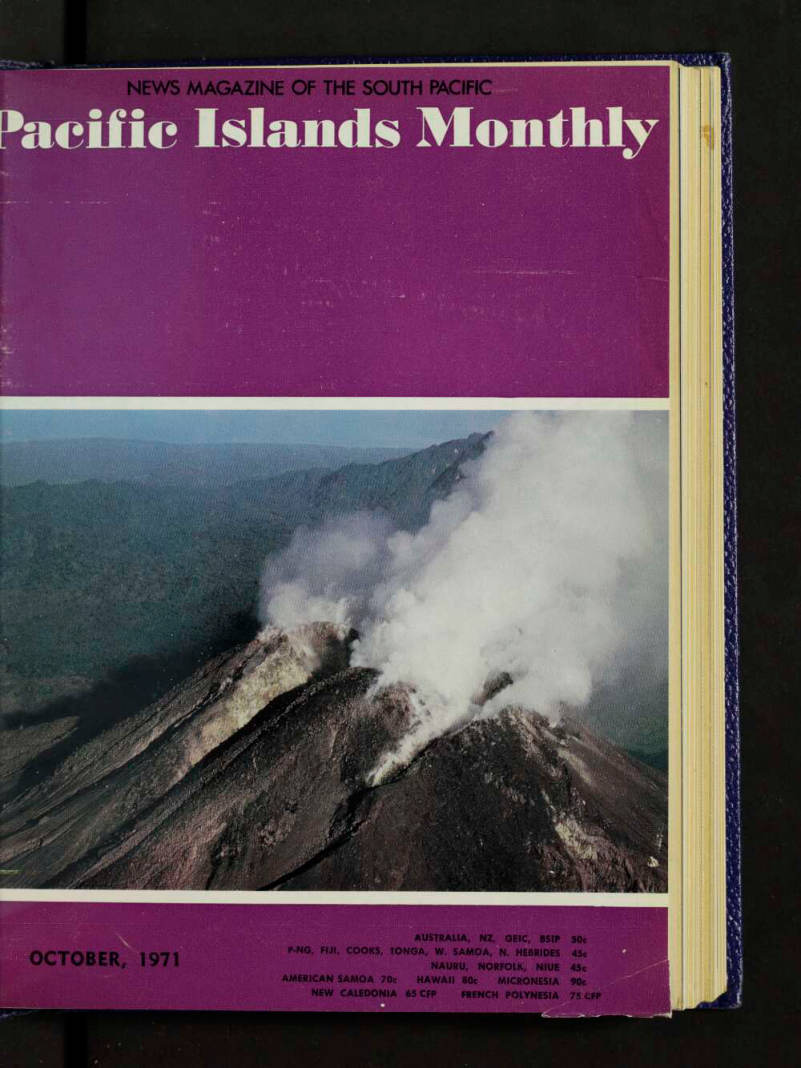 1
1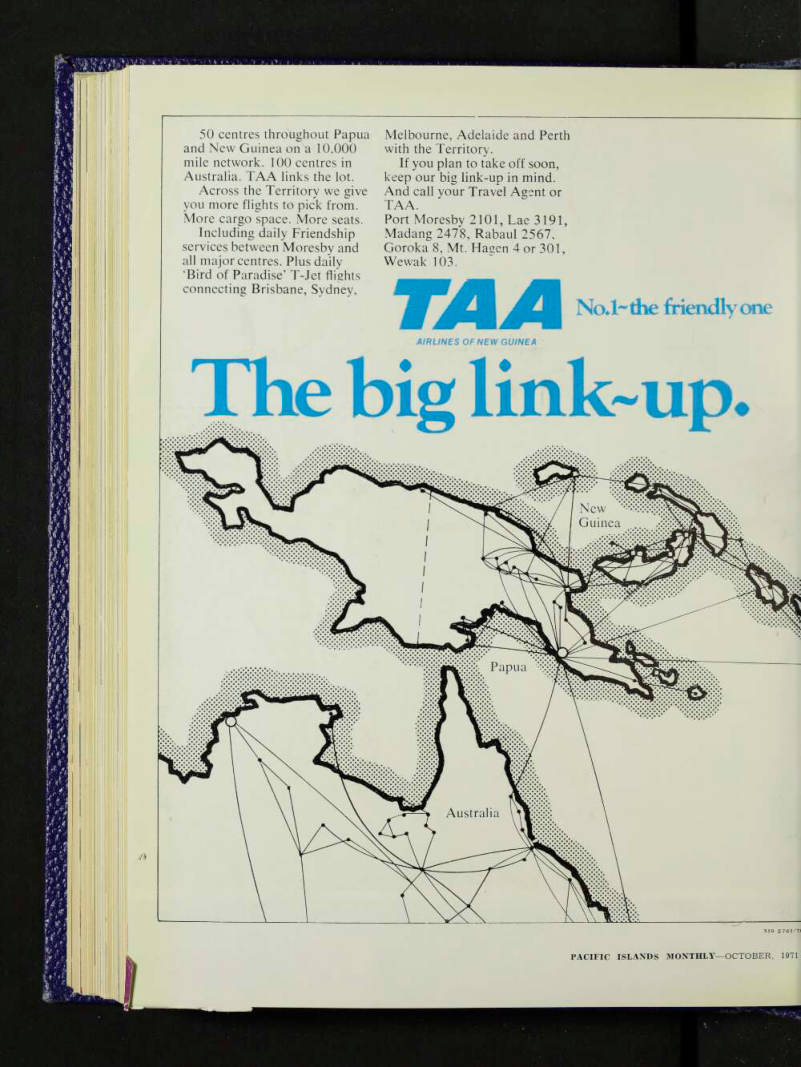 2
2 3
3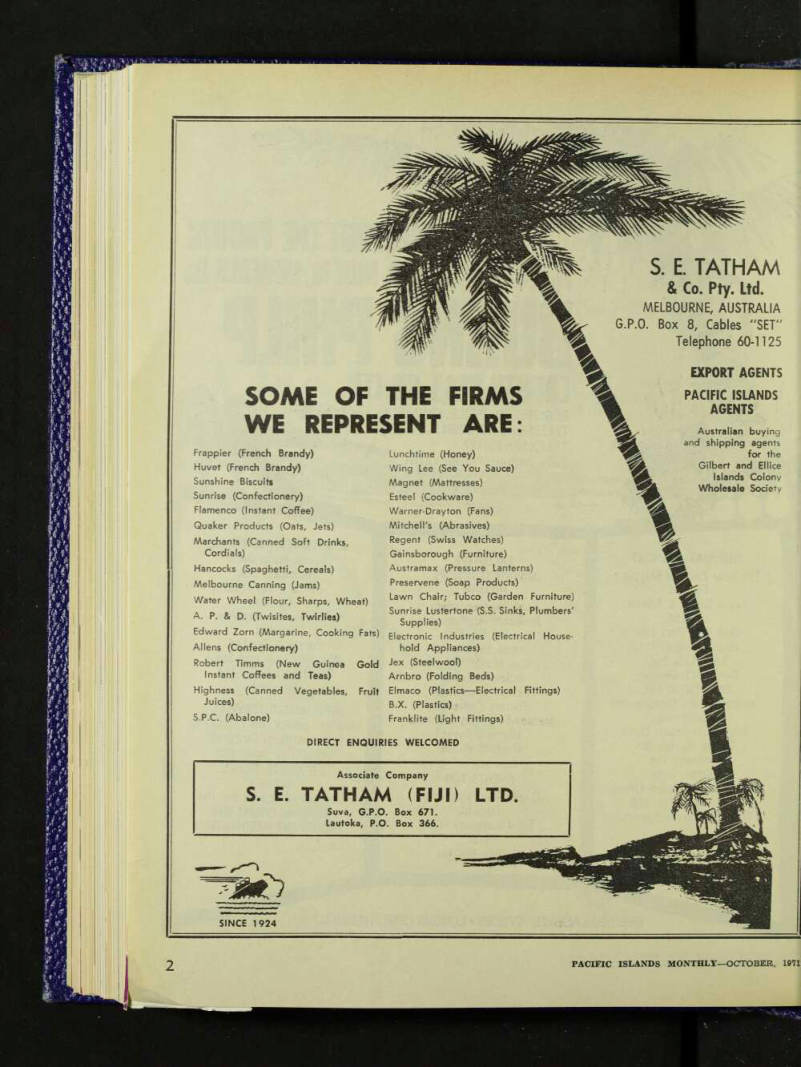 4
4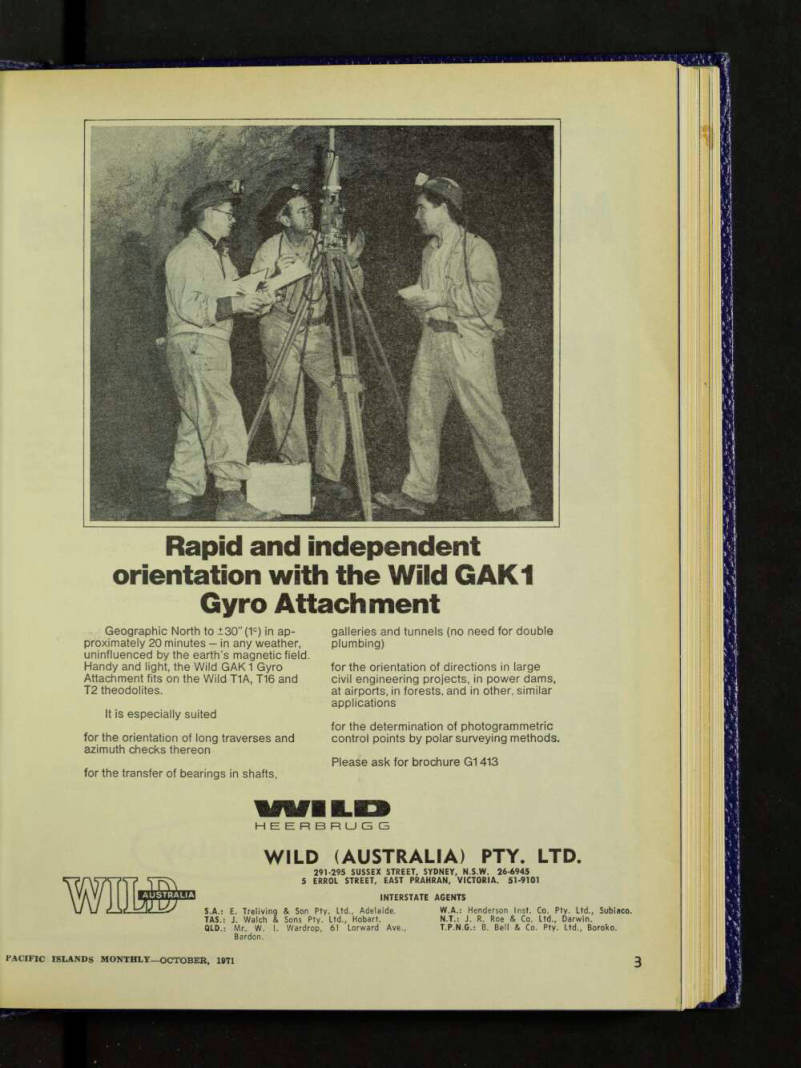 5
5 6
6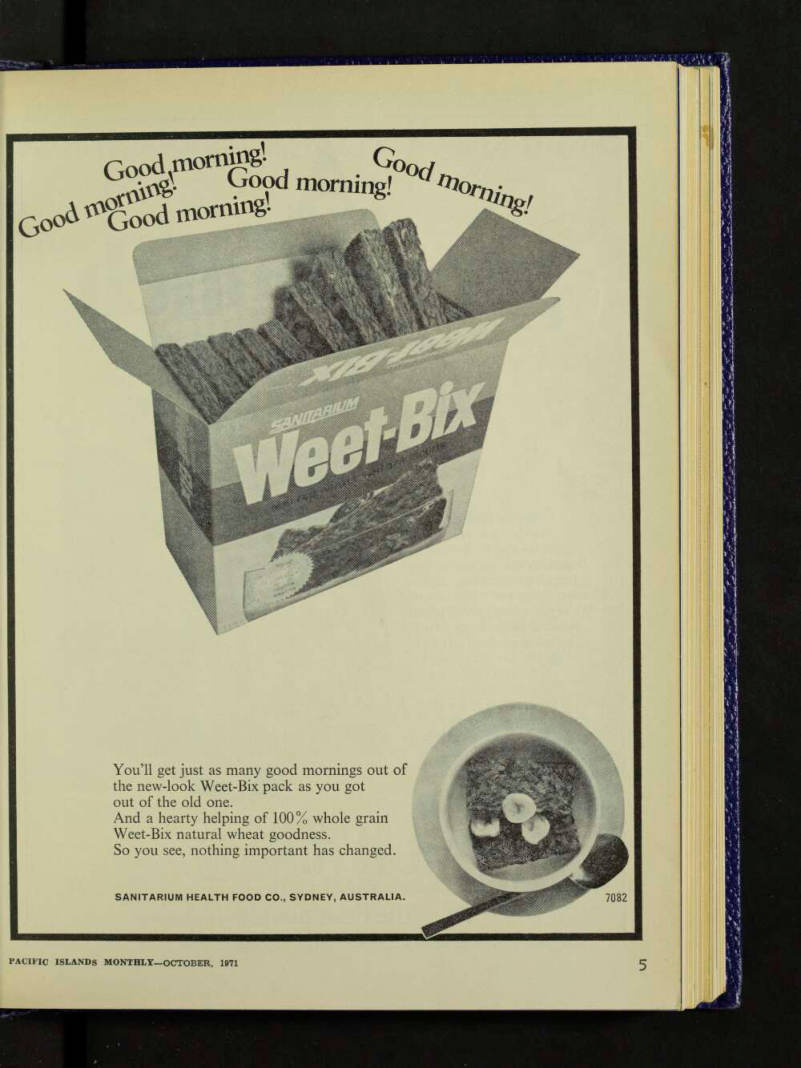 7
7 8
8 9
9 10
10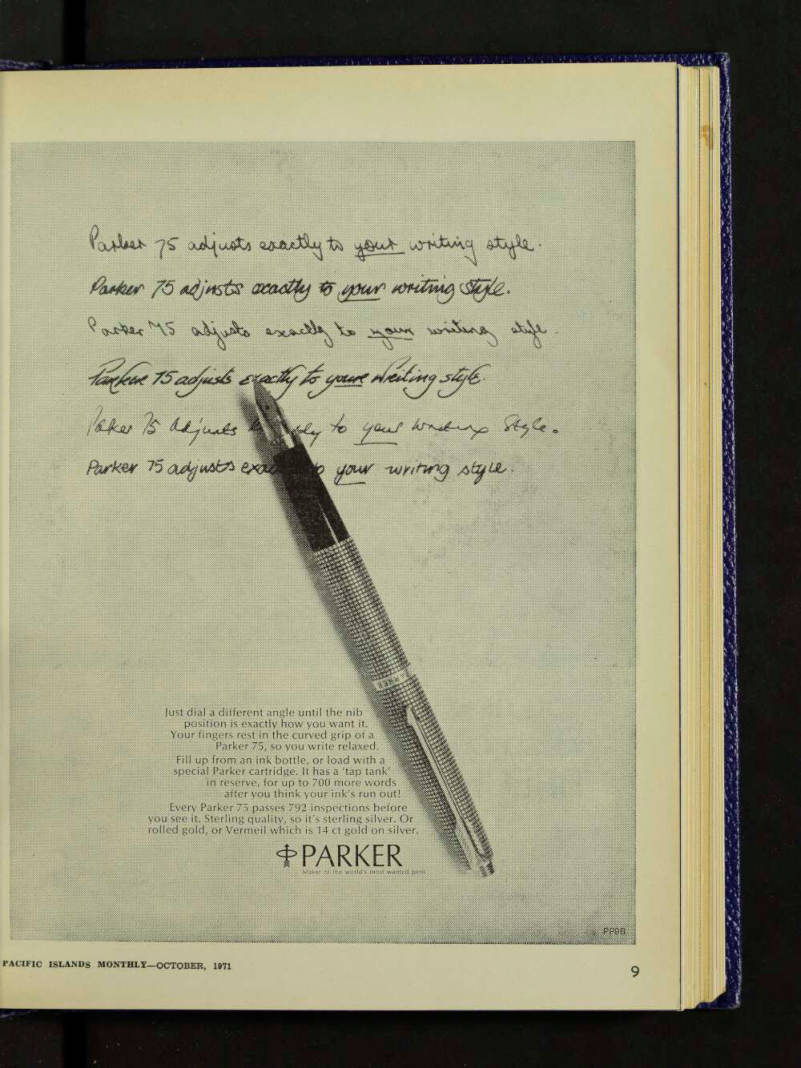 11
11 12
12 13
13 14
14 15
15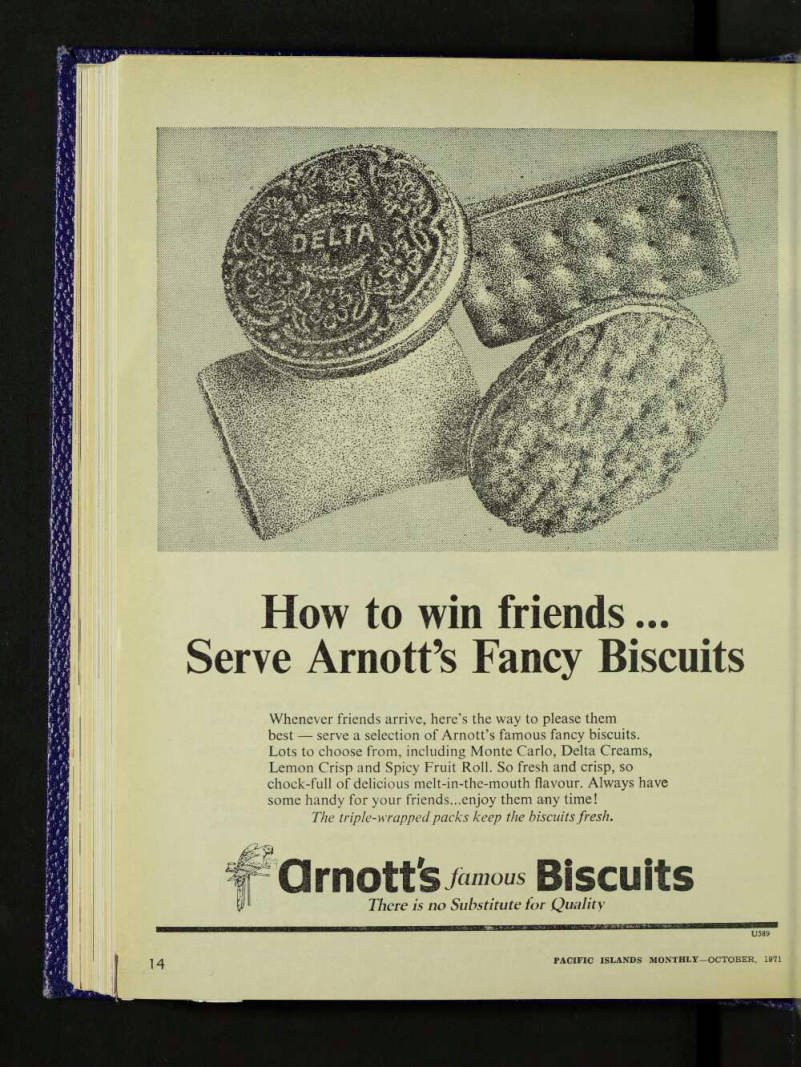 16
16 17
17 18
18 19
19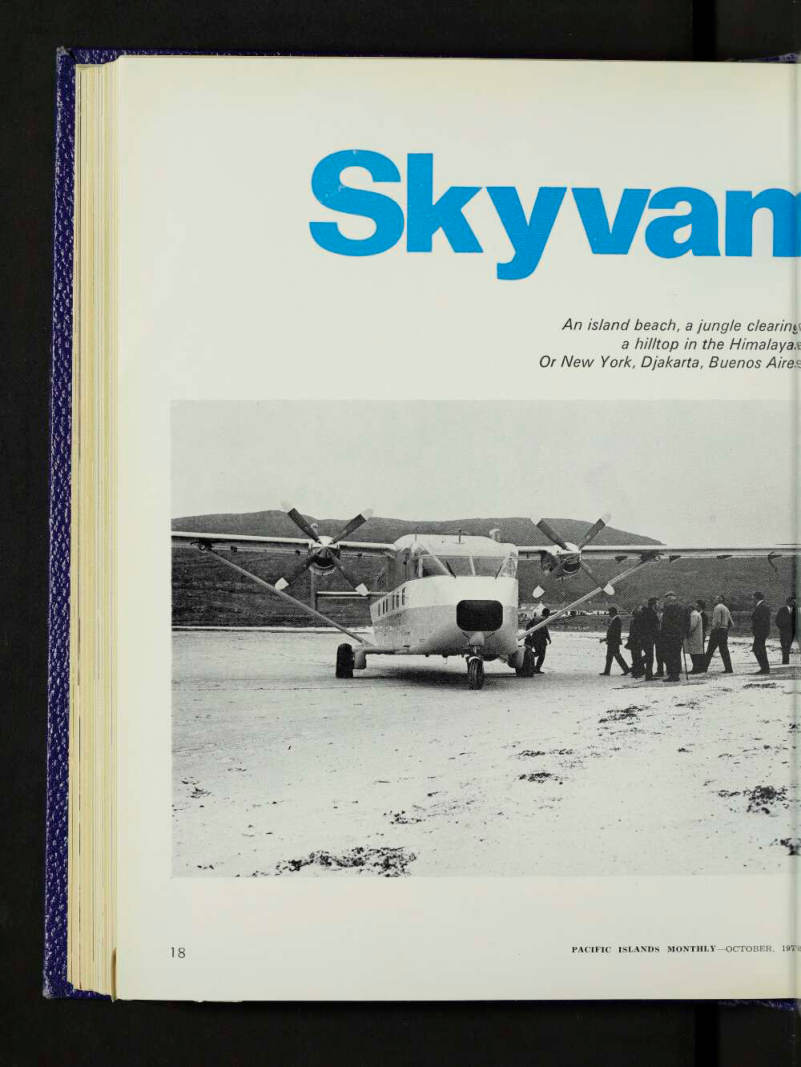 20
20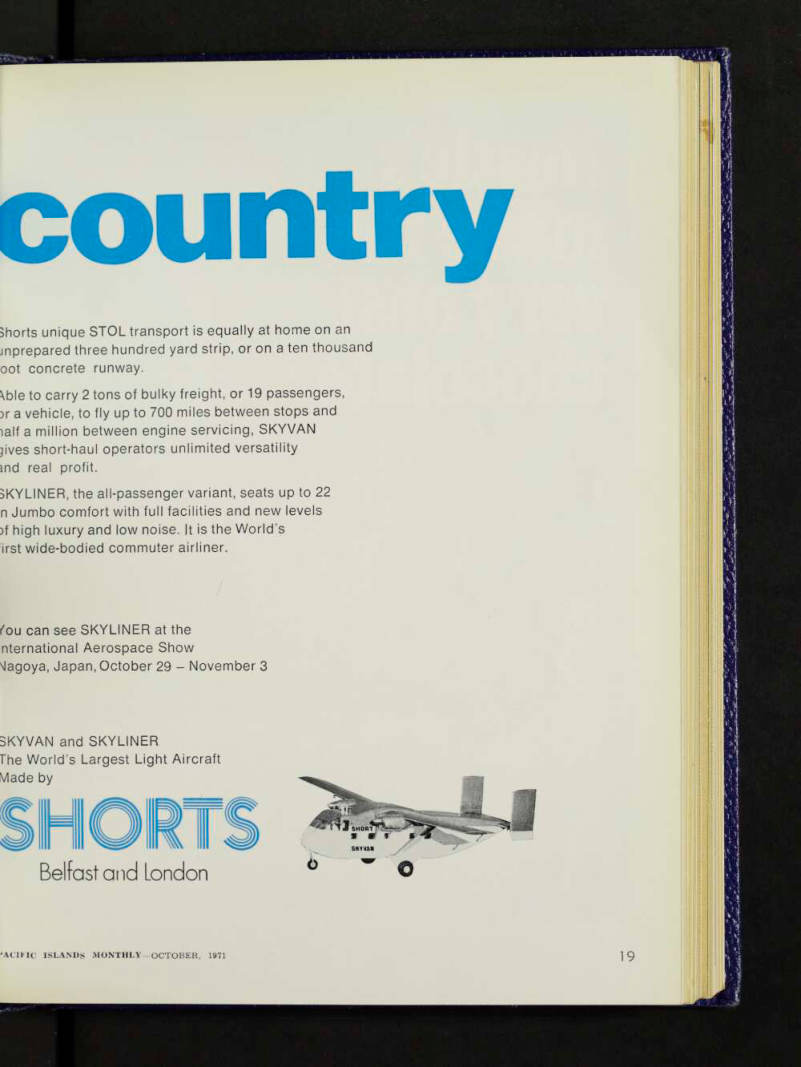 21
21 22
22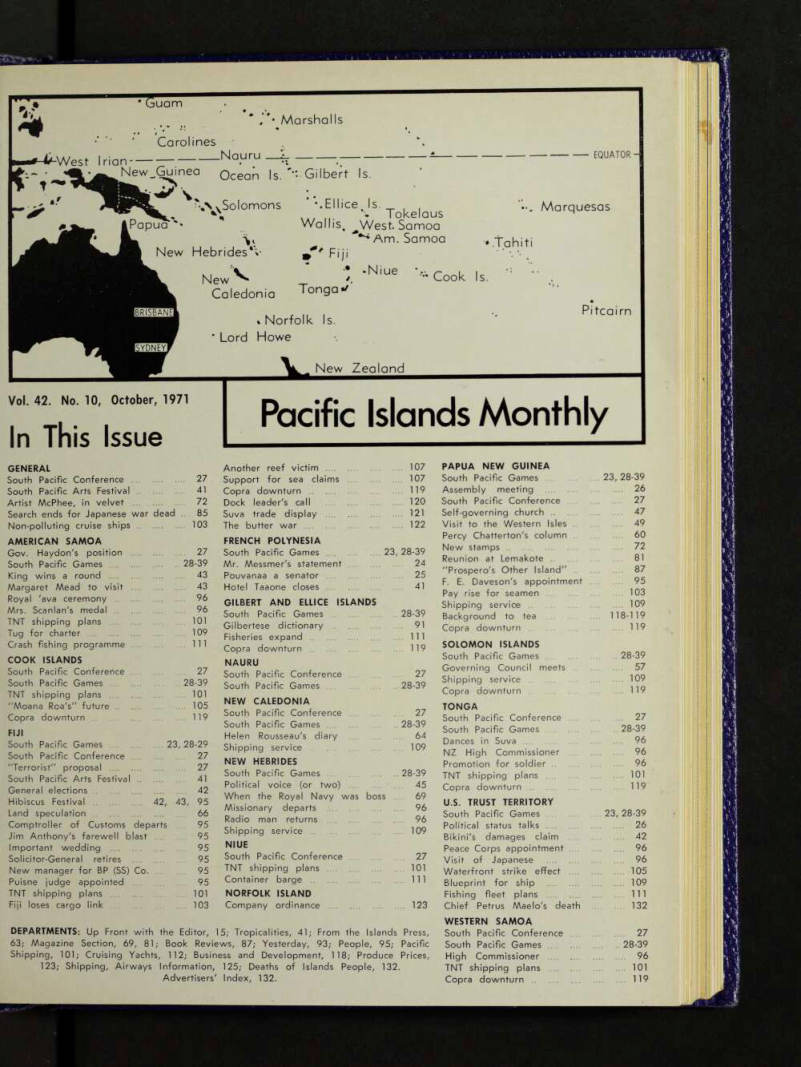 23
23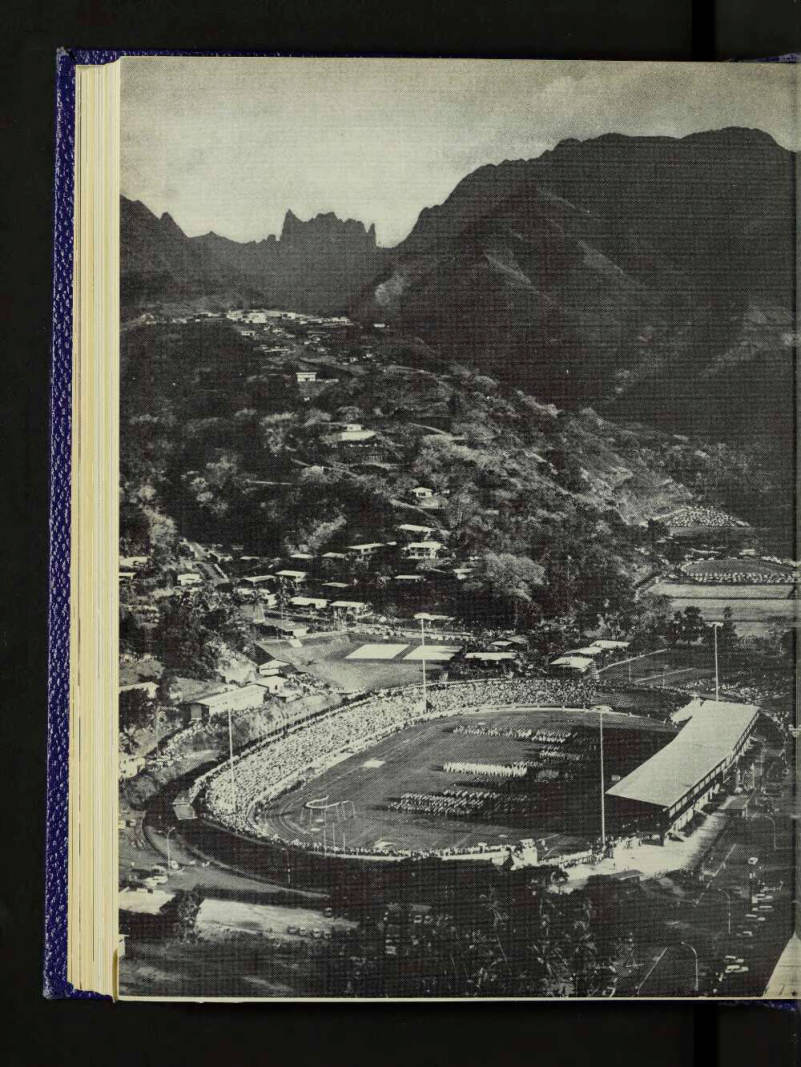 24
24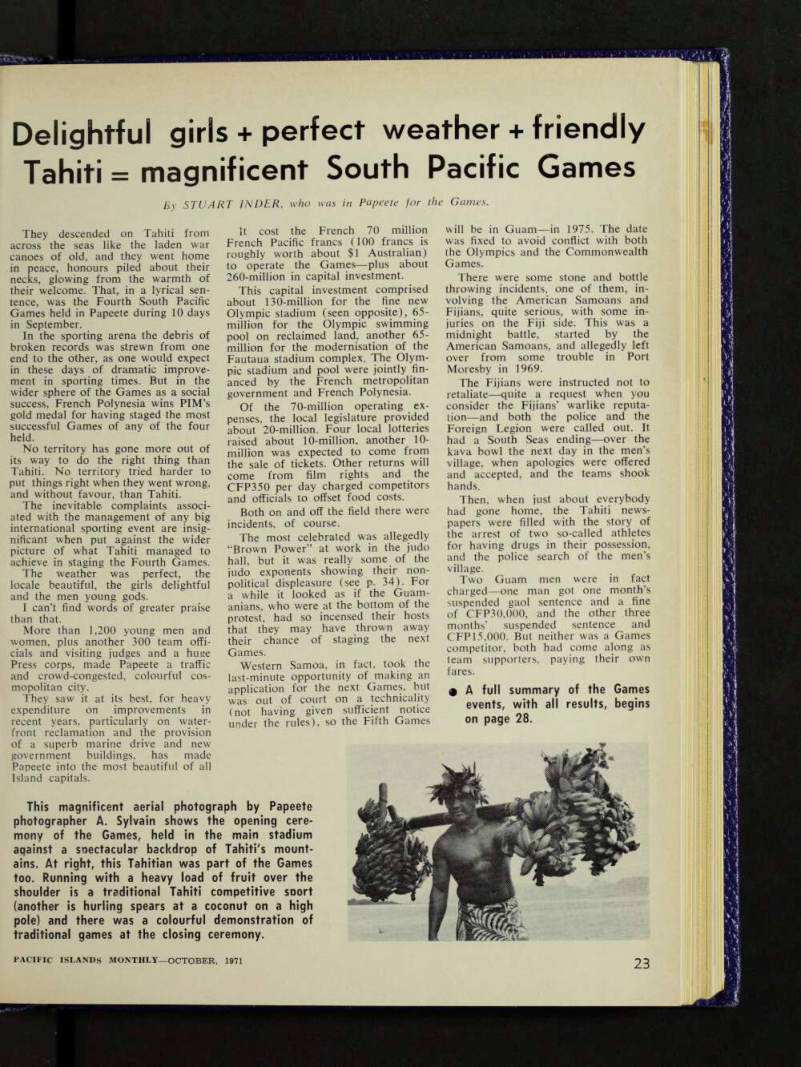 25
25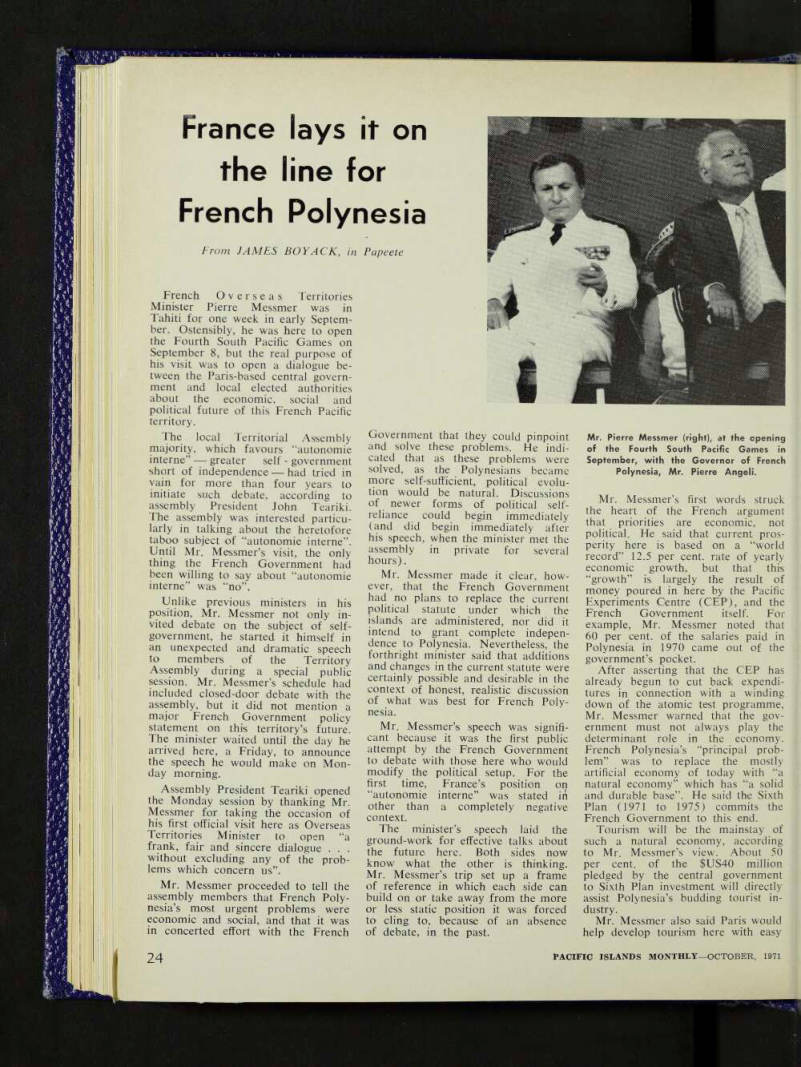 26
26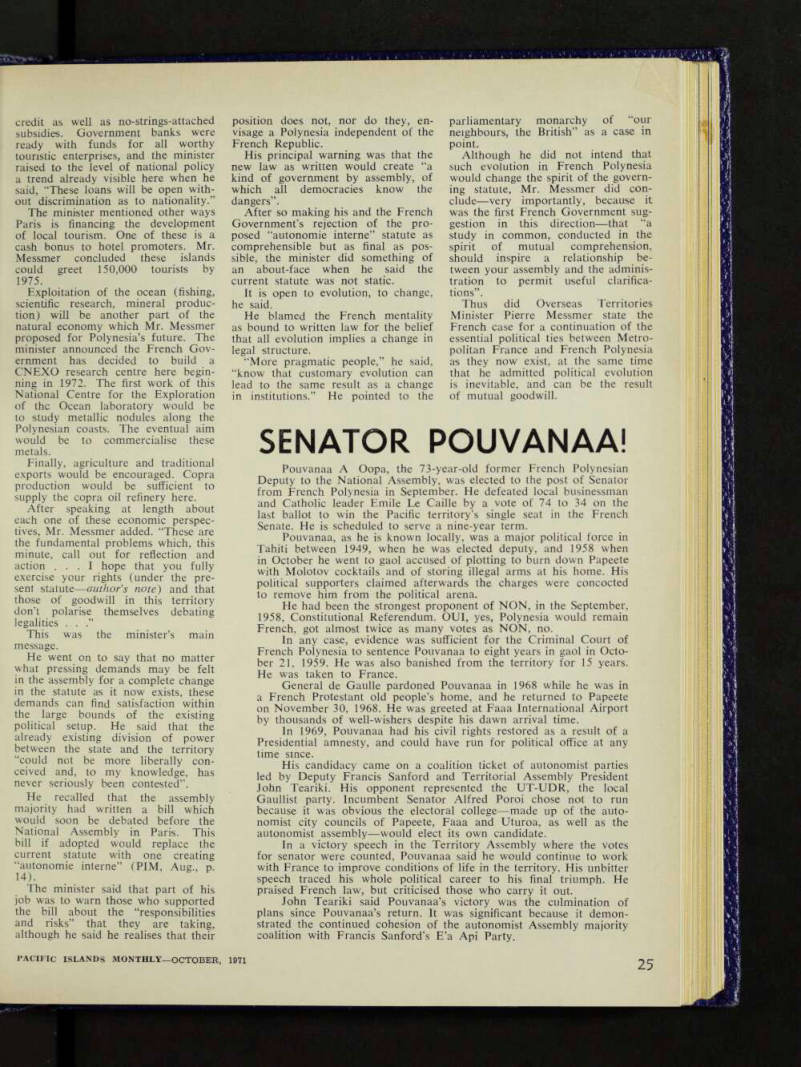 27
27 28
28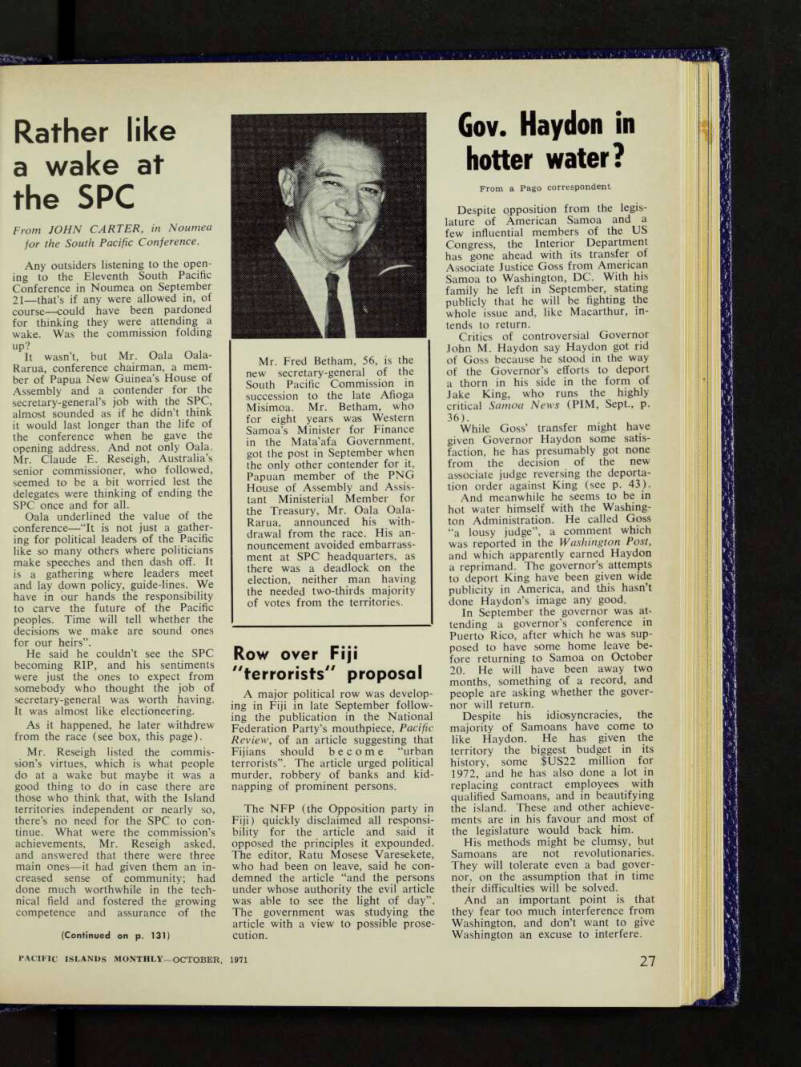 29
29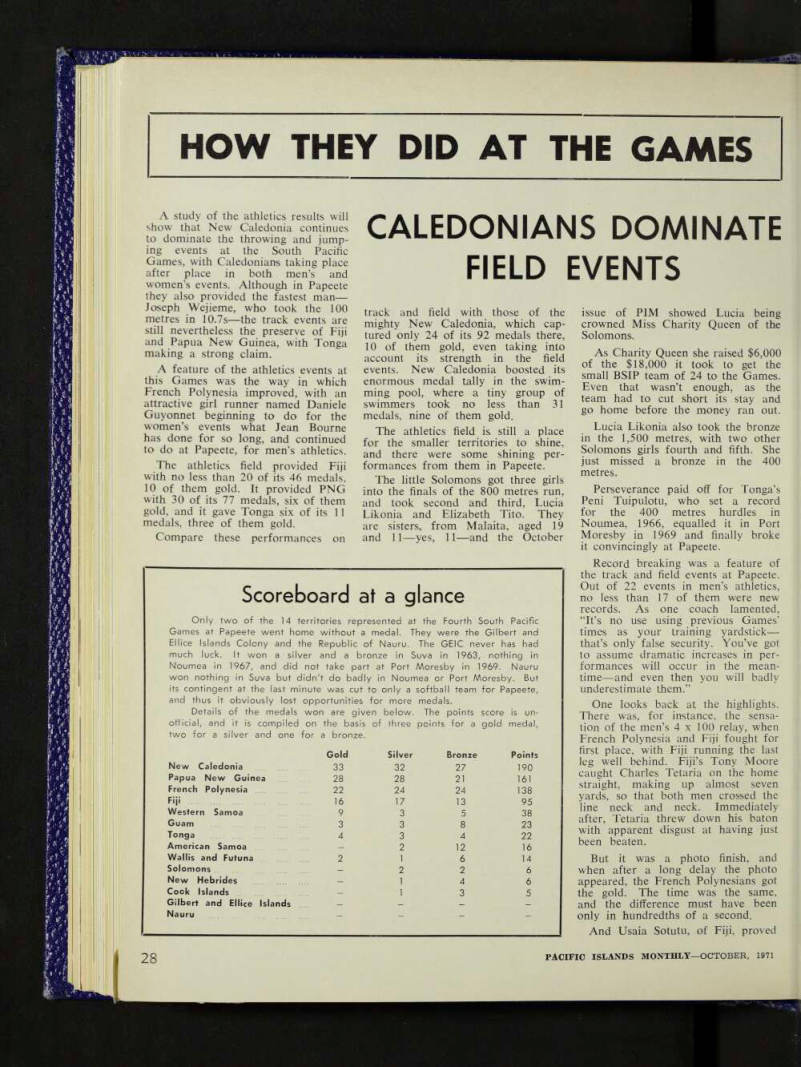 30
30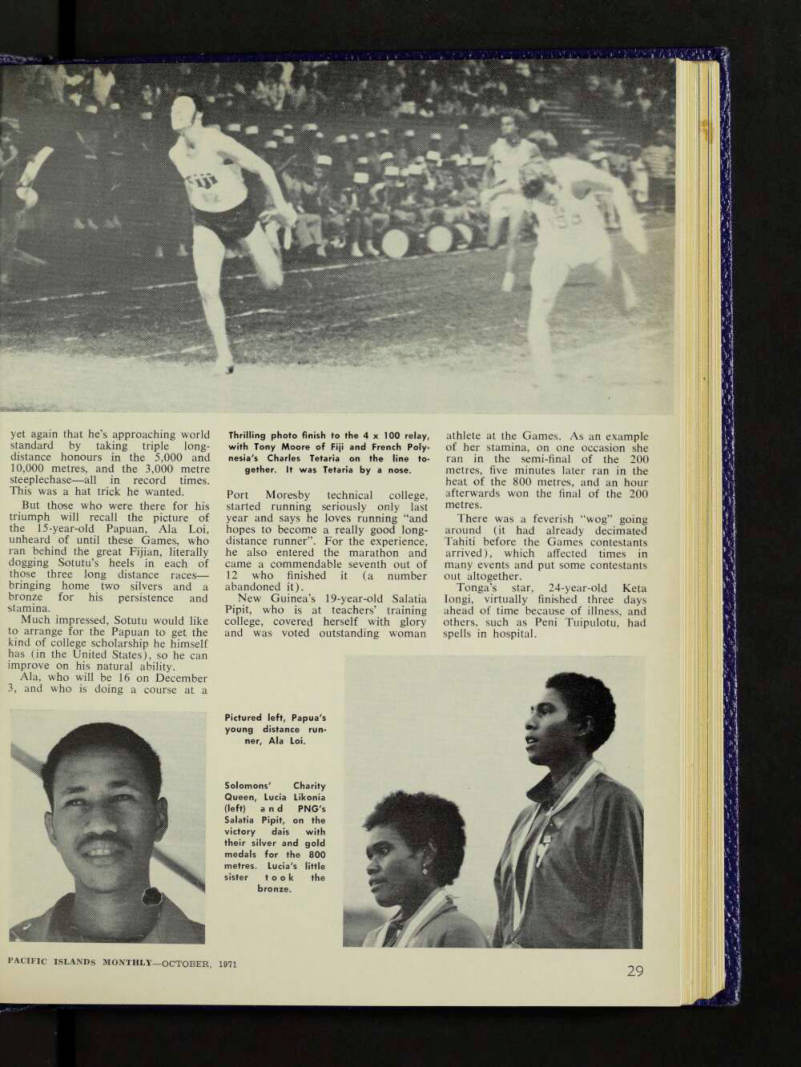 31
31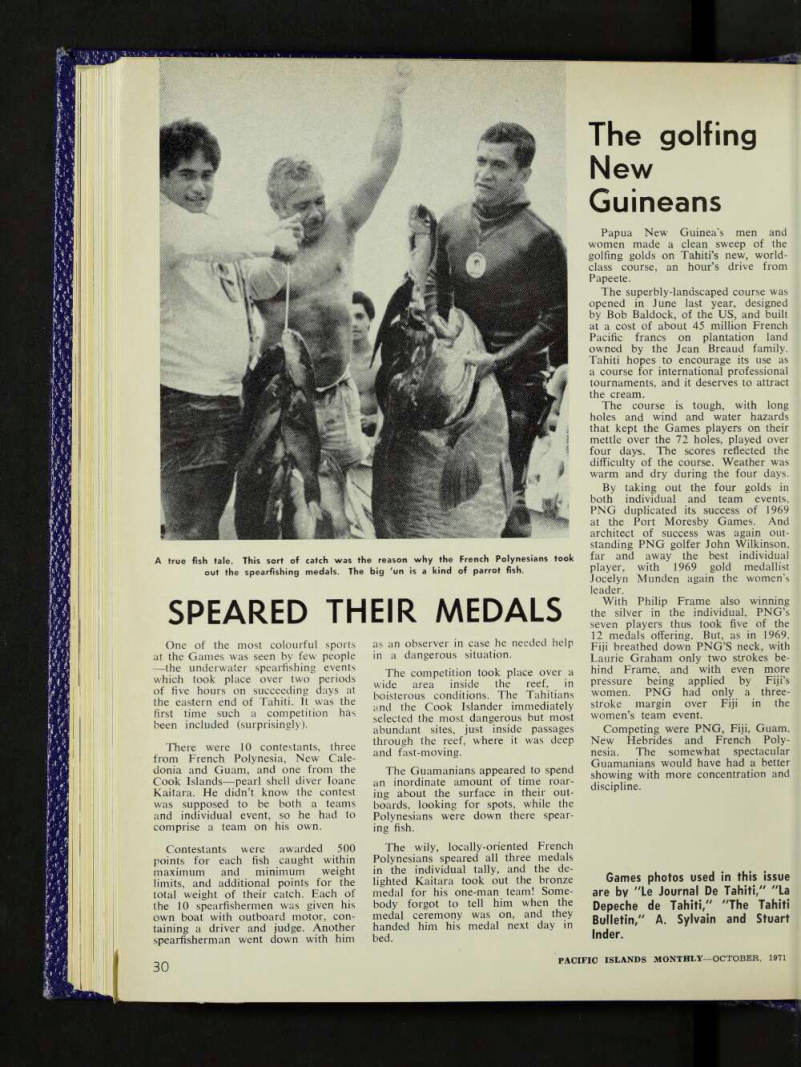 32
32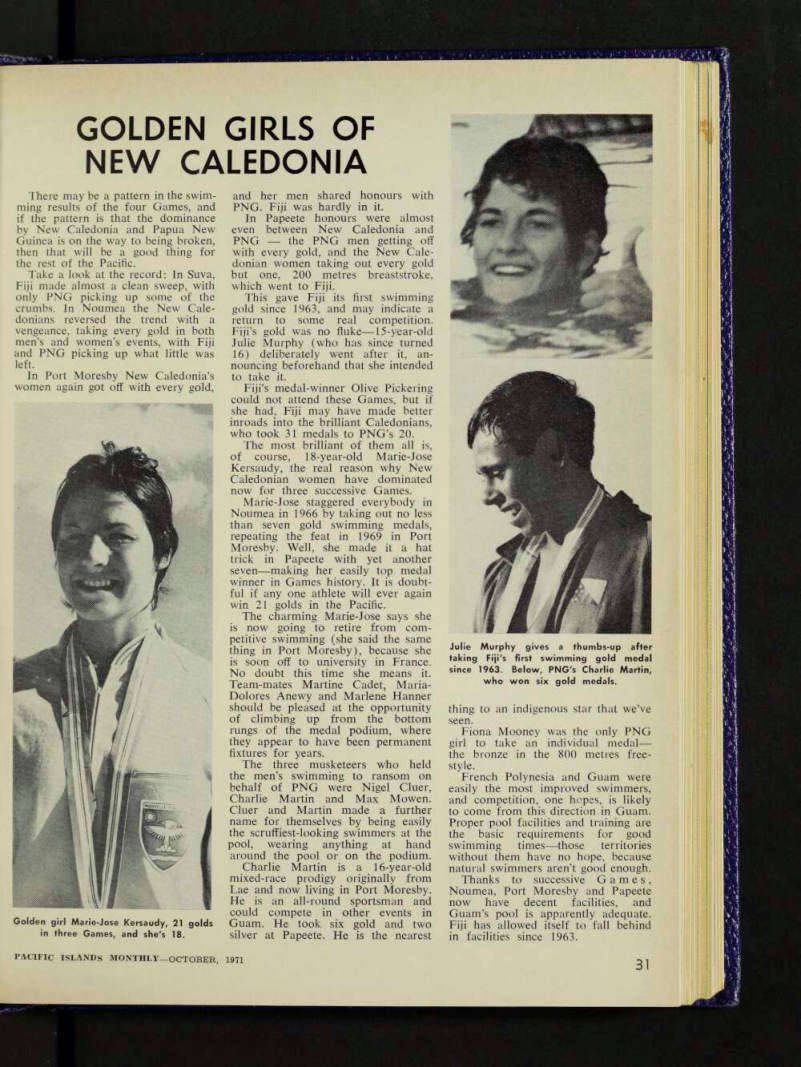 33
33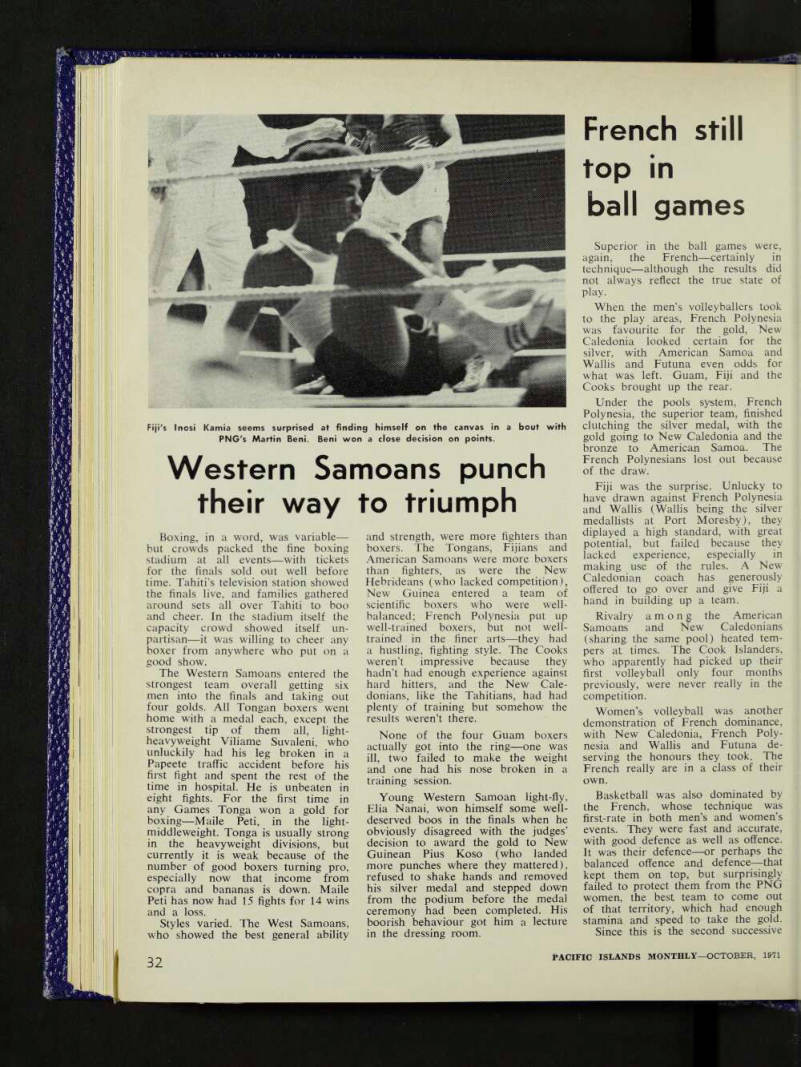 34
34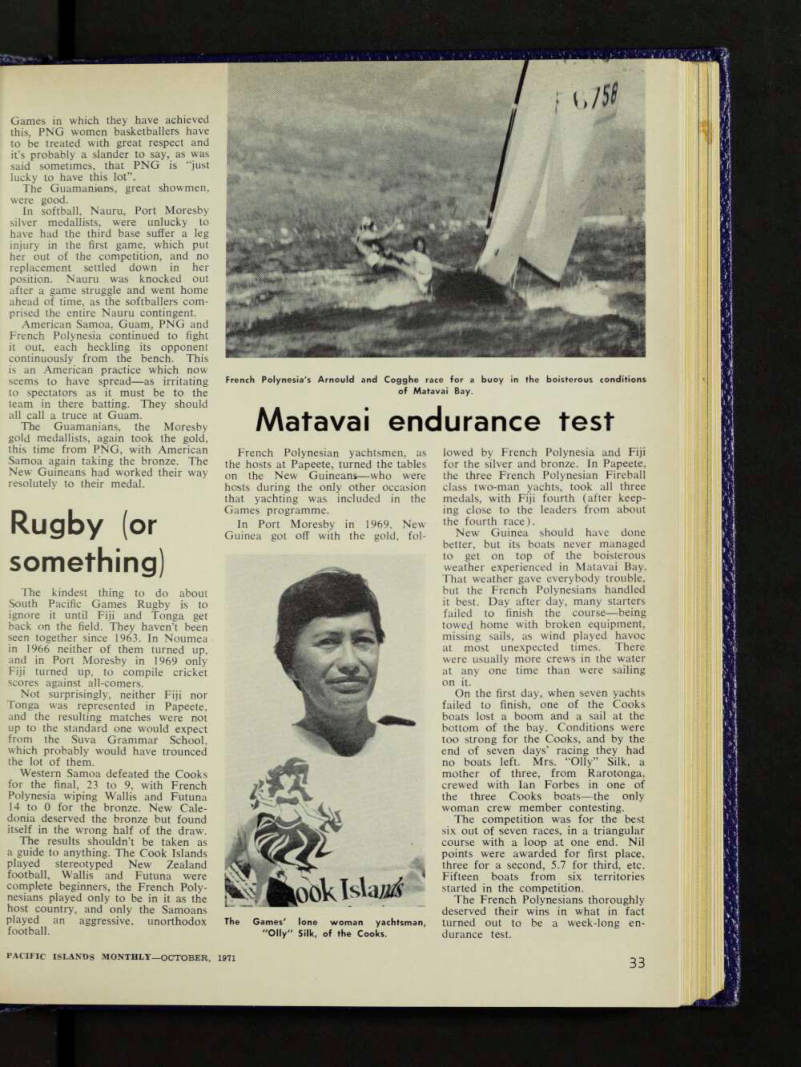 35
35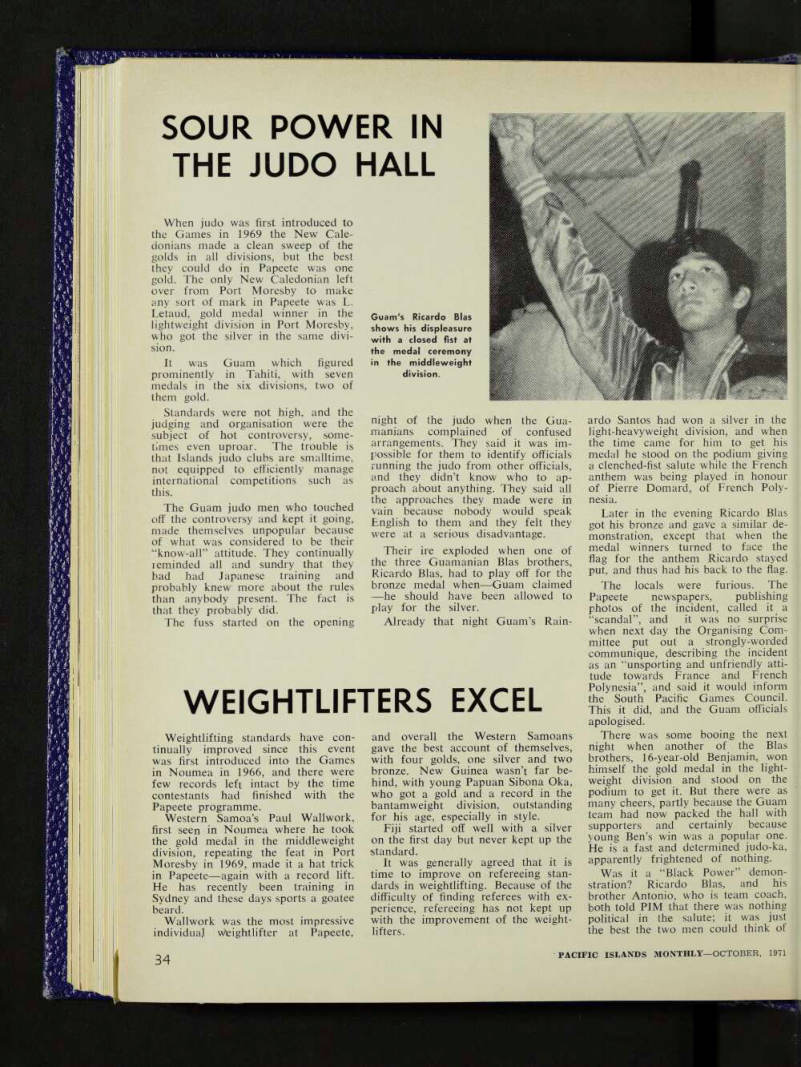 36
36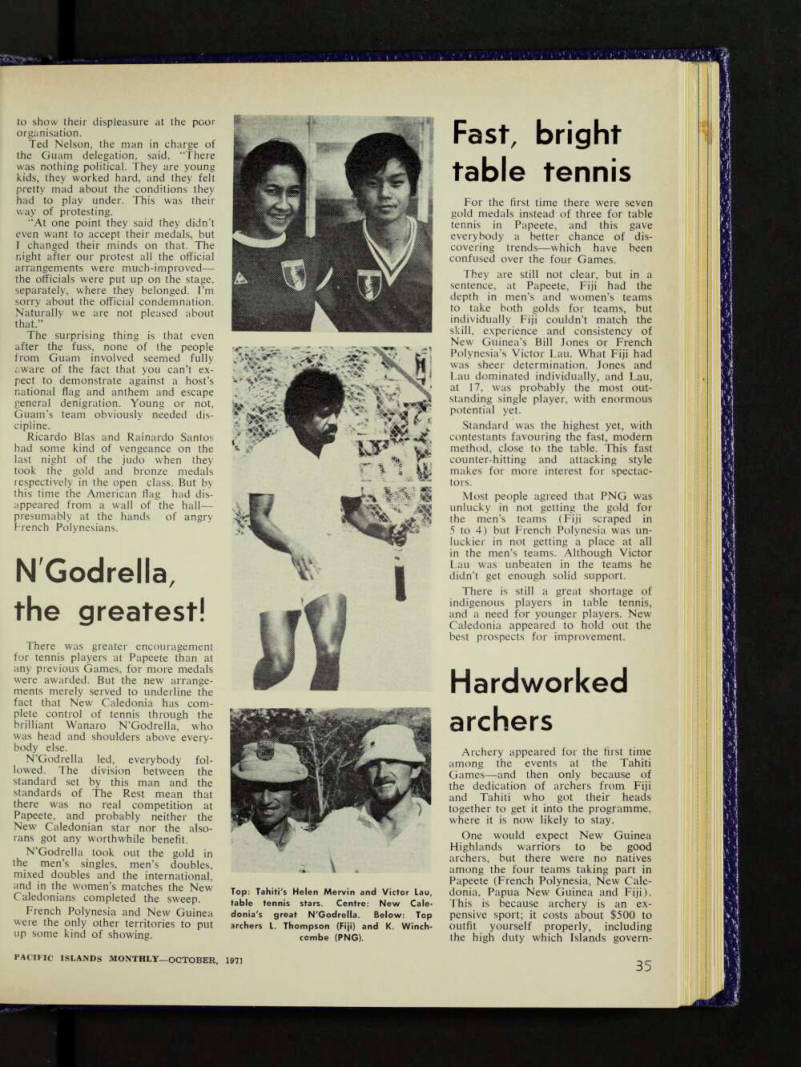 37
37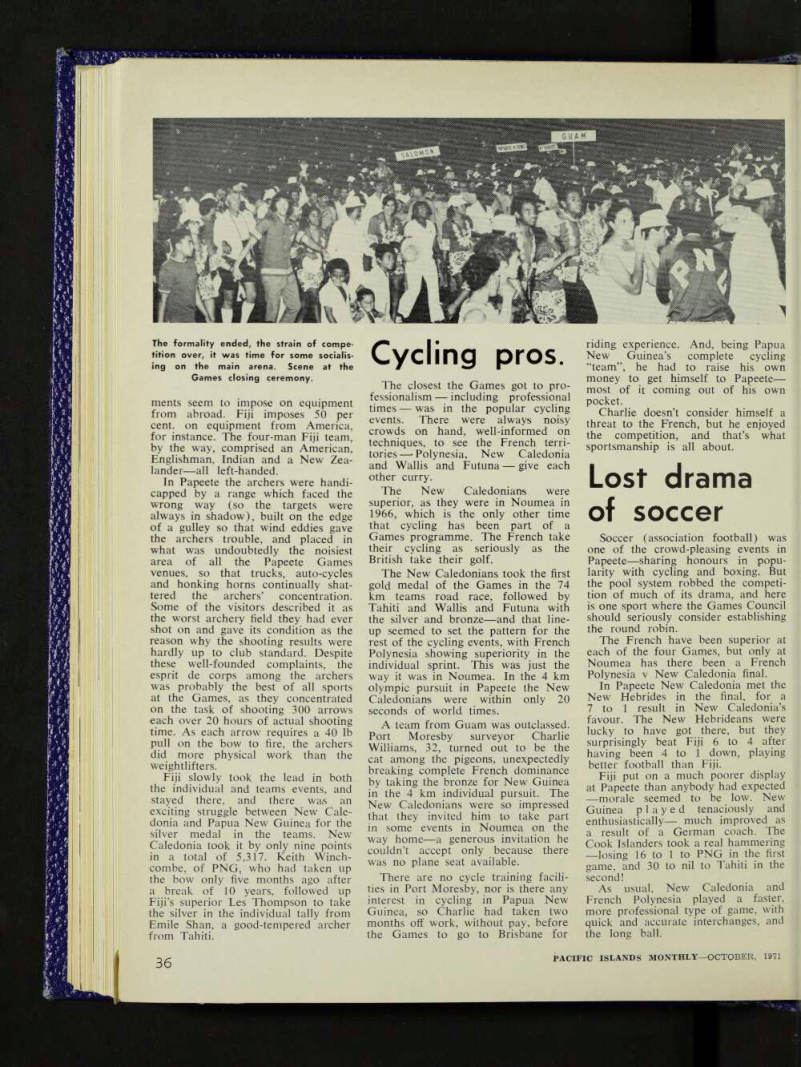 38
38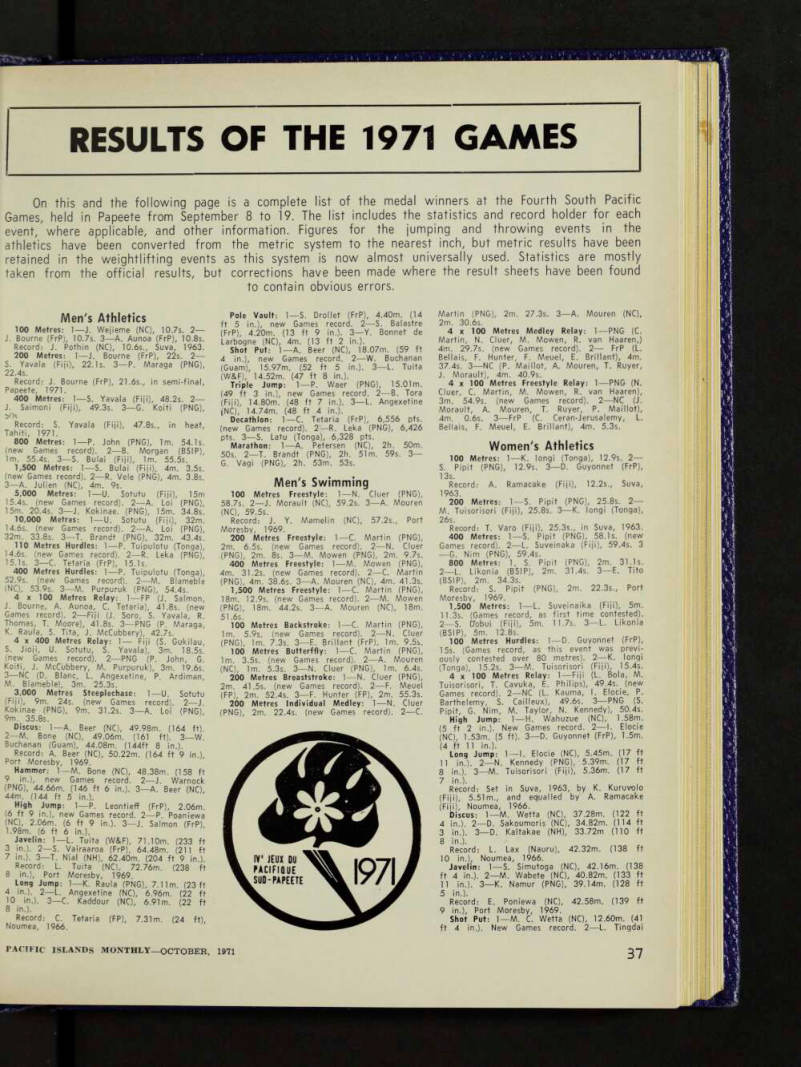 39
39 40
40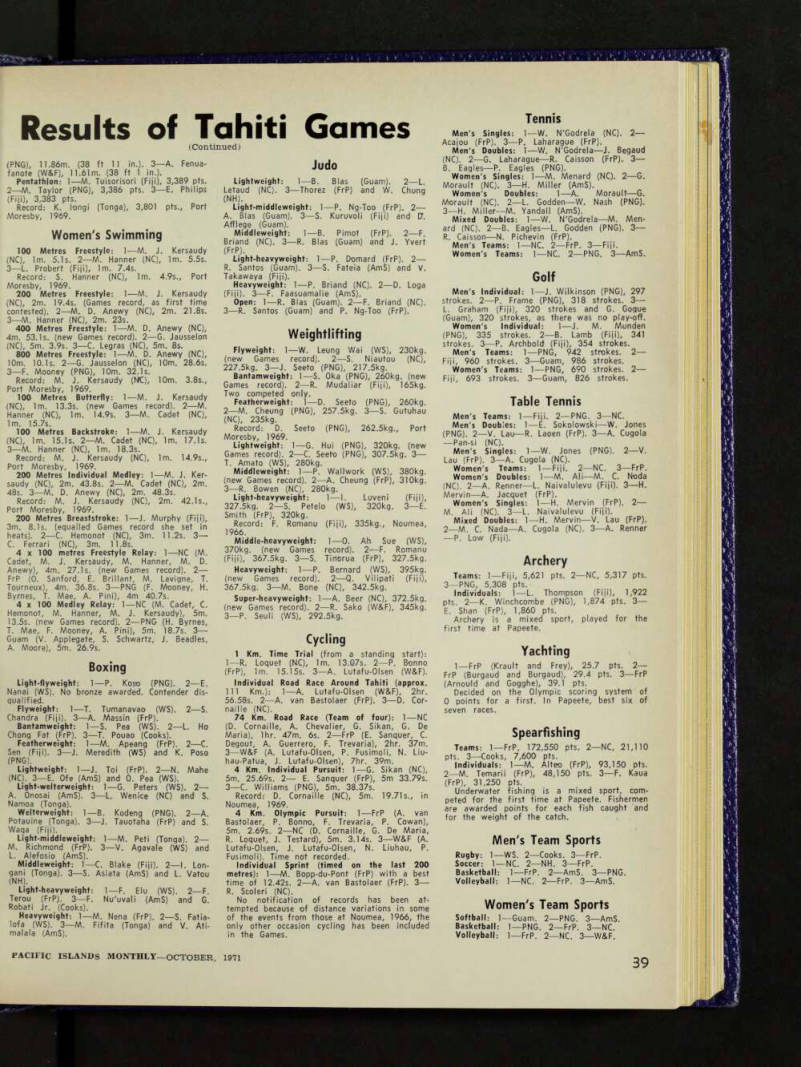 41
41 42
42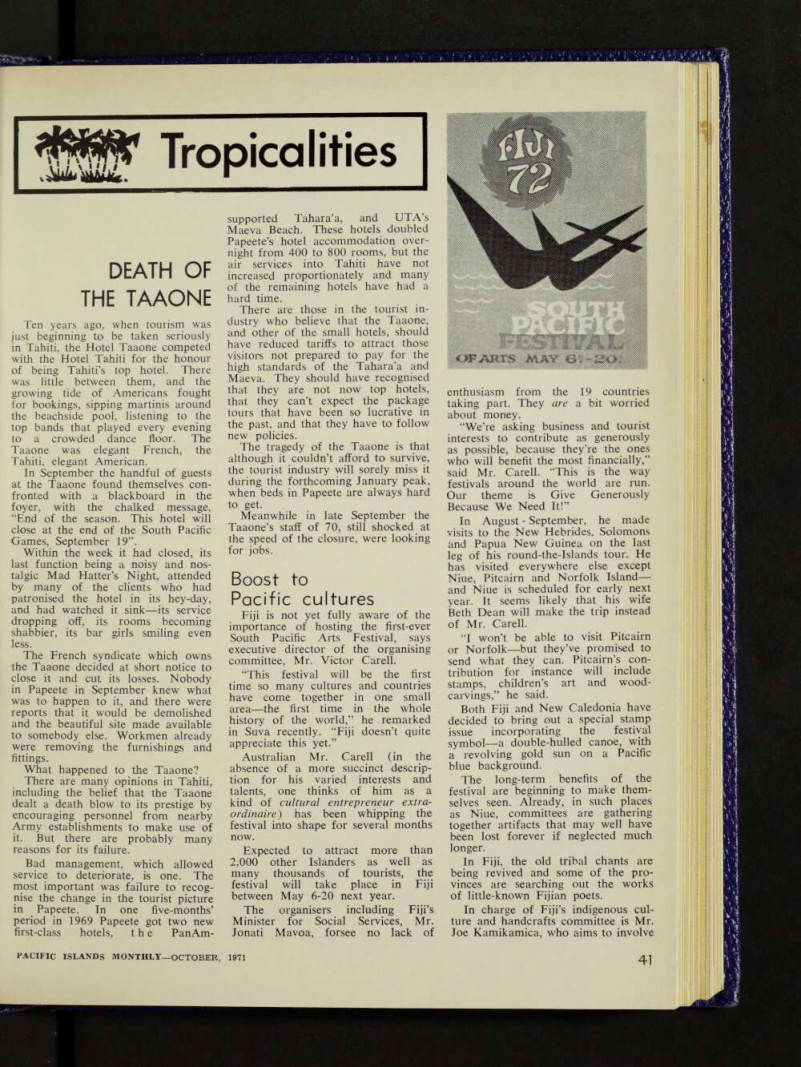 43
43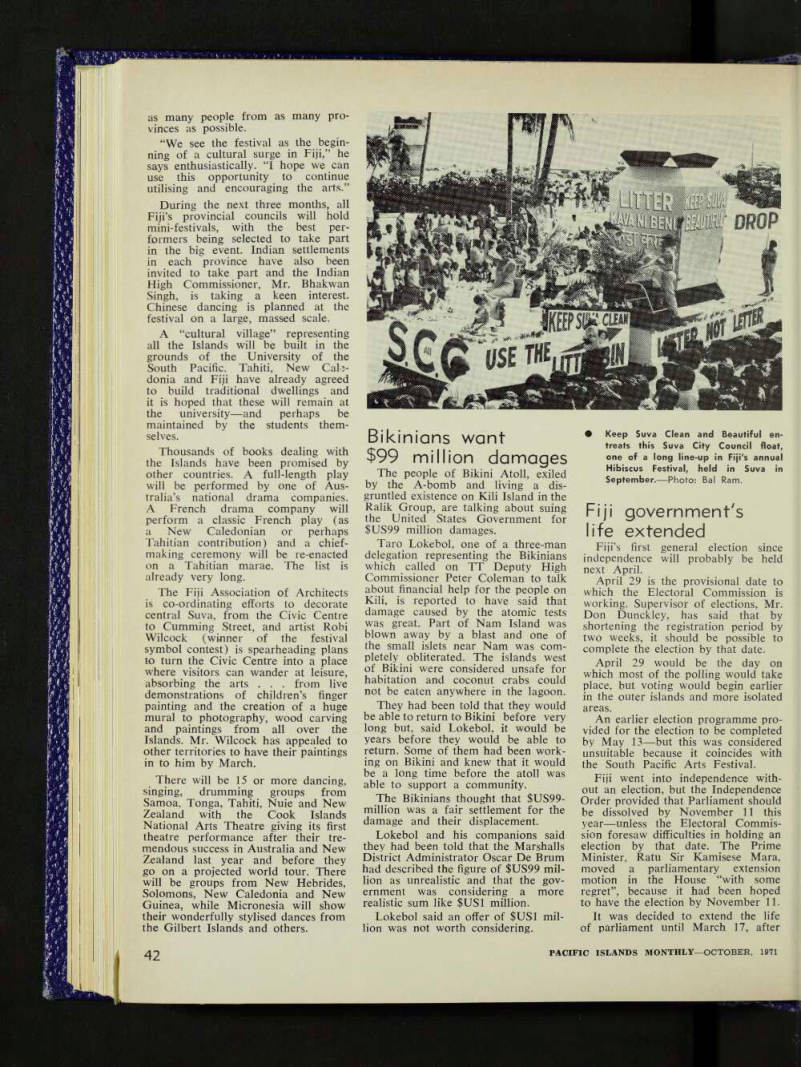 44
44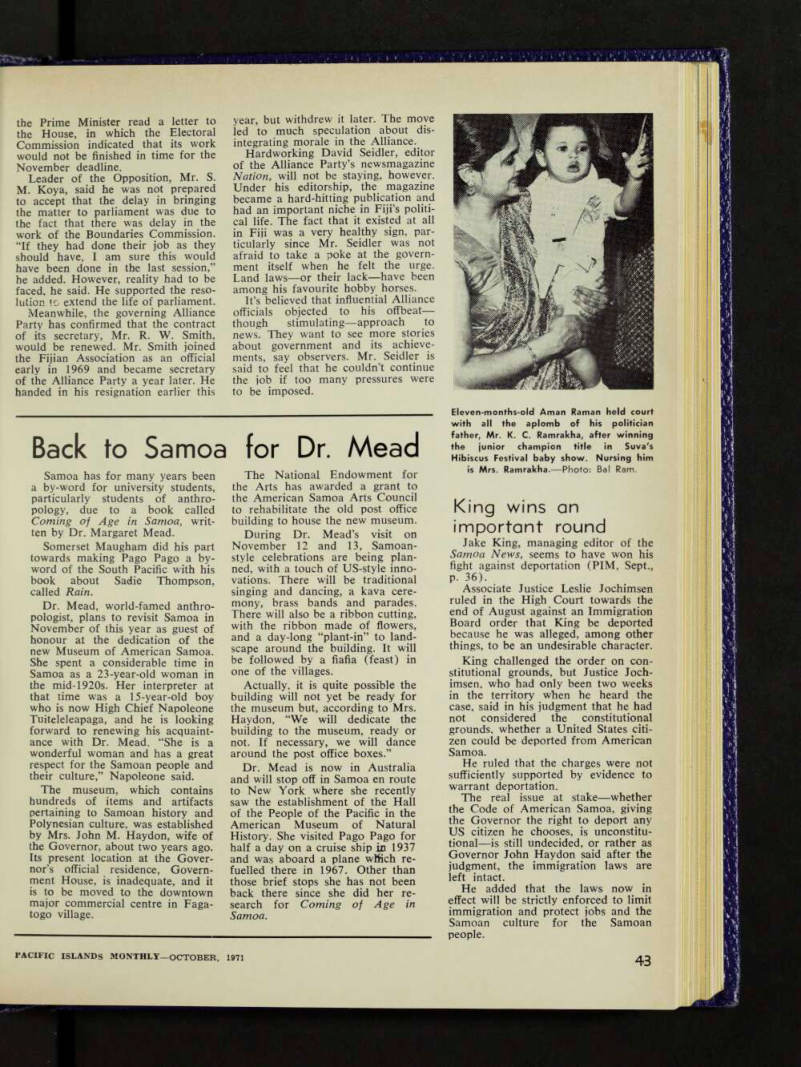 45
45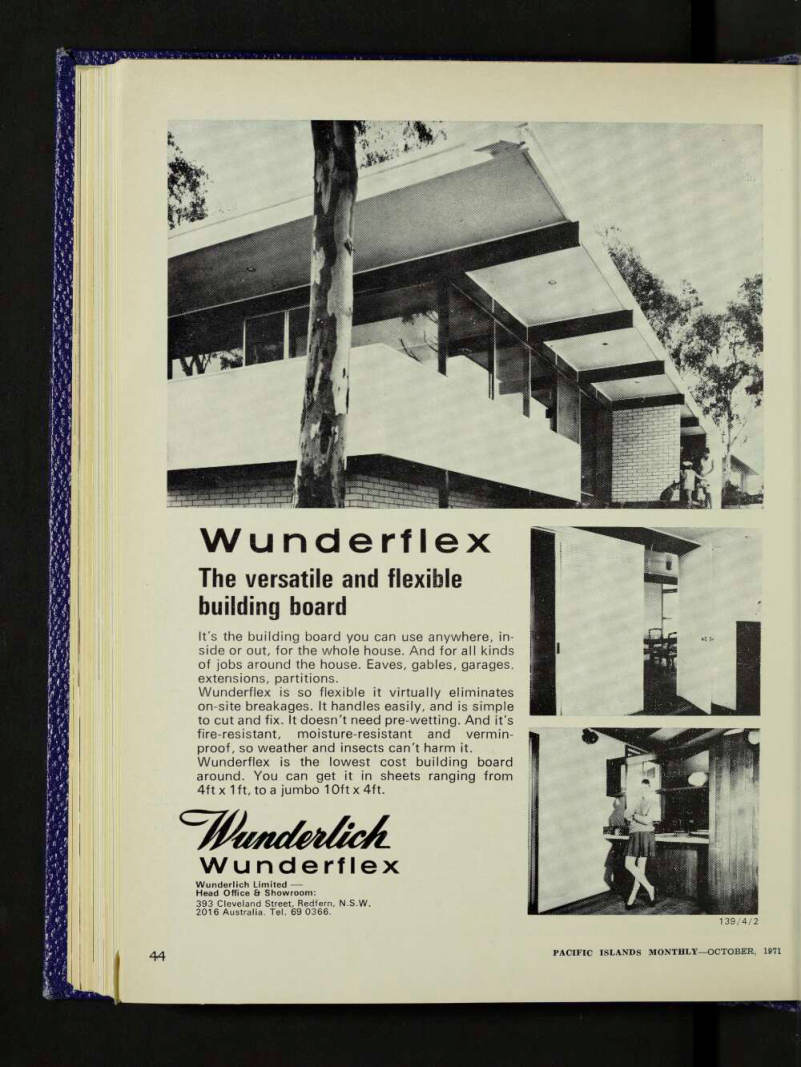 46
46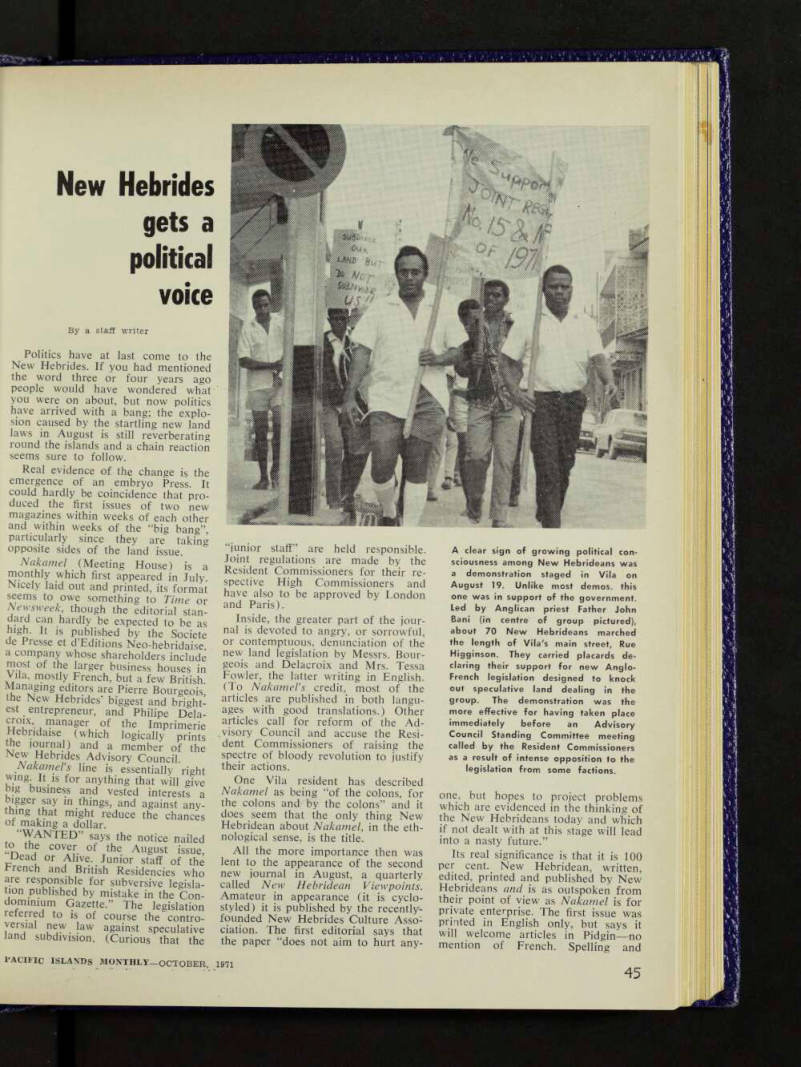 47
47 48
48 49
49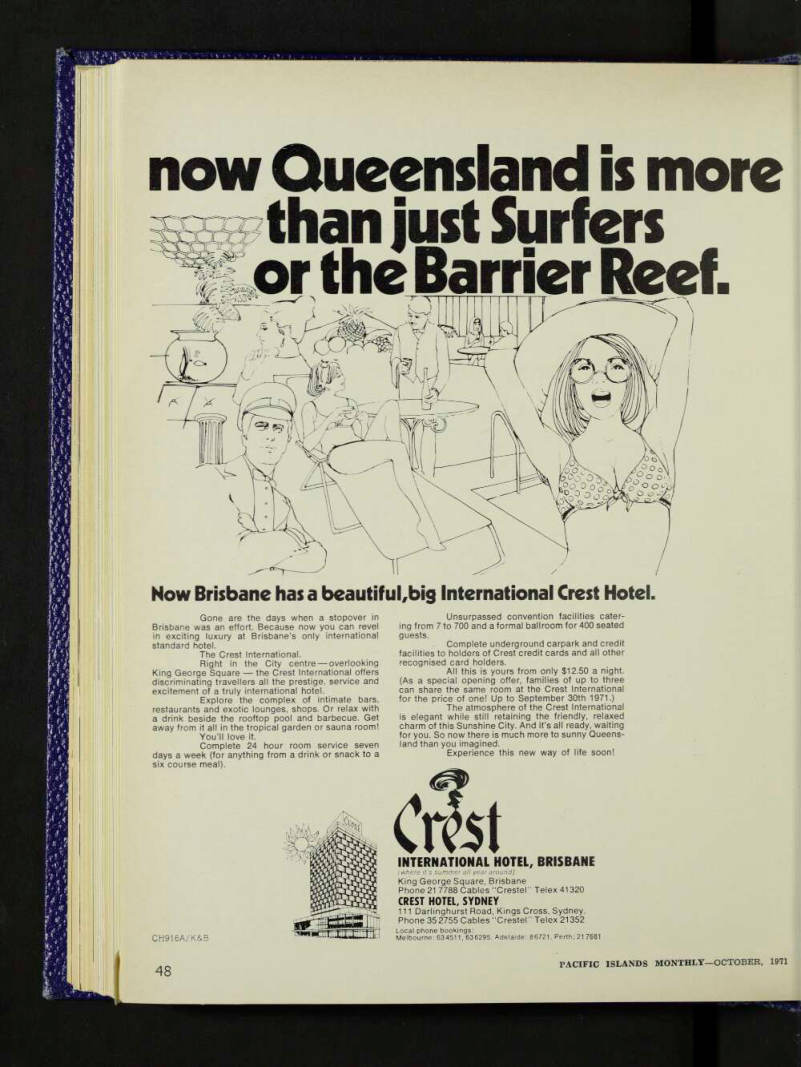 50
50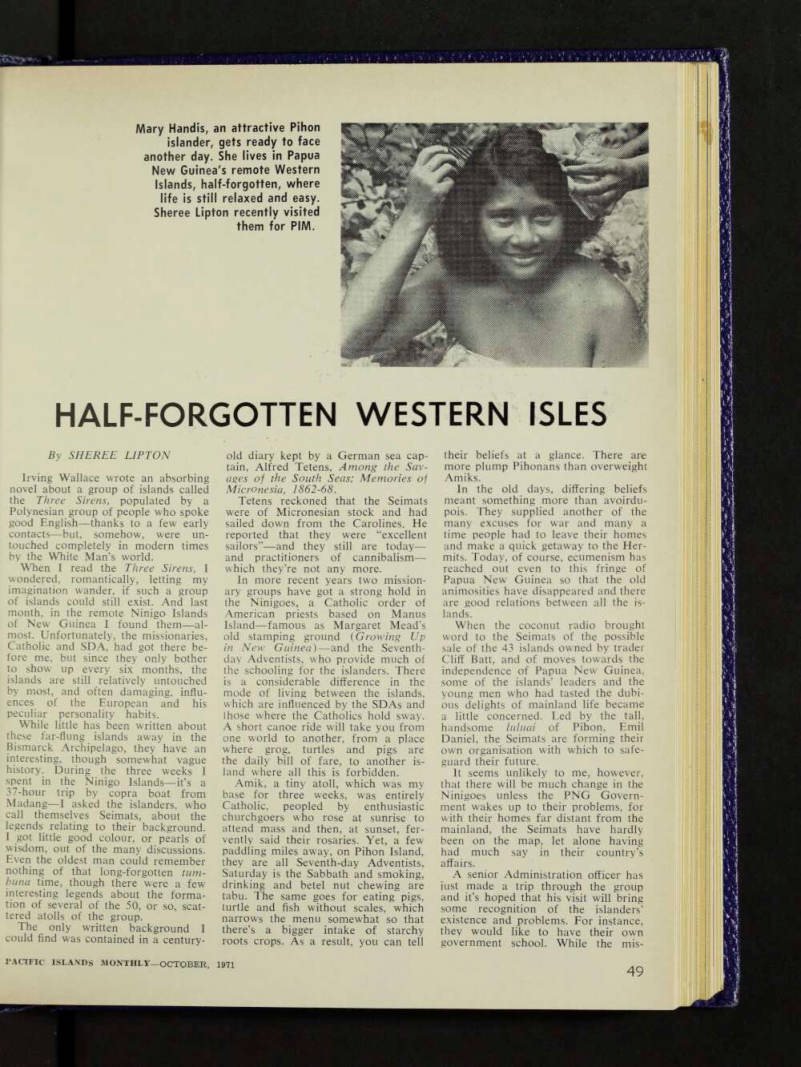 51
51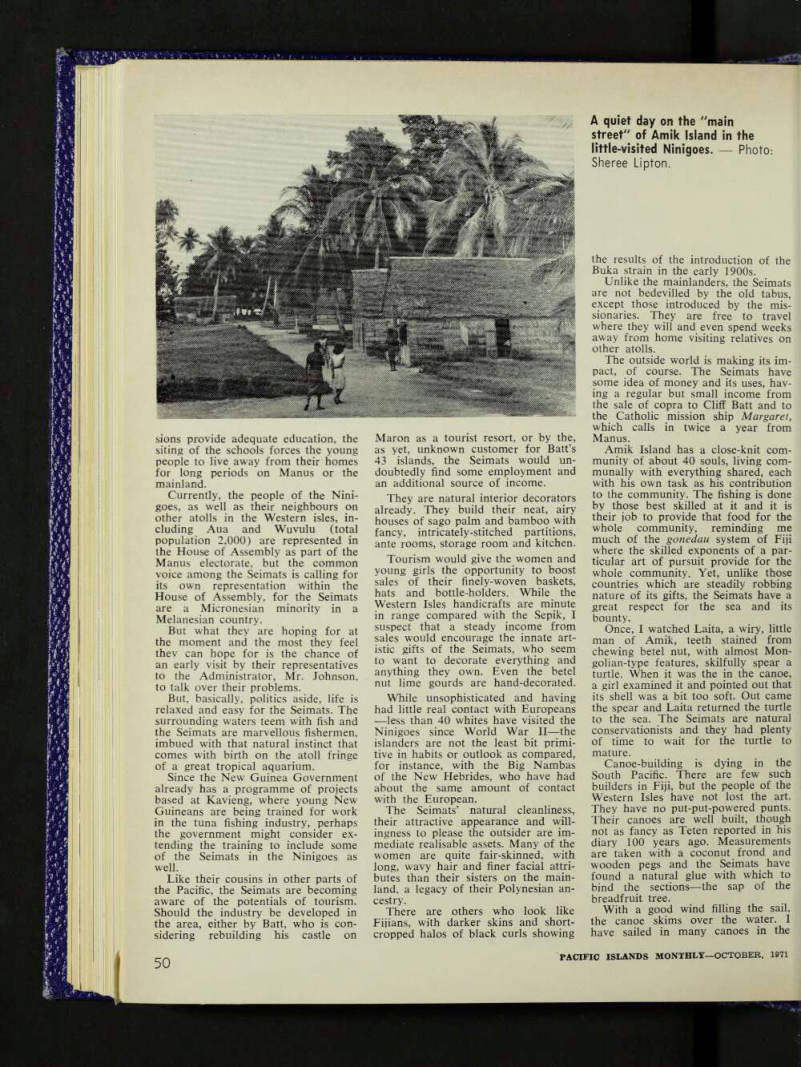 52
52 53
53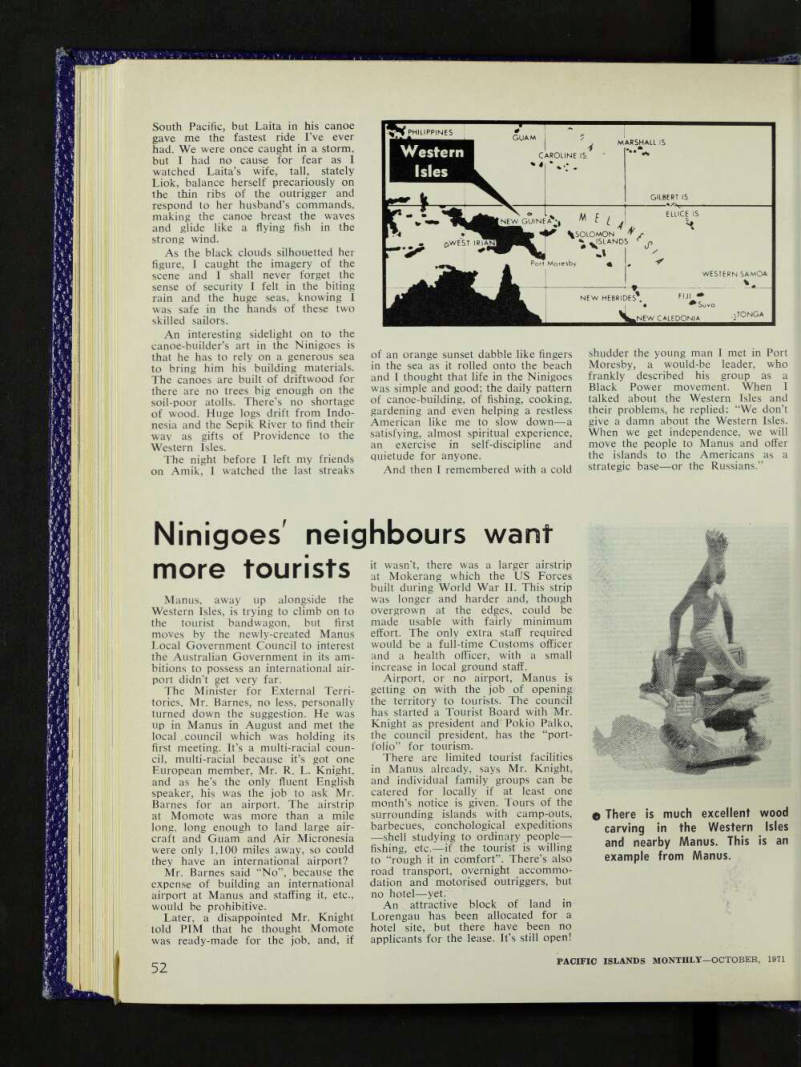 54
54 55
55 56
56 57
57 58
58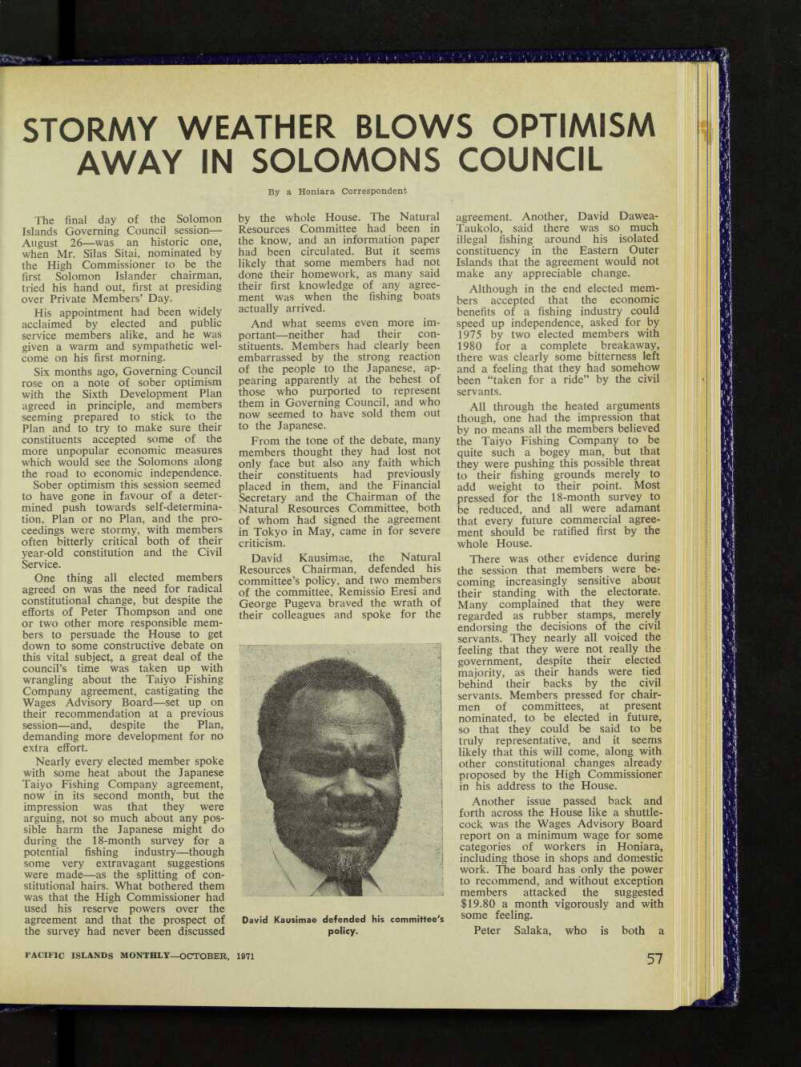 59
59 60
60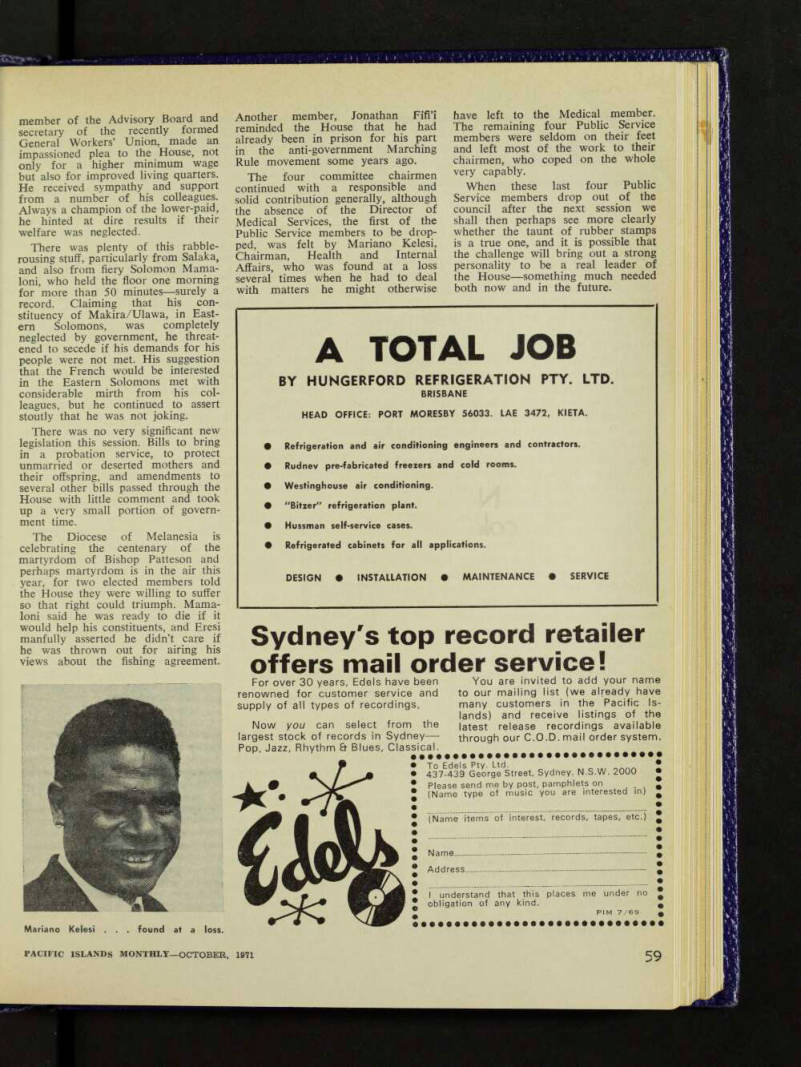 61
61 62
62 63
63 64
64 65
65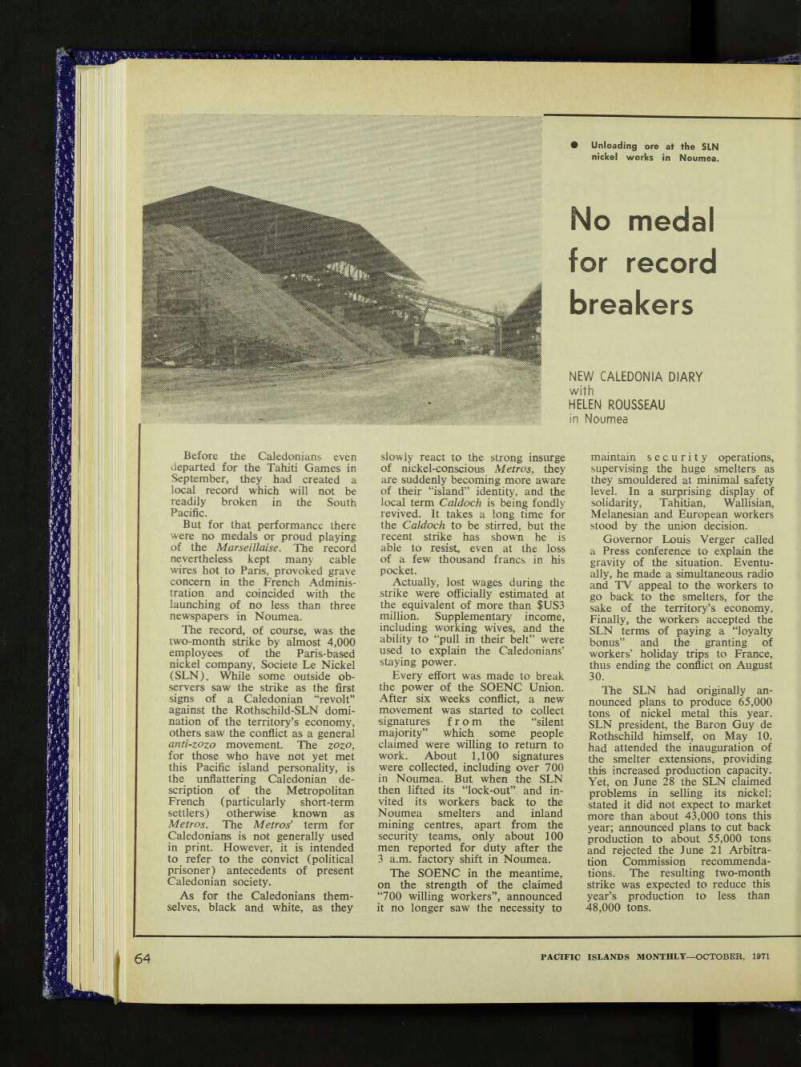 66
66 67
67 68
68 69
69 70
70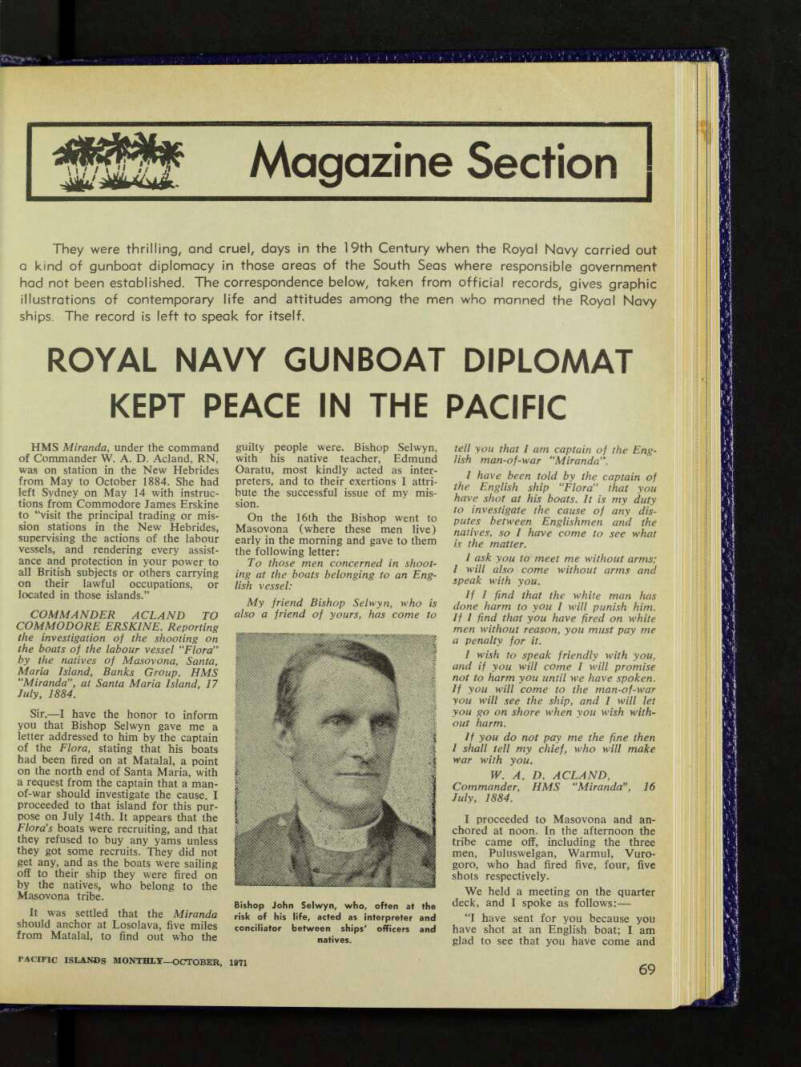 71
71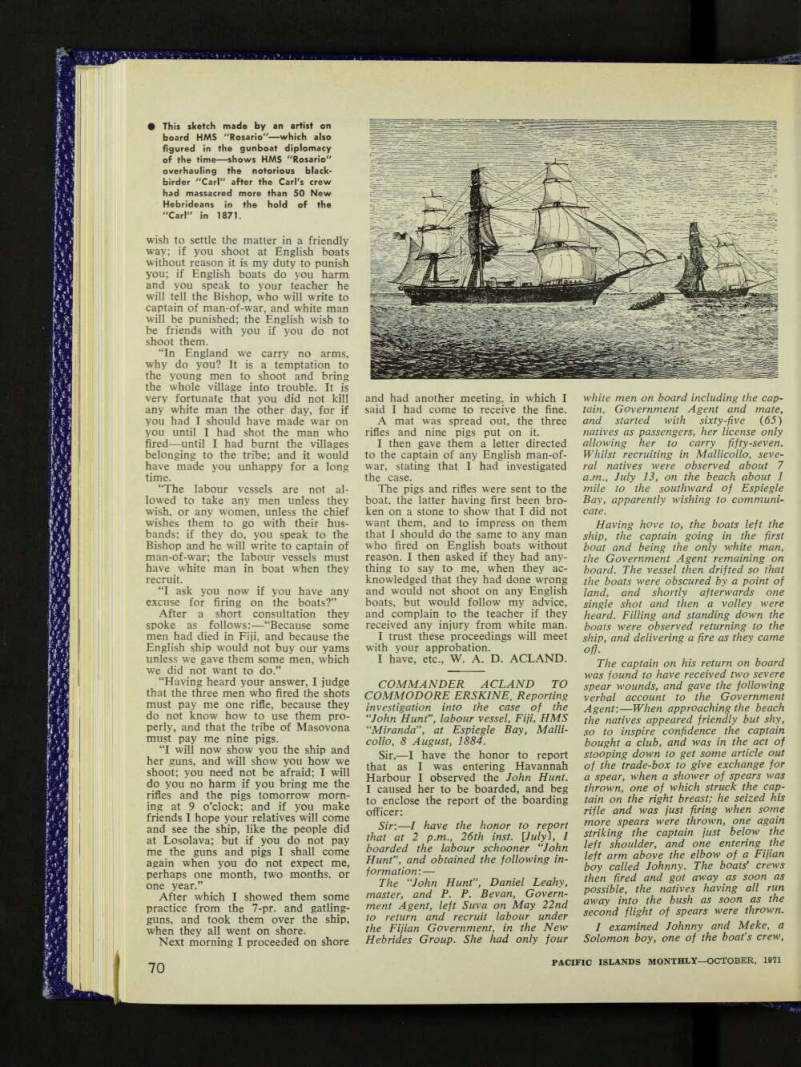 72
72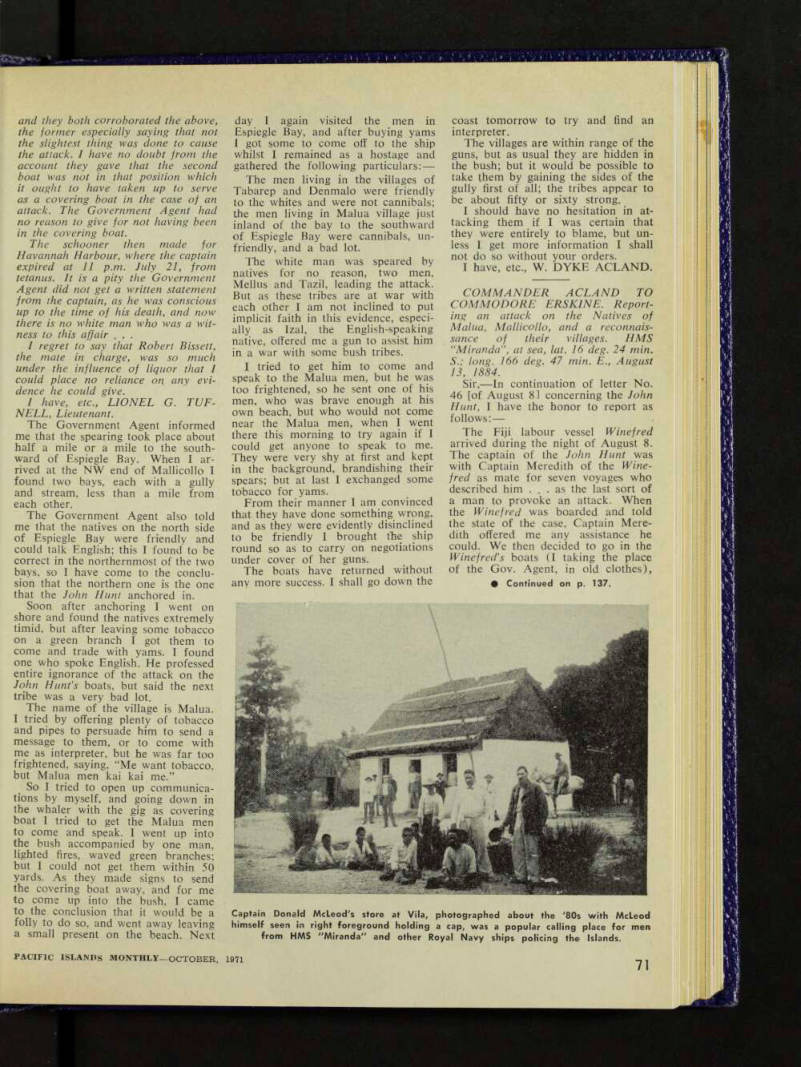 73
73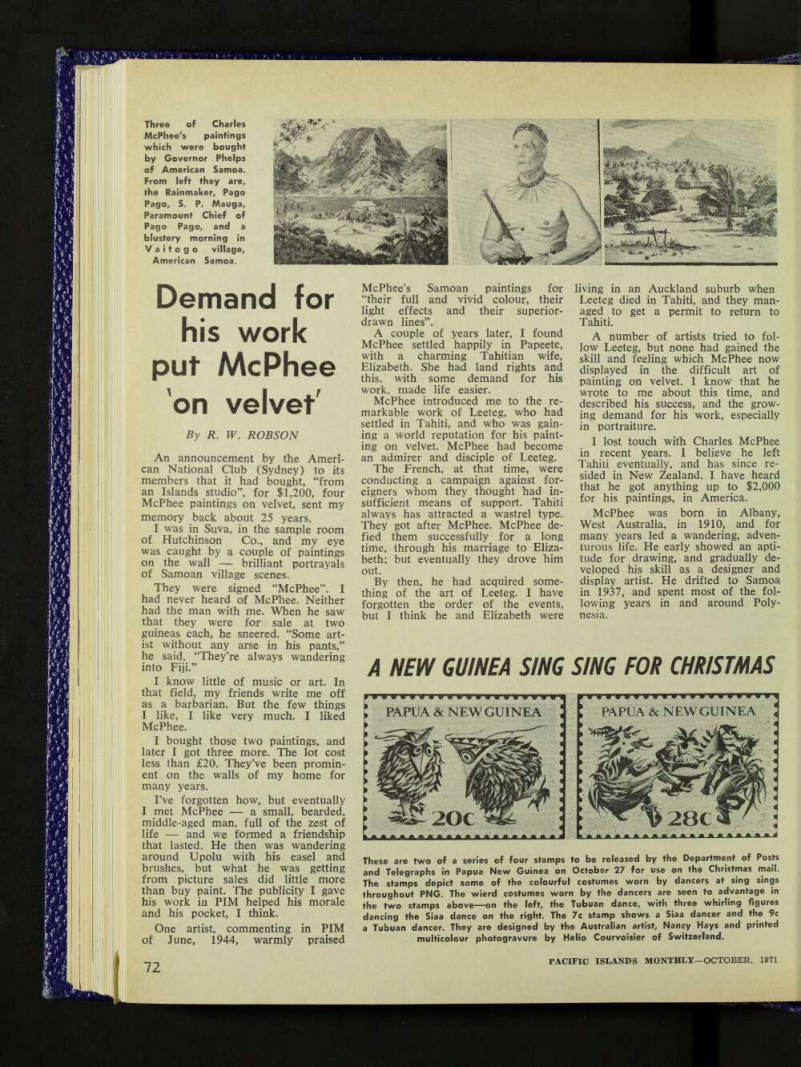 74
74 75
75 76
76 77
77 78
78 79
79 80
80 81
81 82
82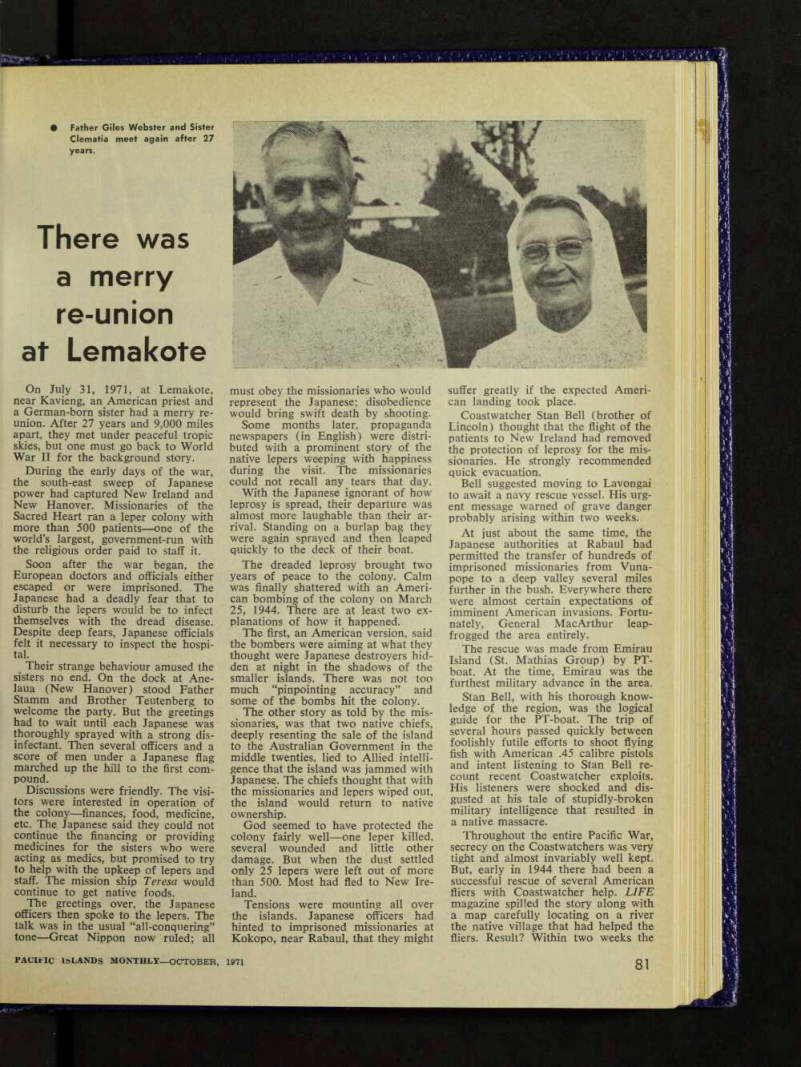 83
83 84
84 85
85 86
86 87
87 88
88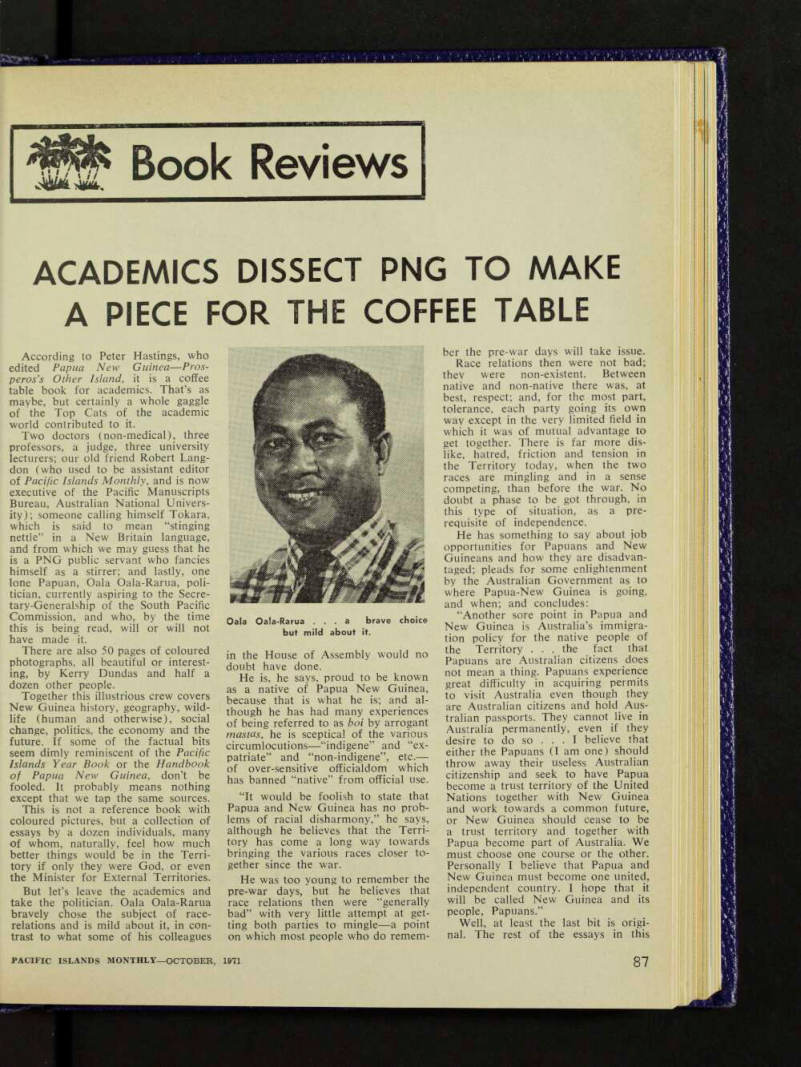 89
89 90
90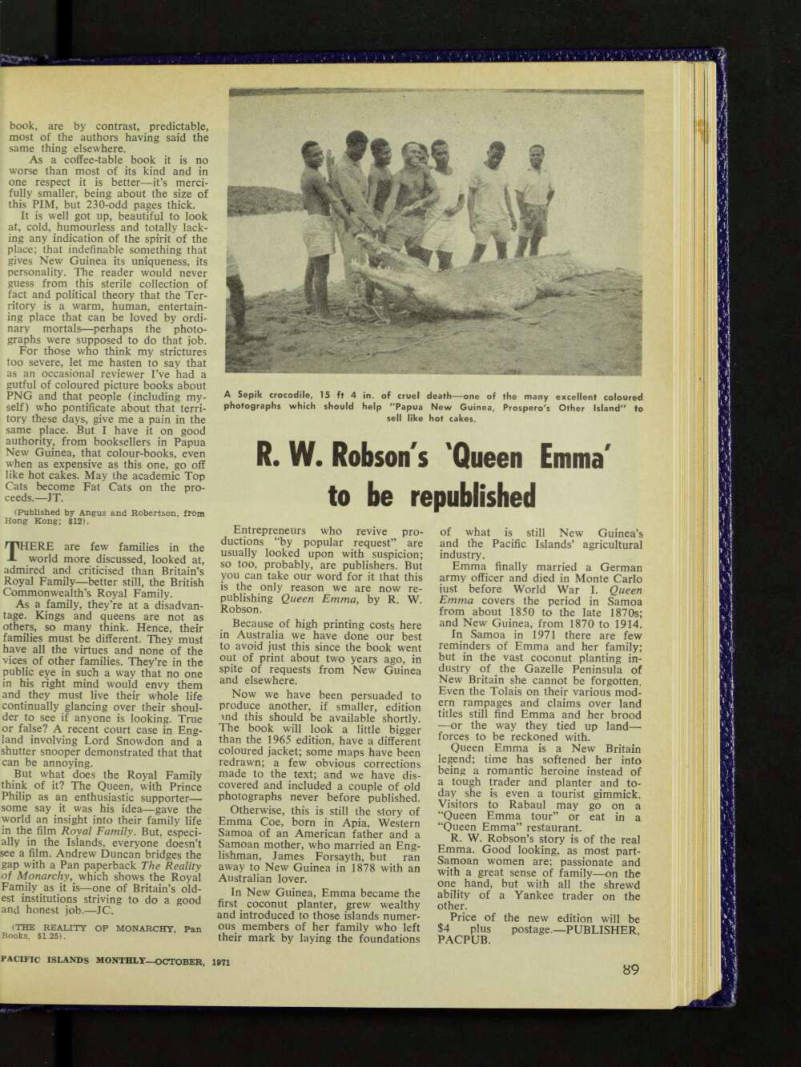 91
91 92
92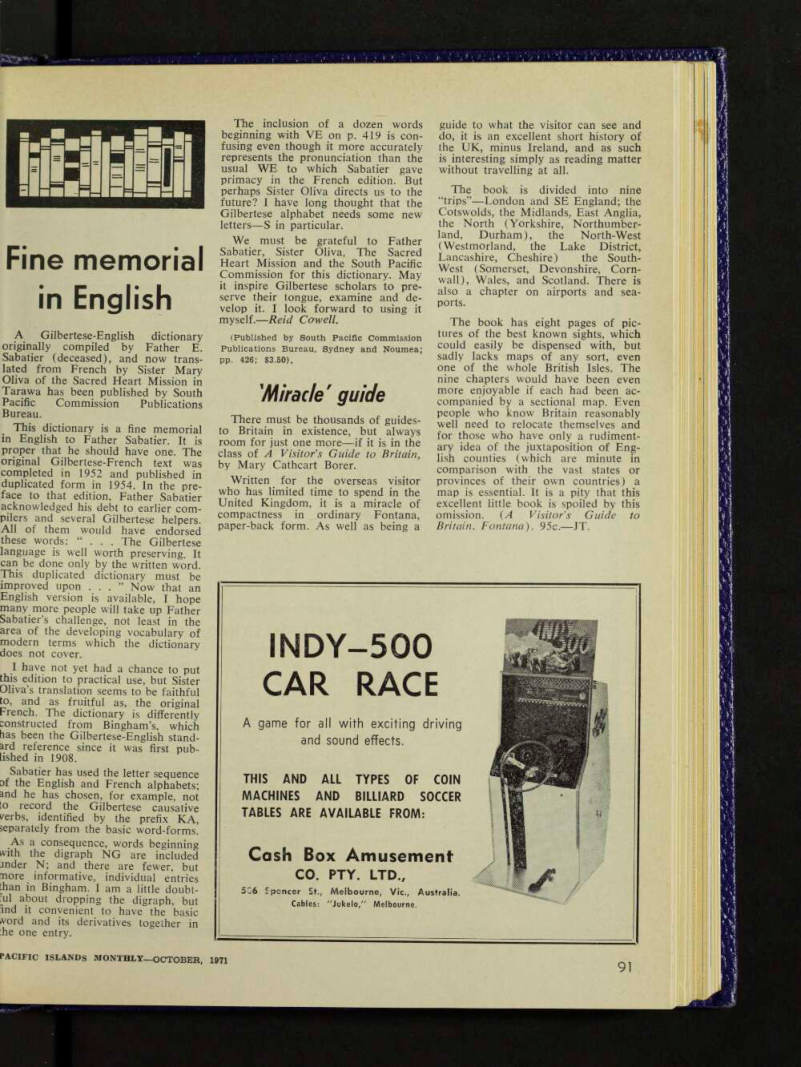 93
93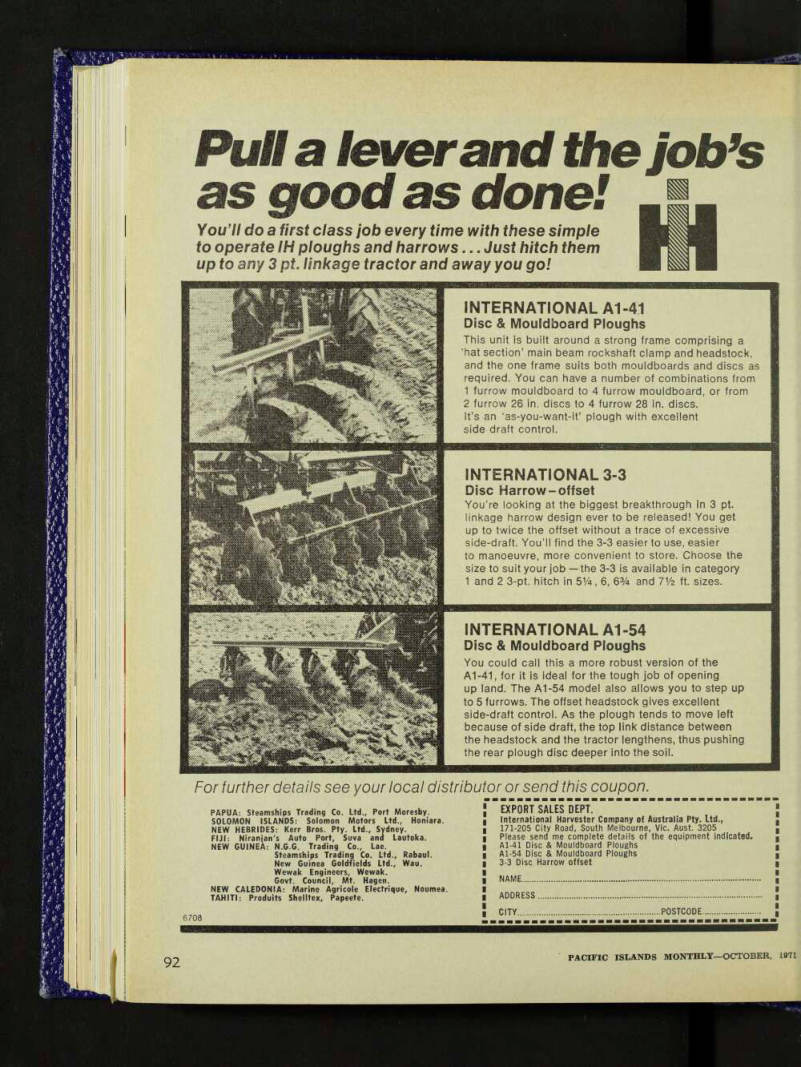 94
94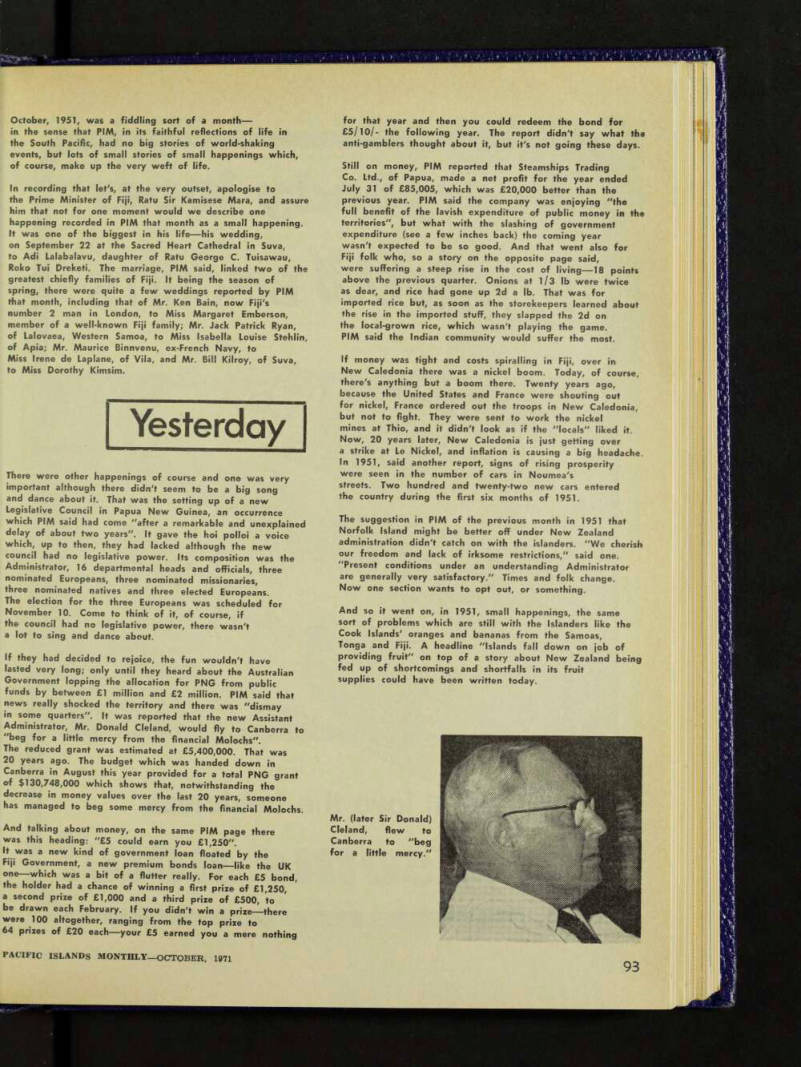 95
95 96
96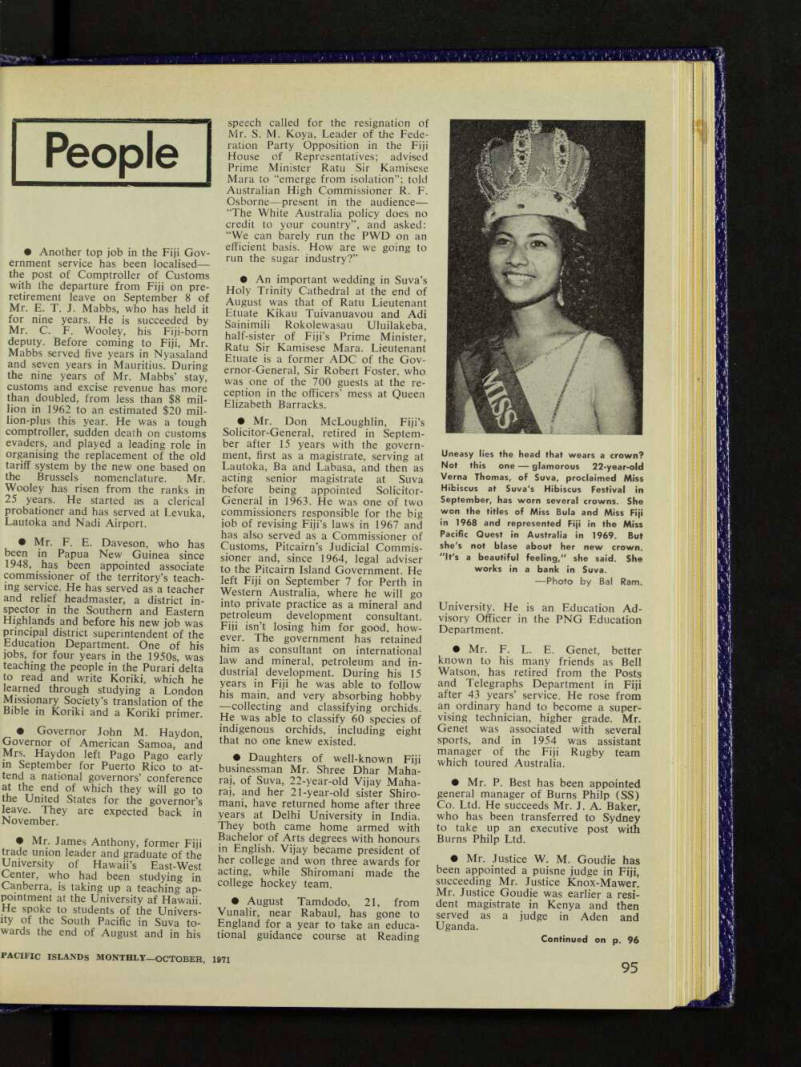 97
97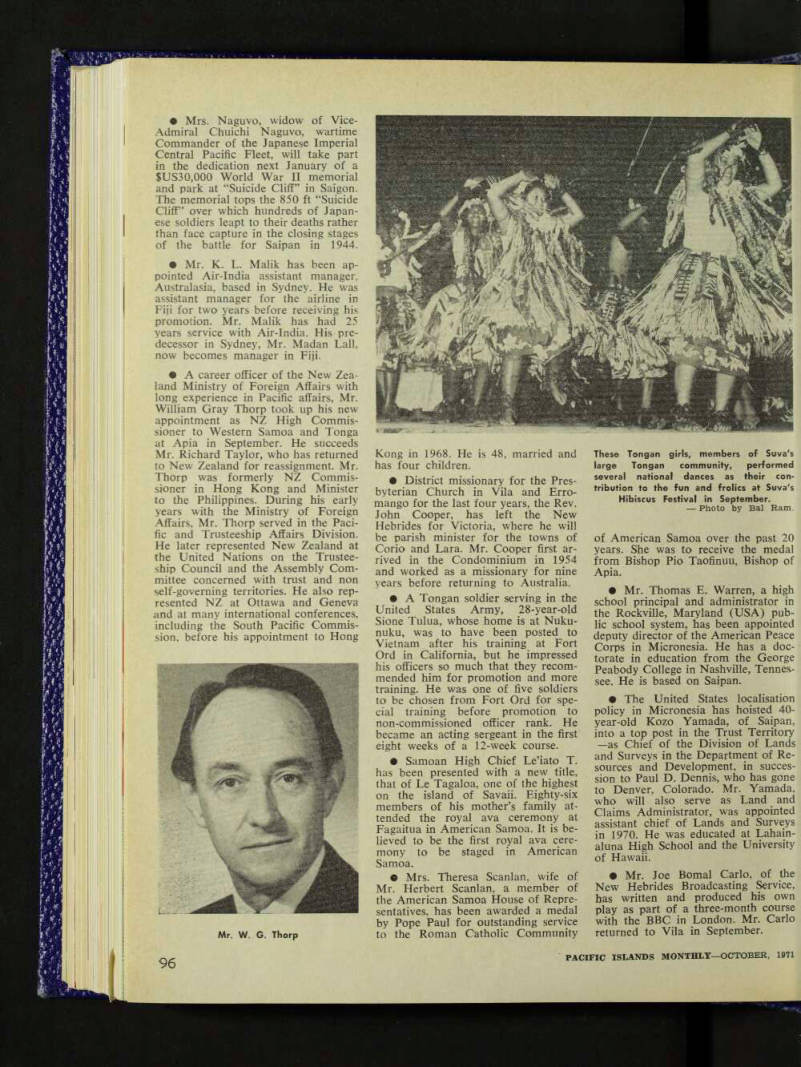 98
98 99
99 100
100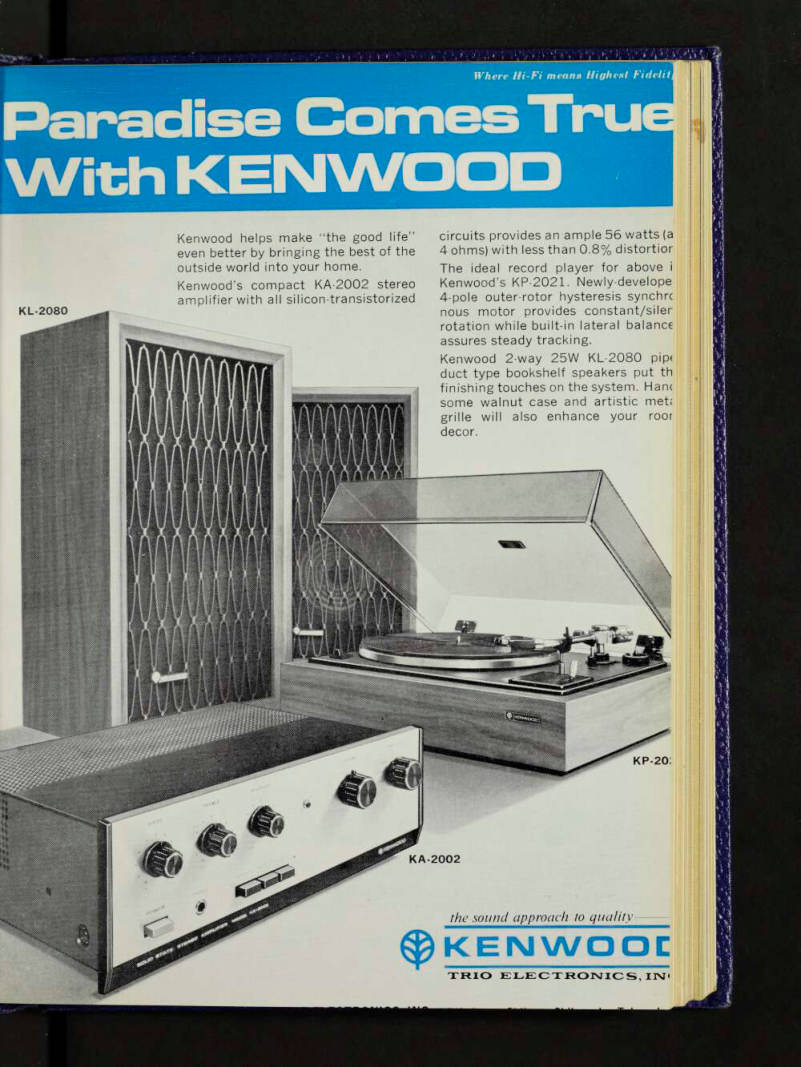 101
101 102
102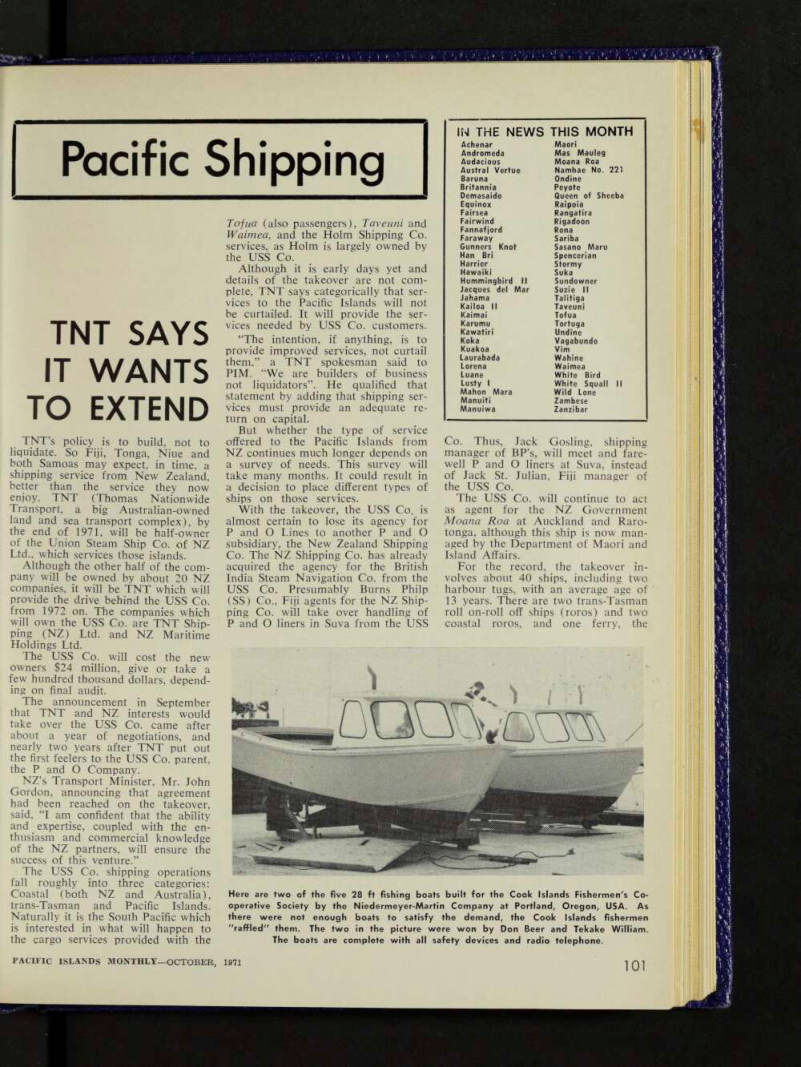 103
103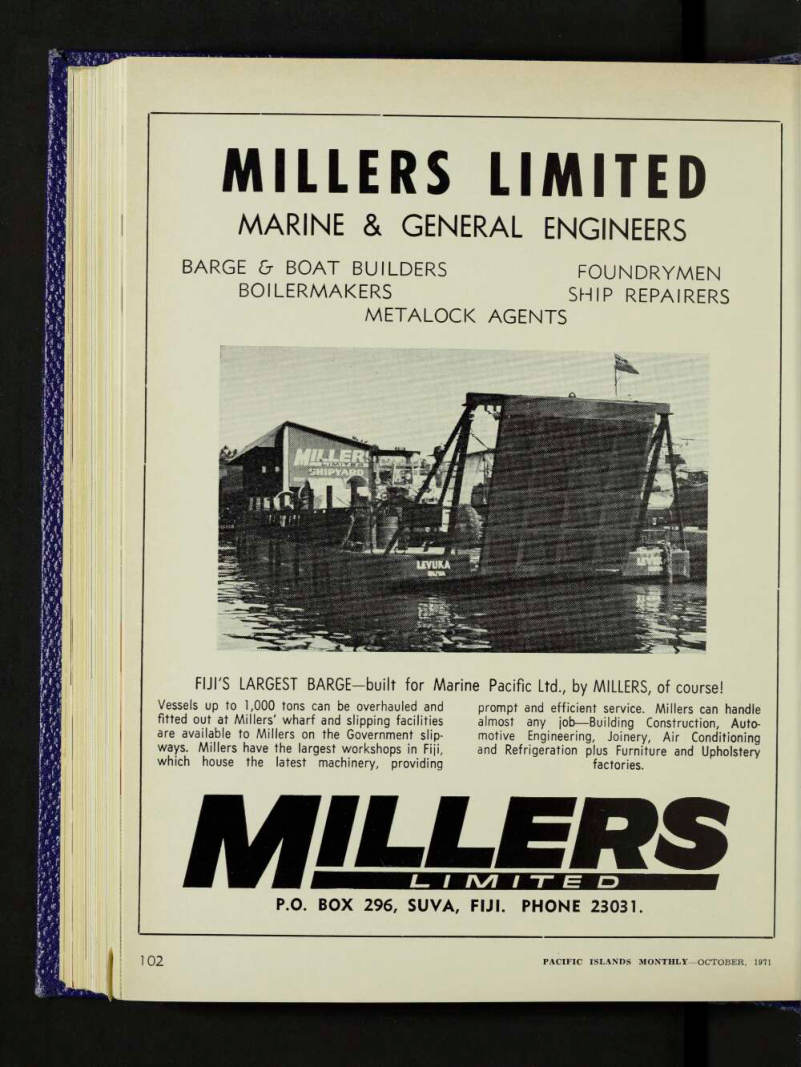 104
104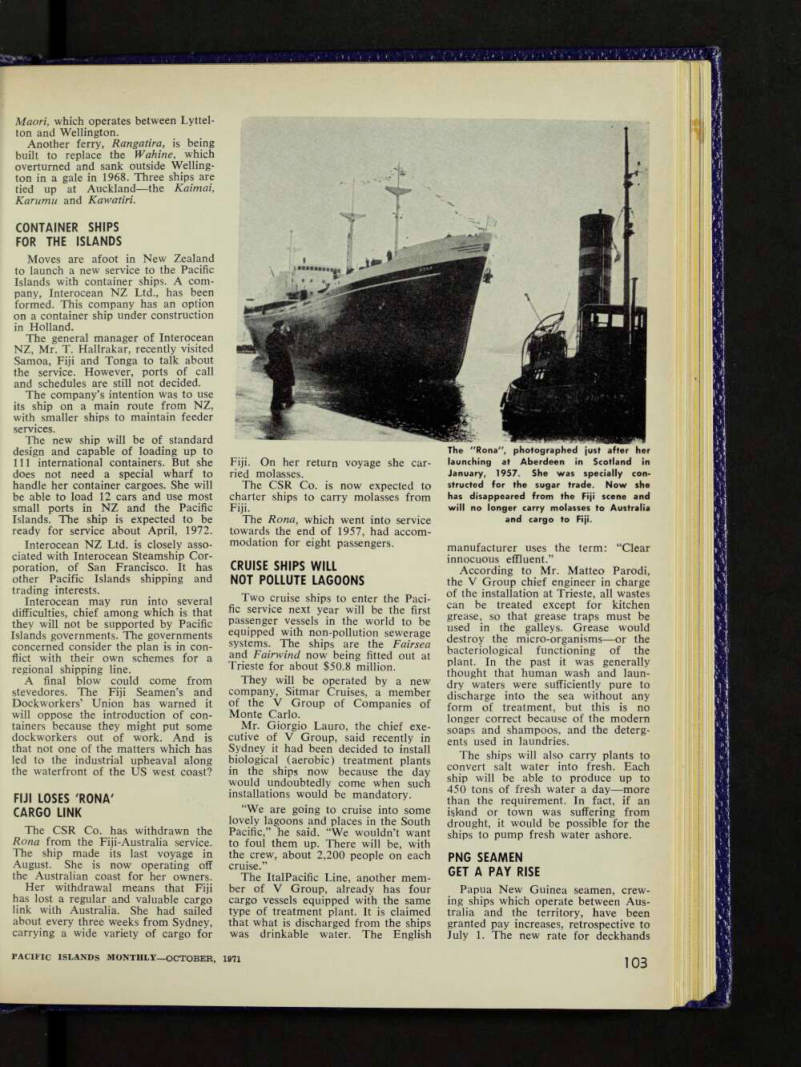 105
105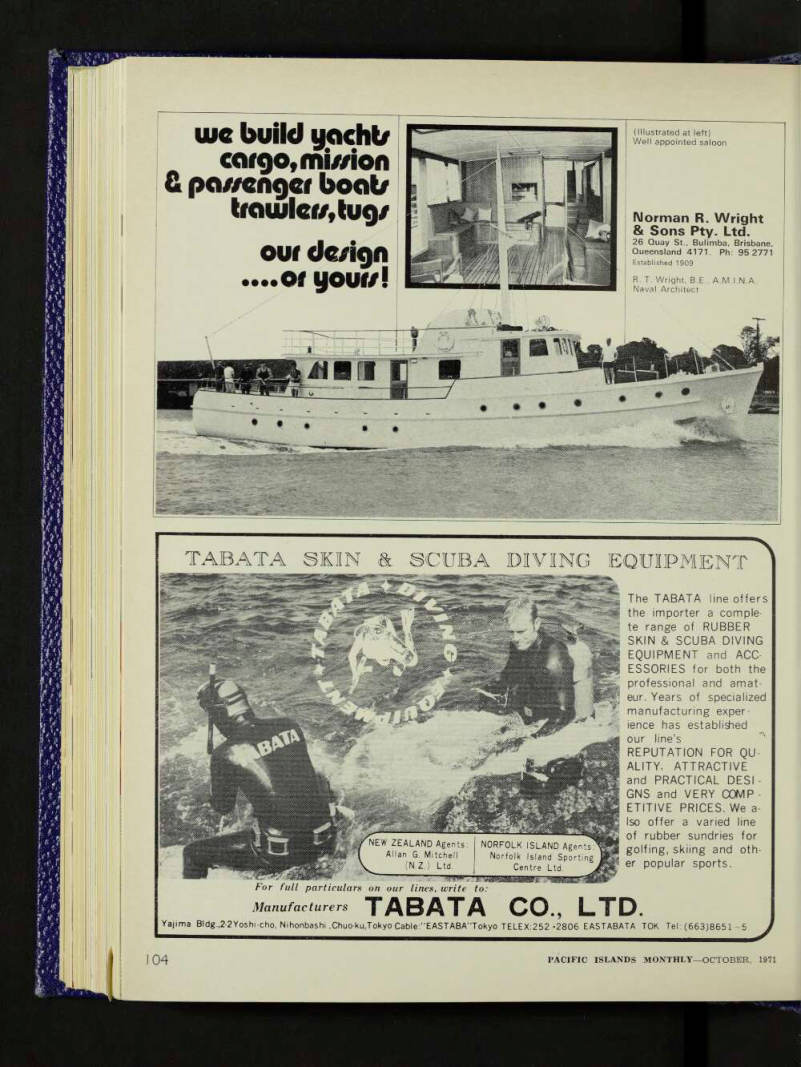 106
106 107
107 108
108 109
109 110
110 111
111 112
112 113
113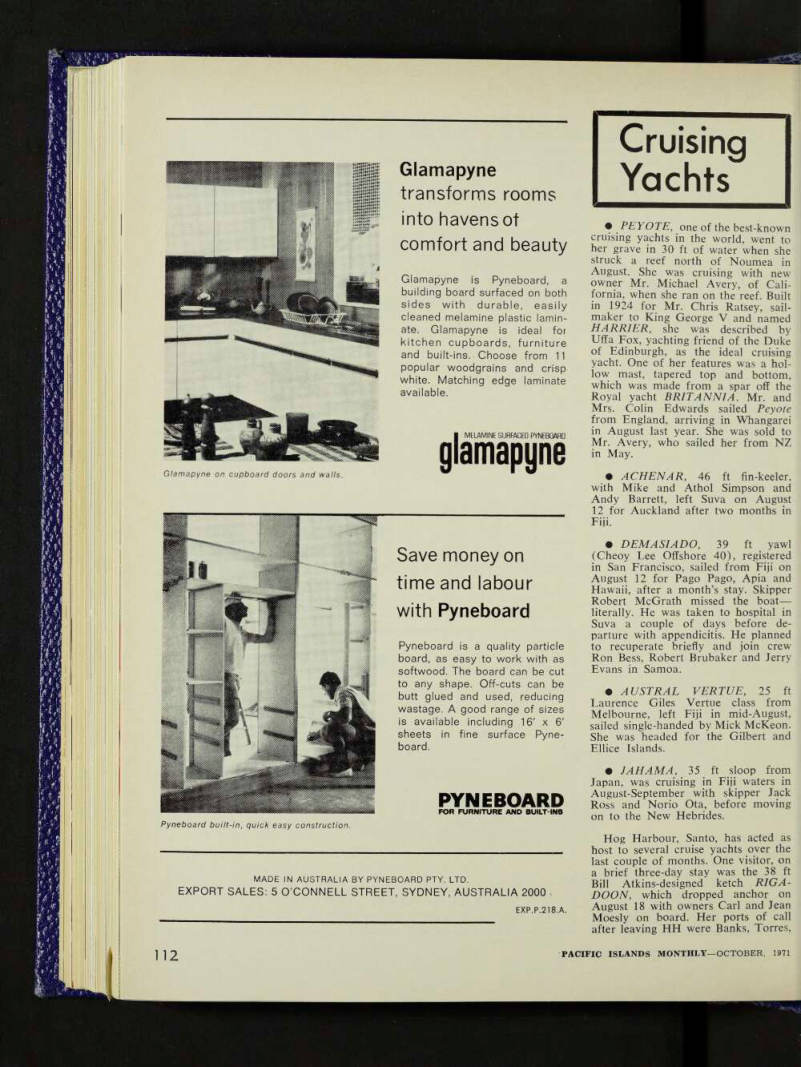 114
114 115
115 116
116 117
117 118
118 119
119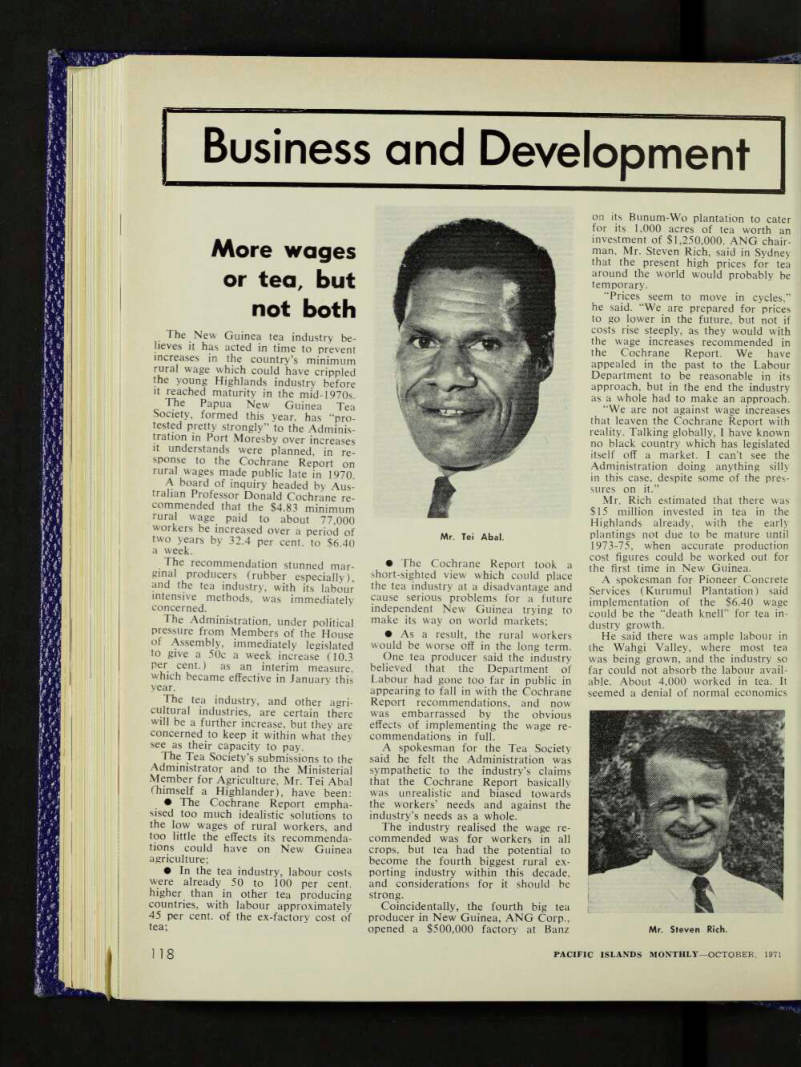 120
120 121
121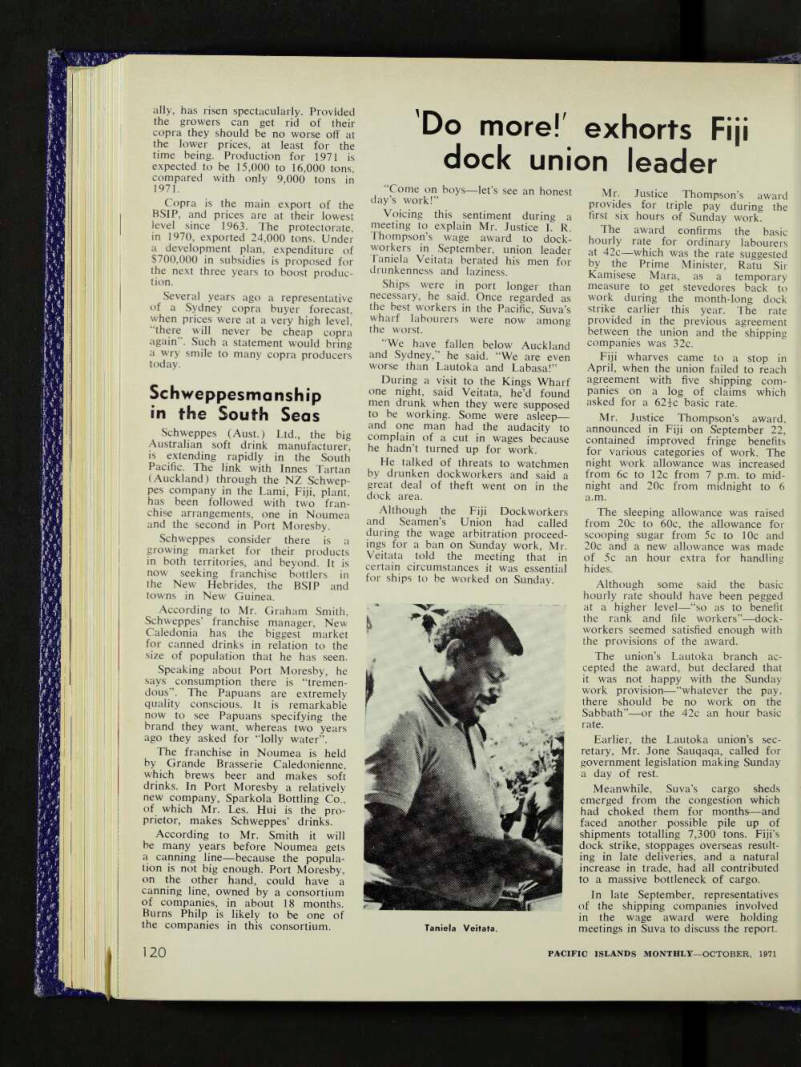 122
122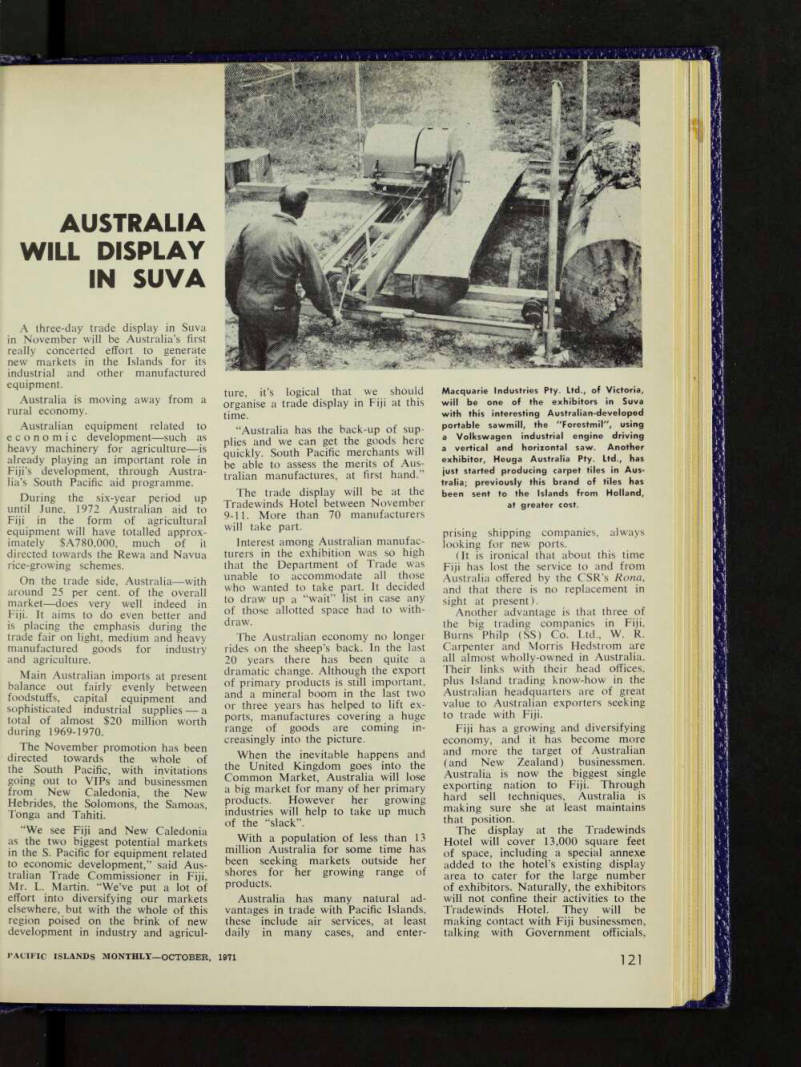 123
123 124
124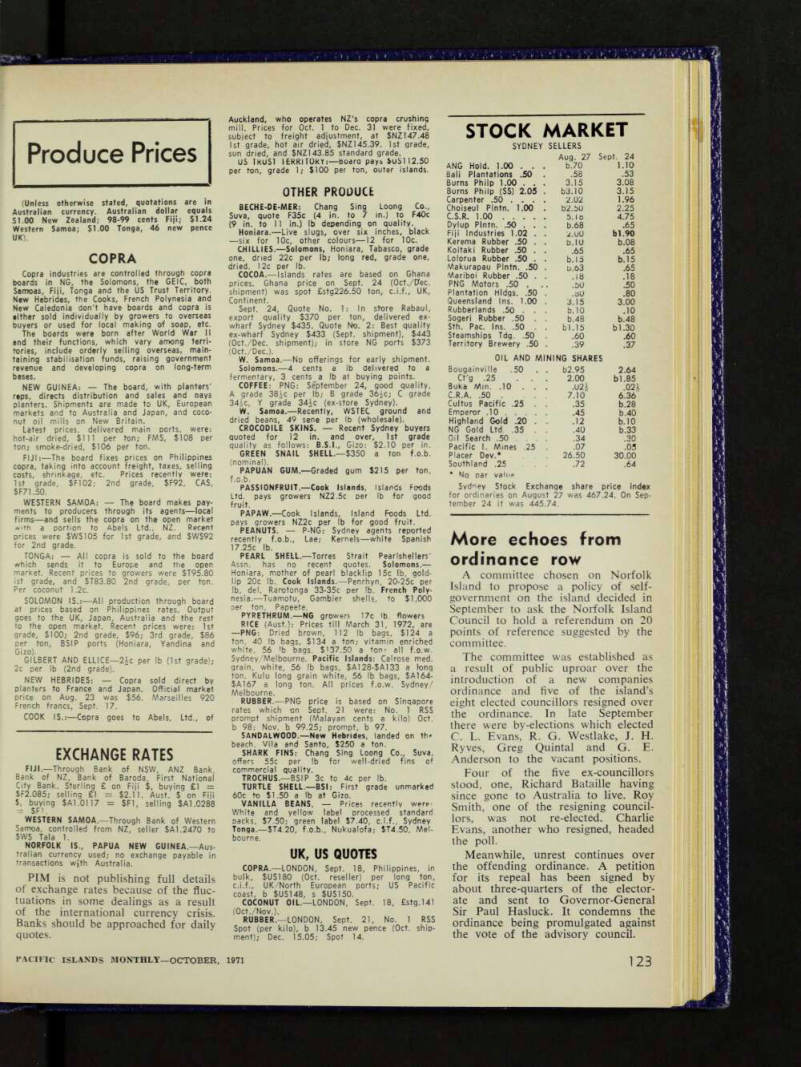 125
125 126
126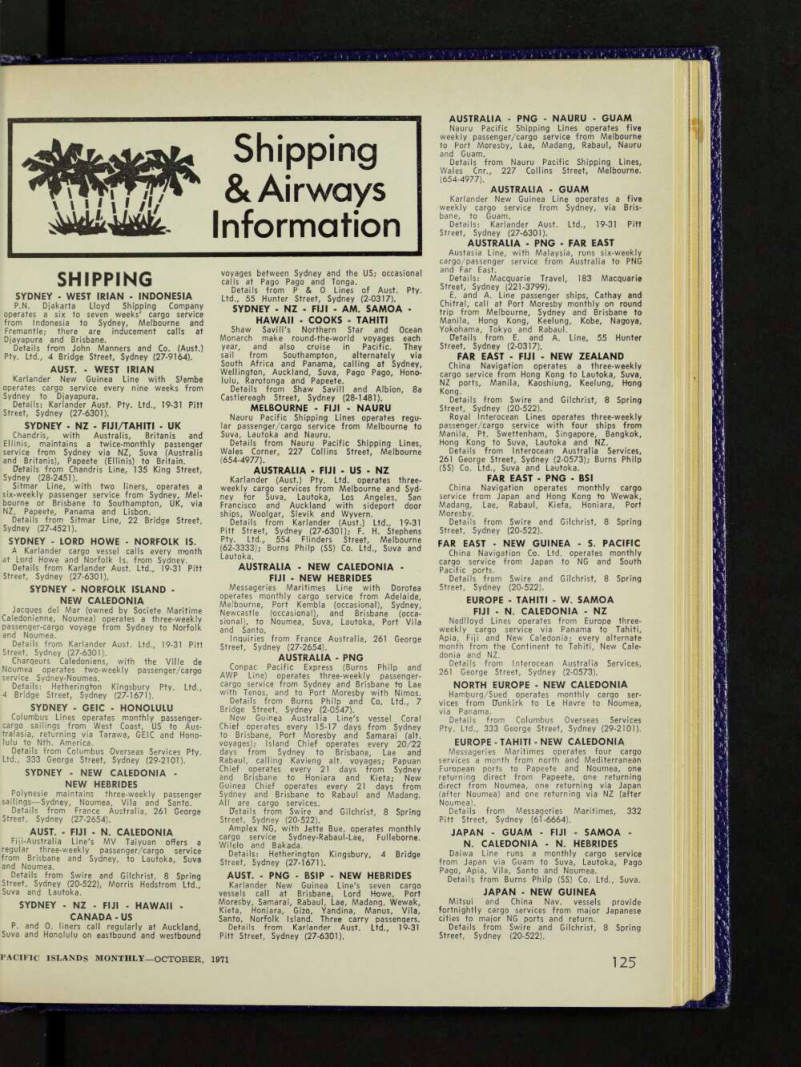 127
127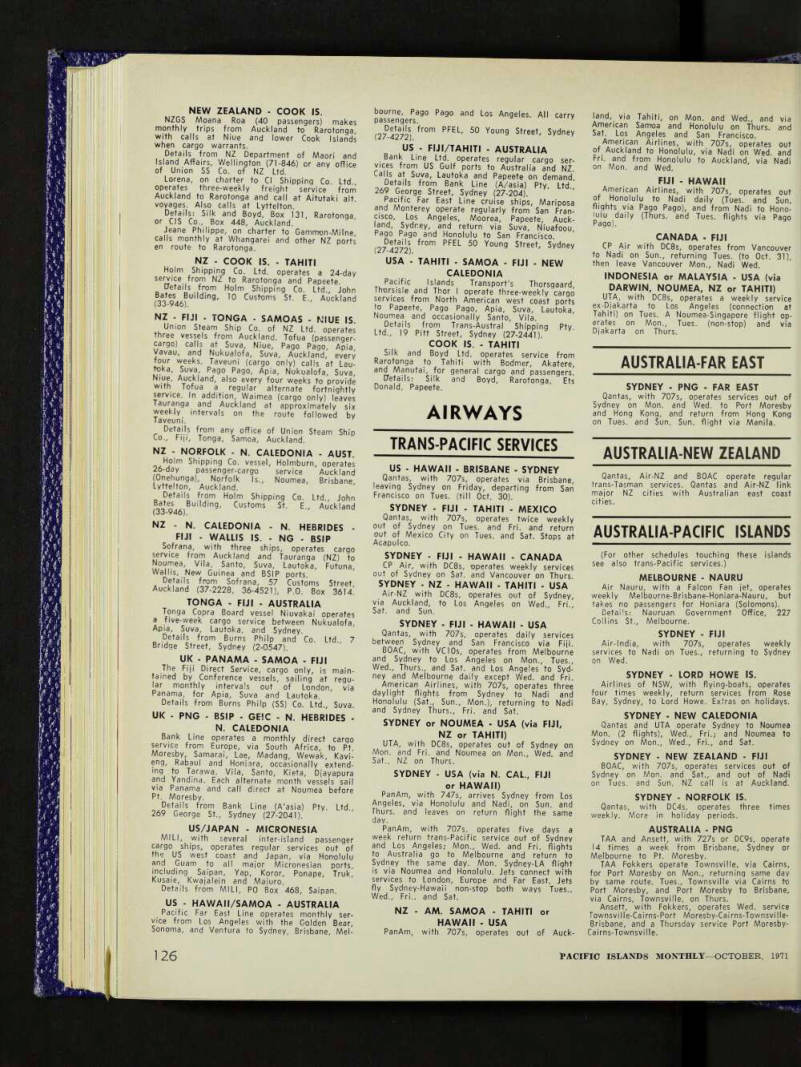 128
128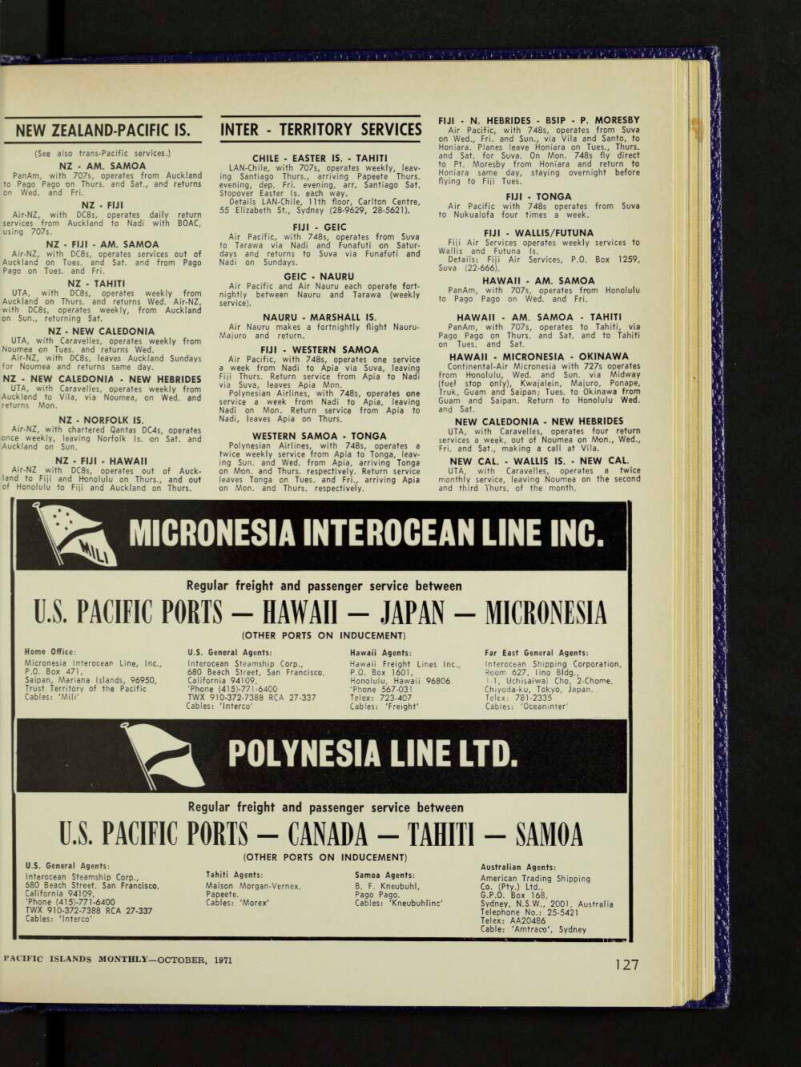 129
129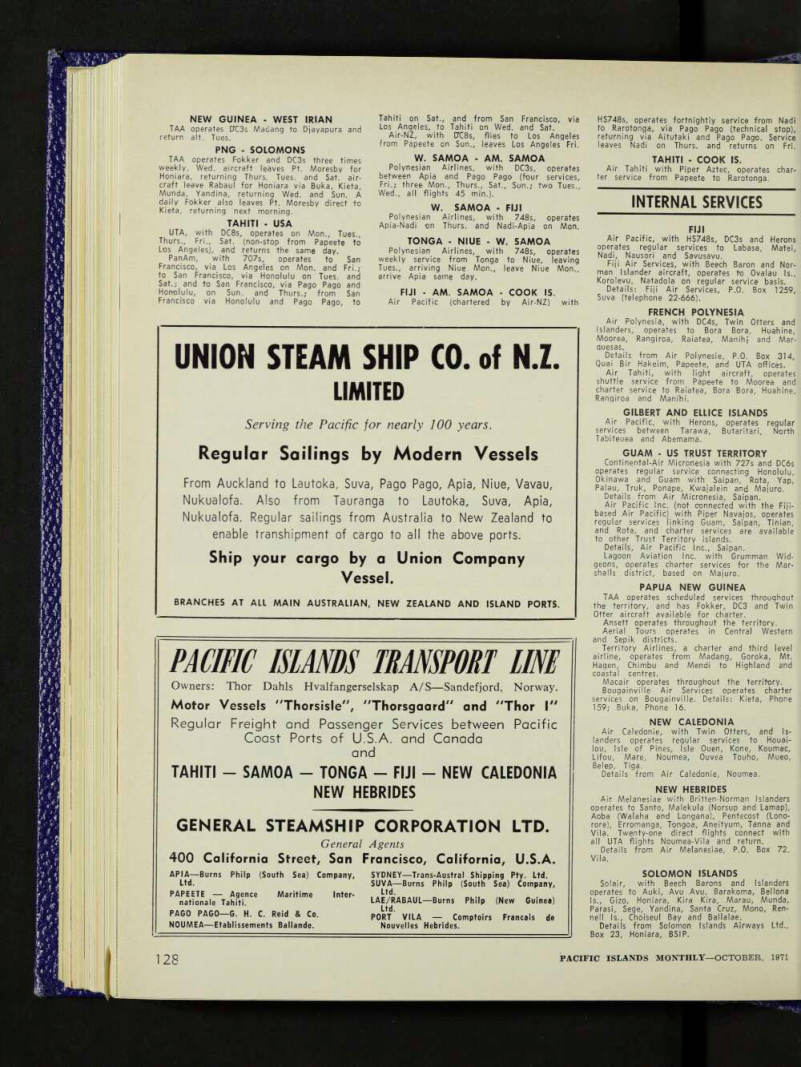 130
130 131
131 132
132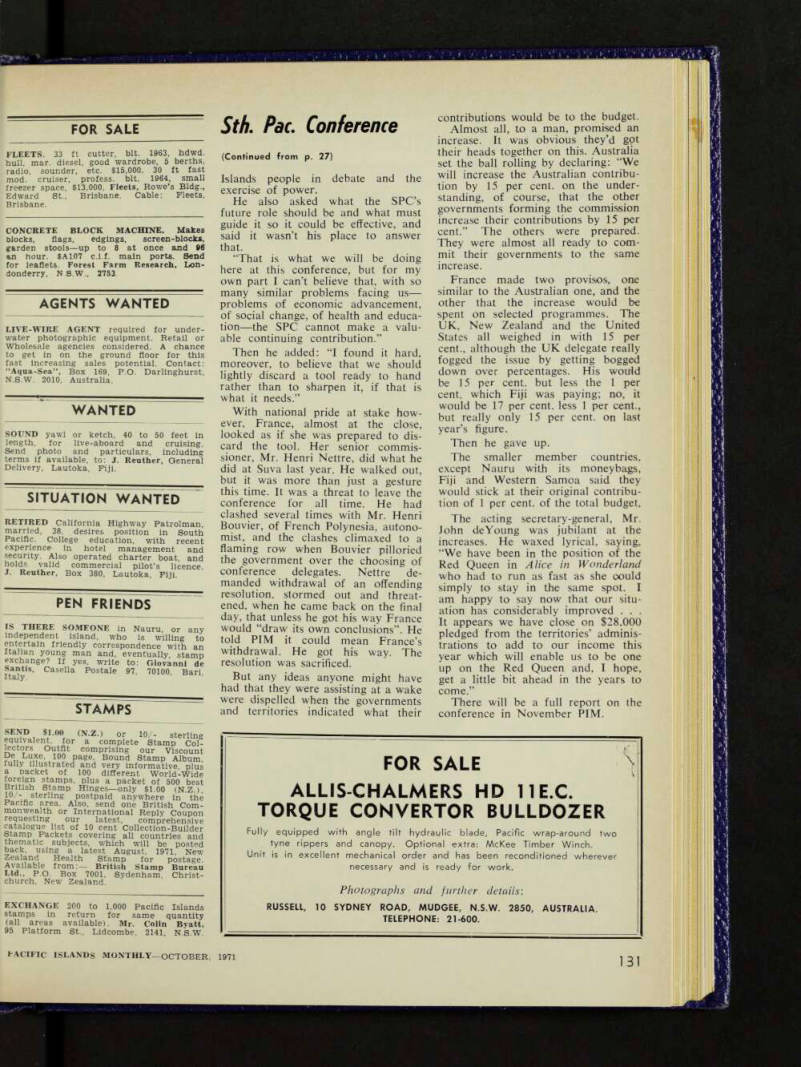 133
133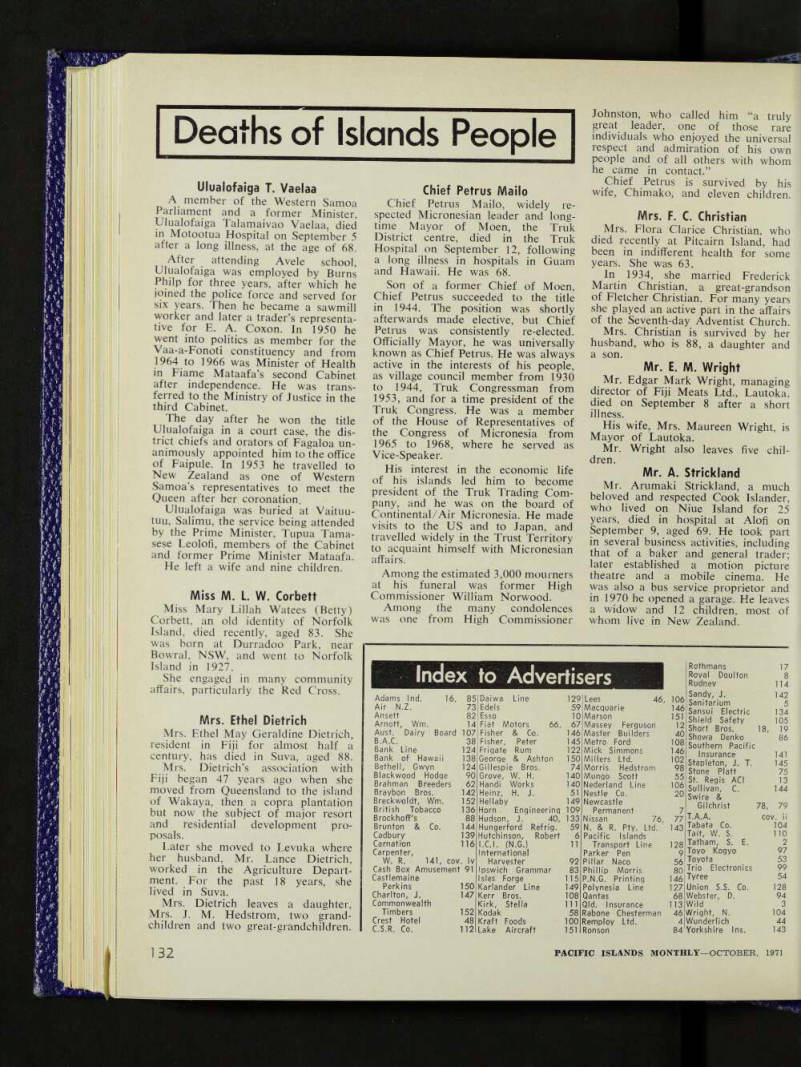 134
134 135
135 136
136 137
137 138
138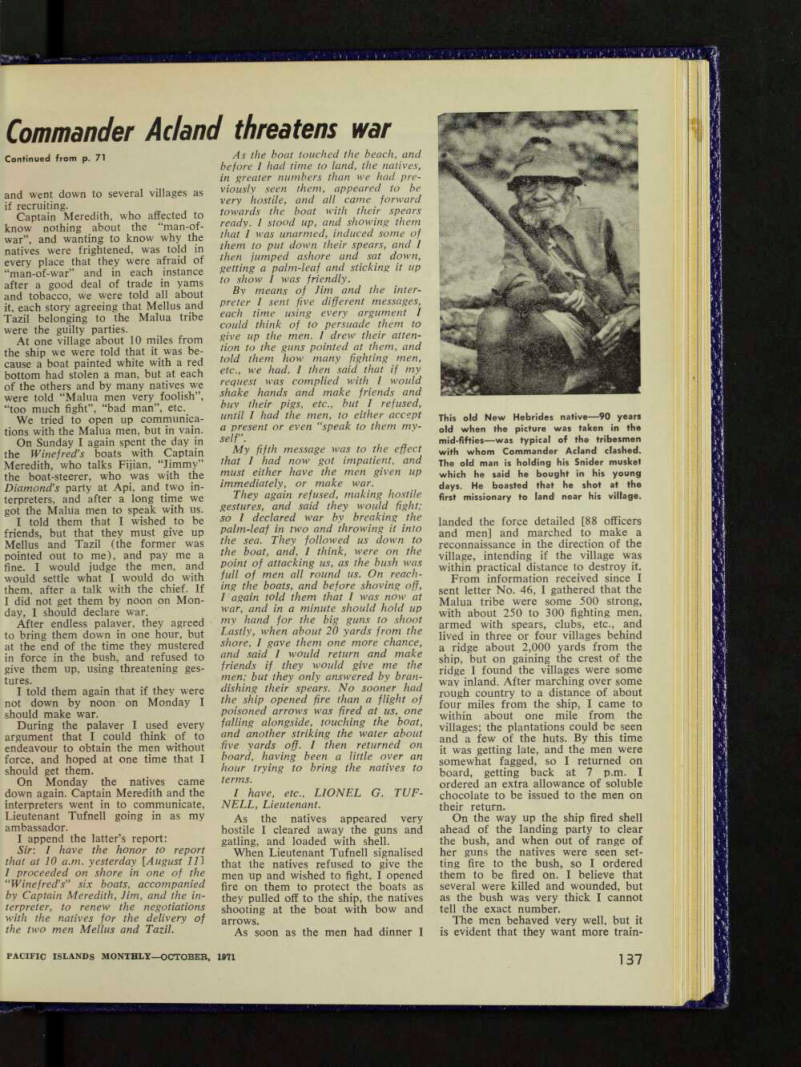 139
139 140
140 141
141 142
142 143
143 144
144 145
145 146
146 147
147 148
148 149
149 150
150 151
151 152
152 153
153 154
154 155
155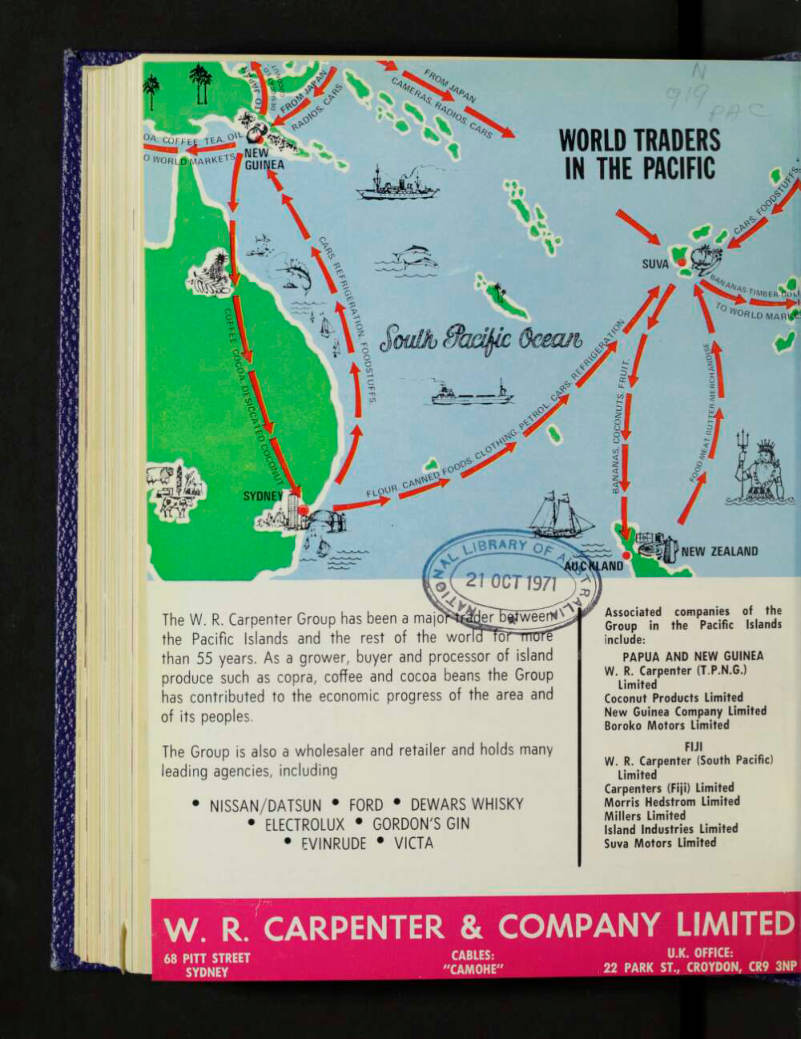 156
156