Pacific Islands Monthly
News Magazine Of The South Pacific
Registered at G.P.0., Sydney, for transmission by post as a newspaper.
November, 1970
Australia 40C New Zealand 45C
U.S. Pacific Territories 70C
French Pacific Islands (Frcs. Cfp.) 65
P N G., FIJI, OTHER PACIFIC TERRITORIES 35c
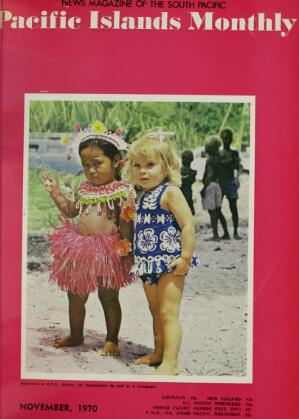
Our Cover
When Alex Wendt, oj Suva, was visiting Honiara, in the British Solomons, recently he thought that these two little girls made a pretty picture, and so he took it. The stars oj the occasion are two-year-old Maxine Tioti, a Gilbertese beauty who lives in a Gilbertese village, White River, just outside oj Honiara, and two-year-old Natasha Saunders, daughter oj Honiara's Bruce and Keithie Saunders.
Advertisements & other items, p. 2 (2 items)
November 1970 Pacific Islands Month!
The long and short of the COLT GALANT
With the Galant, the distance between two points is short, with long intervals between stops for fuel. Low fuel consumption and trouble free performance (Treasonably priced Galant long on economy. The long sloping hood and short deck give the Dyna-wedge Galant a fresh sporty look. Spacious interior, reclining urethane foam seats, tilt steering wheel and multi-use con trol lever are but a few of the features that make the Galant longer on luxury and safety. Choose either of Galants two powerful Saturn engines, 87 or 95 HP. See your dealer today for the long and short of the Colt Galant! r ks . as
MITSUBISHI
MOTORS CORPORATION
formerly Molar Vehicle Headquarters of Mitsubishi Heavy Industries Ltd
Pacific Islands Monthly
In This Issue
. 41. No. 11. November, 1970
Eral
Jtion of the South Seas 45
bo's first flight 49
Rican Samoa
Nation jump 33 ping disaster 89 y Lata" arrives 91 Coast Guard Auxiliary 93
•K Islands
tonga goodbyes Matson 54 >ric building may come down ... 57 ieal liquor laws" 59 Ho" chartered 91 service begins 101 pendence round-up 21-24 ■ independence what? 25 te named 26 the UN ” 27 rcraft service 32 Burr's plans 45 Garrick closes 59 launched 91 for rural workers 102 investment company 105 icreases profits 106 iror loses money 106
id brewery 107
prawn island 116 Airways name change 116
Ch Polynesia
relations with French 30
Air services resume 33 How Tahiti got its flag 73 Language far from dead 87
Gilbert And Ellice Islands
Prince Charles' visit 25 Copra plan in trouble 129
Lord Howe Island
Airstrip approval 43 Goat killing suggestion 55
Nauru
Shipping position 29 New appointments 32, 101 Pretty Miss Gadong 34
New Caledonia
Rey's visit 33 Foreign sportsmen 50 "Problems ahead" iq3 Export quotas raised 103 Cycling and business 108
New Hebrides
Supplies for neighbours 104
Niue
Much-travelled visitor iqi
Norfolk Island
Battle time 35 Plea for Bonnie 55 Airport referendum? 55
Papua-New Guinea
News round-up ... 28 First Papuan RC bishop 32 Wedding of two cultures 35
War dead found 35 Still no cards 45 Mick Leahy profile 53 Book on Port Moresby ... go Wharf plans .. 93 Big interest in oil ]O4 Sugar cane trials ]q7 Common Market concern ]QB
Pitcairn Island
Change in Governor 33 Stamp issue 33 Unexpected visit .. 93
Solomon Islands
Council elections . 3 Fijians celebrate 94 Revival meetings 34 Making your own money Oil palm scheme .104 Tourist federation
Tonga
Letter to editor ... 3 Another ship bought 39 Copra board resignations 32 Birth rate 33 On trail of mosquitoes 35 Plumbers strike ]q7 NZ imports 108
U.S. Trust Territory
Japan Airlines plans 33 American influence 55 Stone money of Yap 54 Samoan exile 79 History of land ownership 117
Western Samoa
Emigration 33 Pregnancy tests ... 34 Not Cook's sextant? 35 Samoans in exile .. 79 "Betty Lou" enquiry 39 "Lady Lata" arrives pi
, ' SS;5 S; Le !' er V° ,he Editor. 3; Up Front with the Editor, 19,• Nutshell, 2 'JfJ «*' , 34; F o? tnotes > with Percy Chatterton, 41; From the Islands acht. SQJ 5 QJ M r 9a2me SeC J IO rT' 7 . 3; YeSterday ' 81 '- Books, 82; Ships, 89; Cruising achts, 94; Business and Development, 102; Produce Prices, 109; Shipping and Airways Timetables, 111; Deaths, 135.
Advertisements & other items, p. 4 (2 items)
November. 1870-Pacific Islands Monthi
Qrnott's/a~ Biscuits
Milk Arrowroot biscuits
for all-day energy
You and your children use up a lot of energy during the day; but Amott’s Milk Arrowroot biscuits will give you the extra nourishment you need to replace it. The triple-wrapped pack keeps the biscuits crisp and fresh at all times.
Qrnott's/a~ Biscuits
There is no Substitute for Quality
The Editor's Mailbag
Solomons Elections
Sir, —A funny thing happened to le on my way to the forum! The eneral elections for the new BSIP roveming Council took place on une 3. I had been nominated, with Dur opposing candidates, for the astern Guadalcanal electorate. r oting took place at 10 polling laces and the final count was made y the returning officer at Marau. fr. Leone Laku was declared the inner over me by a majority of 20 ates.
The returning officer called here n his way back to Honiara on unday, June 7, and gave me the jsults of the poll. He also told me lat 123 votes had been rejected scause they carried markings indi ating that such votes could be lentified as those of particular aters. This was all the information ; felt justified in giving me.
It was up to me to ask for a scount if I wished, or, pro ded sufficient evidence could be >und, to petition the High Court >r a new election. I sent investi itors to all the polling stations and, ;ting on the information they •ought back to me, asked Mr. David eating, barrister and solicitor of oniara, to act for me in petitioning ir a new election.
He wrote to the chief returning ficer asking for answers to certain :rtinent questions. A period of 30 lys is allowed to petition. On July I attended the office of the chief re rning officer and asked him if a reply as available to the letter Mr. Keat g had sent to him on my behalf, ich a reply was forthcoming after small delay.
The following day Mr. Keating esented my petition to the High 3urt asking for a new election.
A preliminary hearing was held in e High Court building at which e rejected votes were counted. It as found that if the votes had en admitted at the original count en Mr. Laku’s majority of 20 votes 3uld have been converted into a inority of 10 votes and I would ve been the winner.
This investigation took place on jgust 4 and the High Court hear g took place before the Chief stice on August 10. On the even g of August 4 I was informed
by my legal adviser that neither the Attorney-General nor Mr. Leone Laku would oppose the petition. I did not attend personally the court hearing on August 10 but was repre sented by Mr, Keating. No witnesses were called and the court decided to grant a new election.
The new election took place on October 10. I was the winner over the next closest candidate, Mr. Laku, by 977 votes against 362.
The purpose of this letter is to point out that although government was aware that the 123 invalid votes had been marked in such a manner, by government polling clerks, as to cause them to be rejected at the count, I was not advised of this by government authority until the 30 days grace had almost expired, and then only after my legal representa tive had asked for the information.
Had either myself or my agent been present at the polling stations concerned, or at the final count, then I would have been aware of the state of the poll, had the rejected votes been accepted. I am not aware why the returning officer could not give this information to me.
I was entitled under the electoral regulation to be present, either in person or by my agent, at the polling stations and the final count, but,
apparently, in my absence I was not entitled to be told what actually took place, or where the blame lay in re gard to this disenfranchisement by the action of government polling clerks of 123 votes which changed the results of the poll.
Under the regulation, the Attorney- General had the right to petition the court for a new election. Apparently, he did not think that the circum stances warranted him taking any action. I had to arrange my own investigation before I obtained sufficient evidence to sustain my own petition.
So far as I am aware, the government-controlled Department of Information (which supplies “news” to the broadcasting service) has not yet stated that the action of govern ment employees was in any way re sponsible for what took place, or that this action changed the result of the first election.
I trust you can see your way to publish this in order to put an end to wild rumours in this part of the world as to what did or did not take place.
Joseph Bryan.
Rere Plantation, Guadalcanal.
Kind Words From Tonga
Sir, —Since late is better than never, may I extend my most sincere congratulations and very best wishes to PIM on occasion of its 40th anni versary in August. I take the greatest pride in extending this greeting, though belatedly, for several reasons.
Firstly, PIM is a part of Tonga, since its founder and first editor, Mr.
R. W. Robson, thought of the need
for such a magazine while in Vavau, in May, 1914. Secondly, there is not a single publication in the world that attempts to bring home each month, to all parts of the area it covers, varied news and informations of direct interest to the welfare of its readers as PIM. Thirdly, at times, PIM has published criticisms on Tonga that at a glance seemed damaging and unwarranted. How ever, on closer study such criticisms have provided stimuli for the proper assessment of Tonga’s welfare.
The editor and staff deserve to be highly congratulated for formulating well-founded constructive criticism integrated into articles about the different governments of the Pacific islands.
Lastly, may I extend my personal hope and wish that Mr. Robson will have many more years to live. I met him in 1941, while I was a student in the then Central Medical School, Suva. In 1952, in Tonga, I wrote him a personal letter and en closed my first article to be pub lished in PIM in response to an article by a Tongan, criticising Tongan royalty and nobility. Mr.
Robson not only published my article but wrote me a short personal letter of encouragement for express ing my frank views and my loyalty
to my country. Since then, Mr Judy Tudor and Mr. Stuart Ind« have been very kind and have pul lished some of my articles in m efforts to uphold the good name c Tonga, its nobility and royalty, may be a losing battle, but I wi always be indebted to PIM for pul lishing my views on Tonga as I se it, for the benefit of the Tongans.
May PIM, the pillar of trutl understanding, encouragement an accurate informations for the peop] of the South Seas, go on serving tfc Pacific Islands for generations.
(Dr.) Joe Fanamanu
Nukualofa, Tonga.
Games Film
Sir, —Seeing that the South Pacifi Games is drawing near, I think would be a good idea if the Sout Pacific Games Council would a; range for a special film coverage c the Games.
After the Games the film woul be sent around the other Pacifi Islands so that people would hav a chance of seeing what’s going o in the Games. The film, if showi will be charged to cover its costs.
D. Kalorl[?]
Vila, New Hebrides.
Never On Sunday
/TONGA’S Order in Public Places Act, which prohibits work, and even participation in sport, on Sun days, won’t be relaxed. The Tongan Parliament decided this at its recent session, following a lively discussion on a motion by the peoples’ repre sentative, Tu’ilatai Mataele, asking that the Sunday ban be lifted on cer tain projects and activities—especially those affecting the hotel, transport for tourists, hospital patients, school children and oil exploration. He pointed out that the ban, which had been enforced last year, had hit bakers, taxi proprietors, sick people or pregnant women, elderly church goers, and students whose midday meal was delivered to the schools.
He said the subject was “a delicate one” but the legislation should be reviewed in light of changing condi tions. The motion was defeated 12 to 4.
Advertisements & other items, pp. 5-20 (15 items)
3
CIFIC ISLANDS MONTHLY NOVEMBER, 1970
4
NOVEMBER. 1970 PACIFIC ISLANDS MONTHL
Port
Looking for a Christmas gift?
Then here's an idea
The authentic account of the first 97 years of Port Moresby’s history
PORT
MORESBY
yesterday and today
lAN STUART
In Port Moresby's short life, history has washed over it. There was a change of ownership, from Britain to Australia, early this century.
There were wars, depressions, royal commissions, scandals, witchhunts, pioneering fortitude, acts of self-sacrifice, self-reliance and bravery—all the normal behaviour of people thrown together in an isolated, tropical outpost.
Port Moresby is a mine of information for those seeking knowledge of the town or the Territory of Papua; to people who have been actively connected with either, and believe they know them well, the book brings new awareness and insight.
Price: Australia and P.-N.G., $5.50 Aust., plus 26c posted; Pacific Islands and overseas countries, $5.50 Aust., plus 70c posted; U.S.A., $7.00 U.S. posted. (We are also accepting orders for a limited edition of 250 numbered copies, bound with a Port Moresby tattoo design, and each signed by the author. This handsome edition will be allocated in strict order of receipt. Priced at $lO a copy plus postage as above.
This edition can only be ordered from the publishers and must be accompanied by your remittance .) STANDARD EDITION AVAILABLE FROM YOUR BOOKSELLER OR DIRECT FROM THE PUBLISHERS.
Pacific Publications (Australia) Pty. Ltd.
29 ALBERTA STREET, SYDNEY, N.S.W. 2000.
(Postal Address: Box 3408, G.P.0., Sydney, N.S.W. 2001.) When ordering ask for our Pacific book catalogue.
h m LA
THROUGHOUT THE PACIFIC
mi.SAMOA.TONGA.NIUE Is.NORFOLK Is.
PHILP
[SOUTH SEAT CO. LTD.
REGISTERED OFFICE: SUVA, FIJJL
TELEPHONE NO: 22661
TELEX NO; FJ1127
Code Address; "BURNSOUTH'
SHIPPING AGENCIES
The New Zealand Shipping Co. Ltd.
Shaw Savill & Albion Co. Ltd.
Blue Star Port Line (Management) Ltd.
Bank Line Ltd.
General Steamship Corporation Ltd.
Compagnie des Messageries Maritimes Royal Interocean Lines Daiwa Navigation Company Ltd.
Sitmar Line Flotta Lauro (Lauro Lines) Australasia Pty. Ltd.
Tonga Shipping Agency.
EXCLUSIVE
DISTRIBUTORSHIPS
INCLUDE
Akai Taperecorders Sunbeam Appliances Dunlop Products Hitachi Electronics Holden Motor Vehicles Rolex Watches Revlon Cosmetics Pentax Cameras Massey-Ferguson Tractors Olympic Tyres Penfold Wines
AGENTS FOR
Queensland Insurance Co. Ltd.
Shell Company (P. 1.) Ltd.
Bureau Veritas
ASSOCIATED COMPANIES
Burns Philp (New Hebrides) Ltd.
Burns Philp Trustee Co. Ltd.
Automotive Supplies Co. Ltd.
Corrie & Co. Ltd.
Wrought Iron and Steel Construction Co. Ltd.
Bish Ltd.
SPECIALISED SERVICES
Expert advice on Shipping,- Forwarding,- Customs formalities; Insurance.
COMPLETE TRAVEL
SERVICE
accredited agents for the
INTERNATIONAL AIR
TRANSPORT ASSOCIATION
OVERSEAS AGENTS: SYDNEY • LUNDON • SAN FRANCISCO
Mini Cost Houses
and Buildings^^^l
gffl
is
Easily assembled pre-fab units
from $2.50 per sq.ft,
according to size and finish
The new Brownbullt mini-cost, modular, pre-fab unit concept was specially developed to provide practical housing for the tropics and remote communities.
Look at these advantages: □ Metal framed to take high wind loadings eliminates warping. □ Metal walled and roofed to take ‘clip-in’ linings and ceiling panels (which can be added later). □ Designed for packing for delivery to remote and hilly locations and for assembly by unskilled labour. □ Maximum durability.
Fire resistant, rust proofed, eliminates dry rot and termites. □ 12” modular construction for flexibility of design and size. □ Adaptable to many uses besides homes: churches, schools, stores, messes, offices, dormitories, hospitals, community halls, warehouses, workshops, weekenders.
Send for our detailed illustrated brochure.
Brownbuilt
LIMIT E D BB
ALSO: ROOF DECKING • WALL CLADDING
FEATURE GUTTER • CEILING SYSTEMS
U FOAM • SHEET PILING
BUILDING PRODUCTS DIVISION 6 Brunker Road, Chullora, N.S.W. 2190, Australia. Phone: 709-4511 resident representative John Dwyer Saraga Street Six Mile Port Moresby Telephone 63144
DISTRIBUTORS:
PORT Morobe Constructions RABAUL: Rabaul Metal Industrie* MORESBY: Pty. Limited. John Stubbs Pty. Limited. & Sons (Papua) Limited. LAE: Lae Plumbing Limited.
D. C. Watkins Limited. Watkins (Overseas) Limited.
FIJI: Reddy Construction Company Limited.
Narain Construction Company Limited.
MADANQ; Madang Building Supplies, MT. HAGEN: South Pacific Hardware Distributor*.
HONIARA: Tlschier Constructions Pty. Limited. 8:P22
The easy way to
wipe out weeds-
spray'Gramoxone’
ICl’s ‘Gramoxone’ (now manufactured by ICI in Lae) has revolutionised weed control in coffee, tea, cocoa, coconuts and rubber. Weeds are now able to be controlled quicker and cheaperthan ever before resulting in increased yields and lower costs. ‘Gramoxone’ has proved itself essential to all plantations in these days of rising costs. ‘Gramoxone’ is safe, economical and can be combined with ICI ‘Diurex’ for long term weed control. ‘Gramoxone’ is made in New Guinea you can get supplies whenever you need them. *'Gramoxone' is the Trade Mark of Plant Protection Ltd., England.
ICI (N.G.) Pty. Ltd., Box 1105, Post Office, Lae.
Telephone: Lae 3301.
Cables: ‘lmpkemix’.
Brockhoff
Salada is the
man-size,
snack-size,
bite-size
cracker!
There’s value, variety and quality in
BROCKHOff
BISCUITS
Crisp ’n’ golden Brockhoff Salada snaps into action!
Straight from the pack man-size for big healthy sandwiches. Snap them into two for snack-size savouries and sippetts with soup. Snap them in four, and Salada serves bite-size for quick tasty nibbles. Oven-crisp Brockhoff Salada is three crackers in one.
TH
brockhoff
8 OZ. NET
versatile CRACKER
•• ' « a m » :*k 5542/8 x6Vi
I’ve got one lighter made out of two Victorian pennies.
It’s never worked.
I’ve got another that I bought as a holiday souvenir. That went for a week.
I’ve got three other jobs that only need a new little ratchet thingummy.
I’ve got a lighter with a wick like a pyjama cord that lights in a gale and nowhere else.
Lighters ?
I’ve got a drawer full of them.
And a sore thumb.
Somebody
please give me
a Ronson
One of these will do nicely
Premier top-selling gas lighter Adonis slim gas lighter Windmaster gas lighter Comet gas lighter T ° g^ ers „ of Rpnson gas lighters. A filling lasts for months. Re-fuelling lasts 5 seconds. The lighter—with its adjustable flame —could easily last forever.
RONSON
W. H. GROVE & SONS LTD.
Established 1896
Island Merchants
16-18 FANSHAWE STREET, AUCKLAND
Telegraphic and Cable Address: “Grove”, Auckland. P.O. Box 490, Auckland, New Zealand Entrust your requirements to the firm with more than 70 years' practical experience in the Island trade.
REPRESENTING MANUFACTURERS
THROUGHOUT FIJI, SAMOA, TONGA, NEW HEBRIDES, NEW CALEDONIA, SOLOMON ISLANDS, SOCIETY ISLANDS, COOK ISLANDS, NIUE, PAPUA,
NEW GUINEA, ETC.
SHIPPERS OF ALL CLASSES OF NEW ZEALAND MANUFACTURES AND PRODUCE SPECIALLY PREPARED FOR THE ISLAND TRADE IN FIJI as: W. H. GROVE & SONS (FIJI) LIMITED
For
RUIVI
at its best... say
OVERPROOF AND UNDERPROOF
In 5 oz. and 13 oz. flasks and 26 oz. and 40 oz. bottles.
BLENDED AND BOTTLED BY JOHN WALKER & SONS LIMITED.
r ■ 1
WATER
, , r
BOAT
OFFSHOREIS
BY de HAVILLAND
SEABIRD 12
BY de HAVILLAND
We calf it the Offshore . Fast, dry, safe,,, all 15 feet of it. With that say action and sea-going vee it s a big, potent off shore fisherman that takes eight and all the horses a 45 can muster. There f s a large foredeck with stowage beneath and tackfe lockers in the forard seat. Offshore . . . the 15 with features you f d normally associate with 17 footers ... and a white rubber snubber that makes it a pleasure to rub noses with them.
ID BE
y One look says Seabird. Never has a 12 footer shown such graceful lines .. .or more aptitude for big water boating.
Ample foredeck with coaming, spray rails and a full but finely sculptured bow that has the measure of rough water. Seabird rs all-welded below the water-line, travels like the wind with motors up to 20 hp , and sports a white rubber snubber. Seabird ... graceful, fast , functional. Never before anything quite like it in 12 footers.
deHavilland
de Havilland Marine; Milperra Road, Bankstown, N.S.W. ’Phone: 77 0111 Melbourne Office: 262 Heidelberg Road, Fairfield, Victoria. ’Phone: 489 2511
GENERAL
FOODS
j. ...bring you the good things in life!
Trm xv/ili
ViV
Good things like creamy smooth Tip Top ice cream. A whole range of flavours in take-home packs, in novelties, and in bulk. Tip Top another quality General Foods product.
Trade enquiries to General Foods Corporation (N.Z.) Ltd., P.O Box 722, Auckland, N.Z.
f p
AUSTRALIA’S FOREMOST
GLASS MERCHANTS AND
MIRROR MANUFACTURERS
• SHEET, FIGURED ROLLED & PLATE
GLASS
• “ARMOURPLATE” GLASS
• ANTI-GLARE & HEAT ABSORBING
GLASS
• LAMINATED & TOUGHENED
AUTOMOTIVE GLASS
• GLASS LOUVRE BLADES
• GLASS BENDING
• GLAZING BARS
• "COPPERBAK” MIRROR—
CUT-TO-SIZE & STOCK SIZES
• FRAMED & UNFRAMED
DECORATIVE WALL MIRRORS
• CHEVAL MIRRORS
• VANITY TABLE MIRRORS
• ONE-WAY VISION MIRRORS
• SHOP FRONTS
• METAL MOULDINGS
• “KAWNEER” ALUMINIUM SECTIONS
• ENTRANCE DOORS & SCREENS
• “ARMOURPLATE” DOORS
• “AQUALITE” SHOWER SCREENS
• MODULAR PARTITIONING
• "U-RECT-IT” STORE EQUIPMENT
• GLASS & SHOP FITTING TRADE
TOOLS, HARDWARE & SUPPLIES
• "COWDROY” & “LIDCO” SLIDING
GLASS DOORS & WINDOWS
• CARD KEY SECURITY SYSTEMS
ORDERS AND ENQUIRIES THROUGH THE GENERAL MERCHANTS IN YOUR AREA Catalogues and Price Lists Available 223 Botany Rd., Waterloo, N.S.W. 2017—Telegrams: FOBRON, Sydney
TELEPHONE SYDNEY 69 0466
FG21.44
m i
SOME OF THE FIRMS
WE REPRESENT ARE;
A. W. Allens (Confectionery) Sunshine Biscuits Sunrise (Confectionery) Flamenco (Instant Coffee) Cremota (Quaker Oats, Jets Pet Foods) Marchants (Canned Soft Drinks) Highness (Canned Vegetables, Canned Fruit Drinks) Lunchtime (Honey) South Pacific Canneries (Scallops, Aba lone) Safcol (Canned Tuna, Salmon) Hancock's (Spaghetti, Cereals) Melbourne Canning (Jams, Bleach) Water Wheel (Flour, Sharps, Wheat) General Food Corporation (Twisties, Twirlies) Edward Zorn (Margarine, Cooking Fats) Robert Timms (New Guinea Gold Coffees, Teas) Bx Plastics (Sandals) Homy Peds (Sandals) Magnet (Mattresses) Esteel (Cookwear) Teco (Cafe Bars) Mitchell's (Abrasives) Regent (Swiss Watches) Gainsborough (Furniture) Tamco (Melanie Crockery, Nylon Hard ware) Elmaco (Plastic Household Goods Electrical Fittings) Brownbuilt (Pre-fabricated Houses) Ryline (Fluorescent Lights) Chargemaster (Fluorescent Lamps) Franklite (Light Fittings) Electronic Industries (Electrical Household Appliances) Jex (Steel Wool) Austramax (Pressure Lamps) Preservene (Soap Products) Charles Tims (School Requisites) Ascow and Philadelphian (Shirts) Lawn Chair and Tubco (Garden Furniture) Sunrise Lustretone (S.S. Sinks, Plumbers' Supplies) Kerex (Kerosene Burners) Arena (Football Boots) Ferrari (Men's Shoes)
S. E. TATHAM
& Co. Ply. Ltd.
MELBOURNE, AUSTRALIA
G.P.O. Box 8, Cables “SET"
Telephone 60-1125
EXPORT AGENTS
PACIFIC ISLANDS
AGENTS
Australian buyinj
and shipping agents mu for th < Gilbert and Ellici Islands Colony Wholesale Society i i
DIRECT ENQUIRIES WELCOMED
Associate Company
S. E. TATHAM (FIJI) LTD.
Suva, G.P.O. Box 671.
Lautoka, P.O. Box 366.
UNCI 1924
i *** m «£W
STEIN LAGIR
STRONGER!
The best rule to workto
is the one you cant break
m Here's good news for carpenters. Rabone Chesterman now introduce the 1300 Longlife Rule madefrom revolutionary 'Makrolon' - the closest yet to the unbreakable rule.
Because this unique material has the highest safety factors of rigidity a/?c/flexibility, the 1300 Longlife Rule springs backunharmed fromtheroughest handling and calmly survives most on-site accidents.
Added to which you get some very unique features. Like a bevel edge along the'entire length of the rule making for easier and more accurate measurements.
Black markings againsta white background give the be possible legibility. Special patented knuckle joints canno become floppy under normal usage and graduations in £ th'r and ths from both ends means you can work instantly/ anyway up.
The centre joints are i satin steel chrome and like th«r knuckle joints, they are selflubricating. We've probably hi more experience in making carpenter's rules than anyboo else; 185 years to date. So wH we make a new one it's right! the job. And this time we mige have gone too far after all, y/ may never have to buy another rule again.
iii
Rabone Chesterman
Rabone Chesterman Ltd. Whitmore St. Birmingham 18, England
m
Wax in protection
against mildew...
with Johnson Durosil
. SILICONE
CLEANSER polish
■ T*
15FL0Z
Johnson Durosil . . . liquid or paste wa> . . . means lasting protection against mildew in your home. Protection which comes frorr the seven waxes plus silicone in Durosil . . , protection that lasts for keeps. Durosil's dry cleaning action on wood and lino surfaces remove the grease and dirt and waxes to a brilliant shine.
oJohnson wax
Let our know-how,
show you how!
The maintenance and cleaning of motels, hotels, office blocks, factories, hospitals, clubs, restuarants, in fact any institution or commercial premises can be tedious and time consuming to the point of being uneconomical.
Johnson Wax have thoroughly trained representatives in Trevor Kendall (Suva-Fiji) and Glenn Rigg (Port Moresby) awaiting the opportunity to examine the areas of difficulty in your establishment. Based on extensive experience in each of the following fie ds, they will provide you with practical and money-saving solutions. • Floor Maintenance. • General Cleaning (including disinfection and odour control procedures). • Washroom Maintenance. • Kitchens and Mess Halls. • Insect Control.
Profit by our obligation free advice.
WAX Service Products Division
gig S SSf °Rp! $ Z A 3204, PORT MORESBY.
PAPUA-NEW GUINEA': Glen Rigg? Post Office PORT MORESBY. 2 ■ JW2.8286
m m m m m ■&M 655 1 a m T- V 15 Pf IP ** Si o *» Only the world’s finest Virginia tobaccos are blended to produce .. •
PLAYER’S
OLD
LEAF
of the great cigarettes
Space Problems?
' " r. ■ MS m * m
wmm.
WMi
V.
I m m m m m m m J
ill
H sy ■ W
Everybody Wthem...
Brownbuilt’s free advisory service, headed by experienced storage engineers, will inspect your storage problem area...plan the type of Installation to overcome it...and recommend the type of Brownbuilt shelving or racking to suit your specific needs. And what a range to choose from fixed or adjustable shelving for very light to very heavy loads; fixed or adjustable pallet and storage racking; the Compactus mobile storage system that can double your storage In the same area; in fact, a type and size for every storage need. And no waste space.
Brownbuilt equipment is specially protected against rust. If space is your problem, see the Brownbuilt shelving at your local distributor, or call in their advisory service now.
Brownbuilt solves them!"
> y
Brownbuilt
LIMITED llllllllllllillllllllllllilil
STEEL EQUIPMENT DIVISION
Resident Representative for TPNG John Dwyer. Saraga Street. Six Mile. Port Moresbv Phone: 53144.
Distributed by:
TERRITORY OF PAPUA & NEW GUINEA
Lae Plumbing Ltd., Lae. Phone: 2803, Rabaul Metal Industries Pty. Ltd.. Rabaul. Phone: 2062
FIJI
C o° K n^ tr o UCti ° n Company Ltd.. G.P.O. Box'Suva'Bo.
Phone. 25643, and at Samabula and Lautoka.
NEW CALEDONIA
Ideal Meuble Metallique, Noumea. Phone: 37-82. 884083.F.P.
A
great bunch
of flours.
Robert Hutchinson makes the greatest bunch of flours in the Pacific. Bakers’ flour.
Superlite cake and sponge flours.
Biscuit flour and cracker flour.
Vheaten sharps and wheaten meal.
We’re particularly proud of our bunch of flours. So we have a technical advisory service to help you use them properly.
So next time you see a Robert Hutchinson flour (or even one of our Hutmill stock feeds), remember it’s just one of the bunch ■r. mam si* .. • m ■ ' m
ROBERT
HUTCHINSON
LIMITED
die flour people
Harrington Street, Glenroy, Victoria, Australia. 3046. Telephone Melbourne 306 7261
Cific Islands Monthly November, 1970
6
NOVEMBER, 1970 PACIFIC ISLANDS MONTHL
Cific Islands Monthly November. 1970
8
NOVEMBER, 1970 PACIFIC ISLANDS MONTHL
Cific Islands Monthly November, 1870
10
NOVEMBER. 1 9 7 0 -PACIFIC ISLANDS MONTHL
November, 1970 Pacific Islands Monthlh"
13
IFIC ISLANDS MONTHLT-N O V E M B E R . 1970
November. 19 7 0 -Pacific Islands Month
15
CIFIC ISLANDS MONTHLY-N O V E M B E R , 1 970
16
NOVEMBER, 1970 PACIFIC ISLANDS MONTHL.
17
IFIC ISLANDS MONTHLY-N O V E M B E R . 1970
Pacific Islands
Monthly
Established 1930: 41st Year of Publication.
Ownect And Published By
Pacific Publications (Aust.) Pty. Ltd.,
29 Alberta St., Sydney, N.S.W., 2000.
’ostal Address: G.P.O. BOX 3408, SYDNEY,
N.S.W., 2001.
Telegraphic Address; PACPUB, Sydney.
Telephones: 61-9197, 61-7101, 61-4369.
Chief Executives: Managing Director: R. W. Robson.
Executive Director/Publisher: Judy Tudor.
Executive Director/Business Manager: Selwyn Hughes, cecutive Director/Chief Editor; Stuart Inder.
Pacific Islands Monthly
Editor: Stuart Inder.
Advertising Manager: W. A. Gasnier.
Branch Offices
Ibourne: Newspaper House, 247 Collins St., Victoria, 3000. Tel.: 63-7053. : Pacific Publications (Fiji) Ltd., Fiji Times Iding, 20 Gordon Street, Suva. Tel.; 25601.
Times Office, Mayfair Building, Namoli re., LAUTOKA. Telex: 1144. Tel.; 60-422. iua-New Guinea: Pacific Publications (N.G.) . Ltd. Representatives: PORT MORESBY, P.O. 16; LAE, P.O. Box 227; RABAUL, Mr. /e Simpson, P.O. Box 433 (c/- Rabaul Photographic. Tel.: 2677).
Representatives
ensland: Advertising—Beale Media Services, St. Paul's Terrace, Fortitude Valley, Qld., 4006. Tel.: 51-5827. r Zealand: General. —J. D. Whitcombe, C.P.O. 2229, Queen St., Auckland. Tel.: 456056. ertising.—J. E. Sanders, P.O. Box 25-015, Auckland. Tel.: 583-563. fed Kingdom: S. R. Warman, Park House, Park Street, Croydon, CR9 3NP. Tel.: 01-6884177.
F. Youngs, Overseas Newspapers (Agencies) , Cromwell House, Fulwood Place, London, •I. Tel.: 01-242-0661. Cables: WESNEWS, London, DS4. in: Advertising—Universal Media Corpora m, C.P.O. Box 46, Tokyo. Tel.: 666-3036.
Agents
All main trading firms and stores in the Pacific Islands, fic Publications Pty. Ltd. is the Australian agent for THE FIJI TIMES.
Subscription Rates:
cific Islands Monthly" is air-freighted to subscribers and agents in the South Pacific; >pies to other areas go by surface mail, fralia (inch Lord Howe Is., and Thursday $4.50 Aust. ; Papua-New Guinea, Norfolk Group, Tonga and Hebrides: $4.00 Aust.; New Zealand: 5 NZ; Cook Is., Niue and Western Samoa: >0 (local currency); Fiji $4.00 (local ency); American Samoa and U.S. Pacific itories: $8.00 (local currency); French fic Territories—New Caledonia, Tahiti, etc.: • Frend l~ acific franc s; United States of nca: $9.00 U.S.; United Kingdom and elsewhere: £2/15/- Stg. ’ail postage to USA, UK and elsewhere is additional. >yright ©, 1970, Pacific Publications (Aust.) Pty. Ltd.
Up Front
with the Editor
Even people who should know sometimes get confused at the difference between the South Pacific Commission and the South Pacific Conference. But the distinction is worth observing now more than at any time, because I believe the key to the future of the commission is to be found at the conferences.
The South Pacific Commission was established as an advisory and con sultative body in 1947 by the six metropolitan powers then responsible for the island territories of the Pacific. The commission is a quarter century old in 1972.
The SPC established the South Pacific Conference as an auxiliary body, to convene every three years.
The first conference was held in Suva in 1950, and the latest one, the 10th, was held in September, again in Suva.
In recent years the conferences have been held every year instead of every three.
In more than 20 years it is inevit able that both the commission and the conference should have changed —but the greatest changes have been in the conduct of the conferences.
The commission still represents the powers, and the powers are still entitled to send a commissioner to sit at a table with his fellows at the annual sessions of the commission, normally held in Noumea. Some people have unkindly described the commissioners as being members of an “exclusive club”—even though some of the powers are new powers indeed. They now include indepen dent Nauru and Western Samoa and they’ll probably include independent Fiji before very long.
The South Pacific Conferences, as always, are attended by the common people—ordinary “delegates”, of both sexes, selected in the territories by various rule-of-thumb methods, either by the administrations or the legisla tures.
When the conferences were first established it was not intended by members of “the club” that the delegates should have any say in the matters that club members discussed.
Conference delegates were meant to,
and did, constitute a kind of arranged tableau of native races in colourful garb, to be seen rather than heard.
Even as recently as the fifth con ference in Pago in 1962. the Dutch New Guinea delegates (black, but disappointingly wearing only grey lounge suits) were silenced like cheeky schoolboys when they at tempted to bring up the subject of Soekarno’s military invasion of their island, which was then at its height.
Politics, it was stated firmly by the conference chairman, were not part of the conference.
Officially politics are no more a part of the conference today than they were then, but such have been the changes at the conferences, that in Suva in September politics were discussed after the conference chair man overruled one of the com missioners on the subject. And the commissioner, France’s Mr. Nettre, had no other recourse but to walk out and leave them to it. As one of the delegates commented, the Pacific is a political place, and politics are inclined to get mentioned.
PIM has always attended these conferences—l reported my first one in Rabaul in 1959—and what has been most noticeable has been the increase in awareness of the delegates at each one. And the improvement in their rank.
The Islands territories and the new participating powers have taken attendance at the conferences more seriously than the old powers, and send along an increasingly improved product to do their talking for them.
This is one of the reasons why the conference is now beginning to take over many of the decisions formally reserved by the com missioners for themselves. Why, in fact, the conference is now becoming
the commission—why the tail Li beginning to wag the dog.
This, then, is where we are todayy But is it right that the tail shoulo wag the dog?
I think not. No tail could withf stand the strain for long.
I think the South Pacific Comr mission organisation, conference ano all, has probably had as man! changes as it can stand for the timu being. It must be left to settle downr I have always firmly supporter those Islanders who over the yearn have fought to get a greater say, by the territories in the work of thtj commission. If the Islanders ha« not made their bid I believe th«i SPC would now be dead. It wouU have faded away from anaemias because, by and large, the comr missioners have been an uninspiring lot, with one or two notable excepc tions. Some of them have displayed neither understanding nor interest ii South Pacific problems during theii brief appearances. Left solely in theii hands the commission was indee* doomed.
But, as I have said, the new guarr have taken things far enough.
Politics are dangerous in the SPO if the SPC is to fulfil the role tin Islanders themselves say they wan it to fulfil—that is, to act as i regional clearing house, identifying problems and sorting out priorities for the benefit of all territories, state and powers in the Pacific.
Mr. Nettre is right, in my view when he insists that if the delegate want to discuss politics they shoulJ do it somewhere else. The proposa of Mr. Albert Henry, Premier g the Cooks, which we reported ii these pages last June, suggesting tha a mini-UN be established to rui independently of the SPC, is, I thinU worth looking at, although I cam myself visualise the shape of it.
Politics is a two-edged sword. A very well for New Guinea’s Oaf Oala-Rarua to go full-cry into th attack on Mr. Nettre and the res of the original club members that they are almost has-beens. Bu what happens next year if Fiji attack New Guinea over some real c imagined matter of politics, or th Cook Islands attacks Fiji, or Tong attacks them both?
Is the next step a Nauruan gun boat to keep the peace, and do w all go back to square one?
TN answer to some correspondent) 1 PlM’s Practical Planter pag* have not disappeared. Planters aj predate the series, but we have othe readers too. We have simply mac Practical Planter an occasional sene-
Stuart Inde[?]
Advertisements & other items, pp. 21-22 (3 items)
19
CIFIC ISLANDS MONTHLY-N O V E M B E R . 1970
November, 1970 Pacific Islands Monthl
Dairy Foods.
Good health.
Happiness.
Australian
Dairy Foods.
They go together—
naturally.
Australian Dairy Foods provide you with the body-building goodness that you and your children need.
Concentrated energy from Australian butter. Vital protein and calcium from Australian cheese.
Australian Dairy Foods contain the natural health and strength giving properties that all of us need — every day.
Always the best. Australian Dairy Food products include: Butter, Ghee, Cheese, Full Cream, Skimmed and Malted Milk Powders, Baby Food and Invalid Food.
AUSTRALIA
Ip; For good health . . . look for the word 'Australia' iisl on the label. / V- ■
Pacific Islands Monthly
Fiji independence was a lump in the throat and a hope for the future
From SUE WENDT, in Suva The breath-taking spectacle of sulu-clad soldiers marching with precision and pride icross the greensward of Albert Park. . . . The bar-oom of cannon and the rattle of rifle-fire, puffs )f smoke fading into a clear sky. A rainbow bevy of Indian girls weaving a graceful dance around he flagpole, Fijian warriors leaping, lalis beating. ... A pale blue flag, showing a Union Jack with the 7 iji coat-of-arms in one corner, rising steadily. The incredible sight of three RANZF Orions appear ng from over the hill and swooping low at the precise moment that the flag of nationhood reaches he top of the pole.
Fiji’s independence celebrations: a aleidoscope of pageantry and colour, if split-second timing and awesome pectacle. It was a time for feasting nd dancing and singing, to an xtent never before seen in these ►lands. And it was time for a lump i the throat . . . and a heart farming hope for the future.
Even the organisers couldn’t have Dreseen the smoothness with which le four days of celebrations were onducted, event by event, and in very corner of the Fiji Group.
What might have been a major pset—Royal guest of honour, Prince harles’ arrival in Fiji some 3i hours iter than planned—became only a linor hitch. The reception by the lay or of Suva was dropped, but ;placed later in the programme with friendly gathering of councillors, layor and casually-dressed Prince at le Suva Town Hall.
A 21-gun salute marked the 21- ;ar-old Prince’s arrival at Nausori irport at 3 p.m. on October 9. At Ibert Park, Suva, representatives of ;arly 30 countries and a crowd of lousands awaited him under a rain javy sky. He was welcomed with laborate Fijian and Indian sremonies.
At five past six came the end of iji’s era as a British colony. The nion Flag was lowered, an emo- Dn-charged climax to the moving sremony of Beating Retreat. The mng heir to the British throne stood raight and tall, a lump, perhaps, his own throat.
Prince Charles watched the sremony from a masi-decorated ivilion erected in front of the
park’s permanent pavilion. With him were the Governor-General designate, Sir Robert Foster, with Lady Foster, the Prime Minister, Ratu Sir Kamisese Mara and Adi Lady Lala Mara and the Prime Ministers of New Zealand, Western Samoa, Tonga and the Cook Islands.
Also present were representatives of Australia and India.
In a speech of thanks for the ceremonies of welcome the Prince said that he had been told that it was a departure from tradition to have Indian ceremonies combined with Fijian ceremonies of welcome.
“This is a true indication of the future potential of this multi-racial society and I wish all its people success beyond measure,” he said, his clear voice ringing across the park to the crowds watching from the roof of the historic Grand Pacific Hotel.
During the welcome ceremonies, the Prince received 14,000 dalo and yams, 119 pigs and 23 turtles, presented by the 14 provinces in Fiji.
At 10 a.m. on October 10 the blue Fiji flag was hoisted in a ceremony watched by more than
Signed, sealed, de livered. The Prince of Wales, Prince Charles, wearing the uniform of honorary colonel in the Royal Regiment of Wales, hands the constitu tional documents to Fiji's Prime Minister, Ratu Sir Kamisese Mara.—Photo: "Auck land Star".
20,000 people and filmed by tele vision crews from several countries.
Earlier the crowd had watched Fiji’s Prime Minister accept the new dominion’s constitutional documents from Prince Charles. Ratu Sir Kamisese, with simple dignity and in eloquent tribute to Fijian tradi tion, knelt in the “cobo” position to deliver a ceremonial speech of ac ceptance to the Prince. He spoke in Fijian.
Then he rose to give his prepared speech of acceptance of the con stitutional instruments—the Order in Council and Independence Act, printed on vellum and rolled scroll fashion.
It was after this that the folded piece of cloth symbolising a new era for Fiji was carried by Captain Namosi Komaisavai to the flagpole in front of the frond-draped Royal dais.
The captain, colourfully flanked by the scarlet tunics of Fiji Military Forces soldiers, placed the flag on six drums at the foot of the flagpole.
A bellowing order to “present arms” rang out. The Reverend Samisoni Vugakoto, chaplain to the FMF, delivered a blessing. Drums rolled . . . and the flag of independent Fiji rose fluttering in the breeze.
The appearance of the three Orion aircraft at that precise instant and the single booming salute from an FMF battery on the hillside made the moment almost unbearably emotional.
Flags rose simultaneously at pre arranged points throughout Fiji.
On Sunday October 11, all stands at Albert Park were filled for the ecumenical service of praise and dedication, a service in which all religions—Christian, Hindu, Muslim and Sikh—joined.
As observers remarked, there can have been few similar gatherings to mark the coming of national indepen dence or any other occasion.
Doctrinal differences were forgotten and language barriers seemed of no consequence. Muslim, Hindu, Christian and Sikh prayers were offered. The Prime Minister led the assembly in an act of personal dedication to God.
Similar ceremonies were held in
Top, President Nixon's personal repre sentative at the independence cele brations, moonman Michael Collins, and Mrs. Collins, sit down to a Fijian magiti. The astronaut's appearance at the celebrations delighted the crowds.
At left, magnificently-garbed men from Wainibuka in Tailevu were among the many meke groups to perform at Albert Park during the celebrations.—Top photo by Bhan Pratap.
)ther parts of Fiji, all of them very veil attended.
At times during the four days of celebrations, Prince Charles must lave wondered whether his pro gramme of activities had been planned is some kind of endurance test. He vas on the go from the moment of lis late arrival.
He delighted schoolchildren by topping to talk and gave World Var II veteran, Mr. Josese Masivivi, he thrill of his life by questioning lim about the three polished service nedals he wore at Albert Park.
Mr. Masivivi, a former policeman nd now owner of a cattle farm, erved in the Fiji 3rd Battalion and aw action in the Solomons.
“I almost choked with excitement /hile I was talking to the Prince,” e said. “It was the greatest experience if my life.”
The Prince visited major towns of Tti Levu and travelled further afield a Levuka, Savusavu, Labasa and 'aveuni. He exhibited his prowess dth a cane knife, went skin-diving, earned how to play an old Fijian ame using veicibi seeds, drove a ane train (christened the Royal .abasa Express for the occasion) and matched a Fijian fish drive at 'oberua Reef.
The fish drive aroused the ire of ome of the visiting newsmen, who p until then had nothing but praise
for the organisation behind the celebrations.
Not only did the unpleasant weather and rough seas make the fish reluctant to appear, but the party of 30 journalists and photographers found themselves unable to cover the drive because punts had not ap peared. To cap things off, they were stranded for five hours afterwards on board the Marine Department ship Rogovoka.
After being temporarily lost amid a maze of reefs in a fast-falling tide in the Bau waters, the punt carrying the Prince arrived at the Bau landing some time after 7 p.m. But the news men waded wearily ashore in the early hours of the following day, some of them undoubtedly harbour ing uncharitable thoughts. But most of them took it in good part.
Independence brought windfalls with almost $1 million for Fiji in the form of scholarships, aid and cash gifts, including a cheque for $lOO,OOO presented by the Carpenter group of companies.
In a message to Fiji groups over seas, Fiji’s Prime Minister stressed that Fiji was not celebrating the end of British rule but the beginning of rule by its own people. With independence the people took their destiny into their own hands.
“I believe what we are doing is right and that independence will enable us to proceed more quickly in building a better life for our people,” he said.
“That is no criticism for those who have been responsible for the Gov ernment of Fiji in the past.
“Many of them have given dedicated and devoted service and we have reason to be grateful to them. We appreciate all that Britain has done to help us and we must remember it was under British rule that we developed the capacity to manage our own affairs.”
The Prime Minister said it must never be forgotten that the foundations for Fiji’s independence were laid on tolerance, understand ing, and mutual respect and on a genuine and sincere desire to reach agreement despite strongly divergent views.
Prince Charles had something to say in addition to the usual royal platitudes when he unveiled the com memorative independence plaque at the old capital of Levuka, where the Deed of Cession had been signed in 1874. He said: “The handing over of full respon sibility by the British Government to the Fijian Government is an oc casion for well-earned celebration but it should also be an occasion for fairly sober reflection upon the prob lems that the future always holds.
Fiji was, up to two days ago, Britain’s largest remaining depen dency except Hong Kong. Consider ing how many independent countries make up the Commonwealth, many members of my family have been employed for several years represent ing the Sovereign at independence celebrations. They were mostly happy occasions, but that happiness has in some cases been short-lived. A great deal can be learnt from other people’s experiences and unfortunate mistakes after independence.”
Pork aplenty . . . some of the 119 carcases of pigs presented to Prince Charles during the Fijian ceremonies of welcome.
Advertisements & other items, p. 23 (1 item)
21
ACIFIC ISLANDS MONTHLY NOVEMBER, 1970
Fijians celebrate in Honiara-but
Honiara-but with few Solomon Islanders
prom a Honiara correspondent
Fiji’s independence on Octo
her 10— celebrated lavishly by .. -i • . o i Fijians living in the Solomon Islands was conspicuous in Honiara rather for the absence of Solomon Islanders. It raised
questions of how popular Fijians
are in the Solomons, and how long it will be before the Solo mons are celebrating their own
independence.
What must have been almost the entire Fijian population in Honiara turned out in the morning for formal ceremonies in which the High Com missioner. Sir Michael Gass, was guest of honour. There was far less formality in the evening when about 600 guests were invited to a feast to end all feasts, which ran well into the next day. Drink flowed at an open bar and there was some fine dancing.
At the formal morning ceremony, Sir Michael made a speech emphasising the close ties between Fiji and the Solomons; first because of the number of Solomon Islanders who had received training in various capacities in Fiji, and secondly because of the number of Fijians who had come to the Solomons in trades such as plumbing, carpentry er mechanics. He hoped that the Fijians in Honiara would one day join the celebrations for “our own independence”.
1116 Fijian flag was raised after prayers conducted by Father Moris sini. The proceedings were ended With some very good dancing, especially by the men.
The ceremony was very much a Fyian affair and although Mr Harry Chandra attended, the Fiji Indians in Honiara also had little part in ceremonies in common with the Solomon Islanders.
The guests o£ honour included Mr. anc j M rs Francis Bugotu, but none of the BSIP Governing Council members. Other guests seated nearby almost entirel >' o£ ex ‘ Fijians in Honiara did not seem to mix in particularly well with their kin in the Solomons before the celebrations, and many Solomon Islanders feel that their presence P re ';TP t j .their own people getting qualified m the various trades carried on by Fijians, who are considered to guard their skills too closely, The question is how long such an attitude between two related peoples will continue, and how it will affect both territories in the view each will take to the present trend of creating a Pacific comity area.
The other section of Honiara society not represented to any great extent was the Chinese community which again raises the question of what their place will be in the new Pacific.
The final question is, of course, when will independence come for the Solomons? It may well be sooner than many think and the new develop ment plan for the Solomons, when published, will no doubt show how fast things will begin to move from now on.
Warships of four navies were in Suva during independence. Here, sailors catch a camera-eye view of the festivities, and photo grapher Bal Ram takes a camera eye view of them.
Festivities
Everywhere
Fiji people also celebrated in
dependence in London, Sydney
and New Zealand as well as in many parts of the Pacific.
The London celebrations were the only official ones outside of Suva, and they were very formal. There was a religious service at West minster Abbey, followed by a diplo matic reception at Marlborough House by Fiji’s High Commissioner in London. At the abbey service, Fiji’s new flag was blessed after being borne into the abbey by Ratu Dreunamisimisi, wearing the uniform of the FMF.
In Sydney more than 600 Fijians, Indians, Chinese and Pacific Islanders celebrated independence at a formal ceremony at Paddington Town Hall, then let their hair down at a feast and dancing which continued until the early hours. Guest of honour was Fiji-born Mr. R, M. Major, who is Fiji representative in Australia until the new High Commission is established in Canberra. Mr. Major retires at the end of the year and expects to go into commerce in Sydney.
One of the speakers at the Sydney function was, unexpectedly, the Leader of the Federal Opposition, Mr. Gough Whitlam, who said: “Fiji is an economic dependency of Aus tralia and Australia must look at her trade and migration policies as they affect her neighbours. People and products must have greater access to Australia than hitherto.” He added: “As Fiji has gone, so New Guinea and New Caledonia will soon follow.”
Chairman of the Sydney celebra tions committee was Mr, George Jackson, a Fijian boilermaker who has lived for 26 years in Sydney.
In the New Hebrides, Fijians were hosts to hundreds of guests, and Christian thanksgiving services were held in Vila and Santo. At a cele bration in NZ, 400 people were guests of the University of Canter bury Fiji Students’ Society, Christ church. Fijians at present working in Canterbury, grubbing tussock, per formed dances.
an independent Fiji
What we can expect from an independent Fiji
Coinciding with Fiji’s independence is the appearance of a small but important paperback, The Political Economy of Indepen dent Fiji. The author, Mr. E. K. Fisk, Professorial Fellow in Econo mics at the Australian National University, Canberra, has much to say about the future politico-economic problems of an independent Fiji and raises the frightening spectre of serious racial problems unless a positive effort is made by all races to relieve some of the tensions which are at present built into Fiji’s society.
The book is published by the ANU Press, at $ A 1.95.
Taken as a whole, says Fisk, Fiji is not, by world standards, a poor country. Its per capita domestic product is about the same as that of Spain in Europe, and is greater than that of virtually all the African and Asian countries.
While the economy faces many geographical problems such as isola tion, a limited land area, shortage of good agricultural land, etc., it also has a number of assets; specific ally a climate favourable to agricul ture, the absence of malaria, and a location on the main travel route between North America and Aus tralia. This location, coupled with pleasant scenery and a friendly people, provides the basis of the growing tourist industry.
Fiji’s population has grown rapidly from 157,000 in 1921 to 519,000 in
1969, and during that time the Indian population has replaced the Fijian people as the largest single racial group.
The country’s gross domestic product stood at SFI4O million in 1968, as compared with $36 million in 1950, while the average per capita figure was $277 in 1968, compared with $125 in 1950. Had the rate of population increase been less over the period, then the per capita figure would have been much greater in 1968.
Fisk gives the following review of the economy: As far as future economic develop ment is concerned, he foresees an expansion in the production of agri cultural products for the home market, so as to replace imports, while modest surpluses would be exported. Tourism he thinks will become increasingly important, al
though sugar, which has formed the basis for Fiji’s prosperity in the past, will continue to play an im portant role in the country’s future.
The timber industry, which makes use of non-cultivable agricultural land, has considerable development potential. From being at present an importer of timber, Fiji could in the future become an exporter, although this would require a much more efficient timber industry.
Mining, an industry with a long history in Fiji, may in the future include the development of copper, bauxite and offshore oil.
The manufacturing industry can expand to replace certain of the country’s imports, although the small size of the country’s market is a limiting factor in many cases.
Notable successes in recent years in this field include beef, pork, beer, cigarettes, rice, cement and paint.
The government is a major em ployer of labour in the economy and, Fisk asserts, the government “is
Prince Charles is damp and perhaps dis consolate as he takes a break from bailing water from a punt which carried him to a fish drive near Bau during the Fiji celebrations. He was in a happier mood a few days later when he visited, before returning to London, the Gilbert and Ellice Islands Colony—the first royal visitor since his father was there in 1959. He said in a speech his GEIC welcome was far bigger and more touching than in countries 50 times larger. He said he would like to see the Queen visit the GEIC, "if the circumstance, become favour able".-Photo: Stan Ritova.
efficient and honest—particularly so for a country in this stage of de velopment”. At present there is no central bank in Fiji, and so the main banking services are operated by in stitutions controlled from overseas.
In practice this system has worked well so far, although with indepen dence, he thinks a central bank would now appear to be necessary.
The scope for local investment is limited, there being no stock ex change at present. Investment has nevertheless been running at a high rate, totalling $3O million in 1967.
The country’s external public debt at $4.5 million in 1967 is relatively small and there is considerable scope for further overseas borrowing for development purposes.
The subsistence sector in Fiji con tinues to account for a large and important part of the country’s economic activity. The subsistence sector can be divided between inde pendent commercial farmers, who are mainly Indians growing cash crops and their own food, and the Fijian village population. This latter group farm their lands in the traditional manner, and their agri culture is in most areas highly pro ductive. This has given rise to the quite serious problem where a senior Fijian Government official can readily go back to his village, after an absence of many years, and can live a life where he lacks for little.
In this way, many able and well trained Fiijans are lost to the govern ment and to industry.
After this brief and yet thorough review of the Fijian economy, Fisk concludes that as a whole the economy appears to be in a reason ably healthy state. Economic plan ning is reasonably well developed,
the balance of payments position is good and there is a strong inflow of private capital. If well managed, the economy as a whole is set for a period of strong, orderly growth.
But then he issues sounds of warn ing.
“Unfortunately,” writes Fisk, “it is entirely misleading to look at the Fijian economy only as a whole unit.
For to do so hides problems which are themselves far more important than the single issue of national economic growth.
“The main problem facing Fiji is the very uneven distribution of in come between the three racial groups which make up the Fijian popula
tion. On top of this is the unequal distribution of political power, al though this does encourage inter racial party politics, rather than politics on purely racial lines.
Generally, the politico-economic in fluence of the European and Chinese community far exceeds their numerical value in the population.”
He says that basic to this whole problem is the fact that Fijians, Indians and the European and Chinese communities are quite dis tinct, not only racially and politic ally but, “they also have distinct historical backgrounds, different cultures, different motivations and social values. And these three groups are differently distributed over Fiji’s land area, have different economic activities and face different economic opportunities”.
Land ownership is one of the major issues. The Fijians own four fifths of the land, while the re mainder is either privately owned freehold land or is Crown land.
The non-Fijian land often includes the better agricultural land. The Indian community owns very little land, and mostly leases land from the Fijian community.
Looking at Fiji’s growth industries it is apparent to Fisk that Europeans and Indians occupy not only more of the jobs than their numbers warrant, but they also hold nearly all of the better jobs. There are also many medium and small-scale industries which are dominated by the Indian populace, while the Fijians, owning most of the land, form a reasonably affluent subsis
Mrs. Meresiana Fuga wai consoles two year-old Saula Sovanivalu as he bursts into tears of excitement and tired ness after perform ing for Prince Charles at Fiji's inde pendence celebra tions. Young Saula was mascot of the 300 - strong spear dancing boys of Nabua and the Lami Fijian Schools.
Photo: Stan Ritova.
tence sector. Obviously the economic roles of the different racial communi ties vary very considerably.
To date racial relations have been ►urprisingly good in Fiji. Yet when me looks at all these racial inequali ;ies which Fisk details, it becomes dear that such good relations cannot )e taken for granted in the future.
Summarising his arguments, the ►mail European and Chinese group las economic and political power n the country out of all proportion 0 its numbers. The Indians are lumerically in a majority, although >olitically they are not, and they nust in the future increasingly come ip against Europeans, Chinese and ujians in the search for jobs. The rijians’ dominant concern must be hat of seeing themselves to be a ninority in their own land; in seeing booming economy in which they »lay only a small part, and in seeing he end of a British rule, which if it las not favoured them, has at least qarded most of their interests.
Over the past decade Fiji has 'aid much attention to providing he political and administrative aachinery for the preparation and mplementation of economic develop ment plans. There is a Ministerial )evelopment Planning Committee nd a Central Planning Office, to ether with other groups of experts 1 the various ministries. Added to hese are teams of advisers from tritain, various UN agencies, and rom firms of international consul ants. Taken together, this all adds
up to a very effective planning machinery.
Yet, present planned development, with its emphasis upon “the promotion of growth in commercial agriculture, industry and tourism” is rapidly worsening the serious racial unbaiance in the country and is adding to the serious strains existing be^ e . n .thf various races.
This is bringing into jeopardy not only the economic growth the plan seeks to produce, but also a large part of the social, political and w n T 1C H Pr » BreSS Z°l ° Ver the last decades, says Fisk.
Where, Fisk asks, is all this pe™ 0 w P iITT g t !f admg , the . u- th if B °? s f^n!w ent ?°^ cy . wtu ch guide the pprvnrmvip 5r an u 1 i P [ operl J’ economic policy should lead towards the type of environment and society desired for the country. An economic policy directed solely to increasing the country’s national income could, Fisk argues, “make Fiji an intolerable place in which to live”
The key policies which Fisk believes should comprise Fiji’s economic policy are: (1) The maintenance of national independence; (2) the maintenance of racial harmony; (3) effective population control; (4) the abolition of the worst poverty.
Only after these policies have met with some success should the country seek that economic growth which aims solely at an increase in the average per capita income. “In fact
the main economic problem requir ing massive and urgent government intervention in Fiji is not the size of the country’s national income but its distribution, and this requires recognition at all levels,” he says, The rac i a j tensions among Fijians are seen to stem not so much from poverty, from which their lands cushion them, as from their loss of economic, and to a lesser extent of political, influence in their country, Among the Indian populace, the limited employment opportunities mean that Poverty and hunger are a very real threat, and so greater access to land seems necessary. The Euro- Peans and Chinese can only fear resentment against their political and economic pre-eminence in the country, and future tensions could affect their investments, profits and even lives “ M , . problems must be con sidled very seriously when economic F° ICy 1S ma J®» lf . necessary the tei 3 ns °? , whlch f( >reign enterprises and ca P lta l enter the country must be modified to some extent, to con tnb“te towards the solution of the P roble ms.
Fisk clearly points out that any f ea l on these problems will involve a considerable sacrifice of the jealously-guarded narrow interests of the different racial groups. But little hope remains for Fiji unless these sacrifices are made, and narrow in terests subordinated to the interests of the country as a whole, This is at once a sympathetic and
yet at times a frightening book.
With great care and attention to de tail, Fisk considers Fiji’s economy and points to the considerable pro gress which has been made in the country’s economic development.
With similar care, attention and de tachment he points to all of the weaknesses to be found in Fiji’s multi-racial society. It is, writes Fisk, “a situation of great potential danger”.
And yet Fisk does not limit him self to a diagnosis of the patient’s ills, for in the last chapter of the book he sets out a very realistic prescription for the first steps of a cure. To those interested in the long term well-being of Fiji this book is sobering and yet stimulating reading.
It should be made required reading for all those involved in planning the future Fiji.
Air Fares To Go Up!
Hopes that air fares across the South Pacific might be reduced, were dashed at the October lATA fares conference in Honolulu in October.
Fares will increase by 5 per cent, from February to points across the South Pacific and the 5 per cent, reduction on return flights will be scrapped. But as an inducement to group travel, lATA have introduced special fares which will save as much as $285 on a round-the-Pacific trip —if passengers visit virtually all the Pacific basin countries. The 5 per cent, fares increase does not apply to trans-Pacific through travellers.
Sir John Grace is New Zealand's new High Commissioner to Fiji. He was a wartime squadron leader with the RNZAF and from 1947 to 1958 he was secretary to the NZ Minister of Maori Affairs. He was knighted in 1968.
They're the new Senate
The appointment of the 22 senators of Fiji’s new Upper House of Parliament was announced on October 19, The senators include one woman.
Eleven of the appointments are for six years and the remainder are for three years.
Those appointed on the advice of the Great Council of Chiefs are: Six years—Ratu Napolioni Dawai, Ratu lone Mataitini, Ratu Livai Volavola and Mr. Livai Nasilivata. Three years—Ratu Apakuki Nanovo, Ratu Meli Salabogi, Ratu Kavaia Tagivetaua and Ratu Tiale Vuiyasawa.
Those appointed on the advice of the Prime Minister, Ratu Sir Kamisese Mara, are: Six years—Mr. Ramanlal I. Kapadia, Mr. Robert L. Munro, Dr. Felix A. S. Emberson and Mrs. Anaseini Qionibaravi.
Three years—Ratu Penaia Ganilau, Mr. M. T. Khan and Mr. Eddie Wong.
On the advice of the Leader of the Opposition, Mr. S. M. Koya: Six years—Ratu Mosese Varesekete Tuisawau, Mr. Eqbal Mohammed and Mr. Sarvan Singh. Three years—Mr. Isikeli Nadalo, Ratu Glanvill Wellington Lalabalavu and Mr. Harish Chandra Sharma.
Mr. Wilson Inia has been appointed for three years on the advice of the Council of Rotuma.
Fiji Now
In U.N.
It's a far cry from the palms of Fiji to the skyscrapers of Man hattan, and it seems to show in the faces of Fiji's newly-appointed mission to the UN, here seen watching proceedings at the General Assembly on October 13 as Fiji was admitted as the 127th member of the UN. They are from left, Satya Nandan, R. W.
Baker and Ambassador Semesa Sikivou. Behind Fiji's ambassador is Mrs. Nandan. Fiji regards her self as being the voice of the South Pacific at the UN, and no doubt other territories will make use of her to get their views across. Later in the month Fiji's Prime Minister, Ratu Sir Kamisese Mara, arrived at the UN and ad dressed the assembly.
Advertisements & other items, p. 29 (1 item)
27
ACIFIC ISLANDS MONTHLY NOVEMBER, 1970
New Guinea
Diary
With John Ryan
PEOPLE in New Guinea are starting to look sideways at light aircraft pilots.
This has been a tragic year, probably New Guinea’s worst aviation year in peacetime history: Eight small planes have gone down since April, killing 35 people.
The toll: TAA Twin Otter near Kainantu (eight dead), a helicopter near Goroka (three), a missionary Cessna near Aitape (one), a Piper Aztec near Gurney in Milne Bay (nine), a Beechcraft Baron in Western Papua (six), a Port Moresby-owned Piper Aztec near Townsville in Queens land (two), a Piper Tri-Pacer between Lae and Gloucester (two), and a Piper Aztec near Kokoda, killing four.
For New Guinea people expecting—sometimes demanding—absolute aviation safety, the eight accidents are horrifying. But if the accidents arc measured against the tremendous amount of flying in New Guinea this year, and the conditions in which it is done, then the ratio of accidents to safe air miles is very favourable.
However, the man in the street doesn’t measure performance like this.
That’s why the Public Service Association has been demanding that its 13,000 native and European members refuse to fly in single engine planes, light twins—and even DC3’s!
The toll this year has been so regular and so heavy, that Regional Director of the Department of Civil Aviation Mr. J. E. Schofield has written to many of New Guinea’s 663 trained and student pilots asking them to round-table talks in Port Moresby, Lae and Mount Hagen with DCA teams to discuss “problems”.
If the majority of this year’s eight crashes were the result of pilot error —and DCA thinks it was—then light plane pilots in New Guinea are going to have to be re-trained for bad-weather flying; an extremely costly business involving heavy expense for training and instruments by small companies already pushing themselves to the limit to keep their financial heads above water. ★ Total discrimination against Australians, Chinese and native people from elsewhere in New Guinea: That appears to be the price demanded by the Tolai Mataungans in the attempt to bring peace among all 70,000 Tolais around Rabaul.
The Mataungan trouble began in May, 1969, when the Gazelle Council decided it wanted to exchange its exclusive “native” council system for “multiracial” local government, enabling it (like 124 of the other 145 councils in New Guinea at the moment) to take taxing and local govern ment control over all land (native, European and Chinese) in its council area.
Now, as the result of secret meetings between native members of the Gazelle Multiracial Council and leaders of the violently anti-council Mataungans, there’s been a joint call to the Administrator to change the “multiracial” council back to an exclusively native status.
It’s only since 1965 that councils have been allowed to go multiracial and the joint call from Gazelle councillors and Mataungans, causes the Gazelle Council, at least on paper, to revert five years.
Meantime, Mataungans are beginning to ask what’s happened to some of the $43,000 reportedly collected by Mataungans refusing to pay their annual tax to the Gazelle Council. On the credit side for Mataungans, the Supreme Court at Rabaul continues to uphold a number of appeals by Mataungans against the sentences meted out following the December 7 round of attacks against Gazelle native councillors.
Rabaul, in a nutshell, is still bubbling over . . . with the controversial Public Order Ordinance now law, and ready for use if violence erupts again among the Tolais.
Public Solicitor Peter Lalor has been causing the New Guniea Govern ment all sorts of problems for years, because he takes the legal briefs of native people confronting the government in court, particularly over land ownership.
Lalor had been putting Mataungans through the traditional means test in qualifying for free legal aid from his office, and the Mataungans have been getting off in court.
When the head of the Department of Law, Mr. Lindsay Curtis, wrote Lalor that he was to no longer offer Mataungans free legal aid, unless • they guaranteed to pay their Gazelle Council tax if found liable by the courts, and if • they could show that Mataungans could not afford to pay their legal costs, Lalor wrote heatedly to the Public Service Board demand ing to know if Curtis, as departmental head, had the right to issue such an order.
Canberra and Port Moresby intervened, and they’ve decided to remove the Public Solicitor’s Office and staff from the Crown Law Department and make it a statutory body, responsible presumably to the Minister in Canberra or the Governor-General. Justice must appear to be done, and if the legislation goes through in November then the Public Solicitor will not only be independent, but also clearly seen to be independent.
But will “troublemaker” Peter Lalor get the job? ★ After so much fuss for the past 18 months, the Papuan Medical College is about to become the cornerstone of the first Faculty of Medicine at the University of Papua-New Guinea ... and Director of Public Health, Dr.
Roy Scragg, is to become Foundation Professor of Social and Preventive Medicine.
Former Director of Medical Services, Dr. John Gunther (now Vice- Chancellor of the university), and Director of Public Health, Dr. Scragg have joined forces once again—this time to give New Guinea’s modern medicine man” a clear academic future, with progressively higher standards. ★ New Guinea’s Pacific Islands Regiment of nearly 3,000 men is not altogether happy; a much delayed superannuation scheme for native troops was approved in Canberra after six years and was handed out to the Press instead of being sent to the officers in New Guinea who’d pioneered the idea. And a senior Indonesian Government man has said some unkind things about soldiers’ literacy in New Guinea. . The superannuation scheme puts the troops ahead of most other organisa- Lions in New Guinea, and makes the PIR an even more attractive career The New Guinea troops may forgive Canberra for not telling them ibout the decision before Canberra told the Press, but the troops are un forgive Indonesia s Dr. Sudjarwo Tjondronegoro for his speech on 3iak Island, West Irian, marking the 25th anniversary of the Indonesian Armed Forces. . P r : Sudjarwo toured East Irian (Papua-New Guinea) this year and in us Biak speech said that self-government and independence for East Irian vas still a matter of discussion . . . there was a lot of talk, but not much £ a write° n 80 ” ’ And 90 PCr ° ent * ° f East f™ l1 ’ 5 soldiers cannot read That’s the phrase that annoyed New Guinea’s troops, especially Aus ralian officers who can’t see why the damned Indonesians have to try to ause trouble all the time”. ★ pie vagaries of world marketing and the problem of getting a buyer o offer the nght price on a safe, long-term basis, has become a headache or New Guinea, especially now that Britain’s on the threshold of the European Common Market. nH ma l n y New Guinea villagers growing copra, cocoa, coffee, tea nd pyrethrum, have no idea of world marketing and, quite often, they blame He European and other middlemen if the price into their hands, goes down. . ™ age ™ eri learning first-hand what it’s all about in a fil! 8 pv * Brusse . ls an( J London seeking special protection for New Guinea /hen Britain goes into the market. (See p. 108).
Shipping: Island
territories take a growing interest
From a Tonga correspondent This year has seen considerable changes in the Islands shippings scene.
As Burns Philp pulls out of the south west Pacific shipping business, dis posing of services (such as that operated by the Tulagi to New Hebrides and the BSIP)) to the Karlander Line, so Pacific Island governments are showing increased interest in the shipping business.
Nauru, with revenues from the phosphate deposits providing a ready source of finance, already has three vessels operating in the Islands trade.
Indeed, at the recent South Pacific Conference in September, Nauru ap pealed for support from Pacific ter ritories in the operation of its services.
Crews for the Nauruan vessels have been recruited from Tonga and other Pacific territories.
This trend of a growing involve ment of Island governments in both internal and regional shipping services, was taken a step further when the Tonga Government an nounced recently the purchase of a fast new inter-island vessel, the Queen of the Isles.
The vessel, arriving in Tonga by jjrty 1971, will, it is claimed, herald a new era of progress in shipping in Tonga”. The Queen of the Isles will operate twice weekly
between Nukualofa—Pangai—Neiafu,
thus linking the three main island groups of Tongatapu, Ha’apai and Vavau. There will also be less regular schedules to the islands of Niuafo’ou and Niuatoputapu.
The acquisition of the Queen of the Isles dates back to 1968 when a UN shipping adviser visited Tonga to advise on shipping problems.
Among other things, the adviser re commended that a regular internal shipping service be operated by the government between the Tongatapu, Ha’apai and Vavau groups.
This recommendation was taken a step further in 1969 when a UN transport economist carried out a survey to consider the profitability of such a service. Strangely enough, the survey was based on the Queen of the Isles which by that time had already been the subject of enquiries by the Tonga Shipping Agency.
In 1970, with the preparation of Tonga’s second five-year development plan under way, the proposal to purchase the vessel was considered by the government and $T350,000
(Continued on p. 133)
was set aside to help in purchasing of the vessel. The vessel was later surveyed in England, and after receiving a favourable report, the government began firm negotiations.
Considerable financial assistance is being given to Tonga in purchasing the vessel, by the British Ministry of Overseas Development.
The Queen of the Isles was originally built in 1965 for the Scilly Islands fruit and vegetable trade with the English mainland. It has a gross registered tonnage of 500 tons, is approx. 150 ft long, with a cargo :apacity of 100 tons, and has a speed of about 14 knots. In addition to :arrying cargo, the boat can also ac :ommodate about 300 day passengers in a number of lounges.
The addition of the Queen of the Isles to the government fleet, and the services which this new vessel will operate, should lead to very con siderable social and economic benefits.
Growers in Vavau and Ha’apai will be able to make weekly shipments of fresh vegetables, etc. to Nukualofa where there is a ready market for them. Handicraft sellers will also be able to easily travel to Nukualofa to sell their goods to visiting cruise ship tourists.
Exports such as copra and bananas :an be carried to Nukualofa more regularly, while imports will also reach Vavau and Ha’apai more regularly. Travelling conditions for passengers, which on boats like the Aoniu are at present primitive and perhaps dangerous, will be greatly improved by the covered passenger accommodation.
The boat will also be a great asset to the country generally, and would be available for other uses. King Faufa’ahau already has his eye on the boat as a means of carrying Fonga’s South Pacific Games team to Tahiti in 1971.
The Queen of the Isles, by open ing up a highway between the three island groups, should help the :ountry’s economic development. It should slow down the movement of population to Nukualofa by making life in the other island groups less isolated, and it should also assist in the development of tourism in Vavau.
The major question now is, with the purchase of the Queen of the Isles, are the proposed airfields at Vavau and Ha’apai still necessary?
It appears that with a seven hour sea iourney to Pangai, and a 14 hour iourney to Naiafu from Nukualofa— and a possible saving of $lOO,OOO by not building the airfields—the
government must surely think seriously about whether they are now necessary or not.
With the rescheduling of Tonga’s Niuvakai on a more profitable Islands service, the acquisition by Nauru of three vessels for the Islands trade, and the forthcoming arrival of the Queen of the Isles in Tonga in the near future, it will be interesting to see which Pacific territory will be the next to move in the field of shipping.
Advertisements & other items, p. 31 (1 item)
29
ACIFIC ISLANDS MONTHLY NOVEMBER, 1970
Tahiti's Autonomists: "Ready
Relations with French at rock-bottom
To Hoist Their Flag Again"
Prom a Tahiti correspondent Relations between the French Government and the leaders of the movement for internal self-government in French Polynesia are now in a worse state than at any time since the heyday of the Tahitian nationalist leader Pouvanaa a Oopa some 12 years ago.
It is a case of the irrepressible force meeting the immovable object.
For the past three and a half years—ever since Mr. Francis Sanford was elected to the French Parliament as deputy for French Polynesia— there has been an increasingly insistent demand for internal self-government in the territory. The demand has quickened as other territories in the Pacific have achieved self-government or independence.
The chief spokesmen for the auto nomists have been Mr. Sanford him self and the members of Te E’a Api and Pupu Here Aia, the two radical parties in French Polynesia’s Ter ritorial Assembly which have a majority of 18 of the 30 seats.
However, although the autonomists clearly have a mandate from the people for the views they express, the French Government has always loftily dismissed their claims as being unrepresentative of the true wishes of the Polynesians, or it has ignored them altogether.
This policy has forced the autono mists into an increasingly frustrated and extreme position, and one can only wonder whether the French are not deliberately trying to provoke them into some kind of “criminal” act so that they will be able to gaol or exile the more militant leaders — as they gaoled Pouvanaa a Oopa and some of his associates in 1959.
The last semblance of cordiality between the French Government and the autonomists evaporated in Sep tember during the visit to Tahiti of the French Minister for Overseas Territories, Mr. Henri Rey (P/M, Oct., p. 18). During that visit a number of incidents occurred which had repercussions afterwards; • Mr. Rey made a point of not confronting the members of the majority coalition in the Assembly. (He also refrained from meeting them when he passed through Tahiti again later in the month after visiting New
Caledonia and Wallis and Futuna). • Mr. Sanford returned all the medals awarded to him by the French Government. (A highly decorated Tahitian soldier later fol lowed suit). • The majority parties held a meeting in the Territorial Assembly building while the red and white flag of the once-independent kingdom of Tahiti was hoisted on a flagpole out side. • The Governor (Mr, Pierre Angeli) promulgated a decree forbidding the flying of any flag, other than the French flag, on public buildings or monuments. • A scuffle occurred at Faaa Airport on the morning of Mr.
Key’s departure during which the Chief of Police, after a brief con versation with the Chief of the Intelligence Service, wrested a Tahitian flag from the hands of an autonomist, broke the staff across his knee, threw it on the ground and stamped on it—and then made the remark, “Where is the W.C.?” (This provoked another autonomist to throw down a French flag and stamp on that).
Not surprisingly, all the fuss over the flags produced some heated and/ or frosty exchanges afterwards.
Mr. Sanford denounced the Governor’s flag decree as “a dic tatorial act,” and said that although he and his followers had lowered their Tahitian flags, they were “ready to raise them again”.
He added: “The government is now trying to push us to extremes, and one day we will be obliged to appeal to the United Nations to conduct an honest referendum in the territory [on the self-government issue]”.
Subsequently, the Commission Per manente —a working committee nominated by the Territorial As sembly unanimously adopted a
motion submitted by the radical As sembly leaders demanding the im mediate recall to France of the two service chiefs involved in the Tahitian flag incident at Faaa.
In the motion, the proposers said that no genuine Tahitian could re main insensitive to the contemptuous treatment of his old flag, because French Polynesia was Polynesian first and then French.
“The territory’s annexation by France has not caused it to lose its own character, nor the legitimate pride in a past which has the same worth as any other country’s,” the proposers of the motion added.
In a written reply to the Commis sion Permanente (which was released to the Press first), the Governor took issue over the use of the word “an nexation” as well as the adoption of the old Tahitian flag as an emblem of the autonomists.
French Polynesia, he said, was French by law and “through the will of its inhabitants,” and not because of a “pretended annexation”. As for the Tahitian flag, this ran the risk of losing its original character if it was used for political purposes.
The Governor’s letter gave the Commission Permanente another op portunity to make a few more tel ling points, for in their reply they said that: • Under the French Constitution, French Polynesians had the right to withdraw from the French Republic if they wished, so this proved that the territory was Polynesian first and French second. • The word “annexation” was, in fact, used by the French in their official documents when they “united”
Mr. Francis Sanford.
Tahiti and its dependencies to the French Republic in 1880. • The mass of French flags which appeared in Papeete and its environs during the de Gaulle referendum in April, 1969, and during Mr. Key’s visit in September were far beyond the financial resources of the Tahitians. This, therefore, “indicated their origin” and seemed to prove that the Governor had no fears about the French flag losing its character by being used for political purposes.
A week or so after these exchanges took place, the Council of Govern ment (which consists of the Governor, the territory’s Secretary-General and representatives nominated by the Assembly) held a meeting to discuss, among other things, the motion iemanding the recall to France of he two service chiefs.
As soon as the meeting began, the Tovernor announced that he did not ntend to act on the motion—where ipon the nominated members swept ip their papers and walked out, caving the Governor and the Sec etary-General “tete en tete”, as one ’apeete newspaper put it.
Next day, however, the Council )f Government met again. And this ime there was another highly con entious motion on the agenda. This /as that a decree of 1932, which ;ives the Governor sweeping powers iver entry to and residence in the slands of French Polynesia, should •e repealed.
The Governor had acted under this ecree in September when he expelled dr. Marcel Lejeune, an outstanding awyer, from the territory, because, e said, there was a risk that Mr.
Lejeune’s presence could endanger public order during Mr. Key’s visit.
This expulsion, besides causing con siderable resentment among the auto nomists (who claimed that Mr.
Lejeune was not the slightest risk to public order), led them to fear that, under the 1932 decree, any one of them could be treated in much the same way if the Governor wanted to get rid of them because of their political views.
In a motion which Mr. Sanford and his political ally, Mr. John Teariki, submitted to the Commision Permanente seeking the repeal of the decree, they spelled out their fears.
They said, for example, that under the decree the Governor could prohibit access to Tahiti of any person not born on that island; and they recalled that it was under that decree Pouvanaa a Oopa was exiled first to Huahine and then to Mopelia during World War 11. They added that the decree was “anti-constitu tional” and contrary to the Declara tion of Human Rights and should therefore be abrogated.
The Sanford-Teariki motion pro duced another wordy exchange between the Governor and the Ter ritorial Assembly, with the Governor apparently stalling for time while waiting on instructions on what he should do next.
Meanwhile, Mr. Sanford had flown to France where he addressed an open letter to the Prime Minister, Mr. Chaban-Delmas, in which he said that Mr. Key’s recent visit to Tahiti had “demonstrated once more the government’s ignorance of our political, economic and social problems”.
After outlining these problems, Mr. Sanford complained that “an essential characteristic” of govern ment policy in French Polynesia was the use of all means of pressure— especially insidious means—to prevent the free expression of opinion and the free propagation of ideas that “run counter to colonial conformism and do not ensure the peoples’ sub mission to the decisions of Paris”.
Mr. Sanford added that in a vote of confidence in the French Parlia ment, he would vote against the Chaban-Delmas governmen t— although a Paris report says that he, in fact, abstained.
On October 22, French Polynesia’s Territorial Assembly budget session opened—but not with the customary words of welcome from the Assembly President to the Governor.
This time, the President muttered a few words about “if times were normal ...” and left it at that.
• See "How the Tahitians got their flag", p. 73.
Protest
Time
France's Pacific problems spill over into other terri tories at times. These young people were pro testing outside the South Pacific Conference in Suva in September against the French bomb tests in French
Polynesia. They attracted
little notice, although inside the conference room the bomb issue was a hot sub ject (see PIM, Oct., p. 18).
Tonga Protests
Over Bomb
fpONGA will ask the French Gov —■ eminent to stop nuclear testing in the Pacific. The kingdom con siders herself in a direct line for the fallout, as the prevailing winds are from that direction. Tongan Parlia ment decided on this action after accepting a petition containing 2,464 names from all over Tonga protest ing against the tests.
Nutshell
First Papuan Bishop
appointed by Pope
Father Louis Vangeke of the Missionaries of the Sacred Heart, has been appointed Titular Bishop of Culusi, and Auxiliary Bishop to the Most Rev. Virgil Copas, Archbishop of Port Moresby. He is the first Papuan-born Roman Catholic bishop.
Father Louis Vangeke was born in 1904 in the village of Ogofina.
After completing hi s secondary education he did his studies in philosophy and theology with the Jesuit Fathers in Madagascar from 1928 to 1937, when he was ordained to the priesthood at Ambatoroka.
Returning to Papua, fluent in English, French, Latin and four local languages, he worked in the sionary districts of Fane and Kurd in Papua. In 1940 he joined the religious congregation of the Mis sionaries of the Sacred Heart.
Recently he was transferred, on loan, from the Diocese of Bereina to the Archdiocese of Port Moresby in order to work at Badili and he is now residing at Koki.
Father Vangeke was also the first Papuan-born Catholic priest to be appointed. • The P-NG Administration has begun a review of the territory’s tax structure and “taxable capacity”, to formulate long-term policies. A com mittee is being chaired by the economic adviser, Mr. A. W.
McCasker, who has invited interested parties to make submissions. • Two members of the Tonga Copra Board, Mr. S. T. Nakao, manager, and Mr. R. A. Johansson, accountant, resigned on September 29. At the same meeting the board approved the appointment of Mr.
B. S. Jeuda, the resident management consultant, as acting manager to the Tonga Construction Company, and Mr. H. V. Barnard, the government development officer, to assist with the accounts in the construction company and copra board. Mr. Jeuda’s ap pointment is a temporary one. • President Hammer Deßoburt received the new Australian represen tative in Nauru, Mr. R. K. Gate, on September 7. The previous Saturday he held a farewell reception for the departing Australian representative and his wife, Mr. and Mrs. J. C. B.
Jackson. Mr. Jackson became first
permanent Australian representative in Nauru in 1968. He now resumes duty with the Department of External Affairs in Canberra, after leave in Canada and the UK. • Mr. Lepani Watson has been appointed Assistant Ministerial Mem ber for Business Services in Papua- New Guinea. He was formerly As sistant Ministerial Member for Co operatives. • Mr. K. A. Ross arrived in Western Samoa in September as Animal Production and Health Officer at the South Pacific Regional College of Tropical Agriculture. Dr.
Ross, an Englishman, is employed by the UN’s Food and Agriculture Organisation and is responsible for the teaching of animal science and husbandry courses and for organising veterinary services. • A hovercraft service between Viti Levu and Vanua Levu, may be started by an Australian-backed company registered in Suva in October. A director of the company, Hovermarine Transport (Pacific) Ltd., Captain John Arlaud, said in Melbourne the company was general agent and distributor for Hover marine Transport Ltd. of Southamp ton, England. His proposed hover craft for the service would seat 65 passengers and make the journey in about four hours; studies would first have to be carried out to see how the hovercraft would stand up to coral. • The Greek liner, Australis, caught fire about 3.30 a.m. on October 22, between Auckland and Suva, while on the way from Sydney to Southampton. The galley was
gutted and more than 40 cabins were damaged. Some of the 2,130 pas sengers lost their possessions. When the liner reached Suva, the Chandris Line, owners of the Australis, offered to fly passengers to their destinations.
Many took advantage of the offer. • Papua-New Guinea’s Police Department is concerned over the increasing number of housebreaking, officebreaking and illegal use of motor vehicles offences being com mitted in the Port Moresby area.
During a recent weekend, entrance was gained to 15 houses and offices while two reports of motor vehicles being illegally used were received. • Pitcairn Island has a new Governor following independence for Fiji, when over-riding administration of the island’s affairs moved from Suva to Auckland. The new Gov ernor is Sir Arthur Galsworthy, the British High Commissioner in New Zealand. In the past Pitcairn has shared its Governor with Fiji. Mr.
Fred Warner, a former Registrar of Co-operatives in Fiji, who has been responsible for Pitcairn affairs in Suva at the South Pacific Office, will move to Auckland for six months to advise Sir Arthur. • Pitcairn will issue a new set of stamps in March next year on the theme, “Polynesian Pitcairn”. They are: five cents, rock carvings at Rope; 10 cents, assorted Polynesian stone artifacts; 15 cents, Polynesian stone fish hook; 20 cents, Polynesian stone deity. In September Pitcairn issued a special set of stamps depicting fish of the surrounding waters. • The Fijian Rugby team touring England, had won three of their six
Independence honey
moon ... Dr, Joseph Williams, Director of Medical Services and a member of Legis lative Assembly in the Cook Islands, took his bride, Jill, to Fiji for a honey moon and to help celebrate Fiji's inde pendence. The couple were married in Auckland on October 6. Dr. Williams headed the Cook Is lands delegation to the South Pacific Conference in Suva.
Photo: Bal Ram.
matches by October 24. They lost two and drew one. Their wins were against Devon and Cornwall, 17-3; North-West Counties, 11-6; and Barbarians, 29-9. They lost 13-25 to Gloucester and Somerset and 6-14 to North-Eastern Counties. They played a 16-all draw with Midland Counties. • An extensive visit which the Administrator of P-NG, Mr. L. W.
Johnson, with a party of senior government officers, was to make to West Irian in November was post poned in late October at Indonesia’s request. A party of Australian press men had planned to accompany the Administrator. • The population of American Samoa jumped 38.5 per cent, from 1960 to 1970 and on April 1 this year was 27,769. According to figures released in Washington by the Census Bureau, the population has increased by 7,718 in 10 years. Guam, accord ing to the same report, has a popula tion of 86,926, with a gain of 29.7 per cent, over the 1960 figure. • President Nixon has signed into law a bill authorising the spending of SUS4.S million for research into the control and eradication of the crown of thorns starfish, menacing coral reefs of the Pacific. The Sec retary of Interior and the Smithsonian will now work in co-operation with Hawaii, the Pacific Trust Territory, Guam and American Samoa, to find out what caused the starfish popula tion explosion. • Western Samoa’s Prime Minister, Tupua Tamasese Lealofi, on returning from his first official visit to NZ, said that he found New Zealand leaders “not unsympathetic” on emigration. He told the NZ Government that Western Samoa was facing an over-population problem, and it was imperative that more Samoans should be allowed into NZ. • French Minister for Overseas Territories, Mr. Henri Rey, stopped briefly in New Caledonia in late Sep tember, after his eventful tour of French Polynesia and several days in the Wallis and Futuna Islands.
The Minister’s four days in the latter group included a session with the Territorial Assembly. Official recep tions were held during a three day visit to the New Hebrides. Mr.
Rey spent only one complete day in New Caledonia, and made only one official statement and that was at Balade, in the remote north of the island. About 100 persons
attended a ceremony there on Sep tember 24, marking the 117th anni versary of France taking possession of New Caledonia, at this very point, in 1853. The Minister in his statement emphasised to the gather ing the attachment of New Cale donia to France. Mr. Rey did not hold a meeting with New Caledonia’s Territorial Assembly, nor a news conference. • Papua-New Guinea’s Adminis trator, Mr. L. W. Johnson, expects a second access road for the High lands from Madang through Bundi, to be constructed by 1975-76. He told the Highland Farmers and Settlers’ Association at Minj re cently that World Bank finance would be needed for the building of the roads, including those on the Hagen-Mendi, Hagen-Kudjip and Kudjip-Kundiawa works programme. • In spite of an active family planning scheme, Tonga’s birth rate last year was 3.51 per cent., the highest for five years. Figures reby the government show Tonga’s estimated population in 1969 as 83,630. Births totalled 2,844 and deaths 236; only eight infants under one-year-old died. • Air Tahiti and Air Moorea, the French Polynesian internal air lines, have resumed their air taxi service between Tahiti and its sister island. After the two companies an
nounced dramatically recently that they were to go into liquidation be cause the French Government would not grant them foreign exchange to import two Britten-Norman aircraft from the UK which were deemed essential for the service ( PIM , Sept, p. 23), the government relented and the planes are now in service. • The Captain Cook Bi-Centenary Mass at Sydney’s Randwick Race course, on the evening of December 1 will be one of the highlights of the Australian visit by Pope Paul VI.
The Pope will celebrate the Mass in English with the heads of the four Episcopal Conferences of Oceania—Cardinal Norman Gilroy (Australia); Cardinal Peter McKeefrey (New Zealand); Archbishop George Pearce, SM, of Suva (the Pacific Islands); and Bishop Leo Arkfeld, SVD, of Wewak (Papua-New Guinea and the British Solomon Islands).
The Pope arrives in Sydney from Manila on November 30, after visiting Pago Pago and Apia. He will celebrate Mass in Apia. • A group of Japan Airlines representatives met in Saipan, US Trust Territory, recently, to make preliminary plans for inauguration of Japan Airlines services between Japan and Saipan. Japan Airlines have been authorised to land at Saipan from December 31 this year, but there has been no actual indica tion yet when the services will begin.
Married Again (By Royal Consent)
Just six days separated Tonga’s Princess Mele Siuilikutapu from her first wedding anniversary when she was married a second time on October 22—this time to young Tongan noble, Major Kalanivalu-Fotofili.
The couple left soon after the ceremony for a honeymoon in Honolulu and the US. The bride is 22, and the bridegroom 34.
The princess was the centre of a controversy in Tonga when, last October, she married Tongan commoner Siosiua Liava’a secretly in Auckland. The king annulled the marriage two months after, having recalled the princess to Tonga. By June a new husband had been found —the king’s aide-de-camp, who is the bride’s second cousin—and Liava’a is, officially at least, forgotten.
The celebrations for the new wedding, in Nukualofa, started days before the marriage; tapa mats were exchanged according to custom and there was dancing by the bridegroom’s relatives at Fatai, the bride’s residence. Then on October 21 the Registrar of the Supreme Court, ’Unga Hafoka, conducted a formal registration of the marriage, with close relatives attending, at Fatai. A thousand guests were invited to a feast in the afternoon attended by King Taufa’ahau, Queen Mata’aho and Crown Prince Tupouto’a.
The next day the two were married at the royal chapel by the Rev.
J. G. Gooderham, Royal Chaplain, before 300 guests, and a wedding reception was held at the Dateline Hotel.
Princess Siuilikutapu is the eldest daughter of the Tongan Premier, Prince Tu’ipelehake, who is the king’s younger brother. The front page report of the wedding in the official Tonga Chronicle described it as the ‘wedding of the year” but did not mention the princess’ previous marriage.
Tropicalities
Nz Pregnancy
Tests-An Insult
To 'All Women'
Tropicalities
Western Samoa’s Prime Minister, Tupua Tamasese Lealofi, arrived back in Apia from a visit to New Zealand in October quite satisfied that there was no racial discrimination involved in a New Zealand immigration decision to submit Samoan single girls to pregnancy tests. That’s all right for him and politics. But. . .
The women of Western Samoa, at least, are angry at New Zealand’s decision that all unmarried Samoan girls wishing to emigrate to NZ should submit to the tests as some girls had been arriving in the country pregnant.
President of the National Council of Women, Masiofo Fetaui Mata’afa, (wife of former prime minister Mata’afa) said the new regulation was an insult not only to Samoan women but also to women every where.
Previously a girl would-be im migrant had only to state whether or not she was pregnant. But NZ im migration authorities discovered that often there were misrepresentations.
In justifying such tests, the NZ Minister of Immigration, Mr.
J. R. Marshall, said: “Considerable numbers of single Western Samoan women migrating to New Zealand have been pregnant and have given birth to children within six or seven months of their arrival in New Zealand.
“In each case the question as to pregnancy had been answered in the negative on the form. If pregnancy had been admitted, the woman would not have been accepted as an im migrant.
“We do not wish to encourage, as immigrants, girls who are unmarried and are about to become mothers. It is in their interests as much as ours that they should have their child at home where it may be cared for within the family.”
He added that the pregnancy tests were not an insult; there was no physical contact involved and the tests had been an immigration re quirement for some years but had not been enforced.
Meanwhile, NZ’s Maori Organisa tion on Human Rights has written to the National Council of Women ex pressing its sympathy with the council’s cause.
The Maori organisation agreed the pregnancy tests for Samoan women
were an “insulting discrimination”, and praised the Samoan council for its strong stand against “racial dis crimination”.
They're being
revived on Malaita
On a visit recently to Auki in the Solomons, we were chatting with one of the residents. In the course of conversation he said one of his sons had died a few years previously.
We expressed the usual condolences.
Then his eyes lit up and he went on to say that just two days before, three of his children had gone to heaven; but he said it with such an expression of joy and delight we didn’t know whether to express sorrow or join in his apparent re joicing.
We played safe and gave a serious nod of the head and waited for him to continue. He then told us that the children had returned the same day and had told him all about it and of their meeting with their brother. He related to us a graphic description of heaven, and the nice room that his dead son had there.
Finally he explained, to our relief, that his other three children had not themselves died but had merely gone up to heaven briefly during a revival meeting.
Revival meetings, as their partici pants call them, have been held re cently in several areas on Malaita following the visit of a Dutch Pente costal missionary, and they ap parently have had a considerable following among the adherents of the South Sea Evangelical Church.
The movement even has had some
effect in Honiara, where it followed a recent crusade in the SSE Church there. Boys left school to hold prayer meetings in the bush, and healing sessions were held. But though claims of healing and even of raising from the dead were made, no one actually knew of any par ticular instances. But the main effect has been on Malaita where children have in some cases been withdrawn from school to follow the new faith, and men have left their work.
At one time some thought that it would get a real hold on the people, but perhaps because the local leader is a former mental patient and some of his followers have ended up need ing treatment, most Malaita people treat it as the latest joke, especially after one adherent was stopped by the police from beating a woman to make her confess and thus relieve her of any devils that might have resided in her.
Upheld Her Sex
Miss Echo Gadong of Nauru is not just a pretty face. She was one of Nauru's delegates to the South Pacific Conference in Suva in September and what she said was both popular and sensible. A school teacher in her own territory. Miss Gadong made a plea that more women should be selected as delegates to the conference.
No doubt she was speaking from the heart, as she was the only woman repre sentative of the Islands territories at the Suva meeting. But the metropolitan powers also had one woman represen tative, Miss Eleanor Emery, head of the Pacific and Indian Ocean department of the British Foreign and Commonwealth office.
On the trail of
Tonga's mosquitoes
One of the most comprehensive studies ever undertaken in the South Pacific of the disfiguring condition of filariasis is now in its third year on Tonga’s northern island of Niuatoputapu. The man responsible is Dr. James Hitchcock Jr., of the tropical diseases division of the University of California, Los Angeles.
When Tonga’s genial giant King Taufa’ahau, 378 lb and 6 ft 2 in., landed on the island in late August to inspect the annual harvest, the barefoot, bearded filariologist handed him up his greeting card in the form of a typed progress report on his research.
He told the king he could dissect a single mosquito into a hundred parts and that out of 1,000 mosquitoes he had examined for filarial larvae, 51 were positive carriers of the disease, 20 would spread heart worms in dogs and five were infected with nematodes, the forerunner of parasites on certain creatures.
He said that in four months on the island, he had completed blood films on the entire population of 1,500. He also made a start on blood testing the dog population. He had bred a colony of mosquitoes captured from an uphill situation, away from human habitation. Aleady he had despatched hundreds of eggs of the three main varieties in the area to UCLA for future cross breeding experiments.
In addition to the common variety Aedes polynesiansis found in a large part of the South Pacific, and the two species peculiar to Tonga, Aedes tabu (found on Tongatapu) and Aedes tongae (found on the islands of Ha’apai and Vavau), the dedicated Dr, Hitchcock has come across a new strain of the black and white variety on the neighbouring, volcanic island of Tafahi. He has hesitated to give this a distinguishing name until his experiments are confirmed.
But he claims that, for the first time in Tonga, this new variety is also incriminated in transmitting the disease as a night biter. Hitherto, known carriers have operated only in daylight.
Another pecularity about this new type of black and white or tiger mosquito, believed to be a first any where, is its autogenous ability to develop eggs without first taking a blood meal.
This news was almost too much for the king, who was ready for the sumptuous feast of roast pork and yams laid on by his subjects, but obviously an exciting discovery for
the man with an itch, Dr. Hitchcock.
As they walked toward the festive board, arranged under an arbour of green fronds and red hibiscus, he told the king he hoped to complete his studies next year and use the information as the basis for a national campaign to fight off filariasis.
In October, when Dr. Hitchcock, his wife Elenore and their two children, came by the capital on their way to California, King Taufa’ahau showed his appreciation of the valuable contribution they are making to the health of his people by calling them up to the palace for a final chat and farewell.
A wedding of
two cultures
A Papuan priest and his bride were married in traditional Papuan style at the Anglican church in Lae, New Guinea, in October.
Hundreds of native and expatriate people crammed the church and overflowed into the grounds for the wedding of the acting Rector of Lae, the Rev. Caedmon Koieba, and Miss Leila Mokada.
Both bride and groom come from the Gona area of Papua’s Northern District. They were married by Papuan assistant bishop George Ambo.
The groom and his best man, the Rev. Walter Ataembo, entered the church in ceremonial paint and tapa cloth and carrying ceremonial stone clubs. The bride and the native members of her multi-racial retinue also wore ceremonial paint, tapa cloth and other traditional decora
tions. Even the church was decorated Papuan style, with large palm branches.
By contrast, the guests were dressed European fashion. Nor was there anything Papuan about the wedding night accommodation—wearing Euro pean clothes, but still sporting their ceremonial paint, the newly wed couple checked into the Melanesian, one of the territory’s ritziest inter national-class hotels.
In a speech after the wedding, the Anglican Bishop of Papua-New Guinea, Bishop David Hand, said it had been a good thing to have a Papuan-style wedding in a sophis ticated town area. He said it had shown expatriates something of the Papuan traditions and it had shown indigenous people that they need not be ashamed of their own customs.
Father Koieba is one of the Anglican church’s most promising young priests. He has worked in a parish in Perth and earlier this year became the first Papuan or New Guinean to take charge of a town parish, when he was appointed acting Rector of Lae. He has recently returned from a visit to Sarawak, Singapore and Manila.
His bride is a fully trained nurse who graduated recently from the Papuan Medical College in Port Moresby.
September battle
of Norfolk
In darkness on September 24 a ship anchored off Kingston jetty. The following morning, the inhabitants, gazing seawards through driving rain, realised that though not out-
At the service the Reverend Caedmon Koieba slips the ring on to his bride's hand. In the centre is Anglican assistant bishop George Ambo.
numbered, they were about to yield to a strong naval force.
The frigate, HMAS Queenborough with Commander Weil on board, had battled her way through heavy seas from Lord Howe Island, and was late for her appointment; but soon her company of naval trainees com menced landing, and began their in vasion.
Blue uniforms and sailor-caps were everywhere on “the golden mile”.
Large parcels containing transistors, tape recorders, perfume, jewellery and souvenirs of all kinds, were being hauled to the Kingston jetty. Find ing themselves unpopular when they resisted, shopkeepers allowed the in vaders to take over. Some made free drinks part of the surrender terms.
Inhabitants provided transport for those in difficulties on “the Kingston trail”.
Heavy buying continued. It was feared at one time that supplies might be insufficient, but delighted faces proved this rumour false. By late afternoon freshening winds and heavy seas foretold that the invaders might be compelled to beat a hasty retreat.
Signals from the ship at anchor in creased belief that the exercise was
nearing completion.
Traffic speeded up. Enthusiastic motor cyclists, balancing their loot on the handle-bars, coasted wildly sea wards.
It was then that the commander appeared. It had been thought that the Administrator was already a prisoner on board. He had certainly been seen on a launch at mid-day, travelling seawards, but now he and the commander appeared together on the jetty, bidding each other friendly farewells. It was true that im mediately afterwards the commander, clinging to a net, was lowered into a lighter, but this was accomplished in seemly fashion, with due respect for authority.
Any remaining invaders were then taken out to sea by willing and able Norfolk Islanders, accustomed to the local hazards of reefs and tides, until the quay was apparently cleared.
They want media
for The Message
The Christian Communities Com mission of Papua-New Guinea and the Solomon Islands has taken the churches in its area to task for failing to use communications properly.
The commission, which represents both Protestant and Roman Catholic churches, was formed recently to help the churches make the best of exist ing and potential communications facilities and to encourage the train ing of nationals in their use.
At their annual meeting in Lae in September commission members said they believed that the churches were “seriously failing to exploit, develop and support the communications media in the spreading of the gospel and in training Christians”.
“We believe,” they went on, “that unless the churches take immediate steps to make the fullest use of literacy, literature, radio and public relations, they will soon find them selves gravely handicapped in their work.
“We therefore urge the churches to put communications high on their list of priorities; to budget adequate funds for the use and development of communications; and to select suit able personnel for training and full time work in the communications media.”
CCC members were happier, how ever, when it came to the proposed national broadcasting commission for Papua-New Guinea. They welcomed the establishment of such a commis sion and called for a churches repre sentative to be appointed to it.
At their first meeting, earlier this year, CCC members decided to press the Australian Government for a broadcasting franchise which would allow religious radio stations to be set up in the territory.
But since then, opinion about this has been changing within the CCC and at their September meeting they decided to withold the application for the time being. They have changed their minds partly because they feel that facilities for religious programmes on existing stations are improving, and partly because they want the opportunity to see exactly what the national broadcasting com mission will do and how it will be constituted.
War dead still being
found in P-NG
An army bomb disposal officer in October was to assist in the recovery of the bodies of some US airmen killed in a World War II crash in the Schrader Range of the Madang district of Papua-New Guinea. The plane, a bomber, was thought to have crashed while returning from a bombing mission over Wewak to Nadzab, near Lae, in late 1943 or early 1944.
It was discovered on July 26 by an American Nazarene missionary, about four days’ walk from the Simbai patrol post in rugged mountain country. The missionary reported that he found the aircraft after being given a description of the crash by local people.
The missionary said the front of the aircraft was badly burned, but the paint on the rear section was still in good condition. He found what he thought to be the remains of four men—two in the top turret, one in the co-pilot’s seat, and one in the mid-section.
At the rear of the aircraft he found an unexploded bomb and 50 calibre machine gun ammunition was scat tered about. US authorities have identified the aircraft, and stated that it carried a crew of three.
Meanwhile, remains of 10 US air men recovered from the jungle near Angoram, in the East Sepik of NG, were flown to Australia in late September. They were found in a US four-engined bomber which was wrecked so badly when it crashed that its existence was not confirmed until early this year.
Not According To Sample
Apparently the sextant shown on this new Western Samoan stamp, one of several marking Captain Cook's Pacific voyages, could not have belonged to the great navigator. The sextant, presented to the Dunedin Public Library's McNab Collection in New Zealand in 1937, was thought to have been owned by Cook, but the library now says that it was made by a Belfast instrument maker in 1850. The sextant was presented by a descendant of an able-seaman who served on board the "Endeavour". The three other stamps in the issue show Captain Cook's statue in Whitby, Yorkshire (2 sene); a bust of Cook (20 sene); and a 30 sene stamp of Cook and the "En deavour".
Advertisements & other items, pp. 39-42 (1 item)
Peter Stuyvesan
8
Sttvvvesaivv
Paris, Rome, Tokyo— wherever the jet routes meet, Peter Stuyvesant is there, A wide new world of taste.
Rich choice tobaccos, y) Miracle Filter — so much more to enjoy!
LlE 11 %o 1671 1591 m J men choice sizE
TOBA cCOS
p\ L.
fill:**
• • The International Passport to Smoking Pleasure.
WORLD COPYRIGHT.
Great idea windows!
4 % v % 'xzsm % RdC
Naco Sunsash Louvre Windows
Naco Sunsash Louvre Windows offer more design scope than any other window. A single column floor to ceiling! Or a complete Louvre wall. Clear glass blades or colourful metal blades!
Decorative Naco Sunsash Louvre windows adjust degreeby-degree to capture even the slightest summer breeze, or turn strong winds into calm, even- com p| ete SySteiTl Enquiries: EXPORT DIVISION, Pillar Naco Pty. Limited, G.P.O. Box 715, Brisbane, 4001, Australia Representative; Port Moresby, phone R. O'Leary 56951. Representative: A. N. Fletcher Box 49 G.P.O. Suva flowing ventilation. On rainy days, only a slight angle opening brings in the breeze, but not the rain. Naco Sunsash Louvres are beautiful, functional and economical.
Sunsash
Fiir
naco
im
NAURU PACIFIC SHIPPING LINES
HEAD OFFICE: NAURU, CENTRAL PACIFIC
Melbourne Agency Office: Woles Corner, 227 Collins Street, Melbourne.
Cables: "Deimanu", Melbourne. Telex; 31158. Telephones; 654-4977, 63-2481.
FLEET
M.V. EIGAMOIYA
M.V. ROSIE D
M.V. ENNA G
5,700 tons D.W.T. 1,993 tons D.W.T. 7,763 tons D.W.T.
12 Passengers
48 Passengers
1 1 Passengers 5 Knots. 4 Knots. 6 Knots.
Q C) X LP eastern
GUINEA
HEW
SAMOA
FIJI**
TONGA
ST
NORTH
SERVICES
NAURU MELBOURNE PORT MORESBY LAE RABAUL
KIETA NAURU MELBOURNE SUVA LAUTOKA
NUKUALOFA APIA
Other South Pacific Ports subject to inducement.
AGENTS:
Carpenter Shipping Agencies Ltd. (Port Moresby, Lae, Rabaul). Carpenters Fiji Limited (Suva). Morris Hedstrom Ltd. (Lautoka). Tonga Shipping Agency (Nukualofa). 0. S. Nelson & Co. Ltd. (Apia). Russell & Sommers Ltd. (Auckland). Toei Kaiun Sangyo Kaisha Ltd. (Tokyo). Wallem & Co. (Philippines) Ltd. (Manila).
For all particulars apply:
NAURU LOCAL GOVERNMENT COUNCIL
227 COLLINS STREET, MELBOURNE, 3000.
what’s
the
(reshest
milk
in the
Islands?
NESTLE
SUNSHINE
Hi.. „ T IMestle's SUNSHINE 16 pints of fresh, full cream milk in every 3 lb. can!
Sunshine the freshest milk keeps fresh for months, in any climate, without refrigeration. Keeps its added vitamins at full-strength !
Takes only seconds to whisk up creamy fresh milk for drinking, for cooking.
Every spoonful of Sunshine adds double richness and creaminess. Baking a cake?
Sift Sunshine in with the flour. So easy !
Save money ! Save time ! Buy Nestle's Sunshine and you'll never be fresh out out of milk again !
Nestle’s SUNSHINE
NLS9I79
*Footnotes
ICAN hardly wait for it—the day of the great exodus.
There will be an air of expectant excitement at Port Moresby’s airport, where the big Hercules trans ports will be drawn up side by side on the tarmac, their ramps down and doorways wide open.
A convoy of three-ton trucks will appear first, and the impedimenta of bureaucracy—the desks, the cup boards, the filing cabinets, the typewriters, the duplicators, the photo-copiers, the water coolers and the fans, the water heaters and the king-size jars of instant coffee—will be unloaded and reverently carried up the ramps into the waiting planes.
Then will come the chartered buses with the junior staff. Awed by the solemnity of the occasion, they will make their way sedately across the tarmac and up the ramps, two by two, like the animals going into Noah’s Ark; first the cleaners and the teaboys, then the clerical assistants and the twittering typists, then the clerks, grade by grade, from clerks grade one, with ball points stuck in their hair, through to clerks grade eleven, their batteries of Parker 51’s gleaming from their shirt pockets like rows of medals.
Soon the big black limousines will begin to set down their loads—chiefs of division, assistant heads of
departments, deputy heads of depart ments, departmental heads. Small deads and big heads, carrying bulging brief-cases and precautionary woollen pull-overs (it’s chilly up there), they will move up the ramps and disappear into the dark interiors of the Hercules.
A pregnant pause. Then, pennant fluttering bravely in the breeze, limousine numbered A.l will slide smoothly on to the tarmac and come to a purring halt. The Administrator and Mrs. Johnson will alight.
His Honour will be keeping a stiff upper lip appropriate to the occasion and to his position as our consul at sunset. But our First Lady will be
ooking (to borrow a phrase from the BBC commenta tors) absolutely radiant. And I don’t blame her— swopping that much-bepatched relic of 19th century British colonialism at Konedobu, heartache for a house proud hostess, for a brand-new Government House in he health-packed highlands, a house, moreover, prestigiously planned to be made over into Paradesia’s Presidential Palace.
The Administrator will inspect the police Guard of Honour; farewells will be said to local dignitaries; then our departing great will be piped aboard their aircraft by pipers from the PIR Band.
The ramps will be drawn up, doors will close, engines will burst into raucous life, and one by one the big planes will taxi out on to the runway and take off, swinging in a wide arc over the airport as they head for the new National Capital in the Arena Valley.
It sounds too good to be true. Perhaps it is too good
to be true. But if cops can be clairvoyant—and under our new Public Order Ordinance they are not merely allowed but actually required to be so—surely I may be allowed a quick look into the crystal ball.
Anyway, if it does come true, I’ll be out there at Jackson’s, leaning over the railings and waving like mad as the aerial armada heads northward. Then I’ll drive home to Scratchley Road, a strangely and blessedly quiet Scratchley Road, a Scratchley Road of which I think Her Majesty’s Special Commissioner, Sir Peter Scratchley, would have approved.
After that I think I’ll devote my leisure to promoting a new political movement. It will be called PUFF— Papuans United For Freedom. It probably won’t last long. The police will move in and, in pursuance of the powers conferred on them by the Public Order Ordinance 1970 and all other powers them enabling (which seem, by the way, to be pretty extensive), will break it up.
All these ribald reflections have been touched off by a report recently tabled by our Parliamentary Select Committee on a new and permanent House of Assembly building to take the place of the converted pre-war hospital in which parliament now meets.
This committee, having come to the conclusion that
With Percy Chatterton
in Port Moresby
there are more suitable locations in the territory than Port Moresby for a permanent House of Assembly build ing, went on, sensibly enough, to draw the further conclusion that the House, the central Administration and the Judiciary should be located in one and the same place, and so came down not only for a new Parliament House but for a new national capital.
They plumped for the Arona Valley, near Kainantu, as its location.
One of the committee’s counts against Port Moresby is its isolation from New Guinea, an isolation which it shares with the rest of Papua.
Says the report: “The lack of road communications is a significant factor
in isolating Port Moresby from most of the country.
This situation is already tending to encourage divisionism, secessionism, etc”.
One would have supposed that, if national unity were truly our aim, the cure for the isolation of Port Moresby (and Papua generally) from New Guinea would be to end that isolation rather than to acerbate it by moving the capital elsewhere, a measure which would only serve to increase the tendency to “divisionism, secessionism, etc”.
I am one of those who think that Port Moresby will not in the long run prove acceptable as the national capital of a united Papua and New Guinea, and I have repeatedly said so. But please let us get things in their right order. If we want to defeat “divisionism, seces sionism, etc.” there are two things we must do before we start talking about a new national capital.
First, we must end Port Moresby’s (and Papua’s)
isolation, by driving highways across the land. There should be at least two of them, one from Port Moresby to Lae, and another from the Southern Highlands to the Gulf of Papua.
Second, we must establish, quickly and firmly, a decentralised system of government built on the Administration’s rather timidly conceived “local government authorities”, a bill for the establishment of which is currently awaiting debate in parliament. And it must be real decentralisation, not, as the present local government councils have too often been, a device for extending central government’s bureaucratic control to local levels.
When these two things have been done, and not before, it will be possible to sit down and consider objectively and unemotionally the best location for a national capital.
Another reason given by the committee for rejecting Port Moresby as a national capital is what it calls “thermal stress”. It is not clear who is supposed to be suffering from this stress.
The local Papuans? Well, they were born here, and it’s their ruddy climate.
Migrants from the New Guinea coastal and islands areas? They didn’t have to come here, and anyway the climate of the areas they come from is not greatly different.
The Highlanders? They too don’t have to come here.
But they do come in their thousands, and any thermal stress they suffer here does not seem to impair their natural proclivity for murder.
The expatriates? Well, it’s true they often shown signs of succumbing to thermal stress between Monday and Friday, but most of them recover spectacularly at the weekend.
I think that if I were an Australian taxpayer visiting Port Moresby I would say to the local parliamentarians, “Look, buddies, before you ask me and my mates to spend millions of dollars building you a new national capital in a less thermally stressful location, what about trying the simple and inexpensive experiment of discarding those ridiculous lounge suits and neck-ties which, against all reason and common sense, you insist on wearing”.
Advertisements & other items, pp. 43-44 (2 items)
41
ACIFIC ISLANDS MONTHLY NOVEMBER, 1970
Internanonal Trucks
Call it ACCO for short. Drive it long, drive it hard, anywhere I AT U3S PS
INTERNATIONAL ACCOD-1820
is made for men who like to make money These big International ACCOD-1820s are the toughest, most profitable trucks you'll ever lay your hands on. They'll handle any kind of load, haul up to 46,000 lb. GCW and never miss a beat. They're tough like a tank, in fact they're developed from a vehicle built to military specifications. Up front, a big 131 h.p. Perkins diesel gives you more pull on less fuel and the 5-speed synchro transmissions (with overdrive or direct in fifth) makes it a dream to drive There's no sweat, no strain on you or your ACCOD-1820. It's the big tough truck that makes big money for the men who own them.
Have your International dealer show you how
INTERNAnONAL TRUCKS
INTERNATIONAL HARVESTER COMPANY OF AUSTRALIA PTY. LTD.
Full details from: SOLOMON ISLANDS: Solomon Motors Ltd., Honiara.
NEW HEBRIDES: Kerr Bros. Pty. Ltd., Sydney.
FIJI: Niranjan's Auto Port, Suva and Lautoka.
NEW CALEDONIA: Marina Agricola Electrique, Noumea.
TAHITI; Produits Shelitex, Papeete.
NEW GUINEA: N.G.G. Trading Co., Lae.
Steamships Trading Co. Ltd., Rabaul.
New Guinea Goldfields Ltd., Wau.
Wewak Engineers, Wewak.
Govt. Council, Mt. Hagen.
PAPUA: Steamships Trading Co. Ltd., Port Moresby E >1
Lord Howe to join
the jet set
LORD Howe Island, 436 miles north-east of Sydney, finally is to get its airstrip. And Airlines of NSW, which operates the Sunder land flying-boat service from Syd ney’s Rose Bay to Lord Howe, have unofficially agreed to keep the service going until the new land based service begins, sometime at the end of next year.
Two problems that have held up the building of the airstrip—who will pay for it and where it will be located—have been settled. The Aus tralian Commonwealth Government will meet 75 per cent, of the esti mated $1 million cost; the NSW State Government will meet the re mainder. The site for the airstrip has been agreed on as from Blinky Beach, across the island and into the lagoon past Windy Point. The strip will be 4,000 ft, and be suitable for Fokkers.
Not that controversy about the airstrip is over yet. Some islanders question the sense of building an air
strip which will literally cut the tiny island in two, create a noise problem and jut 200 ft across the beautiful Lord Howe lagoon.
During the season flying-boats land gracefully on the lagoon twice a week; they are a pleasant and popular mode of transport. But the service loses a lot of money and, last year, Ansett, owners of Airlines of NSW, were subsidised to the tune of $150,000 by a Federal grant. And the Rose Bay flying base is not very popular on Sydney’s crowded har bour.
The decision has been a hard one for the Lord Howe Islanders— whether to accept an end to tourism,
with the inevitable departure of the flying-boats, or accept an airstrip.
On the brighter side, fares should drop. Ansett fares for a Fokker flight within Australia on a similar dis tance are about half the present cost of flying to Lord Howe—s9o return.
There has been some talk that Ansett would want to build an hotel on Lord Howe as a price for con tinuing its services. This inevitably would bring even a greater influx of tourists to Lord Howe.
Last year Lord Howe had about 3,700 tourists. Many of them came to look at the most southerly reef in the world.
Advertisements & other items, p. 46 (1 item)
why no
visit the
neighbours
9 We have an awful lot in common. Yet we visit each other so seldom. Times are changing fast. It’s possible to travel round the islands quickly and comfortably these days in 40-seater jetprop aircraft. Get a Timetable and Fares folder from Fiji Airways, or your travel agent.
Fiji Airways Limited, P.O. Box 112, Suva.
General Sales Agent
for BOAC, QANTAS
and TAA in East Fiji and Tonga. Also General Sales Agent
for BOAC, QANTAS
and Air New Zealand in British Solomon Islands Protectorate, New Hebrides, Gilbert and Ellice Islands Colony and Nauru. m □ a o
nauru
MW □ ID
SOLOMON
\ ISLES
a
NEW o
GUINEA
... n M
samoa
6,
new *
Hebrides
O □ 'ac? o o o o u
nmomi m
o C ,00 0 00=^
IDT
ffsdfa jakMMvmfA
COVERING 4,500,000 SQUARE MILES OF THE SOUTH PACIFIC 1269
They're Fast Polluting
The South Pacific
From a Suva correspondent Although references to French nuclear testing were removed from the report of the South Pacific Conference in September, it’s not so easy to wipe out the growing concern about this and other forms of pollution in the Islands.
As delegates pointed out then— why should the people of the South Pacific have to suffer the effects of something they don’t want?
There are other forms of pollution however, for which only the people can be blamed.
Suva Harbour authorities, for instance, have been concerned recently about the rising amount of waste oil and rubbish dumped in the harbour.
The Harbourmaster, Captain J.
Harrison, has complained that when ever it rains heavily, an oil slick covers part of the harbour. The oil, he said, comes from some motor garages. To make matters worse, some householders and commercial firms dump rubbish in the harbour.
Captain Harrison says the oil isn’t coming from ships, because a close check is kept on these. He believes that most of the pollution comes from the shore. While it is an offence to use the harbour as a rubbish
dump, the practice is still frequent enough to cause concern.
In Fiji, it’s not just a matter of unsightly rubbish despoiling a beauti ful harbour—the problem is a medical one as well, because of the number of people who collect food on the reef.
At high tide, it’s an intriguing sight to see Fijian housewives of Suva, wearing their best reef-going gear, conducting fish drives. But one wonders about the effects of oil and germ-polluted fish and shellfish upon the tender stomachs of young families. Certainly, the medical department is concerned.
There are other, more immediately unpleasant, forms of pollution in Suva. Perhaps the worst is the stink ing black exhaust smoke of buses.
This too is an offence, but it seems to deter none of the bus owners.
It can be argued of course that measures designed to prevent all forms of pollution cost a lot of money.
This should not prevent the authorities—whether police or city council—from stamping down as hard and fast as possible on all the things that are turning Suva into a less than-lovely city.
Some form of public instruction about the dangers of pollution should be introduced at this stage of Fiji’s development. It would be stupid and shameful to leave it until it is too late.
It should never be said that Fiji was so busy after independence trying to catch up with the rest of the world, that it neglected to preserve the one thing the rest of the world longs for—a healthy environment. • Mr. Martin B. Pray, sales manager for Continental/Air Micro nesia, has moved his headquarters from Honolulu to Agana, Guam.
Mr. Pray, a former Far East regional director for the US Travel Service in Tokyo, speaks fluent Japanese and was recently appointed to serve on the Trust Tourist Promotion Com mittee.
Last Card In
The Pack?
New Guinea’s playing cards ban has survived another onslaught.
Member for Daulo (Eastern High lands) Mr. Sinake Giregire made the Playing Cards Ordinance a New Guinea law in August, 1966, to try to stop villagers wasting their money gambling, and to try to stop killings over gambling arguments.
Other MHA’s claimed the playing cards ban made New Guinea a laughing stock overseas. Travellers have to surrender their packs on arrival, and cards can be used (not for gambling) only with a special licence.
Two earlier attempts have been made to repeal the law, and now in the P-NG Assembly the third at tempt has been made, by the new MHA for Jimi in the Western High lands, Mr. Thomas Kavali. It failed, and the ban stays on the Statute books.
plans for Fiji
Mr. Burr has "big” plans for Fiji
From SUE WENDT, in Suva Since buying his Fiji island several years ago, Raymond Burr has kept the local populace guessing somewhat about his long-term intentions in the South Pacific.
In October, perhaps intentionally to coincide with independence, the actor unveiled a few of his plans— including his intention of starting a daily newspaper in Fiji.
He also talked at length about the two feature films he intends to make in Fiji at a cost of SF4 million, and his plan to arrange exchange schemes and aid for the University of the South Pacific.
And as a guest speaker at the 10th annual tourism convention at Koro levu, he urged travel agents and others to invest in Fiji. “I don’t necessarily mean money. Money is simple,” he said. “Not so simple and vastly more costly to you are the bigger investments I envision . . . investments of imagination, of energy, of time.”
The actor’s involvement in Fiji and things Fijian has endeared him
Raymond Burr . . . plans a newspaper, university exchange programmes, two feature films and even an orchid farm in Fiji.
tremendously to local people; so much so that they consider him rather as Fiji’s own special celebrity.
As he pointed out at the tourism convention, so far as Fiji was con cerned he had “in the vernacular, put my money where my mouth is”.
Whenever he returned from abroad and saw his island, Naitauba, rising from the sea he felt that all his in vestment was amortised. “I am paid out, my account with Fiji more than balanced. I have realised a profit beyond my power to tell you,” he said.
Raymond Burr told me that plans to start a daily morning newspaper were already being formulated, al though it would probably not get off the ground until 1972.
“Fiji can well stand another daily newspaper, perhaps with news in Hindustani and Fijian as well as English,” he said. He added that experts had already studied the possi bility of starting another newspaper and it seemed a feasible proposition.
“I will be looking to both local and overseas staff,” he said. “There are plenty of bright young people in Fiji who could be sent overseas for training.”
On the question of aid and ex change schemes for the USP, Mr.
Burr has told the vice-chancellor, Dr. C. C. Aikman, that he will help mobilise US and Canadian aid for the university.
He is particularly interested in the area of exchange of staff and students, and is reported to be investigating the possibility of exchanges with the University of California, Santa Cruz and the University of the Pacific in California.
Hundreds of local people will be used as extras in the two films Mr.
Burr is planning to make in Fiji. The first, to be filmed in 1972, will be based on Garland Roark’s novel, Angels in Exile. Another film based on Robert Louis Stevenson’s The Beach of Falesa will be made at a later date.
“I hope to do every bit of filming here. We will be using different loca tions, some in Suva and Lautoka and others on the Coral Coast,” he said.
Mr. Burr will play the lead male role in both films, which are to be made by his company, Harbour Pro ductions Unlimited.
He has also announced plans for the export of cut orchids from Fiji— and has formed a new company, Sea God Nurseries, for the purpose.
The intention is to produce “stud” plants in America and grow plants in the Sigatoka Valley and another area.
They would then be shipped to many parts of the world.
“We will produce unique orchids,”
he explained. “They will be of our breeding. There are ideal conditions in Fiji for the kind of flowers we want to grow.”
Further details about the aid and exchange programmes planned for the University of the South Pacific were revealed when the actor an nounced the formation of an Ameri can-Fijian Foundation in October.
The first project to be undertaken is to be the preparation of a new Fijian-English dictionary covering the main Fijian dialect, Bauan, and 12 principal dialects.
At a joint news conference with Dr. Aikman, Mr. Burr said there were plans too for a specialised dic tionary of the modern Suva Fijian dialect, with extensive coverage of terms used in commerce, industry and administration.
During the course of work on the dictionary Mr. Burr expects to develop projects in language, history, legend and the creative arts such as handcraft, dance and music.
He expects the project to be com pleted over a period of five years at a cost of about $250,000.
Money in the foundation at present, he said, had been provided by himself and his associate, Mr.
Robert Beneveds.
“If no other money comes into the foundation from the American people, Mr. Beneveds and I will be guaranteeing the cost of the dic tionary project,” he said.
The foundation has been granted five scholarships by Judge Gordon D, Schaber, dean of the McGeorge School of Law, which is under the auspices of the University of the Pacific at Stockton, California. • UTA French Airlines will in crease Los Angeles to Papeete DC-8 service from five to six non-stop flights weekly, from January 1, 1971.
Evening departures will be on Monday, Thursday, Friday and Saturday with an 11 a.m. departure on Wednesday and Saturday. Weekly service from Los Angeles to Papeete via Honolulu will be replaced by Tuesday return flights between Papeete and Honolulu. Papeete-Nadi round-trip flights will also increase from two to three weekly.
UTA has already replaced its three weekly DC-4 return flights between Noumea and Vila with one-hour Caravelle services. UTA is also adding a fourth weekly flight with a DC-4 service from Noumea to Espiritu Santo via Vila.
Advertisements & other items, pp. 48-50 (1 item)
Uarljuvd
MORE SERVICE/MORE
MORE OFTEN
CARGOES WITH
UARLJUVD
n
THE SEVENTH SHIP JOINS THE
KARLANDER FLEET
f t:
k=md
h M.V. SALAMAUA. Incorporating the side-port loading technique. 345 feet 1 inch, bale capacity 219,560 cu. ft.
M.V. Slott 290 feet bale capacity 160,640 cu. ft.
M&t& M.V. Slidre 258 feet bale capacity 97,900 cu, ft. r
-■aj. j.
M.V. Saidor 264 feet bale capacity 114,000 cu. ft.
M.V. Sletholm 264 feet bale capacity 127,443 cu. ft. r r M.V. Slidre Timur 240 feet M.V. Sletfjord 264 feet bale capacity 71,000 cu. ft. bale capacity 127,443 cu. ft.
Specialising in container services to and from: Melbourne • Sydney • Brisbane • Port Moresby • Rabaut • Lae • Samara! • Madang • Alexishafen • Wewak • Manus Is. • Buka • Kieta • Kavieng • Honiara
KARLANDER NEW GUINEA LTD.
MANAGING AGENTS: KARLANDER (AUSTRALIA) PTY. LTD.,
37-49 Pitt St. (6th Floor), Sydney, N.S.W., Australia. Tel.: 27-6301. MELBOURNE—F. H. Stephens (Vic.) Pty. Ltd., off 544 Flinders St. BRISBANE—F. H. Stephens Pty. Ltd., 30 Albert St.
Agents: Port Moresby—Steamships Trading Co. Ltd Rabaul —Rabaul Trading Co. Ltd.
Samarai —Steamships Trading Co. Ltd. Madang — B. J. Back Pty. Ltd.
Kieta —Breckwoldt & Co. (N.G.) Pty. Ltd. Lae — N.G.Q. Trading Co. Ltd.
Wewak—Breckwoldt & Co. (N.G.) Pty. Ltd. Honiara — E. V. Lawson Ltd.
The greatest and safest investment . . . ever ! ! be with the strength and buy
LAND
in and around
BRISBANE
anything from home sites See your local Representative or contact:
BARRY JONES REAL ESTATE
170 ALBERT ST.,
BRISBANE, QUEENSLAND. 4000.
many makes and sizes
Billiard Tables
& Accessories
can be great fun in
Homes-Hotels-Clubs
write for colour brochure from all types of coin-operated equipment.
Tel.: Bris. 51-5627
United Coin Machine Co.
P.O. Box 84, Broadway, Qld. 4000.
South
India
Palm-fringed tropical beaches, quiet waterways, luxury hotels. s mm m * . y ■ 1 Smiles as wide as all India 2 Tropical Exotical Beach at Kovalam 3 Awe-Inspiring temple art and architecture 4 Main street In a southern ylllage 5 Canal at Cochin the Venice ol India • Singapore Trlvandru Kovala monn with BO AC and Qantas It doesn't happen quickly.
You discover South India piece by precious piece. Your gateway is the great city ol MADRAS with its bustling bazaars and fascinating beach temples at MAHABALiPURAM. From here you cross South India to Trivandrum, a tropical city of infinite charm. Relax on palm-fringed beaches at KOVALAM lapped by the warm waters of the Arabian Sea. Live in a Maharajah's beach palace.
From Trivandrum a side trip to the famous PERIYAR GAME SANCTUARY, or a short car ride to the breathtaking beauty of the three ocean coastline at CAPE COMORIN. India's southernmost point. At COCHIN on the west coast, board a powered canoe and explore the labyrinth of canals that weave and wind between tree-lined villages. For cochin is the Venice of India.
Then a plane-hop via COIMBATORE for a scenic drive high into the hills to OOTY. A spectacular climb through lush forests to this hill station resort nestled 7,000 feet above the prolific green of India's garden southland. Inland to BANGALORE, commercial heart of the South. Thriving. Wealthy.
Exquisitely beautiful.
And then a decision. Whether to head North to the romantic Lake Palace at Udaipur and the majestic Taj Mahal at Agra, to press on to Europe, or to head back home rich in knowledge and laden with treasures. Or whether to dwell forever in the bosom of India. The incredible South.
Fly there soon. See your travel agent and make it easy.
AIR-IMDIA
The airline that treats you like a Maharajah worldwide.
Suva Office : Victoria Parade, Suva. (Tel. 25 561 and 25 646) Nadi Office : Terminal Building, Nadi Airport. (Tel. 72 344 and 72 552) 18577
A 252.86. HX)Sc
Bugs, bombs
Judy Tudor, on board the South Pacific’s first Jumbo flight, says:
Bugs, bombs make it a flight to remember
PASSENGERS on the South Pacific’s first Jumbo-jet aren’t likely to forget it in a hurry: For me it began in Sydney in a heat wave, five hours late, and ended on a remote portion of Nadi airport, Fiji, seven hours later, being searched for a bomb.
At the beginning of the frustration-filled odyssey what seemed like a million Sydneysiders, in a quarter of a million cars, clogged the roads around the airport for a radius of five miles. What seemed to be hundreds of thousands made it to the international airport itself, formed queues for the water-taps and lavatories, double queues for anything edible or drinkable and used up the air-conditioning to the extent that it was 25 degrees hotter inside the building than out.
For their pains, these waiting hordes were rewarded by a glimpse of navigation lights as the giant plane, in darkness, whipped over Botany Bay and onto the runway, nine hours late; and four hours later in what must have been a record-breaking turn-around, whip back over Botany Bay and away.
On board the plane, passengers found the same super-heated air they’d been using in the terminal but were hastily assured that this was not the fault of the plane’s engines (rumours about which had had wide publicity in Sydney newspapers the previous day) but merely some fault in the cooling system.
Airborne, the temperature soon righted itself but not so the cabin lights which either refused to come on, or, without warning, burst in sequence into a frenzy of animated display like an advertising sign. The tepid meal (presumably another electrical fault in the galley) arriving at 11.30 p.m. was eaten in pitch darkness in our part of the plane.
But these irritations were merely a work-up for what was to come. As the pilot had not landed a Jumbo-jet in darkness at Nadi before, we were surprised but not put out when he appeared to take a wrong turning off me tarmac and finally drew up in a patch of rough p*ass, with no terminal in sight.
But this was no pilot’s error. Word had been received, we were told, that a bomb had been planted on board n Sydney and that Nadi authorities had therefore •equested that passengers disembark at the edge of he airfield while a search was made. We were required o take our hand luggage and leave as “expeditiously is possible”. 3 As they always say in the news stories, “there was 10 panic the bomb bit seemed just too pat, anyhow “but we gathered up our bits and pieces and prepared sxpeditiously to leave. But hold it! Nadi might not vant bombs going off in its terminal but it was letermmed that if we and the plane went up, we should lo so free of bugs.
Our expediting flight out of Front Exits, Right and -ett, was halted while the usual insecticiding gents,
with their pressure-packs, came on board and thoroughly sprayed the aircraft, waited the regulation five minutes, and then gave the all clear for emergency precautions to resume.
Out on the ground we were directed to small buses which whisked us away, not to the terminal as one might expect, but in the other direction, to a large bare galvanised iron hangar which proclaimed itself as the Nadi Small Bore Rifle Club.
For an hour the somewhat less than 200 passengers milled around there, or gazed hopefully out across the rough grass to the plane which now seemed to ooze tantalising comfort.
Air hostesses spread half an acre of pale yellow blankets on the dirty cement floor for those whose legs would no longer hold them up, and police, airline people, civil aviation and customs officials stood around in huddles looking as lost and weary as the passengers.
An impasse had been reached, it seemed, over the 58 passengers disembarking at Nadi. What to do about them and their luggage was, it was rumoured, too weighty a problem to be dealt with at Nadi and they were getting the comptroller out of bed in Suva to make a decision.
Whether they did, or what he said if they did, 1 know not, but another half hour later a covey of officials arrived, with their rubber stamps, together with several truckloads of baggage, commandeered a ping-pong table and began to stamp passports.
Simultaneously, two customs men, with offsiders, began to examine the assorted baggage of the 58 disembarking passengers, right there on the grubby floor of the HO of the Rifle Club.
Squatting on the floor, in among legs, children, people on blankets and the bags and cases of milling passengers, those men went through everything from ladies’ handbags to brown paper parcels in a search and-destroy operation of an intensity never likely to be equalled at Nadi. Looking for the bomb, it was said, although what they would have done if they had found it; and what would have happened to the mass of sweating and swearing humanity in the big tin shed, poses a mind-bending though now academic question.
Dawn was breaking as the last of us staggered out with our baggage from that ordeal-by-customs-officers m-Small-Bore-Rifle-Club, showed our passports once more, were allowed onto the buses and, finally, made the Nadi Airport terminal.
Through passengers were still sitting dismally on the floor of the hangar when we left and men swarmed in and out of the big plane. They finally got away at 7.30 a.m.
And Jumbo-jets? As we had been told, they’re big, statistics-wise. As high as a six-storey building; with 7 ft men being able to pull up the arm-rests of the four centre seats and stretch out to sleep in perfect comfort; and 5 ft 2 in. dwarfs being unable to reach the airblowers without standing on the seats, such is the vastness of the headroom.
When it comes to being pains in the neck on inaugural flights the Jumbos were big in that department also Ask anyone who travelled on flight 812 out of Sydney on Sunday, October 4.
Advertisements & other items, p. 51 (1 item)
49
ACIFIC ISLANDS MONTHLY NOVEMBER, 1970
Foreign sportsmen
give their best in New Caledonia
From Helen Rousseau,
in Noumea Over the past couple of
months, New Caledonian “sport
ifs” have received several visits
from metropolitan French sports
men as well as competing with neighbouring island teams and
providing good advertising media
for businessmen into the bargain.
The Caledonians have been fortunate in receiving special coaching from French national trainers as well as measuring themselves against various other Pacific teams, in preparation for next September’s Games in Tahiti.
First famous athlete to fly into the territory from France was 50year-old Alain Mimoun, veteran long distance runner. The Frenchman was received by the local athletics federation to join with Caledonian runners in 10,000 and 5,000 metres events.
Champion of the marathon at the 1956 Melbourne Olympics, the veteran athlete now runs the 10,000 in 32 mins. 30 secs. His visit to Noumea was planned to encourage young Caledonian athletes in the sporting spirit.
Next visitors were the Tamaki Rugby team from New Zealand in a triangular tournament with Cale donian and Wallis Island players. The Kiwis won. A visiting New Hebrides team was defeated by the Caledonians in October, after the latter had suffered a surprise 2:0 defeat in the New Hebrides.
A national French coach for table tennis came next. The coach had also passed through French Poly nesia and the Caledonians were interested to hear that this rival French territory at the moment was not quite up to their standard.
Student sport came to the fore from mid-October, with a series of encounters arranged between Cale donians and visiting teams from the New Hebrides.
Events over two weekends began with athletics and included basketball, volleyball and soccer. A boxing evening, including NZ and Austra lian opponents, was also held in Noumea during October. At the same time, Caledonian basketballers were to fly to NZ and play matches in Auckland and Wellington. In the boxing, the Australians dominated
the professional matches and the Caledonians won only one amateur bout over the New Zealanders.
Major recent event in the Cale donian sporting calendar has, of course, been the fourth annual cycling tour around the island.
The enthusiasm for this trial seems to grow from year to year.
Prizes given at diverse landmarks along the route this year reached an estimated $15,000. This was in addition to the numerous awards made at the end of the race on September 24.
This year 30 cyclists took part, including five from Australia, NZ, and Tahiti, and, for the first time, two from metropolitan France.
The 755-mile course lasted 12 days, starting from Noumea and following the east coast. The men then struggled north through dust and stony roads, around the far tip of the island, and returned via the west coast to Noumea.
Two gendarme motor escorts and a caravan of helpers, with replace ment wheels, tyres and food, drove along with the cyclists.
Thousands of cheering Caledonians lined the route through tribes and villages. At each stopover inland a night’s entertainment was held with a touring band for the weary com petitors.
On the last lap back to Noumea, the route was lined thick with cars and shouting supporters. Several thousand more crammed the velo drome at Magenta, where the 24 finishers made triumphal circuits of the speed track at the end of their ordeal.
Overall winners were the two Frenchmen—Marcel Gaffajoli and Maurice Aussenac. Third place went to New Zealander Brian Fleck. John Ross and Alan Spokes, both of Sydney, came next. Tbe other New Zealander, Jack Broome of Auckland, finished 21st with a badly grazed right leg. The sole Tahitian com petitor, Tony Van Bastolaer, com peting for the second time, finished 10th. • Chateau Royal, New Caledonia’s newest, largest luxury resort, started expansion construction in October to accommodate 25,000 visitors an nually by 1973. Two six-storey buildings, providing an additional 250 rooms, will be constructed over the two-year period. Duty free shops, boutiques, sauna and eating facilities will be expanded. The fully air con ditioned hotel, operated by UTH International Hotels, now has 78 rooms and suites, two restaurants, bars, swimming pool and beach facilities.
Advertisements & other items, pp. 52-54 (2 items)
Up! Goes the
Otis cater For increasing demands with a fully equipped Fiji office serving the complete Pacific area. Lifts or escalators.
Dumbwaiters or preventive maintenance. Whatever your demands in vertical transportation - demand Otis. flfSn G. B. Hari Building, 14 Pier Street, Suva. Phone 25-485.
demand for Otis
cd □ □ 0T.33
baby’s exhausted, too
I need rest
What would you do?
I’ve tried to be an attentive mother but so many times I’ve felt at a loss to know just how to comfort my little one.
Baby, having arrived so much later than Tim and Jen, I’d really forgotten the distressing symptoms that come with teething troubles.
Then, in desperation I remembered Fisher’s Teething Powder.
You’d be amazed what an effective and soothing aid they are to baby’s sore gums, digestive disturbances and intestinal upsets which are natural teething disorders.
Another great virtue of Fisher’s Teething Powders is their safety. They do not contain Calomel, Opiates, Bromides or any harmful substances. Even if the babe by mischance should eat several, they could do no harm.
By giving your baby a Fisher’s Teething Powder as needed, you not only keep the little one happy and well, but save yourself all those upsets and nervous tensions that beset a mother when her baby suffers distress. Be sure to get a supply of Fisher’s Teething Powders from your chemist or store. Only 30 cents for 20 powders. If you have any difficulty buying Fisher’s Teething Powders, write direct to Fisher & Co., Manufacturing Chemists, 17 May St., St. Peters, N.S.W.
Postcode 2044.
in Fiji is not complete without a stay at
KOROLEVU BEACH HOTEL
Korolevu, the South Pacific's most famous resort, is a must for all visitors to Fiji. Situated on the beautiful Coral Coast of Viti Levu, Korolevu is a holiday-maker's dream. The beautiful curving white sand beaches and the shimmering palm fronds make a stay at Korolevu a truly memorable occasion.
Other Northern Hotels at Suva, Sigatoka, Nadi, Lautoka, Ba and Tavua.
NORTHERN HOTELS LIMITED,
BOX 285, SUVA, FIJI
Sales Representative: Shaul International, Hotel Representatives, 34th Floor, Australia Square, Sydney, N.S.W., 2000, Australia.
Telephone: 27-4601. Cable: "Rephotel", Sydney.
Shaul International, 6th Floor, 330 Collins Street, Melbourne, 3000, Victoria, Australia.
Four
square
cargo
Conpac gives you the security of its own receiving/despatching terminals (Sydney, Brisbane and Lae). The , versatility of container, refrigerated container, flat and pallet cargo systems.
Plus the dependability of regularinterval sailing schedules. Contact your local Conpac Agent for sailing dates.
AUSTRALIA -PAPUA /NEW GUINEA
seu
p T. MORfsrv
iSBjSBANE
ISyONEy
every 77
SYDNEY
days Every Hi 18 days •S^vTeng
JUSA
EaeJ
Honiara
PT.
Moresby w // °ft/se ane §Xdney Every 21 days lyiiLßd
Every
Usne *2 days
CONTAINERS PACIFIC EXPRESS UNE
A joint enterprise of Burns Philp and the Australia West Pacific Line.
Sydney. 7 Bridge Street, Telephone 2-0547. Brisbane. 133 Mary Street, Telephone 31-0391. Melbourne. 340 Collins Street, Telephone 67-8941.
Adelaide. Dalgety Australia Ltd. 41 Currie Street, Telephone 51-0251.
Port Moresby. Musgrave Street, Telephone 2463. Lae. Macdhui Street, Telephone 2269. Rabaul. Mango Avenue, Telephone 2414.
C0N8.87
don't change
A Brett Milder
Profile
New Guinea Irishman whose values don't change
Mick Leahy, now a grazier at Zenag, on the road to Bulolo, New Guinea, became famous before the war for his discovery, exploration and prospecting in the New Guinea Highlands. Since the war he has concentrated on cattle-raising, establishing a home and raising a fine family in New Guinea.
He was born at Toowoomba, Queensland, in 1901, as Michael James, son of Daniel Leahy, and was educated there at Christian Brothers College. After schooling, he first became a railway clerk, and then went to North Queens land, cane-cutting and timber getting.
In 1926, he joined the gold-rush to Edie Creek and beyond, learn ing how to live in dangerous country from a well-educated Ger man prospector, Helmuth Baum, who was killed by the wild Kuku kukus in 1931. Mick narrowly escaped the same fate at another camp, being felled by a stone club, while his brother Pat drove off the attackers. Today Mick em ploys some of these recently tamed assassins in his kitchen and serv ing at table.
In 1930, Mick made his first major exploration with another prospector, Mick Dwyer, from the goldfields into the unknown mountains and valleys to the west ward. They were looking for the headwaters of the Ramu River, and panning for gold in each stream. One stream took them further and further south. This led to a larger river, now known to be the Wahgi, and so into the Purari River which took them down to Port Romilly, in the Gulf of Papua.
They went to Port Moresby by sea, and then began the long walk home via Kokoda and loma to Morobe. Their discovery of the
headwaters of the Purari virtually escaped official notice at Port Moresby, where Sir Hubert Murray resented prospectors from the New Guinea Mandated Terri tory intruding into “his” Papua.
This led to some argument after Jack Hides and O’Malley reached some of the same area the follow ing year. Later, in 1930, Mick and Dwyer went west again, reaching the Asaro River and the country near the present township of Goroka.
In 1933, Mick and his young brother, Dan, backed by the New Guinea Goldfields Company, were joined by an Administration patrol under Jim Taylor, and, helped by supplies by air wherever airstrips could be cleared, reached right along the valleys to Mt. Hagen.
A patrol post was established here for a short period.
Mick and Dan prospected as far as Wabag the next year, but found nothing promising enough for NGG. They did find a pay ing site for themselves at Kuta, which has been worked until re cently.
Owing to the killing of Baum, and later two Catholic missionaries, the Administration placed the Highlands under a virtual ban, which remained in force until after World War 11. Then these wonderful valleys, containing about half a million keen warriors and agriculturists, were opened up to white settlement, with large coffee plantations, and other rural industry.
In 1937, Mick wrote a book of his experiences, in collaboration with the American Maurice Crain, entitled The Land that Time Forgot. This was published in the UK and the USA, but is long since out of print. During the war Mick was attached to the Ameri can forces with the rank of Flight- Lieutenant, RAAF, working from Australia to Papua-New Guinea and on to the Philippines.
These services won him the Medal of Freedom with Bronze Palm. He has never received a British honour, though I believe that he once declined a minor one, due to recurrent exasperation with the regulations and officials of the NG Administration.
After the war, and despite official difficulties, Mick obtained 7,000 acres of good grassy country
around Zenag, where he estab lished his home. He married Jeanette Best in 1940, and they have four sons and a daughter, making a very fine family. The two eldest boys are married, and based at Lae, while the three younger children are in Australia at school and university.
The homestead at Zenag has been extended to suit the family’s easy, gracious way of life, and has a commanding view of the grass lands, mountains and valleys.
Uphill from the house is a water storage, which runs a hydro-electric plant by means of a pelton wheel; this water could also be used for irrigation if this were ever neces sary.
In the house are shelves of books covering subjects both practical and philosophical; from meat and cattle raising to anthropology, art, astronomy and New Guinea in all its aspects. Electric light bums all the time to keep the mountain mists out of the books, for at 4,000 ft the climate is cool at night, and the valleys are filled with morning mists until the sun and breeze melt them away to reveal the view.
The grassy hills look like folds of velvet over the convolutions of the ridges and terraces, vary
(Continued next page)
ing from golden yellow to emerald and olive green, with some slashes of brown or black where the grass has been fired. The higher mountains are wooded, providing distant blue peaks and ridges against the flying clouds and the sky.
Mick and his story have been written up on many occasions, and also shown on TV, but as he looks over h;s broad acres and his 200 head of cattle he must still gain a well-deserved satis faction from his long years of effort. At 69 he is very fit and well, a non-drinker, non-smoker, and an early riser.
His Irish blood still rises fast at every new restrictive regula tion. He would like to stay in New Guinea where he began work with untamed natives shadowing his movements with curiosity or hostility. Today he notes the haste with which self-government and independence are being rushed along, with little hope of cohesion, stability or economic security for the new state.
It would be tragic if men like Mick Leahy do not find a place in the future of New Guinea: his values are unchanging, like his solid virtues, and he is universally regarded with varying degrees of respect, admiration and affection.
Advertisements & other items, p. 55 (1 item)
53
ACIFIC ISLANDS MONTHLY NOVEMBER, 1970
Rarotonga bids
Matson goodbye
Matson’s cruise ship Mariposa made its last call at Rarotonga on September 28 and on Novem ber 15 its sister ship Monterey is to visit the island for the last time.
Almost 10 years ago the SS Monterey made the first scheduled call of a Matson liner at Rarotonga and, since that time, more than 40,000 Matson passengers have been entertained on board by youth club dancers from the various districts of Rarotonga. During that decade the two sister ships also took 2,222 Cook Islanders to New Zealand and beyond.
To commemorate the Mari posa’s last call, the Cooks* Minister of Internal Affairs and Tourism, Mr. T. A. Henry, went on board and presented the ship’s master with a carved statuette of the Polynesian god, Tangaroa.
Matson’s Pacific services have been taken over by the Pacific Far East Line and Rarotonga will not now be on the route of either ships.
Advertisements & other items, p. 56 (1 item)
Cadbury
: 11 mm °<v w
When you buy chocolate
always say—‘l want Cadbury’s’
Nothing else has got that Cadbury taste because there is a glass and a half of pure, fresh, full-cream milk in every half-pound of Cadbury Dairy Milk Chocolate, Look for the famous purple wrapper.
CADBURY
DAIRY MILK CHOCOLATE
the biggest selling block chocolate in Australia
MDS/S2/Q
From the Islands Press
M MJ WISH to suggest a £ £ J- cheaper and far more efficient method of dealing with the goat and pig menace than shooting. The idea is to import a pair of cheetahs from India. The cheetah is a cat, the fastest thing on legs, absolutely harmless to man, easily tamed and a predator on small mammals. It does not breed unless food is plentiful; but, in any case, the progeny (if any) could be sold to zoos all over the SW Pacific area.
Besides controlling the goat and pig population, a large number of rats would be destroyed by these animals. As there are no other small mammals on the island other than dogs and feral cats (both of which could do with a reduction in numbers), and they could not pos sibly escape to the mainland, there could be no serious objection to their presence here. They would also be a considerable tourist attraction.
Letter from Mr. E. Rhoades in Lord Howe Island’s “Signal”,
INDEPENDENCE commemorative
dollar pieces will be sold at $2O for silver and $6 each for cupro nickel. How many genuine citizens of independent Fiji (who will be the real ones concerned with indepen dence), besides the overpaid MFC’s can afford such luxury?— Letter from N. K. Naidu in “The Fiji Times”.
HERE is a young woman willing to risk her very life on a daring attempt to raise money for a worth while charity I mean Bonnie Quintal, of course—commencing her solo flight right around this great continent of ours, and she can’t get people to sponsor her for the princely price of 1 cent per mile. The use to which this money is to be put is such a worthy one, helping your own sick and needy, that I really can’t understand why she hasn’t been inundated with offers of help. Now all you smarties who have used Norfolk Island to feather your tax free pockets, how about dipping into them and helping along Bonnie’s cause? I have been a visitor to your island for several years so I feel proud to send a cheque to cover 1,000 miles.— Letter from Nell Richards in the “Norfolk Islander”, about Norfolk Islander Bonnie Quintal’s hid to fly around Australia.
THE dead body of a 7 ft shark was washed up on the shore near Suva. In it were found nine live baby sharks. They were speedily dispatched.— ltem in Fiji Government news-sheet.
THERE is something I want to know for myself and for the older people of these islands.
We want to give some criticism about certain types of customs now present at Marshall Islands High School which were brought to these islands by the American teachers.
Some of these customs, or life-styles, are not in accord with the way of living here in the Marshalls. We see that some of these teachers are bringing the life-style of “hippies” to our islands.
Looking ahead, we see that it will not be long before all the students in MIHS will pick up this style of living. With this in mind we ask the principal of the high school and the islanders who work with him to have these hippy types understand that we, the parents of MIHS students, do not like to see the faces of these people. Say to these white-skinned people with the long beards that we do not want this life-style here.— Letter from Aaron Silk, in the “Micronitor”, Majuro.
THE road running through the British Paddock in Vila is a private road intended to give access to the offices and houses in the British Paddock and not a public road to be used as a short cut between the Avenues Winston Churchill and Edmond Colardeau.— Commandant of British Police in the “British Newsletter”, Vila.
BEFORE going any further with the project of enlarging this air port runway, it would be much fairer and in line with “the peace and good government” of Norfolk Island for a referendum to be held on the subject, voted on only by those who are really permanent residents of Norfolk Island. Those who are here because of their vocations for a period of a few years and those who are here to work until they reach the age at which they can return to their homes to collect pensions, should not vote on a subject such as this.
There seems to be so much feeling about bringing large jet planes here that it seems only right for the residents to express their wishes for or against it.— Plea from Miss M.
Ward in the “Norfolk Islander”.
IF any of the 75 people who went to the lecture on transcendental meditation expected an uplifting lecture by a Maharishi such as pictured in the advertisements, they were bitterly disappointed. We are reminded again that even in Samoa, one must be very careful to read the fine print, and not be taken in by general appearances. The lecture, delivered by a Mr. Hogan who re cently came to the island, was at best a few facts which could well have been taken from an elementary high school psychology lecture. The audience, made up mostly of young Samoan ladies, was told that through transcendental meditation their lives could be freed from tensions and frustrations, at $75 for four lectures. —Letter from “Disappointed” in the “Samoa Times”.
AN article under the column “O Lelei Lau Mate” (How’s your guess) in our issue of September 25, we asked readers to guess the identity of the person who laughed
so loudly and annoyingly at the pictures in the Tivoli on the night of September 21. A Miss Susie Williams of Apia has informed us that many people have singled her out as the person referred to in that article. Miss Williams has asked us to apologise and we humbly say sorry to Miss Susie Williams.
Apology in the “Samoa Times”, Apia.
IN the interests of safety the public are requested not to congregate around any aeroplane which may be parked on the area in front of the basketball and tennis courts.— Note in “The Bulletin”, Nauru.
TRYING to convince the French that they should stop nuclear tests in the Pacific will be difficult.
It might be just as easy to convince them that Tahiti should be returned to the Polynesians and New Caledonia to the Melanesians. Nevertheless the attempt must be made and it should have the backing of the Australian Government and the Administration of Papua-New Guinea.— ■Bj Editorial in “Papua-New V H Guinea Post-Courier”. 7 w
Advertisements & other items, pp. 58-62 (1 item)
How to catch a 747.
NORTHBOUND 747 FLIGHTS
SUNDAY, THURSDAY
Depart NADI 11.05 p.m.
Arrive HONOLULU 7.05 a.m.
Arrive LOS ANGELES 4.55 p.m.
Pan Am 747 s are also flying between Hawaii and the Orient and California and Europe.
SOUTHBOUND 747 FLIGHTS
SUNDAY, THURSDAY
Depart NADI 6.45 a.m.
Arrive SYDNEY 8.55 am.
Nadi: Nadi Airport, 72-100 Suva; 38 Thomson Street, 25-657 Now, you can catch Pan Am’s 747 here in Fiji. The plane with all the room in the world flies twice a week to Australia, and twice a week to Honolulu and the U.S.A. If you feel you need a change of plane, call your Pan Am travel agent right now.
ftmAm’s/^7'
The plane with all the room in the world / \ /a I "i Sk * fS/*} 065.P.1728
IPDKffI
News magazine of the South Pacific
. . . with concise reporting on the significant news of the South Pacific, penetrating background stories, bright informative magazine articles, big picture features, Pacific travel, profiles of Pacific personalities, a cruising yachtsman's department. Islands' business and development, reviews of the latest books and a special section for planters.
Take out a subscription and dip yourself each month into the real South Pacific.
USE THE FORM OVERLEAF TO BECOME A REGULAR READER
Please enrol me as a subscriber to Attached find payment of subscription.
□ NEW □ RENEWAL
‘Pacific for Islands Monthly”. years
NAME
ADDRESS
(CAPITAL LETTERS)
COUNTRY
% I B I
PACIFIC ISLANDS MONTHLY
Box 3408, G.P.O., Sydney, N.S.W. 2001, Australia. 29 Alberta Street, Sydney, N.S.W. 2000. I
NOVEMBER, 1970—PACIFIC ISLANDS MONTHLY
Here’s an airline
that's really
going places
•r % An airline that’s flying high, wide and handsome. An airline that’s helping forge the Territory —with new flights; new aircraft and improved services. From the seaboard to the highlands, and on to the furthermost slopes—Ansett Arlines of Papua-New Guinea is a symbol of friendliness and progress.
Ansett Airlines of Papua-New Guinea have played a major role in the development of the Territory. Air transport has brought the world to Papua-New Guinea. In a land where skyways have made the present possible — Ansett Airlines of Papua-New Guinea are proud to be the airline that’s really going places.
jgv
ANSETT AIRLINES OF PAPUA NEW GUINEA
in conjunction with Ansett Airlines of Australia VANIMO ■ WEWAK ■ MADANG ■ WABAG ■ WAPENAMANDA ■ MT. HAGEN ■ BANZ ■ MENDI ■ KUNDIAWA ■ GOROKA ■ KAINANTU ■ LAE ■ BULOLO ■ WAU ■ TAPINI ■ KOKODA ■ PT. MORESBY ■ BEREINA ■ KAIRUKU (YULE ISLAND) ■ AROA ■ RORONA ■ WAITAPE ■ POPONDETTA ■ PAILI ■ CAPE RODNEY ■ TUFI ■ WANIGELA ■ SAFIA ■ AGAUN ■ RABA RABA ■ WEDAU ■ GURNEY ■ LOSUIA ■ VIVIGANI ■ BALIMO ■ DARU ■ KIUNGA ■ MOMOTE ■ KAVIENG ■ RABAUL ■ BUKA ■ WAKUNAI ■ KIETA ■ BUIN 759/105
"The Garrick"
Suva won't be the same without "The Garrick"
Sue Wendt, in Suva, and W. H. Percival, in Rarotonga, send nostalgic reports about some proposed changes.
SUVA won’t seem the same to the old-timers, now that the Garrick has gone.
Even in a relative newcomer, the shabby old pub on the corner of Thomson and Pier Streets inspired affection.
It was a link with the Colonial past, quaint, old-fashioned, down-at heel, but somehow warm-hearted and comfortingly human.
No plate-glass vistas or glittering chrome in this pub, no carpets or chandeliers. Just wholesome four course meals for much less than a dollar, silverware worn from handling by countless loyal patrons and half a century of memories stored in the dusty ceilings.
The hotel closed its doors for the last time at 9 p.m. on September 29, after operating in its present wood and cement building as the Pier Hotel from 1915 and as the Garrick from 1937.
The site is owned by the Garrick Estate, and will be used now for shops and offices.
The proprietor, Vince Costello, was more than a trifle sad to close the big doors of the main entrance on September 29—and among the loyal regulars, there for a last noggin or two, both beer and nostalgia flowed thick and fast.
One of the last to breast the bar was the Mayor of Suva, Mr. L. G.
Usher, who stayed there more than 40 years ago. He arrived from Auckland in February, 1930, to take up a teaching appointment at Levuka Public School, His main recollection of his first night at the hotel, which was then
the Pier, was having to sleep under a mosquito net. He’d never used one before, he says now.
Another man sad to see the last of the Garrick is Mr. Bihari Lai, the 63-year-old chef. He joined the staff of the Pier as kitchen boy in 1922 —and has been there almost every day since.
The only times he can remember being absent from his duties were 10 days in 1926 and eight days last year, both times when he was ill.
“I’m retiring now,” said Mr. Lai.
“I have some money in the bank, and with this I’ll rest.”
The head barman, 58-year-old Mr.
Bal Kissun, is another long-timer.
He became a message boy for Mr.
Dan Costello in 1928. He remembers when 14 oz handles of imported draught beer cost about 9d and imported bottled beer 1/6 a bottle.
The hotel had been a Costello institution since the late Dan Costello took over ownership from Mrs.
Evetts in 1926.
Vince Costello worked as barman
for brother Dan for five years, then he and another brother, Jim, took over in 1937, and changed the name to the Garrick.
“Tourists were starting to trickle in, even way back then,” recalls Vince. “They didn’t want to stay in a hotel right on the waterfront, and the name Pier Hotel gave the impression of being right on the docks—although by that time it wasn’t.
“So in order to compete with pubs like the Melbourne and the Grand Pacific, we changed the name.”
When Jim Costello returned to Australia 10 years later, Vince bought his share and became the sole proprietor. He’s been there ever since, carrying on the traditions of old-style hospitality.
Now that the Garrick’s gone, Vince has had to change his allegiance.
He’ll be carrying on his Mine Host activities at the Hotel Suva, which he bought recently in partnership with former Club Hotel manager, Mr.
Norm MacDonald.
The Garrick Hotel in its hey day is depicted in this advertise ment from an issue of "PIM" of 20 years ago.
Changes in Rarotonga, too
TN Rarotonga, Cook Islands, anothei historic building is also marked for demolition—although the building in question hasn’t exactly the rugged beauty of the Garrick. It’s a building occupied by Johnson’s Photographic Studio and the branch store of United Island Traders in Avarua, which was built more than 80 years ago for Captain Emil Piltz.
He was a seaman and trader who
settled in Rarotonga and operated inter-island schooners. He imported the timber for the house in one of his own schooners from California, and the house is supposed to have been built by a Russian.
Although you wouldn’t think so now, the building was once one of the show places of the beach.
After Piltz returned to the States (he died in Honolulu in 1927), the
building was used variously as a doctor’s surgery, a bakery, a barber’s shop, tea rooms, billiard rooms, a dental surgery and as the printing office of the defunct newspaper, Te Akatauira. That paper was first published in 1936 by Mr. W. H. (“Willie”) Watson and Mr. Albert Henry—the same man who is now Premier of the Cooks.
A popular series of articles in the paper contained Mr. Henry’s ideas on political development in the Cooks, and it’s probably true to say that Albert Henry started as a political leader in the pages of Akatauira.
The paper was killed in 1942 by wartime censorship; was brought to life in 1956 but died a second death the following year.
It is Willie Watson, until recently managing director of United Island Traders, who will be responsible for demolishing the historic but unattrac tive building. He has plans to erect on the site a modern complex of offices and shops, and a first-class restaurant if he can get a licence.
“If my plan comes off,” said Mr.
Watson, “it’s likely that local people will have the chance to invest in the new venture”. In October he was in Australia to discuss architectural plans for his proposed new office block.
Willie Watson is a Scotsman with a cheerful, optimistic nature, which has remained unchanged in spite of advancing years. He came to Raro
tonga in 1928, and soon, with modest capital and large amounts of faith and determination, commenced trading operations on his own, using Captain Piltz’s old house as a store and sleeping quarters. It was from this old building that he became one of the Cooks’ most successful businessmen.
Mr. Watson sold out his interests in UIT in late September.
A view of Rarotonga's 80-year-old building—in the past a surgery, bakery, barber's shop, tea room, billiard room, dental surgery and printing office. It's not exactly a thing of beauty.
Willie Watson, popular Raro tonga Scot, who plans to demolish the old building and construct on the site new offices, shops and possibly a restaurant —if he can get a licence. The question of restaurant licences in the Cook Islands is at the moment a hot one—see the accompanying story for the details.
Liquor Laws
Pressure For
Liberal
“It’s your choice!” said a full page advertisement in the Cook Islands News in September.
“We believe,” said the advertise ment, “that the people of Rarotonga have as much right as tourists to enjoy life, to drink, dance and be entertained in an atmosphere of re laxation and comfort, to go out oc casionally and in the company of others, participate in the pleasure of taking a drink legally, away from the limitations of a home, or the con cealment of the inland bush. . . . The people of Fiji, Samoa, Tahiti and other Pacific Islands do not suffer such restrictions. They have adopted an attitude appropriate to the times and their sense of maturity.”
The advertisement was inserted by a local firm, Escapa Holdings Ltd., which said frankly that it made no bones about the fact that it wanted to apply for a restaurant licence but it was unable to do that until it could convince the government there was need to change the law and allow somebody to hear applications for and grant liquor licences now—and not issue them only when tourists begin to arrive in large numbers after the new airport is completed in 1972.
At present there are no licensed premises in the Cooks where people can meet to dance, drink and be entertained. Facilities for tourists, which include licensed hotels and motels, have been approved.
“Unless Rarotonga can show the governing powers that there is a demand now, how long will it be before such licences are granted?”
Escapa Holdings asked the people of Rarotonga in its advertisement.
To back up its argument, it gave figures showing that government bond store sales of liquor (only the gov ernment can import and sell liquor in the Cooks) had grown steadily each year from $lOB,OOO in 1964/5, to $135,000 in 1967/8, $177,000 in 1968/9 and approximately $200,000 for nine months of 1969.
In just over a week following publication of the advertisement more than 1,300 Rarotonga residents signed a petition circulated by Escapa aimed at establishing a Licensing Authority. The petition will be pre sented to the Legislative Assembly in November.
Advertisements & other items, p. 64 (1 item)
Command
r Take ,
Now Sansui lets you take stereo command decisively—with its full line of professional solid state
control amplifiers.
One of the features that help you take command is the widely hailed triple tone control circuit, an innovation which adds midrange management to the bass and treble controls normally found on such units. And the critical midranges are increasingly important in much of today's stereo music.
The authoritative Dutch hi-fi publication Luister, after conducting its own independent tests, found the triple tone control circuit advantageous not only in making speaker sound corrections, but in promoting optimum stereo performance in rooms not considered conducive to good listening.
This circuit is a built-in bonus with the powerful 180 watt AU-999, the 100 watt AU-666 and the 85 watt AU-555A on all, in fact, but the ultra-compact AU-222.
Which has some very advanced features of its own to command your attention.
If you're ready to take a more decisive role in stereo, take the decisive step. Stop in soon at your nearest authorized Sansui dealer and ask for a command performance.
AU-999 SansuL Matching components, matchless stereo.
PRABHU BROTHERS LTD. F.O. Box 183, Nadi, Fiji Islands Tel. 70183 / SERVONNAT Rue des Poiius, Tahitiens Papeete, Tahiti. Tel. 03-29 SANSUI ELECTRIC CO., LTD. 14-1, 2-chome, Izumi, Suginami-lcu, Tokyo, Japan See the Sansui exhibit aboard the SAKURA-MARU when it comes to your area.
How to make your
own money
Pictures and text by R. W. TAYLOR
Nature’s colourful treasures usually have had a monetary value! Pearls from the sea and diamonds, rubies, and other minerals and gem stones from the earth have roused the desire of man. Thus it is not so strange w o he fi re nd D i h ciLr m e h tal, P fnf Jl an a d r S ; ram of been develop currency have been developed The Samoans have the or fine mat; in Fiji, i is the tabua or whales tooth; while various types of shells and feathers have found similar importance in New Guinea.
Still in use today in parts of the Solomon Islands is an ingeniously contrived string of shell discs which is used for ceremonial as well as every day currency. I have seen this money made.
“Red” or “custom money”, as the shell pieces are called, is of value throughout Malaita and in isolated pockets of other islands as far afield as Bougainville. But the people of the Langa Langa Lagoon area, .f°, r 30 t miles , s . oulh ° f ' ,° n Malalt f s wes V coast > have a virtual monopoly on its manufacture. An exception is one small area te toga, near the Makwanu Passage in the Lau Lagoon on North Malaita where a few villagers also operate this backyard do-it-yourself mint. j n com mon with other parts of the world, money making isn’t easy on Malaita. Shells have to be collected in fairly large quantities and as business has developed, the chosen variety of shell—a bi-valve, some thing like a large cockle—has be-
come increasingly scarce. Seeking a share in the profits, other districts have joined in the remunerative business by collecting the shells and selling the raw material to the money-makers.
The process commences as the shells are expertly broken into pieces about siz e of a 5 cent piece" then a hole is drilled through the centre.
The driU used is sti „ f he traditiona i variety used widely across the Pacifi particu ar i y by , he ear i y Polynesians. It consists of a verticle shaft onto the lower end of which a sharp pointed stone is bound. The Malaitans use chalcedony which is fairly plentiful in the west coast of their island, and is hard enough to
Continued on p. 63
retain a sharp working point for a reasonable time.
The drill is rotated by working up and down a cross bar which is attached to sennit strings twisted around the main shaft. As the cross bar is pulled down, the string on the main shaft causes the shaft to turn as it unwinds. On the upward movement of the bar, the momentum causes the string to wind around the shaft again, much like the action of a child’s yo-yo. Thus with dexterity and patience a hole is drilled.
During the operation the piece of shell is supported and held in position on the inside of a half coconut shell.
Although the whole family shares in the various aspects of the work of making money, only the women seem to have the ability to operate the drill. The pieces of shell, which originally are mostly white or in some areas black, can be made to take on the traditional “red” money colour by placing the shell on stones heated in the fire. They must be moved and turned after proper inter vals to avoid damage by over heating.
The next part of the “minting” process involves the collection of pandanas tree roots and the separa tion of the fibre from the rest of the root material. These fibres are then twisted on the thigh in the traditional Pacific Island manner and the pieces of shell threaded on to the string.
But this is not the end of the pro duction line. The shell pieces must be rounded and shaped. To do this
The art of making money: Opposite page, top, the money makers and tbeir tools. Bottom, the three main components; the first bowl shows chalcedony rock splintered for use; above it is a bowl containing new shells; to its right is a bowl of broken shells ready for the production tine; below that, a coconut shell of seeds for making the adhesive paste. On this page, below, one woman drills the shell, the other grinds it with a rock. Above, almost every log canoe in the lagoon has a new outboard motor now.
the string of rough shell pieces is placed in a rounded groove in a large flat rock and a smaller hand held rock, with a similar groove, is worked backwards and forwards over the string of shell pieces, gradually rubbing off the irregular edges.
When the edges are acceptable, the shell discs are ready for smooth ing and flattening. This time an adhesive paste is prepared by pound ing the seeds of a small tree with just the right amount of water. The resulting paste is then used to hold the discs in place on the face of a rubbing stone, as the operator smooths off the rough prominences and irregular protrusions. The shell discs are now ready for re-threading in the distinctive designs and patterns which will effect their final value.
Although regular traders do not generally accept this form of currency, in the native markets or villages of Malaita almost anything can be bought with this kind of money. Small lengths of shell money are measured out for minor transac tions; a string measured from the tip of the third finger to the wrist
will buy goods worth about 10 cents.
Other measures range from the finger to the elbow, and the finger to the shoulder. The ends of these lengths are tied together to form a circular string.
When it comes to buying a bride, several strings of shell discs are threaded together and only the shell of the best colour is acceptable. As sociated with shell money for such special purchases is likely to be a number of strings of porpoise teeth another item of currency.
At the wedding it is usual for the bride’s parents to stretch a line between two trees and as the bride groom’s friends and relatives arrive they bring their wedding gifts of shell money and hang them over the line for all to see. In due course the family of the bride will request payment for their support of the wedding by indicating the pieces of money which they wish to retain for themselves. Unfortunately for the young couple, they get nothing out of this exchange.
But on the other hand, if the bride’s family—even a “distant”
cousin—feels that he has not received sufficient payment, he will object to the marriage and in tribal law his objection is valid, so every effort is made to see that the bride price is acceptable.
Thus it is that in this day and age, home-made shell money from the back-yard mints of Malaita can buy things which the European’s cash economy can’t buy. And on the now rich island of Bougainville, where copper is bringing a new affluence, the white man’s dollar is still being exchanged for Malaita shell money at a rate of up to 20 pounds weight of shell for SA6OO, because in this area a bride should still be bought with “red” custom money.
In addition, the people of Langa Langa have discovered that the passing tourist is prepared to part with healthy sums of cash in order to purchase a supply of the local product. It’s no wonder that on Malaita, one of the most primitive islands of the Solomon Group, just about every log canoe in the Langa Langa Lagoon is powered by a shiny outboard motor!
Advertisements & other items, p. 67 (1 item)
63
ACIFIC ISLANDS MONTHLY NOVEMBER, 1970
You Can't Take It With You-Not From Yap, Anyway!
The stone money of Yap, in the Caroline islands of Micronesia, is a famous example of native custom money. It's not made any more but it is still valued by the Yapese, who probably have retained more of their own traditions than the people of any other Micronesian district. The Yap stone money, which comes in all sizes, including the giant size photographed recently at left alongside Yap's Deputy District Administrator, Mr. Carl Heine, cannot now be removed from Yap by law, because too much of it was disappearing into overseas collections. Its value on Yap is in gift exchanges. The stone money was made by the Yapese in the neighbouring islands of Palau, and transported long distances across the open sea by canoe—hence its comparative scarcity and thus its value.
Advertisements & other items, pp. 69-76 (1 item)
PHiladeiphia
4 02. NET
(113 6M
CREAM CHEESE
pa ST£URISEO
kr .v r
Two great ways with PHILLY!
If you’d like another 42 write to Kraft.
Spread it. Top with it. Let your imagination run wild with it. Light, fresh PHILADELPHIA BRAND* Cream Cheese from rich farm cream.
Delicious on scones with your favourite KRAFT Conserve. Downright dreamy in our new chocolate cheese cake. Make it soon.
DEVONSHIRE SCONES
Split warm scones and spread with a fresh fruit kraft Conserve - Strawberry, Apricot, Raspberry or any flavour you fancy. Top with Philadelphia brand Cream Cheese whipped with a little milk to a rich creamy consistency.
NO BAKE CHOCOLATE CHEESE CAKE
Crumb Crust: 1 1 /4 cups chocolate biscuit crumbs 2 oz. butter, melted Filling: 8 oz. PHILADELPHIA brand Cream Cheese, softened at room temperature 4 oz. dark chocolate (semi-sweet), melted V 2 teaspoon vanilla essence 2 teaspoons gelatine V 4 cup sugar 2 eggs, separated V 2 cup milk 1 tablespoon castor sugar Crumb Crust: Combine biscuit crumbs and melted butter, press into a buttered 9 inch pie plate. Chill.
Filling: Beat the PHILADELPHIA BRAND Cream Cheese until smooth, gradually add melted chocolate and vanilla essence, beating constantly.
Combine gelatine and sugar in the top of a double boiler or in a small basin. Beat egg yolks and milk together and add to gelatine.
Cook over boiling water, stirring constantly until mixture thickens, about 10 to 15 minutes.
Gradually beat thickened mixture into cream cheese mixture.
Beat egg whites until stiff but not dry, gradually add castor sugar and continue beating until stiff peaks form. Fold into cream cheese mixture. Pour into prepared crumb crust.
Chill until firm. If liked decorate with whipped cream and grated chocolate or chocolate curls. 8 servings.
Free PHIFLY Recipe Book
44 :> «3P mm
44 wonderful
ways with
Philly in this
full colour
16 page
recipe book.
Write to: Dept. P. Kraft Foods Limited,
Box 5065, G.P.0., Melbourne
Victoria, Australia, 3001.
More good food ideas from
PLUG IN YOUR NEW ELECTROLUX
- AND ENJOY A BETTER LIFE!
Think of it—cold drinks and fresh food whenever you want it.
Plenty of ice cubes from the large freezing compartment, and lots of meat and vegetables in the slim, modern cabinet. You open the door to a new way of enjoying life when you open your new Electrolux electric refrigerator.
The new all-electric refrigerators from Electrolux are built for tropical climate, and will work day and night with all the trouble-free performance that you have come to expect from an Electrolux product.
There is a size just right for your home. Call on us and see the complete range. • Modern, slim-line design at a price you can afford. ® Quality built into every detail. • Large capacity for ice-making. • All-electric operation —very low running costs.
DISTRIBUTED BY
W. R. CARPENTER & CO. LTD.
and their agents NEW GUINEA CO. LTD., Rabaul, Madang, Lae, Mt. Hagen. COMPTOIR FRANCAIS DES NOUVELLES HEBRIDES, Santo, Vila.
ISLANDS PRODUCTS LTD., Port Moresby. BURNS PHILP LTD., Vila, Santo, Norfolk Is.
MORRIS HEDSTROM LTD., Fiji, Western Samoa, Tonga E. V. LAWSON PTY. LTD., Honiara.
There are no
short cuts to Heinz *
dot quality.
if* 1 nr
high
- W n \ ■J* a ■ V 1 m
HOMYs*
EINZ
JUNIOR A
iickeH
Lheinz
junior ii
BEE?
HEINZ
strain^ o
HicKC? 1
'•eta IfUTfil We believe that food should be as pure, as fresh and as tasty as possible. And at Heinz we strive for this kind of quality everytime.
Take our unique Baby Food Peak-Nutrition cooking Process.
By this method we capture all the goodness, proteins, vitamins and minerals that are lost in other ordinary cooking methods.
And the care we take in preparing Baby Food we take in all our products.
So when you buy Heinz you know you are getting a product that for taste, freshness, quality and price has absolutely no equal. -$r • /
lfc%Wl
A * .Jl*
ss«*V
• N»a. hs ■■*Xs % M ;,-■ >* af f -,t It 1 W» ■ 1 ■;]3 ' ■ * >’ * m I % 11^3 s> i • *S vj ft* !W : ■
“Seldom can one find such tangible proof that the manufacturer makes the product better than it has to." No idle boast where the DATSUN 1600 is concerned, for this is the nocompromise, four-door, five-passenger sedan that is winning rallies and beauty shows all over the globe.
Rally-wise, the 1600 cc, 96HP OHC engine with its top speed of 100 mph, and the Nissan Unitary Body Construction on the 4-wheel independent suspension are powering the DATSUN 1600 across the finishing line ahead of all competition time after time.
In the beauty department, the classic lines of the 1600 are designed for beauty experts who demand a blending of speed, efficiency and economy. The interior DATSUN luxury is a legend.
There is room to relax, room to stretch and room to put the 1600 through its paces. DATSUN offers you so much more in comfort, safety and extras. The maximum performance for the minimum upkeep. Get wise, get with it, get the DATSUN 1600.
NISSAN MOTOR CO., LTD.
Available at:
BOROKO MOTORS LTD.
Port Moresby, Lae, Madang, Mt. Hagen.
RABAUL GARAGE LTD. Rabaul.
SUVA MOTORS LTD. Suva, Lautoka.
MORRIS HEDSTROM LTD. Apia.
E.D, PENTECOST. Noumea.
PENTECOST PACIFIC S.A. Port Vila, Santo
R.C. SYMES PTY. LTD. Honiara.
B.F. KNEUBUHL. Pago Pago.
DATSUN
4 f°R v .
the *
flO*!*
0 VE R
Y £AR s
mo $t
THE
Clfl c
.iHD |M
(jilleApie J
m
HOR
ANCHOR
FLOUR
MAINTOP HIGH PROTEIN
BISCUIT FLOURS AND WHEATMEALS
Gillespie flours are milled from selected high quality Australian wheats and are entoleted for purity. Their consistent high quality has made them the best-known, most asked-for, brands of flour in the Islands. (Entoletion is a special purification process which reduces the risk of insect infection.)
GILLESPIE BROS. PTY. LTD
HEAD OFFICE:
52 Union St., Pyrmont, Sydney, N.S.W (G.P.O. Box 2518, Sydney, 2001).
Phone; 660-4933
CABLE ADDRESS;
"GILLESPIE",
Sydney and Brisbane
BRISBANE OFFICE:
Albion, Brisbane, Queensland. (P.O. Box 8, Albion, Brisbane, 4010) Phone: 6-1121
TAA’s got you covered,
and DuluxhasTAA covered
More flights. More places. More comfort.
That’s why more people fly TAA to fifty centres in the Territory and islands.
Wherever you fly 5 TAA has you covered.
And keeping TAA covered: Dulux paint.
TAA chose Dulux for their exciting new ochre and blue colour scheme. Dulux protects their airline fleet. .. running a daily schedule through the elements of nature. Sub-freezing temperatures at high altitudes. 120 degrees o
the ground. 300 mile-per-hour airspeeds.
TAA chose Dulux because Dulux paint meet the rigorous standards demanded by our
airline industry.
TFjPLjffL No.l-the friendly one
the Territory. *Dulux is a registered trade mark of BALM Paints Ltd.
Serving the South Pacific
for thirty years...
r* y m.
...active service
For more than thirty years AIR NEW ZEALAND has served the people of the South Pacific. From wherever you are, to wherever you want to go- AIR NEW ZEALAND knows the South Pacific best. So call your Travel Agent or AIR NEW ZEALAND for more information about our big, comfortable, friendly DCS services. AIR NEW ZEALAND services connect New Zealand with Australia, Hong Kong, Singapore, America and the islands of the South Pacific, and to anywhere else in the world with BOAC and QANTAS.
TH
ANNIVERSARY
1940-1970 sa n
m hbh mams
KNOWS THE SOUTH PACIFIC BEST
Magazine Section
How the Tahitians got their flag
• Since the autonomist movement in French Polynesia recently adopted the red, white and red flag of old Tahiti as its emblem, that flag—as described in this and last month's PlM—has been the centre of several dramatic incidents, not to mention some lively debates. As a result, PIM has asked Robert Langdon, author of a history of Tahiti, to tell the story of. . .
Tahitians have been conscious of the symbolism of flags almost from the day that Europeans first discovered them; and it is one of the ironies of their history that the first flag that they could call their own was one left on shore by a British naval officer to show that he had taken possession of their island for the British Crown.
It was also a British naval officer who gave the Tahitians the red, white and red flag that has now become the emblem of French Polynesia’s auto nomists.
Tahiti’s first flag was a white en sign—the predominantly red and white flag of the Royal Navy, which has the Union Jack in the top left hand corner.
This flag was taken ashore from HMS Dolphin on June 26, 1767, and planted on the beach at Matavai Bay barely a week after the Dolphin's men had become the first Europeans to set eyes on Tahiti.
Relations with the Tahitians were rather uncertain at that time as a fierce battle had been raging in the bay only 24 hours before. This battle, known to history as the Battle of One Tree Hill—the hill on which the luxurious Hotel Taharaa now stands —gave the Tahitians their first lesson in the destructiveness of European firearms.
However, the Dolphin’s comman der, Captain Wallis, was still not sure if the lesson had been well learned when he sent his second officer.
Lieutenant Tobias Furneaux, to plant the symbol of British sovereignty on Tahitian soil. As a result, he ordered every precaution to be taken against
a renewed attack from the Tahitians.
George Robertson, the Dolphin's sailing master, recorded that before Furneaux set out for the shore, the Dolphins broadside was brought to bear on the head of Matavai Bay, and that all hands on board were
“Quarterd ... at the Great Guns, to be ready to fire upon the natives if they attempted to prevent our Boats from Landing.”
Furneaux then went off in three boats carrying three midshipmen, a sergeant, 12 marines and 18 able seamen under the command of Robert Molyneux, the master’s mate.
Molyneux had orders to “keep four men in Each boat ready to fire the musquetoons upon the natives if they attact our men” and to “take care to keep the boats in about four feet of water so that the men could quickly jump into them if they got into any trouble,”
As it turned out, Furneaux was able to get ashore without difficulty, and within a few minutes his men were formed up on the beach ready for him to take formal possession of the island in the name of Britain’s King George TIL Shortly afterwards, Furneaux had a long pole fixed in the ground and a British pennant was hoisted on it “in token of our having taken Possession of that place.”
Meanwhile, about 400 or 500 Tahitians had assembled within musket shot, each bearing a plantain frond as an emblem of peace, Fur neaux exchanged presents with a number of these people, shook hands cordially with an elderly chief, and finally returned on board with a good supply of pigs, fruit and fresh water.
Robertson, who had remained on board, watched what happened next through his spy glass. First, two old men, each carrying plantain fronds.
The only known picture of a Tahitian carrying Tahiti's national flag in the days when the island was an inde pendent kingdom. The picture was published in a book called "Voyages dans les Deux Oceans" by a French writer, Eugene Delessert.
cautiously approached the flag, using “as mutch ceremony as if it had been a Demi God”. Then, when they were within two or three yards of the foot of it, they fell down on their knees and “seemingly made a long prayer”.
Finally, they laid their green fronds below the flag and marched back to where the rest of their people stood.
“After that,” Robertson wrote, “some hundreds of them Went up to the Pendant in Mutch the same manner as the first two old men, and they all carried green bows which they laid doun at the foot of the pendant.”
Robertson said that on one occa sion about 20 natives were kneeling down below the flag when a fresh breeze suddenly sprang up and blew the end of it over their heads. This frightened them so much that they all ran off “as if a Great Gun had been fired at them”.
Some time later, two old men deposited two fat pigs beneath the flag. But after some ceremony, they took them up again and carried them out to the Dolphin in a canoe.
Using sign language, they invited the Dolphin's men to hoist the pigs aboard with a rope; but when this was done, they refused to accept any of the toys or nails that the English sailors offered in exchange for them.
Instead, they kept talking excitedly and pointing to the British flag on shore.
It was not long before their mean ing became plain, for as soon as they landed again, they lowered the British symbol of sovereignty and “caried it clear off”.
Thus it was that the Tahitians acquired their first flag, and it was possibly because that flag was largely red and white that those colours were eventually adopted as the colours of Tahiti.
The Dolphin's flag did, at any rate, become a symbol to the Tahitians.
Ten years later, when Captain Cook visited Tahiti during his third Pacific
voyage, he found that the flag had become part of the Tahitians’ sacred feather girdle, or maro, with which, he said, “they invest their Kings with Royalty.”
In 1789, Wallis’ flag was replaced by another British flag which was given to the Tahitians by Captain Cox of the brig Mercury.
However, it was not until the early 1820’s that the Tahitians began using a European-style flag of their own design and in the European fashion.
By that time Tahiti had been christianised by missionaries of the London Missionary Society and some of its chiefs had acquired a brig to carry pork, coconut oil, arrowroot and other island produce to Sydney.
Details of a flag which Tahiti’s regency council decided to adopt to facilitate trade are given in a letter of August 26, 1822, which the chief Hitoti, who acted as regent for the infant King Pomare 111, wrote to the British Foreign Secretary, the Mar quis of Londonderry. This flag, Hitoti said, was basically red, but it had a white, seven-pointed star in the top corner near the staff.
The flag was made on board the brig Queen Charlotte, which Captain Samuel Pinder Henry, the son of one of Tahiti’s missionaries, commanded on behalf of the Tahitian chiefs. Ac cording to a statement he made years later, it was first raised on the beach at Papeete and saluted from both the Queen Charlotte and the brig Dragon (Captain R. S. Walker). The Tahi tians also saluted the flag with a salvo of muskets and passed the rest of the day in feasting and amusements.
Although the new flag gave the Tahitians a sense of identity, it gave them no protection from the foreign pirates, escaped convicts and riff-raff seamen who descended on them from here and there from time to time.
As a result, the LMS missionaries persuaded the chiefs to write to the British sovereign. King George IV, to ask for both British protection and
the right to fly the British flag. A petition to this effect was concocted on October 5, 1825, and signed in the name of young Pomare 111. As translated by the missionaries, it read in part as follows: May it be agreeable to you, O King, to listen to this petition. We wish you to be our friend, and for you to protect us. Let not our land be molested by British subjects, now or at any future time; and should we be invaded by any others, do you then defend us. Should it be agreeable to you to grant this peti tion, we then wish to use the English flag. . . .
In the course of a year or so, Pomare’s petition reached the hands of George Canning, the British Foreign Secretary, who wrote back on March 3, 1827, that he had “hastened” to lay it before the King.
However, Canning said that whereas His Majesty felt “every dis position to comply” with Pomare’s wishes, it would have been improper —in accordance with the usages established in Europe—to grant per mission to use the British flag, although the King was happy to
This Tahitian girl, wearing the red, white and red flag of independent Tahiti as an autonomist emblem, was photographed in Tahitiain August during the visit to the island by the French Minister for Overseas Territories, Mr. Henri Rey. The words "Autonomie Interne" are printed on the flag.
afford Pomare and his dominions “all such protection as could be given” to “a friendly Power at so remote a distance from his own dominions”.
Canning’s somewhat disappointing reply was taken back to Tahiti by the missionary Henry Nott in August, 1827. Shortly afterwards, an event occurred which—combined with Britain’s attitude on the flag question —led the Tahitians to adopt a second flag of their own.
The event was the escape from Shoalhaven, New South Wales, in December, 1827, of 15 convicts in a 25-ton brig called Phoebe.
The Phoebe had been loading a cargo of sawn cedar for Sydney when the convicts seized it, together with a good supply of food and water, and set sail for America.
However, as most of the convicts were lowly farm workers from Ireland, with no knowledge of navigation or seamanship, the Phoebe did not make the speedy passage that her captors hoped; and after several months she had only got as far as the westernmost Society Islands.
By that time, the provisions on board were so short that the convicts began to draw lots to decide who should be put ashore. Several of those who drew short straws were off-loaded at Maupiti; three were dumped on the island of Tahaa;
while another was “heaved over board” at Riatea, as he himself put it.
This left the Phoebe in possession of the most ruthless and reckless of the convicts, who, in the meantime, had relieved themselves of food worries by bartering their cargo of sawn cedar with the people of Maupiti.
However, the Phoebe’s voyage across the Pacific was not destined to last. A few days after leaving Raiatea, the convicts accidentally wrecked her on the island of Maiao, some 60 miles west of Tahiti. But this was not journey’s end, for soon the convicts contrived to make their way to the island of Huahine.
For some time, they quietly ac cepted the hospitality that the Huahineans accorded them. Then the evil side of their natures was revealed again.
First, they stole a boat belonging to the missionary Charles Barff; then they broke into a house belonging to the chief Mahine and stole six muskets, a cask of powder and other things.
With this booty, they lit out for the high seas again. But they had not gone far before a hue and cry went up, and Mahine sent a boat with 13 men to go after them.
The Huahineans overhauled their quarry on the open sea. But the convicts opened fire on their pursuers, killing two and wounding six, and so made their escape.
On hearing news of this outrage, Maihara, the queen of Huahine, wrote a letter to Governor Darling, of New South Wales, pleading for help. “This is our word unto you,” she wrote, “. . . send one of your Ships, Darling, and fetch these thieves and take them back to Botany Bay; they are a set of evil doers . . . they are Murderers; they are ungrateful; we have behaved kindly to them and they have behaved ill to us”.
The queen’s letter was taken to Sydney by the missionary Robert Bourne, who was travelling to England on furlough. Governor Darling’s response was typical of the soldierly fellow he was. He forth with asked Commander J. M. Laws, of HMS Satellite, who was visiting Sydney, to proceed to the Society- Islands to try to round the convicts up.
The Satellite left Sydney on December 28, 1828, made a brief call at New Zealand, and dropped anchor in Papeete on March 1, 1829. Laws soon learned that two of the convicts had made their way to Tahiti, and he lost no time in seeking them out and arresting them.
Laws also learned that several others were living on Moorea,
Huahine and Raiatea, and he let it be known that he would soon have them in custody, too. As for the desperadoes who had fired on the Huahineans, they were said—wrongly as it turned out—to have headed for Tongatapu, so Laws made plans for calling at that island on his way back to Sydney.
The Tahitians were so grateful for his speedy and decisive intervention in their affairs that they asked him to attend a meeting so that they could publicly express their thanks.
At this meeting, the question of the British Government’s refusal to allow them to use the British flag was again brought up. This, it seems, led Laws to suggest that the Tahitians should have a flag of their own; and as they were apparently too polite to tell him that they already had one, it came to pass that they adopted a new one, consisting of three horizontal red, white and red bands of equal width.
In a letter which Laws wrote to the Admiralty from Papeete on March 11, 1829, he gave the impres sion that the new flag was the Tahitians’ idea. However, Queen Pomare IV (successor to the infant Pomare III) later referred to the flag as one that had been “given to us by Captain Laws”. So the probability is that it emanated from Laws.
Whatever the actual genesis of the flag was, it remained the official emblem of Tahiti and its depen dencies until September 9, 1842, when
Continued on p. 133
Queen Pomare IV was Tahiti's sovereign when Commander Laws of HMS "Satellite" gave Tahiti its own flag in 1829. After France declared a protectorate over her island in 1842, she added a crown to the flag and continued to fly it—until the French landed a contingent of troops and hauled it down.
King Pomare V, Tahiti's last king, who ceded his island and its dependencies to France.
Rear-Admiral Du Petit-Thouars de clared the islands a French protec torate.
On the following day, Du Petit- Thouars proposed that the French colours should be added to the Tahitian flag in the top left-hand corner in recognition of the protec torate. This proposal was accepted by the Tahitian chief Paraita, who was acting as regent for Queen Pomare during her absence on Moorea for the birth of a child.
However, the queen herself did not accept the new flag, and to show that she was still sovereign of Tahiti, she added a crown to the one she already had.
The addition of this crown greatly offended the French authorities; and finally, in November, 1843, they told her that if she did not remove it from her flag, they would haul the flag down and dispossess her of her kingdom.
When the queen continued to refuse, the French landed 500 men, surrounded the queen’s flagstaff, and hauled the flag down.
The queen subsequently fled to the British consul’s house; then to a British warship in Papeete harbour; and eventually to Raiatea. For three and-a-half years, she obstinately re fused to have anything to do with the French or to accept their protec torate. However, in February, 1847, she finally accepted the advice of the chiefess Arii Taimai, and returned to Papeete in a French warship under the protectorate flag.
The protectorate flag remained in use in Tahiti until 1880, when the queen’s son, Pomare V, abdicated from the sovereignty and declared Tahiti and its dependencies “united to France”.
Since then, the French flag alone has been Tahiti’s only flag.
However, during World War 11, when France itself had fallen, the old red, white and red flag of independent Tahiti had a brief airing when it was resurrected to serve— with the Cross of Lorraine of Free
France—as the battle colours for the Tahitian soldiers who volunteered to fight in the Free French Army.
As PlM’s Papeete correspondent reported at the time, the flag was specially made from silk and was presented to the Tahitian contingent by Princess Terii-Nui-o-Tahiti, eldest daughter of King Pomare V, shortly before it embarked for overseas in April, 1941.
Fourteen months later, that flag was captured by the enemy at Bir- Hacheim, Libya, after the Free French forces had made an heroic, but unsuccessful, stand in one of their most notable battles of the war.
Now, after the passage of 28 more years, Tahiti’s flag has emerged again.
And this time, it seems, it will be seen around for somewhat longer.
Advertisements & other items, pp. 78-82 (1 item)
Anything you can do, I can do better.
■ i - 3 v s i ■ ■ -\ m ■ m m m Anything you can do, I can do better.
They’re both right. And they both have their place on a Qantas jet. That’s why Qantas introduced stewards in the first place. Because they do some things better than hostesses. Then again, hostesses have a few things over stewards.
It all adds up to the best service you’ll find on an airline. That’s why we’re the world’s favourite.
Australia’s round the world Airline.
QANTAS, with AIR INDIA. AIR NEW ZEALAND, BO AC. MSAand S.A.A.
JW1.8217
1 m sw 30 cs 50 Model
FOR AMAZING PROFESSONAL RESULTS
IT’S THE CS-50 INVERT-O-MATIC
SUPER CASSETTE RECORDER
AKAI’s amazing, new CS-50 su per cassette stereo tape recorder is a break-through in top quality stereo achievement. With its ingenious INVERT-O-MATIC action a cassette can be automatically turned over inside the instrument for reverse side play.
Listen to the . easy -to- operate. push-button CS-50 and you'll think you are hearing the finest open reel stereo. Thanks to AKAI’s engineering leadership, this new instrument makes stereo enjoyment easier and lifts total results to a never-before-reached high level of distinction. With an ultra-wide frequency response from 30 to 16,000 Hz at 16 watts of music power. You’ll treat yourself to the ultimate in sound quality.
Prove it by the sound! prove it with
AKAI
AUSTRALIA: AKAI Australia Pty. Ltd., 276 Castlereagh St.. Sydney, N.S.W. NEW ZEALAND: G. Glausiuss Coy P.O. Box 640, Chnstchurchi SUVA. Pbdp Soutli Sea) Co., Ltd. LAUTOKA: Burns Philp (South Sea) Co., Ltd. SAMOA: Burns Philp (South Sea) Co., Ltd., Pago Pago. American S e a £°V?urns Ph P (South Sea) Wi lio Apia Western Samoa NORFOLK ISLAND: Burns Philp (South Sea) Co., Ltd., Norfolk Island, South Pacific NEW HEBRIDES: Burn; Philp (New LdP 0 Philp (New Hebrides) Ltd., Santo NEW CALEDONIA: “Menard Freres", P.O. Box 123, Noumea BR USH SOLOMON ISLAND. Enterprises (Solomon Island) Box 12, Honiara, 8.5.1. P. NAURU: Nauru Co operative Society COOK ISLAND: N.T. Napa (Avarua) Ltd., Rarotonga TAHITI. Ets. Comimpex., P.O. Box 200, Papeet NEW GUINEA: S.O. Svensson (N.G.) Ltd., P.O. Box 705, Port Moresby TONGA: Burns Philp (South Sea) Co., Ltd., Nuku Alofa
The right plough for the Job:
nsa
, ■ -T: " 1'" „ i>., v '' W. < ? : m
the right tractor for the plough
(The MF6S disc plough and MFI6S tractor) The MF6S looks as good as it works. Simple lines mean exceptional clearance beneath the beam and between the discs. It’s a fast worker at any depth shallow or deep. And a thorough worker in any condition hard soil, light soil or trash.
A wide variety of discs in 26" and 28" sizes are available to suit all conditions. Once-a-season lubrication is all they ever need. The tubular beam is super-strong. And you can add extra weight when the going gets too tough. The MF6S is easy to set up and easy to adjust.
The right tractor for the MF6S is the MFI6S.
Power has been increased to tackle tough jobs in tough conditions and you can have Multi-Power for 12 forward speeds and change-on-the-move.
Flip the switch to high for a 30% increase in speed. Flip it to low for more pulling power.
Without changing gear. And the 165’s Ferguson System Hydraulics give greater lift and precise implement control.
Put the MF6S disc plough and the MFI6S tractor together and you’ve got a job-matched team.
Use two and three furrow models for the MFI3S tractor.
MASSEY-FERGUSON
See your Massey-Ferguson Distributor now New Hebrides Fiji, Tonga, Condominium: Western Samoa ’entecost Pacific S.A., and other South Pacific Santo and Vila. territories: Burns Philp (South Sea) Co. Ltd.
New Caledonia: Pacific Motors S.A., Noumea.
Tahiti: Ets. Donald, Papeete.
Papua and New Guinea: Ela Motors Limited.
British Solomon Islands: R. C. Symes Pty. Ltd., Honiara, Guadalcanal.
MF1194
distinguished exile
When Samoans lived in distinguished exile
In 1909 Lauaki Namulau’ulu Mamoe and nine other Samoan chiefs and orators were exiled to Saipan, in the Marianas. They were accompanied by their wives, other members of their families, and a Samoan pastor of the Lon don Missionary Society. The Samoans remained in Saipan till 1915, when, following the military occupation of the German islands in Micronesia by Japan, they were permitted to return home.
By J. W.
Davidson
IHAVE written of Lauaki’s long and distinguished career as “a traditionalist in Samoan politics” in Pacific Islands Portraits (Australian National University Press, 1970) —a career that had reached its climax in his campaign of opposition to the administration of German Samoa in 1908-09, and its end in his subse quent exile.
Before they left Samoa the exiles had been told by the Governor, Dr. Solf, that they would be received in Saipan as distinguished visitors. And, from the time they landed at the town of Garapan, this undertaking was faithfully carried out.
For a time, they were accommodated in the town itself, where they made friends with many of their Chamorro neighbours.
Later, they were given the use of a piece of land at Puntan Flores, on the coast, several miles further north. This is an attractive spot, facing the beach and the lagoon, looking outwards towards the reef islet of Managaha, to the south-west, and landwards towards the main range. A stream bounds the land to the northward, beyond which, at a distance of about a quarter of a mile, lies the village of Tanapag.
At Puntan Flores the exiles built a village in Samoan style. Their land was well planted with coconuts and breadfruit, and a Chamorro neighbour gave them the use of an adjacent area for growing taro and other vegetables. They were provided with ox-carts to bring in supplies from Garapan, and they provided them selves with canoes for fishing. Every evening the tolling of a bell called the community, led by the dignified Lauaki, to church.
The Samoans had many contacts with the local people. They exchanged fish for bananas and pine apples. Some of the children attended school in Garapan. The young matai, Tiga Pisa, also went to school to learn German before becoming interpreter for the community.
On recent visits to Saipan I enjoyed the guidance
of Mr. Peter Tali Coleman, Deputy High Commissioner of the Trust Territory of the Pacific Islands, in seeking evidence regarding the Samoans’ years of exile. A former Governor of American Samoa, and himself of Samoan birth, Mr. Coleman had already talked to men who remembered Lauaki and his party, and he had visited the place where they lived.
One of those who remembers the Samoans most clearly is Mr. Vicente D. Leon Guerrero. As a school boy he was in the same class as Tiga. He knew Felise, the son of Asiata Taetoloa, and a girl named Pe’a; and he remembers the commanding figure of Lauaki. He can still speak a few words of Samoan and sing at least one Samoan song.
Mr. Guerrero remembers being taken to feasts at Puntan Flores, where the Chamorro guests were served with food baked in an umu —fish, pork, taro and bananas—and with palusami.
For some of the Samoans, the association with Saipan was not limited to their presence as distinguished visitors. A few died there and were buried beneath their houses, in traditional Samoan style. One girl married a Chamorro, Crisanto Tobes, who became fluent in the Samoan language.
Lauaki himself died of dysentery, at Tarawa, in the Gilbert Islands, on the journey home. Tiga, who made his way to Guam by canoe, remained abroad till 1919 ( PIM, Feb., 1969, p. 38).
Below, the Micronesian Trust Territory's Deputy High Commis sioner Peter Coleman and Professor Davidson at the site of the former Samoan village on Saipan. Portrait above is of Lauaki Mamoe.
Advertisements & other items, pp. 84-86 (1 item)
(ora window shopper)
n m
Are you a
window
dresser?
(ora window shopper)
A/e are. Unashamedly. We dress our windows in superb aluminium md the finest of glass, with all the skill at our disposal—and that’s jonsiderable. We dress them up. So they’ll stay up: stay looking is good as new almost indefinitely. And not just looking good . . . fhey never jam, never rattle, never rust, never need painting. For i lifetime. Especially for window shoppers like you. 5 .5.: We make aluminium doors, too. With just the same care!
ALUMINIUM WINDOWS & DOORS
Wunderlich Limited —Head Office & Showroom: 393 Cleveland Street. Redfern. N.S.W. Australia 2016. Phone 69 0366
The most comprehensive reference book
published on Papua and New Guinea
HANDBOOK of
PAPUA and NEW GUINEA
6th edition The current edition is a reference book for businessmen, travellers, schools, universities and libraries. Government departments, tourists and territory residents. Details of structure of the administration and a summary of recent political developments. Other sections cover the Territory's history, geography, commerce, trade and banking,- law and justice; finance and taxation, etc.
The 6th edition has a greatly expanded list of companies, businesses; enlarged classified indexes,- plus a gazetteer for quick reference to "where is it", or "what is it"; and a new, threecolour folding map of the Territory.
USE THE FORM OVERLEAF WHEN ORDERING
SSS&
s**rs 'A &
ORDER FORM
"HANDBOOK OF PAPUA AND NEW GUINEA" sells in Australia and P.-N.G. for $3.50 Aust., plus 38c posted; Pacific Islands and overseas countries, $3.50 Aust., plus 45c posted; U.S.A., $4.25 U.S., posted.
I Please send copy(ies) “HANDBOOK OF PAPUA
AND NEW GUINEA” to
ft NAME
i ADDRESS
(BLOCK LETTERS, PLEASE)
for which payment of is enclosed.
Pacific Publications (Australia) Pty. Ltd.
Z 29 Alberta Street, Sydney, N.S.W. 2000. (Postal address: Box 3408, G.P.O., Sydney, N.S.W. 2001) When ordering ask for our Pacific book catalogue
NOVEMBER, 1970—PACIFIC ISLANDS MONTHLY
Yesterday
As 1950 came to an end, PIM editorially took a gloomy view of the world. Internationally, said PlM’s editor, we were all faced with the danger of a World War 111, and this threat was over shadowing events in the Pacific Islands.
Nevertheless, life still went on in the islands, despite the international picture, and here are some items from that issue of PIM of November, 1950 —20 years ago.
Tonga’s Crown Prince Tungi, now King Taufa’ahau, left Sydney in mid- November after a busy month in Aus tralia. PIM described him as “the most enlightened and progressive Polynesian in the Pacific today”.
There was a stir in French Oceania (as French Polynesia was then called) at the recall of the Governor, Mr.
Anziani, to Paris. It was suggested that he was officially out of favour.
He was the 57th governor Tahiti had had in 80 years.
Apia businessman Eugene Paul had brought out the first issue of a new bi-lingual weekly paper for Western Samoa —the “Samoa Times”. The territory’s previous newspaper, the “Western Samoa Mail”, had gone out of existence early in World War 11.
Representatives of the Netherlands and Indonesia were meeting at the
Hague in November in an attempt to settle the Dutch New Guinea problem. When the Indonesian delegation left Djakarta en route to the conference, they were farewelled by more than 100,000 children parading with banners reading “No peace without Irian”, and the leader declared the delegation would con vince the world that “Irian was by right a part of Indonesia”.
The decision to appoint a Samoan as the Apia postmaster was hailed in Western Samoa as a step in the right direction, and there was pres sure by Samoans for more such positions to be held by local people instead of by New Zealanders.
Big news in Lae, New Guinea, was that Mrs. Stewart’s new Hotel Cecil was almost finished and would be ready for occupation in early 1951.
Some people, though, said she should never have built it down on the flat.
From Suva, a correspondent reported that imported foodstuffs were getting steadily dearer and the price of locally-grown produce at the Suva markets was reaching “a fantastic level’. Price control had been off since July 1 and people were being “exploited”, the cor respondent said. Baskets of tapioca, which cost If- under price control, now cost from 3/- to 5/- at the markets.
The South Pacific Commission met in its sixth session in Noumea and took a look at the activities of the first South Pacific Conference held in Suva a few months previously. It apparently got short shrift, because the PIM correspondent dismissed it in the following paragraph: “The Commission dealt with resolutions passed at the First South Pacific Conference in Suva when native delegates from Pacific territories met to discuss some of their problems. It was decided that a second South Pacific Conference would be held in 1953”.
PIM gave a lot of space to the golden wedding celebration in Apia of Pacific identities, Mr. and Mrs.
A. G. Smyth. Meanwhile the same issue reported the death of a Samoan woman, Fau Patu, at the age of 102, who remembered clearly the great hurricane in Apia in 1889, which wrecked German and American war ships.
Samarai, the pretty island in the Milne Bay District of Papua, was for many years the key centre in that area. It is now fast giving way to Alotau, on the mainland. This pic ture of Samarai's main street was taken about 1922.
The cross marks the hotel—now no more.
Book Reviews
Lively Account Of
Port Moresby
Apart from having been the seat of government since 1884, first for British New Guinea (later called Papua) and, since 1945, for what is now called the Territory of Papua and New Guinea, Port Moresby is the only Australian colonial settlement of historical and social significance.
Many thousands of Australians live or have lived in it during the last 20 years and even greater numbers remember it from World War 11, usually without regret. Present popu lation is about 56,000, 10,000 of whom are expatriate. lan Stuart’s book, Port Moresby, divided into two parts —The People Who Made It, and The Places That Make It—deals with Port Moresby as it was and is—a small Australian town in the special setting of a vast Melanesian island.
Stuart’s book has the hallmark of a labour of love, with painstaking research and considerable insight into the gradually changing attitude of the town’s white inhabitants towards their fellow Papuan residents.
Although the book is not and does not claim to be an academic history, it is the first concerted attempt to record the Australian contribution to Port Moresby’s development and is a valuable starting point for historical research into various aspects of the road Papua has taken from the stone age into the modern world.
Situated in one of the few dry belts of Papua-New Guinea, the town’s arid appearance and dust during the south-east season, and its humidity, heavy rains and myriads of mosquitoes during the north-west season, are usually the main cause of visitors’ displeasure. A much more serious cause for criticism, and one that can be chalked home to the town’s past and present white residents, is the chaotic layout of streets and stark architectural ugliness.
Architect Robin Boyd would un doubtedly catch the first plane back to Australia.
Mr. Surveyor Cuthbertson, who laid out the town and Konedobu
with five white assistants (a larger staff than the Department of Lands had for some years after 1945), may have been affected by the scrub itch he contracted during his Laloki River survey, he may have expected Motu sorcerers to spirit away Tuaguba and Paga, but he certainly did not deserve having one of the town’s main streets named after him.
The men of the Public Works Department and, after 1945, those of the Commonwealth Department of Works as well, would have done better to stick to the old Australian country home design, with its wide verandahs, instead of inflicting ugly, hot boxes on white and brown public servants, and setting an atrocious example which private enterprise has followed slavishly.
As there are only a handful of pre war buildings left, among them Ela Church, the post office, and the small wooden building (which is now the Welfare Office) in Armit Street, the book’s account of past uses and occupants of many sites is a valuable record of the past.
Furthermore, Ian Stuart has ex panded on the reports of the town s early days by Romilly, Chalmers, Bevan, Murray, Lett and others.
Andrew Goldie, Mclver and many others are quoted to give an insight into the life and attitudes of the white early birds, and there is a lot of material on the fascinating circumstances surrounding the 1906 Royal Commission which resulted in Hubert Murray’s appointment as Lieutenant-Governor.
The period between World Wars I and II has been treated rather too briefly, and there are some errors (Murray’s friend was Ahuia Ova
Continued on p. 85
and not Lahuia or Ahui, to give one example). Omissions and errors are, however, greatly outweighed by a wealth of material and a lively story.
Chester, the government storeman who made Musgrave, a Resident Magistrate, do four trips to his office to have minor irregularities corrected in a requisition for tacks worth one-sixteenth of a penny, only to shout “no stock” when the re quisition was finally presented, clearly was the ancestor of all gov ernment storemen in Port Moresby.
And Malinowski, the famous anthro pologist, who taught Ma McGrath’s lady boarders to tango, together with various other eccentrics help make this book a delightful gift for any Australian who lives or has lived in Port Moresby.
And there will be at least some Papuans who, after reading Ian Stuart’s account, will be more ready than ever to consider all kurokuro taudia more than just a little crazy.
Hhj.
(PORT MORESBY, Yesterday and Today.
Pacific Publications, Sydney. $5.50).
Advertisements & other items, pp. 88-90 (1 item)
Concessionaire
FIAT
American Samoa Silver Star Transport Inc.,
P.O. Box CB-4, PAGO PAGO.
Fiji Motibhai & Co. Ltd.,
P.O. Box 40, BA.
New Caledonia Agence Automobile S.A.,
P.O. BOX 842, NOUMEA.
New Guinea H.C. Motors,
P.O. Box 431, LAE.
Andersons (Pacific) Trading Co. Pty. Ltd.,
P.O. Box 223, RABAUL.
New Hebrides Societe Bourgeois & Cie.,
P.O. Box 28, PORT VILA.
New Zealand Torino Motors Ltd.,
P.O. BOX 6240, AUCKLAND.
Norfolk Island Red Rental Ltd.,
P.O. Box 147, NORFOLK ISLAND.
Papua John Buchan Motors Pty. Ltd.
P.O. BOX 102, PORT MORESBY.
Solomon Islands Chan Wing Motors Ltd.,
P.O. BOX 820, HONIARA.
Tahiti Societe Poroi & Wan,
P.O. BOX 83, PAPEETE.
Western Samoa E. A. Coxon & Co. Ltd.,
P.O. Box 38, APIA.
Now you can
fall in love
all over again.
Rat introduce a new 124 Sport Coupe m m You know how it is when you’ve been in love a long time. And you hardly notice you’re in love anymore. Then suddenly she changes. Just a little. And all the old magic returns.
Our 124 Sport Coupe has changed too. See the difference? The bonnet has new curving lines. There are four headlights, with quartz iodine bulbs that would light a landing strip.
Larger stop lights a wise precaution with a new twin circuit, four disc, brake system.
And the reversing light has moved under the bumper out of harms way.
Inside, our bucket seats are now trimmed with cloth, which is cooler.
Passengers have individual ventilation, which could be hotter or cooler. And the dash looks even more aeronautical.
When will your Italian Love Affair begin? Again.
Adding up a 350
million dollar industry.
Bougainville Copper.
Bougainville Copper will begin production operations in 1972, but the Bougainville undertaking is already adding substantially to the economy of Papua-New Guinea.
When the project is finished, the Territory will have gained a new deep water port and a 135 MW power station at Anewa Bay; a brand new town for over 8000 inhabitants at Arawa, another town at the Panguna mine site, and a multi-million dollar all-weather access highway to Panguna.
These installations are in addition to a much improved airport ancillary road system, communications network and other services and facilities.
In the spirit of co-operation and mutual New skills must be learned in preparation for tasks ahead. benefit, Bougainville Copper is providing additional careers in employment, education and training. Considerable provision has also been made to contribute to community and social development. Annual production will average 150 thousand tons of contained copper in concentrate and 500 thousand ounces of gold.
This will more than double the Territory’s exports, and should provide revenue to the Administration to the order of $3OO million in the first ten years of operation, depending on the world price of copper.
It all adds up to over 350 million dollars worth of basic industry for the people of the Territory of Papua-New Guinea.
I Bougainville Copper Pty. Limited.
I Panguna, Bougainville, T.P.N.G.
An aerial view of the mine and facilities of Panguna.
A section of highway under construction in the Crown Prince Ranges.
BCMO*
Pacific Characters
Come To Life
There’s no shortage of Pacific legends and stories of the men who loved, pirated or made war in the days before foreign govern ments imposed the rule of western law. Yet more often than not, as persons, they remain shadowy figures.
A new book, Pacific Islands Portraits, now brings some of these people to life. Edited by J. W.
Davidson, Professor of Pacific History at the Australian National University, and a colleague, Deryck Scarr, Fellow in Pacific History at the university, this book is 300 pages of history and entertainment on Pacific personalities of yesterday.
The book includes sketches on Peter Dillon and Lauaki Namulau’ulu Mamoe (by J. W. Davidson), Cakobau and Ma’afu (Deryck Scarr), the Henrys of Tahiti (Niel Gunson), King George Tupou I (Sione Latu kefu), Xavier Montrouzier (Hugh M. Laracy), John Coleridge Patteson (David Hilliard), Baiteke and Binoka of Abemama (H. E. Maude) and Kwaisulia of Ada Gege (Peter Corris).
There are also general sketches of life in the beach communities (Caroline Ralston), planters of Fiji (John Young) and the labour trade (Peter Corris). In all it adds up to a Pacific portrait that spans a hundred years of South Seas history.
Two stories of particular interest; Hugh M. Laracy’s sympathetic look at Xavier Montrouzier, missionary in Melanesia, and Deryck Scarr’s dispassionate evaluation of the re cruiting trade—its good and bad effects.
Montrouzier was a Marist priest who refused to come to terms with the devil; a man who sought martyrdom but died with his boots off in Noumea in 1893. His ambition was “. . . to suffer thirty or forty years or, rather, to be for some moments the object of the cruelty of barbarous people, and after that to be able to say ‘l’m going to Heaven and I am leading thousands of souls there and my blood is going to be the seed of a host of Christians’.”
Montrouzier’s zeal won him few converts and fewer friends, whether Melanesian or missionary; he had no time for those who promulgated the message by compromising with native tradition. He believed that the Word was enough and sooner or later the Melanesians would see the light.
Montrouzier met all the problems of the missionary head on; but couldn’t overcome them. He wrote despairingly: “When we tell them ‘all the chiefs of men, all the riches of earth are nothing compared to Jehovah’, they say, ‘Oh, our stomachs are sick. Write to him asking him to come to Murua for us to see him, and tell him to bring axes and iron’.”
Unsuccessful in Melanesia, Mon trouzier moved to New Caledonia where after a number of equally fruitless attempts to evangelise the people, he became chaplain at Numbo, in the Ducos Peninsula near Noumea, of part of the French penal colony.
There, he had even less success.
Montrouzier was told by one com munard, “If I had the power I would have Thiers, the Pope and all priests shot”.
After 20-odd years in the Pacific and with little success to aid his martyr’s cause, bad health forced Montrouzier to become hospital chaplain in Noumea. There he made his presence felt by castigating the administration for allowing into local schools, books forbidden by the Index. He died in 1897.
A peculiar character, yet Laracy also finds in him a lonely, gifted man who suffered much; who was too honest to win friends by saying and doing what he didn’t believe.
Deryck Scarr’s portrait of the recruiting trade from 1863 to 1911 puts a well publicised chapter of Pacific history in its proper per spective. There were mass kidnap pings of Islanders to fill the planta tions of Australia and South America, but also some communities were drawn into the net of civilisa tion a lot easier through this enforced contact.
That some Islanders were black birded for work on the plantations does not alter the fact that many were only too pleased to get away from the restricting atmosphere of their own tight little communities.
Couples stole away on ships to con tinue relationships that were refused to them in the villages, law breakers escaped tribal justice by going to Australia; others just wanted to satisfy their yearning for adventure.
It was a two-way trade.
This is a most readable book, that will be appreciated by the general reader as well as the specialist.—JSE.
(Pacific Islands Portraits, Aus
tralian National University Press, $6.50).
A portrait of Xavier Montrouzier, from "Pacific Islands Portraits".
Advertisements & other items, pp. 91-92 (2 items)
Port Moresby
85
ACIFIC ISLANDS MONTHLY NOVEMBER, 1870
Continued from p. 82
150 Whits
Tested & approved
by P.M.G.’s Dept,
under their latest
RB2OB specification
for Marine Transceivers. Also approved as models 150 R & 150 AR for compulsorily fitted vessels under statutory rules of the Navigation (Radio) Regulations-2nd & 3rd Schedules issued 1968. ■ Models 150 (12 v.) and 150 A (24 v.) for State Govern- ment controlled vessels (e.g.) professional fishing boats and all voluntarily fitted vessels and pleasure craft. ■ Models 150 R (12 v.) and 150 AR (24 v.) for Federal Government controlled compulsorily fitted vessels.
Has 150 watts input—to give 100 watts aerial power output now permitted on all medium and H.F. marine channels, including all pleasure craft. Maximum range, with excellent modulation and reliability achieved through high efficiency transmitter and fully transistorised receiver. The complete unit has 24 transistors, 18 diodes and 4 valves.
Size 15" W; 14V2" D; 7 7 /a" H. Weight 27 lb. Every known requirement for dependable operation has been built into these transceivers.
Slm!lll4
* sc
SEND FOR FULL DETAILS
To: Ferris Bros. Pty. Limited, 752 Pittwater Road, Brookvaie, N.S.W. 2100
NAME
ADDRESS
POSTCODE PHONE.
AF82058/1269 Manufactured by FERRIS BROS. PTY. LTD.
A Hawker Siddeley Company £
MADIUA
irmniim
TRANSCEIVERS
SYDNEY, 93-0221; MELBOURNE, 387-1899; BRISBANE, 68-4344; ADELAIDE, 57-8153; TOWNSVILLE, 3444; ROCKHAMPTON, 2-4041; CANBERRA, 9-0325; PERTH, Tedco Pty. Ltd., 21-2561; TASMANIA, C. H. Smith & Co.; HOBART, 2-4184; LAUNCESTON, 2-2271; T.P.&N.G. (including New Britain), Taurama Sound Centre, Port Moresby, 5-6037; NEW CALEDONIA, TAHITI, Ballande (Aust) Pty. Ltd., 25-5274; NEW HEBRIDES, Electronic Service, Santo; WESTERN SAMOA, C. Bartley & Sons, Apia, 102; SINGAPORE, Ferris Industries (Malaysia) 664-665. Sales and Service through franchised retailers throughout the Commonwealth and Pacific Islands. afbso2s/i269
TABATA SKIN & SCUBA DIVING EQUIPMENT
J : >■ P dt The TABATA line offers the importer a complete range of RUBBER
SKIN & SCUBA DIVING
EQUIPMENT and ACC-
ESSORIES for both the professional and amateur. Years of specialized manufacturing exper- I ience has established our line's
REPUTATION FOR QU-
ALITY, ATTRACTIVE
and PRACTICAL DESI-
GNS and VERY COMP -
ETITIVE PRICES. We a-
Iso offer a varied line of rubber sundries for golfing, skiing and other popular sports.
For full particulars on our lines, write to: Manufacturers
TABATA CO., LTD
Yajima 81dg.,2-2Yoshi-cho, Nihonbashi .Chuo-ku, Tokyo CabIe:"EASTABA”Tokyo TELEX:2S2 *2806 EASTABATA TOKTeI: (663)8651
After 200 years, Tahitian
is far from dead
By Robert Langdon
Although more than two centuries have passed since Euro peans discovered Tahiti, and although the French have ruled the island for more than five generations, there is still no sign that the Tahitian language is dying out.
Far from it. Unlike the languages of the Maoris and Hawaiians, both of which are almost extinct, the tongue of Tahiti seems to become more strongly entrenched as time goes on and contact with the Western world increases.
Four recent events that sub stantiate this are: • The publication by the Aus tralian National University Press, Canberra, of a book entitled Conver sational Tahitian, designed especially for English - speaking visitors to Tahiti. • The publication in Tahiti of a new grammar for French readers, Initiation a la langue tahitienne. • A decision by the Synod of the Eglise Evangelique de Polynesie Francaise (Protestant Church of French Polynesia) to nominate a commission to study the question of establishing an Academy of the Tahitian language. • The publication of a paper by an American scholar in a French journal urging the teaching of Tahitian in French Polynesian schools to help preserve Tahitian culture.
The ANU Press’s Conversational Tahitian —a book of 178 pages cost ing $5.95 —is the work of Dr. Darryl Tryon, a 28-year-old New Zealand specialist in Pacific languages, who is currently making the first detailed linguistic survey of the New Hebrides.
His Tahiti opus is something of a milestone in Pacific linguistics as it is only the third book-length Tahitian grammar to be published for the use of English-speaking readers in 147 years.
In addition, it is the first such book to be published for people other than missionaries; and the first to appear since the late J. Frank Stimson produced a grammar for the Church of Jesus Christ of Latter Day Saints in 1919.
Tryon says in an introduction: “The need has been felt for an up-to date Tahitian grammar, written in English, especially in view of the de
velopment of tourism and the large number of English-speaking visitors to [the Society Islands].
“Previous grammars have been based on classical European models, and have not been entirely satis factory in showing how Tahitian functions. Others have been written with the purpose of evangelisation in mind.
“The aim of the present work is to present a course in conversational Tahitian, the Tahitian heard every day in Tahiti and the surrounding islands . . . [and to] eliminate the formal and often archaic Tahitian found in theological literature.”
The recently-published Initiation a la langue tahitienne is also, as its title indicates, a work for beginners.
Although not bibliographically notable like Tryon’s work, it is the first new Tahitian grammar in French for several years.
A Papeete newspaper, reviewing it, said that it had “arrived at a happy juncture in that Tahitian studies are experiencing a renewal of interest just now”.
The idea of establishing an Academy of the Tahitian Language, which is to be investigated by a com mission of the Eglise Evangelique, actually emanated from Mr. Jean Sicurani, the predecessor of French Polynesia’s present Governor.
THE complete book of Australian Gardening, by Jessie Boyd, is one of those fat, well-illustrated and colourful volumes which the international publishers Paul Hamlyn manage somehow to produce at a low price.
This one, published by the Aus tralian branch of the organisation, costs only $4.95 and discusses every aspect of Australian gardening, in cluding the growing of fruit trees and vegetables. It has chapters on planning and on garden paths and structures.
What particularly interests the church people about the academy is that it could be the means of bringing about the teaching of Tahitian in the junior classes of the territory’s schools.
At present, all teaching is in French—as has been the case for many years.
This policy has been partly based on practical considerations and partly on the philosophy that the Tahitians were more likely to become Poly nesian Frenchmen if they were educated entirely in French.
However, although the more pro gressive sections of the Tahitian population (the so-called demis ) are making increasing use of French—to the detriment of their Tahitian—the bulk of the people still stick tena ciously to their own language once out of school.
This, in the words of Dr. Robert I. Levy, a social scientist at the University of Hawaii, is creating “the unfortunate situation in which a de veloping indigenous elite is losing the competency in the traditional national idiom required to communicate with the mass of the people”.
Dr. Levy recently published a paper in the Paris-based Journal de la Societe des Oceanistes in which he urged that Tahitian should be form ally taught in French Polynesian schools so that the people of the territory would be brought up in a bilingual system.
“The policy of the sole use of French in the schools of French Poly nesia,” he said, “might seem, perhaps, by a priori logic to be justifiable, but it violates the social, cultural and psychological realities of the territory and will, I believe, produce results which are unforeseen and contrary to the hopes of the educational planners.”
Dr. Darryl Tryon
Advertisements & other items, p. 94 (1 item)
Millers Limited
MARINE & GENERAL ENGINEERS
BOILERMAKERS FOUNDRYMEN
BOAT-BUILDERS SHIP-REPAIRERS
WO* *r * * Vi i i VESSELS UP TO 500 TONS GROSS CAN BE OVERHAULED AND FITTED OUT AT OUR WHARF. SLIPPING FACILITIES FOR VESSELS TO 1,000 TONS GROSS CAN BE HANDLED AT THE GOVERNMENT SLIPWAY, WHICH IS AVAILABLE TO US.
Modern Machinery Largest Work Shops in Colony Providing Efficient Service
I— I I\SI I -r E
P.O. BOX 296, SUVA, FIJI
Pacific Shipping
Aftermath of the "Tulagi"
The Islands trader Tulagi ended an era in October when she sailed into Sydney from her usual round trip to Norfolk Island, the New Hebrides and the BSIP. Her owners, Burns Philp, announced they had sold her to the Societe Maritime Cale
donienne, New Caledonia, and
will not be replacing her. She had been scheduled to make her last
trip leaving Sydney about Octo
ber 21.
Her withdrawal from this service marks the end of 75 years of shipping services on the NI-NH-BSIP route, ex Sydney, interrupted only by two world wars, operated by Burns Philp (PIM, Oct., p. 38).
While no plans have yet been an nounced for the future of the Tulagi, it seems likely that she will be re named, as was a former BP ship, the Malekula, which is also owned by Societe Maritime Caledonienne, and is now the Jacques del Mar 11.
The service previously operated with the Tulagi will be taken over by Karlander, which plans to split it into two services and extend it.
Karlander’s Sletholm will service Lord Howe, Norfolk Island, Vila, Santo and Honiara, with the first service leaving Sydney about Decem ber 8. She has general and freezer cargo space and accommodation for eight passengers. She will sail from Sydney every five weeks.
The Slidre Timur will do one quick trip before then to fill in the gap caused by the withdrawal of the Tulagi and the first Sletholm service.
Another Karlander ship, the Slet ffo/d, will service Brisbane, Honiara, Gizo, Yandina and Ringi Cove from Sydney.
Norfolk Island also has a service from Onehunga (Auckland) by the Auckland-based Holm Shipping Co.
Ltd., with the Holmdale.
Thf Holm Co. is also expanding its NZ-New Caledonia service, with the regular ship, the Holmburn, supple mented by others as required. Re cently two of the Holm ships were in Auckland and both sailed the same day for New Caledonia, followed by a third ship two days later.
Meanwhile, BP’s Montoro, the only other ship the company now owns, [cxjks like being sold. A number of maritime unions have agreed in
principle to release BP’s from an undertaking to convert her to carry an Australian crew.
BP agreed to convert the Montoro because of a dispute over the Moresby, since sold by BP’s. The Moresby was held up in Sydney for about two months with her holds full of cargo for the Islands. Seamen refused to take her to sea because Australian seamen were losing their work with fewer Australian ships operating to the Islands.
This dispute was settled when BP’s agreed to give every consideration to converting the Montoro to carry an Australian crew. However, after a thorough survey the unions have had to admit she is unsuitable for con version. Next step, presumably, is a sale.
Eight Dead In
Pago Sinking
Eight Korean seamen were drowned in a disaster off Fatumafuti village, American Samoa, on Septem ber 19, during darkness. Their fishing sampan, Nam Hae 255, hit the reef and overturned. It was American Samoa’s worst shipping disaster.
Rescuers working under search lights, recovered 16 of the 24-man crew. The bodies of the remaining eight were not recovered.
The Nam Hae 255 had arrived in port after a fishing cruise. She un loaded fish at Star Kist and returned to sea to clean the hatches. On the way back at about 7.30 p.m. she hit the reef and went over on one side, about 300 yards from the shore.
Confusion among the crew led
officials to believe that all men had been removed from the wreck. They were not disillusioned till two more, who had been thrown into deep water, managed to struggle ashore about 1 o’clock next morning.
It was not till later that morning it was realised that eight men were missing. Searchers failed to recover any of the bodies.
The Nam Hae 255 was built in France and arrived in the Samoan area in 1966. The ship was valued
At Sus2Bo,Ooo.
"Betty Lou" Blame
On Three Parties
After months of investigation, the commission of enquiry into the sink ing of the Betty Lou in March, which resulted in the deaths of two people, has placed blame squarely on Captain Asotau, owners, O, F. Nelson and Co. Ltd., and the Western Samoan Government.
The Betty Lou sank in the strait between Salelologa, Savaii, and Muli fanua, Upolu, in the evening of March 26. Besides two persons drowned, all other property, includ ing the Betty Lou, was lost.
The commission’s report stated that the sinking of the Betty Lou in rough seas was due to “overloading, failure to secure the hatch covers and render them water-tight and the inability of the bulkheads separating the holds and engine room, by reason of their not being water-tight, to prevent water flowing freely from hold to hold”.
The commission found that Captain Asotau, owners, O. F. Nelson and Co. Ltd., and the government, should shoulder the blame for the tragedy in which at least 40 more persons would have drowned had it not been for the timely arrival of another vessel.
The report said that Captain Asotau had permitted the vessel to sail with almost twice the number of passengers permitted under the vessel’s licence and that he had acted rashly in not returning to Salelologa wharf when the Betty Lou began to list more than 45 degrees.
O. F. Nelson “failed to ensure that the vessel was equipped with essential gear. There were no tar paulins, no proper clips to secure them to the hatches and no radio equipment”.
The report added that the Marine
Department had acquired a bad habit of back-dating the Certificates of Survey and the licence; and that the police officer at Salelologa wharf should have stopped the Betty Lou from sailing.
It asked that costs of the inquiry be borne by Captain Asotau, O. F.
Nelson and the government in the amounts of $2OO, $l,OOO and $l,BOO respectively. The report has been submitted to the Western Samoan cabinet.
Cook Islands Charter
The "Thallo"
Premier of the Cook Islands, Mr.
A. R. Henry, has finalised chartering of the MV Thallo for a year, to operate a regular cargo service be tween New Zealand and the Cook Islands. The vessel was due to make its first voyage in October.
MV Thallo is 499 tons gross, 228 ft long with a draught of 11 ft 7 in. and a top speed of 12i knots. Her length and draught should enable her
offer”. TNT had made no offer yet but its full-time investigating team would complete its report by the end of October. It was not a question of what the New Zealand Government or TNT wanted, but who would be prepared to invest in the company in New Zealand.
“I don’t think there is a great urge in the New Zealand investing public to invest in the company in New Zealand,” Mr. Abeles said. “But we have to find somewhere someone who picks up the tab.”
Mr. R. A. Owens, chairman of RAO Holdings Ltd., says that if his company is not successful in its bid for the USS Co., it will form a New Zealand shipping line. A new public company, to be known as New Zea land Sea Transport Ltd., would be floated to make an offer and if un successful, it would be used to form a national shipping line. The capital required for this sort of operation could be found in New Zealand, He said he would like the maritime unions to have a share in the ven ture. See PIM, Oct., p. 105.
Extension For
Columbus Ships
Columbus Line services from the US west coast to Australia will in crease in April, 1971. Up to six ships at present operating from the US east coast will be released when they are replaced then by three container ships, the Columbus Australia, the Columbus New Zealand and Colum bus America.
Looking even further ahead, Columbus expects in about three years to introduce a fully contain erised service from the US west coast for Australia. As Tarawa is one of two Pacific ports serviced by the line (the other is Honolulu),
to load and discharge cargo in Avatiu Harbour, Rarotonga, which is being deepened to 16 ft to allow oil tankers, and other vessels up to 230 ft long, to tie up at the eastern wharf.
The vessel has refrigeration equip ment which will enable it to trans port Cooks’ primary produce to New Zealand, and its cargo capacity is about 1,000 tons.
The finalising of the charter ended a lengthy period of negotiations be tween the Cooks Government and shipping companies and agents.
Latest On Union Ss
There have been no further con crete developments in moves to ac quire the Union Steam Ship Co., an almost wholly-owned subsidiary of the P & O group.
The managing director of Thomas Nationwide Transport Ltd., of Aus tralia, Mr. E. H. P. Abeles, said TNT first got in touch with P & O directors last January to see if they were interested in selling the USS Co.; they were “interested in an
NEW ON THE SCENE. Left, a new service between Pago Pago and Apia has been launched by Pila Patu with a steel-hulled ship, to be known as the "Lady Lata". The "Lady Lata", as the "Manner", was bought in San Pedro, California, by Captain Harry Moors in September. The "Lady Lata" has two holds, a deep freezer and can carry about 250 passengers. The Territorial Marine Board in American Samoa has granted Pila Patu a certificate of convenience and necessity so that the "Lady Lata" may operate pending safety standards being set by the Joint Marine Safety Board of American and Western Samoa. A decision will be made at the end of the year whether a certificate will be granted for the "Lady Lata" to operate between Pago Pago and Manu'a. The Territorial Marine Board has questioned whether it would be economic to allow another ship into this service. Right, the "Lycianda", first commercial vessel to be built by the Fiji Government Shipyard at Walu Bay, Suva. The twin-screw vessel was launched by Adi Lady Lala Mara on September 25. She was built for Blue Lagoon Cruises and has accommodation for 36 passengers in twin-bed cabins. All accommodation, including that for the 12-man crew, is air-conditioned. The vessel is 121 ft long and 23 ft wide, with a designed displacement of 390 tons on 6½ft draught and will be powered by turbo-charged six-cylinder Rolls Royce diesel engines, each developing 252 hp and giving a service speed of 10 knots.
Columbus is hoping that some arrangements will be made to drop container cargo off there.
Early in October, 14 Gilbertese seamen flew to New York to join the Cap Roca, one of a number of Columbus Line ships bearing the prefix “Cap”. The Cap Roca at present operates from the US east coast to Australia and NZ via Panama.
This ship will be one of those released for the US west coast trade, and on her service to Australia is expected to call frequently at Tarawa.
Two Columbus ships, the Cap Colville and the Cap Melville, both semi-container ships, visit Tarawa during their trans-Pacific voyages.
The Cap Colville, a Danish ship of 10,000 tons under charter, arrived in Sydney in October on her maiden voyage, 16 days out from Los Angeles. She carries six passengers.
Wharf Plans For
Kieta And Alotau
A firm of engineering consultants has recommended over $3 million worth of expansion for two Papua- New Guinea ports—Kieta, on Bou gainville, and Alotau, Milne Bay.
The firm, Nedeco, has recom mended that a wharf complex, com prising an overseas wharf 300 ft long, a sheltered small ships basin, a general cargo shed and a copra storage shed, should be constructed north of Gopi Point, at Alotau.
Estimated cost is $1,300,000.
At Kieta the main recommenda tions include the construction of a large new transit shed and relocation of existing Copra Marketing Board, Bougainville Trading Company and general cargo sheds; construction of a coaster berth and small craft facili ties; and extension of the deepwater berth to a total length of 500 ft.
However, before design can pro ceed at Kieta, wave observations, soil investigations, bathymetric and topographic surveys are to be carried out over about 12 months. Pre liminary costs are $1,720,000.
Briefs
• American Samoa now has a Coast Guard Auxiliary. It is the only one south of the Line. The auxiliary has 14 members, who own four boats, one seaplane and one amateur radio station. • HMS Minerva, a Royal Navy frigate, and a Royal Fleet Auxiliary tanker, Olmeda, visited Banks and Torres Islands in September, but it didn’t all go according to plan.
The Olmeda, a huge ship (648 ft long with displacement of more than
33,000 tons) was scheduled to call at Port Patteson, Vanua Lava, but because of the reefs she could not enter the bay. The Olmeda carried 132 officers and men of the royal and merchant navies.
As if to compensate for the in ability of the Olmeda to get in, the Minerva, accompanied by her heli copter, called at Port Patteson, after an earlier visit to Lo Island.
The two ships earlier made informal visits to the BSIP while they were on their way from Singa pore to New Zealand to take part in combined exercises. • Regina Maris, Norwegian three
masted clipper-barquentine, arrived unexpectedly at Pitcairn recently.
She had been expected in January but on the way was struck by a thunderbolt and demasted. After repairs in Norway, the Regina Maris sailed to Australia for the Captain Cook bicentenary celebrations, and called in at Pitcairn on her way back to Norway. • Burns Philp and the Australia West Pacific Line have introduced a direct Australia-Port Moresby service with the Samos. The service, cover ing Sydney, Brisbane and Port Moresby will operate out of Sydney about every two and a half weeks.
In The News This Month
Arita Betty Betty Lou Bona Dea Cap Colville Cap Melville Cap Roca Columbus America Columbus Australia Columbus New Zealand Cyclades Elhari Fearless Galilee Harrier Holmburn Holmdale Jacques Del Mar II Jellicle II Karma Lady Lata Lagune
Lycianda Malekula Minerva Montoro Moresby Nam Hae 255 Niagara Falls, USS Olmeda Regina Maris Samos Sea Smoke Stardrift Sletfiord Sletholm Slidre Timur Tangent Tulagi Thallo Tryste Viva White Squall
Advertisements & other items, pp. 96-100 (1 item)
Marson
fibreglass
islander 43'
5 I
CRAY BOAT-TRAWLER FOR
LONG RANGE FISHING OR EXTENDED
PERIODS AWAY FROM HOME BASE...
* Cruising range 1,500 miles . . . speed 8.7 knots . . . fuel consumption, 2i gallons an hour with a 5 L. W. Gardner * Comfortable onboard living for four or more * $38,000 to $42,000 absolutely complete with retrigeration, machinery, motor—yes, even food! * Has a current N.Z. Marin© Department Survey Certificate * Length 42ft 6in, Beam 12ft, Draught sft, Displacement 16 tons and up to 10 ton refrigerating capacity * Can be modified to suit any conditions or regulations • For full details contact:
GEORGE & ASHTON LTD.
P.O. Box 2056, Dunedin New Zealand Phone: 54-108
Commodore KLIK says
“Keep everything shipshape with
MARSON
RIVETS & TOOLS
... they’re worth the little extra!” mm m.
No. 250 MASTER MARINER
RIVETING KIT
The most sophisticated riveting kit in the world. A must for every boat—workshop—home. Contains HP-4 hand pliers plus over 200 assorted rivets in copper, stainless steel and marine specification aluminium —standard and large flange. Packed in handy steel carrying case.
Now at all leading marine and hardware stockists.
♦ SULLIVAN EXPORT SERVICE ♦
C. SULLIVAN (EXPORT) PTY. LTD.
4th Floor, Kemblo Building,
60 MARGARET STREET, SYDNEY, 2000, N.S.W.
Telephone: 29-8144 (6 lines). Telegrams and Cables: CHASULL, Sydney.
MELBOURNE
C. SULLIVAN (EXPORT)
PTY. LTD.
59 William Street, Melbourne, 3000, Vic.
Telephone: 62-6600.
Cables and Telegrams: CHASULL, Melbourne.
BRISBANE
C SULLIVAN (Q'LAND)
PTY. LTD.
Empire House, cnr. Queen & Wharf Sts., Brisbane. 4000
NEW ZEALAND
C. SULLIVAN (N.Z.)
LTD.
Levein Building, cnr. Paul & Alrdale Sts., Auckland, 1.
Telephone: 36-0472.
Cables and Telegrams: CHASULL, Auckland.
• LONDON • SAN FRANCISCO
Also at; PORT MORESBY • LAE • RABAUL • SUVA • LAUTOKA
OFFERING A COMPREHENSIVE BUYING SERVICE
TO ISLANDS CLIENTS
(G.P.O. Box 1697 V, Brisbane, 4001.) Telephone: 24958.
Cables and Telegrams; CHASULL, Brisbane.
PRUFPLY Another First for Klinkii i An Interior plywood to RESIST all
TERMITE and
INSECT attacks! • Arsenic-treated glueline offers permanent, positive protection! • Prufply is economical and ideal for all interior applications. • Prufply saves time and cuts repair and maintenance costs.
Prufply
pim/ 4
For sale...
Luxury Steel
Vessel.
GROSS TONNAGE 827 TONS. L.O.A. 200 ft.
MOULDED BREADTH 31 ft. MOULDED
DEPTH 16 ft. DRAUGHT 12 ft. V/ 2 ins.
SERVICE SPEED 14.7 knots. FURTHER
DETAILS AVAILABLE. SUITABLE
HYDROGRAPHICAL, FISHING SERVICES
OR TOURIST WORK.
ALSO 45 ft. GAME OR COMMERCIAL
CRAFT AVAILABLE IMMEDIATELY IN
STOCK MODEL DESIGN. CAN BE
COMPLETED TO OWNERS LAY-OUT.
NORMAN. R. WRIGHT
and SONS PTY LTD.
i 26 QUAY STREET BULIMBA BRISBANE
PHONE 95-2771.
Advertisement-
Add Beauty
to your
Complexion
M .;v;v : s ■I I; The soft, youthful splendour of your complexion is only fully revealed when you are conscientious about the simple rules of basic daily care. The processes for making skin look more beautiful are not difficult yet they can bring you a complexion of rarest loveliness and perfection.
The Peaches and Cream Look We all envy the lovely English countryside complexion enjoyed by women who live in moist cool climates. A hint to give the complexion cool climate moisture is to dampen a cloth with cold water from your refrigerator and press it over your face for a few minutes once or twice a day. Then to give the skin soft loveliness and help in softening away lines, smoothe on a film of moist tropical oil of Ulan. Besides protecting and softening your complexion this oil will ensure your final make-up has a perfect matt finish.
Give Lasting Beauty to Your Skin Saturate you complexion every day with a tropical moist oil that has remarkable skin-beautifying properties. When this oil of Ulan is smoothed over your face and neck it is able to maintain the natural oil and moisture balance within your skin and prevent the development of dryness and wrinkles. A light film of Ulan oil should also be used as an invisible powder-base to ensure that your make-up will stay matt and flawless all through the day.
Beauty Facial for Dry Skin A beauty mask or face pack is the classical method for improving the texture of the skin. One of the best for a dry skin is the egg pack. Beat the egg well until it is fluffy, like light cream and then add two teaspoons of isotonic moist oil of Ulan and spread the mixture thickly over your face and neck.
Allow the pack to remain on the skin for fifteen minutes and then rinse it off with cold water. Finally, smoothe a film of the moist oil over the complexion after your face pack to hold the nourishment imparted to the skin.
Cruising
Yachts
• JELLICLE 11, 25 ft sloop, no motor, in Nukualofa in September.
Skipper-owner Mike Bailes sailed single-handed from New Zealand to Nomuka, Ha’apai, where he spent two months before going on to Nukualofa. He has a tremendous admiration for the small boat sailors of Tonga; he says nowhere else in the world has he seen anything like their skill. A retired Lt.-Commander, Engineers, he has sailed many parts of the world since 1959. As a design engineer in the Royal Navy he took to sailing and navigation. He was in submarines for five years, finishing as secretary of Britain’s High Speed Submarine Committee, which did preliminary work on nuclear under water craft. • SEA SMOKE, 38 ft fibreglass sloop, sandwich construction with 55 hp Jap. diesel motor, skipper owner Percy Thurlow with crew Mike Collins and Tutai Matara, arrived in Suva in October, headed for Auck land. Left Canada in June, 1968, for San Diego and the Pan American coast, with stops at Gulf of California, Cabos, St. Lucas, Tahiti, Rarotonga and Nukualofa. They said in Tonga they had had nothing but difficulties with red tape in SW Pacific and feel this could spoil the area for yachtsmen. All their money was stolen in Tonga and they said they found the police unco-operative. • CYCLADES, 48 ft ketch with 14 ft beam and auxiliary Fordson diesel 100 hp motor, is also in Nukualofa. A New Zealand vessel which finished sixth in Auckland- Noumea race, it has been bought by Ron Levanson, of California. Aboard are his wife Juanita and her sister Treava Cox, with navigator Gerald Hunter, who was last in Tonga on NAOMI. Arrived early September via Whangarei, Raoul, Suva, and will proceed Rarotonga, Tahiti, Hawaii and Los Angeles. • VIVA, 33 ft, Piver design Stilleto trimaran, with skipper-owner Rick White and crew lan Sinclair, L. Hopkins and Tom Goodwin, arrived Suva October 5 from Sydney, Auckland and Nukualofa. Viva won the Brisbane-Gladstone yacht race twice in 1967, 1968 and was second in the Hobart race in 1966. Will
stay in Fiji a few weeks, then will head for Samoa and Tahiti. • ARITA, 47 ft ketch, arrived at Vila, mid-August, from Opua, Bay of Islands, NZ, carrying owner skipper Jean-Pierre Jourdan and his wife, Janine. Late in August, with their children, Catherine, 20, and Philippe, 12, they sailed for Noumea.
Their plans were to stay at Noumea for two months and then sail to NZ for the hurricane season. • KARMA, 30 ft German yacht, arrived at Rarotonga September 2 from the Marquesas and Papeete with skipper-owner Walter Last, Erika Last, and their infant, Monica, on board. Karma left for Whangarei, NZ, on September 15. • FEARLESS, a US yacht that arrived at Rarotonga from Tahiti August 23 with skipper-owner Allan Brown, Rudolph Maien, David Syme, Tom Smith and Karen Matgen on board, left for Nukualofa September 3. • HARRIER, 30 ft English cutter, left Rarotonga for NZ September 3 with Colin and Marjorie Edwards on board. • TRYSTE 2, 40 ft Canadian trimaran with skipper-owner Ernest Haigh, his wife Valerie, and their four daughters on board, left Raro tonga for NZ September 4. • STARDRIFT, an English yacht, arrived at Rarotonga from Tahiti September 12 with Nicholas T.
Clifton and Fairlie Margaret Clifton on board. • BONA DEA, NZ yacht, arrived at Rarotonga from Tahiti September 12 with Andrew D. Price on board. • TANGENT, US ketch, arrived at Rarotonga from Tahiti September 7 with captain-owner, Samuel F.
Holland, and Clay Fleher on board. • ELHARI, NZ yacht, left Raro tonga August 22 bound for Honolulu via Suwarrow with skipper-owner, Graham T. Hallen, and three crew on board. They found hermit Tom Neale in very good health on Suwarrow, then called in at Penrhyn September 19 to carry out minor repairs. • LAGUNE, 30 ft Bermuda
cutter, arrived Nukualofa at the end of September with owner-skipper Ross Chimes, and Norman Gilbert.
An Australian merchant seaman, Ross sailed to England in 1961 in the yacht Nanoya. After working in England he bought Lagune and left in October, 1969, for the journey home via Canada, West Indies, Panama, Galapagos, Marquesas, Tahiti, Rarotonga and Tonga. He had engine trouble all the way. He left Tonga on October 10 for Bris bane, via Suva, but in the early hours of October 13 Lagune struck Fiji’s Moala Reef, and Ross and Norman had to abandon her. They salvaged what they could and rowed three miles to shore in the dinghy.
The government ship KAPAIWAI took them to Suva. • In late October, it was reported from Fiji that an American couple, Mr. and Mrs. Ralph Martin, of Berkeley, California, were preparing for the salvage of their trimaran, the SEEKER, which went aground on Nasilai reef on the night of October 17. • STARDRIFT, a cutter with owner-skipper Nick Clifton and wife Fairlie arrived at Nukualofa on October 6 from Rarotonga. He left England in November, 1960. Star drift departed Tonga October 13 for Suva and Auckland. Nick said Plum- Belly of Bequia was in Tahiti in September. • California artist, Julian Ritter, 62, and two crew were found “more dead than alive” aboard Ritter’s 45 ft yacht, GALILEE , by the USS Niagara Falls in September.
The three were found 442 miles northeast of Hawaii and over 200 miles off course. Galilee had a hole in her side and was shipping big quantities of water.
Galilee, mentioned occasionally in PlM’s yachting columns on her calls to the Islands over the last two years, had left Papeete on June 17 for Honolulu.
Ritter told rescuers he and his crew—Loren Kokx, 23, and Winifred Herringhoff—stayed alive after run ning out of food on July 27 by eating nutmeg, cloves, other spices and algae.
Mr. Ritter sold his home at Santa Barbara, 94 miles north of Los Angeles, California, three years ago when his wife died. He then began a worldwide tour in Galilee. Islands calls have included Fiji, the Samoas and other parts, besides Papeete, of French Polynesia. Ritter’s paintings are popular in the US, where they fetch high prices.
Advertisements & other items, pp. 101-106 (2 items)
95
ACIFIC ISLANDS MONTHLY NOVEMBER, 1970
Guarantees Extermination
Pea-Beu Cockroach Powder
of Cockroaches and All
Crawling Insect Pests
The recommended method to completely eliminate cockroaches and all crawling insect pests from your home is to use safe, powerful Pea-Beu cockroach powder.
Cockroaches are notorious carriers of dangerous diseases, and it is for this reason that they should be destroyed.
Cockroaches gather in warm areas of the house such as radios, refrigerator motors, hot water systems and around kitchens. To effectively eliminate these pests sprinkle these areas with odourless, everlasting Pea-Beu powder.
Cockroaches and other crawling insects will unsuspectingly walk on the Pea-Beu powder and either die instantly or else carry the powder back to their nests to kill off the rest of the colonies.
Pea-Beu powder should also be used in drawers and cupboards in the home for effective cockroach proofing. Sprinkle the powder freely in drawers, line with crinkled crepe paper to allow the roaches easier access to the powder. Roaches walk unsuspectingly over the odourless powder and die.
Safeguard Your
Family
Your family’s health depends on their protection against the diseases brought by flies, ants, cockroaches, mosquitoes and all insect pests. Pea-Beu aerosol insecticide is your safeguard.
It has no poisonous irritants that can be harmful to lungs or delicate nasal tissues and yet is completely effective in wiping out all insect pests. So you can spray Pea-Beu aerosol insecticide from kitchen to bedroom with complete safety.
The Most Economical Insecticide Available The powerful long-lasting action of Pea-Beu aerosol insecticide makes it the most economical insecticide available today. Because it is so strong—so% stronger than any insecticide available short bursts only are required to ensure complete eradication of all insect pests, even those hiding in inaccessible places.
The long-lasting action of Pea-Beu continues to work killing all insects long after spraying.
PROTECT YOUR FAMILY'S HEALTH WITH PEA-BEU—THE SAFEST,
MOST POWERFUL INSECTICIDES AVAILABLE TODAY.
BUY IN BRISBANE
SHIPCHANDLERY—YACHT FITTINGS
Rigging work a specialty at
THE SMALL SHIPS CENTRE
177 Wellington Rd., East Brisbane, Queensland, 4169, Australia.
PROMPT MAIL ORDER SERVICE.
Marine Accessories Co. Pty. ltd.
MAKO" MARINE PRODUCTS
EXPORTERS THROUGHOUT THE ISLANDS
"MAKO" NYLON, POLYETHELENE,
KURALON FISH NETS
"ARALDITE" BOAT SHEATHING KITS
"FERROPRO" RUST CONVERTOR
"FERROPRO" COLD GALVANISING
"FERROPRO" META SEAL N.F.
"FERROPRO" LACQUOR COATING FOR
BRASS, ALUMINIUM, COPPER, CHROME
"FERROPRO" ANTI-FUNGICIDAL AND
FLUORESCENT PAINTS
"ALSAFE" LIFEJACKETS, BUOYANCY VESTS
"SO I LAX" BILGE CLEANERS
"MAKO" IST QUALITY PROFESSIONAL
FISHING LINE SOLD IN LB. & 1 LB. REELS
ALL BREAKING STRAINS!
"CHANDLERY" ALL YACHT, PLEASURE CRAFT,
AND SHIPS CHANDLERY
Marine Accessories Co. Pty. ltd.
HEAD OFFICE: 16 DARGHAN STREET, GLEBE, 2037
CABLE ADDRESS: "MAKO" SYDNEY
PHONE SYDNEY: 660-6244
PLEASE WRITE FOR PRICE LISTS
LAUTOKA
VSV
SUVA
r* • »
NOUMEA
SO' 3
ifls*
4>
BRISBANE 1
SYDNEY
It 's New
It ’s Fast
It ’s Every 21 Days
It ’s the NI.S. TAIYUAN
PASSENGER CARGO
SERVICE
The M.S. “Taiyuan” offers shippers in the South West Pacific area and Australia a new, fast, reliable cargo service.
The “Taiyuan” handles all types of cargo — large or small including vehicles. Also hard frozen, chilled and cooler cargo. “Taiyuan” is fully mechanised, too! She carries her own fork lifts for speedy loading and unloading of unitised cargo including wiretainers, seatainers and miniflats.
Contact your local agent for further details.
THE SOUTH WEST PACIFIC SERVICE OF
THE CHINA NAVIGATION CO.
CN
Vcoy
General Agents: SWIRE & GILCHRIST Pty. Ltd., 8 Spring St., Sydney, 2000.
Cargo Bookings: SYDNEY: 27-4701. BRISBANE: 31-1551. MELBOURNE: 60-0381.
Agents in: MELBOURNE: P. & O. Lines of Australia Pty. Ltd. BRISBANE; Wills Gilchrist & Sanderson Pty. Ltd.
NOUMEA; Etablissements Ballande, Service Maritime. LAUTOKA/SUVA: Morris Hedstrom Ltd.
PAPUA/NEW GUINEA: Steamships Trading Co. Ltd. KAVIENG & WEWAK: Burns Philp (N.G.) Ltd.
Stone-Chance
World's
largest range
of fight ana
sound
equipment
No one knows more about navigational aids than Stone- Chance. Whether for terminals, platforms, radio towers, oif-shore obstructions, headlands, estuaries, islands or any other marine hazard, Stone-Chance have got total capability . . . and the experience to go with it. And that combination can work for vou.
There’s a free consultancy service to advise vou on the oest system for your needs. There’s also a complete project service from installation through to commissioning and subsequent servicing and maintenance.
Stone-Chance navigational aids are operationally sophisticated and they do the job they’re designed for dependably. \\ e think that’s the most important consideration when you’re protecting the massive capital investment involved in marine installations.
Like to know more ? Send for our publications on short to medium range, and medium to long range navigational aids.
STONE-CHANCE NAVIGATIONAL AIDS
Stone-Platt Australasia Ptv. Ltd., 66 Helen Street, Sefton, N.S.W Australia.
ZF 30 Lantern —Horizontal range up to 16 miles plus azimuth illumination. 2. Powertonc Sound through 360” in horizontal plane—with down-sweep. 3. Diver—Glass fibre buoy also available with battery operated flashing light, 4. Gannct Channel marker buoy in glass fibre (other types available in steel). 5. ().sprc\ —Large general purpose buoy in glass fibre (10 other types available in steel), h. Power Beam Beacon—A variety of flashing characters by revolving lens for static installations. 7. Albatross—Directional beam leading light. 1 Id ■ * m m m
Great news
about
a great
m
ISA
VH Now 300 h.p. fuel injected Lycoming engines The big news about Islander is the new 300 h.p. fuel injected Lycoming series 10-540 engine option. It improves performance all-round, lifts the Islander’s all-engined ceiling to 22,000 ft. and normal cruise speed to 170 m.p.h. With the 300 h.p. engines, the Islander’s new A.U.W. of 6,300 lbs. is available for both VFR and IFR.
Same swift spares availability and ease of service with either the standard 260 h.p. or the new 300 h.p. engines. Full S.T.O.L. performance.
Carries 10 people comfortably or over one ton of cargo with seats stowed.
Baggage compartment capacity is up from 250 lbs. to 400 lbs. New wingtip tanks extend Islander’s range by two hours if required. Rugged dual wheel, fixed gear. Readily accessible airframe. Your Islander costs less to buy, less to keep. Learn more about this remarkable plane, write for free literature.
Tfl
Ambulance cabin with stretchers
JJJJJX’
Seats 10 comfortably A Carries over 1 ton of cargo
Islander Aircraft Sales Pty. Ltd.
Distributors for Australia, T.P.N.G. and the South Pacific.
P.O. Box 130, Lakemba, N.S.W. 2195 (Cables: “ISLANDER” Sydney). Telephone: Sydney 70-06 9 2 27010
The Corona Mark II has a new engine.
A new front grille. New tail lights.
New exterior styling. A new steering wheel. New air vents.
But the same old first name.
Toyota. Beautiful!
TOYOTA
DISTRIBUTORS: TERRITORY OF PAPUA & NEW GUINEA: ELA MOTORS LIMITED: Burns Philp House. Musgrave Street, Port Moresby, Papua / U.S. TRUST TERRITORY: MICROL CORPORATION P.O. Box 234, Saipan, Mariana Islands, Trust Territory of the Pacific Islands / FIJI ISLAND: AUTOMOTIVE SUPPLIES CO. LTD., P.O. Box 143, Lautoka / AMERICAN SAMOA BURNS PHILP (SOUTH SEA) CO., LTD., Pago Pago /WESTERN SAMOA: BURNS PHILP (SOUTH SEA) CO., LTD., Apia / GUAM: RICKY’S AUTO CO., P.O. Box 1458, Agana
People
• A descendant of the famous Bounty mutineer, Fletcher Christian, is captain of the New Zealand Rugby League team which left for England on October 1 to play in the world cup series. Mr. F. R. Christian has already represented his country three times including a tour of Britain and Australia; most of the mutineer des cendants now living in NZ, migrated from Norfolk Island. • First New Guinean dentists from the Port Moresby Dental College received their degrees at the college’s first graduation ceremony on October 8. They were Kesia Kavanamur, Stephen Poawai Pouru, Josephine June Tabua and Geoffrey Girrappa. This brings the number of local dentists practising in the terri tory to eight. • British Red Cross Society official. Miss Jenny Scott, visited Tonga recently to arrange for Tonga to be admitted as an independent member of the society. Tonga has issued special postage stamps to mark the centenary of the British Red Cross. Miss Scott is also undertaking a similar job in Fiji. • Peace Corps volunteer, Randy Stevens is making a successful ven ture of the Handicrafts of Fiji Co operative, composed of some 2,000 members from Lau, Gau and Koro.
A year ago the co-operative had a $1,500 deficit; now with new market ing methods, in July alone sales were valued at more than $5,000.
“Masi (tapa cloth) alone is out stripping copra as an income earner on many of the outlying islands— it’s really remarkable,” Mr. Stevens reports. • A man who has the world record for visiting countries—2s4 of them in fact—arrived in Niue in September as a passenger on Peter Warner’s Just David. Mr. Hart Rosdail, a married schoolteacher from Elmhurst, near Chicago in the US, has been travelling for 16 years.
This year alone he’s been to the North Pole, Norway, Muscat, the Maidive Islands, Christmas Island (the phosphate island near Java), the Seychelles and Norfolk Island.
On his way home he’s due to visit Tonga, Sydney, Manila, Guam and Johnston Island.
• Mr. D. Morland, a P-NG gov ernment officer, has been appointed a director of Bougainville Copper Pty. Ltd., operating company for the Bougainville copper project in Papua-New Guinea. Mr. Morland, Assistant Secretary (Major Projects) in the Department of the Admin istrator, Port Moresby, will represent the Administration on the company’s board. • Mr. Mahuru Rama Rama has been appointed a member of the P-NG Copra Marketing Board.
Previously a deputy member, he now represents Papua producers on the board. Previous representative Mr. B. E. Fairfax-Ross has been ap pointed chairman of the board in succession to Mr. lan McDonald, who retired earlier this year. • Mr. John Wisdom has been ap pointed director of commercial services for Air New Zealand. Fiji bom John joined the airline in 1951, as station manager, Fiji. He repre sented Air NZ in Fiji for 15 years before transferring to Auckland as manager for the Pacific and North America. Air New Zealand has also appointed a representative to be based in Noumea, Mr. Graeme Hankins, who is living there with his family. • The marriage took place in Sydney on September 26 of Donella, second daughter of Mr. and Mrs.
Colin Man* of Vunalama Plantation, Bainings, New Britain, to Lieut.
George Stown, RAN. The service was at the Naval Chapel, Watson’s Bay. • Mr. Athol Carter, an Australian, has been appointed Secretary for Island Development and Industry in Naum. A 45-year-old bachelor, he was formerly with the Australian Commonwealth Department of Trade and Industry. • Antonia Holmes and James
Redhead were the toast of Lord Howe Island’s golfing fraternity recently—they had just won the island’s first ever golf champion ships. • New Senior Legal Officer on Nauru, Mr. Peter H. MacSporan, was due to arrive in the republic on October 17. Mr. MacSporan, 31, after practising law with a group of Mel bourne solicitors, has been in prac tice on his own. His wife and family will join him soon. • Leader of the Mataungan Asso ciation in Papua-New Guinea, Mr.
John Kaputin, was divorced by his Australian wife on October 26 on the grounds of desertion. Mrs. Christine Kaputin of Eastwood, NSW, was granted custody of their three chil dren, aged six, seven, and eight, by Mr. Justice Clarkson in the Port Moresby Supreme Court. The two were married in Port Moresby in 1961. • A young Tolai in October opened his second service station in the Gazelle Peninsula, New Guinea.
He’s William Tutunava Tollman, nephew of Ministerial Member for Education, Matthias Toliman, and owner of Promotion Centre Motors.
The service station is in a section of Rabaul’s New Business Promotion Centre, which offers low-rent shop space to budding New Guinean busi nessmen and women.
They're waiting for something! In fact it's to welcome a new air service to Rarotonga—Air New Zealand's HS748 jet-prop airliner, which began operating recently to Rarotonga fortnightly pending completion of the new airport in 1972.
Shown here prior to the welcome by the Acting Premier of the Cook Islands (fourth from left), Mr. A. Short; from left, Mrs. and Mr. L. J. Davis (he is NZ High Commissioner in the Cooks), Mr.
D. F. Toms, Air NZ's director of policy development, Mr. Short and Mrs. Short.
Business and Development
Help coming for Fiji's rural workers
From SUE WENDT, in Suva
The plight of the rural dweller is one of the most expensive and frustrating problems facing newly independent Fiji.
To fly over Fiji’s main island of Viti Levu is to realise that isolation isn’t confined to the outer islands.
Villages scattered in out-of-the-way spots have little or no means of communication—and rural dwellers everywhere face the perennial prob lem of inadequate roads and water supplies.
Fiji’s new self-help Rural De velopment Programme may now do something towards alleviating the most urgent of the problems, even though only $1 million will be spent on the programme in the next five years.
The stress will be on self-help.
More than 50 pilot projects have already been started, with the gov ernment supplying equipment and expertise, and the villagers supplying the labour, the local knowledge and some materials. The projects in clude a simple market building at Dreketi; the electrification of three Fijian villages in Vuda; new access roads in Tokomailo and Nalaba in Ra and village tree-planting in Lau.
Next year, from January 1, rural dwellers will have $200,000 to spend on specially-selected projects—and $200,000 for each of the next four years after that.
During the past 12 months, 1,500 meetings have been held nation-wide at village levels, so that people could define their problems to representa tives of advisory councils, elected for the purpose.
Some meetings resulted in unfruit ful requests for government action —with questions like “Will the gov ernment take over all our debts?” and “Will the government arrange to provide us with lorries and lawn mowers?” being asked. But there were sensible proposals too.
Number one priority in all
divisions was roading. Water and electricity supplies, bridges, rice and fishing schemes, forestry and educa tion were also treated as urgent problems.
In recommending priorities for action, development committees took into account the benefit of the pro ject in relation to costs, the likely local contribution in money, materials and labour and the ques tion of responsibility for the main tenance of a scheme after it had been set up.
Although the programmes them selves are considered the choice and responsibility of rural people, it is up to . the National Development Committee (of which Ratu Sir Kamisese is chairman) to give final approval.
Inevitably, there will be com plaints that without adequate funds, there is a limit to how much sub sistence farmers can help themselves.
People will say, too, that roads and
water supplies should be supplied by the government—and any extra funds available should be free to be used for something else.
But government spokesmen stress that the $1 million budget will not mean a lessening of the govern ment’s present work in country areas.
The Prime Minister, Ratu Sir Kamisese Mara, says that depending upon how rural dwellers respond to this challenge to help government help them, more money should eventually be available for rural projects. He stressed that the people would have to make their own de cisions.
“The greatest difference between independence and colonialism is that with colonialism, someone else knows everything and we follow,” he said. “The rural people may know something that we in govern ment don’t—that’s why they will make their own decision about how to use the money allocated.”
This experience in “grass roots” democracy, he added, was already showing signs of creating better understanding of problems and im proving community relations.
Combs
From Fiji
Watching the manu facture of plastic combs at the recent Fiji Trades Fair were regional vocational training adviser for the South Pacific, Mr. Fred Muhleman (right), Mr. P. Pilvio, also with the ILO, and Mrs. Pilvio. The plastic combs were being made on the Cope Allman (South Pacific) Co. display stand at the Trades Fair. About 40 manufacturers took part in the fair, which was held in conjunction with the two-day Fiji Show.
New Caledonia has
"problems ahead"
French Governor Louis Verger in a recent speech has told New Cale donians that they are confronted with difficult problems that “will demand on the part of all of us much effort, much sacrifice. I have never hidden this fact”.
The Governor was speaking at the lerritorial Assembly, on the opening of the budget session, September 29.
The problems referred to are those being faced as the territory equips itself for the projects France envisages for the island, under the forthcoming sixth five-year plan.
Main objectives defined by the Governor were “to make of this terri tory a great nickel producer as well as a harmoniously developed land, offering equal chances of prosperity to all”.
France’s main objective is for four Paris-based companies to produce up to 200,000 tons of nickel in New Caledonia annually, by 1976.
In speaking of the four main priorities to be developed in the territory, Mr. Verger discussed necessities for nickel production, housing, the battle against inflation and the urgent need for public atilities such as port, airports, roads and telephone services, etc. He assured the Assembly they would receive aid from France in these nrojects.
Meanwhile Mr. Verger pointed out hat the territory in 1971 can expect a record budget of CFP 6,500 million (SASB million). Revenue is esti mated to be 27 per cent, above 1970 •esources. With no personal income :ax on the island, main territorial inance is from nickel export tax, :ustoms and sales tax.
Export quotas raised
in New Caledonia
Paris has announced increases in he export quotas it had imposed >n Caledonian nickel ore shipped to lapan.
Governor Louis Verger announced he increases to the Territorial Assembly, at the opening of the budget session on September 29. He Indicated that the new quota would permit Caledonian mine operators to raise their Japanese exports from the M-iginally imposed ceiling of 3.8 million tons up to 4.3 million tons, for the current Japanese financial fear.
The Governor referred to a letter •eceived from the Paris Minister for Ferritories and the Minister for
Scientific and Industrial Development, He quoted the Paris ministers as stating: “If the Japanese market reaches the expansion expected, the tonnage of mineral exported in 1973 could be between 5 and 6 million tons. Exports could then be maintained at this level.”
The Paris decision follows four months of protest from Caledonian mining and political circles, who were alarmed at the sudden announcement of the Paris-imposed quotas, revealed in Noumea on May 20, well into the financial year. The Paris decision had been taken on March 25, while Caledonian miners were indebting themselves heavily financi-
ally, in expectation of their share in the promised nickel boom, In explaining motives for the ore quotas, the Director of the Noumea Mines Department, Mr, P. Leca, told the Territorial Assembly on June 3 that the Japanese would be allowed more nickel if they agreed to partici pate financially in a new SLN-Patino smelting factory planned for Poum, in the north.
Mr, Leca had stated: “We must ask the Japanese to hurry up, be cause these negotiations have now been under way for a long time where Poum is concerned, and if we want Poum to start production on January 1, 1973, the decision over the finance
must be taken fast. The only weapon at our disposal for the moment is to limit our exports”.
The use of this weapon never theless provoked strong protest from among the Caledonian mining com munity affected.
Big oil palm
scheme for BSIP
Broad agreement has been reached between the Commonwealth Develop ment Corporation and the British Solomon Islands Government on the establishment of an 8,000 acre project to grow oil palms on Guadal
canal, at a development cost of more than SA6m.
The plantation will be on land between the Nalimbiu and Mberande Rivers on the Guadalcanal Plains. A factory will be built to extract oil and kernels for export, to start opera ting in about five years’ time, when the palms will be producing enough fruit for the factory to operate economically. Palm oil will be stored in tanks to be built near the wharf in Honiara, awaiting export by tanker.
A company, Solomon Islands Plantations Ltd., is being formed, and those who formerly held the land under customary rights, will be given
the choice of either receiving annual payments, or taking up shares in the company to their value.
The project will be managed by the corporation, which has wide ex perience in this type of development in other countries. The manager, Mr. I. S. Mulholland, is already in Guadalcanal making preparations for field plantings in 1971.
There will be jobs for about 800 workers at full development, possibly more in the development phase. A school and clinic will be provided.
CDC is willing to provide the $6 million required, but has invited the BSIP Government’s participation in financing the development.
The factory will be designed to allow for expansion should local farmers wish to grow oil palms on the land adjacent to the plantation.
The decision to go ahead with a commercial scheme was taken as a result of knowledge gained from CDC’s field trial at Ilu, where oil palms have been grown and their performance studied since 1965.
The BSIP Governing Council said in October that the BSIP “welcomed” the invitation for it to participate financially and was now considering the offer.
Big interest in
P-NG oil areas
Applications are to be invited for permits to explore five off-shore oil areas in Papua-New Guinea. Four areas are adjacent to the Papua mainland near the Trobriand Islands, D’Entrecasteaux Islands, the Lousiade Archipelago and off Milne Bay the other is off the west coast of Bougainville.
Already tremendous interest has been shown in the areas and the Commonwealth expects that because a large number of applications will be lodged, it might be some time before successful applicants are known.
The applications must conform to the requirements of the Petroleum (Submerged Lands) Act.
New Hebrides could
supply those nearby
The industrialisation of territories like New Caledonia and others near the New Hebrides will create a grow ing demand for primary produce from the Condominium, and the New Hebrides should put itself into a position to meet the demand.
The French Minister for Overseas Territories, Mr. Henri Rey, offered this advice when he visited the New Hebrides late in September. Mr. Rey
uggested the New Hebrideans should ♦repare to meet an increased demand or their produce. In particular they hould pay attention to animal hus >andry.
While modem methods of trans >ort, processing and conservation vere under study, the people of the Condominium did not lack initiative.
Resolute men were available to or ganise production. The time was past or backward looking feuds; in the ♦resent day no country could allow tself the extravagance of keeping dive sterile land disputes, Mr. Rey laid.
October report
9n copra market
Reports from London indicate that ncreasing consumer demand and 'urther export sales from Europe to lie Middle East have kept prices ?f soft edible oils rising over the past few days, Mr. K. G. Oliver, general manager of the P-NG Copra Marketing Board, said in Port Moresby on October 21.
He said that additionally, reports ♦f considerable crop damage caused t>y a typhoon of some intensity (actually registered as one of the strongest) which hit the Philippines luring the past week brought re aewed firmness to the laurics market. Consumers bought Philip pine/Indonesian copra at up to 1U5212 for October shipment and paid up to SUS2I9 for November/ December shipment.
More activity also developed in the coconut oil market towards the week’s end with some worthwhile price gains registered.
Rabi sets up
investment co.
The Banabans of Rabi Island have formed a public company, Rabi Holdings Ltd., in preparation for the day when their Ocean Island phosphate royalties will stop.
The company, which has an office in Waimanu Road, Suva, has been registered with an authorised share capital of $2 million.
One of the directors explained in October that the company was intended to give Banabans services, employment and investment while they still had phosphate capital. This income would stop in four or five years.
In Suva, the company has bought three flats and an adjoining bulk store, which between them bring in an income of $3OO a month.
The company is also studying projects such as a sawmill, the ex
pansion of the Rabi copra industry and the building of shops. m _u c V*arpenrer mu KGS
Q rCCOrd profit
11/ D u rt u: ni „ IM W. R. Carpenter Holdings Ltd. made a net profit of *6,033,029 m the financial year ending June 30, an increase of $1,223,483 on the previous year.
In a preliminary report the directors state that this record profit was achieved despite a fall in production of copra and cocoa, a sharp reduction in the price received for cocoa and, in the case of Australiabased member companies, a drop in
earnings from the Southern Pacific Insurance Company and the inci dence of higher company taxation rates imposed by the federal budget.
During the year the group pro duced 10,685 tons of copra and 1,123 tons of cocoa, compared with a pre vious year ’ s tota j s 0 f n 860 tons of y and 1254 tons of cocoa . \ ’
Average returns for copra were higher than in the previous year but cocoa prices showed a substantial reduction.
Throughputs of the coconut oil mills in both New Guinea and Fiji were around the previous year’s levels and earnings were maintained, There was some difficulty in effect
ing sales in the second half of the y e ?£- Turnover of the group’s merchandismg subsidiaries in island areas increased overall by almost 10 per dent. The advance was marked in Fiji where the constantly-increasing flow of tourists plays a big part in maintaining retail sales buoyancy.
In Papua-New Guinea, development activity took the form of extensions of tea and coffee plantings, new and replacement plantings of cocoa, and development of copra plantations.
Tea production during the year amounted to 598,060 lb, a big increase on the small initial output of the previous year. With the first
factory in Kudjip estate now com pleted and the first stage of the second factory, on Kindeng estate, due for completion soon, production could be expected to continue to in crease at an accelerated pace, direc tors said, adding: “The tea has been widely sold on world markets where, because of its high quality, it has proved readily acceptable at en couraging prices.”
Production of desiccated coconut during the year amounted to 8,667,850 lb compared with 5,036,600 lb in 1968-69. Labour difficulties, intense competition from Ceylon and the Philippines, and prices which were frequently below cost of production, all combined to
constitute “a most difficult and un satisfactory year” for this new ven ture.
The directors have recommended a final ordinary dividend of 10 per cent., being 5 cents per stock unit on the ordinary capital of the com pany.
BP (South Sea)
increases profits
Burns Philp (South Sea) Co. Ltd. increased its net profit by $36,200, to $583,133 in the financial year to June 30. The company says con tinued growth of various Islands economies, together with improved operating efficiency within the com pany, had raised sales and profits, in spite of increased overheads.
To celebrate 50 years of existence the company proposes, in addition to a final dividend of 10 cents per stock unit to pay a bonus dividend of 10 cents per unit.
Emperor Mines
makes a loss
Emperor Mines Ltd., parent com pany of the Vatukoula, Fiji, gold mining operation, has announced a net loss of $F47,988 for the year to June 30.
Its subsidiary, Emperor Gold Mining Co. Ltd., had a loss of $56,558 during the same period.
This compared with a profit of $147,984 the previous year.
The loss resulted after taking into account help from the Fiji Govern ment amounting to $312,259 and after deferring expenditure of $383,925.
Tavua Power Ltd., a subsidiary of Emperor Gold Mining Co., made a profit for the year of $20,478 (previous year was $49,064).
Secretary of Emperor Mines, Mr.
E. H. Nutting, said that because of the group loss the directors did not recommend the declaration of a dividend. Last year a dividend of 2.5 c a share was issued.
The Emperor Gold Mining Co. has been limping along for some years—it has a constant fight to re main solvent. A three-year subsidy agreement between the company and the government—providing for a little over $2 million to be paid to the company from April, 1967 expired in March.
It’s expected that the company will apply for a further subsidy to keep the Vatukoula mine operating.
With so many thousands of people depending on the mine and its town ship, the government may find itself with the dilemma of deciding whether to subsidise or close-down.
Fiji to get brewery,
maybe tannery
Fiji is to get a second brewery and there are good prospects for the setting up of two new industries —a tannery and a footwear factory.
L. D. Nathan and Co. Ltd. and New Zealand Breweries Ltd. will jointly have a 51 per cent, interest in the brewery to be built in Lautoka. The interest will be held through Consolidated Hotels Ltd. whose chairman, Mr. L. D. Nathan, announced the decision in Auckland in October. L. D. Nathan and NZ Breweries jointly own Consolidated Hotels and its subsidiary, Waikato Breweries Ltd.
The other 49 per cent, of the Fiji company’s capital will be held by Fiji interests, including the Fiji Development Bank and the Native Land Trust Board.
Nominal capital of the Fiji com pany, South Seas Brewing Co., will be $750,000. New Zealand brewing skills “were in world class” and the directors were confident they could produce a beer widely acceptable throughout the South Pacific, Mr.
Nathan said.
Fiji’s beer consumption has been steadily rising and is currently over a million gallons a year; at present there is only one brewery, the Carlton in Suva. Consideration is also being given to the establishment of a rum distillery by an Australian company in Fiji.
Local businessmen, the Fiji Gov ernment and the UN, are involved in the proposals for a tannery and footwear factory. Several Fiji busi nessmen in the shoe trade have formed a company called Footwear South Pacific Ltd., and are being assisted by Mr. Ernest Knew, a tanning and footwear expert from the UN Industrial Development Organisa tion.
Mr. Knew considers there are good prospects for developing a tanning industry in Fiji and that local hides and skins would be used in the tannery. A pilot tannery and labora tory will be established if funds are forthcoming from UN agencies.
Striking plumbers
set up own shop
Over 30 plumbers of the Tonga Construction Company walked out on the new Viola Hospital job re cently—and started their own busi ness. This rarity in Tonga’s industrial activities occurred over a difference in payment of overtime.
A plumber spokesman said that for the previous month, shifts had done
overtime. But payment had been refused until the work accomplished had been evaluated. This made the men quit.
After negotiations it was agreed to pay the extra overtime, but the men involved had already left. They were told to re-apply but that the ringleaders would be delayed two weeks as punishment. None applied.
Instead they have set up their own plumbing business and a few jobs have come in . . . manufacturing guttering, buckets, tubs, tanks and general plumbing repairs. Business is slow but the men are confident that with their long experience on the major construction jobs like the new
wharf, post office, police headquarters and Dateline Hotel, they can make a go of it with their own private corn pany.
There are no trade unions in Tonga, c I r
31100? Cqd6 Tiiqis
• in ‘■MV3 Trial plantings of sugar cane in the Markham Valley area of the Morobe District of Papua-New Guinea are now being carried out by the Department of Agriculture, to find out whether it can be established as a commercial proposition in the
territory. No firm decision will be made on the trials until March 1972.
In 1964 DASF started planting various varieties of sugar from Queensland in the Markham Valley.
Later plantings gave some results parallel with sugar levels recorded in Queensland, indicating that harvesting could be carried out successfully in the valley over a period of five months from July each year.
Pinder variety was found most suitable for the Markham Valley and 15 acres of this were planted in March, Sugar cane from this block will be cut and planted on a 100 acre block near Chivasing; the final decision will depend on results from this 100 acre block.
P-NG concerned
over common market A five-man delegation representing political, business and government interests in Papua-New Guinea is visiting the UK and Europe to press the case for the territory’s right to special consideration if the UK joins the common market.
The delegation comprises Messrs.
A. Bilas, Ministerial Member for Trade and Industry; Roy Ashton, Ministerial Member for Public Works; B. E. Fairfax-Ross, chairman of the P-NG Copra Marketing Board; N. J. Thomson, head of Department of Trade and Industry, and J. Natera, economist with the Department of Agriculture, Stock and Fisheries.
Mr. Bilas told the P-NG House of Assembly before his departure: “The government has been working on this matter for some time and
believes that there could be serious effects on our exports if Britain enters the common market. Britain takes about 30 per cent, of our exports— it is a most important market for our copra and tea, and particularly for coconut oil and pyrethrum. It is also important for our coffee and cocoa.
“If Britain joins the common market, we will lose the preferences which she gives us, and import duties will have to be paid on most of our exports to Britain. But, many of our African competitors, because of their special relations with the common market, will not have to face this duty. This will clearly make our products much harder to sell. The Australian Government has already had long talks with the governments of Britain and the common market countries about this matter.”
NZ supplies a third
of Tonga's imports
New Zealand is now Tonga’s leading source of supply for many manufactured lines including stock foods, bags and containers, beer and cigarettes, building materials, general hardware, steel and refrigerators, meat, dairy products, electrical goods, clothing, confectionery, banana shocks and timber, Mr. Gordon McLaren, New Zealand Trade Commissioner for the Pacific, said recently in Tonga.
Trading figures for 1969 showed that NZ supplied 34.5 per cent, of Tonga’s total imports, valued at SNZI£ million, a 10 per cent, increase on 1968. In return NZ bought all Tonga’s banana crop, about half her desiccated coconut, and other fruit and vegetables valued at $1 million,
approximately one-third of Tonga’s total exports.
The close relationship in this two way trading, said Mr. McLaren, was the result of a policy of vigorous marketing, coupled with competitive prices and a regular shipping service.
Before long the Trade Commissioner’s office would be transferred from Auckland to Suva, to further facilitate inter-territorial trading and he looked forward to continued growth in this two-way trade with Tonga.
They're all on
to a winner
New Caledonia’s annual around island bicycle races are attracting growing commercial support. This year’s 12-day event (see p. 50) —the fourth—gave commerce a lot of mileage of its own, UTA achieved considerable pub licity for having flown out the two metropolitan French competitors. A bicycle manufacturer was proud to publicise the results of cyclists it had provided for. The Societe Le Nickel jersey and others were prominently displayed in TV coverage throughout the tour.
Nestles (Aust.) were again involved in the trial: A Nestles sweater was donned by the Caledonian winner of each lap. One of the company’s products, Milo, was offered as the officially designated tonic drink of the tour.
A Nestles representative, Mr. lan Buchanan, drove with Mr. Holland Cottin, Noumea representative of C.
Sullivan Export (Sydney), to cover part of the tour.
At the end of the race, all finishers received a Nestles certificate, while Roger Loquet, being the first Cale donian, won the Nestles trophy.
He was then invited to fly to Sydney, together with one other Caledonian cyclist, to be the com pany’s guest for a week. The Cale donians were expected to compete in track events in Australia.
After the tour, three young Cale donians were given racing bikes by three Noumea stores who had con ducted a contest for the purchasers of “lucky” Milo tins.
This was not the end of touring for the Nestles representative, how ever. lan Buchanan proceeded to the New Hebrides and was scheduled to join cargo superintendent Bill Treloar aboard the Bums Philp trade ship Konanda for a week’s voyage through the Banks and Torres Islands via Pentecost. They planned to arrange demonstrations on the use of Nestles products among the Melanesian plantations en route.
Advertisements & other items, pp. 109-114 (1 item)
in the world
Travel or retire
without a care
With Burns Philp Trustees at your service, getting away for a hardearned rest is easy. No fuss, no worries—simply appoint us to act as your Agents or Attorneys. There's nobody better qualified to handle the day-to-day management of your business, real-estate and other investments and assets. And you'll find nobody to take a more personal and professional interest in your financial affairs.
Then, of course, there are the services we provide to help you do the very most for the security of your family. Services like Will planning; farm, portfolio and business management; action as your Executor. For further information, or for the free (and obligationfree) brochure explaining our services more fully, contact:
BURNS PHILP TRUSTEE COMPANY LIMITED
In Fiji; Mr. A. W. Cooper (Resident Manager), In Papua-New Guinea: Senior Trustee Executives regularly visit main centres.
Write to us at Head Office.
Fiji Board of Directors: Sir Maurice Scott, C.8.E., D.F.C., D. M. N. McFarlane, C.8.E., H. A. Baker.
Fiji Manager: A. W.. Cooper. Fiji Office: Rodwell Road, SUVA. Telephone 2-4661.
Directors: J. D. 0. Burns, P. T. W. Black, E. P. Lee, L. N. Stanford, A. H. E. Furze.
Managing Director: A. H. E. Furze. Secretary: J. M. MacCallum.
Head Office: 51 Pitt Street, Sydney, Australia, 2000.
Telephone: 241-1021. Telegrams: "BURNSTRUST", Sydney.
Branch Offices; 446 Collins Street, MELBOURNE. Also Registered Offices at BRISBANE, PORT MORESBY (Papua) and VILA (New Hebrides).
Canberra Agent: BURNS PHILP TRUSTEE COMPANY (CANBERRA) LIMITED, 86 Northbourne Avenue, Canberra City, A.C.T., 2601..
Buying Land in the
New Hebrides Islands?
If you are contemplating buying a plantation in the New Hebrides for future development, but are worried by the question of how you are going to run it in the meantime, in order that it does not deteriorate, is kept clean and returns an adequate income on the capital invested, consult:—
THE NEW HEBRIDES PLANTATIONS MANAGEMENT
SERVICE
BOX NO. 179, PORT VILA, NEW HEBRIDES All manner of Cleaning, Clearing, Maintenance and Production undertaken
People pay more for
IMARSON
-#• RIVETS&TOOLS
'AH jiaAtraiia” they're worth the little extra !
MARSON (AUSTRALIA) PTY. LIMITED
102 May Street, St. Peters. N.S.W. 51-2285
ai
D A. GUBBAY PTY. LTD.
ISLAND
BUYING AGENTS
FURNITURE
AGRICULTURAL EQUIPMENT
CONSTRUCTION EQUIPMENT
CANNED FOOD
TOYS & SPORTSGOODS
BUILDERS HARDWARE
HOTEL & MOTEL SUPPLIES
¥. ■HE? is S 3 K9O ib
Mil
y Experience and Knowledge Serving the Islands.
D. A. GUBBAY PTY. LTD.
149 Castlereagh Street, Sydney, N.S.W., Australia Telephone: 61-9989, 61-8320. Cables: NANYOTRADE SYDNEY,
€ ft • M m
HELLABY’S
CANNED MEATS
" CROWN ”
"PACIFIC”
*R 0
ARROW
Htiuap '.•'ll m CORHiDif^
IPSWICH
CRAMMAR SCHOOL
Established 1863 Visitor: His Excellency the Governor of Queensland.
A MEMBER OF THE HEADMASTERS' CONFERENCE
AND A GREAT PUBLIC SCHOOL.
A Secondary School for Day Boys and Boarders —preparing Boys for the Junior Public Examination and for University Matriculation.
All enquiries address to: Headmaster's Secretary, Ipswich Grammar School, Ipswich, 4305
A. M. LADLEY, M.A., B.Ed., M.A.C.E.
The City of Ipswich is 24 miles from Brisbane and 50 miles from the Gold Coast. It experiences a warm, sub-tropical climate.
In your business, do you need to keep up with New
Guinea affairs, but haven't the time?
Then INSIDE NEW GUINEA is produced every Wednesday for you. INSIDE NEW GUINEA is Papua-New Guinea's first and only business and political newsletter.
It supplies inside information on what's going on, in capsule form, for busy executives who need to know.
INSIDE NEW GUINEA is airmailed to your desk every week from Port Moresby, SASO for a full year.
INSIDE NEW GUINEA
Published by the New Guinea News Service and
available only by direct subscription.
Write: Box 5050, PO BOROKO, PAPUA-NEW GUINEA
Produce Prices
(Unless otherwise stated, quotations are in kustralian currency. Australian dollar equals 11.00 New Zealand; 98-99 cents Fiji; 110 reach Pacific francs; $1.24 Western Samoa; 11.00 Tanga; 9/3 sterling and $l.ll USA).
Copra
Copra industries are controlled through copra wards in NG, the Solomons, the GEIC, both lamoas, Fiji, Tonga and the US Trust Territory, law Hebrides, the Cooks, French Polynesia and lew Caledonia don't have boards and copra is dther sold individually by growers to overseas tuyers or used for local making of soap, etc.
The boards were born after World War II md their functions, which vary among terri ories, include orderly selling overseas, main aining stabilisation funds, raising government avenue and developing copra on long-term lases.
NEW GUINEA: The board, with planters' •ps, directs distribution and sales and pays ilanters. Buyers include: Unilever, of the UK, Australia and Japan, and coconut oil and lesiccated coconut mills (controlled by Car penters) on New Britain.
October prices, delivered main ports, were: wt-air dried, $l3l per ton; FMS, $l2B per on; smoke-dried, $126 per ton.
FIJI: —The board fixes prices on Philippines opra, taking into account freight, taxes, selling osts, shrinkage, etc. Prices recently were: st grade, $F137.25; 2nd grade, $F127.25; CAS, 1F108.25.
WESTERN SAMOA: The board makes pay lents to producers through its agents—local irms—and sells the copra on the open market vith a portion to Abels Ltd., NZ. Recent rices were SWSIIB for Ist grade, SWSIIB for st grade sun dried, and SWSIOS for 2nd rade.
TONGA: All copra is sold to the board irhich sends it to Europe and the open riarket. October prices to growers were 1T93.80 Ist grade and STBI.BO 2nd grade, ier ton. Per coconut, 1.7 sen.
SOLOMON IS.:—All production through board t prices based on Philippines rates. Output toes to the UK, Japan, Australia and the rest
to the open market. Recent prices were: Ist grade, $120; 2nd grade, $116; 3rd grade, $lO6 per ton, BSIP ports (Honiara, Yandina and Gizo).
GILBERT AND ELLICE:—Board pays growers $78.40 per ton and receives $143.05 per ton overseas; 2nd grade price 3£c per lb.
NEW HEBRIDES: Copra sold direct by planters to France and Japan. Official market price on Sept. 29 was $75 (7,500 Pac. francs).
Marseilles, 1,150 J francs, Oct. 16.
COOK IS.; —Copra goes to Abels, Ltd., of Auckland, who operates NZ's copra crushing mill. Prices for October 1 to December 31 were fixed, subject to freight adjustment, at $NZ173.38 Ist grade, hot air dried; $NZ171.30 Ist grade, sun dried, and $NZ169.73 standard grade.
US TRUST TERRITORY:—Board pays $U5112.50 per ton, grade 1; $lOO per ton, outer islands.
Other Produce
BECHE-DE-MER: Chang Sing Loong Co., Suva, quote F3sc (4 in. to 7 in.) to F4oc (9 in. to 11 in.) lb depending on quality.
Honiara. —Live slugs, over six inches, black six for 10c, other colours—l2 for 10c.
CHILLIES.— SaIomons, Honiara, Tabasco, grade one, dried 22c per lb, wet, 6c per lb; long red, grade one, dried, 12c per lb, long red, wet, 3c per lb.
COCOA. —Islands rates are based on Ghana prices. Ghana price on Oct. 22 was £312/0/6 per 50 kilos, c.i.f., UK Continent Spot.
October, Quote No. 1: In store Rabaul, export quality $570 per ton, delivered ex wharf Sydney $630. Quote No. 2: Best quality ex-wharf Sydney $625, in store NG ports $570 (for immediate UK, Continent and USA ship ments).
Forward prices: Jan.-Mar., $575; Mar.-Apr., $580; June-Aug., $585 (all in store, NG ports).
W. Samoa.—Nominal quotation for Oct. 8 was Ist grade, £Stg.27o; 2nd grade, £Stg.2so, f.o.b. per ton.
New Hebrides.—beach, Vila, Santo, $3OO per ton.
Solomons.—4 cents a lb delivered to a fermentary, 3 cents a lb at buying points.
COFFEE.—P-NG: Late Oct., Quote No. 1, good quality A grade 49£c per lb; B grade 47c; C grade 45c; X grade 47c and native X grade 45\c (ex-store Sydney).
W. Samoa. —Mid-Sept. W. STEC ground and dried beans, 49 sene per lb (wholesale).
CROCODILE SKINS. Recent Sydney buyers quoted for 12 in. and over, Ist grade quality as follows: P-NG—s3.os per in., f.o.b. main ports, small scale (salt water); large scale (fresh water) $2.10 per in. 8.5.1., Honiara: $l.BO to $2.20 per in.; Gizo: $2.10 per in.
Green Snail Shell. $350-$4Oo A Ton,
f.o.b.
PAPUAN GUM: Graded gum $195 per ton, f.0.b., NG ports.
PASSIONFRUIT.—Cook Islands, Islands Foods Ltd. pays growers NZ2.5c per lb for good fruit.
PEANUTS. P-NG: Sydney agents reported recently f.0.b., Lae; Kernels —white Spanish 17.25 c lb.
PEARL SHELL.—Torres Strait Pearlshellers' Assn, recently quoted these prices for MOP: AA grade, $A1,260 per ton; A, $1,460; 8, $2,060; C, $2,100; D, $1,260; E, $910; EE, $635 and EEE, $375, f.0.b., Thurs. Is.
Solomons.—Honiara, mother of pearl blacklip 15c lb, goldlip 20c lb. Cook Islands.—Manihiki,
40c-46s per lb: delivered Rarotonga, 50c-56c per lb. French Pelynesle.— Tuamotu, Gambter shells, to $l,OOO per ton, Papeete.
PYRETHRUM.—NG growers 17c lb, flowers.
RICE (Aust.); Prices, until Mar. 31, 1971, are—p.NG: Dried brown rice, $132 per ton, f.o.w. Sydney. Vitamin-enriched white rice, $146.50 per ton. Other Pacific Islands: Polished white (56 lb bags) or dried brown rice (112 lb bags), $156 per ton, f.o.w, RUBBER.—P-NG price is based on Singapore rates which on Oct. 20 were: No. 1 RSS prompt nominal shipment (Malayan cents per lb) b 46i, s 462; Nov. b 49£, s 49§; Dec. b 472, s 48.
SANDALWOOD.—New Hebrides, landed on the beach, Vila and Santo, $250 a ton.
SHARK FINS: Chang Sing Loong Co., Suva, offers 55c per lb for well-dried fins of commercial quality.
TROCHUS— Oct. 23—Papua—$180-$ 190 per ton—Honiara—A good market, prices being 3c to 4c per pound—NG—slso-$l6O per ton —Hebrides—sloo per ton—US Territory—World Trading, Hong Kong, after sellers.
TURTLE SHELL.—BSI: First grade unmarked 60c to $1.50 a lb at Gizo.
VANILLA BEANS—Prices recently were: White and yellow label processed standard packs, $7.60; green label $7.50, c.i.f., Sydney.
Tonga.—sT4.2o, f.0.b., Nukualofa; $T4.50, Mel bourne.
Uk, Us Quotes
COPRA: LONDON, Oct. 21, Philippines, in bulk, SUS 222 per long ton, c.i.f., UK/Nth.
European ports; US Pacific coast SUSI7S, buyer, SUSI9O, seller.
COCONUT OIL; LONDON, October prices un quoted.
RUBBER: LONDON, Oct. 20, No. 1 RSS, Spot (per lb) b 18R s 18£d; Jan., b 182 d, s 19-l/16d; Nov., b 16? d, s 17-l/16d.
Exchange Rates
FlJl.— Through Bank of NSW, ANZ Bank, lank of NZ, Bank of Baroda. Sterling dollar >n Fiji dollar, buying £1 = $F2.11; selling 12.085. Aust. dollar on Fiji dollar, buying 1A1.0117 = SFI; selling $A1.0288 = SFI.
WESTERN SAMOA.— Through Bank of Western lamoa, controlled from NZ, seller SAI to SWS ala 1.2470.
Norfolk Is., Papua-New Guinea. Aus
ralian currency used: no exchange payable in ransactions with Australia.
FRENCH PACIFIC COLONIES.— Pacific francs CFP) are used in New Caledonia, New Hebrides jointly with Australian dollars), Wallis and ; utuna Islands and Fr. Polynesia. French Bank, Sydney, on Oct. 23, quoted: Selling, Noumea jnd Papeete, 109 Pac. francs to $ Aust.; ipprox. 100 Pac. francs to US $; Noumea 17 *ac. francs to 1 French franc (conversion rate: Pac. franc equals 0.055 French franc). Paris .ondon: Buyind 13.19 francs to £. Also, £ Kiuals 240.04 Pac. francs.
Stock Market
Sydney stock exchange share price index for ordinaries on Sept. 24 was 581.17. On Oct. 23 it was 560.54.
Sydney
Sellers
Sept. 24 Oct. 23 ANG Hold. 1.00 . . 1.05 1.02 Bali Plantations .50 .55 .59 Burns Philp 1.00 . . 3.28 3.15 Burns Philp (SS) 2.05 3.08 3.09 Carpenter .50 . . . 2.05 1.95 Choiseul Plntn. 1.00 3.05 3.18
C.S.R. 1.00 ...
6.86 6.80 Dylup Plntn. .50 . . .68 .66 Fiji Industries 1.02 . 2.25 2.40 Kerema Rubber .50 . .20 .21 Koitaki Rubber .50 . .65 .65 Lolorua Rubber .50 . .25 .29 Makurapau Plntn. .50 .60 .62 Mariboi Rubber .50 . .21 .26 P-NG Motors .50 . . .60 .58 Plantation Hldgs. .50 .75 .76 Queensland Ins. 1.00 3.60 3.70 Rubberlands .50 . . .21 .21 Sogeri Rubber .50 . .50 .56 Sth. Pac. Ins. .50 1.40 1.05 Steamships Tdg. .50 .60 .62 Territory Brewery .50 .39 .40
Oil And Mining Shares
Buka Min. .10 . . •06i .08
C.R.A. .50 ... .
19.60 13.90 Cultus Pacific .25 . .65 .62 Emperor .10 ... . .85 1.80 Highland Gold .20 . .40 .34 NG Gold Ltd. .35 . .55 .68 Oil Search .50 . . . .28 .33 Pacific 1. Mines .25 .32 .31 Papuan Apin. .50 . . .30 .50 Placer Dev.* . . . 32.20 32.00 Southland .25 . . * No par value 3.40 2.80
Advertisements & other items, pp. 115-116 (2 items)
109
ACIFIC ISLANDS MONTHLY NOVEMBER. 1970
The Bank Line
MONTHLY SERVICES
U.K., CONTINENT to PAPUA-NEW GUINEA & SOLOMON ISLANDS PAPUA, NEW GUINEA to NORTH AMERICA & U.K., CONTINENT SOLOMON ISLANDS, FIJI, TONGA, SAMOA AND TARAWA to U.K.,
CONTINENT
☆ U.S. GULF/AUSTRALASIA VESSELS CALL AT FIJI WHEN REQUIRED / &
FOR PARTICULARS APPLY:
BANK LINE (AUSTRALASIA) PTY. LTD., SYDNEY, N.S.W.
—LI I I
Jk± 1L
NEDLLOYD LINES
MANAGERS
NEDERLAND LINE - ROYAL DUTCH MAIL • AMSTERDAM
ROYAL ROTTERDAM LLOYD ROTTERDAM
REGULAR SAILINGS BY FAST, MODERN, CARGO VESSELS
from CONTINENTAL PORTS vio PANAMA to
PAPEETE, APIA, SUVA, LAUTOKA, NOUMEA and
NEW ZEALAND
other ports called at subject to sufficient inducement
heavy-lift facilities—refrigerated space—cargo deeptanks
Ets. Donald Tahiti, Papeete.
Carpenter's Fiji Ltd., Suva.
For further particulars apply to agents
0. F. Nelson & Co. Ltd., Burns Philp (South Sea) Co. Ltd., Apia. Nukualofa.
Russell & Somers (Wellington) Ltd., Wellington, N.Z.
Agence Maritime Pentecost, Noumea.
Shipping
& Airways Information
Australia • Fiji - North America
Pacific-Australia Direct Line operates once very three weeks, leaving east coast Australian orts for Nth. America, via Lautoka and Suva nd Honolulu.
Details from Trans-Austral Shipping Pty. Ltd., 9 Pitt Street, Sydney (27-2441).
Sydney - West Irian - Indonesia
P.N. Djakarta Lloyd Shipping Company perates a six to seven weeks' cargo service rom Indonesia to Sydney, Melbourne and remantle; there are inducement calls at jayapura and Brisbane.
Details from John Manners and Co. (Aust.) ty. Ltd., 4 Bridge Street, Sydney (27-9164).
Sydney - Fiji
CSR operates a passenger/cargo run with the IV Rona, departing Sydney every three to >ur weeks for Suva and Lautoka and return.
Details from Colonial Sugar Refining Co. td., 1 O'Connell Street, Sydney (2-0515).
SYDNEY - NZ - FIJI/TAHITI • UK Chandris, Australis and Ellinis maintain a ivo-monthly passenger service from Sydney via Z, Suva (Australis), Papeete (Ellinis) to Britain.
Details from Chandris Line, 135 King Street, ydney (28-2451).
Sitmar Line, with two liners, operates a ix-weekly passenger service from Sydney, Mel ourne or Brisbane to Southampton, UK via alboa, Panama, via NZ or Papeete.
Details from Sitmar Line, 22 Bridge Street, ydney (27-4521).
Sydney - Lord Howe
A Karlander vessel now calling every month t Lord Howe from Sydney after first calling t P-NG ports.
As from December this service will be from ydney to Lord Howe direct.
Details from Karlander Aust. Ltd., 37-49 Pitt treet, Sydney (27-6301).
Sydney ■ Norfolk Island -
New Caledonia
Jacques del Mar II (owned by Societe Maritime Caledonienne, Noumea) operates a hree weekly passenger-cargo voyage from ydney to Norfolk and Noumea.
Details from F. H. Stephens Pty. Ltd., 5 lacquarie Place, Sydney (27-8311).
Chargeurs Caledoniens, with the Ville de operates Sydney-Noumea. three-weekly Noumea, [retails: Hetherington Kingsbury Pty. Ltd., , Bridge Street, Sydney (27-1671).
Sydney - Geic - Honolulu
Columbus Lines operate monthly passenger argo sailings from West Coast, US to Aus ralasia, returning via Tarawa, GEIC and Hono ulu to Nth. America.
Details from Shiptraco Sea Transport Services ty. Ltd., 19 Bridge Street, Sydney (27-4149).
Sydney - New Caledonia - New
Hebrides • French Polynesia
Messageries Maritimes Line passenger-cargo vessels, Tahitian and Caledonien from Mar seilles, via West Indies and Panama, call regularly at Papeete, Taiohae (Marquesas Group), Vila, Noumea and Sydney, and return to France via S. Africa or Panama.
Polynesie maintains three-weekly passenger sailings—Sydney, Noumea, Vila and Santo.
Details from France Australia, 2 Young Street, Sydney (27-2654).
SYDNEY - NOUMEA - LAUTOKA - SUVA China Navigation Line's MV Taiyuan offers a regular three-weekly service from Sydney and Brisbane to Noumea, Lautoka and Suva.
Details from Swire and Gilchrist, 8 Spring Street, Sydney (27-4701).
SYDNEY - NZ - FIJI - HAWAII
Canada • Uk
P. and 0. liners call regularly at Auckland, Suva and Honolulu on eastbound and westbound voyages between Sydney and the US; occasional calls at Pago Pago and Tonga.
Details from P. and 0. Lines of Aust. Pty.
Ltd., 55 Hunter Street, Sydney (2-0317).
SYDNEY/NZ - FIJI/COOKS - TAHITI - UK Shaw Savill's six passenger vessels each make four round-the-world voyages per year, from Southampton, UK, alternatively via South Africa and Panama, calling at Sydney, Welling ton, Auckland, Rarotonga, Suva, and Papeete.
Details from Shaw Savill Line, 8a Castlereagh Street, Sydney (28-1828).
Melbourne - Fiji - Nauru
Nauru Pacific Shipping Line operates regu larly from Melbourne to Suva, Lautoka and Nauru.
Details from Nauru Pacific Shipping Lines, Wales Corner, 227 Collins Street, Melbourne.
Australia - P-Ng
The Compac Service formed by Burns Philp and Co. Ltd. and the Australia-West Pacific Line operates a three-weekly cargo passenger service from Sydney and Brisbane to Port Moresby, Lae and Madang with MV Delos and MV Nimos and MV Samos calls at Port Moresby only. MV Marsina sails every three weeks from Sydney to Rabaul and Kavieng and return. On alternate trips she calls at Honiara instead of Kavieng.
Details from Burns, Philp and Co. Ltd., 7 Bridge Street, Sydney (2-0547).
New Guinea Australia Line's vessel Coral Chief operates every 15-17 days from Sydney to Brisbane, Port Moresby and Samarai; Island Chief operates every 21 days from Sydney to Brisbane, Lae, Madang and Rabaul.
Details from Swire and Gilchrist, 8 Soring Street. Sydney (27-4701).
Karlander New Guinea Line's six cargo vessels call at Brisbane, Lord Howe, Port Moresby, Samarai, Rabaul, Lae, Madang, Wewak, Kieta, Honiara, Manus. Three carry passengers.
Details from Karlander Aust. Ltd., 37-49 Pitt Street, Sydney (27-6301).
Amplex NG, with Jette Bue, operates monthly Sydney-Rabaul-Lae, Fulleborn, Wilelo and Bakada.
Details: Hetherington Kingsbury, 4 Bridge Street, Sydney (27-1671).
Nauru Pacific Shipping Line operates regu larly from Melbourne to Rabaul, Lae and Moresby.
Details from Nauru Pacific Shipping Lines, Wales Cnr., 227 Collins Street, Melbourne.
AUSTRALIA - P NG - FAR EAST Austasia, with Malaysia, runs two-monthly Aust. ports Moresby - Djakarta - Singapore.
Details: Macquarie Travel, 183 Macquarie Street, Sydney (221-3799).
FAR EAST - FIJI - NEW ZEALAND China Navigation operates a monthly cargo service from Hong Kong to Lautoka, Suva, NZ ports, Manila, Kaohsuing, Keelung, Hong Kong.
Details from Swire and Gilchrist, 8 Spring Street, Sydney (27-4701).
EUROPE - TAHITI - W. SAMOA - TONGA •
Fiji - N. Caledonia - Nz
Nedlloyd Lines operates from Europe three weekly via Panama to Tahiti, Apia, Fiji and New Caledonia; every alternate month from the Continent to Tahiti, New Caledonia and NZ.
Details from Royal Interocean Lines, 261 George Street, Sydney (2-0573).
Germany - London - Panama -
New Caledonia
Columbus Line operates monthly from Europe through Panama to Noumea.
Details from Breckwoldt & Co. Pty. Ltd., 276 Pitt Street, Sydney (26-6893).
Far East - New Guinea -
South Pacific
China Navigation Co. Ltd. operates monthly from Japan to NG and South Pacific ports.
Details from Swire and Gilchrist, 8 Spring Street, Sydney (27-4701).
EUROPE ■ TAHITI - NEW CALEDONIA •
Australasia
Messageries Maritimes' eight vessels (three cargo only) run monthly between France and Australasia, via Panama and South Africa, calling at Noumea and Papeete.
Details from France Australia, 2 Young Street, Sydney (27-2654).
Far East • Fiji - Nz
Royal Interocean Lines operates three weekly with four ships from Manila, Pt. Swettenham, Singapore, Bangkok, Hong Hong to Suva, Lautoka and NZ.
Details from Swire and Gilchrist, 8 Spring Street, Sydney (27-4701), FAR EAST - P NG - BSI China Navigation operates monthly from Japan and Hong Kong to Wewak, Madang, Lae, Rabaul, Kieta, Honiara, Port Moresby.
Details from Royal Interocean Lines, 261 George Street, Sydney (2-0573); Burns Philp (SS) Co. Ltd., Suva and Lautoka.
Geic • Hebrides - Sydney
The GEIC Wholesale Society operates a 12-weekly cargo service between Tarawa and Sydney, using Moanaraoi, with occasional south ward calls at Santo or Vila. The Moanaraoi will not be operating on this run for the next three months but will resume in November.
Details from Kerr Bros., 65 York Street, Wdney (29-5703). • APAN - SAMOA - FIJI - N. CALEDONIA •
N. Hebrides • West Irian
Daiwa Line runs a monthly passenger/cargo 'ervice from Japan via Guam to Apia, Pago p ago, Suva, Lautoka, Noumea, Vila, Santo, Djayapura, Biak and Sarong.
Details from Burns Philp (SS), Suva.
Japan - New Guinea
Mitsui and China Nav. vessels provide fortnightly services from major Japanese cities to major NG ports, and return.
Details from Swire and Gilchrist, 8 Spring Street, Sydney (27-4701).
New Zealand - Cook Is.
NZGS Moana Roa (40 passengers) makes monthly trips from Auckland to Rarotonga, with calls at Niue and other Cook Islands when cargo warrants.
Details from NZ Department of Island Territories, Wellington (71-846) or any office of Union SS Co. of NZ, Ltd.
NZ - FIJI - TONGA - SAMOAS Union Steam Ship passenger-cargo vessels Fofua, Waimate and Taveuni (cargo only) leave Auckland alternately every two weeks. Tofua calls at Suva, Niue, Pago Pago, Apia, Vavau, Nukualofa, Suva and Auckland. Taveuni calls at Lautoka, Suva, Pago Pago, Apia, Nukua lofa, Suva and Auckland. Waimate leaves Tauranga for Auckland, Lautoka, Suva, Apia, Nukualofa.
Details from USS, Quay and Commerce Streets, Auckland (379450).
NZ - N. CALEDONIA - NG - NORFOLK NZ Export Line operates a 14-day service from Auckland to Noumea, Pt. Moresby, Lae, Rebaul, Norfolk Island, and return.
Details from Maritimes Services Ltd., 22 Kitchener Street, Auckland, or Shiptraco, Sydney (27-4149).
Holm and Co.'s vessel Holmburn operates fortnightly between Auckland and Noumea.
Details from Holm and Co. Ltd., Customs Street East, Auckland (49930).
NZ - NORFOLK IS. ■ NEW CALEDONIA -
New Hebrides - Fiji
Sofrana, with three ships, operates regularly out of Auckland to Tauranga (NZ), Noumea, Vila, Santo, Suva, Futuna, Lautoka, Wallis, and return.
Details from Trans Pacific Marine Ltd., 29 Fort Street, Auckland (31-873).
Tonga • Fiji • Australia
Tonga Copra Board vessel Niuvakai operates a five-week cargo service from Nukualofa, Apia, Suva and Sydney.
Details from Burns Philp and Co. Ltd., 7 Bridge Street, Sydney (2-0547).
UK - PANAMA - SAMOA • FIJI The Fiji Direct Service is maintained by Conference vessels, sailing at regular monthly intervals out of London, via Panama, for Apia, Suva and Lautoka.
Details from Burns Philp (SS), Suva.
UK - PAPUA • NG • BSI Bank Line operates a monthly direct service from Europe via South Africa to Pt. Moresby, Samarai, Lae, Madang, Wewak, Kavieng, Rabaul and Honiara, occasionally extending to Tarawa, CEIC, Vila and Santo, New Hebrides, Noumea, Kieta, Djayapura and Yandina.
Details from Bank Line (A/asia.) Pty. Ltd., 269 George Street, Sydney (27-2041).
Us/Japan - Micronesia
MILt, with several inter-island passenger cargo ships, operates regular services out of the US west coast and Japan, via Honolulu and Guam, to all major Micronesian ports, including Saipan, Yap, Koror, Ponape, Truk, Kusaie, Kwajelein, and Majuro.
Details from American Trading, Box 168, GPO, Sydney (25-5421).
Us - Hawaii/Samoa ■ Australia
Matson operates monthly service from Los Angeles with the Sonoma, and Ventura to Sydney, Brisbane, Melbourne, Pago Pago and Los Angeles.
Details from Matson Lines, 50 Young Street, Sydney (27-4272).
Us - Fiji/Tahiti - Australia
Bank Line Ltd., operates regular services from US Gulf ports to Australia and NZ.
Calls at Suva, Lautoka and Papeete on demand.
Details from Bank Line (A/asia.) Pty. Ltd., 269 George Street, Sydney (27-2041).
Matson liners Mariposa and Monterey operate three-weekly from San Francisco, Los Angeles, Bora Bora, Papeete, Auckland, Sydney, and return via Suva, Niuafoou, Pago "Pago and Honolulu to San Francisco.
Details from Matson Lines, 50 Young Street, Sydney (27-4272).
USA - TAHITI - SAMOA - FIJI - NEW
Caledonia
Pacific Islands Transport's Thorsgaard and Thor I operate monthly from West Coast Nth, American ports to Papeete, Pago Pago, Apia, Suva, Noumea, and occasionally Santo, Vila.
Details from Trans-Austral Shipping Pty.
Ltd., 275 George Street, Sydney (27-2441).
Advertisements & other items, p. 117 (1 item)
111
ACIFIC ISLANDS MONTHLY NOVEMBER, 1970
Airways
Trans Pacific Services
SYDNEY - BRISBANE - HAWAII - US Qantas, with 707's, operates Brisbane and Sydney, departing from San Francisco to Sydney on Tues.
SYDNEY - FIJI - TAHITI - MEXICO Qantas, with 707's, operates twice weekly out of Sydney on Tues. and Fri. and return out of Mexico City on Tues. and Sat. Stops at Acapulco.
SYDNEY - FIJI • HAWAII - CANADA CP Air, with DCB's, operates weekly services out of Sydney on Sat. and Vancouver on Thurs.
SYDNEY - NZ - HAWAII or TAHITI • USA Air-NZ, with DCB's, operates out of Sydney and Los Angeles on Wed., Fri. and Sun.
SYDNEY - FIJI - HAWAII . USA Qantas, with 707's, operates daily services, from Sydney to San Francisco, and from San Francisco daily.
BOAC, with VClO's, operates from Sydney to Los Angeles on Mon., Tues., Wed., Thurs., and Sat., and Los Angeles on Mon., Tues., Thurs., Sat. and Sun.
NOTE: Services ex-Melbourne started July.
American Airlines, with 707's, operates two daylight flights from Sydney to Nadi and Honolulu and one non-stop daylight flight to Honolulu, returning to Sydney from Honolulu on Thurs., Fri. and Sat., the Thurs. service being direct.
SYDNEY or NOUMEA - USA (via FIJI
Nz Or Tahiti)
UTA, with DCB's, operates out of Sydney on Fri. and Sun, and Noumea on Mon. and Wed.
SYDNEY - USA (VIA N. CAL, NZ, FIJI,
Am. Samoa Or Hawaii)
PanAm, with 747'5, arrive Sydney from Los Angeles, via Honolulu and Nadi, on Sun, and
Thurs., and leave on return flight the same day. With 707's PanAm operates daily return trans-Pacific service out of Sydney and Lo« Angeles; also, extra Wed. and Sat. flights oul of Sydney terminate at Honolulu. Mon., Wed. and Sat. flights to Australia go to Melbourne and return to Sydney the same day. Mon.
Sydney-LA flight is via Noumea and Honolulu, Jets connect with services to the Far East, New York and London. Jets fly Sydney-Hawaii non-stop both ways Sun., Wed. and Fri.
NZ - AM. SAMOA . TAHITI OR HAWAII
Usa
PanAm, with 707's, operates out of Auck land for American Samoa and Honolulu or Tues. for Tahiti and Los Angeles.
American Airlines, with 707's, operates oul of Auckland to Honolulu via Pago Pago or Wed. and via Nadi on Thurs., and out ot Honolulu for Pago Pago and Auckland on Mon.
NZ - FIJI - HAWAII • USA American Airlines, with 707's operates out of Auckland to Fiji and Honolulu on Thurs., and out of Honolulu for Fiji and Auckland or Tues.
Fiji • Usa
American Airlines, with 707's, operates oul of Honolulu to Fiji on Tues., Wed., Fri., Sat, and Sun., and out of Fiji to Honolulu on Tues., Thurs., Fri., Sat. and Sun.
Indonesia Or Malaya • Usa (Via
Darwin, Noumea, Nz Or Tahiti)
UTA, with DCB's, operates a weekly servici out of Djakarta to Los Angeles on Mon. and return on Sun. A non-stop Noumea-Singapon flight operates on Thurs.
Australia-Far East
Sydney ■ P-Ng - Far East
Qantas, with 707's, operates services out ol Sydney on Mon., and Wed. to Port Moresby and Hong Kong, and return from Hong Kong on Tues. and Sun.
Australia-New Zealand
Qantas, Air-NZ, BOAC and PanAm operate regular trans-Tasman services. The Qantas aad Air-NZ services link major NZ cities with Australian east coast cities.
Australia-Pacific Islands
(For other schedules touching these Islaeds see also trans-Pacific services.)
Brisbane - Nauru
Air Nauru, with a Falcon Fan jet, operates weekly Brisbane-Honiara-Nauru and takes no passengers for Honiara (Solomons).
Details: Nauruan Government Office, 227 Collins St., Melbourne.
Sydney - Fiji
Alr-lndia, with 707's, operates weeklv services to Nadi on lues., returning to Sydney on Wed. Qantas, with 707's, operates weakly on Sat. to Nadi, returns Sydney same day.
Sydney - Lord Howe Is.
Airlines of NSW, with flying-boats, operates Four times weekly, return services from Rose Bay, Sydney, to Lord Howe. Extras on holidays.
Sydney - New Caledonia
Qantas operates Sydney to Noumea Mon. and Ned.-, UTA on Fri. and Sun and Noumea to Sydney; Qantas on Mon. and Wed.; UTA on Fri. and Sat.
Sydney - New Zealand - Fiji
BOAC, with 707's, operates services out of Sydney on Mon. and Sat., and out of Nadi jn Tues. and Sun. NZ call is at Auckland.
Sydney - Norfolk Is.
Qantas, with DC4's, operates three times weekly. More in holiday periods.
Australia - P-Ng
TAA and Ansett, with 727'5, operate 13 Mmes a week from Sydney or Melbourne to Pt. Moresby.
Queensland - Papua
TAA Fokkers operate Townsville, via Cairns, For Pt. Moresby on Tues. and Mon. and returns an Mon. and Thurs. Thurs. flight returns to Brisbane via Cairns, Townsville and Rockhamp ton.
Ansett, with Fokkers, leaves Cairns on Wed. and Thurs, for Pt. Moresby and returns same day.
New Zealand-Pacific Is.
(For other schedules touching these islands see also trans-Pacific services.)
Nz - Am. Samoa
PanAm, with 707's, operates from Auckland to Pago Pago on Wed. and Thurs., and returns on Mon. and Wed.
Nz - Cooks
No commercial services but RNZAF planes make regular calls, Auckland-Rarotonga return.
Passengers are carried.
Nz ■ Fiji
Air-NZ, with DCB's, operates daily return services from Auckland to Nadi with BOAC, using 707's.
Nz - Fiji - Am. Samoa
Air-NZ, with DCB's, operates services out of Auckland on Tues. and Sat. and from Pago Pago on Tues. and Fri.
Nz - Tahiti
UTA, with DCB's, operates from Auckland on Thurs. and from Papeete on Wed. Air-NZ,
with DCB's, operates from Auckland on Sun. and from Papeete on Sat.
Nz - New Caledonia
UTA, with Caravelles, operates weekly from Noumea on Tues. and returns Wed. Air-NZ, with DCB's, operates weekly from Auckland on Sun., returning same day.
Nz - Norfolk Is.
Air-NZ, with chartered Qantas DC4's, operates a weekly service, leaving Nl on Sat. and Auckland on Sun.
Nz - Fiji - Hawaii
Air-NZ, with DCB's, operates out of Auck land to Fiji and Honolulu on Thurs., and out of Honolulu to Fiji and Auckland on Thurs.
Inter - Territory Services
Chile - Easter Is. - Tahiti
Lan-Chile, with 707's, operates weekly, leaving Santiago on Thurs., leaving Papeete on Fri. (returning to Santiago on Sat.). Stop over at Easter Island is about six hours.
Details from Lan-Chile, 88 Pitt Street, Sydney (28-9629).
Fiji - Geic • Nauru
Fiji Airways, with 748's, operates weekly return services to Nauru, leaving Suva on Sat. and making stops en route at Nadi, Funafuti and Tarawa. Planes return from Nauru on Sun.
Fiji - Western Samoa - Tonga
Fiji Airways, with 748's, operates one service a week from Suva to Apia and Nukualofa, via Nadi, leaving Monday, and one from Nadi to Apia and Nukualofa, leaving Wed. Return services, one to Suva and one to Nadi on Mon. and Fri.
FIJI - NEW HEBRIDES - BSIP •
Port Moresby
Fiji Airways, with 748's, operates from Suva on Wed., Fri. and Sun., via Vila and Santo, to Honiara. Planes leave Honiara on lues., Thurs. and Sat. for Suva. On Mon. 748's fly direct to Pt. Moresby from Honiara and return to Honiara same day; staying overnight before flying to Fiji lues.
Fiji - Tonga
Fiji Airways, with 748's, operates from Suva to Nukualofa four times a week,
Hawaii . Am. Samoa
PanAm, with 707's, operates from Honolulu on Wed., Thurs., Fri. and Sat. and operates from Pago Pago on Tues., Thurs., Sat. and Sun,
Hawaii - Am. Samoa - Tahiti
PanAm, with 707's, operates from Honolulu on Thurs. and Sat. and from Papeete on Sun. and Thurs.
Hawaii - Nauru - Micronesia
Air Micronesia, with 727'5, operates from Honolulu on Wed. and Sun., via Johnston Is., Majuro, Kwajalein, Ponape, Truk, Guam and Saipan, and returns on Wed. and Sat. Nauru calls fortnightly, alternate Thurs., from Majuro.
New Caledonia - New Hebrides
UTA, with Caravel les and DC4's, operates two return services a week, out of Noumea on Tues. and Wed., making calls at Santo and Vila.
NEW CAL. - WALLIS IS. - NEW CAL.
UTA, with Caravelles, operates a monthly service, leaving Noumea on the second Thurs. of the month.
New Guinea - West Irian
TAA, with DC3's, leaves Madang on alternate Sat. for Djayapura and returns the same day.
P-Ng - Solomons
TAA, with Fokkers" and CfC3's, operates twice weekly. Wed. planes leave Moresby via Muna to Honiara, returning Thurs. Sat. leave Rabaul via Buka, Kieta, Munda, Yandina to Honiara, returning Sun,
Tahiti - Usa
UTA, with DCB's, operates on Mon., Thurs., Fri., Sun. non-stop from Papeete to Los An geles, and return, the same day. The same flight on Sat. out of Papeete makes an extra call, at Honolulu.
PanAm, with 707's, operates to Los Angeles from Papeete on Mon., Tues., Fri. and Sat.
The Thurs. flight takes in Pago Pago and Honolulu; the Sun. flight is via Honolulu.
Planes return from San Francisco on Wed., Thurs., Sat. and Sun.
Air-NZ, with DCB's, flies to Los Angeles from Papeete on Sun., leaves Los Angeles Fri.
W. Samoa - Am. Samoa
Polynesian Airlines, with DC3's, operates etween Apia and Pago Pago at least twice day (all flights, 45 min.).
W. Samoa - Tonga
Polynesian Airlines, with 748's, operates wice weekly Apia-Nukualofa.
W. Samoa - Fiji
Polynesian Airlines, with 748's, operates rom Apia on Mon., returning to Nadi on
Internal Services
Am. Samoa - West Samoa
Three charterers operate: Air Samoa Ltd. of ipia and South Seas Airways and Air Samoa nc. of Pago Pago.
Apia's firm, with Islanders, flies Fagalii, aleolo and Asau; South Seas, with a Cherokee eaplane, to Pago, Manua, Rose and Swains nd Air Samoa Inc., with Cessnas, to Pago nd Faleolo.
Fiji
I Fiji Airways, with DC3's and Herons operates egular services to Labasa, Matei, Nadi, Nausori md Savusavu.
Details: Qantas, BOAC or Air-NZ.
Air Pacific, with Beech Barons, operates to )valau Island, Korolevu, Natadola, Ba and Vatu ;oula and with Grumman Mallard Amphibian 0 Vanua M'Balavu, Kadavu and Lakeba.
Details from Air Pacific Ltd., P.O. Box 1259, uva (Telephone: 22666).
French Polynesia
Air Polynesia, with DC4's, Twin Otters and 1 Bermuda flying-boat, operates to Bora Bora, luahine, Moorea, Papeete, Raiatea and langiroa.
Details from RAI, Quai Bir Hakeim, Papeete, ir any UTA office.
Air Tahiti and Air Moorea, with light air :raft, operate charter services from Papeete o Moorea, Raiatea and Bora Bora.
Gilbert And Ellice Islands
Fiji Airways, with Herons, operates regular ervices between Tarawa, Butaritari, North abiteuea and Abemama.
Guam - Us Trust Territory
Air Micronesia, with 727's and DC6's, iperates regular services connecting Saipan with suam, Yap, Koror, Ponape, Truic, Kwajalein, lAajuro and Rota.
Details from Air Micronesia, Saipan and lonolulu.
Papua • New Guinea
TAA, operates to Baimuru, Baiyer River, lali, Balimo, Banz, Bialla, Buin, Bulolo, Buka, :ape Hoskins, Chimbu, Daru, Esa'ala, Finsch lafen, Garaina, Gasmata Is., Goroka, Gurney, hu, Jacquinot Bay, Kainantu, Kandrian, Cavieng, Kerema, Kieta, Kikori, Lae, Madang, Aalalau, Manus, Mendi, Mini, Misima, Mt. lagen, Munda, Namatanai, Nissan Is., Popon letta, Pt. Moresby, Rabaul, Samarai, Talasea, ’ol, Vanimo, Wabag, Wakunai, Wau, Wapena nanda, Wewak, Yandina.
Ansett, operates to Banz, Buin, Buka, Bulolo, Goroka, Kainantu, Kagua, Kavieng, Kieta, Kundiawa, Lae, Madang, Mendi, Mt. Hagen, Momote, Nuku, Pt. Moresby, Rabaul, Vanimo, Wabag, Wakunai, Wapenamanda, Wau, Wewak and Yangoru.
Papuan Airlines operates to Aroa, Balimo, Bereina, Cape Rodney, Daru, Gurney, Kairuku, Kokoda, Losuia, Mendi, Mt. Hagen, Paili, Popondetta, Pt. Moresby, Rorona, Tapini, Vivigani, Wanigela and Woitape, Girua, Rorona, Tufi, Safia.
Also, Aerial Tours operate in the Sepik area, and Territory Airlines in the Highlands.
New Caledonia
Air Caledonie, with Twin Otters, Herons and Islanders operates regular services to Hienghene, Houailou, Isle of Pines, Isle Ouen, Kone,
Kouaoua, Koumac, Lifou, Mare, Noumea, Ouvea, Poindimie, Touho, Voh.
Details from Air Caledonie, Noumea.
New Hebrides
Air Melanesia, with Norman Islanders, operates to Erromanga, Lamap, Longana, Lonorore, Norsup, Santo, Tanna, Tongoa, Vila and Walaha.
Details from Air Melanesia, Vila.
Solomon Islands
Solair, with Beech Barons and Doves, operates to Auki, Avu Avu, Barakoma, Gizo, Honiara, Kira Kira, Marau, Munda, Parasi, Sege, Yandina, Santa Cruz, Mono and Rennell Is.
Details from Solomon Islands Airways Ltd., Box 23, Honiara, BSIP.
Advertisements & other items, pp. 119-121 (2 items)
Micronesia Interocean Line Inc.
Regular freight and passenger service between
U.S. PACIFIC PORTS - HAWAII - JAPAN - MICRONESIA
(OTHER PORTS ON INDUCEMENT)
Home Office: Micronesia Interocean Line, Inc., P.O. Box 471, Saipan, Mariana Islands, 96950, Trust Territory of the Pacific Cables: 'Mili' U.S. General Agents: Interocean Steamship Corp., 680 Beach Street, San Francisco, California 94109, 'Phone (415)-771-6400
TWX 910-372-7388 RCA 27-337
Cables: 'lnterco' Hawaii Agents: Hawaii Freight Lines Inc.
P.O. Box 1601, Honolulu, Hawaii 96806.
'Phone 567-031 Telex: 723-407 Cables: 'Freight' Far East General Agents: Interocean Shipping Corporation, Room 627, lino Bldg., 1-1, Uchisaiwai Cho, 2-Chome, Chiyoda-ku, Tokyo, Japan.
Telex: 781-2335 Cables: 'Oceaninter'
POLYNESIA LINE LTD.
Regular freight and passenger service between
U.S. PACIFIC PORTS - CANADA - TAHITI - SAMOA U.S. General Agents: Interocean Steamship Corp., 680 Beach Street, San Francisco, California 94109, 'Phone (415)-771-6400
TWX 910-372-7388 RCA 27-337
Cables: 'lnterco'
(OTHER PORTS ON INDUCEMENT)
Tahiti Agents: Maison Morgan-Vernex, Papeete.
Cables: 'Morex' Samoa Agents: B. F. Kneubuhl, Pago Pago.
Cables: 'Kneubuhlinc' Australian Agents: American Trading Shipping Co. (Pty.) Ltd., G.P.O. Box 168, Sydney, N.S.W., 2001, Australia Telephone No.: 25-5421 Telex: AA20486 Cable: 'Amtraco', Sydney
DIRECT MONTHLY SERVICE
JAPAN/GUAM & SOUTH PACIFIC
M.V. 'TAHITI MARU" V-29
Santo Nov. 5-5 Lautoka Nov. 8-10
Vila Nov. 6-6
M.V. "SAMOA
Guam Oct. 30-31
Suva Nov. 10-11
Lautoka Nov. 12-12
Pago Pago Nov. 15-16
MARU" V-19
Apia Nov. 17-18
Noumea Nov. 23-24
Vila Dec. 3-3 Santo Dec. 4-5 AGENTS: GUAM: Atkins, kroll (Guam) Ltd.
APIA: Burns Philp (South Sea) Company, Ltd, PAGO PAGO: B.F. Kneubuhl., Inc.
NUKUALOFA: Tonga Shipping Agency.
SUVA: Burns Philp (South Sea) Co., Ltd.
LAUTOKA: Burns Philp (South Sea) Co., Ltd.
NOUMEA: Agence Maritime Pentecost.
SANTO: South Pacific Fishing Co. (N.H.) Pty. Ltd.
VILA: Burns Philp (New Hebrides) Ltd.
HONIARA: British Solomons Trading Company Ltd.
PAPEETE; Etablissements Baldwin.
Heavy lift and reefer cargo space available. Subject to alternation with or without notice.
Next sailing—M.V. "FUJI MARU" V-29 Middle November.
FOR W. IRIAN & DARWIN SERVICE
M.V. "SHUNKO MARU" V-9
Singapore Nov. 7-9 Biak Nov. 23-25
Djajapura Nov. 19-21 Dili Nov. 28-30
AGENTS: H.K.; Dietrich Air Freight Service (H.K.) Ltd.
S'Pore: The Borneo Company (Singapore) SDN BHD Djajapura: P.N. Pelajafan Nasional Indonesia Biak: P.N. Pelajaran Nasional Indonesia Sorong: P.N. Pelajaran Nasional Indonesia Dili: Sang Tai Hoo Darwin: Burns Philp & Co., Ltd.
Subject to alternation with or without notice.
Next sailing—M.V. "SHUNKO MARU" V-10 Middle January.
THE DAIWA NAVIGATION CO.*LTD.
OSAKA: "DAILINE" TOKYO: "FUNEDAILINE"
UNION STEAM SHIP CO. of N.Z.
LIMITED
Serving the Pacific for nearly 100 years.
Regular Sailings by Modern Vessels
From Auckland to Lautoka, Suva, Pago Pago, Apia, Niue, Vavau, Nukualofa. Also from Lyttleton, Tauranga to Lautoka, Suva, Apia, Nukualofa. Regular sailings from Australia to New Zealand to enable transhipment of cargo to all the above ports.
Ship your cargo by a Union Company Vessel.
BRANCHES AT ALL MAIN AUSTRALIAN, NEW ZEALAND AND ISLAND PORTS.
PACIFIC ISLANDS TRANSPORT LINE
Owners: Thor Dahls Hvalfangerselskap A/S —Sandefjord, Norway.
Motor Vessels "THORSGAARD" and "THOR I"
Regular Freight and Passenger Services between Pacific Coast Ports of U.S.A. and Canada and TAHITI - SAMOA - TONGA - FIJI - NEW CALEDONIA
NEW HEBRIDES
GENERAL STEAMSHIP CORPORATION LTD.
General Agents 400 California Street, San Francisco, California, U.S.A.
APlA—Burns Philp (South Sea) Company, SYDNEY—Trans-Austral Shipping Pty. Ltd.
Ltd. SUVA —Burns Philp (South Sea) Company, PAPEETE Agence Maritime Inter- , ... „ «... . nationale Tahiti. LAE/RABAUL—Burns Philp (New Guinea) PAGO PAGO—G. H. C. Reid & Co. PORT’ VILA Comptoirs Francais de NOUMEA —Etablissements Ballande. Nouvelles Hebrides.
115
ACIFIC ISLANDS MONTHLY NOVEMBER, 1970
"Red prawn'' island
will get in on the tourist boom
the announcement recently ** of a $H million plan to build an unusual 100-unit resort on famous Vatulele Island, home of the legendary red prawns, a Fiji local’s dream looks like being fulfilled.
The money will be American, but management will be the responsibility of locally-born Hector Macdonald.
Currently tours and entertainment manager at Korolevu Beach Hotel, he says he’s been harbouring the Vatulele idea for more than three years.
He is a director of the specially formed Continental Development (Fiji) Ltd., of which Ronald F.
Cosgrave, of Alaska, is managing director. The third director is Henry J. Camarot, a lawyer from Portland, Oregon.
Vatulele, which is under native lease, lies 18 miles south of Viti Levu. It is recognised as one of the most scenically-attractive of Fiji’s islands, with fine white sand and a profusion of coconut palms.
It is here that the legend of the live red prawns—known in Fijian as “ura-buta”, or “cooked prawns”— originated. They are still to be seen in pools beneath the high cliffs of Vatulele.
According to Hector Macdonald, construction of the resort will begin next March, with the first 50 units due to open by December.
The concept, created by the New Zealand firm of architects, Price Adams Dodd, looks intriguing in its present mini-model form, which was on display during the Fiji Tourism Convention in October.
Small clusters of round houses nestle under the palms, like little colonies of toadstools. In reality, they will have tall pitched roofs curving upwards in an adaptation of Fijian tradition, thatched on the outside but fibreglass sheeted underneath.
“We intend to disturb the island as little as possible,” said Mr.
Macdonald. “For instance, instead of concrete ramps across the beach for boat handling, retractable steel matting will be unrolled across the sand when required.”
A 3,300 ft airstrip, probably serviced by Air Pacific, is to be built a mile from the resort and an 80 ft catamaran is to be ordered within the next few weeks. Facilities will in clude stables housing 20 horses.
The tariff, said Hector Macdonald, will be in the vicinity of $2O a day, everything included except liquor. If guests stayed more than four days, the to-and-fro transport costs would be included.
In the meantime, it’s rumoured that plans for a resort called The Islander have fallen through. The re sort was to have been built on Nanuya Levu, 55 miles off Lautoka, with construction beginning in April.
So far, there have been no develop ments. Mr. Hume Huntley, manag ing director of the company behind the plan, Vacation Properties Fiji Ltd., is currently manager at Cast away Island. In early October, the latter was still for sale—for $600,000.
A MELANESIAN Tourist Federa tion was formed at a conference in Honiara in September of tourism representatives from Papua-New Guinea, the BSIP, New Hebrides and New Caledonia.
The aims of the federation are to promote the countries of the federa tion on overseas markets, to en courage travel between the countries, to build up package tours between them and preserve as much as pos sible Melanesian culture.
Present at the conference were Mr. J. Moulders, secretary of the New Hebrides Chamber of Com merce, Industry and Agriculture; Mr.
D. Barrett, member of the Papua- New Guinea Tourist Board; Mr. Y.
Ezanno, president of ASCADETO, New Caledonia; Mr. P. Schaap, representative of Fiji Airways; Mr.
R. Burrow-Wilkes, chairman of the BSIP Tourist Authority; Mr. P. H.
Brown, member of the BSIP Tourist Authority, and Mr. Francis Bugotu, member of the BSIP Tourist Authority.
The conference decided on “four links in a golden chain” as the most popular slogan for the federation. It was agreed to try and work out a joint promotion for a Melanesian Day at the PATA Conference in Manila on January 21 next year.
The conference also agreed to invite air carriers and representatives from Australian and NZ tourist com missions to the next conference to be held in Rabaul in November.
Fiji Airways Name Change
9 Fiji Airways will become Pacific Islands Airways officially on April 1, 1971. And until then the new name will appear in brackets whenever Fiji Airways is mentioned. The airline will also get new livery, colours and logo.
Advertisements & other items, p. 122 (1 item)
FIGHT Glare Strain
with ZEISS UMBRAE
"ZEISS UMBRAL" sunglasses absorb irritating rays (infrared and ultraviolet). They protect and soothe the eyes in conditions of extreme glare strain. Their sherry-like lens tint goes particularly well with sun tan. They do not distort colour values.
They increase the visual sharpness of the eyes in glare conditions. Latest style Ladies' and Gents' Frames.
BRECKWOLDT & CO.
PTY. LIMITED
RABAUL • SYDNEY • KIETA
• WEWAK • PORT MORESBY • LAE
• MADANG • MT. HAGEN
• HONIARA (8.5.1. P.)
PROUDS (FIJI) LIMITED
The Triangle, Suva, Fiji
U.K. AND EUROPE
Tour with Maximum Freedom, Comfort and Economy in a Vehicle from
MOTOR CARAVAN CENTRE
"The Friendly Agents"
Over 200 Motor Caravans available.
Generous "Buy-Back" Plan. Rentals arranged. Send now for full details or send $1.30 for our "Book of Motor Caravans".
ACRE LANE, LONDON, 5.W.2,
ENGLAND.
Europe's Biggest Dealers.
Distributing Agents for
CARL ZEISS PTY. LTD.,
Sydney.
Wl IS Pac. Islands
Chequered History
Of Micronesian
Land Ownership
• In July, PIM published the views of a Micronesian, F. T. Uludong, on the ownership of land in Micronesia. Uludong said that some Micronesians were suspicious of America's motives in searching early records in an effort to identify land ownership; they suspected some of these searches were designed to support the government's claim to title. Before publication of the article PIM invited the Micronesian Trust Territory government to reply. A long letter in reply, from the Trust Territory High Commissioner, Mr, Edward E. Johnston, was published in PIM October (p. iv). Mr. Johnston also had his officers especially prepare for PIM an article which for the first time outlines the land situation in Micronesia as the government sees it. This valuable record is here published in full.
Today’s complex land tenure systems and land use pattern in Micronesia, which have evolved over the last 100 years as a result of drastic external influences and internal elements, now seriously hamper the political development and especially the economic pro gress of this territory. However, the implementation of the Micro nesian Land Cadaster Program in 1970 will, when completed, re solve most of the major outstanding land problems.
The US Military Administration in 1944 inherited the myriad land problems caused by three foreign administrations (two European and one Asian) in a time span of only 60 -ars. The Pacific War, with its devastation and destruction of land records and survey monuments, has greatly added to the complexity. The Spanish settled in Guam in 1656 but not until 1668 did they attempt to administer and missiomse all the Mariana Islands from this central location. Their interest in the northern Mariana Islands was primarily in christianising the Chamorro, and to facilitate this, beginning in 1698 they forcibly depopulated all the islands and settled the native population on Guam. The vacant northern Mariana Islands then became Spanish crown land and the resettled Chamorro underwent great cultural changes on Guam and most succumbed to disease The Spanish Government resettled Carolinians on Saipan around 1815, and later in 1845 encouraged a few Chamorro families from Guam to resettle on Saipan by offering substantial land grants. To obtain land, an individual merely took possession of an area and filed with the Spanish Administration on Guam an application for a “Possessory Title”, describing as best as he could the land he occupied. Under Spanish
law it took 20 years before a person could then request a crown grant on the basis of his possession and use. The crown land grants form the basis of today’s titles and are not the subject of title dispute (inheritance disputes do occur), Before the beginning of this cen tury on iy sma n amounts of land had been acquired by the Spanish and German interests in the Carolines and M ars halls respectively for ad ministrative and mission purposes, trading stations and plantations, These land acquisitions were docu mente(j an< i there are a number of land trans f ers that occurred before the tum of the last centur y where (i ocum ents were recorded by the Spanish in their Manila Land p eg ;ctrv *, . .
Today these documents are mainly in the possessmn of mission groups and are recognised by the successors descendants of the parties in voivea.
The period of Spanish rule, which ended in 1899 with the Span ish American War and the sub sequent Treaty of Paris, was a period of tremendous population de crease in the Marianas and else where, and there was virtual com plete depopulation of all the north ern Mariana Islands. This practically eliminated the traditional land-hold-
German impact
ing system in the entire Mariana Islands.
The German Administration adopted a general policy that all land was to be used for economic development and that land not put to active use would be acquired by the government for development by others. Their program of develop ment was carried out on all the major islands of the three island groups. They thoroughly documented their land program.
Certain Micronesians claim today that the Germans alienated certain lands unjustly, and without adequate compensation, or no payment at all.
On the other hand a significant num ber of Micronesians today hold title to what is now private land as a result of the German land program.
In their desire for maximum enter prise, the Germans drastically modi fied and altered the traditional land holding systems, especially on Ponape and Saipan, by redistribution of land holdings and the grant of title to individuals who previously held a lesser interest (such as a use right) or had no previous interest at all.
The German Land Reform Pro gram in Ponape, which began in 1912, made a significant and lasting impact on the land holding system on Ponape Island, and today there is a growing number of Micronesians who consider that steps should be taken now to modify the effect of the 1912 Land Reform progress. This in itself, if it was implemented even in part, could cause a major up heaval in Ponape land tenure pat terns of today.
The Island Sphere, as German Micronesia was then called, was ad ministered from the capital at Rabaul, in German New Guinea. The Aus tralian military occupied Rabaul in 1914 and shipped the bulk of the German records of Micronesia to Canberra, where they are today.
Records of the German period in Micronesia exist also in the archives at Potsdam, East Germany.
The Japanese military seized Mic ronesia in 1914. They recognized most of the German land acquisi tions and followed the same policies, but with certain modifications which in themselves had far reaching effects, especially on Ponape.
When Japan was granted a Man date in 1922 it began an extensive development program which centered around the Mariana Islands. Saipan and Tinian were admirably suited for sugarcane. The Japanese took over the German government lands
Japanese impact
and also purchased or leased other areas so that most of the agricultural development of Saipan and Tinian were controlled by Japanese interests, and used in agricultural production for the home islands.
The Palau area was also developed.
Large areas were taken over as hav ing been public lands under the Ger mans, or were purchased from natives. On Angaur the Japanese took over the German-established phosphate mines and continued to operate them without compensation to the people.
In the rest of the Caroline Islands emphasis was mainly on copra pro duction, although Truk Atoll was later also developed as a Japanese military bastion. Copra was primarily produced by natives on their own land, and Japanese commercial in terests did not buy extensive land areas. An exception was in Ponape, where some lands were either pur chased from the natives or developed under German claims of title.
In the Marshall Islands, the Japan ese took over land only as required for administrative purpose. As the Japanese began to expand militarily toward the end of the 1930’5, in creasing areas were taken over in all island groups for the use of military, air and naval forces.
During the first phase, private lands were taken under eminent domain proceedings, and compensa tion was paid to the owners. Our investigations have shown that in most instances this compensation was adequate.
After the Pacific War began the need for land became so pressing that the Japanese military apparently began taking over certain parcels of private land without compensating, or completing compensation payments to the owners. On some lands elabo rate concrete installations, which permanently destroyed their use for agriculture were placed.
As the war progressed, the Man dated Islands were subject to allied bombardment, and in some cases, invasion and almost complete des truction. As Kwajalein, Eniwetok, Saipan, Tinian, Ulithi, Peleliu and Angaur were conquered in turn, the US built up extensive military bases in each place, using almost the entire land area of each island. The erection of such things as airfields and military roads, completely des troyed some of the land for agri cultural use.
During combat, it was impractic able for the armed forces to take the time to compensate the owners for
Postwar impact
the use of their land, but with the establishment of US Military Govern ment, Land and Claims Commissions were set up to determine ownership and values, and establish the pro cedure for payment of land rentals and land damage claims.
However, with the widespread demobilisation in the latter part of 1945 and 1946, personnel were re moved from the field so quickly that land and claims programs were never completed.
With the closing down of military bases and installations, many of the Japanese records and new land records were transferred to storage, or disappeared entirely. At the time of the establishment of the present US Trusteeship, in July 1947, the active work of the land and claims program had been virtually aban doned, due to the pressure of more immediate economic and social problems.
After the Trusteeship was set up, the personnel situation of the US Naval Administration of the Trust Territory improved somewhat but it was still critical, and the land and claims program was again forced into the background until an organis ation with sufficient experienced and qualified personnel could be set up and firm working policies established.
Towards the close of 1949, funds and personnel were finally obtained for the establishment of a Land and Claims Section in the office of the Attorney General on the staff of the Deputy High Commissioner.
The section originally consisted of one man, who was appointed as Land and Claims Administrator. His first job was to analyse the outstanding problems and to establish a priority system for handling them.
It was determined that first prior ity should be given to processing the land requirements of the military and the return of formerly occupied lands to private owners; second priority to the collection of inform ation on land rentals and ‘post secure’ land damage claims against the United States; and third priority to the collection of data regarding the Japanese use or occupation of private land.
Since the most seriously affected area was Saipan, where the entire island w r as used by the military, the Land and Claims Administrator was assigned to Saipan. It was meanwhile found that countless land problems existed in every district, but only in Saipan was serious dis-
US impact
location being caused by the lack of land for subsistence farming, and uncertainty of tenure of the land already allocated by revocable use permit.
The American policy toward pre war land ownership was established by the Naval Administration when it issued Trust Territory Land Policy Letter P-1, dated December 29, 1947, and the policies it sets forth are followed to this day.
Briefly, on land ownership, de cisions reached by former govern ments prior to Japan’s resignation from the League of Nations are con sidered binding. All rights to lands acquired by the former German or Japanese Governments now belong to the Trust Territory Government.
Lands transferred from the public domain to Japanese corporations or Japanese nationals after Japan’s resignation are considered invalid.
For the same period, private land transfers to the Japanese Govern ment, corporations, or nationals are subject to review; if the owner can establish that the sale was not made of his own free will or that he did not in fact receive just compen sation, title will be vested in him upon the condition that he repays to the Trust Territory Government the amount of the sale received by him.
On September 27, 1951, the Attor ney General of the Trust Territory issued a vesting order, by which the Area Property Custodian acquired custody and title to all former Japan ese interests in all real and personal property located within the Trust Territory.
The US Administration started to make specific determinations of ownership of properties suspected of being Alien Property. However, the work was barely started about 1950 when it was abandoned, as the prob lem was immense and the Adminis tration wanted to get on with other programs. The suspected parcels were considered to be vested in the Alien Property Custodian without a formal hearing and action. Further more, the land has been used in the various land programs without being divested from the Alien Property Custodian.
The Administration (Government) of the Trust Territory of the Pacific Islands was created by Presidential Executive Order, The record of the US administration authority since World War II has been in accord with the Trusteeship Agreement.
The Administering authority has been most conscious of its respon-
Military impact
sibility “ to protect the inhabitants against the loss of their lands and resources ” (article 6).
However, the Trusteeship Agreement also provides that “in discharging its obUga tions under Article 76(a) and Article 84, of the charter, the Administering Authority shall ensure that the Trust Territory shall play its part, in ac cordance with the charter of the United Nations, in the maintenance of inter national peace and security. To this end the administering authority shall be entitled: "1. to establish naval, military and air bases and to erect fortifications in the Trust Territory; 3. to station and employ armed forces in the Territory; and 3. to make use of volunteer forces, facilities and assistance from the Trust Territory in carrying out the obligations towards the Security Council undertaken in this regard by the Administering Authority, as well as for the local defense and the maintenance of law and order within the Trust Territory (article 5).”
Those sections of the Trusteeship Agreement quoted are not necessarily incompatible, and while areas of private land are presently being leased to the United States for military purposes, the Administration has been most active in confining and maintaining military reservations to a minimum acreage conducive to their present and forseeable future requirements.
The High Commissioner partici pates in a five yearly joint review of the need for continued use by the United States for each parcel of land leased to the United States if the term of the lease agreement is for a period in excess of five years.
The Bill of Rights for the Trust Territory states in part “ No person shall be deprived of property, without due process of law; nor shall private property be taken for public use, without just compensation ”
Under Public Law 1-6, enacted by the First Session of the Congress of Micronesia in July 1965, the Terri torial Government has primary res ponsibility for problems of a terri tory-wide nature including, the ac quisition of land for public use and public facilities, uniform land title registration, public land adminis tration (such as homesteading and leasing of the public domain), etc.
The Code of the Trust Territory also provides that all six district governments shall be primarily res ponsible for, land law and inheritance law. The Code also provides that all municipalities (local governments)
have a primary responsibility and power to impose and collect real property taxes.
It should be clearly understood at this point that all public lands in Micronesia are vested in the Govern ment of the Trust Territory of the Pacific Islands and not in the United States nor a federal agency. The US does not hold title to any land in Micronesia.
If a US federal agency wishes to acquire an interest in private or pub lic land, it can only lease this land through or from the Trust Territory Government. Land leased, purchased or otherwise acquired from a private land owner by the Trust Territory Government is then leased to the US federal agency. In the case of a tract —public land required by a US federal agency is allocated by way of a direct lease. In all instances the US federal agency has either made a substantial lump sum payment for the use of the land for the entire term, or pays an annual rental for the use of the land to either the Trust Territory Government or to the private owner through the Trust Territory Government.
For the fiscal year commencing July 1, 1969 and for succeeding fiscal years, the Secretary of Interior has ruled that sale and rentals received from public land (both improved and unimproved) and lease rentals re ceived from public facilities are to be made available to the Congress of Micronesia.
Advertisements & other items, pp. 123-132 (1 item)
Haig
Particular
about
taste and
quality?
AIG
Ha.c Cairo.
This is the pure Scotch.
For three and a half centuries, Haig has preserved in its unique blend a taste that can never be duplicated, a quality that cannot be matched.
don’t be
vague
ask for...
Haig
The scotch whisky for particular people.
COFFEE
BANANA
I h
CARROT
COCOA
RUBBER
Make every year a bountiful year.
Increase your crop yields with Showa Denko's fertilizers. And make every year a year of abundant harvests. A leading producer of chemical fertilizers, Showa Denko is prepared to meet all your plant nutrient requirements. Its urea, diammonium phosphate, 15 : 15 : 15 and other N-P-K formulations are your guarantee of bigger, better, more beautiful crops.
For detailed information on how Showa Denko's fertilizers can help you, we invite your inquiry to Showa Denko or its agents in your area. ♦SHOWA DENKO K.K ■ 34, Shiba Miyamoto-cho, Minato-ku, Tokyo Distributed by: THEO THOMAS & CO., PTYLTD. Rabaul Office: P.O. Box 536 TEL: 2261
X Nothing can tempt you away... once you experience the unique flavour and distinctive aroma
of ERINMORE
RR
Who can guarantee electric power
generating equipment in a size and type to suit your every property power need?
Australia's largest manufacturers of power plants
OF COURSE!
Over 200 models, A-C and D-C, single and 3-phase; engine-operated (with a choice of 10 leading makes of diesel engines); wind-driven; stationary; mobile; portable; manual remote control and automatic starting; with available capacities from 1 to 175 KVA . . . plus belt-driven alternators in all required sizes; a full range of battery chargers; D-C generators; and producers of the first brushless alternators designed and manufactured in Australia.
Most buyers choose DUNLITE. It's the logical choice, proven by continuous field use.
Dunlite power plants guarantee accurate and economical trouble-free operation—every unit is thoroughly run in, tropic proofed, and is a complete, ready-to-use package unit with no special installation requirements.
DUNLITE ELECTRICAL CO. PTY. LTD.
21-27 Frome Street, Adelaide, Sth. Aust. 5000
Telephone: 23-1668. Telegrams: "DUNLITECO"
Distributors: • Rural Services Pty. Ltd., 65 Ipswich Road, Woolloongabba, Brisbane. • N.G.G. Trading Company Ltd., Lae. • New Britain Electrical Co., Rabaul. • Colyer Watson (N.G.) Ltd., Goroka.
FORESTMIL
PORTABLE
SAWMILL
The Forestmil is portable and completely self-contained including saw teeth sharpener Two inserted tooth sawblades cut at right angles, removing a complete section of timber in one operation. All sizes produced are very accurate.
Any size timber up to 12 inches by 6 inches including boards can be cut from logs any diameter. Production rate is 4,000-8,000 super feet in 8 hours.
The Forestmil is operated by only two men. Weight of the complete machine is 1,560 lbs. The heaviest section can be lifted by three men. It is erected ready for operation in one hour.
Manufactured by—
MACQUARRIE INDUSTRIES PTY. LTD.
Corner Bakers Road and Guilfoyle Avenue, Coburg, Victoria, Australia.
!*|g 9B ft'
SOUTHERN PACIFIC INSURANCE
COMPANY LIMITED
Head Office: The Wales House, 66 Pitt Street, Sydney.
Specialising in Pacific Island Insurance requirements for over 30 years. • FIRE • FIRE AND VOLCANIC ERUPTION • HOUSEHOLD COMPREHENSIVE • MOTOR VEHICLE • COMPULSORY THIRD PARTY • COMPULSORY WORKERS' COMPENSATION
• PUBLIC LIABILITY • MARINE
Enquiries invited for all classes of insurance from special representatives at: RABAUL; Jack T. Ray—Manager for Papua & New Guinea, Mango Avenue. P.O. Box 123.
LAE: Alex B. Barker—Manager at Lae, Kam Hong's Building, Central Avenue. P.O. Box 758. PORT MORESBY; H. A. K. McKee—Manager at Port Moresby, Maloney's Building, Cuthbertson Street. P.O. Box 136. SUVA-FIJI: L. M. Rolls —Manager for Fiji, McGowan's Building, Margaret Street. P.O. Box 521.
Continental Tyres
Famous throughout the World for Troublefree Service - High Mileage Outstanding Quality - Superior Comfort - Maximum Safety Proved under all climatic conditions on every kind of road in more than a hundred countries Continental Gummi Werke Aktiengesellschaft Hannover < Largest and Leading Tyre Manufacturers in the Federal Republic of Germany
Sole Distributors:
BRECKWOLDT & CO. (N.G.) PTY. LTD.
P.O. Box 222,
RABAUL.
P.O. Box 185,
MADANG.
P.O. Box 72,
KIETA.
P.O. Box 1549, Boroko,
PORT MORESBY.
P.O. Box 557,
LAE.
P.O. Box 237,
MT. HAGEN.
P.O. Box 178,
WEWAK.
BRECKWOLDT & CO.
P.O. Box 47, APIA.
BRECKWOLDT & CO. (5.1.) LTD.
P.O. Box C 5, HONIARA.
m X I PI I ( J
OTHER HANOI PRODUCTS!
'Hand!' range of quality products also includes: a portable Twin-Burner Stovette and 'Handi' Pumpless Petrol Iron.
Keep a
HINDI hand,,
No need to fumble and fume! Throw light on the subject with a 'Handi'. It's twice as bright as electric light. Completely stormproof. Simple and safe to use.
PRESSURE OPERATED
One filling gives 12 hours of brilliant 300 candle-power lighting. Built to last, with chromed, rust-proofed finish. Petrol or Kerosene models.
Ask for Handi! Everywhere!
HANOI WORKS PTY. LTD.
Compo Rd., Salisbury North - Ph. 472122
BRISBANE, QUEENSLAND, AUSTRALIA
m o
TIME TO TURN
GRASS
INTO LAWN!
A model available to suit all conditions and every purpose.
Obtainable from:
SUVA MOTORS LTD.
Suva, Lautoka.
ISLAND PRODUCTS LTD,
Port Moresby,
NEW GUINEA CO. LTD.
Rabaul, Madang, Lae, Mount Hagen, Mini, Goroka.
THE
YORKSHIRE INSURANCE
CO. LTD.
(Incorporated in England)
A MEMBER OF THE GENERAL ACCIDENT GROUP OF COMPANIES
ALL CLASSES OF INSURANCE
AUSTRALIAN HEAD OFFICE; 10-12 Spring Street, Sydney.
Group Manager for Australia: R. M. Trotter.
PAPUA AND NEW GUINEA BRANCH: Douglas Street, Port Moresby.
Manager: J. L Walters, A.A.1.1.
CHIEF ISLAND REPRESENTATIVES
Port Moresby, James Services Pty. Ltd.; Rabaul, A.S.P. (N.G.) Ltd.; Lae, Radio Cabs (Lae) Pty.
Ltd.; Madang, W. Stokes; Manus, Edgell & Whiteley Ltd.; Honiara, 8.5.1. P., E. V. Lawson, Ltd.; Suva, Williams & Gosling Ltd.; Noumea, R. Laubreaux; Norfolk Island, Martin's Agencies; Apia, E. A. Coxon & Co.
• To Islands Cordial-makers . .
FOLLOW THE EXAMPLE OF
AUSTRALIA'S LEADING FOOD PROCESSORS
WHO FOR 30 YEARS HAVE CONSISTENTLY USED
GOLD BADGE
FINE QUALITY
ESSENCES and EDIBLE COLOURS
KEITH HARRIS & CO. LTD.
Pastrycooks . . . Confectioners . . .Canners .
GOLD
BADGE
BRAND
AND
CO ltd.
Samples are available for manufacturers Sefton Rood, Thornleigh, N.S.W.
Cables: Kehar, Sydney 1015 Ann Street, Valley N.l, Qld Cables: Keharbris, Brisbane
FOR CONSISTENT HIGH QUALITY
i 4 A V A »
BRUNTON
DTV I • Terry Road, Dulwich Hill, N.S.W. 2203 ■ I I • ■■ I Cablet; "Beacon and Brunton". Phone: 56*1448.
Established 1868 Australia’s oldest export millers. *
FOR ALL WHO DESIRE BETTER COATINGS
AND SURFACES
prmlnei
r 10SS9*
GLOSS
NEW! FORMARINE
Anti-Fouling
FORMINEX POLYURETHANE COATINGS:
Give a luxurious finish to all types of surface interiors, timber floors, furniture, kitchen cupboards, cement floors, fibreglass, FORMARINE: For boats, swimming pools, skis, homes, etc.
SPECIAL INDUSTRIAL COATINGS: For all industries. In clear and 20 attractive colours.
FORMINEX FORLINYL: For vinyl and lino floors—never needs polishing. Also available in complete floorcare packs.
FORMINEX PAINT STRIPPER: 100% effective on any paint surface.
FORMINEX BRUSH KLEEN: Removes all paint from any brush.
FORMINEX DEWAXER: Floor cleanser and concentrated dewaxer.
FORMINEX THINNERS: Specially formulated and recommended for use with Forminex coatings.
FORMARINE VARNISH: In clear and timber shades.
Available throughout the South Pacific from:
BROWN & WOOD LTD., BURNS PHILP & CO. LTD., NELSON & ROBERTSON PTY. LTD., STEAMSHIPS TRADING CO. LTD., W. R. CARPENTER & CO. LTD., ISLAND PRODUCTS PTY. LTD., NEW GUINEA CO. LTD., MORRIS HEDSTROM LTD., THEO. THOMAS & CO. PTY. LTD., W.S.T. (SALES) PTY. LTD.
Established Cable Address:
1870 “WEYSEAS, SYDNEY”
Place yourselves in the hands of Specialists for your requirements in
FRESH FRUIT & VEGETABLES
POTATOES & ONIONS
★ We invite your enquiries WEYMARK & SON (Overseas) Pty. Ltd.,
14-18 STEAMMILL STREET, SYDNEY, N.S.W. 2000
D apua new guinea
printing co. pfy. ltd.
Supplying the Territory with:
• COMMERCIAL JOB PRINTING
• PAPER RULING
• STATIONERY REQUIREMENTS
• RUBBER STAMPS
Mail Orders Invited P.O. Box 633, Port Moresby Cables & Telegrams: P.O. Box 759, Lae Printer Port Moresby P.O. Box 30, Mount Hagen and Lae
YOUR NEXT LEAVE
Modern up to the minute homes at Palm Beach, Avalon, Newport, Church Point, Mona Vale, etc., available to Island Residents for Holidays. Write for information
J. T. STAPLETON PTY. LTD,
ESTATE AGENTS ,
133 PITT STREET, SYDNEY, 2000. 25-5305, 25-1737 or any of the Branch Offices located at Newport, Avalon, Palm Beach.
Fiji's ginger
Big boost for Fiji's ginger
A consignment of Fiji ginger worth $20,000 left Suva for London re cently.
Ginger exporters hailed the move as an enormous boost for the local industry, since the London ginger market is described as one of the toughest in the world to crack. Small shipments have been sold in London in the last five years—but the last consignment was five times bigger than any.
Unfortunately, other big sales in London will depend entirely, accord ing to the exporters, on the vagaries of shipping. The big shipment by the Orcades was possible only because the liner had happened to be mak ing an overnight stay. If the call had been for a day and it had been rain ing, it might have been impossible to load the consignment before the liner sailed.
Advertisements & other items, pp. 133-134 (1 item)
Turners Supply Company Limited
AUSTRALIA'S "HOME OF SPORT"
FOR ALL SPORTING REQUIREMENTS AND EQUIPMENT
• Football shorts, guernseys and a wide assortment of football boots • Hunting, shooting and fishing • Scuba diving equipment Tennis, squash and badminton rackets • Golf clubs, bags, buggies and balls • Boxing gloves • Bar-bells and weights.
SPECIAL BULK BUYING FACILITIES FOR TEAM SUPPLIERS.
ORDERS AND ENQUIRIES TO MICK SIMMONS,
720 George Street, Haymarket, N.S.W. 2000, Australia.
SPECIAL ATTENTION GIVEN ALL MAIL ORDERS.
SPECIALIST EXPORTERS
POTATOES ONIONS
GARLIC BLUEPEAS
FRESH FRUIT AND VEGETABLES
N.Z. DAIRY BOARD GHEE
GERRARD WIRE TYING EQUIPMENT
GENERAL MERCHANDISE COOLER
FREEZER
Current Quotations from:
Turners Supply Company Limited
P.O. Box 1370, AUCKLAND. Cables "TUSCO" Auckland.
PACIFIC EXPORT DIVISION of TURNERS & GROWERS LTD. Wholesale Fruit and Produce Merchants, Auckland, New Zealand.
The only book telling the vivid history of Tahiti from its discovery to the present day
Robert Langdon’s
TAHITI: ISLAND OF LOVE
PRICE: SOFT COVER; Australia and P.-N.G., $1.95 Aust., plus 25c posted; Pacific Islands and overseas countries, $1.95 Aust., plus 33c posted; U.S.A. $2.75 U.S. posted.
HARD COVER; Australia and P.-N.G., $3.30 Aust., plus 25c posted; Pacific Islands and overseas countries, $3.30 Aust., plus 35c posted; U.S.A. $4.15 U.S. posted.
Available from:
PACIFIC PUBLICATIONS (AUST.) PTY. LTD.,
29 Alberta Street, Sydney, N.S.W. 2000, Australia. (Postal address: Box 3408, G.P.0., Sydney, N.S.W., 2001, Australia.)
MORRIS
HEDSTROM
LIMITED
HEAD OFFICE: SUVA, FIJI
LONDON OFFICE:
MORRIS HEDSTROM LTD.,
Park House, 22 Park Street, Croydon,
CR9 BNP
• GENERAL MERCHANTS
• MEAT PROCESSING
FACTORY
• PRODUCE BUYERS
• IMPORTERS AND EXPORTERS
• PLANTATION OWNERS
• COMMISSION AND
INSURANCE AGENTS
AUSTRALIAN
REPRESENTATIVE:
W. R. CARPENTER & CO. LTD.,
(Merchandise Division) the A. & N.Z. Building, 68 Pitt Street, Sydney, 2000 Registered Cable Addresses: • DEUBA-SUVA • AAORRISHED-LEVUKA • CAMOH E-SYDNEY • SUVAMARK-LONDON • AAORRISCO-NUKU'ALOFA • DEUBA-APIA • CODES: ALL
AGENTS AND DISTRIBUTORS FOR:
• Adhesive Tapes Ltd. • Bacardi International • China Navigation Co. • John Dewar Gr Sons Ltd. • Electrolux Limited • Evinrude Outboard Motors • Ford Motor Co. • General Electric Co. Ltd. • Glaxo Laboratories • Goodyear Tyre & Rubber Co. • Guinness Exports Ltd. • Imperial Chemical Industries Matson Navigation Company • Mobil Oil Australia Pty. Ltd. • Max Factor Gr Co. Inc. • Napier Bros. Ltd. • Parker Pen Company Proctor Gr Gamble • Rootes Ltd. • Rowntree Gr Co Ltd. • Smiths English Clocks Ltd. • Tanqueray Gordon & Co. Ltd. • Taubmans Ltd. • Yorkshire Imperial Metals Ltd.
Morris Hedstrom Ltd. are LLOYD'S AGENTS in FIJI and SAMOA For friendly service and complete satisfaction it's Morris Hedstrom Ltd. in
FIJI - SAMOA - TONGA
seems doomed
GEIC copra plan seems doomed
From a Tarawa correspondent It’ll be a dismal year for the 4,000odd copra producers of the Gilbert and Ellice Islands. With more nuts being consumed for food, especially in the crowded Ellice, and drought effects of ’6B still felt, production is estimated at less than 6,000 tons, a far cry from *67’s all-time high of over 11,000 tons.
Extensive replanting continues on Christmas Island and hopes of seed gardens outside the capital, Tarawa, are real, but no resident will bet that the colony’s 30,000 tons output target by 1975, under its adopted develop ment plan, can be achieved.
There is little real incentive for producers to increase production.
Already one of the most heavily taxed peoples of the Islands, pro ducers receive about two-thirds of the $l5O plus a ton that the government of the GEIC receives for its copra.
In 1970 it is estimated that pro ducers will pay $270,000 in taxes, and earn about $lOO each. Expatriate workers, with government homes and other inducements will contribute about $lBO,OOO to the GEIC Treasury.
Recently, government decided it was not receiving enough tax from larger copra producers. It made abortive efforts to find out who was earning over $6OO a year from copra.
Taxes apart, it is hard to see a great deal of expansion in the GEIC’s copra output. Coconuts are grown along plantation lines only on
Christmas, Washington-Fanning
(Burns Philp controlled) and in the Ellice’s tiny southerly Niulatika atoll. Elsewhere, output is from myriad family plots amounting, in some cases, to three or four trees.
All atolls are crowded, little food is grown besides coconuts and the nuts remain a major source of food.
The Polynesians of the Ellice are now consuming germinating nuts and output from these nine atolls will always be limited by the pressure of population.
'Die Gilberts are less crowded; their northern atolls are wetter and wealthier but in the south the climate is dry and the people poorer.
It is believed that pressure is mounting in Tarawa for a gover ment takeover of the BP operations on isolated Washington and Fanning in the Line Islands, although the colony already gets a rakeoff there —wages for GEIC labourers and export and company taxes paid by the company.
Advertisements & other items, pp. 135-138 (1 item)
Uorh/il
A new *
copper fitting
that's actually
cheaper!
Take note! Our new ‘stubby' YORKSIL range is going to save up to 20% on copper fittings for silver brazed joints!
That's right! Up to 20%. How did we do it?
Simply by designing rising costs OUT of our new YORKSIL range!
Precision made, non-dezincifiable and conforming to S.A.A. standard 8181, our new YORKSIL capillary fitting is initially available in 23 most popular sizes.
Ask your supplier about the new: —
YORKSHIRE IMPERIAL
(Australia) Pty. Ltd. 144-154 Milperra Rd., Revesby, N.S.W., 2212. Telephone: 77-0561
Uorh/il
BENEFIT FROM 84 YEARS
OF INSURANCE EXPERIENCE
Company Limited
(INCORPORATED 1886 IN AUSTRALIA)
HEAD OFFICE; 82 Pitt Street, Sydney FIJI —Branch Office, Suva, Manager for Fiji: K. Galloway.
LAUTOKA, BA, LEVUKA, LABASA—Bums Philp
(South Sea) Co. Limited. District Manager at Lautoka: U. Singh.
PAPUA & NEW GUlNEA—Branch Office, Port Moresby: Manager for Papua & New Guinea: D. J. Granter.
SAMARAI, LAE, MADANG, RABAUL, KAVIENG,
MT. HAGEN—Bums Philp (New Guinea) Limited.
District Manager at Rabaul: J. S. Bell. District Manager at Lae: J. D. Mac Lean. District Manager at Mt. Hagen: G. F. Donnelly.
HONIARA (b.s.i.p.) —Breckwoldt & Company (s.i.) Pty. Limited, NOUMEA—T. A. Hagen, Ste W.A. Johnston S.A.R.L.
VlLA—Bums Philp (New Hebrides) Limited.
SANTO—Bums Philp (New Hebrides) Limited, NORFOLK ISLAND—Bums Philp (South Sea) Co. Limited.
OTHER SOUTH SEA ISLANDS—Bums Philp (South Sea) Co. Limited.
TO NORFOLK ISLAND
A visitor's guide to historic Norfolk Island by an island resident, Mrs. Merval Hoare, who takes the reader with maps and charts on a stimulating tour of every point of interest on this second-oldest British settlement in the South Seas. Price $l.OO Aust., plus 15c postage, or $1.40 U.S. posted.
Pacific Publications (Aust.) Pty. Ltd.
QUEENSLAND
INSURANCE
Assets exceed $A60,000,000
A3OSA
RAMBLER'S GUIDE
Available from: 29 Alberta Street (G.P.O. Box 3408), Sydney.
A
Introducing
CORRASCOPE FILMS
in Beautiful Colour!
50 ft. (8 mm.) 100 ft. (16 mm.)
200 DIFFERENT SUBJECTS
Japan Hong Kong Philippines Vietnam Bangkok Singapore Borneo Ceylon India Teheran Greece France Italy Spain Switzerland Netherlands England U.S.A. Panama Peru Bolivia Honolulu Tahiti Fiji, Etc.
Catalogues Upon Request
FILMO DEPOT
313 Marina House, Hong Kong.
A PRIMER OF
POLICE MOTU
by Percy Chatterton, LCP, MHA.
Price is 60c, plus 5c postage within P-N6, 10c airmail to Australia.
Sole distributor; Percy Chatterton, P.O. Boi 572, Port Moresby, Papua.
AIRVIEWS OF
NEW ZEALAND
Photographs of every district . . . also pictorial ground scenes. Representative views of South Pacific Islands.
Pictures available for use in books or feature articles —send for price list.
WHITES AVIATION LTD.
C.P.O. Box 2040, Auckland, New Zealand.
AV CONTENTS 50 MADE IN AUSTRALIA
Brymay Waterproof matches
Greenlites
Bright new label
and still the only matches in
the world that light when wet.
Greenlites are made for your part of the world.
They’re tropical matches— waterproof matches.
Ask for them.
MADE IN AUSTRALIA BY BRYANT & MAY
Established 1890 offering merchants in the Pacific, buying service giving prompt, careful and expert attention to all requirements.
For that service with a difference, cable "Success", Sydney.
Sole Distributors in the Pacific for: Tilley lamps, Plastevic antifouling paints, Fulda tyres. Success & Tiara footwear, 4711 Eau de Cologne, Hilite batteries, Woodcemair prefab houses, Ross frozen foods, Balgay jams. Success canned fish, kerosene refrigerators, jute sacks, ice cream, torches, textiles, furniture, electric appliances.
HIGHEST PRICES OBTAINED ON WORLD MARKETS
FOR YOUR
SHELL - COCOA - COFFEE - COPRA - ETC.
31 MACQUARIE PLACE, SYDNEY, N.S.W. 2000
G.P.O. BOX 5315 SYDNEY 2001
'SUCCESS' —Sydney CABLE ADDRESSES 'TAlTCO'—Sydney
Phosphateers Re-Union
Staff of Ocean Island, Nauru and Christmas Island (Indian Ocean) British Phosphate Commissioners, Nauru Phosphate Commission and government who may be in Aus tralia during November are invited to attend the “Phosphateers” annual Christmas re-union, to be held at the Malvern Town hall (Melb.) on Saturday, November 28, at 6.00 p.m.
Contact hon. secretary, Bruce Peek, 32 Primula Street, North Blackburn, Victoria, 3130. Phone: 88-2428.
Advertisements & other items, pp. 139-141 (2 items)
Tongan shipping
133
TAHITI'S FLAG
(Continued from p. 77)
ACIFIC ISLANDS MONTHLY NOVEMBER, 1070
Tongan shipping (Continued from p. 29)
are exporting
FLETCHERS
O Pre-cut, treated, timber buildings Pressure-treated timber poles and posts Plyco softwood and plywood Plyco particle board Further information from:
o*7 FLETCHER
3?) INTERNATIONAL
Private Bag, Auckland, New Zealand.
Classified Advertisments
Per line, 85c Aust.; Minimum rate. 4 lines.
EDUCATIONAL
BUDDHIST view of life and basic human problems, their cause and remedy. Free literature. Buddhist Society, Box 61, Kandy, Ceylon. Seamail free, airmail enclose postage.
PEN FRIENDS
AUSTRIAN, 26, single is seeking correspondence with a young lady in the South Pacific area. Please send photo with reply. Mr. E. Kornberger, P.O. Box 62, Kieta, Bougainville, T.N.G.
ACCOMMODATION
THE RIDGE MOTOR INN. Cnr. Leichhardt and Henry Streets, Brisbane. Qld., 4000.
Ultra modern, superbly appointed selfcontained suites Including telephone. TV, radio, piped music. Fully air-conditioned, refrigerator & tea making facilities.
Licensed rooftop Restaurant with the best band in town. On warm days you can relax by the pool and take refreshments in the poolside snack bar. Write for attractive 4 colour brochure; Tel.: 21-5000 or Telex thru 40099.
SYDNEY, Seaforth. Spacious modern house, 3 bedrooms, 2 living rooms, telephone, garage, piano, available Dec. 8 to Feb. 3, 1971. Write: 17 Peacock St., Seaforth, N.S.W. Tel.: 94-4627.
GOODWIN TOWERS, Gold Coast, Queensland. Completed August, 1969. 35 luxury home units with panoramic views of the Gold Coast from each one. Off-season tariff: $5O per week. We have many other flats, home units, houses and motels from $lB p.w. off season. All tariffs are subject to special rates for long term bookings. Write for brochure. Personal attention to every inquiry. Pat Long, trading as A.E.T.S. (R.E.1.Q.), Box 197, Burleigh Heads. 4220. Phone 5-2112 or 5-2375. Gold Coast.
METROPOLITAN MOTEL. Cnr. Leichhardt and Little Edward Streets, Brisbane. Qld., 4000. Quiet, old established, moderately priced. Self-contained suites including telephone, TV, air-conditioning, radio, frig, tea making facilities. Licensed Restaurant. Tel.: 21-6000. Brochures available. Telex 40099.
POSITIONS WANTED
STUDENT IN ACCOUNTANCY, seeks
interesting position late 1970/early 1971 in South Pacific area, preferably Samoa or Fiji. Any offer considered. Reply: PF, c/- Pacific Islands Monthly, Box 3408, G.P.0., Sydney, 2001.
EUROP. HOTEL/MOTEL/LODGE/GUEST
HOUSE, MANAGER. Aged 40, speaks languages, 20 years international experience, seeks position from Jan. 71, anywhere. Reply to: J. Holman, c/- K. C.
Steffan, 47 Palmerston Rd., Mt. Druitt,
NSW, 2770.
AUTOMOTIVE/AGRICULTURAL ENGIN-
EER fully qualified, aged 40, married, wide experience fitting, welding, machining, repair and maintenance of vehicles, tractors, earthmoving equipment, agricultural machinery, generating plant, etc., in many parts of the world. Requires responsible postition with prospects, New Guinea preferred, but any location carefully considered. Available October. Please reply; G.D. C/- Box 3408, G.P.0., Sydney. 2001.
GENERAL HANDYMAN. Engineering, plumbing, carpentry, etc., aged 37, European, seeks at least 2-3 years work. Has good tool kit and is prepared to travel anywhere. Enjoys different cultures and interests. Will answer all replies. “Handyman”, 14 Roberts Road, Te Atatu South, Auckland, New Zealand.
TRADE ENQUIRIES
MAIL ORDER. Whatever you might want from Hong Kong (Photographic and Cine Equipment, Transistor Radios, Household Appliances, Chinese Brocades. Plastic Flowers, Cultured Pearls, etc.) we can supply you. Right prices and personal care assured. Please write us for quotations. Filmo Depot Ltd,. 313 Marina House, Hong Kong. Established in Hong Kong since 1936.
C. S. & JOHNSON YOUNG CO., 191-3 Johnston Road, 4/F., Hong Kong, Export; general goods. Import: fungus, shell, sharkfin. Island Products. Banker: Bank of N.S.W., Sydney.
GUS GOODMAN TRADING CO., Box
4433, Hong Kong. Exporters wide range Hong Kong product's and foreign, Japanese radios, electrical appliances, watches, cameras, etc Order your requirements.
Banker: Wing Lung Bank Ltd. Satisfactory service.
GIFT SERVICE
GIFT to Britain, 12 days. Catalogue food, wines, flowers. Postal Gift Service, P.O.
Box 32, Elizabeth, South Aust., 5112.
WANTED
COLOUR SLIDES wanted. Heads, clear views, sing-sing type, etc. Prompt payment of price required. Please reply: EM, c/- Pacific Islands Monthly, Box 3408, G.P.0., Sydney.
FOR SALE
BODEN’S BOAT DESIGNS PTY. LTD.
695 George St., Sydney, 2000. Get your Bodens Boat Designs and Boat Building Book from newsagents everywhere. Postet direct $A2.20 surface mail.
MAURICE CRISP
Ship, Launch, and Yacht Broker.
Huddart Parker Building.
Post Office Square, Wellington,
NEW ZEALAND.
For all types of commercial and pleasure craft, whether buying or selling. For further information, write C.P.O. Box 854, Wellington, or Phone 44-009.
After hours 888-307. Telegrams "Nautilus"
New Zealand and Pacific coverage.
CONCRETE BLOCK MACHINE. Makes
blocks, flags, edgings, screen-blocks garden stools—up to 8 at once and 9f an hour. SAIO7 c.i.f. main ports. Sent for leaflets. Forest Farm Research, Lon donderry, N.S.W., 2753.
OFFERS ARE INVITED FOR
Freehold Cocoa Plantation of 315 acres.
Adjoining Kieta International Airport and close to C.R.A. Mining Complex, Kieta Sub-district Bougainville, Territory of New Guinea. Ful details to genuine inquirers will be forwarder by owner, who is original planter and who after 25 years in the Territory, wishes tc retire. Cash sale preferred but owner woulc consider 5 year terms, on a very substantia deposit. Upset price for cash sale—sl6s,ooo First inquiries please to "R.A.", c/- P.I.M.
G.P.O. Box 3408, Sydney, N.S.W., 2001.
AIREDALE terrier pups. Sire champion imported U.K. Reliable guard stock, ped reg. R.A.S.K.C. Kiamaire Kennels, 24 Mar St., Northmead. N.S.W. 2152.
FLEETS. 57 ft refrigerated trawler, bit 1968, 6 cyl., diesel, 10,000 lbs freezer space, all trawl gear, $26,800. Fleets Rowes Bldg., Edward St., Brisbane. Cable Fleets, Brisbane.
BOOKS, MAGAZINES, ETC.
ALL BOOKS AND JOURNALS ON AUS-
TRALASIA AND THE PACIFIC BOUGHT
AND SOLD. Catalogues issued and seni free on application. Correspondence invited. Berkelouw, 114 King St., Sydney 2000. Telephone: 28-7874.
TAHITI SHELLS
We buy, sell and exchange specimen shells for collection (actual and fossils).
Free list on request.
P.O. BOX 1610, PAPEETE, TAHITI
VISITING BRISBANE?
Stay at TOWER MILL MOTEL. First class air-conditioned accommodation, T.V., private bathroom and verandah with a delightful view. Two restaurants.
From $lO.OO per day.
Book through your Travel Agent or Airline office or direct to 239, Wickham Terrace, Brisbane. Telephone 31-1421.
Acquisition, Merger and Feasibility Studies, throughout the Pacific Islands.
INVESTORS' TRUST
LIMITED,
PORT VILA, NEW HEBRIDES.
WANTED
FREEHOLD LAND
Am Interested in buying a large tract of freehold land in the South Pacific. Might pay cash.
Please write: "PAM", c/- Box 3408, G.P.0., Sydney, 2000, Australia.
Stay at —
JOHN OXLEY
MOTEL
491 WICKHAM TERRACE,
BRISBANE.
(750 yards City Hall) Every possible facility.
At very sensible rates.
SEND FOR BROCHURE
IN 3 WEEKS
YOU PLAY
GUITAR
No cost whatever unless you quickly advance from beginner fo popular player.
Succeed with:
• GUITAR • PIANO
9 PIANO ACCORDION
9 TRUMPET OR
• HARMONICA
AMAZING EASY METHOD
You learn AT HOME from sensationally simplified Lesson Books. Easy explanations, mistake-proof illustrations TELL and SHOW you everything. Instrument also available if you don't have one yet. Send now for FREE Booklet telling how you can succeed
IN 3 WEEKS.
FREE BOOK COUPON
MELOUr MUSIC, SIUDIO 3/413A, 76-78
CLARENCE STREET, SYDNEY, N.S.W. (IN
N.Z., BOX 2820, AUCKLAND).
Please mail FREE book to: —
NAME .
ADDRESS
Instrument Preferred
INVESTMENT
OPPORTUNITIES
FOR
NEW CALEDONIA
AND
FIJI RESIDENTS
We are seeking a resident of these areas desirous of operating an exclusive franchise to provide Stock and Share Market services.
Applicants should provide personal and business details, bankers, and be prepared to travel to Brisbane for a final interview.
Remuneration to the order of $lO,OOO-$ 15,000 per annum can be anticipated.
Initial franchise cost $1,200. Reply to: Finance & Guidance Pty. Ltd., 99 Elizabeth Street, Brisbane, Queensland 4000, Australia.
Islands People
Deaths of Islands People
Mrs. A. B. Bensted Mrs. Ada Blanch Bensted, who died in Sydney on September 28, aged 84, had close family links with Papua. Her first marriage was to a serving officer in the Papua Public Service, and the second was to a retired Papua Director of Works.
She was born in Sydney, and in 1906 she married Mr. Bertram William Bramell at Baradobu, in the Rigo sub-district. Her husband held several public posts and when he retired was Commissioner of Native Affairs. They lived in retirement in Sydney. Mr. Bramell died in 1938.
Mrs. Bramell later married Mr. John Thomas Bensted, a retired Director of Works from Papua. Mr. Bensted died in the early 1960’5.
Mrs. Bensted leaves a son, Mr.
Jack Bramell, of Sydney, who served in Papua-New Guinea for 31 years and who was Land Titles Commis sioner when he retired in 1968, and a daughter, Mrs. Elsie McCarthy, of Canberra.
Mrs. Bensted also had links with the territory through her own family, the Skellys, who had a hotel at Samarai, and the English family at Rigo.
Mr. Arthur Brooker Mr. Arthur Brooker, headmaster of Vureas School, Aoba, New Hebrides, died from electrocution in September while using an electric drill at the school.
Mr. Brooker worked in the Anglican Diocese of Melanesia for 10 years. He was first on the staff of St. Mary’s School, Maravovo, Guadalcanal, eventually becoming headmaster. He next moved to the New Hebrides, and at the end of 1966 he became headmaster of Vureas School. Mr. Brooker, who married in January, 1967, leaves a widow and two children.
Pastor A. J. Campbell Pastor Alexander John Campbell, a pioneer Seventh-day Adventist missionary to New Guinea and the Solomons, died in Sydney on Octo ber 2, aged 70. A tribute to his work will appear next month.
Advertisements & other items, pp. 141-144 (2 items)
are exporting
FLETCHERS
\lv/
Steel from stock
Bars Plate Bright steel Steel sheet Stainless steel Bolts, nuts, turn buckles Further information from:
FLETCHER
INTERNATIONAL
Private Bag, Auckland, New Zealand.
FLETCHERS
are exporting
O
Cold Stores
A complete package in
cold stores now available from New Zealand.
Write for brochure or specific proposals Further information from:
OaC? FLETCHER
lyb INTERNATIONAL
Private Bag, Auckland, New Zealand.
Little things from Holbrooks
mean a lot.
KltalOUKB ■ sweet mustard
pacWes I
Jr white vinegar V w
ROMIMfIO
wilsh ol^ ?•: n
gfcej*^
It’s the little things that really make a meal.
That’s why it’s important that the little
things you buy HOLBROOKS
come with a big name.
Trade Enquiries: Rcckitt & Colman Pty. Limited, 44-96 Wharf Road,
WEST RYDE. 2114. N.S.W.
Cables: Reckitts Sydney.
RC 6702 ■Br
Head Office: PORT MO RESBY/PAPU A Cable:BU RPHIL agents for Burns Philp Trustee Co. Ltd.
Queensland Insurance Co. Ltd.
Lloyds of London Stewarts & Lloyds Distributors Pty. Ltd.
Shell Company (Pacific Islands) Ltd. overseas agents Burns Philp & Co., all Australian States Burns Philp & Co. Ltd., London Burns Philp Co. of San Francisco Inc.
TRADE INQUIRIES INVITED
shipping agents for Austasia Line Bank Line Ltd.
Burns Philp & Co. Ltd.
Cogedar Line Campagnie Des Messageries Maritimes Chandris Line Cunard Steamships Co. Ltd.
Nederland Line Royal Dutch Mail P.&O. Orient Line Royal Rotterdam Lloyd The Indo-China Steam Navigation Co. Ltd.
Union Steamship Co. of N.Z. Ltd. air line agents for Ansett-A.N.A.
Trans-Australia Airlines Qantas Empire Airways International Air Transport Representatives travel department Consult our experienced personnel for planning world wide travel
DBQ
distributorships include Beresford Pumps Briggs & Stratton Engines British Paints Buckingham and Carnatic Textiles Citizen Watches “Cecoco” Machinery Conditionaire Air Curtain Doors Hardie’s Building Products International Majora Paints “John” Valves Joseph Lucas Electrical & C.A.V. Equipment Massey-Ferguson Tractors and Equipment Mikimoto Pearls National Radios & Appliances Noritake Chinaware Rover Power Mowers Sunbeam Appliances Tempair Air Conditioners Vauxhall Cars & Bedford Trucks exporters of Coffee & Cocoa Beans, Peanuts, Rubber & Trochus Shell branches and shopping centres PAPUA: Port Moresby, Boroko, Samarai, Popondetta and Daru NEW GUINEA; Rabaul, Kokopo, Kavieng, Lae, Wewak, Madang, Goroka, Wau, Bulolo, Kainantu and Mt. Hagen RR BURNS PH ILF (New Guinea) LTD.
J Head Office —Port Moresby Telex PM 116 Telegrams all centres Burphil
W.R.CARPEBTERBCO.LTD.
V 'mmm
GENERAL MERCHANTS
For more than 50 years the W. R. Carpenter Group has brought progress and service to the Pacific Islands—as wholesalers and retailers; as buyers of island produce such as copra, coffee and cocoa beans; and by creating facilities which have contributed to the ecoi ment of the area.
The Group is a buyer of merchandise from and holds many valuable agencies. These include
• ELECTROLUX
• FORD •
• NISSAN/DATSUN • DEWARS WHISKY
GORDON'S GIN • VICTA MOWERS
• EVINRUDE OUTBOARD MOTORS • CHRYSLER
i cySMd&pp
v
17 NOV 1970
I markets. o a Associated companies of the Group in the Pacific Islands include:
PAPUA/NEW GUINEA
land Products Limited Guinea Company Limited ut Products Limited Motors Limited
FIJI
Carpenters Fiji Ltd.
Morris Hedstrom Limited Island Industries Limited Suva Motors Limited
W. R. CARPENTER & CO. LTD.
HEAD OFFICE: 68 PITT STREET, SYDNEY, N.S.W., AUSTRALIA
CABLE ADDRESS:
"CAMOHE"
TELEPHONE:
25-5421.
U.K. OFFICE:
22 PARK ST., CROYDON, CR9 3NP.
Published by PACIFIC PUBLICATIONS (AUST.) PTY. LTD., 29 Alberta Street, Sydney, 2000. (Telephone; 61-9197). Wholly set up
and printed in Australia by The Sydney and Melbourne Publishing Co. Pty. Ltd.. 29 Alberta Street, Sydney, 2000.
Page scans (144)
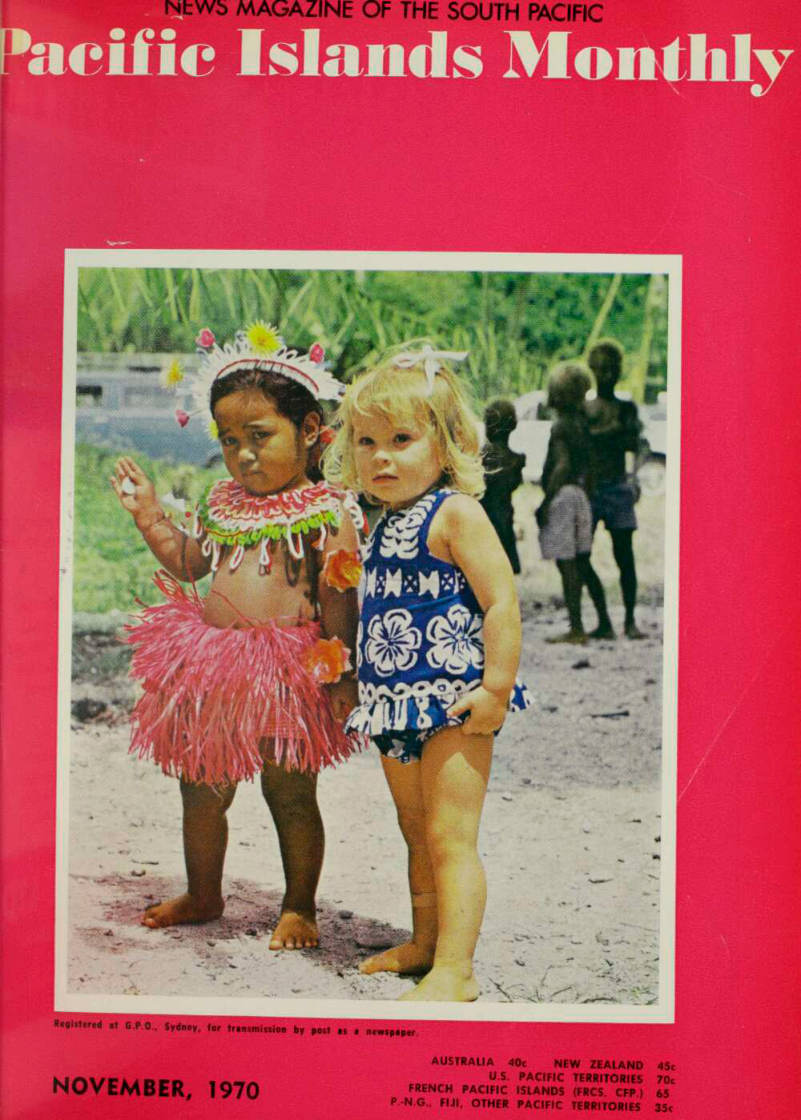 1
1 2
2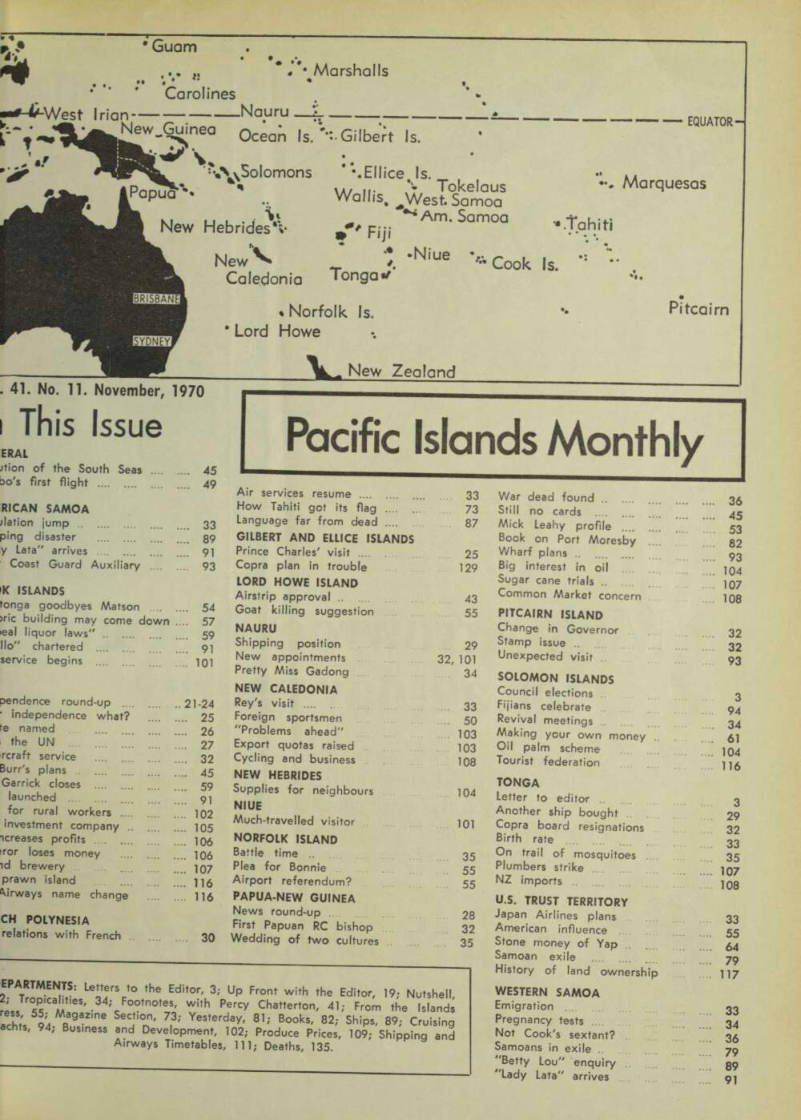 3
3 4
4 5
5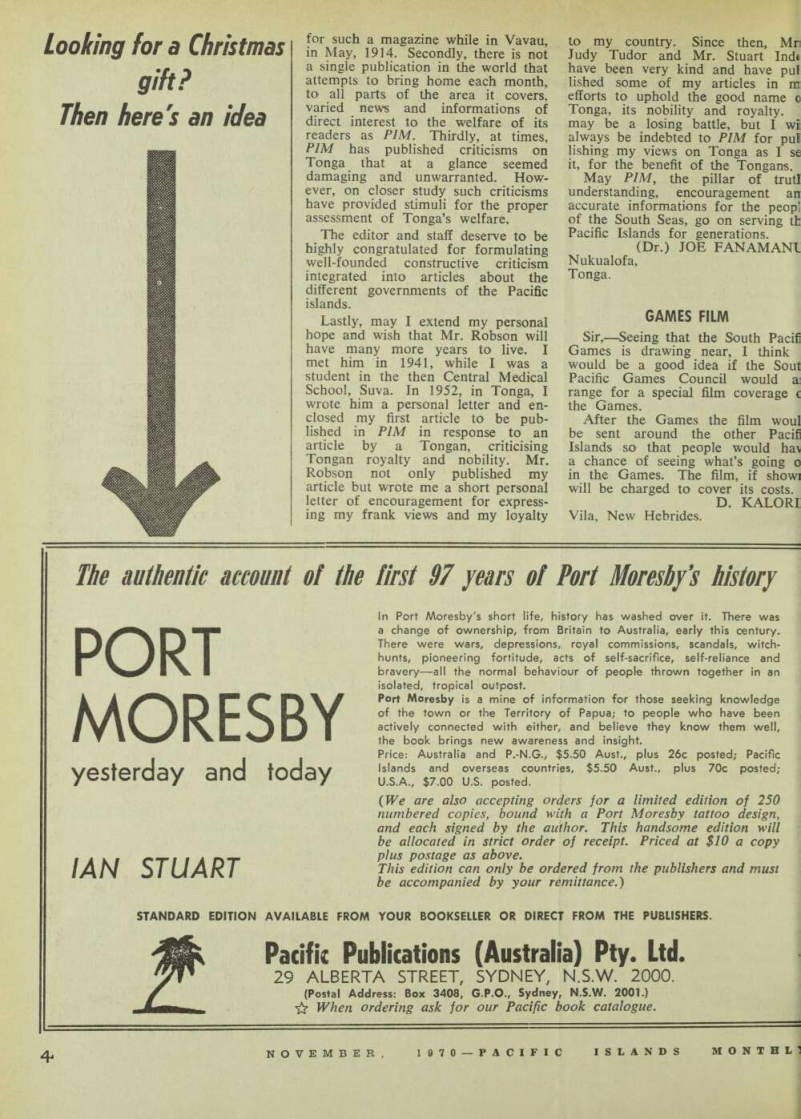 6
6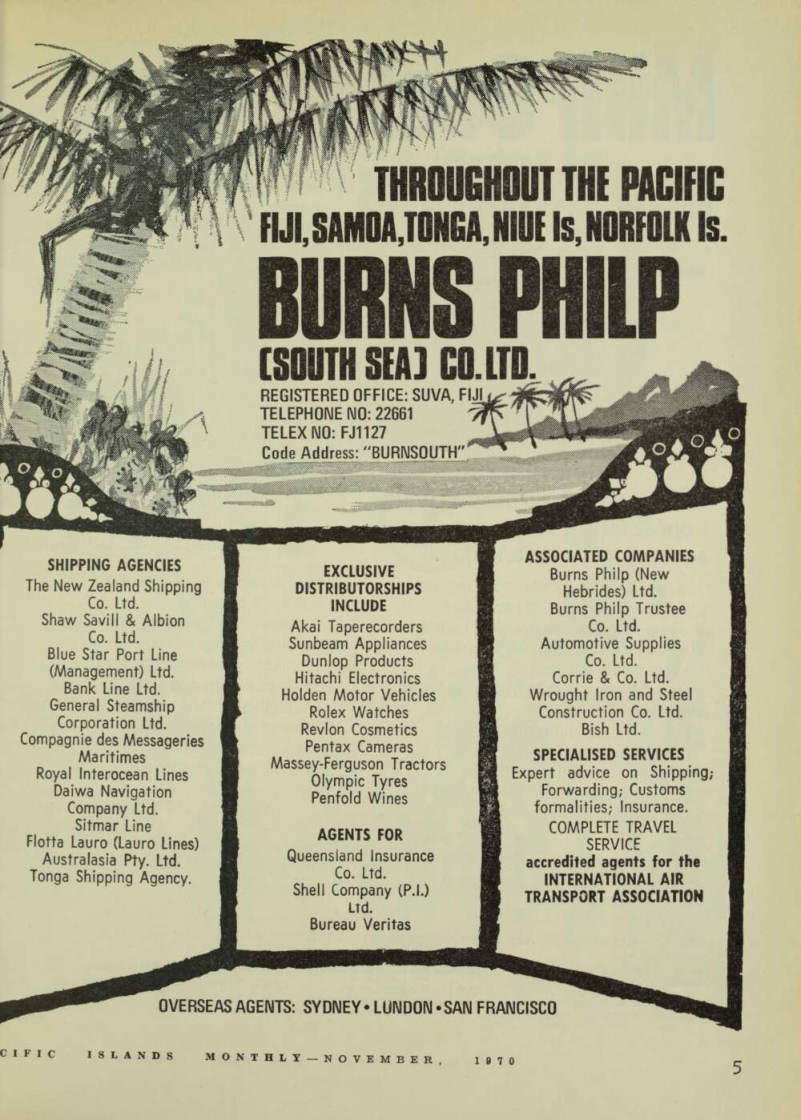 7
7 8
8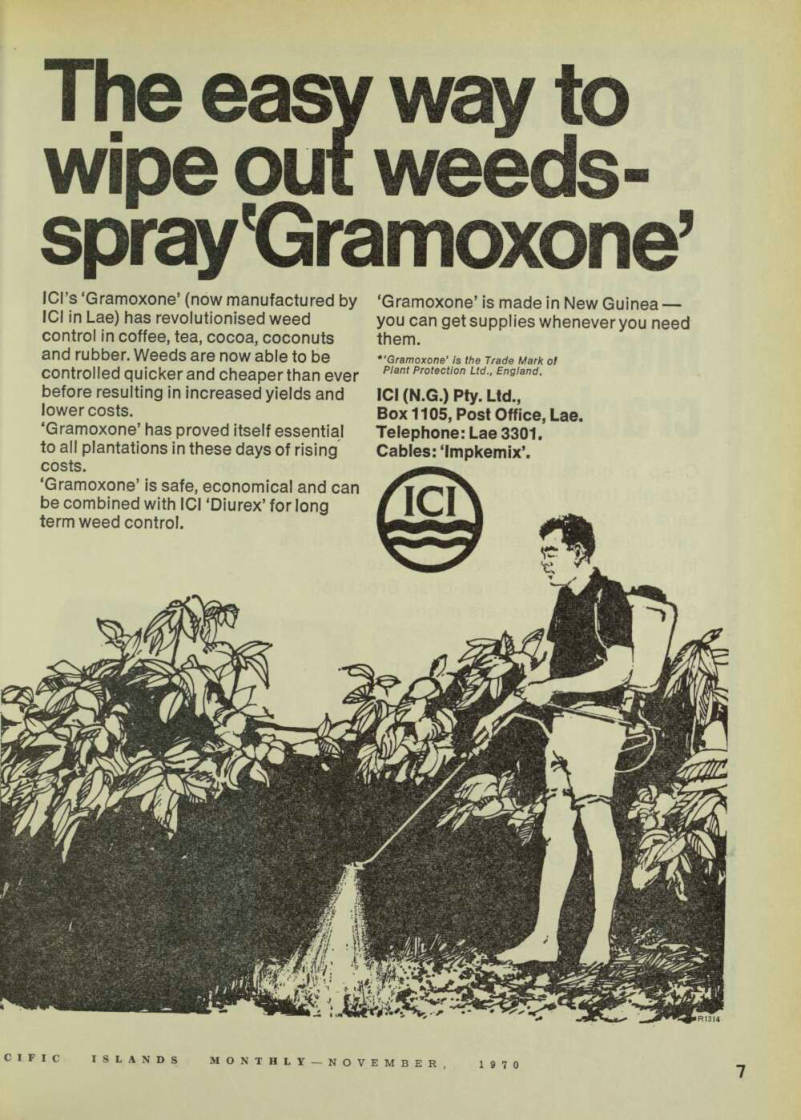 9
9 10
10 11
11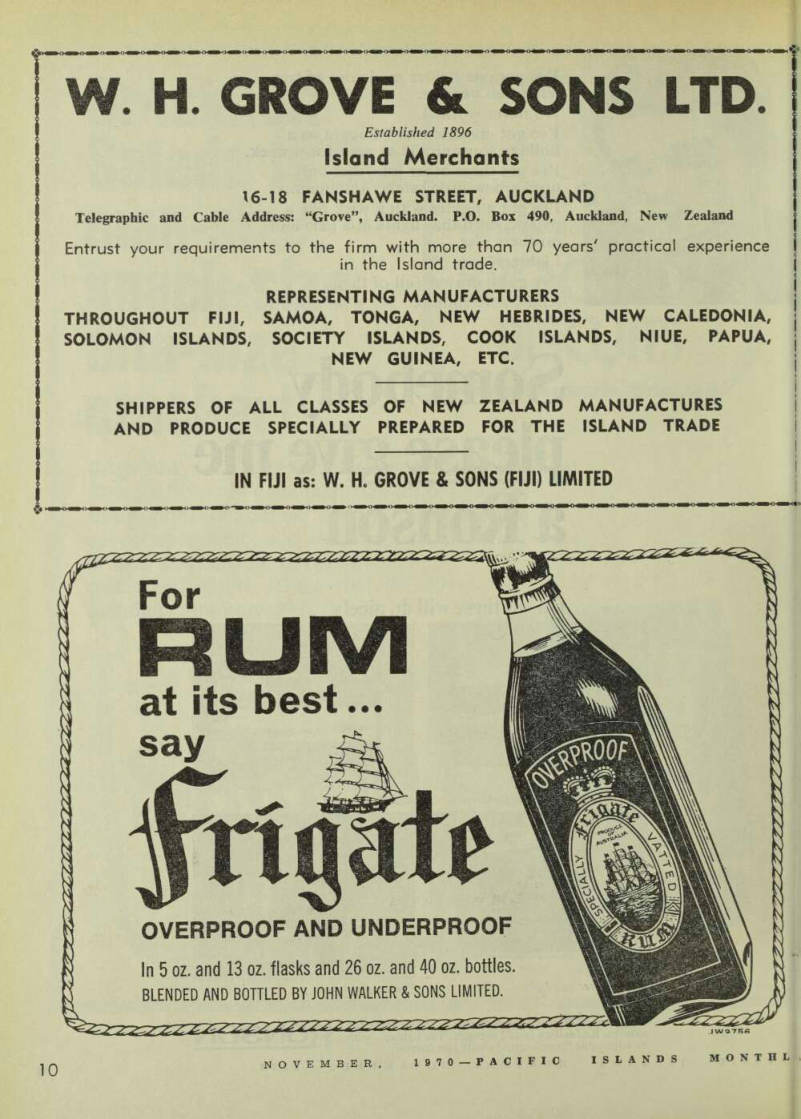 12
12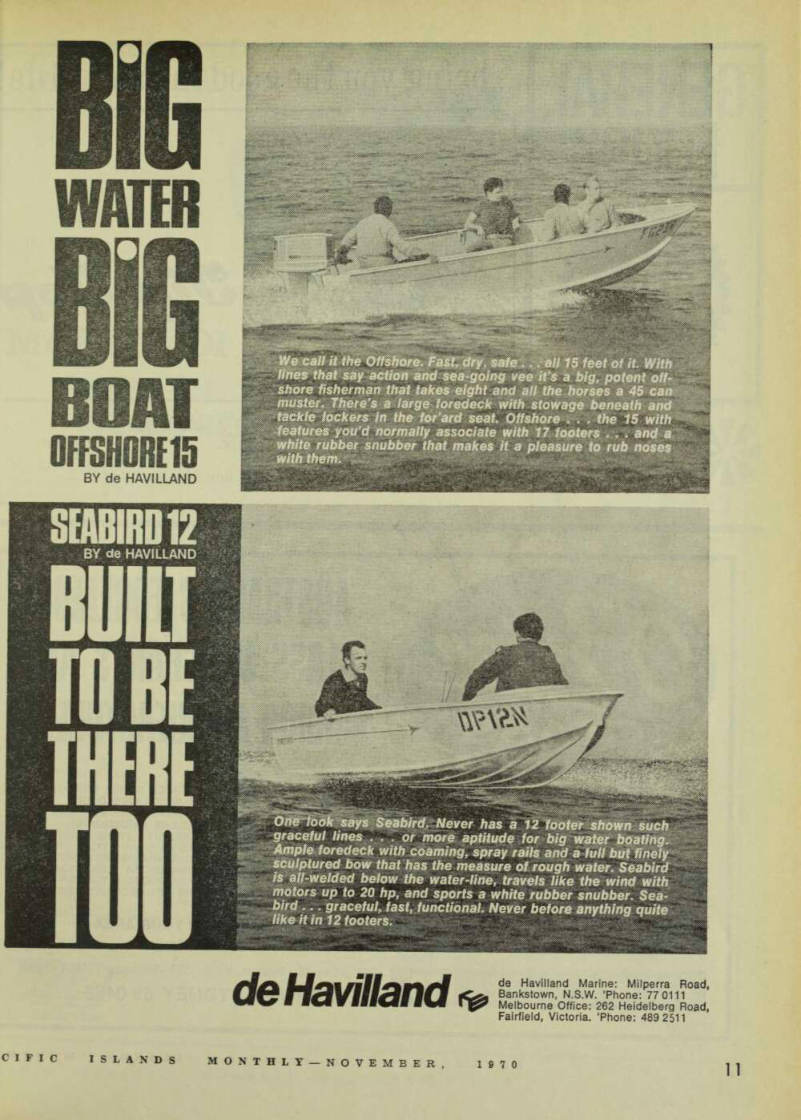 13
13 14
14 15
15 16
16 17
17 18
18 19
19 20
20 21
21 22
22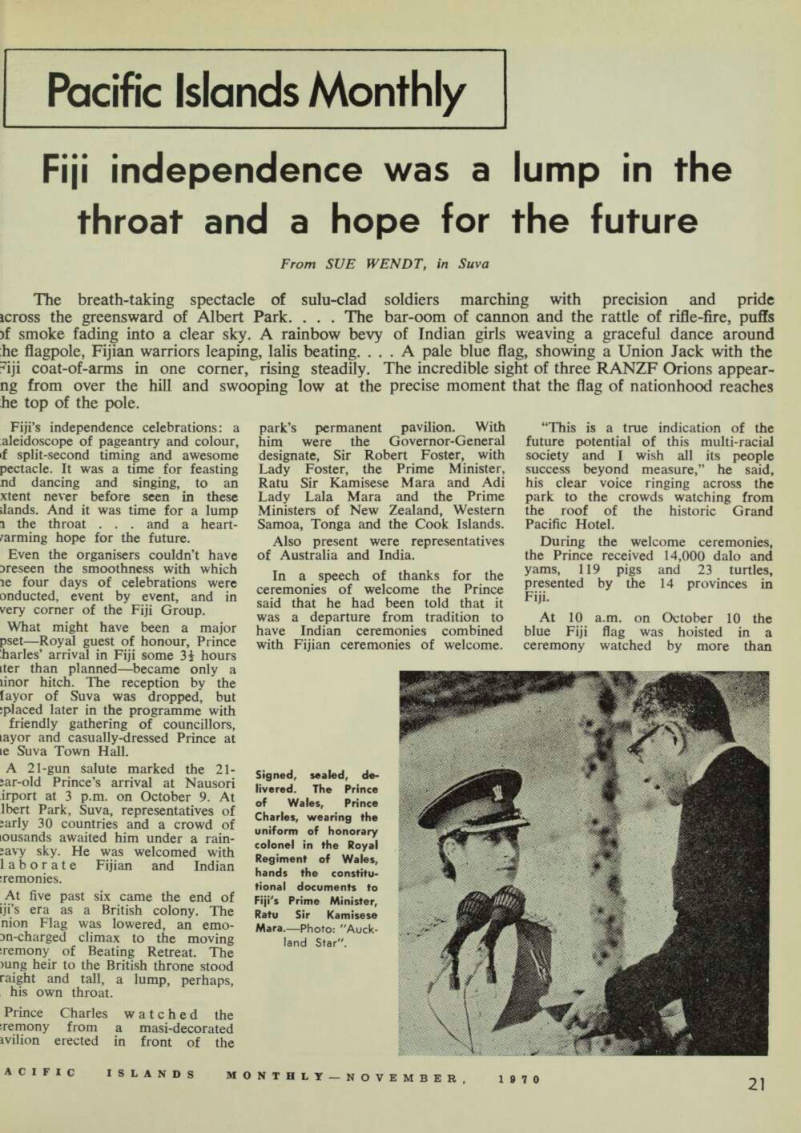 23
23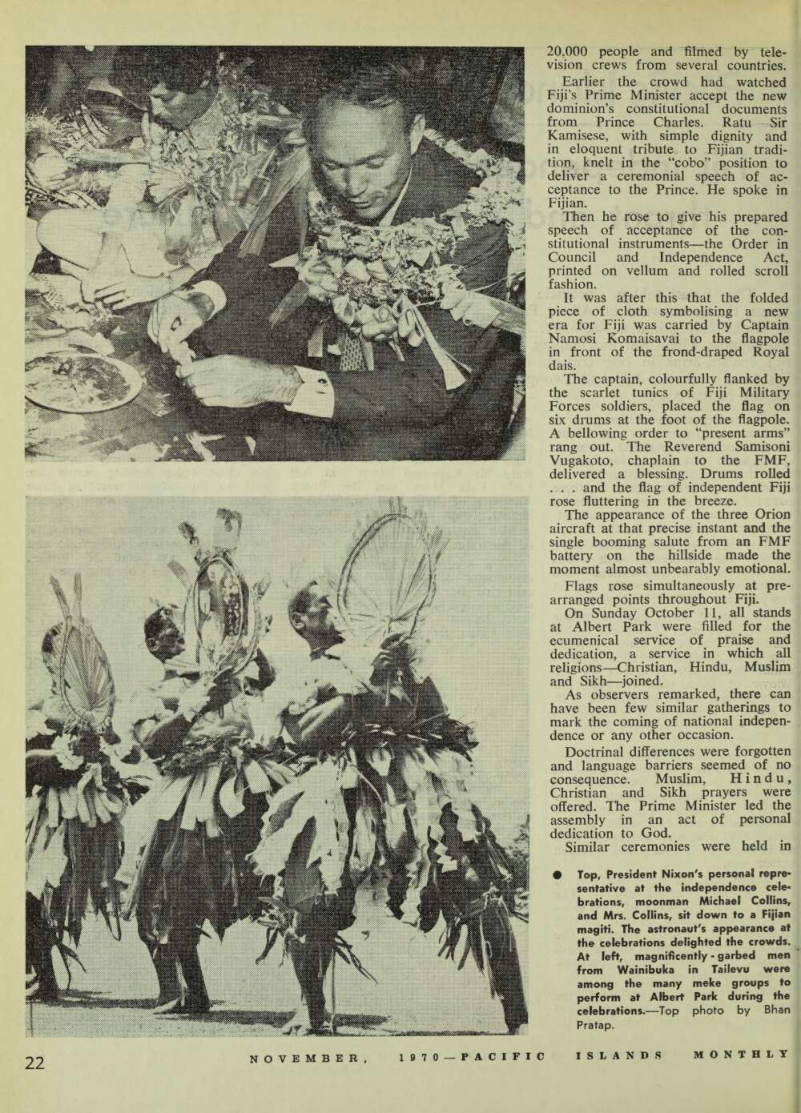 24
24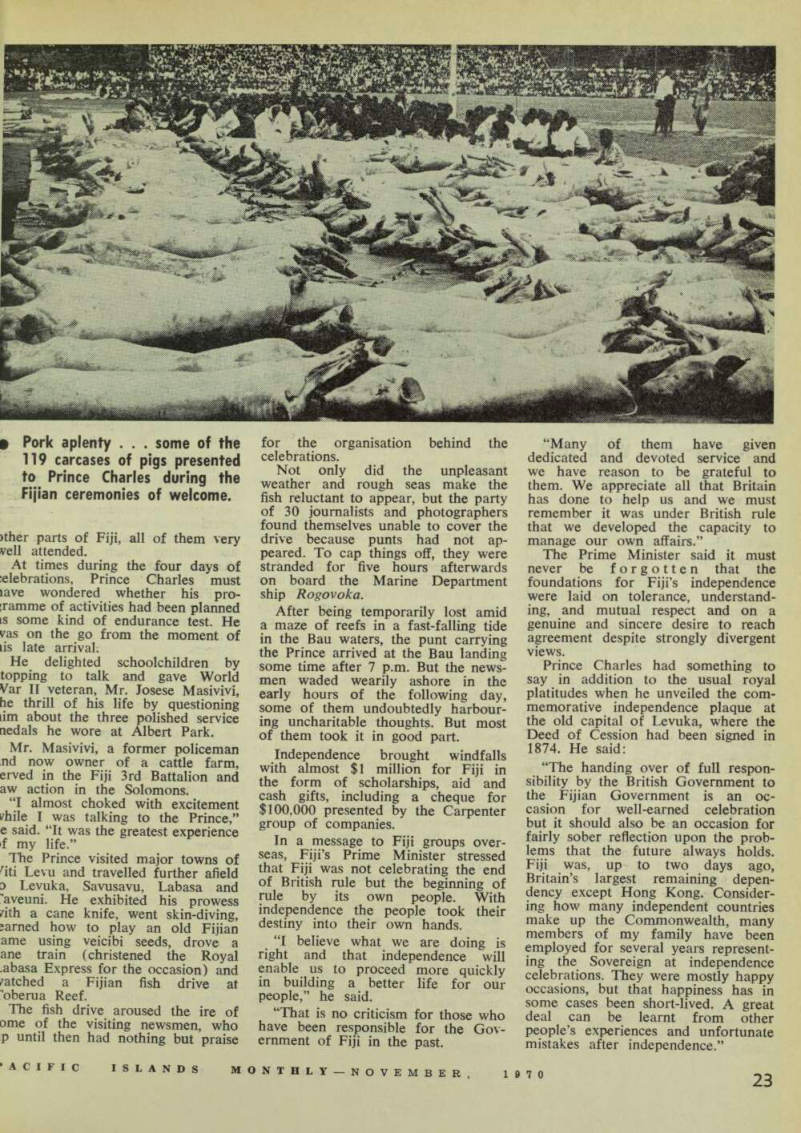 25
25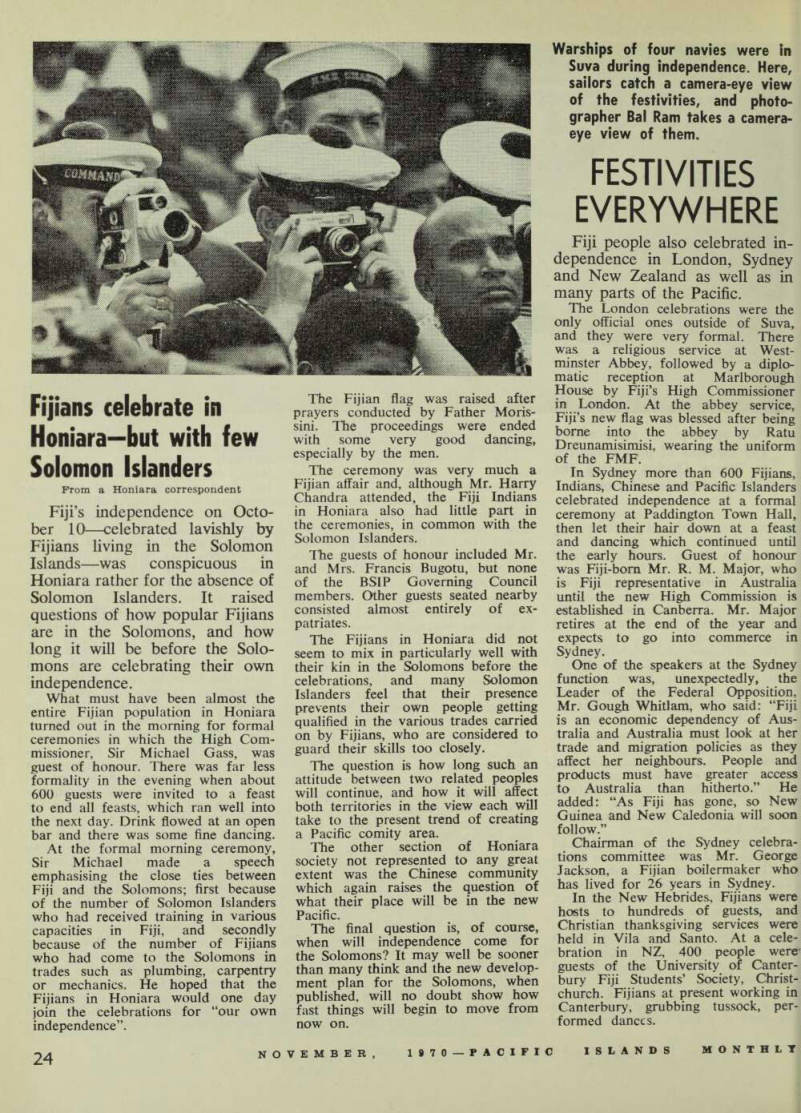 26
26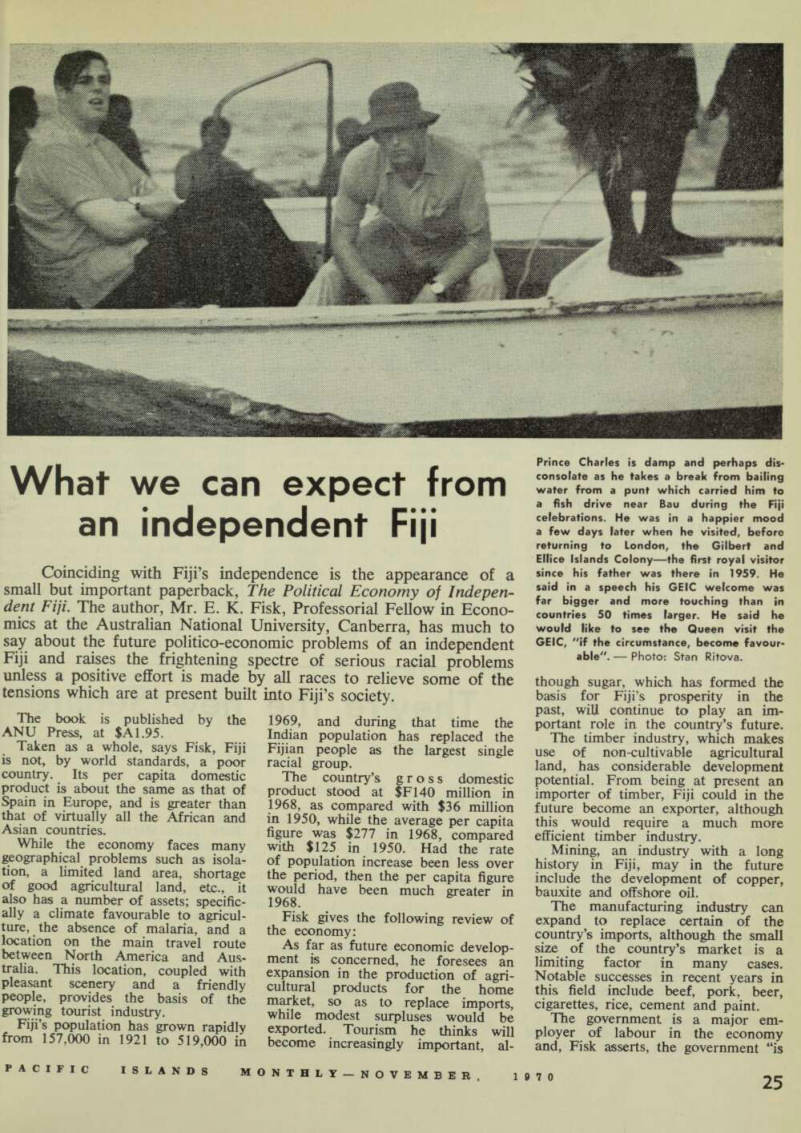 27
27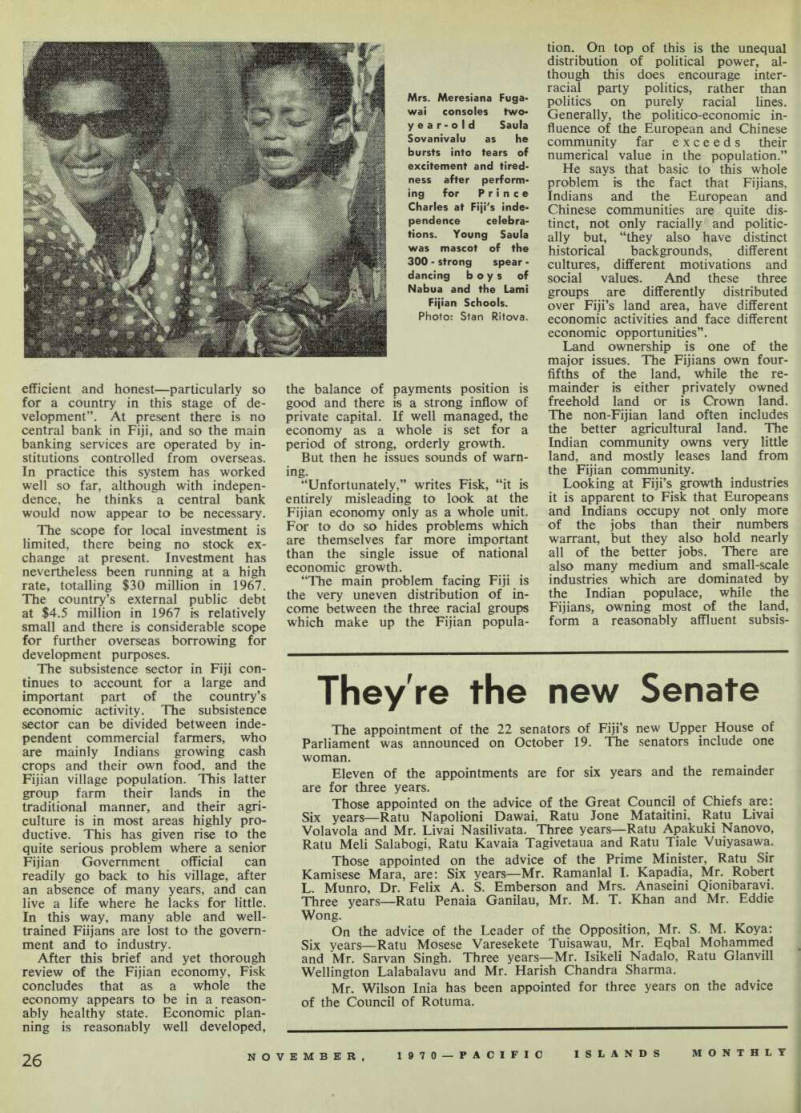 28
28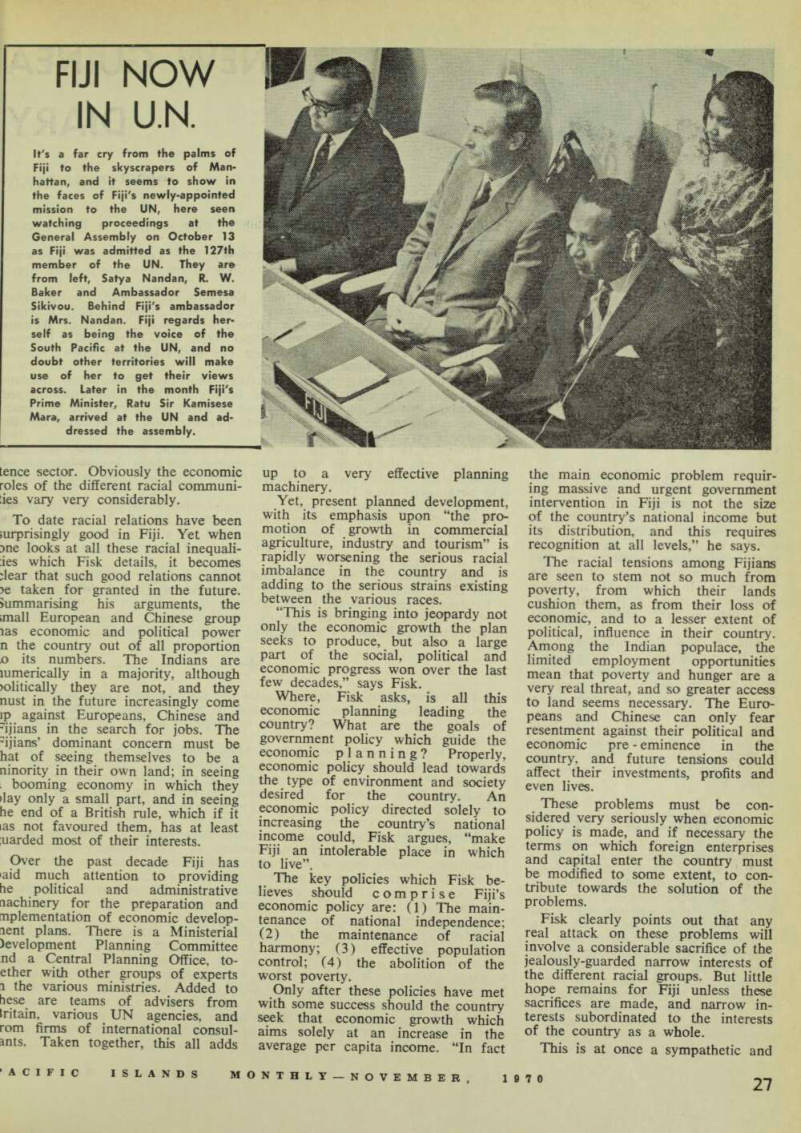 29
29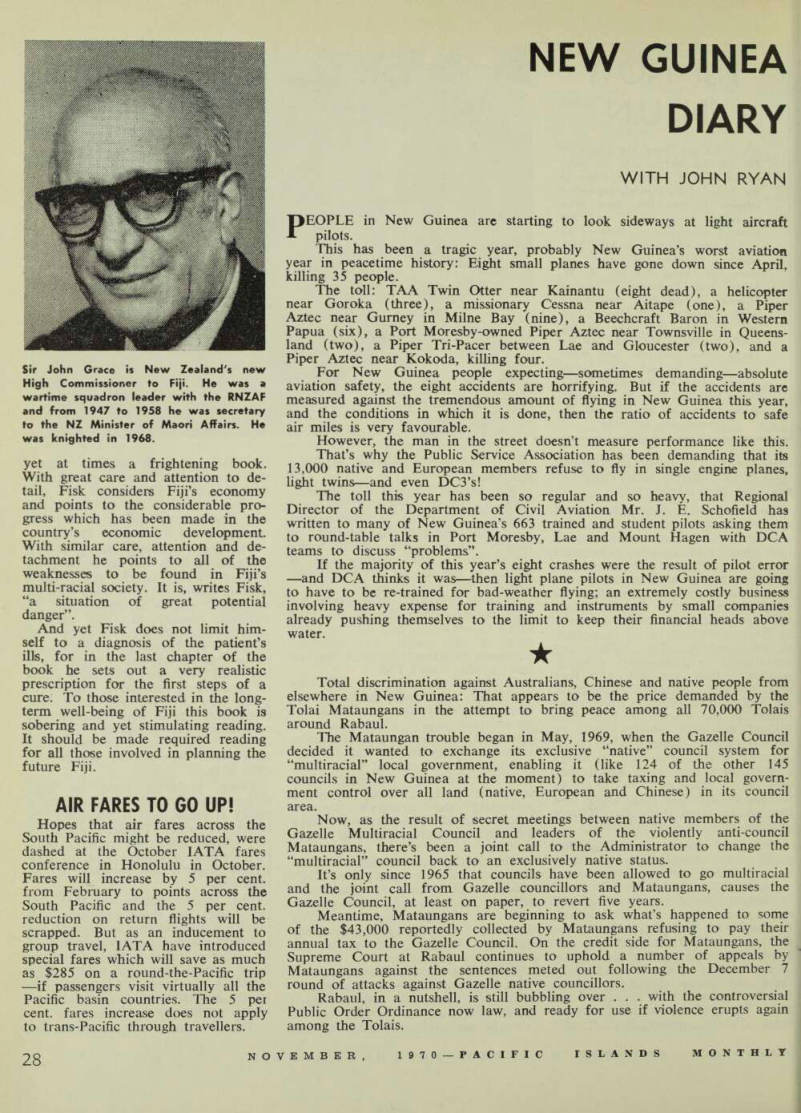 30
30 31
31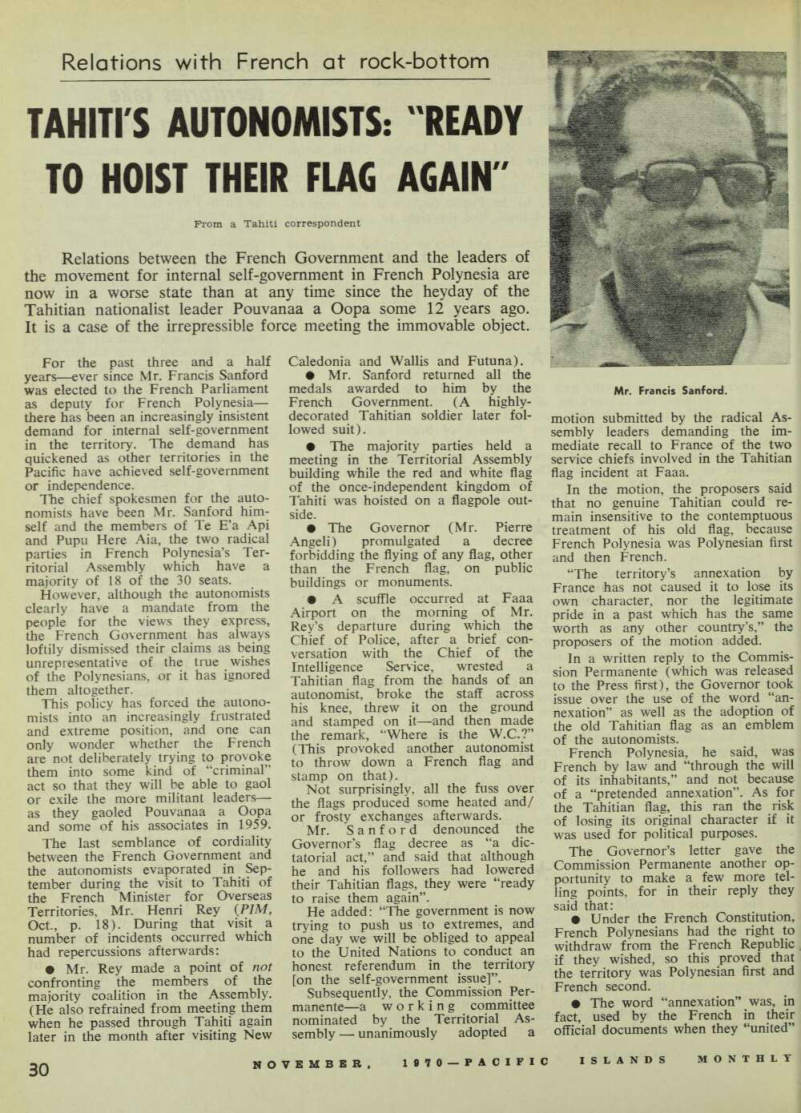 32
32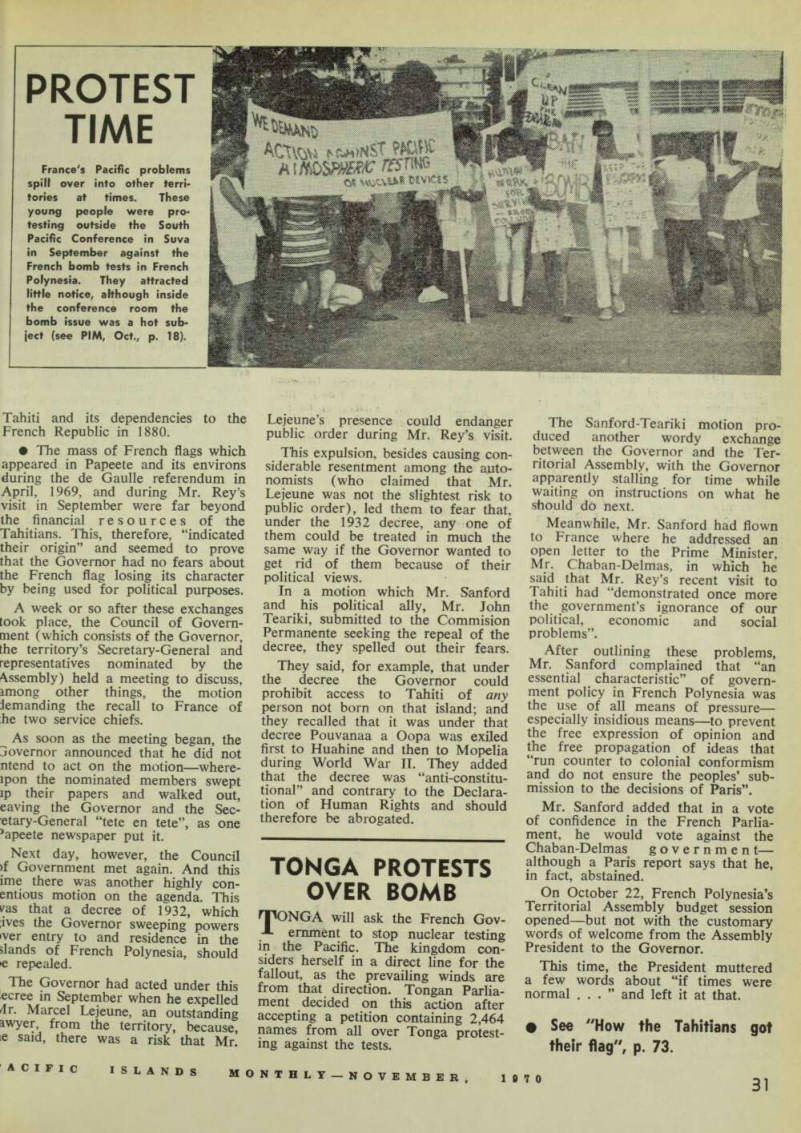 33
33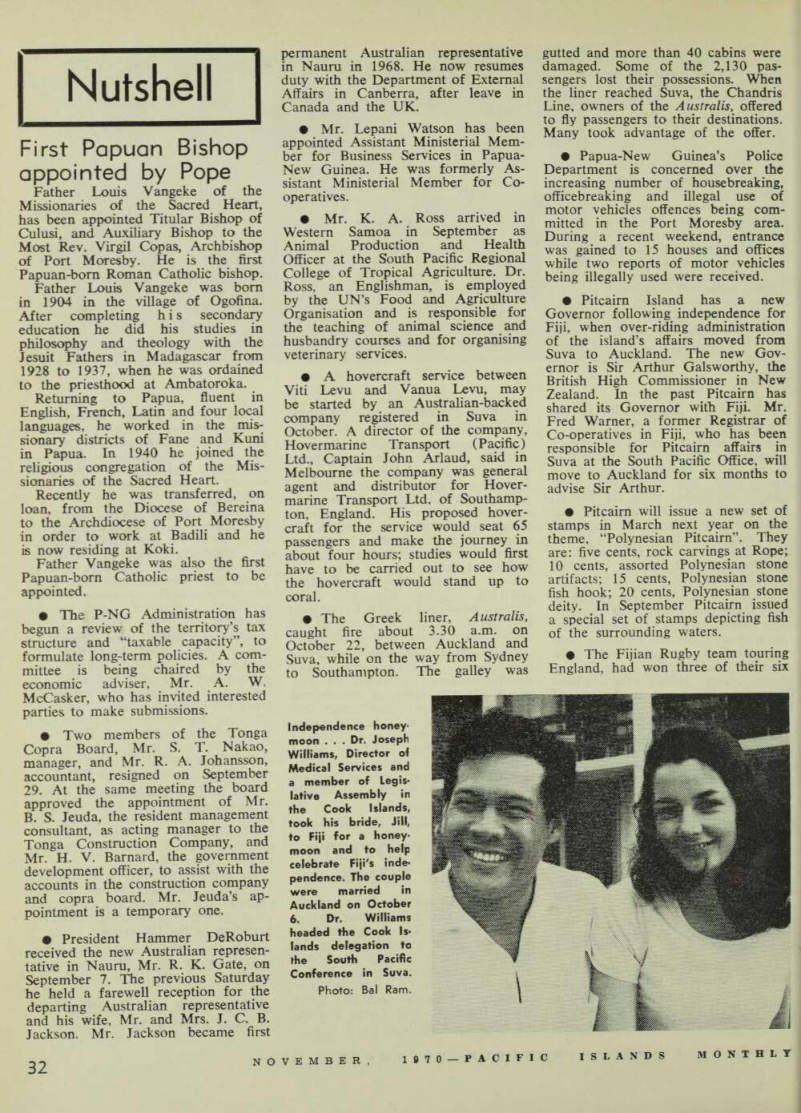 34
34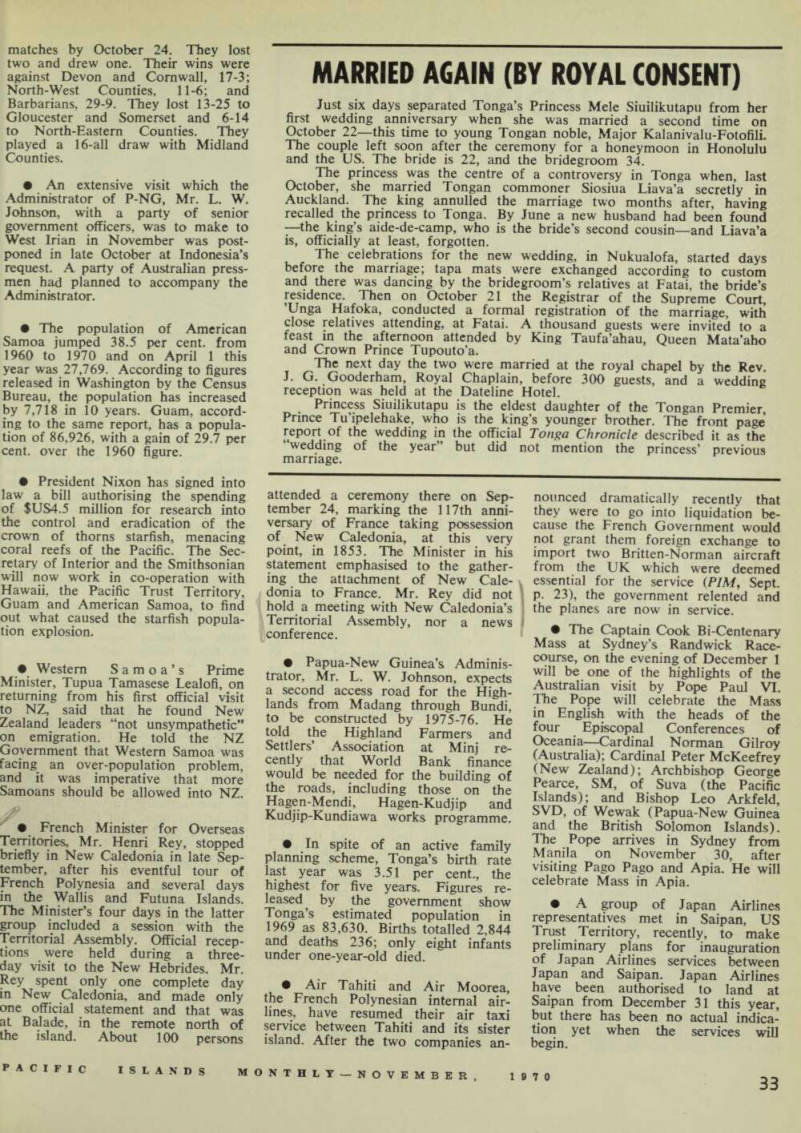 35
35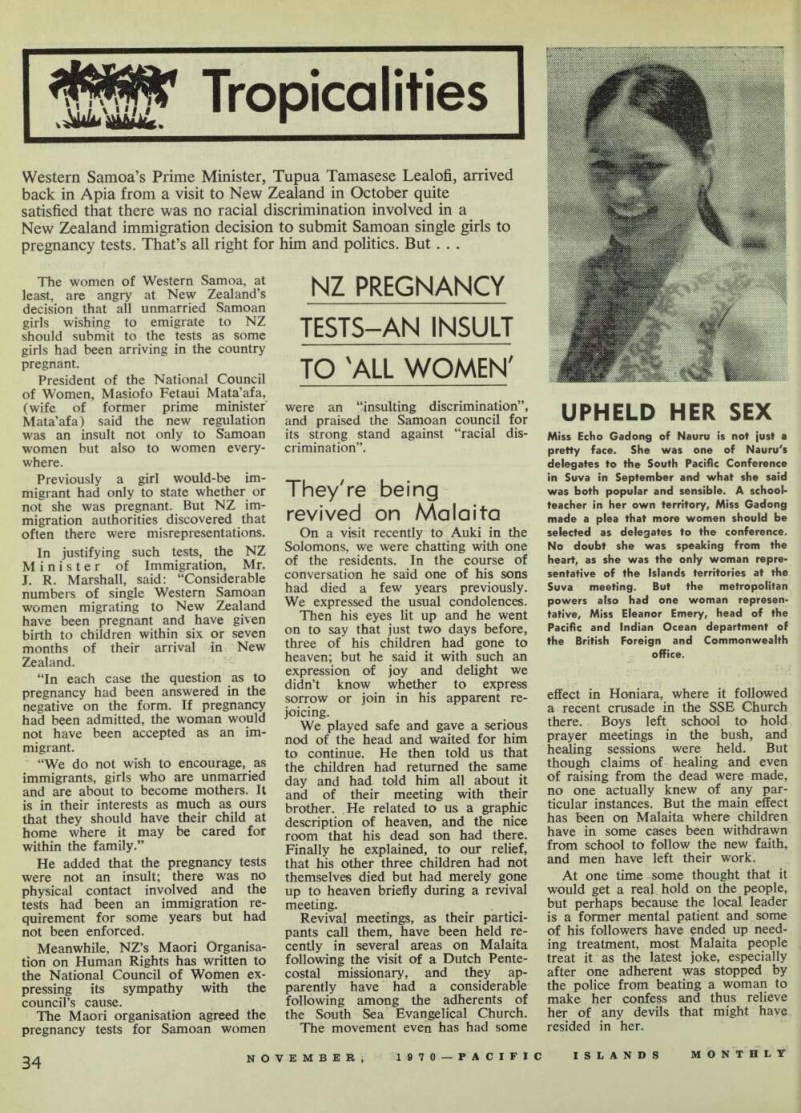 36
36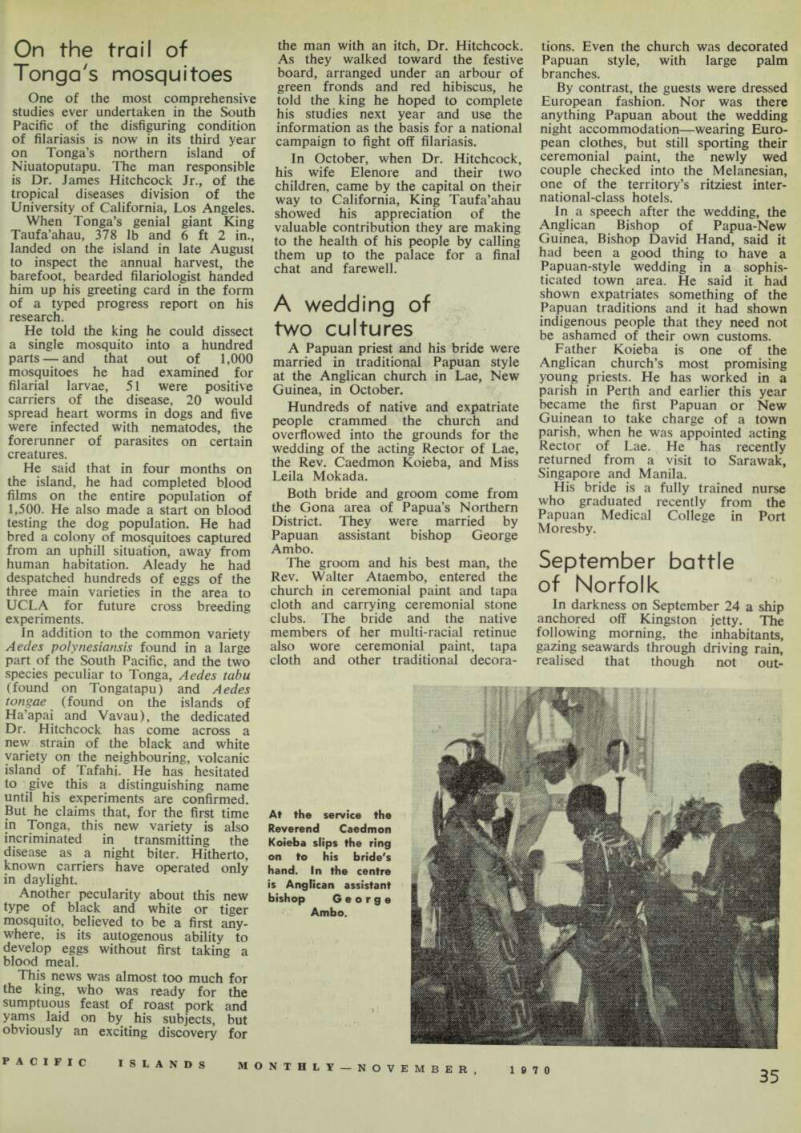 37
37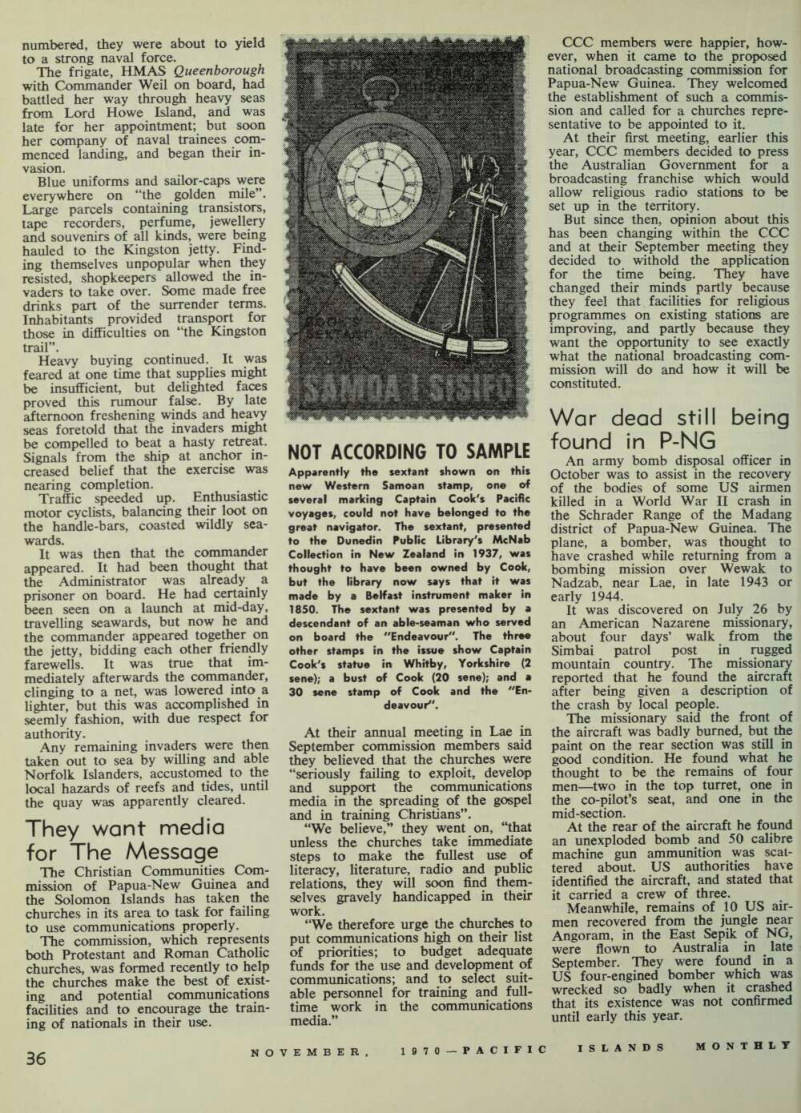 38
38 39
39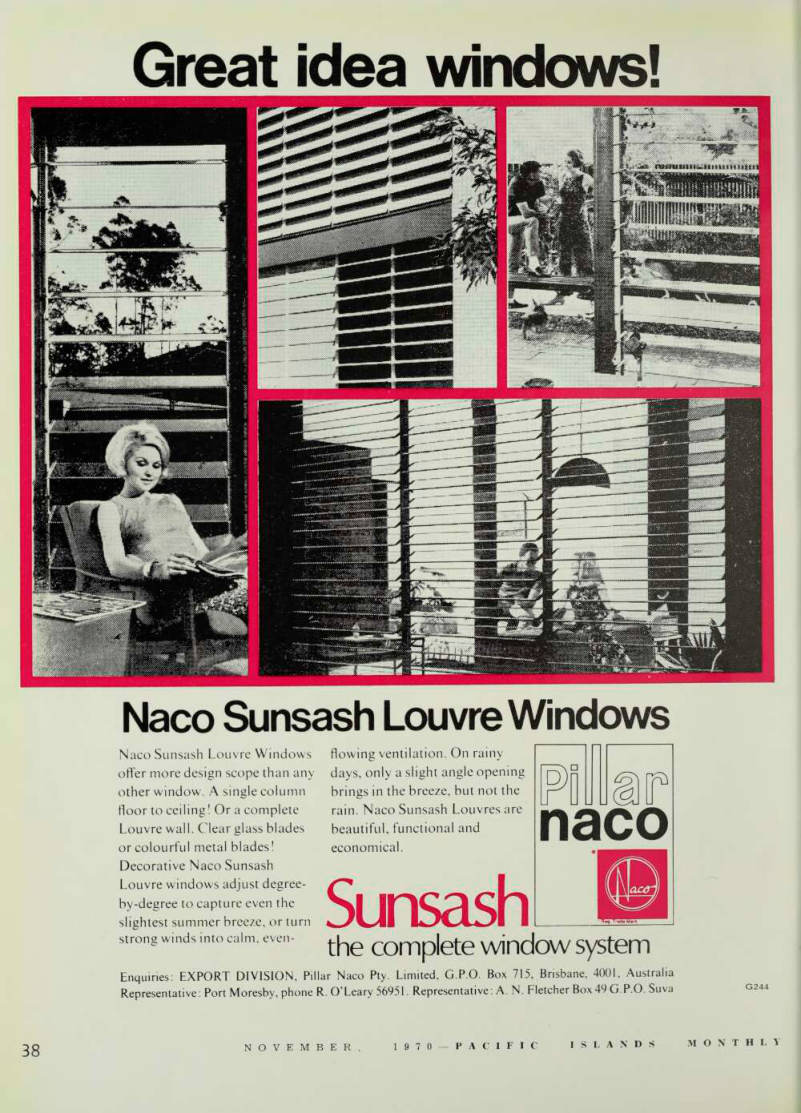 40
40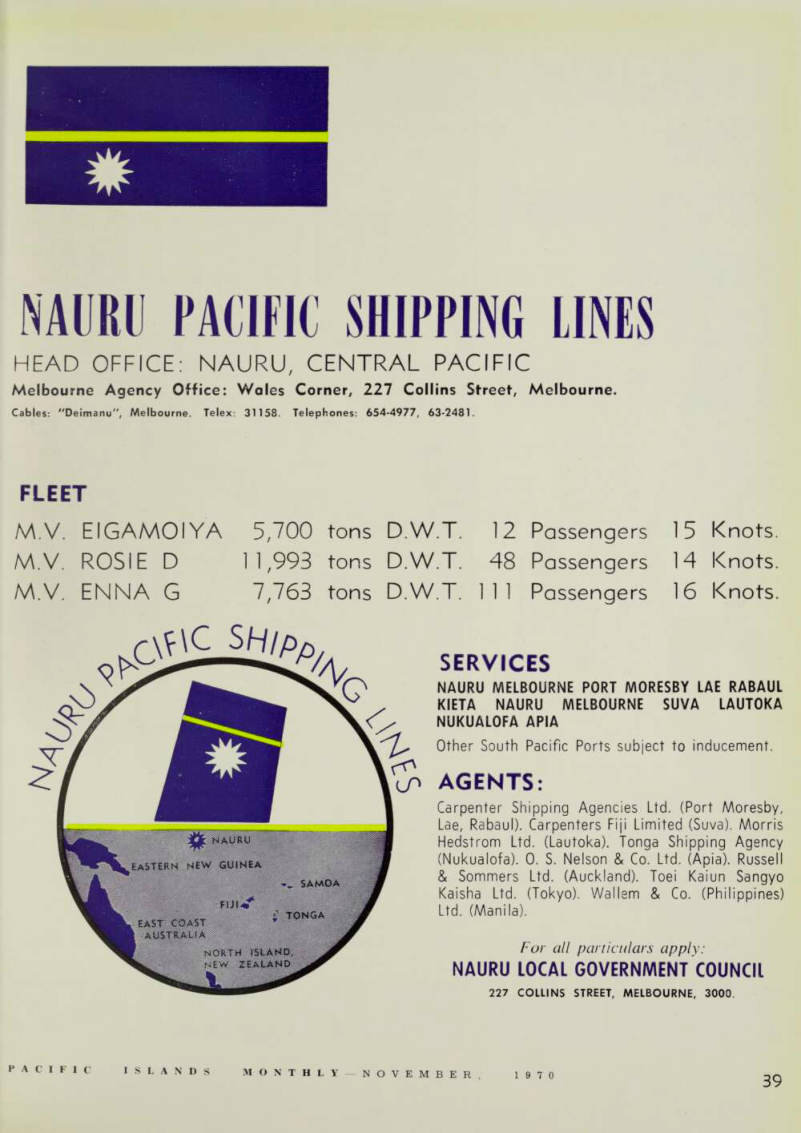 41
41 42
42 43
43 44
44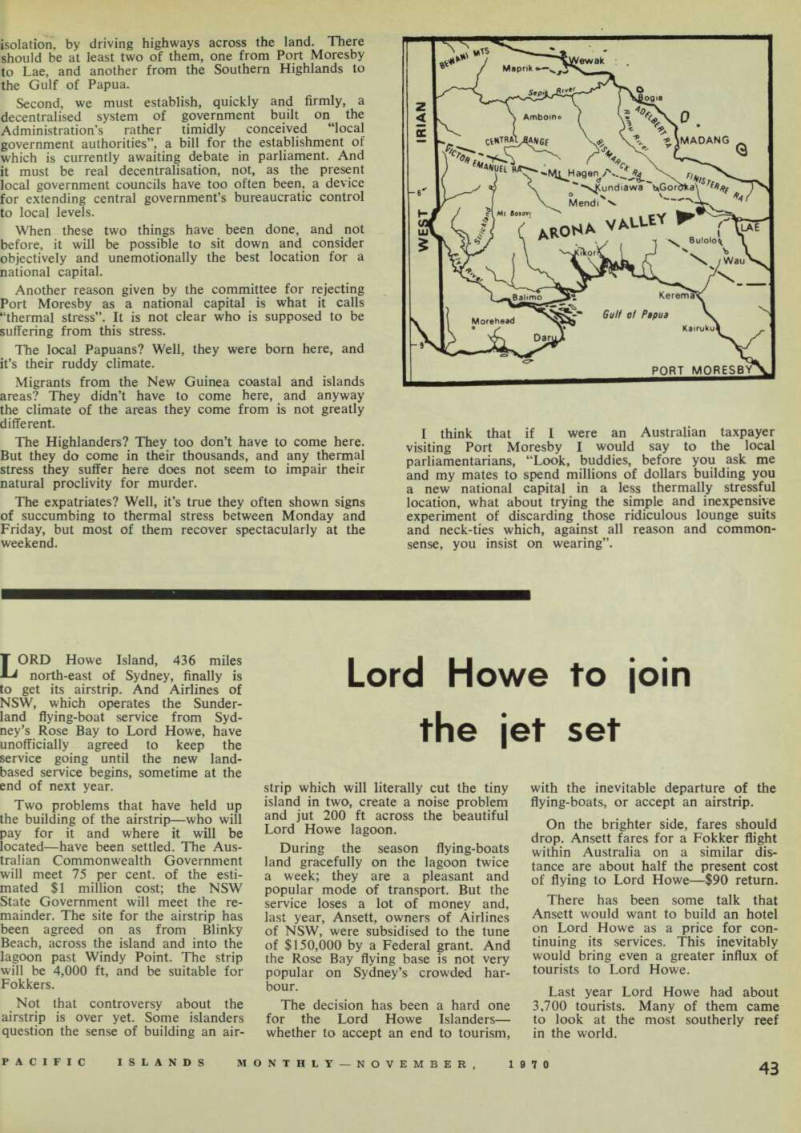 45
45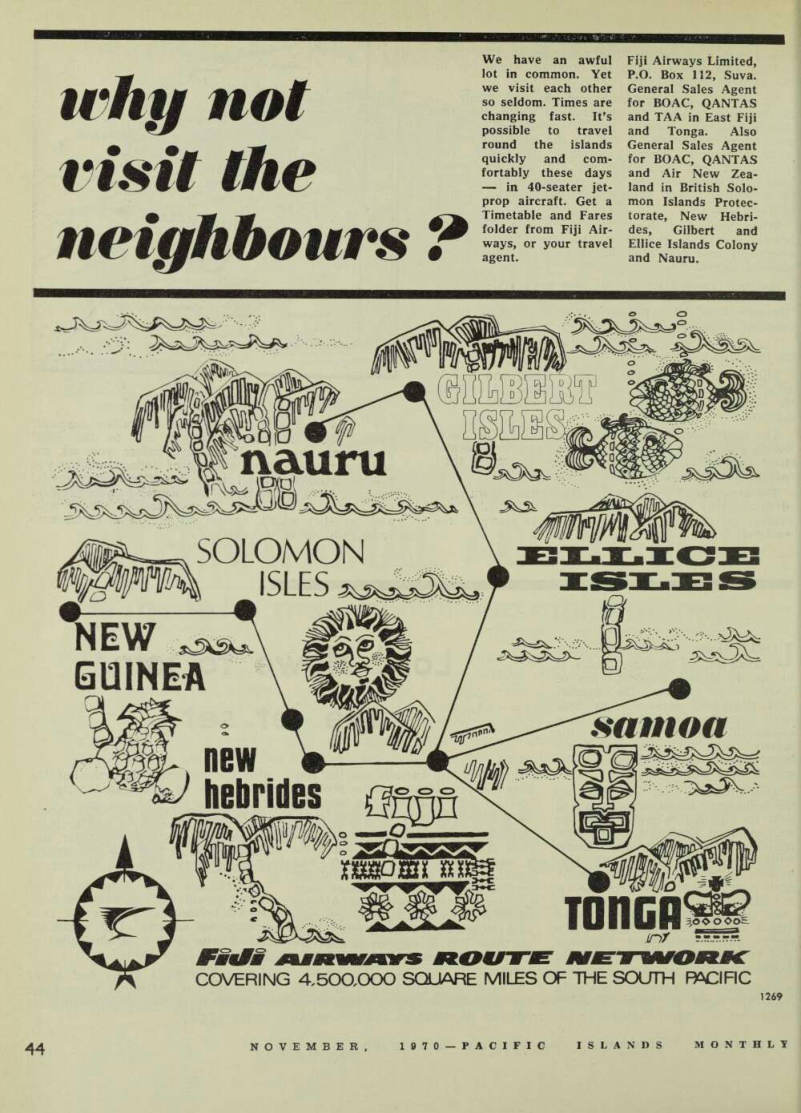 46
46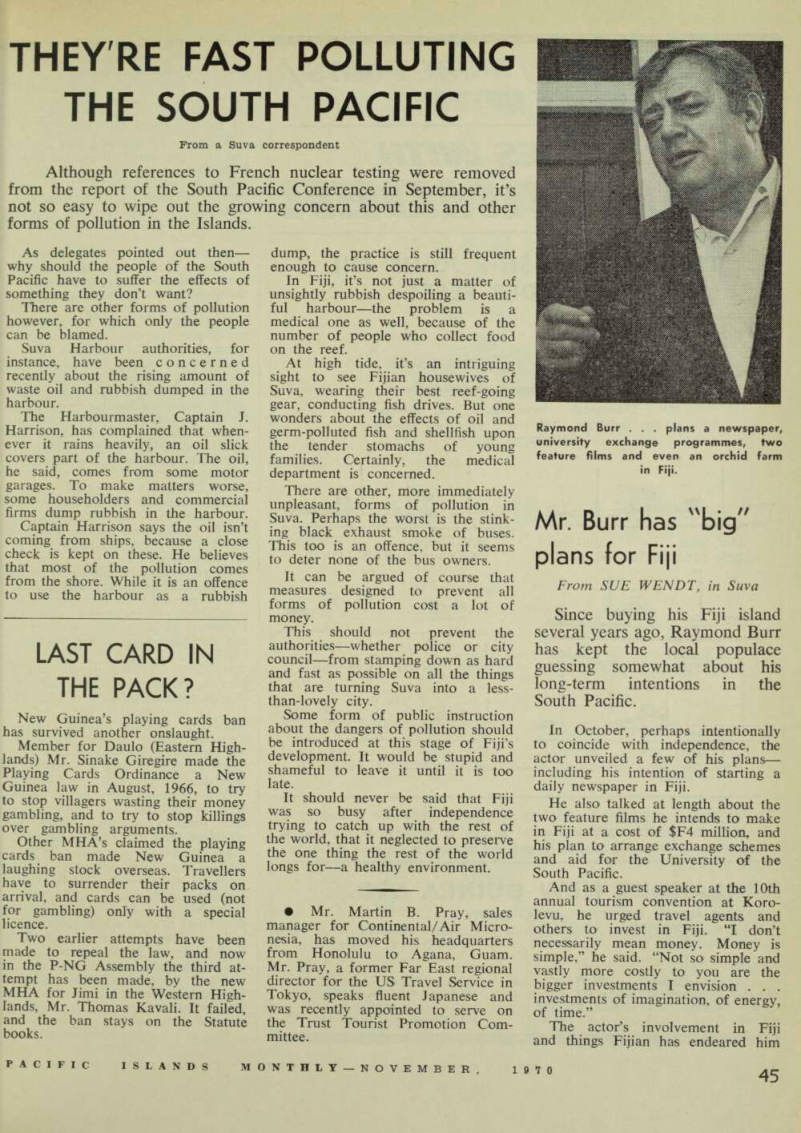 47
47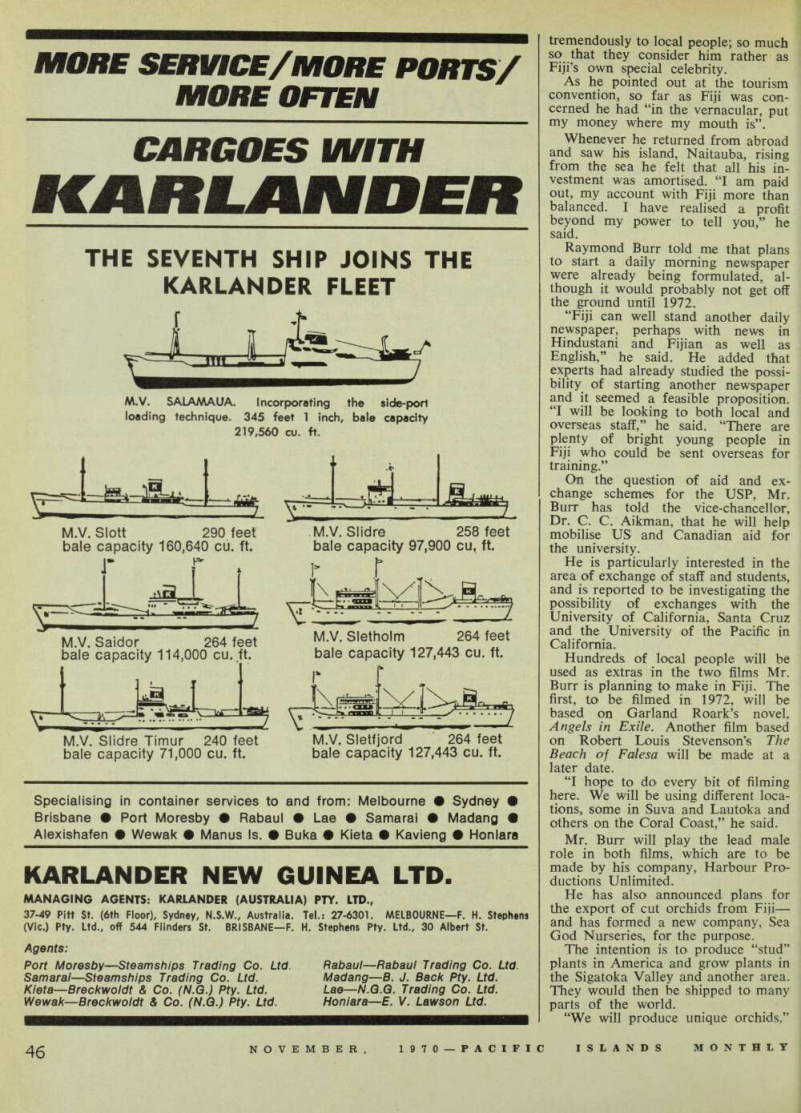 48
48 49
49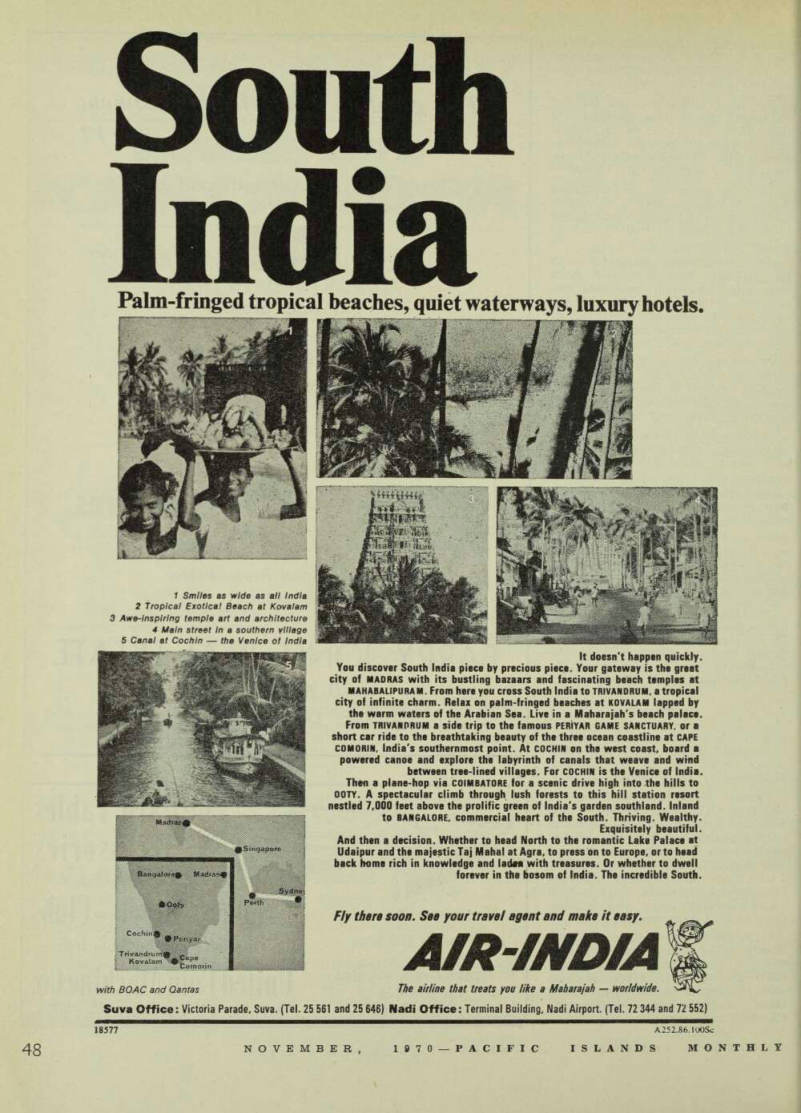 50
50 51
51 52
52 53
53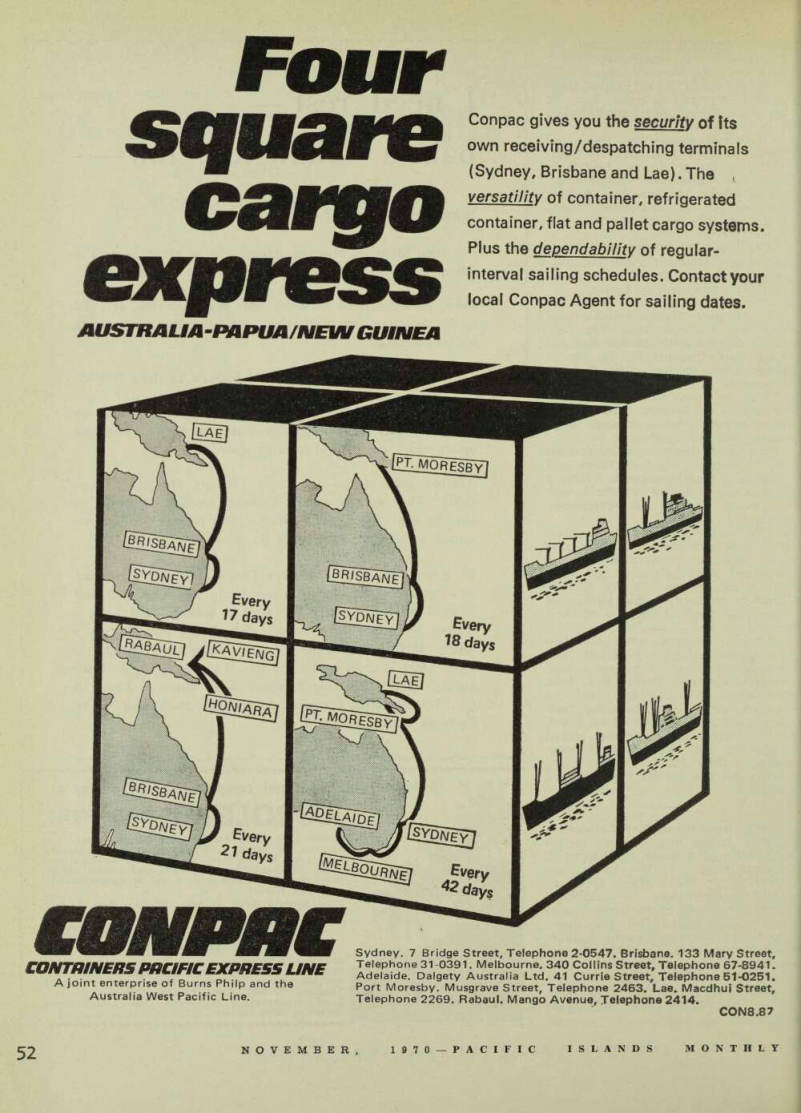 54
54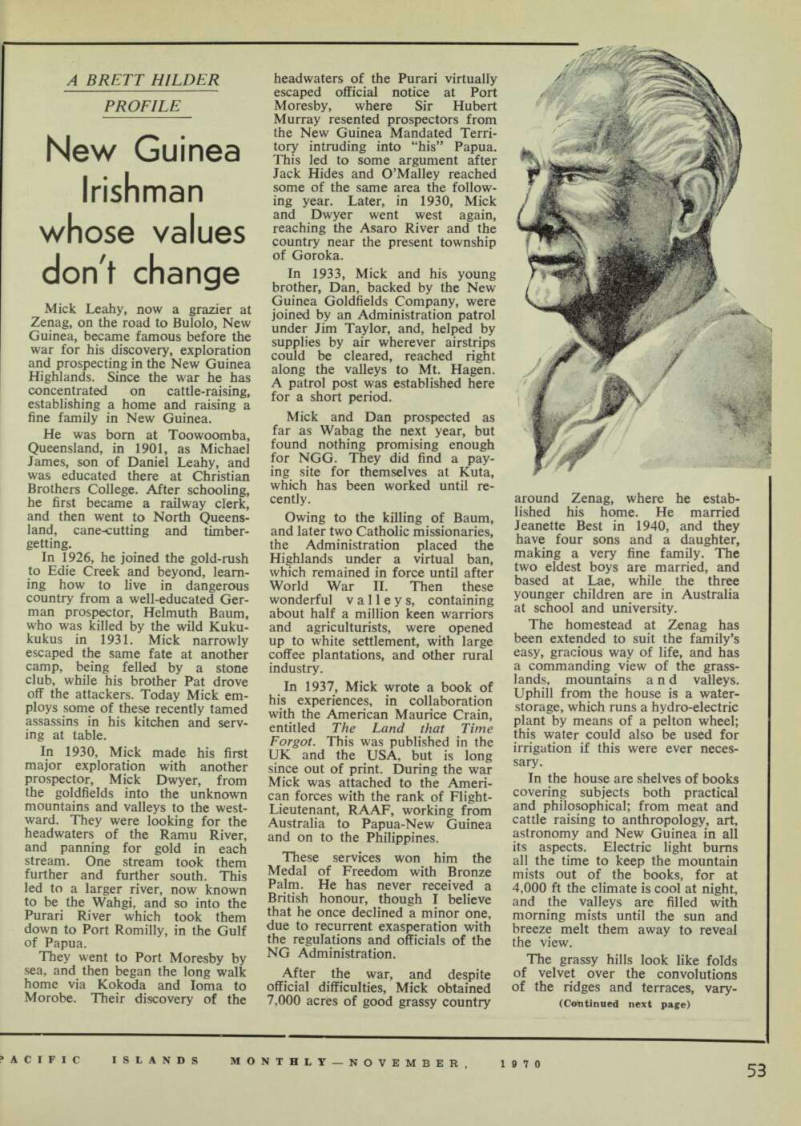 55
55 56
56 57
57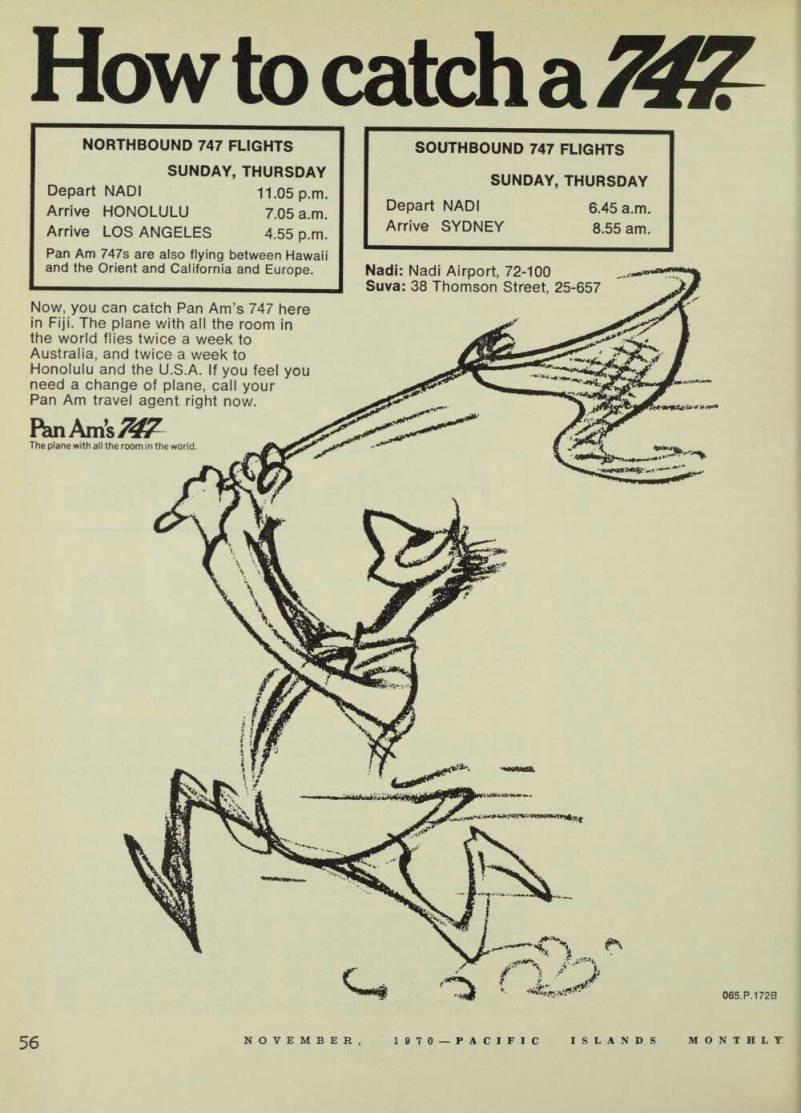 58
58 59
59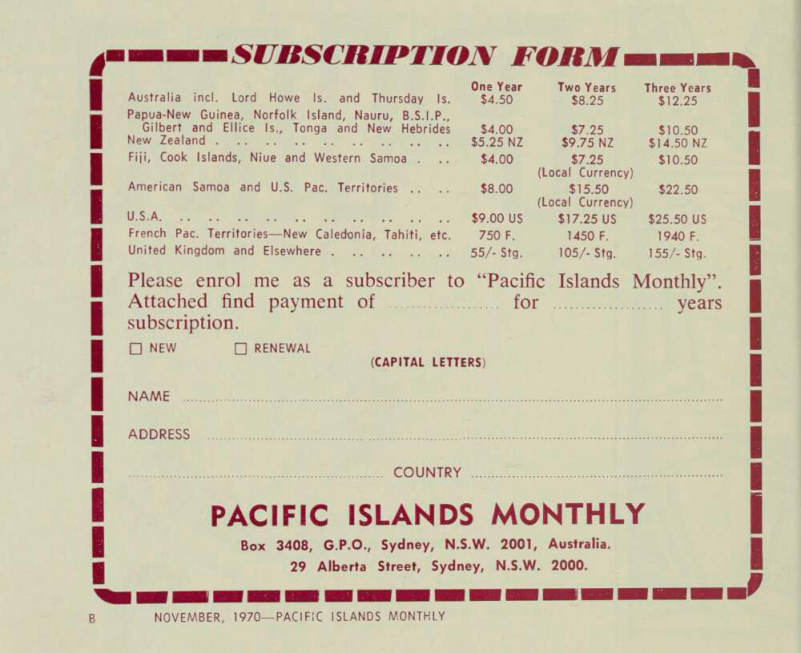 60
60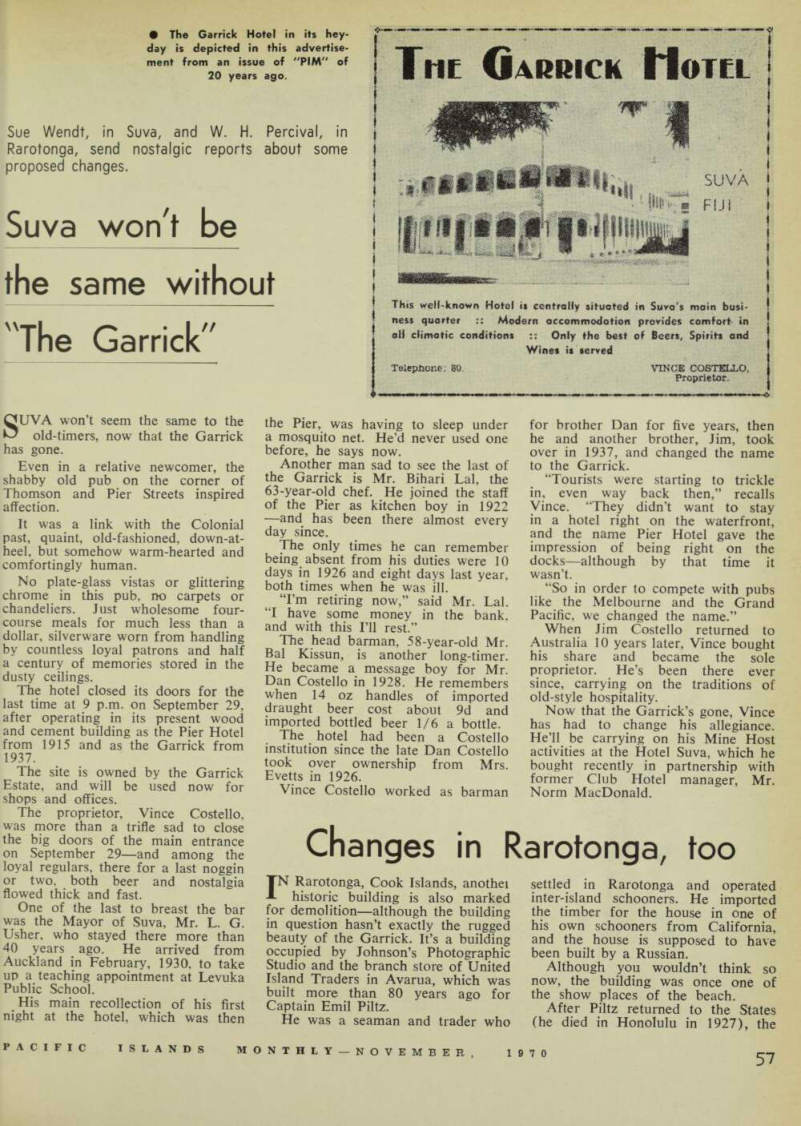 61
61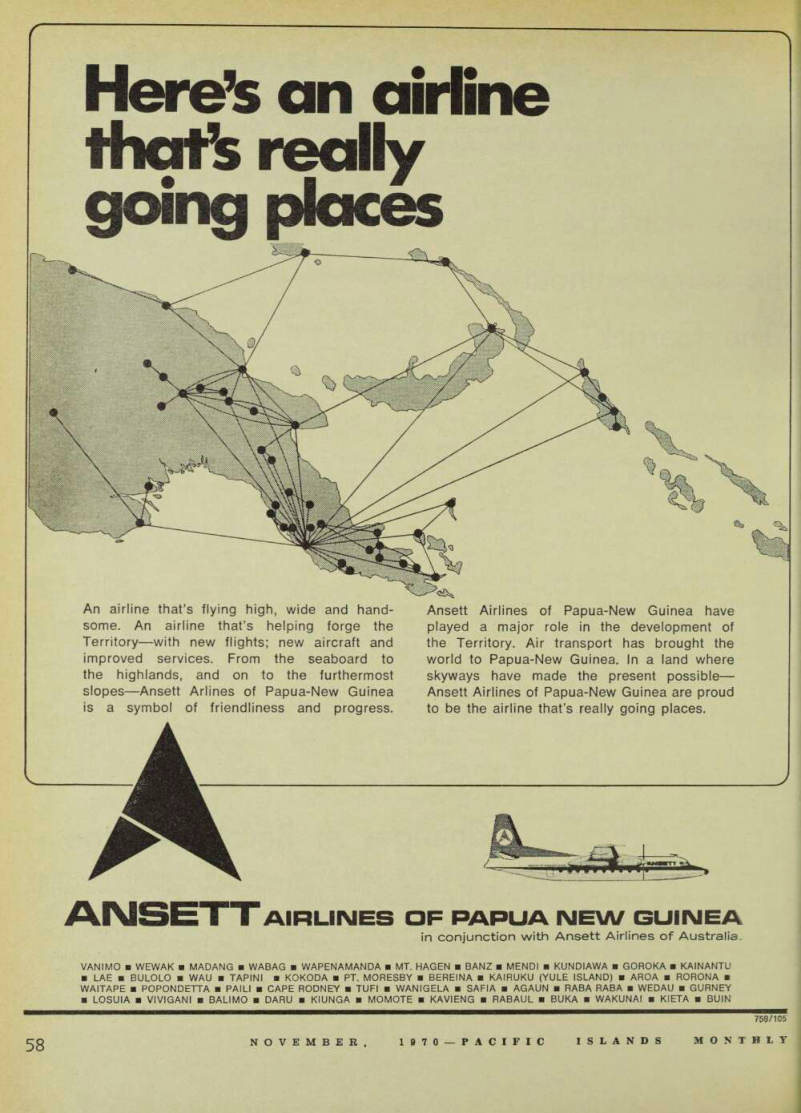 62
62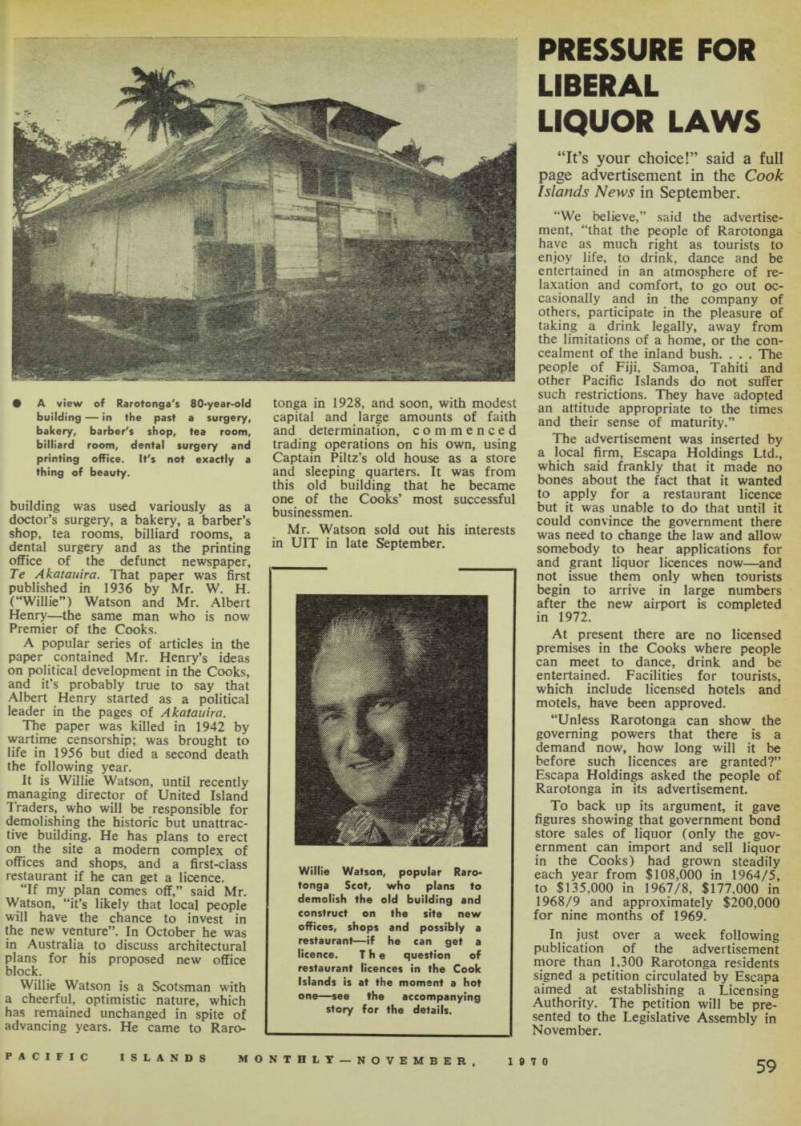 63
63 64
64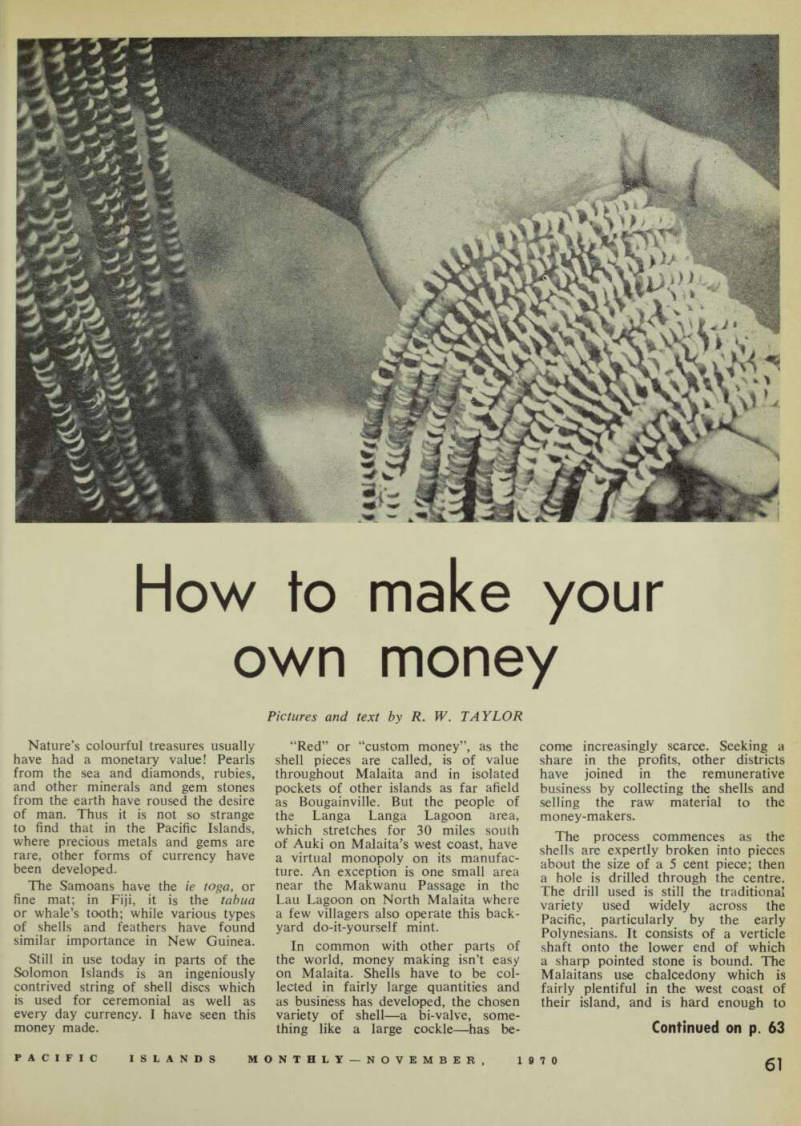 65
65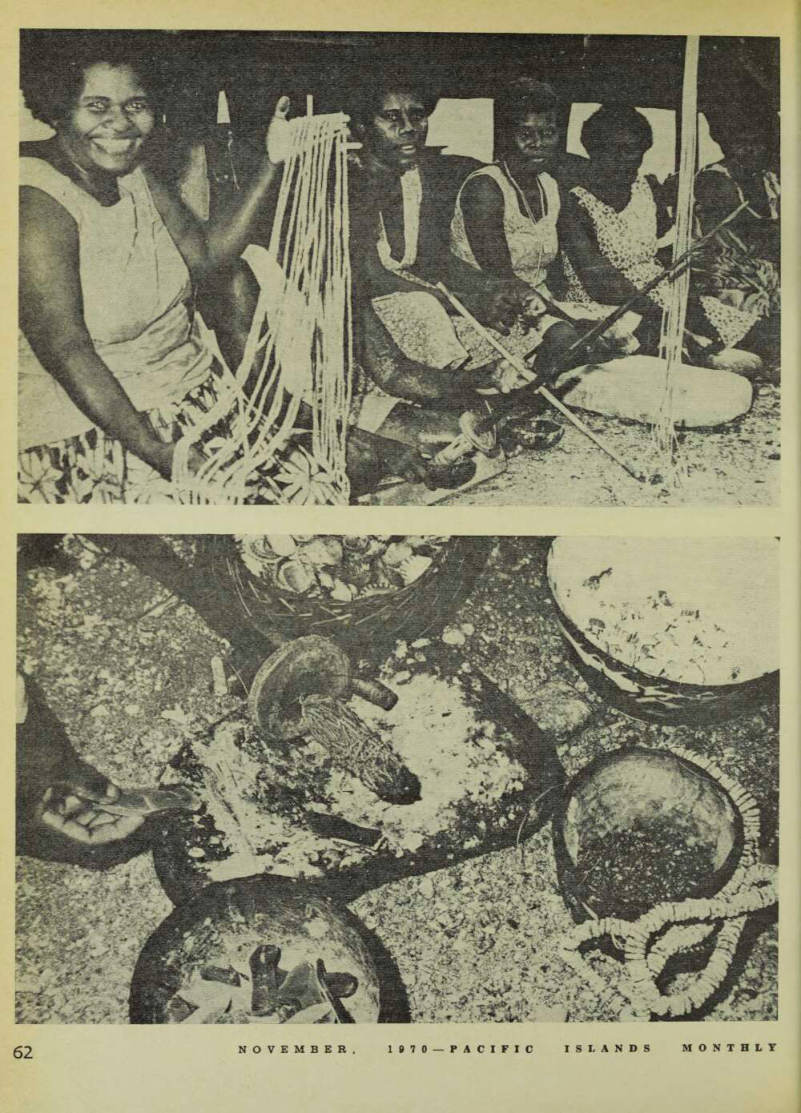 66
66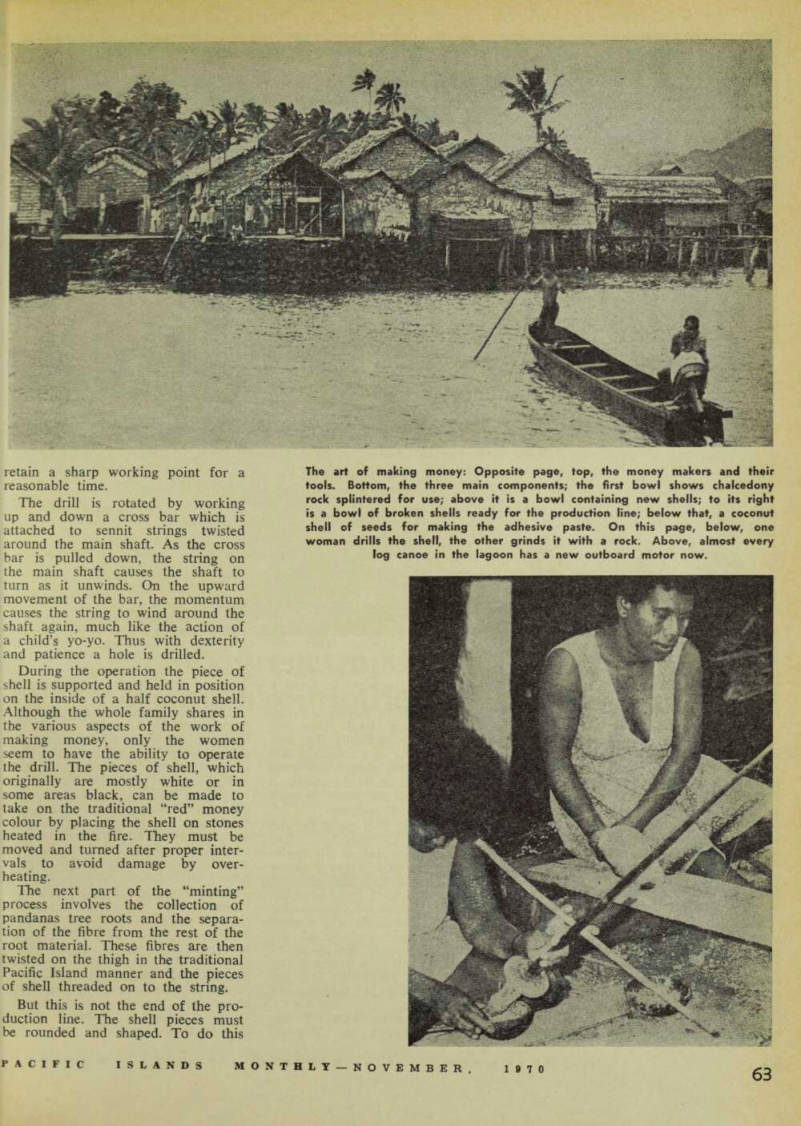 67
67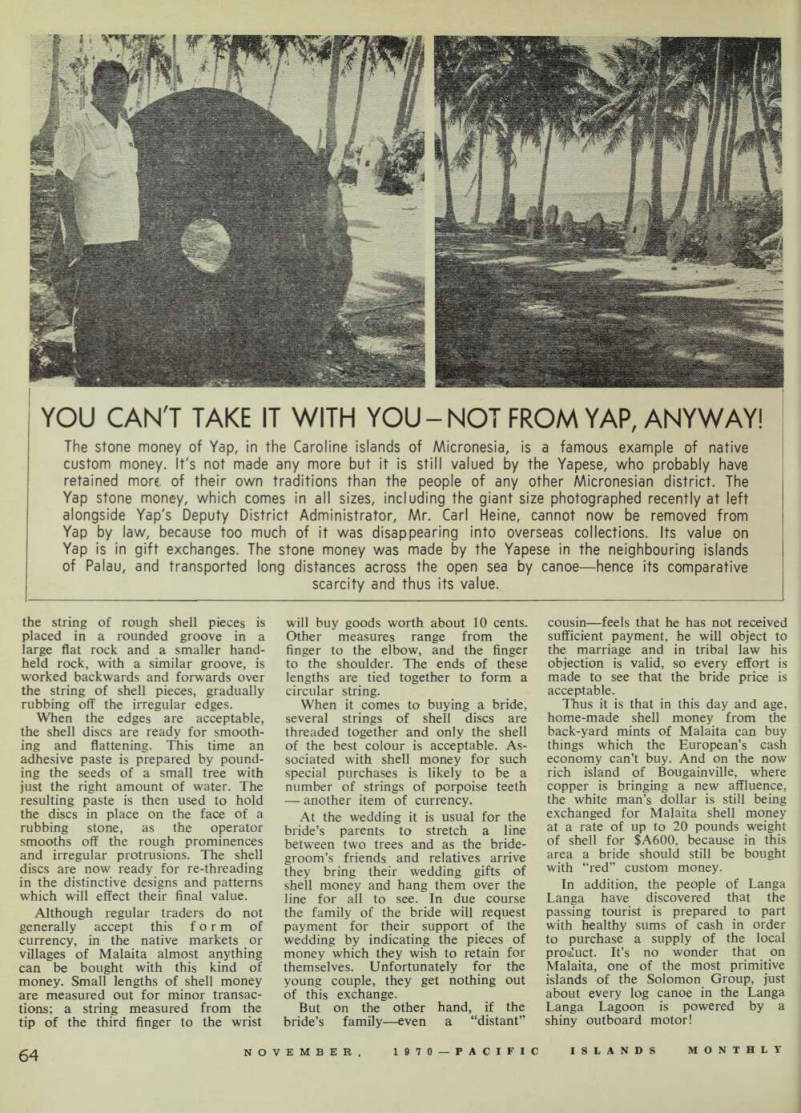 68
68 69
69 70
70 71
71 72
72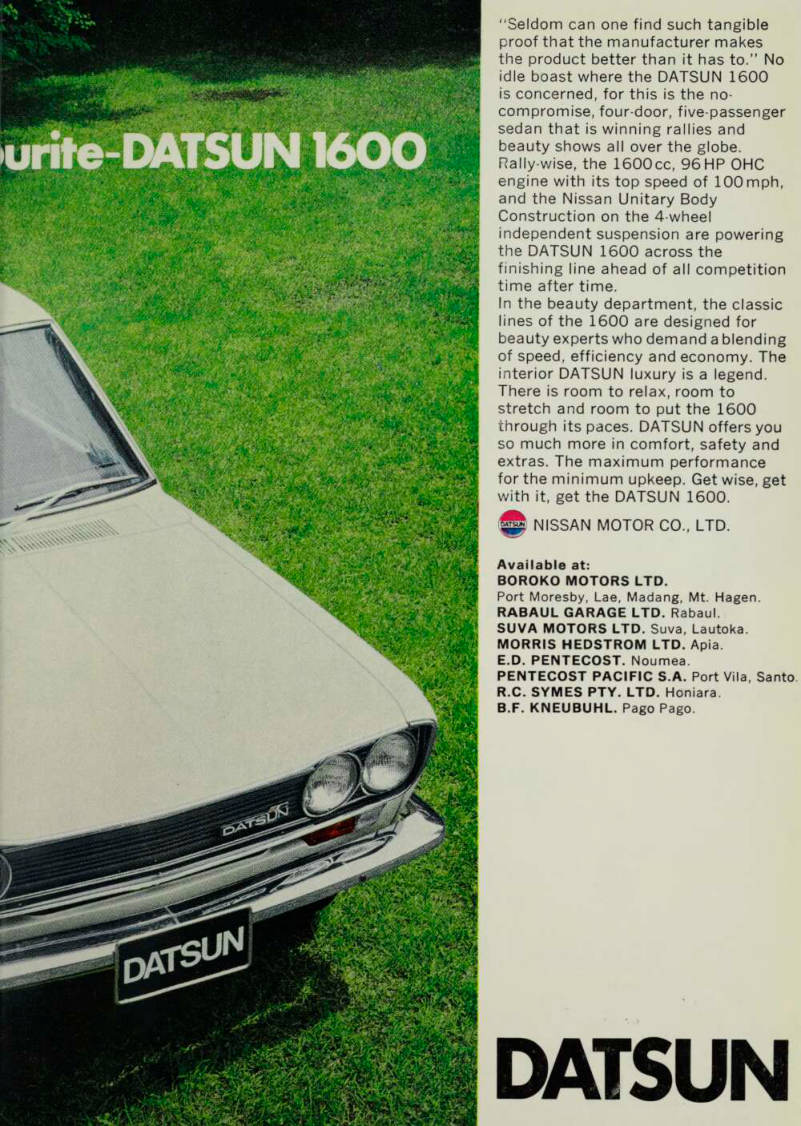 73
73 74
74 75
75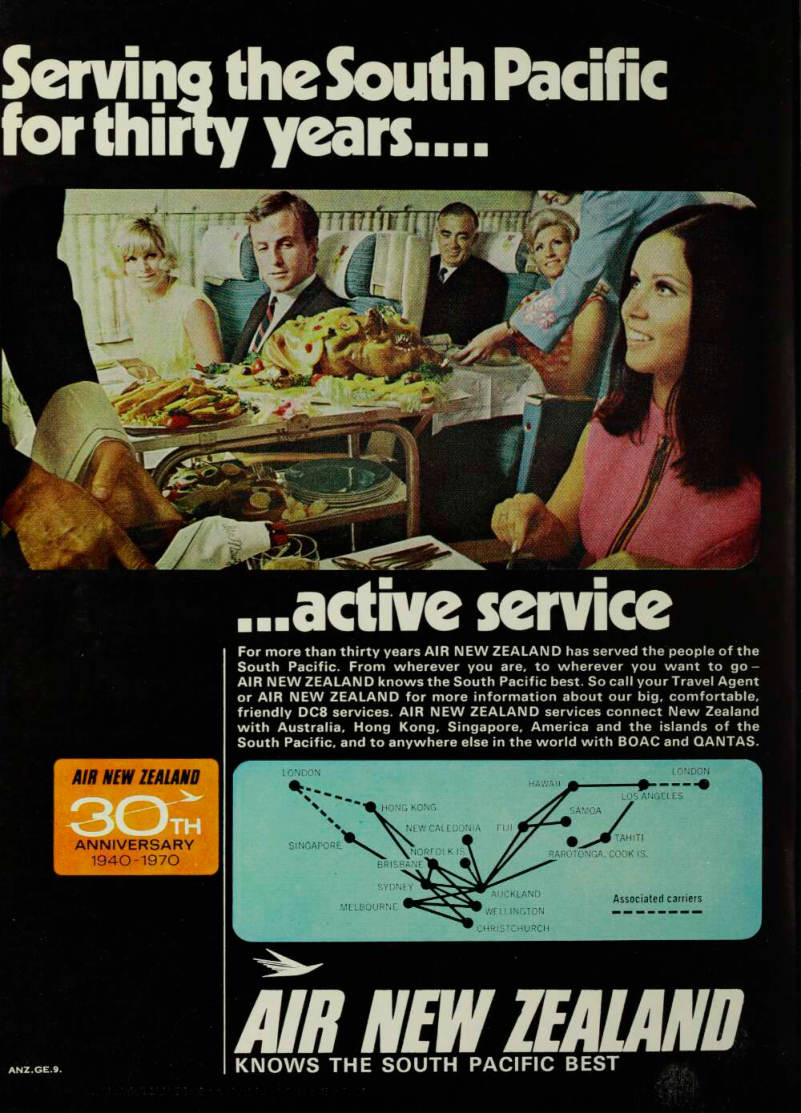 76
76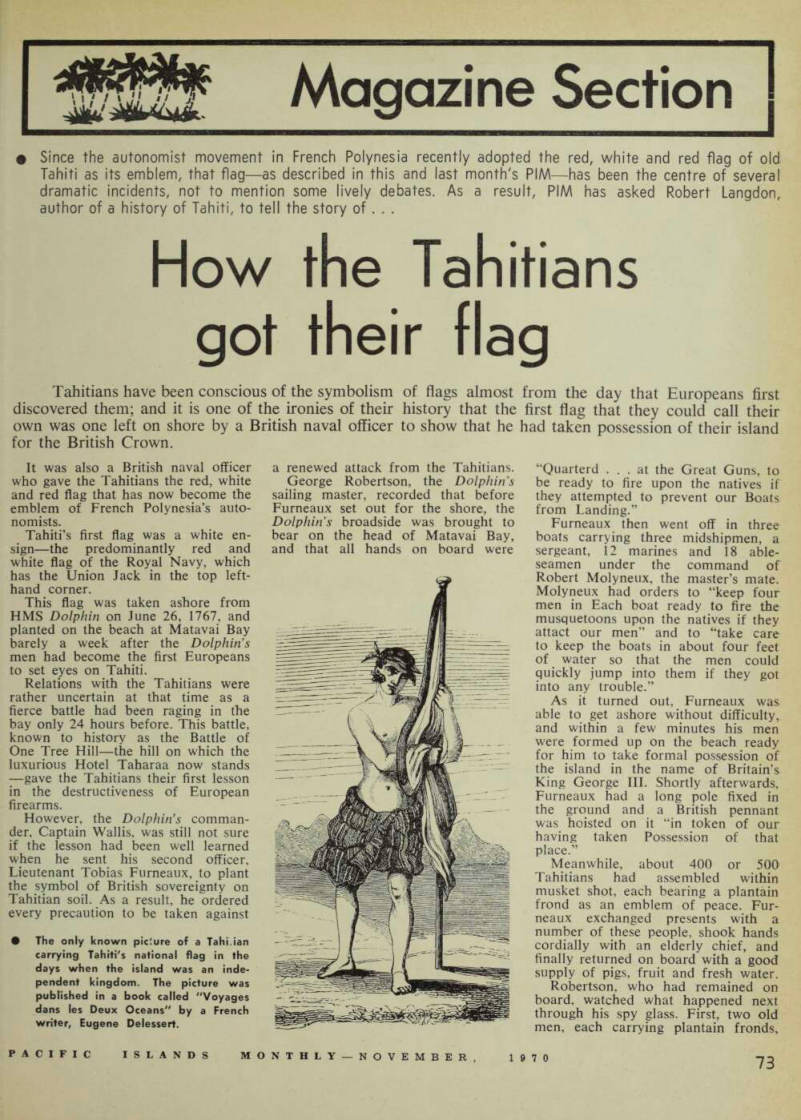 77
77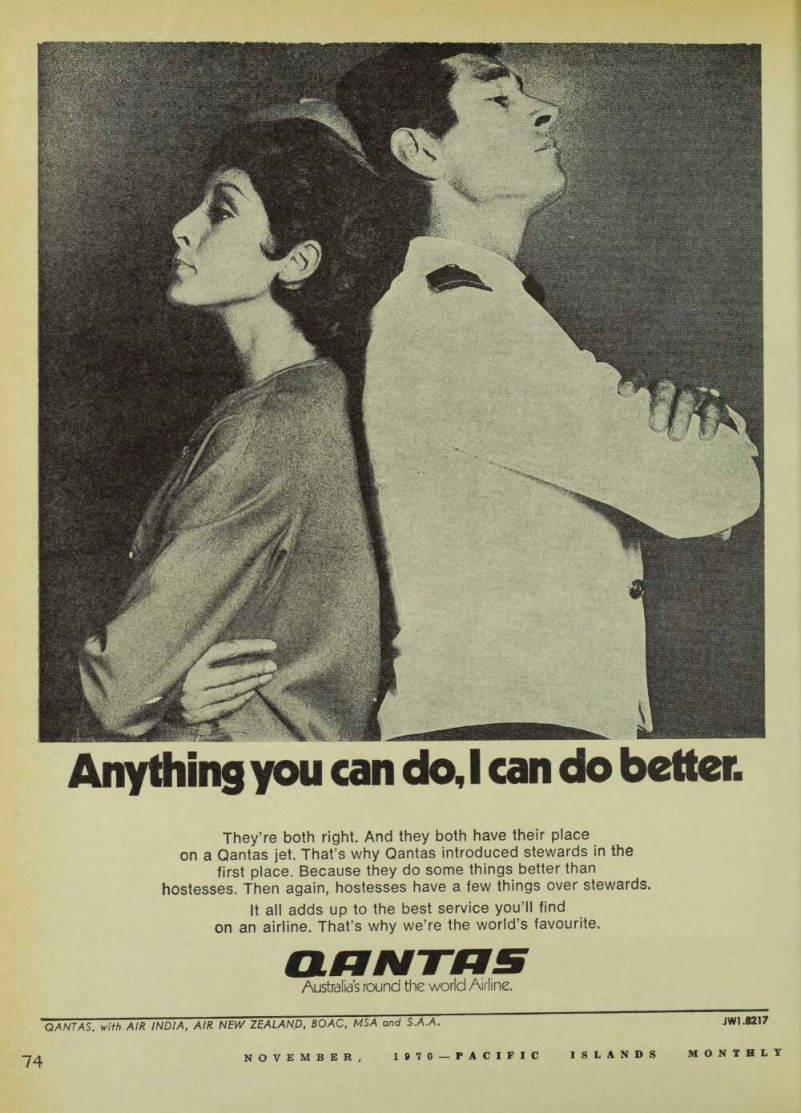 78
78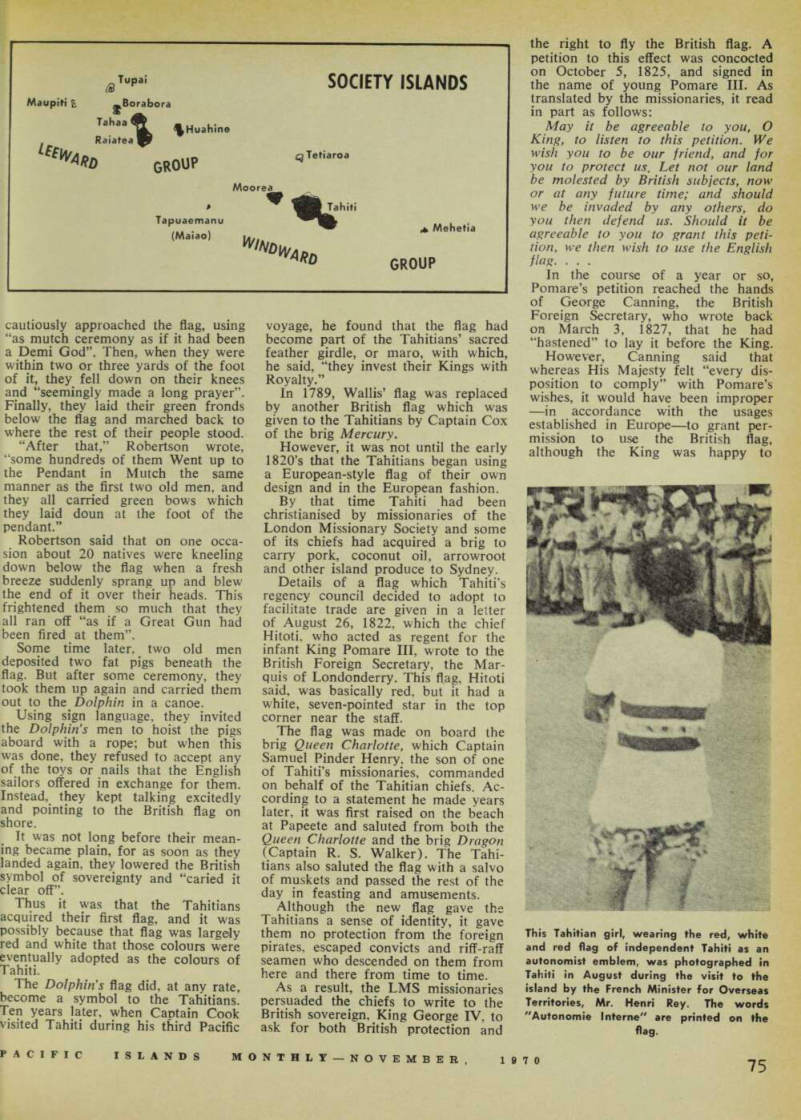 79
79 80
80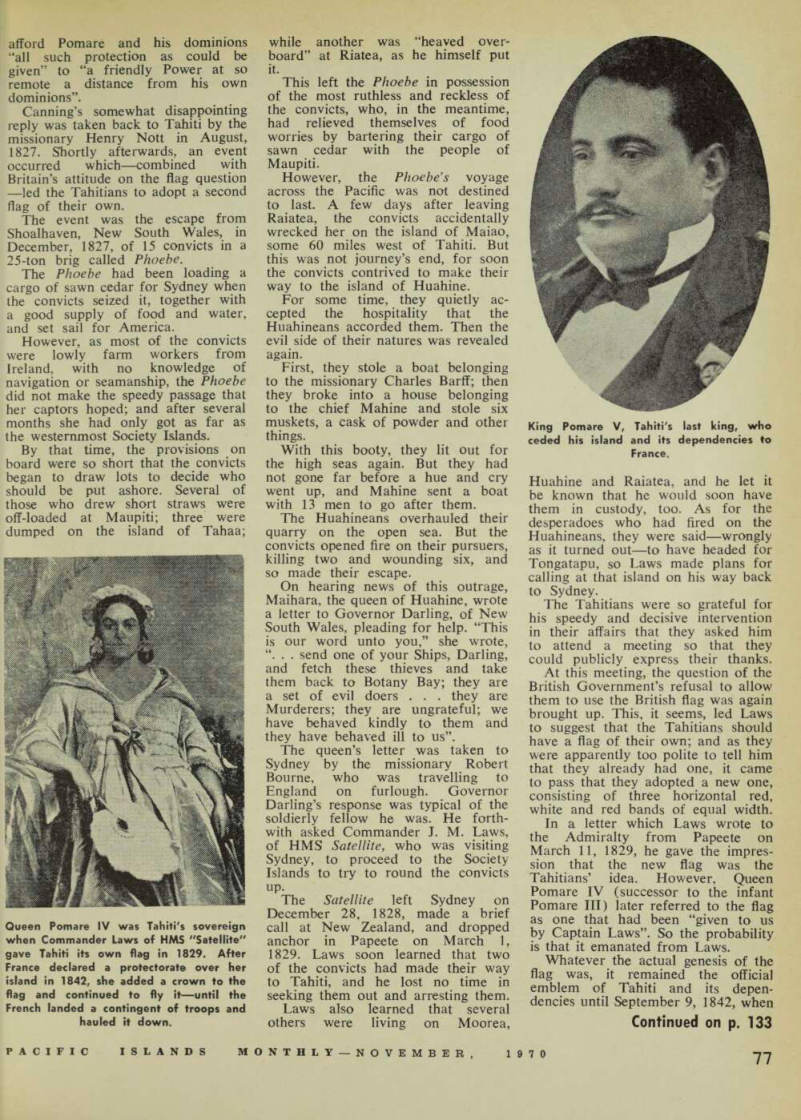 81
81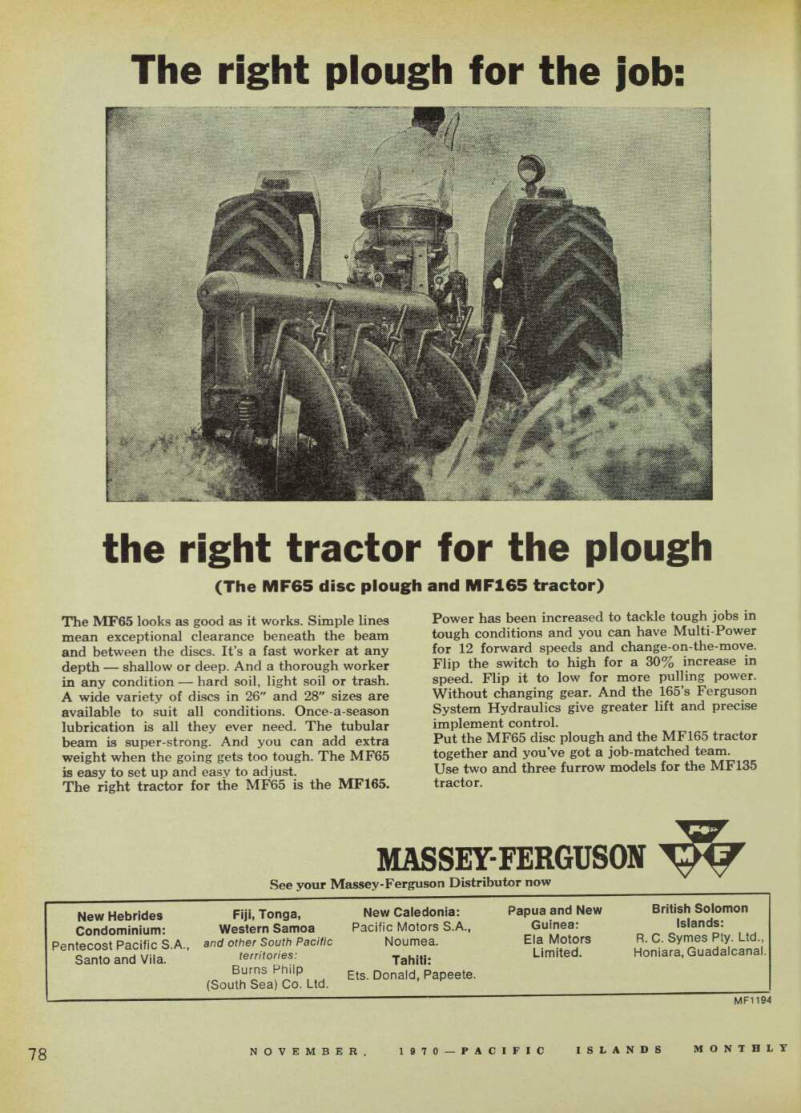 82
82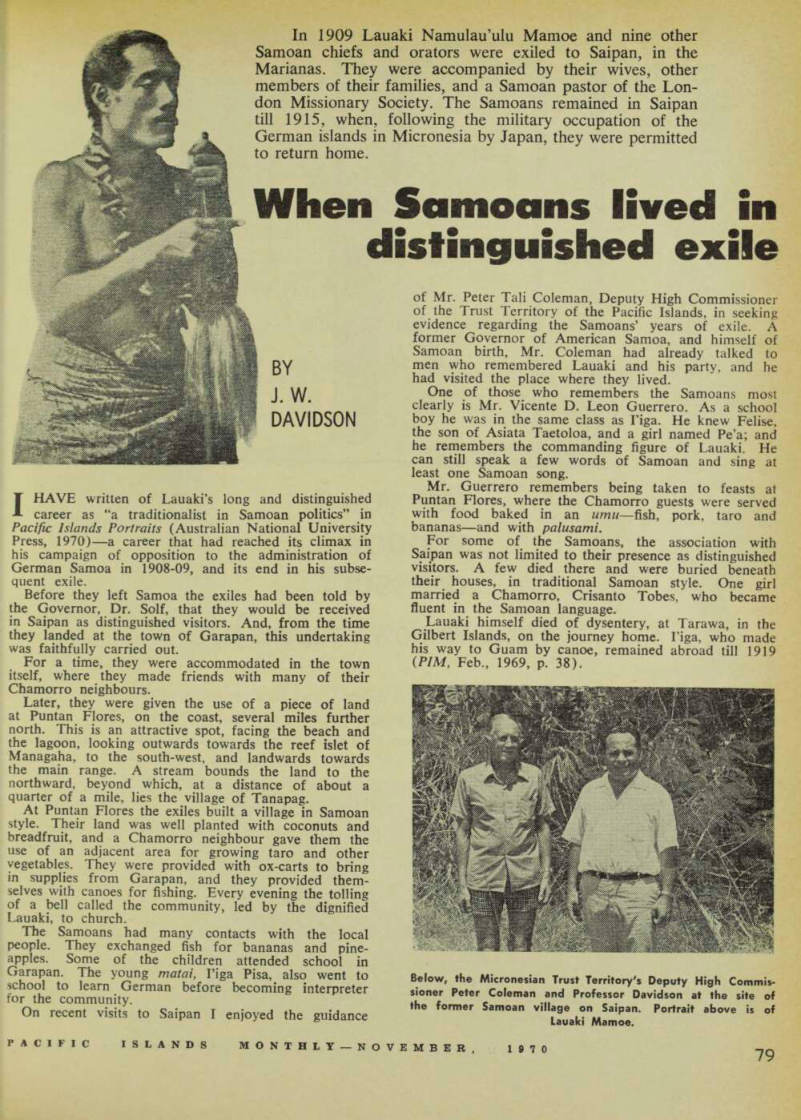 83
83 84
84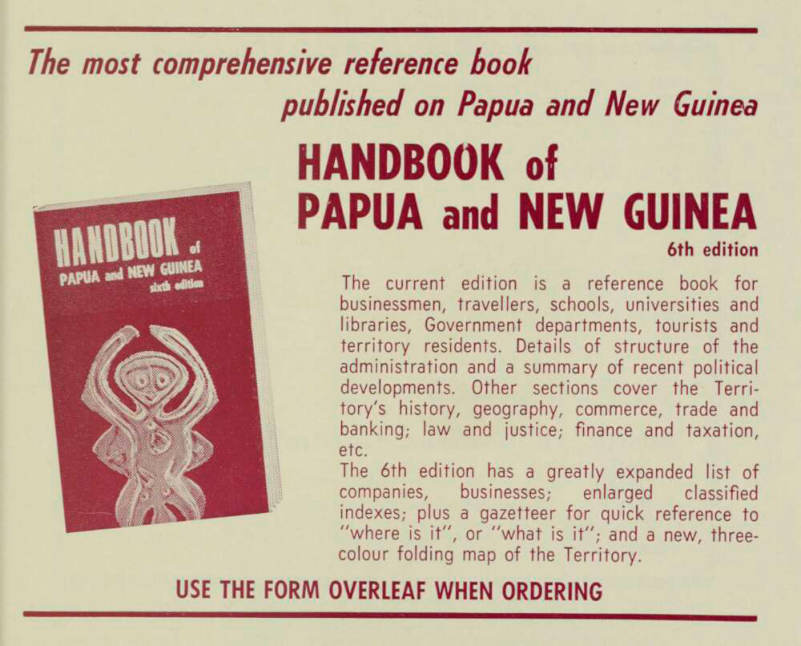 85
85 86
86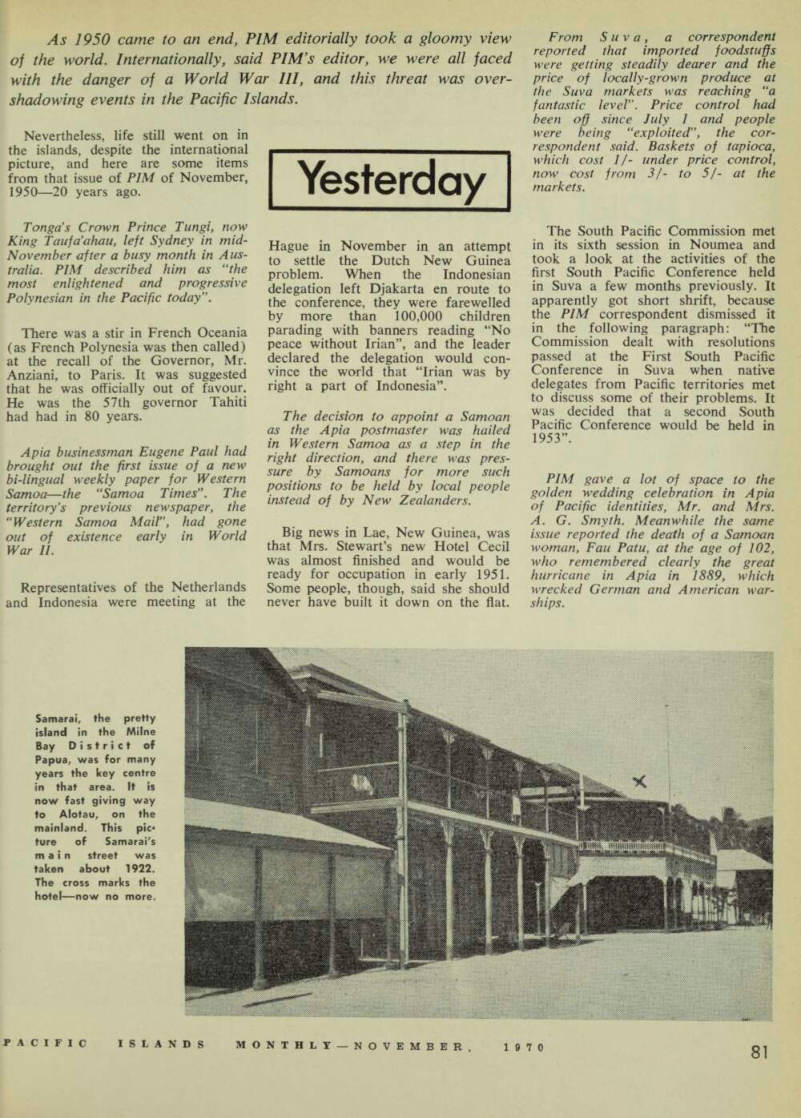 87
87 88
88 89
89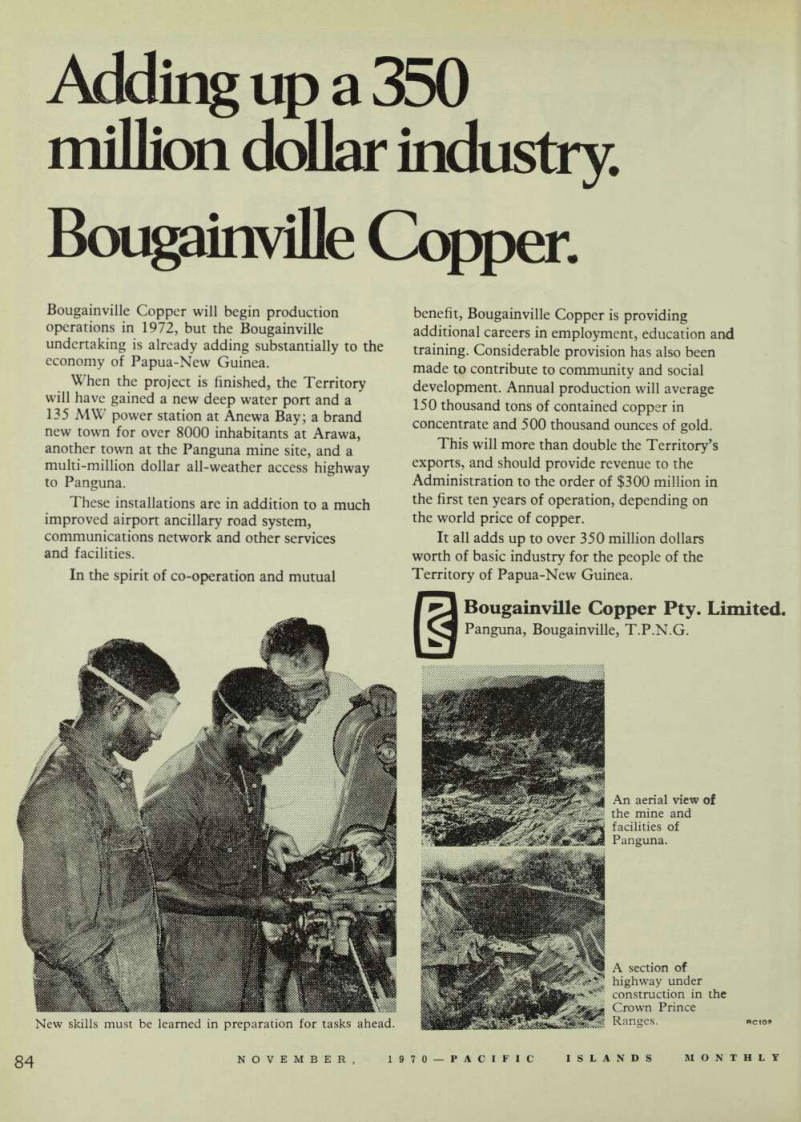 90
90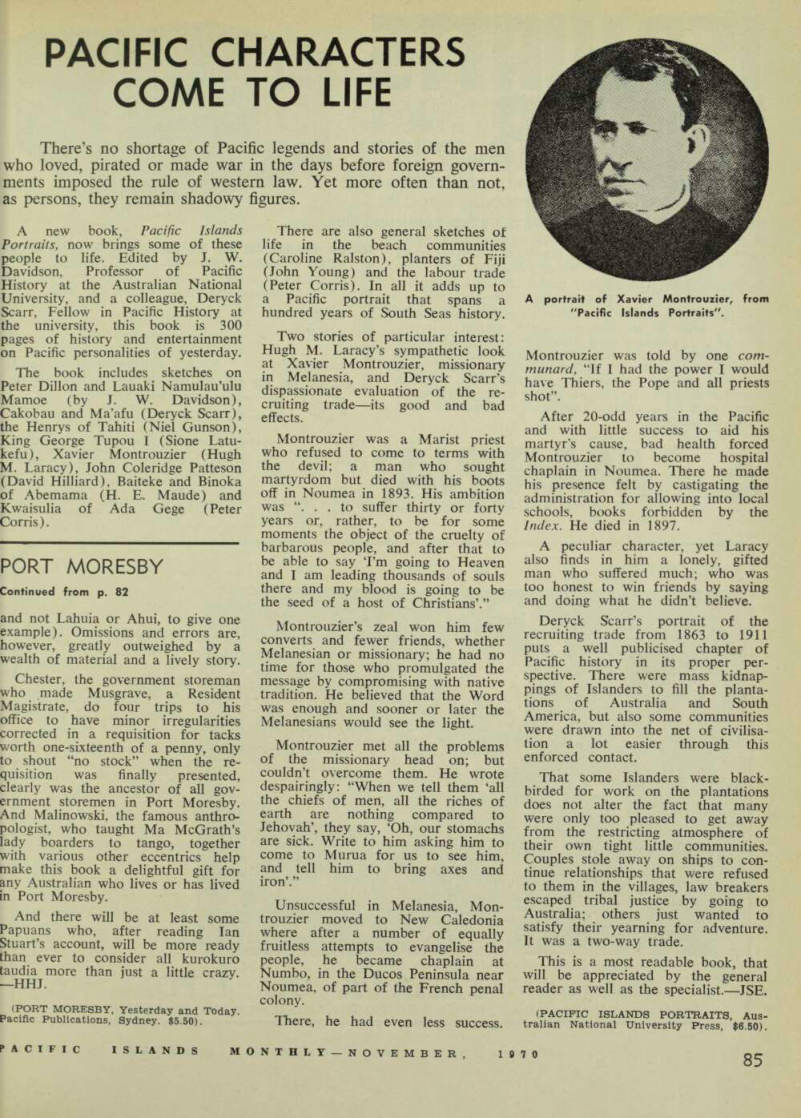 91
91 92
92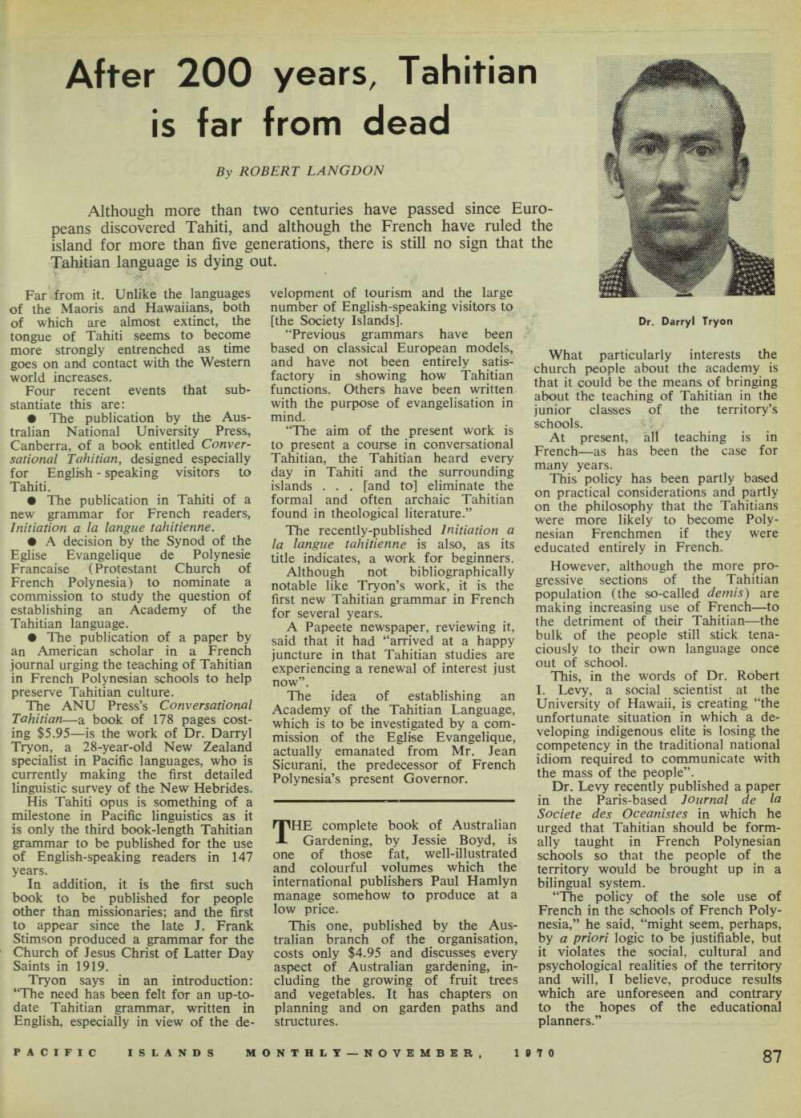 93
93 94
94 95
95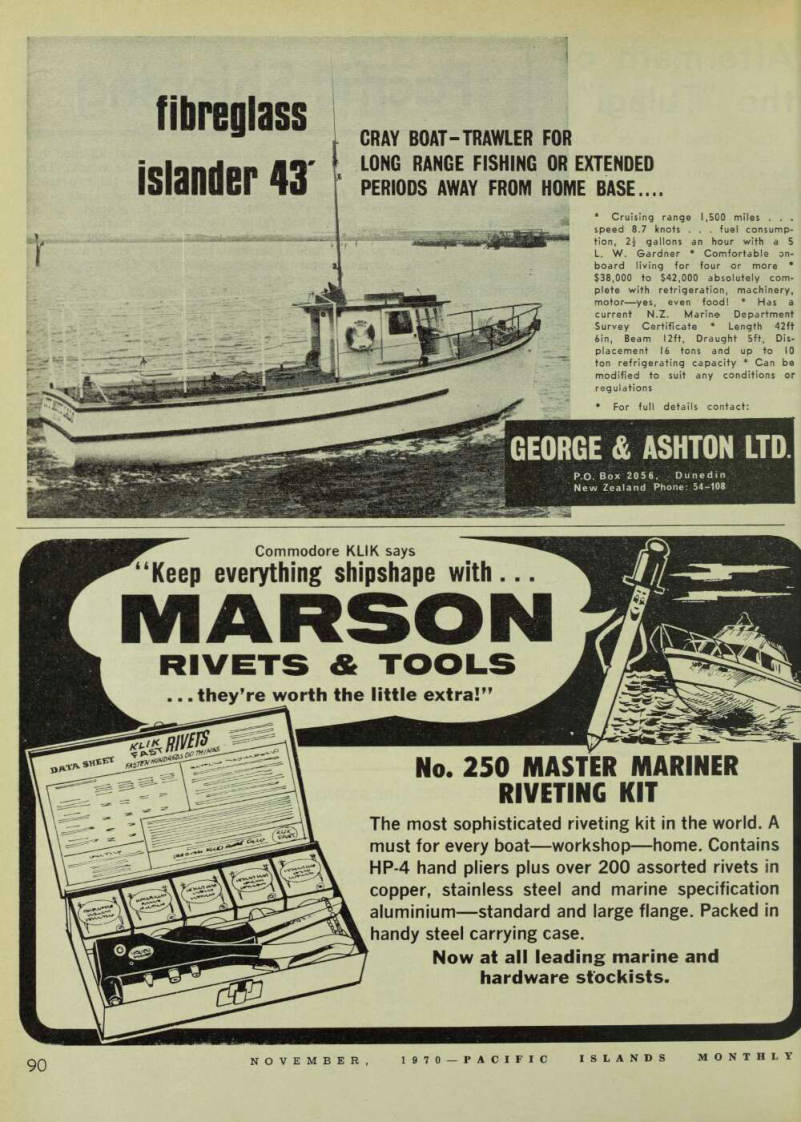 96
96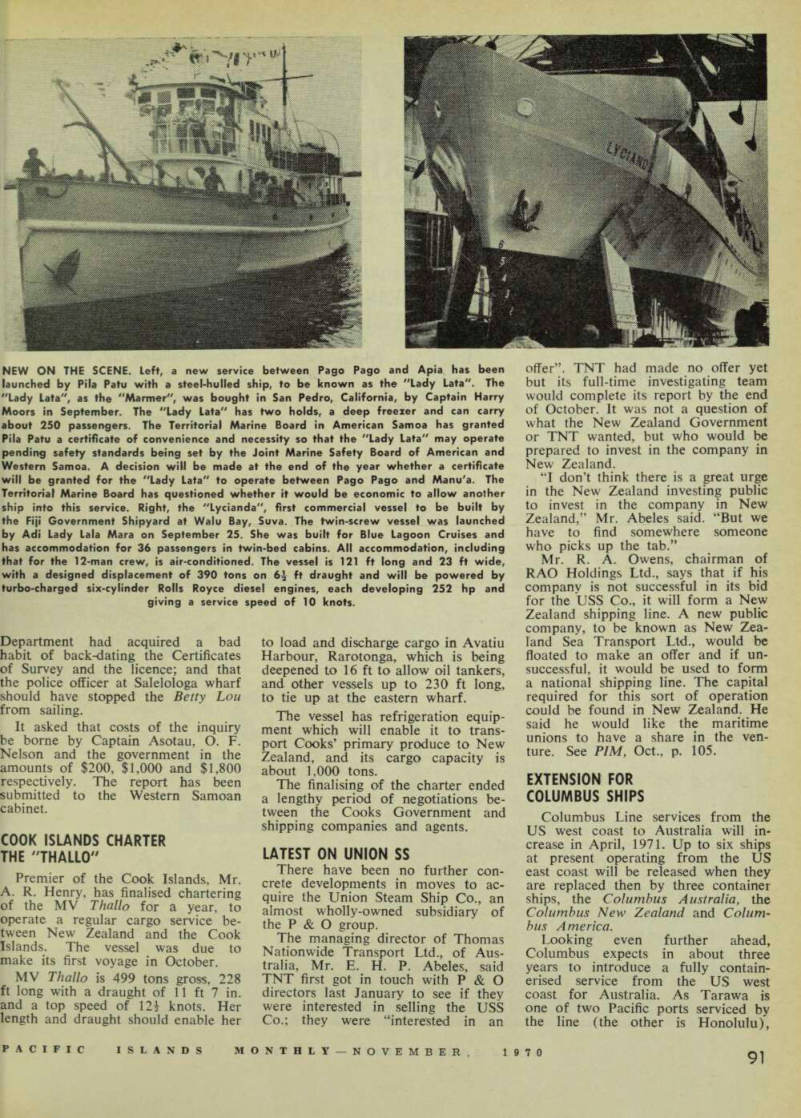 97
97 98
98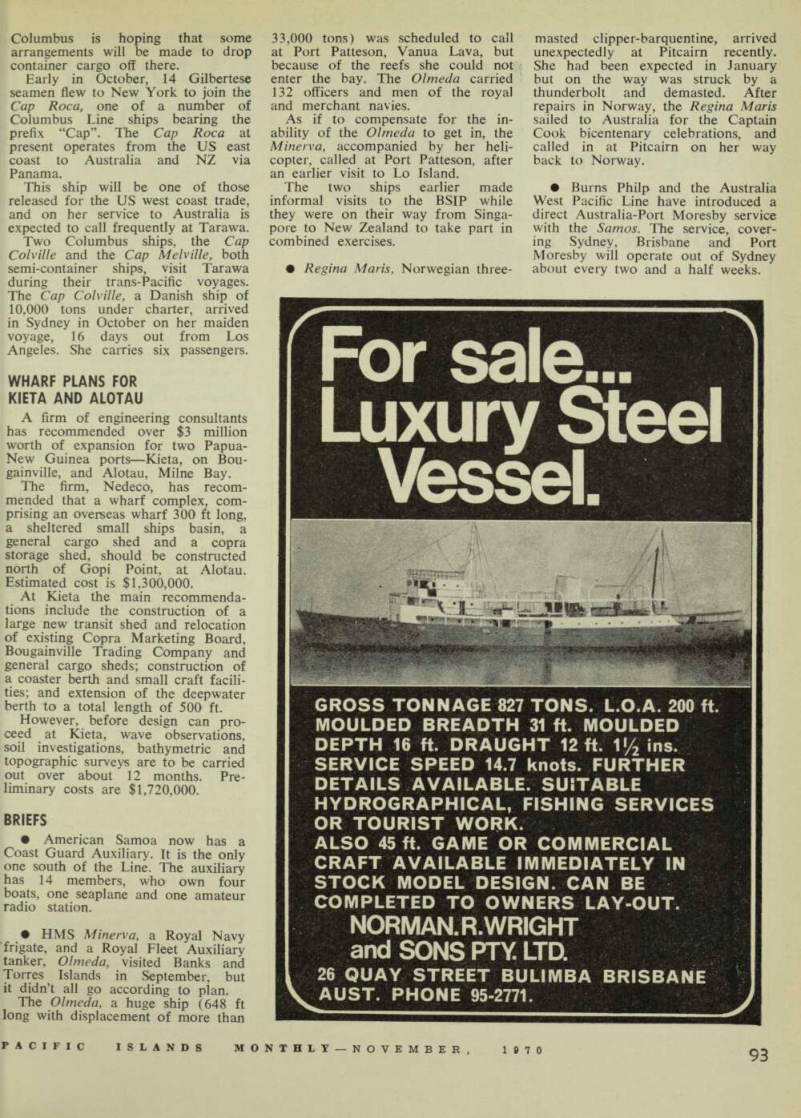 99
99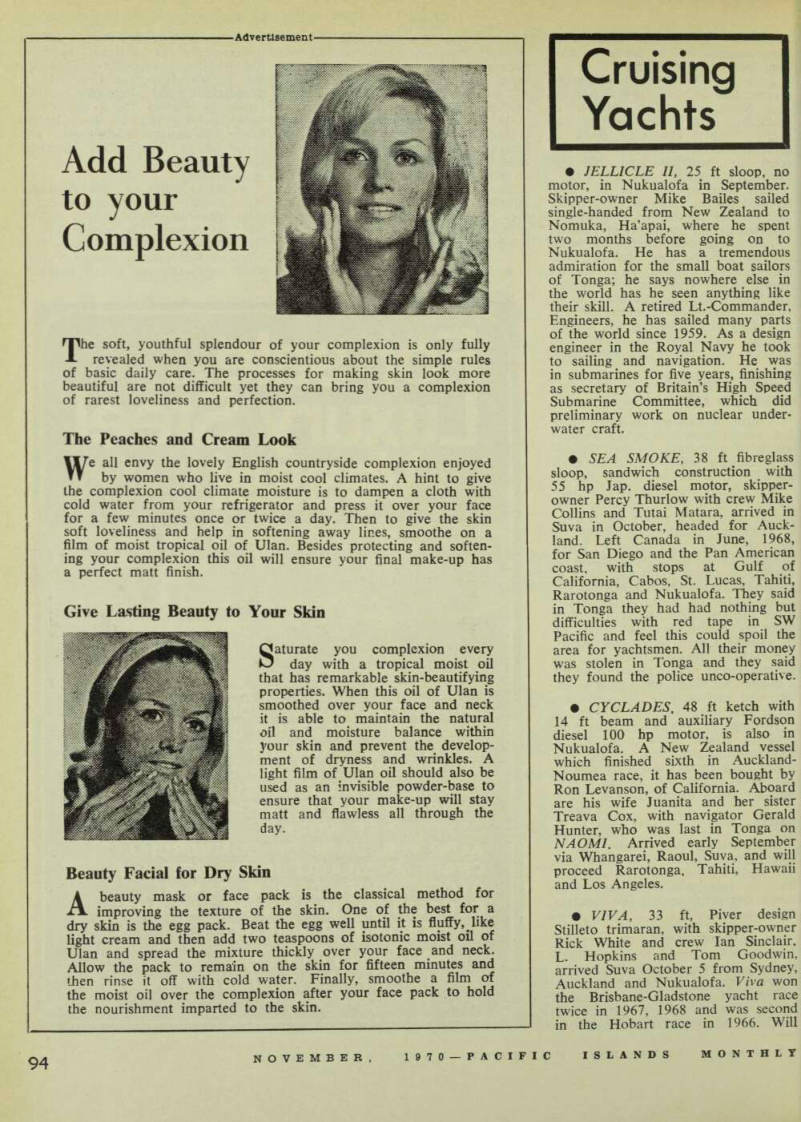 100
100 101
101 102
102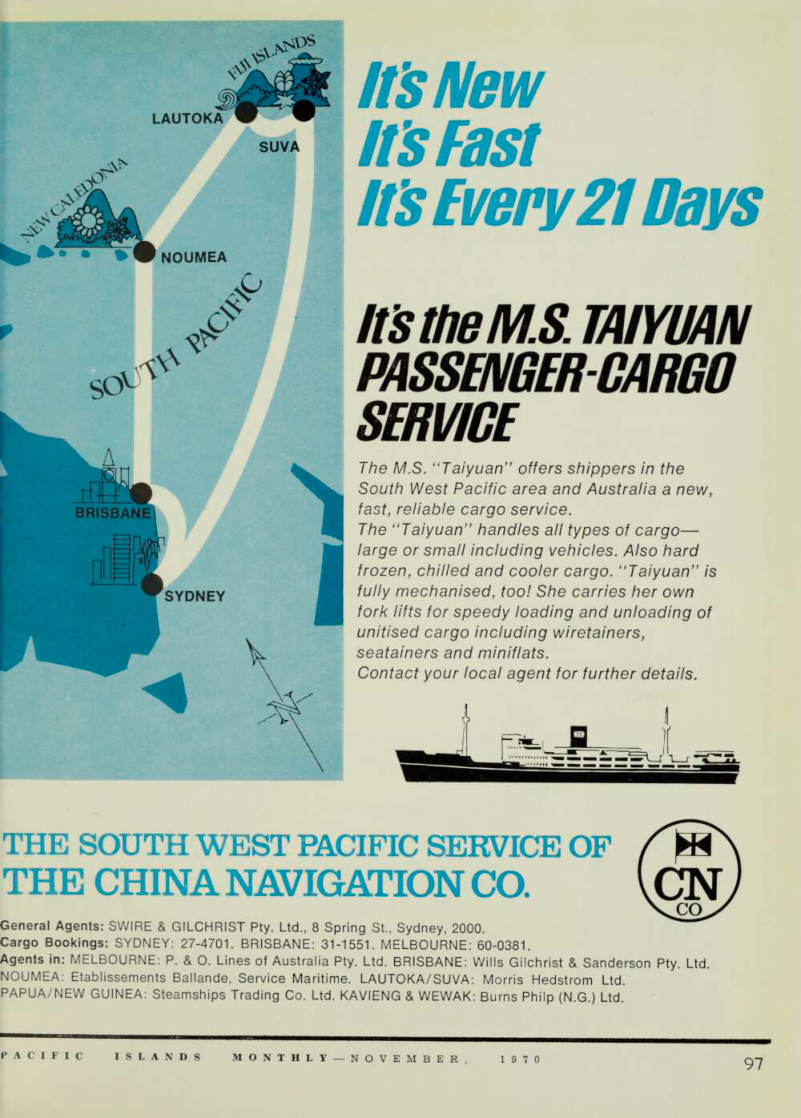 103
103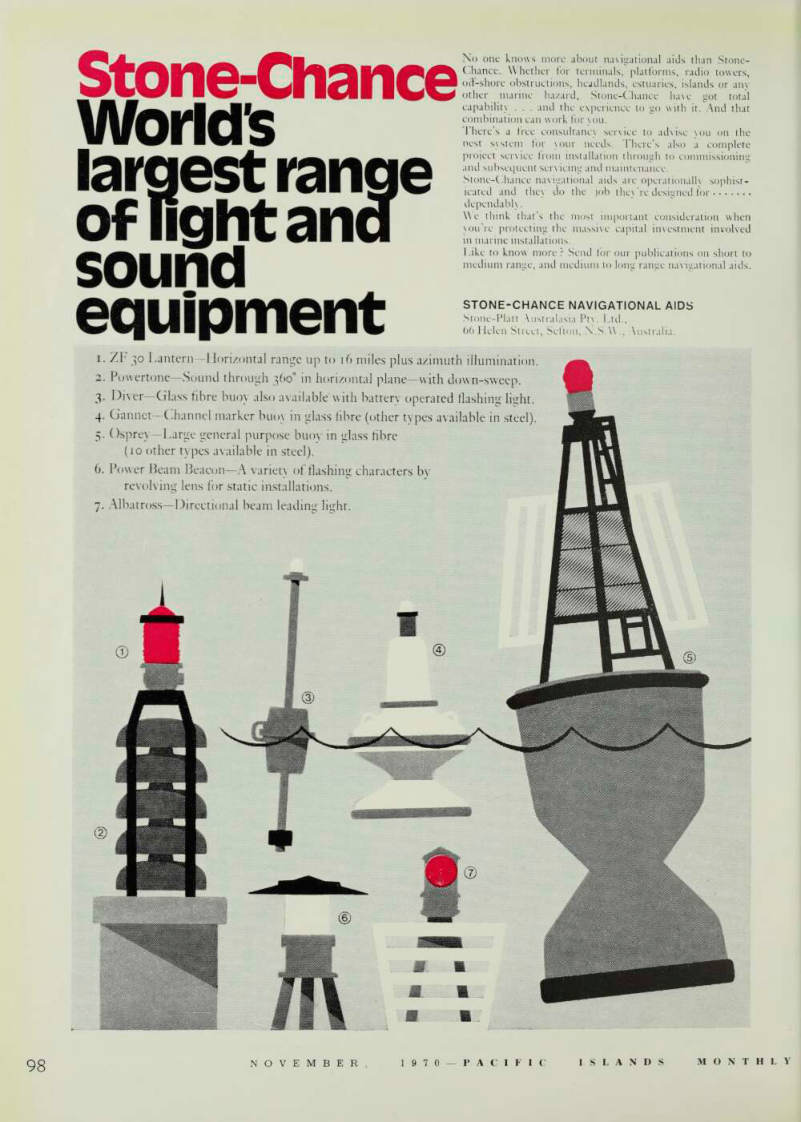 104
104 105
105 106
106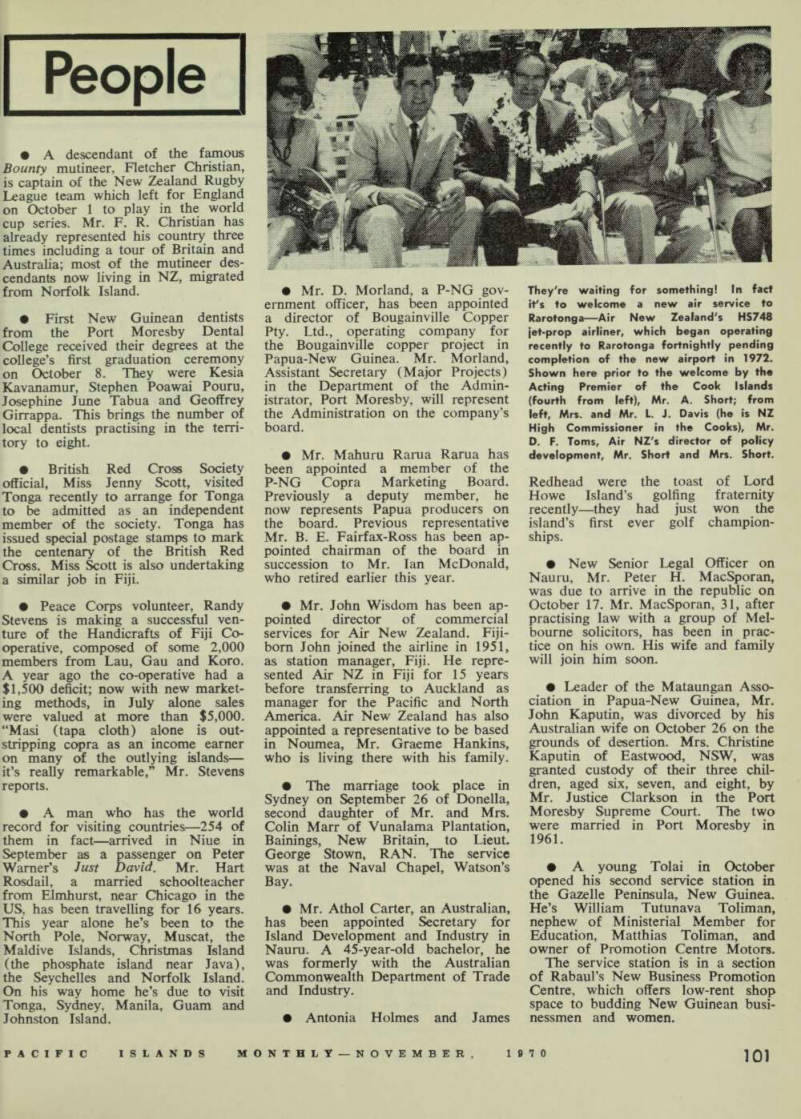 107
107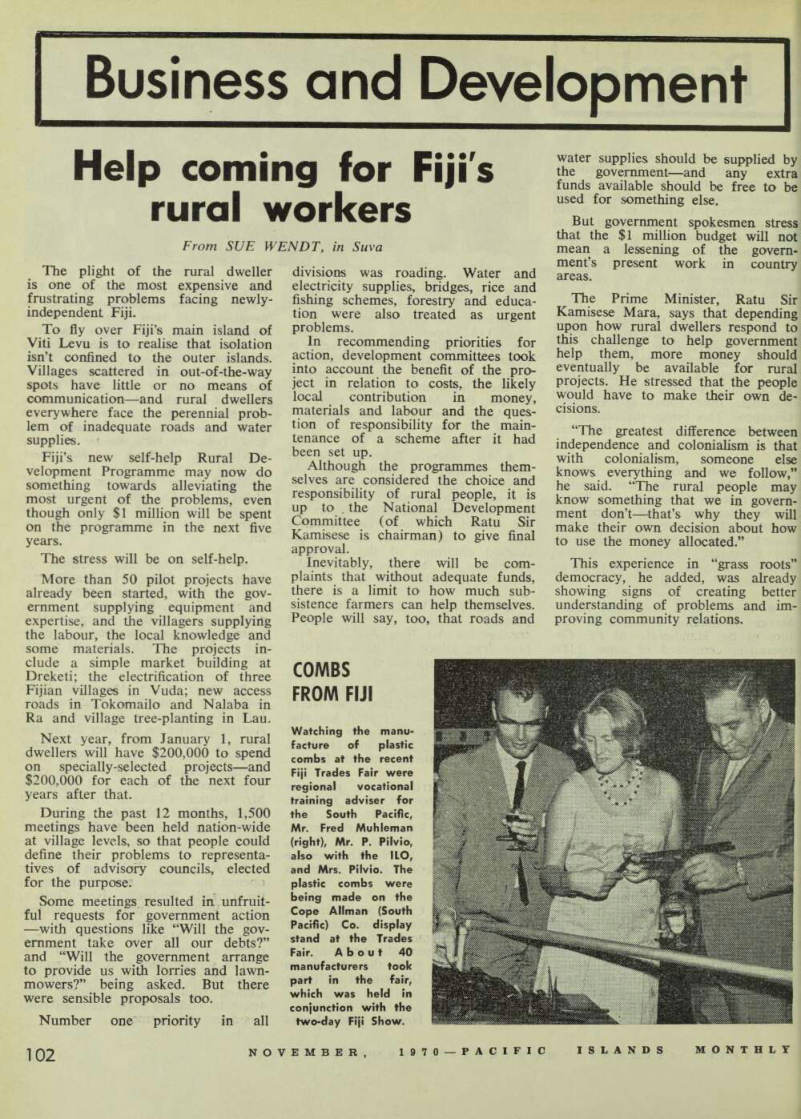 108
108 109
109 110
110 111
111 112
112 113
113 114
114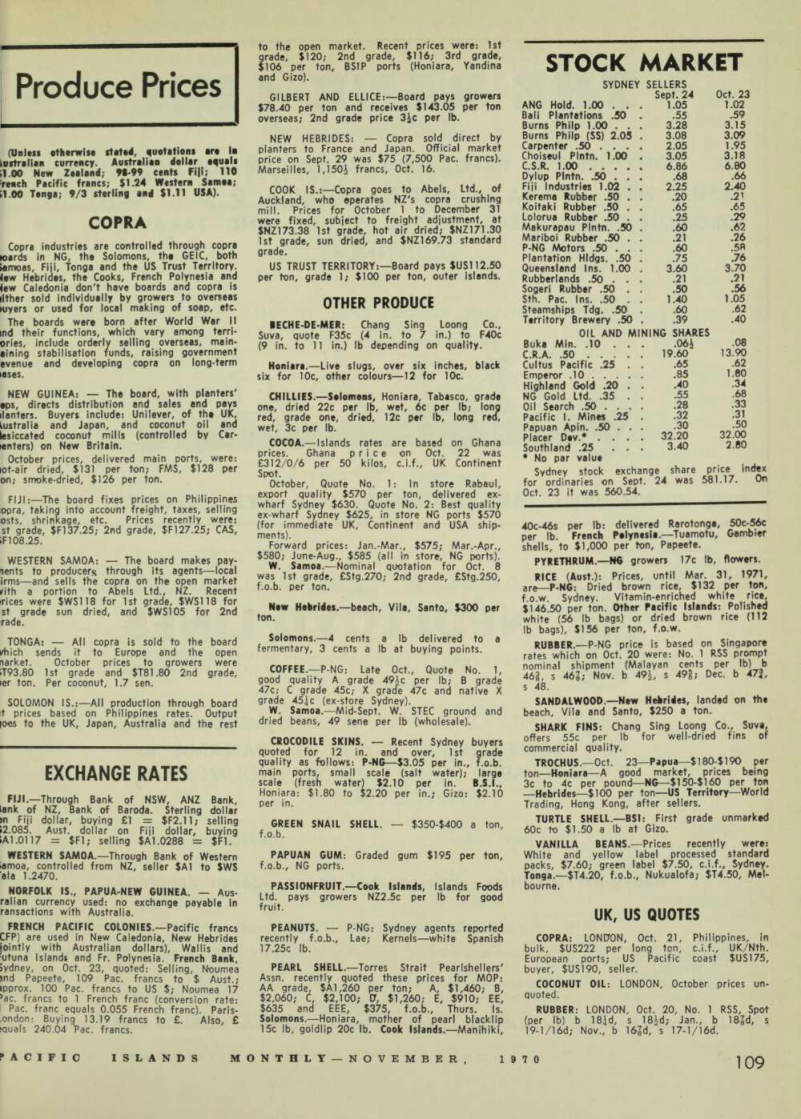 115
115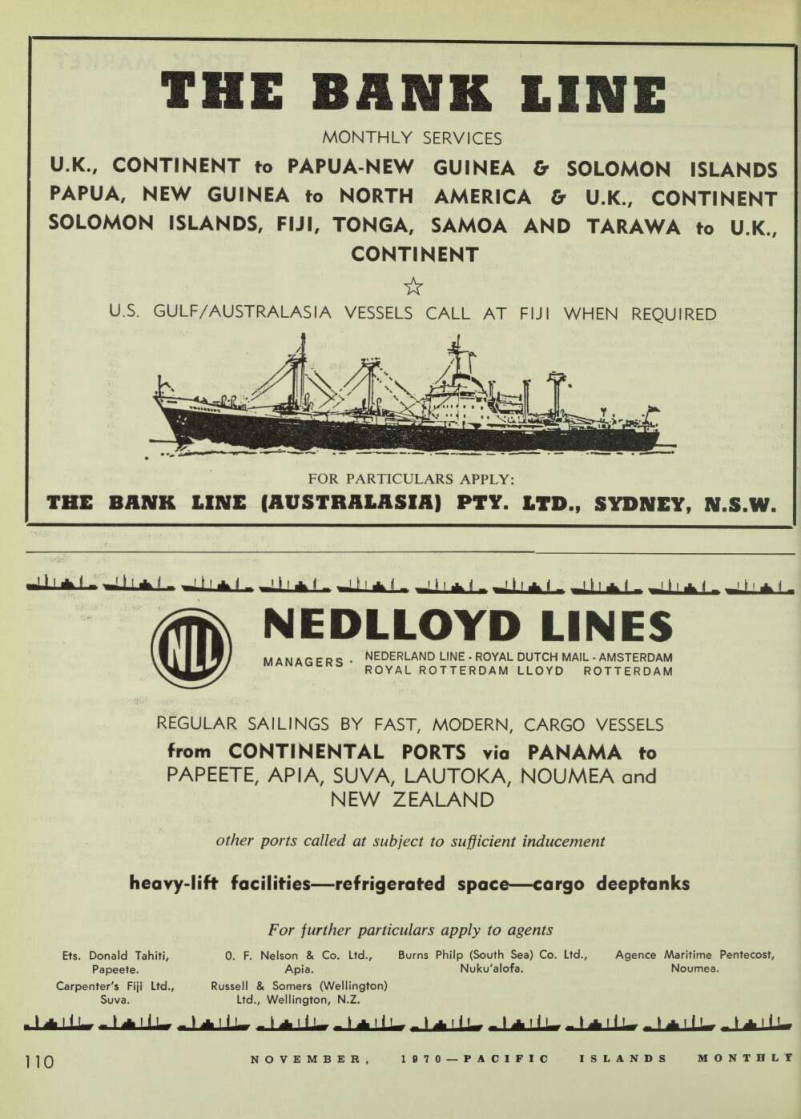 116
116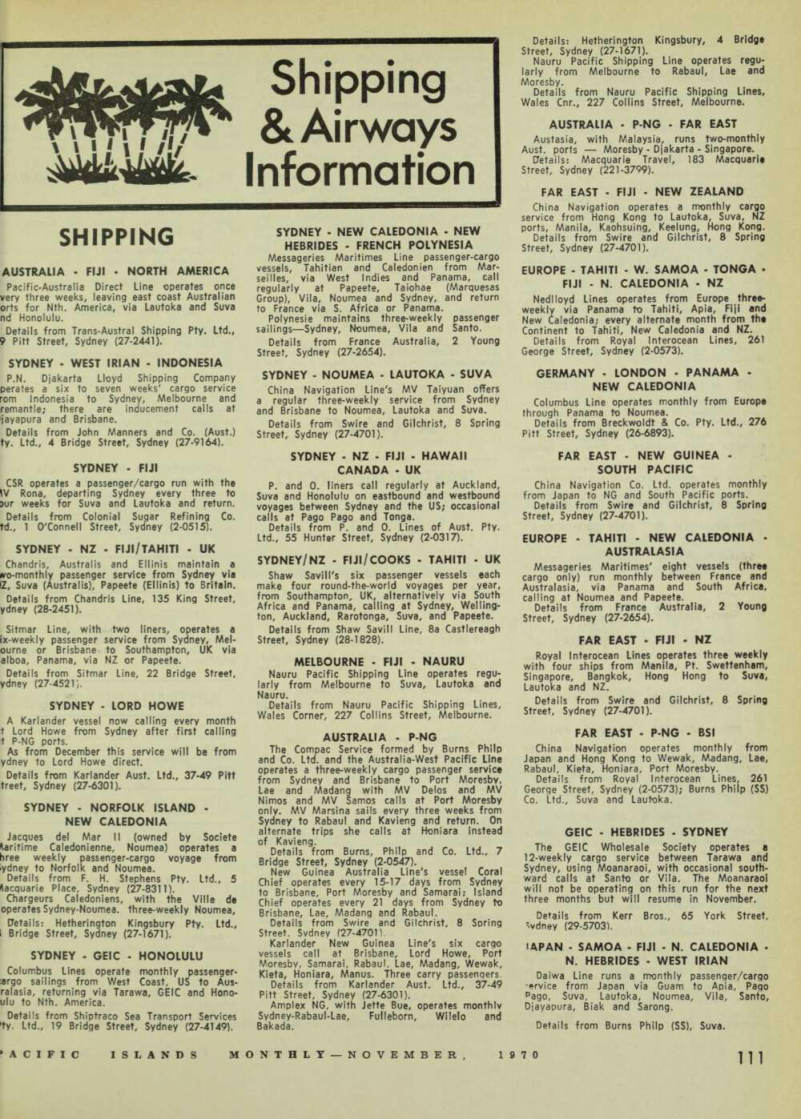 117
117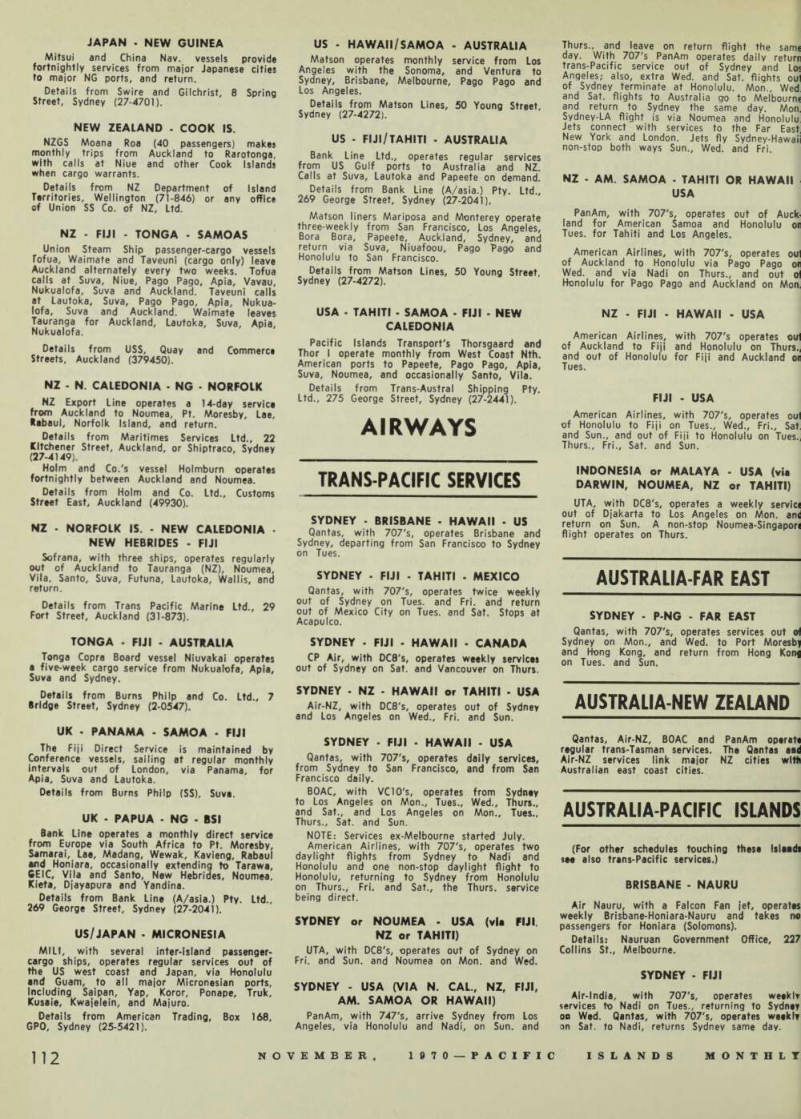 118
118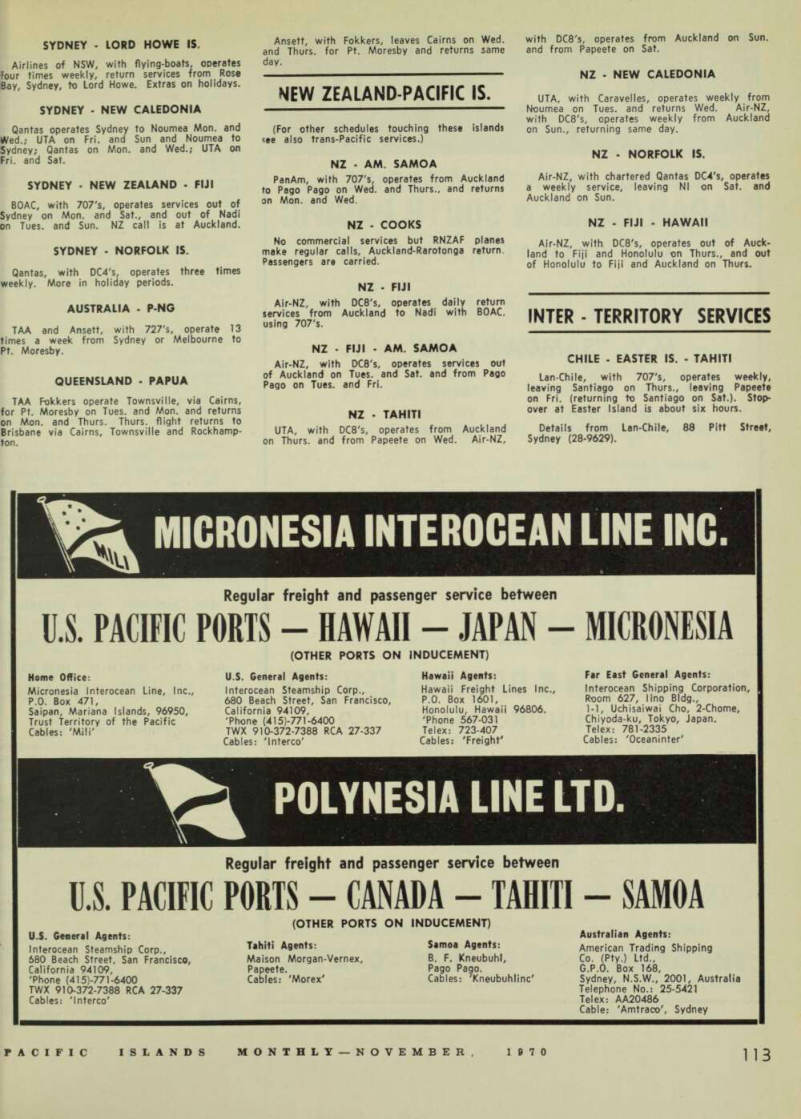 119
119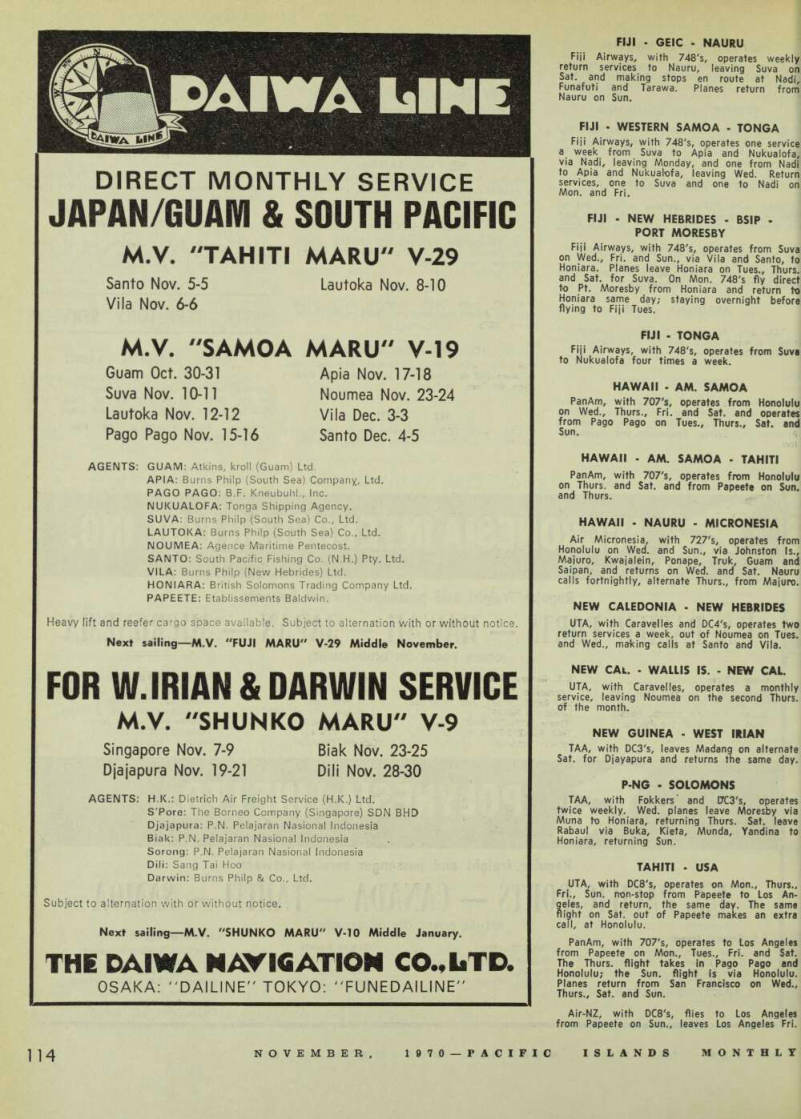 120
120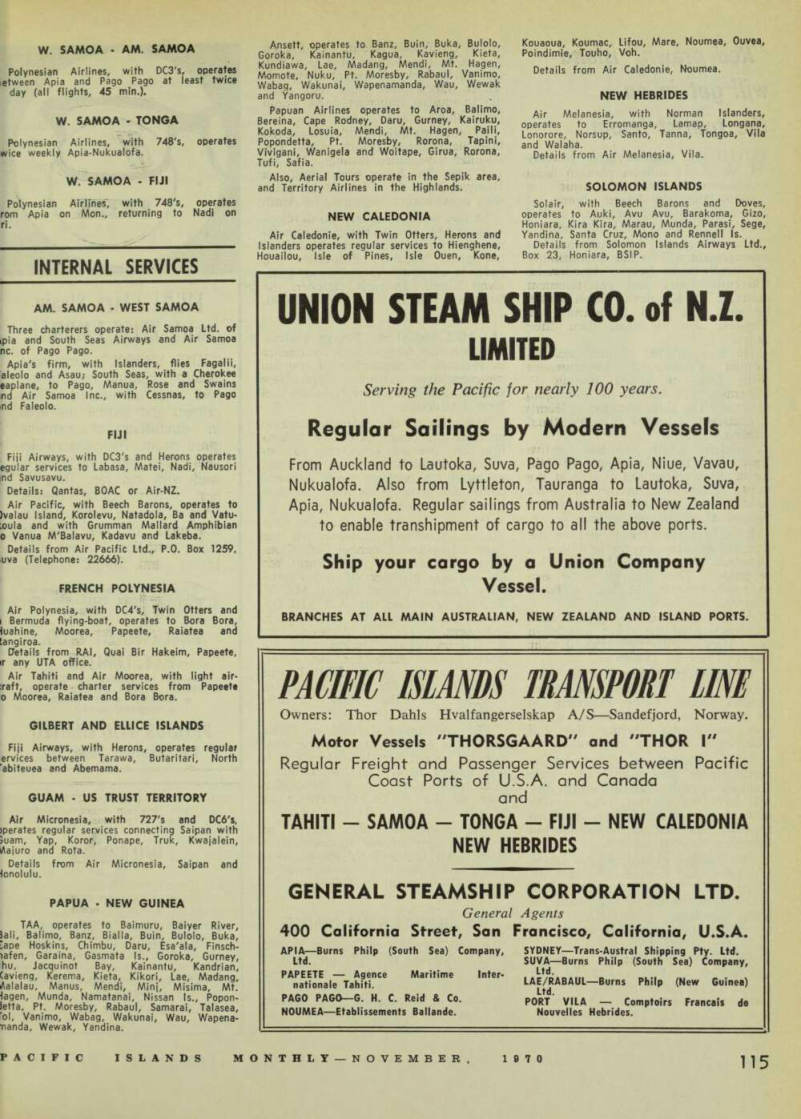 121
121 122
122 123
123 124
124 125
125 126
126 127
127 128
128 129
129 130
130 131
131 132
132 133
133 134
134 135
135 136
136 137
137 138
138 139
139 140
140 141
141 142
142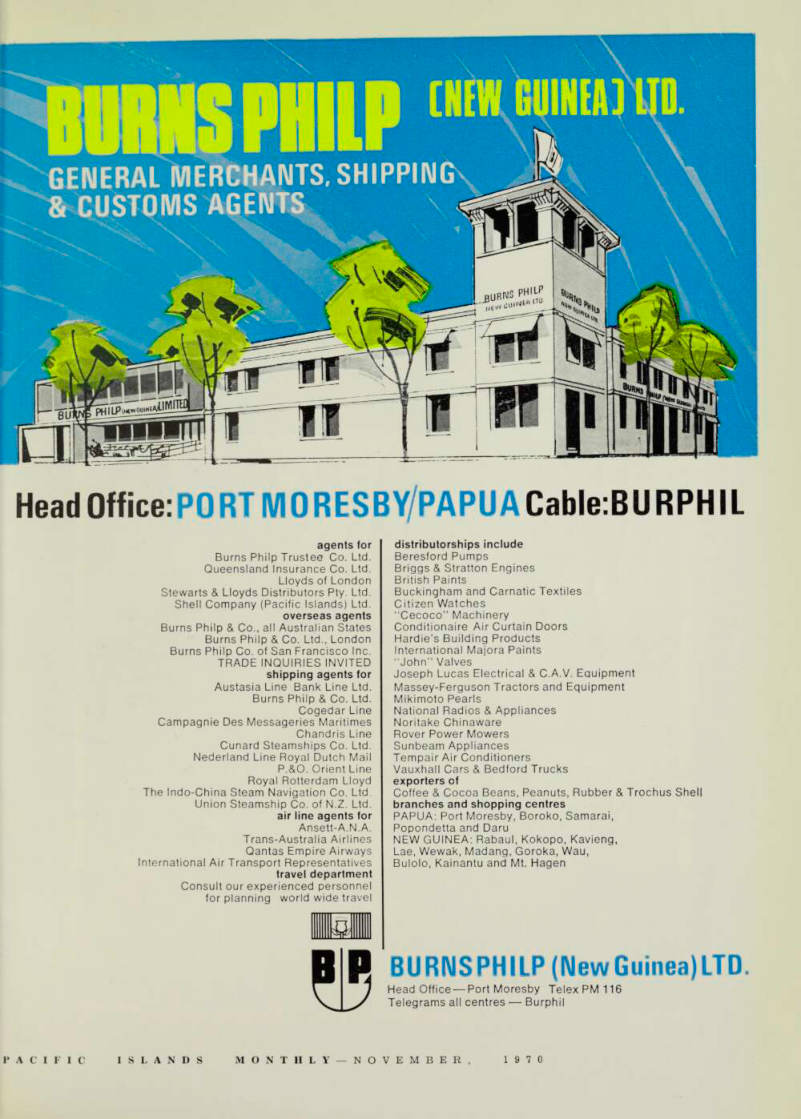 143
143 144
144