Pacific Islands Monthly
News Magazine
December, 1970
Australia 40C New Zealand 45C
U.S. Pacific Territories 70C
French Pacific Islands (Frcs. Cfp.) 65
P N G., FIJI, OTHER PACIFIC TERRITORIES 35c
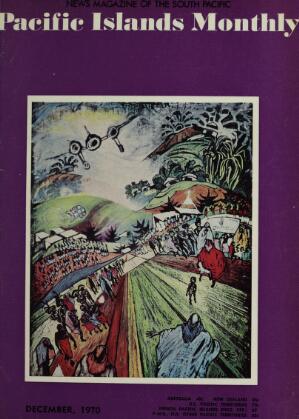
Our Cover
“Christmas cargo” is the title that Australian artist Elizabeth Durack gives this crayon, inspired by a visit she made to an airstrip in the Highlands of New Guinea. It seems to capture the colour and bustle of Highlands activity, with a Christmas message added.
The original is 29 in. by 32 in., and it was commis sioned by the Department of External Territories, which has it framed and hanging in one of its offices.
Advertisements & other items, p. 2 (1 item)
No. 1-the friendly one
50 centres throughout Papua and New Guinea on a 10,000 mile network. 100 centres in Australia. TAA links the lot.
Across the Territory we give you more flights to pick from.
More cargo space. More seats.
Including daily Friendship
services between Moresbv and all major centres. Plus daily ‘Bird of Paradise’ T-Jet flights connecting Brisbane, Sydney, Melbourne, Adelaide and Perth with the Territory.
If you plan to take off soon, keep our big link-up in mind.
And call your Travel or
TAA.
Port Moresby 2101, Lae 3191, Madang 2478, Rabaul 2567.
Goroka 8, Mt. Hagen 4 or 301, Wewak 103.
TAA
No. 1-the friendly one
AIRLINES OF NEW GUINEA
O ♦
In This Issue
/01. 41. No. 12. December, 1970.
General
y raft across the Pacific 32 listory of surfing ... 59
lew shipping services 97
American Samoa
ire destroys Fono 140
>elegate-at-large 140
Ook Islands
istory of air services 63 rst visitors .. 75 fhy whaling men came 77 Tipping troubles 95 Jl ayoral elections 30 ace meetings 40 fter-independence report .. 43 jgar future talks 104 riticism of NZ 104 nperor board attack 107 umber one income earner ... ... 121 (dependence will help tourism 123 •afts centre 125 icific harbour plans 127 igh Commissioner in Canberra 140
French Polynesia
It's still fun 25 Self government move 27 Marquesas air link 39 Ready for the Games 51 New yachts 53
Gilbert And Ellice Islands
Another step forward 29 Bishop's views 31 Sport with Nauru 53 Man powered skiing 89
New Caledonia
"Intense development" 101 Nickel quotas 101
Norfolk Island
Business registration 105 Fishermen alarmed 115 No extra flights 116
Papua-New Guinea
Hargesheimer returns 3
DEPARTMENTS: Up Front with the Editor, 3; From the Islands Press, 19; New Guinea Diary, 36; Tropicalities, 39; Footnotes with Percy Chatterton, 49; Letters to the Editor, 57; Magazine, 75; Yesterday, 81; Book Reviews, 85; Pacific Shipping, 91; Cruising Yachts, 98; Business and Development, 101; Produce Prices, 109; Shipping and Airways Schedules, 111; Deaths of Islands People, 137.
Up the workers 28 Smallships inquiry 30 John Ryan's report 36 Land sale 40 Madang earthquake 55 Trobriands caves 59 lan Downs' book 85 "Cannibal" 87 Shipping shortage 91 Shipping delays 95 British Petroleum arrives 105 Separate bank notes 107 Nutrition study 133
Solomon Islands
Resume freehold land? 28 On Mendana's trail 39 Carden Seton dies 137
Tonga
Emigration 3] Post-independence report 47 Craftsman in silver 47
Western Samoa
Stamps 31, 66 Economic prospects 35 New Fono 40 Conflict of tourism 66 Fishing self sufficiency 91 Kind words 93
U.S. Trust Territory
"The American way" 19
Advertisements & other items, p. 4 (1 item)
why not
visit the
neighbours
We have an awful lot in common. Yet we visit each other so seldom. Times are changing fast. It’s possible to travel round the islands quickly and comfortably these days in 40-seater jetprop aircraft. Get a Timetable and Fares folder from Fiji Airways, or your travel W agent.
Fiji Airways Limited, P.O. Box 112, Suva.
General Sales Agent
for BOAC, QANTAS
and TAA in East Fiji and Tonga. Also General Sales Agent
for BOAC, QANTAS
and Air New Zealand in British Solomon Islands Protectorate, New Hebrides, Gilbert and Ellice Islands Colony and Nauru. □ a D
nauru
a
SOLOMON
. ISLES
a
NEW
GUINEA
samoa
>o
new m
Hebrides
•3 }) £ o f o
wo mi m
0 5,00000 c mr a—o «o
ffib
COVERING 4,500,000 SQUARE MILES OF THE SOUTH PACIFIC 1269
Up Front
with the Editor
Fred Hargesheimer is back on New Britain, this time with his wife Dorothy, and for a decent stretch of time. He and Dorothy are living for the next 12 months at the school that Fred built, returning o the United States in 1972.
They’ll build a house at Ewasse, md Fred hopes also to develop a jlantation, and teach maths at the Mrmen’s Memorial School, and Dorothy will assist the teachers with i library and other things.
Fred’s story has been told in PIM, n parts, as it has happened, over he years. A lot of people have no loubt seen at the same time stories n the newspapers about what Fred s doing in New Guinea—most of hem highly coloured reports, placing ill the stress on his wartime ex >eriences. They certainly make a ;ood story.
Fred Hargesheimer, in June, 1943, yas a major with the US Air Force, (iloting a plane which was shot lown over eastern New Britain. He »arachuted into dense rain forest, urvived for more than a month •n three chocolate bars, roots, iamboo shoots and snails until he yas found by natives, who took him o their village of Nantambu, nursed nm back to health, and hid him men Japanese patrols were out.
In November they guided him to ; secret camp set up by Australian .oastwatchers, from where, in Feb uary 1944, a US submarine took nm off. , Bac k in the States, where today -red Hargesheimer is a sales engineer /ith Univac, Fred didn’t forget. He aid his own expenses in 1960 to 0 back to Nantambu and say thank ou to the villagers who had saved iis life. It occurred to him while acre that the villagers needed more Tactical thanks than that and he leaded to build them a school. Back a the States he founded the Air men’s Nantambu Memorial Founda lon, and set out to raise money.
Iniong those whose help he enlisted 1 fnis part of the world was Air ice-Marshal Bill Townsend, whom e had first met in that New Britain angle camp.
It took Fred three years to raise
$3,000, and that was enough for him to start building the school—much of it with his own hands—in 1963.
It opened in 1964 at Ewasse, next door to Nantambu, with 85 children.
It has kept enlarging. Thanks to the help of Townsend the RAF Escaping Society built dormitories in 1966. A hospital was built in 1969.
School enrolment is now more than 200. It has a staff, a sawmill and other machinery to help it become self-sufficient in its building pro gramme. And it has two long govern ment leases on nearby land—one of 280 acres for cocoa, and one for 625 acres of virgin timberland.
The cocoa land is being cleared— it is one of the many jobs that Fred
is involved in—and the plan is that proceeds from cocoa sales should be made to cover the running expenses of the school and the hospital in about five years.
Thanks to the existence of the school, the area now has an airstrip and a regular air service from Rabaul. Such a trip used to take 16 hours by small ship or four days if you were going by dug-out canoe.
Until the plantations and the timber lease get going, the school still needs money, and Americans are
This photograph of Fred Hargesheimer was taken in Rabaul in November, soon after his arrival, by an old friend of his and of PIM's, Chin H. Meen. Fred is in specting a Japanese Zero, recently re covered from Rabaul Harbour, and now being prepared for shipment to Cali fornia.
still being encouraged to send their dollars to the foundation (which, in the States is a recognised, non-profit charity) to the First State Bank, White Bear Lake, Minnesota.
I’ve known Fred since his first visit to New Guinea in 1960. And later I met Dorothy. Like all of us, I was impressed with a man who decided to go back and say thanks.
After having met him, I felt in no doubt that he would get his school started. But having got it off the ground, would he continue his personal interest, or would he slowly be submerged under the pressure of his own substantial career?
Fred Hargesheimer did not allow himself to be submerged. He has the same enthusiasm for the task today as 10 years ago when he first went back to say thanks. He has in fact got two careers —his business career and his career with Airmen’s Memorial School. His enthusiasm has long since fully involved Dorothy and their three children. Dick, one of the two boys, has with his own hands helped his father build that school (they laid the first foundation).
Dorothy has been with him all the way, running a home on the one hand and being involved with the development at Ewasse on the other.
Here are two well-balanced people who are doing a job on the other side of the world simply because they decided it needed doing. And to do it they have had to overcome an extraordinary number of difficulties, many of them created by the distance between Minnesota and New Britain.
But they have kept the foundation running and expanding because they were prepared to spend their own time, and what little of their own money they had, on visits to the heart of it all.
I know of no greater story of dedication in the Pacific, and dedica tion which is performed cheerfully, than the story of Fred and Dorothy Hargesheimer. Thus I confess to being a little irritated at the super ficial newspaper about Fred’s original wartime experience, because that isn’t the point of the Harge sheimer story any more. When Fred was younger there was a war on, and everybody did what had to be done. Fred did more than many at that time, but it is the 25 years since, and especially the last 10 years developing the foundation, that have really shown what manner of man he is.
It’s in the long haul that Fred Hargesheimer triumphs, and he and Dorothy are Americans with a faith, humanity and perseverance that puts most of us in the shade.
Stuart Inder
Advertisements & other items, pp. 5-20 (9 items)
3
ACIFIC ISLANDS MONTHLY DECEMBER, 1970
\
Nothing can tempt you away... once you experience the unique flavour and distinctive aroma
RAY
rrs
9 of ERINMORE
M AS®?
THE PACIFIC
HJI,SAMOA,TONGA,NIUE Is, NORFOLK Is.
BURNS PHILP
[SOUTH SEA! CO.LTU.^^^H
REGISTERED OFFICE: SUVA, FIJJL
TELEPHONE NO: 22661
TELEX NO: FJ1127
Code Address: "BURNSOUTH'
SHIPPING AGENCIES
The New Zealand Shipping Co. Ltd.
Shaw Savill & Albion Co. Ltd.
Blue Star Port Line (Management) Ltd.
Bank Line Ltd.
General Steamship Corporation Ltd.
Compagnie des Messageries Maritimes Royal Interocean Lines Daiwa Navigation Company Ltd.
Sitmar Line Flotta Lauro (Lauro Lines) Australasia Pty. Ltd.
Tonga Shipping Agency.
EXCLUSIVE
DISTRIBUTORSHIPS
INCLUDE
Akai Taperecorders Sunbeam Appliances Dunlop Products Hitachi Electronics Holden Motor Vehicles Rolex Watches Revlon Cosmetics Pentax Cameras Massey-Ferguson Tractors Olympic Tyres Penfold Wines
AGENTS FOR
Queensland Insurance Co. Ltd.
Shell Company (P. 1.) Ltd.
Bureau Veritas
ASSOCIATED COMPANIES
Burns Philp (New Hebrides) Ltd.
Burns Philp Trustee Co. Ltd.
Automotive Supplies Co. Ltd.
Corrie & Co. Ltd.
Wrought Iron and Steel Construction Co. Ltd.
Bish Ltd.
SPECIALISED SERVICES
Expert advice on Shipping,* Forwarding; Customs formalities; Insurance.
COMPLETE TRAVEL
SERVICE
accredited agents for the
INTERNATIONAL AIR
TRANSPORT ASSOCIATION
OVERSEAS AGENTS: SYDNEY* LONDON* SAN FRANCISCO
Ornott's/“ S Biscuits
in triple wrapped, tropical packs
tcVv Sco f\ng^ v
CV3I^ s
BIS
Arnott’s SCOTCH FINGER Biscuits.
A butter-rich, chunky biscuit with the true flavour of shortbread. m oJo** Arnott’s CHEESE JATZ Biscuits.
Crisp cracker biscuit with a fine cheese flavour — perfect for entertaining. s* v $ m V * % m % 9 Arnott’s SALTINE Biscuits.
Light, tangy, crisp cracker biscuit. . . perfect with salads, cheese, soup or eaten plain
' li Mv?>-
P i olseuW HAlf Arnott’s MILK ARROWROOT Biscuits.
A wholesome, nourishing biscuit especially suitable for children, but a favourite with all the family.
m ; \ O
BlS C
Arnott’s SAO Biscuits.
A light, crisp cracker biscuit. . . delicious with butter and cheese, ham, jam or other spreads. mm
nio
nteC
MO Arnott’s MONTE CARLO Biscuits.
Crisp short biscuits, flavoured with pure honey and coconut,sandwiched with vanilla cream and raspberry jam. m £ m Arnott’s SHREDDED WHEATMEAL Biscuits.
A wholesome biscuit with the nutty flavour of crunchy whole wheatmeal.
Delicious plain or buttered. m Arnott’s NICE Biscuits.
A sweet plain short-texture biscuit sprinkled with fine sugar. Popular for morning tea.
There is no Substitute for Quality
E 670
TABATA SKIN & SCUBA DIVING EQUIPMENT
m ... ■C* s i '.mm wr m I' » % The TABATA line offers - r J^sf| t ' 4 £~ ■ -*■ s the importer a complete range of RUBBER
i SKIN & SCUBA DIVING
EQUIPMENT and ACC-
ESSORIES for both the professional and amateur. Years of specialized manufacturing experience has establidied our line's
REPUTATION FOR QU-
ALITY, ATTRACTIVE
and PRACTICAL DESI-
GNS and VERY COMP -
ETITIVE PRICES. We a-
Iso offer a varied line of rubber sundries for golfing, skiing and other popular sports.
For full particulars on our lines, write to:
Manufacturers TABATA CO., LTD.
Yajima 81dg..2-2Yoshi-cho, Nihonbashi .Chuo-ku.Tokyo CabIe:"EASTABA”Tokyo TELEX:2S2 *2806 EASTABATA TOKTeI: (663)8651-5
222: h
For
RUM
at its best...
say
OVERPROOF AND UNDERPROOF
In 5 oz. and 13 oz. flasks and 26 oz. and 40 oz. bottles BLENDED AND BOTTLED BY JOHN WALKER & SONS LIMITED.
V
JWQ7RS
m My boy friend gave me the dinkiest lighter you ever saw.
So dinky, I can’t get flints small enough to fit it.
Another boy friend gave me a lighter he got on the Continent.
When it’s empty, you throw it away.
I can’t remember which I finished with first. Him or it.
I’ve got eighty-three books of matches.
But I like to keep them as souvenirs.
Somebody
please give me
a Ronson
One of these will do very nicely Milady gas lighter Comet gas lighter Adonis slim gas lighter 1 J Empress gas table lighter, in onyx To givers of Ronson gas lighters. A filling lasts for months. Re-fuelling lasts 5 seconds. The lighter—with its adjustable flame could easily last forever.
RONSON
MORRIS
HEDSTROM
LIMITED
HEAD OFFICE: SUVA, FIJI
LONDON OFFICE:
MORRIS HEDSTROM LTD.,
Park House, 22 Park Street, Croydon,
CR9 BNP
• GENERAL MERCHANTS
• MEAT PROCESSING
FACTORY
• PRODUCE BUYERS
• IMPORTERS AND EXPORTERS
• PLANTATION OWNERS
• COMMISSION AND
INSURANCE AGENTS
AUSTRALIAN
REPRESENTATIVE:
W. R. CARPENTER & CO. LTD.,
(Merchandise Division) the A. Gr N.Z. Building, 68 Pitt Street, Sydney, 2000 Registered Cable Addresses: • DEUBA-SUVA • MORRISHED-LEVUKA • CAMOHE-SYDNEY • SUVAMARK-LONDON • MORRISCO-NUKU'ALO FA • DEUBA-APIA • CODES: ALL
AGENTS AND DISTRIBUTORS FOR:
• Adhesive Tapes Ltd. • Bacardi International • China Navigation Co. • John Dewar Gr Sons Ltd. • Electrolux Limited • Evinrude Outboard Motors • Ford Motor Co. • General Electric Co. Ltd. • Glaxo Laboratories • Goodyear Tyre Gr Rubber Co. • Guinness Exports Ltd. • Imperial Chemical Industries • Matson Navigation Company • Mobil Oil Australia Pty. Ltd. • Max Factor Gr Co. Inc. • Napier Bros. Ltd. • Parker Pen Company • Proctor Gr Gamble • Rootes Ltd. o Rowntree & Co. Ltd. • Smiths English Clocks Ltd. • Tanqueray Gordon Gr Co.
Ltd. • Taubmans Ltd. • Yorkshire Imperial Metals Ltd.
Morris Hedstrom Ltd. are LLOYD'S AGENTS in FIJI and SAMOA For friendly service and complete satisfaction it’s Morris Hedstrom Ltd. in
FIJI - SAMOA - TONGA
Little things from Holbrooks
mean a lot.
r
HOUmOOKS
sweet mustard pickles malt vinegar 1 r white vinegar olives white o t i .
JL *** gherf^ It’s the little things that really make a meal.
That’s why it’s important that the little
come HOLBROOKS
Trade Enquiries: Reckitt & Colman Pty. Limited, 44-96 Wharf Road,
WEST RYDE. 2114. N.S.W.
Cables: Reckitts Sydney.
RC 6702
■ * J.
A j *
The world's motoring
writers had an
Italian love affair.
With the all new Fiat 128. j
['lnternational Car of thelfear'J
No new car has ever won more awards.
The Fiat 128 was voted f Car of the Year by no less than seven important magazines. In Holland, England, Germany, Denmark,
Sweden, Czechoslovakia and Italy.
Now you can see the remarkable new front wheel drive 128 at your
Fiat showrooms.
It could be the beginning of your Italian love affair.
Specifications:—
1,116 cc transverse engine. Overhead cam. Five bearing crankshaft. 55 bhp. Front wheel drive. 84 mph. All synchromesh gearbox. All independent suspension. Front disc brakes. Radial ply tyres. Rack and pinion steering. Dual brake system. Heater/demister. 21 cu. ft. boot.
FIAT CONCESSIONAIRE
American Samoa Silver Star Transport Inc.
P.O. Box CB-4, PAGO PAGO.
Andersons (Pacific) Trading Co. Pty. Ltd.
P.O. Box 223, RABAUL.
Papua John Buchan Motors Pty. Ltd.
P.O. Box 102, PORT MORESBY.
Fiji Motibhai & Co. Ltd.
P.O. Box 40, BA.
New Hebrides Societe Bourgeois & Cie.
P.O. Box 28, PORT VILA.
Solomon Islands Chan Wing Motors Ltd.
P.O. BOX 820, HONIARA.
New Caledonia Agence Automobile S.A.,
P.O. Box 842, NOUMEA.-
New Zealand Torino Motors Ltd.
P.O. Box 6240, AUCKLAND,
Tahiti Societe Poroi & Wan,
P.O. BOX 83, PAPEETE,
New Guinea H. C. Motors,
P.O. Box 431, LAE.
Norfolk Island Red Rental Ltd.,
P.O. Box 147, NORFOLK ISLAND.
Western Samoa E. A. Coxon & Co. Ltd.
P.O. Box 38, APIA.
a car account at the Commonwealth tak,esthe„ pam out op paying m open one
today
Get with the Strength
BANK COMMOn/miTH
NCW ZEALAND
stonimii
*** SmmSsm
w5S&$B
STRONGER!
m
SOME OF THE FIRMS
WE REPRESENT ARE:
S. E. TATHAM
& Co. Pty. Ltd.
MELBOURNE, AUSTRALIA
G.P.O. Box 8, Cables "SET Telephone 60-1125
EXPORT AGENTS
PACIFIC ISLANDS
AGENTS
A. W. Allens (Confectionery) Sunshine Biscuits Sunrise (Confectionery) Flamenco (Instant Coffee) Cremota (Quaker Oats, Jets Pet Foods) Merchants (Canned Soft Drinks) Highness (Canned Vegetables, Canned Fruit Drinks) Lunchtime (Honey) South Pacific Canneries (Scallops, Abalone) Safcol (Canned Tuna, Salmon) Hancock's (Spaghetti, Cereals) Melbourne Canning (Jams, Bleach) Water Wheel (Flour, Sharps, Wheat) General Food Corporation (Twisties, Twirlies) Edward Zorn (Margarine, Cooking Fats) Robert Timms (New Guinea Gold Coffees, Teas) Bx Plastics (Sandals) Homy Peds (Sandals) Magnet (Mattresses) Esteel (Cookwear) Teco (Cafe Bars) Mitchell's (Abrasives) Regent (Swiss Watches) Gainsborough (Furniture) Tamco (Melanie Crockery, Nylon Hardware) Elmaco (Plastic Household Goods, Electrical Fittings) Brownbuilt (Pre-fabricated Houses) Ryline (Fluorescent Lights) Chargemaster (Fluorescent Lamps) Franklite (Light Fittings) Electronic Industries (Electrical Household Appliances) Jex (Steel Wool) Austramax (Pressure Lamps) Preservene (Soap Products) Charles Tims (School Requisites) Ascow and Philadelphian (Shirts) Lawn Chair and Tubco (Garden Furniture) Sunrise Lustretone (S.S. Sinks, Plumbers' Supplies) Kerex (Kerosene Burners) Arena (Football Boots) Ferrari (Men's Shoes) Australian buying and shipping agents for the Gilbert and Ellice Islands Colony Wholesale Society direct enquiries welcomed Associate Company
S. E. TATHAM (FIJI) LTD,
Suva, G.P.O. Box 671.
Lautoka, P.O. Box 366. r?
SINCI 1924
A
great bunch
of flours.
Robert Hutchinson makes the greatest bunch of flours in the Pacific. Bakers’ flour.
Superlite cake and sponge flours.
Biscuit flour and cracker flour.
Wheaten sharps and wheaten meal.
We’re particularly proud of our bunch of flours. So we have a technical advisory service to help you use them properly.
So next time you see a Robert Hutchinson flour (or even one of our Hutmill stock feeds), remember it’s just one of the bunch. •w m m
ROBERT
HUTCHINSON
LIMITED
die flour people
Hartington Street, Glenroy, Victoria, Australia. 3046. Telephone Melbourne 306 7261
RHIO2
We’re tough with time,
but gentle with you.
Here's the kind of office furniture that grows on you. The more you sit in FU JISET chairs the more you like them. Each one has been subtly designed to make a day of work a day of comfort. Time can't hurt their good looks. Frames are formed from tough steel and gives beautiful wear-resistantfinishes. FUJISET furniture is in efficient offices in 44 countries. There's an interesting range of styles and finishse to choose from.
V
OFFICE
EQUIPMENT Ltd.
P.O. Box 735, Suva, FIJI ISLANDS
Telephones 22 676-7 Cables "OFFQUIP"
Fujiset Co., Ltd.
Tokyo,Japan
The rich
and golden
eggs’n’butter
shortbread:
Brockhoff
Edinburgh
Shortbread.
There s value, variety and quality in
BROCKHOFF
BISCUITS
Farm fresh eggs and creamy dairy butter a quarter by weight, make Edinburgh Shortbread melt in your mouth. Traditional Scottish biscuits that serve so deliciously with coffee or tea.
Edinburgh Shortbread is baked oven-crisp with the flavour-fresh goodness that’s unmistakably Brockhoff. * m M 5543/8x6%
5
ICIFIC ISLANDS MONTHLY DECEMBER, 1970
7
ACIFIC ISLANDS MONTHLY DECEMBER, 1970
9
ICIFIC ISLANDS MONTHLY DECEMBER, 1970
Acific Islands Monthly_D E C E M B E R , 10 7 0
13
ACIFIC ISLANDS MONTHLY DECEMBER, 1970
15
ACIFIC ISLANDS MONTHLY_ D E C E M B E R . mo
17
ACIFIC ISLANDS MONTHLY DECEMBER, 1870
From the Islands Press
M Mtf Astern Highlands
Mm M -Ci Member of the Papua- B 'll New Guinea House of Assembly will bring a motion before he House calling for restrictions on he use of bows, arrows, shotguns md other weapons.
This was said recently by the Regional Member for the Eastern lighlands, Mr. R. D. Buchanan, at l meeting of the Goroka District Advisory Council. Mr. Buchanan aid he was putting this idea forward iter hearing of strong complaints bout a number of fights with bows nd arrows.
Councillor Akepa of Goroka, who /as badly wounded in a recent fight, old the District Advisory Council hat there were now more bow and rrow fights than when the govern ment first came to the Eastern High mds because the fines and the gaol entences are not as severe as they sed to be. He added that modern nives and axes allowed many more eople to have weapons than before.
Cr. Lobuna, also of Goroka, pro osed that the carrying of bows and rrows on public roads or at gather igs be banned. Councillor Lobuna aid Highland labourers travelling to ie coastal areas for employment hould also be banned from taking ows and arrows with them.— Official Papua-New Guinea Press elease.
JN incident of interest occurred as * his Royal Highness, Prince Charles, was escorted into the laneaba at Butaritari. As the crowd 'ere converging on the maneaba, staff urse Foini Kiantonga was called to ie hospital to deliver a 7 lb female ifant. The proud parents, Ten Lawea and Nei Taonateaba, named ie girl Nei Tiareti (Gilbertese for Charles) to commemorate the oc asion of the royal visit. Although ie child became third in the family, big feast was held to commemorate er coming—an honour which ac □rding to Gilbertese custom is given > first-born babies only.— Note on ie October visit to the GEIC of ie Prince of Wales, in “Colony nformation Notes”, Tarawa.
Lfr. Wesani Iwoksim, The
t-I- Ministerial Member for Social )evelopment and Home Affairs, r ants to water the beer. Furthermore e wants to raise the excise duty so lat it would be too expensive for the rdinary wage-earner. Mr. Iwoksim
may be right in suggesting that drunkenness has become a serious problem. But his proposals for curing it are unlikely to receive wide sup port.—Editorial comment in “Papua- New Guinea Post-Courier”.
I BELIEVE we demean ourselves in indulging in expressions of anti-colonialism and attacks on dis trict officers, etc. It indicates an un necessary inferiority complex when we have made so much progress in Fiji to be proud of.— Letter from L. N. Smith in “The Fiji Times”.
ANEW post office and radio and meteorological agency was opened at Longana, on Aoba, yesterday. Some 300 residents were present at the ceremony and local schoolchildren had a holiday for the occasion.
Archdeacon Rawcliff introduced Mr. Richards, the postmaster at Vila, Mr. Bennett, chief condominium radio engineer, Mr. Mitchell, senior meteorological officer, and Mr. Terry of the condominium Works Depart ment, all of whom had flown to Aoba for the the official opening of the agency. Father Walter Lini blessed the new building. Mr. Bennett and Mr. Mitchell explained the services to be provided by the new agency, and to a tremendous ovation from all present Mr. Mitchell cut the ribbon and Mr. Paul Kaltabau, who is to be in charge of the new agency, entered his office. Crowds of people waited to post letters and buy stamps.— Official news announcement from the New Hebrides Condomi nium.
A READER from Moveave village in the Gulf District suggests Wuzzyland as a new name for the territory, to honour the Fuzzy Wuzzies. And we’d all be known as Wuzzylanders. I can hardly wait.— Item in The Drum column, “Papua- New Guinea Post-Courier”.
IAM among many just don’t dig (agree) with American’s ways of handling things here in Micronesia.
I believe that some Micronesians don’t agree with me, because they are on the side of the Americans and yet I do not blame them. For Micronesia today has divided into two body; those who are somewhat Americanised and those who are Micronesianised. This might mean that unity won’t exist in Micronesia
in the near future because of Americans influence here. This does not mean the blame is on us only but this wrong-done can also refers to all Americans who are here in Micronesia especially those who teach (teachers). If only they could stop showing our children that their ways are much better than ours.
Maybe you haven’t notice your kids acting like Americans. Those they admire are all Americans, in another word they think that Americans are better than us. Wouldn’t it be nice if things are vice-versa. Have you ever asked your kids who Elvis is?
Just think. A Marshallese kid know of some far distance characters but he know nothing of his own people, his custom and his culture. Believe me the custom and the culture of the people is dying. For those who are trying to behave like Americans, let’s not blame them. Because they have not seen their skin yet. They know not colour it is. —Letter from Zackious Alden Jacklick, in the Micronesian “Micronitor”, Majuro.
YESTERDAY morning, Mr. Terii Joseph, of Matavera, died at his home of fish poisoning. On Wednes day evening Terii returned home from net-fishing; his catch included one puffer-fish (ue ) and parrot-fish.
About 5 a.m. yesterday he woke up for breakfast. He ate the ue for his breakfast, and then went to bed again. About 6.30 a.m. his wife went to wake him up and found Terii thrashing about in bed in agony.
She then rang for the doctor. The rest of the fish was thrown out and was eaten by two cats. Both cats also died. When the doctor arrived, it was too late —Terii had died. The doctor said that he had died of acute fish-poisoning. News item in the “Cook Islands News”, Rarotonga. 11/ANTED: Two taxi drivers—not under 21—call at Tupapa Taxi Stand as soon as possible. Good wages—remember no drinking on the job. Tangaroa Williams, Taxi proprietor. Advertisement in the “Cook Islands News”, Rarotonga.
PARENTS of pupils at the French Lycee in Vila, are advised that the annual prize-giving at the end of the school year is to be dis continued. It is considered by the school that preparations for the ceremony take up too much of the pupils’ valuable time. People who had intended to donate books as prizes this year are therefore re quested to send them to the school library instead. Official New Hebrides Con- I dominium news announce- V V ment. * *
Pacific Islands
Monthly
Established 1930: 41st Year of Publication.
Ownecf And Published By
Pacific Publications (Aust.) Pty. Ltd.,
29 Alberta St., Sydney, N.S.W., 2000.
Postal Address: G.P.O. BOX 3408, SYDNEY,
N.S.W., 2001.
Telegraphic Address: PACPUB, Sydney.
Telephones: 61-9197, 61-7101, 61-4369.
Chief Executives: Managing Director: R. W. Robson.
Executive Director/Publisher; Judy Tudor.
Executive Director/Business Manager: Selwyn Hughes.
Executive Director/Chief Editor: Stuart Inder.
Pacific Islands Monthly
Editor: Stuart Inder.
Advertising Manager: W. A. Gasnier.
Branch Offices
Melbourne: Newspaper House, 247 Collins St., Victoria, 3000. Tel.: 63-7053.
Fiji: Pacific Publications (Fiji) Ltd., Fiji Times Building, 20 Gordon Street, Suva. Tel.: 25601.
Fiji Times Office, Mayfair Building, Namoli Ave., LAUTOKA. Telex: 1144. Tel.: 60-422.
Papua-New Guinea: Pacific Publications (N.G.) Pty. Ltd. Representatives: PORT MORESBY, P.O.
Box 16; LAE, P.O. Box 227; RABAUL, Mr.
Steve Simpson, P.O, Box 433 (c/- Rabaul Photographic. Tel.: 2677).
Representatives
Queensland: Advertising—Beale Media Services, 232 St. Paul's Terrace, Fortitude Valley, Qld., 4006. Tel.: 51-5827.
New Zealand: General. —J. D. Whitcombe, C.P.O.
Box 2229, Queen St., Auckland. Tel.: 456056.
Advertising.—J. E. Sanders, P.O. Box 25-015, Auckland. Tel.: 583-563.
United Kingdom: S. R. Warman, Park House, 22 Park Street, Croydon, CR9 3NP. Tel.: 01-6884177.
E. F. Youngs, Overseas Newspapers (Agencies) Ltd., Cromwell House, Fulwood Place, London, W.C.I. Tel.: 01-242-0661. Cables: WESNEWS, London, DS4.
Japan: Advertising—Universal Media Corpora tion, C.P.O. Box 46, Tokyo. Tel.: 666-3036.
Agents
All main trading firms and stores in the Pacific Islands.
Pacific Publications Pty. Ltd. is the Australian agent for THE FIJI TIMES.
Subscription Rates:
"Pacific Islands Monthly" is air-freighted to all subscribers and agents in the South Pacific; copies to other areas go by surface mail.
Australia (incl. Lord Howe Is., and Thursday Is.); $4.50 Aust. ; Papua-New Guinea, Norfolk Is., Nauru, 8.5.1., G. & E. Group, Tonga and New Hebrides: $4.00 Aust.; New Zealand: $5.25 NZ; Cook Is., Niue and Western Samoa: $4.00 (local currency); Fiji $4.00 (local currency); American Samoa and U.S. Pacific Territories: $B.OO (local currency); French Pacific Territories—New Caledonia, Tahiti, etc.: 750 French Pacific francs; United States of America; $9.00 U.S.; United Kingdom and elsewhere: £2/15/- Stg.
Airmail postage to USA, UK and elsewhere is additional.
Copyright ©, 1970, Pacific Publications (Aust.) Pty. Ltd.
Advertisements & other items, pp. 21-26 (4 items)
19
ACIFIC ISLANDS MONTHLY DECEMBER, 1870
Happiness
Good health
Dairy Foods.
They go together—
naturally.
Australian Dairy Foods provide you with the body-building goodness that you and your children need.
Concentrated energy from Australian butter. Vital protein and calcium from Australian cheese.
Australian Dairy Foods contain the natural health and strength giving properties that all of us need — every day.
Always the best. Australian Dairy Food products include: Butter, Ghee, Cheese, Full Cream, Skimmed and Malted Milk Powders, Baby Food and Invalid Food.
"v V m
-Avi
For good health . . . look for the word 'Australia' on the label.
The House of Dunhill, the most distinguished tobacco house in the world
takes pride in presenting
Dunhill King Size
Filter Cigarettes.
dunhi
LONDON PARIS NEW YORK
The most distinguished tobacco house in the world.
NP29
I \ I I V I, i. ! 0 f w 1 »• • • Seasons greetings from all of us in the China Navigation Company. And smooth sailing in the year to come.
To those who shipped cargo with us on the New Guinea- Australia or Fiji-Australiaroutes we say - thank you! And we hope we can again be of service to you in 1971.
To those who were our passengers on the M.S. Taiyuan or
Thank you:
and smooth sailing
in 71 M.S. Kuala Lumpur, we also say thank you! We hope you had a good time, and that we shall see you again soon.
And to those who have neither shipped cargo with one of our companies, nor been a passenger on one of our ships, we say the best of luck in the year ahead, but remember to look us up next time we're in port.
SWIRE & GILCHRIST PTY. LTD.,
Genera! agents in Australia, 8 Spring Street, Sydney. Phone 27-4701. m CN CO 906
p* i* l 7 . i sn n *'**9 1 . —u „*** - - J&fi»
W? ' f'-VJ'
■*w «*£• jf^
Flour that s
MILLED
"**&£*** **«*<**
OWNCO
Q ss j ‘Sr * s
FRESH
—lfe Mswgo w»co scon*
: •"»SPL =
WIH&;
when called for by
your shipping agent
s ims
.jsa BSfc y to
y os
' «» I*. %.
Milled fresh—when called for—then packed in clean, strong sacks or drums. That's the reason why Mungo Scott's have the largest output of any mill in Australia.
Mungo Scott's skilled laboratory staff put to practice, every modern method to ensure you receive the finest quality entoleted flour.
Since 1894 . . . Mungo Scott "a good firm to do business with".
We pride ourselves on documentation.
Bakers Flour Sharps Meals Cake Flour Biscuit Flour Sponge Flour
MUNGO SCOTT-FLOUR MILLERS
fflliLU
A DIVISION OF ALLIED MILLS INDUSTRIES PTY. LTD.
Summer Hill, N.S.W., Australia Cab'e & Telegraphic SUPERB Sydney, Ph. : 797-8333 rba^
es ee in
New chunky
capture all the
natural flavour
of choice
coffee beans
Nescafe has developed completely new kind You can see the difference. New Nescafe takes all the flavour of those famous 43 beans and turns them into instan granules big chunky granules that melt instantly your cup to give you the biggest coffee flavour th coffiest coffee you’ve ever lillSS
NLS9I6I
21
ACIFIC ISLANDS MONTHLY-DECEMBER, 1970
22
DECEMBER. 1970-rACIFIC ISLANDS MONTHLY
Pacific Islands Monthly
Despite The Politics, Life Can
Still Be Fun In Tahiti
By Judy Tudor
People who went to Tahiti in November expecting red, raw revolution to be breaking out all over ;he place must have been disappointed. Contrary to what one might have expected from newspaper reports, Mr. Sanford was not storming the local equivalent of the Bastille; nor were the Governor md other French officials being carted off to the guillotine in tumbrils.
Although, presumably, the pro agonists were still seething away ;omewhere behind their barricades, m the surface all was as usual, apart Torn the red-white-and-blue Polynesia 17 rancaise and vive la France stickers >f the opposition, which wants the 'tatus quo maintained; and the flag lisplay of the autonomists just out ;ide Papeete town centre.
The vive la France lot had in lustriously festooned every lamp post vhile Mr. Sanford’s autonomists were laving a bit every way, with the flags if France, the United Nations and the ed-and-white, so-called flag of Tahiti luttering away above the big “Auto lomie Interne” banner.
Meantime, back in the town, things ooked much as usual: Just as many amures being danced; just as many :xpectant vahines outside Quinns; nore bars, and just as much laughter ;oming from them; more milk-white ourists buying $2B, fine-woven hats, yareu shirts and carvings from the Marquesas.
Air Tahiti was still flying merrily fom Tahiti to Moorea at about 20 ninute intervals, with Britten-Norman lircraft (although its main share lolder, Mr. Lejeune, was no longer vith us, having been deported at a ew hours’ notice two months before) ind although the company threatened o go into liquidation ( PIM , Sept., ). 23; Nov., p. 33).
Traffic jams at noon and in late iftemoon were more frantic than ever ind, new since I had last been in s apeete three years ago, were a jlethora of traffic lights at most busy ntersections.
New too was the elegant, air :onditioned Assemblee Territoriale
building and its adjacent convention centre built on the site of the old Queen’s Palace—there’s nothing else in its class in the whole Pacific outside of the State of Hawaii.
Along the waterfront, the raw earth of the harbour dredging of three years before had been turned into land scaped gardens, a fountain, a terminal for ships’ passengers and the Fare Manihini (“House of Visitors”), the new home of the Tourist Develop-
ment Board and information centre.
Of the old buildings that once faced the harbour along the Quais, Bir Hakeim, du Commerce and Gallieni, only the garish orange and red basket work of Quinns and the peeling blue paint of Fare Tony remain. The rest have been rebuilt or face-lifted.
On the eastern outskirts is the mag nificent new hospital, built with money from the fund operated by the Com mon Market countries and the huge education complex near the Hotel Taao n e ; and on the western fringe, the Olympic pool, ready and waiting for next year’s Pacific Games.
As outriders to all this new de velopment are the wedding-cake Maeva Hotel on the near west coast; and the flowered terraces of the Tahara’a Intercontinental, eastwards on One Tree Hill which have, since they opened a couple of years ago, stolen much of the thunder of the older tourist hotels.
Although there are many who be moan the passing of the decrepit and the grubby in Papeete town, which they believed was “authentic atmos phere”, to phillistines like me, what has happened in Tahiti in recent years, at least in the material sense, appears to be good and beneficial.
With sunshine and beauty all around, it is hard to take politics too seriously and harder still to get down to cases about what the auto nomists really do want.
Certainly, in place of the Governor, someone whose power does not extend to deporting residents of long standing at a few hours’ notice—something that the most ardent Francophile finds hard to swallow these days—
There's politics on every lamp post: from left, the French flag, the UN flag and Tahiti's "flag"; below them, the Tahitian "autonomie" banner.
plus a continuation of all the aids and benefits now coming into French Polynesia from France and Europe.
These two requirements are defi nite enough but, for the rest, the autonomists, like a lot of other re formers, are more vocal about the things that they don’t like than they are about what they propose to put in their place.
There has been much criticism of the tourist industry although, apart from catering to the military estab lishment, it is the largest going con cern. Even at that, tourism has not developed as much as it might.
Visitor targets have never quite been met yet and the income from it is offset to a large extent by the fact that large amounts have to be im ported to feed and cater for tourist needs.
Concurrent with condemnation of this industry, is also a demand for more jobs for the rapidly expanding population although the stories are legion about Polynesian workers who become bored and take off for un known parts without bothering to collect their pay.
As an example of the labour diffi culties that the autonomists don’t talk about, the tourist board quotes the fact that when the two big new tourist hotels were about to open a couple of years back, the TTB hotel centre and the hotels themselves trained about 300 staff. Of those, less than 50 now remain on the job; the others have quit the industry and simply disappeared from the work force as only French Polynesians seem to know how. Wages seem unlikely to be at the bottom of it—a maid in a Tahiti hotel can earn up to $l2O per month, in comparison with about $36 per month for a girl in a similar job in Fiji.
The idea, occasionally canvassed, that these islands could or should revert to a taro economy and sub sistence farming can be dismissed as a piece of political rhetoric. Tahitians and their neighbouring islanders like the good life when they can get it without too much effort, and already most of the vegetables that find their
They insist their bombs are clean'
way into Papeete and other markets ire grown by Chinese who also have i dominant role in the territory’s jecond agricultural industry, the growing of vanilla. Copra production, now almost entirely from small holders, has been declining in recent pears.
Pet political hate, of course, is the activity of the Centre d’Experimenta ions du Pacifique (CEP) and its nuclear tests, although boom times :ame to French Polynesia with them.
Phe real boom was in the building jp period from 1963 to 1966/1967 when the first firings were made.
Since then it has been a waxing and waning affair, building up to a climax isually each mid-year when the tests ook place.
The last test was in August this pear and no one knows when, or f, there will be another but the nilitary establishment that has been milt in Papeete and its environs be cause of nuclear tests is considerable md in the last half-dozen years has men a predominant factor in the ocal economy.
In the climate of world bomb lysteria that has prevailed for the ast 25 years, protests over France’s ests were inevitable. Whenever they ook like detonating anything, screams >f anguish go up all over the Pacific rom Japan to New Zealand and, xaturally, local protestors have been juick to make political and emotional capital out of it. To such an extent hat, in the public relations sense, they argely nullify the efforts of the french to prove through the labora ory about 10 miles outside Papeete, hat their experiments are relatively larmless.
The establishment of the Departe nent de la Protection Sanitaire cost he equivalent of SUS 2 million, em >loys 11 European scientists and echnicians and 13 Polynesian assis ants, plus a lot of sophisticated, mtomatic equipment that feeds data nto computers 24 hours a day. Its indings over the last five years have convinced other scientists, United Nations authorities and the French hemselves. But it hasn’t convinced :ome local politicians who profess to mlieve that the findings are faked.
I spent two hours in the laboratory me Saturday in November, part of he time being lectured by the lirector, an ebullient Frenchman lamed Roger, rather like a jolly version of Yul Brunner, as to why French bombs are now clean. (They ire detonated in the atmosphere while suspended from a balloon and the
fallout is swooshed up to god-knows where and dissipated.) Being already convinced that all ban-the-bombers are nuts, I was easily persuaded by Mr. Roger that I’ve more to fear from an X-ray, or even the luminous dial of my watch, than from nuclear fallout in the Pacific.
And, if my French and the in terpreter’s English were equal to it, I think I was told that, if you feed a mouse in front of a TV screen it’s likely to die within a week from the effects of radiation. (The moral of that seems to be that, if you are very small, don’t go in for TV dinners.) The laboratory maintains 24 col lecting stations throughout French Polynesia and from these, samples of every kind of food eaten in those areas are taken regularly for testing.
At the laboratory great piles of taro, fish, coconut, fruits, shrimps, meat, milk and even dog (which some Poly nesians fancy) are chopped up, de hydrated in huge ovens, desiccated to ash in others, ground to a powder and reduced to fit into a container no larger than a small biscuit, fed into lead-lined contraptions and their elements broken down, tested, plotted, graphed and recorded in the memory bank of a computer. The small boxes are then stored in an air-conditioned room—thousands and thousands of them collected and dating from away
back before nuclear testing began in 1966.
Outside in a huge caravan, brought from the Sahara in 1966, entombed in a lead coffin for half an hour (but with music laid on), man also can be tested for his radio-active level and has shown that people from Europe normally have a level five times greater than that of anyone in the Pacific.
French hospitality didn’t, thank God, extend to an invitation to try it out. Instead we returned to the director’s office for some pleasant conversation and ice-cold champagne.
Good PR? Brain-washing? Possibly.
But after the minced dog, chopped fish and that musical lead coffin, very easy to take . . .
Although this and the military and para-military establishments that have developed since the tests began look permanent, the future is in some doubt. If testing ends and the military withdraw wholly or even in part, they will leave behind in French Poly nesia a vacuum that not even the tourist industry has a hope of filling.
So far, although the autonomists are fond of the “why don’t they’’ gambit, neither they nor anyone else has come up with any sure-fire, permanent solution to the territory’s economic problems and that, in the final analysis, is far more important to the individual inhabitant of these beautiful islands than what sort of relationship French Polynesia ulti mately has with metropolitan France.
Advertisements & other items, p. 27 (1 item)
25
PACIFIC ISLANDS MONXHLY DECEMBER, 1970
The Changing Face Of Papeete
Top: the distinctive gables of the Gover nor's house. It replaces the old Queen's Palace, which was riddled with termites and on whose site the new Assembly building and conference centre have been erected. They are out of the picture, at left. Centre: Part of the face-lifted Quai du Commerce, a four-lane, harbour-front boulevard with Donald's department store at extreme right, Quinns second from left.
Bottom: The distinctive roof of the Fare Manihini, the home of the Tahiti Tourist Development Board and information centre. A cruise ship is in the background.
Another Self-Government Move
Prom a Papeete correspondent
A French political party, which supports the ruling Gaullist government, submitted a proposal to the office of the French Parliament in November for internal self-government in French Polynesia.
The text of the proposal is essentially the same as one approved by French Polynesia’s Territorial Assembly some time ago, according to the Papeete newspaper, Le Journal de lamti.
It would give French Polynesia autonomy within the French Republic.
One important change it would bring would be the replacement of the French Governor by a High Commissioner.
The proposal will be subject to study by a laws commission before it can be discussed in the French Parliament. This is likely to take some time.
The proposal was signed by Mr.
Francis Sanford, French Polynesia’s deputy in the French Parliament, and a number of colleagues in the party for Progres et Democratic Moderne (PDM), to which he belongs. The PDM is headed by Mr.
Jacques Duhamel, France’s Minister for Agriculture. signatories stated that their proposal was largely inspired by new constitutions (statuts) granted to other French overseas territories, parti cularly the Comoro Islands, between Madagascar and Africa.
The Com oro Islands were granted internal self-government last year. first French High Commissioner i s Mr. Jacques Mouradian, formerly French Resident Commissioner in the New Hebrides, who left Vila suddenly in November, 1969, to take up his new post ( PIM , Dec., 1969, p. 31).
Pressure To Resume
Freehold Land?
From a Honiara correspondent When the second session of the Governing Council of the British Solomons opened on
November 16, some interesting
points were raised.
Main item was the presentation of the budget by the Financial Sec retary, Mr. J. Smith, which increased the price of petrol by 5c a gallon duty. Solomon Islanders use petrol in outboard motors, but the expatriate population will bear the brunt of this increase.
Archdeacon Thompson criticised the budget as being just another “holding budget”, and likened the council members to the children of Israel who sat down and waited whilst Moses went up the mountain to get the tablets of law (except in this case they were waiting for the tablets of law to come from the Secretariat). He complained that there was nothing new, and mean while time was being wasted. He also criticised the agricultural ex tension services, which, he said, had no impact on the lives of ordinary village people.
Referring to the slum dwellings in Honiara, he said something should be done quickly to improve con ditions, including payment of a decent living wage for labourers. Peter Salaka also commented on this situation, ending with the remark, “If we don’t help them, God help you!”
Gordon Siama accused European plantation owners of not being interested in developing plantations or replanting; of coming here to fill their pockets and return home. He urged legislation to re-acquire free hold plantations and return them to the original owners; also to enforce replanting.
Several people have anticipated that a move might be made to ex propriate land from expatriates at some time in the future, but this may now come sooner than they expected.
In fact, unlike other territories such as New Guinea and the New Hebrides, there are comparatively few expatriate plantations, and of these, even fewer are freehold, the majority being leasehold. The largest plantation owners are Levers, though as the Chief Secretary, Mr. T.
Russell, pointed out, they have done
a good deal of replanting and carried out extensive coconut re search.
Newcomer to Govco was Mr.
Joseph Bryan, who got in by a hand some majority with over half the votes cast in a three-cornered fight in an election held after Mr. Leone Laku’s earlier election was declared void. He emphasised the need for experimental farms and an increase in agricultural development. He also advocated the introduction of prawn fishing.
Mr. George Pugeva complained that development of South Guadal canal was being neglected. He said that Honiara was rising higher and higher as the south coast was sinking into the sea.
Many elected members stressed need for training courses in business for Solomon Islanders. There are scarcely any Solomon Islanders run ning businesses on their own account, most private businesses are operated by Chinese.
But despite all the talk, the session in the first week had produced just a mental health bill and some minor bills. The private members’ day was yet to come and the session had another week to go, but it didn’t appear likely that much of any importance would actually materialise.
Don't expect Solomons girls to go in for that bikini look in their beauty con tests: These two belles in the recent Honiara Agricultural Show Queen contest,
wore everything
except the übi quitous bra—and the result is a style worth a second glance.
Winner, left, is Mary Joseph Noli, with runner-up Gretel Kuper.
Photo: Ted Marriott.
It's up the workers
workers
From a Port Moresby correspondent Despite the dire predictions of
economic chaos, Papua-New
Guinea’s 70,000 plantation and
other rural workers are to get more pay.
From January 1, their weekly wage —in cash, accommodation, food and clothing—goes up from $4.83 to $5.33 ... a minimum rate rise of 50 cents a week, and the first since 1965.
The extra 50 cents was authorised by the P-NG Administration and the Administrator’s Executive Council to “placate” the rural workforce while the Administration tries to find out if the wage should go any higher.
An independent Board of Inquiry into Rural Wages had recommended a much steeper rise—a 32 per cent, hike, lifting the minimum rate weekly wage from $4.83 in cash, clothing, food and housing to $6.40 all in cash.
The board, headed by Professor
Donald Cochrane, Dean of the Faculty of Economics and Politics at Monash University, Victoria, included two New Guineans to give the recom mendations local “flavour”.
The board was not at all kind about P-NG’s plantation management and workers’ productivity. It urged training at all levels to make the Territory’s crucially important primary export industries “get with the times”.
For months, planters and some parliamentarians have been warning that it would not be a good thing for the board to recommend any in crease in rural wages. Production costs, they said, were (especially with rubber) almost equal to sale prices, and plantation affluence was very much a thing of the past.
At the height of the public debate on the question there were heated threats of plantation riots and street marches if the minimum rural wage was not increased. One politician wanted $lO weekly for plantation workers, many of whom are primi tive, unskilled men straight out of their bush villages. A big rise in rural wages would have spiralled right up through the rest of the private and public service economy, adding hundreds of thousands of dollars to the public payroll.
It is against this climate that Pro fessor Cochrane’s Board of Inquiry has recommended the 32 per cent, pay rise.
A feature of the recommendations is the proposed phasing out over three years of what many regard as the paternalistic cash-and-kind payments of cash, food, housing and clothing —originally a Government-enforced system designed to make sure (despite card-playing and trade stores) that labourers not used to handling cash would at least be housed and fed.
Cash-and-kind payments in the Public Service were largely removed in 1965 and soon, P-NG’s entire labour force of nearly 200,000 will be on a full cash wage.
Ministerial Member of Parliament for Labour, Mr. Toua Kapena, told the House of Assembly in November that the Administration and the Executive Council needed more time to study the board’s recommenda tions, especially the impact on the very marginal tea and rubber in dustries, but meanwhile the interim increase would be granted.
Professor Cochrane’s inquiry went well beyond wages alone—housing and leisure conditions on the planta tions came in for special attention, with recommendations for more careful planning of accommodation, with sports facilities, social clubs, adult education, hobbies.
Gilberts take another
step forward
By a Tarawa correspondent
On November 11 the Queen signed the Order in Council which will give the Gilbert and Ellice Islands a “Member” system of government.
The present House of Representatives will be dissolved after its November-December meeting, elections will be held in January or February, and the meeting of the new Legislative Council should take place in March, 1971.
At present the GEIC has a House of Representatives with 23 elected Members and seven officials. The Resident Commissioner sits as president. The House has no legislative function but considers draft legislation, policy papers and other business placed before it by government. Members have the right to ask questions of the govern ment and to initiate debate by use of motions.
A Governing Council, composed of the Resident Commissioner, five officials and five elected members (including a Chief Elected Member) has legislative power and must be consulted by the Resident Commis sioner on all matters of policy.
The new constitution is the outcome of more than a year of dis cussion and negotiation. For some time members of the House of Representatives have sought a greater say in policy decisions. Now, with the granting of legislative responsibility to the Legislative Council, the way is open for a transition to internal self-government within a few years.
Official representation in the Legislative Council will be reduced to five, and the number of elected members will be increased to 28.
Of the five new constituencies, one will go to the Gilberts and four to the Ellice.
The effect of the increased elected membership will be to give all islands of the Gilbert and Ellice group (with the exception of Niulakita, the tiny southernmost Ellice Island) at last one representative—a recognition of strong local feeling towards individual island identities and, for the Ellice Islanders, a greater concession to their minority status.
One of the most significant changes will be the election of a Leader of Government Business by the elected members from among them selves. He will become the major government spokesman in the Legislative Council and will assume a large part of the role formerly played by the Assistant Resident Commissioner.
The Resident Commissioner, in consultation with the Leader of Government Business, will choose four elected members of the Legis lative Council to serve, with the official members, as an Executive Council. He will be president of both councils.
Those appointed to the Executive Council will be assigned responsi bility for various aspects of government activity and will be expected to answer questions and introduce legislation on their subjects in the Legislative Council. Heads of Departments, few of whom will sit in the Legislative Council, will be expected to work closely with the appropriate “Member” as part of a training programme for future ministerial government.
Local reaction to the constitution has, generally, been favourable.
The desire of politicians for another step towards full responsibility has now been met. The fears of many Ellice Islanders that constitu tional progress could result in their domination by the Gilbertese, have been allayed, at least for the present, by assurances that the constitu tion provides adequate safeguards for their interests.
With further progress in the future, though, the issue of separation of the two groups could well rise once again and will certainly be a major point of discussion as internal self-government looms closer.
It’s also possible that the colony will be separated from the Western Pacific High Commission in the not too distant future. Local members have been advocating such a split for some time. Major reasons put forward are the delays in decision-making, the lack of detailed know
(Continued next page)
ledge of the colony’s peculiar problems in the High Com missioner’s office and a feeling that such a link is no longer appropriate for the colony as it progresses towards self government.
Looking further into the future, it seems unlikely that there will be a strong demand from the people of the colony for full independence from Britain. There is a growing awareness of the economic problems that will follow the exhaustion of the Ocean Island phosphates and the consequent need for the GEIC to be closely associated with some larger and wealthier country. The link with Britain is a traditional one and, at the same time, there is no indication that any country closer than Britain is prepared to assume responsi bility for a handful of scattered coral islands in mid-Pacific.
smallships
Inquiry on P-NG smallships
Papua - New Guinea wants to streamline its coastal shipping so it can get a better deal from modern unitised cargo carriers. It will set up a commission of inquiry to look at the whole matter.
Main problem is that P-NG’s domestic ports haven’t kept pace with the modernising of the ships now working the coasts. Unitised cargo carriers have replaced most of the old freighters, and territory domestic ship ping has now reached the point where firm licensing policies are needed to prevent freight wars.
Now, the P-NG Administration is trying to reconcile a policy of en couraging more domestic shipping while preventing cut-throat compe tition which would work against the outstations and the territory com munity generally.
The inquiry is expected to produce as quickly as possible a report on which the new Department of Trans port can base licensing and operating policies.
In the meantime there will be re striction on vessels attempting to enter the coastal trade.
For reports on P-NG's present shipping difficulties, see pp. 91, 95.
Mayoral elections provide
political fun and games
From a Suva correspondent
Less than a month after in
dependence, Fiji’s political caul
dron was again simmering
merrily, with mayoral elections
at Suva and Lautoka stoking the fires of controversy.
The smooth course of the elec tions was upset by the intervention of big party politics, when the National Federation Party bosses directed NFP councillors not to offer themselves as candidates.
Opposition leader Mr. S. M. Koya said the boycott was in protest at the “undue delay in implementing the recommendations of the London Constitutional Conference for the introduction of common roll elec tions to Suva and Lautoka councils.”
Ironically, so far as the Lautoka elections were concerned, Alliance councillors had been planning to support an NFP councillor for the mayoralty! He was Cr. H. Punja, whom Alliance members considered the best, most experienced man for the job, but he couldn’t accept nomination because of party pressure.
But the new Lautoka mayor—the first woman in Fiji to hold the posi tion—is Mrs. Maureen Wright, who was born in Suva and later educated in Australia and New Zealand.
After the elections Mrs. Wright explained that she and her colleagues had been intending to support “a cer tain NFP member” in the interests of Lautoka as a whole, and was per turbed that the NFP had “submerged the interests and welfare of the people of Lautoka beneath the wild waves of internal party politics”.
Mrs. Wright, the mother of five children, was nominated by the retir ing mayor, Cr. P. F. Bioletti.
Suva’s new mayor is the Assistant Director of Medical Services (Health), Dr. Macu Salato, who was elected un opposed after the retiring mayor, Mr.
L. G. Usher, announced that he did not wish to be nominated for re election, because of the growing bur den of work. Mr. Usher is editor and publisher of The Fiji Times.
Mr. Usher has been on the coun cil for nine years, and has a further year to go as a councillor.
Cr. David Whippy, a European member for Suva, was elected un opposed as Deputy Mayor. The re tiring deputy mayor was Cr. Ratu Livai Volavola.
Cr. Volavola nominated Cr.
Whippy for the position after an nouncing that he had intended to nominate a National Federation Party councillor, Cr. C. P. Bidesi. However, added Cr. Volavola, he had been told outside the council chamber that the NFP had instructed Cr. Bidesi not to stand and instructed the other NFP members not to vote or take part in the elections.
In an editorial, The Fiji Times de scribed the National Federation Party directive as not only “childish and politically inept”—but as evidence of “party puppetry”.
The editorial questioned why the NFP should be prepared to take full advantage of the communal system of voting to get their candidates re turned at the Suva and Lautoka elec tions—and yet boycott the mayoral elections in protest at the delay in introducing common roll.
“There is neither logic nor con sistency in the dictatorial instructions issued to municipal councillors,” it said.
The Alliance-backed Fiji Nation newsmagazine mentioned rumours of a National Federation Party split, suggesting that Mrs. Lila Patel (widow
Suva's first Fijian mayor, Dr. MacuSalato.
Photo: Bindar Pal.
if former Opposition leader A. D. 3 atel) might be about to form a new imposition party.
However, this suggestion seemed ;o be blown out in late November vhen Mrs. Patel announced she would contest the Nadi Township Board Sections in December as official NFP :andidate.
Election for the Rewa-Suva Fijian seat in the House of Representatives —an event with great political un ifications—was due to be held on December 12, with the “angry Fijian” as he’s becoming known) Ratu Vlosese Varesekete seeming to have i strong chance of success.
F iji's Prime Minister, Ratu Sir Kamisese Mara, a keen golfer himself, watches Samoan Frank Malloy in action during the 54-hole Air New Zealand Open at the Fiji Golf Club in Suva in November.
The winner was 22-year-old New Zealander Bruce Rafferty, who won by four strokes from professional, Malloy, on 219. -Photo: Mike Hohensee.
Advertisements & other items, p. 32 (1 item)
GEIC's future
30
DECEMBER, 1070 PACIFIC ISLANDS MONTHLY
GEIC's future (From p. 29)
Bishops Speak Out
For The Islands
Roman Catholic bishops from Australia and Oceania who got together in a series of meetings in Sydney in November during the Pope’s visit, concentrated most of their discussions on the problems of the South Pacific. And particularly on the relationship of Aus tralia and New Zealand with the developing Pacific territories.
It was hardly surprising, because majority of about 70 bishops present were from the Islands. The conference was such a success that the bishops decided that within a year or so they would hold another one in one of the Pacific territories.
The Sydney conference, although not open to the Press, rated a lot of publicity. Some of the bishops each day made themselves available for questioning at a news conference attended by many members of the big team of visiting journalists in Sydney for the Pope’s visit.
Lion’s share of the newspaper space was won by Bishop John Rodgers, Bishop of Tonga, who described as grave the overcrowded situation in Tonga, where few jobs were available and where, he said, the solution was emigration. Australia could assist the human development of the Tongan landless by accepting a quota of 200 families a year to begin with.
Australia had to change its attitude of accepting migrants only if they benefited Australia, the bishop said.
XTO^ h °P Albert Thomas, of the NSW area of Bathurst, at the same news conference did not agree that the time was ripe for Tongans, or Pacific Islanders generally, to come to Australia under such a quota.
Australians had to be educated to accept Islanders completely, otherwise ghettoes would be developed.
Bishop Reginald Delargey, Bishop of Auckland, said many of the bishops were attempting to draw attention to Australia’s immigration policy at the conference because the matter of Islands immigration was “a scandal on our doorstep”.
Bishop John Cohill, Bishop of Goroka, New Guinea, said half the population of New Guinea was under the age of 19, so developments in
the next few years would be crucial, His area was having a problem with school drop-outs, who had nothing to do.
The Gilbert and Ellice Islands was the only country in the world which was getting poorer and poorer all the time, Bishop Pierre Guichet, of Tarawa, said. More than one-third of the islands’ resources would vanish when the phosphate deposits were worked out in five or six years, and then the situation would grow worse. Experts from all over the world had made recommendations for the islands’ economic future, but nothing had eventuated.
Bishop Guichet said the Gilbertese needed help and he would like to see them emigrate to Australia. He believed that some sort of organisa tion should be set up, perhaps in association with the SPC, to study emigration within the Pacific. As an example, Espiritu Santo, in the New Hebrides, had twice the land area 0 f the GEIC but a population of only 5,000. The island might be able to take 2 0,000 Gilbertese.
Emigration—or a grim future were alternatives for the GEIC. • Dr, W. D. Symes, 42, in November was appointed head of the Papua-New Guinea Department of Public Health, in succession to Dr.
R. F. Scragg. Dr. Scragg, who had held the post since 1958, has become Professor of Social and Preventive Medicine in the new Faculty of Medicine at the University of Papua and New Guinea. Dr. Symes, from Adelaide, South Australia, has been with the P-NG Health Department since 1954, after having spent six months as a medical officer on Norfolk Island.
• Although notice was short. Western Samoa wasted no time in having two postage stamps —8c and 20c —ready for the Pope's brief visit to the territory on November 30, en route to Sydney. He was to say Mass at a parish church in Samoa, and also be briefly welcomed at Pago.
Advertisements & other items, p. 33 (1 item)
31
’ A C I F I C ISLANDS MONTHLY DECEMBER, 1970
By raft across the Pacific
Early one morning in November a searching aircraft from the Queensland coast circled a raft with four men aboard, and dropped an empty bottle with a slip of paper saying, “Welcome to Australia!” The trans-Pacific raft, La Balsa, had now been sighted. A day or two later, on November 6, it reached Australia—l6o days and 8,564 miles out of Ecuador.
It was a feat of endurance and courage, undertaken by the four men to satisfy themselves that a raft built as the early South American Indians built rafts (without metal) could cross the Pacific. The feat was acclaimed world wide. And the men—a likeable bunch of good-tempered fellows who survived the five months’ journey without a squabble—stand to make some money out of the venture. Newspaper rights to their story were promptly sold for $60,000 to Sydney newspaper publishers John Fairfax and Sons, and Captain Vital Alsar, 37, who organised and led the drift, will produce his own book.
For the first detailed report, Sydney Morning Herald writer and author, Gavin Souter (among his books is New Guinea: The Last Unknown), spent several days interviewing the four. His main informant was Captain Alsar.
Alsar, who once served as a lieutenant with the Spanish Legion, was born in a Spanish fishing town and was in spired to make his journey by the voyage of the Kon-Tiki. He was navigator and radio operator of La Balsa. The raft had no auxiliary motor. Alsar had been with Marc Modena on the Pacifica, a balsa raft which in 1966 drifted from Guayaquil, Ecuador, to the Galapagos before sinking. They had been aiming at Australia on that occasion.
Modena, 44, the eldest of the four on La Balsa, is a Frenchman, a former signaller in the French Navy, who manages a restaurant in Montreal. In 1956 he was one of the crew of a red cedar raft which crossed the Atlantic from Nova Scotia to England. The other two on La Balsa were Gabriel Salas, 27, a Chilean geologist, and Norman Tetreault, 26, the youngest, a French-Canadian industrial designer, who is also an amateur parachutist.
SWEET SMILES OF SUCCESS: From left, Marc Modena, Vital Alsar, Gabriel Salas and Norman Tetreault, on board "La Balsa", just approaching their Australian landfall. -Photo: "Sydney Morning Herald".
The story began in the town of Guayaquil in Ecuador, where the men assembled the raft. The right kind of balsa was found in the Andean foothills and four miles of local manila rope went into binding the seven 24 ft logs together, without any metal support.
Following traditional South American Indian design, a frond covered hut was built on deck to bouse the crew and supplies. The 28 ft mast was of bamboo and the 20 ft square sail made from local woven cotton. At weekends, the four dso hoisted a small piece of plastic covered canvas on which surrealist irtist Salvador Dali had painted an insignia for the voyage. The main sail lesign was painted by Vital himself.
The raft left South America on May 29. The first emergency came a nonth out when the raft began to drift towards the rocks of Isabela, largest island of the Galapagos. Only i change of wind saved the four :rom disaster—and they still had 8,000 niles to go.
June 24 the raft met the south-east rade winds and soon a steady speed )f three knots could be maintained. [Record speed of the journey was 6.5 cnots and record daily run was 132 niles, 15 miles being the worst day.) The next day a ship was sighted, ?ut it failed to see them. Four days ater another ship appeared, the French freighter Marie Louise Schiaffino, and La Balsa exchanged i freshly caught dorado for food and water.
Radio contact was kept with ‘hams” in South America, and two nonths out Gabriel was able to talk o his mother in Chile through one )f the hams. She offered to send her ;on anything he needed, “right away”.
As the voyage progressed the four were able to make contact with hams n Australia and New Zealand, as well as occasional contact with Papua-
New Guinea and Lord Howe Island.
Later the radio microphone broke down and the four could only make contact with hams through a question and-answer code they all worked out.
On July 30 the raft, behaving ex cellently, passed the longitude of Thor Heyerdal’s Kon-Tiki landfall on Raroia Reef (after a 4,300 mile drift from Peru). La Balsa had taken 62 days to Kon-Tiki' s 101.
Sharks were everywhere and the crew speared over 100, killing 30, so that smaller fish could come within fishing range of the raft.
August 11 the four made contact with the American navy ship Gran ville S. Hall, and were royally enter tained on board and given supplies.
Passing the halfway mark the four found they had plenty to occupy their time. And leisure was given to singing, talking in the common language of French, and reading.
September 12 La Balsa neared Savai’i, Western Samoa, the first land sighted since the Galapagos. A launch came out of Sataua Bay, near Asau, and one Samoan suggested the crew take a tow ashore to get some fruit and supplies. They had intended to keep sailing, but decided to take ad vantage of the opportunity. The four went ashore the next day and were impressed by the beauty of the women and the cleanliness of the place. On September 14 they were towed out to sea again.
La Balsa was soon in the grip of a three-day storm and one 30 ft wave broke into the cabin with such force that Marc was knocked unconscious.
On September 17 the storm was still raging and the crew were feeling the effects. Coupled with the worry and exhaustion of battling the storm, their hands were raw from handling the cordage in this weather.
Then the bad weather subsided.
But an incident nearly brought
disaster. On October 13, in the Coral Sea, south of Huon Island, they sighted a Liberian-flag bulk carrier en route from NZ. They fired flares and then Marc and Vital rowed their dinghy over. The Chinese captain gave them food, water and kerosene, but wouldn’t take them the two miles back to the drifting La Balsa. The dinghy by that time had broken away from the ship and Vital had to swim to retrieve it; and then the two rowed the two miles back to the raft, almost getting lost.
But nothing was stopping them now. And from October 30 they were in Australian currents, having pre cariously crossed the dangerous Saumarez Reef with a badly scraped bottom and three broken keelboards.
Past Fraser Island in Australian territory and the four were ready to drift to Sydney. In the end, how ever, on November 5, having been spotted by air, they decided to accept a tow to Mooloolaba, 65 miles north of Brisbane.
The four were given a fantastic re ception in Mooloolaba; thousands turned out to see them and fishermen did a roaring trade ferrying sight seers to the raft.
Only Minet the cat was not present to take a bow; he had to take the next boat to Los Angeles or he would have been destroyed under Australia’s rigid quarantine laws.
The public’s reception was a spon taneous one, for their arrival was unexpected. In fact Captain E.
Whish, Queensland’s air-sea rescue co-ordinator, went so far as to say at one time that he personally thought the whole voyage was a hoax, and that there was no raft off the coast.
But when the news came through of their discovery, Queensland and Aus tralia really laid it on.
See "They'll return", p. 34.
Advertisements & other items, p. 36 (1 item)
MF presents:
lough reliable construction
machinery for the Pacific Islands.
Each of these MF machines
will outperform anything else
you’ve ever owned. A demonstration will prove it.
MFSOO Crawler Loader. 2 1 /s cu. yd.
Powered by a V 8 diesel engine, 134 flywheel HP. Payload is 6375 lb.
Breakout force 39000 lb. Torque converter. Power Shift. Independent controls of tracks enables full counterrotating turns to be made.
Also available: MFSOO Crawler Dozer. Powered by a V 8 diesel engine developing 134 flywheel HP, the MFSOO Dozer features a blade 11' 9" wide x3' 4" high. Blade can be angled 25° either way, tilt is ±7° and max pitch adjustment ±lo°.
MF22O Backhoe. Matches 2203/5, 3303/5 wheeled and 2244 Crawler tractors. Hydraulic shift boom for centre or offset digging. 18" and 24" trench buckets. Max. digging depth 12', with extension 13' 4".
Also available: MF252 Backhoe. Matches 3303/5 tractors. Power shift boom to any position without leaving the seat. Digging depth (lEMC) with high capacity bucket 14' 5". Max. digging depth with H.C. bucket 16' 4". Wide choice of buckets.
Also available: MF3366 Crawler Dozer. 76 flywheel HP diesel engine. Wide 16V2" grouser tracks and extra big blade 10' 4" wide and 2' 10" high. Blade angle 27° either left or right. Vertical pitch ±lo°.
Lateral tilt ±7°. Will dig down to V 6".
Tractor-Loader-Backhoe Rigs Choose from: MF4OS Rig (MF2203 or MF2205 Tractor, MF2O7 Loader, MF22O Backhoe).
MF4OR Rig As per 40S but with Instant Reverse and Torque Converter.
MFSOS Rig (MF3303 or MF3305 Tractor, MF2O7 or MF2SO Loader, MF22O or MF252 Backhoe).
MFSOR Rig As MFSOS but with Instant Reverse and Torque Converter.
Loader buckets from % to 1 1 /2 cu. yds. Up to 3700 lb. lifting capacity.
Backhoes manual or hydraulic. Shift boom. Digging depth (max.) from 12' to 16'4".
MF44 Four Wheel Drive Loader. 2 cu. yd. Max lift to full height 12000 lbs.
Payload 6000 lbs. Breakout force 17300 lbs. All-wheel or rear-wheel steer options. 97 flywheel HP diesel engine. Wide range of optional buckets.
MF3366 Crawler Loader. 1.5 cu. yd. 4-in-1 or skid buckets. Max. lift 6100 lb. 76 flywheel HP diesel engine. Torque converter and hydraulic shuttle transmission. Power steering. Power brakes.
See your Massey-Ferguson Distributor now Distributors: South Pacific Area Ela Motors Ltd.
P.O. Box 75, Port Moresby, Papua Branches throughout Papua/ New Guinea Burns Philp (South Sea) Co. Ltd.
P.O. Box 61, Lautoka, Fiji. Branches throughout Fiji, Tonga, Western Samoa, and other South Pacific Territories Pacific Motors S.A. 9 Rue Jean Juares, Noumea, New Caledonia Pentecost Pacific S.A.
Port Villa & Santo, New Hebrides R. C. Symes Pty. Ltd.
P.O. Box 83, Honiara, Guadalcanal British Solomon Islands Protectorate Etab Donald Tahiti Papeete, Tahiti MF
MFII7I
P.O. Box 131,
"I shall return"
Vital Alsar plans next year to return to the Pacific either on La Balsa , or another raft. He wants to drifi from Ecuador to French Polynesia and then back b> returning currents. He believes the Huancavilca Indians of Ecuador in pre-Hispanic times migrated to the Pacific this way, and to support this theory he told PIM in Sydney he wants to re-equip a voyage to Raroia in the Tuamotus (where Heyerdahl ended his Kon-Tiki drift in 1947), and back.
La Balsa, he says, is in excellent shape (see right), only the roping needs changing, and, although the balsa logs absorbed some 10 tons of water during the cross ing, the raft was only an inch deeper in the sea al the end.
The stores, supplemented by fish and supplies from the three ships stopped, had almost run out on arrival.
The crew got extra exercise with gymnastics and yoga and are hard and tanned after their voyage. Vital had bronchitis early on, but constipation was the only othei discomfort. Not so with the animals; of two cats and three birds, only Minet the cat, survived, and he was washed overboard five times and once almost carried away by an albatross.
All the raft men fell off at least once.
Vital learnt during his stay in Sydney that he had been awarded one of Spain’s highest naval honours, El Merito Naval.
West Samoa's Economic
Prospects 'Excellent'
From FELISE VA’A in Apia
There was a mixed Press reaction in Apia to Western Samoa’s record budget of 7 million tala (about $NZ5,600,000) presented to parliament by Minister of Finance, Tofa Siaosi, on November 11.
The Pacific Star praised the new government for what it termed “an imaginative budget”, at the same time urging that priority should be given to needs of the urban popula tion and employment. The Samoa Times criticised the exports situation and financial matters generally.
Mr. Tofa Siaosi told parliament that despite a considerable trade gap there had been a surplus of $472,353 in the first nine months of the year.
Tourism, sales of postage stamps and coins and remittances from abroad, were largely responsible for the sur plus.
Overseas reserves of the govern ment and the Bank of Western Samoa had risen by over $450,000 since January 1, and at September 30, totalled just over $4.9 million. This figure excluded Copra Board and Government Superannuation Fund Reserves invested in New Zealand, totalling $2.2 million; the country’s
gross overseas reserves, therefore, totalled over $7.1 million, or the equivalent of almost one year’s im ports.
He said provision was being made for total expenditure of $7,036,611 for maintenance, capital, statutory and development requirements during 1971. Receipts for the same period were expected to come to $6,698,156, inclusive of grants. There would, therefore, be a planned deficit of $338,455.
The deficit had been “unavoidable”, explained the minister, because of urgent requests from all departments for more funds. Of the total increase of $218,192 in the estimates, $179,400 was attributable to the departments of health and education, which pro vided essential social services. “Any drastic curtailment of expenditure re quired by them may cause serious consequences in a possible deteriora tion of services required by our
rapidly growing population,” he said.
He said that the $6,698,156 with which the 1971 budget was to be financed was derived mainly from Customs duties on imports and ex ports. Customs receipts were ex pected in 1971 to drop by more than $148,000 due to an expected decline in earnings from cocoa, but as against this there would be increases in timber royalties from the new opera tions of Potlatch Forestries.
He said as well as the drop in cocoa exports, copra exports had dropped during the first nine months of 1970 and banana exports showed only a slight increase.
Grants for 1971, he said, would include $120,000 from the New Zealand Aid Programme, $60,000 from the Western Samoa Trust Estates Corporation and $40,000 from the Copra Board.
But he said that future prospects for economic development were “excellent” and he was confident of Samoa’s strength and he believed the Samoan living standard would im prove.
New Guinea
Diary
With John Ryan
At last! Two party government is just around the corner in New Guinea.
“Party” is no longer a thoroughly dirty, misunderstood word. The key Highlanders who thought it had something to do with birth, marriage, death or fighting feasts have been “educated”.
For population and size. New Guinea has probably reared more political parties than anywhere else in the world, since Pangu (“immediate home rule”) got off the ground in March, 1967. In the 3i intervening years, 22 parties and political groupings have been formed—and 18 aborted—without counting the unofficial Administration Party which has been running the New Guinea Parliament since the first House of Assembly in 1964.
At the beginning of November, Pangu with nine Parliamentary Members and as many as 1,500 claimed financial supporters, was the only survivor from among the first 19 parties since 1967.
Now, there are three more parties with a good chance of long life: • Compass (Combined Political Association) headed by the Ministerial Member of Parliament for Agriculture, Stock and Fisheries, Tei Abal (from Wabag, Western Highlands) and claiming nearly 40 Parliamentary members —and a “go-slow” policy on constitutional development. • People’s Progress Party led by MHA Julius Chan-Sungmen from New Ireland, making no grandiose claims at all. • Niugini National Party led by that very bright young man from the Jimi Valley in the Western Highlands, Thomas Kavali.
A political party in the Highlands! A lot of people thought it would never happen. It has, and it’s gathering strength, especially among Highlands students at the University of Papua-New Guinea and the Institute of Tech nology.
Why the sudden burst of political activity, the new parties and the un mistakable signs of political determination?
There seems no doubt that it can all be sheeted home to Australia’s Labour Opposition leader Gough Whitlam who toured here January, 1970, followed in July by Prime Minister John Gorton.
The million new Highlanders have been developing fast since the first real developmental contacts began in 1946. The Highlanders control the New Guinea food-bowl. They are going to be crucially influential in an independent New Guinea, by sheer weight of numbers, seats in Parliament and because of their growing dollar-affluence.
But, like peasant farmers the world over, they are conservative. They honour the status quo, and have been showing signs of increasing nervousness about coastal development, coastal education, and the pre-eminence of coastal men in government jobs.
Despite the very clear economic and political divisions between Highlands and coastal communities, Australia’s Labour leader Whitlam showed in January that he didn’t give a damn. New Guinea, he said, had to take self government in 1972 and independence in 1976. The Highlanders, and the European planters living among them, were appalled.
In July, when Prime Minister Gorton ordered significant changes, giving local people more governmental power, it clearly reinforced the Highlands fear that self-government had become an unstoppable political snowball.
Faced with an inescapable set of political ground-plans from outside, the latent, unorganised political groups in the 94-seat House of Assembly had to organise quickly: Pangu began its own monthly newspaper and, much more importantly, began lobbying the Highlanders to start their own party and to ally it eventually with Pangu—hence Thomas Kavali’s new Niugini National Party. When Kavali’s platform is published there will be clear links with Pangu’s.
Also in the Highlands, MHA, J. R. Watts was handed the job of trying to weld together a loose group of parliamentary political thinkers into a party
that would be moderate, careful, ac ceptable: a party based on Highlands economics. The result: Compass.
The very title of the party is designed as something that will appeal to Highlanders—appeal to their sense of status quo, for almost every white man they saw in the initial-contact stages carried a compass.
In the New Guinea Islands, MHA, Julius Chan-Sungmen wanted a party to link those island Members of Parliament who want progress with out pain—something sensibly radical and progressive without reaching the lawlessness of Mataungan. Chan- Sungmen invented the People’s Pro gress Party.
With just one year of the 1968 House of Assembly left to run, the new party alliances are expected to shape up for the 1972 (February- March) general election like this: Pangu-Niugini National parties, Compass-Administration-People’s Pro gress Parties, with People’s Progress possibly swinging from one alliance to the other depending on its member ship, and the issue in debate.
Whitlam and Gorton laid the ground plan for two party govern ment, and the New Guinea Adminis tration has been kicking the idea into being for the past nine months, simply by withdrawing its own in fluence from debates.
Now, the new House is no longer an amorphous hodge - podge of parochial MHA’s. They’re now in the front-line of government whether they like it or not.
For anti - government, anti parliamentary Mataungan at Rabaul, the rot has set in. In many ways, a sad thing.
Mataungan rank and filers are de manding to know what their Tolai tribal executive has been doing with large chunks of the 5A43,000 re portedly collected this year from sup porters. In another attack, the rank and file got rid of Mataungan vice president, Daniel Rumet, for “loaf ing”.
Top man, John Kaputin, has been mder pressure about his trips to Australia, his refusal to accept any advice whatsoever from Port Moresby government men, his close friendship vith another white girl following his Black Power pronouncements, and :he sluggishness, so far, of the much /aunted New Guinea Development Corporation which, the Tolai Mataungans had hoped, would solve heir economic problems.
At month’s end. Administrator Les lohnson had apparently talked Mataungan patron, Oscar Tammur, VIHA, and Kaputin, into allowing he government to help Mataungan •egister the proposed corporation as i legal company, so that everything the money collected) will ?e accountable in businesslike fashion.
And then Tammur ended up in »aol —for not having paid his coun :il tax. The tax was $16, and Fammur was fined $30 in a Rabaul :ourt. He elected to go to gaol for 10 days rather than pay the $30. ☆ Two years ago Indonesia’s former Military Commander in West Irian rad unexpectedly toured Australian Slew Guinea and it seemed only right, n October, that the head of govern nent in Australian New Guinea— Administrator Les Johnson —should lave been invited to look around West Irian.
Everybody was happy . . . except he remnants of the Free Papua VIovement which has been fighting a xflitical and guerilla war since 1963 o kick the Indonesians out of the ? ormer Dutch territory.
The native guerillas on Biak, iround Manokwari and near Pro vincial capital Djajapura, became so ictive that Djakarta abruptly called iff Johnson’s visit, while Indonesian roops went to work 2,300 miles iway in Djakarta’s New Guinea colony. Johnson and Canberra prob ibly didn’t need to be given an official reason for the cancellation, >ut they got one anyway: “Sorry,” said Djakarta. “We’d forgotten an mportant Moslem celebration co nciding with the Johnson visit, and lohnson will have to wait.”
And on October 24 the real story iegan filtering out: Free Papua men raised the banned Free Papua flag at Sentani airport near Djajapura, raided the airport buildings, and raced off ahead of Indonesian bullets.
Later reports suggested that four “rebels” had been captured, taken into an airport building and shot dead.
Chasing fleeing rebels, the Indonesians crossed into Australian New Guinea near Sekotiau Village (12 miles from Pagei Patrol Post) and burned refugee bush houses; and, according to missionaries, belly-shot a native lay missionary at Waris (in Indonesian territory) so badly that he died in hospital. It was the third major incursion by Indonesian troops into Australian territory in 18 months, but Canberra played it cool.
A government patrol found no evidence of killings on the Australian side of the border. Canberra and Djakarta settled the problem privately. ☆ Mick and Danny Leahy were among the first white men to walk into the populous Western Highlands in 1933, keeping an eye open for gold. Now, in 1970, the Leahy family has gone back into the Western Highlands in a bigger way . . . heading a new business empire built on coffee.
The mushrooming Collins and Leahy complex in the Eastern Highlands crossed the border into the Chimbu District not long ago, by spending a reported $380,000 to get hold of a string of Brian Heagney’s Chimbu trade stores and to set up a coffee processing factory at Kerowagi.
Now, Collins and Leahy have crossed another border—into the tre mendously rich Western Highlands District to take over (reportedly for about $150,000) the 10-year-old Hagen Coffee buying-processing company. Hagen Coffee was the first in the Western Highlands with native shareholders, but it’s been suffering of late from bitter price-wars in roadside coffee buying.
The sell-out to Collins and Leahy was negotiated privately by its major European shareholders, then announced (with Government Business Advisory Officer help) to native shareholders.
Collins and Leahy are keeping the native shareholders, but a few native leaders were highly uncomplimentary about the “sell-out” and said some rather defamatory things in public. But that’s the way things go in New Guinea. Business nowadays is very much a black and white issue.
Meantime, the Collins and Leahy business empire has become the most influential single non-government force in the entire Highlands. It has all the earmarks of a winning combination, especially with nephew T. J. Leahy able to bring such first-hand knowledge of New Guinea private enterprise problems with him to meetings of the Administrator’s Executive Council, and to hammer them home in parliament as spokesman there for the executive council. ☆ It’s unbelievable!
In a “black” country learning English as a foreign language and trying hard to develop a Public Service and working rules that can be understood, we still have gibberish like this— From the Extension Manual of the Department of Agriculture, Stock and Fisheries (October, 1966, and still in force), these instructions showing native and European agricultural officers how to interview illiterate farmers: “Inter viewing technique: preamble—Interviewing is the verbalisation of communi cation interaction within a social situation wherein the interviewer elicits responses or replies from the respondent.” And another one: “Orientated socio-metric interviews are easier to implement than socio-emotional orientated ones.” I can think of 15,000 native public servants who wouldn’t have a clue . . . and 15,000 Europeans who’d be in the same boat! ☆ Just in case you’re wondering about the illustration at the top of the previous page. . . . It’s the new national flag recommended by New Guinea’s Parliamentary Select Committee on Constitutional Development. The flag has three vertical bands: royal blue, with the Southern Cross superimposed to show where New Guinea is in the world; a yellow band in the centre, and the third band is in green with a bird of paradise superimposed.
Chairman of the Select Committee, Paulus Arek MHA, says the royal blue represents the islands of New Guinea and Papua and the surrounding sea; yellow represents the coastal areas of Papua and New Guinea, and is supposed to be symbolic of mineral wealth; and green represents the Highlands.
Other flags: from 1884 to 1906 the Union Jack flew over Papua when it was British New Guinea, and the Australian flag has flown ever since.
In the New Guinea territory, the German flag flew from 1884 to 1914 when the Australians captured it, and Australia’s flag was introduced. It’s now up to Papua-New Guinea’s 2,400,000 village people to say what they think of the recommended flag, and whether they have a better design.
The committee also suggested a name for Papua-New Guinea, and is asking people what they think. It’s “Pagini”.
Advertisements & other items, p. 40 (1 item)
Remember those good old Heinz
57 varieties? Of course you do.
They're still available.
But now they've got company.
World-wide company. Hundreds of other tasty Heinz products from American Hamburger Dill Pickles and British Stuffed Manzanilla Olives to toothsome Australian Salads. From Mango Chutney to Green Tomato Piccalilli Relish.
In fact Heinz now make one of the world's largest ranges of foods. And they’re all as good as the good old 57 that made our name famous.
H EX4
Tropicalities
The isolated Marquesas Islands —dubbed “the Forgotten Islands of the South Seas” by the Swedish author Bengt Danielsson — can now be reached by air. On November 4, a Piper Aztec of Air Tahiti and a Twin Otter of RAI inaugurated what will become a commercial service between Tahiti’s Faaa Airport and the island of Ua Huka, the third largest of the 10 islands in the Marquesas.
The Piper Aztec, with four pas sengers, plus the pilot and co-pilot, made the trip non-stop in a little over five hours. The Twin Otter, with eight passengers and a crew of three, touched down en route at Rangiroa Atoll in the Tuamotus, and took about eight hours.
The inaugural passengers included the Governor of French Polynesia, Mr. Pierre Angeli, the President of the Territorial Assembly, Mr. Jean Millaud, and the Bishop of Tahiti, Monsignor Coppenrath. However, a regular commercial service won’t start until early 1971.
The people of Ua Huka travelled on horseback to the airstrip to wit ness the arrival of the two planes, which stayed overnight and returned to Tahiti next day.
Ua Huka’s airstrip is about 2,600 ft long and cannot be enlarged. A steep cliff prevents its extension at one end; at the other are some low hills.
The inauguration of the service to the Marquesas means that all major island groups in the Pacific are now linked with the rest of the world by air.
In time, the new service could lead to the revitalisation of the Mar quesas, which now have a population of only about 4,000 compared with perhaps 60,000 a century and a half ago. The islands are about 470 miles north-east of Tahiti and have a total area of 492 square miles.
Many of the islands in the group are extremely fertile and could be developed agriculturally. Their rugged and sometimes forbidding scenery should make them of interest to tourists.
The French Government first an nounced plans to open up the Mar quesas to aviation in July, 1965, when the then Governor of French Poly nesia, Mr. Jean Sicurani, visited the group and inspected proposed sites for airstrips on Nukuhiva and Hiva Oa, the two largest islands (PIM, Aug., 1965, p. 11).
The site on Nukuhiva, near
Air Link Opens
To "Forgotten"
Marquesas
Taiohae, the main port in the group, was reported to be suitable for a strip nearly 10,000 ft long. A jet strip will eventually be built at Hiva Oa, near where Paul Gaugin is buried.
On the trail
of Mendana
Was the piece of glazed pottery shown here left behind at Santa Cruz, British Solomons, by Alvaro de Mendana in 1595? We asked this question in October (p. 37) when we reported that American archaeologist Dr. Roger Green had discovered this and other pieces recently at Graciosa Bay, at what might have been the site of Mendana’s camp on his second, fatal expedition.
We’ve now got a friendly note from Dr. Green giving additional comment on the find, and pointing out that our photo in October did not show what apparently is part of the handle of a glazed pot, above; it showed sherds of Lapita ware, a pottery type found on Watom Island, off New Britain, in the New Hebrides,
New Caledonia, Fiji and Tonga. The pieces in our picture were found in the Solomon Islands of Santa Cruz and the Reef Group and fill in a gap in the pottery’s distribution throughout island Melanesia. Dr.
Green says it is generally dated in time between 500 and 1,000 BC, but earlier and later dates are known.
Other finds of Lapita ware, says Dr. Green, could be very important in tracing the distribution of one of the earliest people to settle the eastern part of Melanesia.
On the interesting matter of “Mendana’s pottery”, Dr. Green says the “problem is a very difficult one, and currently under close examina tion, but with encouraging results.
Indeed, it may produce another and rather unusual story when all the pieces are unravelled.”
Another report to PIM from Honiara indicates there is now little doubt that the picture above is of 16th century Spanish pottery. What’s more, more pottery, human bones and teeth have now been found on the same site.
Fiji wedding in Sydney: Married at St. Bede's Church, Drummoyne, were Miss Marilyn Cubis, 23, and Mr. David Simpson, 24 (formerly of Savusavu, Fiji).
The bride also has Fiji connections.
David is a Sydney boatbuilder but the couple plan to live in Fiji next year.
David's sister, Anne (left) came from Fiji for the wedding.
that the SPC should find out the views of the territories and get a date for possible commencement.
However, earlier at the same con ference, South Pacific territories took a verbal thick ear for having in the past displayed enthusiasm for projects at the conference table, and ignoring them when they got home.
SPC secretary-general, Afioga Afoa fouvale Misimoa, pointed out that high level participants had been ex pected to attend one important meet ing on regional trade, after the 1969 Noumea conference had displayed great enthusiasm for it. But there were only replies from two territories to invitations—both received after the deadline date.
Dr. Guy Loison, programme direc tor (health), rubbed salt in the wound when he announced the ter ritories’ response to the work programme before the Suva con ference. Only four territories out of 19, in spite of reminders and cables, had forwarded their comments on the programme.
“Why do we have no answer to urgent last-minute cables asking for the names of participants? When, for a certain conference, we specially invite high responsible personalties, why do you send us unknown delegates? Why do we have to cancel meetings which you considered es sential during your conference?” he asked. The replies were not forth coming.
The proposed tourism campaign which the territories (one hopes) are
New halo for
Samoa's politicians
The rather outer-space affair above is a model of the new Maota Fono (Legislative Assembly building) now under construction on Mulinu’u Point, Apia, by the Western Samoa Public Works Department.
The domed portion, the Legislative Assembly chamber, is being com pleted first and in mid-November the work was up to the “halo” rim.
The unusual domed roof, which is made of a continuous spiral of timber for three-quarters of its area and finished with a central plug, had yet to come.
A New Zealand Government loan of $150,000, made in 1968-69, is financing this first stage. The second stage, the flat-topped building behind the Fono, which will be the legislative offices, will be financed by an NZ loan made for the current 1970-71 financial year. Our photo is from Western Samoa Public Works Dept.
Another plan—
but who cares?
The South Pacific territories some time in the next few months will be asked whether they want to take part in a joint South Pacific tourist promotion campaign in North Ame rica. But whether they will actually give their views is an interesting question.
A proposal for the joint promotion was put to the recent South Pacific Conference in Suva by a Fiji delegate, Minister for Social Services Jonate Mavoa, who said that by co-opera ting on costs, smaller territories could afford to be involved.
Brochures, films and seminars for all the participating territories would be arranged. The conference agreed
currently discussing will cost an
initial $47,000; participating ter
ritories would pay proportionately to the number of American tourists received in the previous year. The campaign would aim at selling a package promotion to travel agents handling well-off tourists wanting in depth Pacific tours to a number of territories.
They're racing
at Lautoka
Fiij is to have regular monthly race meetings, following the formation re cently of the Drasa Racing Club, near Lautoka.
Races will be held on an abandoned airstrip, about four miles from Lau toka. The area of 34 acres is being developed into a straight track.
President of the new club, Mr. U.
M. Ramzan, said he had been plan ning the club and looking for a suitable site for some time, because of local interest in horse racing.
First race was to be held on Novem ber 28 and races would be held monthly after that.
The club has applied for a licence to introduce betting under the club’s supervision.
Away from strife
on the Conflicts
The lonely Conflict Islands, 80 miles east of Samarai in Eastern Papua, may become a mecca for big spending Americans wanting to get off the normal tourist track.
American, Mr. M. P. Lazara, presi dent of Greenacres of Seattle, has bought planter Mr. George Wills’ property on Conflict and Greenacres reportedly has big plans. They could include a ranch-style luxury hotel, expensive powerboats for fishing and a larger cruising ship so tired Americans can explore the small islands in the Conflict Group, and the Papuan mainland to the north-west.
A Port Moresby correspondent says Mr. Lazara is also looking for other freehold plantations and general property in New Guinea and the Solomons.
A model of West Samoa's new legislative building. See below.
Left to right, Mr.
George Wills and Mr. M. P. Lazara.
Photo: Chin H. Meen.
Advertisements & other items, pp. 43-44 (1 item)
Long
It’s like having the
milkman call each
iVJ
a SS 5S > m
\ PAULS/
Long
Milk
morning.
You could have your own private jetstrip, and airlift daily supplies of pasteurised milk. And have fresh, real milk for cuppas and coffee and breakfast cereals.
OR you could transfer a couple of cartons of PAULS LONGLIFE MILK from the cupboard to the refrigerator each night—and have the same fresh, real milk in the morning. Take your pick.
Costs a lot less with PAULS LONGLIFE MILK, that keeps weeks and weeks without refrigeration, opens up like ordinary pasteurised milk.
'■u -t, i / nothing taken away nothing added —just safe, high quality dairy milk for baby and the up and coming. Ideal for infant feeding, PAULS LONGLIFE MILK is completely safe because it comes out of the container entirely germ-free.
IN PINTS AND HALF PINTS
available throughout the Pacific Islands
TRADE ENQUIRIES TO:
PAULS FOOD LTD
LONGLIFE MILK DIVISION
P.O. BOX 12
SOUTH BRISBANE 4101
AUSTRALIA.
Freshen up down South in a clean, green country where even the prices keep you cool.
There's more of everything you ever wanted to do and it's all only a few comfortable hours away by
AIR NEW ZEALAND DC-8.
Come on down to New Zealand, the clean, green country with the clearest skies in the South Pacific.
COME
ON DOWN!
AIR NEW IE ALAND
KNOWS THE SOUTH PACIFIC BEST
mm. £ i fSs ■ ■ %
politics, get along?
Can those who make the money and those who make the politics, get along?
From JUDY TUDOR, in Suva
Right on schedule on October 10, 96 years after his great great-great-grandmother Victoria had accepted it from the first Cako bau and the chiefs, Prince Charles, on behalf of Queen Elizabeth 11, gave Fiji back to the people who now inhabit it.
What Victoria had accepted was a savage country, bedevilled by its first contact with western civilisation and Cakobau’s own entanglements.
What has been returned is a fair land, a generation ahead of any of its Pacific neighbours in most respects, reasonably prosperous, with plenty of problems but plenty of promise for the future, too. In short, a going concern.
It’s fashionable to quibble about an ex-colonial administration’s deficiencies but Britain has nothing to be ashamed of in the sort of Fiji it now leaves.
Although there were one or two Indian utterances about “breaking the chains of colonialism”, there has been little feeling here of sudden liberation; nothing equivalent to the uhuru of East Africa. Independence has come painlessly; no one ever went to gaol for their anti-British activities.
Politically, for the moment and on the surface, it is very much the mixture-as-before. The present elec ted members of the old Legislative
Council (that is, minus the 11 gov ernment members) will continue as the House of Representatives until a new election is held in about a year’s time.
Names of Senate members have already been announced.
After next year’s election, Indian and Fijian members of the House of Representatives will be greatly increased (Fijian from 11 to 22 and Indian from nine to 22) but the number of so-called General mem bers, now mainly European, will re main the same, at eight. A Con stituency Boundaries Commission has been set up to delineate the new constituencies.
Voting will be on the communal roll principle for 27 communal con stituencies and the remaining 25 members will be elected from national constituencies.
Ten of the national constituencies will each return one Indian and one Fijian; and each of these 10 con stituencies will then be grouped in pairs, each pair returning one General member.
Everyone now on the electoral rolls, whether he has taken Fiji citizenship or not, will be entitled to vote at next year’s election. At subsequent elections, only citizens will vote.
The business of taking new citizen ship affects the European population mainly, but also those Chinese who have retained their original citizen ship. Predominantly, the Indian population of Fiji is now locally born which automatically makes them citizens.
Europeans who were born here are, of course, citizens, and so are those who were registered as citizens of the United Kingdom and colonies before May 5, 1970. On October 10 they automatically became citizens of the new Dominion of Fiji.
All other non-citizens, who fulfil other residential qualifications, may apply for citizenship within two years of independence and, if this is granted, they will be expected to renounce other citizenship.
In this matter of citizenship and voting rights, Fiji has departed from other British countries that have taken dominion status. For example, a New Zealander going to live in Australia does not need to take out nationality papers; as he is a British subject he has the same citizen rights
These young Fijians at outdoor school in Namataku, near Keiyasi, are auto matically Fiji citizens, and as such will be able, when they are old enough, to vote in Fiji's elections. For Europeans and some Chinese, as JUDY TUDOR, just back from Fiji, describes in this report, it gets more complicated.
Photo: Sheree Lipton.
is an Australian, including that of 'oting at elections.
As Fiji citizens will continue to >e British subjects, presumably they vill be able, if they fulfil other Aus ralian immigration requirements, to ake up residence in Australia and to rote with other British subjects; but he converse will not hold good hat is, an Australian citizen will lot be able to come to Fiji and to ake part in elections.
As things are at the moment, Australians, New Zealanders and ither Britishers who have lived here he required seven years will probably lot have too many qualms about aking out local citizenship in two rears, everything else being equal. have more to consider.
But whether those who are eligible io take citizenship or not, the Euro >ean from this time on loses much if his political influence although ipon European enterprise and con inued investment much of the jconomic health of the country must continue to rely. The two things ihould cancel each other out—those vho invest having due regard for hose who make the politics; and hose in parliament having an ear ; or those who provide the money md the industry. Should —but not lecessarily will.
Therein lies the million dollar question for some of the solidest •esidents of Fiji who, with the lessons )f other promising ex-colonial countries fresh in mind, can only idopt a policy of wait and see— aossibly until any trends that develop luring next year’s elections; probably for a year or so after that.
Economically Fiji still depends on ts sugar industry, and how this is ;o function after the Colonial Sugar Refining Co. subsidiary pulls out in 1972 is still unresolved.
Second string to the bow is tourism, which is booming and appears to be developing into a never mding bonanza. Tourism, nonethe less, is a delicate plant which could wither and die if politicians and Ihose in high places leave off being wise and sensible men and become arrogant, self-seekers who turn a deaf jar to all but their own opinions.
Fiji at independence has a lot going for it but it still buys a great leal more than it sells, and depends an continuing overseas investment to take up the slack. It needs also a stable political and social background if Fiji is to remain the holiday mecca of the South Pacific. In addition, it needs basic industries that require large pools of manpower to cure the continuing unemployment problem.
None of these troubles are in soluble and exercise the minds and
doubts of only a minority of the population.
Among this section of the com munity it is often felt that if Fiji gets itself into trouble anywhere, it is likely to be financial trouble. Already independence has produced a huge bill of additional costs —the celebra tions themselves; the setting up of diplomatic missions overseas where sums of $250,000 are tossed about as though they were peanuts; and a very much enlarged legislature, with largely increased salaries all around.
Apart from tourism there is nothing much to indicate where the extra revenue to pay for these luxuries is to come from.
In a situation of overspending, most new nations have almost invariably looked greedily to the bigger, estab lished corporations, especially if they are foreign owned; or have sought to restrict the outflow of funds and the repatriation of capital. If Fiji ever follows suit, overseas investment which at present is a large factor in balancing its trade deficit, will dry up, and the seemingly mild measures introduced in the legislature in early November, under which it is pro posed to limit overseas investment to specific industries, seemed to some to be the first cool breeze of other controls that might be expected to follow.
At grass-roots level, independence has brought simpler and more definite expectations.
For the Indians it is the expecta tion of getting a bigger slice of the cake. For a very large proportion of Fijians it’s a belief that now they will have a bigger share in running their own country and that they can still dispose of the Indians by sending them back to India should the need arise.
Expostulations that this sort of nonsense is out —interred at the last London conference—and that multi racialism and partnership, as ex pounded by Prime Minister Mara, is in, gets the reply that: “Ratu Mara speaks from his mouth—not from his heart”.
Fundamental conceptions die hard, and racial bias, apparently decently buried by the elite, is still a big problem that new, independent Fiji has to lick.
Advertisements & other items, pp. 46-48 (1 item)
Be assertive
m ! 0* ft :* i f sa %
Hear music the way you like it, the way it should be played to suit your particular acoustical environment, with this professional quality stereo system from Sansui.
Designed for assertive people, it's built around the 85 watt AU-555A Control Amplifier with a triple tone control circuit to let you adjust the important midranges as well as bass and treble.
Hand-in-glove with it go the sensitive TU-555 stereo tuner; the 3-motor 4-head SD-7000 tape deck with relay/solenoid controlled tape transport section; the 40 watt SP-150 speaker system, the new 2-speed SR-1050C professional model manual turntable and the SS-20 stereo headphone set.
If you're ready to assert yourself more in stereo, stop in soon at your nearest authorized Sansui dealer and ask about this system. That is, if your wife doesn't object.
ScltlstuL See the Sansui exhibit aboard the SAKURA-MARU when it comes to your area.
PRABHU BROTHERS LTD. P.O. Box 183, Nadi, Fiji Islands Tel. 70183 / SERVONNAT Rue des Polius, Tahitiens Papeete, Tahiti. Tel. 03-29 / OCEANIA INDENT AGENCY P.O. Box 5518, Boroko, Port Moresby, Papua & New Guinea. Tel. 56406 SANSUI ELECTRIC CO., LTD. 14-1, 2-chome, Izumi, Suginami-ku, Tokyo, Japan
FOR ALL WHO DESIRE BETTER COATINGS
AND SURFACES
jprwluni
rr
jAjjffOnPUtofc
g*HIUUH *%
K
GLOSS
NEW! FORMARINE
Anti-Fouling
FORMINEX POLYURETHANE COATINGS:
Give a luxurious finish to all types of surface interiors, timber floors, furniture, kitchen cupboards, cement floors, fibreglass, FORMARINE: For boats, swimming pools, skis, homes, etc SPECIAL INDUSTRIAL COATINGS: For all industries. In clear and 20 attractive colours.
FORMINEX FORLINYL: For vinyl and lino floors —never needs polishing. Also available in complete floorcare packs.
FORMINEX PAINT STRIPPER: 100% effective on any paint surface.
FORMINEX BRUSH KLEEN; Removes all paint from any brush.
FORMINEX DEWAXER: Floor cleanser and concentrated dewaxer.
FORMINEX THINNERS: Specially formulated and recommended for use with Forminex coatings.
FORMARINE VARNISH; In clear and timber shades.
Available throughout the South Pacific from:
BROWN & WOOD LTD., BURNS PHILP & CO. LTD., NELSON & ROBERTSON PTY. LTD., STEAMSHIPS TRADING CO. LTD., W. R. CARPENTER & CO. LTD., ISLAND PRODUCTS PTY. LTD., NEW GUINEA CO. LTD., MORRIS HEDSTROM LTD., THEO. THOMAS & CO. PTY. LTD., W.S.T. (SALES) PTY. LTD.
COOL
THE CAR ACCESSORY
THAT REVOLUTIONISED
THE TRADE!
ill 0 §
KEEP COOL IN COMFORTABLE, LUXURIOUS
"FRENCH KNIT" TERRY TOWELLING
OR STRETCH NYLON CAR SEAT COVERS.
FITS ALL MAKES OF CARS
TRADE ENQUIRIES:
FRENCH KNIT PTY. LTD., French Knit House, 18 Commonwealth Street, Sydney, 2000. Cable: Knitmills.
PETER FISHER TRADING PTY. LTD., 321 Pitt Street, Sydney, 2000. Cable: Fisherion.
Tonga
Takes It
In Her
Stride
From BETTY SANFT in Nukualofa
Tonga independent four
months when Fiji followed suit on October 10 sent a large contingent to the Suva celebra tions. Perhaps she felt especially involved in Fiji’s great moment, since it was partly because of constant invasion from Tonga
that Fiji sought outside protec
tion and became a British colony in 1874.
It had been the practice of sea loving Tongan warriors to set sail for Fiji or Samoa, ravage the villages and steal the local princesses to wed. This is evident in the history of the powerful noble lines in Tonga, where one, Ha’a Fale Fisi, which roughly translated means tribe or clan of the House of Fiji, comprises six powerful noble titles from Tonga’s 33.
There appeared to be no radical changes after Independence Day in Tonga on June 4 for the simple reason that previous British protec tion embraced only her external affairs.
Tonga has always administered her internal affairs, so the change has been so gradual that the average Tongan, and many visitors, have found it difficult, and sometimes confusing, to realise where one stopped and the other started.
As a monarchy, the last in the Pacific, Tonga has had her own flag and national anthem for well anc j Tongan Defence Force were modernised and extended under ex patriate leadership. Though not large they should be able to mam tain law and order. And as Com monwealth members we can still look forward to Britain’s help in times of war.
The most significant change has been the setting up of a Foreign Affairs Department, which is at present being formulated by a sen ior member of the New Zealand Diplomatic Corps. Tonga has ap pointed a High Commissioner in London and expects to have com missioners or representatives in other countries as finance becomes available. By such appointments she plans to extend her trade and cul tural relations with other countries, . , , , , . . a—? 1 * 15 y,f. ar s record budget is SJ4.I million, to cover both the administration and the first section °* a new hve-year plan, Tonga knows she is fortunate that she can get various sources of aid, grants and expertise from Britain, Australia, New Zealand and the United Nations. But the govem ment expects a gradual tapering off of such aid, with dependence more and more on increased production and an extension of the markets.
Visitors to Tonga may find themselves buying back their own currency: A Tongan craftsman, Latuhoi, fashions beauti ful bracelets and rings from tortoise shell, inlaid with silver taken from old Australian currency in use in Tonga before the war. In this photo, by Sheree Lipton, "Latu sits at his Nukualofa workbench, while his wife, Tup0ou, is more interested in the family kitten.
Advertisements & other items, p. 50 (1 item)
Some oil filters are
not all they're cracked up to be... The filter on the right, which will be nameless, 'has blown up in the biggest possible way.
Allowing every scrap of dirt, gunk and metal progress through the engine.
The filter on the left is a Wix. You couldn’t blow j that up in a month of Sundays. It’s so much stronger.
Our competitors complain that Wix filters are ?‘over engineered’.
L And they’re right.
Wo do use metal casings inside and out! We do use* Dacron-reinforced papers that maintain their tittering ability under temperatures far in excess of those normally encountered. We do use seats that are built-in and not just glued on.
Chances are that 9 times out of 10 you could fit • an ordinary filter and get away with it.
But why bother when you can get a Wix Filter Wix Filter Paper. ; Dacron reinforced.
Soft and flexible. sNo cracks or splits.
Ordinary filter paper.
See how It’s cracked; along the folds.
Feels brittle too.
Distributed by
registered trade' I
De Nemoub: f ■ $ I l'-V Vc-V-. , *V ••
iilii
;• i«\iV^V.Vii»iVAV.VixViV.V"iVAuAViii'
MOTOR SPECIALTIES LTD
*Footnotes
rHE tipsters are now giving us PAGINI as hot favourite in Papua-New Guinea’s Find-A-National- Jame Stakes. My own favoured horse, “Niugini”, eems to have no chance of doing better than third lace, even if placed at all. So let us give “Pagini” a rial run in this column this month and see what it ooks and sounds like.
In Pagini the great debate on Bride Price waxes and panes, like a bushfire which dies down and then uddenly bursts out again in furious flame. Lately it pas the subject of a lively “forum” organised by the *apua and New Guinea Society.
Bride price is, of course, an age-old custom in >agini, and only began to be questioned in the 1920 s phen, in Hanuabada, the pound note started to assume -reater importance than the traditional arm-shell as 1 bride price component. Looking back from the present ira of bride prices running into thousands of dollars, t seems odd to recall that anxiety first began to be ixpressed when the cash component of bride price cached three figures.
The pre-war Papua Administration tried banning dvil actions for the recovery of bride price from he jurisdiction of Courts for Native Matters, in the lope that this would induce caution. It didn’t; and
:ash bride prices continued to rise.
Courts for Native Matters and the Native Regulations which they admin stered are now things of the past, and t is probably only a question of time jefore one or other of our courts gets ituck with a civil claim for the return )f a bride price. If and when this lappens, the controversy will no doubt Dreak out again with redoubled ntensity.
Several local government councils lave toyed with the idea of imposing m upper limit on cash bride prices 3y council rule, and it has even been ;uggested that the House of Assembly should be asked to legislate such a limit. Even if this were done, it is
doubtful whether more would be achieved than the encouragement of ingenuity in law evasion.
In the interminable debate on the subject, it is rare for speakers or writers to get down to the rationale of bride price, and even when they do they don’t follow the argument through to its logical conclusion.
The basis of the custom of bride price is the fact that certain assets, namely the labour and skills of the bride, are being lost to one family group and gained by another.
After marriage, her labour in carrying water, chopping firewood and other household chores, and the skills she has acquired in growing food, will be lost to her family and gained by the bridegroom’s. So it is reason able that the latter should compensate the former for the loss of these valuable assets.
This argument is sound enough as long as we are considering people living in a subsistence economy. But
today, all over Pagini, people are moving out of a subsistence into a cash economy, and in the towns and urbanized villages the transition has been complete.
Is the argument for bride price valid in a cash economy? Obviously not. In fact, the whole argument goes into reverse.
Unless the bride is an actual or a potential wage earner, she is not an asset but a liability. The bride s father knows this only too well, and the bridegroom will soon find it out. That hard-headed body, the Public Service Board, has recognised it by giving its lower paid local officers a “family needs allowance”, calculated to provide not only for their children but for their wives too.
In Victorian and Edwardian England it was customary for a father to ask the suppliant for his daughter’s hand in marriage, “Can you support my daughter in the manner of life to which she has been accustomed?”
I understand that in capitalism’s bastion, the USA, the custom persists to this day, though the question now takes the form, “Can you afford two cars?”
I do not need to labour the point. It is clear that in a cash economy, unless she has some marketable skills, the bride is, economically, a liability, not an asset, and I find it ironical that some of the highest
bride prices currently being paid are expended on sophisticated misses who scorn the humbler household chores and don’t know how to grow yams.
“No thank you,” said one recently, “you don’t catch me spending the best years of my life carrying my mother in-law’s water and firewood”.
If, then, bride price is the logical system for a subsistence economy, the logical system for a cash economy is bridegroom price, or, as it is more commonly called, dowry. The dowry system recognises that the bridegroom is taking over not an asset but a liability from the bride’s father, and should be compensated for doing so.
My contention is, therefore, that
while bride price may be allowed to continue where the bridegroom is a subsistence farmer, and perhaps even where he is a cash crop farmer, in cases where he is a wage earner it should be replaced by bride groom price. However, bridegroom price should be remitted in cases where the bride has a diploma or certificate indicating that she possesses some form of ability or skill which has a marketable value.
Some kind of Board of Reference would probably be needed to adjudicate in borderline cases. For instance, should a B.A. in archaeology and pre-history count for remission of bridegroom price? I doubt it.
This modest proposal of mine, if adopted, is going to do more for the advancement of the women of Pagini than all the consultations, seminars and work shops which have ever been held on the subject.
Up to now, Paginian parents have too often been reluctant to allow their daughters to continue their
With Percy Chatterton
in Port Moresby
ducation to tertiary or vocational level. Some have ven objected to their going to high school. They want hem back home to be groomed for the bride market.
Once my proposal is adopted this reluctance will lisappear overnight, and parents will urge their laughters to go to high school and college.
Picture a typical scene at the airport. A neat, mini kirted damsel in her late teens is about to take off or Lae, where she has enrolled for a course in civil ngineering at the Institute of Technology.
“The Board of Reference won’t be able to fault hat one,” chuckles dad. “Work hard, darling”, whispers num, “remember what it will mean to your poor ather”. Then, as the trim figure pauses briefly at the op of the gangway to way goodbye, “Success in your tudies”, they cry, “go with God, and come back with diploma”.
By and by, when independence comes and the National League of Paginian Women has been formed, shall look for some small recognition of the blow am now striking for them—say, a golden heart with >ar.
In the meantime, a merry Christmas and a happy 'lew Year to all readers of this column.
Advertisements & other items, p. 52 (1 item)
EQIRPPID WITH Braybon
ABMLURV POWER UMTS
n&t Sk & 1 *'9 MS S' WSt II 5. 2 % J: Three new Australian-designed and built giant landing barges for operation in the S.-W. Pacific area are equipped with Braybon Auxiliary Power Units. These new 70 kW Cummins-Diesel powered alternators also have many industrial applications on land.
Illustrated above is the engine room of one of the three barges showing the alternators in situ.
We design and manufacture a complete range of diesel alternating sets for industrial, marine and domestic applications up to 100 kVA capacity. Both mobile and stationary units are available.
DEAL DIRECT WITH THE MANUFACTURERS
Write for fully illustrated literature and obligation-free quotation.
BRAYBON SERVICE EXTENDS
THROUGHOUT THE S.-W.
PACIFIC AREA
Braybon Bros
PTY. LTD.,
2 ROTHWELL AVENUE, CONCORD WEST 2138.
Tel.: 73-3246. 886032/1170
There Will Be 1,500 Sportsmen At
The Papeete Games
From HELEN ROUSSEAU , in Noumea
Tahiti will have spent over SUS 3 million in facilities for the 1,500 sportsmen and women who nil take part in the Fourth South Pacific Games in Papeete next September 8 to 19. Half the money nil come from metropolitan France, the other half from the territory; and the Games programme will >e operated on a 55 million CFP ($A490,000) budget.
Mr. Lysis Lavigne, secretary eneral of the Games Organising )ommittee, visited Noumea in Nov tnber to discuss plans for the 1,000 len and 500 women from 14 ter itories, who will take part.
He said he was sorry to say that opes for the participation of the US 'rust Territory had now been aban oned, although he was still hopeful lat Niue might be represented.
Following a decision reached in ort Moresby last year, the athletes ill be lodged in two separate vil iges; the girls to the annexe of the mne Marie Javouhey College, in the >called “mission” district, and the len to the west of Papeete, at the aul Gauguin High School.
Territories will be charged 350 -ancs CFP (5A3.10) per day for each thlete accommodated, with Tahiti earing the additional cost of 150 FP per day per athlete.
Following a visit to the Olympic illage in Mexico, Mr. Lavigne feels lat meals would best be self-service.
Equipment is thus to be imported from either France or the US.
There will be three main sporting areas. At Fataua will be held Rugby, soccer, cycling and tennis, with an indoor stadium for boxing and the finals of basketball and volleyball.
About 500 yards away, the terri torial Olympic stadium, on what used to be the Pater family ground, will be used for the opening and closing ceremonies as well as the soccer final and athletics.
Nearby, the Maison des Jeunes (Young People’s Club) of Pirae will accommodate weight-lifting events.
About one mile away on the west side of town and near the men’s vil lage, is the third main complex, Tipaerui, with Olympic swimming pool, and a hall for the elimination matches of volleyball. A sportsfield used for athletics training will take the softball events.
Several downtown church build ings will also be used: the Mormons’ mission will serve for judo contests
and their school for table tennis. St.
Paul’s Roman Catholic hall will serve for the qualifying rounds of basket ball.
Sailing events will be held near the yacht club, while, for the under water fishing, two areas are under consideration, the ultimate choice de pending on the wind.
For soccer, it’s proposed to use various fields. One plan is to fly players to Uturoa, the second largest town in French Polynesia, on the isle of Raiatea, in the group known as Sous le Vent. Uturoa may be reached by a one-hour DC4 flight from Papeete.
Describing further details of sport ing facilities, Mr. Lavigne said the athletics track will be of grass. For basketball and volleyball, there will be a concrete floor, except in the case of the Tipaerui hall for qualifying volleyball, which will have a plastic surface. The same finish, an Ameri can process, will be used on the tennis courts.
Competitions will be spread over six days, with no Sunday sport. Box ing will be held regularly at night, together with some other events.
Some qualifying and elimination heats will be held in the mornings, with the rest of the programme divided among the afternoons.
Mr. Lavigne said average daytime temperatures in Tahiti during Septem ber are 77 deg. to 80 deg. Fahr.
Humidity is generally around 80 per cent, while prevailing winds are from the east.
The Tahiti Games secretary general also mentioned that various qualified judges and referees were expected from metropolitan France.
Mr. Lavigne appeared most opti mistic over the success of the Games, in which the Tahitians will obviously be making a big effort to also show the touristic charms of their islands.
• See next page for more stories on the Papeete Games.
The teams
Fourteen countries have entered teams for the Fourth Games, com pared with the 12 which competed in the Third Games at Port Moresby in August last year.
They are: The Cook Islands, Fiji, Gilbert and Ellice Islands, Guam, Nauru, New Caledonia, New Hebrides, French Polynesia, Papua- New Guinea, the British Solomon Islands, American Samoa, Western Samoa, Tonga, and Wallis and Futuna Islands. In Port Moresby the Cooks and the Gilbert and Ellice did not compete.
A spokesman for the organising committee said no sport would be retained without at least four par
ticipating countries.
The organising committee has decided that in spite of the “disturb ing withdrawal” of Rugby Union
gold medallists, Fiji and Tonga from
the sport, Rugby Union would be scheduled. The committee is counting on the goodwill of other territories to send a Rugby Union team to justify this decision.
The committee also has decided to substitute softball for netball in the Games calendar as the result of numerous demands.
The participating countries have nominated in the following sports:— COOK ISLANDS: Athletics (men and women), basketball (women), boxing, skin diving, Rugby Union, tennis (men and women), yachting.
FIJI: Athletics (men and women), basketball (men and women), boxing, skin diving, soccer, golf (men and women), weightlifting, judo, swimming (men and women), softball, tennis (men and women), table tennis (men and women), archery, volleyball (men and women), yachting.
Gilbert And Ellice Islands: Athletics
(men and women), basketball (men), tennis (men and women), table tennis (men and women), volleyball (men).
GUAM: Athletics (men and women), basket ball (men and women), boxing, skin diving, cycling, golf (men and women), judo, swimming (men and women), softball, tennis (men and women), table tennis (men), archery, volley ball (men and women), yachting.
NAURU: Athletics (men and women), basket ball (men), skin diving, golf (men), judo, soft ball, tennis (men and women), volleyball (men and women).
NEW CALEDONIA: Athletics (men and women), basketball (men and women), boxing, skin diving, cycling, soccer, weightlifting, judo, swimming (men and women), Rugby Union, tennis (men and women), table tennis (men and women), archery, volleyball (men and women), yachting.
NEW HEBRIDES: Athletics (men and women), basketball (men and women), boxing, cycling, soccer, golf (men), judo, swimming (men and women), tennis (men and women).
PAPUA-NEW GUINEA: Athletics (men and women), basketball (men and women), boxing, cycling, soccer, golf (men and women), weight lifting, judo, swimming (men and women), Rugby Union, softball, tennis (men and women), table tennis (men and women), archery, volley ball (men and women), yachting.
FRENCH POLYNESIA: Athletics (men and women), basketball (men and women), boxing, skin diving, cycling, soccer, golf (men and women), weightlifting, judo, swimming (men and women), Rugby Union, softball, tennis (men and women), table tennis (men and
women), archery, volleyball (men and women), yachting.
BRITISH SOLOMON ISLANDS: Athletics (men and women), basketball (men), boxing, skin diving, soccer, golf (men and women), judo, swimming (men and women), Rugby Union, table tennis (men and women), volleyball (men), yachting.
AMERICAN SAMOA: Athletics (men and women), basketball (men and women), boxing, weightlifting, Rugby Union, softball, tennis (men and women), volleyball (men and women).
WESTERN SAMOA: Athletics (men and women), boxing, weightlifting, Rugby Union, tennis (men and women), yachting.
TONGA: Athletics (men and women), basket ball (women), boxing, skin diving, soccer, tennis (men and women), volleyball (men and women), yachting,
Wallis And Futuna Islands: Athletics
(men and women), basketball (men), boxing, skin diving, cycling, soccer, weightlifting, volleyball (men and women).
Tahiti gets new yachts
Yachtsmen in French Polynesia have launched an all out effort to ensure that they capture at least the yachting gold medal at the Fourth Games.
French Polynesian skipper Alan Burgaud in his Fireball, Aureole, had a hard tussle with Papua-New Guinea’s Geoffrey Dabb, in Circe, during the Third Games in Port Moresby last year. With the home ground advantage and brilliant sail ing, Dabb took the gold medal by 8.4 points from Burgaud who had to be content with the silver medal.
The yacht club of Tahiti has now taken delivery of two French-built Fireballs which will be used to train prospective Games crews. A spokes man for the Tahiti Games Organising Committee says the boats are the equal in every way of those provided by the Papua Yacht Club for the last Games. Their yachtsmen expec ted to eventually have a fleet of 15 boats for training purposes. Fireball class yachting has become very popular among Tahitians.
A rigorous programme of training and competition has begun. Every three months the Fireballs and their individual crews are rated, as are the crews of 420 class boats, which also are in solid parallel training.
The Fireball crew which receives the lowest rating has its boat taken away and given to the leading 420 crew. This system is keeping every Games aspirant on his toes. Two crews will probably be fielded in the Games.
GEIC "goes international"
October was a sporting as well as royal month for the Gilbert and Ellice Islands. Prince Charles’ visit overshadowed the sports scene, but the first ever “international” meeting between the colony and Nauru drew plenty of interest, when it was held in Tarawa.
Hie nine-strong Nauruan team did well, winning five athletics titles and the men’s tennis doubles; the contest was such a success that the GEIC has been invited to make a similar visit to Nauru next year, possibly in May.
For both countries it was a vital chance to test the ability of young athletes against unknown quantities.
It also provided an inter-territory sports fixture other than the South Pacific Games.
The GEIC is at present concentrat ing on inter-atoll sport within the colony as well as preparation for the Tahiti Games. Already some 10 inter-islands sports ventures have been held.
At present South Tarawa and Ocean Island have good sporting facilities and sport is being en couraged, through the colony’s ASA, on North Tabiteuea, Abemama, Bu taritari and Maiana.
Local bloods were outclassed by Nauru in the athletics events at the “international” meeting. Ricardo Solomon won the 100 metres in 11.6 s.; Robbie Morgan-Morris won the 400 metres in 56.6 s.; A. Bowditch won the 800 metres in 2 m. 7.4 s.; and Morgan-Morris also won the 1,500 metres in 4 m. 23.4 s. All ex cept the 100 metres were GEIC records.
The GEIC, competing in its first international meeting outside the Games, won only one event—Mare wenikiata in the 200 metres. In tennis the GEIC fared better, taking the men’s and women’s singles and the women’s doubles and mixed doubles.
Nauruans, Kun Menke and Ande Dabuae, won the men’s doubles, 8-6, 6-4.
The meeting was a small but im portant one. It may well be the be ginning of a close sporting relation ship between the two territories, and it certainly provided a measuring stick.
The GEIC did not compete at the Port Moresby Games, but will be at Tahiti.
Advertisements & other items, pp. 53-56 (2 items)
51
ACIFIC ISLANDS MONTHLY DECEMBER. 1970
ERCY CHATTERTON (from p. 49)
going places
r
Here’s an airline
that’s really
going places
% II ii ' ■ An airline that’s flying high, wide and handsome. An airline that’s helping forge the Territory —with new flights; new aircraft and improved services. From the seaboard to the highlands, and on to the furthermost slopes—Ansett Arlines of Papua-New Guinea is a symbol of friendliness and progress.
Ansett Airlines of Papua-New Guinea have played a major role in the development of the Territory. Air transport has brought the world to Papua-New Guinea. In a land where skyways have made the present possible— Ansett Airlines of Papua-New Guinea are proud to be the airline that’s really going places.
ANSETT AIRLINES OF PAPUA NEW GUINEA
in conjunction with Ansett Airlines of Australia.
VANIMO ■ WEWAK ■ MADAN® ■‘WABAG ■ WAPENAMANDA ■ MT. HAGEN ■ BANZ ■ MENDI ■ KUNDIAWA ■ GOROKA ■ KAINANTU ■ LAE ■ BULOLO ■ WAU ■ TAPINI ■ KOKODA ■ PT. MORESBY ■ BEREINA ■ KAIRUKU (YULE ISLAND) ■ AROA ■ RORONA ■ WAITAPE ■ POPONDETTA ■ PAILI ■ CAPE RODNEY ■ TUFI ■ WANIGELA ■ SAFIA ■ AGAUN ■ RABA RABA ■ WEDAU ■ GURNEY ■ LOSUIA ■ VIVIGANI ■ BALIMO ■ DARU ■ KIUNGA ■ MOMOTE ■ KAVIENG ■ RABAUL ■ BUKA ■ WAKUNAI ■ KIETA ■ BUIN 759/1 of
THE BIG FLAVOURS COME TO THE
mas
pkmmM
I fpmgerJw
SOUTH PACIFIC
The red hibiscus symbol proudly marks the introduction of some of New Zealand's most popular soft drinks by Island Bottlers of Fiji Ltd., from their new modern factory.
In Apia in Western Samoa the same flavourful range is produced by the Apia Bottling Company and people everywhere are asking for these famous names -
LEMON and PAEROA, TARTAN DRY GINGER
ALE and the colourful fruity range of JU'CY
SOFT DRINKS.
They're yours to enjoy . . . time after time.
Manufactured under franchise to Innes Tartan Ltd., Auckland, New Zealand by-
m ISLAND BOTTLERS OF FIJI LTD.
"" APIA BOTTLING COMPANY LTD.
GENERAL
FOODS
...bring you the good things in life! — I 9
ICE CREAM
A?A Good things like creamy smooth Tip Top ice cream. A whole range of flavours in take-home packs, in novelties, and in bulk. Tip Top — another quality General Foods product.
Trade enquiries to General Foods Corporation (N.Z.) Ltd., P.0 Box 722, Auckland, N.Z.
A4255
Sudden silence
and then a roar . . .
• An earthquake with epicentre near Karkar Island, New Guinea, killed at least 10 New Guineans on October 31 in the Madang District, and caused damage worth hundreds of thousands of dollars.
The 'quake reached 8.5 on the Richter Scale —the highest reading since 8.1 at Rabaul in 1906.
Madang’s earthquake was a sobering reminder that New Guinea can still be a dangerous place to live.
The ’quake cut the multi-million dollar Seacom cable linking South- East Asia and Australia, and “lifted” parts of the ocean floor off Madang by up to a hundred feet. More than 500 water tanks were wrecked, and at the end of November, water sup plies were only just coming back to normal.
Here’s an account of what it was like from Madang’s John Graham: 3.45 A.M.—Slowly I came out of my deep sleep to the steady chop chop of an axe. The native boy next door must be going fishing and is preparing his early morning cuppa. 3.4 B.—Snatches from a pop-tune from the party just round the corner.
Must still be some beer in the keg and the regulars will not go home until it’s finished. 3.50.—1t’s just like a regular barn yard outside. The dog up the road is baying. There’s the flop-flop of the flying fox as it raids the papaw tree. The twitter of the night birds.
The distant roar as some party-owl races along Modilon Road well over the speed limit. 3.53.—The sudden silence is un canny. There is no movement. The birds have stopped twittering. The flying fox has stopped flapping. Even the dogs are silent. 3.55. —A deep rumble, not unlike thunder. Becoming louder. 3.56. —lt’s like riding a wild bronco! The bed is bouncing round the alcove! There’s a roar like an express train entering a tunnel. A crash as the electric stove comes hurtling across the room. The place is full of noise. 3.57. —Power off, lights out. The rumble fades in the distance. 3.59. Silence ... all I can hear is the sloshing of water in the tanks.
4.ol.—There’s a roar as the first car starts up and the town comes to life. The cry of a baby frightened in its sleep. The call of a neighbour to see if all is right. 4.03. —I grope for the torch. Damn.
I should have left it by the bed.
Blast! I stub my toe —the table must have moved. 4.04. —Glass all over the floor from the broken oven door. A few bottles have fallen over. 4.06.—A coconut from a tree 50 feet away has left a big dent in the shed roof. Tools are all over the floor. 4.08. —A very stiff whisky and to bed. 4.09. —The native boy starts chop ping wood again. 4.15.—1 drift back to sleep to the strains of The Yellow Submarine from the party up the road.
John Graham adds: In those first hours I doubt if many Madang people knew that they had just been through a record ’quake. Many actually slept through the lot. Dozens, like myself after a quick look round, were back to slumberland within minutes. Some were terrified and raced for open ground not to return until daylight.
Two lads from a building firm were fishing from the shoreline rocks: They said the ’quake seemed to be upon them in no time and they just had to sit there bouncing round in the coral. Thinking of tidal waves, it was
n()t long before they were scrambling to higher ground-in time to see a four-foot wave racing out of the calm sea to crash on the spot they had j ust vacated> They were left a s t un ned 13i lb cod—their only catch f° r tbe n i§ bt - Many were the stories that were passed round of personal losses. Of wedd i n g presents nursed half way round the world only to be dashed to pieces in that 90 seconds of terror.
Stories of Mrs . A losing eve rything while Mrs. B. next door did not even have a magazine displaced from the lounge room table, Many were the quick business deals, to lease new premises. It was to be “business as usual”. One airline employee announced he still had some seats on the 9.30 “earthquake special” going south, as he sat at his desk amid a pile of broken bricks, The Seacom Cable remained out for three weeks.
Most of the dead New Guineans were caught in falling houses or landslides not far from Madang, while three died when a big wave overturned their canoe at sea.
Earthquake damage to the commercial section of Madang was extensive.
Many new and partly completed buildings were wrecked. Rebuilding is being hampered by the acute shortage of cement. All stores have been short of supplies for many months. -Photo: J. G. Graham.
Advertisements & other items, p. 58 (1 item)
Right
23243
to
point
M h h
Conpac's cargo express
to Port Moresby and Lae
Three fast Conpac ships are now sailing to regular-interval schedules between Sydney, Brisbane, Adelaide, Melbourne and Papua/ New Guinea. Direct services that mean faster, more dependable deliveries. Flexible services that offer you the choice of container (including refrigerated container), pallet or unit loading to eliminate pilferage and damage.
Call your Conpac Agent for full details and sailing dates and get your goods there on time.
MV Samos leaves Sydney for Brisbane and Port Moresby every 18 days. MV Nimos leaves Sydney for Brisbane and Lae every 19 days. MV Delos leaves Adelaide for Melbourne, Sydney, Port Moresby and Lae every 42 days.
CONTRINERSPRCIFIC EXPRESS LIME
A joint enterprise of Burns Philp and the Australia-West Pacific Line.
SYDNEY: 7 Bridge Street, Telephone 2 0547. BRISBANE: 133 Mary Street, Telephone 31 0391. MELBOURNE: 340 Collins Street, Telephone 67 8941, ADELAIDE: Dalgety Australia Ltd., 35 Baker Street, Pt. Adelaide, Telephone 4 1191, PORT MORESBY: Musgrave Street, Telephone 2369. LAE: Macdhui Street, Telephone 2269.
CON 14.87
The Editor's Mailbag
On Hating Your Neighbours
Sir, —Last year I had occasion to comment on the ideas of Mr. Percy Chatterton, MHA, and I wish to re peat that I still sincerely esteem the former missionary, but less and less the politician. Mr. Chatterton in the House of Assembly as well as in his PIM “Footnotes”, shows a growing tendency to demagogy, mainly in spired by the special conditions of his coastal voters. In PIM October Mr. Chatterton is again insisting emotionally on the economic dif ferences between “local” people (he means Papuans) and the Europeans.
Apparently his Port Moresby friends “hate” white men for their expensive parties, houses, cars, etc. . . .
But during weekends it can be ob served in all the main towns that local drinkers, also, spend the equiva lent of many months of salaries, getting drunk in the pubs, or in wild parties in native compounds. Some times, they form a “pool” to get one man “high” in turn every Saturday.
Claims for higher wages and better accommodation are justified for local public servants and many native workers, but Mr. Chatterton should recognise, like myself, in the territory how often these wages are wasted in unnecessary purchases, and on playing “matches” (since cards are prohibited).
How did those poor starving Papuans manage, by the way, to afford up to $4,000 for some bride prices, an amount that would have paid for a nice car for the young couple, thus saving them from hating their white neighbours?
Like Mr. Chatterton I have only a small car, but I know at least two local men, one young enough to be my son, driving expensive Holdens.
Are they hated too by their Papuan brothers? For most of my life I have not owned a car, and probably like Mr. Chatterton, I never hated the drivers who passed my old bike in Europe, or passed me in territory towns, when I had to walk to work.
I had a personal friend in a senior local position, getting only $4O less than myself a month, in cash clear, considering that I have to pay super annuation, taxes, insurance, etc., but he was always broke, and complain ing of constant in-law bludgers in his home. He had also bought ex pensive furniture and hi-fi equipment (which personally I cannot afford), probably for social prestige but com
pletely unnecessary in furnished Ad ministration houses.
I know a local driver, earning $25 a fortnight, who spent $34 on a Polaroid camera, rapidly discarded, as films were found too expensive. 1 also heard about a student who lost a $6O watch. Did Mr. Chatterton ever possess a $6O watch? I know another student with an allowance of $l5 a fortnight who paid $l6 for a pair of shoes. In all my life, 1 never spent that sum on shoes!
Mr. Chatterton may claim to be fully integrated into the local popu lation. I am married to a New Guinean girl which couldn’t classify me among colonialists or racists. But because I like my “tambus”, I don’t like to lie to them and to maintain them in the illusion of a certain Para disea as soon as they will have taken over from the white man. My native wife, in travelling around the world with me, observed much more social injustices, slums, miseries, starvations, etc., than in Papua-New Guinea.
A last interesting note. Does Mr.
Chatterton know how much a full doctor is paid by the Administration in Indonesia? The equivalent of $lO a month. He is supposed to work for the government hospital until 2 p.m. and then work for his income in private practice. And on the other hand the generals have taken the place of former wealthy Dutchmen, owning cars that are bigger than that of Mr. Chatterton’s or mine. Is this a future Pagini Republic?
John Huon.
Goroka, New Guinea.
Oil Drilling
Sir,—To the east of New Guinea, in the southern regions of the Solomon Sea, lie a vast assemblage of coral reefs and atolls, which, biologically speaking, are part of one of the richest marine regions in the world. These may soon be threatened by exploitation and the dangers of oil exploration.
Because of possible contamination and pollution, oil drilling may have drastic effects in coral reef areas.
Unfortunately, there appears to be too little scientific information to either support or invalidate this claim. However, there is at present a Royal Commission investigating the problems of drilling on Australia’s own Great Barrier Reef, where all oil exploration has been suspended.
Meanwhile, Mr. Barnes, Australia’s
Minister for Territories, is calling for applications for permits to explore for oil in the reefs of the Trobriand Islands, the D’Entrecasteaux, the Lousiade Archipelago and Bougain ville. What’s the hurry?
Surely this is the utmost in irresponsibility when Mr. Barnes can permit oil exploration in an Aus tralian Territory before a report is made by the Royal Commission on
our own reef areas.
B. Goldman.
School of Biological Sciences, Macquarie University, Sydney.
Fashion, Sex, Missionaries
Sir, —So the missionaries are getting kicked again, this time by the Aus tralian Broadcasting Commission. A recent news item from Australia, relayed over the Fiji broadcasting system, commented on the dislike of the mini-skirt by some of the Fijian chiefs. Then it added: “They want a return to the ankle-length skirts introduced by the missionaries a hundred years ago.”
A hundred years ago all European “ladies” wore ankle-length skirts.
Fijians had only to look at illustrated magazines to see what Sydney “society” thought was the last word.
A young man off a tourist ship recently burst into my office, his face pale with wrath. “You b— mis sionaries”, he shouted, without any introduction “I have been all morn ing in Suva and haven’t seen one woman with bare breasts”.
If Europeans could only get past their obsession with sex they would realise that it was not “the mis sionaries” who told Island women how to dress, in minis or out of them; it was Dame Fashion.
George A. F. Knight,
Principal.
The Pacific Theological College, Suva.
Whereabouts Of Ward Williams
Sir, —In September PIM (p. 127) Mr. William C. Huston, Chairman, Papua Philatelic Society (GB) is inquiring as to the whereabouts of Ward Williams and Stuart Campbell.
I was Assistant Resident Magistrate at Daru during the Archbold and Ward Williams’ expeditions and I knew all those concerned very well.
Ken Garden, of course, was killed during World War II whilst ferrying aircraft over England. I do not know what happened to Ward Williams but Stuart Campbell, now happily married, is in business in Thailand and can be got at P.O. Box 847 Bangkok, Thailand.
Claude Champion.
Dee Why, NSW 2099.
Caves, Bones And Customs
In The Trobriands
By D. K. Holdsworth
The main island of the Trobriand group, Kiriwina, was once a coral atoll. It was raised above sea level and the atoll formed the present island; the old lagoon is now a central swamp and the old reef is now a ring of hills which rise to about 150 feet. Caves were formed by a solution of the coral calcium carbonate at the water table and many still contain pools of fresh, clear water.
All the caves of the Trobriand Islands, in fact, are soon to be declared a national park to protect them for future generations.
Stalactites and stalagmites have long since decorated the interiors and to all intents and purposes the caves are identical to limestone caves. Bats frequent many of the larger ones and their excrement, guano, can be pro fuse.
Only one cave is decorative enough to be considered a potential tourist cave; it is far from the hotel and the long walk through the bush and the hazardous path over irregular sharp edged coral boulders would deter all but the bravest tourist.
Many caves are associated with myths and legends, and many, with fresh water near the entrances, are used as emergency water sources for the Trobriand villagers. The women and girls often walk three to five miles carrying a large assortment of claypots, bottles and pans to collect the water.
However in many villages the Ad ministration is now drilling to reach the water table —usually 30-50 ft below the surface—and connecting permanent hand pumps. So the long trek to the caves may soon subside, "in many caves we discovered human bones. It was not clear whether the bones were from the victims of inter-village wars or repre sented sacred burial.
Skulls, pelvises and limb bones predominate, the rib and smaller bones were conspicuously rare. Large
• Opposite page, the sacred cave of Selai, near Labai. According to legend, the mother of all the Trobriand Islanders lived here.
clam shells and occasional pieces of pottery were noted.
Austen (1939) reports of a Tro briand tradition to bury the dead and to later exhume them to transfer the bones, in pots or on a clam shell, into the caves. One clam shell we discovered in a cave contained the bones of a small child.
Some skulls had smooth, round holes in the crown and a few had two holes about two inches apart.
Our first impression was that they were formed by a blow from a nailed club or star club but the absence of radiating fractures did not support this theory.
Surgical trepanning seemed unlikely since there were no signs of healing in any. The most likely explanation seems to indicate drilling after death.
A probable explanation is that in the old days the custom was to bury the dead until the flesh decomposed and then dig up the bones and inter them (sometimes in a pot) in a cave.
If the deceased was important many men would gather to mourn him.
The task was considered to be both an honour and a duty.
As long as the ceremony lasted, close relatives of the dead person had to feed the mourners and re ward them with pemkwala —presents of pigs and other valuables. The giving of pemkwala was an honour but it could prove embarrassing if the ceremony lasted too long.
Instead of removing flesh by slow decomposition following burial the mourners rapidly stripped an im portant person with knives or axes, the bones then boiled and smoked.
Boiling pots were stored in the caves and there is the possibility that the
pots found in caves were not funeral urns but undertaker’s tools. The biggest obstacle to the rapid reduc tion of the body to bones is presented by the brain and it is probable that circular holes were drilled in the skull to enable the brains to be removed.
Our guides stated that the bones were of men “long before”. It was not apparent whether they meant long before their grandparents were bom or whether they were of a race of people overthrown by an invasion of the present Trobriand people.
They maintained the bones were those of giants, but they appeared to be of a similar size to those of the present Kiriwinians. The teeth ap peared well preserved and still white and did not appear to be more than 100 years old.
Here are the caves in detail: Selai cave, near Labai, is sacred to the Trobriand people and we be lieve that only about half-a-dozen Europeans had visited the cave before we did. A previous ADC told the people of Labai to charge Europeans £5 or £lO each to be shown the cave.
This had quite a discouraging effect on tourism.
The myth surrounding the cave concerns Tudava, a culture-hero who taught the Trobrianders the tech niques and magic of gardening. He distributed his knowledge according to the reception he received in each place, and this is why some lands only grow coconuts while others are rich in yams and other food crops.
His mother, Bulutukua, was aban-
Dr. D. K. Holdsworth, Senior Lecturer in Chemistry at the University of Papua and New Guinea, here describes a visit he made to five limestone caves on Kiriwina, in the Trobriand Islands of Papua. In April (p. 81) we published his description of megaliths also to be found on Kiriwina. Sites of the caves and megaliths are shown on the map. The photographs are by the author.
The myths of the caves . . .
doned by her brother who fled with the other villagers of Labai from the ogre, Dokonikan. Dokonikan eventu ally ate the whole population of Kiriwina except Bulutukua who hid in Selai cave.
One day, while asleep in the grotto, water dripping from the stalactites made her pregnant and she gave birth to a fish, a pig, a shrub having aromatic leaves (used by the Trobrianders today as orna ments in sing-sings), another fish, birds, a dog and finally to Tudava.
Tudava slew the giant and people returned to Kiriwina.
As Kiriwina was then the only island in existence, Tudava created the neighbouring islands by hurling large rocks into the sea.
A stalactite was shown us which was said to depict the child Tudava.
It certainly showed no human features but perhaps continued growth of formation has spoilt the appearance.
The cave is roughly spiral, the entrance leading into a large cham ber, one passage leads to a lake and another was found to contain bones.
Much of the cave has collapsed.
The cave contains many small bats, living above the lake. In the water was a black crayfish (known in Kiri wina as kiu ) and a foot-long eel (known as toubuadi ).
Some skulls contained holes, single and double. The teeth were fresh and some bones were stuck together by stalactite formation. A large clam shell was found with the bones.
Our guide told us a legend which tells of 13 men being lost in the cave
and never returning. A similar legend was attributed to Origiveka cave.
The largest cave we explored was Origiveka cave, near Kwabwaga, but we lacked the rope and other equip ment necessary to negotiate it com pletely. It was about 600 ft long and 100 ft wide with a high ceiling.
Collapsed blocks were often as large as houses and tremendously slippery with bat guano. Our guide thought that a further passage led high on the left of the fallen debris.
There were rumours that the American troops left stores in the caves and blasted the passage. Tro brianders dug unsuccessfully for “cargo” and, after one man dreamed of finding treasure after digging with a magic hoe, the ADC had to stop the digging in the cave.
After a walk along the beach south of Okaiboma where our guide Kuna gesi lived, a large rock shelter was found high on the cliff face. This was Kuvwau cave.
The entrance was blocked by a grill of stalactite-stalagmite columns; other stones had been added to fill in the gaps. Inside were found many bones, including skulls with neat, round holes in the cranium.
Mwagai cave, near Kwabula, proved to be the most decorative in terms of formations. One complex column about 60 ft high was most spectacular. In one corner a pool appeared to sump. A few human bones were discovered and a hole in the roof, caused by collapse, ad mitted enough light to see by with out torches in that section.
This was the only cave we dis-
covered with tourist potential, but the access was hazardous and the route over sharp, jagged coral lime stone was difficult and dangerous.
Obatum cave, near Wawela, on the eastern end of the island was reached by a long walk through swamp and over coral ridges. At the village we witnessed the ritual cooking of sweet taro dumplings by the menfolk. The ceremony has remained virtually un changed since described by Bronislaw Malinowski 50 years ago.
The cooking pot was a large earthenware vessel, probably im ported by canoe from the Amphletts in the Kula trade.
The cave was a long walk over a steep hill from the coastal village.
The entrance was treacherous, a slippery, steep descent into a cave divided into three sections by stalag mite formations. One section con tained a pool. A small amount of human debris was discovered and two old pieces of pottery were the only evidence of former funerary urns that we discovered on the island.
We hope to return soon to the Trobriands to continue the search for new caves further south, where roads are non-existent and one has to patrol with porters.
In conclusion it must be stressed that in all our surveys no bones were disturbed—these were left as we found them for future anthropo logical investigations.
Some skulls found, such as this one, were probably holed to enable the brains to be removed during "stripping down" before burial.
Old-style pottery found in one of the caves. This piece was probably used by the "undertaker" in funeral ceremonies, not to store bones in, but to boil them down prior to burial.
Advertisements & other items, pp. 62-64 (2 items)
Anything you can do, I can ck> better.
1 a s ■^l .
I m m Anything you can do, I can ck> better.
They’re both right. And they both have their place on a Qantas jet. That’s why Qantas introduced stewards in the first place. Because they do some things better than hostesses. Then again, hostesses have a few things over stewards.
It all adds up to the best service you’ll find on an airline. That’s why we’re the world’s favourite.
an nths
Australia’s round the world Arline.
QANTAS, with AIR INDIA, AIR NEW ZEALAND. BOAC, MSA and S.A.A,
JWI.WI7
Rich gifts Barker-style
begin at $1.90
(go up to $400)
Maybe someone will remember you at Christmas with a fine Parker pen, or pencil or gift set. Give one yourself, and bask in a little reflected pleasure.
You can find a match for anyone you know from more than 140 gifts in the Parker collection. >7 Parker T-ball Special Jotter Sb Parker 51 Gold Cap Jotter Parker 75 Sterling Silver Pen m Parker 45 Standard Pen Parker 51 Gold Cap Pen Parker 45 Fhghter Jotter Parker6l Custom Pen Parker 61 Custom Jotter I Parker Gift Set Parker 45 Insignia Jotter
t PARKER
Maker of the world's most wanted pens 066.P.131A
62
DECEMBER, 1970 PACIFIC ISLANDS MONTHLI
Chancing Pattern
Of Cook Islands
Air Services
From Kelvin R. King,
in Auckland, Air New Zealand’s new fortnightly flight to the Cook Islands, which began on October 1, is its first service to the Cook Islands since the flying-boat run ended in September, 1960. The aircraft is a Hawker-Siddeley
748, owned by Fiji Airways (in
April to be renamed Pacific Islands Airways) but chartered to the company.
Air NZ’s jet services to Rarotonga will not begin until the new airport is opened sometime in 1972.
Since the flying-boat withdrawal, there has been only one regular commercial air service linking the Cooks with the rest of the Pacific.
This was between 1963 and 1966 when Polynesian Airlines flew DC3s from Faleolo, Western Samoa. This service was terminated by the inter national restriction on DC3 aircraft limiting them to remaining within 90 minutes of an airstrip.
Over the last four years the Royal New Zealand Air Force has operated Hercules flights to Rarotonga, for some of the time on a regular basis.
But with the commencement of work on Rarotonga International Airport the airstrip could no longer accom modate the Hercules.
And yet there was even more potential traffic then than previously, because of the airport project and other construction and development programmes. An interim regular link therefore became essential and Air NZ, with its enormous commitment to tourist development in the Cook Islands, was the obvious carrier.
But neither Air NZ’s DCBs nor its Electras could land at Rarotonga; and the Aitutaki strip, although able to handle Electras, was impracticable because its coral particles can cause serious damage to Electra and Hercules turbine engines. Further more, it has certain weight restrictions.
It was thus necessary to charter a HS74B from Fiji Airways which is partly owned by Air NZ. On the first flight the aircraft had no special identification but in future it will carry Air NZ markings as well as its usual colours.
The HS74B can land and take off in a very short distance, and under an agreement with the contractor, a
stretch of runway at Rarotonga will be kept open throughout the construc tion period. This will be achieved by changing the site of the runway as construction proceeds.
The new service is open to Cook Islands residents, tourists and other general traffic. But under arrange ment with the major airport project contractor. Air NZ allows a certain number of seats on each flight for construction and development person nel.
Because of this “guaranteed” traffic, and the knowledge that this single link will be well utilised by other government and private travellers, Air NZ has been able to keep the cost of a one-way flight as low as $l6O. But the service must operate at near-capacity loadings to be profitable.
The fortnightly run commences at Nadi Airport, where it connects with a regular flight from NZ. First stop, for technical reasons, is at Tafuna Airport, Pago Pago, and then the aircraft flies direct to Rarotonga. On the Fiji-bound flight an extra stop is made at Aitutaki.
When DCS flights commence, one service will duplicate the temporary “island-hopping” route. Another will be operated direct from Auckland and then on to Honolulu. It’s not yet known whether attempts will be made to arrange flights through Rarotonga to Tahiti.
MEANWHILE, early next year two aircraft that are famous in the South Pacific will be withdrawn from service in favour of custom built Fokker Friendships. They are DC3s of the NZ Ministry of Trans port’s Civil Aviation Division calibra tion flights, which are being replaced to maintain efficiency and cut down transit time.
The two Dakotas have been res ponsible for the calibration (check ing of electronic navigation and com munication equipment) of all major airports in NZ and the South Pacific.
Several flights are made yearly with two basic routes: The shorter, covers New Caledonia’s Tontouta Airport and Nadi in Fiji with transit stops at Norfolk Island. The longer is primarily intended to calibrate Nadi, Tafuna Airport at Pago Pago, Aitutaki and Rarotonga in the Cook Islands and Faaa on Tahiti. Stops are also made at Norfolk, Tontouta and Faleolo, Western Samoa, This latter flight is the world’s longest scheduled DC3 service, while the former is second-longest.
The calibration flight also carries out irregular checks at other South Pacific airports such as those in the
3SeS£s£3
and flight engineer. All are chosen for their expert knowledge and ex perience and their ability to work aS Aftpr an J;v^ a i ,u Alter several years service the crews have become familiar figures on most of the islands they visit and have taken on an almost legendary aura m some areas.
One of the main stories associated with the calibration flight refers to the habit many Fijians at Nadi have of addressing crew members as “Pres”. This apparently started when John F. Kennedy was President of the United States. A calibration crew arrived at Nadi’s Mocambo Hotel and Flight Engineer Jim Young (Jim is the most colourful of a colourful team) passed the silver, white and orange DC3 off as the presidential aircraft and the crew as a presidential group.
Since then all calibration crews have been affectionately called “Pres”, a habit which is enthusiastically reciprocated.
The two DC3s have both had long and interesting careers. One—ZK- AXS was Lord Mountbatten’s personal aircraft during World War IX.
When the planes are gone the crews will remain the same.
Advertisements & other items, pp. 65-68 (1 item)
Florida Harbour-Side
SYDNEY
HOLIDAY MOTEL APARTMENTS,
2A HENRY LAWSON AVENUE, McMAHONS POINT
All units have modern kitchens —phone—TV—radio—piped music. Modern laundries with washing machines, driers. Child's playground, cots, high chairs, baby sitter service available. Off-street under cover car parking. Most units have beautiful views of harbour and city. Complimentary tray of tea, coffee, milk and sugar in all units. *
FLORIDA HARBOUR
e ns £ ■ a 8 m
FERRY
WHARF
£ TO
CITY
ss
RIGHT
ON
SYDNEY
HARBOUR
HOLIDAY APARTMENTS
One and two bedrooms, modern kitchen-bathroom.
Phone, T.V., radio—pipe music. 1 bedroom from $56 weekly. 2 bedroom from $7O weekly.
2 BEDROOM SERVICED APARTMENTS
TARIFF: From $9O per week —2 persons.
Accommodation up to 7 persons.
Full kitchen, bathroom, studio lounge—all with magnificient views of harbour and city.
NOTE: No animals permitted.
Tariff increases during Christmas and School Holiday periods.
EXECUTIVE OR SERVICED ONE
BEDROOM APARTMENTS
Accommodation up to s—consisting5—consisting of 1 bedroom (including bath), studio lounge, kitchen.
TARIFF:
Daily Weekly Double $13.00 $78.00 3 persons .. .. $15.50 $BB.OO 5 persons .. .. $20.50 $llO.OO Florida Harbour-side, situated right on Sydney Harbour with swimming pool.
Only 7 minutes by ferry to Circular Quay or 5 minutes by electric train to Wynyard or Town Hall.
PHONE 929-0399 Telex Florida 21128 Post Code 2060
in Fiji is not complete without a stay at
KOROLEVU BEACH HOTEL
Korolevu, the South Pacific's most famous resort, is a must for all visitors to Fiji. Situated on the beautiful Coral Coast of Viti Levu, Korolevu is a holiday-maker's dream. The beautiful curving white sand beaches and the shimmering palm fronds make a stay at Korolevu a truly memorable occasion.
Other Northern Hotels at Suva, Sigatoka, Nadi, Lautoka, 6a and Tavua.
NORTHERN HOTELS LIMITED,
BOX 285, SUVA, FIJI
Sales Representative: Shaul International, Hotel Representatives, 34th Floor, Australia Square, Sydney, N.S.W., 2000, Australia.
Telephone: 27-4601. Cable: "Rephotel", Sydney.
Shaul International, 6th Floor, 330 Collins Street, Melbourne, 3000, Victoria, Australia.
How to catch a 74Z
NORTHBOUND 747 FLIGHTS
SUNDAY, THURSDAY
Depart NADI 11.05 p.m.
Arrive HONOLULU 7.05 a.m.
Arrive LOS ANGELES 4.55 p.m.
Pan Am 747 s are also flying between Hawaii and the Orient and California and Europe.
SOUTHBOUND 747 FLIGHTS
SUNDAY, THURSDAY
Depart NADI 6.45 a.m.
Arrive SYDNEY 8.55 am, Nadi: Nadi Airport, 72-100 Suva: 38 Thomson Street, 25-657 Now, you can catch Pan Am’s 747 here in Fiji. The plane with all the room in the world flies twice a week to Australia, and twice a week to Honolulu and the U.S.A. If you feel you need a change of plane, call your Pan Am travel agent right now.
Ran Am’s 747^
The plane with all the room inthe world. w <r\ <4^ 065.P.1728
Pea-Beu Cockroach Powder
Guarantees Extermination
of Cockroaches and All
Crawling Insect Pests
■W The recommended method to completely eliminate cockroaches and all crawling insect pests from your home is to use safe, powerful Pea-Beu cockroach powder.
Cockroaches are notorious carriers of dangerous diseases, and it is for this reason that they should be destroyed.
Cockroaches gather in warm areas of the house such as radios, refrigerator motors, hot water systems and around kitchens. To effectively eliminate these pests sprinkle these areas with odourless, everlasting Pea-Beu powder.
Cockroaches and other crawling insects will unsuspectingly walk on the Pea-Beu powder and either die instantly or else carry the powder back to their nests to kill off the rest of the colonies.
Pea-Beu powder should also be used in drawers and cupboards in the home for effective cockroach proofing. Sprinkle the powder freely in drawers, line with crinkled crepe paper to allow the roaches easier access to the powder. Roaches walk unsuspectingly over the odourless powder and die.
Safeguard Your
Family
Your family’s health depends on their protection against the diseases brought by flies, ants, cockroaches, mosquitoes and all insect pests. Pea-Beu aerosol insecticide is your safeguard.
It has no poisonous irritants that can be harmful to lungs or delicate nasal tissues and yet is completely effective in wiping out all insect pests. So you can spray Pea-Beu aerosol insecticide from kitchen to bedroom with complete safety.
The Most Economical Insecticide Available The powerful long-lasting action of Pea-Beu aerosol insecticide makes it the most economical insecticide available today. Because it is so strong—so% stronger than any insecticide available short bursts only are required to ensure complete eradication of all insect pests, even those hiding in inaccessible places.
The long-lasting action of Pea-Beu continues to work killing all insects long after spraying.
PROTECT YOUR FAMILY'S HEALTH WITH PEA-BEU—THE SAFEST,
MOST POWERFUL INSECTICIDES AVAILABLE TODAY.
m i fe S ' n p q p ap p mmm&mm qa
aißoalBlBlfo.fe. bamoaislslfo A bamoaislsifo hU bamoalslslfoiHl
casaaoa a The four bold designs of these Christmas postage stamps are the work of three residents of Western Samoa. Released on October 26, they are the result of a competition in Apia to find the best local designs, of religious significance, for this Christmas. Sister Meleane Fe'ao, who designed the 30 sene stamp, is a Carmelite nun, born in Nukualofa in 1941. She studied at the Missionary Sisters of the Society of Mary in Tonga and entered the Carmelite Monastery of St. Joseph at Vailima, Western Samoa, in 1963. Painting is her hobby. Frances B. Eccles (2 sene and 20 sene stamps) came to Samoa with her husband, a member of the first Peace Corps to work there. A schoolteacher with six children, her paintings are in great demand. W. E. Jahnke (3 sene), born in Western Samoa in 1918, went to school in Germany where he studied painting. Married with eight children, he lives at A'ana.
'The Conflict Of Tourism'
From FELISE VA’A, in Apia
Western Samoa’s Prime Minis-
ter, Tupua Tamasese Lealofi IV,
\ r makes no bones about the tact that he is in two minds about the merits of tourism in his territory, A«V<-rl at a rpppnt Prpcc mn. f , - , . , terence why some OI his public statements on tourism appeared contradictory, he answered that t u pv nrn KoKlv tbic in ‘. ne Y ,P r °DaDly reflected tins mdecision.
He felt this indecision was shared by people throughout the South Pacific on the attitude to be taken to tourism. Two conflicting factors had to be balanced.
“On the one hand,” he said, “we have the need for economic development, and tourism certainly has a contribution to make to this development.
On the other hand there is the native people’s pride in their society and in t heir ° f « hi f h is b°. und to be affected adversely by tourism.
“I think there is no doubt that wherever tourism has affected a country’s society or way of living, the result has always been adverse.
“When you, therefore, consider that the , social t ™ les ’ traditions and customs of Samoa are something which we use every day and are something which affect our attitude towards most aspects of our life, then y° u can understand the diffidence which has prompted Samoan leaders j n past, as well as now, to be in two minds about tourism, “To Samoa it is not just a question of choosing between traditions and customs> and money It is choosing between money and a way of life, and that decision is not an easy one t o make,” said Tamasese.
The government had already shown support of a limited form of tourism by its huge investment in the new airport and road, and by its negotiations with foreign investors on hotel construction, He added, “Western Samoa cannot afford to do without tourism, but a t the same time it must ask itself whether it can afford the more rapid erosion of its society, customs and way Q f life, which in themselves contain the many checks and balances which have allowed Samoans to have the dignity and peace which they have now.”
Advertisements & other items, pp. 69-76 (2 items)
The long and short of the COLT GALANT
With the Galant, the distance between two points is short, with long intervals between stops for fuel. Low fuel consumption and trouble free performance make the reasonably priced Galant long on economy. The long sloping hood and short deck give the Dyna-wedge Galant a fresh sporty look. Spacious interior, reclining urethane foam seats, tilt steering wheel and multi-use con trol lever are but a few of the features that make the Galant longer on luxury and safety. Choose either of Galants two powerful Saturn engines, 87 or 95 HP. See your dealer today for the long and short of the Colt Galant! faafli ■ // € >€ :t s mm v V. / v I
MITSUBISHI
MOTORS CORPORATION
formerly Motor Vehicle Headquarters of Mitsubishi Heavy Industries, Ltd.
The finest Flours and Sharps
in the South Pacific.'^''
i k ■ ■1 ■ m V #/ Seafoam Mills at Brisbane, Toowoomba, Roma, Maryborough, Rockhampton
SEAFOAM FLOUR MILLS
Queensland's Largest Flour Milling Organisation a division of
The Queensland Co-op Milling Assn. Limited
Head office—Box 7 P 0. South Brisbane, Qld. Cable Address: "Seafoam", Brisbane. manufacturers of High Quality Products from Queensland Hard Wheats SEAFOAM (high protein baker's flour) TOPIC (protein rich) EXCELSIOR and
SILVERSPRAY (export flours) SHARPS and MEALS
All products packed under Agents brands Flours and sharps manufactured to suit your requirements—Enquiries welcome.
TAA’s got you covered,
and Dulux hasTAA covered
More flights. More places. More comfort.
That’s why more people fly TAA to fifty centres in the Territory and islands.
Wherever you fly, TAA has you covered.
And keeping TAA covered: Dulux paint.
TAA chose Dulux for their exciting new ochre and blue colour scheme. Dulux protects their airline fleet. . . running a daily schedule through the elements of nature. Sub-freezin temperatures at high altitudes. 120 degrees ( the ground. 300 mile-per-hour airspeeds.
TAA chose Dulux because Dulux paint me( the rigorous standards demanded by our
airline industry.
‘Dulux is a registered trade mark of BALM Paints Ltd.
mW: I 1 m
.urite-DATSUN 1600
1
'vft
' Z •- v>:-,..- s i . c S$T: ,1.-.V»>f vu;i ■ - ■ .*■ -■<.■:. :' s '. :;‘v^V■*.*v: 'S V N lllp p c. < “Seldom can one find such tangible proof that the manufacturer makes the product better than it has to." No idle boast where the DATSUN 1600 is concerned, for this is the nocompromise, four-door, five-passenger sedan that is winning rallies and beauty shows all over the globe.
Rally-wise, the 1600 cc, 96HP OHC engine with its top speed of 100 mph, and the Nissan Unitary Body Construction on the 4-wheel independent suspension are powering the DATSUN 1600 across the finishing line ahead of all competition time after time.
In the beauty department, the classic lines of the 1600 are designed for beauty experts who demand a blending of speed, efficiency and economy. The interior DATSUN luxury is a legend.
There is room to relax, room to stretch and room to put the 1600 through its paces. DATSUN offers you so much more in comfort, safety and extras. The maximum performance for the minimum upkeep. Get wise, get with it, get the DATSUN 1600.
NISSAN MOTOR CO., LTD.
Available at:
BOROKO MOTORS LTD.
Port Moresby, Lae, Madang, Mt. Hagen.
RABAUL GARAGE LTD. Rabaul.
SUVA MOTORS LTD. Suva, Lautoka.
MORRIS HEDSTROM LTD. Apia.
E.D. PENTECOST. Noumea
PENTECOST PACIFIC S.A. Port Vila, Santo
R.C. SYMES PTY. LTD. Honiara
B.F. KNEUBUHL. Pago Pago
SIRIUS SERVICE STATION Norfolk.
SOCIEDADE AGRICOLA
PATRIA E TRABALHO LDA, Dili.
JACOB ENTERPRISES Nauru.
DATSUN
THE WORLD'S LARGEST EARTHMOVING EQUIPMENT DISTRIBUTOR
BLACKWOOD HODGE
services the South Pacific too!
PAPUA - NEW GUINEA • SOLOMONS • FIJI 9 NEW HEBRIDES • NEW CALEDONIA
BLACKWOOD HODGE (AUSI.) PIY. LTD.
CUMMINS DIESEL SALES & SERVICE (AUSI.) PIY. LID.
TEREX
Rear dumps, single-engine and twinpower scrapers, crawler tractors, front end loaders. (Excluding New Caledonia, Fiji, and New Hebrides.) Diesel engines for marine, automotive, and industrial uses.
P&H Mining shovels, truck cranes.
FRANKLIN Loggers and skidders Cutting edges. ripper points. and logging rigging. 1 Power transmission equipment and marine gears.
High-line logging equipment, and logging yarders.
TU Hydraulic llfmffl
I*l backhoes. U If W*m £*St
Medium and heavy duty road graders.
LAE BRANCH
AIRCORPS Rd. P.O. BOX 158. LAE. Phone: 2692 Cables: SUNTRACT
Great idea windows!
% Jb imi.tmiiniiiini & m Tk SS
Naco Sunsash Louvre Windows
Naco Sunsash Louvre Windows offer more design scope than any other window. A single column floor to ceiling! Or a complete Louvre wall. Clear glass blades or colourful metal blades!
Decorative Naco Sunsash Louvre windows adjust degreeby-degree to capture even the slightest summer breeze, or turn strong winds into calm, evenflowing ventilation. On rainy days, only a slight angle opening brings in the breeze, but not the rain. Naco Sunsash Louvres are beautiful, functional and economical.
Sunsash
the complete window system
naco
lie
Enquiries; EXPORT DIVISION, Pillar Naco Pty. Limited, G.P.O. Box 715, Brisbane, 4001, Australia Representative; Port Moresby, phone R. O’Leary 56951. Representative: A. N. Fletcher Box 49 G.P.O. Suva G 244
•U! * t
SUSIA
45? m as L T«S I* MWttf* S?"
Royal Roya Ro yal ■-"'-I Ro yai Roya! v£* .
Royal Roya jfi i r f . sg. j. »v
i kS
Royal Roya
2JHE^
i Royal
MARSHMALLOWS
Royal Roya 9va U-A «a , i J 0 M
PRODUCTS OF:
STANDARD BRANDS INCORPORATED (U.S.A.)
ORDER THROUGH;
BURNS PHILP
AND OTHER LEADING STORES EVERYWHERE
72
DECEMBER, 1970 PACIFIC ISLANDS MONT II L \
Magazine Section
First Visitors To Mangaia
Why Captains Cook And Reibey
Turned And Sailed Away
By DR. W. G. COPPELL, a former Deputy Director of Education in the Cook Islands.
The first two recorded encounters with the inhabitants of Mangaia in the Cook Islands were hardly likely to make European explorers feel at home. Captain Cook, who arrived during his third Pacific voyage, decided discretion was the better part of valour when faced with armed natives and a dangerous reef. Thomas Reibey of the Mercury departed hastily in 1808 taking a crew member with a Mangaian spear through his groin.
The island, about six miles across and the most southerly of the Cook group, was first sighted on February 29, 1777, when Cook, on board the Resolution, received a signal from the Discovery that land had been seen.
This was the first discovery of new land on this voyage.
People were seen on the shore, most of them armed with long spears or clubs and making threatening gestures or, as some on board the ships preferred to think, inviting the ships’ people to go ashore.
Cook gives us a clear description of the Mangaians. “Most of them appeared naked except having a girdle which, being brought up between the thighs, covered that part of the body.
Some of them had pieces of cloth of different colours, white, striped, or checkered, which they wore thrown about their shoulders. Almost all of them had a white wrapper about their heads, not much unlike a tur ban or high conical hat. The people were a tawny colour, of middling stature, but robust and inclined to corpulence.”
Through his interpreter, Omai, Cook was able to communicate with two of the islanders, who came out from the shore in small, one-man canoes, and from them he learnt the island was called “Mangeea”. Cook launched two of the ship’s boats but was persuaded to abandon the attempt at landing by the sight of the extremely dangerous reef, in which there seemed to be no opening, and by the fact that several of the Mangaians had swum out to the
boats, climbed on board and it was “difficult to prevent them carrying off everything they could lay their hands on”.
When the Englishmen returned to their ships, Cook was accompanied aboard by Mourooa, one of the two men who had first paddled out to the ships, and it was from him that Cook and his men were able to learn much of the language and customs of the place.
The second recorded visitor to Mangaia had very direct links with Australia as it was brought about by the trade in salt pork, which had
been built up between the infant colony at Sydney Town and Tahiti and other islands in the neighbour hood. lft 10A0 .
On Sunday, July 10, 1808, the colonial schooner, Mercury, Thomas Reibey, master, arrived at Sydney from Tahiti, with an account of an extended voyage which affords an insight into conditions on a number of Pacific Islands, The ship had left her home port
The old mission house at Oneroa, main settlement of Mangaia—when Europeans finally met the people on friendly terms.
an December 10 the previous year in the company of the King George, aoth ships seeking food supplies for Sydney town, principally salt pork.
On January 3 the ships parted company and while the King George set her course for Fiji, the Mercury continued on to Matavai Bay, arriv ing there on February 24.
Until April 25 the crew were busy trading for pigs and salting them down. The Mercury then stood to the south-west until she reached Mangaia and there the crew found that the people “seemed perfect strangers to svery race but their own”.
They were described as being similar to the Friendly Islanders in dress and colour, but above average in size, robust and very muscular.
As the ship neared the island, 50 to 60 canoes came out to meet her, each occupied by a single man armed with one long spear and several short ones. When the ship hove to about two miles from the shore the canoes surrounded her and their occupants entreated the sailors to go ashore and invited them to get into the canoes.
However, the Mercury’s people be came suspicious of the Mangaians’ intentions, particularly as their num bers increased rapidly. Accordingly measures were taken for the defence of the ship.
The islanders, as they seemed to have no prior knowledge of firearms, were little affected by the weapons held by the Europeans, and they began to demand everything that was to be seen on the ship’s deck, the sailors having little difficulty in understanding these demands as the dialect differed only slightly from that of Tahiti.
The crew understood the frequent demands for the pigs penned on the ship and that the Mangaians were impressed with the size of the ship and were puzzled as to to whom this “canoe” belonged.
Eventually the patience of the islanders was exhausted and several grappled with the bowsprit and attempted to tow the ship towards the island while others tried to pull the bolts from the ship’s hull, for “the sake of the iron, with the value of which metal they were doubtless made acquainted by Captain Cook”.
Captain Reibey tried to capitalise on the situation, as, still having some of his trade goods left, and observing that the Mangaians seemed to have few articles suitable for barter, he offered to trade for the intricately carved Mangaian spears, but none of the islanders could be induced to part with their weapons.
Then, while the attention of most of the crew was diverted, one of the
Mangaians who had been pretending to barter with David Clarke, one of the seamen, made a “sudden plunge at the belly of Clarke; who received the spear through his right hand and into the left groin about an inch.
The unfortunate man fell upon re ceiving the wound and was with great difficulty got in”.
It was now obvious that a general attack was about to be mounted and self defence became the main interest of the Europeans. Two musketoons were fired at the nearest canoes and “we were not sorry to observe that the whole contents of one were lodged in the body of Clarke’s un provoked assailant”.
The men in the canoes did not wait to find out the cause of the explosions but “taking to their paddles, in a few minutes reached the shore, where an immense number were assembled”. The Mercury then left.
According to Mangaian tradition, only three ships had called at the island before the arrival of the mis sionary John Williams in 1823. H. E.
Maude, in his Of Islands and Men, produces a substantial amount of evidence that one of the three, in fact the second visitor, after Cook, was the Bounty, under Fletcher Christian, as the mutineers searched for a sanctuary where they would be safe from inevitable pursuit and vengeance from the British Navy.
An early engraving of a man of Mangaia.
It was done by an artist on Cook's expedition.
Advertisements & other items, p. 78 (1 item)
z
A / f«s . m When you need to communicate — You need the new A.W.A. single sideband teleradio SS-70.
The new high-frequency SS-70 gives you instant, reliable, two-way voice communications. It is fully solid-state employing no valves or high internal voltages, thus making it completely safe for all types of use and, although a very small unit, the SS-70 is most accessible and cool to handle because of the low operating temperature.
Housed in a durable metal case, which is dust and splash proof, the unit has a high impact moulded plastic front panel and is designed to be operated from a 12 volt battery source. Alternatively, it can be used in conjunction with the A.W.A. Regulated Power Supply, type 1H63848, for operation from the 240 volt a.c. mains supply. Also kits are available which enable the Teleradio SS-70 to be adapted for remote control operation, or for mobile and portable applications.
If you would like more detailed information please write to the agent for your Country or Amalgamated Wireless (Australasia) Limited, Export Department, P.O. Box 96, North Ryde, N.S.W. 2113, Australia.
Australia's National Wireless Organisation
Why whaling
men came to the Cooks
Several of the Southern Cook islands were recognised ports of call for the fleet of whaling ships,
principally American, which
operated in the Pacific Ocean for almost a century up until the de cline of the trade after 1860.
The interest of the whalers in Rarotonga, Aitutaki and Mangaia were threefold: rest, refreshment and recruitment.
The buffeting the ships took at sea meant that they often sought shelter and relaxation for their crews; but in this respect, the Cook Islands were not hospitable. The islands were always dangerous places to visit.
There were no sheltered, safe anchor ages and the rigid control exerted by the missionaries did not allow the whalers’ crews to set up the rollicking and licentious havens which existed elsewhere in the Pacific.
But up to 100 whalers called at Rarotonga in a single year, this at a time when few other vessels paid any attention to the island, and the influence of the whalers, their captains and crew, was extensive and sustained.
Contacts with the smaller islands in the Southern Group were rather infrequent and the atolls of the Northern Group offered few attrac tions. However, whaling ships do provide some of the first records of European contact with Manihiki, Rakahanga, Penrhyn and Nassau, The Alexander Turnbull Library in NZ holds a copy of the Market House, regulations and prices for Avarua published in 1849, and this shows the firmness of the control over the ships’ crews: “It is re quested that on the desertion of a man from a vessel, the Captain give immediate information to the chiefs of the station and that the vessel not leave the island until the deserter be apprehended. That for every deserter delivered by the natives to the Captain, two pieces of cloth be paid, one to the chief of the station and the other to the parties who secured his apprehension.
“That in the case a deserter not be found until after the vessel has left the island, when apprehended he shall become a prisoner and be
Whalers had to obey local rules
employed in public work until he leave the island.”
Indigenous products and the food crops introduced by the missionaries were of great value to the whalers and trading was carried on briskly, but again under the supervision of the missionaries. All trading was carried out at market places.
Normally the sailors were not per mitted to leave it and as the Avarua instance shows, prices were stabilised in Chilean specie.
The range of articles included potatoes at a Chilean dollar a barrel, taro S 1 a barrel, bananas three bunches $l, dried bananas 10 bundles for $l, fowls four for $l, turkeys $1 each, hats 25c to SI each.
These control measures were often negated by the wrecks which occurred on the island reefs. In 1847, two whalers, one French and one Ameri can, came to grief on Aitutaki and the Rev. Henry Royle complained to the London Missionary Society about the debauchery and violence taking place on the island and of the economic burden placed upon its resources for almost a year by 70 destitute sailors.
It appears, however, that to the captains, above all else, these islands offered the opportunity to recruit crew members to take the place of those who died or were killed at other hazardous islands.
The New England newspapers of Boston, Salem, New Bedford, Nantucket and Essex report the wrecks of a substantial number of American whale-ships at Rarotonga, Aitutaki and Mangaia and, in most instances, it is reported that the disasters happened while recruiting was under way.
The Tacitus went ashore at Raro tonga in March, 1845, while recruit ing, before going on to the north-west coast of the US. The Rev. Buzacott reported that the sailors set a bad example ashore with their immoral conduct and that the captain, who was sailing under temperance principles and pledges, had given a 36 gallon barrel of rum to a chief.
The Sarah Francis in 1850 joined the Tacitus in the long list of Raro tongan wrecks, when, after complet ing her recruiting, she set sail, but was found to be leaking badly and was driven onto the reef to stop her sinking.
It seems that some captains called regularly to seek Maori sailors. The Frances was wrecked on Mangaia on Christmas Day, 1852. The captain reported to the New England papers on the hospitable and Christian recep-
he heeds not that Storm that chants a requiem o’er the trouble ocean.” tion his castaways had received and commented favourably on the character of the Mangaians. He knew them well, as he had recruited crew members there in March, 1851.
Young men went in large numbers from the relatively small island populations. Sometimes they were attracted by the pay, but it seems that greater attractions were the desire for adventure and novelty and the chance to escape from the authority of the chiefs and the repressions of the missions.
In 1849, 100 young men were absent from Ngantangiia on Rarotonga and in 1853 between 60 and 70 men were serving as whaling crew members. Many were encouraged to leave by the return of the few who were enriched to the extent of $3O to $5O. But this was soon dissipated among friends and relations and, often, the men went off to sea again.
Some chiefs tried to stop the practice of joining whalers by forbidding their young men to go to sea, while other chiefs sought to control the recruiting as they did trading. The Avarua market rules say that “Captains are not to engage natives for crew in secret”.
In his book, Na Motu: Reef rovings in the South Seas, Perkins, who served in the crews of whalers, gives a graphic picture of what must have been the fate of many of these Polynesian sailors. He tells us of Little Henry, a Rarotongan who is returning to his home island, a sufferer from tuberculosis:
“About 8 o’clock the steward informed me that Henry was dying.
I was at his bedside in a moment and beheld at a glance that the destroying angel was there. Though speechless, he was sensible of my approach, his Bible was at his side, but he no longer needed its con solations, for he was already at the threshold of that house his faith had built.
“Death came not to him amid the groves of his native isle where the drooping plumes of the palms rustle in the breeze like the whispered converse of the spirits, and where, amid the harmonies of nature he might breathe a last farewell to weeping friends, but in his narrow room where the rays of light through the cabin window shone faintly upon the bulkhead, and surrounded by hardy seamen in whose feeling hearts his suffering touched a chord of sympathising response.”
Four years later Perkins sailed past Rarotonga in the night and says his thoughts encompassed visions of Henry’s family: “How often has she (Henry’s mother) counted the breadfruit harvests and scanned the distant horizon for the faint glimmering of a sail! In vain has the sister woven garlands of flowers plucked from her native hills for her truant brother.
But grieve not for him. Holier fingers have twined for him chaplets of amaranth where, in brighter realms,
Harpooned whales before breeching: a dramatic print taken from an early book, "Life and Adventure in the South Pacific".
Advertisements & other items, pp. 80-82 (1 item)
opias
31b. Uniced Christmas Cake 14oz. lib. 12oz. 31b. Boz- Christmas Pudding
31b. Vintage Christmas Cake
Christmas Specials
from
21b. Uniced Christmas Cake
ORDER EARLY! ORDER NOW!
DAVID WEBSTER & SONS pty. ltd.
468 Gympie Road,
Kedron.
Phone: 59 6566. m V fwww »«r mi % % % A
HUHSTWS V\».
tan 31b. Iced Christmas Cake 2lb. Iced Christmas Cake
Spoil yourself a little
with a Kodak
Carousel
Slide Projector
IP
it E&
V' r ' . - ’*? * , / If you like to just sit back and enjoy your own slide show or perhaps just impress your friends a little, you need the KODAK CAROUSEL ‘S’ Slide Projector. There is a choice of six interchangeable lenses. The unique gravity feed will allow you to act the entrepreneur with confidence and finesse. This is one of the finest slide projectors ever made.
See your Kodak dealer he will be glad to give you a demonstration.
KODAK (Australasia) PTY. LTD. 379 George Street, Sydney. 2000.
Kodak dealers throughout the Islands.
Kodak
Yesterday
Although PIM, editorially speaking, didn’t like what was hap pening in the rest of the world, life in the Pacific at least was full of interest 20 years ago this month. One big event was the arrival in Brisbane of the 37 ft cutter, Fetu Moana, skippered by Jack Morris, of Lautoka, Fiji, crewed by five Fijians, and carrying one unfortunate passenger. Unlike the raft La Balsa, which in November arrived in Queensland after a 161 day drift from Ecuador, the Fetu Moana wasn’t aiming for Australia. The cutter was sailing between islands in Fiji’s Koro Sea, was blown away and took four weeks to drift the 1,500 miles to Queensland.
PIM for the first time took to the air. Copies of the magazine were to be flown by Qantas to points in Papua-New Guinea. And arrange ments were being made to extend this service to Fiji and the New Hebrides.
Cost per copy in Port Moresby was 2/9d, and a little more away from the capital.
Western Samoa had its worst ever air crash when a New Zealand Air Force Catalina plunged into the lagoon immediately after taking off from Faleolo Airport. Seven of the crew of eight were killed. The other crew member and five passengers (Samoan Administration officials on a routine visit to the Tokelau Islands) were injured.
The notice of the Secretary of Fijian Affairs had been drawn to the plight of a group of 280 Fijians who had been landless since their descendants took part in a rebellion against King Cakobau about 1870.
The descendants, living in a village on Ovalau, were dependent on another small land-owning group. The gov ernment now made land available to them nearby.
PIM reported that the last steam ship on a regular trans-Pacific service was to be sold. The Aorangi, owned by the Union SS Co. Ltd. had con nected North America with Australia and New Zealand. PIM said the introduction of plane services and the “imposition of intolerably expensive conditions for shipping services by the socialist authorities” were responsible for the demise. Before World War II there were three other liners crossing the South Pacific—the Niagara, the Monterey and the Mariposa —and these had all gone. (The gap remained for some years).
Tonga, with a population of about 50,000, was about to embark on a birth control programme. Birth con trol was discussed at the Legislative Assembly, and it was decided there should be public debate as the best means of bringing word to the people.
The first debate took place before a packed house in the Government College hall; main speakers were the Premier, Prince Tungi (the present King Taufa’ahau) and his brother, Prince Tu’ipelehake. Today Tonga is still concerned about birth control, and the population is up to 84,000.
The paper-thin walls of some of New Guinea’s hotels had caused some bother. PIM reported a wife deserted her planter husband after he had been heard talking to a blonde from “up the coast” late into the night. The wife refused to believe that he had been talking through the thin walls to the blonde, and last report was that she was living with her mother in Sydney.
Drought in the Gilbert and Ellice Islands was worsened by lack of
transport to carry emergency water.
The “Nimanoa” was lying in Tarawa with a broken tail shaft, the “Margaret” was stuck on the Nanumea reef, and only the little “Kia Kia” was serviceable.
Sir Alan Burns, member of a UN Trusteeship Council delegation to Micronesia, Western Samoa and New Guinea, spoke in London of his im pressions. He said he was surprised by the number of American officials working in the US Trust Territory, and felt the people themselves should be encouraged to do more towards their own development. Of New Guinea, he said priority should be given to building roads (or rail) and bettering the living conditions of New Guinea public servants. Of Western Samoa he said the leaders were too devoted to long-drawn-out ceremonies and oratory, but the people were happy.
An appeal was published by the History Department of the University of Melbourne for unpublished manu scripts, letters or diaries about life in New Guinea’s early days. Printed works there were a-plenty; what was needed were the personal notes of people who had lived in the territory when history was being made.
Annual reports of the New Zealand Department of Island Territories on territories under NZ control revealed that many Islanders were being drawn to the bright lights of Auckland.
There were already 2,000 living in NZ, and once more sea and air transport was available (added PIM), the drift would become a flood.
West Samoans were offering Sub-Inspector Fitisemanu as the world's largest policeman, 20 years ago. He was 6 ft 3 in., weighed in at 520 Ib and had been in the police force for over 20 years.
Advertisements & other items, pp. 84-86 (1 item)
Toyota’s tough trucks
Toyotcfe Land Cruiser
tells you a lot about
Talk about toughness! The Toyota Land Cruiser is renowned as the toughest 4-wheeled drive vehicle going; smashing across country, fording streams, fighting underbrush. And from the same company comes three tough trucks. The Toyota Dyna, the Toyota Hi-Lux, and heavy-duty trucks . . . just what you need for heavy work. is m my* y a iV • Toyota Dyna
Toyota Truck Toyota Hi-Lux * w s V
The Dyna
is a workhorse that will cut jobs down to size. It features a husky 95HP gas powered engine or economical 70HP diesel engine. Vacuum assisted brakes with extra large drums. An extrastrength solid girder frame, full floating rear axle, and dual rear wheels. Dropsides and rear gate make for easy loading and unloading of any cargo.
IS Handsome and spacious interiors make rdriving a pleasure.
Ihe Hi-Lux is ideal for running errands and )ing odd jobs around the farm or town. Beauti- I passenger-car styling and comfort complement its strong construction. A big cargo deck of heavy-gauge steel, and a strong all-welded box frame give you top utility. And its quiet 1500 cc engine gives good performance and gas mileage.
Toyota trucks are built with an extrai strong girder frame that is stronger but lighter than conventional chassis. It provides the extra durability needed for unexpected rough terrain or heavy loads.
Equipped with a mighty 155 HP engine that's tops in its class, Toyota trucks easily tame steep grades and unfinished roads. And yet the two-barrel carburetor gives relatively low fuel consumption for such power. A big diesel engine is also available.
Toyota, proud maker of all these vehicles, is among the world's six largest automakers. You can rely on these trucks from the word go. See them at your Toyota dealer.
TOYOTA
DISTRIBUTORS: TERRITORY OF PAPUA & NEW GUINEA: ELA MOTORS LIMITED: Burns Philp House, Musgrave Street, Port Moresby, Papua / U.S. TRUST TERRITORY: MICROL CORPO- RATION: P.O. Box 234, Saipan, Mariana Islands, Trust Territory of the Pacific Islands,/ FIJI ISLAND: AUTOMOTIVE SUPPLIES CO., LTD., P.O. Box 143, Lautoka / AMERICAN SAMOA: BURNS PHILP (SOUTH SEA) CO., LTD., Pago Pago / WESTERN SAMOA: BURNS PHILP (SOUTH SEA) CO., LTD., Apia / GUAM: RICKY’S AUTO CO., P.O. Box 1458, Agana
i i ~1 * m n m ■ ■ © p ■ An “AKAI CHRISTMAS” Has Something for Everyone AKAI has more to make your Christmas musically merry and your new year happily harmonious. There is an AKAI instrument just right for you or someone very special to you. Take a closer look. All AKAI instruments are also designed to blend in with the decor of your home.
An AKAI instrument is built to belong. Then there’s AKAI performance. In all honesty, AKAI is the renowned leader in all stereo aspects.* And its portable video tape recorder is second to none. AKAI has everything you need to build a full, perfect stereo system.
ICS-SO 2 SW-30 3 BW-128 4 Model VT-100 i'MpcW X-ZOOOSO 6Mode* A A-8300 SW-185 ? Model X-200D 9 ModeJX-ISSD "Model 18001. ti; Model AA-8000 UModelX-SOOVT tiModel X-V WModrtfcSOO Model T7aa\A/ tfModelX-OOOOIW) 'Model CO-SO it Model AA-BSOO 3Mode( X-180060 »Model X-3300 71 Model AA-8600 fIWxWM-10 J*Modol4oooD 3* Model GX-385D ttSW-iaS AUSTRALIA: AKAI Australia Pty. Ltd.. 276 Castlereagh St.. Sydney, N.S.W. NEW ZEALAND: 6. Glausiuss Coy P.O. Box 640 s Phflp Ltd'!
Co., Ltd. LAUTOKA: Burns Philp (South Sea) Co.. Ltd. SAMOA: Burns Philp (South Sea) Co Ltd. PagoPa?o Hebrides) Ltd J> vna * /Burn £ Apia Western Samoa NORFOLK ISLANDS: Burns Philp (South Sea) Co Ltd., Norfolk Island. South Pa“f,c "EW HEBRIDES s . Bu^ d^fEn^ Philp (New Hebrides) Ltd., Santo NEW CALEDONIA: ‘Menard Freres”, P.O. Box 123, Noumea BRITISH SOLOMON IStANDS Mendana tnterprises iswnui Box 12. Honiara, 8.5.1. P. NAURU: Nauru Co-Operative Society COOK ISLANDS: NX Napa (Avarua) Ltd Rarotonga TAHITI: Ets Com.mpex., P.O. Box 200. Papeete NEW GUINEA: S.O. Svensson (N.G.) Ltd., P.O. Box 705, Port Moresby TONGA: Burns Philp (South Sea) Co., Ltd., Nuku Alota
Book Reviews
Be Black And
Be Thankful
The experiences of lan Downs as a public figure in New Guinea for more than 30 years—as patrol officer, District Commissioner, coffee planter and member of the Legislative Council and House of Assembly—would fill many books. It may surprise many therefore that his first book, The Stolen Land, published this month, is a novel, although it will surprise none who have known him that it is done with his usual competence.
More than competence. It is a good novel, which can stand up in the same company as Monsarrat’s Richer than all his Tribe, with which it has certain fundamentals in com mon.
Writing and characterisation are excellent, it has its modem sprinkling of four-letter words and passages of explicit sex. If you had never heard of New Guinea you could still read it as a straight-out story, its momentum carrying you forward to the last pages of climax. But those of us who know New Guinea and have not yet learned to read straight stories about it, but look for messages, portents and predictions, will get from it much food for thought.
Although the author makes no predictions, the messages and portents are obvious, and it is certain that he chose this method of writing about the country to which he is still psycho logically committed because it gave the widest scope for portraying his own feelings and beliefs about the place and the people.
How one interprets the message is up to the individual reader. Basically it is the story of Joseph Makati, a New Guinea Highlands orphan boy, educated in Australia, who returns to walk the tight-rope between the black man’s life and the white man’s.
Driven by ambition into politics, he is finally engulfed by them, unable to control the people he has aroused and who have elevated him to the position of a messiah.
In between times there is the
whole panorama of New Guinea life-at-the-top the Administrator’s cocktail parties, the dumb officials,
£ sr&fiStsjsis
s?s' ?” a [ e supposed to be especially funny hut who will give Temtonans a lot ot laughs.
Meantime, Joseph pursues his schizophrenic path right to the end ri; p g , c ° nnaence . * n Plgh whde Pl aces > plotting against them at the s&me time and yet, somehow, manag
ing to remain quite honest with him self.
He falls in love with an Australian girl and is rejected; is courted by university radicals, goes to New York, is not brain-washed by communists but is seduced by sundry white females anxious to prove they have no colour prejudice.
The story does not show where Joseph went wrong but rather that what he does is inevitable. Perhaps the real “message” of the novel comes from the mystery character in the story, Michael Hardie, who both started and ended Joseph’s political career.
“The first thing,” Hardie had told Joseph early in the piece, “is to re member you are black and then be thankful. You are born in an age when the twilight of the white man in this country is clear and the day of the coloured man very close . . .
You should be thankful that you are coloured because this gives you a whole wide range of opportunity and excitement. Think how dull it would be if you were white. All you would have to hope for would be some kind of rearguard obstructive action . .
I’ve read many novels about New Guinea, published and unpublished, and this is the best one yet. Although political, it’s never dull but maintains something of who-dunnit pace. And although it makes good reading just as a novel , for Territorian readers it has the added spice that it could be, sometime, and maybe, just too terrifyingly true.—JT. (THE STOLEN LAND. Jacaranda Press.)
Advertisements & other items, pp. 87-88 (1 item)
by lan Downs
anyone who cares
should read THE STOLEN LAND
Will New Guinea achieve its independence quietly or with the alarming violence that lan Downs foresees? Read this remarkable novel about emergent nationalism in Papua-New Guinea and form your own conclusions. lan Downs, who has lived in New Guinea for 35 years, speaks with the voice of experience. He traces the rise to political power of Joseph AAakati, a Melanesian nationalist leader who becomes enslaved by the followers whose emotions he has aroused.
Controversial and penetrating. The Stolen Land will not fail to arouse much comment and speculation. $4.95.
JACARANDA PRESS, 46 Douglas St., Milton, Qld. 4064.
ForYxithM
Complexion Beauty
You can have a complexion that is exquisitely smooth and finegrained in texture and realise your secret dream of cherishing a youthful, flawless complexion all your life.
The modern scientific discovery of a unique tropical moist oil with remarkable skin-beautifying properties has made it possible to help nature bring a youthful dewy bloom and a superb, petal-soft appearance to every complexion.
When smoothed over your face and neck daily and used as an ideal powder-base beneath makeup, the isotonic properties of this moist oil of Ulan maintains the perfect balance of natural oil and moisture on the skin surface, easing out tiny lines and smoothing away any tendency to wrinkledryness.
Regular use of this tropical moist oil of Ulan will beautify the skin at depth giving the complexion a truly youthful beauty.
For bird
watchers...
The bird watchers of the Port Moresby district we are talking about the feathered species of birds —now have a handbook to help them with their identification.
Surprisingly, Port Moresby has quite a large, and certainly growing, band of bird watchers, and—more sur prisingly—there is an extraordinarily large number of species to watch.
Up to the end of November, 1968, 364 species of New Guinea birds had been recorded in the Port Moresby area, and this represents more than half the species recorded in New Guinea, including West Irian.
You will find them all described in The Birds of Port Moresby and District (Nelson, $4.95). The com piler is Roy D, Mackay, preparator of the Papua and New Guinea Museum, in Port Moresby. He formed the New Guinea Bird Society soon after his arrival in Port Moresby from Sydney in 1964.
Mackay says that it is possible to observe a third of the species found in the Port Moresby area in one weekend. In listing species he follows the order of E. Mayr’s List of New Guinea birds, 1941, but he uses names which are to be published soon in a list of standardised names for New Guinea birds drawn up by Dr. R. Schodde and W. B. Hitch cock.
No doubt other birds have been identified since this list was com pleted. The book is 74 pages and has some illustrations, in black and white.
Two other equally useful hand books for bird watchers now available are. Common Australian Birds, by Alan Bell (Oxford, $6.50) and The Life of the Kookaburra and other Kingfishers, by William Eastman (Angus and Robertson, $3.75), East man, head of the University of Wyoming graphic services depart ment, gathered the information for this well-illustrated book of 64 pages during a photographic tour of Aus tralia. Painted colour plates easily identify each species, and black and white photographs show birds in their natural living places.
Common Australian Birds, is a revised edition of a book first pub lished in 1956, and its special value is in the first-rate colour drawings, by Shirley Bell, of every bird listed.
The layout of the book (218 pages) simplifies rapid identification. The book lists more than 100 of more than 650 native birds.
...and one
for the birds
American photo-journalist James L. Anderson and his latest New Guinea book “Cannibal’ remind me of an enthusiastic young war cor respondent arriving at the front to find the war in stalemate. To justify the expense of his visit and to get his name to the public, he cables his editor a piece which escalates the story beyond the facts.
Cannibal is an interesting by product of the very successful pic ture book New Guinea produced last year by Anderson and Don Hogg (Reed). Photo-patrolling the Biami cannibal country of Western Papua for New Guinea, Anderson collected enough shots for his separate book.
Cannibal.
In fairness to Anderson, the great majority of the word-story in Cannibal is a faithful account of Biami cannibal life as I saw it in March-April, 1968. Anderson’s pic tures are good, as always. But it’s a pity a journalist was not asked to write the text.
Somehow, he got Patrol Officer Alan Johnson (my companion when 1 visited the area in 1968) posing while cleaning his revolver, and Acting Assistant District Commis sioner Yarnis Darris Wells going through the motions with a .303 rifle.
Unrealistically, these photos make them appear even more warlike than the cannibals they’re trying to civilise.
Authorities in Port Moresby and Canberra will be less than happy with the Johnson and Darris Wells’ pictures . . . revolvers, rifles and the like faded from the New Guinea patrolling scene some considerable time ago. Certainly, weapons are carried in Biami country, but the prominent display of weapons in Cannibal conjures up a high-impact story of life or death battle against the primitives.
Biami patrolling (350 miles north west of Port Moresby) is not nearly so dangerous as Cannibal suggests.
It’s true that unabashed cannibalism is still the natural way of life among the uncounted Biamis between the Strickland River and Mount Boasvi.
There have been numerous butcher raids by the tribes. In retaliation, the government sorties out regularly with military-type patrols to catch unwary Biamis, and to try to tell them that cannibalism must end.
Anderson’s generally laconic ac count of his patrol in Cannibal appears accurate enough. But his
camera has run riot, creating an imbalance between words and pic tures.
Sadly, he can’t spell the names of some of his heroes. And if one tries to find Biami country on the Ander son map, then one will be irretriev ably lost: the Biamis are not 700 miles from the Gulf of Papua, only 150.
In a nutshell: the Wild West trans ported (perhaps somewhat unwit tingly) into an interesting Papuan jungle community that needs far more sympathetic treatment that a .45 bullet and a Nikon camera.— John Ryan. (CANNIBAL. A. H. and A. W. Reed. $7.95.)
Advertisements & other items, pp. 89-90 (1 item)
Grammar School
"FIJI SKETCHBOOK" IS
FIRST RATE FIJIANA
pm SKETCHBOOK is another of the excellent little Rigby series, this one (64 pages) written and illustrated by Victor Dove, a Sydney Press artist. His narrative is as good as his sketches, which is saying something. But a bigger format for the book ($1.95) would have allowed the drawings the space they really deserve. Highly recommended piece of Fijiana.—Sl.
IPSWICH
GRAMMAR SCHOOL
Established 1863 mi
wISSII
i I as Visitor: His Excellency the Governor of Queensland.
A MEMBER OF THE HEADMASTERS' CONFERENCE
AND A GREAT PUBLIC SCHOOL.
A Secondary School for Day Boys and Boarders—preparing Boys for the Junior Public Examination and for University Matriculation.
All enquiries address to: Headmaster's Secretary, Ipswich Grammar School, Ipswich, 4305
A. M. LADLEY, M.A., B.Ed., M.A.C.E.
The City of Ipswich is 24 miles from Brisbane and 50 miles from the Gold Coast. It experiences a warm, sub-tropical climate.
CLEAN modern SAFETY
i< YOURS w.u, id. (AS
REFRIGERATORS
g NOW not only do you get ELECTROLUX'S economical new cooling unit and the most modern storage providing an abundance of clean, fresh food, and a steady supply of ice cubes and cool drinks.
YOU get safety. YES the
ELECTROLUX LP. Gas Re-
frigerator has incorporated in the burner equipment a proven safety cut-off device which prevents gas escaping if the burner is accidentally extinguished.
Only ELECTROLUX
is Good Enough for You
DISTRIBUTED BY
W. R. CARPENTER & CO. LTD
and their agents NEW GUINEA CO. LTD., Rabaul, Madang, Lae, Mt. Hagen. COMPTOIR FRANCAIS DES NEUVELLES HEBRIDES, Santo, Vila.
ISLAND PRODUCTS LTD., Port Moresby.
MORRIS HEDSTROM LTD., Fiji, Western Samoa, Tonga.
BURNS PHILP LTD., Vila, Santo, Norfolk Island.
E. V. LAWSON PTY. LTD., Honiara.
of playing
History of playing in the sea
Man has always loved playing in the sea. And of the water sports he has developed, none probably re quires more skill than surf board riding. The art was first developed by the Hawaiians, according to a new book, A Pictorial History of Surfing, by Frank Margan and Ben Finney (Hamlyn, $4.95). Dr. Finney is an academic well known in the Pacific, and an expert on early surfing. The illustration at the top of the page, from the book, is an early engraving showing Hawaiians riding the waves. But the other two pic tures do not come from the Margan/Finney history but from PlM's private history. Centre photo was taken off Samarai, Papua, about 1922 and the daring gentleman in question is being pulled at speed by a motor boat, but we don't know his identity. Below is a more recent photograph, by Captain A. G. Shearer, who captures the fun of these Islands youngsters of Bikenebeu, Gilbert and
Ellice Islands, as they engage in some man-powered skiing. The board rides on a few inches of ocean along the beachfront.
But that's just merely by the way.
A Pictorial History of Surfing follows the art from Hawaii (the golden age), through the dark days when the missionaries discouraged it, to the discovery of surfing and board riding by Americans, Austra lians and South Africans. This is a book for surfers of all ages, everywhere.
Advertisements & other items, p. 92 (2 items)
90
DECEMBER, 1 9 V 0 PACIFIC iSfAJNDS MONTHLY
Millers Limited
MARINE & GENERAL ENGINEERS
BOILERMAKERS FOUNDRYMEN
BOAT-BUILDERS SHIP-REPAIRERS
% * W ' ..
VESSELS UP TO 500 TONS GROSS CAN BE OVERHAULED AND FITTED OUT AT OUR WHARF. SLIPPING FACILITIES FOR VESSELS TO 1,000 TONS GROSS CAN BE HANDLED AT THE GOVERNMENT SLIPWAY, WHICH IS AVAILABLE TO US.
Modern Machinery Largest Work Shops in Colony Providing Efficient Service
L. I A/7 /
O
P.O. BOX 296, SUVA, FIJI
Pacific Shipping
Fishing self-sufficiency "in three years"
From PETER T. LOVE , in Apia
Western Samoans are reviving the old sailing and fishing skills that once earned their home the title of the “Navigator Islands”.
Under the encouragement of the head of the fisheries department, Bill Travis, whose headquarters is in Apia, they are embarking on a fisheries programme which, Travis hopes, will make them self sufficient in fish in three years.
Back in the 18th century, Samoa was virtually the hub of an extensive navigational network. Twin-hulled catamarans could cany over a hundred seamen, and were able to travel for hundreds of miles out to sea in every direction. These early Samoan boats were “pre-fabricated” and could be disassembled in sections, stored away, and put back together in a very short time.
The Samoans were also adept at fishing. In the early days they had no difficulty in providing fish in abundance for their respective com munities.
The arrival of the missionaries in the mid-19th century changed this.
Boat-building and fishing went pretty much by the wayside while church related activities took precedence.
By 1900 there was virtually a halt in all boat-building in Western Samoa.
After over a hundred years of de cline in the fishing abilities of a great sea-going culture, the Western Samoans are once again returning to the sea for livelihood. Why?
The main reason is the new im petus provided by the government fisheries in Western Samoa. Bill Travis, who heads the fisheries de partment and initiated the programme six months ago, explains that about 10 per cent, of Western Samoan ex penditure is on imported canned fish —which is generally of poor quality.
Currency is badly needed in Western Samoa for medicines, school equipment, and other necessities which are currently being ignored.
There are plenty of edible fish avail able off the coasts, and if local villagers are given the correct in centives, they can again make a living
from the sea. In that way, in due time expenditure for imported canned fish can be done away with entirely, In 1926 when the population of Western Samoa was approximately 23,000, limited fishing inside the reef and net casting were sufficient for providing a livelihood. However, in 1970, the population has increased to 160,000, and is one of the fastest growing in the Pacific. Tests have shown that more protein energy is being expended searching for food on the reef than is being gained from the reefs available edible food supply.
Travis, an expert in nativesubsistence fisheries, as well as an author, a pearl diver and turtle specialist, wanted the project maintained on village level, with local people providing the incentive.
Because of the variety of fish to
be caught, a boat which could pro vide a variety of fishing techniques was needed. The vessel which seemed the most feasible and economical was a 20-25 ft, twin hulled catamaran.
The local villagers already seemed to know how to build the crafts from their ancestors, and since they en thusiastically received the idea (especially on Savai’i) Travis sug gested they form themselves into guilds. Each guild then built boats to the specifications, then elected two members to be trained as mechanics at the Technical Training Institute in Apia; they were instructed in running outboard motors, maintenance of equipment, etc.
Outboard motors and fishing equip ment were then distributed to the guilds. Demonstration units were sent to each village for two-week periods to teach the villagers how to tie knots, make splices and nets, and generally how to make up the gear.
Local items rather than imported ones were used wherever possible.
The villagers were taught several types of fishing, including deep line, traps and trolling. Many alternatives were provided in case one method of fishing failed.
“People are only keen if they con tribute,” states Travis. This is prob ably the overriding philosophy behind the fishing project. The villagers have to pay back the equipment loaned to them by the government; for instance, repayment for fishing gear begins after two months at 10 per cent, of the villagers’ catch value.
The goal, says Travis, is “to build up complete import-substitution fisheries within the next three years”.
This may be a big goal to shoot for, but with men like Travis combining with the villagers’ enthusiasm, it’s not too much to expect.
People who wish to help in this project (it’s terribly underfinanced) should preferably send fishing equip ment. Bill Travis says the Samoans are in need of 9i or 20 hp Johnson outboards (long shaft), any sea lines or jigs, trace wire, swivels, and mono filament line.
Latest Fishing
Developments Discussed
Ten South Pacific territories were represented at a fisheries meeting, held recently at the South Pacific Commission in Noumea, to discuss developments in fishing boats and gear being used in the area.
Fisheries officers from the region explained progress being made on various craft, especially concrete boat construction.
New Zealand specialist, Mr. Morley Sutherland, of Certified Concrete Ltd., Auckland, told of his company’s project to supply concrete boat moulds to Micronesia. Plans had been developed from the popular wooden fishing cutter used in New Caledonia.
Mr. A. Sannergren, of the United Nations Industrial Development Organisation, spoke of work he had done in Suva on a 30-foot ferro cement fishing vessel.
Other craft discussed included the 28-foot St. Pierre type of dory, used with 16 or 40 hp diesel motors in American Samoa. [The Wallis Islands have just built their first 2 3-foot Texas dory and have it under trial for use outside the reef]. Cheap methods of dory construction were also described by Englishman, Mr.
John Fyson from FAO, who had just arrived in Noumea as consultant for SPIFDA (South Pacific Islands Fisheries Development Agency).
Mr. Fyson has worked in Africa and the Caribbean and will be
available from Noumea to visit ter ritories interested in receiving advice for fishing vessel construction.
Another boat discussed—one which is being revived to popularity; —is the Western Samoan alia, described by the islands’ fisheries officer, Mr. Bill Travis (mentioned on p. 91). The twin-hulled alia, of traditional materials, was recommended for its multi-purpose usage, stability and low cost. A 30-foot twin-hulled vessel of this type, carrying a two ton payload and having a cruising speed of 9\ knots, was quoted as costing village craftsmen $3BO, including $3OO for the engine.
Mr. Travis claimed that such a craft, carrying a crew of seven, had proved particularly capable for many offshore fishing operations in all but the most severe weather.
The Tahitian bonitier tuna fishing boat also aroused considerable interest, and delegates recommended that SPIFDA consultant, Mr. Tyson, should study the possibility of having this boat improved and/or adopted for use in other territories. The use of live bait and pearl shell lures in tuna fishing was also discussed.
The operation of island fishermen’s associations was also considered, with US Peace Corps worker, Mr. A.
Banner, describing the activities of the Kia Island Fishermen’s Associa tion in Fiji.
Finally, an extensive report on this meeting is being sent to South Pacific governments.
"Thallo" In But
"Slidre Timur" Maybe Out
The Cook Islands were having ship ping troubles in November. The Seamen’s Union in New Zealand was alleged by Premier Albert Henry, of the Cooks, to have placed a ban on a ship he had chartered for three months, at $5OO a day, to carry building materials from NZ ports to Rarotonga.
On the bright side of the picture, however, was the earlier arrival of the Thallo (October 21) on charter for 12 months, to assist the Moana Roa ( PIM , Nov., p. 91).
Mr. Henry was in Auckland when his agent reported to him that a ban had been placed on the chartered Slidre Timur. He understood the union wanted another ship, the Lusan, to pick up the building materials.
Unless the Slidre Timur had some thing to do, the charter was going to cost $40,000. Delay in delivery of the materials could mean that hotels to service passengers arriving at Rarotonga’s airport, due to open in 1972, would not be ready in time.
The Thallo will be operated by a new company, the Cook Islands Ship ping Co., which is a partnership of Silk and Boyd Ltd., and Julian Hold ings Ltd., of New Zealand. She re ceived a big and warm welcome when she tied up at Rarotonga.
Serious Shipping
Delays In Moresby
Delays in getting their ships along side the wharf at Port Moresby is costing shipowners a fortune, accord ing to Captain Harry Mansson, a director of the Australia-West Pacific Line. Two AWP ships were held up in a queue early in November for
about 10 days, at a cost of $2,000 a day.
About 100 ft of the wharf at Port Moresby is under repair following an accident on August 14 when the Austasia Line’s Malaysia ran into it.
Normally the 700 ft wharf caters for two overseas ships at the same time, with one overhanging.
The two AWP ships affected were the Delos and Samos. The Delos arrived at Port Moresby early in November, to find a Bank Line ship and a Japanese ship ahead of it. The Delos was able to berth after four or five days, but then had to leave the wharf for a passenger liner.
When the Delos was able to get
back alongside to complete discharge, the Samos arrived, and while she was waiting for the Delos to leave, three more ships joined the queue. The Delos finally sailed on November 12, and the Samos on November 15.
Burns Philp were affected in two ways by the November delays to AWP. As AWP agents they were naturally concerned that their principals had to wait so long to start discharging, and a lot of their cargo, which included food and building materials for their own enterprises, was held up.
Captain Mansson considers that the P-NG Administration has its priorities wrong in relation to wharf building. The Administration spent a lot of money on a new wharf at Rabaul, which was “very good”, but the need was greater in Port Moresby.
Money spent on the Madang wharf could have been better applied to Port Moresby, he said.
Apart from the delays caused by the damaged wharf, shipowners also suffer delays at Port Moresby because of the narrow “T”-link from the wharf to the shore, and shortage of shed space.
Captain Mansson said that Captain G. Hawley, chairman of the P-NG Harbours Board, three years ago had suggested a scheme which would have overcome a lot of problems. This was to extend the wharf by 300 ft, reclaim land between the wharf and the shore, and build further storage sheds.
The extended wharf would cater for more ships, the reclaimed land would provide much easier access to sheds than the present T-link, and more sheds would allow cargo to be stored under cover. The work would be done in stages.
Captain Mansson said he was told the wharf extension would cost about $500,000, which was not a great deal in today’s context.
However, the Administration had spent money on expensive surveys, money which should have been diverted to improving current facilities.
Captain Mansson said that a reservation scheme at Port Moresby would probably help to overcome future delays as far as the Samos was concerned. If it was proved a ship had a certain delivery capacity a berth reservation could be made 15 days in advance, and on arrival the berth would be assured.
Unfortunately, the scheme could not be applied to the Samos on its November trip, as it was her first voyage, and she had to show her capacity. In future, with delivery capacity proved, a berth might be reserved for her.
The Delos does not have the re-
quired delivery capacity. Thus, she will always have to take her place in the queue till better facilities are available.
New Pacific Shipping
Services Aplenty
• The Orient Overseas Line, of Hong Kong, in mid-November intro duced a combined container and general cargo service from Australian east coast ports to the US west coast.
The first service, with Hong Kong Truth, was out of Brisbane, Port Kembla and Melbourne for Los Angeles, San Francisco and Van couver.
Future services from Australia will include Sydney. Port Kembla will not be on the regular schedule.
The other ships on the service will be the Hong Kong Beauty, scheduled to leave Australia mid-December, and Hong Kong Surety, scheduled to leave Australia mid-January.
The ships are equipped to carry about 250 containers. • The Swire group has launched a new Fiji-New Caledonia-Australia service with the China Navigation’s Taiyuan under charter, operating out of Suva every 21 days. The new service is in line with group policy of encouraging Australian export trade to the area.
The Taiyuan, a cargo-passenger ship, caters for 86 passengers. The Suva to Suva voyage includes five days in port—Suva, Lautoka, Noumea and Sydney.
On a proving cargo-passenger service to the Pacific from Sydney, the Taiyuan carried a full load of passengers, and on the second trip was 80 per cent. full.
If the success of the proving voyage continues, China Navigation will seriously consider putting a second ship on the run.
The service is under the control
of a newly registered Fiji company, Fiji-Australia Line Ltd., which is based in Suva. • The Pacific Islands Transport Line has increased its cargo carrying capacity in its US Pacific Coast- Pacific Islands service with the ad dition of the Thorsisle, 9,350 tons.
The Thorsisle will supplement exist ing services operated with the Thor 1 and the Thorsgaard.
The Thorsisle ( cx-Bonanza ) has a speed of 17 knots, and in addition to cargo capacity (including large refrigeration chambers) has accom modation for 12 passengers.
She is not the first ship to bear the name Thorsisle to operate in the Pacific trade. Pacific Islands Trans port were agents for another Thor sisle, which was withdrawn from the service in August, 1966. • The Oregon Pacific Line in mid-November inaugurated a three monthly general cargo service be tween Auckland and Chile direct, with the Ganja, 8,742 tons.
''West Star" Begins
South Pacific Cruises
Suva, Nukualofa, Apia, Pago Pago, Papeete, Moorea and Bora Bora are among the ports of call for a series of tourist cruises now being operated by a Seattle-based company, Westours Inc,, through a subsidiary, West Line.
The tourists travel in a Liberia registered liner, the West Star, 5,500 tons, which has accommodation for 240 passengers, and has 90 crew members. The programme, which began in November, and which will continue till March 24, will offer 42 different types of cruises. Captain is Adolfo Castillo Duenas.
A sister ship, the Pacific Star (ex- Polar Star ) will operate a series of cruises to some of the lesser known islands of French Polynesia.
MV "Thallo", on her inaugural visit to Rarotonga. See story p. 95.—Photo: John son's Studios.
In The News This Month
Bluebird of Thorne Coral Chief Delos El Hari Escapee Gan|a Greybeard Hong Kong Beauty Hong Kong Surety Hong Kong Truth Houhere Humming Bird Two Island Chief Joshua S Kahuna Magic Kalewa Lazy Lualan Malaysia Marsina
Mistral Moana Roa Odyssey Pacific Star Papuan Chief Resolution Restless Samos Seeker Shearwater II Taiyuan Tango Thallo Thor I Thorsgaard Thorsisle Uwhilna West Star West Wind
Acute Shipping Shortage In P-Ng
A new company, New Guinea-Australia Line Pty. Ltd., has been formed in Papua-New Guinea to direct the operations of several ships on the Australia-New Guinea run. The company is part of the China Navigation complex and is owned by John Swire and Sons Ltd. and Ocean Steamships Co. Ltd., both of London.
The ships the NGAL will control immediately are the side-loading Island Chief, the Coral Chief and the Marsina, ex-Papuan Chief, which will again become the Papuan Chief. A fourth ship is to be chartered from China Navigation, which will be converted to side-loading like the others.
Coral Chief calls at Port Moresby and Samarai, ex-Sydney and Brisbane; Island Chief calls at Lae. Madang and Rabaul; and the Papuan Chief at Rabaul, alternating each voyage to Kavieng and Honiara.
These schedules will be revised when the fourth ship is chartered; probably Kieta and Wewak being added.
The Burns Philp fleet withdrawal and the change of schedules for Karlander have caused an acute shipping shortage in the territory.
And lack of wharf space adds to the problems (see p. 95).
Advertisements & other items, pp. 94-98 (2 items)
Specify Cummins power
When you order new equipment, insist on Cummins —the preferred diesel power. Cummins is offered by more than 450 different equipment manufacturers in over 1,700 different equipment models.
Why? Because Cummins has been proven the most reliable and economical diesel power. Come in and visit us—we’ll tell you where and how Cummins is applied and show you the back-up support we offer. llil
■III
11l ■ ill m m m a ■* m l > & ■ i""
Distributor
CUMMINS DIESEL SALES
& SERVICE (AUST.) PTY. LTD.
Head Office: 164-170 Hume Highway, Lansvale, N.5.W., 728-6211. Telegrams "CUMTORQ' Sydney • Melbourne • Brisbane • Adelaide • Perth • Hobart Grafton * Darwin • Lae • Townsville • Pt. Hedland • Mt. Isa Factory
CUMMINS DIESEL
AUSTRALIA
(Cummins Diesel Sales Corporation, incorporated in U.S.A. with Limited Liability) Ringwood, Victoria
THINK BIC SAVE
NOW A NEW, MORE ECONOMICAL, MORE PRACTICAL WAY OF
BUYING YOUR FISHING LINE BY WEIGHT
Buying by weight you buy first quality line at very reduced prices to expensively packed fishing lines. * t
mhe
IB m HA I b
HET
AZION
MAKO
THE FISHING LINES YOU CAN RELY ON. NOW AVAILABLE IN THE NEW ECONOMY i LB., i LB. AND 1 LB. SPOOLS.
AZLON in i lb. spools, 6 to 35 lb. in mist grey, AAAKO in i lb. spools, 6 to 60 lb. in pale blue. AAAKO in 1 lb. spools, 70 to 250 lb. in pale blue.
APPROXIMATE YARDAGE PER I LB. SPOOL
Approximate Yardag 45 lb. breaking strain, 545 yards.
APPROXIMATE YARDAGE PER 1 LB. SPOOL
CONTACT US FOR ALL YOUR BOATING NEEDS!
Marine Accessories Co. Pty. Ltd.
HEAD OFFICE; 16 DARGHAN STREET, GLEBE, N.S.W. 2037.
Cable Address: "Make" Sydney. Phone: Sydney 660-6244.
PLEASE WRITE FOR PRICE LISTS.
■Li! *. < - -Li I -L. I *1
NEDLLOYD LINES
MANAGERS *
NEDERLAND LINE - ROYAL DUTCH MAIL • AMSTERDAM
ROYAL ROTTERDAM LLOYD ROTTERDAM
illfcl
REGULAR SAILINGS BY FAST, MODERN, CARGO VESSELS
from CONTINENTAL PORTS via PANAMA to
PAPEETE, APIA, SUVA, LAUTOKA, NOUMEA and
NEW ZEALAND
other ports called at subject to sufficient inducement
heovy-lift facilities—refrigerated space—cargo deeptanks
For further particulars apply to agents Ets. Donald Tahiti, Papeete.
Carpenter's Fiji Ltd., Suva. 0. F. Nelson & Co. Ltd., Burns Philp (South Sea) Co. Ltd,, Agence Maritime Pentecost, Apia. Nukualofa. Noumea.
Russell & Somers (Wellington) Ltd., Wellington, N.Z. laili Uih laHi l a i k
JIL
fibreglass
islander 43
CRAY BOAT-TRAWLER FOR
LONG RANGE FISHING OR EXTENDED
PERIODS AWAY FROM HOME BASE...
* Cruising range 1,500 miles . . . speed 8.7 knots . . . fuel consumption, gallons an hour with a 5 L. W. Gardner * Comfortable onboard living for four or more $38,000 to $42,000 absolutely complete with refrigeration, machinery, motor—yes, even food! * Has a current N.Z. Marine Department Survey Certificate * Length 42ft 6in, Beam 12ft, Draught sft, Displacement 16 tons and up to 10 ton refrigerating capacity * Can be modified to suit any conditions or regulations * For full details contact: " 4 '
GEORGE & ASHTON LTD
P.O. Box 205 6, Dunedin New Zealand Phone: 54-108
For sale...
Luxury Steel
Vessel.
w,<s J. 4 . w •** I iiSfe v lips GROSS TONNAGE 827 TONS. L.O.A. 200 ft.
MOULDED BREADTH 31 ft. MOULDED
DEPTH 16 ft. DRAUGHT 12ft. l'/ 2 ins.
SERVICE SPEED 14.7 knots. FURTHER
DETAILS AVAILABLE. SUITABLE
HYDROGRAPHICAL, FISHING SERVICES
OR TOURIST WORK.
ALSO 45 ft. GAME OR COMMERCIAL
CRAFT AVAILABLE IMMEDIATELY IN
STOCK MODEL DESIGN. CAN BE
COMPLETED TO OWNERS LAY-OUT.
NORMAN, R, WRIGHT
and SONS PTY LTD.
26 QUAY STREET BULIMBA BRISBANE
AUST. PHONE 95-2771.
YOUR WATER PROBLEMS SOLVED
WITH THE DESALIN 750
AMBIENT DESALINATOR
• PURIFIES ALL TYPES OF WATER
• NO OUTSIDE HEAT SOURCE REQUIRED
• NO CHEMICALS • NO MEMBRANES
• OPERATES WITH BELT DRIVE FROM EXISTING SHAFT, ELECTRIC MOTOR, PETROL OR
DIESEL ENGINE
The DESALIN 750 will operate in isolated areas with very little maintenance. The unit is easily transportable to any water source and requires no installation.
Sold and serviced by: A. A. HEATH & ASSOCIATES m. ltd. 104 WELLINGTON PARADE, EAST MELBOURNE, VICTORIA 3002.
MAIL THIS COUPON NOW
To: A. A. HEATH & ASSOCIATES PTY. LTD., 104 Wellington Parade, East Melbourne, Victoria, 3002.
Please send me by return mail full details of
the DESALIN 750 AMBIENT DESALINATOR.
NAME
ADDRESS
PIM
One company has had significantly
more experience in building
all-aluminium work boats...
Us! n In the past ten years we’ve built over 30,000 small and medium sized aluminium boats . . . many to the specific needs of the Australian fishing industry, Government and the Military Forces. The one thing we’ve stockpiled is experience. It’s the stuff dependable craft are made of.
The Gillnetter, now offered by de Havilland Marine, is a 32' work boat with a beam of 11'6" and 31" draft. A modified vee hull planes at 15 knots and its high freeboard assures remarkable fish holding capacity (27,000 lb with 8" freeboard remaining).
de Havilland Marine
BOAT BUILDERS TO A NATION
Milperra Road, Bankstown, N.S.W. ’Phone: 77 0111. Also at Melbourne and Perth.
DIVISION OF HAWKER DE HAVILLAND AUSTRALIA PTY. LIMITED. MEMBER OF THE HAWKER SIDDELEY GROUP OF COMPANIES
95
PAC*I F I C TSli\ N D S MONT 11 F V nisi' j? BK R , 19 7 0
Cruising
Kind words on Samoa
From DERRY and LYNNE SYME, in Melbourne yacht “Shearwater //"
From Bora Bora we apprehensively set a course for Western Samoa.
Over the past two years we have read, in “PIM”, and we have heard, not very good reports from other yachtsmen regarding this island. I am sure that the attitudes of a lot of people visiting Western Samoa need examining more than the Samoan attitudes.
We arrived on a Sunday afternoon and were cleared that day. Monday morning we walked into the Immigra tion Department and were given visas for the two weeks we asked for.
When our two weeks were nearly up we returned and were given another week. Apart from the pleasant and efficient officials we dealt with, the people have been the friendliest we have met in the Pacific so far.
The main complaint we had heard from other yachtsmen was the theft problem in Samoa. We took normal precautions with oars, and we locked the boat when ashore, but the amount of things left on deck and not touched disproves that theft is a problem, as far as we are con cerned.
These are just the impressions gained from one yacht, but they are very different from what we had heard.
Incidentally we stopped over at Suvorov for a week early September and Tom Neale is still there, fit and well.
Since leaving New Zealand in April this year we have stopped at Raivavae (in the Austral Islands), Tahiti, nearly all of the Society Islands, Suvorov, Western Samoa and are posting this from Wallis Islands.
Next stop Fiji. • Leaving Sydney for South Africa at the end of November to take part in the Capetown to Rio yacht race was 21-year-old English man, Mike Hart, former crew
With Bluebird Of Thorne,
Escapee, Humming Bird Two
and TANGO.
Mike hopes to join one of the 30 to 40 yachts taking part, as crew.
From Rio he plans to crew his way to the West Indies and finally back home. His future plans include buying a boat and going back to sea as a skipper.
Mike left Gibraltar in 1968 with
Cruising Yachts
Bluebird of Thorne, 50 ft ketch skippered by Lord Robin Riverdale, of Sheffield. By early 1969 he was in the South Pacific and after stop ping at the Tuamotus, Tahiti, Moorea, Tonga and Fiji, left the ketch at Auckland. Crewing with the Canadian cutter, Escapee, and Trinidad ketch, Humming Bird Two, he arrived in the New Hebrides. He then flew to New Caledonia where he crewed on 20 ft ketch Tango to Brisbane. His favourite spot? The Tuamotus.
Mike understands that the 73 ft yawl GREYBEARD is one of the boats taking part in the Capetown to Rio race. • TANGO, 20 ft NZ ketch, arrived in Brisbane recently from Fiji and New Caledonia. Skippered by New Zealander, Steve Bonnett, she leaves end of November for Auckland. • MISTRAL, 23 ft fibreglass yacht, arrived in Suva mid-October in the course of a world tour. Crewed by owner Julio Villar, 27, Mistral left Barcelona two and a half years ago. Calls were made in the Pacific at the Galapagos, Marquesas, Tahiti, the Cooks, the New Hebrides and Fiji. Mr. Villar planned to leave Fiji for NZ early in November. • HOUHERE, 39 ft yacht, which arrived at Rarotonga from Suva and Tonga on August 7, was scheduled to leave Rarotonga late in October for Hawaii. • RESTLESS, 39 ft sloop, reached Rarotonga on October 25 from Auckland, via Sydney, New Cale donia, Fiji, Tonga and Niue, carrying skipper, Tim Beattie, Roger Lawton and Mike Harris. Next on the schedule are Tahiti, the Marquesas and Hawaii.
• Kahuna Magic, 45 Ft Us
sloop, arrived in Fiji in early October from Tonga with Jack Fletcher, his wife and children. Was due to leave late October for NZ. • LUALAN, 40 ft gaff-rigged ketch departed from Fiji on October 15 after several months in Fiji waters. On board were Jack and Frances Hardy and their two sons.
The ketch was bound for NZ.
• RESOLUTION, 40 ft gaff rigged Canadian ketch left Lautoka for NZ in late October after several months in Fiji. On board were Sue and Horst Delijen and Bill Ingersoll. • UWHILNA, 47 ft Canadian yawl departed mid-October for NZ after two weeks in Fiji. On board were John and Maxine Hohmann and two sons. • KALEWA, 36 ft Vancouver registered ketch, with Joan and Glenn Read, left Fiji in early October for NZ. • JOSHUA S, left for Vila in early October after several months in Fiji. On board were Gavin and Diane Marks and Gavin Junior, who was born in Fiji, with Bill Kittle as crew. • WEST WIND V, 47 ft motor sailer, left Fiji on October 12 with the Lowe family, bound for NZ. • LAZY L, 52 ft Californian ketch, arrived in Fiji in early September. Ed and June Lindley were planning to leave in late October for Pago Pago and Honolulu. • ODYSSEY, 40 ft yawl, shipped from Hong Kong to Fiji in July, departed Fiji for the New Hebrides on October 16. On board were Oakley Isaacs, Jerry Hughes and Jean Pick. • SEEKER, 40 ft trimaran, which was on Nasilai Reef, about 15 miles from Suva, for a few days in October, is undergoing repairs in Suva. The incident is unlikely to upset the cruising plans of the owner, Mr.
Ralph Martin, of San Francisco, and his wife, as they planned to stay in Fiji for the hurricane season. • EL HARI, NZ yacht, left two crew members in the Cook Islands in November, who ended up in gaol for two days and were then sent back to NZ as illegal immigrants. El Hari arrived in Rarotonga on July 8 and left for Hawaii on August 25 with skipper Graham Hallen and crew members Ditlev Monrad, Barrie Jennions, and Lorraine Gallon. The yacht called at Suvorov and put in at Penrhyn on September 19 for repairs. Monrad and Jennions asked for permission to remain longer in the Cooks, which was refused. But the men returned to Rarotonga on an inter-island vessel. A cabinet meeting decided that they should be treated as prohibited immigrants, but with leniency, and they were allowed to stay three days at the hotel while they raised money for their outward fares and expenses. When they were unable to do this they were gaoled for two days and put aboard the Moana Roa.
Advertisements & other items, pp. 101-102 (1 item)
Nauru Pacific Shipping Lines
HEAD OFFICE: NAURU, CENTRAL PACIFIC
Melbourne Agency Office: Wales Corner, 227 Collins Street, Melbourne. iables; "Deimanu", Melbourne. Telex: 31158. Telephones: 654-4977, 63-2481. >v. o LP
SERVICES
NAURU MELBOURNE PORT MORESBY LAE RABAUI
KIETA NAURU MELBOURNE SUVA LAUTOKA
NUKUALOFA APIA
Other South Pacific Ports subject to inducement.
AGENTS:
Carpenter Shipping Agencies Ltd. (Port Moresby, Lae, Rabaul). Carpenters Fiji Limited (Suva). Morris Hedstrom Ltd. (Lautoka). Tonga Shipping Agency (Nukualofa). 0. S. Nelson & Co. Ltd. (Apia). Russell & Sommers Ltd. (Auckland). Toei Kaiun Sangyo Kaisha Ltd. (Tokyo). Wallem & Co. (Philippines) Ltd. (Manila).
For all particulars apply:
NAURU LOCAL GOVERNMENT COUNCIL
227 COLLINS STREET, MELBOURNE, 3000.
'apua’s panorama is changing...
i ■f t- *** :-••■- J** * .
T* r me m m jy ' Jr* *ff- T jp -»•' * ■4* /-> t L 4 dl at M mb &*** r* i f •**£• "
M K is *
EREX
i 1
U (‘> -s ' v
J
HODGE
holograph , by courtesy ol 1 .N.G. Post Cour« v $ ' * |jM si s!f
Business and Development
New Caledonia enters "a phase of intense development"
From GERALD ROUSSEAU in Noumea New Caledonia’s trade for the first three-quarters of this year has already nearly reached the value of trade for all last year. Recent figures show that rising business has induced imports worth SAII9 million, to the end of September, 1970 —just above the value of imports for the whole of 1969.
French goods account for 49 per cent, of the territory’s needs. Next Australian products, valued at $l7 million, supply 14 per cent, of local requirements. The US is third major supplier (7 per cent.) followed by West Germany (6 per cent.), Japan in fifth place (3 per cent.), and Great Britain (2.4 per cent.) supplying $3 million worth of goods.
Exports for the same period have reached Sio4 million, approximately 25 per cent, higher than for the same period last year. Nickel ore and processed metal account for 99 per cent, of the island’s exports.
The insignificant part played by agriculture is registered in the value of coffee exports at $628,000, their volume having risen from 358 to 1,261 tons. Copra exports continue to fall, earning less than $20,000 for 163 tons.
The balance of trade finally pro duced a $l5 million deficit over the nine months, largely because of the rapid rise in equipment imports, required for the expansion of mining activity and associated needs.
Governor Louis Verger says figures for the first part of this year confirm that “the territory has entered a phase of intense development”.
The Governor recently pointed out that Customs revenue (main source of income for the territorial budget) had increased over 50 per cent, this year. To the end of September, the Customs Department collected $2B million as tax on imports and exports (mainly nickel).
The Governor also stated that 5,000 new settlers had arrived, repre senting a 5 per cent, increase in population in less than a year. The Labour Office, in turn, had recorded
3,000 new work contracts in the first half of this year.
The Governor also referred to four missions which have come from Paris over the past few months to study the territory’s development. They in clude an inter-ministerial mission led by Mr. Gerbaux, a mines mission headed by Mr. Bourrelier, Mr.
Mandray making a port study and Mr. Courtoux to contact education authorities.
More recently, a mission of 14 French industrialists has toured the territory, working in liaison with the French bureau promoting overseas trade. This important group came from the French Federation of Machine and Metal-Processing Indus tries, representing manufacturers of all manner of heavy equipment, and were especially keen to contact mining interests in the territory and visit inland nickel centres.
At the same time, leading inde pendent Caledonian mine operator Edouard Pentecost received several representatives of the Caterpillar organisation, whom he represents in the territory. The visitors included the American executive vice-president of the Caterpillar group, as well as its director in Melbourne.
The rapid expansion these indus trialists were able to observe never theless continues to fan the infla tionary spiral. Over the first nine months of this year the cost of living has risen 4.4 per cent. Health pro ducts and services have risen 7 per cent., while prices of foodstuffs have increased 6.8 per cent.
There’s serious congestion in the port of Noumea, where the increase in merchandise has not been met by an increase in berthing facilities.
And needless to say, visitors are not spared the inconvenience (or excitement) of the boom, any more than the Caledonians themselves.
The tourist office reports that over 50 per cent, of Noumea hotel rooms are now occupied on a semi permanent basis by businessmen and their families, unable to find more suitable lodgings. This now leaves only 179 tourist hotel rooms available for visitors to Noumea.
It’s hoped that the new hotel of Mr. Georges Lavoix will be able to receive its first clients next January, Situated behind the South Pacific Commission, at Anse Vata, the 63room hotel is to be called He de France.
Meanwhile, visitors to Noumea are being directed more and more inland and onto off-shore islands. At He Ouen, bungalows offer 10 rooms and on the Isle of Pines a new 40-room block is now available to take summer guests.
Badly hit' over
nickel quotas
Despite efforts of the French Administration in Noumea to calm uneasiness on the nickel ore export issue, the independent Caledonian mine operators in November voiced further concern as they now prepare to dismiss more men and abandon their expensive mining equipment to idleness.
Paris had recently announced that it would increase the export quota imposed on Caledonian nickel ore shipped to Japan, from 3.8 million to 4.3 million tons (see PIM, Nov., p. 103). But miners still are very unhappy at the quota, imposed suddenly well into the financial year.
As the year’s 4.3 million ton export quota begins to be exhausted, mine operators are finding they are without work, with no more nickel ore able to be exported before the new Japanese financial year beginning next April.
Leading Caledonian miner, Edouard Pentecost, who has invested SUSB.S million, only to see his projected 1.5 million ton exports reduced to a quota of 853,000 tons, flew off for talks with his creditors in Tokyo, in November.
In Noumea, another “petit mineur”, Jean-Claude Berton, held a Press
conference on November 9 at the Chamber of Commerce to air his predicament. In a written statement, he pointed out that his enterprise, built up to produce 400,000 tons of nickel ore annually, was now sub jected to a quota of 50,000 tons.
This quota had been exhausted in October, leaving him with 100 em ployees and 25 contractors, but not allowed to export another gram of nickel before April, 1971.
This, he charged, meant “strangu lation”, with Paris bureaux “wanting to favour the companies from outside and eliminate the Caledonians . . .
This is the instauration by Paris technocrats of a new colonial era”.
Mr. Berton urged the creation of smelting companies with a majority share holding by Caledonians, bor rowing from Japan and including the participation of the territory.
“The Japanese have confidence in the Caledonians and are ready to give all their technical and financial aid for the installation of processing factories,” he declared.
Mr. Berton’s statement closed with, “It is high time that the gov ernment stopped playing around and allowed the Caledonians to work the heritage of their own land, instead of directing it to be exploited by in terests foreign to the territory”.
As other miners began to voice similar complaints, a closed meeting was held on November 12 between Territorial Assembly members and 14 nickel ore exporters, including the Societe Le Nickel.
After this meeting, Mr. Michel Pentecost gave the Press a statement he had just presented to the French Administration, outlining the situ ation of his father’s enterprise.
Pointing out that the Administra tion had been advised of the Pente cost expansion programme by Sep tember, 1969, the statement declared that the present situation would oblige the dismissal of 350 employees (about 70 per cent, of the total enter prise) as well as trucking contrac tors.
The restriction on exports also meant a loss of over SAS million in export income and of over $500,000 potential tax to the territory.
Among other repercussions of these restrictions, the Pentecost statement warned of the effect on Japanese buyers: “The largest Japanese smelter is taking steps to no longer have recourse to supplies from New Caledonia, of either mineral or metal, and other companies will follow.”
The miners then claimed that the Paris action would provoke the building of factories in other Pacific countries, which would make the sale
of Caledonian nickel even more diffi cult.
They urged that there should be no limitation on nickel ore exports until the proposed new factories are built and begin production on the island. This is not possible until after 1973.
Mr. Rene de Rouvray, President of the Caledonian Ore Producers’ and Exporters’ Union, stated quick action was needed to reassure Japanese buyers.
Finally, following this year’s 4.3 million ton quota, it is now believed that Paris will not allow the territory to export more than 4.5 million tons to Japan next year.
Noumea land
prices soar
Overseas visitors to Noumea will be sorry to hear that plans for a golf course to be built outside town at Dumbea seem to have been driven into another bunker.
A preliminary study of the course had been received from world-famed American designer, Robert Trent Jones, but certain obstacles have now become apparent. The terrain avail able does not seem to quite coincide with the plans, and, under the present acute housing shortage, certain public persons have been thinking that the property concerned, having been bought by the territory, would be ideal for housing development.
With the financial scare following French franc devaluation in August, 1969, coupled with the sudden speed ing up of business activity in Noumea and the lack of a local stock ex change, there has been a crazy rush to invest in land.
Noumea is actually built on a narrow peninsula, part of it already gained from the sea. The shortage of suitable land has prompted ex tensive reclamation of marshland in recent times. And now, as home dwellers move inland around Mt.
Dore and Dumbea, the planning authorities are speaking of Noumea II and Noumea 111.
Unbelievable as it may have seemed even two years ago, the city’s population is expected by 1984 to have doubled to 100,000 —the current population of the whole territory.
The hasty buying-up of land has brought some absurd inflation in land prices. Even simple quarter-acre blocks three miles from the city centre and facing dirt roads, are fetching around 1,800,000 CFP (SA 16,000), which is nine times the price they were sold for 10 years ago.
Faced with such high prices, young
people and those on lower incomes are looking more and more to the State to help finance suitable low cost housing. Hence the interested eyes being cast upon the site for the Dumbea golf-course-cum-country club.
Lauries continue
to firm
The recent firming trend in the laurics market has continued, with prices for shipment during November quoted at SUS 236 cif UK/Continent on November 13, Mr. K. G. Oliver, general manager of the P-NG Copra
Marketing Board, said in Port Moresby on November 20.
He said this was an increase of SUSI 4 since the end of October, no doubt due in part to the recent spate of typhoons which had caused con siderable damage to copra palms in the Philippines. The latest of the typhoons, reported only on November 19, would doubtless encourage the continuation of firm prices on world markets.
Active conditions had been reported from all sections of the oilseeds and oils markets with prices advancing sharply on good demand for sunflower seed and oils and spreading to soy bean oils.
Talks on Fiji's
sugar future
In late November, Fiji was awaiting the outcome of a Fiji delegation’s visit to Sydney to discuss the dominion’s sugar future.
The delegation, headed by the Minister for Natural Resources, Mr.
Doug Brown, was due to meet with the Colonial Sugar Refining Co. Ltd. during the last week in November.
The decision to seek the talks was made by the parliamentary select committee which is examining the
sugar-milling industry in Fiji. Mr.
Brown is chairman of the committee.
Other members of the Sydney delegation were Fiji’s Minister for Commerce, Industry, and Co operatives, Mr. Vijay R. Singh, Mr.
R. D. Patel, Mr. K. C. Ramrakha and Ratu William Toganivalu, all members of the House of Represen tatives.
Also making the trip was to be the Secretary for Natural Resources, Mr. Robert Strick.
In earlier statements, Mr. Brown has said the CSR has made a pro posal for the financial terms of the
takeover and the Fiji Government would make a counter-proposal.
The assets of South Pacific Sugar Mills Ltd., CSR’s Fiji subsidiary, arc valued by the company at about $35 million.
Fiji importers
critical of NZ
Fiji importers are continuing to get pretty hot under the collar about lack of delivery and rising freight costs from New Zealand.
In recent weeks, Fiji’s Minister for Commerce and Industry, Mr. Vijay Singh, has pointed out that there is so much dissatisfaction over de livery arrangements from NZ that there are moves by some Fiji mer chants to look elsewhere for com modities.
He was concerned, too, about pro posed higher freight rates. Rates had gone up by one-third in the past 18 months, and it was now proposed they should be increased from $20.20 a ton to $23.70. Freight rate for general cargo from Britain to Fiji, he said, was only $30.30 a ton.
The NZ increases are proposed for general cargo and will inevitably cause spiralling food costs in Fiji.
Mr. Singh said he was aware that in recent months, importers had great difficulty in getting their cargo de livered in Fiji on time because of shortage of shipping space from NZ.
“From this I assume the ships were carrying the maximum cargo possible and therefore could not attribute the rise in freight rates to lack of cargo,” he said.
NZ’s waterfront disputes had further aggravated the situation, with cargo being stockpiled on the wharves.
The Minister said that Fiji still looked to NZ as the natural source for many supplies needed—but there had to be a stable system of delivery, and an end to constant increases in freight charges.
Replying, the NZ Trade Commis sioner in the Pacific, Mr. G.
McLaren, said the rates were the same as freight charges between Aus tralia and Fiji.
“If a New Zealand food product is the same price as a similar pro duct from Australia, both should land in Fiji at the same cost,” he declared.
He added that the backlog of cargoes had been largely overcome.
Two “rather bulky items” would be cleared during December and the situation would be up to date.
British Petroleum
in P NG
The giant fuel supplier British Petroleum is setting up shop in Papua-New Guinea in December — right in the middle of a market shared since 1946 by competitors Shell and Mobil.
BP is flat out to grab a huge slice of the Shell-Mobil market by concen trating on smiling super-service. P NG has been short of this sort of approach ever since petrol came to the territory.
“The New One—The Friendly One” —that’s how BP is advertising its huge bulk and retail selling . . . and motorists forced to submit for years to the common P-NG attitude “take it or leave it” are warming to the big BP signs.
BP is investing SI million in Port Moresby alone to meet the burgeon ing market. The facts: in 1968-69 P-NG imported 13,500,000 gallons of motor fuel, representing at least $5 million retail; more than 30,000 vehicles are registered in P-NG, and new car sales in 1968-69 rose 28 per cent., and this year it will be 25-30 per cent.
Burns Philp (New Guinea) Limited is not altogether happy about BP . . . because Burns Philp for years has been the only “BP” in P-NG. They think there could be confusion over the name.
New Hebrides v
Norfolk os a haven
There is an attitude growing on Norfolk Island that the island will lose its popularity as a tax-free busi ness haven to the New Hebrides.
Vila-based investors, encouraged by the British Administration in the New Hebrides (which is a British-French condominium) are selling the con dominium as a more secure place for company registration than Norfolk Island. They point out that the Commonwealth Government is al ready making signs of moving against tax-free company concessions on Norfolk, which is an Australian terri tory. And now even the Norfolk Island Council wants to put up the costs to businessmen—by increasing company registration fees to Sioo annually. There are more than 1,000 foreign companies registered on Norfolk.
The matter of increasing the fees was discussed on November 10, but put over because nobody was sure
what the position was if councillors declared their pecuniary interest in companies registered on the island, and by so doing left the council without a quorum to decide the issue.
Expert advice is to be obtained.
At the same council meeting the chairman’s casting vote was given against the establishment of Solar International on Norfolk Island. The company wants to build a plant to produce optical lenses, but members felt it was not in Norfolk’s best interests, and would give employment to only a few.
In November it was announced that the ANZ Banking Group has acquired a substantial interest in the
Melanesia Trust Company Ltd., a company registered in Vila, and has offered shareholdings to a number of major international banks and invest ment companies.
Mr. H. McE. Scambler, managing director of ANZ Banking Group, said the service of a trust company in the New Hebrides would “facilitate the introduction of oversea funds for the development of Australia and should assist in attracting funds for the general development of the Pacific Islands and Asian areas”, Meanwhile, no doubt, the New Hebrides will continue to make up the leeway in its own drive for in vestment.
Emperor board
forced ouf
The Emperor Gold Mining Co.
Ltd. has rarely had it easy in Fiji, and there are further difficulties ahead—for the parent company, Emperor Mines Ltd., which is in corporated in Melbourne. Several times Emperor has had to receive a subsidy from the Fiji Government to help it pay its way.
The last assistance period was from April 1, 1967, to June 30, 1970, and in the latest financial year, to June 30, there was a group loss of $47,988.
Now a group of dissatisfied share holders, from Australia and New Zealand, have forced the resignation of the present board and replaced it with men of their own choosing.
They say they made their move because of Emperor’s unsatisfactory performance over recent years and because of the alleged failure of the directors to implement any measures that may have offered some hope of a better return for shareholders.
The dissidents at the annual meet ing won their point when the old board resigned because it did not have the numbers.
The new board left for Fiji on November 30 to look over the com pany’s major asset, the Emperor gold mine at Vatukoula. The board com prises Messrs. G. E. R. Myers, chair man, company director of Auck land; D. R. Hoult, of Sydney, former finance journalist and chairman of two mining companies (Tasman Minerals NL and Ausminco Securities Ltd.); P. D. O’Sullivan, Perth (manag ing director of Tasman Minerals and Ausminco); J. B. Spencer, of Auck land, company director; P. A.
Browne, of Sydney, lawyer and director of Ausminco; and J. L. Reid, of Auckland, a stockbroker.
Those who resigned were Messrs.
J. F. Wren (chairman), N. B.
Theodore, N. Nilsen, C. W. Cayzer, C. Wallace Smith, D. M. N. Mc- Farlane and Dr. R. G. McElroy.
Ironically, Mr. Nilsen, who is also chief executive officer of Emperor, on November 26 was awarded Australia’s highest mining honour, the Aus tralasian Institute of Mining and Metallurgy medal for 1970. • The Indonesian Government owned Pertamina Oil Corporation on October 24 signed a production sharing contract with the American Whitestone-Indonesia Inc. for an oil search in a wide area of the Bomberai district of West Irian. Whitestone is obliged to invest $U510,150,000 within eight years of operation.
conn rn fn ror bepuruic
Pur „- L. • Cii J
nOTe issue , .
Despite the fears of many expatriate businessmen, there was a strong case for the introduction of a separate note issue to Papua-New Guinea, Professor Heinz Arndt, Professor of Economics at the Australian National University, said m Sydney in November.
He told a meeting of the NSW Branch of the Economic Society of Australia and New Zealand that separate notes should be issued before home rule, if only to prove to
businessmen that establishment of a separate currency was no cause for alarm. Those businessmen who be- Heved that they wouldn’t be able to repatriate their money, and pulled it out 0 f t be territory prematurely, “would have to crawl back again, and that would be a good lesson”, Professor Arndt said.
He added that although no changes j n territory financial institutions were a j. p re sent necessary, there was urgent need to plan ahead. Private banks which now served almost entirely expatriate business, had to consider their future role, and the Reserve Bank should be planned as an embryo central bank.
Advertisements & other items, pp. 104-110 (1 item)
do with
What would you
$ A 120,000?
' . mm Go on a world trip, buy a new house and a new car. Here’s your chance to find * out, invest SA4 now for a ticket in Tattersail’s Wellington Cup Consultation and you could win the $A120,000 Ist prize or any of the other 1805 prizes totalling $A120,000. Only 100,000 tickets at SA4 each. Race to be run at Trentham, N.Z. on Saturday, January 16.
TATTERSALLS
S A 120,000
WELLINGTON CUP
CONSULTATION
TATTERSALL’S SWEEP CONSULTATION
c/o Geo. Adams, 244 Flinders St., Melb. 3000 Australia Office use only Please allot tickets @ $4 (Aust.) ea. Herewith $ (Add postage or send 2 stamped addressed envelopes for return of tickets and result slips.) No special forms needed.
SYNDICATE NAME (Optional) NAME: Mr, Mrs., Miss
ADDRESS
BENEFIT FROM 84 YEARS
OF INSURANCE EXPERIENCE
QUEENSLAND
INSURANCE
Company Limited
(INCORPORATED 1886 IN AUSTRALIA)
HEAD OFFICE; 82 Pitt Street, Sydney FIJI —Branch Office, Suva, Manager for Fiji; K. Galloway.
LAUTOKA, BA, LEVUKA, LABASA— Bums Philp
(South Sea) Co. Limited. District Manager at Lautoka: U. Singh.
PAPUA & NEW GUlNEA —Branch Office, Port Moresby: Manager for Papua & New Guinea: D. J. Granter.
SAMARAI, LAE, MADANG, RABAUL, KAVIENG,
MT. HAGEN —Bums Philp (New Guinea) Limited- District Manager at Rabaul: J. S. Bell. District Manager at Lae: J. D. Mac Lean. District Manager at Mt. Hagai: G. F. Donnelly.
HONIARA (b.s.i.p.)— Breckwoldt & Company (s.i.) Pty. Limited.
NOUMEA—T. A. Hagen, Ste W.A. Johnston S.A.R.L.
VlLA —Bums Philp (New Hebrides) Limited.
SANTO—Bums Philp (New Hebrides) Limited.
NORFOLK ISLAND —Bums Philp (South Sea) Co. Limited.
OTHER SOUTH SEA ISLANDS— Burns Philp (South Sea) Co. Limited.
Assets exceed $A60,000,000
Travel or retire
without a care
in the world
With Burns Philp Trustees at your service, getting away for a hardearned rest is easy. No fuss, no worries—simply appoint us to act as your Agents or Attorneys. There's nobody better qualified to handle the day-to-day management of your business, real-estate and other investments and assets. And you'll find nobody to take a more personal and professional interest in your financial affairs.
Then, of course, there are the services we provide to help you do the very most for the security of your family. Services like Will planning; farm, portfolio and business management; action as your Executor. For further information, or for the free (and obligationfree) brochure explaining our services more fully, contact:
BURNS PHILP TRUSTEE COMPANY LIMITED
r*» In Fiji; Mr. A. W. Cooper (Resident Manager), In Papua-New Guinea: Senior Trustee Executives regularly visit main centres.
Write to us at Head Office.
Fiji Board of Directors; Sir Maurice Scott, C.8.E., D.F.C., D. M. N. McFarlane, C.8.E., H. A. Baker.
Fiji Manager: A. W., Cooper. Fiji Office: Rodwell Road, SUVA. Telephone 2-4661.
Directors: J. D, 0. Burns, P. T. W. Black, E. P. Lee, L. N. Stanford, A. H. E. Furze.
Managing Director: A. H. E. Furze. Secretary: J, M. MacCallum.
Head Office; 51 Pitt Street, Sydney, Australia, 2000.
Telephone: 241-1021. Telegrams: "BURNSTRUST", Sydney.
Branch Offices: 446 Collins Street, MELBOURNE. Also Registered Offices at BRISBANE, PORT MORESBY (Papua) and VILA (New Hebrides).
Canberra Agent: BURNS PHILP TRUSTEE COMPANY (CANBERRA) LIMITED, 86 Northbourne Avenue, Canberra City, A.C.T., 2601..
vxctt mpiomm PS
D A gubbay PTY. LTD.
ISLAND
BUYING AGENTS
FURNITURE
AGRICULTURAL EQUIPMENT
CONSTRUCTION EQUIPMENT
CANNED FOOD
TOYS & SPORTSGOODS
BUILDERS HARDWARE
HOTEL & MOTEL SUPPLIES
Experience and Knowledge Serving the Islands.
D. A. GUBBAY PTY. LTD.
149 Castlereagh Street, Sydney, N.S.W., Australia Telephone: 61-9989, 61-8320. Cables: NANYOTRADE SYDNEY.
For your money, you just can't buy better.
This tractor beats the others hollow on / points!
INTERNATIONAL
434 TRACTOR
More for your money
-more where it
matters most r » 885 W ■v\ * MB jam Let's start from the ground up I The International 434 has 13.6x28 tyres with cast centres as regular equipment, and that gives you a big traction boost to begin with.
Now the gears. The International 434 has 8-speed "no-gap" transmission with a practical gear for every job. There's no over-loading, no power loss —and you know what that's worth * 43 H.P. maximum engine rating when you're working against the clock. After the gears, what next ? There's at least 22 vital points on an International 434 that are better than anything you've seen or tried beforel Have 434 two ways, with standard transmission or "change-onthe-go" speed amplifier to give you 16 forward speeds, 4 reverse. Have it now —your IH dealer can swing an International 434 your way today I
INTERNATIONAL FARM EQUIPMENT
INTERNATIONAL HARVESTER COMPANY OF AUSTRALIA PTY. LTD.
FULL DETAILS FROM
FIJI: Niranjan's Auto Port, Suva and Lautoka.
NEW GUINEA: N.G.G. Trading Co., Lae.
Steamships Trading Co. Ltd., Rabaul.
New Guinea Goldfields Ltd., Wau.
Wewak Engineers, Wewak.
Govt. Council, Mt. Hagen.
NEW CALEDONIA: Marine Agricole Electrique, Noumea.
TAHITI: Produits Shelltex, Papeete.
PAPUA: Steamships Trading Co. Ltd., Port Moresby.
SOLOMON ISLANDS: Solomon Motors Ltd., Honiara.
NEW HEBRIDES: Kerr Bros. Pty. Ltd., Sydney. 3599/E/32
R-E-L-A-X
in Big City Comfort
( Wherever you are in the Pacific)
IN INVITING FOAM-RUBBER UPHOLSTERED
LOUNGE CHAIRS FROM
MILLERS LIMITED
From their headquarters in Suva, Millers are constantly shipping to islands in the Pacific, items of furniture ranging from expertly - sewn cushions to luxurious lounge suites. Convertible divans, cupboard units . . . whatever you require can be made to order by Millers' experienced craftsmen.
MILLERS
G.P.O. Box 296, Suva.
PACIFIC EXPANSION JOINTS
ARE
PROVEN PRODUCTS
CUSTOM DESIGNED AND MANUFACTURED FOR
ALL INDUSTRY AND PIPING SYSTEMS
• STAINLESS STEEL, INCONEL, INCOLOY, etc. • PRESSURE FROM VACUUM 1,800 p.s.i. • DIAMETERS UP TO 70 feet.
AXIAL ARTICULATED TANDEM EXTERNAL PRESSURE
CONVOLUTED « SPHERICAL SHAPED
MOULDED (PTFE) I RUBBER (CHLOROPRENE)
UNITS UNITS
For further information or distribution enquiries please write:
PACIFIC PIPING & EQUIPMENT PTY. LTD.
17 WELLS STREET, BALMAIN, SYDNEY, 2041. PHONE: 82-0456.
BREWO BUSH KNIVES No. 625
Jm*,
v INSU
TWO LION BRAND
exclusively sold by
Breckwoldt & (N.G.) Pty.
P.O. Box 222, P.O. Box 1549, Boroko, P.O. Box 185,
RABAUL PORT MORESBY. MADANG.
P.O. Box 72, P.O. Box 237,
KIETA. Ml. HAGEN.
Ltd.
P.O. Box 557,
LAE.
P.O. Box 178,
WEWAK.
BRECKWOLDT & CO. BRECKWOLDT & CO. (5.1.) LTD.
P.O. Box 47, APIA. P.O. Box C 5, HONIARA.
Produce Prices
(Unless otherwise stated, quotations are in Australian currency. Australian dollar equals $l.OO New Zealand; 98-99 cents Fiji; 110 •French Pacific francs; $1.24 Western Samoa; $l.OO Tonga; 9/3 sterling and $l.ll USA).
Copra
Copra industries are controlled through copra •boards in NG, the Solomons, the GEIC, both Samoas, Fiji, Tonga and the US Trust Territory.
New Hebrides, the Cooks, French Polynesia and New Caledonia don't have boards and copra is either sold individually by growers to overseas buyers or used for local making of soap, etc.
The boards were born after World War II and their functions, which vary among terri tories, include orderly selling overseas, main taining stabilisation funds, raising government revenue and developing copra on long-term bases.
NEW GUINEA: The board, with planters' reps, directs distribution and sales and pays planters. Buyers include: Unilever, of the UK, Australia and Japan, and coconut oil and desiccated coconut mills (controlled by Car penters) on New Britain.
October prices, delivered main ports, were; hot-air dried, $l3l per ton; FMS, $l2B per ton; smoke-dried, $126 per ton.
FIJI: —The board fixes prices on Philippines copra, taking into account freight, taxes, selling costs, shrinkage, etc. Prices recently were: Ist grade, $F137.25; 2nd grade, $F127.25; CAS, $F108.25.
WESTERN SAMOA: The board makes pay ments to producers through its agents—local firms —and sells the copra on the open market with a portion to Abels Ltd., NZ. Recent prices were SWSIIB for Ist grade, SWSIIB for Ist grade sun dried, and SWSIOS for 2nd grade.
TONGA: All copra is sold to the board which sends it to Europe and the open market. November prices to growers were STIOI.BO Ist grade and $lBO.BO 2nd grade, per ton. Per coconut, 1.7 sen.
SOLOMON IS.:—All production through board at prices based on Philippines rates. Output goes to the UK, Japan, Australia and the rest
Exchange Rates
FlJl.—Through Bank of NSW, ANZ Bank, Bank of NZ, Bank of Baroda. Sterling dollar on Fiji dollar, buying £1 = $F2.11; selling $2,085. Aust. dollar on Fiji dollar, buying $A1.0117 = SFI; selling $A1.0288 = SFI.
WESTERN SAMOA.—Through Bank of Western Samoa, controlled from NZ, seller SAI to SWS Tala 1.2470.
Norfolk Is., Papua-New Guinea. Aus
rralian currency used: no exchange payable in transactions with Australia.
FRENCH PACIFIC COLONIES.—Pacific francs (CFP) are used in New Caledonia, New Hebrides (jointly with Australian dollars), Wallis and Futuna Islands and Fr. Polynesia. French Bank, Sydney, on Nov. 24, quoted: Selling, Noumea and Papeete, 109 Pac. francs to $ Aust.; approx. 100 Pac. francs to US $; Noumea 18 Pac. francs to 1 French franc (conversion rate: 1 Pac. franc equals 0.055 French franc). Paris- London: Buying 13.19 francs to £. Also, £ equals 240.04 Pac. francs.
to the open market. Recent prices were: Ist grade, $130; 2nd grade, $126; 3rd grade, $ll6 per ton, BSIP ports (Honiara, Yandina and Gizo).
GILBERT AND ELLICE:—Board pays growers $78.40 per ton and receives $143.05 per ton overseas; 2nd grade price 3£c per lb.
NEW HEBRIDES: Copra sold direct by planters to France and Japan. Official market price on Oct. 27 was $BO (8:000 Pac. francs), Marseilles, 1,150 i francs, Oct. 16.
COOK IS.: —Copra goes to Abels, Ltd., of Auckland, who operates NZ's copra crushing mill. Prices for October 1 to December 31 were fixed, subject to freight adjustment, at $NZ173.38 Ist grade, hot air dried; $NZ171.30 Ist grade, sun dried, and $NZ169.73 standard grade.
US TRUST TERRITORY:—Board pays $U5112.50 per ton, grade 1; $lOO per ton, outer islands.
Other Produce
BECHE-DE-MER: Chang Sing Loong Co., Suva, quote F3sc (4 in. to 7 in.) to F4oc (9 in. to 11 in.) lb depending on quality.
Honiara.—Live slugs, over six inches, black six for 10c, other colours —12 for 10c.
CHILLIES. —Solomons, Honiara, Tabasco, grade one, dried 22c per lb; long red, grade one, dried, 12c per lb.
COCOA. —Islands rates are based on Ghana prices. Ghana price on Nov. 24 (Nov./Jan. shipment) was £2BB/15/- per 50 kilos, c.i.f., UK Continent Spot.
Nov. 24, Quote No. 1: In store Rabaul, export quality $520 per ton, delivered ex wharf Sydney $5BO. Quote No. 2: Best quality ex-wharf Sydney $575, in store NG ports $520 (Jan./Mar.) (for immediate UK, Continent and USA shipments).
Forward prices: Apr./June, $525 (in store, NG ports).
W. Samoa. —Nominal quotation for Nov. 12 was Ist grade, £Stg.27o; 2nd grade, £Stg.2so, f.o.b. per ton.
New Hebrides.—beach, Vila, Santo, $3OO per ton.
Solomons.—4 cents a lb delivered to a fermentary, 3 cents a lb at buying points.
COFFEE.—P-NG: Nov. 24, Quote No. 1, good quality A grade 48£c per lb; B grade 46c; C grade 44c; X grade 46c and native X grade 44|c (ex-store Sydney).
W. Samoa. —Mid-Sept. W. STEC ground and dried beans, 49 sene per lb (wholesale).
CROCODILE SKINS. Recent Sydney buyers quoted for 12 in. and over, Ist grade quality as follows: P-NG—s3.os per in,, f.o.b. main ports, small scale (salt water); large scale (fresh water) $2.10 per in. 8.5.1., Honiara: $l.BO to $2.20 per in.; Gizo: $2.10 per in.
Green Snail Shell. $350-$4Oo A Ton,
f.o.b. i*}| PAPUAN GUM; Graded gum $195 per ton, f.0.b., NG ports.
PASSIONFRUIT.—Cook Islands, Islands Foods Ltd. pays growers NZ2.5c per lb for good fruit.
PEANUTS. P-NG: Sydney agents reported recently f.0.b., Lae; Kernels —white Spanish 17.25 c lb.
PEARL SHELL.—Torres Strait Pearlshellers' Assn, recently quoted these prices for MOP; AA grade, $A1,260 per ton; A, $1,460; B, $2,060; C, $2,100; 0, $1,260; E, $910; EE, $635 and EEE, $375. f.0.b., Thurs. Is.
Solomons.—Honiara, mother of pearl blacklip 15c lb, goldlip 20c lb. Cook Islands.—Manihiki,
40c-46s per lb: delivered Rarotonga, 50c-56c per lb. French Polynesia.—Tuamotu, Gambler shells, to $l,OOO per ton, Papeete.
PYRETHRUM.—NG growers 17c lb, flowers.
RICE (Aust.): Prices, until Mar. 31, 1971, are—P-NG: Dried brown rice, $132 per ton, f.o.w. Sydney. Vitamin-enriched white rice, $146.50 per ton. Other Pacific Islands: Polished white (56 lb bags) or dried brown rice (112 lb bags), $156 per ton, f.o.w.
RUBBER.—P-NG price is based on Singapore rates which on Nov. 19 were: No. 1 RSS prompt nominal shipment (Malayan cents per lb) b 52hc, s 53c; Dec. b 53£c, s 532 c; Jan. b 54£c, s 542 c.
SANDALWOOD.—New Hebrides, landed on the beach, Vila and Santo, $250 a ton.
SHARK FINS; Chang Sing Loong Co., Suva, offers 55c per lb for well-dried fins of commercial quality.
TROCHUS.—Nov. 23—Papua—$180-$! 90 per ton—Honiara—A $lBO to $2OO per ton, f.o.b. direct shipment—Nfr—slso-$l6O per ton.
TURTLE SHELL— BSI: First grade unmarked 60c to $1.50 a lb at Gizo.
VANILLA BEANS. Prices recently were; White and yellow label processed standard packs, $7.50; green label $7.40, c.i.f., Sydney.
Tonga.—sl4.2o, f.0.b., Nukualofa; $14.50, Mel bourne.
Uk, Us Quotes
COPRA: LONDON, Nov. 20, Philippines, in bulk, SUS23S per long ton, c.i.f., UK/Nth.
European ports; US Pacific coast SUSI9S, buyer, SUSI 97, seller.
Coconut Oil; London, Nov., £Stg.L66.
RUBBER: LONDON, Nov. 19, No. 1 RSS, Spot (per lb) b 182 d, s 18id; Dec., b 19R s I9id; Feb., b 20d, s 20-3/16d.
Stock Market
Sydney stock exchange share price index for ordinaries on Oct, 23 was 560.54. On Nov. 24 it was 522.10.
Sydney Sellers
Oct. 23 Nov. 24 ANG Hold. 1.00 . . . 1.02 1.02 Bali Plantations .50 . .59 .53 Burns Philp 1.00 . . . 3.15 3.10 Burns Philp (SS) 2.05 . 3.09 2.90 Carpenter .50 ... . 1.95 1.81 Choiseul Plntn. 1.00 . 3.18 3.10
C.S.R. 1.00
6.80 6.20 Dylup Plntn. .50 . . . .66 ./O Fiji Industries 1.02 . . 2.40 2.30 Kerema Rubber .50 . . .21 .20 Koitaki Rubber .50 . . .65 .70 Lolorua Rubber .50 . . .2« .SO Makurapau Plntn. .50 . .62 .64 Mariboi Rubber .50 . . .26 .28 P-NG Motors .50 . . . ,5« .57 Plantation Hldgs. .50 . .76 .75 Queensland Ins. 1.00 . 3.70 3.70 Rubberlands .50 . . . .21 .21 Sogeri Rubber .50 . . .56 .60 Sth. Pac. Ins. .50 . . 1.05 1.08 Steamships Tdg. .50 .62 .65 Territory Brewery .50 . .40 .40
Oil And Mining Shares
Buka Min. .10 . . . .08 .05*
C.R.A. .50
13.90 13.20 Cultus Pacific .25 . . .62 .41 Emperor .10 1.80 1.08
Highland Gold .20 . .
.34 .25 NG Gold Ltd. .35 . . .68 .50 Oil Search .50 ... . .33 .29 Pacific 1. Mines .25 . .31 .24 Papuan Apin. .50 . . . .50 .45 Placer Dev.* . . . . 32.00 31.50 Southland .25 . . . * No par value 2.80 2.45
Advertisements & other items, p. 112 (1 item)
Direct
THE BANK LINE
MONTHLY SERVICES
U.K., CONTINENT to PAPUA-NEW GUINEA & SOLOMON ISLANDS PAPUA, NEW GUINEA to NORTH AMERICA & U.K., CONTINENT SOLOMON ISLANDS, FIJI, TONGA, SAMOA AND TARAWA to U.K.,
CONTINENT
☆ U.S. GULF/AUSTRALASIA VESSELS CALL AT FIJI WHEN REQUIRED / &
FOR PARTICULARS APPLY:
BANK LINE (AUSTRALASIA) PTY. LTD., SYDNEY, N.S.W.
FIJI
DIRECT
SERVICE
The cargo link with the U.K.
Sailings every four weeks
LONDON
To APIA (W. SAMOA) SUVA & LAUTOKA Also cargo at through rates with transhipment in Suva for Levuka, Labasa, Nukualofa, Vavau, Niue and Pago Pago.
BETHELL, GWYN & CO. LTD.,
Beaufort House, St. Botolph Street, London, E.C.3., England.
BURNS PHILP
(SOUTH SEA) CO. LTD.,
Suva, Fiji.
Shipping
& Airways Information
Australia • Fiji - North America
Pacific-Australia Direct Line operates once every three weeks, leaving east coast Australian ports for Nth. America, via Lautoka and Suva and Honolulu.
Details from Trans-Austrai Shipping Pty. Ltd., 19 Pitt Street, Sydney (27-2441).
Sydney - West Irian - Indonesia
P.N. Djakarta Lloyd Shipping Company operates a six to seven weeks' cargo service from Indonesia to Sydney, Melbourne and Fremantle; there are inducement calls at Djayapura and Brisbane.
Details from John Manners and Co. (Aust.) Pty. Ltd., 4 Bridge Street, Sydney (27-9164).
Sydney - Fiji
CSR operates a passenger/cargo run with the MV Rona, departing Sydney every three to four weeks for Suva and Lautoka and return.
Details from Colonial Sugar Refining Co.
Ltd., 1 O'Connell Street, Sydney (2-0515).
SYDNEY • NZ - FIJI/TAHITI - UK Chandris, Australis and Ellinis maintain a two-monthly passenger service from Sydney via NZ, Suva (Australis), Papeete (Ellinis) to Britain.
Details from Chandris Line, 135 King Street, Sydney (28-2451).
Sitmar Line, with two liners, operates a six-weekly passenger service from Sydney, Mel bourne or Brisbane to Southampton, UK via Balboa, Panama, via NZ or Papeete.
Details from Sitmar Line, 22 Bridge Street, Sydney (27-4521).
Sydney - Lord Howe
A Karlander vessel calls every month at Lord Howe from Sydney.
Details from Karlander Aust. Ltd., 37-49 Pitt Street, Sydney (27-6301).
Sydney - Norfolk Island -
New Caledonia
Jacques del Mar (owned by Societe Maritime Caledonienne, Noumea) operates a three-weekly passenger-cargo voyage from Sydney to Norfolk and Noumea.
Details from F. H. Stephens Pty. Ltd., 5 Macquarie Place, Sydney (27-8311).
Charqeurs Caledoniens, with the Ville de Noumea operates three-weekly Sydney-Noumea.
Details; Hetherington Kingsbury Pty. Ltd., 4 Bridge Street, Sydney (27-1671).
Sydney - Geic - Honolulu
Columbus Lines operate monthly passenger cargo sailings from West Coast, US to Aus tralasia, returning via Tarawa, GEIC and Hono lulu to Nth. America.
Details from Shiptraco Sea Transport Services Pty. Ltd., 19 Bridge Street, Sydney (27-4149).
Sydney - New Caledonia - New
Hebrides • French Polynesia
Messageries Maritimes Line passenger-cargo vessels, Tahitian and Caledonien from Mar seilles, via West Indies and Panama, call regularly at Papeete, Taiohae (Marquesas Group), Vila, Noumea and Sydney, and return to France via S. Africa or Panama.
Polynesia maintains three-weekly passenger sailings—Sydney, Noumea, Vila and Santo.
Details from France Australia, 261 George Street, Sydney (27-2654).
SYDNEY - NOUMEA - LAUTOKA - SUVA China Navigation Line's MV Taiyuan offers a regular three-weekly service from Sydney and Brisbane to Noumea, Lautoka and Suva.
Details from Swire and Gilchrist, 8 Spring Street, Sydney (27-4701), Morris Hedstrom Ltd., Suva and Lautoka.
SYDNEY • NZ - FIJI - HAWAII
Canada ■ Uk
P, and 0. liners call regularly at Auckland, Suva and Honolulu on eastbound and westbound voyages between Sydney and the US; occasional calls at Pago Pago and Tonga.
Details from P. and 0. Lines of Aust. Pty.
Ltd., 55 Hunter Street, Sydney (2-0317).
SYDNEY - NZ - FIJI - AM. SAMOA -
Hawaii - Cooks - Tahiti
Shaw Savill's Northern Star, Southern Cross and Ocean Monarch make seven round-the-world voyages each year, and also cruise in Pacific.
They sail from Southampton, alternatively via South Africa and Panama, calling at Sydney, Wellington, Auckland, Suva, Pago Pago, Hono lulu, Rarotonga and Papeete.
Melbourne • Fiji • Nauru
Nauru Pacific Shipping Line operates regu larly from Melbourne to Suva, Lautoka and Nauru.
Details from Nauru Pacific Shipping Lines, Wales Corner, 227 Collins Street, Melbourne.
Australia . P-Ng
The Compac Service formed by Burns Philp and Co. Ltd. and the Australia-West Pacific Line operates a three-weekly cargo passenger service from Sydney and Brisbane to Port Moresby, Lae and Madang with MV Delos and MV Nimos and MV Samos calls at Port Moresby only, MV Marsina sails every three weeks from Sydney to Rabaul and Kavieng and return. On alternate trips she calls at Honiara instead of Kavieng.
Details from Burns, Philp and Co. Ltd., 7 Bridge Street, Sydney (2-0547).
New Guinea Australia Line's vessel Coral Chief operates every 15-17 days from Sydney to Brisbane, Port Moresby and Samarai (alt. voyages); Island Chief operates every 21 days from Sydney to Brisbane, Lae, Madang and Rabaul; Papuan Chief operates every 21 days from Sydney and Brisbane to Rabaul, and alt. voyages to Honiara and Kavieng.
Details from Swire and Gilchrist, 8 Spring Street, Sydney (27-4701).
Karlander New Guinea Line's six cargo vessels call at Brisbane, Lord Howe, Port
Moresby, Samarai, Rabaul, Lae, Madang, Wewak, Kieta, Honiara, Manus, Vila, Santo, Norfolk Island. Three carry passengers.
Details from Karlander Aust. Ltd., 37-49 Pitt Street, Sydney (27-6301).
Amplex NG, with Jette Bue, operates monthly Sydney-Rabaul-Lae, Fulleborn, Wilelo and Bakada.
Details: Hetherington Kingsbury, 4 Bridge Street, Sydney (27-1671).
Nauru Pacific Shipping Line operates regu larly from Melbourne to Rabaul, Lae and Moresby.
Details from Nauru Pacific Shipping Lines, Wales Cnr., 227 Collins Street, Melbourne.
AUSTRALIA - P NG - FAR EAST Austasia, with Malaysia, runs two-monthly Aust. ports Moresby - Djakarta - Singapore.
Details: Macquarie Travel, 183 Macquarie Street, Sydney (221-3799).
FAR EAST - FIJI - NEW ZEALAND China Navigation operates a monthly cargo service from Hong Kong to Lautoka, Suva, NZ ports, Manila, Kaohsuing, Keelung, Hong Kong Details from Swire and Gilchrist, 8 Spring Street, Sydney (27-4701).
EUROPE - TAHITI - W. SAMOA - TONGA •
Fiji - N. Caledonia • Nz
Nedlloyd Lines operates from Europe three weekly via Panama to Tahiti, Apia, Fiji and New Caledonia; every alternate month from the Continent to Tahiti, New Caledonia and NZ.
Details from Royal Interocean Lines, 261 George Street, Sydney (2-0573),
Germany - London - Panama -
New Caledonia
Columbus Line operates monthly from Europe through Panama to Noumea.
Details from Breckwoldt & Co. Pty. Ltd., 276 Pitt Street, Sydney (26-6893).
Far East - New Guinea -
South Pacific
China Navigation Co. Ltd. operates monthly from Japan to NG and South Pacific ports.
Details from Swire and Gilchrist, 8 Spring Street, Sydney (27-4701).
Europe - Tahiti - New Caledonia
Messageries Maritimes operate monthly services from Europe to Papeete and Noumea.
Service from North Europe returns via Japan.
Service from Mediterranean ports returns via New Zealand.
Details from Messageries Maritimes, 332 Pitt Street, Sydney (61-6664).
Far East • Fiji - Nz
Royal Interocean Lines operates three weekly with four ships from Manila, Pt. Swettenham, Singapore, Bangkok, Hong Hong to Suva, Lautoka and NZ.
Details from Swire and Gilchrist, 8 Spring Street, Sydney (27-4701).
FAR EAST ■ P NG - BSI China Navigation operates monthly from Japan and Hong Kong to Wewak, Madang, Lae, Rabaul, Kieta, Honiara, Port Moresby, Details from Royal Interocean Lines, 261 George Street, Sydney (2-0573); Burns Philp (SS) Co. Ltd., Suva and Lautoka.
Geic - Hebrides - Sydney
The GEIC Wholesale Society operates a 12-weekly cargo service between Tarawa and Sydney, using Moanaraoi, with occasional south ward calls at Santo or Vila.
Details from Kerr Bros., 65 York Street, Sydney (29-5703).
JAPAN • SAMOA - FIJI • N. CALEDONIA •
N. Hebrides • West Irian
Daiwa Line runs a monthly passenger/cargo
service from Japan via Guam to Apia, Pago Pago, Suva, Lautoka, Noumea, Vila, Santo, Djayapura, Biak and Sarong.
Details from Burns Philp (SS), Suva.
Japan - New Guinea
Mitsui and China Nav. vessels provide fortnightly services from major Japanese cities to major NG ports, and return.
Details from Swire and Gilchrist, 8 Spring Street, Sydney (27-4701).
New Zealand - Cook Is.
NZGS Moana Roa (40 passengers) makes monthly trips from Auckland to Rarotonga, with calls at Niue and other Cook Islands when cargo warrants.
Details from NZ Department of Island Territories, Wellington (71-846) or any office of Union SS Co. of NZ, Ltd.
Nz - Cook Is. - Tahiti
Holm Shipping Co. Ltd. operate a 24-day service from NZ to Rarotonga and Papeete.
Details from Holm Shipping Co. Ltd., John Bates Building, 10 Customs St. E„ Auckland (33-946), NZ - FIJI - TONGA - SAMOAS Union Steam Ship passenger-cargo vessels Tofua, Waimate and Taveuni (cargo only) leave Auckland alternately every two weeks. Tofua calls at Suva, Niue, Pago Pago, Apia, Vavau, Nukualofa, Suva and Auckland. Taveuni calls at Lautoka, Suva, Pago Pago, Apia, Nukua lofa, Suva and Auckland. Waimate leaves Tauranga for Auckland, Lautoka, Suva, Apia, Nukualofa.
Details from USS, Quay and Commerce Streets, Auckland (379450).
NZ - N. CALEDONIA - NG - NORFOLK NZ Export Line operates a 14-day service from Auckland to Noumea, Pt. Moresby, Lae, Rabaul, Norfolk Island, and return.
Details from Maritimes Services Ltd., 22 (27-4*49) Street, Auckland, or Shiptraco, Sydney Holm and Co.'s vessel Holmburn operates fortnightly between Auckland and Noumea.
Details from Holm and Co. Ltd., Customs Street East, Auckland (49930).
NZ - NORFOLK IS. - NEW CALEDONIA -
New Hebrides • Fiji
Sofrana, with three ships, operates regularly out of Auckland to Tauranga (NZ), Noumea, Vila, Santo, Suva, Futuna, Lautoka, Wallis, and return.
Details from Holm Shipping Co. Ltd., 10 Customs Street East, Auckland (33-946).
Tonga - Fiji - Australia
Tonga Copra Board vessel Niuvakai operates a five-week cargo service from Nukualofa, Apia, Suva and Sydney.
Details from Burns Philp and Co. Ltd., 7 Bridge Street, Sydney (2-0547).
UK - PANAMA - SAMOA - FIJI The Fiji Direct Service is maintained by Conference vessels, sailing at regular monthly intervals out of London, via Panama, for Apia, Suva and Lautoka.
Details from Burns Philp (SS), Suva.
UK - PAPUA - NG - BSI Bank Line operates a monthly direct service from Europe via South Africa to Pt. Moresby, Samarai, Lae, Madang, Wewak, Kavieng, Rabaul Honiara, occasionally extending to Tarawa,
GEIC, Vila and Santo, New Hebrides, Noumea Kieta, Djayapura and Yandina.
DetaMs from Bank Line (A/asia.) Pty. Ltd., 269 George Street, Sydney (27-2041).
Us/Japan - Micronesia
MI LI, with several inter-island passenger cargo ships, operates regular services out of the US west coast and Japan, via Honolulu and Guam, to all major Micronesian ports, including Saipan, Yap, Koror, Ponape, Truk, Kusaie, Kwajelein, and Majuro.
Details from American Trading, Box 168, 6PO, Sydney (25-5421).
Us - Hawaii/Samoa - Australia
Matson operates monthly service from Los Angeles with the Sonoma, and Ventura to Sydney, Brisbane, Melbourne, Pago Pago and Los Angeles.
Details from Matson Lines, 50 Young Street Sydney (27-4272).
Us - Fiji/Tahiti - Australia
Bank Line Ltd., operates regular services from US Gulf ports to Australia and NZ.
Calls at Suva, Lautoka and Papeete on demand.
Details from Bank Line (A/asia.) Pty. Ltd 269 George Street, Sydney (27-2041).
Matson liners Mariposa and Monterey operate three-weekly from San Francisco, Los Angeles, Bora Bora, Papeete, Auckland, Sydney, and return via Suva, Niuafoou, Pago Pago and Honolulu to San Francisco.
Details from Matson Lines, 50 Young Street Sydney (27-4272).
USA - TAHITI - SAMOA - FIJI - NEW
Caledonia
Pacific Islands Transport's Thorsgaard, Thorsisle and Thor I operate three-weekly from West Coast Nth. American ports to Papeete, Pago Pago, Apia, Suva, Noumea, and occasionally Santo, Vila.
Details from Trans-Austral Shipping Pty.
Ltd., 19 Pitt Street, Sydney (27-2441).
Airways
Trans Pacific Services
US ■ HAWAII - BRISBANE - SYDNEY Qantas, with 707's, operates Brisbane and Sydney, departing from San Francisco to Sydney on Tues.
SYDNEY - FIJI - TAHITI - MEXICO Qantas, with 707's, operates twice weekly out of Sydney on Tues. and Fri. and return out of Mexico City on Tues. and Sat. Stops at Acapulco.
SYDNEY - FIJI - HAWAII - CANADA CP Air, with DCB's, operates weekly services out of Sydney on Sat. and Vancouver on Thurs.
SYDNEY - NZ - HAWAII or TAHITI - USA Air-NZ, with DCB's, operates out of Sydney and Los Angeles on Wed., Fri. and Sun.
SYDNEY - FIJI - HAWAII - USA Qantas, with 707's, operates daily services, from Sydney to San Francisco, and from San Francisco daily.
BOAC, with VC 10's, operates from Sydney to Los Angeles on Mon., Tues., Wed., Thurs.,
and Sat., and Los Angeles on Mon., lues Thurs., Sat. and Sun.
American Airlines, with 707's, operates two daylight flights from Sydney to Nadi and Honolulu and one non-stop daylight flight to Honolulu, returning to Sydney from Honolulu on Thurs., Fri. and Sat., the Thurs. service being direct.
SYDNEY or NOUMEA - USA (via FIJI,
Nz Or Tahiti)
UTA, with CfCS's, operates out of Sydney on Fri. and Noumea on Mon. and Thurs.
SYDNEY - USA (VIA N. CAL., FIJI
Or Hawaii)
PanAm, with 747'5, arrive Sydney from Los Angeles, via Honolulu and Nadi, on Sun. and Thurs., and leave on return flight the same day.
PanAm, with 707's, operates five days a week return trans-Pacific service out of Sydney and Los Angeles; Mon., Wed. and Fri. flights to Australia go to Melbourne and return to Sydney the same day. Mon. Sydney-LA flight is via Noumea and Honolulu. Jets connect with services to London, Europe and Far East. Jets fly Sydney-Hawaii non-stop both ways Tues., Fri. and Sat.
NZ - AM. SAMOA - TAHITI OR HAWAII
Usa
PanAm, with 707's, operates out of Auck land for American Samoa and Honolulu on Tues. for Tahiti and Los Angeles.
American Airlines, with 707's, operates out of Auckland to Honolulu via Pago Pago on Wed. and via Nadi on Thurs., and out of Honolulu for Pago Pago and Auckland on Mon.
NZ ■ FIJI - HAWAII - USA American Airlines, with 707's operates out of Auckland to Fiji and Honolulu on Thurs., and out of Honolulu for Fiji and Auckland on Tues.
Fiji - Usa
American Airlines, with 707's, operates out of Honolulu to Fiji on Tues., Wed., Fri., Sat. and Sun., and out of Fiji to Honolulu on Tues., Thurs., Fri., Sat. and Sun.
Indonesia Or Malaysia - Usa (Via
Darwin, Noumea, Nz Or Tahiti)
UTA, with DOS's, operates a weekly service out of Djakarta to Los Angeles on Mon. and return on Sun. A non-stop Noumea-Singapore flight operates on Tues.
Wstralia-Far East
Sydney - P-Ng - Far East
Qantas, with 707's, operates services out of Sydney on Mon., and Wed. to Port Moresby and Hong Kong, and return from Hong Kong on Tues. and Sun. Wed. and Sun. flights via Manila.
Australia-New Zealand
Qantas, Air-NZ, BOAC and PanAm operate regular trans-Tasman services. The Qantas aid Air-NZ services link major NZ cities with Australian east coast cities.
Australia-Pacific Islands
(For other schedules touching these islaeds see also trans-Pacific services.)
Brisbane - Nauru
Air Nauru, with a Falcon Fan jet, operates weekly Brisbane-Honiara-Nauru and takes no passengers for Honiara (Solomons).
Details: Nauruan Government Office, 227 Collins St., Melbourne.
Sydney ■ Fiji
Air-lndia, with 707's, operates weekly services to Nadi on Tues., returning to Sydney on Wed.
Sydney - Lord Howe Is.
Airlines of NSW, with flying-boats, operates four times weekly, return services from Rose Bay, Sydney, to Lord Howe. Extras on holidays.
Sydney • New Caledonia
Qantas and UTA operate Sydney to Noumea Mon., Wed., Fri. and Sun.; and Noumea to Sydney on Mon., Wed., Fri. and Sat.
Sydney - New Zealand - Fiji
BOAC, with 707's, operates services out of Sydney on Mon. and Sat., and out of Nadi on Tues. and Sun. NZ call is at Auckland.
Sydney ■ Norfolk Is.
Qantas, with DC4's, operates three times weekly. More in holiday periods.
Australia - P Ng
TAA and Ansett, with 727'5, operate 14 times a week from Sydney or Melbourne to Pt. Moresby.
Queensland • Papua
TAA Fokkers operate Townsville, via Cairns, for Port Moresby on Tues. and Brisbane, Townsville, Cairns, Port Moresby on Mon., Port Moresby, Cairns, Townsville on Mon. and Port Moresby, Cairns, Townsville, Brisbane on Thurs.
Ansett, with Fokkers, leaves Cairns on Wed. and Thurs. for Pt. Moresby and returns same day.
New Zealand-Pacific Is.
(For other schedules touching these islands see also trans-Pacific services.)
Nz - Am. Samoa
PanAm, with 707's, operates from Auckland to Pago Pago on Thurs. and Sat., and returns on Mon. and Wed.
Nz - Cooks
RNZAF planes make regular calls, Auckland- Rarotonga return. Passengers are carried.
Nz • Fiji
Air-NZ, with DCS's, operates daily return services from Auckland to Nadi with BOAC, using 707's.
Nz - Fiji - Am. Samoa
Air-NZ, with DCB's, operates services out of Auckland on Tues. and Sat. and from Pago Pago on Tues. and Fri.
Nz - Tahiti
UTA, with Caravelles, operates weekly from Noumea on Tues. and returns Wed. Air-NZ, with DCB's, operates weekly from Auckland on Fri. and Sun., returning same days.
Nz - New Caledonia
UTA, with Caravelles, operates weekly from Noumea on Tues. and returns Wed. Air-NZ, with DCB's, operates weekly from Auckland on Fri. and Sun., returning same days.
Nz - Norfolk Is.
Air-NZ, with chartered Qantas DC4's, operates a weekly service, leaving Nl on Sat. and Auckland on Sun.
Nz ■ Fiji ■ Hawaii
Air-NZ, with DCB's, operates out of Auck land to Fiji and Honolulu on Thurs., and out of Honolulu to Fiji and Auckland on Thurs.
Inter • Territory Services
Chile . Easter Is. . Tahiti
Lan-Chile, with 707's, operates weekly, leaving Santiago on Thurs., leaving Papeete on Fri. (returning tx> Santiago on Sat.). Stop over at Easter Island is about six hours.
Details from Lan-Chile, 88 Pitt Street, Sydney (28-9629).
Geic - Nauru
Fiji Airways and Air Nauru each operate fortnightly between Nauru and Tarawa (weekly service).
Fiji - Western Samoa - Tonga
Fiji Airways, with 748's, operates one service
a week from Suva to Apia and Nukualofa, via Nadi, leaving Monday, and one from Nadi to Apia and Nukualofa, leaving Wed. Return services, one to Suva and one to Nadi on Mon. and Fri, FIJI - NEW HEBRIDES - BSIP •
Port Moresby
Fiji Airways, with 748's, operates from Suva on Wed., Fri. and Sun., via Vila and Santo, to Honiara. Planes leave Honiara on Tues., Thurs. and Sat. for Suva. On Mon. 748's fly direct to Pt. Moresby from Honiara and return to Honiara same day; staying overnight before flying to Fiji Tues.
Fiji • Tonga
Fiji Airways, with 748's, operates from Suva to Nukualofa four times a week.
Hawaii - Am. Samoa
Pan Am, with 707's, operates from Honolulu on Wed., Thurs. and Fri. and operates from Pago Pago on Thurs., Sat. and Sun.
Hawaii - Am. Samoa • Tahiti
PanAm, with 707's, operates to Tahiti, via Pago Pago on Sat. and to Tahiti direct on Tues. and Sat.
Hawaii - Nauru - Micronesia
Air Micronesia, with 727'5, operates from Honolulu on Wed. and Sun., via Johnston Is.
Maiuro, Kwajalein, Ponape, Truk, Guam and Saipan, and returns on Wed. and Sat. Nauru calls fortnightly, alternate Thurs., from Maiuro, terminate Guam.
New Caledonia - New Hebrides
UTA, with Caravelles and DC4's, operates four return services a week, out of Noumea on Tues.
Wed., Fri. and Sat., making calls at Santo and Vila.
NEW CAL. - WALLIS IS. • NEW CAL.
UTA, with Caravelles, operates a monthly service, leaving Noumea on the second Thurs. of the month.
New Guinea • West Irian
TAA, with DC3's, leaves Madang on alternate Sat. for Djayapura and returns the same day.
P-Ng • Solomons
TAA, with Fokkers and DC3's, operates twice weekly. Wed. planes leave Moresby to Honiara, returning Thurs. Sat. leave Rabaul via Buka, Kieta, Munda, Yandina to Honiara, re turning Sun.
Tahiti - Usa
UTA, with DCB's, operates on Mon., Thurs., Fri., Sun. non-stop from Papeete to Los An geles, and return, the same day. The same flight on Sat. out of Papeete makes an extra call, at Honolulu.
PanAm, with 707's, operates to San Francisco, via Los Angeles on Mon. and Fri.; to San Francisco, via Honolulu on Tues. and Sat.; and to San Francisco, via Pago Pago and Honolulu on Sun. and Thurs.; from San Francisco via Honolulu and Pago Pago, to Tahiti on Sat., and from San Francisco, via Los Angeles, to Tahiti on Wed. and Sat.
Air-NZ, with DCB's, flies to Los Angeles from Papeete on Sun,, leaves Los Angeles Fri.
W. Samoa - Am. Samoa
Polynesian Airlines, with DC3's, operates between Apia and Pago Pago at least twice a day (all flights, 45 min.).
W. Samoa • Tonga
Polynesian Airlines, with 748's, operates twice weekly Apia-Nukualofa.
W. Samoa . Fiji
Polynesian Airlines, with 748's, operates from Apia on Mon., returning to Nadi on Fri.
FIJI - AM. SAMOA • COOK IS.
Fiji Airways (chartered by Air-NZ) with HS74B's, operates fortnightly service from Nadi to Rarotonga, via Pago Pago (technical stop), returning via Aitutaki and Pago Pago. Service leaves Nadi on Thurs. and returns on Fri. (Fiji time).
Internal Services
Am. Samoa • West Samoa
Three charterers operate: Air Samoa Ltd. of Apia and South Seas Airways and Air Samoa Inc. of Pago Pago.
Apia's firm, with Islanders, flies Fagalii, Faleolo and Asau; South Seas, with a Cherokee seaplane, to Pago, Manua, Rose and Swains and Air Samoa Inc., with Cessnas, to Pago and Faleolo.
Fiji
Fiji Airways, with DC3's and Herons operates regular services to Labasa, Matei, Nadi, Nausori and Savusavu.
Details: Qantas, BOAC or Air-NZ.
Air Pacific, with Beech Barons, operates to Ovalau Island, Korolevu, Natadola, Ba and Vatu koula and with Grumman Mallard Amphibian to Vanua M'Balavu, Kadavu and Lakeba.
Details from Air Pacific Ltd., P.0. Box 1259, Suva (Telephone: 22666).
French Polynesia
Air Polynesia, with DC4's, Twin Otters and a Bermuda flying-boat, operates to Bora Bora, Huahine, Moorea, Papeete, Raiatea and Rangiroa.
Details from RAI, Quai Bir Hakeim, Papeete, or any UTA office.
Air Tahiti and Air Moorea, with light air craft, operate charter services from Papeete to Moorea, Raiatea and Bora Bora,
Gilbert And Ellice Islands
Fiji Airways, with Herons, operates regular services between Tarawa, Butaritari, North Tabiteuea and Abemama.
Guam - Us Trust Territory
Air Micronesia, with 727's and DC6's, operates regular services connecting Saipan with Guam, Yap, Koror, Ponape, Truk, Kwajalein, Majuro and Rota.
Details from Air Micronesia, Saipan and Honolulu.
Papua - New Guinea
TAA, operates to Baimuru, Baiyer River, Bali, Balimo, Banz, Bialla, Buin, Bulolo, Buka, Cape Gloucester, Cape Hoskins, Chimbu, Daru, Esa'ala, Finschhafen, Garaina, Gasmata Is., Goroka, Gurney, Ihu, Jacquinot Bay, Kainantu, Kandrian, Kavieng, Kerema, Kieta, Kikori, Lae, Madang, Malalau, Manus, Minj, Misima, Mt.
Hagen, Munda, Namatanai, Nissan Is., Popon detta, Pt. Moresby, Rabaul, Samarai, Talasea, Tol, Vanimo, Wabag, Wakunai, Wau, Wapena manda, Wewak, Yandina.
Ansett, operates to Banz, Buin, Buka, Bulolo, Goroka, Kainantu, Kavieng, Kieta, Kundiawa, Lae, Madang, Mendi, Mt. Hagen, Momote, Pt.
Moresby, Rabaul, Vanimo, Wabag, Wakunai, Wapenamanda, Wau and Wewak.
Papuan Airlines operates to Aroa, Balimo, Bereina, Cape Rodney, Daru, Gurney, Kairuku, Kokoda, Losuia, Mendi, Mt. Hagen, Paili, Popondetta, Pt. Moresby, Rorona, Tapini, Vivigani, Wanigela and Woitape, Girua, Rorona, Tufi, Safia.
Also, Aerial Tours operate in the Sepik area, and Territory Airlines in the Highlands.
New Caledonia
Air Caledonie, with Twin Otters, Herons and Islanders operates regular services to Hienghene, Houailou, Isle of Pines, Isle Ouen, Kone, Kouaoua, Koumac, Lifou, Mare, Noumea, Ouvea, Poindimie, Touho, Voh.
Details from Air Caledonie, Noumea.
New Hebrides
Air Melanesia, with Norman Islanders, operates to Erromanga, Lamap, Longana, Lonorore, Norsup, Santo, Tanna, Tongoa, Vila and Walaha.
Details from Air Melanesia, Vila.
Solomon Islands
Solair, with Beech Barons and Doves, operates to Auki, Avu Avu, Barakoma, Gizo, Honiara, Kira Kira, Marau, Munda, Parasi, Sege, Yandina, Santa Cruz, Mono and Rennell Is.
Details from Solomon Islands Airways Ltd., Box 23, Honiara, BSIP.
• Air Nauru, which operates a weekly eight-passenger Falcon fan-jet between Brisbane and Nauru, planned in late November to begin a fort nightly service from Nauru to Tarawa and return on alternate Sundays. • Norfolk Island fishermen have recently become alarmed at the presence of foreign fishing vessels off the island in the spawning season.
They have been well within the three-mile limit, and approach even closer at night. One Japanese ship was ordered away by the Norfolk Island policeman, who went out to it by launch.
Advertisements & other items, pp. 115-118 (1 item)
Micronesia Interocean Line Inc.
I
Regular freight and passenger service between
U.S. PACIFIC PORTS - HAWAII - JAPAN - MICRONESIA
(OTHER PORTS ON INDUCEMENT)
Home Office: Micronesia Interocean Line, Inc., P.O. Box 471, Saipan, Mariana Islands, 96950, Trust Territory of the Pacific Cables: 'Mili' U.S. General Agents: Interocean Steamship Corp., 680 Beach Street, San Francisco, California 94109, 'Phone (415)-771-6400
TWX 910-372-7388 RCA 27-337
Cables: 'lnterco' Hawaii Agents; Hawaii Freight Lines Inc.
P.O. Box 1601, Honolulu, Hawaii 96806.
'Phone 567-031 Telex: 723-407 Cables: 'Freight' Far East General Agents: Interocean Shipping Corporation, Room 627, lino Bldg., 1-1, Uchisaiwai Cho, 2-Chome, Chiyoda-ku, Tokyo, Japan.
Telex: 781-2335 Cables: 'Oceaninter' *
POLYNESIA LINE LTD.
Regular freight and passenger service between
U.S. PACIFIC PORTS - CANADA - TAHITI - SAMOA U.S. General Agents: Interocean Steamship Corp., 680 Beach Street, San Francisco, California 94109, 'Phone (415)-771-6400
TWX 910-372-7388 RCA 27-337
Cables: 'lnterco'
(OTHER PORTS ON INDUCEMENT)
Tahiti Agents: Maison Morgan-Vernex, Papeete.
Cables: 'Morex' Samoa Agents: B. F. Kneubuhl, Pago Pago.
Cables: 'Kneubuhlinc' Australian Agents: American Trading Shipping Co. (Pty.) Ltd., G.P.O. Box 168, Sydney, N.S.W., 2001, Australia Telephone No.; 25-5421 Telex: AA20486 Cable: 'Amtraco', Sydney
DAIWA LINE
DIRECT MONTHLY SERVICE
JAPAN/GUAH/1 & SOUTH PACIFIC
M.V. "ELLICE MARU" V-18
Guam June 11-12 Lautoka June 24-25 Suva June 21-22 Noumea June 28-30
M.V. "SAMOA MARU" V-17
Guam June 29-30 Suva July 15-16 Tarawa July 6-6 Lautoka July 17-18 Pago Pago July 10-11 Noumea July 20-21 Apia July 11-12 Vila July 31-31 Santo Aug. 1-2 Subject to alteration with or without notice.
Heavy lift and reefer cargo space available.
Next Sailing—M.V. "TAHITI MARU" Voy. No. 28. Middle of July.
THE DAIWA NAVIGATION CO.,LTD.
OSAKA: "DAILINE" TOKYO: "FUNEDAILINE"
AGENTS: GUAM: Atkins, Kroll (Guam) Ltd.
APIA: Burns Philp (South Sea) Company, Ltd.
PAGO PAGO: B.F. Kneubuhl., Inc.
NUKUALOFA: Tonga Shipping Agency.
SUVA: Burns Philp (South Sea) Co.,Ltd.
LAUTOKA: Burns Philp (South Sea) Co., Ltd.
NOUMEA: Agence Maritime Pentecost.
SANTO: South Pacific Fishing Co. (N.H.) Pty.Ltd.
VILA: Burns Philp (New Hebrides) Ltd.
HONIARA; British Solomons Trading Company Ltd.
PAPEETE: Etablissements Baldwin.
UNION STEAM SHIP CO. of N.Z.
LIMITED
Serving the Pacific for nearly 100 years.
Regular Sailings by Modern Vessels
From Auckland to Lautoka, Suva, Pago Pago, Apia, Niue, Vavau, Nukualofa. Also from Lyttleton, Tauranga to Lautoka, Suva, Apia, Nukualofa. Regular sailings from Australia to New Zealand to enable transhipment of cargo to all the above ports.
Ship your cargo by a Union Company Vessel.
BRANCHES AT ALL MAIN AUSTRALIAN, NEW ZEALAND AND ISLAND PORTS.
PACIFIC ISLANDS IRANSPORI LINE
Owners: Thor Dahls Hvalfangerselskap A/S —Sandefjord, Norway.
Motor Vessels "THORSGAARD" and 'THOR I"
Regular Freight and Passenger Services between Pacific
Coast Ports of U.S.A. and Canada
and
TAHITI - SAMOA - TONGA - FIJI - NEW CALEDONIA
NEW HEBRIDES
GENERAL STEAMSHIP CORPORATION LTD.
General Agents 400 California Street, San Francisco, California, U.S.A.
APIA —Burns Philp (South Sea) Company, SYDNEY —Trans-Austral Shipping Pty. Ltd.
Ltd.
PAPEETE Agence Maritime Inter- SUVA —Burns Philp (South Sea) Company, Ltd.
LAE/RABAUL—Burns Philp (New Guinea) Ltd. nationale Tahiti.
PAGO PAGO—G. H. C. Reid & Co.
NOUMEA —Etablissements Ballande.
PORT VILA Comptoirs Francais de Nouvelles Hebrides.
FLETCHERS
are exporting
\l°J/
Steel from stock
Bars Plate Bright steel Steel sheet Stainless steel Bolts, nuts, turn buckles Further Information from:
OO FLETCHER
INTERNATIONAL
Private Auckland, New Zealand.
Flights To Norfolk
No Need' For
Extra Nz
From Kelvin R. King
in Auckland Norfolk Island will now de finitely not be served by another international airline in the near future. At present the only link between Norfolk and New Zea land is a weekly service from Auckland operated by Air New Zealand using a chartered Qantas DC4.
But a few months ago an Auckland-based marketing and public relations concern, acting on behalf of interested parties in both countries, approached NZ Minister of Trans port Gordon, asking permission to file a formal application to operate an independent air service to Nor folk.
Detailed plans were not formulated but it was expected that the service would be undertaken in co-operation
with NZ private airlines or alterna tively with an international charter airline.
The promoting organisation— Roskel Communications—was in terested only in presenting a case for the new airline and then turning the matter over to some suitably experienced organisation for imple mentation.
But the Minister of Transport re fused to allow any application to be lodged. After that little was heard from former supporters of the scheme and now Roskel Communi cations has signified that it is with drawing completely.
However, it feels that many people would be interested in the following excerpts from a letter sent by Acting Minister of Transport Carter: “I would have serious doubts about the commercial success of such a venture. The popularity of Norfolk Island as a holiday destination insofar as the New Zealand traveller is con cerned has been declining steadily.
This can be seen from Air New Zealand’s loadings which particularly over the past few years have fallen right away. In fact in 1968 service frequency was double what it is to day but insufficient public support forced a cut-back to a once-weekly operation, and even now demand is very unsatisfactory.
“It is estimated that this downward trend is, to a large extent, irreversible, the reason being the large number of rival Pacific Island holiday resorts now readily accessible to New Zealanders. The conversely marked growth in Air New Zealand’s car riage to Fiji, for example, highlights the extent to which the public spot light has turned away from Norfolk.
This island’s potential as regards New Zealand tourists could be further clouded by the pending introduction of services to the Cook Islands which will give New Zealanders the oppor tunity of a Pacific Island holiday un hampered by exchange restrictions.”
Advertisements & other items, pp. 118-122 (1 item)
Uarljuvoer
MORE SERVICE/MORE PORTS/
MORE OFTEN
CARGOES WITH
UARLJUVOER
Services to and from; Sydney • Brisbane • Port Moresby • Rabaul • Lae • Samarai • Madang • Wewak • Vanimo • Manus Is. • Buka • Kieta • Kavieng • Honiara • Vila • Santo • Norfolk Island • Lord Howe Island.
KARLANDER NEW GUINEA LINE LTD.
MANAGING AGENTS: KARLANDER (AUSTRALIA) PTY. LTD.
37-49 Pitt St. (6th Floor), Sydney, N.S.W., Australia. Tel.: 27 6301 Brisbane: F. H. Stephens Pty. Ltd., 30 Albert St. Tel.: 31 1476 Agents: Port Moresby—New Guinea Co. Ltd.
Samarai —Burns Phiip (N.G.) Ltd.
Kieta —Breckwoldt & Co. (N.G.) Pty. Ltd.
Wewak—Burns Phiip (N.G.) Ltd.
Rabaul—Rabaul Trading Co. Pty. Ltd.
Madang — B. J. Back Pty. Ltd.
Lae — N.G.G. Trading Company.
Honiara — E. V. Lawson Pty. Ltd.
Planning a trip to Honiara, Guadalcanal, Solomon Islands?
STAY AT BLUMS HOMETEL
Situated in the heart of Honiara. • Featuring modern self-contained rooms $6.00 single, $9.00 double. • Cafe service available all hours. • Hire cars.
Cable BLUAA HONIARA or write to Box 39, Honiara, for further information.
t
SJiSStr
U ' y *5
KR AFT
KRAFT
Creoiti
Vse Sin
KRAFT
9 OZ.NET
Vdfc*. •„ « "rM
£hunk style
kraft
H¥ 340 GfA
For your family-
Australia’s finest foods
fresh from Kraft.
Enjoy the world-renowned Kraft quality in these fine products from Australia: kraft Processed Cheddar Cheese in packets and cans kraft Processed Cheddar Slices KRAFT Cream Cheese Spread PHILADELPHIA brand* Cream Cheese VEGEMITE* Yeast Extract KRAFT Apple Juice, GREENSEAS* Tuna MIL-LEL* Vintage Cheddar Cheese
KRAFT
KRBB4
50
fO» -OST
THf
Oil*
Clf ,C
r
(jitleApie J
fWC
HOR
ANCHOR
FLOUR
MAINTOP HIGH PROTEIN
BISCUIT FLOURS AND WHEATMEALS
Gillespie flours are milled from selected high quality Australian wheats and are entoleted for purity. Their consistent high quality has made them the best-known, most asked-for, brands of flour in the Islands. (Entoletion is a special purification process which reduces the risk of insect infection.)
GILLESPIE BROS. PTY. LTD.
HEAD OFFICE: BRISBANE OFFICE:
52 Union St., Pyrmont, Sydney, N.S.W CABLE ADDRESS: Albion, Brisbane, Queensland. (G.P.O. Box 2518, Sydney, 2001). "GILLESPIE", (P.O. Box 8, Albion, Brisbane, 4010), Phone; 660-4933 Sydney and Brisbane Phone: 6-1121
The Stylish Seventies
Let's face it, looks are important. When a new car comes out, body styling is the first thing you notice. Note the graceful wave-form body lines of the all-new CAPELLA 1600 Sedan. It's styled for the seventies. Just the right amount of chrome.
But when you have to decide what car is for you, performance, comfort and safety all play a part. Concealed in this stylish family sedan is a quiet 4cylinder OHC powerplant that puts out 104 hp at 6,000 rpm. Effortless ball and nut steering system and a surprising 4.7 meter turning radius make driving a dream. Specially designed seats to fit every driver or passenger, two independent ventilating systems and plenty of leg and shoulder room add up to luxurious comfort.
For safety's sake, you get power-assisted brakes all round with discs up front, laminated safety windshield, hazard warning flasher, padded dash, collapsible interior fixtures. Seat belts (opt.).
All this at a price competitive in its class from the world's first mass producer of the revolutionary rotary engine.
From the world's most creative automaker Toyo Kogyo Co.,Ltd., Hiroshima . Japan New Zealand/CHAMPION MOTORS LTD. Durham Street.
Christchurch, P.O. Box 1344. Tel: 60-783 Papua & New Guinea/PNG MOTORS LTD. P.O. Box 1394, Bi Western Samoa/H. & J. RETZLAFF P.O. Box 195, Apia American Samoa/MAX HELECK INCORPORATED Pago Pago. American Samoa 96920 Fiji/ NIRANJANS AUTO PORT LTD. G.P.O. Box 450, Suva New Caledonia/ SOCIETE RIVIERE ET BERNANOS 27.
Rue de Sebastopol. Noumea
W hen only the best will d 0... and isn't that all the time?
No.1 Income Earner
Tourist Monster Grows In Fiji
"In A Year Or Two"
From SUE WENDT, in Suva Unless Fiji strikes oil or a bonanza of minerals (survey results are not negative, say the experts cautiously), tourism will be No. 1 evenue-earner in a year or two.
The statistics are impressive; more han SF3O million from tourism this . . . 3,000 more hotel rooms luring the next five years . . . capital ;xpenditure of $4O million to $5O mil ion .. . 25 per cent, growth rate . . . 100,000 visitors annually by 1976.
Not the miracle solution to all sconomic problems perhaps and :ertain to bring new problems in ts wake; nevertheless, tourism is irmly entrenched as part of the Fiji vay of life.
The task for independent Fiji is o help the monster grow, while pre senting it from taking over.
Incumbent upon both tourism con :erns and government is the task >f educating Fijians about the
ndustry’s benefits.
They see only the worst effects of ourism—the corruption of tradition ind culture, taxi drivers who grossly >vercharge, entertainment groups in :orporating plastic flowers and even insel into their costumes. The touts oo are a menace, and the leering ind loud remarks from some curio senders makes a visit to the markets in experience few female visitors vould care to repeat.
On the reverse side, the behaviour ind too-revealing garb of some sisitors, particularly cruise ship pas ;engers, seriously offends many lf tourism brings such people, they must sometimes think, vhy have it at all?
At the 10th annual tourism con sention at Korolevu recently, a Fijian ichoolteacher, Adi Davila Vunivalu, irged the 300 delegates to do so inc hing constructive about teaching Fijians about tourism.
“You talk about the beauty of my country, but what about the Fijian people?” she asked, during a sponta neous, emotional little speech.
“The bulk of the Fijian people are ieft in the dark about this great ;ourism that is coming to us”.
Adi Davila said she told her schoolchildren that tourism brought
money—but that was all they knew.
“I plead with you to find a way to educate the Fiijan people about this thing that is going to mean life or death to them in years to come.”
Nothing much was done about Adi Davila’s plea at the convention, but the issue was raised at a Fiji Visitors Bureau board meeting later in the month.
One speaker, Mr, R. W. Warner, suggested that a substantial amount of money be put aside by the board, for the provision of material for schools. The children after all, he said, were the citizens of tomorrow.
And in many cases, they took educa tion home to their parents.
No doubt this matter of education was noted by other South Pacific delegates attending the convention.
The Samoas, Tonga, the New Hebrides and Papua-New Guinea were all represented, and they too may soon be facing both problems and benefits of large-scale tourism.
It’s to be hoped that they also took note of a warning from guest speaker Marvin Plake, executive director of the Pacific Area Travel Association.
Tourism, said Mr. Plake (who can always be relied upon to burst bub bles of complacency), was beginning to become Fiji’s master. It was ter ribly late for orderly, proper develop ment of the industry, A master plan, which might cost anywhere from $5,000 to $500,000, was long over due. (At a different point of the conference Mr. Stinson, Fiji Minister for Tourism, said the master plan was two years off. See p. 125).
“A master plan would identify the so-called ideal tourist areas, where high rise hotels and shopping areas might go in Suva for example, suit able places for the development of public beaches and other places, roads from point to point,” Mr.
Plake said.
“The next step would be the
adoption of uniform building codes and zoning codes. This would enable potential investors from overseas to get a good understanding of what can be expected and not to force the investor to come hat in hand, haggling as you would to some bazaar over the cost of a trinket.
“New incentive laws must be adopted. In this regard Fiji has done very well. In fact from where I sit you’ve got the horse hitched to the back of the wagon. It came before your master plan, your building codes and your land use laws. But at least you know where the beast is and you can reach him!”
One of the most lively debates came on the subject of tipping. The question of whether visitors should or shouldn’t tip wasn’t resolved—it never is—but it had plenty of delegates on their feet.
General manager of the Fiji Visitors Bureau, Mr. Rory Scott, maintained that since people tipped because they were ashamed not to do so, it should be possible to reverse the situation.
He described a notice he’d seen in a New Hebrides’ hotel, saying: “Tipping is contrary to the laws of hospitality.” This had the effect of discouraging people from dispensing gratuities.
“Let’s not say any more that tip ping is voluntary. Tipping is a tyranny,” he declared. “There’s a duty on both management and hotel staff to ensure in Fiji that we really mean it when we say hands are not really out. I wonder whether it has not gone past that stage already.”
Hotel managers were dismayed by a suggestion from Mr. Scott that it would be up to hotels to compensate their staff if tipping was banned or discouraged.
“We can control tipping so that it is soft-sell, but I cannot believe that we have to pad the wages struc ture,” said Mr. Colin Thompson, managing director of Travelodge Fiji Ltd. “We would have to put it on the tariff and we want to avoid this at a time when Fiji is on the bottom rung of a tourist explosion.”
Mr. Paddy Doyle, manager of The Fijian hotel, was, naturally enough, one of those in favour of tipping.
“But I agree that the largesse should be distributed so that the chef and the fellow who cleans the toilet get their fair share,” he added.
Paddy Doyle also waxed eloquent on, not the Suva-Nadi road, his favourite topic, but water. He said the government five-year-plan made no provision for adequate water
upply to his and other Coral Coast lotels. Unless something was done ibout the water shortage, hotels vould not be able to go ahead with danned extensions. Last year at one joint the shortage was so bad that, :xcept for drinking and cooking sup dies, his hotel was running on sea vater.
Mr. Freddie Caine, manager of fubakula Beach Motel, said the vater supply along the Coral Coast vas not only inadequate but un lealthy. “The only two doctors in he area are called out at all hours >f the morning by people with tomach trouble,” he said. “The government must take action, or no me will come.”
Delegates got REALLY worked ip over the question of port facilities —or lack of.
They berated the government for ts failure to provide comfort for he many thousands of cruise ship >assengers. The ports provided no oilets, shade or refreshments. Dis smbarking passengers had to stand iround for hours in seatless sheds, rhousands of people waiting to go >n shore excursions were frequently leaked with rain. The whole situation vas pathetic.
In view of the fact that cruise passengers leave so much money in
Fiji, the criticisms seemed fair enough, Mr. Terry O’Neil, for the Ministry of Communications, Works and Tourism, answered that it looked as though nothing would be done for the next five years about passenger facilities, as the government would give priority to developing cargo space.
Last year ports in Fiji lost $400,000 and the problem would have to be looked at in this light. But there was a scheme to improve facilities at Savusavu.
And so the Fiji tourist bonanza grows, and with it, the problems.
Independence will
help tourism
Does a Fiji independent,
attract or deter visitors? This is a question that’s been on the minds of tourist promoters for some time. One man who firmly believes Fiji has even more appeal now than in its “colonial”
days (that is, before October
10!) is Fiji’s Minister for Tourism, Mr. Charles Stinson.
Mr. Stinson says Fiji will now attract interest and development activity on a scale it has never before experienced. He has outlined his government’s plans in catering for growth that will come in the next five years, with the building of another 3,000 hotel rooms at a cost of between $4O and $5O million.
Speaking at the Korolevu tourism convention he said the government would spend some $F3i million oft improving tourist facilities and pro moting tourism from 1971-75. This sum would be the government’s direct contribution during development plan six.
In addition, there would be sub stantial assistance to the industry in the form of taxation relief under the Hotels Aids Ordinance. For the first time, specific funds would be set aside for projects such as the creation of beauty spots, scenic lookouts, parking areas and access to beaches.
A separate section, with its own secretariat, would be created within his ministry to deal specifically with transport, civil aviation and tourism.
He revealed that $125,000 has been set aside for the establishment of a building for the School of Hotel and Catering Services, long-awaited by the industry. Building should start in
Tourism Minister Charles Stinson . . . dovernment will spend million over the next five years. He was speaking at the tourism convention.
anuary and the school should be perating in the second half of next ear.
Fiji would also be getting its master lan for tourism, he said —but not ur a couple of years at least. The reject would begin with a major irvey, leading to a master plan set ng out priorities for development, icluding a land use plan.
The draft terms of reference for ic survey included recommendations >r achieving the government’s policy f spreading the benefits of tourism lore widely.
The government expected to have bout 10 experts —planners, econo
lists and engineers—recruited from
arious tourist consultant orgamsa ons. The United Nations Develop lent Programme was prepared in rinciple to consider assistance in nancing the study. The World Bank willing to offer assistance in :ting executing agency.
’olynesian craft
:entre in Suva
Both Polynesian and Fijian crafts len will benefit from a new busi ess venture launched by the wife f Fiji’s Prime Minister, Adi Lady ,ala Mara, and the wife of the radewinds Flotel managing director, Irs. Anna Philp.
Adi Lady Lala and Mrs. Philp are lareholders in Polynesia Craft Centre Co. Ltd., a new company diich is to lease the workroom and lop currently being built opposite le Tradewinds, in Suva, The centre, esigned by Colin Philp, resembles le design of the hotel, with the mphasis on local stone and timbers.
Lau-born Mrs. Philp told PIM, We are doing this in order to help ur people. We will sell goods from le small producers, because they are le ones who really need help in uilding up a business.
“There are outlets here for Fijian lade goods, but few for the very ne products of Polynesia.”
Mrs. Philp, who will run the craft entre, has already ordered samples f handcrafts from out of the way laces like Niue, the Tokelaus, the 'ooks, Gilberts, as well as Samoa nd Tonga. She is planning too to lant a Polynesian garden, with mini lantations of local vegetables and lants.
“I’ve already collected small plants rom Lau and Bau of the flower ailed lagakali, which is used in weet-smelling oil,” she said. “It is ery difficult to grow and fairly hard o find these days.”
Advertisements & other items, pp. 123-129 (2 items)
Haig
Particular
about
taste and
quality?
AIG
This is the pure Scotch.
For three and a half centuries, Haig has preserved in its unique blend a taste that can never be duplicateda quality that cannot be matched.
don’t be
vague
ask for...
Haig
The scotch whisky for particular people.
HA 126
SPECIALIST EXPORTERS
POTATOES ONIONS
GARLIC BLUEPEAS
FRESH FRUIT AND VEGETABLES
N.Z. DAIRY BOARD GHEE
GERRARD WIRE TYING EQUIPMENT
GENERAL MERCHANDISE COOLER
FREEZER
Current Quotations from:
Turners Supply Company Limited
P.O. Box 1370, AUCKLAND. Cables "TUSCO" Auckland PACIFIC EXPORT DIVISION of TURNERS & GROWERS LTD. Wholesale Fruit and Produce Merchants, Auckland, New Zealand.
D
JEapua new guinea
printing co. ply. |fd.
Supplying the Territory with:
• COMMERCIAL JOB PRINTING
• PAPER RULING
• STATIONERY REQUIREMENTS
• RUBBER STAMPS
Mail Orders Invited P.O. Box 633, Port Moresby P.O. Box 759, Lae P.O. Box 30, Mount Hagen Cables & Telegrams: Printer Port Moresby and Lae
YOUR NEXT LEAVE
Modern up to the minute homes at Palm Beach, Avalon, Newport, Church Point, Mona Vale, etc., available to Island Residents for Holidays. Write for information
J. T. STAPLETON PTY. LTD.
ESTATE AGENTS,
133 PITT STREET, SYDNEY, 2000. 25-5305, 25-1737 op any of the Branch Offices located at Newport, Avalon, Palm Beach.
FIGHT Glare Strain
with ZEISS UMBRAE
"ZEISS UMBRAL" sunglasses absorb irritating rays (infrared and ultraviolet). They protect and soothe the eyes in conditions of extreme glare strain. Their sherry-like lens tint goes particularly well with sun tan. They do not distort colour values.
They increase the visual sharpness of the eyes in glare conditions. Latest style Ladies' and Gents' Frames.
Distributing Agents for - Ctec i CARL ZEISS PTY. LTD., ZEISS I Sydney.
BRECKWOLDT & CO.
PTY. LIMITED
RABAUL • SYDNEY • KIETA
WEWAK • PORT MORESBY • LAE
• MADANG • MT. HAGEN
• HONIARA (8.5.1. P.)
PROUDS (FIJI) LIMITED
The Triangle, Suva, Fiji
RAMBLER'S GUIDE TO
NORFOLK ISLAND
$1.25 at bookstalls or from Pacific Publications (Aust.) Pty. Ltd., Box 3408, G.P.0., Sydney (plus 15c postage).
W. H. GROVE & SONS LTD.
Established 1896
Island Merchants
16-18 FANSHAWE STREET, AUCKLAND
Telegraphic and Cable Address; “Grove”, Auckland. P.O. Box 490, Auckland, New Zealand Entrust your requirements to the firm with more than 70 years' practical experience in the Island trade.
REPRESENTING MANUFACTURERS
THROUGHOUT FIJI, SAMOA, TONGA, NEW HEBRIDES, NEW CALEDONIA SOLOMON ISLANDS, SOCIETY ISLANDS, COOK ISLANDS, NIUE, PAPUA,
NEW GUINEA, ETC.
SHIPPERS OF ALL CLASSES OF NEW ZEALAND MANUFACTURES AND PRODUCE SPECIALLY PREPARED FOR THE ISLAND TRADE IN FIJI as: W. H. GROVE & SONS (FIJI) LIMITED
n / / A / //z
PmPi£Mpe/ro/
Australia's best selling non-electric Ironl For reliability, ease of handling, and excellence of quality at a low price, you can't beat the HANOI. It's simplicity itself to operate—NO PUMPING IS REQUIRED. IT'S IMPOSSIBLE TO OVERFILL THE FUEL TANK and one filling does approximately 2 hours effortless ironing. Attractively finished in nickel plate. Spare parts always available.
THE PORTABLE OUTDOORS COOKER bt a sensible price!
Twin independent burners for fast cooking. Twin tanks for double capacity. Steel case, when opened, acts as triple-wind shield. Rustproof. Noisy or silent burners as required. Small or large porcalala enamel ovens also available separately. HANOl—the lowest priced QUALITY Twin Burner Portablel
cmn
WORKS
Compo Rd., Salisbury North, Ph. 47 2121
BRISBANE, QUEENSLAND, AUSTRALIA
A new *
copper fitting
that's actually
cheaper!
Take note! Our new ‘stubby’ YORKSIL range is going to save up to 20% on copper fittings for silver brazed joints!
That’s right! Up to 20%. How did we do it?
Simply by designing rising costs OUT of our new YORKSIL range!
Precision made, non-dezincifiable and conforming to S.A.A. standard 8181, our new YORKSIL capillary fitting is initially available in 23 most popular sizes.
Ask your supplier about the new: —
yorh/il
YORKSHIRE IMPERIAL
(Australia) Pty. Ltd. 144-154 Milperra Rd., Revesby, N.S.W., 2212. Telephone: 77-0561
Established 1890 offering merchants in the Pacific, buying service giving prompt, careful and expert attention to ail requirements.
For that service with a difference, cable "Success", Sydney. eg.
Sole Distributors in the Pacific for: Tilley lamps, Plastevic antifouling paints, Fulda tyres. Success & Tiara footwear, 4711 Eau de Cologne, Hilite batteries, Woodcemair prefab houses, Ross frozen foods, Balgay jams, Success canned fish, kerosene refrigerators, jute sacks, ice cream, torches, textiles, furniture, electric appliances.
W.B
HIGHEST PRICES OBTAINED ON WORLD MARKETS
FOR YOUR
SHELL - COCOA - COFFEE - COPRA - ETC.
'SUCCESS'—Sydney
31 MACQUARIE PLACE, SYDNEY, N.S.W. 2000.
G.P.O. BOX 5315, SYDNEY, 2001.
CABLE ADDRESSES
'TAlTCO'—Sydney
FLETCHERS
are exporting
Steel from stock
Bars Plate Bright steel Steel sheet Stainless steel Bolts, nuts, turn buckles Further information from:
o*7 FLETCHER
INTERNATIONAL
Private Bag, Auckland, New Zealand.
U.K. AND EUROPE
Tour with Maximum Freedom, Comfort and Economy in a Vehicle from
MOTOR CARAVAN CENTRE
"The Friendly Agents"
Over 200 Motor Caravans available.
Generous "Buy-Back" Plan. Rentals arranged. Send now for full details or send $1.30 for our "Book of Motor Caravans".
ACRE LANE, LONDON, 5.W.2,
ENGLAND.
Europe's Biggest Dealers.
Pac. Islands
AIRVIEWS OF
NEW ZEALAND
Photographs of every district . . . also pictorial ground scenes. Representative views of South Pacific Islands.
Pictures available for use in books or feature articles —send for price list.
WHITES AVIATION LTD.
C.P.O. Box 2040, Auckland, New Zealand.
125
A C I F I C ISLANDS MONTHLY DECEMBER, 1970
A Reality
Pacific Harbour
Is Already
By a staff writer
Fiji residents have already
committed $F425,000 to buying
residential blocks in the Pacific Harbour development at Deuba.
South Pacific sales manager for Pacific Hotels and Developments Ltd., Mr. Charles Scott, said recently that 31 blocks have been sold to locals.
Overseas sales totalled at least 70.
More than 150 men are at work on the 1,100-acre site and 10 sample houses are due to be completed within a year.
Anyone driving past the site of the $2OO million development now might find it hard to envisage the yacht-dotted waterways, supermarkets, gracious homes and expensive swim ming pools of the future—but people are paying out from $7,200 to $28,000 for the 1,300 residential blocks. They are blessed with foresight as well as money.
Mr. Scott said the sample house had not yet been costed, but buyers could choose their own construction company. He predicts that all the residential blocks will be sold in about two years. He confirmed that there has been interest in commercial ventures at Pacific Harbour, but the company had stopped negotiations on all commercial and high-density sites until policy, and the needs of the area, were clarified.
In recent weeks Project Develop ment Corporation Ltd., the Austra lian company with the $6,500,000 contract for the first stage of the Pacific Harbour scheme, has been moving in men and machinery. It will be building about 400 flats at Deuba over the next five years, in addition to roads, sewage plants and waterways.
American Airlines is to manage the first of the five projected hotels for Pacific Harbour on the site of the old Beachcomber Hotel. It will be called the Flagship Beachcomber, costing SUS 2.3 million, and first stage, to be completed at the end of 1971, includes 84 rooms.
It’s the airline’s second venture along its new Pacific routes; it opened the Ala Moana in Honolulu in August.
Land for the entire Pacific Harbour project was bought outright from the original owners for about $3.4 million and some 1,000 Fijians will
e employed on construction work nd maintaining the completed roject, which will have facilities to srve a community of 10,000 people.
Company behind the project, Pacific lotels and Development Ltd., is wned by Canadian businessmen 4H per cent.), a banking consortium eaded by Slater Walker Securities f London (4 U Per cent.) and ardine Matheson of Hong Kong per cent.) and P & O Steam hip Lines (1U per cent.).
At a recent Sydney Press con srence, men representing all these ompanies explained the project; but Canadian businessman, Peter Munk, id most of the hard talking. He ointed out that this was the biggest evelopment of its kind ever seen a the South Pacific and, between Revision interviews, made sure the •ress knew it.
Advertisements & other items, pp. 129-130 (2 items)
127
ACIFIC ISLANDS MONTHLY DECEMBER, 1970
are exporting
FLETCHERS
o
Cold Stores
A complete package in
cold stores now available from New Zealand.
Write for brochure or
specific proposals
Further information from:
FLETCHER
INTERNATIONAL
Private Bag, Auckland, New Zealand.
Introducing
CORRASCOPE FILMS
in Beautiful Colour!
50 ft. (8 mm.) 100 ft. (16 mm.)
200 DIFFERENT SUBJECTS
Japan Hong Kong Philippines Vietnam Bangkok Singapore Borneo Ceylon India Teheran Greece France Italy Spain Switzerland Netherlands England U.S.A. Panama Peru Bolivia Honolulu Tahiti Fiji, Etc.
Catalogues Upon Request
FILMO DEPOT
313 Marina House, Hong Kong.
w I 9
AUSTRALIA’S FOREMOST
GLASS MERCHANTS AND
MIRROR MANUFACTURERS
• SHEET, FIGURED ROLLED & PLATE
GLASS
• “ARMOURPLATE” GLASS
• ANTI-GLARE & HEAT ABSORBING
GLASS
• LAMINATED & TOUGHENED
AUTOMOTIVE GLASS
• GLASS LOUVRE BLADES
• GLASS BENDING
• GLAZING BARS
• “COPPERBAK” MIRROR—
CUT-TO-SIZE & STOCK SIZES
• FRAMED & UNFRAMED
DECORATIVE WALL MIRRORS
• CHEVAL MIRRORS
• VANITY TABLE MIRRORS
• ONE-WAY VISION MIRRORS
• SHOP FRONTS
• METAL MOULDINGS
• “KAWNEER” ALUMINIUM SECTIONS
ENTRANCE DOORS & SCREENS
“ARMOURPLATE” DOORS
"AQUALITE” SHOWER SCREENS
MODULAR PARTITIONING
"U-RECT-IT” STORE EQUIPMENT
GLASS & SHOP FITTING TRADE
TOOLS, HARDWARE & SUPPLIES
“COWDROY” & “LIDCO” SLIDING
GLASS DOORS & WINDOWS
CARD KEY SECURITY SYSTEMS
ORDERS AND ENQUIRIES THROUGH THE GENERAL MERCHANTS IN YOUR AREA Catalogues and Price Lists Available
FRANK G. O’BRIEN LTD
FG21.44 223 Botany Rd., Waterloo, N.S.W. 2017-Telegrams: FOBRON, Sydney
TELEPHONE SYDNEY 69 0466
i\»Vl
wKts
m ... for architects, surveyors, builders and engineers, the Fibron and Silverline measuring tapes are made to afford the highest degree of accuracy.
Easy to read, with a hook-end for single handed measuring. A heavy, flush fitting handle provides good leverage when winding in.
Fibron is a fibre glass tape which does not stretch or deteriorate even when wet.
Supplied in aluminium, leather or blue plastic coated steel case in a variety of lengths.
Silverline is manufactured from the finest quality steel and will not crack or peel.
Supplied in a stainless and plated steel case in a variety of lengths.
Rabone HH
Chesterman
FIBEON &
SILVERLINE
measuring tapes
Available from your usual supplier
RABONE CHESTERMAN LTD. BIRMINGHAM 18.
ENGLAND
"Fijips" show
Their faces in Fiji
Fiji has a new thing called a Fijip”. Not a new national name or all the races—but a flower icdecked Mini-Moke.
Adorned with gay red-and-white triped canopies and intended as fun ;ars in the tradition of Hawaiian lune buggies, the Fijips are being ntroduced by United Touring Com >any at Nadi Airport.
Marketing expert from UTCs lead office in London, Mr. Andrew foung, says the company is starting vith three of the vehicles, but hopes o extend the number if they prove >opular.
The rate is cheap enough—sF2.oo iplus insurance) per day or $F 12.00 )er week. Mileage rate is 8 cents.
Mr. Young is spending three nonths in Fiji, supervising manage nent changeover from Mr. Don fottey, who has returned to Aus ralia, and Mr. Barry Gardner, who oined the company as manager in ate September. • New Zealand may have an mnual Polynesian “song and dance” : estival, and performers from Islands groups living in NZ will be invited :o perform. Announcing a SNZS,OOO *rant towards the festival, chairman Df the Maori Purposes Board, Mr.
Duncan Maclntyre, said that NZ tiad the talent to hold the best Polynesian festival of the Pacific.
While it would obviously be of tourist interest, the festival would primarily aim at encouraging Poly nesian music and dancing in NZ.
Advertisements & other items, pp. 131-132 (1 item)
Grass
o
TIME TO TURN
INTO LAWN!
A model available to suit all conditions and every purpose.
Obtainable from:
SUVA MOTORS LTD.
Suva, Lautoka.
ISLAND PRODUCTS LTD.
Port Moresby.
NEW GUINEA CO. LTD.
Rabaul, Madang, Lae, Mount Hagen, Minj, Goroka.
SOUTHERN PACIFIC INSURANCE
COMPANY LIMITED
Head Office: The Wales House, 66 Pitt Street, Sydney.
Specialising in Pacific Island Insurance requirements for over 30 years.
FIRE AND VOLCANIC ERUPTION • HOUSEHOLD COMPREHENSIVE • MOTOR • COMPULSORY THIRD PARTY • COMPULSORY WORKERS' COMPENSATION
• PUBLIC LIABILITY • MARINE
Enquiries invited for all classes of insurance from special representatives att RABAUL: Jack T. Ray—Manager for Papua & New Guinea, Mango Avenue. P.O. Box 123.
LAE; Alex B. Barker—Manager at Lae, Kam Hong's Building, Central Avenue. P.O. Box 758. PORT MORESBY: H. A. K. McKee—Manager at Port Moresby, Maloney's Building, Cuthbertson Street. P.O. Box 136. SUVA-FIJI: L. M. Rolls—Manager for Fiji, McGowan's Building, Margaret Street. P.O. Box 521. !*|g 55 $
FIRE
VEHICLE
immons
AUSTRALIA'S "HOME OF SPORT"
FOR ALL SPORTING REQUIREMENTS AND EQUIPMENT
• Football shorts, guernseys and a wide assortment of football boots • Hunting, shooting and fishing • Scuba diving equipment • Tennis, squash and badminton rackets • Golf clubs, bags, buggies and balls • Boxing gloves • Bar-bells and weights.
SPECIAL BULK BUYING FACILITIES FOR TEAM SUPPLIERS.
ORDERS AND ENQUIRIES TO MICK SIMMONS,
720 George Street, Haymarket, N.S.W. 2000, Australia.
SPECIAL ATTENTION GIVEN ALL MAIL ORDERS.
Established Cable
1870 “ , SYDNEY"
Place yourselves in Hie hands of Specialists for your requirements in
FRESH FRUIT & VEGETABLES
POTATOES & ONIONS
★ We invite your enquiries WIYMARK & SON (Overseas) Pty. Ltd.,
14-18 STEAMMILI STREET, SYDNEY, N.S.W. 2000
THE
YORKSHIRE INSURANCE
CO. LTD.
(Incorporated in England)
A MEMBER OF THE GENERAL ACCIDENT GROUP OF COMPANIES
ALL CLASSES OF INSURANCE
AUSTRALIAN HEAD OFFICE: 10-12 Spring Street, Sydney.
Group Manager for Australia: R. M. Trotter.
PAPUA AND NEW GUINEA BRANCH: Douglas Street, Port Moresby.
Manager: J. L. Walters, A.A.1.1.
.. CHIEF ISLAND REPRESENTATIVES
W James Services Pty. Ltd.; Rabaut, A.S.P. (N.G.) Ltd.; Lae, Radio Cabs (Lae) Pty.
Ltd.; Madang, W. Stokes; Manus, Edged & Whiteley Ltd.; Honiara, 8.5.1. P., E. V. Lawson, Ltd.; Suva, Williams & Gosling Ltd.; Noumea, R. Laubreaux; Norfolk Island, Martin's Agencies; Apia, E. A. Coxon & Co.
turtle farming
A study that may lead to green turtle farming
Green turtles, prized for their oil, meat and leather, are to be studied intensively in one of their last natural refuges, the Torres Straits Islands of northern Aus tralia.
If a three year research project at Darnley and Murray Islands is a success it will lead to the setting up of one of the world’s first green turtle farms, bringing the possibility of new prosperity to these islands of the South Pacific.
Armed with a Commonwealth grant of $27,730 to carry out the first year of his ecological investiga tion of the green turtle, Dr. Robert Bustard, Research Fellow at the Research School of Biological Sciences at the Australian National University, is to set up six farms at Darnley and Murray, employing local people as much as possible.
“I am interested in the ecology and numbers of green turtles,” Dr.
Bustard, 32, said in Canberra. “In any animal population the numbers remain fairly constant in the long term. I am interested in how animal populations stabilise their numbers.
This research has its application in that when you know how animals stabilise their numbers you can manipulate the process to multiply their numbers.”
The green turtle population appears to have remained fairly static because of their high infant mortality rate.
In a breeding year a female lays a clutch of about 110 eggs every 14 days—or 600 to 800 eggs during the breeding season. This large number is offset by a high predation rate.
Of those turtles which survive the hatchling stage and run down the beach to the sea only about three or four per thousand live to adult hood.
The first year of a turtle’s existence is the most critical. Though they are so small as hatchlings, their weight during their lifetime increases about 9,000 times to 400 lb or more (the weight of a human at birth increases only about 18 times during a lifetime). If a green turtle survives the first year it is relatively immune from attack by fish.
One of Dr. Bustard’s plans is to keep hatchling turtles protected from predators in pens for a year. He
slieves that doing this will increase ie survival rate of the turtles by jtween 50 and 100 times. The crease in turtle numbers could then * exploited commercially.
There is a very good world market >r turtle products. Most in demand turtle oil which is used as a jsmetics base. At present there is so a strong demand for the very >ft and durable turtle leather, due i a scarcity of crocodile leather, he calipee of the turtle—the irtilage under the shell—is dried i the sun and used as the basis I turtle soup. Japan has a high ;mand for high-protein meat-meal id turtle could contribute
gnificantly here.
The commercial demand for turtles so strong that British and American ivestors have spent $1 million in stting up the world’s first commercial irtle farm in the British West Indies, hich has almost been denuded of
s natural turtle population.
On Darnley Island, as well as a udy of the ecology of the natural irtle population, three of the six ilot turtle farms will be set up, to itplore the possibilities of “battery ;aring” techniques with hatchling irtles. Feeding methods similar to lose which have revolutionised the oultry industry in the last 10 years ill be used in development exped ients.
Green sea turtles start life as arnivores but after a year they
hange and become predominantly
egetarian, eating sea grass and saweed. At Darnley pilot farms the oung turtles will be kept continually s carnivores, being fed almost ntirely on fish.
On Murray Island Dr. Bustard’s esearch will be concentrated on educing the high infant mortality ate of the wild turtles. Hatchlings /ill be reared in pens for periods arying from three to 12 months, hen tagged and liberated. Their übsequent survival will then be ompared with that of hatchlings narked and liberated as they emerged rom the nest. This type of informa ion is not known about any turtle topulation in the world.
Local Islanders and Aborigines will ie trained to tag and mark the young urtles and to record information ibout them when they are recaptured n future years. Dr. Bustard believes hat if turtle farming can be carried >ut without threat to the conservation )f the turtle population, it could mean he establishment of an industry vhich the local people can manage ; or themselves.
In the fight against world hunger, scientists have learned valuable lessons from the food customs of small communities. Scientists are now investigating some isolated peoples in New Guinea who live below the normal subsistence level, yet appear to be in excellent health. In this article, an account of the early stages of a continuing research project is given by a British physiologist helping the study.
Advertisements & other items, pp. 133-134 (1 item)
(amation
mar*
condense^
MluK
T EN£ p
foil
CREAM
SWEE
A
(amation
V^PRODUCT
Now you can enjoy Peacock Full Cream Sweetened Condensed Milk... a top quality condensed milk made by the producers of Carnation Evaporated Milk. It’s on sale at your local store at a value-for-money price.
♦ SULLIVAN EXPORT SERVICE *
C. SULLIVAN (EXPORT) PTY. LTD.
4th Floor, Kemblo Building,
60 MARGARET STREET, SYDNEY, 2000, N.S.W.
Telephone: 29-8144 (6 lines). Telegrams and Cables: CHASULL, Sydney.
MELBOURNE
C. SULLIVAN (EXPORT)
PTY. LTD.
59 William Street, Melbourne, 3000, Vic.
Telephone: 62-6600.
Cables and Telegrams: CHASULL, Melbourne.
BRISBANE
C. SULLIVAN (Q'LAND)
PTY. LTD.
Empire House, cnr. Queen & Wharf Sts., Brisbane. 4000 (G.P.O. Box 1697 V, Brisbane, 4001.) Telephone: 24958.
Cables and Telegrams: CHASULL, Brisbane.
NEW ZEALAND
C. SULLIVAN (N.Z.)
LTD.
Levein Building, cnr. Paul & Alrdale Sts., Auckland, 1 Telephone: 36-0472.
Cables and Telegrams: CHASULL, Auckland.
Also at: PORT MORESBY • LAE • RABAUL • SUVA • LAUTOKA
OFFERING A COMPREHENSIVE BUYING SERVICE
TO ISLANDS CLIENTS
LONDON • SAN FRANCISCO
FOR CONSISTENT HIGH QUALITY
USE
BPUNTON X. m DTY LTD Terry Road ' Du,wich him, n.s.w. 2203 I \b\J • ■ I I • !■ I Cables: "Beacon and Brunton". Phone: 56-1448.
Established 1868 Australia’s oldest export §ourmillers.
what they eat?
How do some New Guineans survive on what they eat?
ly Dr. JOHN V. G. A. DURNIN, leader in Physiology, University of Glasgow, Scotland.
For biologists and anthropolo
;ists, the many isolated New juinean groups of peoples, with
heir distinct genetic make-up,
heir very different physiques,
heir sociological and environ
nental diversity, have provided
in absorbing area of study in ecent years. A certain urgency ibout this research is now ap >arent, since conditions are
iltering rapidly and irrevocably
hrough the advance of modern yays of life.
The studies which concern me are (art of an investigation involving earns of geneticists, anthropologists, pidemiologists and medical personnel esponsible for assessing physical icalth and the illnesses common mong these communities. Physio ogists also study nutrition, physique, olerance to the climatic environment, ihysical fitness and lung function.
Some of the scientists involved are rom Australia and some from Britain. Most of the physiologists re British, from the medical schools n London, Cardiff in Wales and jlasgow in Scotland —although one if my assistants, a woman, who has ieen living in New Guinea for the last year, is an Italian Professor of Nutrition from Rome.
My own part is to direct the iutritional and anthropometric assess nents on two groups, living in noderately remote regions, one on he coast and the other in the highl ands. The project has been in opera ion for more than a year and we lave completed the study of the :oastal village where we lived for ibout 10 months in one of the huts, fhe total population of that village
'as around 1,500 individuals. On lore than 100 adults and 300 hildren we have measured, by weigh ig, all the food eaten by each idividual during seven consecutive ays.
We have also measured the energy hese people use up in their daily life, have obtained detailed records f their complete pattern of life iroughout the whole 24 hours of ach day (usually by being with them Imost continually) and measuring dth a special instrument the energy xpended in various activities —sitting, talking, carrying taro from the ardens, planting, repairing houses, nd so on.
I realise that this sounds as if it light make life very artificial for tie subjects, but when one has lived Dr a long time in the village, and een treated like a friend by every ne, it is quite apparent when any isruption to the normal routine is eing caused by our presence.
We have also measured on 100 if the adults how much fat each man t woman has in the body, by a pecial technique which involves find ig out the density of the body by Archimedes’ principle, weighing the erson first in the usual fashion and hen under water.
One remarkable preliminary finding f the nutrition of the New Guineans /as that the total food intake, supply ig calories for energy and protein or building and reconstituting the >ody tissues, was so low that it eemed, nutritionally, unable to ustain life. Yet the people are often /ell-built and muscular and seem luite active. Indeed, it has been uggested that the New Guineans may iave developed a special mechanism d manufacture protein in the body, /hich is unknown in any other •eople.
I think this is improbable. It might ie simply that the standards of lutritional adequacy for maintenance >f health and well-being are often iased on studies on European popu ations, which do not necessarily (reduce results pertinent to peoples iving on a different nutritional plane. )ur preliminary findings seem to uggest that the diet may be low, but trobably adequate for their require nents—indeed, in some ways, perhaps uperior to a common European-type liet, in that the New Guineans eat i negligible quantity of fat, compared vith 40 per cent, or more of the ;alories from fat taken by most Europeans.
Of its kind, the complete investiga ion of these two coastal and high and New Guinean populations is )robably the most comprehensive ever :arried out and it should produce esults of scientific importance.
Advertisements & other items, pp. 135-140 (2 items)
H Ellaby’S
• M • t/l
CANNED MEATS
ff
CROWN
PACIFIC
ARROW
if 11 H 11 fT & P 9 HtltAfiy linn
The only book telling the vivid history of Tahiti from its discovery to the present day
Robert Langdoris
TAHITI: ISLAND OF LOVE
PRICE: SOFT COVER; Australia and P.-N.G., $1.95 Aust. f plus 25c posted; Pacific Islands and overseas countries, $1.95 Aust., plus 33c posted; U.S.A. $2.75 U.S. posted.
HARD COVER; Australia and P.-N.G., $3.30 Aust., plus 25c posted; Pacific Islands and overseas countries, $3.30 Aust., plus 35c posted; U.S.A. $4.15 U.S. posted.
Available from:
PACIFIC PUBLICATIONS (AUST.) PTY, LTD.,
29 Alberta Street, Sydney, N.S.W. 2000, Australia. (Postal address: Box 3408, G.P.0., Sydney, N.S.W., 2001, Australia.)
Our Brushless Alternator power plant
series provides a model for every power
project need
Dunlite offers a choice from the largest range of power plants manufactured in Australia . . . over 200 models, wind-driven and engine-driven, from 1 to 150 KVA ... all available with the superior brushless alternator. Moreover, enginedriven units are supplied with a choice of more than 10 alternative makes of engine.
What makes the Dunlite Brushless Alternator so superior? Because its modern design and safety features have made all others completely out of date and expensive to maintain. With absence of contact brushes the only moving part in the alternator is the heavy duty ball-race. The design is simple, construction rugged and completely self-contained (no separate control panel or switchboard necessary). This Dunlite Brushless Alternator is self exciting, self regulating, self protecting! . . . it's tropic-proofed and is a ready-to-run package unit with no special installation requirements.
What other AC power
plant gives you all this
as STANDARD equipment?
★ ENGINE HOUR METER— indicates when to carry out maintenance and oil changes. ★ SINGLE UNIT DESlGN— guaranteeing longer plant life and safer operation.
★ OIL PRESSURE SAFETY SHUT DOWN
—to prevent costly breakdowns.
★ AUTOMOTIVE TYPE STARTER—
eliminates decompressor solenoids, linkages, etc.
★ SIMPLIFIED CONTROL PANELS— for
easy installation. ★ NO D.C. WlNDlNGS— banishes commutator and brush gear problems.
★ STATIC VOLTAGE CONTROL— main-
tains voltage within close limits.
For further proof of Dunlite Brushless Alternator superiority see your nearest distributor—he knows!
★ 0.8 POWER FACTOR ALTERNATOR
—eliminates costly power factor correction condensers.
DUNLITE ELECTRICAL CO PTY LTD
21-27 FROME STREET, ADELAIDE, SOUTH AUSTRALIA 5000.
Distributed by: — • Rural Services Pty. Ltd., 65 Ipswich Road, Woolloongabba, Brisbane. • New Britain Electrical Co., Rabaul. • N.G.G. Trading Company Ltd., Lae. • Colyer Watson (N.G.) Ltd., Goroka.
B V . . . because only Cadbury Dairy Milk Chocolate has a glass and a half of pure, fresh, full-cream milk in every half-pound. It’s so smooth . . . so creamy. A good reason for
always saying c I want Cadbury’s’.
CADBURY
DAIRY MILK CHOCOLATE
the biggest selling block chocolate in Australia
OVVEfi
LIFOV
MARE
* mm %
ILF
NOWEUE-C&WPOMS
ves FINS
GROUPE
GROUPE PENTECOST
34, RUE DE L'ALMA.
TELEPHONE: 21 14/NOUMEA.
• AGENCE ALMA / 2, rue de I'Alma—Tel. 30 02 / Distributor for: Citroen Nissan Jeep Willys Vespa Velosolex Clark John Deere Evinrude Topper Craft General Tire Dymo CRC etc. ... • AGENCE CALEDONIENNE DE G.F.A. / 34, rue de I Alma—Tel. 28 65 / Insurance Agents: fire, accident, burglary, motor, transport—Marine and Life insurance arranged. • AGENCE MARI- TIME PENTECOST / Shipping Agents / 26, rue Georges Clemenceau Tel. 21 14 / Agents for: Nedlloyd Lines Mitsubishi Shipping Co. Shinwa Kaiun Kaisha Daiwa Navigation Co. Ltd. Lloyd Triestino Flotta Lauro Royal Inter Ocean Line Holm Co.
Ltd. • CALTRAC /7& 9, rue Jean Jaures—Tel. 34 60 / Caterpillar dealer. • CLAUDE FRANCE / 34, rue de I'Alma—Tel. 34 51 / Everything from Paris French perfumes Fashionwear for Ladies, Children and Babies Garment Lux lingerie Christofle glassware Novelties. • C. 0.8.5. CINE OPTIC BUREAU SERVICE / 24, rue de I'Alma—Tel. 38 14 / Distributor for: Japy and Hermes typewriters—Facit—Friden—3M— Gestetner—Kodak—Zeiss Ikon Rollei—Gillette—Werk—Bolex. • ELECTRIC RADIO / 35, rue de I'Alma—Tel. 48 24 / Everything dealing with radio and TV—Electric supplies—Fittings—lnstallations and repairs / Distributors for: Norge Sanyo Ray-O-Vac Onan Ignis • Calor Silex etc. ... • ESTATE DEPARTMENT / 34, rue de I'Alma—Tel. 21 14 / Real estate—Builders and Contractors. • LIBRAIRIE PENTECOST / 34, rue de I'Alma —Tel. 21 14 / Magazines—Books—School and office requisites—Stationery. • L'UTILE ET L'AGREABLE / 33, rue de I'Alma / Tel. 29 76 / Complete kitchenware—Crockery—Cutlery—Plated ware—Pottery Ornamental brass ware—Garden furniture —Elna sewing machines. • METO / 2 & 5, rue de I'Alma—Tel. 34 84 / Repair workshops—Motor cars—Tractors—Boat engines / Distributors for: Mercedes—Auto Union —Daf—Hyster— Dunlop—Subaru—Bosch—etc. ... • MINING, GROUPE MINIER PENTECOST / 34, rue de I'Alma—Tel. 21 14 / Nickel—Chrome Manganese—Tungstene—Copper— etc.—Exportation of Nickel ore to Japan—Agents of Mitsubishi Shoji Kaisha Ltd. (Tokyo) and of Sumitomo Shoji Kaisha Ltd. (Tokyo). • PACIFIC MOTORS S.A. /9, rue Jean Jaures —Tel. 34 75 / Distributor for: Chrysler—Massey-Ferguson—Kohler— Hyster—Johnson—“Lawn Boy"—Rust—Oleum—Feather Craft—De Havilland boats—etc. • PENTECOST AVIATION / Magenta Airport—Tel. 41 19 / Cessna distributor—Cessna 150, 172, 185, 206, 310 D, 310 P—Aircrafts for hire. • SCAT. SERVICE CALEDONIEN D'ACCONAGE ET DE TRANS- PORTS / 4, rue de la Republique — Tel. 27 91 / Stevedoring — Transport on the whole territory — Cartage. o VOYAGENCE, PENTECOST TRAVEL SERVICE / 26, rue Georges Clemenceau —Tel. 20 85 / Travel agents: UTA—Air France—Air Caledonie—Air New-Zealand—Qantas —Pan American Airways—Air India—etc.—Passenger sales agents, • PENTECOST PACIFIC S.A. / In Port —Vila and Santo —New Hebrides. • SAT NUI.
SOCIETE D'ACCONAGE TAHITIEN / 613, rue des Remparts—Papeete, Tahiti / Stevedoring—Transport on the whole territory—Cartage.
PENTECOST
£ICNE NOUMEA
The authentic account of the first 97 years
of Port Moresby's history
PORT MORESBY
yesterday and today lan Stuart
In Port Moresby's short life, history has washed over it. There was a change of ownership, from Britain to Australia, early this century.
There were wars, depressions, royal commissions, scandals, witchhunts, pioneering fortitude, acts of self-sacrifice, self-reliance and bravery—all the normal behaviour of people thrown together in an isolated, tropical outpost.
Port Moresby is a mine of information for those seeking knowledge of the town or the Territory of Papua; to people who have been actively connected with either, and believe they know them well, the book brings new awareness and insight.
Use the Form Overleaf When Ordering
ORRER FORM
PORT MORESBY Yesterday and Today" sells in Australia and P.-N.G. for $5.50 ust., plus 26c posted; Pacific Islands and overseas countries, $5.50 Aust., plus 70c posted; U.S.A., $7.00 U.S., posted.
Please send
YESTERDAY AND TODAY” to
copy(ies) “PORT MORESBY
NAME
ADDRESS
(BLOCK LETTERS, PLEASE)
for which payment of is enclosed.
Pacific Publications (Australia) Pty. Ltd.
29 Alberta Street, Sydney, N.S.W. 2000. (Postal address: Box 3408, G.P.0., Sydney, N.S.W. 2001) When ordering ask for our Pacific book catalogue
DECEMBER, 1970—PACIFIC ISLANDS MONTHLY
135
ACIFIC ISLANDS MONTHLY DECEMBER, 1970
Deaths of Islands people
Among the deaths that PIM :ords this month are those of miner, a planter and a mis nary all of whom had colour careers. They are Mrs. Doris oth, miner, who died in Bris le in November; Mr. Carden :on, planter, who died in Bris
tle in November, aged 69; and
stor A. J. Campbell, who died
Sydney in October, aged 69.
re are their stories. st woman on
i NG goldfields
lorn in Brisbane as Doris Regina Ide, Doris Booth married Charles oth in 1919 and went to New inea with him in 1921 to manage dantation at Kokopo. But the dis ery of gold at Bulolo took them d that rugged area in 1924. Doris 3th had first to fight her way ough bureaucracy to get there, as Government Secretary at Rabaul used to issue her a miner’s right permission to go to Bulolo, :ause the country “was inhospit e, the natives hostile and no man could hope to reach the ality”. But if the government was on her side, everybody else was, 1 so she became the first white man to make the arduous six-day k to Bulolo from the coast. Two irs later she was still there, to take t in the gold rush to Edie Creek, ther into the ranges, fhe government was thankful that disobeyed orders, for she was only nurse on the goldfields dur a serious outbreak of dysentery, 1 from the date of her arrival she 1 combined nursing with gold ling.
Mthough without the equipment ! had been used to at Brisbane neral Hospital, where she had -sed, she amputated limbs, sewed wounds and generally performed duties of surgeon/doctor for the ole area, establishing a hospital the Bulolo River in 1926.
When the dysentery outbreak »an Mrs. Booth had three “units” her hospital; a general ward for ives, a private ward for Europeans 1 an isolation ward for bad cases, e popular tonic for convalescing :ients was a brandy and egg flip, tn early 1927 Mrs. Booth went :k to Brisbane to recover from 1 bouts of malaria. But she was
soon back again, and in 1928 she was made an officer of the Order of the British Empire for her nursing work on the goldfields.
When, in 1933, she was herself in hospital in Salamaua with another serious malaria attack, she shared the ward with a young patrol officer named J. K. McCarthy, who had been wounded with arrows when ambushed by Kukukuku tribesmen in the same area. McCarthy later became head of the Department of Native Affairs in P-NG.
Doris and Charles Booth were divorced in 1934 but Doris Booth continued to operate her mining claims, Clifftop and Cliffside, at Bulolo, employing a large staff.
She returned to her mining interests after the Pacific War, but also in volved herself in wider interests — sitting as a nominated member of the P-NG Legislative Council from 1951 to 1957. Her opinions, based on her long and practical experience of the country, were always sound.
She retired to Brisbane, to a house called “Cliffside” a number of years ago.
Her early New Guinea experiences are recorded in her book. Mountains, Gold and Cannibals (1929), which was dedicated to “my comrades of the goldfields”.
Planter who worked
behind enemy lines
Carden Wyndham Seton, who was born and educated in NSW, won fame as a Coastwatcher in the Solomons during the Pacific War. He had gone to the Solomons in 1927, first as an overseer with Shortland Islands Plantations Ltd., and was manager there when war came to the BSIP in 1942.
Returning there in 1946 after the war, he became a planter and trader on his own account at Choiseul, was a member of the BSIP Advisory Council from 1947 to 1949, and re turned to farming in Queensland in 1955.
He still kept in close touch with Islands affairs and was a regular con tributor to P/M’s letter columns to the time of his sudden death. An account of one of his wartime coast watching exploits was sent to PIM only a few weeks before his death.
He had joined the AIF in 1942, but was quickly transferred to the RAN as a coastwatcher because of the BSIP experience. He was on Choiseul from 1942 to 1944 and later
served on Bougainville and New Britain, as a captain. He won the DCM for his Choiseul operations.
Seton’s account for PIM of his arrival on Choiseul tells how he and three others set off from Brisbane in the US submarine Grampus in October, 1942.
The four were to cover The Slot, through which Japanese transports were bringing in reinforcements for Guadalcanal. Seton and Sub-Lieut.
Alexander Waddell (now Sir Alexander Waddell) were landed on Choiseul and Sub-Lieuts H. Josselyn and J. Keenan on Vella Lavella. The submarine attacked Japanese shipping en route and was hunted in turn with Japanese depth charges.
The first two men were landed and a week later it was the turn of Seton and Waddell. They cast off from the submarine at midnight with Seton paddling a collapsible canoe and towing two heavily-laden rubber boats, and Waddell steering, but it turned out to be a tough job. Strong currents in The Slot took them off course, and they struggled to close the shore, using muscles that had been softened by inactivity in the sub marine. Seton recalled: “In spite of all our efforts we were still paddling at dawn. By this time we were near exhaustion and de cided to cast our fate to the wind and shoot the breakers over the reef in order to get ashore and under cover. If the previous four hours had been an ordeal, worse lay ahead.
The easiest part was riding the breakers over the reef; hitting the reef on the other side was another matter. As the breakers dumped us down, the boats with our precious wireless and supplies, were swamped ... as we struggled to regain our feet, we slipped and fell into deep holes in the reef; each step found another fissure until it seemed we would be defeated by the sea and coral instead of the Japs.”
Gradually, Seton and Waddell got the boats and supplies ashore and under cover. The boats were deflated with bayonet stabs, because the two had no time to look for the valves, and then were hidden.
Wrote Seton: “The most important pieces of our eqiupment were safe— the wireless and battery charge, our lifeline. When daylight came we both collapsed and slept among our equip ment, too exhausted to think of much else at the moment. A few hours later we made a reconnaissance and found the area to be uninhabited.
We made camp close by. Towards dusk a native who had crossed our reconnaissance trail and recognised European footprints, came cautiously by canoe. He promised help and
bribed the nearest enemy post.
So ended my longest day—lB ;rs I’ll always remember.”
Tie pair remained on Choiseul for months, constantly reporting my movements, and outwitting Jap ►rts to locate and destroy them. >n received his commission in the i.
end of the
ying Priest"
dexander John Campbell, born in stern Australia, pioneered the ning of the Seventh-day Adventist ;sion in Kainantu, in the Central hlands of Papua-New Guinea. In 5 he, and his wife Emily, had imenced mission service at Buin, igainville, followed by seven years Choiseul, in the British Solomons. ;y went then to the Highlands, were at Kainantu, Goroka and bag in New Guinea. )uring the war, Pastor Campbell > visited at Kainantu by the “flying ;st”, Father Glover, who wanted assistance. After hiding Father ►ver’s Spartan plane in the Ad tist mission compound, the two, i a mechanic, made a nine-day k to the coast, despite Jap activity, the Catholic mission headquarters Sek Island where they were able recover and repair a Tiger Moth raft. toth aircraft remained at Kainantu were the only Allied civil air ft left in the area. They gathered r 100 Europeans stranded in out ts and flew them to safety at Mt. ?en, from where they were ferried the coast. The Spartan later >hed while taking off for Bena 21. owards war’s end Pastor Camp and Father Glover met again at
Lae and Father Glover decided to revisit Kainantu. However, trying to land at the Catholic mission station of Mengendi, Chimbu, he crashed and died. His grave is alongside what is now the main Highland road.
Pastor Campbell was renowned as a trainer of native carpenters in the Central Highlands; his home, the beautiful church, the school and other European-style buildings at Kainantu testify to his success. In spreading the gospel he was a pioneer of the gramophone. He handed out small plastic gramophones to his native ministers and teachers, with records
containing Bible and gospel messages translated into the local dialect, The Campbell family were also renowned for their open hospitality and many a territorian dined at their table. Pastor Campbell was com pelled by ill health to return to Australia in 1960. He was appointed curator of the Adventist Island Pacific Museum in Cooranbong, NSW, and put together an unrivalled collection of South Seas artifacts, His funeral service was conducted by New Guinea missionary, Pastor F. T. Maberly. He leaves a wife, three children and nine grandchildren.
Advertisements & other items, pp. 141-142 (2 items)
137
ICIFIC ISLANDS MONTHLY DECEMBER, 1970
Wanted
Classified Advertisments
Per line, 85c Aust.; Minimum rate. 4 lines.
GIFT SERVICE
GIFT to Britain, 12 days. Catalogue food wines, flowers. Postal Gift Service, p.o!
Box 32, Elizabeth, South Aust., 6112.
FOR SALE
BODEN’S BOAT DESIGNS PTY. LTD.,
695 George St., Sydney, 2000. Get your Bodens Boat Designs and Boat Building Book from newsagents everywhere. Posted direct $A2.20 surface mall.
CONCRETE BLOCK MACHINE. Makes
blocks, flags, edgings, screen-blocks, garden stools—up to 8 at once and 96 an hour. SAIO7 c.i.f. main ports. Send for leaflets. Forest Farm Research. Londonderry, N.S.W., 2763. 65 FT. WOODEN HULL, diesel engine.
Tug Boat and Steel Hopper Barge 150 ton Both excetilent condition. $55,000 US. p.o. Box 9053, Honolulu.
Hawaii, 96822.
YACHT for sale ln Fiji. 37 ft. x 11 ft. gaff-rigged cutter. Reg. to ” Passengers by day, 6 berths.
Ford diesel, launched 1968. SFI2 000 P.o. Box 398, Lautoka, Fiji, GOLDEN COWRIE, approx. 98 cm j 65 cm. x 27 cm. Excellent colour, slight IrrsTfin mi w k if but very flne s P eci men, f US-300. Write: Advertiser, Box 594 Lautoka, Fiji.
PIVER TRIMARAN, 30 ft., marine p*.
R CoV r ed> ter y lene saUs, stainless rigging, 5 h.p. Seagull. $A3,000. Roll Nowak, Moli, Choiseul, 8.5.1. P.
SAPPHIRES Ist grade, cut or uncut a &U)°^n a «i«;n rlCe ’v, dir 4 Ct from mlne - Singh $lO to $l5O each. Uncut $5 to $BO each Price per ounce on request. Also, Opals Chalcedony. Setting can be arranged Fo: private sale, mail orders: R. D. Otto 19 McLachlan Street, Fortitude Valley Queensland, Australia 4006.
FLEETS, 57 ft refrigerated trawler, bit. 1968, 6 cyl., diesel, 10,000 lbs freezer space, all trawl gear, $26,800. Fleets, Bowes Bldg., Edward St., Brisbane. Cable; Fleets, Brisbane.
BUY IN BRISBANE
SHIPCHANDIERY—YACHT FITTINGS
Rigging work a specialty at
THE SMALL SHIPS CENTRE
177 Wellington Rd., East Brisbane, Queensland, 4169, Australia.
PROMPT MAIL ORDER SERVICE.
WANTED
FREEHOLD LAND
Am interested in buying a large tract of freehold land in the South Pacific. Might pay cash.
Please write: "PAM", c/- Box 3408, G.P.0., Sydney, 2000, Australia.
FOR LEASE
IDEALLY suited for retired couple.
Spacious plantation home, basic furniture, lighting plant. Sangara, Popondetta, Papua on 6,000 access road. Minimum terms available if prepared to maintain home and garden. An opportunity to live cheaply in peaceful, pleasant surroundings.
Popondetta can offer most social amenities.
Reply: P.O. Box 181, Kieta, Bougainville,
POSITIONS WANTED
CARPENTER AND JOINER, married, with four years practical experience of Island labour and conditions, seeks position in Pacific area other than P/NG. Wide experience of all building methods and joinery manufacture. Replies: B. R. Powell, 293 Lake Street, Cairns, 4870, Qld.
PLANTATION POSITION, required by married carpenter and joiner, familiar with island labour and conditions, in Pacific area. Experienced in copra and cocoa plantation management in Papua with good knowledge of practical mechanics. Please reply: B. Powell, 293 Lake St., Caims, 4870, Aust.
ACCOMMODATION
THE RIDGE MOTOR INN. Cnr. Leichhardt and Henry Streets, Brisbane, Qld., 4000.
Ultra modern, superbly appointed selfcontained suites Including telephone, TV, radio, piped music. Fully air-conditioned, refrigerator & tea making faculties.
Licensed rooftop Restaurant with the best band in town. On warm days you can relax by the pool and take refreshments in the poolside snack bar. Write for attractive 4 colour brochure; Tel.: 21-5000 or Telex thru 40099.
GOODWIN TOWERS, Gold Coast, Queensland. Completed August, 1969. 35 luxury home units with panoramic views of the Gold Coast from each one. Off-season tariff: $5O per week. We have many other flats, home units, houses and motels from $lB p.w. off season. All tariffs are subject to special rates for long term bookings. Write for brochure. Personal attention to every inquiry. Pat Long, trading as A.E.T.S. (R.E.1.Q.), Box 197, Burleigh Heads, 4220. Phone 5-2112 or 5-2375. Gold Coast.
METROPOLITAN MOTEL. Cnr. Leichhardt and Little Edward Streets, Brisbane, Qld., 4000. Quiet, old established, moderately priced. Self-contained suites including telephone, TV, air-conditioning, radio, frig, tea making facilities. Licensed Restaurant. Tel.: 21-6000. Brochures available. Telex 40099.
VISITING BRISBANE?
Stay at TOWER Mill MOTEL. First class air-conditioned accommodation, T.V., private bathroom and verandah with a delightful view. Two restaurants.
From $lO.OO per day.
Book through your Travel Agent or Airline office or direct to 239, Wickham Terrace, Brisbane. Telephone 31-1421.
Stay at —
JOHN OXLEY
MOTEL
491 WICKHAM TERRACE,
BRISBANE.
(750 yards City Hall) Every possible facility.
At very sensible rates,
SEND FOR BROCHURE
CRUISES
TROPICAL ISLAND ADVENTURE CRUISE
ABOARD LUXURY SAILING YACHT. The
49 ft trimaran DHYANA is seeking to fill its four double staterooms for three month cruise of Micronesia. Leave Saipan mid- January. Itinerary: Guam, Ulithi, Yap Palau, Woleai, Ifalik, Truk. Ponape Kusaie, Saipan. Also stops at many othei remote islands. Unlimited use of yacht’! diving gear, fishing gear and small boat Charter party expected to participate in daily sailing activities. Experience nol required—we will train. For information and application write; Lietzman Charter P.O. Box 50, Capitol Hill, Saipan, Marians Islands, 96950.
TRADE ENQUIRIES
MAIL ORDER. Whatever you might want from Hong Kong (Photographic and Cine Equipment, Transistor Radios, Household Appliances, Chinese Brocades. Plastic Flowers, Cultured Pearls, etc.) we can supply you. Right prices and personal care assured. Please write us for quotations. Filmo Depot Ltd,. 313 Marina House, Hong Kong. Established in Hong Kong since 1936.
JINGSING & CO., Box 15792, Hong
Kong, Manufacturers Representatives and Shippers: kerosene stoves, lanterns, seagrass mats, rattan furniture, baskets, aluminium/enamelled ware, torch batteries, plastic flowers and toys.
QUALITY LINES of furniture, construction materials, industrial. electrical and electronics, mechanical engineering, test and process machinery, available to stocking distributors. Write: Aloha Associates, 255 Liliaukalani Ave., Honolulu, Hawaii 96815.
BOOKS, MAGAZINES, ETC.
ALL BOOKS AND JOURNALS ON AUS-
TRALASIA AND THE PACIFIC BOUGHT
AND SOLD. Catalogues issued and sent free on application. Correspondence invited. Berkelouw, 114 King St., Sydney. 2000. Telephone: 28-7874.
THE SACRED HENS, Legends of Samoa. 45 fascinating tales, soft cover. Equiv. of $U52.25 post paid, surface. P.O. Money Order only. Wright, Box 587, Apia, W.
Samoa.
TAHITI SHELLS
We buy, sell and exchange specimen shells for collection (actual and fossils).
Free list on request,
P.O. BOX 1610, PAPEETE, TAHITI
Acquisition, Merger
and
Feasibility Studies,
throughout the
Pacific Islands.
INVESTORS' TRUST
LIMITED,
PORT VILA, NEW HEBRIDES.
Mr. Simeon Lord
Tie death occurred in Sydney in ober of Mr. Simeon Lord, an ■time resident of Fiji. He was 90. ts a young man Simeon Lord red with the Australian forces in Boer War and on his return, he it to Fiji. He lived there for 30 rs, eventually becoming a magis e. He had quite a lot to do with anising the influx of Indian labour > the colony in those very early s. >imeon Lord was a resident of the r Veterans’ Home at Narrabeen, ;re he was affectionately known “Tiny” by his friends, on account his imposing size. His grandfather le out to Australia with the First et and “Tiny” was a member of
Pioneers’ Club in Sydney.-
D.A.
Advertisements & other items, p. 143 (2 items)
139
CIFIC ISLANDS MONTHLY DECEMBER, 1970
Arson
WILLEM II
THE CIGARS
WHICH MADE
DUTCH CIGARS
FAMOUS
HTTJJ
NV WILLEM lISIGARENFABRIEKEN
VALKENSWAARD HOLLAND
The original
SEAL BRAND
WATERPROOF
RIVET
DISTRIBUTED BY
ARSON
(AUSTRALIA) PTY. LIMITED
"OMr Au
102 May Street, St. Peters. N.S.W. 51-2285
Fiji Commissioner
Fire Destroys
Pago Fono
(And Burns Philp
Suffer Too)
The historic Legislative Building of Ainencan Samoa at Pago Pago was destroyed by fire on November 12 together with most of the legislature records. Also destroyed in the same fire was more than SUS2OO,OOO in mercharKhse belonging to Burns Philp s store—the second big fire affecting Burns Philp in the Pacific in recent months.
The fire broke out at 9 p.m. and spread so rapidly that fire-fighters were unable to contain it.
The building had been erected early in the century and was the scene of the inauguration of all the territory’s governors and the regular sessions of legislature. Burns Philp’s store had been temporarily housed in the south wing of the Legislative Building while the firm builds a new supermarket.
In September, Burns Philp’s general store in Nukualofa, Tonga, was gutted m Iri e biggest fire in Tongan memory.
A government committee will in vestigate the cause of the Pago fire and also consider a new site for the legislature.
Fiji Commissioner
now in Canberra
Fiji s first High Commissioner to Australia, Mr. Raman Nair, took up his post m Canberra in November— although he was without an office or accommodation. He is staying at the Wellington Hotel with his Second Secretary, Ratu Ipeli Nailatikau, until Commission can rent an office and a house, or perhaps one building to serve for both. Only other member of the staff meanwhile is Mr.
Robert Major, formerly Fiji Repre
sentative in Australia, who is acti as Counsellor with the High Comm sion until the end of January, wh he retires from government servic The Fiji office in Sydney will do down at the same time. The Hij Commission does have a post address: Private Box E 159, Canben
Act 2600.
Fuimaono Asuemu, Americj Samoa’s Director of Agriculture, November was elected at Samoi general elections as delegate-at-larj to Washington. He takes up h appointment in January.
Advertisements & other items, pp. 144-146 (3 items)
an/ pointed 1 to AustSf/^^he^f 29 A S®w- a Street, Sydney, 2000. (Telephone: 61-9197). Wholly set up
REGISTERD AT S rpn h ™ y Melbourne Publishing Co. Pty. Ltd., 29 Alberta Street. Svdnev. 2000 rCiLGIo 1 tRD AT THE GPO SYDNEY FOR TRANSMISSION BY POST AS A NEWSPAPER CATEGORY B
Willseed&
best boats in
and out of the
water!
for safety 21 Bluefin Savage . .. Australia’s top seller. Fibreglass runabouts, ski boats, luxury cruisers and aluminium fishing boats.
Made with that extra care and attention that sets Savage apart from the rest. Stylishly designed for those who demand the best... with the emphasis on safety.
Like to be part of the scene ... the Savage scene? Clip and mail the coupon now for our new colour brochure.
And let loose a Savage in 71.
Fibreglass 12 to 33' Aluminium 10' to 14 To: Savage Fibreglass Industries Pty. Ltd., 100 Mason Street, Newport, Victoria, Australia, 3015.
Name Address Interested in Buy now, it can cost less than you think!
SF 4914
WILLSEED&
FINEST IN
AUSTRALIAN GROWN
TROPICAL & SUB-TROPICAL
PASTURE LEGUME & GRASS
VARIETIES
J. H. WILLIAMS
& SONS PTY. LTD.
GROWERS, PROCESSORS,
EXPORTERS & IMPORTERS OF
QUALITY SEEDS
HEAD OFFICE: 30 Main St.,
Murwillumbah, N.S.W. 2484, Australia Cables: WILLSEED Telephone: Murwillumbah 72 1866
Head Office; PO RT M 0 RESB Y/PAPU A Cable:B U RPHIL agents for Burns Philp Trustee Co. Ltd.
Queensland Insurance Co. Ltd.
Lloyds of London Stewarts & Lloyds Distributors Pty. Ltd.
Shell Company (Pacific Islands) Ltd. overseas agents Burns Philp & Co., all Australian States Burns Philp & Co. Ltd., London Burns Philp Co. of San Francisco Inc.
TRADE INQUIRIES INVITED
shipping agents for Austasia Line Bank Line Ltd.
Burns Philp & Co. Ltd.
Cogedar Line Campagnie Des Messageries Maritimes Chandris Line Cunard Steamships Co. Ltd.
Nederland Line Royal Dutch Mail P.&O. Orient Line Royal Rotterdam Lloyd The Indo-China Steam Navigation Co. Ltd Union Steamship Co. of N.Z. Ltd. air line agents for Ansett-A.N.A.
Trans-Australia Airlines Qantas Empire Airways International Air Transport Representatives travel department Consult our experienced personnel for planning world wide travel 181 m distributorships include Beresford Pumps Briggs & Stratton Engines British Paints Buckingham and Carnatic Textiles Citizen Watches ■ Cecoco” Machinery Conditionaire Air Curtain Doors Hardie’s Building Products International Majora Paints ■ John” Valves Joseph Lucas Electrical & C.A.V. Equipment Massey-Ferguson Tractors and Equipment Mikimoto Pearls National Radios & Appliances Noritake Chinaware Rover Power Mowers Sunbeam Appliances Tempair Air Conditioners Vauxhall Cars & Bedford Trucks exporters of Coffee & Cocoa Beans, Peanuts, Rubber & Trochus Shell branches and shopping centres PAPUA: Port Moresby, Boroko, Samarai, Popondetta and Daru NEW GUINEA: Rabaul, Kokopo, Kavieng, Lae, Wewak, Madang, Goroka, Wau, Bulolo, Kainantu and Mt. Hagen
BURNS PHILP (New Guinea) LTD.
Head Office Port Moresby Telex PM 116 Telegrams all centres Burphil
TQ % s % V m fee.
WORLD TRADERS
IN THE PACIFIC
o\^ tea
COFFE
ARKtt s DM M \ .
SUVA
//\ V
SouUb obeitfc Ocean
\ i\ ‘ v °Rld k ' t VjE> rE
SYDNE
NEW ZEALAND
AUCKLAND
The W. R. Carpenter Group has been a major trader between the Pacific Islands and the rest of the world for more than 55 years. As a grower, buyer and processor of island produce such as copra, coffee and cocoa beans the Group has contributed to the economic progress of the area and of its peoples.
Associated companies of Group in the Pacific Isli include:
PAPUA AND NEW GUINE/
W. R. Carpenter (T.P.N.G.) Limited Coconut Products Limited New Guinea Company Limite Boroko Motors Limited The Group is also a wholesaler and retailer and holds many
leading agencies, including f
17 DEC 1970
• FORD • DP
GORDON'
• VICTA
FIJI
NISSAN/DATSUN
• ELECTROLUX •
• EVINRUDE
X >d\ N w. R. Carpenter (South PacH Limited .arpenters (Fiji) Limited Morris Hedstrom Limited Millers Limited Island Industries Limited Suva Motors Limited
C 1 F 1 C Islands Monthly December, 1970
Page scans (146)
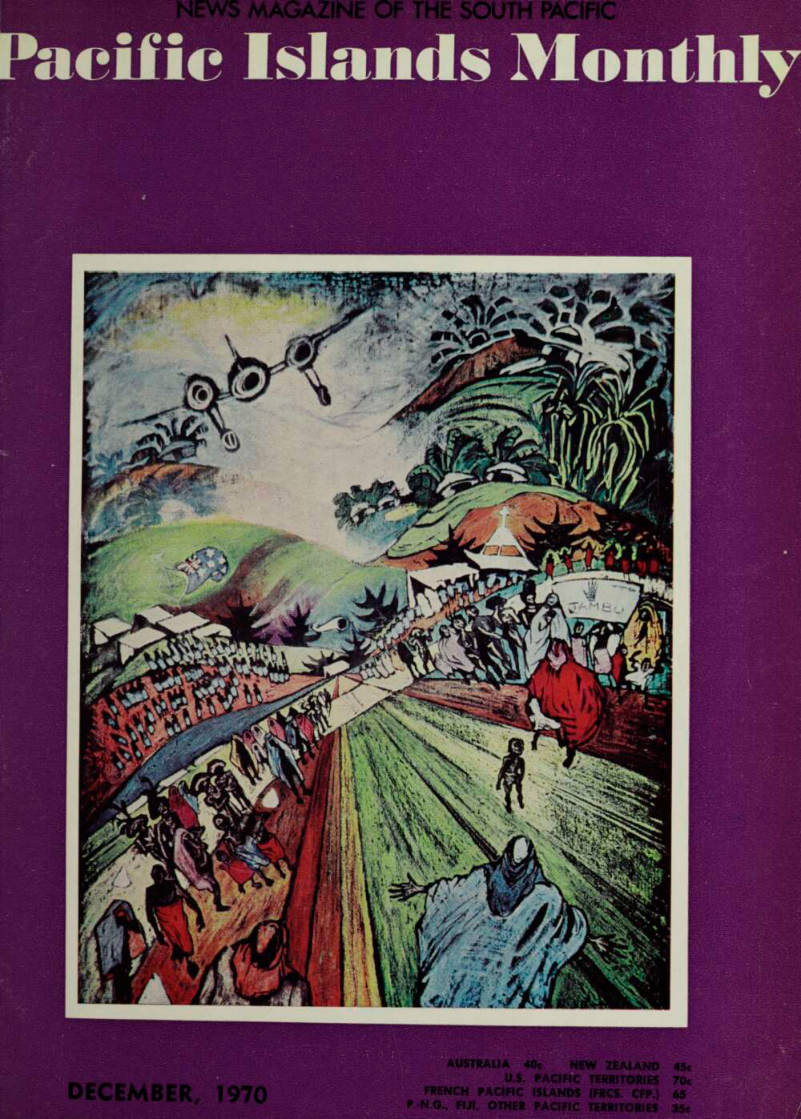 1
1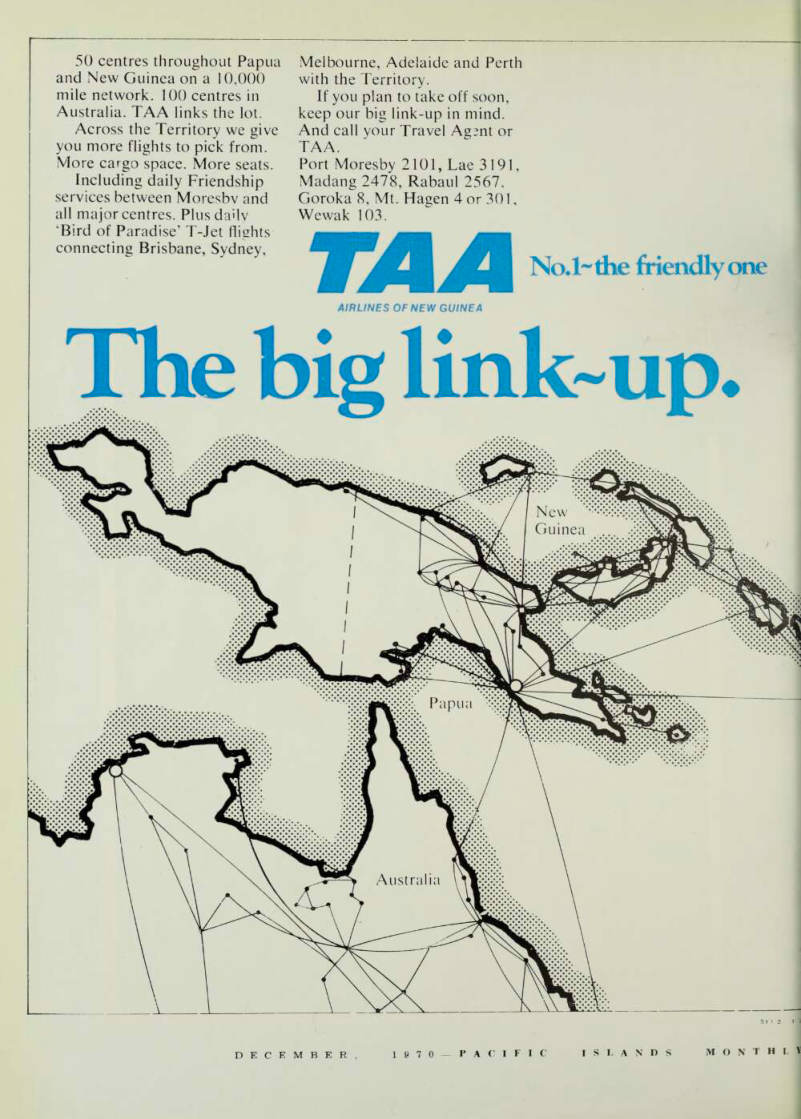 2
2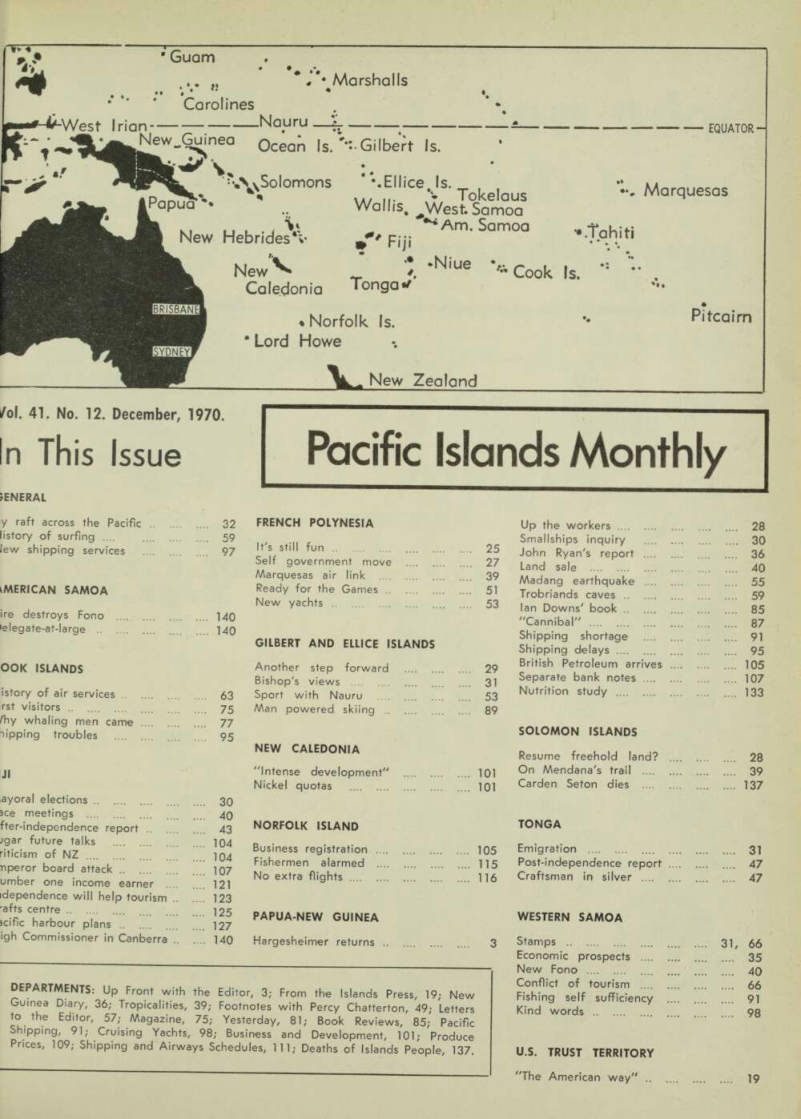 3
3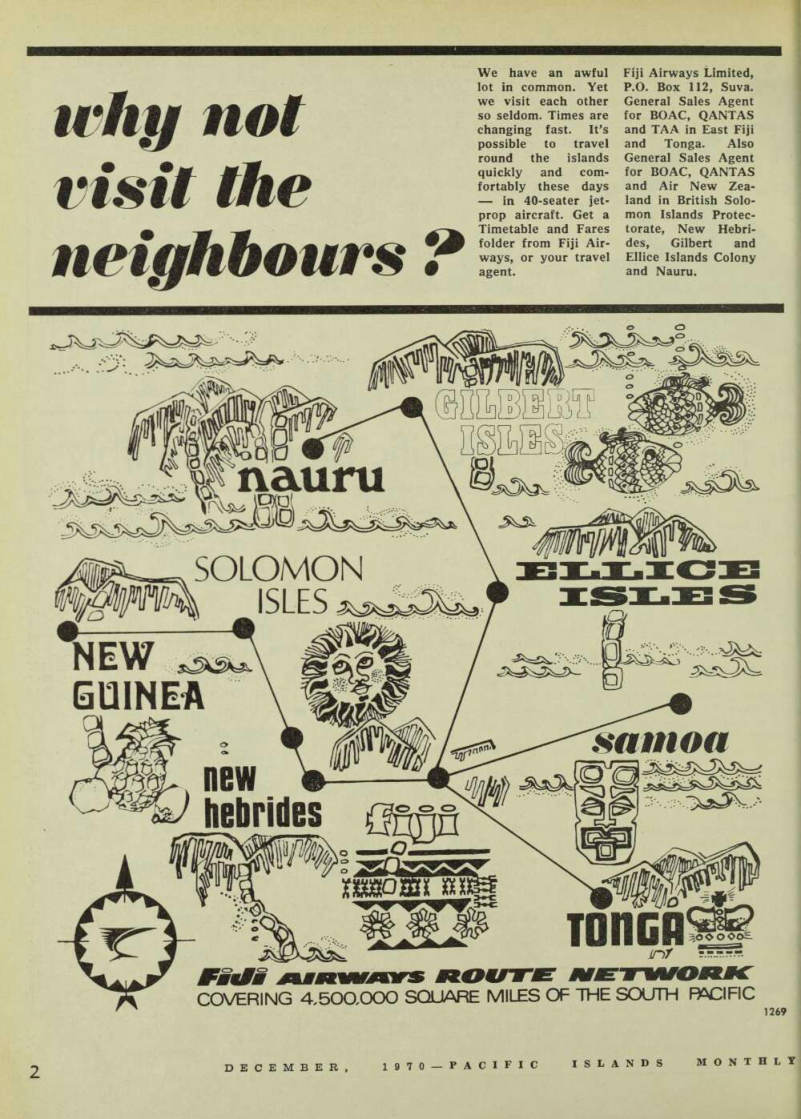 4
4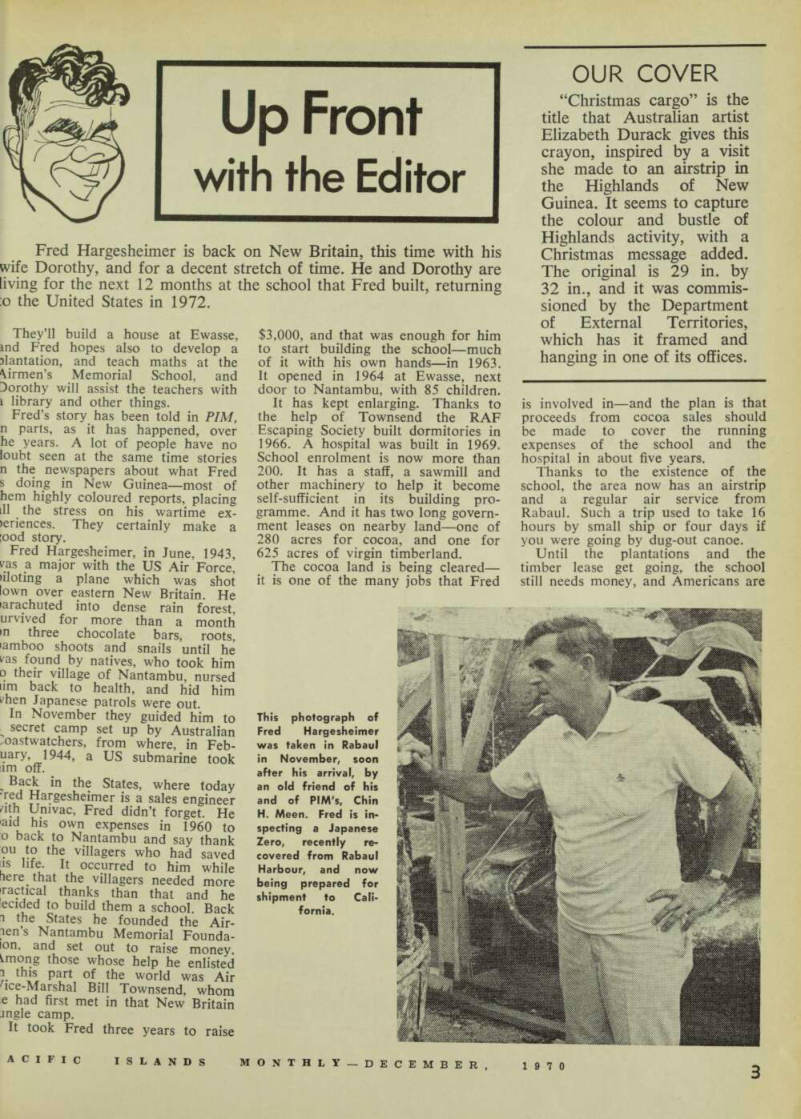 5
5 6
6 7
7 8
8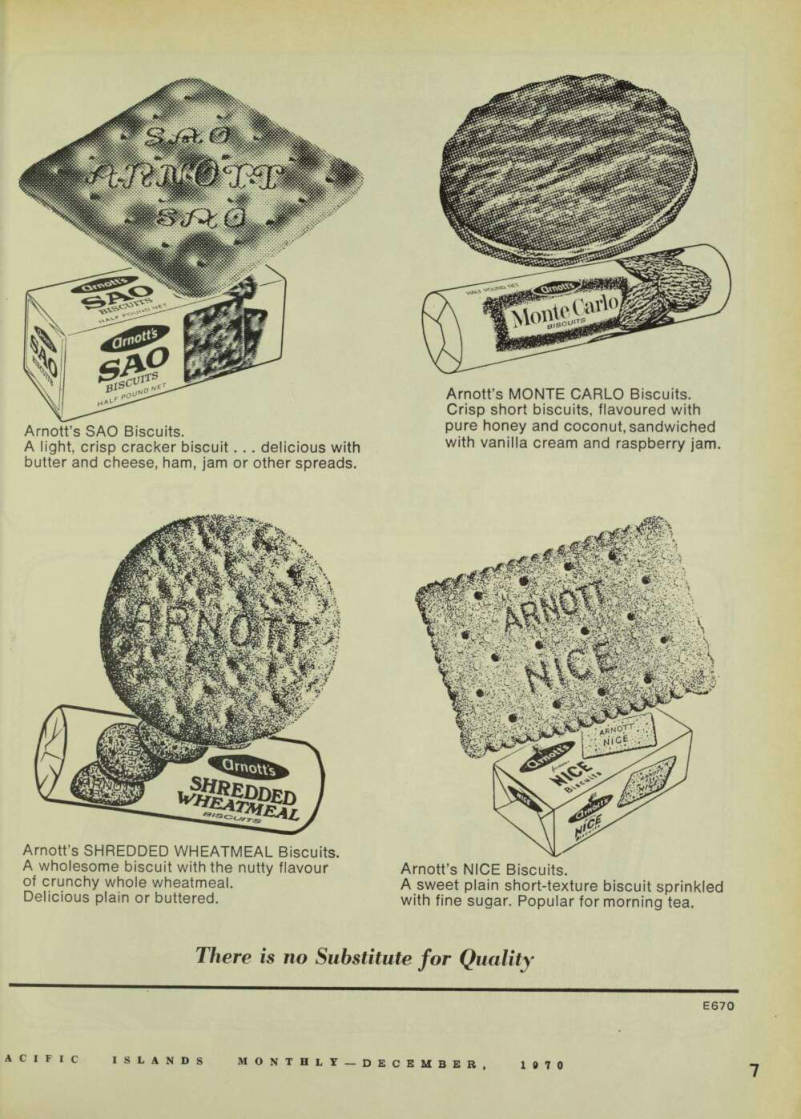 9
9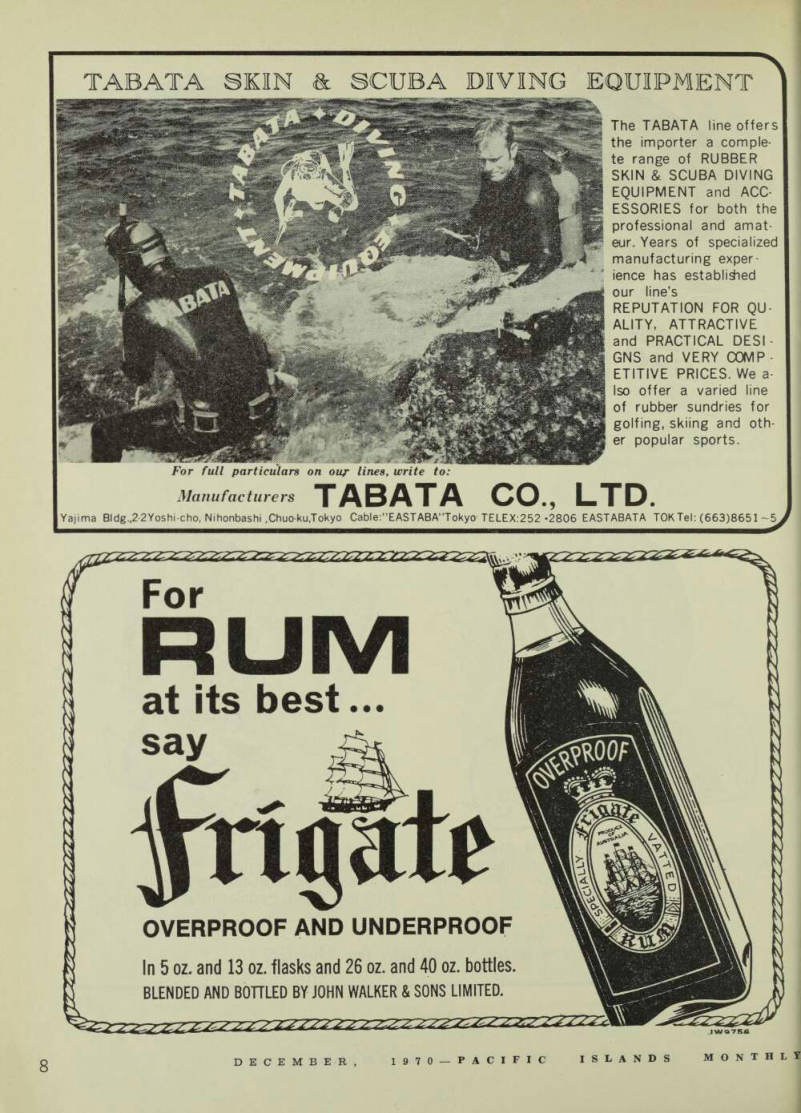 10
10 11
11 12
12 13
13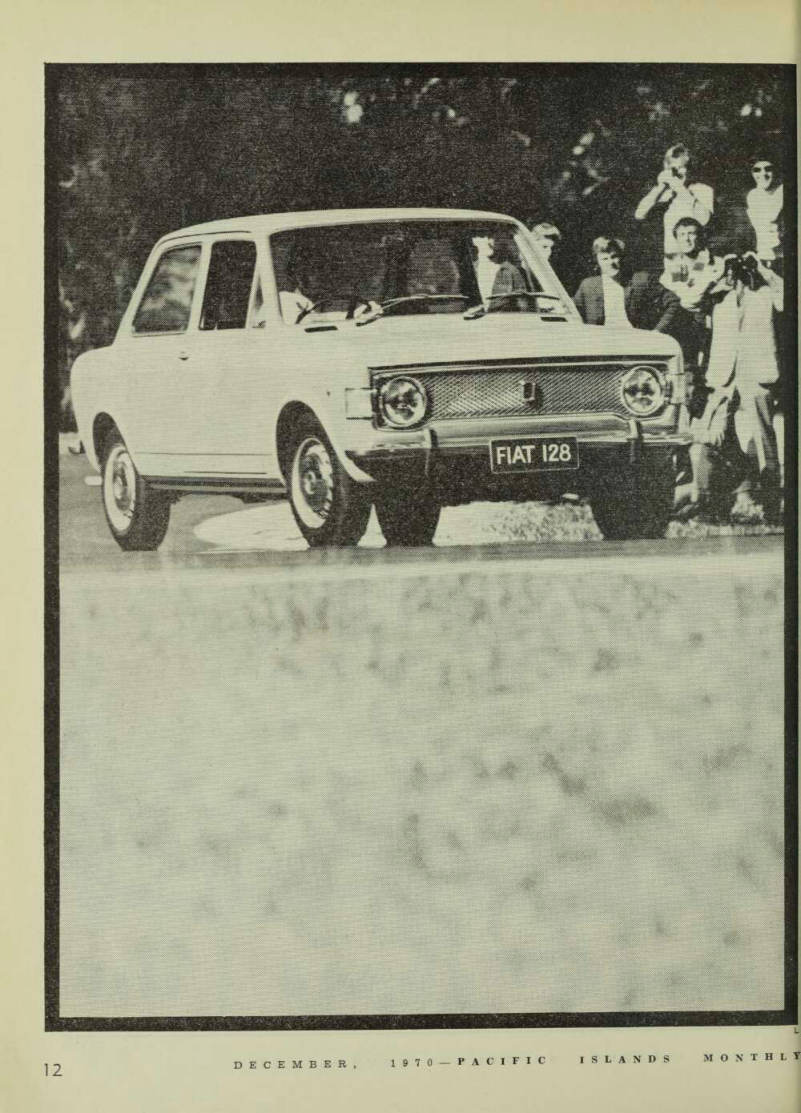 14
14 15
15 16
16 17
17 18
18 19
19 20
20 21
21 22
22 23
23 24
24 25
25 26
26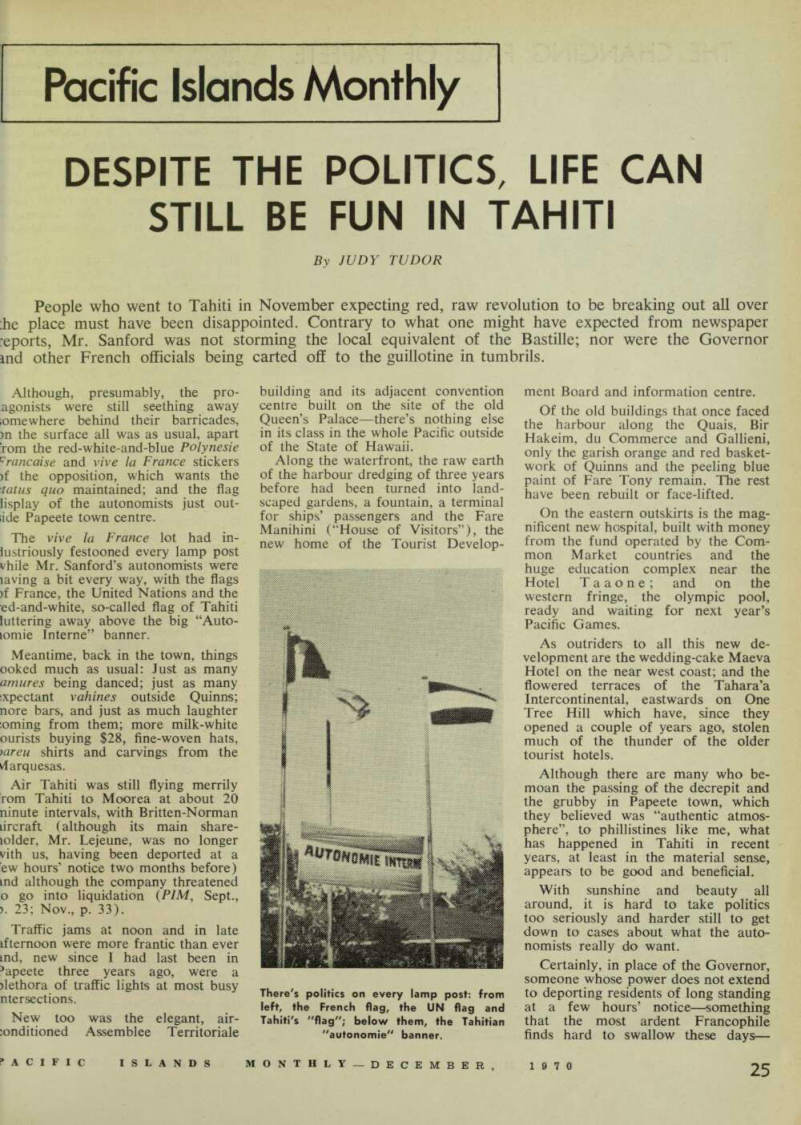 27
27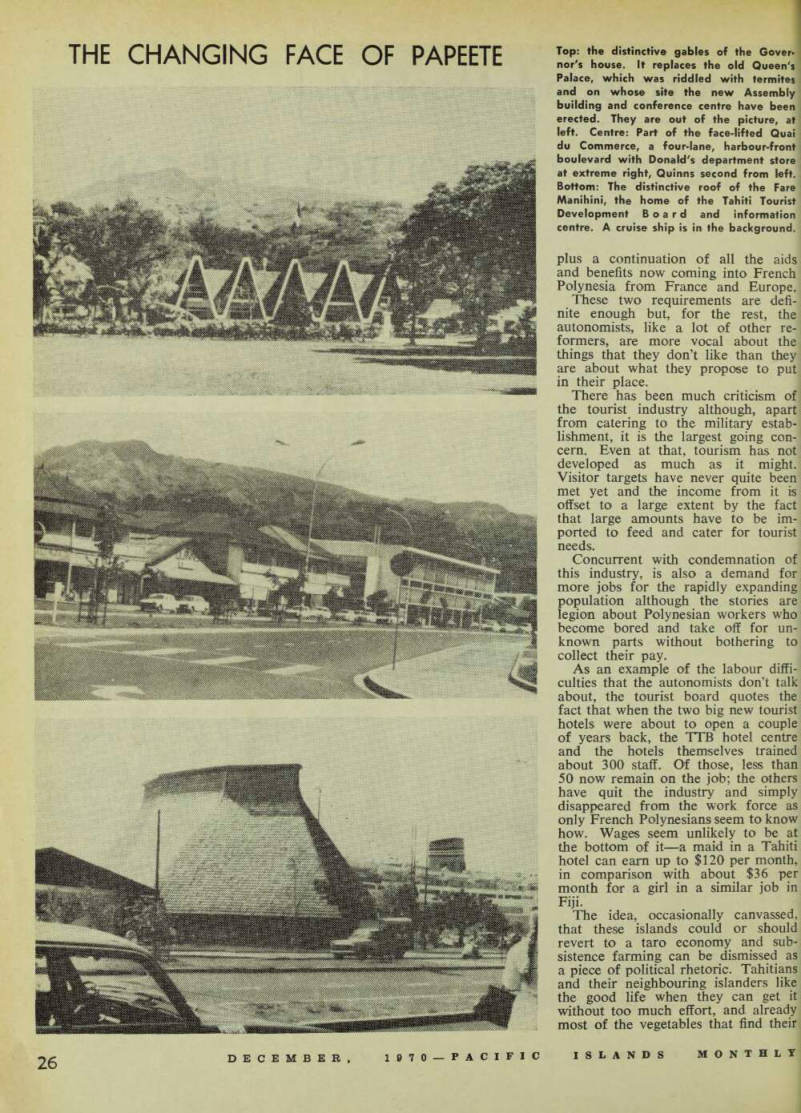 28
28 29
29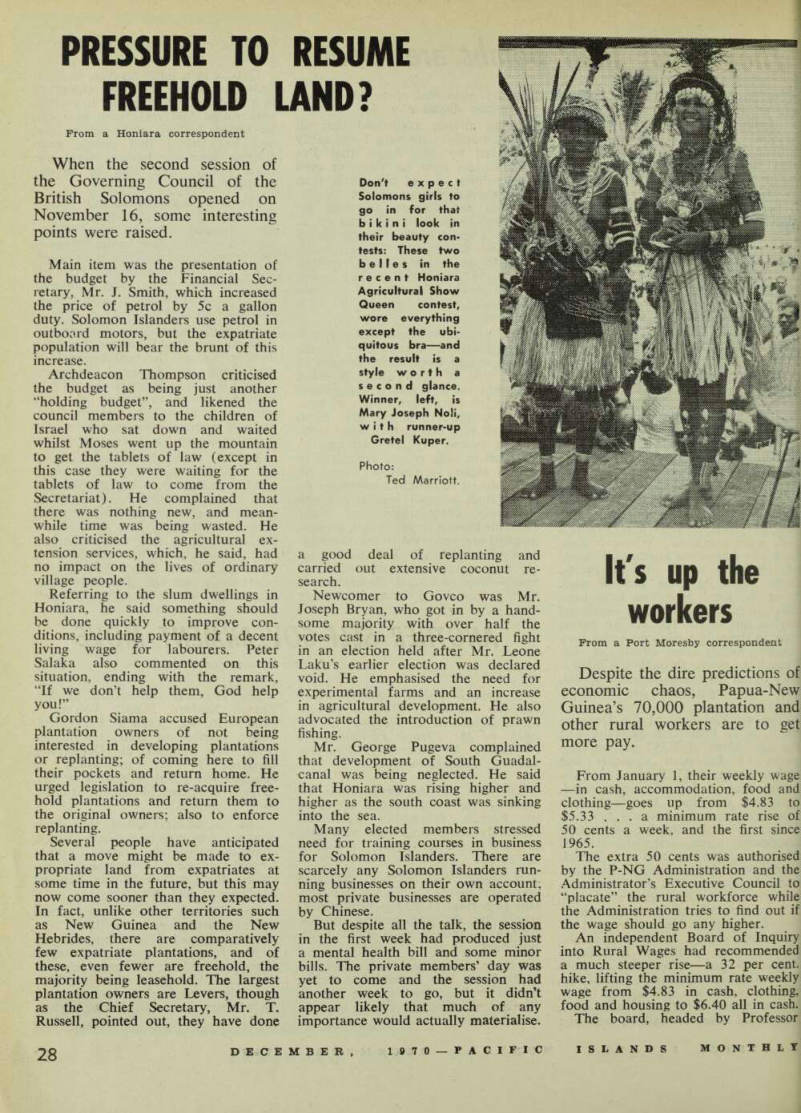 30
30 31
31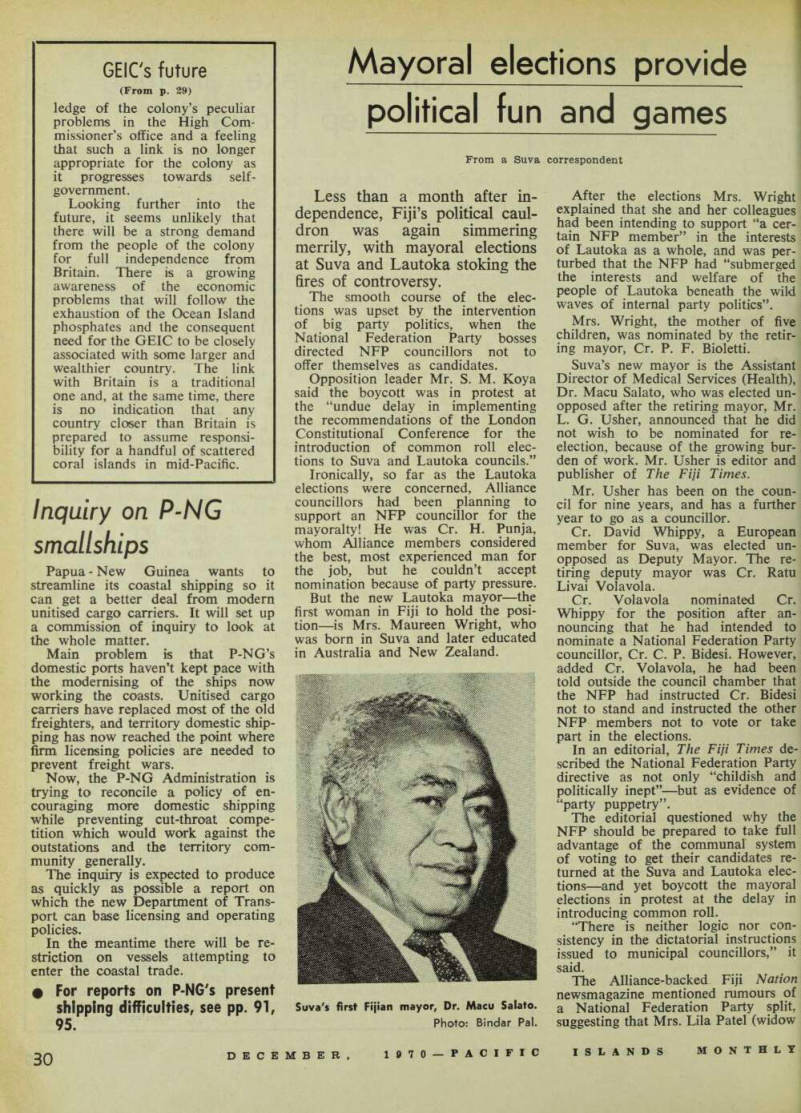 32
32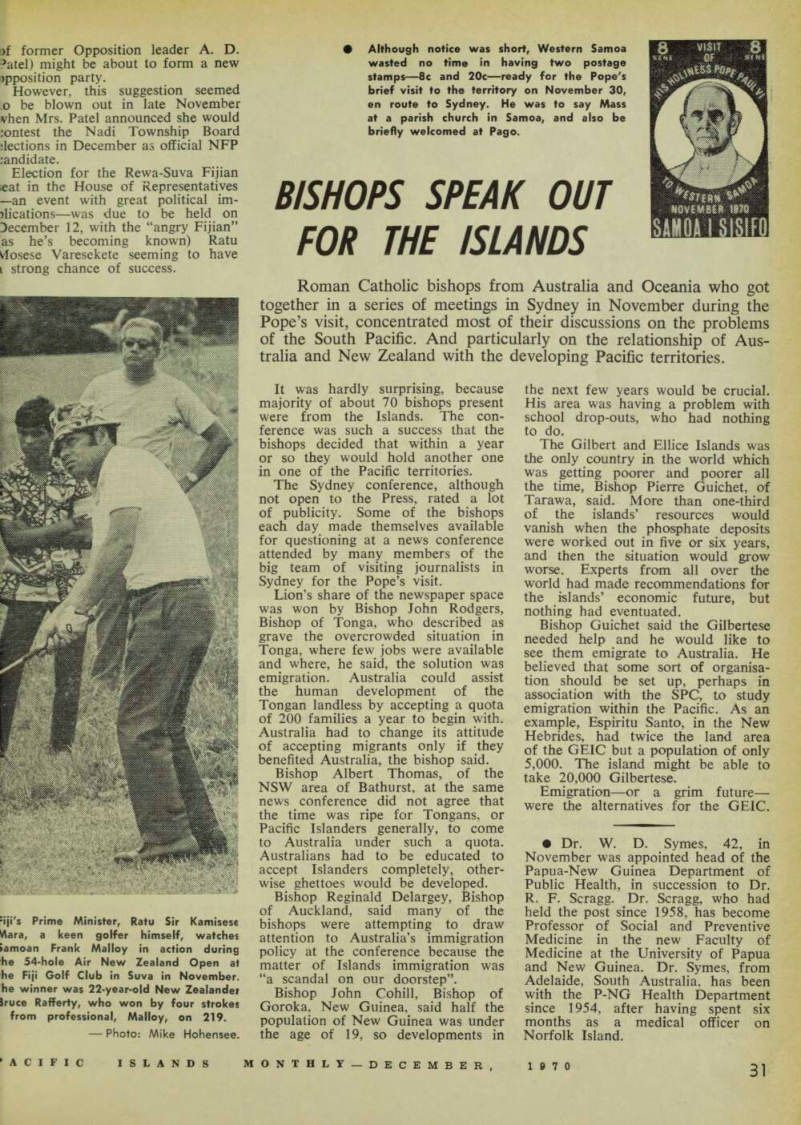 33
33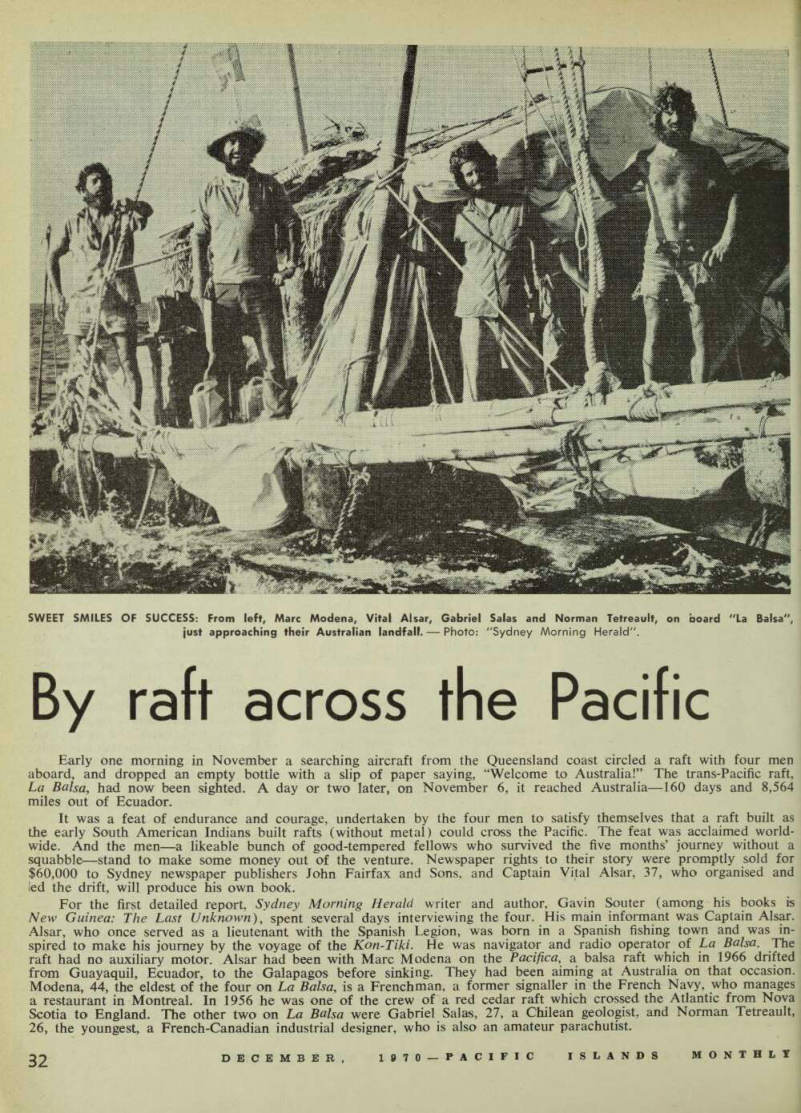 34
34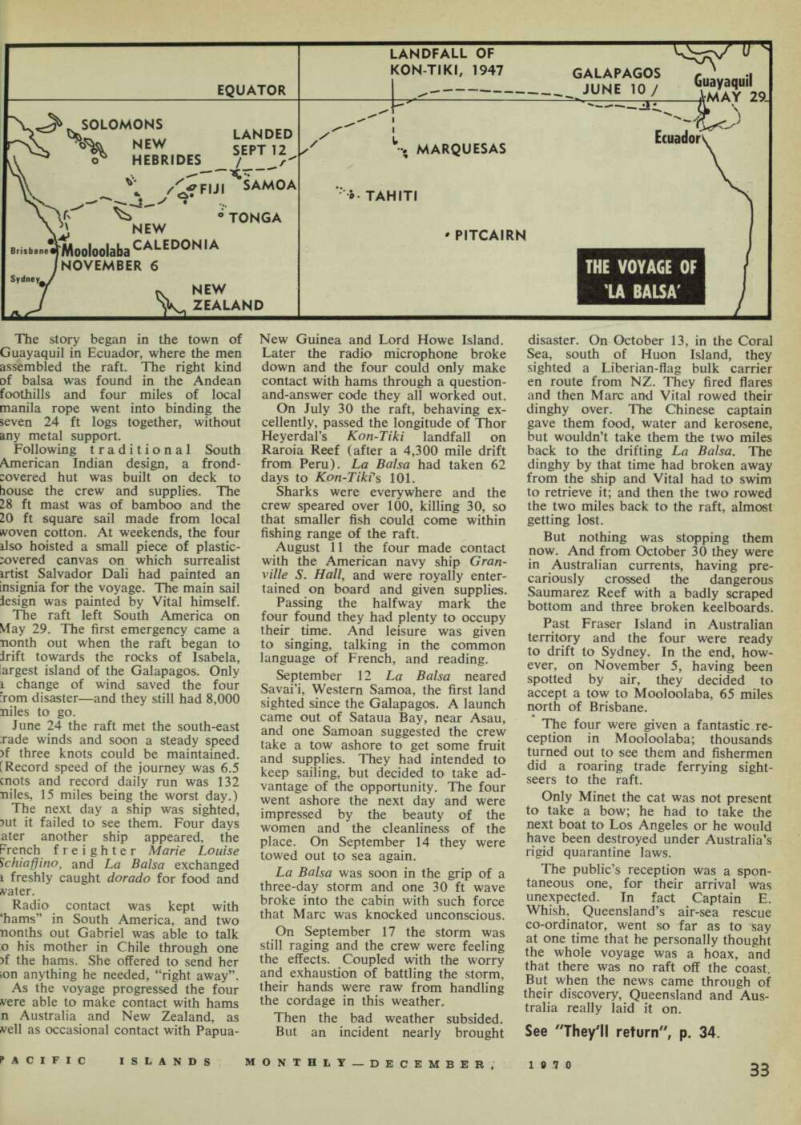 35
35 36
36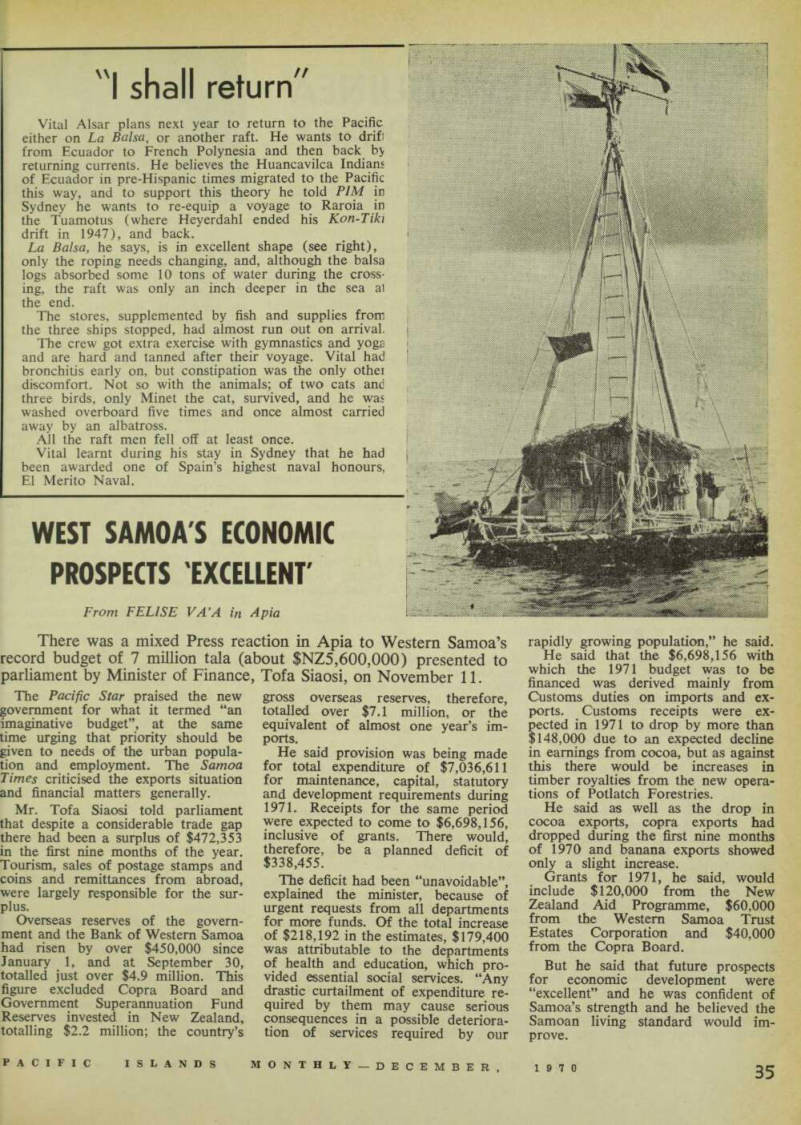 37
37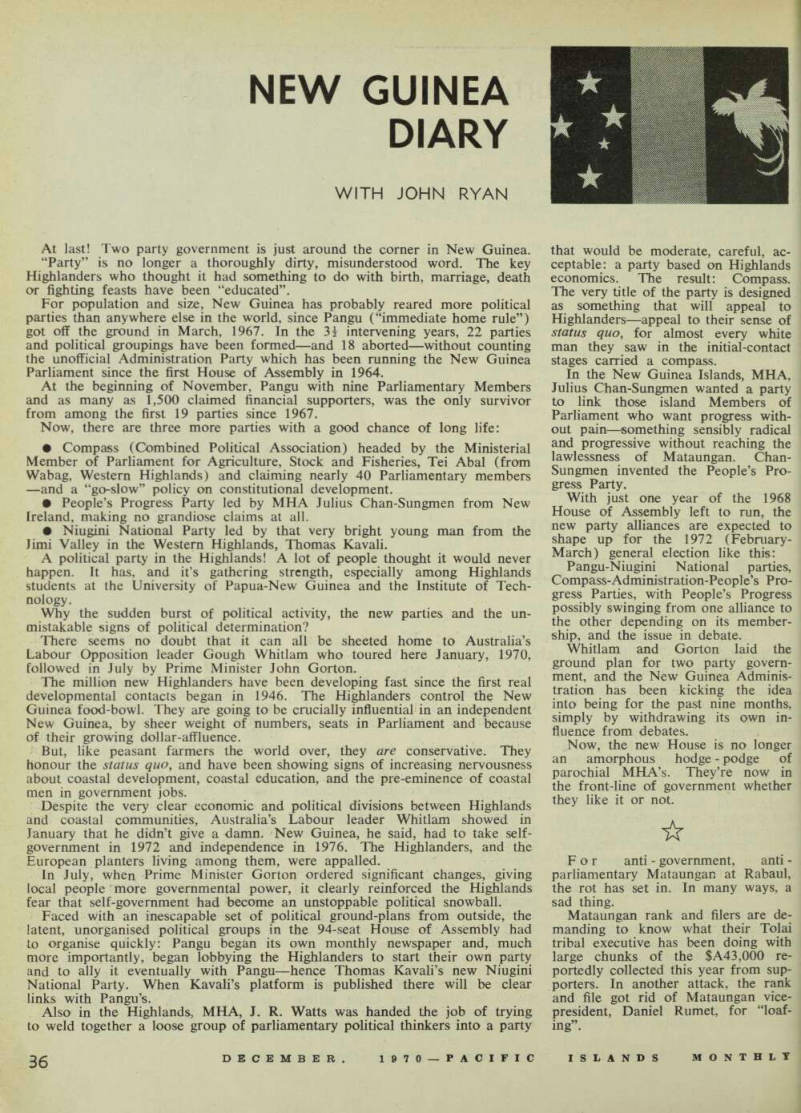 38
38 39
39 40
40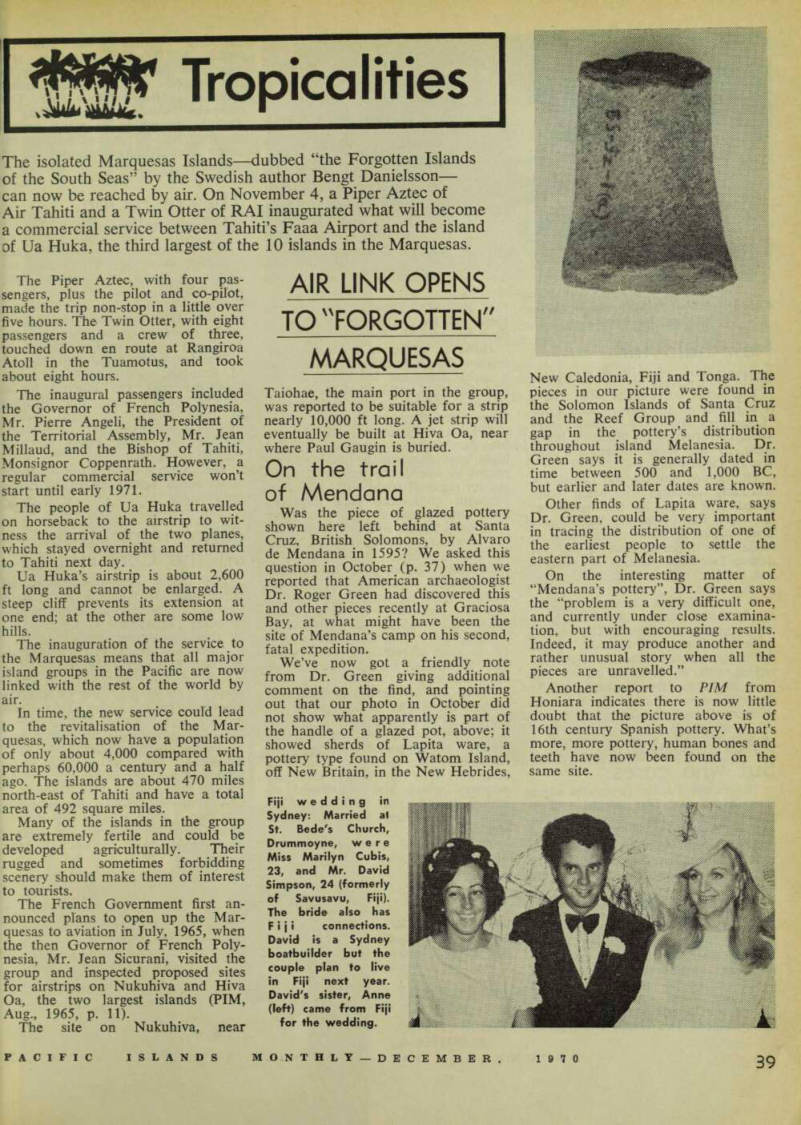 41
41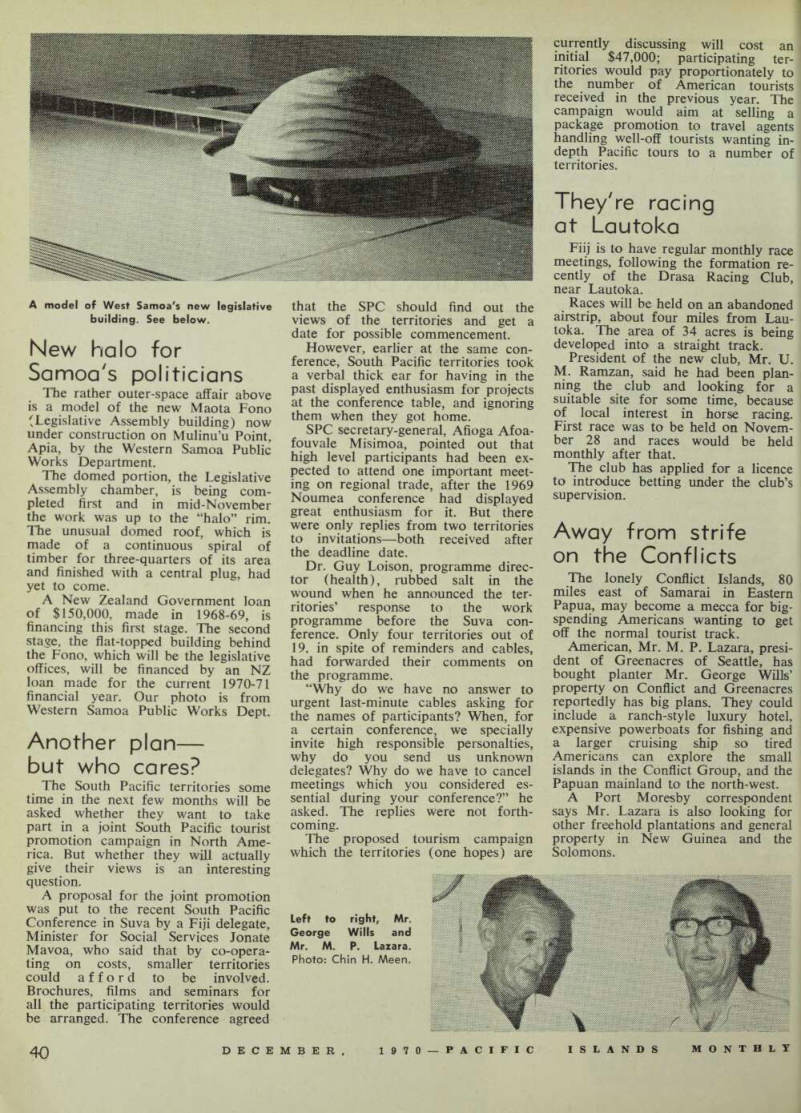 42
42 43
43 44
44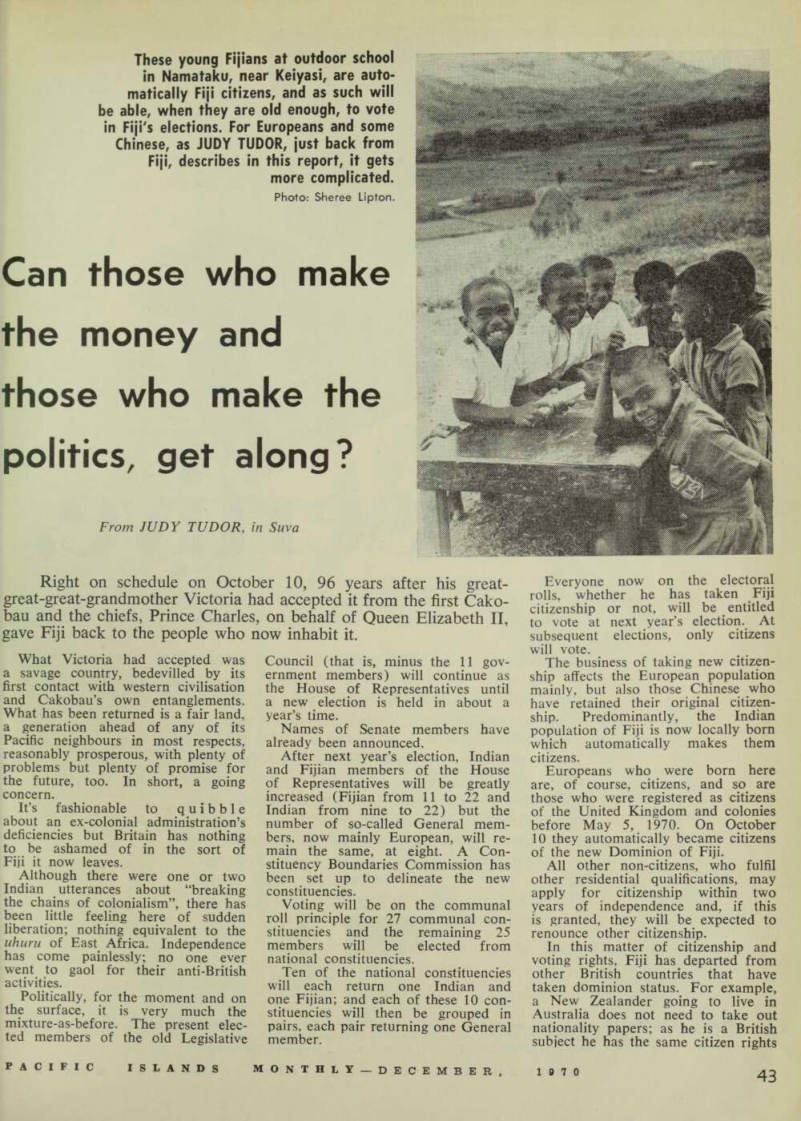 45
45 46
46 47
47 48
48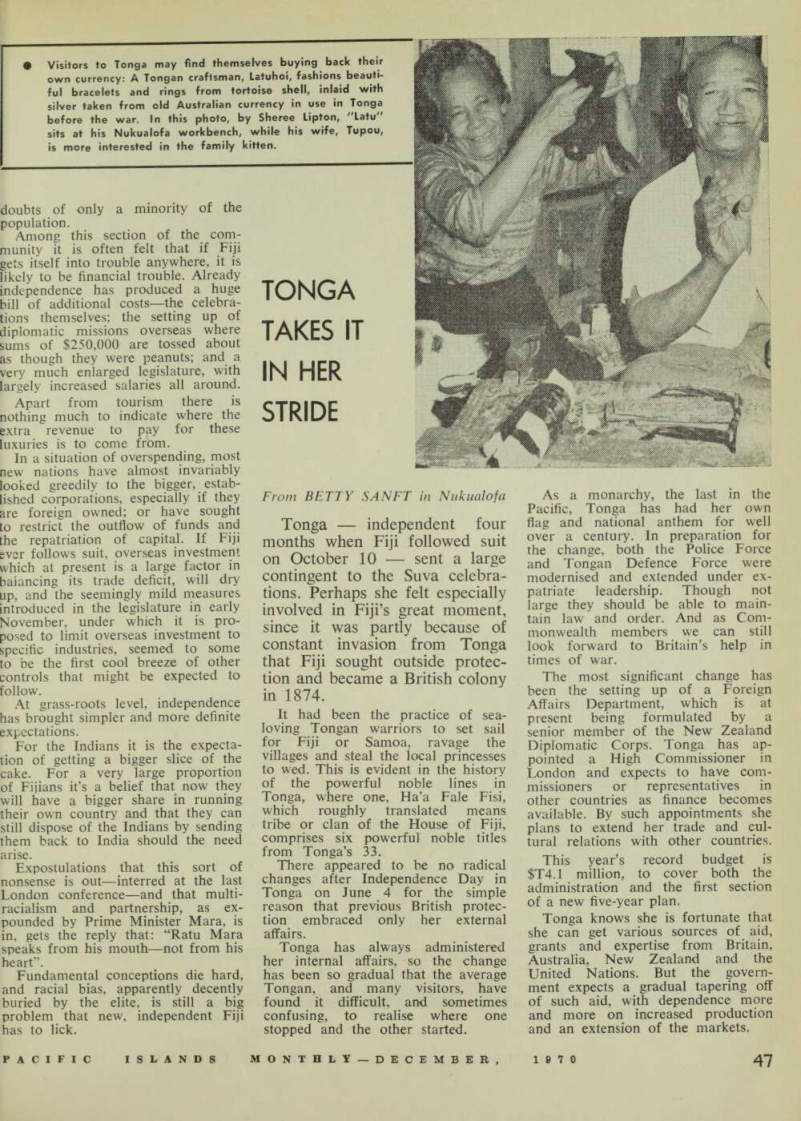 49
49 50
50 51
51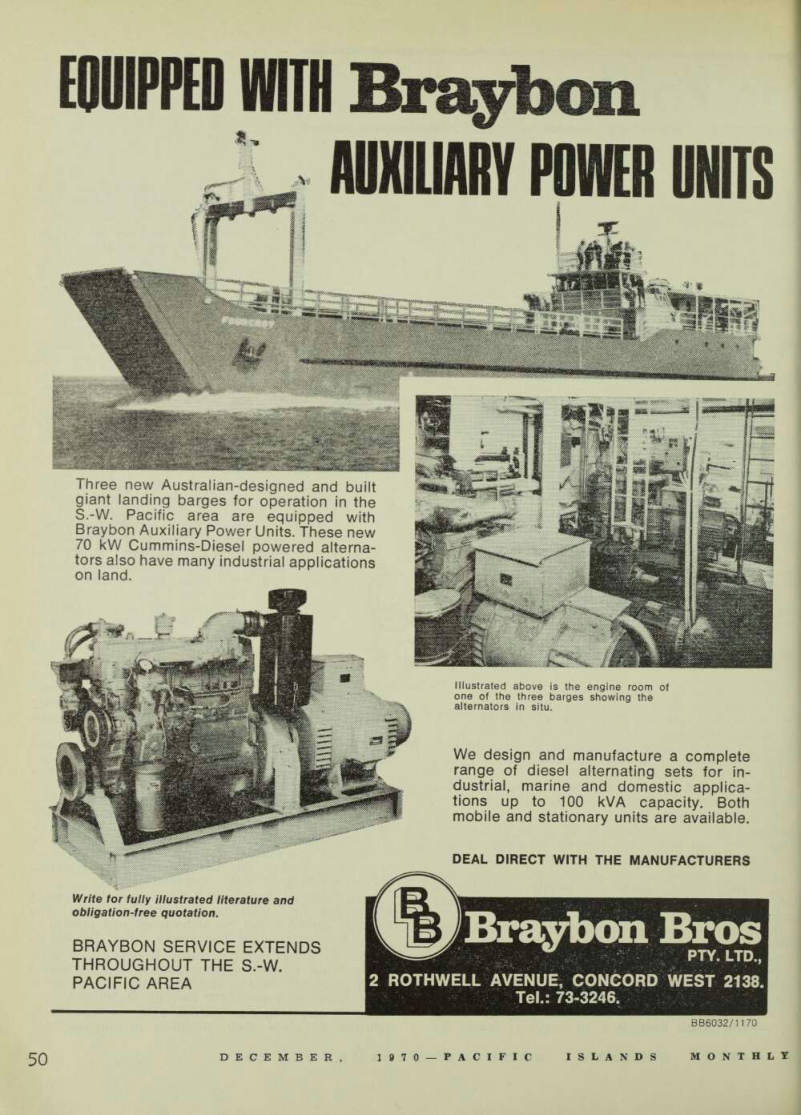 52
52 53
53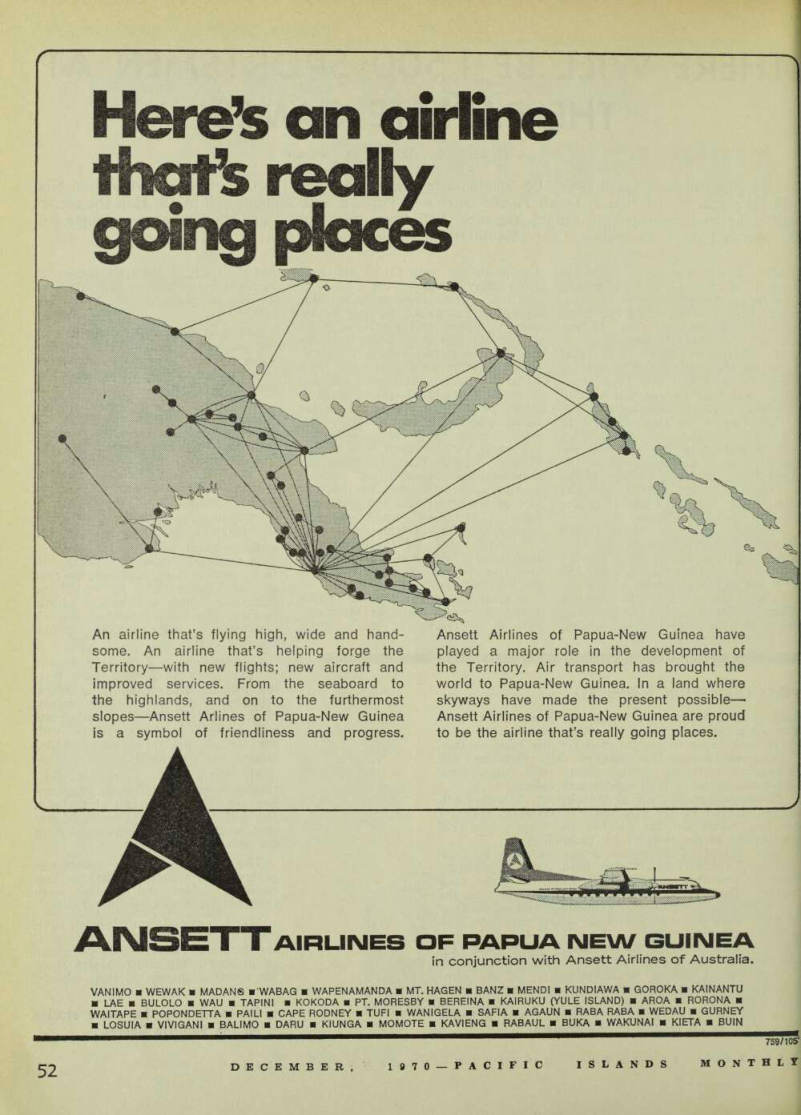 54
54 55
55 56
56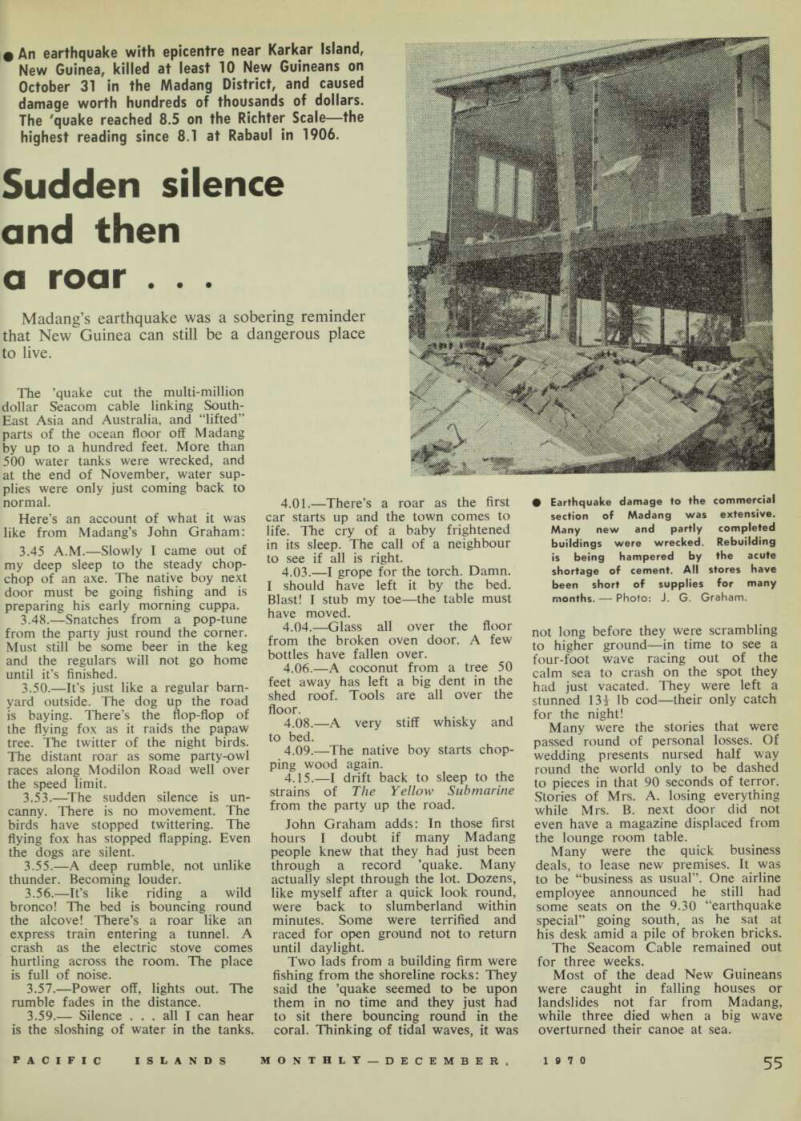 57
57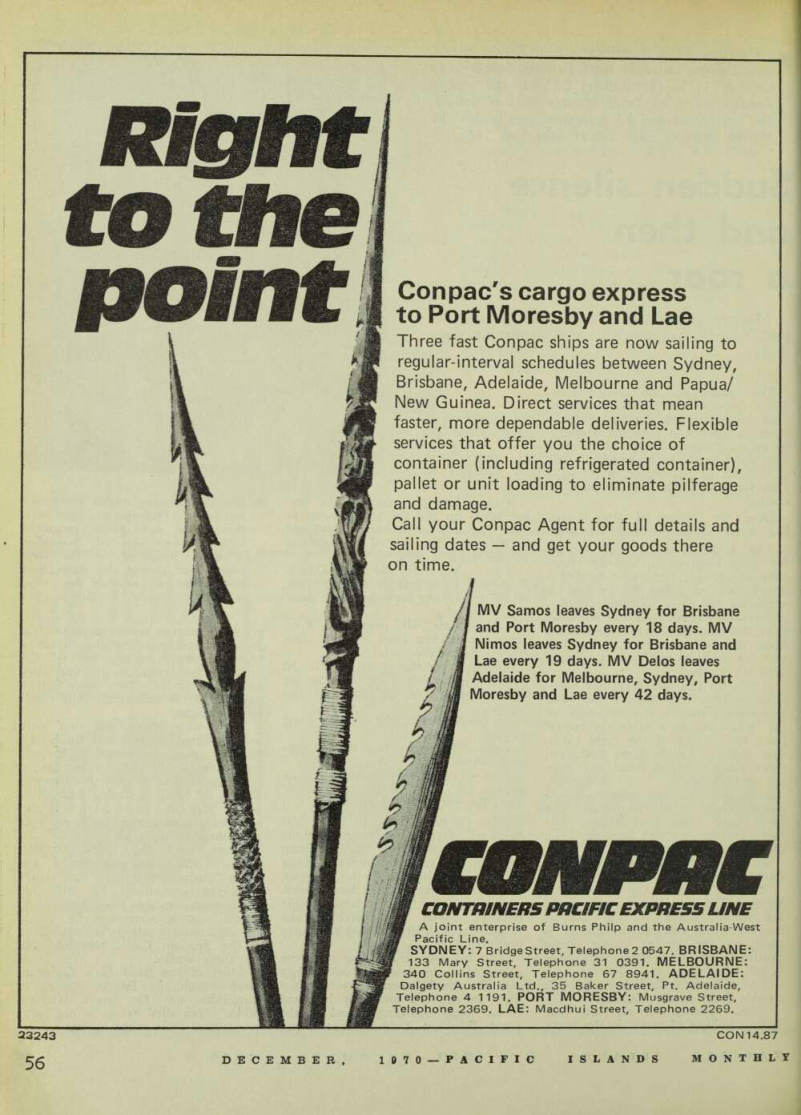 58
58 59
59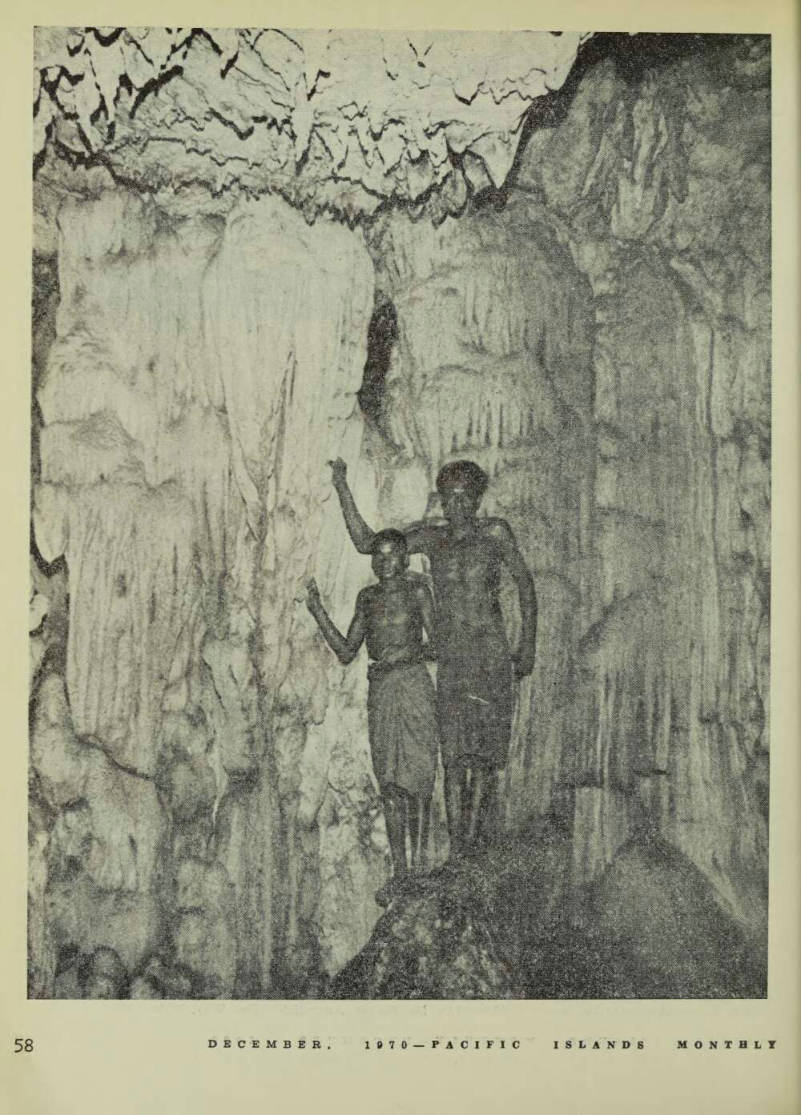 60
60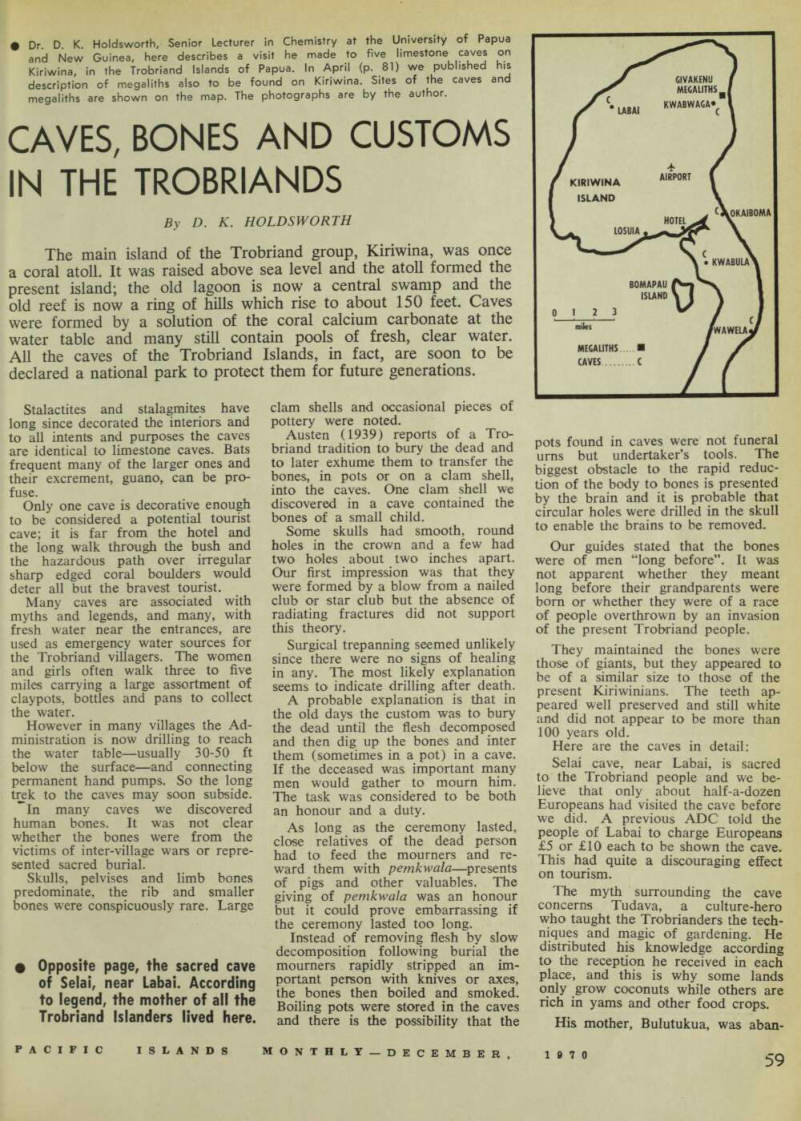 61
61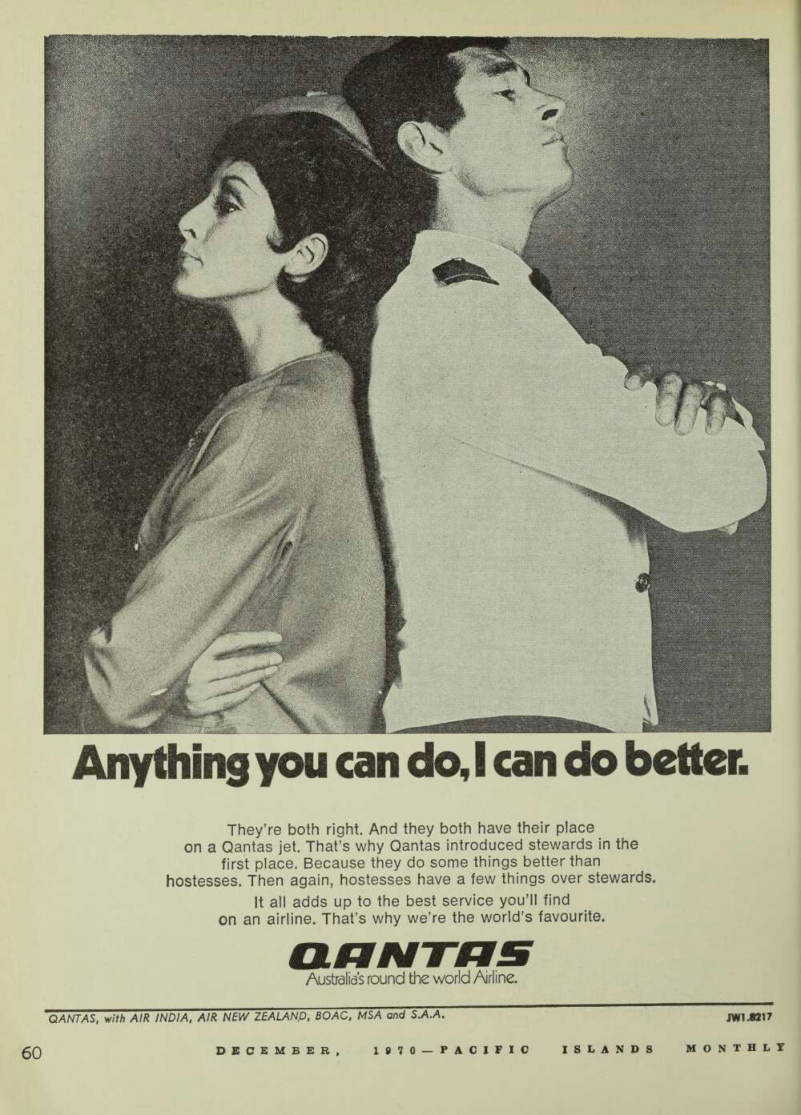 62
62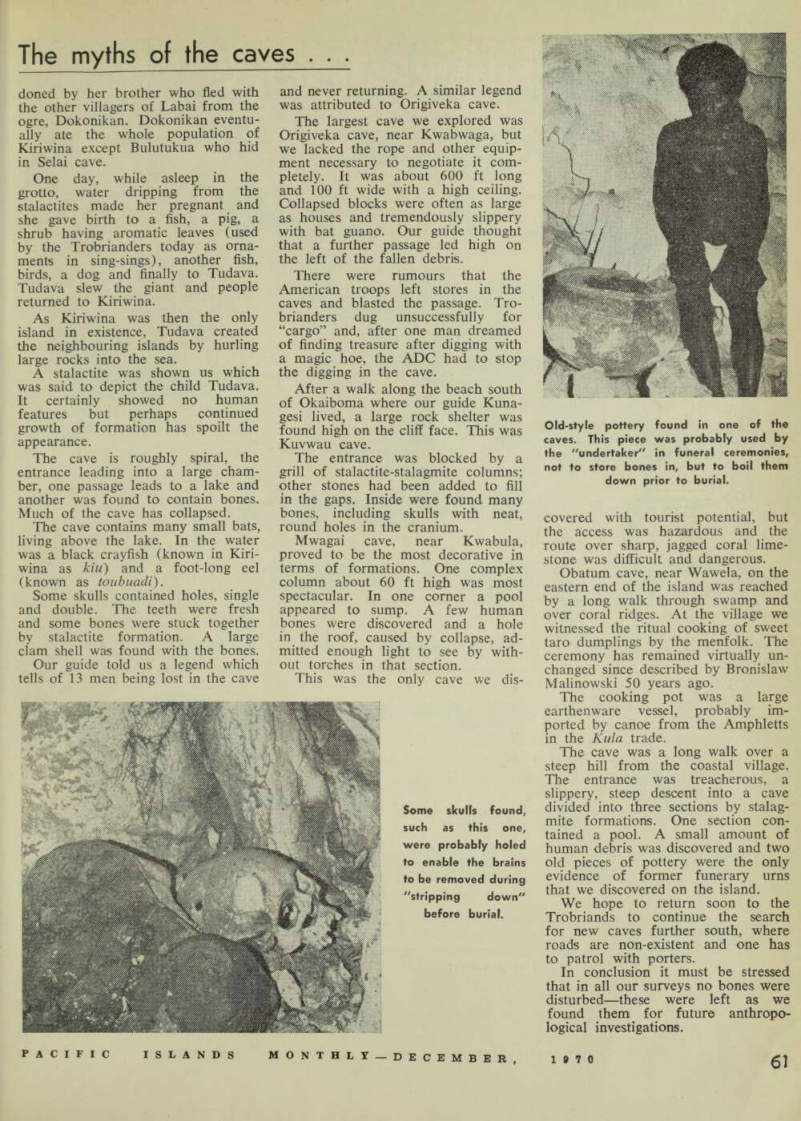 63
63 64
64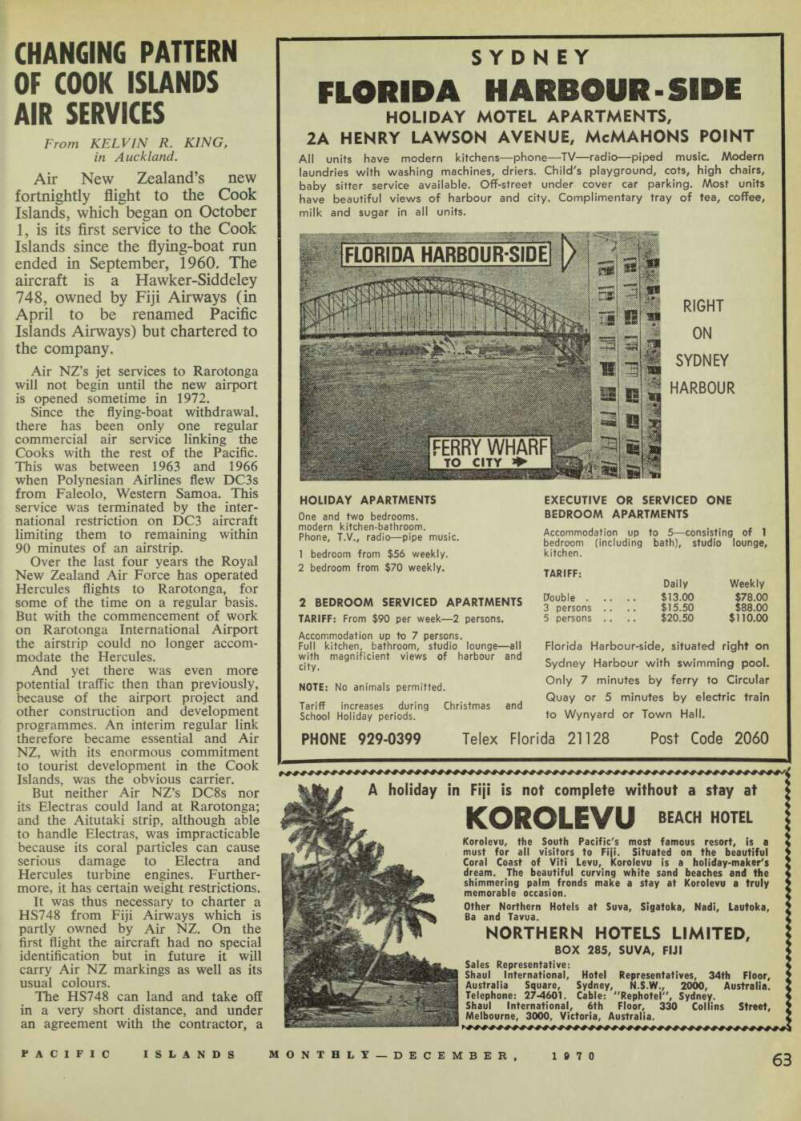 65
65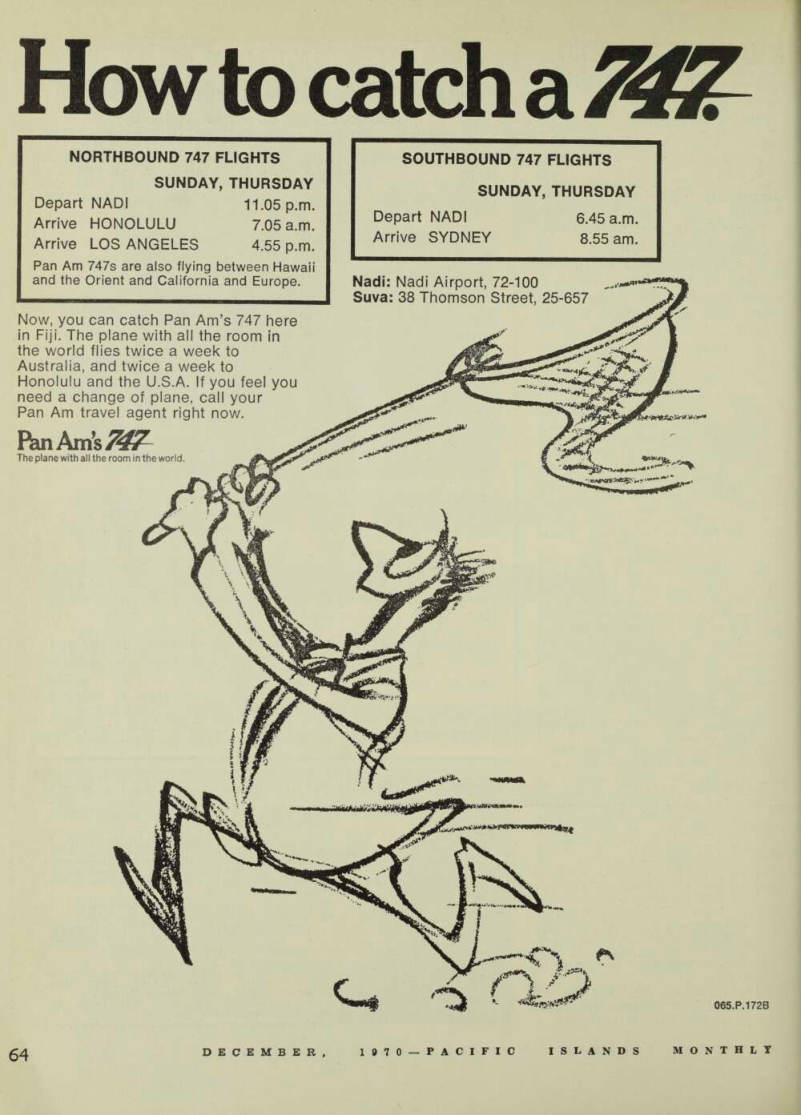 66
66 67
67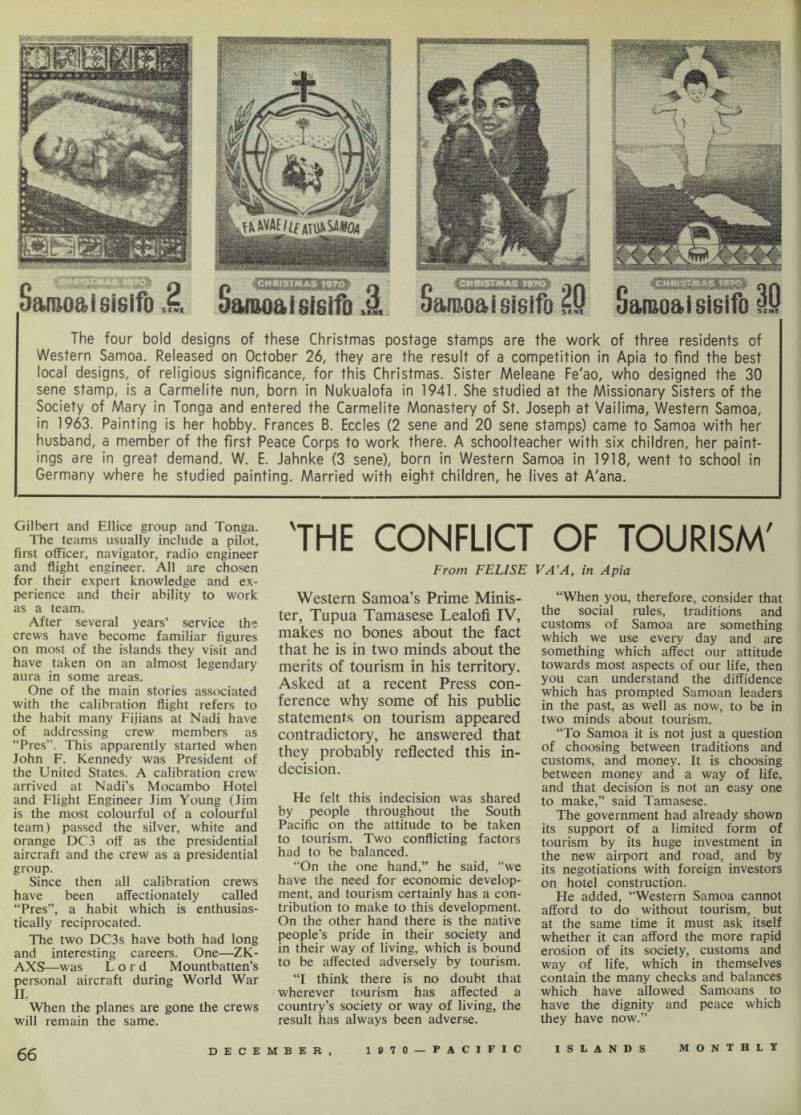 68
68 69
69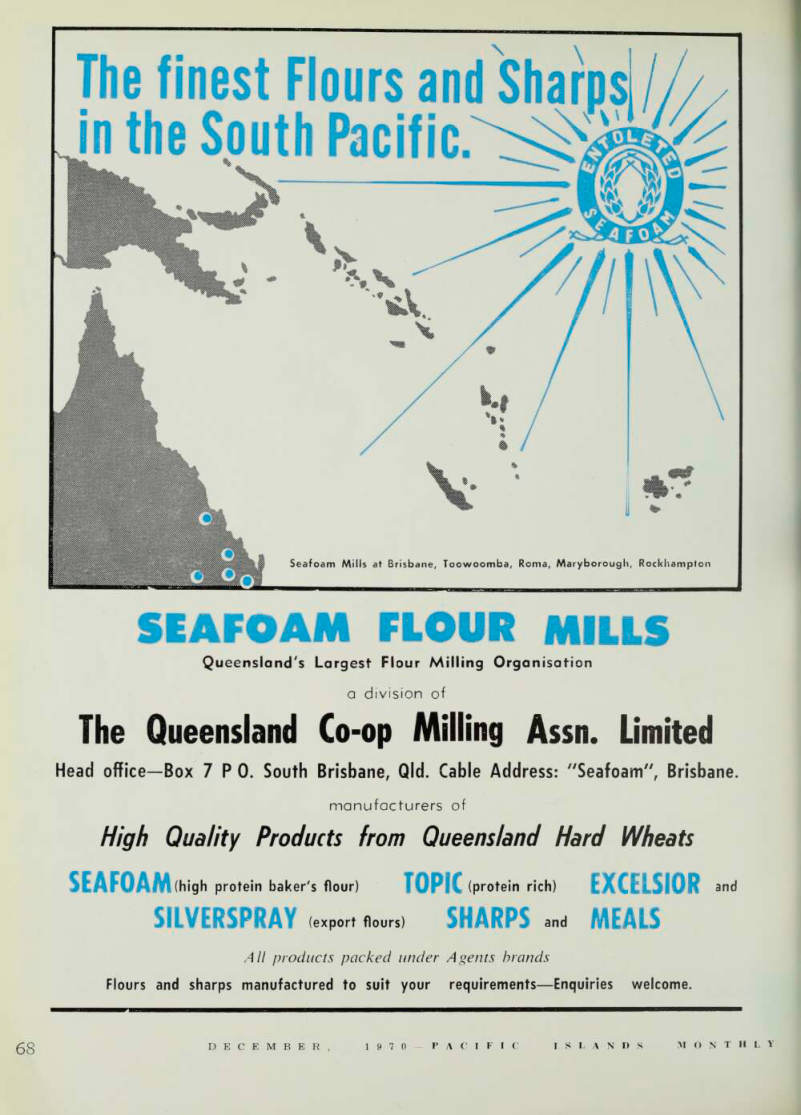 70
70 71
71 72
72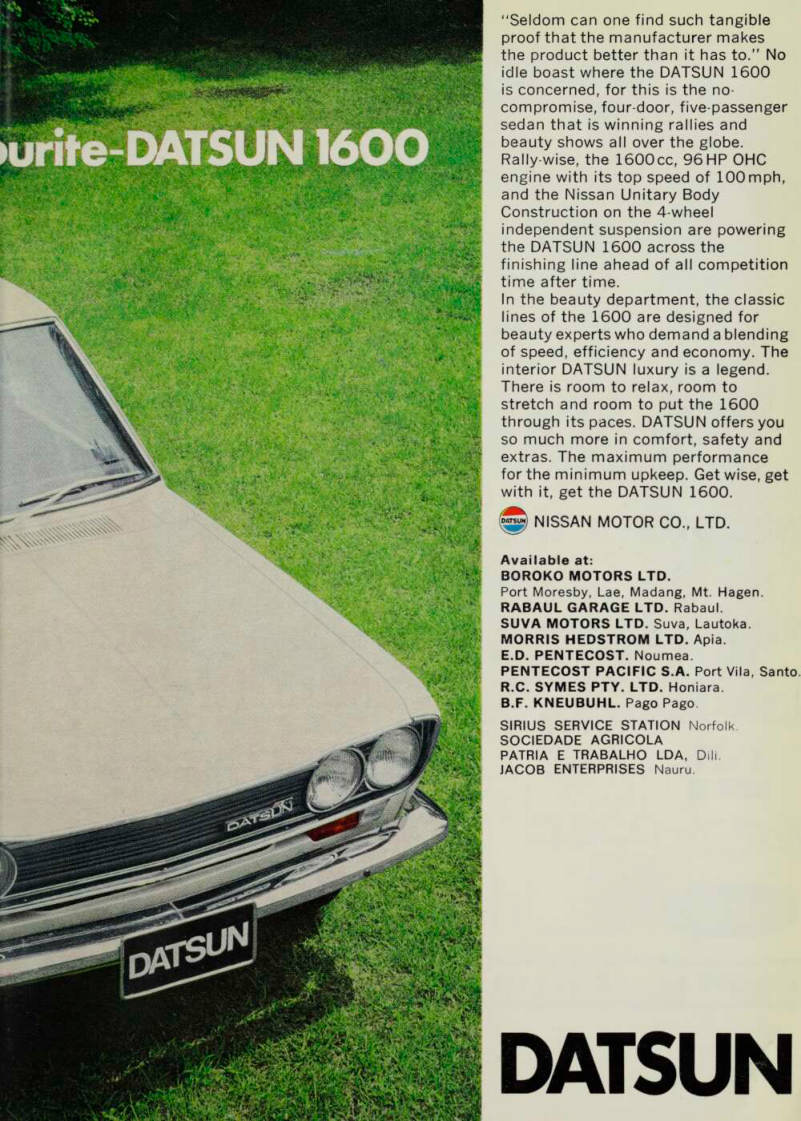 73
73 74
74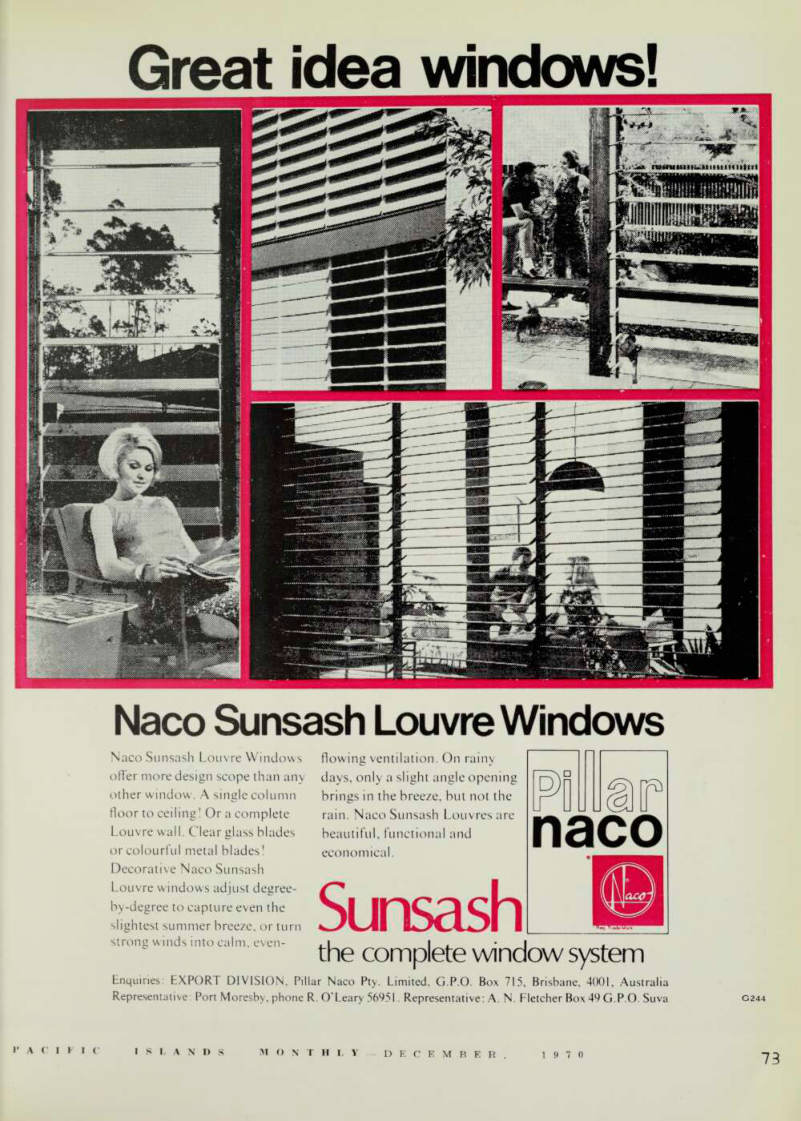 75
75 76
76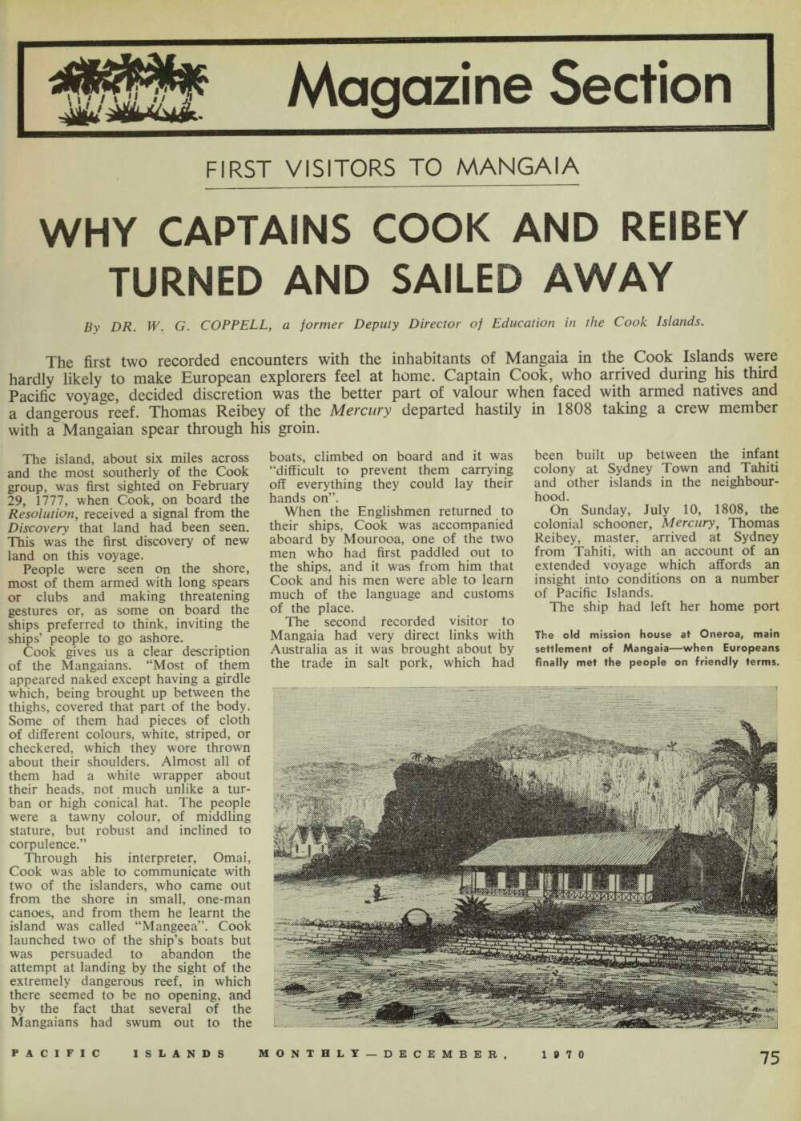 77
77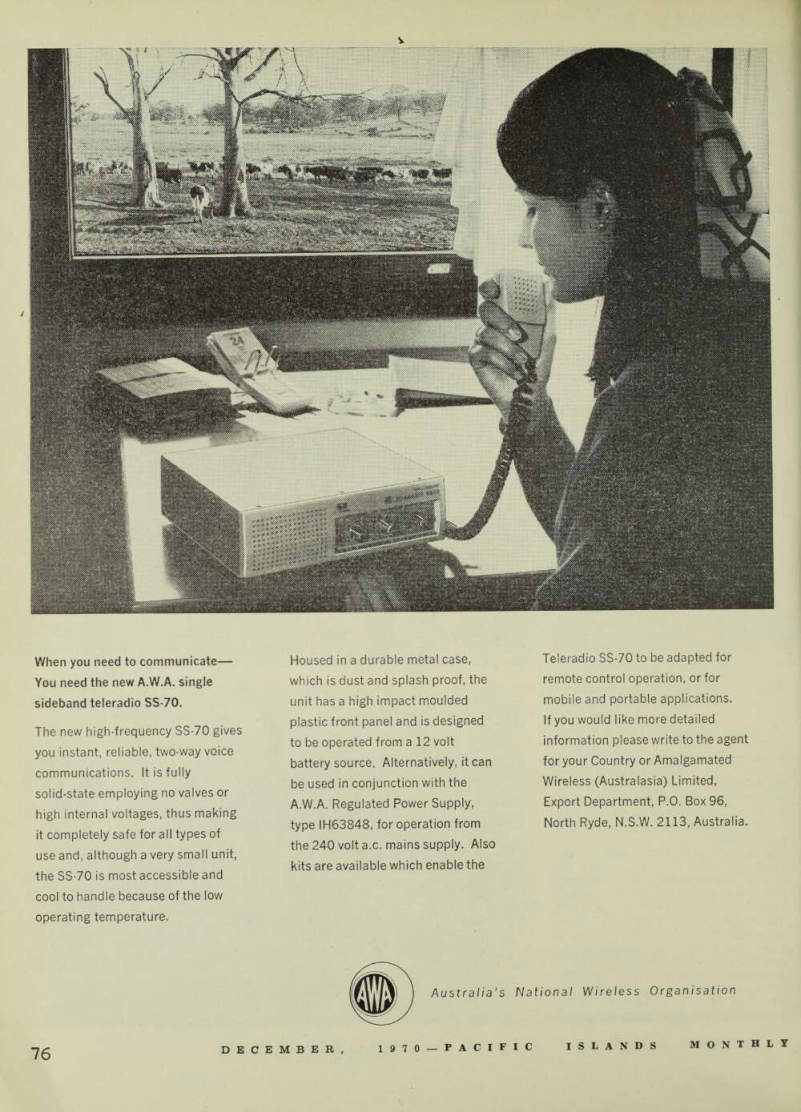 78
78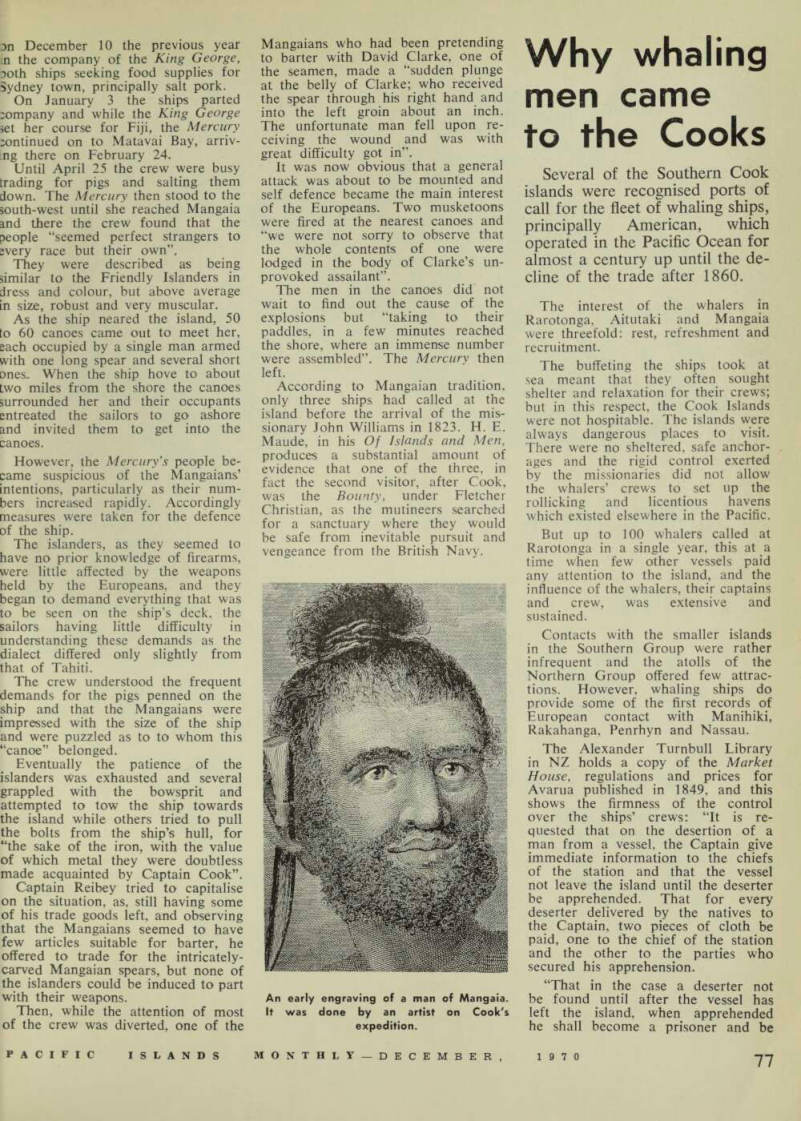 79
79 80
80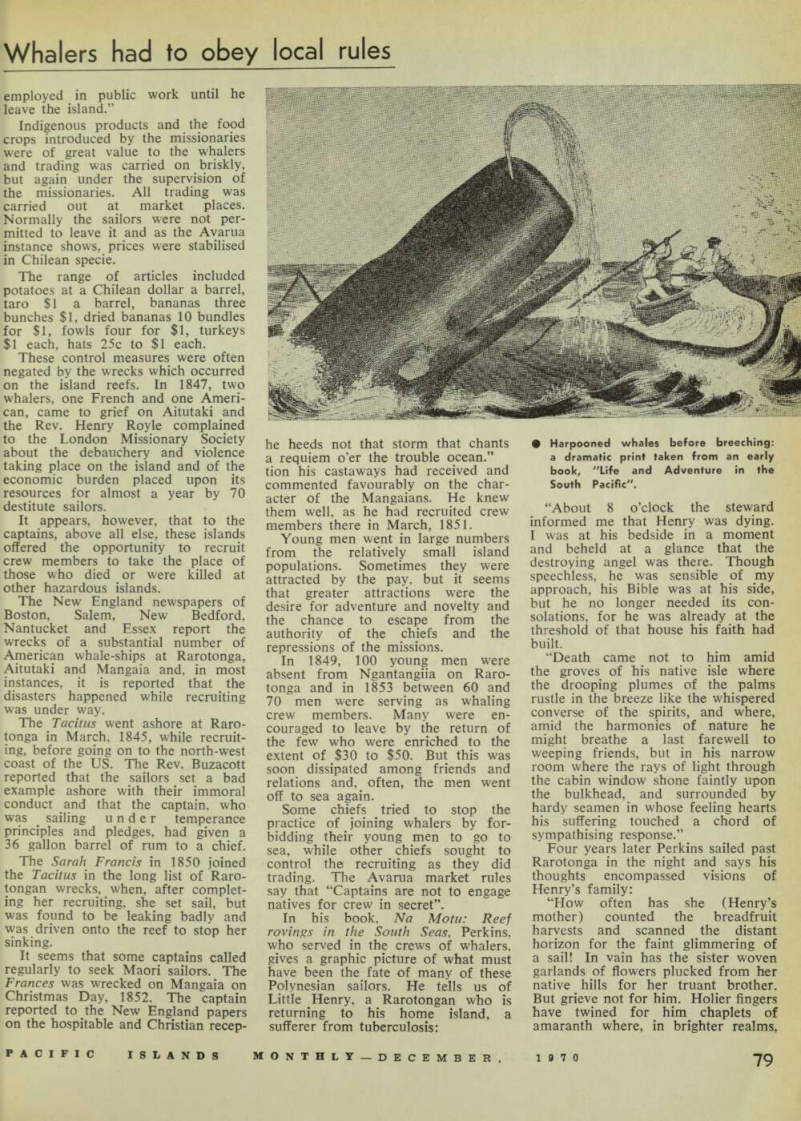 81
81 82
82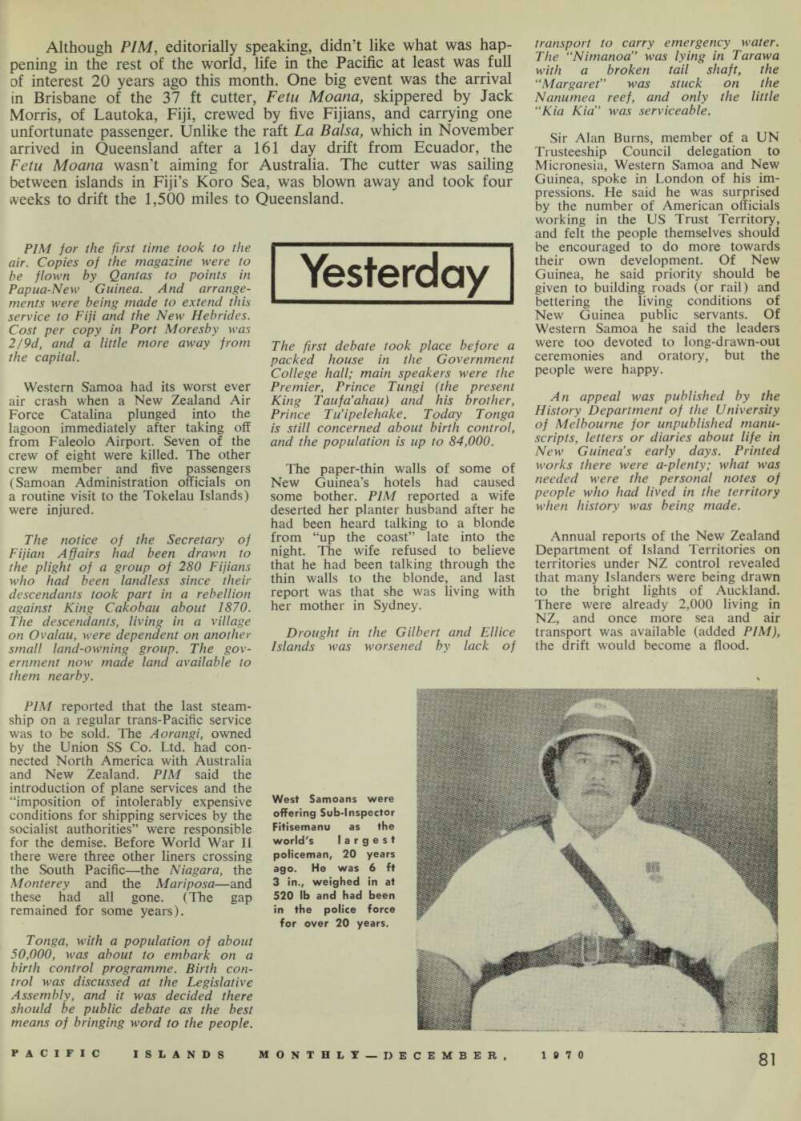 83
83 84
84 85
85 86
86 87
87 88
88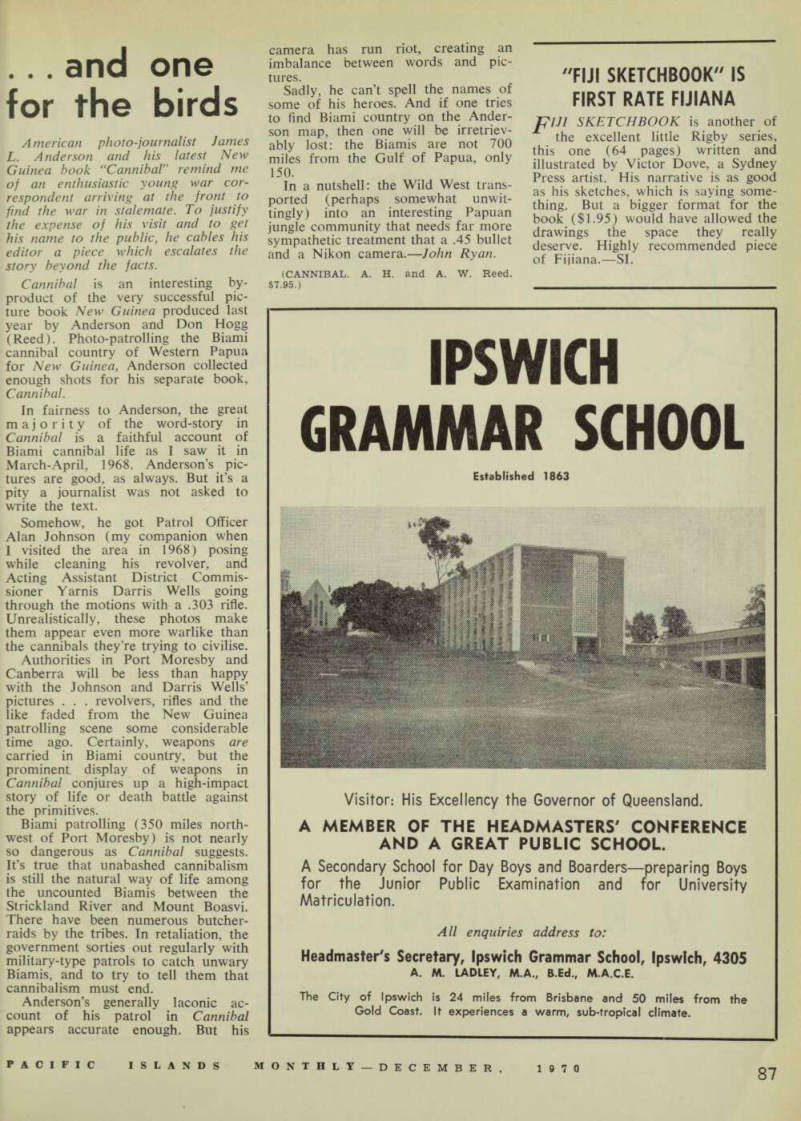 89
89 90
90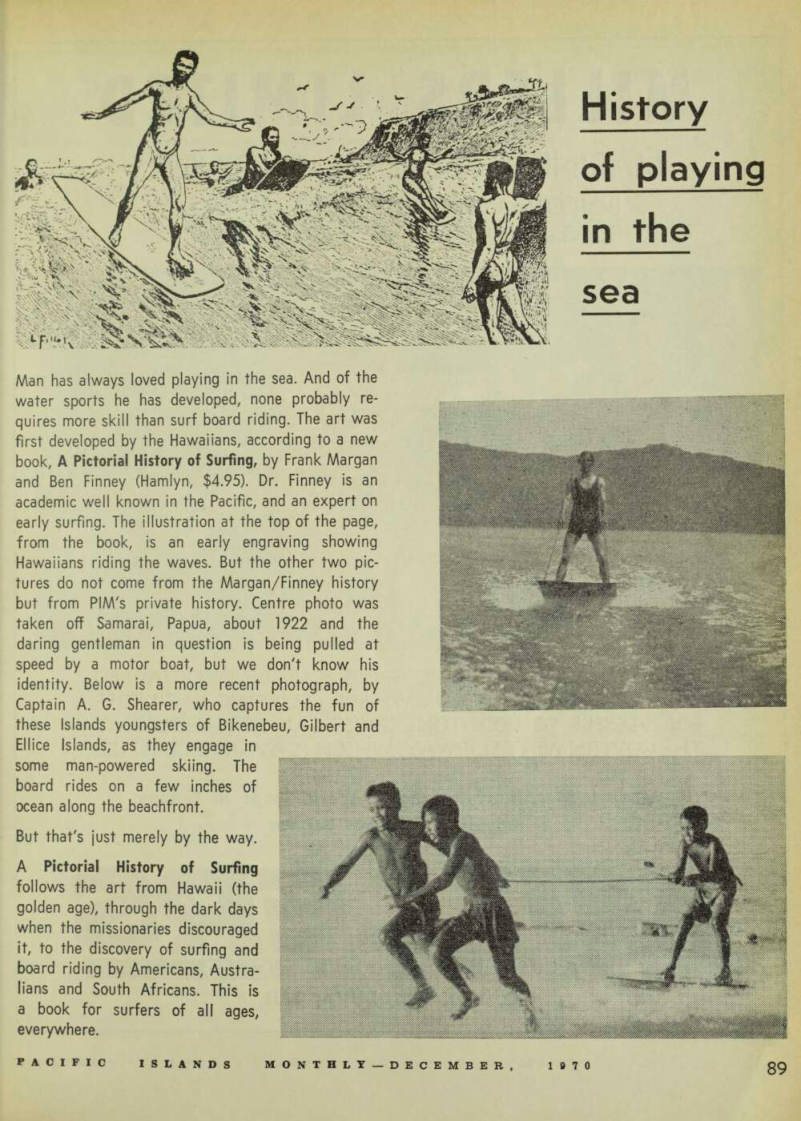 91
91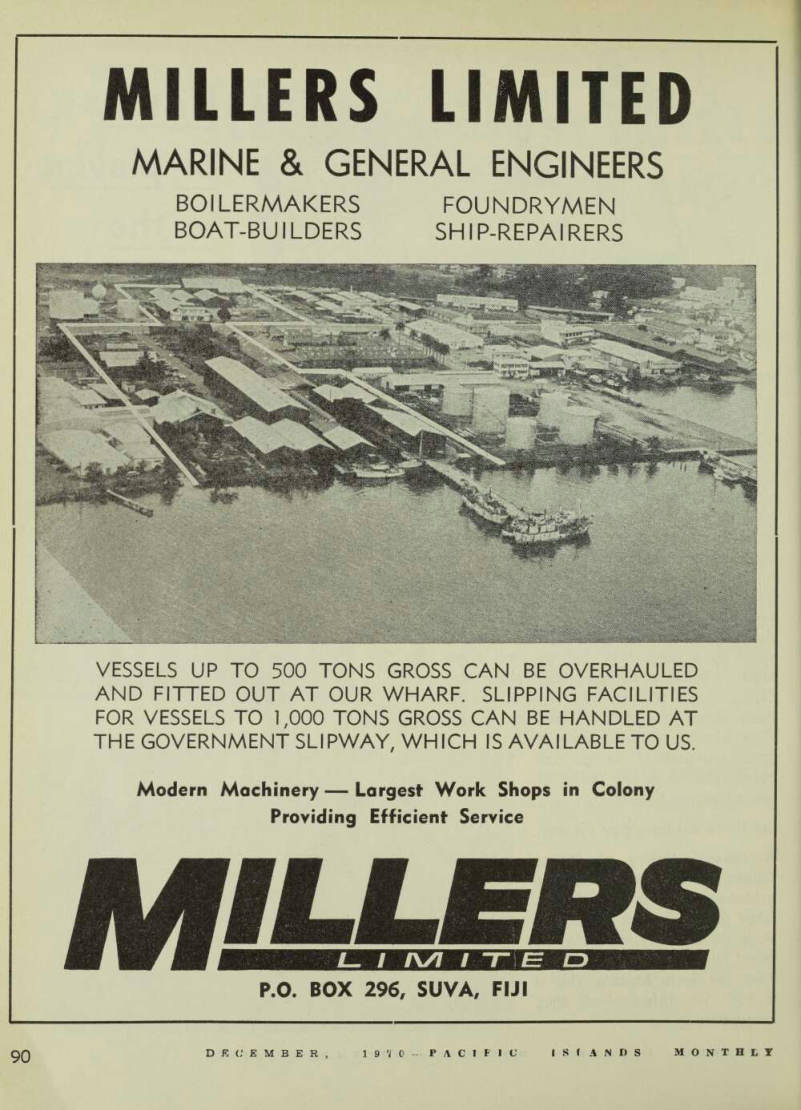 92
92 93
93 94
94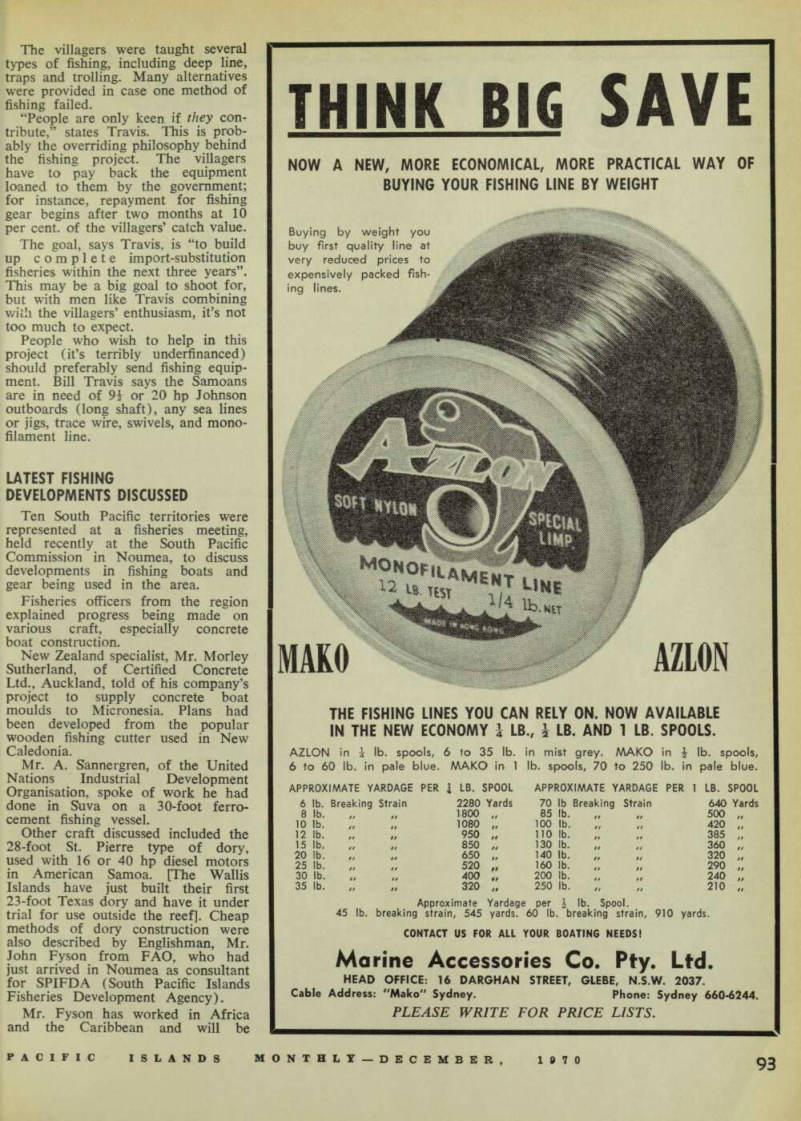 95
95 96
96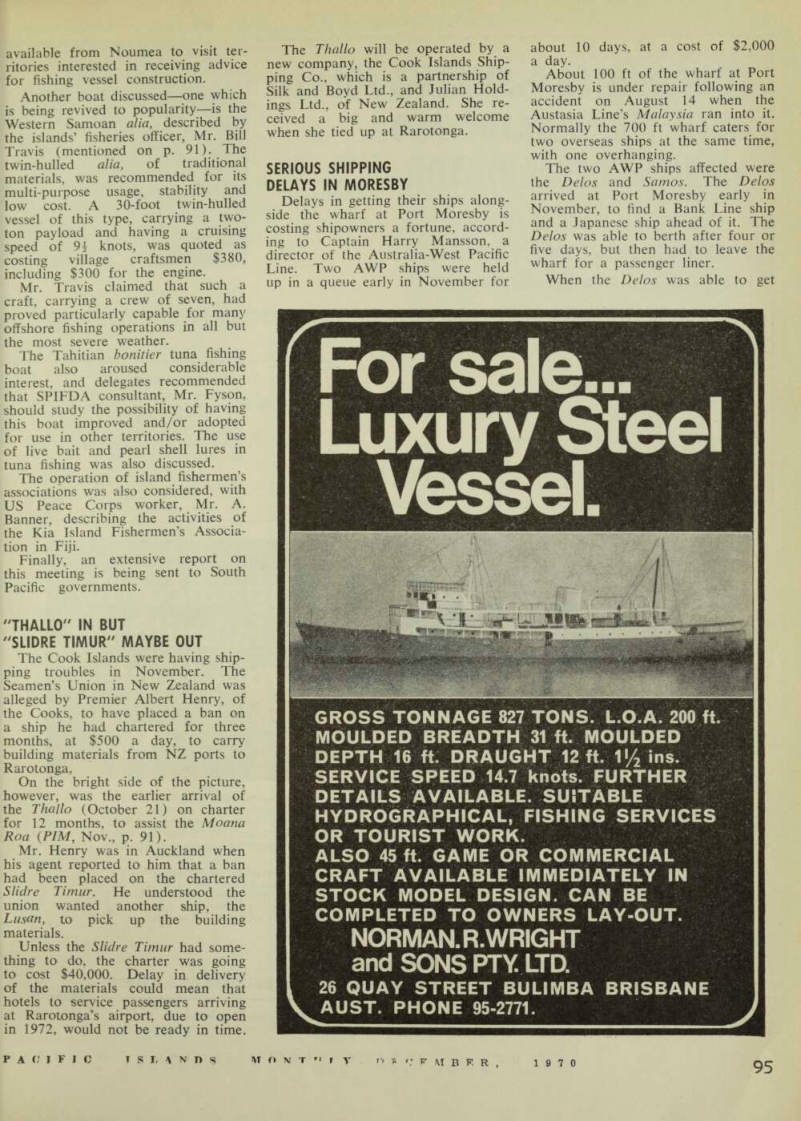 97
97 98
98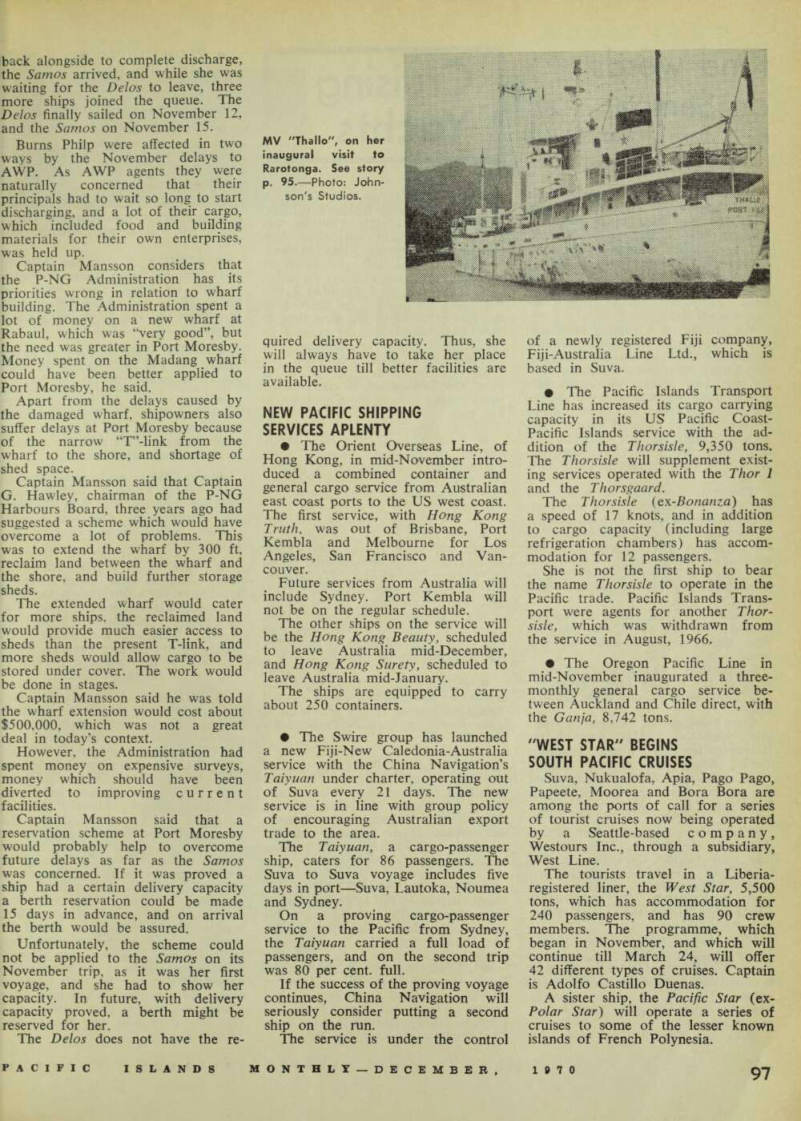 99
99 100
100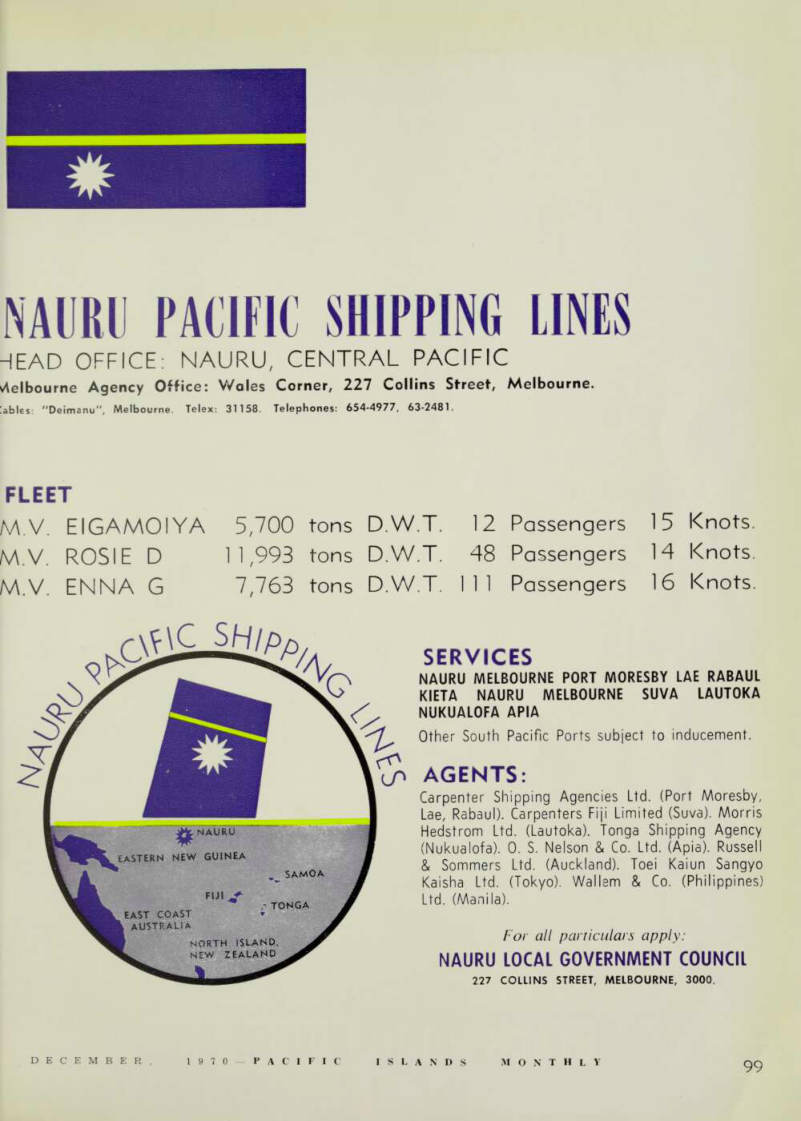 101
101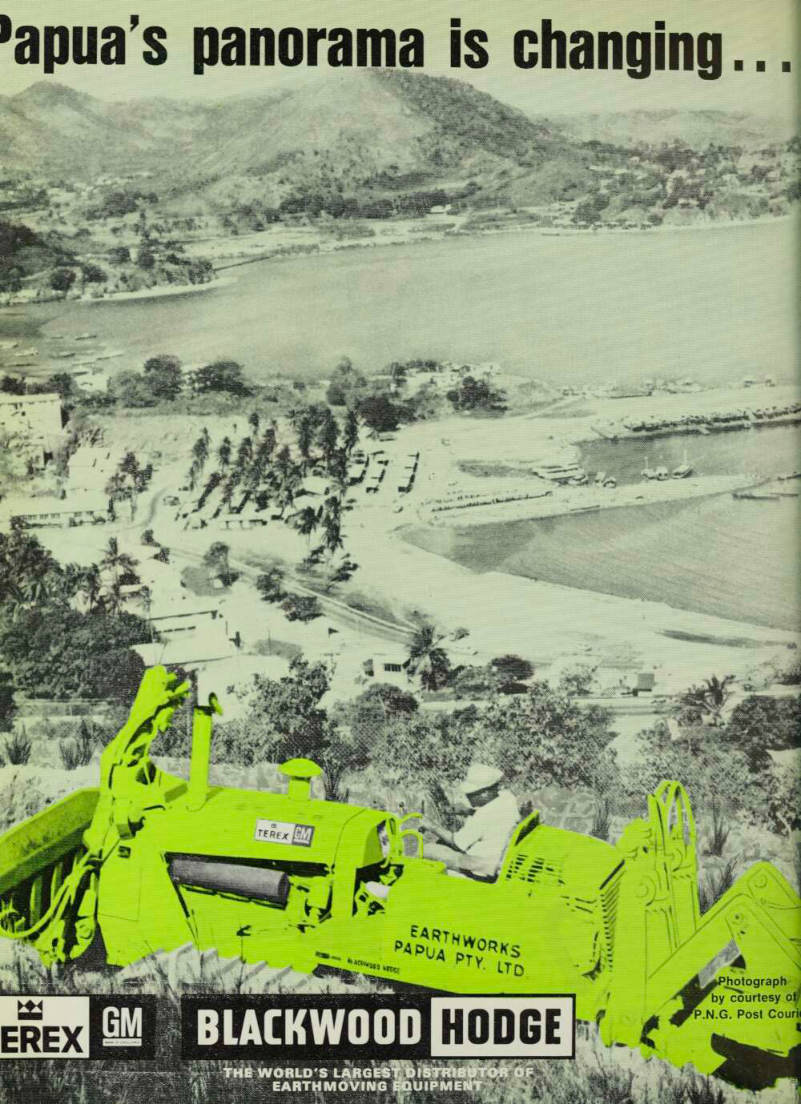 102
102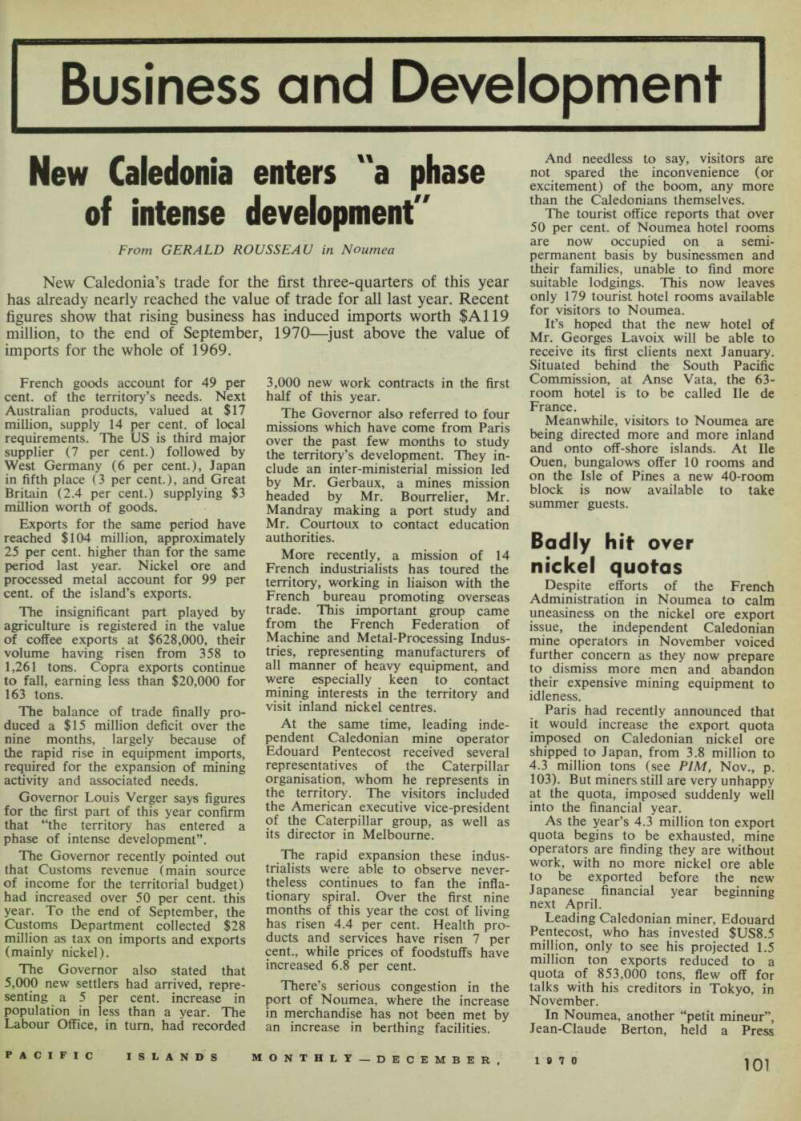 103
103 104
104 105
105 106
106 107
107 108
108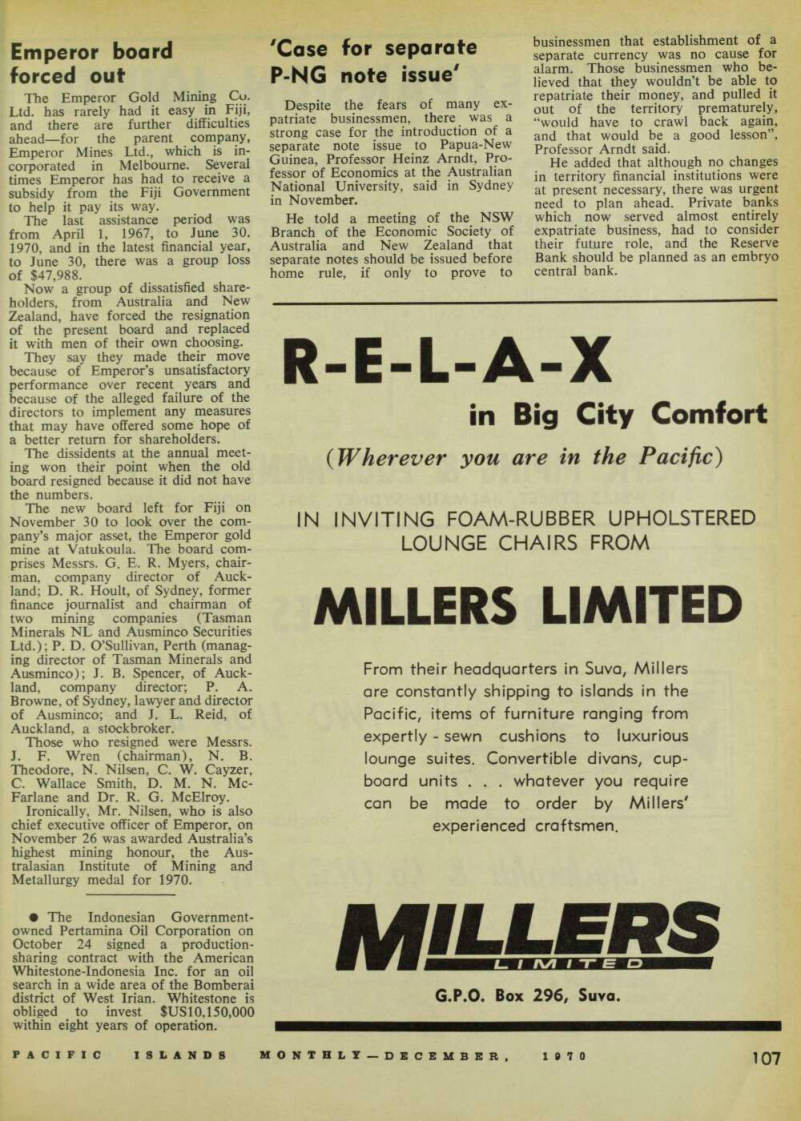 109
109 110
110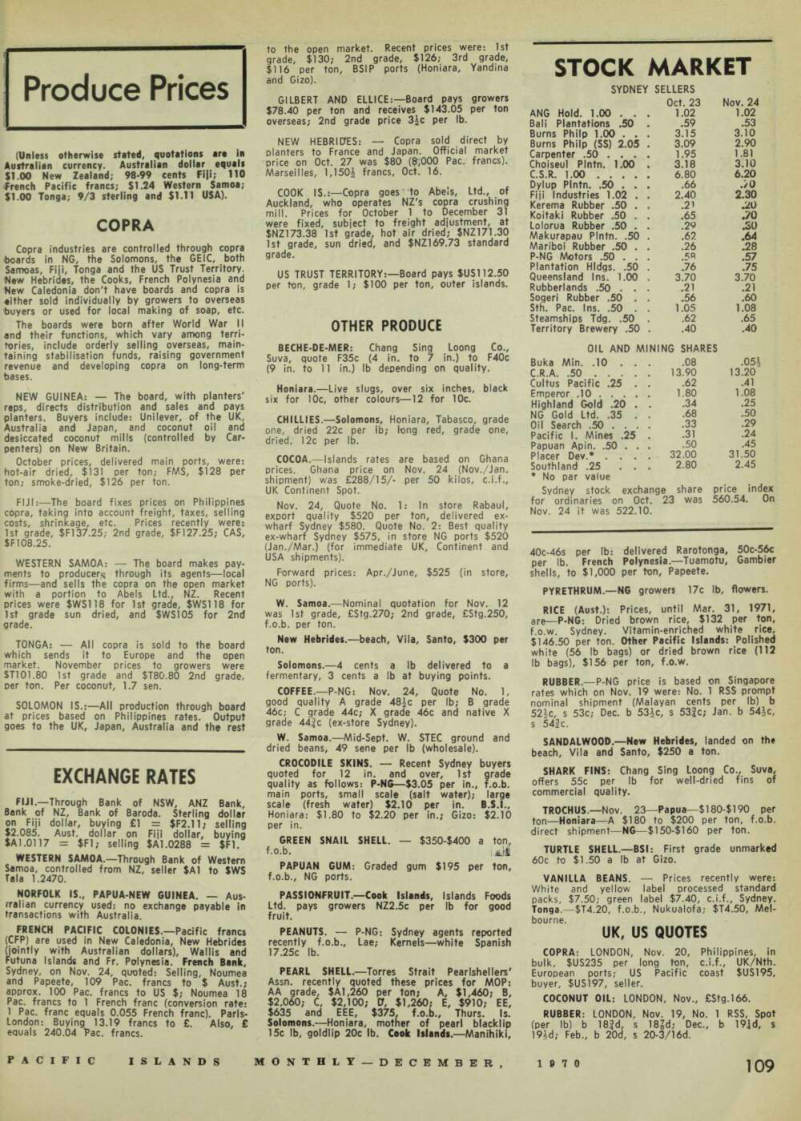 111
111 112
112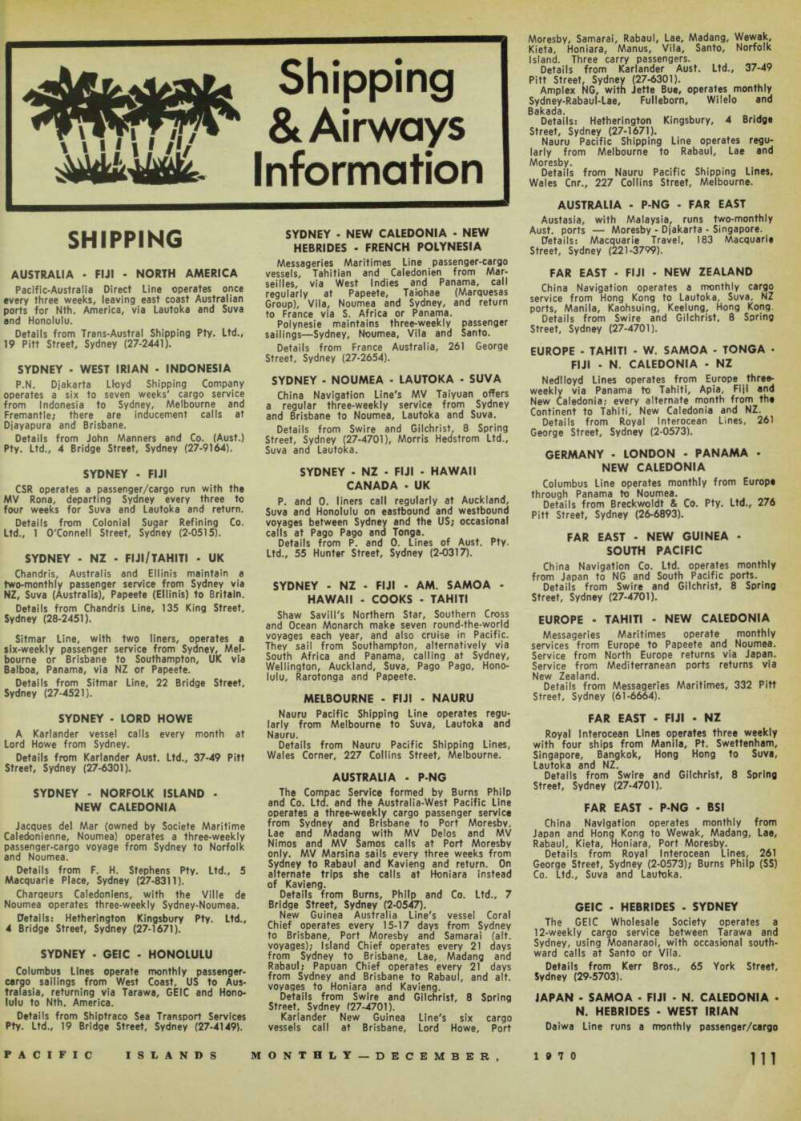 113
113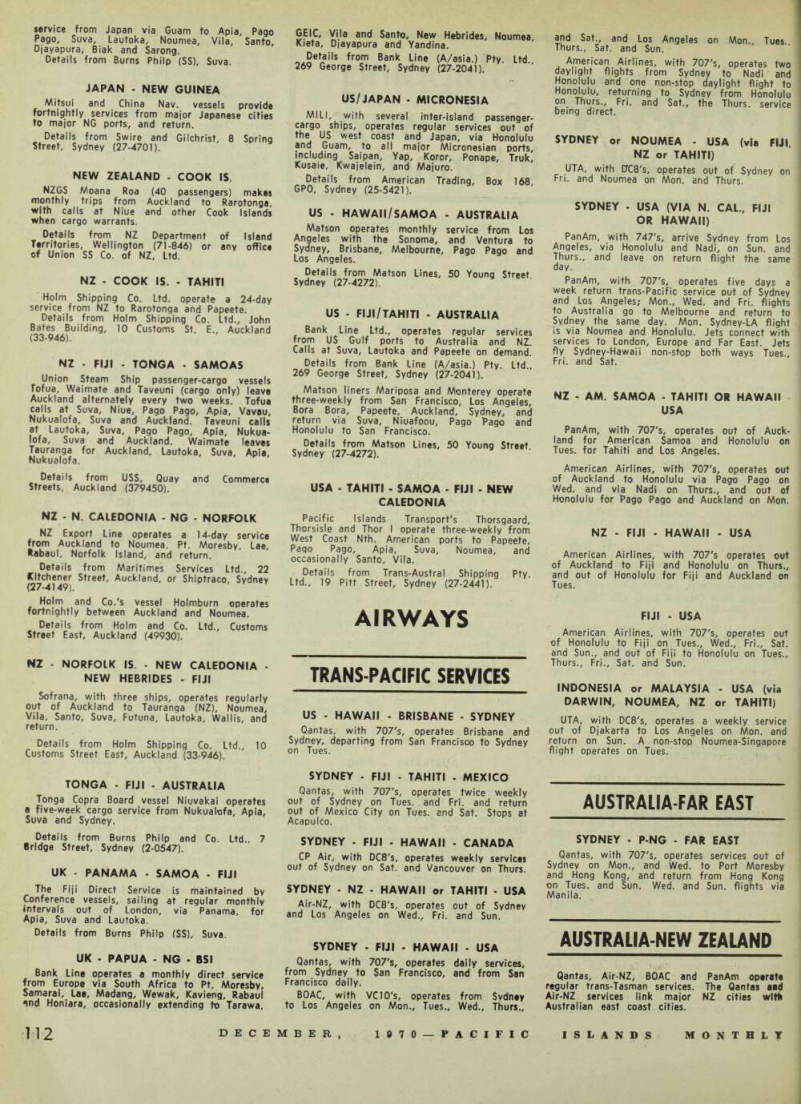 114
114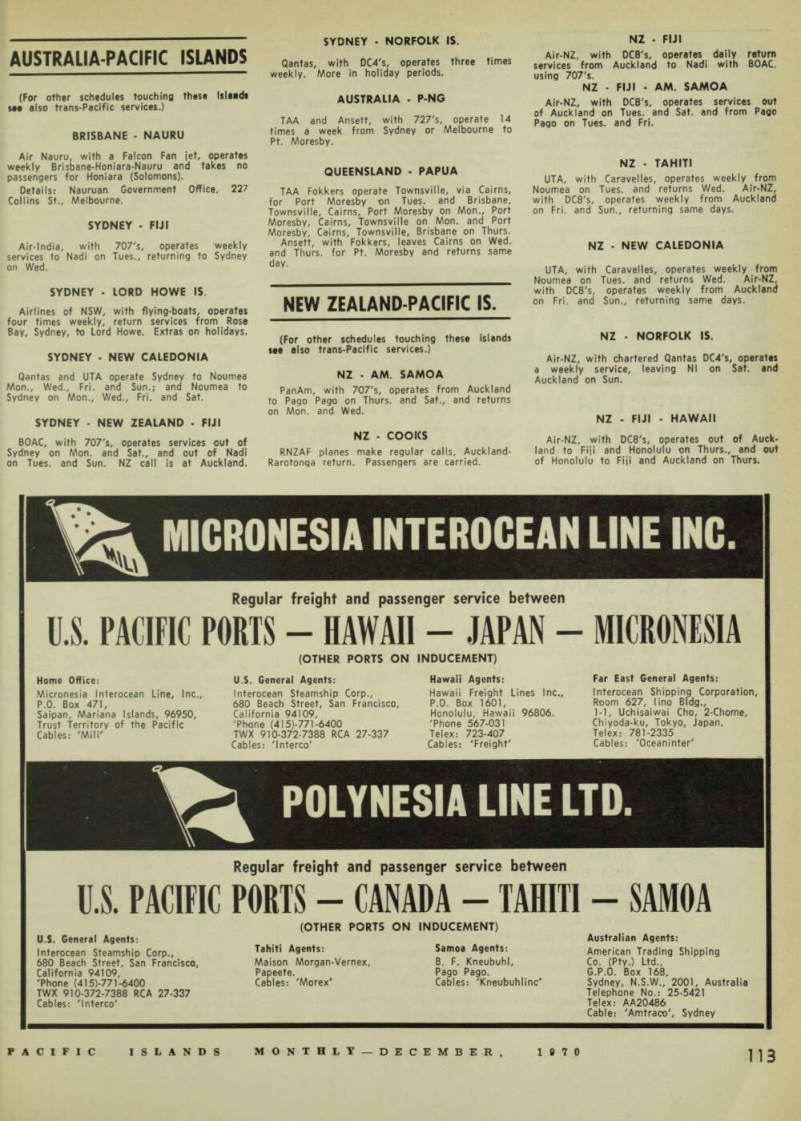 115
115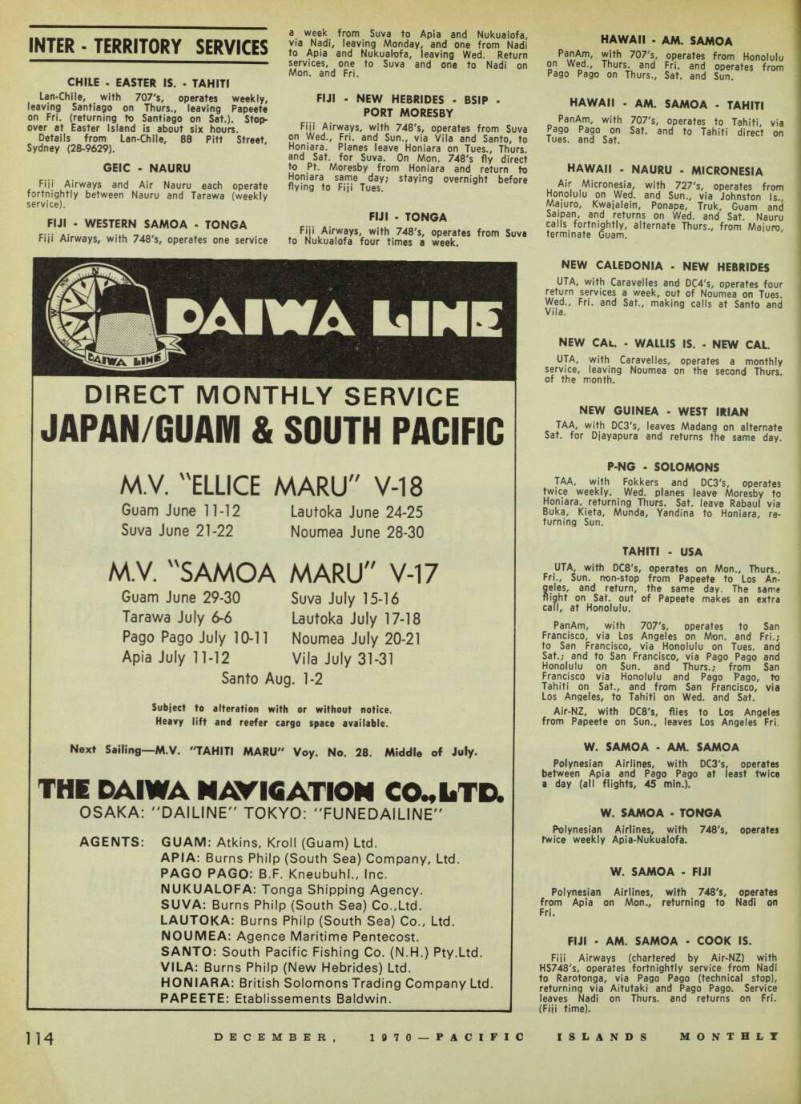 116
116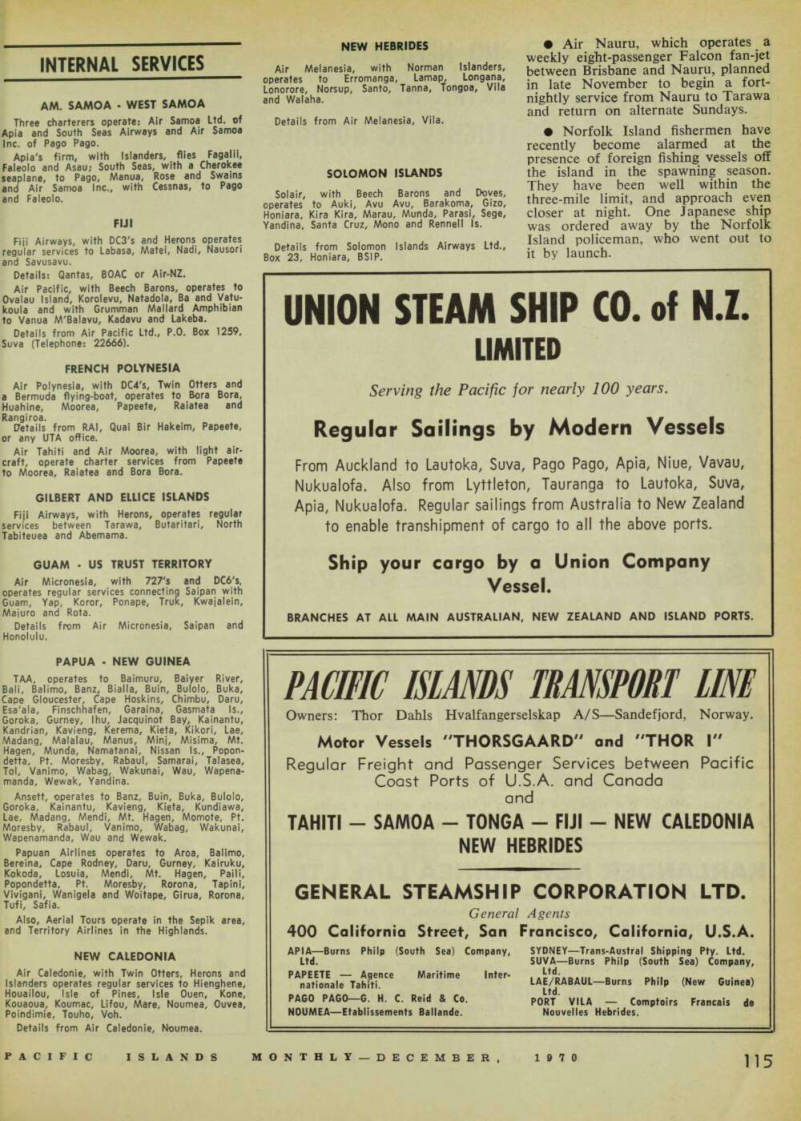 117
117 118
118 119
119 120
120 121
121 122
122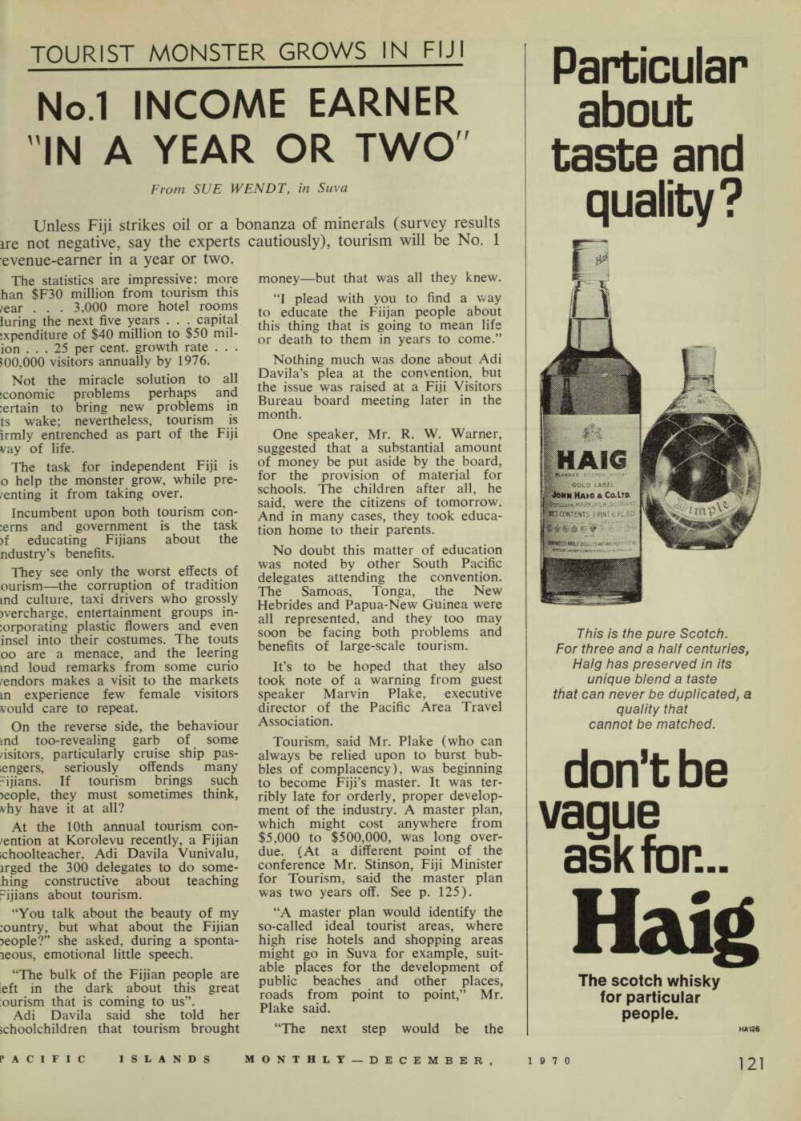 123
123 124
124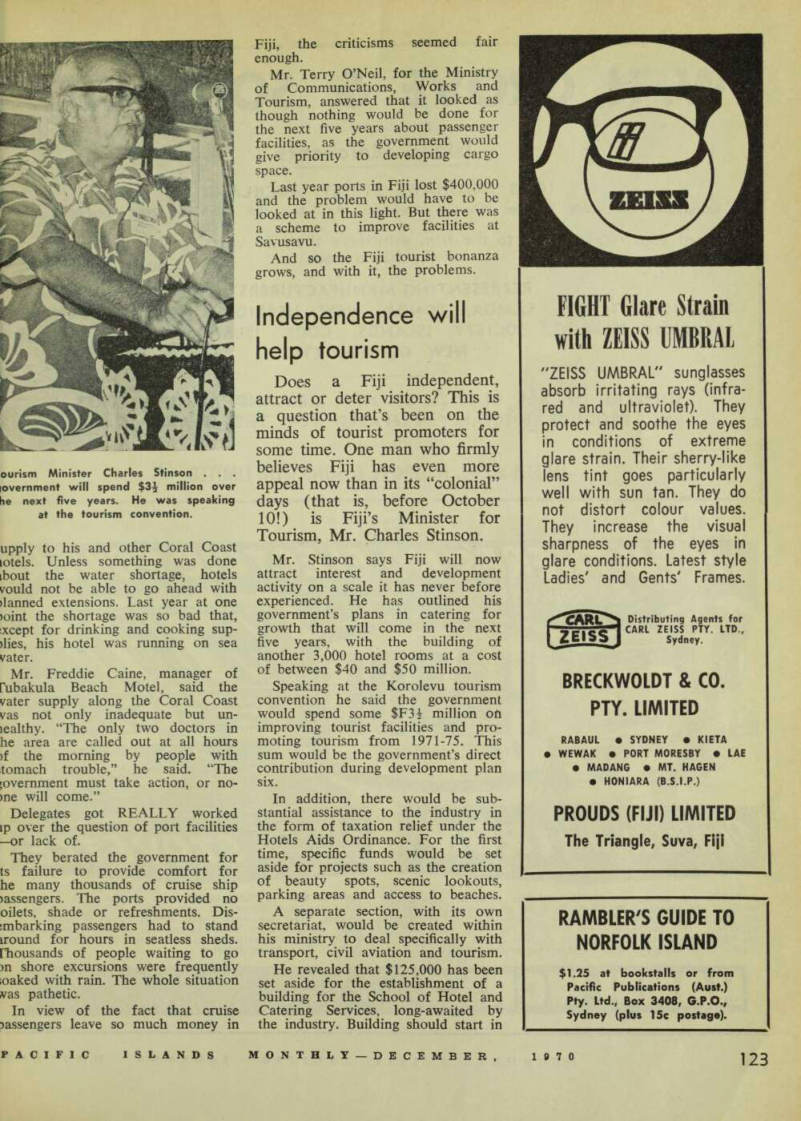 125
125 126
126 127
127 128
128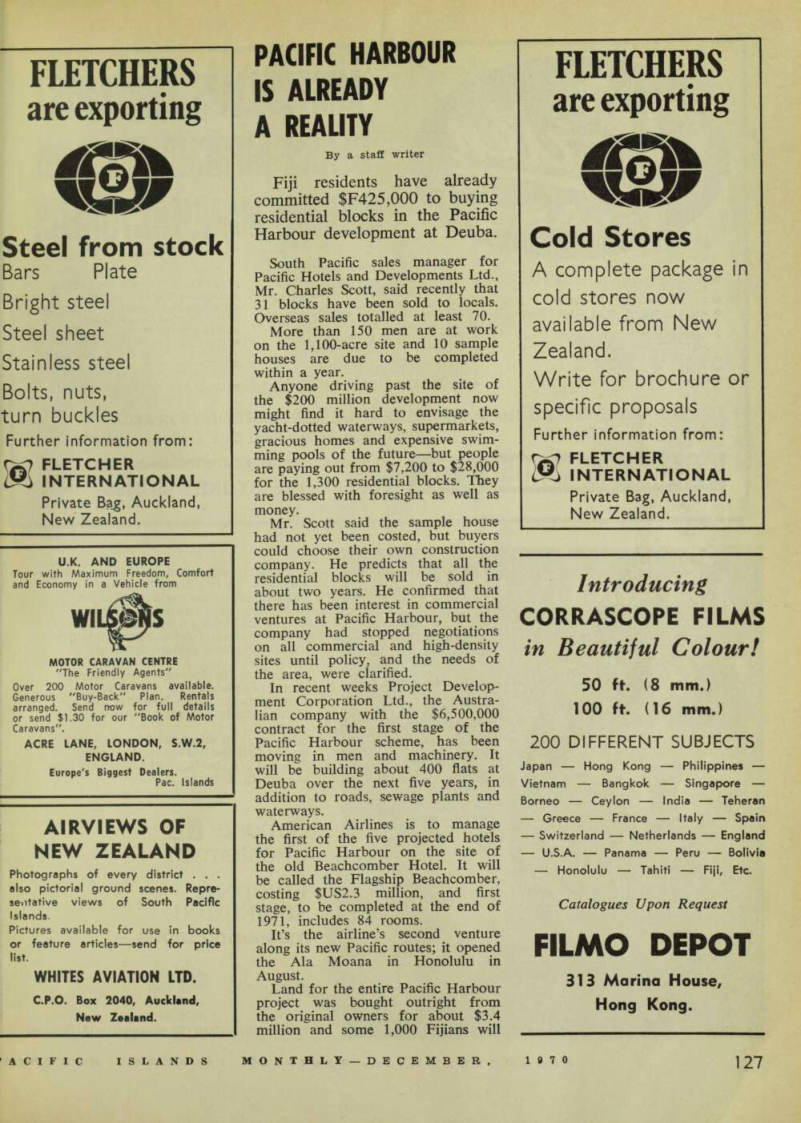 129
129 130
130 131
131 132
132 133
133 134
134 135
135 136
136 137
137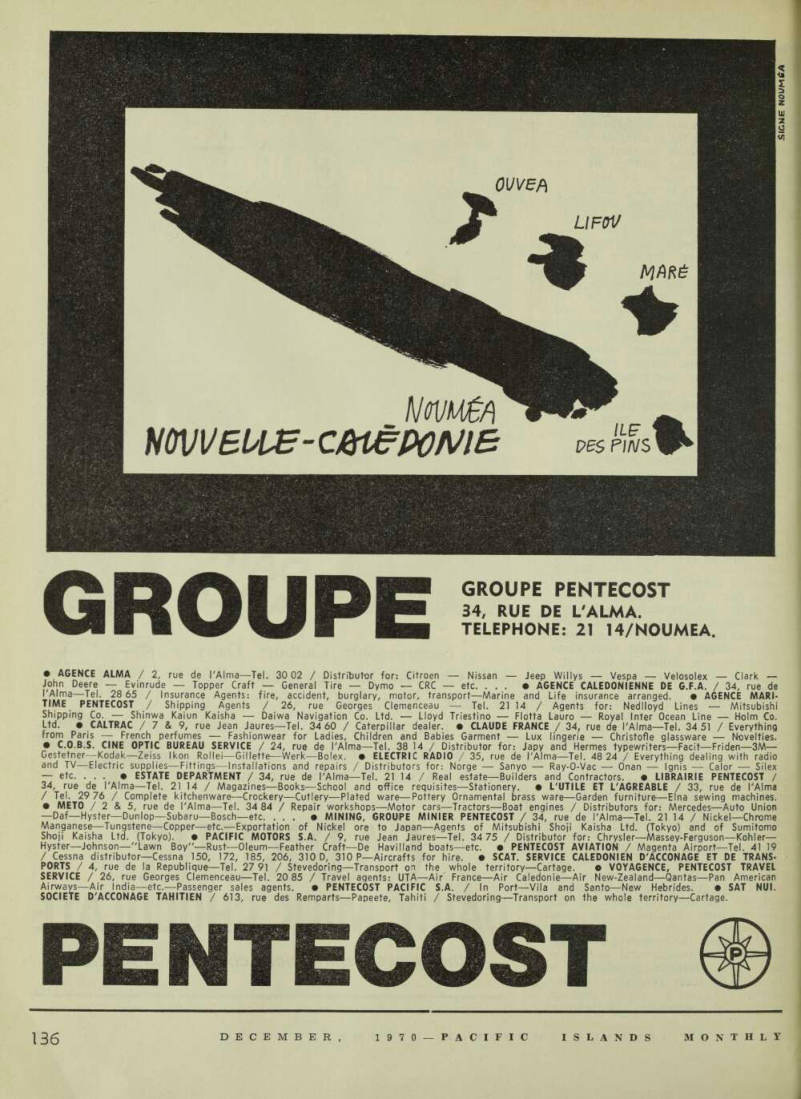 138
138 139
139 140
140 141
141 142
142 143
143 144
144 145
145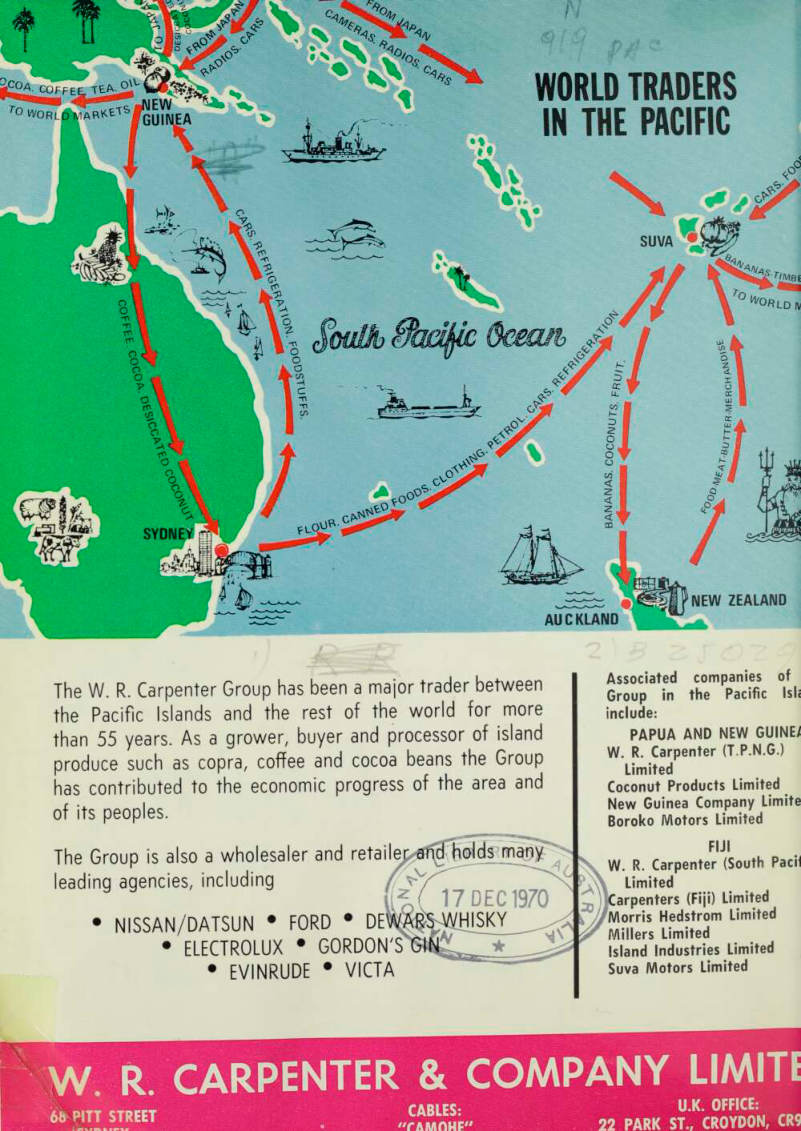 146
146