Pacific Islands Monthly
INcWo MAOAZIINt Uh I lit oUUIM KALI ML
Registered at G.P.O., Sydney, for transmission by post as a newspaper.
October, 1970
Australia 40C New Zealand 45C
U.S. Pacific Territories 70C
French Pacific Islands (Frcs. Cfp.) 65
P. N.G., FIJI, OTHER PACIFIC TERRITORIES 35c
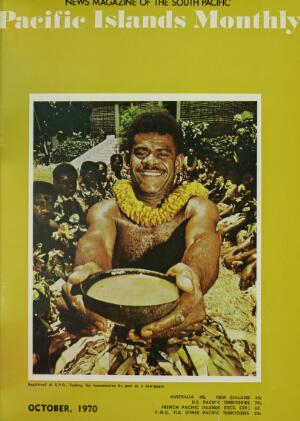
Our Cover
October is independence month for the Crown Colony of Fiji.
On October 10 it becomes a full British dominion — like Australia and New Zealand.
Visitors are welcome in friendly Fiji, and a Fijian welcome is like no other. The spirit of the welcome is captured in this close-up of the kava ceremony —kava being known as yaqona in Fiji.
Advertisements & other items, p. 2 (1 item)
The big link-up.
50 centres throughout Papua and New Guinea on a 10,000 mile network. 100 centres in Australia. TAA links the lot.
Across the Territory we give you more flights to pick from.
More cargo space. More seats.
Including daily Friendship
services between Moresby and all major centres. Plus daily ‘Bird of Paradise’ T-Jet flights connecting Brisbane, Sydney, Melbourne, Adelaide and Perth with the Territory.
If you plan to take off soon, keep our big link-up in mind.
And call your Travel Agent or
TAA.
Port Moresby 2101, Lae 3191, Madang 2478, Rabaul 2567, Goroka 8, Mt. Hagen 4 or 301, Wewak 103.
TAA
AIRLINES OF NEW GUINEA
No.l-the friendly one
The big link-up.
In This Issue
General
Burns Philp fleet winding up 38 Traditional arts and crafts 73
American Samoa
Land bill 64 Marine Safety Board 96 Newspaper changes 109 Brother Seringer dies 140
Cook Islands
Tourism begins 29 Death of Julian Dashwood 139
Fiji
Independence arrives 25 Prepares to join UN 27 “Davui" and starfish 41 Celebrations in pictures 45-47 Polluted Fiji 48 Filthy films 64 Licensed brothels? 64 Fashion scene 89 Miss Hibiscus ii, 92
French Polynesia
Political upset 17
Gilbert And Ellice Islands
More ship masters 97
Nauru
Support for ships needed 23
New Caledonia
Investment boom 43 Overseas sport 44
False charges 81 Exotic plant pests 88 Mystery plaque 99 Japan main customer 110
New Hebrides
Planning need 51 Firearms and firewater 79 Relic hunting 81 Mrs. Wellington dies 140
Niue
SPC Report 22 Constitutional Adviser 43
Norfolk Island
Visitors or Migrants? 32 Curvy roads 64 Port improvements 97
Papua-New Guinea
Human rights bill ii Car trial ... iii Prostitution unchecked 32 "Montoro" troubles 38 Closer links with Indonesia 57 Budget ... 61 Star Mountain explorers 83 “Perceptive look" (book review) 85 Port Moresby book 88 Admiral Moresby relics 88 Mt. Lamington, 20 years after 90 Investment corporation 107
DEPARTMENTS: Tropicalities, ii; Up Front with the Editor, 15; Editor's Mailbag, 28; Footnotes, with Percy Chatterton, 28; From the Islands Press, 64; Magazine Section, 73; Yesterday, 85; Book Reviews, 85; People, 93; Shipping, 95; Cruising Yachts, 100; Business and Development, 105; Practical Planter, 121; Produce Prices, 113; Shipping and Airways Schedules, 115; Deaths, 139.
Co-ops enquiry 111 Cocoa weevil problem 121
South Pacific Commission
Tenth Conference report: Proceedings cover all territories 17-24
Solomon Islands
Archaeological discovery 37 "Tulagi" off run 38 Bush justice 44 Fascinating for tourists 59 Freak coconut tree 64 Dangerous explosions 64 Complicated news sheet 64 Sailflsh 64
Tonga
Crown Prince's new job U Big fire 26 Vavau hotel 31 Whaling ... 40 NZ labour recruits 40 Relations with Korea . 41 Produce Board changes 105 Oil survey begins 105
U.S. Trust Trritory
Gyro-copter arrives jj Reply on land programme iii Micronesian dream 31 Bikini history 93 Mill under fire 95
Western Samoa
Praise for Rugby player ii New airport 29 Cautious cabinet 37 Commemorative coins 38 Marine Safety Board 96 Newspaper changes 109 Timber operations 11
Tropicalities
Crown Prince gets a job
With independence—or re-entry into the comity of nations, as the government prefers to call it—successfully in the bag, Tonga has now set about establishing a Foreign Affairs Department. The first hint of this development came from King Taufa’ahau when he officially opened the 1970 session of the Legislative Assembly in mid-June.
The king announced that an officer had been appointed to the newly created post of Special Assistant to the Premier for Foreign Affairs. It was interesting to learn later, and not at all a surprise, that the officer in question was none other than the king’s eldest son, the crown prince, Prince Tupoutoa.
The crown prince was educated in Switzerland and England before entering the Royal Military Academy of Sandhurst, from which he gradu ated in December 1968. After leaving Sandhurst the prince went on to take a foreign service course in Oxford, and subsequently returned to Tonga in time for the independence celeb rations and his new post.
Initially the prince’s appointment met with some scepticism from those who thought back to his earlier ad ventures in the field of wine, women and song; although others were more prepared to see how the prince fared in his new post before hastening to any judgement.
Assistance in the establishment of a Foreign Affairs Department within the Premier’s Department has come from New Zealand. After a request from the Tonga Government, the NZ Government provided Mr. M.
Mansfield, who is Deputy High Commissioner for NZ in Western Samoa, to advise the Tongan Govern ment.
Mr. Mansfield has been in the
kingdom for a preliminary visit dur ing August and September and is expected to return later in the year.
At present Tonga’s only overseas representative is Baron Vaea of Houma who is the Tongan High Commissioner in London. Future moves in the field of overseas rep resentation are as yet unannounced, although UN membership and rep resentation in New York and Sydney have been suggested from time to time. During the king’s recent State visit to NZ it was rumoured that he might appoint an official Tongan representative there.
He wants human
rights for P-NG
Papua-New Guinea’s Percy Chat terton, MHA, has done it again.
He’s jumped the gun on the gov ernment by giving notice of a bill representing the first plank in a Constitution for New Guinea.
He’s announced the Human Rights Bill 1970 or, in long title, A Bill for an Ordinance to Declare and Provide for the Maintenance and Enforcement of certain Human Rights and Fundamental Freedoms and to entrench them in the Laws of Papua-New Guinea.
Percy Chatterton knows that the parliamentary Select Committee on Constitutional Development won’t deal with Human Rights for some time, and knows that the Australian Government won’t incorporate a passage in the territory’s somewhat inadequate “constitution”, the Papua- New Guinea Act. Because it appears that there won’t be anything dealing with Human Rights and basic individual freedoms until the vague self-govemment/independence period.
he’s decided to do something about it himself.
Recent New Guinea legislation with “danger” elements—the Public Order Bill and Evidence by Affidavit Bill—helped him make up his mind.
He wants things nicely tied up now, so that the all-powerful central gov ernment will not submerge individual constitutional rights with a mass of potentially repressive legislation.
Percy won’t be seeking re-election in 1972, so the next 14 months of his remaining term in parliament are (as he sees it) crucial, if he’s to make any headway with Human Rights legislation.
She's the new
Miss Hibiscus
Extremely popular choice for Fiji’s Miss Hibiscus 1970 was beautiful Adi Talatoka Lalabalavu, a 21-year old schoolteacher from Savusavu. She was crowned at Albert Park, Suva, in September (see p. 92).
Soft-spoken and very poised, Adi Talatoka is the daughter of the late Tui Cakau, Ratu Josefa Lalabalavu.
She graduated from the Corpus Christi Teachers’ College in Suva six months ago and has been teaching at the Roman Catholic Mission at Savusavu.
Adi Talatoka, who was sponsored in the contest by the American Con sulate, gets as her main prize a trip to Tokyo by Qantas. She’s never been outside Fiji before.
Second to Miss Hibiscus was petite, pretty Dorothy Gibson, 18.
Third was Sina Williams, also 18, a student at the University of the South Pacific.
Although this year’s festivities followed much the same format as previous years, there was one major change. The weather stayed fine.
High praise
for All Black
A young Samoan, Bryan Williams, the first Rugby player from his ter ritory to be chosen to play for New Zealand’s famous All Blacks, earned high praise from critics during the recent tour of South Africa.
He played in all four tests against the Springboks, either as a wing or centre. Altogether he played in 13 matches, scoring 14 tries, converting four and kicking two penalty goals.
He was the second highest try scorer.
Meanwhile, Fijian chief, Ratu Penaia Ganilau, is building up a Rugby record of a different nature.
In recent months he has been pre occupied in making arrangements for Fiji’s independence celebrations. At the end of September, he went off
to England for the centenary congress of Rugby playing countries. Then there was a hurried trip back to Fiji for the celebrations. With those celebrations over he will be off back to the UK as manager of the Fijian Rugby team which is touring England.
Bull trouble
on safari
Papuan Safari 1970 rally winners, John and Ernie Lohberger, were hurtling along a 12 mile bush track near Port Moresby when they found a typically enormous Zebu bull block ing the way.
A quick excursion into the bush solved the bull problem, as the bull certainly wasn’t going to move, for them or for a rally marshall, Kell Nielsen, who came along on his motorcycle to try to help.
Each car had to do two circuits of this bush track, and the Lohbergers in their Isuzu Bellett GT consequently arrived back in the same spot to confront the stand-fast bull again.
As they passed, he lashed out with a rear leg and dented a panel.
The Zebu bull is a contributor to the territory’s infant (well, perhaps pre-school) cattle industry, just as the safari is becoming a useful publicity medium.
The South Pacific Motor Sports Club in Port Moresby this year was running its fifth Papuan Safari, and for the first time it had felt truly international. Next year, it will be on the international motor sport calendar as part of the Pan-Pacific Rally Championship series being run in and around the Pacific basin.
Among 16 starters, all of them serious, was Brian Culcheth, winner of the Scottish International Rally and second in the London-to-Mexico World Cup Rally this year. He drove a British Leyland Motor Corporation works team Morris 1500 in the safari.
The safari was run from noon on Saturday, September 12, to 3 p.m. on Monday, September 14—Papua-New Guinea’s first National Day. Heavy rain (in the dry season!) continued for two weeks right up to the day before the start, and the only thing left was to reset much of the rally and chop out 200 or 300 miles of the original 1,000.
On the first section of a few hours, Culcheth blew three tyres, Evan Green four. Culcheth solved his prob lems by rolling his car into a 15 ft culvert on the first night, and having to withdraw. His was the only car not to finish.
For Uzuzu, it’s been an impressive safari again. They’ve been winners three years in a row now, and they also filled the places last year.
Micronesian first
The Majuro, Marshall Islands Micronitor reports that the eves of the entire Majuro population have been turning skywards lately with the arrival of Mr. A1 Enderle and his one-man gyro-copter. The seat of the copter doubles as a petrol tank and the machine has a range of 250 miles. Mr. Enderle is work ing his way westward through Micro nesia, taking aerial photographs from the copter and making notes for a series of articles.
The Editor's Mailbag
Those Behind New
Hebrides Airways
Sir, —I feel I cannot remain silent any longer in the light of your recent article on New Hebrides Air way {PIM, Aug. p. 44).
I do feel perhaps that I am getting the lion’s share of the limelight of this saga, and perhaps I could fill a few gaps, and place some credit where it belongs.
The late Paul Burton, my wife Mrs. K. C. Paul and Sister Margery Heard, and the people of Tanna. were the original shareholders, with Burton and myself as directors and Mrs. Paul as company secretary.
Sister Heard, being an employee of the Presbyterian Mission, could not actively take part.
The political troubles we en countered are well-known, but whilst Burton flew and maintained the original aircraft and worked extra ordinary hours, Mrs. Paul turned our home into a transit house for all and sundry—thus in sheer self defence the “Tanna Bungalows” were built.
Because of the refusal of the governments to make the normal facilities of aviation available to New Hebrides Airways, Burton was forced to fly and work under con ditions and hours that for a man of his age, 57 years old when he died, were extraordinary.
Sometimes he flew up to 120 hours per month and maintained the air craft himself, including engine changes, which were done in the open, with nothing more than a box of tools and a home made trestle to lift the motor out.
He lived for the airline and 1 am sure the many desperately-ill people whom he evacuated in any weather, any time (he was never known to consider the weather when a medical emergency was on) would support me in saying that Paul Burton was all man, and a magnificient pilot.
There were many others who gave their all, including the Tannese people, and the Futunese peonle who cut down a large number of their few coconuts. Not to mention a certain high-ranking British Government official who made no bones about his support of us and whom I like to think was proved right and the Bishop who solemnly purchased his £5 packet of cigarettes in my store
in lieu of a ticket when we were not allowed to carry fare-paying pas sengers.
I can only say that there were many of us involved in getting this thing off the ground, and in writing this letter I hope I have corrected the impression that I did it without the aid of others.
R. U. Paul.
Tanna, New Hebrides.
Tie(D) In New Guinea?
Sir,—Recently I went to Papua- New Guinea, the land of startling contrasts, and visited Port Moresby, Lae, Goroka, Madang, Mini, and Mount Hagen. Overnights, I stayed in famous, and so-called luxurious, hotels of these attractive and beautiful places. I was not only surprised but puzzled to see that most of the hotels and motels displayed the warning sign—“Gentlemen, ties to be worn in the dining-room”.
The tie is the modern form of holy cross people used to wear in olden days. No doubt, it is very useful as a garment in temperate climate of the European countries for protecting man from cold, and that is why it became so fashionable as an item of normal dress.
In Guinea, where the climate is tropical and heat and humidity unbearable, the enforcement of the rigid law “tie to be worn” by the hotel managements, forces one to think that the sacred cross, or modern tie, is today a permit for drinking and dining in the Pacific Islands.
Dr. P. Shanker.
Macquarie University,
Nsw.
Frank Whitcoaabe
Sir,—I read with interest the articles submitted from the recollec tions of my old friend, Frank Whitcombe, in PIM (Aug., p. 91).
He was always a good spinner of tales.
In the matter of the rescue of the prisoners of war from von Luckner’s Seeadler he seems a trifle off the beam, for the central figure in those attempts, the second success ful, to get help, was not by any means Frank, who does not appear
in any certified account, but Captain Fred Williams, an American skipper, captured in the last but one ship by von Luckner.
He later returned to the area, or rather to the Eastern Pacific to manage the island plantations in Nassau. He still later went to Apia, Western Samoa, after the death of his first wife, and lived there until his death. His eldest son is the respected postmaster of Apia.
The first attempt, from William’s diary, which I have seen, was under Captain Southerd, with Williams as navigator. They aimed to get to Bora Bora, but with an open boat running into a head wind, with heavy and contrary seas, they decided, or the captain did, to return, after three days out.
The boat was beached and the carpenters, of whom there were many among the prisoners, half decked the boat forward and Captain Williams, after Captain Soufherd’s refusal to risk it again, took charge and took the thousand or more (not a hundred) miles run to Pago Pago, from which ships went back to Mopelia. The Governor gave Williams a written acknowledgement of his epic voyage.
The South Seas has lost a number of great characters over late years, a type that will never be met with again, great tale-tellers, but memory can confuse facts, no doubt, as the years close in.
The Ven. C. W.
Whonsbon-Aston,
Archdeacon Emeritus.
Suva.
C. F. C. Macaskie
Sir, —While I am in the Solomons with my husband, I am interested to gather as much information as possible about the above Mr.
MacAskie. It was suggested to me that some of your readers may have been acquainted with him or have known of him.
So far, I know only that, as a lawyer, he lived and worked in the Solomons for close to 20 years, compiled the three volumes of the Laws of the British Solomon Islands Protectorate, wrote a personal biography, which to my knowledge has not been published, and died within the last two years in Aus tralia.
From the scattered stories that did reach Canada, I understand he was quite a colourful character, and I will be indebted to any consideration your readers can give me.
Diana Scoretz.
PO Box 303, Honiara.
Suspicion of Micronesian land
Letter To The Editor
Suspicion of Micronesian land programme unwarranted
Trust Territory High Commissioner replies
Sir, —I sincerely appreciate your offer to reply to the article ( PIM, July, p. 38) “Can the US resist Micronesian demands on land owner ship?” The information presented is completely false in many cases and very misleading in some other aspects. It is difficult for us to understand why the author, who, as an employee of the Congress of Micronesia with access to the facts, chooses to portray the land cadaster program in such a deliberately deceptive manner.
We are submitting an article detailing the history of the land problems of Micronesia for a future issue of PIM. However, we would like to briefly cover the most flagrant misrepresentations of the material printed in the July issue.
Frequent reference is made to the “the US Government’s ownership of public lands”. The US Government, in fact holds no title to land in the Trust Territory. Some parcels of land such as weather stations and loran stations in various districts, and the missile tracking sites in the Marshalls have been leased from the Govern ment of Micronesia. If the land was privately owned land, the Micro nesian Government first leased the parcel from the private land owners and then in turn leased it to the US Government.
It is wholly inaccurate to write . . the US granted its military, land uses to these islands” or that “military use was only a thinly veiled form of robbery”. Every five years these leases are subject to review and in all instances payment is made for the use of the land.
Several important facts should be recognised: One is that the “TT Government” is the Government of Micronesia Executive, Legislative and Judicial Branches. Many Ameri cans hold positions in the Executive Branch and a few are with the Legislative and Judicial Branches.
Their replacement by Micronesians is an on-going program.
Another fact is that all lands are owned either by individuals or groups of Micronesians, or are “public lands” held by the TT Government in trust for the people of Micro nesia. Under the territory’s current
status, non-Micronesians cannot own any land, and this includes the United States Government.
No attempt has been made on our part to keep our search for land records “relatively quiet” or “not announced to land owners or in terested Micronesian legislators or congressmen”. Rather, we have spent a considerable amount of time, effort and funds in conducting an informa tional program on all phases of the land cadaster program, in all local languages, and in all districts to explain to residents of Micronesia the purpose and functions of this land registration program.
The United Nations Visiting Mission, following its 1970 tour of the Trust Territory, reported it was “concerned to find that, in spite of the importance of the land registra tion program for the economic future of Micronesia, and in spite of the fact that the Land Commissions Act which provided for the land registra tion was passed by the Congress of Micronesia, there is now suspicion of the land registration program among some Micronesians.
“The mission feels that it is impor tant that the benefits of the land registration program should be ex plained to the people of Micronesia by Micronesian spokesmen. The Administration is carrying out a publicity program with the intention of informing Micronesians of the program and its purpose. ... It is desirable that members of the Congress of Micronesia should play their part in explaining to, the people of the Trust Territory the purposes of their legislation establishing the land registration program.”
The July magazine article criticises the US for “sending certain of its Trust Territory employees . . . to search for old records concerning the ‘public lands’ in Micronesia”. It is our position that it is the respon sibility and duty of the government to find any and all land records that would help in the description of boundaries as well as the ownership of land to help clarify the confused state of land affairs in Micronesia.
The search is not being limited to
(continued on p. 131]
Letters
(continued)
mblic lands only, but all lands lying /ithin the territory’s boundaries.
These searches already have proven if considerable benefit to private and owners in Micronesia. One xample is the very case cited in the rticle, regarding certain land in Truk listrict. This parcel, at first believed o be public land, was turned over o the private owners—and, after laving examined all the records avail ,ble, we have put aside once and or all, not arbitrarily but after borough investigation, the claim that hese lands might have been public ands.
A second case, that of Roi-Namur, ilso has been judged in favour of he private land owners. Following mblic hearings conducted by the [overnment, it was decided that Roi 4amur was private land and lease legotiations have begun with the Marshallese owners. To make sure he owners are treated fairly, an ndependent, licensed real estate ippraiser from Hawaii has just com peted a thorough valuation of the ;ntire island and his report to the Micronesian Government will be the >asis for further negotiations con :erning compensation for past and uture use.
The decisions in both of these cases vere made well before the article vas printed.
The key operating arm of the land :adaster program is the Land Com nission established in each district, fhese quasi-judicial boards, composed )f a senior land commissioner, two Micronesian land commissioners, and me or more registration teams (five to ;even members, all Micronesians), nakes the final determination of all and claims. There certainly should lave been no inference that the goal if the land cadaster program is to lid the United States “in meeting its and needs in the Pacific for establish nent of bases”.
Briefly, the goal of the land cadaster program is simple: it will Drove that if a person owns the land, le owns it; if not, it either belongs ;o another individual or group of in dividuals or it is public land belong ing to all the citizens of Micronesia.
Edward E. Johnston,
High Commissioner Saipan, US Trust Territory. • The article dealing with the history of Micronesia’s land problems, mentioned by Mr. Johnston, will be published next month.
Advertisements & other items, pp. 7-20 (1 item)
Burns Philp
■S* mm*.
S
THE PACIFIC
FIJI, SAMOA.TONGA, NIUE Is,NORFOLK Is.
BURNS PHILP
(SOUTH SEAT Cfl.LTO.^^H
REGISTERED OFFICE: SUVA, FIJI
TELEPHONE NO: 22661
TELEX NO: FJ1127
Code Address; "BURNSOUTH ■.
SHIPPING AGENCIES
The New Zealand Shipping Co. Ltd.
Shaw Savill & Albion Co. Ltd.
Blue Star Port Line (Management) Ltd.
Bank Line Ltd.
General Steamship Corporation Ltd.
Compagnie des Messageries Maritimes Royal Interocean Lines Daiwa Navigation Company Ltd.
Sitmar Line Flotta Lauro (Lauro Lines) Australasia Pty. Ltd.
Tonga Shipping Agency.
EXCLUSIVE
DISTRIBUTORSHIPS
INCLUDE
Akai Taperecorders Sunbeam Appliances Dunlop Products Hitachi Electronics Holden Motor Vehicles Rolex Watches Revlon Cosmetics Pentax Cameras Massey-Ferguson Tractors Olympic Tyres Penfold Wines
AGENTS FOR
Queensland Insurance Co. Ltd.
Shell Company (P. 1.) Ltd.
Bureau Veritas
ASSOCIATED COMPANIES
Burns Philp (New Hebrides) Ltd.
Burns Philp Trustee Co. Ltd.
Automotive Supplies Co. Ltd.
Corrie & Co. Ltd.
Wrought Iron and Steel Construction Co. Ltd.
Bish Ltd.
SPECIALISED SERVICES
Expert advice on Shipping,- Forwarding; Customs formalities; Insurance.
COMPLETE TRAVEL
SERVICE
accredited agents for the
INTERNATIONAL AIR
TRANSPORT ASSOCIATION
OVERSEAS AGENTS: SYDNEY • LONDON • SAN FRANCISCO
Qrnott's/«~ Biscuits
in triple wrapped, tropical packs
» m m & m tcVv Sco bis t ch Arnott’s SCOTCH FINGER Biscuits.
A butter-rich, chunky biscuit with the true flavour of shortbread.
Arnott’s CHEESE JATZ Biscuits.
Crisp cracker biscuit with a fine cheese flavour — perfect for entertaining.
'%■ % \ m-.. % m t * 4 V Arnott’s SALTINE Biscuits.
Light, tangy, crisp cracker biscuit. . . perfect with salads, cheese, soup or eaten plain It BlscuHf.
HALf
Arnott’s MILK ARROWROOT Biscuits.
A wholesome, nourishing biscuit especially suitable for children, but a favourite with all the family.
m N o \V\O
vleA
Mot
Arnott’s SAO Biscuits.
A light, crisp cracker biscuit. . . delicious with butter and cheese, ham, jam or other spreads.
Arnott’s MONTE CARLO Biscuits.
Crisp short biscuits, flavoured with pure honey and coconut,sandwiched with vanilla cream and raspberry jam. m rv ED Arnott’s SHREDDED WHEATMEAL Biscuits.
A wholesome biscuit with the nutty flavour of crunchy whole wheatmeal.
Delicious plain or buttered.
Wm d
A RN
NIC?
B Arnott’s NICE Biscuits, A sweet plain short-texture biscuit sprinkled with fine sugar. Popular for morning tea.
There is no Substitute for Quality
E 670
fk
SOME OF THE FIRMS
WE REPRESENT ARE:
A. W. Allens (Confectionery) Sunshine Biscuits Sunrise (Confectionery) Flamenco (Instant Coffee) Cremota (Quaker Oats, Jets Pet Foods) Merchants (Canned Soft Drinks) Lunchtime (Honey) South Pacific Canneries (Scallops, Abalone) Safcol (Canned Tuna, Salmon) Hancock's (Spaghetti, Cereals) Melbourne Canning (Jams, Bleach) Water Wheel (Flour, Sharps, Wheat) General Food Corporation (Twisties, Twirlies) Edward Zorn (Margarine, Cooking Fats) Robert Timms (New Guinea Gold Coffees, Teas) Rodd (Cutlery) Palm (Mattresses) Esteel (Cookware) Vendolux (Cafe Bars) Mitchell's (Abrasives) Regent (Swiss Watches) Gainsborough (Furniture) Tamco (Melanie Crockery, Nylon Hardware) Elmaco (Plastic Household Goods, Electrical Fittings) Brownbuilt (Pre-Fabricated Houses) Ryline (Fluorescent Lights) Jex (Steel Wool) Austramax (Pressure Lamps) Preservene (Soap Products) Charles Tims (School Requisites) Ascow and Philadelphian (Shirts) Lawn Chair and Tubco (Garden Furniture) Sunrise Lustretone (S.S. Sinks, Plumbers' Supplies) Electronic Industries (Electrical Household Appliances)
S. E. TATHAM
& Co. Pty. Ltd.
MELBOURNE, AUSTRALIA
G.P.O. Box 8, Cables “SET Telephone 60-1125
EXPORT AGENTS
PACIFIC ISLANDS
AGENTS
Australian buying and shipping agents for the Gilbert and Ellice Islands Colony Wholesale Society i i
DIRECT ENQUIRIES WELCOMED
Associate Company
S. E. TATHAM (FIJI)
Suva, G.P.O. Box 671.
Lautoka, P.O. Box 366.
LTD.
SINCE 1924
*% My boy friend gave me the dinkiest lighter you ever saw.
So dinky, I can’t get flints small enough to fit it.
Another boy friend gave me a lighter he got on the Continent.
When it’s empty, you throw it away.
I can’t remember which I finished with first. Him or it.
I’ve got eighty-three books of matches.
But I like to keep them as souvenirs.
Somebody
please give me
a Ronson
One of these will do very nicely Milady gas lighter Comet gas lighter Adonis slim gas lighter Empress gas table lighter, in onyx To givers of Ronson gas lighters. A filling lasts for months. Re-fuelling lasts 5 seconds. The lighter—with its adjustable flame —could easily last forever.
RONSON
Toyota’s Land Cruise
tells you a lot about
Toyota’s tough trucks
Talk about touqhne; toughness! The Toyota Land Cruiser is renowned as the toughest 4-wheeled drive vehicle going; smashing across country, fording streams, fighting underbrush. And from the same company comes three tough trucks. The Toyota Dyna, the Toyota Hi-Lux, and heavy-duty trucks . . . just what you need for heavy work. : mm E a m o t - a m ID, L IH m % Toyota Dyna
Toyota 6000 rsm« m .
Toyota Hi-Lux r
essm
The Dyna is a will cut jobs workhorse th down to size. It features a husky 95HP gas powered engine or economical 70HP diesel engine. Vacuum assisted brakes with extra large drums.
An extra-strength solid girder frame, full floating rear axle, and dual rear wheels. Dropsides and rear gate make for easy loading and unloading of any cargo. Handsome and spacious interiors make driving a pleasure. its strong construction. A big cargo deck of heavy-gauge steel, and a strong all-welded box frame give you top utility. And its quiet / 1500 cc engine gives good performance and gas mileage.
Toyota trucks are built with an extrastrong girder frame that is stronger but lighter than conventional chassis. It provides the extra durability needed for unexpected rough terrain or heavy loads.
Equipped with a mighty 155 HP engine that's tops in its class, Toyota trucks easily tame steep grades and unfinished roads. And yet the two-barrel carburetor gives relatively low fuel consumption for such power. A big diesel engine is also available.
Toyota, proud maker of all these vehicles, is among the world’s six largest automakers. You can rely on these trucks from the word go. See them at your Toyota dealer.
TOYOTA MOTOR
e Hi-Lux is ideal for running errands and doing d jobs around the farm or town. Beautiful ssenger-car styling and comfort complement DISTRIBUTORS: TERRITORY OF PAPUA & NEW GUINEA: ELA MO- TORS LIMITED: Burns Philp House, Musgrave Street, Port Moresby, Papua / U.S. TRUST TERRITORY: MICROL CORPORATION: P.O. Box 234, Saipan, Mariana Islands, Trust Territory of the Pacific Islands / FIJI ISLAND: AUTOMOTIVE SUPPLIES CO., LTD., P.O. Box 143, Lautoka / AMERICAN SAMOA: BURNS PHILP (SOUTH SEA) CO., LTD., Pago Pago / WESTERN SAMOA: BURNS PHILP (SOUTH SEA) CO., LTD., Apia / GUAM: RICKY’S AUTO CO., P.O. Box 1458, Agana
s % % m i * ** ** «SW, U:
t-JL 3
&* ** Which one is the new Akai M-10?
They all are!
We get carried away every time we turn one on.
Ten years ago we introduced the “Big M“ series.
Since then, thanks to you, these fine sterec tape recorders have sold as fast as they could be produced.
The new M-10 is the finest of the series. Features include AKAI's world famous cross-field head system, 3-speed direct drive capstan hysteresis synchronous motor, separate torque motors and continuous automatic tape reverse.
These coupled with a 40 watt all solid state amplifier, give exceptionally wide frequency response with negligible distortion and extremely low wow and flutter.
The M-10 can be used with its own inbuilt loudspeakers or with your choice of external speakers. Ask to see the AKAI range.
The M-10 is available in either oiled wood or vinyl cabinets.
AKAI
AUSTRALIA; AKAI Australia Pty. Ltd., 276 Castlereagh St., Sydney, N.S.W. HEW ZEALAND: G. Glausiuss Coy, P.O. Box 640, Christchurch SUVA: Burns Philp South Sea) Co., Ltd. LAUTOKA: Burns Philp (South Sea) Co., Ltd. SAMOA: Burns Philp (South Sea) Co., Ltd., Pago Pago, American Samoa/Burns Philp (South Sea) Co., Ltd., Apia Western Samoa NORFOLK ISLANDS: Burns Philp (South Sea) Co., Ltd., Norfolk Island, South Pacific NEW HEBRIDES; Burns Philp (New Hebrides) Ltd. Port Vila/Bums Philp (New Hebrides) Ltd., Santo NEW CALEDONIEA: “Menard Freres“,P.O. Box 123, Noumea BRITISH SOLOMON ISLANDS; Mendana Enterprises (Solomon Island) Ltd., P.O Box 12, Honiara. 8.5.1. P. NAURU: Nauru Co-operative Society COOK ISLANDS: N.T. Napa (Avarua) Ltd., Rarotonga TAHITI: Ets. Comimpex., P.O. Box 200, Papeete PAPUA & NEW GUINEA; S.O. Svensson (N.G.) Ltd., P.O. Box 705, Port Moresby TONGA: Burns Philp (South Sea) Co., Ltd., Nuku Alofa
The household range you can trust.
When the best beer is called for, New Zealand’s favourite lager..
STEIN LAGER
'itm
STEIN LAGER
Three flexible rules
for keeping standards up and costs down Handiflex The specially designed hard wearing polystyrene case stands up to hard knocks and accidental drops. A natural choice for craftsmen and ideal for a thousand-andone jobs around the home.
A Here are three Rabone Chesterman flexible tape rules which accurately measure up to every need, and because they're built to last you get real value for money. Every one has a bonderised tempered steel blade. All are available in a choice of lengths. And for faster, more convenient work, every Rabone Chesterman rule is shaped to fit your hand, snugly and securely.
Whiteflex Extra strong die-cast, chromium plated case. Easy to read black markings on a white background. Like all other Rabone Chesterman rules, replacement blades are readily available.
Insist on Rabone Chesterman for a lifetime of accuracy- as a rule they are unbeatable.
Interflex Same case and craftsmanship as 'Whiteflex', but with black markings on a plated steel blade. Shares with all the other rules the Rabone Chesterman feature of a sliding tip for 'hook over' or 'end on' measuring.
RaboneGn _. .
a Rabone Chesterman Ltd. unesteiman Birmingham 18, England.
& 4* p*.
J : *1 ' ‘v r §§ =r c? € f $ ct> II ”5, *a ■* m %% t ./■ * iy • T !=J| - 1 /JB :: r
Ask for FOUREX—the clear sparkling amber beer... available in BOTTLES, CANS and GLASS CANS K »Or
‘lts Quality
Never Varies’
Wholesale Distributors:
C. SULLIVAN
(NEW GUINEA) LTD.,
Rabaul, Lae, Madang and Port Moresby.
Also at Lautoka and Suva, Fiji.
Brewed from the finest Ingredients by Castlemaine Perkins Limited, Brisbane, Queensland, Australia.
(ASnjMAlui'
KXXX
BITTER AUE
XXXX
xxx>
BA I%«AMC
GENERAL
FOODS
...bring you the good things in life! |M 0 AV Good things like Bluebird Potato Chips. American processed, salted, greaseless. The crisp, crunchie potato chips. Bluebird another quality General Foods product.
Trade enquiries to General Foods Corporation (N.Z.) Ltd., P.O Box 722, Auckland, N.Z.
A 4211
Heinz made the world’s first rid thick, full cream soups. So full of cream you only add water.
Homogenized by an exclusive process so the flavour goes right through.
This is just one of the examples of Heinz leadership in product research and development.
In being first to create products suit all tastes-satisfy all needs.
Try any Heinz product and enjoy the taste that makes them leaders.
great bunch
of flours.
Robert Hutchinson makes the greatest bunch of flours in the Pacific. Bakers’ flour.
Superlite cake and sponge flours.
Biscuit flour and cracker flour.
Wheaten sharps and wheaten meal.
We’re particularly proud of our bunch of flours. So we have a technical advisory service to help you use them properly.
So next time you see a Robert Hutchinson flour (or even one of our Hutmill stock feeds), remember it’s just one of the bunch.
Tmm as . * • ■ J il m 14m 4 . lA • - : „ mm m m M
kMm
mSsm
ROBERT
HUTCHINSON
LIMITED
the flour people
Hartington Street, Glenroy, Victoria, Australia. 3046. Telephone Melbourne 306 7261 »him
Pacific Islands
Monthly
Established 1930: 40th Year of Publication.
Owned And Published By
Pacific Publications (Aust.) Pty. Ltd.,
29 Alberta St., Sydney, N.S.W., 2000.
Postal Address: G.P.O. BOX 3408, SYDNEY,
N.S.W., 2001.
Telegraphic Address: PACPUB, Sydney.
Telephones: 61-9197, 61-7101, 61-4369.
Chief Executives; Managing Director: R. W. Robson.
Executive Director/Publisher: Judy Tudor.
Executive Director/Business Manager: Selwyn Hughes.
Executive Director/Chief Editor: Stuart Inder.
Pacific Islands Monthly
Editor: Stuart Inder.
Advertising Manager: W. A. Gasnier.
Branch Offices
Melbourne: Newspaper House, 247 Collins St., Victoria, 3000. Tel.: 63-7053.
Fiji: Pacific Publications (Fiji) Ltd., Fiji Times Building, 20 Gordon Street, Suva. Tel.: 25601.
Fiji Times Office, Mayfair Building, Namoli Ave., LAUTOKA. Telex: 1144. Tel.: 60-422.
Papua-New Guinea: Pacific Publications (N.G.) Pty. Ltd. Representatives: PORT MORESBY, P.O.
Box 16; LAE, P.O. Box 227; RABAUL, Mr.
Steve Simpson, P.O. Box 433 (c/- Rabaul Photographic. Tel.: 2677).
Representatives
Queensland: Advertising—Beale Media Services, 232 St. Paul's Terrace, Fortitude Valley, Old., 4006. Tel.; 51-5827.
New Zealand; General.—J. D. Whitcombe, C.P.O.
Box 2229, Queen St., Auckland. Tel.: 456056.
Advertising.—J. E. Sanders, P.O. Box 25-015, Auckland. Tel.: 583-563.
United Kingdom: S. R. Warman, Park House, 22 Park Street, Croydon, CR9 3NP. Tel.: 01-6884177.
H. A. Mackenzie, 4A Bloomsbury Square, London, W.C.I. Tel.: Holborn 3779.
Japan: Advertising—Universal Media Corpora tion, C.P.O. Box 46, Tokyo. Tel.: 666-3036.
Agents
All main trading firms and stores in the Pacific Islands.
Pacific Publications Pty. Ltd. is the Australian agent for THE FIJI TIMES.
Subscription Rates:
"Pacific Islands Monthly" is air-freighted to all subscribers and agents in the South Pacific; copies to other areas go by surface mail.
Australia (incl. Lord Howe Is., and Thursday Is.): $4.50 Aust„- Papua-New Guinea, Norfolk Is., Nauru, 8.5.1., G. & E. Group, Tonga and New Hebrides: $4.00 Aust.; New Zealand: $5.25 NZ; Cook Is., Niue and Western Samoa: $4.00 (local currency); Fiji $4.00 (local currency); American Samoa and U.S. Pacific Territories: $B.OO (local currency); French Pacific Territories—New Caledonia, Tahiti, etc.: 750 French Pacific francs; United States of America: $9.00 U.S.; United Kingdom and elsewhere: £2/15/- Stg.
Airmail postage to USA, UK and elsewhere is additional.
Copyright ©, 1970, Pacific Publications (Aust.) Pty. Ltd.
Up Front
with the Editor
I don’t know a Mr. Reg Barry, who lives in Mt. Waverley in the Australian State of Victoria, but what he had to say about America recently in a letter to an Australian national newspaper deserves wider circulation. By which I mean, naturally, that I agree with the main view of the writer.
Mr. Barry said in his letter to The Australian in September that he had just returned from a long visit to the United States and he found that Australian newspapers were still “pounding the drum with dire warn ings about Australia doing this or that, and holding up America and the horrible example of the con sequences”.
Mr. Barry continued: “Certainly, there is much that is wrong, frighten ing and dangerous in American society today, and there are great and pressing problems yet to be resolved.
“There have been American actions and policies which are quite in defensible, the tragic effects of which will take many years to offset. But, for all their inexperience and short comings, the American people are probably the most self-analytical and self-critical in the world, and beneath all the ills which they so readily admit and publicise, lies an energy and determination to probe, confront and put to rights.
“Theirs is a seething society in which new ideas and trends are tried out, accepted or discarded, and their failures are paraded just as much as their successes.
“Our own national philosophy of life is quite the reverse. It is one of narrow conservatism and mass stagnation. Do nothing and we can’t be wrong; try nothing and no mis takes are possible. Drift, and we can’t be blamed for taking the wrong course.
“By all means let us learn from America’s errors. But just rejecting courses of action without doing something else positive ourselves to
overcome problems is both dishonest and hypocritical.”
I spent a fascinating two weeks in America in August. It was my first visit. Although I was there with a team of aviation writers as guest of American Airlines, and thus spent a goodly portion of my time looking at aviation installations in New York, Texas and Oklahoma, I nevertheless came away from the United States with the opinion that the Americans are having a rough deal at home that they don’t entirely deserve.
Furthermore, that the rest of the world can’t afford to sell America short.
As Mr. Barry says, Americans parade their failures as much as their successes; they are the most self analytical and self-critical in the world.
Americans can be
too self-critical
If they are to be criticised it’s because they are overly self-critical.
Those Americans I met in my quick visit to five states insisted on parad ing America’s problems, and I found them unnecessarily despondent about the future.
Certainly their big cities are over crowded, particularly with blacks from the southern states with no jobs, attracted north because the welfare handouts are more generous. And the overcrowding and lack of educa tion have meant an explosion in the crime rate, so that whole areas of New York and Washington are not safe after dark.
There is pollution, and escalating
living costs, and ridiculously high medical costs (for which, it seems to me, the greediness of the American medical profession must be blamed).
Americans are suffering from lack of social and financial security, and are not at all sure that the politicians can relieve the situation.
So many of the people I spoke to questioned me wistfully about Australia, which they were inclined to see as a New Frontier, a new West which offered the freedom and the open space which America had lost.
And Australia is a new West. Its big cities and some selected slices of its outback are invigorating, almost electric with motion. There is bright-eyed optimism, not depression. (The “narrow conservatism and mass stagnation” that Mr. Barry speaks of doesn’t describe the Australia I know, although it may possibly be a very good description of his own particular neighbourhood).
But Americans can’t contract out of the American civilisation. They can’t all desert the great American continent for a new American dream in Australia—even though many of them have already done it, and others will undoubtedly follow.
On this point I agree entirely with Mr. Barry’s sentiments. America is a great nation which has fallen on hard times. But it will come good.
Americans are intelligent, resilient, resourceful. They’ll find a way.
But their new emergence won’t be quick or without further pain, and in the meantime my first visit to the United States has shown me that, at this point in history, Sydney is the place to live and bring up my children.
Stuart Inder
Advertisements & other items, p. 22 (1 item)
•S&/smt CadSm.ifA
&want Ca
&want CadSa/tuA
o It’s worth saying over and over again because there’s a glass and a halt of pure, fresh, full-cream milk in every half-pound of Cadbury Dairy Milk Chocolate. No other chocolate can possibly give you that creamy, creamy Cadbury taste. Look for the famous purple wrapper.
CADBURY
DAIRY MILK CHOCOLATE
the biggest selling block chocolate in Australia MD4/32/0
Tahitians berate France
Pacific Islands Monthly
Tahitians berate France over autonomy
From a Tahiti correspondent
The red and white flag of the long extinct Kingdom of Tahiti was raised in Tahiti again in Sep tember to dramatise the urgency and seriousness of Tahiti’s demands of internal self-government.
The flag, which has not been in use since France declared a pro tectorate over Tahiti in 1842, was raised during a visit to the island by the French Minister for Overseas Territories, Mr. Henri Rey.
The raising of the flag was one of several sensational incidents in an action-packed month, which began in mid-August, with the publication in the Papeete Press of an open letter from Mr. Francis Sanford, in which he bitterly criticised the French Government for failing to take heed of French Polynesia’s frequently expressed demands for in ternal self-government.
Mr. Sanford is one of the leaders of the radical majority coalition in French Polynesia’s Territorial As sembly and a representative of his territory in the French Parliament.
In his letter, Mr. Sanford accused the French Government of treating the Tahitians with contempt over the self-government issue and of making a mockery of their elected repre sentatives.
“For three years,” he said in his letter, “my friends and I have fought to obtain internal self-government for the territory.
“We have sought nothing more than an executive entirely elected by a Regional Assembly which would be competent to handle its internal affairs . . .
“But for three years the Central Government has refused to discuss the matter.”
In referring to the visit that Mr.
Rey was due to make to French Polynesia in September, Mr. Sanford said he hoped the Minister would “have the grace to grant us a few minutes’ interview”.
He went on to say that the Minister might be going to the Marquesas Islands to study the possi bility of carrying out underground nuclear experiments in that group.
“Who knows?” Mr. Sanford said.
“We are so accustomed to being suddenly faced with accomplished facts.”
Mr. Sanford’s letter set the stage for several days of manoeuvering on the part of the majority parties in the assembly to force Mr. Rey to meet them for discussions.
Meanwhile, Tahitians were startled by the sudden expulsion from French Polynesia of one of the territory’s best-known lawyers, Mr. Marcel Lejeune, who had practised in Papeete since 1951 and who recently became a convert to the cause of self-government. Mr. Lejeune was expelled by order of the Governor, Mr. Pierre Angeli, who acted under a decree of 1932 which gives him power to forbid non-native-born people to enter or reside in the territory.
Later, in a news interview, Mr.
Angeli explained that there was a risk that public order in the terri-
tory could not be maintained “in the coming days” if Mr. Lejeune were allowed to remain in the terri tory. A spokesman for the majority parties immediately protested that th e Governor’s action was “a beautiful demonstration of democracy aru * of the French presence” only 72 hours before Mr. Rey’s arrival.
Meanwhile, at a meeting called by the leaders of the majority parties, more than 1,000 people agreed to boycott Mr. Rey’s arrival at Tahiti’s Faaa Airport. They also agreed that during his visit they should parade both the French and Tahitian flags, that m the daytime they should drive Wlth car bghs switched on and that *bey should carry signs demanding in ternal self-government, On the day after these tactics were announced, Mr. Sanford released the text °f a letter addressed to Mr. Rey
(continued on p. 119)
Tahiti trqubjes (continued from p. 17)
in which he said he was returning all the decorations that the French Government had awarded him, in cluding that of the Chevalier of the Legion of Honour. In an explana tion to the Press, Mr. Sanford said that because of the French Govern ment attitude over the self-govern ment issue, he now felt ashamed to wear his medals.
Mr. Rey arrived in Tahiti on September 11, and in the few hours he spent on the island before push ing off again for two days in the Marquesas, he announced a French Government plan to create a series of communes in the territory, each of which would handle its own affairs.
This plan was immediately de nounced by the majority parties, which held a meeting in the Terri torial Assembly building while the red and white flag of Tahiti, the UN flag and the French tricolor hung limply in the rain outside. When the flying of the two “foreign” flags was brought to the Governor’s attention he promptly informed the Assembly President that this was illegal under the 1938 decree.
However, when the Assembly man disagreed, the Governor promulgated another one in which the flying of flags, other than the “national colours”, on public buildings was ex pressly forbidden under pain of two years’ imprisonment.
But this decree did not prevent another flag incident at Faaa Airport on the morning of September 18, when Mr. Rey departed for New Caledonia. On this occasion, some 50 vehicles bearing the Tahitian colours and several hundred “autonomists” drove to the airport to farewell Mr. Rey while security forces swarmed everywhere and a helicopter hovered overhead.
When Mr. Rey arrived at the ter minal building, one of the auto nomists unfurled a Tahitian flag while another produced the French flag.
Almost immediately, the Chief of Police pounced on the Tahitian flag, broke its staff across his knee, threw it to the ground, and stamped on it.
Mr. Sanford and another radical leader, Mr. John Teariki, immediately intervened, protesting that “you are not in a conquered country here. . .”
That same afternoon, the Com mission Permanente of French Poly nesian Territorial Assembly unanim ously adopted a motion deploring “this insult to French Polynesia” and demanding the immediate recall to France of the territory’s Chief of Police and Chief of the Intelligence Service.
'Concern' over atomic centre
Mr. Romuald Attain, a member of French Polynesia’s Governing Council, told the South Pacific Conference that the major concern of Polynesia was the existence of the Atomic Experimentation Centre and the “too rapid expansion” of the tourist industry. The conference was in Suva in September.
There was, he said, a “large and brutal” influx of people and capital from outside the territory, and this had led to economic and social problems within it. French Polynesia was artificially over-developed in some sectors. Eventually the activity of the experimentation centre (CEP) would slow down, and this situation had to be faced and steps taken to meet it.
French Polynesia also had a labour problem. Numerous Polynesian workers preferred to work in New Caledonia where they found higher salaries and better social opportunities.
The territory was concentrating its efforts on production in tuna and
lagoon fishing, fish canning, poultry and pig breeding, subsistence crops without soil, citrus plantations and prawn farming, French Polynesia had one of the highest rates of population increase in the world; something had to be done in the field of sex education and family planning. The pollution of drinking water, and pollution generally, needed to be carefully watched, as did the conservation of fauna and flora, the husbanding of ocean resources and the exploitation of lagoons.
Mr. Allain did not say by what means the drinking water would be polluted. See p. 18 for a full SPC conference report.
togetherness
Not so much togetherness now
Staff writer JOHN ECCLES reports on the South Pacific Conference
Has the South Pacific Commission a future? Possibly not, but certainly not in its present form.
In that form it is showing signs of coming apart at the seams. All the signs were in evidence at the 10th South Pacific Conference which concluded in Suva on September 25.
Delegates from 17 Islands nations and territories attended the con ference, which lasted nine days. It an extraordinary nine days; territories and metropolitan powers swapped genuine opinions, and not platitudes. And some of them got hurt. What we yet have to learn is whether the hurts are serious bone fractures or mere flesh wounds.
Money was at the root of the evil.
Money and politics.
The territories made it clear that the commission couldn’t hope to con tinue to operate effectively without more money from the metropolitan powers. If the powers couldn’t find enough money, then specialised agencies, particularly of the UN, should be invited to put more in.
But this proposal brought objec tions from some of the powers, notably France, who were appre hensive that the SPC could thus lose the initiative in allocating funds and programmes in the Pacific.
So what? said the territories in effect. The SPC couldn’t have its cake and eat it.
The wrangle merely served to underline the question of politics within the SPC. Delegates wanted to know why politics couldn’t be a feature of the conferences. There wasn’t much money about, they said, but there certainly were political issues.
The French, for one, didn’t agree —and in protest French Com missioner H. Nettre, easily the most experienced representative at the con
ference, on the second last day of the meeting gave a dramatic political display of his own—he walked out!
He returned next day, but only to make sure that his walk-out hadn’t formed part of the official conference report, and then he left again before the traditional vote of thanks at con ference end.
Mr. Nettre’s walk-out was a sensa tion. And it certainly had one of the effects it was meant to have—it stopped the debate that he was objecting to.
In any case, it had been a tough week for Mr. Nettre. He had had some political revolts within the family and was obviously em barrassed by it all.
It had started for Mr. Nettre when French Polynesia’s delegate, Mr. Romuald Allain, 35, in his opening speech said the huge num bers of French bomb test personnel in his territory, coupled with the development of tourism at too fast a rate, had created social and economic problems. The country was at present artificially over-developed and necessary provisions had to be made to counter any slowing up in France’s nuclear testing programme.
Mr. Nettre did not like mention of those bomb tests; neither was he happy when Cooks delegate, Dr. J.
Williams, argued that politics were part of the debates.
Dr. Williams had pointed out that as they were politicians to a man, one could hardly expect the delegates to keep politics out. How could they
be expected not to talk politics when the territories themselves at the con ference were defined by their political status?
Mr. Nettre, still friendly, said that politicians didn’t have to talk politics; if the delegates wanted to talk politics they should do so in a separate forum outside the SPC—and France would not object.
But, later, in the middle of con sideration of the work programme, Fiji delegate, Jonate Mavoa, pointed out that there were conflicting state ments about the safety of radiation given off by the French bomb tests.
Mr. Nettre said, with some irrita tion, that the UN had gone into this matter deeply and had announced the tests harmless to man; the proper place for this kind of discussion was the UN and he warned that bad feeling would arise at the conference if this topic was continued.
But it was continued, outside the conference, and by French delegate Romuald Allain of all people. In an interview with The Fiji Times later in the week, he said his people were heartily sick of both the French bomb tests and France’s lack of response to repeated calls for self government. If the calls were not soon heard, he said, French Poly nesia might appeal to the United Nations for help.
Mr. Allain is assistant to the secretary-general of the Te E’a Api Party in French Polynesia and is an executive member of the govern ment, with responsibility for public
works. He said in his interview that most members of the Territorial Assembly did not want complete independence, but they wanted more say in the internal workings of the government. They wanted, for in stance, a local chief minister and a French High Commissioner instead of a Governor.
Soon after this interview Mr. Allain was seen no longer at the conference.
The last stage of the drama was played out back at the conference on the second last day. Under “any business”, the question of the dangers of radiation was once more brought up. Mr. Nettre replied angrily that there was more radiation danger from a luminous watch than from the bomb tests.
Papua-New Guinea delegate Oala Oala-Rarua said, “The day will soon come when metropolitan governments will have to take note of us. If the French want their tests, let them do them in their own country”. Fiji’s Jonate Mavoa suggested France might use the Atlantic for their tests; at any rate the Pacific would not make them welcome.
Mr. Nettre might still have taken all this in his stride. But when he appealed to the chairman about the continuation of the debate, Mr. S.
M. Koya allowed it to continue. The bomb tests had grave social implica tions, he said, and as such were worthy of debate.
At that, Mr. Nettre, with his com missioner, walked out, leaving the conference to talk to itself. The con ference had made its point. He was making his. Politics had raised their head, and they will continue to do so.
Yet money was the main theme of the conference. How little there was . . . how it was spent . . . and by whom.
Right from the start, there was
trouble about the 1971 budget.
Chairman of the session and Senior Commissioner for Western Samoa, Tofa Lauofo Metil, said the budget was not big enough for the com mission to be really effective. One day the commission might find itself accused of having neglected its functions.
Five territories announced they would pay a 10 per cent, increase in the budget, the Cooks announced a 25 per cent, increase, Niue 20 per cent, and Guam, a 100 per cent, increase (to $4,447). Western Samoa gave another 10 per cent, (she is paying both as a territory and a participating government).
Because of the “rules of the club”, as Fiji’s Vijay R. Singh put it, if
one metropolitan government was unable to increase its contribution, the rest could not increase theirs.
Many times territories had been told informally that governments had come to the conference with more money to offer, but had had to take it back with them because of this “vicious” rule, Mr. Singh added.
Resentment over this rule and the miserly contributions forthcoming from the metropolitan governments broke out again when the long awaited report of the review com mittee was discussed.
The review had been proposed in 1968 by Ratu Mara and had been put off for a year. The committee was formed last year at Noumea and its recommendations included one proposing that metropolitan govern ments commit themselves to regular increases in the budget.
It didn’t get much of a response from some of the metropolitan gov ernments. While the US, NZ and Australia generally supported the idea, both France and England pointed out that they could only advise their governments, and certainly could not guarantee a budget in advance.
Dr. William B. Taylor 111, Senior Commissioner for the US, had to ex plain that the US Congress had an aid ceiling and a bill was being put through to rectify this. Until then the US also could not guarantee any increase in budget.
Outside the conference it was certainly felt by some government observers that the territories were pushing their luck in demanding more money. With the diminishing in fluence of the powers in the Pacific, and the rise of the territories and
Men with something on their minds: French Polynesia's Romuald Allain; and on the right, a pen sive Mr. Henry Nettre, France's senior com missioner.
The conference's "big" three: From left, Western Samoa's Afioga Misimoa, SPC secretary-general; Fiji's Mr. S. M. Koya, conference chairman; Tonga's Tofa Lauofo Meti, session chairman.
states it was felt that territories should take on more of the financial burden and the old powers give greater direct aid. Sooner or later they would have to learn to stand on their own feet.
Both Western Samoa and Nauru favoured greater aid through the SPC from participating governments and gave their blessing to a 10 per cent, increase each year. Senior Com missioner for NZ, Mr. C. Craw, said he was definitely in favour of a 10 per cent, increase in commitment each year; it would mean a much bigger work programme for the SPC.
Just how much, however, is coming into the Pacific from outside the SPC was illustrated by two speeches, one from Mr. William Hussey of the UNDP, the other from Mr. A.
B. Rogers, acting Canadian High Commissioner to Australia. Mr.
Hussey reeled off a list of projects in the Pacific involving SUSSOO.OOO worth of UNDP funds, including a malaria eradication programme in the BSIP, the Rewa rice project in Fiji, a labour training school in the GEIC and another school in New Caledonia. (Total UNDP aid this year in the South Pacific is in the region of $4.5 m.—more than five times as much as the commission is spending).
Mr. Rogers told the conference his government had started to take an interest in the Pacific and was beginning with some modest aid totalling over SUS6OO,OOO during 1970-71.
After hearing figures like this, some delegates obviously thought there was an element of tragi-comedy in the consideration of a works programme valued at just over $1 m. to run
the entire SPC, and some 77 projects.
With only that kind of money to play with, one might have read a little sarcasm in Inoke Faletau of Tonga’s piece of rhetoric earlier in the conference. “We come to praise the SPC, not bury it”.
When it wasn’t money, it was politics, and now it was the turn of politics again.
Tonga’s Inoke Faletau, looking at the review committee report, said it was of the utmost importance that the relations between the territories and the major powers should be based on mutual trust and on an equal footing. He was sorry that the recommendations of the committee did not include the question of political discussion. He urged that the commission should greatly in crease its scope.
He then went further, by un expectedly proposing that the SPC voting system should be recast, so that both participating and metro politan governments equally got one vote each.
This caused embarrassment in more ways than one, as even the commis sioners themselves had to admit they were not too sure why the present voting arrangements were still operat ing. At commission meetings, Aus tralia has five votes, the French, NZ, the IjK and the US, four each, and Western Samoa and Nauru, one each.
The votes for the major powers appear to be a hangover from the time when they were major powers in the Pacific and had one vote for themselves and one for each of their territories. But they seem still to have retained their votes despite the gradual disappearance of their territories.
Australia, for instance, has only Papua-New Guinea, if you ignore Norfolk Island, which never has had any advantages from the SPC or at tended its conferences. Britain, on the other hand, might be badly done by.
It was obvious too that the dele gates did not understand the implica tions of Tonga’s proposal, but rather than vote against it, nine territories abstained, while Micronesia seconded it. Mr. Koya, showing not for the first time that he was a capable chair man, ruled that as Tonga didn’t have a two-thirds majority, the motion failed.
The need for consultation was not the only reason why Tonga’s motion attracted so many abstentions. There was some feeling that Tonga, which had so far declined to join the com mission either as a territory or participating government, had a little
Western Samoa's Prime Minister, who appeared at the con ference for the first few days, Tupua Tamasese Lealofi IV, greets Suva's Mayor, L. G. Usher. Western Samoa wanted to have the 1972 con ference in Apia but it will probably be in the Cook Islands.
Every second year in future the con ference will meet in Noumea.
Tonga's firm-talking delegate, Inoke Fale tau (left), talks with his adviser, Crown Prince Tupoutoa.
Tonga has still de clined to officially join the commission.
cheek to try and change the voting rules.
Crown Prince Tupoutoa of Tonga said outside the conference that Tonga still had no intention of join ing the commission until certain changes were made. Whether he meant voting changes no-one knew —but the fact remains that Tonga put fellow Islanders in an embar rassing position over the vote.
The heir to the Tongan throne is another advocate of political dis cussion at the conference but he said he was not prepared to recom mend Tonga’s entry into the com mission until he was certain Tonga could do so “without any reserva tions”.
With the review report a damp squib, the work programme went through with hardly a murmur.
As usual the most solid work was done during this part of the con ference. The conference agreed on a wide range of projects, including ex panding facilities at the very success ful community education training centre, Fiji, the holding of courses on sex education and birth control in 1971, a UNDP tourism survey covering the whole SPC area and a symposium on conservation.
About this time, the territories won another important concession. There had been some discussion on the setting up again of the defunct SPC research council. The conference decided that this was a good idea but it should be called the planning com mittee; it would meet well before every conference, with a development planner from each territory together with secretariat officials and repre sentatives of specialised agencies who had an interest in the area. It would consider a three-yearly work pro gramme.
But will this planning committee really be a victory for the territories?
Some wise heads considered that with the territories brought closer to the planning of the SPC they will also see for themselves just how much programmes cost, and if they want them they will have to pay for them.
Or get the specialised agencies to pay for them.
But if the specialised agencies take over a greater measure of the finances of the SPC, and the conference itself does the negotiating and planning, either at the annual conference or at the planning committee stage, where will the SPC be headed?
Apparently Mr. Nettre could see this, and it was one of the reasons why he then declared war on any move to allow the agencies control of SPC projects.
Mr. Nettre produced a written argument suggesting that the SPC had to retain the initiative over pro jects and supervise them, even though projects might be co-operative ones between the SPC and outside agencies.
Mr. Koya commented that it ap peared France wanted to retain the SPC as a single entity, which was probably true enough. Gala Oala- Rarua told Mr. Nettre that he couldn’t have his cake and eat it too.
If somebody wanted to help the SPC because it didn’t have enough money of its own, then the SPC should stay in the background.
The conference finally decided to
authorise the secretary-general to negotiate with international organisa tions to initiate regional projects, but asked that the plans, before any de cision to go ahead was made, be approved by both the powers and the territories.
So in the end it may be the inter national agencies which make the strongest impression on the SPC. They may well decide the direction of the commission, because if the partici pating governments are not prepared to put money into the SPC, the agencies will. And that will mean political ructions.
Truly, money and politics domi nated the 10th South Pacific Con ference.
What the review
committee said
The South Pacific Conference Review Committee was set up by the Ninth South Pacific Conference in Noumea last year to assess results of recent changes in both the regular conferences and the SPC, and to make recommendations. It met during the year under the chairman ship of Tofa Lauofo Meti, of Western Samoa. Its membership com prised a representative of each of the participating governments (Aus tralia, NZ, Britain, the US, France, Western Samoa and Nauru) and a representative from New Guinea, Fiji, and the US, French, British and NZ Pacific territories. It was the first review of the SPC since 1957.
The review committee recommended that because of the delay that may be caused in amending the Canberra Agreement which is the charter of the SPC, the suggestions it made in its report should be implemented immediately by convention, and put into the agreement later.
The conference accepted the review committee's report and recom mended that course of action.
Main recommendations of the report are: • Conference should elect its own chairman and deputy. ® It should adopt its own rules of procedure and agenda. • Both conference and session should have a draft three-year budget forecast before them when discussing the budget of the forth coming year. • Budget contributions by participating governments should “at least be increased as necessary to meet rising costs,” and also to allow for “at least a modest growth” in the works programme. Contributions should continue to be voluntary. • Although the Research Council was not operating, it should not be abolished. • The commission’s role as a regional development co-ordinator and “clearing house” for territories needing help should be strengthened, and the commission should be empowered as a negotiating entity recog nised by the various UN specialised agencies. Territories would, how ever, still be able to deal directly with agencies.
The report commented that the environment in which the SPC operated was undergoing increasing change, and if it was to be strengthened, the SPC had to adapt to the changes, in the fields of economic, social and health development.
The SPC remained the only organisation with a charter for region wide activities, and it was the only organisation which regularly brought together all the territories, States and administering powers for the purpose of identifying and solving problems, and sorting out priorities.
It was in these activities that the SPC could be best strengthened.
"Betwixt and between” Niue
faces uncertain future
The problems faced by little Niue as a result of its “betwixt and between” constitutional status were eloquently outlined by Niue’s Leader of Government Business, Mr. R. R. Rex.
Niue is a small uplifted coral island 300 miles east of Tonga. One of its more serious problems, the problem of its “disappearing youth”, was recently the subject of a report by the SPC Youth Work Officer, Mr.
Bazinet, which Mr. Rex said was “probably the most important report”
Niue had received from any overseas expert.
He said the report showed that young Niueans saw their future as residents of Auckland, where they would probably become factory workers. They did not feel strongly attached to Niue, and it was pointless Niue pursuing policies of economic and social development unless this trend was taken into account.
The problem facing Niue was to make life there sufficiently attractive to encourage young people to stay, but he was afraid migration figures were proving that Niue’s efforts “were not too successful”. About 3,000 Niueans now lived in NZ compared with 5,300 in Niue, and Mr. Rex predicted the number in NZ would “increase steadily”.
He said: “As more people leave my island, more will want to go, and we are finding already that whole families are migrating to Auckland.
The interesting factor is that my people are migrating at a time when I believe economic and social oppor tunities in Niue are the most en couraging they have ever been. This whole process is, of course, a com pounding one; the better we make life for Niueans in Niue, the easier it becomes for them to migrate to NZ”.
Additionally, youth, which was now getting a modern secondary education, did not see itself as a maker of copra—although the gov ernment had been concentrating its efforts, “as was its duty”, on improv ing the lot of Niueans on the land.
Many other places in the world had a similar problem, but said Mr, Rex, they were highlighted in a small terri tory.
The big question now was to what degree should Niue be developed for those who genuinely saw their future in Niue? What standard of living should be aimed at? How much
money should be put into agricultural development? What educational stan dards should be set?
Mr. Rex said it was becoming clear that these questions could only be fully answered once a decision had been made about the island’s constitutional status.
“At present, we are somewhat betwixt and between,” he said. “We are New Zealanders, we are also Niueans. In legal terms, we are a part of NZ, but in practice, we are an NZ dependency with a large measure of internal self-government.
Some of our people enjoy the Niuean life and seek nothing else; the majority of our young people seem to see their future as being New Zealanders first.”
Mr. Rex said that because of its problems, Niue had decided to look again at its constitutional future and had asked NZ to provide expert advice. Professor Quentin-Baxter would arrive in Niue later this year or early next year (see details and picture, p. 43).
Mr. Rex did not see tourism as being able to solve Niue’s special problems. He said he hoped that Niue’s first airstrip, 5,400 ft and capable of taking turbo-prop aircraft, could be used for interim passenger services from some time in October, but it could not be used for a full commercial air connection with other territories until early 1971, when aeronautical aids and other services were completed.
There was no hotel on Niue but the government intended building a boarding house until private enter prise could build a hotel. All this was being encouraged by a Tourist Board which had been set up earlier in the year, but, he added: “We do not foresee a great future for tourism in Niue but we do hope that some people who want a somewhat dif ferent holiday in the Pacific for a short period—perhaps as part of a wider tour of the area—might like to come to Niue to soak up some of our sun and enjoy our relaxed atmosphere. We would hope that a commercial air service could link us more frequently than our present sea connection with our neighbours in Tonga, the Samoas and Fiji”.
P-Ng's Problems
Are 'Too
Great' For Spc
The South Pacific Commission was not capable of meeting New Guinea’s needs or solving its problems, because with a popula tion of 2.3 million and with over 700 languages the territory was one “of the most problematic areas in the world”.
New Guinea politician Oala Oala- Rarua told the Suva conference this in his initial address in which he was invited to outline the territory’s special needs.
But he also made it clear that he thought that the SPC, as at present constituted, wasn’t helping as much as it could.
He said he had recently travelled through most of the Islands as a member of the P-NG Parliamentary Select Committee on Constitutional Development and during it he had heard “very little favourable report” on the effectiveness of the SPC. The SPC was hardly known in the Pacific and some people said > it was “only operating so the governing authorities can keep face with their depen dencies”.
Oala said his country did believe in the SPC. “Collectively, the entire Pacific is a relatively big nation and
should be paid more attention to by the big powers of the world”. He added: “It needs more attention than what it now has . . . this is the Pacific of the ’7o’s and not of the ’3o’s or ’4o’s. Metropolitan countries must change their attitudes towards us Islanders quite voluntarily and not wait until we tell them to do so”.
There was “a tropical storm loom ing” in the Pacific and the SPC umbrella in its present form was rather inadequate protection.
But he commended the SPC for having established the regular con ferences, which he described as miniature parliaments where leaders could get together, and which allowed the metropolitan countries to assess needs.
He added: “Some time or other, the SPC will have to allow political discussions in these gatherings. It is both unrealistic and absurd, to some extent, to expect the various terri torial delegations to divorce them selves from political discussion or considerations, when the majority of us happen to be politicians. The fact of life is that you cannot stop politicians from getting into politics”.
Cook Islands
For the Cook Islands, Dr. Joseph Williams, Director of Health, said.
Islands territories were still reluctant to trade with one another.
As most other islands, the Cooks relied mainly on agriculture for economic fulfilment although it did not give them economic fulfilment.
The Cooks, he believed, were now ready to export citrus fruits, but the people were reluctant to produce crops which were not absorbed by ready markets. He continued: “Strangely enough our neighbours require our products and they have the commodities we want, but we are unable to effect any permanent trade agreements with them”.
T , * j , x It was a tragedy that representahves of territorial governments cw? me , etm ? eVer /- y a ar ,™ d ",.*Sf SPC and yet. as friends and neighhours, were still reluctant to trade with one another.
He understood the SPC had arranged a conference on trade for November, but it had been postponed because of a lack of response by the territories. He urged the SPC to arrange the meeting soon.
He said the marketing of primary products deserved similar co-ordination and forward planning as was now proposed for tourist industries.
The Cooks needed technical expertise, especially to train agricultural extension officers. Immediate courses on Islanders’ home ground were needed in vegetable production and pig husbandry.
Dr. Williams said as another developing country, the Cooks suffered, in three basic ways, the “developing countries syndrome”. First, poverty characterised by a low annual income per capita; a low rate of economic
growth and industrialisation and poor communications.
Second, ignorance characterised by a high rate of illiteracy, lack of understanding and appreciation of needs and problems and the absence of those technological skills necessary for modern industrial growth.
Thirdly, disease, particularly mal nutrition and the problems related to population pressures and en viron^ntal sani £ tion , The Cooks did not envisage any immediate need for help in tourism from h SPC what wanted be . sides agricultural assist ance, was some help in education. The teach ing of English and mathematics needed help in particular. Research was also needed into child and adult health, emerging diseases and man power facilities.
Solomons
, „ ... , Gordon Siama, of the British Solomon Islands, member for North West Solomons, referring to the new gSIP Governing Council, told the conference: “TThis is a most unusual constitution, a constitution designed to draw us politicians into the main stream of government. Politicians are sometimes renowned for talking: we must now get down to the busi ness of working.”
He said overseas companies were now negotiating to start mining in the protectorate. One had only to look at Bougainville to see the im-
Oala Oala-Rarua, Assistant Minister for the Treasury in P-NG's House of Assembly, is next year's chairman of the South Pacific Conference, to be held in Noumea in September. Dr. J. Williams, of the Cooks, will be the conference's first deputy chairman. The 1972 conference will probably be held in Rarotonga.
pact it had on the islands. Timber companies were increasing their activities, an oil palm industry was being established and there were hopes that economic development was keeping pace with political develop- Changes in the Solomons way of life would have to be accepted as they came: “We must try to keep what is best of the old but we cannot avoid shifting our ground and accepting the best of the new,” he said.
SPC proposals in educational and agricultural fields were particularly welcome in the Solomons and “my government feels that even if there has been little progress in updating tile SPC Canberra Agreement, at least in its practical work the commission is keeping abreast of the times. And it is this that really matters”.
Gilbert And Ellice Islands
V7Ildcki Clliv.C Ijlaiiuj
With phosphate deposits running out and the population rapidly increasing, the Gilbert and Ellice Islanders would be earning per capita in six years about half of their income in 1968, Mr. Reuben Uatioa told the conference. Phosphate mining would be finished in six years while the population would have grown from 53,000 to 67,000 at the present rate. About s4i million extra would be needed to bridge this deficit in 1976.
The total land area of his territory was only 283 square miles and yet these 37 islands were scattered over two million square miles of ocean. Soils of GEIC atolls were
desperately poor, crops grown were severely restricted and the land was subject to periodic long droughts, Above all, huge distances hampered communications and development The GEICs problems did not stop
F C ? Eic
o, abundance of natural re th,e.r v e w e re no forests, no Pt dwmdlmg Phos p ’ ° ° • In terms of a ssets the GEIC had coc °nut tree which provided food, shelter, drink, clothing, fuel and copra. There was also an untapped source of wealth, the sea.
There was a need to move fer ward in two spheres in the GEIC • • • economically and constitutionally, Economically, the new development P) al was a strong force. It was aiming at a big drive in agriculture, particularly copra production, a fi . sh f ries sur Y e y and a possibility of timber production at least great enough to supply internal needs, There were also schemes to improve groves, start new plantings, control rats, reclaim land and develop planta tions.
A key to a prosperous future was control of population growth. Top priority had been given to the family planning campaign at present in operation throughout the islands, Gilbert and Ellice Islanders made natural seamen and the Mercantile Marine Training School was expand ing to teach up to 300 cadets a year, He thanked shipping lines and Nauru for using GEIC sailors and hoped other territories and lines might follow suit.
Constitutionally 1970 had been a forward looking year. The British Government was expected to accept recommendations that the Islanders have greater responsibility in new executive and legislative councils. The people of the GEIC were not a politicially experienced people, he added, but they felt strongly that the best way to learn politics was to do the job as soon as possible and thus gain experience.
New Hebrides
For the New Hebrides, Mr. lolu Abbil, member of the New Hebrides Advisory Council representing Tanna, said his territoiy had most of the problems associated with develop ing countries but, at least, didn’t suffer from over-population. But 78,000 New Hebrideans still had an urgent need to develop the economy and communications between the islands. Major expenses for educa tion and medical service were met by France and Britain, but there would come a time when the New Hebrides would have to stand on its own feet economically.
Present economy was based on agri culture, particularly the traditional production of copra, but the infant cattle industry was making strides and was already exporting to New Caledonia. However, unless there were “startling developments” through mineral discoveries, the economy would have to continue re lying on agriculture.
Tourism—“which carries its own problems in an essentially conserv ative and cautious society like ours” —held some prospects.
The lack of an effective com munications system, added Mr. Abbil, held up virtually every field of pro gress—administration and govern ment control, helping in emergency medical cases, the price and range of consumer goods, the export of local products, etc.
The co-operative movement, how ever, continued to be successful and there were now 131 such organisa tions in the New Hebrides.
Mr. Abbil finished with perhaps his most important message; educa tionally the New Hebrideans were still not able to produce sufficiently qualified people to represent them at seminars and meetings which might benefit the territory.
SPC's friendly secretary-general (widely
known as "Uncle Harry") with his wife, settles down to a snack during a social evening. Mr. Moors was 70 on the last day of the conference and he looked fit enough to breeze through the next two years of his term of office.
Advertisements & other items, p. 28 (1 item)
The
things they said at the big conference
support for their ships
Nauruans want islands' support for their ships
Nauru in Suva repeated the appeal it had made at last year's conference in Noumea—that is, that delegates “must be under no illusion that Nauru has solved its problems”.
Mr. Kinza Clodumar told the Suva delegates that, “in a bitter, ironic way, as the mining of Nauru phosphate continues, so Nauru’s problems increase proportionately”.
The mining left exposed coral pinnacles and Nauru was looking for ways of rehabilitating these workedout lands economically.
Nauru also had the problem of selling phosphate. Pacific territories could help themselves and Nauru by developing the market for phosphate and fertilisers. Fiji was an example whose resources could be developed with the use of phosphate.
But Nauru’s phosphate would eventually be exhausted, and Mr.
Clodumar said Nauru, in pursuing
ways of obtaining similar export in come, has started a national shipping line, with three ships at present and a fourth one expected some time next year.
Nauru hoped that South Pacific territories would use the Nauru ship ping service. “As we expand we hope that the territories will give us first priority,” Mr. Clodumar said. He added that Nauru had looked to the neighbouring islands of the Gilbert and Ellice, Fiji, the Micronesian trust territory and Tonga to provide it with men to man Nauruan ships, “and in this regard we feel we are contributing to the development, not only of ourselves, but of our island neighbours.”
Independence: Fiji Makes
It After 96 Years
From SUE WENDT in Suva In late September, Fiji was progressing smoothly along the path to independence, nary a cloud of dissent on the horizon. Aside from any incidents arising during the heat and excitement of the October 10 celebrations, there seemed little likelihood of the trouble predicted by sceptics who still find it hard to see any real parallel between Fijian-Indian aims.
To minimise the possibility of over-ebullience and to encourage maximum attendance at the huge celebrations, it was expected that all Fiji hotels would be closed until 6 p.m. on October 10. It was hoped that social clubs would be closed too.
In terms of public exposure, Sep tember was Opposition Leader Mr.
S. M. Koya’s month. As chairman of the South Pacific Conference he had a field day, peering owlishly over his spectacles and taking a firm hand during sessions, living it up with the merriest of them during social functions.
The Chief Minister, Ratu Sir Kamisese Mara, took a back seat in SPC affairs, attending most of the social functions with Adi Lady Lala, but generally keeping out of the limelight.
This state of affairs gave even more credence to the new mood of Government-Opposition co-operation —a mood that seems to have affected all levels of the community, at least for the present.
Absent from the scene after work ing hard as head of the committee organising the celebrations was Ratu Penaia Ganilau, manager of the Fiji Rugby team touring Britain—but he was due to return home in time for the big day.
A government statement issued in September said that estimated gov ernment expenditure on the celebra tions had so far reached $F268,800 —well within the original control figure of $300,000.
Some of the biggest single items in the budget were $23,000 for new national flags; $27,000 on stands, stages, temporary lavatories, rope barriers and duckboards in Suva, Levuka and Nausori Airport; $20,000 on production of the official film, including the air fares and accommo dation for the film team from the Australian Commonwealth Film Unit; $19,000 for the accommodation,
meals and domestic air fares for about 130 official guests of the gov ernment; and $13,000 for special expenditure of the Police Force, in cluding pay for the Special Constabu lary and provision of food or sub sistence allowances.
Even the children were not for gotten. The Education Department was planning to distribute sweets and refreshments to Fiji’s 150,000 school children at an estimated cost of
$Lb,Ooo.
About $3OO was to be spent on ex penses for the large contingent of Press representatives expected to cover the celebrations.
Fireworks displays in Suva and at Lautoka, Labasa and Levuka were to cost about $9,000. The expenses for Fijian ceremonies and mekes would be about $8,000; Indian ceremonies and entertainment would cost a further $5,500.
Most commercial firms employing large numbers of people said that they intended to follow the govern ment’s example in granting full pay to employees for holidays during the celebrations.
The holidays were to be October 10 and October 12 throughout Fiji,
with various divisions granting an extra holiday on the 9th, 13th or 14th.
The decision by commercial firms to pay full wages followed a request by the Minister for Labour, Ratu Edward Cakobau, who had an nounced the government’s intention of doing so.
Although the biggest crowds and celebrations were to be in Suva, a big share in the festivities was re served for the first capital, Levuka, where it all started 96 years ago, when the Fijian chiefs ceded Fiji to Britain.
Prince Charles’s visit there on October 12 was to be the second royal visit to Levuka; he would be following in the footsteps of his great - grandfather, the late King George V. The king visited Levuka in 1881, when he was Prince George.
He was accompanied by Prince Albert Victor.
Fiji’s independence festivities were not to be confined to the home ground. Fiji people living in Britain, India, Australia, Canada, New Zealand, the British Solomon Islands and the New Hebrides were planning
some impressive get-togethers of theii own.
In Britain, Fiji students were tc hold a function at the Royal Lan caster Hotel, where Fiji’s newly appointed representative in London Mr. Josua Rabukawaqa, was to bf the main speaker. About 500 people were expected to attend.
Among the Islands leaders invitee to attend the Fiji celebration are the Governor of American Samoa, Mr John M. Hay don; Mr. Edward E Johnston, High Commissioner of the US Trust Territory; Mr. Alber Henry, Premier of the Cook Islands Prince Tuipelehake, Premier o: Tonga; Tupua Tamasese Lealofi IV Prime Minister of Western Samoa Afioga Afoafouvale Misimoa, sec retary-general of the South Pacifi< Commission; Mr. John Guise, Speake: of the House of Assembly, Papua New Guinea; Mr. R. R. Rex, Leade: of Government Business, Niue; am Mr. B. Detudamo, Nauru’s Ministei for Works and Tourism.
Non-Islands leaders to be at th< celebrations included Sir Keitl Holyoake, NZ Prime Minister; Mr J. D. Anthony, Australia’s Ministe] for Primary Industry; Mr. Michae Collins, US Assistant Secretary o: State for Public Affairs; Sarda] Gurdial Singh Dhillon, Speaker o: the Indian Lok Sabha, and Mr Joseph Godber, UK Minister o State, Foreign Office. Many of th( guests brought their wives.
Picture story, p. 45.
Landmark Goes
Tonga experienced the biggest fire in living memory in September when Burns Philp's large general store in the centre of Nukualofa was razed, after being a landmark of commerce since it was built in 1935. Only the fact that it was a calm, still night prevented the fire from spreading to nearby premises and thus setting fire to the whole main street of shops, most of which are old and built of timber. Cause of the fire is not known, and damage is estimated at between $T250,000 and $500,000 Thousands gathered to watch the blaze —which was a rare sight in Tonga, where Guy Fawkes Day is not celebrated and where firecrackers are prohibited by law. The three picture theatres emptied quickly into the milling crowd and proprietors stopped screening. The pictures, two of which were taken by August Hettig, show the building before the fire, at the height of the blaze, and in ruins the next day.
A Mountain Of Food
With food the keystone of all Islands festivities, the caterers for Fiji’s independence celebrations were thinking big.
Prince Charles alone was to re ceive a veritable mountain of offer ings during the Fijian ceremonies of welcome at Albert Park on October 9.
It had been arranged that each of Fiji’s 14 provinces would present the royal visitor with 10 pigs and 1,000 stalks of dalo or yams—making an impressive total of 140 pigs and 14,000 root vegetables.
The ceremonies of welcome were to consist of the traditional cavuikele kele, or “hoisting of the anchor”, performed for paramount chiefs; qaloqalovi; Luva ni Tawake; Sevu sevu; Yaqona Vakaturaga; Wase ni Yaqona; Vakamamaca and Magiti.
The food was to be supplemented by hundreds of mats and many yards of masi.
Fiji prepares
to Join the United Nations
Even in the midst of the in
dependence celebrations, Fiji
was planning to get on with the more practical aspects of new nationhood.
Its application to join the United Nations was expected to go before the Security Council on October 12, for consideration by the General Assembly on October 13.
Immediately after October 10, the Prime Minister was to send a formal letter to the Secretary-General of the United Nations, U Thant, re questing submission of Fiji’s member ship application to the Security Council and the General Assembly.
Accompanying the letter was to be a declaration that Fiji accepted the obligations contained in the United Nations Charter, and an undertaking to fulfil them.
A speech of acknowledgement was already being prepared by the head of the Fiji mission at the UN, Mr.
Semesa Sikivou, whose diplomatic staff consists of Mr. R. W. Baker, Mr. Satya Nandan and Mrs. S.
Nandan, Mr. Sikivou was to attend the assembly proceedings and, in the likely event of acceptance, make a speech of acknowledgement.
The Prime Minister was planning to visit New York shortly afterwards to address the General Assembly, then celebrating the 25th anniversary of the setting up of the UN.
Membership of the United Nations will give Fiji a vote in its affairs and will open up full membership of many of the UN international organi sations and development agencies.
Ratu Sir Kamisese Mara sees it as a relatively inexpensive way of obtaining the widest possible overseas representation, with Fiji’s representa tives being close to all possible sources of aid.
Fiji too, he says, might be able to offer something in the way of advice about multi-racial societies.
“The views of the African peoples seem to be taken for granted as the views of all indigenous people. This is not the case in the South Pacific,” he said recently. rE common roll issue remains the big question in Fiji, although independence preparations have kept it fairly much out of the limelight.
In September, some Fijian members
of the Suva City Council were still opposing the introduction of common roll as a method for council elections.
At a meeting called by Fijian members of the council, some speakers showed that they still feared Indian dominance should common roll be introduced.
The Chief Minister, as guest speaker, outlined a history of Indian dominance of township boards where common roll was practised—but pointed out that there was no way of changing the decision made at the constitutional conference in London.
This decision was that common roll be introduced in Lautoka and Suva councils.
He wanted Suva City Council to adopt the system so that the royal commission which would look at the electoral system after the 1971 general election could see how it worked.
It seems probable that the Chief Minister is foreshadowing what might happen in Suva—so that it might be considered a warning as to what might happen should common roll be introduced on a national basis.
He explained that at the 1965 con stitutional conference, the Alliance Party had objected to common roll.
During the 1970 conference, the Alliance made representations that it still opposed the system.
“But we had to concede that Britain as a third party at the con ference had a say and we agreed that common roll should be established at local government level,” he said.
He pointed out that township board elections at Nausori, Sigatoka, Nadi, Ba, Levuka and Labasa were on a common roll basis. Lautoka Town Council had approved the system in 1966, but had not put it into prac tice. Council had since changed its mind on the issue.
Giving examples of township boards dominated by Indians, the Chief Minister pointed out that the eight elected members of the Nausori Township Boards were all Indians.
At Labasa, there were seven Indians and one Fijian and at Levuka three Europeans and three Indians.
On the Ba board, there were three Fijians and 10 Indians.
At Sigatoka, there were two Fijians, five Indians and one Euro pean.
Out of 48 elected members of township boards, 42 are non-Fijians.
While it seems likely that the Suva City Council system of election will change in the not too distant future to common roll, it will do so against the will of a fair slice of the Fijian community and against the wishes of a good proportion of Fijian council members.
Hot bill
passes
Probably the most con troversial bill to come before the Papua-New Guinea House of Assembly since income tax was introduced the Public Order Bill—was passed in Sep tember by 57 votes to 18 on a division on the third reading.
There were nine divisions dur ing the debate.
The Administration made many amendments following objections by members, but many others were rejected.
Toughest opponent of the bill was the Member for Moresby Open, Mr. Percy Chatterton, who proposed about 30 changes.
Not all the amendments were made as a result of Assembly debate. Not only politicians, but trade unionists, the Inter national Commission of Jurists and others roasted the original draft, forcing the Administra tion to limit some powers.
The bill now gives power to police, courts, the Admini strator’s Executive Council and the House of Assembly to deal with trouble situations. Pro visions include the power to stop meetings which might lead to trouble in declared areas, and power to magistrates to send unemployed law breakers in the towns back to their villages.
The Public Order Bill was seen as the direct result of 16 months of anti-government politicking in the Gazelle Peninsula by the Mataungan Association. During that time, the Administration has twice rushed 1,000 policemen to Rabaul to confront association members in an effort to pre serve law and order.
Government has insisted it won’t do anything with the legislation until it is “forced to”, and then only with the absolute and public support of the Executive Council (of Assembly Members). The bill’s opponents say there is always danger of misuse, and that New Guineans in power, come self government, may use the Public Order Bill as a potent weapon for suppressing political op ponents.
Footnotes
This month’s “Footnotes” are rather difficult to write as they have to be sent on their way in the middle of what promises to be a four-week meeting of the House of Assembly—the longest ever. Moreover, the two most important issues, the 1970 Budget and the govern ment’s contentious Public Order Bill, are still only part debated, and in the case of the Public Order Bill its fate is still anyone’s guess.
During the two weeks of meeting which, as I write, are behind us, there have been a couple of motions which have had me thoughtful and worried, though neither of them could be described as of major im portance.
One of these, from Sabumei Kofikai, member for Goroka, called for better designed and more com modious low-covenant houses. It was defeated, though only by a narrow majority. The other, from Tom Koraea, member for Papua’s Kikori electorate, called for the issue of refrigerators to public servants oc cupying low-covenant, as well as to those occupying high-covenant, houses. The occupants of low-covenant houses are almost exclusively indigenes. Most, though not quite all, of those who occupy high-covenant houses are expatriates. This motion, too, was defeated.
The answer of government spokesmen generally and
of the Deputy Administrator in par ticular to these demands may be summarised as “People brown or white can only have what they can afford to pay for. If indigenous public servants can afford the rent of a high covenant house they can have it, and the refrigerator which goes with it”.
It is, of course, true that in the long run all of us can only have what we can afford to pay for, and for myself I have made it a life-long rule to do without what I can’t afford to pay cash for. Perhaps it’s just as well that every one doesn’t follow this rule, or the hire-purchase firms would go broke.
“People can only have what they
can afford to pay for.” True enough, but the argument has rather a hollow ring in a com munity in which most of the people who can only afford the bare necessities have brown skins while most of those who can afford luxuries have white skins.
Many expatriates who come to this country not only live at a level to which few Niuginians can ever hope to attain, but live ostentatiously at that level.
I remember a few years ago going to a cocktail party given by a senior Administration official, and held in a garden illuminated by coloured lights. It was a largish party, and during the hour and a half that it lasted the liquor consumed must have cost the equivalent of a month’s pay of a medium-salary-range Niuginian.
As I came away I noticed a small group of poorly dressed Niuginians standing on the opposite side of the street gazing with impassive faces at the brightly lit scene. A fellow guest walking beside me said, “I wonder what they are thinking”.
Every Saturday morning big sedans and station wagons tow trailers bearing gleaming white speed boats powered
by monster outboard motors from the high-covenant suburb of Boroko to the yacht club on Moresby’s harbour side. As they drive through Badili and Koki the seven dollar a week brigade watch them from the pavement and from the doorways of shabby trade stores.
What are they thinking? How long will they con tinue to be the patient, friendly, good-humoured folk that they have been in the past?
I don’t know. I know of one Papuan who said, “We watch you driving past in your cars and we hate you in our hearts”. Was he typical or atypical? Papuans are normally a polite people, and to me they are almost invariably polite. But what do they really think of us?
Yes, I know, I know—we who come from an affluent society can’t be expected to sit down to boiled rice and bully beef. As a matter of fact, I’ve just bought myself a new car. It’s a very small car, hardly more than a motor-bike on four wheels. I feel that it’s a necessity, not a luxury. But most of my Papuan friends have to get around on foot or by bus.
In a book called The Transformation of the Chinese Earth, Keith Buchanan writes: “Finally the Chinese, in the very process of down-grading the importance of
the very process of down-grading the importance of material incentives, are, consciously or unconsciously, introduc ing a vision of the future which is far more realistic than the vision purveyed by the West. The conditions which made possible the contemporary affuence of the West, conditions which included and include the plundering of a great deal of the world, are not going to be repeated; that we should purvey our Way of Life to, that we should imply our levels of wealth are attainable by, the peoples of the emerging countries is either downright dishonest or irresponsibly naive”.
Which have we been—dishonest or naive?
Buchanan continues: “The types of development these countries will need are those which will put a sufficiency of food into the belly of each of their citizens and which will absorb all their labour—and this means a pattern of high densities of population, producing their own food, running small factories when they’re not working on the land, and with a limited number of large capital-intensive modern industrial centres. The Chinese experience in these things is important; even more important is the realism with which they accept that the most that can be aimed for is a meagre and modest level of living ... no one rich, no one starving.”
This may be the message we should be trying to convey to Niugini. But it can’t be conveyed with any hope of acceptance from the tiller of a fibre-glass speed boat.
With Percy Chatterton
in Port Moresby
Cook Islands clear the way
way for the tourists
With work on the international airport at Rarotonga now started and expected to be finished by early 1972, the Cook Islands have now taken the next big step in their bid to get into the tourist business in a big way—they’ve decided who will build and operate the first hotels.
The Cook Islands Tourist Authority at the end of August announced the names of four successful applicants for hotel or motel licences, and the Minister for Tourism, Mr. T. A.
Henry, asked the companies to “implement plans quickly”. All the hotels will be built on Rarotonga.
The successful applicants are Cook Islands Holdings Ltd., of Invercargill, NZ, which plans a SNZ2.S m. hotel on an attractive white sand beach site of eight acres at Aroa, Arorangi (100 beds by airport opening, and up to 200 the same year if needed); Rarotonga Resorts Ltd., a company of local people, which plans a hotel motel in the same area, initially with 20 beds and later up to another 20; Trailways Motels (Rarotonga) Ltd., of Palmerston North, NZ, which plans a hotel-motel of 40 beds at Tupapa, and up to 80 if needed; and Brahne (Cook Motel Ltd., of Takapuna, NZ, which will build a hotel-motel of 40 beds and up to 72 as needed, at Kavera.
An application by F. Olsen was withdrawn, and one by F. Iseke deferred.
The developers will get customs duty and sales tax exemptions on all materials and furnishings used; accelerated depreciation of capital investment and increasing deprecia tion on all items at 50 per cent, of the existing rates; no limit to the carrying forward of operating losses; and provision for repatriation of profits and capital. Interest on loans from sources other than NZ will be tax free.
The Cl Tourist Authority defines a “hotel-motel” as “catering primarily for visitors and generally situated away from urban centres. Its struc ture is usually in the form of bunga lows, or spread style, and it offers licensed restaurant facilities. It offers some room service and entertainment, and it may offer a house bar”.
All the four companies must grant their landowners not less than 10 per cent, of equity capital. The authority calculates that this could give the landowners up to $200,000 share holding rights and, when each
complex is fully developed, it could rise to the vicinity of $300,000.
Air NZ to Cooks
Air New Zealand will introduce an interim commercial air service to the Cook Islands on October I—nearly two years ahead of jet operations.
The company will charter a HS74B from Fiji Airways to connect with its own flights through Fiji, until completion of the new jet airport at Rarotonga opens the way for Air NZ DCS services in 1972.
The interim commercial service replaces RNZAF Hercules flights, which have now been withdrawn.
Work on the airport site in Raro tonga now makes it impossible to operate the Hercules there, but the smaller prop-jet HS74B airliner operates from a shorter runway.
The new fortnightly service will operate from Nadi, via Pago Pago to Rarotonga, returning the next day through Aitutaki and Pago Pago to Nadi, with a DCS connection to Auckland.
Air NZ says it will make the ser vice a weekly one if demand warrants.
Passengers will breakfast at Pago Pago. Normal baggage allowances will apply.
New Samoan airport
Following the Cook Islands an nouncement, came another from Apia, Western Samoa, that work on a new SUS3.I million jet airport at Faleolo would begin in November and is expected to be finished by June, 1972.
The old runway will continue to be used while the new work is in pro gress nearby.
The new strip will be 7,300 ft, of which 5,500 ft will be sealed, and the two ends gravelled. It will handle BAG Ill’s, but the DC9 may use it with restricted weight.
A modern terminal building will also be built at Faleolo.
The work on the airport will be done by the Samoan Department of Works. It is being financed with loans from the Asian Development Bank.
Hotel Royal Vavau?
In Vavau, Tonga, reports a correspondent, everybody is discuss ing the first hotel that is now being built there by a group consisting of two Tongan businessmen, Herbert and Ralph Sanft, and Sydney men Don Sundin and Robert Moim The hotel is being built in concrete, but will be finished fale style—thus combining indestructibility with a traditional Islands atmosphere. A great stairway which curves down to the beach has been built out of big slabs of limestone rock sawn from some of Vavau’s outer islands. Mr.
Herbert Sanft got the idea for that from the terrace tombs of old Tonga.
Although the first stage (100 beds) of the $T500,000 hotel won’t be com pleted until early next year, it has already had its first guests—royal ones. The Sanfts recently put on a gala evening for Princess Pilolevu, only daughter of the king, and for two of her brothers.
A stage, eating houses and a drink bar were erected in the open and there was a lavish feast in traditional Tongan style. Following a torchlight ceremony which sent lights flickering across the water, the princess named the beach Panoramic View Beach.
The hotel itself has yet to get a name—the king has been invited to suggest one.
The Tonga group.
Too close to home, even in their dreams
Onlv a half-mile long and about 200 yards wide. Johnston Island, the tiny American possession about 700 miles iW of Honolulu looks like a sealed parking lot from the air. No natives live there. It is not now used by America „ nuclear testing and only a small staff now occupies the buildings seen ,n the picture Johnston Island is largely ° airstrip 1 and lining the strip are many bunkers, like the one in the lower picture, each bunker enclosing a build n„ The US now plans to store on lohnston Island unwanted nerve gas—gas which can incapacitate whole areas in efonds-and perhaps it will be stored in these bunkers. Nobody is saying If the gas has to be stored anywhere, Imote Johnston is as good a place as any. Nevertheless, for the people of the US Trust Territory of Micronesia, America’s defences are still too close to home-their home. Apprehension over Americas use of nearby Micronesian stands for war games, such as Kwajalein and Eniwetok, is one reason why the Congress of Micronesia at the end of Vugust rejected a US scheme for Commonwealth status for Micronesia. Congress accepted the report of its own talus delegation (PIM, Aug., p. 27) and insisted that four basic principles be met by America in deciding Micro lesia’s future: 1. Full Micronesian control of government. 2. Free choice of independence or association with any lation 3 The right to draw up and change the constitution. 4. Freedom to end the association. Discussions with America will continue, but meanwhile one of the Micronesian congressmen who took part in the long, historic debate n Saipan was Charles Domnick, who argued for independence by telling his fellow members about a dream he had.
Ne print his dream below.
MR. Speaker and fellow Members of the House: Last night, I had a dream. In that dream, I witnessed the future of Micronesia—and what magnificent progress I saw! A con stitution was passed by the Congress of Micronesia, which resembled the United States Constitution in many ways, but without a few clauses about “supreme law of the land” and things like that. Our Congress gained access to vast federal funding, and debated vigorously over the various areas where the money could be spent.
“Nonetheless, the money was spent and our roads were quickly paved.
We built fine air-conditioned offices for our elected representatives, and grew accustomed to the suits and ties which we gradually started wearing.
Tourists came by the planeload and took our pictures while we beamed back at them. Then they would return to the many hotels on our island.
“The land and the hotels were owned by American hotel chains, who had waged a magnificent battle in the US Supreme Court to over rule our ‘unconstitutional’ residency requirements. Of course, when the court first announced its decision, we complained loudly to the Department of the Interior, who had advised us that the law was sound. But, like the staff of the Under-Secretary ex plained to us, these things are hard to predict and we can’t have the Administration telling the courts what to do.
“Separation of powers is the American way, they told us. And after all, the same thing had happened in Puerto Rico, and look at all the fine hotels they now have.
“Aside from such minor setbacks, we could see signs of prosperity throughout Micronesia.
“Every house had a television
aerial and the family sat glued to the TV set every night watching the news reports of riots at Micro nesian schools and on our streets.
Arguments would sometimes arise over what channel they should watch, so most families bought two sets and the family would sit in separate rooms watching their favourite shows.
“The houses themselves didn’t change much, though many Ameri cans and a few lucky Micronesians lived in large, comfortable houses on the hills or off to one end of town.
“There was more money around, however, but prices had gone up, as they always do in a tourist area, and we were spending most of our money on good clothes and fancy cars.
“In my dream, I approached one of the large hotels one night in order to pick up my son after work—he had a job carrying suitcases and showing tourists around sometimes.
But the doorman told me I wasn’t supposed to go in the front. I guess he mistook me for one of the workers, because not very many Micronesians went to the hotels, except to work. . . .
“There weren’t any feasts in my dream, because our people had slowly gotten away from that. Of course, there were feasts at the hotels, where the tourists would eat Poly nesian food, and drink tropical rum drinks while listening to Hawaiian tunes on ukeleles. It was just like they had always imagined Micronesia, and they envied us for living in this tropical paradise.
“Instead of serving a huge table of food, our people gave cocktail parties and we sat around and talked about appliances for our kitchens.
“The children had adjusted to the new Micronesia quickly, and as parents, we sometimes had trouble dealing with them. Our children be came well-educated and learned how
to smoke pot. They went to colleges in the United States, and gradually grew impatient with the humidity and the lack of good song fests and protests in Micronesia. So they chose to remain in the United States where they could enjoy the luxuries which our little territory could not provide.
“The forests of Ponape had been cleared away to make room for sugar and rice plantations which were run mostly by Hawaiian firms with so much capital to back them up. They complained that the Micronesians were lazy, and could not understand why they would not put in a good day’s work for a good day’s pay. So they brought in temporary workers.
“In my dream, I was stunned by the gradual, subtle manner in which so many great changes took place.
Over the years, we had taken small, easy steps up the ‘ladder of progress’.
We had loosely associated ourselves to the United States, eager for the material gains which were ours for the asking, and at hardly any cost to us. And gradually we were absorbed. Association turned to Commonwealth . . . and then in tegration. And as my dream con tinued, I pondered the days that were lost and the Micronesia which had been forgotten.
“And then, one night, in this dream, a young man turned to me and asked me who was responsible for all this progress in Micronesia. But I could not answer in my deep sorrow, gentlemen, for I had dreamed another dream. ... I had dreamed that once there was a short moment, when self-determination was within Micronesia’s grasp, when indepen dence was not only a human right but practical common sense, and when we stood before two gates and could choose the way to turn.
“So I ask you, gentlemen, which way do we choose?”
Visitor A
When Is A
Migrant?
From a Norfolk Island correspondent The Administrator of Norfolk Island recently stressed the need
for a positive developmental
policy on the island, which, he
said, was “at the cross-roads”.
He commented that many steps taken by the Norfolk Council in the last two years had been un certain in matters requiring posi tive action.
Immigration and conservation are two vital matters on Norfolk Island that have been getting this kind of uncertain treatment.
There are so many different qualifications, procedures and con ditions in connection with immigra tion that the average person seeking to live on Norfolk could be forgiven for wondering whether he could ever hope to make it. And having made it, be sure that he could retain the right to live on this “gem of the Pacific”.
The visitor who stays for more than 30 days must fill up a form and apply for temporary residence.
This will allow him to remain on the island for six months. If he then seeks to acquire resident status, he completes another form, which re quires him to give two character references, an account of his qualifications if he intends to pursue any form of occupation, and certificates guaranteeing his mental and physical health. In most cases he is expected to reveal his financial capital and annual income. Then he faces a five-year wait!
Like Jacob waiting for the hand of Rachel, he too may be dis appointed, for almost everything re lating to his recognition as a Norfolk Island resident remains at the discretion of the Administrator.
Finally, if his name has been pub lished in the Gazette, there is a further 30-day wait during which members of the public and the council can raise objections to his forthcoming status as a new Norfolk Islander. Even then, he must always remember that “the owning or occupying of land on Norfolk Island does not in itself confer on persons any right of residence on the island”.
The immigration policy has several times been raised at council meetings and a special meeting recently dis
cussed it. Members have been asked to advise on what changes are needed.
Clarification certainly is needed.
Nobody wants large scale immigra tion, but certainly the Immigration (Temporary Provisions) Ordinances of 1967 and 1968 are unpopular.
They should be more democratic and give prospective residents information on their privileges and responsibilities.
On the matter of conservation, some councillors are still unwilling to declare themselves wholeheartedly on the side of preservation of the flora and fauna of Norfolk’s unique landscape. There is no dearth of conservation reports by experts, and the area suitable for a national park has been defined after careful examination, but there is still nothing concrete on conservation.
As the Administrator says, many steps taken on Norfolk Island are uncertain where positive action is required.
Meanwhile, that now-famous tourist brochure about Norfolk, with the sub-title, “The most boring place in the whole wide world”, continues to be the centre of local controversy.
The brochure was produced by a Sydney public relations firm, Etcetera, and financed from funds selected from business houses on Norfolk. At a council meeting in September some councillors suggested that the brochure be called in and destroyed.
Letters to The Norfolk Islander both decry and praise the brochure.
Some think it clever, others that it is a grave slight on Norfolk and its inhabitants.
A director of one travel agency praised it for its originality. He said it would intrigue outsiders, and that it probably didn’t matter if the islanders themselves liked it.
But an islander remarked upon
“the evil smell of bare-faced lies”, and objected to what he considered were the inferences cast upon islanders, “as if they were set apart from the usual kind of the human race”.
And so it goes on.
THERE was a brighter story on September 13. The day dawned fair for “Aunt Jemima”, 100-year old that day. At Government House a public reception was ready, with music playing, a banner above the door and a three-tiered cake decorated with 100 candles and ribbons on a table.
Aunt Jemima arrived by special car and sat carefully in a leather chair to watch the proceedings. She is a little old lady, whose face is lined but still shows something of its former beauty. She sat there smiling, but looking rather bewildered, until we all sang the Doxology, and then she too joined in the singing, remembering former days.
The community presented her with an inscribed silver salver and the Administrator said that “Aunt Jemima” had seen the early begin nings of the Pitcairners’ settlement on Norfolk Island, was a grand daughter of George Hunn Nobbs and witnessed the rise and fall of the whaling industry.
A new avenue of Norfolk pines, to replace the old ones cut down during World War 11, may now be planted and known as “Aunt Jemima’s Avenue”.
Aunt Jemima herself has seen many changes in the course of her long life. Norfolk, once old-fashioned with horse-drawn buggies, has now become a thriving community with many settlers whose names are not those of the old families.
Prostitution “Unchecked"
From JOHN RYAN, in Port Moresby Newly-elected New Guinea MHA for the Chimbu Regional seat, missionary Father John Nilles, believes in straight-talking.
That’s why, in his first major speech in parliament in September, he got stuck into the Chimbu problem of prostitution, and New Guinea’s general problem of ruralurban drift, and vagrancy. t ...
Tougher ponce action is what Roman Catholic Father John Nilles demanded. Little wonder, he said, that there s so much syphilis m the Highlands nowadays, since prostitution has gone unchecked for years.
Three years ago when he was still
priest at Mingende near Kundiawa, Father Nilles (born Germany, and in New Guinea since 1937) launched into fullscale attack against truckies (native and Australian) picking up comely Chimbu girls . . . and at that time, the government denied his charges. Now, retrospectively, the Government admits he was right. But the Government cannot think of a neat way round the problem of prostitution.
Undaunted, Father Nilles MHA intends to keep hammering away.
Advertisements & other items, pp. 39-42 (1 item)
n
All over the world, on six continents, in 160 countries, on 100 airlines and 150 shipping lines, the swing is to Rothmans, the world’s largest-selling King Size Virginia. Rothmans choice mild tobaccos and finer filter are known throughout the world for the cooler, smoother, more satisfying taste they give. Try them now and you’ll agree, Rothmans King Size.really satisfies.
WORLD’S LARGEST SEIUNG KING SIZE VIRGINIA
NAURU PACIFIC SHIPPING LINES
HEAD OFFICE: NAURU, CENTRAL PACIFIC
Melbourne Agency Office: Wales Corner, 227 Collins Street, Melbourne.
Cables: "Deimanu", Melbourne. Telex; 31158. Telephones: 654-4977, 63-2481.
r\V\C SHlpz,
£ £ I
NAURU
EASTERN NEW GUINEA
cv. % lP
FIJI-*
i TONC
EAST COAST
AUSTRALIA
NORTH ISLAND,
NEW ZEALAND
SERVICES
NAURU MELBOURNE PORT MORESBY LAE RABAUL
KIETA NAURU MELBOURNE SUVA LAUTOKA
NUKUALOFA APIA
Other South Pacific Ports subject to inducement.
AGENTS:
Carpenter Shipping Agencies Ltd. (Port Moresby, Lae, Rabaul). Carpenters Fiji Limited (Suva). Morris Hedstrom Ltd. (Lautoka). Tonga Shipping Agency (Nukualofa). 0. S. Nelson & Co. Ltd. (Apia). Russell & Sommers Ltd. (Auckland). Toei Kaiun Sangyo Kaisha Ltd. (Tokyo). Wallem & Co. (Philippines) Ltd. (Manila).
For all particulars apply:
NAURU LOCAL GOVERNMENT COUNCIL
227 COLLINS STREET, MELBOURNE, 3000
fnNnntt
It’s like having the
milkman call each
ft ft
PAULS
Long!ife
Milk
morning.
You could have your own private jetstrip, and airlift daily supplies of pasteurised milk. And have fresh, real milk for cuppas and coffee and breakfast cereals.
OR you could transfer a couple of cartons of PAULS LONGLIFE MILK from the cupboard to the refrigerator each night—and have the same fresh, real milk in the morning. Take your pick.
Costs a lot less with PAULS LONGLIFE MILK, that keeps weeks and weeks without refrigeration, opens up like ordinary pasteurised milk.
I# k nothing taken away nothing added —just safe, high quality dairy milk for baby and the up and coming. Ideal for infant feeding, PAULS LONGLIFE MILK is completely safe because it comes out of the container entirely germ-free.
IN PINTS AND HALF PINTS
available throughout the Pacific Islands
TRADE ENQUIRIES TO:
PAULS FOOD LTD
LONGLIFE MILK DIVISION
P.O. BOX 12
SOUTH BRISBANE 4101
AUSTRALIA.
h mm ■
Milk and cream
all rolled into one
It whips into thick, creamy toppings ideal for desserts, fruit pies !
It pours straight from the can into tea or coffee, over cereals, whenever you cook !
It stores without refrigeration protected in its gold-lined can !
NESTLES
ttiS ' Ideal
Evaporated milk
.^MViOZAUSTRAU*
NLS9I7B
Samoan cabinet
still cautious —but with reason!
From FELISE VA’A, in Apia When Tupua Tamasese Lealofi IV was elected Prime Minister of the new Government of Western Samoa earlier this year, he announced that he did not foresee any rapid changes, and that he preferred “to go slow” at the start.
And so it still is, six months later.
The new cabinet’s policy still remains one of caution.
In essence, the new cabinet has followed the broad lines of policy initiated by the previous government of Mata’afa, particularly on inter national affairs. It has been con cerned to maintain relations with other countries, especially with NZ, and with the United Nations and its specialised agencies.
The new government has pledged itself to continuing many of the projects commenced by the previous government, principally in the field of economic development.
And yet the new government has introduced some significant changes —among them. Western Samoa’s entry to the British Commonwealth, a 5 per cent, salary increase for public servants and confirmation of the big Potlatch timber deal.
The next Five Year Economic Development Plan is to be released early next year, and it is known that emphasis will be placed on agri culture. Fisheries and forestry development, and airport and road development, will also be given prominence.
The new cabinet has reason to be cautious. Fiame Mata’afa is still a force to be reckoned with.
He appears to be taking it easy.
He is more relaxed and his knee trouble seems to have improved. He is to be seen in town, dressed casually Samoan style, often at his favourite club, the RSA, where he plays billiards with his friends, or at the golf course.
But his easy-going manners are a deception, for Mata’afa probably is planning a comeback at the next elections in three years’ time. His old party is already rallying behind him in parliament to heckle the new government in true parliamentary style.
So cabinet now has a watch-dog.
• In September came the news that the Union Steam Ship Co. may get new owners; and that Burns Philp Ltd. will take the "Tulagi" off the run. For the background to the USS development, see PlM's com merce pages. For the significance of the "Tulagi" decision, read on . . .
W. Samoan Coins Honour Cook
The Western Samoan Treasury Department in September, released this tala ($1) commemorative coin to honour the bi-centenary of Captain James Cook.
The coin was designed by NZ artist James Berry and minted at the Royal Australian Mint.
The issue consists of 32,000 coins in uncirculated con dition and 3,000 highly polished mirror finish proofs.
Australian and NZ banks will distribute 5,000 coins in Australia, and 10,000 in NZ. Uncirculated coins sell for US$2 each, and proofs for US$7.
Were These Left 400 Years Ago By
Alvaro De Mendana?
Prom a Honiara correspondent
While making a tour of the eastern outer islands of the Solomons recently, Dr. Roger Green, an American archaeologist, discovered some pieces of old, broken pottery at Graciosa Bay, Santa Cruz, which might possibly mark the actual site of Mendana’s camp in 1595.
One of the pieces appears to be part of a handle and others are glazed, showing that the pottery was not made locally. The discovery was made near the water point from which small ships water, and from which the sub-district station now draws its own supply, and although Mendana is thought to have camped there for only a month or two, 47 Spaniards, including himself, died and were buried there.
Dr. Green was making his tour to prepare the way for a group of experts to study the languages and history of the peoples of the eastern outer islands of the BSIP, and hopes that further examination will con firm the age of the pottery.
In the meantime he is cautious about the authenticity of the potsherds (pictured), which he believes could be bits of earthenware water jars and glazed china vessels used by the Spaniards. The earthen ware shows designs which he thinks are consistent with the period.
They certainly don’t look like anything Melanesians or Polynesians could have had.
Dr. Green is the first Captain James Cook Fellow of the Royal Society of New Zealand.
Alvaro de Mendana discovered the Solomons in 1568, landing at Guadalcanal, where Honiara is now. He did not sight Santa Cruz until 30 years later, when he made his second expedition—bringing with him many colonists and their wives. His own wife was with the expedition.
But the Graciosa Bay colony was unsuccessful, and after the departure of the remnants the Solomons were not sighted again by Europeans for 200 years. Carteret rediscovered Santa Cruz in 1767.
Dr. Green, pictured in Honiara by Ted Marriott,
From The 'Isabella' To 'Montoro':
The Dear, Dead Days
By Judy Tudor
From the schooner Isabella in 1873 to the Montoro in the next year or so—that could be the whole story of the Bums Philp Line, once thought by Islands residents to be as permanent a part of the scene as Pacific reefs or coconuts.
Of the famous ships that once traded from Australia to the South- West Pacific, to the Far East or Malaysia, at this moment of writing only three remain: Tulagi, which is to be withdrawn from service late October; the chartered Marsina, with an option to renew coming up next year; and Montoro, tied up in Sydney since July, pending negotiations between company and maritime unions who cannot agree on a plan to re condition her to satisfy an Aus tralian crew.
With the disappearance of Tulagi from the Sydney-Solomons service, ends 75 years of Burns Philp Line association with that part of the Pacific.
The BP flag will be replaced there by that of the busy Karlander Line which has taken up much of the slack created in recent years by withdrawals from service of ships that once moved about the Pacific as immutably, we thought, as the stars in the heavens.
Karlander ships will, after Tulagi goes, call at Lord Howe Is. (as now), Norfolk Island, Vila and Santo, Honiara and Gizo.
There is a great deal of sentiment wrapped up in the instinctive, pained reaction to the apparent slow death of Burns Philp’s shipping services, just as there is, over the Tasman, in the threatened new ownership of another famous Line, Union Steam
Ship Co. But if post-war newcomers to the Pacific can operate with profit, why cannot the long-established shippers?
Part of the answer is that the new comers do not operate under Aus tralian (or New Zealand) articles, nor suffer the same pressures from Australian or NZ Governments. But so far as the Burns Philp Line is concerned, part of the answer is the merchant company itself and the tremendous diversification of interests that it has indulged in, in the last two decades.
Under these changed conditions not even having its own vessels to ship goods to its own Islands’ establishments has been worth the price of ownership.
BP ships were probably of greatest value to their owners in the period between the wars. By the 1930’s— in the days of the famous seven letter, “M” ships like the first Montoro and Malaita, the Macdhui and Montoro BP passenger-cargo vessels traded from Sydney to Papua- New Guinea, from Sydney to Lord Howe Is., Norfolk Is., the New Hebrides and the Solomons; from Sydney to the Far East and from Sydney to the then Netherlands Indies and Singapore. From Islands centres, smaller vessels with names no less famous than those of their larger sisters, provided local services.
But there were rumblings, even then. Mr. James Burns’ dire warn
ings about the unprofitability of passenger services were an annual event at general meetings of share holders. The implication was that they were continued only as a service to the people of the Islands who then had no other means of trans port—and only at the expense of continual internal war between public conscience and Scots respect for profit in the Presbyterian corporate body of BP.
Neptuna, which was on the Far East service, was blown up by Japanese bombers at Darwin during World War II and this service was not renewed after it.
The services to the Indies and Singapore also withered; local services based in Islands ports were curtailed and, in the last 10 years we have seen the disappearance of Malaita.
Bulolo, Burnside, Braesids, Malekula and Moresby. Now, with Tulagi soon to go, we have only the Montoro in its curious state of limbo.
As reported in PIM in June, when the company sold Moresby, the last of their ships with an Australian crew, to Singapore interests, the Australian Seamen’s Union declared her black although she was then loaded with $400,000 worth of goods for her last trip to New Guinea.
The boycott lasted five weeks and cost the company $70,000 before a compromise was reached. The union undertook to work the ship on its last Islands voyage if the company undertook to discharge its Papuan and Chinese crew on Montoro, convert her for an Australian crew and at the same time try to buy or build another suitable ship for the
An atmosphere of Maugham’
New Guinea service which would also be manned by Australians.
Since then Montoro has been tied up. Basic union requirements include single cabins for crew members and air conditioning. Some experts be lieve that this vessel, which was built with very different crew requirements in mind, cannot be converted in the style the union demands. If this is so, presumably the company will eventually be permitted to sell her.
The Australian Government sup ports the policy of Australian vessels with Australian crews on the Aus tralian-P-NG service (all BP ships once complied with this), and has stated that should BP withdraw entirely, requests would be made to other shipping lines using Australian crews to take over. How many would want to do so is another matter.
Australian seamen now earn around $6,000 for a work “year” of 32 weeks. A company working two ships now needs three crews—two working while the third rests. Under these circumstances Australian com panies say that it is difficult to com pete with vessels whose crews work under less stringent articles.
In personal terms BP ships meant considerably more to Islands residents before World War II than they do today. There were then only sketchy air services from P-NG to Sydney and none from the other territories, so the ships then were an extension of Islands life itself.
Marriages were made on them, and romances, extra-marital and otherwise, flourished on the two to three weeks voyages between Islands ports and Sydney.
In Islands outports, on the monthly or six-weekly visit of a vessel, almost the entire European population flocked on board to drink cold beer and eat food that did not come out of a can.
At sea, the atmosphere of a Somerset Maugham novel prevailed.
In the morning or evening, stewards drew baths and solemnly ushered their passengers to them, whereupon passengers were expected to stand in the bath, up to their hocks in hot sea water, while from a wooden tub they poured -fresh over themselves with a bamboo ladle. At night, for dinner, ladies wore long evening gowns and were enjoyably out numbered about three to one by gentlemen in starched white drill or linen suits.
Now, of course, that sort of thing is all part of the dear, dead days.
Well, dead anyway.
Advertisements & other items, p. 45 (1 item)
Complexion
Advertisement'
Add Beauty
to your
Complexion
The soft, youthful splendour of your complexion is only fully revealed when you are conscientious about the simple rules of basic daily care. The processes for making skin look more beautiful are not difficult yet they can bring you a complexion of rarest loveliness and perfection.
The Peaches and Cream Look We all envy the lovely English countryside complexion enjoyed by women who live in moist cool climates. A hint to give the complexion cool climate moisture is to dampen a cloth with cold water from your refrigerator and press it over your face for a few minutes once or twice a day. Then to give the skin soft loveliness and help in softening away lines, smoothe on a film of moist tropical oil of Ulan. Besides protecting and softening your complexion this oil will ensure your final make-up has a perfect matt finish.
Beauty Facial for Dry Skin A beauty mask or face pack is the classical method for improving the texture of the skin. One of the best for a dry skin is the egg pack. Beat the egg well until it is fluffy, like light cream and then add two teaspoons of isotonic moist oil of Ulan and spread the mixture thicldy over your face and neck.
Allow the pack to remain on the skin for fifteen minutes and then rinse it off with cold water. Finally, smoothe a film of the moist oil over the complexion after your face pack to hold the nourishment imparted to the skin.
Give Lasting Beauty to Your Skin O day with a tropical moist oil that has remarkable skin-beautifying properties. When this oil of Ulan is smoothed over your face and neck it is able to maintain the natural oil and moisture balance within your skin and prevent the development of dryness and wrinkles. A light film of Ulan oil should also be used as an invisible powder-base to ensure that your make-up will stay matt and flawless all through the day. aturate you complexion every
They whale
Two Stories
Of Tonga
They whale the hard way...
From a Nukualofa correspondent
The whaling season is on again in the Kingdom of Tonga— whaling the hard way, by hand, in small boats. And this season looks better than last.
The first whale of the season was caught on August 7, appropriately enough by 69-year-old Mr. W. Cook, of Fasi, Nukualofa, with the assistance of his three fishermen sons, Mr. Cook is a descendant of the Cook who left his New Zealand-based whaling boat in 1888 for a life of whaling in Tonga.
The whale he caught was 39 ft long and it took three hours for Mr.
Cook and his sons to kill it. During that time the whale towed their small boat towards the Ha’apai Group, until finally they lost sight of Tongatapu. The whale’s carcase was towed back to Nukualofa by the Fukave, which was summoned by portable radio. A week later, 52 ft and 42 ft whales were caught off Ha’apai by Feleti Ketika and were cut up and sold off a beach near Pangai in Ha’apai.
The first whaling in Tonga was originally based in the Ha’apai Group and was carried out by the original Cook, who was formerly a crew member on a New Zealand-based whaler. Cook arrived in Ha’apai in 1888 and made a business from whaling there until 1912. However, he found it difficult to sell his whale oil from so remote a place and so in 1912 he moved to Nukualofa, where his descendants still live.
There is no tradition of whaling by the Tongans before the arrival of Cook, although by 1888 a great many Tongans must have had experience as crew members on the many whalers operating in the Pacific area.
Whaling is still practised today in the same way as when Cook first
introduced it to the Tongans in 1888.
The boats used are 30 ft whaling boats fitted with both sail and oars, The whaling season covers the winter months of June to October and the whales hunted are mostly humpbacks, although occasionally sperm whales are caught. Whaling boats based on Tongatapu usually go out to the island of Malinoa, north of Nukualofa, and there wait for a whale to be sighted. It is then a matter of trying to get near enough to the whale to harpoon it.
The method usually used is for the boat to sail right up to the whale, sometimes even beaching onto the whale’s back. The harpoon is thrown and the action begins, Often the small boat may be towed for many hours by the whale and Tongatapu or Ha’apai may be lost sight of. Eventually, when the whale is killed there begins the long haul of towing the whale’s carcase back to either Nukualofa or Pangai.
One of the modern developments which has affected the old method of whaling is the way in which dynamite may sometimes be tied to the harpoon so as to try and kill the whale quickly. There are hazards involved, however, since boats have been known to be blown up by the dynamite detonating too early.
Motor launches are now used to tow the carcase back to Nukualofa or Pangai and this year even walkie talkie radios have been used, Once the carcase is towed to land it is usually pulled onto the edge of the reef, where it is cut up and sold there and then. None of the oil is saved and none of the carcase
is put to any commercial use. In stead, virtually the whole whale is eaten and it provides a very popular source of protein food.
Only the strong stomach of the Tongan seems able to deal with the whale meat however. Adventurous Europeans who sometimes try newly caught whale meat don’t always en joy it.
An early whaling success in Tonga. There have been few changes.
...and they
hope for a job of work
A current topic of conversa tion throughout Tonga is the de cision by the New Zealand Government to recruit Tongan labour in a pilot scheme that will put 160 workers into the indus trialised Hutt Valley, outside
Wellington.
The announcement by Sir Keith Holyoake came as a surprise dur ing King Taufa’ahau’s state visit to NZ in mid-August. On his return, the king elaborated on the scheme, and only then did Tongans fully appreciate its significance.
The king said NZ’s Minister of Labour, Mr, J. R. Marshall, had undertaken to invite several Hutt Valley manufacturers to become nominal employers of the Tongans.
They would pay the return air fares
of the workers, to be recovered later from wages, which would be at rul ing rates. They would ensure accom modation and welfare, and the re turn of the Tongans at the expiry of their six month work permits.
The scheme will not appear ex traordinary to the average New Zea lander who is familiar with his country’s longstanding help for her present and former Islands terri tories. But to Tonga, which has never been a member of this privileged group, which includes Western Samoa, the Tokelaus, Niue and the Cook Islands, this promise of overseas em ployment is a major breakthrough of the greatest importance.
There is great unemployment throughout Tonga. There is just not enough work. Apart from a fairly primitive form of agriculture, there is only the civil service, a couple af commodity boards, the teaching profession and some work in shops to take up the slack in a growing population of 88,000.
The average Tongan earns no more, in cash or kind, than $lOO a year, to feed, clothe and educate his family.
How he gets by and remains reason ably law abiding, and even generous, s a mystery.
Recently the Nauru Government advertised for 15 Tongans to be em ployed as ships’ stewards on its new [slands-Australia run—and in one day 100 Tongans had applied. There was a iimilar rush last year when an over seas firm called for a dozen abourers for a wharf construction ob in the New Hebrides.
If this New Zealand request for 160 men to work up to six months in he Hutt Valley is advertised locally, ny guess is that 20 or 30 times the lumber will apply instantly. And if past experience is any guide, the najority of the applicants will fulfil he necessary requirements of health, education and character.
When this first labour contingent eave for NZ, they will, like the fongan footballers last year, be men vith a mission. They will do every hing to keep open this new door of mployment opportunity.
Peace is wonderful
The following official statement is aken in full from a September issue )f the government controlled Tonga Chronicle: “The Government of the Cingdom of Tonga and the Govern nent of the Republic of Korea, haring the common asperation for )eace, freedom and prosperity and he determination to promote inter lational goodwill and co-operation, lave agreed to establish diplomatic elations”.
A Thorny Starfish
For His Lunch
From SUE WENDT, in Suva There’s been a lot of theorising about it—but now the camera has actually captured the Crown of Thorns being devoured by a davui (the Fijian word for the conch shell) —so Fijian people now believe it.
The picture above was taken by Fiji Times photographer Bindar Pal at the Suva Aquarium, run by Mr. Harold Storck.
The starfish was put into a tank early one Sunday morning by aquarium attendant Mr. John Dhaniram.
“It soon went over to some black coral growing in the aquarium and began eating it,” he said. “When I returned two hours later, the davui, which had been in a far comer, had gone across to the starfish and was eating it.
“It had already torn off one of the starfish’s legs.”
The tank is equipped with a revolutionary filtration system developed by Harold Storck, which allows reef fish to be kept in the same tank for months without changing the water every few days.
The davui had been in the tank for about a year, but this was its first feed of starfish.
Advertisements & other items, pp. 47-48 (2 items)
41
NTHLY OCTOBER, 1970
ACIFIC ISLANDS M
Deep
Os Conserves frozen foods for weeks.
Capacity up to 100-lb.
Can also be used for fresh meat, fish, vegetables, butter, etc.
Cools beer, minerals and soft drinks quickly and cheaply.
Capacity up to 80 bottles, allowing DAILY service of up to 300 bottles of really cold drinks!
THE ELECTROLUX CBO uses no ice or electricity, operates anywhere by Kerosene, YES ANYWHERE economically
and with high efficiency.
a
Kerosene
Deep
Electrolux
Freezer
i 9 d For better EARNINGS and a NEW way of LIFE
ELECTROLUX CBO KEROSENE FREEZER
DISTRIBUTED BY
W. R. CARPENTER & CO. LTD
NEW GUINEA CO. LTD., Rabaul, Madang, Lae, Mt. Hagen.
ISLAND PRODUCTS LTD., Port Moresby.
MORRIS HEDSTROM LTD., Fiji, Western Samoa, Tonga.
THROUGH
COMPTOIR FRANCAIS DES NOUVELLES HEBRIDES, Santo, Vila.
BURNS PHILP LTD., Vila, Santo, Norfolk Island.
E. V. LAWSON PTY. LTD., Honiara.
New Caledonia: Big, Booming
And (Sometimes) Bursting
From HELEN ROUSSEAU , in Noumea A record number of new companies registered in New Caledonia for the first half of this year . . . cost of living index up 12 per cent, in 17 months . . . strike of commerce employees . . . three new bank offices just opened in Noumea . . . and their interest rate on savings deposits increased from 4 per cent, to 4.25 per cent. . . .
These are some of the latest expansionist and inflationary develop ments in the French territory, coupled with attempts to cope with them.
There were 46 new companies registered in the first six months of this year. This compares with 18 new companies for the corresponding period of last year and 52 for the whole of 1969.
Main new investment is centred on the mining and transportation fields as well as construction indus tries. Capital of the new companies ranges from around $A4,000 to $A300,000 per enterprise.
As greater demands are placed upon the supply of labour, materials, housing and such public necessities as port facilities, the cost of living index in August had risen 12 per cent, since the basic figure defined in March, 1969.
While workers battled to keep up with rising costs, commerce em ployees staged an intermittent strike in early August. This affected the operations of banks and stores to varying degrees, as their employees demanded wage increases up to 24 per cent.
During July-August, three new bank offices were opened in Noumea.
Two were branches of the long established Banque de I’lndochine. (This bank has now also opened an office in Sydney.) At the same time, the more-recently installed Banque Nationale de Paris opened its second branch in the territory, in a Noumea suburb.
In a bid to encourage savings and curb the rising spiral of inflation, banks in the territory increased their interest rate on savings deposits to 4.25 per cent., dating from July 1.
And here are other landmarks in a rising tide of economic activity: The ever-growing rows of newly landed cars on the Noumea water front are a constant reminder of the territory’s expanding automobile fleet.
In the first half of 1970 3,655 vehicles have been registered on the
island. This is more than the total number of registrations for 1968 (3,646 vehicles) and still points to an increasing trend over 1969 (5,733 vehicles for the whole year). Most vehicles were for private use.
Motorcycle registrations remain more at the old level: In the first half of 1970 they reached 442, com pared with 799 for all 1969 and 795 throughout 1968.
The new registrations were chiefly of French manufacture (2,294); foreign makes accounted for 1,361 vehicles.
Assuming the average Caledonian family to be of four persons, then pre sumably one family in seven had bought a new vehicle in the first half of 1970.
Caledonians travelling overseas have had their currency restrictions slightly improved since mid-August.
Under new laws passed by the Paris government, French residents may now take out SA24O worth of foreign currency on each of two trips per year. Previously the foreign currency allowance for tourist trips was only SA24O for the whole year.
Caledonian businessmen are now permitted a daily allowance of SA64, up to a maximum of SA64O per trip.
French currency, which is not always satisfactorily convertible out side France, is available up to SABO worth.
On returning to the territory, a resident must surrender to the authorities any foreign currency he carries, above a SAI6 limit.
Under the new laws, the French authorities no longer require Cale donians’ foreign currency transactions to be recorded on the “carnet d’echange” exchange card. Applicants for this card, before gaining their SA24O, were obliged to have their fingerprints recorded by the Noumea police—a practice which many Cale-
donians are now relieved to see abolished.
And where is the prosperity coming from?
Well, New Caledonian nickel ex ports—which constitute 99 per cent, of the territory’s total exports—were up 34 per cent, in tonnage over the first six months of this year. By comparison with the same period last year, this shows a 56 per cent, in crease in their value in francs. Due to the intervening 12i per cent.
French currency devaluation in August, 1969, however, this repre sents a 40 per cent, increase in their dollar value. Total nickel exports for the first half of this year reached a record SA72 m. compared with SAS2 m. for the same period last year.
Nickel ore exports (almost ex clusively to Japan) reached 1.7 million tons and sold for SA3O m.
This volume of ore was nearly 500,000 tons more than in the first six months of 1969. Ferro-nickel exports were up 7,000 tons to reach 51,381 tons and sold for SA2B m.
Nickel matte production rose insignifi cantly to export 8,289 tons, selling at
Sai3 M.
Meanwhile, to further define the
To Advise Niue
Professor R. Q. Quentin-Baxter, Professor of Jurisprudence and International Law at the Victoria University of Wellington, NZ, has been appointed Constitutional Ad viser to the Niue Island Assembly and to the NZ Government. His appointment follows a request from the Assembly for advice on the different forms future consti tutional development for Niue could take.
Paris government policy on nickel exploitation in New Caledonia, a four-man mining mission visited the territory in August.
The Paris officials held talks with members of the Administration and with independent Caledonian mine operators. The Caledonian Indepen dent Mining Union (SIM) sought a meeting with the mission and met the four members, led by Mr. A.
Bourrelier, head of the Service des Mines in Paris.
The SIM deputation said after wards that they repeated their re quests for (1) the abolition of the quotas Paris imposed on Caledonian mine owners’ nickel ore exports to Japan; (2) the repeal of the “Billotte” laws affecting Caledonian nickel ex ploitation; and (3) the speeding-up of replies from the Noumea Mines De partment, concerning Caledonians’ applications for mining permits, etc.
To explain recent Paris policy re garding Caledonian nickel, Mr.
Bourrelier said: “New Caledonia must be industrialised. Thus Cale donian mining claims must belong to large companies, for only they are capable of industrialising the terri tory.”
After this explanation of Paris policy towards the territory’s de velopment, the Caledonian Indepen dent Mining Union (SIM) was planning further public meetings among its members.
Bush justice
Prom a Honiara correspondent A certain gentleman on the Guadalcanal weather coast was believed by his chief to have committed custom incest (i.e., married within his line) and he fined him.
He refused to pay up, so the chief reported the matter to the local native court. They told the villain of the story to appear before them, but instead he took to the bush with the young lady concerned. The court clerk traced him and again told him to appear before the court.
Again he and the young lady took to the bush.
Eventually the native court itself, comprising the clerk, the president and two members, went off after him. But the miscreant insisted that the chief had no power to fine him. On the advice of the court clerk, the president and clerk threw the man to the ground, and having removed his wooden leg to prevent any further sudden departures, commenced the hearing on the spot.
The grieved party then brought a case in the Magistrate’s Court of assault against the native court officials. The magistrate found that they had exceeded their authority in de-legging him, and fined the members of the court.
The native court members then appealed to the High Court, which has just granted their appeal, taking the view that they had acted with the best of motives.
Caledonians Match
Against Overseas
Sportsmen
From a Noumea correspondent
International tennis, judo,
cycling, soccer, swimming and
motor racing are among the latest events involving Cale donian sportsmen at home and overseas.
Caledonian swimmers again hit the French headlines during the Euro pean summer when young South Pacific Games star Dolores Anewy won the 800 metres women’s freestyle title at the national championships in France. Dolores, who was accom panied on the French trip by swim mer Marlene Hanner, is now 13.
She won the French title in 9m. 52.45. (Her time at the Port Moresby Games last year when she got the silver medal, was 10m. ss. Winning time then was 10m. 3.85.) Soon afterwards, Caledonians’ at tention turned to tennis, with the arrival in Noumea of four players from Australia; Allen Shapter, Roger Waugh, John Peetz and Alan Cook, all of Sydney. Allen Shapter coached
some keen Caledonian players and all played against Caledonians and gave exhibitions. The men were impressed with the composite surface of Noumea’s indoor stadium.
Young Melanesian player N’Godrella Wanaro returned from France to match himself against some of the locals. Wanaro has been training four to five hours daily and had played in tournaments at Nice, on the French Riviera. In one out standing performance in Noumea, he proved his greatly improved technique over Caledonian men’s champion Michel Momaghini.
Meanwhile, young Caledonian soccer players were able to try their strength against a visiting soccer team from St. George, Sydney.
Major event among Caledonian winter sports, however, was the staging of the Oceanic Judo Union Championships in Noumea.
Australia, which dominated all events, was heavily represented. New Zealand, French Polynesia, New Hebrides and New Caledonia all had one team each. The Australians won all events—junior, senior and open.
Only in the junior titles did other teams have any chance—the Cale donians coming second in all four events. In senior events, NZ, Tahiti and New Caledonia managed to gain third places, with Australia filling second as well as the first places.
The Caledonian success was aided by the national French coach Mr.
Gres, who was again visiting the territory to train the locals. Donald Chantreux was the most outstanding Caledonian performer.
After the Oceania judo champion ships, cycling fever raced through New Caledonia, with the 12-day round-the-island bicycle tour.
For the first time, two metro politan French cyclists nominated for the event, as well as competitors from Tahiti, NZ and Australia.
Dolores Anewy, champ at 13.
Independent, United Fiji
TJEAVE away . . . pull together! That’s what the half-million people of Fiji are being exhorted to do now that independence has arrived. The official celebrations began in early October, culminating in the main ceremony on October 10. But for many weeks parts of Fiji have been in carnival mood, because it has also been Hibiscus Festival time. These ladies of the Carreras tug-of-war team photographed during some of the festivities in Albert Park, Suva, are not having any problems with unity—but next day they probably also shared aching muscles. On the following pages, Indians, Chinese, Europeans and other Pacific Islanders enjoy the Hibiscus-Independence fun and games in a multi-racial, independent Fiji.
Members of Fiji's Tongan community, opposite, top, perform enthusiastically at the Fijian Night held in conjunction with September's Hibiscus Festival. All communities living in Fiji were represented by either dance or song. The Indian dancer, above, and the lantern dance being performed (right) at the China Club were part of the festival, as also was the champion baby, chubby Terence Mar (14 months), held in the photo by his happy mother, Mrs. J. Mar.
On the opposite page, Suva's marching girls strut their stuff down the main street. Fiji's Independence Day celebrations will follow the same pattern— making it a hectic six weeks in Fiji.
Independent, Polluted Fiji . . .
The gloomier side of inde pendent Fiji. Smog in Paradise . . . over Lautoka as the sugar mill belches out soot. And, below, another kind of pollution— a welter of signs and direc tions on a street corner in Suva.
Lower picture: Mike Hohensee.
Advertisements & other items, pp. 55-56 (1 item)
News magazine of the South Pacific
o™
. . . with concise reporting on the significant news of the South Pacific, penetrating background stories, bright informative magazine articles, big picture features, Pacific travel, profiles of Pacific personalities, a cruising yachtsman's department, Islands' business and development, reviews of the latest books and a special section for planters.
Take out a subscription and dip yourself each month into the real South Pacific.
USE THE FORM OVERLEAF TO BECOME A REGULAR READER
Australia incl. Lord Howe Is. and Thursday Is Papua-New Guinea, Norfolk Island, Nauru, 8.5.1. P.
Gilbert and Ellice Is., Tonga and New Hebrides New Zealand Throo Yoarc Fiji, Cook Islands, Niue and Western Samoa American Samoa and U.S. Pac. Territories ..
U.S.A
French Pac. Territories —New Caledonia, Tahiti, etc United Kingdom and Elsewhere Please enrol me as a subscriber to “Pacific Islands Monthly”.
Attached find payment of for years
subscription.
□ NEW □ RENEWAL
(CAPITAL LETTERS)
NAME
ADDRESS
COUNTRY
PACIFIC ISLANDS MONTHLY
Box 3408, G.P.0., Sydney, N.S.W. 2001, Australia. 29 Alberta Street, Sydney, N.S.W. 2000.
B
OCTOBER, 1970—PACIFIC ISLANDS MONTHLY
Nothing Idyllic About Fiji's
Smog And Traffic Jams
From SUE WENDT, in Suva Sweetness and light might prevail on the political scene, but other developments in Fiji are a far cry from the idyllic South Seas.
Traffic jams and water pollution, for instance, and unimaginative highrise apartments. And a scattering of factory stacks, belching unsightly columns of smoke and soot. Even the reefs seem threatened by overexploitation and pollution.
All are examples of the urgent need for long-term planning in Fiji —now getting its independence. Can the planners of this new nation avoid the unfortunate aspects of progress?
Implementation of the new town planning scheme for Suva—it took three years to prepare—may prevent duplication of some of the existing eye-sores. Most buildings going up, or recently erected, in main centres are dull or ugly. Some are monstrosities.
Every day a cement factory near Suva’s otherwise beautiful Bay of Islands spews out a smoky banner; often, smog from ships’ funnels hangs over the dock area and Walu Bay.
Despite recent legislation and court fines, buses and lorries still emit poisonous exhaust clouds—still pollution in rivers and foreshores is causing increasing concern.
“Don’t gather shellfish from certain areas,” Fijians who’ve been doing it for centuries are now warned.
“because such food is polluted and harmful.”
At peak hours, rust-bucket vehicles tangle briefly in the city streets before dispersing to pot-holed suburban by-ways. The notorious Nadi- Suva road is as nightmarish as ever, Yet more and more cars—and now six air-conditioned coaches—have to travel it daily.
Amid the palm trees, there are ugly signposts, half-finished buildings and congested roads. On the outskirts of Suva, the remains of what might once have been pretty villages nestle amid garishly-painted cement dwellings. A huge housing estate of butter-box flats at Raiwaqa threatens to become a slum.
Good home-sites are harder to get and it’s getting more expensive to build, and it’s difficult to obtain a loan to build.
Not surprisingly, some of these matters—particularly pollution and Suva’s chaotic traffic “system”—have been under fire.
Lautoka residents complained bitterly of soot-laden smoke from the local sugar mill—and the town council recently called for immediate action from the South Pacific Sugar Mills.
The decision followed a petition
from residents, who had been exper iencing a continual heavy fallout of soot.
The sugar company said mvestiga tions were being made in Queensland on pilot ash collectors and at Lautoka on in-line cyclone collectors, and it hoped soon to propose a suitable collector for Lautoka.
Lautoka councillors are under standably annoyed at the delay. They maintain that Queensland trials must have been going on for some time, “If they are experimenting now, what have they been doing with the soot nuisance before?” they demand, In August, the question of Suva’s expensive traffic mix-up was again bothering government and Suva City Council members.
A firm of London consultants who surveyed the city’s traffic early this year, said Suva had a great deal of “disorderly traffic movement”, Poor traffic-island designs and lack of clear road markings and traffic signs are some of the reasons. Reck less driving by a disturbingly high percentage of locals is another, The survey criticised traffic management designs in Suva as too complex for the existing problems, One example of poor design was the new traffic lights at the junction of
Suva's traffic is growing.
McArthur Street and busy Victoria Parade. The Suva City Council, which forked out $F5,453 for the light fittings and their installation, must have been pleased to hear that!
The London firm recommended a further survey—this time “in-depth”, lasting about nine months to draw up a land-use transportation plan to meet Suva’s projected needs in 1986.
The major study would also involve short-term suggestions for dealing with the city’s traffic problems in the next five years.
The 79-page preliminary report urges an urgent decision on whether native lands in the Suva-Nausori area will be made available for development by the Fiji Housing Authority.
It’s issues like this that complicate such studies and surveys in Fiji. If the land is not made available, the Housing Authority will have to develop its 1,300 acres of land west of Nausori—and this in turn could have far-reaching effects on the relative growth of Suva and Nausori.
And as to Fiji’s reefs, overseas experts have long recommended protection for them, particularly those forming the huge natural aquarium around Suva. Last year’s tourism convention decided to re commend that the areas of Suva reef be established as a natural marine park.
More recently, members of the Society of Fiji Travel Agencies voiced concern about the indiscriminate taking of fish and coral from these waters.
While aware of the need for locals to make money from the sea, tourism authorities worry that constant collection of coral, to be sold in the markets at 40 or 50 cents a basket, might eventually denude the near reefs.
And so, in Fiji, one problem sol ved opens up a new problem to be tackled.
Advertisements & other items, p. 58 (1 item)
I€Arlai\Ider
MORE SERVICE/MORE
MORE OFTEN
CARGOES WITH
I€ARLAI\IDER
THE SEVENTH SHIP JOINS THE
KARLANDER FLEET
i M.V. SALAMAUA. Incorporating the side-port loading technique. 345 feet 1 inch, bale capacity 219,560 cu. ft. a
is. s
M.V. Slott 290 feet bale capacity 160,640 cu. ft. p* 5 M.V. Saidor 264 feet bale capacity 114,000 cu. ft.
M.V. Slidre 258 feet bale capacity 97,900 cu, ft.
M.V. Sletholm 264 feet bale capacity 127,443 cu. ft.
M.V. Slidre Timur 240 feet bale capacity 71,000 cu. ft.
M.V. Sletfjord 264 feet bale capacity 127,443 cu. ft.
Specialising in container services to and from: Melbourne • Sydney • Brisbane • Port Moresby • Rabaul • Lae • Samarai • Madang • Alexishafen • Wewak • Manus Is. • Buka • Kieta • Kavieng • Honiara
KARLANDER NEW GUINEA LTD.
MANAGING AGENTS: KARLANDER (AUSTRALIA) PTY. LTD.,
37-49 Pitt St. (6th Floor), Sydney, N.S.W., Australia. Tel.: 27-6301. MELBOURNE—F. H. Stephens (Vic.) Pty. Ltd., off 544 Flinders St. BRISBANE—F. H. Stephens Pty. Ltd., 30 Albert St.
Agents: Port Moresby—Steamships Trading Co. Ltd.
Samarai —Steamships Trading Co. Ltd.
Kieta—Breckwoldt & Co. (N.G.) Pty. Ltd.
Wewak —Breckwoldt & Co. (N.Q.) Pty. Ltd.
Rabaul—Rabaul Trading Co. Ltd Madang — B. J. Back Pty. Ltd.
Lae — N.Q.Q. Trading Co. Ltd.
Honiara — E. V. Lawson Ltd.
U.K. AND EUROPE
Tour with Maximum Freedom, Comfort and Economy in a Vehicle from
MOTOR CARAVAN CENTRE
"The Friendly Agents"
Over 200 Motor Caravans available.
Generous "Buy-Back" Plan. Rentals arranged. Send now for full details or send $1.30 for our "Book of Motor Caravans".
ACRE LANE, LONDON, 5.W.2,
ENGLAND.
Europe's Biggest Dealers.
Pac. Islands
Procrastination Is Spoiling
The Beauty Of Vila
From TESSA FOWLER, in Vila
Vila is a charming town of pink, baby blue and white buildings, nestling at the foot of jungle clad mountains overlooking a magnificent bay. These pastel buildings are where the non-natives live. Out of sight behind beautiful hedges of bougainvillea and hibiscus, away from the road, are the shanty towns and labour lines where the rest of the population live.
In these shanty towns a family of six may sleep in a house built from crates, no bigger than a privy; or in appalling heat without ventilation under roofs of secondhand corrugated iron.
The labour lines with rooms for rent at first seem to offer better ac commodation, but at $lO or $2O a month the price is at least a quarter of the average wage and, like the shanty towns, there are no amenities. One dripping tap serves a community of 20 families; there is no lavatory; rubbish is thrown among the mangroves on the shore outside everyone’s front door.
The administration did not admit to having noticed the slums until a census was carried out by sociolo gists of the Australian National University in 1965. John Leaney of the British Administration carried out another in 1966, which also included Santo (where housing is not so bad since most New Hebrideans live in large airy ex-US army Nissen huts). A committee was then formed
to discuss the problem of providing low cost housing.
In 1967 a large block of land was purchased. Plans for the layout of the houses were completed in 1969.
In 1970 the only obvious achieve ment is that the French and British were both represented at a recent South Pacific Commission conference on low cost housing in Honiara.
A decision either way would probably have avoided hardship for poorly housed New Hebrideans. If the government had built units, New Hebrideans would be well housed today. If the government had not decided to build units, New Hebrideans might be well housed today by private enterprise.
In 1965, land prices and construc tion costs were such that decent if not luxurious lodgings for New Hebrideans at $lO per-room-per month were a good investment.
When the government announced— so prematurely—its intention to put up cheap housing, no investor could go ahead. Land prices around Vila
have risen to the point where the investment is probably no longer at tractive.
Final plans for the housing estate have not yet been made, but some of the planners’ idea are known. acquiring family responsiniimes; or Slfes inThe v'iUa°ee haVe ' & * tamilies m tne village, The planners suggest a hostel for bachelors as a first priority. But why?
Firstly every man who comes to Vila has relations he can stay with, where he will be properly fed.
Secondly he can share a room with
From old style to new; left, the old Hotel Rossi in Vila gets a new extension in the 1970 mode. Right, without a proper market area local vendors take over the footpaths, roadsides and shop verandas. Add a narrow main street and fast traffic, the result is confusion. Both photos, A. G. Shearer.
Bachelors in need
other men, or even take one alone.
And as he is not supporting a family, the rent cannot be much burden to his finances. Thirdly, to encourage men to come to Vila without their families may simply aggravate social problems.
Because people don’t take care of houses they don’t own, the low cost houses will probably not be available for rent, but will be available on hire purchase. Decent housing will then only be provided for those who have decided to remain in Vila per manently. It amounts to encourag ing people to remain in the towns.
In the village there are beautiful views, a sufficiency of leisure, clean liness, peace, healthy food and healthy work.
The slums of Vila and Santo will produce for the next generation a fair proportion of the unhealthy and delinquent.
It also appears that the housing estate is to be built in cement; such an expensive material means that the number of houses will probably be too few for the demand.
I believe the village environment should be copied. Plantations of wild cane, thatching palm and bamboo could be made near Vila, and sup plies of the most suitable building material for the economic and climatic conditions of the South Pacific, sold to New Hebrideans.
Failing that, a thorough study of new building materials should be made: prefabricated rooms of fibre glass is a possibility.
Slums are not the only problem to be tackled: Vila’s recent growth has been so rapid that this sleepy little tropical town is discovering traffic jams and parking problems.
The development of tourism requires that the beauty of the town be pre served; the first semi-industrial operations must not be allowed to interfere with their neighbours.
The solution to these problems, it was hoped, would be found in the overall “town plan” for building development over the next 20 years, drawn up recently by British expert, David Ball.
Unfortunately Mr. Ball for all his talents, was another expert who knew his field and did not know the New Hebrides; who supposed that en couraging Vila to follow the growth patterns of small towns in England was an admirable result.
The permanent European com munity in Vila live here because they like it better than England.
Immitation, therefore, is hardly an inspiring thought for them. The New Hebridean has no experience of town
life. But he could expect something better than an immitation of England town life.
One admirable idea of Mr. Ball’s is that certain areas are to be re served as parks and public beaches.
Unfortunately the recent boom in land prices, coupled with the fact that the plan is British and the owners of most of the land likely to become public parks are French, gives the plan a poor chance of realisa tion.
One of the unusual beauties of Vila until a few months ago was the main road set by white beaches.
Those white beaches are now dis appearing under tons of earth excavated from the new wharf so that soon Vila will be like every dreary little seaside town with a parking lot beside the sea.
It’s also suggested that areas should be zoned, the value of property pro tected by grouping houses according to value. But this would be suicidal in a multi-racial society.
Both town plan and the housing scheme are extremely conventional, a defect that seems almost inevitable in a country as small and as remote as the New Hebrides. Ideas travel slowly; those that reach the New Hebrides are tired and old so that it is our lot always to be starting on something just when it goes out of fashion. And because we are small we can only borrow experts for short periods; we have no home grown experts. Too many of the institutions and organisations of the New Hebrides are immitations.
It need not be so; because we are remote we are not bothered by world opinion; because we are small, experiments are possible. Perhaps the future democratic town govern ments of Vila and Santo might make more innovations, not immitations.
It’s too late for the public to preserve their white beaches. Let us hope that when the town plan is made public, people will give their views before it is implemented.
Advertisements & other items, pp. 60-64 (1 item)
Anything you can do, I can do better.
■PXI
m x • ■ : £ 9 Anything you can do, I can do better.
They’re both right. And they both have their place on a Qantas jet. That’s why Qantas introduced stewards in the first place. Because they do some things better than hostesses. Then again, hostesses have a few things over stewards.
It all adds up to the best service you’ll find on an airline. That’s why we’re the world’s favourite.
Australia’s round the world Airline.
QANTAS, with AIR INDIA, AIR NEW ZEALAND. BOAC, MSA and S.A.A.
JW1.8217
PEACOCK
f»ADf MA«*
Condensed
I L.K
F( jil
tE N£P
cream
SWEE
(arnation
PRODUCT
Now you can enjoy Peacock Full Cream Sweetened Condensed Milk... a top quality condensed milk made by the producers of Carnation Evaporated Milk. It’s on sale at your local store at a value-for-money price.
to i ■
VQ-U :
to. iiiii
m
ViV.
t ' H-v Ai: *y*,i ii Now you can pick and choose when you fly - and how long you stay at your destination. Fiji Airways has added yet another HS 748 40-seater jet prop to its fleet.
In the smooth, sophisticated comfort of a Fiji Airways HS 748, you can fly the three thousand mile highway of the sky that links the territories of the South Pacific.
Now Fiji Airways flies a regular four times a week service from Suva to Tonga; three times a week service to Vila, Santo and Honiara; and weekly to Port Moresby, Apia, Funafuti, Tarawa and Nauru.
For details of routes, timetables and fares, etc. contact Fiji Airways, P.O. Box 112 Suva, Fiji, or your Travel Agent. /;
• WINGS OF THE SOUTH PACIFIC”
Victoria Parade, Suva. Offices at Nadi Airport and throughout the South West Pacific.
General Sales Agent for BOAC and Qantas in East Fiji and Tonga.
Now take your pick!
Nothing can tempt you away... once you experience the unique flavour and distinctive aroma
of ERINMORE
RAY
Planning a trip to Honiara, Guadalcanal, Solomon Islands?
STAY AT BLUMS HOMETEL
Situated in the heart of Honiara. • Featuring modern self-contained rooms $6.00 single, $9.00 double. • Cafe service available all hours. • Hire cars.
Cable BLUM HONIARA or write to Box 39, Honiara, for further information.
THE BIG FLAVOURS COME TO THE
SOUTH PACIFIC
IMP
■ t m p
RTANP
singer<M
The red hibiscus symbol proudly marks the introduction of some of New Zealand's most popular soft drinks by Island Bottlers of Fiji Ltd., from their new modern factory.
In Apia in Western Samoa the same flavourful range is produced by the Apia Bottling Company and people everywhere are asking for these famous names-
LEMON and PAEROA, TARTAN DRY GINGER
ALE and the colourful fruity range of JU'CY
SOFT DRINKS.
They're yours to enjoy . . . time after time.
Manufactured under franchise to Innes Tartan Ltd., Auckland, New Zealand by-
ISLAND BOTTLERS OF FIJI LTD.
APIA BOTTLING COMPANY LTD.
W
f For
RUM
at its best... say
OVERPROOF AND UNDERPROOF
In 5 oz. and 13 oz. flasks and 26 oz. and 40 oz. bottles.
BLENDED AND BOTTLED BY JOHN WALKER & SONS LIMITED.
JW97Rfi
Closer: P-NG,
Indonesia?
From Susan Young,
in Port Moresby The churches have been active again on the political and social scene in Papua-New Guinea.
The Melanesian Council of Churches, which represents most of Papua-New Guinea’s Protestant churches, has called for closer links with Indonesia; accepted a hard hitting report on urban, rural and industrial development in the ter ritory; and pressed the University of Papua-New Guinea to provide ac commodation for married students.
First, MCC delegates deplored “the almost complete lack of contact between the people of Papua-New Guinea and the people of Indonesia”.
They believed it was “of great im portance for the future of Papua- New Guinea as an independent nation to establish diplomatic, political, cultural and trade links with Indo nesia”.
They urged the House of Assembly “to initiate policies to this end” and recommended “the immediate ap pointment” of a Ministerial Member for Foreign Relations.
As a first step, the MCC proposes to invite representatives of the Indo nesian Council of Churches to attend its next general meeting and to make official visits to territory churches.
Then delegates turned to the report on the leadership consultations organised in May by SODEPANG— the territory counterpart of the Committee on Society, Development and Peace, formed by the World Council of Churches and the Roman Catholic Church.
The report contains wide-ranging recommendations on urban, rural and industrial development and, among other things, calls for self government “as soon as feasible,” as being the only way in which the ter ritory can most effectively progress.
The MCC “specifically endorsed” a section which particularly con cerns the churches. It said the churches “should encourage national ist feelings and should encourage their members to participate in political organisations”.
It claimed that “the indigenisa tion of the churches’ leadership is still too slow”.
Turning to the university, MCC delegates declared that the lack of accommodation for married students caused “severe tensions and divisions in the family life of the students”.
Advertisements & other items, pp. 65-66 (1 item)
Hellaby’S
A holiday in Fiji is not complete without a stay at
KOROLEVU BEACH HOTEL
Korolevu, the South Pacific's most famous resort, is a must for all visitors to Fiji. Situated on the beautiful Coral Coast of Viti Levu, Korolevu is a holiday-maker's dream. The beautiful curving white sand beaches and the shimmering palm fronds make a stay at Korolevu a truly memorable occasion.
Other Northern Hotels at Suva, Sigatoka, Nadi, Lautoka, Ba and Tavua.
NORTHERN HOTELS LIMITED,
BOX 285, SUVA, FIJI.
Sales Representative: Shaul International, Hotel Representatives, 34th Floor, Australia Square, Sydney, N.S.W., 2000, Australia.
Telephone: 27-4601. Cable; "Rephotel", Sydney.
Shaul International, 6th Floor, 330 Collins Street, Melbourne, 3000, Victoria, Australia.
Ji/we7S7J2
HELLABY’S
CANNED MEATS
ff
CROWN
M
" PACIFIC
"ARROW
I 9MO M m a# mm r^t.
Right
to the
point
Conpac's new direct cargo
service to Port Moresby, Lae
and Rabaul
Conpac now has four fast, modern vessels regularly departing from Sydney, Brisbane, Adelaide and Melbourne. This new, direct service to the above ports means faster delivery for your customers. Conpac offers you the choice of container, pallet or unit systems. And because Conpac has its own receiving and despatch terminals in Sydney, Brisbane and Lae, pilferage and damage are reduced to a minimum. Streamline your cargo consignment to New Guinea/Papua.
Get the goods there on time. Contact your Conpac Agent for full details and sailing dates.
MV Samos leaves Sydney for Brisbane and Port Moresby every 18 days. MV Nimos leaves Sydney for Brisbane and Lae every 19 days. MV Marsina leaves Sydney for Brisbane and Rabaul every 3 weeks calling at Honiara and Kavieng on alternate return voyages from Rabaul. MV Delos leaves Adelaide for Melbourne, Sydney, Port Moresby and Lae every 42 days.
U 7 r? h
CONTRINERSPRCIFIC EXPRESS LINE
A joint enterprise of Burns Philp and the Australia-West Pacific Line.
SYDNEY 7 Bridge Street, Telephone 2-0547. BRISBANE 133 Mary Street, Telephone 31-0391. PORT MORESBY Musgrave Street, Telephone 2463. LAE Macdhui Street, Telephone 2269. RABAUL Mango Avenue, Telephone 2414, 23496 C0N4.87
Fascinating
Solomons
From a Suva correspondent "In all my years of travelling, I can honestly say I have never ex perienced a more fascinating week, seeing sights I never expected.
There’s nothing commercialised about Honiara. And in the villages the culture is as it was hundreds of years ago.”
That’s Mrs. Iris Hunt, of Fiji travel, talking about the possibilities of Solomon’s travel. She had just returned from Honiara after setting up the first overseas office of Hunts of the Pacific. It’s the first of a series of overseas offices planned by the company, which is Fiji’s biggest travel agency. Mrs. Hunt also formed a new subsidiary, Hunts of the Pacific (Solomon Islands) Ltd.
Keithie Tours of Honiara (Guadal canal) have been absorbed and its directors, Bruce and Keithie Saunders are now operations managers for the Hunts company.
Mr. Paul Brown, owner of the Mendana Travel Service, is managing director.
Mrs. Iris Hunt predicts that the Solomons will prove an unexpectedly popular “off the beaten track” tourist attraction.
In Fiji, Hunts has also appointed a new director of operations, who has the responsibility for tour and transport. He is master mariner and former managing director of National Cash Register in New Zealand, Cap tain Terry Steeper.
He is also hoping to see the development of a locally-owned regional cruise industry, and has registered a company called MMMS (South Pacific) Ltd.—which stands for management marketing and marine services.
“Some of the objects are to offer business management and survey facilities, marketing, marine and commercial services and employment assistance,” Captain Steeper explains.
“We will also advise and guide investors in the cruise business. At present, cruise operations in the South West Pacific are entirely in the hands of overseas investors.
“A locally-owned inter-island cruise operation seems a natural next step for Fiji tourism.”
More than one company has shown interest in establishing a regional cruise operation, with a vessel based in Suva. The question now is who will make the first public announcement about it.
Advertisements & other items, pp. 67-68 (1 item)
Willem Ii
Australian Holidays . . .
Next time you are in Sydney for your leave let
c V. HOLLAND'S USED CARS OF
ROCKDALE
solve your transport problems We have an extensive range of at least 150 models to choose from, all thoroughly prepared and warranted vehicles which we will guarantee to buy back at the termination of your holidays.
For further information please contact: Jack Swift, Used Car Manager.
C. V. HOLLAND PTY. LTD.
Authorised General Motors Dealers 601 Princes Highway, Rockdale, SYDNEY, 2216.
Phone: 59-3711
WILLEM II
THE CIGARS
WHICH MADE
DUTCH CIGARS
FAMOUS
r mnr
NV. WILLEM lISIGARENFABRIEKEN
VALKENSWAARD HOLLAND
t. many makes and sizes all types of coin-operated equipment.
Tel.: Bris. 51-5627
Billiard Tables
& Accessories
can be great fun in
Homes-Hotels-Clubs
write for colour brochure from P.O. Box 84, Broadway, Qld. 4000.
South
India
Palm-fringed tropical beaches, quiet waterways, luxury hotels. rw k. 1 Smiles as wide as all India 2 Tropical Exotica! Beach at Kovalam 3 Awe-inspiring temple art and architecture 4 Main street in a southern village 5 Canal at Cochin the Venice of India ft
Sab* i Ljs*J
0 Singapore ; Trivandrum Kovalam with BO AC and Qantas It doesn't happen quickly.
You discover South India piece by precious piece. Your gateway is the great city of MADRAS with its bustling bazaars and fascinating beach temples at MAHABALIPURAM. From here you cross South India to TRIVANDRUM, a tropical city of infinite charm. Relax on palm-fringed beaches at KOVALAM lapped by the warm waters of the Arabian Sea. Live in a Maharajah's beach palace.
From TRIVANDRUM a side trip to the famous PERIYAR GAME SANCTUARY, or a short car ride to the breathtaking beauty of the three ocean coastline at CAPE COMORIN, India's southernmost point. At cochin on the west coast, board a powered canoe and explore the labyrinth of canals that weave and wind between tree-lined villages. For cochin is the Venice of India.
Then a plane-hop via COIMBATORE for a scenic drive high into the hills to OOTY. A spectacular climb through lush forests to this hill station resort nestled 7,000 feet above the prolific green of India’s garden southland. Inland to bangalore, commercial heart of the South. Thriving. Wealthy.
Exquisitely beautiful.
And then a decision. Whether to head North to the romantic Lake Palace at Udaipur and the majestic Taj Mahal at Agra, to press on to Europe, or to head back home rich in knowledge and laden with treasures. Or whether to dwell forever in the bosom of India. The incredible South.
Fly there soon. See your travel agent and make it easy.
JUR-IMDIA
The airline that treats you like a Maharajah worldwide.
Suva Off ice : Victoria Parade, Suva. (Tel. 25 561 and 25 646) Nadi Office: Terminal Building, Nadi Airport. (Tel. 72 344 and 72 552) 18577
A 252.86. IDOSc
Everybody
cops it from P-NG budget
From JOHN RYAN, in Port Moresby It costs too much to directly tax New Guinea’s native people, so the Administration is cutting
costs by indirectly taxing every
body.
That’s the story of the 1970-71 New Guinea budget, which reaches a record total of nearly $242 million.
Personal taxation, company tax, hardhitting customs duties on vehicles and other ‘luxuries’ these were the items on the short-list when Port Moresby, Canberra and the Administrator’s Executive Council sat down to find ways of gathering an extra $3,500,000 to make ends meet in New Guinea this year.
Native members of the AEC were getting real power for the first time, so it would have been unwise for them to hand Treasurer J. E. Ritchie a budget plan based on higher charges on luxury items ... be cause that would have hit the 38,000 strong European community.
This year’s budget was simply a delicate matter of politics.
The answer on Budget Night (Sep tember 1) was a general levy of 2i per cent, on all imports. In effect, it means that native people are paying higher prices for their bully beef, biscuits and “lolly water” (aerated cordials) and the Treasury is getting its $3,5 million for the budget by hitting the importers with the 2\ per cent, as the imported stuff comes across the territory wharves.
For the higher income-earner, the 2i per cent, levy (as passed on by the retailers) is negligible. It’s the people on low incomes—the native buyers—who are feeling the pinch.
The higher cost is going out of native pockets onlv in dribs and drabs, over the full year, New Guinea for the New Guinean is a markedly more expensive place to live.
Examples: White Rice (a native staple) goes up .18c. a lb weight, sugar goes up .15c, tinned meat is up anything from .45 to 1.35 c a lb, mackerel pike is up .35c a lb, cigar ettes up .3c a packet of 20, and imported beer bottles are up from .18c (13 oz bottles) to .3c (26 oz) to cost the South Pacific Brewery an extra $50,000 a year—but with a promise from the brewery that it will try to absorb the cost.
New Guinea’s smallest decimal unit
New Guinea’S Budget 1970-71
Money, loans from Australia $ Grant-in-aid (handled by AEG) 33,000,000 Development grant (Controlled by Canberra) 37,750,000 To pay Australian public servants 29,250,000 Running C’Wealth Departments 14,230,000 Army, Navy, Air Force .. 6,000,000 Copper loan, Govt, equity in copper project 20,800,000 Domestic New Guinea Revenue Posts & Telegraphs 6,700,000 General Revenue (taxes, customs, leases, etc.) 73,700,000 Loans (local and overseas) .. 20,400,000 Total costs of running New Guinea 241,830,000 Cost of running New Guinea in 1969-70 .. .. 218,600,000 Australia’s contribution in 1970-71 58 per cent.
Australia has changed the style of presenting New Guinea budgets this year, so that certain portions of the money from Australia are clearly marked down for the work they will do: for instance, you can see that Australian public servants are actually being paid with Australian and not New Guinea money; additionally, $33 million has been set aside for budget-making by the Administrator’s Executive Council, as an exercise for its native members.
is the Australian cent, so the per centage increases are left largely to the retailers: it’s up to them to even out the increased charges—by ignor ing fractional increases on some items, and lumping them together to boost the price by a cent or two on others.
Knowing some of New Guinea’s retailers (native shop-owners in cluded) this means that the grossly understaffed Prices Controller is go ing to be driven mad for months to come, chasing reports of overcharg ing.
Overall, the 1970-71 budget is ‘straight’. The cost of running New Guinea is rising alarmingly, as more people come into the cash economy and as more local people graduate to higher pay levels. TTiey are demanding better social services, works and general services.
The budget papers show the bud get as only SIBS million but this is misleading. It does not take into account the extra $29,250,000 in allowances for Australian public servants, the $14,230,000 required to run the Commonwealth Depart ments (Civil Aviation, Works etc), or the $6,700,000 to get the newly autonomous Department of Posts and Telegraphs underway, or the $6 million for Army, Navy and Air Force commitments in P-NG.
The real cost of running P-NG
this year is very close to $241,830,000.
Last year, it was $218,600,000.
Loans within the territory and overseas account for $27 million this year, and Australia’s actual con tribution to New Guinea in straight out grants and loans exceeds $l4l million. About $lOO million of this will filter back to Australians here, or in Australia, through salaries, imports etc.
Thus this latest budget is simply the latest version of a financial pat tern that began emerging in 1967-68, when UN money started arriving to help Australia foot the bill here.
The only corollary at all new was the government’s revamping of the five year plan (1968-72) under which Australia was to contribute about $5OO million in five annual territory budgets totalling about $l,OOO million.
The five year plan has fallen short in several areas—as a result of guess work and poor basic figures when it was drawn up in 1968-69.
Part of the re-vamping is also the result of a clearer picture from Bougainville, of the way in which the huge Conzinc Rio Tinto copper project is going to soon put New Guinea on the credit side of the ledger. Happier budget days lie ahead.
Advertisements & other items, pp. 69-71 (1 item)
They go together—
Good health.
Happiness.
Australian
Dairy Foods.
They go together—
naturally.
Australian Dairy Foods provide you with the body-building goodness that you and your children need.
Concentrated energy from Australian butter. Vital protein and calcium from Australian cheese.
Australian Dairy Foods contain the natural health and strength giving properties that all of us need—• every day.
Always the best. Australian Dairy Food products include: Butter, Ghee, Cheese, Full Cream, Skimmed and Malted Milk Powders, Baby Food and Invalid Food.
SPW
* t a ■
WILD
HEERBRUGG
In civil engineering projects even
small delays cost money!
Would you .like to be responsible for late delivery of design plans? Time is money!
There is a solution - hundreds of Wild A 8 Autographs and B 8 Aviographs throughout the world demonstrate their efficiency daily.
We will be pleased to provide further information.
WILD (AUSTRALIA) PTY. LIMITED
iti
wtiwS
291-295 SUSSEX STREET, SYDNEY, N.S.W. 26-6945.
5 ERROL STREET, EAST PRAHRAN, VICTORIA. 51-9101.
INTERSTATE AGENTS
S.A.: E. Treliving & Son Pty, Ltd., Adelaide. W.A.: Henderson Inst. Co. Pty. Ltd., Subiaco.
TAS.: J. Walch & Sons Pty. Ltd., Hobart. N.T.; J. R. Roe & Co. Ltd., Darwin.
OLD.: Watson Victor Ltd., East Brisbane. T.P.N.G.: B. Bell & Co. Pty. Ltd., Boroko.
FOR ALL WHO DESIRE BETTER COATINGS
AND SURFACES
prmlnej,
r r K
gloss
NEW! FORMARINE
Anti-Fouling
FORMINEX POLYURETHANE COATINGS:
Give a luxurious finish to all types of surface interiors, timber floors, furniture, kitchen cupboards, cement floors, fibreglass, FORMARINE: For boats, swimming pools, skis, homes, etc.
SPECIAL INDUSTRIAL COATINGS: For all industries. In clear and 20 attractive colours.
FORMINEX FORLINYL: For vinyl and lino floors —never needs polishing. Also available in complete floorcare packs.
FORMINEX PAINT STRIPPER: 100% effective on any paint surface.
FORMINEX BRUSH KLEEN: Removes all paint from any brush.
FORMINEX DEWAXER: Floor cleanser and concentrated dewaxer.
FORMINEX THINNERS: Specially formulated and recommended for use with Forminex coatings.
FORMARINE VARNISH: In clear and timber shades.
Available throughout the South Pacific from:
BROWN & WOOD LTD., BURNS PHILP & CO. LTD., NELSON & ROBERTSON PTY. LTD., STEAMSHIPS TRADING CO. LTD., W. R. CARPENTER & CO. LTD., ISLAND PRODUCTS PTY. LTD., NEW GUINEA CO. LTD., MORRIS HEDSTROM LTD., THEO. THOMAS & CO. PTY. LTD., W.S.T. (SALES) PTY. LTD.
A. Samoa's land bill
will help tourism
The most important bill before the session of the American Samoan legislature that began late July was a bill to extend leases of communal land.
Leases of communal land were formerly for 30 years and no land could be leased for a period of more than 40 years. The bill sought to extend the period to 55 years for any purpose except that of timber cutting and similar enterprises.
The bill, after it was introduced, then went to the Department of Samoan Affairs for further study.
The purpose behind the proposed amendment to existing legislation is to open the way for more hotel development in American Samoa.
International operators are neces sarily wary of expending the kind of money that modern hotels cost unless they have some security of land tenure.
On the other hand, it is up to the people of American Samoa (and their administrators) to decide how much of their total 76 square indies (much of it useless for agriculture) they can dispose of, on long lease.
From the Islands Press
M M a three mile by five h mile island, must people ■ ■ hurry when all the time saved would amount to perhaps a minute or two? Must anyone get from one end of the island to the other in five minutes instead of the eight or so it takes to travel the roads as they now exist—unless he breaks the speed limit? Please councillors, keep Norfolk Island roads a little narrow and curvy for beauty’s sake.— Editorial in the “Norfolk Islander”.
MISS Suseni Liliko of Burugia Village, Small Gela, has sup plied a story about a freak coconut tree. She said a young tree about 3 ft high was found at Sele Point opposite Mandoliana Island. The tree had four palm fronds and was bearing seven young fruit. The tree was brought back to the village and Miss Liliko planted it in a bucket where everyone could see it. After two weeks it was replanted in the spot where it was originally from and this is now, according to local custom, a sacred place.— ltem in BSIP newssheet.
A HIGHLY dangerous practice has been reported for which wartime ammunition is being used. Several people have heard a number of ex plosions in the Bumburu area of Honiara recently and the bomb dis posal expert reports that an un exloded 105 millimetre shell has been removed from a burnt out tree in the same area. It seems that people are placing old shells in trees and lighting a fire as a quicker way than cutting down the trees to clear the land. Any explosion which follows, kills the tree, but is also a danger to life and surrounding property,— Report in BSIP newssheet.
I AM very much interested in reading the newssheet. It is tremendous work which everyone admires very much. Some of the articles in the sheet are quite easy to read and readers enjoy reading them because they understand English well. But some articles which my complaint is based on are written in very complicated English. This often makes reading them hard and boring. For instance Mr. Francis Bugotu’s article in No. 11 was really
difficult. I can honestly say that I did not understand what it was about after I read it several times.— Letter from Philemon Kesaka in BSIP newssheet. |TOW many listeners to Fiji Forum on Radio Fiji on August 23 must have felt ashamed at the response to the question, “Should we have licensed brothels in Fiji?” The audience and some of the panel treated the subject as a huge joke, as if the question were on a par with, “Should we put a tax on cane knives?”
If a man were to drive through one of our towns at 60 mph knock ing people down right and left, we would not laugh. Yet he would be only destroying bodies. The male who a prostitute for his own selfish gratification is contributing to the destruction of a total personality.— Letter from George A. Knight in '‘The Fiji Times”.
I WOULD humbly urge the censors to put their foot down and clip out the scenes and acts from films which make them filthy and un suitable for younger folks to enjoy.
What is good for ultra-modern countries like Australia, Britain and the US, is not good enough for Fiji, because, with their modernism, these countries have turned corrupt. To keep Fiji free from pollution we will have to keep the mind unpolluted.
If the mind is unpolluted, the thoughts will be pure and the very actions that follow will be pure and wholesome.— Extract of letter from J. L. Dass to “The Fiji Times”.
SEVEN Ndui Ndui men were on their way by boat on July 25 when they caught a large un identifiable fish on the end of their fishing line. Only when the men stabbed at the fish with knives did it raise its sail, allowing them to recognise it as a sailfish. The fish thrashed about with its sail so much that the men were obliged to abandon their boat, which soon became filled with water. After a half hour’s struggle, they managed to kill the fish which was about nine feet long. Fish ■ M story in British newsletter, IB H Vila. y j
Advertisements & other items, pp. 73-80 (1 item)
air Nmmjuin
Serving the South Pacific
for thirty years...
» A f - '■ <i
...active service
air new haiamd TH For more than thirty years AIR NEW ZEALAND has served the people of th« South Pacific. From wherever you are, to wherever you want to go AIR NEW ZEALAND knows the South Pacific best. So call your Travel Agen or AIR NEW ZEALAND for more information about our big, comfortable friendly DCS services. AIR NEW ZEALAND services connect New Zealanc with Australia, Hong Kong, Singapore, America and the islands of the South Pacific, and to anywhere else in the world with BOAC and QANTAS Bi
air Nmmjuin
KNOWS THE SOUTH PACIFIC BEST
LAUTOKA
SUVA
o S>l
NOUMEA
s & 4> I M JL
BRISBANE!
1 r Jj —* *
SYDNEY
It ’s New
Its Fast
It 's Every 21 Days
It 's the M.S. TAIYUAN
PASSENGER-CARGO
SERVICE
The M.S. “Taiyuan” offers shippers in the South West Pacific area and Australia a new, fast, reliable cargo service.
The “Taiyuan” handles all types of cargo — large or small including vehicles. Also hard frozen, chilled and cooler cargo. “Taiyuan” is fully mechanised, too! She carries her own fork lifts for speedy loading and unloading of unitised cargo including wiretainers, seatainers and miniflats.
Contact your local agent for further details.
t JS
THE SOUTH WEST PACIFIC SERVICE OF
THE CHINA NAVIGATION CO.
m UN CO General Agents: SWIRE & GILCHRIST Pty. Ltd., 8 Spring St., Sydney, 2000.
Cargo Bookings: SYDNEY: 27-4701. BRISBANE: 31-1551. MELBOURNE: 60-0381.
Agents in: MELBOURNE: P. & O. Lines of Australia Pty. Ltd. BRISBANE: Wills Gilchrist & Sanderson Pty. Ltd.
NOUMEA; Etablissements Ballande, Service Maritime. LAUTOKA/SUVA: Morris Hedstrom Ltd.
PAPUA/NEW GUINEA: Steamships Trading Co. Ltd. KAVIENG & WEWAK: Burns Philp (N.G.) Ltd.
TAA’s got you covered,
and Dulux hasTAA covered
More flights. More places. More comfort.
That’s why more people fly TAA to fifty centres in the Territory and islands.
Wherever you fly, TAA has you covered.
And keeping TAA covered: Dulux paint.
TAA chose Dulux for their exciting new ochre and blue colour scheme. Dulux protects their airline fleet... running a daily schedule through the elements of nature. Sub-freezing temperatures at high altitudes. 120 degrees o the ground. 300 mile-per-hour airspeeds.
TAA chose Dulux because Dulux paint meei the rigorous standards demanded by our airline industry.
TAA
AIRLINES OF NEW GUINEA
NoJ-the friendly one
made and proved in the Territory. *Dulux is a registered trade mark of BALM Paints Ltd.
SoiMEThlNq TO COME RUNNINq OUT foR!
DATSUN s new Biq Uttle Car ! .. /V't; .V--.' mff^SSSSm m i l n
Starting today, there's a new sedan for you to get into! Specially designed inside for more big car room, more big car extras, and more big car power. Yet outside, it's DATSUN's all-new 1200 4-door peppy compact with amazingly economical performance!
Passengers relax in spacious, wellappointed interior. And you get more room on the road, too, from exceptional maneuverability.
Including a turning circle under 27 ft., and an impressive sports car power/ weight ratio. Over 90mph speeds from 69 powerful horses. Horses so efficient that the petrol savings will just amaze you!
Big car comfort options include disc brakes, door-to-door carpeting, deluxe console box and tandem master cylinder. Standard are whitewalls, package tray, cigarette lighter and special safety refinements.
Big in performance! Gratifyingly low in upkeep! It's the all new, all good DATSUN 1200 deluxe!
NISSAN MOTOR CO., LTD.
Available at:
BOROKO MOTORS LTD.
Port Moresby, Lae, Madang, Mt. Hagen.
RABAUL GARAGE LTD. Rabaul.
SUVA MOTORS LTD. Suva, Lautoka
MORRIS HEDSTROM LTD. Apia
E.D. PENTECOST. Noumea.
PENTECOST PACIFIC S.A. Port Vila, Santo.
R.C. SYMES PTV. LTD. Honiara.
B.F. KNEUBUHL. Pago Pago.
CetYoiirselF
■Nside
tlie Biq
LittLe Car./.
DATSUNII2OO
7S m •e V • •
the WORLD'S LARGEST EARTHMOVING EQUIPMENT DISTRIBUTOR
BIACKWOOD HODGE
services the South Pacific
PAPUA - NEW GUINEA • SOLOMONS • FIJI • NEW HEBRIDES • NEW CALEDONIA
BIACKWOOD HODGE (AUST.) PIY. LID.
CUMMINS DIESEL SALES & SERVICE (AUST.) PIT. LID
TEREX
P&H Rear dumps, single-engine and twinpower scrapers, crawler tractors, front end loaders. (Excluding New Caledonia, Fiji, and New Hebrides.) Mining shovels, truck cranes.
FRANKLIN! Loggers and skidders.
Cutting edges, ripper points, and logging rigging.
Diesel engines for marine, automotive, and industrial uses.
Power transmission equipment and marine gears.
High-line logging equipment, and logging yarders.
Hydraulic W backhoes.
ORMD.
Medium and heavy duty road graders.
LAE BRANCH
AIRCORPS Rd. P.O. BOX 158. LAE. Phone: 2692 Cables: SUNTRACT
rum
stands
w.u
BACARDI
SACAR
rmc** 84 * »a tf '<• SSaSjg. 1 * o a*w .
Tonic Was
: A?6 * (3«& C* awarded Bacardi rum does more for all the mixer drinks than any other spirit ever did.
Bacardi rum is the mixable one.
And Coke. And lemonade. And dry
And soda. And ice.
Anything
gbesf^>
With Bacardi rum
Tlk*. worlds >yviit mm: Bacardi and Bat device are reaistered trademarks of Bacardi & Company Limited.
The Stylish Seventies
Let's face it, looks are important. When a new car comes out, body styling is the first thing you notice. Note the graceful wave-form body lines of the all-new CAPELLA 1600 Sedan. It's styled for the seventies. Just the right amount of chrome.
But when you have to decide what car is for you, performance, comfort and safety all play a part. Concealed in this stylish family sedan is a quiet 4cylinder OHC powerplant that puts out 104 hp at 6,000 rpm. Effortless ball and nut steering system and a surprising 4.7 meter turning radius make driving a dream. Specially designed seats to fit every driver or passenger, two independent ventilating systems and plenty of leg and shoulder room add up |o luxurious comfort. *r For safety's sake, you get power-assisted brakes all round with discs up front, laminated safety windshield, hazard warning flasher, padded dash, collapsible interior fixtures. Seat belts (opt.).
All this at a price competitive in its class from the world's first mass producer of the revolutionary rotary engine.
iSEIftH
® MAIO4
From the world's most creative automaker Toyo Kogyo Ca,Ltd., Hiroshima , Japan New Guinea/MAZDA CARS PTY. LTD.. Mango Avenue.
P.O. Box 76. Rabaul Fiji/NIRANJAN’S AUTO PORT LTD.. G.P.O. Box 450. Suva Western Samoa/H. & J. RETZLAFF. P.O. Box 195, Apia
New Caledonia/SOCIETE RIVIERE ET BERNANOS, 27.
Rue de Sebastopol, Noumea American Samoa/MAX HALECK INCORPORATED, Pago Pago,
Magazine Section
South Pacific Craftsmen Still
Use Traditional Skills
Pacific Islanders, suddenly part of Western-style cash economies, are finding out that there is money to be made out of the traditional arts and crafts of their forefathers. Angus Mcßean describes the skills of the Pacific in this article, reproduced by courtesy of the South Pacific Commission, from Handicrafts of the South Seas*
Many interesting skills and techniques have been developed by Islanders of the Pacific. Of these, the weaving of vegetable fibres is one of the most widely spread, and examples of this art can be found in almost every district—from the river and swamp villages of the Sepik, or the mountain valleys of the New Guinea Highlands, to the tiny coral islets of the Tokelau or the Ellice groups.
Some of it, notably the fine mats of the Samoas, is of almost incredible delicacy and fineness; other examples, such as the string bags of New Guinea or the Solomons, are of extraordinary strength.
The fibres used are of equal diversity. Admittedly, the pandanus takes pride of place, but the coconut leaf, the coconut leaf-bud, the tendrils of vines, the fibres of the coconut husk and of the banana stem, the bark of trees and shrubs, the stems or the leaves of water-weeds, and the skin of the sago-palm leaf stem, are among the many other fibres used.
The art of tapa-making has never been known in some territories; in others where once it flourished, the skill has been almost lost; but in many territories it is still an integral part of the life of the people, and large quantities of tapa, some of superfine quality, are being produced, partly for sale to Europeans but largely for everyday use by the Islanders themselves.
An almost infinite variety of styles and skills is manifest in the domain of wood carving, especially in Melanesia, where some of the carvers are more than artisans—they are artists in their own right. This is notably the case in parts of the Solomon Islands and in the Sepik area of New Guinea.
Polynesia, too, has fine wood carving; that of the Marquesas is outstanding for the intricacy of its detail. Polynesian wood carving is characterised by elegance in its pro * Handicrafts of the South Seas can be obtained, priced $l, from the SPC Publica tions Bureau, 720 George Street, Sydney, or the SPC headquarters, Noumea. It is well illustrated.
portions. Different again is the carving of Micronesia, where delicacy and finish in execution are frequently combined with great humour and imagination.
Then there is pottery, confined to a relatively small number of districts and using extremely primitive and imperfect techniques, yet producing in some cases, such as in the Chambri Lakes area, articles of consummate skill and artistic sense.
These are the main forms of
handicrafts but, in addition, there is a wealth of further products illustrat ing patient skill, ingenuity, imagina tion, and sense of form and colour.
These include the huge array of articles in polished shell or tortoise shell, the inlays of shell in ebony, inlays of silver in tortoise-shell,
A pot being shaped with the help of a length of wood, in the Madang district of Papua-New Guinea.
intricately fashioned spears with barbs of splintered bone or of thorn spines, “bride money” of many types, shell necklaces, armlets, and infinitely more; and such modifications of European skills as the beadwork of Wallis and Futuna and other groups, the patchwork quilts (tifaifai) of Tahiti, the hand-painted and silkscreened dress fabrics of Western Samoa and Tahiti, and the engraved shell of artisans m Tahiti and Fiji.
WEAVING: In general, the most important fibre used in weaving in the Pacific is produced from the leaves of various forms of the pandanus or “screw pine”. This curious tree, standing on “stilt roots’; and capable nVmg i° n a , ost mor B amc soil, produces long leaves somewhat reminiscent of sisal hemp or phormmm flax, hut with sharply serrated edges and mid-ribs.
The preparation of the fibres is nearly as time-consuming as the actual weaving itself. There are many ways of preparing pandanus, depending on the variety, and also depending on the technique of a given island as well as on the purpose for which the material is to be used.
One method is to pass each leaf quickly through a fire, then to boil it briefly in fresh water, and with a sharp shell or perhaps a knife, cut off the serrated edges and the midrib. The strips of pandanus are then carefully bleached in the sun for a number of days and finally rolled
into long coils ready for use.
Before being plaited, they are passed at a sharp angle between the thumb and a blunt shell or the reverse edge of a knife, in order to make the fibres flexible, and are then slit to the requisite size—any thing from a 32nd of an inch to i in. in width.
On other islands, the passing of the leaves through ’the fire and the subsequent boiling are omitted; the preparation is basically a matter of very careful sun bleaching, the leaves being half-plaited in such a way that when unplaited for use they do not warp or twist.
Elsewhere, for very fine mats, the women use a special type of rather fleshy pandanus, from which the outer skin is stripped and this alone is used in order to produce a silky, very delicate mat.
The pre p arat ion of vegetable dyes is far more complex, and in many instances a secret process is involved; this is regarded as the property of a given island or village. The dyes so produced, however, are of lovely mellow tones and very fast. Un fortunately, there is a growing tendency to adopt the simpler tech
nique of using “store dyes”, which are less fast and also of a more gaudy colour. This is now being dis couraged. weaving of the South Pacific 2<j done by hand in the villages and in the spare time of the individual weaver. It is painstaking, intricate work and cannot always be done to a strict timetable because, apart from the women’s need to look after their families and also to work in the family food gardens, the fibres cannot be bleached if the weather is too wet. Also, the fibres cannot be woven if the weather is so dry as to make them brittle in 1116 weaving, TAPA MAKING: The making of tapa or native bark cloth is, in some respects, an even more intricate process. Once the chief form of cloth—at least for ceremonial occasions—over a large part of the South Pacific, notably in Polynesia (though not in all parts), tapa is now n 0 longer made in several terri stories where once it was a universal ar *.
In others, though, tapa of out standing quality in texture and design is still made, and by no means only f° r sa l e . purposes. In several island groups it is still the usual form of sheet or quilt, to be thrown over the body on a somewhat chilly night, anc * it is still used on such occasions as a wedding or at a ceremonial dance.
Although other trees and shrubs.
A wood carver of Palau in Micro nesia's Caroline Islands (left) works on a piece of bas-relief sculpture depicting a traditional story. Right, tapa making in Tonga; traditional arts still play an important part in Tongan life.
such as the breadfruit tree, can be drawn on for tapa making, the tapa as generally known, is made from the inner bark of the paper-mulberry tree (Broussonetia papyriferd). This tree is cultivated for the purpose of tapa making in such a way that the main stem is induced to grow straight and slender, without side branches.
When it is 6 or 8 ft tall, it is cut off near the base. A small incision is made at the lower end of the sapling, and the entire bark can then be peeled off in the same way that a glove is peeled off a finger.
Using a sharp shell as a scraper, and holding the bark against a large bamboo rod or other curved wooden surface, the tapa maker scrapes off the coarse, outer green-grey bark, exposing the bast. Water is constantly used during this, and all succeeding processes, to keep the fibres satura ted.
The strips of inner bark are then beaten with a flat-faced wooden club against a curved, hollow and resonant length of hardwood. The mention of this point about the resonance of the wooden beating board is because tapa makers usually work in teams or two, three, or four women, all beating their tapa on the same board and in a slightly “off-beat” rhythm.
The beat of the tapa makers and the work songs that they sing were once the constant accompaniment to village life almost throughout the South Pacific, and that fascinating beat is still heard daily in scores if not hundreds of villages.
The first beating expands the material to perhaps eight times its former surface area and reduces it to a tissue-paper thickness. Two or three sheets of this delicate material, having been carefully folded and wetted, are unfolded again and placed one over the other. The double or triple thickness is then beaten again to “felt” it and cause it to become one homogeneous sheet. In a similar way, these sheets are joined on to other sheets to make a large piece of tapa.
The decoration or painting of the tapa is, of course, the most difficult part of the whole process, and the method and style of carrying this out vary from territory to territory.
The actual preparation of the basic material, however, is fundamentally the same in all territories.
POTTERY MAKING: The potter’s wheel was unknown in the Pacific.
Instead, three other techniques are used for pottery making.
By one method the bowls and cooking pots are hand moulded, and by a second the pots are built up by using coils of kneaded clay.
By the third method, sometimes
known as “paddle and anvil”, the craftswoman, after roughly forming the bowl by hand moulding, beats it to the required symmetry and delicacy by holding a carefully selected rounded stone inside the object and patting the outer surface with a wooden “paddle”. A skilled woman is capable of producing pots and bowls of perfect symmetry and of very smooth finish in a remarkably short time by this method.
While a great deal of the pottery so produced has little artistic interest, certain areas of Melanesia are notable for their highly developed sense of form and decoration. Unfortunately, the low firing temperatures and the lack of effective glazing detract from the suitability of these products for export. It is nevertheless possible to arrange for examples to be sent to the connoisseur, and steps may soon be taken to improve firing and glazing techniques so that some of these extremely interesting products of native art can become more widely known.
OTHER SKILLS: In the larger island groups, where circumstances have permitted the general adoption of the European way of life, together with European techniques and even machine tools, there have been many interesting developments of handicraft techniques.
In Tahiti, Fiji, and some other groups, the polishing and engraving of mother-of-pearl and tortoise-shell and the inlaying of silver and other metals have been carried to a high degree of artistry, while woodwork has developed an effective synthesis between indigenous styles and Euro pean finish.
In general though, the handicrafts of the South Pacific are ancient traditional skills, still carried on with the same techniques used before the Europeans broke into this vast ocean area.
Even though the wood carvers long ago saw and adopted the advantages of steel tools for their work, shells are still used for polishing the finest wooden artifacts, and shells are still regarded as invaluable tools for many of the processes of weaving. Vege table dyes are still made by age-old processes; the designs are those handed down from generation to generation, and most of the products of South Pacific handicraft skills have been made in tiny, simple villages whose people have never seen a train or a daily newspaper.
But they are desperately anxious to advance—and to help then children to advance—and that is why they are offering the skills of their hands to the people of the outside world.
Advertisements & other items, pp. 82-86 (2 items)
The bright
taste of
cheese in a
crisp cracker
sandwich-
Brockhoff
Cracker’n Cheese
Taste the mellow flavour of fresh cheese between crisp golden crackers. Brockhoff Cracker’n Cheese make a delicious difference for snacks and parties.
Just open the pack and serve as a ready-made cracker sandwich. Cracker’n Cheese Sandwich, baked by Brockhoff and always oven-crisp.
There’s value,
variety and quality in
BROCKHOff
BISCUITS
s r. •• m ■ »■ ■r 5545/8x6%
FIAT
CONCESSIONAIRE
American Samoa Silver Star Transport Inc.,
P.O. Box CB-4, PAGO PAGO.
Fiji Motibhai & Co. Ltd.,
P.O. Box 40, BA.
New Caledonia Agence Automobile S.A.,
P.O. BOX 842, NOUMEA.
New Guinea H.C. Motors,
P.O. Box 431, LAE.
Andersons (Pacific) Trading Co. Pty. Ltd.,
P.O. Box 223, RABAUL.
New Hebrides Societe Bourgeois & Cie.,
P.O. BOX 28, PORT VILA.
New Zealand Torino Motors Ltd.,
P.O. BOX 6240, AUCKLAND.
Norfolk Island Red Rental Ltd.,
P.O. Box 147, NORFOLK ISLAND.
Papua John Buchan Motors Pty. Ltd.
P.O. BOX 102, PORT MORESBY.
Solomon Islands Chan Wing Motors Ltd.,
P.O. BOX B20, HONIARA.
Tahiti Societe Poroi & Wan,
P.O. BOX 83, PAPEETE.
Western Samoa E. A. Coxon & Co. Ltd., P.O. Box 38, apia.
anna
aaa
FIAT OF AUSTRALIA PTY. LIMITED.
A ft i §W V i f % «» * f# «£V f
Everyone should have at least
one Italian love affair.
(With a Rat.)
Of all the cars in your life, you will always remember your Fiat.
Made in Italy for people who love their cars.
Fast, beautiful and responsive.
When will your Italian love affair begin?
Fiat 125: 4 cylinder, 1608 cc, twin overhead camshaft, 90 bhp, 100 mph, disc brakes on all 4 wheels, 4 speed synchro gears, heater/demister.
anna
888 65&3
We’re tough with time,
but gentle with you.
Here's the kind of office furniture that grows on you. The more you sit in FUJISET chairs the more you like them. Each one has been subtly designed to make a day of worka dayof comfort. Time can't hurt their good looks. Frames are formed from tough steel and gives beautiful wear-resistantfinishes. FUJISET furniture is in efficient offices in 44 countries. There's an interesting range of styles and finishse to choose from. - ■ x
OFFICE
EQUIPMENT Ltd
P.O. Box 735, Suva, FIJI ISLANDS
Telephones 22 676-7 Cables "OFFQUIP"
Fujiset Co., Ltd.
Tokyo, Japan
76
OCTOBER, 1970 PACIFIC ISLANDS MONTHLI
The Wild New Hebrides
Firearms And Firewater In
By Robert Langdon
“The highway of the sea offers facilities that Darkest Africa never can, and the South Sea Islands are still a happy hunting ground for the terrible white man with his firearms and firewater, wickedly tendered as ‘trade’ with the poor savage children. Slave raiding has been modified into so-called labour traffic. There is a need for vigilance. . .
So ran an editorial statement in the first issue, 77 years ago, of the first periodical entirely devoted to the New Hebrides.
One could have been excused for thinking that the aim of the journal was to draw attention to, and fight against, the wickedness of the seemingly numerous and unscrupulous white men in those then untamed islands. However, the title page makes it clear that the journal’s aim was to help raise funds “for the Evangelisation of the Remaining Cannibals on these Islands”.
Priced at one penny, and published at Woodford, Essex, in the UK. the journal first appeared in July. 1893, under the editorship of the Rev.
James Paton, BA, of Glasgow, a member of the prolific Paton family which dominated the Presbyterian mission in the New Hebrides for many years.
The journal was entitled The New Hebrides South Sea Islands
Quarterly Jottings of the John G.
Baton Mission Fund. 0 4 ..
Some three years ater its title was changed to Quarterly Jottings from ye j FS f to 5f a ’ t jL* vici ssitudes, Quarter y J ttmgs pr ed
?nSf’-fw
?qc? er , ul ter U the 260th number was puDiisnea.
Although it was frequently given to fulminating prose, particularly in its early years, Quarterly Jottings is a unique repository of information for anyone with an interest in the history of the New Hebrides. News items on happenings of every kind, biographies of missionaries and notable native converts, and articles on local myths, legends and customs were the regular fare of the journal. Here are a few
sample news items chosen completely at random: • A good friend of the New Hebrides e Missi on Mr. H. W.
Bamett> of 4 National Bank Build . in B s > Qu een Street, Glasgow, sent us a notice in May that he had just received this season . s supply of arrowroot eighteen casks, about 3 ’ 600 lbs-from Erromanga and £f ate B [ s Q f very fi ne quality, and put up * n cotton bags containing 5 l bs and 10 lbs each, will be sold at Is. 2id per lb, carriage paid, Thus arrowroot is given by the natives to help the Mission and pay for printing the Scriptures and other Religious books . . .” (No. 13, June, 1896). • Dr. Wm. Gunn of Aneityeum, one of the senior missionaries of the group, has, with much care and trouble, produced a correct map of the New Hebrides islands. The aid of captains of vessels sailing in the group has been availed of and the
Bastille Day in Vila before World War I; in 1920 there were rumours of French annexation of the New Hebrides, and "Quarterly Jottings" opposed these utterings in no uncertain terms.
map is declared to be the best and most reliable yet produced. It was sent home in original and we have had the pleasure of getting it lithographed. We have a small quantity of the new maps left after sending a good supply to the islands and Australia, and shall be happy to forward a copy to any friends who may wish to possess a good map of the group. (No. 48, April 1905). [lncidentally, the map in question eventually became a feature of Quarterly Jottings, being published regularly either on the inside or outside of the back cover]. • The murder of our teachers and others [at Wala, Malekula] was an event that could not well escape action on the part of the authorities; and, accordingly, in the month of July last a punitive expedition, in which detachments from both British and French men-of-war took part, went to the village in the bush where the tragedy had taken place, in the hope of being able to bring some of the murderers to justice.
In this, however, they failed, and the result of the expedition, so far from being satisfactory, has, un fortunately, left the condition of matters worse than it was before.
The bushmen, secure among their hills, have never been in touch with such “authority” as is now known in the Islands, and are given over to lawlessness and scheming; and now more than ever, since they boast that they have beaten the white man and killed his agents. The life and property of white men and of all clothed (school) people are quite unsafe at present on the mainland of this most northerly part of Malekula. (No. 91, January, 1916). • It is galling to have to turn aside from congenial work to rebut false charges, but the effusions that appear in La Bulletin du Commerce published in Noumea, New Cale donia, and dated December 20, 1920, are too glaringly false to be per mitted to pass without comment.
There it is announced that the subject of the New Hebrides is con stantly under discussion between France and England; and a Senator who champions French Annexation regards the arguments in favour of French ownership as “irrefutable”— as to which a little pamphlet that is known to our readers supplies solid reasons to the contrary. (No. 114, October, 1921). • The heathen in Pentecost, — affirm that the Ambrim people are not giving the volcano [on that island] sufficient kaikai (food). So, to appease the hunger and wrath
of the devil within the volcano, a company of heathen attempted to climb the crater with loads of cocoanuts to throw in as a peace offering. But on reaching the ash plain they found that Mount Benbow had closed down, and a new vent formed about a mile further south.
Owing to the terrific pressure in the new vent great quantities of ashes were being expelled with thundering noise. The constant booming and the inky darkness made the natives afraid to approach, and thinking that another big outburst was im minent, they returned in a hurry to Ranon. In their picturesque style the natives declared that the devil of the volcano was slinging stones at them. (No. 103, January, 1919). • It is hardly possible to ex aggerate the devastation of the hurricane and accompanying cloud bursts which cost the lives of 125 New Hebrideans at Christmas. A recent eye-witness told me that the
uprooted trees which had been washed into the sea off Paama piled the beaches to a height of fifty feet.
People are resignedly digging below the feet of mud and spoil to find their lost clothing and other goods. (No. 234, April, 1952).
Although Quarterly Jottings is, in many ways, of unique historical value, no library in the world—as far as the Pacific Manuscripts Bureau, Canberra, can establish— has anything like a complete set of the journal. However, for well over a year the bureau has been trying to put together a complete file of the journal on microfilm, by arrang ing for copies to be photographed wherever they can be located.
To the end of June, the bureau had succeeded in tracking down all but three issues—l2B, 140 and 161—and it hopes that these, too, will even tually be brought to light so that an unbroken microfilm run from No. 1 to 260 may be lodged in each of the bureau’s member libraries.
Advertisements & other items, p. 88 (1 item)
International
For your money, you just can’t buy better.
This tractor beats the others hollow on 22 / points/
434 TRACTOR
More for your money
-more where it
matters most
2V.
JSLi f> v v , , y.v a ■*; * 43 H.P. maximum engine rating Let's start from the ground up I The International 434 has 13.6 x2B tyres with cast centres as regular equipment, and that gives you a big traction boost to begin with.
Now the gears. The International 434 has 8-speed “no-gap" transmission with a practical gear for every job. There's no over-loading, no power loss and you know what that's worth when you're working against the clock. After the gears, what next? There's at least 22 vital points on an International 434 that are better than anything you've seen or tried before! Have 434 two ways, with standard transmission or “change-onthe-go“ speed amplifier to give you 16 forward speeds, 4 reverse. Have it now your IH dealer can swing an International 434 your way today I m
INTERNATIONAL FARM EQUIPMENT
INTERNATIONAL HARVESTER COMPANY OF AUSTRALIA PTY. LTD.
FULL DETAILS FROM
FIJI: Niranjan's Auto Port, Suva and Lautoka.
NEW GUINEA; N.G.G. Trading Co., Lae.
Steamships Trading Co. Ltd., Rabaul.
New Guinea Goldfields Ltd., Wau.
Wewak Engineers, Wewak.
Govt. Council, Mt. Hagen.
NEW CALEDONIA; Marine Agricole Electrique, Noumea.
TAHITI: Produits Shelltex, Papeete.
PAPUA: Steamships Trading Co. Ltd., Port Moresby.
SOLOMON ISLANDS: Solomon Motors Ltd., Honiara.
NEW HEBRIDES: Kerr Bros. Pty. Ltd., Sydney. 3599/E/32
Aneityum rediscovered
Two New Hebrides locals, Bob Paul and Reece Discombe, have been relic-hunting on Aneityum, one time centre of whaling and sandalwood industnes. During their search pots were discovered, along with some whale bones, in dense undergrowth 100 yards inland from the site of the whaling station run by Fredenck Freeman and Alexander Cronstadt.
The station was set up in the early 1860’s and ceased operations in 1884 when Freeman bought his partners’ share and moved to Port Patrick to set up as a trader. Each pot weighs about 15 cwt and required the strength of 13 men to roll it to the beach and load it on the Tui Cakau.
Mr. Paul’s son Robin discovered an ancient cannon on the beach at Inyuc Island, the site of a whaling station. A second cannon was found in the wreck of the vessel Leslie, a blackbirding ship that had foundered in 1883.
Cronstadt and Freeman had used timbers from the wreck for building on the station.
Both cannons were encrusted with coral and are being cleaned by Mr. Paul. Seven
other wrecks were located, a mong them that of the Southern Cross which was wrecked in 1932.
Mr Discombe and Mr.
Paul visited the Freeman station at Port Patrick and took photographs of the family aves The most recent ' is that o( H oscar Free . man who died on November 12 1969 ’ . .. . ? tI JJ on Aneityum the party ™ lted a an od 0 ™'? 10n , k stat ' on ' funded in 1852 by the Rev.
J ? h . n Inglis-.ln a veiy old chest ° f drawers “ * he church ho « se they uncovered a communion set that must have lain un used sln £S f u ™ the £ entu T The set '//bought to been presented to Inglis hy his church in Scotland, Near Isangel, Tana, the party visited a site on a hill near the French school where Ross Lewin once lived. Lewin was the first captain of a blackbirding ship belonging to Robert Towns, and he set up as a trader at Isangel in the 1870’s. The ruins of his house are now hidden behind the roots of a large banyan tree and were discovered by the historian Dorothy Shineberg.
Advertisements & other items, p. 90 (1 item)
Villaboard
WALLS
THE NEXT BEST THING
TO PAINT AND PAPER
y 1.-s , ,v' ' i; ♦ ;
■ -r mm
m J V- «» <4^ '?■ < You may have heard that line before somewhere.
It means that what goes underneath is every bit as important as what’s on top. This applies to walls, too.
If the walls are going to peel then the wall paper is going to do a strip as well. Or if they're not waterproof your feature wall could change its features overnight. The answer is to use a wallboard that’s really tough: Villaboard.
It’s fire resistant, water resistant and childproof. It won’t warp or buckle or perform a slow peel in front of your friends. But for something so tough, Villaboard is very accommodating. It takes all kinds of surface finishes, even tiles.
So you can use it all over the house if you wanl to. It's ideal for ceilings, too. Ask your builder what's the next best thing to paint and paper.
He knows.
Or send in to us for free colourful and informative literature.
Villaboard
Wunderlich Limited —Head Office and Showroom: 393 Cleveland St., Redfern, N.S.W. Australia, 2016. Tel.: 69 0366
blank spaces
Filling in New Guinea's blank spaces
Although the island of New Guinea has been known to Europeans since the early part of the 16th century when the Spaniards and Portuguese found their way to the spice-rich East Indies, it was not until the early part of 1965 that a party of young Australians succeeded in crossing one of the last blank areas in that “last unknown”.
The area in question is the rugged 12,000 ft Star Mountains Range to the east of the West Irian border in the vicinity of Telefomin. The mountains were described by a patrol officer who saw them in 1957 as “bleak in their upper extremities, with grey unscaleable faces, scarred by recent landslides, which stand out white and unweathered . .
The men who finally conquered the mountains were Thomas Hayller, a teacher at Manly High School, NSW; Barry Craig, a mission school teacher at Telefomin; David Cook, a geologist with a mineral exploration company at Mt. Isa, Queensland; Paul Symons, a psychologist with the Australian Department of Immigration; Michael Shepherd, a geomorphology student at Sydney University; and John Huon de Navrancourt, a P-NG medical assistant.
The Star Mountains explorers set out from Telefomin on February 25, 1965, and established a base camp near the junction of the Kauwol and Kabil Rivers. In due course, the small expedition not only crossed the mountains, but also climbed its highest peaks, Mt. Capella and Scorpion, and visited a sheet of water called Lake Vivien that even natives in the area had never previously seen.
Tom Hayller, who later wrote an account of the expedition, said in his introduction that there were “clinching reasons” why the Star Mountains had remained unexplorered until 1965. The mountains, he said, “are guarded by approaches of exceptional physical difficulty. On the north side, spurs merge into ridges that are themselves the buttresses of yet steeper ridges— in all presenting a veritical wall of earth slips and forest. For most of the time, the top of the wall remains remote and concealed by cloud. On the south side, a line of huge cliffs, 4,000 ft high, forms the side of plateaux, and 2,000 ft above them rise the summits. For over 20 miles, the cliffs stretch to the west as a seemingly unbroken barrier . .
Mr. Hayller’s account of the Star Mountains expedition was recently lent by him to the Pacific Manuscripts Bureau so that microfilm copies could be deposited in the bureau’s member libraries. The account, which is typewritten, fills 250 pages of lively prose.
The Star Mountains, West Irian.
The sixth session of the South Pacific Commission was meeting in Noumea in October, 1950, —but it discussed only a narrow range of subjects compared with those being discussed at the meeting of the commission currently sitting in Suva 20 years later. The story of that meeting was one of many reports in that issue of PIM of 20 years ago. Here are others:
Sir Hugh Ragg announced his retirement from Fiji Legislative Council after 24 years of member ship.
Nauru residents were considering erection of a memorial to a previous Administrator, Col. F. R. Chalmers, who with others, was murdered on the island by the Japanese. And on Tarawa, a permament memorial had just been erected to 22 civilians, most of them New Zealanders, who were massacred by the Japanese on that island.
Retiring Commissioner for India in Fiji, Mr. S. A. Waiz, created a major sensation in a farewell speech in Suva by sharply criticising Indian political leaders in Fiji for main taining factional divisions “as a means to their own glorification”.
He said younger Indians were pro foundly dissatisfied with present Indian leadership and there was a strong chance of a revolt against it.
He also attacked Indians in Fiji for having failed to take their “full share in the defence of their adopted homeland” during the Pacific war.
“It is not good, and it ought not to happen again,” he said.
A Teal Solent flying-boat on October 5 inaugurated a Wellington to Sydney return service.
A company was being formed to produce beer in Port Moresby for territory distribution. The brewery eventually got going (and a second brewery is now being established in the territory).
Western Samoa was having a crime wave and there were demands for the police and courts to take more severe measures. There had been a number of murders and a correspondent reported that the crime outbreak “has caused a panic amongst women and children in Apia”.
Also in Western Samoa, planters were happy that cocoa had reached a record price of $335 fob Apia.
Port Moresby’s new weekly news paper, the "South Pacific Post”, was
pleading with the New Guinea Administration to acquire on behalf of Australia the remaining scrap metal and war disposals materials still being sold in New Guinea. PIM, in support, pointed out that the Australian Government was having to repurchase at great cost goods that had been taken away as war disposal purchases because there was now need for all kinds of material in the territory.
Papua and New Guinea was advertising for two Deputy Admin istrators at salaries between £2,000 and £2,500. (These two appoint ments were later known as Assistant Administrators, and in August, 20 years later, both positions were abolished and a single new appoint ment made of a Deputy Admin istrator).
Advertisements & other items, pp. 91-92 (1 item)
This symbol
ie
stands for
Investment
Return... and
INTERCAPITAL
REALTY
Here to stay!
In the Territory, real estate people come and go. But now, Intercapital Realty announce the opening of a permanent office in Port Moresby. We are Australia’s foremost National and International Real Estate Brokers and offer a comprehensive advisory service to prospective investors in prime investment property in Australia.
Real Estate Investment experts JOHN MOONEY and JOHN DEAN can advise you how to realise the highest return on your capital. Phone them now or post this coupon.
INTERCAPITAL
REALTY
A division of the Intercapital Investments Limited group of companies.
United Church Bldg., Douglas Street, Port Moresby. Phone 2198.
After hours John Dean, Pt. Moresby 5 4762 or John Mooney, Pt. Moresby 5 3978.
Head Office: 393 Adelaide Street, Brisbane, Queensland, Australia.
M&M CREAM
ASSORTED
BISCUITS
i o sfO *o 1 w 1% 1 %
t/MS&
you’ll love the freshness
buy some now!
Manufactured by David Webster & Sons Pty. Ltd., 468 Gympie Rd., Kedron, Brisbane 4031.
Yesterday
A PIM story drew attention to the restrictions in Australia against margarine, made with vegetable oil, and the government preference for butter, which cost the Commowealth £B,OOO annually in subsidy. PIM pointed out that this didn’t help the Islands copra industry one jot.
Sir Brian Freeston, Governor of Fiji, told the Fiji Legislative Council in October that, thanks to copra and sugar agreements, the colony was amply protected in respect of its two main exports for the next eight years, and thus the general economic position of Fiji was good.
Mrs. Fa’amu Matcfafa, one of the last representatives of the older generation of the paramount royal families of Samoa—had just died in Apia, aged 68. She was a direct descendent of the Malietoa who received John Williams, the mis sionary, in 1830.
Tonga’s Tin Can Island (Niua fo’ou), unoccupied since a devastating eruption in 1946, was again the scene of activity. Copra cutters were living there, and there was plenty to do.
Perceptive
look at P-NG
An observation which she makes on the changing roles of the church and the government in Papua-New Guinea is an example of the kind of pay-dirt to be found in Elizabeth
Durack’s small book, Seeing
Through Papua-New Guinea: An
Artist's Impressions of the Terri tory.
Miss Durack notes that the church and the state are now work ing in more harmony than before, but it is now “the secular govern ment that has somehow got itself eased into the old frame of carved wood, gilt and squiggles”. She con tinues: “Pious texts and plaster images seem to have swapped places from the mission chapels to the Administration offices. The civil and administrative officials have become like the old-style missionaries.
“They speak in sanctimonious platitudes and mouth patent formali ties. Some wear a semi-apologetic air. It is as though the Australians in P-NG were suddenly obliged to fix their eyes on some impractical goal and although finding it so diffi cult, to profess belief in it. Without any voluntary staff to rely upon, very dubious that their present repair and renewal job is all for the Glory of God, with critics needling them about the top-heavy social structure that they have created and which is making things worse, rather than better, for the indigenous people, it is hard for the Administration to keep a brave face on the world all the time.”
Miss Durack found, on the other hand, that the missionaries today have no such inhibitions and that they are getting on with the job which they can see clearly in front of them. She spent a lot of time with the missions and found an ecumeni cal spirit, an air of good fellowship, almost fun.
Elizabeth Durack Clancy is a West
Australian painter and lecturer, who visited the territory in 1968 to make portraits and drawings of the women.
Some of these were recently pub lished in a book called Face Value (Ure Smith, PIM May). Her new book gives her written impressions of what she saw, and while it cer tainly is not an important book, she is obviously sensitive and per ceptive, and she captures some of the unique character of the country.
The reader comes unexpectedly on worthwhile comment, such as her observation on the changed role of the church. She is assisted by her familiarity with colonial situations elsewhere.
It is a pity that the work is uneven —she seems to have got into her stride in the final chapters—and that it has so many place names spelled inaccurately. There are also in accuracies all through the bibliog raphy.
The book is illustrated with her own drawings.—Sl
(Seeing Through Papua New
GUINEA. The Hawthorn Press, Mel bourne. $4.95) r anybody doubts that there has been an upsurge of academic interest in the Pacific Islands in recent years, they should take a
look at World Catalogue of Theses on the Pacific Islands, just published by the Australian National University Press.
It lists more than 1,000 academic theses on every Islands territory and in every field—most of them having been written in the last 10 years.
Only a small portion of these theses have been published in book form, and thus most people don’t know of their existence. The ignorant some times include scholars who them selves begin working on a thesis before realising that somebody else has already done it. H. E. Maude in an introduction, points out that, unhappily, some scholars actually finish a thesis without that know led, thus wasting research funds as well as producing inaccurate work.
This World Catalogue lists theses both under geographical headings and names of authors, and it also indicates if a thesis was later pub lished.
Most of the theses listed, were
prepared for master’s degrees or doctorates. When papers in lower levels have been mentioned, it is because they are considered by the compilers, Diane Dickson and Carol Dossor, to provide significant in formation.
The little book, which sells for $3.90, is No. 1 in the Pacific Monograph Series produced by ANU, Box 4, Canberra.
Another anu publication just out is volume five of the annual Journal of Pacific History. It’s done with the support of Oxford Univer sity Press. So long a dream of H. E.
Maude, of ANU’s Department of Pacific History, this fifth issue seems to indicate that the journal is now firmly established as a valuable part of Pacific literature, to be enjoyed by both layman and specialist.
Although the 244 pp. of this issue contain the variety of Pacific material we’ve come to expect, it’s probably not as interesting an issue as earlier ones, Deryck Scan* will for many tastes, have been given an inordinate amount of space with his “A Roko Tui for Lomaiviti”.
Other articles include Ben Finney on “Partnership in Developing the New Guinea Highlands 1948-1968”; Roger Mitchell on “Oral Tradition
and Micronesian History”; Peter Corriss on the “Pacific Island Labour Migrants in Queensland”; Christopher Legge and Jennifer Terrel on “James Toutant Proctor”, a New Hebrides recruiter and man of many parts.
Subscriptions obtainable from the ANU at 53.50, including postage— or 54.50 the single copy through booksellers.—Sl.
BACK in 1964 a quarantine con ference in Apia organised by the South Pacific Commission re quested the SPC to prepare a simple, loose-leaf, illustrated manual dealing with dangerous plant pests and diseases which should be excluded from all those territories covered by the commission, or prevented from spreading in it. Mr. B. A.
O’Connor was appointed a plant protection officer to prepare the volume—which has only just now emerged from the SPC Publications Bureau, Sydney.
It’s a large, heavy-weight volume, in black and white and colour, dealing with the pests and diseases on just about everything worth growing in the Islands, from bananas, through to cassava, citrus and coco nuts to maize, rice, sugarcane, taro, tea, tobacco and tomatoes.
It lists the quarantine measures for imports of planting materials, fruits and vegetables into the area. It des cribes the symptoms and distribution of the diseases and pests, and their control.
No price is yet available for Exotic Plant Pests and Diseases, but it’s available from the SPC head quarters in Noumea or the Publica tions Bureau, 720 George Street, Sydney.
TO describe well the geography, politics and history of Indonesia in a mere 150 pages is no mean task.
The object of Colin Mason’s exercise, in Understanding Indonesia, is to provide the raw material with which readers might be tempted to explore Australia’s immediate neighbour at closer range.
Colin Mason is at his best des cribing the people of Indonesia, particularly Java; there just isn’t the space otherwise to pay more than lip service to a history dating back to prehistoric Java Man and politics including the rise of Sukarno, the confrontation and the West Irian takeover.
What Mason says of the people is of interest to politicians and public alike. What pent-up passion allows Indonesians to be passive one second, hysterical the next? The process is so common in Indonesia— and other parts of S.E. Asia—that the Indonesian word, running amuk, is now part of our language. Candidly he comments that the army has more control now than it ever had under Sukarno. But there’s still optimism in his little book for a happier future Indonesia.—JSE.
(Understanding Indonesia. Horwitz
Publications. $2.95).
AN anonymous donor in Honolulu has given the University of Papua and New Guinea Library a number of items associated with Admiral John Moresby, who entered and named Port Moresby in 1873.
Among the items are a sketch of Port Moresby made by John Moresby, a number of letters to him by Benjamin Disraeli and W. G.
Gladstone, both former British Prime Ministers, and a copy of his book Discoveries in New Guinea, which was formerly the property of his daughter.
With the gift is a complete collec tion of the published books of L.
Adams Beck, Moresby’s daughter, who was a noted writer of the 1920’5.
Advertisements & other items, pp. 94-96 (1 item)
One for you
r»UO PRINT
r I ■ m
one to give
It’s a great new idea for the owner of a Kodak Instamatic or any cartridgeloading camera using 126 Kodacolor film. When you ask your Kodak dealer for developing and printing, say you’d like the Kodak Duo Print Service. Then we’ll give you two of every print. A x 3J" print for you plus a 2\” x print for a friend.
You double your pictures for only a few cents extra.
Try it. It’s the easy way to be generous with your color pictures.
Kodak
KODAK (Australasia) PTY. LTD. 379 George Street, Sydney, N.S.W. 2000 Kodak dealers throughout the Islands.
PACIFIC ISLANDS PORTRAITS
J. W. DAVIDSON & DERYCK SCARR Editors
PRICE: $6.50
CONTENTS
The Pacific and its Peoples
PORTRAITS
1. Peter Dillon: the voyages of the Calder and St. Patrick. 2. The Deviations of a Missionary Family: the Henrys of Tahiti. 3. King George Tupou I of Tonga. 4. The Beach Communities. 5. Cakobau and Ma’afu: contenders for pre-eminence in Fiji. 6. Xavier Montrouzier: a missionary in Melanesia. 7. Evanescent Ascendancy: the planter community in Fiji. 8. John Coleridge Patteson: missionary bishop of Melanesia. 9. Baiteke and Binoka of Abemama: arbiters of change in the Gilbert Islands. 10. Recruits and Recruiters: a portrait of the labour trade. 11. Kwaisulia of Ada Gege: a strong man in the Solomon Islands. 12. Lauaki Namulau’ulu Mamoe: a traditionalist in Samoan politics.
I. W. Davidson J. W. Davidson Niel Gunson Sione Latukefu Caroline Ralston Deryck Scan* Hugh M. Laracy John Young David Hilliard H. E. Maude Deryck Scan* Peter Corns J. W. Davidson Please write for complete catalogue of books.
AUSTRALIAN NATIONAL UNIVERSITY PRESS, CANBERRA
Particular
about
taste and
quality?
m
AIG
This is the pure Scotch.
For three and a half centuries, Haig has preserved in its unique blend a taste that can never be duplicated, a quality that cannot be matched.
don’t be
vague
ask for...
Haig
The scotch whisky for particular people.
Port Moresby' In Limited Edition
The publishers announce that they will issue a special, limited edition of 250 numbered copies of lan Stuarfs *Tort Moresby— yesterday and today”. Advance orders are now being taken.
Each copy will be autographed by the author and will be in a handsome, special binding. Pre-publication price for this strictly limited edition is $lO plus postage (25c Australia and territories; 70c else where).
This edition is available only from the publishers, Pacific Publica tions (Aust.) Pty. Ltd., GPO Box 3408, Sydney, NSW, 2001.
The regular edition of "Port Moresby ” will also be available, in October. Price for that is $5.50 plus similar postage. It can be purchased through normal channels—from bookshops and stores in Australia, New Zealand and the Pacific Islands or from the publishers.
A brochure and order form is in this issue of “PIM”.
Advertisements & other items, pp. 97-98 (1 item)
Handbook Of
The most comprehensive reference book
published on Papua and New Guinea
PAPUA and NEW GUINEA
6th edition The current edition is a reference book for businessmen, travellers, schools, universities and libraries, Government departments, tourists and territory residents. Details of structure of the administration and a summary of recent political developments. Other sections cover the Territory's history, geography, commerce, trade and banking,- law and justice; finance and taxation, etc.
The 6th edition has a greatly expanded list of companies, businesses; enlarged classified indexes,- plus a gazetteer for quick reference to "where is it", or "what is it"; and a new, threecolour folding map of the Territory.
USE THE FORM OVERLEAF WHEN ORDERING
■ ORDER FORM
"HANDBOOK OF PAPUA AND NEW GUINEA" sells in Australia and P..N.G. for $3.50 Aust., plus 38c posted; Pacific Islands and overseas countries, $3.50 Aust., plus 45c posted; U.S.A., $4.25 U.S., posted.
Please send copy(ies) “HANDBOOK OF PAPUA
AND NEW GUINEA ” to
NAME
ADDRESS
(BLOCK LETTERS, PLEASE)
for which payment of is enclosed.
Pacific Publications (Australia) Pty. Ltd.
* 29 Alberta Street, Sydney, N.S.W. 2000. (Postal address: Box 3408, G.P.0., Sydney, N.S.W, 2001) When ordering ask for our Pacific book catalogue
D
OCTOBER, 1970—PACIFIC ISLANDS MONTHLY
His And Hers,
In Tara
Latest fashion gimmick in Fiji is the tapa waistcoat—for him and her. It's modelled here by Raewyn Trafford, a New Zealander who is doing quite a bit of modelling in Fiji these days, and rugged-looking Fijian, Taniela Uluiviti. The coat was devised by designer Cherie Whiteside. Made from genuine tapa cloth from Lau, it sells for $F5.50. It isn't washable but it dry-cleans quite well. Meanwhile, the maxi in Fiji . . . Dark haired New Zealander Raewyn Trafford was one of the models in the Hibiscus Fashion Festival at the Hotel Isa Lei in Septem ber. Outfit is from London, and features a maxi-length coat with long slacks underneath.—Photo, left: Stan Ritova.
Disaster, 20
Years Later
From JOHN RYAN al Popondetta The jungle now hides the scars of New Guinea's greatest peacetime tragedy . . . the 1951 Mount Lamington eruption that killed 4,000 people. It occurred 20 years ago next January.
But among the jungle roots and wet earth are hundreds, possibly 2,000 or 3,000 of the dead. On that disastrous Sunday morning in January, 1951, Lamington virtually blasted the Higaturu government station off the face of the earth.
In the confusion and chaos of that day and the gruesome weeks of cleaning up that fol lowed, most of the bodies were given quick burials. A few miles away at Popondetta, grieving families of the 35 Europeans killed, erected headstones in a special cemetery.
Now, the horror of Mount Lamington is being re-lived —because village people going back into the area have stumbled across skeletons. A schoolteacher and helpers located one body in the ruins of the Higaturu Hospital that some think may be that of the European doctor.
District Commissioner for Northern Papua, David Marsh, told me that the Higaturu foot hills beneath Lamington "are virtually covered
Above, Mt. Lamington, with its burst sides, shortly after the tragic eruption in 1951. Below, 20 years later, John Ryan photographed this truck in what used to be the government's transport pool, which was wiped out by the blast of gases, killing all staff.
with bodies —there was nothing much they could do straight after the explosion. It was a shambles".
Head of the Department of Public Health, Dr. R. F. R. Scragg, said many of the bodies were probably not buried properly because the volcano area had been declared (straight after the eruption) a dangerous place in which to live. Village people had stayed out of the area for many years. Now, some were going back.
District Commissioner Marsh: "The discovery of these remains means we'll probably have to do something about it fairly quickly—maybe collect everything we can find, and put them in a mass grave.
"I'm thinking of a large, special memorial.
I'm not sure, but I doubt if many remains were buried in 1951 at Popondetta—the bodies just couldn't be identified."
The Higaturu Local Government Council and the Anglican Mission have been asked to help.
Twenty years ago the Higaturu Government Hospital stood here. Doctors and nurses were killed where they stood and patients died in bed. The Orokaiva man, second from right, is sitting on a bedstead with his feet on the remains of the front steps of the main ward. At right Higaturu's patrol officer was driving from the station in this jeep when Mt. Lamington exploded. He was killed outright.
Pictures: John Ryan, New Guinea News Service.
Confusion and excitement . . . runner-up, Sina Williams (left) and candidate Pam Chambers get a trifle tangled while congratulating Fiji's Miss Hibiscus 1970, Adi Talatoka Lalabalavu, aged 21. She was crowned in Suva in September by the Governor, Sir Robert Foster.
People
• Bikini Atoll, in the Marshall Islands of Micronesia, was the scene of a further piece of history on August 31 when Mr. Lewis Glenn, who is the District Administration representative on Bikini, married Jeneese Hilton, a former Peace Corps volunteer. The ceremony was per formed by Mr. Oscar Deßrum, Dis trict Administrator of the Marshalls, on the sandy beach of Bikini Island at sunset and according to Mr. De- Brum, this was the first marriage on Bikini since the historic bomb tests just after the war. • Archbishop Raymond Etteldorf, Apostolic Delegate to New Zealand and the Pacific Islands, made an official visit to Tonga and Samoa in September. • There will be some changes in both Australian and New Zealand Pacific official trade representation as a result of Fiji’s independence on October 10. NZ Trade Commissioner for the Pacific, Mr. Gordon Mc- Laren, will shift his headquarters from Auckland to Suva. It will be in the same office as the new NZ High Commission. Australia will move its Trade Commissioner to the Pacific Islands from Sydney to Suva, to premises in the Pratt Building, but there will also be a change in rep resentation. Mr. L. J. Martin will take over the post from Mrs. Beryl Wilson. Mrs. Wilson will assist in the setting up of the new Suva office and return to head office in Canberra for a new posting. With the change to Suva the Australian Trade Com missioner will not now have the res ponsibility of trade with New Guinea, but there has been no announcement on how that will be handled. • Mr. Edward Swofford, who left Pan American Airways in 1966 after 23 years, has rejoined the com pany, and has been appointed region al vice-president, sales, Pacific. He is based in Honolulu. • Mr. C. K. F, Stewart has been appointed deputy manager of the Suva branch of the Bank of New South Wales. He succeeds Mr. Tom King, who will be returning to the bank’s NSW division. Mr. Stewart has previously spent three years in the Suva office of the Wales, from 1958 to 1960.
• Mr. Uttam S. Rana, director of the UN Information Centre for Papua-New Guinea, Port Moresby, since 1967, in October will take up a new post as director of the UN Information Centre for the Caribbean, Port-of-Spain, Mr. Nobuaki Oda, will now take over the Port Moresby post. Mr. Oda, a Japanese, was for many years a producer and newsman with the Japan Broadcasting Corpor ation. • Tonga’s Minister of Finance, and Deputy Prime Minister, Mahe U. Tupouniua, will be away from the kingdom for the next 12 months.
He left Nukualofa in September to attend the Commonwealth Finance Ministers’ Conference in Cyprus, but then he will go to London and take up a 12 months’ fellowship at Oxford, during which he will study
economic development and govern ment. Acting as Finance Minister in Mahe’s absence is Tonga’s Minister of Health, Sione Tapa. • Western Pacific High Commis sioner, Sir Michael Gass, recently made an eight day visit to the New Hebrides—which should be the last of his tours in his widely-scattered area before he goes on leave in December. Acting WPHC in Sir Michael’s absence will probably be Mr. Tom Russell, recently appointed Chief Secretary in succession to Mr.
L. M. Davies. Mr. Davies is now Deputy Governor of the Bahamas. • Swiss travel agent, Mr. Gilbert Genton, recently visited New Cale donia for the second time as part of a world tour in search of new holi day destinations. He named the lagoons of Ouvea, New Caledonia, and Bora Bora as the most beautiful he had seen. New Zealanders in Noumea, however, voluble cham pions of the Cook Islands, hastened to urge him to also offer the Titutaki lagoon to his European clients. • Mr. J. N. Falvey becomes Attorney-General when Fiji becomes independent on October 10. He succeeds Mr. Justin Lewis QC- Under the new constitution, the post of Attorney-General must be filled by a Member of Parliament. • Television actor and business man Raymond Burr, is a speaker at Fiji’s 10th annual tourism convention at the Korolevu Beach Hotel from October 7 to 9. He’s to talk on “lessons learned from showbusiness in relation to tourism”. Other guest speakers will be the president of the American Society of Travel Agents, Mr. Chuck West, executive director of the Pacific Area Travel Associ ation, Mr. Marvin Plake and the manager of Fiji’s Native Land Trust Board, Dr. Rusiate Nayacakalou.
Mr. Oda, see below.
Fiji's Assistant Minister for Natural Resources, Mr. Jone Naisara, with the President-General of the Methodist Church of Australasia, Rev.
C. K. Daws, and Prin cipal of the Navuso Agricultural School, Mr. G. N. Bamford, at the opening of the school's farm mechanics workshop, recently. The Fiji school this year is training 300 agricul tural students from all over the Pacific.
Advertisements & other items, p. 104 (1 item)
Millers Limited
MARINE & GENERAL ENGINEERS
BOILERMAKERS FOUNDRYMEN
BOAT-BUILDERS SHIP-REPAIRERS
m m Ja m m VESSELS UP TO 500 TONS GROSS CAN BE OVERHAULED AND FITTED OUT AT OUR WHARF. SLIPPING FACILITIES FOR VESSELS TO 1,000 TONS GROSS CAN BE HANDLED AT THE GOVERNMENT SLIPWAY, WHICH IS AVAILABLE TO US.
Modern Machinery Largest Work Shops in Colony Providing Efficient Service l_ A/7 / ~T EE CD
P.O. BOX 296, SUVA, FIJI
Pacific Shipping
Mili Under Fire
In Micronesia
Some of the activities of the Micronesia Interocean Line Inc. were the subject of strong criticism in a report introduced to the current session of the Congress of Micronesia in Saipan.
The report, the work of a Joint Committee on Shipping headed by Senator Francisco Palacios and Representative Polycarp Basilius, as co-chairman, evaluated freight rates, cargo handling, shipping and terminal operation in the Trust Territory, and shipping control and practices generally.
MILI has been operated since August 1968, as a subsidiary of Marine Chartering Co. Inc., of San Francisco.
The report says that as of December 31, 1969, the corporation had a stated capital of $131,094, and the corporation’s financial resources and those of its subsidiary “are not adequate for furnishing economical transportation services to the Trust Territory”. It adds; “Decisions of this owner-management group are, by self-interest, limited to measures which will continue their control of shipping in Micronesia and will maximise their return on their small invested capital”.
The report says that under MILI the service has deteriorated, schedules have been repeatedly changed but are not met, 22 different charter vessels have been used in the system in the first 19 months and neither fleet nor schedules has yet been stabilised.
It adds: “The problems of MILI are due to the inexperience of the Marine Chartering Co. Inc. managers, and to lack of adequate financing.
The operational concepts of Marine Chartering have turned out to be very expensive. Major rate increases have been imposed on the people and service curtailed.”
The report says that various busi nessmen throughout the Trust Ter ritory told the joint committee that although they had an investment in MILI, “if they had to lose their investment in order to have an im proved service they were prepared
to lose their money”. Others had said there was no sense in continuing with MILI and the contract should be terminated.
The report says termination of the contract would present many prob lems and the committee felt that the very substantial changes required could best be accomplished by a drastic reorganisation of MILI and “an updating of the concept of the shipping service to be provided”.
The report details a whole list of what it says are MILI’s ineffiencies, including poor stowage, inadequate paperwork, (making payment of claims “inordinately slow”) and cargo shortages.
It recommends: • That the TT Government invest s2m. in the common shares of MILI and these be made available to TT citizens “at a price equivalent to the net asset value of the company after adjustment of the book value of physical properties to market value, or if market value is indeterminate, by applying inflation factors as best can be determined”. • That a containerised cargo system outlined in the report be endorsed as a plan “offering promise of greatly improved shipping service at a reduced cost by Micronesian
flag vessels manned by Micro nesians”. • That the TT Department of Transport and Communications regulate MILI’s operations in each port “to bring them to a higher degree of efficiency”. • That the Office of Economic Opportunity Legal Aid Services pro gramme offer seminars or classroom training to businessmen at each port on documentation procedures. • That MILI begin and maintain a Koror-Yap-Guam-Saipan 18-day round voyage service. • That the clerical services of MILI in San Francisco be transferred to Saipan no later than next July 1. • That toilets and showers on MILI ships carrying passengers be brought to a good state of repair and additional fresh water storage be provided where required, and some other matters affecting passengers be improved.
Following tabling of the report in Congress, MILI headquarters put out a general statement in reply. It said that in much of the report relating to MILI “the committee seemed to have been carried away by rhetoric and proverbs and forgotten their homework in several important ways”.
The statement said that the Marine Chartering Company did not “con trol” MILI, but 608 Micronesian investors, together with 28 MILI and MCC employees, owned and controlled MILI fifty-fifty.
The figure of $131,000 given as MCC value was incorrect—MCC was worth $1,346,158, MILI “also had sufficient capital”—ssoo,ooo.
MILI had correctly observed con tract procedures on schedules and services and had “more than ful
Mr. George Kiskaddon
filled” its promises of employment and training of Micronesians.
It had not delayed containerisation —it had over 700 containers now and would increase them until a potential of 40 per cent, was reached.
The statement, signed by George Kiskaddon, added there was bound to be opposition to the recommenda tions of the report, and that “oui guess is that the issue will escalate to include all sorts of arguments not present at this stage, such as public versus private ownership of utilities, of foreign v. local control, etc.”,
Strike Still Holds
"Montoro" In Sydney
Burns Philp vessel Montoro has been laid up in Sydney since the end of July by a seamen’s strike.
And Tulagi is to make her last run in October.
When BP’s sold the Moresby it was agreed to convert Montoro to suit an Australian crew while seeking another ship. Negotiations on the manner in which Montoro was to be converted, were still under way in mid-September between the Seamen’s Union and Burns Philp. See p. 38 for details of Montoro and Tulagi.
Joint Marine Safety
Board For Samoas
A Marine Safety Board is to be jointly set up by the governments of Western and American Samoa.
The first meeting will be held soon in Apia to discuss purposes and objectives of the joint board and establish a standard set of regulations for the inspection and operation of inter-island and freight vessels.
Initial members of the board will be: American Samoa—Capt. R.
Payes, harbourmaster, and James Sword, marine railway manager; Western Samoa P. Plowman, harbourmaster, L. McQuitty, Direc tor of Works, and Capt. H. Moors Jr.
Members of the marine industry will be called by the board as necessary.
NEW E & A LINE SHIP FOR
Australia-Japan Service
The Eastern and Australian Steam ship Company will add the passenger vessel Chitral to the Australia-Japan route in November. At present with the Cathay on the service, sailings are every seven weeks. From November there will be monthly departures from Melbourne, Sydney and Brisbane to Manila, Hong Kong, Keelung, Kobe, Nagoya, Yokohama, and return via Rabaul and Brisbane.
The 14,000 ton Chitral, will be transferred to E & A Line, a member of the P& O Group, from P& O
Lines Ltd. Her sister ship Cathay was similarly introduced to the run in 1969.
The Chitral is a one-class liner built in France in 1956. She operated between the continent and the Belgian Congo as the Jadotville for the Cie Maritime Beige until 1961 when she was purchased by P& O Lines and renamed.
Chitral will depart Hong Kong on October 26 for Brisbane, Sydney and Melbourne, departing there for her first round voyage on November 18.
Norfolk Port Improvements?
That hardy perennial, the possibility of a harbour, came before the Norfolk Island Council in Sep tember. Most councillors thought that there were more immediate and urgent matters for the council to consider. After consideration it was decided to follow up a hydrographical and geological survey of Ball Bay as suggested by Mr. Taylor, the SPC expert who recently examined Norfolk’s potential for a port.
As the cost of a two stage hydro graphical survey alone is thought to be about $13,000, plus Administra tion costs, it seems that Kingston and Cascade jetties will be in use for some time.
More Local Masters
In The Geic
Betio-based master, Tom Murdoch, returned home in August after several months study and examina tions in Sydney. He becomes one of the Gilberts’ senior mariners.
Of the influential Murdoch clan of Tarawa and Kuria, he gained his first mate’s ticket, foreign-going, in Sydney. His employers, the Whole sale Society, gave him two months leave on his return and in October, he will resume work, probably as first mate on the 800-ton Moanaraoi.
This vessel operates to Majuro, (Marshalls), Sydney, Santo and Vila (New Hebrides), Suva (Fiji) and also makes infrequent copra calls throughout the GEIC.
Meantime, Tom is enjoying a well earned break with his attractive wife, Euginie (of another Gilbertese- European family, Reiher), and their three children, Steven, Tania and Helen.
The other senior masters of the GEIC include Willie Schutz, an ebullient German-Gilbertese, also of Betio, who has a master’s ticket, foreign-going, and is attached to the Marine Department. He pilots most of the overseas vessels into Tarawa lagoon.
Captain Lomi Niumala, originally of Nanumea, Ellice, and now living
on Betio, has a first mate’s ticket, foreign-going, and is currently first mate of the Moanaraoi.
In September, he will go to Southampton’s School of Navigation, U.K. to study for his master’s ticket, foreign-going.
Captain Teitia Redfern, originally of Onotoa and also a part-European (a descendent of a well-known English trader of Onotoa in the late 1800’s), has his master’s ticket, GEIC, and is currently skipper of the inter-island Nivanga.
Tekabu Karibaua, of North Tabiteuea, with a second mate’s ticket, foreign-going, is first mate on the Nivanga.
At 46, Captain Schutz is the senior local mariner. Captains Murdoch, 35, and Niumala 33, are next in order of seniority.
They're Looking Into That
Mystery Plaque
Following PI M’s request for in formation on a steam engine plaque recently recovered from an old wreck in New Caledonian waters ( PIM, July, p. 107), Bertram F. Randolf of the Conference of California Historical Societies has been sniffing out some facts, and kindly promises us some more.
The Noumea plaque was inscribed “Fulton Engineering & Shipbuilding Works No. 181, San Francisco. Cal., 1901”.
Preliminary research by Mr.
Randolf has shown that the Fulton shipyard was no longer operating under that name in San Francisco after 1919 and was originally founded on September 8, 1855. The San Francisco Maritime Museum also has a Fulton plaque, numbered 180 and carrying the date of 1902.
Shipping Briefs
• KLARABAR, 116 ft Swedish schooner, which put into Pago Pago recently to repair sails, was built in 1860 and is owned by two Swedes, Capt. Ove Linner and Sven lanum.
Klarabar has sailed from Gothen burg, Sweden, to the West Indies, Panama, Mexico, San Francisco and Honolulu. She planned to stay in Pago until about mid-September. • The Liberian ore carrier Ever Prosperity which ran onto a coral reef near Noumea was officially abandoned on July 30. The vessel had ridden 500 yards across the coral reef and rescue operations would have cost some $700,000. She is now open to salvage offers. The Ever Prosperity is the second ship of
this name to have foundered on the New Caledonian coast, the first was off La Foa in 1965. • Most mysterious. An un-named businessman of Apia and Pago Pago is reported to have purchased a 130 ft steel-hulled vessel in America for inter-island trade. Although the price and details of the ship are also being kept secret, it is understood that she is at least 200 tons gross. As the present vessels operating between Apia and Pago are several times smaller than this, inter-island trade may be getting a much-needed shot in the arm. • The Anglican Church in Papua-
New Guinea has sold the Maclaren- King II to Steamships Trading Co.
After 22 years in church service the 40 ton vessel had become too ex pensive to run and it was felt that one vessel could adequately serve the coastal stations. The Maclaren-King II was named after the pioneer Anglican missionaries Albert Maclaren and Copland King. • The MILI-owned and operated sea tug, Hecate, lost its main mast in September while loading at Majuro. “Wood fatigue” was given as the cause of the break. Hecate will now go into dry dock in Fiji in early October—three weeks earlier than planned.
In The News This Month
Cathay Chitral Ever Prosperity Fanafjord Fearless Hecate Harrier Houhere Hihifo Kahuna Magic Kari-L Klarabar Korong
Kunda Lagune Maclaren-King II Malulu Montoro Moanaraoi Moresby Makora Nivanga Rebel Sana Tryste Wanderer IV
Advertisements & other items, pp. 106-110 (1 item)
Guarantees Extermination
Pea-Beu Cockroach Powder
of Cockroaches and All
Crawling Insect Pests
W The recommended method to completely eliminate cockroaches and all crawling insect pests from your home is to use safe, powerful Pea-Beu cockroach powder.
Cockroaches are notorious carriers of dangerous diseases, and it is for this reason that they should be destroyed.
Cockroaches gather in warm areas of the house such as radios, refrigerator motors, hot water systems and around kitchens. To effectively eliminate these pests sprinkle these areas with odourless, everlasting Pea-Beu powder.
Cockroaches and other crawling insects will unsuspectingly walk on the Pea-Beu powder and either die instantly or else carry the powder back to their nests to kill off the rest of the colonies.
Pea-Beu powder should also be used in drawers and cupboards in the home for effective cockroach proofing. Sprinkle the powder freely in drawers, line with crinkled crepe paper to allow the roaches easier access to the powder. Roaches walk unsuspectingly over the odourless powder and die.
Safeguard Your
Family
Your family’s health depends on their protection against the diseases brought by flies, ants, cockroaches, mosquitoes and all insect pests. Pea-Beu aerosol insecticide is your safeguard.
It has no poisonous irritants that can be harmful to lungs or delicate nasal tissues and yet is completely effective in wiping out all insect pests. So you can spray Pea-Beu aerosol insecticide from kitchen to bedroom with complete safety.
The Most Economical Insecticide Available The powerful long-lasting action of Pea-Beu aerosol insecticide makes it the most economical insecticide available today. Because it is so strong—so% stronger than any insecticide available short bursts only are required to ensure complete eradication of all insect pests, even those hiding in inaccessible places.
The long-lasting action of Pea-Beu continues to work killing all insects long after spraying.
PROTECT YOUR FAMILY'S HEALTH WITH PEA-BEU—THE SAFEST,
MOST POWERFUL INSECTICIDES AVAILABLE TODAY.
Marine Accessories Co. Pty. ltd.
MAKO" MARINE PRODUCTS
EXPORTERS THROUGHOUT THE ISLANDS
"MAKO" NYLON, POLYETHELENE,
KURALON FISH NETS
"ARALDITE" BOAT SHEATHING KITS
"FERROPRO" RUST CONVERTOR
"FERROPRO" COLD GALVANISING
"FERROPRO" META SEAL N.F.
"FERROPRO" LACQUOR COATING FOR
BRASS, ALUMINIUM, COPPER, CHROME
"FERROPRO" ANTI-FUNGICIDAL AND
FLUORESCENT PAINTS
"ALSAFE" LIFEJACKETS, BUOYANCY VESTS
"SOILAX" BILGE CLEANERS
"MAKO" IST QUALITY PROFESSIONAL
FISHING LINE SOLD IN i LB. & 1 LB. REELS
ALL BREAKING STRAINS!
"CHANDLERY" ALL YACHT, PLEASURE CRAFT,
AND SHIPS CHANDLERY
Marine Accessories Co. Pty. ltd.
HEAD OFFICE: 16 DARGHAN STREET, GLEBE, 2037
CABLE ADDRESS: "MAKO" SYDNEY
PHONE SYDNEY; 660-6244
PLEASE WRITE FOR PRICE LISTS
ih*i
liliA I ■ iJJ.I *I - .jJ IA I - IJtl lllA.< LtlJ>l L> Ul Lll A I
NEDLLOYD LINES
MANAGERS • NEDERLAND LINE - ROYAL DUTCH MAIL . AMSTERDAM
ROYAL ROTTERDAM LLOYD ROTTERDAM
REGULAR SAILINGS BY FAST, MODERN, CARGO VESSELS
from CONTINENTAL PORTS vio PANAMA to
PAPEETE, APIA, SUVA, LAUTOKA, NOUMEA and
NEW ZEALAND.
other ports called at subject to sufficient inducement
heavy-lift facilities—refrigerated space—cargo deeptanks
Ets. Donald Tahiti, Papeete.
Carpenter's Fiji Ltd., Suva.
For further particulars apply to agents O. F. Nelson & Co. Ltd., 3urns Philp (South Sea) Co. Ltd., Agence Maritime Pentecost, Apia. Nukualofa. Noumea.
Russell & Somers (Wellington) Ltd., Wellington, N.Z.
fibreglass
islander 43'
CRAY BOAT-TRAWLER FOR
LONG RANGE FISHING OR EXTENDED
PERIODS AWAY FROM HOME BASE...
- - fcS. • Cruising range 1,500 miles . . . speed 8.7 knots . . . fuel consumption, 2i gallons an hour with a 5 L. W. Gardner * Comfortable onboard living for four or more • $38,000 to $42,000 absolutely complete with refrigeration, machinery, motor —yes, even food! * Has a current N.Z. Marin© Department Survey Certificate * Length 42ft 6in, Beam 12ft, Draught sft, Displacement 16 tons and up to 10 ton refrigerating capacity * Can be modified to suit any conditions or regulations * For full details contact: « ■
GEORGE & ASHTON LTD.
P.O. Box 205 6, Dunedin New Zealand Phone: 54-108
For sale...
Luxury Steel
Vessel.
: GROSS TONNAGE 827 TONS. L.O.A. 200 ft.
MOULDED BREADTH 31 ft. MOULDED
DEPTH 16 ft. DRAUGHT 12 ft. 1'/ 2 ins.
SERVICE SPEED 14.7 knots. FURTHER
DETAILS AVAILABLE. SUITABLE
HYDROGRAPHICAL, FISHING SERVICES
OR TOURIST WORK.
ALSO 45 ft. GAME OR COMMERCIAL
CRAFT AVAILABLE IMMEDIATELY IN
STOCK MODEL DESIGN. CAN BE
COMPLETED TO OWNERS LAY-OUT.
NORMAN. R. WRIGHT
and SONS PTY LTD.
V26 QUAY STREET BULIMBA BRISBANE
AUST. PHONE 95-2771.
BUY IN BRISBANE
SHIPCHANDLERY—YACHT FITTINGS
Rigging work a specialty at
THE SMALL SHIPS CENTRE
177 Wellington Rd., East Brisbane, Queensland, 4169, Australia.
PROMPT MAIL ORDER SERVICE.
FIGHT
Glare Strain
with
ZEISS
UMBRAL
"ZEISS UMBRAL" sunglasses absorb irritating rays (infrared and ultraviolet). They protect and soothe the eyes in conditions of extreme glare strain. Their sherry-like lens tint goes particularly well with sun tan. They do not distort colour values.
They increase the visual sharpness of the eyes in glare conditions. Latest style Ladies' and Gents' Frames.
'CART
ZEISS
Distributing Agents for
CARL ZEISS PTY. LTD.,
Sydney.
BRECKWOLDT & CO.
PTY. LIMITED
RABAUL • SYDNEY • KIETA
• WEWAK • PORT MORESBY • LAE
• MADANG • MT. HAGEN
• HONIARA (8.5.1. P.)
PROUDS (FIJI) LIMITED
The Triangle, Suva, Fiji
Cruising
Yachts
• Kahuna Magic, 45 Ft Us
sloop left Rarotonga on August 24 for Aitutaki, Palmerston and Ameri can Samoa. On board were skipper owner J. T. Fletcher, his wife Patricia, their two children, James and John, and friend Riley Atkins.
The yacht arrived at Rarotonga from Tahiti on August 7. • FEARLESS, a US yacht, arrived at Rarotonga from Tahiti on August 23 with skipper-owner Allan Brown, Rudolph Maien, David Syme, Tom Smith and Karen Matgen on board. • HARRIER, 30 ft English cutter, with Colin and Marjorie Edwards arrived at Rarotonga on August 22 from Tahaa and Bora Bora. They plan to sail direct to New Zealand. • LAGUNE, an Australian yacht, arrived at Rarotonga on August 11 from Papeete with owner-skipper Ross McGregor Chimes and Norman Gilbert on board. They had called in at the Galapagos Islands. • TRYSTE 2, 40 ft Canadian trimaran, arrived at Rarotonga on August 21 from Tahiti. On board were captain-owner Ernest Haigh, his wife Valerie, and their children, Carol aged 17, Anne 16, Susan 14, and Nicola 12. They plan to sail to New Zealand, probably direct. • HOUHERE, 39 ft Sydney yacht, arrived at Rarotonga on August 7 from Suva and Tonga with owner-skipper B. J. Tyler, Warren R.
Tyler, Ronald G. Smith and G. W.
Smith on board. She is bound for the US via Tahiti. • WANDERER IV, 49 ft ketch from England with Eric and Susan Hiscock, arrived at Apia, Western Samoa, on August 12 from San Francisco and Hawaii via Fanning Island. The Hiscocks wintered at San Diego and are bound eventually for Fiji and New Zealand. They pre viously made two crossings of the Pacific during their circumnavigations in the 30 ft sloop WANDERER HI. • SANA, 39 ft wishbone ketch from Brisbane, arrived in Samarai from Townsville in early August.
After a brief visit owners Carl and Loys Fristrom departed for Lae via the Trobriand and Woodlark Groups.
Eventually they will go on to Indo nesia. • KORONG, 39 ft ferro-concrete ketch, left Townsville in early August for Port Moresby. From their home port of Southport, Qld., owner skipper John Holmes and wife Vicki had been cruising the Barrier Reef islands.
KUNDA, 36 ft Nicol Wanderer tri, with Jeff and Luci Montague, sailed for Samarai from Cairns on August 22. Future plans call for a cruise in New Guinea waters to Indo nesia then South Africa and England.
Kunda was launched in Brisbane in 1966 and has been an entrant in the Brisbane-Gladstone yacht race. • REBEL, 35 ft Piver Lodestar trimaran arrived in Samarai from Cairns after a three-day passage.
On board were Americans Marvin and Ann Glenn, who plan a cruise to Lae via the Trobriands and Wood lark Islands. • KARI-L, 31 ft Tahiti ketch from Sydney, was scheduled to leave Townsville for Samarai in late August. On board were owner-skipper Len May and Lindsay Watts. • MALULU, 36 ft steel cutter sailed by Peter and Maggie Dawson was to sail for Samarai from Cairns in late August. The couple bought Malulu in Sydney and spent two years refitting her. • MAKORA, 47 ft New Zealand yawl, was in Nukualofa early Sep temb e r. Owner-skipper Gordon Dobbs, wife and cook Beryl and family Charmayne 17 and Douglas 10, crew members Barry Barton and Max Brettain. Designed by Captain W. O. Watt and built in Britain, Makora was previously owned by contemporary and friend of Francis Chichester, the well-known NZ yachtsman Harold Gordon, who wrote a book about Makora. Skipper Dobbs has sailed in NZ waters for over 30 years but this is his first overseas trip. The yawl left Nukua lofa in mid-September for Fiji, New Caledonia, Brisbane and New Guinea. • HI HIE O, 42 ft cutter with skipper-owner Stan Field arrived in Nukualofa from Auckland early September. This is Stan’s eleventh trip to Tonga. Will leave for Suva after a few weeks.
Advertisements & other items, pp. 111-114 (1 item)
Australia’s finest foods
sap**!
A tastv raw EL#
Cft|gg**cr
Hi
I 1 /((BAfT
! WP* » 4i 3? m 3
KRAFT
Cream Spr
KRAFT
• s
‘O®! UMRIB.
*« V.
SiUHK STYLE
kraft
•lißlaimiull! \2J2>
For your family-
Australia’s finest foods
fresh from Kraft.
Enjoy the world-renowned Kraft quality in these fine products from Australia: KRAFT Processed Cheddar Cheese in packets and cans KRAFT Processed Cheddar Slices KRAFT Cream Cheese Spread PHILADELPHIA BRAND* Cream Cheese VEGEMITE* Yeast Extract KRAFT Apple Juice, GREENSEAS* Tuna MIL-LEL* Vintage Cheddar Cheese
KRAFT
-13* > 11 an m w .. £&& ,-r^-O £fe* ... «s»ir ™ssr"T ’«4s
Flour that s
MILLED
FRESH
** ...> “Kzr «’aTSßjt- "-
mtw* -^jii'
ml s 3»
sateoj;cons rpujt r 5 ««. * -f5
I*l iffl
■n £P
when called for by
your shipping agent
d D y 4r #**%/ % Milled fresh—when called for —then packed in clean, strong sacks or drums. That's the reason why Mungo Scott's have the largest output of any mill in Australia.
Mungo Scott's skilled laboratory staff put to practice, every modern method to ensure you receive the finest quality entoleted flour.
Since 1894 . . . Mungo Scott "a good firm to do business with".
We pride ourselves on documentation.
Bakers Flour
Sharps
Meals Cake Flour Biscuit Flour Sponge Flour
MUNGO SCOTT - FLOUR MILLERS
i.
aiiiiJ
A DIVISION OF ALLIED MILLS INDUSTRIES PTY. LTD.
Summer Hill, N.S.W., Australia Cable & Telegraphic SUPERB Sydney, Ph. : 797-8333 rba94B
i for w ,
the *
FlOU*
.^n
vEA» S
ClF ,C
raHP
- |SI
UST eD
|H t'
THE
amd s ••
(jilleApie
m
HOR
ANCHOR
FLOUR
MAINTOP HIGH PROTEIN
BISCUIT FLOURS AND WHEATMEALS
Gillespie flours are milled from selected high quality Australian wheats and are entoleted for purity. Their consistent high quality has made them the best-known, most asked-for, brands of flour in the Islands. (Entoletion is a special purification process which reduces the risk of insect infection.)
GILLESPIE BROS. PTY. LTD.
HEAD OFFICE: BRISBANE OFFICE;
52 Union St., Pyrmont, Sydney, N.S.W CABLE ADDRESS: Albion, Brisbane, Queensland. (G.P.O. Box 2518, Sydney, 2001). "GILLESPIE", P.O. Box 8, Albion, Brisbane, 4010) Phone: 660-4933 Sydney and Brisbane Phone: 6-1121
t~\ N mj? ■ V?"'; ; • &W'., r rt\ -' <■ »r * r..> ft £> g|£ £ \\ * % *' & 'V> / as *5 3 %T * jgagfeT » * K . h m V y-.
When only the best will d 0...
and isn't that all the time?
Business and Development
Move To Restore Confidence
In Tongan Produce Bodies
From a Nukualofa correspondent
Recommendations recently submitted to Tonga’s Produce Board, seem likely to lead to great improvements in their operation and effectiveness. The recommendations were made by PA Manage ment Consultants, appointed to investigate the operations of the Tonga Produce Board, Tonga Copra Board and Tonga Construction Company, with a view to improving their general effectiveness. The appointment arose out of a request by the Tonga Government to the UK and the services of the firm are being largely financed from Britain’s technical assistance programme.
Main feature of the proposals is the appointment of a Director of Commodity Boards who will be res ponsible both for seeking markets for the kingdom’s agricultural pro duce and for improving liaison be tween the boards of the Department of Agriculture. It’s planned to restore growers’ confidence in the Produce Board mainly by a policy of higher prices, a long-term pricing policy and the introduction of a minimum guaranteed price. Produce Board cash reserves may be used to further develop the Department or Agri culture’s extension service.
Reports are expected from the management consultants in late September and in October to cover the operations of the Tonga Copra Board and Tonga Construction Company. It may well be that the proposals to be made in these fields will be more far-reaching than those made for the Produce Board. With out doubt a much more effective system of cash, credit and stock con trol will be a major feature of the proposals.
In recent years the operations of Tonga’s Commodity Boards have given rise to increasing disquiet among growers. A loss of the growers’ confidence probably partly explains the continued fall in banana produc tion since 1968. Matters were brought to a head in 1969 by the appoint ment of an expatriate government auditor, Mr. D. Meister, who has pointed to embarrassingly large de falcations in the two commodity boards’ activities.
The auditor’s reports led to an in vestigation of the Tonga Copra Board cafeteria in late 1969, to the setting up only a few weeks later of a select committee to investigate the activities of the commodity boards, and finally to the suspension of the Tonga Copra Board’s district manager for Vavau in January.
As a result of the disclosures of the government auditor, and after considerable pressure from the grow ers and the Agricultural Council, the Copra Board manager, Mr. S.
H. Brown, tendered his resignation
in March. Mr. Brown had joined the Copra Board in 1944 and was made manager in 1954. His tenure as manager saw the board’s activities diversify very considerably into such fields as desiccated coconut produc tion, coir products, shipping interests, the formation of the Tonga Con struction Company and the board’s involvement in the abortive Pago Pago desiccated coconut venture.
Although Mr. Brown’s resignation was not unexpected, it was generally felt that he had been made the scape goat for the weak management which the government and the Agricultural Council had exerted over the board.
It seems that the appointment of P.A. Management Consultants, and the issue of their first set of pro posals, is the beginning of a promis ing improvement in the field of agricultural production and export.
It may well lead to a new phase of development in the kingdom’s ecom omy built upon the sound foundations of agriculture.
TNT interested in
Union Steam Ship
The Union Steam Ship Company of New Zealand Ltd., oldest com mercial shipping company in the Pacific area, could change hands. In September, talks were under way between the Union Company and Thomas Nationwide Transport Ltd., concerning the change of ownership of Union ordinary shares. These have been held by the P& O Group of London for more than 50 years.
Soon after TNT’s interest was revealed there was a move to make a competitive bid in New Zealand.
There was strong NZ opinion that the USS Co. should remain under NZ control.
Chairman of R. A. Owens Holdings Ltd., Mr. Robert Owens, said New Zealand Sea Transport Ltd. would go public and make a bid for the
Uss.
Thomas Nationwide Transport is one of the largest transport groups in NZ and the largest in Australia.
Last month TNT acquired a one third interest in Bulkships Ltd. and through this an interest in Associated Steamships Ltd., a container shipping group operating Australian waters.
Already a substantial customer of Union SS, TNT is after a holding large enough to integrate its freight
forwarding services in Australia and NZ.
At present the USS Co. operates a passenger-cargo service between NZ and Fiji. Samoa and Tonga; roll on-roll off services from NZ to Aus tralia; passenger and cargo services around NZ; regular conventional cargo services from NZ to Australia and a passenger-cargo service from NZ to India, Pakistan, Malaysia and Singapore. The fleet is the largest, in numbers, in the Southern Hemisphere.
The Union Steam Ship Company was incorporated in 1875 but its roots extend back to the time of the early Otago settlers and the gold rushes that began in the 1860’s.
Even after P& O acquired all its ordinary shares in 1917 it continued to be regarded as New Zealand’s own shipping line; and within 10 years of its formation it was opera ting trans-Tasman and into the Pacific Islands.
The USS Co. ships were part of the scene in Fiji, Western Samoa, Tahiti, Tonga and the Cooks for generations and still are, of course, if now to a more limited degree.
The change began after World War II when the last of the trans pacific passenger services ended, when the USS Co.’s Grand Pacific Hotel in Suva was disposed of, and when air companies took over a lot of the functions formerly performed by shipping.
The father of the Union Co. was John Jones who set up a whaling station a few miles north of Otago Harbour in 1838 and, after the first settlers arrived in Otago from Scotland in 1848, started up in busi ness in Dunedin as a general merchant.
As part of his activities he acquired a major interest in the small steamers which operated, as the Harbour Steam Company, between Port Chalmers and Dunedin.
Almost at the same time, gold was discovered in the Otago Province and adventurers rushed there from Australia and elsewhere in everything that would float. Otago Harbour became the busiest port in New Zealand and the Harbour Steam Co. prospered and expanded accordingly.
When Jones died in 1869 his interests were bought by James Mills who had been his manager, and Mills, in association with John Darling, who later became the first superintending engineer of the USS Co., formed a new proprietary company which kept the name of Harbour Steam Co.
The partners were soon looking
further afield than Otago Harbour, or even New Zealand. They bought ships and they had others built for them on the Clyde, beginning a long association with William Denny and Brothers of Dumbarton, who in the next 30 years built 30 passenger ships for them.
By 1875 Mills and Darling were interested in five shipping proprietary companies and at this stage they decided to amalgamate them all as the Union Steam Ship Company. The company was incorporated on July 12, 1875, with nominal capital of £250,000, divided into £lO shares.
By the beginning of World War I the USS Co. operated 75 vessels of a total tonnage of 232,147. The company’s ships dominated the NZ coastal trade, much of the Pacific and Tasman trade and had services to the United Kingdom and India.
After the P& O Company came into the picture, passenger services were greatly increased. Their vessels Aorangi, Niagara, Monowai and Tahiti became almost household words; and the trans-Tasman liner Awatea was considered the latest word in luxury when she was brought into service in September, 1936. (During World War II Awatea was converted to a Landing Ship, Infantry, and took part in Allied landings in Algeria and North Africa but was bombed, set on fire by German aircraft, in November, 1942, and sank off Cape Carbon, NW Africa).
The Union Co. became interested in commercial aviation in the 1930’5, with the wholly owned subsidiary.
Union Airways of New Zealand, and interests in other smaller companies.
From 1935 USS Co. took a leading part in the establishment of Tasman Empire Airways Ltd. TEAL’s found ing members were Union Airways, BOAC and Qantas and the service was inaugurated, with Empire flying boats, between Sydney and Auckland in 1940.
Management and operation were in the hands of the Union Steam Ship Co. through its Union Airways subsidiary until 1945 when the NZ Government took over Union’s shares.
Although the Union Company has come in for its normal share of criticism (NZ exporters have been complaining recently about build-up of cargo for Islands ports— PlM, Aug., p. 97), no one wants to see Union disappear from the Pacific. • Western Samoa’s first Rotary club was formed at a meeting held in Apia in September. The president is Mr. Peter Paul, vice-president Mr.
Barry Spring, treasurer Mr. W.
Lancaster, secretary Mr. Lloyd Smith.
P-NG wants an
investment carp.
A plan by the Papua-New Guinea Administration to establish a major investment corporation to buy shares in foreign firms on behalf of New Guineans was described in late Sep tember by one Sydney financial expert as “half baked” and “not thought through”.
A bill to set up the corporation was introduced in the P-NG House of Assembly on September 25 but debate was held over to the next sitting in November.
Initially, the corporation will be
financed by grants from the Aus tralian and P-NG governments. It is understood that it will not buy shares on the open market, except in com panies registered in the territory. It will be concerned primarily with newly-set up companies which aim to exploit the natural resources of P-NG. (The Administration already has large shareholdings in the Bougainville copper project and the oil-palm industry in New Britain, which are administered by the Development Bank).
The corporation will aim to acquire 20 to 30 per cent, of shares in any company in which it invests so that, say its architects, it can have its own
director on such a company’s board.
The corporation, in its turn, will be prepared at some time unspecified, to sell shares to individual New Guineans or organisations run by them.
The question so far unanswered is what happens to the position of the corporation’s nominee on a specific board when the bulk share holding in that company is dissipated to individuals.
A further departure from normal business practice is that something will be written into the ordinance to prevent native shareholders from selling to non-natives.
As the purpose of the whole exercise is to give the territory an equity in certain companies now that “foreign-ownership” is almost as politically explosive as “colonialism”, it might be far simpler all round for the corporation to hold shares in trust in perpetuity, administering them for the good of the government of the day through the board which is provided for in the proposed legislation.
This board will have a managing director, one director from the Administration, one from the P-NG Development Bank and not more than nine others of whom four, at least, must be natives.
Samoa newspaper
moves Great interest has been shown in both Apia and Pago with the an nouncement that Guam Publications has entered into an option to buy a majority control of The Samoa Times, the leading newspaper serving both Western and American Samoa.
Guam Publications is a subsidiary of the daily Honolulu Star-Bulletin.
The option announcement comes not long after some important changes in the editorial control of The Samoa Times.
Disagreements over The Samoa Times’ policies relating to the opera tions of the newspaper’s Pago Pago office forced the recent resignation of The Samoa Times, Apia, managing editor, Mr. Peter Creevey.
Since its inception in its present form in June, 1967, The Samoa Times has had offices in Pago Pago and in Apia, both under managing editors. The Apia managing editor, Peter Creevey, was also secretary of the board of directors.
The main issue of disagreement between the two managing editors has been whether the Pago Pago office should publish a separate newspaper or whether both offices should continue to print and publish jointly under the Samoa Printing and
Publishing Co. in Apia, which is owned by one of the directors of The Samoa Times, Mr. Aitken Fruean.
Apparently the Pago Pago managing editor, Mr. lan Todd, preferred to have his own part of the paper printed in Pago Pago, at a saving in time and costs. Mr. Creevey probably felt that too much indepen dence by the Pago office would create a serious division between the two offices. And it certainly did.
With Mr. Creevey’s resignation, Mr. Todd has now become senior man in the company. A recent board meeting decided not to hire a managing editor for the Apia office,
which will come under the jurisdic tion of the Pago managing editor.
But Apia operations will be under the direct supervision of Mr. Pito Faalogo, originally hired a year ago as a Samoan editor.
The twice weekly issues of The Samoa Times meanwhile continue to be printed in Apia by Mr. Fruean: the Tuesday issue mainly for Pago Pago readers, the Friday issue mainly for Apia.
The Samoa Times was founded in Pago Pago in 1964 by an ex- Stars and Stripes newspaperman, Alan Reed, and the American Samoa trading company, B. F. Kneubuhl.
After Reed left in early 1966, a
succession of editors followed: Felise Va’a, Frank Pritchard and finally Peter Creevey, who had just completed a term with the Samoa Bulletin, in Apia.
In 1967 The Samoa Times, The Samoa Bulletin and Samoana (also of Apia) were merged under the name of The Samoa Times. The Apia Bulletin shareholders, Messrs.
Rudy Ott and Aitken Fruean, held a third of the new shares. Another third was held by Messrs. Kurt von Reiche and Ted Annandale, of Samoana, which went into liquidation.
The rest of the shares belonged to B. F. Kneubuhl in Pago Pago.
The Samoa Times is currently being sued for SUS6OO,OOO by another Pago Pago newspaper, The Samoa News, for alleged libel involving Mr.
Jake King, managing editor of The Samoa News. Presumably no action will be taken by the Honolulu option holders until this matter is settled.
King, a Stateside employee attached to American Samoa’s Education Department was ordered deported by the Immigration Board when his contract was completed.
King is still fighting this.
The Samoa News has been pub lished since August, 1969. It was founded by a group of Pago Pago businessmen who wanted to see a completely locally owned newspaper.
Shareholders include Apelu Galea’i, Eddie Meredith, Otto Haleck, Mr. and Mrs. L. V. Manuma, Peter Reid, Pila Patu, Mike Tagaloa Tuiolosega, Gus Annesley.
The present publisher is Otto Galea’i brother of Apelu Galea’i. The first two editors were Pat Galea’i and Felise Va’a. Felise resigned because he didn’t agree with the publishing policy and now edits The Pacific Star, in Apia.
The Pacific Star was founded in 1969, and is the Times’ only Apia competitor. Shareholders include members of Fuimaono Moasope’s family (Fuimaono Moasope is pre sently Minister of Health).
Japan buys most
from Caledonia
Japan has emerged as New Cale donia’s major trade customer over the first half of 1970, displacing France as the territory’s main client.
Through January - June, Japan’s purchases from the island totalled SA37 m., i.e. 51 per cent, of total Caledonian exports. France took 43 per cent, of the territory’s exports, valued at $3l m.
The Japanese position resulted
from her large purchases of Cale donian nickel ore, which were valued at $3O m. over the period concerned.
For imports into New Caledonia, main supplier was France, which sold the territory $33 m. worth of goods, i.e., 49 per cent, value of total im ports.
Second major supplier of goods to New Caledonia was Australia, pro viding the territory with 14 per cent, of its total imports, valued at $9 m.
After France and Australia, prin cipal nations supplying goods to New Caledonia were USA (8 per cent.), West Germany (6 per cent.), Japan (3.07 per cent.) and UK (2.79 per cent.).
Imports were up CFP2,837 m. over the first half of last year. Taking into account the 12i per cent, de valuation of the French franc in August, 1969, this is equivalent to an increase of SA2O m., i.e. 40 per cent, rise.
According to statistics released, sig nificant import increases were in metal products (including construc tion and mining equipment), cement, coal, sugar and timber, in decreasing order.
Potlatch operations
are beginning
Latest official word in Apia is that the Potlatch timber operations at Asau will commence in October.
Final touches are now being put to the new residential buildings and factories.
The West Samoan Government has announced that all tree owners will be paid royalties, and that the gov ernment will get 25 per cent, of Potlatch’s profits as well as other revenue.
Prime Minister Tupua Tamasese said following a recent visit he made to the Potlatch facilities in the United States that his government no longer had any doubts that Potlatch was giving the Samoan people “a fair deal” in the timber contract.
Copra again
strengthening
After a weakening trend which began at the beginning of July and continued until the final few days of August the market for Philippine copra has shown a strengthening ten dency and prices currently being quoted for September/October de livery UK/Continental ports are some SUSS per ton better, the P-NG Copra
Marketing Board reported from Port Moresby on September 21.
The board added: “Although no factual reports of crop damage have been received in the markets of the United Kingdom and Continent it is probable that the recent floods in Luzon influenced Philippine prices, as they have doubtless caused harvesting d i- “Receivals into board depots began this calendar year considerably below the tonnage for the same period in 1969, but latterly production levels have increased strongly and at the end of August total territory production at 85,837 tons is approximately 1,300 tons above the level for the first eight months of 1969.”
Inquiry called for
on P-NG co-ops.
The P-NG House of Assembly has pricked the co-operatives’ balloon in New Guinea, Member for Angoram, Mr. Peter Johnson, has talked the Assembly into a commission of inquiry into the government-run co-operatives movement, in the face of financial troubles and co-operative failures in many parts of New Guinea.
The 380 separate co-operative societies (annual turnover s7m) are vital to the development of business among native people, who are com plaining louder than ever nowadays
that their commercial and industrial economy is mortgaged by Australians.
As long as two years ago, there were nasty rumours that the huge Chimbu Coffee Co-operative (Kun diawa, Chimbu District) was in trouble, and that its 17,000 native shareholders were getting cranky over sparse dividends. More recently, there have been reports that financial trouble had also hit the Co-operative Wholesale Society (Lae) which began in April, 1969, to/act as the bulk buyer and supply line for about 60 per cent, of the country’s 380 separate societies.
In parliament, MHA Peter Johnson put the rumours and suspicions into words:
‘The Deputy Administrator (Mr.
A. P. J. Newman) admits here in parliament that the Co-operative Wholesale Society is in serious financial trouble ... and I now have further information that the Whole sale Society (paid-up capital $150,000) has on its books potential bad debts of $lBO,OOO. Their chief accountant (Mr. Alan Davidson) has resigned, and I understand the general manager re cently resigned ... and did they see the writing on the wall?”
Mr. Johnson pulled no punches: “The An gor a m Native Society Limited (East Sepik) lost $6,000 in one year , . . and a government man has just told Angoram’s 2,000 native shareholders that if the society goes into liquidation, they’ll get 20 cents back from their $lO shares.
“All this after being told by a government officer in 1961 that within six months, they’d put every other trader on the Sepik out of business!”
Mr. Johnson said it was obvious from the Government Gazette that other societies throughout the country were also failing: the implication, he said, was that the small societies could not pay their way and were in great difficulties—because of negligence, lack of experienced super vision, lack of business knowledge, and in some cases, downright theft by many employees.
Returning to the Angoram society, Mr. Johnson said the native share holders were distinctly unhappy with the way the government had run their co-operative society “even after the government was aware that things were going badly.”
Mr. Johnson said it was time for the Government to stop hiding the facts. The only answer was a com mission of inquiry. However, the Administration has yet to decide whether to go ahead with the inquiry which the House of Assembly wants.
Schweppervesence
in the South Seas
Schweppes (Aust.) Ltd., a major soft drink manufacturer, and soon to become part of the huge Cadbury- Schweppes confectionery, food and drink complex, has plans for ex pansion in the South Pacific. The company recently linked with Innes Tartan (NZ) to have its products bottled under franchise in Fiji.
The managing director, Mr. R. A.
Delohery, at a news conference in Sydney on September 17, said the company was negotiating two further franchises in the South Pacific, but declined, at that stage, to name the island groups.
Tongan oil
survey begins
The vessel Atlantic Shore in September completed preliminary surveys in 11 different points in Tonga in preparation for seismic surveys to be undertaken during oil exploratory work. A consortium of six international oil companies is undertaking the survey in a search for oil in Tonga, which is expected to take about two years (PIM, Aug., p. 131). Tonga Shell is acting on behalf of the consortium.
Results of the preliminary work will be finalised in the Hague and a plan for the seismic survey worked out. The seismic survey will be handled by Geophysical Services International, using the Polaris, which will arrive in Tonga from Australia soon.
Advertisements & other items, pp. 116-122 (1 item)
york/il
A new *
copper fitting
that's actually
cheaper!
Take note! Our new ‘stubby’ YORKSIL range is going to save up to 20% on copper fittings for silver brazed joints!
That’s right! Up to 20%. How did we do it?
Simply by designing rising costs OUT of our new YORKSIL range!
Precision made, non-dezincifiable and conforming to S.A.A. standard 8181, our new YORKSIL capillary fitting is initially available in 23 most popular sizes.
Ask your supplier about the new: —
YORKSHIRE IMPERIAL
(Australia) Pty. Ltd. 144-154 Milperra Rd., Revesby, N.S.W., 2212. Telephone: 77-0561
york/il
For Lease In Lae
Large building just completed. Suitable factory, warehouse, Bond store, etc., excellent access in heart of light industry section between airport and wharf. 1 1,040 square feet, single span 92 ft X 120 ft. 5 in. reinforced concrete floor on Visqueen.
Suitable intensive vertical storage on boltless racking with fork lift operation. Roof and walls sheeted 26 go C.G.I. Chain mesh on walls above 16 ft. Eaves 16 ft high with 12 ft overhang for handling large trucks in inclement weather. Ideal for coffee storage.
Six sliding doors (three per side) each 19 ft wide X 16 ft high. Could easily subdivide into three sections but prefer one tenant. Rentals quarterly in advance.
Consideration could be given to financing and/or installation of freezer or other equipment to your specifications. We could also introduce outlets for freezer goods in the populous Highlands. Space exists Laurabada end for ground floor office/showroom, etc., with first floor staff accommodation to your design if required; otherwise ideal as parking bay.
Propositions for equity interest in tenant's operating Company could also possibly receive consideration; particularly if such a venture should qualify for pioneer status and thus be tax free for five years.
Please apply to the owners :— P. W. REILLY Cr CO. PTY. LTD., P.O. Box 110, Phone VHF-103.
Telegrams "RYCO", GOROKA, New Guinea. <{ The oldest established mercantile house in Highlands' *
Designed to settle once and for all —any arguments about just how rich and how pure stereo sound can really be. As rich and as pure as this masterpiece system from Sansui.
Take the 180 watt AU-999 Solid State Control Amplifier.
There's nothing quite as complete, quite as professional being made in the audio industry today. Equipped with the most advanced circuitry yet developed, it features a 10 to 30,000 Hz power bandwidth, limits distortion to 0.4% or less and has a frequency response of 20 to 70,000 Hz in the separately usable preamplifier section. It also has Triple Tone Controls and the ability to manage three sets of speaker systems and two tape recorders at once.
Hand-in-glove with it go the 3-motor 4-head SD-7000 tape deck with advanced relay/solenoid controlled tape transport section, the SR-2050C 2-speed Automanual turntable with unique Auto Lift/Stop mechanisms, the 70 watt 4-way 6-speaker SP-2000 speaker system and the 2-way 4-speaker SS-20 stereo headphone set.
To settle any arguments among your family and friends about how good stereo can really be, mediate things with this now classic system. From Sansui. In the interests of keeping the peace.
Available now at your nearest authorized dealer.
Matching components, matchless stereo PRABHU BROTHERS LTD. P.O. Box 183, Nadi, Fiji Islands Tel. 70183 / SERVONNAT Rue des Polius, Tahitiens Papeete, Tahiti. Tel. 03-29 SANSUI ELECTRIC CO., LTD. 14-1, 2-chome, Izumi, Suginami-ku, Tokyo, Japan See the Sansui exhibit aboard the SAKURA-MARU «l
R-E-L-A-X
in Big City Comfort
( Wherever you are in the Pacific) IN
INVITING FOAM-RUBBER UPHOLSTERED
LOUNGE CHAIRS FROM
MILLERS LIMITED
From their headquarters in Suva, Millers are constantly shipping to islands in the Pacific, items of furniture ranging from expertly - sewn cushions to luxurious lounge suites. Convertible divans, cupboard units . . . whatever you require can be made to order by Millers / experienced craftsmen.
G.P.O. Box 296, Suva.
4
BIG strength—LlGHT weight
THE FINEST ALL-PURPOSE PLYWOOD
KLINKI
• High tensile strength for light weight
• Bends and shapes easily
• No core voids—defect free
• Straight even grain—smooth face
• Cuts maintenance costs
Available from: New Guinea Co. Ltd.
Burns Philp (New Guinea) Limited Steamship Trading Company Limited Island Products Limited Collins and Leahy Pty. Ltd Arshak C. Galstaun Waso Limited ... all branches .. all branches .. all branches . Port Moresby Goroka Angoram Wapenamanda
Manufactured by
• ' ■ . ■ •' 5
COMMONWEALTH NEW GUINEA TIMBERS
LIMITED, BULOLO, NEW GUINEA
The greatest and safest investment . . . ever ! ! be with the strength and buy
LAND
in and around
BRISBANE
anything from home sites See your local Representative or contact:
BARRY JONES REAL ESTATE
170 ALBERT ST. ;
BRISBANE, QUEENSLAND. 4000.
AIRVIEWS OF
NEW ZEALAND
Photographs of every district . . . also pictorial ground scenes. Representative views of South Pacific Islands.
Pictures available for use in books or feature articles —send for price list.
WHITES AVIATION LTD.
C.P.O. Box 2040, Auckland, New Zealand.
immons
AUSTRALIA'S "HOME OF SPORT"
FOR ALL SPORTING REQUIREMENTS AND EQUIPMENT
• Football shorts, guernseys and a wide assortment of football boots • Hunting, shooting and fishing • Scuba diving equipment Tennis, squash and badminton rackets Golf clubs, bags, buggies and balls • Boxing gloves • Bar-bells and weights.
SPECIAL BULK BUYING FACILITIES FOR TEAM SUPPLIERS.
ORDERS AND ENQUIRIES TO MICK SIMMONS,
720 George Street, Haymarket, N.S.W. 2000, Australia.
SPECIAL ATTENTION GIVEN ALL MAIL ORDERS.
PRINTING &
STATIONERY
Supplying the Territory with:
• COMMERCIAL JOB PRINTING
• PAPER RULING
• STATIONERY REQUIREMENTS
• OFFICE EQUIPMENT
Mail Orders Invited P.O. Box 633, Port Moresby Cables & Telegrams: P.O. Box 759, Lae Printer Port Moresby P.O. Box 30, Mount Hagen and Lae
Produce Prices
(Unless otherwise stated, quotations arc in Australian currency. Australian dollar equals $l.OO New Zealand; 98-99 cents Fiji; 110 French Pacific francs; $1.24 Western Samoa; $l.OO Tonga; 9/3 sterling and $l.ll USA).
Copra
Copra industries are controlled through copra boards in NG, the Solomons, the GEIC, both Samoas, Fiji, Tonga and the US Trust Territory.
New Hebrides, the Cooks, French Polynesia and New Caledonia don't have boards and copra is either sold individually by growers to overseas buyers or used for local making of soap, etc.
The boards were born after World War II and their functions, which vary among terri tories, include orderly selling overseas, main taining stabilisation funds, raising government revenue and developing copra on long-term bases.
NEW GUINEA: The board, with planters' reps, directs distribution and sales and pays planters. Buyers include: Unilever, of the UK, Australia and Japan, and coconut oil and desiccated coconut mills (controlled by Car penters) on New Britain.
September prices, delivered main ports, were: hot-air dried, $l3l per ton; FMS, $l2B per ton; smoke-dried, $126 per ton.
FIJI: —The board fixes prices on Philippines copra, taking into account freight, taxes, selling costs, shrinkage, etc. Prices recently were: Ist grade, $F131.25; 2nd grade, $F121.25; CAS, $F109.75.
WESTERN SAMOA: The board makes pay ments to producers through its agents—local firms—and sells the copra on the open market with a portion to Abels Ltd., NZ. Recent prices were SWSIIB for Ist grade, SWSIIB for Ist grade sun dried, and SWSIOS for 2nd grade.
TONGA: All copra is sold to the board which sends it to Europe and the open market. September prices to growers were STBS Ist grade and ST73 2nd grade, per ton. Per coconut, 1.4 sen.
SOLOMON IS.: —All production through board at prices based on Philippines rates. Output goes to the UK, Japan, Australia and the rest to the open market. Recent prices were: Ist grade, $120; 2nd grade, $116; 3rd grade, $lO6 per ton, BSIP ports (Honiara, Yandina and Gizo).
Exchange Rates
FlJl.— Through Bank of NSW, ANZ Bank, Bank of NZ, Bank of Baroda. Sterling dollar on Fiji dollar, buying £1 = $F2.11; selling $2,085. Aust. dollar on Fiji dollar, buying $A1.0117 = SFI; selling $A1.0288 = SFI.
WESTERN SAMOA. —Through Bank of Western Samoa, controlled from NZ, seller SAI to SWS Tala 1.2470.
Norfolk Is., Papua-New Guinea. Aus
rralian currency used: no exchange payable in transactions with Australia.
FRENCH PACIFIC COLONIES.— Pacific francs (CFP) are used in New Caledonia, New Hebrides (jointly with Australian dollars), Wallis and Futuna Islands and Fr. Polynesia. French Bank, Sydney, on Sept. 25, quoted: Selling, Noumea and Papeete, 110.86 Pac. francs to $ Aust.; approx. 100 Pac. francs to US $; Noumea 18.18 Pac. francs to 1 French franc (conversion rate: 1 Pac. franc equals 0.055 French franc). Paris- London: Buying 13.18 francs to £. Also, £ equals 239.67 Pac. francs.
GILBERT AND ELLICE:—Board pays growers $78.40 per ton and receives $143.05 per ton overseas; 2nd grade price 3£c per lb.
NEW HEBRIDES:—Copra sold direct by planters to France and Japan. Official market price on Aug. 23 was $72 (7,200 Pac. francs).
Marseilles, 1,060 francs, Aug. 23.
COOK IS.: —Copra goes to Abels, Ltd., of Auckland, who operates NZ's copra crushing mill. Prices for October 1 to December 31 were fixed, subject to freight adjustment, at $NZ173.38 Ist grade, hot air dried; $NZ171.30 Ist grade, sun dried, and $NZ169.73 standard grade.
US TRUST TERRITORY:—Board pays $U5112.50 per ton, grade 1; $lOO per ton, outer islands.
Other Produce
BECHE-DE-MER: Chang Sing Loong Co., Suva, quote F3sc (4 in. to 7 in.) to F4oc (9 in. to 11 in.) Ib depending on quality, Honiara.—Live slugs, over six inches, black six for 10c, other colours —12 for 10c.
CHILLIES.—SoIomons, Honiara, Tabasco, grade one, dried 22c per Ib, wet, 6c per lb; long red, grade one, dried, 12c per Ib, long red, wet, 3c per Ib.
COCOA.—lslands rates are based on Ghana prices. Ghana price on Sept. 4 was £307/6/- per ton, c.i.f., UK Spot.
September, Quote No. 1: In store Rabaul, export quality $530 per ton, delivered ex wharf Sydney $590. Quote No. 2: Best quality ex-wharf Sydney $5BO, in store NG ports $523 (for UK, Continent and USA shipments).
Prices still fluctuating and have been as high as $670 per ton during the past month.
W. Samoa.—Nominal quotation for mid-Sept. was Ist grade, £Stg2Bs; 2nd grade, £Stg26s, f.o.b. per ton, and unchanged.
New Hebrides.—beach, Vila, Santo, $3OO per ton.
Solomons.—4 cents a Ib delivered to a fermentary, 3 cents a Ib at buying points.
COFFEE.—P-NG: Mid-September, Quote No. 1, good quality A grade 49£c per Ib; B grade 47c; C grade 42c; X grade 47c and native X grade 46c (ex-store Sydney).
CROCODILE SKINS. Recent Sydney buyers quoted for 12 in. and over, Ist grade quality as follows; P-NG —$3.05 per in., f.o.b. main ports, small scale (salt water); large scale (fresh water) $2.10 per in, 8.5.1., Honiara: $l.BO to $2.80 per in.; Gizo: $2.10 per in.
GREEN SNAIL SHELL.—At present there is no market for green snail shell.
PAPUAN GUM: Graded gum $195 per ton, f.0.b., NG ports.
PASSIONFRUIT.—Cook islands, Islands Foods Ltd. pays growers NZ2.5c per Ib for good fruit.
PEANUTS. P-NG: Sydney agents reported recently f.0.b., Lae; Kernels—white Spanish 17.25 c Ib.
PEARL SHELL.—Torres Strait Pearlshellers' Assn, recently quoted these prices for MOP: AA grade, $A1,260 per ton; A, $1,460; B, $2,060; C, $2,100; U, $1,260; E, $910; EE, $635 and EEE, $375, f.0.b., Thurs. Is.
Solomons.—Honiara, mother of pearl blacklip 15c Ib, goldlip 20c Ib. Cook Islands.—Manihiki, 40c-46s per Ib: delivered Rarotonga, 50c-56c per Ib. French Polynesia.—Tuamotu, Gambier shells, to $l,OOO per ton, Papeete.
PYRETHRUM.—NG growers 17c Ib, flowers.
RICE (Aust.): Prices, until Mar. 31, 1971, are—P-NG: Dried brown rice, $132 per ton, f.o.w. Sydney. Vitamin-enriched white rice, $146.50 per ton. Other Pacific Islands: Polished white (56 Ib bags) or dried brown rice (112 Ib bags), $156 per ton, f.o.w.
RUBBER. —P-NG price is based on Singapore rates which on Sept. 25 were: Prompt nominal shipment Malayan cents per lb; Oct., Msoi cents per lb and Nov., MSU cents per lb (all about 19£ Aust. cents per lb).
SANDALWOOD.—New Hebrides, landed on the beach, Vila and Santo, $250 a ton.
SHARK FINS; Chang Sing Loong Co., Suva, offers 55c per lb for well-dried fins of commercial quality.
TROCHUS.— Sept. 27— Papua— $180-$ 190 per ton — Honiara —A good market, prices being 3c to 4c per pound—NG—slso-$l6O per ton — Hebrides —sloo per ton — US Territory —World Trading, Hong Kong, after sellers.
TURTLE SHELL.—BSI; First grade unmarked 60c to $1.50 a lb at Gizo.
VANILLA BEANS. —Prices recently were: White and yellow label processed standard packs, $7.60; green label $7.50, c.i.f., Sydney.
Tonga.— sT4.2o, f.0.b., Nukualofa; $T4.50, Mel bourne.
Uk, Us Quotes
COPRA: LONDON, Aug. 21, Philippines, in bulk, $U5206.30 per long ton, c.i.f., UK/Nth.
European ports; US Pacific coast SUSI 66, buyer, SUSI 72, seller.
COCONUT OIL: LONDON, September prices unquoted.
RUBBER: LONDON, Sept. 25, Spot 182 d Stg.
Ib; Oct., 19|d Stg. lb; Dec. 18d Stg.
Stock Market
Last Sales Sydney
Oil And Mining Shares
Sydney stock exchange share price index for ordinaries on Aug. 25 was 579.07. On Sept. 24 it was 581.17.
ANG Hold. 1.00 . .
Aug. 25 1.04 Sept. 24 1.05 Bali Plantations .50 .60 .55 Burns Philp 1.00 . . 3.30 3.28 Burns Philp (SS) 2.05 3.10 3.08 Carpenter .50 . . . 2.22 2.05 Choiseul Plntn. 1.00 2.95 3.05
C.S.R. 1.00 ...
7.10 6.86 Dylup Plntn. .50 . . .65 .68 Fiji Industries 1.02 . 2.35 2.25 Kerema Rubber .50 . .20 .20 Koitaki Rubber .50 . .65 .65 Lolorua Rubber .50 . .32 .25 Makurapau Plntn. .50 .63 .60 Mariboi Rubber .50 . .21 .21 P-NG Motors .50 . . .63 .60 Plantation Hldgs. .50 .72 .75 Queensland Ins. 1.00 3.50 3.60 Rubberlands .50 . . .21 .21 Sogeri Rubber .50 . .50 .50 Sth. Pac. Ins. .50 . 1.40 1.40 Steamships Tdg. .50 .65 .60 Territory Brewery .50 .39 .39
Buka Min. .10 . . . .06* .06*
C.R.A, .50 19.30 19.60
Cultus Pacific .25 . . .40 .65 Emperor .10 70 .85 Highland Gold .20 . . .30 .40 NG Gold Ltd. .35 . . .55 .55 Oil Search .50 28 .28 Pacific 1. Mines .25 .39 .32 Papuan Apin. .50 . . . .30 .30 Placer Dev.* ... 34.00 32.20 Southland .25 ... 2.20 3.40 * No par value
Advertisements & other items, p. 124 (1 item)
Direct
THE BANK LINE
MONTHLY SERVICES
U.K., CONTINENT to PAPUA-NEW GUINEA & SOLOMON ISLANDS PAPUA, NEW GUINEA to NORTH AMERICA & U.K., CONTINENT SOLOMON ISLANDS, FIJI, TONGA, SAMOA AND TARAWA to U.K.,
CONTINENT
☆ U.S. GULF/AUSTRALASIA VESSELS CALL AT FIJI WHEN REQUIRED / & &
FOR PARTICULARS APPLY:
THE BANK LINE (AUSTRALASIA) PTY. LTD., SYDNEY, N.S.W.
FIJI
DIRECT
SERVICE
The cargo link with the U.K.
Sailings every four weeks
LONDON
To APIA (W. SAMOA) SUVA & LAUTOKA Also cargo at through rates with transhipment in Suva for Levuka Labasa, Nukualofa, Vavau, Niue and Pago Pago.
BETHELL, GWYN & CO. LTD.,
Beaufort House, St. Botolph Street, London, E.C.3., England.
BURNS PHILP
(SOUTH SEA) CO. LTD
Suva, Fiji.
Shipping
& Airways Information
Australia - Fiji • North America
Pacific-Australia Direct Line operates once every three weeks, leaving east coast Australian ports for Nth. America, via Lautoka and Suva and Honolulu.
Details from Trans-Austral Shipping Pty. Ltd., 19 Pitt Street, Sydney (27-2441).
Sydney • West Irian - Indonesia
P.N. Djakarta Lloyd Shipping Company operates a monthly cargo service from Indo nesia to Sydney, Melbourne and Fremantle; there are inducement calls at Djayapura and Brisbane.
Details from John Manners and Co. (Aust.) Pty. Ltd., 4 Bridge Street, Sydney (27-9164).
Sydney - Fiji
CSR operates a passenger/cargo run with the MV Rona, departing Sydney every three to four weeks for Suva and Lautoka and return.
Details from Colonial Sugar Refining Co.
Ltd., 1 O'Connell Street, Sydney (2-0515).
SYDNEY - NZ - FIJI/TAHITI - UK Chandris, Australis and Ellinis maintain a two-monthly passenger service from Sydney via NZ, Suva (Australis), Papeete (Ellinis) to Britain.
Details from Chandris Line, 135 King Street, Sydney (28-2451).
Sitmar Line, with two liners, operates a six-weekly passenger service from Sydney, Mel bourne or Brisbane to Southampton, UK via Balboa, Panama, via NZ or Papeete.
Details from Sitmar Line, 22 Bridge Street, Sydney (27-4521).
Sydney - Lord Howe
A Karlander vessel now calling every month at Lord Howe from Sydney after first calling at P-NG ports.
As from December this service will be from Sydney to Lord Howe direct.
Details from Karlander Aust. Ltd., 37-49 Pitt Street, Sydney (27-6301).
Sydney - Norfolk Island -
New Caledonia
Jacques del Mar II (owned by Societe Maritime Caledonienne, Noumea) operates a three weekly passenger-cargo voyage from Sydney to Norfolk and Noumea.
Details from F. H. Stephens Pty. Ltd., 5 Macquarie Place, Sydney (27-8311).
Chargeurs Caledoniens, with the Ville de Noumea, operates three-weekly Sydney-Noumea.
Details: Hetherington Kingsbury Pty. Ltd., 4 Bridge Street, Sydney (27-1671).
Sydney - Geic - Honolulu
Columbus Lines operate monthly passenger cargo sailings from West Coast, US to Aus tralasia, returning via Tarawa, GEIC and Hono lulu to Nth. America.
Details from Shiptraco Sea Transport Services Pty. Ltd., 19 Bridge Street, Sydney (27-4149).
Sydney - New Caledonia • New
Hebrides - French Polynesia
Messageries Maritimes Line passenger-cargo vessels, Tahitian and Caledonien from Mar seilles, via West Indies and Panama, call regularly at Papeete, Taiohae (Marquesas Group), Vila, Noumea and Sydney, and return to France via S. Africa or Panama.
Polynesia maintains three-weekly passenger sailings—Sydney, Noumea, Vila and Santo.
Details from France Australia, 2 Young Street, Sydney (27-2654).
SYDNEY - NOUMEA ■ LAUTOKA - SUVA China Navigation Line's MV Taiyuan offers a regular three-weekly service from Sydney and Brisbane to Noumea, Lautoka and Suva.
Details from Swire and Gilchrist, 8 Spring Street, Sydney (27-4701).
SYDNEY - NZ - FIJI - HAWAII
Canada - Uk
P. and 0. liners call regularly at Auckland, Suva and Honolulu on eastbound and westbound voyages between Sydney and the US; occasional calls at Pago Pago and Tonga.
Details from P. and 0. Lines of Aust. Pty.
Ltd., 55 Hunter Street, Sydney (2-0317).
SYDNEY/NZ - FIJI/COOKS - TAHITI - UK Shaw Savill's six passenger vessels each make four round-the-world voyages per year, from Southampton, UK, alternatively via South Africa and Panama, calling at Sydney, Welling ton, Auckland, Rarotonga, Suva, and Papeete.
Details from Shaw Savill Line, 8a Castlereagh Street, Sydney (28-1828).
SYDNEY - NORFOLK - HEBRIDES - BSI MV Tulagi (passenger-cargo) has been leaving about every six weeks for Norfolk Is., Vila, Santo, Honiara and BSI ports.
Sydney about every six weeks for Norfolk Is., Vila, Santo, Honiara and BSI ports. This month is the last sailing of the Tulagi and new arrangements are not yet announced.
Details from Burns, Philp and Co. Ltd., 7 Bridge Street, Sydney (2-0547).
Melbourne - Fiji - Nauru
Nauru Pacific Shipping Line operates regu larly from Melbourne to Suva, Lautoka and Nauru.
Australia - P-Ng
The Compac Service formed by Burns Philp and Co. Ltd. and the Australia-West Pacific Line operates a three-weekly cargo passenger service from Sydney and Brisbane to Port Moresby, Lae and Madang with MV Delos and MV Nimos and MV Samos calls at Port Moresby only. MV Marsina sails every three weeks from Sydney to Rabaul and Kavieng and return. On alternate trips she calls at Honiara instead of Kavieng.
MV Montoro is at present undergoing a refit in Sydney and is due to depart Melbourne for Lae, Madang, Rabaul and Port Moresby in October.
Details from Burns, Philp and Co. Ltd., 7 Bridge Street, Sydney (2-0547).
New Guinea Australia Line's vessel Coral Chief operates every 15-17 days from Sydney to Brisbane, Port Moresby and Samarai; Island Chief operates every 21 days from Sydney to Brisbane, Lae, Madang and Rabaul.
Details from Nauru Pacific Shipping Lines, Wales Cnr., 227 Collins Street, Melbourne.
Details from Swire and Gilchrist, 8 Spring Street, Sydney (27-4701).
Karlander New Guinea Line's six cargo vessels call at Brisbane, Lord Howe, Port Moresby, Samarai, Rabaul, Lae, Madang, Wewak, Kieta, Honiara, Manus. Three carry passengers.
Details from Karlander Aust. Ltd,, 37-49 Pitt Street, Sydney (27-6301).
Amplex NG, with Jette Bue, operates monthly Sydney-Rabaul-Lae, Fulleborn, Wilelo and Bakada.
Details: Hetherington Kingsbury, 4 Bridge Street, Sydney (27-1671).
Nauru Pacific Shipping Line operates regu larly from Melbourne to Rabaul, Lae and Moresby.
Details from Nauru Pacific Shipping Lines, Wales Cnr., 227 Collins Street, Melbourne.
AUSTRALIA - P NG - FAR EAST Austasia, with Malaysia, runs two-monthly Aust. ports Moresby - Djakarta - Singapore.
Details: Macquarie Travel, 183 Macquarie Street, Sydney (221-3799), FAR EAST - FIJI - NEW ZEALAND China Navigation operates a monthly cargo service from Hong Kong to Lautoka, Suva, NZ ports, Manila, Kaohsuing, Keelung, Hong Kong.
Details from Swire and Gilchrist, 8 Spring Street, Sydney (27-4701).
EUROPE - TAHITI - W. SAMOA - TONGA -
Fiji - N. Caledonia • Nz
Nedlloyd Lines operates from Europe three weekly via Panama to Tahiti, Apia, Fiji and New Caledonia; every alternate month from the Continent to Tahiti, New Caledonia and NZ.
Details from Royal Interocean Lines, 261 George Street, Sydney (2-0573),
Germany - London - Panama -
New Caledonia
Columbus Line operates monthly from Europe through Panama to Noumea.
Details from Breckwoldt & Co. Pty, Ltd., 276 Pitt Street, Sydney (26-6893).
FAR EAST - NEW GUINEA - AUSTRALIA China Navigation Co. Ltd, operates monthly from Japan to NG ports and Australian ports.
Details from Swire and Gilchrist, 8 Spring Street, Sydney (27-4701).
EUROPE • TAHITI • NEW CALEDONIA •
Australasia
Messageries Maritimes' eight vessels (three cargo only) run monthly between France and Australasia, via Panama and South Africa, calling at Noumea and Papeete.
Details from France Australia, 2 Young Street, Sydney (27-2654).
Far East - Fiji - Nz
Royal Interocean Lines operates three weekly with four ships from Manila, Pt. Swettenham, Singapore, Bangkok, Hong Hong to Suva, Lautoka and NZ.
Details from Royal Interocean Lines, 261 George Street, Sydney (2-0573).
FAR EAST - P-NG - BSI - NEW HEBRIDES •
New Caledonia - Tahiti - American
Samoa - Fiji
China Navigation vessel Chengtu operates monthly from Japan and Hong Kong to Rabaul, Kavieng, Madang, Lae, Samarai, Moresby, with regular calls at Wewak, Honiara, Santo, Papeete, Pago Pago, Apia, Suva, Lautoka and Noumea returning to Japan direct.
Details from Swire and Gilchrist, 8 Spring Street, Sydney (27-4701).
Geic - Hebrides - Sydney
The GEIC Wholesale Society operates a 12-weekly cargo service between Tarawa and Sydney, using Moanaraoi, with occasional south ward calls at Santo or Vila. The Moanaraoi will not be operating on this run for the next three months but will resume in November.
Details from Kerr Bros., 65 York Street, Sydney (29-5703).
JAPAN - SAMOA - FIJI - N. CALEDONIA -
N. Hebrides ■ West Irian
Daiwa Line runs a monthly passenger/cargo service from Japan via Guam to Apia, Pago Pago, Suva, Lautoka, Noumea, Vila, Santo, Djayapura, Biak and Sarong.
Details from Burns Philp (SS), Suva.
Japan - New Guinea
Mitsui and China Nav. vessels provide fortnightly services from major Japanese cities to major NG ports, and return.
Details from Swire and Gilchrist, 8 Spring Street, Sydney (27-4701).
New Zealand - Cook Is.
NZGS Moana Roa (40 passengers) makes monthly trips from Auckland to Rarotonga, with calls at Niue and other Cook Islands when cargo warrants.
Details from NZ Department of Island Territories, Wellington (71-846) or any office of Union SS Co. of NZ, Ltd.
NZ - FIJI - TONGA - SAMOAS Union Steam Ship passenger-cargo vessels Tofua, Waimate and Taveuni (cargo only) leave Auckland alternately every two weeks. Tofua calls at Suva, Niue, Pago Pago, Apia, Vavau, Nukualofa, Suva and Auckland. Taveuni calls at Lautoka, Suva, Pago Pago, Apia, Nukua lofa, Suva and Auckland. Waimate leaves Tauranga for Auckland, Lautoka, Suva, Apia, Nukualofa.
Details from USS, Quay and Commerce Streets, Auckland (379450).
NZ - N. CALEDONIA - NG ■ NORFOLK NZ Export Line operates a 14-day service from Auckland to Noumea, Pt. Moresby, Lae, Rabaul, Norfolk Island, and return.
Details from Maritimes Services Ltd., 22 Kitchener Street, Auckland, or Shiptraco, Sydney (27-4149).
Holm and Co.'s vessel Holmburn operates fortnightly between Auckland and Noumea.
Details from Holm and Co. Ltd., Customs Street East, Auckland (49930).
NZ - NORFOLK IS. - NEW CALEDONIA -
New Hebrides - Fiji
Sofrana, with two ships, operates regularly out of Auckland to Tauranga (NZ), Noumea, Vila, Santo, Suva, Futuna, Lautoka, Wallis, and return.
Details from Trans Pacific Marine Ltd., 29 Fort Street, Auckland (31-873).
NTH AMERICA - TAHITI - AM. SAMOA Polynesia Line vessel Graziella Zeta operates seven-weekly from Los Angeles, San Francisco, Coos Bay (British Columbia) to Papeete and Pago Pago and return.
Details from American Trading, Box 168, GPO, Sydney (25-5421).
Tonga - Fiji • Australia
Tonga Copra Board vessel Niuvakai operates a five-week cargo service from Nukualofa, Apia, Suva and Sydney.
Details from Burns Philp and Co. Ltd., 7 Bridge Street, Sydney (2-0547).
UK ■ PANAMA • SAMOA - FIJI The Fiji Direct Service is maintained by Conference vessels, sailing at regular monthly intervals out of London, via Panama, for Apia, Suva and Lautoka.
Details from Burns Philp (SS), Suva.
UK - PAPUA • NG - BSi Bank Line operates a monthly direct service from Europe via South Africa to Pt. Moresby, Samarai, Lae, Madang, Wewak, Kavieng, Rabaul and Honiara, occasionally extending to Tarawa, GEIC, Vila and Santo, New Hebrides, Noumea, Kieta, Djayapura and Yandina.
Details from Bank Line (A/asia.) Pty. Ltd. 269 George Street, Sydney (27-2041).
Us/Japan - Micronesia
Ml LI, with several inter-island passenger cargo ships, operates regular services out of the US west coast and Japan, via Honolulu and Guam, to all major Micronesian ports, including Saipan, Yap, Koror, Ponape, Truk, Kusaie, Kwajelein, and Majuro.
Details from American Trading, Box 168, GPO, Sydney (25-5421).
Us - Hawaii/Samoa - Australia
Matson operates monthly service from Los Angeles with the Sonoma, and Ventura to Sydney, Brisbane, Melbourne, Pago Pago and Los Angeles.
Details from Matson Lines, 50 Young Street, Sydney (27-4272).
Us - Fiji/Tahiti - Australia
Bank Line Ltd., operates regular services from US Gulf ports to Australia and NZ.
Calls at Suva, Lautoka and Papeete on demand.
Details from Bank Line (A/asia.) Pty. Ltd., 269 George Street, Sydney (27-2041).
Matson liner Mariposa operates monthly from San Francisco, Los Angeles, Bora Bora, Papeete, Rarotonga, Auckland, Sydney, and return via Suva, Niuafoou, Pago Pago and Honoloulu to San Francisco.
Details from Matson Lines, 50 Young Street, Sydney (27-4272).
USA - TAHITI - SAMOA - FIJI - NEW
Caledonia
Pacific Islands Transport's Thorsgaard and Thor I operate monthly from West Coast Nth.
American ports to Papeete, Pago Pago, Apia, Suva, Noumea, and occasionally Santo, Vila.
Details from Trans-Austral Shipping Pty.
Ltd., 275 George Street, Sydney (29-2551).
Airways
Trans Pacific Services
SYDNEY • BRISBANE - HAWAII - US Qantas, with 707's, operates weekly from Brisbane and Sydney, departing on Fri., and from San Francisco to Sydney on Tues.
SYDNEY - FIJI - TAHITI - MEXICO Qantas, with 707's, operates weekly services out of Sydney on Thurs. and return out of Mexico City on Sat. Stops at Acapulco.
SYDNEY - FIJI - HAWAII - CANADA CP Air, with DCB's, operates weekly services out of Sydney on Sat. and Vancouver on Thurs.
SYDNEY - NZ - HAWAII or TAHITI - USA Air-NZ, with DCB's, operates out of Sydney and Los Angeles on Wed., Fri. and Sun.
SYDNEY - FIJI - HAWAII - USA Qantas, with 707's, operates daily services, from Sydney to San Francisco, and from San Francisco daily.
BOAC, with VClO's, operates from Sydney to Los Angeles on Mon., Tues., Wed., Thurs., and Sat., and Los Angeles on Mon., Tues.!
Thurs., Sat. and Sun.
NOTE: Services ex-Melbourne started July.
Ac from October 25, American Airlines, with 707's, will operate two daylight flights from Sydney to Nadi and Honolulu and one non-stop daylight flight to Honolulu, returning to Sydney from Honolulu on Thurs., Fri. and Sat., the Thurs. service being direct.
SYDNEY or NOUMEA - USA (via FIJI.
Nz Or Tahiti)
UTA, with DCB's, operates out of Sydney on Fri. and Sun. and Noumea on Mon. and Thurs.
SYDNEY - USA (VIA N. CAL, NZ, FIJI,
Am. Samoa Or Hawaii)
PanAm, with 707's, operates daily return trans-Pacific service out of Sydney and Los Angeles. Also, extra Wed. and Sat. flights out of Sydney terminate at Hawaii and Wed. and Sat. flights out of Hawaii terminate at Sydney.
Jets connect with services to the Far East, New York and London.
Jets fly Sydney-Hawaii non-stop both ways Sun., Mon., Wed. and Fri.
NOTE: Services ex-Melbourne started July.
NZ • AM. SAMOA - TAHITI OR HAWAII -
Usa
PanAm, with 707's, operates out of Auck land for American Samoa and Honolulu on Tues. for Tahiti and Los Angeles.
American Airlines, with 707's, operates out of Auckland to Honolulu via Pago Pago on Wed. and via Nadi on Thurs., and out of Honolulu for Pago Pago and Auckland on Mon.
NZ - FIJI - HAWAII - USA American Airlines, with 707's operates out of Auckland to Fiji and Honolulu on Thurs., and out of Honolulu for Fiji and Auckland on Tues.
Fiji - Usa
From October 25, American Airlines, with 707's, will operate out of Honolulu to Fiji on Tues., Wed., Sat. and Sun, and out of Fiji to Honolulu on Tues., Thurs., Fri., Sat. and Sun.
Indonesia Or Malaya - Usa (Via
Darwin, Noumea, Nz Or Tahiti)
UTA, with DCB's, operates a weekly service out of Djakarta to Los Angeles on Mon. and return on Sun. A non-stop Noumea-Singapore flight operates on Thurs.
Australia-Far East
Sydney • P-Ng ■ Far East
Qantas, with 707's, operates services out of Sydney on Mon., and Wed. to Port Moresby and Hong Kong, and return from Hong Kong on Tues. and Sun.
Australia-New Zealand
Qantas, Air-NZ, BOAC and PanAm oparata regular trans-Tasman services. The Qantas and Air-NZ services link major NZ cities with Australian east coast cities.
Australia-Pacific Islands
(For other schedules touching these islands see also trans-Pacific services.)
Brisbane - Nauru
Air Nauru, with a Falcon Fan jet, operates weekly Brisbane-Honiara-Nauru and takes no passengers for Honiara (Solomons).
Details: Nauruan Government Office, 227 Collins St., Melbourne.
Sydney - Fiji
Air-lndia, with 707's, operates weekly services to Nadi on Tues., returning to Sydnev on Wed. Qantas, with 707's, operates weekly on Sat, to Nadi, returns Sydney same day.
Sydney - Lord Howe Is.
Airlines of NSW, with flying-boats, operates four times weekly, return services from Rose Bay, Sydney, to Lord Howe. Extras on holidays.
Sydney - New Caledonia
Qantas operates Sydney to Noumea Mon. and Wed.; UTA on Fri. and Sun and Noumea to Sydney; Qantas on Mon. and Wed.; UTA on Fri. and Sat.
Sydney - New Zealand - Fiji
BOAC, with 707's, operates services out of Sydney on Mon. and Sat., and out of Nadi on Tues. and Sun. NZ call is at Auckland.
Sydney - Norfolk Is.
Qantas, with DC4's, operates three times weekly. More in holiday periods.
Australia - P-Ng
TAA and Ansett, with 727'5, operate 11 times a week from Sydney or Melbourne to Pt. Moresby. Ansett doesn't operate on Tues. or Thurs.
Queensland - Papua
TAA and Ansett, with Fokkers, operate weekly services. TAA leaves Townsville, via Cairns, for Pt. Moresby on Tues. and Mon. and returns on Mon. and Thurs. Ansett leaves Cairns on Wed. for Moresby and returns on Fri.
New Zealand-Pacific Is.
(For other schedules touching these islands see also trans-Pacific services.)
Nz ■ Am. Samoa
PanAm, with 707's, operates from Auckland to Pago Pago on Wed. and Thurs., and returns on Mon. and Wed.
Nz ■ Cooks
No commercial services but RNZAF planes make regular calls, Auckland-Rarotonga return.
Passengers are carried.
Nz - Fiji
Air-NZ, with DCB's, operates daily return services from Auckland to Nadi with BOAC, using 707's.
Nz - Fiji - Am. Samoa
Air-NZ, with DCB's, operates services out of Auckland on lues, and Sat. and from Pago Pago on Tues. and Fri.
Nz - Tahiti
UTA, with DCB's, operates from Auckland on Thurs. and from Papeete on Thurs. Air-NZ, with DOS's, operates from Auckland on Sun. and from Papeete on Sat.
Nz - New Caledonia
UTA, with Caravelles, operates weekly from Auckland on Wed. and return. Air-NZ, with DCS's, operates weekly from Auckland on Sun., returning same day.
Nz - Norfolk Is.
Air-NZ, with chartered Qantas DC4's, operates a weekly service, leaving Nl on Sat, and Auckland on Sun.
Nz - Fiji - Hawaii
Air-NZ, with DCS's, operates out of Auck land to Fiji and Honolulu on Thurs., and out of Honolulu to Fiji and Auckland on Thurs.
Inter - Territory Services
Chile - Easter Is. ■ Tahiti
Lan-Chile, with 707's, operates weekly, leaving Santiago on Thurs., leaving Papeete on Fri. (returning to Santiago on Sat.). Stop over at Easter Island is about six hours.
Details from Lan-Chile, 88 Pitt Street, Sydney (28-9629).
Fiji - Geic • Nauru
Fiji Airways, with 748's, operates weekly return services to Nauru, leaving Nadi on Sat. and making stops en route at Funafuti and Tarawa. Planes return from Nauru on Sun.
Fiji - Western Samoa
Fiji Airways, with 748's, operates from Fiji on Thurs., returning on Sun. from Apia.
Fiji Airways, with 748's, operates from Nadi on Wed., Fri. and Sun,, via Vila and Santo, to Honiara. Planes leave Honiara on Mon. and Thurs. for Nadi. On Mon. 748's fly direct to Pt. Moresby from Honiara and return to Honiara same day; staying overnight before flying to Fiji Tues.
Fiji • Tonga
Fiji Airways, with 748's, operates from Suva to Nukualofa four times a week.
Hawaii - Am. Samoa
PanAm, with 707's, operates from Honolulu on Wed., Thurs., Fri. and Sat. and operates from Pago Pago on Tues., Thurs., Sat. and Sun.
Hawaii - Am. Samoa - Tahiti
PanAm, with 707's, operates from Honolulu on Thurs. and Sat, and from Papeete on Sun. and Thurs.
Hawaii - Nauru - Micronesia
Air Micronesia, with 727'5, operates from Honolulu on Wed. and Sun., via Johnston Is., Majuro, Kwajalein, Ponape, Truk, Guam and Saipan, and returns on Thurs, and Sat. Nauru calls fortnightly, alternate Thurs., from Majuro.
New Caledonia - New Hebrides
UTA, with DC4's, operates two return services a week, out of Noumea on Wed. and Fri., making calls at Santo and Vila.
NEW CAL - WALLIS IS. - NEW CAL.
UTA, with DC4's, operates a fortnightly service, leaving Noumea on the second Thurs. of the month.
New Guinea - West Irian
TAA, with DC3's, leaves Madang on alternata Wed. for Djayapura and returns the same day.
P-Ng - Solomons
TAA, with Fokkers and DCS's, operates twice weekly, Fri. planes leave Moresby via Munda to Honiara, returning Sat. Tues. leave Rabaul via Buka, Kieta, Munda, Yandina to Honiara, returning Wed.
Tahiti - Usa
UTA, with DCS's, operates on Mon., Thurs., Fri., Sun. non-stop from Papeete to Los An geles, and return, the same day. The same flight on Sat. out of Papeete makes an extra call, at Honolulu.
PanAm, with 707's, operates to Los Angeles from Papeete on Mon., Tues., Fri. and Sat.
The Thurs. flight takes in Pago Pago and Honolulu; the Sun. flight is via Honolulu.
Planes return from San Francisco on Wed., Thurs., Sat. and Sun.
Air-NZ, with DCS's, flies to Los Angeles from Papeete on Sun., leaves Los Angeles Fri.
W. Samoa - Am. Samoa
Polynesian Airlines, with DC3's, operates between Apia and Pago Pago at least twice a day (all flights, 45 min.).
W. Samoa - Tonga
Polynesian Airlines, with 748's, operates twice weekly Apia-Nukualofa.
W. Samoa - Fiji
Polynesian Airlines, with 748's, operates from Apia on Mon., returning to Nadi on Fri.
Internal Services
Am. Samoa - West Samoa
Three charterers operate: Air Samoa Ltd. of Apia and South Seas Airways and Air Samoa Inc. of Pago Pago.
Apia's firm, with Islanders, flies Fagalii, Faleolo and Asau; South Seas, with a Cherokee seaplane, to Pago, Manua, Rose and Swains and Air Samoa Inc., with Cessnas, to Pago and Faleolo.
Fiji
Fiji Airways, with Herons, DC3's and HS74B's operates regular services to Labasa, Matei, Naoi, Nausori and Savusavu.
Details: Qantas, BOAC or Air-NZ.
Air Pacific, with Beech Barons, operates to Ovalau Island, Korolevu, Natadola, Ba and Vatu koula and with Grumman Mallard Amphibian to Vanua M'Balavu, Kadavu and Lakeba.
Details from Air Pacific Ltd., P.O. Box 1259, Suva (Telephone: 22666).
French Polynesia
Air Polynesia, with DC4's, Twin Otters and a Bermuda flying-boat, operates to Bora Bora, Huahine, Moorea, Papeete, Raiatea and Rangiroa.
Details from RAI, Quai Bir Hakeim, Papeete, or any UTA office.
Air Tahiti and Air Moorea, with light air craft, operate charter services from Papeete to Moorea, Raiatea and Bora Bora.
Gilbert And Ellice Islands
Fiji Airways, with Herons, operates regular services between Tarawa, Butaritari, North Tabiteuea and Abemama.
Guam - Us Trust Territory
Air Micronesia, with 727's and DC6's, operates regular services connecting Saipan with Guam, Yap, Koror, Ponape, Truk, Kwajalein, Majuro and Rota.
Details from Air Micronesia, Saipan and Honolulu.
Papua - New Guinea
TAA, operates to Baimuru, Balimo, Banz, Buin, Bulolo, Buka, Cape Gloucester, Cape Hoskins, Chimbu, Daru, Jacquinot Bay, Kainantu, Kandrian, Kavieng, Kerema, Kieta, Kikori, Lae, Madang, Malalau, Manus, Minj, Misima, Mt. Hagen, Munda, Nanatanai, Nissan Is., Popondetta, Pt. Moresby, Rabaul, Talasea, Valimo, Wabag, Wakunai, Wau, Wapenamanda and Wewak, Gasmata, Tol, Bali, Ihu, Kikori.
Ansett, operates to Aitape, Ambunti, Angoram, Banz, Buin, Buka, Bulolo, Erave, Goroka, Hay field, lalibu, Kainantu, Kagua, Kavieng, Kieta, Kundiawa, Lae, Lumi, Madang, Mendi, Minj, Mt.
Hagen, Momote, Nuku, Pt. Moresby, Rabaul.
Tari, Telefomin, Vanimo, Wabag, Wapenamanda, Wau, Wewak and Yangoru.
Papuan Airlines operates to Aroa, Balimo, Bereina, Cape Rodney, Daru, Gurney, Kairuku, Kokoda, Losuia, Mendi, Mt. Hagen, Pail I, Popondetta, Pt. Moresby, Rorona, Tapini, Vivigani, Wanigela and Woitape, Girua, Rorona, Tufi, Safia.
Also, Aerial Tours operate in the Sepik area, and Territory Airlines in the Highlands.
New Caledonia
Air Caledonie, with Twin Otters, Herons and Islanders operates regular services to Hienghene, Houailou, Isle of Pines, Isle Ouen, Kone, Kouaoua, Koumac, Lifou, Mare, Noumea, Ouvea, Poindimie, Touho, Voh.
Details from Air Caledonie, Noumea.
New Hebrides
Air Melanesia, with Piper Aztec and Navajo aircraft, operates to Erromanga, Lamap, Longana, Lonorore, Norsup, Santo, Tanna, Tongoa, Vila and Walaha.
Details from Air Melanesia, Vila.
Solomon Islands
Solair, with Beech Barons and Doves, operates to Auki, Avu Avu, Barakoma, Gizo, Honiara, Kira Kira, Marau, Munda, Parosi, Sege and Yandina.
Details from Solomon Islands Airways Ltd..
Box C 25, Honiara, BSIP.
Advertisements & other items, pp. 127-130 (1 item)
Japan/Guam & South Pacific
DIRECT MONTHLY SERVICE
M.V. "ELLICE MARU" V-19
M.V. "SAMOA MARU" V-29
AGENTS: GUAM: Atkins, kroll (Guam) Ltd.
APIA; Burns Philp (South Sea) Company, Ltd.
PAGO PAGO: B.F. Kneubuhl., Inc.
NUKUALOFA: Tonga Shipping Agency.
SUVA: Burns Philp (South Sea) Co., Ltd.
LAUTOKA: Burns Philp (South Sea) Co., Ltd.
NOUMEA: Agence Maritime Pentecost.
SANTO: South Pacific Fishing Co. (N.H.) Pty. Ltd.
VILA: Burns Philp (New Hebrides) Ltd.
HONIARA: British Solomons Trading Company Ltd.
PAPEETE: Etablissements Baldwin.
Heavy lift and reefer cargo space available. Subject to alternation with or without notice.
Next sailing—M.V. "FIJI MARU", Voy. No. 29, Middle November.
FOR W. IRIAN & DARWIN SERVICE
M.V. "SHUNKO MARU" V-IO
AGENTS: H.K.: Dietrich Air Freight Service (H.K.) Ltd.
S'Pore: The Borneo Company (Singapore) SDN BHD Djajapura: P.N. Pelajaran Nasional Indonesia Biak: P.N. Pelajaran Nasional Indonesia Sorong: P.N. Pelajaran Nasional Indonesia Dili: Sang Tai Hoo Darwin: Burns Philp & Co., Ltd.
Subject to alternation with or without notice.
Next sailing—M.V. "SHUNKO MARU", Voy. No. 11, Middle January.
THE DAIWA NAVIGATION CO.*LTD.
OSAKA: "DAILINE" TOKYO: "FUNEDAILINE"
Guam Oct. 16-16 Suva Oct. 29-30 Vila Nov. 1-1 Lautoka Nov. 4-6 Guam Oct. 30-31 Suva Nov. 10-11 Lautoka Nov. 12-12 Pago Pago Nov. 15-16 Apia Nov. 17-18 Noumea Nov. 23-24 Singapore Oct. 27-29 Djajapura Nov. 8-10 Biak Nov. 12-14 Sorong Nov. 16-18 Dili Nov 21-23 Darwin Nov. 26-28
UNION STEAM SHIP CO. of N.Z.
LIMITED
Serving the Pacific for nearly 100 years.
Regular Sailings by Modern Vessels
From Auckland to Lautoka, Suva, Pago Pago, Apia, Niue, Vavau, Nukualofa. Also from Lyttleton, Tauranga to Lautoka, Suva, Apia, Nukualofa. Regular sailings from Australia to New Zealand to enable transhipment of cargo to all the above ports.
Ship your cargo by a Union Company Vessel.
BRANCHES AT ALL MAIN AUSTRALIAN, NEW ZEALAND AND ISLAND PORTS.
PACIFIC ISLANDS TRANSPORT LINE
Owners: Thor Dahls Hvalfangerselskap A/S —Sandefjord, Norway.
Motor Vessels "THORSGAARD" and 'THOR I"
Regular Freight and Passenger Services between Pacific Coast Ports of U.S.A. and Canada and TAHITI - SAMOA - TONGA - FIJI - NEW CALEDONIA
NEW HEBRIDES
GENERAL STEAMSHIP CORPORATION LTD.
General Agents 400 California Street, San Francisco, California, U.S.A.
APlA—Burns Philp (South Sea) Company, SYDNEY —Trans-Austral Shipping Pty. Ltd.
Ltd. SUVA —Burns Philp (South Sea) Company, PAPEETE Agence Maritime Internationale Tahiti. LAE/RABAUL—Burns Philp (New Guinea) PAGO PAGO—G. H. C. Reid & Co. PORT’ V ILA Comptoirs Francais de NOUMEA—Etablissements Ballande, Nouvelles Hebrides,
People pay more for
IMARSON
+ RIVETS & TOOLS
W eft* Australia*
There musf be a reason!
MARSON (AUSTRALIA) PTY. LIMITED
102 May Street, St. Peters. N.S.W. 51-2285
YOUR WATER PROBLEMS SOLVED
WITH THE DESALIN 750
AMBIENT DESALINATOR
• PURIFIES ALL TYPES OF WATER
• NO OUTSIDE HEAT SOURCE REQUIRED
• NO CHEMICALS • NO MEMBRANES
• OPERATES WITH BELT DRIVE FROM EXISTING SHAFT, ELECTRIC MOTOR, PETROL OR
DIESEL ENGINE
The DESALIN 750 will operate in isolated areas with very little maintenance. The unit is easily transportable to any water source and requires no installation.
Sold and serviced by: A. A. HEATH & ASSOCIATES ptv. ltd. 104 WELLINGTON PARADE, EAST MELBOURNE, VICTORIA 3002.
MAIL THIS COUPON NOW
To: A. A. HEATH & ASSOCIATES PTY. LTD., 104 Wellington Parade, East Melbourne, Victoria, 3002.
Please send me by return mail full details of
the DESALIN 750 AMBIENT DESALINATOR.
NAME
ADDRESS
PIM
Regular freight and passenger service between
U.S. PACIFIC PORTS - HAWAII - JAPAN - MICRONESIA Home Office: Micronesia Interocean Line, Inc., P.O. Box 471, Saipan, Mariana Islands, 96950, Trust Territory of the Pacific Cables: 'Mili'
(OTHER PORTS ON INDUCEMENT)
U.S. General Agents: Interocean Steamship Corp., 680 Beach Street, San Francisco, California 94109, 'Phone (415)-771-6400
TWX 910-372-7388 RCA 27-337
Cables: 'lnterco' Hawaii Agents; Hawaii Feight Lines Inc.
P.O. Box 1601, Honolulu, Hawaii 96806.
'phone 567-031 Telex: 723-407 Cables: 'Freight' Far East General Agents: Interocean Shipping Corporation, Room 627, lino Bldg., 1-1, Uchisaiwai Cho, 2-Chome, Chiyoda-ku, Tokyo, Japan.
Telex: 781-2335 Cables: 'Oceaninter' V.V
POLYNESIA LINE LTD.
Regular freight and passenger service between
U.S. PACIFIC PORTS - CANADA - TAHITI - SAMOA U.S. General Agents: Interocean Steamship Corp., 680 Beach Street, San Francisco, California 94109, 'phone (415)-771-6400
TWX 910-372-7388 RCA 27-337
Cables: 'lnterco'
(OTHER PORTS ON INDUCEMENT)
Tahiti Agents: Maison Morgan-Vernex, Papeete.
Cables: 'Morex' Samoa Agents; B. F. Kneubuhl, Pago Pago.
Cables: 'Kneubuhlinc' Australian Agents; American Trading Shipping Co. (Pty.) Ltd., G.P.O. Box 168, Sydney, N.S.W., 2001, Australia Telephone No.: 25-5421 Telex: AA20486 Cable: 'Amtraco', Sydney
The Practical Planter
Winning The War On New
Guinea's Cocoa Weevil
By Bill Ritchie, B.Agr.Sc.
When the sudden upsurge of a native weevil threatened to ruin cocoa plantings in Papua-New jruinea, something had to be done—and quickly.
Now, thanks to research, a spray ig programme is reclaiming cocoa rees from the ravages of this pest -but it’s not easy.
Cocoa is not a new crop to the slands which sweep across to the orth and north-east of Australia, ut the last 10 years or so have een substantial expansion of plant igs.
Major areas of expansion centre round Popondetta, Papua, and the lazelle Peninsula, not far from Labaul in New Britain.
Here you’ll find fairly large planta ions, averaging about 150 to 200 cres and run by Europeans, together dth the smaller native holdings anging about 10 to 15 acres.
When large areas of forest were leared for planting some 10 years go, good prices beckoned, and the iiture looked really rosy.
Now, when 10-year-old stands hould be producing at their peak, ocoa prices have fallen drastically, nd Pantorhytes weevil, coupled with range of other pests and diseases, as taken a large bite out of anticipa ;d production on large areas of the lantings.
Pantorhytes weevil is a native of liese islands, and is spreading as ar west as Indonesia. It is also in tie Solomons.
More than 50 species have been lentified, but three of them are ausing the major trouble—Panto hytes szentivanyi around Popondetta, *. batesi in the Markham Valley, and *. plutus on the Gazelle.
Host plants for the weevil are aany and varied, and prominent mong them is Pipturus, a shrub or mall tree which is one of the first egrowth plants where land is cleared.
Pantorhytes had long been recog ised as a pest of cocoa, but as new re as were developed to cocoa, it iccame more apparent, probably
emerging from the forest to take advantage of this new and concentrated food supply.
Then about 1967, it really began to make its presence felt, and built up to become the most pressing pest of cocoa, ruining up to 80 per cent, of the trees in some plantings, and posing a severe threat to plantings generally.
This flare-up demanded swift action, and a group of entomologists led by Mr. T. V. (Terry) Bourke, Principal Entomologist of the Department of Agriculture, Stock and Fisheries, at the entomological laboratories at the Popondetta Agricultural Training Institute, quickly intensified research on the pest and began screening insecticides to counter its threat.
To understand the damage caused by this pest needs an understanding of its life cycle.
The adult is a hard-shelled weevil about an inch long, almost spiderlike in its rapid scurrying movements.
Although it cannot fly, it is very mobile, and once a close canopy of leaves has formed in a plantation, can range the whole area without touching the ground, Young trees up to three or four years old are relatively unaffected, but in older trees the adult weevil feeds off the young bark of growing shoots, leaving scarred areas. These scars, or any other cracks and crevices in the bark, are ideal sites for depositing eggs which hatch in about two weeks into little larval grubs about an eighth of an inch long.
Here’s where the the real trouble begins.
These larvae burrow straight into the bark and sap wood, eating as they go, channelling as deep as 1 or 2 in.
Once inside, they are immune to orothodox spraying or dusting methods of treatment, even to the systemic insecticides tried, What’s more, they go on growing and developing for a minimum of
A graph showing what happened when spraying began.
ix or seven months before they merge again as adults. In some pecies it can be as long as a year.
This poses a real problem in pest ontrol. Protected in the trunk and ranches, the larvae are a steady eservoir of infective material. Even I all the adults were killed, new dults would keep emerging for at ;ast another six months—and up to year or more—to keep the infesta ion going.
In the meantime, they are channel ing through the trunk and branches, teadily weakening the tree—even ingbarking some of the branches— ntil branches collapse and the tree ies.
Infested trees go on producing ocoa pods right up to the end, ut once the infestation builds up 3 dangerous levels, it means—unless omething is done about the pest— bat the tree is doomed. It may ake two or three years to die, but be end is in sight.
Graham Baker, one of the Popon etta entomologists, has recorded 80 er cent, loss of trees in some blocks, nd in an observation area counted nly five surviving trees from an riginal planting of about 350.
According to Terry Bourke, there an be up to 350 larvae in one tree, nd a badly infested tree can be iterally riddled by six to seven years fter planting—before it is even aature and into full production.
Traditional methods of control, .'here infestations are only light, are and picking of adult weevils from be trees by work gangs, and tackling be larvae in the channels by fishing bem out with a piece of wire or minting the channel with insecticide.
Dichlorvos and fenthion have proved the most effective chemicals for this. Banding tree trunks with Osticon—a tacky paste containing the Bayer insecticide product, Dipterex, is used to prevent weevils from enter ing newly planted areas.
But these methods have failed hopelessly where weevils have built up to large numbers and are doing the real damage to the plantations.
Terry Bourke and his colleagues had to find a much more effective control system.
Biggest stumbling block was the long part of the life cycle spent out of reach of normal insecticide application, but the weak point of the pest was found in another part of the life cycle.
After a new adult female emerges from the channel in the tree, it is about seven to eight weeks before she can lay fertile eggs. This is the weakness which makes possible slow strangulation of the weevil popula tion.
If adults could be killed every six weeks, they would get no chance to lay eggs to carry on the infesta tion. New adults would keep hatch ing from the reservoir of larvae for many months, to be killed in their turn before they could lay fertile eggs. After about a year, the supply of larvae in the tree would be exhausted, with no fresh ones to re place them.
Unfortunately, it’s not as easy as that. You can’t kill all the females present at a spraying. Some get through to carry on the cycle.
But Terry Bourke and his group reasoned, if you could get a fair proportion of the adults at each
spraying, you would markedly reduce egg laying, cut down the number of larvae, and bring the pest down to a level where the trees could still produce effectively without fear of mass extinction, and the older methods of control could handle this level of pest.
They screened a wide range of insecticides and narrowed it down to a handful which proved effective against the weevil. From these they chose Bayer Dipterex.
They said it was the safest of them to use. Its toxicity to humans was only about half that of DDT. This safety factor is vital where unskilled labour is used.
It left no harmful or unwanted residues. It was fairly specific— active against the weevil, but not against natural predators of the weevil or other beneficial insects. It did not endanger birds, wild life, or domestic animals.
It was found that a monthly spraying with Dipterex SPBO, using about 2 lb active ingredient in 25-30 gallons of water per acre gave at least 50 per cent, kill of adults. This, it was considered, could tackle the problem.
Prompted by these results, the Administration introduced a control programme for the Popondetta region
Weevils need careful and constant study to stop them causing the sort of destruc tion seen above right. This typical weevil damage has split the tree; observing it is DASF entomologist, Graham Baker.
Above left, Terry Bourke assesses results of different control treatments in the
laboratory.
Vo harmful effect
ate in 1968. Larger plantations were riven Dipterex and portable misting nachines free of cost. Small hold ogs—mainly owned and operated by *apuans—were treated by spraying earns from the BASF, administered >y John Swanston.
The programme was tor li nonthly sprayings, by which tune it vas considered weevil populations vould again be at reasonable levels, md spraying could then possibly be tretched to once every three months.
Before long, however, Terry Jourke and his group began using l lower volume spraying technique, nvolving low - volume - concentrate Dipterex in about three gallons of rater per acre. This gave a better -ill—about 80 per cent, of the adults it each spraying. .
This allowed the spraying schedule o be lengthened to spraying every ix weeks. It meant fewer spray ngs, faster spraying, and a marked owering of cost, so about three luarters of the way through the pro ;ramme, it was switched over to the lewer technique. „ In the meantime, Mr. u. r.
Dermott) O’Sullivan, entomologist >f the BASF at the Lowlands Agri cultural Experimental Station at Ceravat, on the Gazelle Peninsula, lad been working with a closely ■elated weevil Pantorhytes plutus, vhich had been making inroads m jarts of the 30,000 acres and more >f cocoa on the peninsula.
His results paralleled the Popon letta work, and Bermott recom nended a similar spraying tramme for infested areas, although lere the cocoa growers had to go t alone, without financial help from he Administration.
Now, more than a year after the ecommended control programmes >egan, there is no doubt that where he spraying was done effectively, and iccording to the programme, it has lealt a severe blow to the weevil md turned on the road to recovery arge areas of cocoa trees which vere otherwise doomed.
The performance of the small lolder blocks around Popondetta, vhich were sprayed by the Admini itration, is striking evidence. Badly nfested areas which were almost vritten off have responded to the reatment.
Production has taken a leap upwards (see graph on p. 121).
Ken Francis, whose “Bebelau” ilantation is at North Sangara, near Popondetta, planted 69,000 cocoa rees in 1960-61. In June, 1969, he had 37,000 of them left, and was
Road to recovery
into a massive replanting pro gramme.
“I’d been hand picking and treat ing larval channels, but in late 1967 the weevil went like an explosion,” he explains. “About 45 acres were almost a write-off.
“My production dropped from 60 tons to 40 tons a year, and was still falling. I’d have been out of business if I hadn’t done something.”
Now Ken has a year’s spraying behind him, but he missed a couple of sprayings, and is still not quite at the stage where he can handle the weevil with a spray every three months coupled with picking and channel treatment.
His production dropped another 10 tons after he started spraying, as trees already ravaged continued to die, but now there’s a real improve ment in the affected regions, and he expects 40-45 tons this When replanting is complete and in pro duction, he expects to be back on the 60 ton level.
He’s now so confident that he can handle the weevil that he plans further expansion of cocoa, inter planted with rubber.
John Richardson and his vivacious blonde wife Hilda have had their share of pest problems on their plantation “Tuna Puna”, on the Upper Warangoi of the Gazelle Peninsula, but it hasn’t stopped John from rigidly adhering to the spray ing programme.
He found his cocoa areas, hacked
Sangara planter Ken Francis now plans further cocoa plantings.
°roduction right up
rom the forest some 10 years ago, nfested in all stages from minor to write-off”, when in 1967 the weevil really went mad”, as he describes t. Hand picking and larval channel reatment wouldn’t stop it.
Now, after about a year’s spraying, te’s bent on eradication of the weevil.
Uready there’s a vast improvement a the treated areas, and he’s going a to treat trees in areas he had /ritten off and was replanting.
He hopes that now he can take tie pressure off and spray only about very three months, depending on iow things turn out.
Unfortunately, the same story an’t be told of all the infested ocoa in the Popondetta and Gazelle 'eninsula areas. In some cases re □lts have been somewhat disappoint ig to the growers.
Terry Bourke and his entomologi al colleagues are convinced that the lain problem is of getting thorough pplication of the spray. Looking trough some of the plantings, this 5 understandable.
Some are relatively flat, and clean nough to use tractor mounted listers. In others, the land is steep nd broken, with impediments like alien logs and stumps, and man lounted machines must be used.
Heavy falls of rain interrupt praying programmes, and it’s difficult 0 impress the importance of a borough cover on unskilled labour.
Then there’s a psychological factor. r ou must continue regular sprayings or many months before you see ppreciable effects, and this could /ell have a discouraging effect on ny control programme.
But where the insecticide has been pplied thoroughly and according to ecommendations, the results are here to see.
Dermott O’Sullivan will show you reas on the Gazelle Peninsula where intreated trees show a 50 per cent, lortality, alongside treated trees with •nly 16 per cent, dead-trees which iad probably gone too far before reatment.
Meanwhile, Terry Bourke and his roup at Popondetta continue their esearch to develop even more effec ive control programmes. They know 1 lot about the weevil, but they /ant to know more. They have a pray which is effective against it, but hey are looking for simpler and nore effective methods of application.
Answers are now being sought in egions where similar problems have >een met and countered —such as the ar-removed steep orchards of the Adelaide Hills of Australia.
Advertisements & other items, pp. 131-148 (6 items)
121
ACIFIC ISLANDS MONTHLY OCTOBER. 1970
122
OCTOBER, 1970 PACIFIC ISLANDS MONTHLI
free!
just released!
new pest control
handbook
CONTROL
handbook
facts FOR industry, pubuc utiutiss, homes and FARMS
free!
Now available to you a booklet that shows you how to deal with your pest problems. The correct treatment, dosage, and products how to use. Get this invaluable information free of charge. Simply fill in this coupon.
BAYE
Another service from BAYER , Germany Fill in this coupon.
Clip and mail today.
BAYER LEVERKUSEN LTD. 47 WILSON STREET BOTANY. N.S.W. 2019. AUSTRALIA.
Please send me FREE copy of the PEST CONTROL HANDBOOK
NAME
ADDRESS
POSTCODE STATE
BLDI33A
pr
The right plough for the job:
*i] * r ■ 7 * <*
the right tractor for the plough
(The MF6S disc plough and MFI6S tractor) The MF6S looks as good as it works. Simple lines mean exceptional clearance beneath the beam and between the discs. It’s a fast worker at any depth shallow or deep. And a thorough worker in any condition hard soil, light soil or trash.
A wide variety of discs in 26" and 28" sizes are available to suit all conditions. Once-a-season lubrication is all they ever need. The tubular beam is super-strong. And you can add extra weight when the going gets too tough. The MF6S is easy to set up and easy to adjust.
The right tractor for the MF6S is the MFI6S.
Power has been increased to tackle tough jobs in tough conditions and you can have Multi-Power for 12 forward speeds and change-on-the-move.
Flip the switch to high for a 30% increase in speed. Flip it to low for more pulling power.
Without changing gear. And the 165’s Ferguson System Hydraulics give greater lift and precise implement control.
Put the MF6S disc plough and the MFI6S tractor together and you’ve got a job-matched team.
Use two and three furrow models for the MFI3S tractor.
MASSEY-FERGDSON
See your Massey-Ferguson Distributor now New Hebrides Fiji, Tonga, Condominium; Western Samoa Pentecost Pacific S.A., and other South Pacific Santo and Vila. territories: Burns Philp (South Sea) Co. Ltd.
New Caledonia: Pacific Motors S.A., Noumea.
Tahiti: Ets. Donald, Papeete.
Papua and New Guinea: Ela Motors Limited.
British Solomon Islands: R. C. Symes Pty. Ltd., Honiara, Guadalcanal.
MF1194
m o A
t Vtcia 3
TIME TO TURN
GRASS
INTO LAWN!
A model available to suit all conditions and every purpose.
Obtainable from:
SUVA MOTORS LTD.
Suva, Lautoka.
ISLAND PRODUCTS LTD.
Port Moresby.
NEW GUINEA CO. LTD.
Rabaul, Madang, Lae, Mount Hagen, Min|, Goroka.
THE
YORKSHIRE INSURANCE
CO. LTD.
(Incorporated in England) A MEMBER OF THE GENERAL ACCIDENT GROUP OF COMPANIES
ALL CLASSES OF INSURANCE
AUSTRALIAN HEAD OFFICE: 10-12 Spring Street, Sydney.
Group Manager for Australia: R. M. Trotter.
PAPUA AND NEW GUINEA BRANCH: Douglas Street, Port Moresby.
Manager: J. L. Walters, A.A.1.1.
CHIEF ISLAND REPRESENTATIVES
Port Moresby, James Services Pty. Ltd.; Rabaul, A.S.P. (N.G.) Ltd.; Lae, Radio Cabs (Lae) Pty.
Ltd,; Madang, W. Stokes; Manus, Edgell & Whiteley Ltd.; Honiara, 8.5.1. P., E. V. Lawson, Ltd.; Suva, Williams & Gosling Ltd.; Noumea, R. Laubreaux; Norfolk Island, Martin's Agencies; Apia, E. A. Coxon & Co.
Ail of 31 tanks fit into this small economical package La &
FONTANA FIBREGLASS RIBBED TANKS. LIGHTEST,
CHEAPEST MOST COMPACT OF ALL TO
SHIP - SO EASY TO ASSEMBLE!
Above: Shows 31 fibreglass ribbed 'tanks' and how they were packed for shipping to the Marshall Islands.
Below: No skill required. Photo shows assembly being carried out by untrained personnel.
Fontana fibreglass tanks come to you in "knocked down" form and can easily be assembled on site by unskilled labour.
Fontana tanks are made entirely of fibreglass consisting of moulded-in verticle ribs wrapped around with a continuous length of fibreglass rod which has a tensile strength exceeding ordinary mild steel. Nothing to rust or corrode.
No maintenance. Guaranteed to outlast all others. Will not taint or stain water. Sizes from 100 gallons up to 20,000 gallons with or without reinforced covers as required.
POST THIS COUPON FOR FULL DETAILS TO
FONTANA
Distributing Co.
P.O. Box 54, Banyo, Queensland 4041, Australia.
Tele.: "FONTANK".
NAME .
ADDRESS
Post Code 20-870
EXPORTERS
to the Pacific Islands!
BRECKWOLDT & CO.
PTY. LTD.
324 Pitt Street, Sydney 2000 Box 5027, G.P.0., Sydney. Cable Address: "BREWO", Sydney.
Pacific-Islands Branches
BRECKWOLDT & CO.
(N.G.) PTY. LTD.
sw § V.’ &
11HVI4
P.O. Box 222, RABAUL.
P.O. Box 1549, Boroko, PORT MORESBY.
P.O. Box 185, MADANG.
P.O. Box 557, LAE.
P.O. Box 72, KIETA.
P.O. Box 237, MT. HAGEN.
P.O. Box 178, WEWAK.
BRECKWOLDT & CO.
P.O. Box 47, APIA.
BRECKWOLDT & CO. (5.1.) LTD.
P.O. Box C 5, HONIARA.
Head Office:
BRECKWOLDT Cr CO., HAMBURG/GERMANY.
Offices at: Milan, London, Antwerp, Kuala Lumpur, Bangkok, Hong Kong.
Enquiries from Australian Manufacturers invited.
SOUTHERN PACIFIC INSURANCE
COMPANY LIMITED
Head Office: The Wales House, 66 Pitt Street, Sydney.
Specialising in Pacific Island Insurance requirements for over 30 years. • FIRE • FIRE AND VOLCANIC ERUPTION • HOUSEHOLD COMPREHENSIVE • MOTOR VEHICLE • COMPULSORY THIRD PARTY • COMPULSORY WORKERS' COMPENSATION
• PUBLIC LIABILITY • MARINE
Enquiries invited for all classes of insurance from special representatives at: RABAUL: Jack T. Ray—Manager for Papua & New Guinea, Mango Avenue. P.O. Box 123.
LAE: Alex B. Barker—Manager at Lae, Kam Hong's Building, Coronation Drive. P.O.
Box 758. PORT MORESBY: John L. Pardey—Manager at Port Moresby, Maloney's Building, Cuthbertson Street. P.O. Box 136. SUVA-FIJI: L. M. Rolls —Manager for Fiji, McGowan's Building, Margaret Street. P.O. Box 521. $
FtlWlliiO g FG" 200 echosounder FRA lOadar
Picking your way among
islands,reefs,and sea traffic?
FG 200 For further information please contact;
FRA 10
Don t leave it to chance. Leave it to Furuno marine radars and echo sounders. Whether you pilot a f ishing boat.pleasure boat.tug.or ferry, you need not leave navigation to chance. The precision Furuno Radar model FRA -1 0 and the portable Furuno Echosounder model FG*2ooare the ideal navigational aids for you!!
Why not take your chance with Furuno ?
Other main products; Radiotelephones. Loran Receivers, Fish Finders, Facsimile Receivers, Automatic Direction Finders, Sonars, etc.
0 FURUNO ELECTRIC 9 52,Ashihara-cho,Nishinomiya City,Japan
CO., LTD. Cable: FURUNO NISHINOMIYA
a car account at the Commonwealth takfisthe^ Pa/ri'OUtof pauim m
open ine
today
■<e & Get with the Strength BmeoMMomaiTH
A TOTAL JOB
BY HUNGERFORD REFRIGERATION PTY. LTD.
PORT MORESBY 56033, lAE 3472.
• Refrigeration and air conditioning engineers and contractors. • Rudnev pre-fabricated freezers and cold rooms. • Rudney pre-fabricated freezers and cold rooms. • Westinghouse air conditioning. • "Bitzer" refrigeration plant. • Hussman self-service cases. • Refrigerated cabinets for all applications.
DESIGN • INSTALLATION • MAINTENANCE • SERVICE
Established Cable Address:
1870 “WEYSEAS, SYDNEY
Place yourselves in the hands of Specialists for your requirements in
FRESH FRUIT & VEGETABLES
POTATOES & ONIONS
★ We invite your enquiries WEYMARK & SON (Overseas) Pty. Ltd.,
14-18 STEAMMILI STREET, SYDNEY, N.S.W. 2000
YOUR NEXT LEAVE
Modern up to the minute homes at Palm Beach, Avalon, Newport, Church Point, Mona Vale, etc., available to Island Residents for Holidays. Write for information
J. T. STAPLETON PTY. LTD.
ESTATE AGENTS,
133 PITT STREET, SYDNEY, 2000. 25-5305, 25-1737 or any of the Branch Offices located at Newport, Avalon, Palm Beach.
A.C. POWERPLANTS
In capacities from 2 to 150 KVA—single and 3-phase—manual, remote control and automatic starting. "Single-unit" designs with accurate regulation, trouble-free life.
D.C. GENERATORS
New Brushless type in all voltages an capacities. Constant voltage or constant curren units—available as bare shaft or complet engine driven units.
MP yd)
Name
your
power
generating
need
we can
more than
match it.. •
WIND DRIVEN
GENERATORS
Suitable all conditions and climates. Geared to operate in lightest breeze. Totally enclosed, dust and waterproof.
Absolutely reliable.
Capacities 300-1,500 watts.
PORTABLE A.C.
"POWER PACKS
Can be carried anywhere Rugged compact light weight. 2 KW and 4 KW Choice of petrol or diese engine Accurat voltag control
BATTERY CHARGERS
Range of types for 2-36 V, batteries. Simple to operate— robust portable low operating cost—maintenance free. Supplied complete. Approved all Aust. authorities.
WITH AUSTRALIA'S
LARGEST RANGE
FROM AUSTRALIA'S
MOST EXPERIENCED
MANUFACTURERS
OF POWER PLANTS.
BELT DRIVEN
ALTERNATORS
Convert stationary engine to V. supply. No intricate wiringsimple to install—easy to maintai 2-30 KVA single phase; 6-150 KV 3-phase.
BRUSHLESS ALTERNATORS
Self-exciting, self regulating, self protecting. Available as shaft drive or complete engine driven units.
Your choice of 10 leading makes of engine.
There's a Dunlite plant to exactly suit . . . built for a specific load capacity. Each is a ready to run, tropic-proofed package unit, with no special installation instructions. Ask your nearest dealer.
DUNLITE ELECTRICAL
COMPANY PTY. LTD.,
21-27 Frome Street, Adelaide, South Australia 5000.
Telegrams: "Dunliteco", Adelaide.
Distributors: RURAL SERVICES PTY. LTD., 65 IPSWICH ROAD, WOOLLOONGABBA,
BRISBANE.
COLYER WATSON (N.G.) LTD., GOROKA.
N.G.G. TRADING COMPANY LTD., LAE.
NEW BRITAIN ELECTRICAL CO., RABAUL.
AMPHORA
the
pipe
tobacco
with
the
unique
aroma gentle tmokft in the double-wrap pack that keeps it factory-fresh
DISTINCTIVE
BLENDS
BROWN BLUE
REGULAR BLEND MILD AROMATIC
RED
FULL AROMATIC
A product of Douwe Egberts Tobacco Company, Utrecht, Holland SA396/1
SPECIALIST EXPORTERS
POTATOES ONIONS
GARLIC BLUEPEAS
FRESH FRUIT AND VEGETABLES
N.Z. DAIRY BOARD GHEE
GERRARD WIRE TYING EQUIPMENT
GENERAL MERCHANDISE COOLER
FREEZER
Current Quotations from;
Turners Supply Company Limited
P.O. Box 1370, AUCKLAND. Cables "TUSCO" Auckland.
PACIFIC EXPORT DIVISION of TURNERS & GROWERS LTD. Wholesale Fruit and Produce Merchants, Auckland, New Zealand.
* SULLIVAN EXPORT SERVICE *
C. SULLIVAN (EXPORT) PTY. LTD.
4th Floor, Kemblo Building,
60 MARGARET STREET, SYDNEY, 2000, N.S.W.
and Cables: CHASULL, Sydney.
NEW ZEALAND
C. SULLIVAN (N.Z.)
LTD.
Levein Building, cnr. Paul & Airdale Sts., Auckland, 1.
Telephone: 36-0472.
Cables and Telegrams: CHASULL, Auckland.
Also at: PORT MORESBY • LAE • RABAUL • SUVA • LAUTOKA • LONDON • SAN FRANCISCO
OFFERING A COMPREHENSIVE BUYING SERVICE
TO ISLANDS CLIENTS
Telephone: 29-8144 (6 lines).
MELBOURNE
C. SULLIVAN (EXPORT)
PTY. LTD.
59 William Street, Melbourne, 3000, Vic.
Telephone: 62-6600.
Cables and Telegrams: CHASULL, Melbourne.
Telegrams
BRISBANE
C. SULLIVAN (Q'LAND)
PTY. LTD.
Empire House, cnr. Queen & Wharf Sts., Brisbane. 4000 (G.P.O. Box 1697 V, Brisbane, 4001.) Telephone: 24958.
Cables and Telegrams: CHASULL, Brisbane.
7 n / / A / r
HANOI
mm***
>r/»/ IRON
Australia's best selling non-electric Iron! For reliability, ease of handling, and excellence of quality at a low price, you can't beat the HANOI. It's simplicity itself to operate—NO PUMPING IS REQUIRED. IT'S IMPOSSIBLE TO OVERFILL THE FUEL TANK and on# filling does approximately 2 hours effortless ironing. Attractively finished in nickel plate. Spare parts always available.
THE PORTABLE OUTDOORS COOKER at a sensible price!
Twin independent burners for fast cooking. Twin tanks for doubla capacity. Steel case, when opened, acts as triple-wind shield. Rustproof. Noisy or silent burners as required. Small or large porcelala enamel ovens also available separately. HANOl—the lowest priced QUALITY Twin Burner Portable)
CEHE
WORKS,
Compo Rd., Salisbury North, Ph. 47 2121
BRISBANE, QUEENSLAND, AUSTRALIA
V 4t
iST Established 1890 'Vjj
offering f merchants in the Pacific, buying service giving prompt, careful and expert attention to all requirements.
For that service with a difference, cable "Success", Sydney It Sole Distributors in the Pacific for: Tilley lamps, Plastevic antifouling paints, Fulda tyres. Success & Tiara footwear, 4711 Eau de Cologne, Hilite batteries, Woodcemair prefab houses, Ross frozen foods, Balgay k jams, Success canned fish, kerosene refrigerators, jute sacks, ice cream, torches, textiles, A furniture, electric appliances.
X
HIGHEST PRICES OBTAINED ON WORLD MARKETS
FOR YOUR
SHELL - COCOA - COFFEE - COPRA - ETC.
31 MACQUARIE PLACE, SYDNEY, N.S.W. 2000
G.P.O. BOX 5315 SYDNEY 2001
SUCCESS'—Sydney
CABLE ADDRESSES
'TAlTCO'—Sydney
W. H. GROVE & SONS LTD
Established 1896
EXPORTERS
P.O. Box 490, Auckland, New Zealand.
Telegraphic and Cable Address: 'Grove' Auckland. • Entrust your requirements to the firm with more than 70 years' practical experience in exporting to the Pacific Islands.
Accredited Agents for The New Zeolond Doiry Board, The New Zealand Apple and Pear Marketing Board and exporters of all classes oE New Zealand manufactured goods and produce. • IN FIJI as W. H. GROVE & SONS (FIJI) LTD.
FOR CONSISTENT HIGH QUALITY
I $ '4 ▲ A * DDI IMTAM QTV I TF> Terry Roo<1 ' Dulwich Hill, N.S.W. 2203 PBIUII I QK. ■ I ¥ • LI I#* Cables; "Beacon and Brunton". Phone: 56-1448.
Established 1868 Australia’s oldest export millers.
MORRIS
HEDSTROM
LIMITED
HEAD OFFICE: SUVA, FIJI
GENERAL MERCHANTS
MEAT PROCESSING
FACTORY
PRODUCE BUYERS
IMPORTERS AND EXPORTERS
PLANTATION OWNERS
COMMISSION AND
INSURANCE AGENTS
LONDON OFFICE;
MORRIS HEDSTROM LTD.,
Park House, 22 Park Street, Croydon,
CR9 BNP
AUSTRALIAN
REPRESENTATIVE:
W. R. CARPENTER & CO. LTD.,
(Merchandise Division) the A. £r N.Z. Building, 68 Pitt Street, Sydney, 2000 Registered Cable Addresses: • DEUBA-SUVA • AAORRISHED-LEVUKA • CAMOHE-SYDNEY • SUVAMARK-LONDON • MORRISCO-NUKU'ALOFA • DEUBA-APIA • CODES: ALL
AGENTS AND DISTRIBUTORS FOR:
• Adhesive Topes Ltd. • Bacardi International • China Navigation Co, • John Dewar £r Sons Ltd. • Electrolux Limited • Evinrude Outboard Motors • Ford Motor Co. • General Electric Co. Ltd. • Glaxo Laboratories • Goodyear Tyre & Rubber Co. • Guinness Exports Ltd. • Imperial Chemical Industries • Matson Navigation Company • Mobil Oil Australia Pty. Ltd. • Max Factor Gr Co. Inc. • Napier Bros. Ltd. • Parker Pen Company • Proctor Gr Gamble • Rootes Ltd. • Rowntree Gr Co Ltd. • Smiths English Clocks Ltd. • Tanqueray Gordon Gr Co. Ltd. • Taubmans Ltd. • Yorkshire Imperial Metals Ltd.
Morris Hedstrom Ltd. are LLOYD'S AGENTS in FIJI and SAMOA For friendly service and complete satisfaction it's Morris Hedstrom Ltd. in
FIJI - SAMOA - TONGA
Good mornmg.
V°od morning! a^o tn -
morning! 8
m- :...
You’ll get just as many good mornings out of the new-look Weet-Bix pack as you got out of the old one.
And a hearty helping of 100% whole grain Weet-Bix natural wheat goodness.
So you see, nothing important has changed.
SANITARIUM HEALTH FOOD CO., SYDNEY, AUSTRALIA.
7082
FOR SALE
50 FT CHARTER VESSEL, Surveyed to carry 50, sleep 11. Double hull, fully fitted for Tourist and Charter work, incl. big lounge, kitchen, toilets, radio, echo sounder, hydr. anchor winch and steering.
Powered by 6/71 QM-Detroit and Capitol gearbox, 5T freezer and a Tonnage of 25.56 nett, 45.07 Gross. Only Health Reasons force the sale of this 4 year old Boat. $22,000 (Cash). For further particulars contact Mr. Fred Eiserman, Ingham Marine, 21 Miles Street, Ingham, N.Q., 4850.
DIESEL WORK BOATS. 40 ft x 12 ft $A15,000. 40 ft x 13 ft. 180 h.p. Cat., built ’62 with radio, 600 fathom d. sounder, in NSW survey for passengers $22,000. 38 ft x 10 ft. new 220 h.p. Nissan $28,000. 59 ft charter vessel, accom. 12. near new diesel, $29,000. 78 ft charter vessel, accom. 17, $40,000. Large range of tugs $30,000 to $360,000. Dredge 212 ft, 930 cubic yards $200,000. Above are only some of our listings, these and others are also available for charter or lease. Captain van Gelder & Co., P.O. Box 17, Neutral Bay, Sydney, 2089. Cable: “Gelder”, Sydney.
BODEN’S BOAT DESIGNS PTT. LTD.,
695 George Street, Sydney, 2000. Get your New Boden’s Boat Building Books from Newsagents and Booksellers everywhere. Posted direct $3.40, $3.95 airmail.
FLEETS. 57 ft refrigerated trawler, bit. 1968, 6 cyl., diesel, 10,000 lbs freezer space, all trawl gear, $26,800. Fleets, Rowes Bldg., Edward St., Brisbane. Cable: Fleets, Brisbane.
COLUMBIA Fully Automatic Concrete Blockmaking Machine Model ‘B’. American factory reconditioned, unused, crated ready to ship. Capacity: 400 8 in. x 8 in. x 16 in.. Blocks per hour or 800 4 in. x 8 in. x 16 in. Complete with Offbearing Hoist, Side Pallet Return, quantity of Molds, etc. Full Particulars: G.P.O. Box 2646, Sydney, 2001.
CONCRETE BLOCK MACHINE. Makes
blocks, flags, edgings, screen-blocks, garden stools —up to 8 at once and 96 an hour. SAIO7 c.i.f. main ports. Send for leaflets. Forest Farm Research, Londonderry, N.S.W., 2753.
MOTOR SAILER. Brand new. All special treated stainless steel construction, 52 ft x 5 ft 6 in. x 5 ft, luxuriously fitted out for the man of extraordinary taste. Has gone through survey as a passenger/charter boat in August. Price: $lOO,OOO. For further information write to; J. Schrier, G.P.0., Townsville, 4810, Q’ld. or Inspect vessel at Victoria Bridge, Ross Creek, Townsville.
STAMPS, SHELLS, COINS
TOP PRICES PAID FOR ISLAND
STAMPS. Current issues, old accumulations (used or unused), covers, collections.
Seven Seas Stamps Pty. Ltd., Sterling Street, Dubbo, N.S.W., 2830, Aust.
POSITIONS WANTED
STUDENT IN ACCOUNTANCY, seeks
interesting position late 1970/early 1971 in South Pacific area, preferably Samoa or Fiji. Any offer considered. Reply: PF, c/- Pacific Islands Monthly, Box 3408, G.P.0., Sydney. 2001.
AUTOMOTIVE/AGRICULTURAL ENGIN-
EER fully qualified, aged 40, married, wide experience fitting, welding, machining, repair and maintenance of vehicles, tractors, earthmoving equipment, agricultural machinery, generating plant, etc., in many parts of the world. Requires responsible postition with prospects, New Guinea preferred, but any location carefully considered. Available October. Please reply: G.D. C/- Box 3408, G.P.0., Sydney. 2001.
EUROPEAN, 40 years, to manage hotel or motel anywhere in South Pacific.
Experienced, Australian Diploma. J.
Holman, c/- P.O. Box 159, Kieta, Bougainville, T.P.N.G.
EDUCATIONAL
BUDDHIST view of life and basic human problems, their cause and remedy. Free literature. Buddhist Society, Box 61, Kandy, Ceylon. Seamall free, airmail enclose postage.
BOOKS, MAGAZINES, ETC.
ALL BOOKS AND JOURNALS ON AUS-
TRALASIA AND THE PACIFIC BOUGHT
AND SOLD. Catalogues Issued and sent free on application. Correspondence Invited. Berkelouw, 114 King St., Sydney. 2nnn Telephone: 28-7874.
Classified Advertisments
Per line, 85c Aust.; Minimum rate. 4 lines.
ACCOMMODATION
IE RIDGE MOTOR INN. Cnr. Leichhardt id Henry Streets, Brisbane, Qld., 4000. tra modern, superbly appointed selfntained suites including telephone, TV, dio, piped music. Fully air-conditioned, frigerator & tea making facilities, censed rooftop Restaurant with the st band in town. On warm days you n relax by the pool and take refreshents in the poolside snack bar. Write r attractive 4 colour brochure; Tel.: -5000 or Telex thru 40099.
)R FIRST CLASS ACCOMMODAIiuw,
ooloolaba, Alexandra Headland on neensland’s sunshine coast. Contact: W.
Perraton, Esplanade. Mooloolaba, Qld., '57.
OODWIN TOWERS, Gold Coast, Queensnd. Completed August, 1969. 35 luxury >me units with panoramic views of the old Coast from each one. Off-season riff: $5O per week. We have many other its, home units, houses and motels om $lB p.w. off season. All tariffs are bject to special rates for long term ►okings. Write for brochure. Personal tention to every inquiry. Pat Long, ading as A.E.T.S. (R.E.1.Q.), Box 197, jrleigh Heads, 4220. Phone 5-2112 or 2375. Gold Coast.
3ARFIELD” OCEAN FRONT UNITS,
arfield Terrace—Surfers Paradise. 10 oreyed (2 lifts) overlooking patrolled lach magnificient hinterland views, strem.ely well equipped unit's, each squares. TV, Music, Pool. Underground irking. Manager; Bob Kerrigan Tel.; 1-9081.
OLIDAY HOME EXCHANGES wanted by
ustralian residents in all major Island mtres over summer vacation period. For ;tails contact former Island resident: [rs. J. Henshaw-Lemon, 33 The Bulwark, astlecrag, NSW, 2068.
ETROPOLITAN MOTEL. Cnr. Leichhardt id Little Edward Streets, Brisbane, Qld., 100. Quiet, old established, moderately :iced. Self-contained suites including dephone, TV, air-conditioning, radio, ig, tea making facilities. Licensed estaurant. Tel.; 21-6000. Brochures irailable. Telex 40099.
WANTED
FREEHOLD LAND
Am interested in buying a large tract of freehold land in the South Pacific. Might pay cash.
Please write: "PAM", c/- Box 3408, G.P.0., Sydney, 2000, Australia.
FOR SALE
CHEMICAL CARRYING
MOTOR TANKER
2,015 tdw., built 1960 Norway, GRT 1,093, draft 17 ft. 5 in,, 10 tanks plus 4 on deck, coiled, suitable sulphuric acid, 1,040 BHP 8 cyl. Nordmo diesel engine, 11 knots on 4i tons oil.
Inspection delivery might be arranged Australia shortly.
LP.G. CARRIER
2,066 m 2 cargo cap., built 1965 France, GRT 1,776, draft 15 ft. 1 in., 6 cylinder horiz. tanks, semi refrig., 2,140 BHP 8 cyl. M.A.N. diesel engine, 13 knots on 9 tons oil, S.S. passed 1970. Delivery Europe prompt.
For further particulars, plans, write to:
"SHIPBROKER"
c/- Box 3408, G.P.0., Sydney, 2001.
VISITING BRISBANE?
Stay at TOWER MILL MOTEL. First class air-conditioned accommodation, T.V., private bathroom and verandah with a delightful view. Two restaurants.
From $lO.OO per day.
Book through your Travel Agent or Airline office or direct to 239, Wickham Terrace, Brisbane. Telephone 31-1421.
Stay at —
JOHN OXLEY
MOTEL
491 WICKHAM TERRACE,
BRISBANE.
(750 yards City Hall) Every possible facility.
At very sensible rates.
SEND FOR BROCHURE
TAHITI SHELLS
We buy, sell and exchange specimen shells for collection (actual and fossils).
Free list on request.
P.O. BOX 1610, PAPEETE, TAHITI
TRADE ENQUIRIES
MAIL ORDER. Whatever you might want from Hong Kong (Photographic and Cine Equipment, Transistor Radios. Household Appliances, Chinese Brocades. Plastic Flowers, Cultured Pearls, etc.) we can supply you. Right prices and personal care assured. Please write us for quotations. Filmo Depot Ltd,. 313 Marina House. Hong Kong. Established in Hong Kong since 1936.
OUR ENGINEERS will be back in the Islands and Territories, and would accept a few more short or long term Contracts, any where-any time, to the usual conditions. All phases of Diesel and Petrol Engine Repairs or General O/hauls on your site; on land or Sea. Just send detailed Description of all Jobs to be done and your exact Location to Mr.
Fred Elserman, Ingham Marine, 21 Miles Street, Ingham, N.Q., 4850.
THE MERCANTILE TRADING CO.. Box
131. Hong Kong, Exporter: foodstuffs, camphorwood chests, ivory ware umbrellas, garments, porcelain, plastic goods, electrical and rubber goods and fish net.
PEN FRIENDS
AUSTRIAN, 26, single is seeking correspondence with a young lady in the South Pacific area. Please send photo with reply. Mr. E. Kornberger, P.O. Box 62 Kleta. Bougainville, T.N.G.
YOUNG LADY, 18 years old, wishes correspond educated young man under 25 years’ age, view friendship and exchange of ideas. Write: Sally Ng.
Block FB, P.W.D., Kallang, Singapore, 14.
GIFT SERVICE
GIFT to Britain, 12 days. Catalogue food wines, flowers. Postal Gift Service, Po’
Box 32, Elizabeth, South Aust., 5112.
D A gubbay PTY. LTC
ISLAND
BUYING AGENTS
FURNITURE
AGRICULTURAL EQUIPMENT
CONSTRUCTION EQUIPMENT
CANNED FOOD
TOYS & SPORTSGOODS
BUILDERS HARDWARE
HOTEL & MOTEL SUPPLIES
X -v Experience and Knowledge Serving the Islands .
D. A. GUBBAY PTY. LTD
149 Castlereagh Street, Sydney, N.S.W., Australia Telephone: 61-9989, 61-8320. Cables: NANYOTRADE SYDNE
Christmas Hampers
make Great Gifts
for Friends and
Relatives in Britain—
no posting or packing
problems for you!
Let us pack a Christmas hamper and deliver it for you —in good time for Christmas.
You have no posting or packing problems at all! These hampers contain only first-class fare.
Full details of this service and a copy of our “Overseas List” will be air mailed on receipt of your name and address.
ANDY HAMPERS (E),
Spreyton, Crediton, Devon, England, EXI7 SAN.
Introducing CORRASCOPE FILMS in Beautiful Colour!
50 ft. (8 mm.) 100 ft. (16 mm.)
200 DIFFERENT SUBJECTS
Japan Hong Kong Philippines Vietnam Bangkok Singapore Borneo Ceylon India Teheran Greece France Italy Spain —Switzerland Netherlands England U.S.A. Panama Peru Bolivia Honolulu Tahiti Fiji, Etc.
Catalogues Upon Request
FILMO DEPOT 3,3 “Sfc'Sa
125
ACIFIC ISLANDS MONTHLY OCTOBER. 1970
129
ACIFIC ISLANDS MONTHLY OCTOBER, 1970
135
ACIFIC ISLANDS MONTHLY OCTOBER, 1970
Deaths of Islands people
Mr. Aiipate Sikivou “It is a moving thought that his ;t political act was to sign, in spital, the Shepherd Report on the ji Constitution, so that he can truly numbered among the architects independent Fiji.”
Fiji’s Chief Minister, Ratu Sir imisese Mara, included these words his tribute to Mr. Aiipate Sikivou, LC, who died in hospital in Suva September 5, after having suffered stroke in January.
“We were all sorry when he be me incapacitated by a stroke, for felt there had been silenced in r ranks a forceful and effective ice on behalf of the people he presented,” the Chief Minister said.
“Following in the footsteps of a stinguished brother, he made his /n impact in his constituency, in e Alliance Party, in the government d in the Legislative Council.”
Mr. Sikivou was the younger other of the Deputy Director of lucation and a former MLC, Mr. mesa Sikivou, and of Government edical officer Dr. Taione Sikivou.
Fiji-educated, he joined the Civil nice in 1945. In 1948 he joined b Fiji Military (Territorial) Forces, en enlisted as a regular in 1951. > left for Malaya the following ar.
From Malaya, he was part of the ji Contingent which attended the donation celebrations in London 1953.
On return to civilian life he was pointed clerk to the Native Lands jmmission and later promoted to . executive officer with the Fijian fairs Board.
He entered politics in 1966 winning e Rewa-Suva constituency for the liance. He was a vocal back ncher.
Mr. Sikivou leaves a widow and e sons, the eldest of whom, 21ar-old Taione, is on a scholarship ading medicine at Oxford.
Mr. Robert Julian Dashwood Robert Julian Dashwood, one of e Cook Islands’ most colourful aracters, died in his home in auke Island on September 5 after a ng illness. He was 70.
“Rakau” Dashwood went to the >ok Islands in 1929 after serving a commissioned officer in the 3yal Navy and later in the Royal ir Force, during World War I. her the war he tried his hand at hoolteaching in England, farming in e Transvaal, and rubber planting in
Malaya. Broke, he went to the Cooks, where he eventually became a branch store manager in Mauke for A. B. Donald (Cl) Ltd., a position he held for most of his 41 years in the Cooks.
During the ’thirties he had numerous stories and articles about the Cook Islands published, many of them in PIM, and he published his first book, I Know An Island. His second book, South Seas Paradise, was published in 1963, and he was working on a third when his death
occurred. He wrote under the name of Julian Hillas.
Julian Dash wood was an elected member of the Cook Islands Legisla tive Assembly 1963-65, and head of the Social Development and Justice Departments in the shadow Cabinet under the Leader of Government Business, the late Mr. D. C. Brown.
When self-government came to the Cooks in 1965, “Rakau” Dashwood was given the portfolios he had held under the previous government. He lost his Cabinet post as a result of a local scandal.
Premier of the Cook Islands, Mr.
A. R. Henry, had this to say about
Julian Dash wood: “I have always considered ‘Rakau’ a very shrewd man with a great sense of humour.
As a former member of the Legisla tive Assembly and Cabinet, he was regarded by his contemporaries as an astute politician. ‘Rakau’s’ per sonality was such that one could not help but like him.”
Mr. Dashwood is survived by his wife, children and grandchildren.
Mrs. H. G. Wellington The death occurred at Isangel, Tanna, New Hebrides, in Septem ber of Mrs. H. G. Wallington, wife of the British District Agent, Tanna.
Mrs. Wallington had been in the New
Hebrides since 1958 and had a great number of friends in all districts. She leaves a husband and three children Miss Agnes Pattison , . Long-time New Guinea Territorian, 7™ . Agnes . Monc r i e f Pattison ( Patti”), died on August 30 in Sydney, where she had lived since leaving Rabaul in 1964. A memorial service was held at the Methodist “ jn Edin . burgh on August 20, 1892. She joined Burns Philp and Co. Ltd., head office, in Sydney in May, 1927, and a few months later went north to the company’s Rabaul branch.
She made many friends and remaim there until evacuated in 1941 with ti rest of the women and children, ju prior to the Japanese invasion.
Back in Sydney she returned BP’s head office but as soon as tl Pacific war was over, she asked f a transfer to New Guinea. She r turned to Rabaul, which she love in August, 1947, leaving it again on on retirement when well into h 70’s.
Brother Herman Seringer Brother Herman Seringer, a Rom; Catholic educator and author wl served the people of both Samo for 56 years, died in Americi Samoa on August 17, aged 75. I was generally known as “Fele Emani”.
Born in Germany, he went to Ap in 1914 shortly before the outbre; of war. The following year he we to Atu’u, on Tutuila, where he helpi to establish the Brothers Schoc From that period he taught in bo Samoas until the time of his deat at Atu’u.
Brother Seringer had a deep unde standing of the Samoan way of lif His book. Tala o le Vavau, and h translation of Salamasina are tv important volumes relating to Samoz culture.
Advertisements & other items, pp. 149-152 (2 items)
139
A C I F I C ISLANDS MONTHLY OCTOBER. 1070
Employers
SELECT YOUR EXPATRIATE STAFF
FROM NEW ZEALAND
New Zealanders are constantly proving their value to industry in the Pacific.
Mr. Herbert Cavit, Managing Director of Cavit's Pacific Transtaff Ltd., can give applicants factual and up-to-date information on working and living conditions in the South-West Pacific. He will also adequately screen applicants on technical skills and moral character before making recommendations. 9m Fees are reasonable and you cannot do better than appoint Cavit’s as your Staffing Agents.
CAVIT S PACIFIC TRANSTAFF LTD.
STAFFING CONSULTANTS FOR THE PACIFIC
SIXTH FLOOR, WINDSOR HOUSE, 58-60 QUEEN STREET,
AUCKLAND 1, NEW ZEALAND.
P.O. Box 1345. Phone: 362-582. Cable: "TRANSTAFF", Auckland.
Appointments in Fiji, Samoa, Tonga, New Hebrides, Solomon Islands, Papua New Guinea.
BENEFIT FROM 84 YEARS
OF INSURANCE EXPERIENCE
QUEENSLAND
INSURANCE
Company Limited
(INCORPORATED 1886 IN AUSTRALIA)
HEAD OFFICE: 82 Pitt Street, Sydney FIJI —Branch Office, Suva, Manager for Fiji: K. Galloway.
LAUTOKA, BA, LEVUKA, LABASA—Bums Philp
(South Sea) Co. Limited. District Manager at Lautoka: U. Singh.
PAPUA & NEW GUlNEA—Branch Office, Port Moresby: Manager for Papua & New Guinea: D. J. Granter.
SAMARAI, LAE, MADANG, RABAUL, KAVIENG,
MT. HAGEN—Bums Philp (New Guinea) Limited.
District Manager at Rabaul: J. S. Bell. District Manager at Lae: J. D. Mac Lean. District Manager at Mt. Hagen: G. F. Donnelly.
HONIARA (b.s.i.p.) —Breckwoldt & Company (s.i.) Pty. Limited.
NOUMEA —T. A. Hagen, Ste W.A. Johnston S.A.R.L.
VlLA—Bums Philp (New Hebrides) Limited.
SANTO—Bums Philp (New Hebrides) Limited.
NORFOLK ISLAND—Bums Philp (South Sea) Co. Limited.
OTHER SOUTH SEA ISLANDS—Burns Philp (South Sea) Co. Limited.
Assets exceed $A60,000,000
CERTIFICATED
DIESEL
ENGINEER
FOR SOLOMONS
LOGGING COMPANY
A well-paid position of responsibility is open on Santa Ysabel Island now to a versatile, hardworking engineer experienced with Cummins and G.AA. engines, Allison transmission and general workshop maintenance. Salary and conditions by negotiation. Write very fully and in confidence to Allardyce Lumber Co. Ltd., P.O. Box 811, Honiara, 8.5.1. P., or to Moore LeMessurier Pty. Ltd., Box 1370, G.P.0., Sydney.
Head Office; PO RT M 0 RESB Y/PAPU A Cable;B U RPHIL agents for Burns Philp Trustee Co. Ltd.
Queensland Insurance Co. Ltd.
Lloyds of London Stewarts & Lloyds Distributors Pty. Ltd.
Shell Company (Pacific Islands) Ltd. overseas agents Burns Philp & Co., all Australian States Burns Philp & Co. Ltd., London Burns Philp Co. of San Francisco Inc.
TRADE INQUIRIES INVITED
shipping agents for Austasia Line Bank Line Ltd.
Burns Philp & Co. Ltd.
Cogedar Line Campagnie Des Messageries Maritimes Chandris Line Cunard Steamships Co. Ltd.
Nederland Line Royal Dutch Mail P.&O. Orient Line Royal Rotterdam Lloyd The Indo-China Steam Navigation Co. Ltd Union Steamship Co. of N.Z. Ltd. air line agents for Ansett-A.N.A.
Trans-Australia Airlines Qantas Empire Airways International Air Transport Representatives travel department Consult our experienced personnel for planning world wide travel ■Hi distributorships include Beresford Pumps Briggs & Stratton Engines British Paints Buckingham and Carnatic Textiles Citizen Watches “Cecoco” Machinery Conditionaire Air Curtain Doors Hardie’s Building Products International Majora Paints “John” Valves Joseph Lucas Electrical & C.A.V. Equipment Massey-Ferguson Tractors and Equipment Mikimoto Pearls National Radios & Appliances Noritake Chinaware Rover Power Mowers Sunbeam Appliances Tempair Air Conditioners Vauxhall Cars & Bedford Trucks exporters of Coffee & Cocoa Beans, Peanuts, Rubber & Trochus Shell branches and shopping centres PAPUA: Port Moresby, Boroko, Samarai, Popondetta and Daru NEW GUINEA: Rabaul, Kokopo, Kavieng, Lae, Wewak, Madang, Goroka, Wau, Bulolo, Kainantu and Mt. Hagen
BR BURNS PH lIP (IMewGuinea)LTD,
J Head Office Port Moresby Telex PM 116 Telegrams all centres Burphil
W.R.CARPEWTER B CQ.LTB
M ’; •
GEN ERAtMERCH ANTS
For more than 50 years the W. R. Carpenter Group has brought progress and service to the Pacific Islands—as wholesalers and retailers; as buyers of island produce such as copra, coffee and cocoa beans,- and by creating industries and facilities which have contributed to the economic development of the area.
The Group is a buyer of merchandise from world markets, and holds many valuable agencies. These include
• ELECTROLUX
• FORD
' NISSAN/DATSUN • DEWARS WHISKY
GORDON'S GIN • VICTA MOWERS
• EVINRUDE OUTBOARD MOTORS • CHRYSLER
Associated companies of the Group in the Pacific Islands include:
PAPUA/NEW GUINEA
Island Products Limited New Guinea Company Limited Coconut Products Limited Boroko Motors Limited
FIJI
Carpenters Fiji Ltd.
Morris Hedstrom Limited Island Industries Limited Suva Motors Limited
W. R. CARPENTER & CO. LTD.
HEAD OFFICE: 68 PITT STREET, SYDNEY, N.S.W., AUSTRALIA
CABLE ADDRESS:
"CAMOHE"
TELEPHONE:
25-5421.
U.K. OFFICE:
22 PARK ST., CROYDON, CR9 3NP.
Correction
A photograph on p. 26 of Se] tember P1M identified as Mr. S. IN Koya, Leader of Fiji’s Oppositio: was, due to a mix-up in this offic that of Jonate Mavoa, Fiji’s Minisfi for Social Services. P1M apologia for any embarrassment the error mz have caused either gentleman.
Advertisements & other items, pp. 150-151 (2 items)
WhoUy set up and printed in Australia by The Sydney and Melbourne Publishing Co. Pty. Ltd., 29 Alberta Street, Sydney.
Acific Islands Monthly October, 1970
Page scans (152)
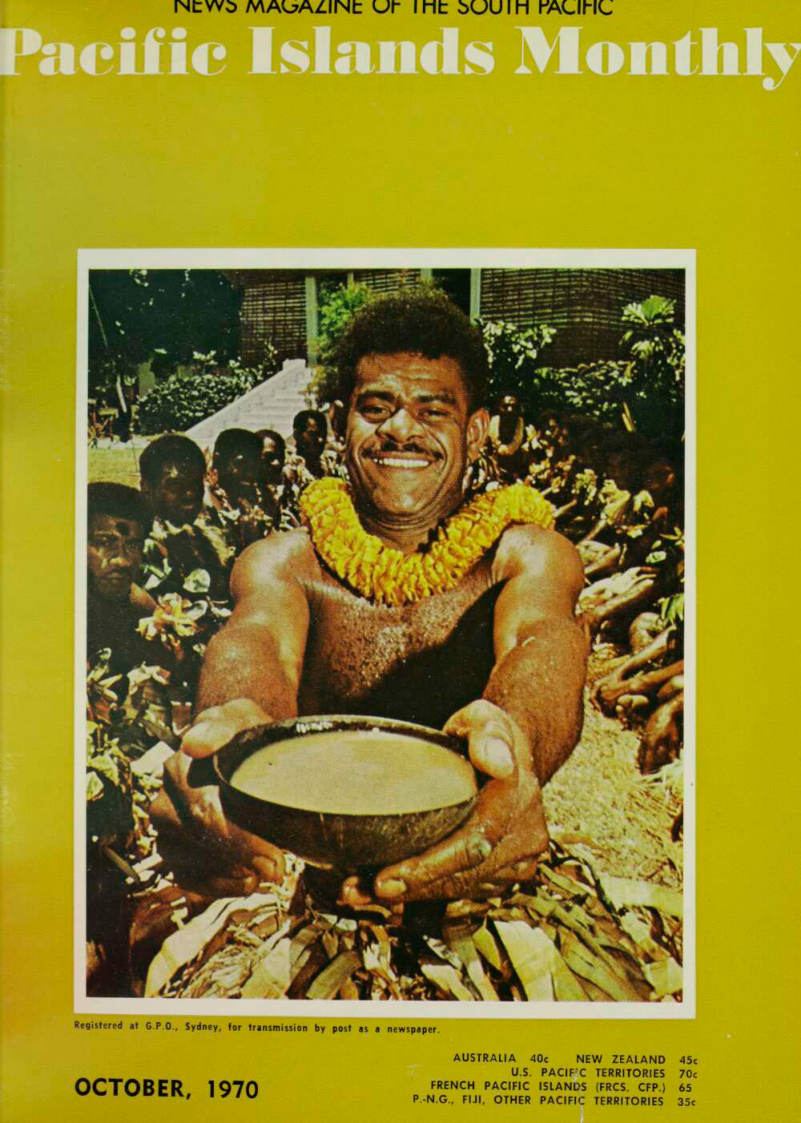 1
1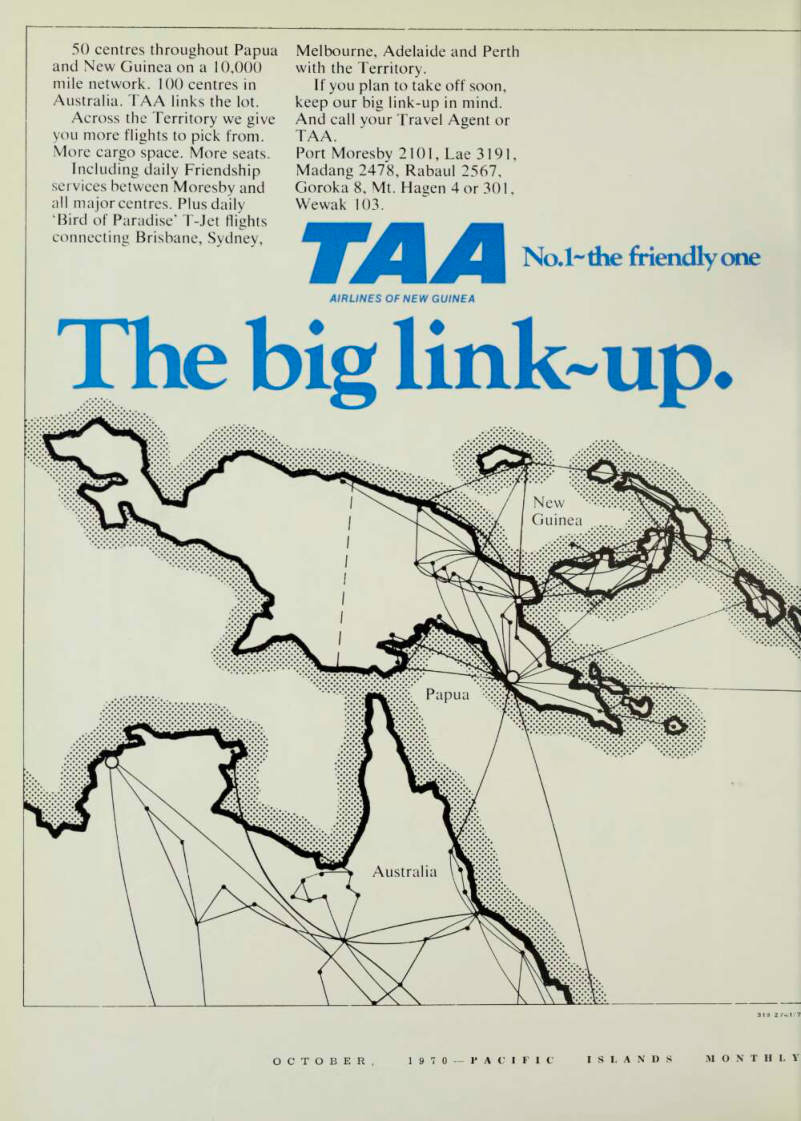 2
2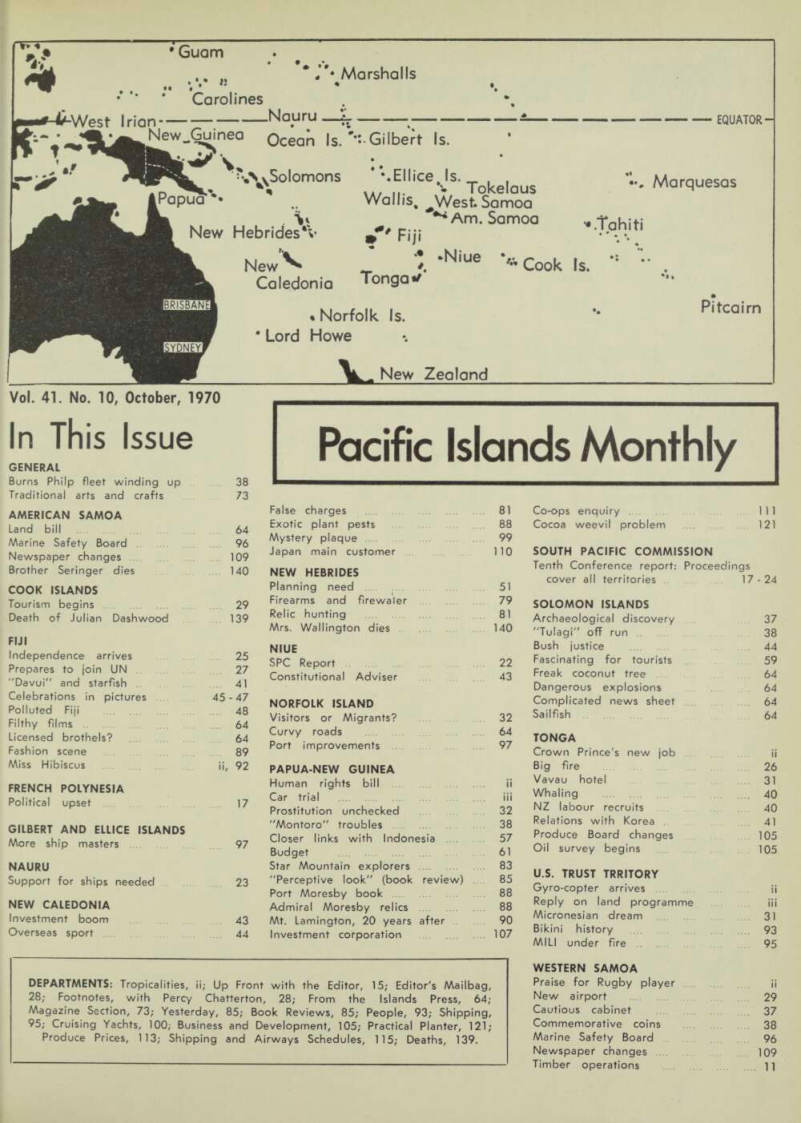 3
3 4
4 5
5 6
6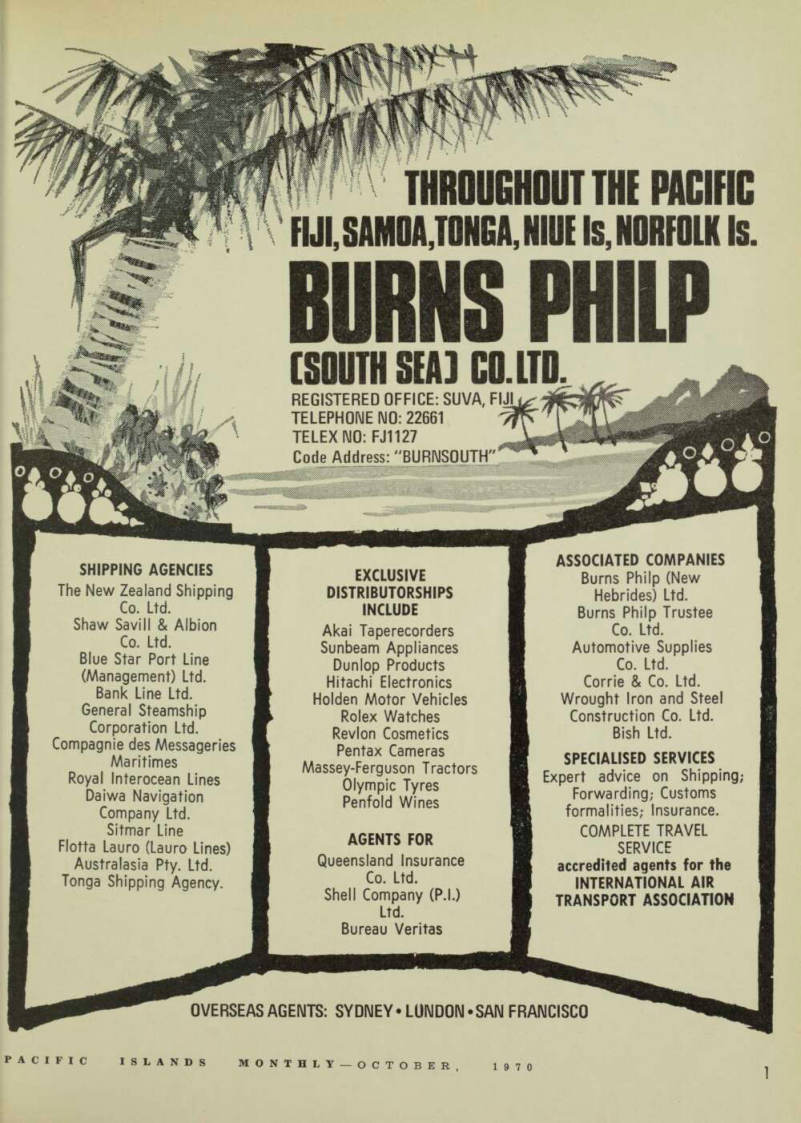 7
7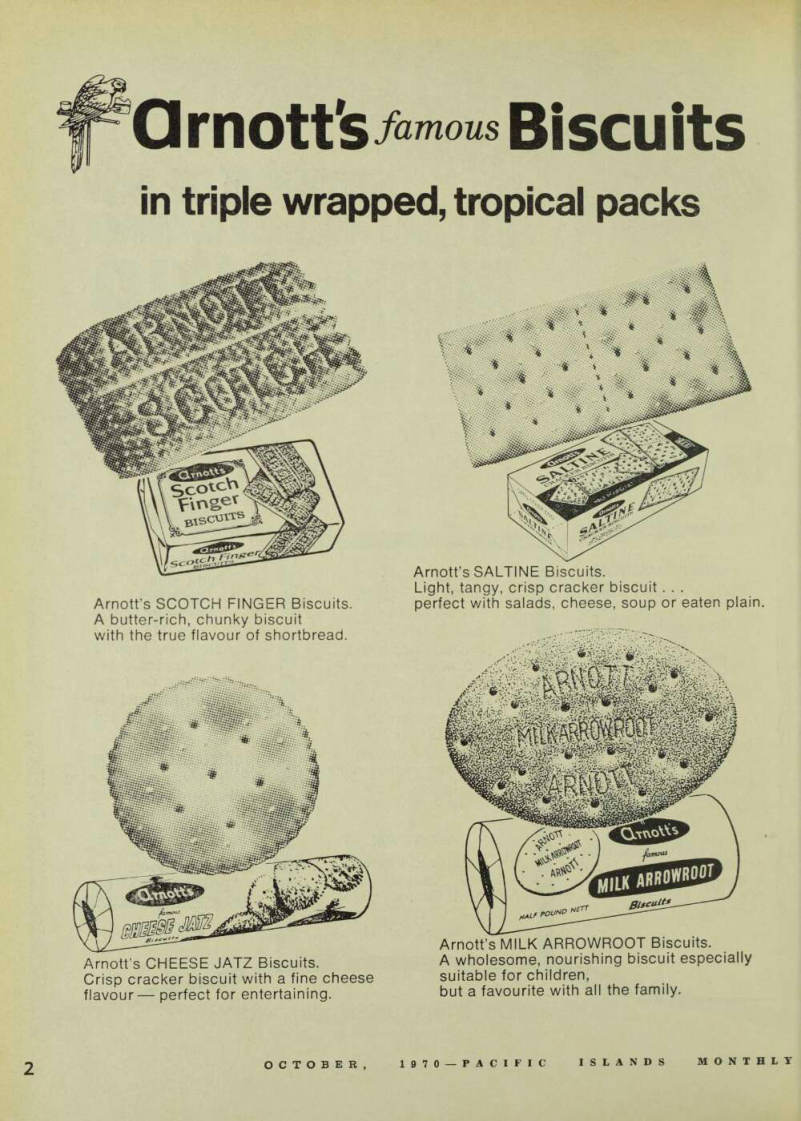 8
8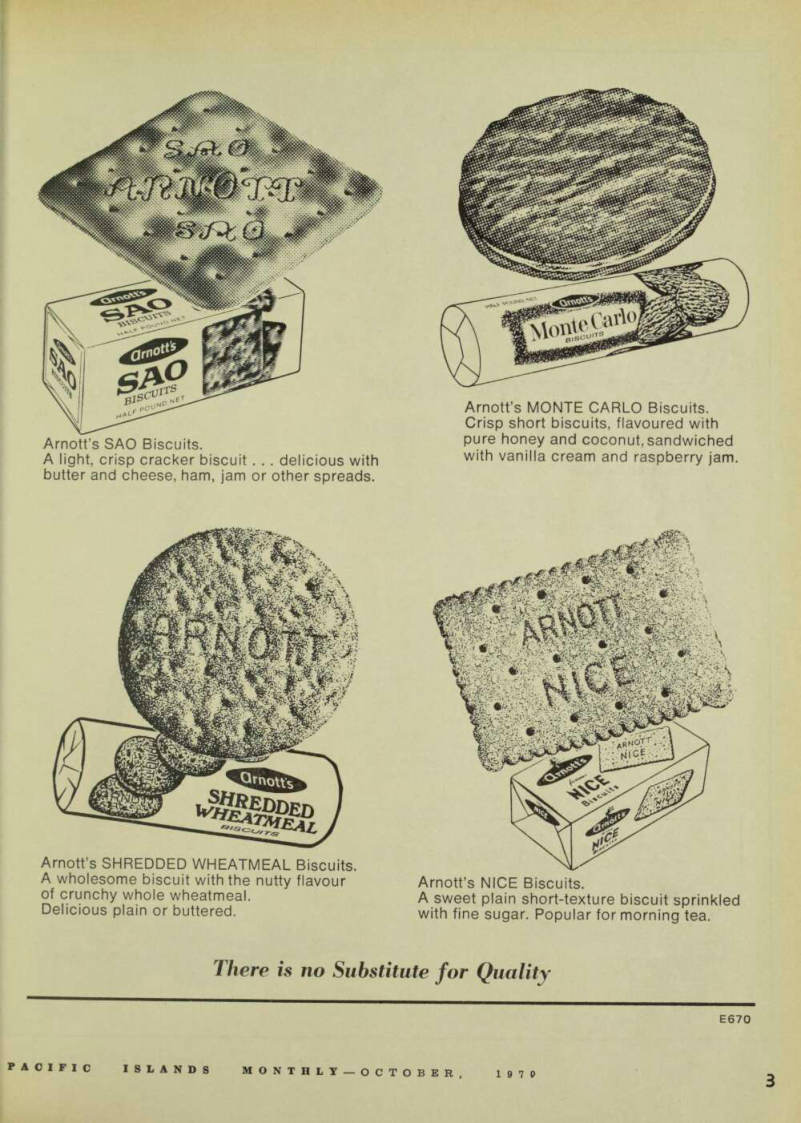 9
9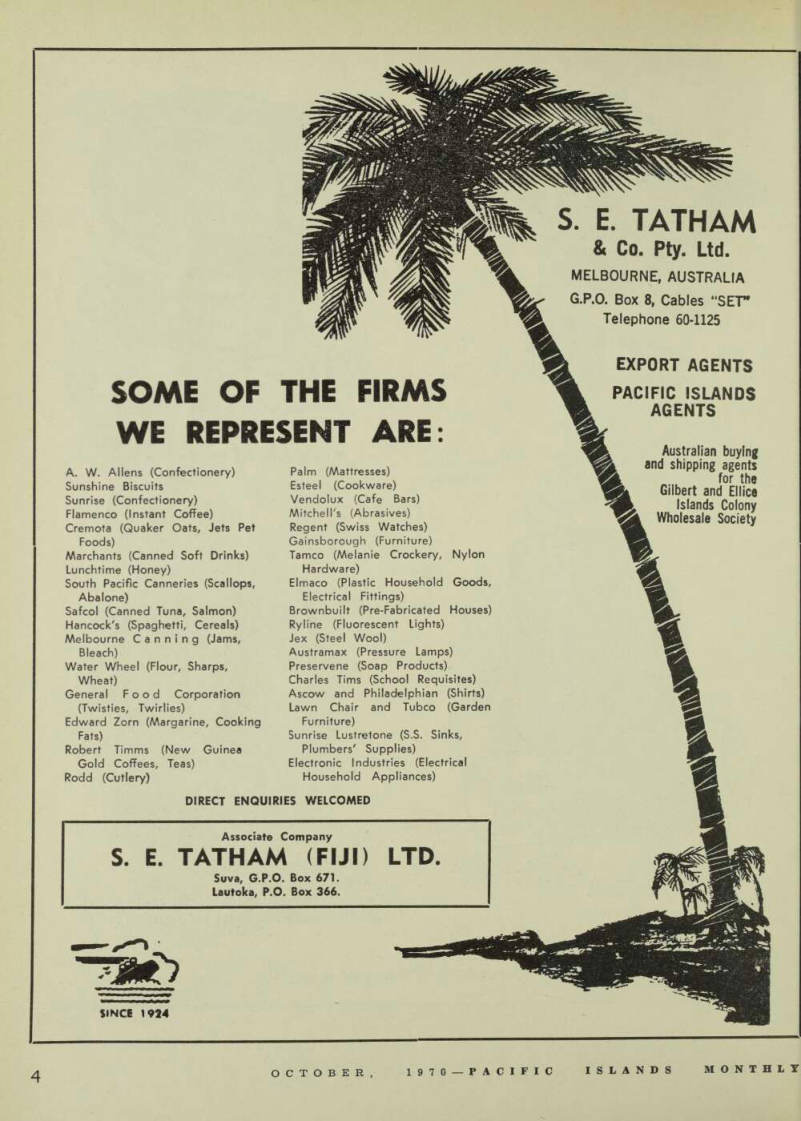 10
10 11
11 12
12 13
13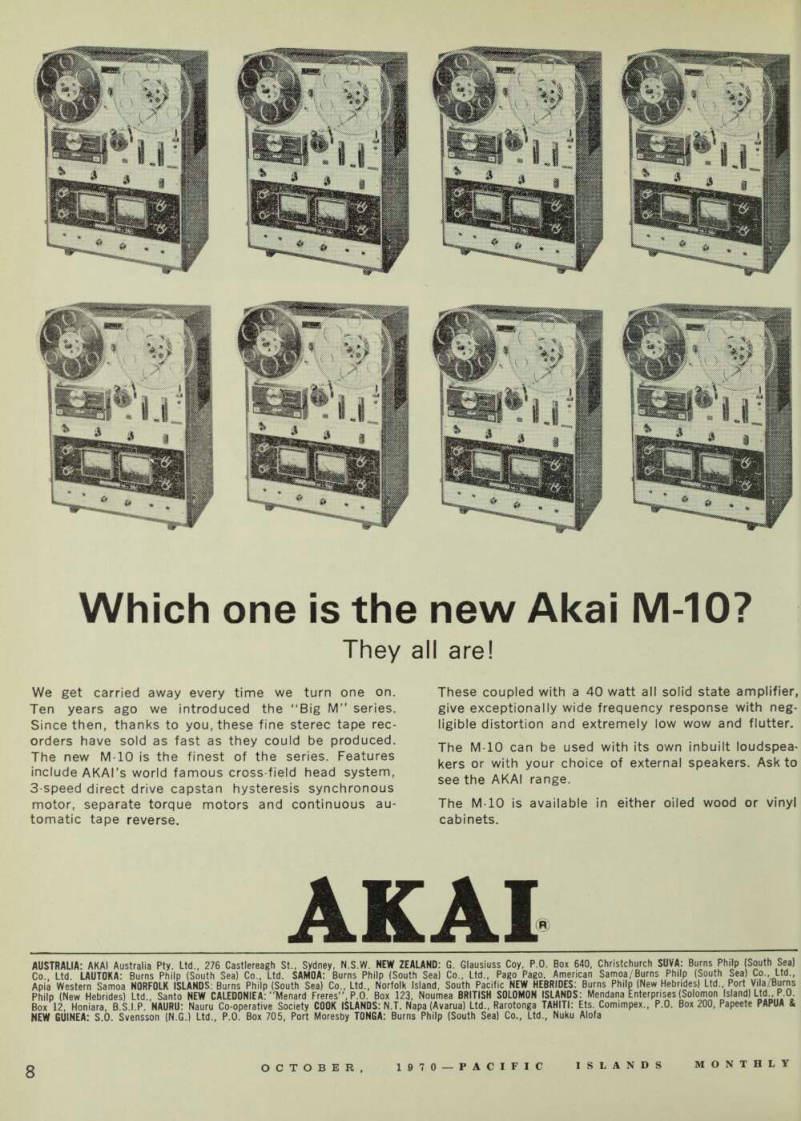 14
14 15
15 16
16 17
17 18
18 19
19 20
20 21
21 22
22 23
23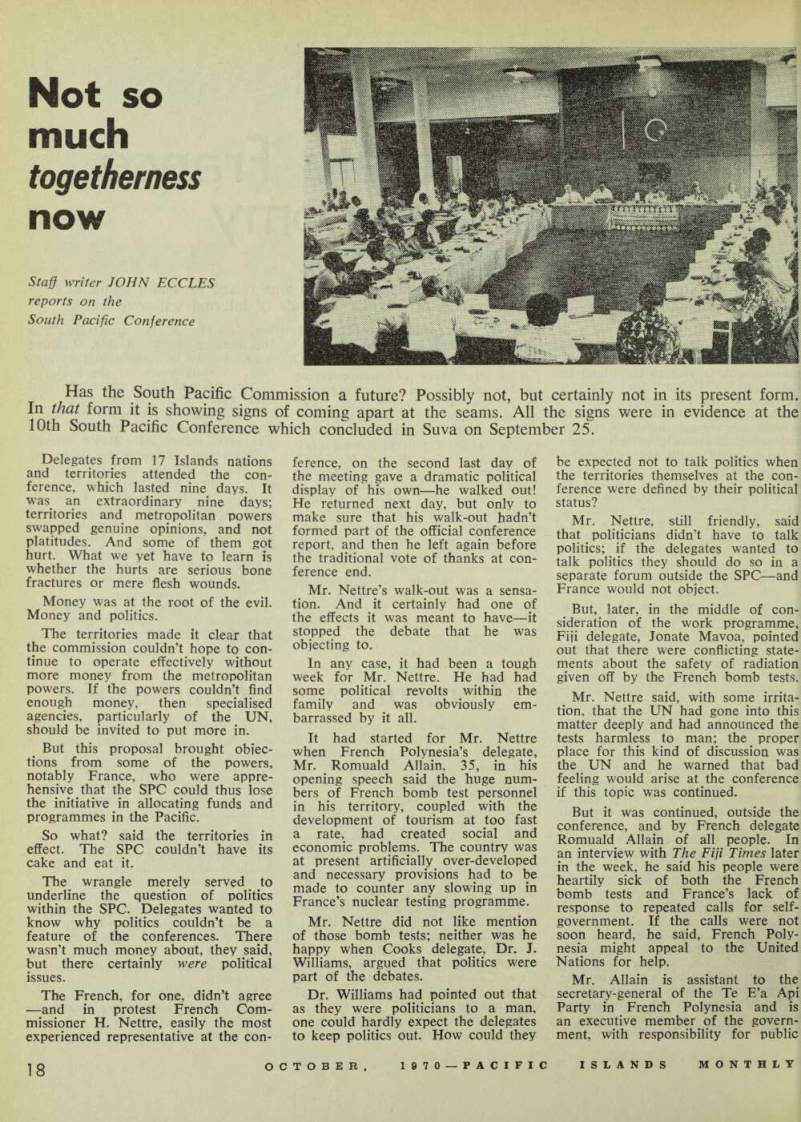 24
24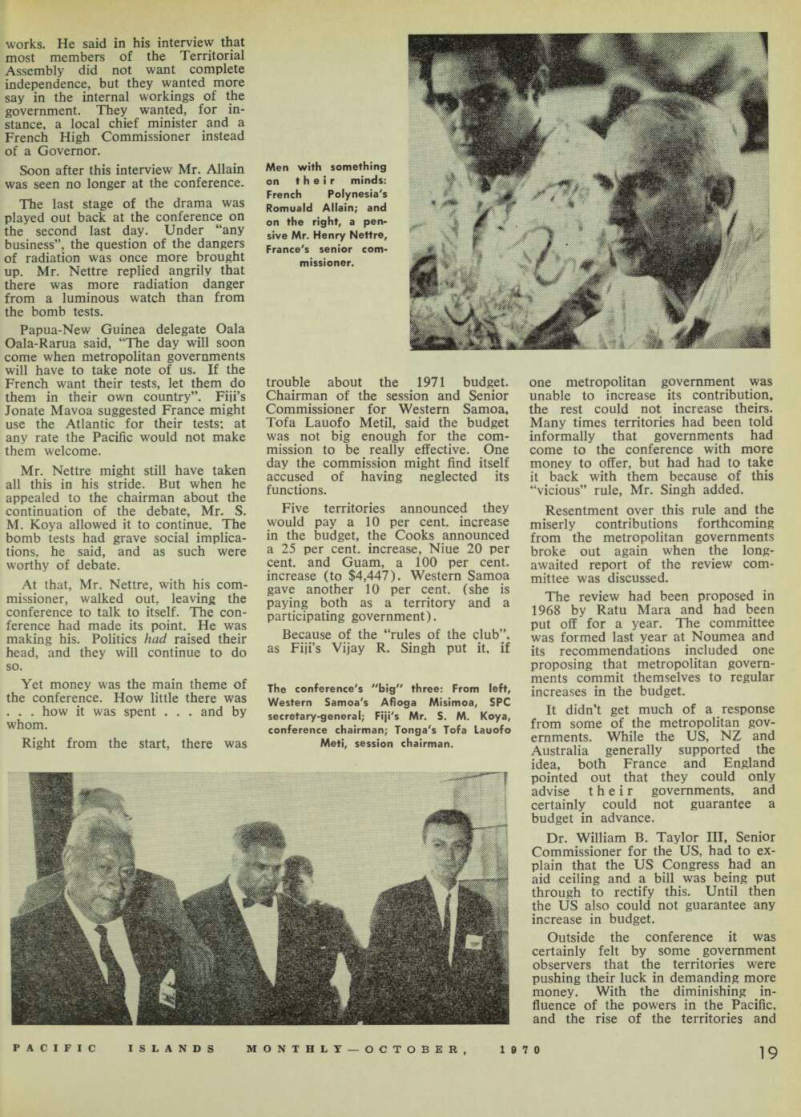 25
25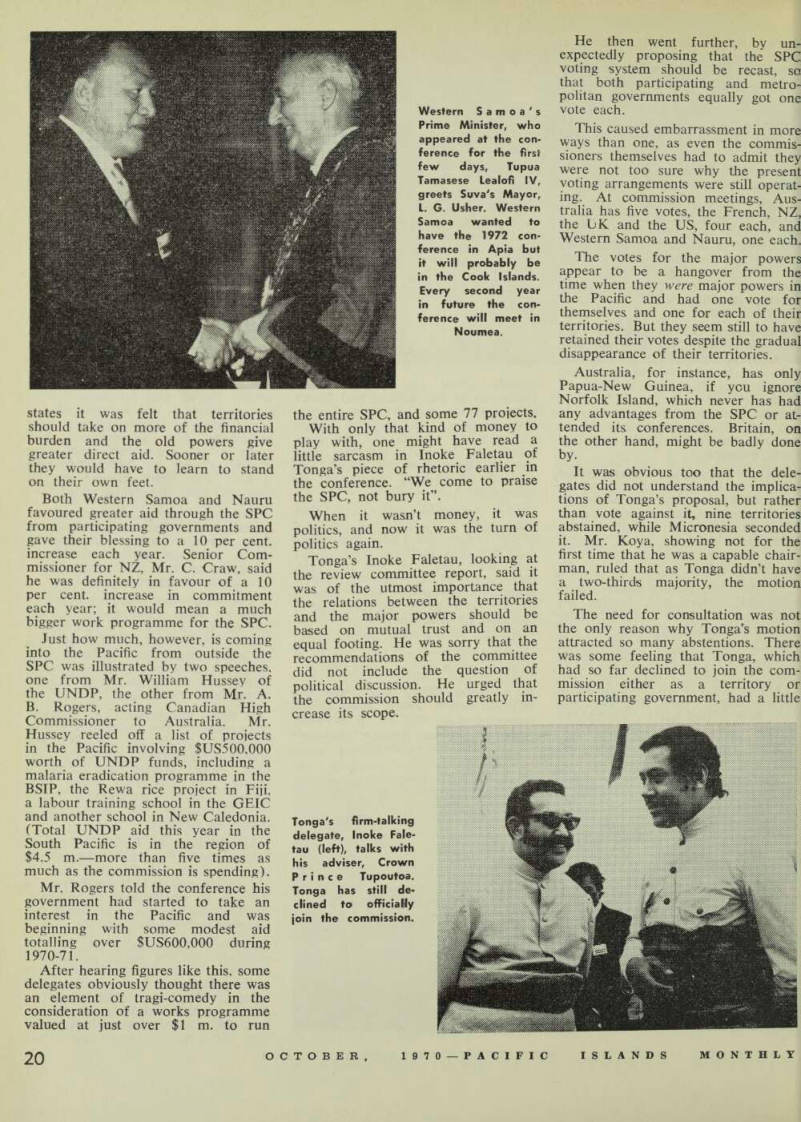 26
26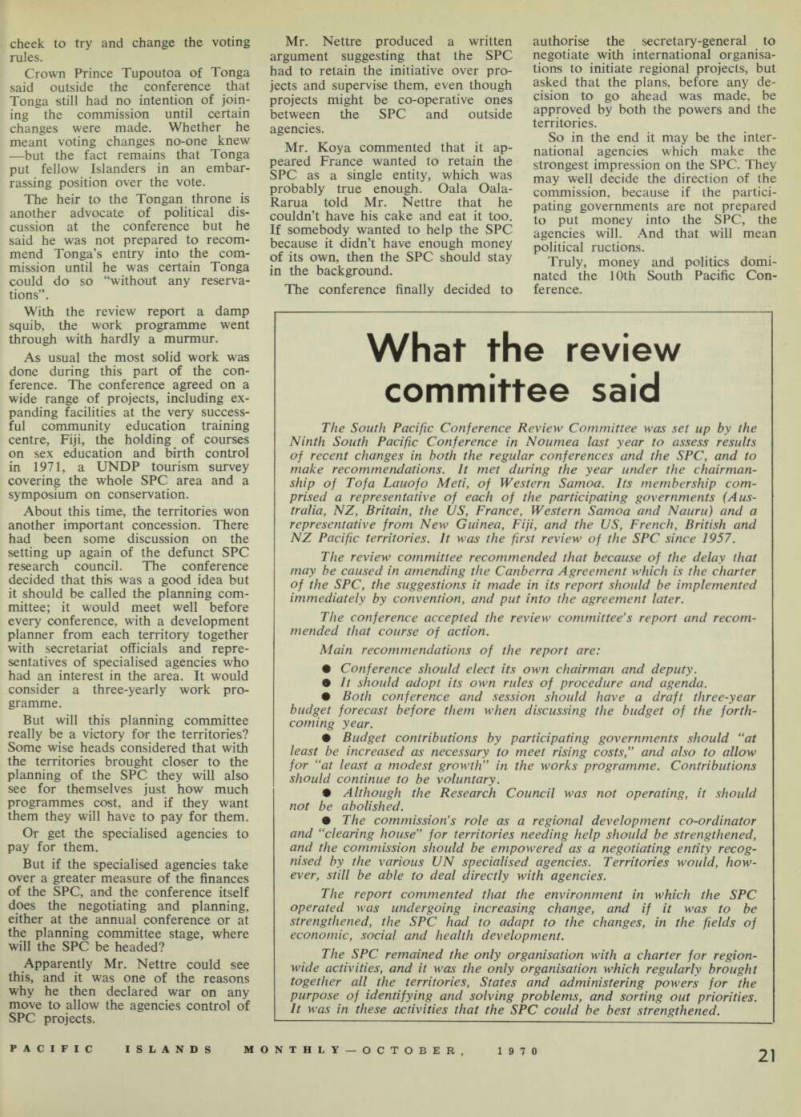 27
27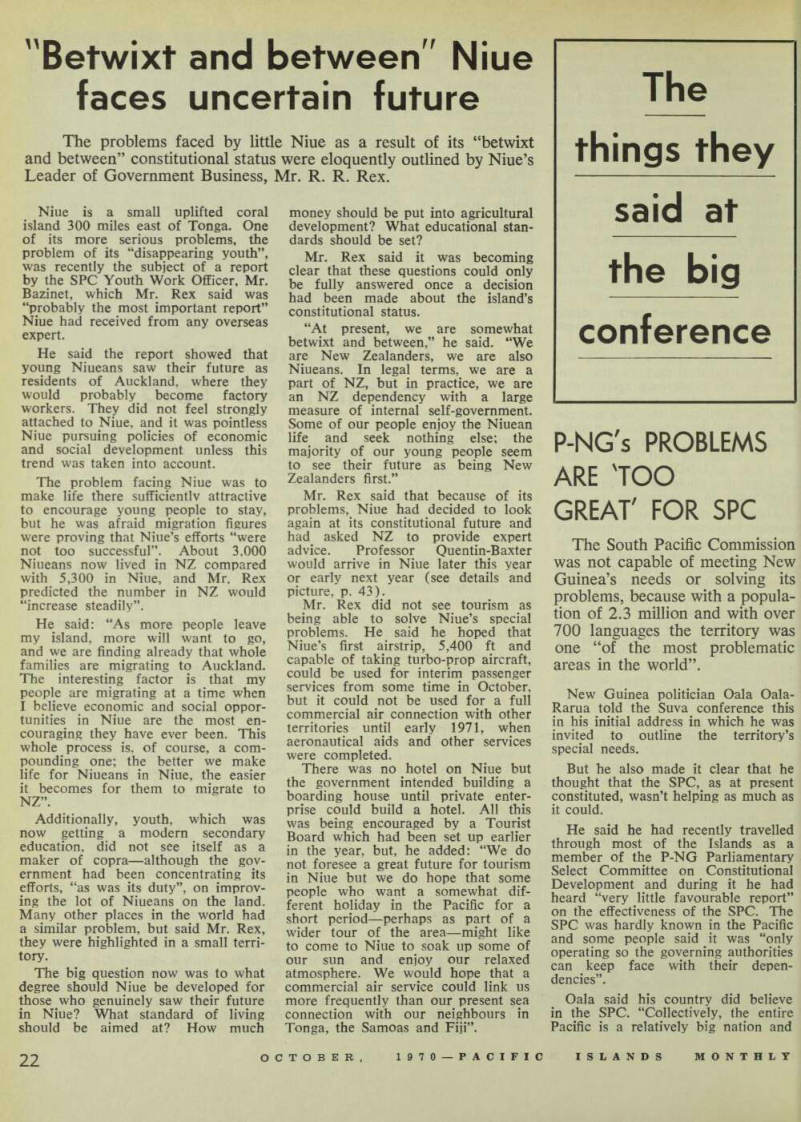 28
28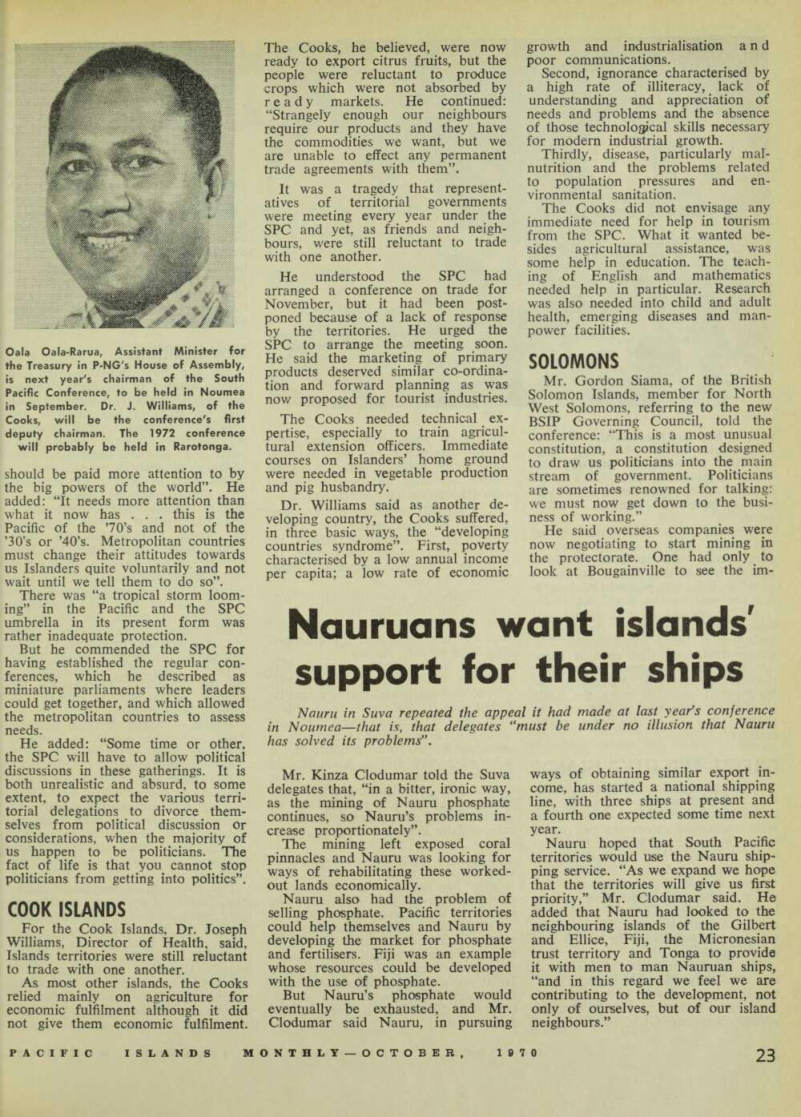 29
29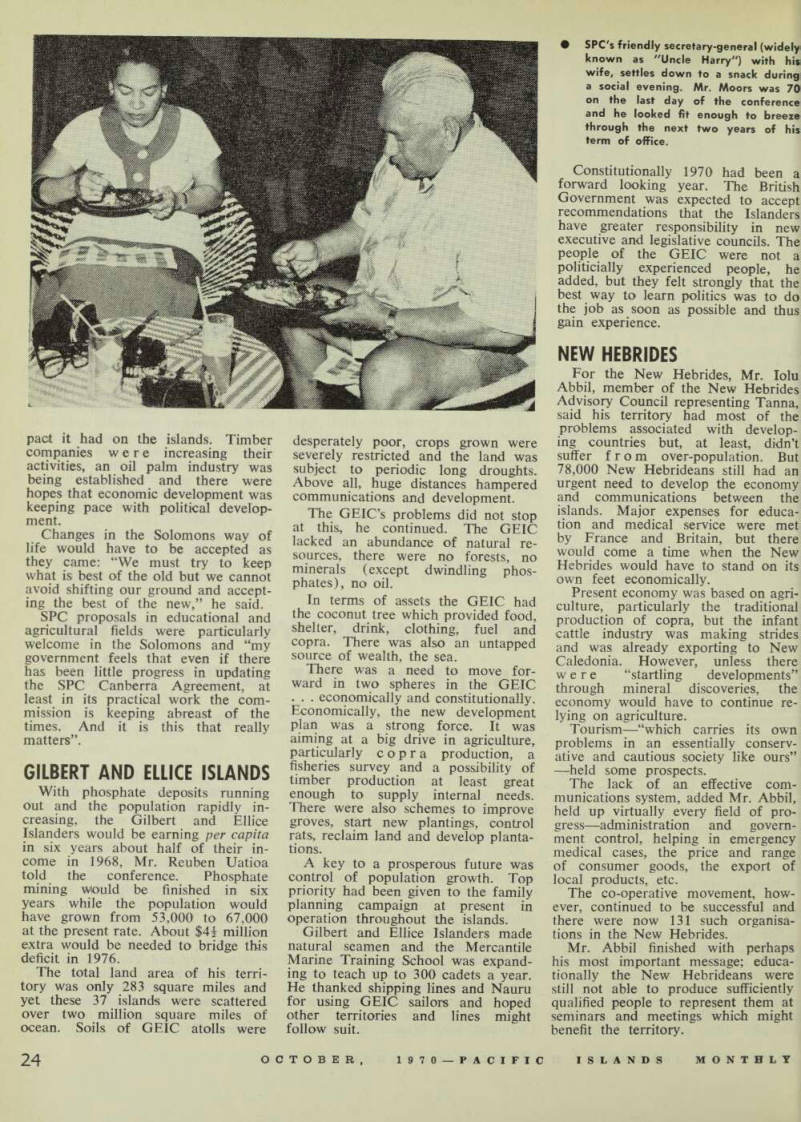 30
30 31
31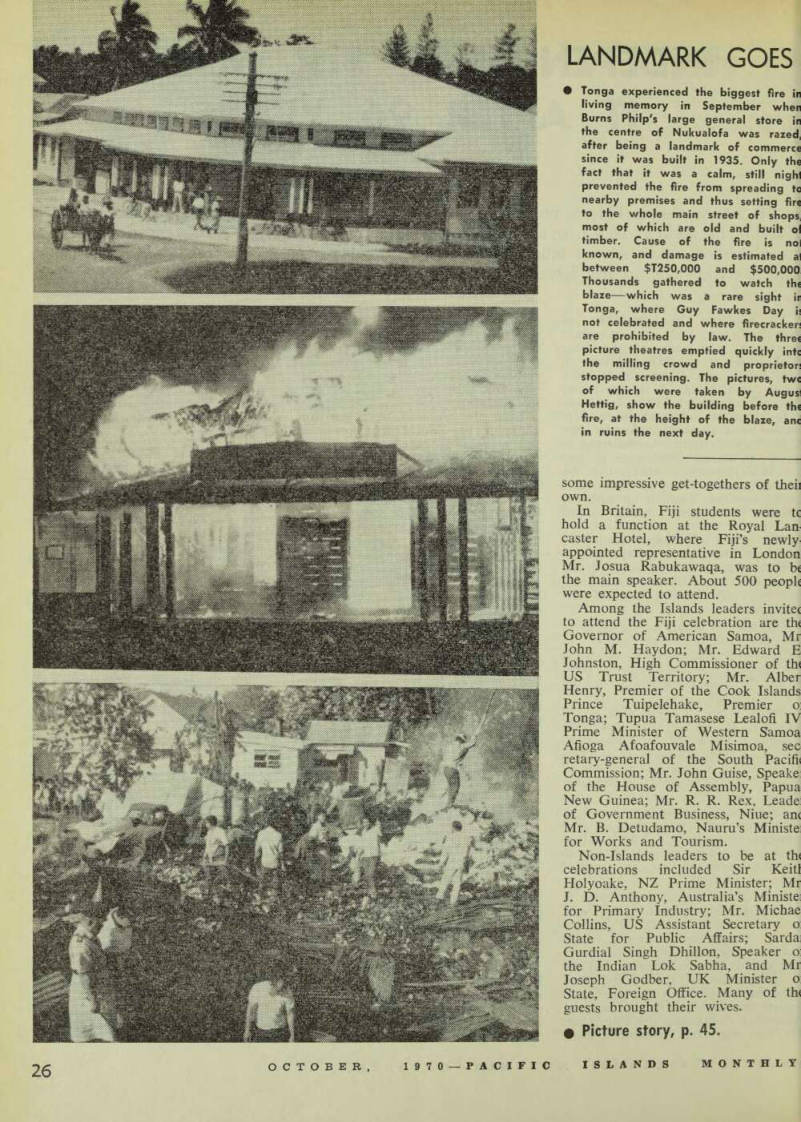 32
32 33
33 34
34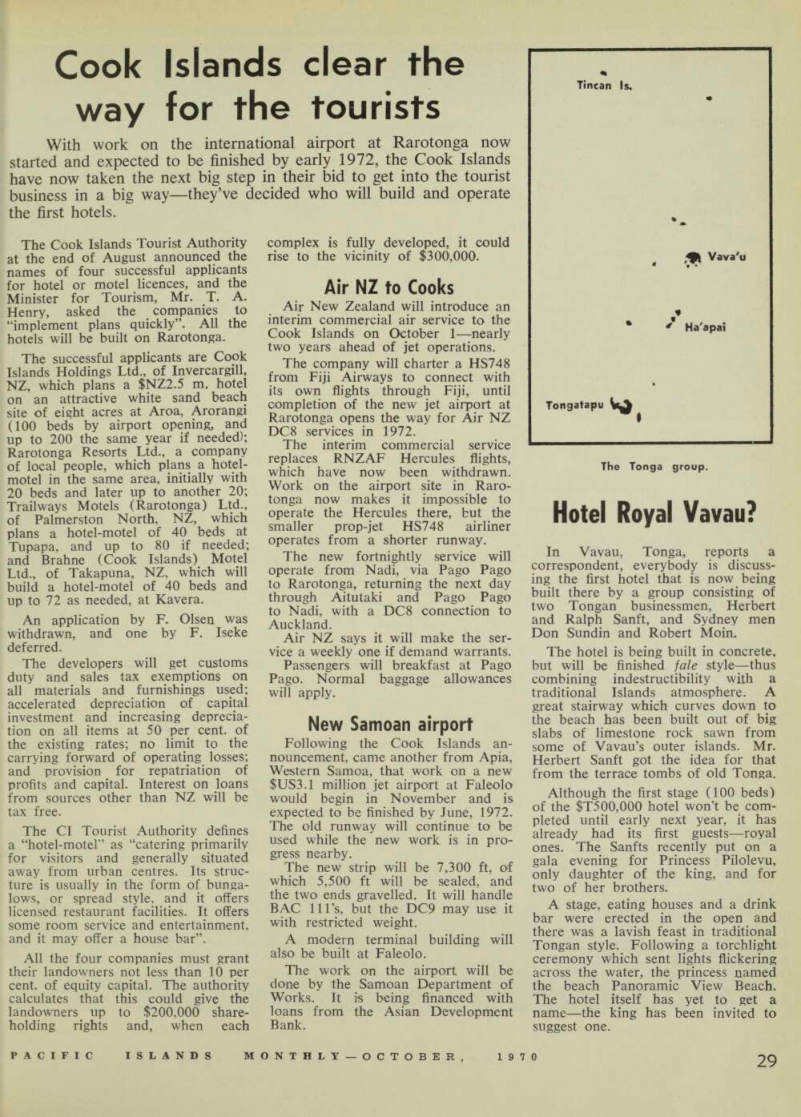 35
35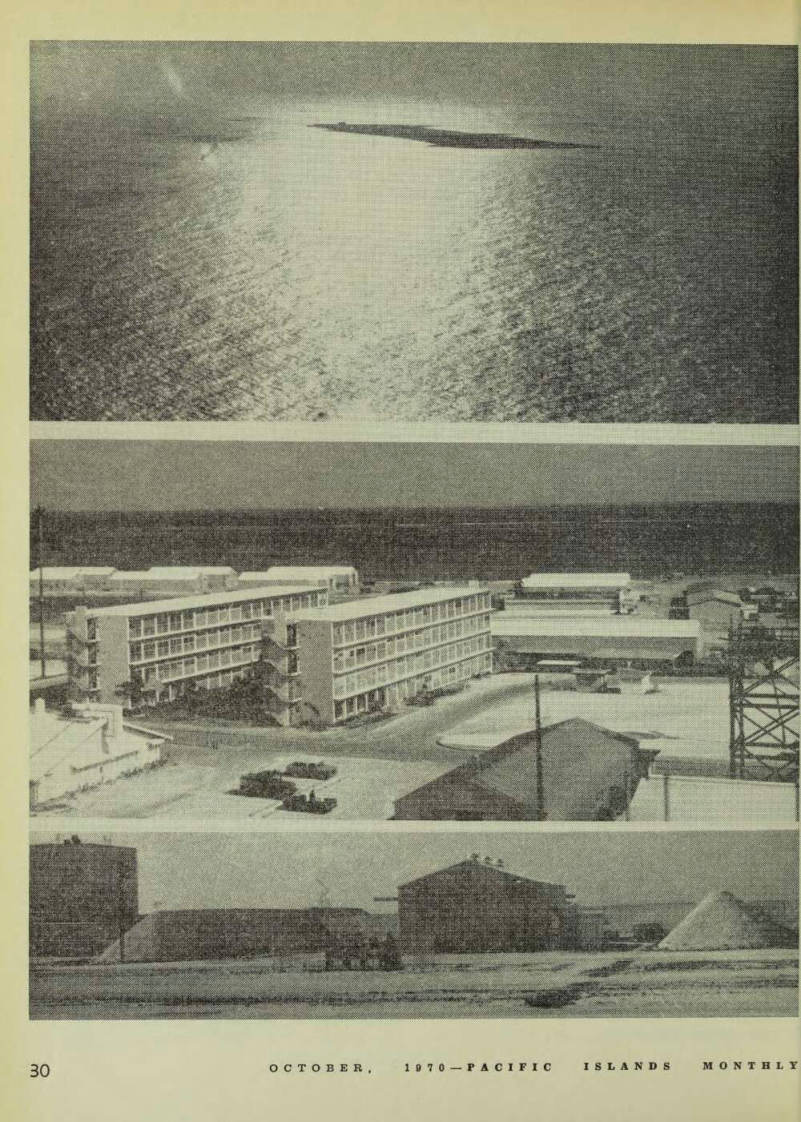 36
36 37
37 38
38 39
39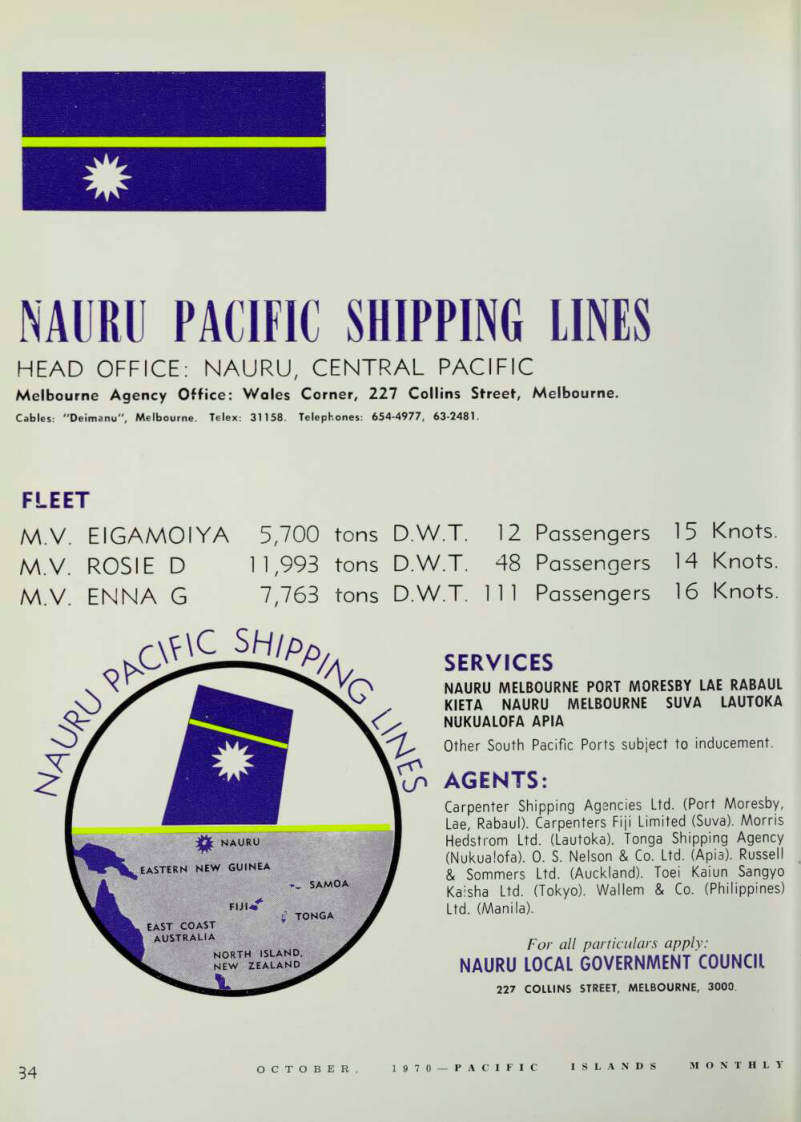 40
40 41
41 42
42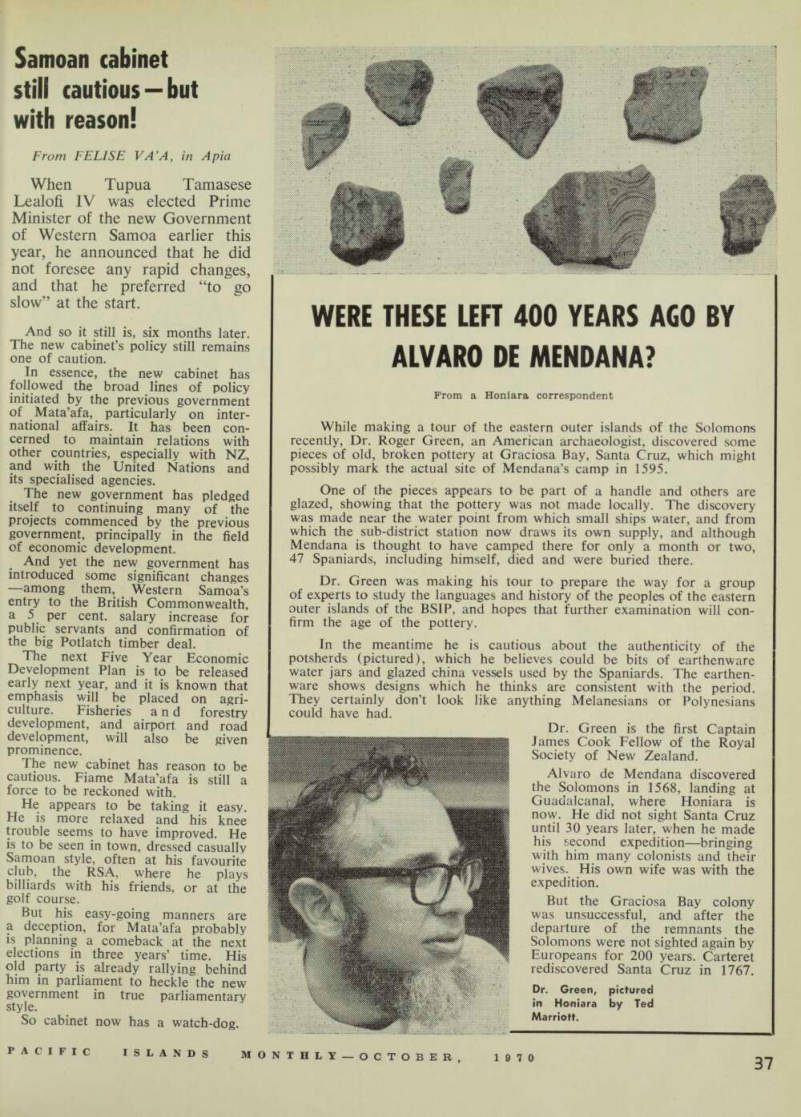 43
43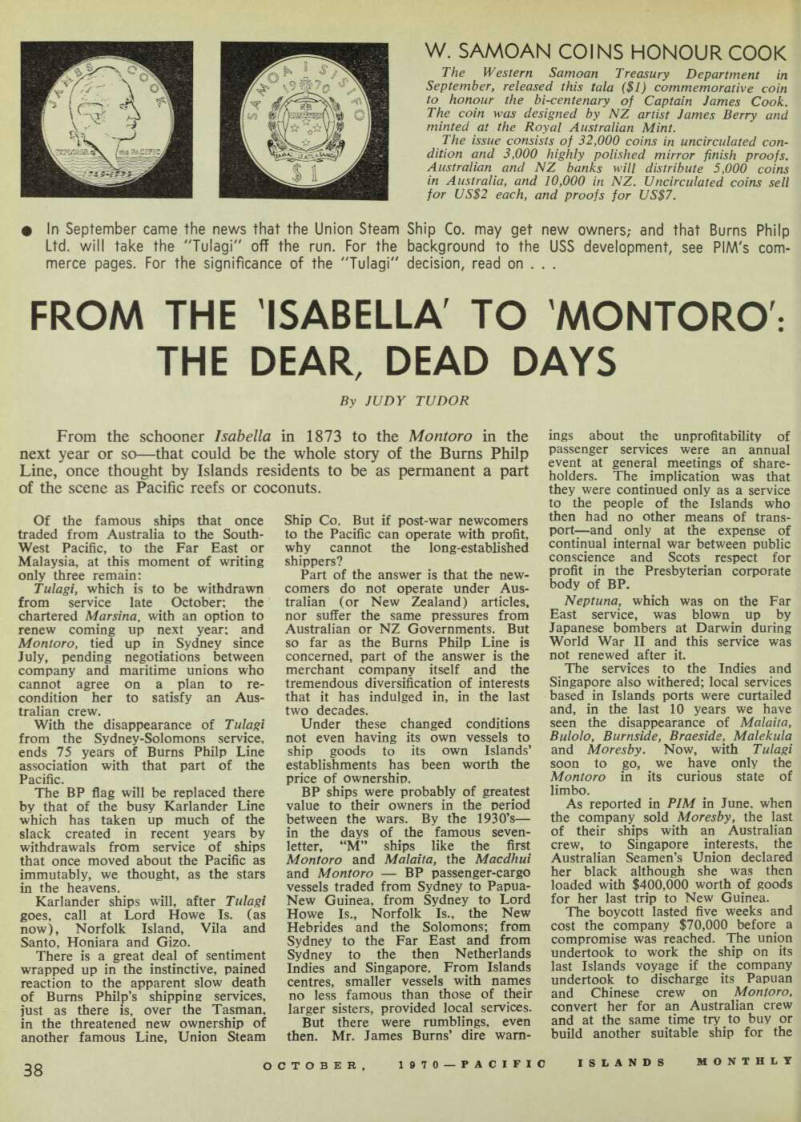 44
44 45
45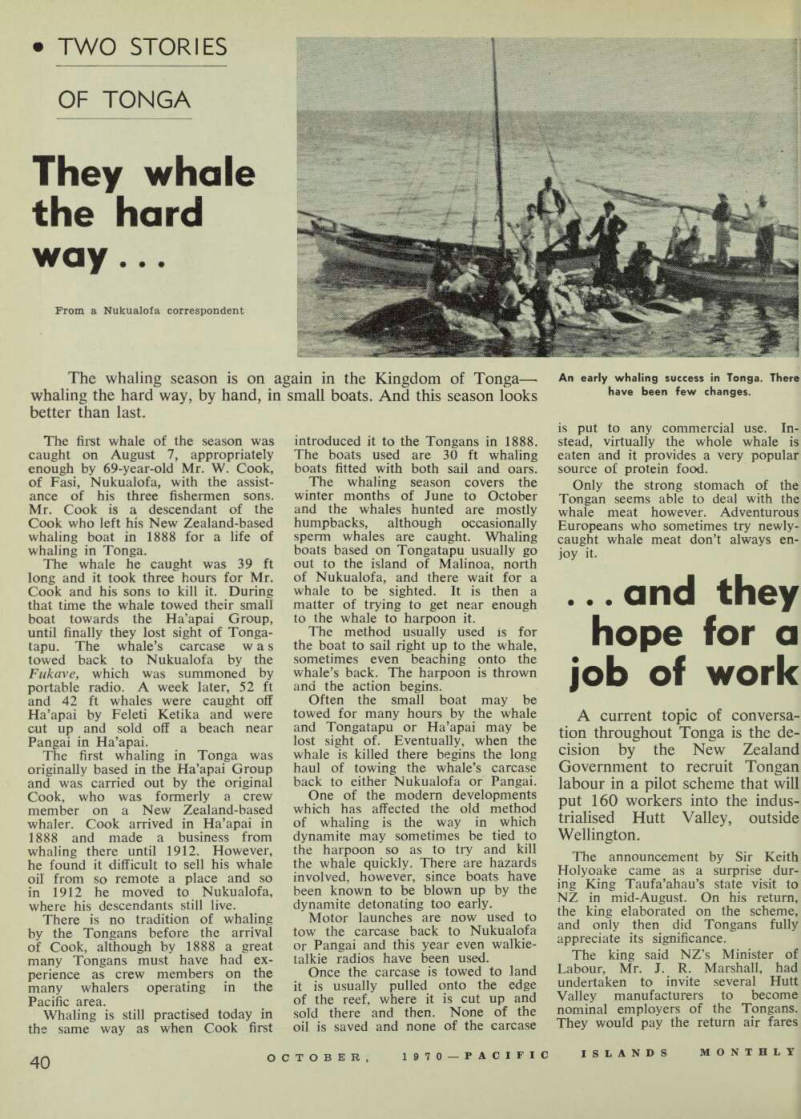 46
46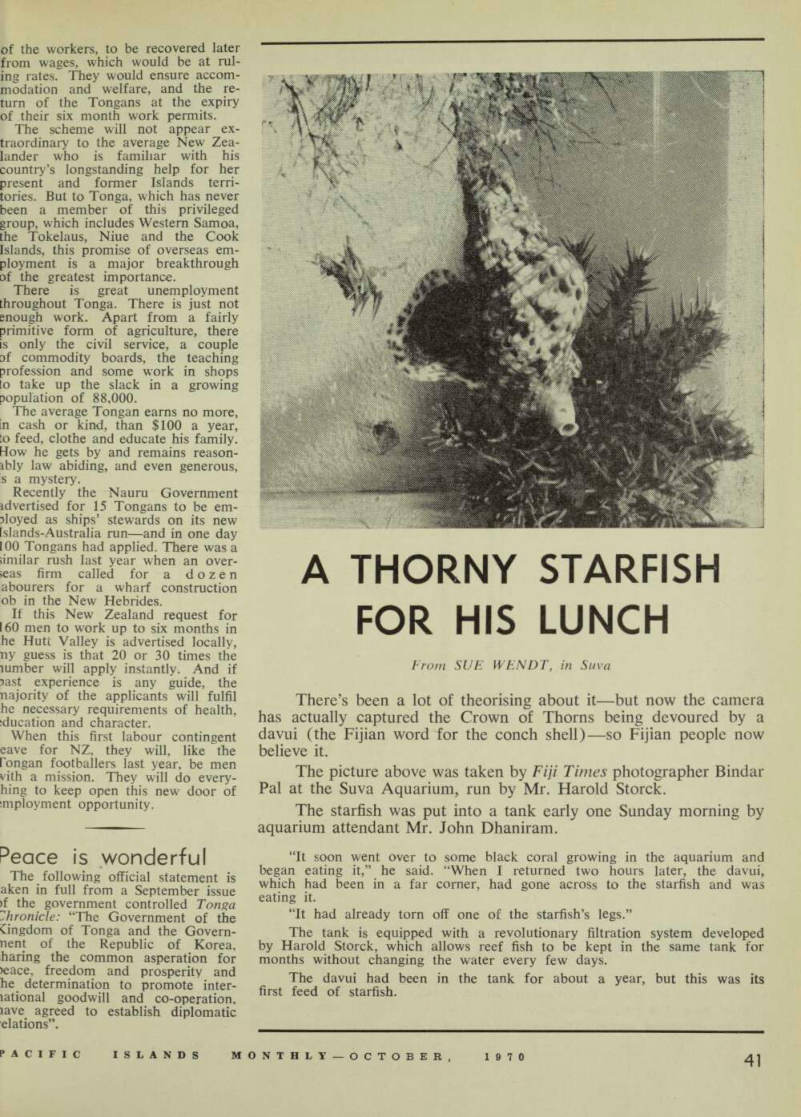 47
47 48
48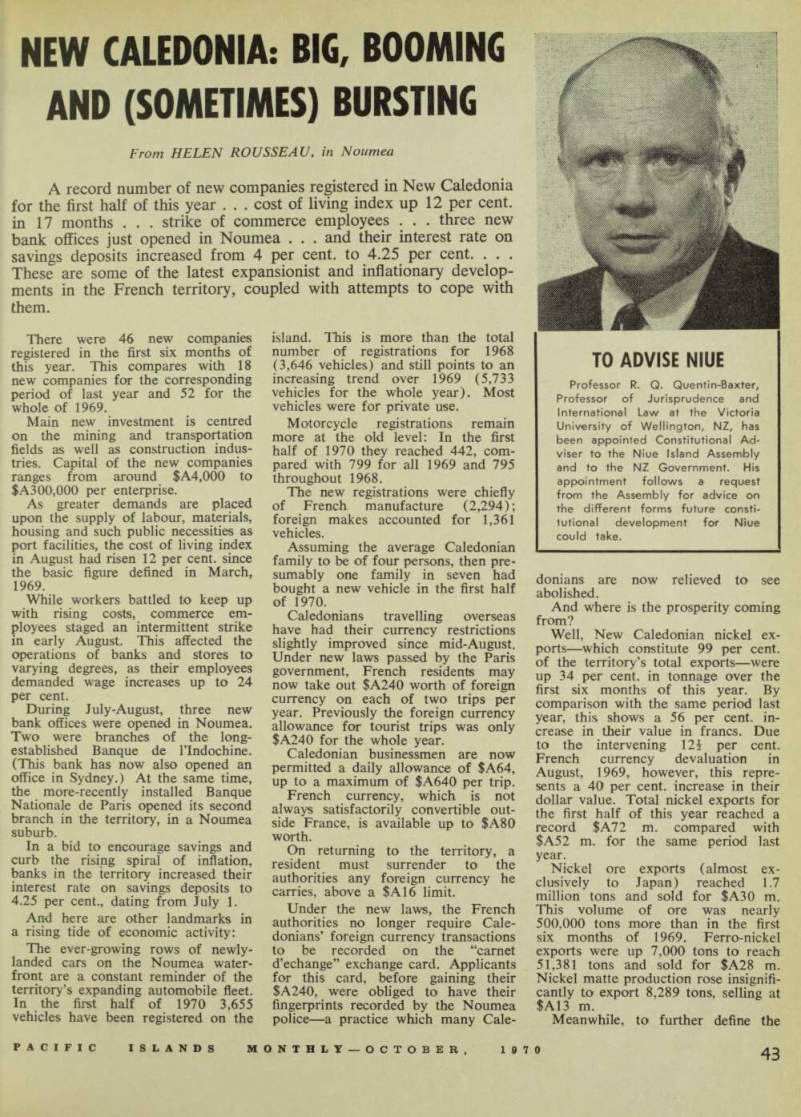 49
49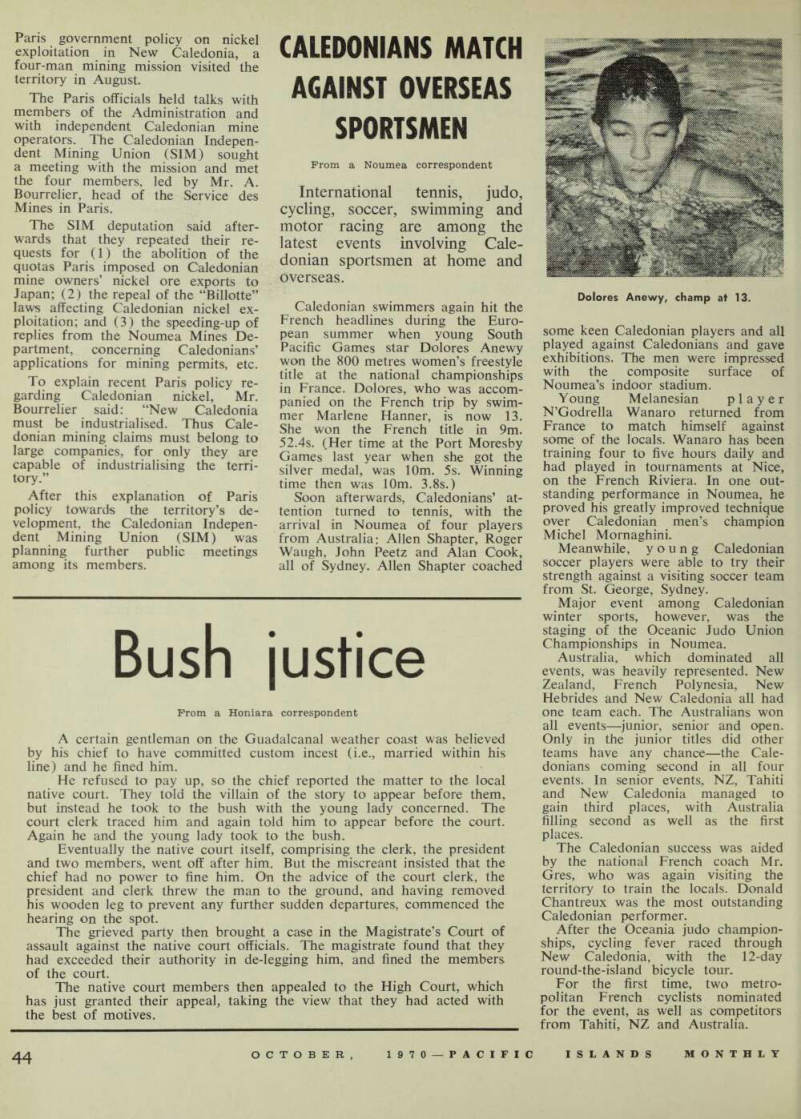 50
50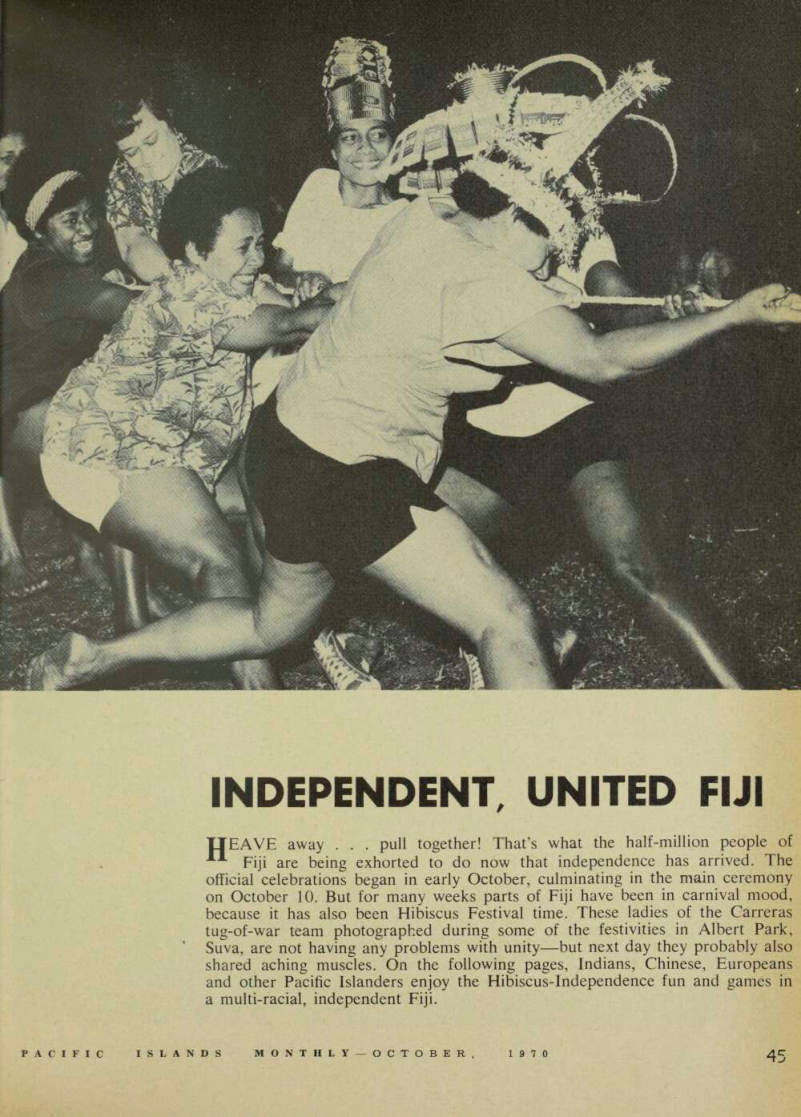 51
51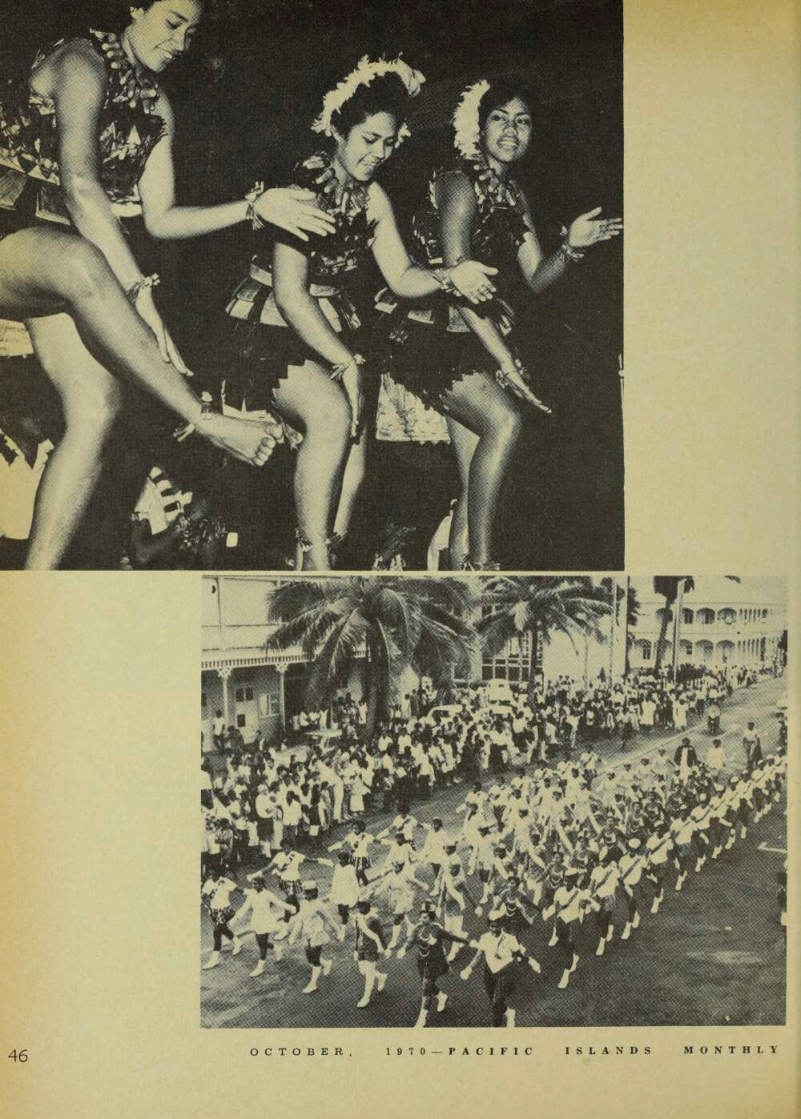 52
52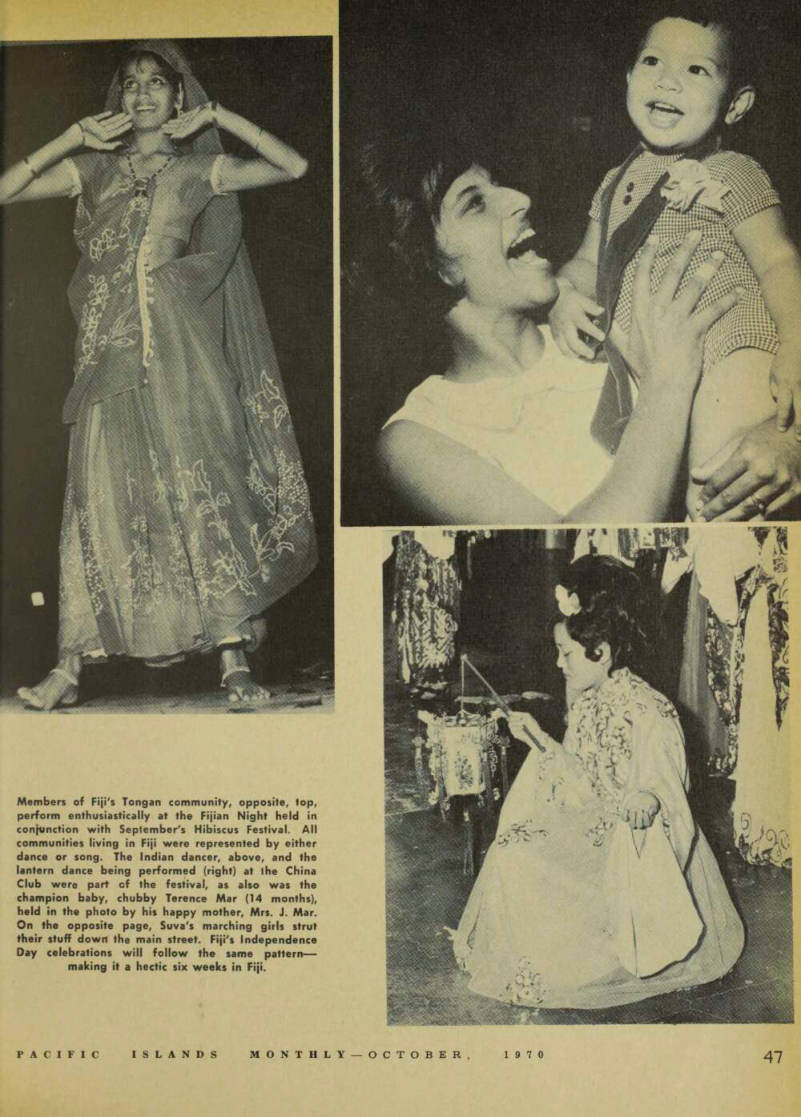 53
53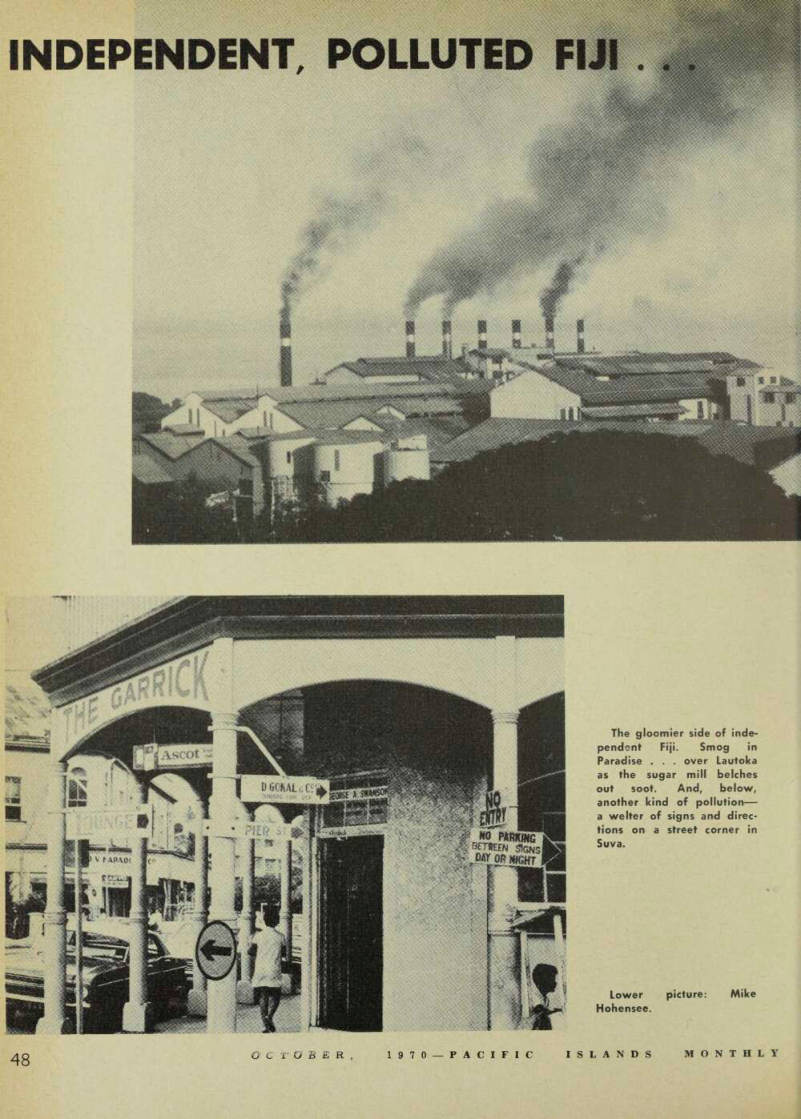 54
54 55
55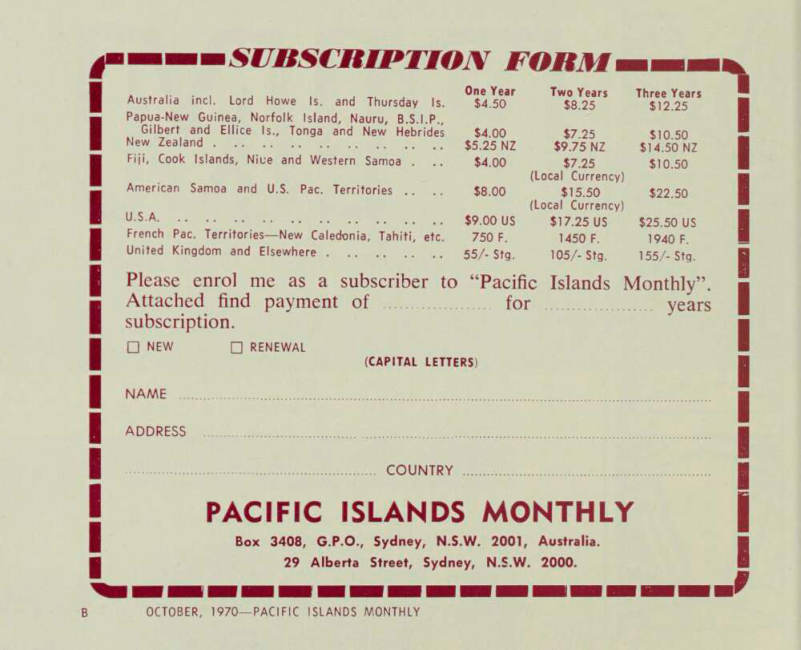 56
56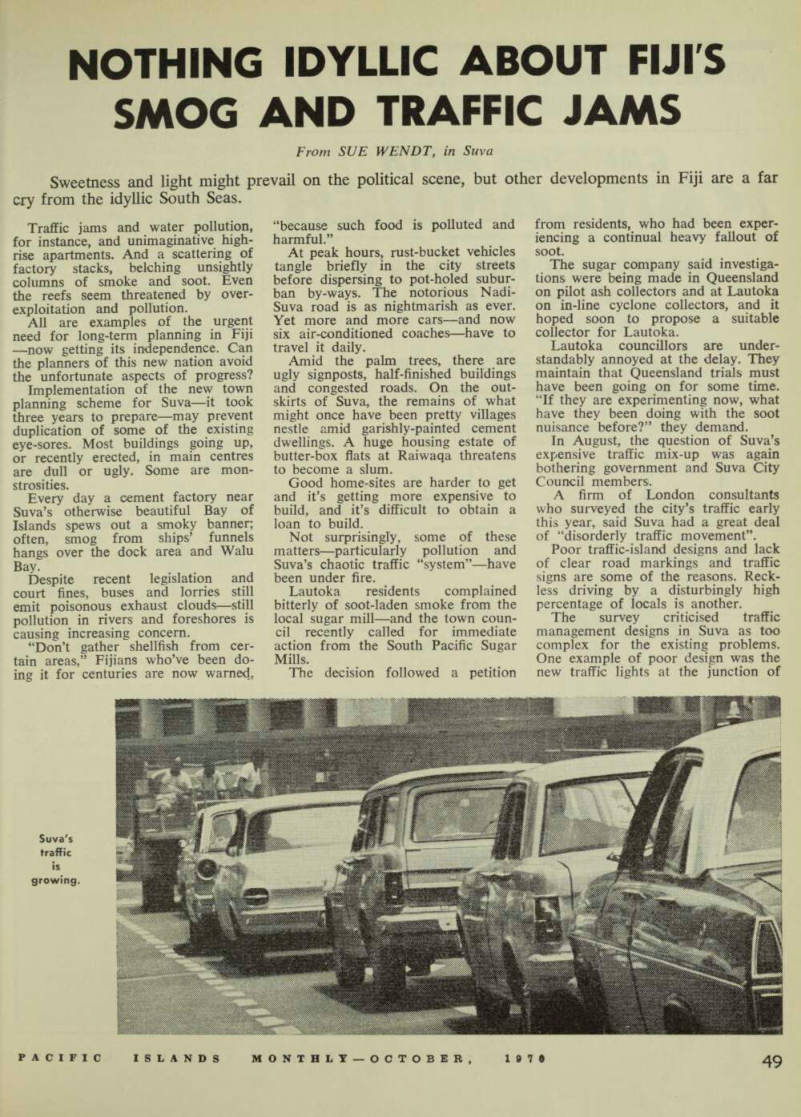 57
57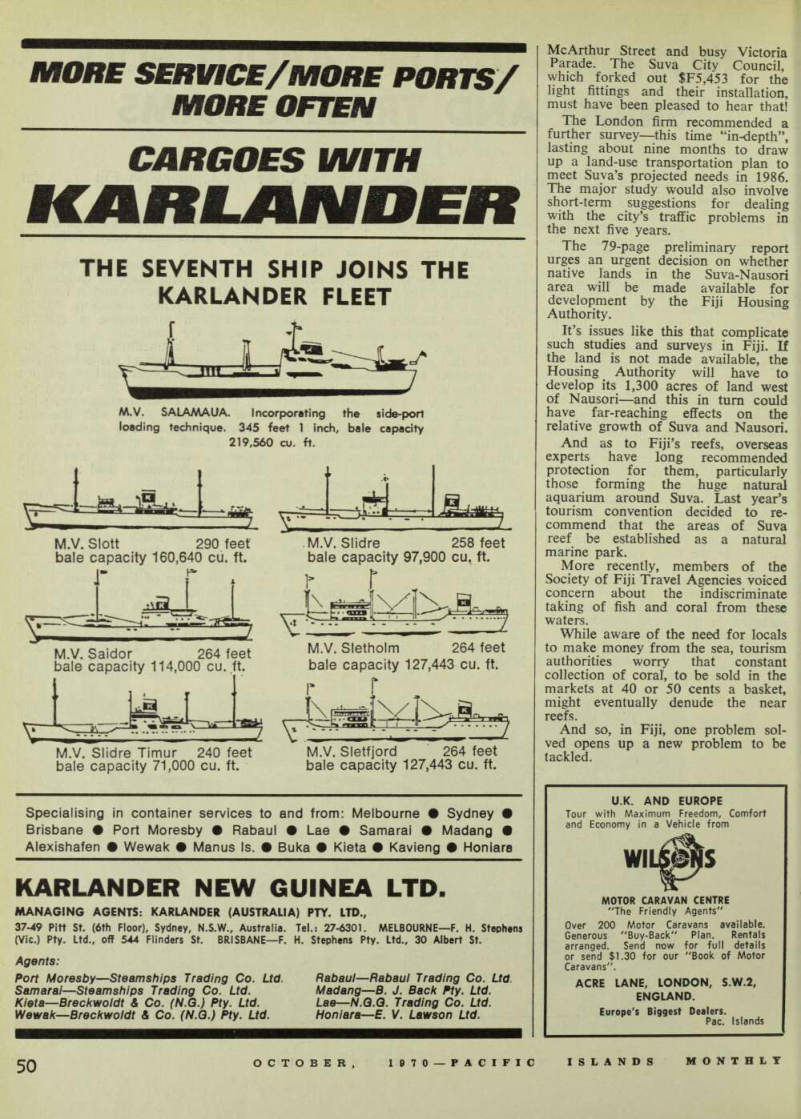 58
58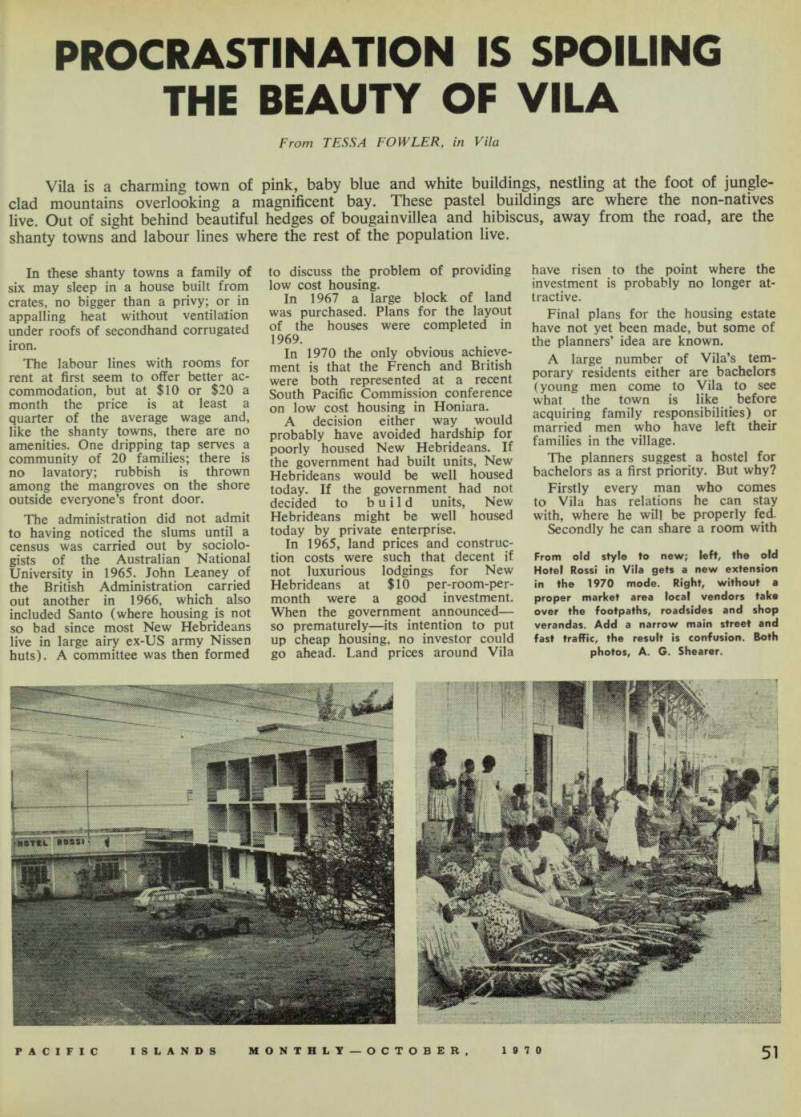 59
59 60
60 61
61 62
62 63
63 64
64 65
65 66
66 67
67 68
68 69
69 70
70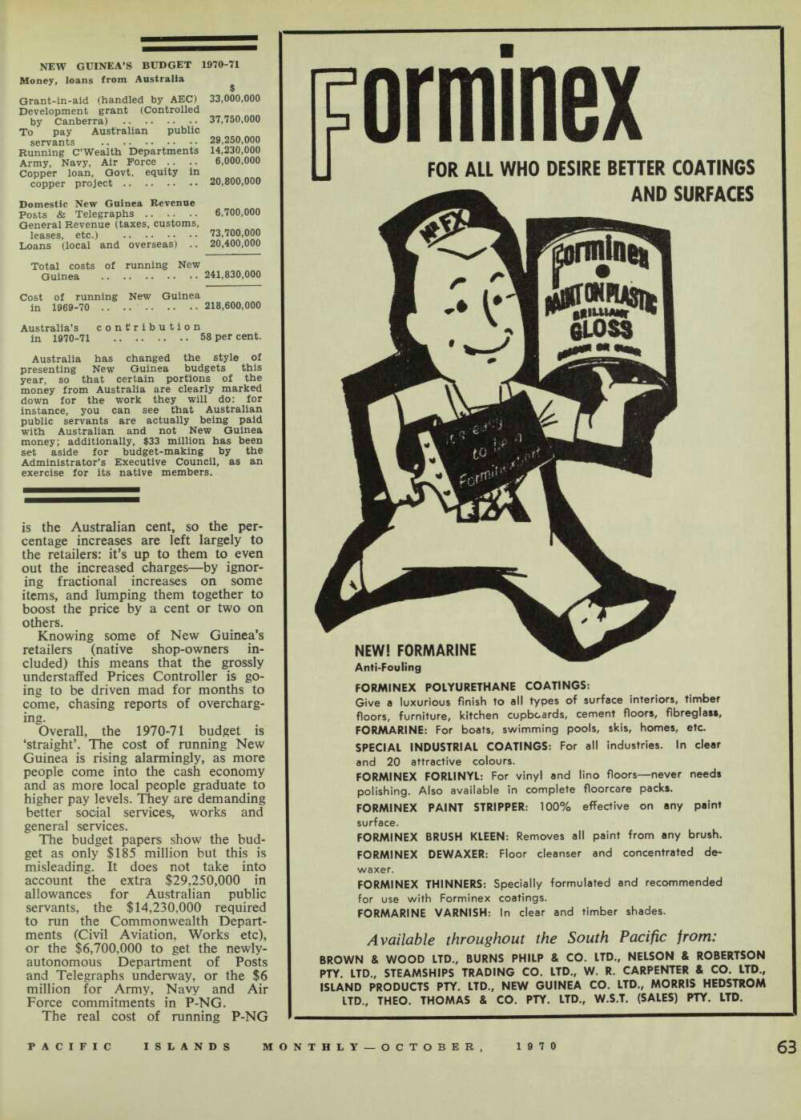 71
71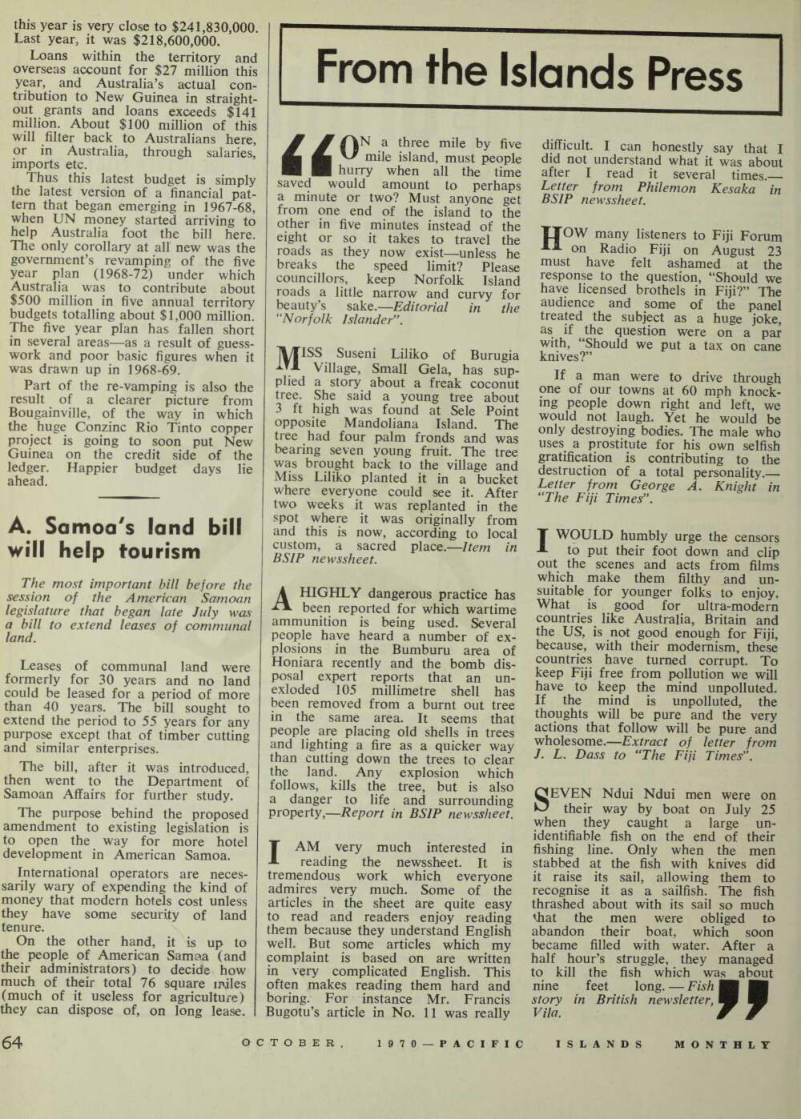 72
72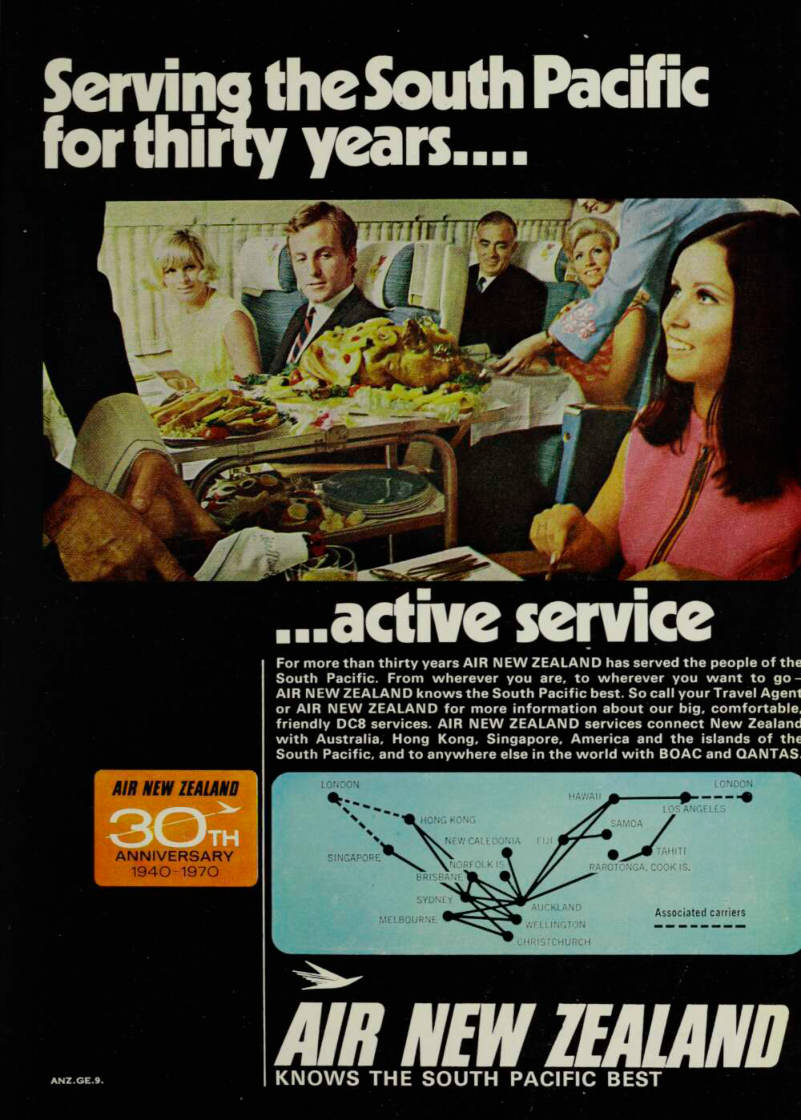 73
73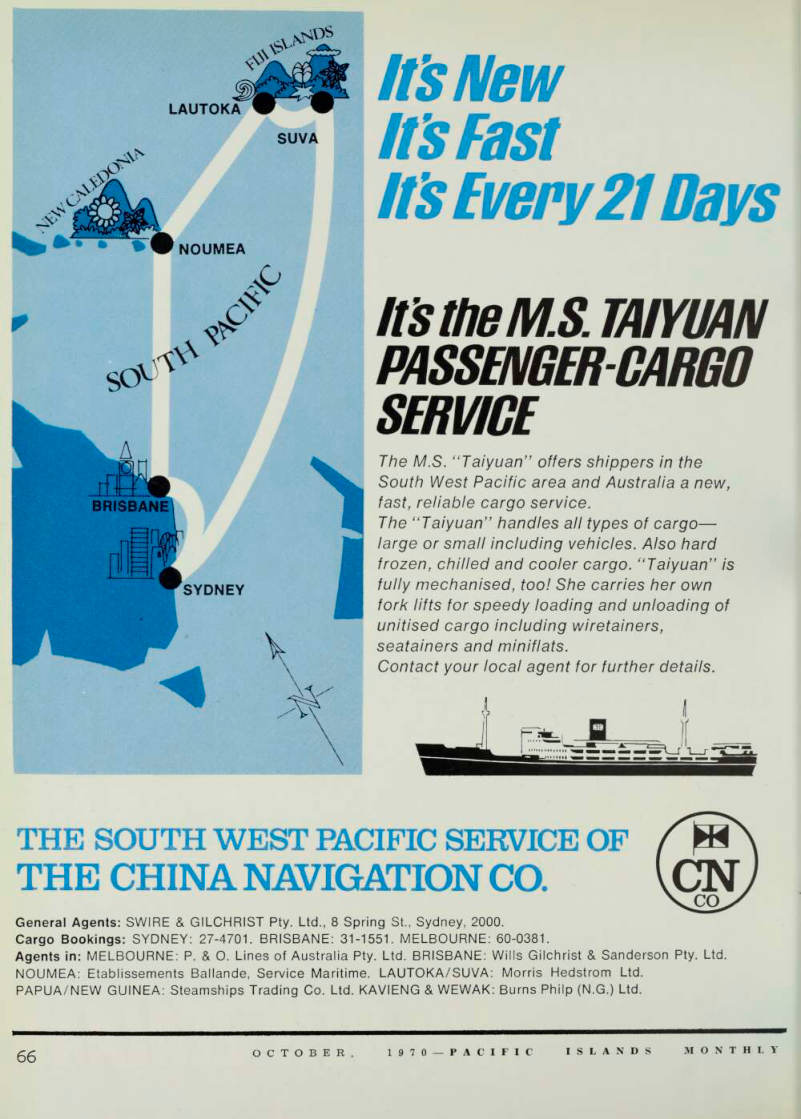 74
74 75
75 76
76 77
77 78
78 79
79 80
80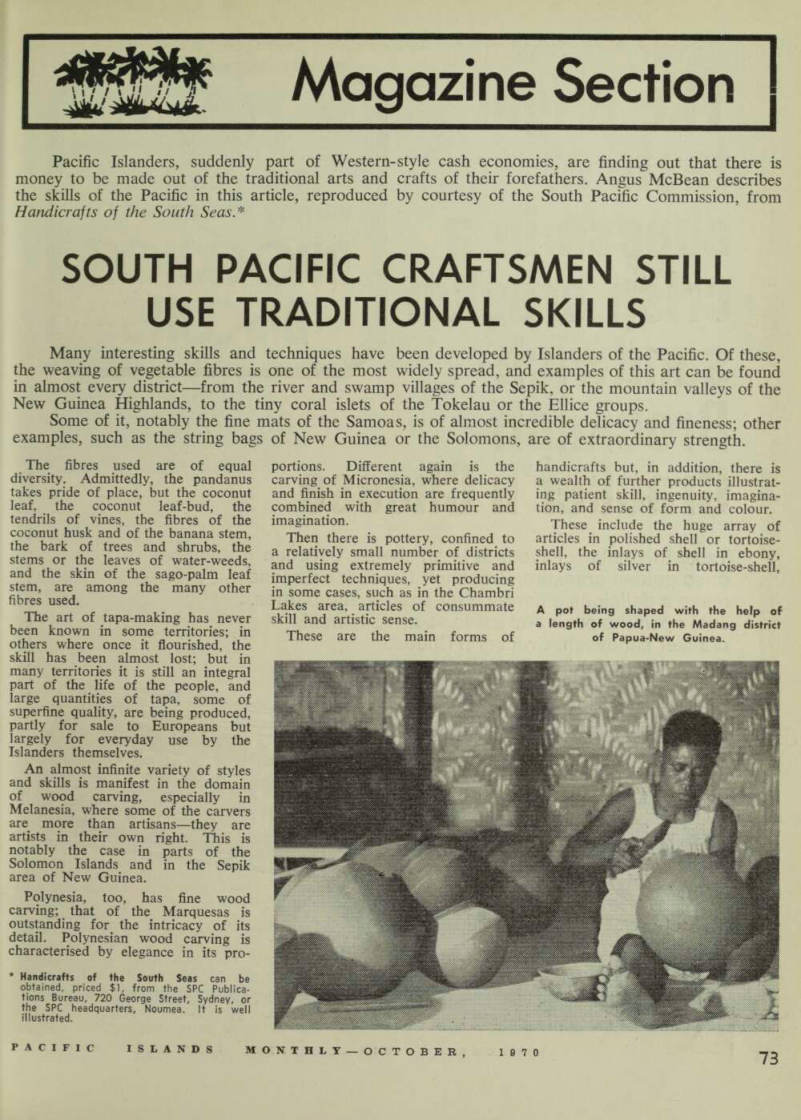 81
81 82
82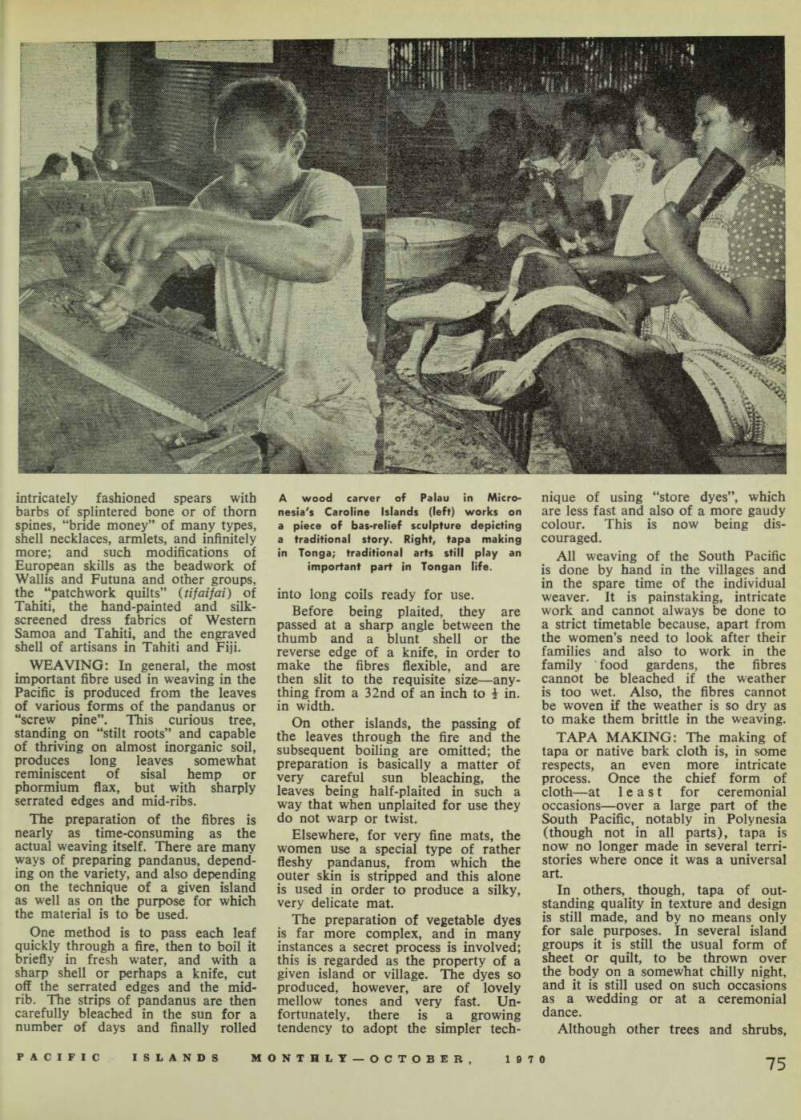 83
83 84
84 85
85 86
86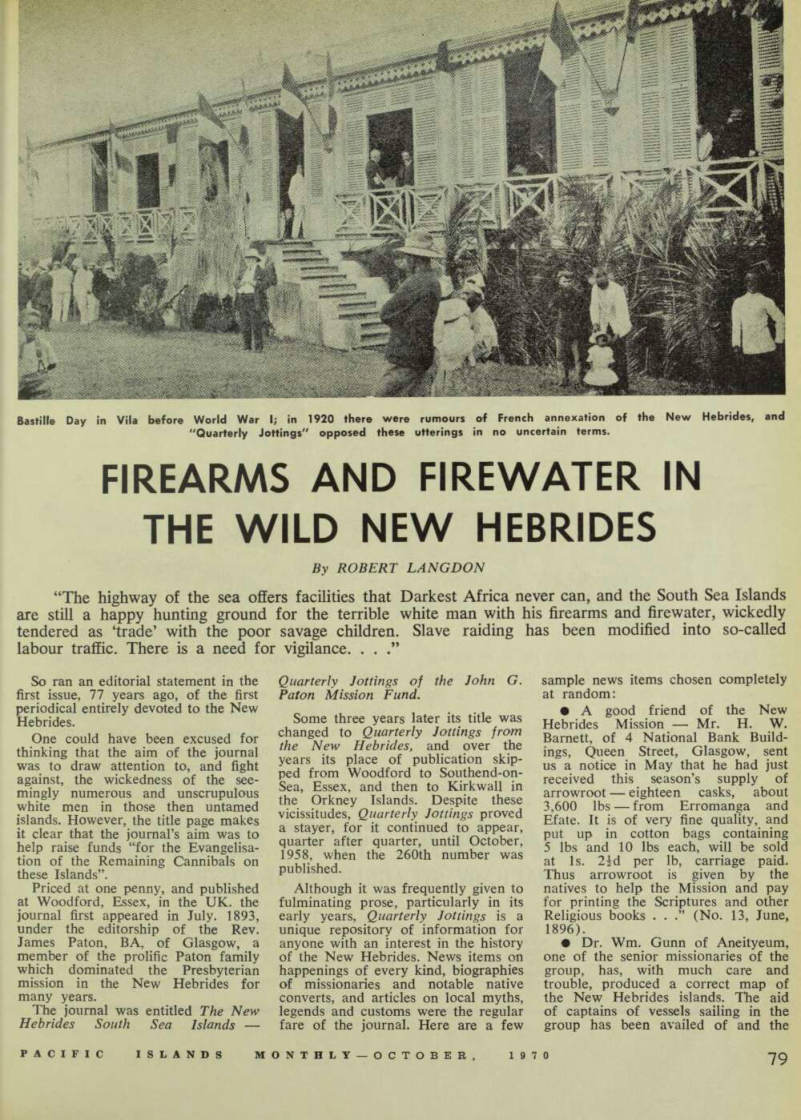 87
87 88
88 89
89 90
90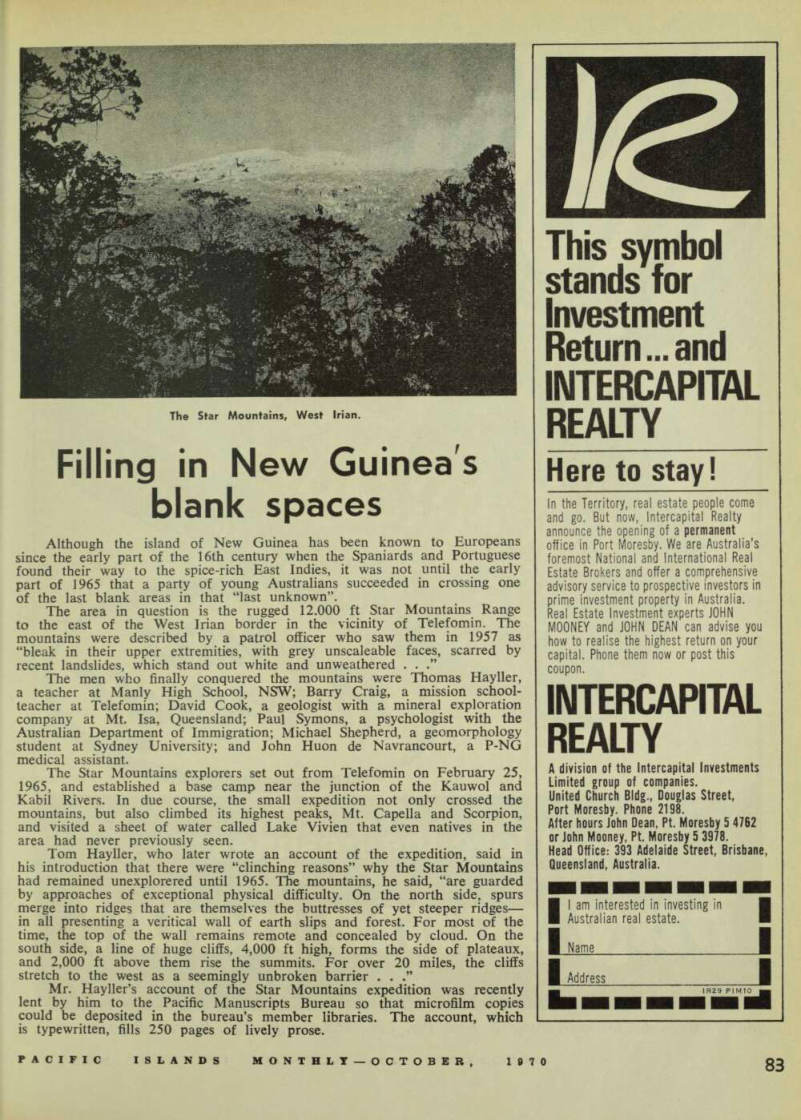 91
91 92
92 93
93 94
94 95
95 96
96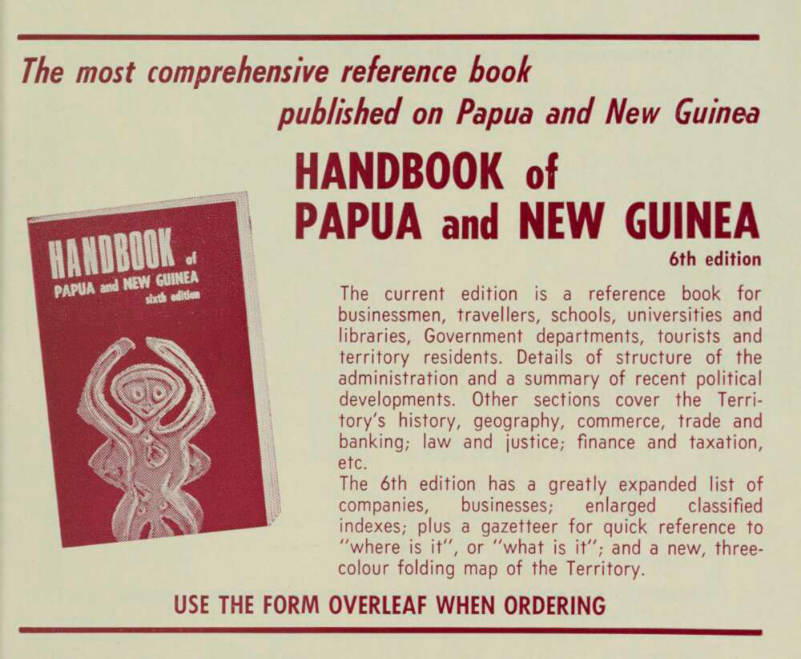 97
97 98
98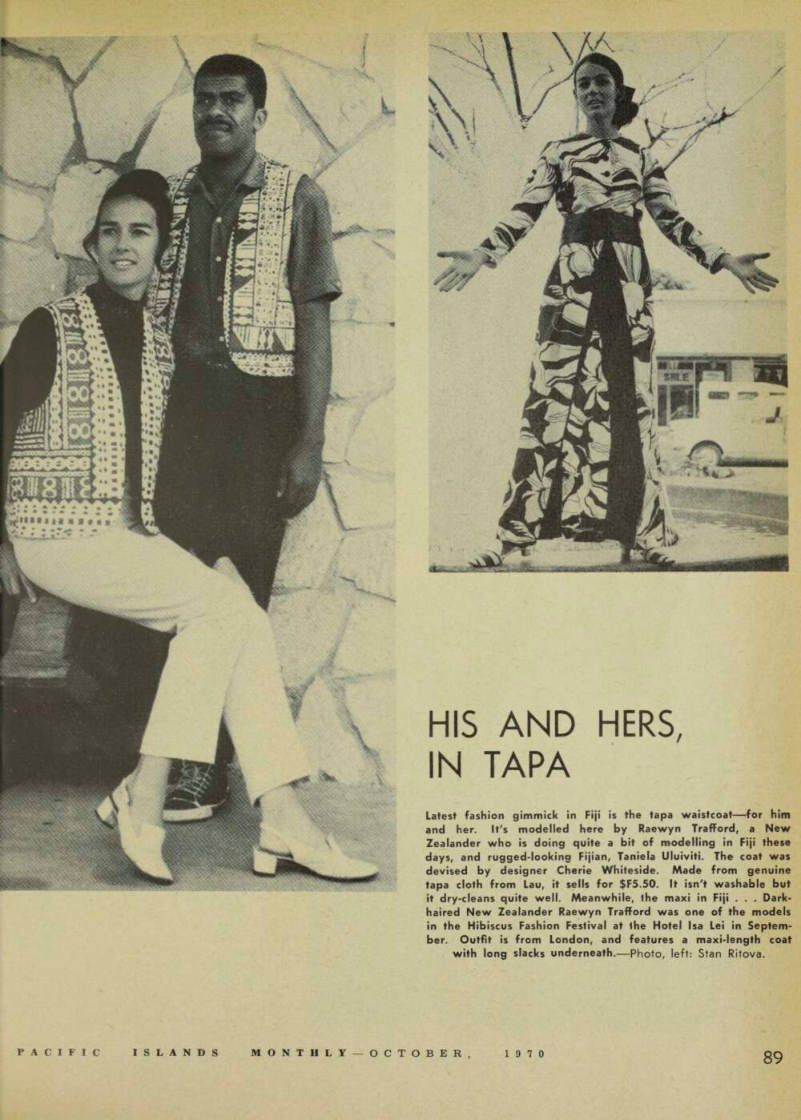 99
99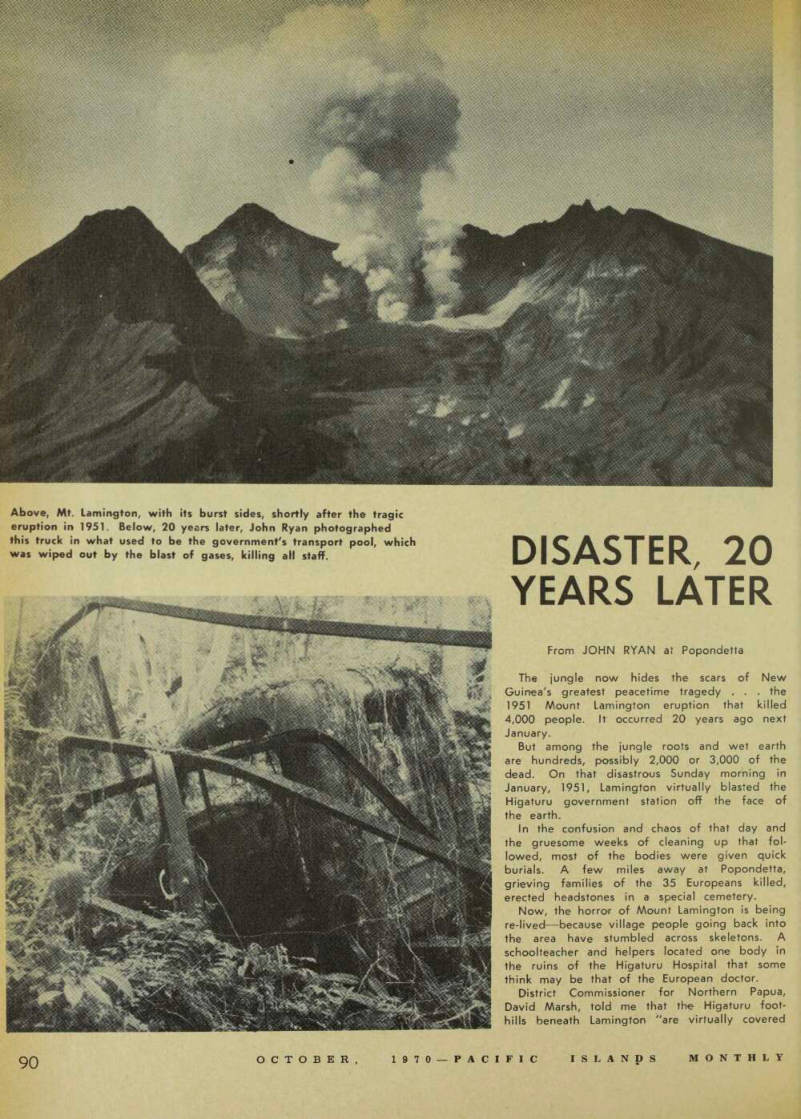 100
100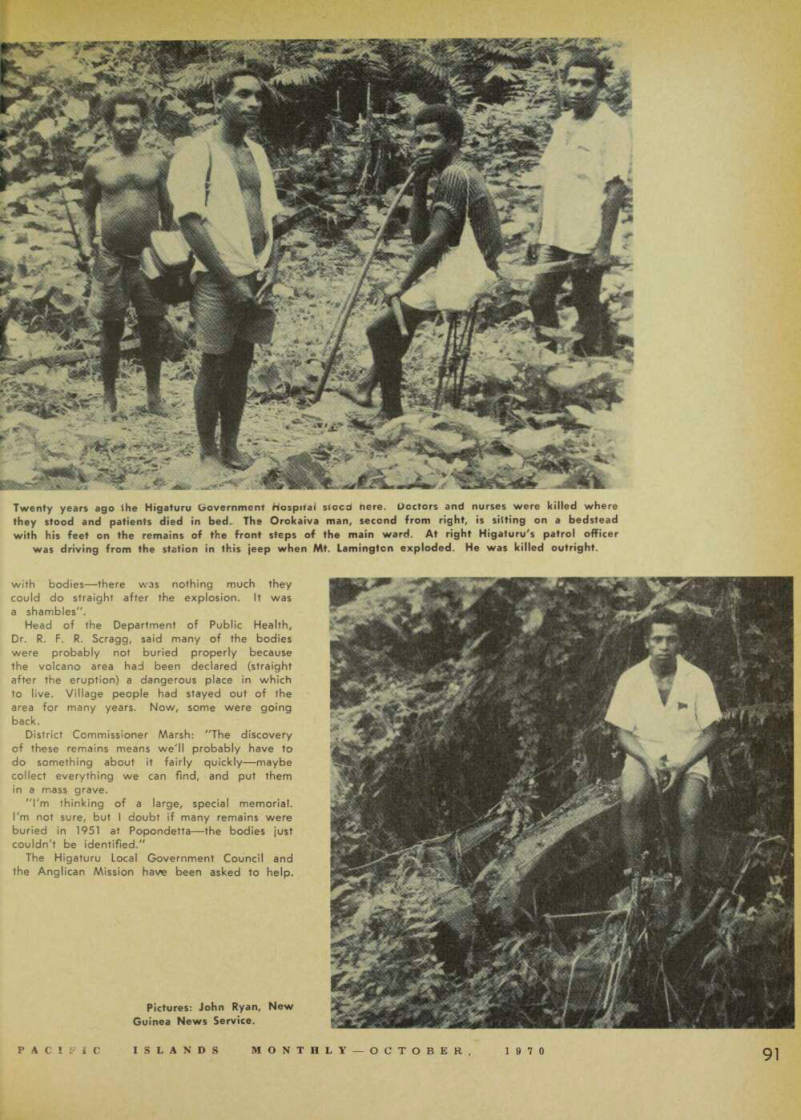 101
101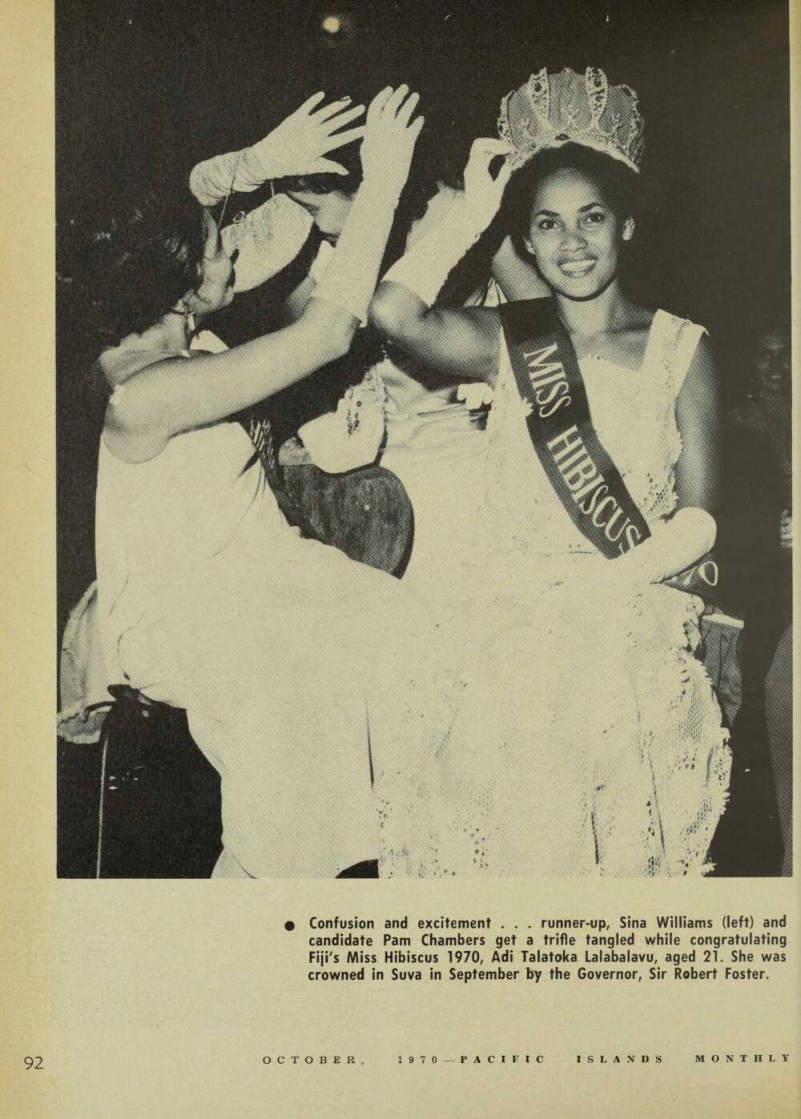 102
102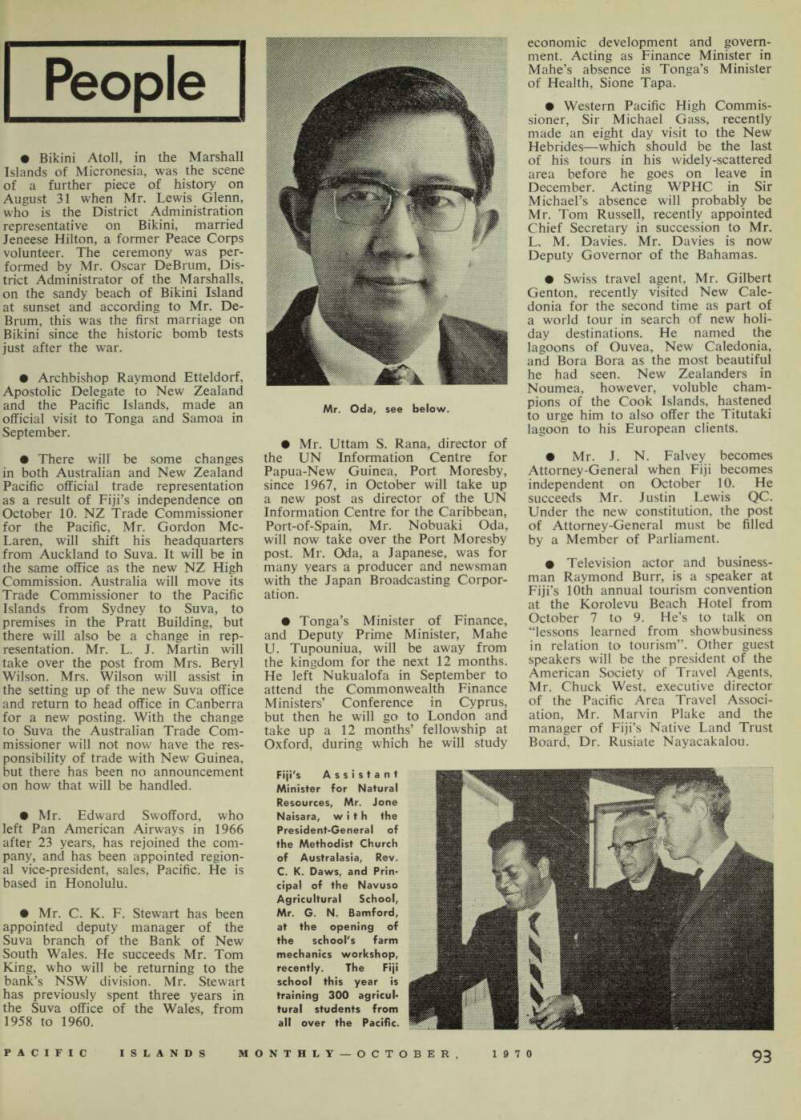 103
103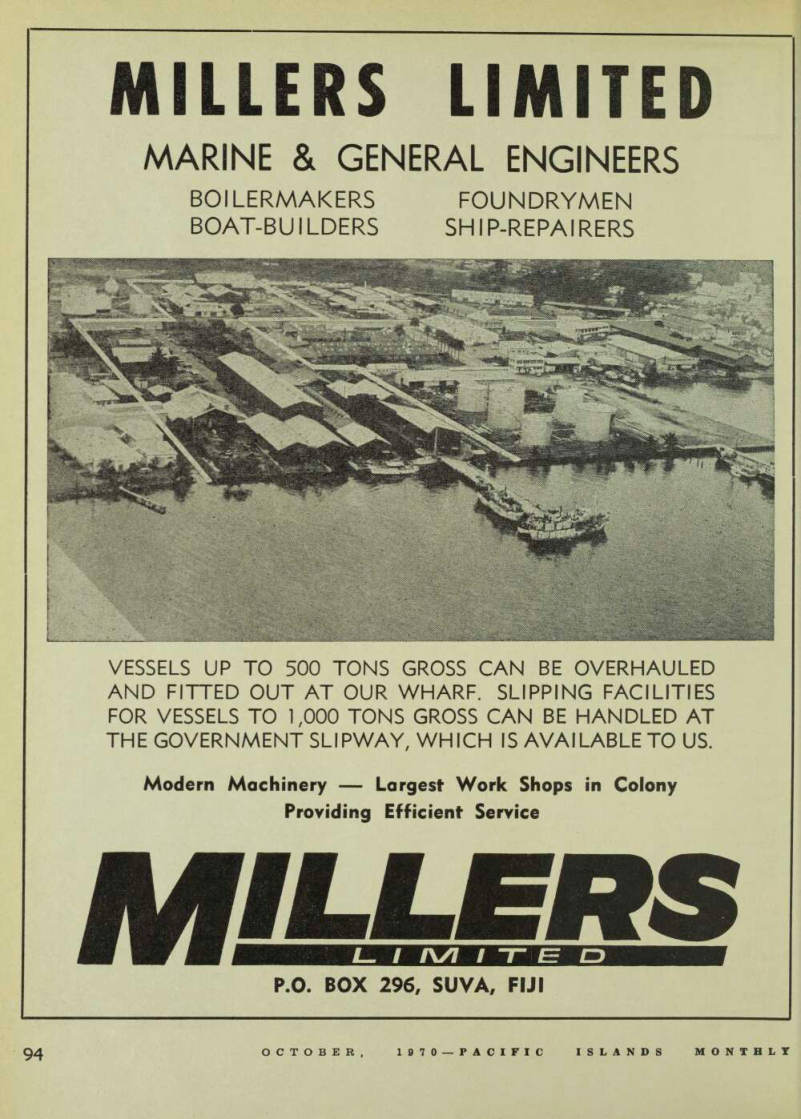 104
104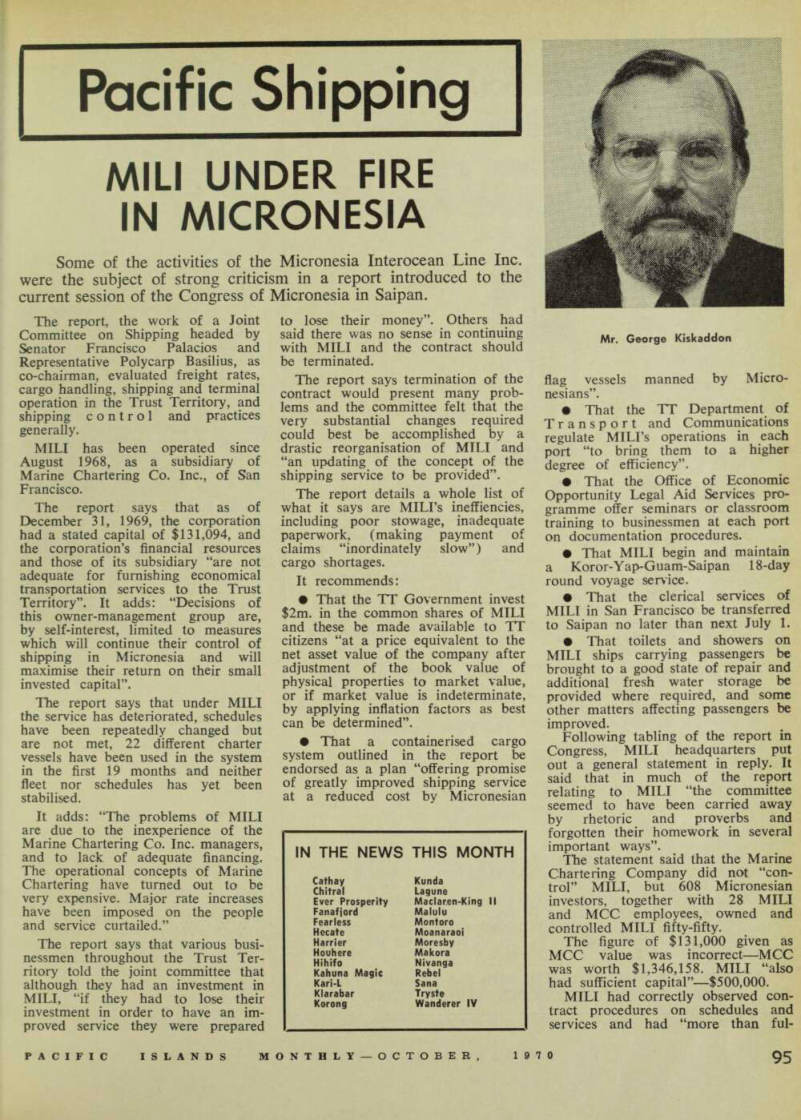 105
105 106
106 107
107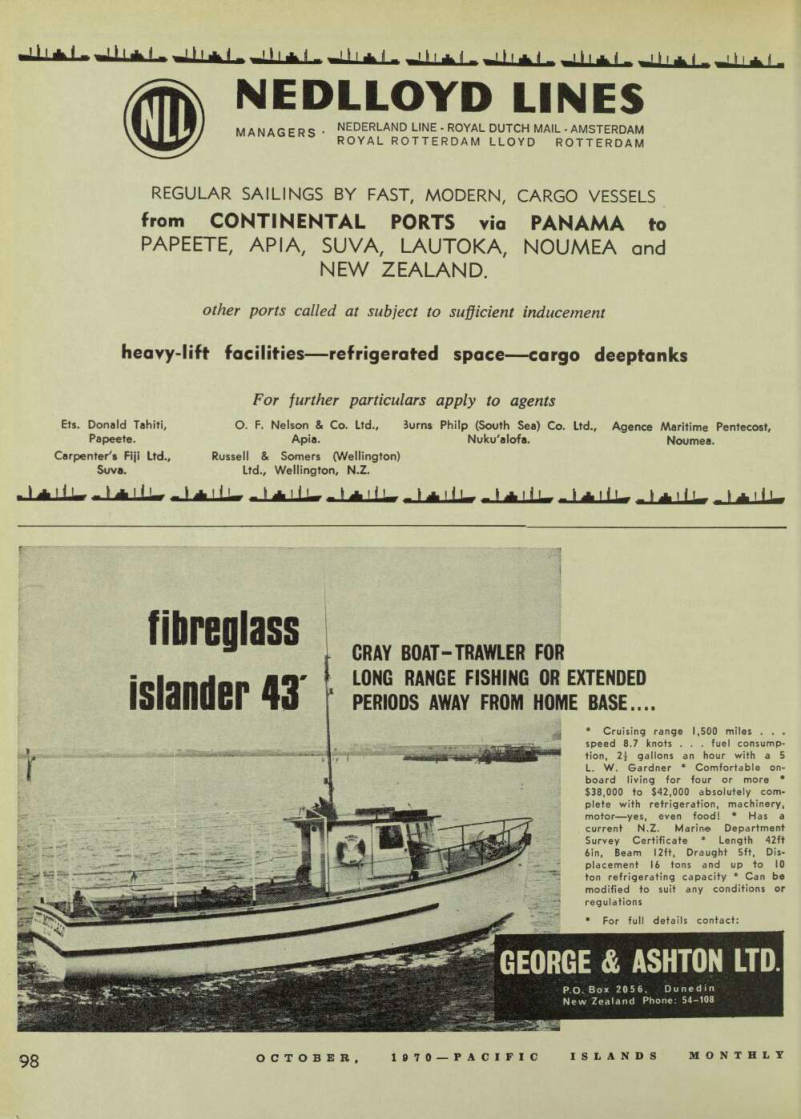 108
108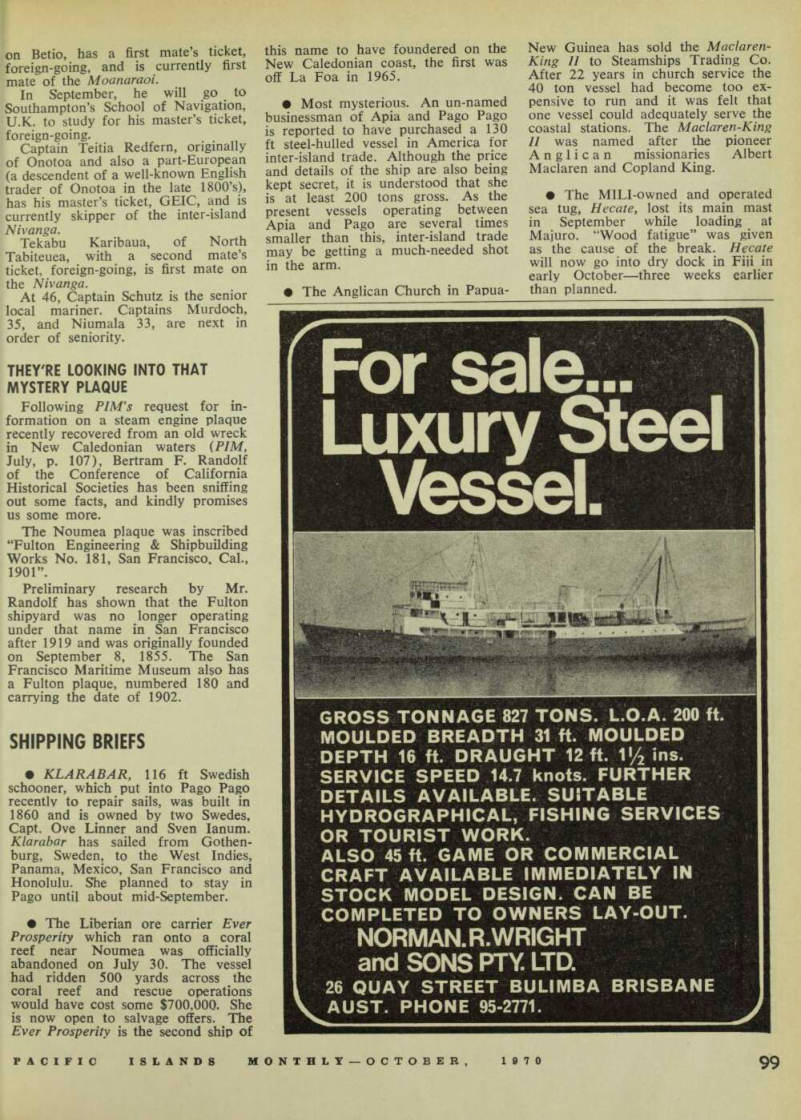 109
109 110
110 111
111 112
112 113
113 114
114 115
115 116
116 117
117 118
118 119
119 120
120 121
121 122
122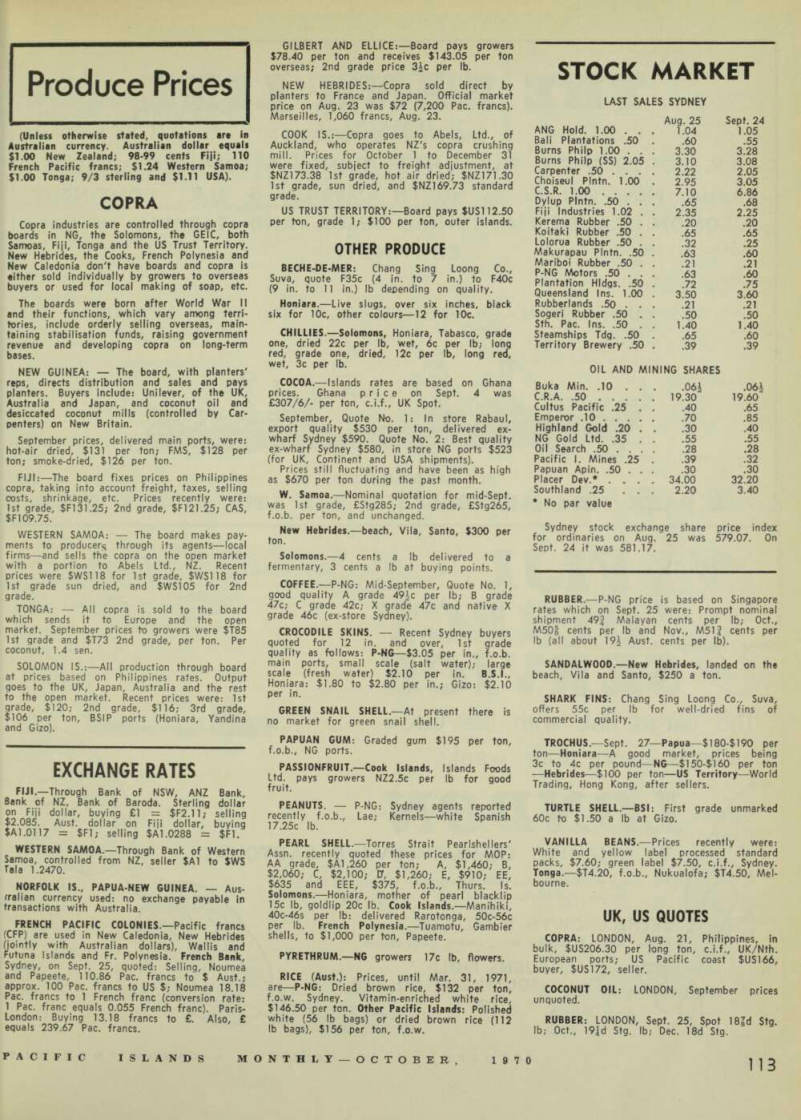 123
123 124
124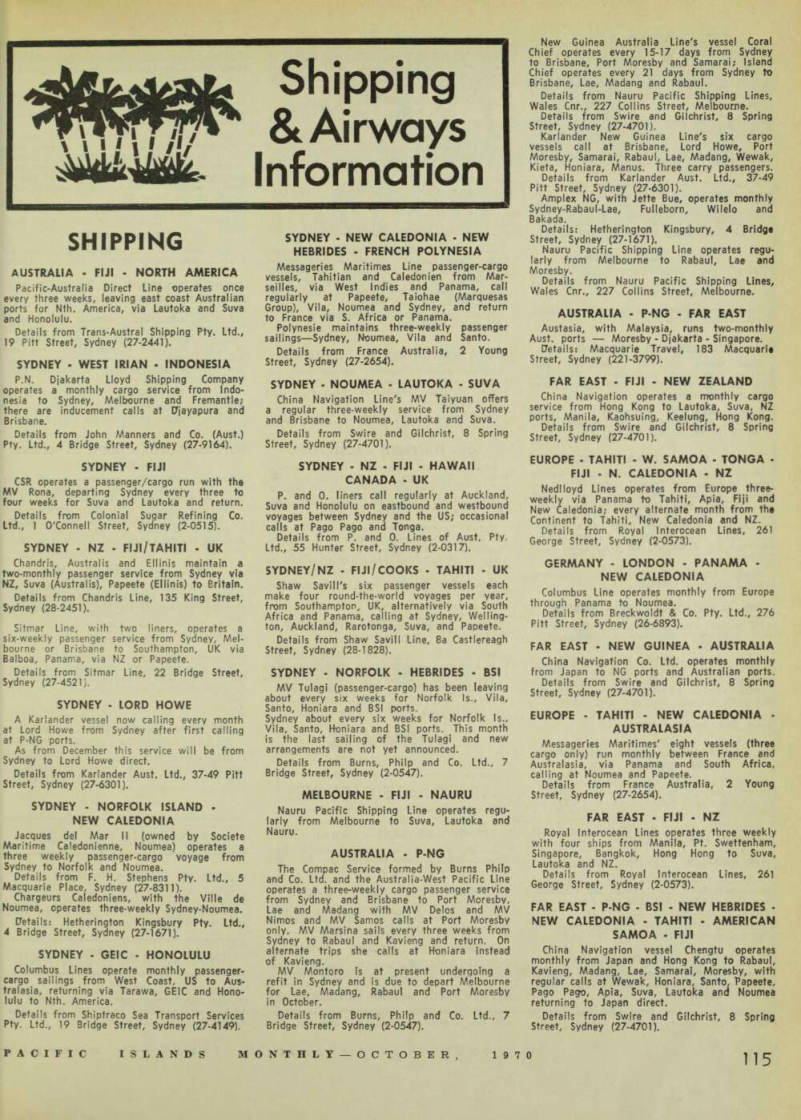 125
125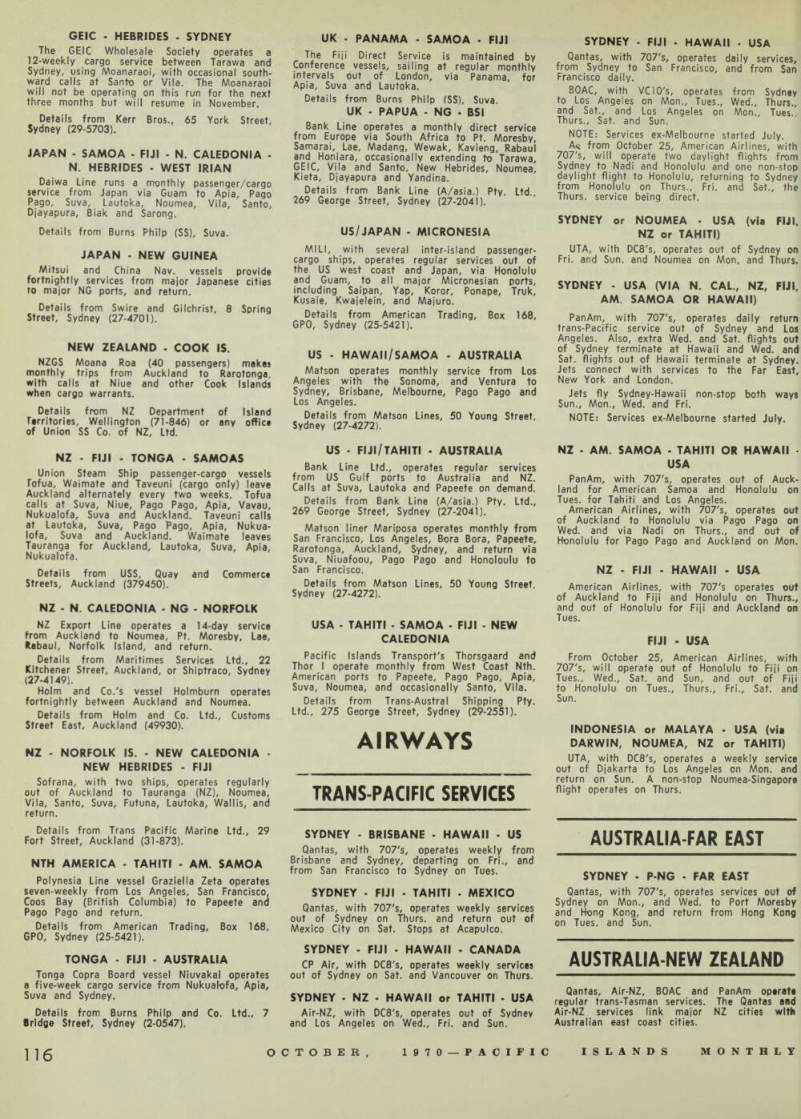 126
126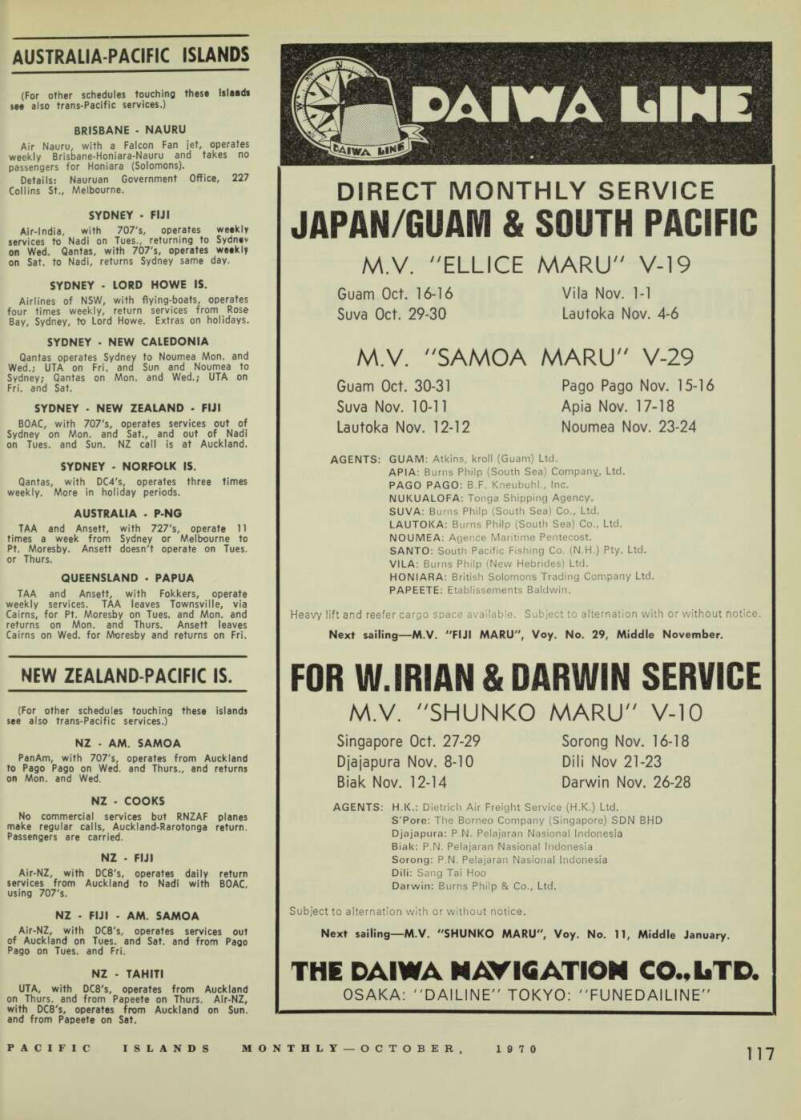 127
127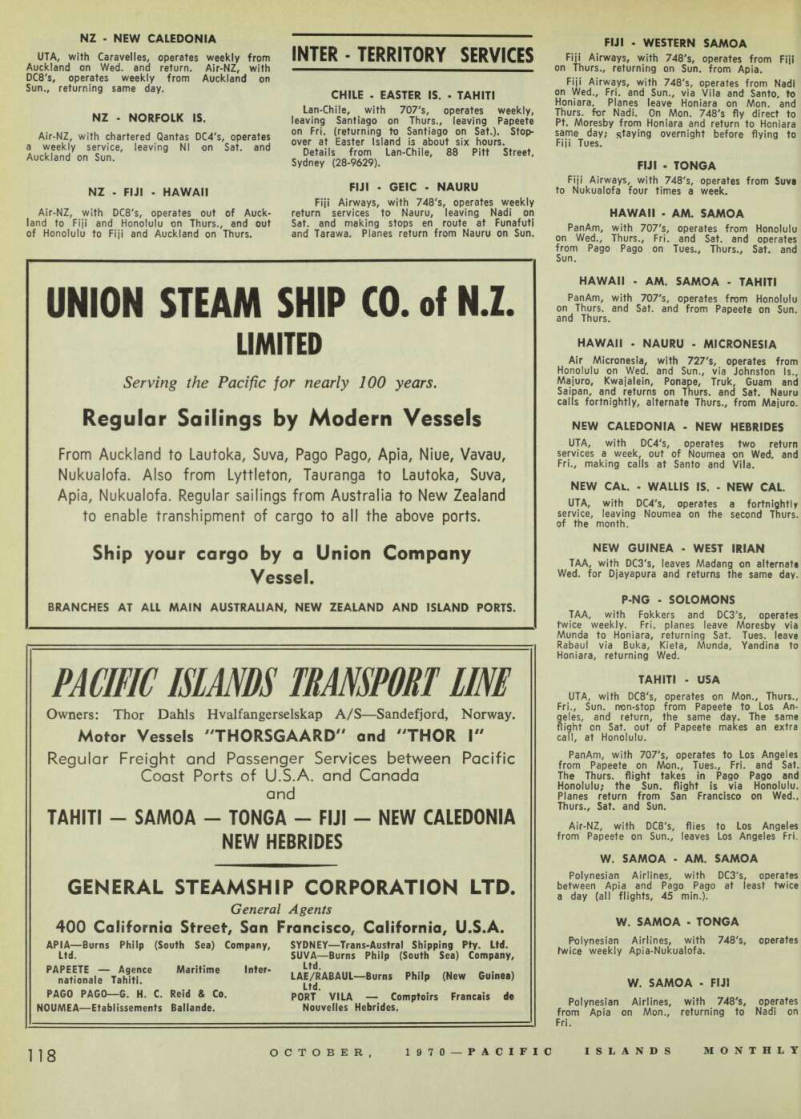 128
128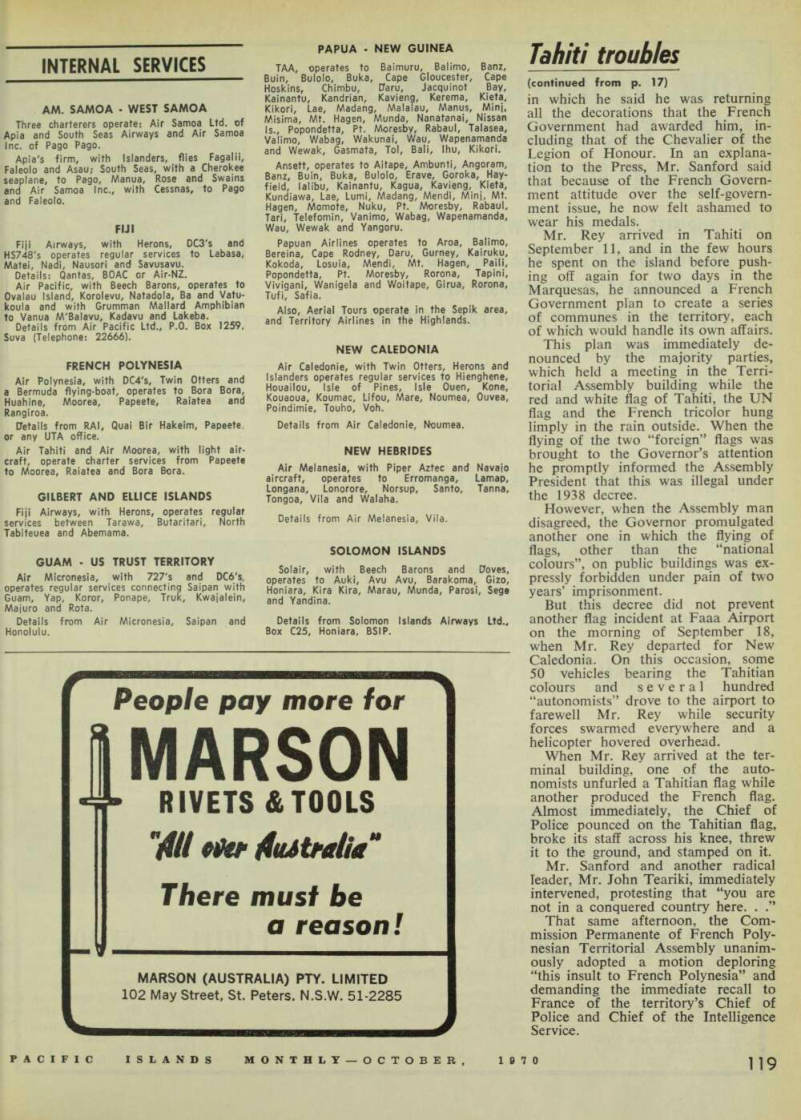 129
129 130
130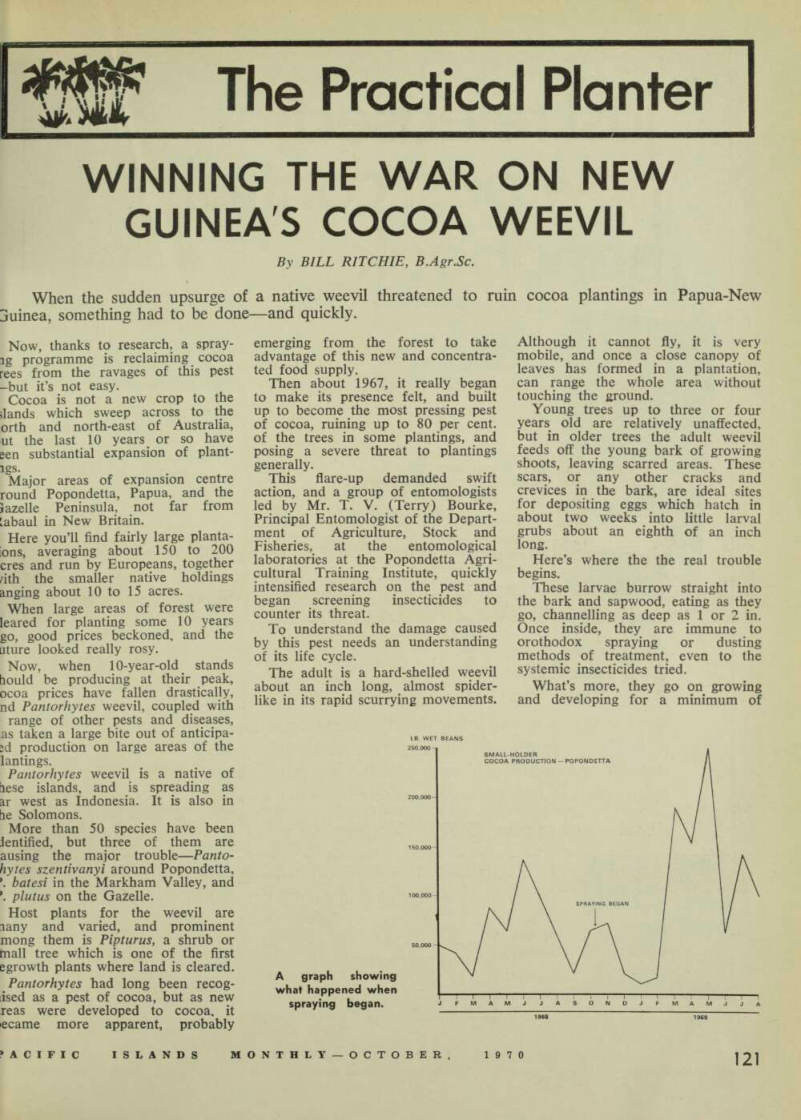 131
131 132
132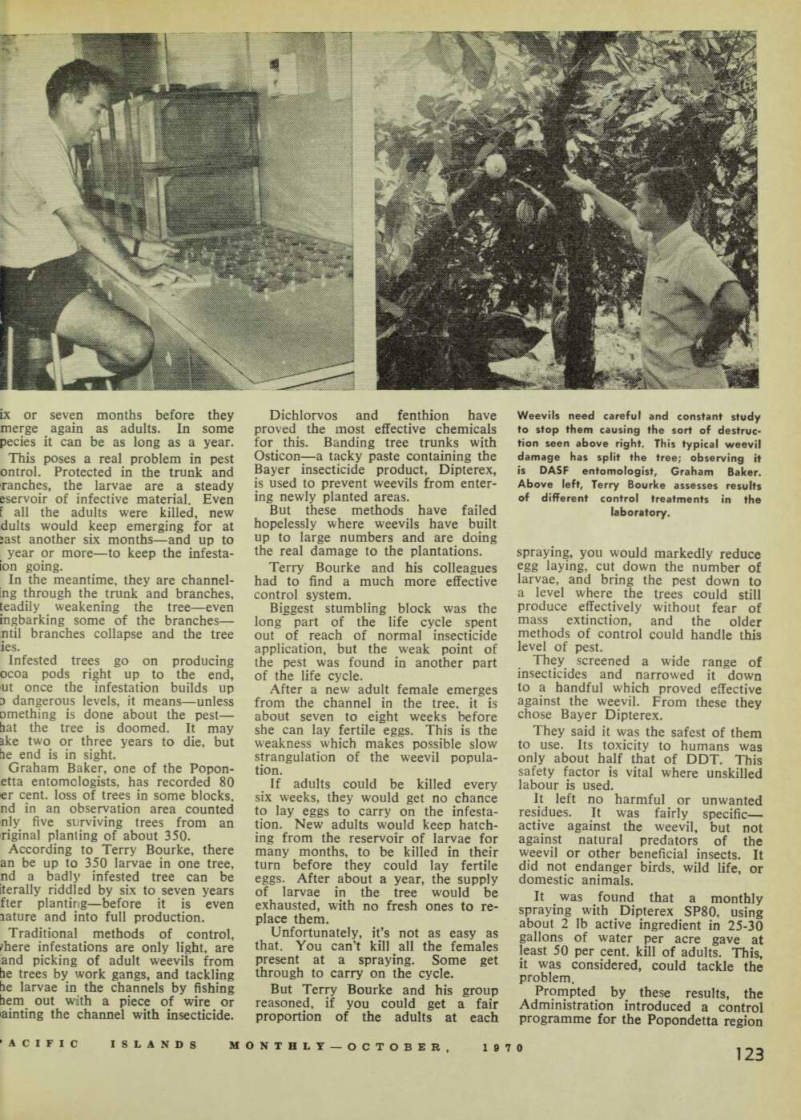 133
133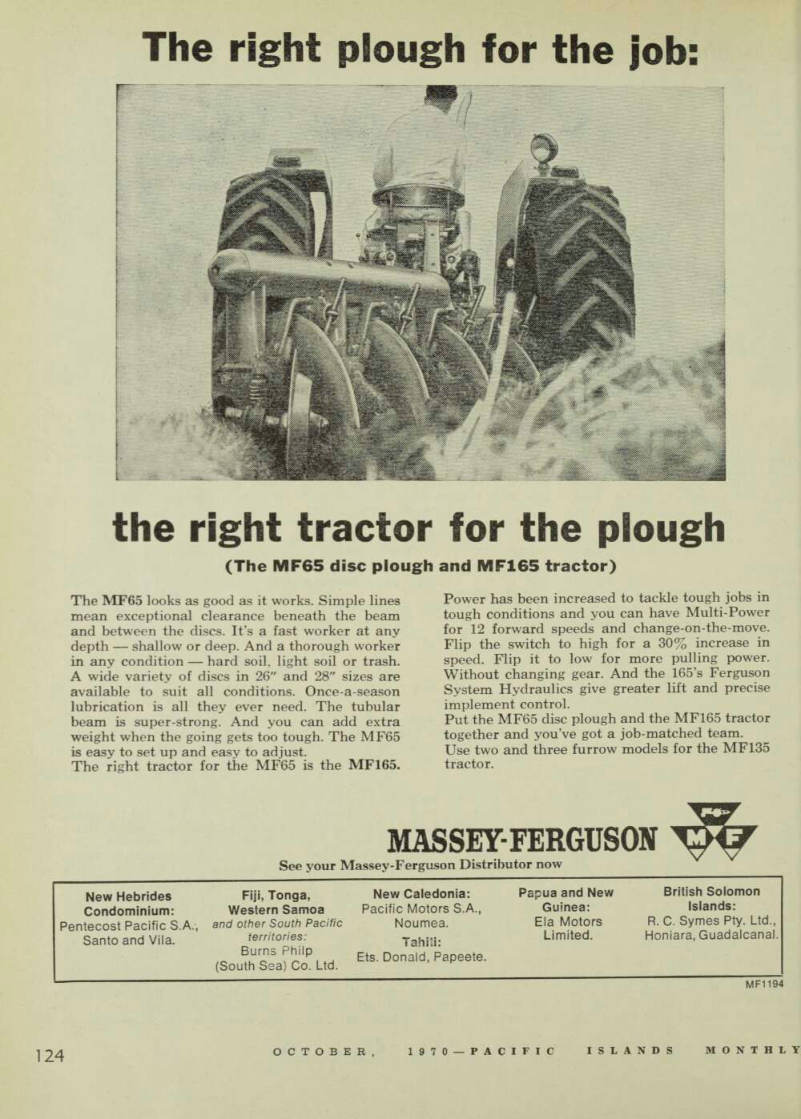 134
134 135
135 136
136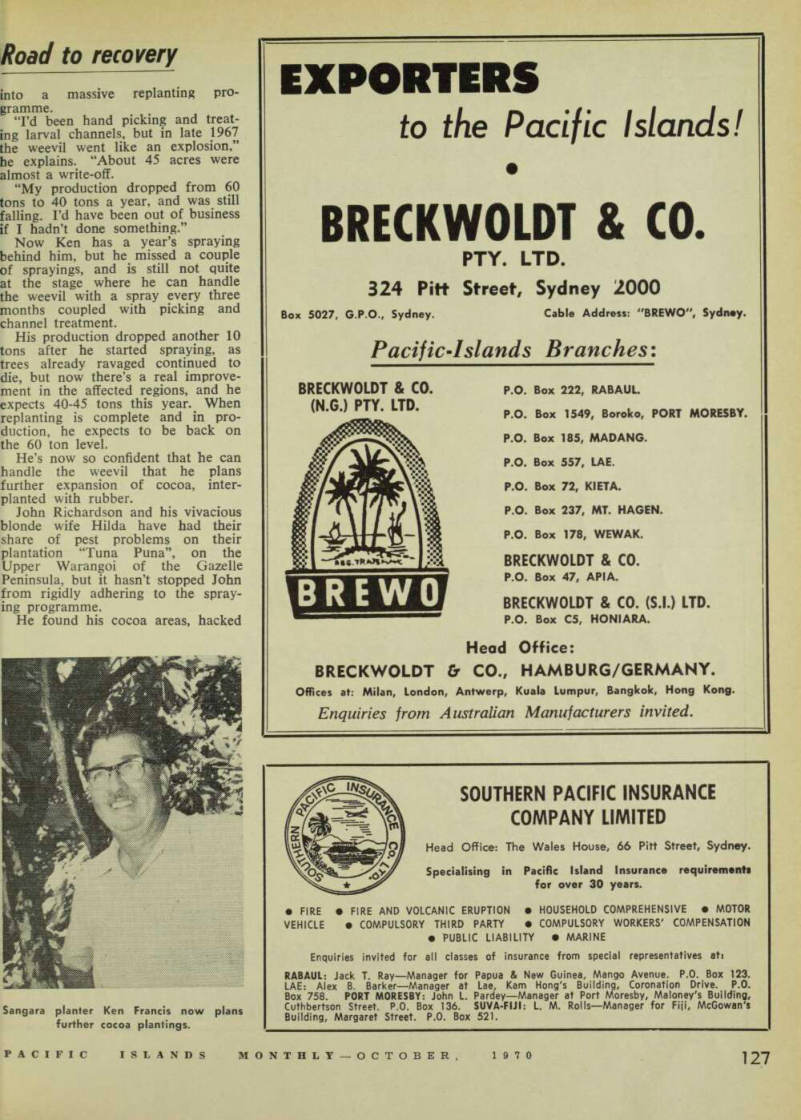 137
137 138
138 139
139 140
140 141
141 142
142 143
143 144
144 145
145 146
146 147
147 148
148 149
149 150
150 151
151 152
152